The unequivocal champion of Pop Art, Andy Warhol’s legacy is packed with striking paintings celebrating the celebrity and consumer excesses of the late twentieth century. However, between the Hollywood portraits and iconic soup cans lies a darker, personal side to his oeuvre that touches on mortality and the universality of our shared human experience. Skull is a pivotal example of Warhol’s ability to transcend the surface trappings of capitalist society and delve deeper into his own ideas about death.
“Death can really make you look like a star.”
Introduction
Following his near-death experience in 1968 when he was shot by Valerie Solanas, Warhol turned increasingly inward and works like Skull represent his struggle to rectify the glamor of his persona with the private questioning of his own mortality.

Rendered in stark swathes of color and overlaid with a black screen print, this monumental painting is a striking example of Warhol’s series of the same name. The titular object is highlighted in a powder blue that contrasts with the shocking butter yellow of its shadow. Playing with the color of light and dark areas within his compositions was key to the artist’s practice and creating fields of pure color where one might expect deep shadow or bright reflection helps to flatten and transform the three-dimensional nature of the source object. Surrounding the blue and yellow center is a field of forest green that stretches up from the bottom of the canvas until it collides with an area of muted chartreuse. Warhol embraces some of his more painterly leanings in this composition, and the discernible, emotive brushwork serves as a counterpoint to the sharp outline of the screened image that makes up the main subject. Each work in the Skull series takes on the same image but is differentiated by Warhol’s painterly incursion. Of course, the juxtaposition of a human element within the screening process is not as flippant as Warhol would have one believe. Pairing the mutable brushstroke of the human artist with the apparently cold production of the silkscreen serves as a catalyst for probing the work’s humanity and Warhol’s own relationship to the subject of death.
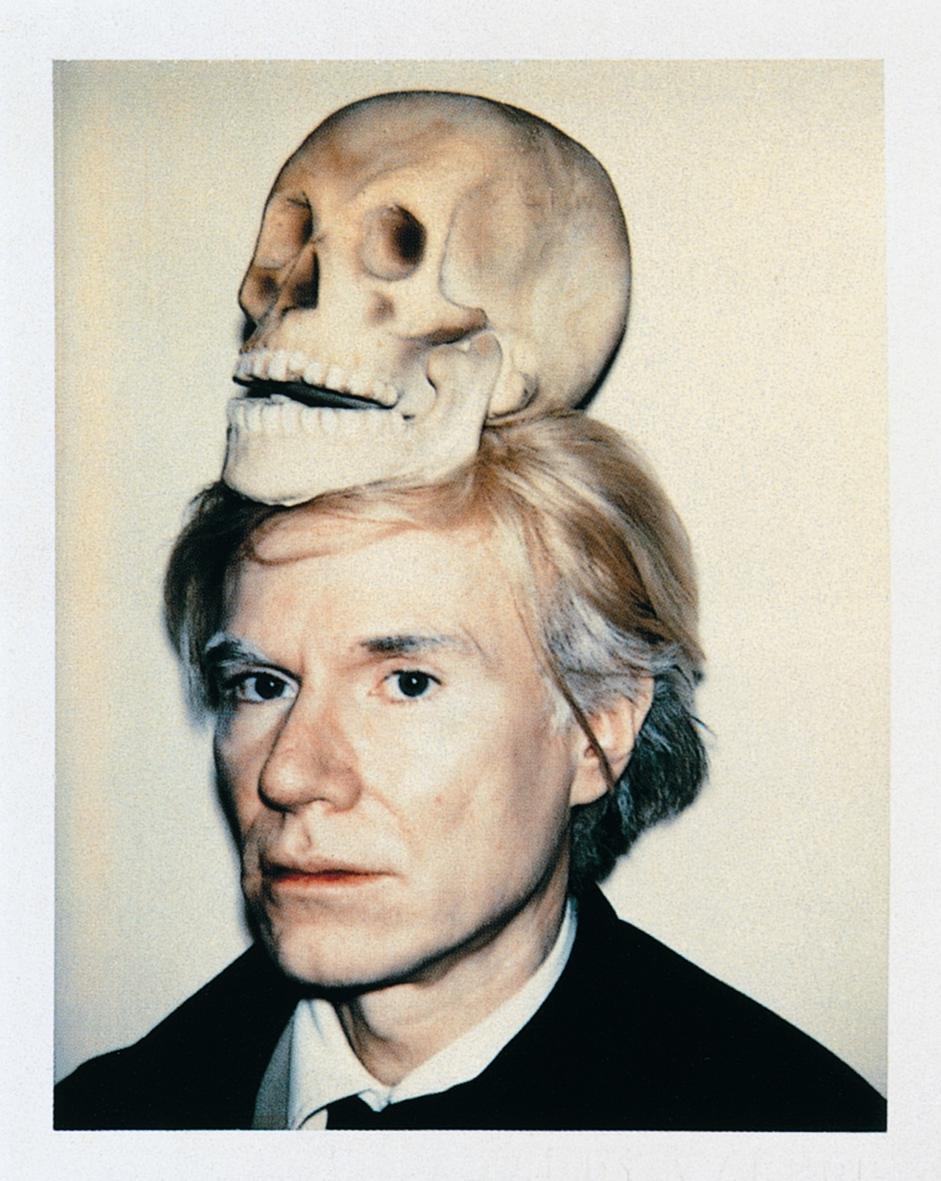
The Skull series is a particularly poignant series in the overarching scheme of Warhol’s oeuvre. Although combining painting and silkscreens was nothing new in his process, the choice of subject and its relationship to the artist’s worldview cements works like the present example as some of the most personal and introspective of his prodigious output. According to Ronnie Cutrone, the artist’s assistant at the time, Warhol found the titular skull at a flea market in Paris and brought it back to the studio eager to include it in his practice. Because previous screenprints were based on enlargements of extant text and images culled from newspapers and magazines, the skull presented a conundrum as it needed to be translated from three dimensions into two.
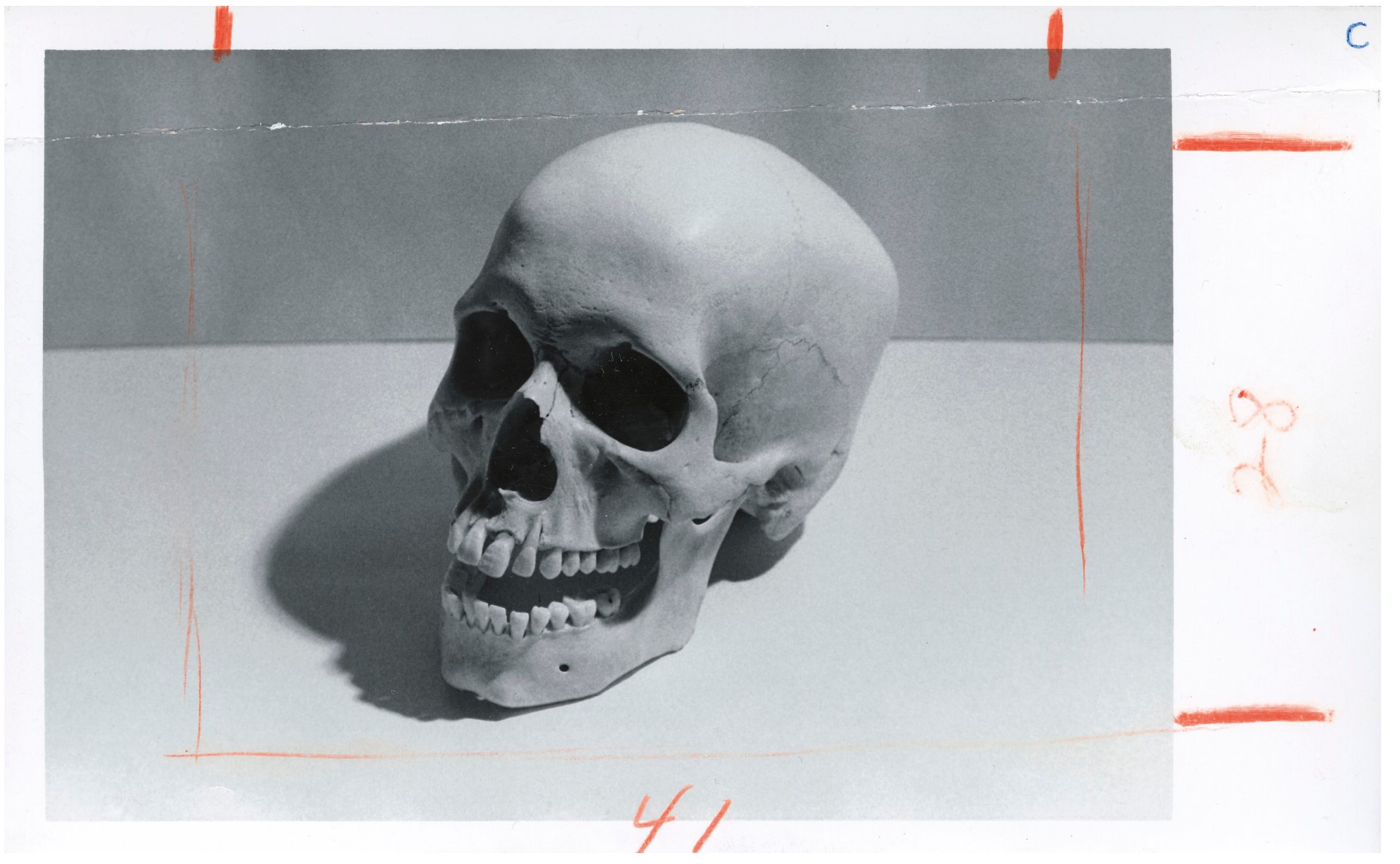
ANDY WARHOL
Skull, c. 1976
Unique gelatin silver print
5.1 x 8.2 inches (13×21 cm)
Cutrone was tasked with photographing the object in various positions on a stark white backdrop built from paper and plywood. As the assistant took shot after shot, Warhol moved a light around the room, creating various shadows that served to enhance the drama of the scene. Once he settled on the most pleasing arrangement, the artist subjected the photograph to his screenprinting techniques and thus transformed it from a found object into a universal icon.
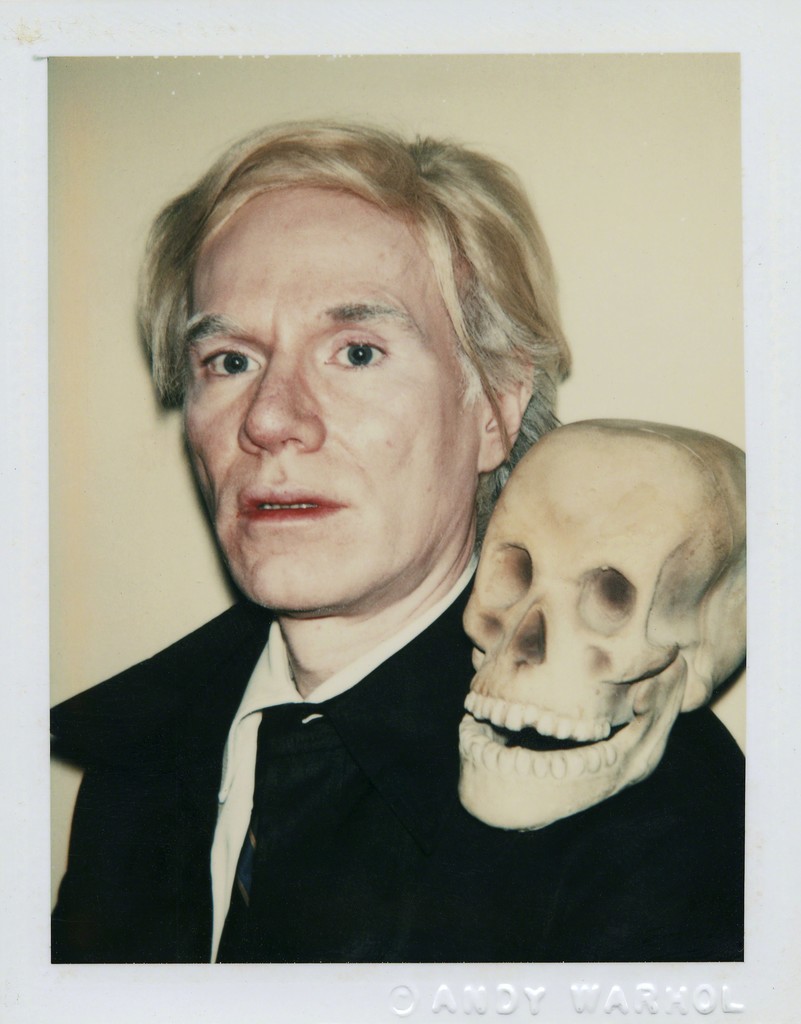
Warhol’s work in the late 1960s and 70s veered from his commodity culture and advertising beginnings as he increasingly contemplated humanist subjects and universals beyond the capitalist impulse. Death and its definition factors into his oeuvre as a driving force behind several of his series that catapulted him to international stardom and the 1970s were marked with a deepening preoccupation with the subject. In the book The Philosophy of Andy Warhol, published the year preceding Skulls, the artist mused on death.
“I don’t believe in it, because you’re not around to know that it’s happened. I can’t say anything about it because I’m not prepared for it.”
And yet, as much as he said he was not prepared for death, the subject took front and center in several series. Separated from his portraits and works based on pop culture, the so-called ‘Death and Disaster’ works serve as a grounding thread throughout his catalogue. Whether in the grotesque and grisly truths of the Car Crashes, Suicides, and Electric Chairs or the implied tragedy of the Marilyns and Jackies, Warhol found a way to question our collective notion of death and how it related to the ideas of celebrity and disaffection within the greater population. The Skulls come from this broader inquiry but are related less to societal tropes and more to the personal reflections of the memento mori iconography so beloved by European artists for centuries.
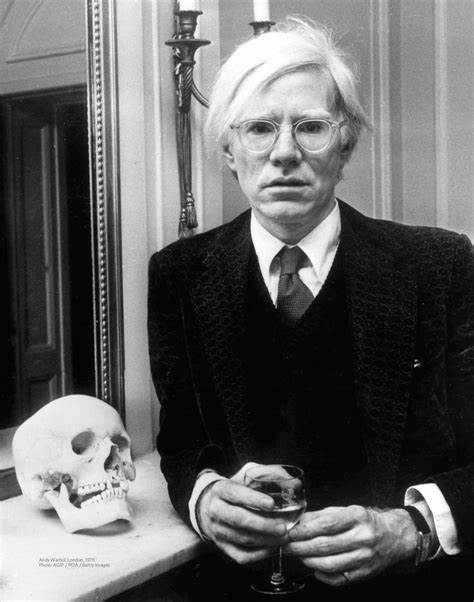
Even with its darker underpinnings, Skull is as much a universal touchstone as it is a personal treatise on mortality. Circling back to his earlier infatuation with cultural symbols, Warhol again creates an image that is recognizable and relatable to everyone just by virtue of its source material. Whether that symbol be a human skull or a bottle of Coca-Cola, the artist creates an equalizer between the various strata of people. As a universal object, the skull presents a blank slate for the viewer to project their own ideas about death and life. This shared experience through images factors heavily into Warhol’s practice and his infatuation with American ideals.
“What’s grand about this country is that America started the tradition where the richest consumers buy essentially the same thing as the poorest. You can be watching the TV and see Coca-Cola, and you know that the President drinks Coke, Liz Taylor drinks Coke, and just think, you can drink Coke too. A Coke is a Coke and no amount of money can get you a better Coke”
With Skull, the artist seems to double down on this statement, affirming that no matter who you are, how much money or fame you have, you can still drink a Coca-Cola and death is still inevitable.
Skull (72×80)
Skull, 1976
Christie’s New-York: 11 May 2022
Estimated: USD 25,000,000 – 35,000,000
USD 24,000,000
ANDY WARHOL (1928-1987), Skull | Christie’s
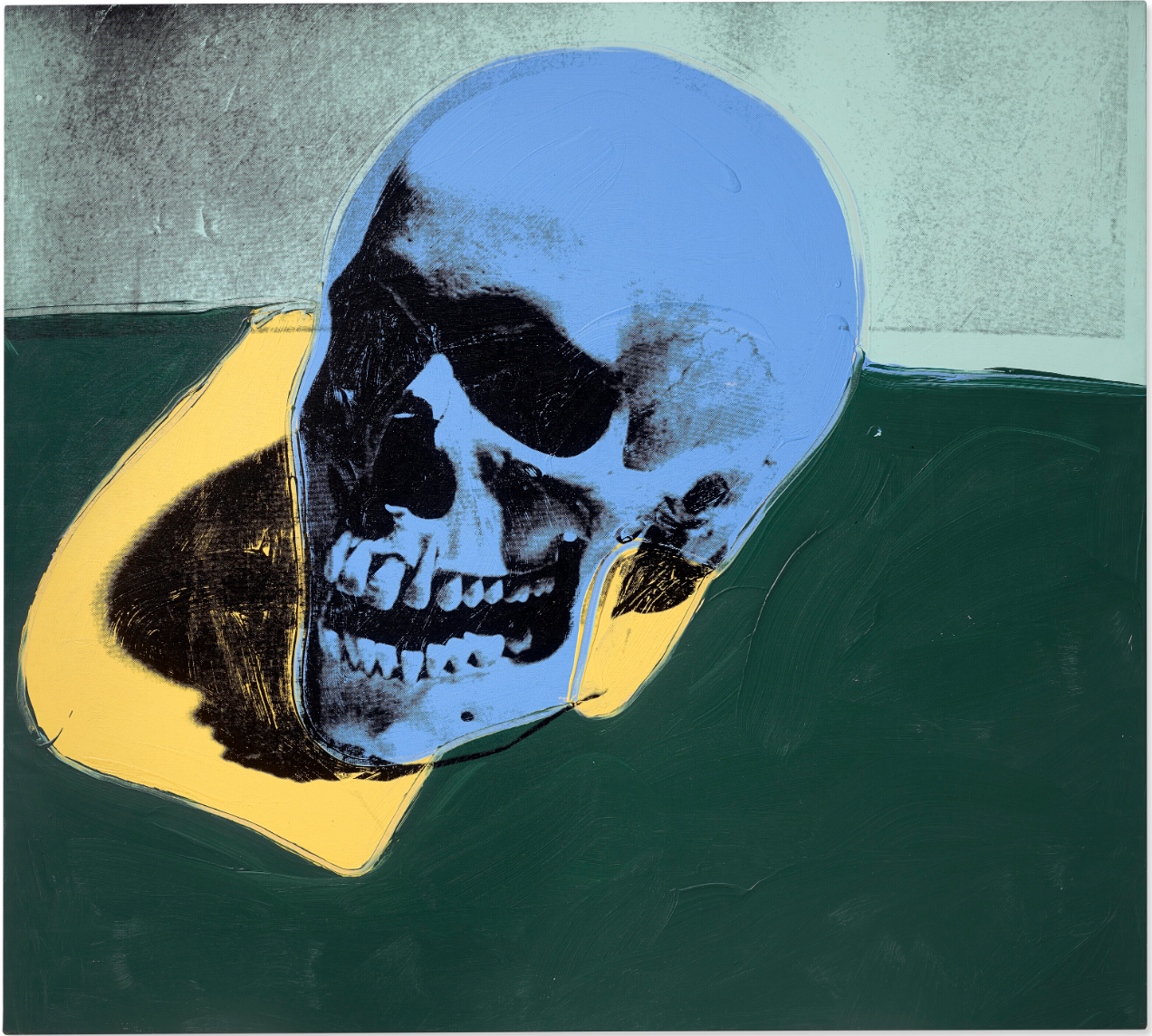
ANDY WARHOL
Skull, 1976
Acrylic and silkscreen ink on canvas
72 x 80 inches (182.9 x 203.2 cm)
Signed and dated ‘Andy Warhol 1976’ (on the overlap)
As an important example of the artist’s later work, Skull has been exhibited at a number of prestigious institutions including Tate Modern, London; the Menil Collection, Houston; and the Dia Art Foundation, New York, and deftly combines painterly application with a nimble overlay of the artist’s signature silkscreen. Following his near-death experience in 1968 when he was shot by Valerie Solanas, Warhol turned increasingly inward and works like Skull represent his struggle to rectify the glamor of his persona with the private questioning of his own mortality.
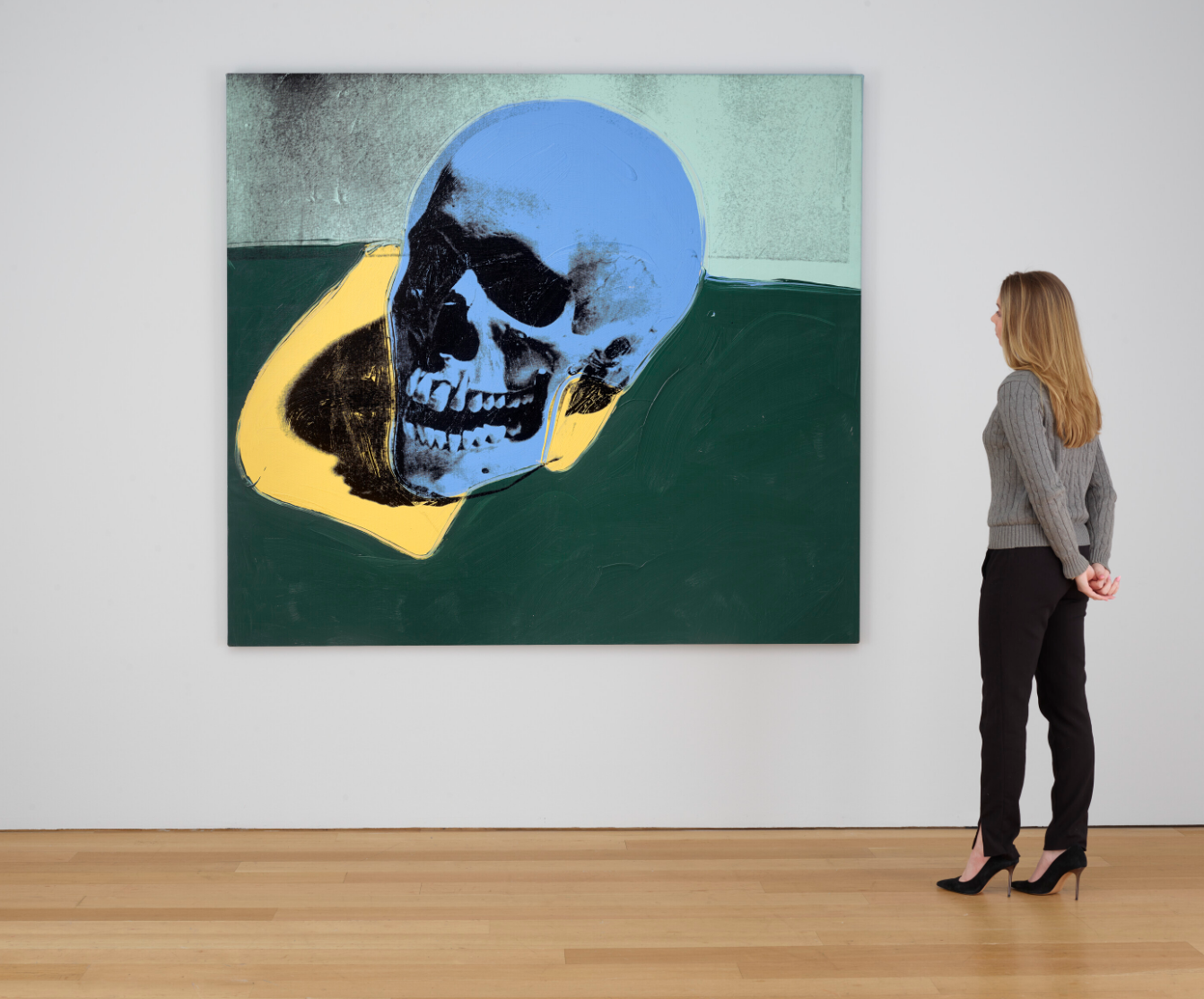
Rendered in stark swathes of color and overlaid with a black screen print, this monumental painting is a striking example of Warhol’s series of the same name. The titular object is highlighted in a powder blue that contrasts with the shocking butter yellow of its shadow. Playing with the color of light and dark areas within his compositions was key to the artist’s practice, and creating fields of pure color where one might expect deep shadow or bright reflection helps to flatten and transform the three-dimensional nature of the source object. Surrounding the blue and yellow center is a field of forest green that stretches up from the bottom of the canvas until it collides with an area of muted chartreuse. Warhol embraces some of his more painterly leanings in this composition, and the discernible, emotive brushwork serves as a counterpoint to the sharp outline of the screened image that makes up the main subject. Each work in the Skull series takes on the same image but is differentiated by Warhol’s painterly incursion. Of course, the juxtaposition of a human element within the screening process is not as flippant as Warhol would have one believe. Pairing the mutable brushstroke of the human artist with the apparently cold production of the silkscreen serves as a catalyst for probing the work’s humanity and Warhol’s own relationship to the subject of death.
Multiple Skulls
Skulls, 1976
Sotheby’s London: 17 October 2008
Estimated: GBP 5,000,000 – 7,000,000
GBP 4,353,250
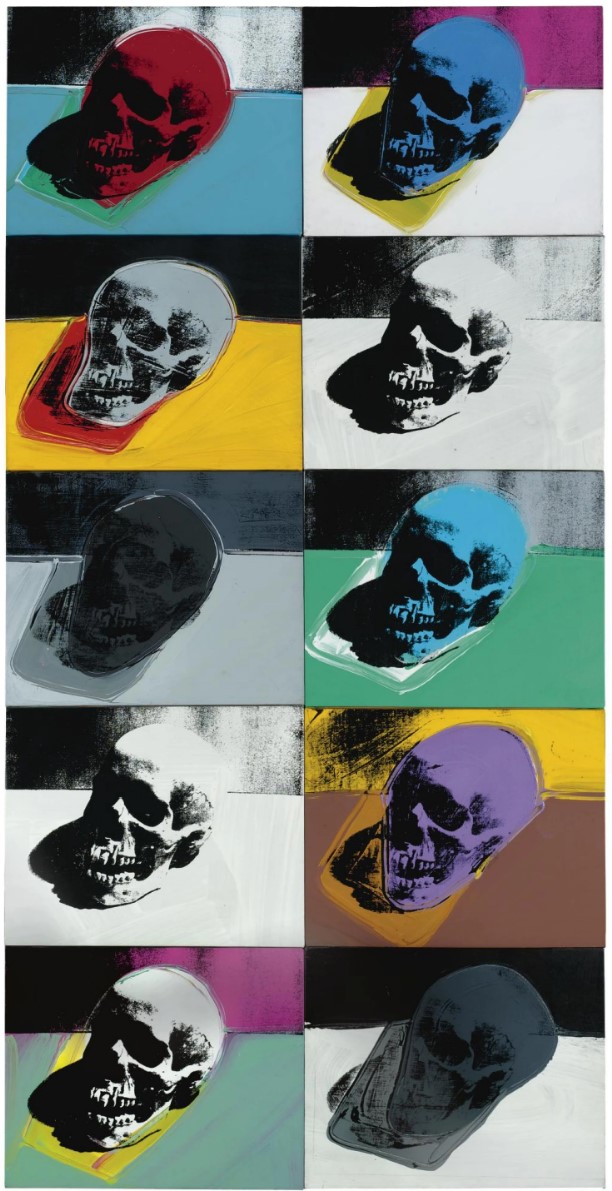 ANDY WARHOL
Skulls, 1976
Acrylic and silkscreen ink on canvas, in ten parts
Each: 15×19 inches (38.1 x 96.5 cm)
Overall: 75.7 x 38 inches (192.4 x 96.5 cm)
Each: signed and dated on the overlap
The ten Skulls are singularly distinctive and collectively resonant: via simultaneous replication and individuation they total a breathtaking artwork. Ten of the finest paintings from one of the artist’s most important series, these Skulls were selected by a protagonist of Warhol’s inner circle, the visionary dealer-collector Thomas Ammann. It was Ammann who conceived the project of the Andy Warhol catalogue raisonné, which has been continued by his sister Doris and his gallery since his untimely death in 1993, and his choice of this work was struck in the context of privileged access to the infamous Factory. The exceptional quality of the individual paintings and their collective resonance ensures the work’s central position to the historic oeuvre of Andy Warhol, while the selective hand of Thomas Ammann memorializes the friendship between these art world greats. The compilation of these ten canvases provides the perfect assemblage of replication as they invite the viewer’s eye to constantly skip from one to another in a continual dance of comparison and evolving perception. By replicating the same motif Warhol simultaneously multiplies and dilutes the power of the imagery: through repetition his works transform from individual images to potent icons. Indeed, the tremendously rare preservation of so many of these paintings in this multiple layout sustains Warhol’s deeply held desire for his works to be shown as series and viewed together.
By repeating the skull subject as a powerful symbol of death the artist both magnifies and desensitizes our fear of mortality. Similarly, this motif at once represents both everybody and nobody: devoid of the vital coordinates of facial individuality – hair, eye and skin color; length of nose; prominence of brow; undulations of cheeks – the skull possesses an uncompromising universality. In addition, by coloring the skull canvases with vivacious hues of acrylic paint he manifests a stark, satirical contrast with the morbid and sombre subject matter. Brilliantly pure reds, yellows, greens, blues, and purples blaze out of the work, beautifully balanced by the purity of the more austere monochrome canvases that punctuate the rhythm of the work. The vivacity of these colors and their exciting arrangements are really exceptional, not only setting primary, secondary and tertiary colors off against each other, but also forging new conceptual ground with the laying of reflective black silkscreen ink over matt acrylic blacks and dark greys. Fluid brushstrokes and the emphatic tracings of fingermarks have manipulated the acrylic paint layers into haptic surfaces full of poetic movement, whose plastic dynamism recounts the bodily movements that created them. In direct contrast to the cool objectivity of his 1960s works, which sought to eradicate the energetic excesses of Abstract Expressionism with the objective reproduction and flat surface of the mechanical silkscreen, Skulls epitomizes Warhol’s later investigation into painterly texture as the backdrop for the liquid silkscreen ink. The colorist optimism and vitality only serves to underline the transience of life pitted against the omnipotence of death. Warhol’s point – ever concise and brilliantly pithy – is that even death, the final adversary of Humankind, becomes mere lurid mundanity when perceived through the contemporary agency of repetition.
Six Skulls, 1976
Christie’s London: 5 February 2003
Estimated: GBP 1,200,000 – 1,600,000
GBP 1,216,650
Andy Warhol (1928-1987) , Six Skulls | Christie’s
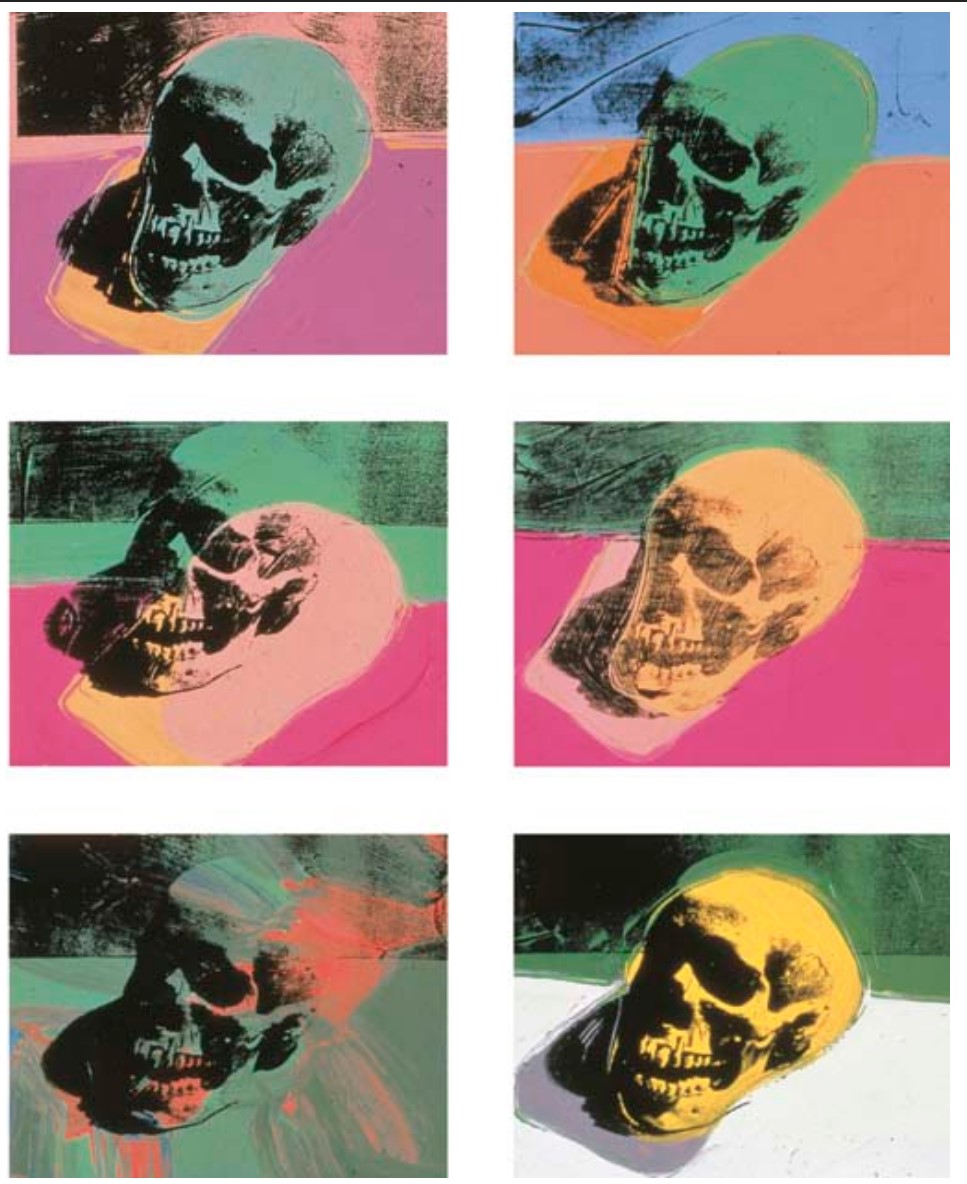
ANDY WARHOL
Six Skulls, 1976
Synthetic polymer and silkscreen inks on canvas
Each: 15×19 inches (38.1 x 48.3 cm)
Overall: 51×41 inches (129.5 x 101.6 cm)
Executed in 1976, Six Skulls is the memento mori for the Pop generation, a lurid and colorful adaptation of an Old Master motif. Warhol’s skulls, in their uniformity, provide a counterpoint to the infinite variety of the many faces of celebrity. Warhol intended even those faces to retain a certain uniformity and had aspired to having a vast exhibition of his portraits. In a sense, this would have negated the individual characteristics of the portraits, each distinct character blurring and becoming part of a crowd, a nebulous mass of faces. Likewise, Six Skulls implies that, underneath, we are all equal, death the great leveler. As he himself said, ironizing the process of decomposition that will affect us all
Skull (15×19)
Skull, 1976
Edlis Neeson Collection
Christie’s New-York: 19 November 2025
Estimated: USD 800,000 – 1,200,000
USD 1,905,000
ANDY WARHOL (1928-1987), Skull | Christie’s
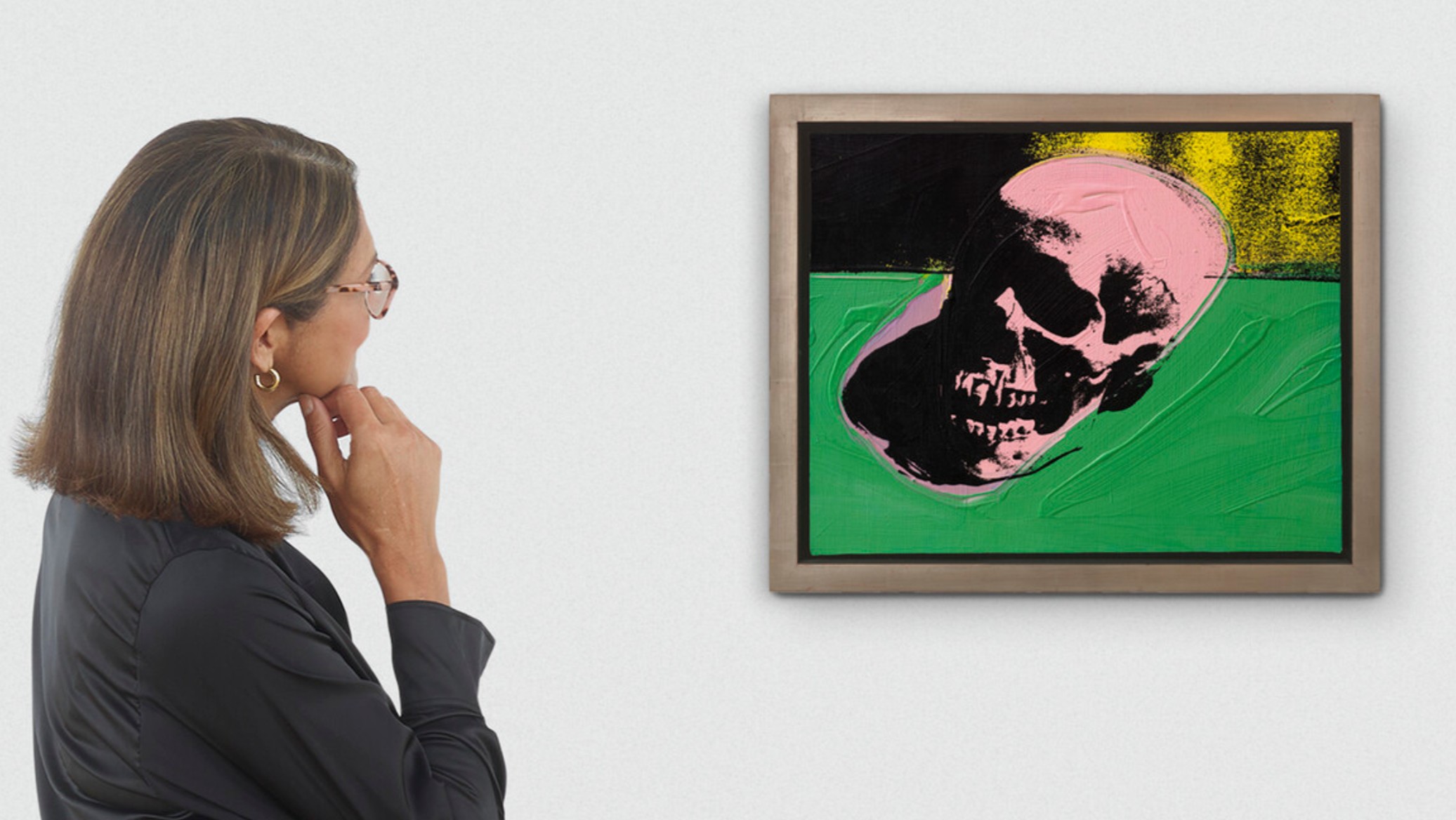
ANDY WARHOL (1928-1987)
Skull, 1976
Acrylic and silkscreen ink on canvas
15×19 inches (38.1 x 48.3 cm)
Stamped with the Andy Warhol Art Authentication Board, Inc. stamp and numbered ‘A108.025’ (on the overlap)
Powerfully conveying one of the legendary twentieth-century artist’s most intimate and contemplative motifs, Andy Warhol’s Skull is a choice example from his important series of Skull paintings begun in 1976. Inaugurating the final decade of Warhol’s life, Skull confronts the viewer with an unvarnished portrayal of its titular subject, operating as a memento mori reflecting on death’s inevitability. The work enthralls with an intense contrast of color, from the glittering gold background and vivid green foreground to the jet-black shadows and piercing voids of the skull.
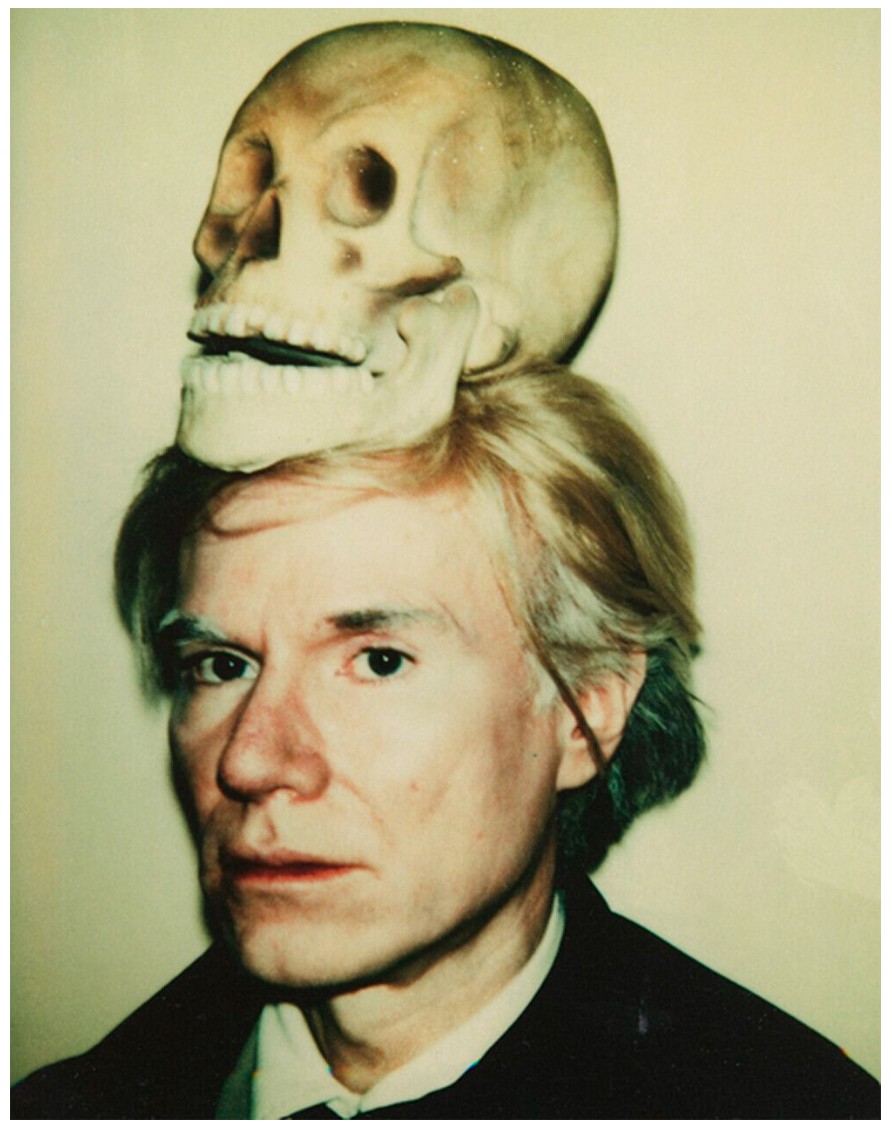
Andy Warhol with Skull, 1977. © 2025 The Andy Warhol Foundation for the Visual Arts, Inc. / Licensed by Artists Rights Society (ARS).
Rendered after a series of black-and-white photographs taken by Warhol’s assistant Ronnie Cutrone of a skull apparently acquired from a Paris taxidermy studio, the work meditates on the themes of mortality, vanitas, and temporality which pervaded the artist’s output after surviving Valerie Solanas’s assassination attempt in 1968. While recapitulating the motifs which had driven his early fascination with death and celebrity, the Skull series marked an important new trajectory in Warhol’s work. The skull was the first in a series of macabre subjects which Warhol would confront in his late career. Warhol mused on the concept of death in his book The Philosophy of Andy Warhol, published one year prior to the present work.
“I don’t believe in it, because you’re not around to know that it’s happened. I can’t say anything about it because I’m not prepared for it”
The themes embedded in Skull are currently the focus of a major travelling exhibition, Andy Warhol: Vanitas, organized by The Andy Warhol Museum in Pittsburgh.
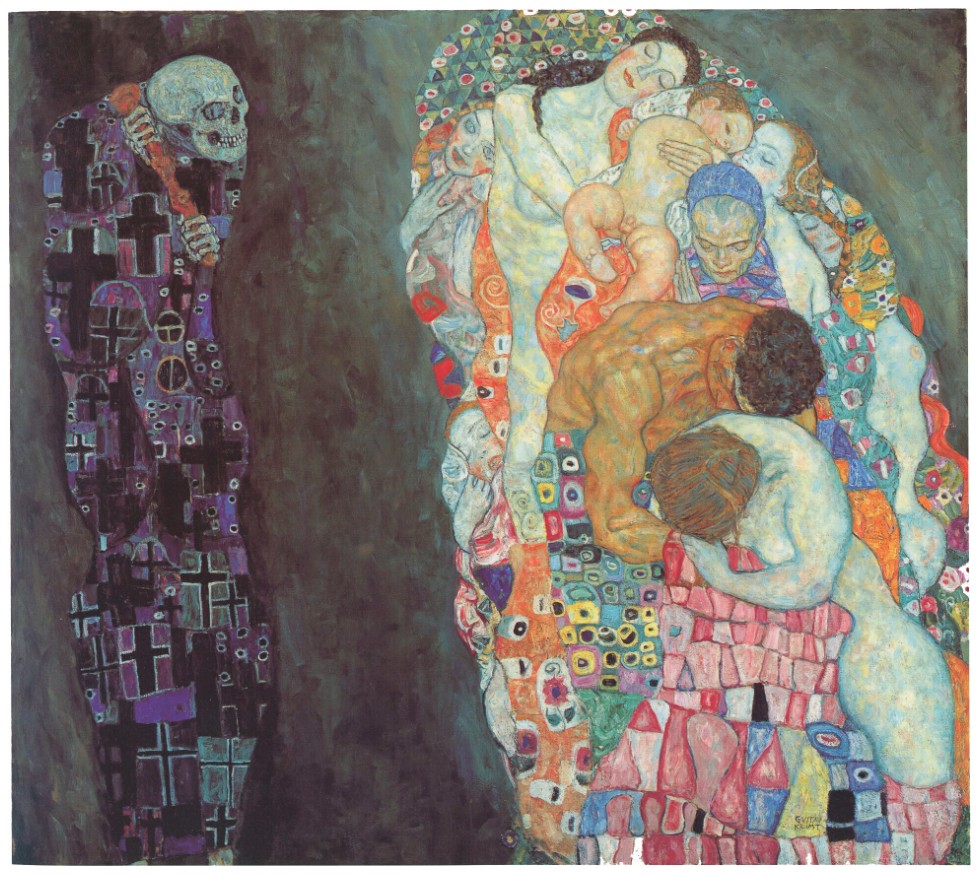
Gustav Klimt, Death and Life, 1908-11/1915, Leopold Museum, Privatstiftung, Vienna
With Skull, Warhol resuscitates the longstanding still life vanitas tradition, using the skull as a poignant visual reminder of one’s mortality. Contemporaneous with other still life series, including the Hammer and Sickle paintings, the present work demonstrates his formal interest in scale and monumentality, the artist employing skillful lighting and framing in order to emphasize the monumental presence of the skull in his moderately-sized canvases. Curiously the shadow of the skull in the present work casts the profile of a baby’s face onto the surface upon which it sits. Many have seen this as an allusion to rebirth, an optimistic outlook of this important image. Warhol thickly laid paint across the surface of the painting, modelling the paint layers with his fingers to emphasize the contours and edges of the skull, dramatizing the already strong shadows captured in his reference photograph. Warhol’s still life similarly removes extraneous subjects from the composition, removing any distraction from his intense focus on the skull.
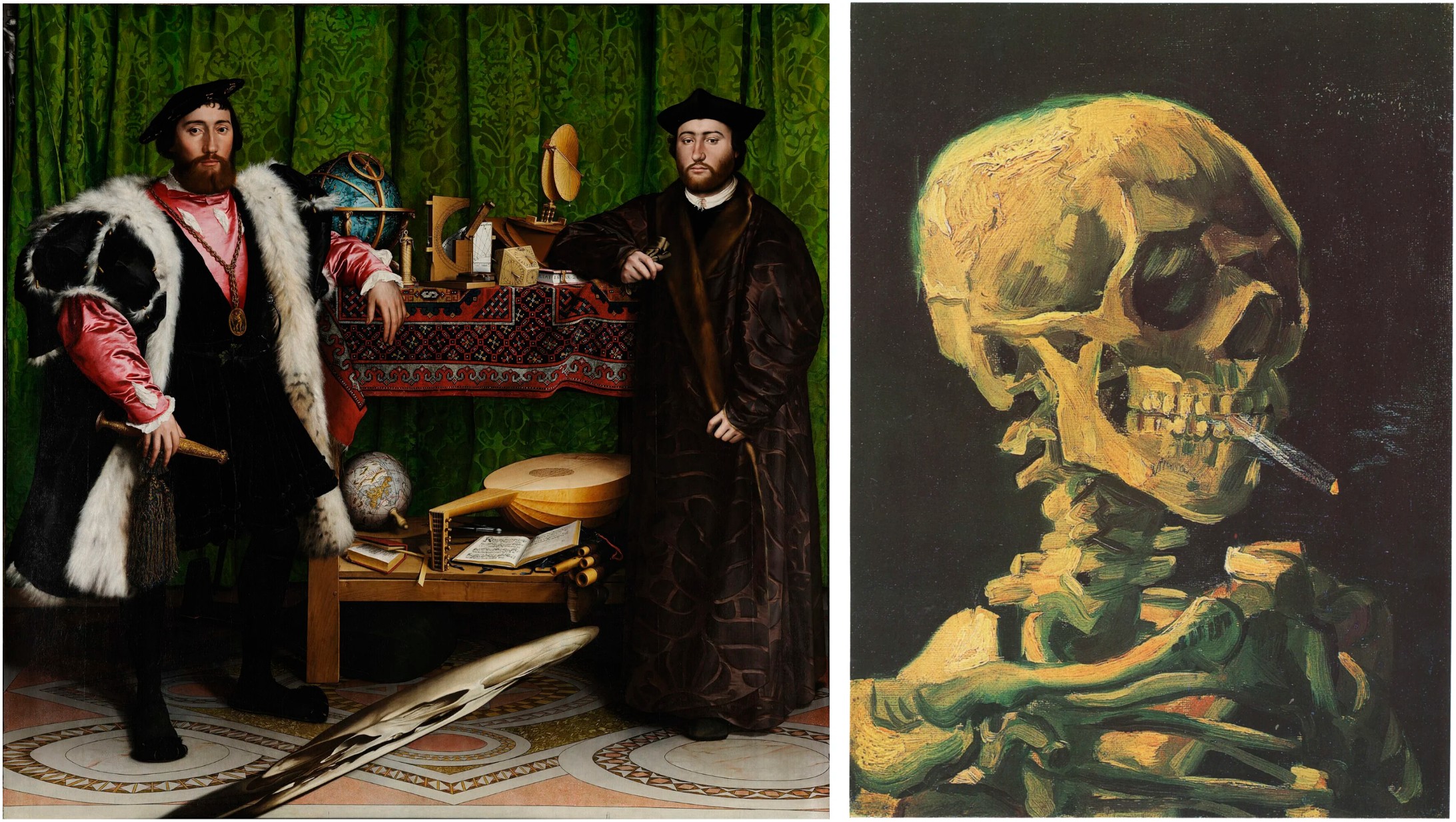
Left: Hans Holbein the Younger, The Ambassadors, 1533, The National Gallery, London.
Right: Vincent van Gogh, Skull with Burning Cigarette, 1885-1886. Van Gogh Museum, Amsterdam.
Warhol kept the present work with him until his death in 1987, infusing this Skull with even greater poignancy. The artist had long been concerned with death, focusing on the subject in his renderings of car crashes and dead celebrities in his early career.
“Death can really make you look like a star.”
Warhol intensified this focus after barely surviving being shot in 1968, his heart momentarily ceasing to beat on the operating table. With Skull, Warhol confronts the specter of his own mortality head-on, just like Hamlet, who, contemplating a skull held in his hands, moans, “Alas, poor Yorick!” (W. Shakespeare, Hamlet, Act 5, Scene I).
Skull, 1976
Sotheby’s New-York: 19 May 2017
Estimated: USD 600,000 – 800,000
USD 732,500
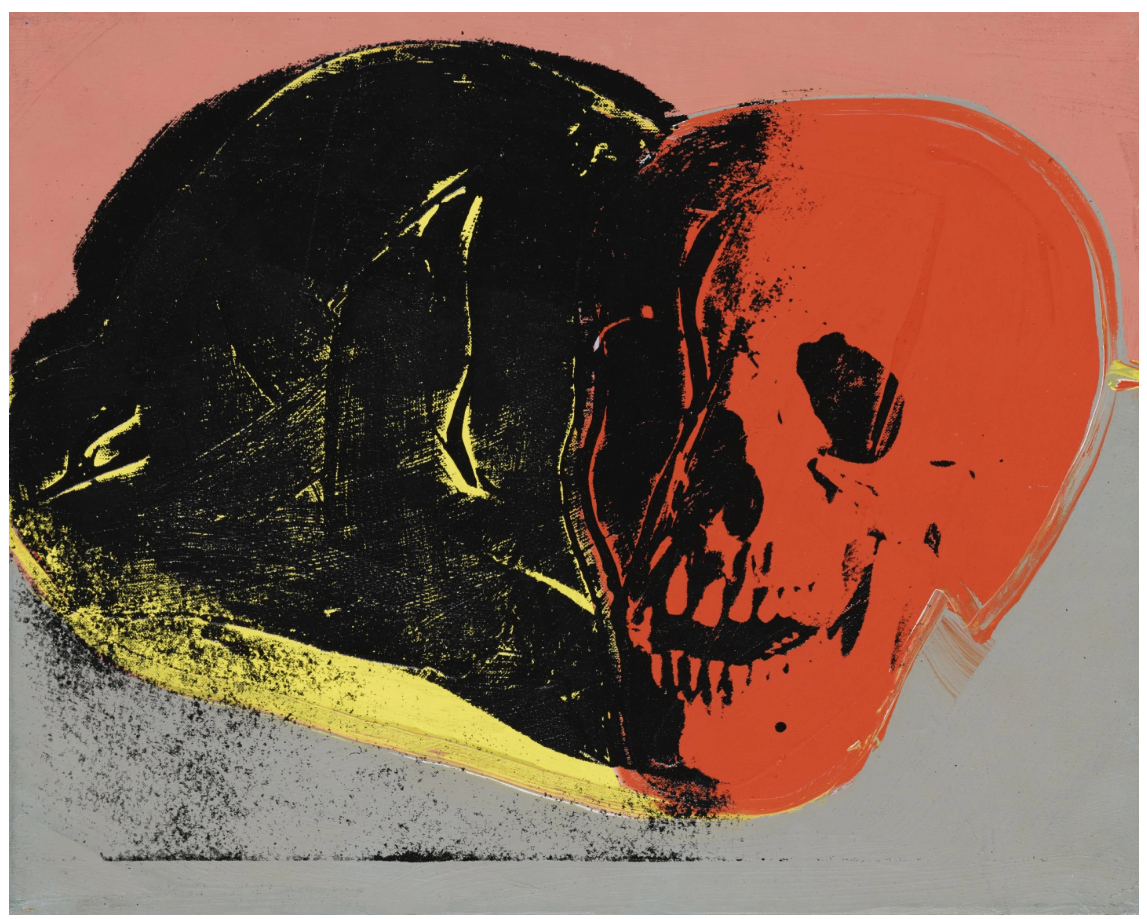
ANDY WARHOL
Skull, 1976
Acrylic and silkscreen ink on canvas
15 1/4 x 19 1/4 inches (38.7 x 48.9 cm)
Signed on the overlap
On June 3, 1968, the most iconic artist of the 20th century was shot at point blank range by Valerie Solanas. Those three shots, only one of which hit, proved to be a catalyst for a fundamental shift in Andy Warhol’s oeuvre. His fascination with the aesthetics of American consumerism was replaced by a more melancholy dialectic, replete with symbols of violence and death. Suddenly he was less concerned with America and Americans, and focused on more universal and personal themes, as well as his own place within the art historical canon. Skulls have served as a memento mori in all artistic disciplines, from Shakespeare to Pieter Claesz to Stanley Kubrick. By employing them in his art, Warhol not only co-opted an easily legible symbol with obvious personal significance, but also placed himself within an artistic tradition that stretches back hundreds of years. There is thus an evident desire to personalize and historicize his work, however his fashion of representation is rather at odds with his subject matter. Although the flattening of the subject does not alleviate the power of the hollow eye-socket, or the grimace of death, Skull is not a wholly macabre piece. The vivacity of the colors belies the symbolic weight of a skull as a symbol of death, and the nature of shadows, that is, the ability to lend life to things that are lifeless, adds another dimension to what might otherwise be a staid reminder of mortality. However, it should not be forgotten that even before the attempt on his life, Warhol fixated on death. When he started making portraits of Elizabeth Taylor it was while she was life-threateningly ill with pneumonia; his Marilyns were prompted by her tragic death. Warhol saw death as inherent to, and perhaps to an extent a part of, celebrity, and the commodification of the image after death as a removal of its power. Through repetition, the ghoulish and morbid elements of his portraits of Marilyn, his Electric Chairs, or indeed his Skull series, started to evaporate. Skull represents the culmination of a tradition that stretches back through all of Warhol’s work, a simultaneous disavowal of and profound respect for death.
Skull, 1977
Christie’s London: 29 June 2016
Estimated: GBP 600,000 – 800,000
GBP 842,500
Andy Warhol (1928-1987), Skull | Christie’s
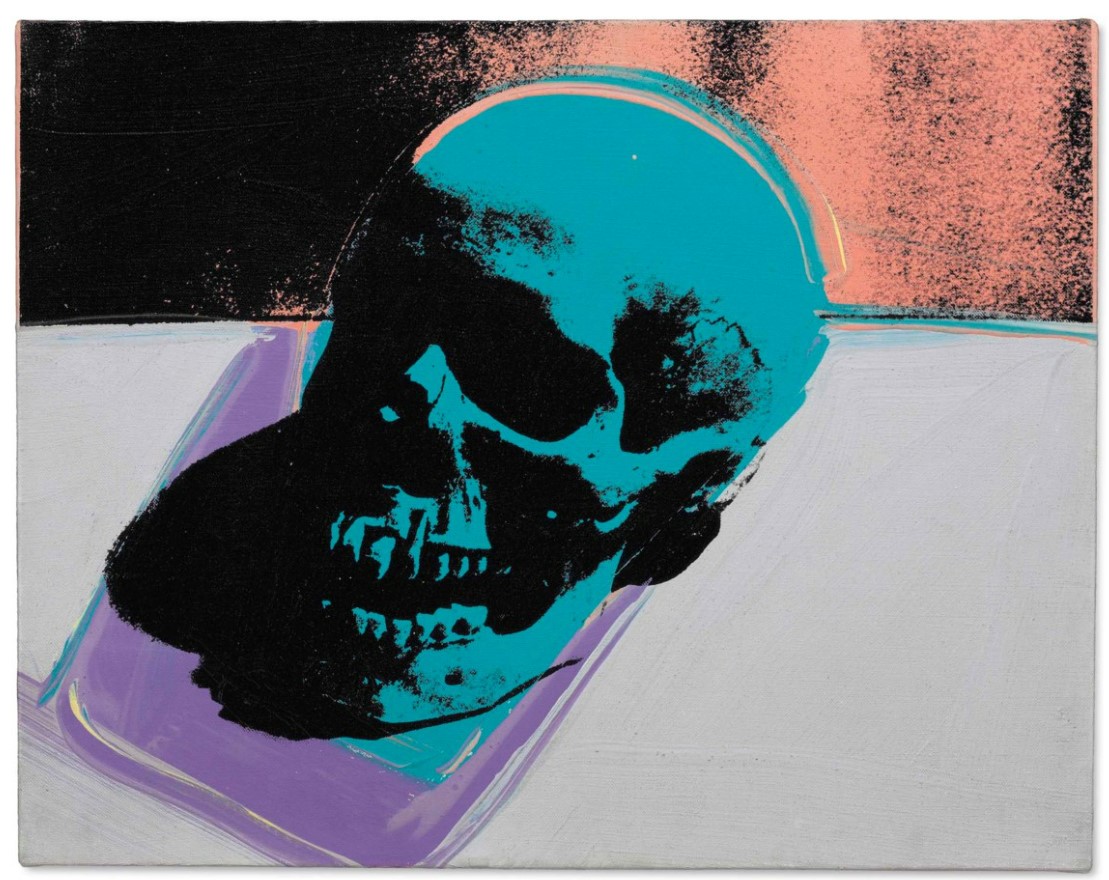
ANDY WARHOL
Skull, 1977
Synthetic polymer paint and silkscreen ink on canvas
15 x 19.1 inches (38.1 x 48.6 cm)
A memento mori for the Pop generation, Andy Warhol’s Skull stems from the important series of skull paintings that the artist began in 1976. Executed in vivid turquoise upon a cold grey foreground, the skull casts a purple shadow and is offset by the background’s grainy orange glow; coal-black shadows transform its hollows into gaping voids, creating a sumptuous vision of death like a film noir still made technicolour. Based on a set of black and white photographs taken by Warhol’s studio assistant Ronnie Cutrone, the skulls are situated at the dawn of the artist’s mature practice. Recapitulating the mortal themes that had driven his early fascination with violence and celebrity, the skulls forged a new trajectory within Warhol’s oeuvre. Their ubiquity stood in sharp contrast to the flood of high-profile portrait commissions that Warhol received during the 1970s. Though his fame had reached fever pitch, Warhol was unable to shake the memory of his attempted assassination eight years earlier. Death preyed increasingly upon his mind, and the skulls were the first in a long line of macabre subjects that occupied Warhol during his latter years. Although its potent symbolism conjures Shakespearean tragedy and the vanitas still-life tradition, Warhol’s skull is articulated with the deliberately banal opacity of his Campbell’s soup cans and Coca-Cola bottles, representing a kind of universal portrait: a reminder of the corporeal transience to which we are all fated. Ultimately, it prefigures the artist’s final series of self-portraits, in which Warhol’s skull-like visage becomes an ethereal, disembodied vision of his own ephemeral condition. Standing among the artist’s most enigmatic motifs, works from the Skull series are housed in institutions including Tate, London, the San Francisco Museum of Modern Art and the Metropolitan Museum of Art, New York.
According to Cutrone, Warhol had purchased the original skull from an antiques shop in Paris. In the set of photographs that became the source images for the series, Cutrone had placed it on a trestle table in front of a blank studio wall, on top of a piece of plywood covered in white paper. Under Warhol’s instruction, he had taken a number of photographs under different light conditions in order to create varying lengths of shadow. Warhol was fascinated by the different shapes created in the interplay of light and shade, and sought to replicate this effect in his silkscreens. In doing so, the skulls are reduced to an almost abstract geometry that undermines their traditional association with Old Master painting and nature morte composition. As the curator Arthur K. Wheelock has written, ‘Dutch still-life painters placed realistically rendered skulls, with jawbones and teeth missing, in the midst of luxurious displays of expensive silver and luscious fruit to warn viewers about the transience of the sensual world. Warhol, however, presents an even starker image of the inevitability and mystery of death … there is no sensual world to enjoy, only a skull, complete with jawbone, who laughingly confronts us’ (A. K. Wheelock Jr., quoted in Andy Warhol: 365 Takes, New York 2004, p. 312). Filtered through the mechanical apparatus of the silkscreen, Warhol’s skull is a distinctly anti-human apparition. However, in a characteristic twist, there is an undeniably painterly quality to the work’s surface: in the skull’s lilac shadow and halo-like outline, remnants of sweeping brushstrokes betray the trace of the artist’s hand, a transient marker of physical presence. Despite their flattened formal properties, the varied and often bright colours of the series introduce a unique expressive dimension to each of Warhol’s skulls, individuating them to an even greater extent than many of his portraits.
Skull, 1976
Christie’s New-York: 8 May 2016
Estimated: USD 1,200,000 – 1,800,000
USD 1,445,000
Andy Warhol (1928-1987), Skull | Christie’s
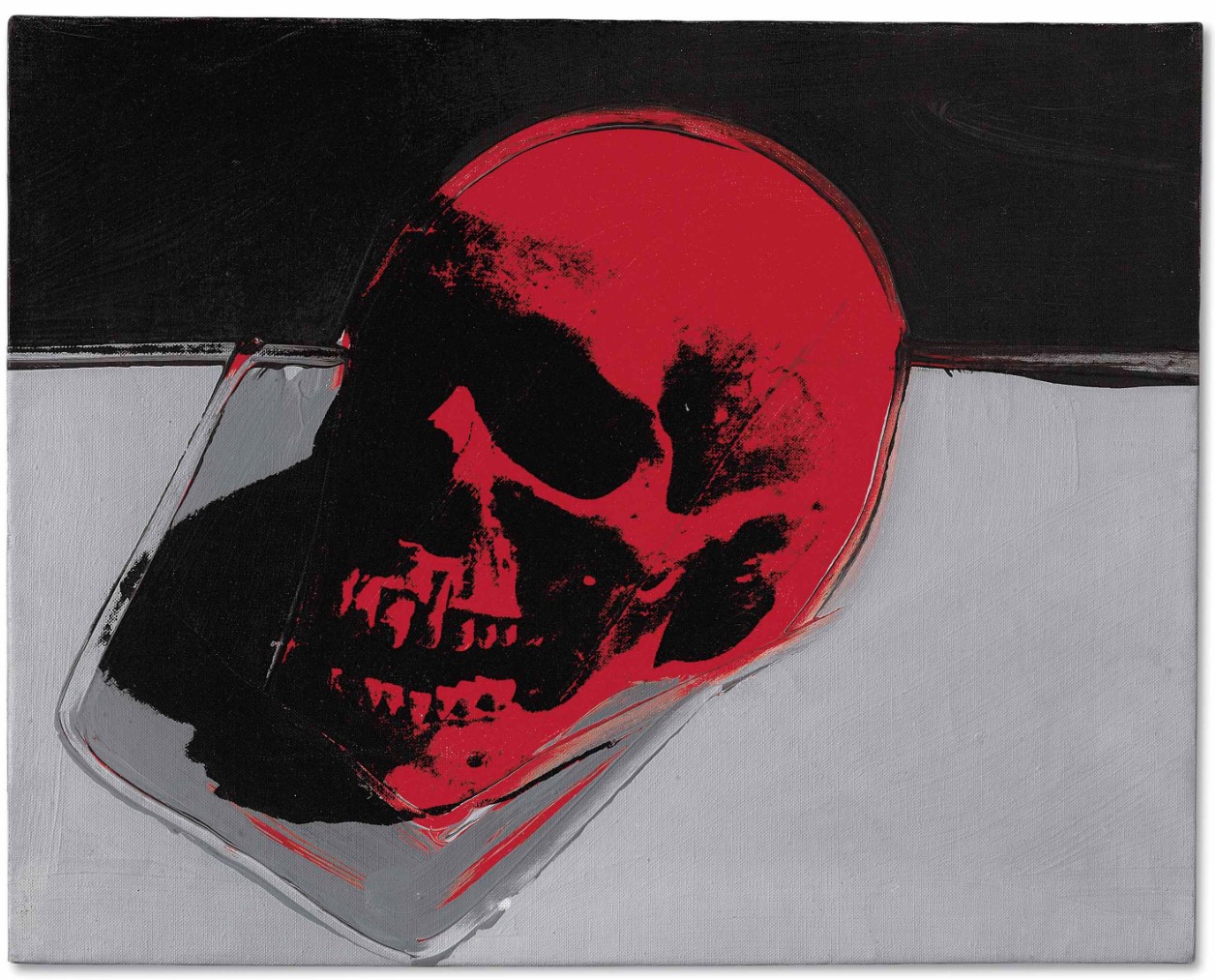
ANDY WARHOL
Skull, 1976
Synthetic polymer paint and silkscreen ink on canvas
15×19 inches (38.1 x 48.2 cm)
Perhaps more than any other subject, death was the topic which fascinated Warhol throughout his adult life and which permeated its way into many of his most famous works. From his portraits of stricken starlets such as Marilyn Monroe and Elizabeth Taylor, to his renditions of suicides and the gruesome aftermath of a car crashes, death was never far from Warhol’s mind. One of the starkest examples of this interest was a series of paintings which the artist began in 1976 featuring a human skull. In Skull, this haunting object is rendered in vibrant red, as it stares out from a monochromatic surface of black and gray. The contrast between the individuality of the skull’s features and the anonymity of its setting makes for an intoxicating combination, and one which demonstrates Warhol’s almost unique ability to integrate art history, popular culture, social commentary and his own personal biography into one compelling painting.
In this particular example from the series, a life-sized rendition of a skull is executed with a shocking splash of red paint. Set against its dark back drop, this jolt of vibrant color makes the image even more striking—its gruesome features rendered in explicit detail. The quality of this particular screen can be seen in the clarity of details such as the contours of the individual teeth and the subtle gradations of the shadows that fall across the temples and the forehead. Against this vibrant backdrop, the dark sockets of the eyes and the ominous, toothy grin become even more melancholy, hollow vessels of the person that once was. That specter of a ghostly human presence can also be seen in the trace lines around the silhouette of the skull as a finger has been dragged across the surface of the painting to accentuate the physical presence of the skull itself.
The source image for this particular painting was a photograph taken by Ronnie Cutrone, Warhol’s studio assistant at the time. According to Cutrone, Warhol had spotted the skull in an antiques shop in Paris and in the set of photographs that became the basis for the series, Cutrone had placed it on a trestle table in front of a blank studio wall, on top of a piece of plywood covered in white paper. Under Warhol’s direction, he had taken a number of photographs under different light conditions in order to create varying lengths of shadow.
In 1976, Skull was acquired directly from Warhol by Christopher Makos, a photographer who became close friends with the artist. Makos was a regular figure on the downtown arts scene and was beginning to develop a reputation as a serious photographer who would chronicle much of Warhol’s world during the 1970s and 1980s. The pair first met when Makos photographed Warhol for a book called White Trash which captured the emerging downtown punk scene interspersed with images of celebrities like Liza Minnelli, Tennesee Williams, John Lennon and Warhol. Makos said that Warhol noticed him because of his shock of blond hair and the limitless energy he put into everything that he did. Andy was so impressed by Makos’ book that he ordered 1000 copies of his Time Capsules and asked the photographer to sign each one. Later, Makos would be the one who would be responsible for introducing Warhol to the work of Jean-Michel Basquiat and Keith Haring. “I undoubtedly learnt a great deal from him, but he also learnt from me, especially about photography” Makos said. “We were in constant confrontation, continually exchanging impressions and ideas. Andy, who for years regularly had a camera hanging around his neck, defined me as ‘the most modern photographer in America.’ For a long time we were friends in the truest sense of the word” (C. Makos, in “Altered Image,” Altered Images, in C. Makos, ed., Andy Warhol, Milan, 2002, p. 10).
Skull, 1976
Christie’s London: 30 June 2015
Estimated: GBP 400,000 – 600,000
GBP 1,202,500
Andy Warhol (1928-1987), Skull | Christie’s
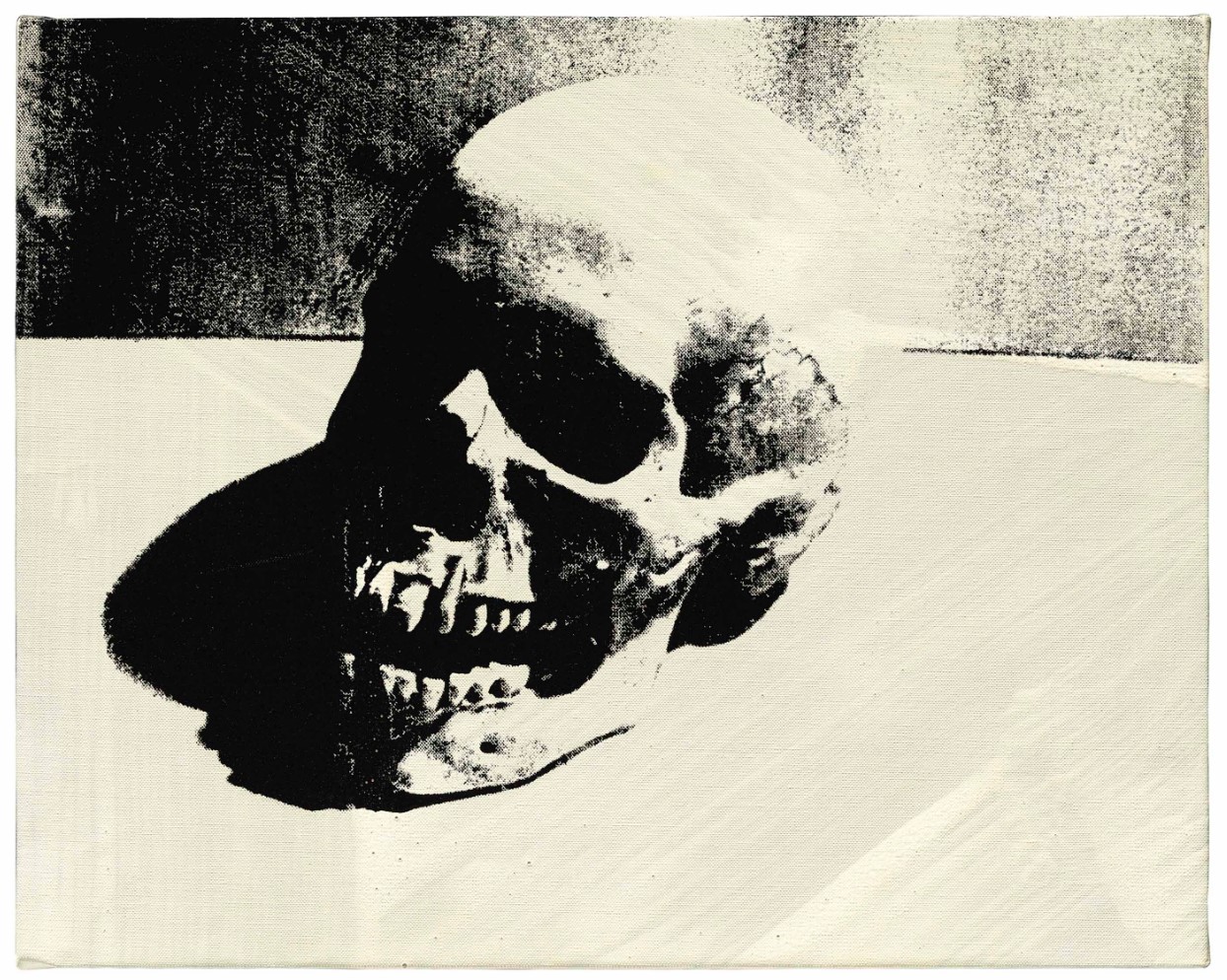
ANDY WARHOL
Skull, 1976
Synthetic polymer paint and silkscreen ink on canvas
15.1 x 19.5 inches (38.3 x 48.4 cm)
A memento mori for the Pop generation, Andy Warhol’s Skull stems from the important series of skull paintings that the artist began in 1976. Executed in black and white, it confronts the viewer as a grainy vanitas or film noir still, with intense dark shadows transforming its orifices into gaping voids. Based on a set of black and white photographs taken by Warhol’s studio assistant Ronnie Cutrone, the skulls are situated at the dawn of the artist’s mature practice. Recapitulating the themes of death and mortality that had driven his early fascination with violence and celebrity, the skulls forged a new trajectory within his oeuvre. Their ubiquity stood in sharp contrast to the flood of high-profile portrait commissions that Warhol received during the 1970s. Though his fame had reached fever pitch, Warhol was unable to shake the memory of his attempted assassination eight years earlier. Death preyed increasingly upon his mind, and the skulls were the first in a long line of macabre subjects that occupied Warhol during his latter years. Articulated with the deliberately banal opacity of his Campbell’s soup cans and Coca Cola bottles, they represent a kind of universal portrait – a reminder of the corporeal transience to which we are all fated. Ultimately, they prefigure the artist’s final series of self-portraits, in which Warhol’s skull like visage becomes an ethereal, disembodied vision of his own ephemeral condition. Standing among the artist’s most enigmatic visual motifs, works from the series are housed in institutions including Tate, London, the San Francisco Museum of Modern Art and the Metropolitan Museum of Art, New York.
According to Cutrone, Warhol had purchased the original skull from an antiques shop in Paris. In the set of photographs that became the source images for the series, Cutrone had placed it on a trestle table in front of a blank studio wall, on top of a piece of plywood covered in white paper. Under Warhol’s instruction, he had taken a number of photographs under different light conditions in order to create varying lengths of shadow. Warhol was fascinated by the different shapes created in the interplay of light and shade, and sought to replicate this effect in his silkscreens. In doing so, the skulls are reduced to an almost abstract geometry that undermines their traditional association with Old Master painting and nature morte composition. As the curator Arthur K. Wheelock has written, ‘Dutch still-life painters placed realistically rendered skulls, with jawbones and teeth missing in the midst of luxurious displays of expensive silver and luscious fruit to warn viewers about the transience of the sensual world. Warhol, however, presents an even starker image of the inevitability and mystery of death … there is no sensual world to enjoy, only a skull, complete with jawbone, who laughingly confronts us’ (A. K. Wheelock Jr., quoted in Andy Warhol. 365 Takes, New York 2004, p. 312). Filtered through the mechanical apparatus of the silkscreen, Warhol’s skull is a distinctly anti-human apparition. However, in a characteristic twist, there is an undeniably painterly quality to the surface of these works: remnants of sweeping brushstrokes betray the trace of artist’s hand, a transient marker of physical presence. Despite their flattened formal properties, there is a unique expressive dimension to each of Warhol’s skulls that individuates them to an even greater extent than many of his portraits.
Warhol’s art had long been concerned with death: indeed, it was through his depictions of car crashes, race riots and dead celebrities during the early 1960s that he had achieved first international recognition. Ironizing the process of decay that befalls us all, Warhol had famously quipped that ‘Death can really make you look like a star’ (A. Warhol, quoted in Andy Warhol. A Factory, exh. cat., Museo Guggenheim Bilbao, Bilbao, 2000, unpaged). However, it was after the attempt on his life by the radical feminist writer Valerie Solanas in 1968 that Warhol was truly forced to confront the fact of human mortality. It was no longer simply a glamourous trope but an inescapable reality. Conversely, now that death was a theme in his life, it disappeared from his art for a period of some years. The skull paintings, in many ways, marked its re-emergence. Though Warhol’s portrait commissions had brought him a great deal of material success, his thoughts were increasingly drawn to the near-fatal events of 1968. As David Bourdon writes, ‘he was acutely aware of the happenstance nature of sudden death. In the years that followed his shooting, Warhol occasionally expressed the wish that he had died at that time, partly because he “could have gotten the whole thing over with”’ (D. Bourdon, Warhol, New York 1989, p. 357).
Skull, 1976
Sotheby’s London: 2 July 2008
Estimated: GBP 400,000 – 600,000
GBP 469,250
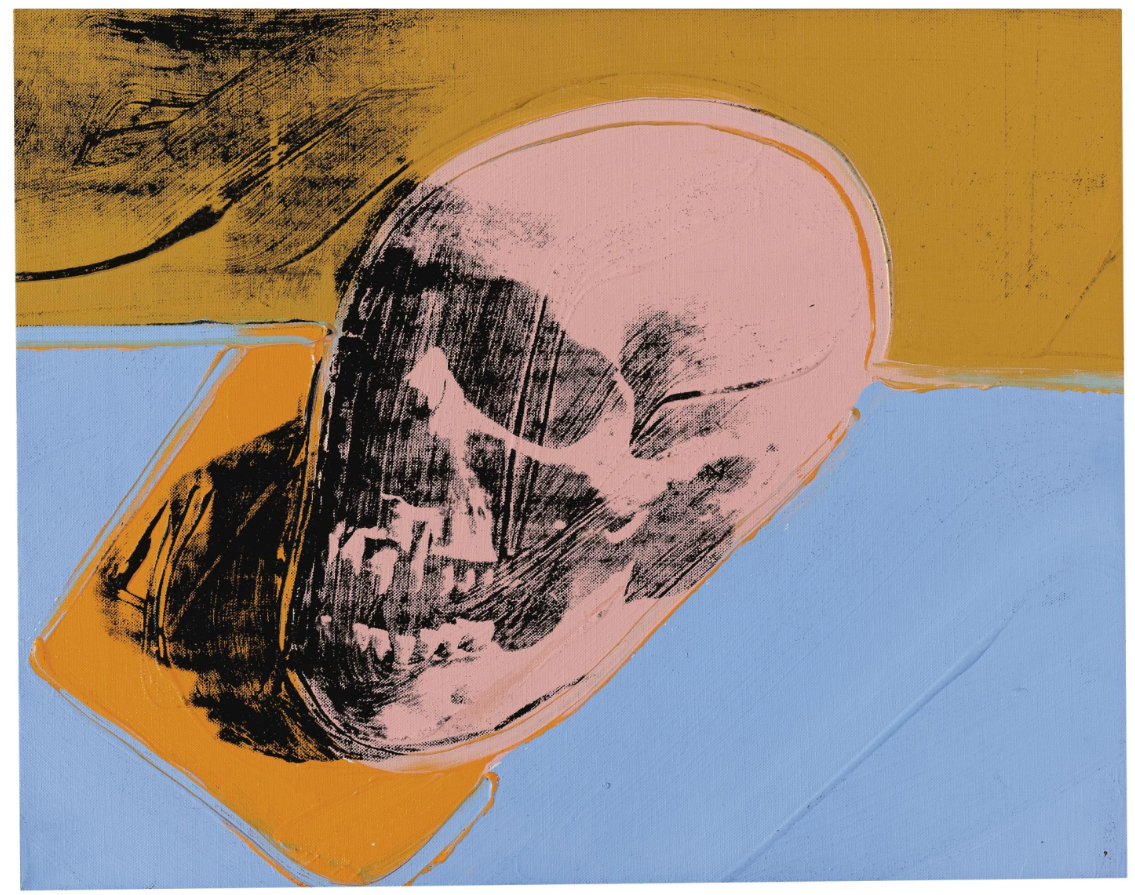
ANDY WARHOL
Skull, 1976
Acrylic and silkscreen ink on canvas
15×19 inches (38.1 x 48.3cm)
Signed and dated 1976 on the overlap
Having explored death as a theme in the 1960s with the notorious ‘Death and Disaster’ series of ‘Suicides’, ‘Electric Chairs’ and ‘Car Crashes’, in the proceeding decade, Warhol adopted a more personalized treatment of mortality in the Skull series which brought classical Memento Mori iconography into the age of celebrity and the flashbulb. In these works considered to be amongst Warhol’s best late screens, the artist shows that death offers equality and anonymity through anatomy – at odds with what Warhol relentlessly sought to achieve during his lifetime. In this sense, the Skull series can be interpreted as an attempt at self-derision; a reflection by the artist upon his own mortality, in the context of Valerie Solanas’ attempt on his life in 1968. For Andy Warhol, the 1970s provided the crystallization of his recognition and fame: his portrait commissions becoming a rite-of-social-passage for the Jet Set; his approachable pop vision of art rendering him a truly global brand. Beyond the immediate iconography of his commissioned pieces, he also explored deeper, more self-reflective themes in this decade – particularly apparent in the Skull series, of which the present work is an outstanding example. A stronger, more meaningful artistic gesture undertaken by a confident Warhol, secure in his success; we are allowed to peer behind the façade of the artist’s persona, and see a glimpse of the skull that lay beneath the fright wig.
Skull, 1976
Christie’s London: 30 June 2008
Estimated: GBP 400,000 – 600,000
GBP 657,250
Andy Warhol (1928-1987) , Skull | Christie’s
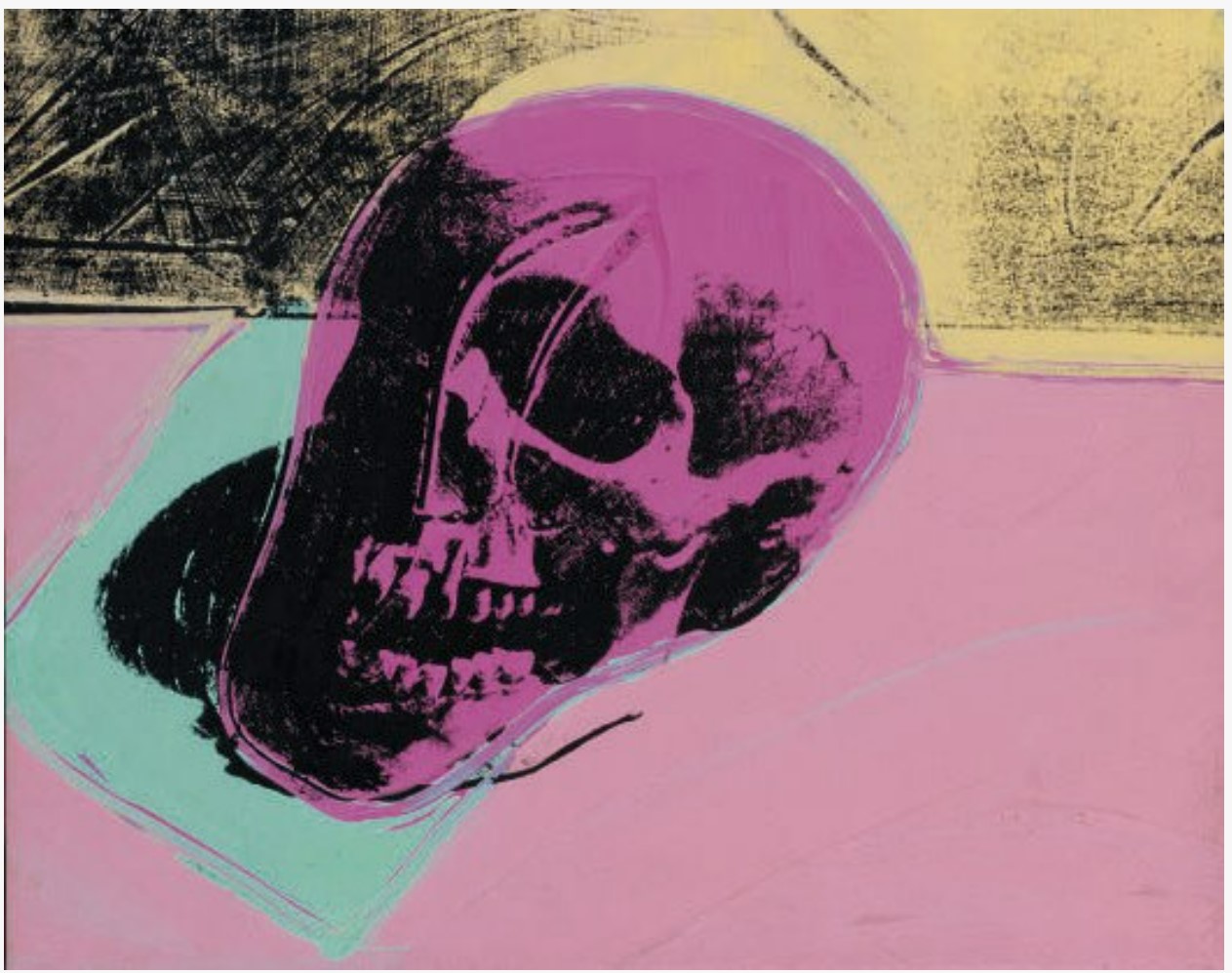
ANDY WARHOL
Skull, 1976
Synthetic polymer paint and silkscreen ink on canvas
15.1 x 19 inches (38.3 x 48.3 cm)
Skull, 1976
Sotheby’s New-York: 14 May 2008
Estimated: USD 1,200,000 – 1,800,000
USD 1,609,000
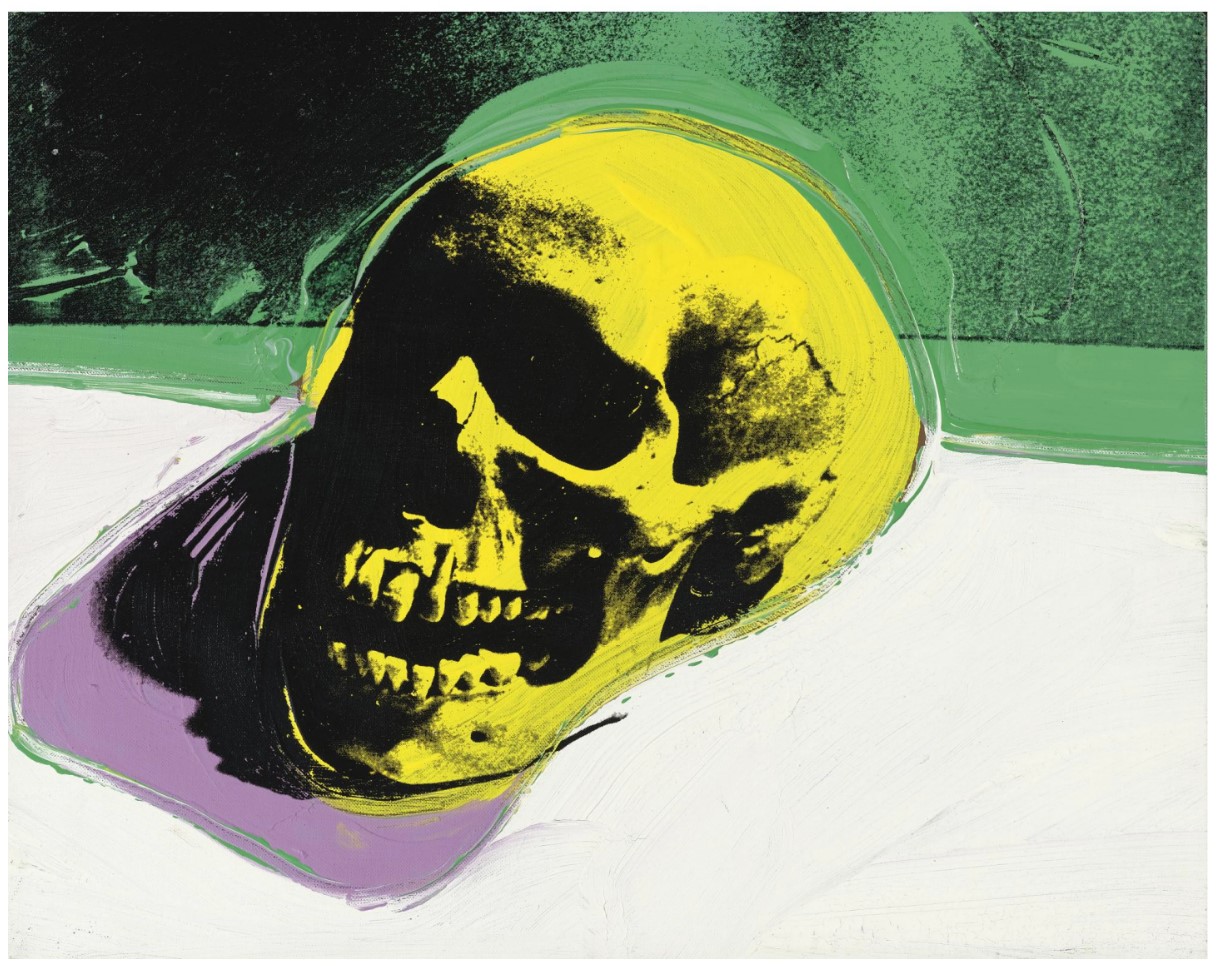 ANDY WARHOL
Skull, 1976
Acrylic and silkscreen ink on canvas
15 x 18.9 inches (38.1 x 47.9 cm)
Works on Paper
Skull, 1976
Christie’s London: 25 March 2021
Estimated: GBP 40,000 – 60,000
GBP 75,000
ANDY WARHOL (1928-1987), Skull | Christie’s
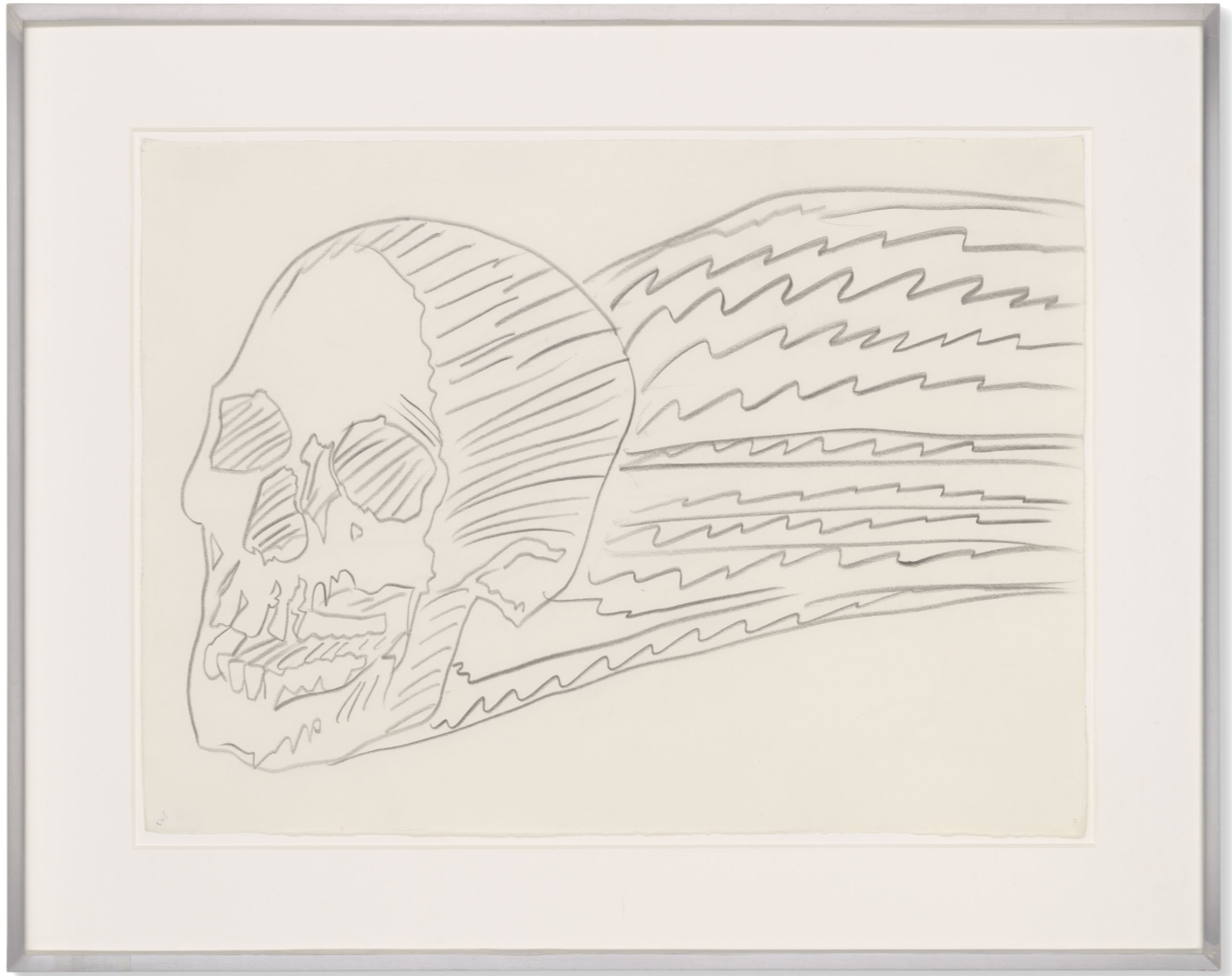
ANDY WARHOL (1928-1987)
Skull, 1976
Graphite on paper
20 7/8 x 28 inches (53×71 cm)
Stamped with the estate of Andy Warhol and the Andy Warhol Foundation for the Visual Arts stamps
Numbered ‘VF 86.01 06’ (on the reverse)
Skull, circa 1978
Christie’s New-York: 5 March 2020
Estimated: USD 60,000 – 80,000
USD 65,000
Andy Warhol (1928-1987), Skull | Christie’s
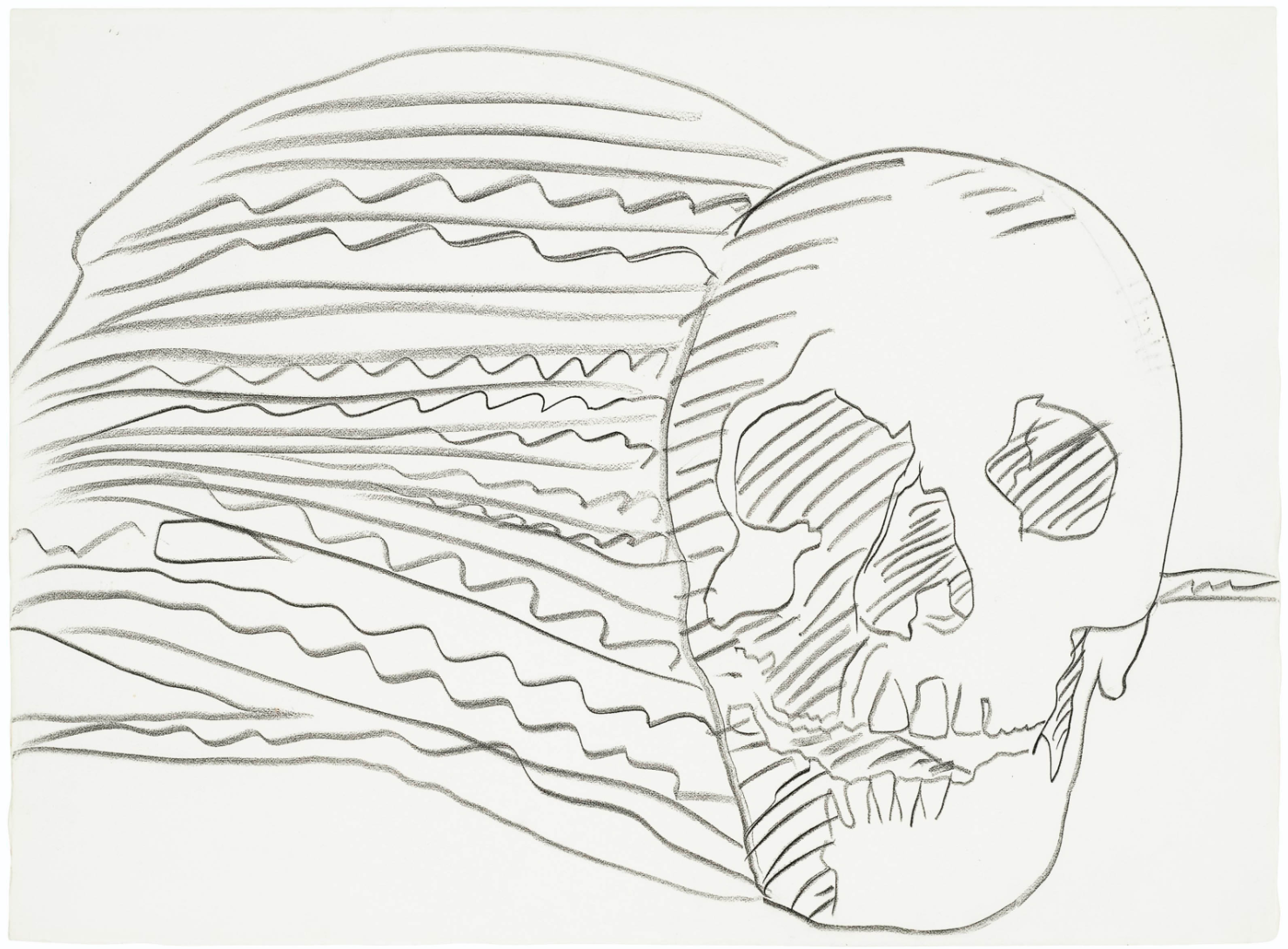
ANDY WARHOL (1928-1987)
Skull, circa 1978
Graphite on paper
20 5/8 x 27 7/8 inches (52.4 x 70.8 cm)
Stamped with the Estate of Andy Warhol and the Andy Warhol Foundation for the Visual Arts, Inc. stamps
Numbered ‘VF 86.008’ (on the reverse)
Skull, circa 1976
Christie’s New-York: 5 March 2020
Estimated: USD 30,000 – 50,000
USD 262,500
Andy Warhol (1928-1987), Skull | Christie’s
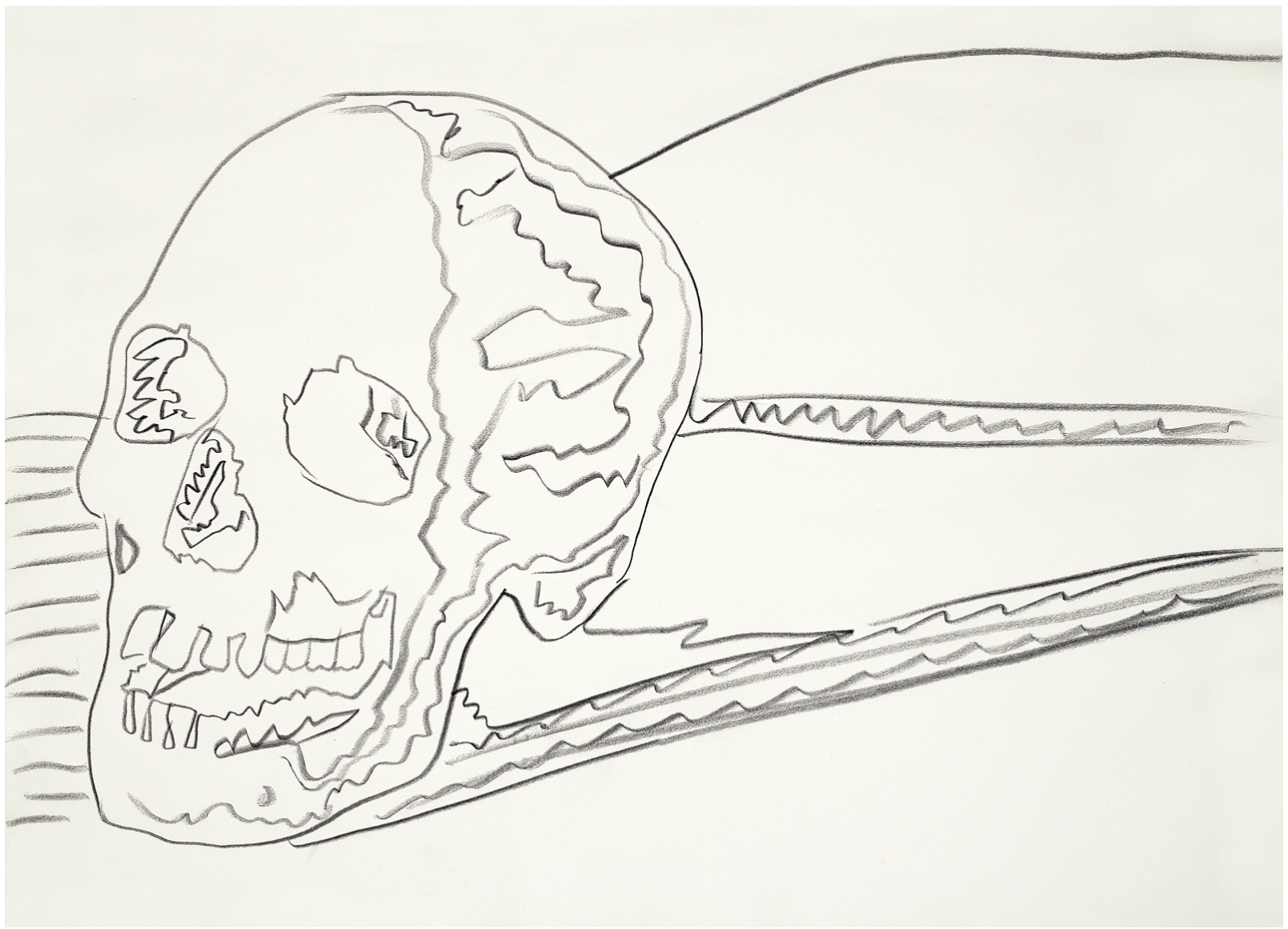
ANDY WARHOL (1928-1987)
Skull, circa 1976
Graphite on paper
20 5/8 x 28 1/8 inches (52.3 x 71.4 cm)
Stamped with the Estate of Andy Warhol and the Andy Warhol Foundation for the Visual Arts, Inc. stamps
Numbered ‘86.004’ (on the reverse)