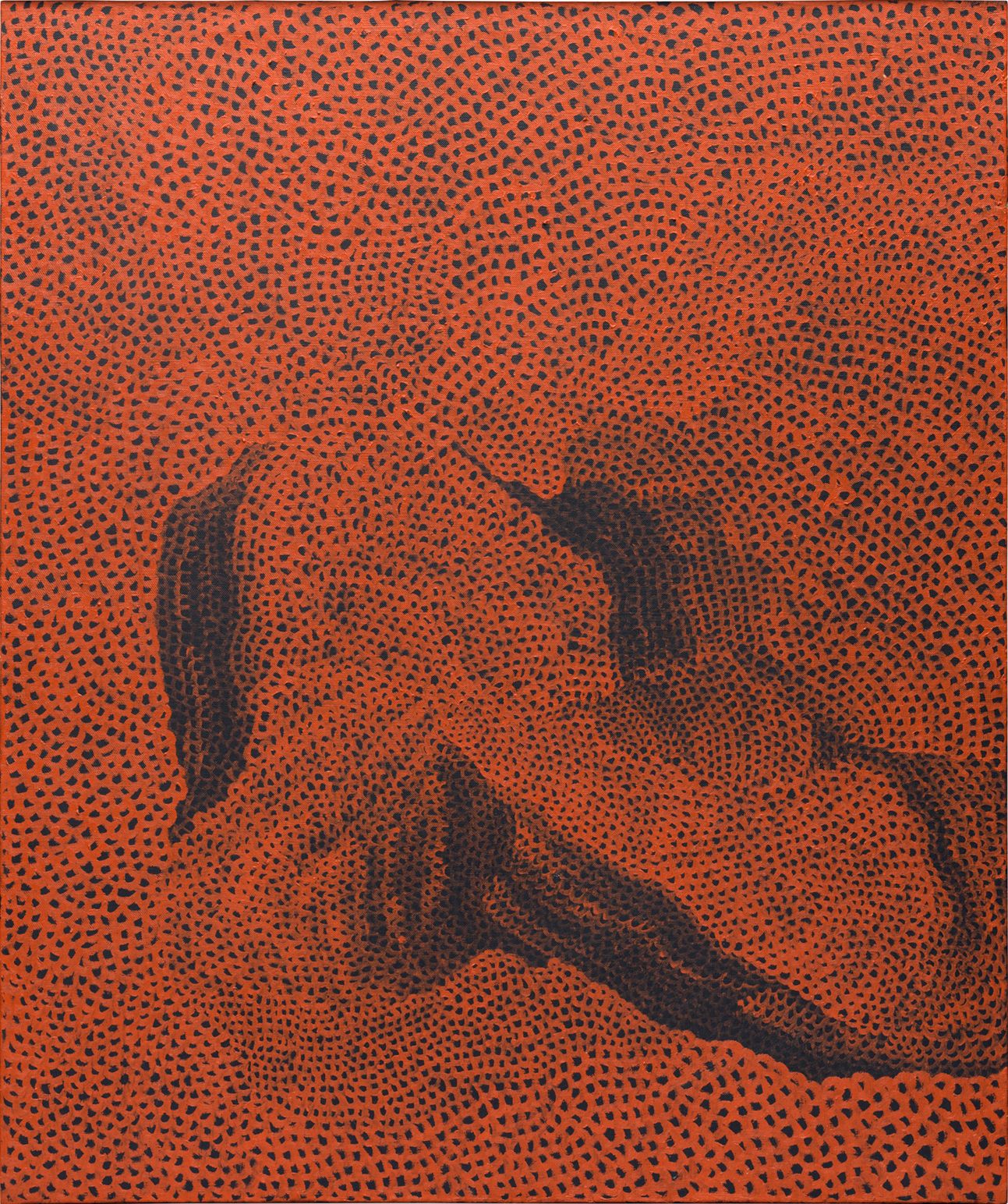
Hudson River, 1960
Oil on canvas
71.7×60.3 cm (28.2×23.7 inches)
Signed, titled and dated 1960 (on the reverse)
Provenance
Collection of the Artist, New York
Collection of Dr Teruo Hirose, New York (acquired directly from the artist in October 1960)
Thence by descent to the present owner
Bonhams New-York: 12 May 2021
USD 3,990,312
Source: Bonhams
Bonhams : YAYOI KUSAMA (B. 1929) Hudson River 1960
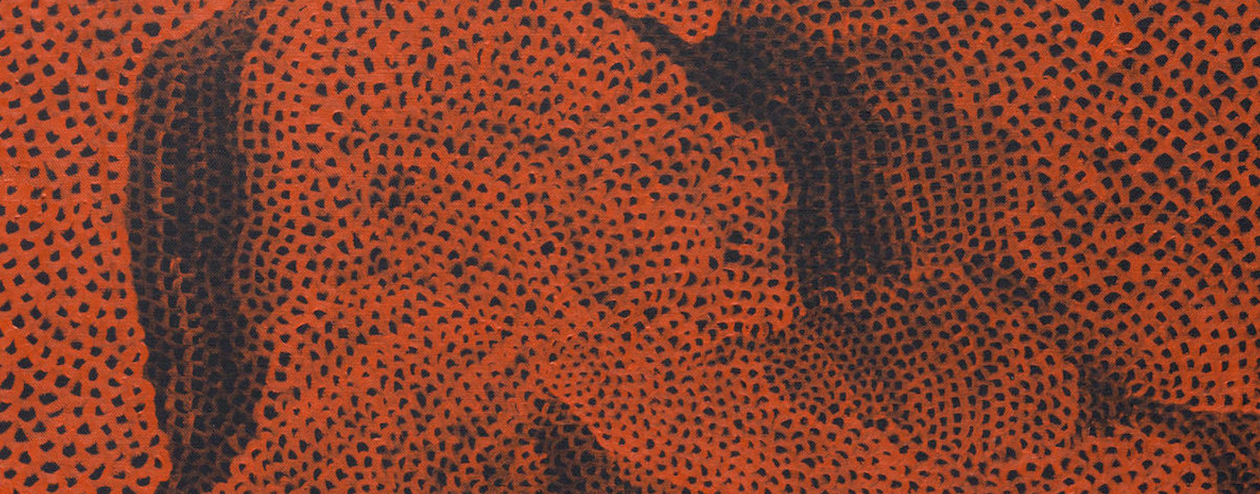
Mississippi River and Hudson River, both from 1960, are singular examples from the Yayoi Kusama’s six decades of art making. Deeply rare, quintessential examples of one of the most important motifs in Kusama’s career, here the Infinity Net technique is at its best: the nets expand and contract, swirling and falling in waves across the canvas. Each tiny net is hypnotic and mesmerizing, demonstrating the sheer power of Kusama’s work. These works are deeply personal, connecting memories from Kusama’s isolated childhood in Japan, to her new life in New York. This is underscored by their provenance, having been treasured paintings hanging proudly in Dr Hirose’s home for the last six decades.
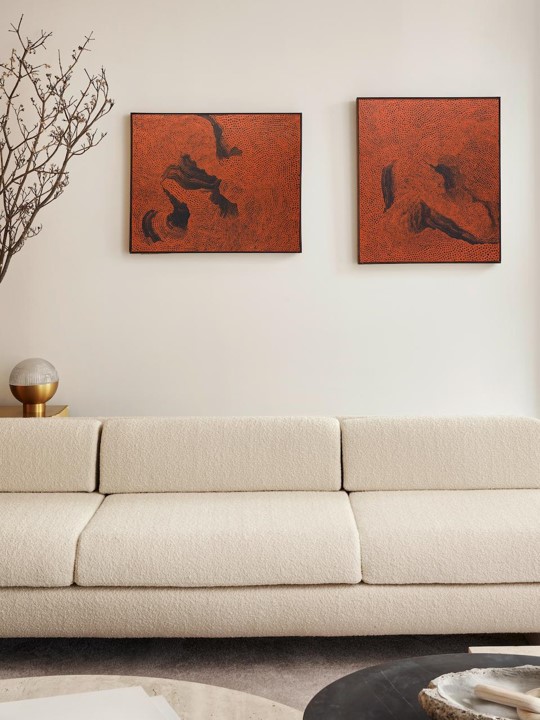
Hudson River and Mississippi River were executed in the early days of Kusama’s New York career; they were given to Dr Hirose in October of 1960. Initially, Kusama’s Infinity Net paintings were painted in white on black ground, with a white over wash, and typically on a monumental scale designed to take over gallery and exhibition spaces. The present works are also some of the artist’s earliest works in red, moving away from her initial white works. The red is a powerful statement, providing an energy and motion, which was harder to capture in the subtle layers of her initial white canvases. The reds and blacks in both paintings merge and meld, though both entirely abstract, there is a clear connection to landscape and nature between them. Red works from this period are rare for Kusama.
River paintings, are autobiographical in a deep way, connecting Kusama’s past to her present and the new life that she was embarking on in America, depicting the Hudson River for which she would be so familiar in New York as well as the Mississippi River which she crossed on her first flight to the city from Seattle in 1958, winding waterways that deeply define the American landscape. This connection from life in Japan to life in America, made them a fitting gift to Teruo and Shigeko Hirose, immigrants themselves. These river paintings also draw close parallels to contemporaneous works of Kusama’s mentor, Georgia O’Keeffe. Just as Dr Hirose had his great uncle and fellow mentors in the medical field who supported and encouraged him to come to the States, O’Keeffe was, in Kusama’s words “her first and greatest benefactor”. Kusama famously discovered O’Keeffe’s work in a book near Kusama’s home in rural Japan. Immediately taken with it, Kusama took a train six hours to Tokyo where, through something of a miracle, there was a book at the United States Embassy that included O’Keeffe’s address. Kusama wrote to her of her desire to move to America and become an artist, sending a selection of her works on paper with her. O’Keeffe generously returned the correspondence, made introductions and offered advice to the young artist at the time. They would eventually meet in New York, around the same time that the present works were executed. O’Keeffe created her own series emulating rivers in the same period. As with so many of her works, she took inspiration from air travel that was becoming increasingly mainstream and allowed her to see much of the American landscape. It is fascinating to see two artists who would become two of the most influential and recognizable artistic voices of their generation approach the same subject matter in the same year. Two of the most important paintings to ever come to market, Hudson River and Mississippi River are seminal examples from the start of Kusama’s most important decade. Capturing moments from her childhood and earliest days in America, they remain fresh, captivating paintings sixty years since their execution.
Dr Teruo Hirose was a Japanese cardiothoracic surgeon who worked in New York City from 1959. Via his friend, artist Gen Ichiro Inokuma, word began to spread that he would offer medical assistance to artists in exchange for works of art. It was through these means, that he would be introduced to Yayoi Kusama. Kusama arrived in New York only a year before the Hirose family. Having hustled together the cash, artworks, kimonos, and connections to try to find success in America, she still found the city difficult to navigate and expensive. The stress of these circumstances, combined with the existing mental and physical challenges she had since childhood, meant that she turned to Dr Hirose often. Not only did Dr Hirose care for her physical well-being but Dr Hirose’s wife, Shigeko, became a dear friend and confidant of Kusama. An artist in her own right, Shigeko, connected with both Kusama’s artistic sensibilities as well as the difficulties of being an expatriate in a strange new city. Though on the surface Dr Hirose, a serious cardiovascular surgeon, and Yayoi Kusama, an avant-garde artist, do not seem like natural friends, the two had a deep, decades long friendship that identified much common ground between them.