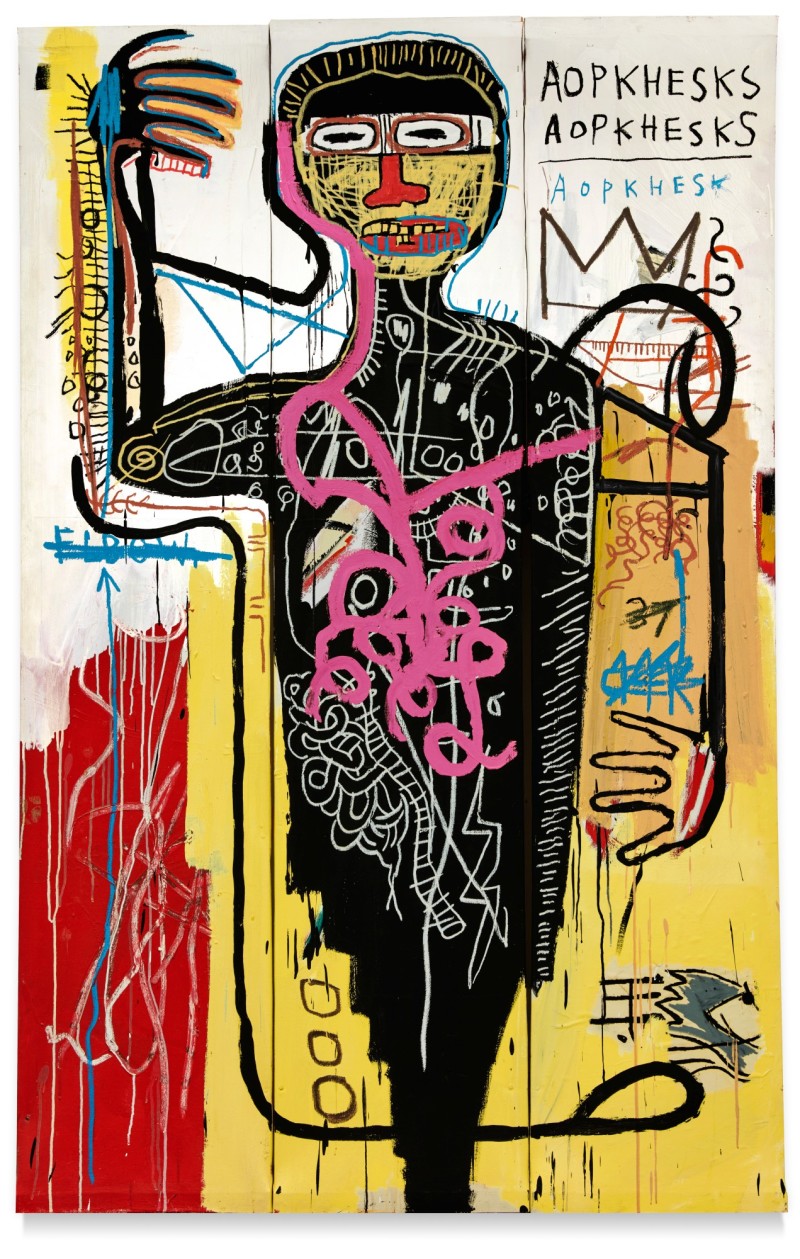
JEAN-MICHEL BASQUIAT
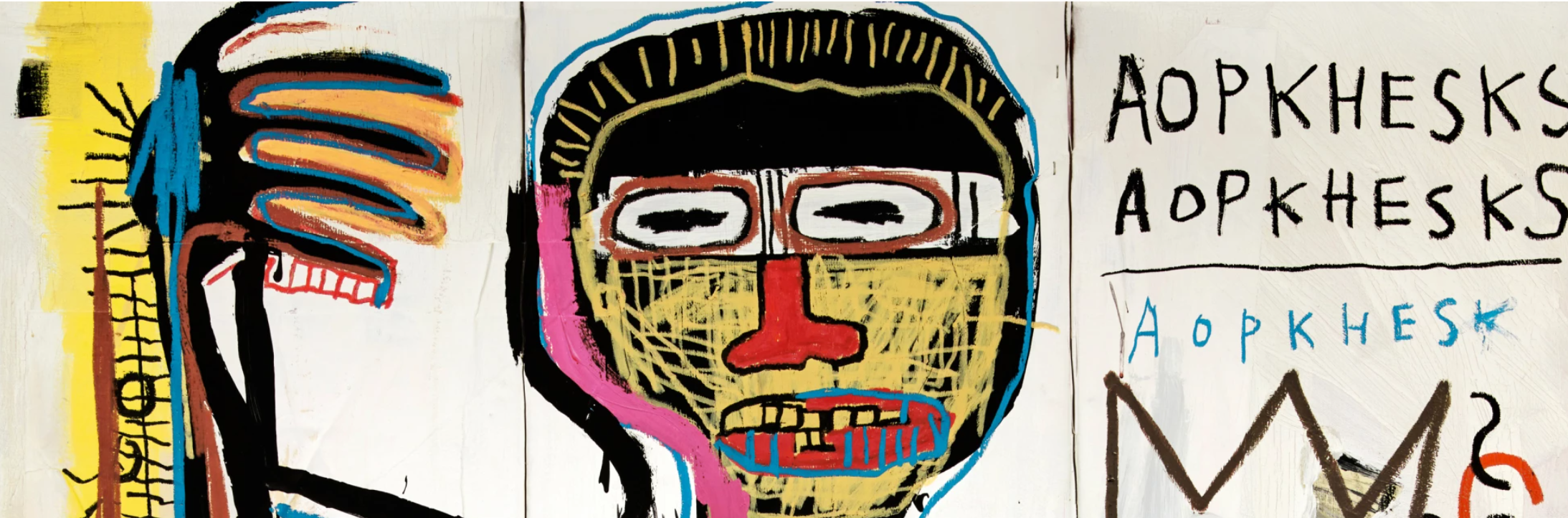
Versus Medici, 1982
Acrylic, oilstick and paper collage on three joined canvases
84 ¼ x 54 ¼ inches (214 x 137.8 cm)
Signed, titled and dated OCT. 1982 on the reverse
Provenance
Larry Gagosian Gallery, New York
Stéphane Janssen (acquired from the above in October 1982)
Acquired by the present owner from the above in 1990
Auction History
Sotheby’s New-York: 12 May 2021
Estimated: USD 35,000,000 – 50,000,000
Price Realized: USD 50,820,000
Versus Medici | Contemporary Art Evening Auction | 2021 | Sotheby’s (sothebys.com)
An extraordinary work executed in 1982, when the artist was just 22 years old, Versus Medici is among Basquiat’s most forceful visual challenges to the Western art establishment, in which the young artist boldly crowns himself successor to the artistic throne as established by the masters of the Italian Renaissance. The artwork has remained in the same distinguished private collection since 1990; it was previously in the collection of Stephane Janssen, an early champion of Basquiat who acquired it from Larry Gagosian on a visit to Basquiat’s studio in 1982.
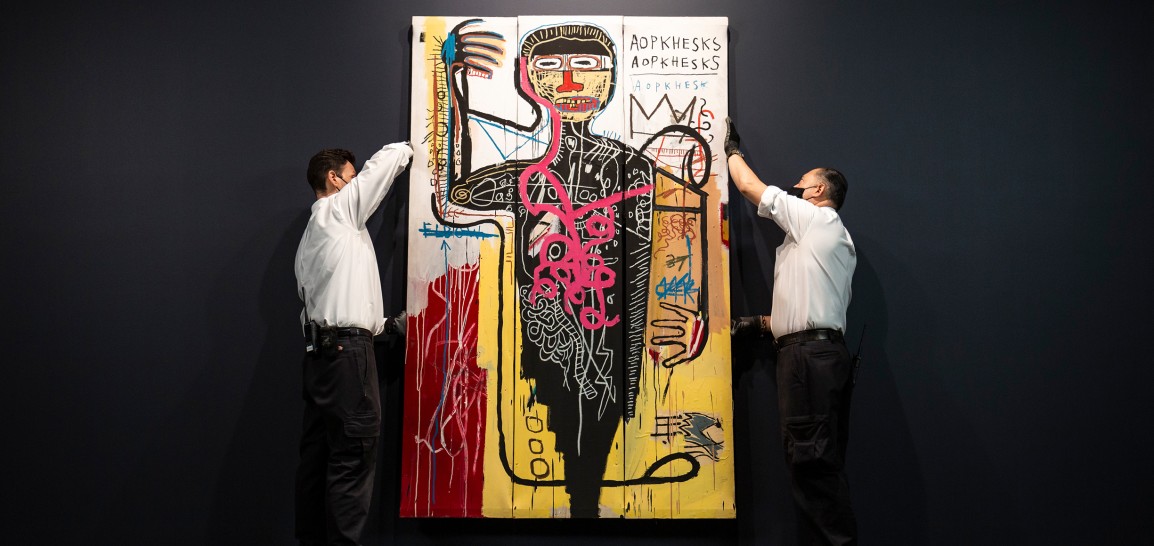
Urgent, arresting, and replete with potent symbolism, Versus Medici is a magnificent crystallization of the tremendous graphic force and intricate iconography that have come to define Jean-Michel Basquiat’s revolutionary career. Executed in the crucial year of 1982, when Basquiat was only 22 years old, the present work is among Basquiat’s most emphatic visual challenges to the hegemony of the Western canon. Within the searing figure of the present work, the young artist boldly crowns himself as both successor to and worthy adversary of the artistic legacy of the masters of the Italian Renaissance.
Having remained in the same distinguished private collection for over 30 years, Versus Medici is an exceptional and rare example of the artist’s most celebrated motif: the single, warrior-like figure. Pulsing with the energy of his unique and coveted pictorial lexicon, Versus Medici is positioned in the top tier of Basquiat’s immensely impactful cycle of grand-scale male figures from 1981 and 1982, and is undoubtedly one of the most striking and dramatic works of that period. Through a radical approach to figuration borne of his fascination with anatomy, Basquiat breaks down the dichotomy between the external and internal, revealing the cacophonous innermost aspects of psychic life with breathtaking vitality. Befitting its importance, the work has been included in several major exhibitions worldwide, including Intuition at the Palazzo Fortuny during the 2017 Venice Biennale, and most recently, Jean-Michel Basquiat: Made in Japan, the artist’s first comprehensive survey exhibition in Japan. Spectacularly forged in an array of oilstick, acrylic, and paper collage, this painting brings the haptic urgency of Basquiat’s art to life. It is challenging, dissonant, and alluring, as explosive in its execution as it is erudite in its conception.
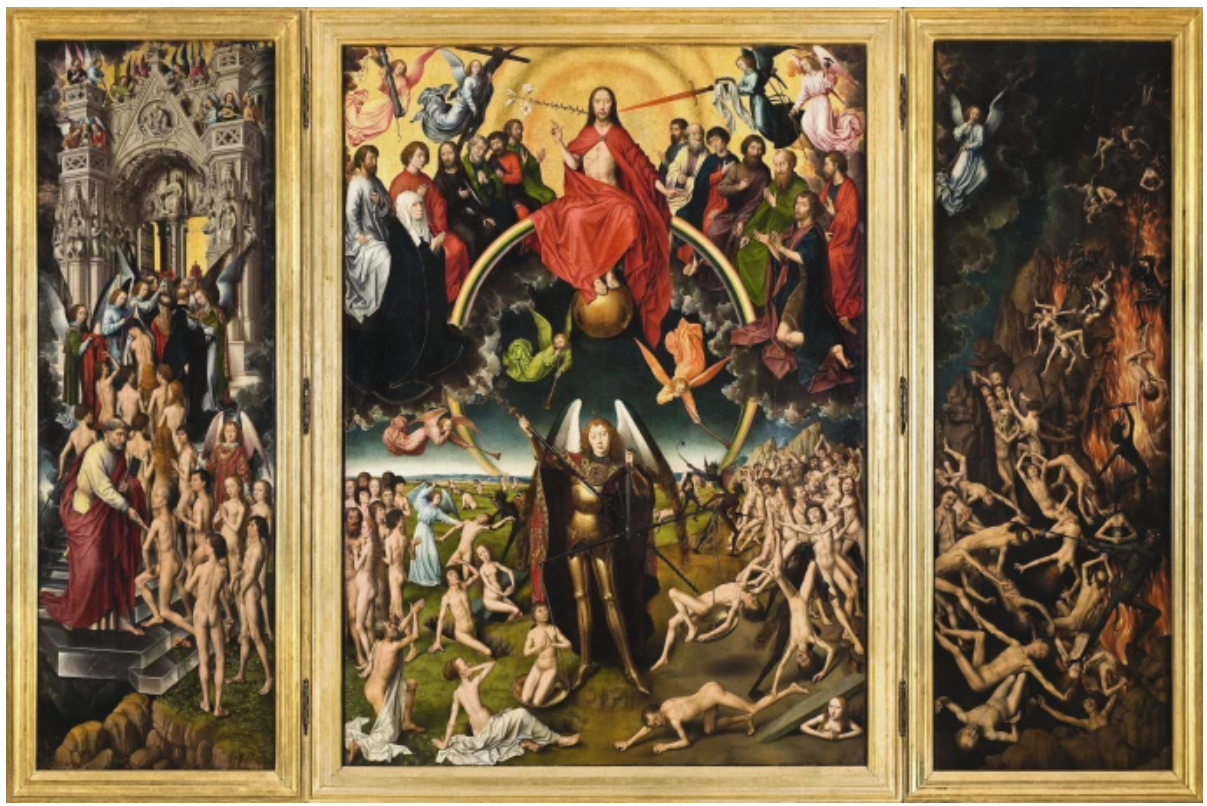
HANS MEMLING, THE LAST JUDGEMENT TRIPTYCH, 1467-1471. COMMISSIONED BY ANGELO TANI, AGENT OF THE MEDICI. NATIONAL MUSEUM, GDAŃSK
Though maintaining the spontaneity of graffiti in its paroxysmal execution, by the time this work was created in 1982, Basquiat’s had fully transitioned from street to studio. Completed shortly after his breakthrough exhibition at PS1 in 1981, New York New Wave, this work was executed once Basquiat had attained the crucial support of Annina Nosei and was able to focus his efforts on monumental canvas painting. Testifying to the significance of the present work, Versus Medici was previously in the collection of esteemed Belgian collector Stéphane Janssen, who was an early champion of Basquiat and acquired it following a visit to Basquiat’s studio shortly after it was painted. Originally one of several monumental standing Black figure paintings that formed the core of Janssen’s storied collection, Versus Medici stands out as one of Basquiat’s most assured early masterworks, and was acquired by the present owners in 1990, where it has remained ever since.
At once intensely autobiographical and yet deeply rooted in a wider knowledge and appreciation of the past, Basquiat’s work was shaped by his insatiable curiosity and determination to command his own space within the art historical canon. Born to a Haitian father and Puerto Rican mother, the artist was acutely aware of the exclusion of artists based on race from institutional and critical consideration, and often expressed feelings of racialized otherness in a white-dominated art world. With Versus Medici, Basquiat confronts a key cornerstone of Western art history: the Italian Renaissance, a period characterized by great achievements in painting, architecture, philosophy, and culture, nowhere more centralized than in Florence under the patronage and rule of the House of Medici. The movement represents a bastion of art history that through its inherent power structure is exclusionary of the Black body and Black creator; it is an archetypally white and Eurocentric ideal of visual culture which still serves as a model for the visual arts. Ever the iconographic alchemist, here Basquiat absorbs the legacy of Western art history and reshapes it to his own purposes. Within the present work, the Medici become a stand-in for the power systems of the art world at large, as figureheads for a powerful system of art patronage that was echoed in the power structures of Basquiat’s own art world in 1980s New York. Versus Medici presents a searing and heroic figure to oppose that narrative: a monumental Black figure, seven feet in height, stands triumphant as warrior, champion, and king, ordained with the famous three-pointed crown. The anatomical detail of the figure and the intricacy of the body echo the work of Italian virtuosos like Leonardo and Michelangelo, while the radical reimagining clearly stages a battle against the power of their influence. Executed on three joined canvases, the very structure of Versus Medici draws upon Basquiat’s extraordinary familiarity with centuries of tradition by echoing the time-honored format of the tripartite altarpiece, and references the religious and political powers that were associated with them. this gladiator, Basquiat asserts the strength of his African American culture and identity, ambitiously demanding a reckoning with the history of art, and not only claims his own place within this history, but crowns himself as almighty successor to the Renaissance masters.
Emblematic of this struggle between the Black artist and the dominant white-centric power structure, Basquiat utilizes iconography borrowed from the boxing ring. Having recognized from an early age the absence of Blackness from many realms including the arts, he sought heroes in the world of athletics, where he saw Black figures could be successful and celebrated. Boxing became one of his favorite arenas, and stars like Cassius Clay, Jack Johnson, and Joe Lewis feature in numerous paintings, with gloves abstracted into blunt roundels and arms thrust triumphantly in the air. Indeed, even the defiant posture of the raised fist as seen in Versus Medici had huge significance in this context. It is wholly redolent of the Black Power salute, first made famous in the sporting arena by Juan Carlos and Tommie Smith, who protested racial oppression at the Mexico City Olympic Games by raising their fists in defiance of the U.S. National Anthem. In the present work, Basquiat employs the language of the fight – “versus” – and the victorious raised fist to convey the war against repression and racism, his central figure conquering the invisible oppressor within the space of the painting.
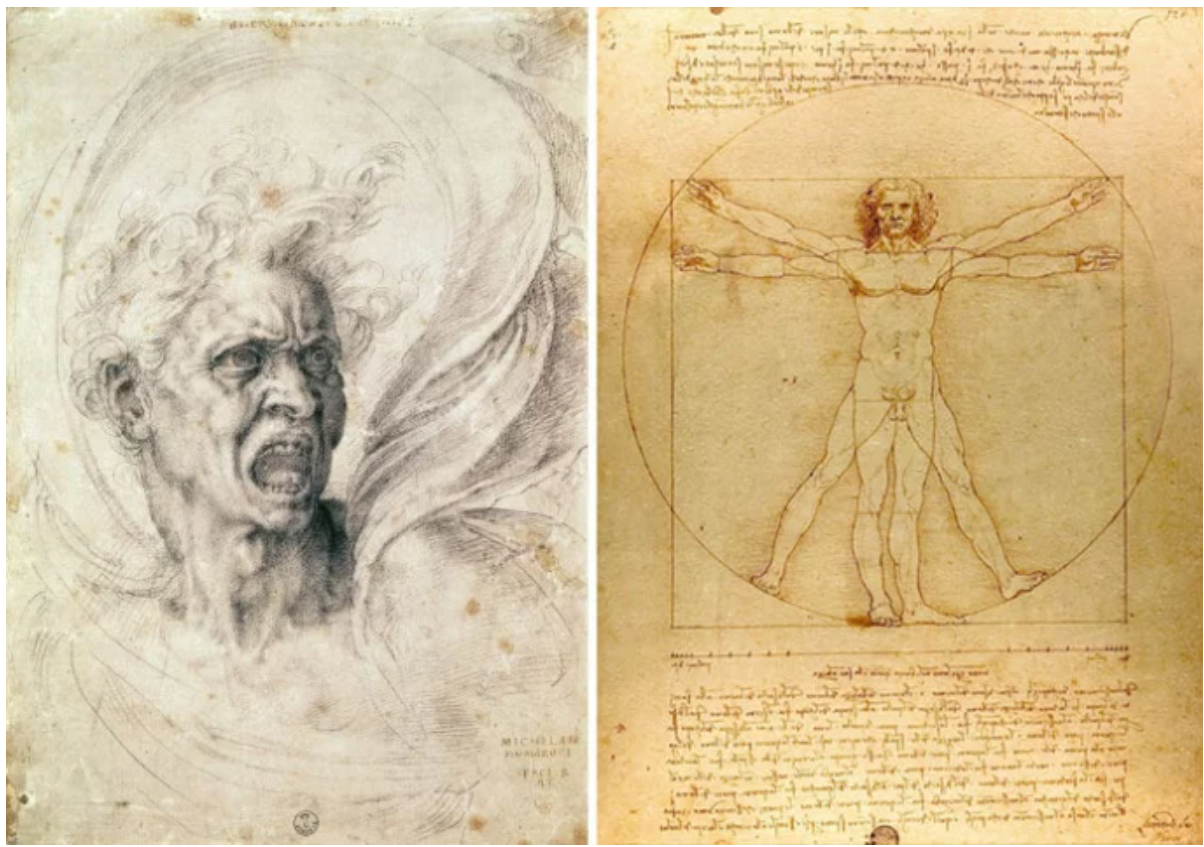
LEFT: MICHELANGELO, STUDY OF A MAN SHOUTING,1525-34, UFFIZI, FLORENCE, ITALY
RIGHT: LEONARDO DA VINCI, THE PROPORTIONS OF THE HUMAN FIGURE (AFTER VITRUVIUS), C.1492 / GALLERIA DELL’ACCADEMIA, VENICE, ITALY
In the lower register of the painting, the subject’s body is rendered in an abstracted V-shaped formation, alluding to the way in which mummified Pharaonic kings are typically depicted. This powerful stance is eloquently captured in Basquiat’s repeated calligraphic scrawl of the word “Aopkehsks,” which could refer to the Hellenization of the Egyptian pharaoh Akenhaten, a prominent and idealized king, or to apotheosis, the elevation of the human to the realms of the divine which was widely represented in Renaissance painting. As art historian Robert Farris Thompson has described, “Jean-Michel was turning into art notes taken during a massive and ongoing self-education, not unlike the famous ‘homemade education’ Malcolm X pursued… Basquiat thrilled to the pleasures of the world, and thrilled to the pleasures of the image, and he built a brilliant career upon the two.” (Robert Farris Thomson, “Three Works By Basquiat,” in: Exh. Cat., New Orleans, Ogden Museum of Southern Art, Basquiat and the Bayou, 2014, pp. 31-32) However the viewer chooses to interpret these signs and symbols, Basquiat positions his ferocious figure as a vessel of divine will. Read alongside the symbol of the three-pointed crown – one of Basquiat’s defining and most recognizable motifs – there is little doubt the figure in the painting is depicted as an avenging hero of art history. With these myriad references to ancient depictions of power, Basquiat again aligns himself with almighty royalty, standing defiant against a system that would marginalize him.
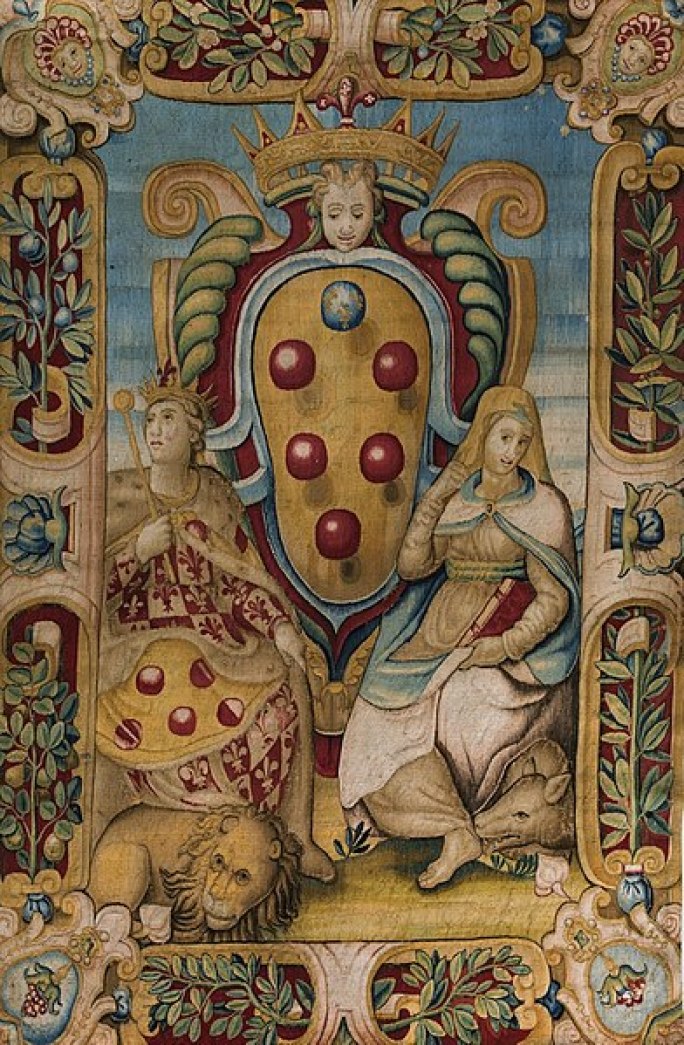
THE MEDICI WEDDING TAPESTRY OF 1589.
Featuring the artist’s signature visual language, Versus Medici confronts a key cornerstone of Western art history, the Italian Renaissance, a movement associated with achievement and enlightenment, as defined by the works of Leonardo, Michelangelo, Raphael, Botticelli and others. Although painted at the inception of Basquiat’s career, the artist ambitiously wages war with the history of art and not only assets his own place within this history, but also crowns himself a successor to these Renaissance masters. Basquiat was well-versed across art history, and a range of influences can be seen throughout the work – namely the anatomical complexity of early Leonardo drawings and the triptych format of the painting’s construction. Executed on three joined canvases, even the structure of Versus Medici draws upon Basquiat’s extraordinary familiarity with centuries of tradition by echoing the time-honored format of the tripartite altarpiece, and references the religious and political power that were associated with them.
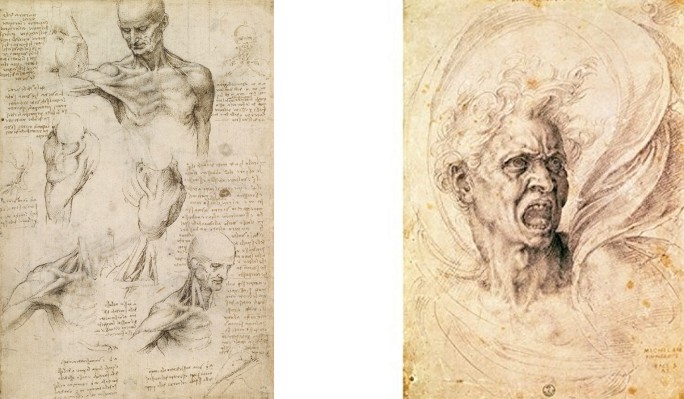
(LEFT) LEONARDO DA VINCI’S ANATOMICAL STUDIES OF THE SHOULDER, DRAWN AROUND 1510
(RIGHT) MICHELANGELO, STUDY OF A MAN SHOUTING,1525-34
In Versus Medici, Basquiat takes command of the Western art narrative, and crowns himself, the son of immigrants from Haiti and Puerto Rico, as artistic royalty, taking on the old masters and positioning himself as the almighty successor to centuries of artistic genius. With great intensity and visual force, and acutely aware of the exclusion of artists based on race from institutional and critical consideration, Basquiat used his position at the periphery of the art establishment to forge a new and highly referential visual language.
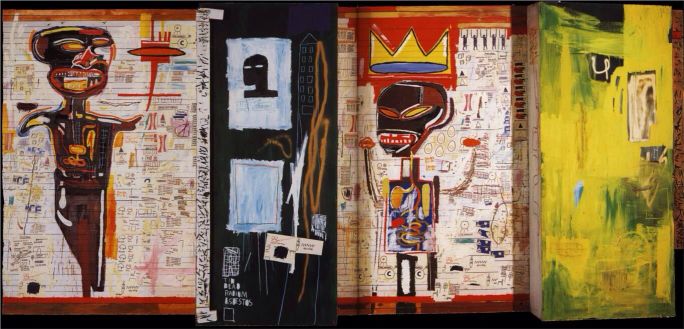
JEAN-MICHEL BASQUIAT, GRILLO, 1984, ACRYLIC, OIL, AND XEROX COLLAGE, 244 X 537.2 X 45.7 CM
© THE ESTATE OF JEAN-MICHEL BASQUIAT / ADAGP, PARIS / ARS, NEW YORK 2017
Having voraciously visited the Brooklyn Museum and the Metropolitan Museum of Art in New York, Basquiat recognized a glaring absence of Black representation within the art historical canon. In the present work, Basquiat positions himself as the heroic opponent to European history’s greatest dynasty of patronage and influence, confronting the canon they helped to shape by presenting his own potent masterwork. In its incendiary title, Versus Medici testifies to Basquiat’s ultimate aim of establishing a place for himself within the canon – and in doing so, he boldly declares his arrival as a brilliant, young artist into a new canon that would be forever transformed by his paintings. Ever the iconographic alchemist, here Basquiat absorbs the legacy of Western art history and reshapes it to his own purposes. Through this painting, the Medici become a stand-in for the power systems of the art world at large, as figureheads within for a powerful system of art patronage that was echoed in the power structures of Basquiat’s own art world in 1980s New York. Recognizing that for centuries, every art historical movement was legitimated by systems of exclusion, Versus Medici presents a searing and heroic figure to oppose that narrative – while simultaneously aligning the young Basquiat as radical successor in the new pantheon of art history.
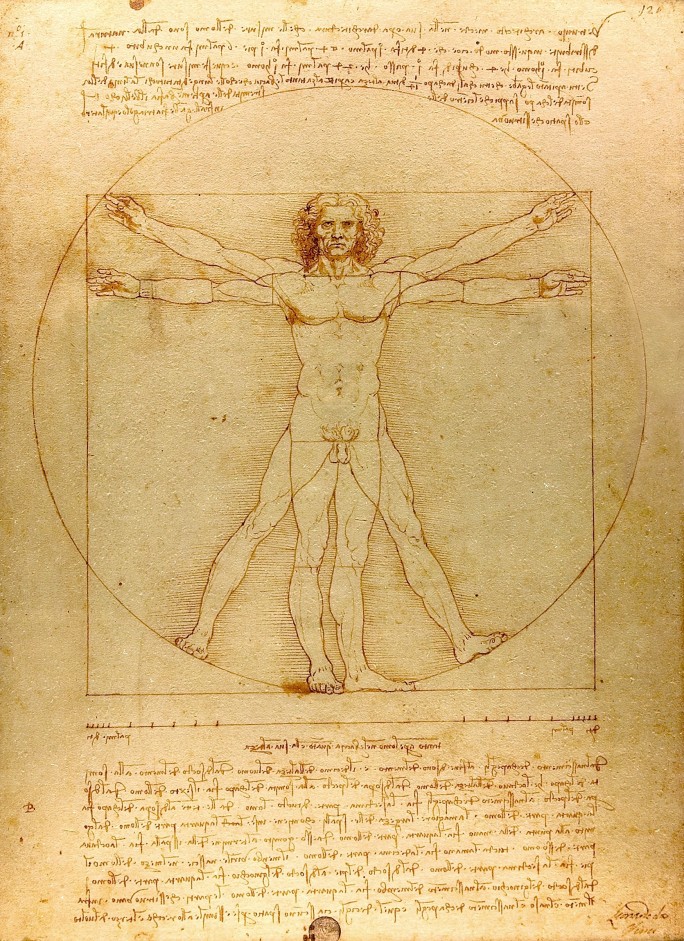
LEONARDO DA VINCI’S VITRUVIAN MAN (PHOTO OF ARTWORK FROM LUC VIATOUR)
This powerful stance is eloquently captured in Basquiat’s use of the Greek term “Aopkehsks,” which could refer to the Hellenization of the Egyptian pharaoh Amenhotep, a prominent and idealized king, or to the practice of apotheosis, the elevation of the human to the realms of the divine. In either interpretation, Basquiat positions his ferocious figure as a vessel of divine will. Read alongside the symbol of the three-pointed crown – one of Basquiat’s defining and most recognizable motifs – there is little doubt the figure in the painting is depicted as an avenging hero of art history.
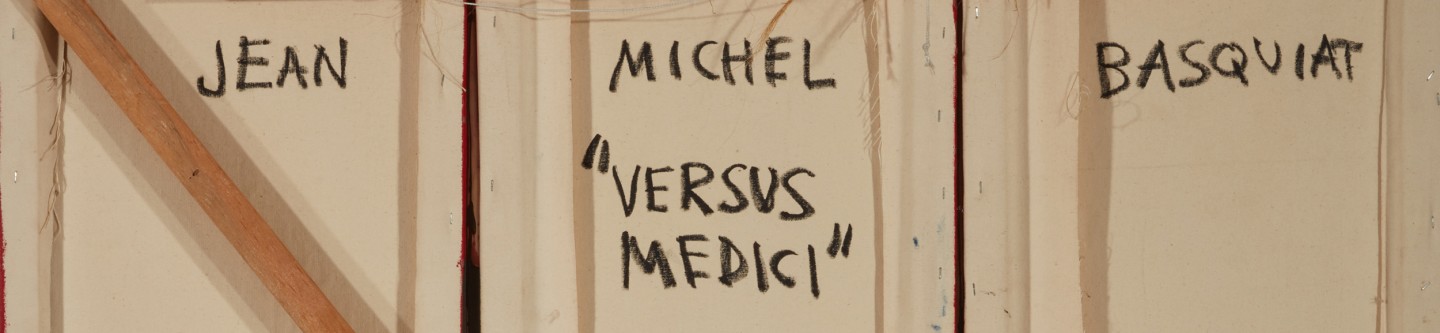
VERSO OF VERSUS MEDICI, 1982.