2026 Fall New-York Marquee Auctions
Takashi Murakami
Upcoming Lots
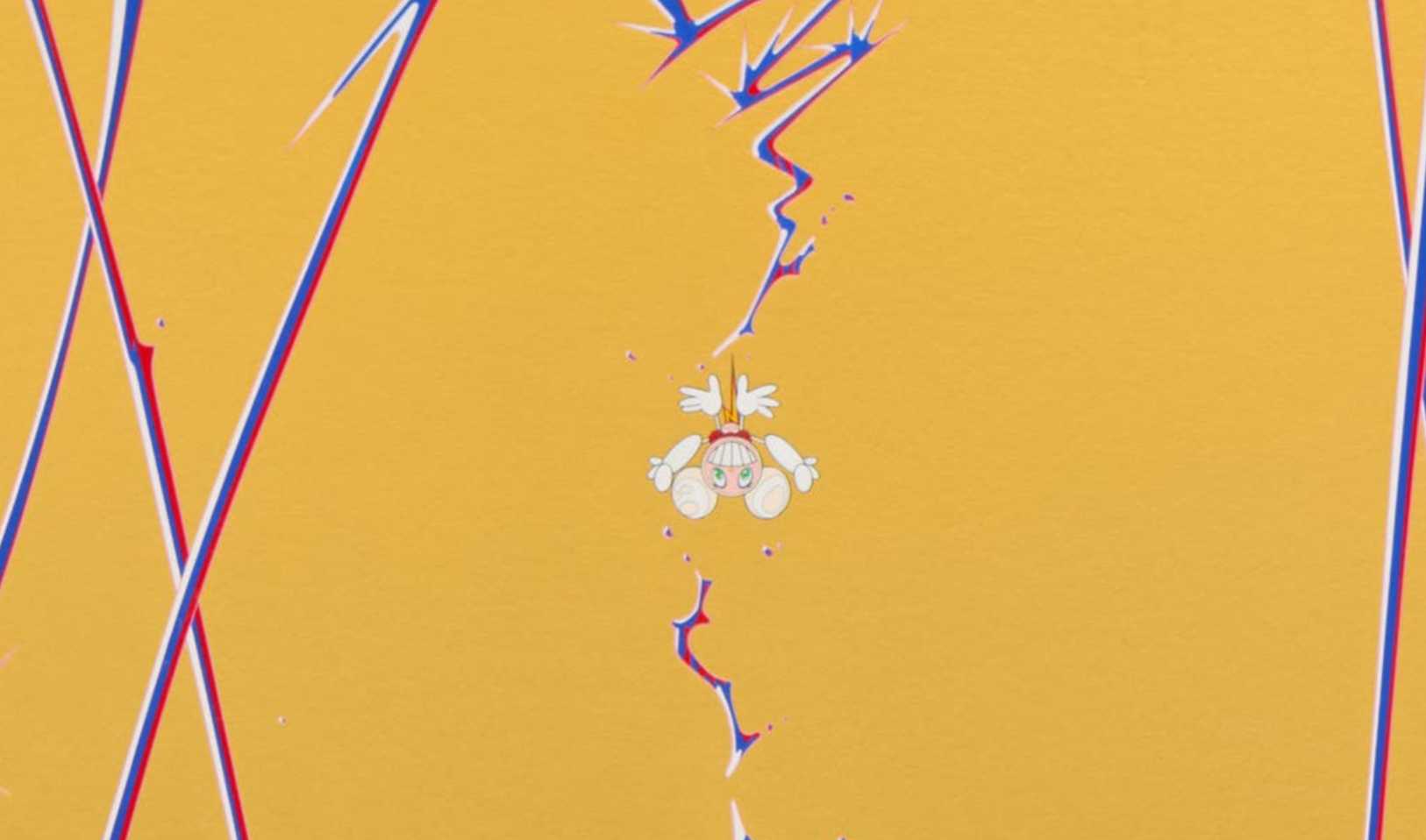
Homage to Francis Bacon, 2016-17
Christie’s New-York: 19 November 2026
Estimated: USD 1,500,000 – 2,500,000
TAKASHI MURAKAMI, Homage to Francis Bacon | Christie’s
TAKASHI MURAKAMI (B. 1962)
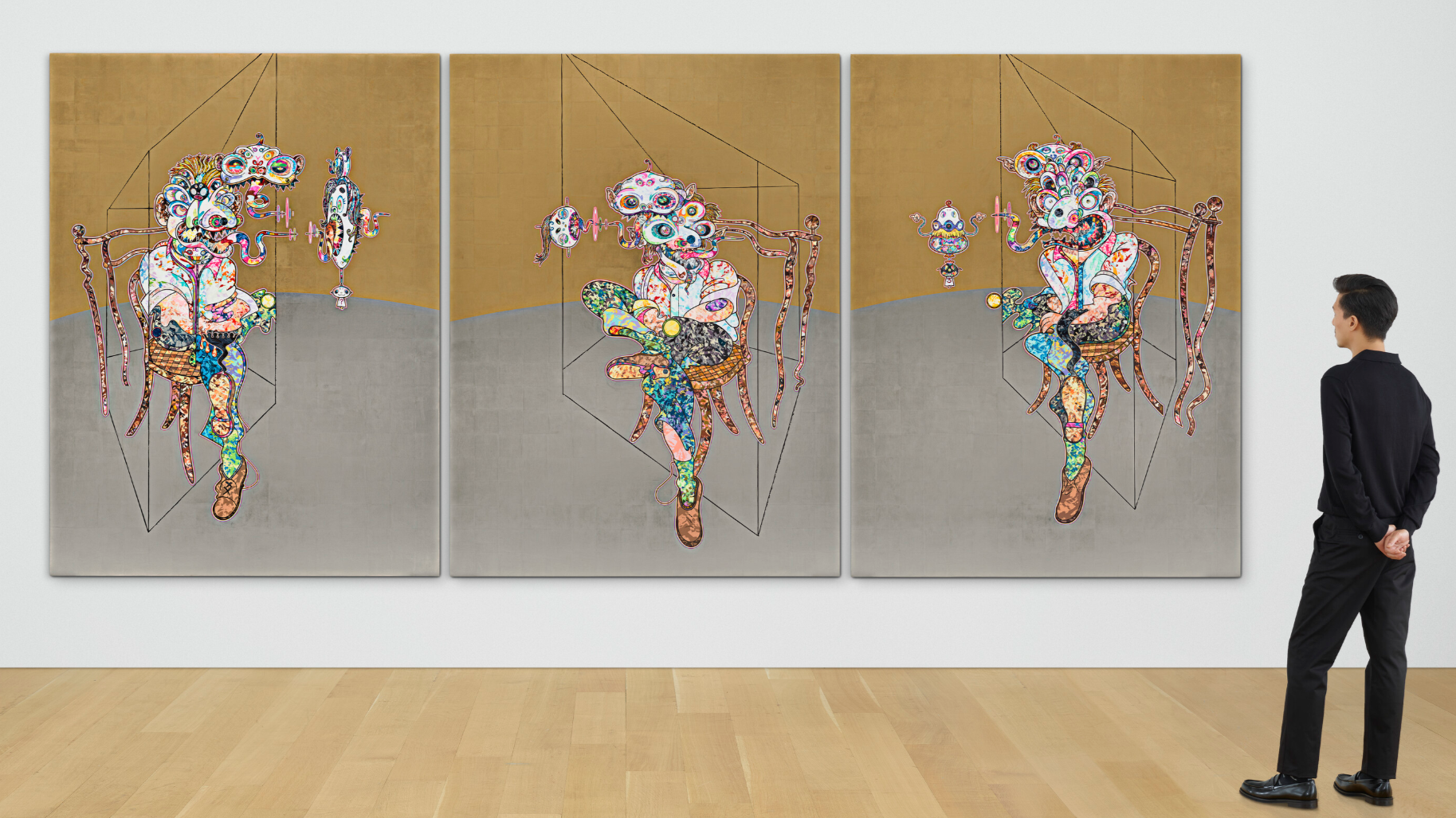
Homage to Francis Bacon (Three Studies of Lucian Freud), 2016-17
Acrylic, gold leaf and platinum leaf on canvas, in three parts
Each: 78×58 inches (198.1 x 147.3 cm)
Overall: 78×174 inches (198.1 x 442.5 cm)
Signed and dated ‘Takashi. 2016-2017″
(on the overlap of the middle canvas)
Hello (Flower), 2018
Bonhams New-York: 18 November 2026
Estimated: USD 350,000 – 550,000
Bonhams : TAKASHI MURAKAMI (B.1962) Hello (Flower)
TAKASHI MURAKAMI (B.1962)
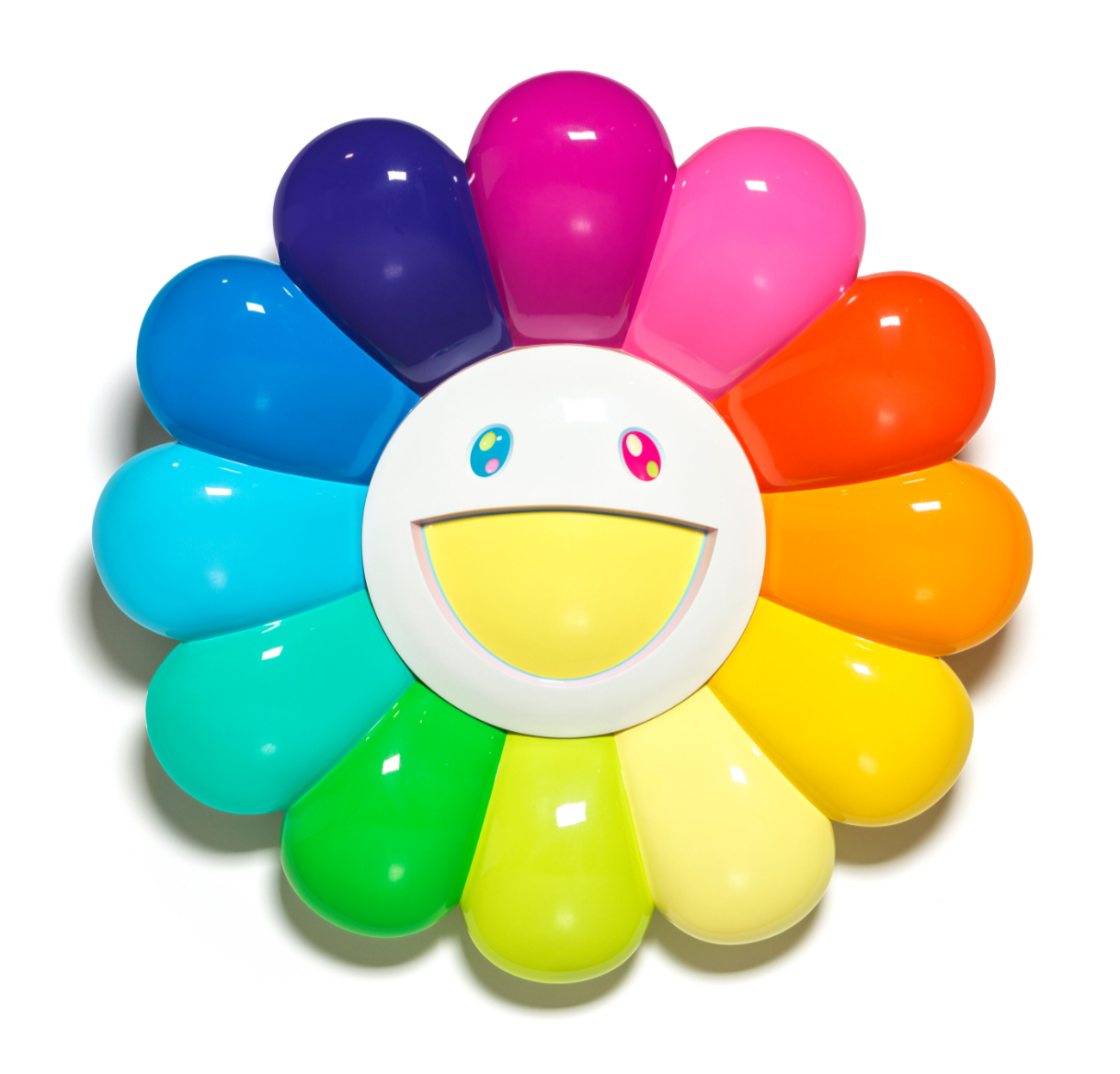
Hello (Flower), 2018
FRP, urethane paint and stainless steel
150 x 150 x 62.2 cm (59 x 59 x 24-1/2 inches)
Signed, numbered and dated ‘Takashi 2018 1/3’ (on the reverse)
This work is number one from an edition of three and two Artist’s Proofs
Splash Nude, 2001
Property from a Notable Midwest Collection
Phillips New-York: 19 November 2026
Estimated: USD 150,000 – 200,000
Takashi Murakami Modern & Contemporary Art: Afternoon Session
TAKASHI MURAKAMI
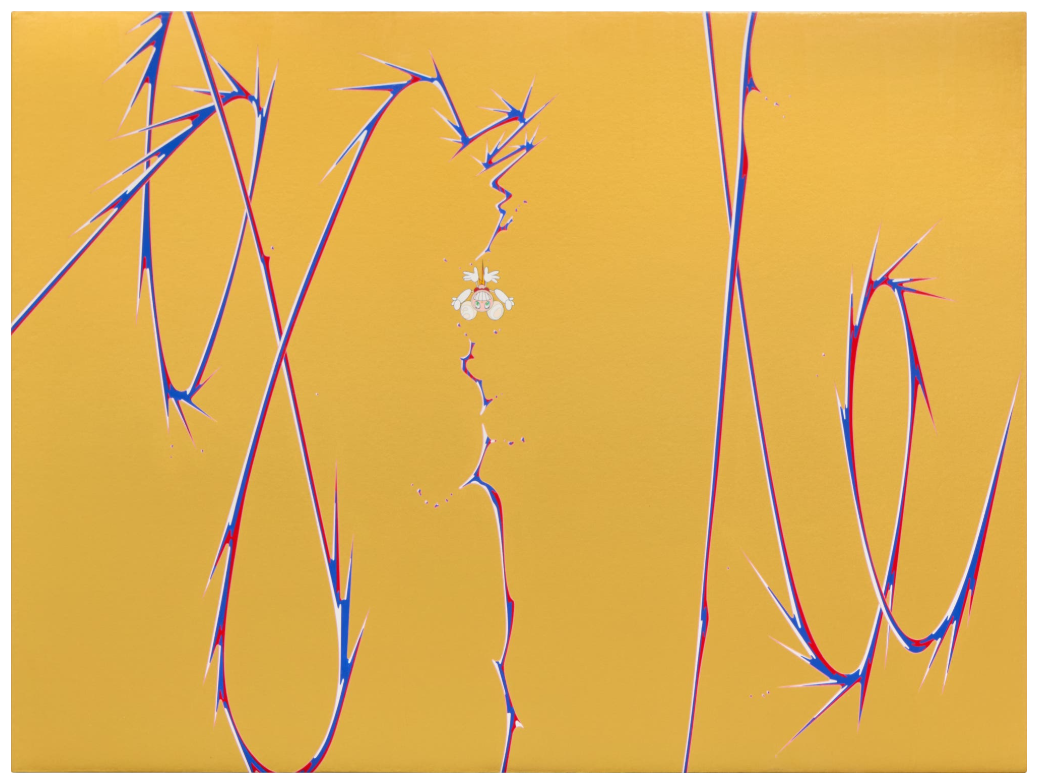
Splash Nude, 2001
Acrylic on canvas over panel
90.5 x 120 cm (35-5/8 x 47-1/4 inches)
Signed and dated “TAKASHI 2001” on the reverse
Homage to Francis Bacon, 2016-17
Homage to Francis Bacon, 2016-17
Christie’s New-York: 19 November 2026
Estimated: USD 1,500,000 – 2,500,000
TAKASHI MURAKAMI, Homage to Francis Bacon | Christie’s
TAKASHI MURAKAMI (B. 1962)
Homage to Francis Bacon (Three Studies of Lucian Freud), 2016-17
Acrylic, gold leaf and platinum leaf on canvas, in three parts
Each: 78×58 inches (198.1 x 147.3 cm)
Overall: 78×174 inches (198.1 x 442.5 cm)
Signed and dated ‘Takashi. 2016-2017″
(on the overlap of the middle canvas)
Among the most ambitious works ever executed by the pioneering Japanese artist Takashi Murakami, Homage to Francis Bacon (Three Studies of Lucian Freud) is at once a tribute to a modern master and a landmark development in Murakami’s neon-toned aesthetic. A triptych spanning three monumental canvases, it traces the layout of Bacon’s celebrated Three Studies of Lucian Freud (1969, Los Angeles County Museum of Art), the culmination of a sequence of portraits of fellow painter and rival-turned-friend Freud.
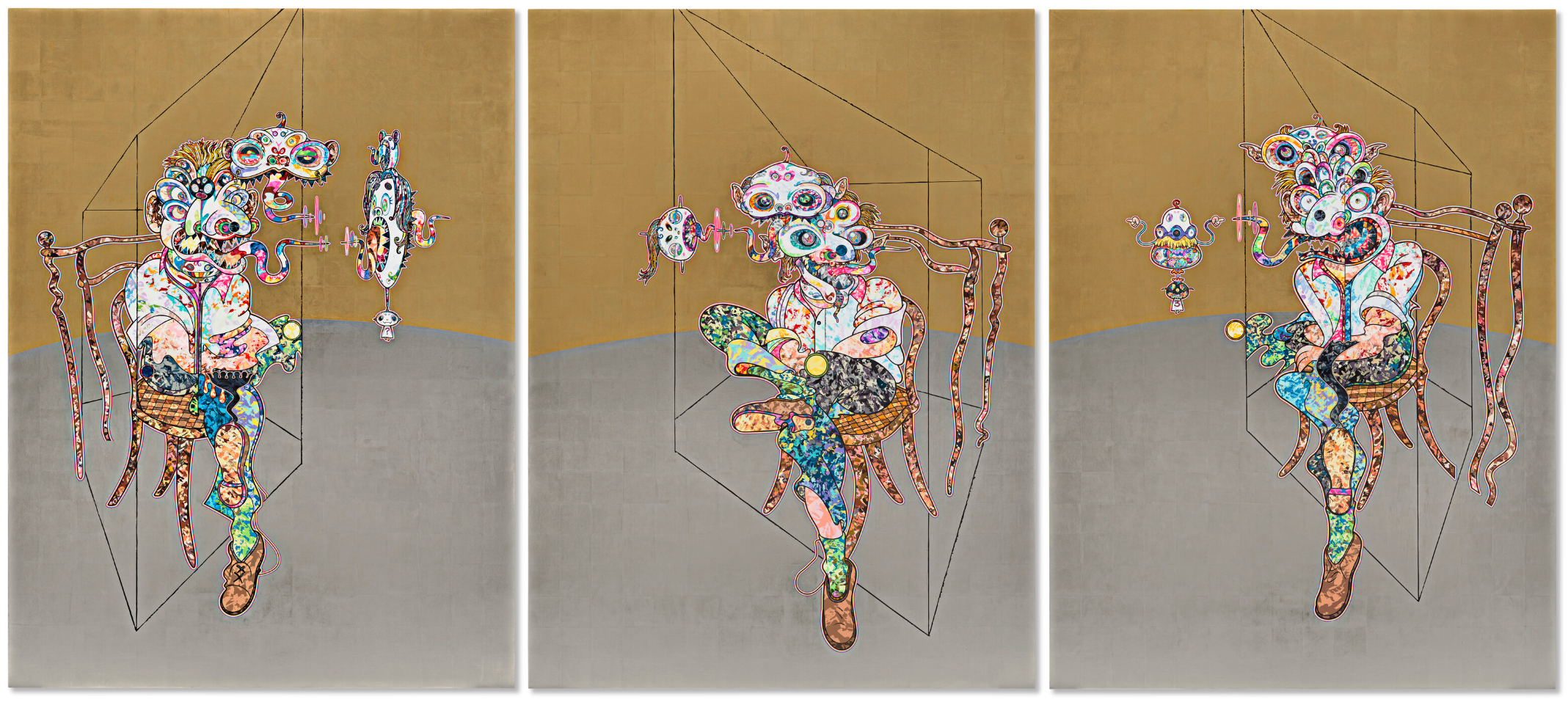
“I’m really drawn to [Francis Bacon’s] work, in which bodies and faces are distorted. His surrealistic way of thinking resonated with me, so I decided to study him more and try to follow the way his brain might work.”
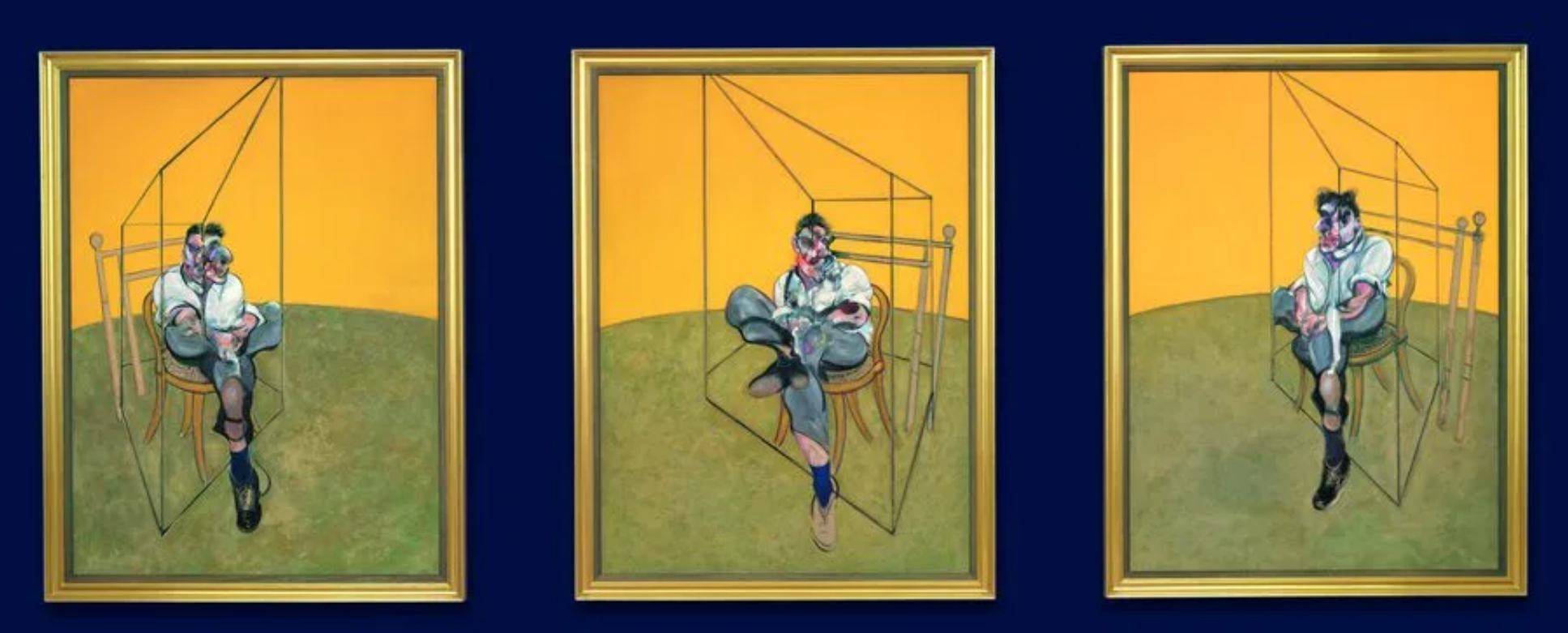
Francis Bacon, Three Studies of Lucian Freud, 1969. Los Angeles County Museum of Art.
© The Estate of Francis Bacon. All rights reserved / DACS, London / ARS, New York 2026
Murakami has reproduced Bacon’s bifurcated abstract background, geometric grids and depictions of a distorted figure sitting on a chair in front of a bed headboard. Yet his painting differs in almost every other aspect. Bacon’s sober Freuds are transmogrified into a double-headed man-monster, rendered in a psychedelic motley of multicolored abstract patterns. Each has eyes popping out from the top of his forehead, a tentacular tongue and a maw full of sharp, shard-like teeth. Additional entities interact with these mutant Freuds, including one that resembles Murakami’s mischievous character Kai Kai. Figures and furniture are surrounded by a thick white border, as if they were peelable stickers. Murakami inverts Bacon’s background of yellow above mottled gray, and replaces Bacon’s earthen hues with shining gold and platinum leaf. A twentieth-century masterpiece is updated for an age of sheen and glamour.
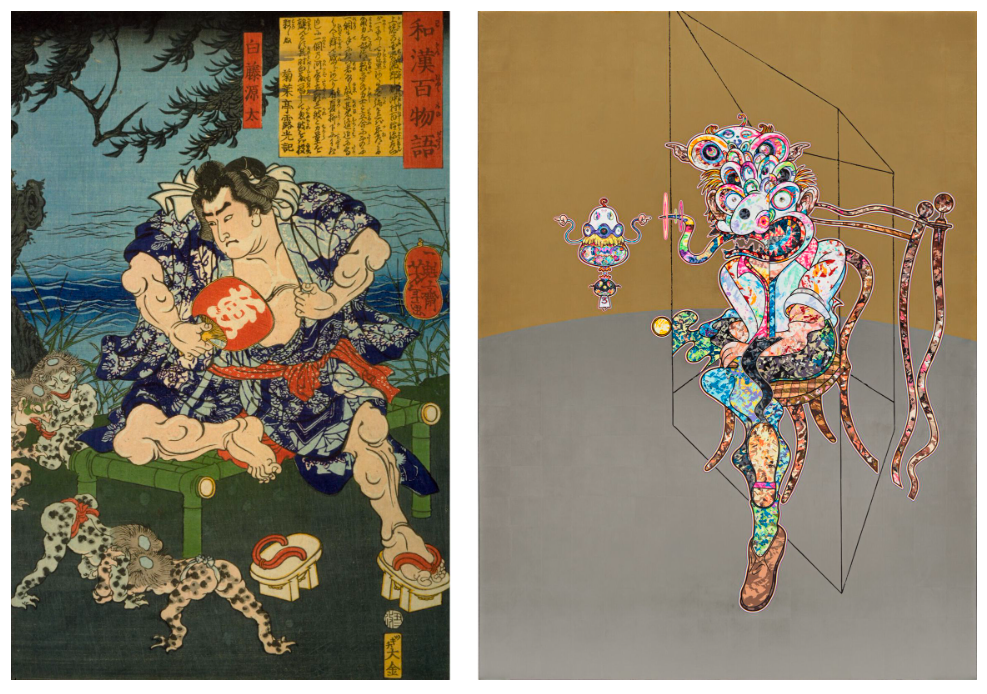
LEFT: Tsukioka Yoshitoshi, Shirafuji Genta Watching Kappa Wrestle, from the series One Hundred Ghost Tales from China and Japan, 1865.
RIGHT: Present lot illustrated (detail).
Murakami is perhaps the most influential Japanese artist of his generation. He originally intended to become an animator, but while at university switched to studying Nihonga, a form of painting popular in late nineteenth-century Japan that spliced traditional imagery with perspective and other Western art conventions. Afterwards, Murakami sought a new style that would be authentic to contemporary Japan, a country where rapid capitalization had erased the distinctions between high and low culture. In 2000 he coined the term “Superflat” to describe an art that embraced historical Japanese art, popular culture such as manga, and the flatness of digital screens.
“Now we have hastily and haphazardly begun to draw new outlines with our own hands. Our new forms of expression come not from Western-style ‘art,’ but from what the West calls ‘subculture.’ Our paint-by-numbers diagrams are now drawn by Japan, a country where no distance exists between mainstream culture and subculture.”
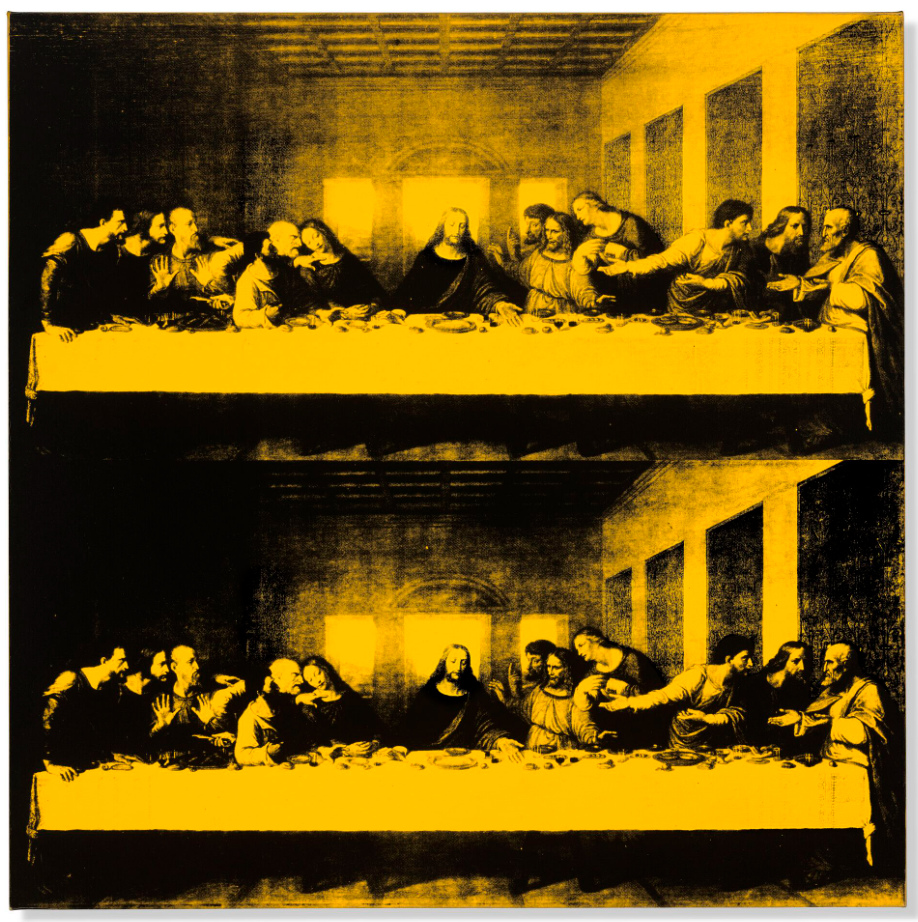
Andy Warhol, The Last Supper, 1986.
© 2026 The Andy Warhol Foundation for the Visual Arts, Inc. / Licensed by Artists Rights Society (ARS).
Murakami’s Homage draws on several image-making traditions. The ukiyo-e woodcut offers a closest precedent for the figure itself: the Freud in Murakami’s ‘Homage’ can bear particular comparison to the exagerrated characters in Tsukioka Yoshitoshi’s series ‘One Hundred Ghost Stories of China and Japan’ (1865). The gold-leaf ground of the work reaches further back into history, to the folding screens of the Rinpa school in seventeenth-century Kyoto. Laid across these screens was a continuous field of gold, which collapsed pictorial depth into pure surface and caught the low light of interiors. Rinpa was also a tradition built on homage: Ogata Kōrin’s ‘Wind God and Thunder God’ screens restage Tawaraya Sōtatsu’s composition of the same subject, painted roughly a century earlier. Andy Warhol, with whom Murakami shares both a fascination with surfaces and a disregard for the boundary between high and low culture, applied the same logic to the Western canon. His ‘Last Supper’ (1986) silkscreens recast Leonardo da Vinci’s mural (c. 1495–98) through the mechanics of commercial reproduction, much as Murakami’s triptych recasts Bacon’s.
“I realized that maybe I didn’t need to use [Mr. DOB]. Two years ago I decided to go directly to the source and paint more of my interpretation of human figures and literal faces.”
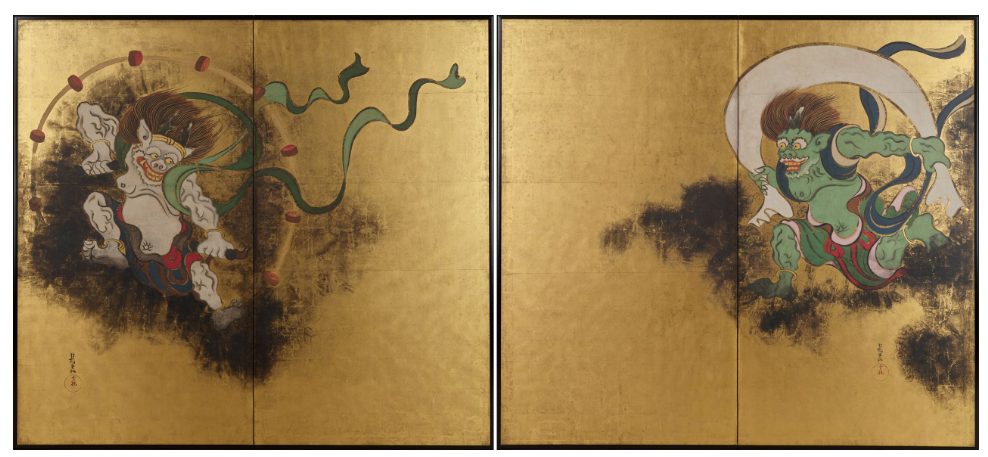
Ogata Kōrin, Wind God and Thunder God, early 18th century. Tokyo National Museum.
Murakami has created work inspired by the art of Francis Bacon since 2004. He embarked on his most expansive and acute tributes to the British painter in 2016. Earlier homages placed Murakami’s Mickey Mouse-esque avatar Mr. DOB in the poses of Bacon’s head portraits Study of Elizabeth Rawsthorne (1966) and Study of George Dyer (1970). The new sequence of Homage saw him break away from this approach, largely exchanging his repertoire of cartoonish characters for an enhanced rawness and psychological depth. Homage to Francis Bacon is a bold step forward for a true innovator, it exemplifies Murakami’s exceptional ability to extract, transform and reinvigorate historical traditions.
Hello (Flower), 2018
Hello (Flower), 2018
Bonhams New-York: 18 November 2026
Estimated: USD 350,000 – 550,000
Bonhams : TAKASHI MURAKAMI (B.1962) Hello (Flower)
TAKASHI MURAKAMI (B.1962)
Hello (Flower), 2018
FRP, urethane paint and stainless steel
150 x 150 x 62.2 cm (59 x 59 x 24-1/2 inches)
Signed, numbered and dated ‘Takashi 2018 1/3’ (on the reverse)
This work is number one from an edition of three and two Artist’s Proofs
Born in Tokyo in 1962, Takashi Murakami has developed a reputation as one of Japan’s most iconic artists. Merging traditional Japanese (nihonga) painting with anime, manga, and American Pop Art, Murakami’s work provides a unique lens for the reflection of contemporary consumer culture. TBC (Flower) presents Murakami’s most signature flower motif as its central subject. With a buoyant smile, progression of brilliant rainbow color, and perfectly polished surface that can only be the result of artificial fabrication, the sculpture seems ready to jump off the wall like the animated art that inspired its captivating nature.
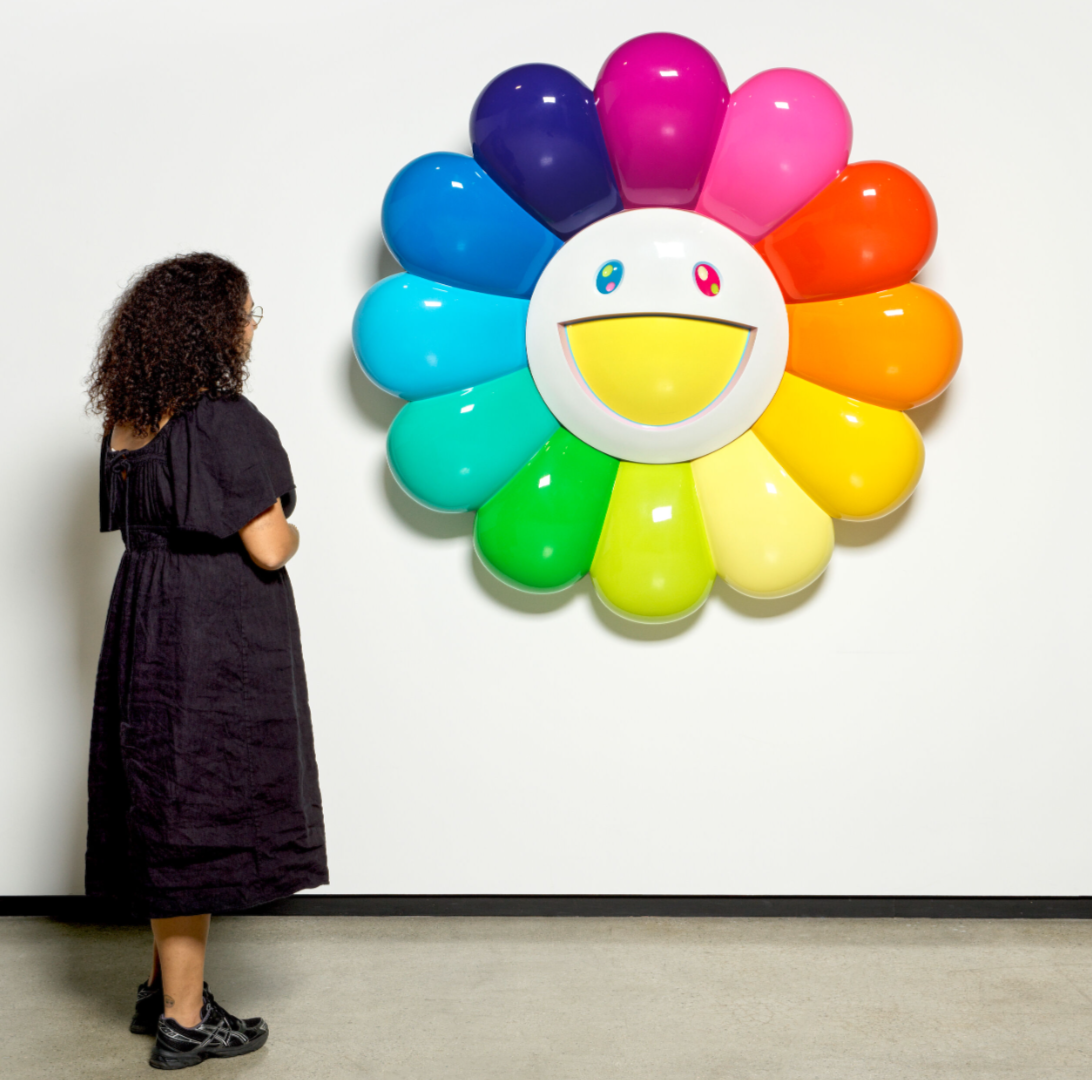
Murakami’s smiling flowers take root in his experience of growing up in the decimated landscape of post-World War II Japan. More specifically, they are the result of the impact of mass destruction on mental health and social expectation in Japanese society during that period. Between 1950 and 1960, Japan experienced the highest rates of both suicide and work-related deaths in the country’s history, with direct correlation to the devastating effects of the bombing of Hiroshima and Nagasaki in 1945. Japanese citizens were desperate to rebuild while also contending with the long-term damage and adverse health implications of what had occurred. At the same time, the establishment of numerous American military bases and the proliferation of American goods and culture throughout Japan beginning in the 1960s would have a profound and irreversible effect on Japanese culture and society.
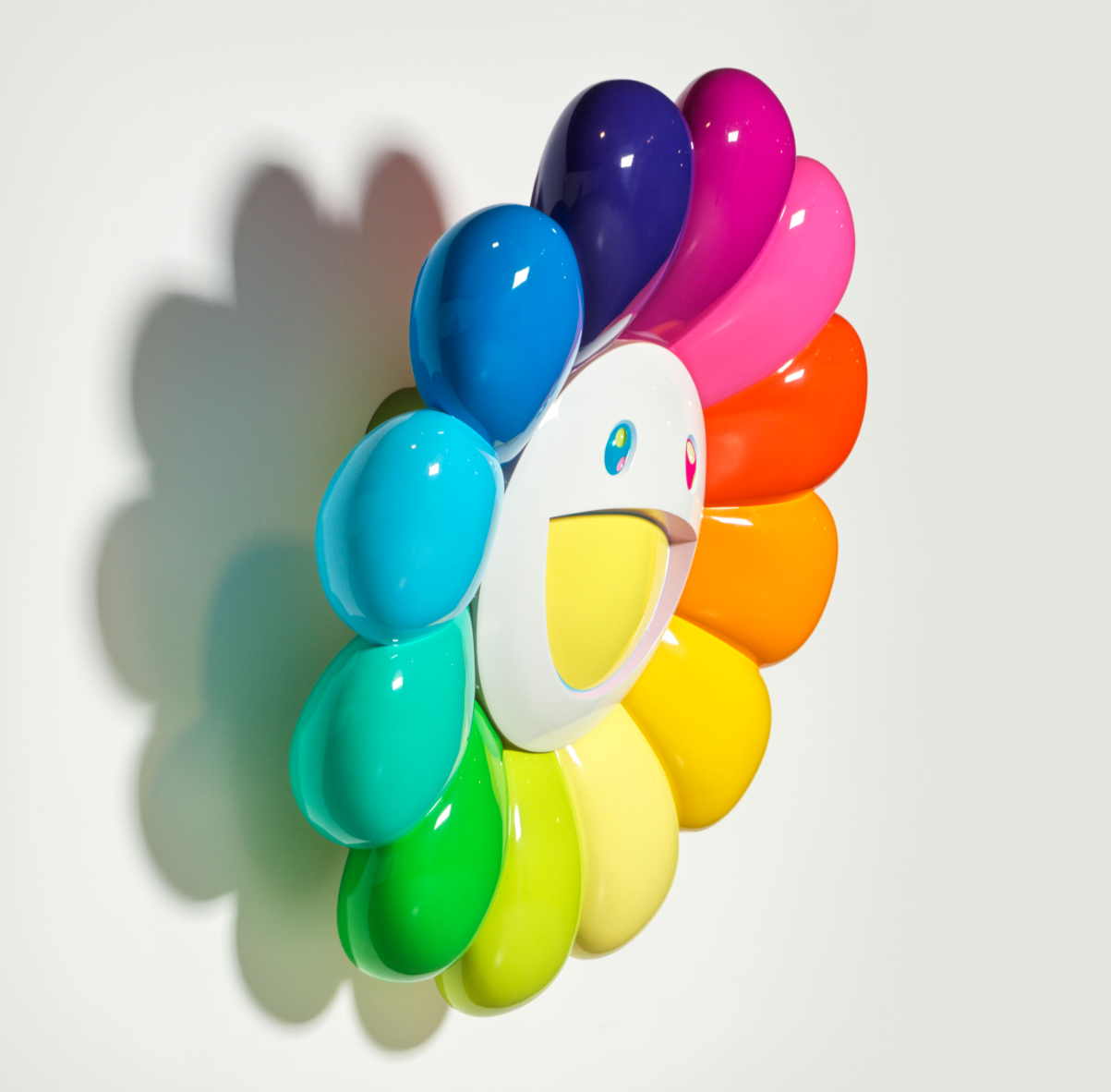
It was within this cultural landscape that Murakami grew up, with parents who exposed their son to the arts from a young age. Murakami’s early interest in anime and manga inspired him to attend the Tokyo University of the Arts, where he spent eleven years studying the traditional practice of nihonga. This style, the term for which was coined during the Meiji period (1868-1912), is characterized by its flatness, a matte finish to the pigments, and an interest in nature. It is especially clear that Murakami is inspired by setsugetsuka, a term that translates to “snow, moon and flowers” and embodies the concept of beautiful, peaceful scenery in art (HypeBeast, Behind the HYPE: Murakami’s Flowers).
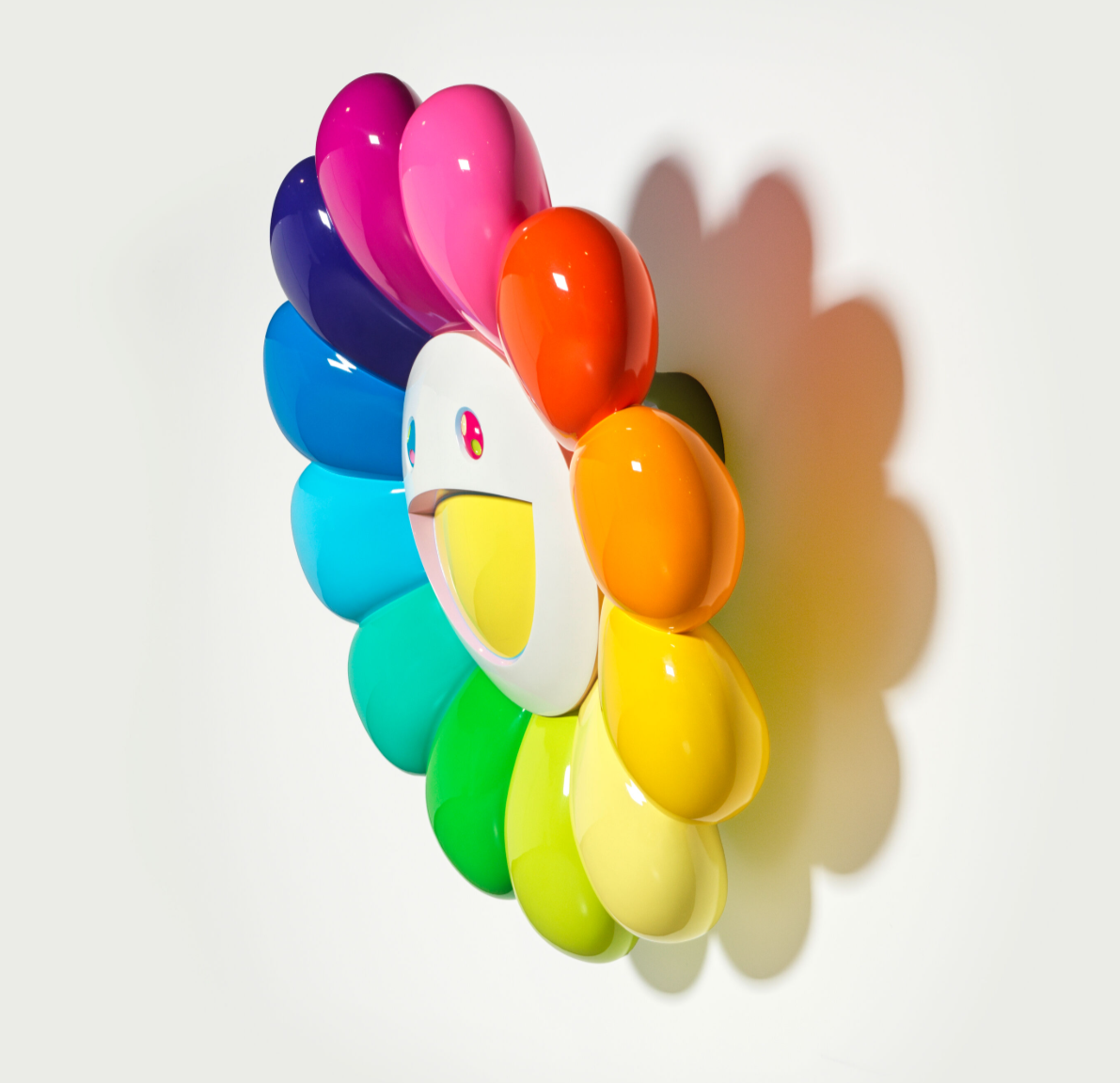
Murakami would go on to develop a signature style he calls Superflat, a term that reflects the compounding of various forms of Japanese graphic art, ranging from historic printmaking to animation and pop culture, together with the collapsing structural divides between high and low culture in post-war Japan. As such, Superflat carries a political undercurrent in the assertion of a uniquely Japanese identity in the face of a pluralizing world where culture is a primary currency of soft power. Murakami, who extended the reach of his artistic practice through various commercial and creative partnerships with the likes of Louis Vuitton, Virgil Abloh, Kanye West and others, has therefore utilized the very modes of commercialism to inject back the iconography of a culture it inadvertently threatened. The proliferation of the work’s accessible style thus adds a layer of subtle protest to Murakami’s work, which has simultaneously wholly embraced enterprise and mass production. As the artist himself has remarked, “Super flatness is an original concept of the Japanese, who have been completely Westernized” (T. Murakami, Superflat Trilogy, Tokyo, 2000, p. 155).
Kitschy, campy, and imbued with a childlike sense of wonder, Murakami’s flowers stem from the artist’s personal experience of continuously studying them while working at a preparatory school where he repeatedly taught students to draw them.
“At the beginning, to be frank, I didn’t like flowers, but as I continued teaching in the school, my feelings changed: their smell, their shape – it all made me feel almost physically sick, and at the same time I found them very ‘cute’. Each one seemed to have its own feelings, its own personality. My dominant feeling was one of unease, but I liked that sensation. And these days, now that I draw flowers rather frequently, that sensation has come back very vividly. I find them just as pretty, just as disturbing… So I thought that if the opportunity arose, I would very much like to make a work in which I would represent them as if in a ‘crowd scene’.”
Equally important to the development of Murakami’s unique lexicon was his exposure to Andy Warhol’s work, and perhaps more crucially, Warhol’s unique approach to artmaking and production. In 1996, Murakami would open the Hiropon Factory in Tokyo, basing its model directly on Warhol’s New York studio, ‘The Factory’. From Warhol, Murakami embraced the commercialization of art, the democratization of the art market, the iconography of pop culture, and an entrepreneurial approach to the production of his art objects en masse. Murakami would also adopt two of Warhol’s signature motifs —the flower and the skull— which he then translated into his signature Superflat style and integrated profusely into his work.
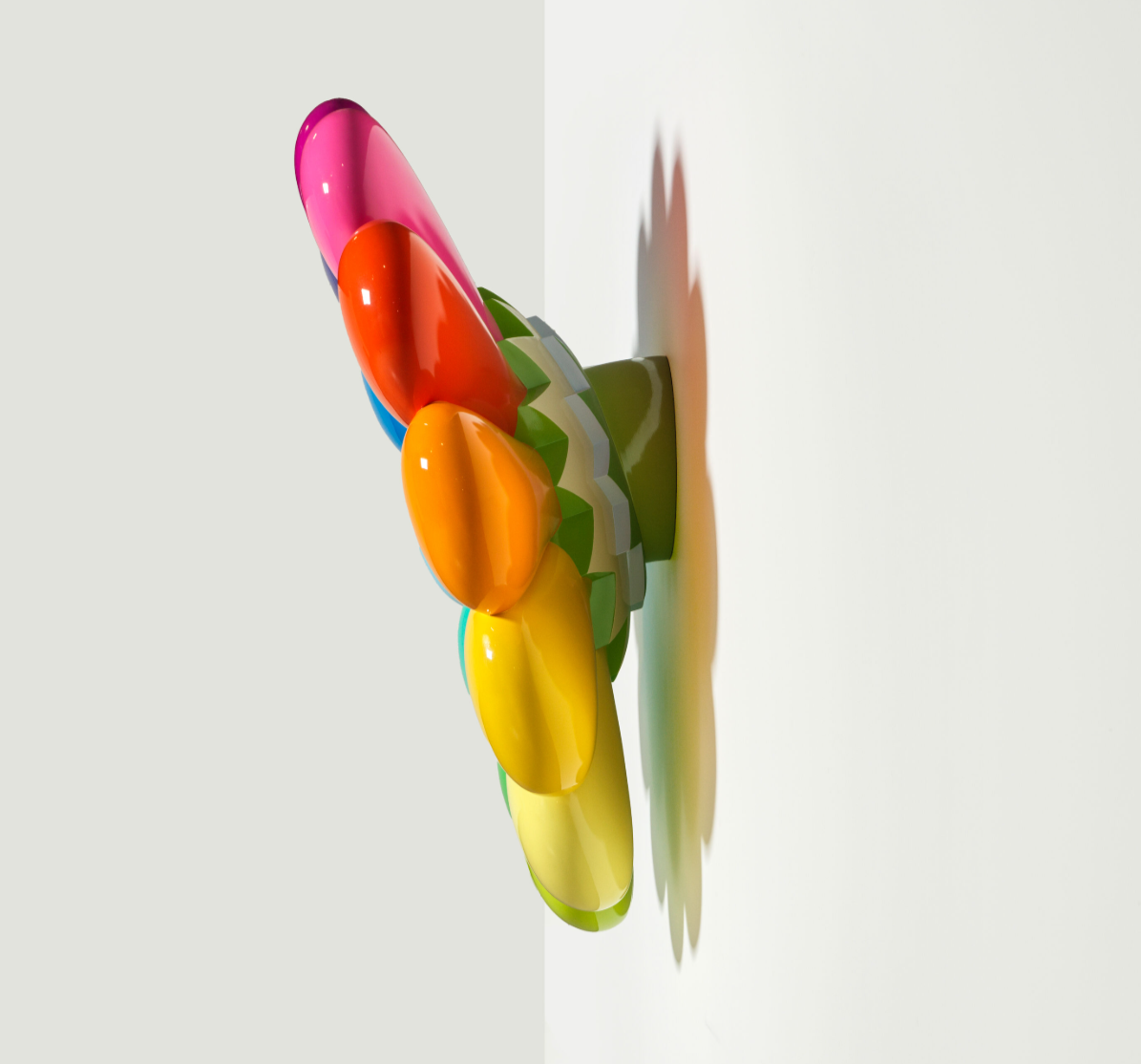
Murakami’s seemingly conflicted reaction to the flowers echoes both their aesthetic pleasure and historical weight, demonstrating the concurrent light and dark symbolism that belies TBC (Flower)‘s outer appearance of utter perfection. The work underscores Murakami’s singular ability to bridge fine art and popular culture, transforming an instantly recognizable motif into a lasting meditation on the complexities of contemporary life. By negotiating the boundaries between mass and subculture, cultural difference and hegemony, as well as Eastern and Western traditions, Murakami constructs a hybrid visual language that positions Japanese manga culture within the global contemporary art landscape. Beyond the simple assertion of Japanese identity, the work also makes stark revelations of the broader dynamics of cultural exchange, tension, and the conditions of an increasingly interconnected world.
Splash Nude, 2001
Splash Nude, 2001
Property from a Notable Midwest Collection
Phillips New-York: 19 November 2026
Estimated: USD 150,000 – 200,000
Takashi Murakami Modern & Contemporary Art: Afternoon Session
TAKASHI MURAKAMI
Splash Nude, 2001
Acrylic on canvas over panel
90.5 x 120 cm (35-5/8 x 47-1/4 inches)
Signed and dated “TAKASHI 2001” on the reverse
“Mr. DOB is a far from one-dimensional creation. Mr. DOB hints at Murakami’s innately critical stance toward Japanese, and indeed international, contemporary culture, as DOB derives from “dobozite,” or “dobojite,” Japanese slang for “why?” As such Mr. DOB represents a core questioning at the heart of all that Murakami does.”
—Michael Darling