2026 Fall New-York Marquee Auctions
Willem de Kooning
Upcoming Lots
Water…Soft Banks and a Window (Untitled VIII), 1975
Expanding Horizons: The Hedreen Collection
Sotheby’s New-York: 16 November 2026
Estimated: USD 20,000,000 – 30,000,000
GUARANTEED PROPERTY
Willem de Kooning | Water…Soft Banks and a Window (Untitled VIII) |
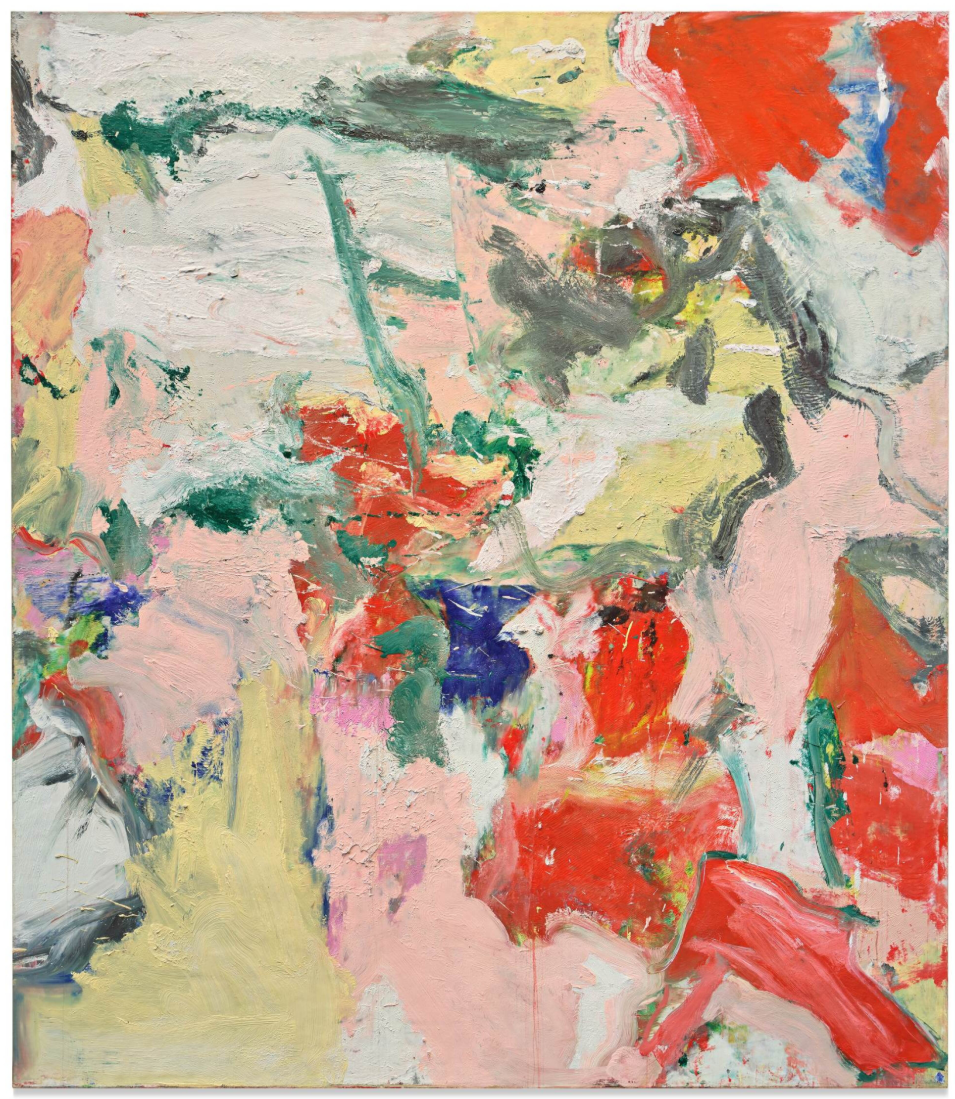
WILLEM DE KOONING (1904 – 1997)
Water…Soft Banks and a Window (Untitled VIII), 1975
Oil on canvas
80-5/8 x 70-1/8 inches (204.8 x 178.1 cm)
Signed (on the reverse)
Yellow River, 1958
Property from the Whitney Museum of American Art, Sold to Benefit the Collection
Christie’s New-York: 17 November 2026
Estimated: USD 12,000,000 – 18,000,000
MINIMUM PRICE GUARANTEE
WILLEM DE KOONING (1904-1997), Yellow River | Christie’s
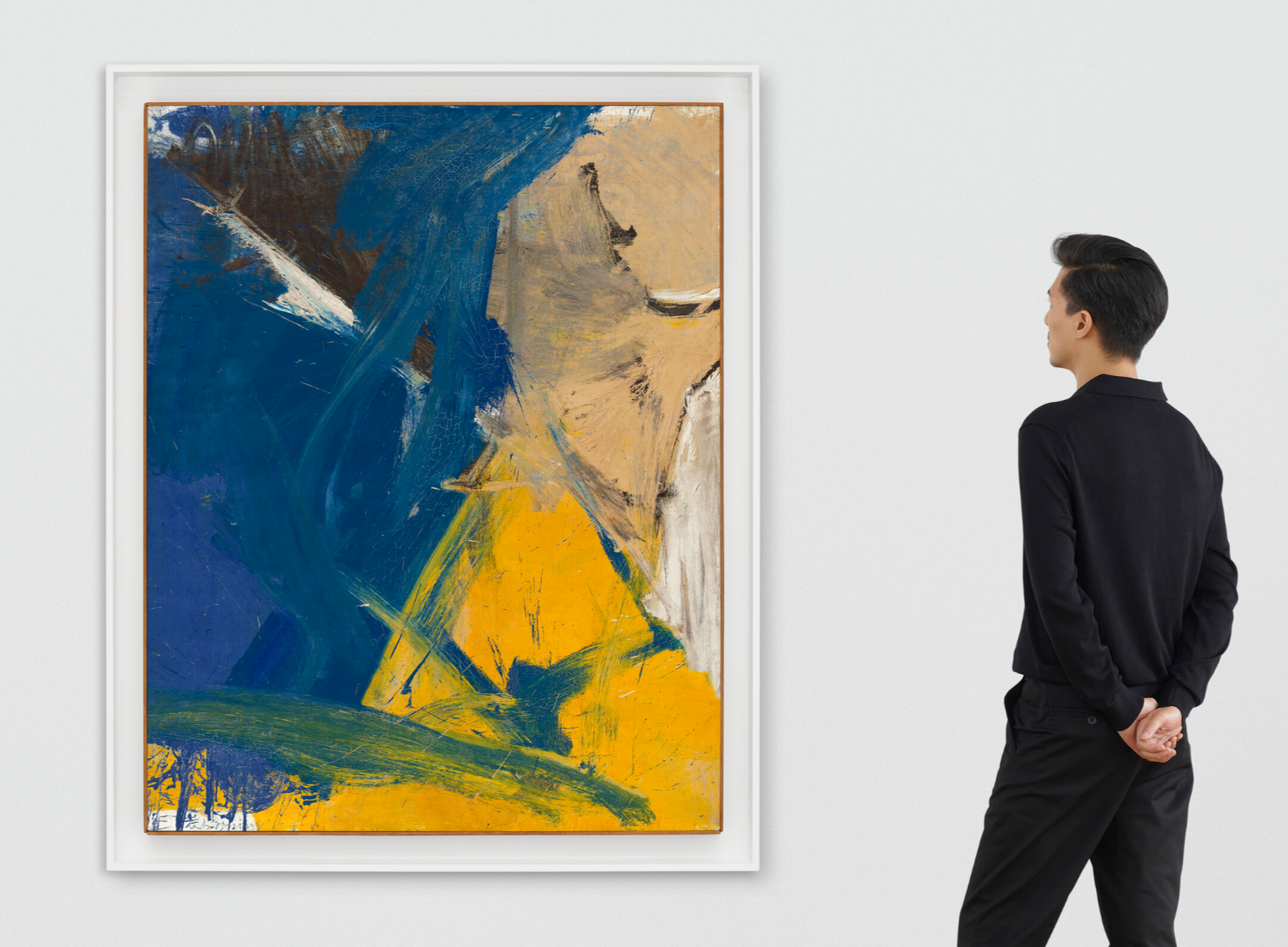
WILLEM DE KOONING (1904-1997)
Yellow River, 1958
Oil on canvas
62-7/8 x 49-5/8 inches (159.7 x 126 cm)
Signed ‘de Kooning’ (lower left)
Untitled, 1983
Expanding Horizons: The Hedreen Collection
Sotheby’s New-York: 16 November 2026
Estimated: USD 6,000,000 – 8,000,000
GUARANTEED PROPERTY
Willem de Kooning | Untitled | The Now and Contemporary Evening
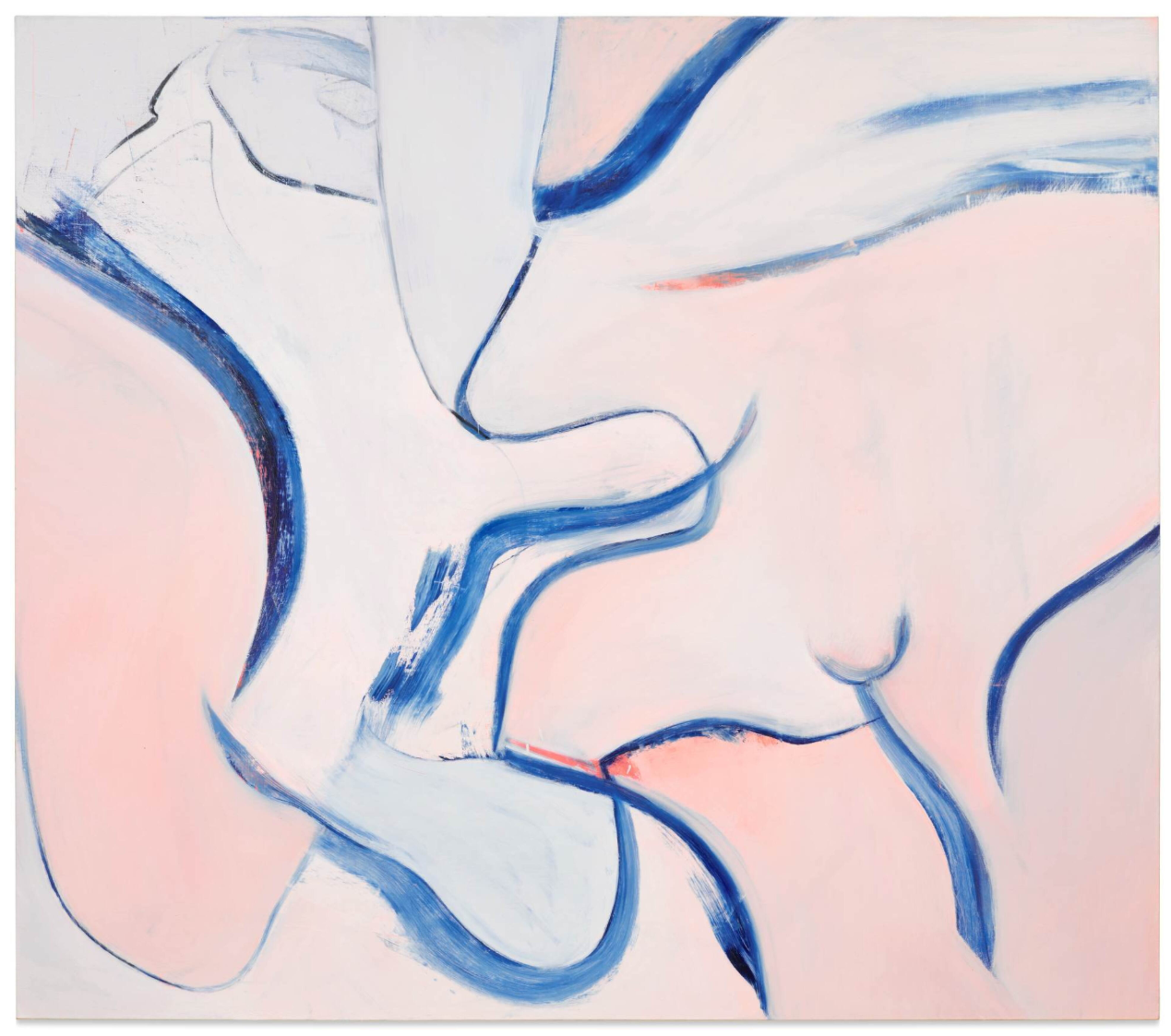
WILLEM DE KOONING (1904 – 1997)
Untitled, 1983
Oil on canvas
70×80 inches (177.8 x 203.2 cm)
Water…Soft Banks and a Window, 1975
Water…Soft Banks and a Window (Untitled VIII), 1975
Expanding Horizons: The Hedreen Collection
Sotheby’s New-York: 16 November 2026
Estimated: USD 20,000,000 – 30,000,000
GUARANTEED PROPERTY
Willem de Kooning | Water…Soft Banks and a Window (Untitled VIII) |
WILLEM DE KOONING (1904 – 1997)
Water…Soft Banks and a Window (Untitled VIII), 1975
Oil on canvas
80-5/8 x 70-1/8 inches (204.8 x 178.1 cm)
Signed (on the reverse)
Water…Soft Banks and a Window (Untitled VIII) is a jewel of Willem de Kooning’s artistic apex, embodying the abstract expressionist’s creatively explosive, highly coveted working period from the mid-1970s. A rhapsody of sumptuous color, exuberant gesture, and unbridled painterly invention, Water…Soft Banks and a Window (Untitled VIII) is a magnificent testament to the extraordinary creative renaissance that defined this pinnacle.
“When I moved into this house, everything seemed self-evident… The space, the light, the trees – I just accepted it without thinking about it much. Now I look around with new eyes. I think it’s all kind of a miracle.”
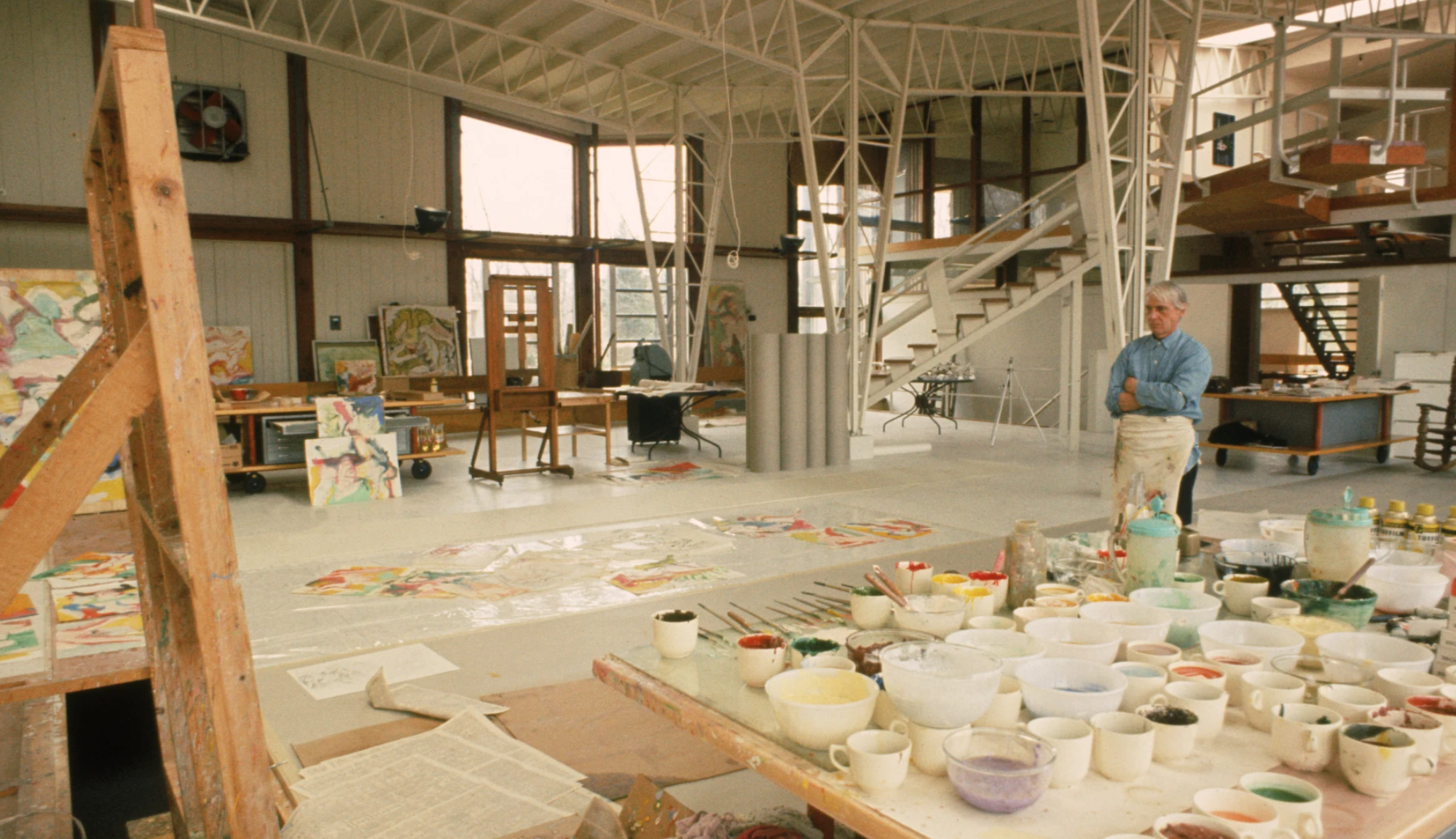
Willem de Kooning in his studio, East Hampton, 1965. Photo by Hans Namuth/Photo Researchers History/Getty Images. Artwork © 2026 The Willem de Kooning Foundation / Artists Rights Society (ARS), New York
Dating to the artist’s celebrated return to painting in the mid-1970s, the present work belongs to an exceptional group of monumental canvases in which de Kooning, newly invigorated by the luminous coastal landscape of East Hampton, achieved an unprecedented synthesis of nature, gesture, and form. Across its expansive surface, sweeping ribbons of emerald, cobalt, and charcoal course through a kaleidoscopic atmosphere of buttery yellow, delicate peach, and incandescent crimson, their sensuous rhythms evoking the ceaseless movement of water, the fleeting brilliance of reflected sunlight, and the elemental vitality of the natural world. Among the rare paintings of this period to bear a descriptive title, Water…Soft Banks and a Window (Untitled VIII) offers an especially evocative glimpse into the artist’s profound affinity for his surroundings, transforming the familiar landscape of Springs into an exhilarating, abstraction.
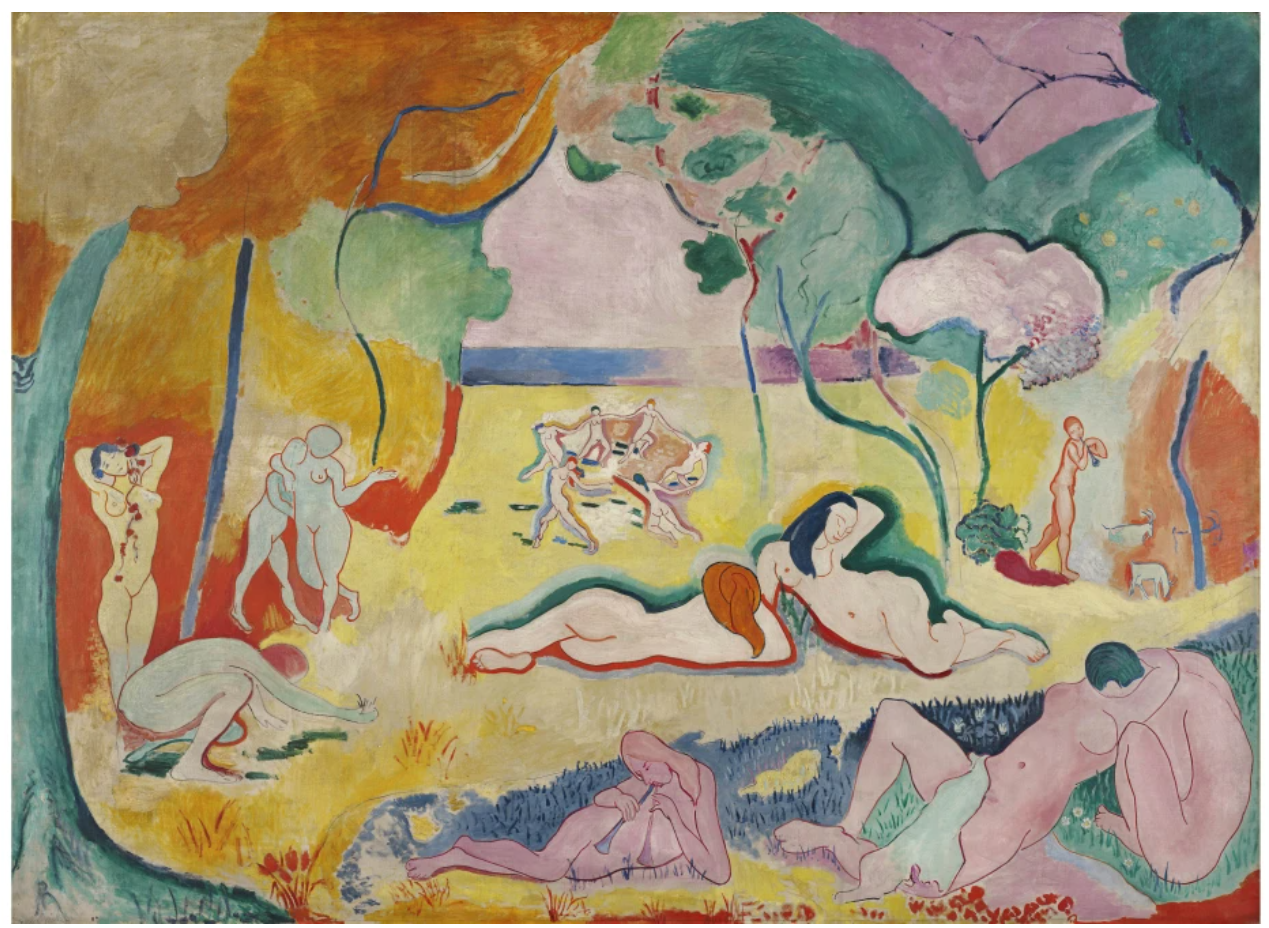
Henri Matisse, The Joy of Life, 1905-06. The Barnes Foundation, Philadelphia. Image © Barnes Foundation / © Succession H. Matisse / Bridgeman Images. Art © 2026 Succession H. Matisse / Artists Rights Society (ARS), New York
In 1974, de Kooning made the decision to finally abandon the frantic New York City life and permanently move to his beloved Springs, East Hampton home for good. With his move to Springs, an explosive period of painting took place – one that would become the most highly sought-after of the artist’s entire oeuvre. During the next few years, the painter was consciously trying to reconnect with the beauty of nature through fully immersing himself in the daily rhythms of coastal life: fishing, swimming, and biking. In doing so, de Kooning inaugurated his bold return to painting, completing a series of twenty lush, sumptuous works that were inspired by his new open-air lifestyle.
“I got into painting in the atmosphere I wanted to be in. It was like a reflection of light. I reflected upon the reflections of the water, as fishermen do… And I do that almost every day.”
De Kooning’s remarkable return to painting coincided with an important new chapter in his professional career. In 1972, his longtime friend and dealer Xavier Fourcade departed Knoedler to establish Fourcade, Droll, Inc., inaugurating a period of close collaboration that would bring the artist’s extraordinary new canvases to an increasingly enthusiastic audience. Exhibitions of his recent paintings attracted considerable critical acclaim, with Dore Ashton observing that “De Kooning’s recent paintings at the Fourcade Gallery absolutely required sustained attention. There could be no quick perception, no general impression that would cover the wealth of experience reflected… While de Kooning has for a long time managed to combine the near and far in synopsis, in these new paintings the articulation is emphatic.” (Dore Ashton, “1975/1976 New York,” Colóquio: Artes, no. 29, October 1976, p. 14) Exhibited at Fourcade alongside works that would subsequently enter such distinguished institutional collections as the Solomon R. Guggenheim Museum, New York; the Museum of Fine Arts, Houston; and the Queensland Art Gallery, Brisbane, Water…Soft Banks and a Window (Untitled VIII) belongs to a remarkable moment in which de Kooning’s renewed artistic vitality was met with widespread critical recognition. These paintings announced an artist at the height of his powers, one whose restless experimentation continued to yield astonishing new possibilities more than four decades into his career.
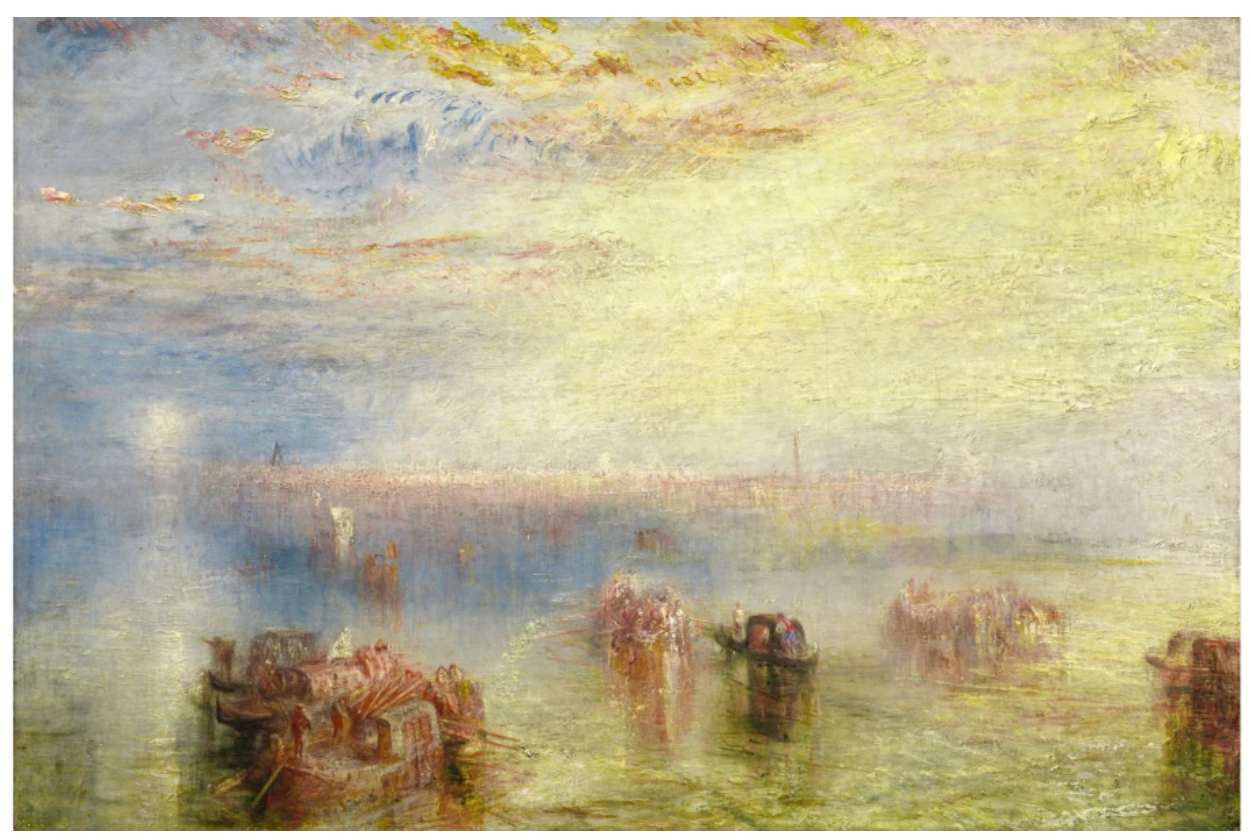
Joseph William Turner, Approach to Venice, 1844. National Gallery of Art, Washington, D.C. Image © Bridgeman Images
Among the celebrated canvases of this period, Water…Soft Banks and a Window (Untitled VIII) is distinguished by the rare specificity and poetic resonance of its title. Of course, the title recalls de Kooning’s setting as an inspiration, but it also brings a physicality to the otherwise ethereally abstract work. This physicality translates to the paint itself, with the newly reinvented paint-mixing process the artist had initiated following the early 1970s, when de Kooning mainly worked in sculpture. By mixing the still-wet paint on the canvas and heavily inflecting his hand, de Kooning manipulated the medium in a near-sculptural way, leaving behind thick, impastoed swells on the canvas that are reminiscent of ocean waves.
Comparable 1975 de Kooning Paintings in Select Museum Collections
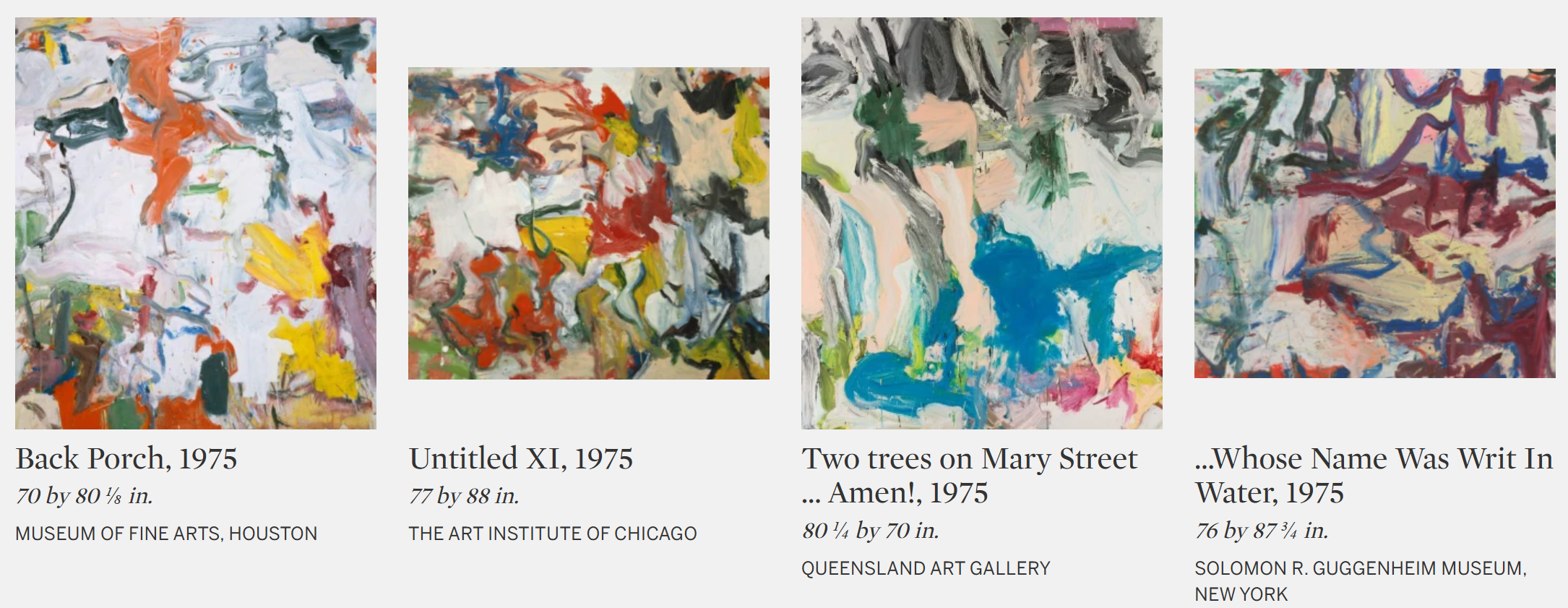
Art © 2026 The Willem de Kooning Foundation / Artists Rights Society (ARS), New York
By engaging in this way, the mature artist develops a more intimate, controlling attitude towards the picture plane, sculpting his canvas as if it were one of his bronzes from the early 1970s. The New York Times’ John Russel described it as: “Mr. de Kooning in his 70’s is still inventing new ways of mixing the paint, new ways of getting it to do his will, new ways to accommodate the thrusts of the psyche.” (John Russel, “Art: de Kooning’s New Frontiers,” The New York Times, October 15, 1976, p. 67) An airy dance of graphite and emerald streaks among an illustrious field of soft peach, butter yellow, and crimson red, Water…Soft Banks and a Window (Untitled VIII) contains “none of the anger or bitterness that sometimes animated his earlier work.” (Mark Stevens and Annalyn Swan, de Kooning: an American Master, New York City 2004, pp. 560-61)
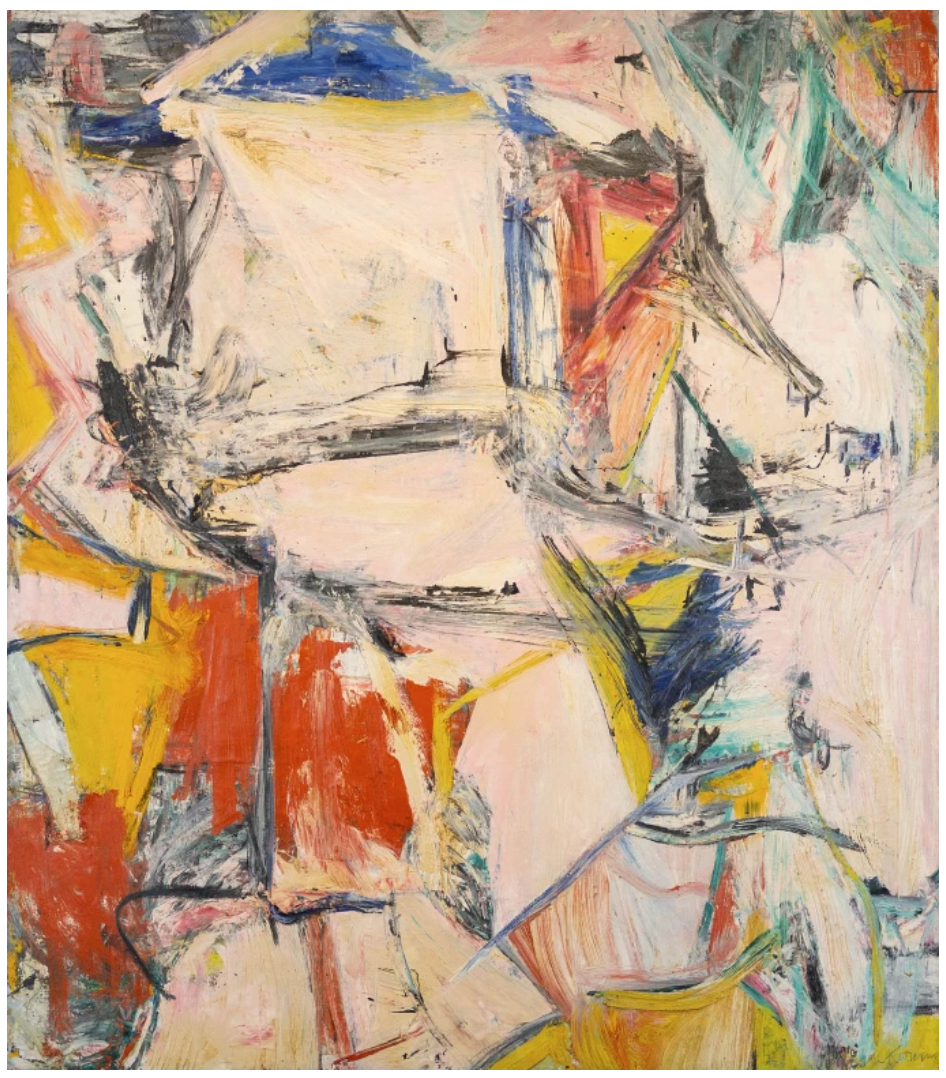
Willem de Kooning, Interchange, 1955. Private Collection. Sold at Sotheby’s New York in November 1989 for $20.7 million.
Art © 2026 The Willem de Kooning Foundation / Artists Rights Society (ARS), New York
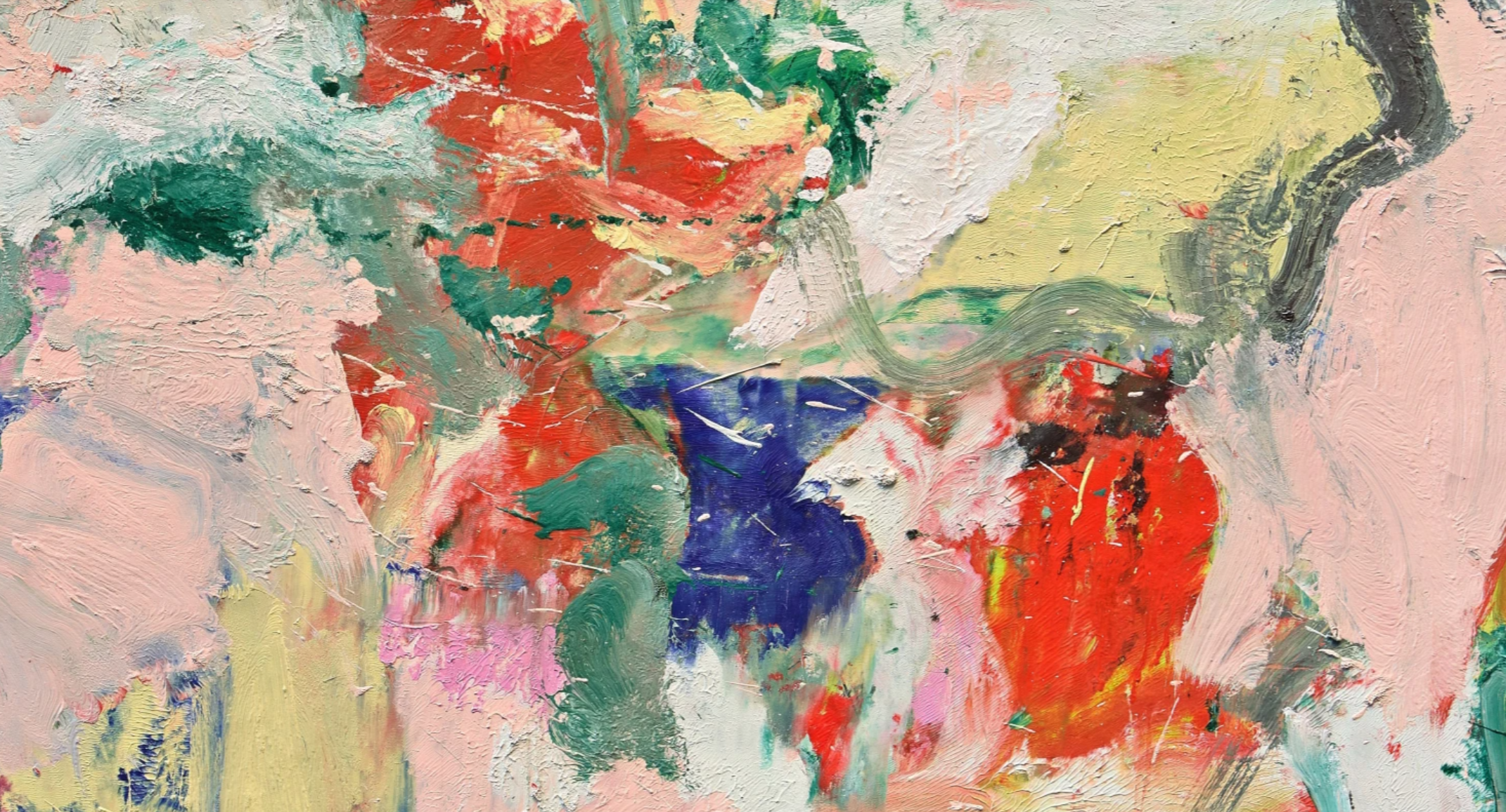
At the center of the composition, a deep cobalt twist establishes itself as a gravitational core, with lighter, more frantic strokes seemingly drawing towards this mark. Immediately surrounding the cobalt spark are fields of crimson, peach, and chalk-white all muddied by emerald and graphite ribbons that dance outwards and sweep traces of the underlayers with them. At the lower left, a butter yellow flare fringed with more graphite gives a sense of balance to the otherwise busier corners. Such as the top right, where graphite streaks feverishly jump amongst mixed patches of peach, white, crimson, and sky blue. Through these impastoed swaths, de Kooning accomplishes an ever-illusive, ever-graceful balance of complex, eye-catching strokes that draw one into the swirling, mesmerizing canvas, while simultaneously never over-crowding the composition.
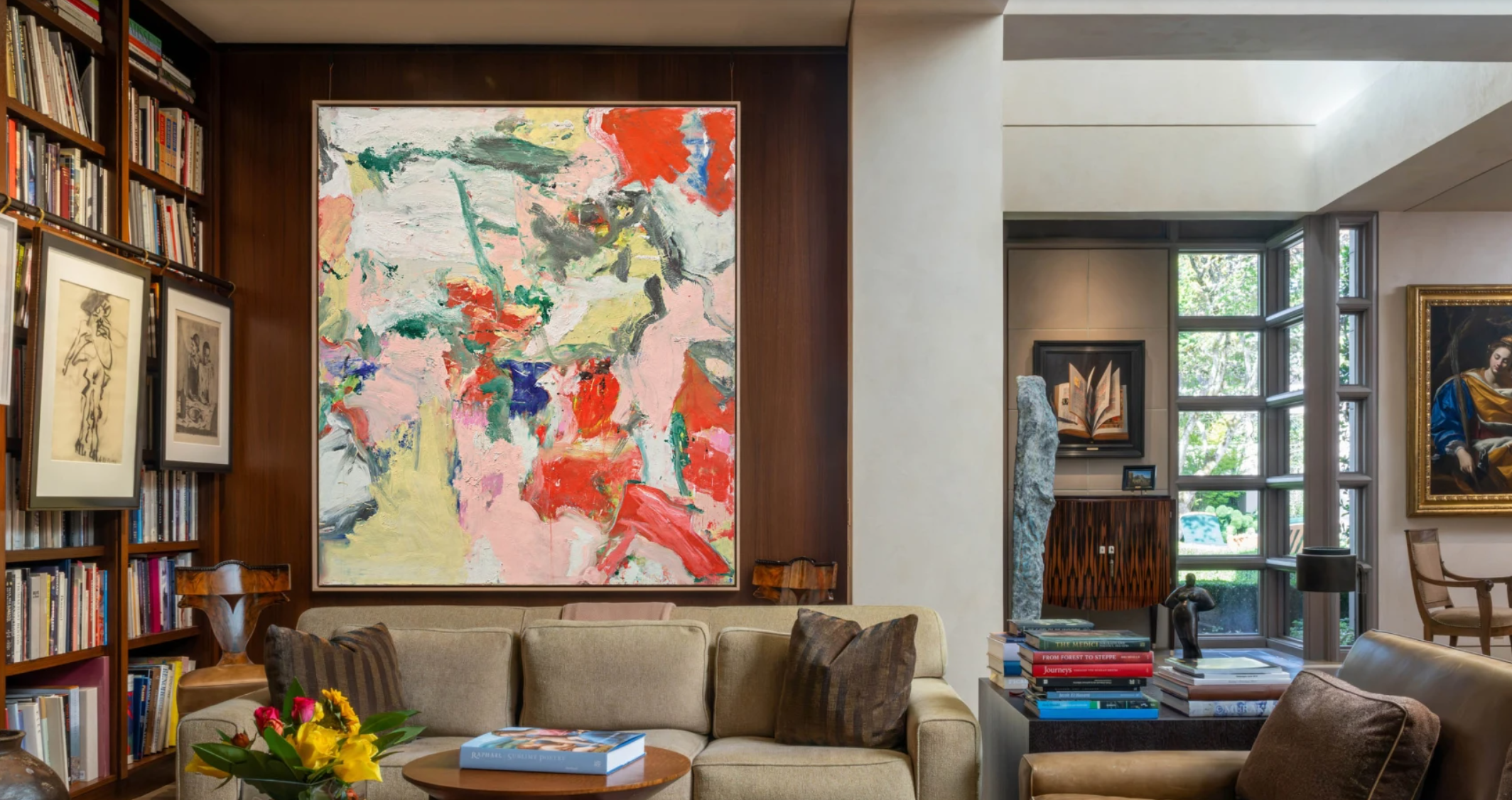
The present work installed in the Hedreen residence.
Art © 2026 The Willem de Kooning Foundation / Artists Rights Society (ARS), New York
The extraordinary achievement of Water…Soft Banks and a Window (Untitled VIII) lies in its ability to reconcile the seemingly irreconcilable: the spontaneous and the deliberate, the corporeal and the atmospheric, the tumultuous energy of gesture and the harmonious serenity of nature. In the lush, richly worked surfaces of the present canvas, de Kooning transforms the physical act of painting into an expression of the elemental forces that had so profoundly captivated him in Springs. The water, light, and landscape of East Hampton are neither illustrated nor described but rather absorbed into the very rhythms and materiality of the composition, becoming inseparable from the artist’s singular painterly language. Executed at the height of one of the most celebrated periods of his remarkable career, the present work stands as a magnificent testament to de Kooning’s inexhaustible capacity for reinvention. Here, the artist who had revolutionized the course of twentieth-century painting once again transcended the conventions of his own achievement, discovering in the familiar sensations of the natural world an entirely new universe of expressive possibility. A tour de force of color, gesture, and painterly virtuosity, Water…Soft Banks and a Window (Untitled VIII) is at once a joyous affirmation of life and an extraordinary manifestation of de Kooning’s enduring genius, capturing the sublime beauty of nature in the purest and most visceral language he knew: paint.
Yellow River, 1958
Yellow River, 1958
Property from the Whitney Museum of American Art, Sold to Benefit the Collection
Christie’s New-York: 17 November 2026
Estimated: USD 12,000,000 – 18,000,000
MINIMUM PRICE GUARANTEE
WILLEM DE KOONING (1904-1997), Yellow River | Christie’s
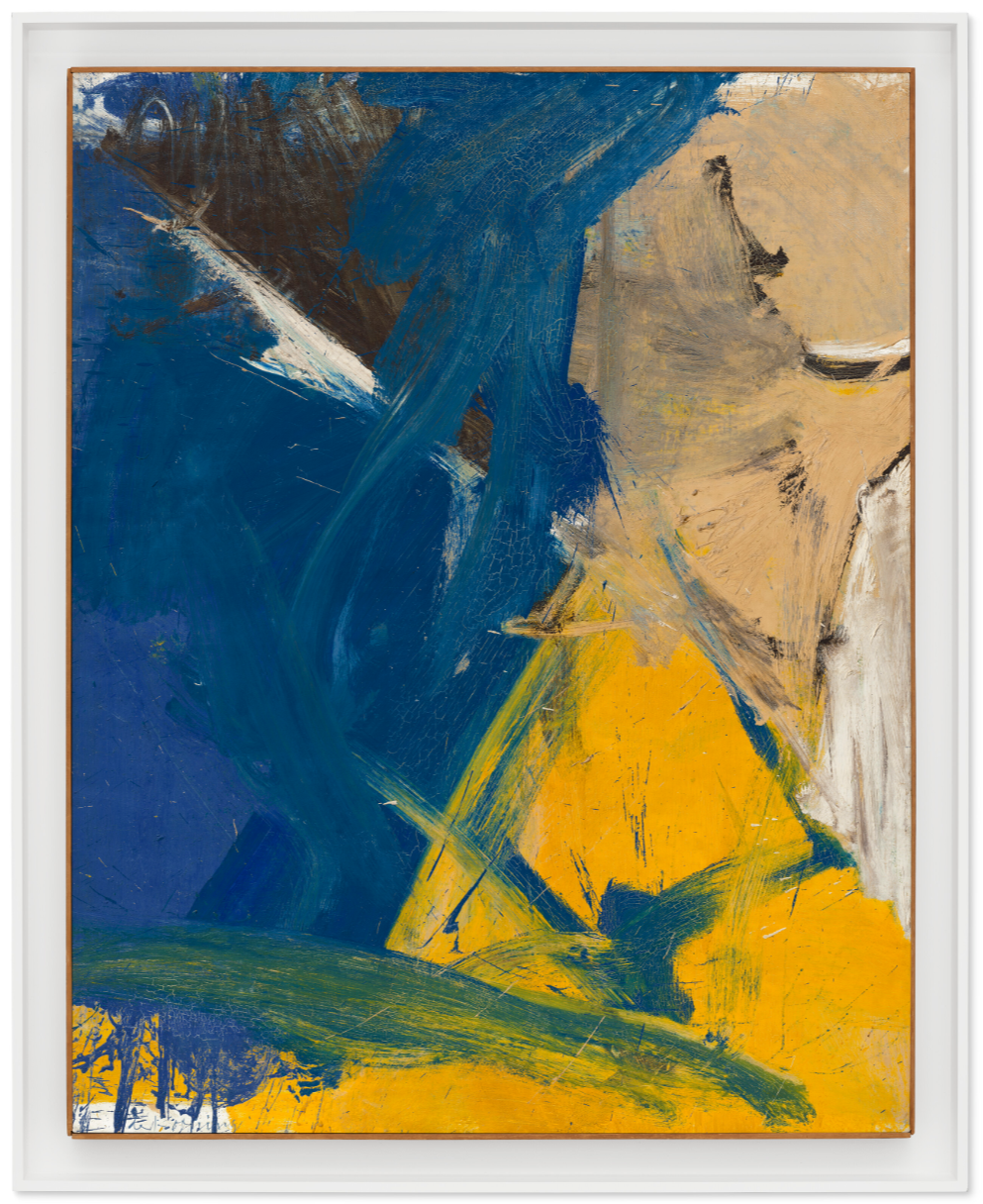
WILLEM DE KOONING (1904-1997)
Yellow River, 1958
Oil on canvas
62-7/8 x 49-5/8 inches (159.7 x 126 cm)
Signed ‘de Kooning’ (lower left)
No pure abstract geometry ever elated people as did de Kooning’s latest paintings,” Harriet Janis and Rudi Blesh wrote in the aftermath of Willem de Kooning’s third solo exhibition at Sidney Janis Gallery in May 1959. “More abstract than any previous de Kooning paintings, they seemed even more intensely real. … Calligraphy and forms merge in brush strokes so huge and spattering that they seem created with an energy and speed beyond the human” (H. Janis and R. Blesh quoted in, M. Stevens and A. Swan, Willem de Kooning: An American Master, New York, 2011, p. 412). Comprising twenty-two new paintings and works on paper executed between 1957 and 1959, the exhibition pushed gesture toward a new expressive intensity. The excitement was palpable. Visitors began queuing outside the gallery as early as 8:15 a.m.; by noon, 19 works had sold, with the remaining three claimed before the week was over.
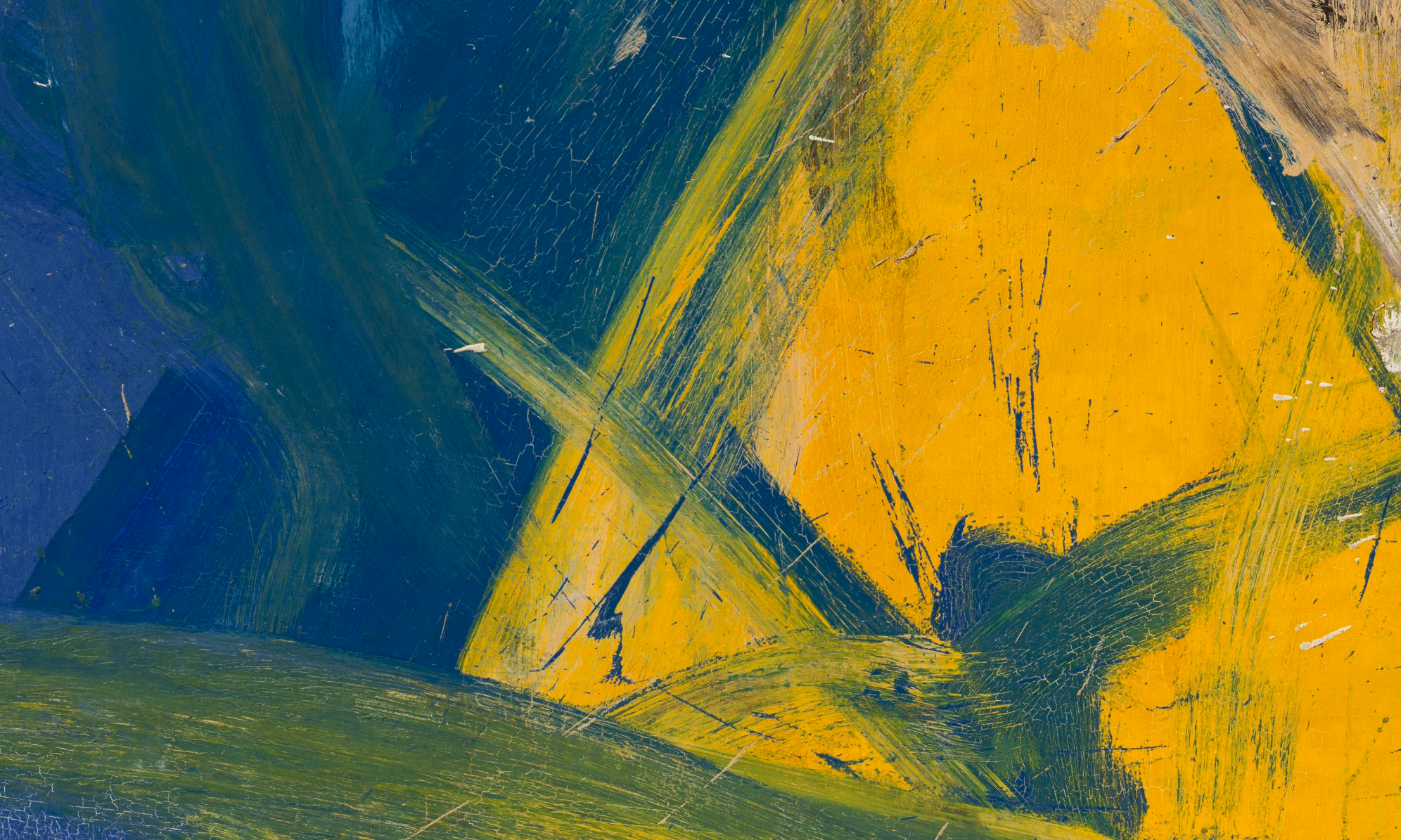
Among these new paintings, Yellow River would become one of the defining images of this pivotal moment in de Kooning’s career. Painted in 1958, it exemplified the expansive pictorial language of what Thomas B. Hess would later dub de Kooning’s “abstract parkway landscapes”—monumental canvases in which sweeping gestures and vivid passages of ochre, blue, and white transform the experience of landscape into paint. Arnold Newman’s celebrated photographs, taken near the close of the exhibition, famously show the artist standing before Yellow River, alongside Ruth’s Zowie (1957) and Lisbeth’s Painting (1958; Virginia Museum of Fine Arts, Richmond). Newman’s photographs have since become emblematic of this transformative moment, capturing de Kooning at the height of his powers as he assumed a preeminent position within the New York School. As Fairfield Porter wrote, “It is as though his painting reached a different level of consciousness than painting that refers to a theory of aesthetics” (F. Porter, quoted in J. Elderfield, De Kooning: A Retrospective, exh. cat., Museum of Modern Art, New York, 2011, p. 307).
“I want to grab a piece of nature and make it as real as it actually is.”
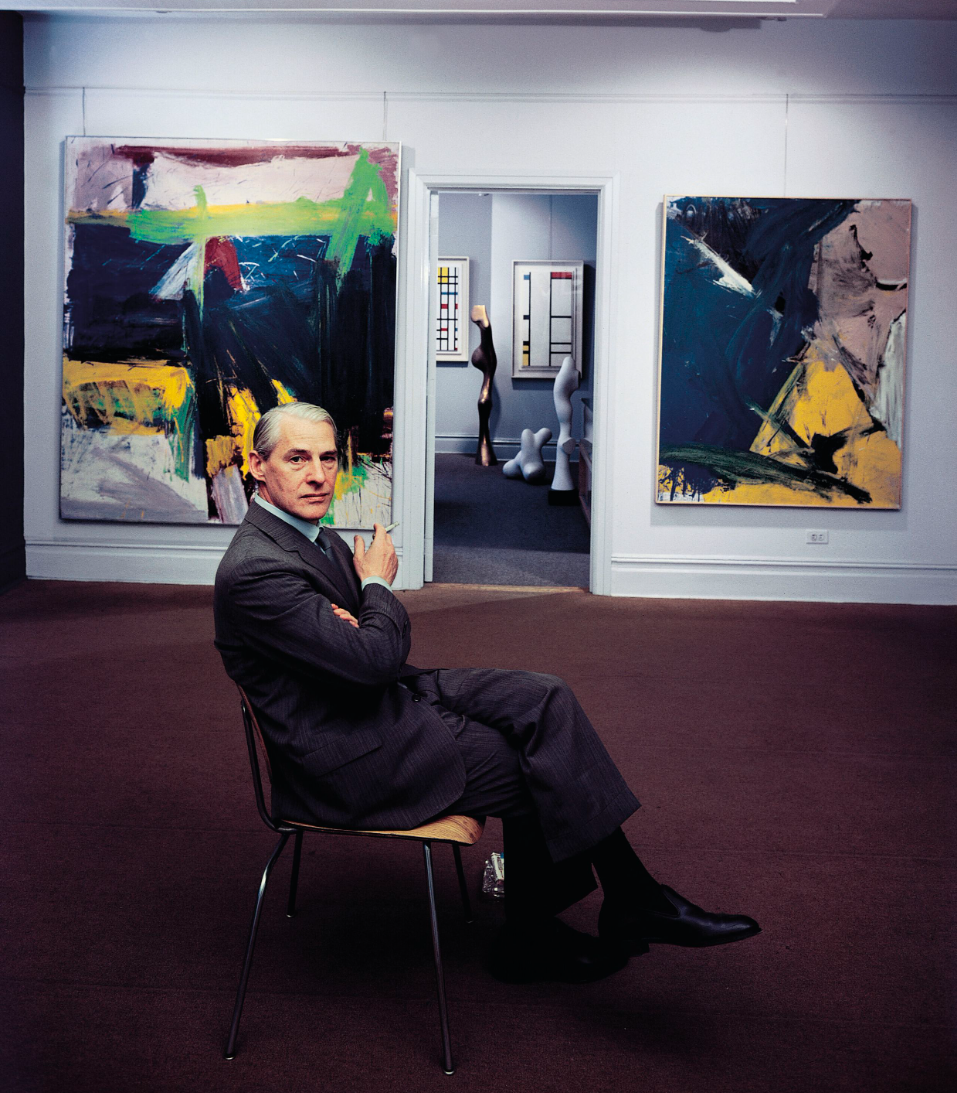
Willem de Kooning at Sidney Janis Gallery, New York, 1959 (present lot illustrated at right). Photo: © Arnold Newman / Getty Images. Artwork: © 2026 The Willem de Kooning Foundation / Artists Rights Society (ARS), New York.
Yellow River entered the collection of the Whitney Museum of American Art as a gift from Betty Ann Besch Solinger and the Solinger family in honor of David M. Solinger, one of the museum’s most influential trustees and later its first president from outside the Whitney family. A pioneering attorney and passionate collector, Solinger assembled one of the finest postwar collections of the 20th century, bringing together exceptional works by de Kooning, Franz Kline, Jean Dubuffet, Alberto Giacometti, Pablo Picasso, and Joan Miró, among many others.
Within his collection, de Kooning occupied a singular place. Solinger first encountered the artist’s work at his inaugural exhibition at Charles Egan Gallery in 1948, recalling that he was “thunderstruck” by the paintings he saw and remained in the gallery for hours. That fascination endured for the rest of his life. According to Frank Robinson, former director of Cornell University’s Herbert F. Johnson Museum of Art, who brought The David M. Solinger Collection to Cornell, Yellow River hung for a time at the foot of Solinger’s bed, making it the first painting Solinger saw each morning. Few anecdotes better capture both the collector’s devotion to de Kooning and the privileged place this extraordinary canvas occupied within one of the defining collections of postwar American art.
Throughout the second half of the 1950s, de Kooning’s focus shifted from the urban grit of New York City toward the rural environs of the Hudson River Valley and the East End of Long Island. Ultimately, the extraordinary success of the 1959 exhibition would help make that transition permanent, allowing the artist to purchase just over four acres of land in Springs, on Long Island’s South Fork. Fittingly, the “abstract parkway landscapes,” whose success helped enable de Kooning’s move, had themselves taken shape through his increasingly frequent journeys beyond the city. “Most of them are landscapes and highways and sensations of that, outside the city with the feeling of going into the city or coming from it,” de Kooning famously explained (W. de Kooning, quoted in ibid., p. 317).
Moving further from the great Woman paintings that had dominated the first half of the decade, the “abstract parkway landscapes” marked one of the most consequential shifts in de Kooning’s career. Characterized by what Hess called their “full-arm sweeps,” the paintings transformed the fleeting impressions of these journeys into a new pictorial language of scale, speed, and gesture. Though he never learned to drive, the artist relished the passenger seat, absorbing the passing landscape and the highways, signs, and billboards that punctuated it. In their definitive biography of the artist, Mark Stevens and Annalyn Swan described the works as “bold and declamatory, even domineering,” their “beautiful highway strokes” possessing the confident “grand style” of which de Kooning had long dreamed. As they observed, the paintings “looked eastward, reflecting the light, ocean, and color of Long Island” (M. Stevens and A. Swan, op. cit., p. 410).
“I wanted to get back to a feeling of light in painting…. I wanted to get in touch with nature. Not painting scenes from nature, but to get a feeling of that light that was very appealing to me, here particularly.”
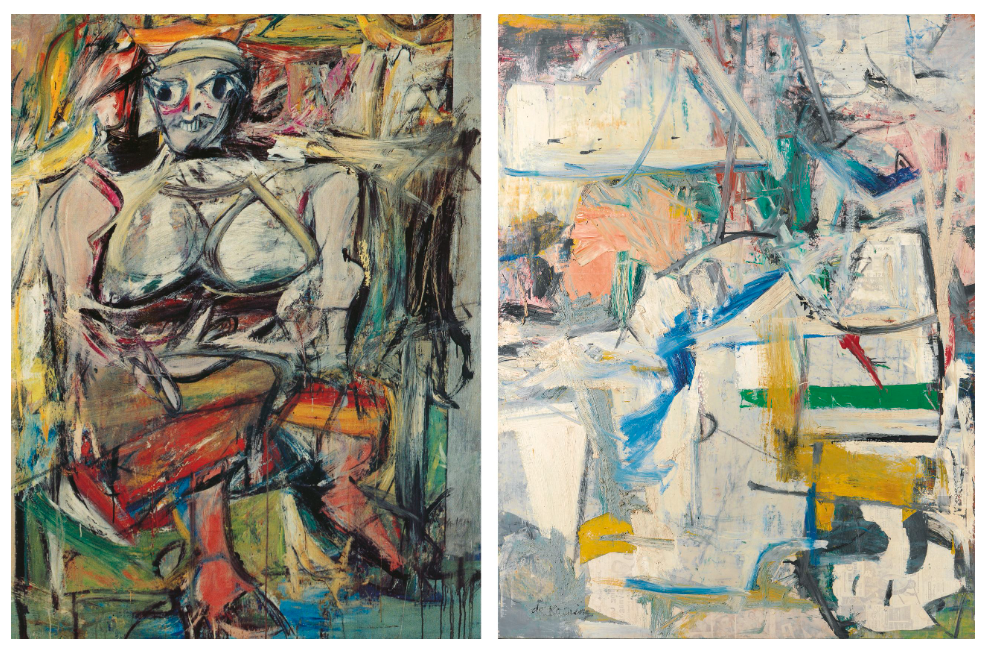
Left: Willem de Kooning, Woman I, 1950-1952. Museum of Modern Art, New York. © 2026 The Willem de Kooning Foundation / Artists Rights Society (ARS), New York.
Right: Willem de Kooning, Easter Monday, 1955-1956. Metropolitan Museum of Art, New York. © 2026 The Willem de Kooning Foundation / Artists Rights Society (ARS), New York.
Speaking later to David Sylvester, de Kooning recalled his fascination with the parkway: “I love those highways. And they are really not very pretty, but the big embankments and the shoulders of the roads and the curves are flawless,” recalling that while working on these paintings, “this thing came to me: it’s just like Merritt Parkway.” Crucially, the association emerged through painting rather than being prescribed in advance. “I don’t think I set out to do anything,” de Kooning explained. Instead, he believed he had “subconsciously found a way of setting it down … on canvas” (W. de Kooning, quoted in J. Elderfield, op cit., p. 317).
The roadways themselves entered de Kooning’s vocabulary, lending their names to paintings such as Merritt Parkway (1959; Detroit Institute of Arts) and Montauk Highway (1958; Los Angeles County Museum of Art). Yet their influence extended beyond works explicitly named for them. As Richard Shiff has suggested, the experience of the Merritt Parkway can be felt throughout the “abstract parkway landscapes” of 1958 and 1959, even in paintings whose titles point elsewhere, such as in Yellow River. Place, however, could enter his paintings in less literal ways. Speaking of Door to the River (1960; Whitney Museum of American Art, New York), an “abstract pastoral landscape” painted shortly thereafter, de Kooning explained: “The association was with water. I used to be in East Hampton often, but I certainly wasn’t near a river. It was by instinct somehow that I felt it was a door to the river, as if that was my escape route, my future.” The association would prove remarkably prescient: water became in increasingly important presence in de Kooning’s work over the following decades, culminating in the aqueous canvases of the 1970s.
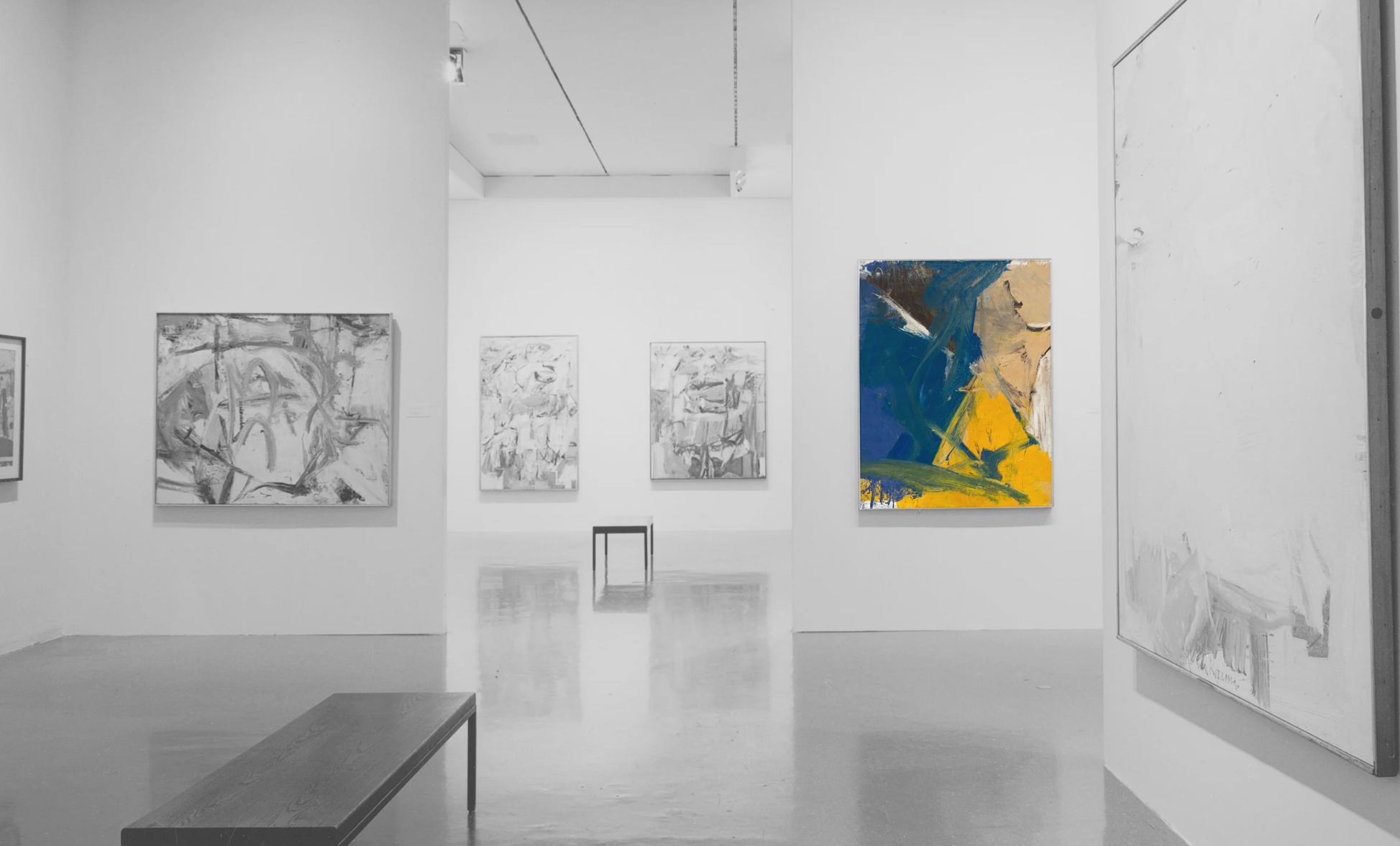
Installation view, Willem de Kooning, March-April 1969, Museum of Modern Art, New York (present lot illustrated). Photo: © The Museum of Modern Art / Licensed by SCALA / Art Resource, NY. Artwork: © 2026 The Willem de Kooning Foundation / Artists Rights Society (ARS), New York.
In addition, de Kooning’s “highway” paintings can also be argued to be about modernity, much like J.M.W. Turner’s Rain, Steam, and Speed (The Great Western Railway) (1844; National Gallery, London), painted a century earlier. The American artist’s depiction of speed and freedom in the age of the automobile has strong visual and gestural parallels with Turner’s depiction of modernity wrought by the English industrial revolution, depicted by the humble hare being outrun by steam train barreling over Isambard Kingdom Brunel’s Maidenhead Railway Bridge. Half a century later, the Italian Futurist Giacomo Balla took on similar themes in Abstract Speed + Sound (1913-1914; Peggy Guggenheim Collection, Venice) which suggests the alteration of a landscape by the passage of a car as it travels through the atmosphere. Yellow River continues this lineage.
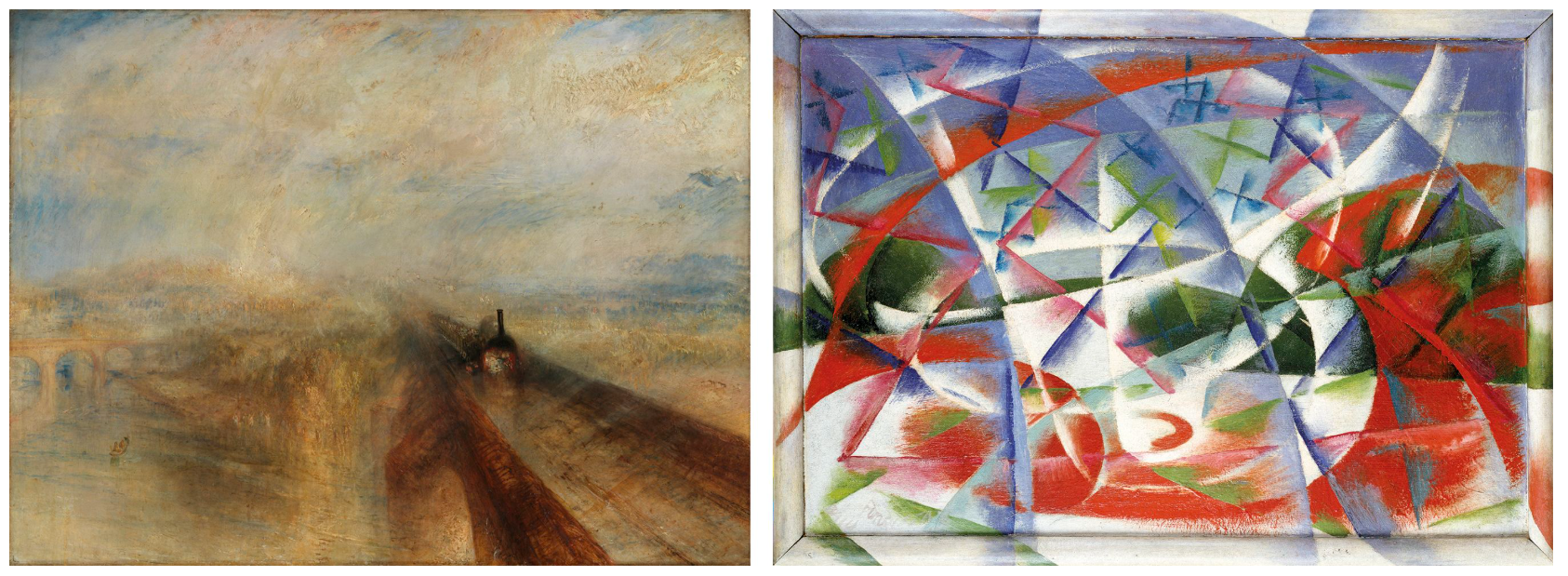
Left: J. M. W. Turner, Rain, Steam and Speed (The Great Western Railway), 1844. National Gallery, London.
Right: Giacomo Balla, Abstract Speed + Sound, 1913-1914. Peggy Guggenheim Collection, Venice.
Across the surface of Yellow River, de Kooning’s brushwork moves in great arcs and abrupt changes of direction, as sweeping passages of pale ochre and yellow give way to expanses of blue and flashes of white and darker earth tones. Paint is layered, scraped down, and worked back into itself, so that individual gestures appear to emerge, disappear, and reassert themselves across the canvas. Yet, for all its apparent spontaneity, the composition reveals a remarkable sense of control: each stroke seems to propel the next, carrying the eye across the painting before pulling it back into the dense activity at its core. The result is an accumulation of sensations—color, movement, space, and speed—held together by the vitality and controlled force of de Kooning’s hand.
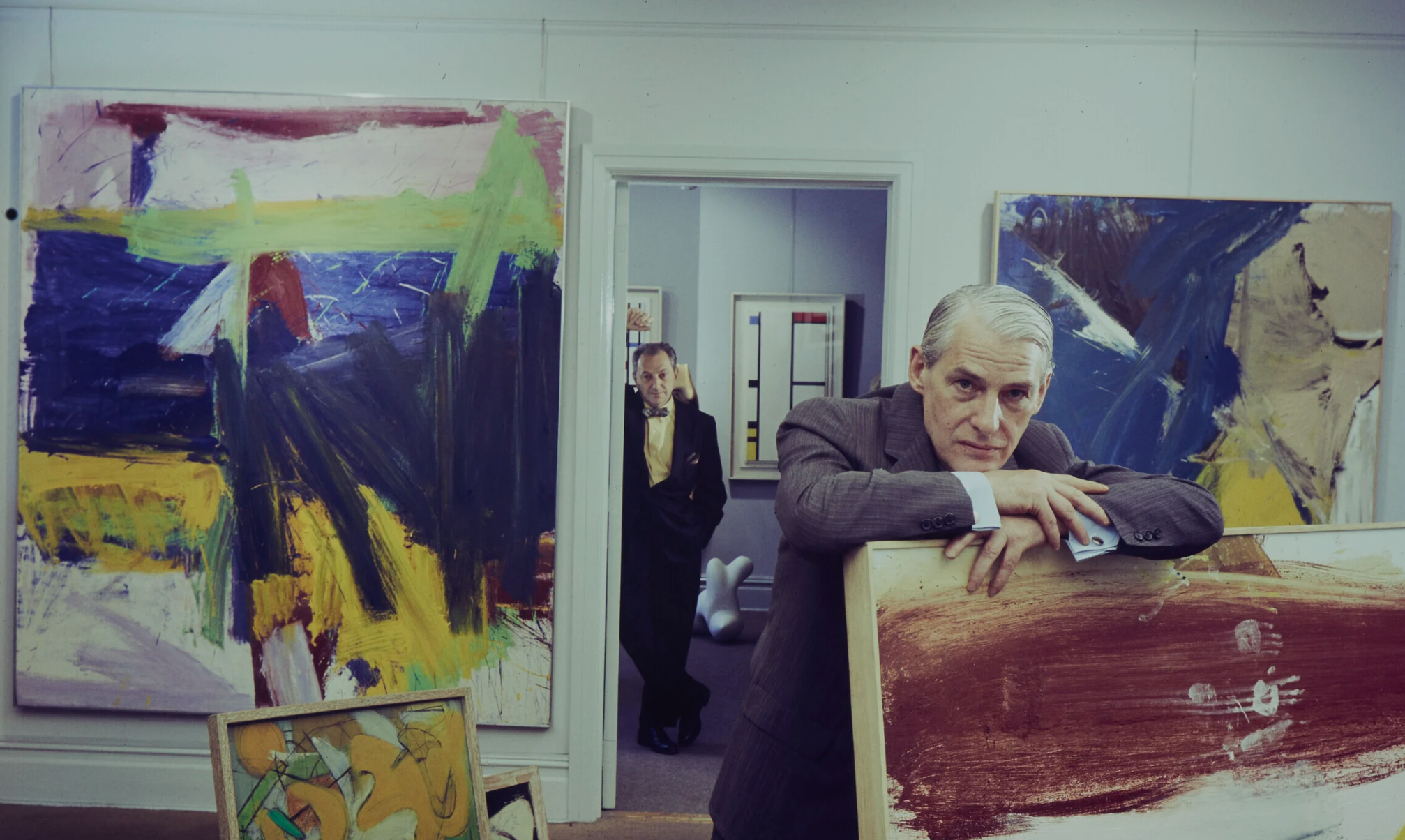
Willem de Kooning at Sidney Janis Gallery, New York, 1959 (present lot illustrated at right). Photo: © Arnold Newman / Getty Images. Artwork: © 2026 The Willem de Kooning Foundation / Artists Rights Society (ARS), New York.
The scale and physicality of the “abstract parkway landscapes” would prove enormously influential to the generation that followed. Jasper Johns later remembered them as “wonderful paintings” that made him “want to go out and buy a big brush” (J. Johns, quoted in ibid., p. 320). More than six decades after its first appearance at Sidney Janis Gallery, Yellow River retains something of the exhilarating immediacy that greeted it there in 1959. In transforming the fleeting sensations of landscape into color and gesture, de Kooning achieved the paradox Janis and Blesh recognized at the time: a painting at once more abstract and “more intensely real.”
Untitled, 1983
Untitled, 1983
Expanding Horizons: The Hedreen Collection
Sotheby’s New-York: 16 November 2026
Estimated: USD 6,000,000 – 8,000,000
GUARANTEED PROPERTY
Willem de Kooning | Untitled | The Now and Contemporary Evening
WILLEM DE KOONING (1904 – 1997)
Untitled, 1983
Oil on canvas
70×80 inches (177.8 x 203.2 cm)
A symphony of sweeping cobalt arabesques and luminous passages of fleshy peach, Untitled (1983) is a serene testament to the extraordinary creative renewal that defined the final chapter of Willem de Kooning’s legendary career. A tranquil contemplation of color and form and – above all – a manifestation of de Kooning’s abstraction at its most liberated, distilling the vigorous gestural language that had defined his practice for more than half a century into an exquisite meditation on color, movement, and form. The monumental canvas is a confluence of sinuous ribbons of electric blue unfurling against a diaphanous atmosphere of pale peach and incandescent white, their graceful contours alternately emerging from and dissolving into the luminous ground. At once intimately contemplative and breathtakingly expansive, Untitled embodies the paradoxical brilliance of de Kooning’s late style: an artist whose mastery of his medium had become so complete that the most elemental gestures could convey an entire lifetime of artistic exploration.
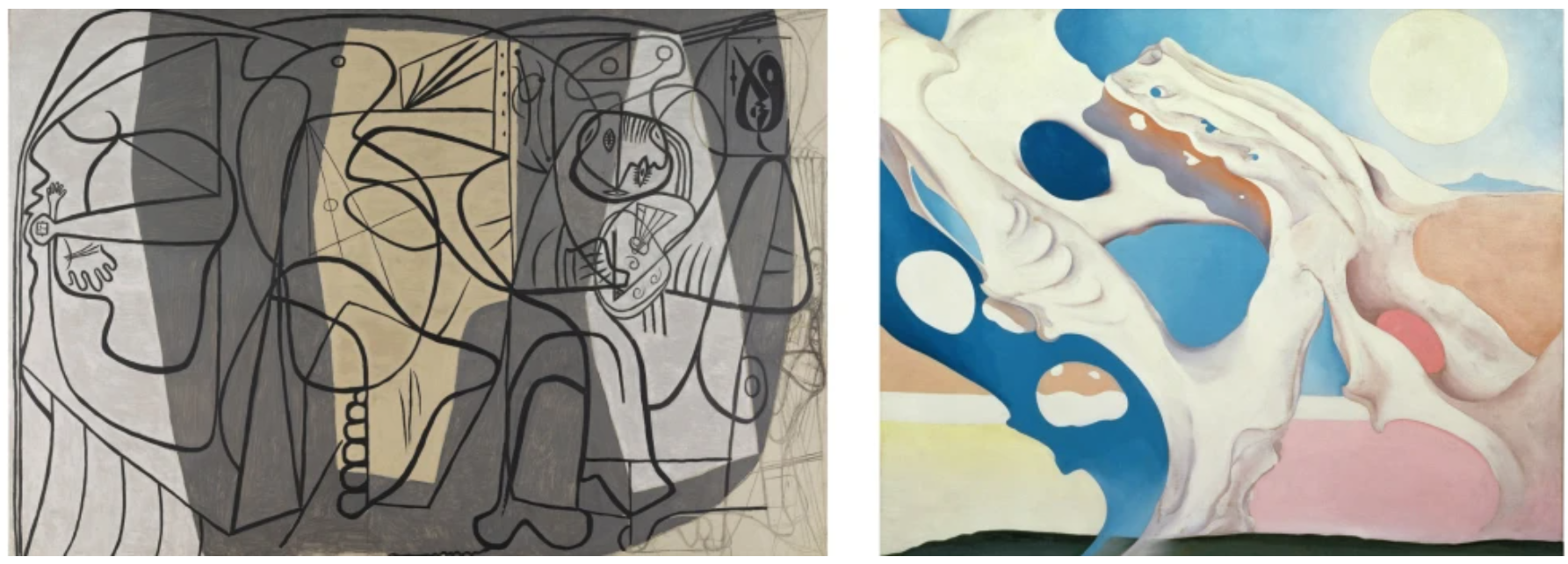
Left: Pablo Picasso, Le Peintre et Son Modèle, 1926. Musée National Picasso, Paris. Image © RMN-Grand Palais / Art Resource, NY. Art © 2026 Estate of Pablo Picasso / Artists Rights Society (ARS), New York. Right: Georgia O’Keeffe, Shadow with Pelvis and Moon, 1943. Private Collection. Image © Christie’s Images / Bridgeman Images. Art © 2026 Georgia O’Keeffe Museum / Artists Rights Society (ARS), New York
By the early 1980s, de Kooning had reached an extraordinary juncture in both his life and career. Already celebrated as one of the towering figures of twentieth-century art, he had witnessed the passing of many of his closest friends and intellectual companions, including the critic Harold Rosenberg and the art historian Thomas Hess, whose deaths within forty-eight hours of one another in 1978 marked a particularly poignant moment in the artist’s life. Yet rather than retreating into the formidable legacy he had already established, de Kooning embarked upon one of the most astonishing periods of reinvention in modern art. Confronted with the passage of time and the accumulated weight of his own artistic achievement, he discovered in the act of relinquishment an unprecedented freedom. As he reflected, “I am becoming freer. I think you can do miracles with what you have if you accept it.” (Mark Stevens and Annalyn Swan, de Kooning: An American Master, New York 2004, p. 601)
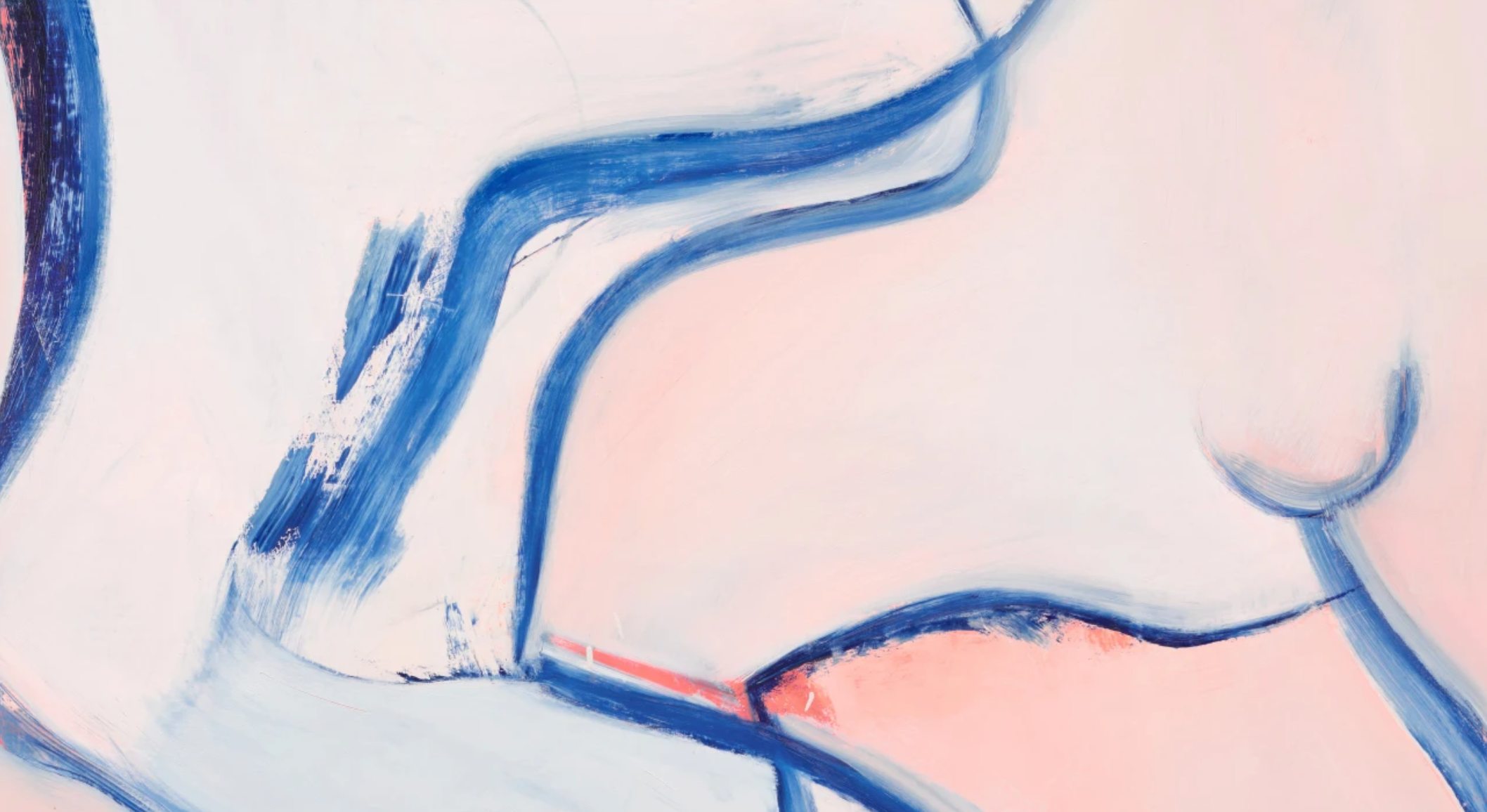
This radical acceptance he describes in his work led to a new process, where he would lay thin washes of paint down and use palette knives to scrape away from his canvases, revealing finely rendered layers with a near-translucent, airy quality. This technique completely opposes the heavily applied paint mixes he was sculpting on the canvases of the mid-1970s, birthing a completely new era for de Kooning at a time when he seemingly was giving in. This paradox of embracing his tenure and allowing it to give way to a completely fresh era of painting is a self-declaration of the abstract expressionist’s pure genius.
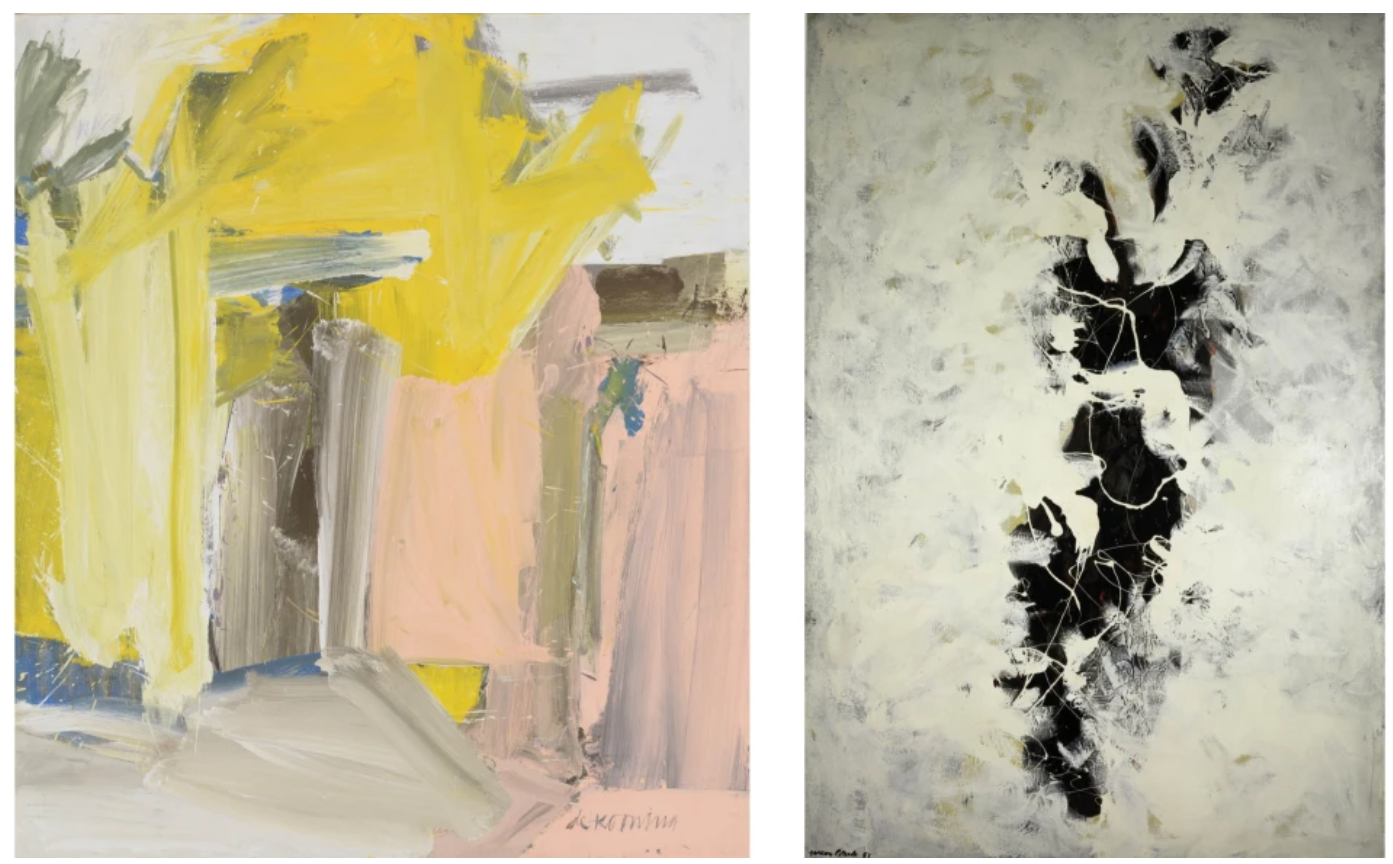
Left: Willem de Kooning, Door to the River, 1960. Whitney Museum of American Art, New York. Image © Whitney Museum of American Art / Licensed by Scala / Art Resource, NY. Art © 2026 The Willem de Kooning Foundation / Artists Rights Society (ARS), New York. Right: Jackson Pollock, The Deep, 1953. Musée National d’Art Moderne, Paris. Image © CNAC/MNAM, Dist. RMN-Grand Palais / Art Resource, NY. Art © 2026 Pollock-Krasner Foundation / Artists Rights Society (ARS), New York
Untitled is a masterful juxtaposition of de Kooning’s two main themes that were swirling through his consciousness during these years. First, this unbridled, radical freedom from standards of expectation, as seen in the piercing cobalt streaks. Second, the deep, meaningful contemplation of age that materializes in the ever-fading peach wash of the background. The interplay between these two compositional elements conveys a sense of fluidity that feels so natural the painting seems to be breathing. David Rosand described this era of final works as “their designs and energies clearly relate to all that preceded them. And yet they are different: the rhythms are much more deliberate, meditated even, and the space more open.” (Harry Gaugh, Modern Masters: Willem de Kooning, Vol. 2, New York 1983, p. 113) The arabesque ribbons flow smoothly from one to the other; one can almost get lost in the mesmerizing tangle that draws the eye to every part of the canvas. Large swaths of light peach ebb and flow into lighter, more pasty white portions. In the lower center of the composition, a small slash of crimson red accompanies a particularly opaque cobalt curve, adding depth to the hues in a mesmerizing juxtaposition. The crimson line breaks off the canvas as if de Kooning’s brush just barely grazed the surface, imbuing an incredible sense of weightlessness across the canvas. The airy markings of charcoal in the upper left corner resemble an underdrawing, further emphasizing the thin layers of paint de Kooning barely grazed the canvas with; almost like a peach veil that shrouds and reveals the image of the underdrawing below.
Market Precedent for de Kooning’s Early 1980s Canvases
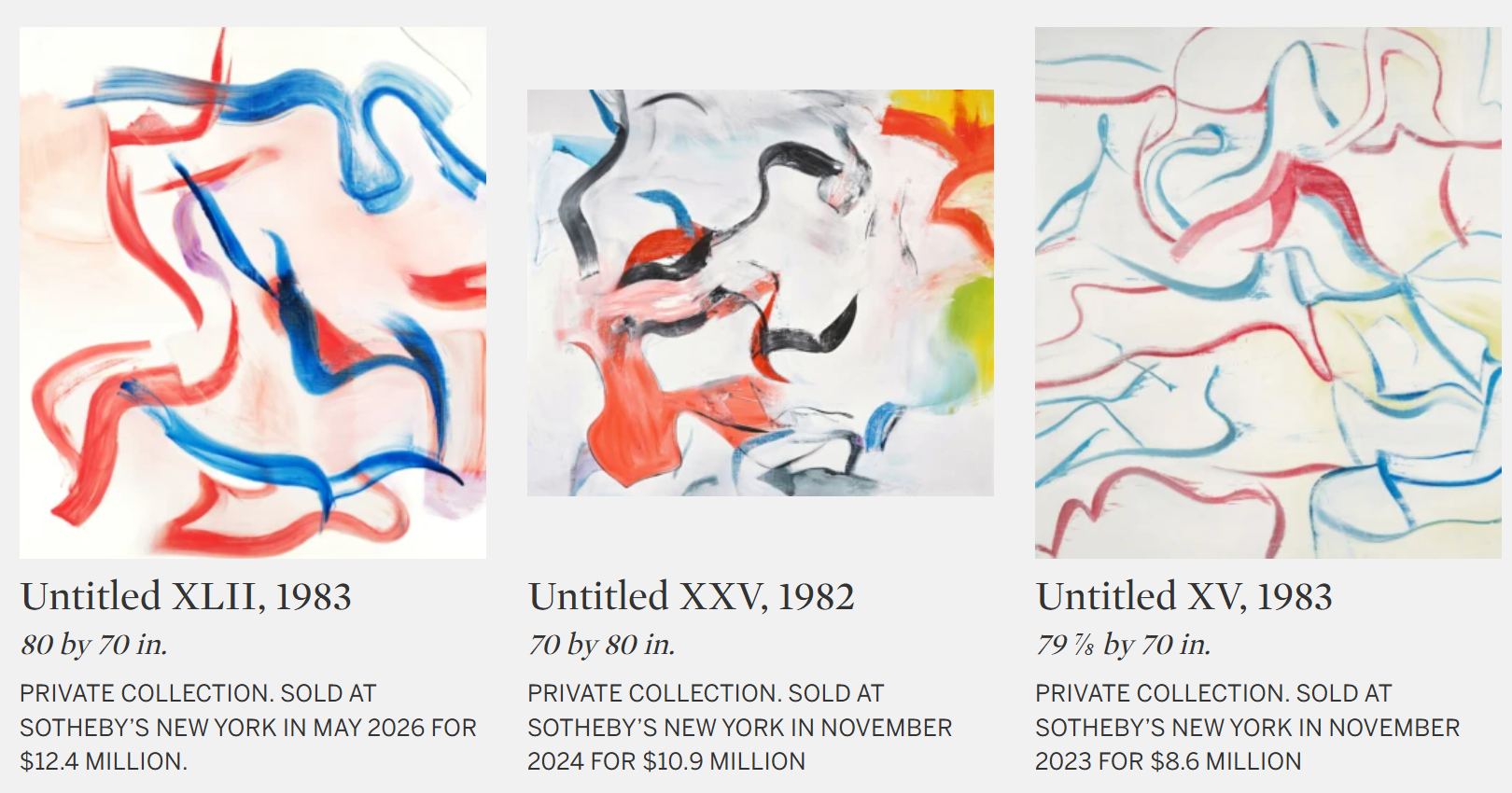
All Art © 2026 The Willem de Kooning Foundation / Artists Rights Society (ARS), New York
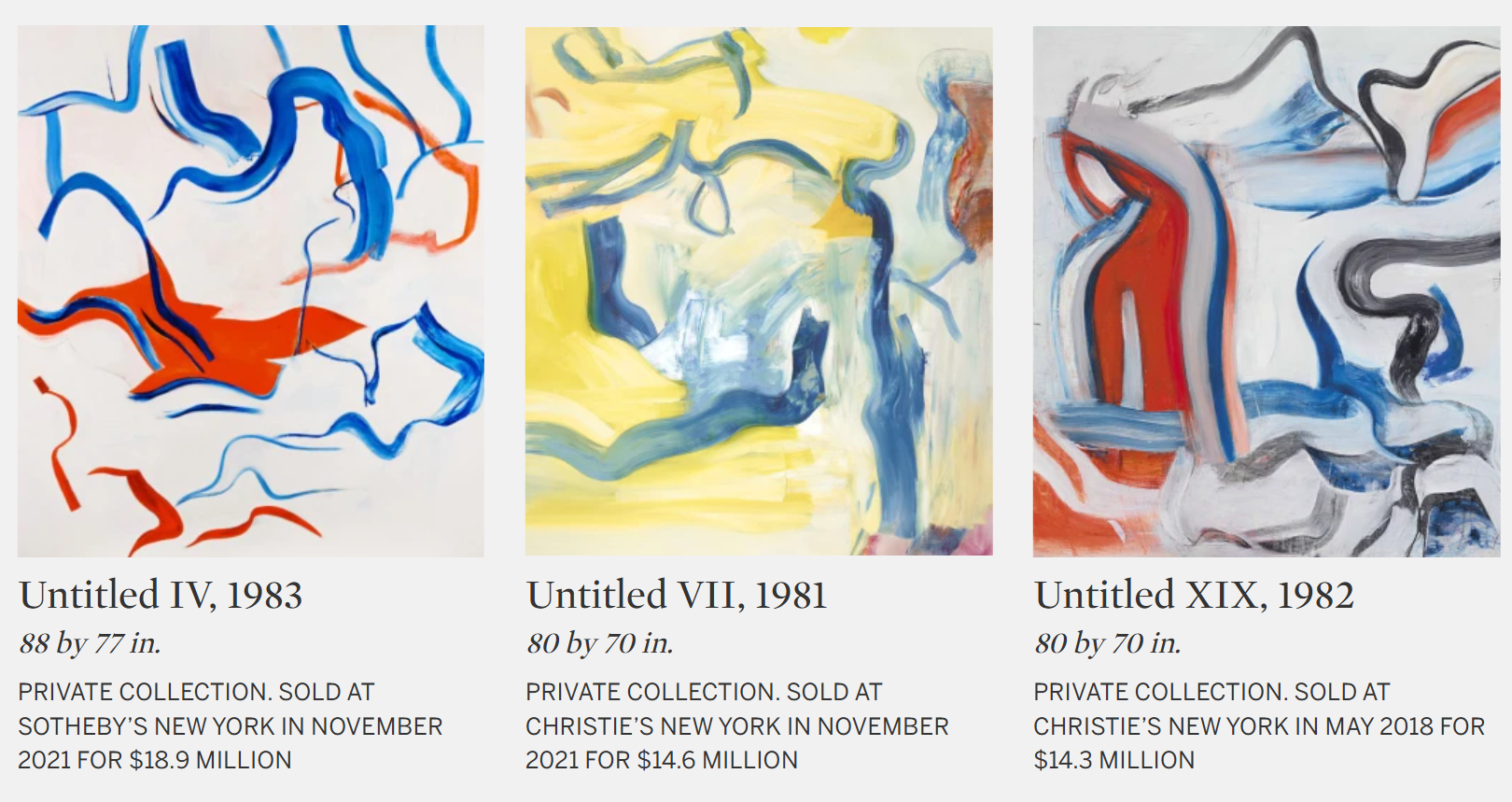
Executed in 1983, Untitled belongs to a watershed moment of extraordinary artistic productivity and institutional recognition. That year, de Kooning was the subject of major exhibitions at the Whitney Museum of American Art in New York and the Stedelijk Museum in Amsterdam, affirming his position among the most influential artists of the modern era. His Two Women (1953) also achieved a landmark auction result, underscoring the remarkable esteem in which his work was held during his lifetime. Far from resting upon these considerable laurels, de Kooning experienced an astonishing resurgence of creative energy, producing approximately fifty-four paintings in 1983, nearly twice his output of the preceding year. This remarkable period of productivity yielded some of the most distilled and radiant compositions of his entire career, works described by his biographers Mark Stevens and Annalyn Swan as among “the simplest and most shimmering,” animated by “an exhilarating sense of forms caught in mid-dance.” (Mark Stevens and Annalyn Swan, de Kooning: An American Master, New York, 2004, p. 601) In Untitled, this sense of joyous movement is palpable: the sweeping blue contours appear to dance across the canvas with an almost musical spontaneity, their buoyant rhythms held in perfect balance by the luminous stillness of the surrounding ground.
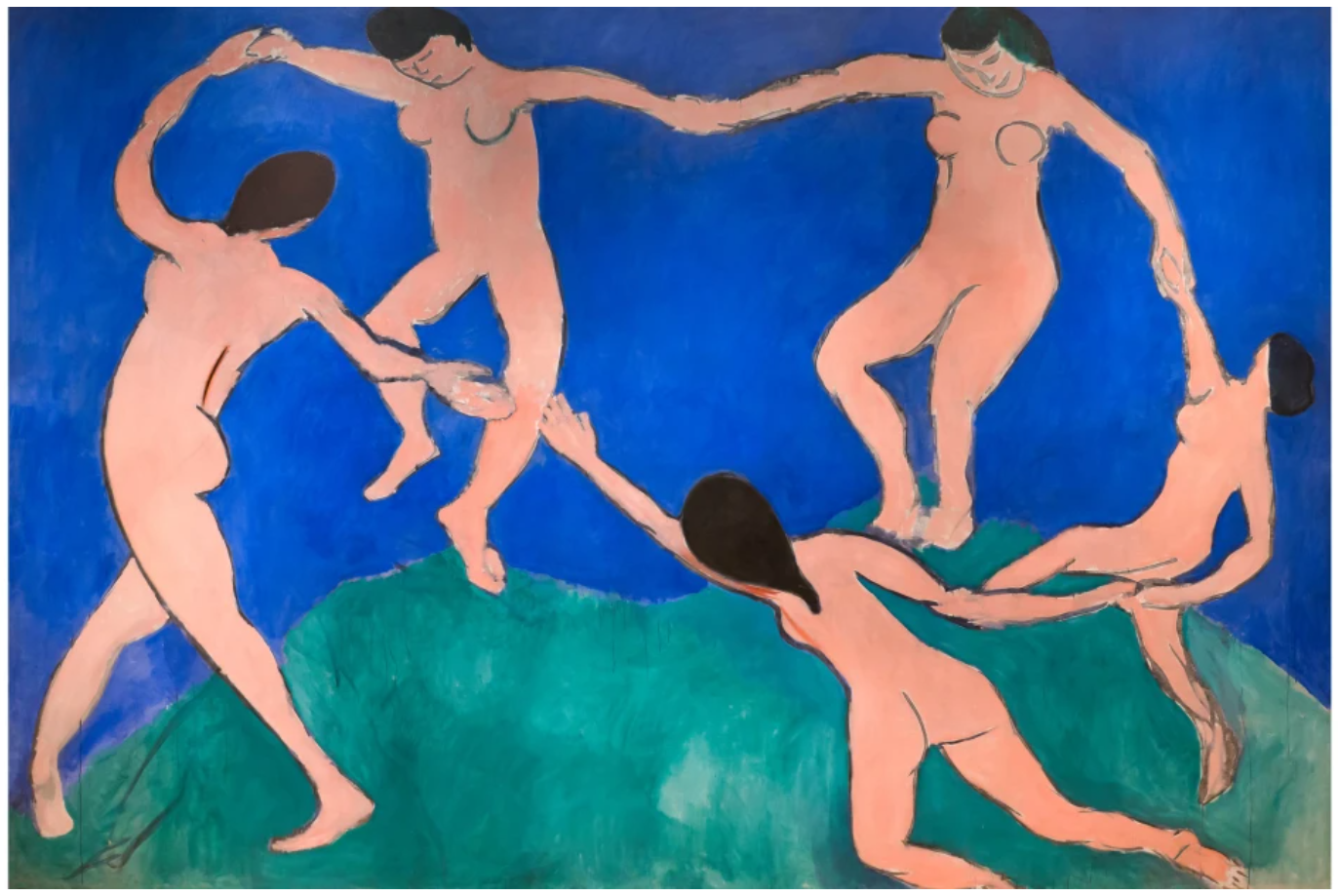
Henri Matisse, Dance (I), 1909. The Museum of Modern Art, New York.
Image © Peter Barritt / SuperStock / © Succession H. Matisse / Bridgeman Images
An airy canvas of wispy ribbons that dance in and out of each other playfully, Untitled is a masterpiece of de Kooning’s final era of artistry. While embracing his age and letting go of expectations, he approached the canvases of the 1980s with a purely creative spirit. Though it is his last group of works on canvas, he still innovated his approach to painting, with a new process of reducing by scraping, and even paring down his compositions to a weightless, peaceful balance of gestural strokes. Ultimately, Untitled stands as a profound testament to the inexhaustible vitality of de Kooning’s artistic imagination. In the twilight of a career that had fundamentally transformed the course of twentieth-century painting, the artist achieved a final and extraordinary metamorphosis, exchanging the tempestuous physicality of his earlier canvases for an aesthetic of sublime clarity and grace.