2026 Fall New-York Marquee Auctions
Yoshitomo Nara
Upcoming Lots
Candy Blue Night, 2001
Property from an Important Private Collection
Sotheby’s New-York: 16 November 2026
Estimated: USD 5,000,000 – 7,000,000
Yoshitomo Nara | Candy Blue Night | The Now and Contemporary Evening
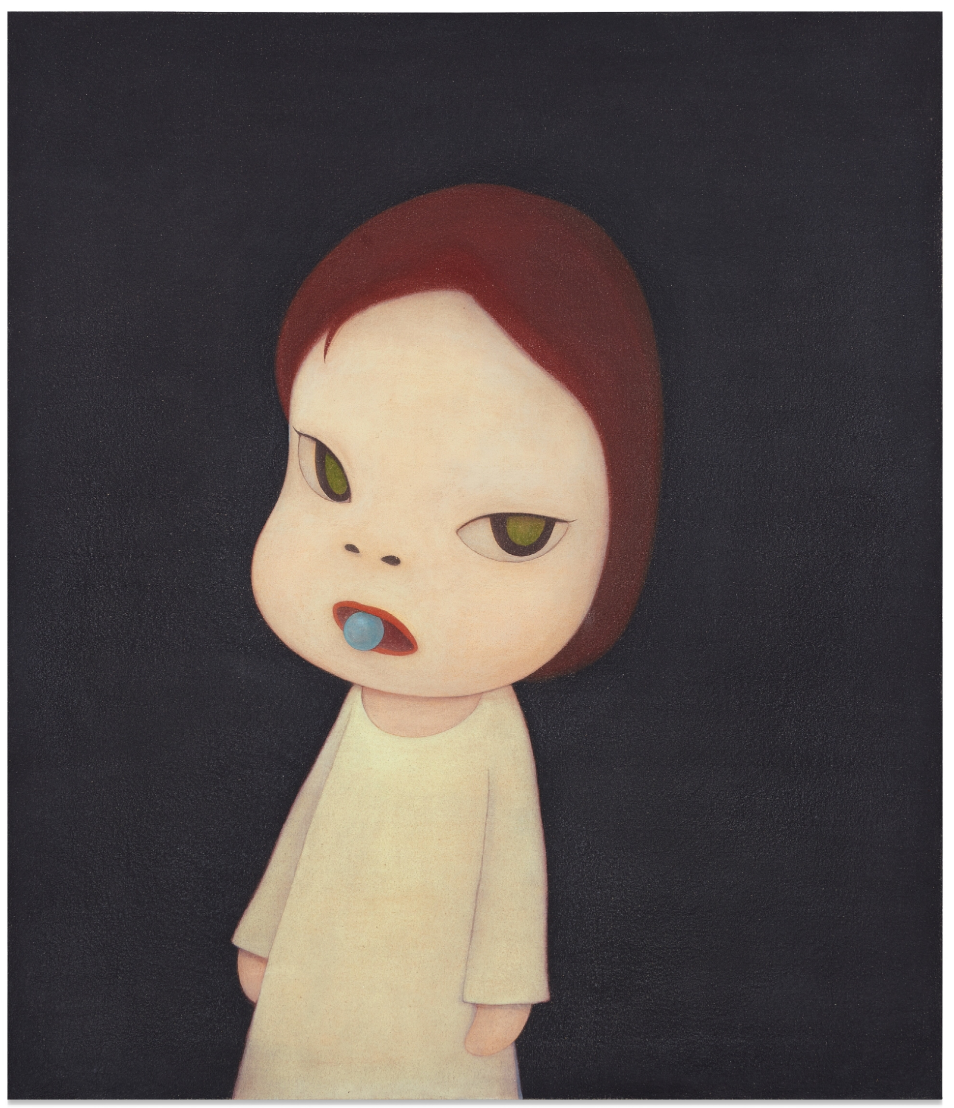
YOSHITOMO NARA (b. 1959)
Candy Blue Night, 2001
Acrylic on canvas
116.5 x 100 cm (45-7/8 x 39-3/8 inches)
Signed, titled and dated 01 (on the overlap)
The Little Pilgrims (Night Walking), 1999
Vision: The Extraordinary Collection of Theodore and Ruth Baum
Sotheby’s New-York: 17 November 2026
Estimated: USD 1,200,000 – 1,800,000
Yoshitomo Nara | The Little Pilgrims (Night Walking) | Vision: The
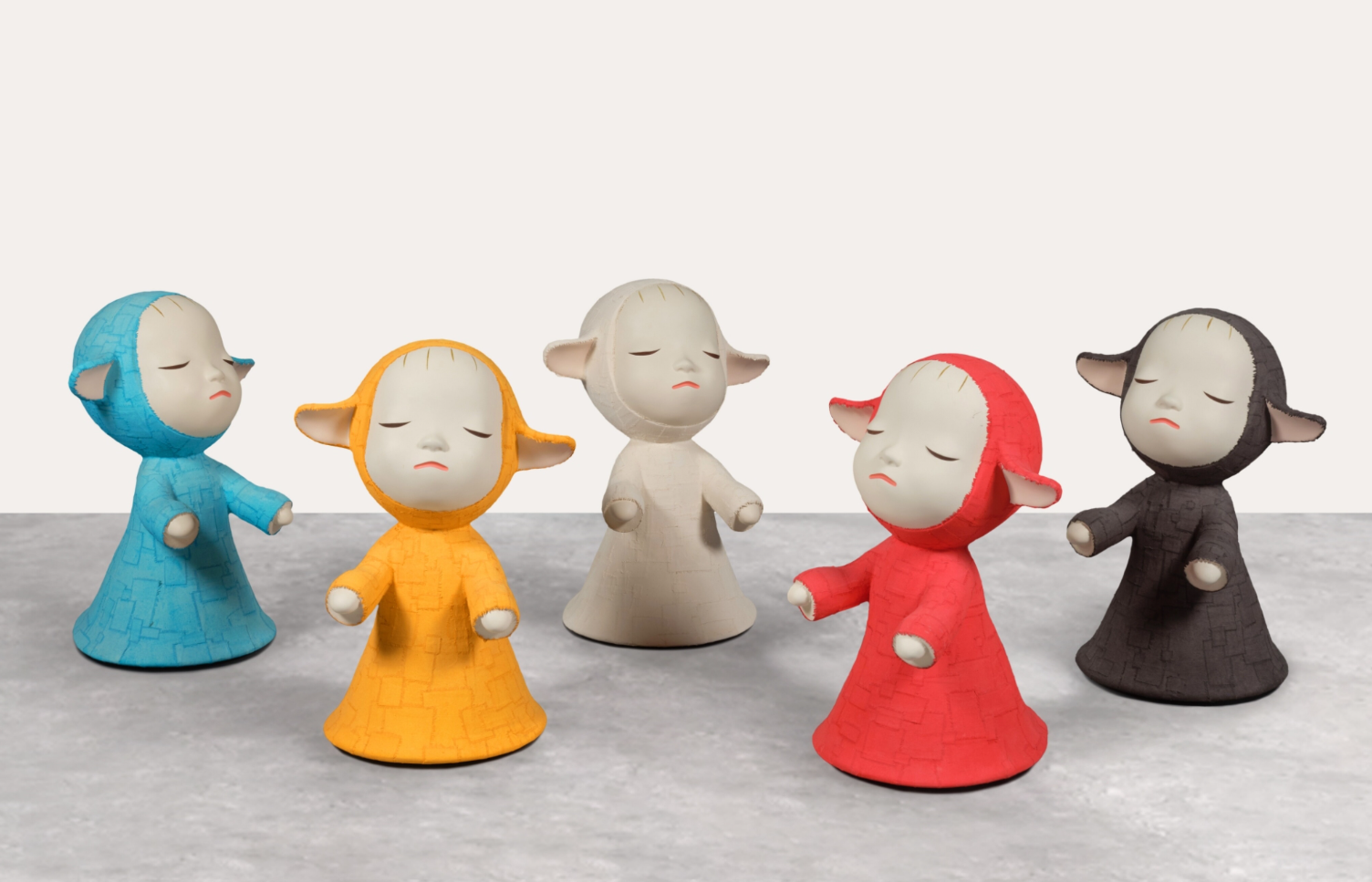
YOSHITOMO NARA (b. 1959)
The Little Pilgrims (Night Walking), 1999
Acrylic, lacquer and cotton on fiber-reinforced plastic in 5 parts
Each: 71.1 x 50.2 x 42.5 cm (28 x 19-3/4 x 16-3/4 inches)
This work is artist’s proof number 4 from an edition of 10, plus 4 artist’s proofs
Miss Forest / Dark Night, 2016
Christie’s New-York: 19 November 2026
Estimated: USD 1,000,000 – 1,500,000
MINIMUM PRICE GUARANTEE
YOSHITOMO NARA (B. 1959), Miss Forest / Dark Night | Christie’s
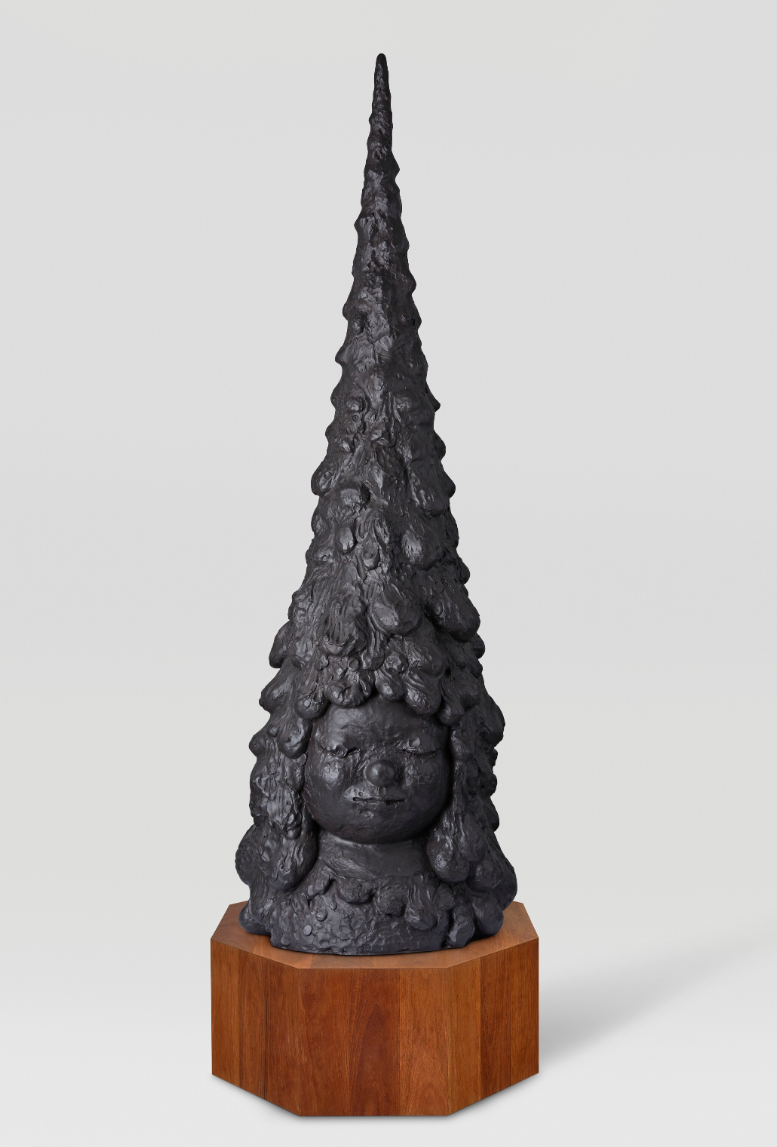
YOSHITOMO NARA (B. 1959)
Miss Forest / Dark Night, 2016
Urethane on bronze
239 x 74.6 x 64 cm (94-1/8 x 29-3/8 x 25-1/4 inches)
This work is number two from an edition of three plus two artist’s proofs
Listen! Mimi-chan, 1995
Looking Forward: The Collection of Beverly Grossman
Sotheby’s New-York: 17 November 2026
Estimated: USD 500,000 – 700,000
Yoshitomo Nara | Listen! Mimi-chan | Contemporary Day Auction | 2026
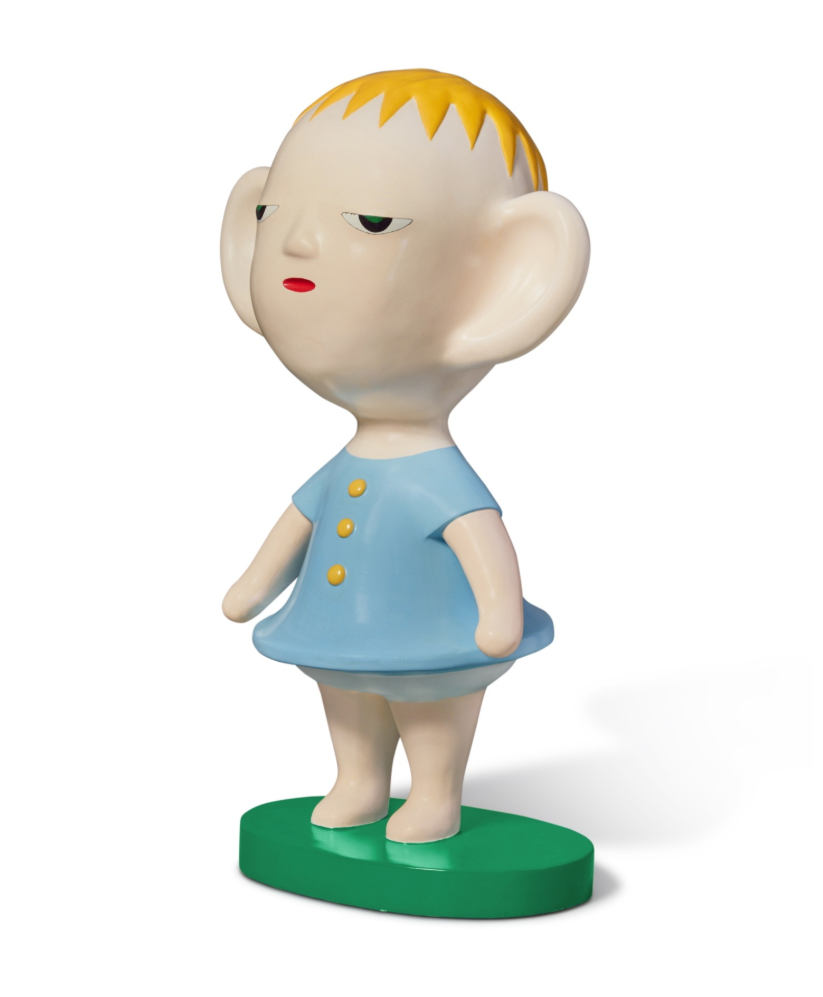
YOSHITOMO NARA (b. 1959)
Listen! Mimi-chan, 1995
Acrylic and lacquer on fiber-reinforced plastic
102.9 x 57.2 x 44.5 cm (40-1/2 x 22-1/2 x 17-1/2 inches)
Signed, dated ‘95 and numbered A.P (on the base)
This work is an artist’s proof
Kamikaze Fighter, 1991
Christie’s New-York: 20 November 2026
Estimated: USD 500,000 – 700,000
YOSHITOMO NARA (B. 1959), Kamikaze Fighter | Christie’s
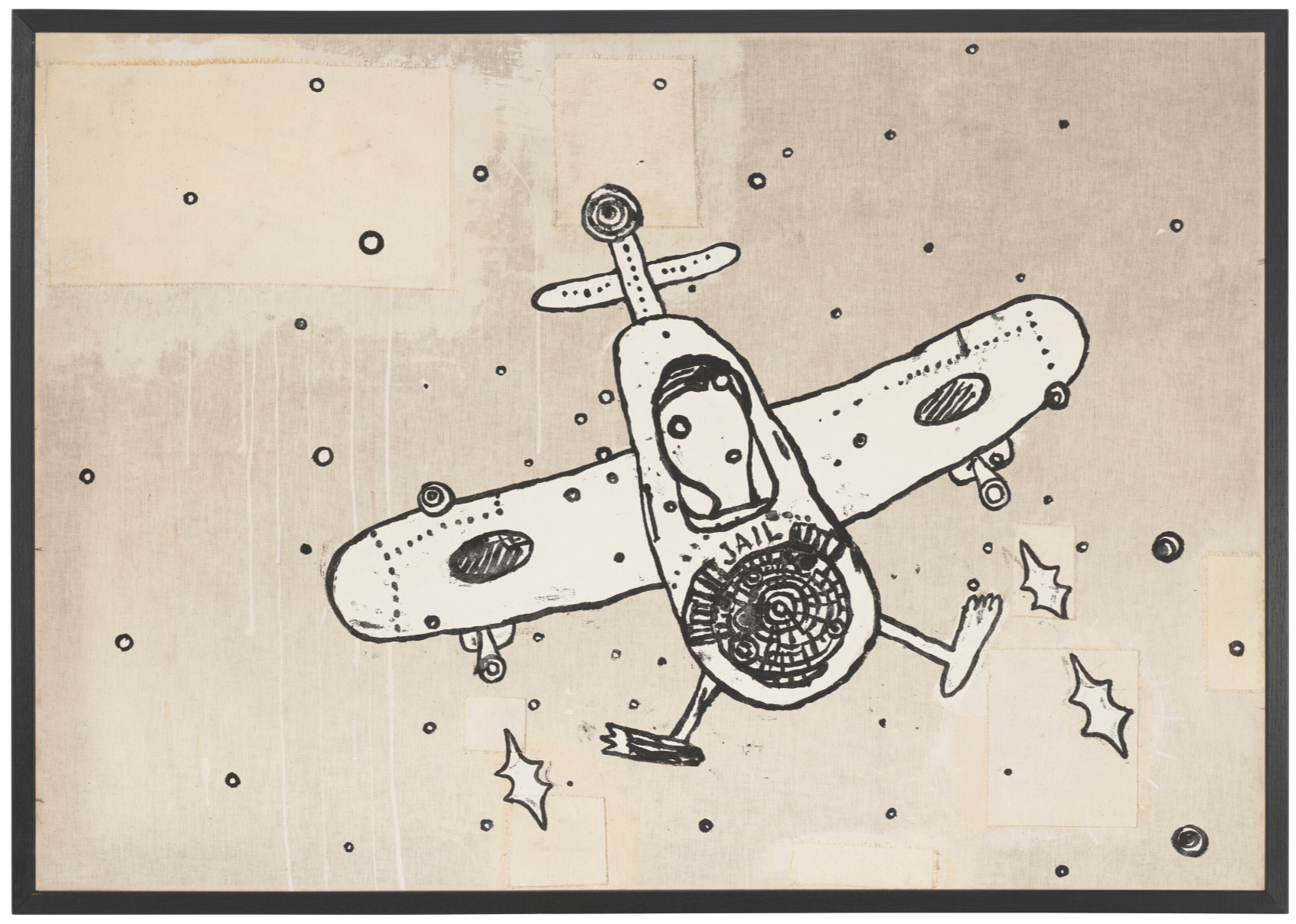
YOSHITOMO NARA (B. 1959)
Kamikaze Fighter, 1991
Acrylic and canvas collage on canvas
70×100 cm (27-1/2 x 39-1/2 inches)
Untitled, 1996
Phillips New-York: 19 November 2026
Estimated: USD 100,000 – 150,000
WORK ON PAPER
Yoshitomo Nara Modern & Contemporary Art: Afternoon Session
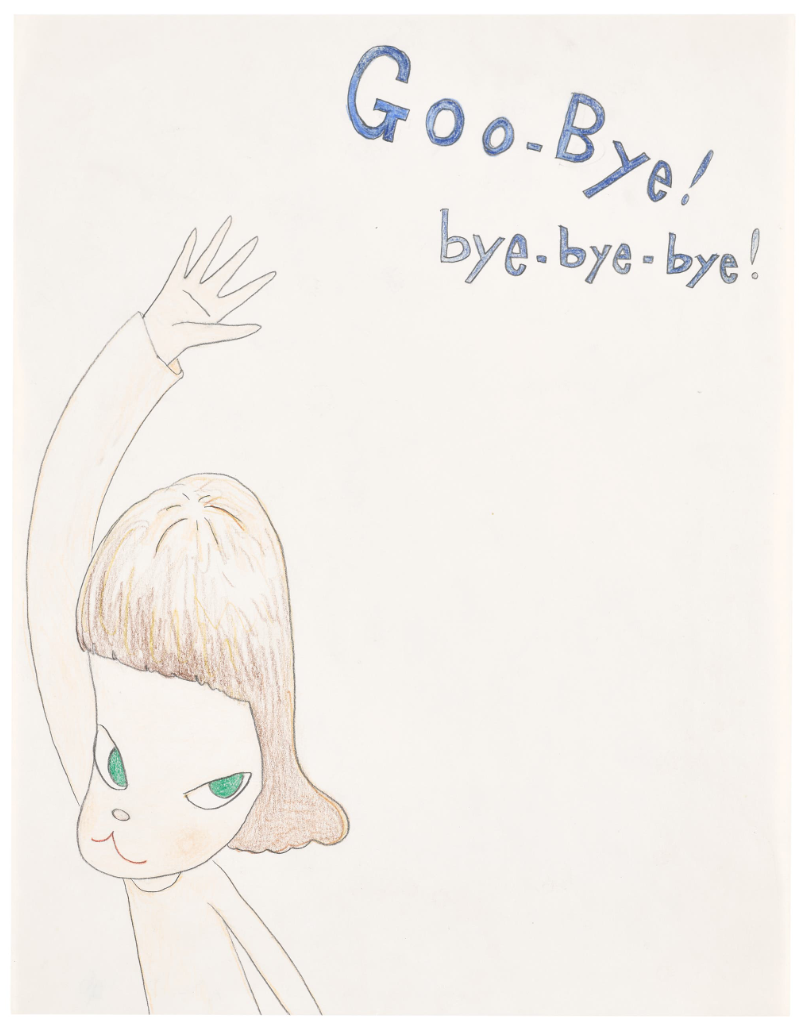
YOSHITOMO NARA
Untitled, 1996
Colored pencil and pencil on paper
27.9 x 21.6 cm (11 x 8-1/2 inches)
Signed and inscribed “Nara ’96” on the reverse
Candy Blue Night, 2001
Candy Blue Night, 2001
Property from an Important Private Collection
Sotheby’s New-York: 16 November 2026
Estimated: USD 5,000,000 – 7,000,000
Yoshitomo Nara | Candy Blue Night | The Now and Contemporary Evening
YOSHITOMO NARA (b. 1959)
Candy Blue Night, 2001
Acrylic on canvas
116.5 x 100 cm (45-7/8 x 39-3/8 inches)
Signed, titled and dated 01 (on the overlap)
Innocent, inscrutable, unblinking, and mischievous, the young girl of Candy Blue Night emerges from darkness to herald the genesis of Yoshitomo Nara’s mature painterly style. Painted in 2001 during one of the most significant, fruitful periods of Nara’s creative output, the present work foregrounds a recurrent protagonist in Nara’s iconic repertoire of kawaii characters: a bright-eyed young girl, here consuming a circular sweet while defiantly directing her emerald gaze toward us.
“These works were born not from confronting the other, but from confronting my own self.”
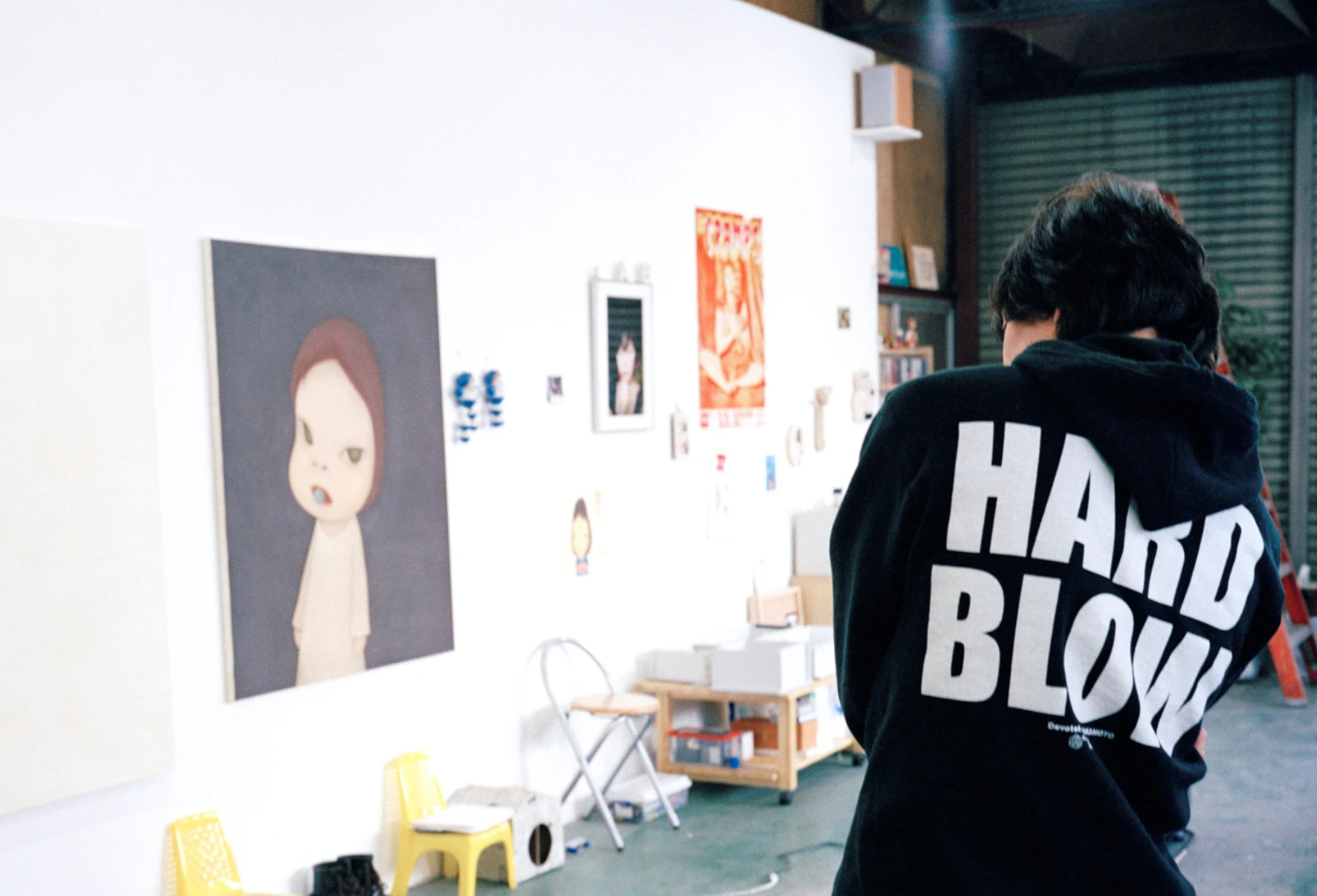
The artist with the present work in his studio. Photo by Mie Morimoto. Art © 2026 Yoshitomo Nara
Serene and subversive, adorable and anarchic, the petite yet powerful heroine of Candy Blue Night succinctly and successfully encapsulates the spirit of youth and rebellion at the heart of Nara’s oeuvre. Born out of his creative practice spent alone in the studio—painting, smoking, playing music loudly into the very twilight in which this figure comfortably resides—the charming and psychologically charged characters of his imagination bring to life his career-long fascination with the precarious dichotomies between childhood, adolescence and adult disgruntlement.
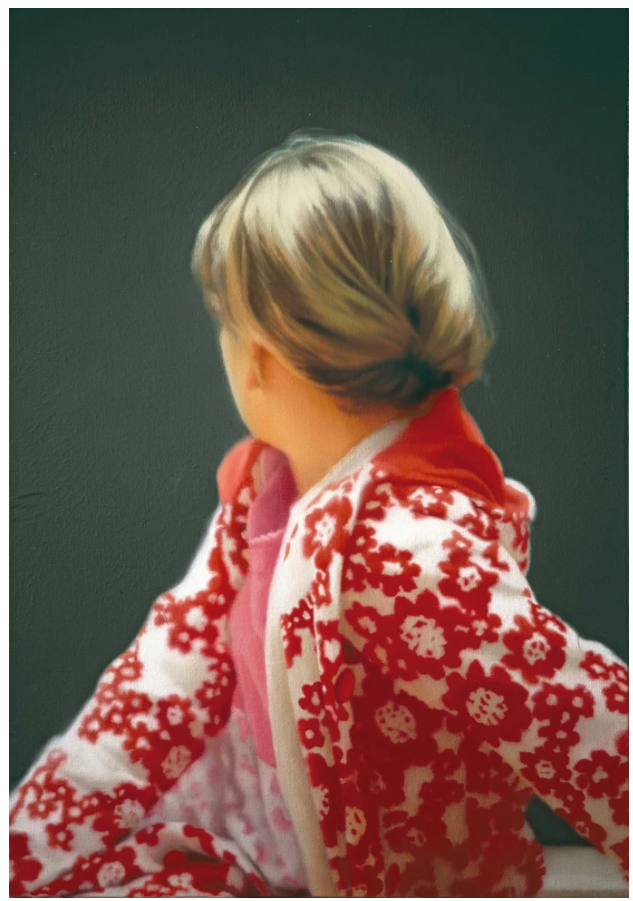
Gerhard Richter, Betty, 1988. Saint Louis Art Museum. Art © 2026 Gerhard Richter
Here, Nara’s subject stands isolated with a cherubic air: arms at ease by her side, her round jaw slack, lips parted to reveal the candy on her tongue. Diminutive in her depiction and dispassionate in her gaze, her affect, however, verges on menacing, hinting at a brooding world of inner turmoil that belies her endearing youth. Distinguished Japanese critic Midori Matsui characterizes it thus: “Nara’s figurative paintings serve as vehicles of collective anxiety of Japan’s youth in the face of cultural upheaval, and nowhere is this more convincingly portrayed than in emotionally charged portrayal of the fragility and uncertainty facing a single small child. Nara taps directly into the emotional center not only of a generation of disaffected and anxious youth, but also of the spiritual core at the foundation of hope and renewal.” (Midori Matsui quoted in: Exh. Cat., New York, Asia Society, Yoshitomo Nara: Nobody’s Fool, 2010-11, p. 22) In Nara’s paintings, the employment of a youthful doppelgänger is a brilliant act of artistic self-interrogation and awareness: his characters expand beyond the limitations of self-portraiture, instead creating figures onto which the conflict, appeal, angst, and frustration of a generation can be reflected. Confronted by the glowering scrutiny of the young girl in Candy Blue Night, we raise our eyes to meet her penetrating gaze, which forms a mirror for our own discontents, angers, and aggressions against a fatally imperfect world.
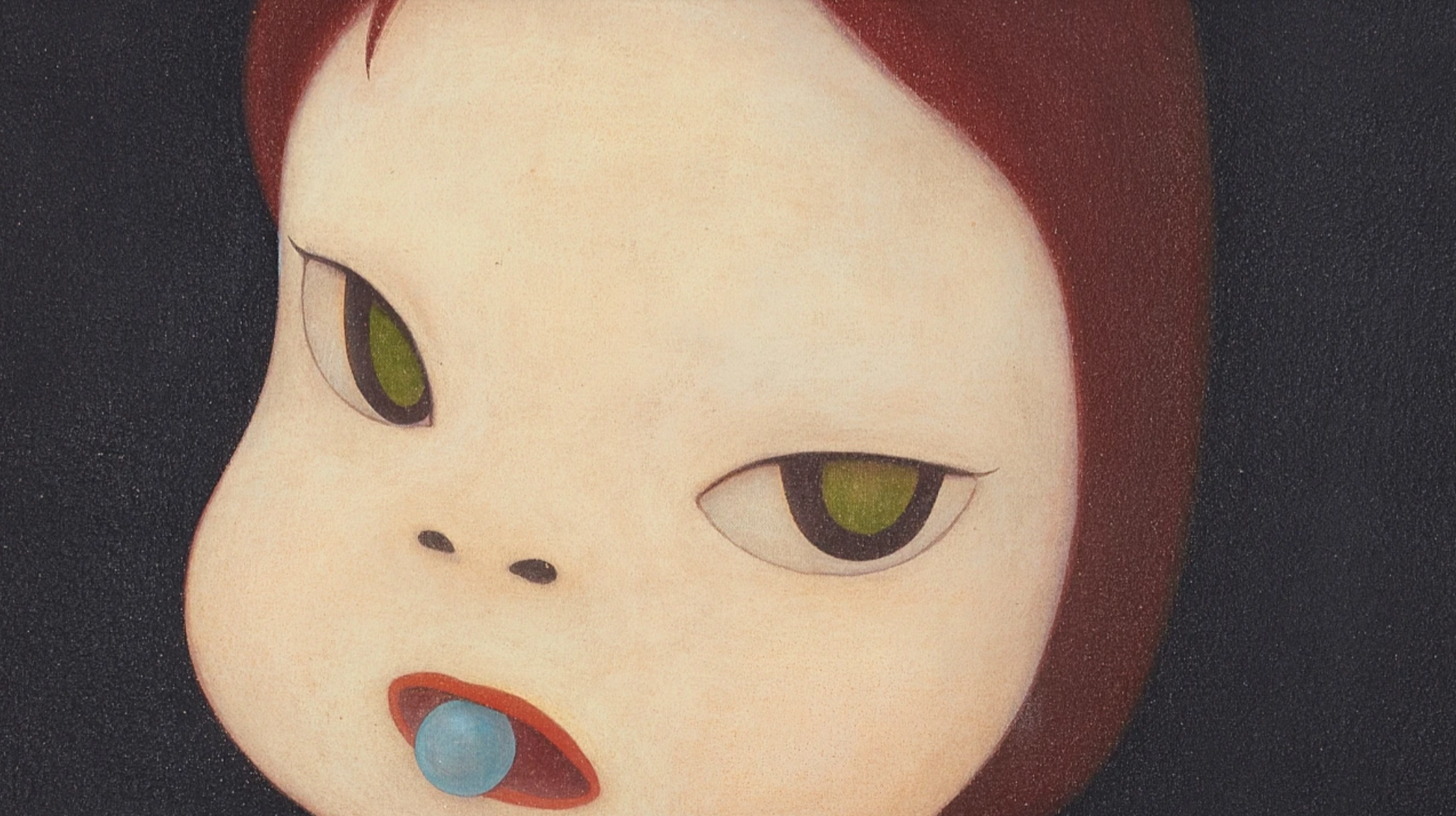
While the wide-eyed girl has preoccupied Nara’s practice since the 1980s, it is not until the late 1990s that the artist arrives at a level of painterly mastery that we see in the surface of Candy Blue Night. Balancing flat planes of color with an opalescent technique of blending and layering, Nara generates a gentle, serene luminosity in his articulation of this figure, who seems to illuminate the night around her. The protagonist emerges gracefully through Nara’s deft sfumato technique, the soft outlines of her body nearly blurred into its surrounding washes of color yet distinguished through diaphanous gradations of tone. Midori Matsui observes that beginning in 1996 and coinciding with the artist’s foray into sculpture, Nara’s figures began to attain “the illusion of three-dimensionality, coming out of the pastel background buoyed up by luminous shadows.” (Midori Matsui quoted in: Exh. Cat., Yokohama Museum of Art, Nara Yoshitomo: I Don’t Mind, If You Forget Me, 2001, p. 168)
Market Precedent: Pre-2005 Yoshitomo Nara Paintings
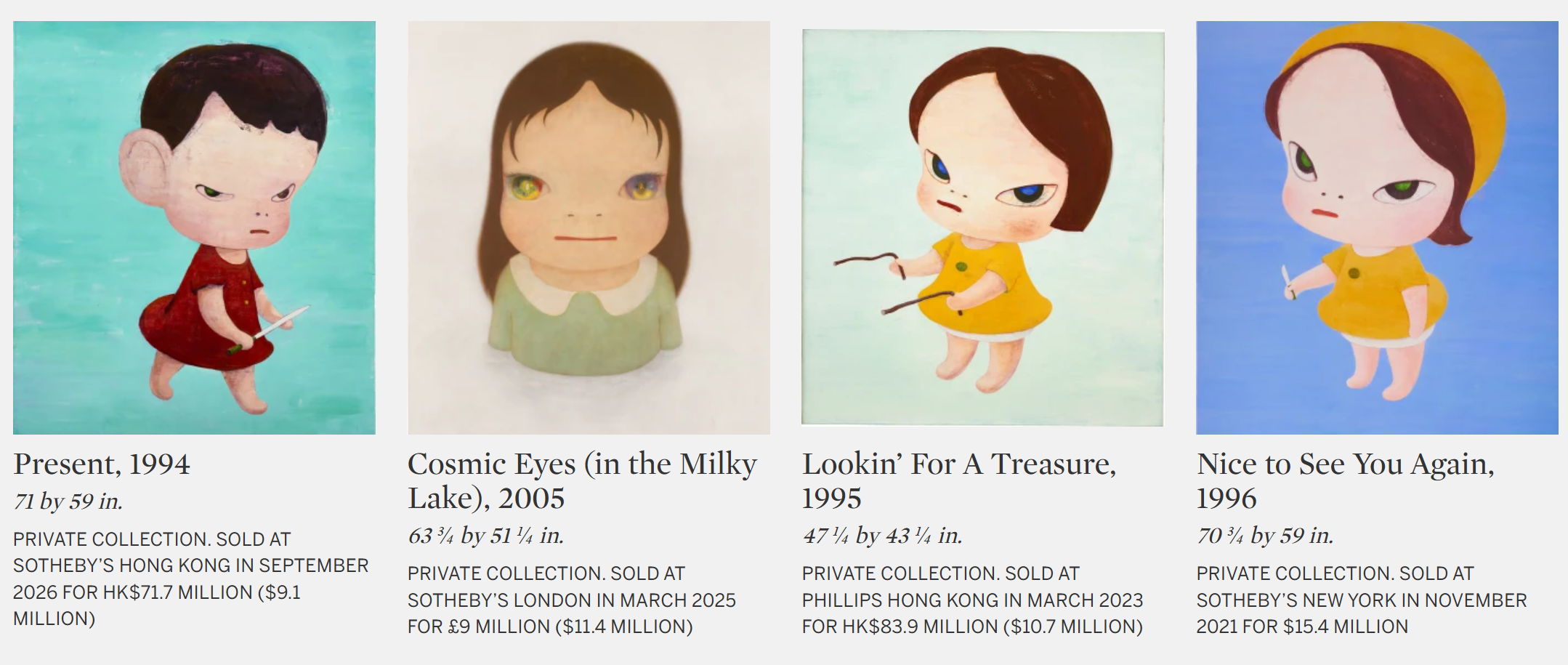

Nara accomplishes these painterly feats while preserving a masterful minimalism of narrative, composition, and pictorial framework to convey incisively perceptive, exceptionally subtle, and complex nuanced emotive effects. The rich nocturne backdrop of Candy Blue Night has since become highly distinctive for the artist: achieved through deft brushwork and repeated layering, this lustrous aura conveys a vacancy when juxtaposed against the solid substantiality of the figure, as though metaphorizing the feeling of one’s smallness against a vastly indifferent and alienating world.

Roy Lichtenstein, Ohhh… Alright…, 1964. Private Collection. Art © Estate of Roy Lichtenstein
By combining the rebellious ethos of punk with the alluring archetypes of Pop, Yoshitomo Nara has accomplished a deeply personal and intuitive amalgamation of art historical tendencies that are encapsulated within the gentle depths of the present work. Indeed, in Nara’s oeuvre, such girls are often understood as “symbolic representation[s] of the dominant feelings of Japanese youth in the late 1990s and early 2000s, characterized by a sense of uncertainty about the future, vulnerability, and a yearning for the innocence preserved in the inner child.” (Midori Matsui quoted in: Exh. Cat., Yokohama Museum of Art, Nara Yoshitomo: I Don’t Mind, If You Forget Me, 2001, p. 13) Nara’s artistic accomplishment is thus only further heightened by the dynamic and deeply personal interplay between charm and contempt in his paintings, for this is regarded by art historians and institutions as a voice of a generation, all told through the symbolic understudies that populate his paintings, standing in for youth at the turn of the twenty-first century.
The Little Pilgrims (Night Walking), 1999
The Little Pilgrims (Night Walking), 1999
Vision: The Extraordinary Collection of Theodore and Ruth Baum
Sotheby’s New-York: 17 November 2026
Estimated: USD 1,200,000 – 1,800,000
Yoshitomo Nara | The Little Pilgrims (Night Walking) | Vision: The
YOSHITOMO NARA (b. 1959)
The Little Pilgrims (Night Walking), 1999
Acrylic, lacquer and cotton on fiber-reinforced plastic in 5 parts
Each: 71.1 x 50.2 x 42.5 cm (28 x 19-3/4 x 16-3/4 inches)
This work is artist’s proof number 4 from an edition of 10, plus 4 artist’s proofs
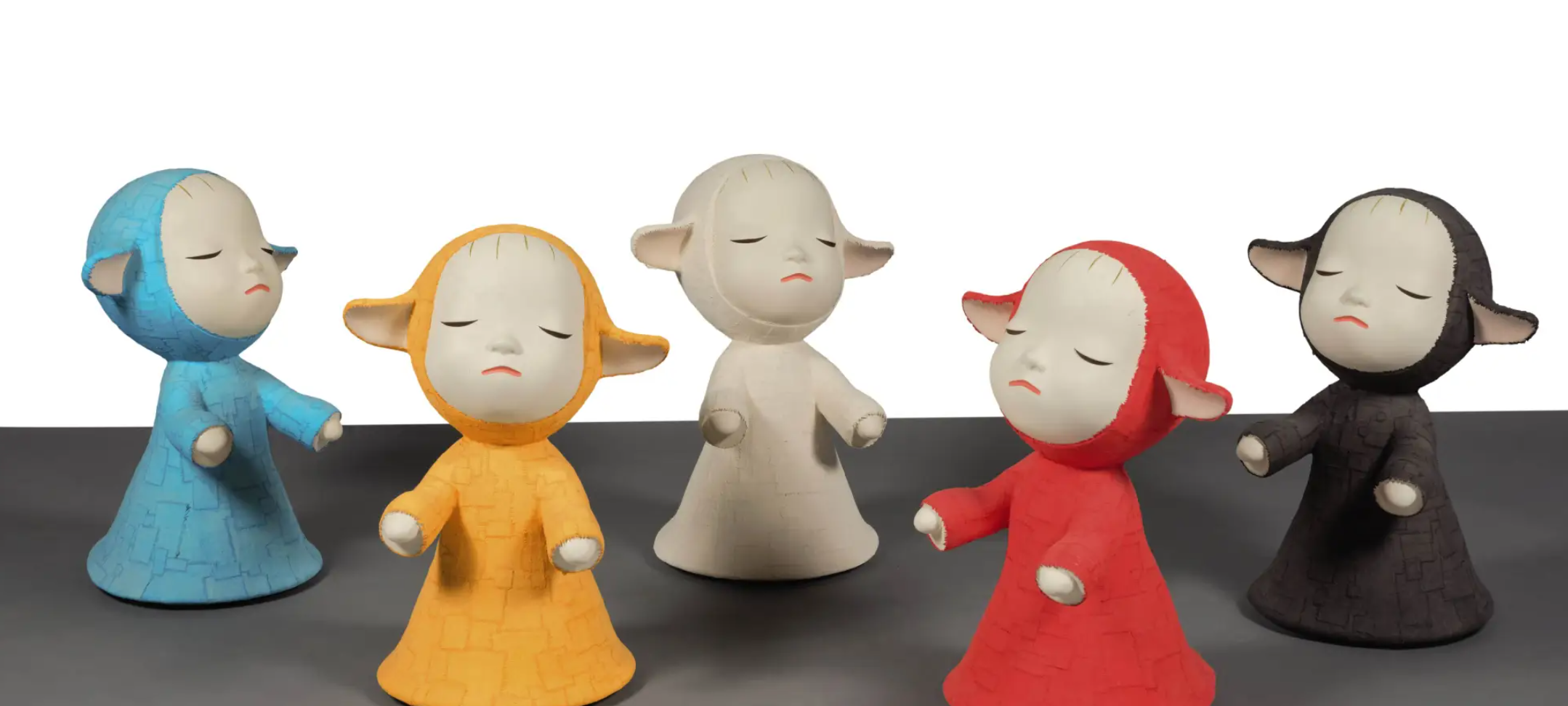
Among the most acclaimed sculptural undertakings of Yoshitomo Nara’s career, The Little Pilgrims (Night Walking) hail from a defining moment in which the artist’s iconic cast of characters moved beyond the confines of the painted surface and into the viewer’s physical realm. Rarely encountered as a complete set, this ensemble consists of five exquisitely realized and quietly enigmatic figures, each distinguished by their individual attire. Together, they encapsulate Nara’s ongoing exploration of sleep, consciousness, and the boundless nature of childhood imagination. The figures inhabit a threshold between inward contemplation and outward journeying. Embodying a sense of unguarded innocence, these wandering sleepwalkers evoke the curiosity and wonder that accompany the passage from childhood into adulthood.
Born in 1959 and raised in Hirosaki during a period of profound cultural change in postwar Japan, Yoshitomo Nara developed his artistic vision through a deeply personal engagement with both Japanese and Western popular culture. Often left alone as a child, he immersed himself in drawing, picture books, manga, and animated films, cultivating the imaginative inner world that would later define his work. In 1988, Nara moved to Germany to attend the Kunstakademie Düsseldorf, where he studied under the Neo-Expressionist painter A.R. Penck. Although his work has frequently been discussed in relation to the Superflat movement of the 1990s, Nara has consistently emphasized the autobiographical foundations of his imagery, drawing inspiration less from artistic theory than from memory, emotion, and imagination. As exemplified by The Little Pilgrims (Night Walking), the dreamlike children and solitary wanderers that populate his oeuvre reflect his synthesis of childhood experience and an enduring commitment to emotional authenticity.
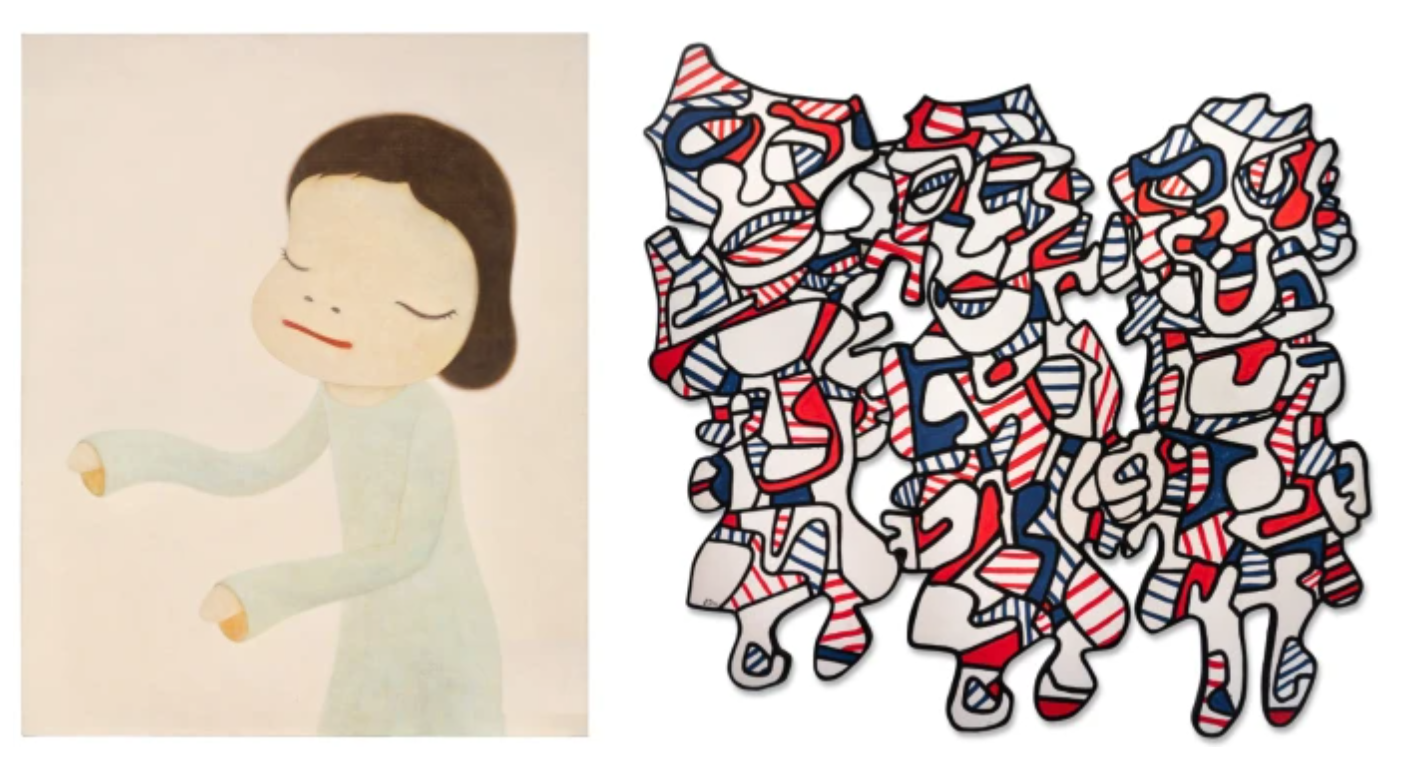
Left: Yoshitomo Nara, Night Walker, 2001. Sold at Sotheby’s Hong Kong in April 2014 for 15.64 million HKD. Art © 2026 Yoshitomo Nara
Right: Jean Dubuffet, Les Trois promeneuses, 1971. Sold at Sotheby’s New York in May 2022 for $3.559 million. Art © 2026 Jean Dubuffet / Artists Rights Society (ARS), New York / ADAGP, Paris
Although the imaginative foundations of Nara’s practice were established through the sketchbooks and drawings he produced as a student in the 1980s, sculpture also played an important role in his early artistic development. Beginning with small carved wooden figures, Nara gradually translated his distinctive childlike protagonists into sculpture, exploring new possibilities of scale, materiality, and physical presence. Working at the intersection of Japanese popular culture, Neo-Expressionism, and his vibrant imagination, Nara increasingly viewed sculpture as a means of granting tangible presence to the inhabitants of his inner world, a trajectory that would culminate in the ambitious sculptural works of the late 1990s, including The Little Pilgrims (Night Walking).
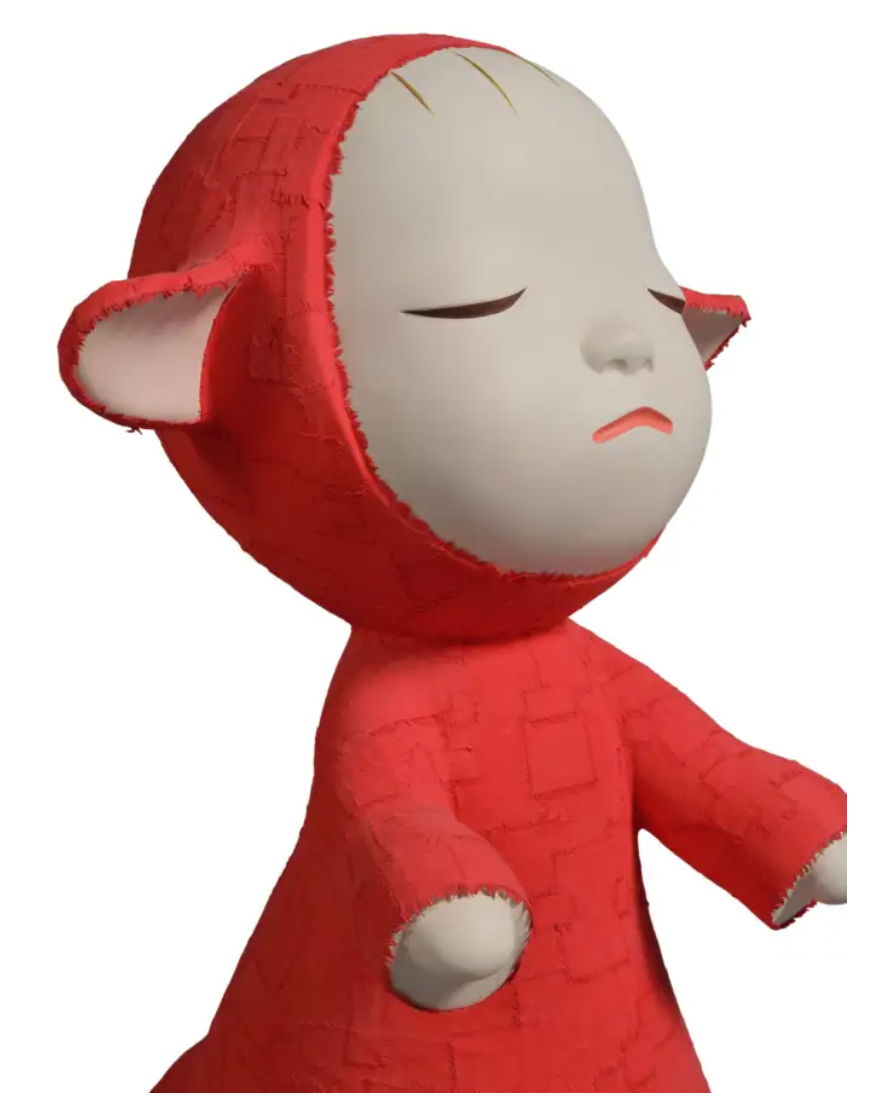
In The Little Pilgrims (Night Walking), five childlike figures emerge from Nara’s imagined world into the viewer’s own. With closed eyes, outstretched arms, and softly rounded features, the figures embody the distinctive visual language of Nara’s childlike protagonists while introducing a new dimension to his imaginative universe. Their gently rounded forms and serene expressions also recall traditional Japanese sculptures of Jizō, the Buddhist guardian of children and travelers, whose associations with protection and spiritual passage lend an additional layer of poignancy to Nara’s wandering pilgrims. Their smooth, toy-like surfaces and serial repetition further reflect Nara’s longstanding fascination with popular culture and the expressive possibilities of sculpture. Suspended between sleep and wakefulness, vulnerability and self-possession, the pilgrims appear drawn toward an unknown destination, guided by an invisible inner compass. Moving in a trance-like procession, they transform the surrounding space into a quietly enchanting dreamscape, inviting viewers into the realm of imagination, memory, and introspection that has animated Nara’s work since childhood.
“Often towards nightfall, there’s a feeling in the air of mystery, threat, frustration—all of these at once. I would like my painting to have the quality of such moments.”
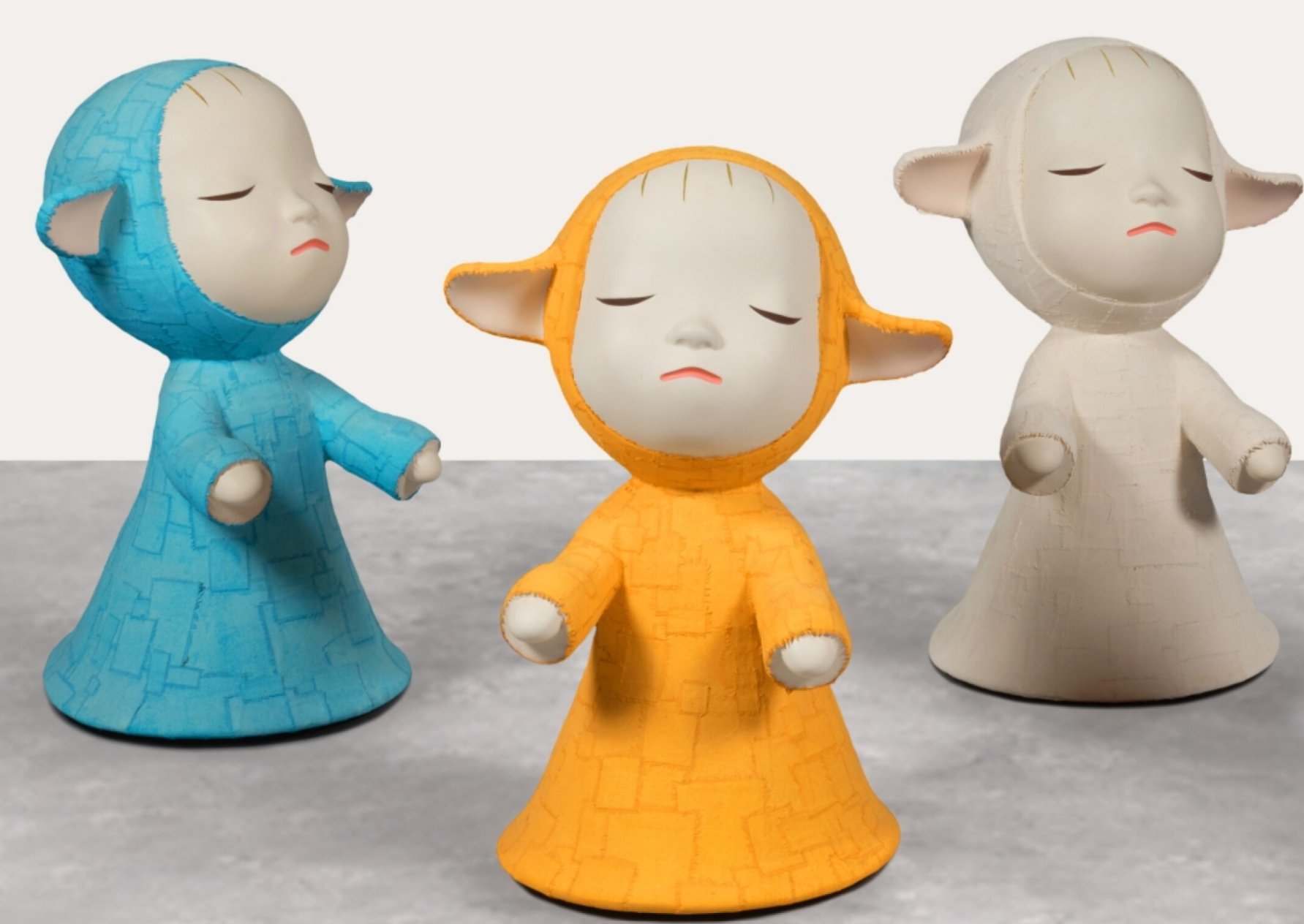
Though each of the five pilgrims appears absorbed in a private dream, their proximity creates a compelling collective presence, suggesting an unspoken connection that transcends the boundaries of conscious perception. Their seemingly weightless forms appear to drift rather than walk, suspended between earth and sky, solitude and togetherness. In this liminal state, Nara transforms his familiar figures into poetic emblems of innocence and self-discovery, inviting viewers to join them on their enigmatic nocturnal journey. First presented in 1999 and subsequently featured in several of the artist’s earliest international museum exhibitions, the series quickly emerged as a touchstone of Nara’s artistic language. More than two decades later, The Little Pilgrims (Night Walking) remains one of the most compelling expressions of Nara’s ability to transform the private landscapes of childhood into a tangible, shared experience.
Miss Forest / Dark Night, 2016
Miss Forest / Dark Night, 2016
Christie’s New-York: 19 November 2026
Estimated: USD 1,000,000 – 1,500,000
MINIMUM PRICE GUARANTEE
YOSHITOMO NARA (B. 1959), Miss Forest / Dark Night | Christie’s
YOSHITOMO NARA (B. 1959)
Miss Forest / Dark Night, 2016
Urethane on bronze
239 x 74.6 x 64 cm (94-1/8 x 29-3/8 x 25-1/4 inches)
This work is number two from an edition of three plus two artist’s proofs
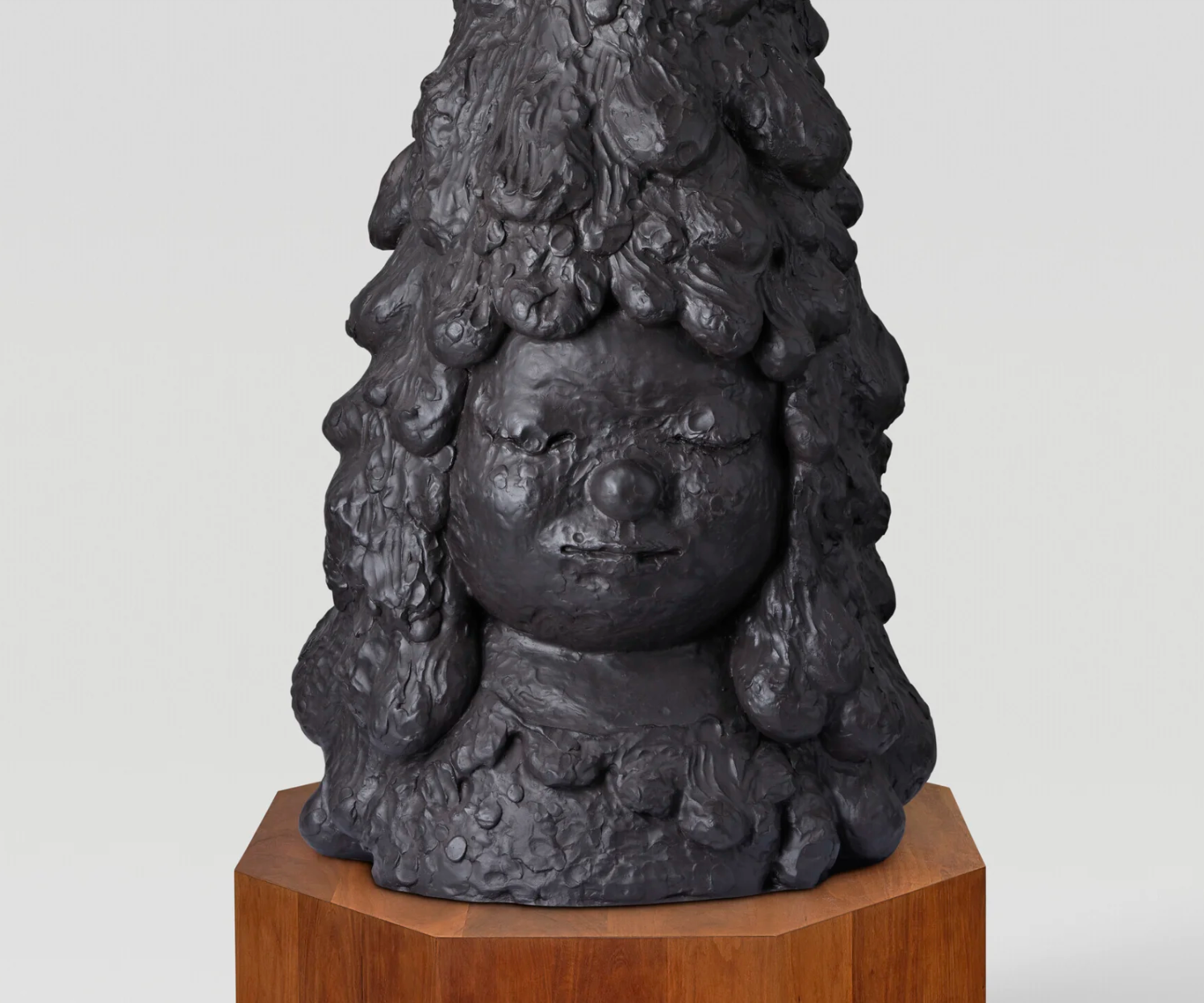
Yoshitomo Nara’s Miss Forest / Dark Night brings us a peaceful girl’s head, crowned by a tree. It was modeled by hand in clay before being cast in bronze, the sculpture rises more than seven and a half feet, and the face, with its eyes closed and lips set in the faintest smile, ascends to a mass of curls which climbs in diminishing tiers to a heavenward spire.
Nara has explained that “In Japanese, it’s called ‘Moriko’ or the child of the forest,” and he describes the composition as “the final version” of the series of clay works he made after the Great East Japan Earthquake of March 2011 (Y. Nara, quoted in “New Acquisition—Yoshitomo Nara’s Miss Forest,” Unframed, Los Angeles County Museum of Art, November 9, 2020). The same figure, enlarged to 25 feet 7 inches, stands on Wilshire Boulevard and entered the permanent collection of the Los Angeles County Museum of Art in the year it was made. Miss Forest / Dark Night is the first example of the nighttime colorway to be offered at auction.
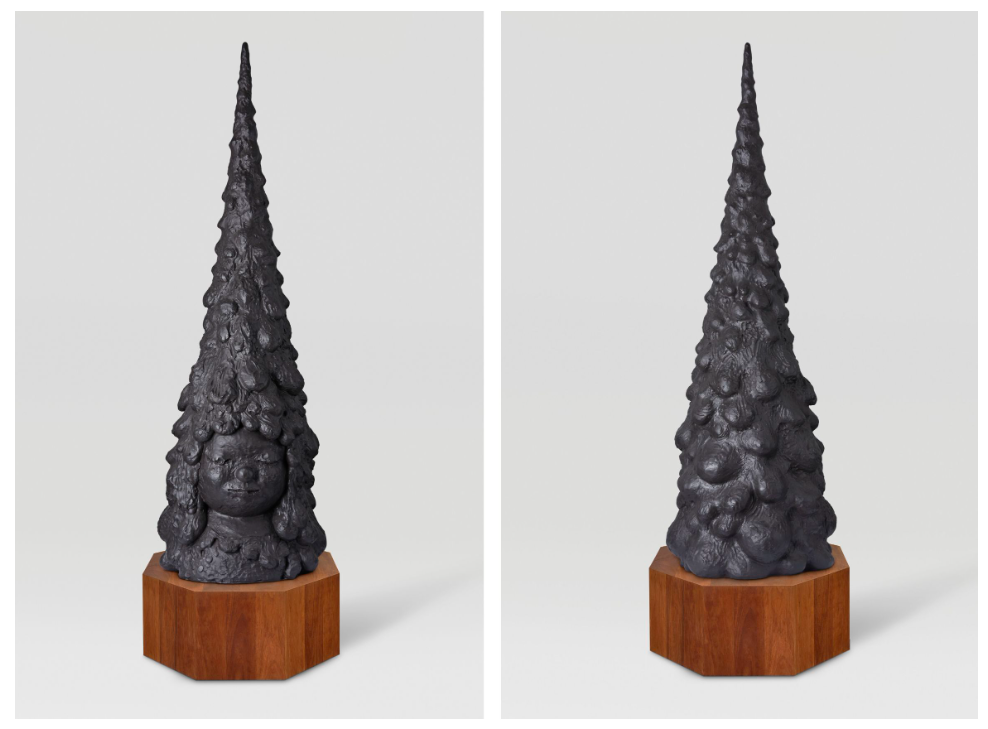
The bronze keeps every mark of the clay from which it was cast. The curls are pressed and pinched into rounded lobes that overlap like the boughs of a fir, and each tier steps in from the one below, so that the silhouette reads at once as a girl’s coiffure, a conifer and the stacked roofs of a pagoda. Toward the summit the lobes tighten into a twisted, horn-like point, and the whole surface is pocked with the impressions of the artist’s fingers. At the base the hair falls to either side of the face and gathers beneath the chin into a ruff of curls on which the entire sculpture rests. The face is smoother than anything around it. Nara gives it a small, round nose, a mouth reduced to a single incised line and eyelids lowered and shut, and that last detail separates Miss Forest from the girls on which he built his reputation, whose wide, wary eyes met the viewer head on. Here, the girl looks inward. The Dark Night urethane absorbs light where a polished patina would reflect it, which gives the sleeping face a nocturnal gravity.
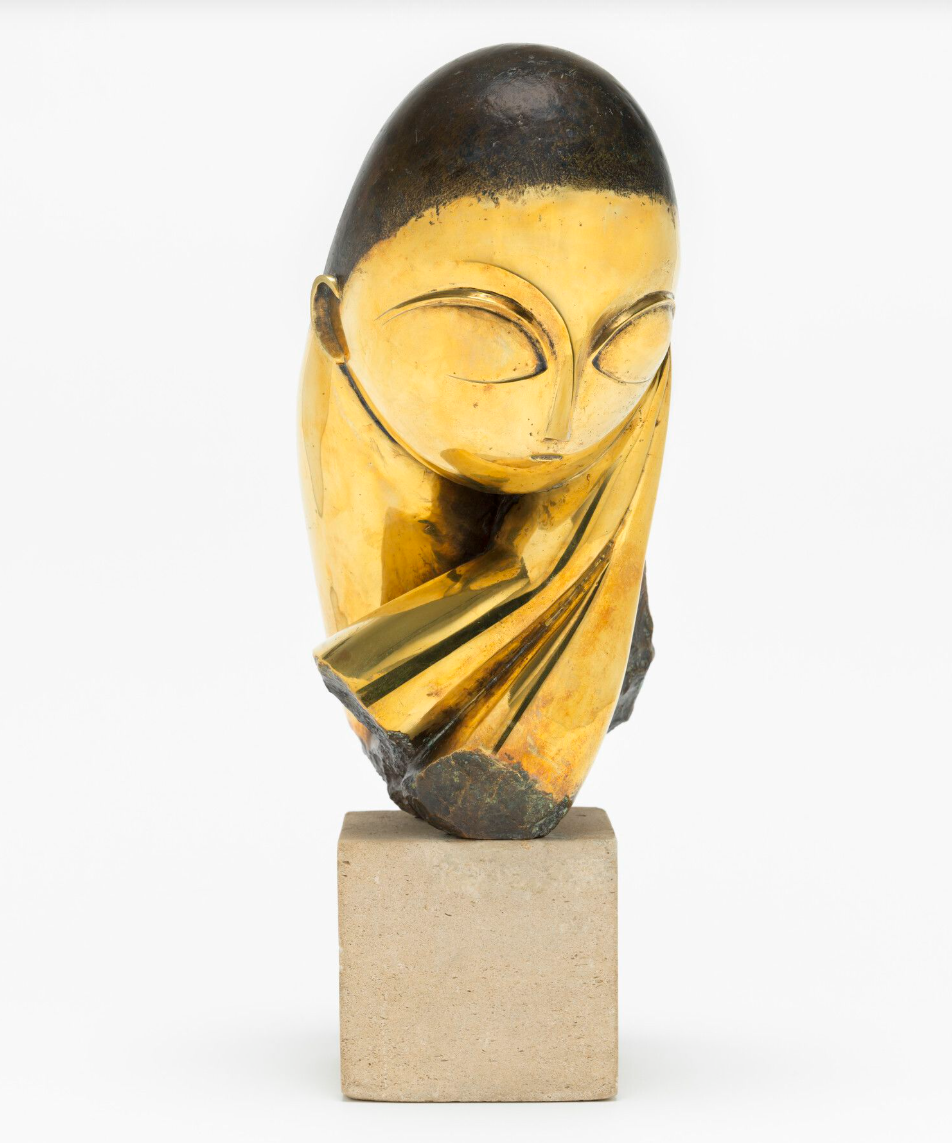
Constantin Brancusi, Mlle Pogany, 1913. Museum of Modern Art, New York.
Photo: © The Museum of Modern Art/Licensed by SCALA / Art Resource, NY.
Nara was born in 1959 in Hirosaki, in Aomori Prefecture at the northern tip of Honshu, and the earthquake and tsunami of 2011, followed by the meltdowns at Fukushima Daiichi, devastated the Tōhoku region in which he grew up. In their aftermath he found release in shaping clay by hand, a practice he had taken up at the pottery town of Shigaraki in 2007. By his own account, the clay works moved from large, shapeless lumps toward plant forms, and Miss Forest completed that progression (Ibid.). He imagined the figure as something “born from the soil of the earth” that grew upward and “communicated with the universe like an antenna,” and he has said: “It is like a catalyst between the grand earth upon which we place our feet and the sky that our hands cannot reach” (Ibid.). In conceiving it he thought of “Indigenous people who climb to high places in order to communicate with the sky and recite prayers” (Ibid.). The frontal pose and closed eyes recall the stone Jizō figures that line Japanese roadsides and temple paths. In the West, the nearest precedent is Constantin Brancusi’s Sleeping Muse (1910), whose ovoid head likewise rests with its lids shut. Alberto Giacometti’s The Forest (1950), in which attenuated bronze figures share a single base like trunks in a clearing, is a further antecedent for a sculpture in which a human figure turns into a tree.
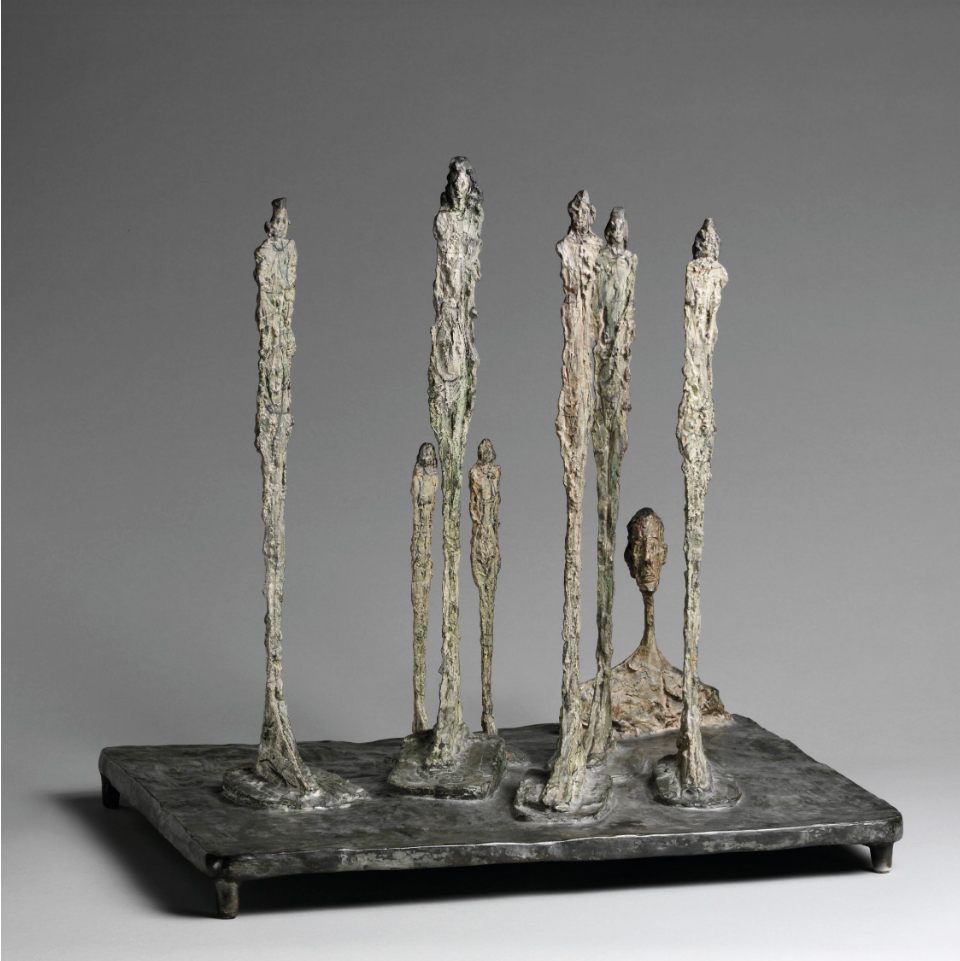
Alberto Giacometti, The Forest (Composition with Seven Figures and a Head), 1950. Metropolitan Museum of Art, New York. Photo: © The Metropolitan Museum of Art / Art Resource, NY.
Nara has made Miss Forest at several scales, and the present work sits between the intimate ceramics and the public monuments. A version more than sixteen feet tall, Miss Forest / Thinker (2016), stood in the atrium garden of Japan Society in New York in 2019 as the first commission of its En/trance series. A bronze Miss Forest is installed at the Aomori Museum of Art, in his home prefecture, inside Hakkakudo, an octagonal chamber Nara designed himself. LACMA’s 25-foot cast was installed on Wilshire Boulevard in August 2020 ahead of his retrospective at the museum. At 93⅛ inches, Miss Forest / Dark Night keeps the full presence of those famous monuments. It is a girl of the forest asleep, her eyes shut beneath nearly eight feet of hand-modeled curls that narrow, tier by tier, toward the sky Nara believed her hands need not reach.
Listen! Mimi-chan, 1995
Listen! Mimi-chan, 1995
Looking Forward: The Collection of Beverly Grossman
Sotheby’s New-York: 17 November 2026
Estimated: USD 500,000 – 700,000
Yoshitomo Nara | Listen! Mimi-chan | Contemporary Day Auction | 2026
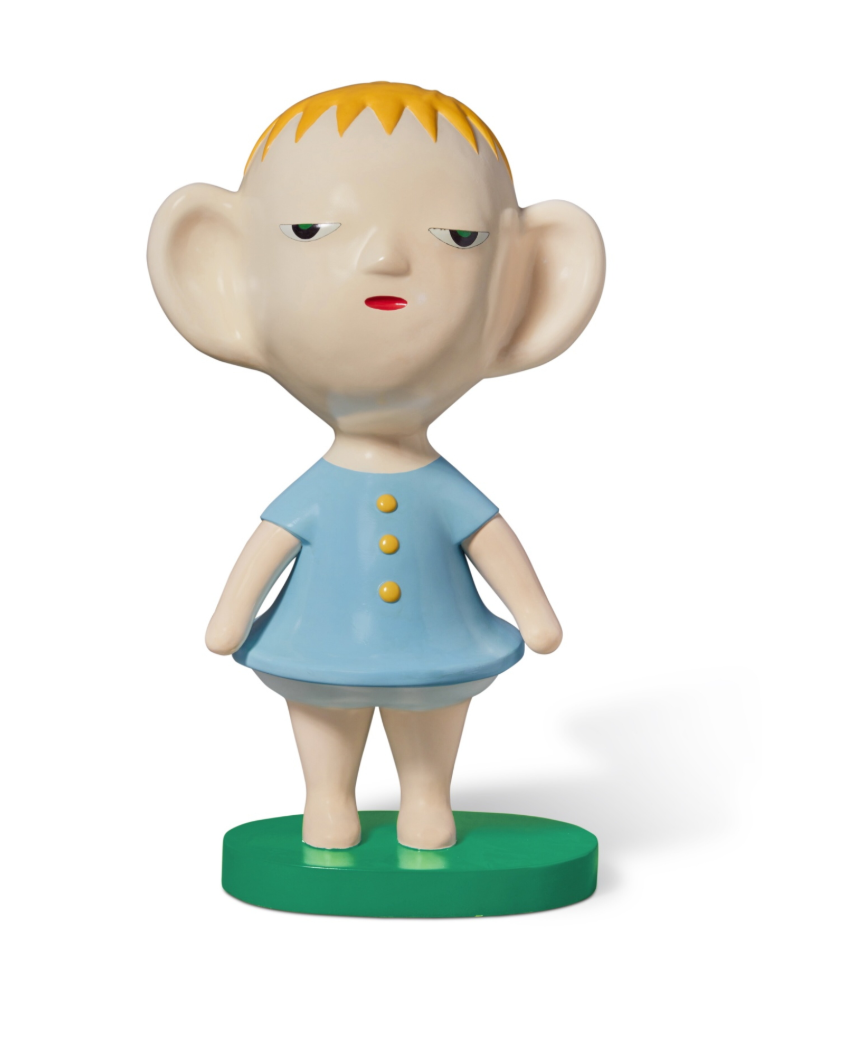
YOSHITOMO NARA (b. 1959)
Listen! Mimi-chan, 1995
Acrylic and lacquer on fiber-reinforced plastic
102.9 x 57.2 x 44.5 cm (40-1/2 x 22-1/2 x 17-1/2 inches)
Signed, dated ‘95 and numbered A.P (on the base)
This work is an artist’s proof
Created in 1995, Listen! Mimi-chan belongs to a pivotal moment in the development of Yoshitomo Nara’s artistic vocabulary, when the characters that had first emerged sketches began to assume a compelling physical presence. The work encapsulates the paradox at the heart of Nara’s oeuvre: an image of apparent innocence charged with psychological complexity. Standing before the viewer with outsized ears, narrowed eyes, and a confident upright pose, Listen! Mimi-chan occupies the threshold between childhood imagination and emotional ambiguity.
Rendered with a pristine, toy-like finish, Listen! Mimi-chan embodies the visual language that would come to define Yoshitomo Nara’s oeuvre. The figure’s oversized head, abbreviated limbs, and simplified blue dress evoke the innocence of his quintessential character, yet her dead-pan eyes and tightly drawn red mouth resist sentimentality. As throughout Nara’s practice, vulnerability is tempered by an unmistakable sense of self-possession and personality.
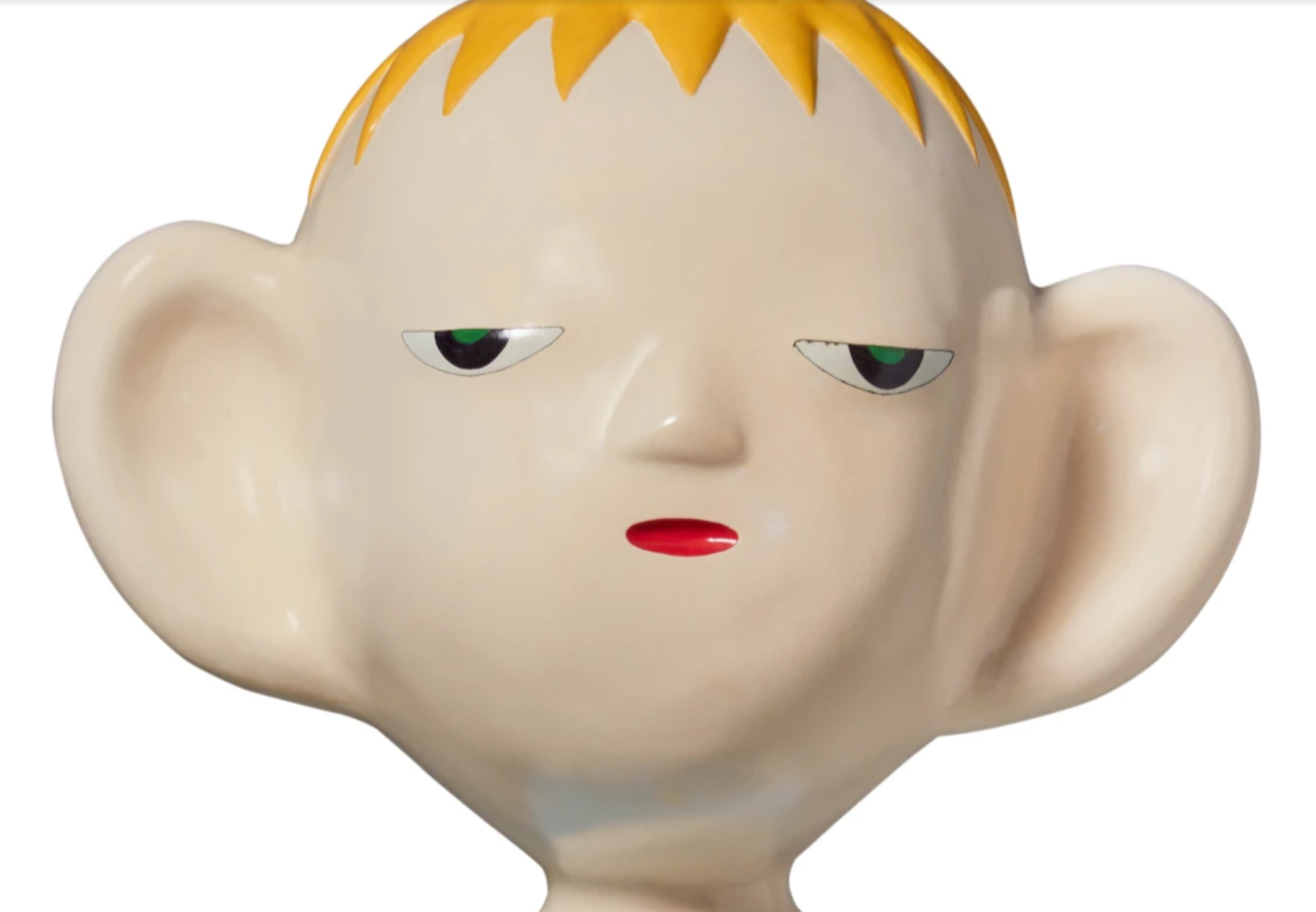
As the title commands, Mimi-chan must “Listen!”, directing attention to her exaggerated ears and comically-serious expression. Created during the artist’s earliest explorations of sculpture, the work marks a significant moment in the translation of his iconic painted characters into three dimensions. Much like other works from this period, including Cup Kids and Mederu Again, Nara transforms a seemingly simple character into a resonant study of childhood, individuality, and light-hearted expressions of personality.