2026 Fall New-York Marquee Auctions
Richard Prince
Upcoming Lots
Everglade Nurse, 2003
Christie’s New-York: 19 November 2026
Estimated: USD 3,000,000 – 5,000,000
RICHARD PRINCE (B. 1949), Everglade Nurse | Christie’s
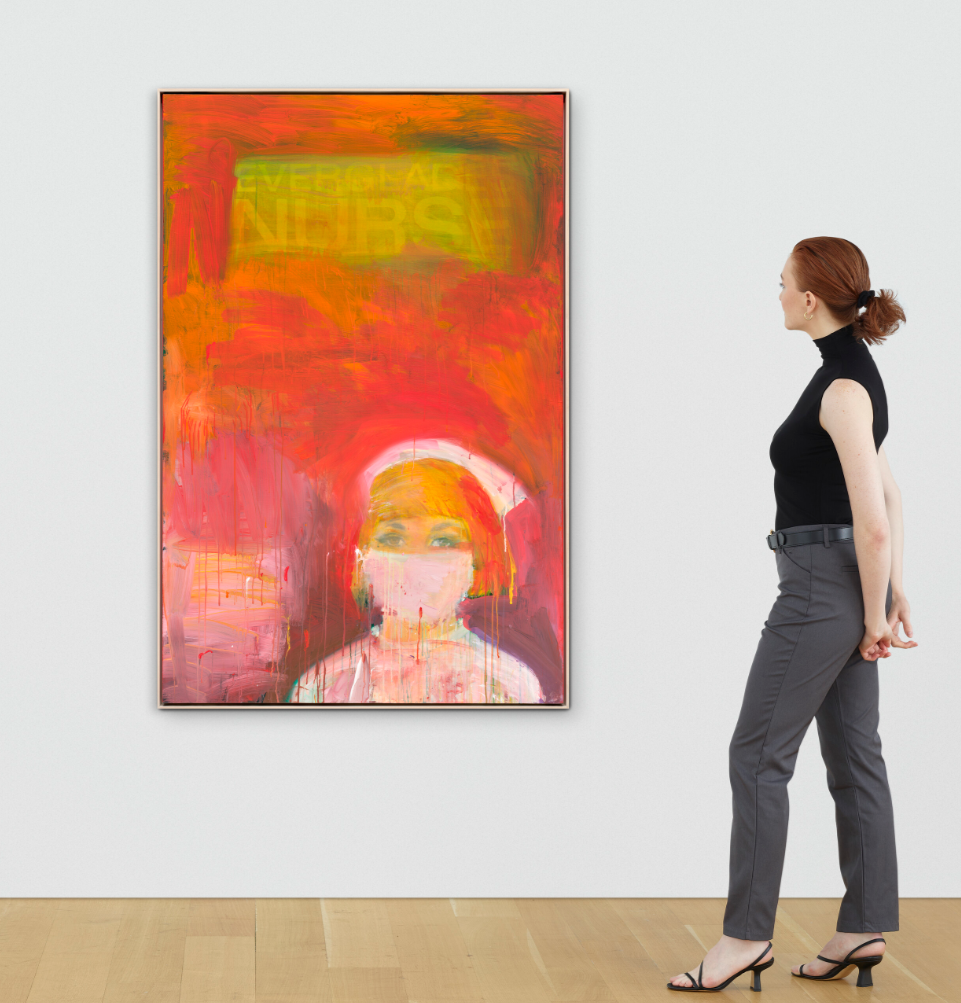
RICHARD PRINCE (B. 1949)
Everglade Nurse, 2003
Acrylic and inkjet print on canvas
64×42 inches (162.6 x 106.7 cm)
Signed, dated and titled ‘Richard Prince 2003 Everglade Nurse’ (on the overlap)
Untitled, 2018-19
Property from a Private Swiss Collection
Christie’s New-York: 20 November 2026
Estimated: USD 600,000 – 800,000
RICHARD PRINCE (B. 1949), Untitled | Christie’s
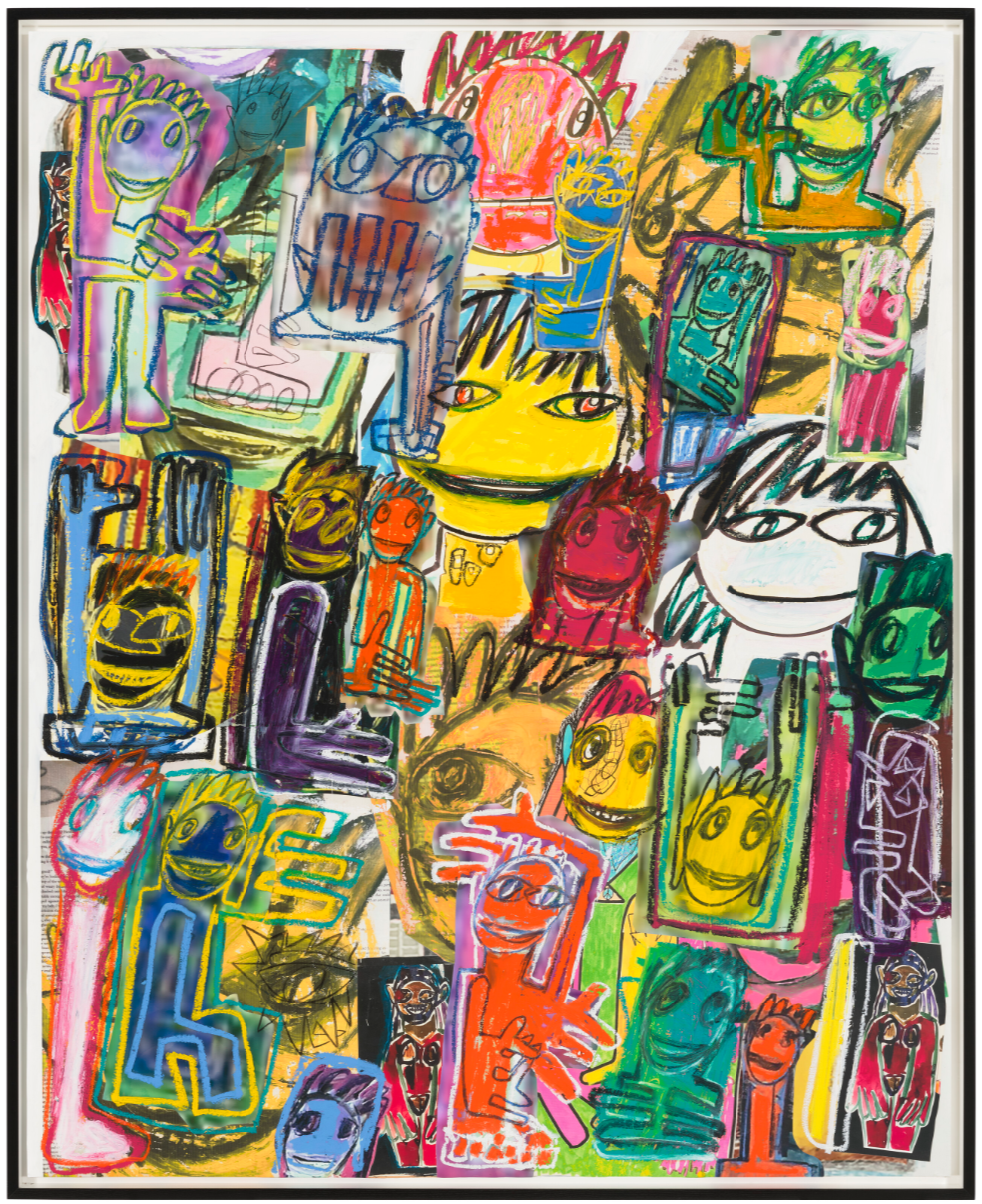
RICHARD PRINCE (B. 1949)
Untitled, 2018-19
Acrylic, oil stick, charcoal, inkjet and canvas collage on canvas
73 x 58-3/4 inches (185.4 x 149.2 cm)
Signed, inscribed and dated ‘Richard Prince 2018-19 HIGH TIMES’ (on the reverse)
Untitled, 2017-18
Bonhams New-York: 18 November 2026
Estimated: USD 500,000 – 700,000
Bonhams : RICHARD PRINCE (B. 1949) Untitled
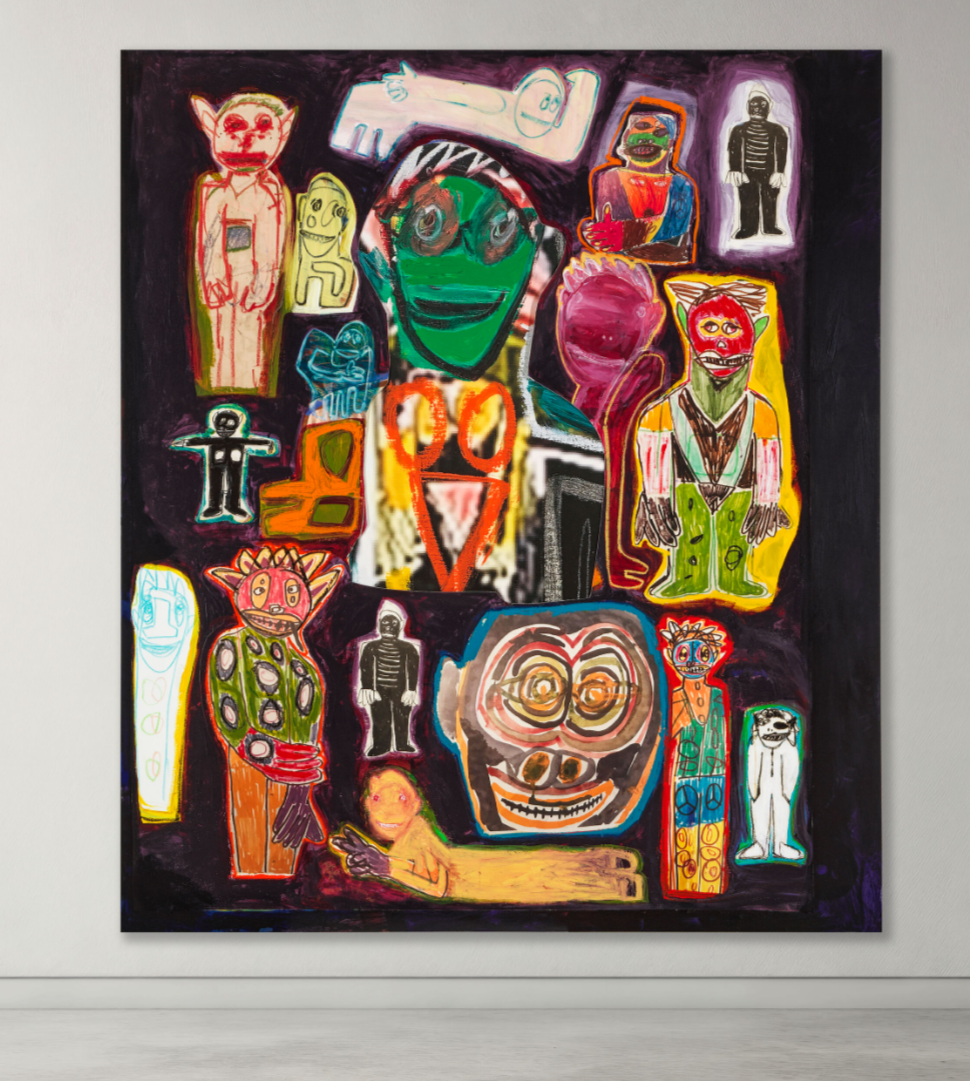
RICHARD PRINCE (B. 1949)
Untitled, 2017-18
Acrylic, oilstick, inkjet and collage on canvas
75-1/4 x 65 inches (191.1 x 165.1 cm)
Signed and dated ‘Prince 2017-18’ (on the reverse of the frame)
Untitled, 2018
Property from an Esteemed New York Collection
Phillips New-York: 19 November 2026
Estimated: USD 350,000 – 550,000
Richard Prince Modern & Contemporary Art: Afternoon Session
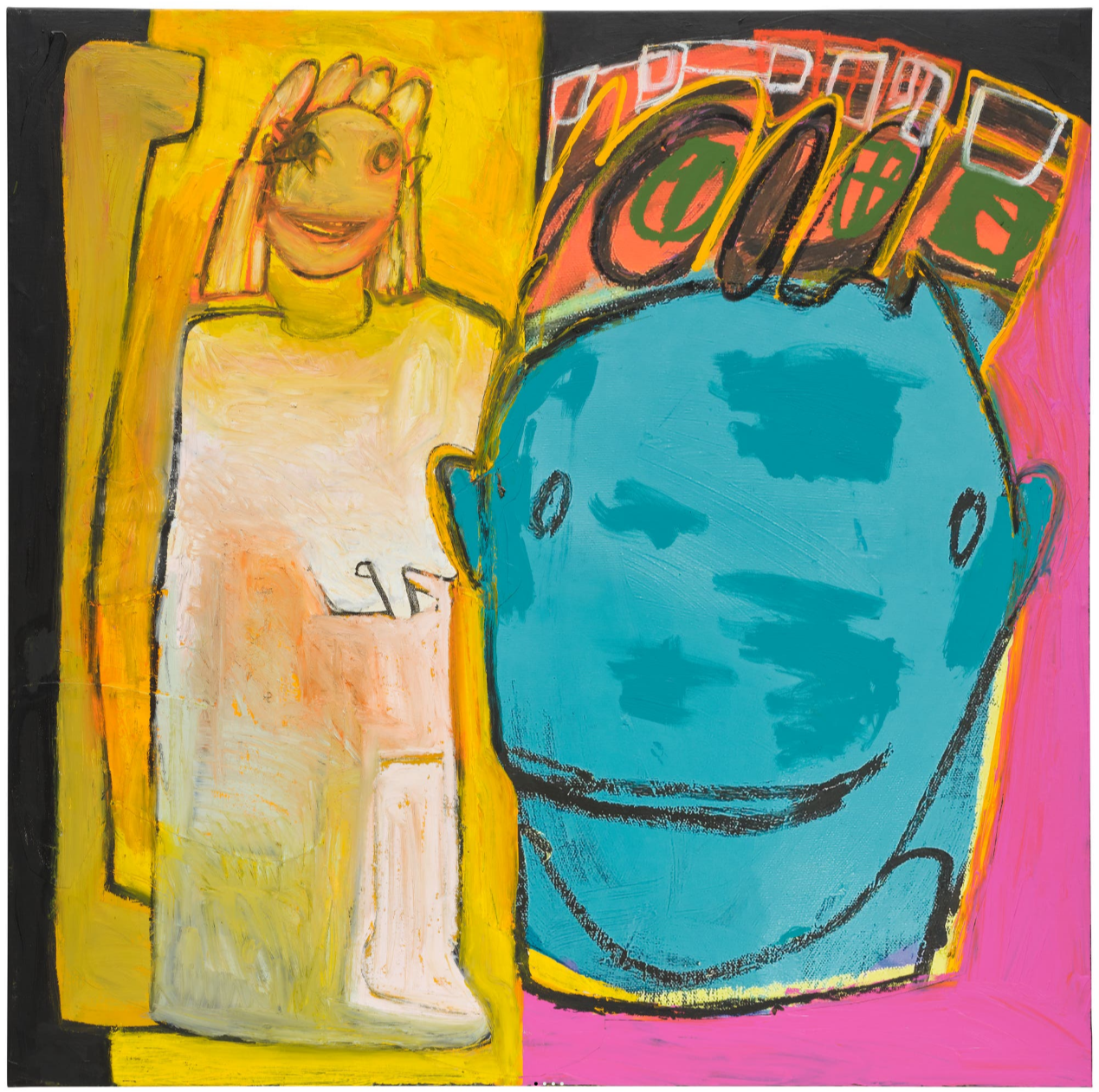
RICHARD PRINCE
Untitled, 2018
Acrylic, oilstick, gel medium, inkjet and canvas collage on canvas
54-3/8 x 54-3/4 inches (138.1 x 139.1 cm)
Signed and dated “R Prince 2018” on the overlap
Everglade Nurse, 2003
Everglade Nurse, 2003
Christie’s New-York: 19 November 2026
Estimated: USD 3,000,000 – 5,000,000
RICHARD PRINCE (B. 1949), Everglade Nurse | Christie’s
RICHARD PRINCE (B. 1949)
Everglade Nurse, 2003
Acrylic and inkjet print on canvas
64×42 inches (162.6 x 106.7 cm)
Signed, dated and titled ‘Richard Prince 2003 Everglade Nurse’ (on the overlap)
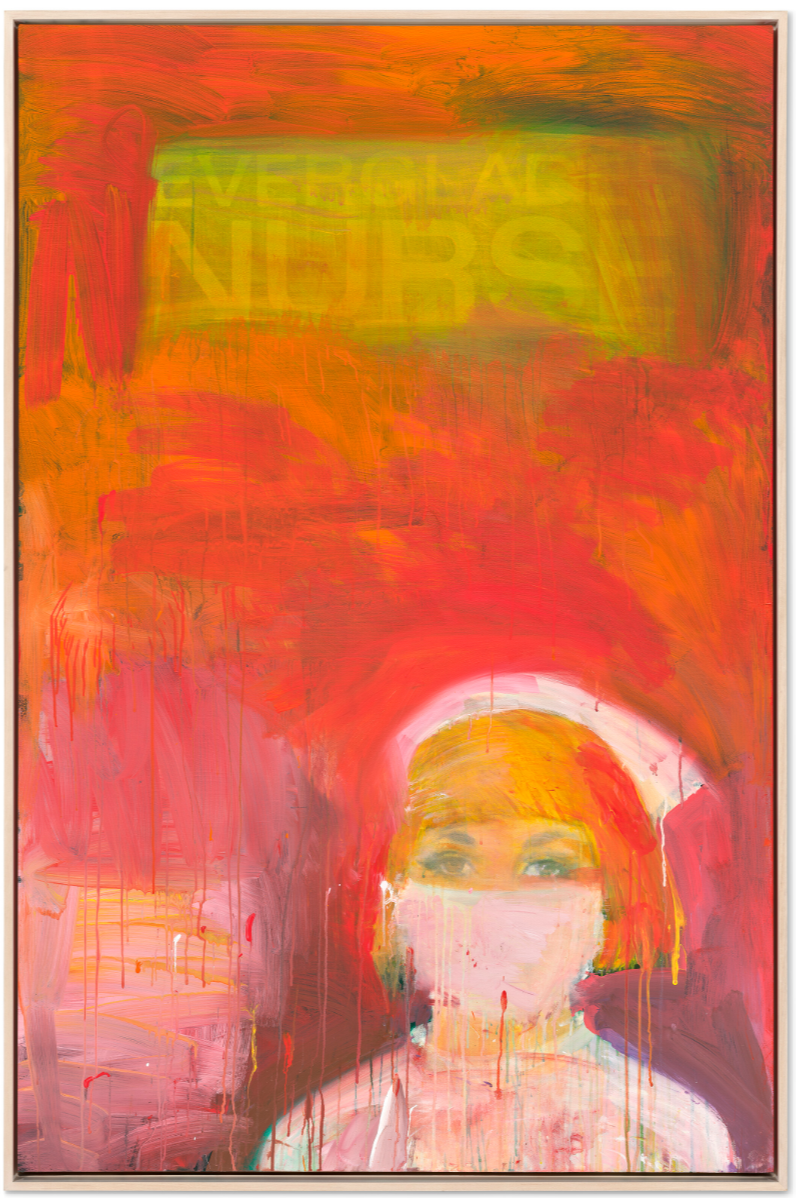
In October 2007 Louis Vuitton opened its spring show in Paris with twelve models dressed as nurses. In sheer pastel uniforms and gauzy masks, each wearing a cap marked with a single scarlet letter – each was a direct reference to Richard Prince’s defining series. For the Nurse Paintings, Prince scanned the covers of the medical romance paperbacks he had collected for years, printed them onto canvas by inkjet and worked back over them in sweeps and drips of acrylic until little survived beyond the nurse and her title. The series was first exhibited in 2003, at Sadie Coles HQ in London in the spring and at Barbara Gladstone Gallery in New York in the fall, and Everglade Nurse was created and sold in that very same year. Four years later the Nurses held a central place in Richard Prince: Spiritual America, the artist’s retrospective at the Solomon R. Guggenheim Museum, New York.
In Everglade Nurse, Prince paints more than half of a canvas over five feet tall with a blaze of orange and scarlet and pushes the nurse to the forefront, white-capped and masked, beneath a title that glows acid green, the entire palette reminiscent of the heat of its namesake in the Florida Everglades. The title is presented in a rectangle of chartreuse paint at the top of the canvas, “EVERGLADES” in narrow capital letters above a larger “NURSE,” its letters ghosted beneath translucent washes and its final E and S almost dissolved into the tangerine around it. Below, Prince drags broad sweeps of orange and scarlet across the canvas and lets them run, so that drips of crimson, chalk white and cadmium orange rain down the entire lower half; at lower left the paint settles into horizontal bands of rose and mauve shot with yellow, and to the right of the figure it darkens to aubergine.
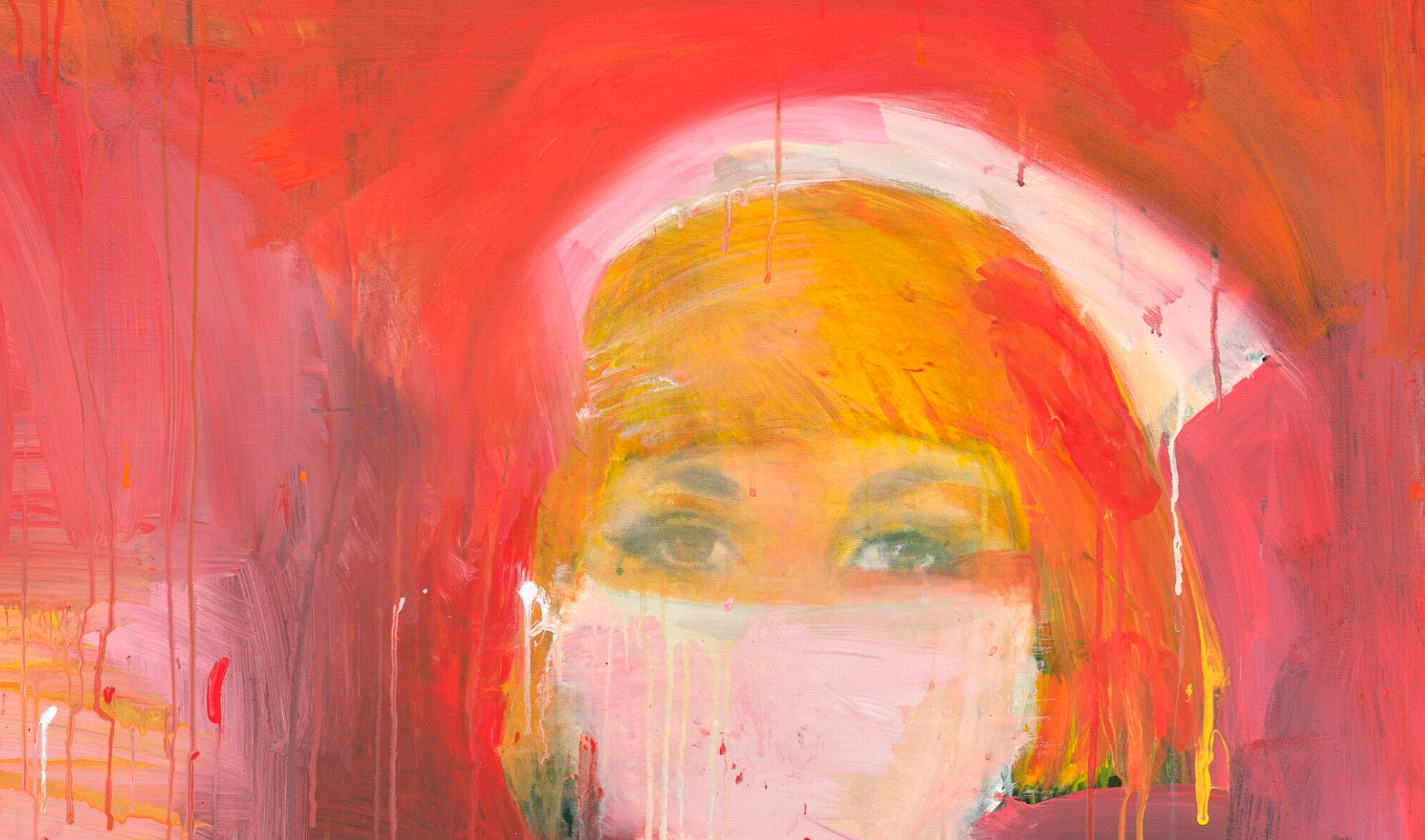
The nurse’s white cap rings her head like a halo, and her bobbed hair has been repainted in a molten swirl of orange and yellow. Her eyes, the one passage of the original illustration that Prince left almost untouched, gaze coolly out above a pale pink mask that the drips run straight across. The mask arrived by accident: “After I had wiped off some of the painting, it looked like a mask on the nurse’s face,” Prince recalled, and he kept it as “a way of unifying and also talking about identity” (R. Prince, quoted in N. Shukur, “Richard Prince,” Russh, December 2014). It gives every nurse in the series the same anonymity and turns a figure of mercy into something faintly unsettling.
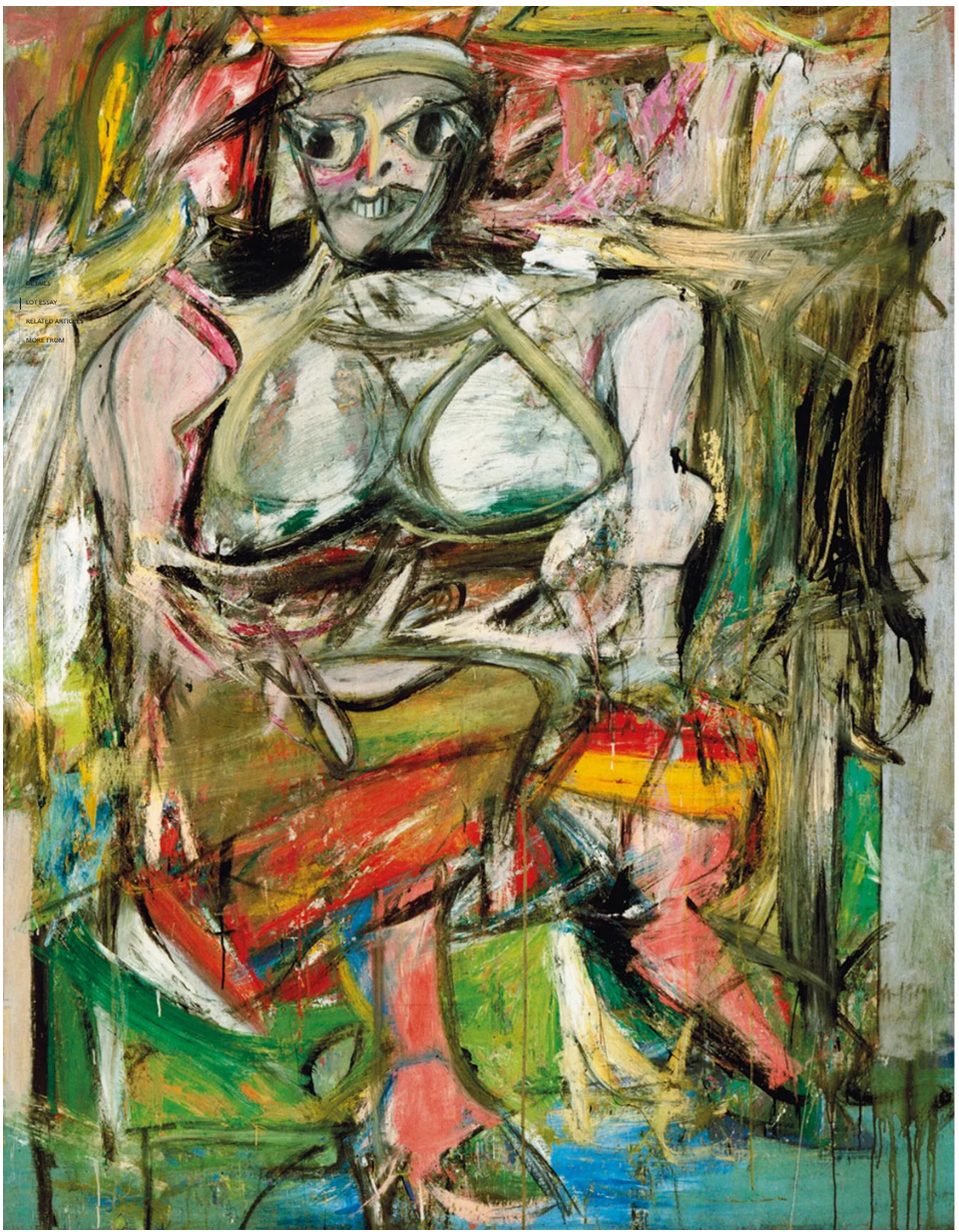
Willem de Kooning, Woman I, 1950-1952. Museum of Modern Art, New York. © 2026 The Willem de Kooning Foundation / Artists Rights Society (ARS), New York. Photo: © The Museum of Modern Art / Licensed by SCALA / Art Resource, New York.
Prince was born in the Panama Canal Zone in 1949 and made his name in the late 1970s and 1980s by rephotographing advertisements, most famously the Marlboro cowboys, as one of the Pictures Generation artists who took mass-media imagery as their raw material. The Nurses were his turn to paint, and he has traced them to the SARS scare, when, looking at a shelf of nurse romances he had owned for years, “it just occurred to me that everyone needed a nurse” (R. Prince, quoted in N. Shukur, op. cit.). The brushwork summons Willem de Kooning’s Woman I (1950-52, Museum of Modern Art, New York), setting the heroic gesture of the New York School against exactly the kind of dime-store image that gesture was meant to leave behind, an encounter Prince made explicit in the de Kooning paintings he began in 2008. Roy Lichtenstein had already lifted a nurse from a romance comic in Nurse (1964), enlarging her in Ben-Day dots with her face intact, and Cindy Sherman cast herself as a pulp heroine in an orange sweater, clutching a scrap of newspaper, in Untitled #96 (1981). Prince buries his source under paint until only the nurse’s eyes and her title come through. Randy Kennedy wrote in The New York Times that “Mr. Prince mines the ways that society has portrayed women and how women have seemed to want to be portrayed” (R. Kennedy, “Two Artists United by Devotion to Women,” The New York Times, December 23, 2008, p. C1), and the Nurses are the purest instance of it.
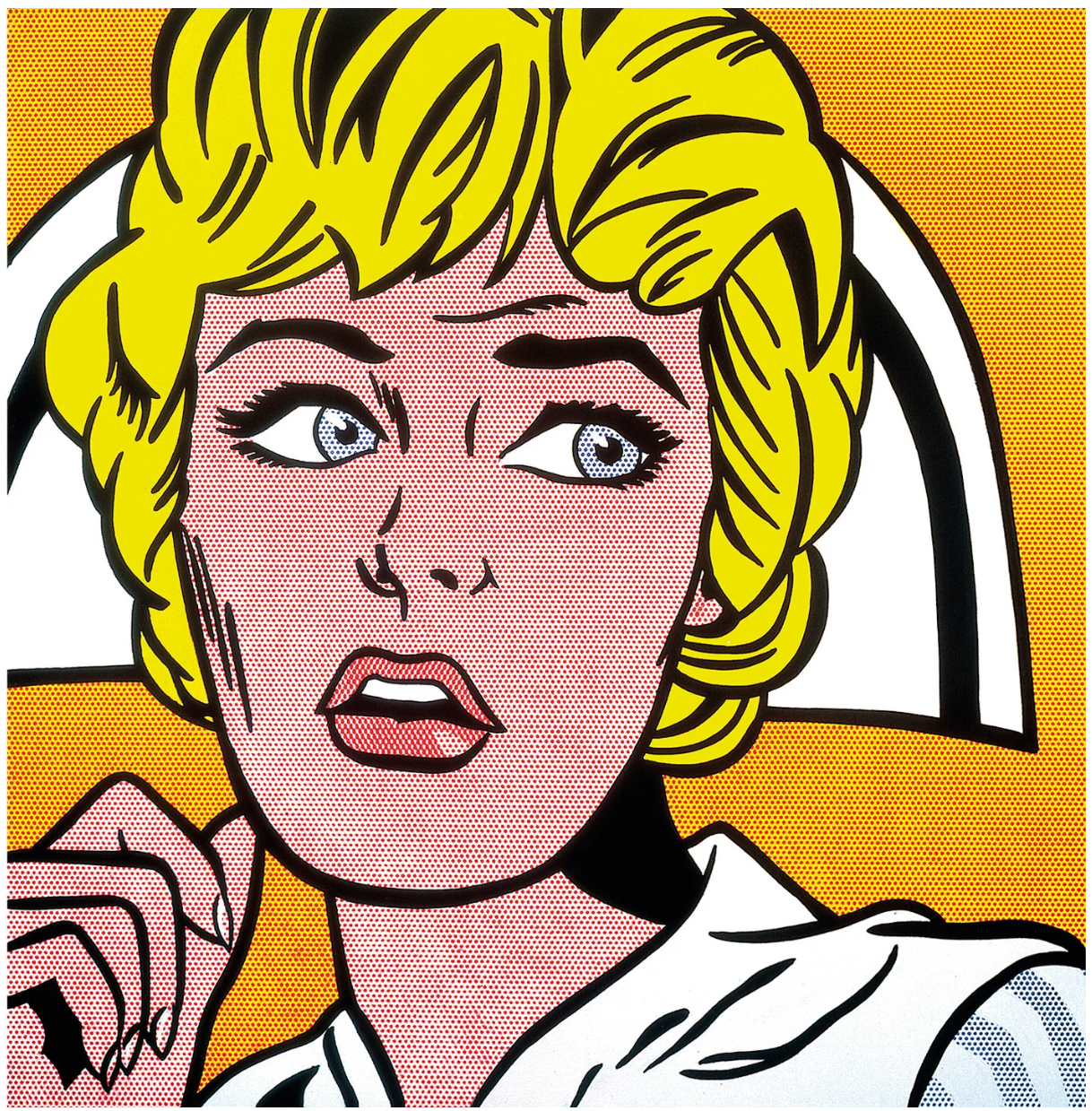
Roy Lichtenstein, Nurse, 1964. © 2026 Estate of Roy Lichtenstein / DACS.
Everglade Nurse is a prime example from the opening chapter of this iconic series. Prince began the Nurses in 2002, and this alluring painting was created and sold in 2003, the year they were first exhibited. The present work belongs to the moment when Prince pushed the boundaries of how much paint his borrowed cover could take, and here the surface is beautifully saturated. The palette runs from chartreuse and citrus green through tangerine, scarlet and crimson to rose, mauve and aubergine, with the white cap and pale pink mask acting as perfect cool counterpoints. The handling is just as loose and dynamic: loaded strokes dragged wet across the canvas, washes thinned until the title ghosts through them, drips left to run unchecked through the lower half of the canvas. It is a painter’s picture, made by an artist who so clearly enjoys the medium’s visceral nature. In combination, all these factors contribute to a Nurse painting which is uniquely harmonious in environment, aesthetic and psychological tension – undoubtedly one of the most powerful from Prince’s oeuvre.
Untitled, 2017-18
Untitled, 2017-18
Bonhams New-York: 18 November 2026
Estimated: USD 500,000 – 700,000
Bonhams : RICHARD PRINCE (B. 1949) Untitled
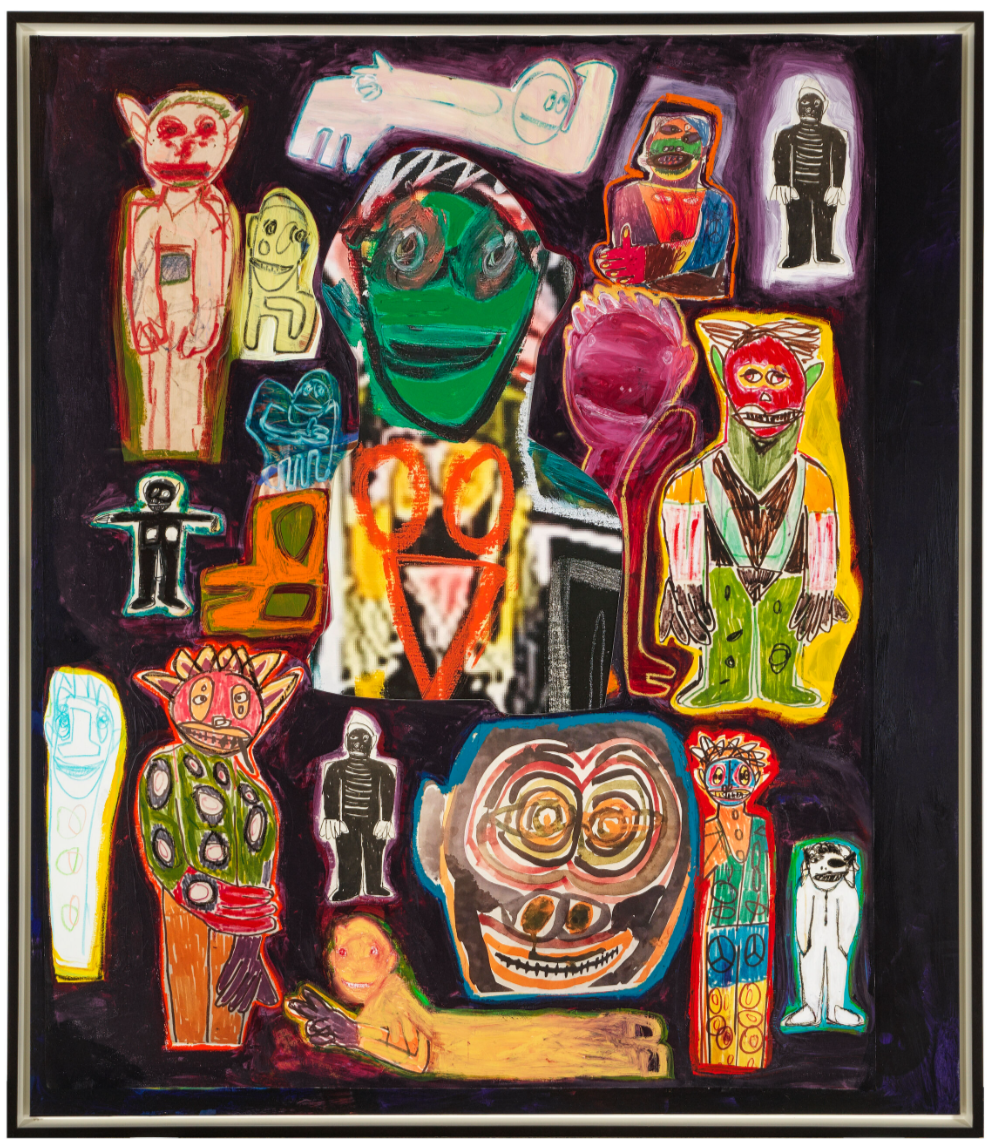
RICHARD PRINCE (B. 1949)
Untitled, 2017-18
Acrylic, oilstick, inkjet and collage on canvas
75-1/4 x 65 inches (191.1 x 165.1 cm)
Signed and dated ‘Prince 2017-18’ (on the reverse of the frame)
Vibrant, electric, and animated by an irrepressible sense of movement, Untitled is an exuberant example of Richard Prince’s High Times series, in which the artist revisits themes central to his celebrated oeuvre with renewed energy. The expansive, richly detailed canvas envelops the viewer in a layered amalgamation of inkjet and collage, its composition at once spontaneous and carefully considered. Resisting the retrospective tenor so often associated with late-career work, Untitled demonstrates Prince infusing his practice with fresh vitality and verve, even as it reflects the spirit of his Downtown New York roots and pays homage to Surrealism, Art Brut, Outsider Art, and Street Art.
Untitled stands as a compelling testament to Richard Prince’s sustained interrogation of authorship, identity, and popular culture. Celebrated for his photographic appropriations of mass-media imagery, Prince here turns the strategy upon his own career, using the High Times series to reconsider and recast his earlier work. The series revisits the compositions of the Hippie Drawings of 1998–1999, themselves a reinterpretation of the “dead heads” that Prince drew in Bic pen in 1972–1973. Its genesis dates to 2016, when the notorious counterculture publication HIGH TIMES approached the artist to use several of the Hippie Drawings in celebration of the magazine’s anniversary, and the ensuing collaboration prompted a new body of work.
The present work represents a culmination of the ideas, motifs, figures, and styles that have preoccupied Prince throughout his career. Decades of accumulated imagery appear to have been released onto the energetic surface of the canvas in a profusion of graffiti, masks, and near-human figures that recall the great painters of art history. Reviewing the series at Gagosian in 2018, Roberta Smith recorded her initial impression, one shared by many, describing the High Times series as “Basquiat meets Dubuffet” (R. Smith, ‘Richard Prince’s New, Late Style Is One of His Best’, New York Times, November 29, 2018, online). The comparison is apt: the scrawling, frenetic lines and the strange, cartoon-like figures indeed summon the qualities of both artists, as well as those of Philip Guston and Willem de Kooning, while drawing upon the vocabularies of outsider and folk art.
Drawing on these influences, Prince’s Untitled is theatrical, exaggerated, and playful, and is entirely the product of the artist’s reimagining and reworking of his own ideas and creations. Set against a dark, flat plane, the carefully collaged figures are harmoniously arranged amongst one another, forming a menagerie of creatures summoned from the depths of the artist’s imagination. As Brienne Droitcour observed, “Viewing ‘High Times’ led one on a dizzying search for the ground, for the seams joining the parts, for the places where the artist’s hand met the work of the inkjet printer. This quest provoked both belief and doubt regarding the idea of the ‘original'” (B. Droitcour, ‘Richard Prince’, Art in America, February 1, 2019). The crude characters vary distinctly in size, hue, technique, and impact, yet are united in their individuality and in the rhythm they create together, provoking the viewer to consider the themes of authorship and appropriation which are totemic topics prevalent throughout Prince’s career.
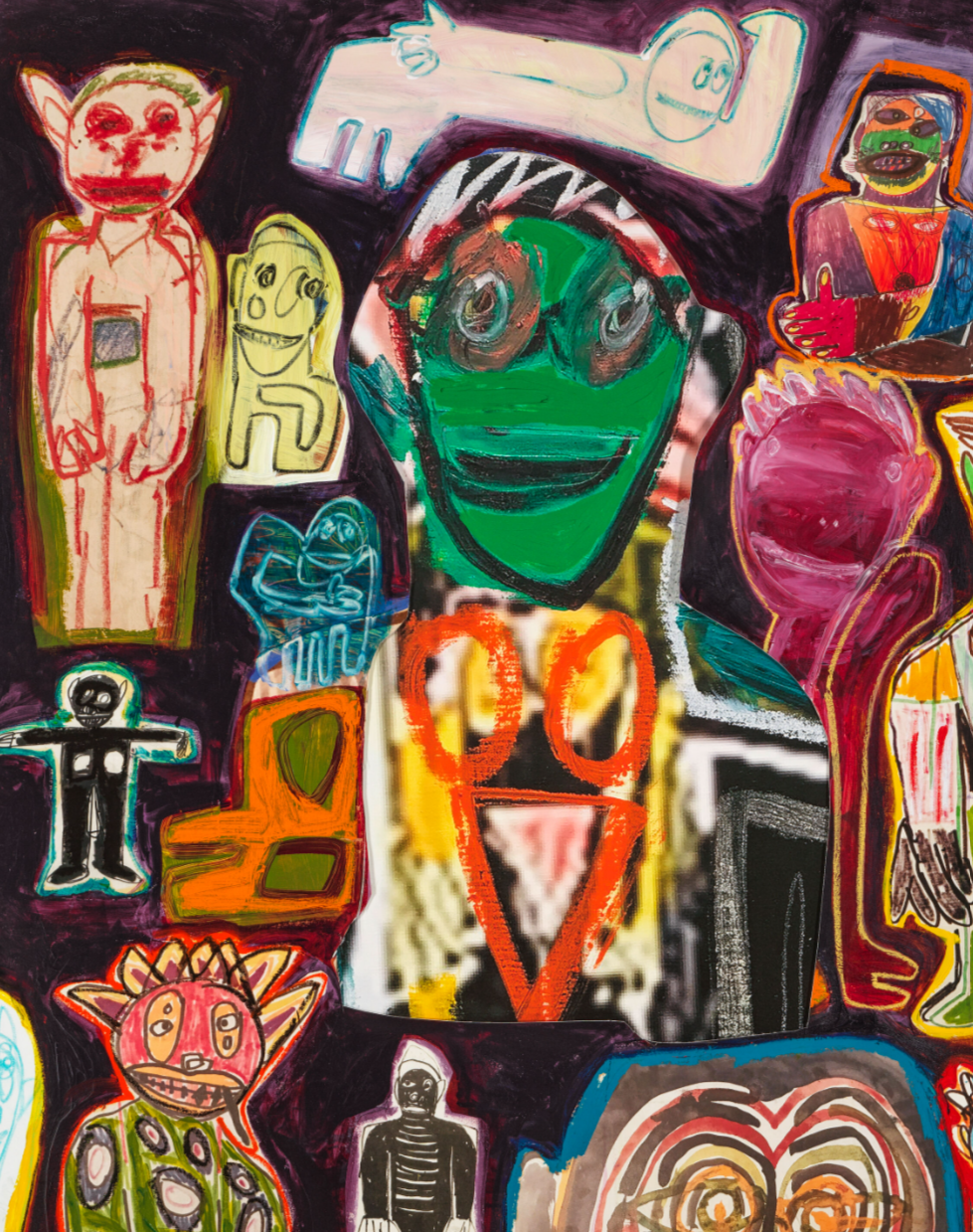
In a departure from his earlier photographic appropriations and text-based joke paintings, Untitled places the artist’s hand at the forefront, while still retaining Prince’s signature ambivalence. The characters are at once cartoonish and monstrous, playful and intimidating. It is the uncertainty of meaning behind these figures that lingers with the viewer, prompting them to reflect upon and revisit their experience of the work. In Untitled, Prince offers a painting that is as irreverent as it is sincere, as chaotic as it is tightly choreographed. It stands as a testament to his restless visual imagination and his refusal to settle into a singular style or message. Here, the artist does not merely blur boundaries; he redraws them entirely.
The finest artists combine levity with inquiry and humor with critique. Prince has always managed this balancing act with composure, and Untitled is no exception. With its luminous colors and engrossing tactility, it is akin not only to a crowd but also to a landscape, within which are endless iterations of humanity, together with the flora and fauna that populate the world. The present work is thus an ode to diversity, chance, and play. Though Prince’s work is often understood to be resolutely concerned with the myth of the artist himself, the humanity of the High Times series shows us that art can be expansive and relatable. In Prince’s paintings, we glimpse his vision of a world free of boundaries.
Untitled, 2018
Untitled, 2018
Property from an Esteemed New York Collection
Phillips New-York: 19 November 2026
Estimated: USD 350,000 – 550,000
Richard Prince Modern & Contemporary Art: Afternoon Session
RICHARD PRINCE
Untitled, 2018
Acrylic, oilstick, gel medium, inkjet and canvas collage on canvas
54-3/8 x 54-3/4 inches (138.1 x 139.1 cm)
Signed and dated “R Prince 2018” on the overlap
Richard Prince’s Untitled, 2018, greets viewers with two exuberant humanoids: a floating cerulean head in the foreground juxtaposed with a monochromatic yellow figure just behind its left ear. Broad, mask-like smiles animate the composition, generating a curious tension between warmth and unease. Familiar yet uncanny, the figures evoke the mischievous energy of childhood doodles while retaining the psychological ambiguity that has long defined Prince’s practice.
The High Times series to which the present work belongs is a highly acclaimed late-career breakthrough for Prince— a visible amalgamation of many of his past bodies of work. Notorious for appropriating and reframing disparate cultural material, from Marlboro advertisements and pulp-fiction covers to the paintings of Willem de Kooning, Prince here turns the table to appropriate his own artwork. The present characters originate from the artist’s earlier Hippie Drawings (1998–2000), themselves derived from Bic pen “head” sketches he first made in the 1970s.
Struck by the naivete and spontaneity of his own children’s artwork, Richard Prince returned to his original ballpoint sketches nearly twenty years after their creation. He reworked the drawings through the lens of imagined counterculture expression, drawing what he thought a hippie might. In doing so, Prince was not appropriating a particular image but inhabiting a persona, treating identity itself as a readymade. First published as a book in 2005, the Hippie Drawings gained renewed visibility as covers for the “Special Trippy Issue” of High Times magazine in 2016, the present series’ namesake.
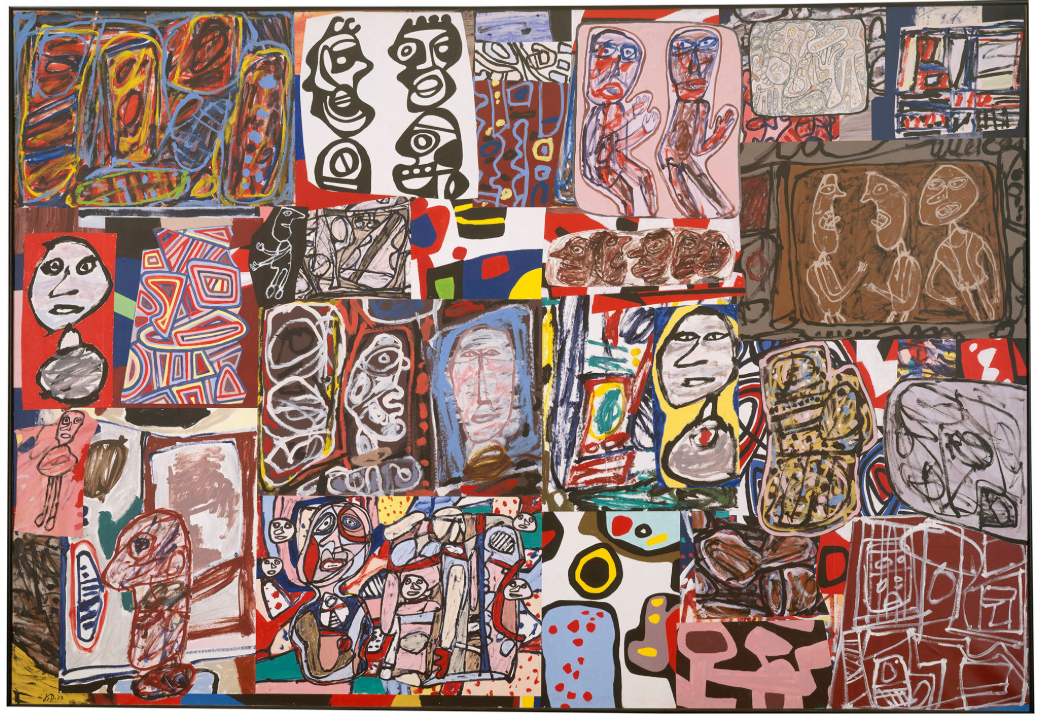
Jean Dubuffet, La ronde des images, 1977. National Gallery of Art, Washington, D.C. Image: National Gallery of Art, Washington, D.C. Robert and Jane Meyerhoff Collection, 1996.81.5. Artwork: © 2026 Artists Rights Society (ARS), New York / ADAGP, Paris
Prince revitalized the Hippie Drawings the following year as inkjet prints on canvas. He sliced up the reproductions and assembled them beneath thick layers of acrylic and oilstick. “And it was fun,” the artist remarked, surprised that he could not remember ever taking such pleasure in the act of making before. The joy is tangible in the exuberant, irreverent, and unapologetically open-ended High Times series. Roberta Smith agreed that “Richard Prince has never made anything quite so much fun to look at as the new Princes.”
Channeling the spirit of his early career Downtown New York years, Prince here riffs on Surrealism, Art Brut, and Outsider Art. The series meshes the frenetic mark-making of Basquiat with the schematic whimsy of Dubuffet, the latter an artist who also frequently borrowed from his own earlier oeuvre. In Untitled, Prince borrows from Dubuffet’s assemblages, creating new visual puzzles with both physical and metaphorical layers of meaning.
Untitled teems with learnings from over fifty years of cultural observation and artistic experimentation. More than a return to earlier imagery, the present work represents a rare moment of self-reflection in an artist whose practice has long been defined by looking outward at the images, myths and identities that circulate through American culture. By looking inward, Prince proves his continued capacity for reinvention through a canvas that feels at once retrospective and newly vital.