2026 Fall New-York Marquee Auctions
Mark Rothko
Auction Results
Untitled, 1968
Property from a Prominent American Collection
Christie’s New-York: 17 November 2026
Estimated: USD 10,000,000 – 15,000,000
MARK ROTHKO (1903-1970), Untitled | Christie’s
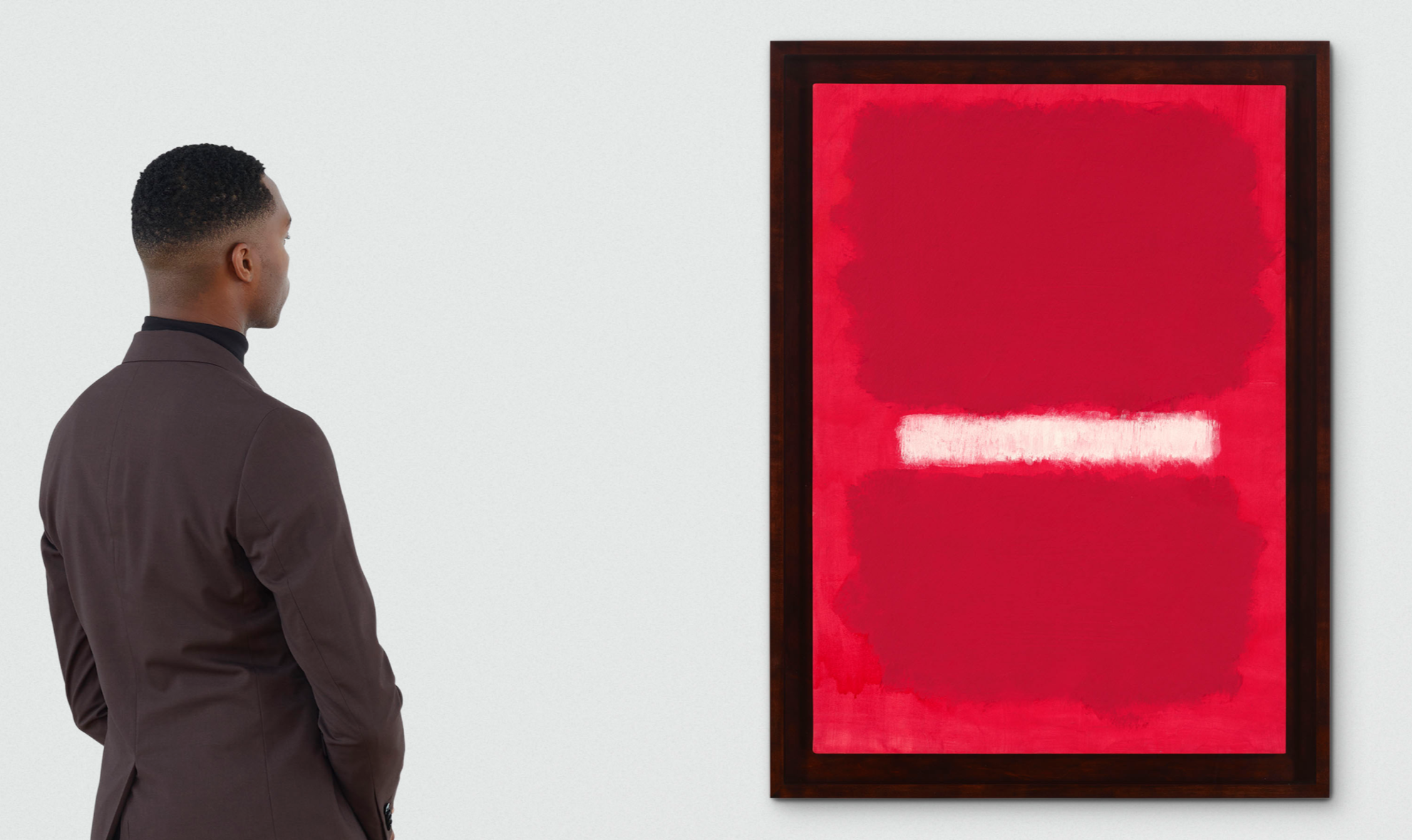
MARK ROTHKO (1903-1970)
Untitled, 1968
Acrylic on paper laid down on linen
92.1 x 64.8 cm (36-1/4 x 25-1/2 inches)
Untitled, 1967
Vision: The Extraordinary Collection of Theodore and Ruth Baum
Sotheby’s New-York: 16 November 2026
Estimated: USD 10,000,000 – 15,000,000
Mark Rothko | Untitled | Vision: The Extraordinary Collection of
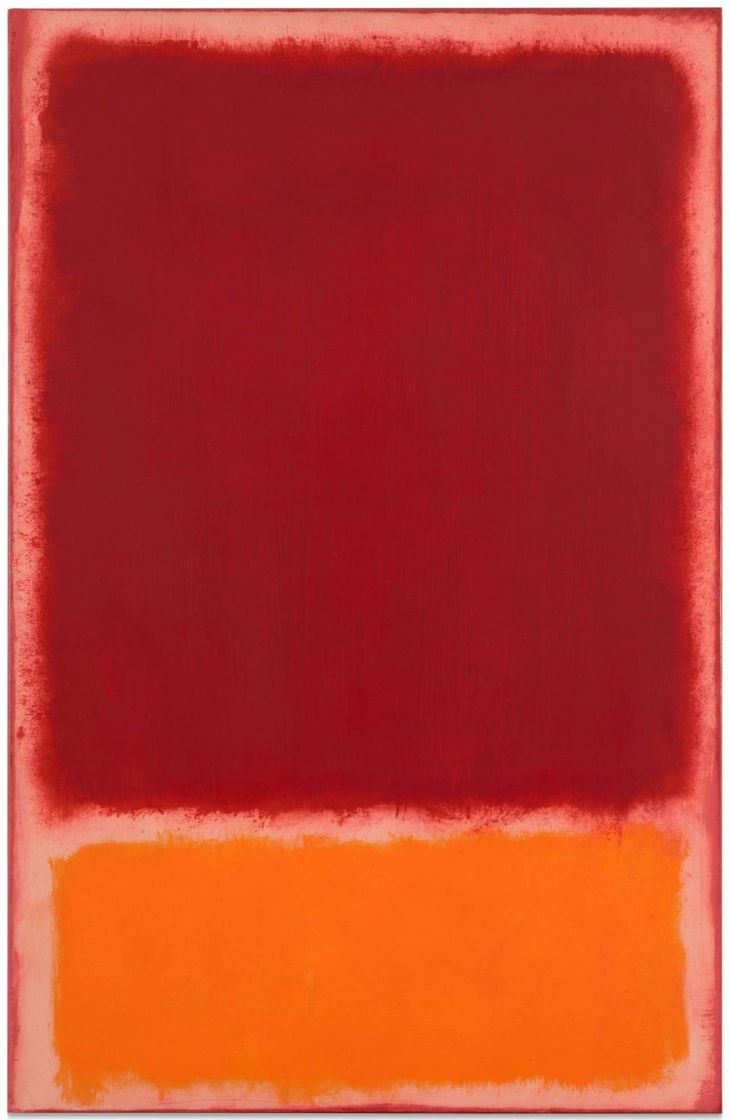
MARK ROTHKO (1903 – 1970)
Untitled, 1967
Oil on paper mounted on canvas
40-1/2 x 26 inches (102.9 x 66 cm)
Untitled, 1968
Property from an Important American Collection
Sotheby’s New-York: 17 November 2026
Estimated: USD 3,500,000 – 5,000,000
Mark Rothko | Untitled | Contemporary Day Auction | 2026 | Sotheby’s
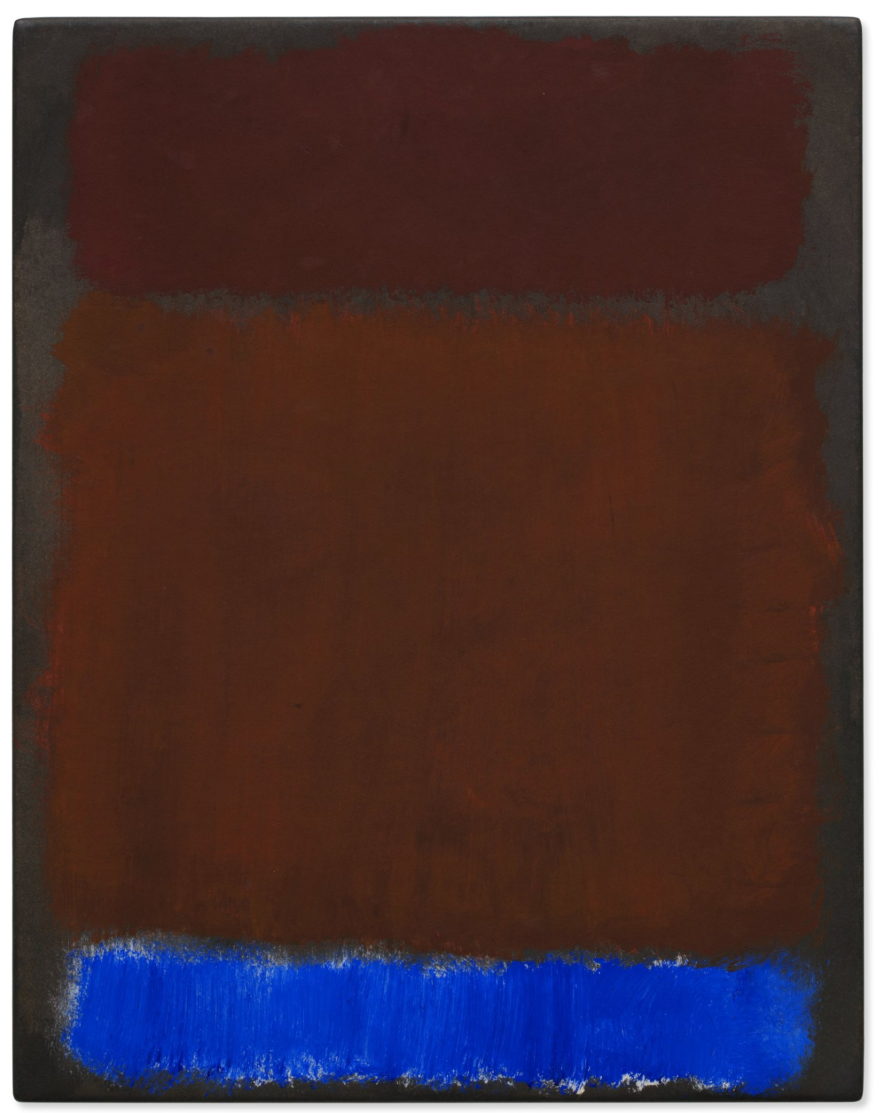
MARK ROTHKO (1903 – 1970)
Untitled, 1968
Acrylic on paper mounted on board
23-7/8 x 18-5/8 inches (60.6 x 47.3 cm)
Untitled, 1968
Untitled, 1968
Property from a Prominent American Collection
Christie’s New-York: 17 November 2026
Estimated: USD 10,000,000 – 15,000,000
MARK ROTHKO (1903-1970), Untitled | Christie’s
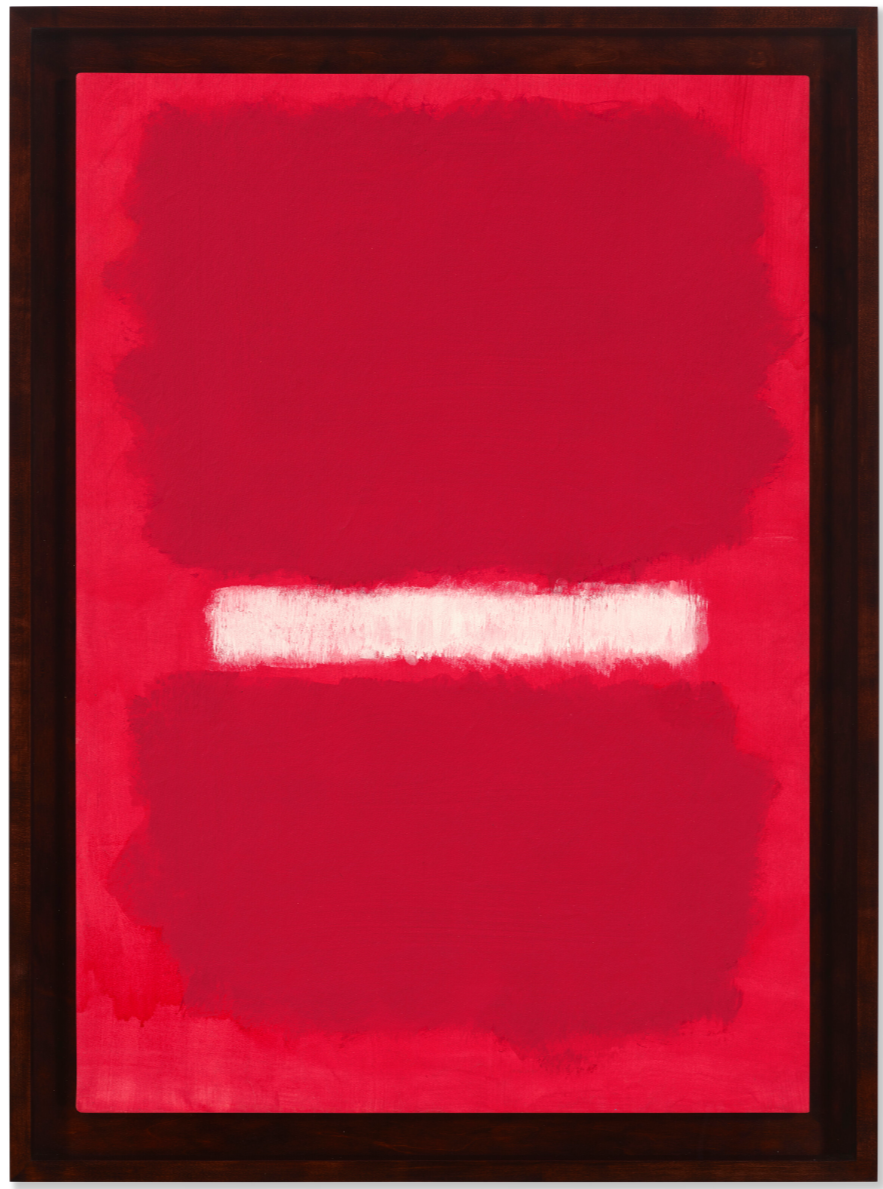
MARK ROTHKO (1903-1970)
Untitled, 1968
Acrylic on paper laid down on linen
92.1 x 64.8 cm (36-1/4 x 25-1/2 inches)
For a few short months beginning in the summer of 1968, Mark Rothko embarked on an astonishing creative endeavor that would count as one of the most remarkable periods of his career. What began as a personal tragedy inspired Rothko to pursue a period of intense creativity, resulting in a remarkable group of paintings on paper that are among the best of his career. Untitled is one of these paintings. Selected by the National Gallery of Art in Washington, D.C. for their seminal 2023-2024 exhibition Mark Rothko: Paintings on Paper, the present work sits at the pinnacle of this important group of paintings. It displays not only the fiery intensity of the artist’s favored red pigments, but it also emits the palpable sense of psychological drama that is inherent in Rothko’s best work. As the curator of the National Gallery of Art exhibition, Adam Greenhalgh, notes, the paintings on paper from 1968 and 1969 “display vigor and vitality, erupting with volcanic energies and compositional tension. Rothko once said, I am the most violent of all the new Americans. Behind the color lies the cataclysm” (A. Greenhalgh, “Into the World: Mark Rothko’s Paintings on Paper,” in Mark Rothko: Paintings on Paper, exh. cat., National Gallery of Art, Washington, D.C., 2024, p. 39).
For Rothko, that cataclysm occurred in April 1968 when, while walking home from dinner one evening, he experienced a severe pain in his lower back and a numbness in his arms. Admitted to New York Hospital, he was soon diagnosed as having suffered from a severe and life-threatening aneurysm. His doctors ordered a complete change of lifestyle: a new diet (something which he did achieve), no drinking or smoking (something which he did not), and finally—and importantly in the case of the present work—his doctors ordered him not to work on paintings more than forty inches high. After a brief period of recuperation, Rothko picked up his paintbrushes again, focusing his attention on these more intimately scaled works but with compositions that condense the drama, vivacity, and intensity of his larger canvases into a more immediate measure.
The importance of Rothko’s paintings on paper can be found in the fact that they formed the majority of a group selected by the artist to be sold by Marlborough Gallery in 1969. The artist was fastidious in only allowing works to leave the studio with which he was completely happy. Highly concerned about maintaining his legacy, he controlled what went into each show, and the present work was personally selected by Rothko to be part of this exemplary group of works. The size and scope of the acquisition ensured that Marlborough became Rothko’s exclusive dealer (having been previously represented by Betty Parson and, later, Sidney Janis), and would eventually total over $1 million. The sum was unheard of at the time, with Rothko excitedly telling his friend Stanley Kunitz that this was “the greatest contract ever signed by a living artist” (quoted in J. E. B. Breslin, Mark Rothko: A Biography, Chicago, 1993, p. 505).
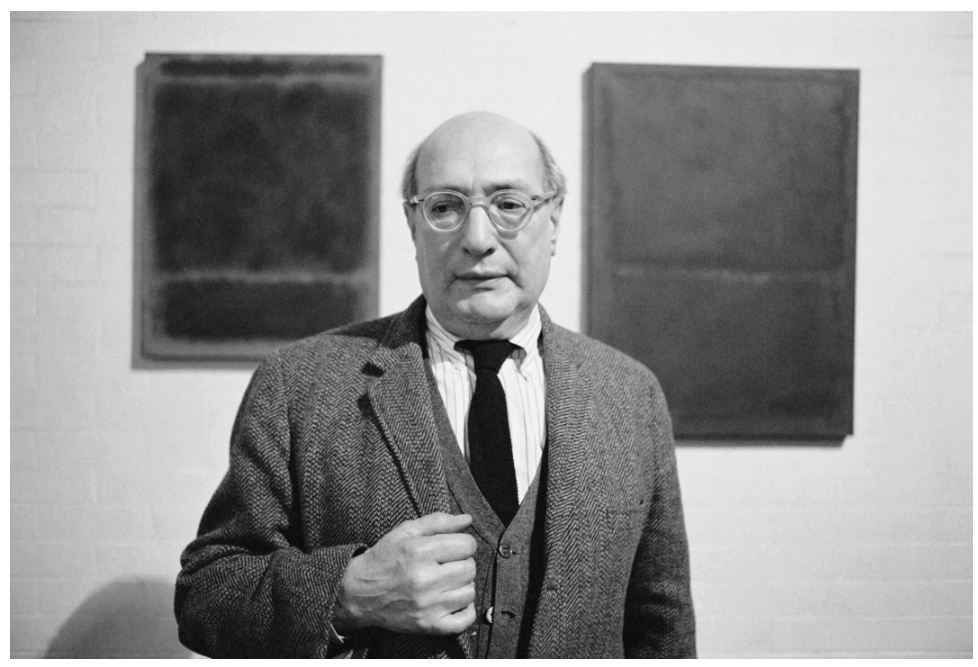
Mark Rothko, 1967. Photograph used with the permission of the Estate of Sedat Pakay. © Sedat Pakay | www.sedatpakay.com. Artwork: © 2026 Kate Rothko Prizel & Christopher Rothko / Artists Rights Society (ARS), New York.
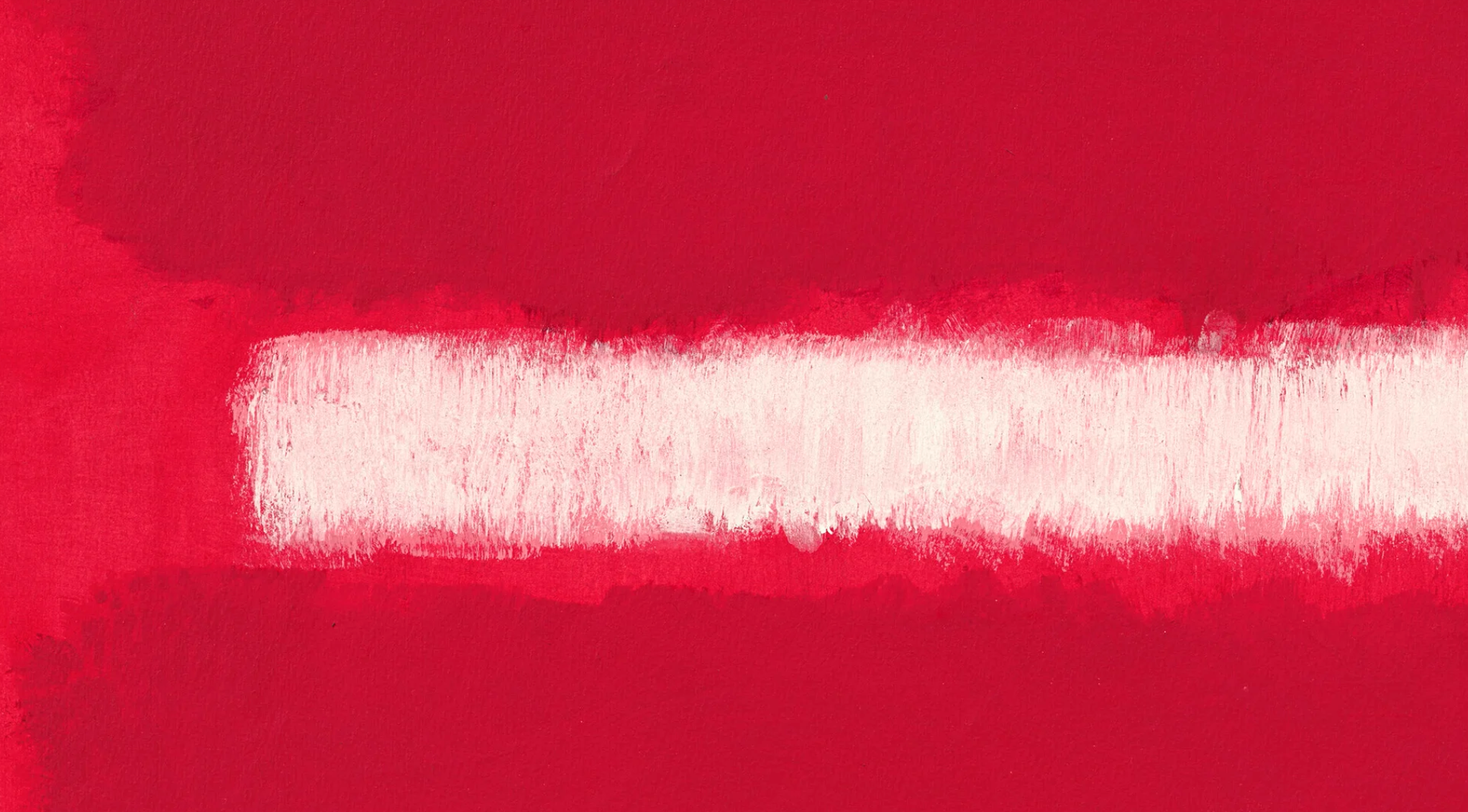
Distinguished by its infinite pools of deep cordovan over crimson red, separated by a dazzling and almost blinding white over a delicate pale pink, Untitled demonstrates the full force of Rothko’s belief in the power of his art. While the vibrancy of the colors are the first—and most obvious—draw, it is in the extremities of these fields of color that the real drama takes place. As the art historian Thomas Crow explains, “It is at the edges that the visual cues coalesce and propel one’s awareness back into the interiors with the heightened apprehension of the status congeries of many delicately coincident blocks of translucent color” (T. Crow, quoted by G. Phillips, “Introduction: Irreconcilable Rothko,” in in G. Phillips & T. Crow (eds.), Seeing Rothko, Los Angeles, 2002, p. 4). Indeed, as early as 1958, Dore Ashton identifies these areas as the most significant area of Rothko’s work: “I would like to suggest that the…edges, the quavering areas of light, the completely ambiguous extremities of Rothko’s forms…are the crucial carriers of Rothko’s complex expression” (D. Ashton, “Mark Rothko at Sidney Janis Gallery, 1958,” Arts & Architecture, vol. 75, April 1958).
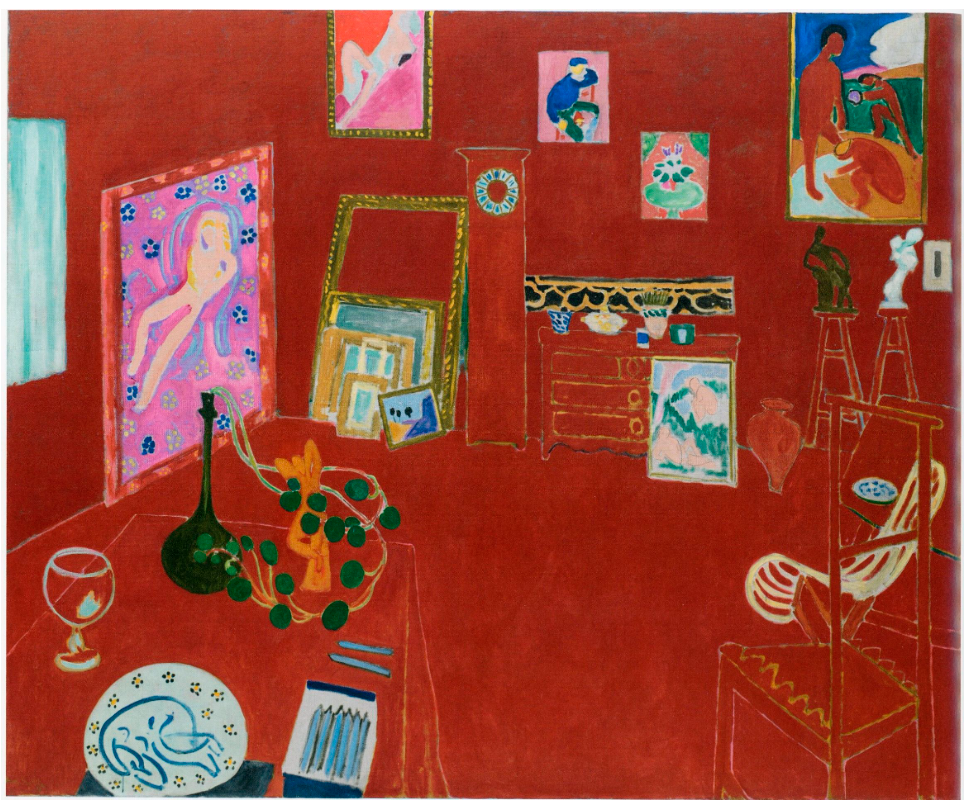
Henri Matisse, The Red Studio, 1911. Museum of Modern Art, New York.
Of all the pigments at Rothko’s disposal, red was arguably the most important, partly due to its psychological and historical connotations. But it was, perhaps, its optical intensity, and the effect of that intensity on the viewer that was most important to Rothko. This can be most clearly explained by his reaction to another famous “red painting” from art history, Matisse’s The Red Studio. Painted in 1911, it was acquired by the Museum of Modern Art in New York in 1949, where it was admired by Rothko from the moment it was installed. He admitted to having “spent hours and hours” standing in front the painting. “When you looked at that painting,” he said, “you became that color, you become totally saturated with it” (quoted in J. E. B. Breslin, Mark Rothko: A Biography, Chicago, 1993, p. 283). These encounters with Matisse clearly made a significant impression on Rothko, and he spent a lifetime trying to incorporate this “saturation” into the surface of his paintings. These efforts reached their epoch in the late 1960s, as art historian Bonnie Clearwater notes, “Some of his richest color orchestrations appear in little-known works on paper of late 1968 and 1969” (quoted in Mark Rothko Works on Paper, New York, 1984, p. 54).
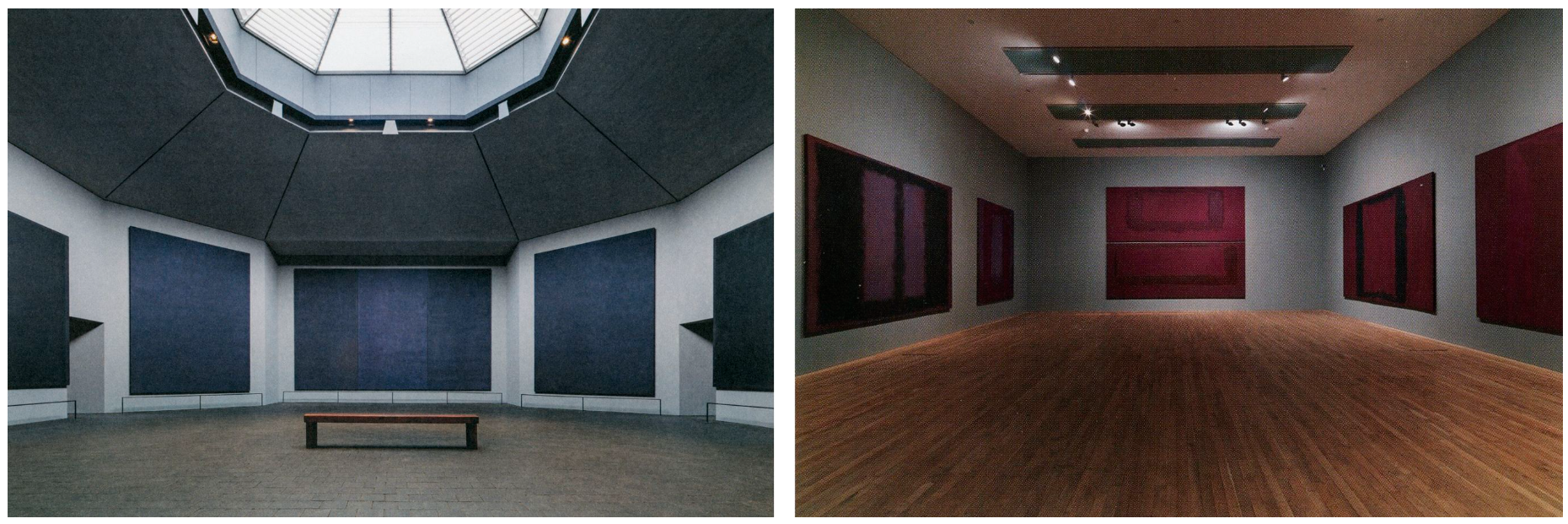
Left: The Rothko Chapel, Houston. Photo: © Elizabeth Felicella.
Right: Mark Rothko, Seagram Murals, 1959. Tate Britain, London. © 2026 Kate Rothko Prizel & Christopher Rothko / Artists Rights Society (ARS), New York.
Another important factor that has been identified as a possible cause for this unleashing of creativity in the late 1960s is the conclusion of one of the most important commissions of Rothko’s career. Occupying him for over three years, the commission by John and Dominique de Menil to install works for the interior of the newly built chapel at St. Thomas Catholic University in Houston, Texas became one of Rothko’s lasting legacies. Beginning in 1964, the fourteen monumental murals that would eventually occupy the modernist space absorbed all of Rothko’s physical and mental capacity but pushed him to new heights in terms of his creativity, as he noted in a 1966 letter to the de Menils, “The magnitude on every level of experience and meaning of the task in which you have involved me, exceeds all my preoccupations, and it is teaching me to extend myself beyond what I thought was possible for me” (quoted in A. Kirili, “Statuary Versus Idols,” Artforum, February 1983, online [accessed: 6/9/2026]). Completing the Rothko Chapel commission took its toll on the artist. As he had previously done after completing the Seagram Murals in 1959, in 1967 Rothko turned to paper, seemingly energized by working on a smaller scale and with immediate results, as the art historian Robert Goldwater notes, the paintings from this period were “in almost every way different from the brooding intensity of the Chapel, whose hold upon him seemed to have been released” (quoted in A. Greenhalgh, op. cit., p. 36).
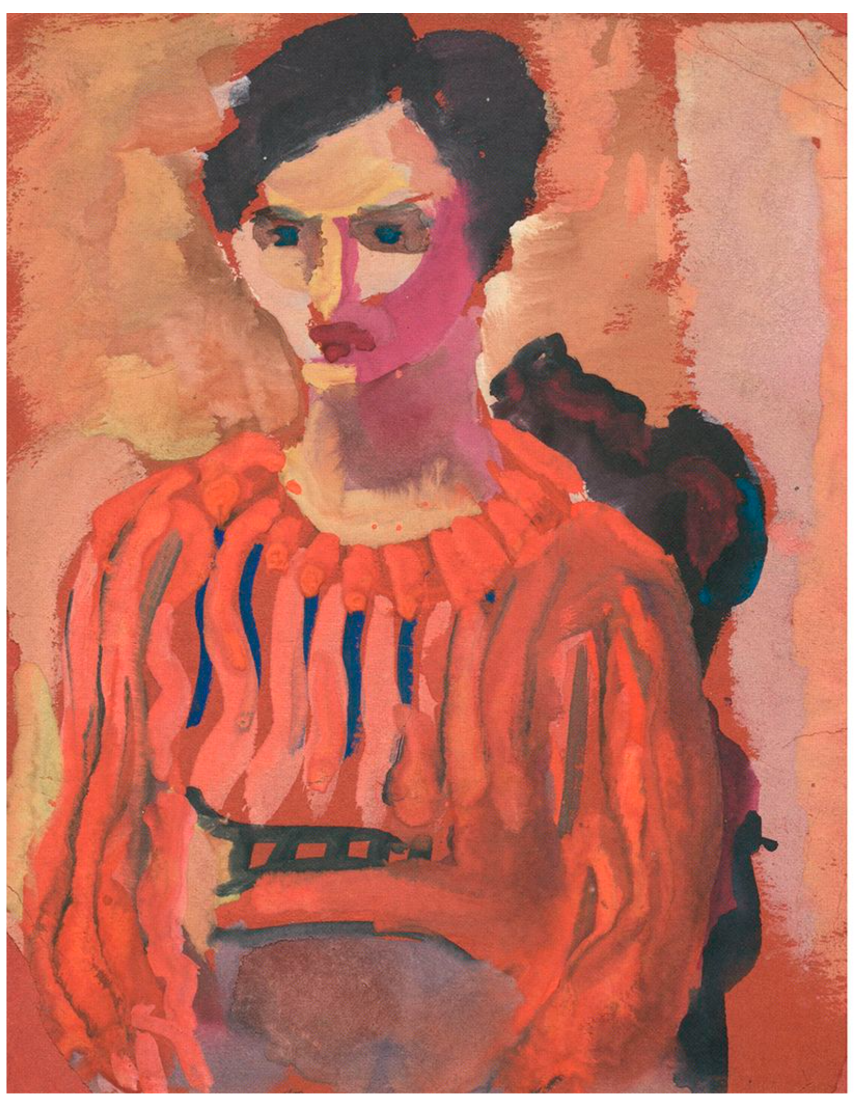
Mark Rothko, Untitled (seated woman in striped blouse), 1933-1934. National Gallery of Art, Washington, D.C. © 1998 Kate Rothko Prizel & Christopher Rothko / Artists Rights Society (ARS), New York.
According to Greenhalgh, Rothko focused on this favored medium during four distinct periods in his career and often used them to investigate and advance his painterly practice. His early works from the mid-1930s, such as the fields of color in the background of Untitled (seated woman in striped blouse) (National Gallery of Art, 1933/1934) herald his later abstractions, and by the mid-1940s—and works such as Untitled (National Gallery of Art, 1949)—they seem to have promoted him to unleash the full power of his abstraction and anticipated the diaphanous effects and rectangular forms of his best-known canvases. The late 1950s provided both respite and fresh inspiration after a taxing period working on his large-scale canvases and resulted in works such as Untitled (Private collection, 1959), while paintings on paper produced in the final years of the 1960s complicate the established narrative of Rothko’s darkening palette and the decline of his mental health, such as Untitled (Private collection, 1969).
This was all part of Rothko’s constant striving to push both himself and his artistic medium forward. In this he was following the teachings of one his own mentors, the Austrian painter and pioneer of art education, Franz Cižek. As early as the 1930s, Rothko studied Cižek’s views on raw, uninhibited creativity and incorporated them into his own work and later he often recommended them to his own students. Writing in his own notebooks, Rothko declared that “Cižek advises those to whom a certain medium becomes too easy and who run the risk of becoming too skilled in that medium, to try another which presents more difficulties to them” (quoted in B. Clearwater, Mark Rothko Works on Paper, New York, 1984, p. 56).
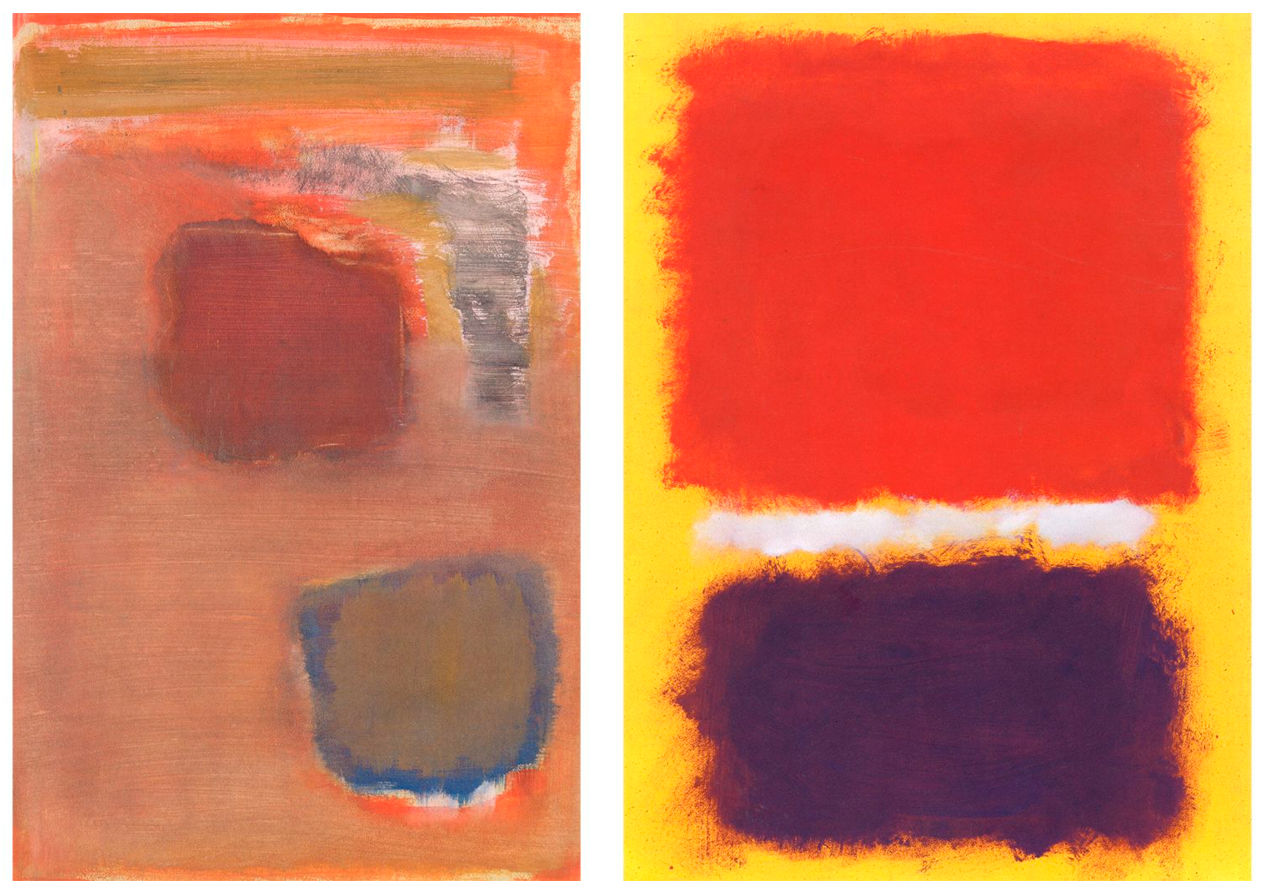
Left: Mark Rothko, Untitled, circa 1949. National Gallery of Art, Washington, D.C. © 1998 Kate Rothko Prizel & Christopher Rothko / Artists Rights Society (ARS), New York.
Right: Mark Rothko, Untitled, 1959. Private collection. © 1998 Kate Rothko Prizel & Christopher Rothko / Artists Rights Society (ARS), New York.
Like his hero Matisse, Rothko turned the adversity of ill health into an artistic triumph. What could have been a career-ending event, for Rothko unleashed a final stream of unrivaled creativity resulting in some of the most brilliant, vibrant, and emotionally resonant works of his career. Untitled sits at the zenith of this distinct group of works. The intensity of its pigment and the dynamism of the feathered edges represent a remarkable achievement for a work that was produced in the final years of his life. It thus upends the conventional narrative of Rothko’s life, proving that his creativity lasted right up until the end. “The progression of a painter’s work, as it travels in time from point to point,” Rothko wrote two decades earlier, “will be toward clarity: toward the elimination of all obstacles between the painter and the idea, and between the idea and the observer” (M. Rothko, quoted in D. Anfam, Mark Rothko, The Works on Canvas, Catalogue Raisonné, New Haven and London, 1998, p. 10.). Rothko’s late paintings on paper are among his most vividly powerful and expressive, culminating in that sense of total subjugation that he so desired.
Untitled, 1967
Untitled, 1967
Vision: The Extraordinary Collection of Theodore and Ruth Baum
Sotheby’s New-York: 16 November 2026
Estimated: USD 10,000,000 – 15,000,000
Mark Rothko | Untitled | Vision: The Extraordinary Collection of
MARK ROTHKO (1903 – 1970)
Untitled, 1967
Oil on paper mounted on canvas
40-1/2 x 26 inches (102.9 x 66 cm)
Imbued with glowing hues of fiery scarlet and brilliant tangerine floating above a raw, earthy ground, Untitled from 1967 affirms the prominence of Mark Rothko’s paintings on paper as among the most intimate and distilled expressions of his artistic thesis. Executed just three years before the artist’s passing in 1970, the present work ranks among the greatest of Rothko’s mature paintings on paper, distinguished by the unique vibrancy that has been remarkably preserved. Untitled’s feathery edges surround the two color fields in Rothko’s characteristic painterly technique, here with exceptional elegance, resulting in the chromatic brilliance, emotional immediacy, and meditative power that define Rothko’s greatest achievements.
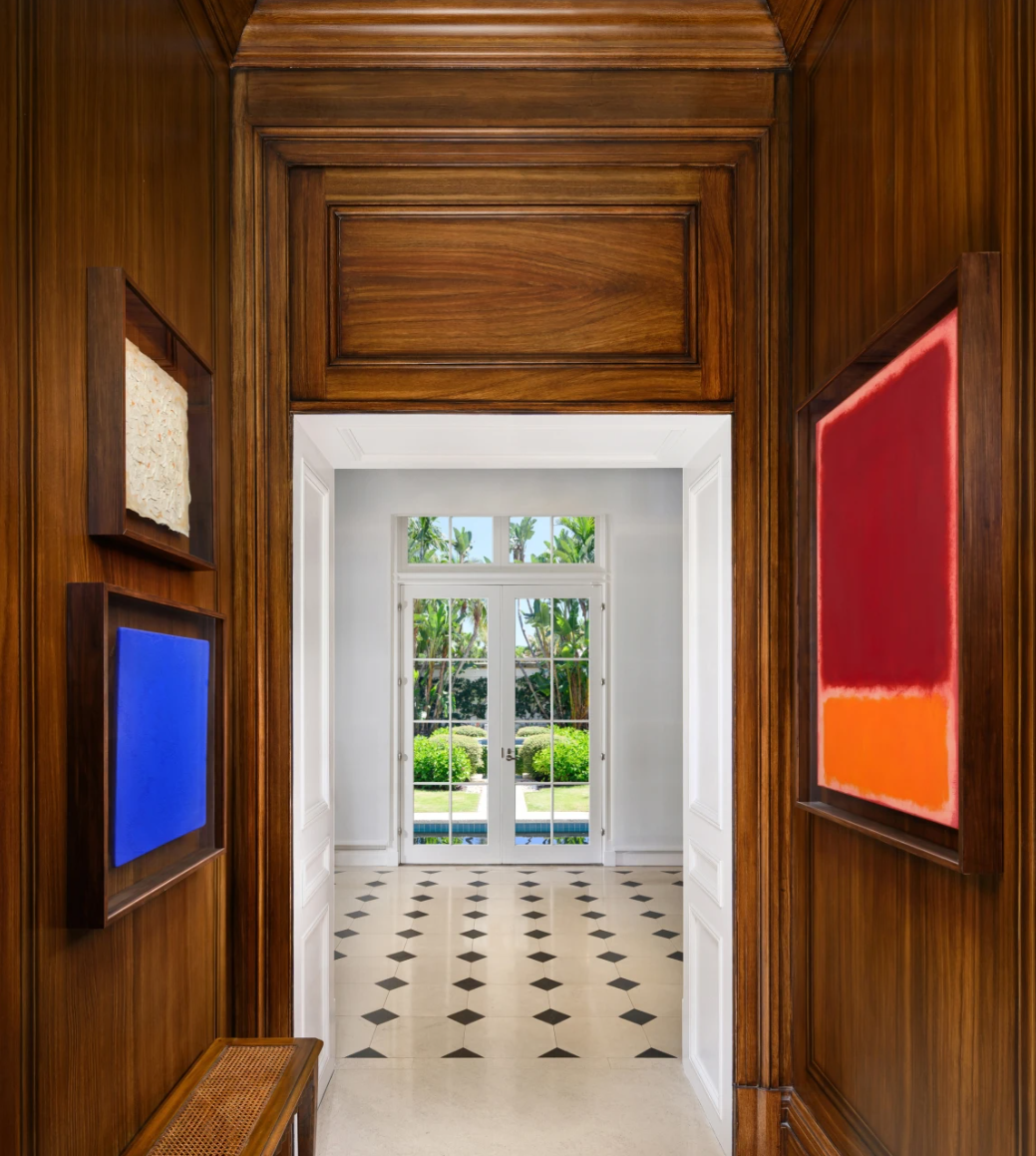
The Baum Residence, Palm Beach. From left: Lot 3, Ryman; Lot 19, Klein; Lot 5, Rothko. Art © 2023 Kate Rothko Prizel & Christopher Rothko / Artists Rights Society (ARS), New York. Art © 2026 Artists Rights Society (ARS), New York / ADAGP, Paris. Art © 2026 Robert Ryman. Photograph by Diana Todorova
Invoking a magnetic field of radiant hues, Untitled demonstrates Rothko’s unique ability to harness extraordinary emotional and visual force through his masterful command of color. As the first contemporary work ever acquired by Theodore and Ruth Baum, Untitled is a landmark example from the esteemed collection it has resided in for nearly half a century.
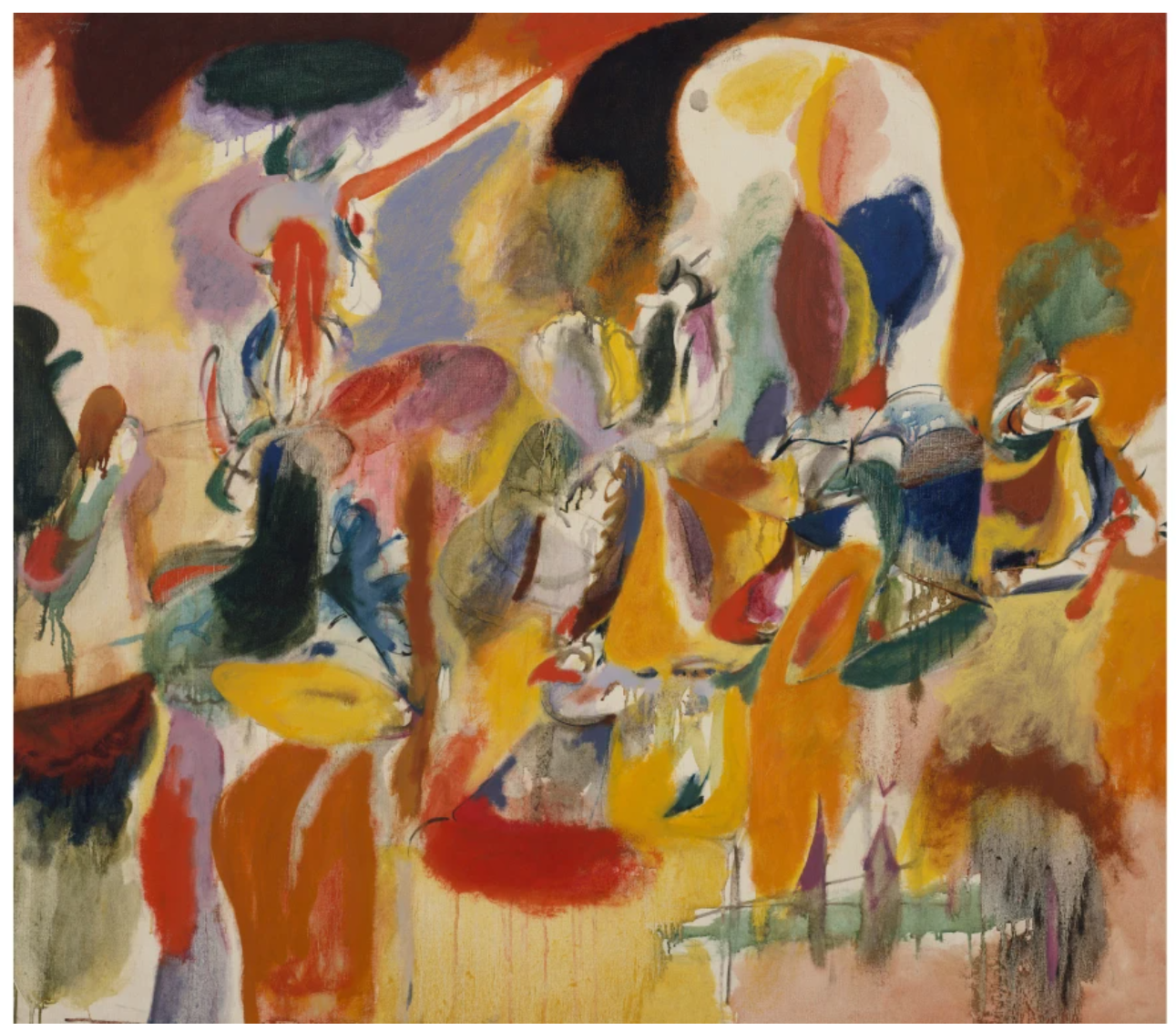
Arshile Gorky, Water of the Flowery Mill, 1944. The Metropolitan Museum of Art, New York. Image © The Metropolitan Museum of Art. Image source: Art Resource, NY. Art © 2026 The Arshile Gorky Foundation /Artists Rights Society (ARS), New York
Executed during the final years of his career, this work recalls one of Rothko’s last great periods of luminous color before the palette of his final paintings dimmed considerably. Grounded in golden and blush tones, luminous passages of crimson red and tangerine orange framed by a bed of rose pink and wisps of cream lie upon the paper mounted to canvas, ready to burst with the chromatic intensity that transcends mere scale, exuding palpable warmth and revealing Rothko’s unparalleled command of color as an expressive vehicle. Red examples from this period possess the force of compressed infernos of visual impact, appearing almost red hot to the touch, or as radiant sunbursts drawn directly out of the sky. Following the completion and widespread appreciation of the historic series of paintings for the Seagram Building in New York in the late 1950s, today known as the Seagram Murals, Rothko’s engagement with red in his works on canvas and paper alike attracts a specific reverence within his oeuvre. The artist infused a unique living essence into his red works, saying he wanted these works to have such a “presence” that “when you turned your back to the painting, you would feel that presence the way you feel the sun on your back.” (the artist quoted in: James E. B. Breslin, Mark Rothko: A Biography, Chicago, 1993, p. 275)
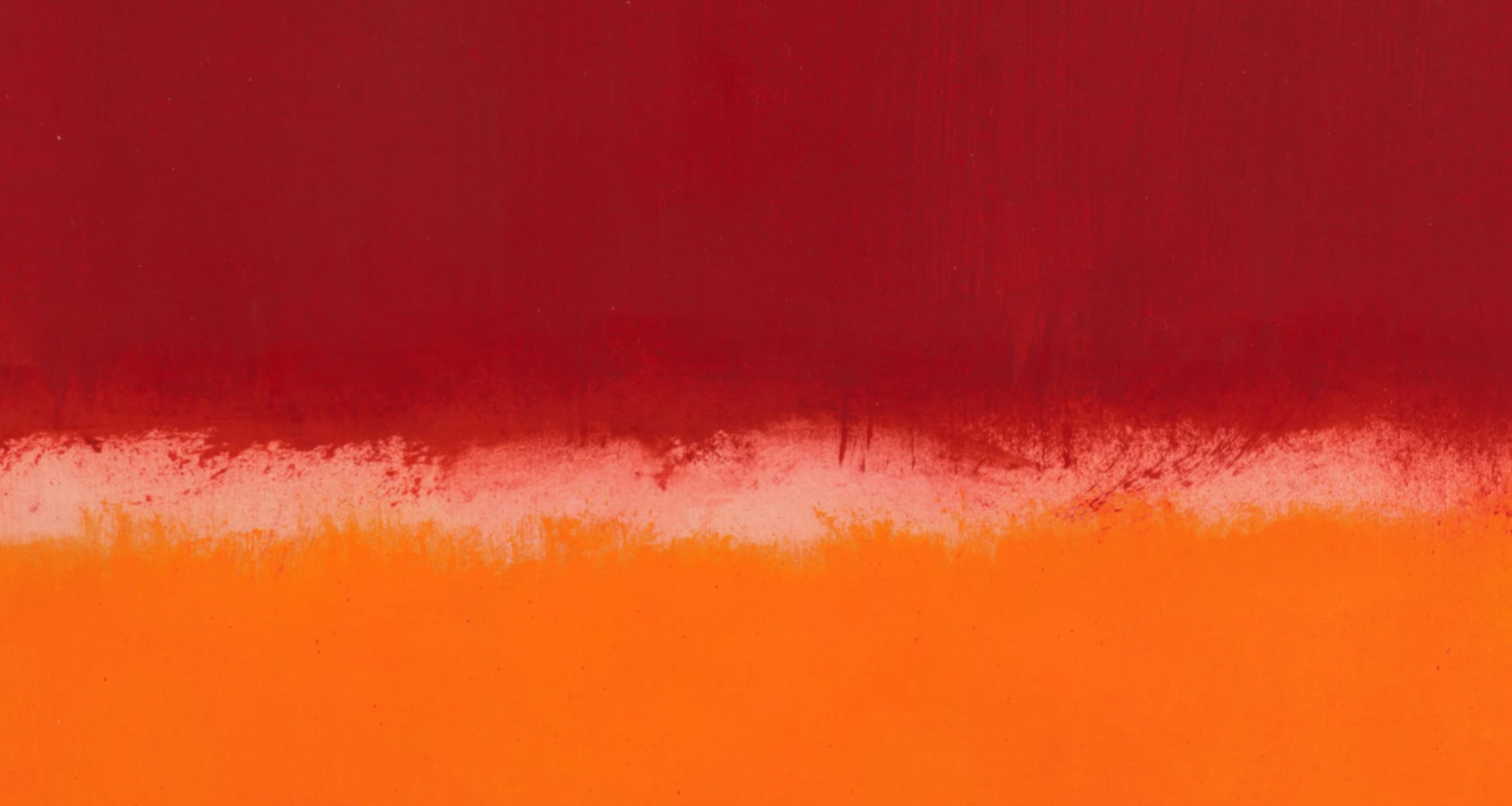
In Untitled, these incandescent hues achieve a remarkable harmony between intensity and repose, creating an image that simultaneously commands attention and invites contemplation. The present work embodies the visual resonance and emotional essence of Rothko’s acclaimed large-scale canvas works encapsulated in an intimate, immersive format. Indeed, Untitled epitomizes the best of this body of work as described by Clearwater: “Thus with their symmetry, tidy execution, and minimal gesture, the small works on paper often seem to be more quintessential Rothko than many of his canvases.” (Bonnie Clearwater, Exh. Cat., Washington, D.C. (and traveling), Mark Rothko: Works on Paper, 1984-86, p. 39) While Rothko’s Abstract Expressionist peers like Franz Kline and Willem de Kooning deconstructed the picture plane through an ostensibly unbridled gestural fortitude, Rothko tested the absolute limits of abstraction through radiant zones of pure color, hovering in metaphysical tension with each other. Rothko’s compositions achieve a transformative sense of harmony and balance through the subtle asymmetries and idiosyncrasies of their forms. Devoid of representation, the subject of Rothko’s work becomes the pure expression of color and light.
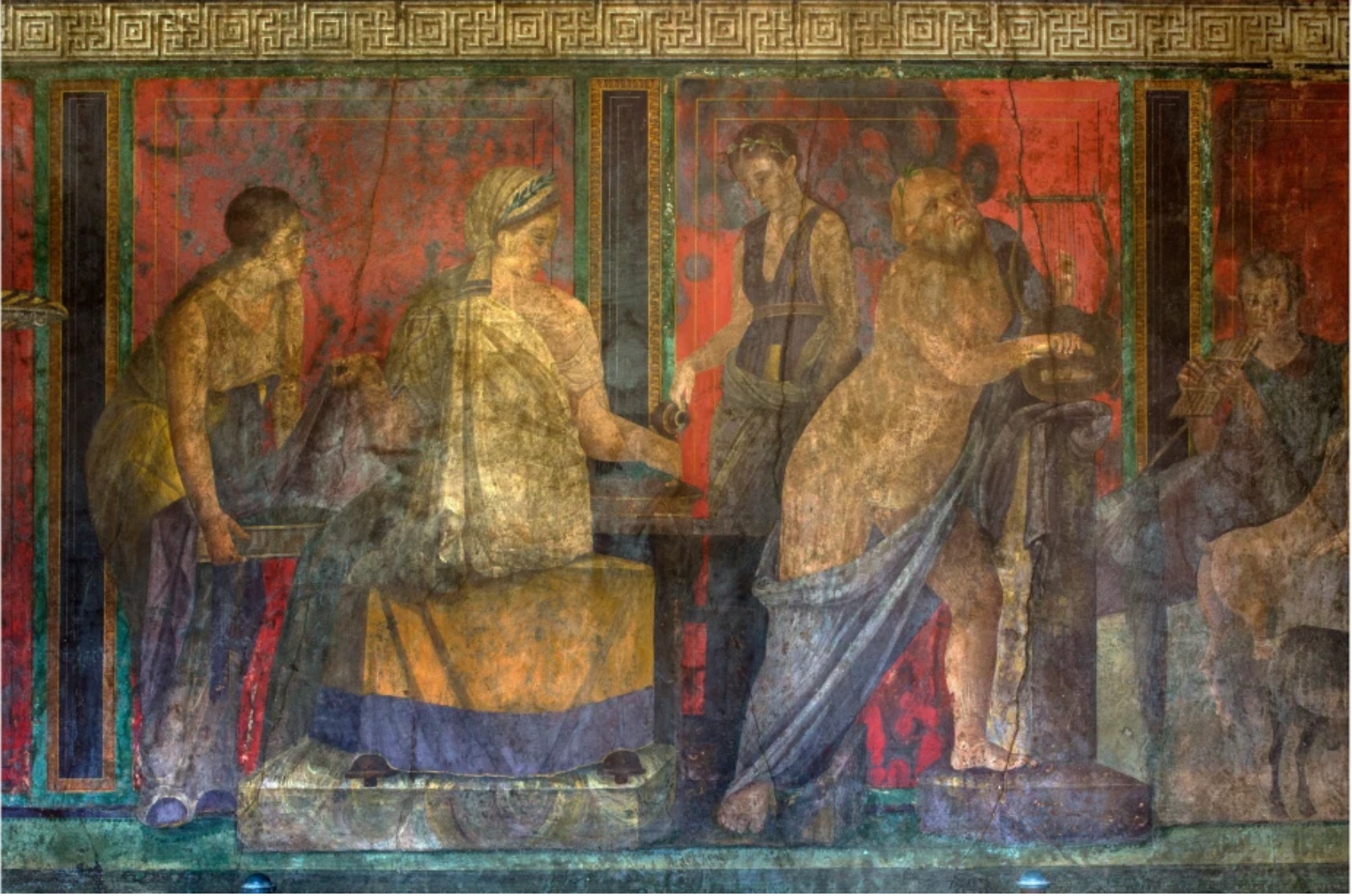
Roman Hall of the Great Fresco – Lustration, 1st century B.C. Villa of the Mysteries, Pompeii.
Image © Andrea Jemolo. All rights reserved 2026 / Bridgeman Images
Rothko, like many of his peers, transitioned to working at a smaller scale in the final years of his life. Paper was a foundational medium for Rothko throughout his career, operating as an essential vessel for channeling chromatic force. As Dore Ashton observed, “Rothko more than any artist I have known succumbed to the lure of light… light that envelops us and is all things that are not… It was most certainly his experience with the paradoxical nature of paper—absorbing and reflecting at the same time—that set him on his course to the great clearing away that his life’s work represents.” (Dore Ashton, “Introduction,” in: Exh. Cat., Washington, D.C., National Gallery of Art (and traveling), Mark Rothko: Works on Paper, 1984- 86, p. 9)
Market Precedent: Rothko’s Mounted Paintings on Paper
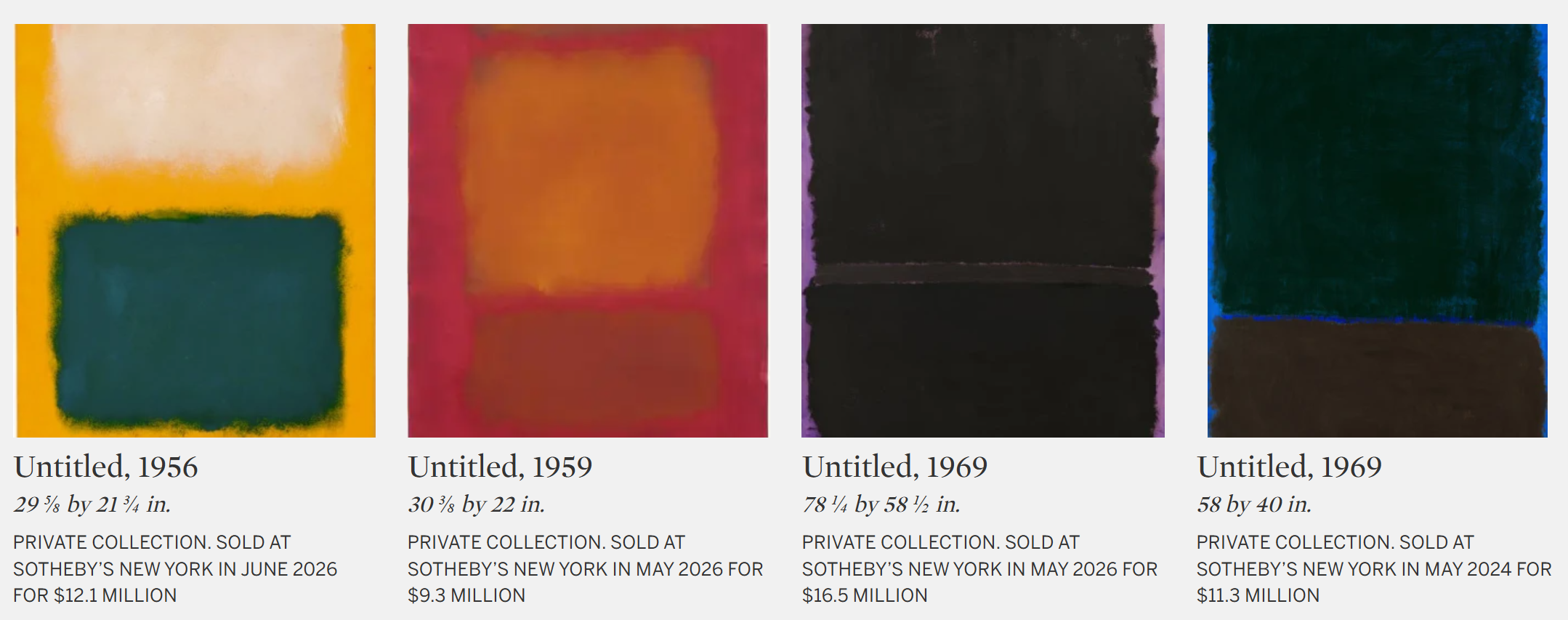
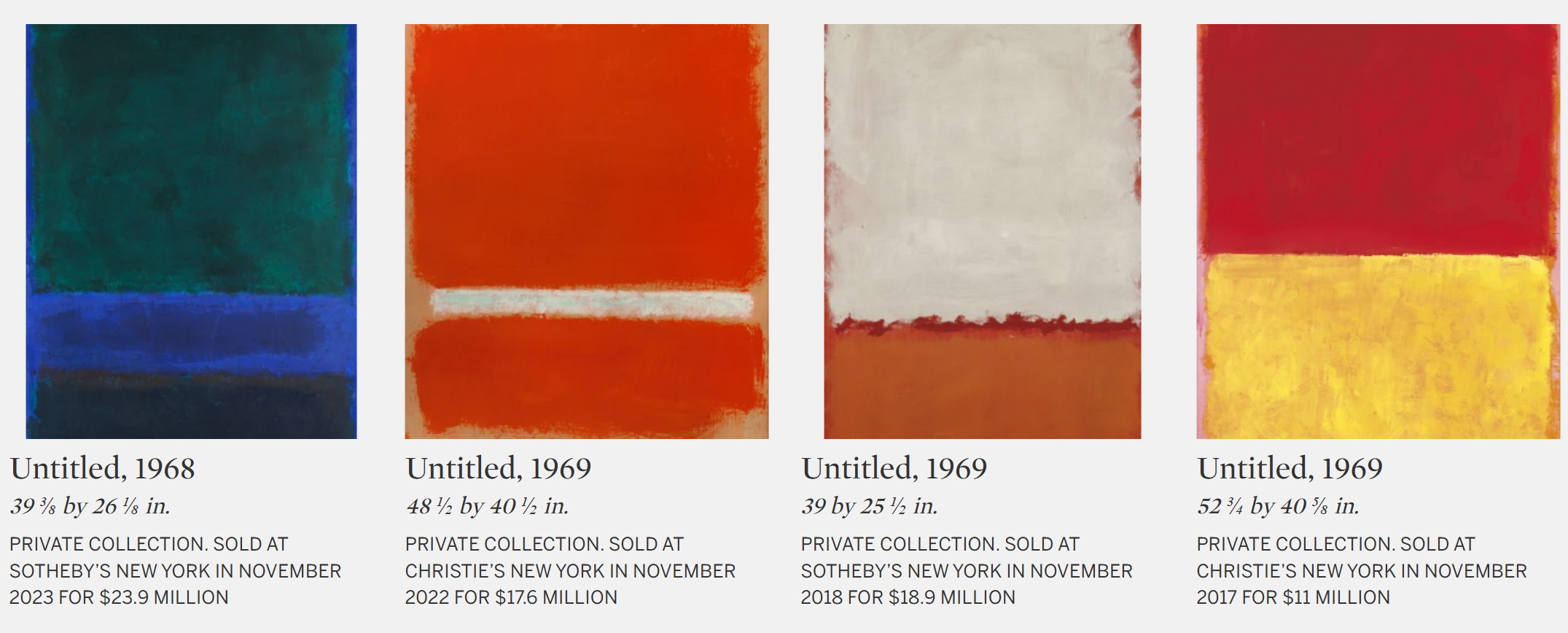
Begun in the early 1930s and typically executed at a more intimate scale, Rothko’s works on paper, such as Untitled, afford a closer engagement with their viewers. As head author of the forthcoming Catalogue Raisonné of works on paper, Adam Greenhalgh notes, “This focus on public versus private is relevant because Rothko was extremely careful, controlling even, about how his works were displayed and to whom they were sold. The relationship between a work of art and a receptive viewer was quite possibly his most abiding concern.” Indeed, for Rothko, the viewer’s close engagement with his works was foundational to their meaning, and his works on paper championed that philosophy.
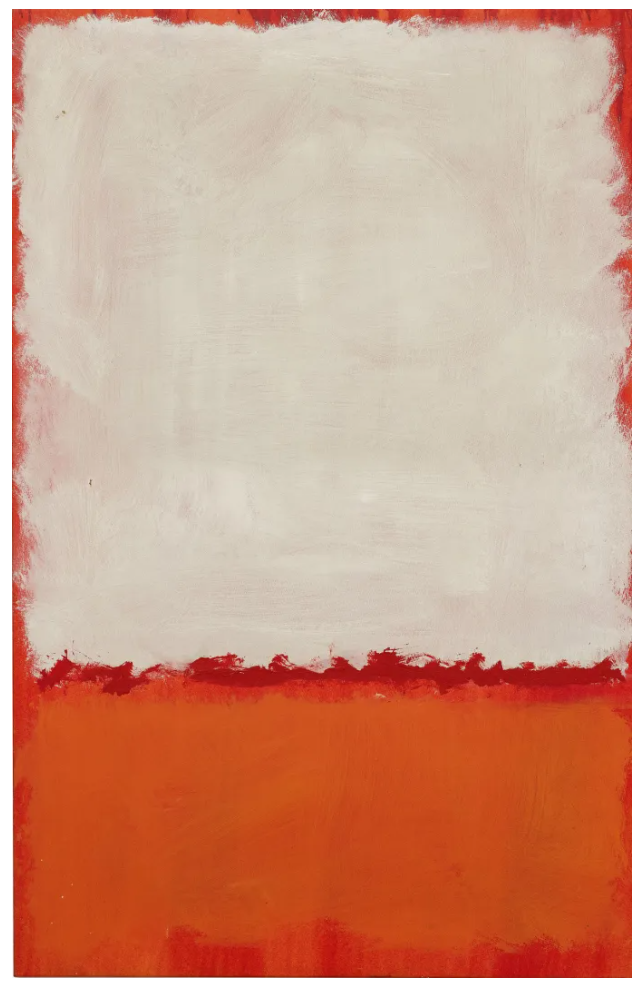
Mark Rothko, Untitled, 1969. Private Collection. Sold at Sotheby’s in May 2018 for $18.9 million. Art © 1998 Kate Rothko Prizel & Christopher Rothko / Artists Rights Society (ARS), New York
Across his career, Rothko continually returned to color as the primary means through which to communicate the breadth of human emotion. His works do not depict feeling so much as embody it, translating states of ecstasy, melancholy, contemplation, and wonder into radiant chromatic relationships. The present work stands among the most powerful examples of this achievement. Standing as one of the final red works on paper of Rothko’s life, the present work seems to pulse with life, offering an all-encompassing, sun-bathed meditation upon each glimpse.
Untitled, 1968
Untitled, 1968
Property from an Important American Collection
Sotheby’s New-York: 17 November 2026
Estimated: USD 3,500,000 – 5,000,000
Mark Rothko | Untitled | Contemporary Day Auction | 2026 | Sotheby’s
MARK ROTHKO (1903 – 1970)
Untitled, 1968
Acrylic on paper mounted on board
23-7/8 x 18-5/8 inches (60.6 x 47.3 cm)
Mystical, meditative, and profoundly affecting, Untitled stands among the most compelling manifestations of Mark Rothko’s late works on paper, a body of work increasingly recognized as one of the crowning achievements of his career. Executed in 1968, at a moment when decades of his formal and chromatic experimentation had been distilled to their purest expression, the present work embodies the extraordinary equilibrium that Rothko achieved in his final years: an art of immense emotional breadth wrought from the simplest of forms and palette. Within a composition structured by expansive passages of wine, rust, electric blue, and black, Rothko transforms the composition into a space for contemplation, creating a painting that is at once intimate in scale and monumental in psychological presence.
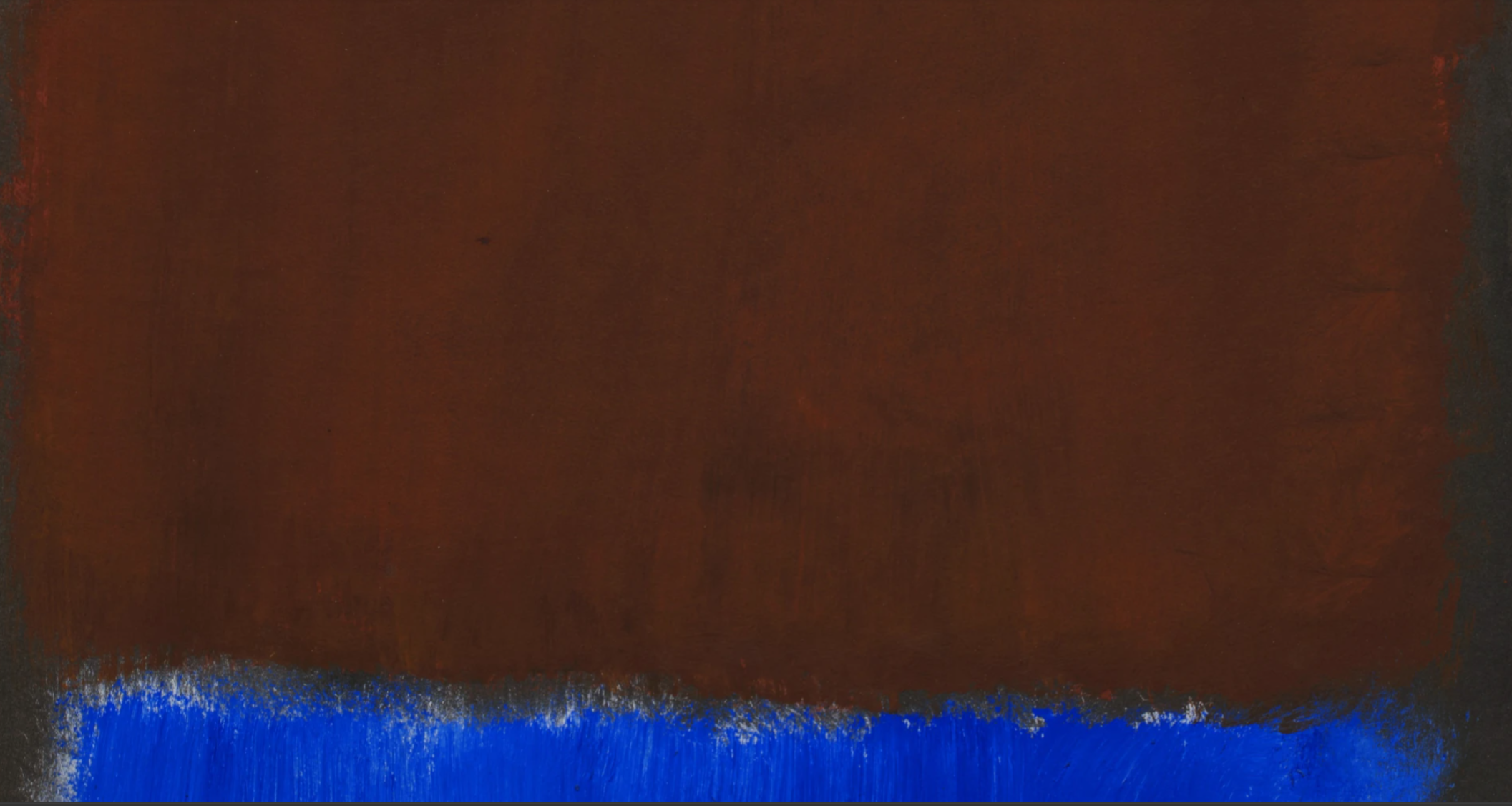
Toward the final years of Rothko’s life, following the completion of the two landmark commissions and a jarring aneurysm in the spring in 1968, he devoted increasing attention to exploring the expressive possibilities and absolute limits of painting on paper, refraining also from the physical labor of painting larger canvases. Having already achieved international acclaim, the artist nevertheless remained relentless in his pursuit of pushing painting beyond the confines of the picture plane. His transition from canvas to paper during the late 1960s represents the culmination of this unceasing artistic inquiry, a period in which Rothko distilled decades of experimentation into some of the most concentrated and profoundly affecting works of his career. Described by Bonnie Clearwater, “These works…are essential to a fuller understanding of Rothko’s career. Together with the canvases, the works on paper chart the artist’s quest for an elemental language that would communicate basic human emotions and move all mankind” Exh. Cat., New York, American Federation of the Arts, Mark Rothko: Works on Paper, 1984, p.17).
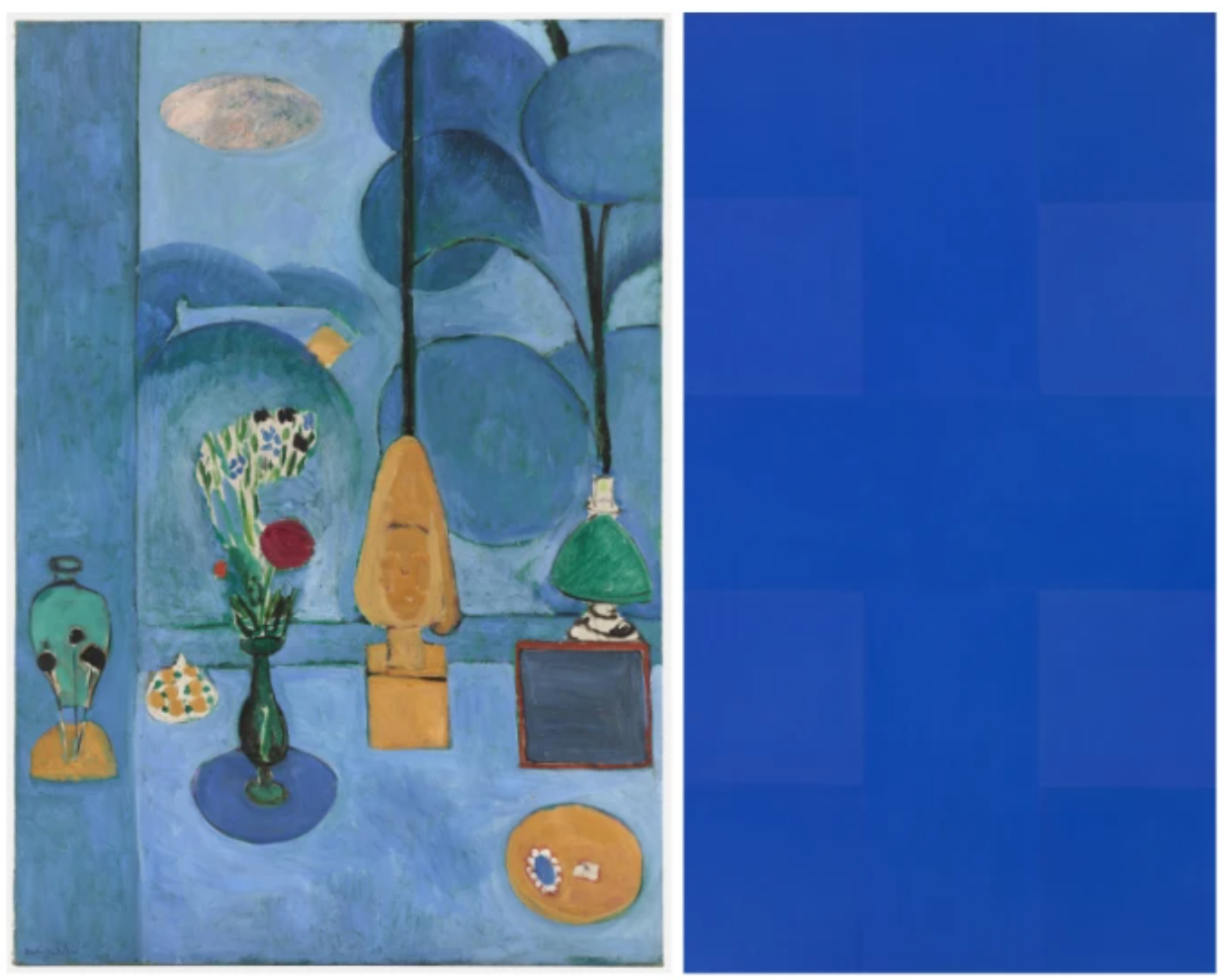
LEFT : Ad Reinhardt, Abstract Painting, Blue 1953. Whitney Museum of American Art, New York. Photo © Estate of Ad Reinhardt/Artists Rights Society (ARS)
RIGHT: Henri Matisse, The Blue Window, 1913. © 2026 Succession H. Matisse / Artists Rights Society (ARS), New York
Until his death in 1970, the trajectory of these later years in Rothko’s life proved to expose the artist’s rawest and most pronounced sensitivities, a magnified introspection that provided the emotional catalyst for his palette progressing towards hauntingly darker hues. While the works from this period are famously characterized by their ominous darkness, Untitled from 1968 demonstrates the complexities of Rothko’s hues: the hovering bands of rust and maroon against the black ground shift before the eye like shadows across a deserted valley, the twilight glimmering from the electric blue bottom of the canvas like the distant dawn rising. Pushing the bounds of painting using his distinctive economy of forms, Rothko’s abstract fields of pigment here evolve before the eye into landscape, the feathered blue strokes allowing a bright white to delicately twinkle as the moon twinkles upon the night ocean. The present work immerses the viewer into a space that is both reminiscent of a familiar landscape and deeply meditative and spiritual.
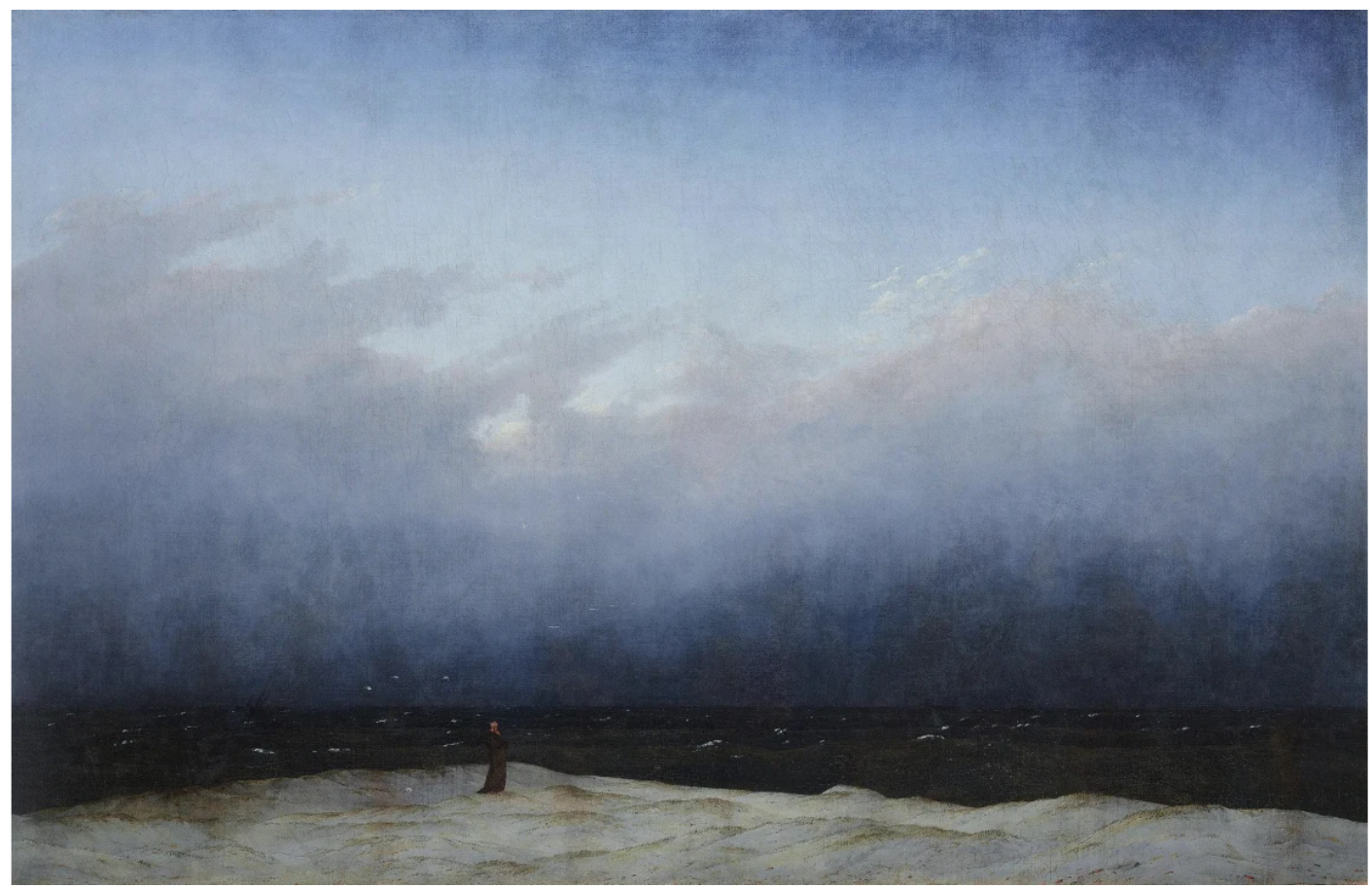
Caspar David Friedrich, Monk by the Sea, 1808-1810. Image © Staatliche Museen zu Berlin, Nationalgalerie / Andres Kilger
Evoking a luminous sensuality, Untitled‘s rectangular panes of dark wine and rust pigment rest like veils over the vibrating lower register. The internal fields provide only a glimpse of the underlying hues beneath, as they softly feather out towards the edges of the canvas. Demanding an intimate engagement, the work slowly reveals itself to the viewer with its subtle tonal variations slowly emerging to the surface. Unlike many of his earlier works, where his vibrant bands energetically clash against each other, Untitled reveals a more serene and introspective approach where the elements seem to radiate from one another. The surface reveals a masterful interplay between density and transparency, allowing light to penetrate the pictorial structure while preserving its densely shadowed presence. Remaining mostly dark around the edges of the paper, hints of light emerge like a radiating halo. The complimenting warm amber and brilliant blue tones are visually arresting yet deeply balanced, conjuring a space that feels simultaneously earthly and celestial.
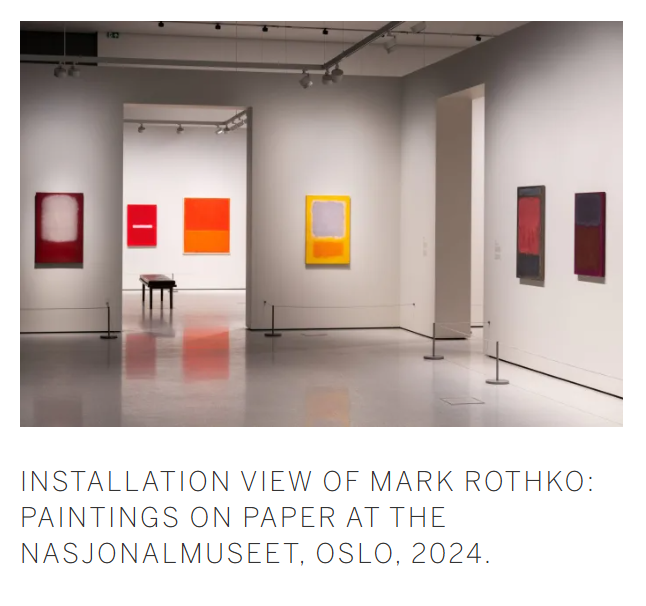
Rothko’s late works on paper have attracted increasing institutional attention over the past decade. Notably, the National Gallery of Art’s 2023 landmark exhibition Mark Rothko: Paintings on Paper brought renewed focus to this substantial body of work, expanding public understanding of the Rothko’s artistic development beyond the canvas and underscoring the significance of paper within his broader oeuvre. Narrowing its focus to the final phase of Rothko’s career, Pace Gallery held an exhibition dedicated to the artist’s works on paper, 1968: Clearing Away, bringing together a distinguished group from this pivotal year which included the present work. Distinguished by its magnetic chromatic intensity and contemplative depth, Untitled exemplifies the remarkable achievements of Rothko’s final works on paper. At once intimate and limitless, the present work demonstrates Rothko’s unwavering commitment to pushing the expressive possibilities of abstraction to their furthest limits, achieving a renewed sense of artistic freedom during the final years of his career.