Fall 2026 New-York Marquee Auctions
Fernando Botero
Auction Results
Horse, 2006
Property from the Collection of Fernando Botero Jr.
Christie’s New-York: 17 November 2026
Estimated: USD 3,000,000 – 5,000,000
FERNANDO BOTERO (1932-2023), Horse | Christie’s
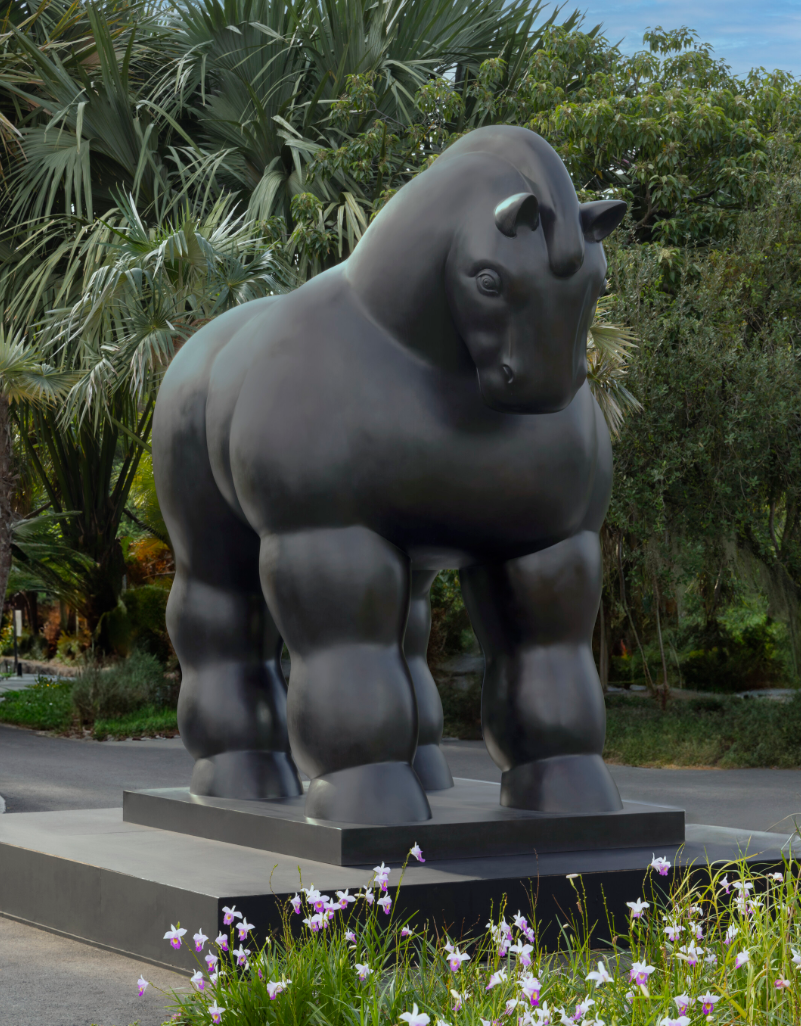
FERNANDO BOTERO (1932-2023)
Horse, 2006
Bronze
334.7 x 299.7 x 190.5 cm (131-3/4 x 118 x 75 inches)
Signed, numbered and stamped with the foundry mark ‘Botero 2⁄3’ (on the base)
This work is number two from an edition of three
Mother and Child, 1979
Sotheby’s New-York: 17 November 2026
Estimated: USD 1,800,000 – 2,500,000
GUARANTEED PROPERTY
Fernando Botero | Mother and Child | Contemporary Day Auction | 2026
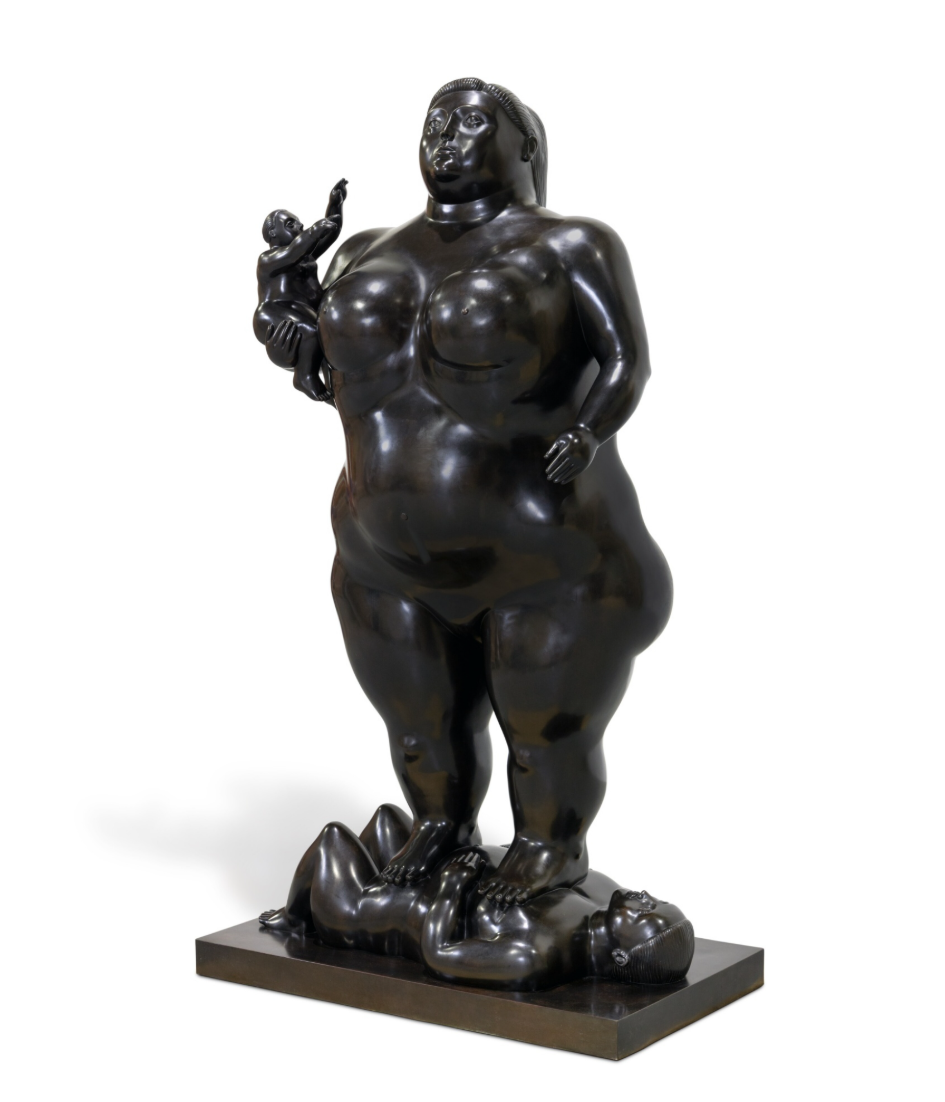
FERNANDO BOTERO (1932 – 2023)
Mother and Child, 1979
Bronze
210 x 115.6 x 68.6 cm (82-5/8 x 45-1/2 x 27 inches)
Incised with the artist’s signature and number AP 2/2 (on the base)
This work is artist’s proof number 2 from an edition of 3 plus 2 artist’s proofs
The Arnolfini Portrait, after van Eyck, 1978
The Clive Davis Collection
Christie’s New-York: 17 November 2026
Estimated: USD 1,000,000 – 1,500,000
THIRD PARTY GUARANTEE
FERNANDO BOTERO (1932-2023), The Arnolfini Portrait, after van Eyck | Christie’s
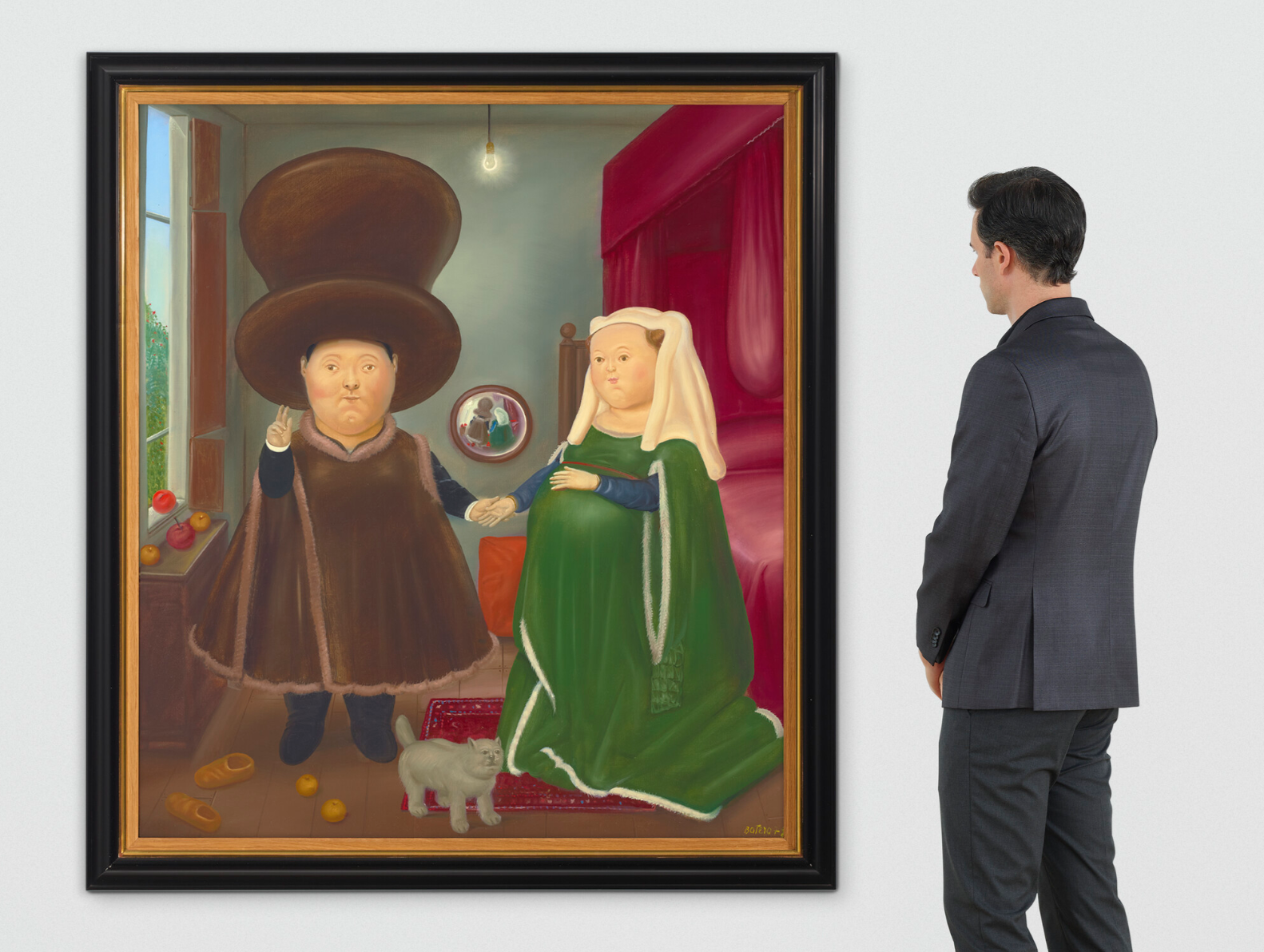
FERNANDO BOTERO (1932-2023)
The Arnolfini Portrait, after van Eyck, 1978
Oil on canvas
134.6 x 118,1 cm (53 x 46-1/2 inches)
Signed and dated ‘Botero 78’ (lower right)
Cardenal (Niño de Guevara), 1964
Christie’s New-York: 20 November 2026
Estimated: USD 900,000 – 1,200,000
FERNANDO BOTERO (1932-2023), Cardenal (Niño de Guevara) | Christie’s
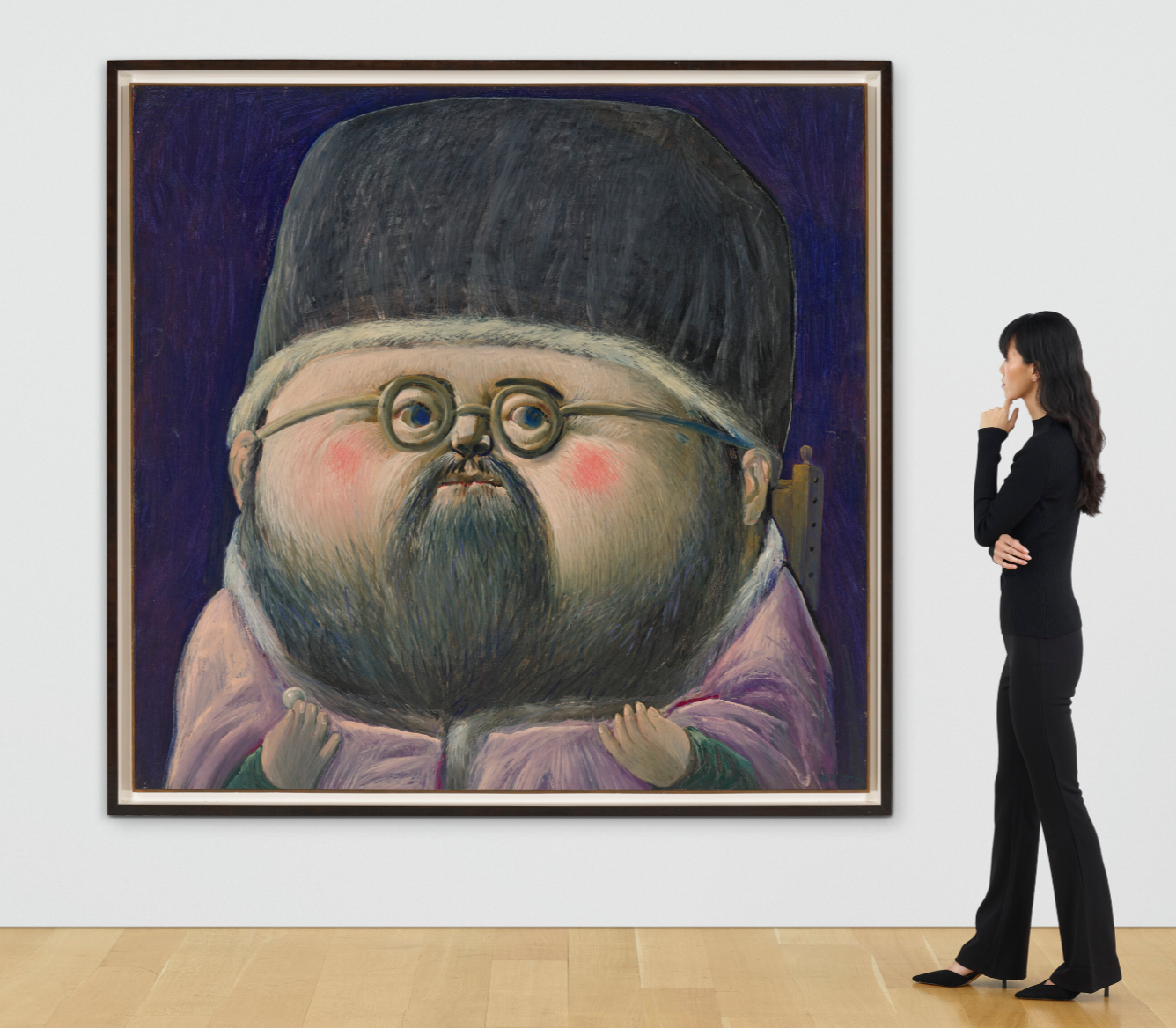
FERNANDO BOTERO (1932-2023)
Cardenal (Niño de Guevara), 1964
Oil on canvas
67-1/4 x 70 inches (170.8 x 177.8 cm.
Signed and dated ‘Botero – 64’ (lower right)
Signed again, titled and dated again
‘CARDENAL NIÑO DE GUEVARA BOTERO – 64’
(on the reverse)
El picador, 1984
Sotheby’s New-York: 17 November 2026
Estimated: USD 800,000 – 1,200,000
GUARANTEED PROPERTY
Fernando Botero | El picador | Contemporary Day Auction | 2026 |
FERNANDO BOTERO (1932 – 2023)
El picador, 1984
Oil on canvas
153.7 x 121.9 cm (60-1/2 x 48 inches)
Signed (lower right)
Reclining Man, 1978
Looking Forward: The Collection of Beverly Grossman
Sotheby’s New-York: 17 November 2026
Estimated: USD 800,000 – 1,200,000
Fernando Botero | Reclining Man | Contemporary Day Auction | 2026 |
FERNANDO BOTERO (1932 – 2023)
Reclining Man, 1978
Oil on canvas
149.9 x 188 cm (59×74 inches
Signed and dated 78 (lower right)
Le Buffet, 1970
Sotheby’s New-York: 17 November 2026
Estimated: USD 800,000 – 1,200,000
Fernando Botero | Le Buffet | Contemporary Day Auction | 2026 |
FERNANDO BOTERO (1932 – 2023)
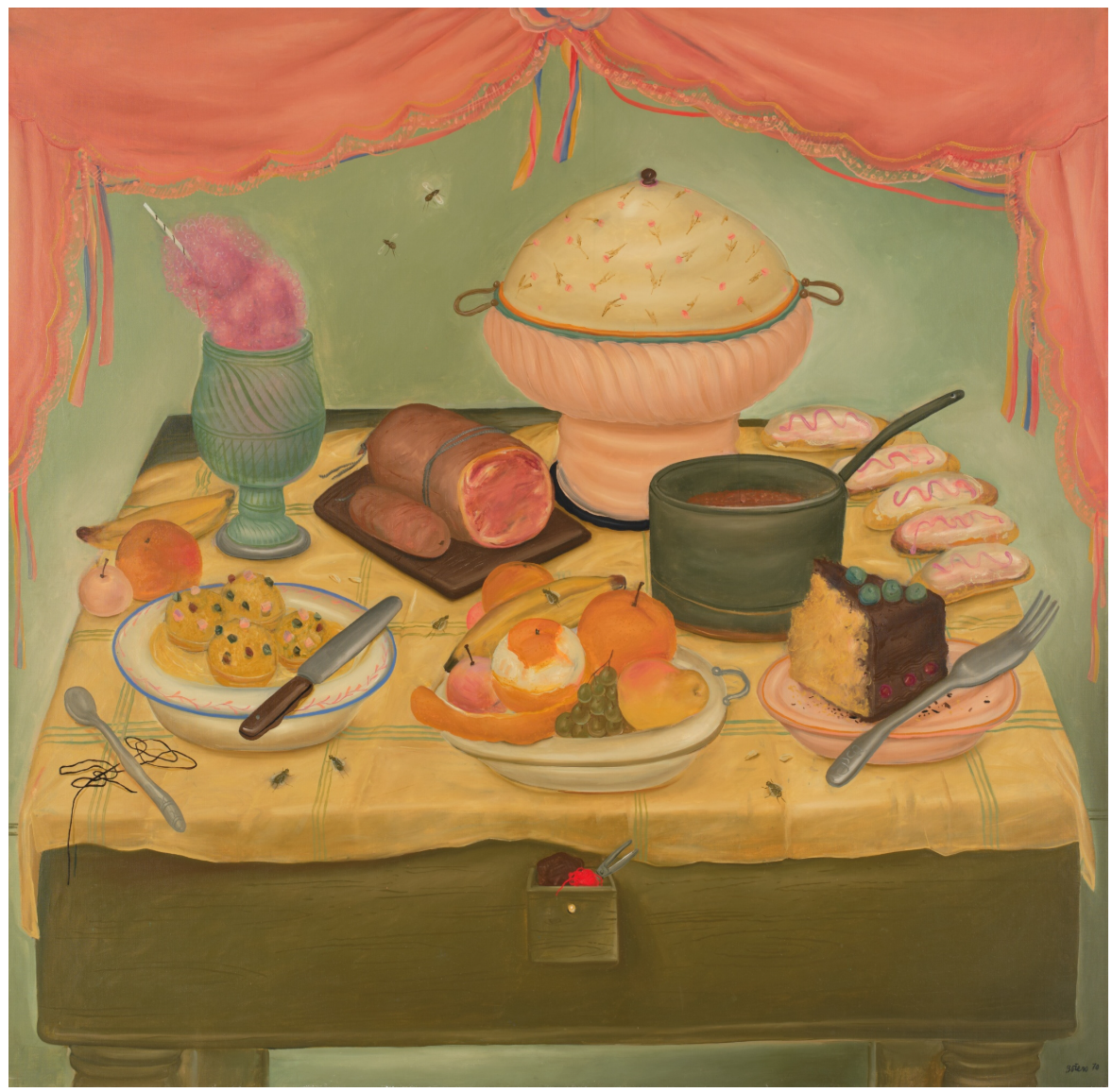
Le Buffet, 1970
Oil on canvas
188 x 191.8 cm (74 x 75-1/2 inches)
Signed and dated 70 (lower right)
Signed with the artist’s initials (center right)
Signed, dated 70 and titled (on the reverse)
Man on Horse, 1985
Sotheby’s New-York: 17 November 2026
Estimated: USD 600,000 – 800,000
Fernando Botero | Man on Horse | Contemporary Day Auction | 2026 |
FERNANDO BOTERO (1932 – 2023)
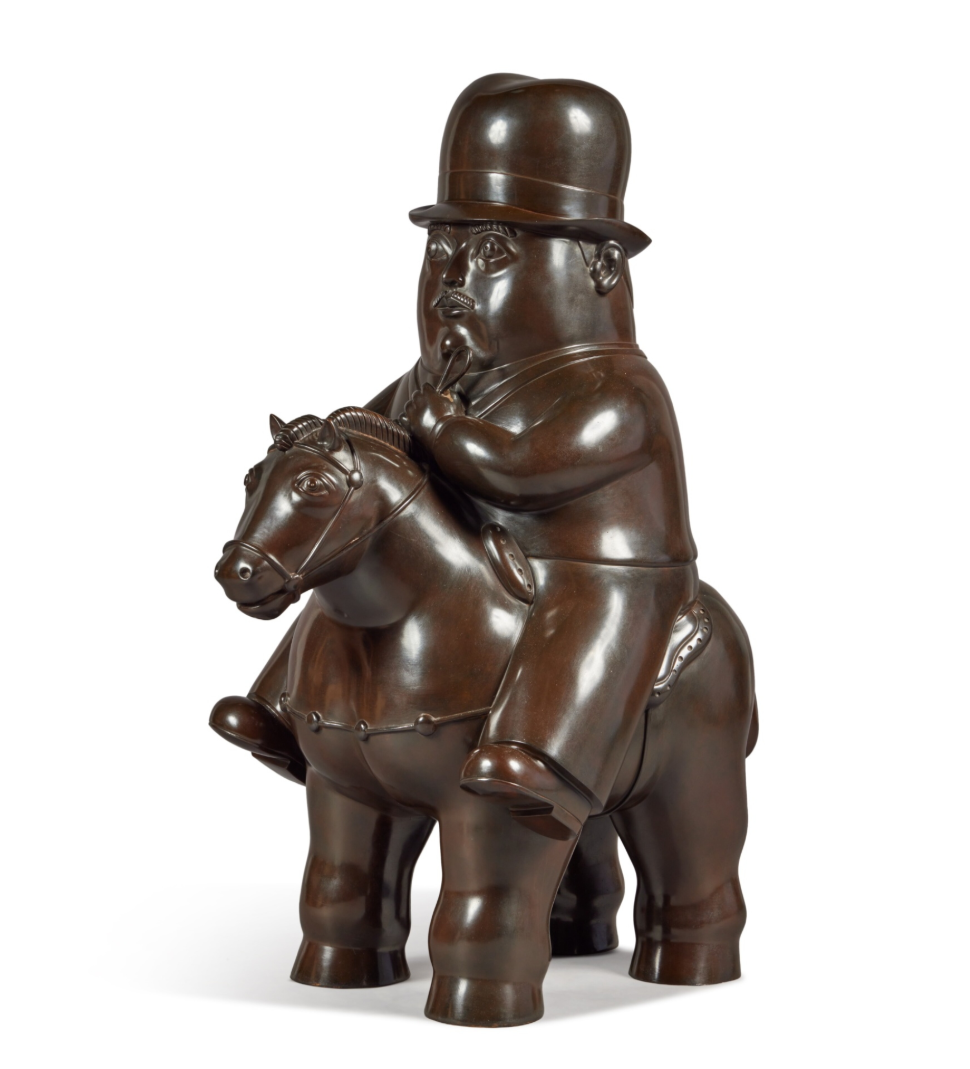
Man on Horse, 1985
Bronze
106.7 x 43.2 x 88.9 cm (42x17x35 inches)
Incised with the artist’s signature and number 2/6 (lower edge)
This work is number 2 from an edition of 6 plus 2 artist’s proofs
Femme nue allongée, 2000
Sotheby’s New-York: 17 November 2026
Estimated: USD 600,000 – 800,000
Fernando Botero | Femme nue allongée | Contemporary Day Auction |
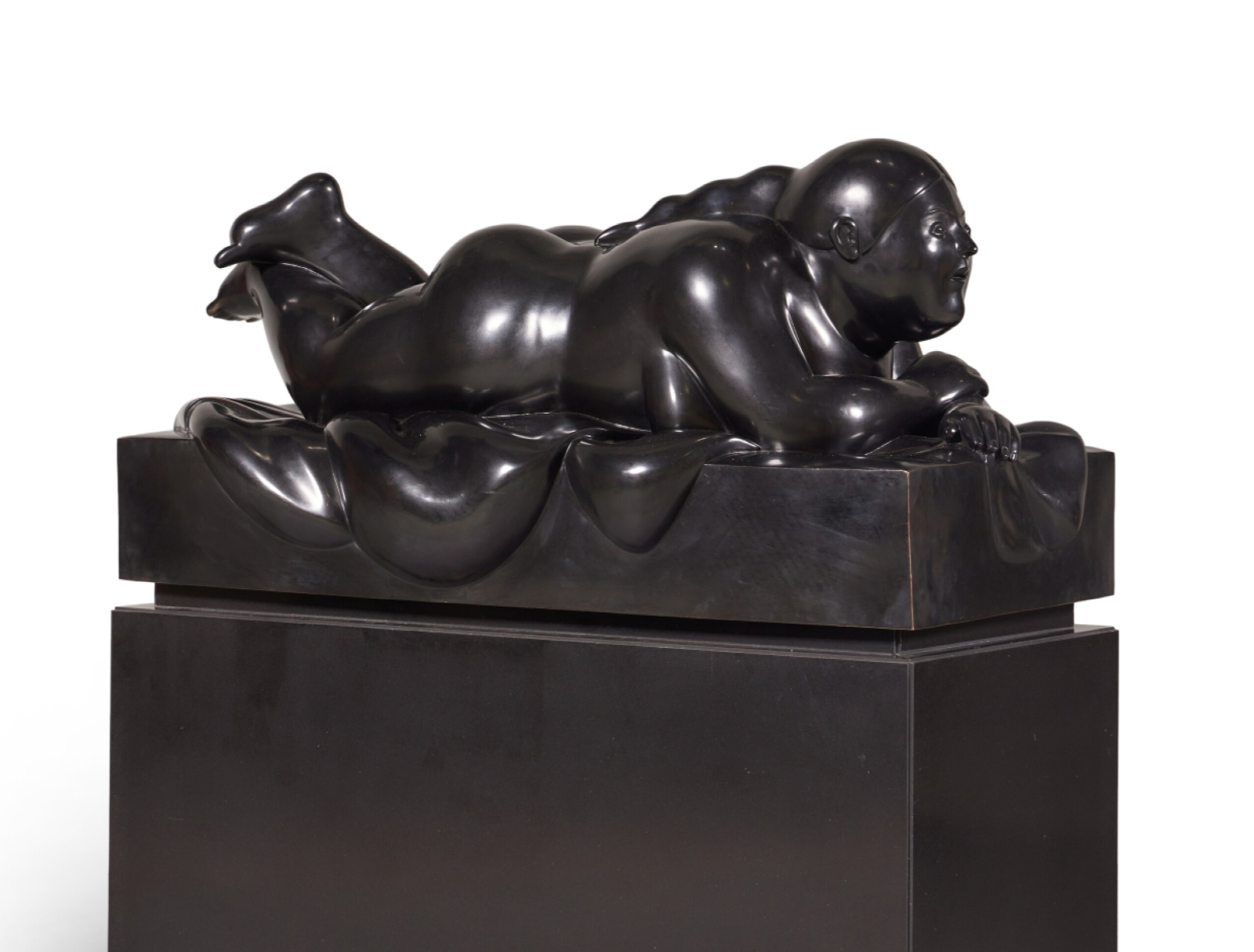
FERNANDO BOTERO (1932 – 2023)
Femme nue allongée, 2000
Bronze
50.8 x 116.2 x 48.3 cm (20 x 45-3/4 x 19 inches)
Incised with the artist’s signature and number 5/6 (on the base)
This work is number 5 from an edition of 6 plus 2 artist’s proofs
Still Life with Fruits, 1979
Sotheby’s New-York: 17 November 2026
Estimated: USD 600,000 – 800,000
GUARANTEED PROPERTY
Fernando Botero | Still Life with Fruits | Contemporary Day Auction |
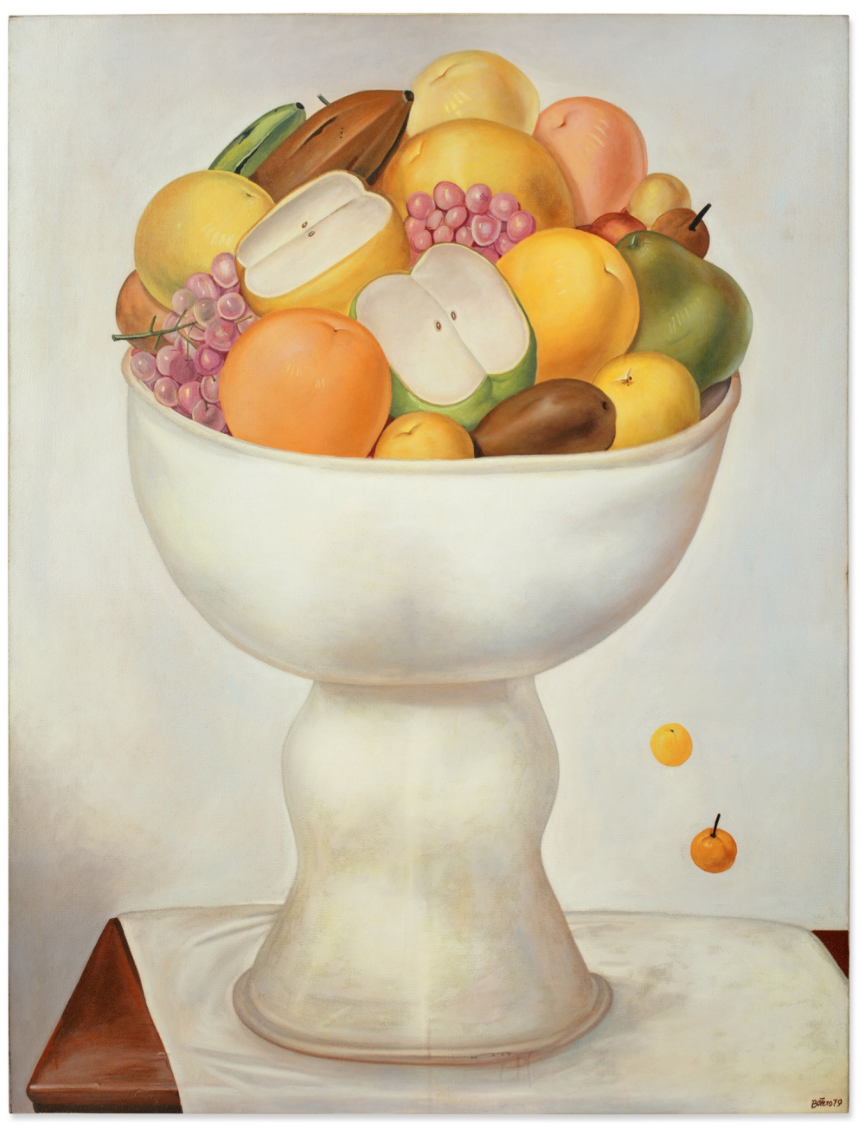
FERNANDO BOTERO (1932 – 2023)
Still Life with Fruits, 1979
Oil on canvas
181.6 x 139.1 cm (71-1/2 x 54-3/4 inches)
Signed and dated 79 (lower right)
The Dining Room, 2002
Christie’s New-York: 20 November 2026
Estimated: USD 600,000 – 800,000
FERNANDO BOTERO (1932-2023), The Dining Room | Christie’s
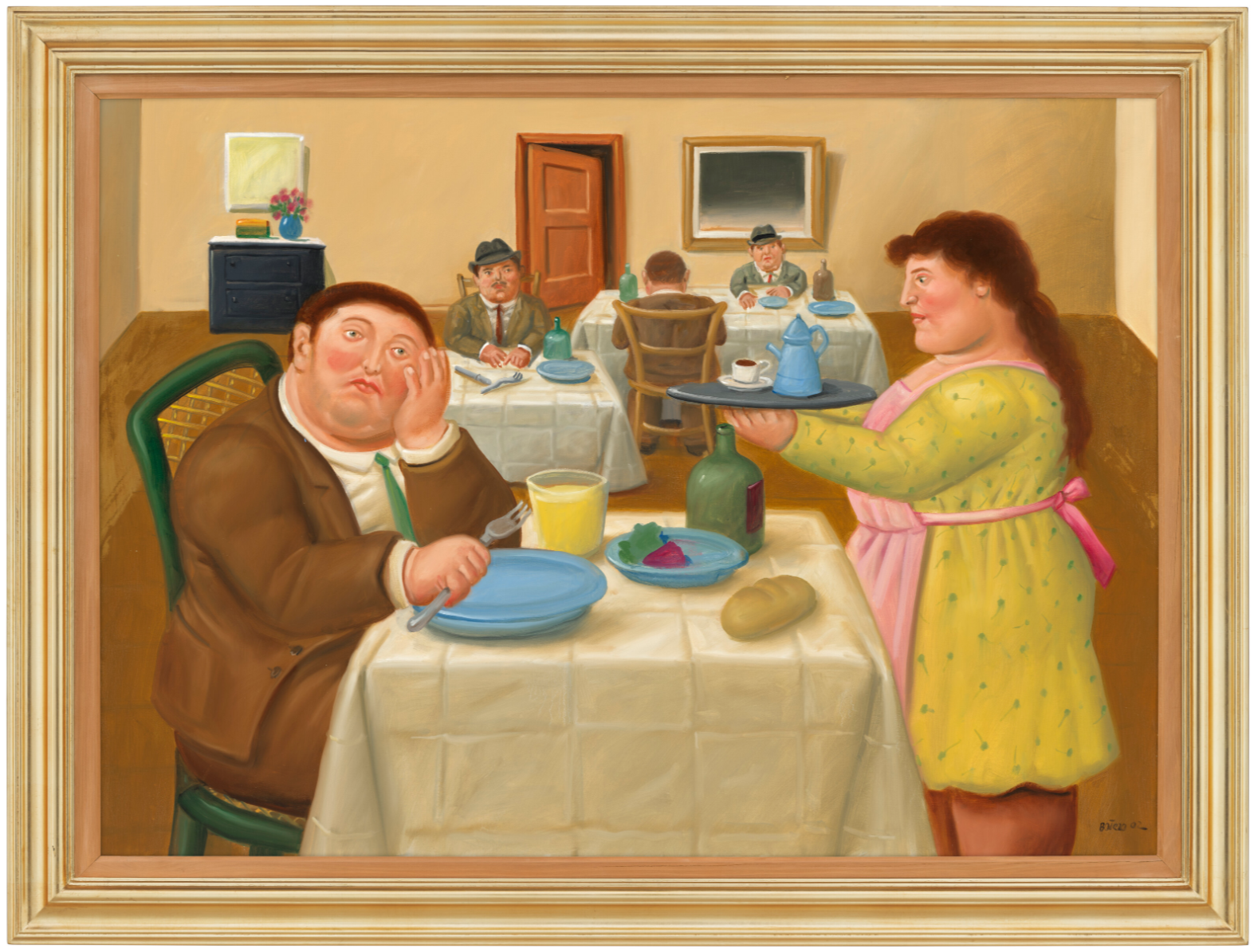
FERNANDO BOTERO (1932-2023)
The Dining Room, 2002
Oil on canvas
89.5 x 124.5 cm (35-3/4 x 49 inches)
Signed and dated ‘Botero 02’ (lower right)
Horse with Bridle, 2007
Christie’s New-York: 20 November 2026
Estimated: USD 400,000 – 600,000
FERNANDO BOTERO (1932-2023), Horse with Bridle | Christie’s
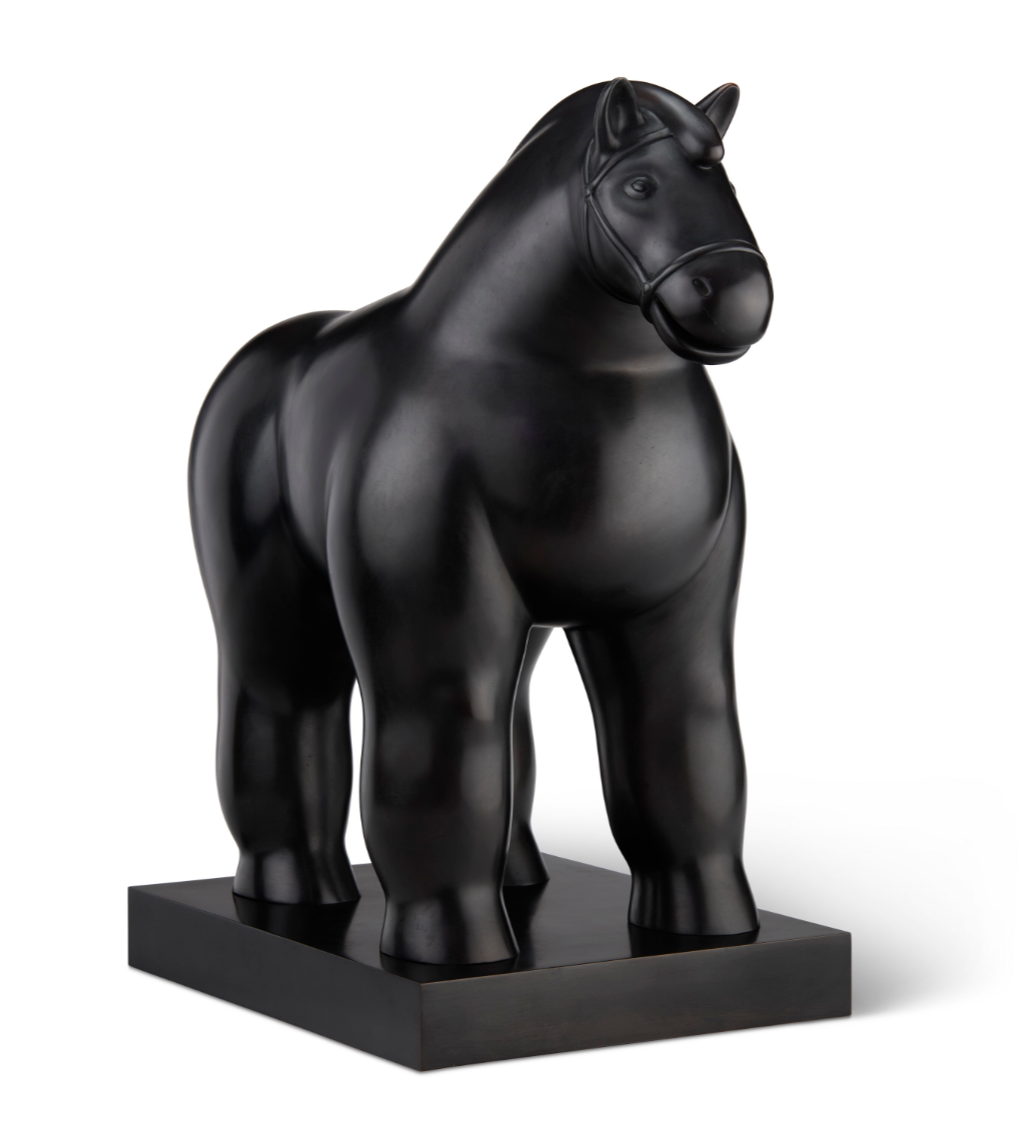
FERNANDO BOTERO (1932-2023)
Horse with Bridle, 2007
Bronze
49.5 x 48.3 x 26.4 cm (19-1/2 x 19 x 10-3/8 inches)
Incised with the artist’s signature and stamped with the number and foundry mark ‘Botero 5⁄6’ (on the base)
This work is number five from an edition of six
Poodle, 1974
Christie’s New-York: 20 November 2026
Estimated: USD 300,000 – 500,000
FERNANDO BOTERO (1932-2023), Poodle | Christie’s
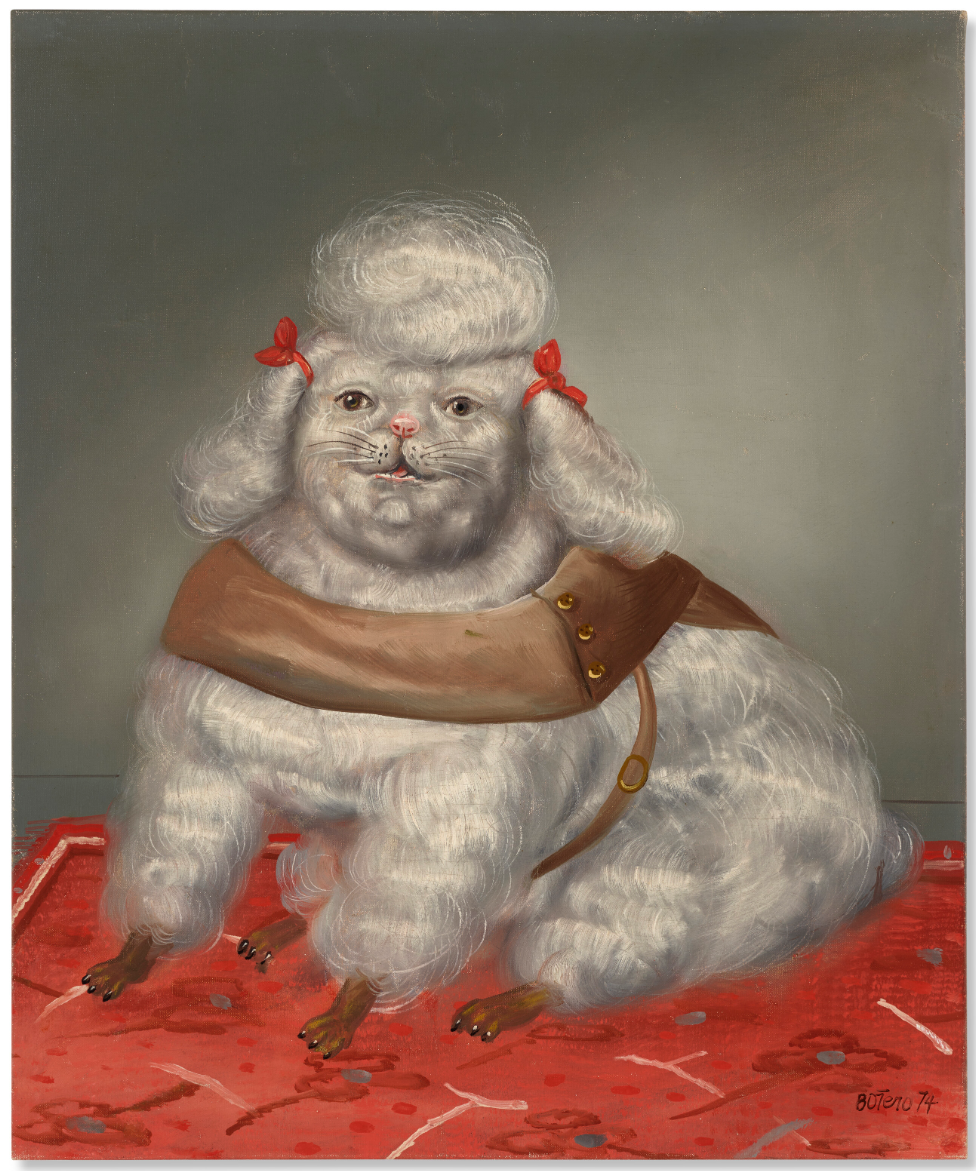
FERNANDO BOTERO (1932-2023)
Poodle, 1974
Oil on canvas
61 x 50.8 cm (24×20 inches)
Signed and dated ‘Botero 74’ (lower right)
Child Eating Ice Cream, 1964
Christie’s New-York: 20 November 2026
Estimated: USD 350,000 – 450,000
FERNANDO BOTERO (1932-2023), Child Eating Ice Cream | Christie’s
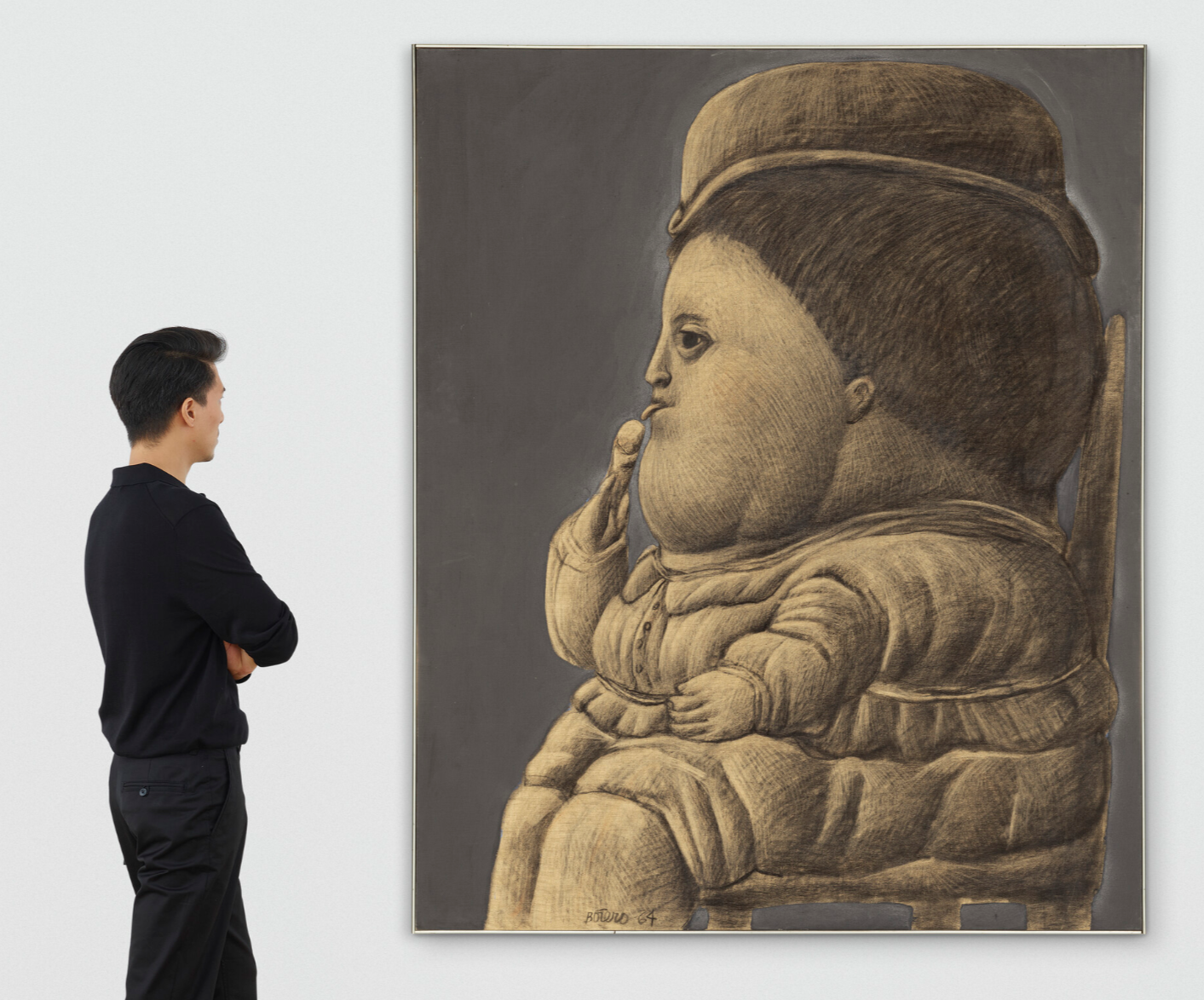
FERNANDO BOTERO (1932-2023)
Child Eating Ice Cream, 1964
Oil and charcoal on linen
188 x 153.7 cm (74 x 60-1/2 inches)
Signed and dated ‘Botero 64’ (lower left)
Horse, 2006
Horse, 2006
Property from the Collection of Fernando Botero Jr.
Christie’s New-York: 17 November 2026
Estimated: USD 3,000,000 – 5,000,000
FERNANDO BOTERO (1932-2023), Horse | Christie’s
FERNANDO BOTERO (1932-2023)
Horse, 2006
Bronze
334.7 x 299.7 x 190.5 cm (131-3/4 x 118 x 75 inches)
Signed, numbered and stamped with the foundry mark ‘Botero 2⁄3’ (on the base)
This work is number two from an edition of three
While living in New York in the 1960s as a struggling, foreign artist, who bucked the prevailing art movements of the time, Fernando Botero briefly turned his attention away from his passion for painting to sculpture. “I wanted to do sculpture in bronze but I really couldn’t afford it at that point” (Fernando Botero, quoted in E. Sullivan, Botero: Sculpture, New York, 1986, p. 31), Botero later recalled of his early years in New York. Not to be deterred, the resolute young artist set about inventing his own medium.
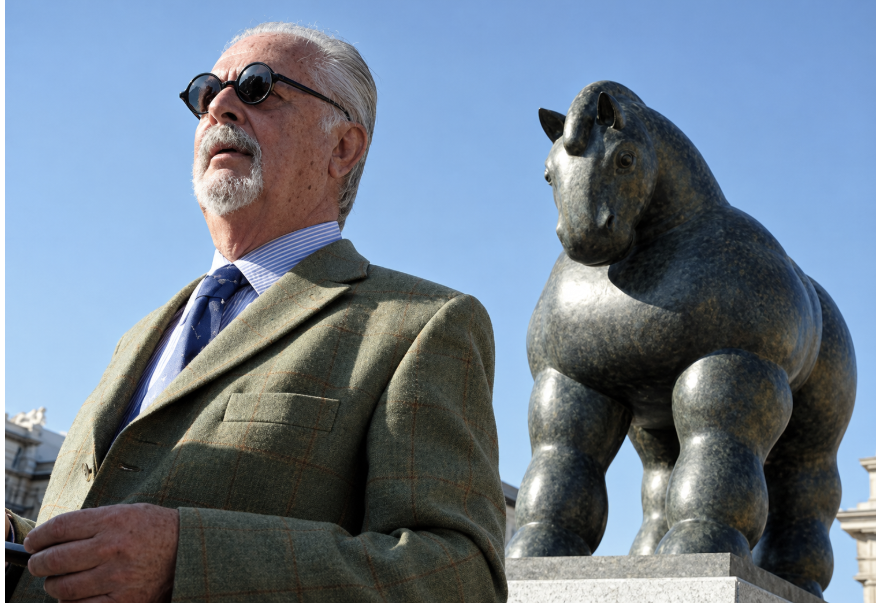
Fernando Botero standing in front of Horse at the Brandenburg Gate, Berlin, 2007.
Photo: Associated Press. Artwork: © The Estate of Fernando Botero.
He mixed acrylic paste with sawdust and created three sculptures: two heads and a horse. The horse received his closest attention; after painting its body, he added human hair to make a mane and tail. Ultimately, Botero’s homemade concoction could not stand the test of time and these early creations crumbled, leading him to abandon sculpture. Another decade would pass before he returned to experimenting in three dimensions.
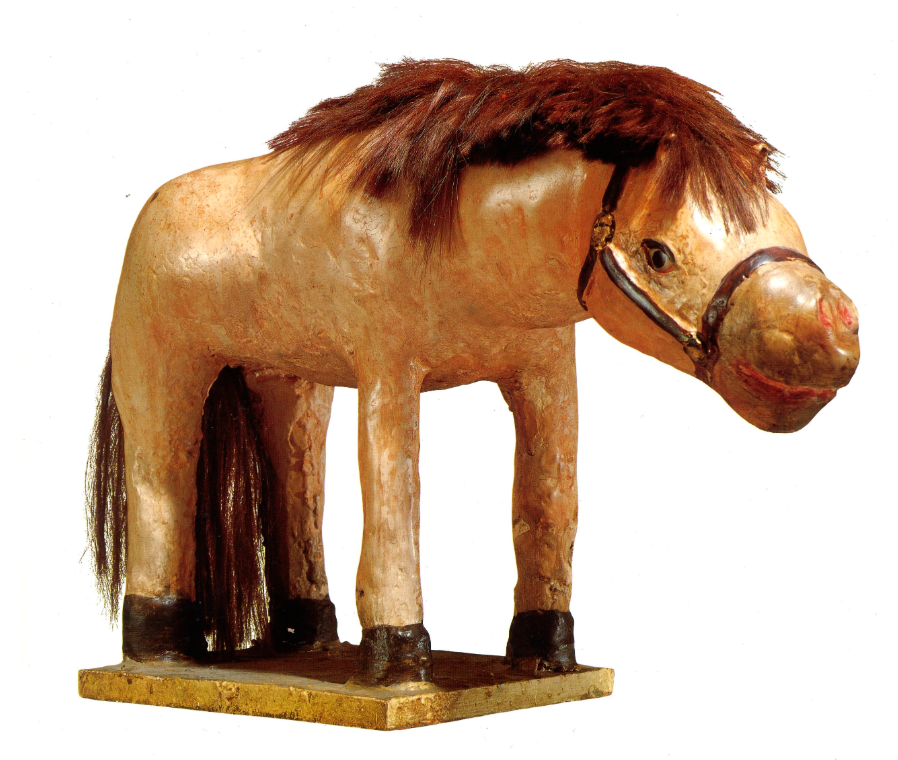
Fernando Botero, Horse, 1966. © The Estate of Fernando Botero.
By 1973, Botero had achieved international recognition and he moved to Paris. The financial success that accompanied this period meant that the costly material of bronze was no longer out of reach. Botero could finally delve into sculpture in earnest, a practice he maintained for the next half century.
“For my entire life, I’ve felt as if I had something to say in terms of sculpture. It’s a very strong desire. [Sculpture brings me a] special pleasure— that of touching the new reality that you create. Certainly, in a painting you give the illusion of truth, but with sculpture, you can touch its reality… If I paint a knife in my pictures, it’s imaginary, but if I sculpt it, then the sensation of having it in your hand is real—it’s an object from your spirit, it’s a sensual experience even in its execution. It brings a special joy to touch the material with your hands.”
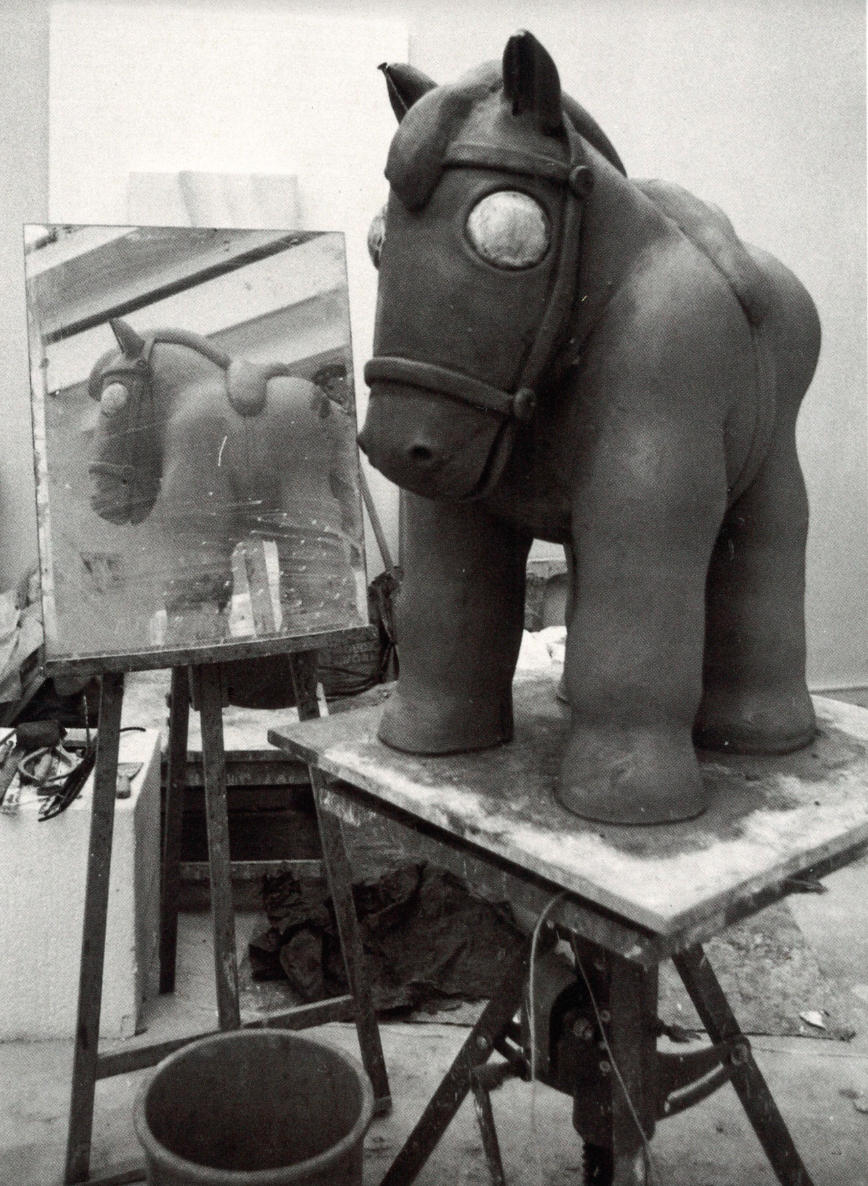
Fernando Botero, Horse, 1981. © The Estate of Fernando Botero.
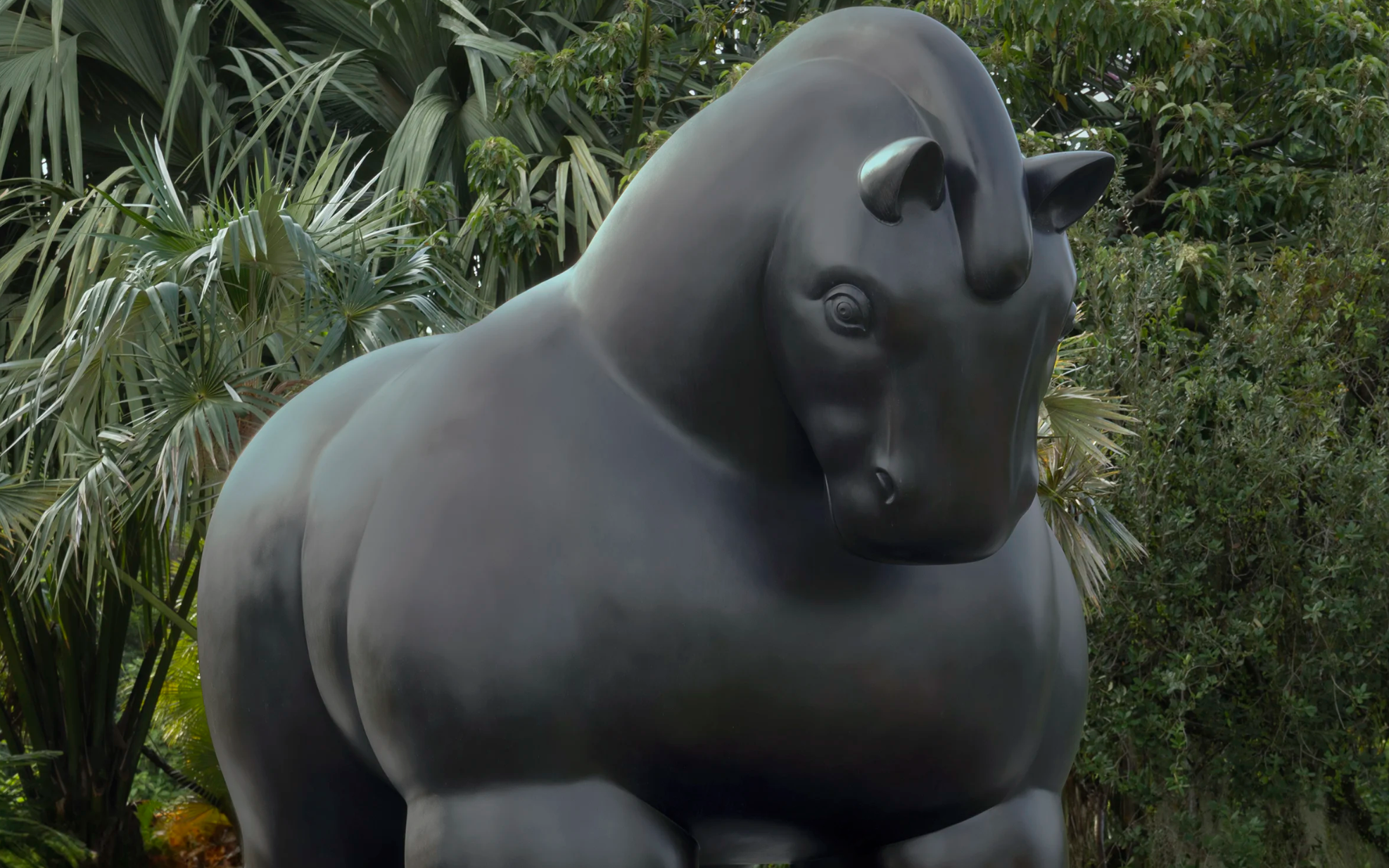
Botero followed his 1960s sawdust and acrylic paste horse with tabletop-size bronze horses with bulging eyes in the 1980s. This play of proportion in the equine form continued into the 1990s when Botero first took on creating a horse on a monumental scale with exaggerated elongated legs. After decades spent tinkering with legs, necks and manes, Botero finally achieved his ideal horse in 2006 in a majestic, powerful form that is both voluminous, in keeping with the artist’s signature style, and balanced. Standing over eleven feet tall, this formidable animal exudes grace and evokes awe. From its public exhibition debut in 2007 in Berlin, where it stood prominently beneath the Brandenburg Gate, to its 2026 Asian premier at Singapore’s Gardens by the Bay, Horse has captivated audiences around the globe.
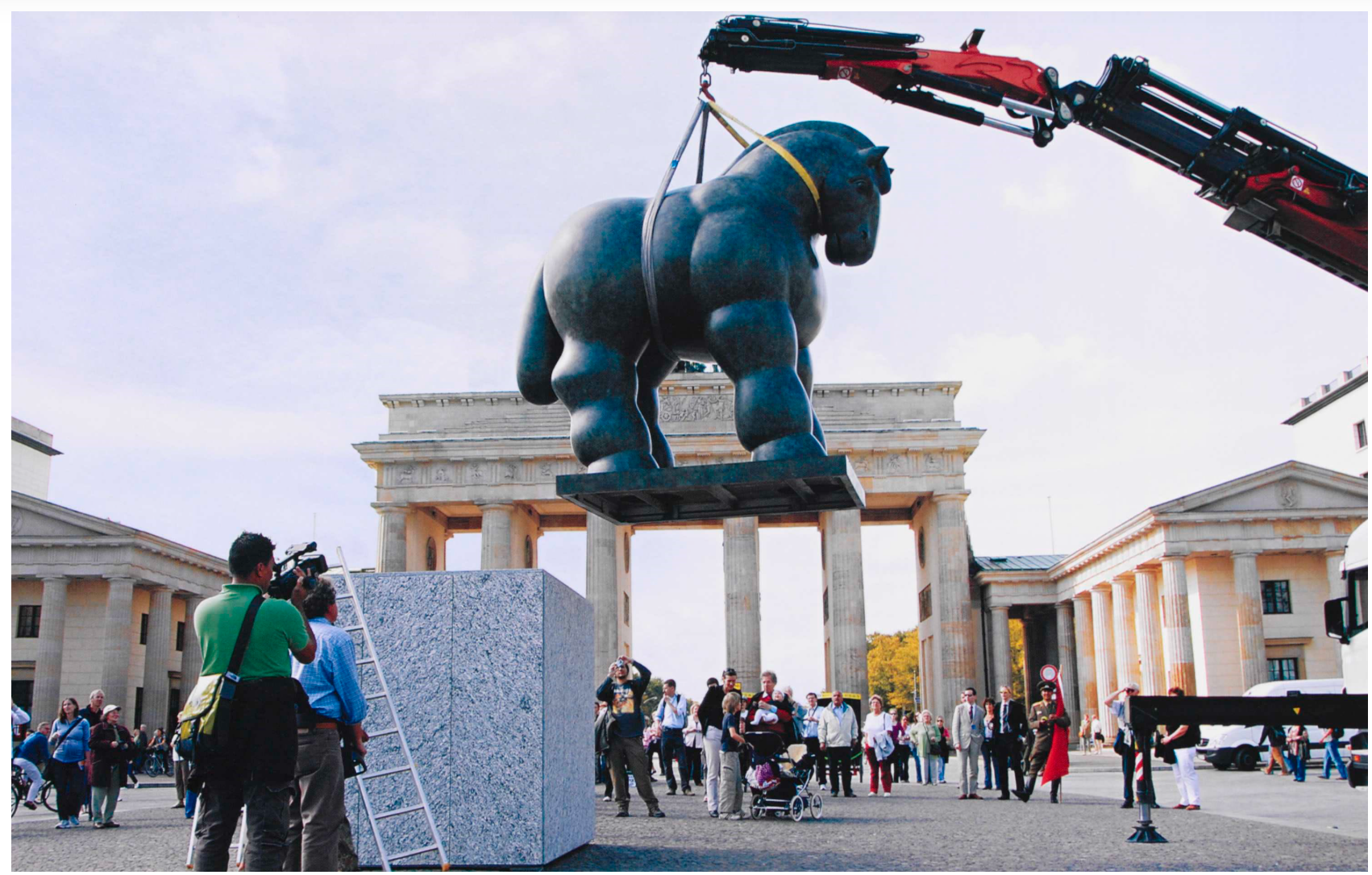
Installation view, Botero in Berlin: Monumentalskulpturen, September-November 2007, Bradenburg Gate, Lustgarten.
(another example of the present lot illustrated).
A recurrent subject for Botero in both painting and sculpture, the horse undoubtedly springs from art historical precedents. Botero’s first encounter with the European canon of art began in Spain in the early 1950s. After taking second place in Bogotá’s Salón Nacional de Artistas Colombianos in 1952, the twenty year-old Botero took his prize winnings and headed to Barcelona and then later Madrid. After a yearlong Spanish sojourn, Botero ventured to Paris and then Italy, where he immersed himself in studying the Renaissance masters.
“For my entire life, I’ve felt as if I had something to say in terms of sculpture. It’s a very strong desire. [Sculpture brings me a] special pleasure— that of touching the new reality that you create.”
In those early days, wandering around the Uffizi Gallery, the young Botero encountered Paolo Uccello’s The Battle of San Romano with its elegant, rearing horse at the center of the composition. The gripping power of Uccello’s horse is what Botero sought to emulate so many centuries later. Along with the lessons of Uccello, the famous horses of Diego Velázquez, Jacques-Louis David and many others, informed Botero’s own equine vision.
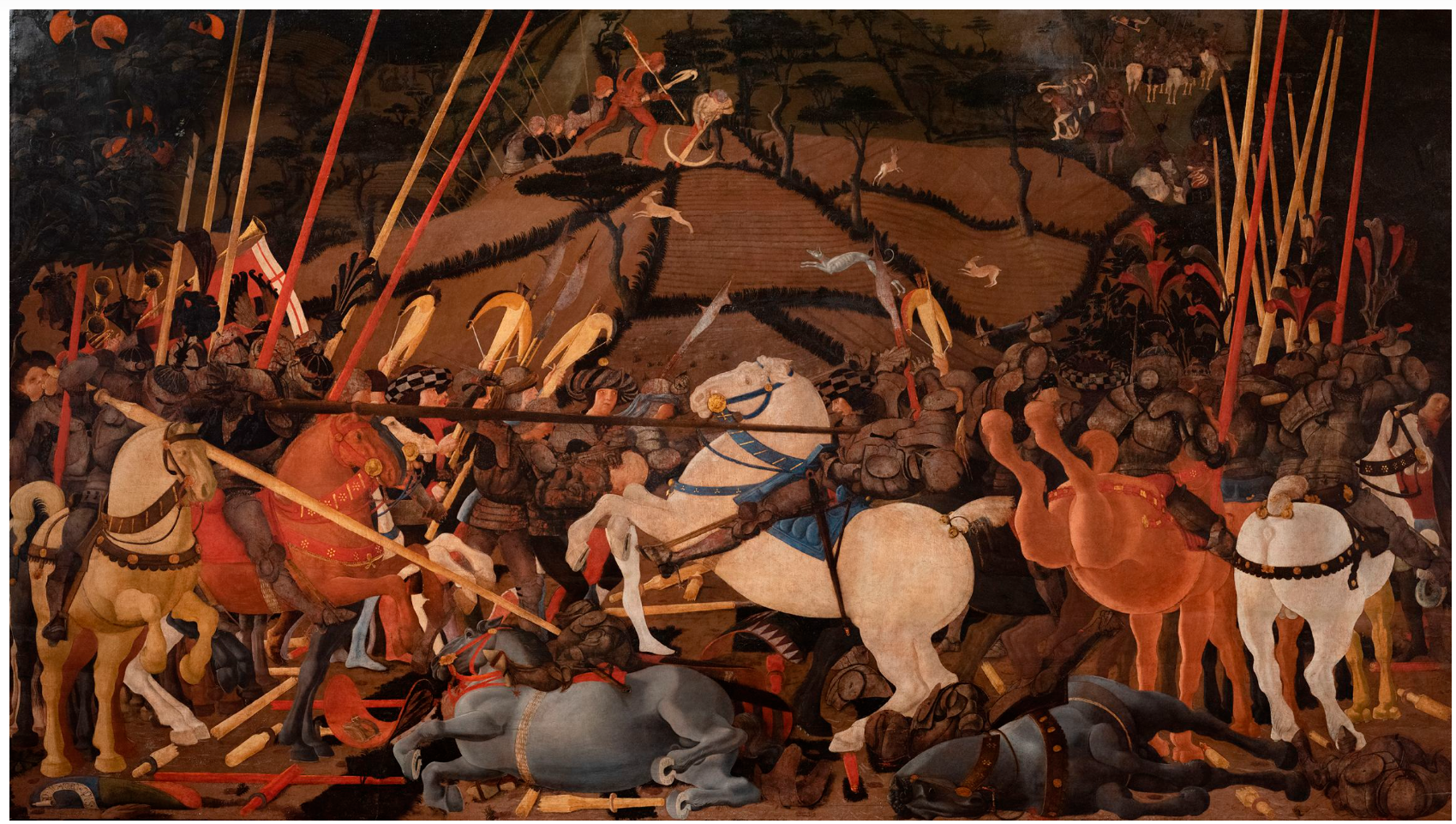
Paolo Uccello, The Battle of San Romano, 1436-1440. Uffizi Gallery, Florence.
Yet, Botero’s fascination with the horse is not only rooted in art history, but in his own personal history as well. Growing up in Medellín, Colombia in the 1930s, Botero was surrounded by the Andes Mountains, which made travel between towns difficult. Horses were a common mode of transportation, and an integral part of daily life, for those looking to pass through the rugged terrain. For the Botero household, horses were crucial for its livelihood—Botero’s father was a traveling salesman who trekked through the countryside on horses and mules. Although Botero was only four when his father unexpectedly passed away, he often recalled an indelible image from his childhood—his father, high on his mount, of monumental stature from the perspective of a small boy.
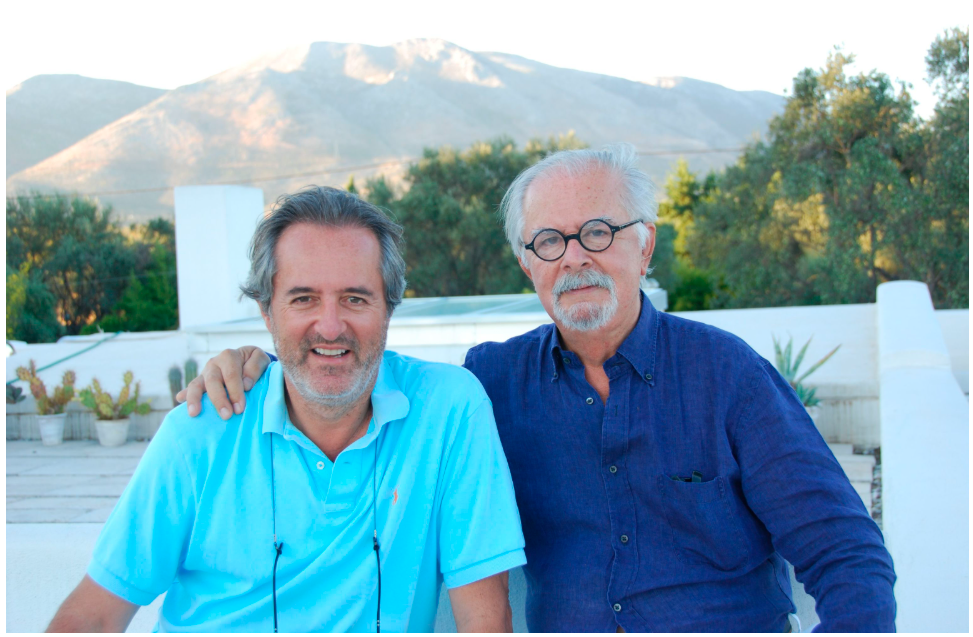
Fernando Botero Jr. and Fernando Botero, Greece, 2014.
While Botero lived abroad for the majority of his life and found inspiration in the European canon of art history, he remained rooted in his early memories of Colombia. His depictions of horses, or men and women on horses, draw from his lived experience as a boy in a then rural Medellín. While regal and grand, Horse harkens back to a humble home. As a sculpture that evokes the memory of the artist’s father, it seems only fitting that the work belongs to the eldest son of the artist. Horse stands as a powerful and poignant embodiment of family spread across three generations.
Mother and Child, 1979
Mother and Child, 1979
Sotheby’s New-York: 17 November 2026
Estimated: USD 1,800,000 – 2,500,000
GUARANTEED PROPERTY
Fernando Botero | Mother and Child | Contemporary Day Auction | 2026
FERNANDO BOTERO (1932 – 2023)
Mother and Child, 1979
Bronze
210 x 115.6 x 68.6 cm (82-5/8 x 45-1/2 x 27 inches)
Incised with the artist’s signature and number AP 2/2 (on the base)
This work is artist’s proof number 2 from an edition of 3 plus 2 artist’s proofs
In Mother and Child, Fernando Botero recasts one of the most familiar religious images in Western art as a reflection on the modern family. As a young man in 1952, Botero traveled to Europe to study the work of the Old Masters, finding himself particularly taken with the artists of the Italian Renaissance. Their influence shaped the decades that followed: during the 1960s and 1970s, he returned repeatedly to canonical biblical subjects, not to satirize them but to render them physical and familiar. In doing so, Botero positioned himself within this artistic lineage, inserting himself in the canon long before the art world granted it.
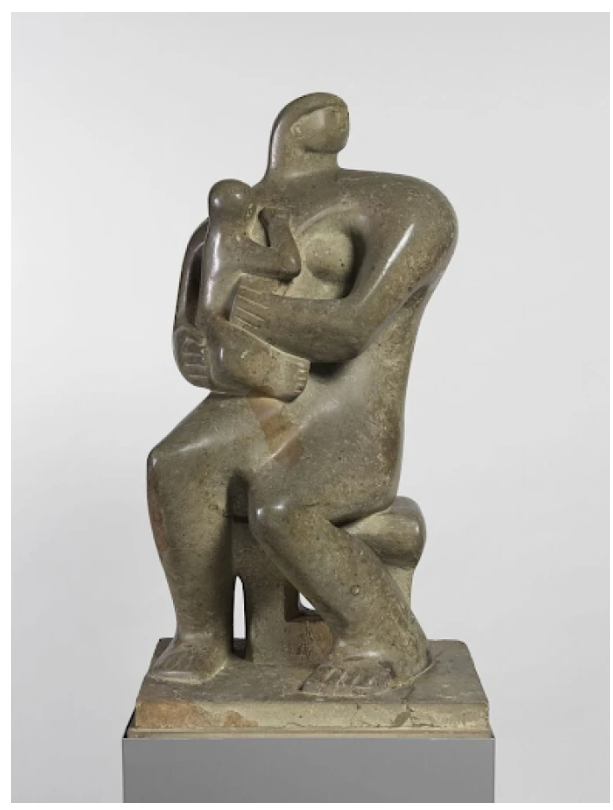
Henry Moore, Mother and Child, 1932. Sainsbury Centre, Norwich. © The Henry Moore Foundation
In the present work, a mother of monumental proportions cradles her infant against her shoulder. Botero models the composition on the Renaissance Madonna, the devotional image of the Virgin Mary with the infant Jesus. He preserves its protective embrace but reimagines it through his signature visual vocabulary: swelling volumes, smooth surfaces and exaggerated proportions. Botero was among the contemporaries who reinterpreted the Madonna and Child in their own visual language. Botero was among the contemporaries who reinterpreted the Madonna and Child in their own visual language. Henry Moore’s Mother and Child (1932) adopts the theme, but compresses his seated figures into a single compact block of carved stone, its surfaces flattened into angular planes. Botero does the opposite, swelling his figures outward and polishing the bronze until it gleams. By casting the subject in bronze, he lifts these biblical figures out of their static settings and places them in direct dialogue with the viewer. Where the Virgin traditionally sits or appears at half-length, absorbed in the Child, Botero’s mother stands nearly seven feet tall and faces outward. Beneath her feet lies the sculpture’s most unexpected figure: a diminutive man, lying on his back across the base and apparently untroubled by the weight he bears.
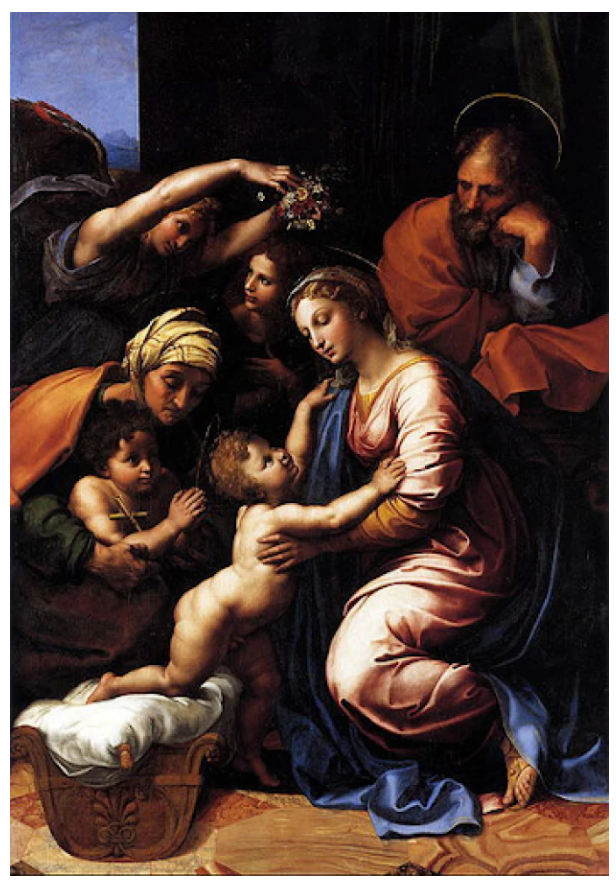
Raphael, The Holy Family of Francis I, 1518, Musée du Louvre, Paris
The arrangement is deliberately absurd, and Botero leaves its meaning open. In his satirical group portraits, Botero often inflated the men who held power and shrank the women beside them; in the present work, he reverses the order, making the mother the monument and the man her footing. In Renaissance images of the Holy Family, Saint Joseph conventionally occupies a supporting role behind the Virgin; Botero renders that relationship literally, placing the father beneath mother and child. Is the father crushed beneath the household, or quietly holding it up? Has the mother displaced him, or simply claimed the authority she has always exercised? Botero often used absurdity in this way, not to deliver a verdict but to prompt viewers to reconsider familiar hierarchies. At once playful and thought-provoking, the composition transforms a traditional devotional image into a gentle comedy about the roles that hold a family together.
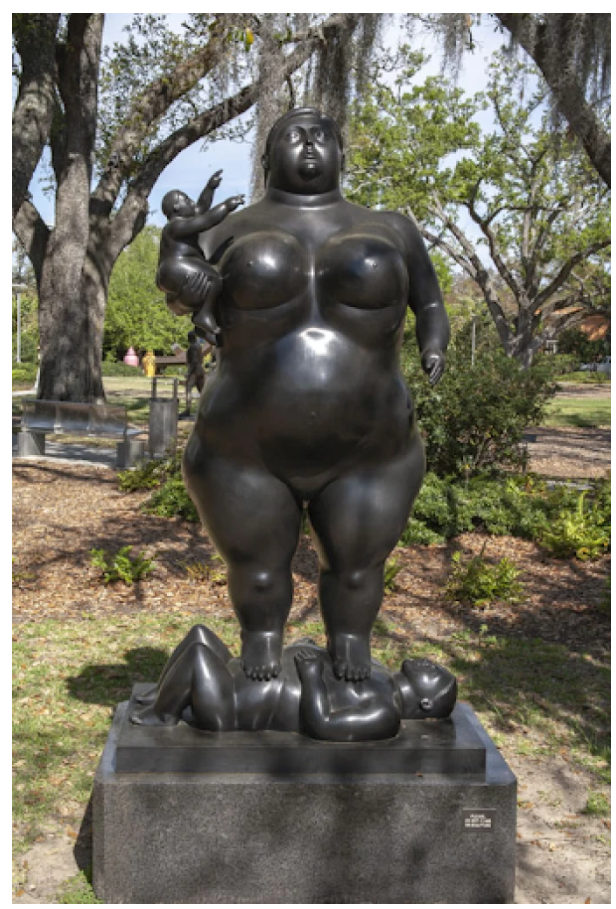
Fernando Botero, Mother and Child, 1988, Sydney and Walda Besthoff Sculpture Garden, New Orleans Museum of Art.
In Mother and Child, Botero revisits a subject that has occupied artists for centuries, reimagining it through a distinctly modern lens. The sculpture’s imposing volumes and subtle humor transform the traditional Madonna and Child into a meditation on the shifting dynamics of family and authority. Balancing affection with ambiguity, Botero leaves viewers without a fixed answer, inviting them instead to reconsider the relationships that structure everyday life. It is his ability to introduce a note of absurdity into the familiar that gives the work its enduring appeal. Another cast of Mother and Child stands in the Sydney and Walda Besthoff Sculpture Garden at the New Orleans Museum of Art.
The Arnolfini Portrait, after van Eyck, 1978
The Arnolfini Portrait, after van Eyck, 1978
The Clive Davis Collection
Christie’s New-York: 17 November 2026
Estimated: USD 1,000,000 – 1,500,000
THIRD PARTY GUARANTEE
FERNANDO BOTERO (1932-2023), The Arnolfini Portrait, after van Eyck | Christie’s
FERNANDO BOTERO (1932-2023)
The Arnolfini Portrait, after van Eyck, 1978
Oil on canvas
134.6 x 118,1 cm (53 x 46-1/2 inches)
Signed and dated ‘Botero 78’ (lower right)
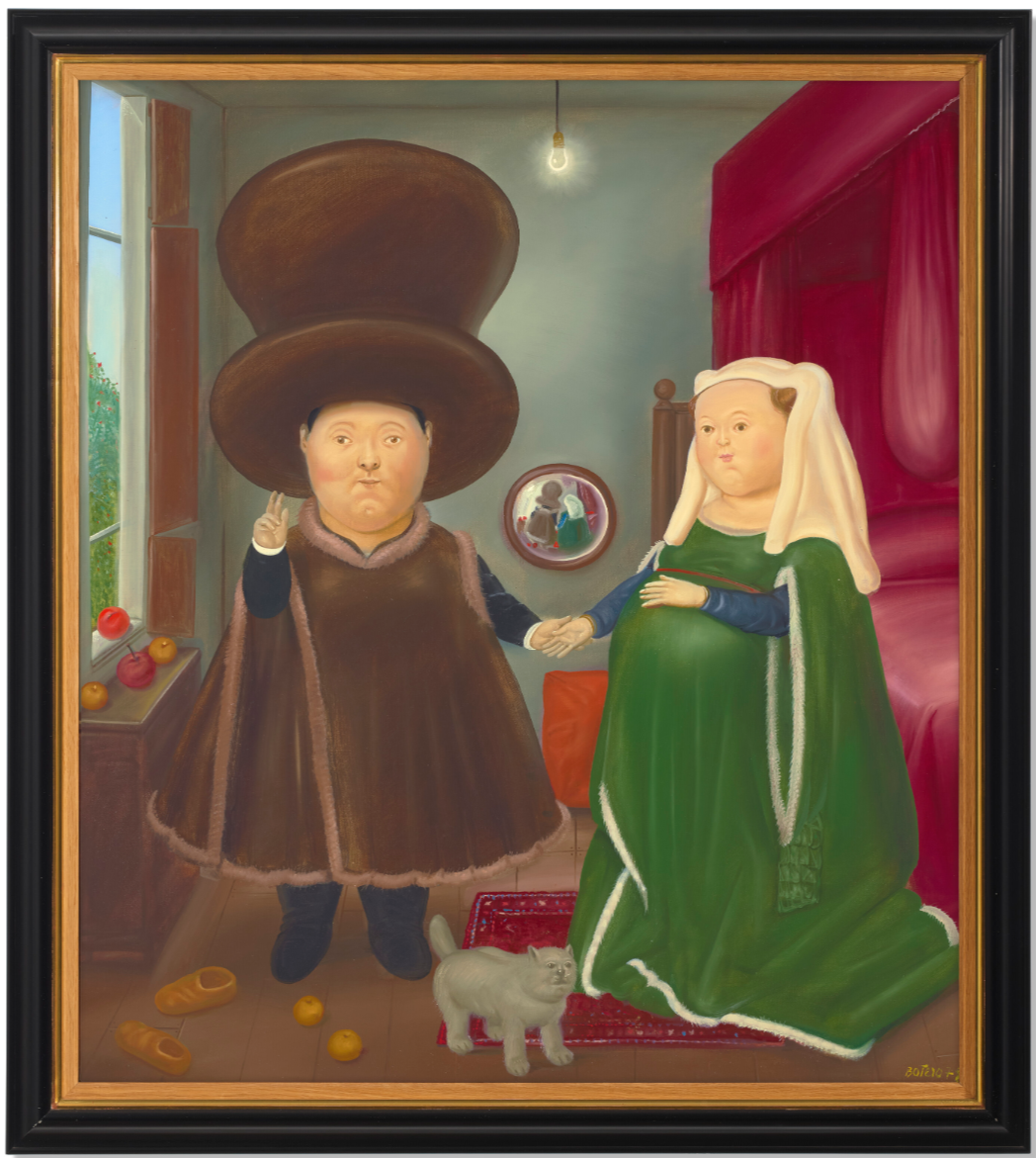
Considered one of the most complex paintings in the history of western art, The Arnolfini Portrait executed in 1434 by the Flemish master Jan van Eyck continues to intrigue art historians and art lovers alike. The painting is extraordinary for its intense realism and pictorial illusionism coupled with a plethora of symbolic elements that continue to confound our reading of this enigmatic work centuries after it was completed. Since its realization nearly six centuries ago, the famed painting has also been a perennial subject for subsequent artists’ reinterpretation. Fernando Botero, a devoted student of the history of art, offers a masterful rendition in our own times.
Native to Colombia, Botero’s first encounter with the European canon of art began in Spain in the early 1950s. After taking second place in Bogotá’s Salón Nacional de Artistas Colombianos in 1952, the twenty-year-old Botero took his prize winnings and headed to Barcelona and then later Madrid. He enrolled in the Academia de Bellas Artes San Fernando where he was instructed to copy the masters in the Museo del Prado.
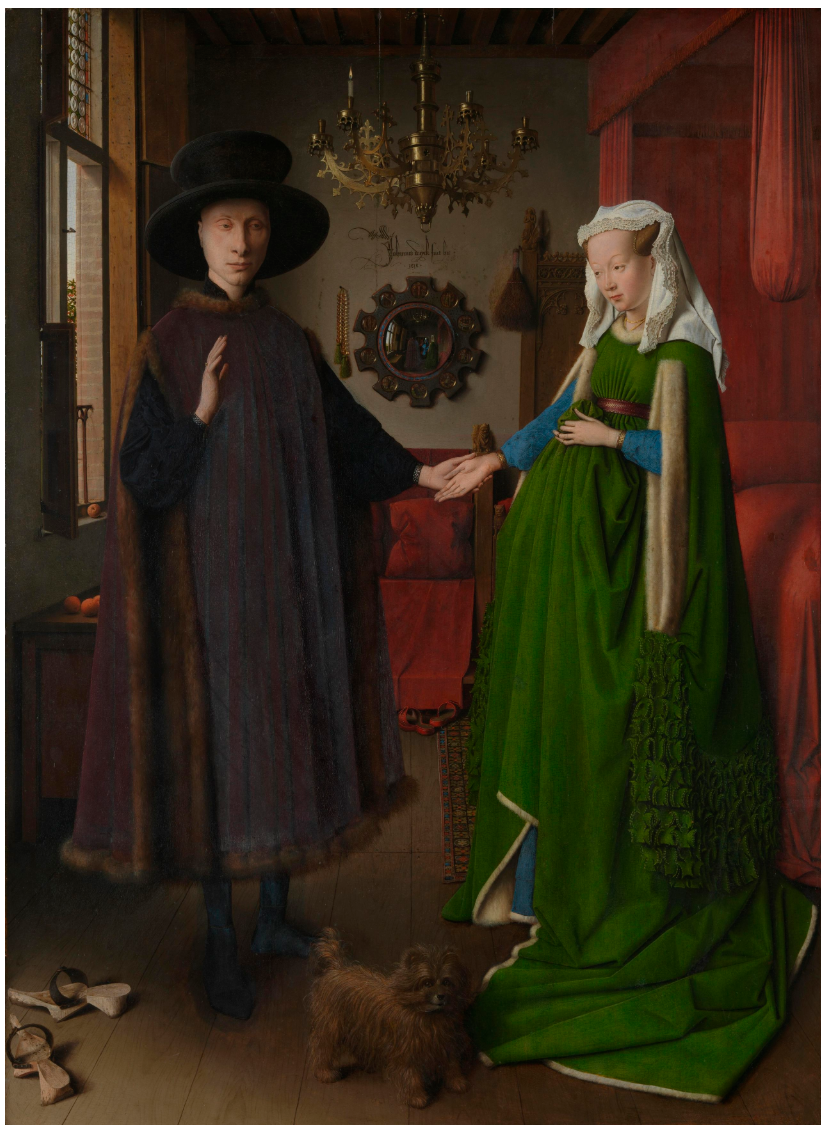
Jan van Eyck, The Arnolfini Portrait, 1434. National Gallery, London.
After a yearlong Spanish sojourn, Botero ventured to Paris and then Italy where he immersed himself in studying everything from the Renaissance to Cubism. Europe proved transformative for Botero, converting him into an insatiable student of art history. The lessons absorbed from wandering the Prado, Uffizi and Louvre in those early days would reverberate throughout his career. Copying the work of the masters had a lasting influence on Botero, who, inspired by these original studies, would utilize famous subjects to emphasize his own unique style and approach, highly evident in the present work. This practice would also result in Botero’s first institutional recognition. Upon returning to Bogotá in the late 1950s, he brazenly reinterpreted the Mona Lisa in a series of paintings that would garner him international attention and earn him a spot in the permanent collection of the Museum of Modern Art in New York.
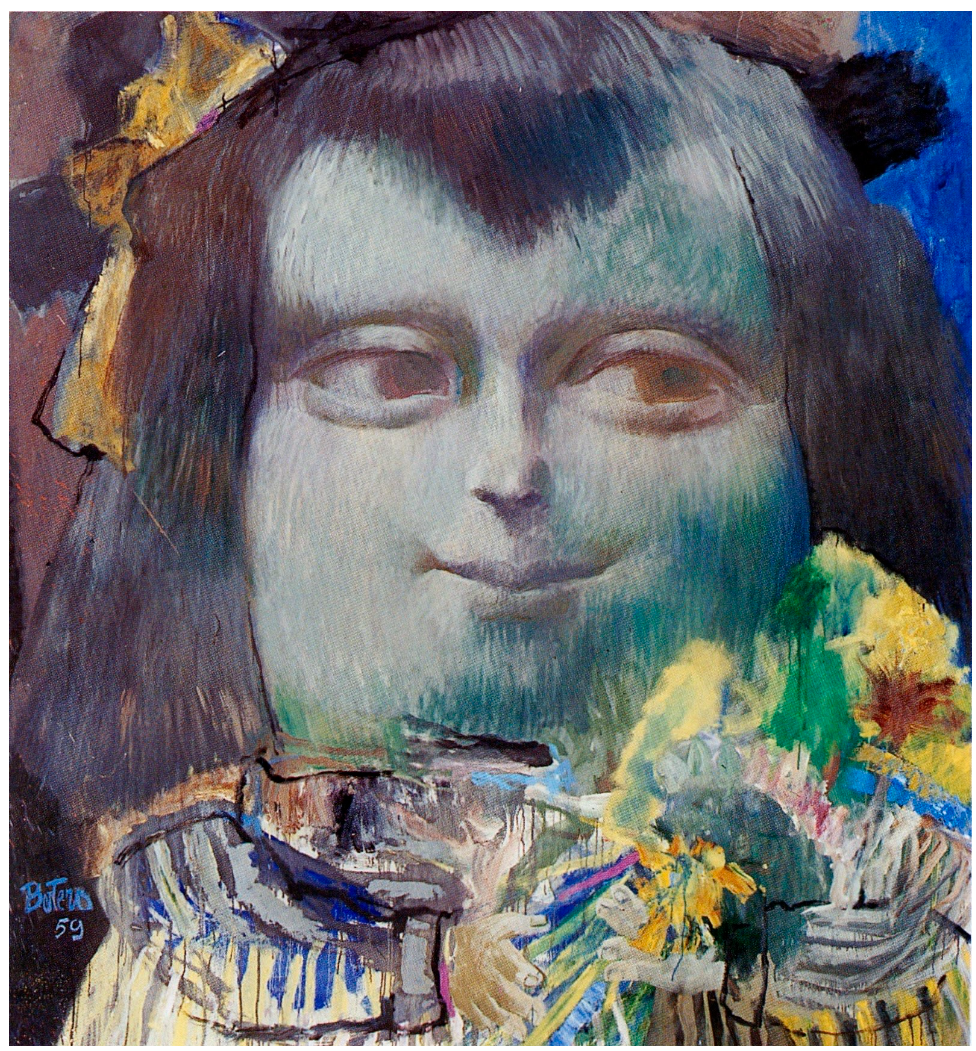
Fernando Botero, Mona Lisa, Age 12, 1959. Museum of Modern Art, New York. © The Estate of Fernando Botero.
Botero’s particular love affair with van Eyck’s renowned wedding portrait began in the 1960s while living in New York, far removed from the painting in the National Gallery in London. Enchanted by the complexity and layered symbolism of van Eyck’s portrait, Botero’s first attempt at rendering the Arnolfinis in 1964 was executed in a minimalist manner on a modest scale. By the time Botero returned to painting the Arnolfinis in 1978, however, he had become emboldened. Formidable in size, compared to its petite predecessor from 1964, the present lot reveals the artist reveling in retrofitting the fifteenth-century portrait with twentieth-century comforts. A single cheeky lightbulb hangs above the couple in lieu of van Eyck’s elaborate gold candelabrum. Mr. Arnolfini’s distinctive wooden clogs in the original have been swapped out for a cozy pair of slippers to wear around the house.
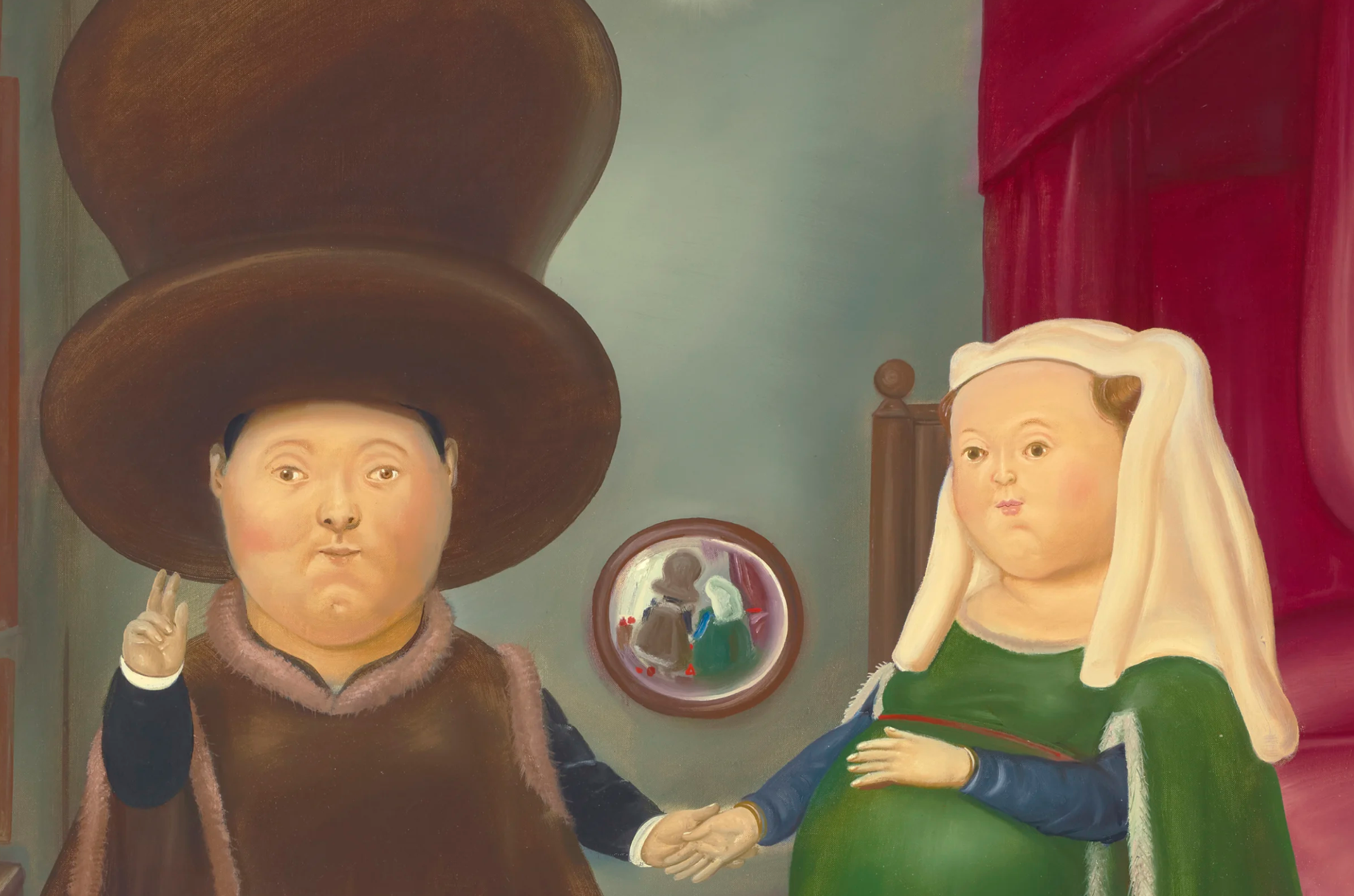
These modifications are more than satirical whimsy, however, as Botero once explained of the details in his work, “As an artist, one has a stock of objects that appear and disappear in one’s works in accordance with circumstances and needs. Possibly, the difference from other painters is that they have paraphernalia in the studio, while mine inhabit me and are always in my imagination. For example, when I need one white tone to balance another white, elements of that kind show up that could be electric bulbs. Nothing in my painting is gratuitous. Everything is necessary” (Fernando Botero quoted in, A. M. Escallón, “From the Inside out: An Interview with Fernando Botero” in, Botero: New Works on Canvas, New York, 1997, p. 30).
While Botero boldly deviates from the original in notable details, he remains faithful to van Eyck’s central narrative. The twentieth-century Arnolfinis wear the same luxurious velvet, fur-trimmed robes as their predecessors, a nod to the couple’s high social standing and profession as successful textile merchants. And, more than 500 years later, Botero’s married couple is still holding hands, with a dog, a symbol of fidelity, at their feet.
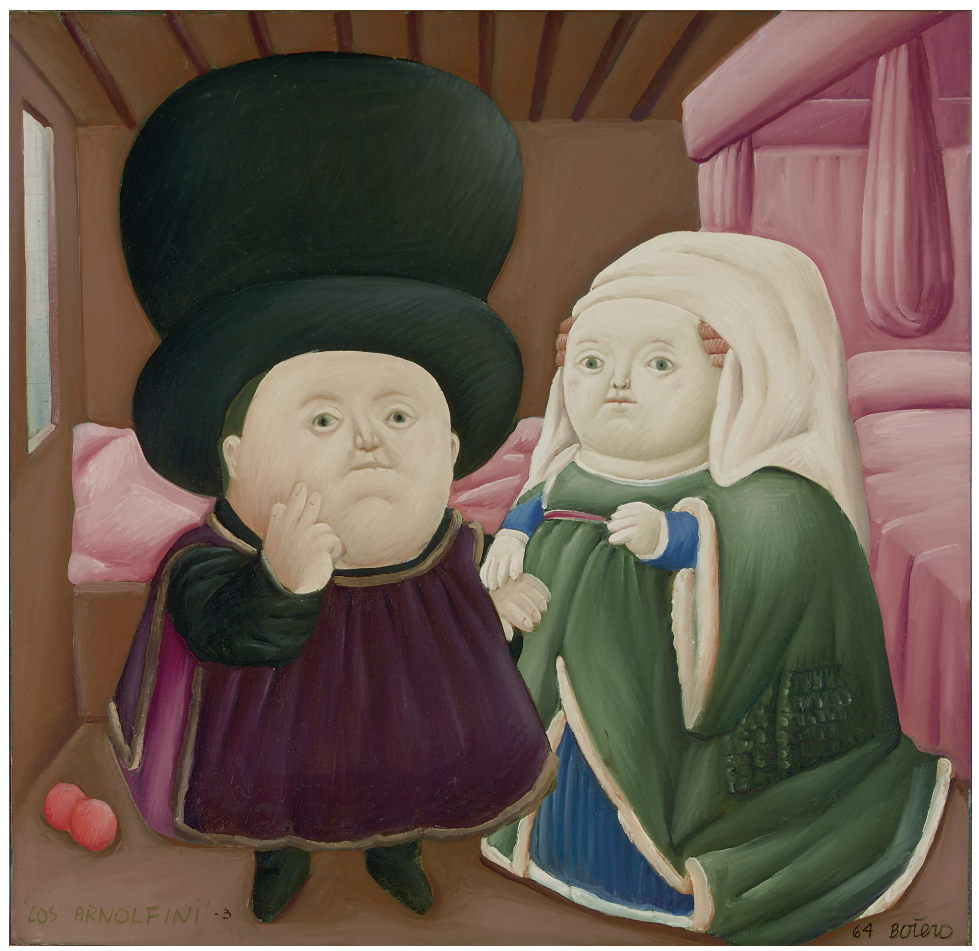
Fernando Botero, Los Arnolfini, 1964. Private collection. Sold at Christie’s, New York, 16 November 2005. © The Estate of Fernando Botero.
Still other details remain the same but assume a Botero-ian twist. Mr. Arnolfini’s hat, already generous in the original, has grown to enormous proportions in Botero’s version. This prominent play of volume and form continues in the rotund bodies of the Arnolfinis themselves who exemplify Botero’s now widely recognized corpulent figures. Even the fruits, barely visible in van Eyck’s painting, plumply assert themselves, further articulating Botero’s voluminous vision.
As in the best of Botero’s painting, The Arnolfini Portrait, after van Eyck, both draws and diverges from tradition, resulting in a work that is distinctly the artist’s own, as he once explained, “I am an artist born into the Third World. In other words, I was not born among museums nor within established tradition. As a result, from the very outset I approached things with a fresh vision.” (Fernando Botero quoted in, A. M. Escallón, “From the Inside out: An Interview with Fernando Botero” in, Botero: New Works on Canvas, New York, 1997, p. 20).
Cardenal (Niño de Guevara), 1964
Cardenal (Niño de Guevara), 1964
Christie’s New-York: 20 November 2026
Estimated: USD 900,000 – 1,200,000
FERNANDO BOTERO (1932-2023), Cardenal (Niño de Guevara) | Christie’s
FERNANDO BOTERO (1932-2023)
Cardenal (Niño de Guevara), 1964
Oil on canvas
67-1/4 x 70 inches (170.8 x 177.8 cm.
Signed and dated ‘Botero – 64’ (lower right)
Signed again, titled and dated again
‘CARDENAL NIÑO DE GUEVARA BOTERO – 64’
(on the reverse)
Painted in 1964, Cardenal (Niño de Guevara) takes inspiration from El Greco’s portrait of Cardinal Fernando Niño de Guevara, reworking an important image in Spanish art history through Botero’s signature style. The painting reflects the artist’s deep engagement with the Old Masters, whose works he approached as continued sources of inspiration open to reinterpretation. Throughout the 1960s, Botero returned to artists such as Velázquez, Goya, and El Greco, revisiting familiar compositions as a platform for his own explorations in form and proportion.
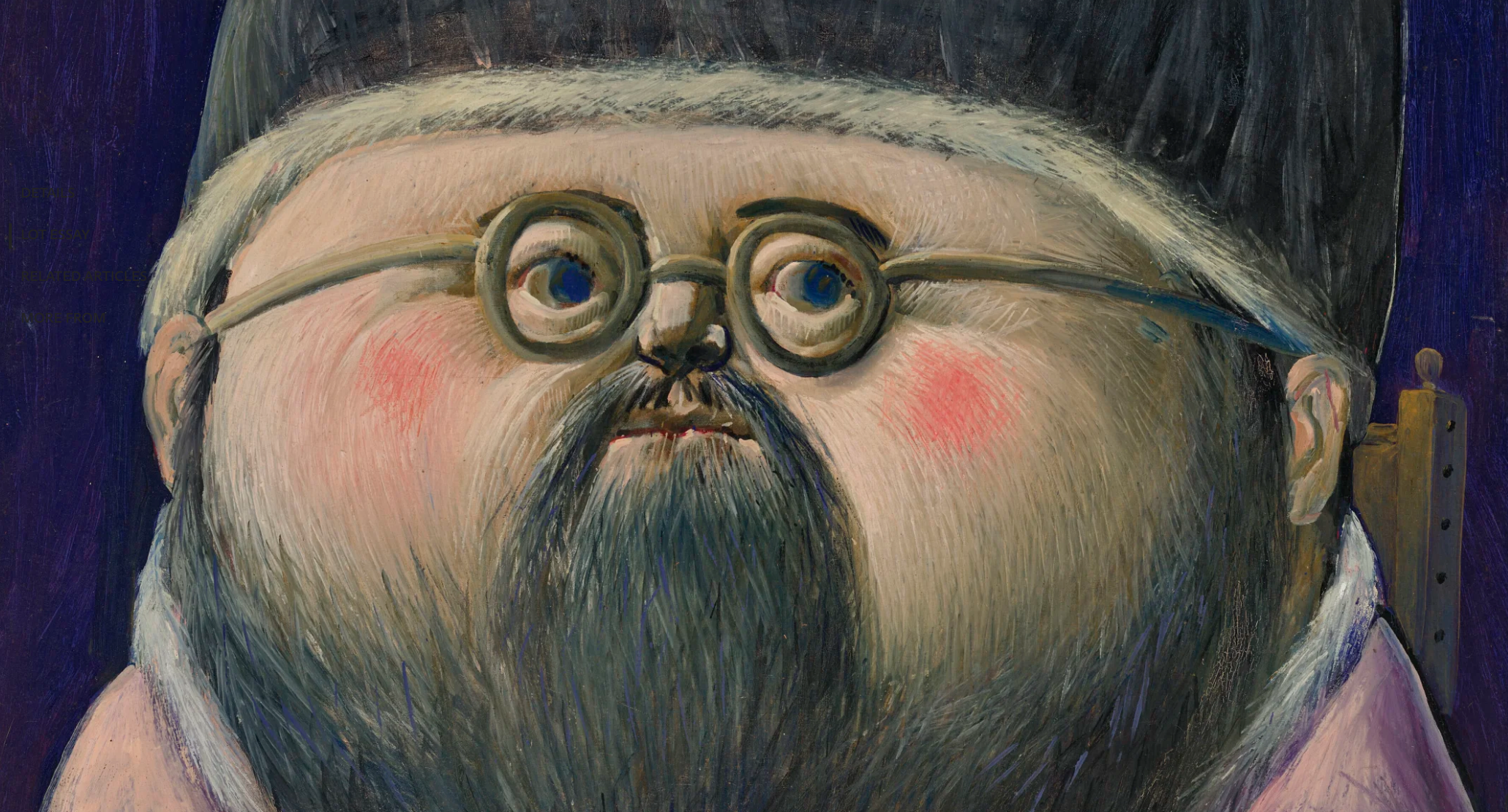
In Cardenal (Niño de Guevara), Botero transforms the subject through his characteristic enlarged forms that would become hallmarks of his practice. Where El Greco’s cardinal confronts the viewer with an austere, penetrating gaze, Botero introduces a softer interpretation of the figure. His rounded forms temper the severity of the original, lending the sitter monumentality while introducing a subtle note of wit. The painting offers an early indication of Botero’s sustained interest in the manipulation of form, a principle that would come to define his artistic identity and contribute to his international recognition.
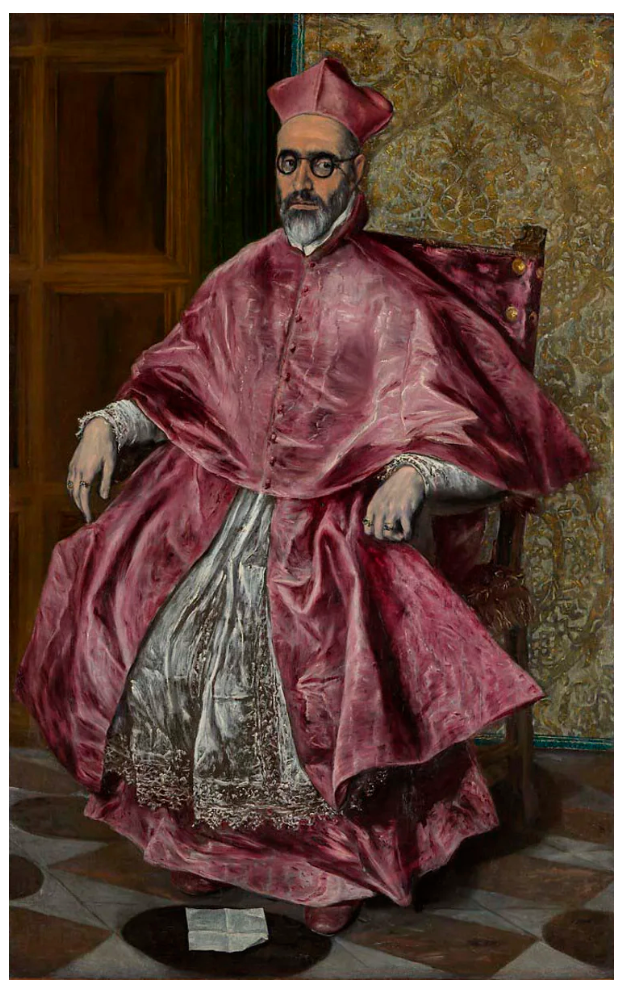
El Greco, Cardinal Fernando Niño de Guevara, c. 1600. The Metropolitan Museum of Art, New York.
On a grand scale, Cardenal (Niño de Guevara) reveals Botero’s enduring interest in the representation of authority and the visual conventions through which it is expressed. The artist simultaneously employs and rejects traditions of formal portraiture; the cardinal’s vestments and imposing presence evoke the historical entanglement of ecclesiastical and political power, yet Botero’s treatment never allows symbolism to eclipse the individual. Instead, his manipulation of scale and volume establish a delicate tension between grandeur and familiarity, elevating the figure while quietly complicating the authority he represents. It is this balance of monumentality, humanity, and understated humor that distinguishes Botero’s engagement with the past, demonstrating his ability to make historical imagery feel newly immediate.
El picador, 1984
El picador, 1984
Sotheby’s New-York: 17 November 2026
Estimated: USD 800,000 – 1,200,000
GUARANTEED PROPERTY
Fernando Botero | El picador | Contemporary Day Auction | 2026 |
FERNANDO BOTERO (1932 – 2023)
El picador, 1984
Oil on canvas
153.7 x 121.9 cm (60-1/2 x 48 inches)
Signed (lower right)
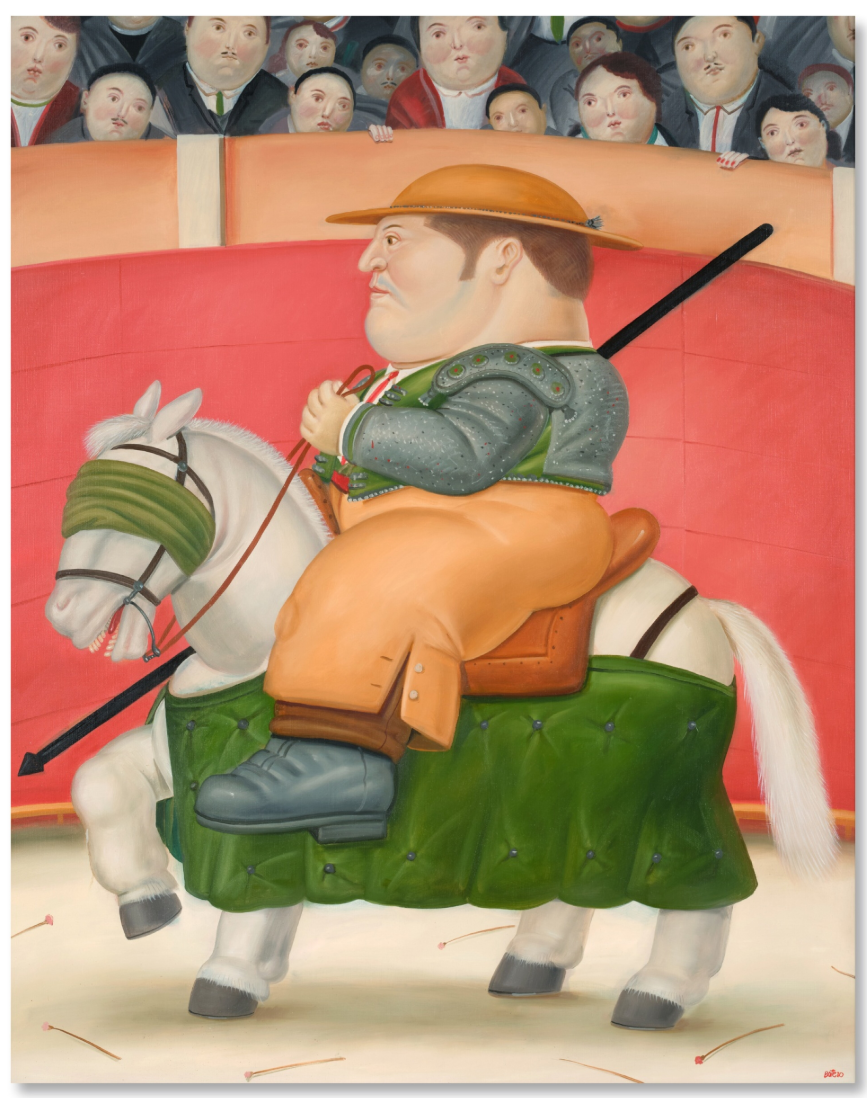
Growing up in modest circumstances in Medellín, Fernando Botero developed two passions that would shape his earliest artistic imagination: painting and bullfighting. At the age of twelve, he enrolled in a local bullfighting school, briefly aspiring to enter the ring himself. Although those ambitions proved short-lived, the spectacle of the corrida left a lasting impression. As a teenager, Botero sold watercolors outside Medellín’s Plaza de Toros, absorbing the pageantry, ritual and social theater of the arena. The bullfight would remain among the most personal and enduring subjects of his career.
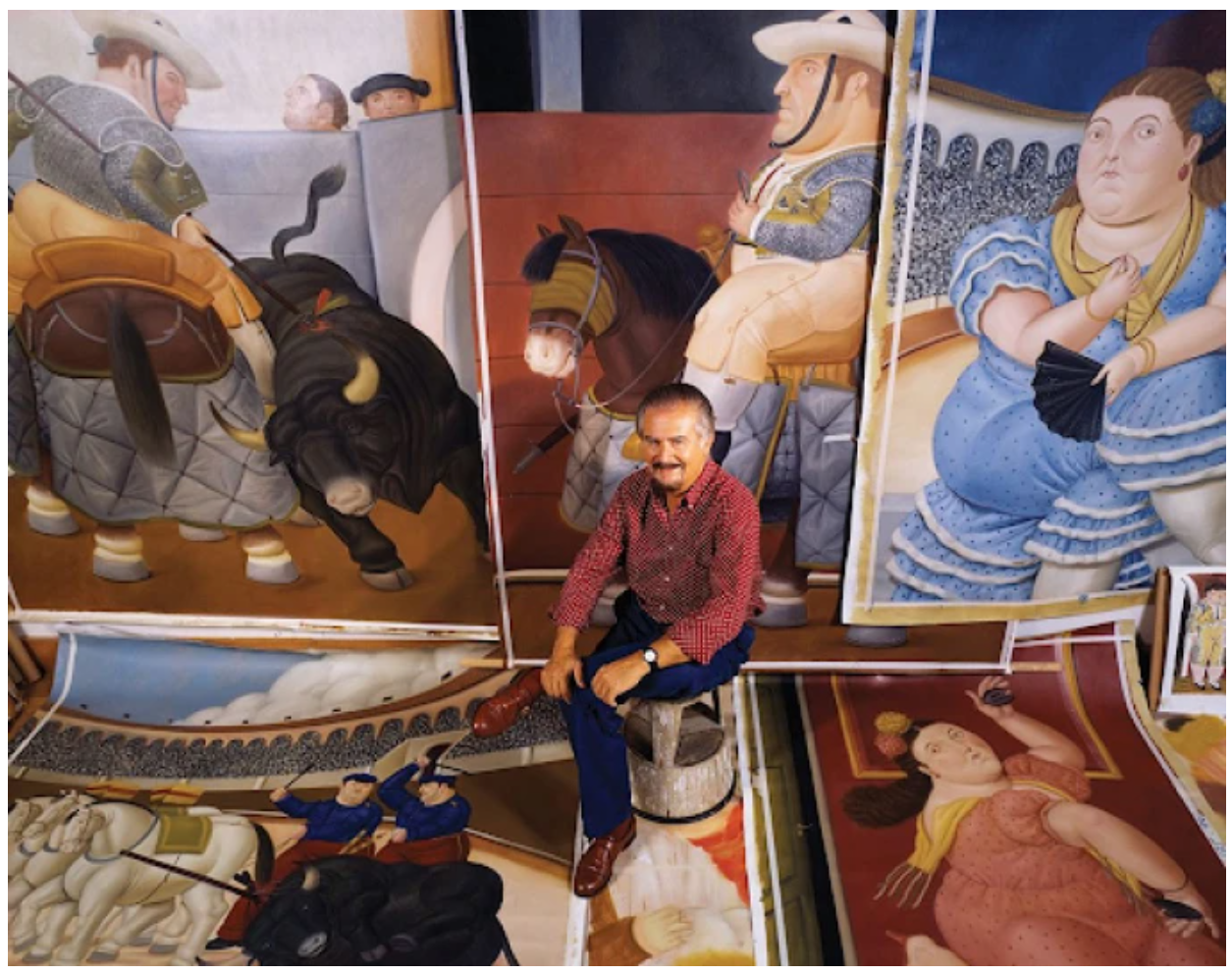
Fernando Botero in his studio
Painted in 1985, El Picador belongs to Botero’s celebrated series devoted to the corrida. The artist portrayed the bullring not as an outside observer, but through the accumulated memories of someone intimately familiar with its protagonists, conventions and rituals. Here, Botero turns to the picador, the mounted horseman who enters during the opening tercio de varas. Although the picador’s function is practical, testing the bull’s strength and moderating its charge, the role is also profoundly ceremonial. Botero suppresses the violence and swift action of the arena to present the figure with almost heraldic authority.
“Botero has grasped the corrida within itself as though his eye and the corrida in its entirety were but one… Botero has brought to light all that which is not ordinarily seen, but which, nonetheless, sustains the existence of the corrida itself.”
Marcel Paquet, in Fernando Botero: La Corrida, exh. cat., New York, Marlborough Gallery, 1985, n.p.
Seen in a strict profile, the picador and the white horse dominate the canvas. The horse’s green protective caparison forms a broad, richly articulated base beneath the rider, whose immaculately ordered costume contrasts with the scattered banderillas on the arena floor. Behind the sweeping red and ocher barriers, spectators crowd the upper edge of the composition, their closely aligned faces forming a chorus of witnesses. Botero’s compression of space and radical manipulation of scale lend the encounter the immediacy of popular spectacle while transforming horse and rider into a single monumental presence.
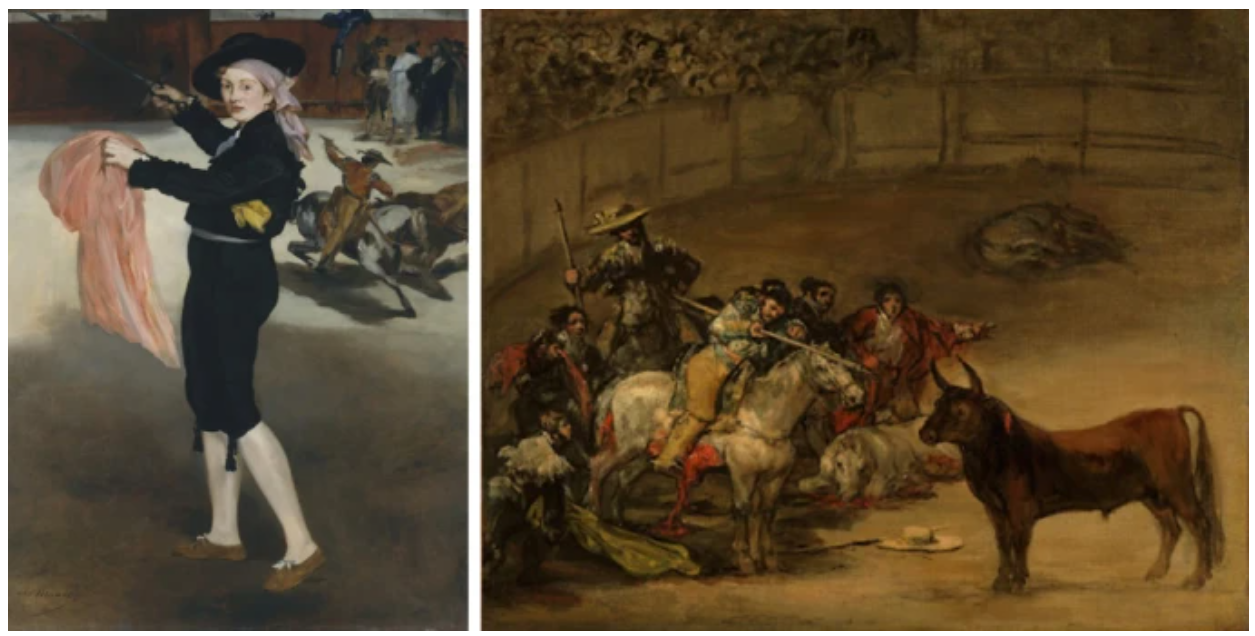
Left: Edouard Manet, Mademoiselle V. . . in the Costume of an Espada, 1862, The Metropolitan Museum of Art, New York
Right: Francisco Goya, Bullfight, Suerte de Varas, 1824, J. Paul Getty Museum, Los Angeles
Paquet’s observation is particularly resonant here. Botero looks beyond the climactic confrontation between matador and bull to the elaborate visual and ceremonial structure sustaining the spectacle. The picador is not simply an incidental participant. Isolated from the unfolding action and magnified almost beyond the limits of the canvas, the mounted figure becomes an archetype of the bullring.
Botero’s engagement with the corrida places him within an artistic lineage extending from Francisco de Goya to Édouard Manet and Pablo Picasso. Goya’s Tauromaquia captured the danger and volatility of the arena, while Manet brought the subject into the language of modern painting, responding to the nineteenth-century French fascination with Spanish culture. Picasso later returned repeatedly to the bullfight as an arena of conflict, ritual and identity. Botero was deeply conscious of these precedents, yet his emphasis is distinct. Rather than dramatic climax or psychological tension, he privileges stillness, volume and presence.
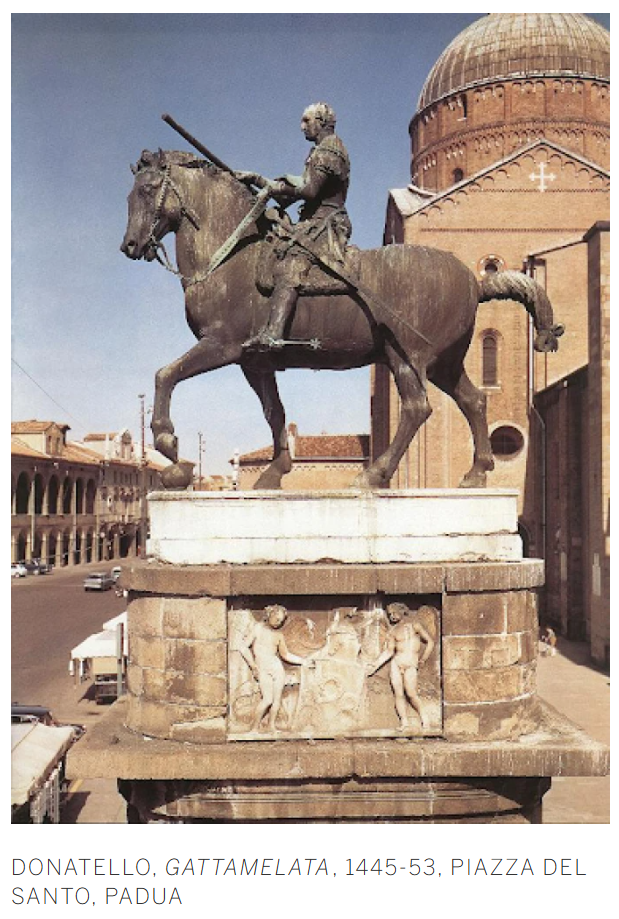
The painting also invokes the tradition of equestrian imagery inherited from antiquity and renewed during the Italian Renaissance. Its commanding profile, emphatic scale and carefully staged presentation recall the monumental authority of Donatello’s Gattamelata and Verrocchio’s Colleoni, as well as the later courtly equestrian portraits of Titian and Velázquez. Botero recasts that language of power in distinctly popular terms. The picador is neither ruler nor military commander, yet the artist grants this familiar protagonist the stature of both.
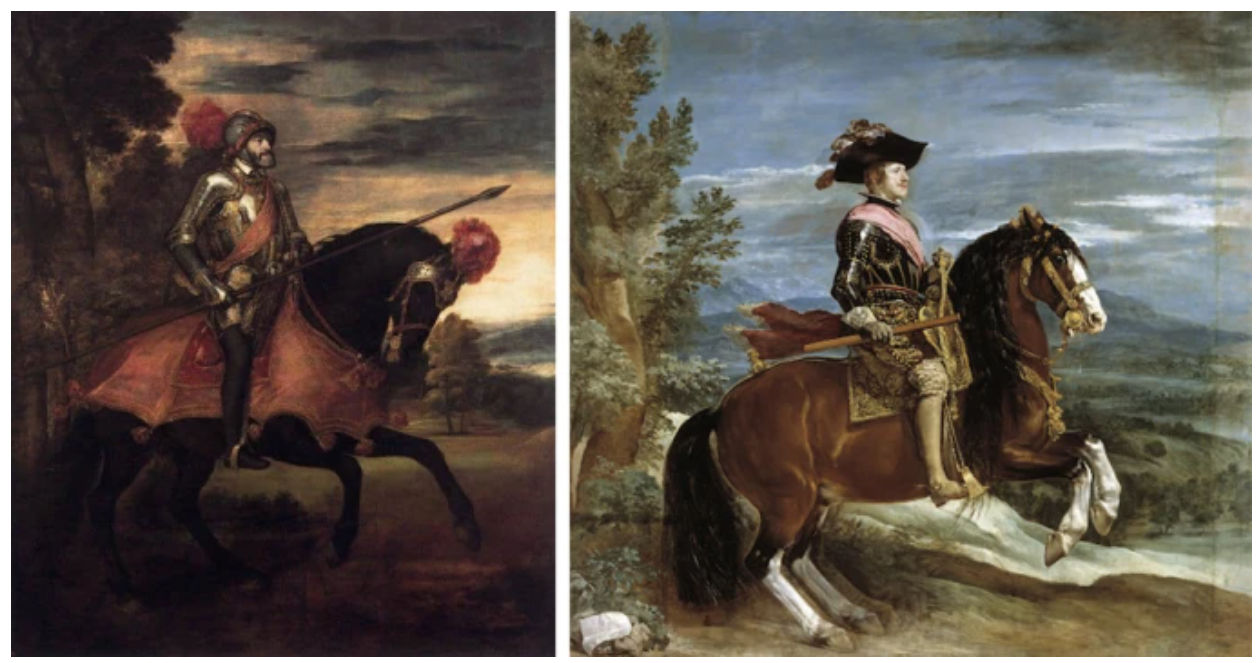
Left: Titian, Equestrian Portrait of Charles V at Mühlberg, 1548. Museo Nacional del Prado, Madrid.
Right: Diego Velázquez, Equestrian Portrait of Prince Balthasar Charles, ca. 1635. Museo Nacional del Prado, Madrid
In El Picador, Botero transforms a remembered figure from the bullrings of his youth into an enduring cultural icon. At once solemn and gently humorous, imposing and deeply human, the work brings together personal memory and art-historical tradition with the singular monumentality that defines Botero’s mature vision.
Reclining Man, 1978
Reclining Man, 1978
Looking Forward: The Collection of Beverly Grossman
Sotheby’s New-York: 17 November 2026
Estimated: USD 800,000 – 1,200,000
Fernando Botero | Reclining Man | Contemporary Day Auction | 2026 |
FERNANDO BOTERO (1932 – 2023)
Reclining Man, 1978
Oil on canvas
149.9 x 188 cm (59×74 inches
Signed and dated 78 (lower right)
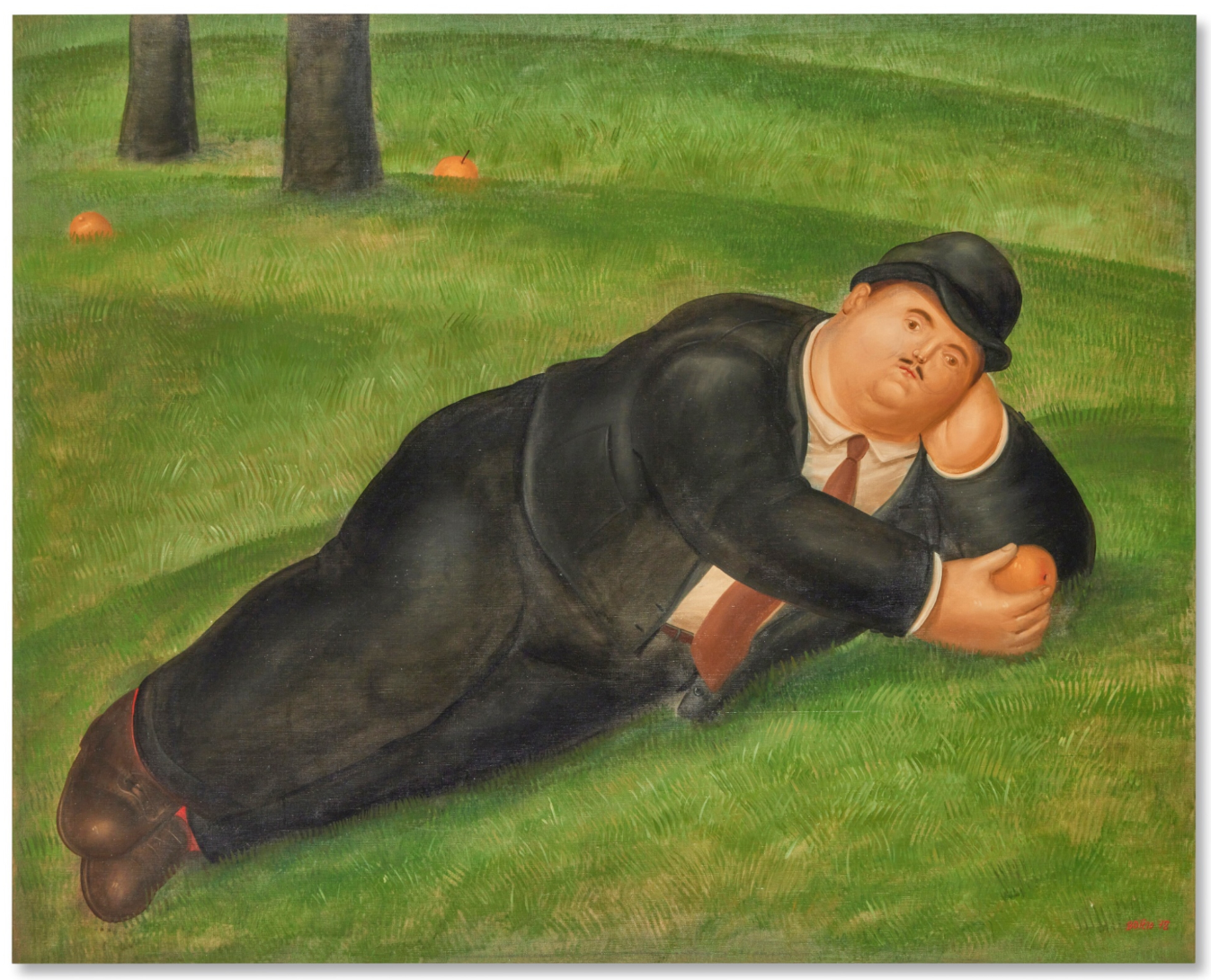
Executed in 1978, Fernando Botero’s Reclining Man is a compelling expression of the artist’s commitment to reimagining the conventions of classical painting through his highly personal treatment of the human figure. Here, a monumental gentleman in a dark suit reclines with the ease and confidence traditionally reserved for goddesses and odalisques, revealing Botero’s ability to bridge centuries of artistic tradition while remaining firmly rooted in everyday life. At once playful and deeply informed by art history, the work reveals how Botero could simultaneously honor and subvert the conventions of the Old Masters.
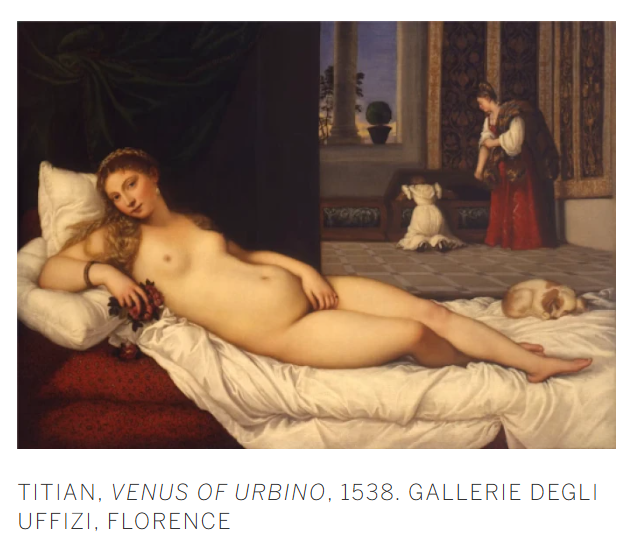
In Reclining Man, Botero reimagines the reclining nude, one of the Renaissance’s most enduring pictorial conventions, and gives it to an unlikely subject. From Giorgione and Titian to Ingres and Manet, the reclining figure has almost always been a woman. Botero, who spent years studying the Old Masters in Madrid and Florence, knew this lineage intimately. In the present work, he borrows the essential pictorial elements of Titian’s Venus of Urbino: a single figure stretched across the canvas, propped on one arm, holding a small token of desire and looking straight out at the viewer. While the pose is the same, he almost reverses everything else. In place of the nude goddess, he paints a fully dressed man, buttoned into a black three-piece suit, tie knotted, bowler hat in place, lying on the grass. The roses in Venus’s hand become an orange. Botero erases the lapdog, the maids, and the bed, leaving only the gentleman himself, offered to the viewer with all of Venus’s unguarded ease.
This anonymous gentleman is an archetype rather than a portrait. Botero returned to this figure throughout his career: the provincial man of means, with a house in town and orange trees on his finca. As John Sillevis has observed, the men of these provincial towns lived by strict codes of respectability, never venturing outdoors without suit, tie, and hat (Sillevis 2006, 29). Botero painted them repeatedly, along with their wives, children, and dogs, as a kind of affectionate memory of the Colombia of his youth. They are a little absurd, but rarely humiliated. In the present work, the gentleman has lain down on the grass in his town clothes and holds the fruit to his chest like a lover’s hand, caught in a private pleasure. He is charming precisely because he is ordinary.
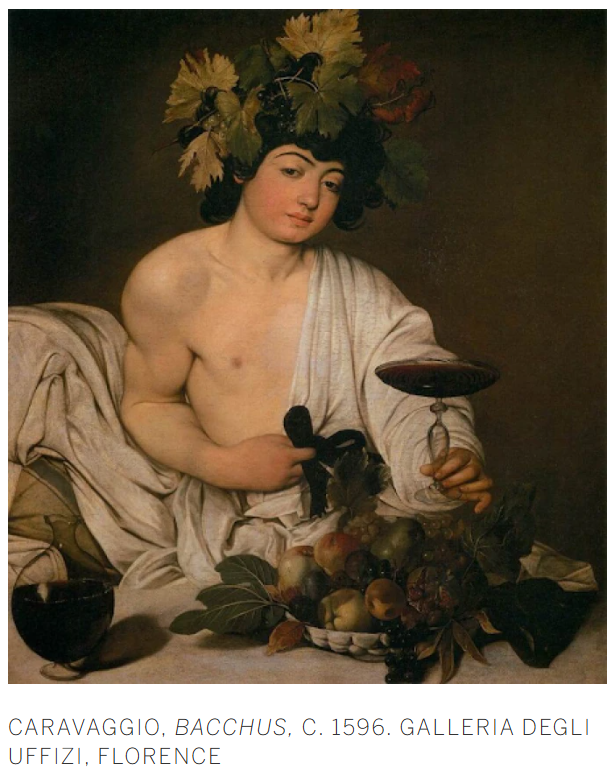
Like Caravaggio, Botero rejects idealized archetypes, granting ordinary people the dignity and authority traditionally reserved for sacred or historical subjects. In early Roman genre scenes such as The Cardsharps and The Fortune Teller, Caravaggio found his cast in the streets. In Bacchus (c. 1596), which hangs in the Uffizi near the Venus of Urbino, he brought that realism into mythology by casting a Roman youth as the god of wine, reclining on a couch, propped on one arm, offering a glass and surrounded by fruit. Botero similarly appropriates the conventions of the Old Masters but populates them with figures drawn from everyday life. Here, a prosperous provincial businessman assumes a role traditionally reserved for goddesses. Placing himself in dialogue with Titian and Caravaggio, Botero claims a place in the tradition not only for himself but also for a Medellín man in a bowler hat.