Fall 2026 New-York Marquee Auctions
Yayoi Kusama
Upcoming Lots
No. 3P.B., 1960
A Way to Infinity: Yayoi Kusama | No. 3P.B. | 1960
Sotheby’s New-York: 16 November 2026
Estimated: USD 10,000,000 – 15,000,000
Yayoi Kusama | No. 3P.B. | The Now and Contemporary Evening Auction |
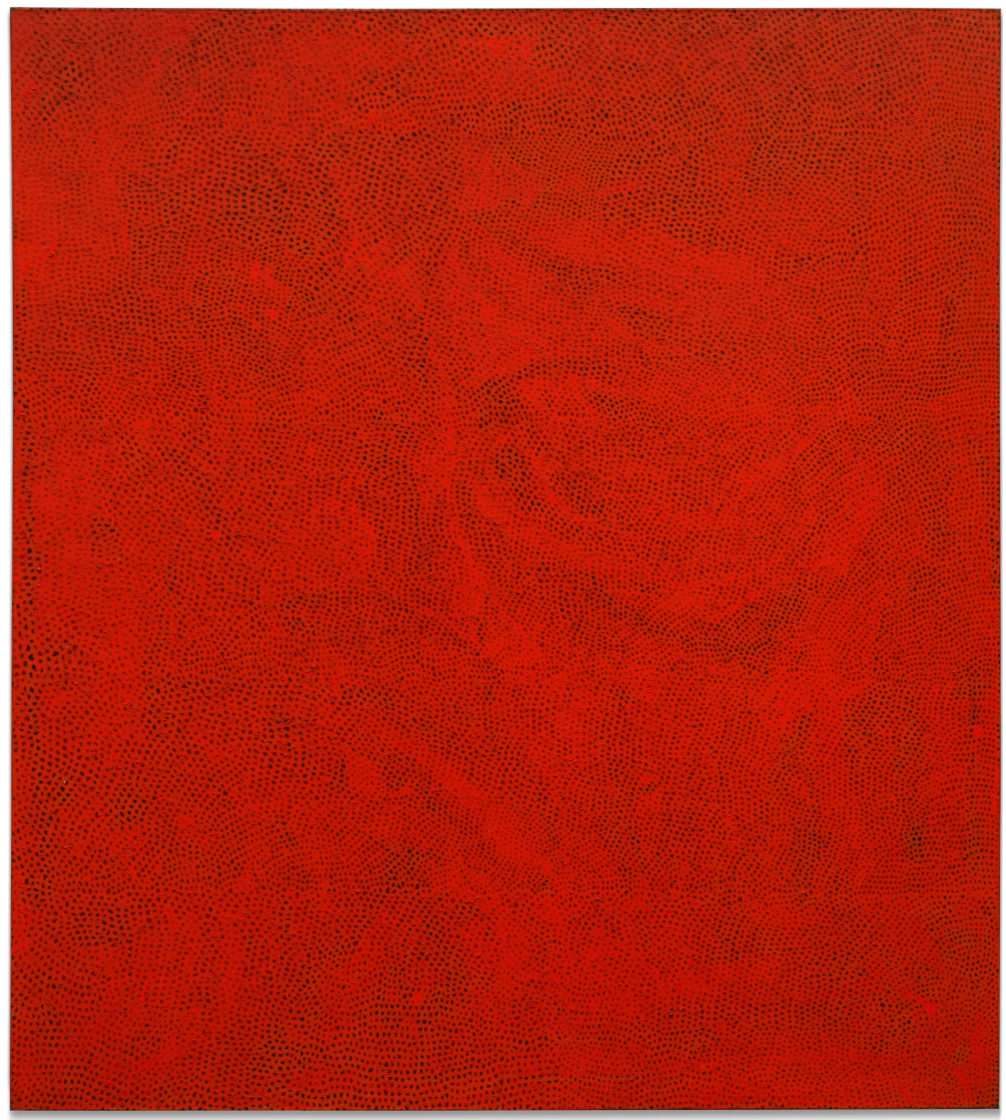
YAYOI KUSAMA (1929 – 2026)
No. 3P.B., 1960
Oil on canvas
159.1 x 143.5 cm (62-5/8 x 56-1/2 inches)
Signed, titled and dated 1960 (on the reverse)
Infinity Nets (OZEH), 2011
Sotheby’s New-York: 16 November 2026
Estimated: USD 2,000,000 – 3,000,000
Yayoi Kusama | Infinity Nets (OZEH) | The Now and Contemporary
REPEAT SALE
PROPERTY FROM THE ESTATE OF DR. FREDRIC S. BRANDT, MIAMI
Phillips New-York: 16 November 2016
Estimated: USD 1,500,000 – 2,000,000
USD 1,810,000
Yayoi Kusama 20th Century & Contemporary Art Evening Sale
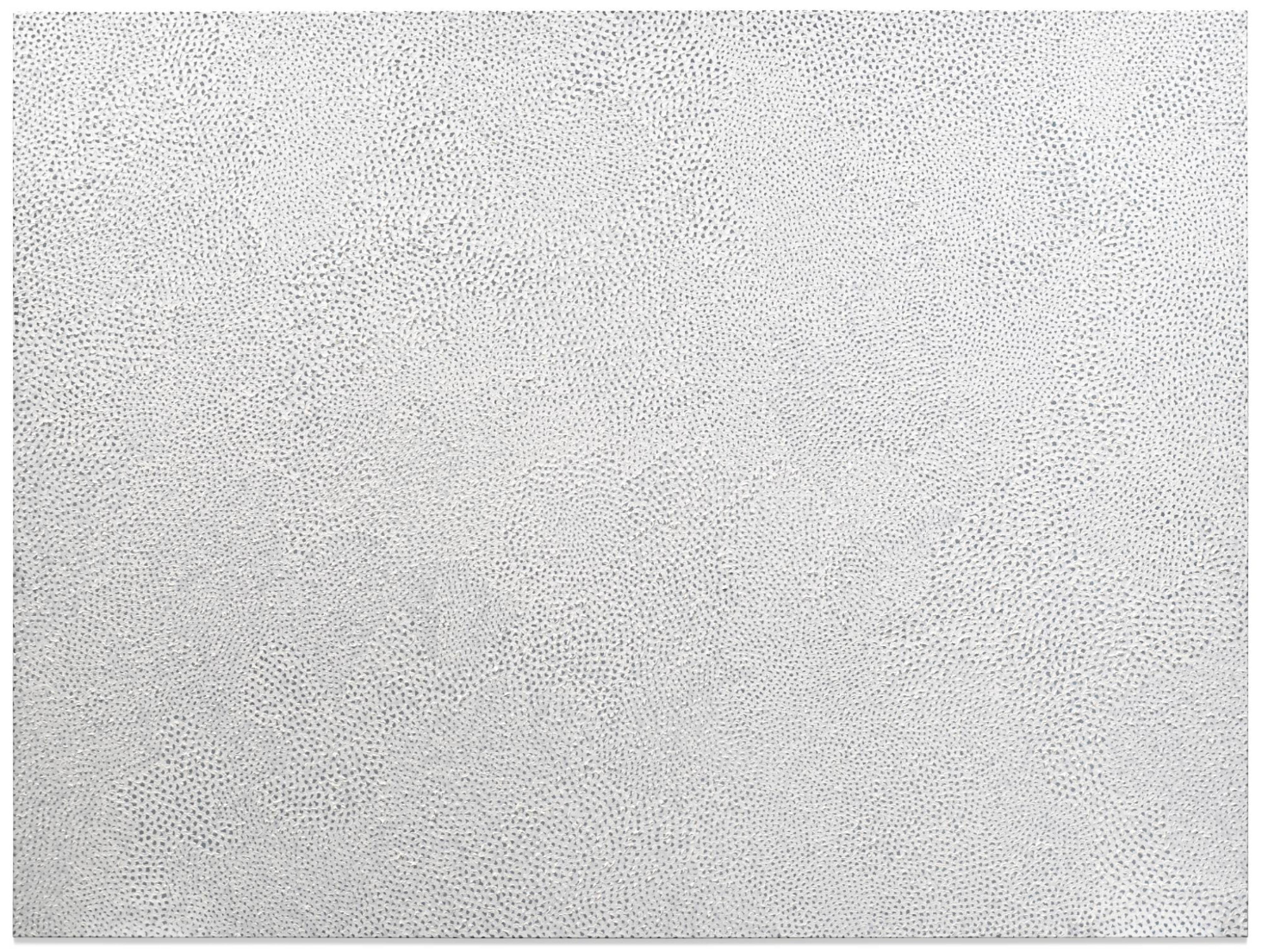
YAYOI KUSAMA (1929 – 2026)
Infinity Nets (OZEH), 2011
Acrylic on canvas
194.3 x 259.7 cm (76-1/2 x 102-1/4 inches)
Signed, titled and dated 2011 (on the reverse)
Starry Pumpkin, 2021
Property from a Prominent Private Collection
Christie’s New-York: 19 November 2026
Estimated: USD 1,800,000 – 2,800,000
YAYOI KUSAMA (1929-2026), Starry Pumpkin | Christie’s
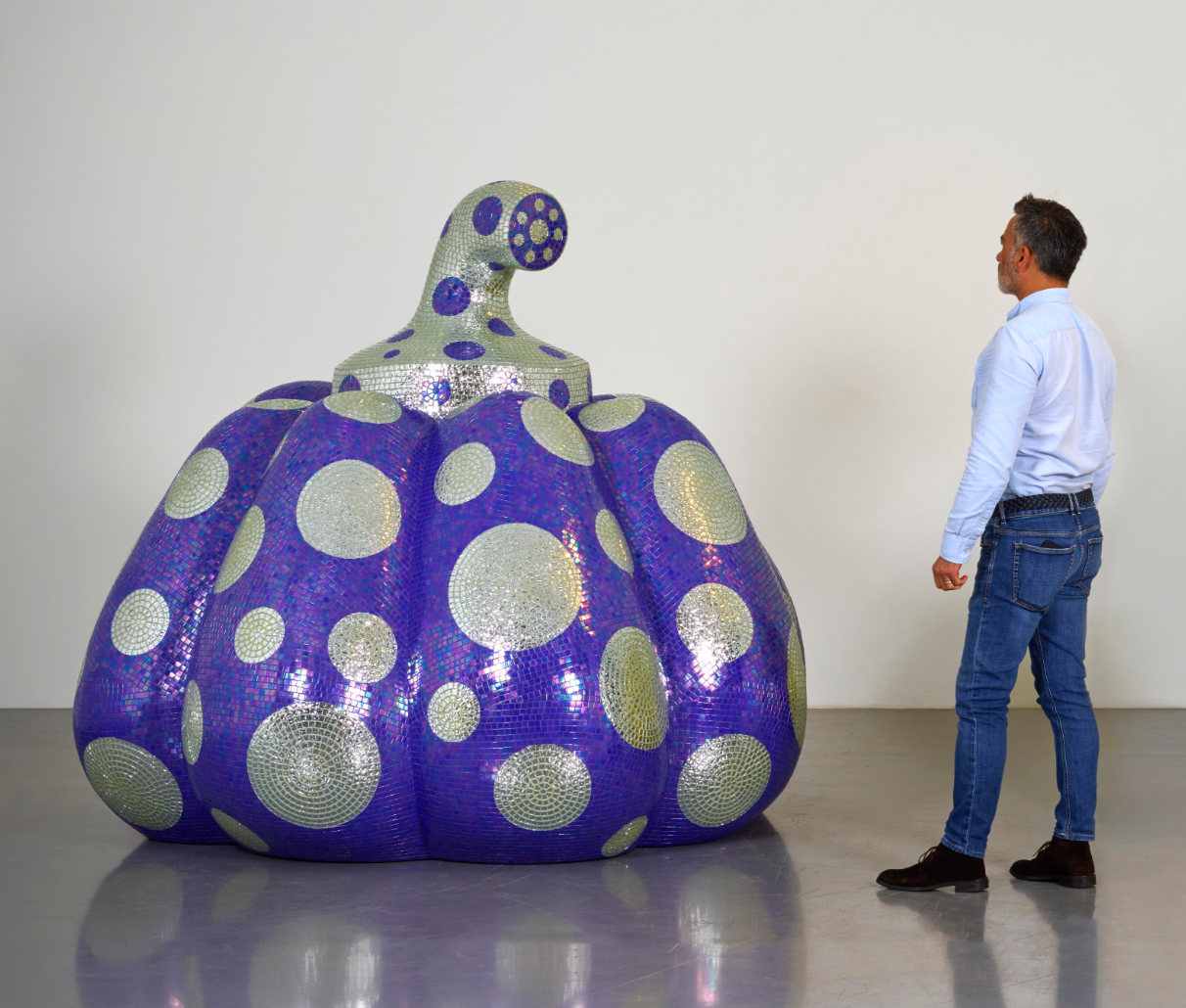
YAYOI KUSAMA (1929-2026)
Starry Pumpkin, 2021
Fiberglass-reinforced plastic and tile
181 x 202.2 x 203.6 cm (71-1/4 x 79-1/2 x 80 inches)
INFINITY-NETS (KOTR), 2013
Christie’s New-York: 20 November 2026
Estimated: USD 1,000,000 – 1,500,000
YAYOI KUSAMA (1929-2026), INFINITY-NETS (KOTR) | Christie’s
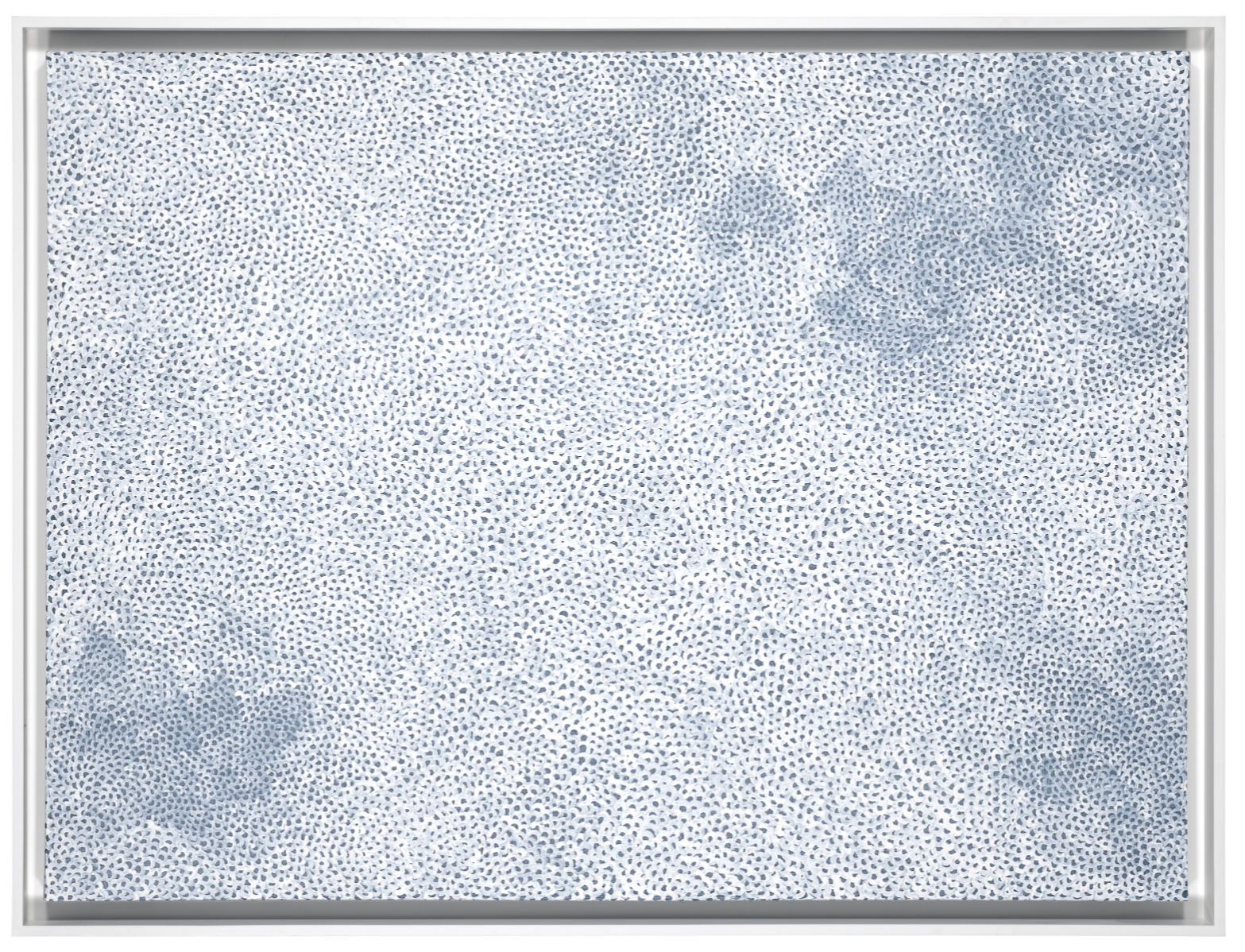
YAYOI KUSAMA (1929-2026)
INFINITY-NETS (KOTR), 2013
Acrylic on canvas
96.8 x 130.5 cm (38-1/8 x 51-3/8 inches)
Signed, titled and dated ‘YAYOI KUSAMA 2013 INFINITY NETS KOTR’ (on the reverse)
Infinity Nets (PEAA), 2013
Sotheby’s New-York: 17 November 2026
Estimated: USD 700,000 – 1,000,000
GUARANTEED PROPERTY
Yayoi Kusama | Infinity Nets (PEAA) | Contemporary Day Auction | 2026
REPEAT SALE
Sotheby’s New-York: 19 May 2017
Estimated: USD 400,000 – 600,000
USD 852,500
(#410) Yayoi Kusama (sothebys.com)
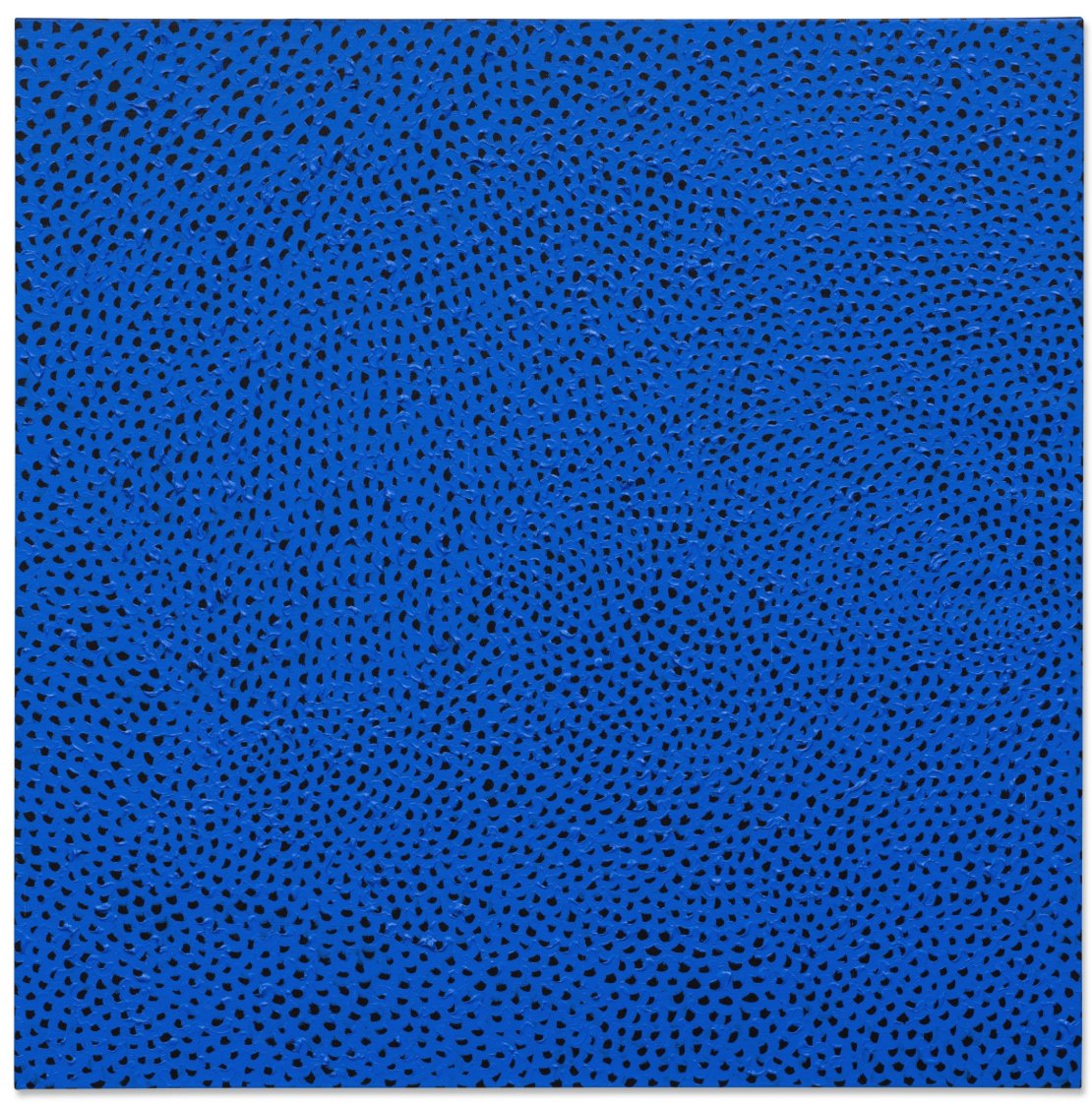
YAYOI KUSAMA (1929 – 2026)
Infinity Nets (PEAA), 2013
Acrylic on canvas
100×100 cm (39-3/8 x 39-3/8 inches)
Signed, titled and dated 2013 (on the reverse)
INFINITY-NETS (OXTWH), 2006
Christie’s New-York: 20 November 2026
Estimated: USD 700,000 – 900,000
YAYOI KUSAMA (1929-2026), INFINITY-NETS (OXTWH) | Christie’s
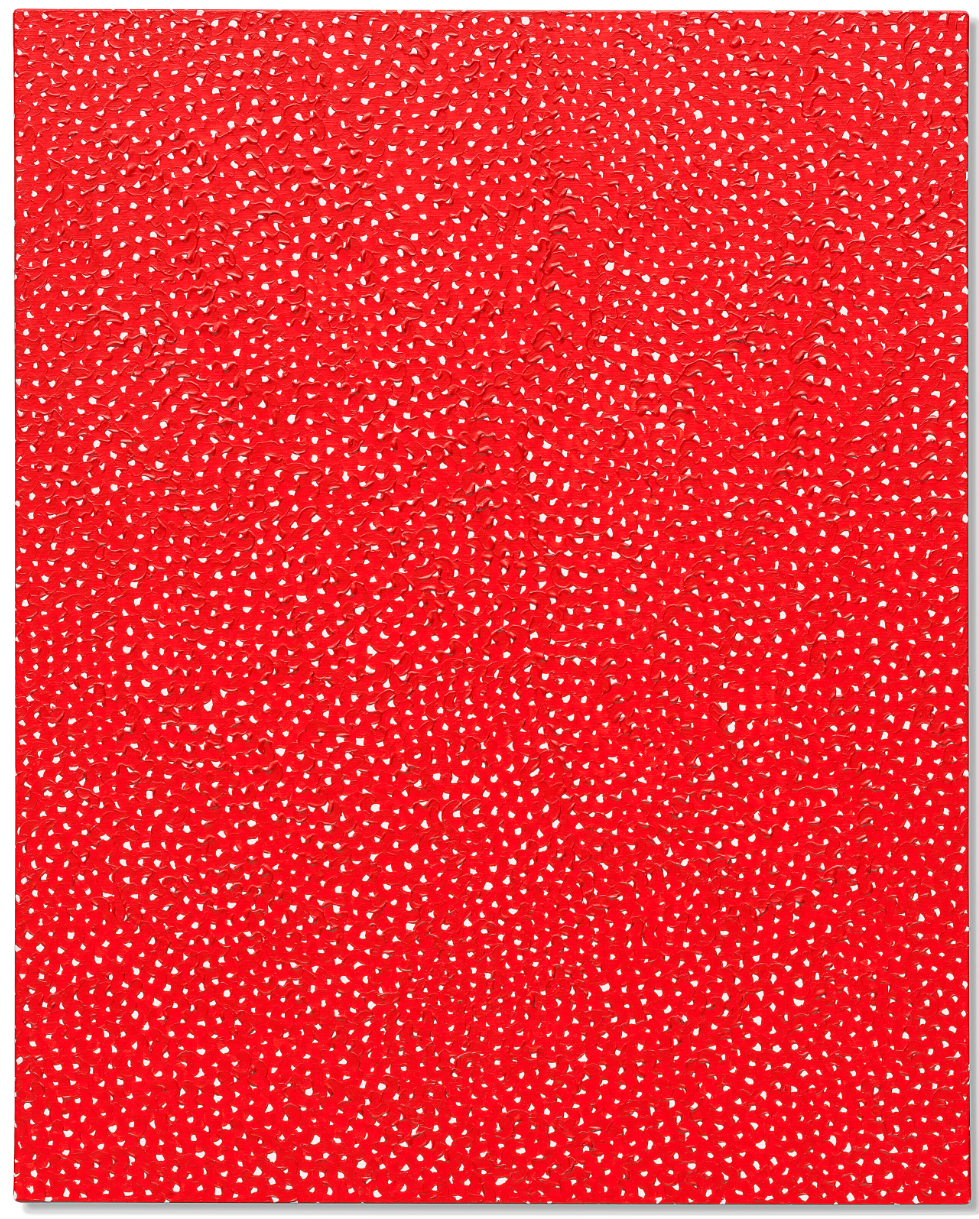
YAYOI KUSAMA (1929-2026)
INFINITY-NETS (OXTWH), 2006
Acrylic on canvas
90.8 x 72.7 cm (35-3/4 x 28-5/8 inches)
Signed, titled in English and Japanese and dated
‘Yayoi Kusama 2006 INFINITY-NETS OXTWH’
(on the reverse)
INFINITY-NETS (OQRET), 2005
Christie’s New-York: 20 November 2026
Estimated: USD 350,000 – 550,000
YAYOI KUSAMA (1929-2026), INFINITY-NETS (OQRET) | Christie’s
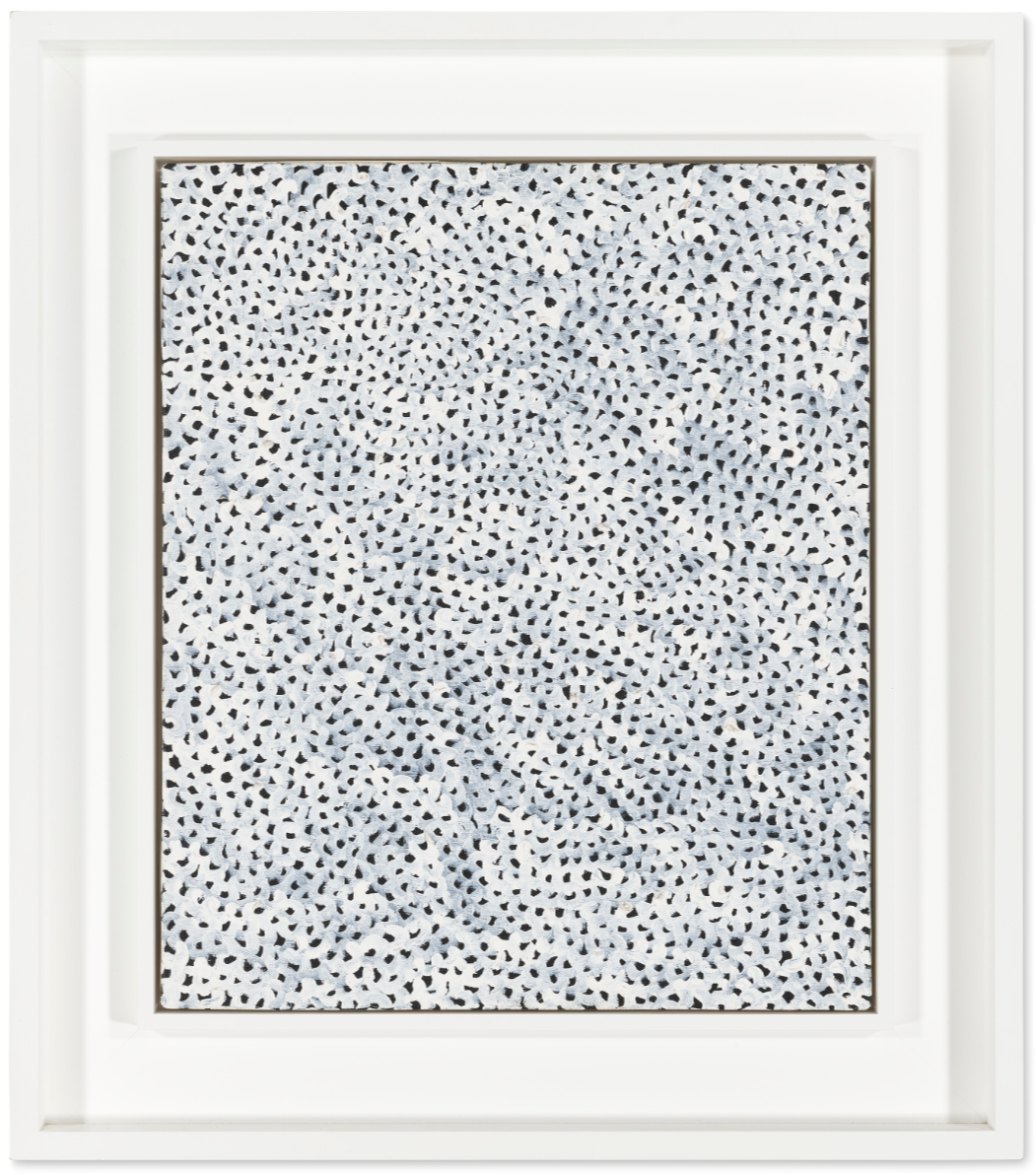
YAYOI KUSAMA (1929-2026)
INFINITY-NETS (OQRET), 2005
Acrylic on canvas
45.7 x 38.1 cm (18×15 inches)
Signed, titled in English and Japanese and dated
‘YAYOI KUSAMA 2005 INFINITY-NETS OQRET’
(on the reverse)
Pumpkin, 1990
Christie’s New-York: 20 November 2026
Estimated: USD 250,000 – 350,000
YAYOI KUSAMA (1929-2026), Pumpkin | Christie’s
REPEAT SALE
Bonhams Hong-Kong: 29 March 2026
Estimated: HKD 2,000,000 – 4,000,000
HKD 2,544,000 / USD 324,905
Bonhams : YAYOI KUSAMA (B. 1929) Pumpkin
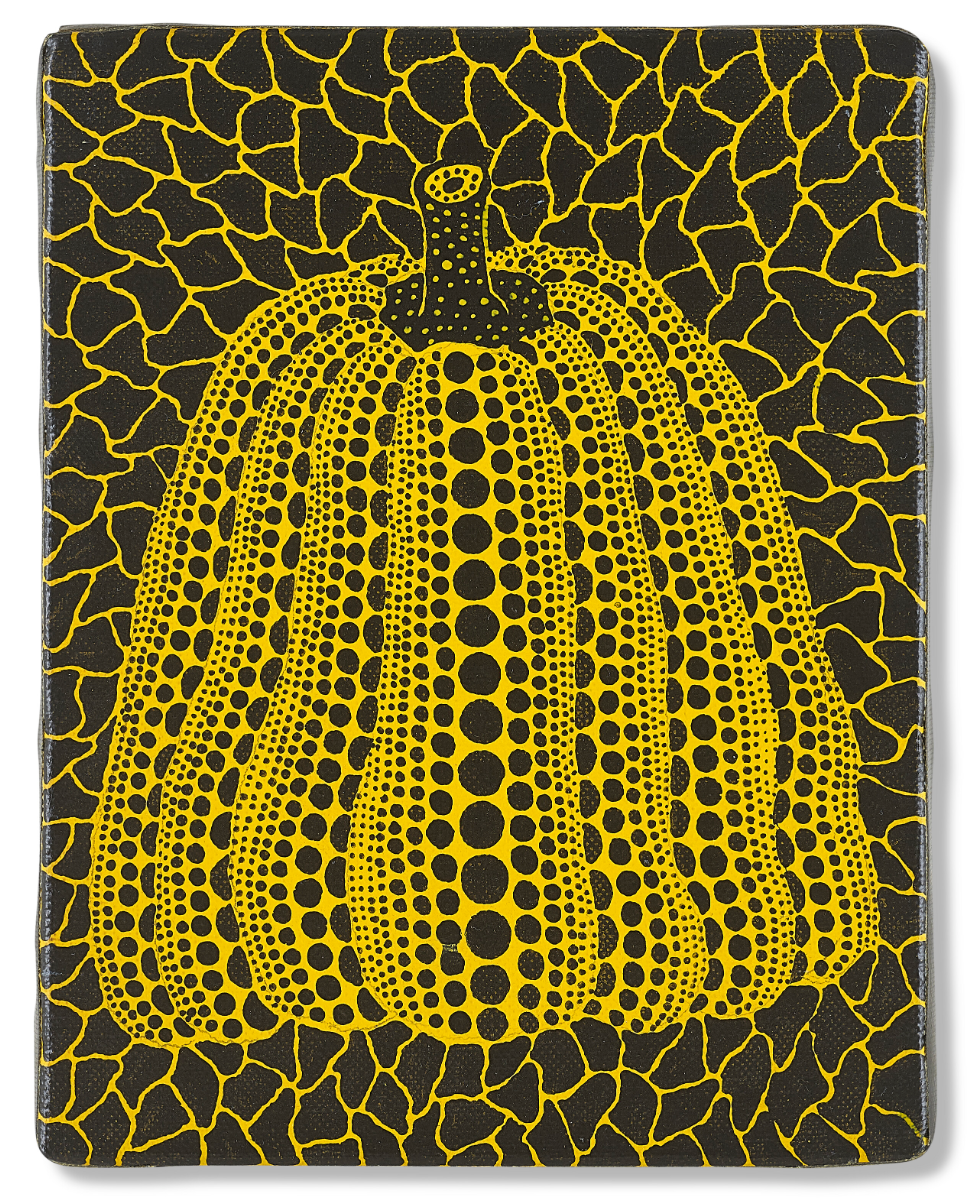
YAYOI KUSAMA (1929-2026)
Pumpkin, 1990
Acrylic on canvas
17.8 x 14 cm (7 x 5-1/2 inches)
Signed, titled in Japanese and dated ‘Yayoi Kusama 1990’ (on the reverse)
Transient World, 1988
Christie’s New-York: 20 November 2026
Estimated: USD 250,000 – 350,000
YAYOI KUSAMA (1929-2026), Transient World | Christie’s
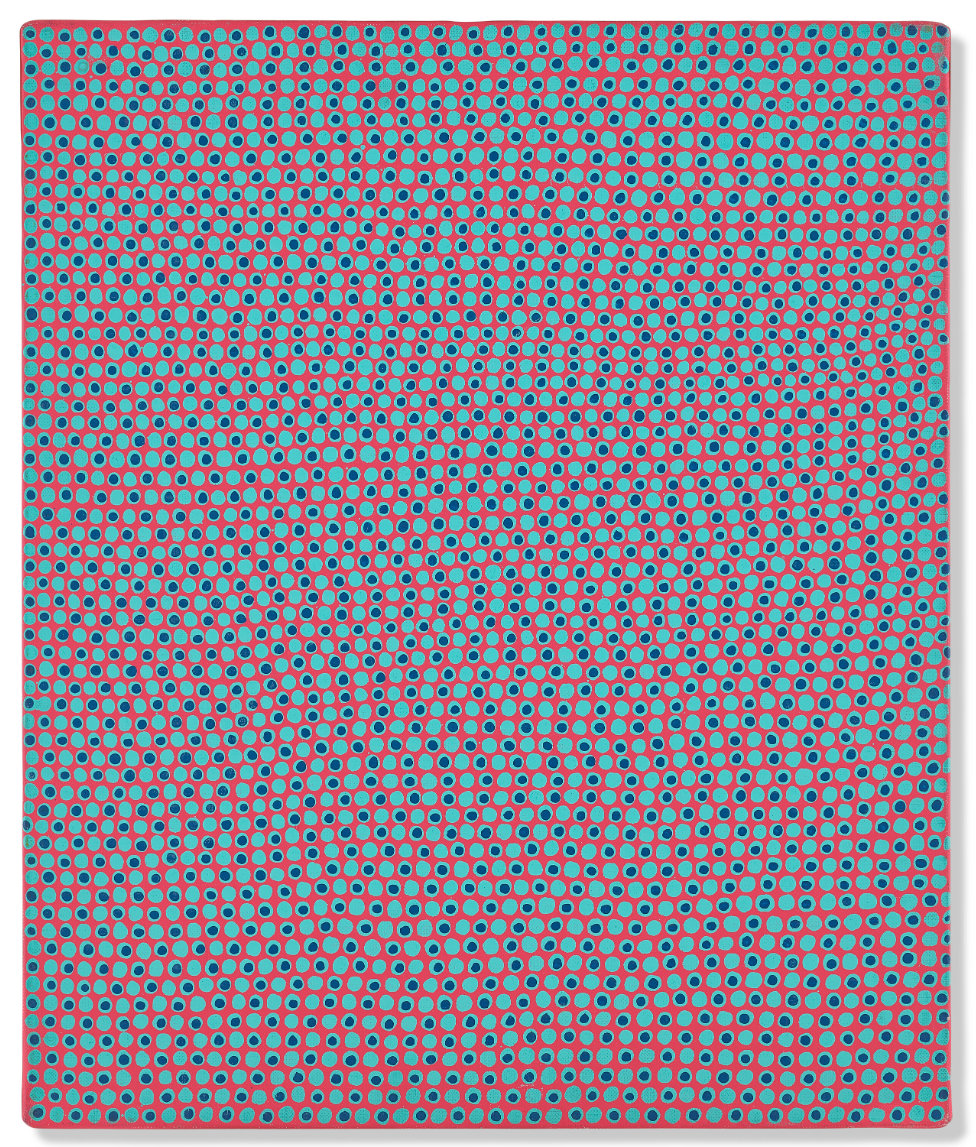
YAYOI KUSAMA (1929-2026)
Transient World, 1988
Acrylic on canvas
45.5 x 38 cm (18×15 inches)
Signed, titled in Japanese and dated ‘Yayoi Kusama 1988’ (on the reverse)
Untitled (Mannequin), 1966
Vision: The Extraordinary Collection of Theodore and Ruth Baum
Sotheby’s New-York: 17 November 2026
Estimated: USD 200,000 – 300,000
GUARANTEED PROPERTY
Yayoi Kusama | Untitled (Mannequin) | Vision: The Extraordinary
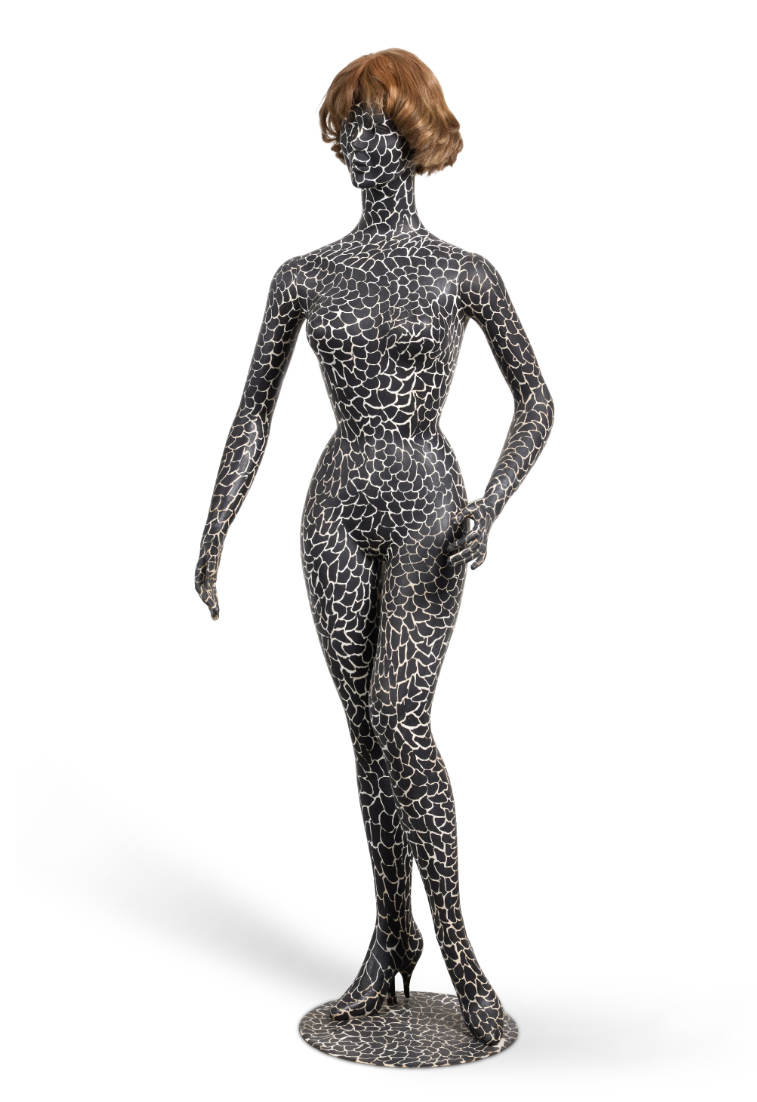
YAYOI KUSAMA (1929 – 2026)
Untitled (Mannequin), 1966
Acrylic on wooden mannequin with synthetic wig
170.2 x 65.1 x 40 cm (67 x 25-5/8 x 15-3/4 inches)
This work is unique
No. 3P.B., 1960
No. 3P.B., 1960
A Way to Infinity: Yayoi Kusama | No. 3P.B. | 1960
Sotheby’s New-York: 16 November 2026
Estimated: USD 10,000,000 – 15,000,000
Yayoi Kusama | No. 3P.B. | The Now and Contemporary Evening Auction |
YAYOI KUSAMA (1929 – 2026)
No. 3P.B., 1960
Oil on canvas
159.1 x 143.5 cm (62-5/8 x 56-1/2 inches)
Signed, titled and dated 1960 (on the reverse)
Infinity, isolation, universality, obliteration, resilience, and repetition: for over half a century, these were the propulsive themes that consumed Kusama’s life and work. Across canvas and cast bronze, mosaic and glass mirrors, fabric and fiberglass, Kusama invoked countless media in pursuit of a material language for the vast, the epic, the ineffable. Perhaps no body of work in her expansive oeuvre, however, so explosively and extraordinarily realizes this phenomenon as her early Infinity Nets, and No. 3P.B.., the beautiful, boundless, and revelatory masterwork from 1960, sees Kusama perfect the technical and conceptual anchor that inspired the rest of her Herculean career.
“I was always standing at the centre of the obsession, over the passionate accretion and repetition inside of me.”
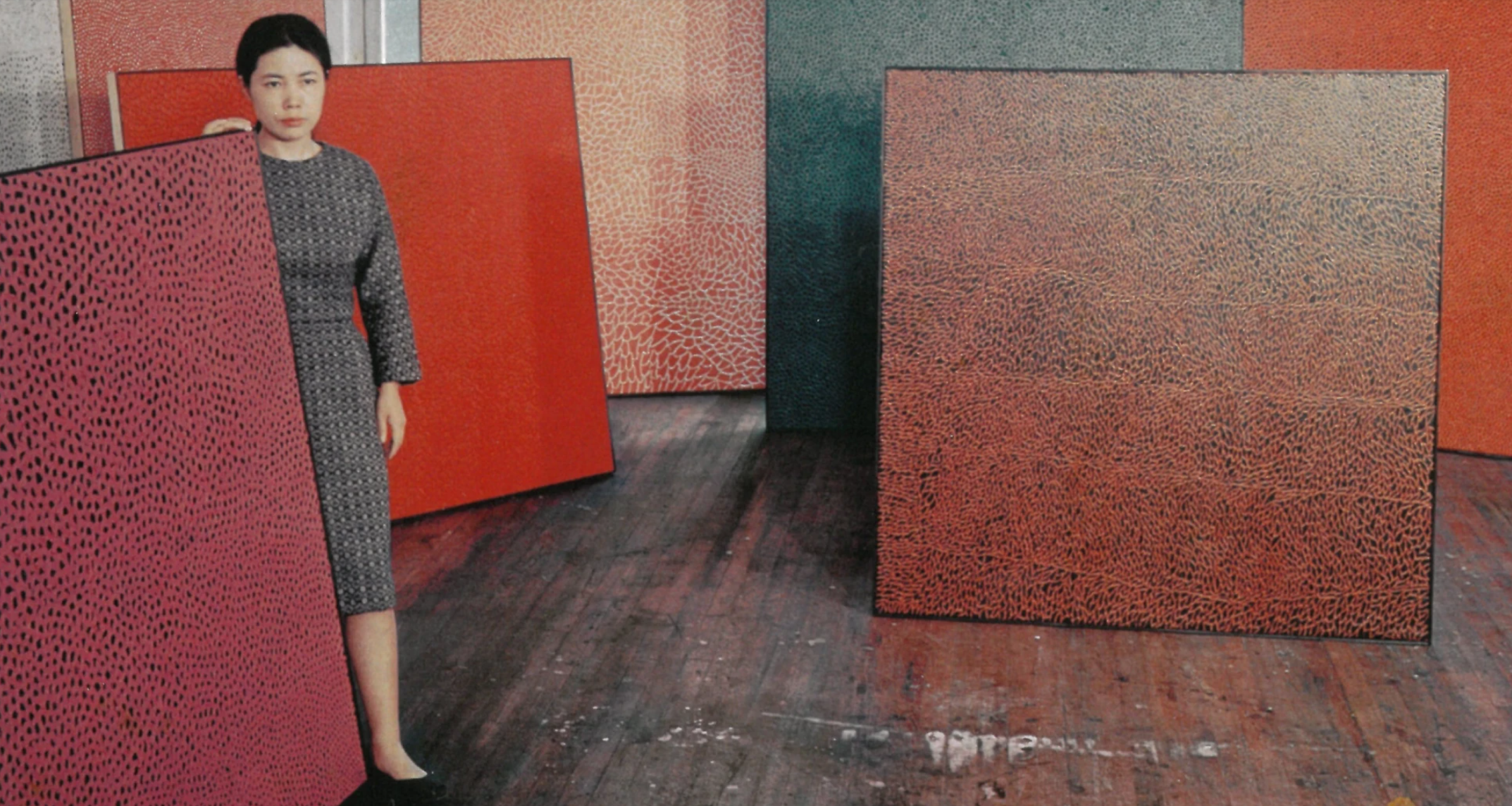
Yayoi Kusama with Infinity Nets, 1960. Courtesy and Image © Yayoi Kusama. Art © 2026 Yayoi Kusama
Among the earliest, largest, and most significant examples from the series, notably distinguished for its inclusion in one of Kusama’s earliest institutional presentations in the United States at the Whitney Museum of American Art in 1961, No. 3P.B. marks both a point of genesis and a concluding statement: a technique mastered early yet endlessly generative, a visual language and ideological thesis fecund with reinventive possibility.
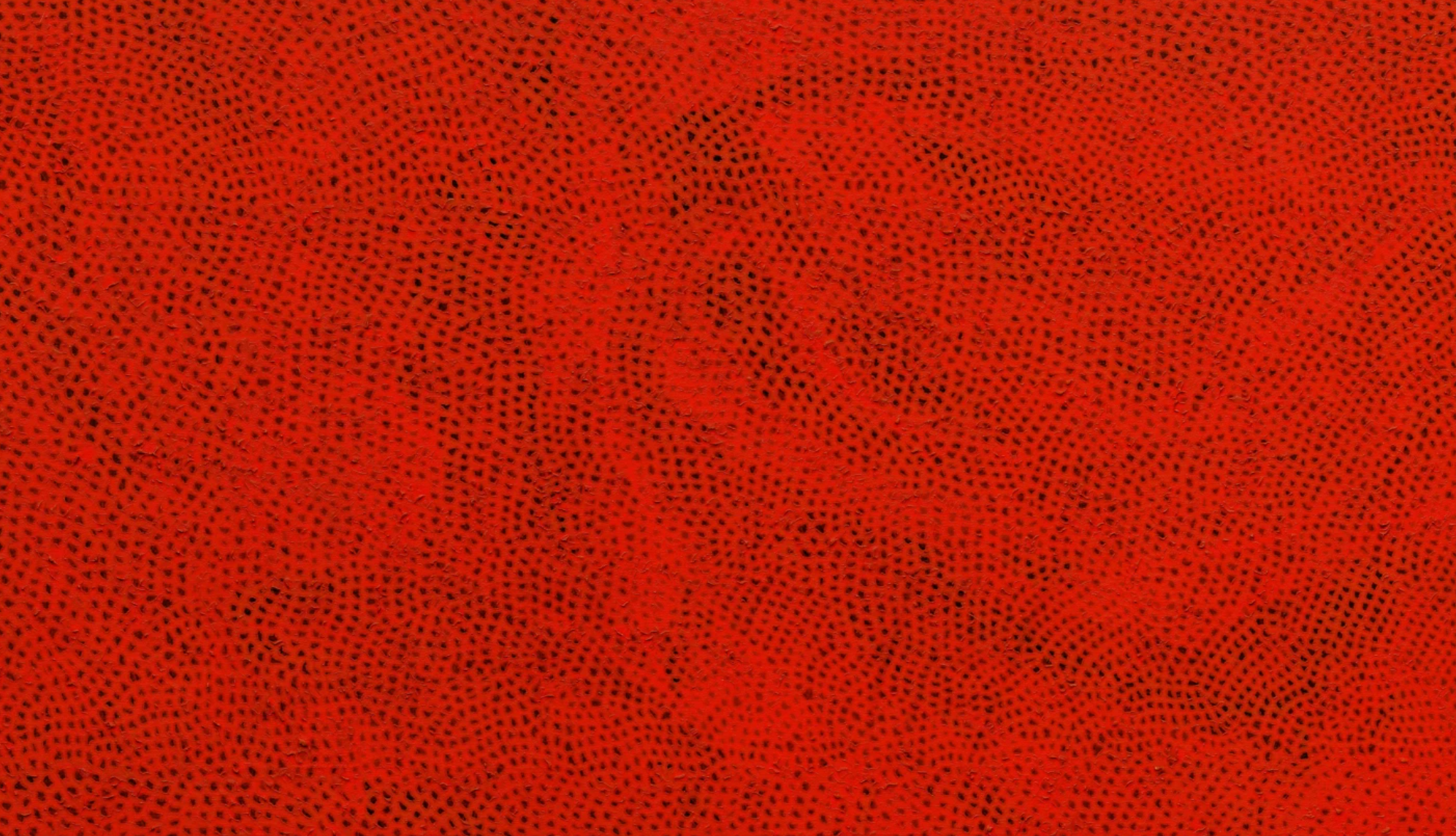
The present work stands as one of the earliest mature Infinity Nets, in which Kusama’s signature painterly mode reaches its fullest evolution. Here, a labyrinthine network of meandering loops revealing minute dots swallows the picture plane, generating a sense of swelling movement through the most nuanced modulations in scale and rich crests of impastoed oil. It is this picture that announces the inauguration and conclusion, the means and end to the style that defined Kusama herself, all miraculously finding resolution on the monumental, absorptive, and hypnotic surface of No. 3P.B.
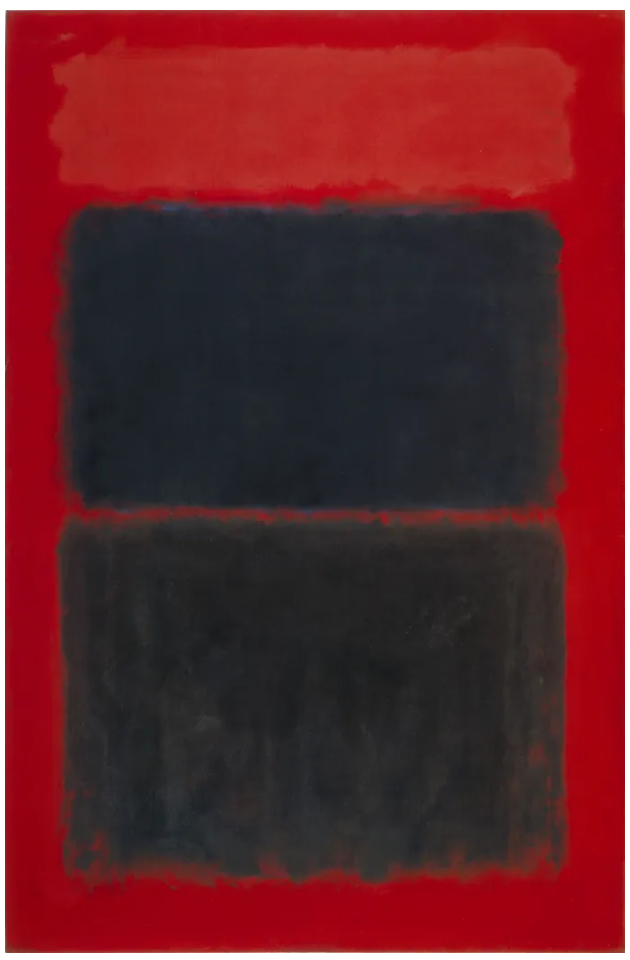
Mark Rothko, Light Red Over Black, 1957. Tate Gallery, London. Image © Tate, London / Art Resource, NY.
Art © 1998 Kate Rothko Prizel & Christopher Rothko / Artists Rights Society (ARS), New York
Executed just two years after Kusama emigrated from Japan to New York, No.3P.B. marries the dot and loop motifs into an expansive net, all devices which consumed her practice for more than six decades. Inspired by the aerial view of the rippling sea from her plane window, the present work proffers her epiphanic creative expression during this vulnerable, tumultuous period in her life: a singular vernacular to simultaneously capture the minute and expansive, the personal and universal.
In October 1959, eighteen months after the artist moved to Manhattan, Kusama staged her New York breakthrough: she organized her first solo exhibition at Brata Gallery, an important artist-run cooperative in the East Village, and debuted five mural-sized white monochrome canvases awash in a sea of circular marks. The debut of these Infinity Nets proved catalytic, and in 1961, Kusama would participate in the Whitney’s 1961 Annual Exhibition of contemporary sculpture and painting. Alongside peers from the New York School, Kusama was here contextualized at the fore of the American avant-garde, along with artists such as Joan Mitchell, Helen Frankenthaler, Robert Rauschenberg, Georgia O’Keeffe, and Philip Guston. Each artist presented an artwork, and the present work, lent at the time by Jerome Goodman, was Kusama’s representative.
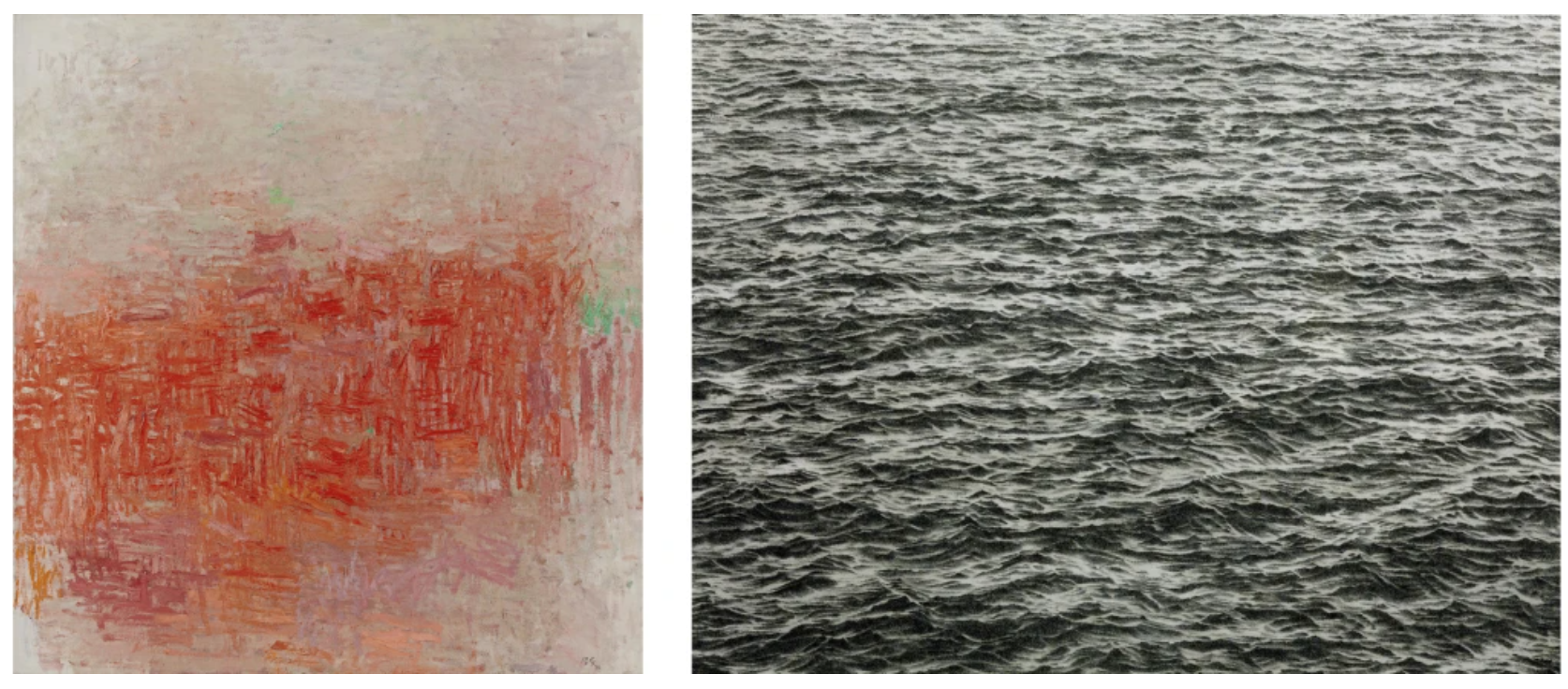
Left: Philip Guston, Painting, 1954. The Museum of Modern Art, New York. Image © The Museum of Modern Art/Licensed by SCALA / Art Resource, NY. Art © 2026 The Estate of Philip Guston. Right: Vija Celmins, Ocean, 1975. Tate Gallery, London. Image © Tate, London / Art Resource, NY. Art © 2026 Vija Celmins
Despite the precision and delicacy of this lace-like mesh of pigment, the swarming undulations of its overall effect carry the same full-throttle velocity of Jackson Pollock’s drips or the considered muscularity of Willem de Kooning’s Women. Kusama’s abstraction, however, was not Formalist in its approach, nor conceived with “Abstract Expressionism” in mind. Kusama’s rigorous language of repetition, accumulation, and atomization was born from psychotropic visions, which began in adolescence.
Kusama’s Early Infinity Nets in Select Museum Collections
No. 3P.B. is an exceptionally rare early, large-scale red Infinity Net, examples of which seldom appear at auction. Testament to the significance of Infinity Net works from this period, they are widely represented in prestigious institutional collections around the world, a selection of which are illustrated below.
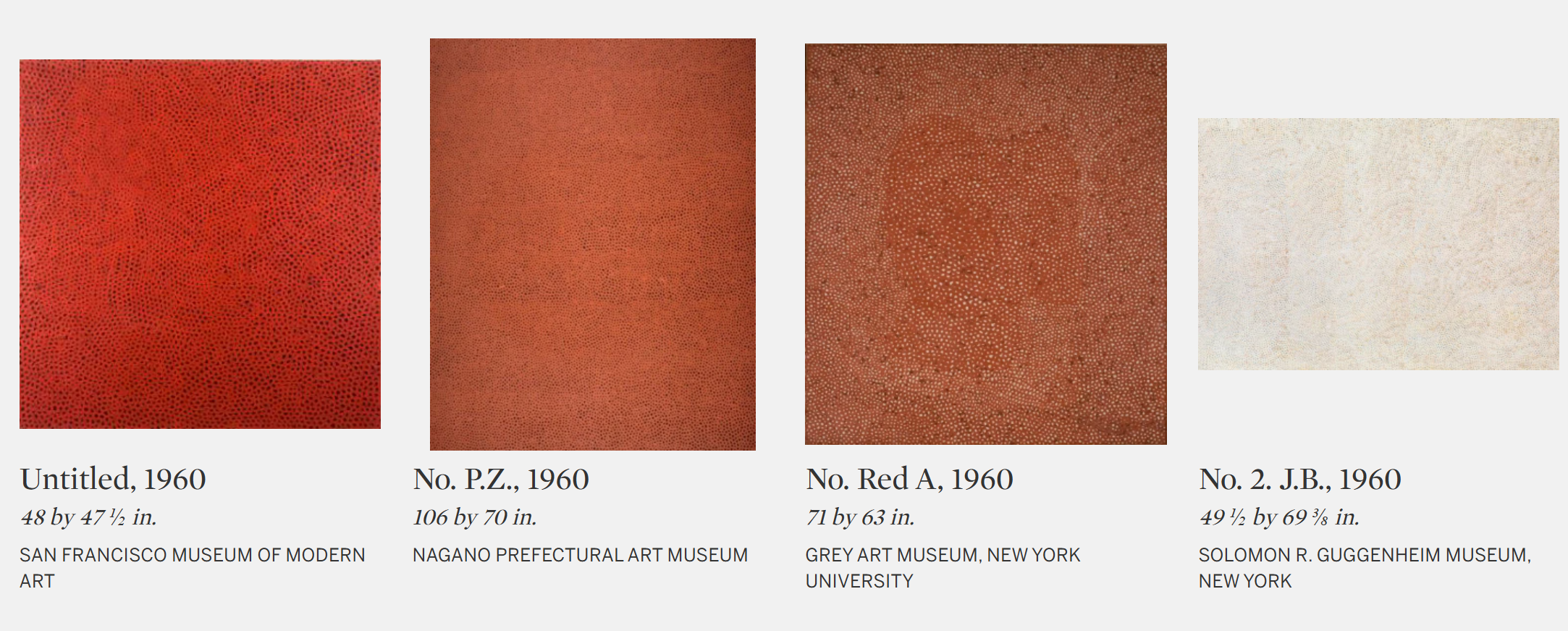
All Art © 2026 Yayoi Kusama
“One day, after gazing at a pattern of red flowers on the tablecloth, I looked up to see that the ceiling, the windows, and the columns seemed to be plastered with the same red floral pattern. I saw the entire room, my entire body, and the entire universe covered with red flowers, and in that instant my soul was obliterated, and I was restored, returned to infinity, to eternal time and absolute space. This was not an illusion but reality itself. I was shocked to see the depths of my soul. And my body was caught in that terrifying Infinity Net.”
Indeed, the hallucinatory effects of Kusama’s deft facture probe not the canvas as a surface but the picture plane as a portal, one that engages the dialectics of nothingness and infinity, self-hood and self-obliteration. In this way, the Infinity Nets read like a form of self-portraiture—a surrogate for the mind and body.
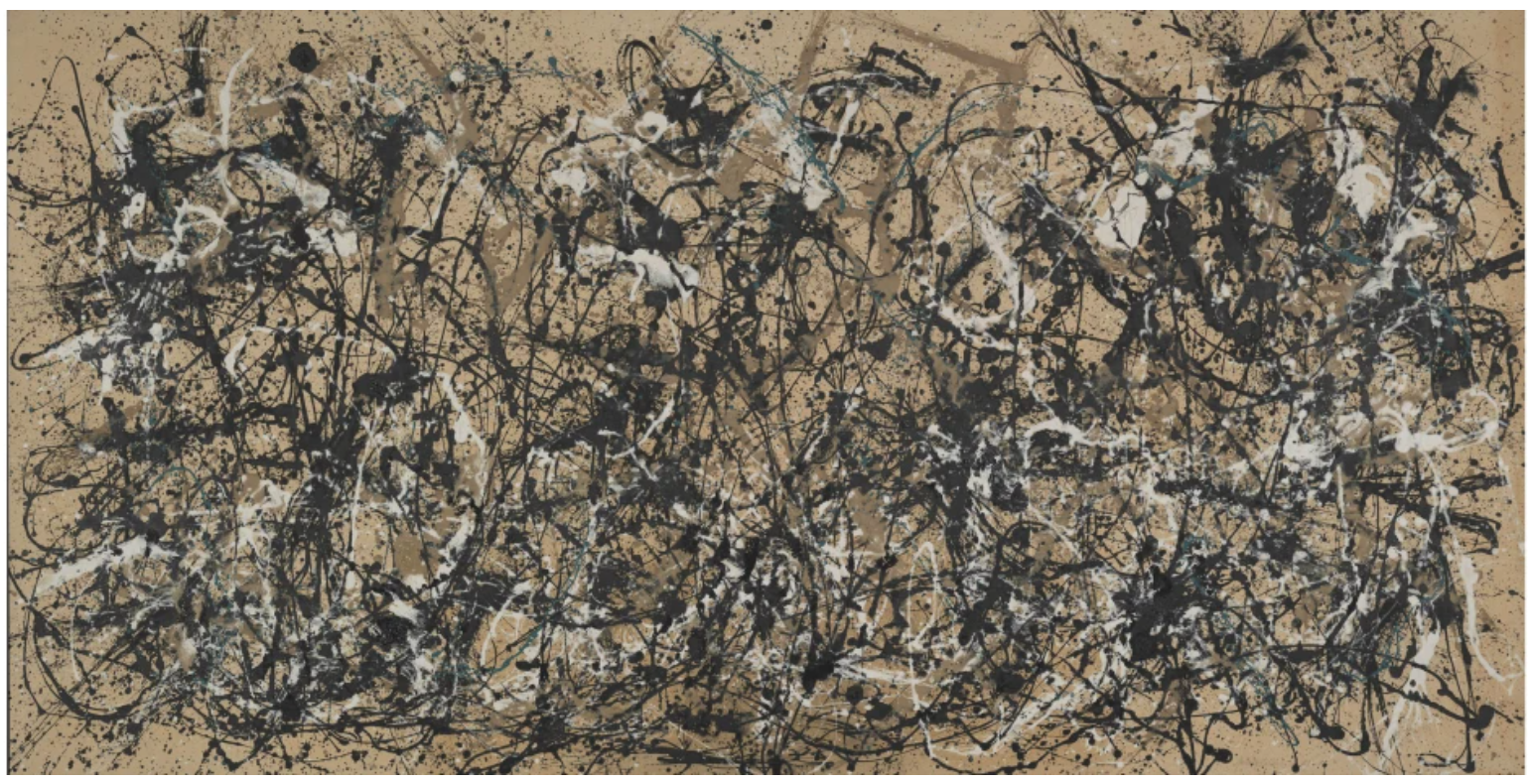
Jackson Pollock, Autumn Rhythm: Number 30, 1950, 1950. The Metropolitan Museum of Art, New York. Image © The Metropolitan Museum of Art. Image source: Art Resource, NY. Art © 2026 Pollock-Krasner Foundation / Artists Rights Society (ARS), New York
The artist’s prodigious career is characterized by the indistinction between her own consciousness and the external world: a practice of intuition and translation of the subjects and visions that have spoken to her since childhood. For Kusama, the swirling polka-dot motif is as much a meditative practice of repetition as it is a philosophical exercise in disintegrating the bounds between finitude and infinitude. Kusama’s acute ability to weave deeply imaginative and interpersonal devotion to her work with a profound contemplation of her own experience lends her work a disorienting yet beguiling spatial and conceptual complexity. Indeed, for Kusama, the dot and net are not merely devices but a way of seeing: “I would cover a canvas with nets, then continue painting them on the table, on the floor, and finally on my own body. As I repeated this process over and over and over, the nets began to expand into infinity. I forgot about myself as they enveloped me, clinging to my arms and legs and clothes and filling the entire room.” (Yayoi Kusama, Infinity Net: The Autobiography of Yayoi Kusama, London 2011, n.p.) Unlike Kusama’s early white Infinity Nets, which engender a meditative calm, No. 3P.B.’s distinctive shade of fiery crimson reverberates with a feverish urgency. Rendered in the same blazing scarlet as the patterned red flowers which consumed Kusama as a child, No. 3P.B. emulates the artist’s first harrowing, revelatory experience of infinity.
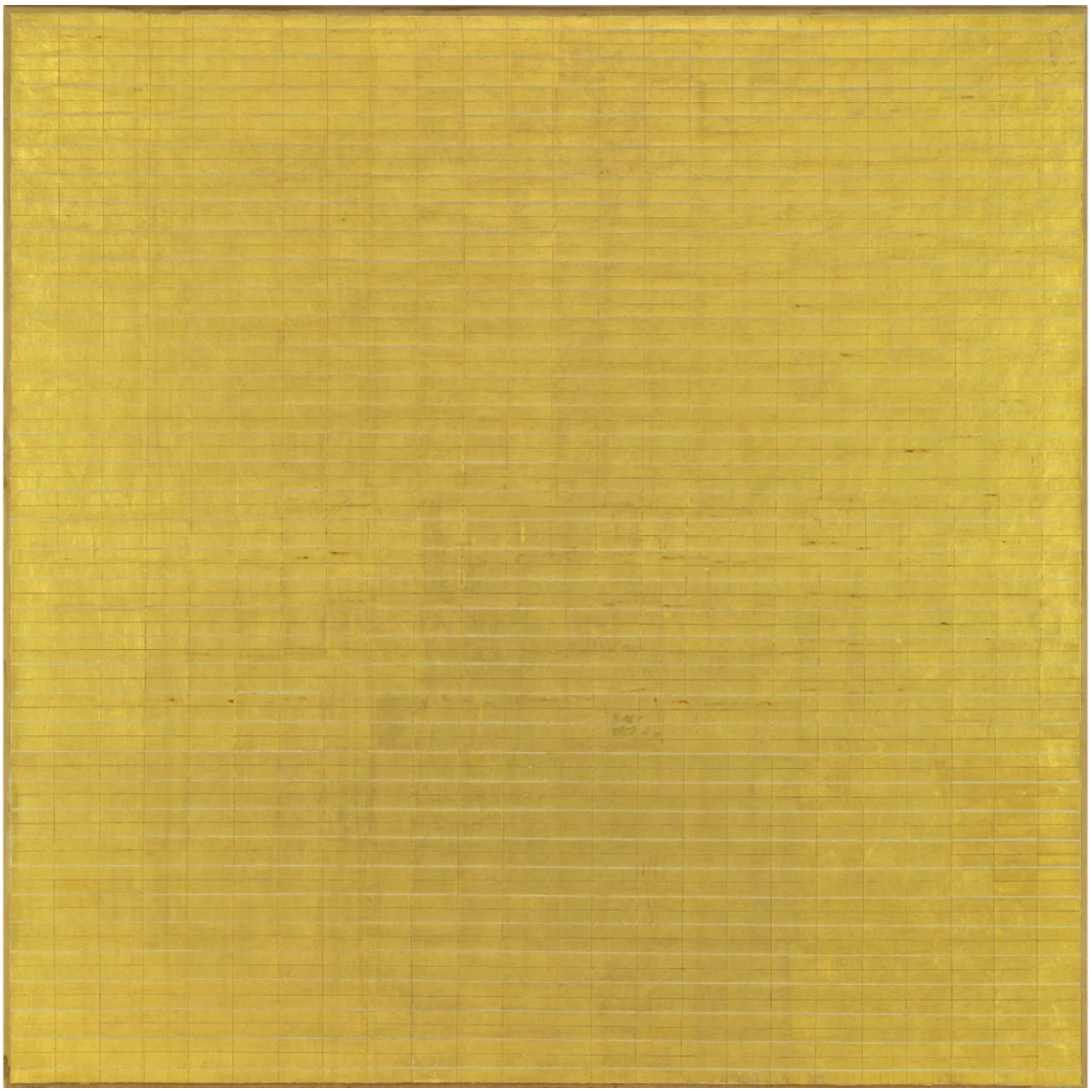
Agnes Martin, Friendship, 1963. The Museum of Modern Art. Image © The Museum of Modern Art/Licensed by SCALA / Art Resource, NY. Art © Estate of Agnes Martin / Artists Rights Society (ARS), New York
Through her work, Kusama wished to “lend specificity to infinity of space.” (Yayoi Kusama, Infinity Net: The Autobiography of Yayoi Kusama, London 2013, p. 23) In No. 3 P.B., we see this goal spectacularly brought to life. Following the artist’s widely mourned passing in August 2026, the power and prowess of No.3 P.B. reverberates with even greater intensity—thus marking the nascent ingenuity lying deep in the work’s seemingly impenetrable surface. Surrounded and absorbed by the interminable expanse of Kusama’s mark-making, we bear witness to the brilliant, complex, and tortuously infinite mind of Yayoi Kusama, in the very crimson depths where her extraordinary career truly began.
Infinity Nets (OZEH), 2011
Infinity Nets (OZEH), 2011
Sotheby’s New-York: 16 November 2026
Estimated: USD 2,000,000 – 3,000,000
Yayoi Kusama | Infinity Nets (OZEH) | The Now and Contemporary
REPEAT SALE
PROPERTY FROM THE ESTATE OF DR. FREDRIC S. BRANDT, MIAMI
Phillips New-York: 16 November 2016
Estimated: USD 1,500,000 – 2,000,000
USD 1,810,000
Yayoi Kusama 20th Century & Contemporary Art Evening Sale
YAYOI KUSAMA (1929 – 2026)
Infinity Nets (OZEH), 2011
Acrylic on canvas
194.3 x 259.7 cm (76-1/2 x 102-1/4 inches)
Signed, titled and dated 2011 (on the reverse)
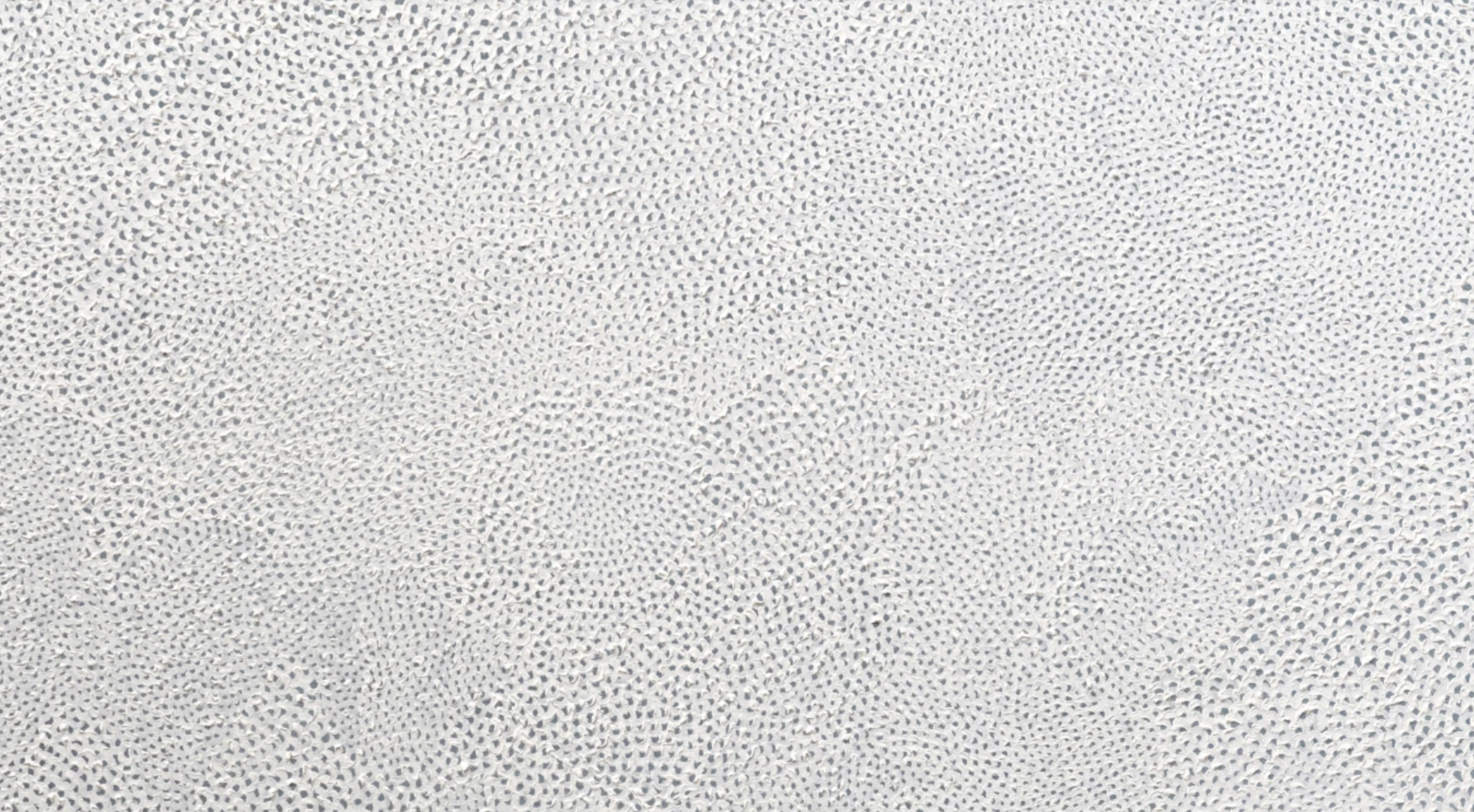
Distinguished by its hypnotic, heavily impastoed surface, Infinity Nets (OZEH), executed in 2011, is a remarkably luminous example of Yayoi Kusama’s Infinity Nets, a series that defined the exceptional mature practice of one of contemporary art’s titans. On a flattened black canvas, Kusama overlays an impasto of interlinking white circles, creating a shimmering and scale-like monochromatic pattern of white paint. She then carves and picks away at the pattern, revealing the dark canvas in pinpoint dimples that form a net of fine dots.
“Forget yourself. Become one with eternity. Become part of your environment.”
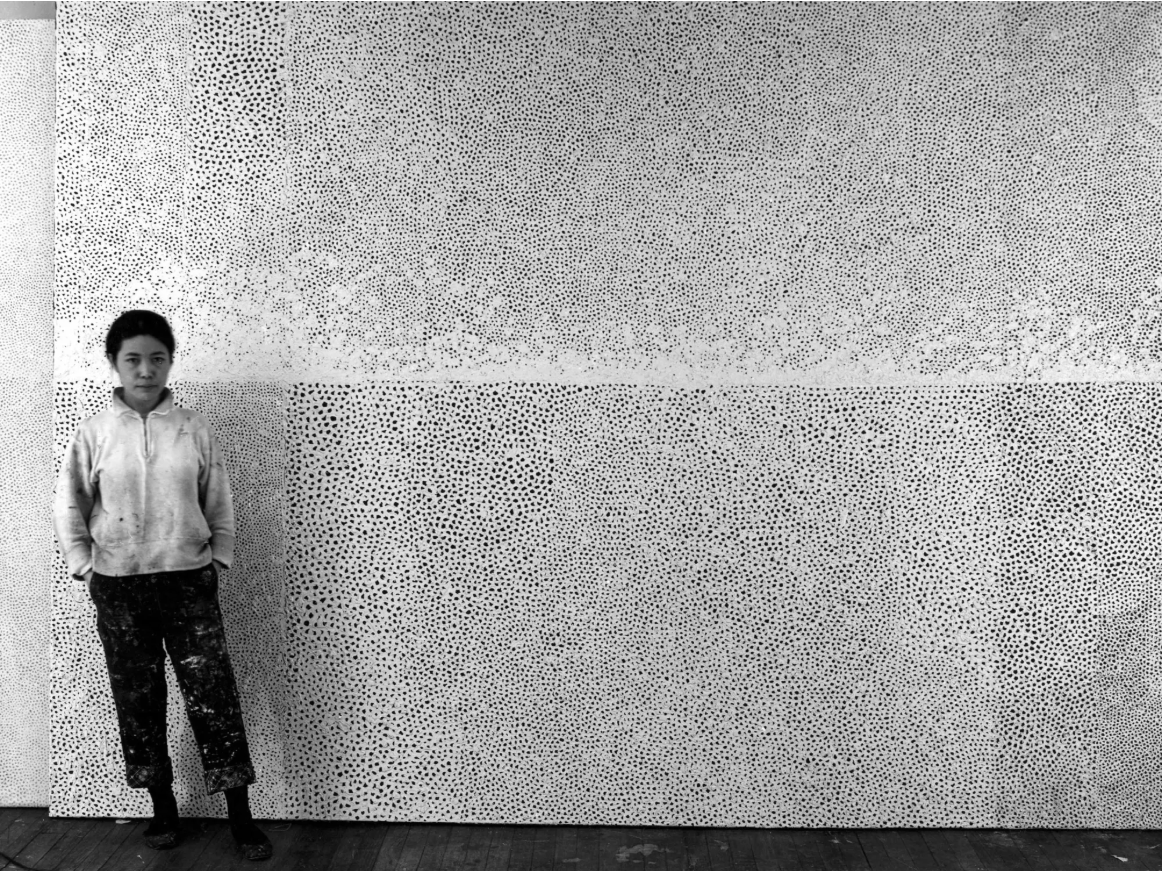
Yayoi Kusama with Infinity Net paintings in her New York studio, 1961. Photographer unknown. Art © 2026 Yayoi Kusama
As a result of her process, Infinity Nets (OZEH) greets audiences with a calming and meditative visual experience that rewards investigation and participation. When viewed closely, the shallow craters and light peaks of the work’s impasto create a soft and playful three-dimensionality; as viewers step away from the canvas, the composition flattens, and its physical qualities become abstracted, allowing the white circles to create the illusion of movement, as if they would float away from the canvas if they were not held down by the painting’s black network of dots.
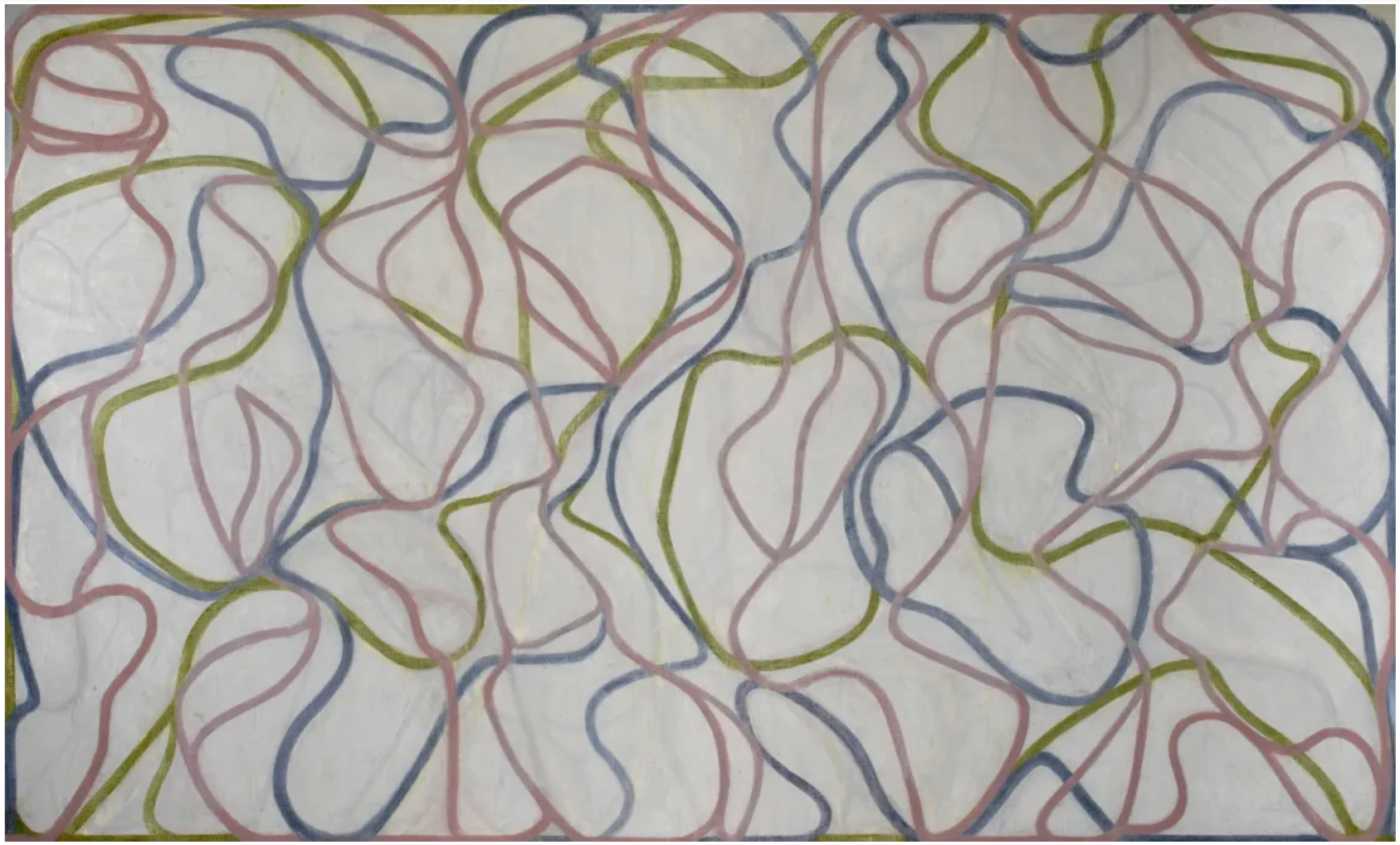
Brice Marden, Study for the Muses (Eaglesmere Version), 1991-1994. The Art Institute of Chicago. Image © The Art Institute of Chicago / Art Resource, NY. Art © 2026 Brice Marden / Artists Rights Society (ARS), New York
A cornerstone of her career and practice, Kusama began the Infinity Nets in 1958, only a year after she moved to New York City. Troubled by visual and auditory hallucinations, obsessive-compulsive behavior, severe anxiety, and depression since her childhood, the repeated loops and dot-making of the Infinity Nets serve as an essential outlet for Kusama’s mind, acting as a form of art therapy and self-dissolution, with intense net-making sessions lasting for more than 50 hours.
“Unable to sleep, I would get out of bed and paint. There was no other way to endure the cold and the hunger, so I pushed myself on to ever more intense work… I often suffered episodes of severe neurosis. I would cover a canvas with nets, then continue painting them on the table, on the floor, and finally on my own body. As I repeated this process over and over again, the nets began to expand to infinity. I forgot about myself as they enveloped me, clinging to my arms and legs and clothes and filling the entire room.”
The visual language of the series is similarly rooted in Kusama’s psychological environment, with the lacelike compositions being physical manifestations of her hallucinations.
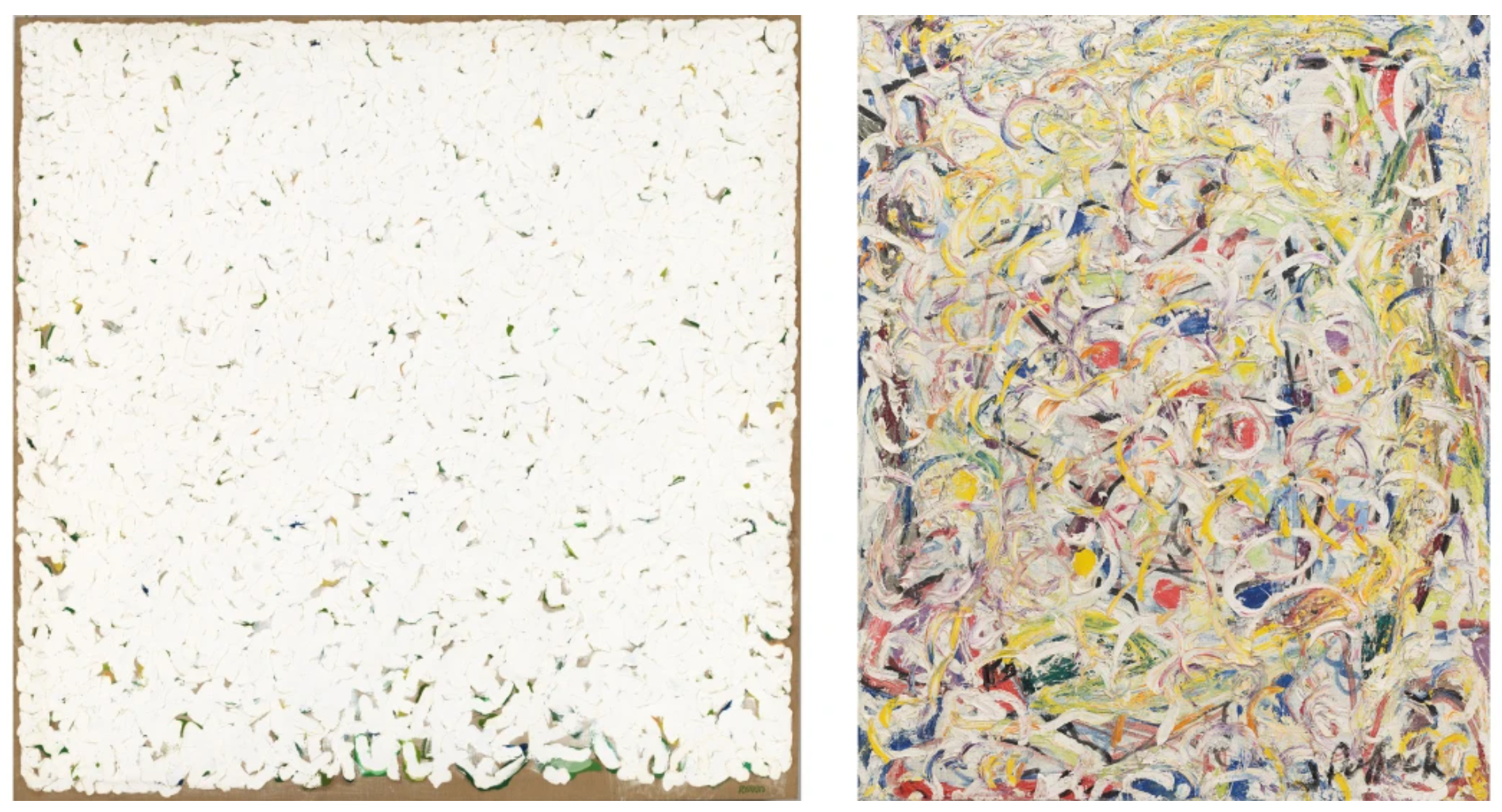
Left: Robert Ryman, Untitled, 1962. Whitney Museum of American Art, New York. Image © Whitney Museum of American Art / Licensed by Scala / Art Resource, NY. Art © 2026 Robert Ryman. Right: Jackson Pollock, Shimmering Substance, 1946. The Museum of Modern Art, New York. Image © The Museum of Modern Art/Licensed by SCALA / Art Resource, NY. Art © 2026 Pollock-Krasner Foundation / Artists Rights Society (ARS), New York
Kusama made monochromatic Infinity Net paintings in the late 1950s and early 1960s out of a clear psychological necessity; this period has remained pivotal in the understanding of her importance as one of the most influential artists and pop-culture icons of the twenty-first century. In 1965, Kusama’s practice underwent a radical shift, moving from monochromatic paintings to large-scale installation and performance, beginning with her speckled and phallic Accumulations and eventually the mirrored Infinity Rooms, works that would come to define her career of the late Twentieth century. Infinity Nets (OZEH) represents the pinnacle of Kusama’s triumphant early 2000s return to the monochromatic net; executed with clarity of vision, the work is intensely self-reflective. Executed at remarkable scale, standing more than six feet tall and eight feet wide, the present work holds a wall and fills a room with its presence, pulling viewers into its rhythmically gestural net. Simultaneously intimate in its hand-worked execution and monumental in its visual and psychological impact, Infinity Nets (OZEH) stands as a compelling testament to the vitality and sophistication of Kusama’s mature practice.
Starry Pumpkin, 2021
Starry Pumpkin, 2021
Property from a Prominent Private Collection
Christie’s New-York: 19 November 2026
Estimated: USD 1,800,000 – 2,800,000
YAYOI KUSAMA (1929-2026), Starry Pumpkin | Christie’s
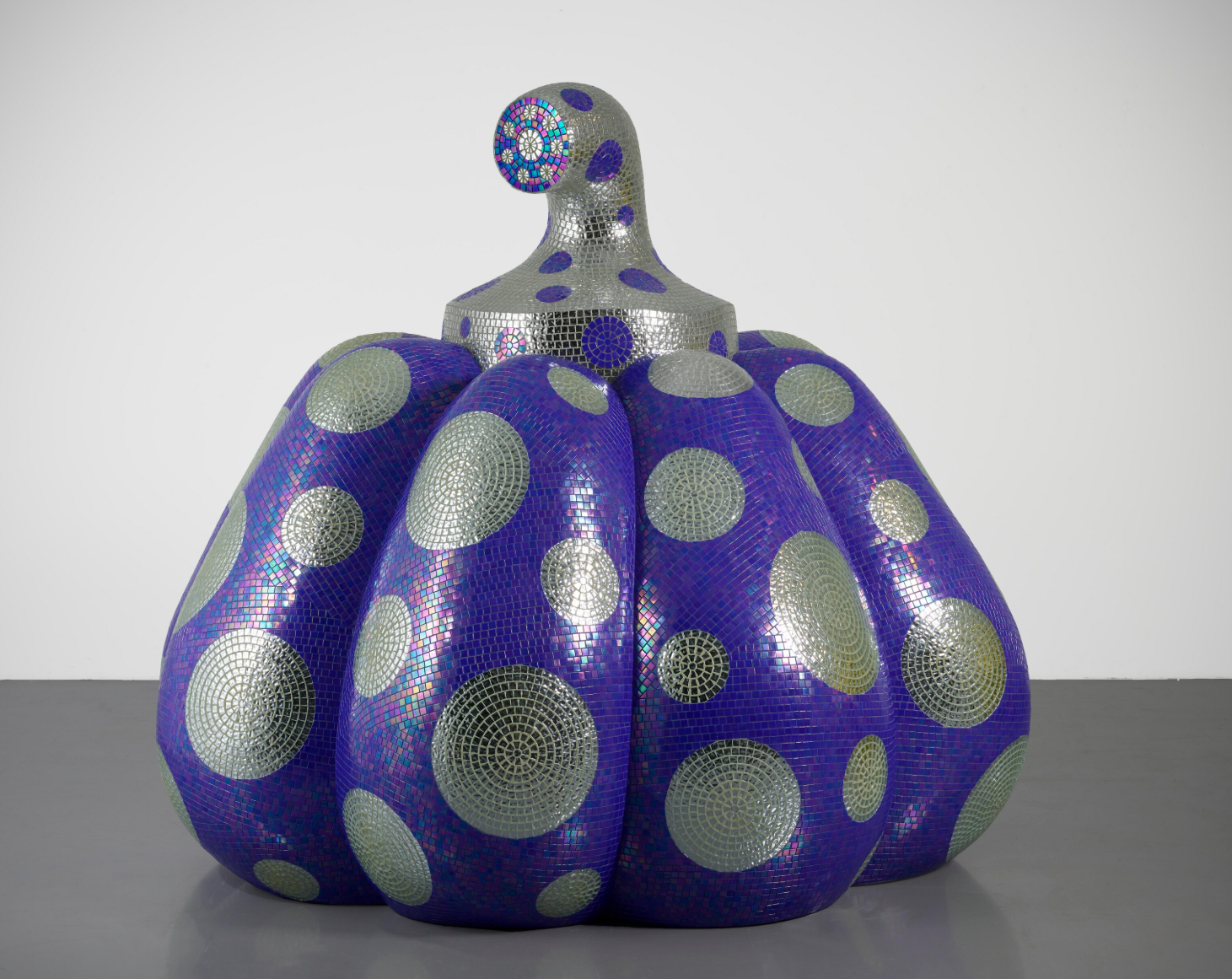
YAYOI KUSAMA (1929-2026)
Starry Pumpkin, 2021
Fiberglass-reinforced plastic and tile
181 x 202.2 x 203.6 cm (71-1/4 x 79-1/2 x 80 inches)
At once earthly and otherworldly, Starry Pumpkin is a culmination of the late Japanese artist Yayoi Kusama’s decades-long search for the cosmic in the everyday. Standing almost six feet tall, Starry Pumpkin commands attention, reorienting the space around it. One of a small number of mosaic pumpkin sculptures created since 2014, its surface comprises a lustrous tessellation of iridescent tiles, arranged with meticulous precision. The gourd’s surface gleams and glimmers when struck by light, revealing a spectrum of shades. Kusama’s characteristic dots, here rendered in different sizes, shine like the stars in Vincent van Gogh’s The Starry Night (1889, Museum of Modern Art, New York). The pumpkin’s peduncle playfully inverts the colors before terminating with an eye-like arrangement of circles, giving the sculpture an anthropomorphic presence. With a characteristic mixture of Pop Art boldness, Surrealist uncanniness and Minimalist repetition, Kusama transmutes a humble pumpkin into a glittering relic.
Alongside the polka dot, the pumpkin is one of Kusama’s most recognizable motifs, becoming almost a surrogate self-portrait. She first drew pumpkins as a child, inspired after her grandfather took her to a seed-harvesting field, where she tried to pluck a kabocha (a Japanese variety of pumpkin) from a vine. As she writes in her autobiography, “It immediately began speaking to me in a most animated manner. It was still moist with dew, indescribably appealing, and tender to the touch” (Y. Kusama, Infinity Net: The Autobiography of Yayoi Kusama, London, 2011, p. 75). At the time, pumpkins were used in Japan as a byword for ugliness and ignorance, yet Kusama “was enchanted by their charming and winsome form. What appealed to me most was the pumpkin’s generous unpretentiousness. That and its solid spiritual balance” (ibid., p. 76).
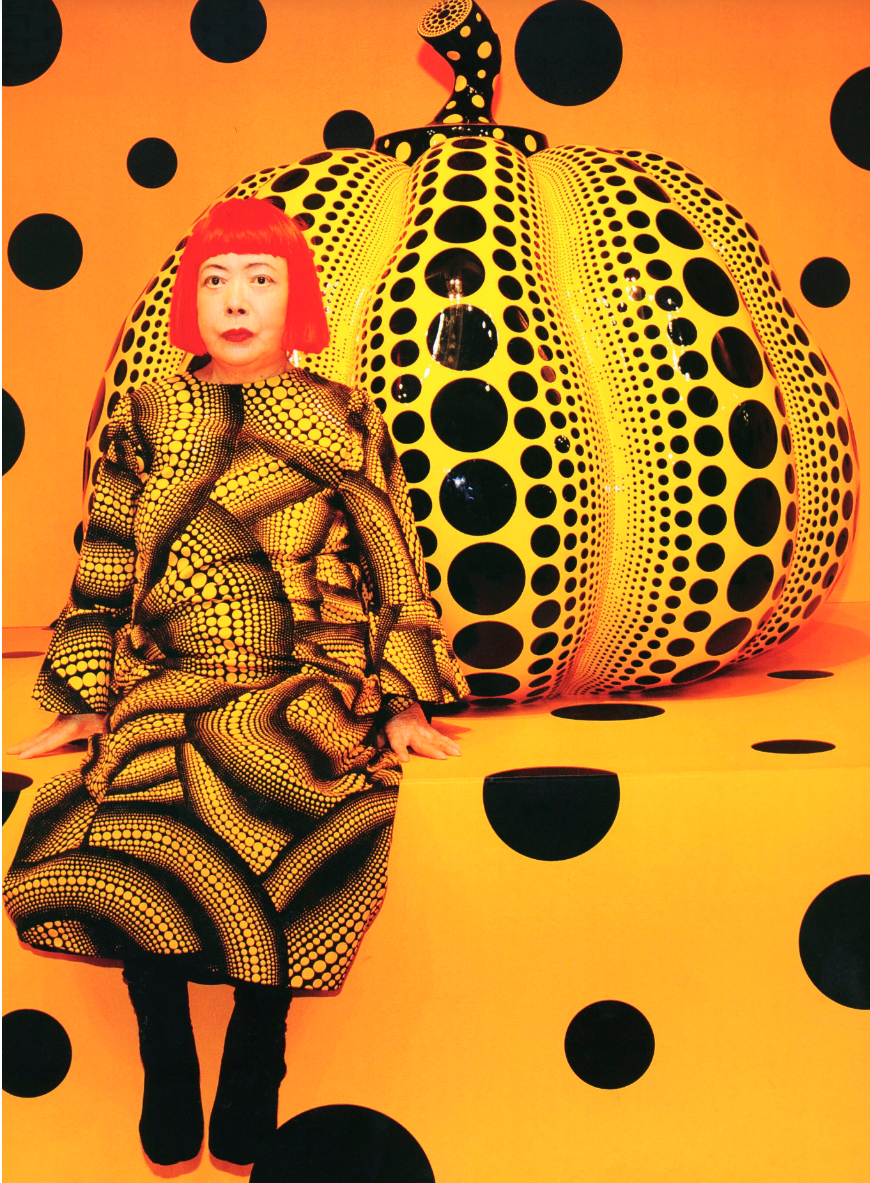
Yayoi Kusama with Pumpkin, Aichi Triennale, Nagoya, 2010. © Yayoi Kusama.
Kusama moved to the United States in 1957, and over the next sixteen years she blazed a trail across New York’s avant-garde art scene. Kusama befriended Georgia O’Keeffe, Eva Hesse, Donald Judd and Joseph Cornell. Pumpkins faded from view. She made her radical Infinity Net paintings, organized nude Happenings, pioneered soft sculpture and created the first of her celebrated Mirror/Infinity installations. Kusama’s ceaseless roaming between genre and medium marked her out as a visionary figure. Curator Frances Morris writes: “only Andy Warhol comes close to Kusama in his expansive and totalizing practice, his disregard for distinctions between high and low art” (“Introduction,” in F. Morris et al., Yayoi Kusama, exh. cat., Tate Modern, London, 2012, p. 12).
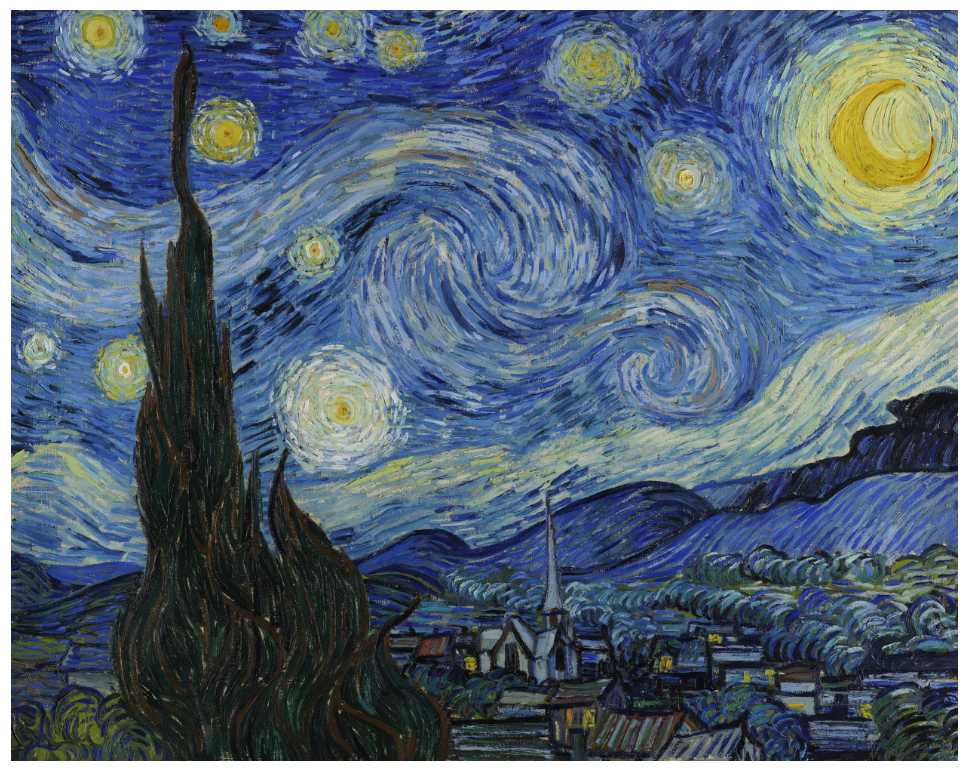
Vincent Van Gogh, Starry Night, 1889. Museum of Modern Art, New York.
After Kusama returned to Japan in 1973, she struggled to reassimilate into her homeland. Despite the country’s explosive transformation into a high-income industrial economy, the artistic establishment remained conservative. She fell into depression and in 1977 she checked herself into a psychiatric hospital in central Tokyo. She would remain there voluntarily for nearly five decades, working between a private space in the hospital and a studio a short distance away. Here she rebuilt her career, embarking on contemporary art’s most extraordinary second act. Her new artistic mode would embrace the hallucinations she had suffered since childhood, melding the physical with the metaphysical. It saw her become one of the most garlanded artists of the last half-century.
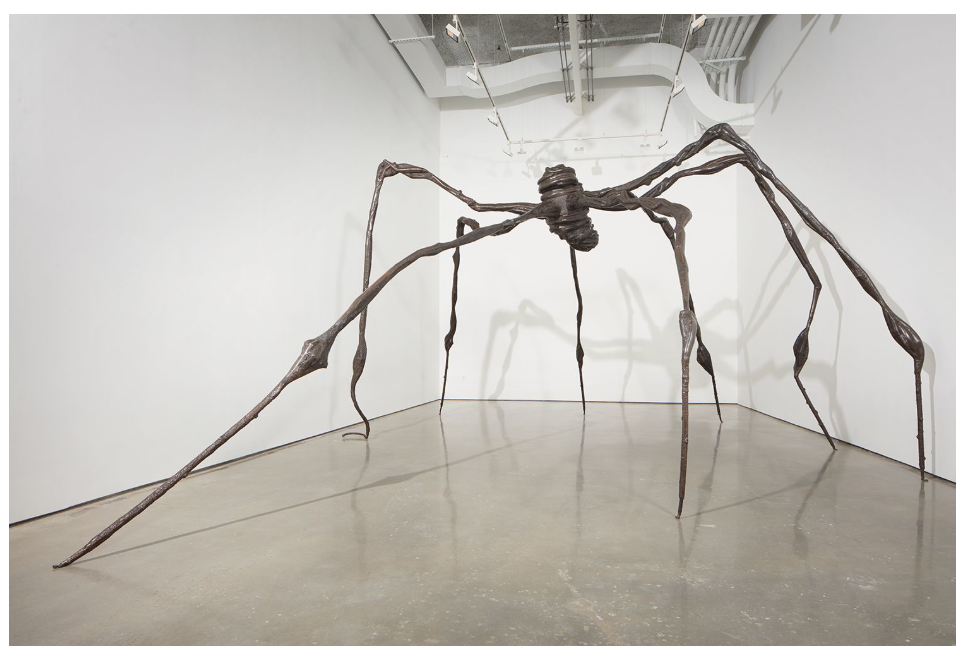
Louise Bourgeois, Spider, 1997. © 2026 The Easton Foundation / Licensed by VAGA at Artists Rights Society (ARS), NY.
The pumpkin played a central role in this rebirth. Kusama began incorporating pumpkins into her paintings, drawings and prints in the 1980s. In 1993 she represented Japan at the 45th Venice Biennale with Mirror Room (Pumpkin), where small papier-mâché pumpkin sculptures with a yellow-and-black polka dot pattern appeared to be reflected endlessly around the pavilion. In 1994 the first large-scale Yellow Pumpkin was installed at the end of a pier at Benesse Art Site Naoshima, where it soon became one of the island’s symbolic artworks and revivified the popularity of large-scale sculpture. Gradually variants emerged, such as silvery metallic renditions and illuminated lanterns. Finally, Kusama created her shimmering, tile-covered Starry Pumpkins as tributes to her first hallucinatory encounter with the vegetable as a child. Starry Pumpkin thus serves as a portal between the first and last stages of Kusama’s illustrious career, an apotheosis of her life’s work.
Infinity Nets (PEAA), 2013
Infinity Nets (PEAA), 2013
Sotheby’s New-York: 17 November 2026
Estimated: USD 700,000 – 1,000,000
GUARANTEED PROPERTY
Yayoi Kusama | Infinity Nets (PEAA) | Contemporary Day Auction | 2026
REPEAT SALE
Sotheby’s New-York: 19 May 2017
Estimated: USD 400,000 – 600,000
USD 852,500
(#410) Yayoi Kusama (sothebys.com)
YAYOI KUSAMA (1929 – 2026)
Infinity Nets (PEAA), 2013
Acrylic on canvas
100×100 cm (39-3/8 x 39-3/8 inches)
Signed, titled and dated 2013 (on the reverse)
An expansive network of blue loops, Infinity Nets (PEAA) exemplifies the monumental visual impact and conceptual thrust of Yayoi Kusama’s most celebrated and enduring body of work. Painted in 2013, the present work rhythmically unfolds across a radiant, azure field animated by a dense web of meticulously rendered looping forms. Simultaneously expansive and intensely focused, Kusama’s intricate lace-like patterns dissolve the distinction between figure and ground as the blue markings and black apertures oscillate in and out of focus. The canvas appears to pulse with organic movement as countless individual gestures coalesce into a unified, seemingly boundless whole. In its vibrant chromatic intensity and hypnotic repetition, Infinity Nets (PEAA) offers a compelling demonstration of Kusama’s lifelong pursuit of the infinite.
“I had a desire to foretell and estimate the infinity of our vast universe with the accumulation of units of net, a negative of dots. How profound is the mystery of the infinity that is infinite across the cosmos. By perceiving this I want to see my own life. My life, a dot, namely, one among millions of particles.”
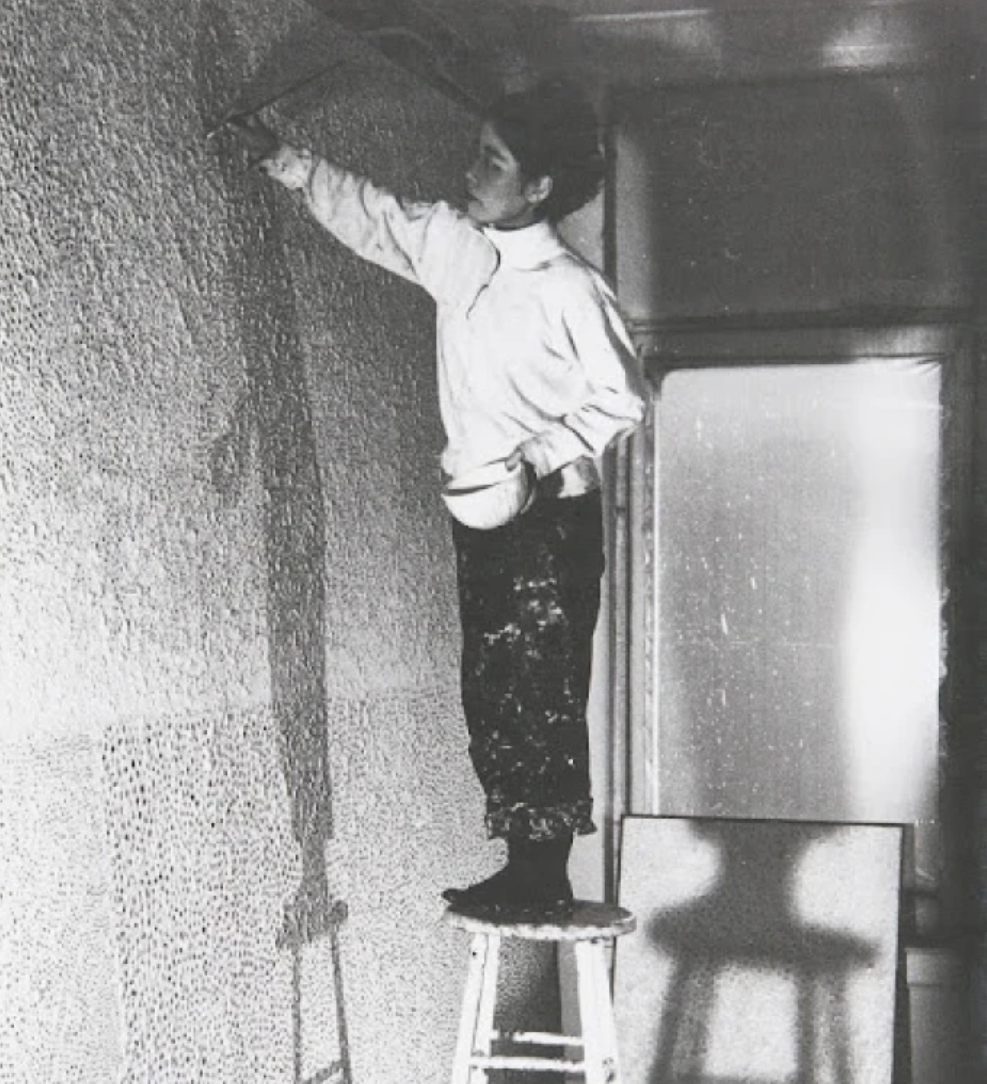
Yayoi Kusama in her New York Studio, 1958-59. Image/Art © Yayoi Kusama
Occupying a foundational position within the artist’s oeuvre, the Infinity Nets emerged shortly after Kusama’s arrival in New York City in 1958 and remained a central preoccupation throughout her career. Developed in deliberate contrast to the gestural bravado of contemporaneous action painting and Abstract Expressionism, the series transformed the act of painting into an exercise in disciplined accumulation, endurance, and repetition. Rather than privileging the singular expressive mark, Kusama built her compositions through the painstaking aggregation of countless minute forms. The resulting works occupy a distinctive position between the all-over pictorial fields of post-war abstraction and the serial logic later associated with Minimalism, while remaining resolutely personal and unmistakably handmade.
Yayoi Kusama’s Infinity Nets in Institutional Collections
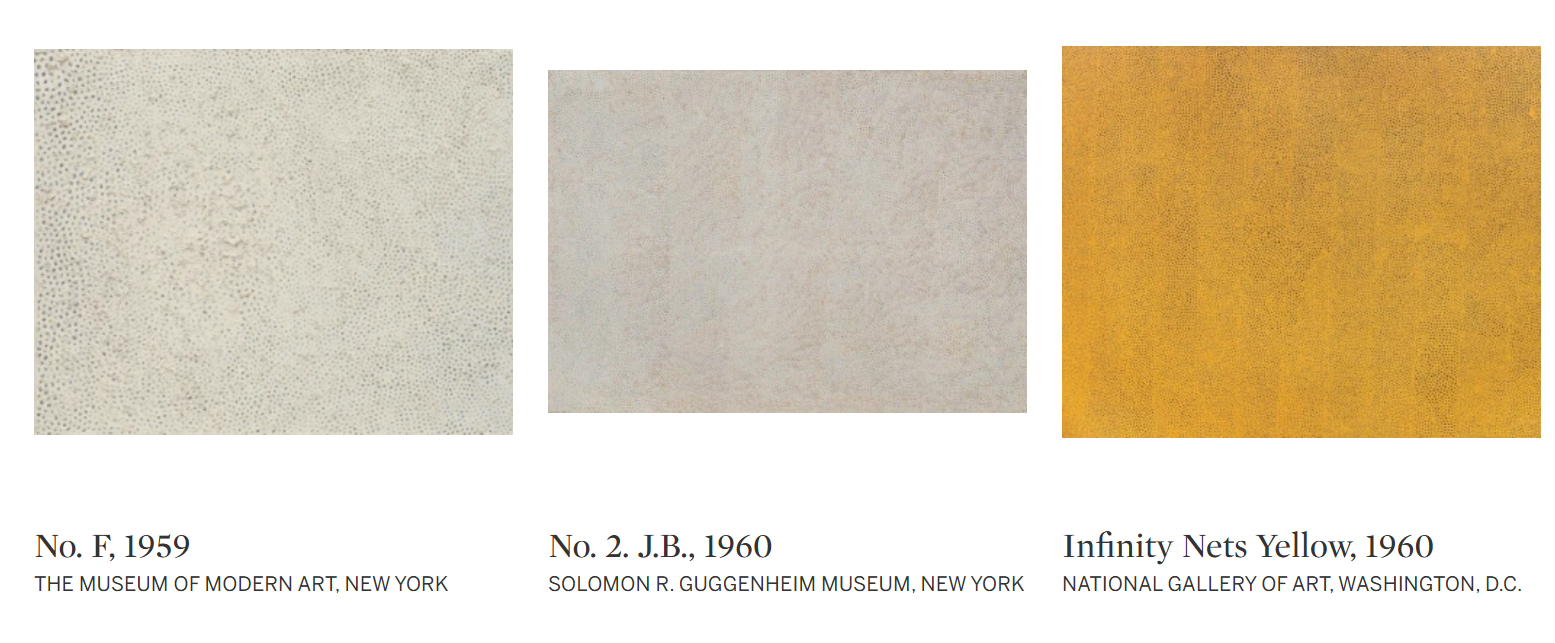
For Kusama, however, the net was far more than a formal device. The motif emerged from a deeply personal visual language shaped by the obsessive thoughts and hallucinatory visions she experienced from childhood. Repetition functioned not only as a method of artistic production but also as a means of psychological transformation. As Kusama has often explained, the endless extension of dots, loops, and nets facilitated a process of “self-obliteration,” dissolving the boundaries between self and surroundings. Through the relentless expansion of the pattern across the picture plane, even the most modest mark contributes to an image that exceeds any fixed limit.
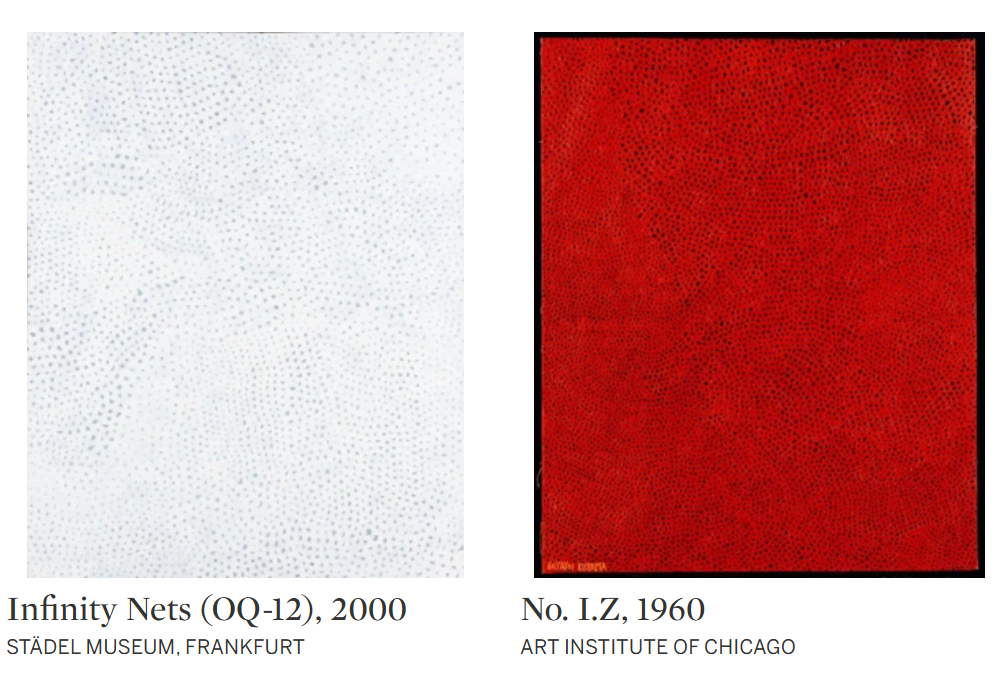
In Infinity Nets (PEAA), these concerns are expressed with exceptional clarity. The work’s saturated blue tonality introduces a vibrant coloration that distinguishes it from the austere monochromes of earlier examples. Evoking both depth and immateriality, the color invites associations with sky and sea, while the looping forms recall organic structures such as scales, cellular forms, or microscopic life. At the same time, it heightens awareness of the painting’s richly textured surface, where each individual loop remains visible even as it dissolves into the larger continuum of the composition. This tension between the singular and the infinite, the material and the transcendent, lies at the core of Kusama’s artistic vision.
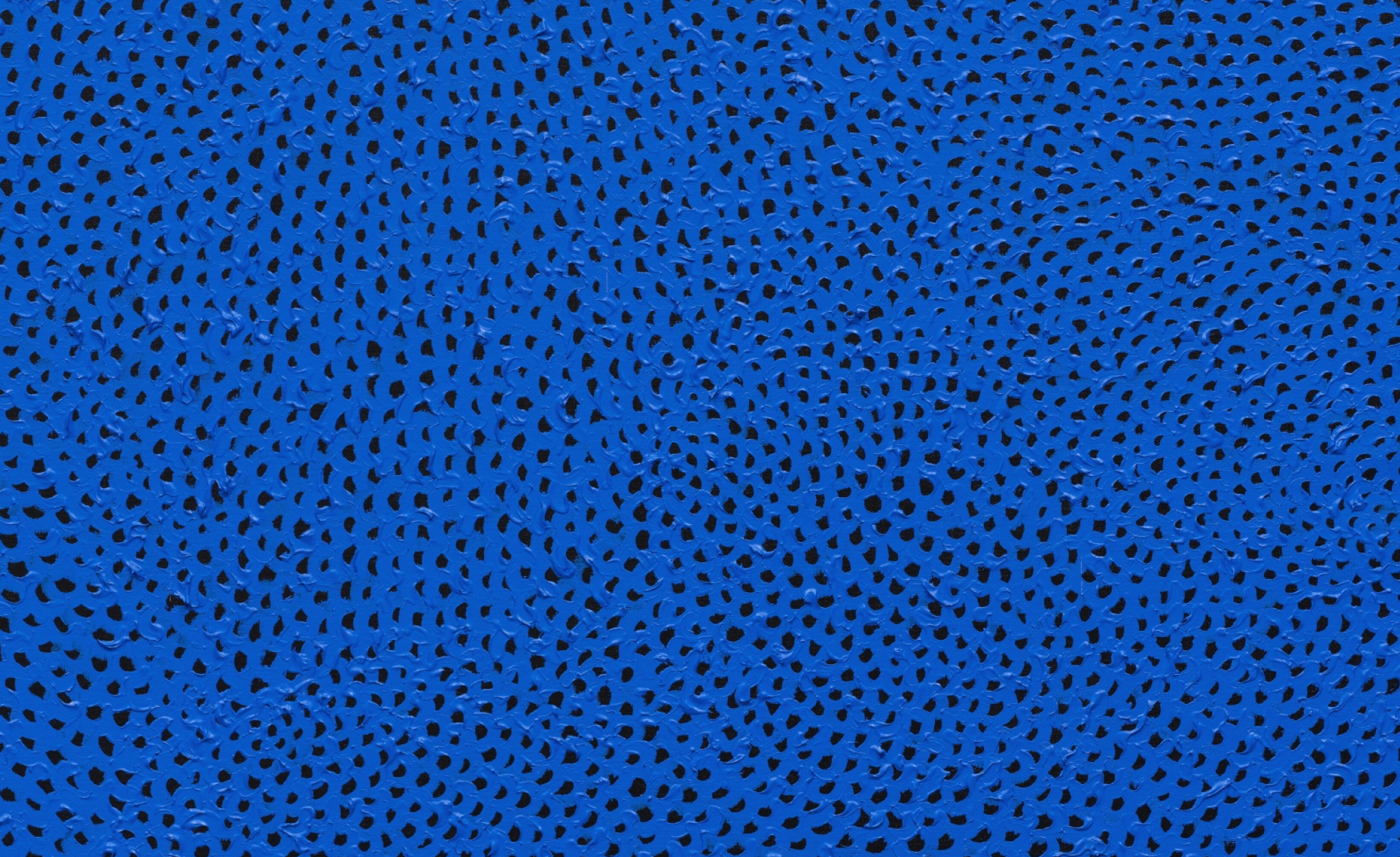
A mature and exquisitely realized example of the celebrated series, Infinity Nets (PEAA) distills the central concerns that animated Kusama’s practice for more than six decades. Through disciplined repetition and radiant color, Kusama transforms the canvas into a space of immersion and contemplation, inviting viewers to lose themselves within a pictorial field that seems to extend beyond its physical confines. The result is a work of extraordinary visual resonance that affirms the enduring power of the Infinity Nets to evoke both intimate psychological experience and the vastness of the infinite.
Untitled (Mannequin), 1966
Untitled (Mannequin), 1966
Vision: The Extraordinary Collection of Theodore and Ruth Baum
Sotheby’s New-York: 17 November 2026
Estimated: USD 200,000 – 300,000
GUARANTEED PROPERTY
Yayoi Kusama | Untitled (Mannequin) | Vision: The Extraordinary
YAYOI KUSAMA (1929 – 2026)
Untitled (Mannequin), 1966
Acrylic on wooden mannequin with synthetic wig
170.2 x 65.1 x 40 cm (67 x 25-5/8 x 15-3/4 inches)
This work is unique
Executed in 1966, Yayoi Kusama’s Untitled (Mannequin) is a compelling early example of the artist’s radical engagement with the human form, created during the extraordinarily fertile years she spent in New York. Transforming a life-sized mannequin through an intricate accumulation of painted marks, Kusama dissolves the boundaries between sculpture, painting and the body. The work anticipates many of the defining concerns of her subsequent practice: repetition, psychological immersion, self-obliteration and the infinite. Testament to its singular importance within Kusama’s oeuvre, Untitled (Mannequin) was included in the artist’s seminal Driving Image Show in 1966 at Galeria d’Arte del Naviglio in Milan, one of the most significant and ambitious early exhibitions in her career. First staged in 1964 at the Richard Castellane Gallery in New York and later reprised in 1966 in Milan and Essen, the exhibition marked a pivotal moment in Kusama’s development, subsuming everyday objects within her all-encompassing visual language and anticipating the immersive environments for which she would later become renowned.
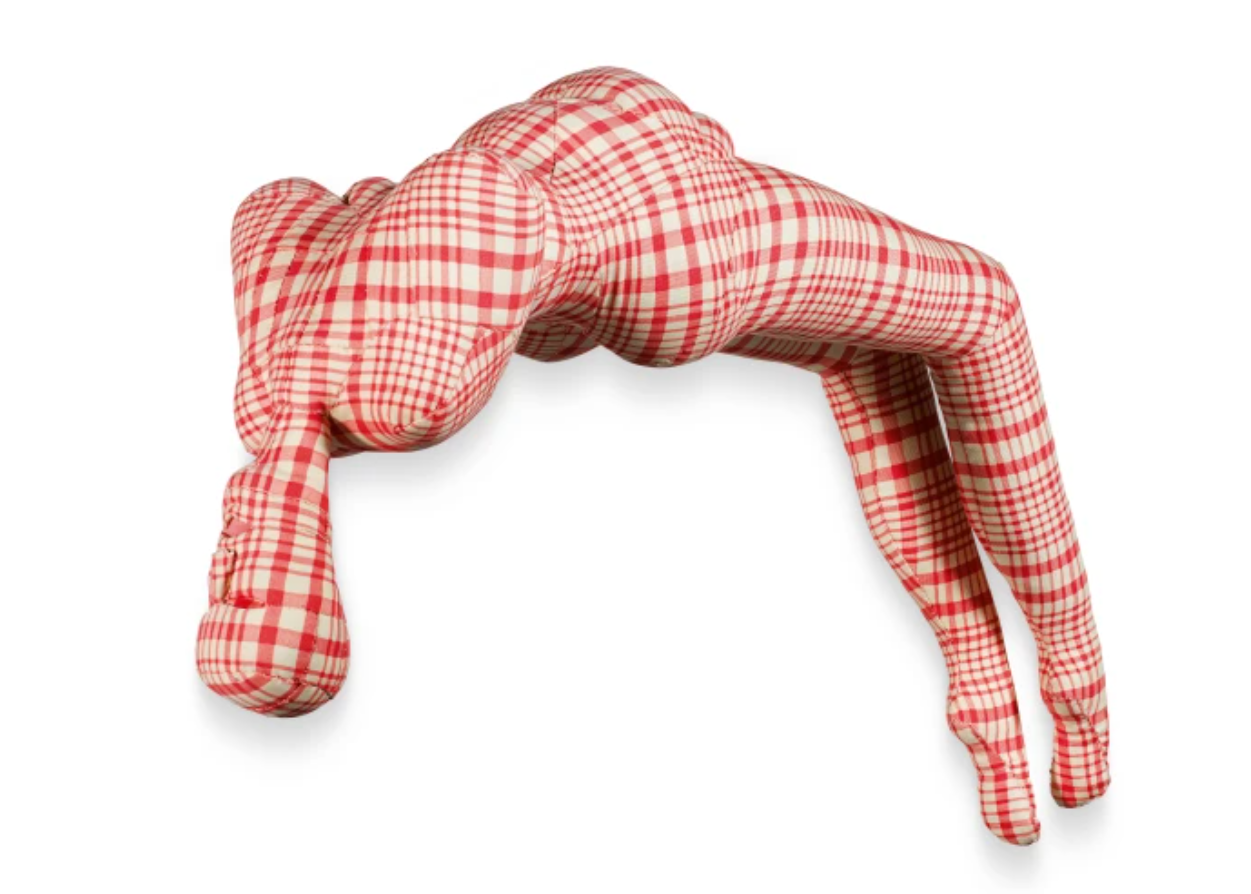
Louise Bourgeois, Arched Figure, 2004. Sold at Sotheby’s London in July 2020 for £1.215 million.
Art © 2026 The Easton Foundation / Artists Rights Society (ARS), New York
Kusama arrived in New York in 1958, determined to establish herself at the forefront of the international avant-garde. Recalling her arrival, she declared: “The first thing I did in New York was to climb up the Empire State Building and survey the city (the artist quoted in an interview with Akira Tatehata, 1965).” She aspired, she continued, to embrace the city’s extraordinary creative energy and achieve artistic stardom. Immersing herself in its experimental milieu, Kusama developed a singular visual language that challenged the prevailing conventions of Abstract Expressionism, Minimalism and Pop Art. By 1966, her celebrated Infinity Nets and Accumulations had established repetition as both a formal strategy and a deeply personal means of expression.
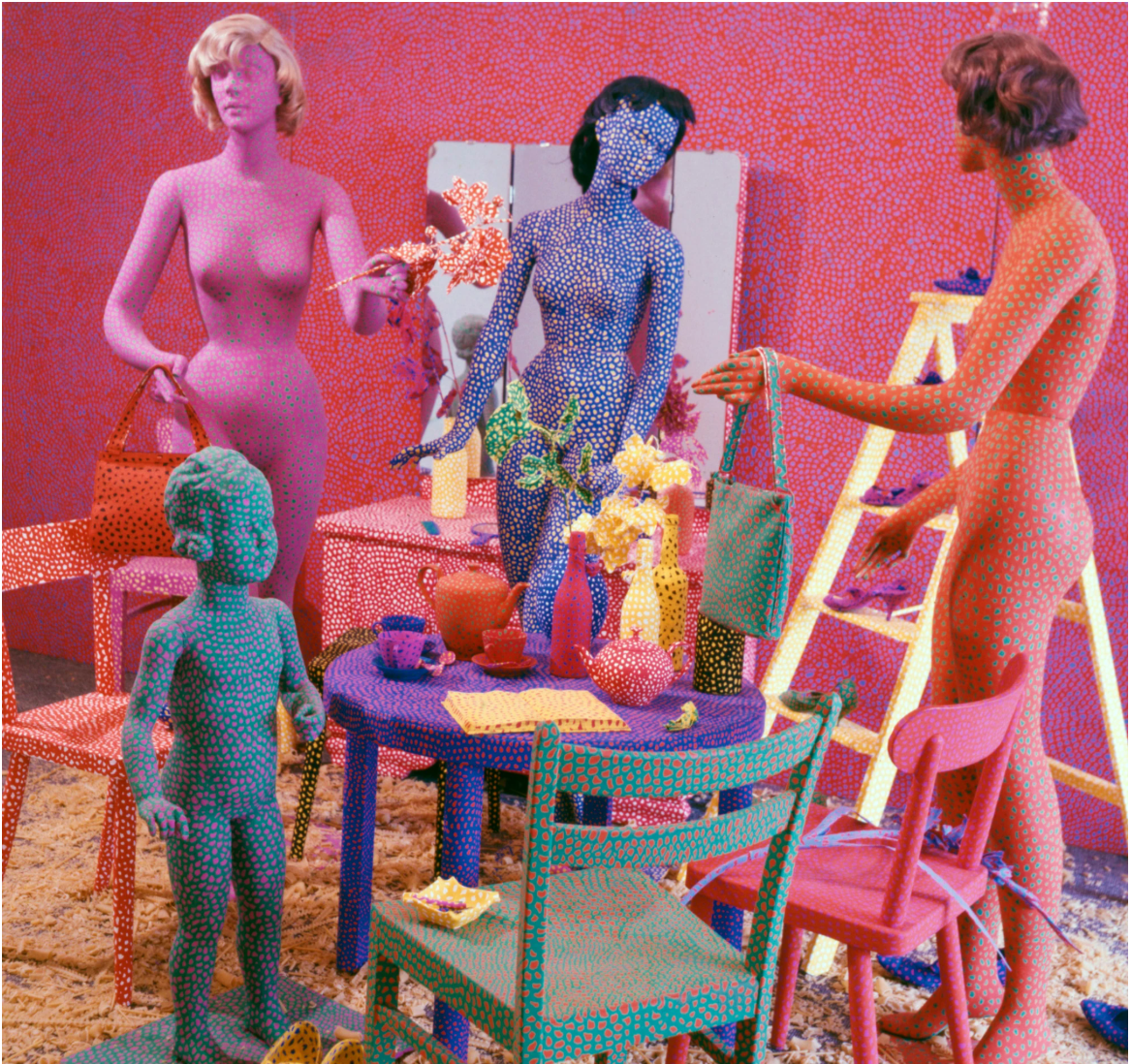
The Driving Image Show, installation view at Galerie M.E. Thelen, Essen, 1966. Art © 2026 Yayoi Kusama
Untitled (Mannequin) belongs to Kusama’s earliest experiments with mannequins, in which the human body became a three-dimensional canvas for her obsessive patterns. Its dark surface, animated by a dense constellation of pale markings, simultaneously reveals and obscures the female figure. The mannequin’s individuality is subsumed within an apparently limitless network of marks, evoking Kusama’s concept of self-obliteration: the dissolution of personal identity into an infinite, interconnected universe. Here, the familiar human silhouette becomes an uncanny, almost otherworldly presence.
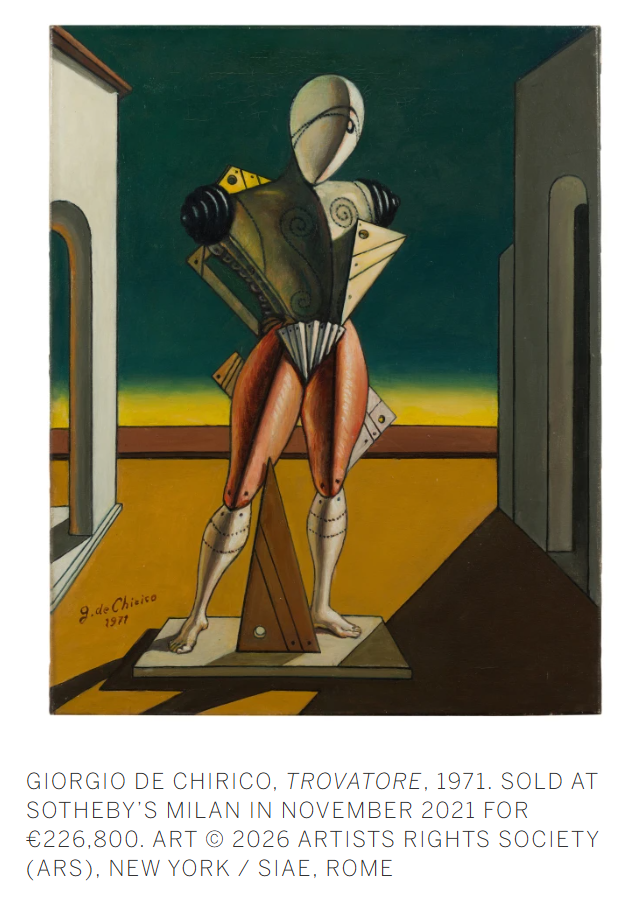
The work also invites comparison with the mannequin figures of Italian Metaphysical painting, particularly those associated with Giorgio de Chirico. Emerging during the First World War and crystallizing as a movement in 1917, Metaphysical painting frequently replaced human subjects with faceless mannequins, statues and enigmatic surrogates. These unsettling figures conveyed the alienation, dislocation and existential uncertainty of modern life. While Kusama’s mannequin similarly occupies an ambiguous territory between animate and inanimate, her intervention is distinctly more psychological and immersive. Rather than merely suggesting human absence, she transforms the body into a site of infinite proliferation, where identity is simultaneously asserted and erased.
Following Kusama’s passing in August 2026, aged 97, Untitled (Mannequin) assumes renewed poignancy as a testament to the audacity and originality of her early vision. Created at a pivotal moment in her career, it encapsulates the extraordinary ambition of an artist who sought not simply to represent the world, but to envelop it entirely within her own boundless imagination.