2026 Fall New-York Marquee Auctions
Andy Warhol
Auction Results
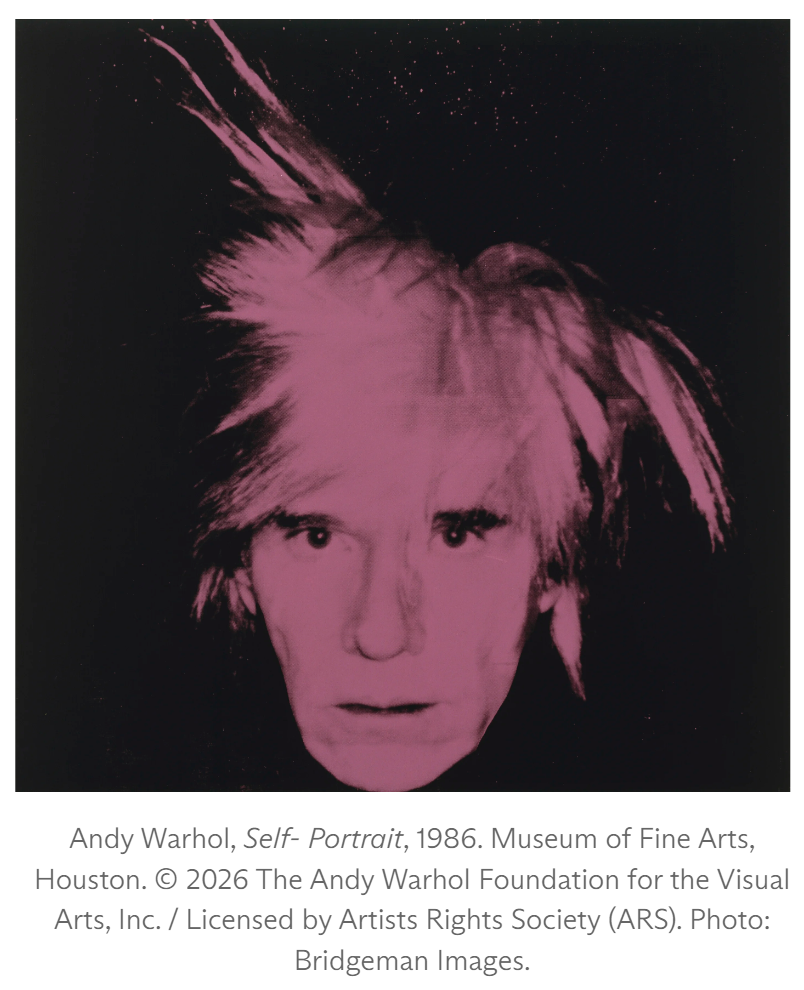
Self-Portrait, 1986
American Icon: Warhol from an Important Private Collection
Christie’s New-York: 17 November 2026
Estimated: USD 14,000,000 – 18,000,000
ANDY WARHOL (1928-1987), Self-Portrait | Christie’s
REPEAT SALE
Estimated: GBP 12,000,000 – 18,000,000
GBP 12,737,500 / USD 15,524,220
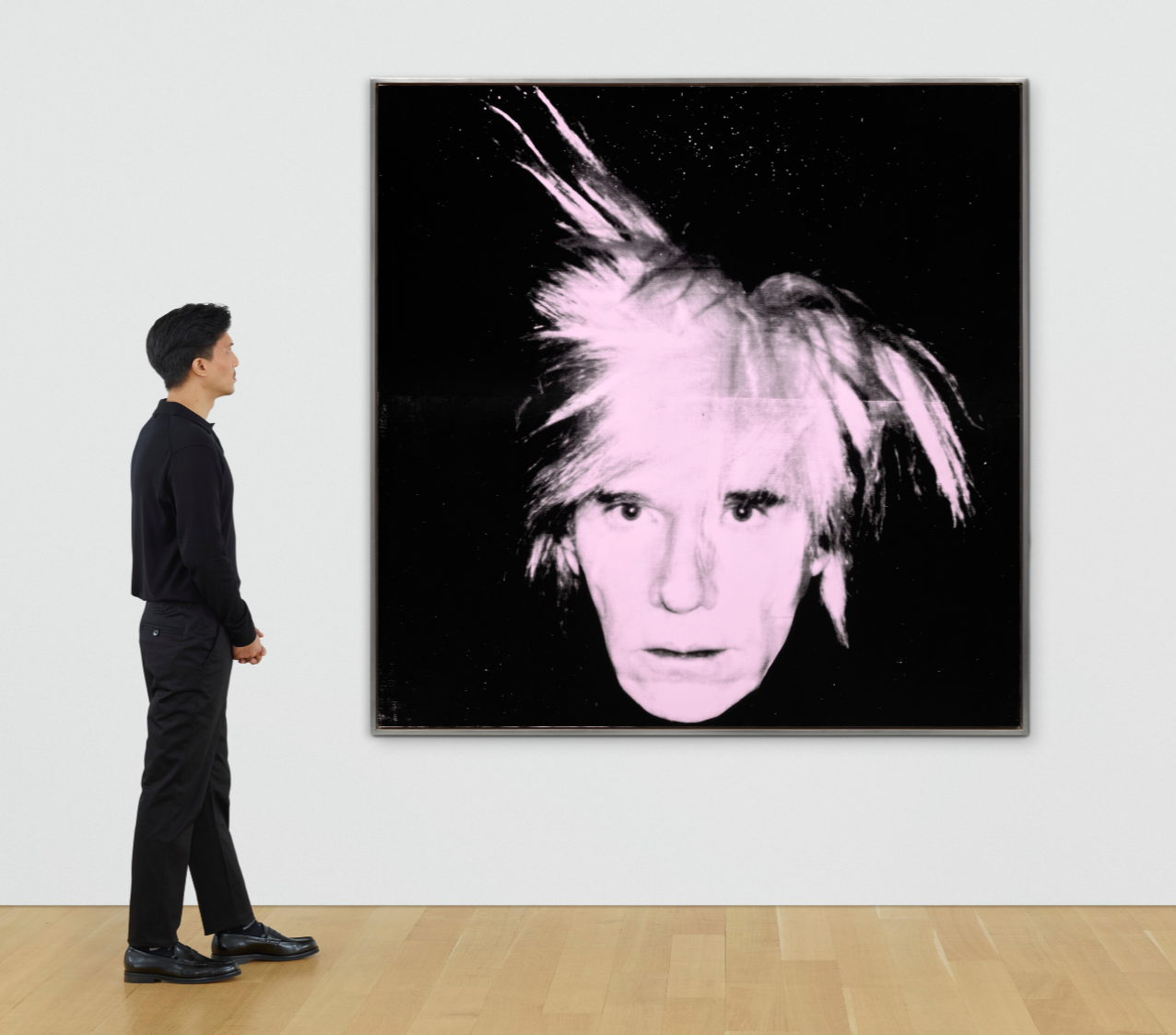
ANDY WARHOL (1928-1987)
Self-Portrait, 1986
Acrylic and silkscreen ink on canvas
80×80 inches (203.2 x 203.2 cm)
Stamped with the artist’s signature (on the overlap)
Signed with Frederick Hughes’s initials
Dated and inscribed ‘CERTIFIED FH Exec. Manager © 1986’ (on the overlap)
Numbered ‘PA40.056’ (on the stretcher)
Flowers, 1964-65
Super Bloom: Andy Warhol’s Flowers
Sotheby’s New-York: 16 November 2026
Estimated: USD 10,000,000 – 15,000,000
Andy Warhol | Flowers | The Now and Contemporary Evening Auction |
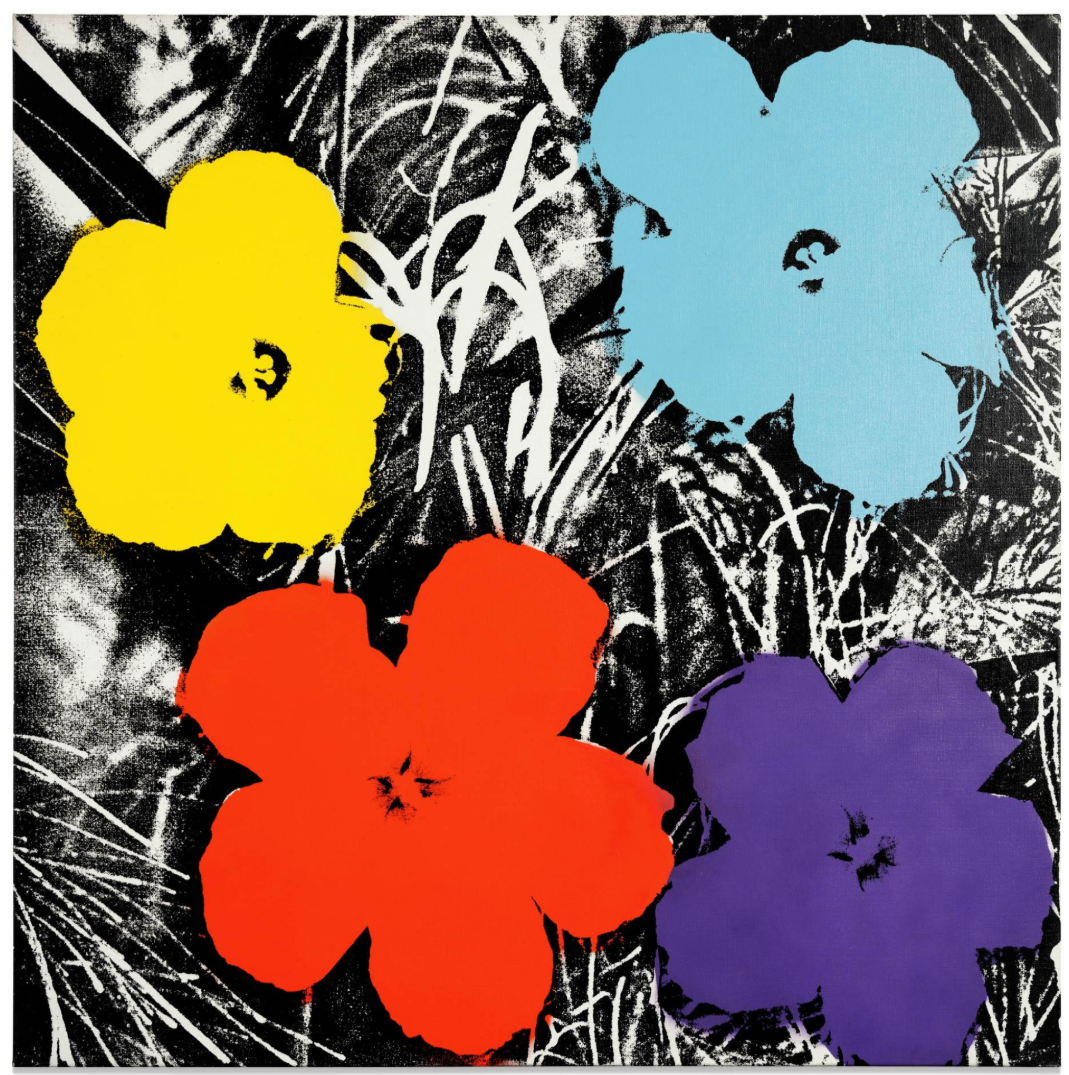
ANDY WARHOL (1928 – 1987)
Flowers, 1964-65
Spraypaint and silkscreen ink on canvas
48×48 inches (121.9 x 121.9 cm)
Signed and dated 64 (on the overlap)
Stamped by the Andy Warhol Art Authentication Board, Inc.
Numbered A104.021 (on the overlap)
Double Liz, 1963
Property from a Prestigious Private Collection
Sotheby’s New-York: 16 November 2026
Estimated: USD 8,000,000 – 12,000,000
Andy Warhol | Double Liz | The Now and Contemporary Evening Auction |
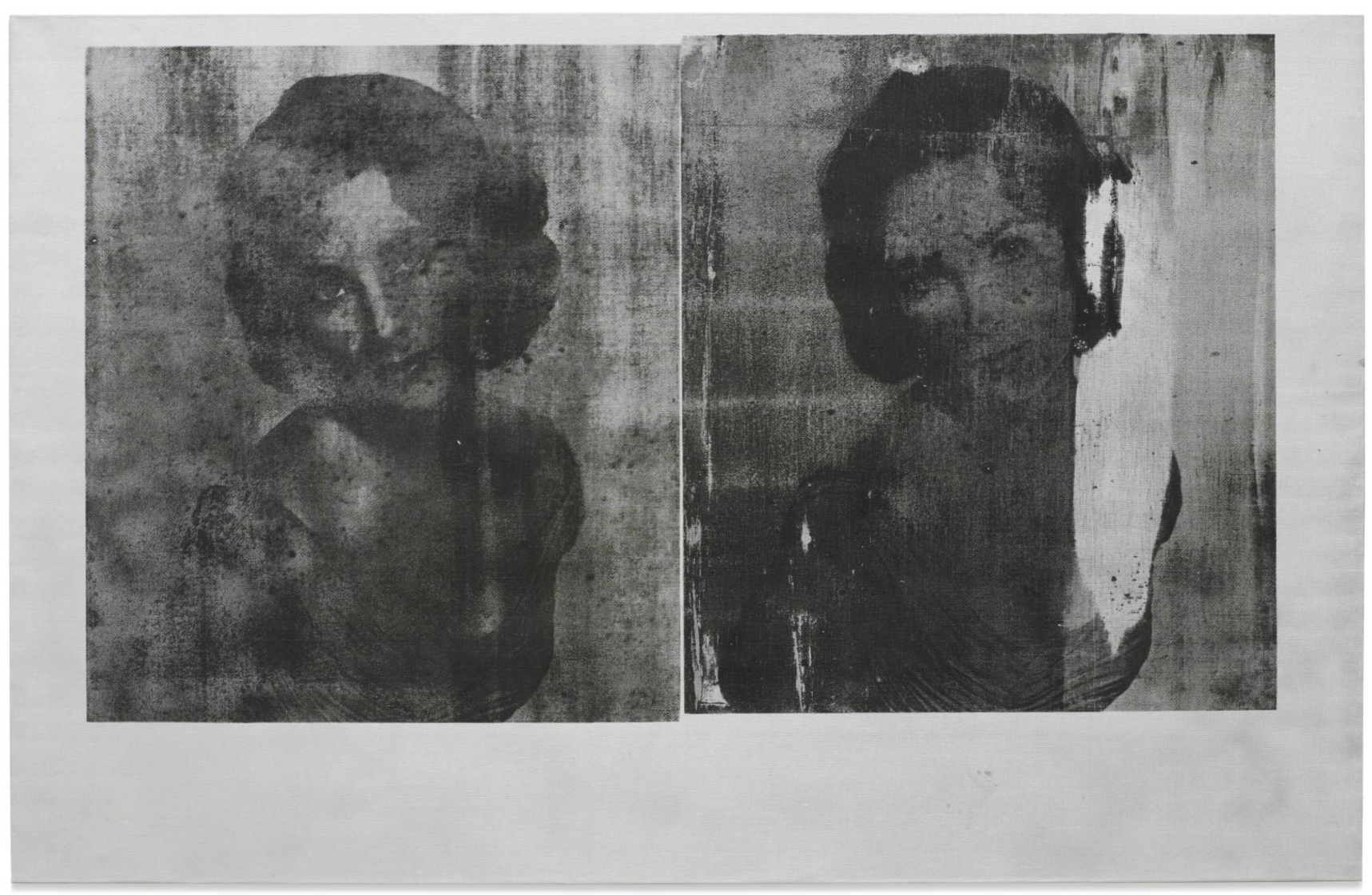
ANDY WARHOL (1928 – 1987)
Double Liz, 1963
Silkscreen ink and silver paint on canvas
53×83 inches (134.6 x 210.8 cm)
Campbell’s Soup Can (Turkey Noodle), 1962
The Collection of Antonio Homem Sonnabend
Christie’s New-York: 19 November 2026
Estimated: USD 6,000,000 – 8,000,000
MINIMUM PRICE GUARANTEE
ANDY WARHOL (1928-1987), Campbell’s Soup Can (Turkey Noodle) | Christie’s
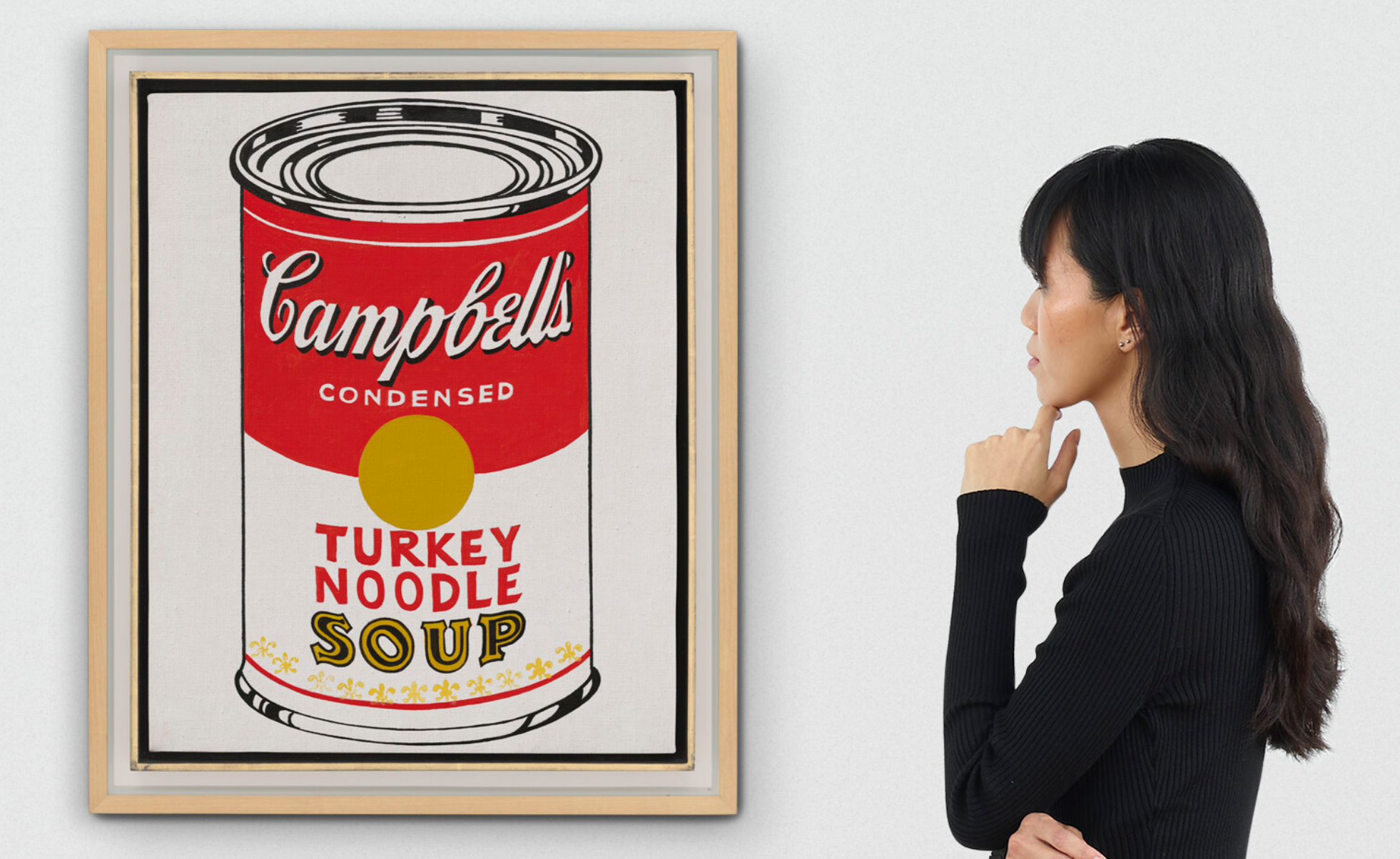
ANDY WARHOL (1928-1987)
Campbell’s Soup Can (Turkey Noodle), 1962
Casein and graphite on linen
20×16 inches (50.8 x 40.6 cm)
Signed and dated ‘Andy Warhol 62’ (on the reverse)
The Scream (After Munch), 1984
Vision: The Extraordinary Collection of Theodore and Ruth Baum
Sotheby’s New-York: 16 November 2026
Estimated: USD 4,000,000 – 6,000,000
Andy Warhol | The Scream (After Munch) | Vision: The Extraordinary
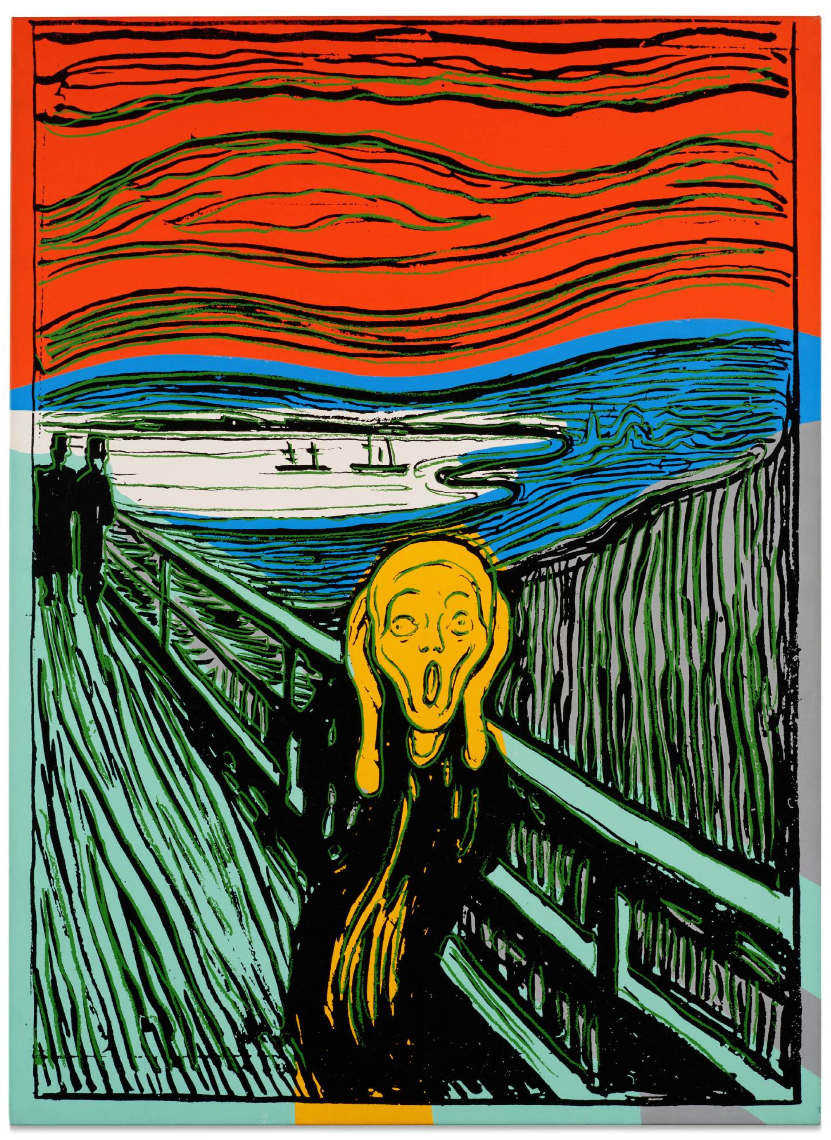
ANDY WARHOL (1928 – 1987)
The Scream (After Munch), 1984
Acrylic and silkscreen ink on canvas
52×38 inches (132.5 x 96.5 cm)
Signed and dated 84 (on the overlap)
David Hockney, 1974
The Clive Davis Collection
Christie’s New-York: 17 November 2026
Estimated: USD 3,000,000 – 5,000,000
MINIMUM PRICE GUARANTEE
ANDY WARHOL (1928-1987), David Hockney | Christie’s
REPEAT SALE
Phillips New-York: 16 May 2019
Estimated: USD 400,000 – 600,000
USD 1,040,000
Andy Warhol – 20th Century & Contemporary… Lot 3 May 2019 | Phillips
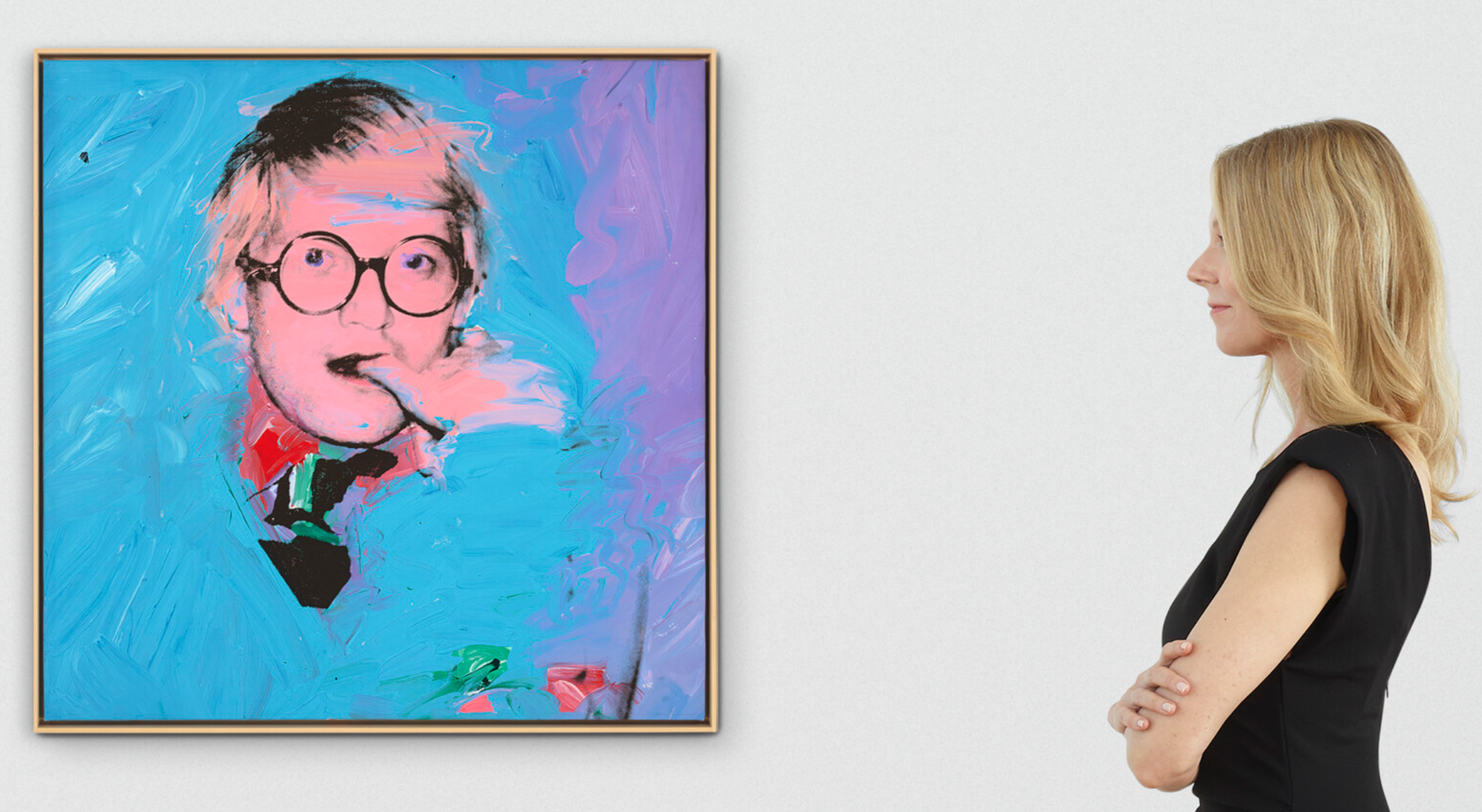
ANDY WARHOL (1928-1987)
David Hockney, 1974
Acrylic and silkscreen ink on canvas
40×40 inches (101.6 x 101.6 cm)
Signed twice, dated and titled ‘DAVID Hockney Andy Warhol Andy Warhol 1974’ (on the overlap)
The Kiss (Bela Lugosi), 1963
The Collection of Antonio Homem Sonnabend
Christie’s New-York: 19 November 2026
Estimated: USD 3,000,000 – 5,000,000
WORK ON PAPER
MINIMUM PRICE GUARANTEE
ANDY WARHOL (1928-1987), The Kiss (Bela Lugosi) | Christie’s
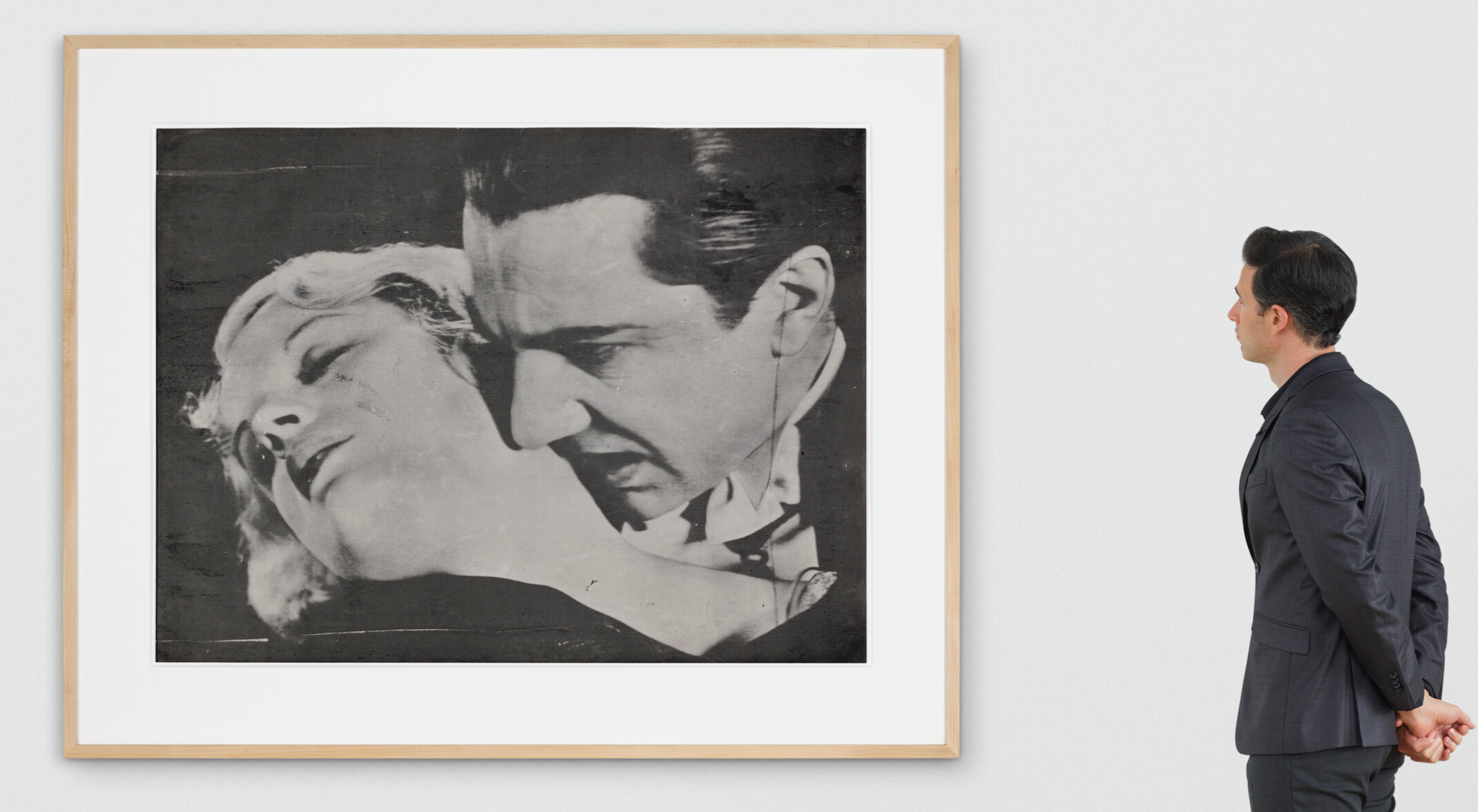
ANDY WARHOL (1928-1987)
The Kiss (Bela Lugosi), 1963
Silkscreen ink on white paper
30-1/4 x 40 inches (76.8 x 101.6 cm)
Flowers, 1964-65
Property from a Distinguished American Collection
Christie’s New-York: 20 November 2026
Estimated: USD 2,500,000 – 3,500,000
ANDY WARHOL (1928-1987), Flowers | Christie’s
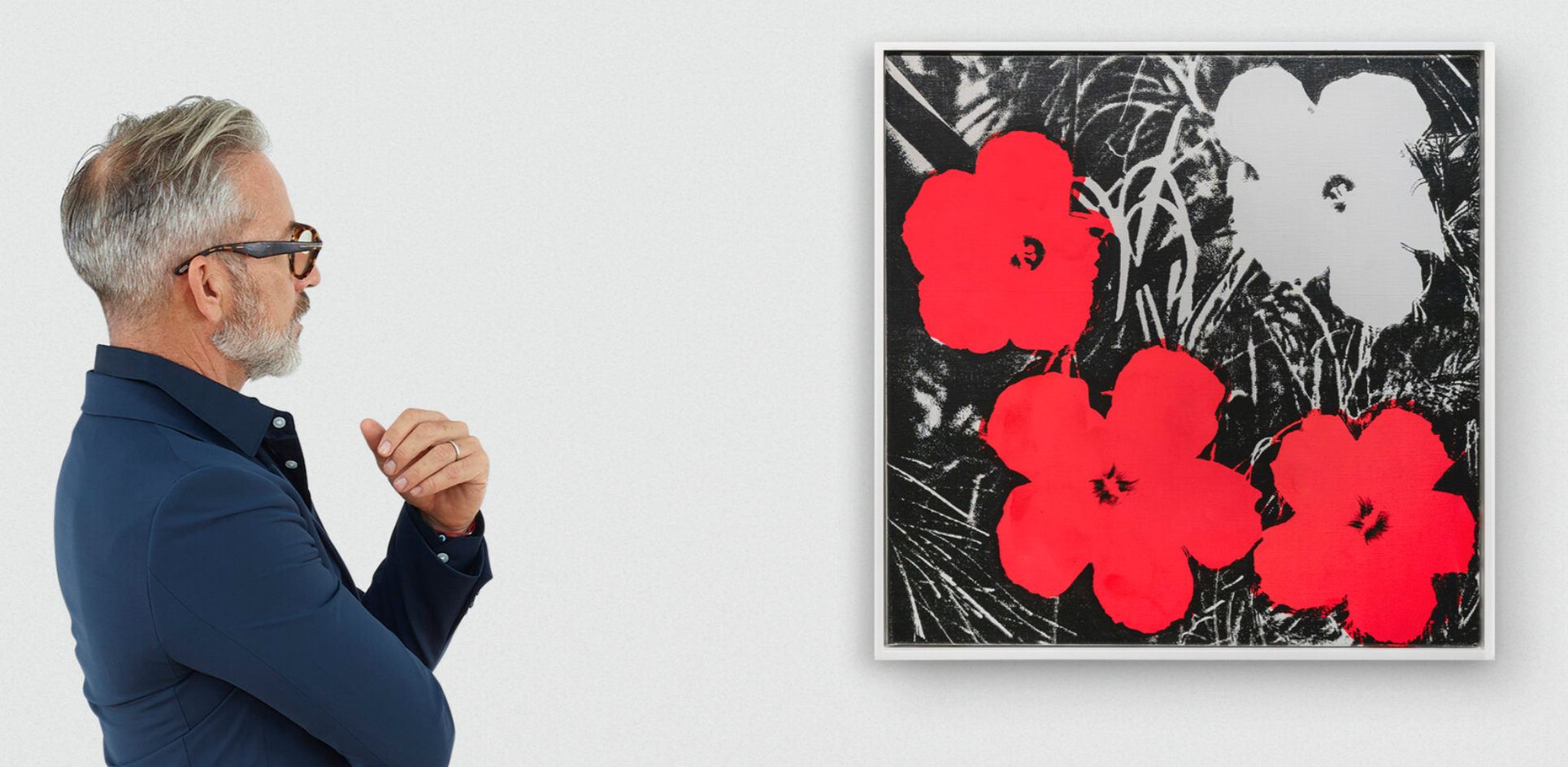
ANDY WARHOL (1928-1987)
Flowers, 1964-65
Acrylic and silkscreen ink on canvas
24×24 inches (61×61 cm)
Signed and dated ‘Warhol 64’ (on the overlap)
Endangered Species, 1983
Looking Forward: The Collection of Beverly Grossman
Sotheby’s New-York: 16 November 2026
Estimated: USD 2,500,000 – 3,500,000
COMPLETE SET
PRINTS
Andy Warhol | Endangered Species | The Now and Contemporary Evening
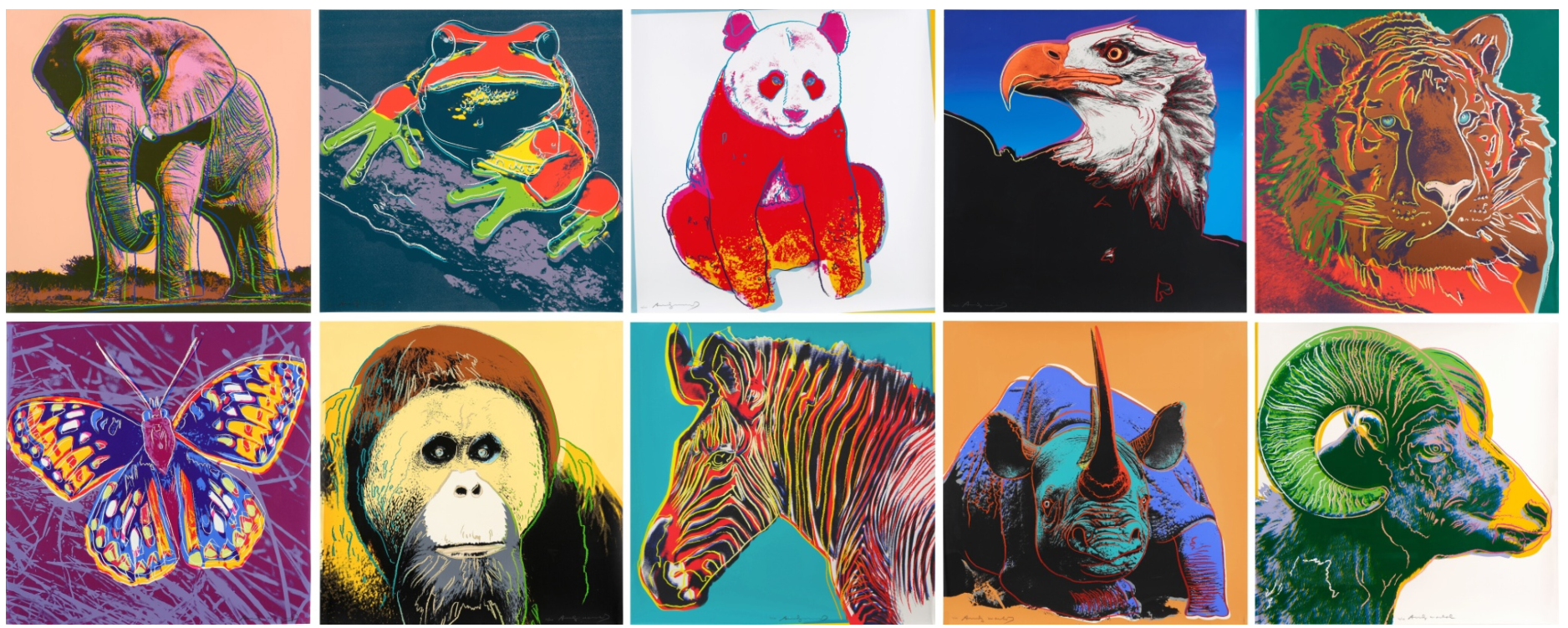
ANDY WARHOL (1928 – 1987)
Endangered Species, 1983
The complete set of ten screenprints in colors on Lenox Museum Board
Each sheet: 38×38 inches (96.5 x 96.5 cm)
Signed and numbered 72/150 (lower right or left of each sheet)
This set is number 72 from the edition of 150 plus 30 artist’s proofs
Each with the blindstamp of the printer, Rupert Jasen Smith
Published by Ronald Feldman Fine Arts, Inc., and with their inkstamp on the versos
Flowers, 1964
Looking Forward: The Collection of Beverly Grossman
Sotheby’s New-York: 16 November 2026
Estimated: USD 2,500,000 – 3,500,000
Andy Warhol | Flowers | The Now and Contemporary Evening Auction |
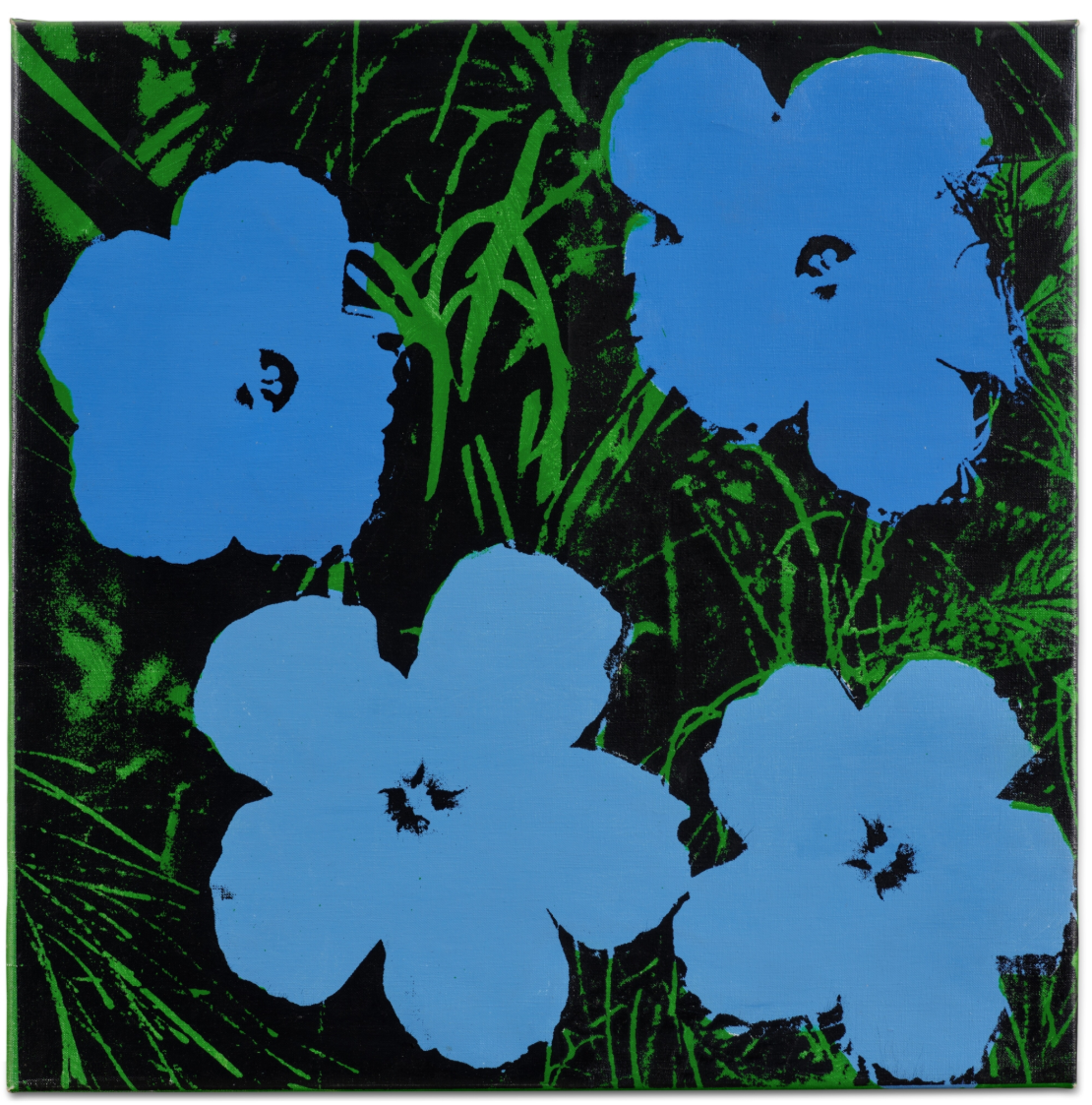
ANDY WARHOL (1928 – 1987)
Flowers, 1964
Acrylic, silkscreen ink and graphite on canvas
24×24 inches (61×61 cm)
Signed (on the overlap)
Aretha Franklin, circa 1986
The Clive Davis Collection
Christie’s New-York: 17 November 2026
Estimated: USD 2,000,000 – 3,000,000
MINIMUM PRICE GUARANTEE
ANDY WARHOL (1928-1987), Aretha Franklin | Christie’s
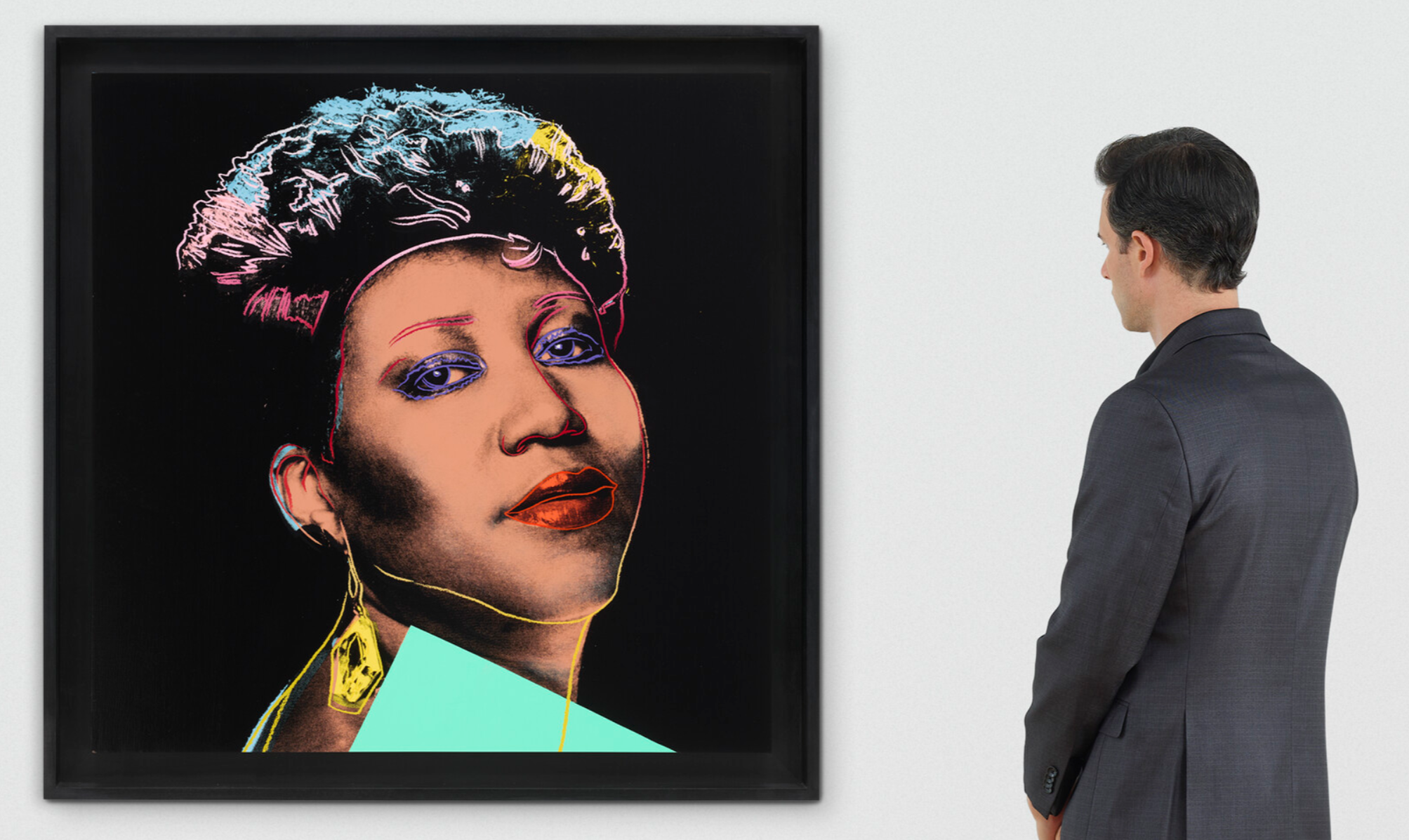
ANDY WARHOL (1928-1987)
Aretha Franklin, circa 1986
Acrylic and silkscreen ink on canvas
40×40 inches (101.6 x 101.6 cm)
Stamped with the Andy Warhol Foundation for the Visual Arts, Inc. stamp (on the reverse)
Stamped with the Estate of Andy Warhol and with the Andy Warhol Foundation for the Visual Arts, Inc. stamps
Numbered indistinctly ‘PO.50.011’ (on the overlap)
Numbered again ‘PO.50.011’ (on the stretcher)
Dolly Parton, 1985
Always Dolly: Dolly Parton by Andy Warhol
Sotheby’s New-York: 16 November 2026
Estimated: USD 1,600,000 – 2,500,000
Andy Warhol | Dolly Parton | The Now and Contemporary Evening Auction
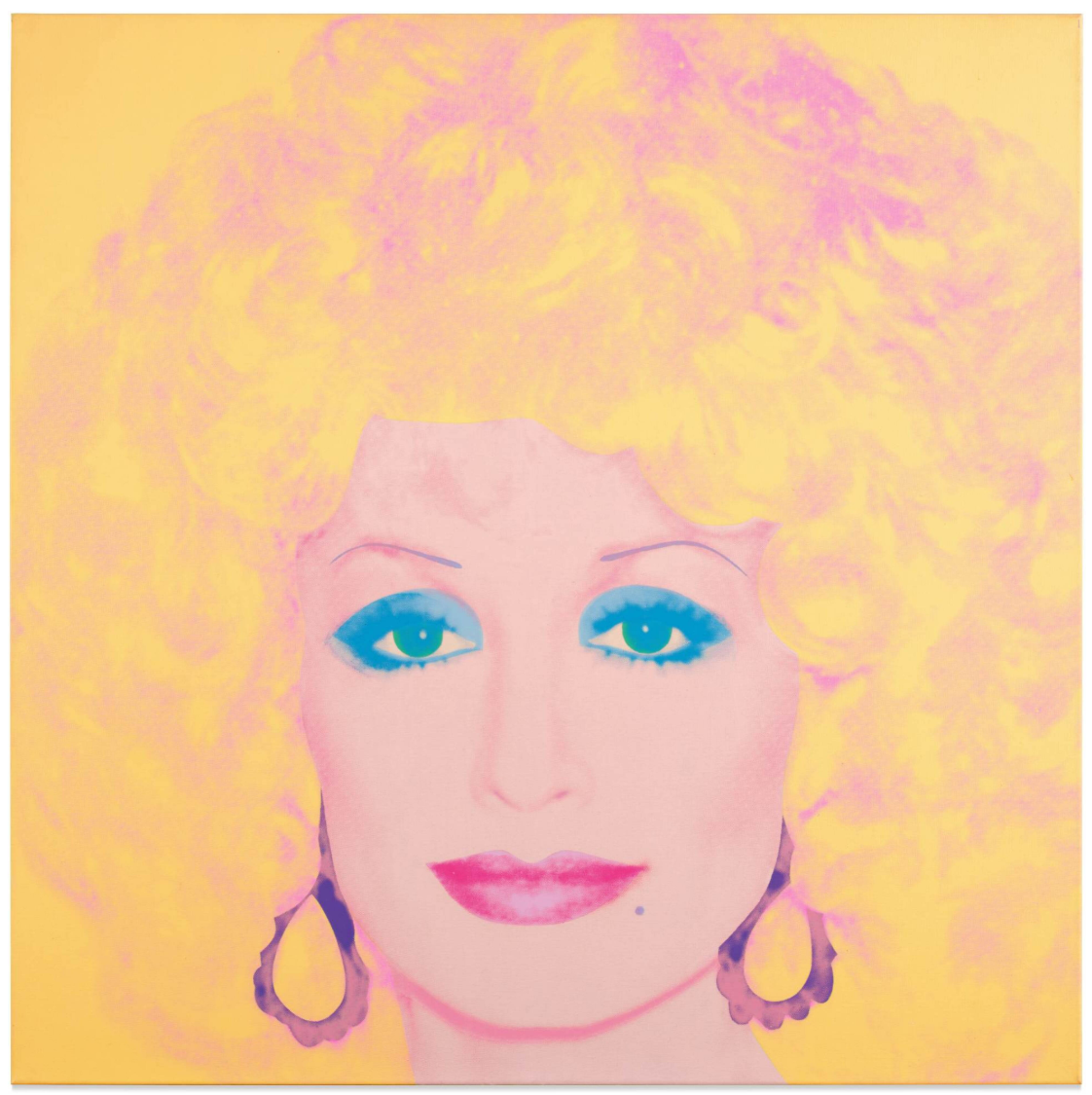
ANDY WARHOL (1928 – 1987)
Dolly Parton, 1985
Acrylic and silkscreen ink on canvas
42×42 inches (106.7 x 106.7 cm)
Signed and dated 85 (on the overlap)
Stamped twice by The Estate of Andy Warhol
Stamped by The Andy Warhol Foundation for the Visual Arts
Numbered PO 50.179 (on the overlap)
Mao, 1973
Shaping Modernity: Property from a Private American Collection
Sotheby’s New-York: 17 November 2026
Estimated: USD 900,000 – 1,200,000
Andy Warhol | Mao | Contemporary Day Auction | 2026 | Sotheby’s
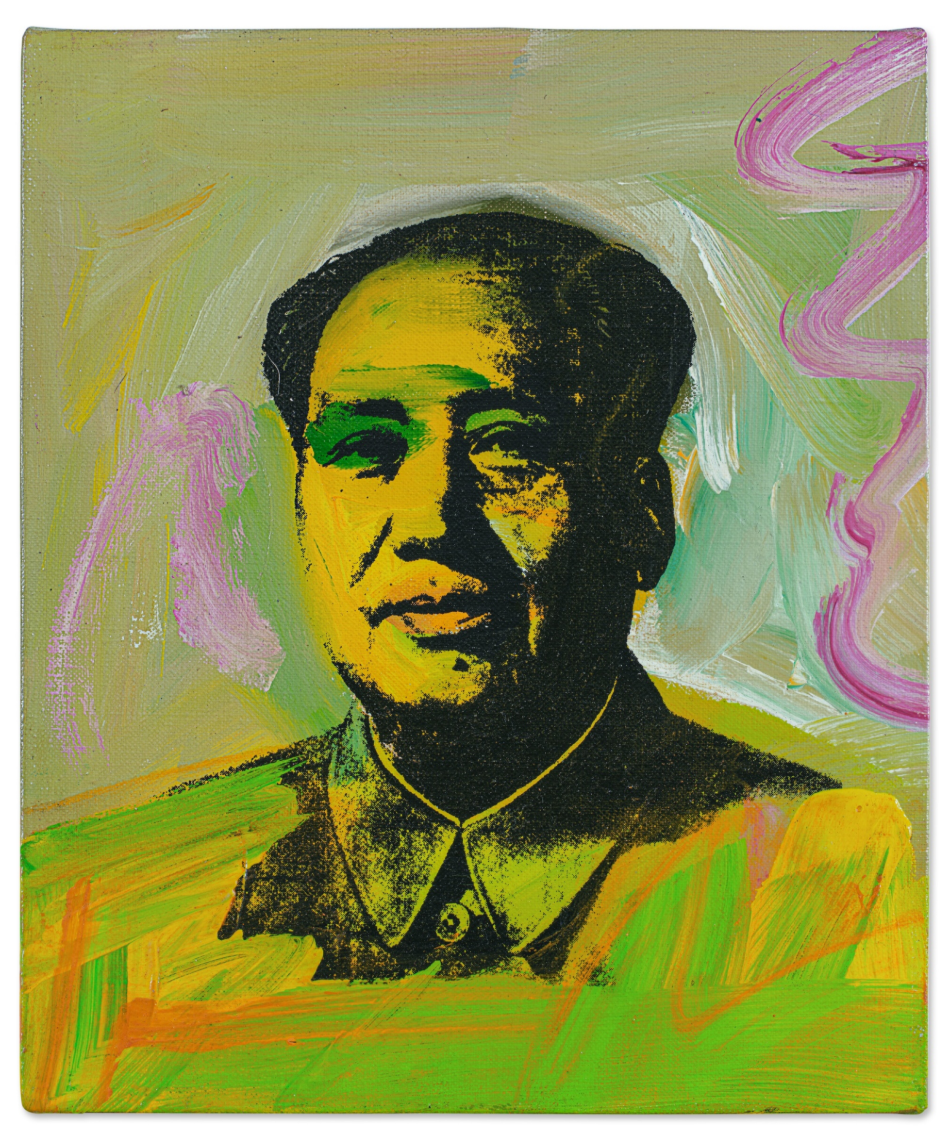
ANDY WARHOL (1928 – 1987)
Mao, 1973
Acrylic and silkscreen ink on canvas
12×10 inches (30.5 x 25.4 cm)
Stamped by the Andy Warhol Art Authentication Board, Inc.
Numbered A108.103 on the reverse
Beverly [Six Works], 1982
Looking Forward: The Collection of Beverly Grossman
Sotheby’s New-York: 17 November 2026
Estimated: USD 800,000 – 1,200,000
Andy Warhol | Beverly [Six Works] | Contemporary Day Auction | 2026 |
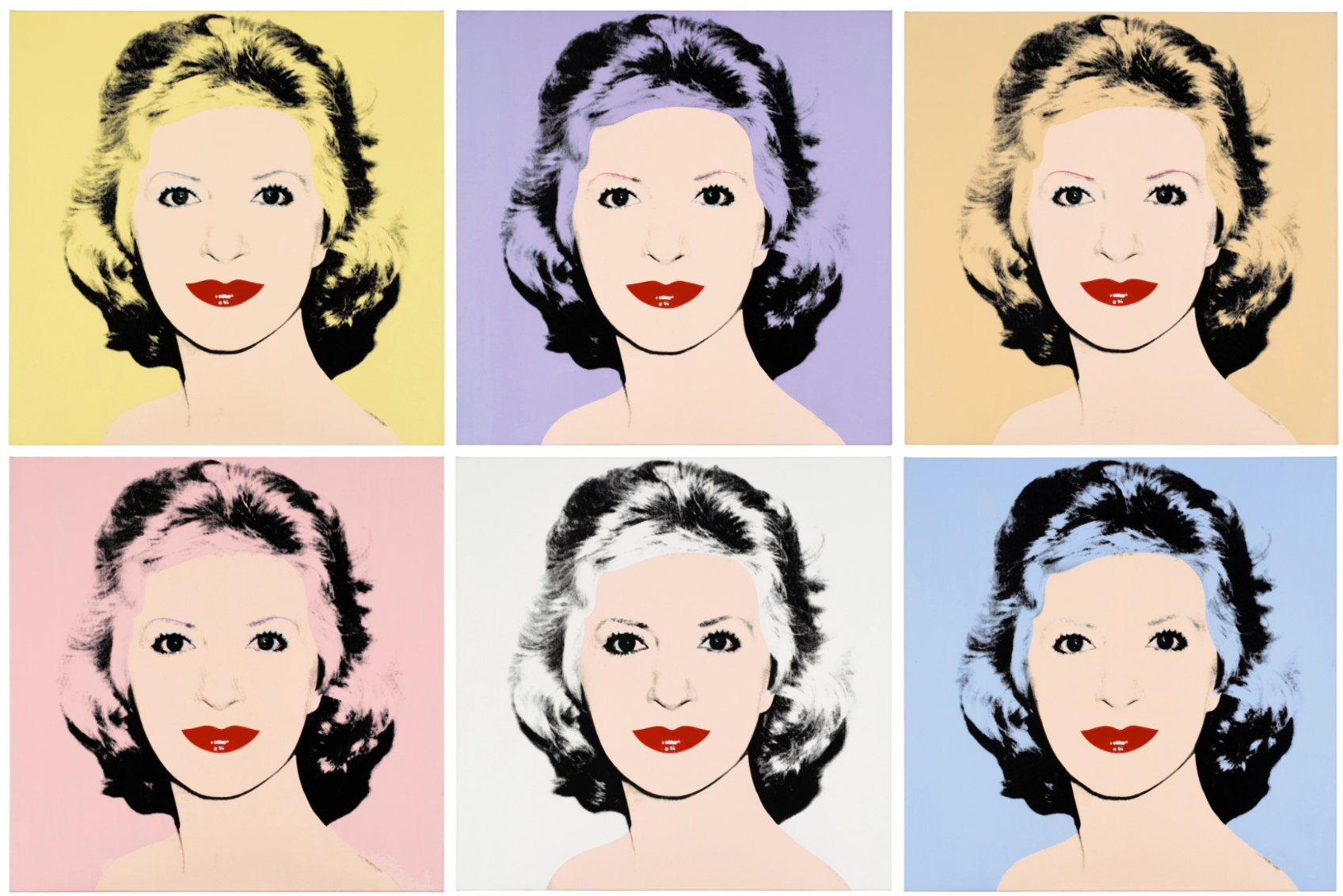
ANDY WARHOL (1928 – 1987)
Beverly [Six Works], 1982
Acrylic and silkscreen ink on canvas
Each: 40×40 inches (101.6 x 101.6 cm)
Signed and dated 82 (on the overlap of each)
Titled (on the overlap of the blue) and variously inscribed by Frederick Hughes (on the overlap of the pink)
Two-Dollar Bill with Jefferson, 1962
Property from a Prestigious Private Collection
Sotheby’s New-York: 17 November 2026
Estimated: USD 800,000 – 1,200,000
WORK ON PAPER
Andy Warhol | Two-Dollar Bill with Jefferson | Contemporary Day
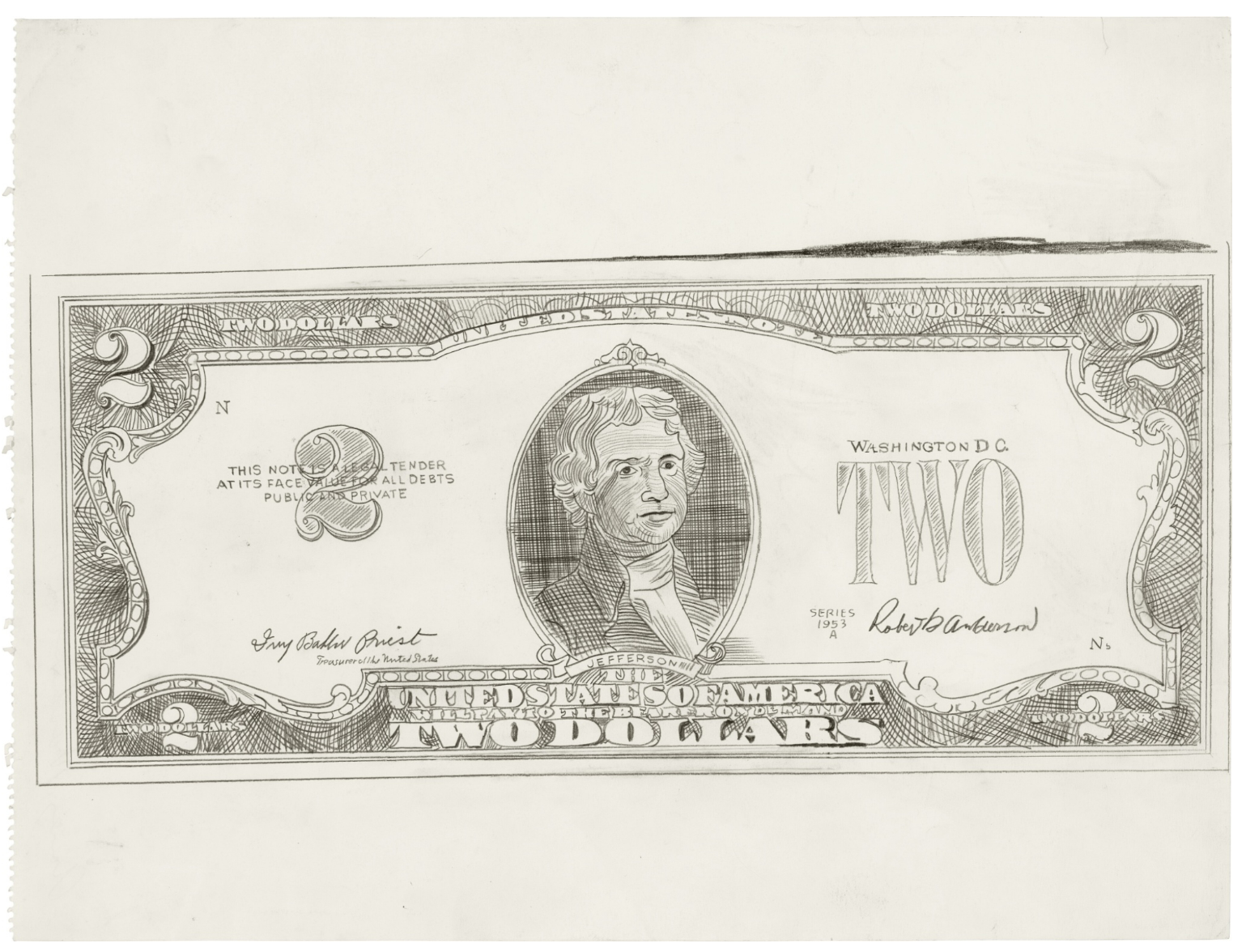
ANDY WARHOL (1928 – 1987)
Two-Dollar Bill with Jefferson, 1962
Graphite on paper
18×24 inches (45.7 x 61 cm)
Signed and dated 62 (on the verso)
Rudolf Nureyev, 1974
Sotheby’s New-York: 17 November 2026
Estimated: USD 700,000 – 1,000,000
Andy Warhol | Rudolf Nureyev | Contemporary Day Auction | 2026 |
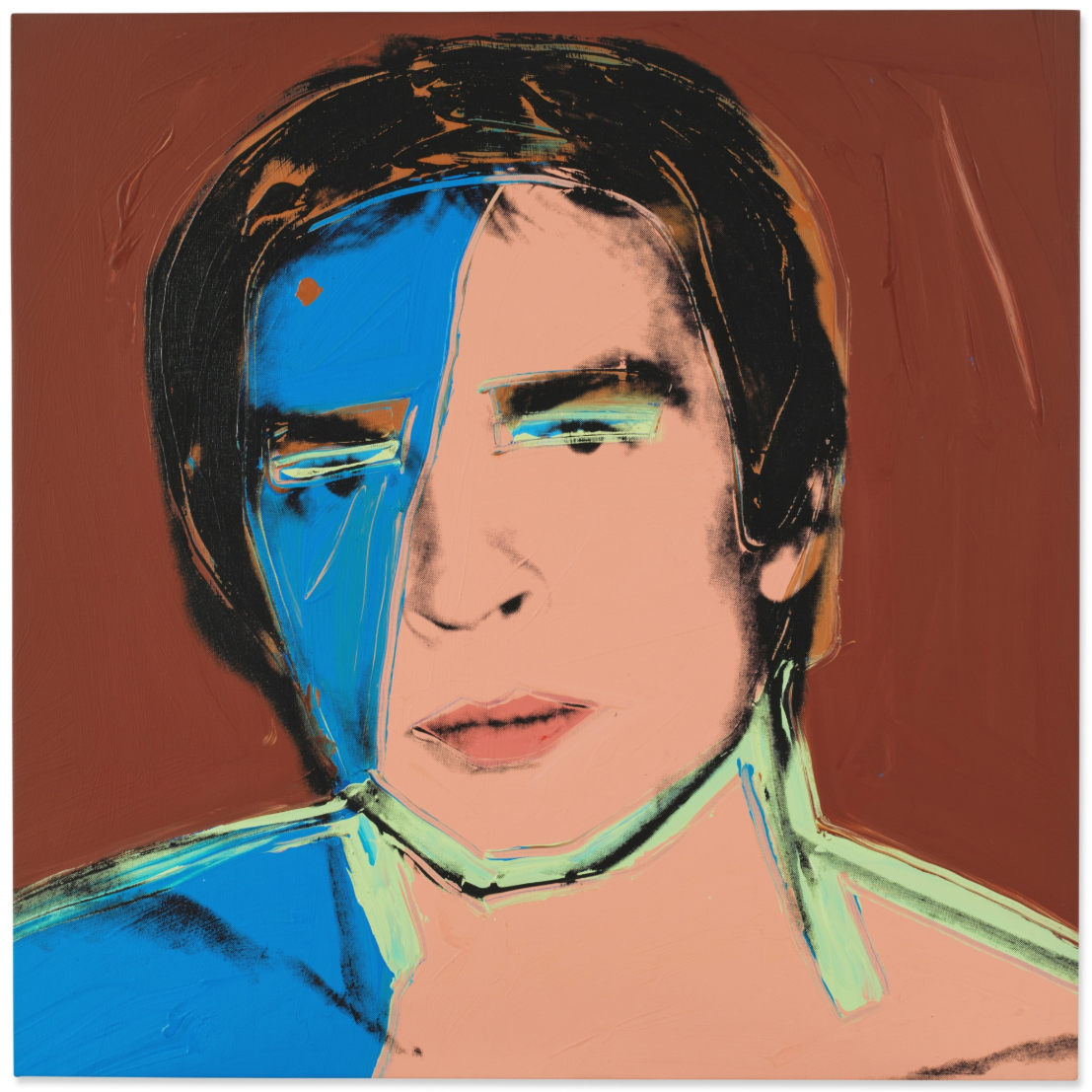
ANDY WARHOL (1928 – 1987)
Rudolf Nureyev, 1974
Acrylic and silkscreen ink on canvas
40×40 inches (101.6 x 101.6 cm)
Stamped twice by the Estate of Andy Warhol
Stamped once by the Andy Warhol Foundation for the Visual Arts, Inc.
Numbered P050.726 on the overlap
Also stamped by the Andy Warhol Foundation for the Visual Arts, Inc. on the reverse
Jackie, 1964
Christie’s New-York: 20 November 2026
Estimated: USD 600,000 – 800,000
ANDY WARHOL (1928-1987), Jackie | Christie’s
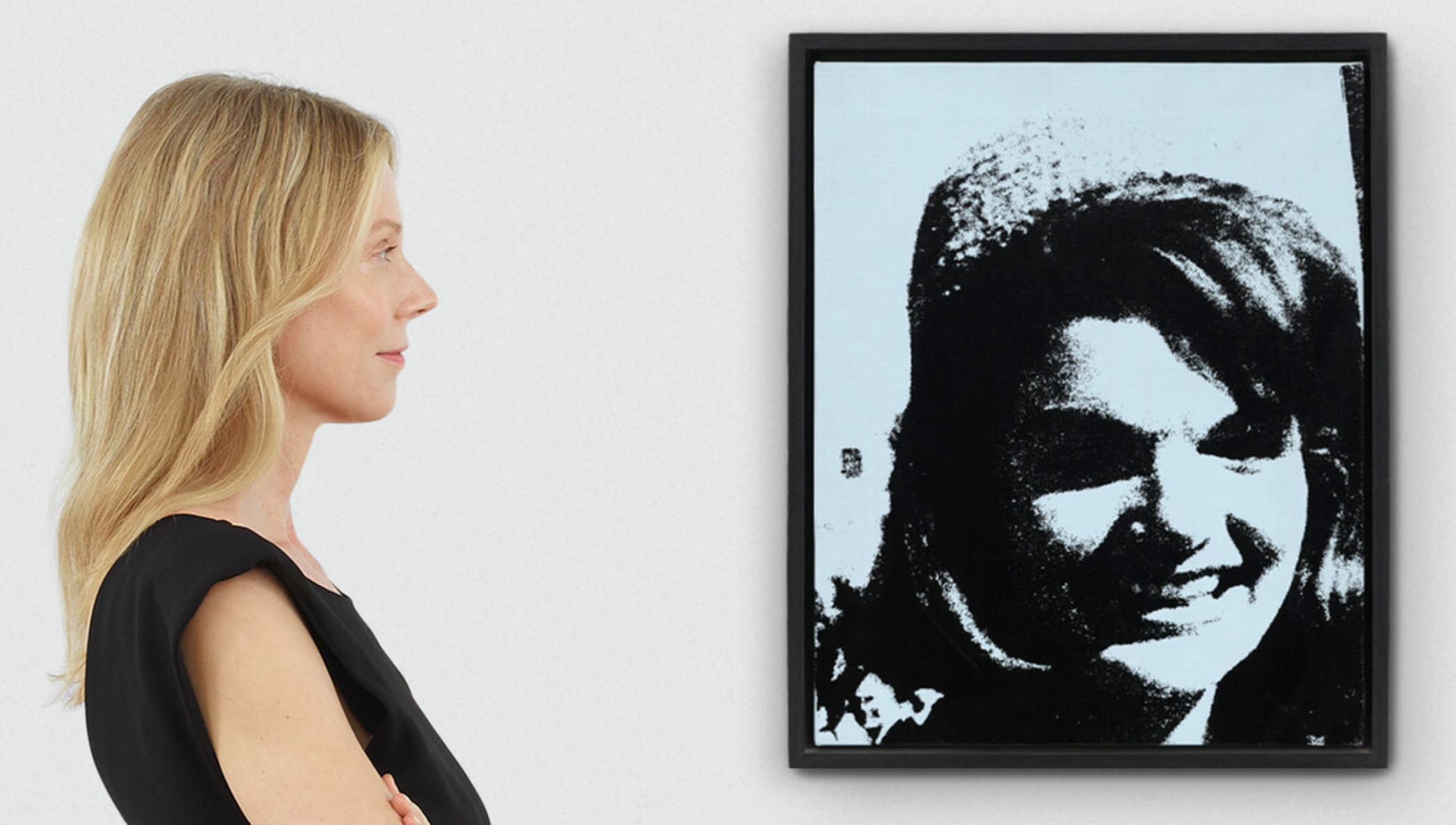
ANDY WARHOL (1928-1987)
Jackie, 1964
Acrylic and silkscreen ink on canvas
20×16 inches (50.8 x 40.6 cm)
Stamped with the artist’s signature, dedicated and dated ‘To Agusta 64’ (on the overlap)
Inscribed by Fredrick Hughes ‘Certified Estate of Andy Warhol Exec. Manager © 1964’ (on the overlap)
Campbell’s Soup Mix (Chicken Noodle), 1985
Property from an Important Collection
Sotheby’s New-York: 17 November 2026
Estimated: USD 600,000 – 800,000
Andy Warhol | Campbell’s Soup Mix (Chicken Noodle) | Contemporary Day
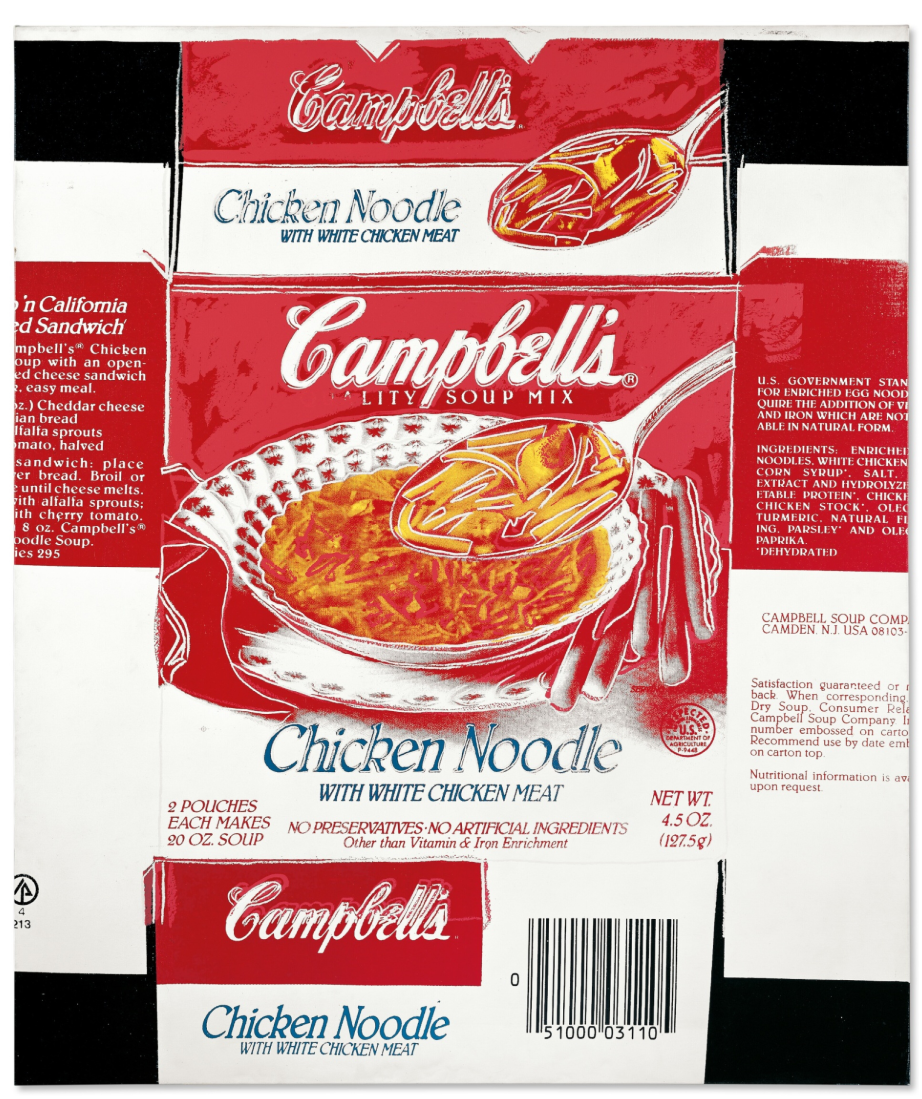
ANDY WARHOL (1928 – 1987)
Campbell’s Soup Mix (Chicken Noodle), 1985
Acrylic and silkscreen ink on canvas
72×60 inches (183 x 152.5 cm)
Signed and dated 85 (on the overlap)
Ice Hockey Player, 1984
Christie’s New-York: 20 November 2026
Estimated: USD 600,000 – 800,000
ANDY WARHOL (1928-1987), Ice Hockey Player | Christie’s
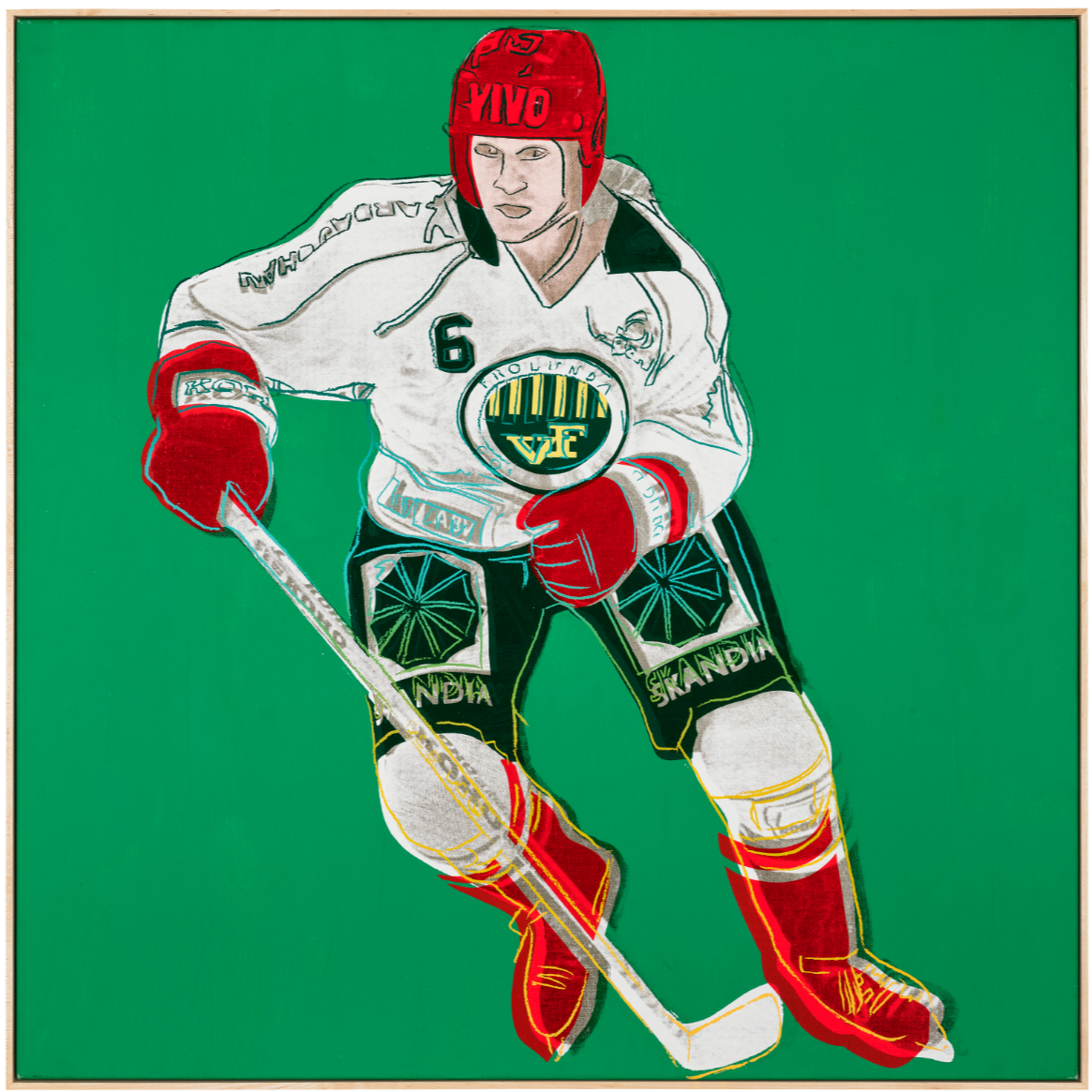
ANDY WARHOL (1928-1987)
Ice Hockey Player, 1984
Acrylic and silkscreen ink on canvas
40×40 inches (101.6 x 101.6 cm)
Stamped with the artist’s signature and inscribed by Frederick Hughes
‘I certify that this is an original painting by Andy Warhol completed by him in 1984 Frederick Hughes’
(on the overlap)
Ten Portraits Of Jews Of The 20th Century, 1980
Phillips New-York: 17 November 2026
Estimated: USD 400,000 – 600,000
PRINTS
COMPLETE SET
Andy Warhol Modern & Contemporary Art Evening Sale
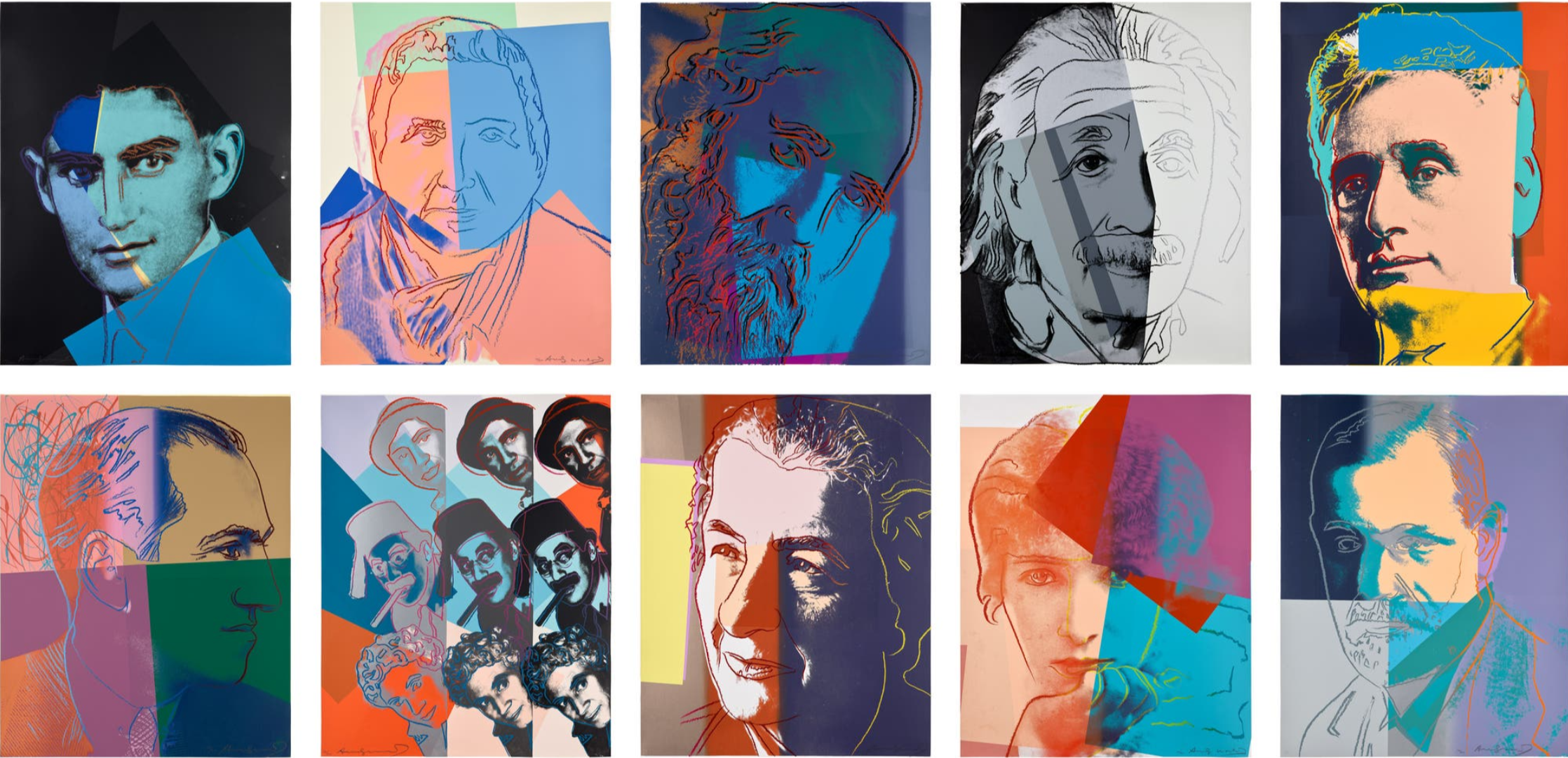
ANDY WARHOL
Ten Portraits Of Jews Of The Twentieth Century, 1980
Screenprint on Lenox Museum Board, in 10 parts
Each: 40×32 inches (101.6 x 81.3 cm)
Each signed and numbered “103/200 Andy Warhol” lower edge
This work is number 103 from an edition of 200, plus 30 artist’s proofs
Jacqueline Kennedy II (Jackie II), 1966
Vision: The Extraordinary Collection of Theodore and Ruth Baum
Sotheby’s New-York: 17 November 2026
Estimated: USD 300,000 – 500,000
GUARANTEED PROPERTY
Andy Warhol | Jacqueline Kennedy II (Jackie II) | Vision: The
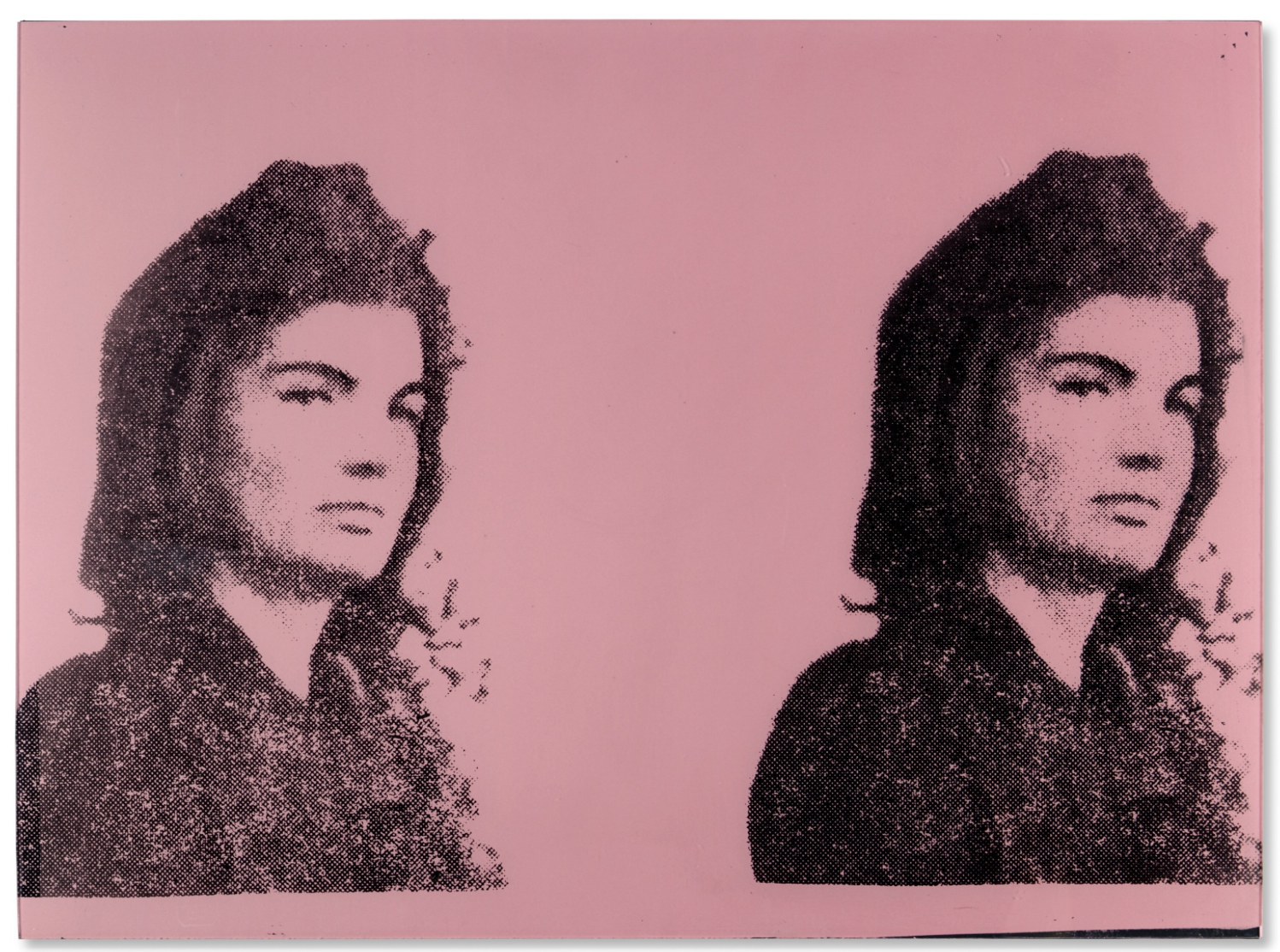
ANDY WARHOL (1928 – 1987)
Jacqueline Kennedy II (Jackie II), 1966
Acrylic and silkscreen ink on Plexiglas
22 x 29-7/8 inches (55.9 x 75.9 cm)
Signed (on the reverse)
Stamped by the Andy Warhol Authentication Board, Inc.
Numbered A163.0911 on the reverse
Printed Dollar #3, 1962
The Collection of Antonio Homem Sonnabend
Christie’s New-York: 20 November 2026
Estimated: USD 200,000 – 300,000
THIRD PARTY GUARANTEE
ANDY WARHOL (1928-1987), Printed Dollar #3 | Christie’s
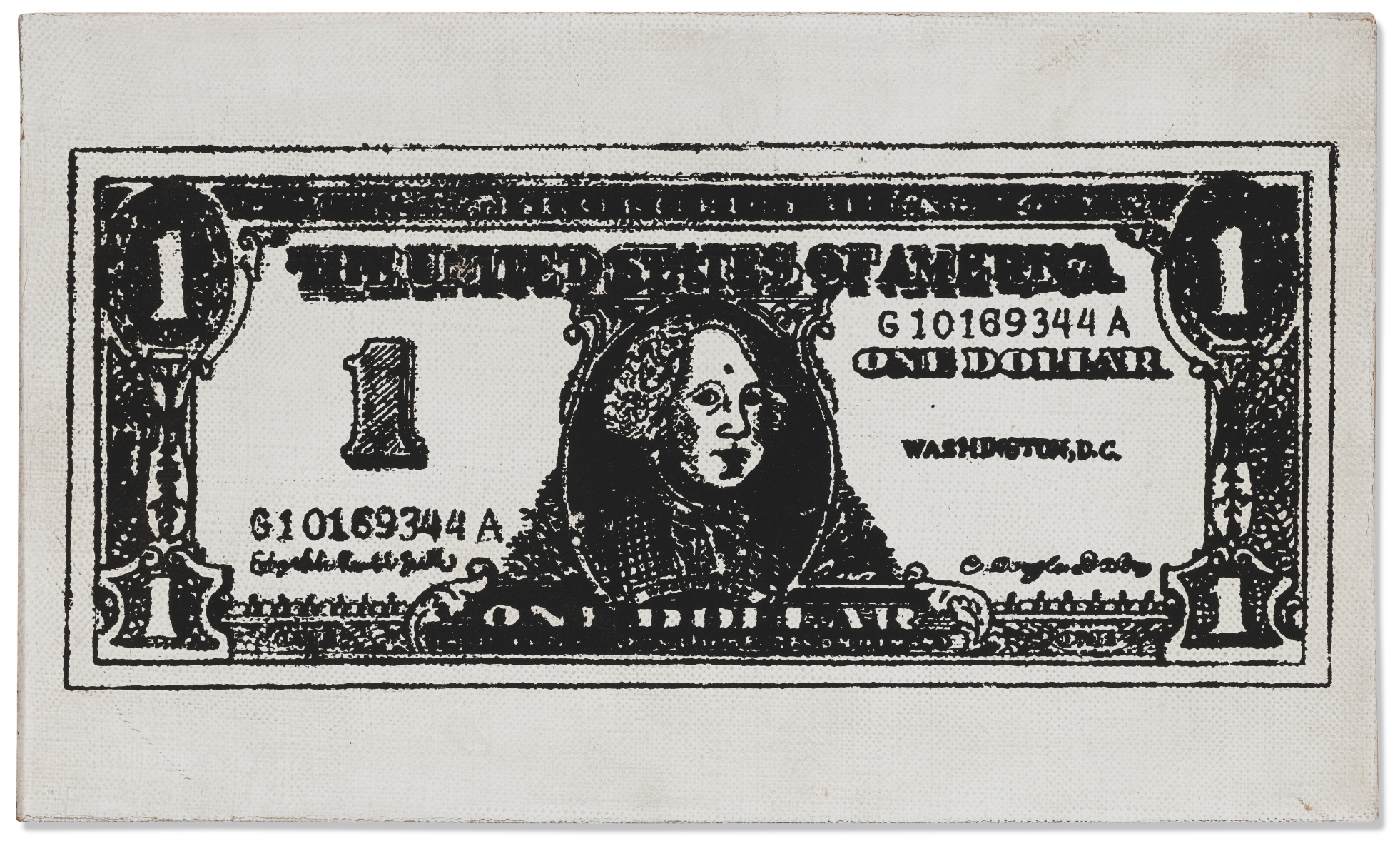
ANDY WARHOL (1928-1987)
Printed Dollar #3, 1962
Silkscreen ink on canvas
6×10 inches (15.2 x 25.4 cm)
Signed, dedicated, titled and dated
‘Andy Warhol ’62 TO DAVID HAYES PRINTED DOLLAR #3’
(on the stretcher)
Blue Airmail Stamp, 1962
Christie’s New-York: 20 November 2026
Estimated: USD 200,000 – 300,000
ANDY WARHOL (1928-1987), Blue Airmail Stamp | Christie’s
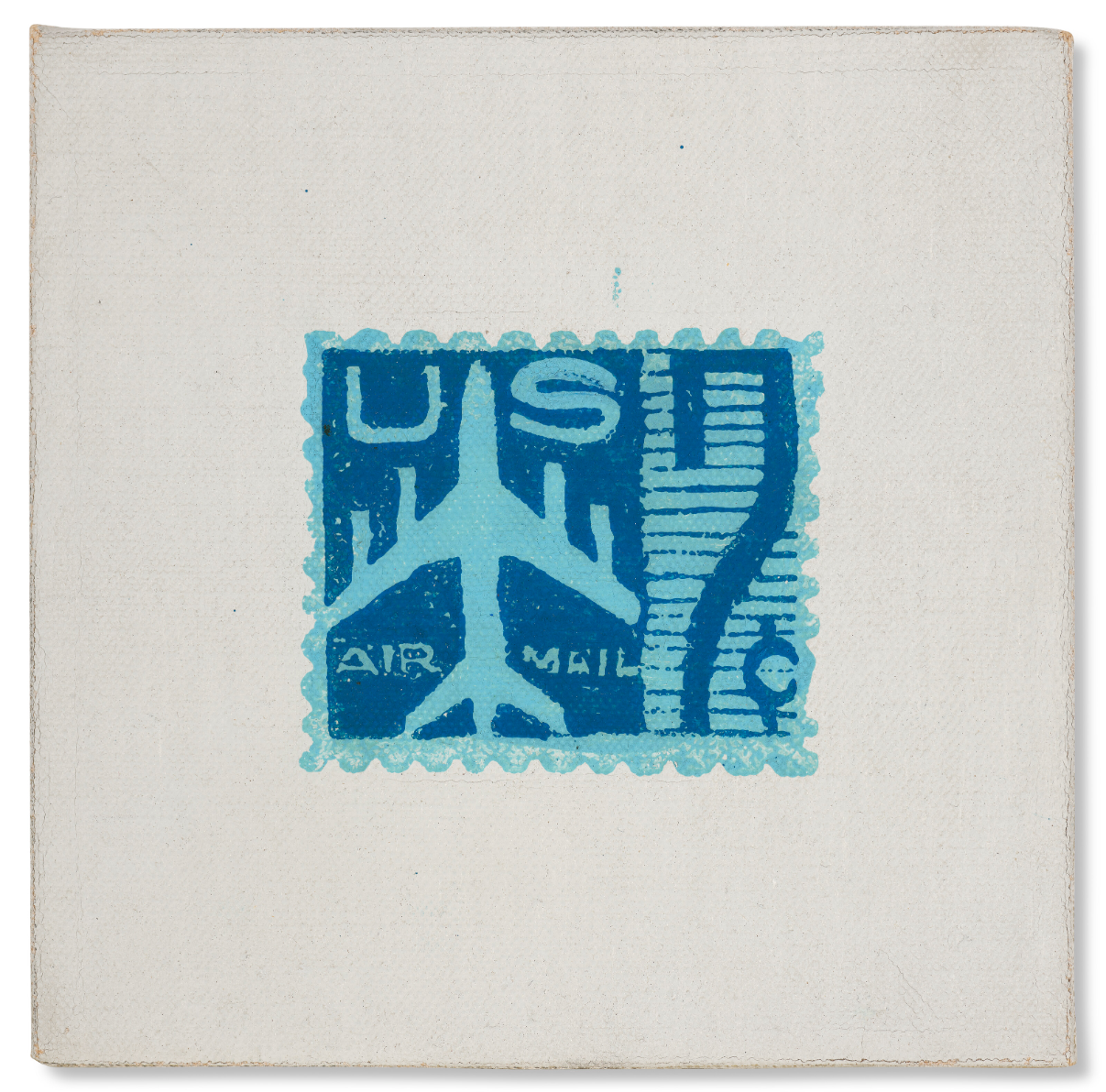
ANDY WARHOL (1928-1987)
Blue Airmail Stamp, 1962
Acrylic on canvas
6×6 inches (15.2 x 15.2 cm)
Signed and dated ‘Andy Warhol 62’ (on the stretcher)
Stamped with the Andy Warhol Authentication Board, Inc. stamp
Numbered ‘A108.969’ (on the stretcher)
Portrait of Teresa and Zena Scharf, 1984
Phillips New-York: 19 November 2026
Estimated: USD 200,000 – 300,000
Andy Warhol Modern & Contemporary Art: Morning Session
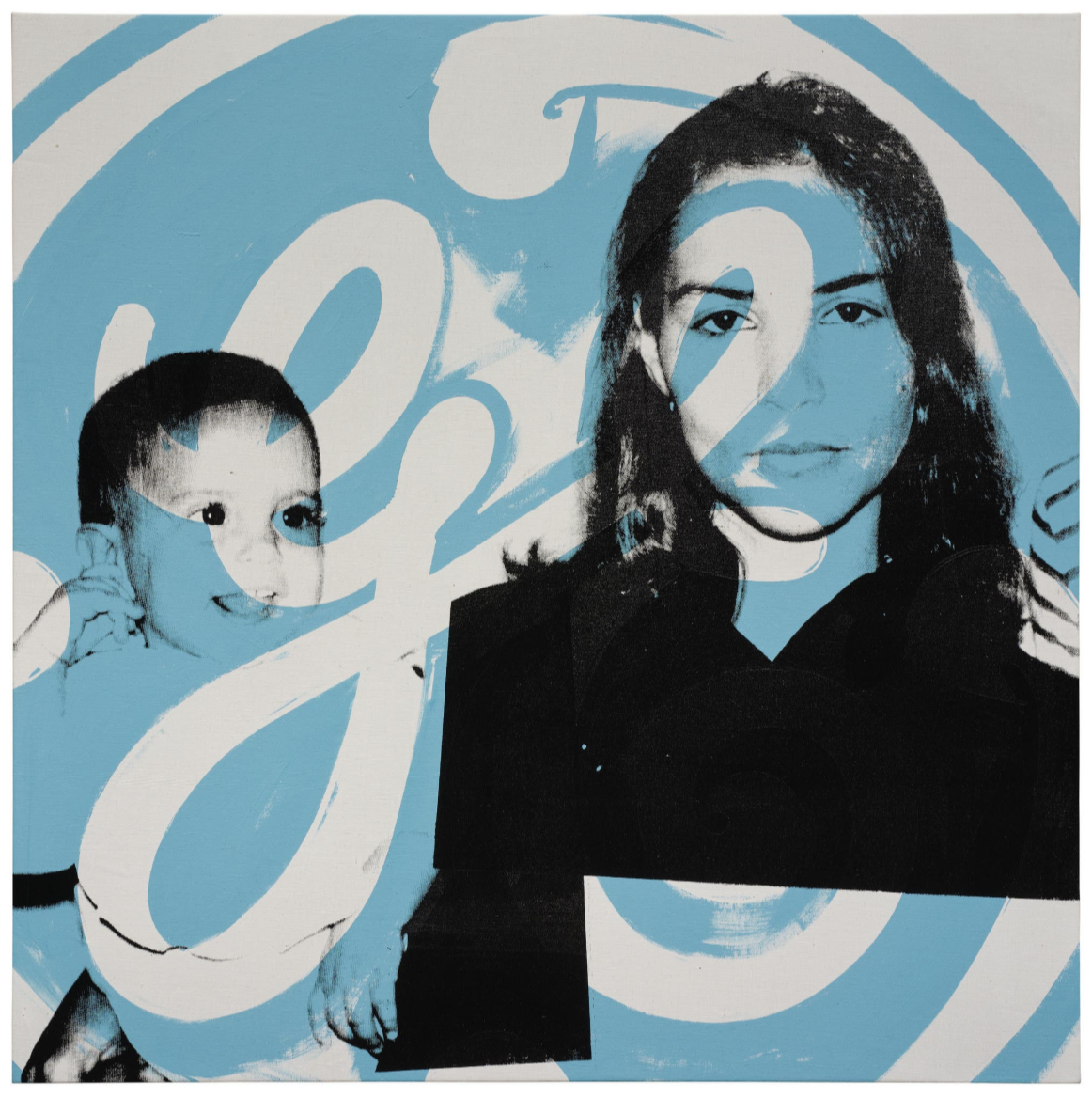
ANDY WARHOL
Portrait of Teresa and Zena Scharf, 1984
Acrylic and silkscreen ink on canvas
40-1/8 x 40 inches (101.9 x 101.6 cm)
Stamped by the Estate of Andy Warhol and by The Andy Warhol Foundation for the Visual Arts
Numbered “VF PO 50.844 VF PO 50.844″” twice on the overlap
Numbered “PO 50.844” on the stretcher
Eggs, 1982
Christie’s New-York: 20 November 2026
Estimated: USD 120,000 – 180,000
ANDY WARHOL (1928-1987), Eggs | Christie’s
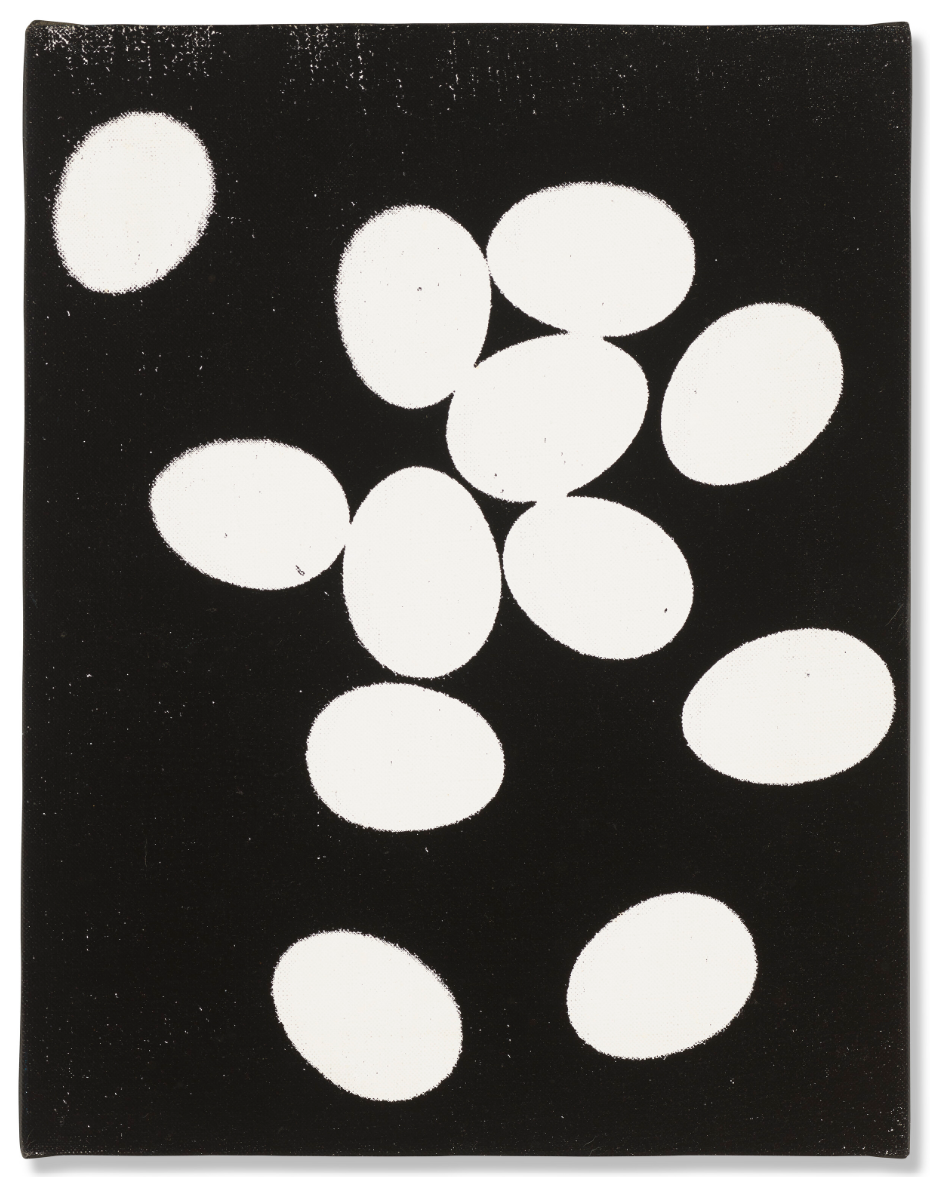
ANDY WARHOL (1928-1987)
Eggs, 1982
Acrylic and silkscreen ink on canvas
14×11 inches (35.6 x 27.9 cm)
Studio 54 VIP Complimentary Drinks Tickets, 1978
Phillips New-York: 19 November 2026
Estimated: USD 100,000 – 150,000
Andy Warhol Modern & Contemporary Art: Morning Session
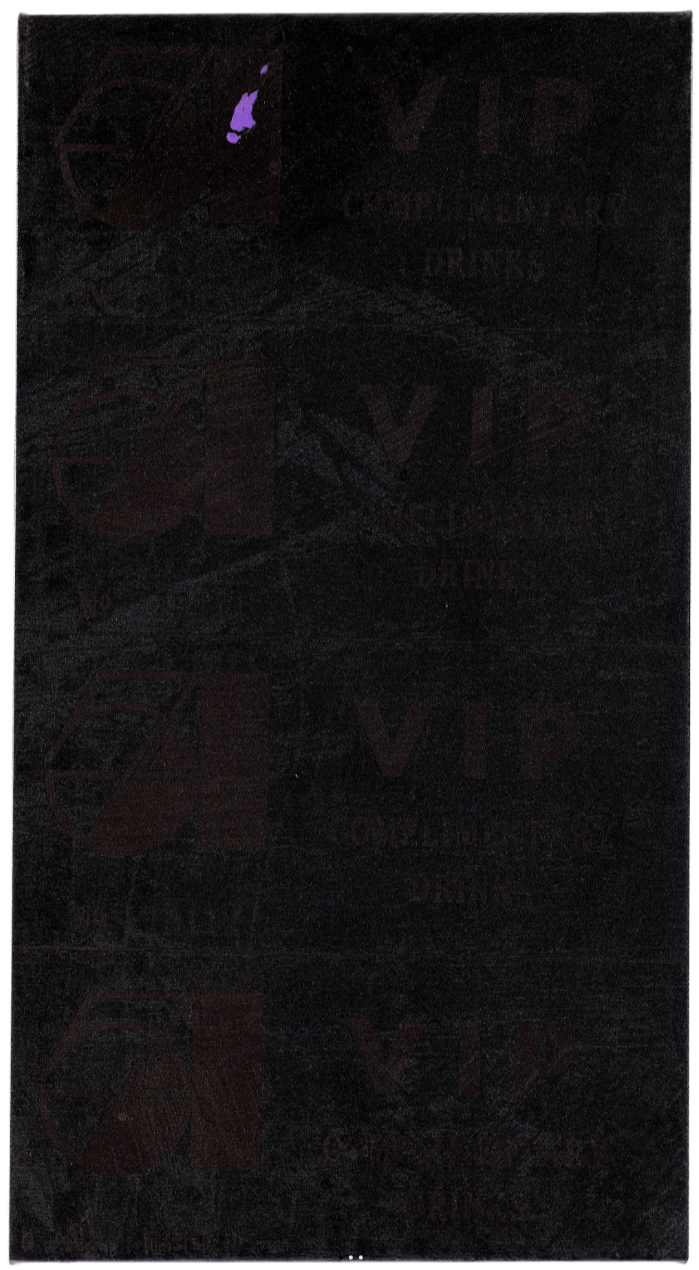
26 x 14-1/8 inches (66 x 35.9 cm)
Stamped by the Estate of Andy Warhol and the Andy Warhol Foundation for the Visual Arts, Inc.
Initialed and numbered “VF PA88.008” on the reverse
Spalding Soft Ball, 1962
Christie’s New-York: 20 November 2026
Estimated: USD 100,000 – 150,000
WORK ON PAPER
THIRD PARTY GUARANTEE
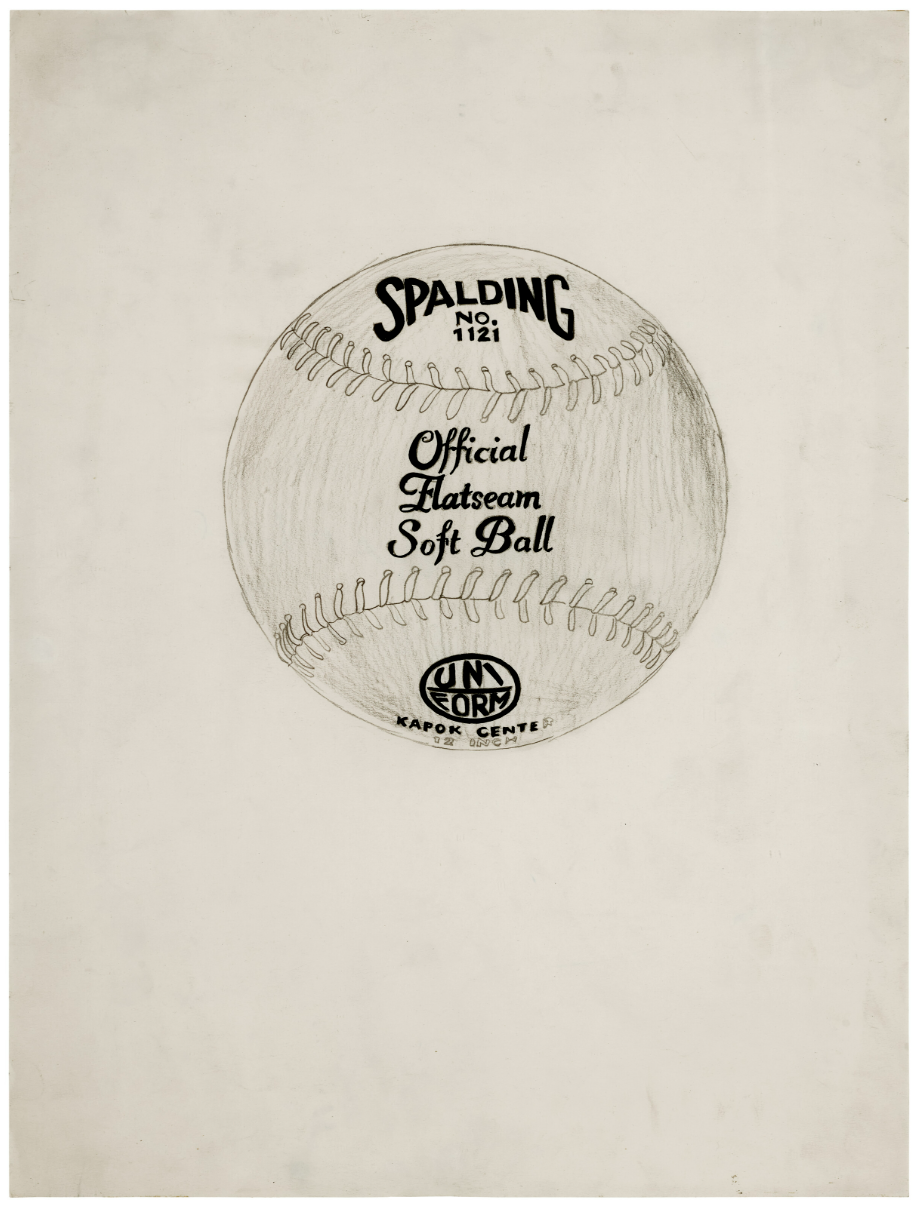
Spalding Soft Ball, 1962
Ink and graphite on paper
23-3/4 x 18 inches (60.3 x 45.7 cm)
Signed and dated ‘Andy Warhol ’62’ (on the reverse)
Untitled (Still Life Hammer & Sickle), 1978
Christie’s New-York: 20 November 2026
Estimated: USD 100,000 – 150,000
WORK ON PAPER
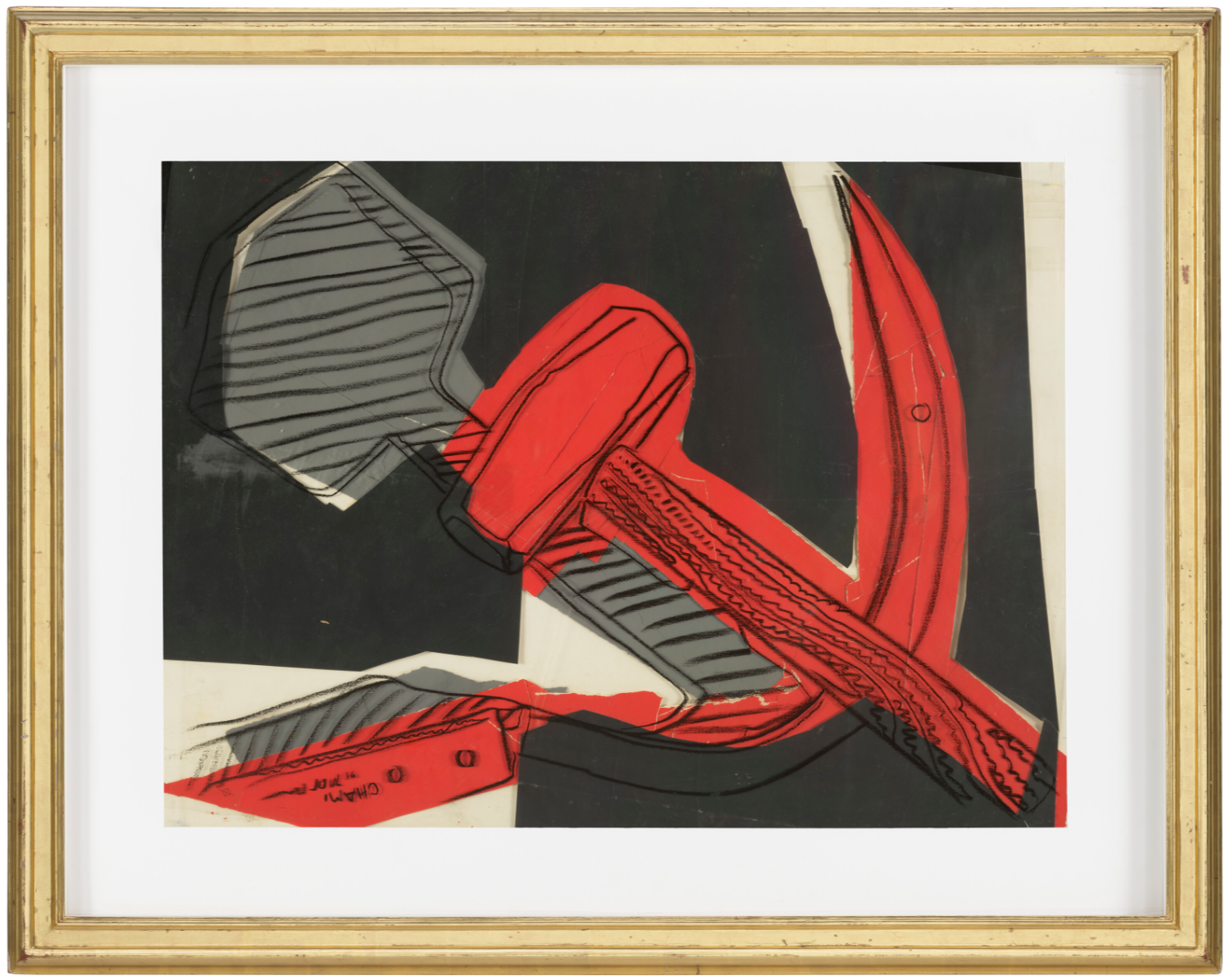
Untitled (Still Life Hammer & Sickle), 1978
Screenprint on acetate, staples and colored paper assemblage on board
35-3/4 x 46 inches (89.6 x 116.8 cm)
Signed ‘Andy Warhol’ (lower left)
Repent and Sin No More (Positive), 1986
Phillips New-York: 19 November 2026
Estimated: USD 80,000 – 120,000
Andy Warhol Modern & Contemporary Art: Morning Session
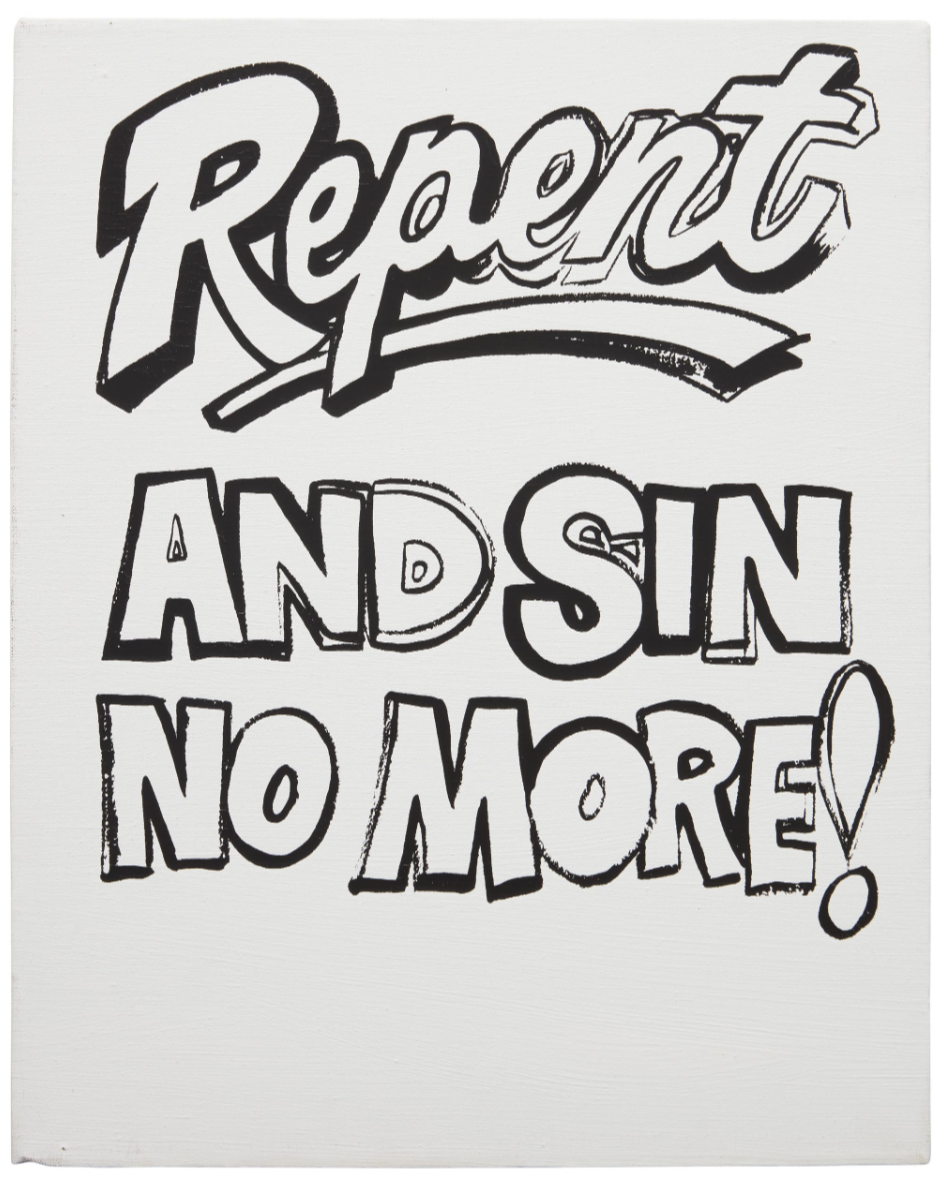
Synthetic polymer paint and silkscreen ink on canvas
20×16 inches (50.8 x 40.6 cm)
Stamped by the Estate of Andy Warhol and the Andy Warhol Foundation for the Visual Arts, Inc., New York
Initialed and numbered “VF PA10.012” on the overlap
Numbered “PA10.012” on the stretcher
Karen Lerner, 1972
Phillips New-York: 19 November 2026
Estimated: USD 80,000 – 120,000
Andy Warhol Modern & Contemporary Art: Morning Session
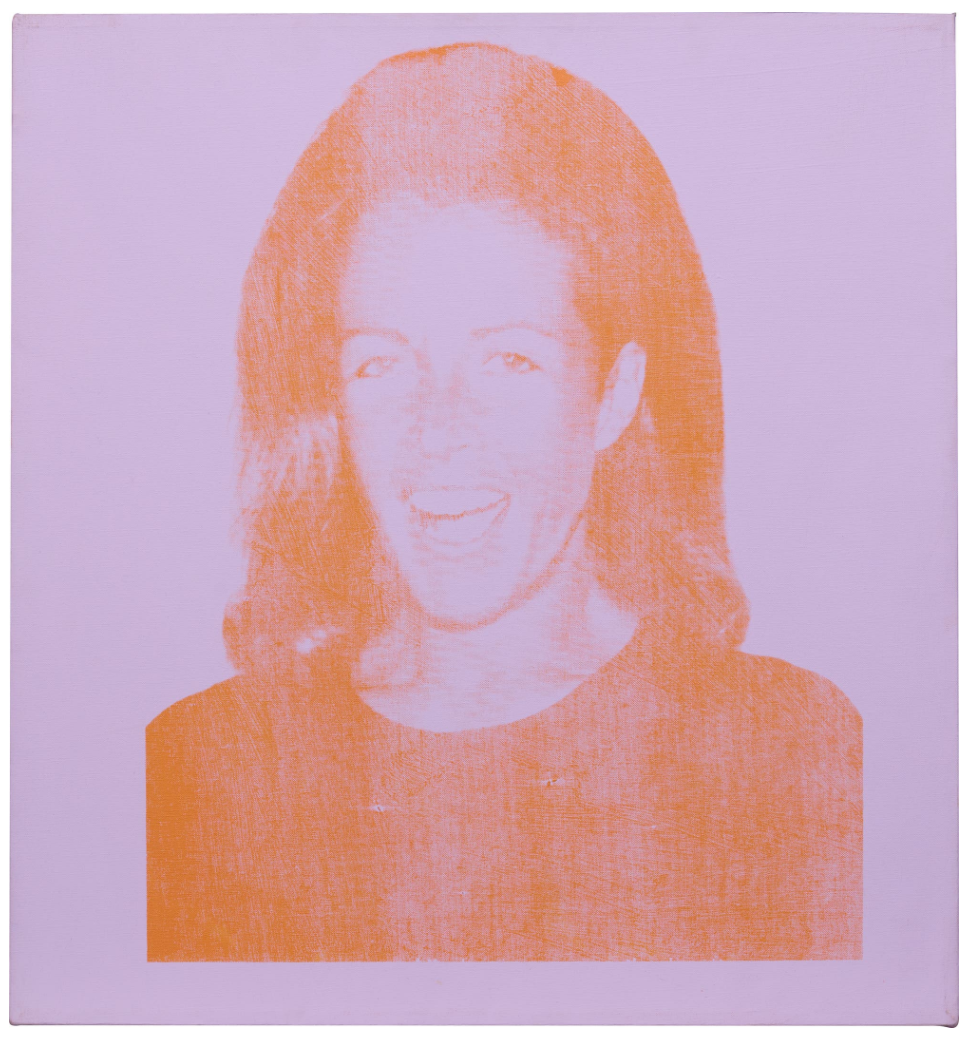
Acrylic and silkscreen ink on linen
30×28 inches (76.2 x 71.1 cm)
Signed, stamped by the Estate of Andy Warhol and the Andy Warhol Foundation for the Visual Arts, Inc.
Initialed, numbered, inscribed and dated “VF PO50.600 Andy Warhol 72 2/5” on the overlap
Self-Portrait, 1986
Self-Portrait, 1986
American Icon: Warhol from an Important Private Collection
Christie’s New-York: 17 November 2026
Estimated: USD 14,000,000 – 18,000,000
ANDY WARHOL (1928-1987), Self-Portrait | Christie’s
REPEAT SALE
Estimated: GBP 12,000,000 – 18,000,000
GBP 12,737,500 / USD 15,524,220
ANDY WARHOL (1928-1987)
Self-Portrait, 1986
Acrylic and silkscreen ink on canvas
80×80 inches (203.2 x 203.2 cm)
Stamped with the artist’s signature (on the overlap)
Signed with Frederick Hughes’s initials
Dated and inscribed ‘CERTIFIED FH Exec. Manager © 1986’ (on the overlap)
Numbered ‘PA40.056’ (on the stretcher)
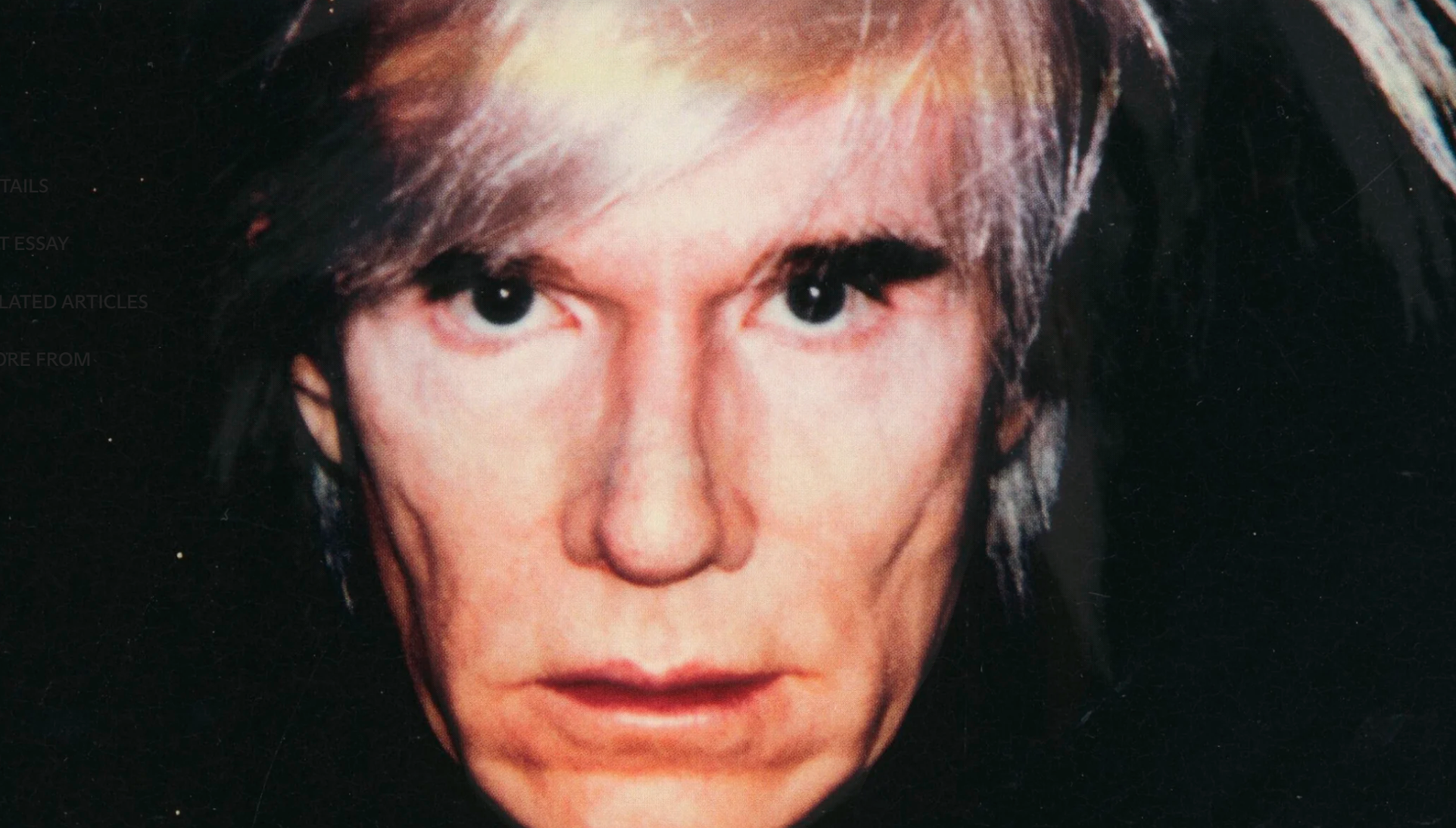
Executed in 1986, during what would turn out to be the final year of his life, Andy Warhol’s Self-Portrait stands as a profoundly moving epitaph to the life and career of one of the most famous artists of the twentieth century. Warhol completed a number of self-portraits throughout his life, but it is arguably only with this final series of canvases that we get to see the true Andy Warhol.
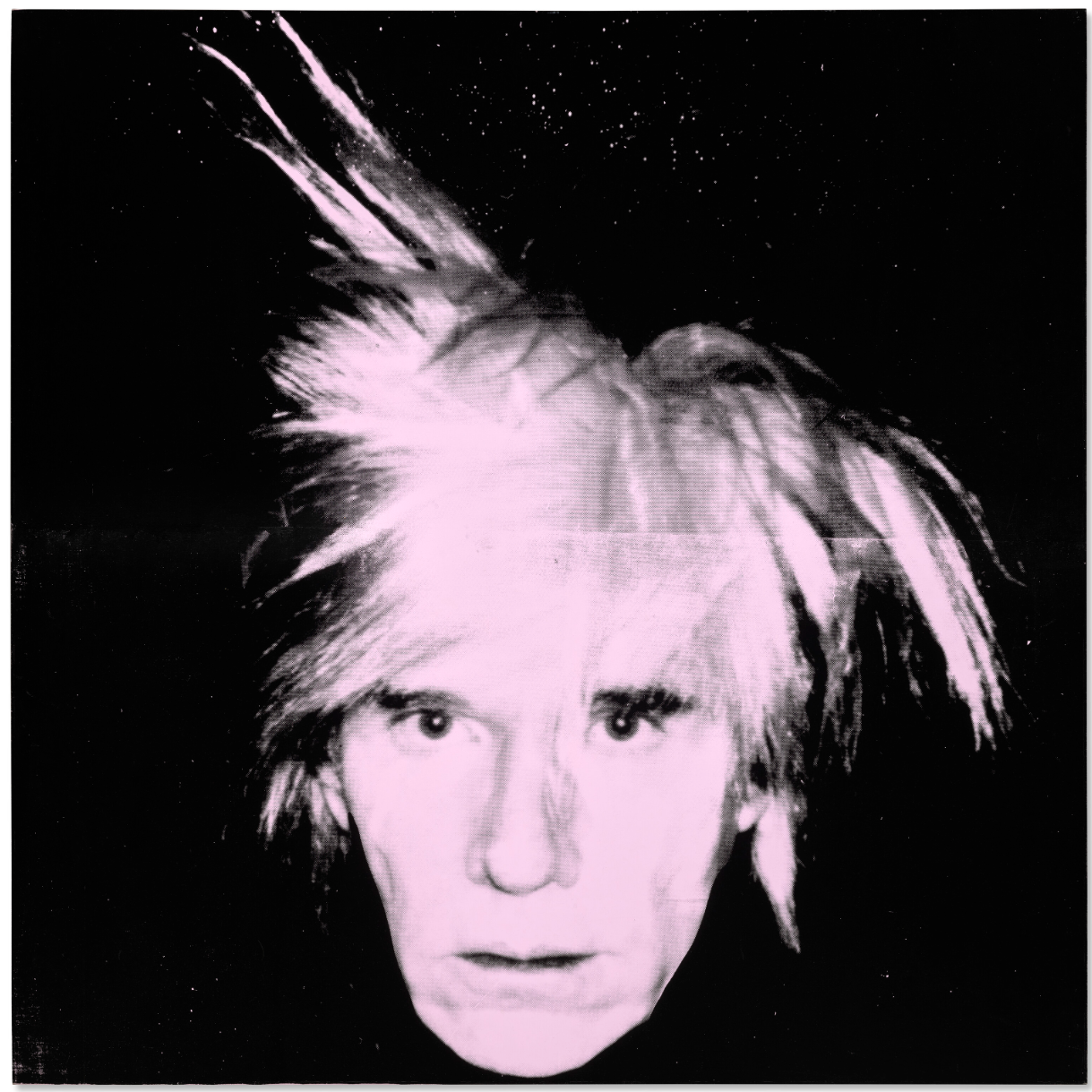
In 1972, the artist famously said, “If you want to know all about Andy Warhol … Just look at the surface of my paintings” (quoted by D. Boudon, Warhol, New York, 1989, p. 10), but in each of his previous self-portraits we only see what Warhol wanted us to see, not his whole self. With its grand scale and bitingly honest depiction of the artist, the present work offers up a sense of what curator John Caldwell called “a strange sense of absoluteness.” He continues, “The portrait derives part of its power from the sense that we are being given a rare chance to witness the aging of an icon” (J. Caldwell, ‘A New Andy Warhol at the Carnegie,’ Carnegie Magazine, Pittsburgh, January-February 1987, p. 9).
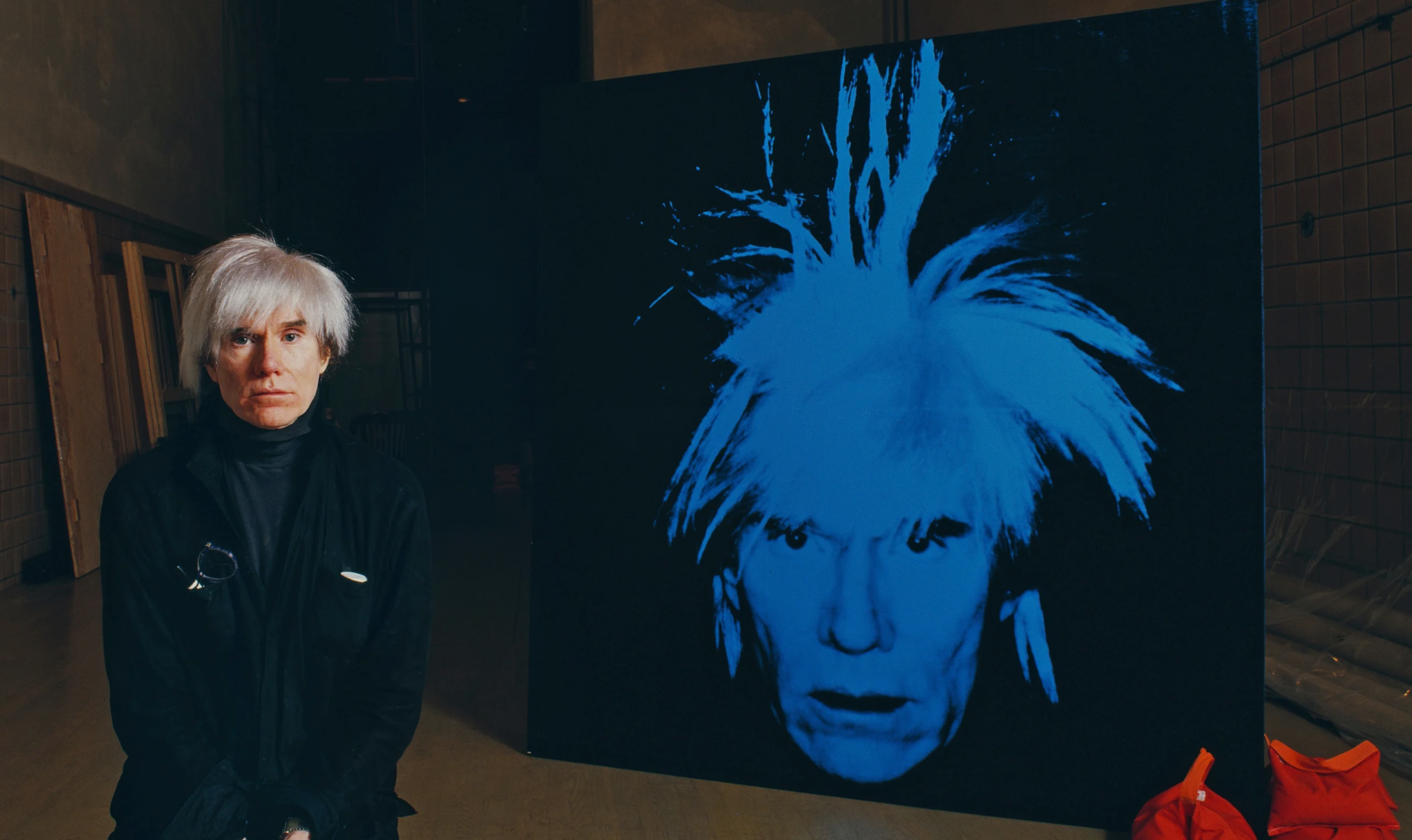
Andy Warhol with Self-Portrait at the Factory, New York, 1986. Photograph by Wolfgang Wesener. Artwork: © 2026 The Andy Warhol Foundation for the Visual Arts, Inc. / Licensed by Artists Rights Society (ARS).
One of the largest of his self-portraits, this 80-inch square canvas is almost entirely filled by the gaunt face of the artist himself. However, unlike his earlier self-portraits in which his likeness is partly obscured by sunglasses, his hand, or a deep shadow, in the present work, Warhol’s face is on full display. His penetrating stare engages the viewer directly, the inky darkness of his pupils pierced only by the pinpoint reflection of the camera flash as it bounces off the surface of his eye. Elsewhere, Warhol’s facial features are beginning to show the effects of time, his previous medical procedures, and the plastic surgery on his nose undertaken when he was 29 years old.
Warhol’s use of a pale lavender ground in the present work closely mimics the skin’s natural coloration and, set against the darkness of the screen, creates an evocative contrast. Completing the composition is Warhol’s famed “fright wig;” Warhol had been wearing a hairpiece since the early 1950s, after years of suffering from thinning and prematurely graying hair. As his confidence increased, his wigs became less an attempt to hide his appearance and more as a means of asserting his presence. This reached its peak when his “fright wigs” became a signature part of his appearance, as can be seen in the present work. Although this series of paintings is often referred to as the “Fright Wig” paintings, that title was actually assigned after Warhol’s death, and not one that he used in his own lifetime.
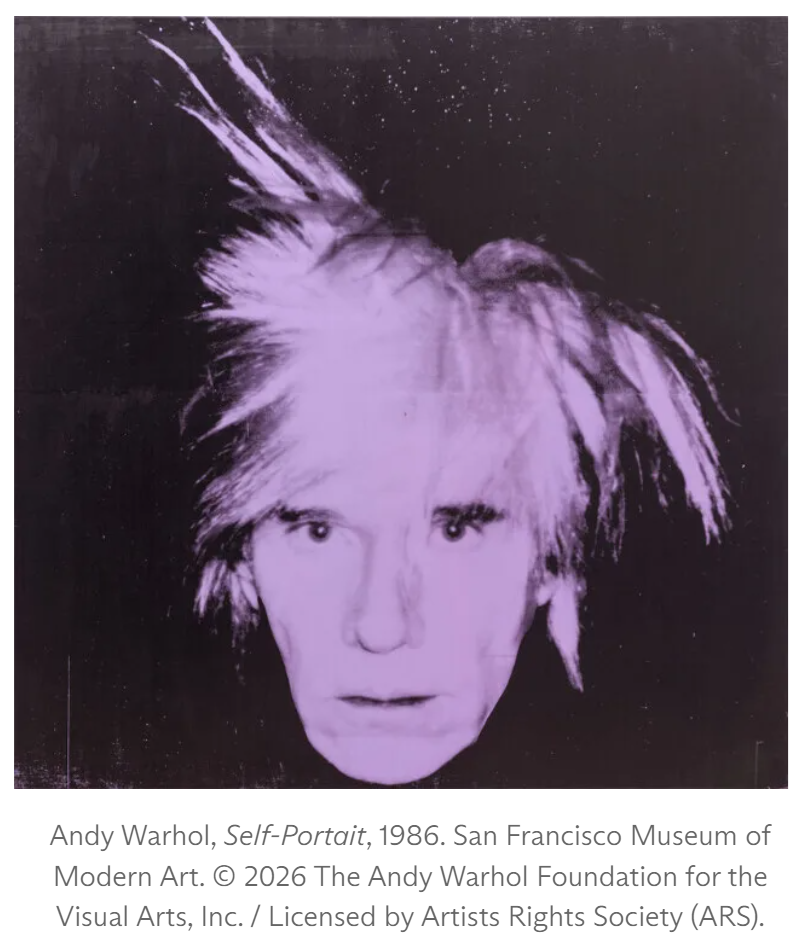
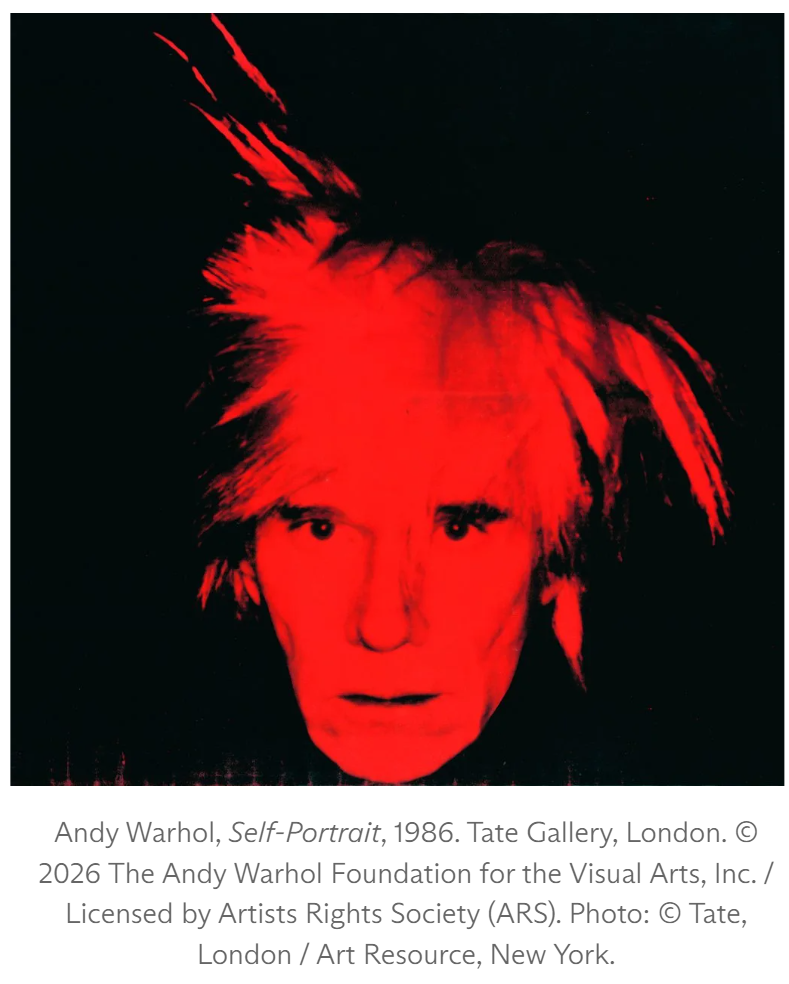
Despite the directness of its imagery, no body of work better illustrates the paradox between his lifelong self-consciousness and his extraordinary celebrity than these late Self-Portraits. Robert Rosenblum, who has spoken eloquently of the spectral presence of mortality in these paintings, makes the profundity inherent to this series clear: “A sense of ultimate moment fills all these works, as well as a sense of staged artifice that, for a moment, can ward off the un-staged reality of death. Above all, spirit is about to conquer flesh, as if staring, frontal icon of Byzantine deity were created before our eyes” (R. Rosenblum, “Andy Warhol’s Masks” in Andy Warhol: Self-portraits, Dietmar Elger (ed.), Hanover, 2004, p. 37).
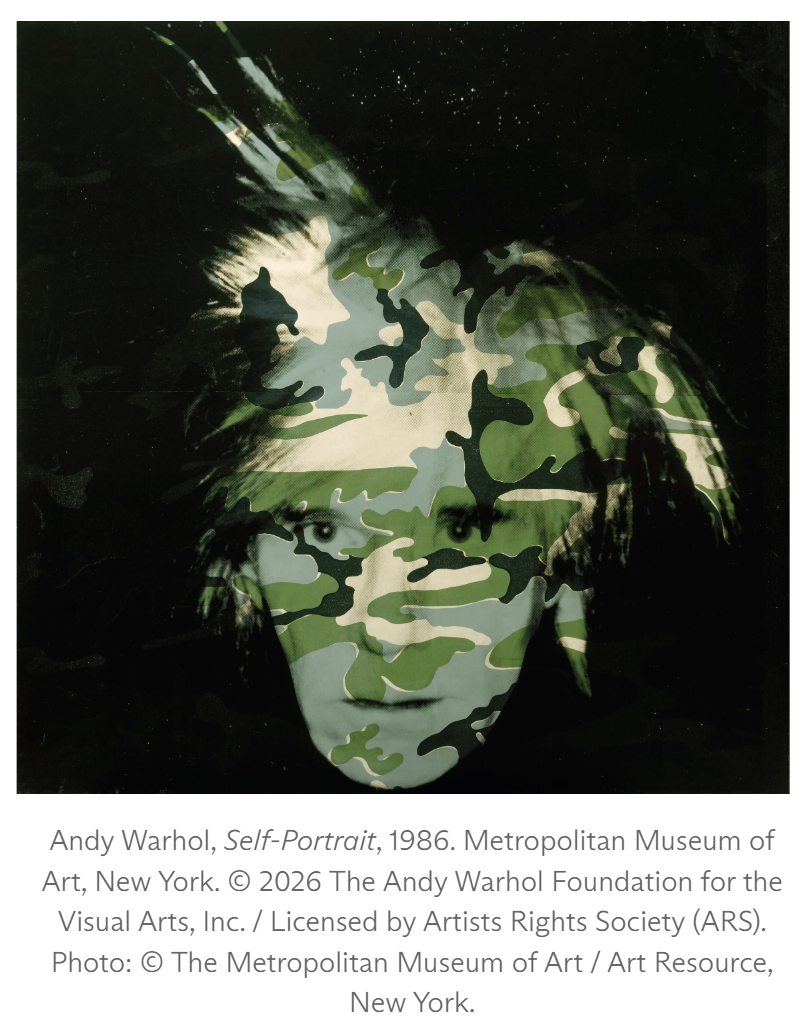
Like many artists, from the Northern Renaissance painter Albrecht Dürer to Edvard Munch and Vincent van Gogh, all masters of manifesting their own image, throughout his lifetime Warhol was adept at presenting an image of himself to the public that he wanted to. In his very first painted self-portrait from 1963-1964, the young American artist chose to depict himself shielded from the public gaze by dark sunglasses and the upturned collar of his trench coat. It was only with these later self-portraits however that he embraced the Pop audacity that he had previously lavished on others such as Marilyn Monroe and Elizabeth Taylor. Self-Portrait becomes, arguably, the work which establishes itself as the final icon of the famously enigmatic and often frighteningly clairvoyant persona that Warhol built for himself and presented to the world.
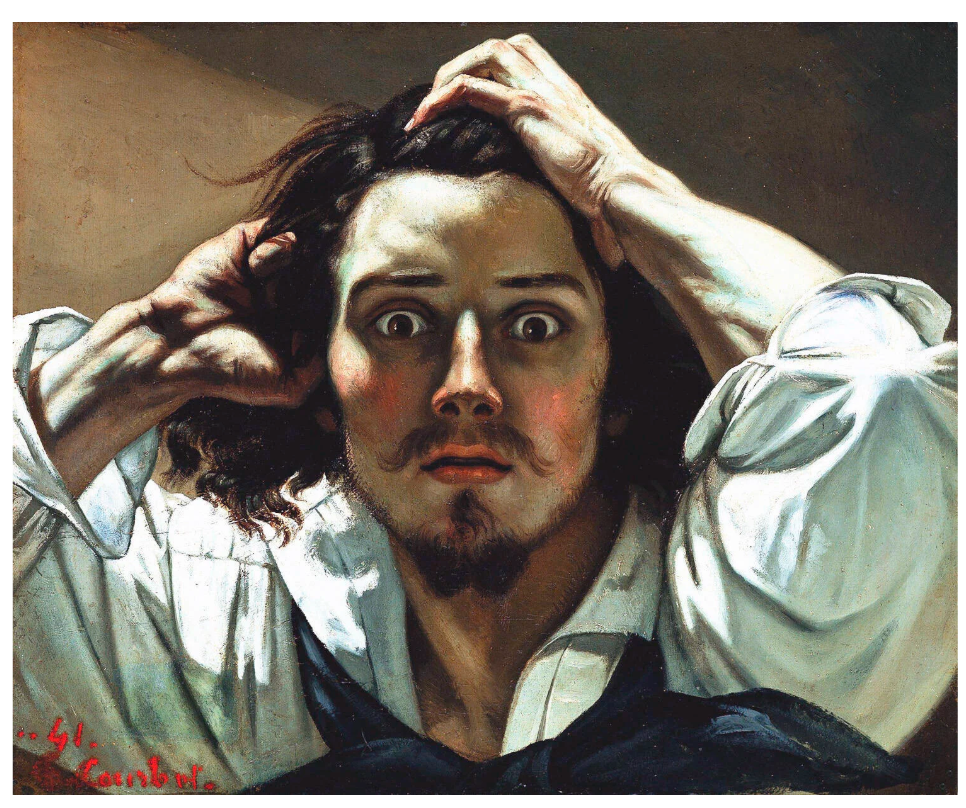
Gustave Courbet, Le Désespéré (Self-Portrait), 1843-1845. Qatar Museums, Doha.
Throughout his prolific career, Warhol turned his attention to many different subject matters such as soup cans and Coca-Cola bottles but it was his self-portraits that he repeatedly turned too. His earliest self-portraits appear while he was still at art school in Pittsburgh. One of his initial drawings gives a poignant prediction of the many different faces of Andy Warhol that he was to project during his lifetime of making self-portraits. The Broad Gave Me My Face But I Can Pick My Own Nose is a youthful drawing of Warhol picking his own nose. The result is a strange mixture of an activity that the most people undertake only when no one else is in the room and a self-conscious performance meant to shock his audience.
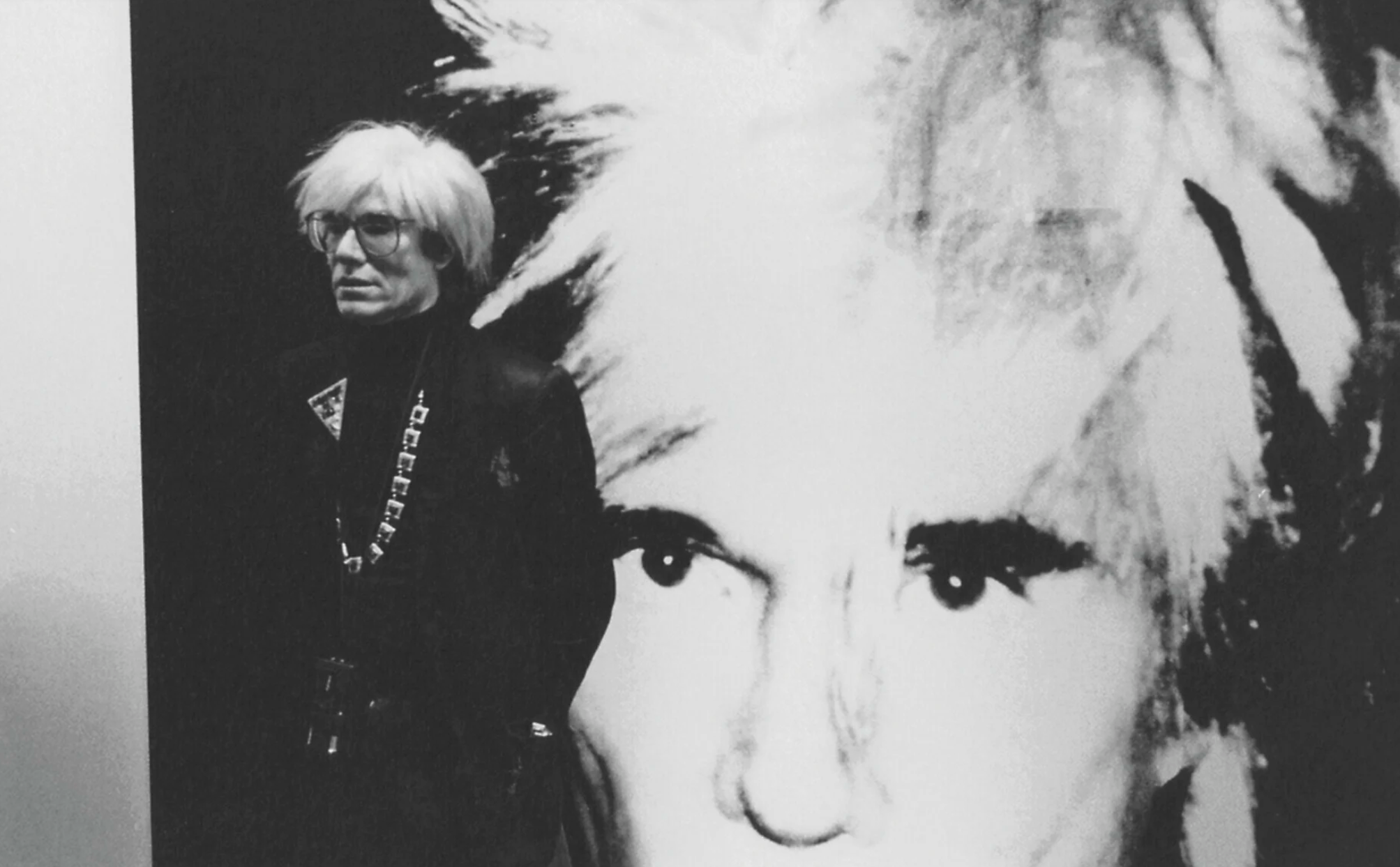
Andy Warhol with Self-Portrait, Anthony D’Offay Gallery, London, 1986. Photo: John Wildgoose. Artwork: © 2026 The Andy Warhol Foundation for the Visual Arts, Inc. / Licensed by Artists Rights Society (ARS).
It is particularly poignant then that this vision of the true Andy Warhol was produced during the last few months of his life. Warhol was obsessed with death and this obsession can be read—in hindsight—on his face like the pages of a biography. This extraordinarily evocative painting offers a unique opportunity to see deep into the psyche of one the most influential artists of the twentieth-century. Alone amongst his self-portraits produced throughout his career, this final series of is widely regarded as the legacy by which he will remembered.
Flowers, 1964-65
Flowers, 1964-65
Super Bloom: Andy Warhol’s Flowers
Sotheby’s New-York: 16 November 2026
Estimated: USD 10,000,000 – 15,000,000
Andy Warhol | Flowers | The Now and Contemporary Evening Auction |
ANDY WARHOL (1928 – 1987)
Flowers, 1964-65
Spraypaint and silkscreen ink on canvas
48×48 inches (121.9 x 121.9 cm)
Signed and dated 64 (on the overlap)
Stamped by the Andy Warhol Art Authentication Board, Inc.
Numbered A104.021 (on the overlap)
Explosive blooms of true red and yellow, cornflower blue, and royal purple open across a wiry, washed-out black-and-white background; Andy Warhol’s Flowers is an exceptionally rare and preeminent example of one of the artist’s most celebrated and iconic series. One of only seven 48-by-48-inch flower paintings on a stark white background, Flowers is one of the most visually distilled and desirable works from a series that represents a decisive moment in Warhol’s formal and conceptual engagement with mass culture and art history; thus, the present work represents one of the clearest assertions of Warhol’s pop authority.
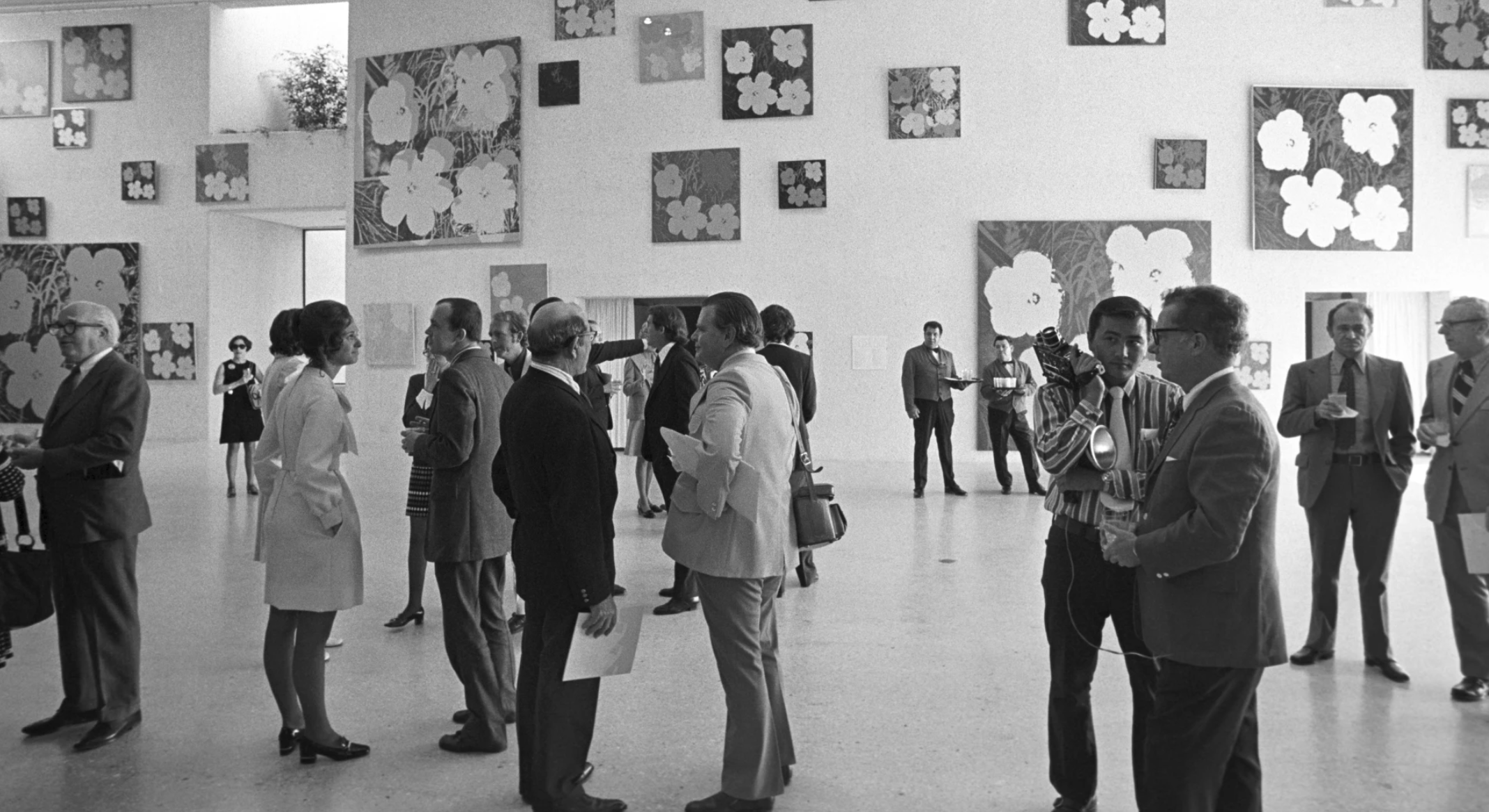
Crowd of people at the opening of the Art Museum of South Texas in Dallas featuring Andy Warhol’s Flowers.
Photo by Jim Olive/WWD/Penske Media via Getty Images.
Art © 2026 Andy Warhol Foundation for the Visual Arts / Artists Rights Society (ARS), New York
Begun in 1964 and finished in 1965, only a year after Warhol’s debut exhibition at the Leo Castelli Gallery, the present work encapsulates the singularity of Warhol’s practice and career; made using his quintessential appropriation of mass-produced imagery, it is conceptually daring in its lifting of preexisting source material and formally striking in both its harmonic spatial balance and brilliant chromatic tension.
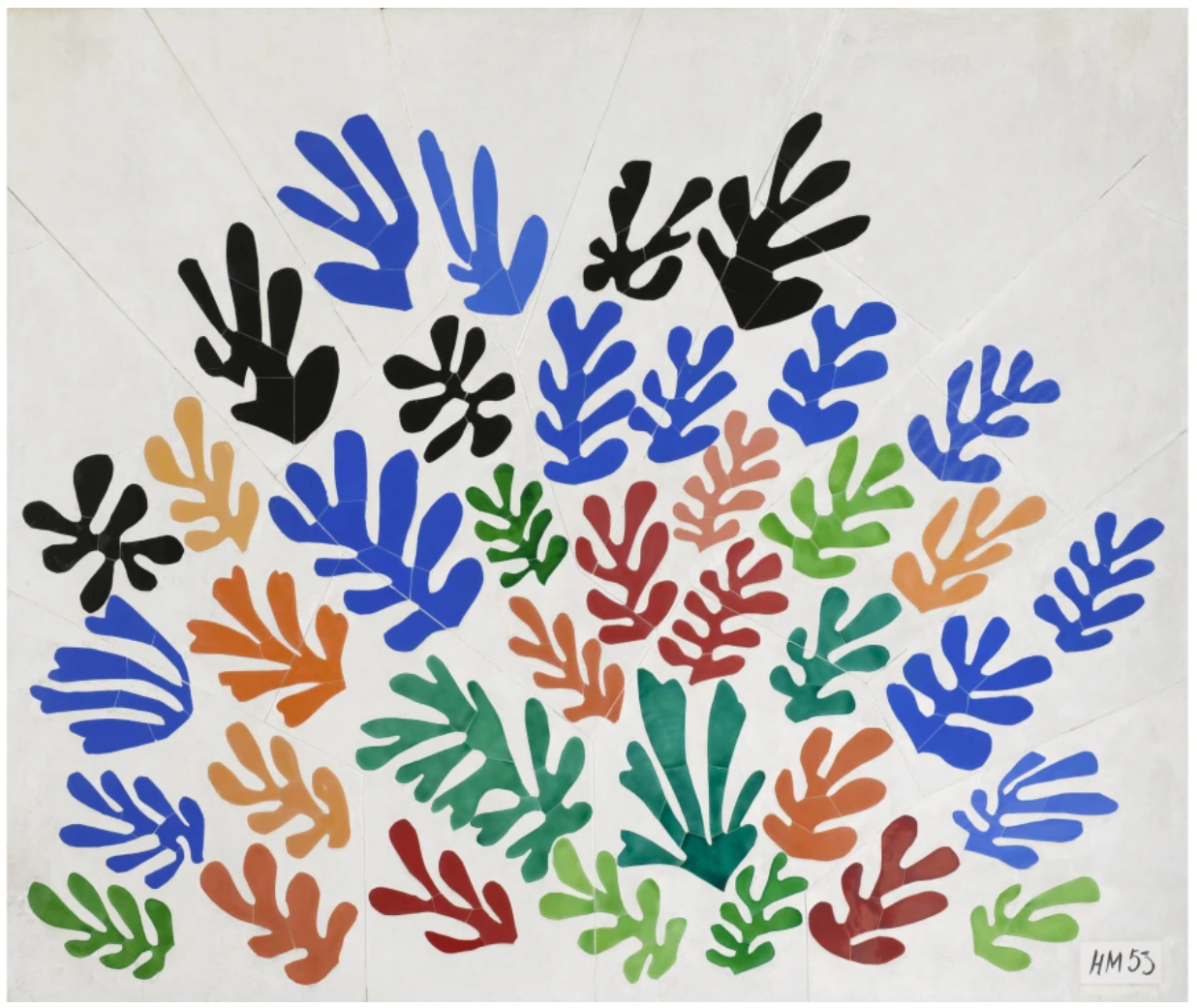
Henry Matisse, La Gerbe, 1953. Los Angeles County Museum of Art. Image © 2026 Museum Associates / LACMA.
Licensed by Art Resource, NY. Art © 2026 Succession H. Matisse / Artists Rights Society (ARS), New York
Flowers depicts four hibiscus blooms, hovering over a wiry, nearly abstract bed of long grass. In most Flowers paintings, Warhol printed the grass in electric green, returning some of the scene’s natural context to its artificially flattened representation. In these green paintings, the chromatic relationships of the flowers are largely in reference to the grass; each flower interacts individually with the background rather than with each other.
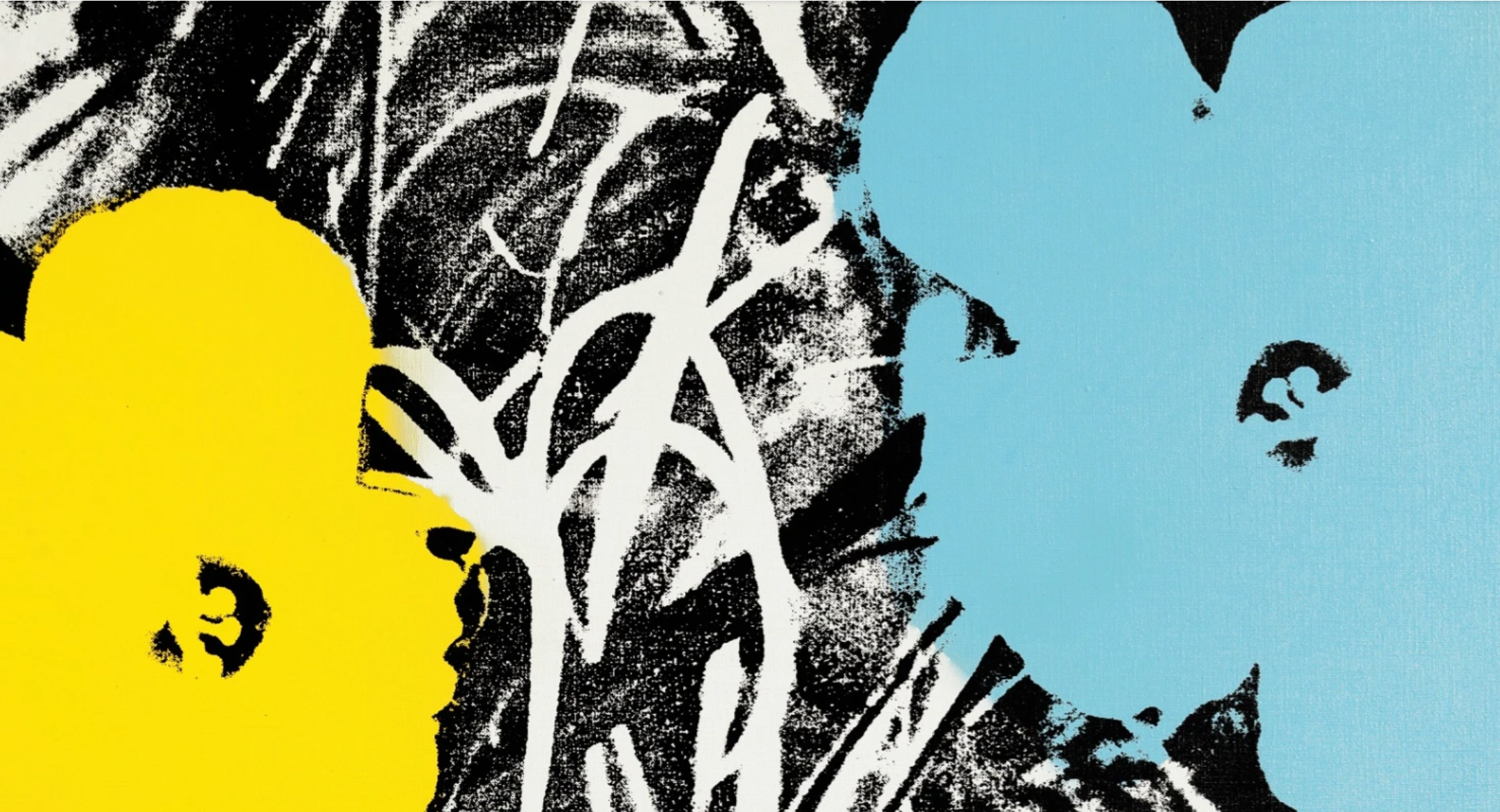
By stripping the grass of color, as Warhol does in Flowers, he leaves the flowers with nothing to interact with but each other; he accentuates this interaction with a reductive palette, printing three of the four flowers in true or near-true primary colors, creating an immense, magnetic visual tension, much like the effect engendered by Henri Matisse’s own La Gerbe. Resolving this chromatic tension is the purple blossom in the lower right corner. Situated between red and blue, both compositionally and chromatically, it anchors the canvas, offering a visual point of entry, rest, and exit as viewers navigate the painting. Through careful formal construction, Flowers emphasizes an often-overlooked aspect of Warhol’s practice: his virtuosic mastery of color.
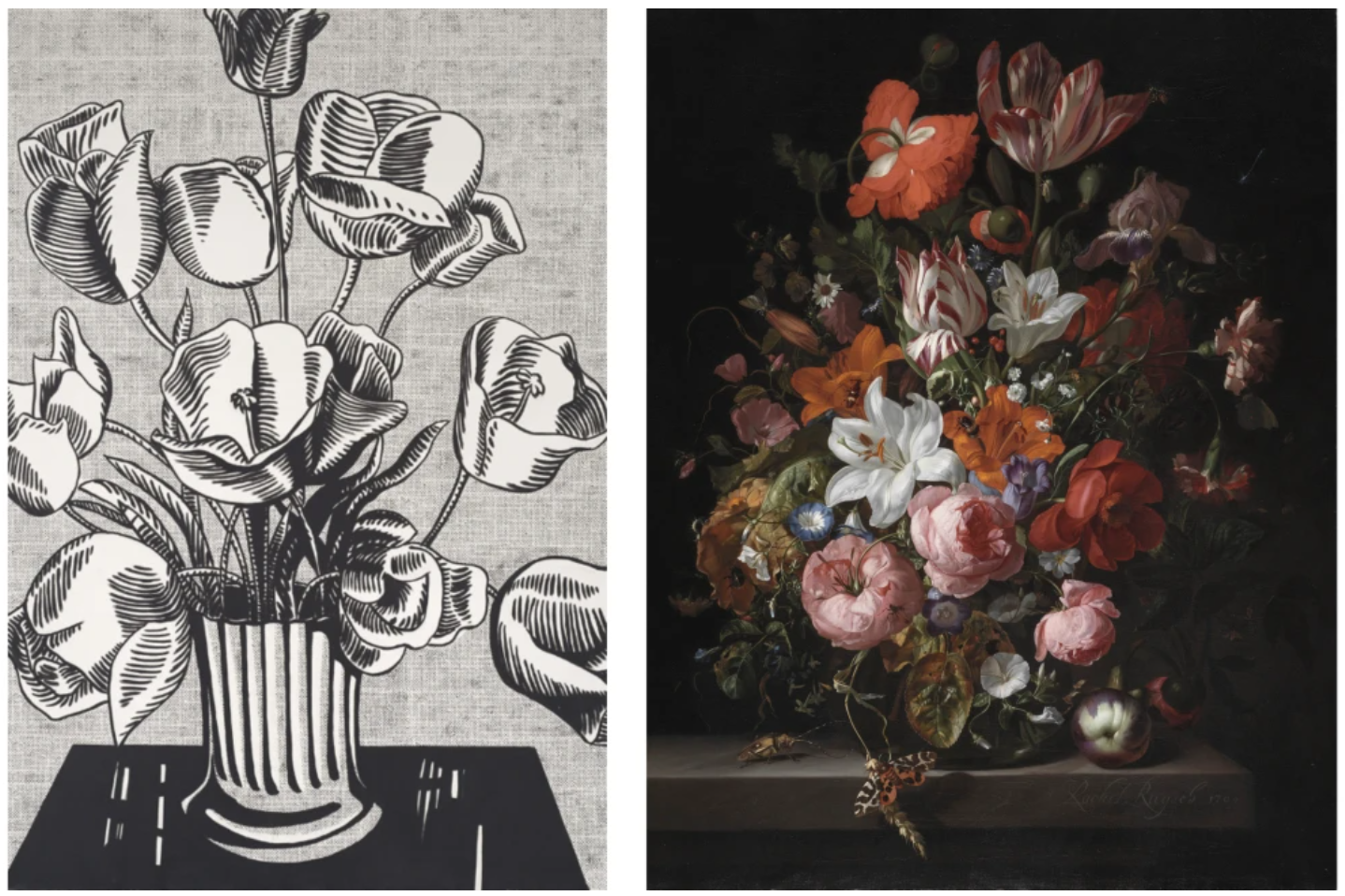
Left: Roy Lichtenstein, Black Flowers, 1961. The Broad, Los Angeles. Art © 2026 Estate of Roy Lichtenstein/DACS.
Right: Rachel Ruysch, Flowers in a glass vase, 1704. Detroit Institute of Arts. Image © Detroit Institute of Arts / Bridgeman Images
Warhol first approached flowers as a subject at the suggestion of the legendary Henry Geldzahler, then assistant curator at the Metropolitan Museum of Art, New York, who encouraged the artist to engage directly in the tradition of still-life painting. Taking Geldzahler’s advice, in 1964, Warhol began a significant departure from the morbidity of his previous subject matter, the shock photography of car crashes, suicides, and the electric chair that defined his Death and Disaster series. While Death and Disaster explores mass hysteria and the predatory practices of early press photography, the Flowers series interrogates the very art-historical canon he contributes to. Warhol’s Flowers updated the classic motif, pulling it into the contemporary era by imbuing it with his instantly recognizable pop vernacular: mechanically produced flatness and oversaturated color. However, beneath this vivid surface lies a subtle preoccupation with mortality—a theme that runs throughout Warhol’s entire oeuvre. As Warhol’s assistant Ronnie Cutrone would assert, “we all knew the dark side of those Flowers.” (Ronnie Cutrone quoted in: John O’Connor and Benjamin Liu, Unseen Warhol, New York, 1996, p. 61)
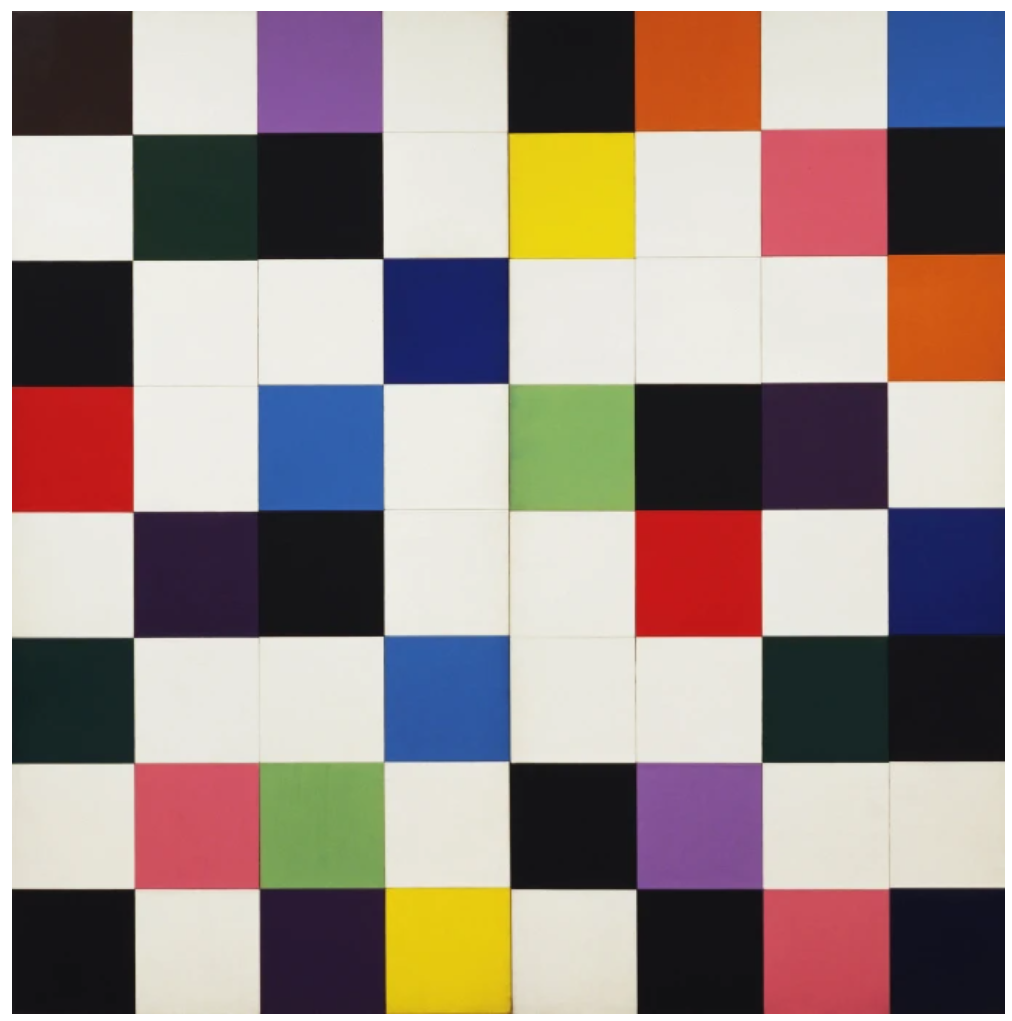
Ellsworth Kelly, Colors for a Large Wall, 1951. The Museum of Modern Art, New York.
Image © The Museum of Modern Art/Licensed by SCALA / Art Resource, NY. Art © 2026 Ellsworth Kelly
Measuring 48 by 48 inches, Flowers is the second-largest-scale Warhol made of the motif. In its enlarged canvas, the flowers are further decontextualized from their original imagery, becoming unnatural and even abstracted. Any natural sense of movement or depth is destroyed, creating “a virtual, painful stillness,” notes Heiner Bastian. “Since they seemingly only live on the surface, in the stasis of their coloration, they also initiate only the one metamorphosis which is a fundamental tenet of Warhol’s work: moments in a notion of transience.
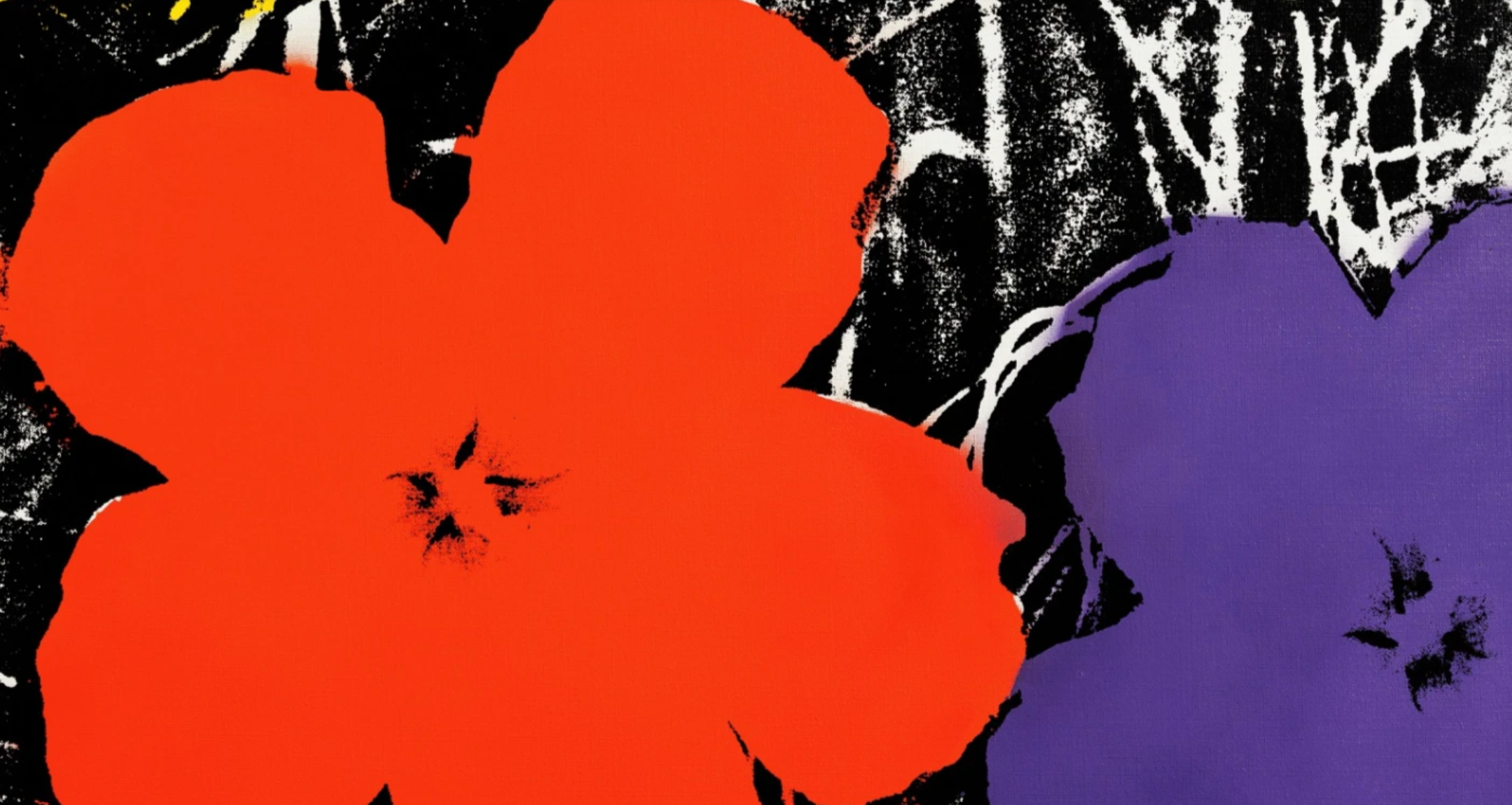
The flower pictures were for Everyman; they embodied Warhol’s power of concretization, the shortest possible route to stylization, both open to psychological interpretation and an ephemeral symbol.” (Heiner Bastian quoted in: Exh. Cat., Berlin, Neue Nationalgalerie, Andy Warhol: Retrospective, 2002, p. 33) Among the rare 48-inch Flowers executed against a white ground, the present work distills the essential tensions that made the series one of Warhol’s greatest achievements: beauty and artifice, seriality and individuality, decoration and death. Through its exceptional scale, brilliant color structure, and radical simplification, it stands as a definitive expression of the artist’s ability to transform the ordinary into an enduring icon.
Double Liz, 1963
Double Liz, 1963
Property from a Prestigious Private Collection
Sotheby’s New-York: 16 November 2026
Estimated: USD 8,000,000 – 12,000,000
Andy Warhol | Double Liz | The Now and Contemporary Evening Auction |
ANDY WARHOL (1928 – 1987)
Double Liz, 1963
Silkscreen ink and silver paint on canvas
53×83 inches (134.6 x 210.8 cm)
Andy Warhol’s Double Liz exudes the immortal beauty of Elizabeth Taylor in glistening silver, capturing the viewer with her seductive gaze. Executed in 1963, Double Liz is an exceptionally rare and important canvas, a larger-than-life tribute to her persona, oscillating with luminescence and radiating with celebrity. Belonging to a moment of extraordinary change in his artistic career, during which Warhol revolutionized the terms of popular visual culture in the early 1960s, the present work synthesizes the central preoccupations of his practice: an unprecedented interrogation into the agencies of mass media, celebrity, and tragedy.
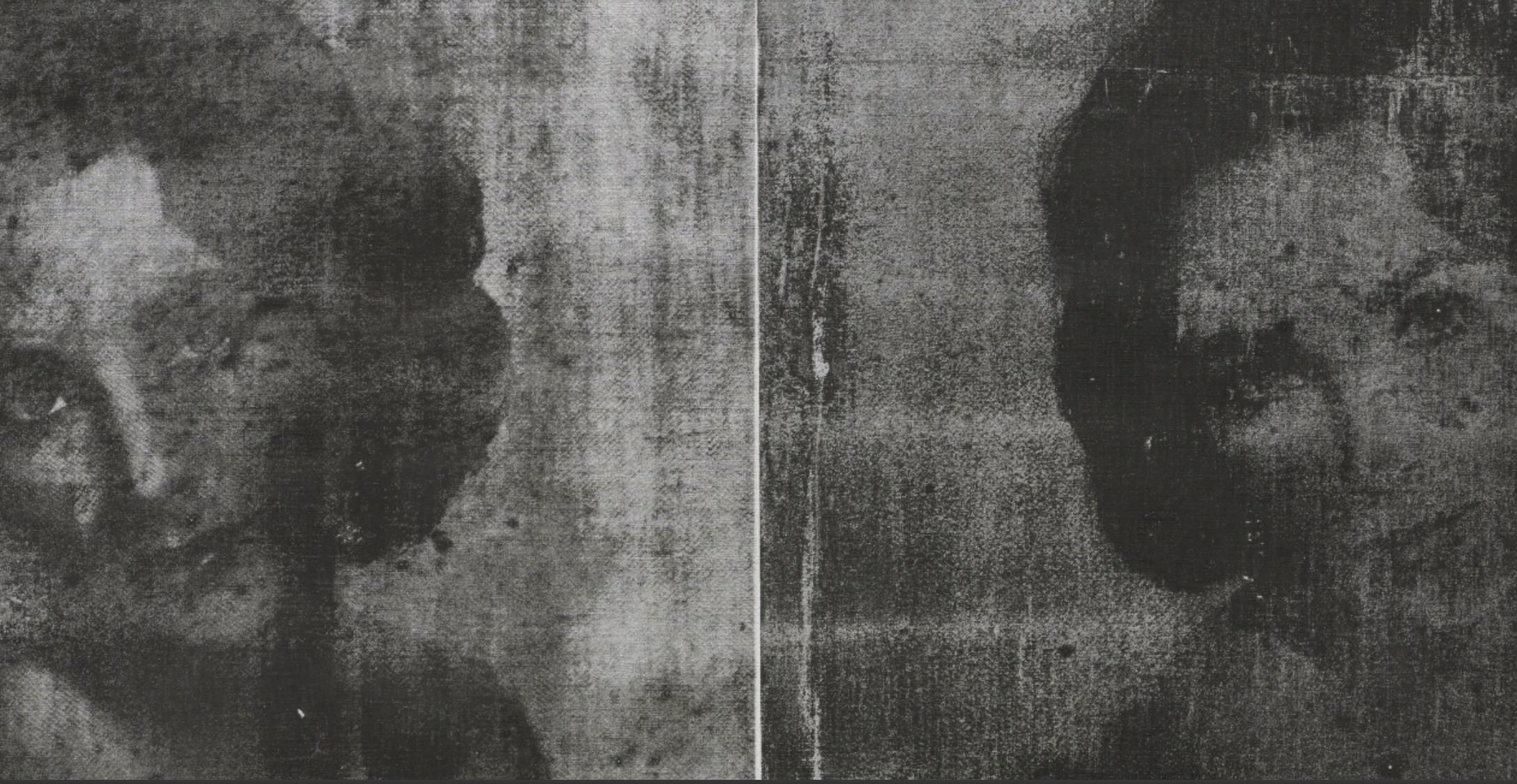
Double Liz occupies a pivotal position within Warhol’s early engagement with the iconography of popular culture; Liz embodied a global sensation of cinema and fame, catapulted to the status of an international cultural phenomenon through her starring role in Cleopatra in 1963. Warhol’s silver surface, reserved for only his most important muses, unmistakably recalls the silver screen, a connection accentuated by the subtle variations in the doubled images which create impressions of a flickering film reel. Warhol’s fascination with mechanical reproduction and cinematic imagery is distilled in the present work, crystallizing his lifelong investigation into the homogenizing mechanisms of mass media and popular culture.
“Ohhhh, Elizabeth Taylor, Ohhhhh. She’s so glamorous.”
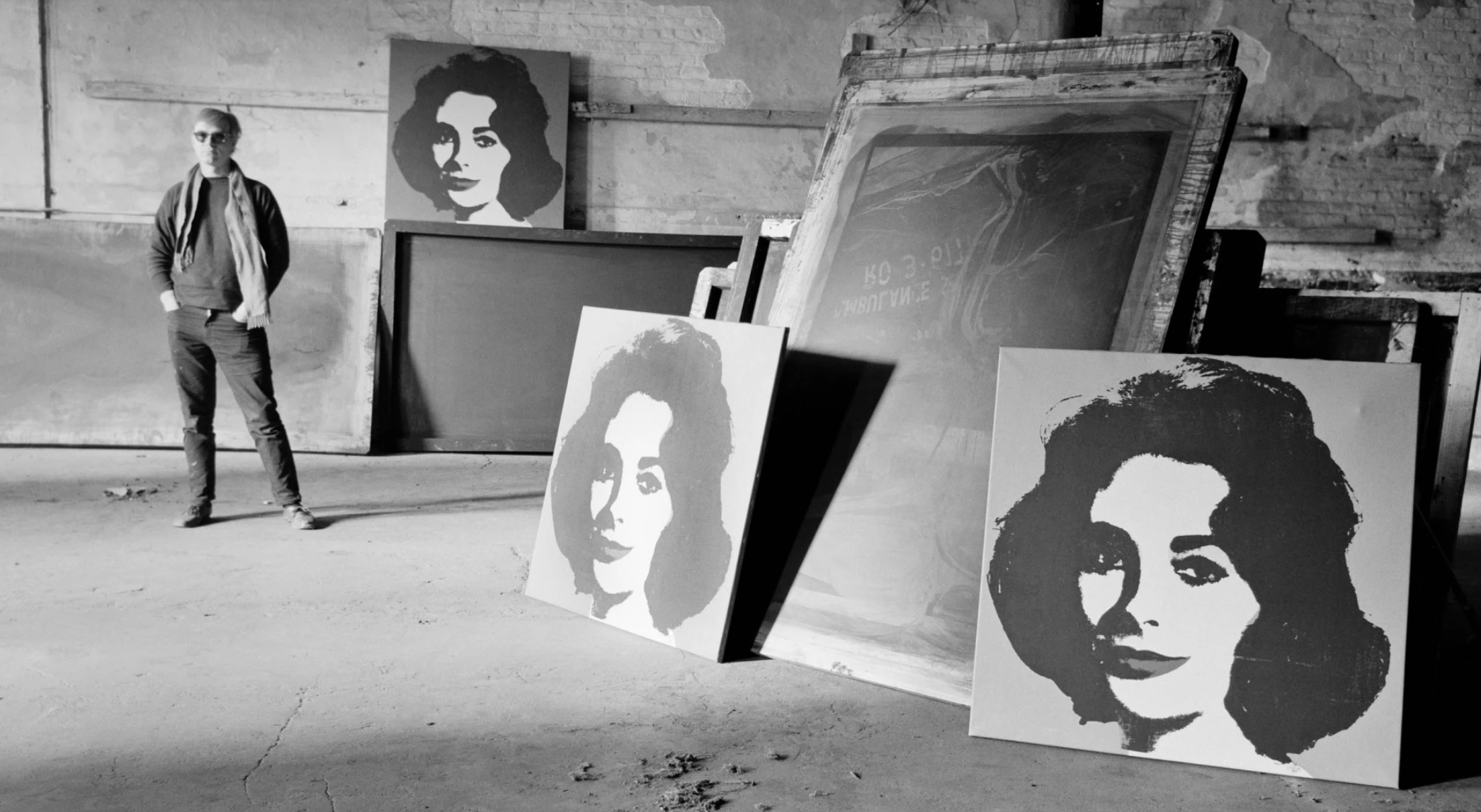
Andy Warhol in his studio, The Factory, with Liz works, 1964. Photo by Evelyn Hofer/Getty Images.
Art © 2026 Andy Warhol Foundation for the Visual Arts / Artists Rights Society (ARS), New York
Throughout his oeuvre, Warhol manifests Liz not only as a glowing celebrity but as a brand, constructed industrially and designed for mass consumption, not unlike Coca-Cola bottles or Campbell’s Soup Cans. Under Warhol’s subtle hand, Liz becomes a symbol of the manufacture of the Liz-product, and at the same time embodies the height of Hollywood glamor and the elusive fantasies of the cinema. The present work epitomizes the themes that would come to shape Warhol’s era-defining practice, reveling in the dichotomy of the superficiality and the power of images, the multiplicity of the self, and the paradox of singularity within American fame and mass culture.
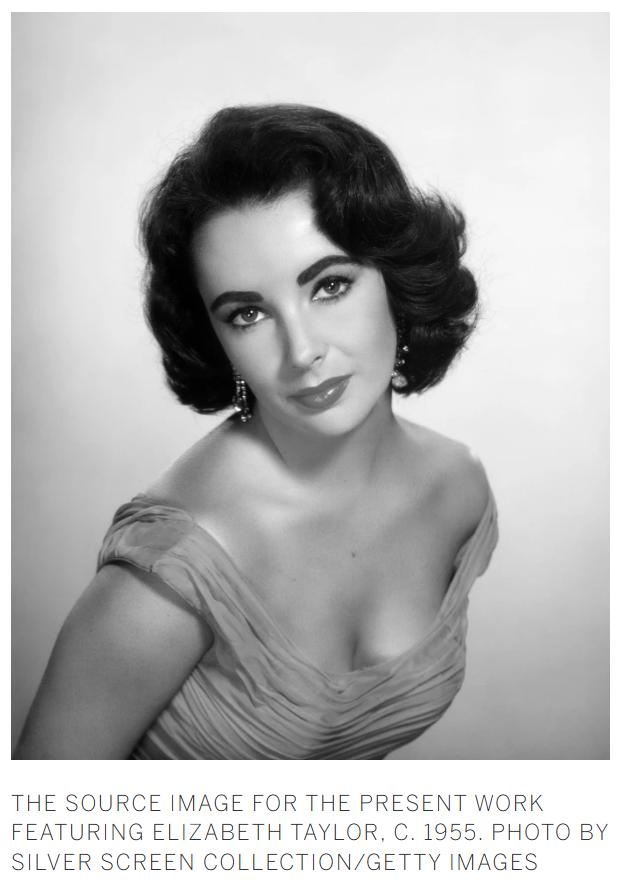
Warhol began his series of Liz Taylor portraits while she was suffering a near-fatal bout of pneumonia, undergoing an emergency tracheotomy which inspired global press coverage and mass panic, prompting prematurely distributed reports of her death and even printed obituaries. Just as Warhol began to paint Marilyn Monroe after her untimely suicide and Jackie Kennedy after her sudden widowhood, through Liz, Warhol explores the fusion of celebrity and vulnerability. Investigating tragedies that ignited unprecedented tempests of media coverage, through channels newly animated in the sudden dawn of publicized violence, Warhol investigates the processes of spectatorship and perception in a world newly flooded with images. In the present work, the metallic expanse of Warhol’s canvas accentuates the irrefutable mortality of the American celebrity, as Taylor’s radiant beauty is so exquisitely rendered both in perpetuity and vulnerability. Warhol, enamored by the glamor of celebrity and the drama of violence, imbues a mediumistic incandescence in his rendering of Liz, inciting the public tribulations and scandalous affairs which cemented her as a culturally authoritative figure of her era. The metallic shine of his canvas recalls the shimmer of ancient Byzantine icons, saints rendered in gleaming gold–but Warhol manifests the sanctified icons of the modern age, a cult of cinema and fame, the new divine intercessors of 1960s America. Throughout his oeuvre, he celebrates the divine glory of Liz by multiplying her image across canvases, repeating her almost in monotony until she is elevated into a measurelessness born of seriality, the image duplicating itself in perpetuity and rendering her presence as infinite.
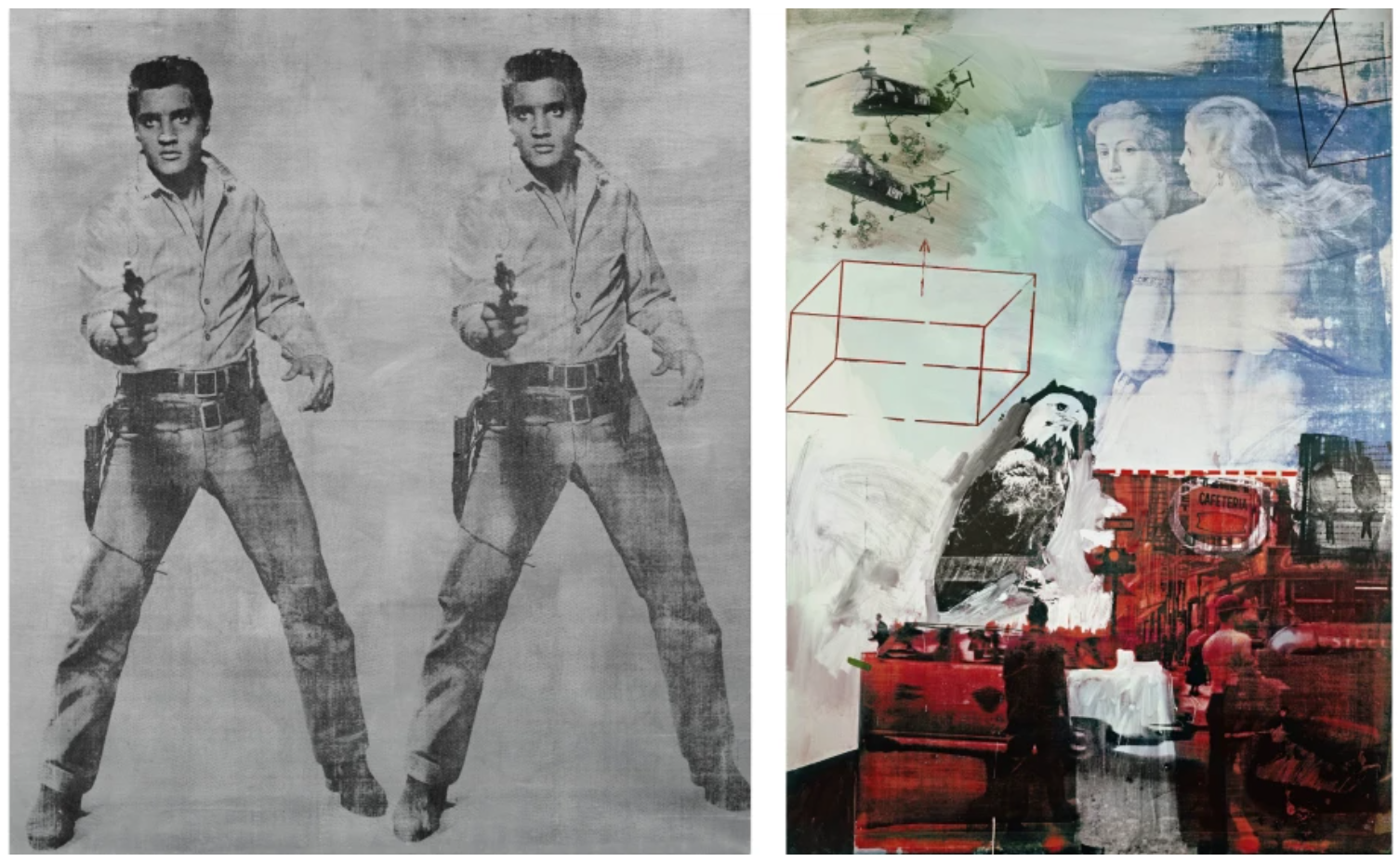
Left: Andy Warhol, Elvis 2 Times, 1963. Private Collection. Sold at Sotheby’s New York in May 2021 for $37 million. Art © 2026 Andy Warhol Foundation for the Visual Arts / Artists Rights Society (ARS), New York.
Right: Robert Rauschenberg, Tracer, 1964. Nelson-Atkins Museum of Art, Kansas City. Image © Bridgeman Images. Art © 2026 Robert Rauschenberg Foundation
In Liz, Warhol seems to discern and synthesize the personification of glamor, the projection of the American celebrity, and a crystallization of the beauty, pleasure, fame, and tragedy that 1960s America was realizing. Under these conditions, he reduces her legendary countenance to one more mass-produced image in his artistic lexicon. Here, Warhol references multiple forms of media to interrogate modern notions of fame; while conjuring the silver screen of the cinema, endowing Hollywood consumption with a luminous silver veil, he also recalls black-and-white tabloid newspapers which broadcast and enshrined Liz’s persona in popular culture.
Silver Masterworks on Warhol’s Posthumously Discovered Screen
Testament to the extraordinary rarity and importance of these early silver works found in the artist’s studio after his death, the sister work is held in the Daros Collection, Switzerland. On this roll of canvas, alongside the two Double Liz pictures was his Elvis 4 Times [Studio Type], which is also held in the Daros Collection, and National Velvet, which is held in the San Francisco Museum of Modern Art. Furthermore, the present work was formerly part of the Founding Collection of The Andy Warhol Museum in Pittsburgh.
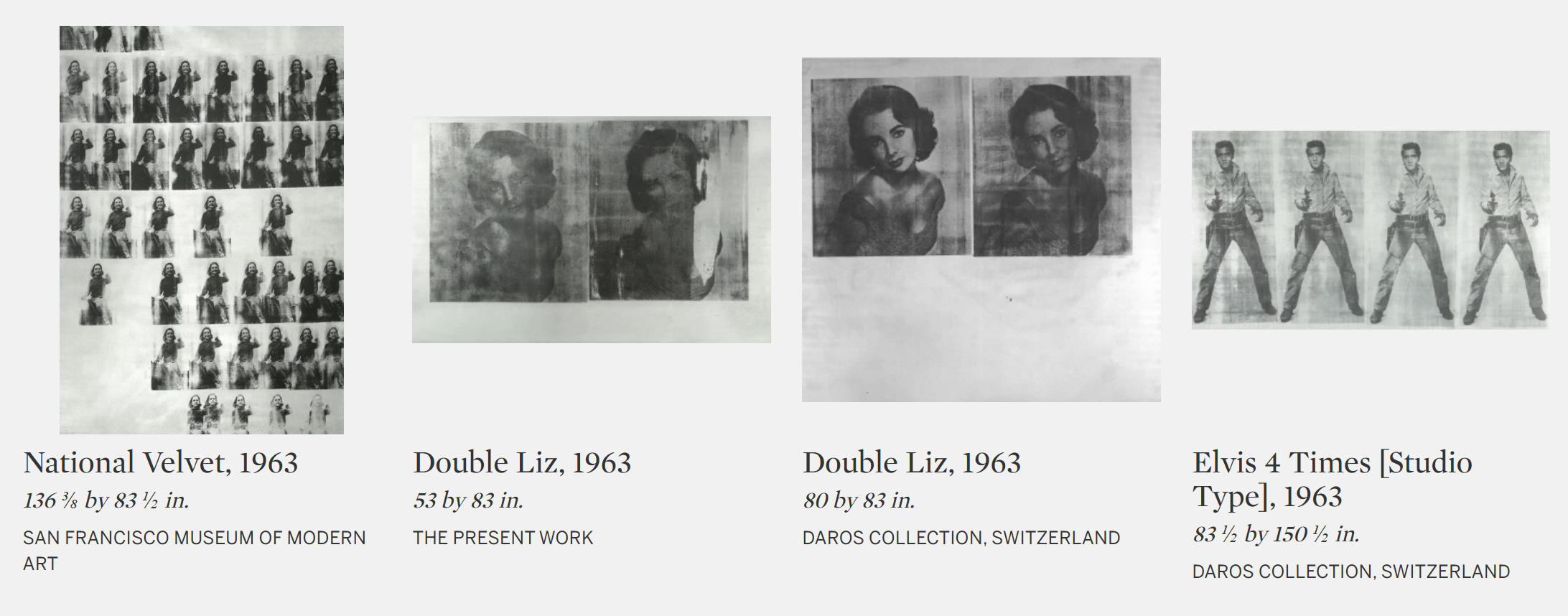
All Art © 2026 Andy Warhol Foundation for the Visual Arts / Artists Rights Society (ARS), New York
The present work’s source material, an MGM publicity still, further articulates Liz as neither film character nor herself, but a third identity, produced within their legendary publicity apparatus; the photograph is both an image of Liz and an artifact of the Hollywood studio system that fashioned her public image. He appears to welcome the many mask-like guises that at once mystify, propagate, and perhaps define Liz as child star, tragic heroine, sex symbol, and Hollywood product. In the present work, Warhol embraces the notion of the image as both superficial and all-powerful, immortalizing the double portrait of Liz, larger than life and doused in a radiant silver shine.
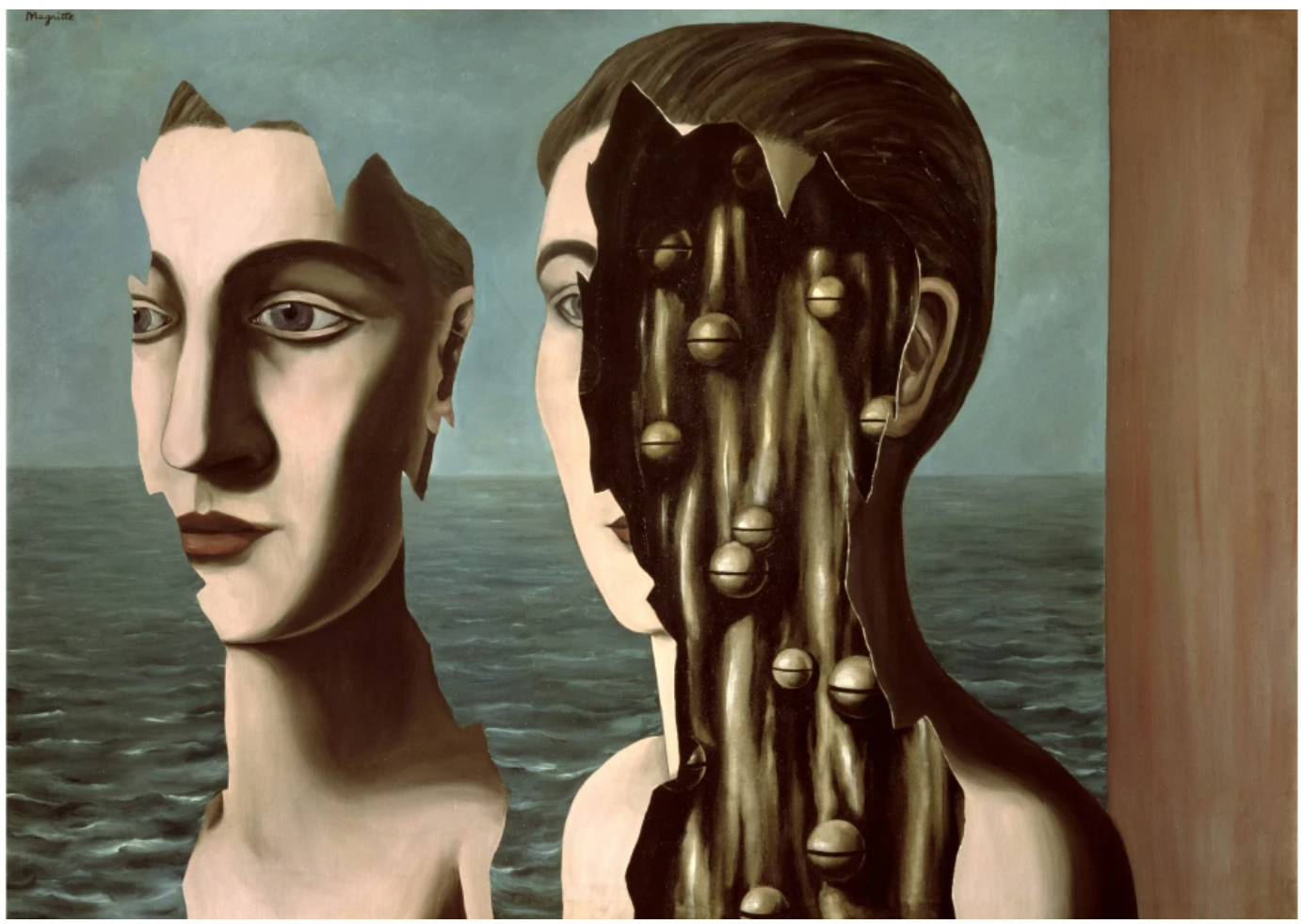
René Magritte, Le Double Secret, 1927. Musee National d’Art Moderne, Centre Pompidou, Paris.
Image © Bridgeman Images. Art © 2026 C. Herscovici, Brussels / Artists Rights Society (ARS), New York
Warhol’s genius comes in his ability to both convey the seduction of the image and its superficiality, the doubled image refracting the two-fold nature of Liz’s very public life, the cult of celebrity and the shadow of tragedy.Double Liz, in its repetition of imagery, elucidates further commentary on the nature of American fame, invoking a bifurcated conception of the self, juxtaposing the carefully constructed public image and private individual. The doubled portrait, shifting across two atmospheric black screens, seems to speak to identity predicated on doubleness and the multiplicities of Liz, while also exemplifying Warhol’s themes of repetition and process. Warhol leveled his silkscreen works at subjects he perceived as the most important concerns of contemporary life.
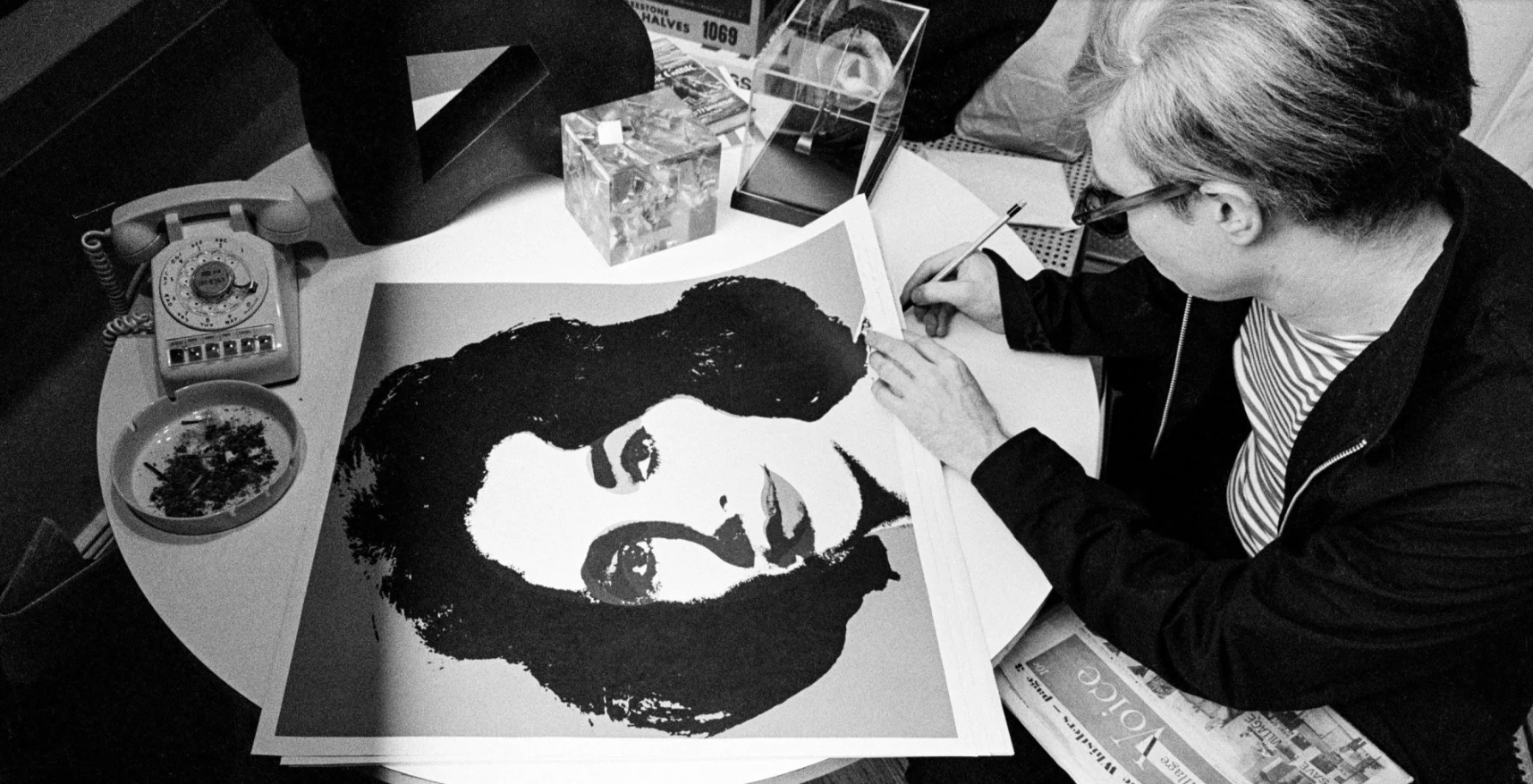
Andy Warhol signs Elizabeth Taylor prints at the Leo Castelli Gallery, New York, 1965.
Photo © Bob Adelman. Art © 2026 Andy Warhol Foundation for the Visual Arts / Artists Rights Society (ARS), New York
His exceptional aptitude to harness the most potent images of his time defines him as the quintessential twentieth-century history painter. While Warhol, in a frenetic stream of artistic invention, persistently painted images of Marilyn, Jackie, Liz, and Elvis, the present work is one of only two Double Liz works. Both paintings were executed on the same roll of silver-painted canvas and discovered in the artist’s studio after his untimely death in 1987. Testament to the extraordinary rarity and importance of the early Liz works, the sister work to the present one is held in the Daros Collection, Switzerland.
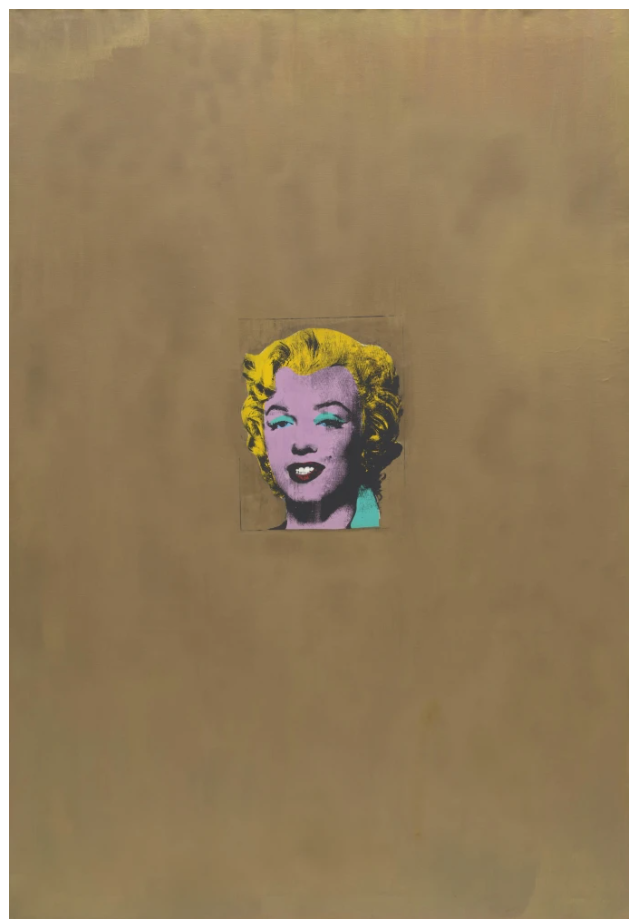
Andy Warhol, Gold Marilyn Monroe, 1962. The Museum of Modern Art, New York. Image © The Museum of Modern Art/Licensed by SCALA / Art Resource, NY. Art © 2026 Andy Warhol Foundation for the Visual Arts / Artists Rights Society (ARS), New York
Warhol, with his revolutionary silkscreen, forged an iconic visual vocabulary through which to examine the instability of modern fame, distilling the vagaries and contradictions of new-age celebrity. Through the luminous Double Liz, he not only captures the ironically dark essence of twentieth-century glamour and fame, but also belays some of the growing fame he personally was experiencing. Poised at the intersection of Hollywood mythology and Warhol’s own burgeoning celebrity, Double Liz encapsulates a convergence of public icon and private identification, and a crystallization of the tensions between image and identity, adoration and alienation, that lay at the heart of Warhol’s artistic vision and would come to define his practice. Double Liz epitomizes Warhol’s artistic language, standing as a seminal manifestation of his fascination with celebrity, beauty, and the mediated image.
Campbell’s Soup Can (Turkey Noodle), 1962
Campbell’s Soup Can (Turkey Noodle), 1962
The Collection of Antonio Homem Sonnabend
Christie’s New-York: 19 November 2026
Estimated: USD 6,000,000 – 8,000,000
MINIMUM PRICE GUARANTEE
ANDY WARHOL (1928-1987), Campbell’s Soup Can (Turkey Noodle) | Christie’s
ANDY WARHOL (1928-1987)
Campbell’s Soup Can (Turkey Noodle), 1962
Casein and graphite on linen
20×16 inches (50.8 x 40.6 cm)
Signed and dated ‘Andy Warhol 62’ (on the reverse)
In July 1962 an exhibition opened at the Ferus Gallery in Los Angeles that would change the course of art history. With his striking paintings of Campbell’s Soup cans, Andy Warhol launched Pop Art into the public consciousness, and it quickly became one of the defining art movements of the postwar period.
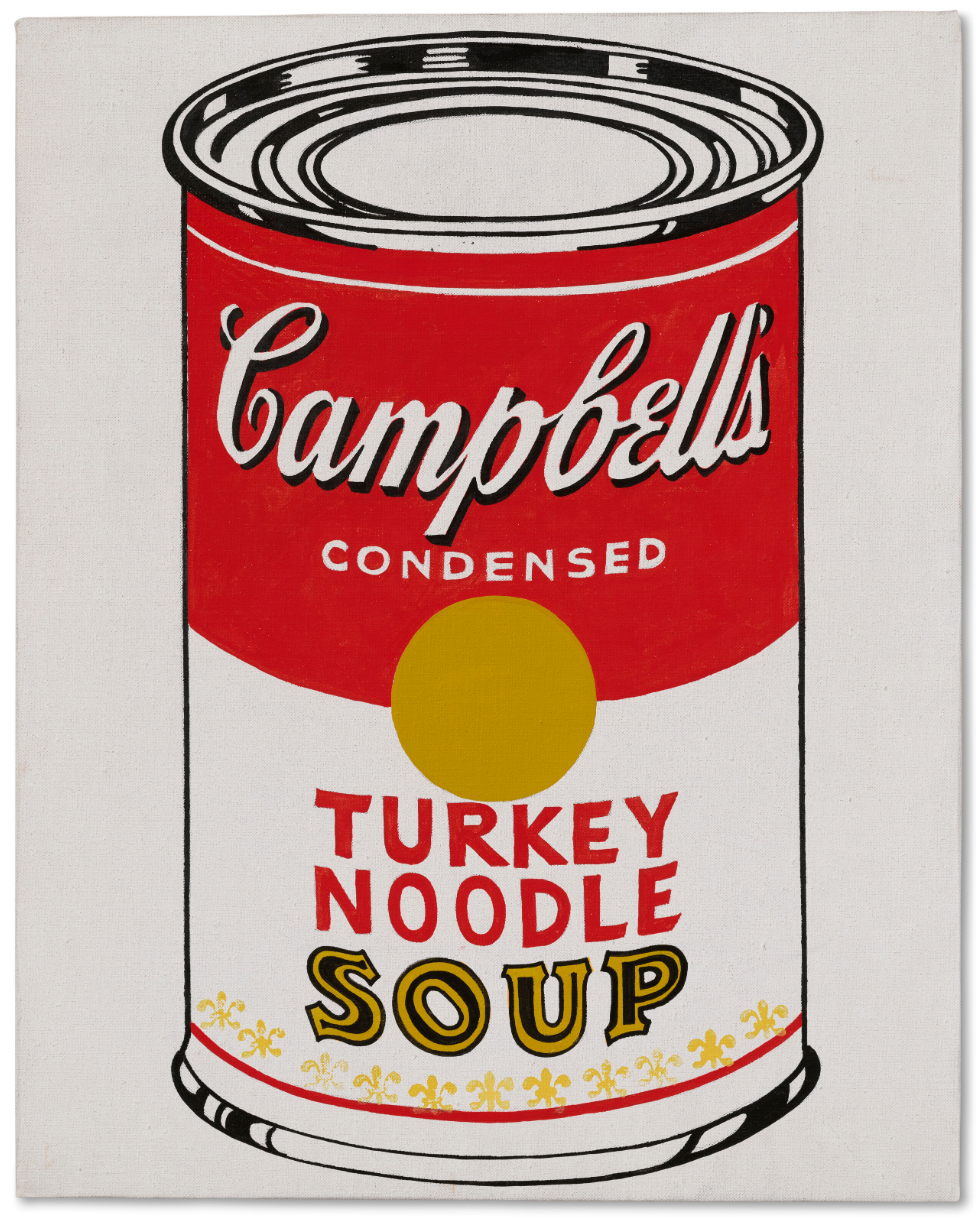
Also painted in 1962, Campbell’s Soup Can (Turkey Noodle) belongs to this groundbreaking body of work and is one of the earliest and most important examples of early Pop Art. Gifted to Warhol’s friend, the photographer Edward Wallowitch, the work entered Ileana and Michael Sonnabend’s Collection and was then on long-term loan to the Baltimore Museum of Art. Most recently, it has been on display at The Sonnabend Collection Mantova and its sale will support the Sonnabend Collection Foundation.
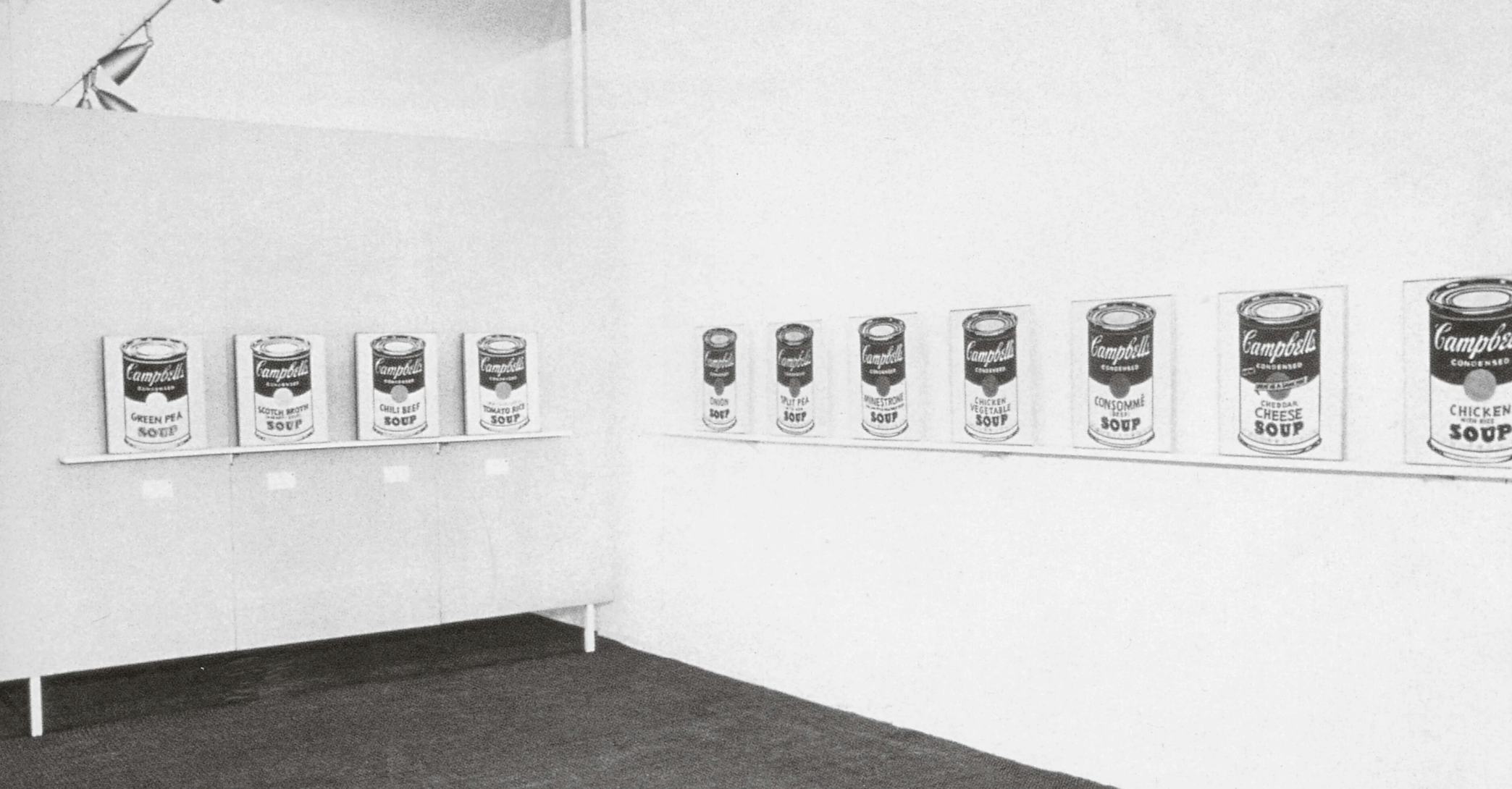
Installation view, Andy Warhol: 32 Campbell’s Soup Cans, Ferus Gallery, Los Angeles, 1962. Photo: Seymour Rosen, Los Angeles. Artwork: © 2026 The Andy Warhol Foundation for the Visual Arts, Inc. / Licensed by Artists Rights Society (ARS), New York.
The iconic form of the soup can fills the picture plane in this powerful portrayal of Pop. Vibrant color, graphic impact, and a rare hand painted quality all combine to create a palpable sense of the artist’s hand in this particular work. To create the image, Warhol cut out elements of the original source image from some of Campbell’s corporate stationery. He then taped them to a piece of tracing paper and projected that image onto the canvas.
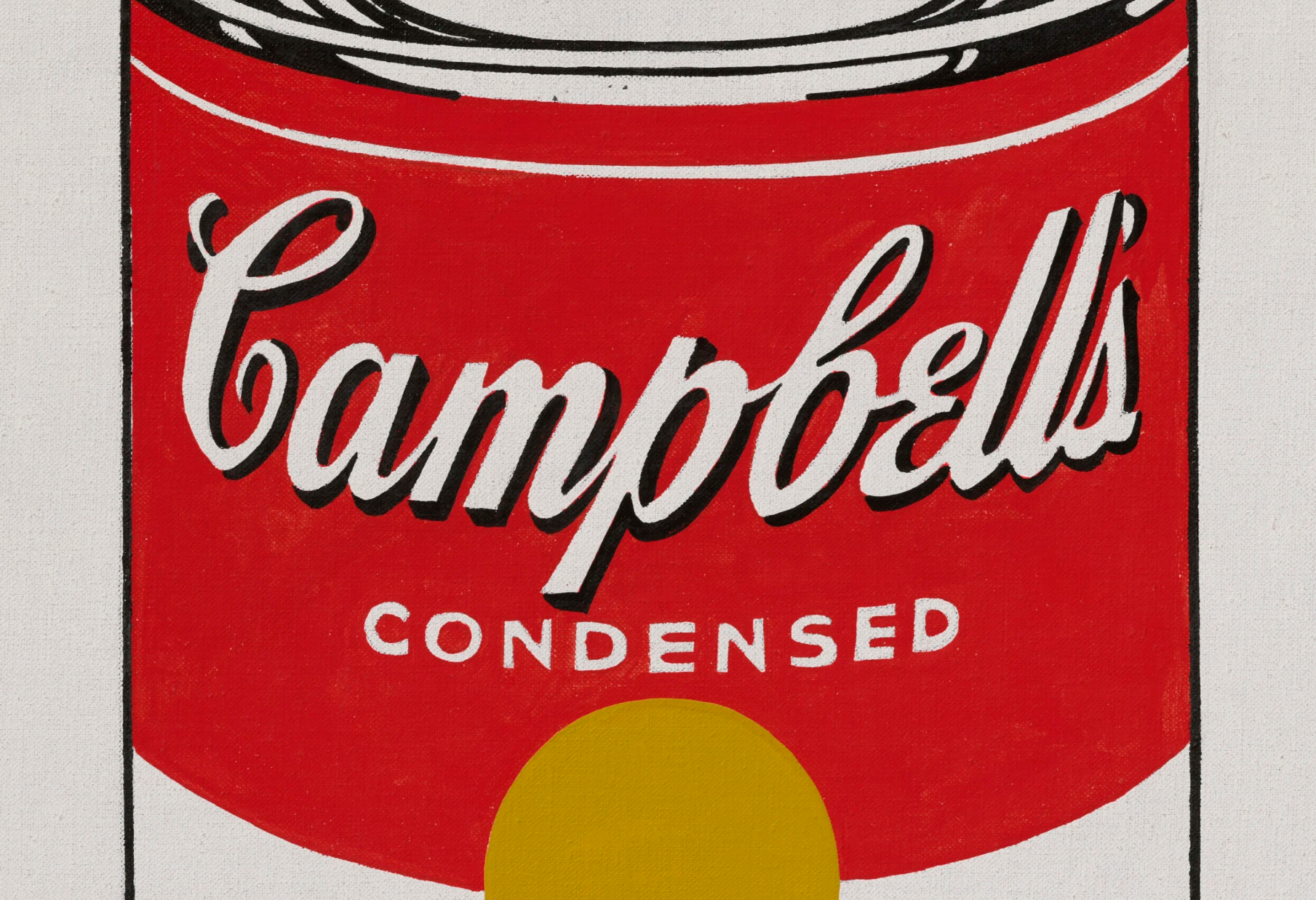
Once the can had been projected and painted onto the canvas, the individual variety name—in the case of the present work, Turkey Noodle Soup—would have been hand painted onto the surface. Finally, the gold fleurs-de-lis motif along the lower edge of the can was probably applied one-by-one using an improvised rubber stamp. These traces of the artist’s hand distinguish the present work from Warhol’s later silkscreened canvases and, as such, are an important part of his artistic evolution.
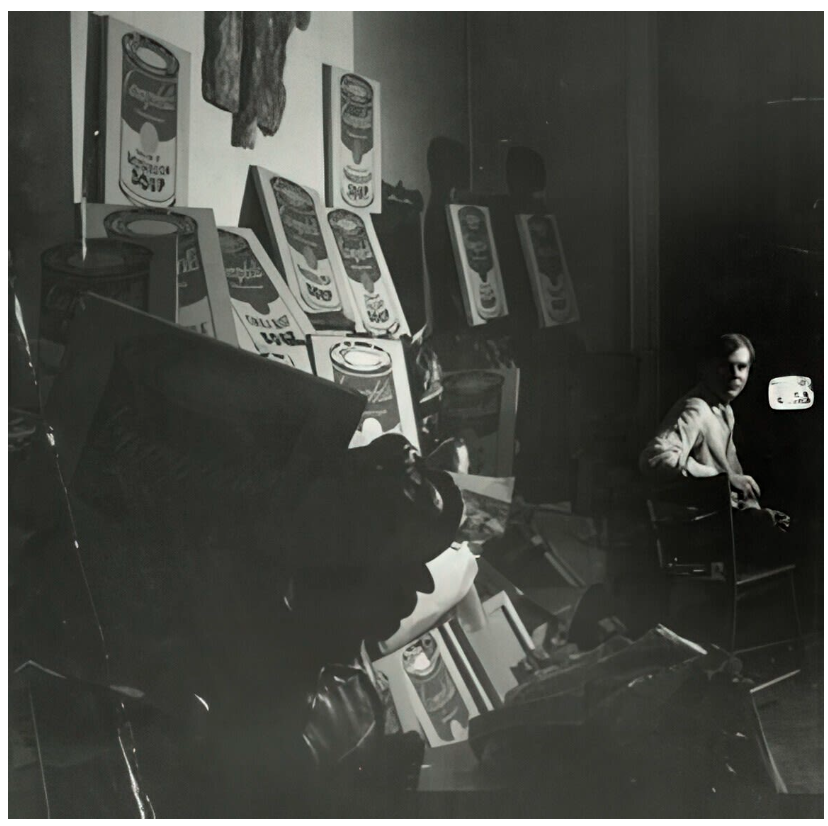
Andy Warhol at his Lexington Avenue studio, New York, 1962. Photographer unknown.
Artwork: © 2026 The Andy Warhol Foundation for the Visual Arts, Inc. / Licensed by Artists Rights Society (ARS).
When asked why he chose Campbell’s Soup as a suitable subject for his art, Warhol answered “Because I used to drink it. I used to have the same lunch every day, for twenty years, I guess, the same thing over and over again. Someone said my life has dominated me; I liked that idea” (A. Warhol, quoted in I’ll Be Your Mirror: The Selected Andy Warhol Interviews, p. 18). Like his later Coca-Cola bottles, Warhol deliberately took a product which was readily available to everyone to enshrine in his new form of high art. The constancy of the Campbell’s Soup can design was the perfect vehicle to explore the American desire for an easily definable identity. Embedded within the American consciousness, the familiar image of the Campbell’s soup can conveyed a reassuring sense of stability and belonging, much as his Hollywood celebrities embodied idealized versions of American identity.
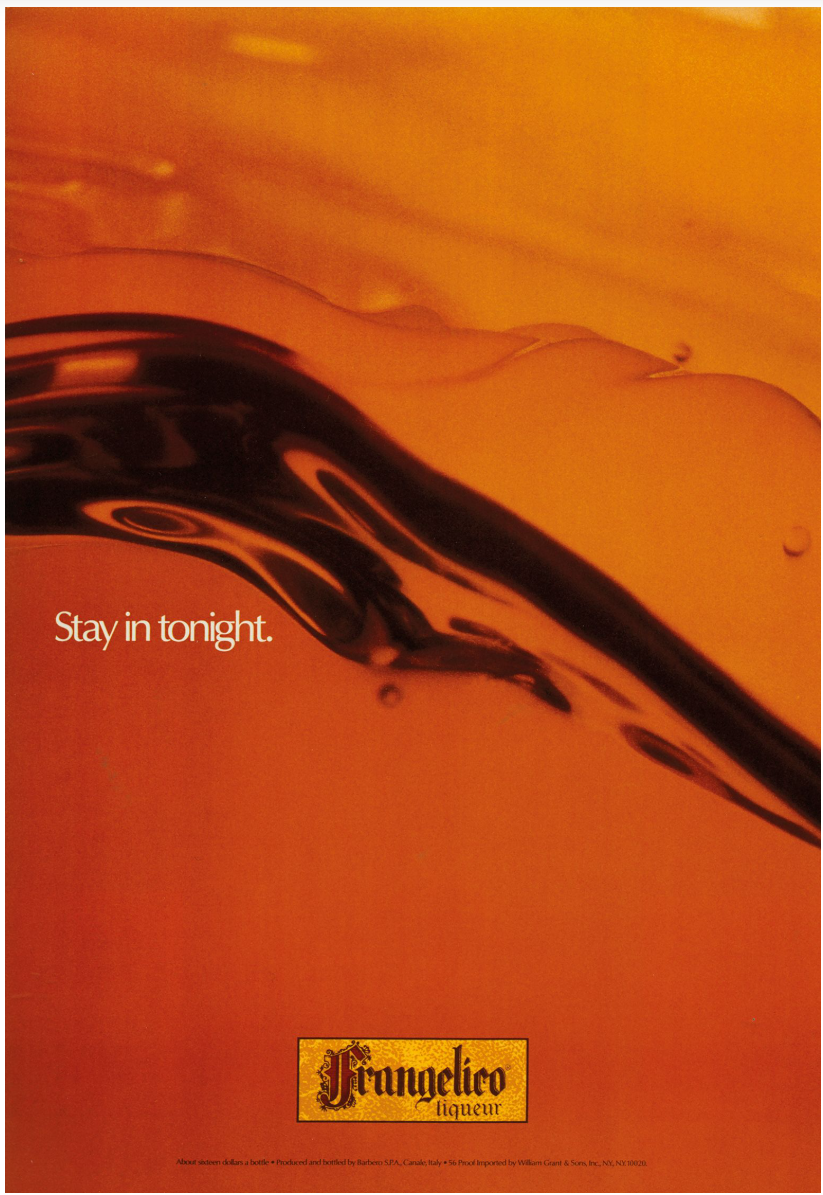
Jeff Koons, Stay in Tonight, 1986. © Jeff Koons.
At the time Warhol produced his Campbell’s Soup Cans, the company was the market leader—four out of every five soups sold in grocery stores across the nation were manufactured by Campbell’s. Like Coca-Cola, the Campbell’s brand was a powerhouse. And just like many Americans, Andy Warhol’s mother served him soup for lunch every day as a child. Warhol had a personal connection with Campbell’s soup that—coincidentally—was also shared by millions of Americans. If the Campbell’s soup brand could convey the warmth of childhood and provide a sort of nostalgic wholesomeness, it should also be noted that the product was factory-produced, each can a homogenized replica of the can that preceded it. This must have appealed to Warhol, who himself famously declared “I want to be a machine, and I feel that whatever I do and do machine-like is what I want to do.” (A. Warhol, quoted in Ibid., p. 26).
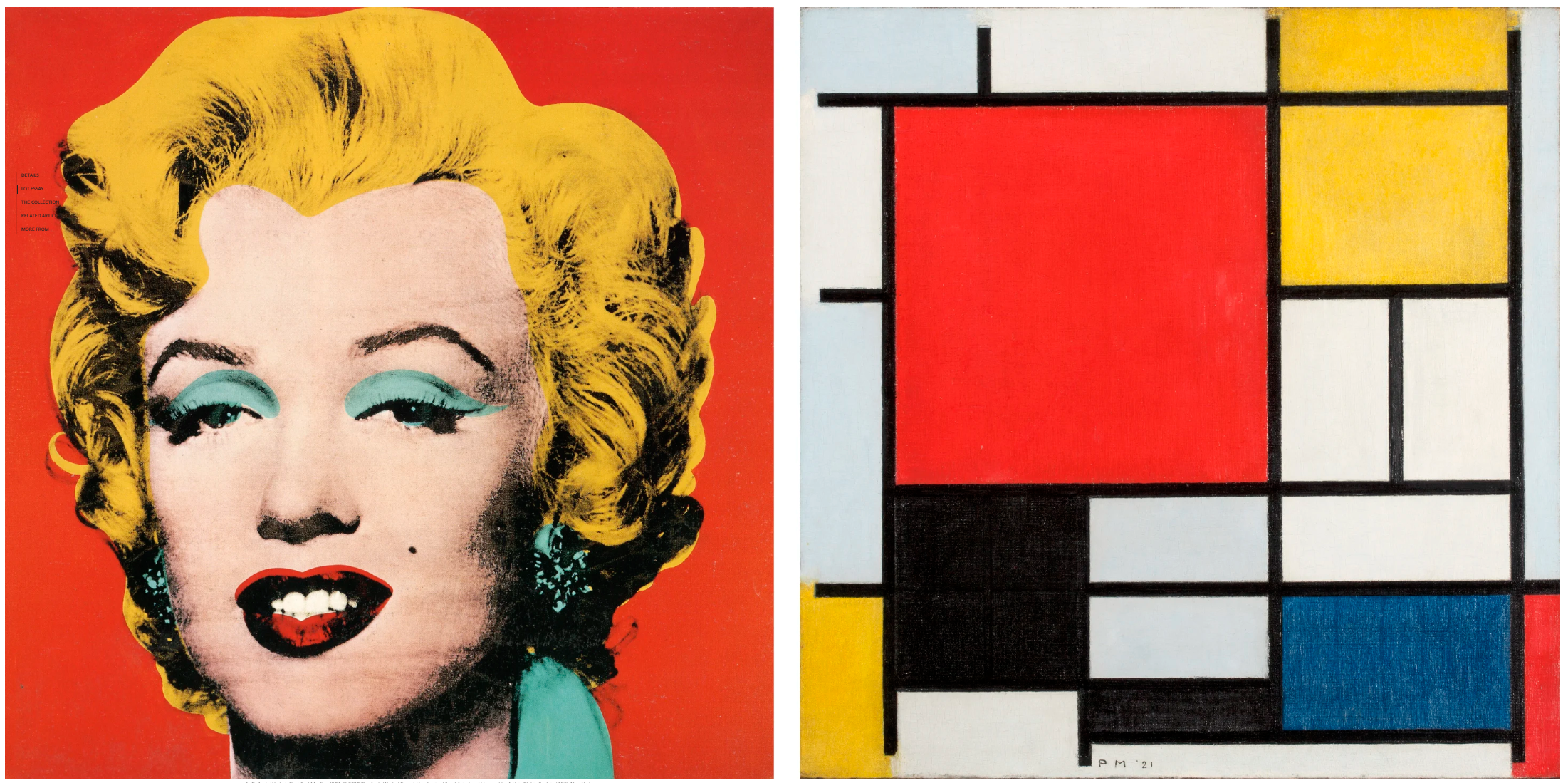
Left: Andy Warhol, Shot Red Marilyn, 1964. © 2026 The Andy Warhol Foundation for the Visual Arts, Inc. / Licensed by Artists Rights Society (ARS), New York.
Right: Piet Mondrian, Composition with large red plane, yellow, black, gray and blue, 1921. Haags Gemeentemuseum, The Hague. © 2026 Mondrian / Holtzman Trust.
Warhol’s soup cans quickly entered the postwar art historical canon, capturing the attention of critics, fellow artists, and the general public; even Marcel Duchamp recognized their impact. “If a man takes 50 Campbell’s soup cans and puts them on canvas,” he said, “it is not the retinal image that concerns us. What interests us is the concept that he wants to put 50 Campbell’s soup cans on a canvas” (M. Duchamp, quoted in R. Crone, Andy Warhol, New York, 1970, p. 22). Taking a household product and transforming it into high art showed Warhol’s insightful and rebellious attitude towards painting. He began to undermine the traditional genre of still life by choosing an unorthodox subject matter and an informal composition, rendering it in uncomplicated, flat areas of shading and dispassionate lines as if it were a mass-produced image. Showing Warhol in an early, transitional stage, this painting marks a crucial moment in the history of art. As the Metropolitan Museum of Art curator Henry Geldzahler would recall, Warhol’s work from this time felt as revolutionary as Duchamp’s once had. “The Campbell’s Soup Can was the Nude Descending a Staircase of pop art. Here was an image that became an overnight rallying point for the sympathetic and the bane of the hostile. Warhol captured the imagination of the media and the public as had no other artist of his generation. Andy was pop and pop was Andy” (H. Geldzahler, quoted in V. Bockris, The Life and Death of Andy Warhol, London, 1998, pp. 159-60).
The Scream (After Munch), 1984
The Scream (After Munch), 1984
Vision: The Extraordinary Collection of Theodore and Ruth Baum
Sotheby’s New-York: 16 November 2026
Estimated: USD 4,000,000 – 6,000,000
Andy Warhol | The Scream (After Munch) | Vision: The Extraordinary
ANDY WARHOL (1928 – 1987)
The Scream (After Munch), 1984
Acrylic and silkscreen ink on canvas
52×38 inches (132.5 x 96.5 cm)
Signed and dated 84 (on the overlap)
Distinguished within exceptionally rare series the canvas that most closely echoes the coloration of Munch’s original painting, Andy Warhol’s The Scream (After Munch) blends two artists whose public identities appear radically different in a dialogue about legacy, creativity, and emotional expression. Munch has long been regarded as the archetypal introspective artist, exploring private experiences of loneliness and psychological distress, while Warhol fashioned as the consummate observer of fame and depersonalized surfaces. In this extraordinarily rare canvas, executed in 1984, the two Warhol’s sensibilities converge.

The Baum Residence, Southampton. Left: Lot 7, Warhol. Photo © Anastassios Mentis. Art © 2026 The Andy Warhol Foundation for the Visual Arts, Inc. / Licensed by Artists Rights Society (ARS), New York. © 2026 Al Held Foundation, Inc. / Licensed by ARS, New York, NY
Translating Munch’s most as emotionally charged image into fluorescent color and silkscreened layers, Warhol created a new Scream for a mass-media audience—repackaging a motif of existential anxiety into a seductive, reproducible, unmistakably Pop icon. Warhol’s fascination with Munch developed over two decades. When the Norwegian art historian Per Hovdenakk visited Warhol’s New York City studio in 1963, the artist expressed a particular admiration for Munch’s experimental himself printmaking. That interest deepened during a 1973 trip to Oslo, when Warhol visited the Munch Museum and began to collect the Norwegian artist’s prints. For a twentieth-century American visionary captivated by celebrity images, the nineteenth-century Norwegian artist offered a revelation: an art that expressed intense and specific emotions but still resonated with audiences across time and place.
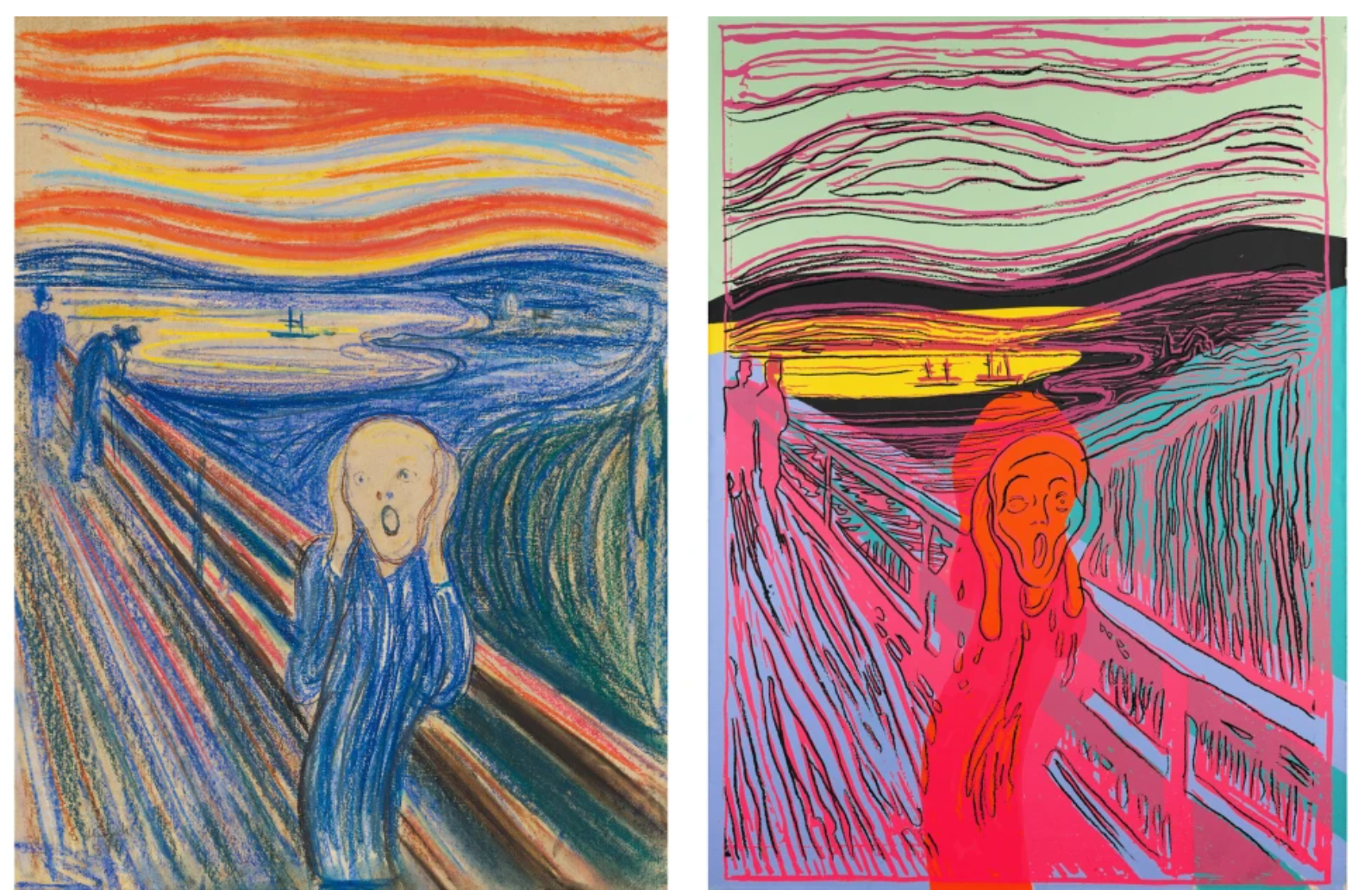
Left: Edvard Munch, The Scream, 1985, Private Collection. Sold at Sotheby’s New York in May 2012 for $119.9 million. Art © 2026 The Munch Museum / The Munch-Ellingsen Group / Artists Rights Society (ARS), New York. Right: Andy Warhol, The Scream (After Munch), 1984. Private Collection. Sold at Sotheby’s London in September 2025 for $8.8 million. Art © 2026 Andy Warhol Foundation for the Visual Arts / Artists Rights Society (ARS), New York
The immediate catalyst for The Scream (After Munch) was a 1982 exhibition at the newly opened New York location of Galleri Bellman, owned by Norwegian dealer Tor Uppstrom. The show assembled 126 paintings and prints by Munch, including a rare lithograph of The Scream lent by the Munch Museum. After Warhol repeatedly visited the exhibition, Uppstrom commissioned him to create fifteen paintings after four Munch prints: Madonna, Self-Portrait with Skeleton Arm, The Brooch (Eva Mudocci), and The Scream. Warhol opted to recreate the lithograph of The Scream instead of the painting—the already reproduced version of an image destined to saturate modern culture. Munch conceived The Scream as part of his Frieze of Life, an 1890s cycle of works that he imagined as a secular altarpiece possessing the gravity of sacred art. “One should no longer paint interiors with men reading and women knitting,” he wrote. “They must be living individuals who feel, suffer, love, and breathe.” (Edvard Munch quoted in: Exh. Cat., Ishøj, Denmark, ARKEN Museum of Modern Art (and traveling), Echoes of the Scream, 2001, p. 14) The Scream emerged from a psychological experience Munch recorded in an 1895 edition of the work.
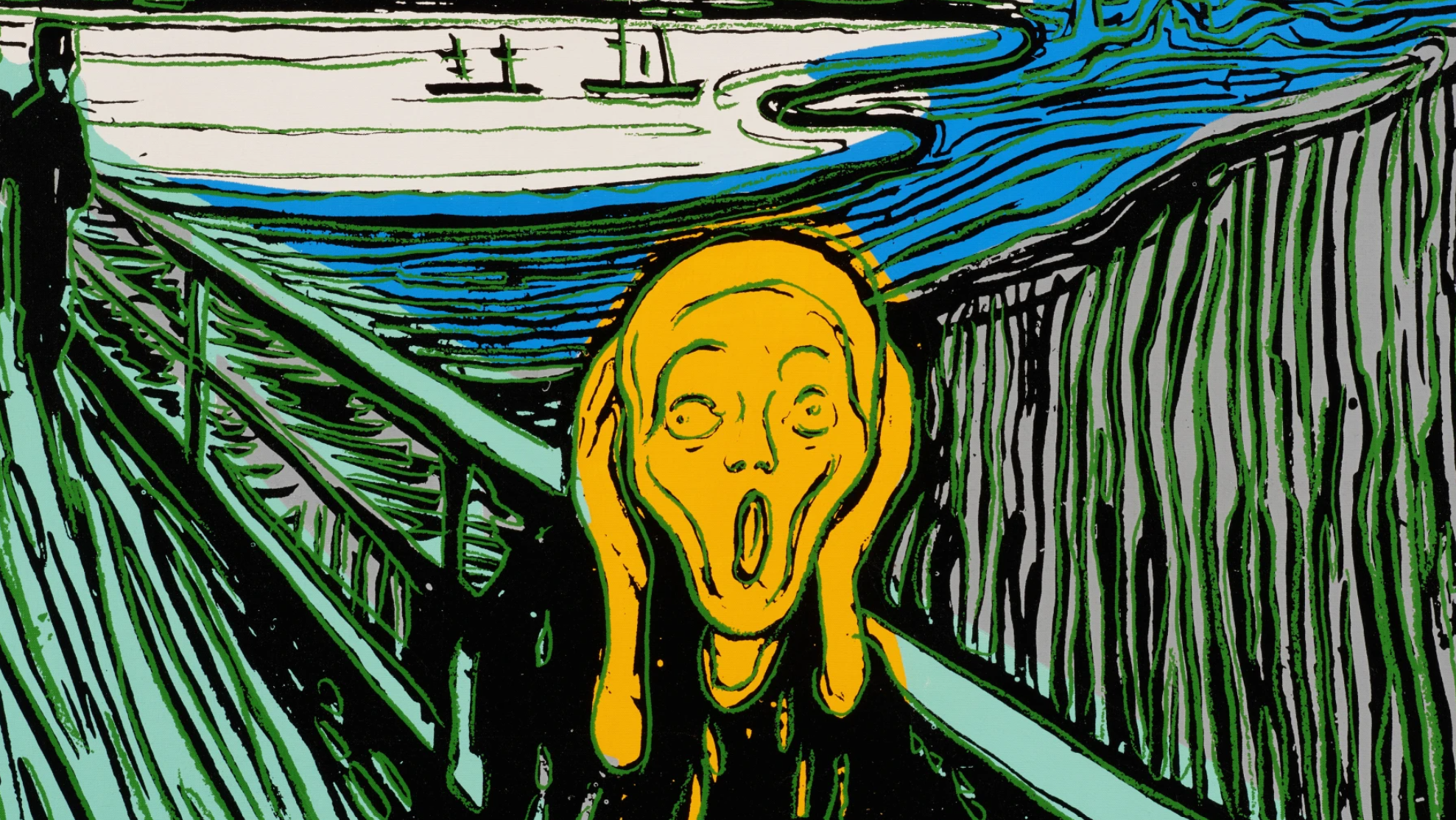
“I was walking along the road with two friends. / The Sun was setting – The Sky turned a bloody red /, And I felt a whiff of Melancholy – I stood Still, / deathly tired – over the blueblack / Fjord and City hung Blood and Tongues of Fire / My Friends walked on – I remained / behind – shivering with Anxiety – I / felt the great Scream in Nature” (Edvard Munch, inscribed on the reverse of The Scream, 1895). Warhol incorporated his silkscreen technique and hand-painted acrylic elements to preserve Munch’s undulating contours. He painstakingly prepared transparencies slightly larger than Munch’s prints, which he then transferred onto canvases over twice the size of the original lithographs. Warhol’s waving lines maintain Munch’s emotional intensity, while shades of orange, blue, turquoise, and yellow in his characteristic saturated color palette recast the image as an object of consumption rather than contemplation. Simultaneously incorporating Munch’s subject and Warhol’s style, The Scream (After Munch) pairs a signature image with the signature artist to create a timeless study of the human experience. In the early 1980s, Warhol turned away from contemporary culture toward the history of art itself. His Details of Renaissance Paintings series gave Old Masters, including Botticelli and Leonardo da Vinci, the same silkscreen treatment as Marilyn Monroe and Coca-Cola bottles. John Cage once observed that “Warhol has shown through repetition that there is no repetition in art.” (John Cage quoted in: Jörg Schellmann, Andy Warhol: Art from Art, Cologne, 1994, p. 9) The Scream (After Munch) demonstrates how mechanical and repetitive processes continue to remake meaning. Each of Warhol’s five canvases of The Scream, an unusually small number for him, alters the emotional register of Munch’s composition. The central figure appears alternately incandescent, ghostly, and artificial, while the fjord in the background dissolves into a succession of psychedelic bands.
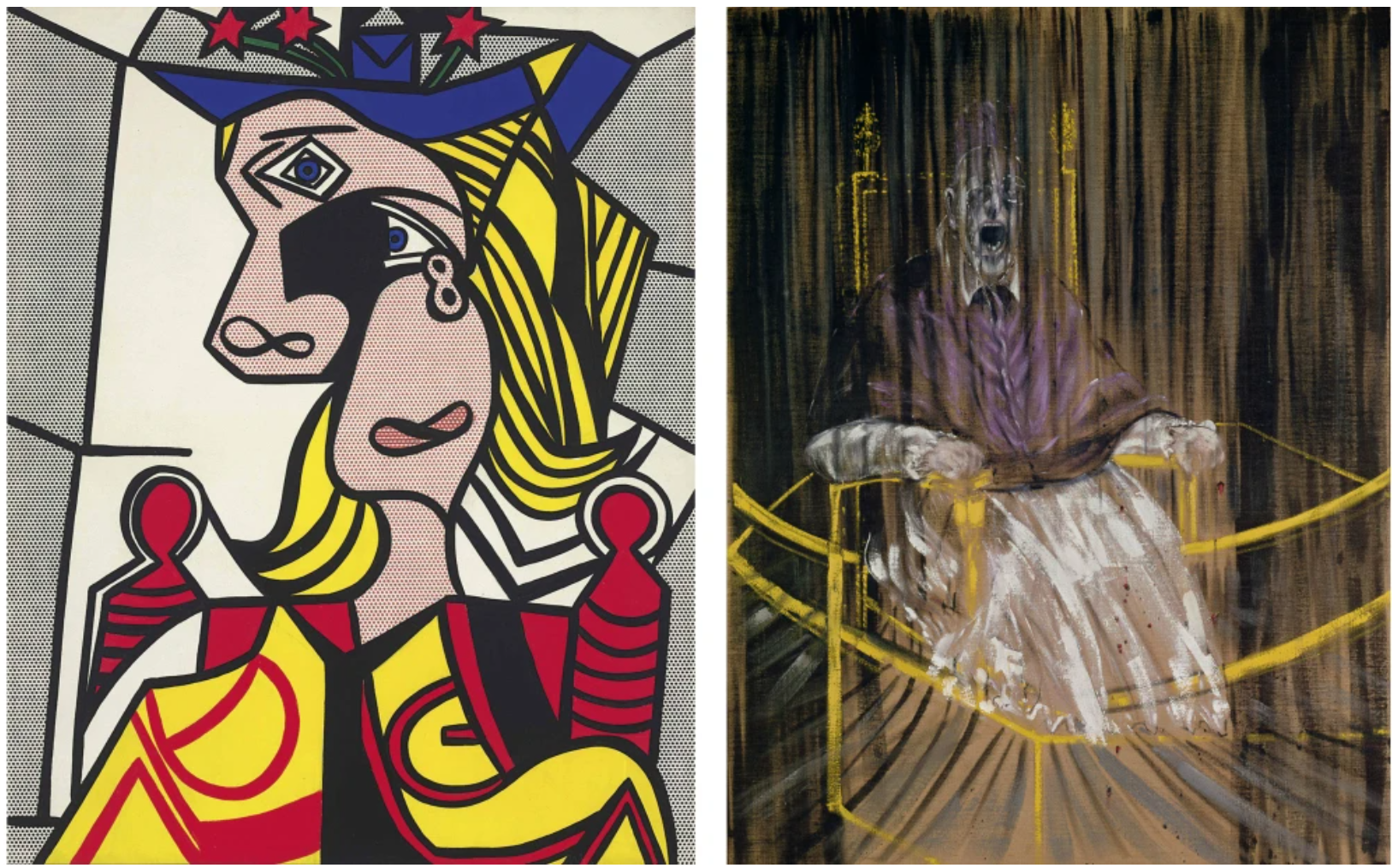
Left: Roy Lichtenstein, Woman with Flowered Hat, 1963. Private Collection. Art © 2026 Estate of Roy Lichtenstein/DACS. Right: Francis Bacon, Study After Velázquez’s Portrait of Pope Innocent X, 1953. Des Moines Art Center. Image © Des Moines Art Center. Image Source: Bridgeman Images. Art © 2026 Estate of Francis Bacon / Artists Rights Society (ARS), New York / DACS, London
Compared to his other encounters with canonical artists, Warhol’s treatment of Munch reveals a more intimate dimension in his own work.
“If you want to know all about Andy Warhol, just look at the surface of my paintings and films and me, and there I am. There’s nothing behind it.”
By reproducing another artist’s expression of terror, Warhol hints at the fears concealed under his carefully constructed persona. He uses Munch’s panic as a vessel through which to contemplate his own concerns about mortality, alienation, and the evanescence of fame. “The reason I’m painting this way is that I want to be a machine,” Warhol once explained. (the artist quoted in: David Bourdon, Warhol, New York, 1995, p. 140) The Scream (After Munch) complicates that impersonal quality through an image of overwhelming human feeling. While Munch relied on lithography to multiply his expression of private anguish, Warhol employed silkscreen to expose its potential as public spectacle. This dialogue bridges nineteenth-century Norwegian handmade print techniques and twentieth-century American consumer technologies, collapsing the perceived division into a seamless study of the expressive core behind a mechanical facade.
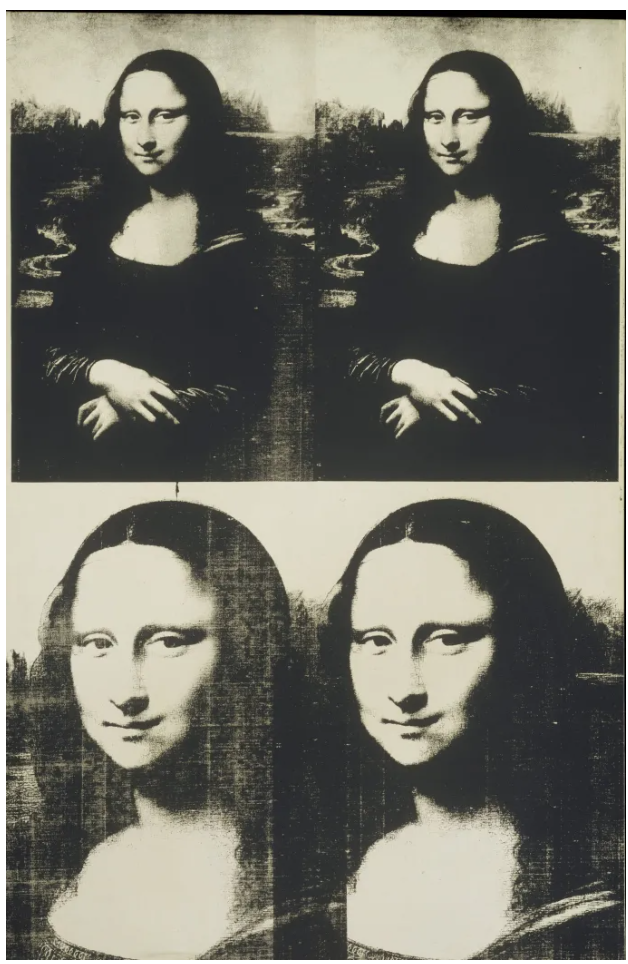
Andy Warhol, Mona Lisa, 1963. The Metropolitan Museum of Art, New York. Image © The Metropolitan Museum of Art. Image source: Art Resource, NY. Art © 2026 Andy Warhol Foundation for the Visual Arts / Artists Rights Society (ARS), New York
Today, Munch’s image appears on mugs, T-shirts, advertisements, and inflatable figures. Warhol both anticipated this transformation and helped make it possible. By treating Munch’s anguished figure with the same chromatic glamour he brought to movie stars and soup cans, the New York City Pop pioneer elevated the screaming motif within the canon even as he revealed its latent promise as a commercial product. Held in the esteemed collection of Theodore and Ruth Baum for two decades, The Scream (After Munch) represents a profound convergence between two artists who understood that modern life depends on shared images of hidden emotions—and who created symbols that speak to global audiences on an individual level.
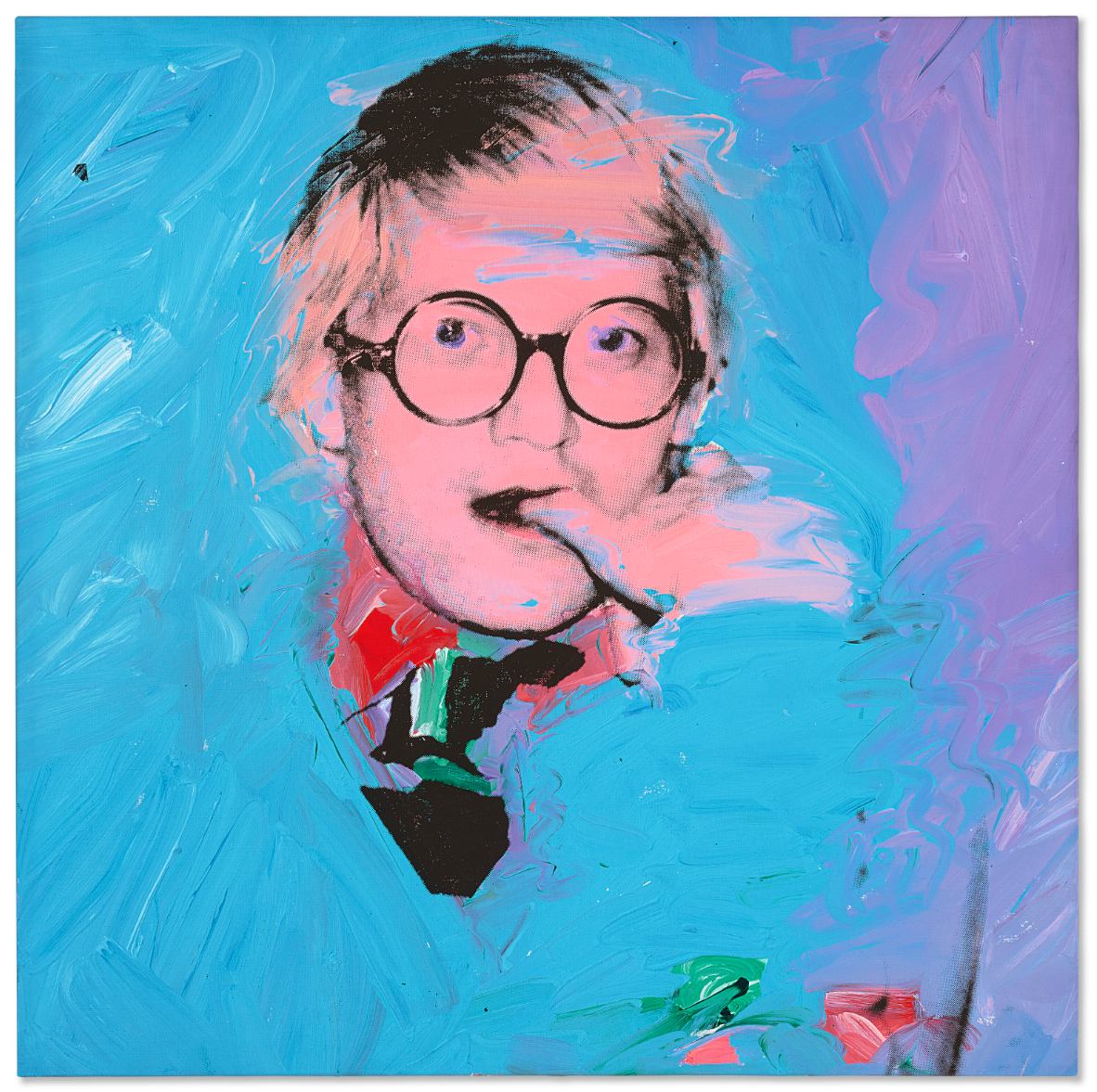
David Hockney, 1974
David Hockney, 1974
The Clive Davis Collection
Christie’s New-York: 17 November 2026
Estimated: USD 3,000,000 – 5,000,000
MINIMUM PRICE GUARANTEE
ANDY WARHOL (1928-1987), David Hockney | Christie’s
REPEAT SALE
Phillips New-York: 16 May 2019
Estimated: USD 400,000 – 600,000
USD 1,040,000
Andy Warhol – 20th Century & Contemporary… Lot 3 May 2019 | Phillips
ANDY WARHOL (1928-1987)
David Hockney, 1974
Acrylic and silkscreen ink on canvas
40×40 inches (101.6 x 101.6 cm)
Signed twice, dated and titled ‘DAVID Hockney Andy Warhol Andy Warhol 1974’ (on the overlap)
Andy Warhol’s vibrant portrait of David Hockney is an instantly iconic image, poignantly revealing the artistic exchange between the two titans of twentieth-century art. One of only three paintings Warhol produced of the subject—the other two remaining with Hockney’s estate—the present work is an exceptionally rare example of a non-commissioned portrait that Warhol undertook. David Hockney is distinct in its painterly bravura: Warhol layers thick strokes of cerulean, lavender, green, and highlights of white across the canvas to create a mesmeric background out from which Hockney’s immediately recognizable visage appears. Painted the same year as some of Warhol’s most celebrated portraits, including those of Brigitte Bardot and Valentino, David Hockney is one of the Pop master’s most accomplished and unique works from the decade.
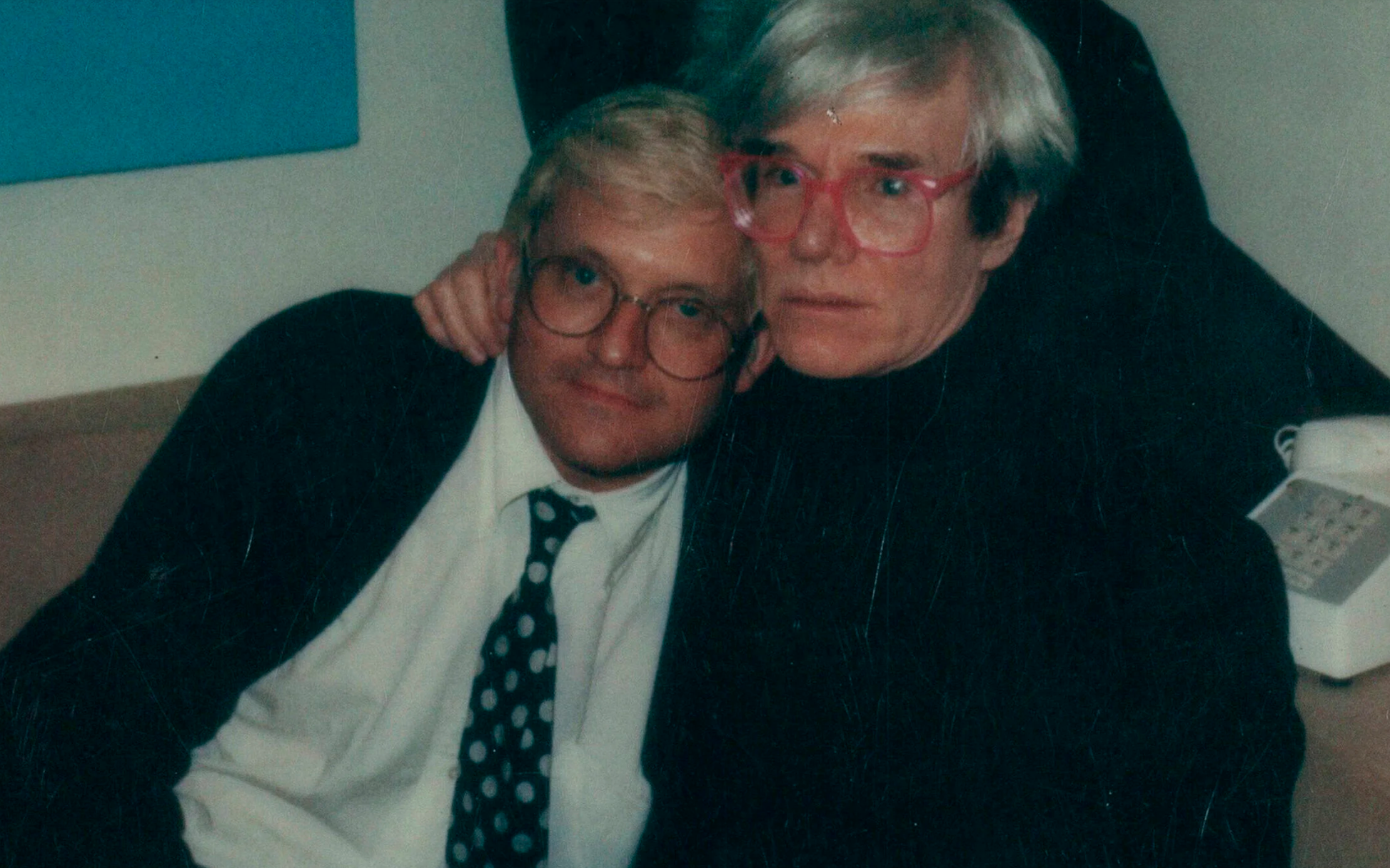
David Hockney and Andy Warhol, 1980.
© 2026 The Andy Warhol Foundation for the Visual Arts, Inc. / Licensed by Artists Rights Society (ARS).
Crowned by his famous golden locks, almost angelic in quality, Hockney’s youth and playfulness radiate from the portrait. Wearing his signature tortoiseshell glasses and a loosely tied striped tie, the British artist stares intently out at the viewer. Warhol’s painterly additions made with brush and finger obscure Hockney and strip the portrait of any background save for raw color (in Hockney’s typical palette), rendering the artist as one with his practice.
A singular hand appears, with Hockney cockily placing a thumb in his mouth at Warhol’s direction. “All he did was put that camera with the big, long nose up to my face and snap a few pictures,” Hockney recalled of sitting for this portrait. Warhol “wanted me to put my fingers in my mouth, which is not a regular habit of mine. I’ve never been sure why, but I did it. I do bite my fingernails but that’s only the tips, not the whole thing” (quoted in N. Printz, ed., The Andy Warhol Catalogue Raisonné: Paintings and Sculpture 1970-1974, vol. 3, New York, 2010, p. 425).
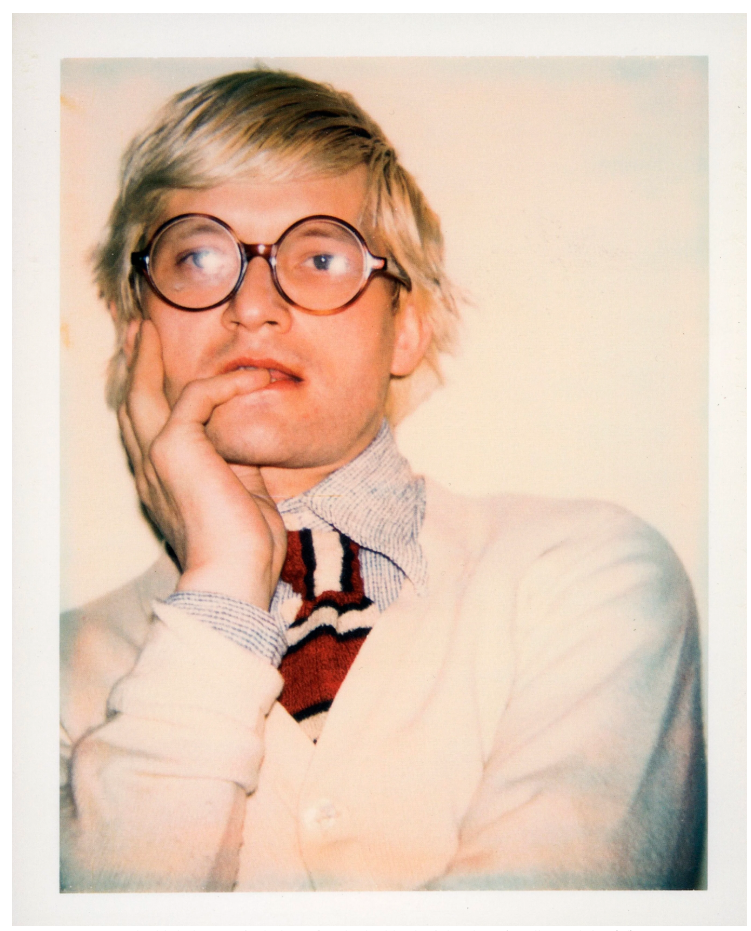
Andy Warhol, Polaroid source image of David Hockney, 1973.
© 2026 The Andy Warhol Foundation for the Visual Arts, Inc. / Licensed by Artists Rights Society (ARS).
Warhol and Hockney had first met in the 1960s, though the impetus for the present portrait was a meeting in Paris. The artists’ mutual friend, the influential curator Henry Geldzahler, facilitated the rendezvous on December 2, 1973. Warhol and Hockney agreed to trade portraits of each other, and Warhol set about capturing Hockney’s likeness for his silkscreen. The many polaroids and photographic negatives from this sitting reveal the intimacy of the relationship between artist and sitter. Warhol was pleased with the outcome of the photoshoot, recording in his diary that “David came out looking young and sweet” (quoted in P. Hackett, ed., The Andy Warhol Diaries, New York, 1989, p. 375). The thirty-seven year old Hockney quipped of the work, “Frankly, I looked about twelve years old in the picture” (quoted in N. Printz, op. cit., p. 425).
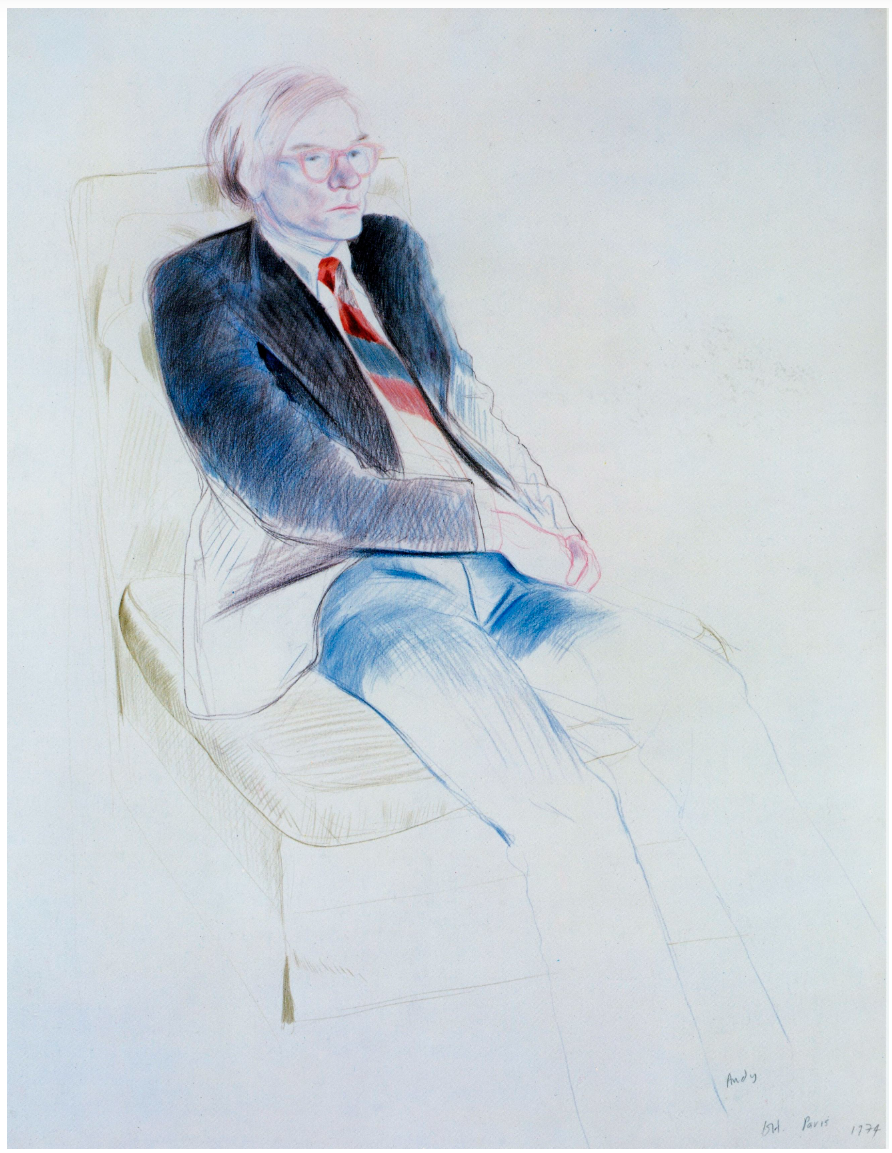
David Hockney, Andy Warhol, 1974. © David Hockney.
While two of the three portraits which Warhol made of Hockney, one in a verdant green and the other in pink, were gifted to the sitter, the present work was eventually acquired by Robert H. Halff. An important West Coast advertising executive, Halff was an early champion of Pop art and assembled one of the most important collections of the movement. He eventually donated works including Warhol’s Campbell’s Soup Can (1964), Roy Lichtenstein’s Cold Shoulder (1963), and Jasper Johns’s Figure 7 (1955) to the Los Angeles County Museum of Art, and further Pop works from artists including John Chamberlain and Claes Oldenburg to the Museum of Contemporary Art, Los Angeles. The present work then entered the collection of Miles and Shirley Fiterman, who assembled another seminal collection of American Pop art.
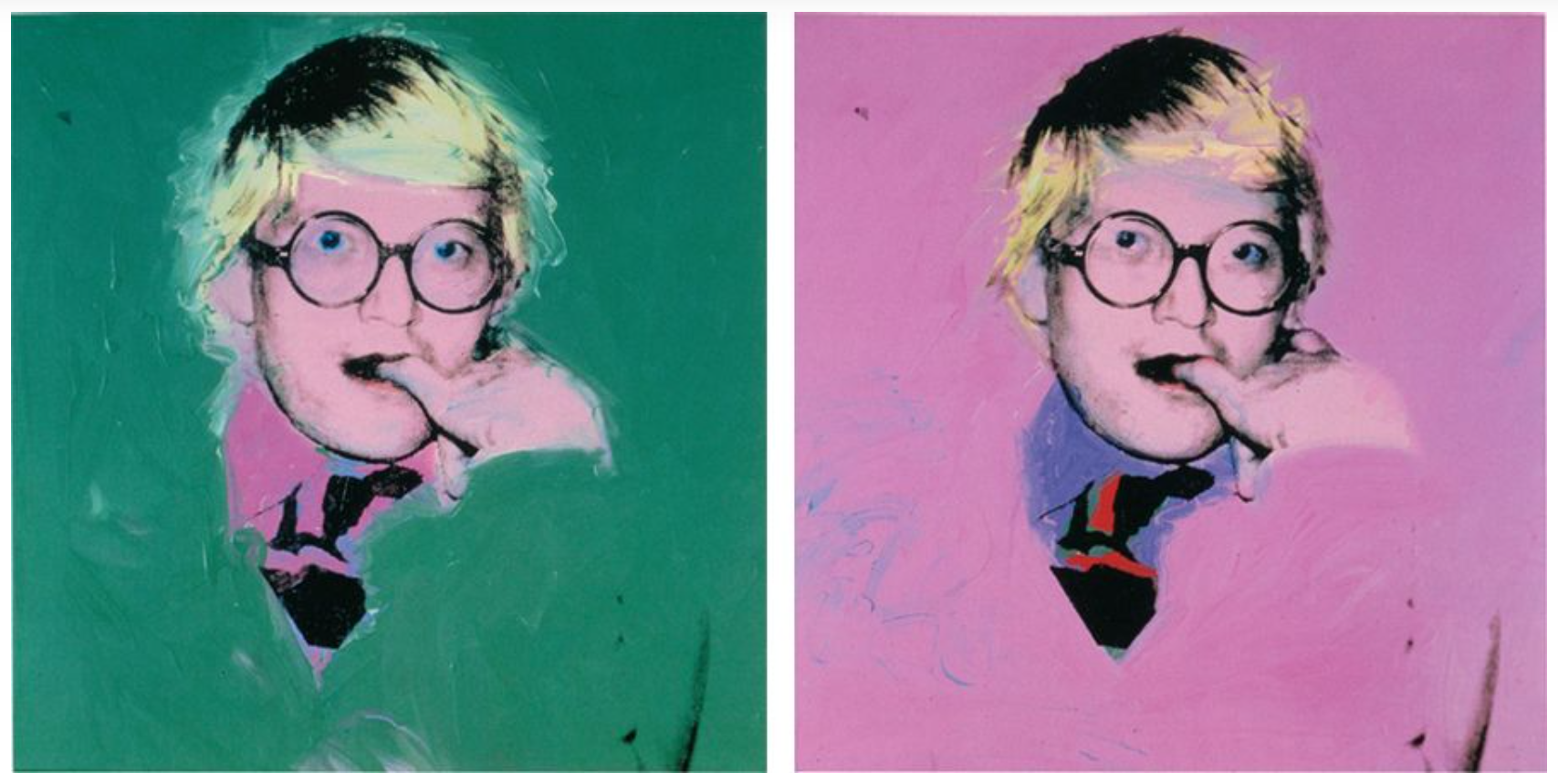
Left: Andy Warhol, David Hockney, 1974. Estate of David Hockney. © 2026 The Andy Warhol Foundation for the Visual Arts, Inc. / Licensed by Artists Rights Society (ARS).
Right: Andy Warhol, David Hockney, 1974. Estate of David Hockney. © 2026 The Andy Warhol Foundation for the Visual Arts, Inc. / Licensed by Artists Rights Society (ARS).
Clive Davis obtained David Hockney from the Fiterman collection, adding immeasurably to the work’s esteemed provenance. Davis was friendly with both the artist and the sitter. He had first met Andy Warhol through Lou Reed and Patti Smith, with whom the music executive collaborated closely. He would frequently encounter Warhol at Studio 54, and eventually was invited to dine with Warhol and Bob Colacello, where the three traded music and art world gossip. “At the lunch, Bob and I spoke enthusiastically about the worlds of music and media, and, as usual, Andy listened intently, nodded, and occasionally contributed a word or two,” Davis records in his autobiography (The Soundtrack of My Life, New York, 2013, p. 284). “Afterward, I called Bob and said, ‘Okay, what’s the verdict? Did we have a good time at lunch?’ Without missing a beat, Bob replied, ‘Andy told me he had a fantastic time! He got such a kick out of the conversation, and all the gossip and information we shared. Anytime you want to have lunch with him, just say the word. He would love to see you again’” (ibid., pp. 284-85). Davis would go on to commission a portrait from Warhol to adorn the cover of Aretha Franklin’s eponymous 1986 album.
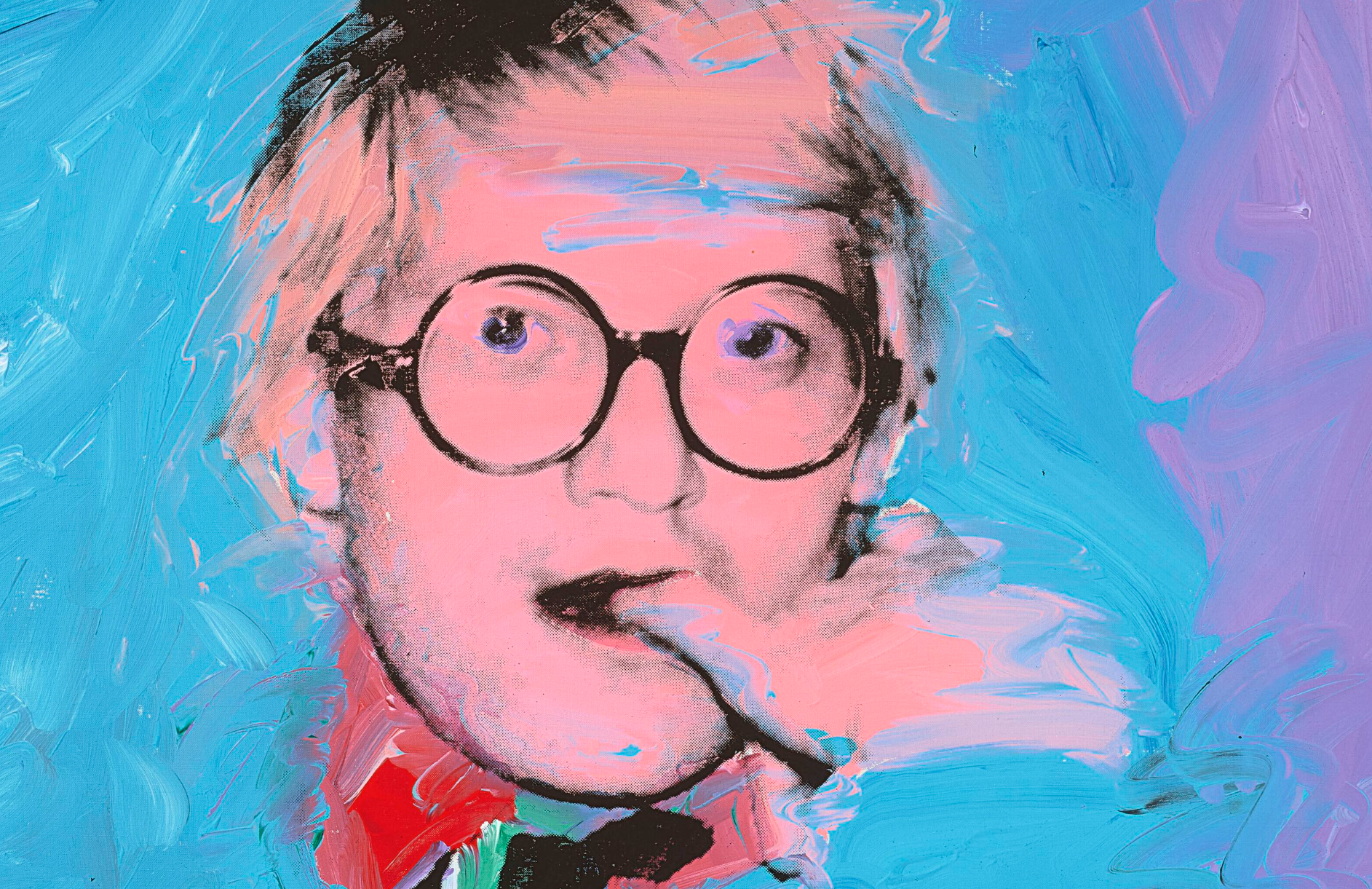
Clive Davis was likewise a longtime friend of David Hockney. When Davis was selected for the National Portrait Gallery’s Portrait of a Nation Award in 2022, Hockney agreed to paint his portrait, which became the first work by the British artist to enter the National Portrait Gallery’s collection. “I called him,” Davis recalls of the portrait, “and I said, ‘David, I’m being inducted into the National Portrait Gallery. Would you consider painting me?’ He said, ‘I would not consider painting you from a photo, Clive, and I’m in Normandy, France. I’m not in [Los Angeles], and I plan to stay in Normandy.’ So I said, ‘Well, I’ll come to Normandy’” (quoted in M. Solly, “See Stunning Portraits of Ava DuVernay, José Andrés and the Williams Sisters,” Smithsonian Magazine, November 16, 2022, online).
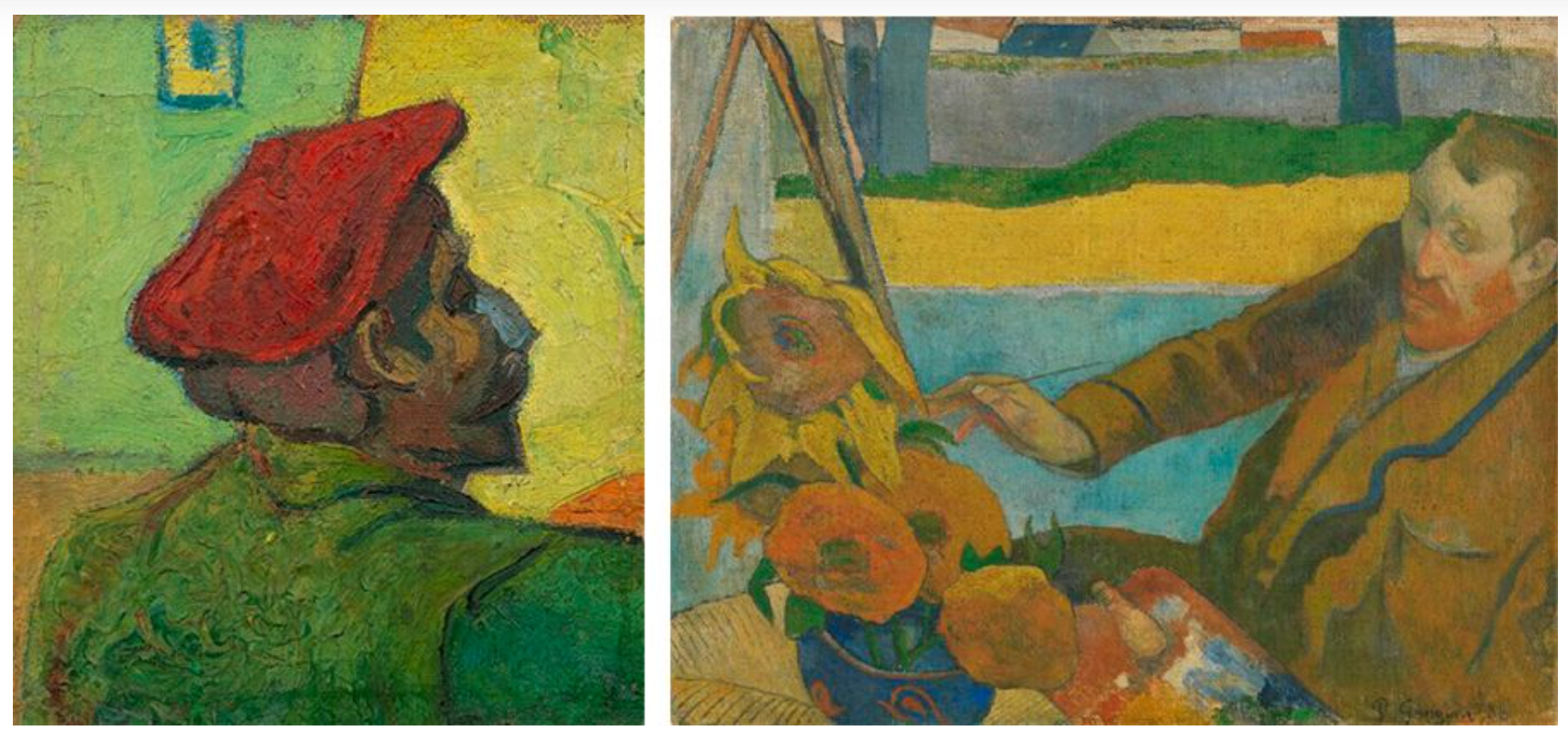
Left: Vincent van Gogh, Portrait of Gauguin, 1888. Van Gogh Museum, Amsterdam.
Right: Paul Gauguin, Vincent van Gogh Painting Sunflowers, 1888. Van Gogh Museum, Amsterdam.
David Hockney stands as a testament to the creative dialogue that animated the art world of the 1970s. Bringing together two of the most influential figures of postwar art, the work captures Warhol’s ability to transform a familiar likeness into an enduring cultural icon while revealing the warmth and mutual admiration that underpinned his relationship with Hockney. Distinguished by its rarity, exceptional provenance, and art historical significance, the portrait remains a compelling record of an extraordinary encounter between two artists who helped redefine the visual language of their age and an iconic producer who did the same for music.
The Kiss (Bela Lugosi), 1963
The Kiss (Bela Lugosi), 1963
The Collection of Antonio Homem Sonnabend
Christie’s New-York: 19 November 2026
Estimated: USD 3,000,000 – 5,000,000
MINIMUM PRICE GUARANTEE
ANDY WARHOL (1928-1987), The Kiss (Bela Lugosi) | Christie’s
ANDY WARHOL (1928-1987)
The Kiss (Bela Lugosi), 1963
Silkscreen ink on white paper
30-1/4 x 40 inches (76.8 x 101.6 cm)
As evidenced by his portraits of Marilyn Monroe, Elizabeth Taylor, Marlon Brando, and Elvis Presley, Andy Warhol was fascinated by Hollywood and the cult of celebrity. Shortly before he began working on his iconic series of canvases of Elvis Presley, Warhol embarked on a smaller group of paintings featuring one of the early legends of cinema: the Hungarian-American actor Bela Lugosi. Famous for playing Count Dracula in the 1930s and 1940s, Lugosi appeared in more than one hundred films during the course of his career. The present work is one of very few images silkscreened onto paper featuring the actor, another example of which is in the permanent collection of the Art Institute of Chicago. A monumental canvas featuring seven large-scale impressions of this screen is also in the permanent collection of the Museum Boymans-van Beuningen, Rotterdam.
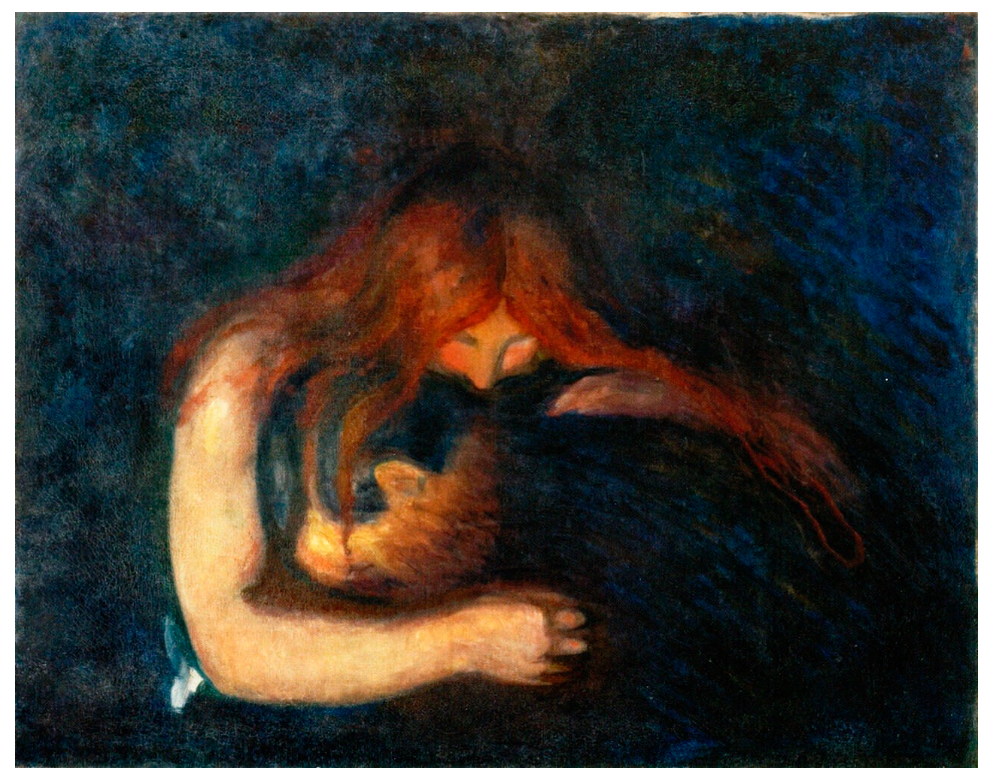
Edvard Munch, Vampire, 1893. Munch Museum, Oslo.
Innovative in both medium and subject matter, The Kiss (Bela Lugosi) forms an iconographic bridge between Warhol’s earlier Death and Disaster series and his later celebrity portraits of Presley and Elizabeth Taylor. Taken from a scene in the 1931 motion picture, Dracula, the artist’s The Kiss (Bela Lugosi) portrays Lugosi as Dracula, about to bite into the neck of the female protagonist, Mina, played by Helen Chandler. With her head thrown back and eyes closed in an expression of apparent ecstasy, Mina bares her pale neck to Dracula’s predatory bite. Mina’s impending transformation into a vampire simultaneously signals her death and enables her immortality, a paradoxical possibility that establishes a connection between this image and Warhol’s contemporaneous portraits of glamorous and beautiful American celebrities: Elizabeth Taylor, Jacqueline Kennedy, and most famously, Marilyn Monroe.
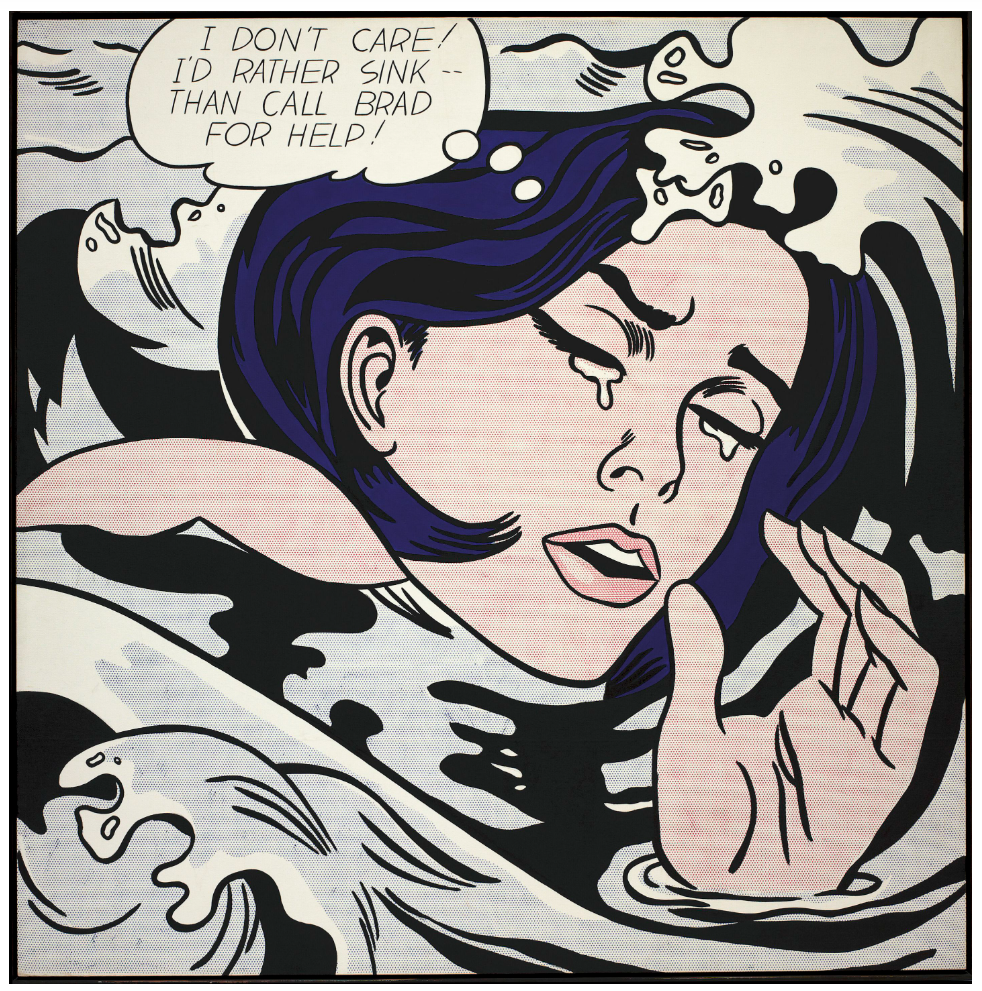
Roy Lichtenstein, Drowning Girl, 1963. Museum of Modern Art, New York. © 2026 Estate of Roy Lichtenstein / DACS.
Warhol’s oeuvre interrogated icons of American mass culture, particularly the seductive world of Hollywood, from which an ever-expanding pantheon of movie stars projected visions of an idealized life into everyday American homes. Warhol’s own preoccupation with the glamorous stars of the silver screen harked back to his early career as a commercial illustrator in New York in the 1950s, where he developed a fascination with the fashion and glamour industries. Following Mariyln Monroe’s death in August 1962, Warhol found a vehicle for his favorite subjects: death and the cult of celebrity. Like Mina in The Kiss (Bela Lugosi), Monroe achieves a paradoxical form of immortality through her death, her image endlessly reproduced within popular culture.
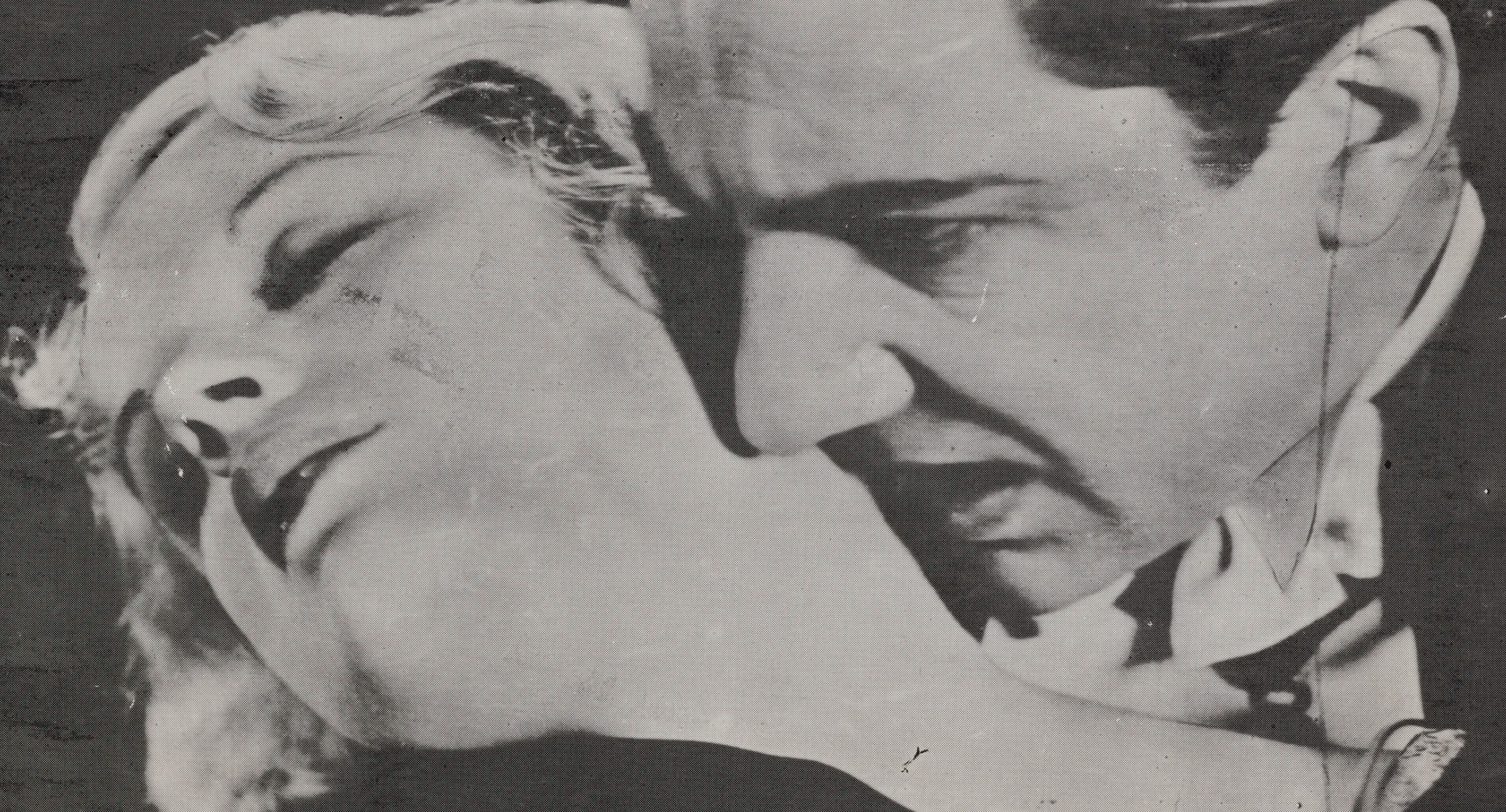
Recalling fellow Pop artist Lichtenstein’s 1962 Kiss series, Warhol’s title plays with the romantic emblem of the kiss. What at first appears as an intimate moment between lovers is, in fact, an act imbued with a distinct shadowy side. Alongside his investigations into consumer culture and the darker side of celebrity, in 1963 Warhol produced a series of works centered around disaster and catastrophe that speak directly to his preoccupation with the kitschy horror also portrayed in The Kiss (Bela Lugosi). From his Electric Chair and Race Riot silkscreens, to images of road traffic accidents and violent death, like his poignant images of Monroe, the Death and Disaster series operates within the theme of the vanitas picture, portraying the pervasive, if subversive theme of death. These works were first exhibited at Galerie Ileana Sonnabend Paris in 1964, Warhol’s first solo exhibition in Europe.
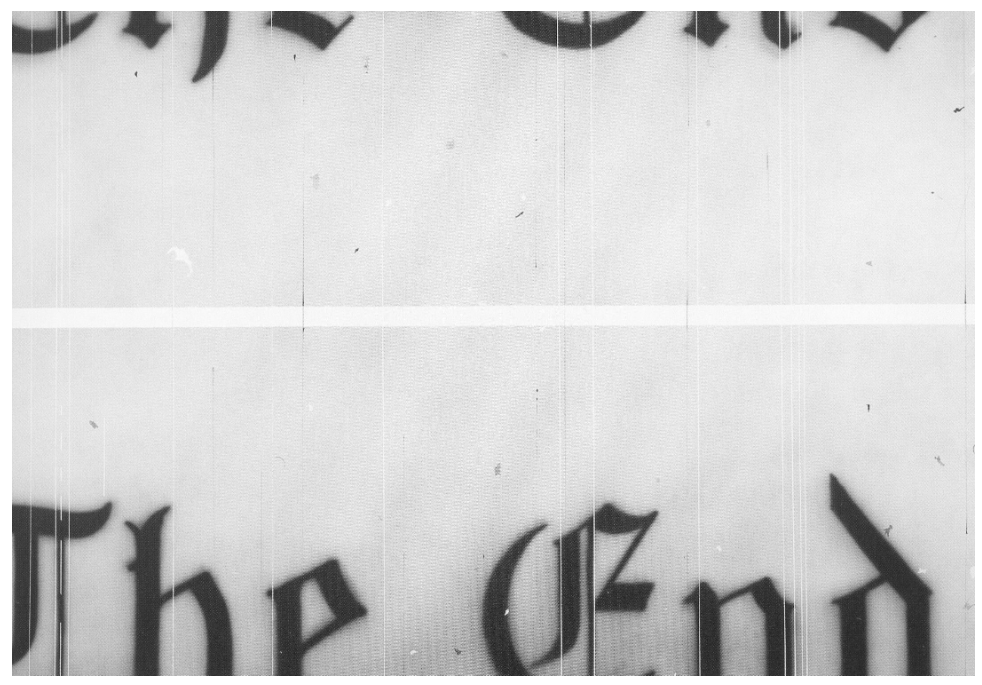
Ed Ruscha, The End, 1991. Museum of Modern Art, New York. © Ed Ruscha.
An early iteration of Warhol’s now legendary silkscreen technique, The Kiss (Bela Lugosi) successfully showcases two of the artist’s main preoccupations: his interest in celebrity and the notion of fame, and his technical enquiries into a new form of painting and image-making. Combining these two elements in one work shows the revolutionary nature of Warhol’s early career. Aesthetically rich and conceptually rigorous, the present work is a key example of the early exploration which would go on to have a profound effect on the rest of the artist’s career.
Flowers, 1964-65
Flowers, 1964-65
Property from a Distinguished American Collection
Christie’s New-York: 20 November 2026
Estimated: USD 2,500,000 – 3,500,000
ANDY WARHOL (1928-1987), Flowers | Christie’s
ANDY WARHOL (1928-1987)
Flowers, 1964-65
Acrylic and silkscreen ink on canvas
24×24 inches (61×61 cm)
Signed and dated ‘Warhol 64’ (on the overlap)
Distinguished by its vibrant ‘neon’ palette, Andy Warhol’s Flowers is one of the most striking examples from this iconic series of paintings. Set against the black-and-white foliage, the addition of a high-keyed Pop color results in what many critics have come to regard as one of the pinnacles of Pop Art. “They are so goddamn beautiful,” recalled the critic Peter Schjeldahl. “And so simple. And their glamour was so intense. What killed you, killed you, was the grainy black-and-white of the stems. That grainy look…was killer, and still is. I think it still hasn’t been acknowledged that the whole critical debate should have been over at that moment. Because these Flowers paintings had all the Kantian principles that Greenberg was pushing…The Flowers resolved all [those] formal issues…but with a realistic, not an abstract, image. And why not? Who bought it as a picture of flowers anyway? It was about the mediation…That’s why we reach for the word ‘genius.’ Genius is what goes, ‘That’s not a problem.’ He sees clearly. He just does it'” (P. Schjeldahl, quoted in T. Sherman and D. Dalton, POP: The Genius of Andy Warhol, New York, 2009, pp. 236-237).
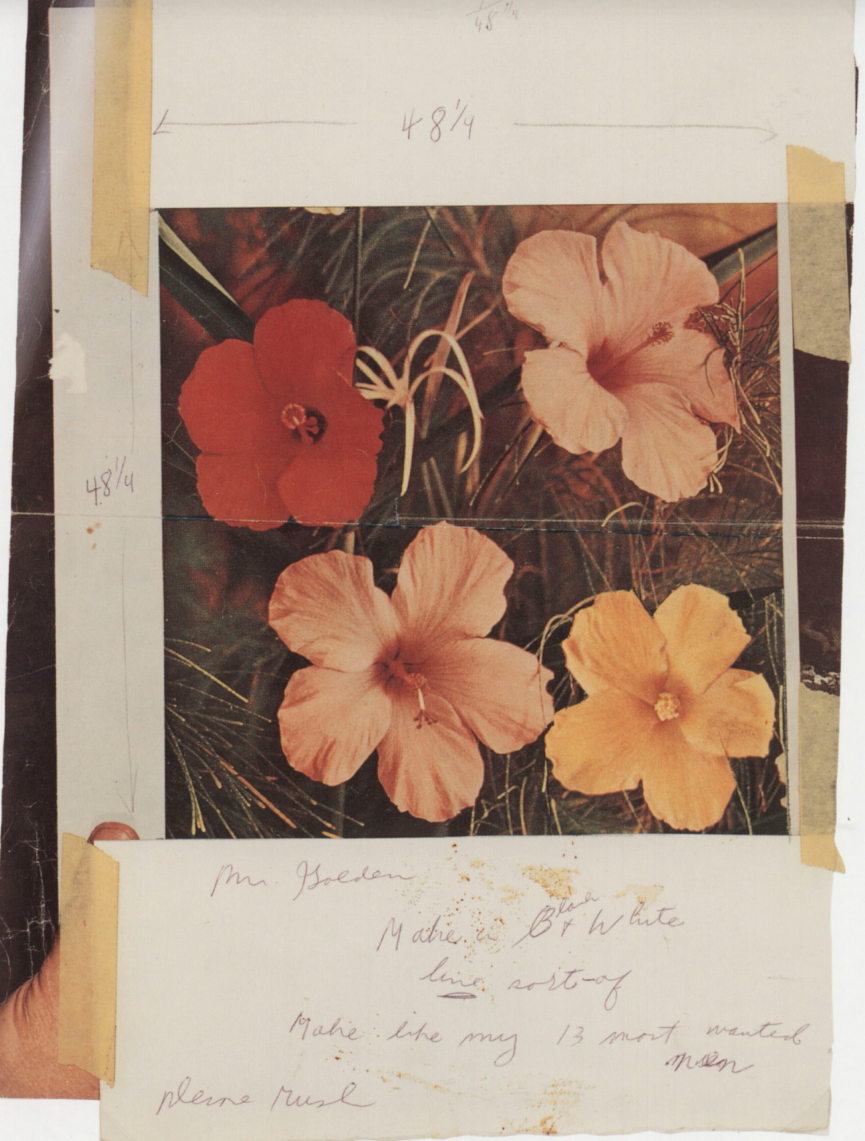
Source material for the present work. Photograph by Patricia Caufield. © Estate of Patricia Caufield.
© 2026 The Andy Warhol Foundation for the Visual Arts, Inc. / Licensed by Artists Rights Society (ARS).
The choice of subject matter seems tailor made for Warhol’s unique brand of Pop. The source image is taken from the June 1964 issue of Modern Photography magazine. Earlier that summer, following his critically acclaimed paintings of Car Crashes and Electric Chairs, Henry Geldzahler—the first ever contemporary art curator at the Metropolitan Museum of Art in New York—told Warhol “Enough death and disaster, Andy, it’s time again for life. What do you mean?, [Andy] said. I serendipitously picked a magazine off the floor and flipped it to a two-page advertisement with a color photograph of flowers” (H. Geldzahler, Making it New: Essays interviews and talks, New York, 1994, p. 39). In his signature deadpan style, Warhol used the very same photograph—an illustration for an article on Kodak color processors—as his source imagery.
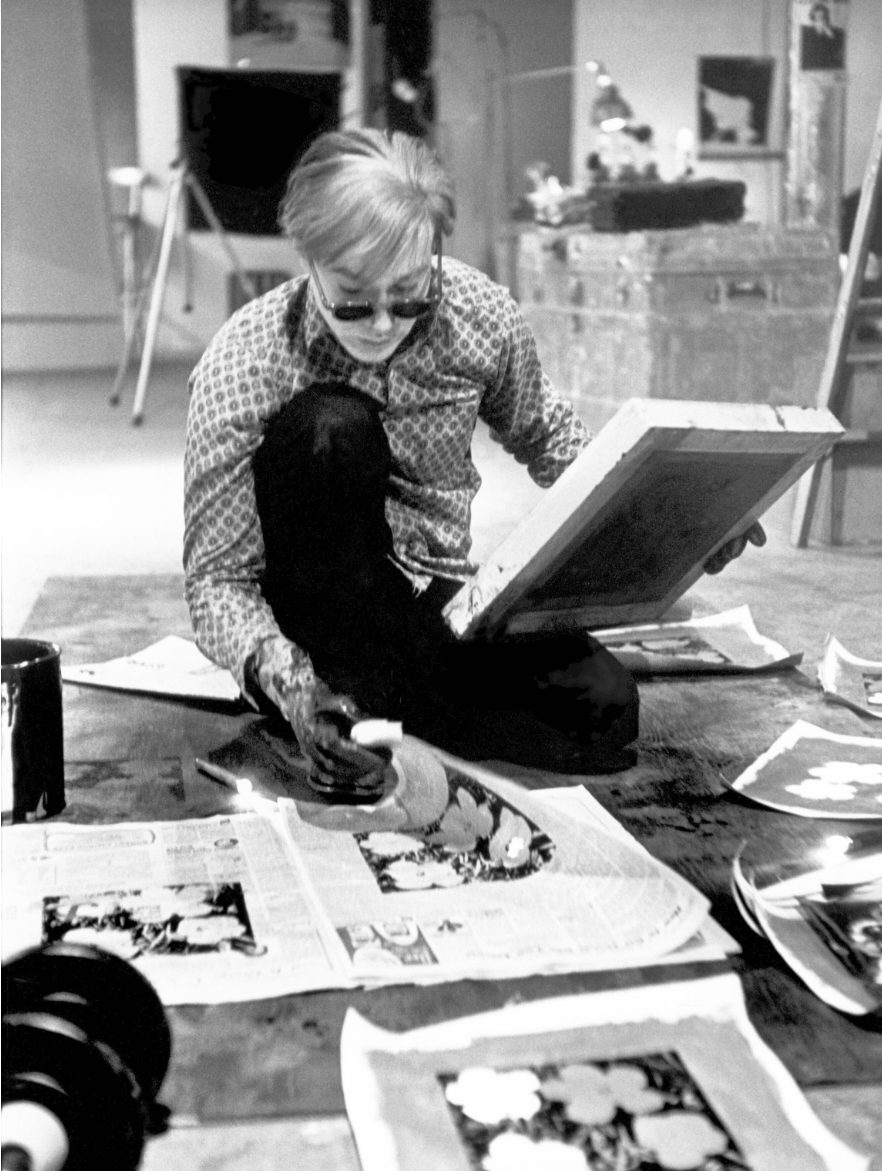
Andy Warhol at the Factory, New York, 1964. Photo: Eve Arnold / Magnum.
© 2026 The Andy Warhol Foundation for the Visual Arts, Inc. / Licensed by Artists Rights Society (ARS).
Yet, instead of simply copying the image, Warhol made some subtle changes to improve its visual impact. After cropping the photograph and rotating one of its blossoms to achieve his desired square format, Warhol heightened the image’s contrast to such an extent that it was entirely unrecognizable as a hibiscus flower. Flat, planar shapes and vivid outlines characterized the final format, and Warhol transferred the design onto canvas in fluorescent paint, making each blossom appear to float over a grainy pattern of black and white foliage. The silkscreened Flowers capture Warhol’s increasing interest in mimicking the mass-produced “assembly-line” method of his art making, indeed these 1964 paintings coincided with the artist’s first Factory on 47th Street and 3rd Avenue, which had opened that spring.
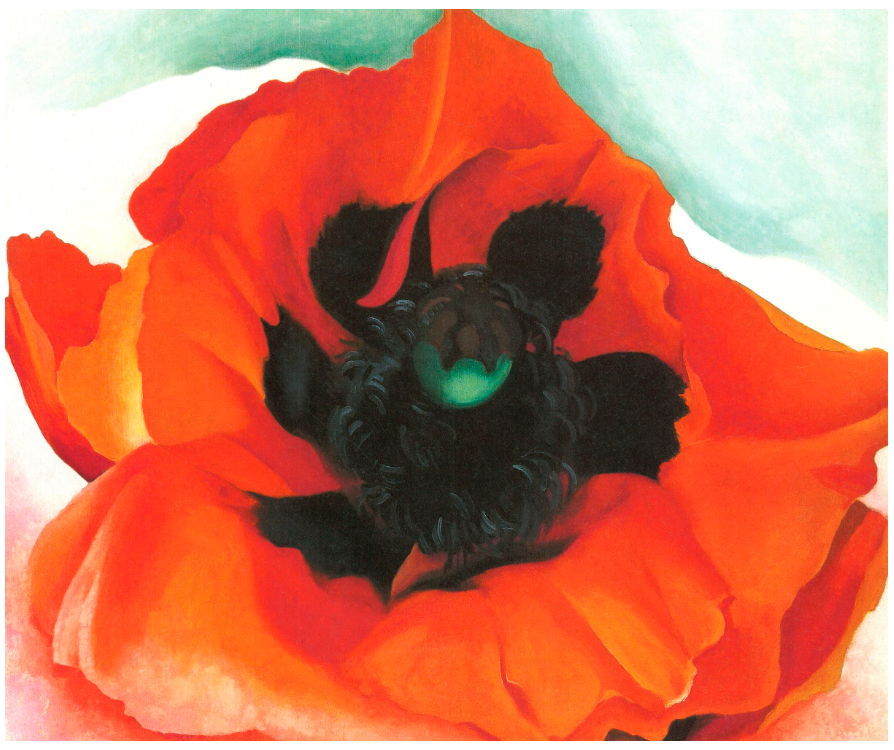
Georgia O’Keeffe, Red Poppy, 1928. Museum of Fine Arts, St. Petersburg, Florida.
Although a painting such as the present work epitomizes Warhol’s unique brand of Pop Art, it also engages with the noble tradition of still-life painting, aligning himself with the romantic renderings of flowers by painters like Monet, Van Gogh or O’Keffee. However, Warhol transformed the age-old genre with his color-blocked blossoms, utterly removing it from nature. With an aerial instead of horizontal viewpoint, he collapses space into one flat plane—making no distinction between horizon or ground. His style is adamantly the artist’s hand, and treats his traditional subject matter with the same detachment as his commercial imagery—in this way, he distills his reputation as a creative wunderkind on the level of the master painters before him. Gerard Malanga, Warhol’s longtime assistant who worked on the Flowers series, recognized the irony of the situation: “With Flowers, Andy was just trying a different subject matter. In a funny way, he was kind of repeating the history of art. It was like, now we’re doing my ‘Flower’ period! Like Monet’s water lilies, Van Gogh’s Flowers, the genre” (quoted in D. Dalton, A Year in the Life of Andy Warhol, London, 2003, p.74).
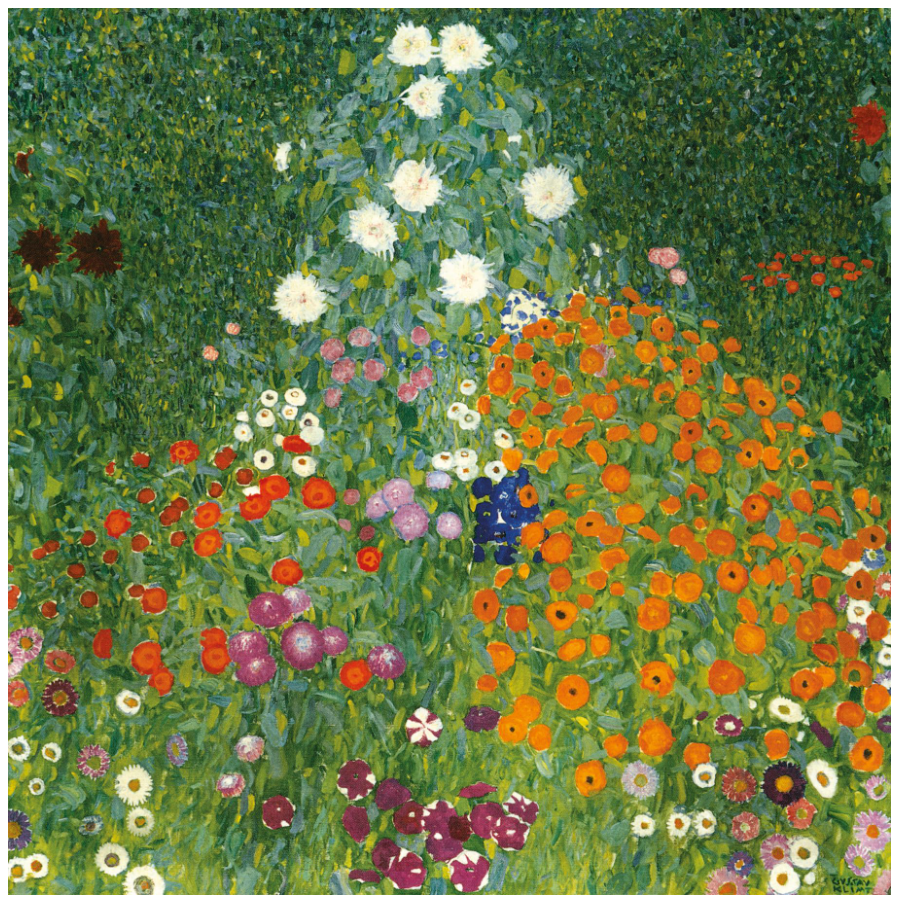
Gustav Klimt, Bauerngarten (Blumengarten), 1905 / 1906.
Having shifted between themes of commerce and celebrity to those of death and disaster during the early 1960s, the Flower paintings can be read as a synthesis of both strands, transforming nature into kitsch and professing the disturbing mechanical under-side of popular taste. Warhol’s assistant Ronnie Cutrone recalled that whilst many people responded to the Flower paintings as bright, playful works that somehow anticipated the liberating values of the 1970s flower-power movement, those closest to the artist were all too aware of their darker side. As he explains, “Lou Reed, Silver George Milloway, Ondine, and me—we all knew the dark side of those Flowers. Don’t forget, at that time, there was flower power and flower children. We were the roots, the dark roots of that whole movement. None of us were hippies or flower children. Instead, we used to goof on it. We were into black leather and vinyl and whips and S&M and shooting up and speed. There was nothing flower power about that. So when Warhol and that whole scene made Flowers, it reflected the urban, dark, death side of that whole movement. And as decorative art, it’s pretty dense. There is a lot of depth in there … You have this shadowy dark grass, which is not pretty, and then you have these big, wonderful, brightly colored flowers. It was always that juxtaposition that appears in his art again and again that I particularly love” (R. Cutrone, quoted in, J. O’ Connor and B. Liu, Unseen Warhol, New York 1996, p. 61).
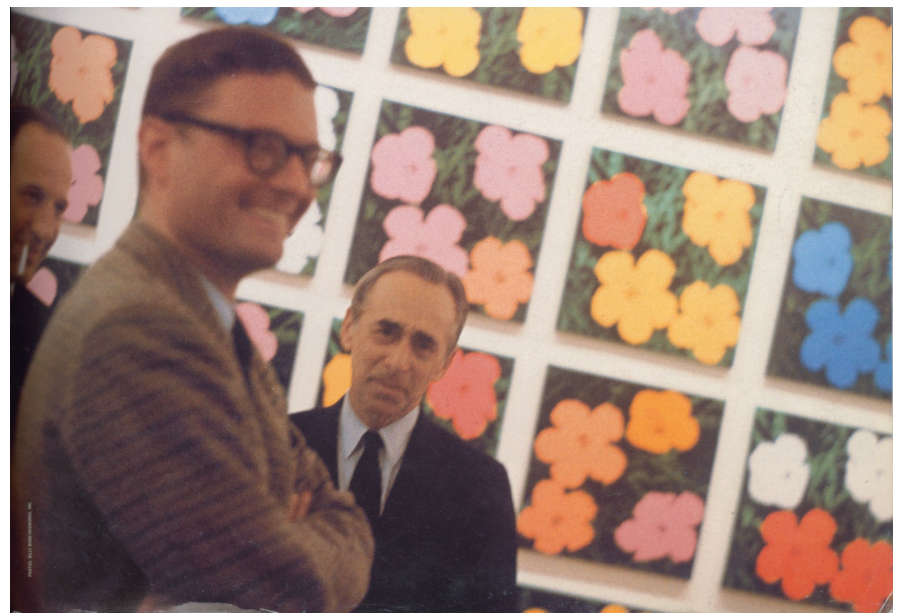
Leo Castelli at the opening of Andy Warhol: Flowers at Leo Castelli Gallery, New York, 1964. Photographer unknown. Artwork: © 2026 The Andy Warhol Foundation for the Visual Arts, Inc. / Licensed by Artists Rights Society (ARS).
Warhol began his flower paintings in the summer of 1964 in preparation for his first solo exhibition at the legendary Leo Castelli Gallery in November later that year. The Flowers and show represented a breakthrough of sorts for Warhol as Castelli was inundated with interest and the whole exhibition rapidly sold out within days. As such his Flowers paintings became some of Warhol’s most celebrated works and they are a permanent demonstration of Warhol’s ability to not only capture beauty but to also turn a decorative motif into a lasting icon.
Endangered Species, 1983
Endangered Species, 1983
Looking Forward: The Collection of Beverly Grossman
Sotheby’s New-York: 16 November 2026
Estimated: USD 2,500,000 – 3,500,000
COMPLETE SET
PRINTS
Andy Warhol | Endangered Species | The Now and Contemporary Evening
ANDY WARHOL (1928 – 1987)
Endangered Species, 1983
The complete set of ten screenprints in colors on Lenox Museum Board
Each sheet: 38×38 inches (96.5 x 96.5 cm)
Signed and numbered 72/150 (lower right or left of each sheet)
This set is number 72 from the edition of 150 plus 30 artist’s proofs
Each with the blindstamp of the printer, Rupert Jasen Smith
Published by Ronald Feldman Fine Arts, Inc., and with their inkstamp on the versos
Produced in 1983 and initially exhibited at New York’s American Museum of Natural History, Endangered Species occupies a distinctive place within Andy Warhol’s late oeuvre, representing one of the artist’s most direct engagements with a contemporary social issue. Conceived in collaboration with publishers and environmental advocates Ronald and Frayda Feldman, the portfolio comprises ten portraits of animals at risk, executed ten years after the Endangered Species Act was signed into law. This landmark legislation represented a growing awareness of urgent environmental issues in the United States, and Warhol’s portfolio tapped directly into this cultural moment.
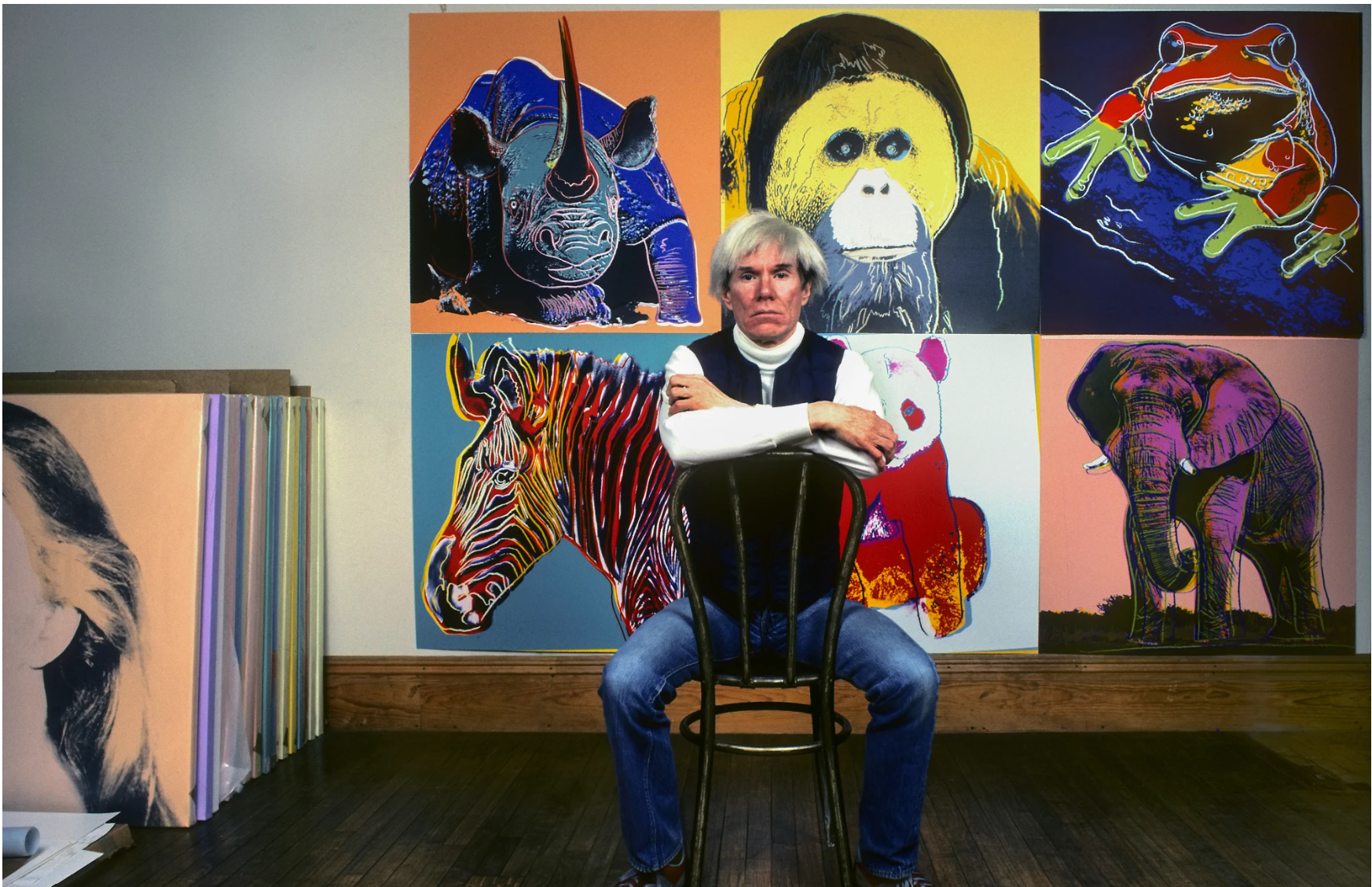
The artist in front of his Endangered Species series at the Factory, 1983.
Photo by Brownie Harris/Corbis viWarhol Foundation for the Visual Arts / Artists Rights Society (ARS), New Yorka Getty Images.
Art © 2026 Andy Warhol Foundation for the Visual Arts / Artists Rights Society (ARS), New York
By presenting these endangered animals through the lens of Pop Art, the artist was able to both celebrate their innate beauty and highlight the very real dangers they faced from habitat loss, poaching, and other human-driven threats. The present work comes from the esteemed collection of patron and philanthropist Beverly Grossman; for more than 60 years, Grossman dedicated her life and work to the advancement of art and education in America and especially in her home city of Minneapolis, where she served as the board chair and life trustee at the Minneapolis Institute of Art and was deeply involved with the Walker Art Center, Minneapolis Orchestra, and Minneapolis Children’s Theatre Company. For Grossman, collecting and philanthropy were inseparable. Art enriched her own life, and she believed deeply in ensuring that others could experience its transformative possibilities as well.
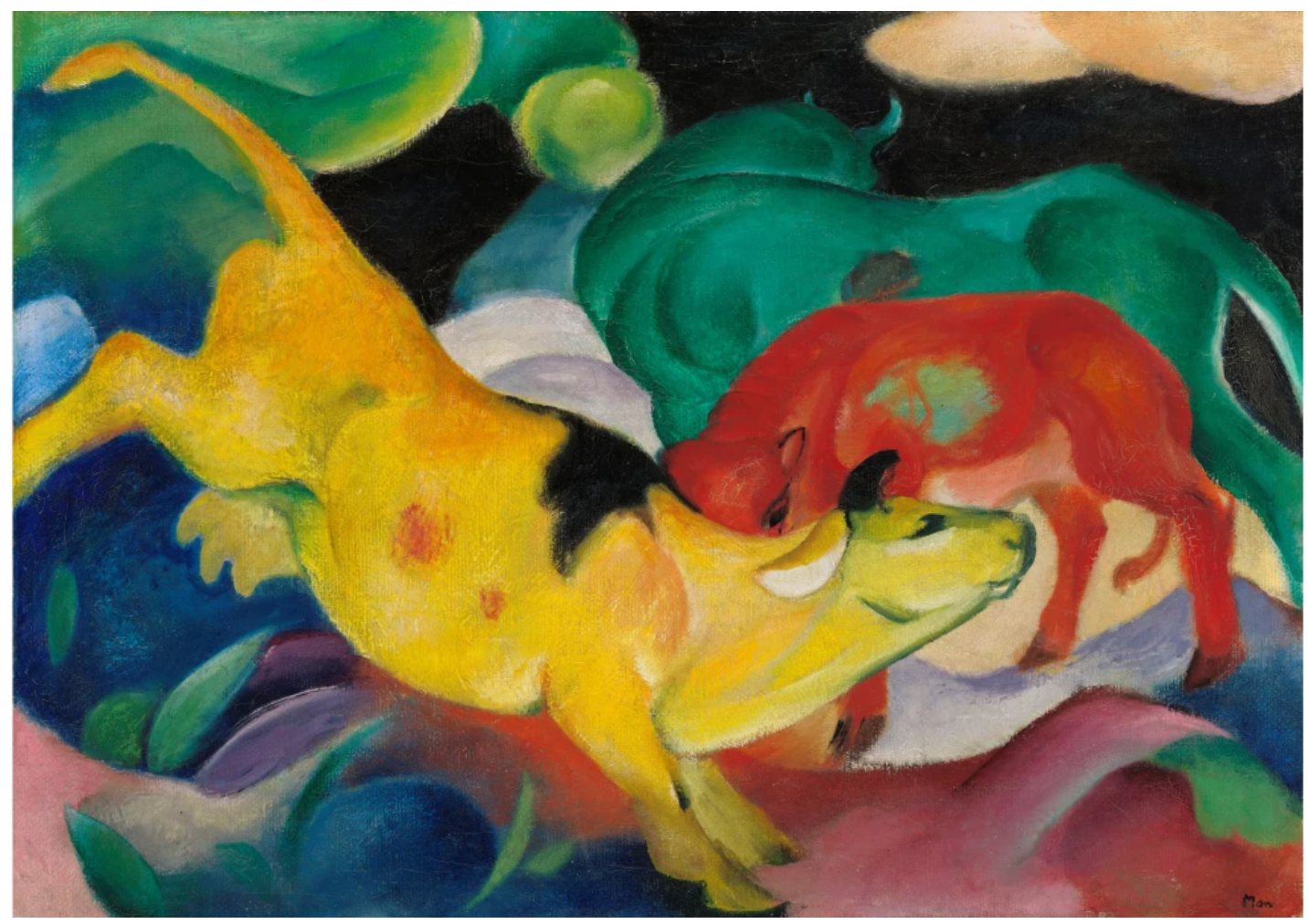
Franz Marc, Kühe, rot, grün, gelb [Cows, Red, Green, Yellow], 1911. Städtische Galerie im Lenbachhaus/Munich/Germany.
Image © bpk Bildagentur / Art Resource, NY
The set is a striking example of Warhol’s singular pop art aesthetic, employing layered colors, heightened contrasts, and flattened forms. The bold, unnatural hues he employed – including vibrant pinks, greens, blues, and purples – create a striking contrast with the natural splendor of the animals themselves and further emphasize the fabricated quality of the images, detaching the subjects from mere representation and instead elevating them to the status of cultural icons. In this respect, Endangered Species parallels Warhol’s celebrated portraits of public figures, transforming threatened animals into images designed to command attention within a media-saturated visual landscape. By appropriating the visual language of advertising and mass communication, he exposes the paradox that rarity itself can become a form of cultural currency. The works simultaneously celebrate the beauty and individuality of their subjects while underscoring the precariousness of their existence. In doing so, Warhol reframes environmental advocacy through the mechanisms of image production and circulation that had long preoccupied his practice.
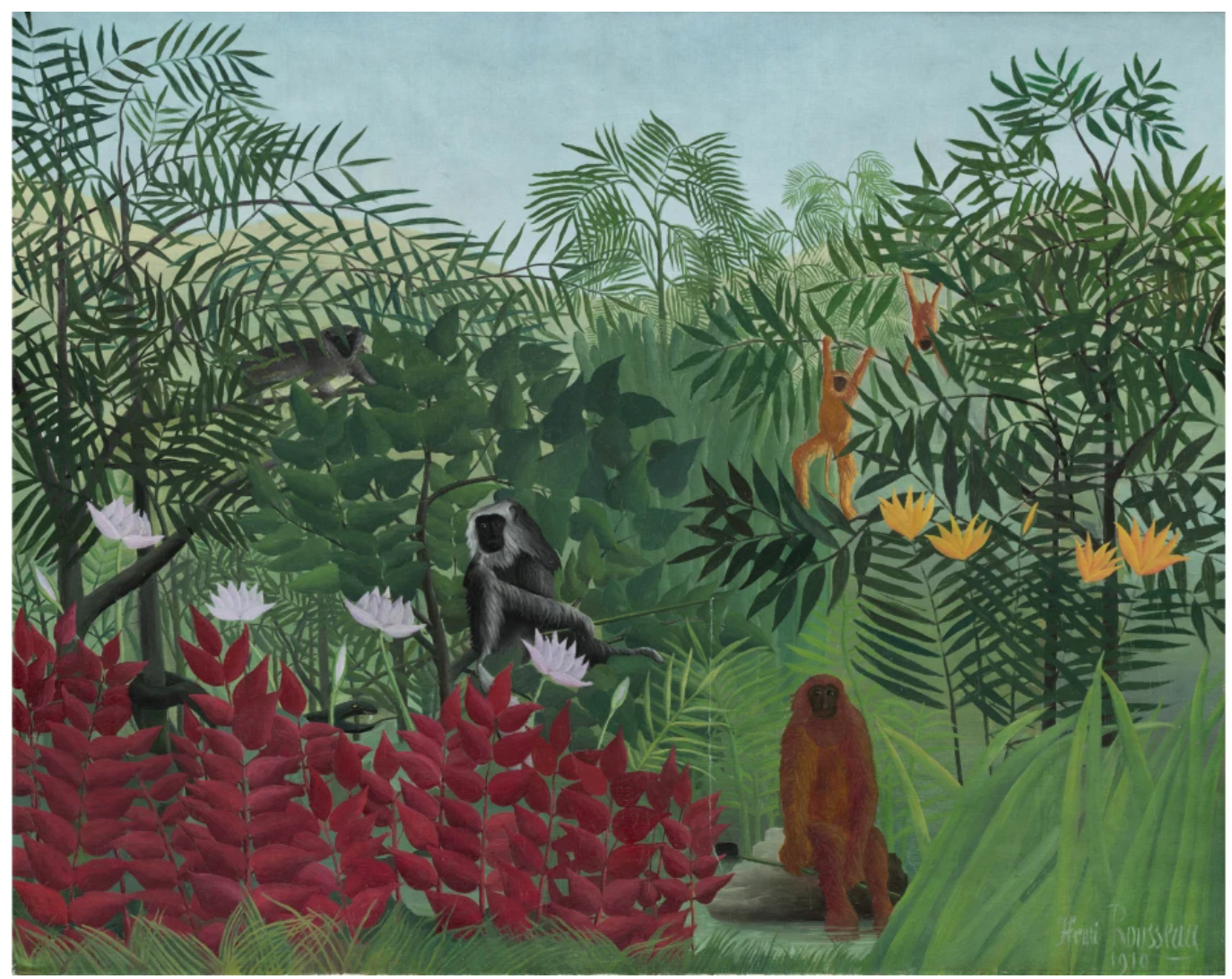
Henri Rousseau, Tropical Forest with Monkeys, 1910. National Gallery of Art, Washington, D.C. Image © Art Resource, NY
Today, Endangered Species is widely regarded as one of the most significant print portfolios of Warhol’s later career. The series exemplifies the artist’s capacity to transform a topical subject into a meditation on consumption and cultural memory. Warhol drew attention to their struggle in a way that was both visually striking and politically resonant. Many of the animals featured in Endangered Species, such as the Grevy’s zebra and the Bighorn sheep, remain endangered or threatened to this day. As such, the portfolio serves as a poignant and prescient reminder of the ongoing need for robust conservation efforts to protect the world’s most vulnerable species. More than four decades after its creation, these prints continue to captivate and educate audiences around the world, serving as both an incisive reflection of late twentieth-century environmental consciousness and a compelling testament to the enduring power of the printed image.
Flowers, 1964
Flowers, 1964
Looking Forward: The Collection of Beverly Grossman
Sotheby’s New-York: 16 November 2026
Estimated: USD 2,500,000 – 3,500,000
Andy Warhol | Flowers | The Now and Contemporary Evening Auction |
ANDY WARHOL (1928 – 1987)
Flowers, 1964
Acrylic, silkscreen ink and graphite on canvas
24×24 inches (61×61 cm)
Signed (on the overlap)
Chromatically brilliant, executed in 1964 at the height of Andy Warhol’s mature Pop aesthetic, Flowers transforms four pristine hibiscus blossoms into one of pop culture’s most recognizable icons. Painted in acrylic, silkscreen ink, and graphite on a 24-by-24-inch canvas, this work belongs to the celebrated series Warhol unveiled at the Leo Castelli Gallery in New York in November 1964.
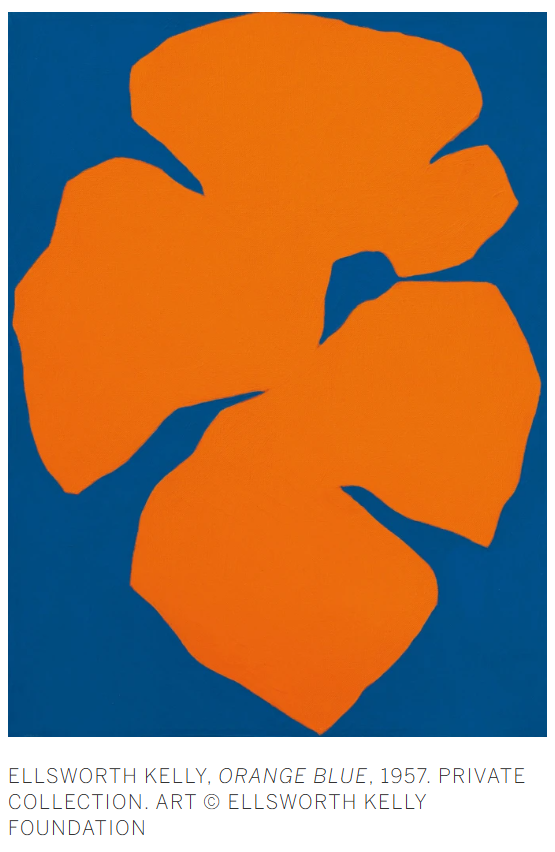
Printed in crystalline cobalt and powdery Carolina blue, the titular flowers float, creating an intense juxtaposition against the twisting blades of emerald grass beneath them. Distinguished by its exceptional provenance, Flowers comes from the esteemed collection of patron and philanthropist Beverly Grossman; for more than 60 years, Grossman dedicated her life and work to the advancement of art and education in America and especially in her home city of Minneapolis, where she served as the board chair and life trustee at the Minneapolis Institute of Art and was deeply involved with the Walker Art Center, Minneapolis Orchestra, and Minneapolis Children’s Theatre Company. For Grossman, collecting and philanthropy were inseparable. Art enriched her own life, and she believed deeply in ensuring that others could experience its transformative possibilities as well.
Employing his archetypal appropriation of mass-produced source material, Warhol’s Flowers series draws on a sequence of photographs from the June 1964 issue of Modern Photography. Printed on a glossy fold-out accompanying an article describing the capabilities of different Kodak processors, the original images were repeated to illustrate chromatic variations corresponding to the various chemical processes. The images’ seriality undoubtedly appealed to Warhol’s acute sensitivity to repetition and mechanization. Instead of seizing the original four repetitions, he cropped the hibiscus photo into a square and isolated four blossoms.
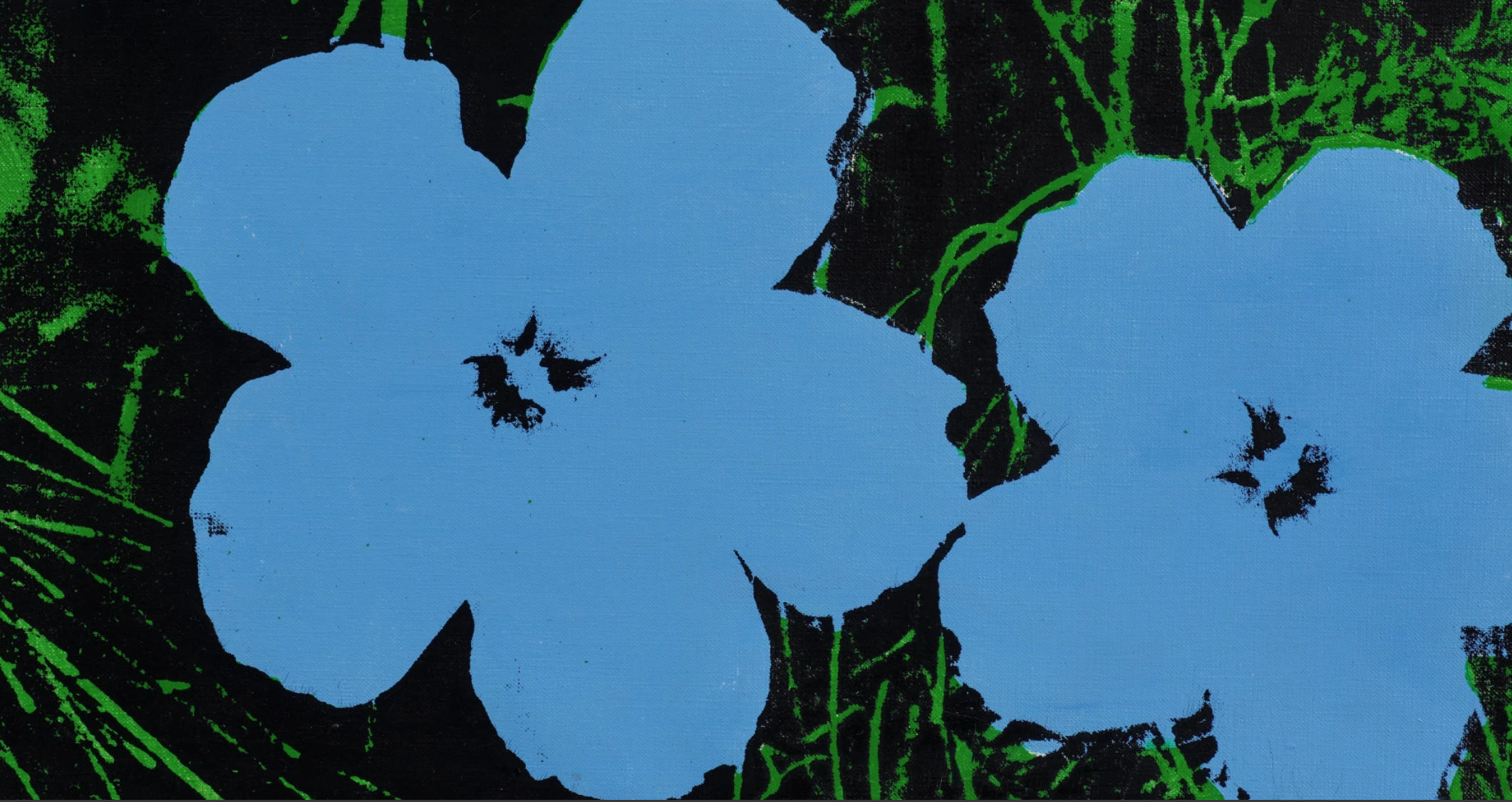
The resulting composition passed through further stages of mediation and manipulation: the photograph was transferred onto acetate, its tonal range adjusted to create a high-contrast template, and the image ultimately translated into a silkscreen. The flowers’ beauty is inseparable from their artificiality; hibiscus are living, ephemeral things, celebrated for their vivid color and delicate forms, yet Warhol removes them entirely from their natural environment. They are first photographed, then reproduced in a magazine, cropped and mechanically translated, before finally being fixed on canvas through the silkscreen process. What remains is not the living flower but its image: permanent, flattened, and endlessly reproducible. In this transformation, Warhol introduces a subtle tension between beauty and mortality. The flowers appear exuberant and life-affirming, yet they have already been separated from the processes of growth and decay that give a living organism its transience. Their permanence is therefore achieved precisely through their conversion into an artificial image.
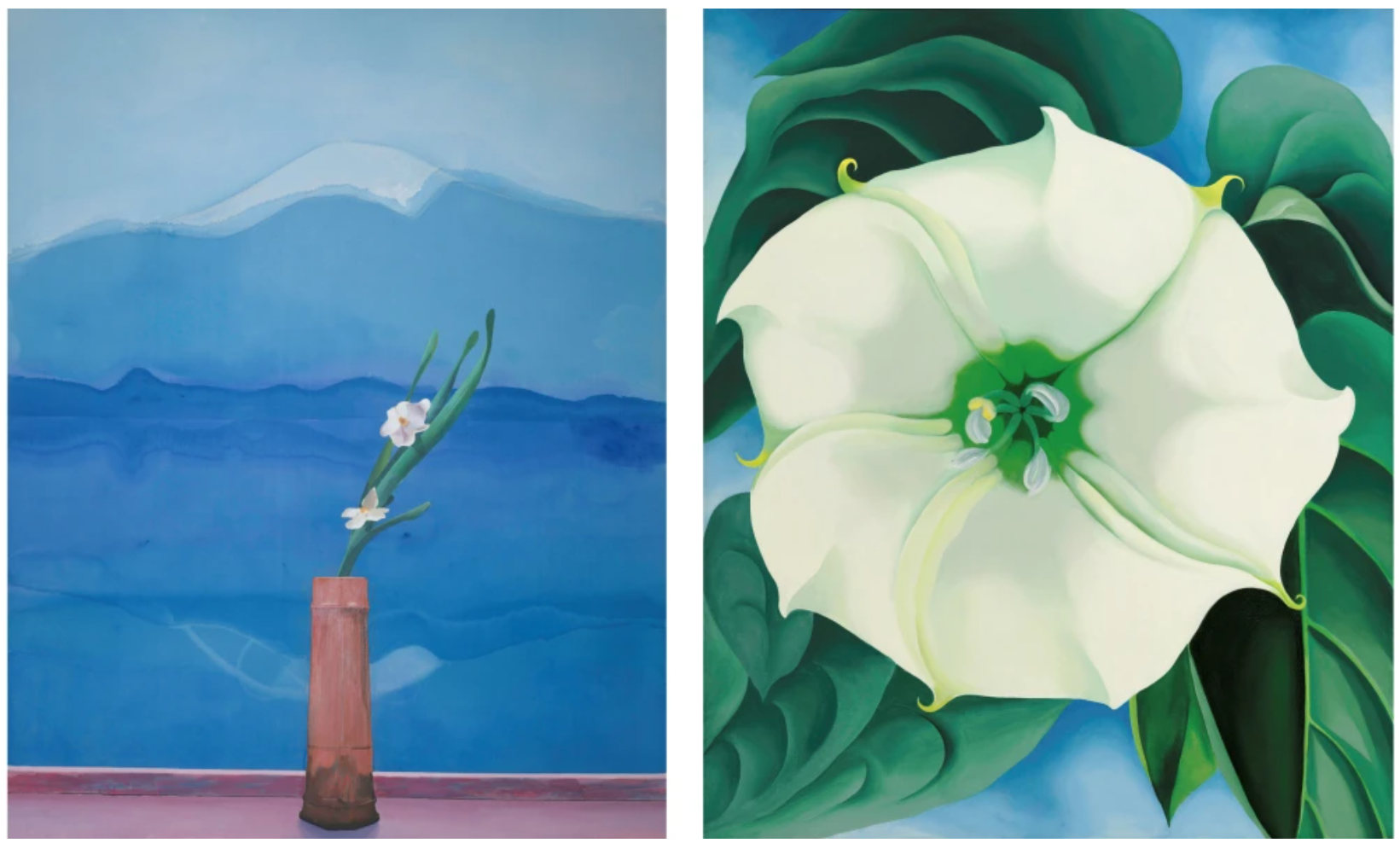
Left: David Hockney, Mount Fuji and Flowers, 1972. The Metropolitan Museum of Art, New York. Image © The Metropolitan Museum of Art / Art Resource, NY. Art © 2026 David Hockney.
Right: Georgia O’Keeffe, Jimson Weed/ White Flower No.1, 1932. Private Collection. Sold at Sotheby’s New York in November 2014 for $44.4 million. Art © 2026 Georgia O’Keeffe Museum / Artists Rights Society (ARS), New York
The Flowers series seemingly distances itself from the morbidity and tragedy of Warhol’s previous Death and Disaster series, which exploited shock photography of car crashes, suicides, and the electric chair. In their decadent palette and ostensibly decorative aesthetic, Warhol also seems to borrow from the Modernist innovations of Henri Matisse, who in La Gerbe considered the floral subject as a vehicle for chromatic exploration and formal abstraction; as Gerald Malanga observed, “With the Flowers, Andy was just trying a different subject matter.
Market Precedent: Andy Warhol’s Flowers
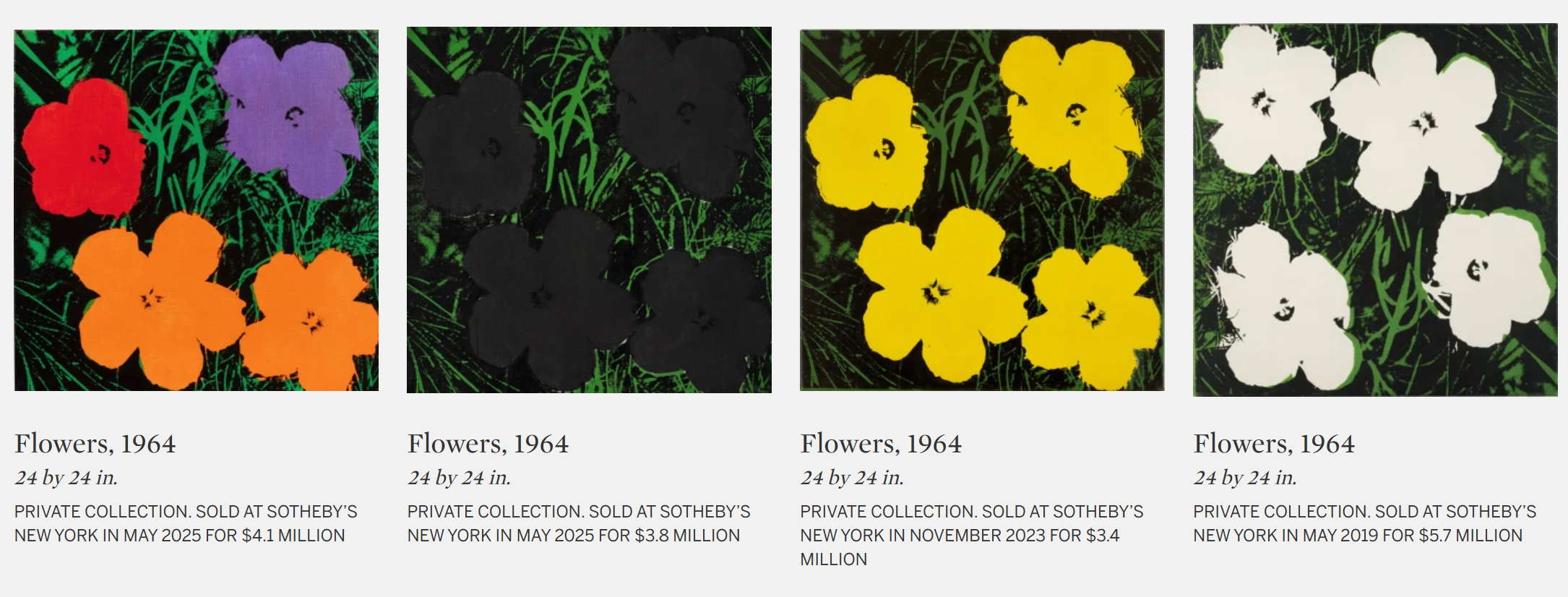
In a funny way, he was kind of repeating the history of art. It was like, now we’re doing my Flower period! Like Monet’s water lilies, Van Gogh’s flowers, the genre,” (Gerard Malanga quoted in: David Dalton and David McCabe, A Year in the Life of Andy Warhol, New York 2003, p. 74). Yet the hibiscus motif is laden with tragedy that permeates Warhol’s entire oeuvre. Hibiscus flowers signify beauty, especially the fleeting nature of beauty and fame, a symbolic meaning Warhol wouldn’t have missed.
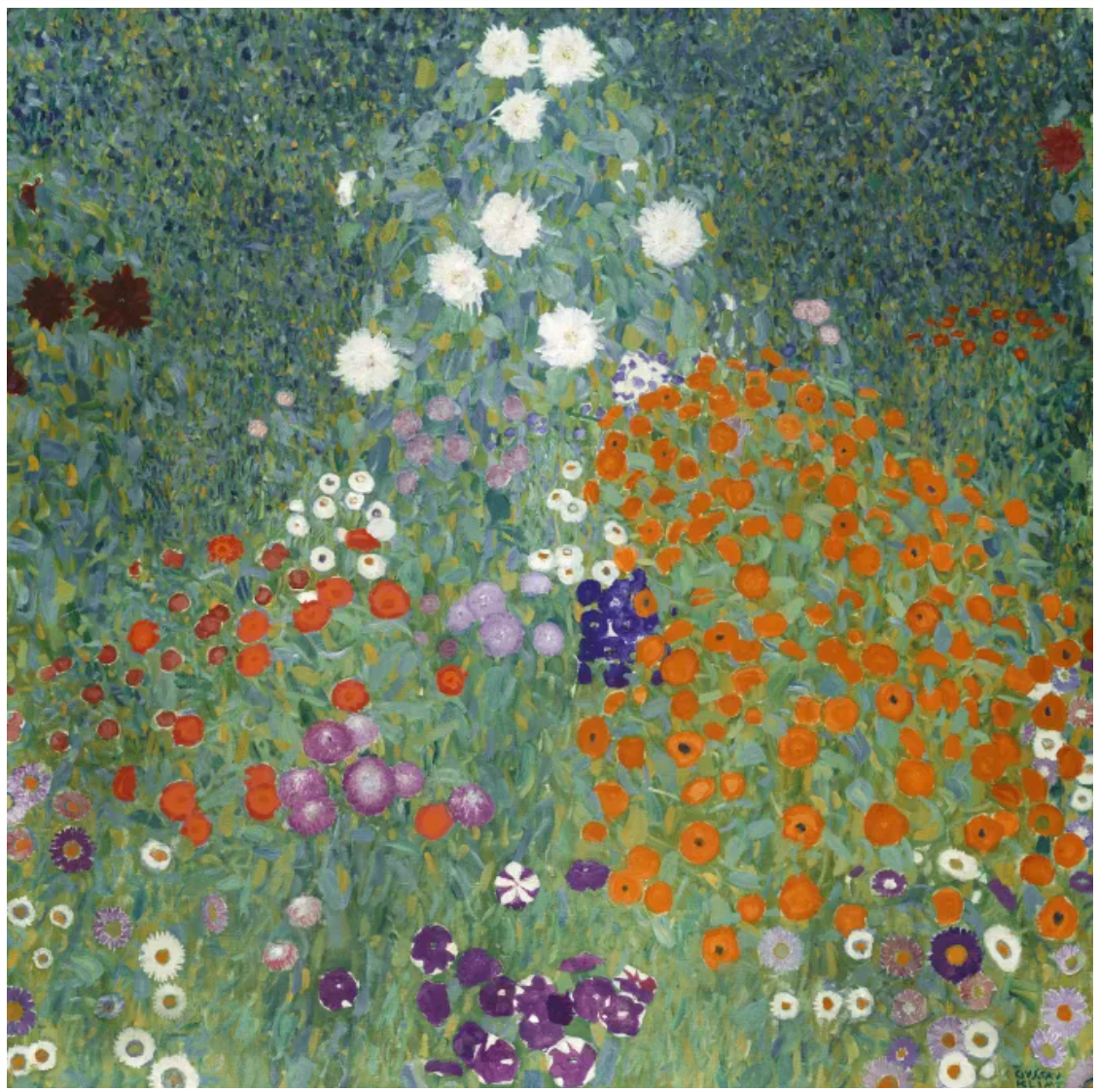
Gustav Klimt, Flower Garden, 1905-07. Private Collection. Image © Christie’s Images / Bridgeman Images
Representing Warhol’s most enduring concerns, Flowers transformed the practice of still life painting through its interrogation of death, beauty, and mass production. A centuries-old motif is extracted from a contemporary photographic source, cropped, mechanically reproduced, saturated with artificial color, and returned to painting through crisp screen and rich pigment. The series remains exceptionally influential, capturing an essential moment in the ignition of the key debate of appropriation for the postmodern era.
Aretha Franklin, circa 1986
Aretha Franklin, circa 1986
The Clive Davis Collection
Christie’s New-York: 17 November 2026
Estimated: USD 2,000,000 – 3,000,000
MINIMUM PRICE GUARANTEE
ANDY WARHOL (1928-1987), Aretha Franklin | Christie’s
ANDY WARHOL (1928-1987)
Aretha Franklin, circa 1986
Acrylic and silkscreen ink on canvas
40×40 inches (101.6 x 101.6 cm)
Stamped with the Andy Warhol Foundation for the Visual Arts, Inc. stamp (on the reverse)
Stamped with the Estate of Andy Warhol and with the Andy Warhol Foundation for the Visual Arts, Inc. stamps
Numbered indistinctly ‘PO.50.011’ (on the overlap)
Numbered again ‘PO.50.011’ (on the stretcher)
ith fame itself as his favored subject, Andy Warhol turned America’s most recognizable faces into the defining images of the decades. Executed in 1986, during the final year of his life, Aretha Franklin is Andy Warhol’s vibrant portrait of the “Queen of Soul,” twice named by Rolling Stones magazine as the greatest singer of all time, and serves as a fitting culmination of this lifelong fascination with celebrity and its role in the American imagination.
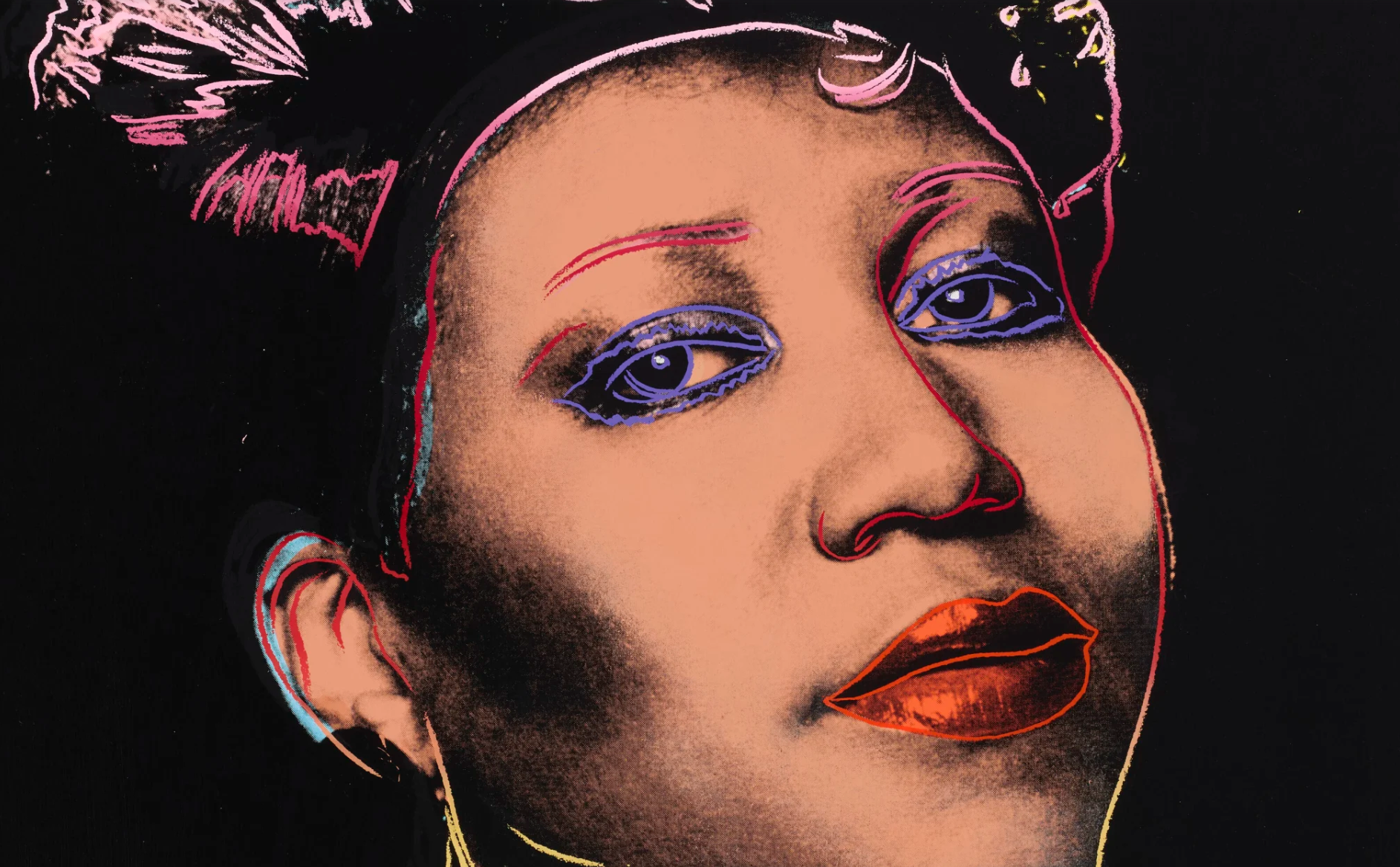
The painting comes from the collection of the late Clive Davis, the legendary record company executive who, after a period of declining sales, propelled Franklin back to the top of the charts in the 1980s. This portrait was used as the cover art for Franklin’s 1986 comeback album Aretha. It not only captures the exuberance of the music business in the 1980s but brought to one of the greatest singers of all time a fresh relevance among a new generation of fans.
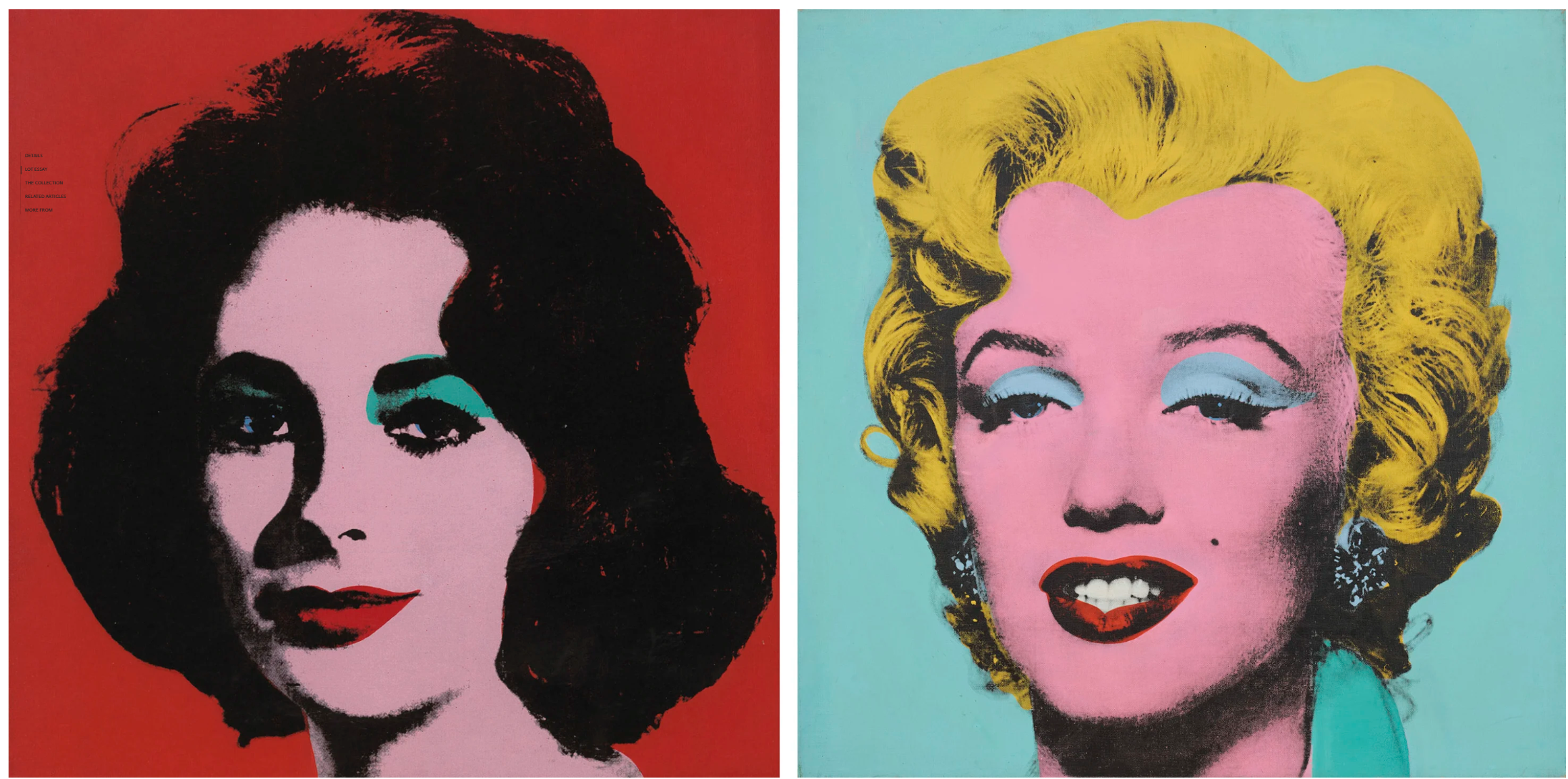
Left: Andy Warhol, Liz #6, 1963. San Francisco Museum of Modern Art. © 2026 The Andy Warhol Foundation for the Visual Arts, Inc. / Licensed by Artists Rights Society (ARS).
Right: Andy Warhol, Shot Sage Blue Marilyn, 1964. Sold at Christie’s New York, 9 May 2022, for $195,040,000. © 2026 The Andy Warhol Foundation for the Visual Arts, Inc. / Licensed by Artists Rights Society (ARS).
Executed at a commanding 40 x 40 inch canvas, Aretha Franklin presents a dazzling portrait of the singer. Gazing confidently over her shoulder, Franklin engages directly with the viewer, her dark eyes framed by an electric highlight of purple eyeshadow, while her lips are rendered in brilliant cherry red. Her flawless skin is depicted with a high degree of chiaroscuro, unusual for Warhol’s silkscreens, but a clear demonstration of the highly sophisticated nature of his technique at this late stage of his career. Befitting rock-and-roll royalty, Franklin’s face is crowned with a Technicolor rendition of her famously coiffured hair. In addition to its highly sophisticated use of color, Aretha Franklin is also celebrated for Warhol’s use of “neon” highlights that accentuate the singer’s facial features. These lines not only define her elegant silhouette, but also delineate various devices that frame her face such as the diamond shaped earring suspended from her right ear. The result is an electric rendition of a major cultural icon in the manner of his early portraits of Marilyn Monroe and Elizabeth Taylor, but in the dazzling mode of the headiest days of the 1980s.
Andy Warhol’s Album Covers Across the Decades
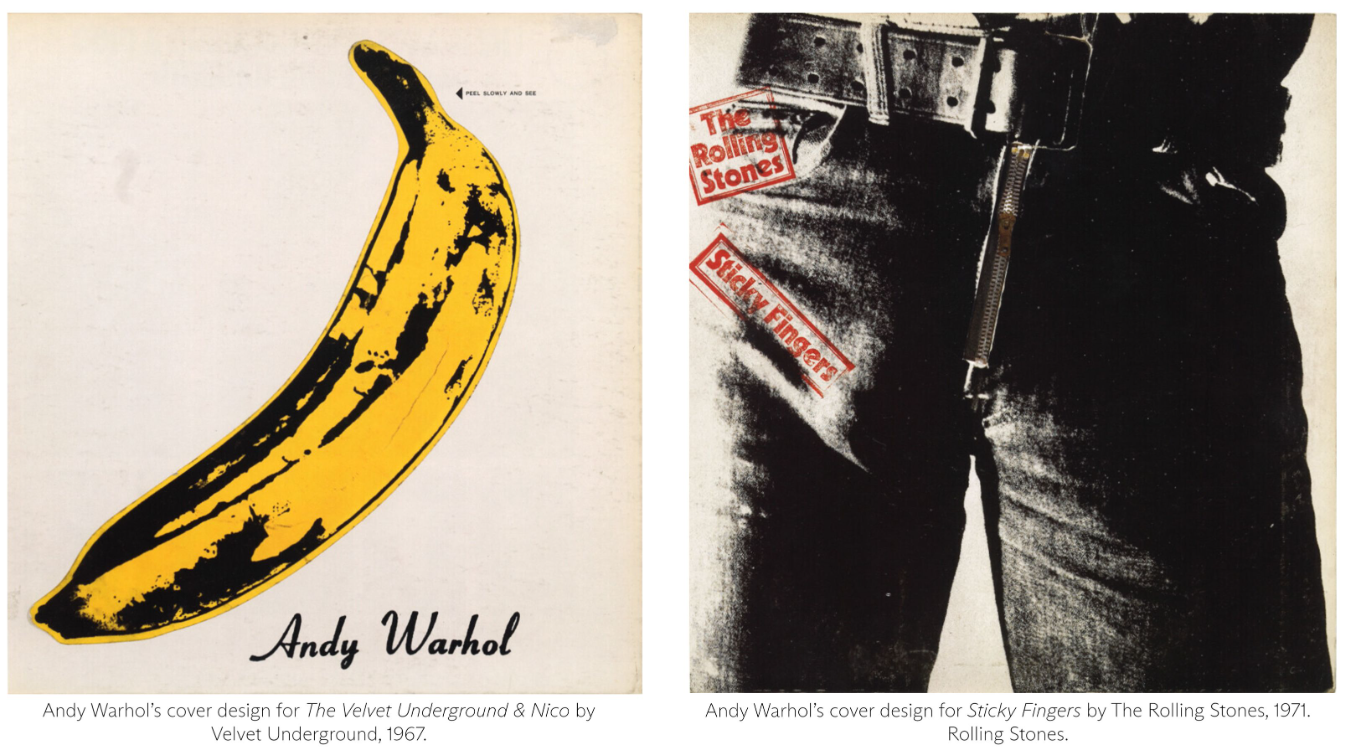
Warhol’s portrait was most famously used as the cover art for Franklin’s 1986 album Aretha. Released by Arista Records during a decade long collaboration with the legendary record company executive Clive Davis, it marked a highpoint in the late-career resurgence that the singer experienced while working with Davis. The record producer had known Warhol ever since he signed Lou Reed and Patti Smith (Warhol had managed Reed’s band The Velvet Underground in the 1960s) and was a frequent visitor to Studio 54 where the two would often bump into each other. After a particularly convivial lunch with Andy and Bob Colacello, during which time Davis enthralled Warhol with the latest gossip from the music world, Davis broached the subject of producing a portrait of Franklin. Andy immediately agreed and eventually it was finished to the delight of all parties: “Both Aretha and I loved it” (C. Davis & A, DeCurtis, The Soundtrack of My Life, 2013, p. 285). However, despite it being used as the cover art for such a highly successful album, Warhol passed shortly after it was made, rendering the future of the painting uncertain. Despite several attempts over the years, Davis remained unsuccessful in acquiring the painting until he finally purchased the work a number of years ago. It has remained in his private collection ever since, where the piece served as a monument to two friendships and a brilliant contribution to music that defined a generation.
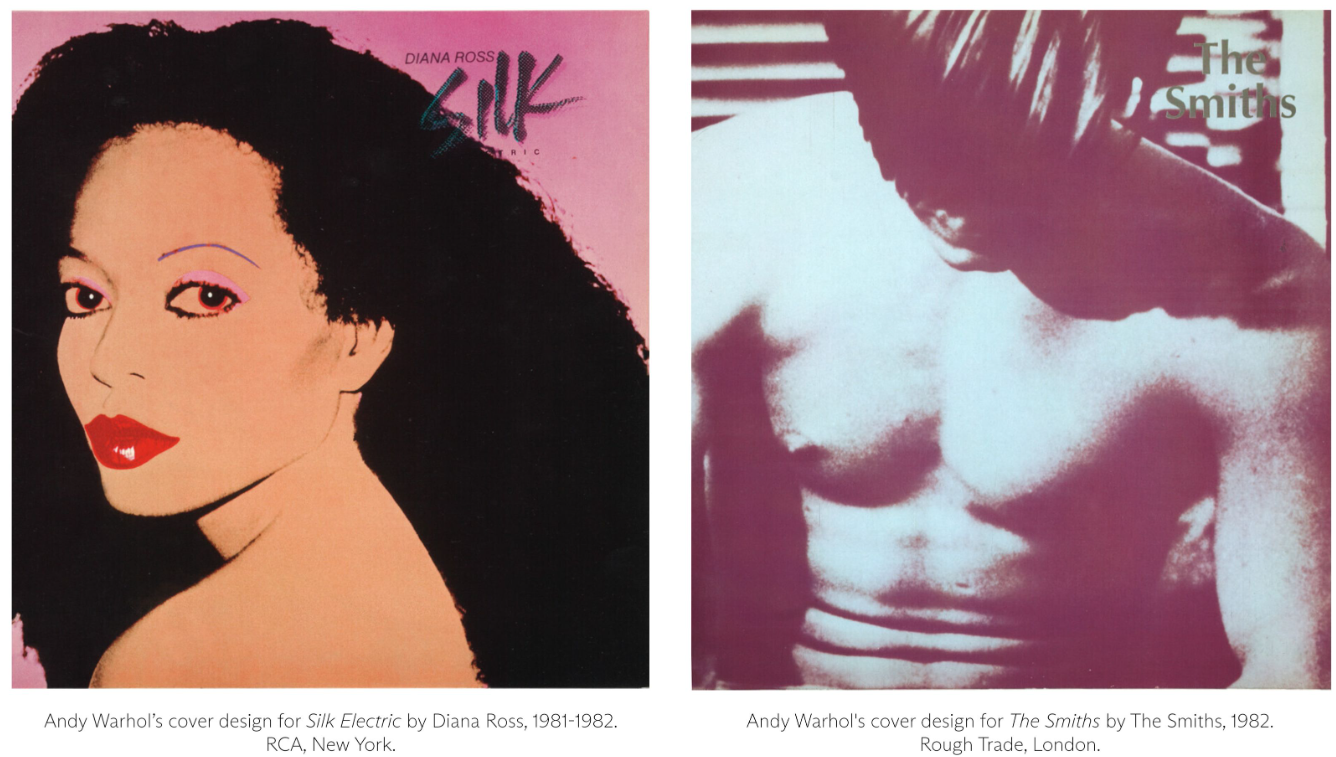
Clive Davis was one of the most important and influential figures in the music industry of the last fifty years. One of the few non-performers in the business to become a household name, Davis rose from a midlevel legal position at Columbia Records to become the man behind some of the biggest stars in the world including Whitney Houston and Barry Manilow. Beginning in the 1960s he took Columbia Records into the rock era signing artists such as Janis Joplin. Later at Arista Records and the J Records label, he championed R&B acts such as Alicia Keys and Jennifer Hudson. He was one of the first record company executives to recognize the importance of the emerging hip-hop, and was responsible for major career revivals for Carlos Santana and Rod Stewart, with their albums selling millions.
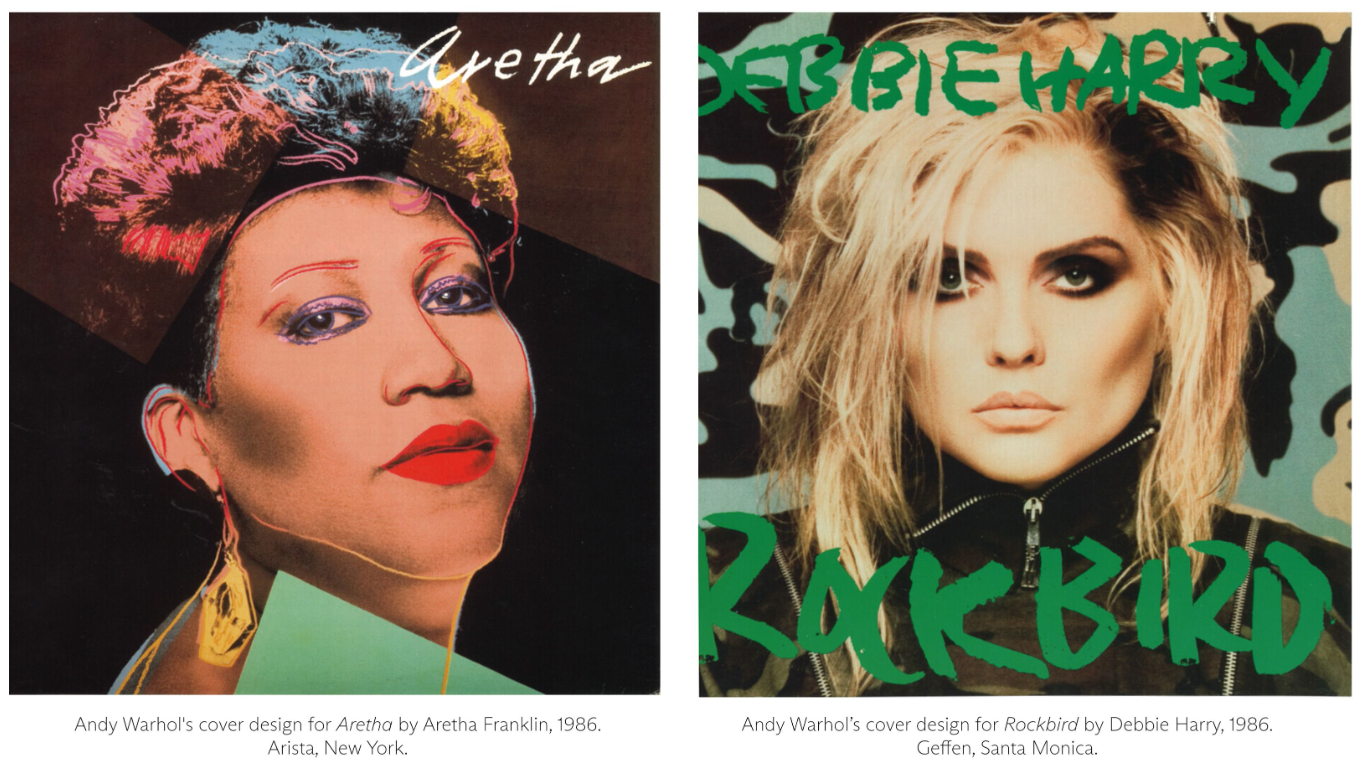
But it was perhaps with Aretha Franklin that he had his greatest impact, with the two sharing a historic 40-year professional collaboration and deep friendship. Franklin joined Columbia Records in 1960, but the label initially struggled to identify the musical setting best suited to her immense talent. After recording a series of jazz, pop, and R&B albums, she left Columbia in 1967 and signed with Atlantic Records, where, under the guidance of Jerry Wexler, she found her artistic footing and produced a remarkable succession of recordings that established her as the undisputed Queen of Soul. After Wexler left Atlantic in 1975, Franklin began working with Quincy Jones and Curtis Mayfield, but never quite reached the level of success she had achieved at Atlantic. With her career not moving in the direction she wanted, and after seeing the success that Davis had achieved with Dionne Warwick, Franklin reached out to Davis to ask if he might be interested in working her too. She was, as she explained, not looking for a new record deal, or a new label; she was looking for a new creative partner.
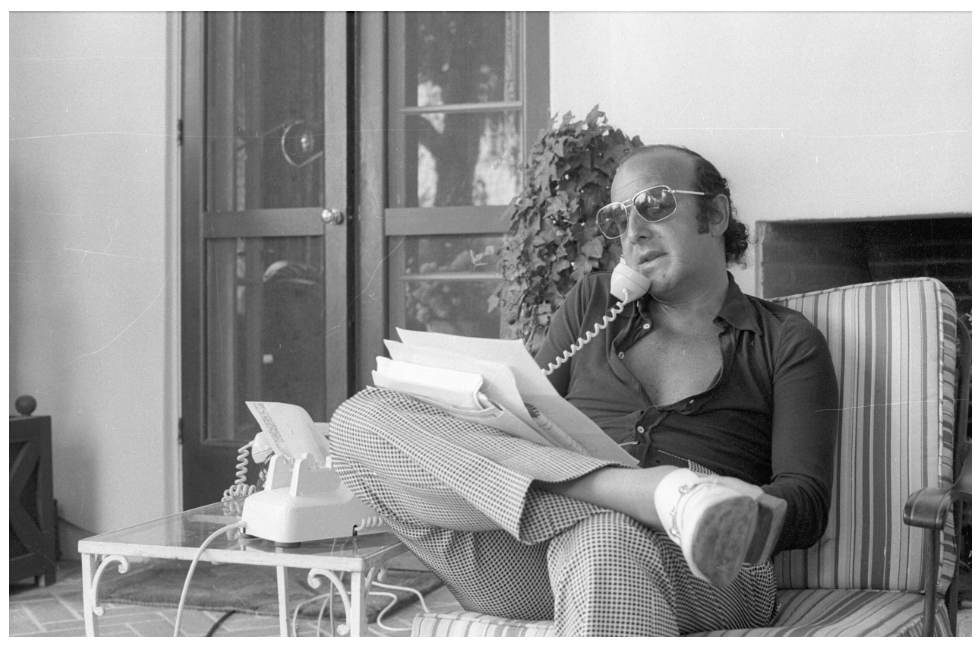
Clive Davis, 1960. Photo: Michael Ochs Archives / Getty Images.
That partnership revitalized Franklin’s commercial fortunes and introduced her work to a new generation of fans, with Davis summing up his reasons for wanting to work with her thus: “Her singing combines incomparable power and range with the spiritual fervor of gospel, the grit of the street, and the passion and technical facility of opera…she was quite simply the best singer in the world” (C. Davis & A, DeCurtis, The Soundtrack of My Life, 2013, p. 280). Working with Davis, in 1980 Franklin released “Aretha,” followed a year later with the album “Love All the Hurts Away,” for which she won her first Grammy since her 1974. A further nine albums followed, with Davis helping to guide Franklin with such hits as “Sisters Are Doing it for Themselves,” her 1985 duet with Annie Lennox, and “I Knew You Were Waiting for Me” with George Michael. This was also the period during which she was inducted into the Rock and Roll Hall of Fame (the first woman to be so honored) and awarded a Grammy Lifetime Achievement Award. Although their musical achievement together were great, it was his friendship with Franklin that Davis most treasured. “She is a great friend, and as extraordinary as our professional partnership has been to me, we have shared just as many good times and wonderful laughs together on a personal level. She is funny, she laughs just as hard when she is the butt of the joke as when she’s putting one over on you. She’s simply a complete delight” (C. Davis & A, DeCurtis, The Soundtrack of My Life, 2013, p. 290).
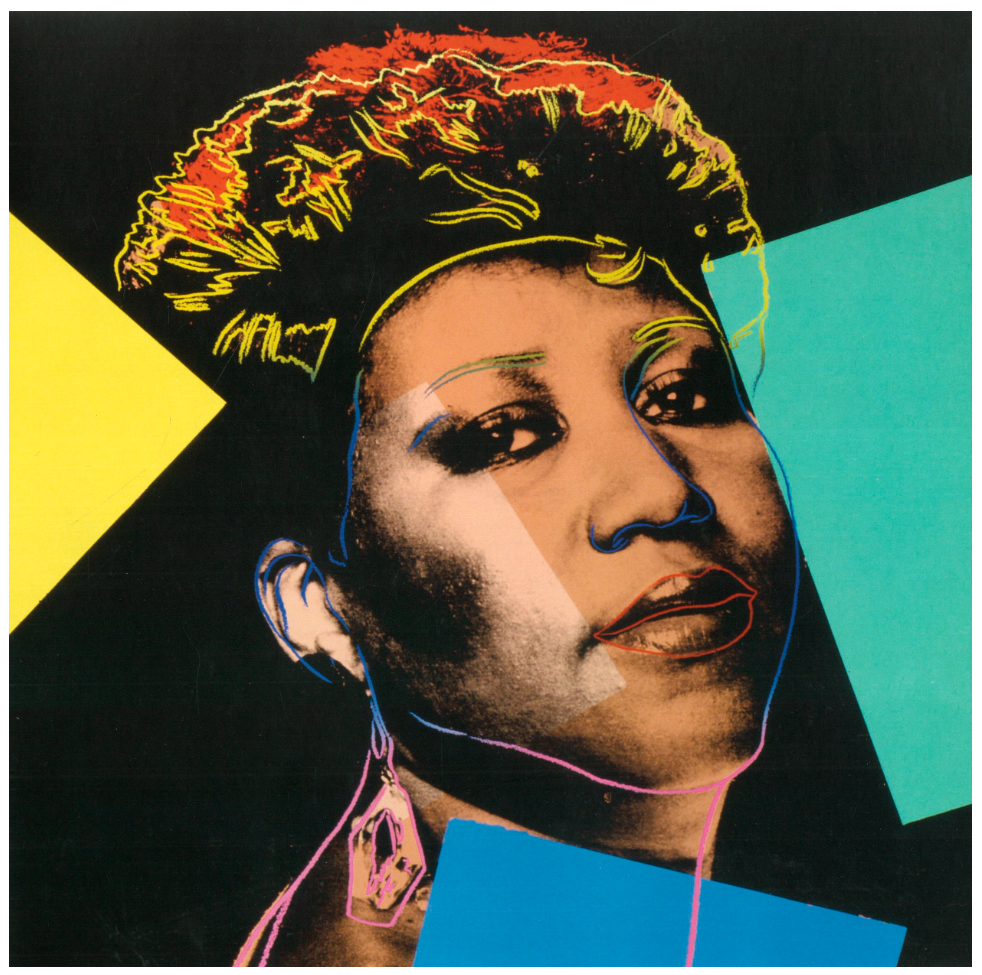
Andy Warhol, Aretha Franklin, circa 1986. Andy Warhol Museum, Pittsburgh.
© 2026 The Andy Warhol Foundation for the Visual Arts, Inc. / Licensed by Artists Rights Society (ARS).
This remarkable portrait unites three figures who played a defining role in shaping the cultural landscape of the late twentieth century. As a singer, songwriter, and performer, Aretha Franklin transformed American music, while Clive Davis helped introduce her artistry to a new generation through one of the most successful late-career revivals in recording history. In turn, Warhol immortalized both their achievements through the visual language that made him the foremost chronicler of modern celebrity. Painted during the final year of the artist’s life, Aretha Franklin stands as one of the most significant works from his late portrait practice, combining dazzling color, technical sophistication, and psychological presence. More than a likeness, it is a celebration of enduring fame, artistic excellence, and the extraordinary cultural legacy of three American icon.
Dolly Parton, 1985
Dolly Parton, 1985
Always Dolly: Dolly Parton by Andy Warhol
Sotheby’s New-York: 16 November 2026
Estimated: USD 1,600,000 – 2,500,000
Andy Warhol | Dolly Parton | The Now and Contemporary Evening Auction
ANDY WARHOL (1928 – 1987)
Dolly Parton, 1985
Acrylic and silkscreen ink on canvas
42×42 inches (106.7 x 106.7 cm)
Signed and dated 85 (on the overlap)
Stamped twice by The Estate of Andy Warhol
Stamped by The Andy Warhol Foundation for the Visual Arts
Numbered PO 50.179 (on the overlap)
Unapologetic, glamorous, and charming, Warhol’s Dolly Parton from 1985 stands as one of the most distinctive examples of Warhol’s singular artistic vernacular, transmitting the modern theory of celebrity, image, and media through an iconic American beauty. Dolly Parton occupies a significance beyond simply the society portraits of the 1980s, but rather a portrait of American culture transmitted through a face synonymous with Warhol muses from Marilyn Monroe to Elizabeth Taylor to Brigitte Bardot. One of a limited suite of works from this series, the series’ other colorways are held in the San Francisco Museum of Modern Art, the Crystal Bridges Museum of American Art, and the Andy Warhol Museum.
“I picked up the phone yesterday, and it was Dolly Parton, and she was cute, she said, ‘Hey Andy! You know who this is?’ And I said, ‘Oh God, with that voice…’”
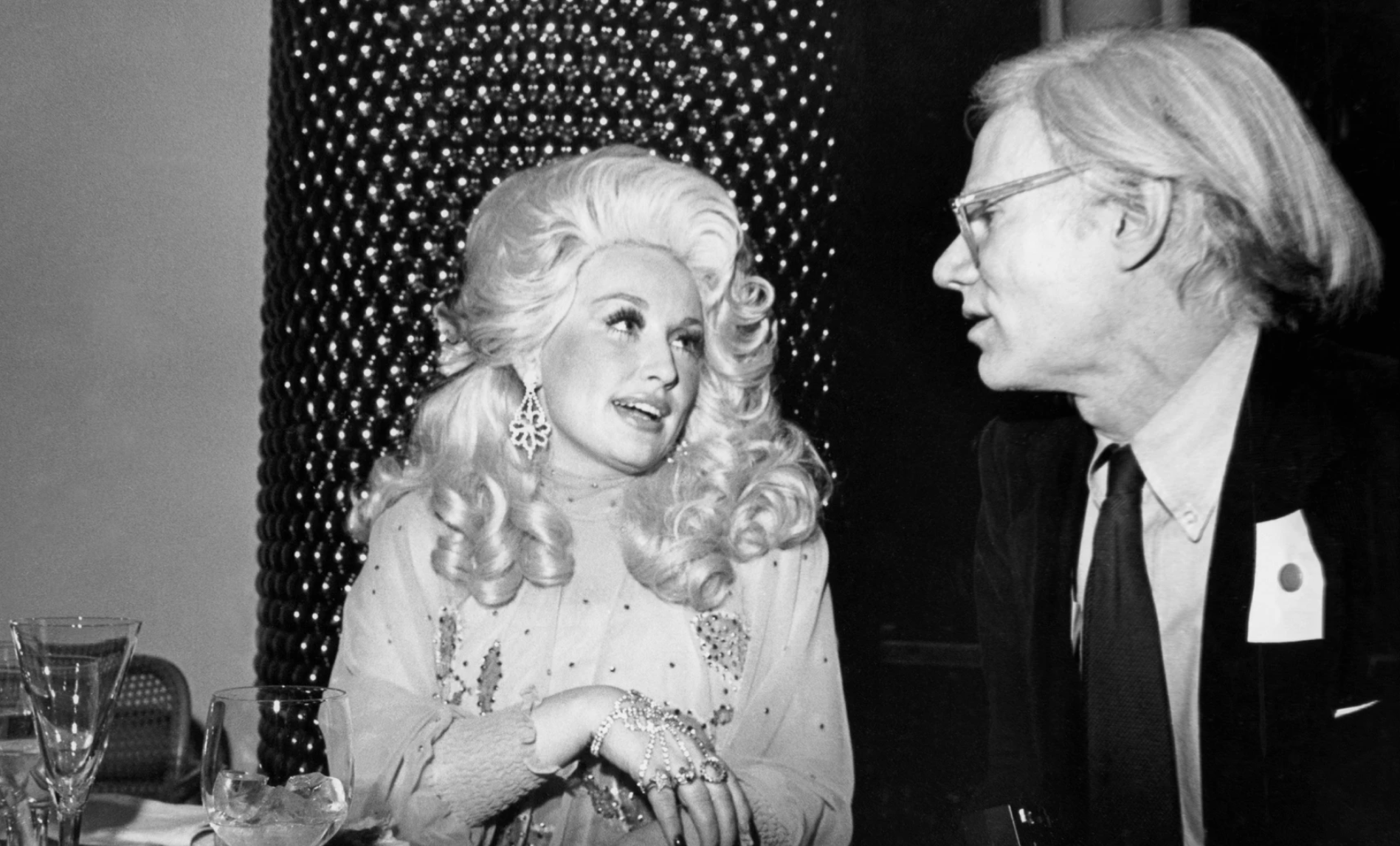
Dolly Parton at dinner with Andy Warhol, 1980. Photo © Stephanie Chernikowski / Contributor
Few names of American culture resonate with such household affection and adoration as Dolly Parton. Country singer, actress, and famous personality, Dolly embodied a culture of authentic celebrity so unique and celebrated in her time and beyond. At the pinnacle of all-American stardom, Dolly was a natural choice for Warhol in his mid 1980s portraits of the icons, tastemakers, and beauties of their day, of which Dolly was all. Executed in a style akin to Marilyn Monroe and Elizabeth Taylor, his signature repetitive silkscreen technique indeed embodies the ever-present sense of Dolly throughout media, philanthropy, and the arts.
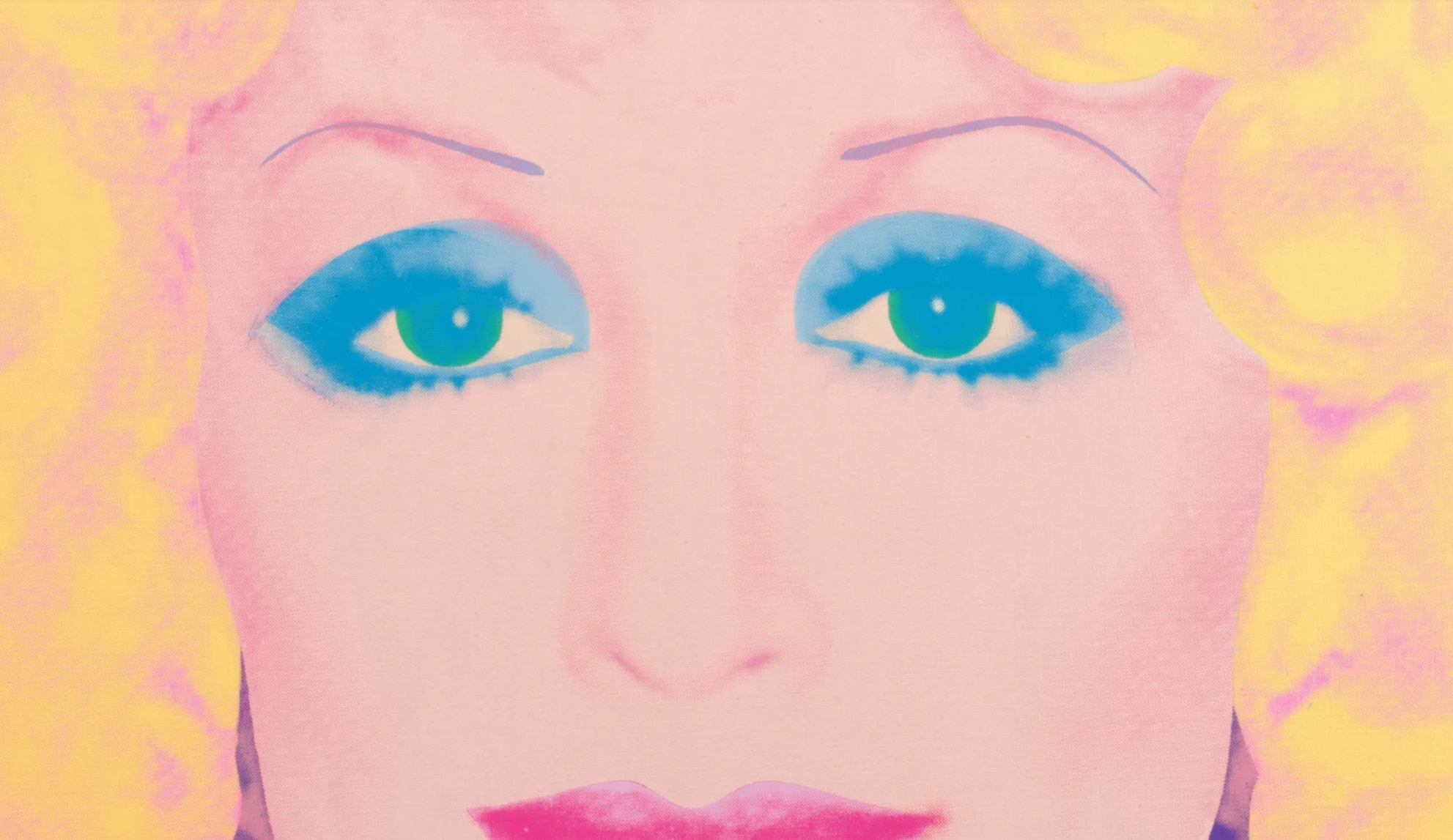
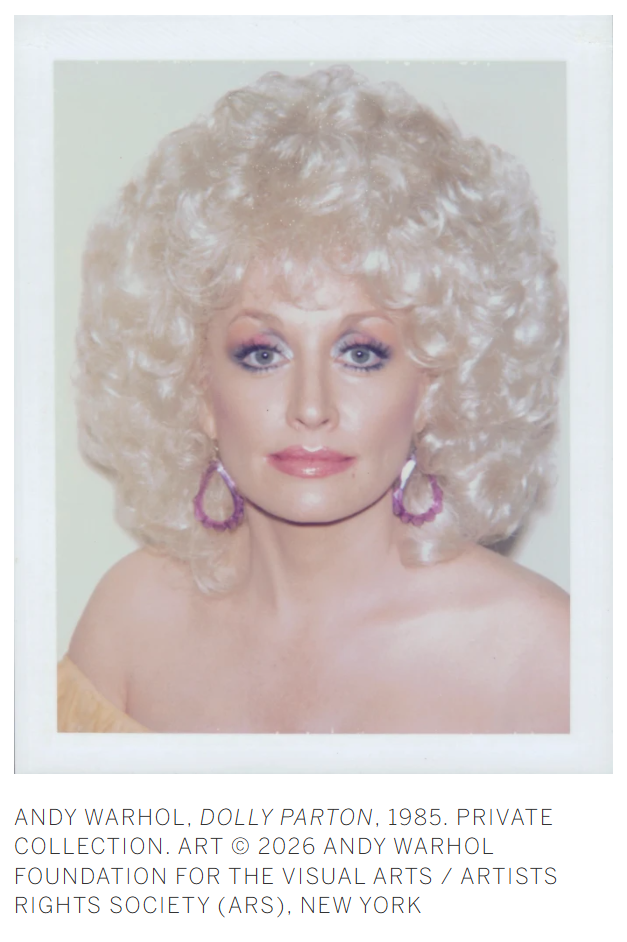
Originally raised in Tennessee, Dolly was shot into fame after playing The Porter Wagoner Show in place of Normal Jean. Eventually signed to the RCA Victor label, Dolly would go on to write chart-topping singles, including Jolene, 9 to 5, and writing I WIll Always Love You for Whitney Houston. Dolly originally commissioned this portrait series as a gift for her manager. As described in Warhol’s diary, Warhol notes, “I picked up the phone yesterday, and it was Dolly Parton, and she was cute, she said, ‘Hey Andy! You know who this is?’ And I said, ‘Oh God, with that voice…’” (Andy Warhol, The Andy Warhol Diaries, New York 1989, n.p.) Warhol and Dolly had developed a friendship in the final years of Warhol’s life as two of the more sober members of the New York Studio 54 scene. Two icons, recognizable from a single name, Warhol and Dolly, found a foil in their shared mission towards extreme aesthetics and an unabashed interest in the superficial nature of Hollywood and fame at large. Both in their respective fields leaned into the possibilities of glamorous, idealized appearances, no better merged than in a singular object uniting both Dolly’s self-constructed image and Warhol’s constructed canvas.
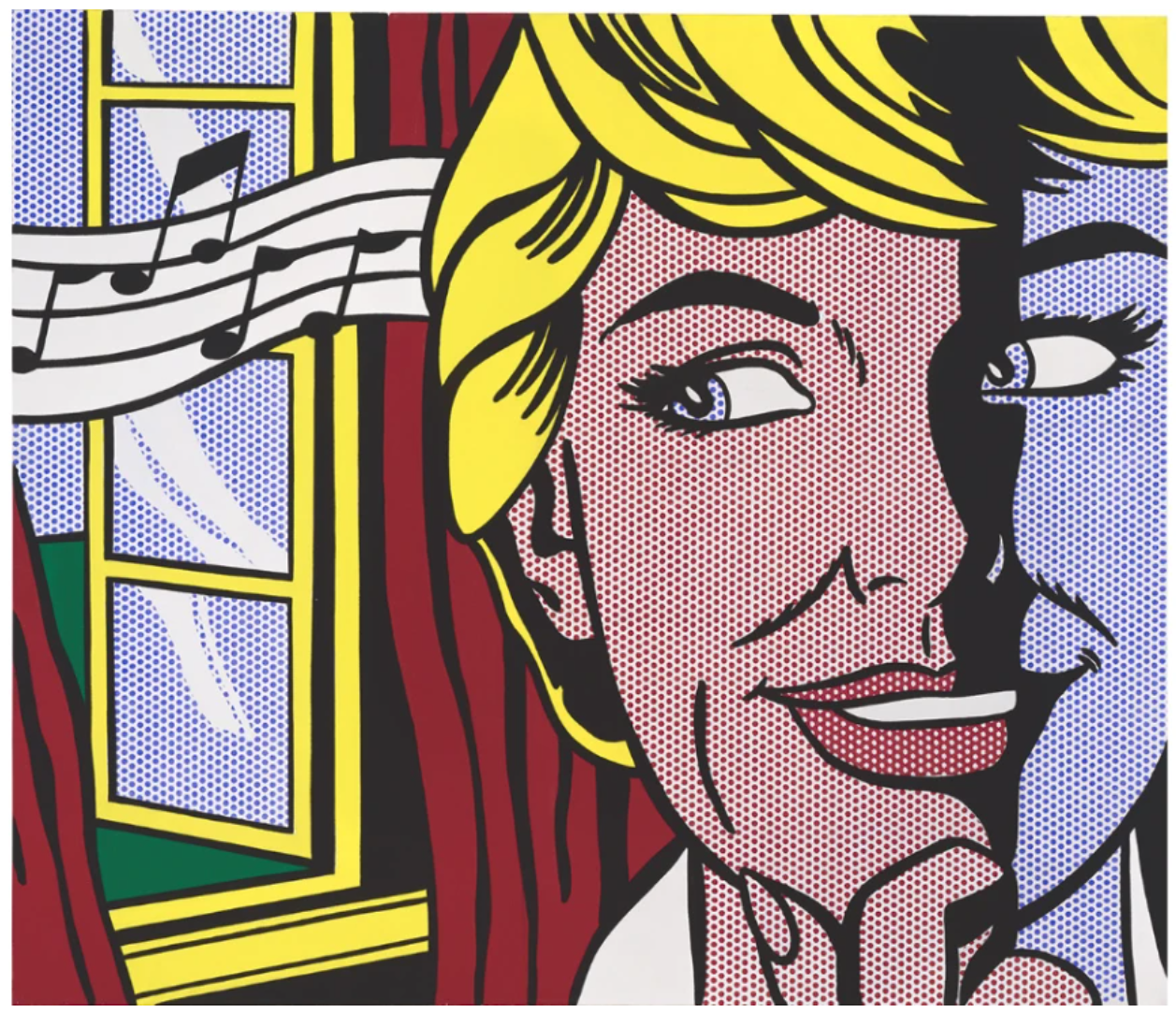
Roy Lichtenstein, Sound of Music, 1964. Private Collection. Art © 2026 Estate of Roy Lichtenstein/DACS
Based on a Polaroid taken at Warhol’s studio, the present work exhibits a distinctly recognizable genre within Warhol’s own oeuvre. Unlike the portraits of the 1970s, which were marked by painterly additions and technical experimentation, in the 1980s, Warhol returned to his iconic, flattened style of pure backgrounds and high-contrast faces. Each defined by a unique pastel palette, Warhol’s Dolly Parton paintings comprise a pale field of light blues and pinks, each one marked with a distinct red lip. Based on two different polaroids of Dolly, the paintings vary in their exposures and the inclusion of secondary colors, some obscuring her earrings or her beauty mark almost entirely, others starkly defining her eyes or eyeshadow in contrast to her thinned eyebrows. The southern blonde is remade in this exceptional example in a halo of pure canary yellow, her cerulean eyes and pearly pink lipstick completing her iconic charming gaze. Dolly’s gaze invokes the daring gaze of some of the most canonical art historical portraits, from Johannes Vermeer’s Girl with a Pearl Earring (c. 1665) to Édouard Manet’s Olympia (1863). In each of these astonishing works, a single theme runs through: the sitter’s eyes that enchant, mesmerize, and perplex. Their gazes seize the viewer with a strength that extends beyond the picture plane.
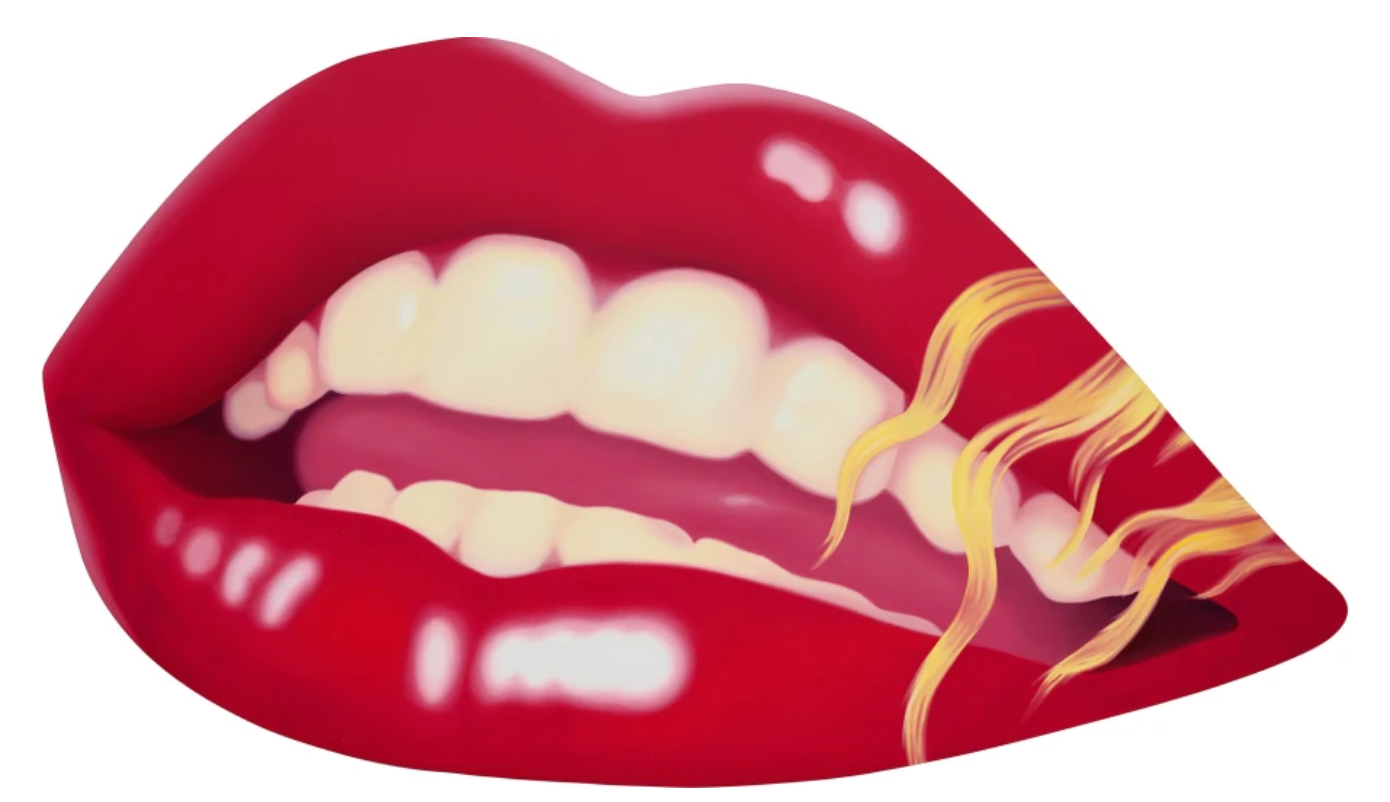
Tom Wesselmann, Mouth #14 (Marilyn), 1967. Private Collection. Art © Tom Wesselmann/Licensed by VAGA, New York, NY
Dubbed the “Queen of Country,” Dolly Parton was an icon and hero of American culture. Born in Pittman Center, East Tennessee, Parton took to music as a toddler, writing and performing her first song at six years old; by ten, she was consistently performing on television. Beginning with her debut album, Hello I’m Dolly in 1967, Parton would go on to become one of the highest-selling artists in American History, releasing 49 studio albums and selling more than 100 million records over a 60-year career. Parton’s influence transcended music, building a brand for herself as the “all-American sweetheart” and becoming a global superstar. Central to her brand and mission as an artist was an intense devotion to service and her community. Parton founded the Dollywood Foundation in 1988 and committed the charity to improving education and literacy in America through targeted programs such as Dolly Parton’s Imagination Library, which has distributed more than 330 million free books to children in need, and the Buddy program, which successfully improved high school dropout rates in participating classes in Sevier County, Tennessee, from 35% to 6%.
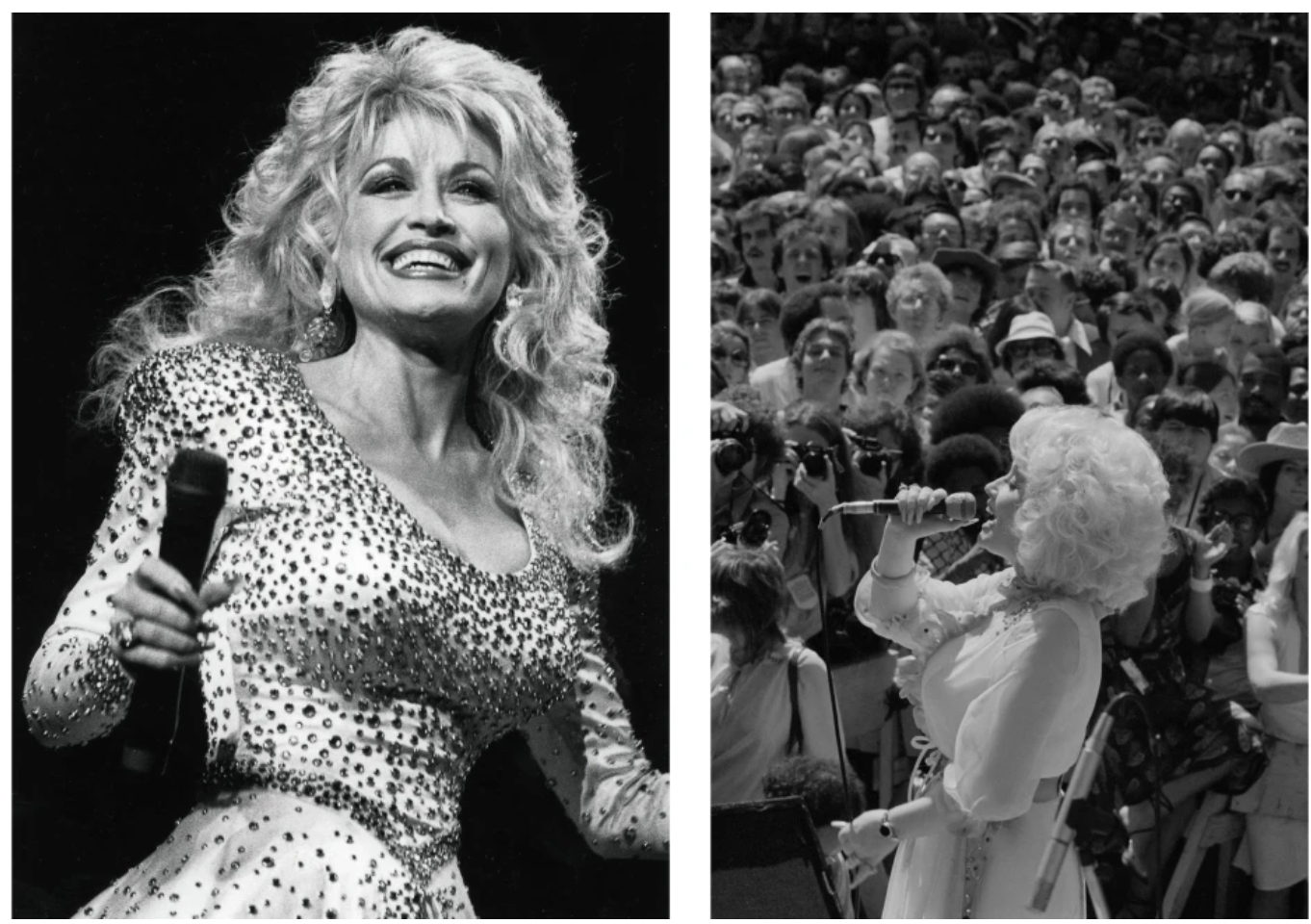
Left: Dolly Parton in the spotlight, c. 1980. Photo by Paul Popper/Popperfoto via Getty Images/Getty Images.
Right: The lunchtime crowd is treated to a concert by Dolly Parton from the steps of City hall, 1978. Photo © Bettmann / Contributor
Without exception, Warhol’s choice of subject was considered and calculated throughout his oeuvre. Warhol’s painting remains an essentially modern articulation of structure and form. Portraits, in particular, held central importance in the artist’s oeuvre. In the 1950s, portraiture was wholly out of fashion in American art. The Abstract Expressionists of the New York art scene reigned supreme. Warhol single-handedly resurrected the genre in the 1960s. His signature style and his famous subjects both hold their own weight in the portraits, creating a blurred boundary between artist and sitter – the viewer is instantly captivated by both. In this particular canvas, Dolly Parton, a familiar face to the public, has been flattened by the flashbulb, and Warhol has retouched reality by pushing his pictorial facts to an extreme. He does, however, maintain a range of human emotions, and the dialogue between public versus private personality of celebrity is still present. The seductive surface is broken down into bold abstract passages; the unarticulated features are nevertheless seared into our mind’s eye with the force of the contrasting positive/negative of his palette. Warhol created his own galaxy of beautiful people and movie stars for the public consumption. The lasting visual power of the optically playful yellow in the present work lies in the charismatic and alluring identity of its subject, the bold directness of its surface allure, and its role as a mirror of its time. Dolly truly achieved the iconic symbolic status of popular culture, and the present portrait reaffirms both her place and Warhol’s place at the apex of celebrity for eternity.
Mao, 1973
Mao, 1973
Shaping Modernity: Property from a Private American Collection
Sotheby’s New-York: 17 November 2026
Estimated: USD 900,000 – 1,200,000
Andy Warhol | Mao | Contemporary Day Auction | 2026 | Sotheby’s
ANDY WARHOL (1928 – 1987)
Mao, 1973
Acrylic and silkscreen ink on canvas
12×10 inches (30.5 x 25.4 cm)
Stamped by the Andy Warhol Art Authentication Board, Inc.
Numbered A108.103 on the reverse
Respledent in color and psychologically arresting in effect, Andy Warhol’s Mao from 1973 stands among the most incisive meditations on image, fame, and power in postwar art. At just 12 by 10 inches, the present work compresses the full force of Warhol’s monumental Mao project into an intimate scale, heightening its unsettling intensity. Against a field of electric blue, Mao’s face emerges in a blaze of ochre and black, while his tunic ignites in sweeping passages of red that verge on abstraction. Set against a vibrant chartreuse ground, Mao Zedong’s unmistakable visage emerges in radiant yellow, animated by sweeping passages of orange and violet that enliven the surface with painterly energy. At once authoritative and unstable, instantly recognizable yet thoroughly transformed, the work epitomizes Warhol’s ability to take one of the most ubiquitous images of the twentieth century and reinvent it through the language of contemporary painting.
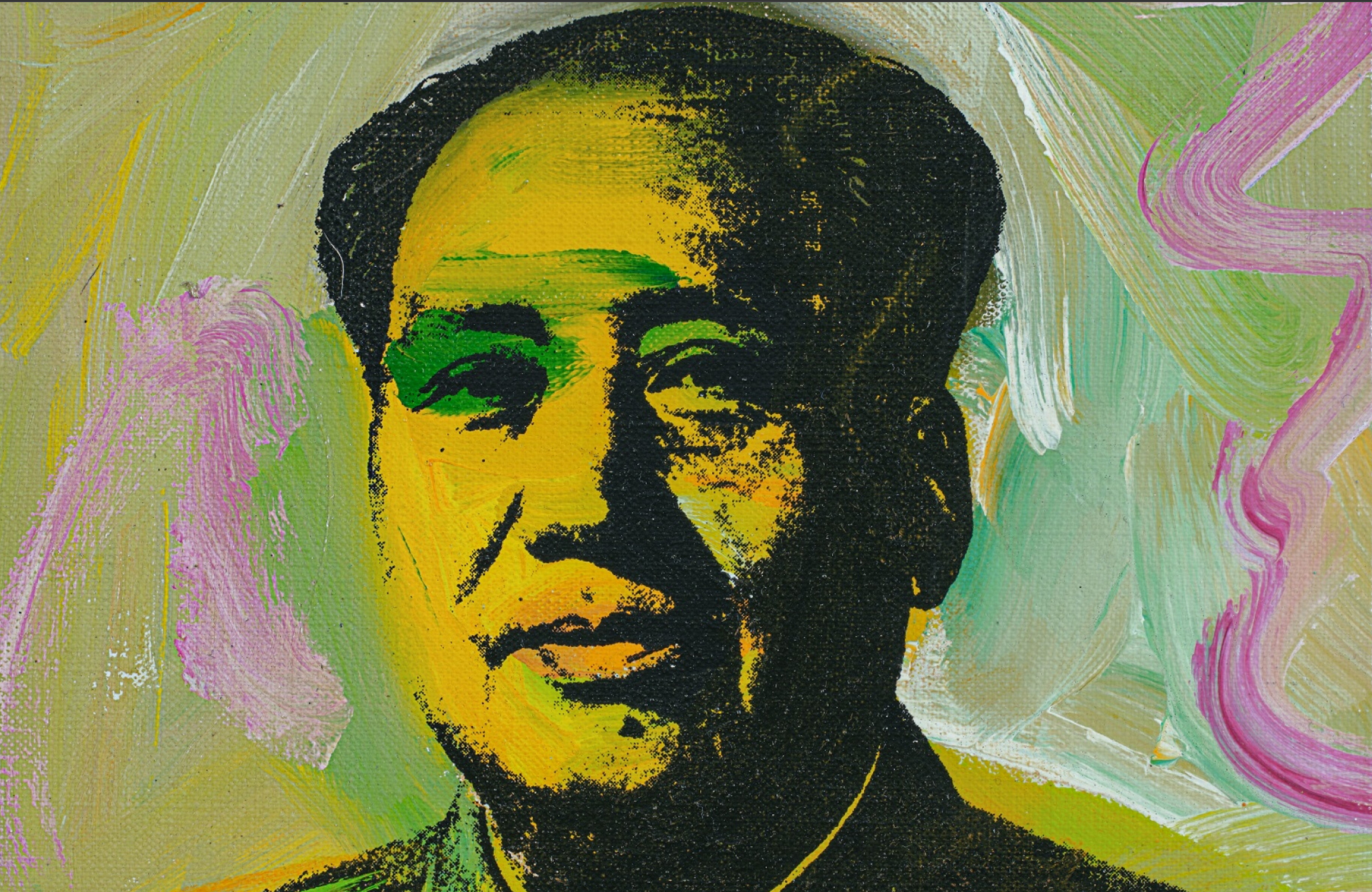
Few twentieth-century likenesses rivaled Mao’s for ubiquity. Reproduced endlessly in schools, offices, public buildings, and on the first page of Quotations from Chairman Mao Tse-tung—the so-called Little Red Book—his official portrait became one of the most extensively circulated images in modern history. If Warhol had already exposed the machinery of celebrity through Marilyn, Jackie, and Elvis, the Mao series carried that inquiry into a different register altogether. Here was a face shaped not by Hollywood or tabloid publicity but by a centrally controlled propaganda apparatus, no less dependent on repetition, idealization, and mass distribution. As curator Kynaston McShine later remarked, “if Warhol can be regarded as an artist of strategy, his choice of Mao as a subject—as the ultimate star—was brilliant. The image of Mao… is probably the one recognized by more of the earth’s population than any other—a ready-made icon representing absolute political and cultural power. In Warhol’s hands, this image could be considered ominously and universally threatening, or a parody or both” (Andy Warhol Retrospective, exh. cat., The Museum of Modern Art, New York, 1989, p. 19). That doubleness—ready-made icon and political threat, surface decoration and ideological weapon—remains the animating tension of the series.
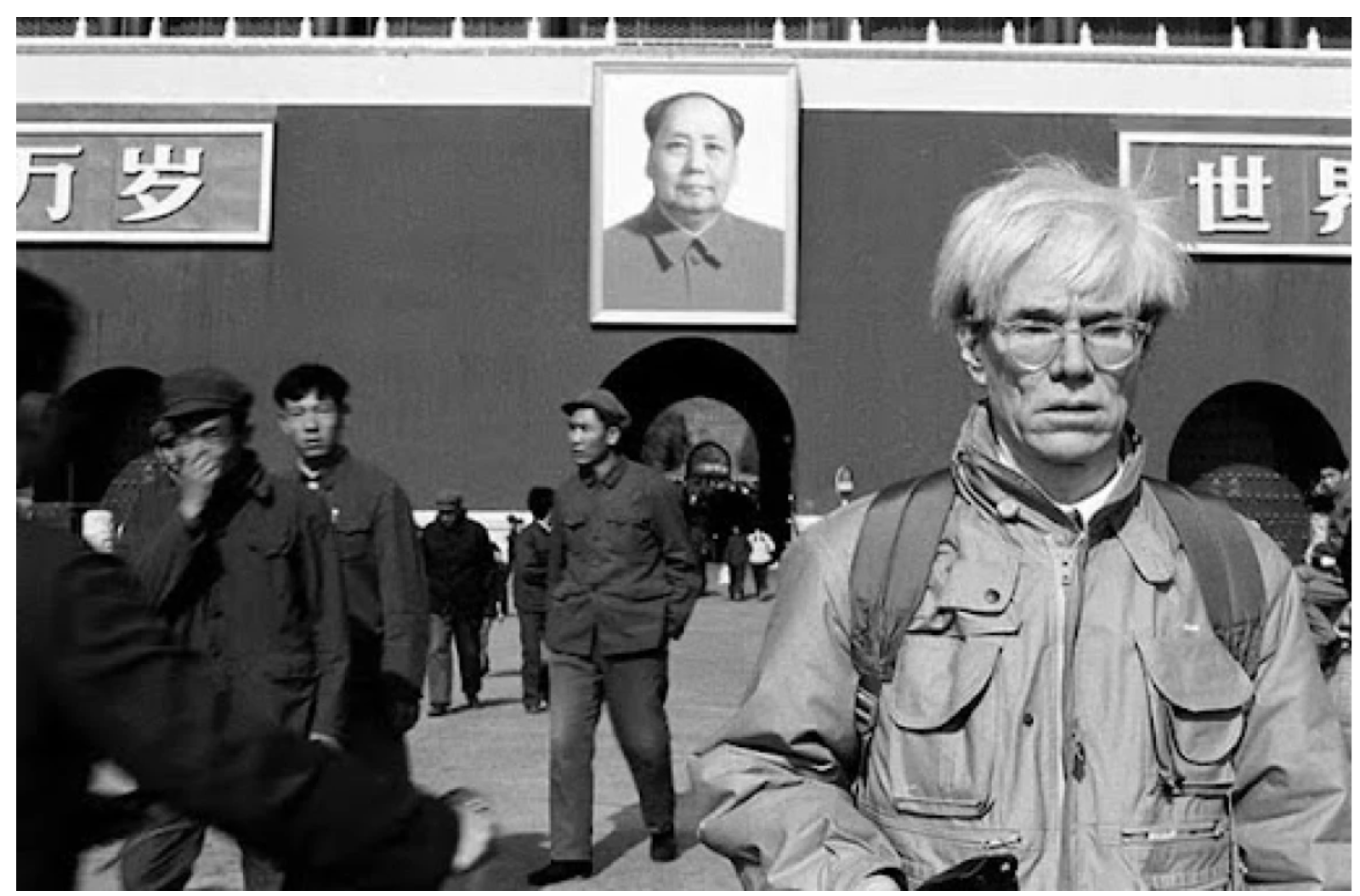
Andy Warhol in front of Tiananmen Square, Beijing, 1982. Image © Christopher Makos, 1982
Conceived at the time of President Nixon’s historic trip to China in February 1972 and developed in its immediate aftermath, the Mao paintings represent Warhol’s return to painting with tremendous force and conceptual brilliance. Bob Colacello famously recalled the genesis of the project in a conversation with Bruno Bischofberger, who encouraged Warhol to paint the most important figure of the twentieth century. Warhol’s response was characteristically precise: “That’s a good idea. But I was just reading in Life magazine that the most famous person in the world today is Chairman Mao. Shouldn’t it be the most famous person, Bruno?” (Bob Colacello, Holy Terror: Andy Warhol Up Close, New York, 1990, p. 111). That distinction—between importance and fame—goes to the core of the series. Warhol was not painting political theory; he was painting the mechanism by which power becomes image and image becomes fame.
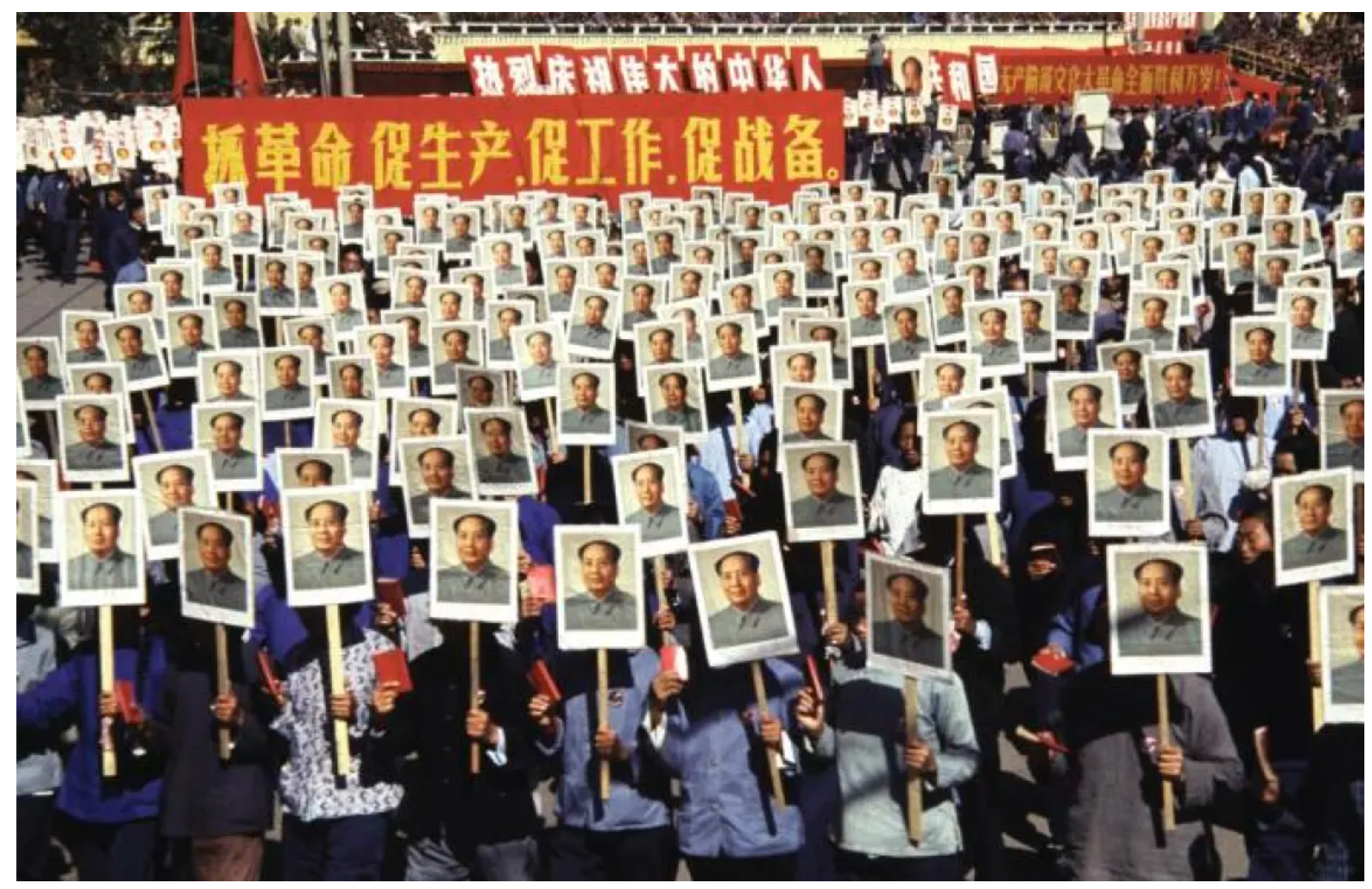
Raising Chairman Mao’s Portrait during the Cultural Revolution in Beijing, China, 1949. Photo by ChinaFotoPress via Getty Images
By 1973, the Mao project had already become one of the most ambitious undertakings of Warhol’s career. Between 1972 and 1973, he produced 199 paintings across five scales and five related groupings, ranging from the colossal Giant Mao canvases, conceived to rival the public authority of the image in Tiananmen Square, to more intimate examples such as the present work. This graduated structure was itself deeply Warholian: the image could be encountered as spectacle, decoration, private possession, or luxury commodity. The 12 by 10 inch format is especially compelling in this regard. It turns an image of state surveillance into an object of intimate contemplation—portable, collectible, almost devotional in scale. If the giant Maos evoke mass politics and public theater, these smaller paintings are sharper, stranger, and in some ways more subversive. They reveal the full audacity of Warhol’s premise: that the supreme image of communist authority could be absorbed seamlessly into the capitalist economy, no more exempt from fashion than a can of Campbell’s soup.
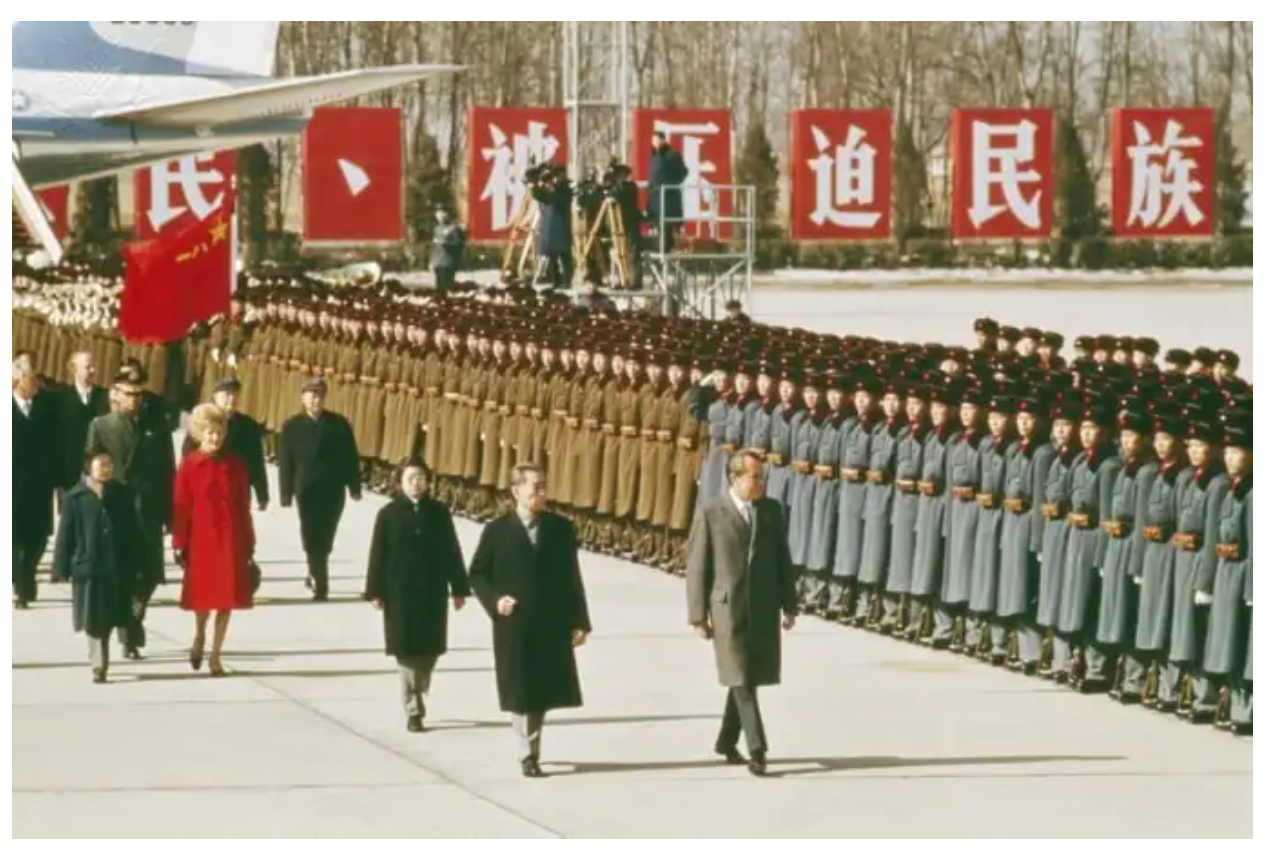
American President Richard Nixon at Beijing airport upon his arrival in China, 1972. Sovfoto / Universal Images Group/Rex/REX USA
Yet the Mao paintings are not compelling only because of their timing or their conceptual acuity; they also mark a decisive shift in Warhol’s handling of paint. If the portraits of Marilyn and Liz in the 1960s often embraced the cold precision of silkscreen, the Maos invited the artist’s hand back into the work with renewed urgency. The present painting demonstrates that shift with particular vividness. Mao’s tunic is dragged across in broad, nervous red sweeps, while the face—split between light and shadow—takes on an almost theatrical instability beneath the authority of the black screen. The result is a charged balance between precise control and free-flowing gesture. The official portrait remains legible, but only just; it has been made unstable, fashionable, and strangely human. In this sense, the Maos radically broke with the hard-edged facture of Warhol’s 1960s paintings and instead invited a more expressionistic hand into the core aesthetic of the work. That stylistic opening would prove crucial to his later oeuvre.
The broader implications of the series are what make it so enduring. The juxtaposition of this mythic, deified image of the communist leader with an art form that fetishized consumerist objects is wonderfully seditious. Warhol recognized that Mao’s portrait already possessed all the characteristics of a brand: ubiquity, legibility, repetition, and unquestioned authority. As he remarked to David Bourdon, “I’ve been reading so much about China. They’re so nutty. They don’t believe in creativity. The only picture they have is Mao Zedong. It’s great. It looks like a silkscreen” (Andy Warhol quoted in David Bourdon, Warhol, New York, 1989, p. 317). Neil Printz and Sally King-Nero have rightly noted that, in this sense, “Mao’s portrait was, in effect, already a Warhol” (The Andy Warhol Catalogue Raisonné: Paintings and Sculpture 1970–1974, vol. 3, New York, 2010, p. 166). Warhol did not invent the commodity status of Mao’s image; he revealed it.
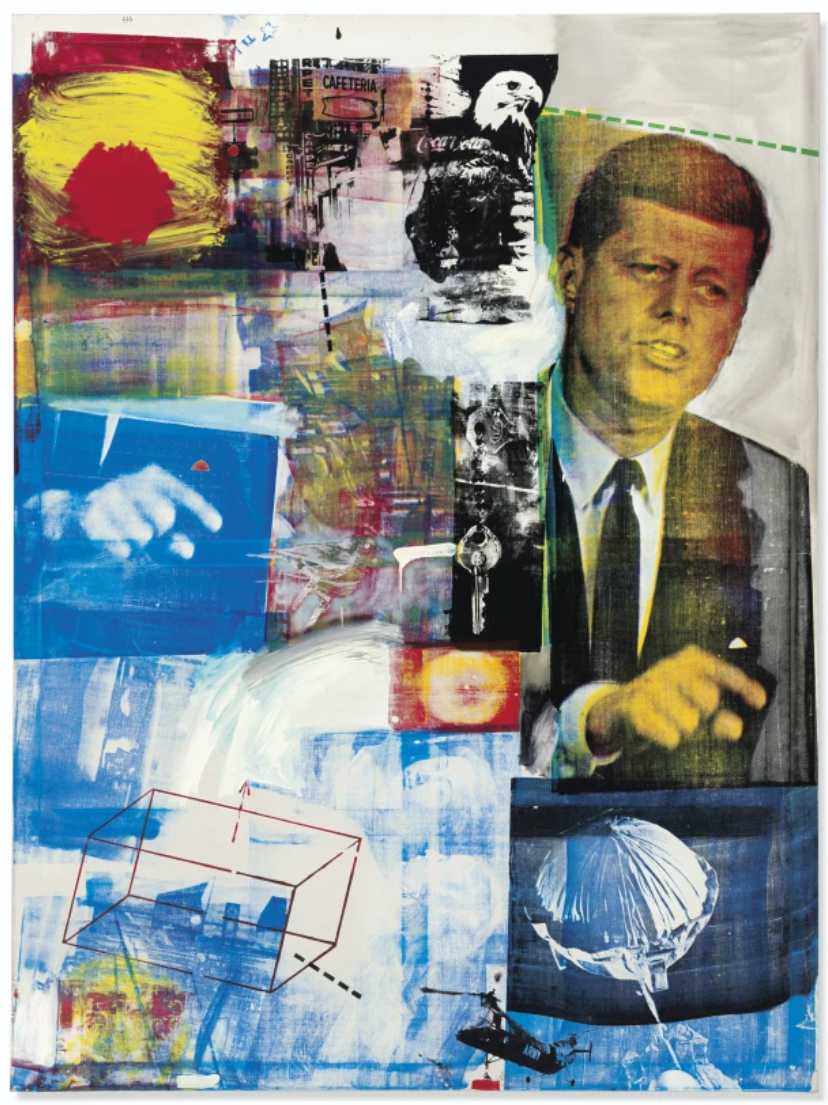
Robert Rauschenberg, Buffalo II, 1964. Private Collection. Art © 2026 Robert Rauschenberg Foundation/Licensed by VAGA, New York, NY
That revelation was recognized almost immediately. From Basel in 1972 to Turin in 1973 and the grand 1974 presentation at the Palais Galliera in Paris, the Mao paintings were greeted as Warhol’s first major new body of paintings since Flowers and as a triumphant painterly return. Installed in sequence and set against Mao wallpaper, they transformed the gallery into an extravaganza of repetition, color, and political daring. These are paintings about authority, certainly—but just as crucially, they are about the conditions through which authority becomes visible, seductive, and endlessly reproducible.
In the present Mao, all of these stakes are condensed with uncommon clarity. Its scale invites intimacy, yet its subject remains unavoidably public. Its brushwork introduces freedom, yet the image remains tethered to the authority of the source portrait. Its color is seductive, yet its political implications remain unresolved. It is precisely that irresolution—between critique and complicity, glamour and menace, politics and pictorial artifice—that gives Warhol’s Mao paintings their enduring force. In the present work, that force is distilled into one of the artist’s most incisive inventions: a portrait in which the machinery of modern power is transformed into the language of modern painting, and in which the image, once seen, cannot be unseen.
Beverly [Six Works], 1982
Beverly [Six Works], 1982
Looking Forward: The Collection of Beverly Grossman
Sotheby’s New-York: 17 November 2026
Estimated: USD 800,000 – 1,200,000
Andy Warhol | Beverly [Six Works] | Contemporary Day Auction | 2026 |
ANDY WARHOL (1928 – 1987)
Beverly [Six Works], 1982
Acrylic and silkscreen ink on canvas
Each: 40×40 inches (101.6 x 101.6 cm)
Signed and dated 82 (on the overlap of each)
Titled (on the overlap of the blue) and variously inscribed by Frederick Hughes (on the overlap of the pink)
Few works more eloquently affirm Beverly Grossman’s lasting impact as a champion of modern and contemporary art than Andy Warhol’s Beverly [Six Works] from 1982. Among the most consequential achievements of Warhol’s career, his portraits fundamentally reshaped notions of fame, visibility, and cultural status. His commissioned portraits occupy a particularly significant place within this practice, charting a diverse social landscape that ranged from Hollywood celebrities, athletes, and drag performers to influential figures within the art world, such as Grossman. These commissions offered Warhol an opportunity not only to refine and expand his artistic language, but also to gain access to the rarefied circles of influence, wealth, and social prestige inhabited by his sitters.
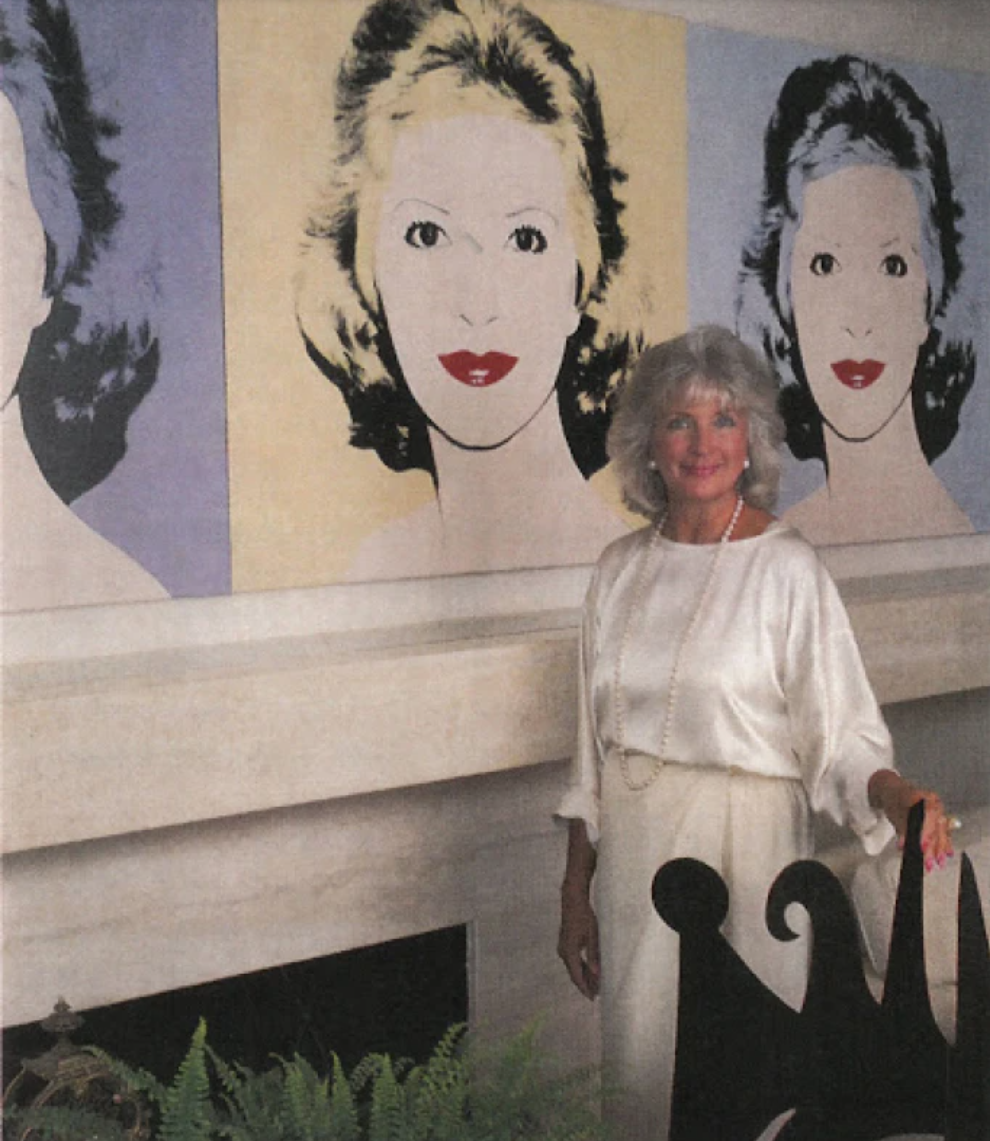
Beverly Grossman photographed with the present work in her home. Photograph © Mark Habermann.
By the mid-1960s, Warhol had established himself as the pioneering portraitist of celebrity culture, soon broadening his focus to encompass the influential personalities who populated the social and cultural fabric of his time. Warhol’s portrait enterprise relied upon a semi-mechanical silkscreen process that embraced reproducibility while preserving the immediacy of the photographic image. Armed with his signature Polaroid camera, Warhol carefully directed his sitters, capturing multiple exposures that would later form the basis of his compositions. Acutely aware of photography’s power to construct meaning, he understood the medium’s unique ability both to mirror and reinforce contemporary cultural desires. His fascination with image-making, celebrity, and the fleeting nature of popular culture made the Polaroid an ideal point of departure. The selected photograph was transformed into a negative, enlarged onto acetate, and subsequently used to produce a silkscreen.
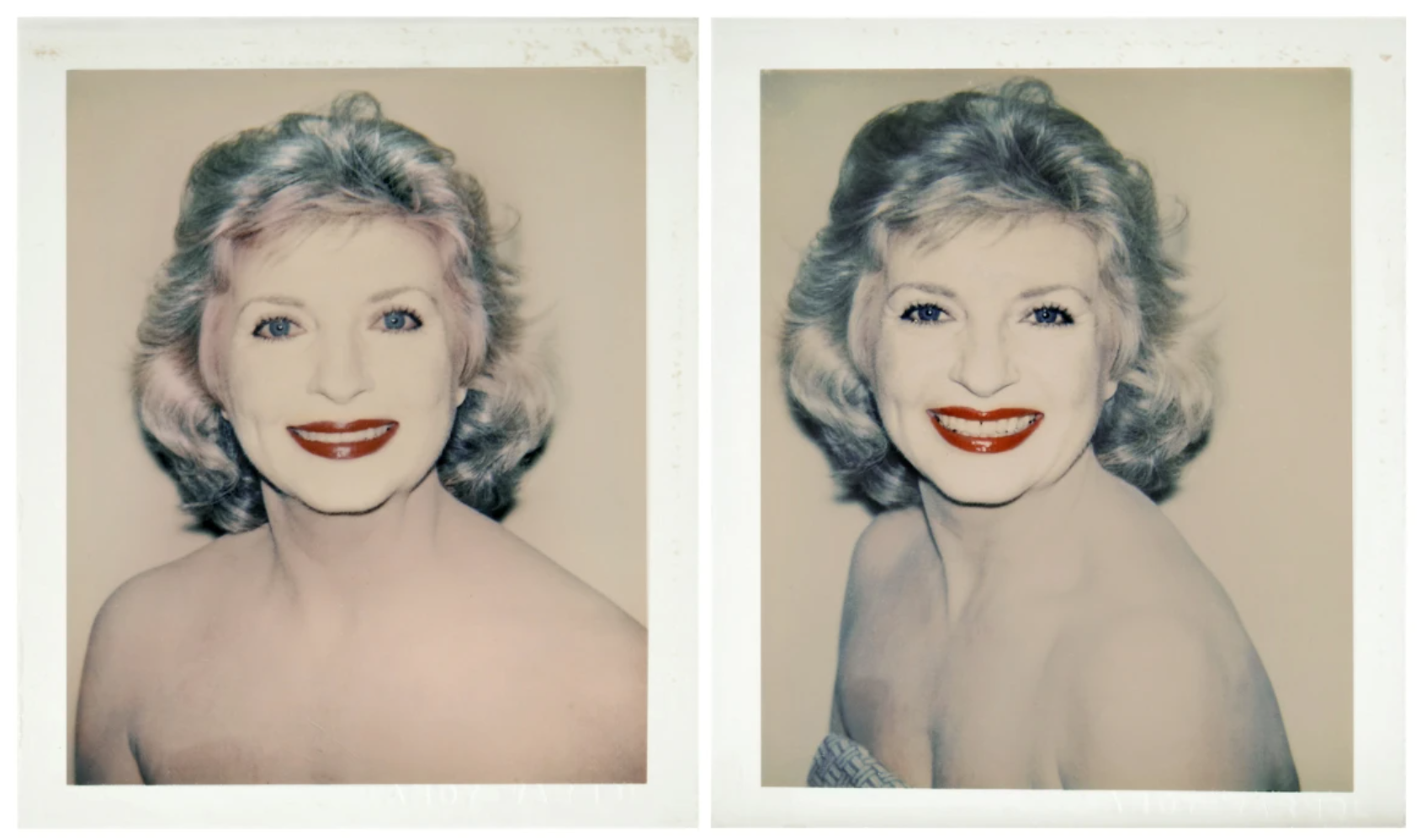
Minneapolis in the 1960s provided the foundation for Beverly Grossman’s discerning engagement with contemporary art, fostering relationships with pioneering dealers Gordon Locksley and Felice Wender who placed her in direct contact with many of the artists reshaping American culture. It was through Locksley that Grossman first encountered Andy Warhol, initiating a personal and artistic connection that would become central to her collecting journey. Over the following years, she began collecting some of his most widely recognized works including a full portfolio of the Endangered Species, as well as a luminescent canvas from his Flowers series. As their friendship developed over the years, Beverly finally commissioned Warhol to create her portrait, first through the polaroids and ultimately translated onto the canvas. As both collector and subject, Grossman occupied a distinctive place within the social and cultural networks that animated Warhol’s portrait practice, exemplifying the artist’s ability to transform those closest to his world into enduring icons.
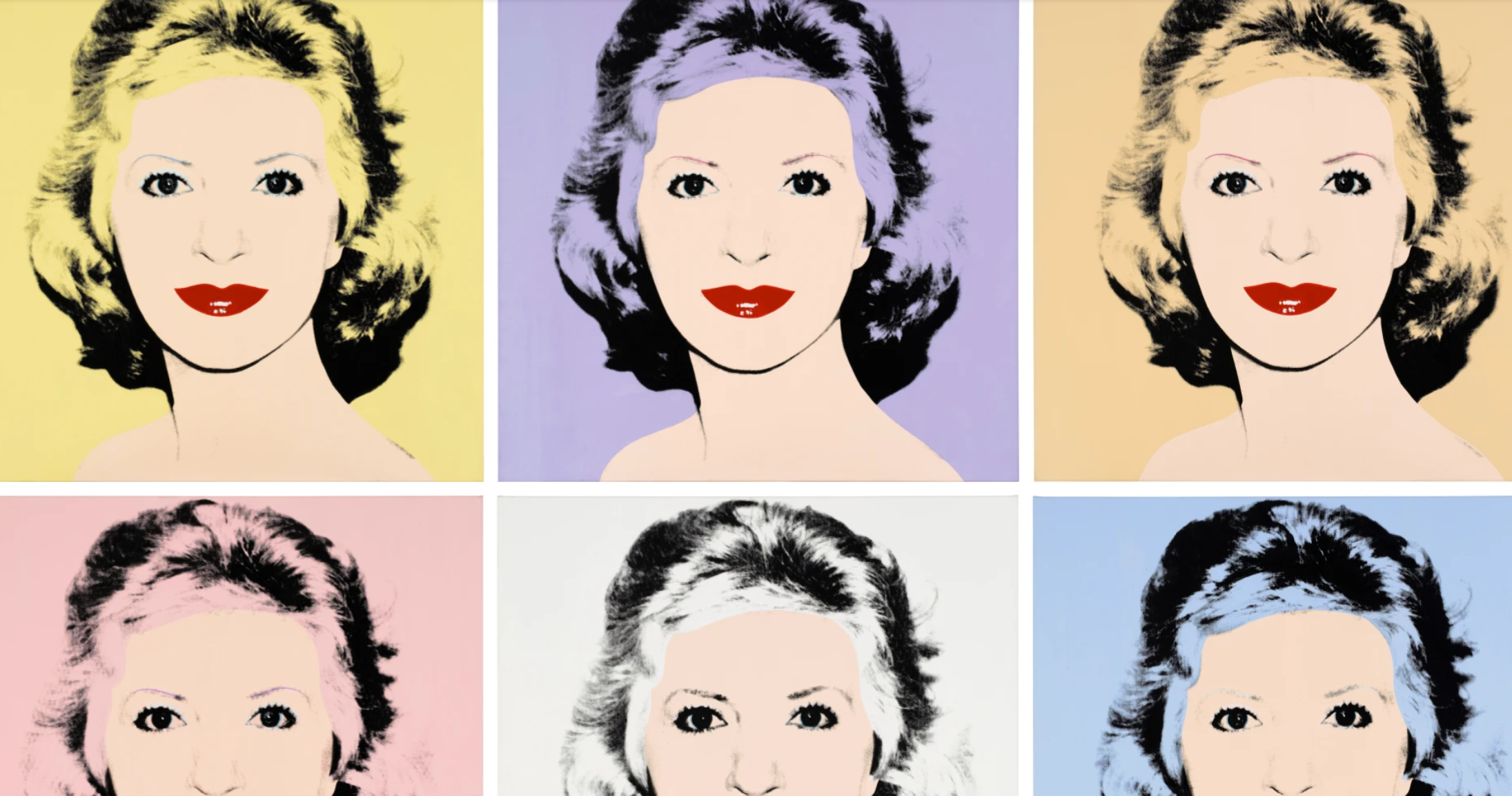
Set against a harmonizing pastel palette of pale pinks, butter yellows and sky blues, Warhol’s portraits immortalized Beverly six-fold, offering a slightly unique vision of her persona throughout each canvas. Fully confronting the viewer, Beverly faces the spectator with a charming, confident gaze, her wide eyes and red lipstick injecting life into the canvas. Much like Warhol’s celebrated depictions of Marilyn Monroe, Jacqueline Kennedy, and Elizabeth Taylor, Beverly [Six Works] reduces the subject to a carefully selected constellation of defining characteristics while preserving her unmistakable likeness.
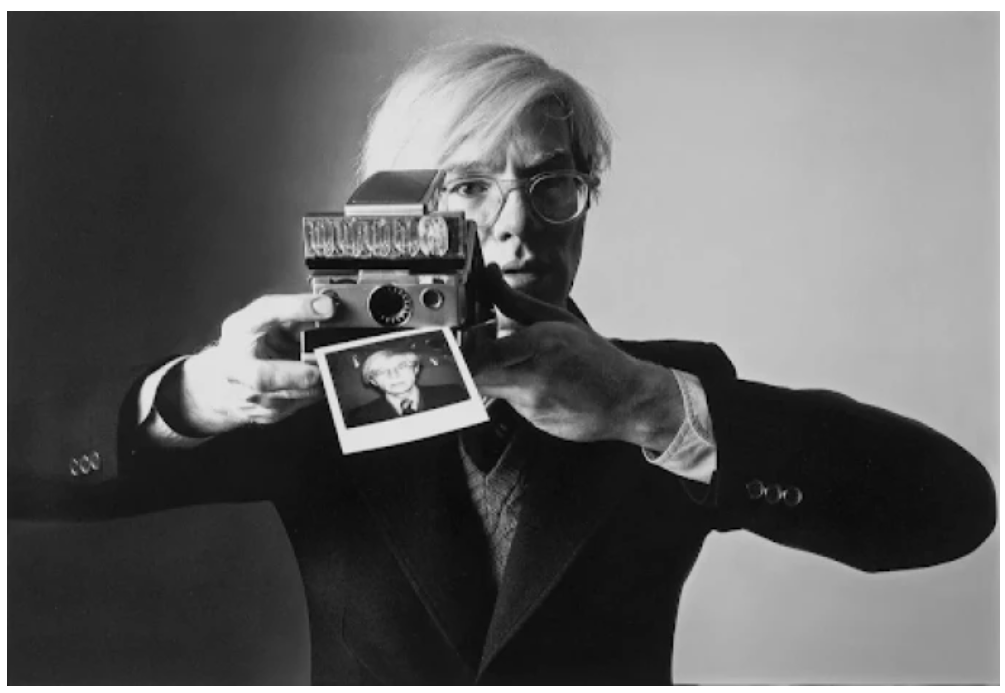
Oliviero Toscani, Andy Warhol, 1975, Public Engagement Fund 2021, Art Gallery of South Australia, Adelaide © Oliviero Toscani
Warhol’s late portrait commissions stand as enduring expressions of his preoccupation with the fabric of American culture. Through its flattened areas of saturated color, graphic precision, and energetic linearity, Beverly [Six Works] exemplifies the visual language that came to define Warhol’s artistic project. Simultaneously intimate and monumental, the portrait crystallizes his unique ability to transform portraiture into a meditation on fame, identity, and cultural memory. Through his distinctive silkscreen method and instantly recognizable visual vocabulary, Warhol elevated his simple Polaroid photographs of Beverly into enduring statements of identity and prominence. At once an exemplary manifestation of Warhol’s mature portrait practice and a testament to the enduring bonds Beverly cultivated with the artists she championed, Beverly [Six Works] presents her as a celebrated collector and cultural patron whose legacy remains inseparable from the artists she interacted with throughout her life.
Two-Dollar Bill with Jefferson, 1962
Two-Dollar Bill with Jefferson, 1962
Property from a Prestigious Private Collection
Sotheby’s New-York: 17 November 2026
Estimated: USD 800,000 – 1,200,000
Andy Warhol | Two-Dollar Bill with Jefferson | Contemporary Day
ANDY WARHOL (1928 – 1987)
Two-Dollar Bill with Jefferson, 1962
Graphite on paper
18×24 inches (45.7 x 61 cm)
Signed and dated 62 (on the verso)
Few images are more central to Andy Warhol’s artistic revolution than the American dollar bill. Executed in 1962, Two-Dollar Bill with Jefferson belongs to the foundational body of works through which Warhol transformed the visual language of post-war art, elevating familiar objects of everyday life into icons of modern culture. Created at the precise moment of his transition from celebrated commercial illustrator to pioneering Pop artist, the present work captures Warhol at a critical juncture, when his longstanding fascination with money, mass production, and popular imagery first crystallized into a subject that would become one of the defining motifs in his career. Rendered in graphite with remarkable precision and clarity, Two-Dollar Bill with Jefferson reveals the extraordinary draftsmanship that underpinned Warhol’s early success while foreshadowing the conceptual concerns that would propel him to international prominence.
“American money is very well-designed, really.
I like it better than any other kind of money.”
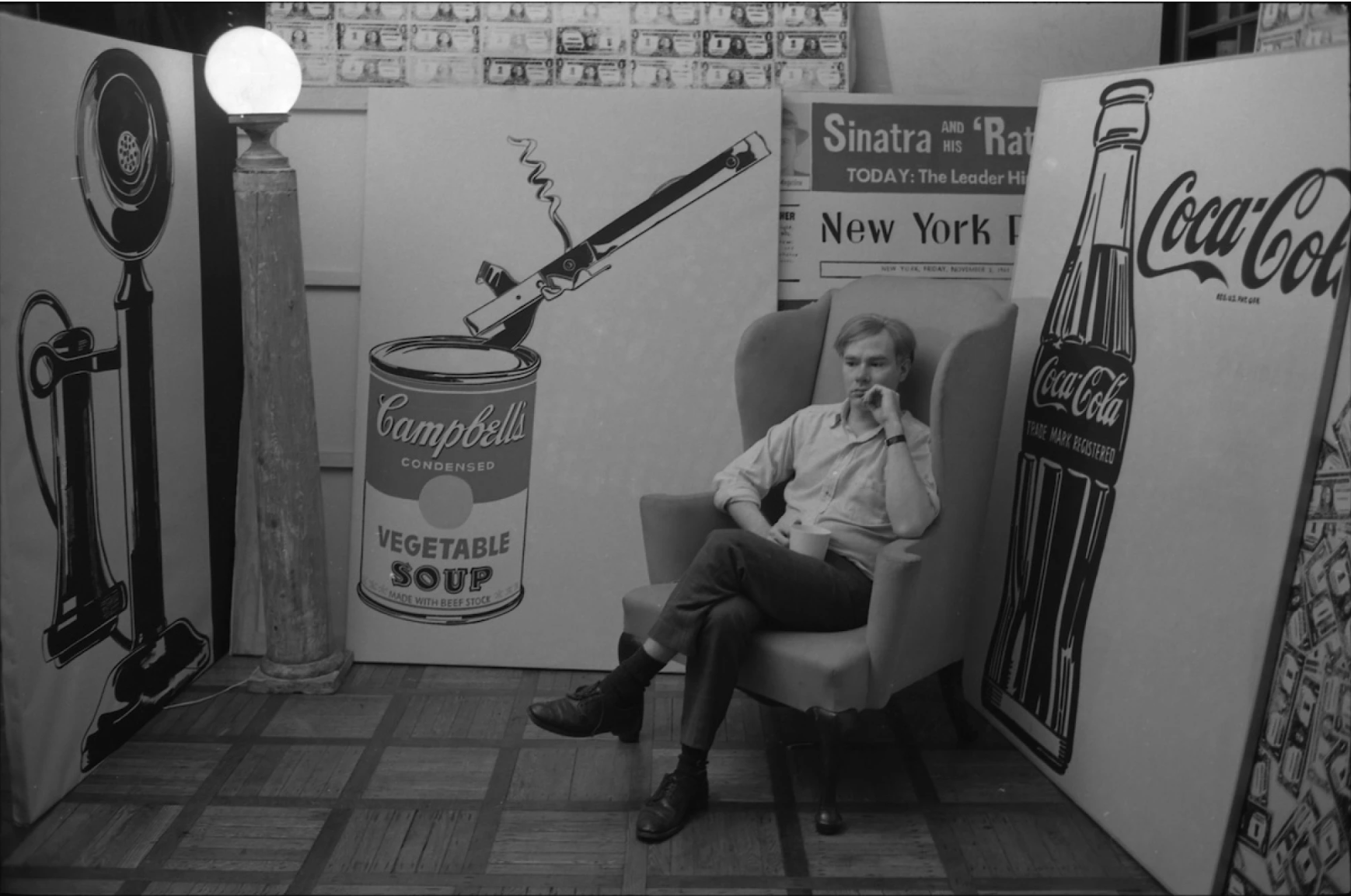
Andy Warhol in his studio at 1342 Lexington Avenue with 200 One Dollar Bills, New York, 1962. IMAGE: © THE ALFRED STATLER ESTATE. Art © 20216 The Andy Warhol Foundation for the Visual Arts, Inc. / Licensed by DACS, London.
The subject of money occupied a singular position within Warhol’s imagination. Throughout his life he remained captivated by the symbolic and aesthetic power of currency, admiring it simultaneously as a masterwork of graphic design, a pervasive cultural artifact, and an embodiment of aspiration and desire. More than merely a means of monetary transaction, for Warhol, the dollar bill represented a democratic image, handled daily by millions of people regardless of class or circumstance. By selecting currency as a subject, he turned his attention toward an object so commonplace that it often escaped notice, revealing the extraordinary visual and cultural resonance concealed within the ordinary.
“I just paint things I always thought were beautiful, things you use every day and never think about. I’m working on soups and I’ve been doing some paintings of money. I just do it because I like it.”
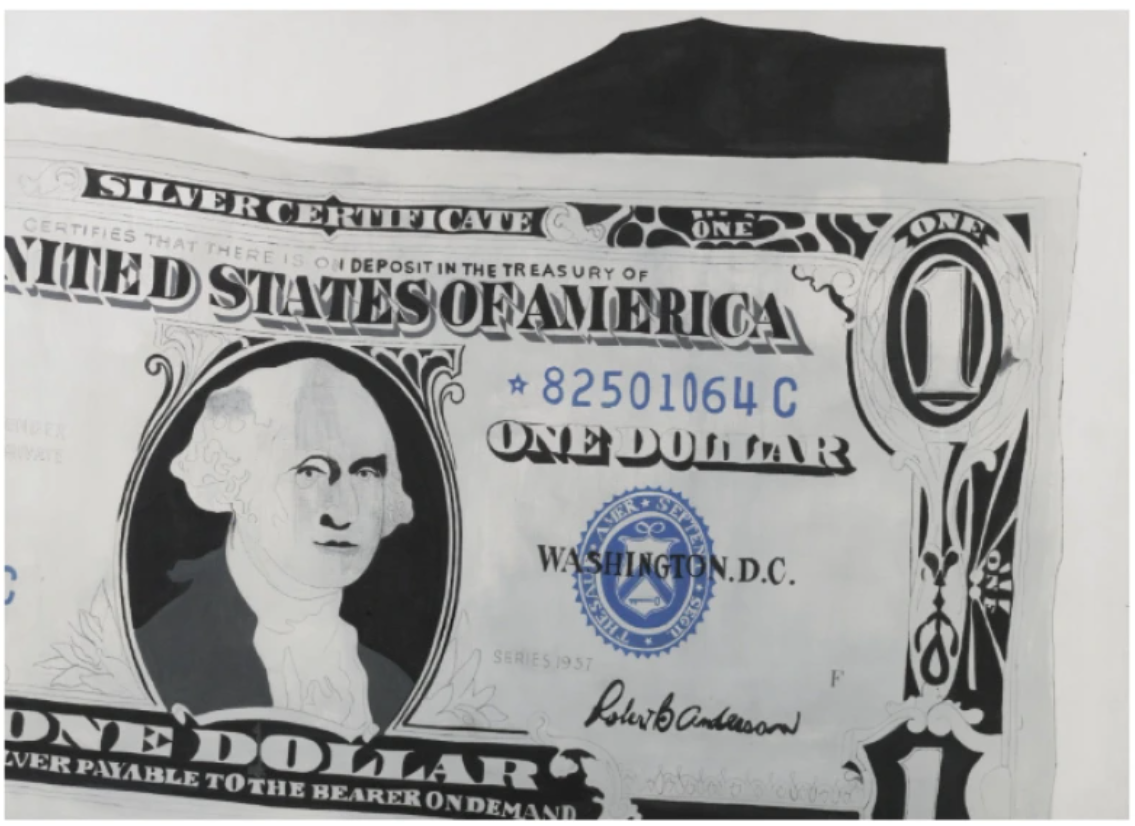
Andy Warhol, One Dollar Bill (Silver Certificate), 1964. Private Collection. Sold in London in July 2015 for £20.9 million. Image © Sotheby’s Images / © 2026 The Andy Warhol Foundation for the Visual Arts, Inc. / Licensed by DACS, London / Bridgeman Images. Art © 2026 Andy Warhol Foundation for the Visual Arts / Artists Rights Society (ARS), New York.
The two-dollar bill held a particular allure for the artist. Less commonly encountered than its one-dollar counterpart, the note possessed a rarity that undoubtedly appealed to Warhol’s instinctive impulse for collecting and cataloguing. Friends and associates recalled his habit of accumulating two-dollar bills, and a substantial cache was discovered among his possessions following his death. Occupying a peculiar position within the American imagination, the two-dollar bill is at once familiar and elusive, ordinary yet invested with an aura of novelty, superstition, and luck. Such contradictions aligned closely with Warhol’s own artistic concerns, which repeatedly explored the shifting boundaries between mass production and uniqueness, abundance and scarcity, celebrity and anonymity.
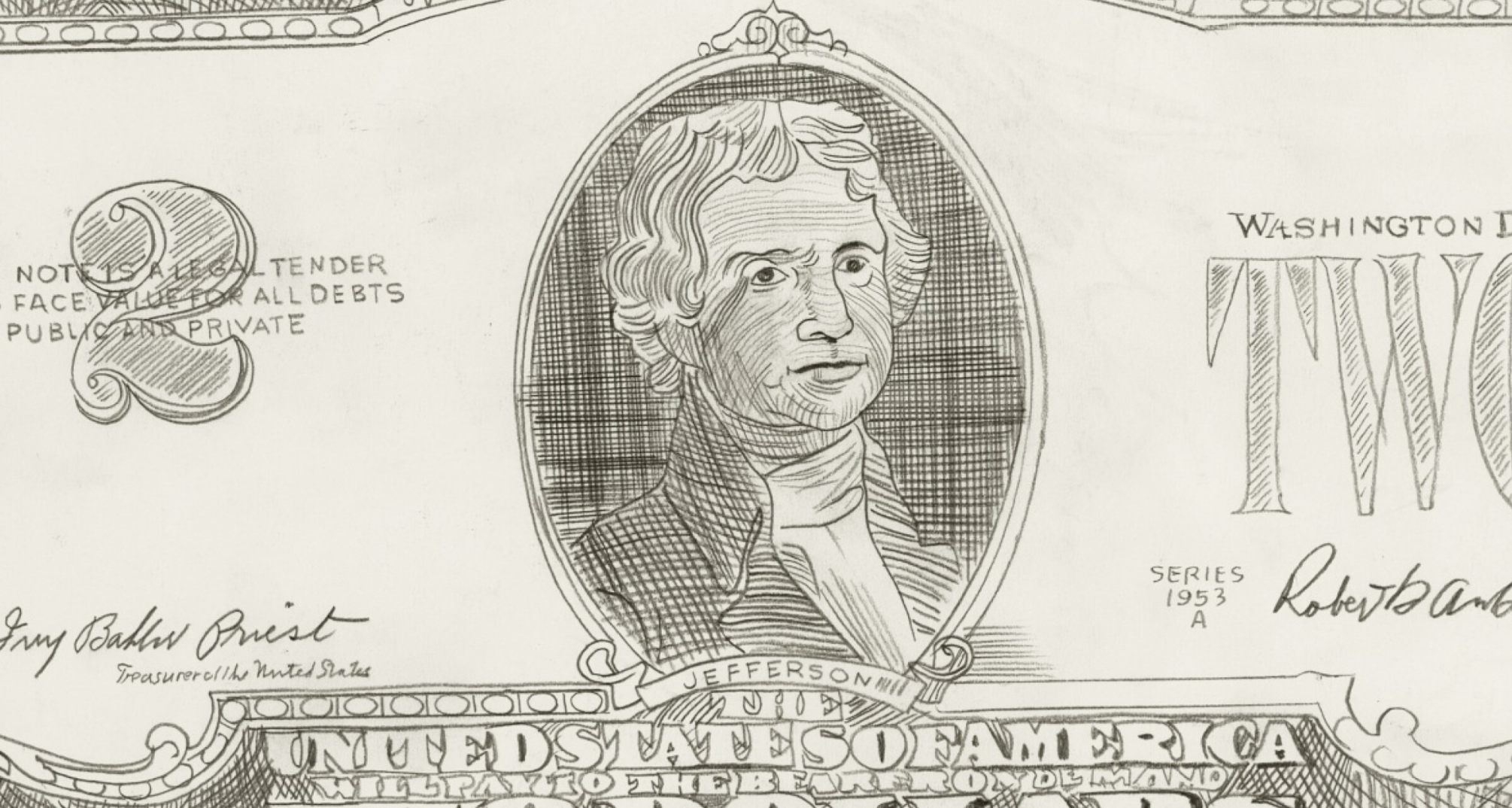
In Two-Dollar Bill with Jefferson, Warhol’s exceptional skill as a draftsman is on full display. Before adopting silkscreen as his signature medium, he had established himself as one of New York’s most successful commercial illustrators, producing advertisements, magazine illustrations, album covers, and department-store campaigns distinguished by their elegance and technical sophistication. The present work bears witness to those formative years; every ornamental flourish of the currency’s design is carefully observed, while the portrait of Thomas Jefferson is rendered with a precision that underscores Warhol’s command of line and detail. Confident cross-hatching, crisp contours, and meticulously observed lettering reveal an artist deeply attuned to both graphic clarity and visual nuance. Unlike the mechanically reproduced images with which he would soon become synonymous, this drawing remains unmistakably handmade, preserving the immediacy of the artist’s touch.
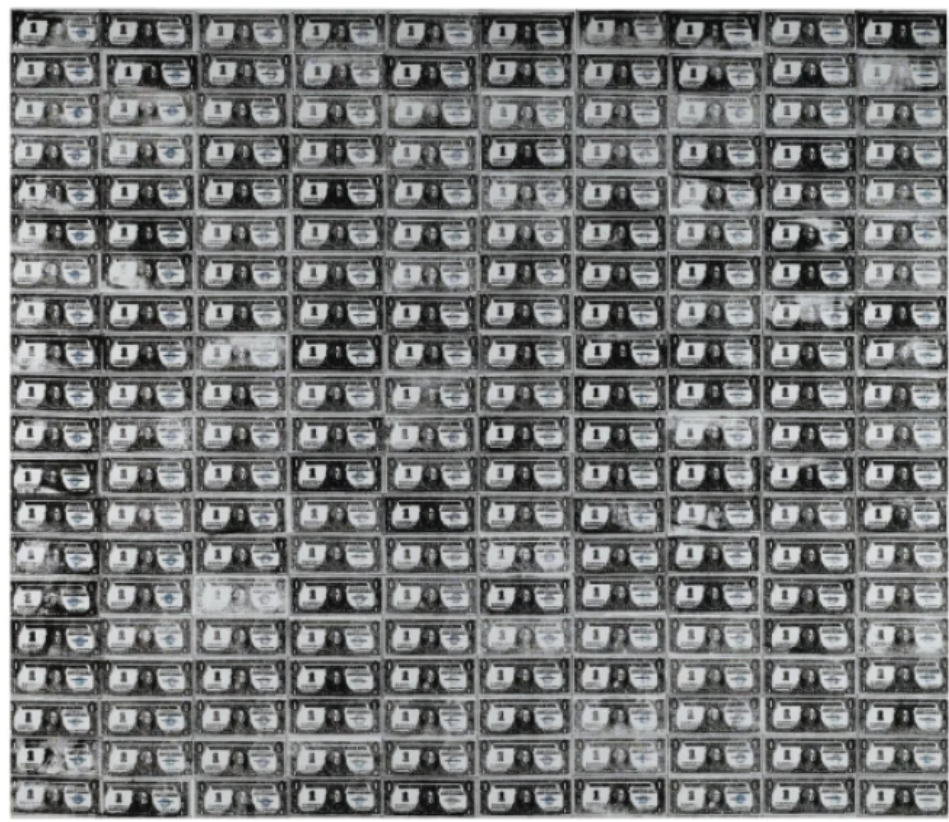
Andy Warhol, 200 One Dollar Bills, 1962. Private Collection. Sold at Sotheby’s New York in November 2009 for $43.8 million. Image © Sotheby’s Images / © 2026 The Andy Warhol Foundation for the Visual Arts, Inc. / Licensed by DACS, London / Bridgeman Images. Art © 2026 Andy Warhol Foundation for the Visual Arts / Artists Rights Society (ARS), New York.
This tension between manual execution and mechanical imagery lies at the heart of the work’s significance. Though currency is an object produced through systems of reproduction, here, Warhol painstakingly recreated it by hand, translating a mass-produced image into a unique work of art.
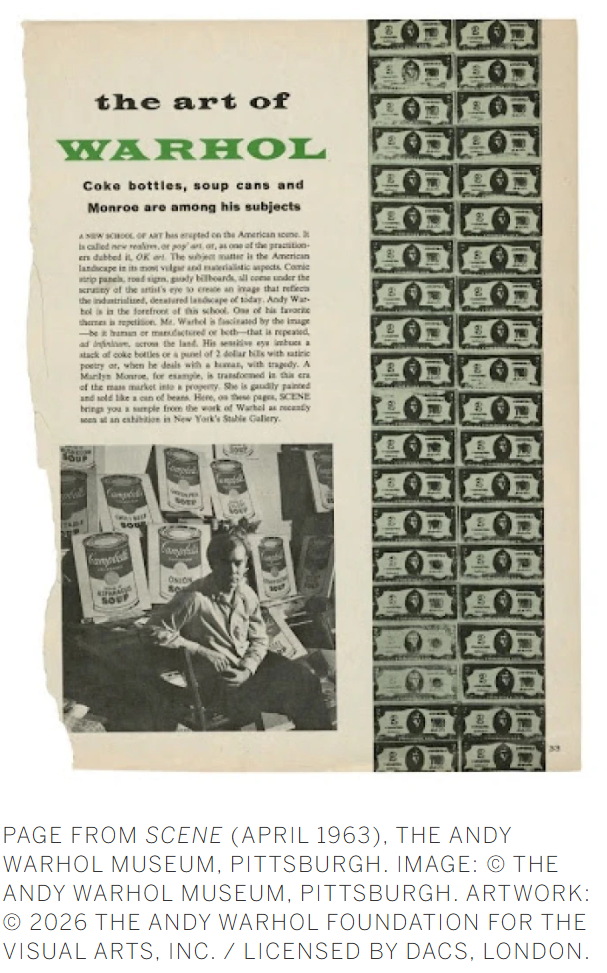
At a moment he was seeking ways to remove traces of individual authorship from his art, Warhol chose to devote careful labor to reproducing an image whose value derives from its endless replication. Paradoxically, the dollar bill transforms from a commonplace instrument of commerce into an object of sustained contemplation. Two-Dollar Bill with Jefferson occupies a pivotal place in the development of Warhol’s Dollar Bill imagery, among the earliest of his works to employ the serial imagery that would become one of the defining innovations of Pop Art. In 1962, Warhol was searching for a visual language capable of capturing the realities of an increasingly consumer-driven America. The dollar bill offered an ideal subject: instantly recognizable, graphically compelling, and loaded with cultural meaning. Crucially, it functioned simultaneously as image and commodity, representation and value. By appropriating currency as subject matter, Warhol collapsed conventional distinctions between art and commerce, establishing a conceptual framework that would underpin much of his subsequent practice. Within months, Warhol would translate drawings such as the present work into the groundbreaking Dollar Bill silkscreens that launched his mature Pop aesthetic. Viewed from this perspective, Two-Dollar Bill with Jefferson stands at a remarkable threshold in the artist’s career. It marks both the culmination of the exquisite draughtsmanship that defined his commercial practice and the beginning of the mechanically mediated image-making that would revolutionize post-war art. Already present are many of the core concerns that would animate Warhol’s oeuvre for the next quarter century: repetition, value, authorship, reproduction, and the transformation of everyday imagery into cultural iconography.
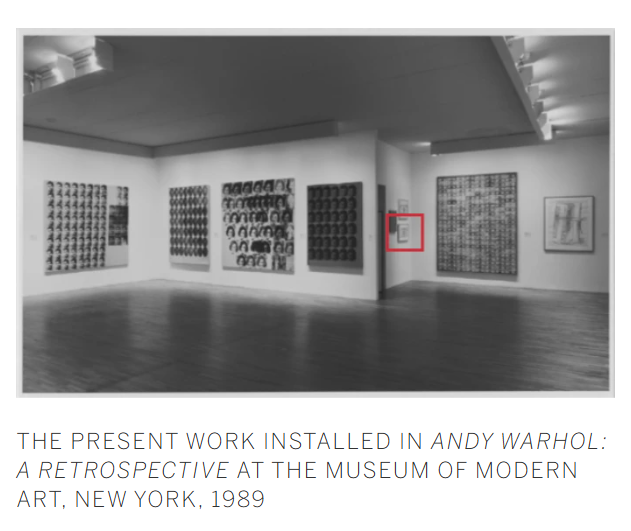
The importance of this transitional moment has long been recognized. The work was included in Andy Warhol: A Retrospective at The Museum of Modern Art, New York, in 1989, the landmark exhibition that established the historical significance of Warhol’s achievement for a global audience. Its inclusion affirmed the central role of these early currency images within the broader narrative of the artist’s development. Today, Two-Dollar Bill with Jefferson endures as a compelling testament to Warhol’s singular ability to transform the familiar into the extraordinary. Through the deceptively simple image of a banknote, he identified a subject capable of addressing value, desire, consumption, and image-making itself. Executed at the dawn of his Pop breakthrough, the drawing distills many of the ideas that would come to define his oeuvre while preserving the intimacy and delicacy of the artist’s hand. As such, it stands not only as a precursor to some of the most influential works of the twentieth century, but also as a strikingly beautiful and historically significant work in its own right.
Campbell’s Soup Mix (Chicken Noodle), 1985
Campbell’s Soup Mix (Chicken Noodle), 1985
Property from an Important Collection
Sotheby’s New-York: 17 November 2026
Estimated: USD 600,000 – 800,000
Andy Warhol | Campbell’s Soup Mix (Chicken Noodle) | Contemporary Day
ANDY WARHOL (1928 – 1987)
Campbell’s Soup Mix (Chicken Noodle), 1985
Acrylic and silkscreen ink on canvas
72×60 inches (183 x 152.5 cm)
Signed and dated 85 (on the overlap)
Executed in 1985, Campbell’s Soup Mix (Chicken Noodle) ranks among the most ambitious of Andy Warhol’s late returns to the motif that defined his career. A commanding extension of the soup can in which the object gives way to its packaging, and the product to its economic afterlife, the painting distils two decades of Pop into a single, unfolded emblem of consumption. Executed on a monumental scale of six feet, it takes the most iconic image in the history of Pop and opens it out: pressed flat against a ground of black, the box assumes the authority of an emblem, its panels of crimson and white radiating outward from a bowl of noodles that blazes in molten yellow. Returning to the image that first secured his fame, Warhol brings to it the full assurance of his late technique and a sharpened view of the culture of consumption it had come to embody.
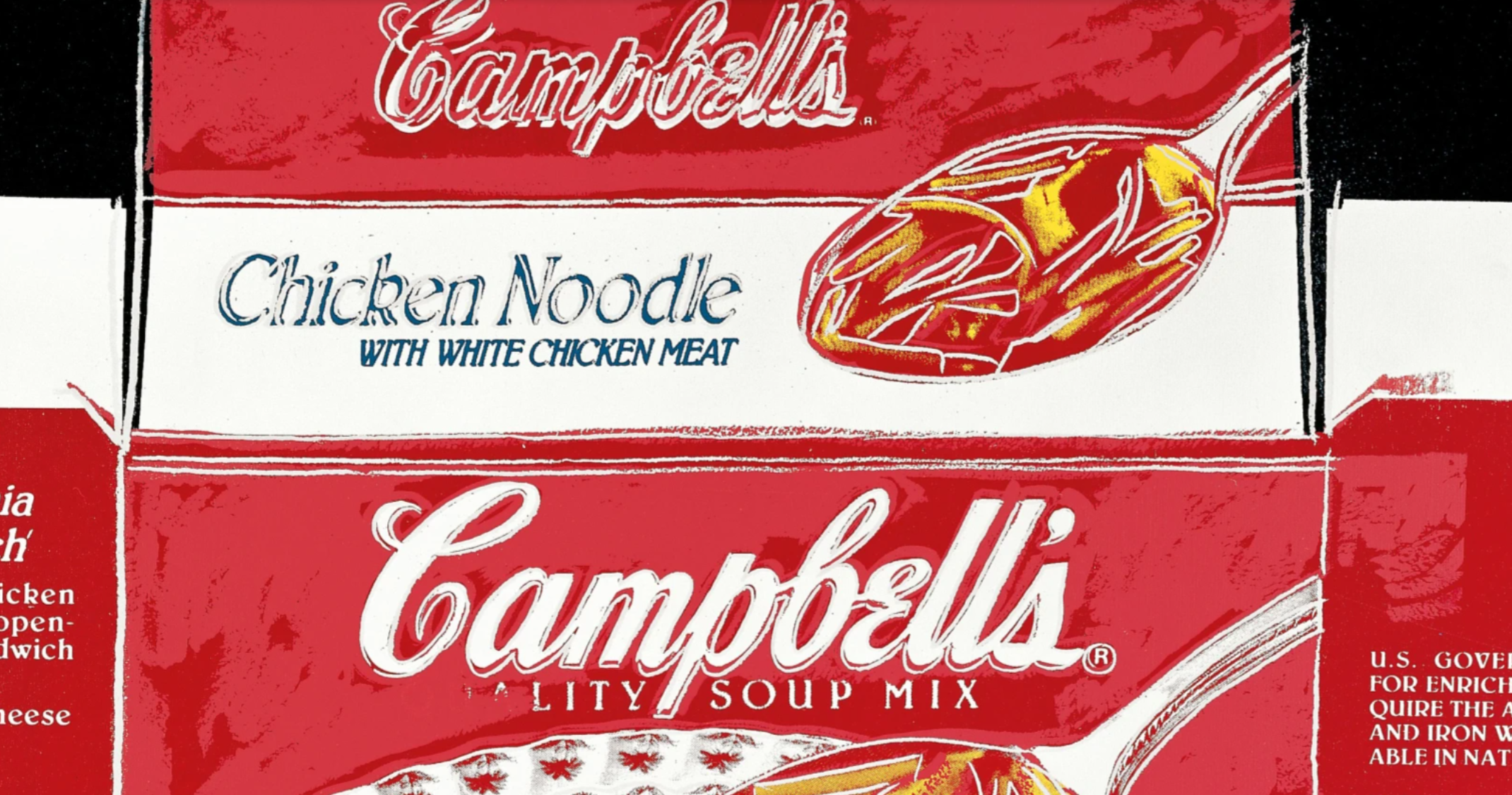
Warhol, here, presents the Campbell soup carton broken down along its seams and pressed flat into an irregular cruciform of panels and tabs set against a ground of black that surfaces at each corner of the canvas. At the image’s centre, a bowl of chicken soup rests on a scalloped plate, the spoon raised towards the viewer, almost emerging from the picture plane. At the margins, Warhol retains the incidental text of the packaging, its recipes, regulations and barcode, granting the small print of commerce the same monumental presence as the brand itself – compositionally egalitarian in the image’s seriality. Warhol’s interventions are pointed and deliberate: overlaid screens create a faint doubling across the surface, the white contours slipping out of register with the image beneath, a visual strategy brought to its apex in the Campbell’s logo. In this process, the present work stages its own mechanical reproduction, a single design multiplied at different scales through the silkscreen, as if the factory line that produced the carton had been recapitulated into the fabric of the painting itself.
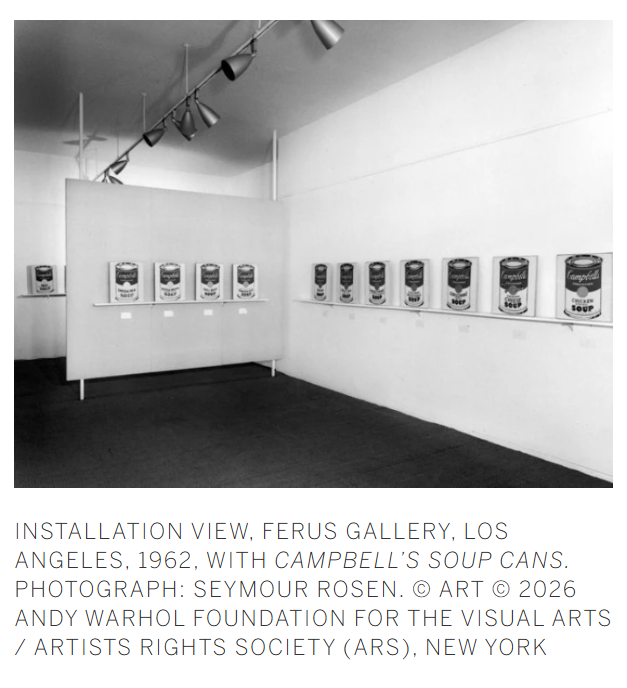
The origins of the motif date back to July 1962, when Warhol’s thirty-two canvases of Campbell’s soup made their debut at Irving Blum’s Ferus Gallery in Los Angeles, displayed on a narrow shelf like goods awaiting purchase. The exhibition marked the decisive turning point of his career, and within months he had begun to experiment with silkscreen, the breakthrough process that allowed his process to mimic the industrial production of the goods he depicted. His attachment to the subject was, by his own account, a matter of affection and habit as much as of theory: “I used to drink it. I used to have the same lunch every day, for twenty years, I guess, the same thing over and over again. Someone said my life has dominated me; I liked that idea” (Andy Warhol, quoted in Kenneth Goldsmith, I’ll Be Your Mirror: The Selected Andy Warhol Interviews, Boston, New York 2004, p. 18). Repetition became method, and over the following decades Warhol returned to the subject obsessively. The present work represents the apogee of these explorations, the point at which the motif moves beyond the product to encompass its full context, claiming its place not as a readymade but firmly within the history of painting.
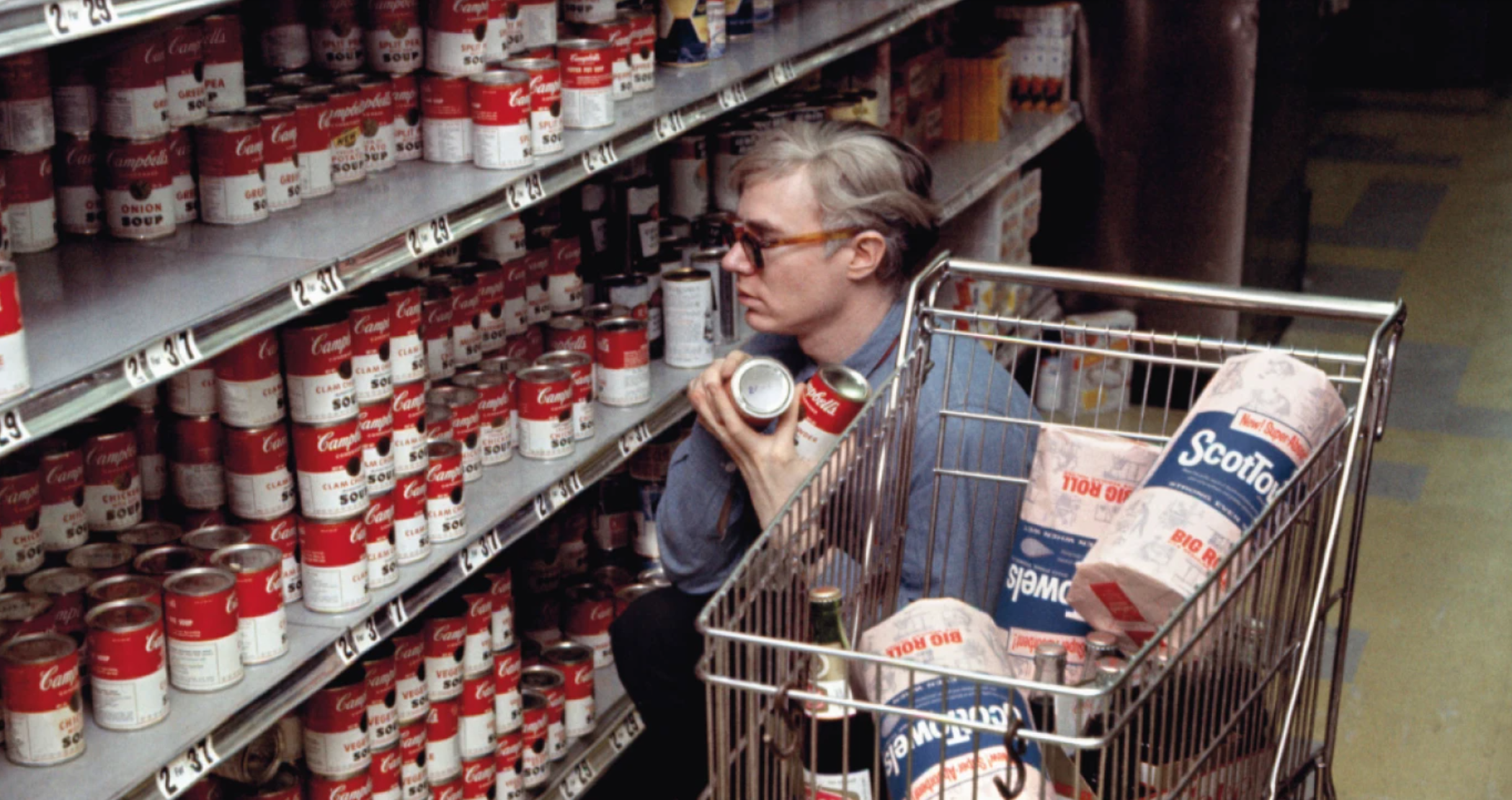
Andy Warhol at Gristede’s Market in New York City, 1965. Image: © Bob Adelman
The lineage of the composition is ultimately Duchampian. In proposing that a commercial design might be elevated to fine art and stand as a work in its own right, Warhol extends the logic of the readymade into painting, and the flattened carton makes the claim with particular force. In 1964 he had given the supermarket box three dimensions in his Brillo Boxes, prompting Arthur Danto to conclude that to see something as art requires “an atmosphere of artistic theory, a knowledge of the history of art: an artworld” (Arthur C. Danto, ‘The Artworld’, The Journal of Philosophy, vol. 61, no. 19, October 1964, p. 580). Here, the box is returned to the plane. What had been sculpture becomes a diagram, the template from which every carton is folded. Warhol shifts his focus from the product to its display and promotion, laying bare the machinery of branding by which the consumer is drawn to the shelf.
By 1985, the climate in which Warhol painted had altered considerably since the optimism of the early 1960s. The present work was executed at the midpoint of Ronald Reagan’s presidency, at the height of free market economics, and just two years before Oliver Stone’s cult film Wall Street distilled the ethos of the decade into the infamous slogan “greed is good.” Against this backdrop, Warhol’s choice to monumentalise a discarded carton from a brand that many shoppers now regard as a vestige of America’s past carries a pointed irony. The flattened box exists outside the moment of sale, poised between the printed blank that precedes the product and the discarded carton that outlives it, and offers insight into the life of an object designed to be noticed for an instant and forgotten thereafter, a profound and unambiguously Warholian reflection on the transience of desire in a culture of consumption. Late in his life, in conversation with Benjamin Buchloh, Warhol reflected that he “should have done the Campbell’s Soups and kept doing them” (Andy Warhol in conversation with Benjamin H.D. Buchloh, 1985, reproduced in Annette Michelson, ed., Andy Warhol, October Files 2, Cambridge, Mass. 2001, p. 30). The present work is the most eloquent answer to that wish: an icon of American consumption, unfolded and transfigured into a universal emblem, articulated in a formal vocabulary of striking clarity and force.
Ten Portraits Of Jews Of The 20th Century, 1980
Ten Portraits Of Jews Of The 20th Century, 1980
Phillips New-York: 17 November 2026
Estimated: USD 400,000 – 600,000
PRINTS
COMPLETE SET
Andy Warhol Modern & Contemporary Art Evening Sale
ANDY WARHOL
Ten Portraits Of Jews Of The Twentieth Century, 1980
Screenprint on Lenox Museum Board, in 10 parts
Each: 40×32 inches (101.6 x 81.3 cm)
Each signed and numbered “103/200 Andy Warhol” lower edge
This work is number 103 from an edition of 200, plus 30 artist’s proofs
From Marilyn Monroe to Liz Taylor, Andy Warhol made the canonization of twentieth-century icons the work of a career. Ten Portraits of Jews of the Twentieth Century, conceived in 1980 with the dealers Ronald Feldman and Alexander Harari, was his first portfolio of ten entirely different subjects and a rare turn from living celebrity to history. Feldman’s handwritten list ran to “everyone from Chopin to Arthur Miller to Sammy Davis Jr.,” a diversity that “points to the malleability of Jewish identity and the complexities of birthright, cultural heritage, assimilation, and conversion.” Warhol, though not Jewish himself, felt a deep desire to pay homage to what he referred to in his diary as “the Ten Jewish Geniuses” – luminaries across the fields of literature, filmmaking, science, music, politics and psychology – who indelibly shaped the previous century.
The Whitney Museum of American Art, New York, had surveyed Warhol’s society portraits only months before; here, the sitters could not sit. Each image began with an archival photograph, cropped, enlarged and worked over with drawn contours and planes of cut paper before being translated into screens, a collage method Warhol had tested in his Mick Jagger portfolio of 1975, an example of which is in the Museum of Modern Art, New York. Arrayed together, the ten sheets are a potent counter to his famous declaration of 1963, “I want to be a machine,” revealing a hand that is haptic, searching and decisive.
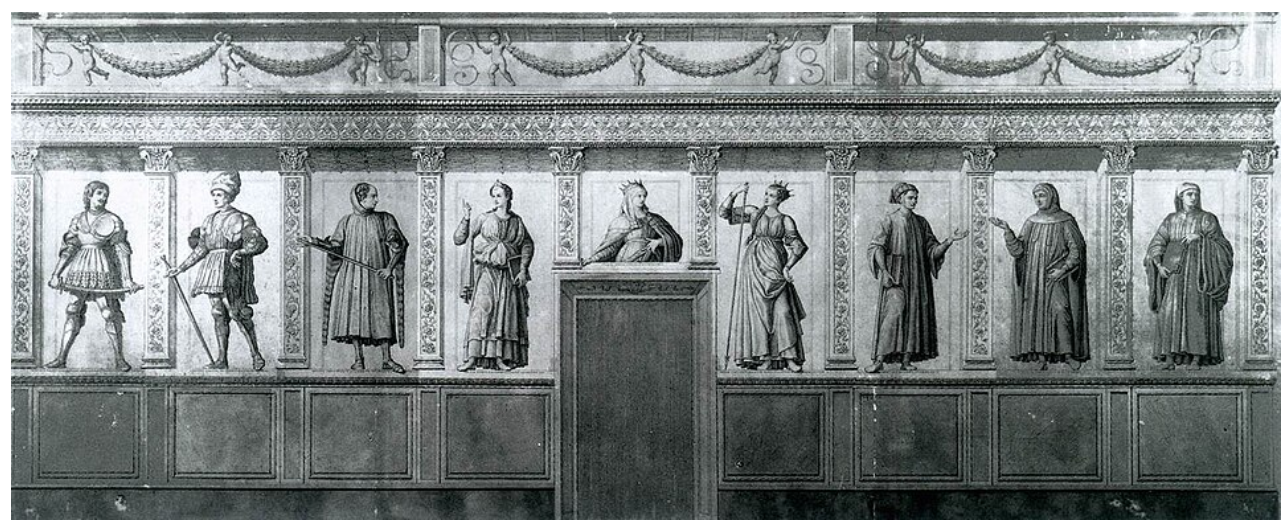
Installation view of Andrea del Castagno, Cycle of Famous Men and Women, about 1448–1451, Uffizi Galleries, Florence.
In assembling a pantheon, Warhol revived one of portraiture’s oldest formats. Andrea del Castagno’s cycle of Famous Men and Women, painted about 1448 to 1451 for the Villa Carducci near Florence and now in the Uffizi Galleries, Florence, set the biblical Queen Esther among poets and soldiers. Where Robert Rauschenberg and Jasper Johns had reclaimed the flags, maps and newsprint of the recent past, Warhol enshrined its luminaries. What unites his ten is less a shared practice of faith than a shared inheritance, carried alike by a religious philosopher, a secular physicist and a founder of a nation.
The portfolio began a fruitful partnership; Feldman went on to publish Myths in 1981 and Ads in 1985. Warhol often worked in portfolios, most often of ten, and those sets, from Marilyn Monroe of 1967 and Campbell’s Soup I of 1968 to Mao of 1972 and Endangered Species of 1983, remain among his most sought-after editions. The present edition of 200 was presold as a package, and its success prompted Warhol to translate the screens into paintings. When the Jewish Museum, New York, showed both in the fall of 1980, reception was divided. Hilton Kramer of The New York Times declared that “the show is vulgar, it reeks of commercialism, and its contribution to art is nil,” while Artforum found “an unexpected mix of cultural anthropology, portraiture, celebration of celebrity, and study of intelligentsia.”
Nearly three decades later, the Jewish Museum and the Contemporary Jewish Museum, San Francisco, organized Warhol’s Jews: Ten Portraits Reconsidered, which opened in New York in 2008 and included another example from this edition alongside paintings, a preparatory collage and the source photographs. Its curator, Richard Meyer, asked the question the series still invites: “Why did Warhol, a practicing Catholic who otherwise displayed little interest in Jewish causes or culture, create a series devoted to great Jews?” Complete portfolios of Ten Portraits of Jews of the Twentieth Century are held in institutions including the Whitney, a gift of Ronald and Frayda Feldman; the Jewish Museum, New York; and the Fondation Louis Vuitton, Paris.
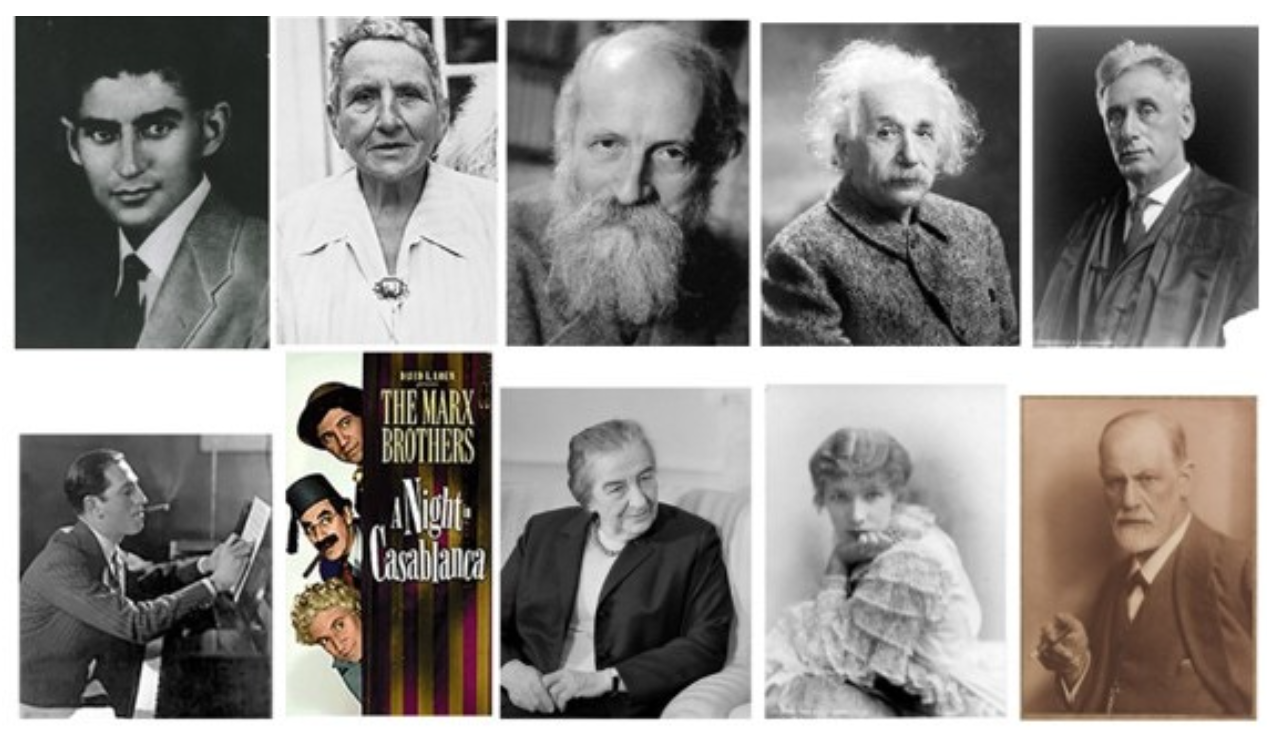
From left to right, top to bottom: Franz Kafka, Gertrude Stein, Martin Buber, Albert Einstein, Louis Brandeis, George Gershwin, the Marx Brothers, Golda Meir, Sarah Bernhardt and Sigmund Freud.
Franz Kafka, born in Prague in 1883, is best remembered for The Metamorphosis, The Trial and The Castle, tales of isolation that balance realism and the surreal. Many of his works were published posthumously by his executor, Max Brod, who defied Kafka’s wishes, believing him a modern-day Goethe. Gertrude Stein, an American author, moved to Paris in 1903, where her weekly salons made her a fixture of artistic life. An avid collector of Cézanne, Matisse and Gris, she befriended and championed Pablo Picasso, who painted her portrait. Her best-known book, The Autobiography of Alice B. Toklas, is written in the voice of her life partner. Martin Buber, the Austrian philosopher, wrote on human existence and the antithesis between good and evil, earning ten nominations for the Nobel Prize in Literature and seven for the Nobel Peace Prize. As antisemitism rose in the 1930s, he became a leader in Jewish education, later teaching at the Hebrew University. Albert Einstein, widely regarded as one of the greatest physicists of all time, transformed science with his theory of relativity and the principle of mass-energy equivalence, E = mc². He also helped Jewish scholars fleeing Nazi Germany find refuge abroad. Louis Brandeis, born in Louisville, Kentucky, in 1856, studied at Harvard and became the first Jewish justice of the Supreme Court of the United States. His legal writings left a lasting mark on the right to privacy and the fight against monopolies. George Gershwin, born in Brooklyn in 1898, composed Rhapsody in Blue and An American in Paris. His opera Porgy and Bess, first staged in 1935 with a predominantly African American cast, was daring for its time and is still revived worldwide. The Marx Brothers, known as Chico, Harpo, Groucho, Gummo and Zeppo, found success in vaudeville, theater and film, notably Duck Soup of 1933 and A Night at the Opera of 1935. Warhol’s portrait recalls the poster for A Night in Casablanca of 1946, featuring the three eldest. Golda Meir served as Israel’s first female and fourth prime minister from 1969 to 1974. Born in Kyiv and raised in Milwaukee, she settled in Palestine with her husband, signed Israel’s Declaration of Independence on May 14, 1948, and later served as foreign minister. Sarah Bernhardt, the French actress trained at the Paris Conservatoire, starred on the stage of the late nineteenth and early twentieth centuries, known for her distinctive style and a divisive public image of elaborate costume, lavish living and public affairs. Sigmund Freud, the father of psychoanalysis, established the concept of transference and wrote influentially on dreams, the Oedipus complex and the unconscious mind. He fled Nazi-occupied Austria in 1938 and died in London the following year.