PRELIMINARY DRAFT
WORK IN PROGRESS
Agenda

Modern & Contemporary Evening Auction
28 September 2026
Modern & Contemporary Evening Auction | 2026 | Sotheby’s
Contemporary Day Auction
29 September 2026
Contemporary Day Auction | Contemporary Art | Sotheby’s

20th/21st Century Evening Sale
29 September 2026
20th/21st Century Evening Sale
21st Century Day Sale
30 September 2026

Modern & Contemporary Art Evening Sale
30 September 2026
Modern & Contemporary Art Evening Sale Wednesday, September 30, 2026
Modern & Contemporary Art
30 September 2026
Modern & Contemporary Art Wednesday, September 30, 2026
Modern & Contemporary Evening Auction
28 September 2026
Modern & Contemporary Evening Auction | 2026 | Sotheby’s
#1. Present, 1994
Sotheby’s Hong-Kong: 28 September 2026
Estimated: HKD 50,000,000 – 70,000,000
HKD 71,660,000 / USD 9,134,480
Yoshitomo Nara 奈良美智 | Present 現在 | Modern & Contemporary Evening
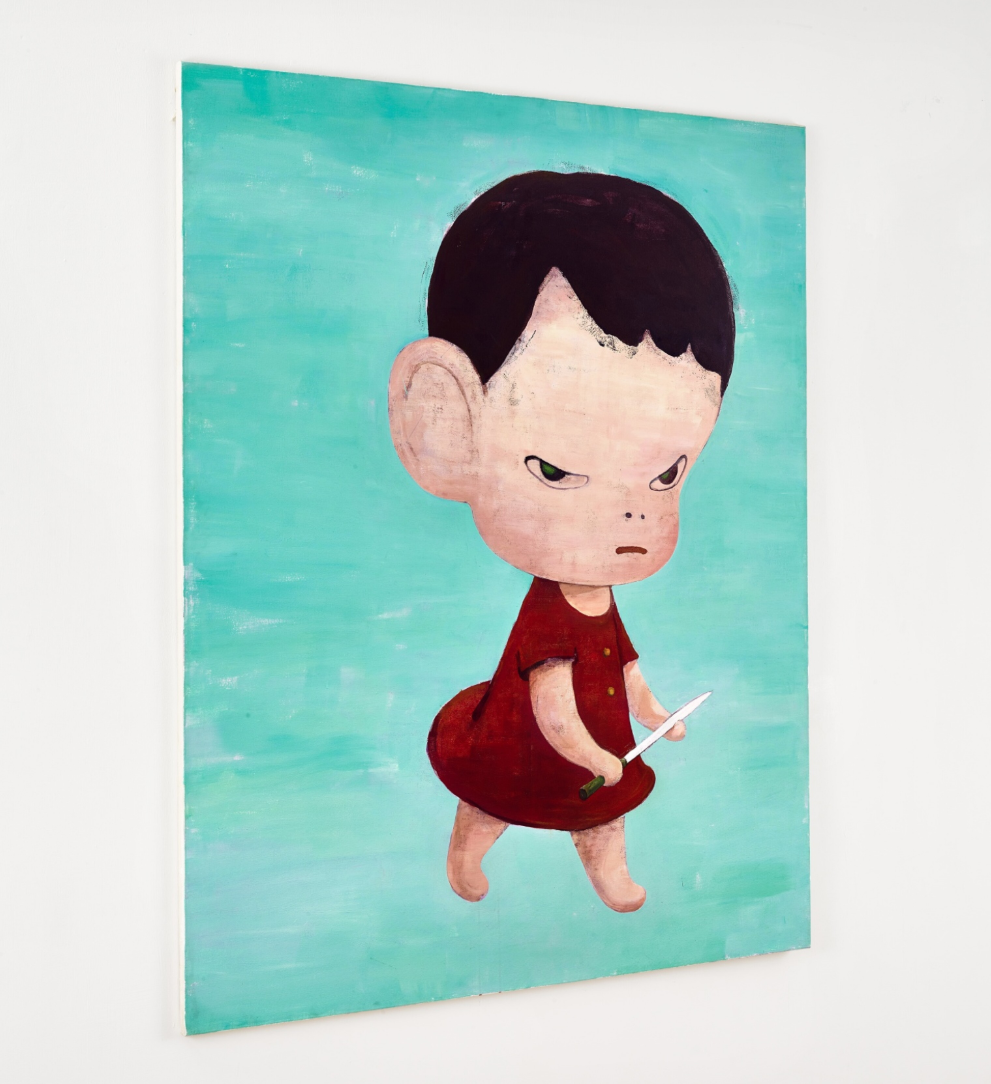
YOSHITOMO NARA (b. 1959)
Present, 1994
Acrylic on canvas
180×150 cm (70-7/8 x 59 inches)
Signed, titled and dated 94 (on the reverse)
#2. The Crated Room in Iceland / Drawing Room, 2009
Sotheby’s Hong-Kong: 28 September 2026
Estimated: HKD 45,000,000 – 65,000,000
HKD 61,900,000 / USD 7,890,375
Yoshitomo Nara 奈良美智 | The Crated Room in Iceland/Drawing Room

YOSHITOMO NARA (b. 1959)
The Crated Room in Iceland / Drawing Room, 2009
Mixed media, acrylic on wood
97 drawings on paper, CD player
Two small chairs, a paper cup, an extension cord
A pair of light bulb and cord
Overall: 206x229x207 cm (81-1/8 x 90-1/8 x 81-1/2 inches)
Crate: 181.5 x 220 x 170 cm (71-1/2 x 86-5/8 x 67 inches)
Acrylic on wood: 170×220 cm (67 x 86-5/8 inches)
#3. PUMPKIN (TWPOT), 2010
Sotheby’s Hong-Kong: 28 September 2026
Estimated: HKD 48,000,000 – 68,000,000
HKD 60,680,000 / USD 7,734,865
Yayoi Kusama 草間彌生 | Pumpkin (TWPOT) 南瓜(TWPOT) | Modern & Contemporary
REPEAT SALE
Sotheby’s Hong-Kong: 1 April 2019
Estimated: HKD 12,000,000 – 22,000,000
HKD 54,460,000
(#1138) KUSAMA YAYOI | Pumpkin (TWPOT) (sothebys.com)
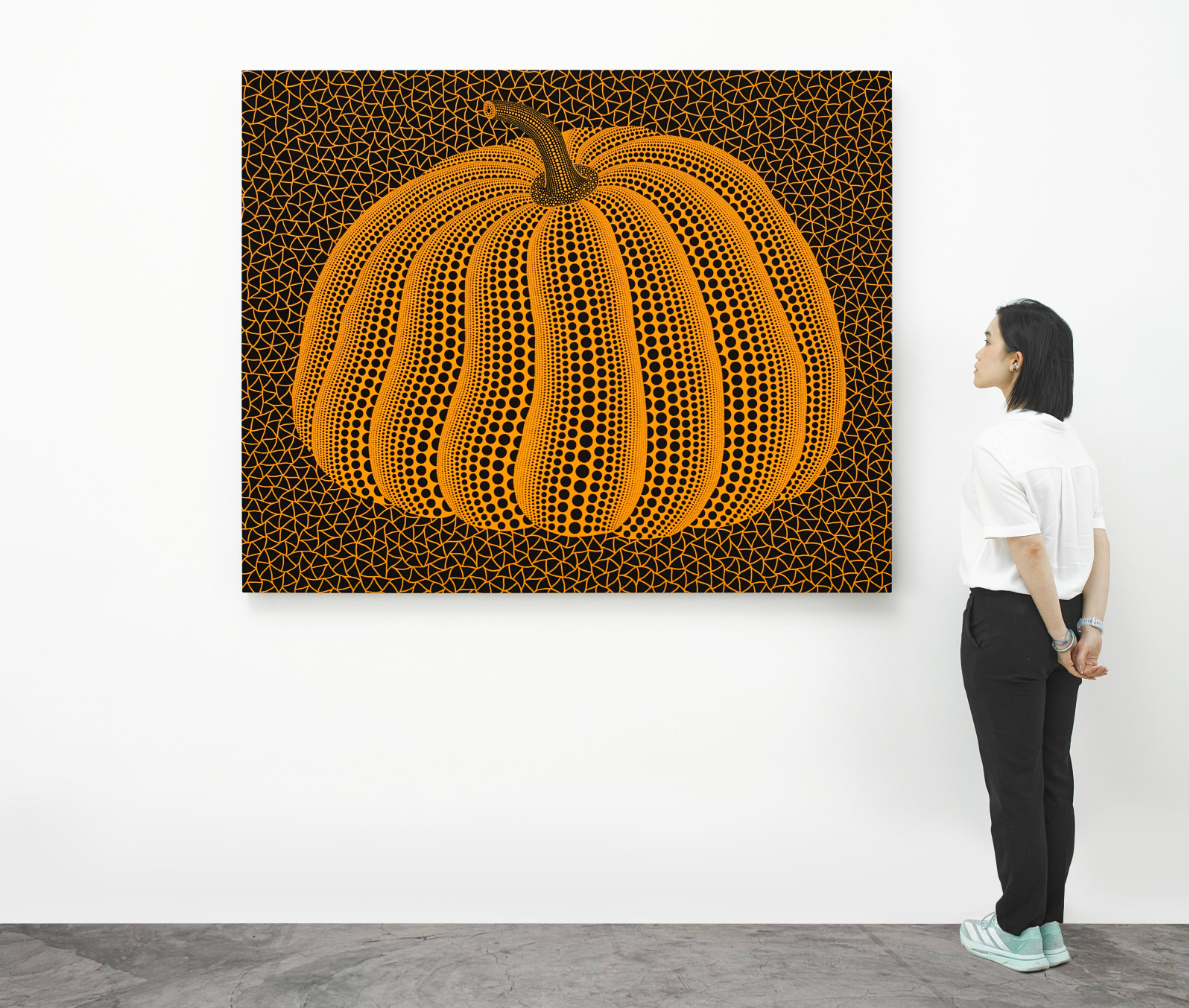
YAYOI KUSAMA (1929 – 2026)
PUMPKIN (TWPOT), 2010
Acrylic on canvas
130 x 162.5 cm (51-1/8 x 64 inches)
Signed, titled and dated 2010 (on the reverse)
#4. Bateaux sur fond bleu, 1951
Sotheby’s Hong-Kong: 28 September 2026
Estimated: HKD 24,000,000 – 32,000,000
HKD 52,750,000 / USD 6,724,030
Zao Wou-Ki 趙無極 | Bateaux sur fond bleu 藍色夜航 | Modern & Contemporary
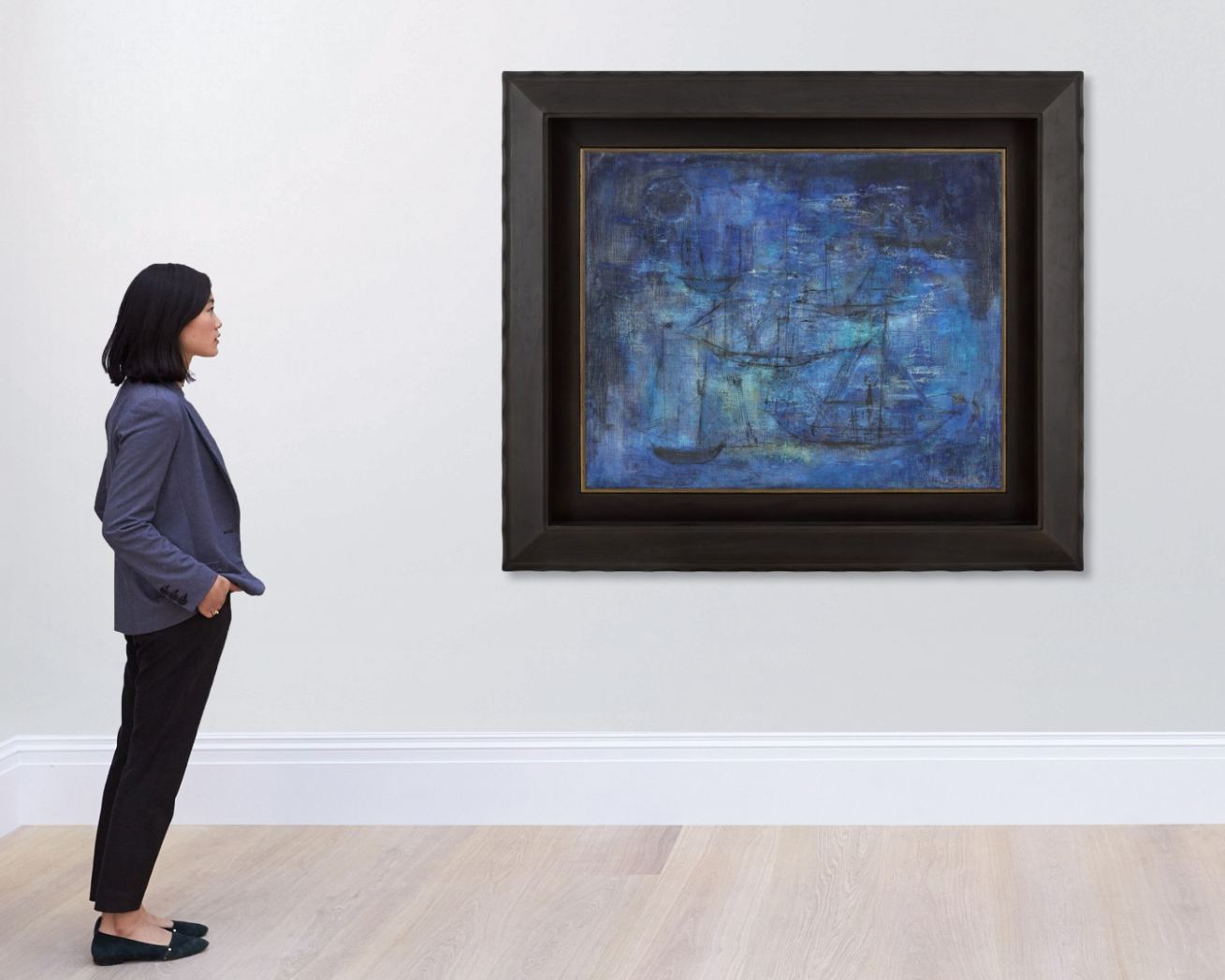
ZAO WOU-KI (1920 – 2013)
Bateaux sur fond bleu, 1951
Oil on canvas
81×100 cm (31-7/8 x 39-3/8 inches)
Signed 無極 Zao (lower right)
Signed ZAO WOU-KI (on the stretcher)
#5. Paysage avec figures, 1890-93
Sotheby’s Hong-Kong: 28 September 2026
Estimated: HKD 15,500,000 – 25,000,000
HKD 52,140,000 / USD 6,646,270
Pierre-Auguste Renoir 皮耶・奧古斯特・雷諾瓦 | Paysage avec figures 風景與人物 |
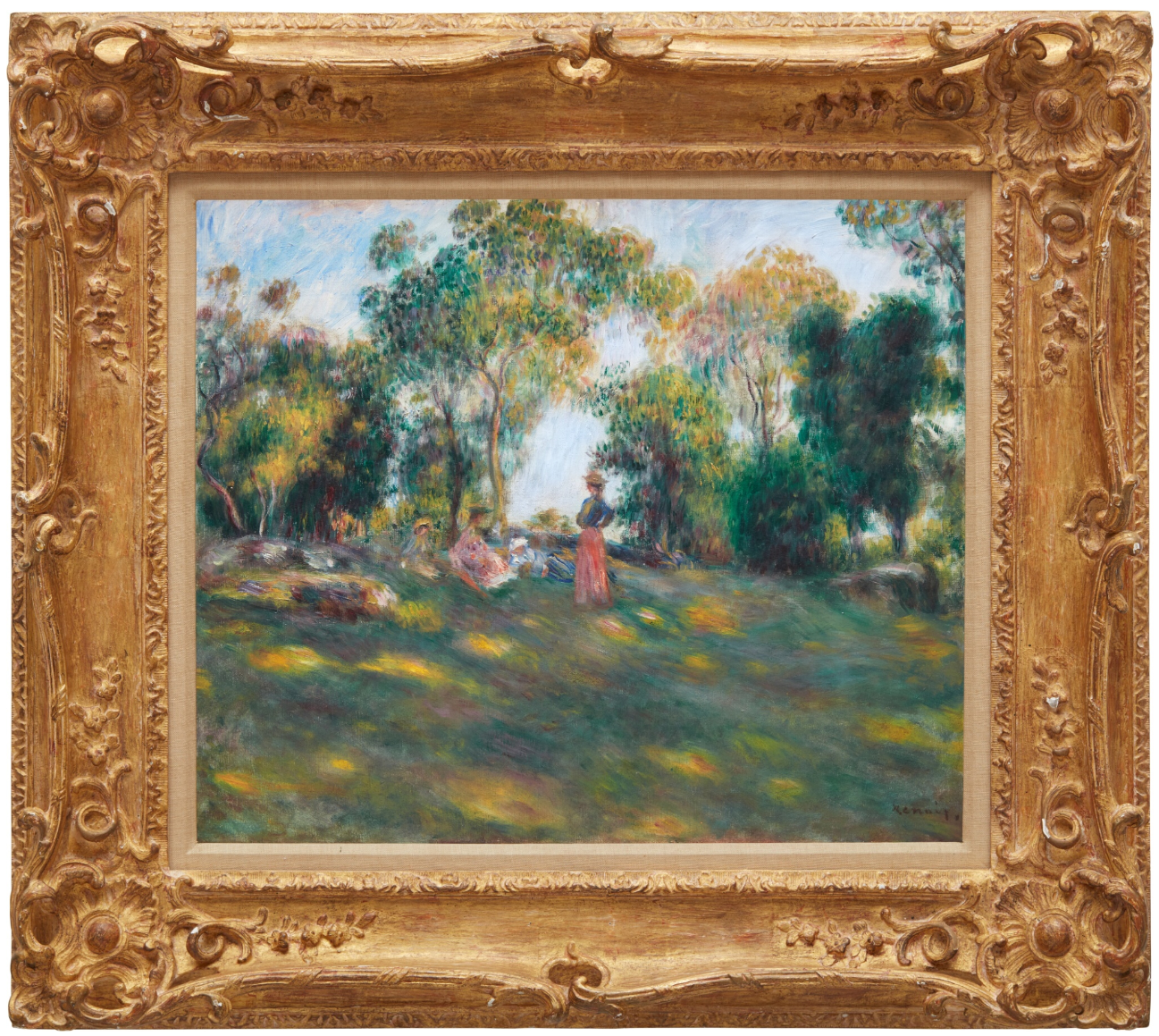
PIERRE-AUGUST RENOIR (1841 – 1919)
Paysage avec figures, 1890-93
Oil on canvas
46.5 x 55.5 cm (18-1/4 x 21-7/8 inches)
Signed renoir (lower right)
#6. Les paysans, 1971
Sotheby’s Hong-Kong: 28 September 2026
Estimated: HKD 22,000,000 – 32,000,000
HKD 49,700,000 / USD 6,335,245
Marc Chagall 馬克 · 夏加爾 | Les paysans 農村戀人 | Modern & Contemporary
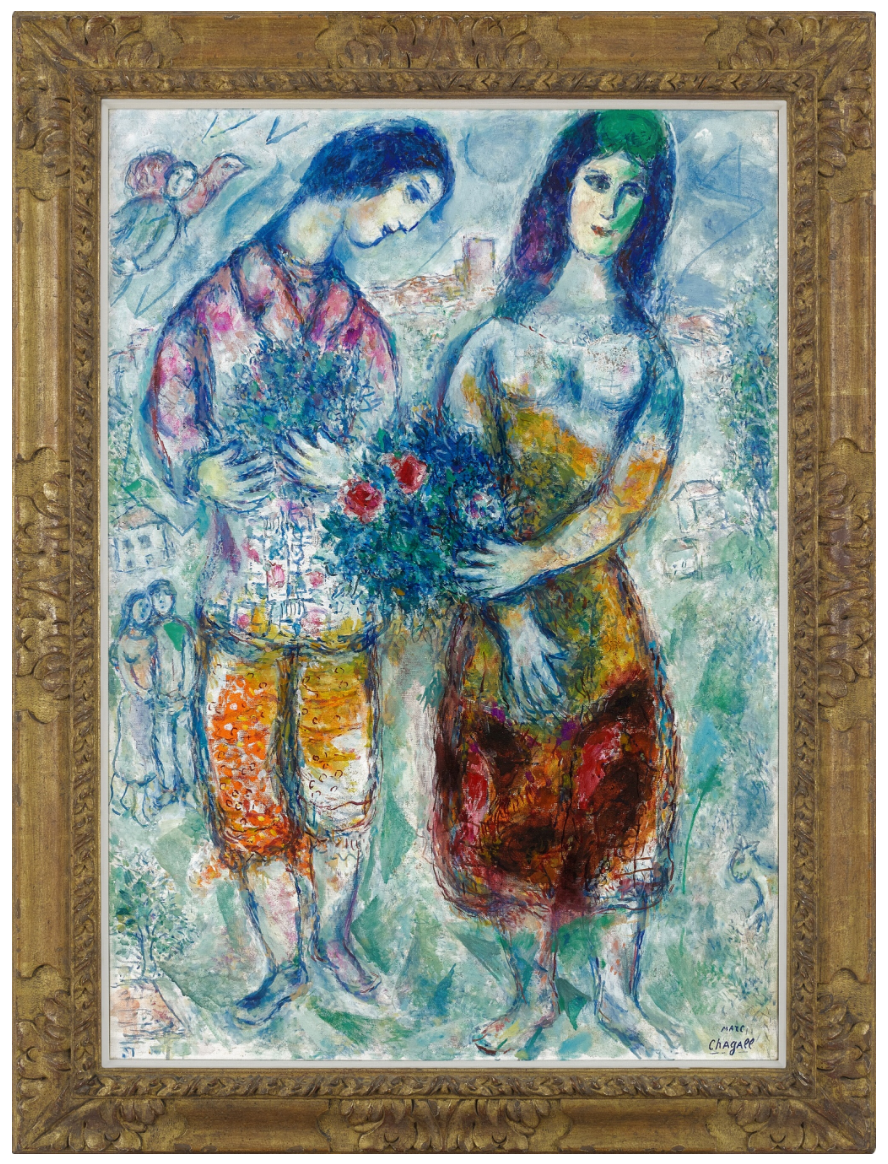
MARC CHAGALL (1887 – 1985)
Les paysans, 1971
Oil, tempera, colored ink and sawdust on canvas
115.5 x 81 cm (45-1/2 x 31-7/8 inches)
Signed Marc Chagall (lower right)
Signed again (on the reverse)
Figures in Motion, 2013
Sotheby’s Hong-Kong: 28 September 2026
Estimated: HKD 24,000,000 – 40,000,000
HKD 32,620,000 / USD 4,158,060
George Condo 喬治·康多 | Figures in Motion 動態群像 | Modern & Contemporary
REPEAT SALE
Christie’s London: 6 March 2018
Estimated: GBP 1,000,000 – 1,500,000
GBP 1,868,750
George Condo (b. 1957), Figures in Motion | Christie’s
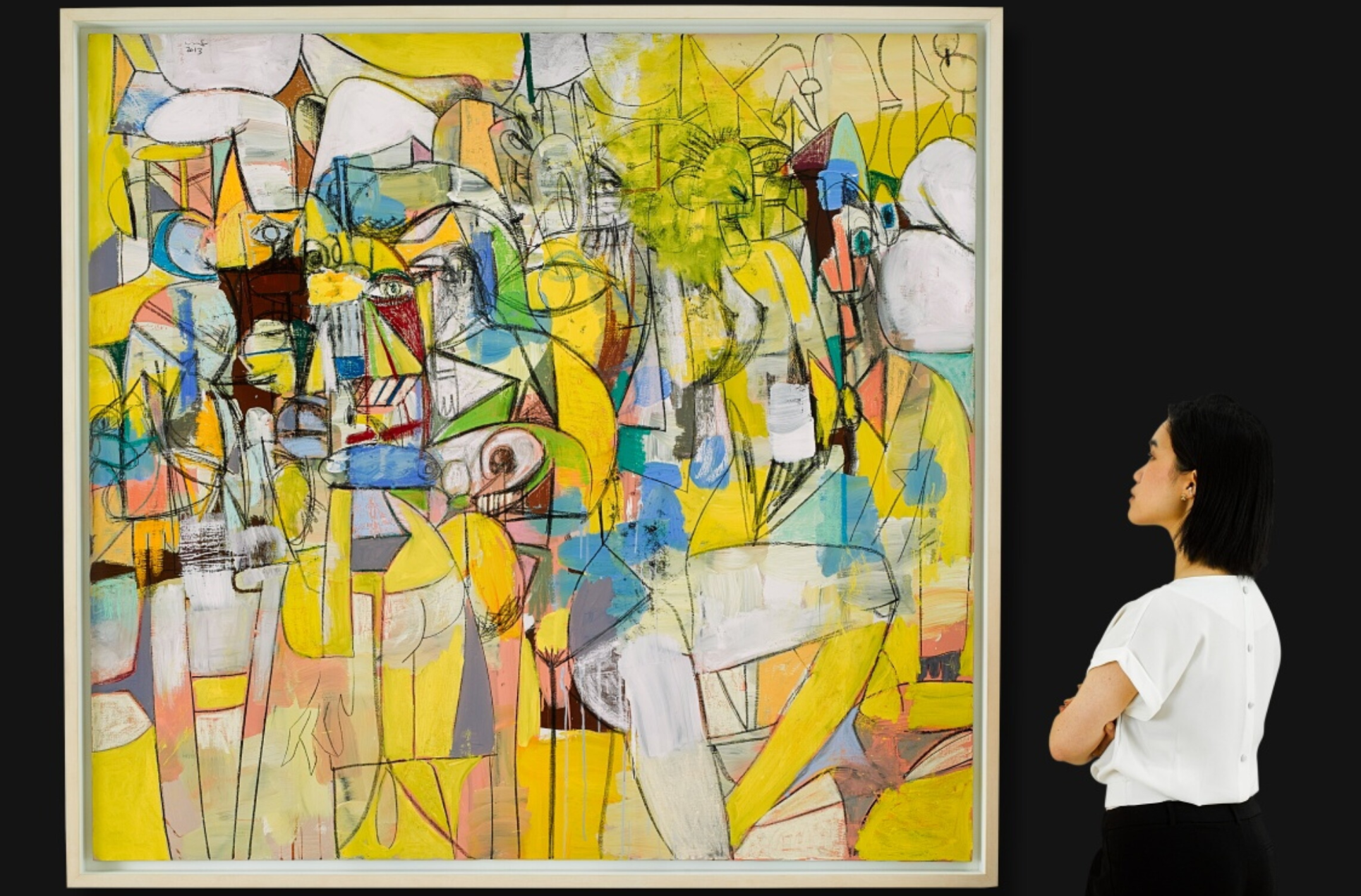
GEORGE CONDO (b. 1957)
Figures in Motion, 2013
Acrylic, charcoal and pastel on linen, in artist’s frame
59-1/4 x 63-1/8 inches (150.1 x 160.5 cm)
Signed and dated 2013 (upper left)
Infinity-Nets (LHLUJ), 2017
Sotheby’s Hong-Kong: 28 September 2026
Estimated: HKD 8,000,000 – 12,000,000
HKD 15,360,000 / USD 1,957,935
Yayoi Kusama 草間彌生 | Infinity-Nets (LHLUJ) 無限網(LHLUJ) | Modern &
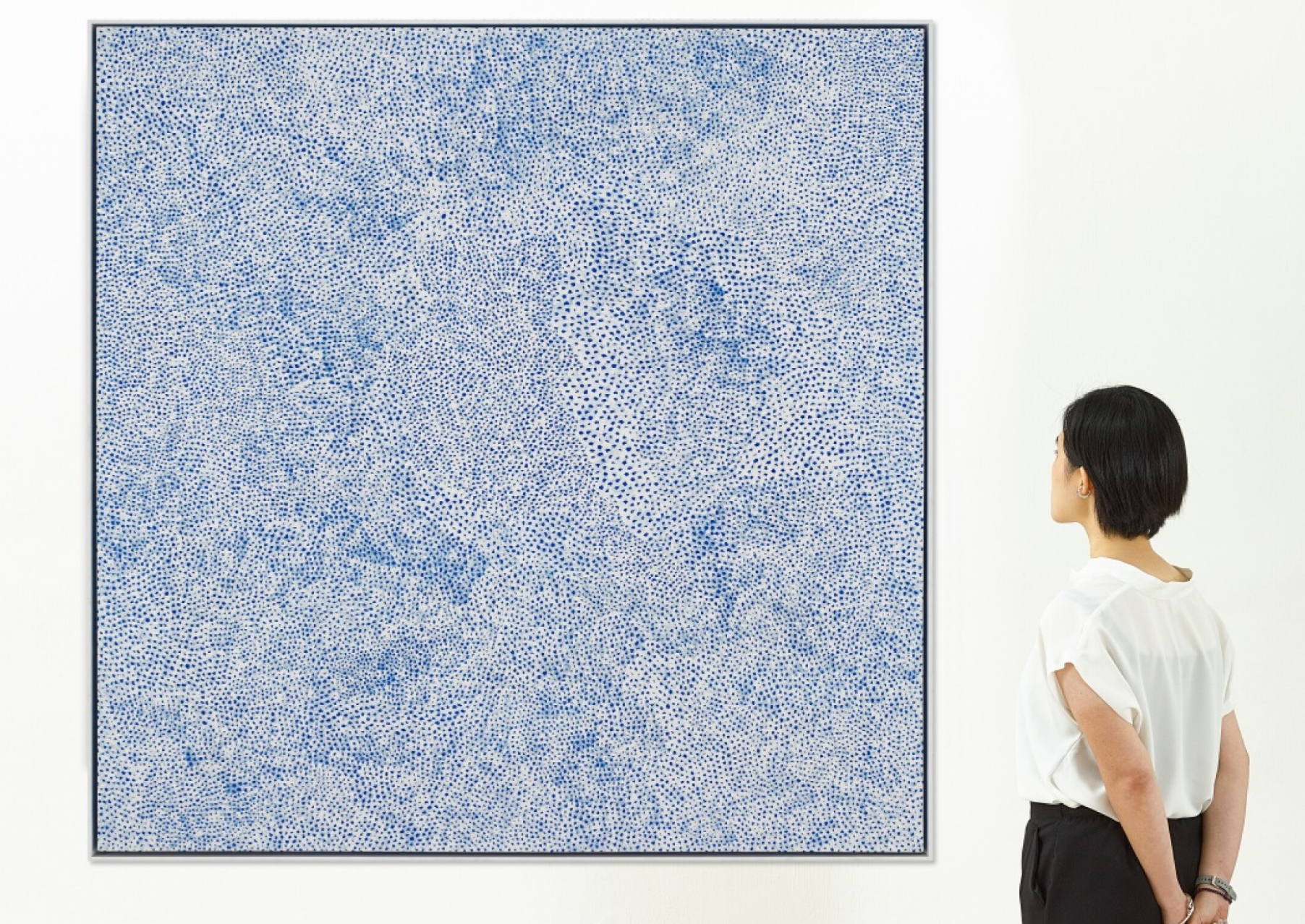
YAYOI KUSAMA (1929 – 2026)
Infinity-Nets (LHLUJ), 2017
Acrylic on canvas
130.5 x 130.3 cm (51-1/2 x 51-1/4 inches)
Signed, titled and dated 2017 (on the reverse)
Lidless Eye, 2016
Sotheby’s Hong-Kong: 28 September 2026
Estimated: HKD 5,000,000 – 8,000,000
HKD 6,400,000 / USD 815,805
Adrian Ghenie 亞德里安 · 格尼 | Lidless Eye 無眼簾 | Modern & Contemporary
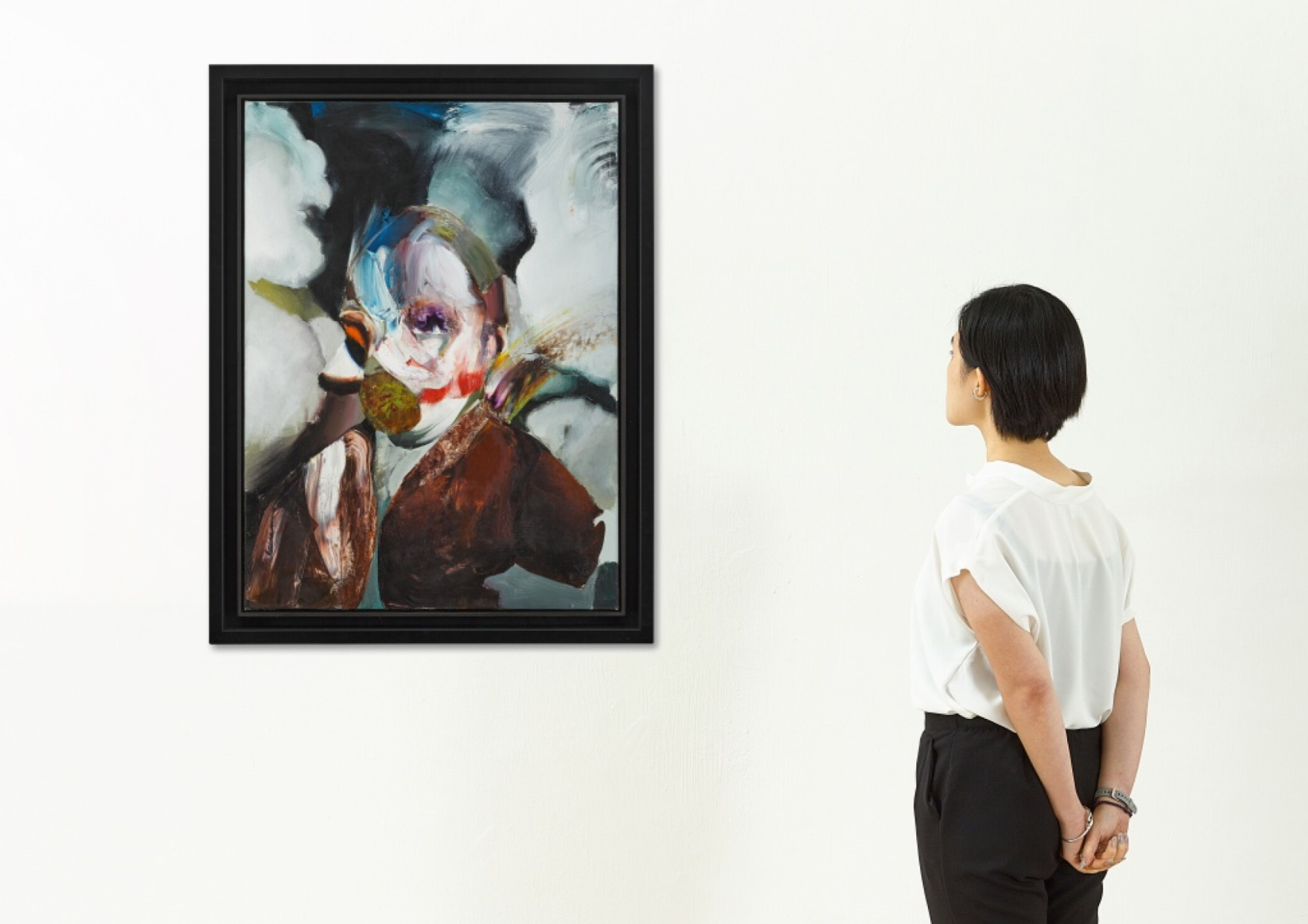
ADRIAN GHENIE (b. 1977)
Lidless Eye, 2016
Oil on canvas
76.2 x 56 cm (30×22 inches)
Signed and dated 2016 (on the reverse)
The 2014 Mr. General Idea Pageant, 2014
Sotheby’s Hong-Kong: 28 September 2026
Estimated: HKD 2,600,000 – 4,500,000
Hernan Bas 赫爾南 · 巴斯 | The 2014 Mr. General Idea Pageant
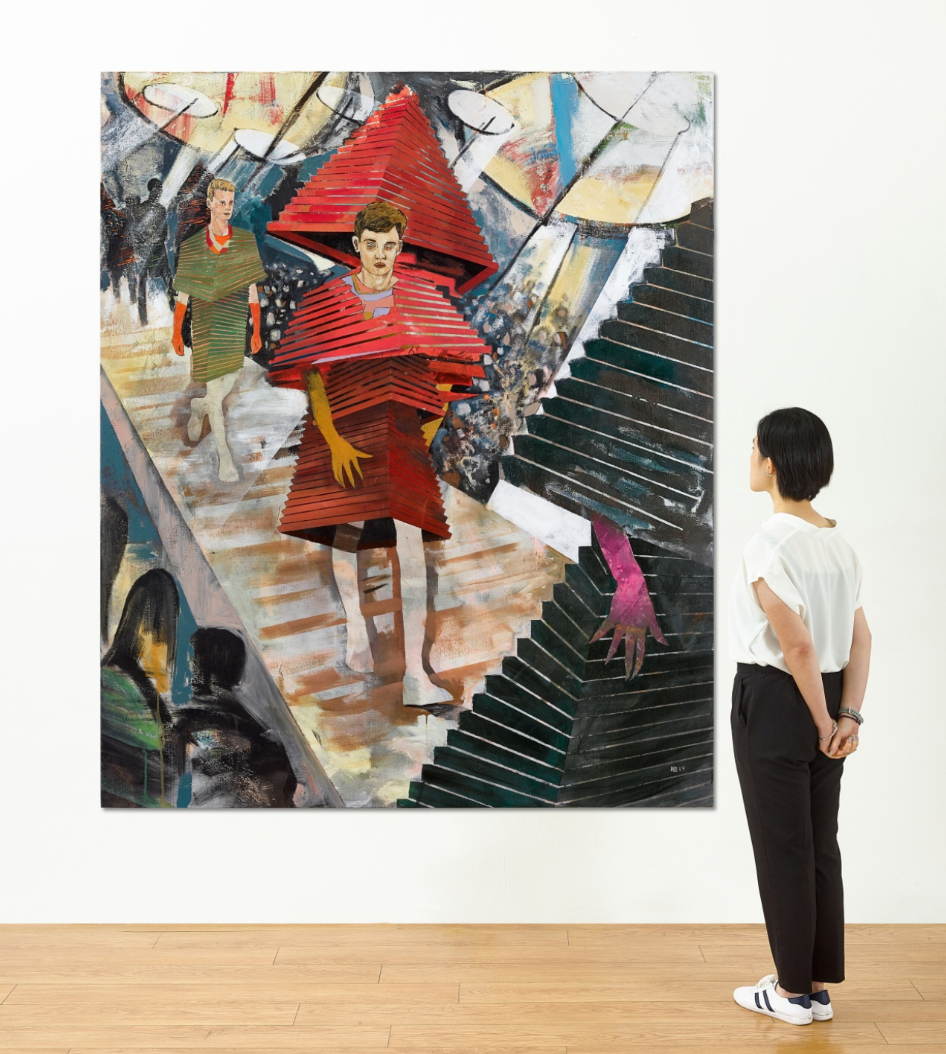
HERNAN BAS (b. 1978)
The 2014 Mr. General Idea Pageant, 2014
Acrylic on linen
72×60 inches (183 x 152.5 cm)
Signed in artist’s initials and dated 14 (bottom right)
Signed in artist’s initials, titled and dated 2014 (on the reverse)
In Hot Water, 2018
Sotheby’s Hong-Kong: 28 September 2026
Estimated: HKD 2,000,000 – 3,000,000
Jadé Fadojutimi 賈黛・法多朱蒂米 | In Hot Water 滾燙的水 | Modern & Contemporary

JADE FADOJUTIMI (b. 1993)
In Hot Water, 2018
Oil on canvas
181.5 x 171.5 cm (71-1/2 x 67-1/2 inches)
Signed, signed with the artist’s initials, titled and dated Dec ’18 (on the reverse)
Marais Apartment, 2019
Sotheby’s Hong-Kong: 28 September 2026
Estimated: HKD 1,200,000 – 1,800,000
Hilary Pecis 希拉里・佩西斯 | Marais Apartment 瑪黑區公寓 | Modern & Contemporary
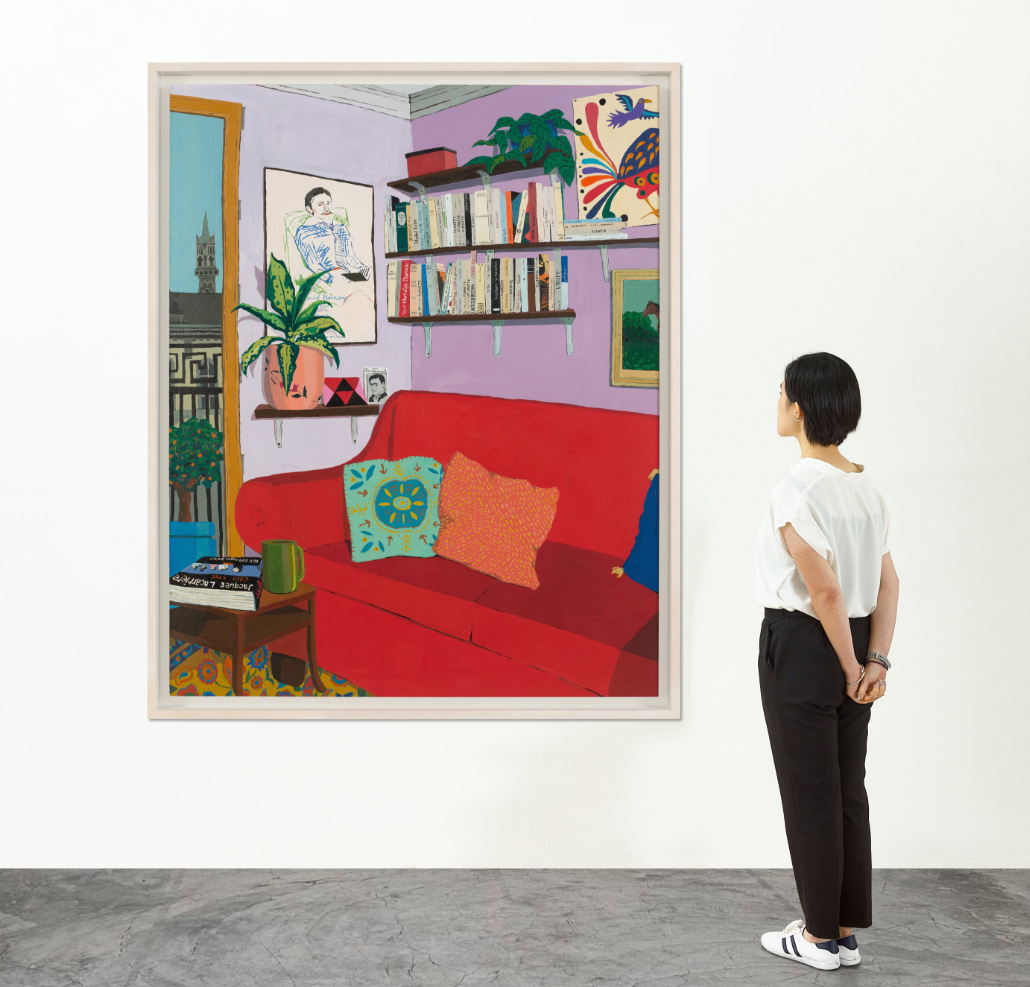
HILARY PECIS (b. 1979)
Marais Apartment, 2019
Acrylic on canvas
60×48 inches (152.4 x 121.9 cm)
Signed and titled (on the reverse)
Untitled (Plum and Dark Brown), 1964
Sotheby’s Hong-Kong: 28 September 2026
Estimated: HKD 78,000,000 – 128,000,000
WITHDRAWN
Mark Rothko 馬克 · 羅斯科 | Untitled (Plum and Dark Brown) 無題(洋李色及深棕色) |
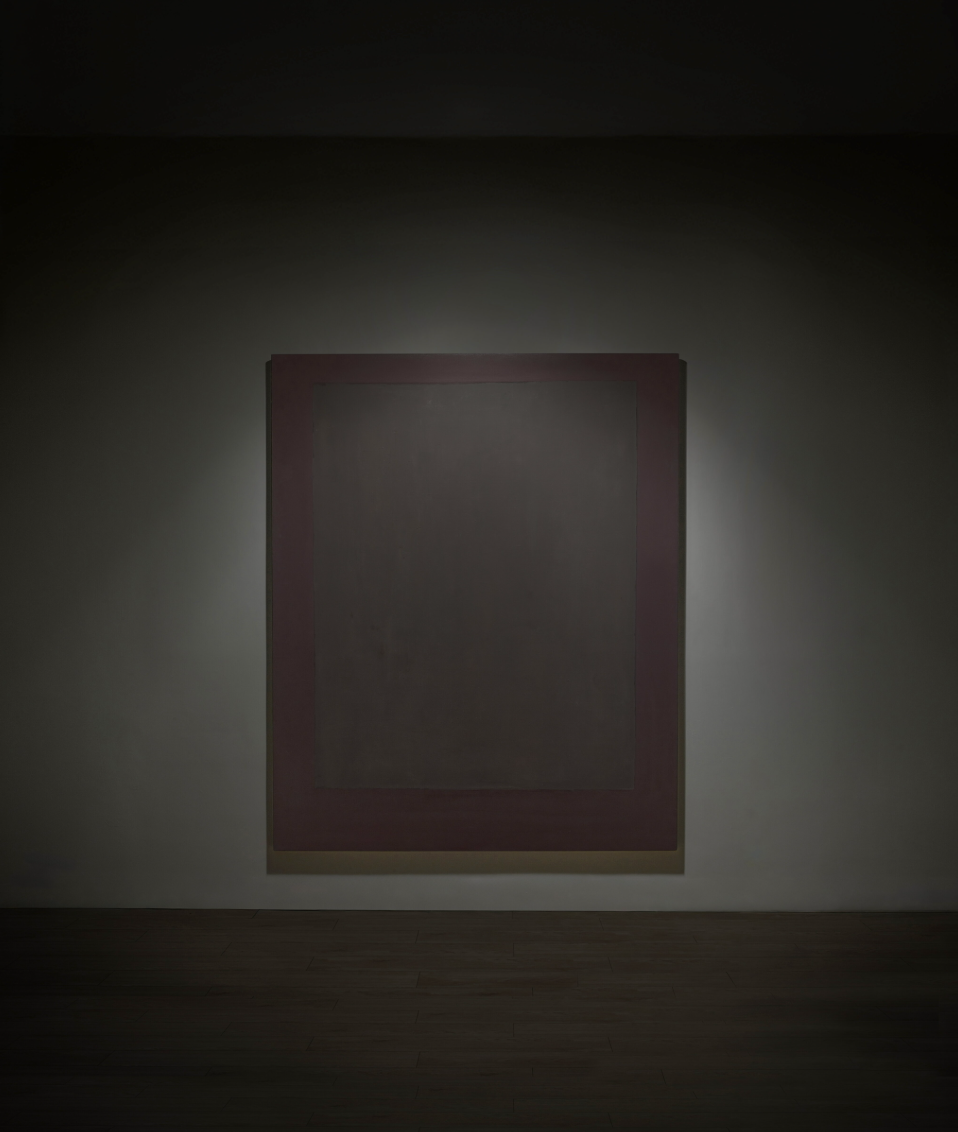
MARK ROTHKO (1903-1970)
Untitled (Plum and Dark Brown), 1964
Oil on canvas
93-1/8 x 76-1/4 inches (236.5 x 193.5 cm)
Signed and dated 1964 (on the reverse)
Contemporary Day Auction
29 September 2026
Contemporary Day Auction | Contemporary Art | Sotheby’s
Pumpkin, 1989
Sotheby’s Hong-Kong: 29 September 2026
Estimated: HKD 8,000,000 – 12,000,000
Yayoi Kusama 草間彌生 | Pumpkin 南瓜 | Contemporary Day Auction |
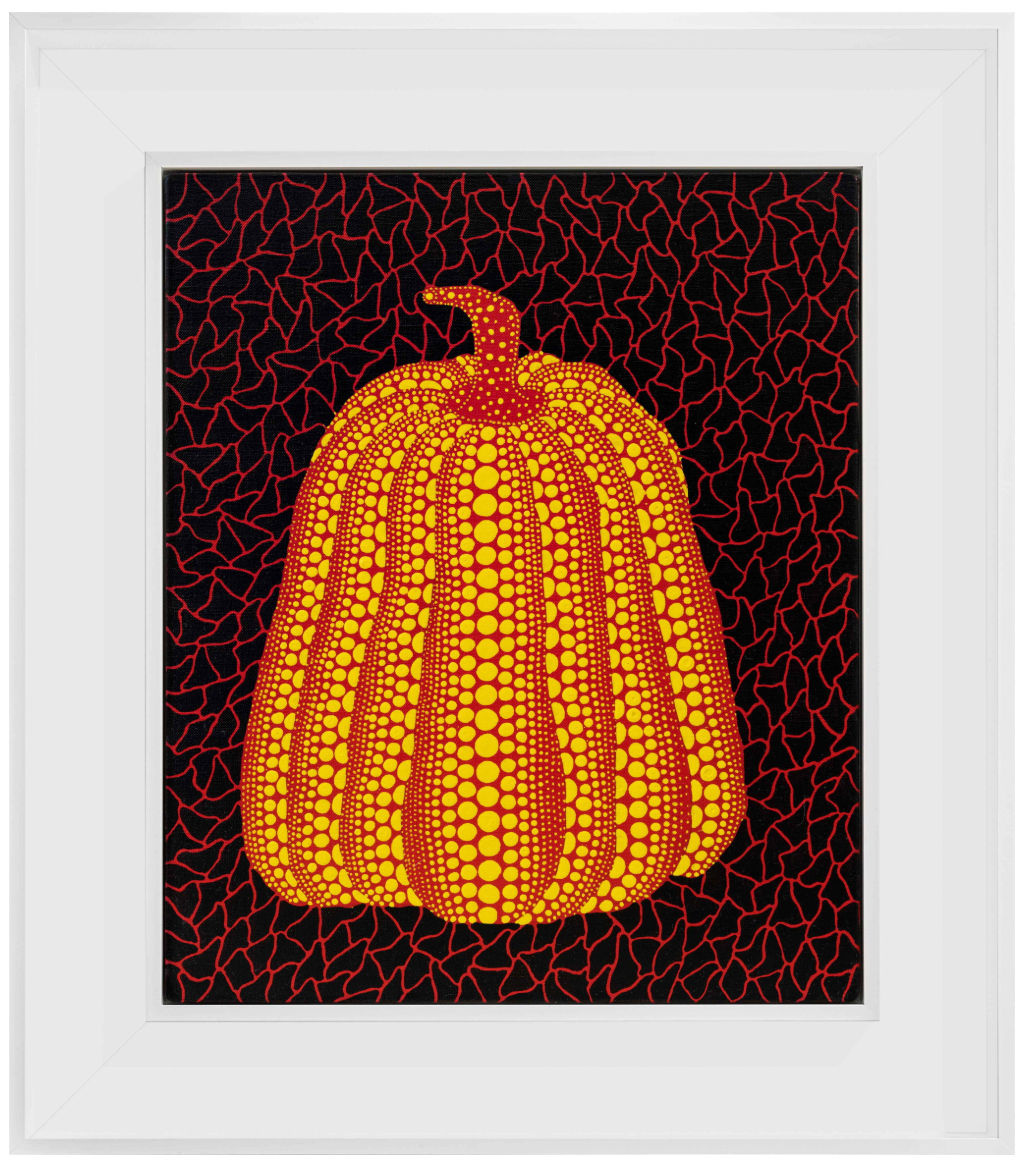
YAYOI KUSAMA (1929 – 2026)
Pumpkin, 1989
Acrylic on canvas
45.5 x 38 cm (17-7/8 x 15 inches)
Signed in English and Japanese, and dated 1989 (on the reverse)
Untitled, 1988
Sotheby’s Hong-Kong: 29 September 2026
Estimated: HKD 4,000,000 – 6,000,000
Yoshitomo Nara 奈良美智 | Untitled 無題 | Contemporary Day Auction |
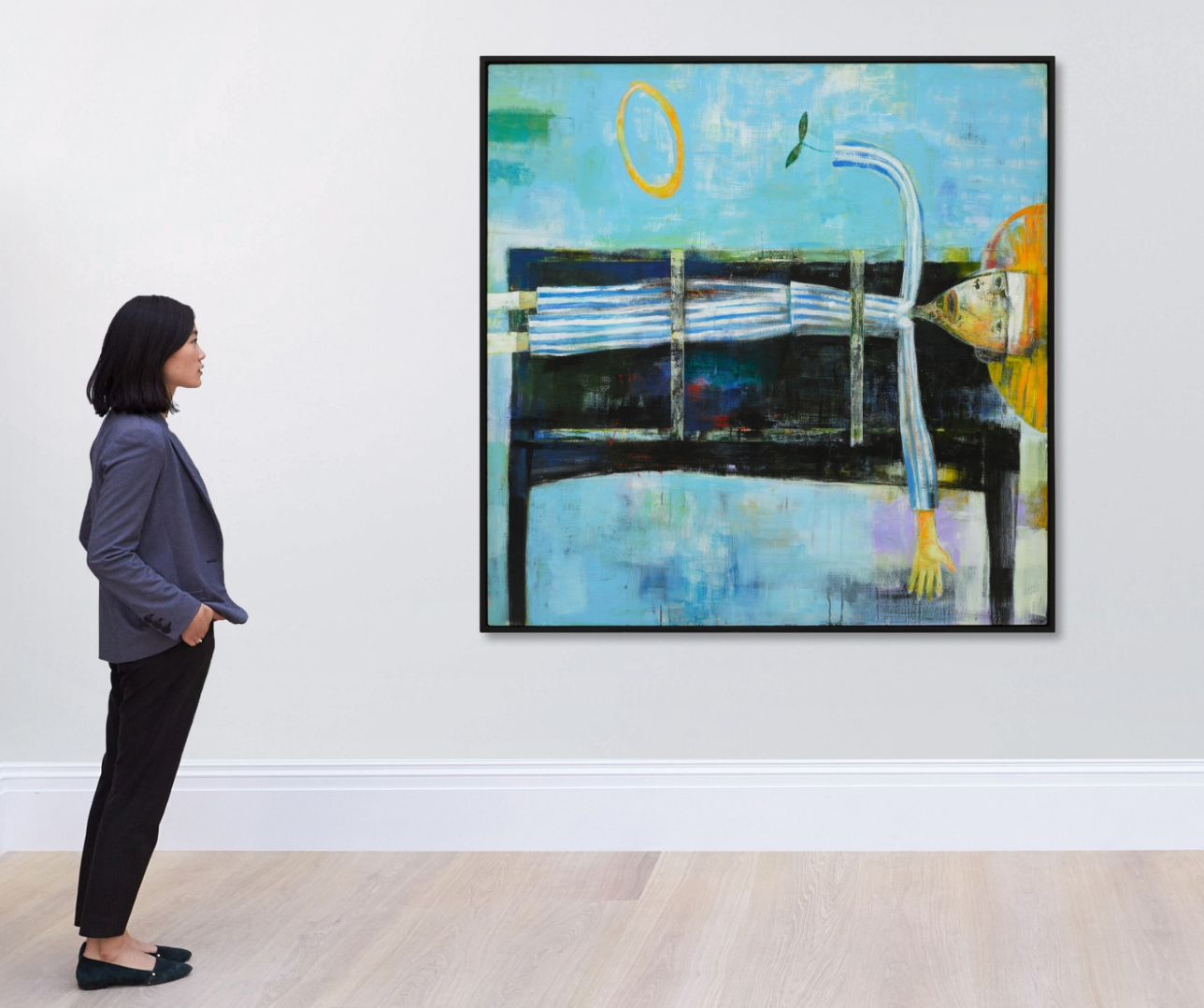
YOSHITOMO NARA (b. 1959)
Untitled, 1988
Acrylic on canvas
130.5 x 130.5 cm (51-3/8 x 51-3/8 inches)
Signed (on the reverse)
Nets 19, 1998
Sotheby’s Hong-Kong: 29 September 2026
Estimated: HKD 3,000,000 – 5,000,000
Yayoi Kusama 草間彌生 | Nets 19 網 19號 | Contemporary Day Auction |
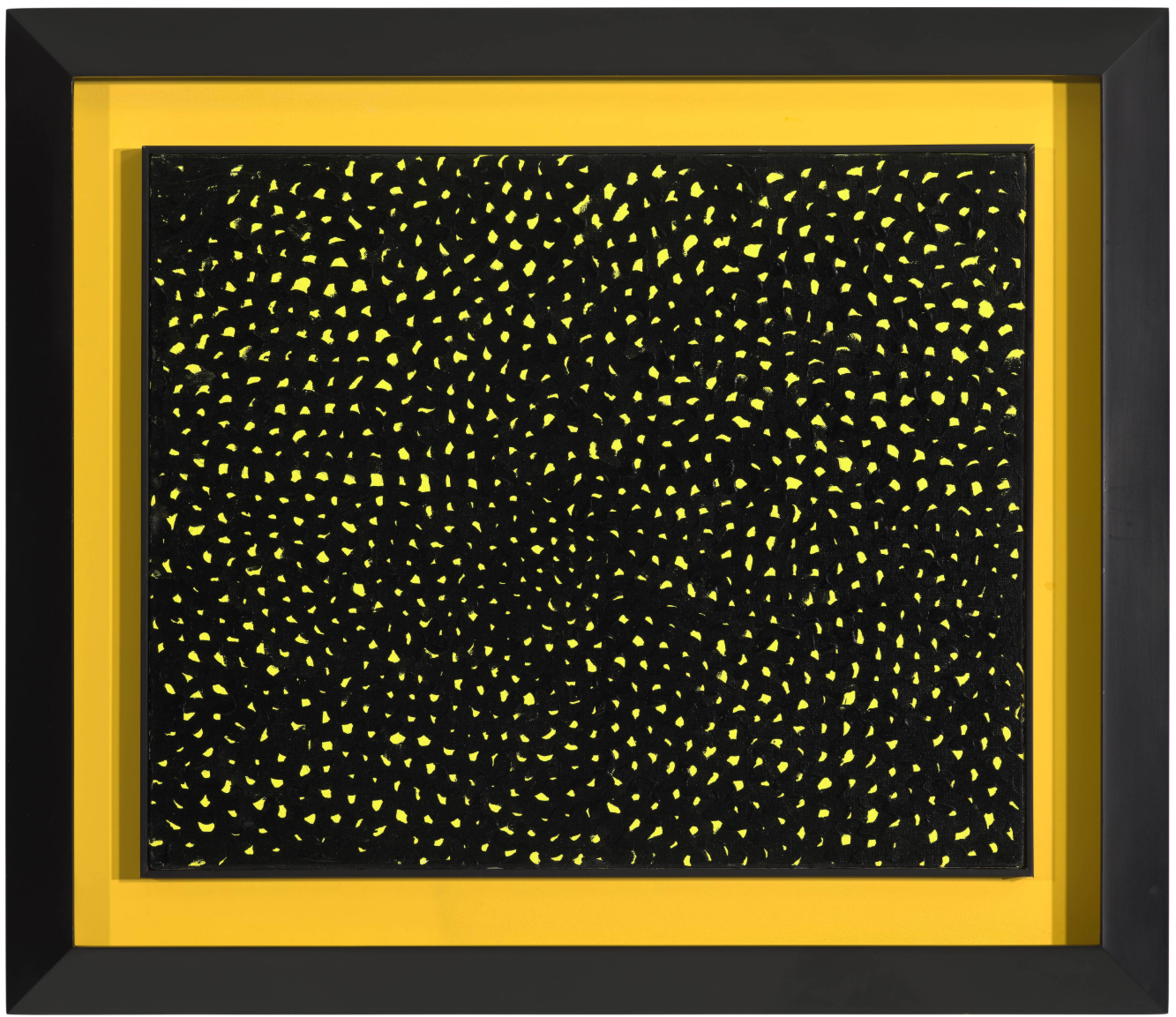
YAYOI KUSAMA (1929 – 2026)
Nets 19, 1998
Acrylic on canvas
53×65 cm (20-7/8 x 25-5/8 inches)
Signed in English, titled in English and dated 1998 (on the reverse)
Pumpkin, 1990
Sotheby’s Hong-Kong: 29 September 2026
Estimated: HKD 2,500,000 – 3,500,000
Yayoi Kusama 草間彌生 | Pumpkin 南瓜 | Contemporary Day Auction |
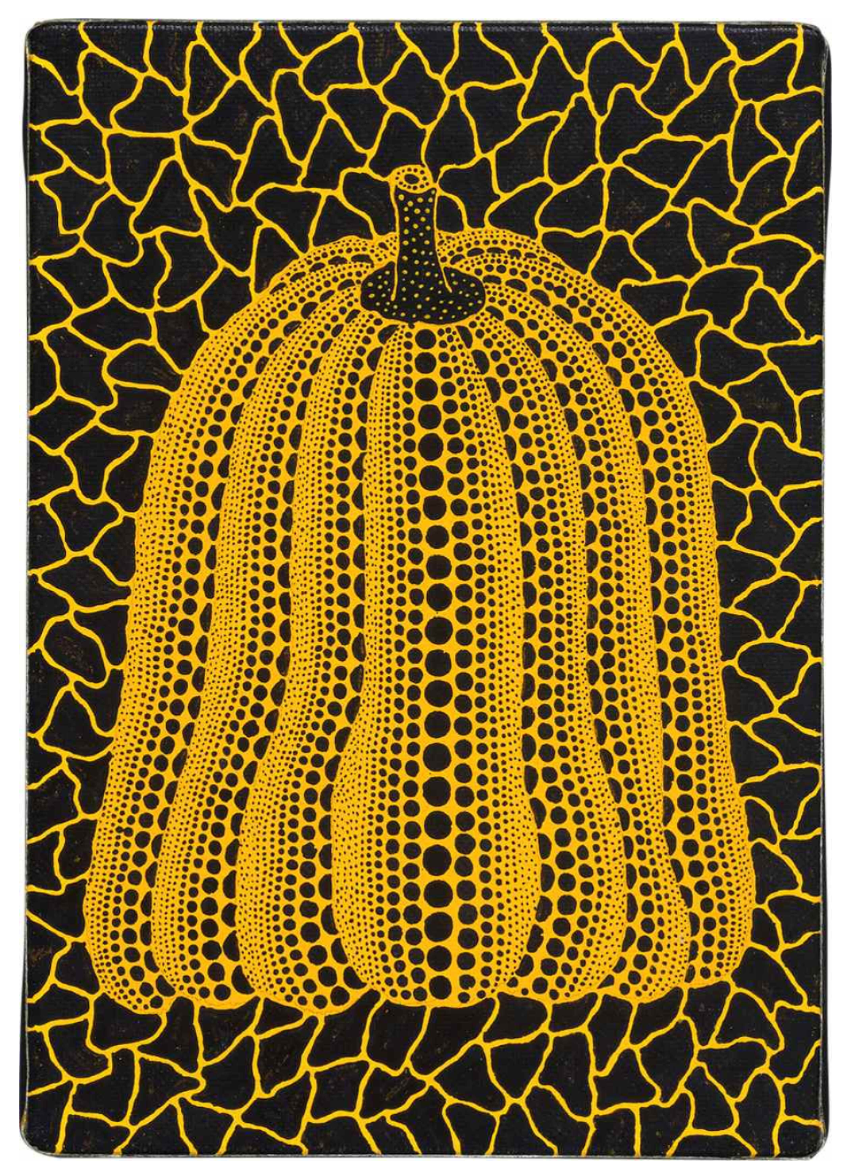
YAYOI KUSAMA (1929 – 2026)
Pumpkin, 1990
Acrylic on canvas
22.7 x 15.8 cm (8-7/8 x 6-1/4 inches)
Signed in English, titled in Japanese and dated 1990 (on the reverse)
20th/21st Century Evening Sale
29 September 2026
20th/21st Century Evening Sale
Ancient Scientist, 1984
PROPERTY FROM AN IMPORTANT FAMILY COLLECTION
Christie’s Hong-Kong: 29 September 2026
Estimated: HKD 56,000,000 – 76,000,000
JEAN-MICHEL BASQUIAT (1960-1988), Ancient Scientist | Christie’s
REPEAT SALE
Phillips Hong-Kong: 3 December 2020
Estimated: HKD 50,000,000 – 70,000,000
HKD 58,330,000 / USD 7,525,230
Jean-Michel Basquiat – 20th Century … Lot 7 December 2020 | Phillips

JEAN-MICHEL BASQUIAT (1960-1988)
Ancient Scientist, 1984
Acrylic, oilstick and Xerox paper collage on canvas
66-1/2 x 61-3/8 inches (169×156 cm)
Signed with artist’s initials, titled and dated ‘JMB “ANCIENT SCIENTIST” 1984’ (on the reverse)
Voie lactée – 09.11.56 (Milky Way – 09.11.56), 1956
Christie’s Hong-Kong: 29 September 2026
Estimated: HKD 45,000,000 – 75,000,000
ZAO WOU-KI (ZHAO WUJI, 1920-2013), Voie lactée – 09.11.56 (Milky Way – 09.11.56) | Christie’s
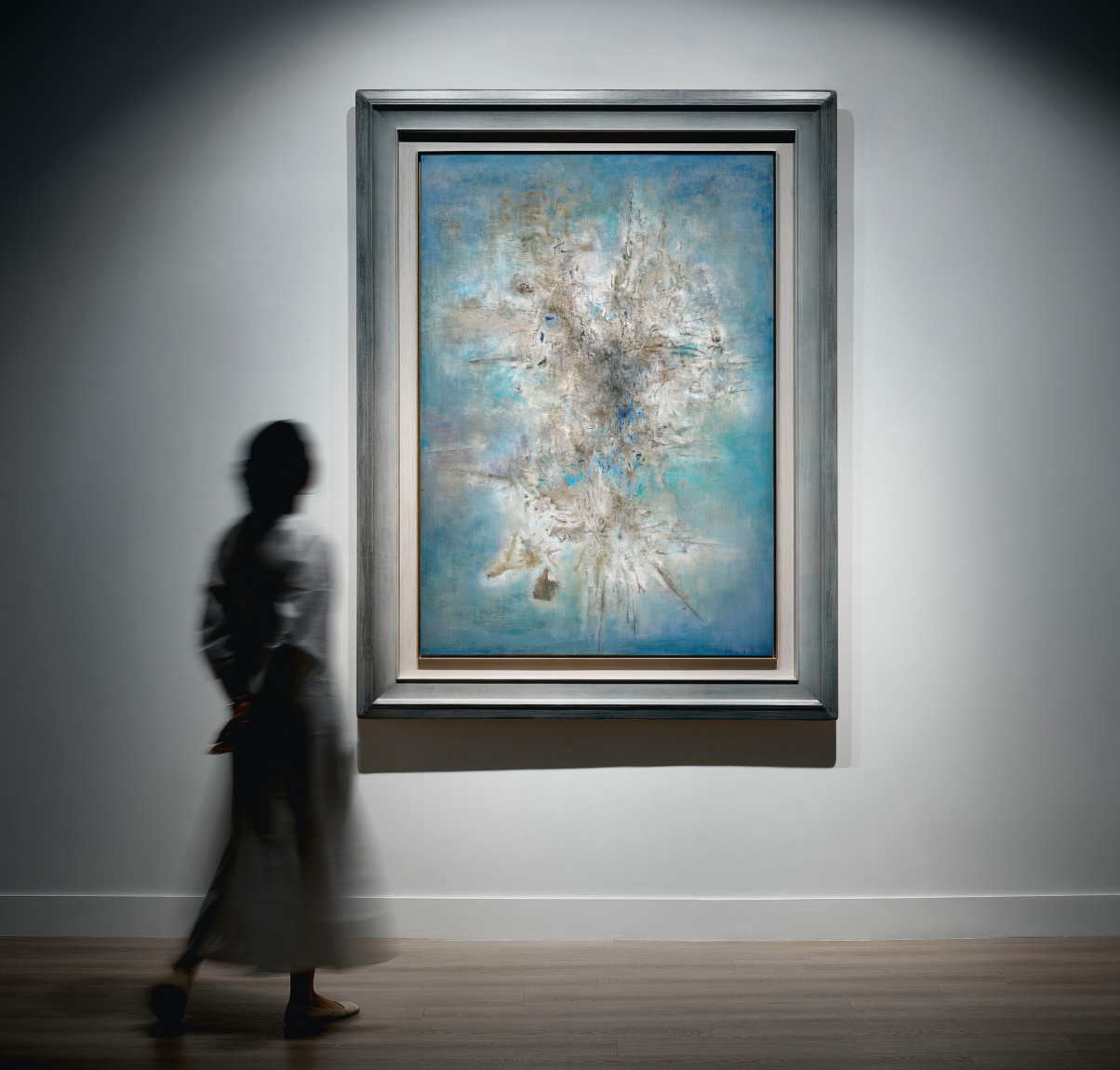
ZAO WOU-KI (ZHAO WUJI, 1920-2013)
Voie lactée – 09.11.56 (Milky Way – 09.11.56), 1956
Oil on canvas
162.2 x 114 cm (63-7/8 x 47 inches)
Signed in Chinese, signed again and dated ‘ZAO 56’ (lower right)
Signed, titled an dated ‘Voie Lactée ZAO WOU-KI 9.11.1956’ (on the reverse)
A-Pumpkin (YHP), 2011
Christie’s Hong-Kong: 29 September 2026
Estimated: HKD 48,000,000 – 68,000,000
YAYOI KUSAMA (1929-2026), A-Pumpkin (YHP) | Christie’s
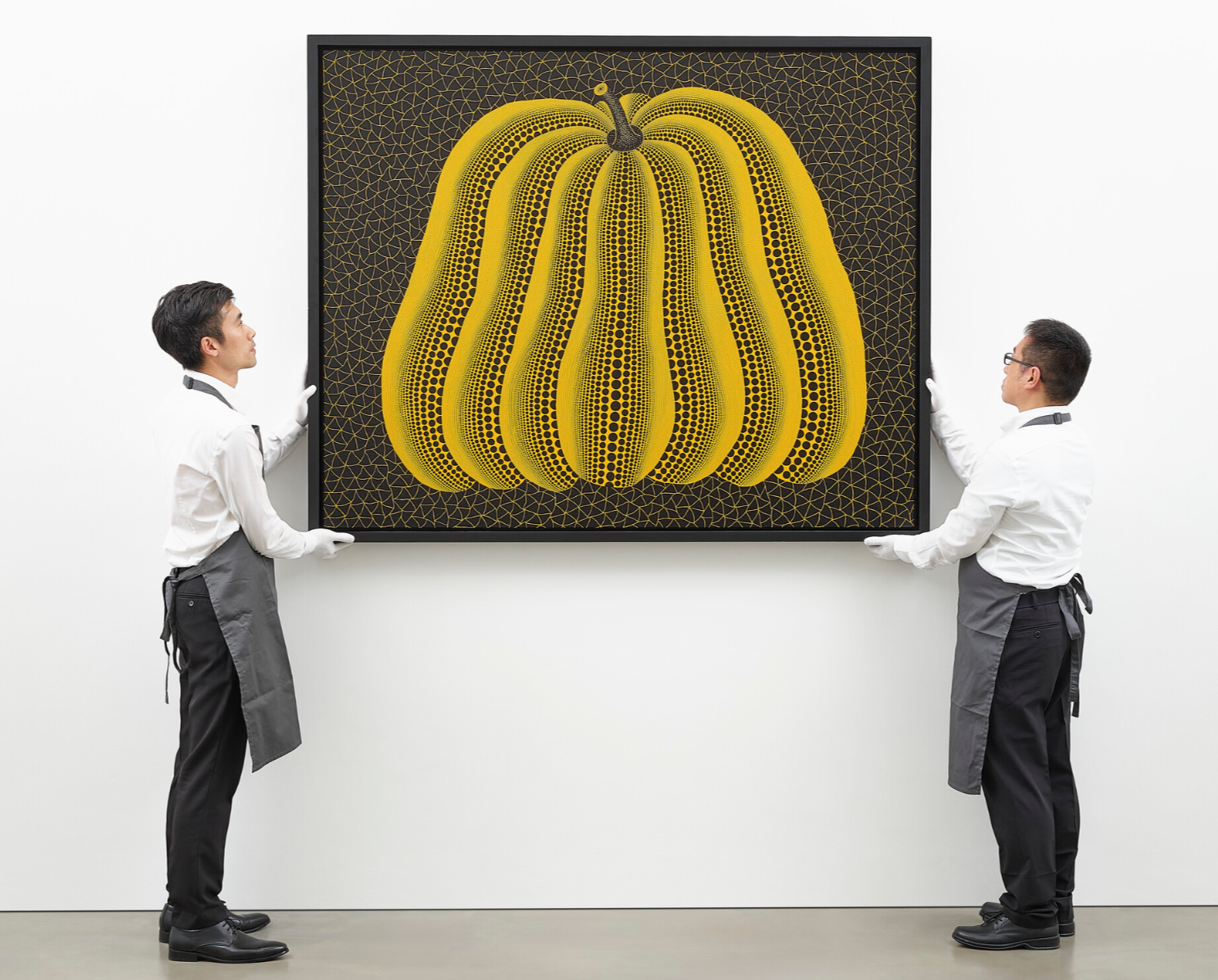
YAYOI KUSAMA (1929-2026)
A-Pumpkin (YHP), 2011
Acrylic on canvas
130.2 x 162 cm (51-1/4 x 63-3/4 inches)
Signed, titled and dated ‘YHP A-PUMPKIN YAYOI KUSAMA 2011’ (on the reverse)
Abstraktes Bild, 1991
Christie’s Hong-Kong: 29 September 2026
Estimated: HKD 38,000,000 – 55,000,000
GERHARD RICHTER (B. 1932), Abstraktes Bild | Christie’s

GERHARD RICHTER (B. 1932)
Abstraktes Bild, 1991
Oil on wood
95.3 x 100 cm (37-1/2 x 39-3/8 inches)
Signed, titled and dated ‘746-4 Richter 1991’ (on the reverse)
Blue Sea, 1998
Christie’s Hong-Kong: 29 September 2026
Estimated: HKD 16,000,000 – 26,000,000
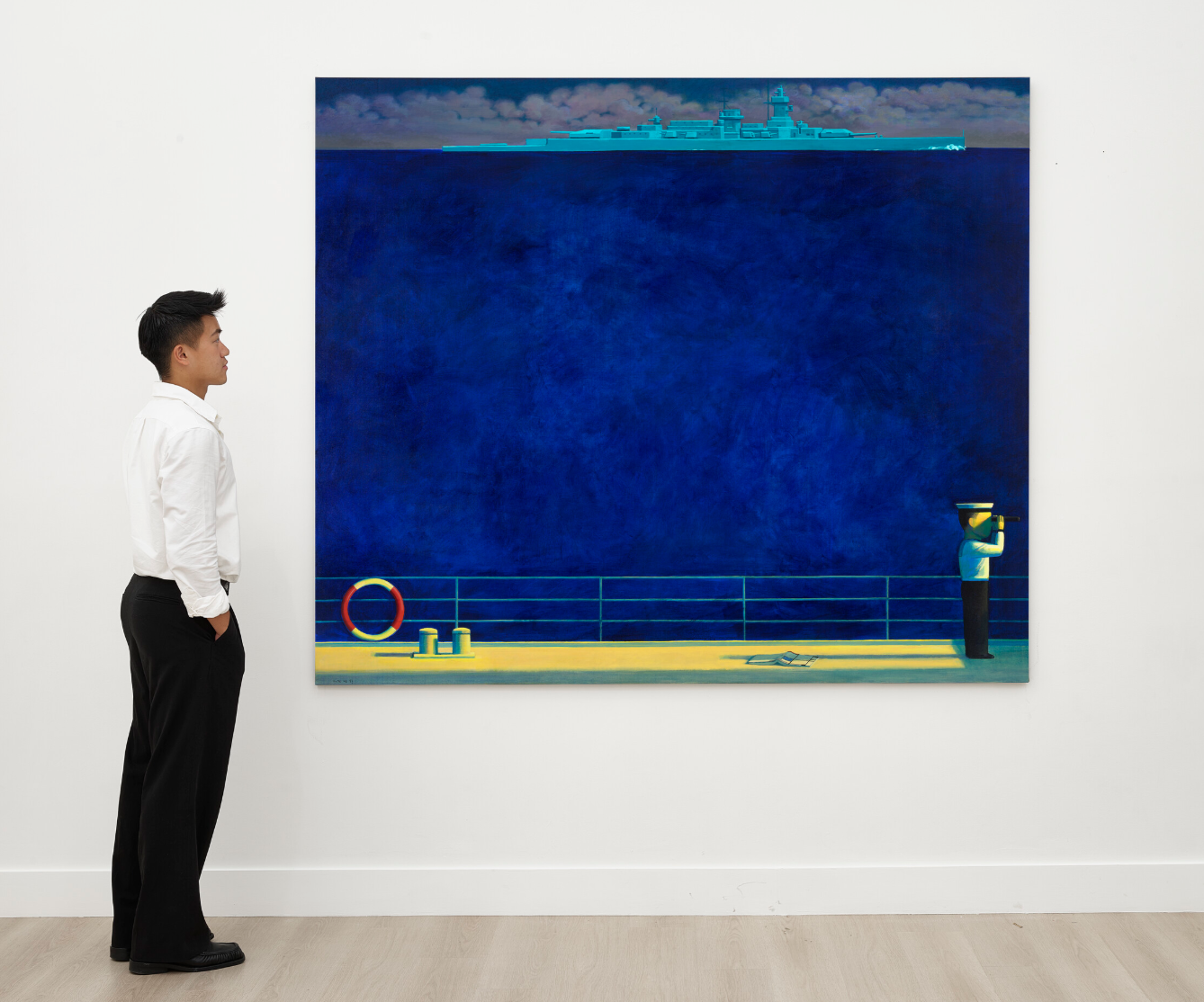
LIU YE (B. 1964)
Blue Sea, 1998
Oil on canvas
170×200 cm (66-3/4 x 78-3/4 inches)
Signed in Chinese, signed again and dated, ‘Liu Ye 98’ (lower left)
INFINITY-NETS [WUPT], 2016
Christie’s Hong-Kong: 29 September 2026
Estimated: HKD 13,000,000 – 20,000,000
YAYOI KUSAMA (1929-2026), INFINITY-NETS [WUPT] | Christie’s
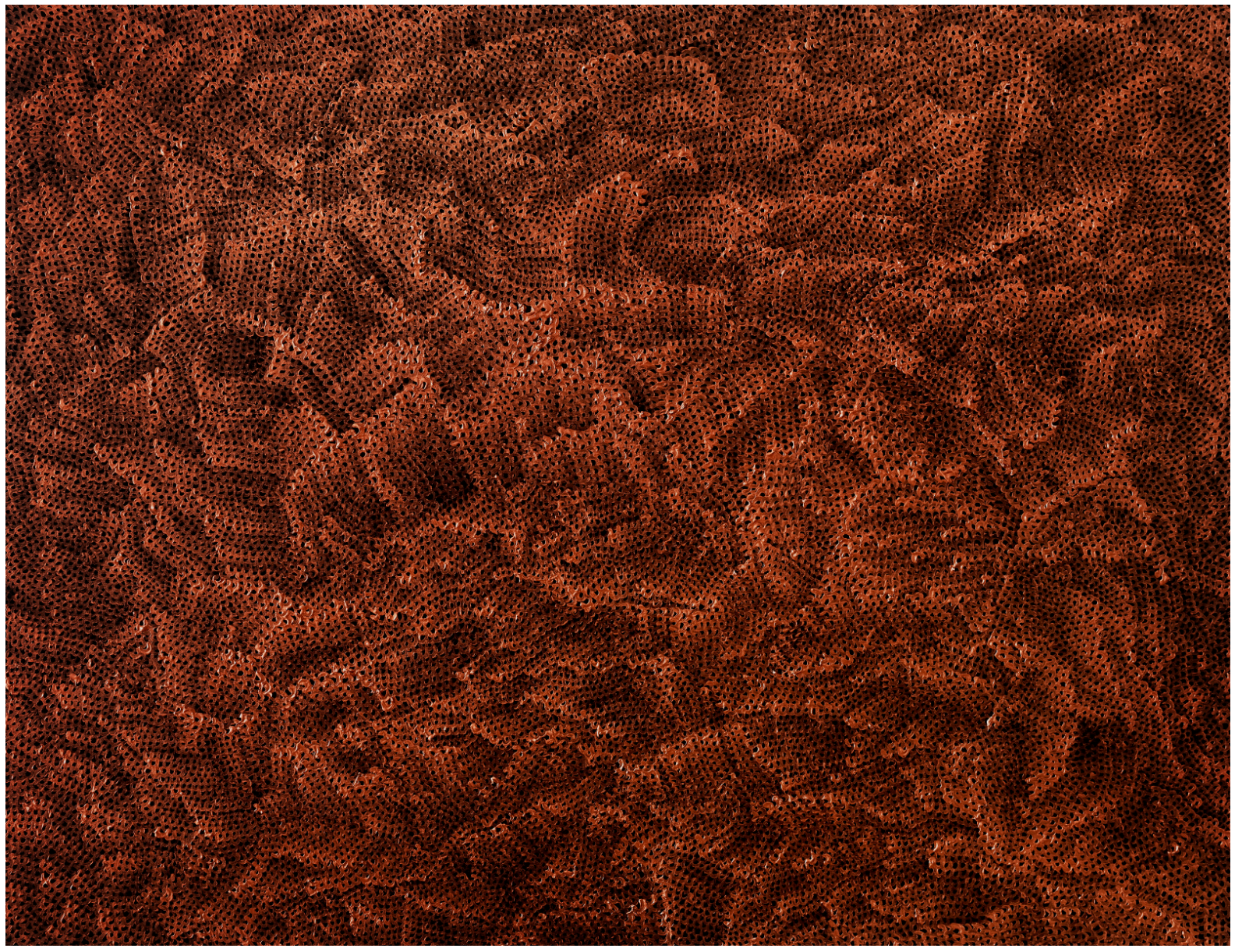
YAYOI KUSAMA (1929-2026)
INFINITY-NETS [WUPT], 2016
Acrylic on canvas
112 x 145.5 cm (44-1/8 x 57-1/4 inches)
Signed, titled and dated ‘YAYOI KUSAMA 2016 INFINITY-NETS WUPT’ (on the reverse)
Woman & Man, 2008
Christie’s Hong-Kong: 29 September 2026
Estimated: HKD 13,000,000 – 20,000,000
GEORGE CONDO (B. 1957), Woman & Man | Christie’s
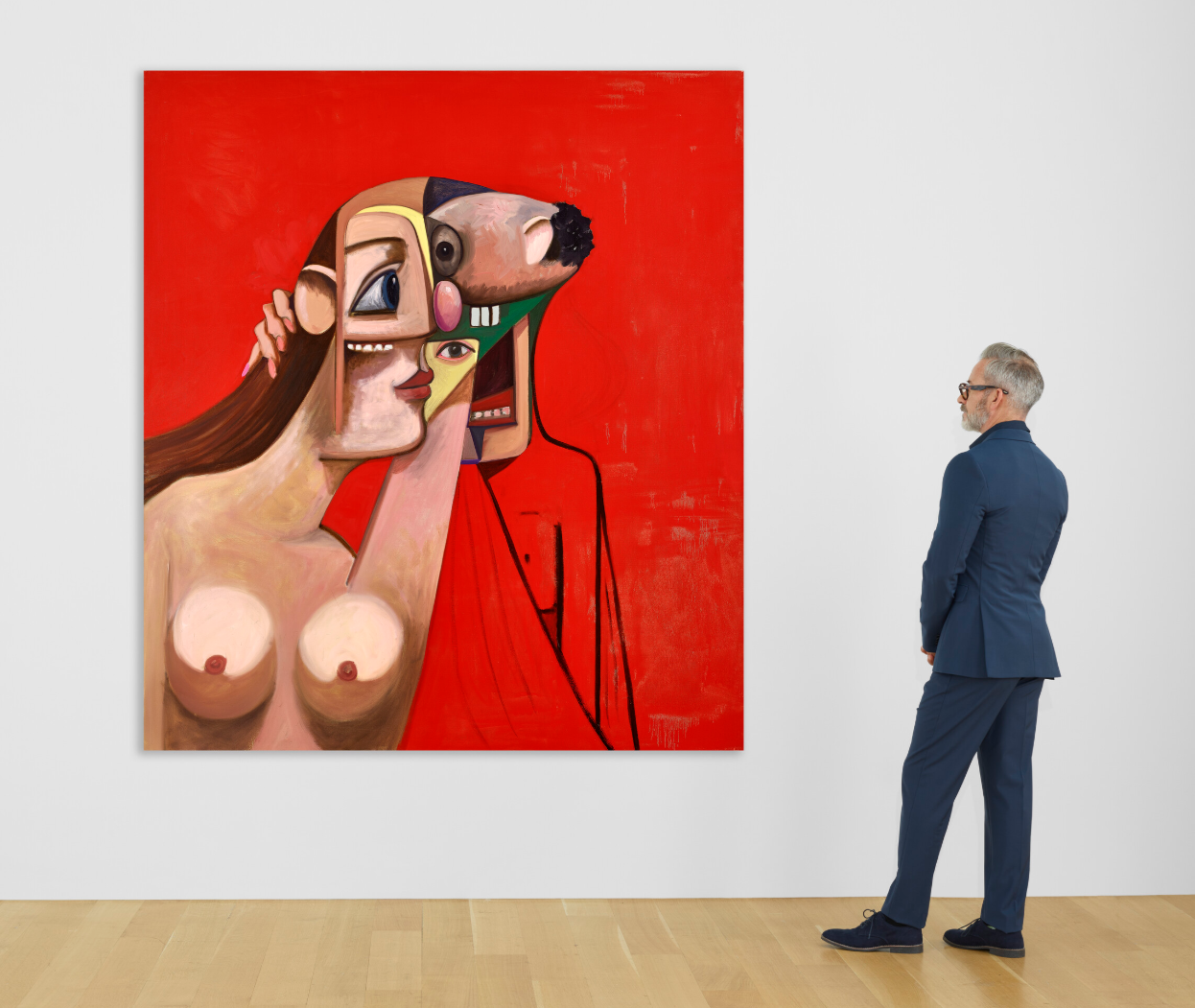
GEORGE CONDO (B. 1957)
Woman & Man, 2008
Oil on canvas
87-1/4 x 77-1/8 inches (221.5 x 195.8 cm)
Signed with artist’s signature and dated ’08’ (on the reverse)
A Family, 2012
Christie’s Hong-Kong: 29 September 2026
Estimated: HKD 9,500,000 – 13,500,000
FERNANDO BOTERO (1932-2023), A Family | Christie’s
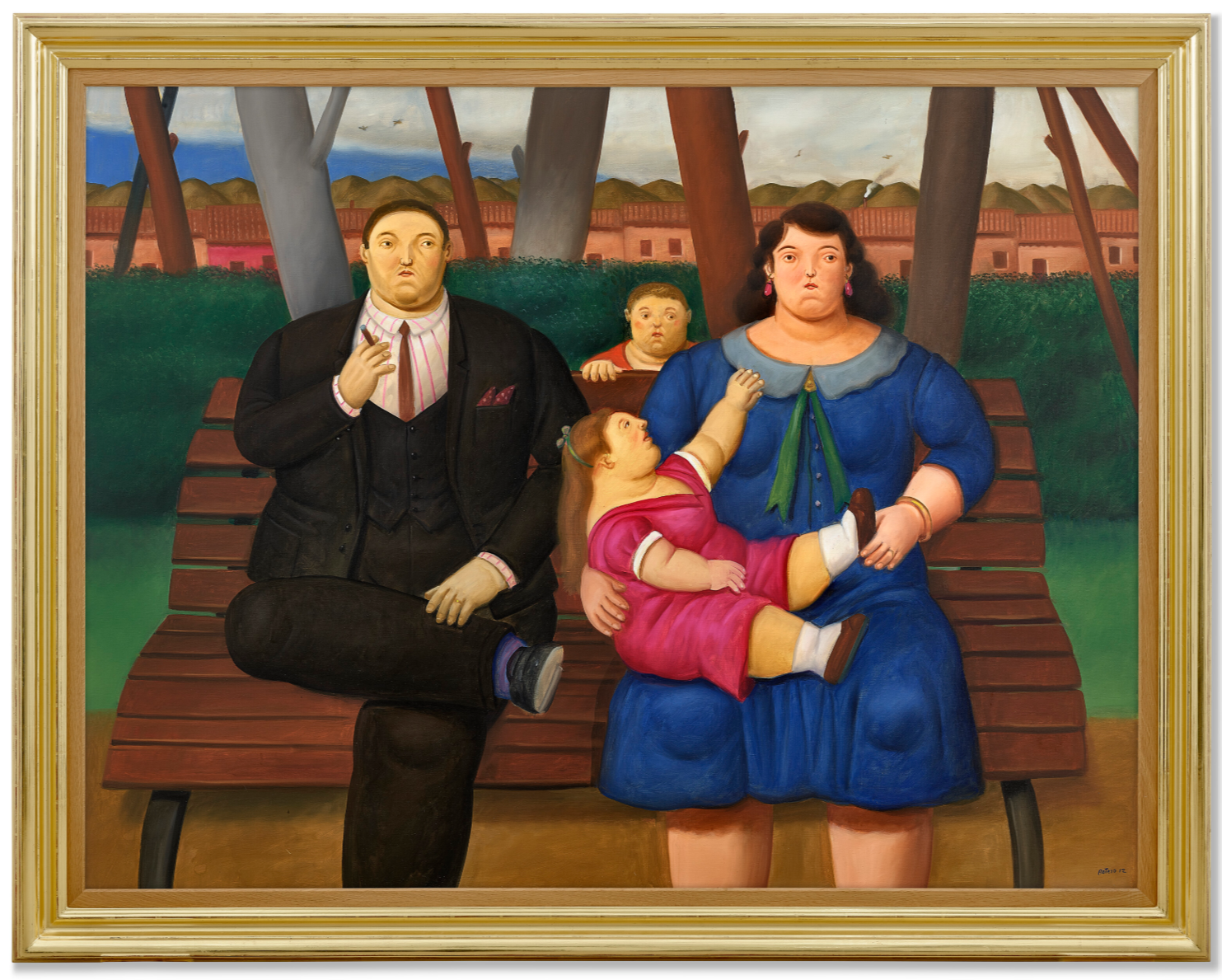
FERNANDO BOTERO (1932-2023)
A Family, 2012
Oil on canvas
140×183 cm (55-1/8 x 72 inches)
Signed and dated ‘Botero 12’ (lower right)
Still Life, 2015
Christie’s Hong-Kong: 29 September 2026
Estimated: HKD 8,000,000 – 12,000,000
NICOLAS PARTY (B. 1980), Still Life | Christie’s
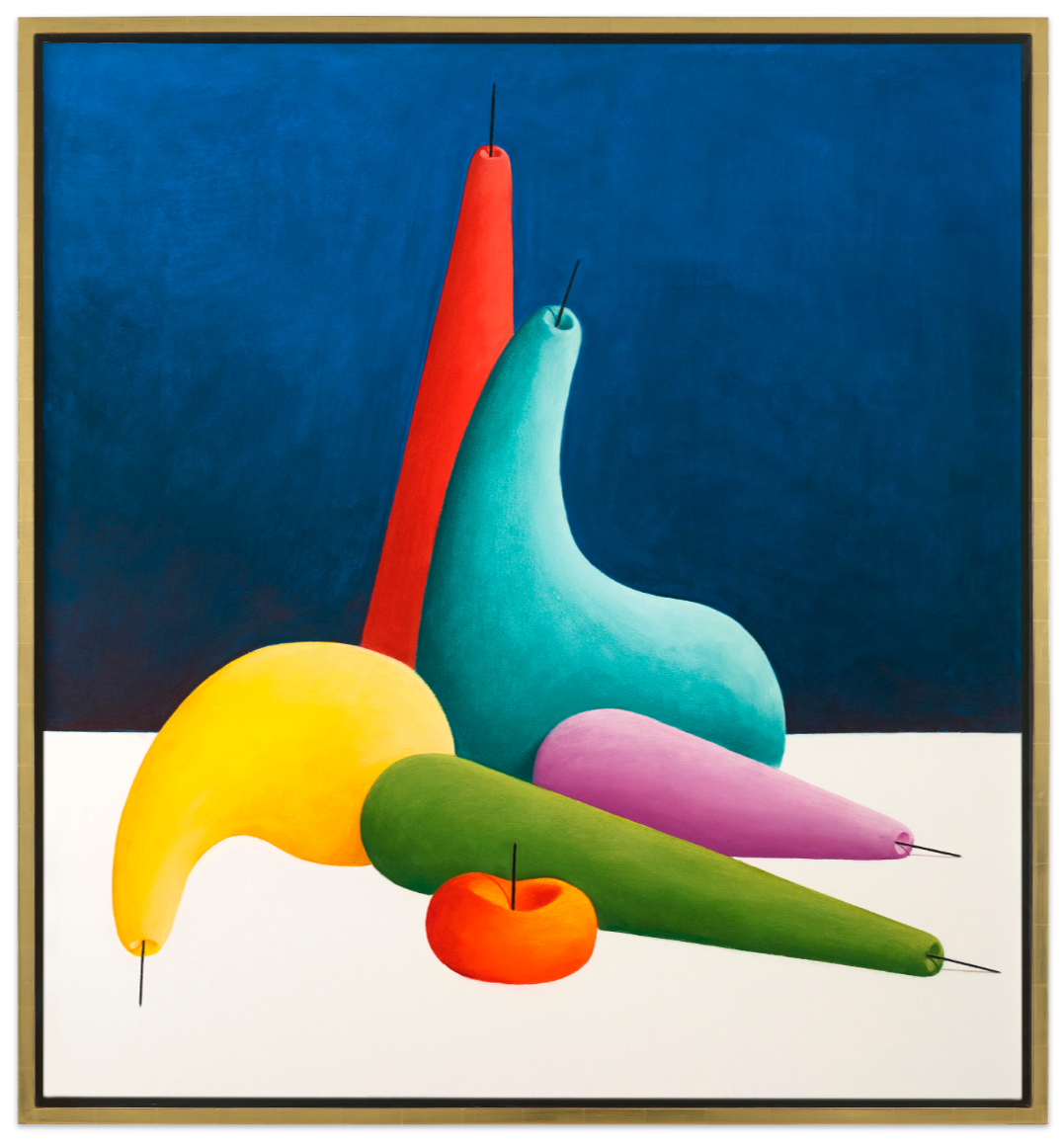
NICOLAS PARTY (B. 1980)
Still Life, 2015
Soft pastel on linen
145×135 cm (57-1/8 x 53-1/8 inches)
Signed and dated ‘Nicolas Party 2015’ (on the reverse)
Miss Forest / Creamy Snow, 2016
Christie’s Hong-Kong: 29 September 2026
Estimated: HKD 9,000,000 – 12,000,000
YOSHITOMO NARA (B. 1959), Miss Forest / Creamy Snow | Christie’s

YOSHITOMO NARA (B. 1959)
Miss Forest / Creamy Snow, 2016
Urethane on bronze
239 (H) x 74.6 x 64 cm (93-1/8 x 29-3/8 x 25-1/4 inches)
Edition: 1/3 + 2 AP
Creature Comforts (Cat City), 2020
Christie’s Hong-Kong: 29 September 2026
Estimated: HKD 2,000,000 – 3,000,000
HERNAN BAS (B. 1978), Creature Comforts (Cat City) | Christie’s
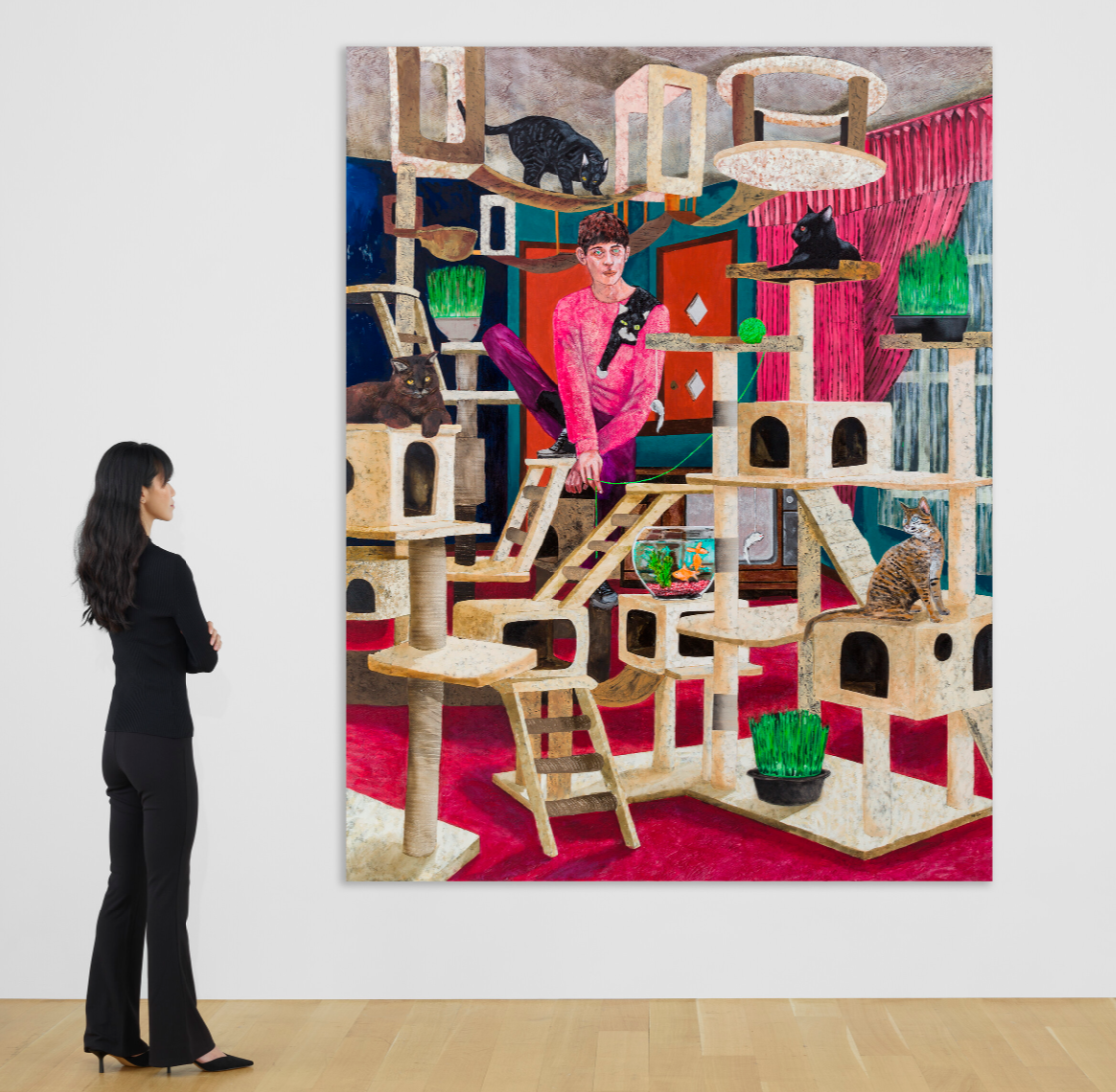
HERNAN BAS (B. 1978)
Creature Comforts (Cat City), 2020
Acrylic on linen
108×84 inches (274.3 x 213.4 cm)
21st Century Day Sale
30 September 2026
Q & A, 1995
Christie’s Hong-Kong: 30 September 2026
Estimated: HKD 12,000,000 – 18,000,000
YOSHITOMO NARA (B. 1959), Q & A | Christie’s
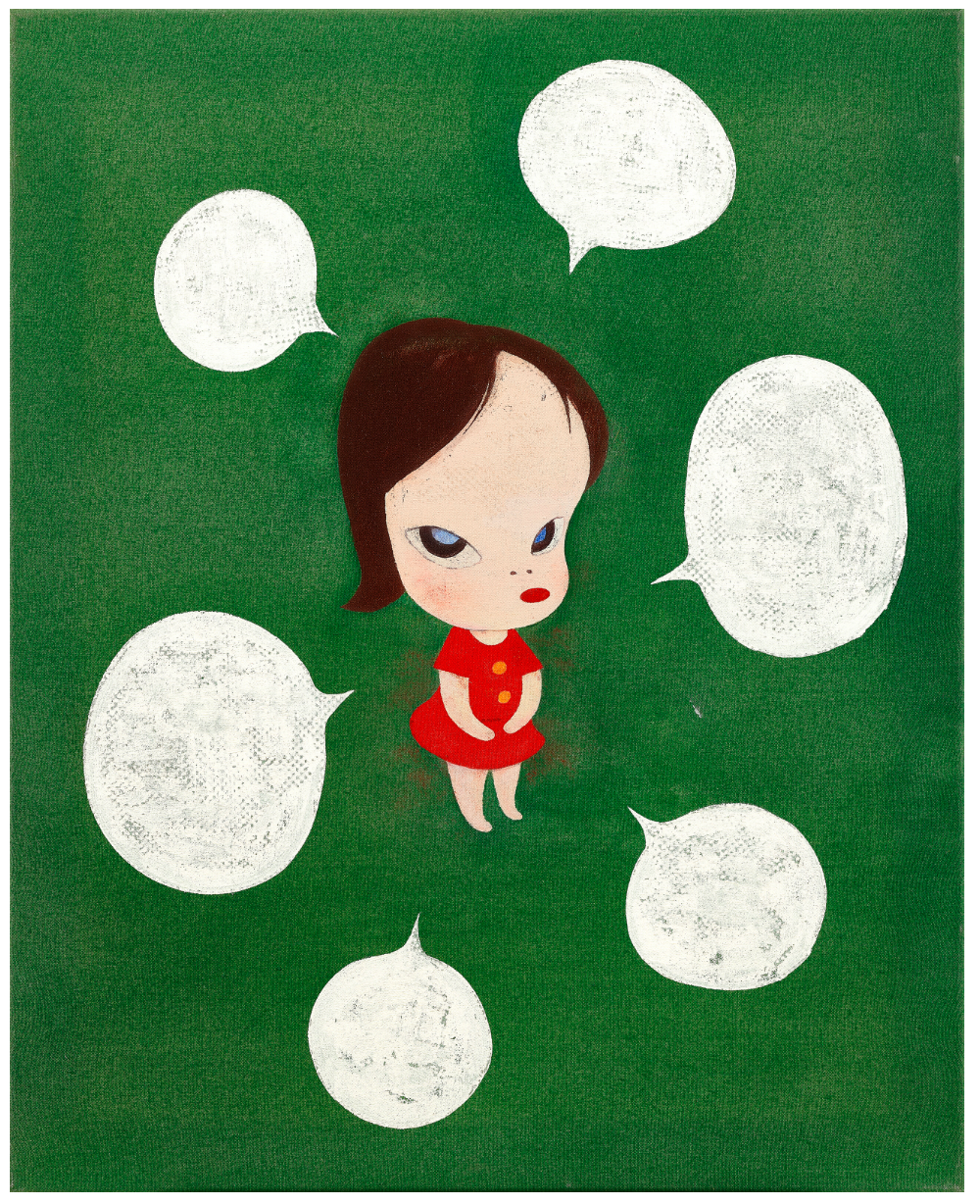
YOSHITOMO NARA (B. 1959)
Q & A, 1995
Acrylic on canvas
67.9 x 54.6 cm (26-3/4 x 21-1/2 inches)
Signed with the artist’s signature, titled and dated ‘Q & A ’95’ (on the overlap)
A PUMPKIN (TSS), 2003
Christie’s Hong-Kong: 30 September 2026
Estimated: HKD 9,000,000 – 12,000,000
YAYOI KUSAMA (1929-2026), A PUMPKIN (TSS) | Christie’s
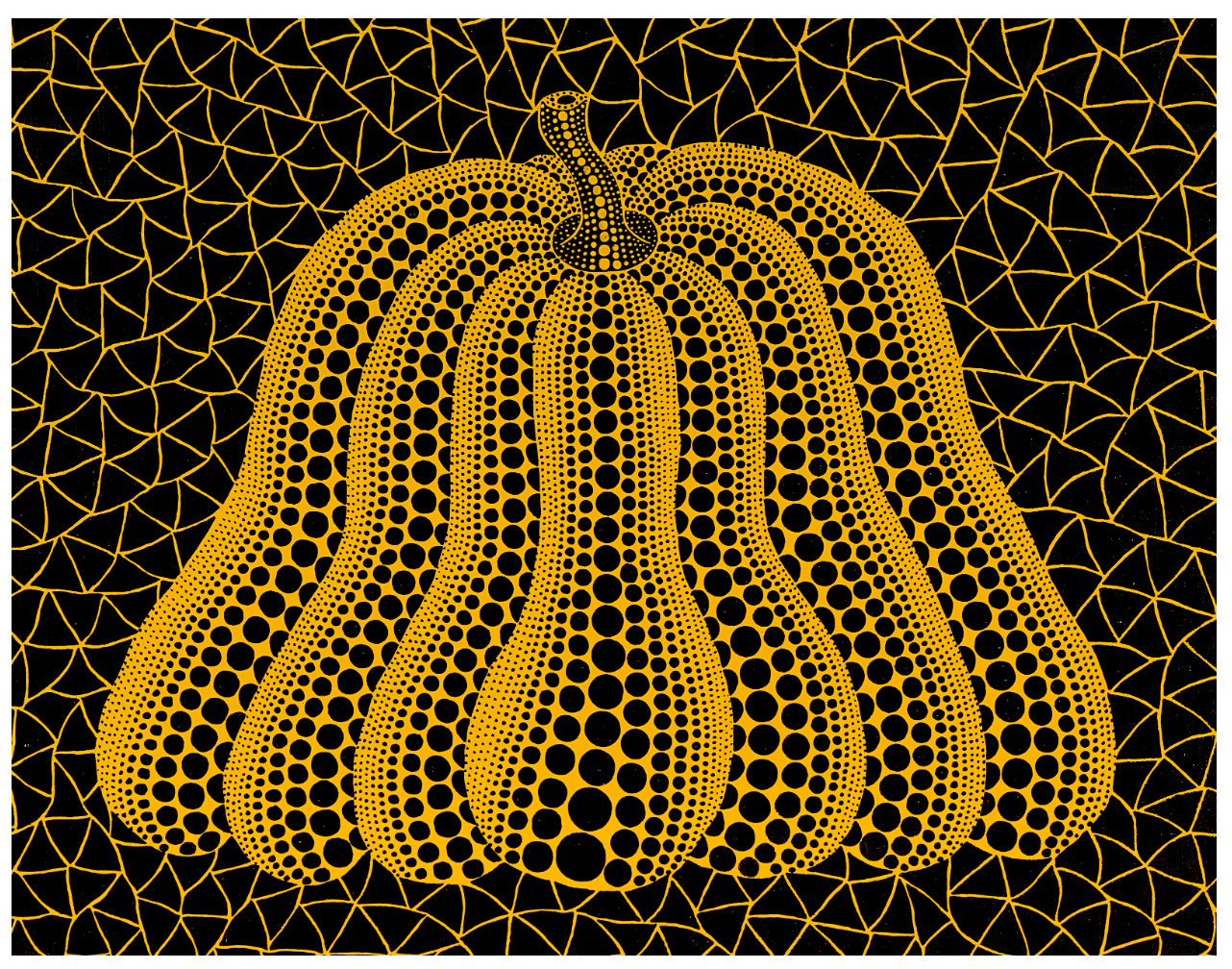
YAYOI KUSAMA (1929-2026)
A PUMPKIN (TSS), 2003
Acrylic on canvas
31.8 x 41 cm (12-1/2 x 16-1/8 inches)
Signed, titled, and dated ‘Yayoi Kusama 2003 A PUMPKIN (TSS)’ (on the reverse)
Dissolve, 2003
Christie’s Hong-Kong: 30 September 2026
Estimated: HKD 3,500,000 – 6,000,000
LIU YE (B. 1964), Dissolve | Christie’s
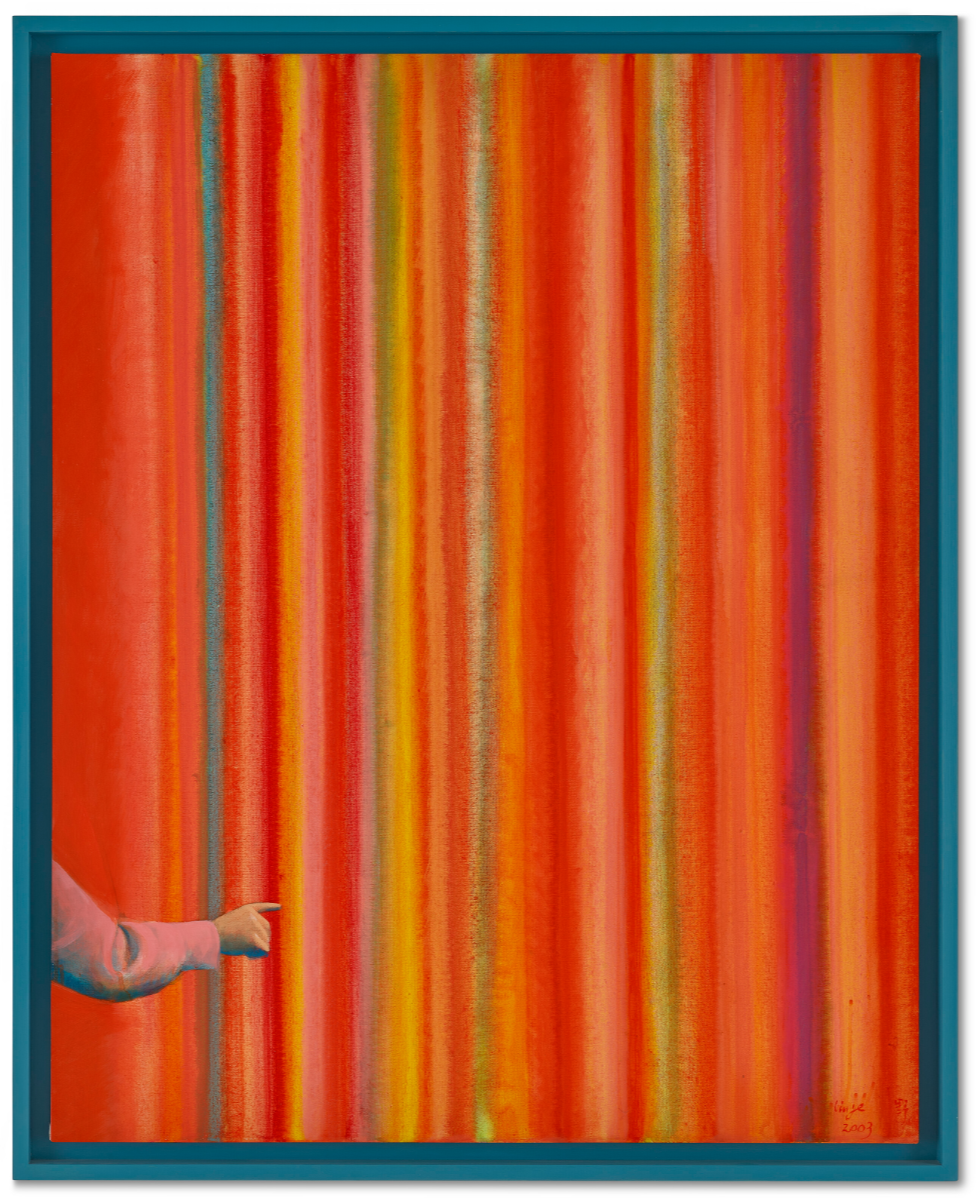
LIU YE (B. 1964)
Dissolve, 2003
Acrylic on canvas
100×80 cm (39-3/8 x 31-1/2 inches)
Signed in Chinese, signed again and dated ‘liu ye 2003’ (lower right)
Modern & Contemporary Art Evening Sale
30 September 2026
Modern & Contemporary Art Evening Sale Wednesday, September 30, 2026
Abstraktes Bild (522-1), 1983
Phillips Hong-Kong: 30 September 2026
Estimated: HKD 18,000,000 – 25,000,000
Gerhard Richter Modern & Contemporary Art Evening Sale
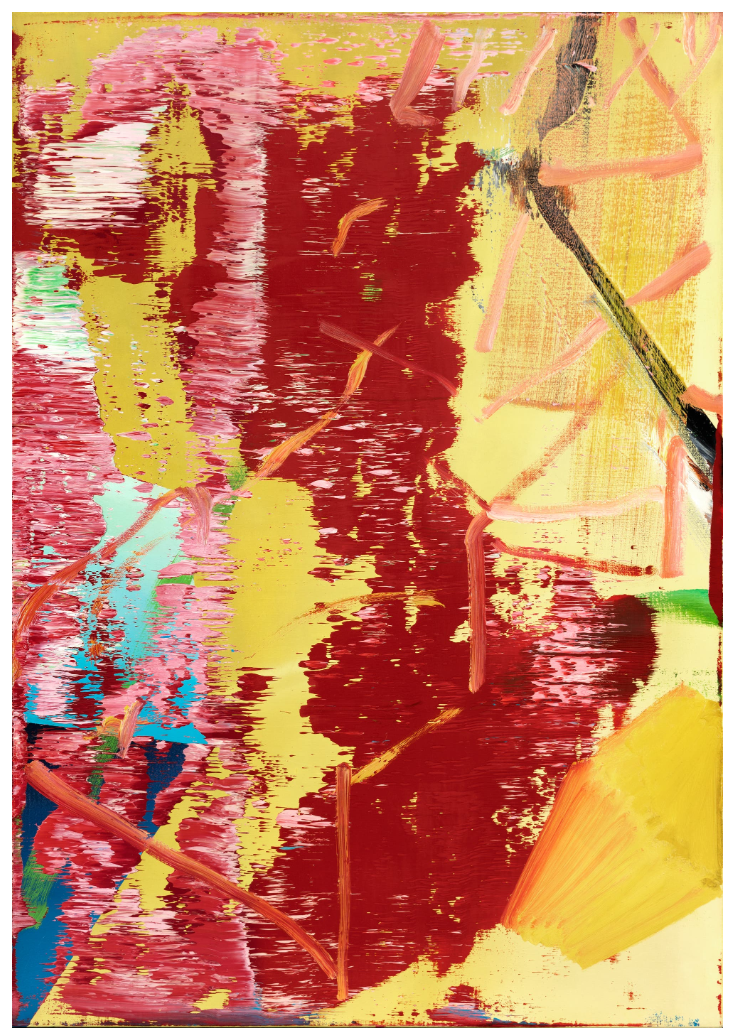
Oil on canvas
100×70 cm (39-3/8 x 27-1/2 inches)
Signed, numbered and dated ‘522-1 Richter 1983’ on the reverse
Modern & Contemporary Art
30 September 2026
Modern & Contemporary Art Wednesday, September 30, 2026
Pumpkin, 1990
Phillips Hong-Kong: 30 September 2026
Estimated: HKD 2,000,000 – 3,500,000
Yayoi Kusama Modern & Contemporary Art
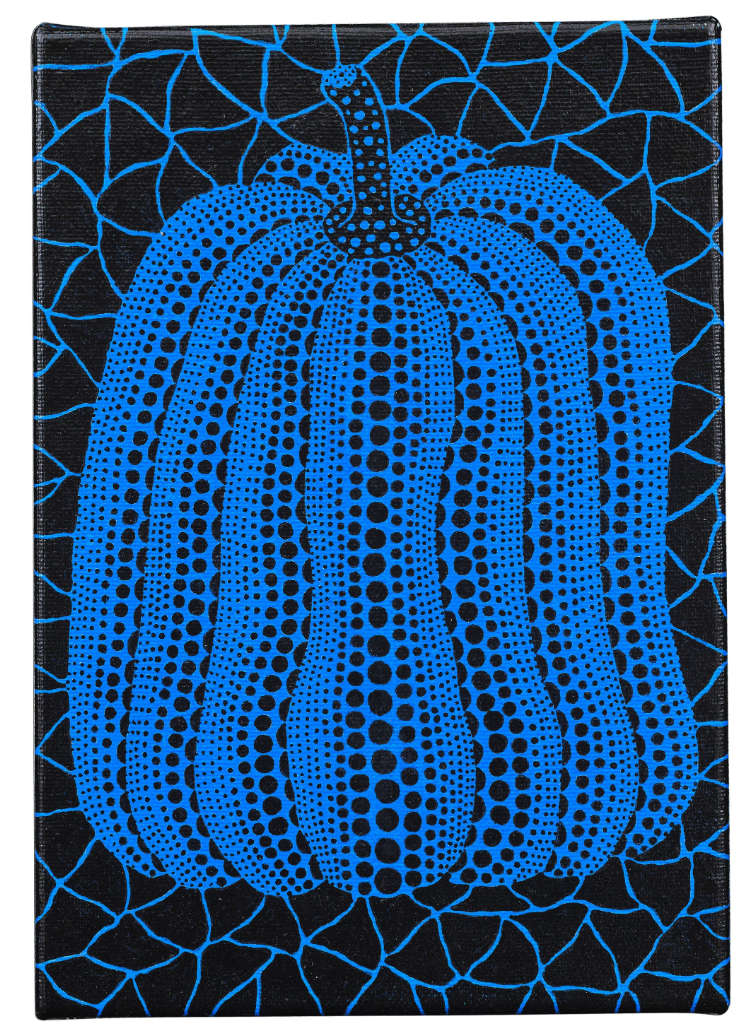
YAYOI KUSAMA
Pumpkin, 1990
Acrylic on canvas
22.7 x 15.6 cm (8-7/8 x 6-1/8 inches)
Signed, titled and dated ‘1990 yayoi kusama “Pumpkin” [in Japanese]’ on the reverse
Nets, 1998
Phillips Hong-Kong: 30 September 2026
Estimated: HKD 1,800,000 – 2,500,000
Yayoi Kusama Modern & Contemporary Art
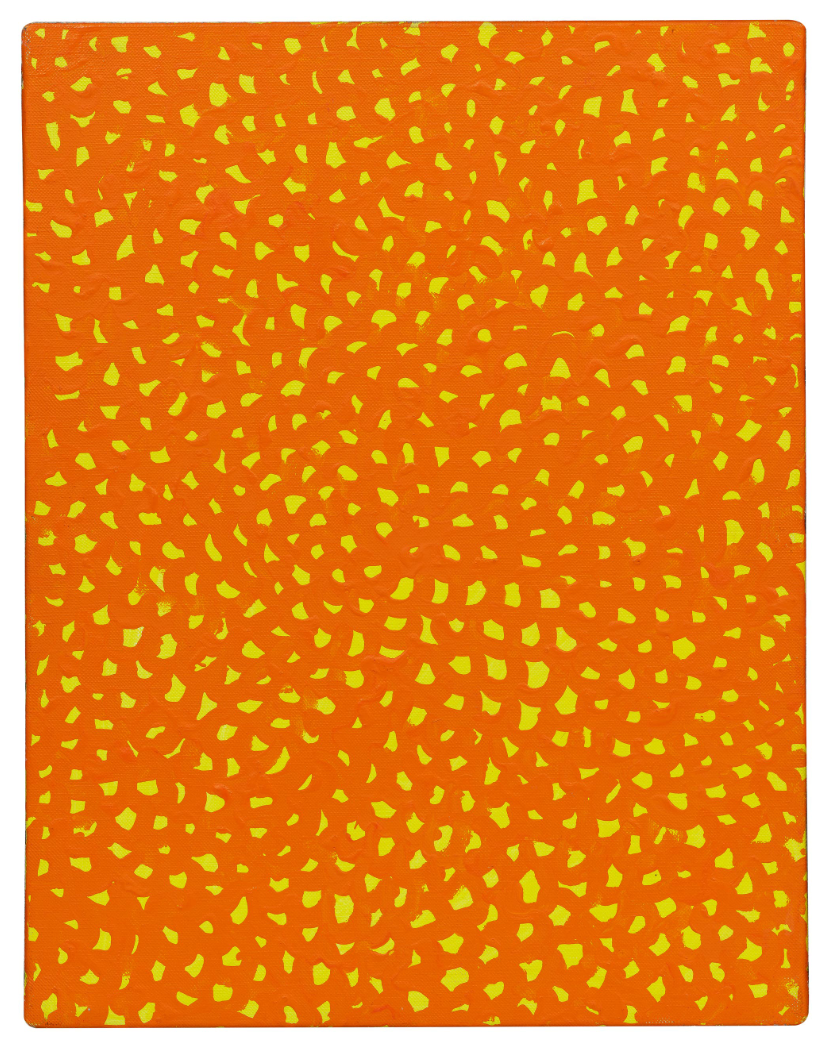
YAYOI KUSAMA
Nets, 1998
Acrylic on canvas
41 x 31.8 cm (16-1/8 x 12-1/2 inches)
Signed, titled, and dated ‘yayoi kusama 1998 “Nets [in Japanese]”‘ on the reverse
Ultra-Contemporary Art
Lidless Eye, 2016
Sotheby’s Hong-Kong: 28 September 2026
Estimated: HKD 5,000,000 – 8,000,000
Adrian Ghenie 亞德里安 · 格尼 | Lidless Eye 無眼簾 | Modern & Contemporary
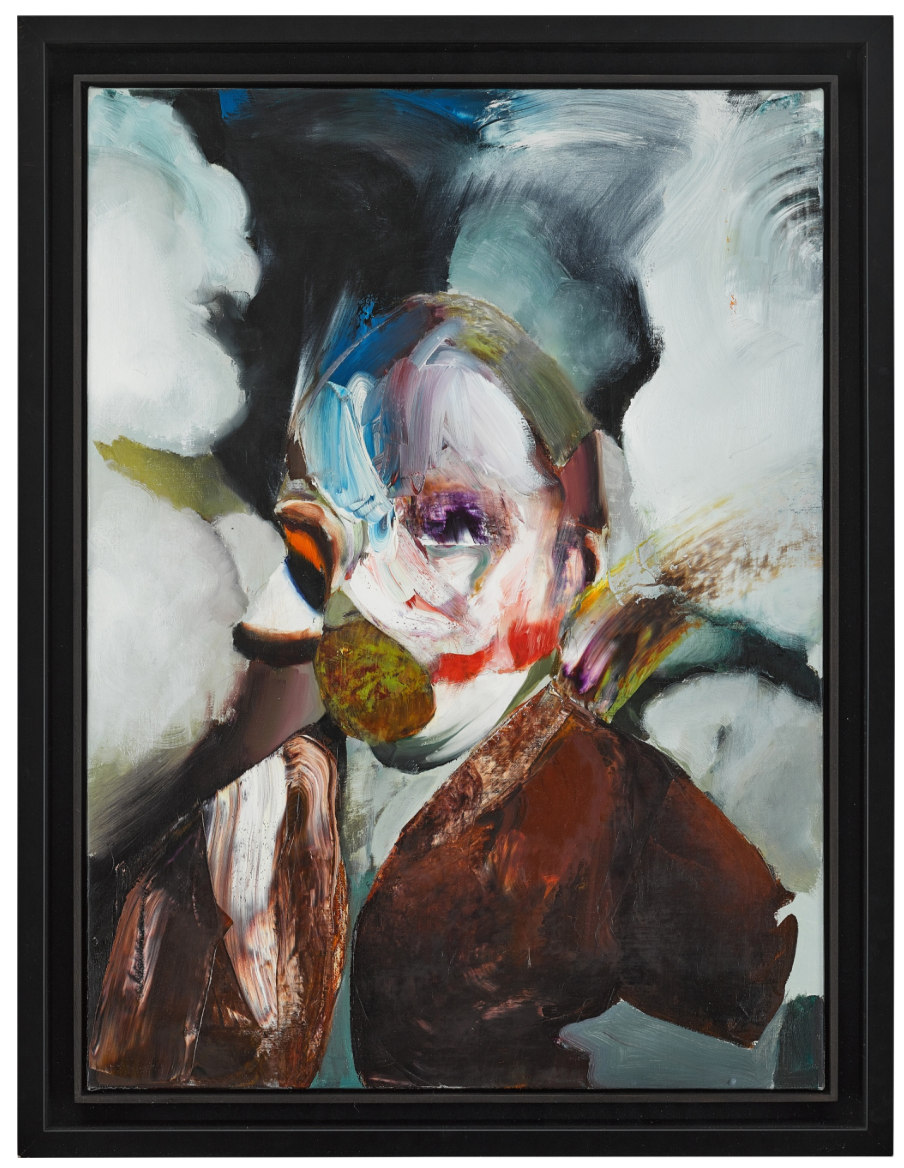
ADRIAN GHENIE (b. 1977)
Lidless Eye, 2016
Oil on canvas
76.2 x 56 cm (30×22 inches)
Signed and dated 2016 (on the reverse)
Executed from 2016-2018, Lidless Eye is a masterful and breathtakingly superlative work, suffused with the commanding gestural bravura and powerful psychological intensity that mark the decisive finale of Adrian Ghenie’s celebrated self-portrait as Vincent van Gogh series.
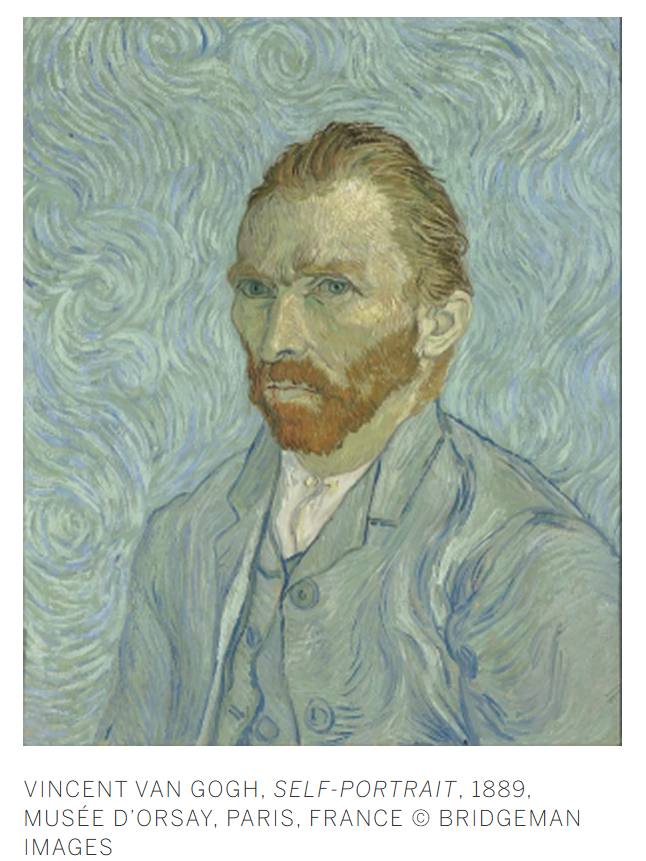
From the influential (Charles Darwin, Vincent van Gogh and Marcel Duchamp) through to the notorious (Hitler, Lenin and Stalin), and the popular (Elvis, Stan Laurel and Oliver Hardy), Ghenie has painted both the famous and infamous. Among these, his self-portraits centered on the effigy of Van Gogh are closest to his heart, forming a crucial structural pillar of his rigorous dialogue with both art history and contemporary global history. Based on one of the very last self-portraits by the Post-Impressionist (Musée d’Orsay, Paris), Lidless Eye is a landmark work that refers not only to Van Gogh but also to an array of artistic sources ranging from the consummate chiaroscuro of Renaissance painting, to the raw psychological intensity of Francis Bacon’s portraiture, to the deft manipulations of the painted surface in Gerhard Richter’s practice that simultaneously create, and shatter, illusory space. In layers that are pastose and wonderfully variegated, this painting embodies a painterly palimpsest of masked and spliced identity and identification, alluding to troubling chapters in the twentieth century and their continuing ramifications. An extraordinary composite of the historical and the personal, into this work Ghenie poured his childhood adulation for Van Gogh as well as his core preoccupations regarding contemporary history’s darkest chapters, manifesting as an emblematic piece within his challenging revival of both history painting and self-portraiture.
As a youth Ghenie was famously captivated by Van Gogh’s iconic Sunflowers and fascinated by the story of a great artist and his affliction with mental illness.

His own relationship with the present work’s source dates back to childhood memories of a magazine article entitled ‘The Tragic Life of Vincent van Gogh’. The lack of art books in the Ghenie household meant that this magazine would stay with the artist for years; on the front was an off-color image of Van Gogh’s Sunflowers, while the article itself illustrated a black and white image of the 1889 Van Gogh self-portrait in the Musée d’Orsay in Paris. In 1998, when visiting this museum for the first time, Ghenie’s encounter with Van Gogh’s self-portrait affected him deeply. Finding himself unexpectedly under the scrutiny of Van Gogh’s penetrating stare, Ghenie’s uneasiness descended into a violent fit of nausea. In his subsequent explorations of one of the most recognizable faces in art history, Ghenie draws from a multitude of historical genres. “You can’t invent a painting from scratch; you are working with an entire tradition…,” the artist noted, “The pictorial language of the 20th century, from Kurt Schwitters’s collages to Jackson Pollock’s drip paintings, makes up a range of possibilities that I utilise in order to create a transhistorical figurative painting–a painting of the image as such, of representation” (the artist cited in “Adrian Ghenie in Conversation with Magda Radu,” Adrian Ghenie: Darwin’s Room, Exh. Cat., Romanian Pavilion, Biennale de Venezia, 2015, p. 31).
“My work is less sociological, and more psychological. I seek images that go straight to your brain, which you can’t help but submit to.”

Born in Romania in 1977, Ghenie grew up under Nicolae Ceausescu’s repressive communist regime and lives and works in Berlin today. The artist’s internationally acclaimed visceral pictorial language and psychologically charged paintings metaphorically explore themes of malevolence, totalitarianism, dictatorship and the very fallibility of human nature. As the artist explains, “We inevitably live in a post-WWII epoch, which means that we constantly have to look back to that watershed moment in order to understand our present condition” (the artist cited in Magda Radu, ‘Adrian Ghenie: Rise & Fall’, op. cit., p. 49). In the present work, Ghenie’s homage to Van Gogh functions as a prism through which to examine the purging of ‘degenerate art’ by the Nazi party, a key cultural policy of National Socialism. A powerful subject in Ghenie’s work, the purging aimed to cleanse Germany from ‘degeneracy’ and resulted in the seizing of thousands of artworks from public institutions and collections across Germany and Nazi-occupied Europe. Works by Van Gogh, along with that of Chagall, Kandinsky, Munch and Picasso, amongst others, were seized, thereby placing the Post-Impressionist master within the narrative of 20th century violence and repression. A selection of ‘degenerate’ paintings were famously shown together in 1937 as part of the Entartete Kunst exhibition in Munich, while the majority were sold, traded, or destroyed. In addition to the 1937 exhibition, Hitler’s final list of ‘Entartete Kunst’ comprised an inventory of more than 16,000 pieces including a Van Gogh self-portrait from the Bayerische Staatsgemäldesammlungenin in Munich.
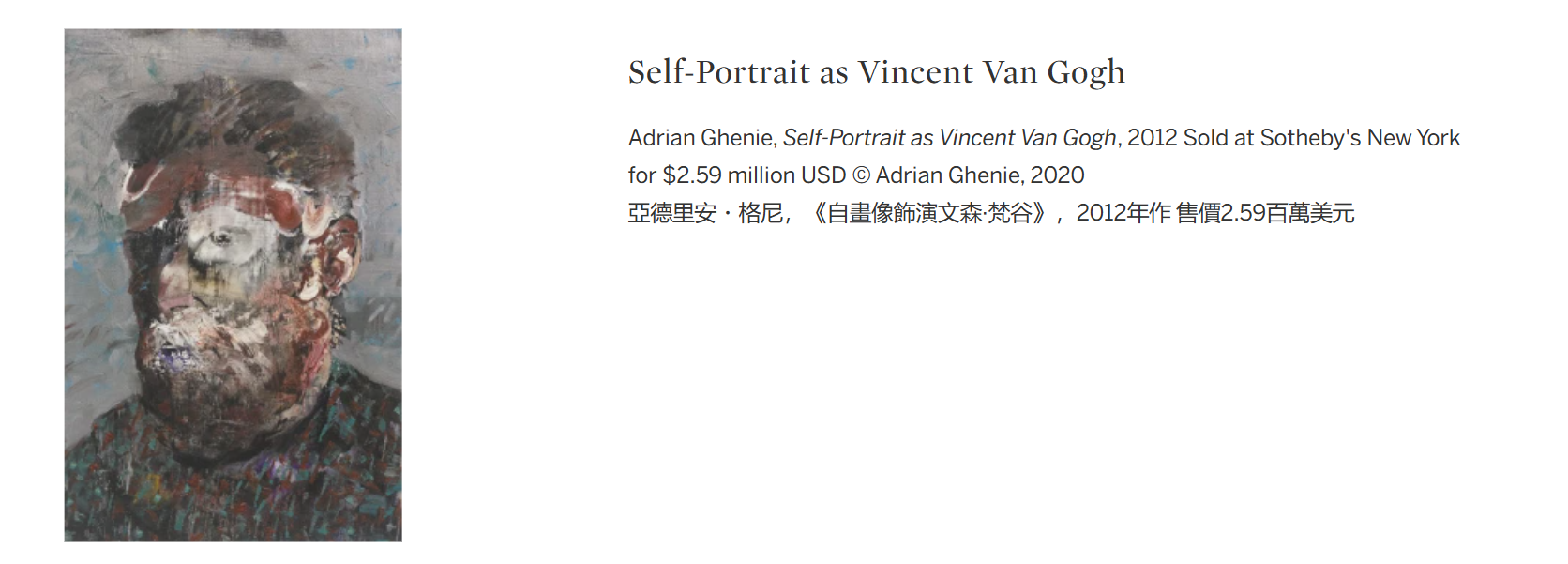
At its core this painting is thus a dual image: both a representation of history and a reflection of Ghenie’s own sense of self. In his practice, Ghenie seeks to address how the events of the past infiltrate, impact and haunt the present. The artist has said: “I am particularly interested in the state of exceptionality that characterizes everyday life in totalitarian regimes, not just Communism. In such circumstances everything is being distorted” (the artist cited in M. Radu, “Adrian Ghenie: Rise & Fall”, Flash Art, December 2009, p. 50). In the distortion and effacement of his imagery lies perhaps a prevailing theme of humiliation. “I’m not a history painter,” Ghenie writes, “but I am fascinated by what happened in the twentieth century and how it continues to shape today. I don’t feel any obligation to tell this to the world, but for me the twentieth century was a century of humiliation – and through my painting, I’m still trying to understand this” (the artist cited in Jane Neal, ‘Referencing slapstick cinema, art history and the annals of totalitarianism, Adrian Ghenie’s paintings find a way of confronting a “century of humiliation”, Art Review, December 2010, online). Stridently monstrous yet beguiling in its intensity and beauty, Lidless Eyes stands at once as witness, victim and purveyor of mankind’s recent history.
George Condo
Figures in Motion, 2013
Sotheby’s Hong-Kong: 28 September 2026
Estimated: HKD 24,000,000 – 40,000,000
George Condo 喬治·康多 | Figures in Motion 動態群像 | Modern & Contemporary
REPEAT SALE
Christie’s London: 6 March 2018
Estimated: GBP 1,000,000 – 1,500,000
GBP 1,868,750
George Condo (b. 1957), Figures in Motion | Christie’s
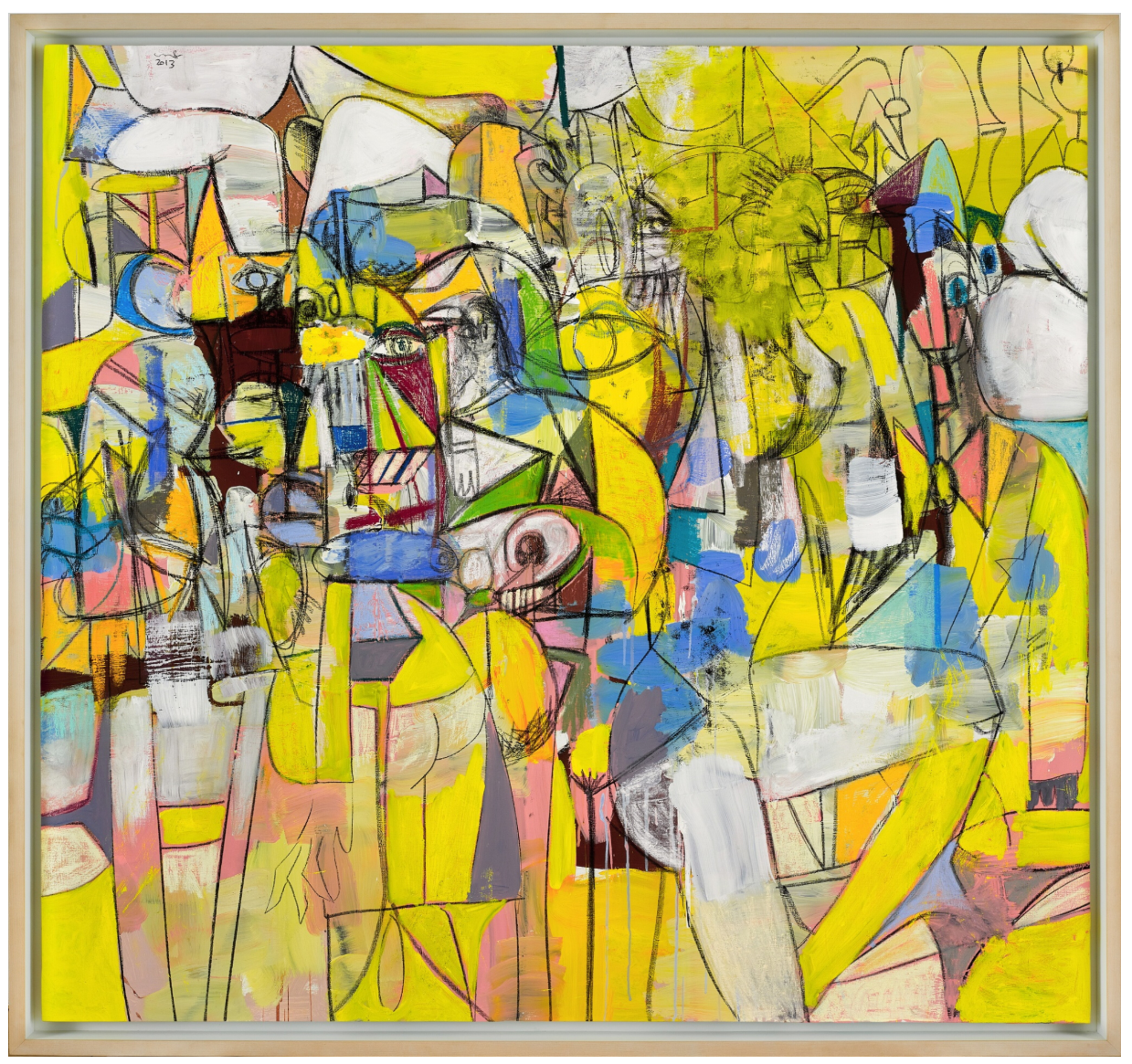
GEORGE CONDO (b. 1957)
Figures in Motion, 2013
Acrylic, charcoal and pastel on linen, in artist’s frame
59-1/4 x 63-1/8 inches (150.1 x 160.5 cm)
Signed and dated 2013 (upper left)
Fresh to auction, George Condo’s Figures in Motion (2013) encapsulates the most compelling strands of the artist’s mature practice. Painted in a year of unusual personal and professional intensity – marked by his first participation in the Venice Biennale, his recognition by the New York Studio School, and his recovery from life-threatening Legionnaires’ disease – the work unites the fractured simultaneity of Condo’s self-termed “psychological cubism” with the centrifugal structure of his expanded canvas compositions. Rich in colour, texture and rhythmic incident, it transforms a scene of collective pleasure into a dense orchestration of psychological states, while also belonging to a market category that has shown sustained momentum in recent years, further underscored by continued institutional attention through the artist’s 2025 Paris survey and two major exhibitions announced for 2027. At the heart of the painting lies Condo’s defining concept of “psychological cubism.”
“Picasso painted a violin from four different perspectives at one moment. I do the same with psychological states.”
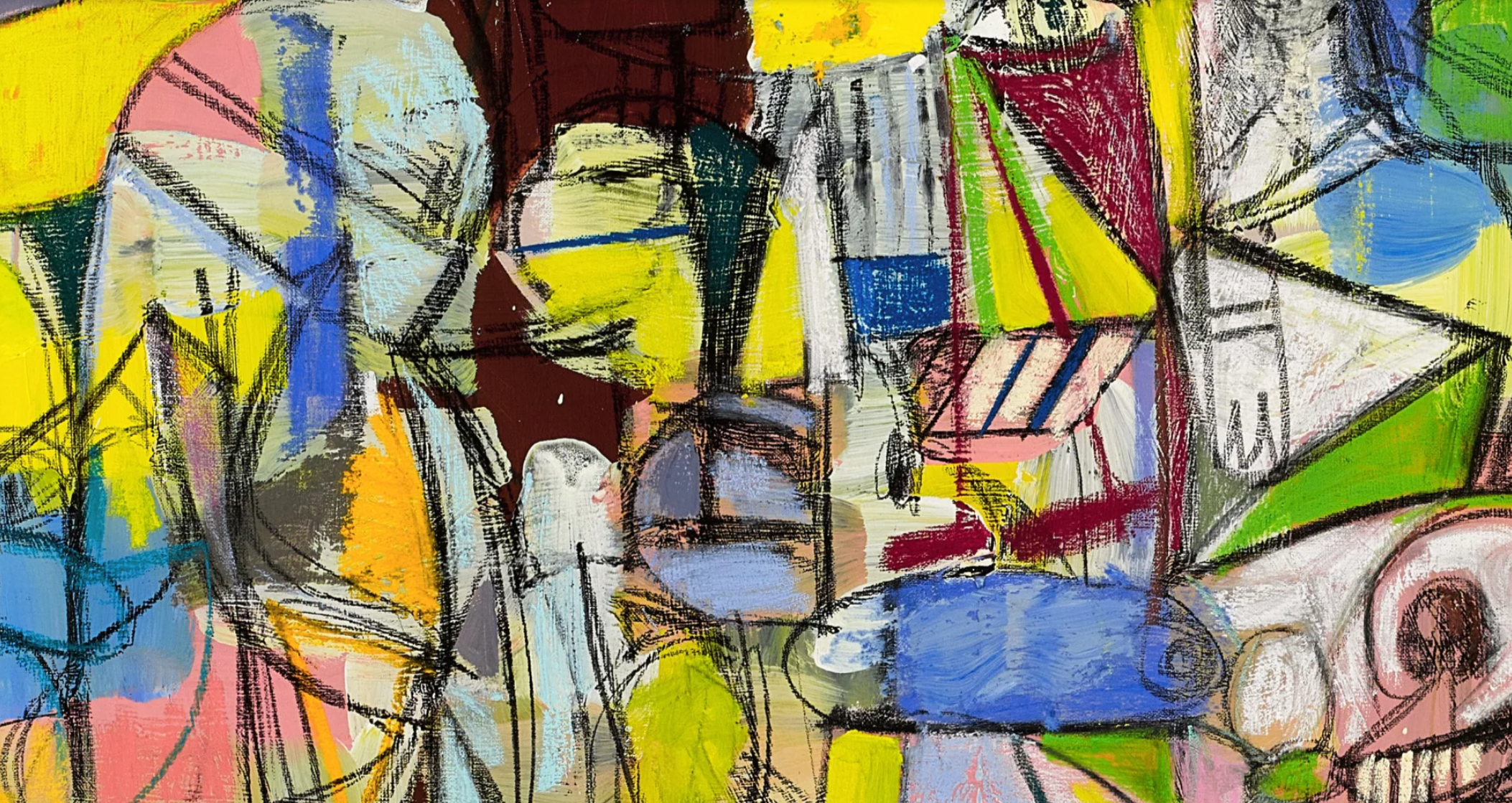
In Figures in Motion, faces, limbs and torsos are dislocated, doubled and reassembled across the picture plane, not as a purely formal exercise but as a means of presenting multiple states of mind simultaneously. Recognisable fragments – eyes, teeth, a butler’s suit, a dancer’s poised body – emerge only to be reabsorbed into a densely packed ensemble. The result is neither wholly figurative nor fully abstract, but a hybrid state that has been central to Condo’s art since key early works such as Diaries of Milan (1984) and Dancing to Miles (1985).
The year 2013 gives this work particular resonance. Condo was honoured by the New York Studio School in that year, and also exhibited in the 55th Venice Biennale, marking his first appearance there. Figures in Motion was also painted during the artist’s contraction of, and recovery from, life-threatening Legionnaires’ disease. In that light, its exuberant palette – vivid yellows, opalescent blues, lavenders and peaches – assumes a distinctly celebratory cast. Far from registering debility, the painting announces vitality, survival and renewed force. The work’s buoyancy is thus not incidental to its facture but integral to its emotional charge.
Figures in Motion also belongs to a group of works that Condo has described as “expanded canvases,” in which the mise en scène of the composition presses outward beyond its literal edges. Themes overlap, fragments collide, and the pictorial centre radiates towards the perimeter, suggesting a composition that continues to unfold in the viewer’s mind. This expansive logic reaches back to Condo’s mid-1980s practice, when compositions first established a syntax in which figural fragments and ambiguous structures were organised as if in a state of perpetual emergence. In Figures in Motion, that earlier impulse is revisited with a renewed chromatic richness and tactile density.
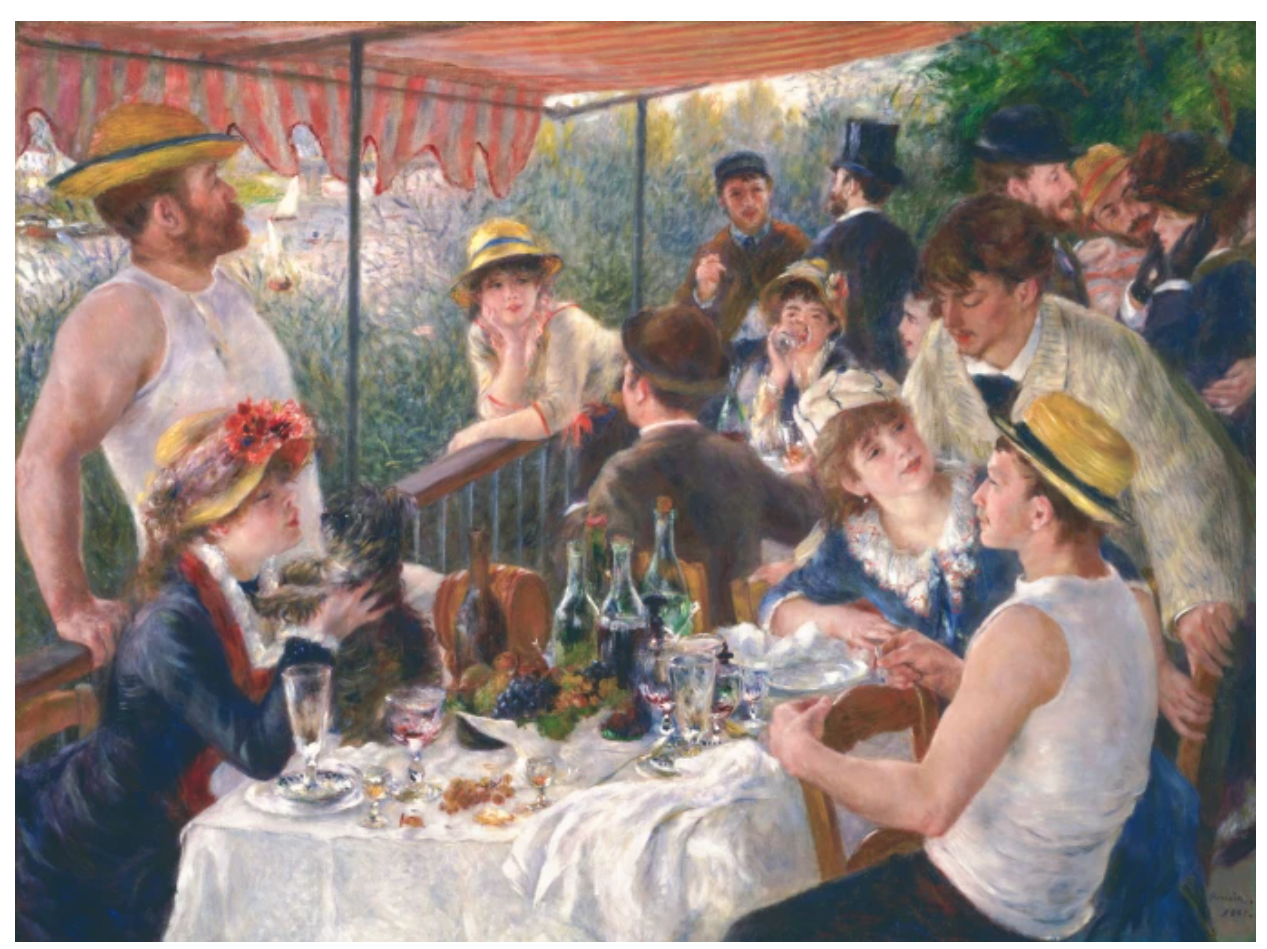
Pierre-Auguste Renoir, Luncheon of the Boating Party, 1880-1881, oil on canvas. The Phillips Collection, Washington, D.C.
For all its modern fracture, the painting also participates in a much older art-historical tradition: the depiction of collective pleasure. Its bustling ensemble carries echoes of scenes by Jacob Jordaens, Jan Steen and Pierre-Auguste Renoir, in which feasting, dancing and sociability become vehicles for spectacle, theatre and self-display. Condo’s treatment, however, is decisively contemporary. The pleasures of gathering – drinking, dancing, seeing and being seen – are translated into a kaleidoscope of fractured consciousness. If these earlier precedents externalised festivity in social terms, Condo internalises it, rendering pleasure as a simultaneity of impulses, observations and emotional dissonances. The canvas becomes less a scene than a field of competing psychic intensities. This is precisely where his “psychological cubism” proves most acute: not simply as homage to Picasso, but as a way of making visible the unstable, plural nature of experience itself.
The work’s significance is further reinforced by the strength of Condo’s market and institutional standing. Hauser & Wirth announced in August 2026 that it will stage two major exhibitions of the artist in Paris and Palo Alto in 2027, following his widely acclaimed 2025 survey at the Musee d’Art Moderne de Paris.
In Figures in Motion, Condo brings together exuberance and fracture, pleasure and instability, music and painting, biography and art history. Executed at a moment of renewed life and growing acclaim, it stands as a particularly vivid statement of the artist’s mature achievement: a painting in which the human figure does not dissolve under pressure, but multiplies into a complex and resonant image of consciousness itself.
Woman & Man, 2008
Christie’s Hong-Kong: 29 September 2026
Estimated: HKD 13,000,000 – 20,000,000
GEORGE CONDO (B. 1957), Woman & Man | Christie’s
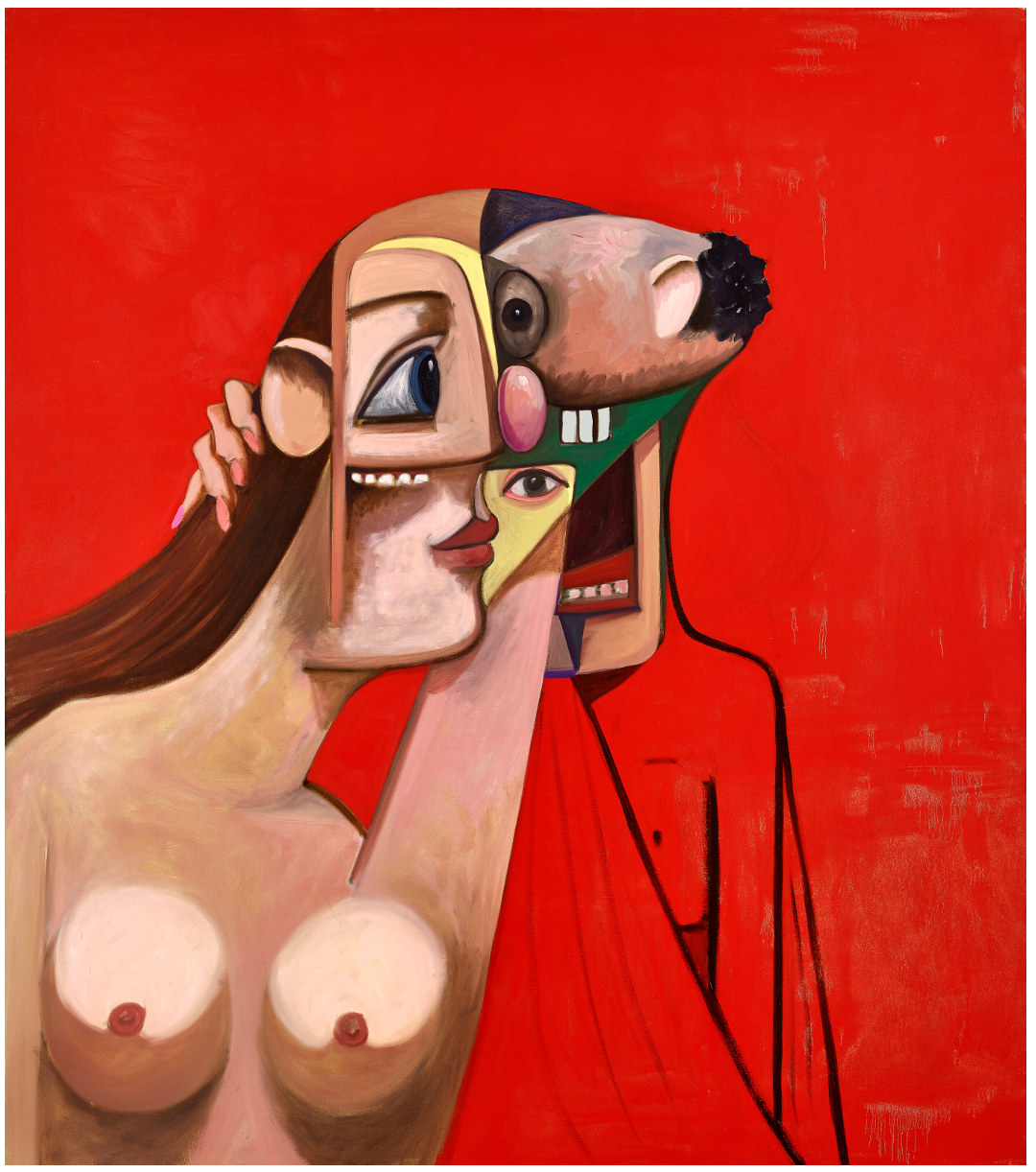
GEORGE CONDO (B. 1957)
Woman & Man, 2008
Oil on canvas
87-1/4 x 77-1/8 inches (221.5 x 195.8 cm)
Signed with artist’s signature and dated ’08’ (on the reverse)
A field of red engulfs the whole canvas, from which an embracing couple emerges. Locked together physically yet absorbed within separate psychological realms, the pair occupies a space suspended between intimacy and distance. Executed in 2008, Woman and Man stands as a compelling example from George Condo’s mature period, fully articulating the artist’s celebrated concept of ‘Psychological Cubism’. In this monumental composition, multiple, overlapping and even contradictory emotional states coexist simultaneously upon the picture plane. The expansive red ground flattens spatial depth, bringing the intertwined figures directly to the foreground and heightening the painting’s emotional intensity.
Double portraits occupy a remarkably rare place within Condo’s oeuvre. Of the more than 350 paintings to have appeared at auction over the past five years, only around ten have centred on double portraits. In recent years, Condo has commanded growing institutional and commercial attention worldwide. The major retrospective held at the Musée d’Art Moderne de Paris in 2025 reaffirmed Condo’s significance within contemporary art history, while forthcoming solo exhibitions with Hauser & Wirth in Paris and Palo Alto further underscore the sustained momentum of his market and critical reception.
Since emerging from New York’s East Village art scene during the early 1980s, Condo has forged a unique path between the traditions of European painting and the visual language of contemporary popular culture. Drawing upon an eclectic range of sources, from Old Master portraiture and modernist experimentation to comics, cartoons and advertising imagery, he has developed a distinctive idiom that combines humour with profound psychological insight. At the centre of Woman and Man stands a pair of figures whose visual tension drives the composition. The woman retains a measure of classical poise: her elegant profile, softly rendered hair and gently uplifted smile evoke the refinement of traditional portraiture. Beside her, however, the male figure appears radically transformed. Bulging eyes, fragmented features and an open mouth create an expression suspended between comedy and unease. Their bodies merge and interlock, contours dissolving into one another, yet their psychological presence remains strikingly separate. Rather than constructing a narrative, Condo condenses desire, anxiety, tenderness, uncertainty and vulnerability into a single image.
This psychological ambiguity lies at the heart of Condo’s theory of Psychological Cubism. If Picasso’s Cubism sought to present multiple viewpoints simultaneously, Condo’s project aims to accommodate multiple states of mind within a figure. In Woman and Man, the viewer encounters two individuals with a constellation of emotions and identities existing at once. Stable notions of selfhood are fragmented and reassembled, producing figures that appear at once familiar and strangely alien. The painting thus transcends conventional portraiture, becoming an image of consciousness itself.
The male figure recalls Rodrigo, a fictional character created by Condo and one of the artist’s most enduring alter egos. Distinguished by exaggerated facial distortions, protruding eyes and improbably constructed features, Rodrigo has often been interpreted as a manifestation of the subconscious and of irrational human impulses. Yet Condo never presents him simply as a grotesque caricature. Beneath the absurdity lies an unmistakable humanity. Humour, fragility and emotional sensitivity coexist within the character, transforming him from a fantastical invention into a powerful embodiment of the contradictions of human experience.
Woman and Man further demonstrates Condo’s extraordinary command of pictorial form. The woman’s flowing curves stand in deliberate contrast to the fractured, angular geometry of the male figure. Softness and sharpness, continuity and disruption, constantly collide across the canvas. As their contours overlap at the centre of the composition, the boundary between self and other becomes increasingly unstable. Particularly striking is the yellow triangular structure that anchors the composition. Containing a gaze-like motif suggestive of a ‘third eye’, it functions as a visual fulcrum, connecting the disparate emotional states embodied by the two figures. Meanwhile, the vast red background eliminates all anecdotal detail, compelling the viewer to focus entirely on the subtle psychological exchange unfolding between them.
The painting also exemplifies Condo’s sustained dialogue with the history of twentieth-century art. The interlocking figures and fractured facial constructions recall Picasso’s Cubist deconstruction of the human form, yet Condo’s primary concern is not the fragmentation of physical space but the multiplicity of emotional and psychological realities. Likewise, the uneasy coexistence of humour and existential tension within the figures inevitably calls to mind Francis Bacon’s penetrating investigations of the human condition. Condo, however, moves beyond homage or quotation. He absorbs these artistic precedents into a language uniquely his own, one in which classical portraiture, modernism, popular culture and contemporary psychology converge to form a world that is simultaneously absurd, unsettling and deeply human.
More broadly, Condo occupies a pivotal position between the legacies of twentieth-century modernism and the concerns of contemporary art. Inheriting the European portrait tradition of Velázquez, Rembrandt and Goya, while extending the formal innovations of Picasso, he also belongs to a generation of artists, alongside Jean-Michel Basquiat, who reconnected high art with popular culture and contemporary visual experience. From this foundation, Condo developed the distinctive language of Psychological Cubism, transforming the anxieties, desires, humour and vulnerabilities of modern life into a new form of portraiture. The influence of this achievement can be traced throughout the resurgence of figurative painting in recent decades and among numerous contemporary artists exploring identity, psychology and emotion. Woman and Man stands as a powerful embodiment of this enduring legacy, capturing the fluid, contradictory and perpetually evolving nature of human experience that continues to give Condo’s work its lasting relevance and appeal.
Yoshitomo Nara
Present, 1994
Sotheby’s Hong-Kong: 28 September 2026
Estimated: HKD 50,000,000 – 70,000,000
Yoshitomo Nara 奈良美智 | Present 現在 | Modern & Contemporary Evening
YOSHITOMO NARA (b. 1959)
Present, 1994
Acrylic on canvas
180×150 cm (70-7/8 x 59 inches)
Signed, titled and dated 94 (on the reverse)
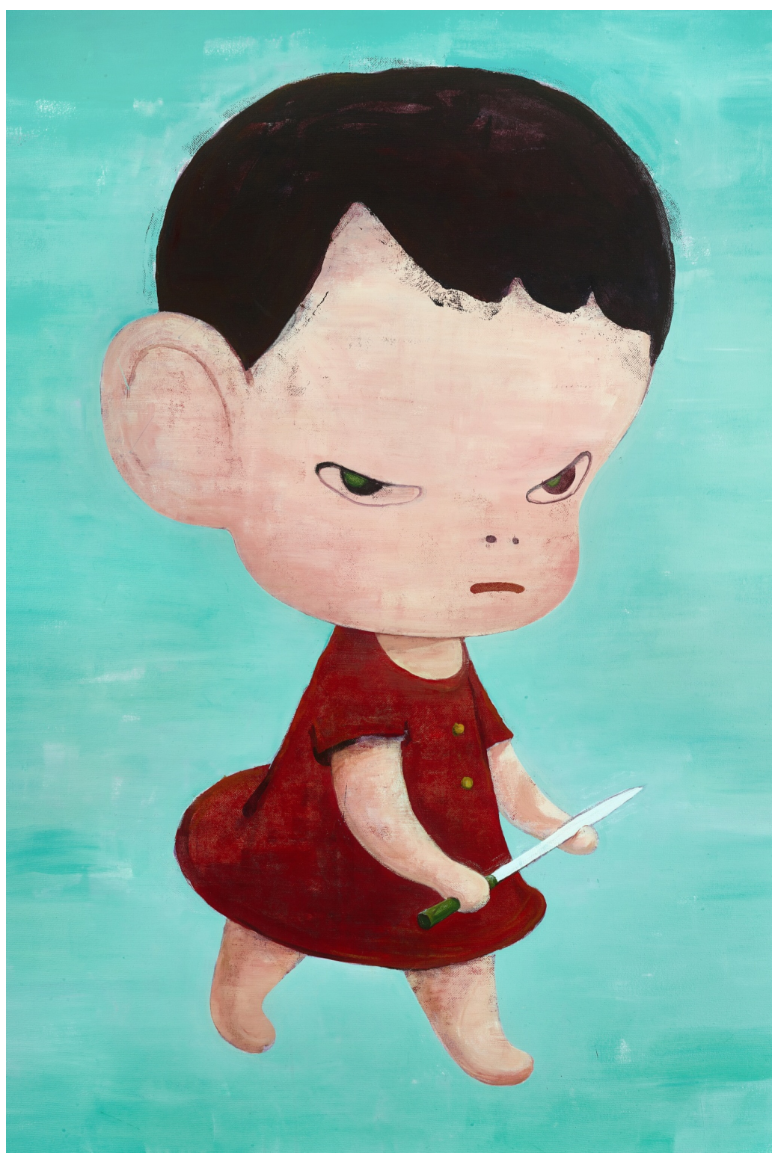
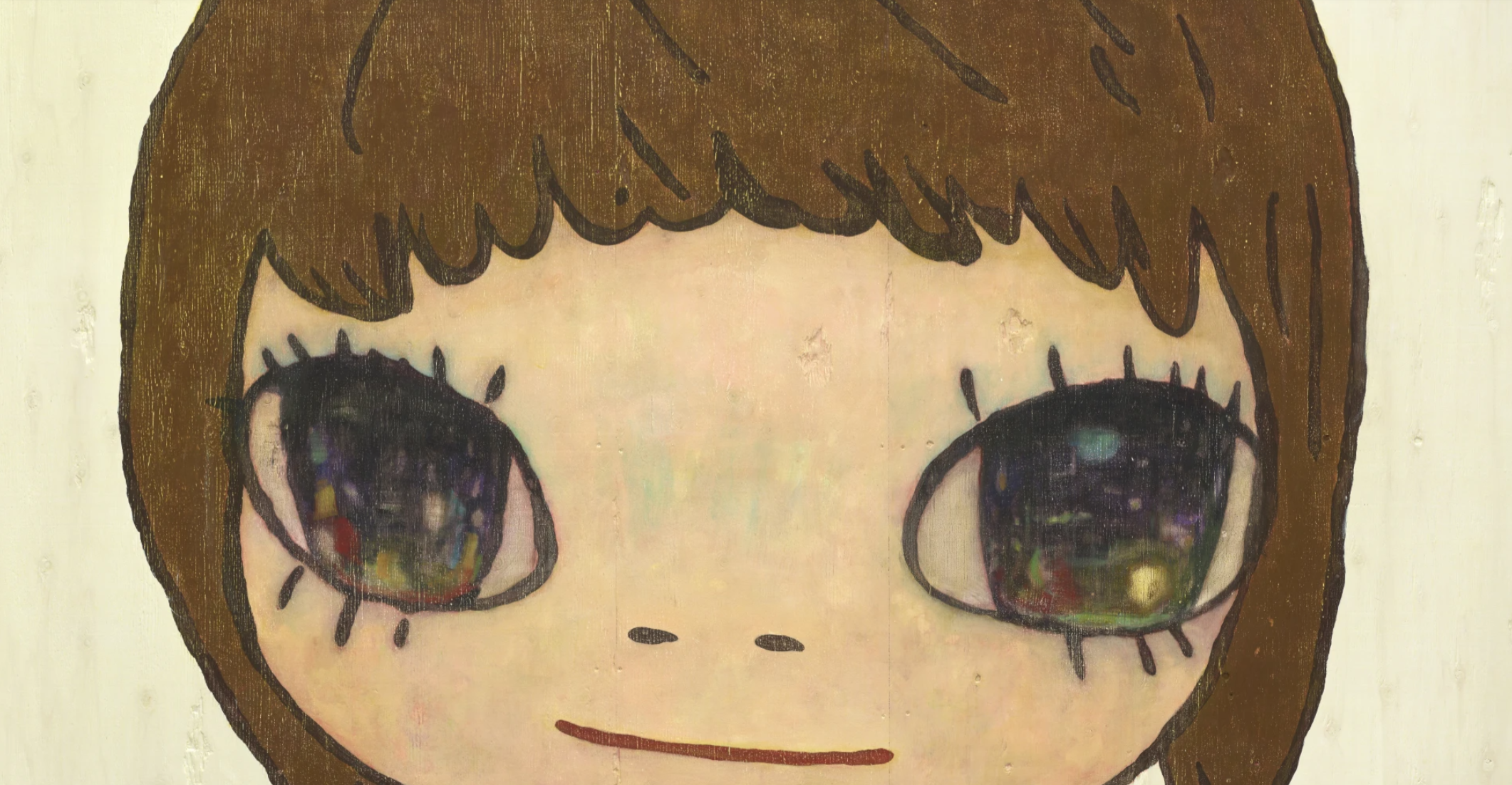
Painted in 1994, Present embodies Yoshitomo Nara’s most salient motif: an androgynous child with angled eyes, rosy cheeks, and a chubby fist clutching a blade. This infantile figure is both vulnerable and powerful, demanding attention with its subversive stance against the monochromatic background. Present is a painting of exceptional standing, notable as the earliest canvas featuring a full-figure child in a red dress set against a monochromatic backdrop, with facial features foreshadowing Nara’s later, more sophisticated style. Measuring 180 by 150 centimetres, it is one of the two largest knife-bearing canvas from the 1990s, alongside Nice to See You Again (1996). This work serves as a precursor to Nara’s later painting Knife Behind Back (2000), where the weapon is concealed behind the girl’s back. Created just before Nara’s move from Düsseldorf to Cologne and right before his breakthrough solo show in Tokyo in 1995, Present signifies the moment a solitary, defiant child steps into full view—a little hero armed against a turbulent world.
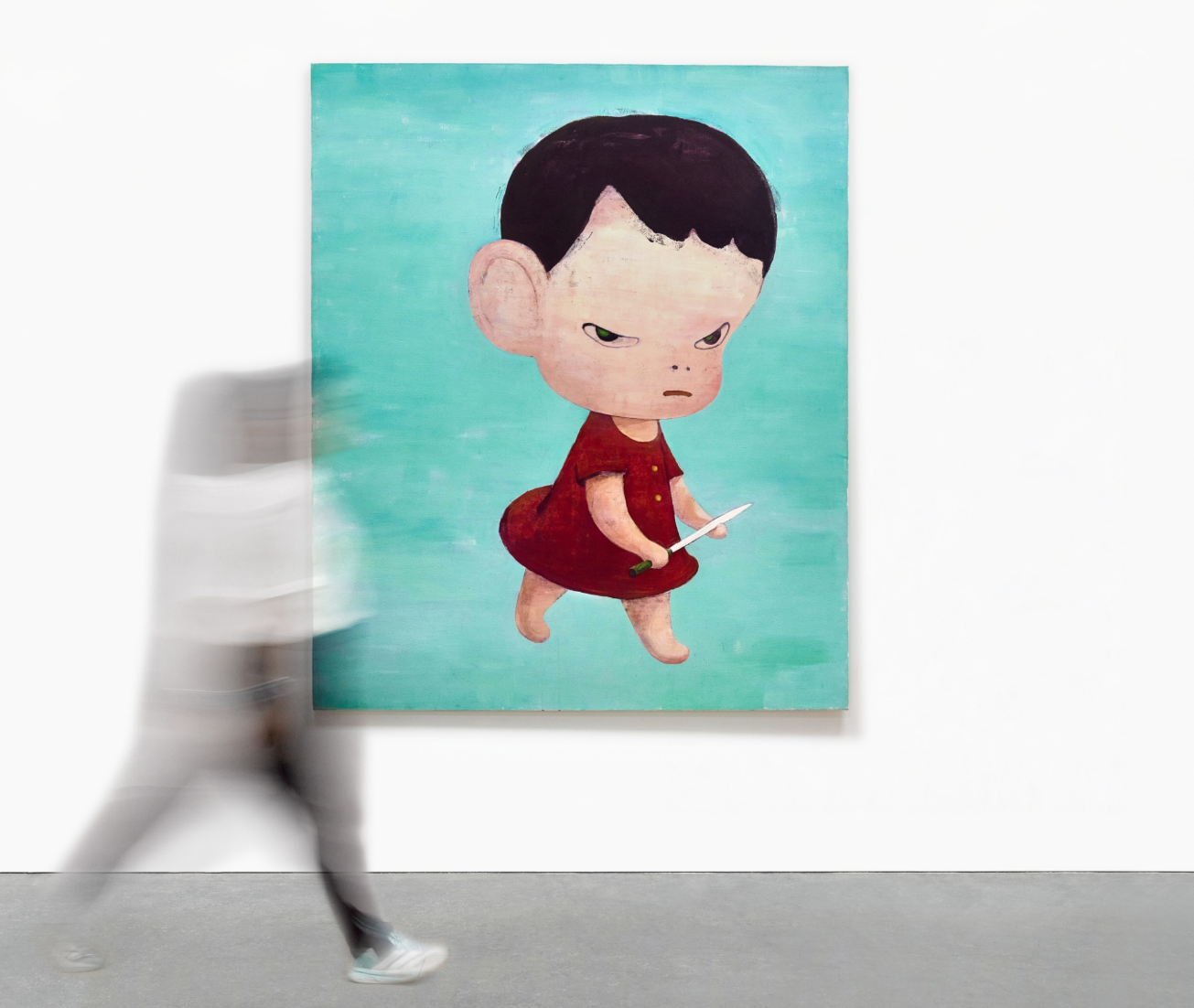
1994 was a pivotal year for Yoshitomo Nara. With the assistance of Cologne-based gallerist Jörg Johnen, Nara moved from Düsseldorf, where he had completed a six-year apprenticeship at the Staatliche Kunstakademie under A.R. Penck, to a former factory building on the outskirts of Cologne. The cavernous space allowed him to express his intimate feelings of solitude and nostalgia on larger canvases for the first time. Present was created as a prologue to his breakout solo exhibition at SCAI the Bathhouse in Tokyo the following year, an event that catapulted him to the international art scene. It is within this context that the archetypal child, which embodies pride, independence, and the strength to overcome challenges, was created.
In Nara’s evolving oeuvre, Present stands out as the earliest canvas to depict the spirited child in full figure, dressed in vermilion against a monochromatic background, with a knife in hand. Among his 1990s pieces, this painting belongs to a limited group of just five examples. Notably, Present is the only one where the figure strides forward, fully alert and ready for action.
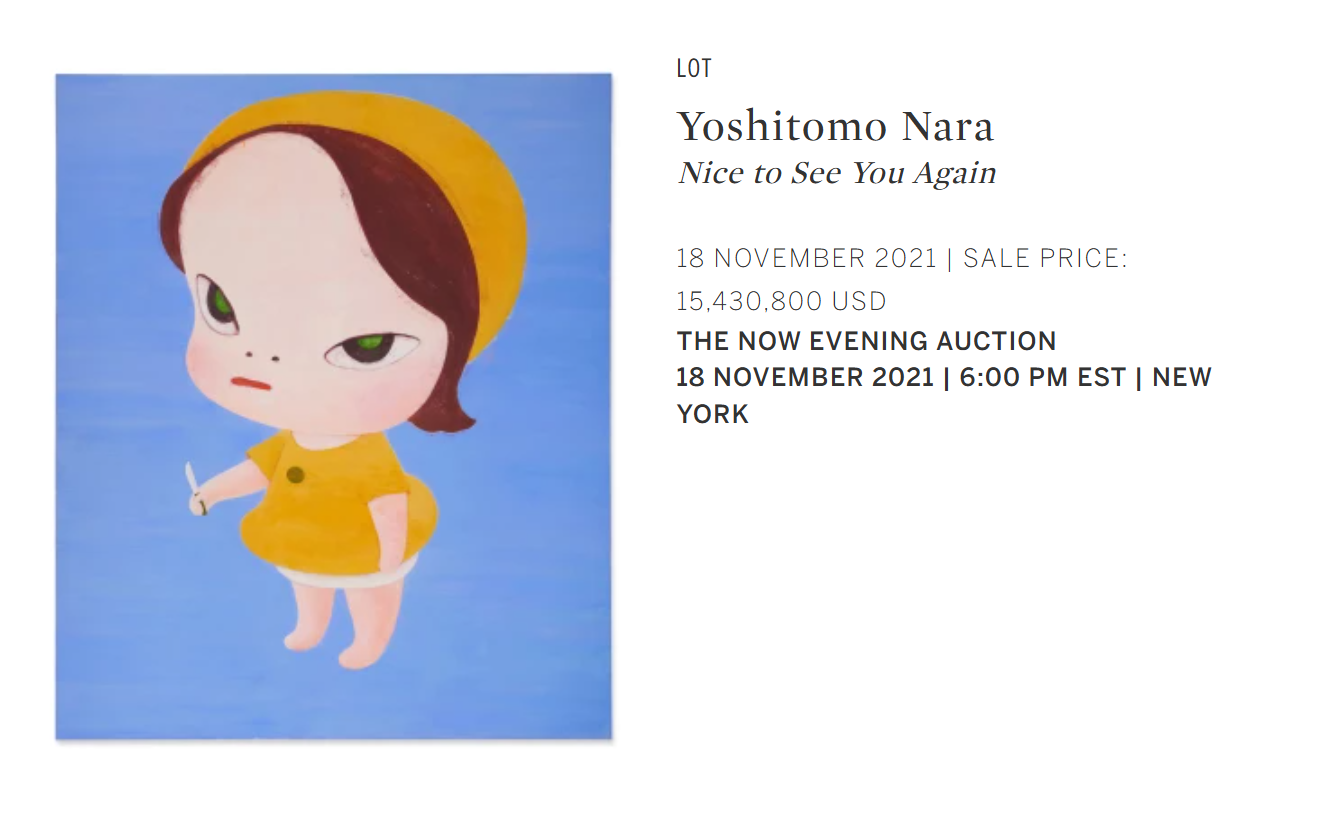
Alongside Nice to See You Again, which achieved the artist’s fourth-highest auction price, Present shares the same monumental dimensions, making them the largest canvas of the knife-bearing girl from that decade. The austere but organic contour lines, built through layers of repainting, recall the free-handed drawings of 1950s Japanese cartoons, while the asymmetric, advancing posture animates the figure with a sense of virtual movement. As art critic Midori Matsui observed, the painting carries “the allegorical ability to express narrative through singular image endowed with powerful emotional appeal.” It is from this configuration — full figure, monochrome ground, weapon in hand — that Nara’s mature style crystallises by 2000.
Nara had begun exploring the knife motif as early as the 1980s, but it was during the 1990s that it became a dominant prop in Nara’s defiant children. The motif reaches its apex and its disappearance in Knife Behind Back (2000) — the record-breaking canvas sold at Sotheby’s Hong Kong in 2019 for HK$195 million, in which the same red-dressed girl stands innocuously with one arm behind her back, the weapon declared by the title yet absent from the image. By 2000, the prominent knives, chainsaws, pistols, and clubs of the 1990s were gone. From the turn of the millennium onwards, Nara saves the brandishing of weaponry for his works on paper, leaving his canvases pristine and calm. Cigarettes, daggers, and guns similarly retreat. The purging reflects his juvenile characters’ maturation — their acceptance of the futility of “toy” armaments — and shifts the burden of expression onto their pensive, interior worlds.
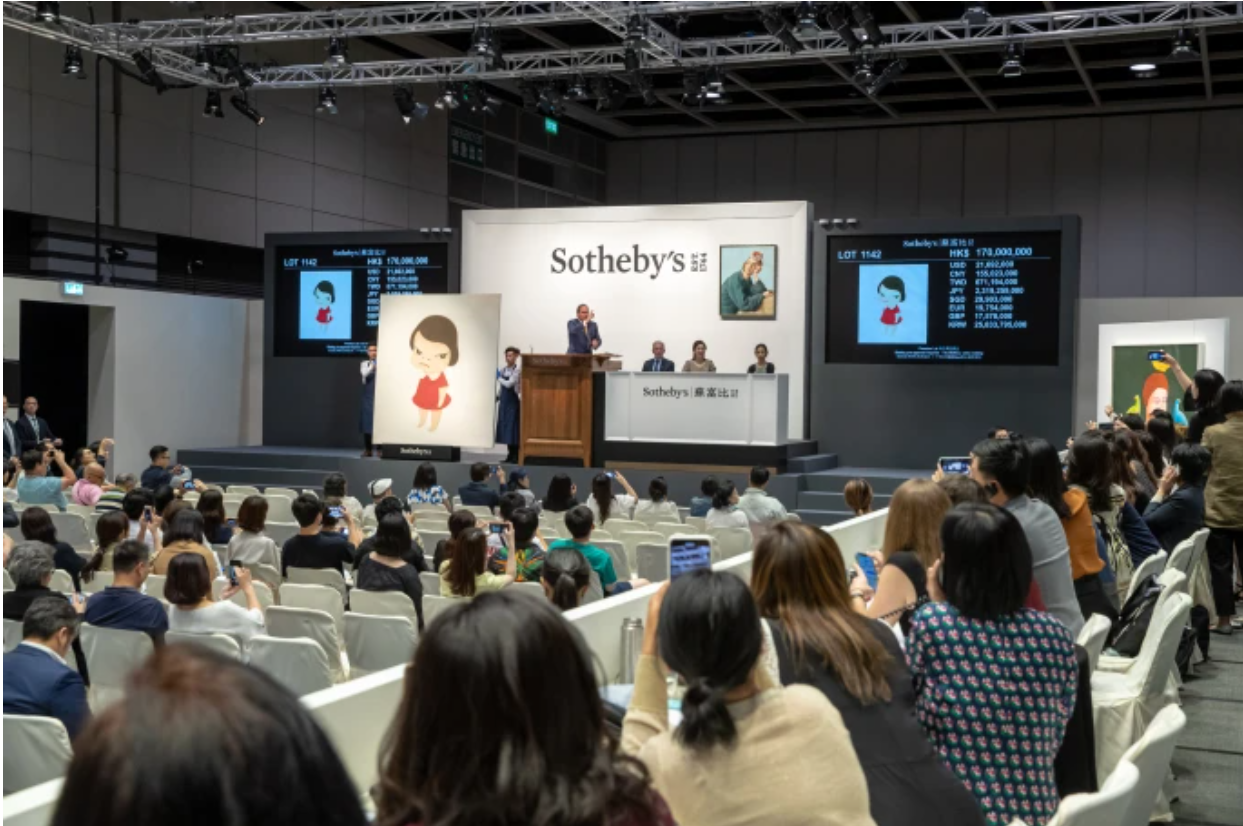
Yoshitomo Nara Knife Behind Back (2000) breaking the artist’s auction record at HK$ 195million
at Sotheby’s Hong Kong Fall Evening Auction in 2019
Merely standing with weapon in hand, the child in Present summons a rich vocabulary of art historical imagery symbolising the gallantry and valour of the weak or the marginalised: young David slaying Goliath; Judith beheading Holofernes; Charlotte Corday assassinating Marat. The child represents a little hero, forced to grow up to confront the odds. The red dress reads almost as an armour — kin to the vermilion curtains and garments that adorn the heroines of Caravaggio and Artemisia Gentileschi — garments that simultaneously conceal and signal defiance.

John Everett Millais, Joan of Arc, 1865, oil on canvas. Private Collection.
Nara’s art has always explored lost childhood, and the geopolitical tensions of the 1990s — a decade marked by post-Cold-War realignment, the Gulf War, and simmering nuclear anxieties — supply a subtle backdrop to the child’s vigilance. That same conscience had already surfaced in No Nukes (1998), an acrylic and colored-pencil drawing first utilised in anti-nuclear protests in Bangkok, and would gain international attention once more in response to the 2011 Fukushima disaster, which struck Nara’s home region of Tohoku. The image was reproduced on placards at anti-nuclear demonstrations across Japan with the artist’s support.
Nara’s approach to themes of war and violence sharply contrasts with that of his peers in Japan and the West alike. In stark contrast to Takashi Murakami’s factory-like atelier, Nara’s practice is highly solitary; Nara works without assistants. He works alone at night, chain-smoking and listening to punk rock, “channelling all of his past ghosts, Murakami’s emotion into the deceptively simple face of his current subject.”
While his contemporaries often present violence as spectacle, Nara internalized it. Murakami, for instance, transforms catastrophe into a consumable product; his Time Bokan series (2001) reimagines the mushroom cloud as a candy-colored, brand-like emblem, reducing the apocalypse to Pop merchandise. In the West, Anselm Kiefer confronts the Holocaust through scorched, ash-laden landscapes and expressive, violent brushwork, while Georg Baselitz’s The Big Night Down the Drain (1962–63) depicts a deformed figure representing the aftermath of war. Nara’s confrontation with violence, in contrast, is small, handheld, intimate — carried by a child.
“Look at them, they [the weapons] are so small, like toys.”
Nara’s exploration of war and injustice employs a language of innocence to disguise rebellion. He frames the overthrow of power through symbols of purity, maintaining a steadfast belief in righteousness and advocating for a quiet, gentle form of spiritual resistance.
An example of Nara’s knife-wielding child, The Girl with the Knife in Her Hand (1991), was acquired by the San Francisco Museum of Modern Art. Institutional recognition of Nara’s work has continued to grow; for instance, LACMA held the artist’s first international retrospective from 2020 to 2021. Additionally, a major touring exhibition by the Museum Frieder Burda in Baden-Baden, with stops at the Guggenheim Museum Bilbao in 2024 and the Hayward Gallery in London, further enhances the global attention on Nara’s work and underscores his relevance in the contemporary art scene.

Yoshitomo Nara, The Girl with the Knife in Her Hand, 1991, 150.6 by 140 cm. Collection of San Francisco Museum of Art (SFMOMA)
Yoshitomo Nara’s Present endures because its petite hero refuses to accept the world on its terms and instead meets it on their own. In cuteness, there is resilience; in innocence, a steadfast gaze. The striding child resonates across generations, reaching into the deepest parts of our souls, confronting our inner vulnerabilities as human beings. The child’s presence offers gentle comfort—a stubborn and grounded force against a turbulent world.
The Crated Room in Iceland / Drawing Room, 2009
Sotheby’s Hong-Kong: 28 September 2026
Estimated: HKD 45,000,000 – 65,000,000
Yoshitomo Nara 奈良美智 | The Crated Room in Iceland/Drawing Room
YOSHITOMO NARA (b. 1959)
The Crated Room in Iceland / Drawing Room, 2009
Mixed media, acrylic on wood
97 drawings on paper, CD player
Two small chairs, a paper cup, an extension cord
A pair of light bulb and cord
Overall: 206x229x207 cm (81-1/8 x 90-1/8 x 81-1/2 inches)
Crate: 181.5 x 220 x 170 cm (71-1/2 x 86-5/8 x 67 inches)
Acrylic on wood: 170×220 cm (67 x 86-5/8 inches)
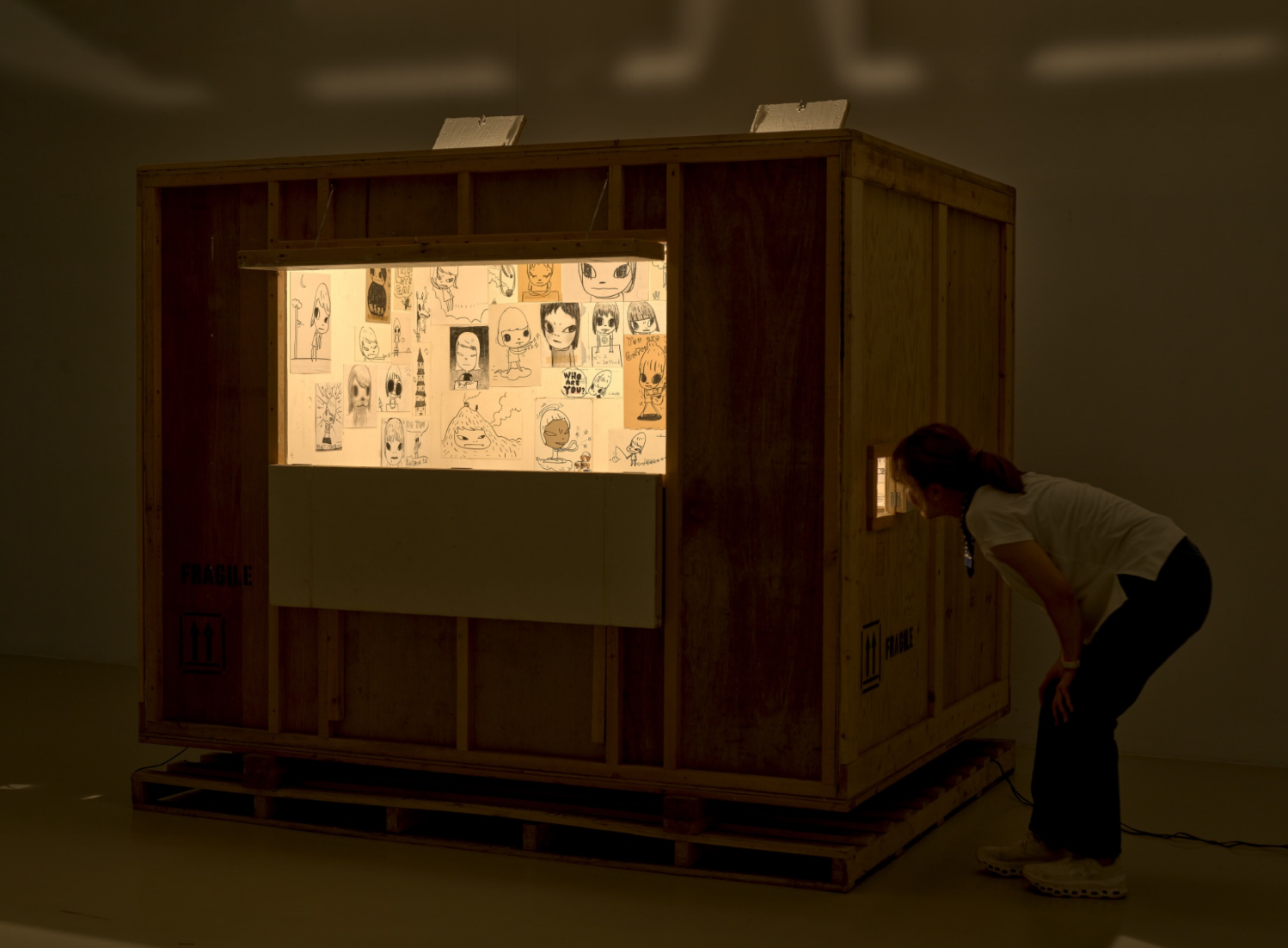
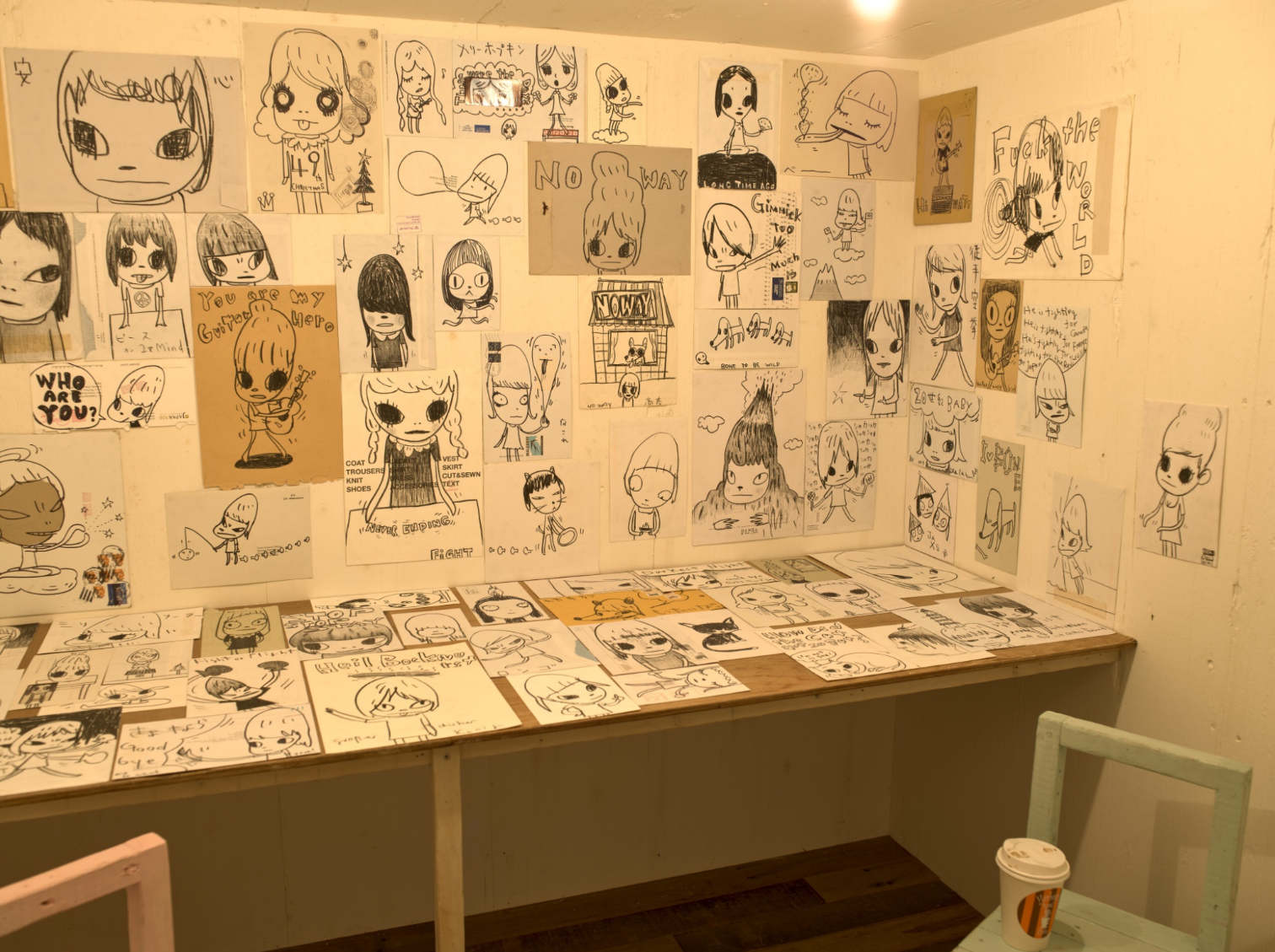
Fresh to auction and unseen by the public for seventeen years, The Crated Room in Iceland / Drawing Room (2009) stands as an extraordinary, museum-contextualised milestone within Yoshitomo Nara’s seminal practice. Conceived as a major installation within the artist’s landmark collaboration with the design group graf, working under the name YNG, it is one of only seven works in Nara’s Crated series and one of three conceived specifically for his 2009 exhibition at the Reykjavik Art Museum. Distinguished by its exceptional scale, archival density, and institutionally grounded conception, the present work transforms the utilitarian architecture of shipping crates into an intimate, inhabitable visual world reminiscent of Nara’s own working studio.
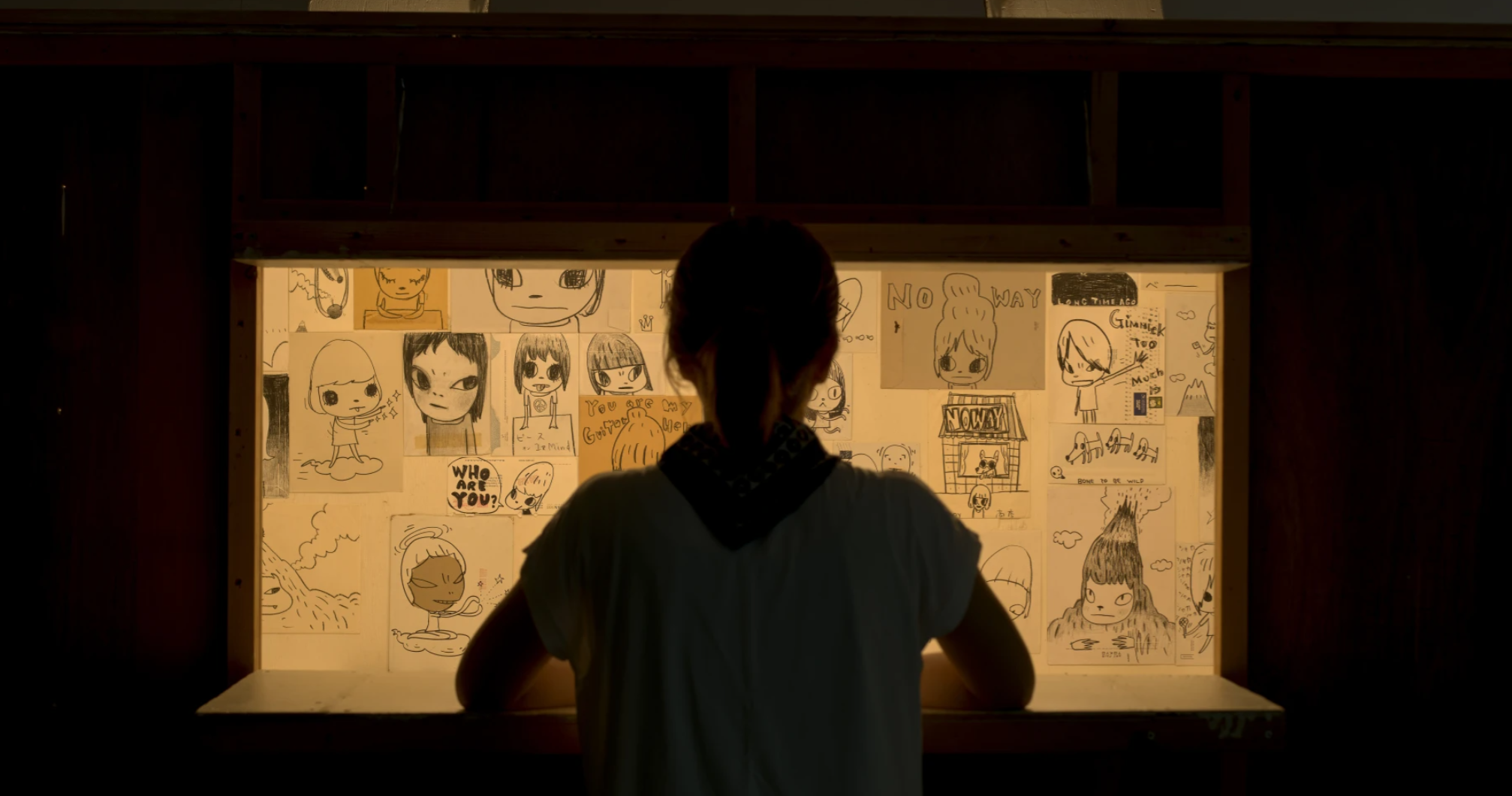
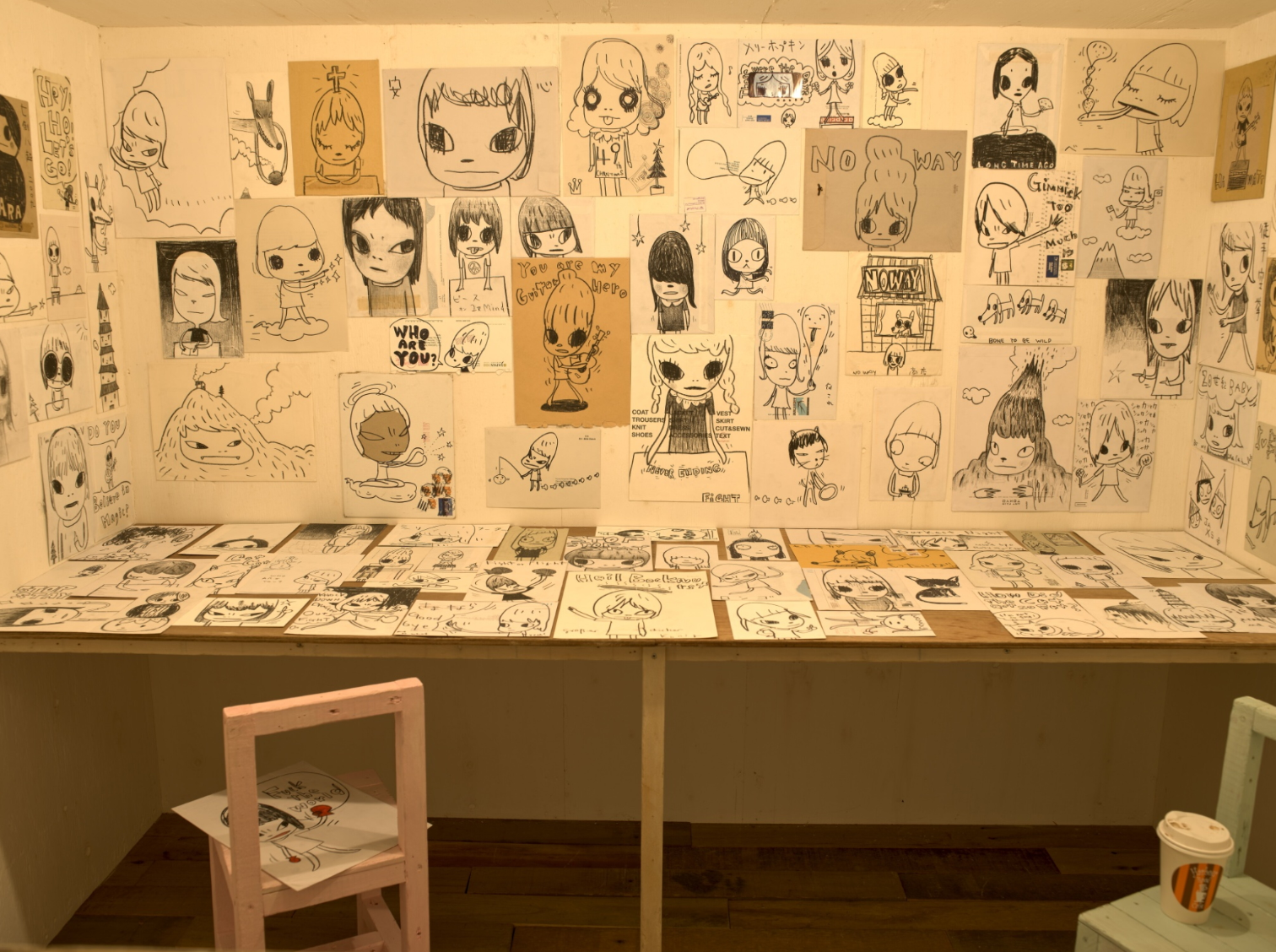
Comprising ninety-seven drawings alongside everyday props and a monumental billboard painting, the installation collapses the boundaries between the logistics of transit and artistic ensemble. By replacing conventional wall displays with an interactive “peep-in” dynamic, Nara subverts the traditional white cube, constructing an immersive environment through which the viewer is granted a privileged glimpse into the artist’s imaginative universe. Long absent from public view since its presentation in 2009, the work offers not only a rare encounter with a concentrated lexicon of Nara’s celebrated iconography, but also a meditation on the psychological relationships between viewer and artwork, the artist’s studio, and the institutional space.
The present work occupies a singular position within the Crated series that Nara initiated in 2005. According to the artist’s catalogue raisonne, only seven works are known from the series, making it one of the rarest and most conceptually cohesive bodies within his wider installation practice. Of these seven, only two have appeared at auction, and neither rivals the present work in scale or complexity. The Crated Room in Iceland / Drawing Room belongs to the culminating moment of that development. Together with Dog House and Gallery Room, it was conceived specifically for The Crated Rooms in Iceland: Yoshitomo Nara + YNG, held at the Reykjavik Art Museum from September 2009 to January 2010. Its significance therefore lies not only in its rarity, but also in its institutional genesis: this was not a work retrofitted for museum display, but one conceived within, and for, a museum context.What distinguishes the present work most fundamentally is the function of the crate itself. The Crated Room in Iceland / Drawing Room transforms the ordinarily dismissible apparatus of packing, transport and protection into the visible language of sculpture and installation. The crate ceases to be secondary to the art it carries and becomes instead the architectural condition through which the art is encountered. In collapsing distinctions between transit, storage, display and finished work, Nara shifts attention away from the autonomous framed object towards an environment that must be approached bodily, circled spatially, and understood architecturally.
This reorientation of display also transforms the psychology of looking. The Crated format introduces an experience of partial access: rather than confronting Nara’s imagery in the elevated neutrality of the conventional white-walled gallery space, the viewer must peer through windows, flaps and openings cut into the timber structure. The result is a mode of spectatorship grounded in discovery, intimacy and controlled revelation. One does not simply stand before the work; one seeks entry into it. Such a strategy subtly destabilises the aura of conventional museum presentation, replacing passive contemplation with exploratory encounter. In doing so, it intensifies the affective dimension of Nara’s imagery, aligning his psychologically charged motifs with structures of concealment, protection and private access.
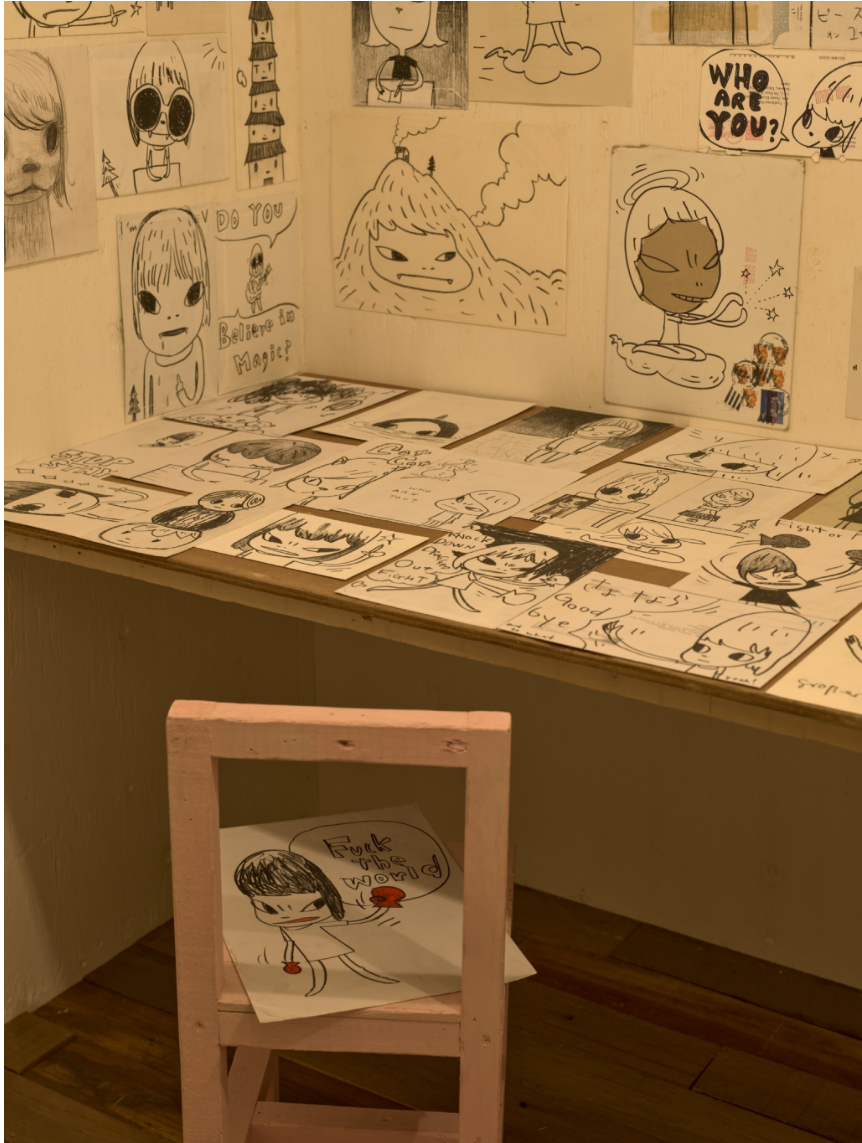
The title Drawing Room is especially resonant because it operates on two levels at once: it denotes a room composed through drawing, and equally a room devoted to drawing. The installation’s ninety-seven drawings, some double-sided, create a visually expansive interior of almost archival concentration. Feisty children, anthropomorphic figures, houses, puddles and mountains appear in succession, forming what may legitimately be described as a condensed lexicon of Nara’s most recognisable imagery. Chairs, a CD player, and other everyday props extend the installation beyond the category of display into one of evocation, suggesting not simply an exhibition setting but an approximation of the artist’s interior visual world and studio environment.
The work must also be understood within the mature phase of Nara’s collaboration with graf, represented here through Hideki Toyoshima under the collective name YNG. This partnership had already produced major spatial projects, most notably A to Z in 2006, in which entire architectural environments were created rather than merely filled. In an interview, Toyoshima recalled that their collaboration began with the idea of constructing rooms and houses within a gallery, an approach that subsequently expanded into increasingly ambitious projects, including the creation of a full village in Hirosaki. The Crated Room in Iceland / Drawing Room belongs to the height of this collaborative language. It demonstrates the extent to which Nara’s practice had moved beyond singular paintings and drawings towards immersive, inhabitable structures in which image, object and architecture became inseparable. In this sense, the work marks an evolutionary leap in his installation practice, shifting the experience of art from the contemplation of discrete objects to the inhabitation of a carefully constructed world.
At once a room of drawings, a reconstruction of artistic space, and a sculptural meditation on transit itself, The Crated Room in Iceland / Drawing Room stands among the most complete embodiments of Yoshitomo Nara’s expanded practice at the moment it became fully environmental.
Untitled, 1988
Sotheby’s Hong-Kong: 29 September 2026
Estimated: HKD 4,000,000 – 6,000,000
Yoshitomo Nara 奈良美智 | Untitled 無題 | Contemporary Day Auction |

YOSHITOMO NARA (b. 1959)
Untitled, 1988
Acrylic on canvas
130.5 x 130.5 cm (51-3/8 x 51-3/8 inches)
Signed (on the reverse)
Painted in 1988 and coming to auction for the first time, this rare early canvas by Yoshitomo Nara stands between the expressive experimentation of his student years in Aichi and the emergence, in Düsseldorf, of the psychologically charged, solitary figures that would later define his international reputation. The present lot is exceptional within Nara’s production of that year, not only for its scale but also for its concentration of motifs: sprout, halo, wound, cross-like body, hospital bed, striped clothing, that would continue to reverberate throughout his career.
This present lot depicts a thin, elongated figure lying horizontally across a dark rectangular support, which reads at once as a bed, table, stretcher, or operating slab. The body is dressed in blue-and-white striped pajamas. Its arms are stretched outward with one descending vertically toward the lower edge of the canvas, while the other extends upward and appears to hold a small green sprout. The head, turned toward the viewer at the right edge is wrapped, its face yellow-orange and mask-like. Above the figure floats a yellow ring that strongly evokes a halo. The background is a rough, pale blue field, painted with loose, scumbled strokes, against which the dark central platform and fragile body acquire a stark theatricality.
“I needed a setting which would allow me to isolate myself from others to have a real conversation with the inner‑me. I found my style only after living in solitude.”
The image’s force lies in its ambiguity. The man is “lying down on a table” because Nara seems to place him between several states: patient, martyr, child, and sacred figure. The striped pajamas immediately suggest hospitalization, convalescence, institutional care, or sleep. They may also recall childhood clothing, reinforcing the sense of helplessness. In visual terms, the stripes flatten and elongate the body, making it appear both human and diagrammatic, like a vulnerable sign laid across the picture. Psychologically charged, the figure in the painting is not merely dressed; he is exposed, immobilized, and displayed.
The work’s Christian resonances are unmistakable, even if they should not be read as orthodox religious statement. Nara was born into a Shinto family and has not generally presented himself as religious, yet he studied and absorbed imagery from Buddhism, Christianity, and other belief systems. In the 80s, Christian iconography involving angels, crosses, and halos appears with notable frequency in Nara’s works, testing the emotional and symbolic charge of sacred imagery. Here, the figure’s extended arms evoke the Crucifixion, though the body has been rotated into a prone, horizontal position. The result is not a literal Christ but a secular martyr depicting an innocent, wounded being subjected to forces beyond his control. The halo intensifies this reading. Suspended to the left of the head rather than neatly encircling it, the yellow ring is both sacred emblem and unstable pictorial object. It may signify virtue, innocence, or spiritual protection or suggest that injury and sanctity could coexist. The halo in the present painting is rough, almost childlike in execution, and this crudeness is important. It does not monumentalize the figure in a traditional religious sense. Instead, it makes holiness look handmade, fragile, and provisional.
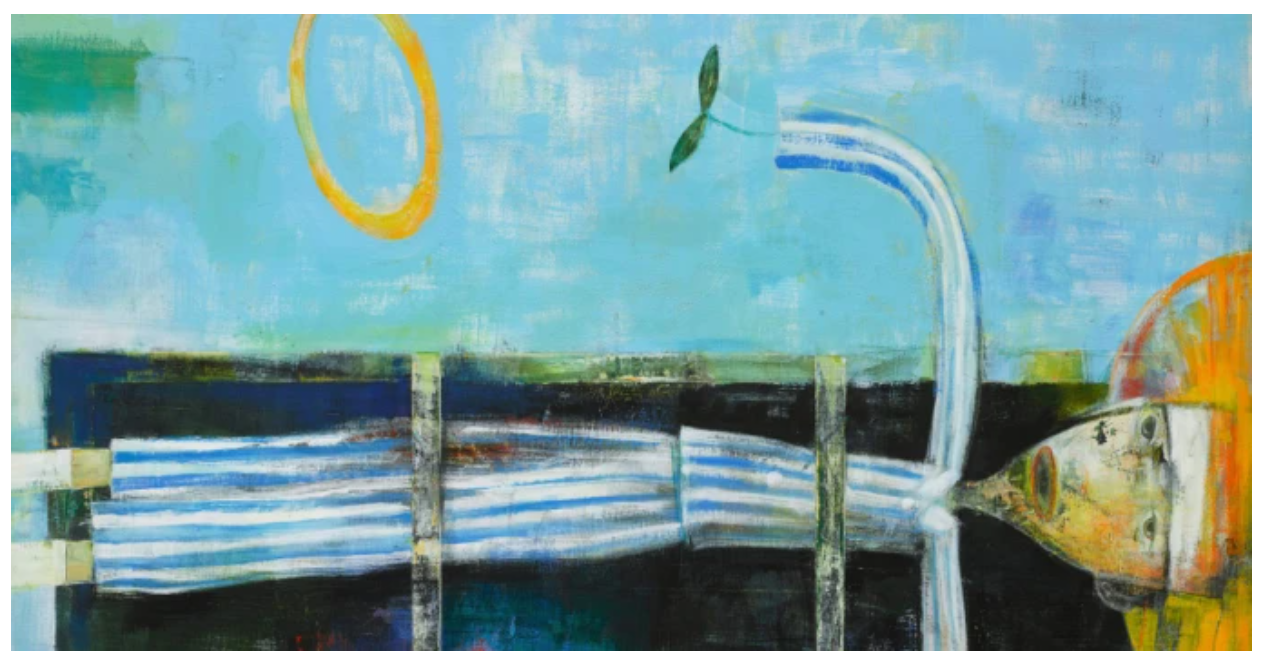
The sprout is perhaps the painting’s most critical element of hope. For the first time, Nara features the sprout motif. It is an important point of origin for one of his most sought-after symbolic languages. Emerging where a hand might be expected, the small green shoot suggests renewal, hope, life, and peace. If the figure is wounded, bound, or hospitalized, the sprout becomes a sign of recovery, not triumphant recovery, but the first tender evidence of survival. Nara would return repeatedly to images of children holding, encountering, or even sprouting small plants. The sprout replaces action with growth where the hand might grasp, resist, or plead, the body produces a living sign.
The painting also reflects Nara’s transition toward Düsseldorf, where he studied at the Kunstakademie Düsseldorf from 1988 to 1994. His first year in Germany has often been understood as a period of solitude, linguistic dislocation, and intense self-reflection. Living far from Japan, he turned increasingly toward memories of childhood loneliness and isolation, experiences that would become central to his mature art. The lone figure in this painting already anticipates that shift. Unlike the more crowded or chromatically turbulent compositions of the Aichi period, the background here is simplified. The drama is concentrated on a single body, isolated in a broad blue space. This reduction of setting and sharpening of subject announce the later Nara style of painting solitary children, wounded rebels, and emotionally direct icons of alienation.
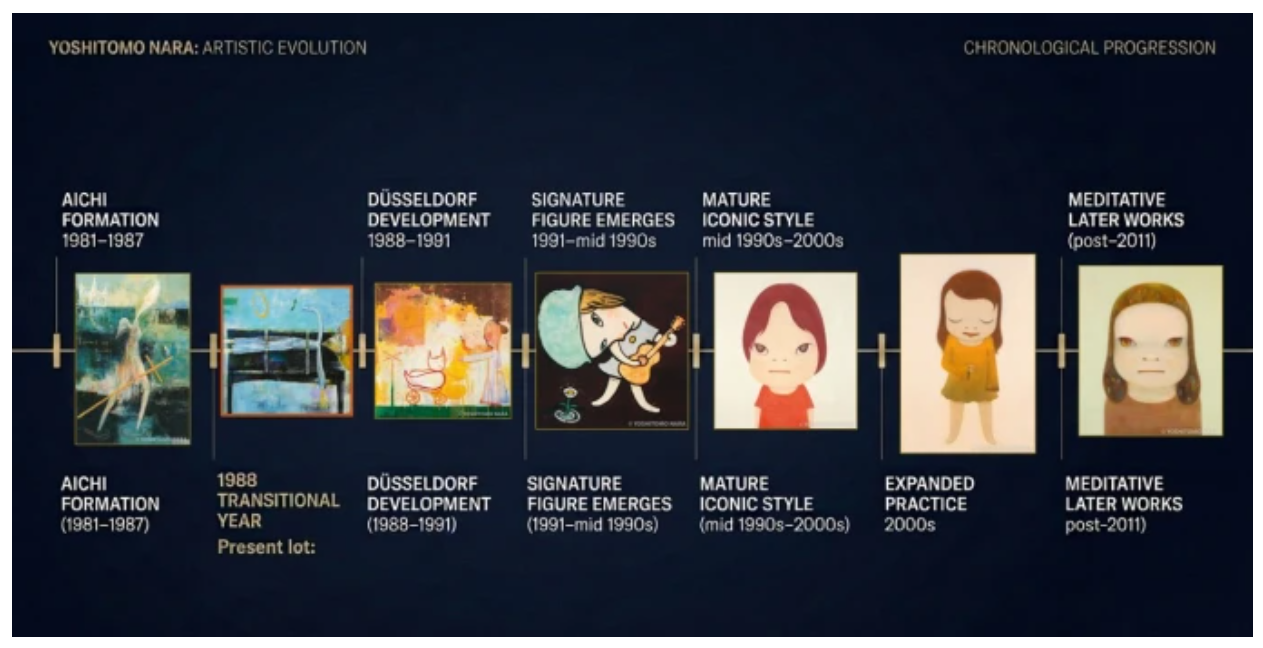
At the same time, the expressive brushwork and revived emphasis on the human figure connect the painting to the broader atmosphere of German Neo-Expressionism, which Nara encountered around this period. The dark slab, scraped surface, and roughly worked blue ground retain the urgency of 1980s painting, yet Nara’s sensibility is already distinct. He does not pursue heroic scale in order to glorify the figure. Instead, he uses scale to heighten vulnerability. The figure is large, but not powerful; central, but not secure.
Within Nara’s career, this 1988 painting is both culmination and beginning. It gathers the personal, religious, and bodily imagery of his Aichi years, while pointing toward the distilled loneliness and iconic motifs of his mature practice. Its wounded man in striped pajamas may be read as a patient, child, martyr, or an alter ego. The figure’s halo hovers between salvation and mortality. The sprout quietly proposes life after injury. In this tension between suffering and renewal lies the painting’s enduring significance. It is an early statement of the emotional vocabulary that would make Nara one of the most resonant figurative painters of his generation.
Liu Ye
Blue Sea, 1998
Christie’s Hong-Kong: 29 September 2026
Estimated: HKD 16,000,000 – 26,000,000
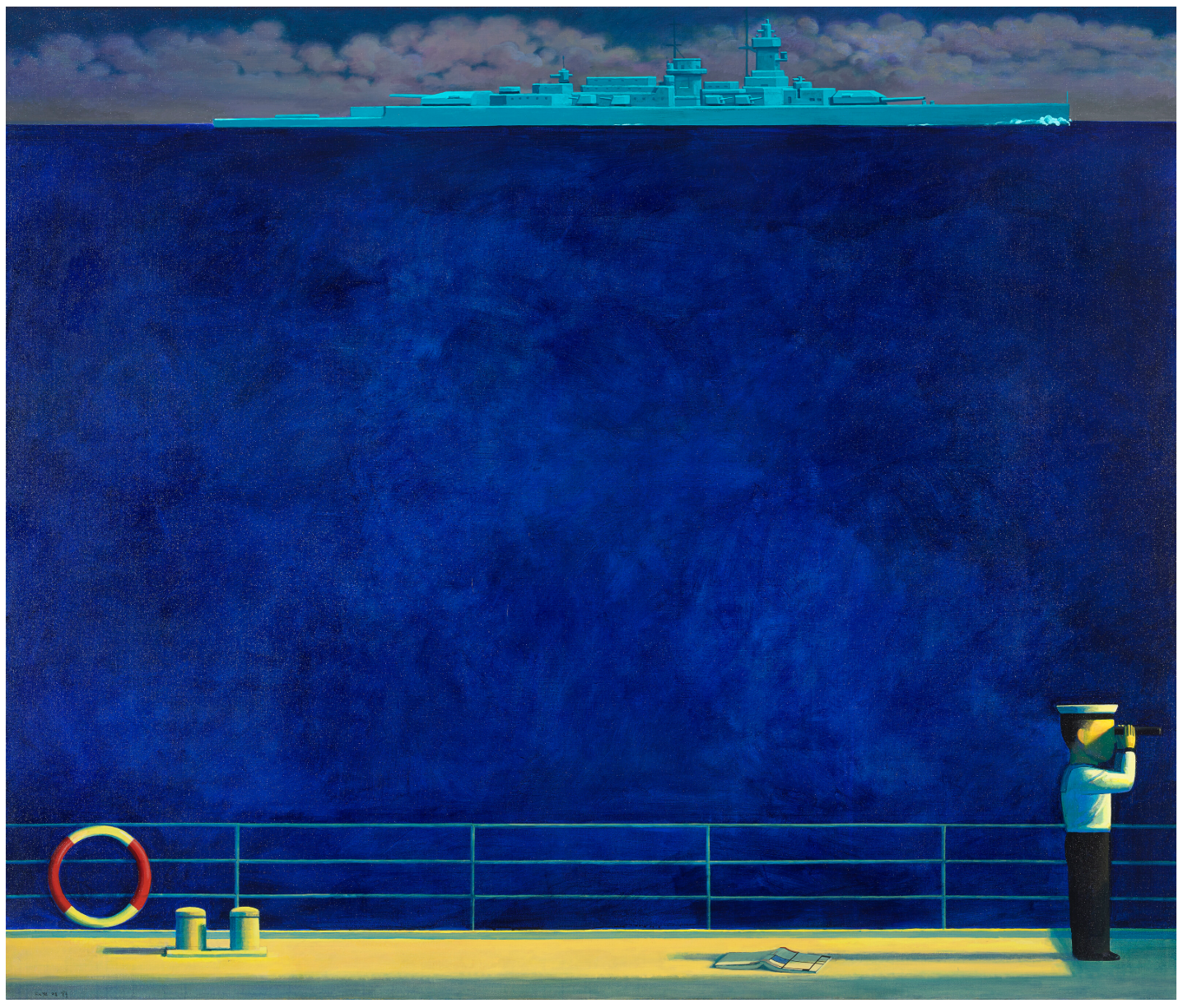
LIU YE (B. 1964)
Blue Sea, 1998
Oil on canvas
170×200 cm (66-3/4 x 78-3/4 inches)
Signed in Chinese, signed again and dated, ‘Liu Ye 98’ (lower left)
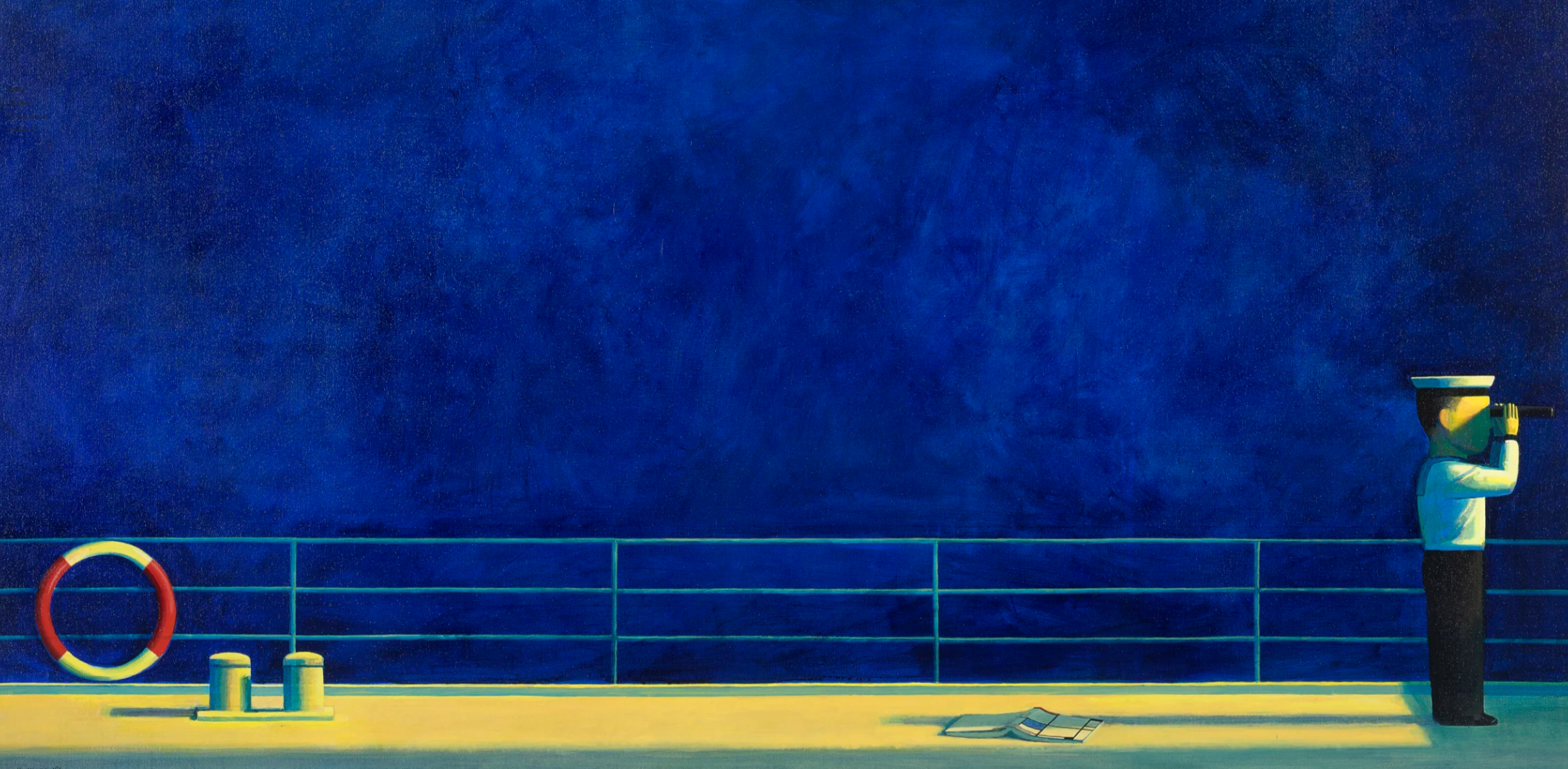
A tranquil, inscrutable blue envelops the vast, deep sea on the canvas. On the distant horizon, a colossal naval warship looms between the sea and the sky. In the lower right-hand corner of the foreground, a young sailor stands on the deck, gazing into the distance through a telescope. His gaze is, however, not directed towards the warship, but an unknown direction. Created in 1998, Blue Sea is one of the largest works in Liu Ye’s naval motif paintings. According to Liu Ye Catalogue Raisonné 1991–2015, there are a total of 32 paintings under the naval motif, all created between 1995 and 2000. Of these works, Blue Sea is among the five largest in size. Silence of the Sea (1995), which shares the same size as Blue Sea, is currently held in the collection of M+ Museum in Hong Kong.
The composition of Blue Sea is orderly arranged by a set of horizontal and vertical lines, with every detail seemingly having been meticulously considered by the artist. Whether it be the open book lying on the deck, the pure and restrained color palette, or the rigorous and balanced composition, Piet Mondrian’s profound influence on Liu’s artistic language is evident throughout the canvas. Like an intricately designed stage set, the work is imbued with dramatic tension and psychological undertones, inviting the viewer to linger on the imagery to search for its hidden meanings. For a boy growing up in China during the 1990s, the navy represents a collective fantasy of distant lands and adventures. Widely considered the most outstanding of Liu’s masterpieces of the navel motif from the 1990s, Blue Sea embodies the artist’s reflections on personal memory, the zeitgeist of the era and artistic tradition.
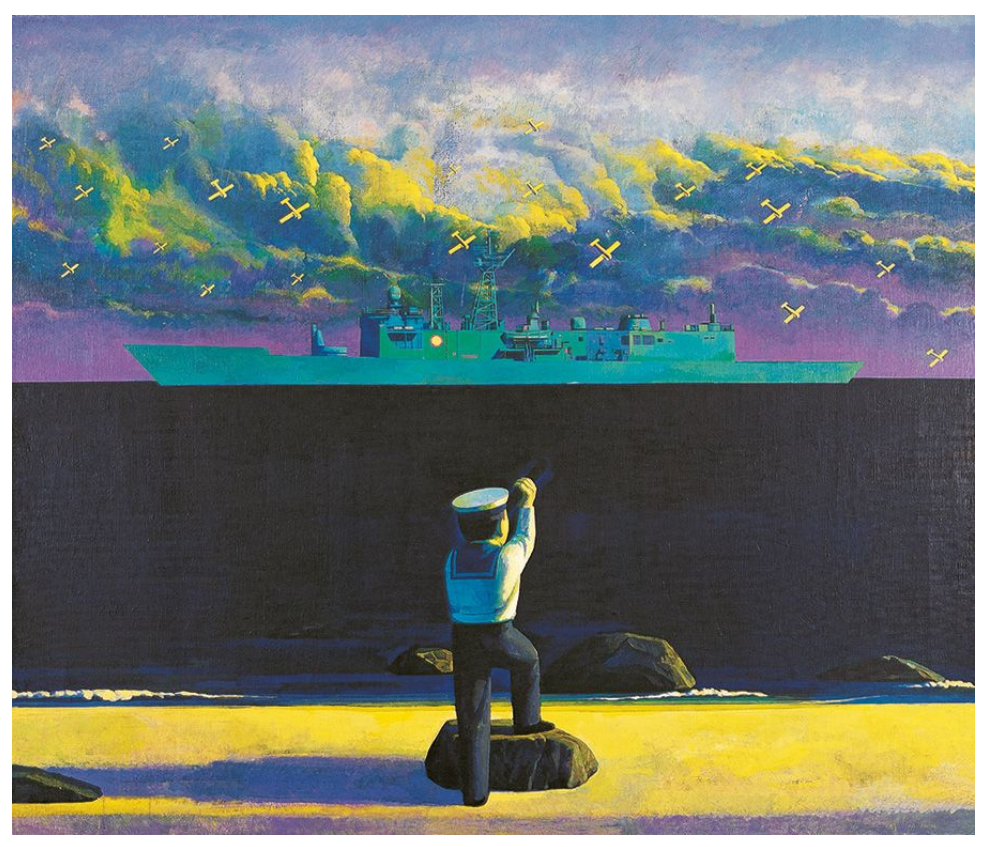
Liu Ye, Silence of the Sea, 1995. M+ Sigg Collection, Hong Kong. By donation. [2012.649]. © Liu Ye. Image courtesy of M+, Hong Kong.
Liu’s naval motif work first emerged in the mid-1990s. At that time, China was undergoing rapid naval modernization. The offshore disputes of 1995-1996 brought issues of territorial waters, maritime borders and national defense to the forefront of public attention. In late 1996, China’s purchase of two Sovremenny-class destroyers from Russia marked a significant step in the modernization of its navy, further fueling public debates on maritime and military issues. In face of the changes in the political and social climates, Liu started to depict children donning naval uniforms in his works, weaving into his innocent and whimsical fairy-tale narratives weighty themes such as ‘defense’, ‘navigation’ and ‘exploration of the unknown.’
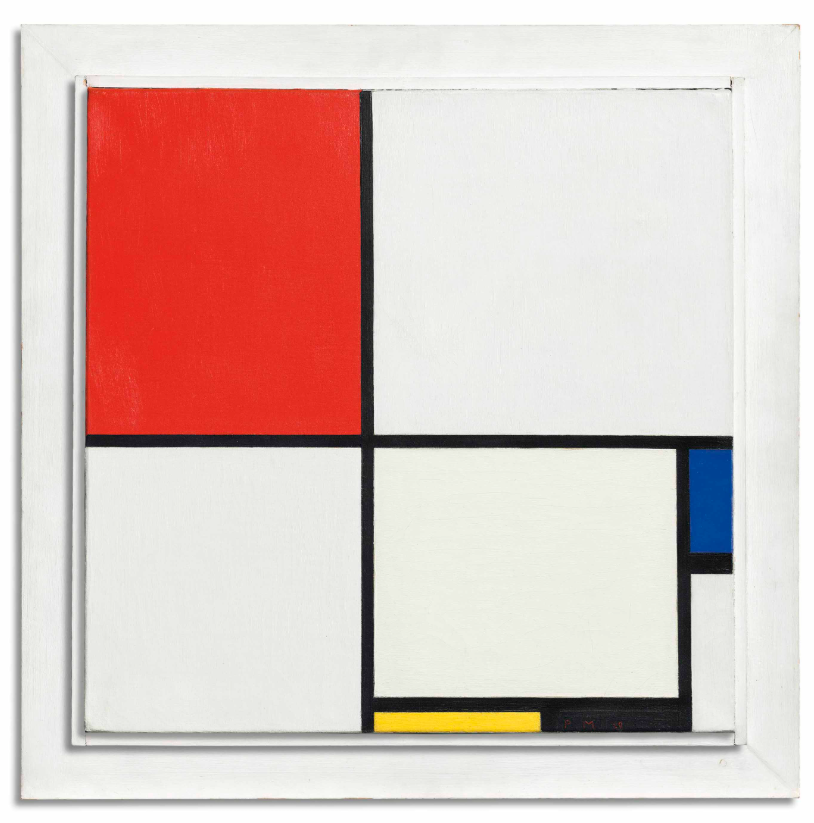
Piet Mondrian, Composition No. III, with Red, Blue, Yellow, and Black, 1929.
Christie’s New York, 14 May 2015, lot 6C, Sold for 50,565,000 USD
When Liu first arrived in Germany, his artistic language bore distinct characteristics of symbolism. By pairing elements such as René Magritte’s floating hat, Mondrian’s abstract grid design, and the domestic interior composition of partially concealed curtains commonly used by Renaissance artists, Liu created a surreal spatial atmosphere in his earlier works. These pieces are also imbued with a classical elegance reminiscent of the Flemish master Jan van Eyck.

Compared to the intricate symbolic narratives crafted in his earlier paintings, the works that Liu created after 2000 use a sleeker artistic language, as exemplified by Blue Sea. In that work, the appropriation of Mondrian’s grid design is much more subtle, appearing in the cover design of a book lying face down on the deck, illuminated by oblique light. Mondrian’s influence also permeates the overall composition of the canvas: the horizontal lines of the sea, the geometric configuration of the railings, and the color contrast between the lifebuoy and the waters, together evoke a rational and harmonious visual order. The collective sense of balance and architectural quality of Blue Sea can no doubt be traced to the Dutch master’s works.
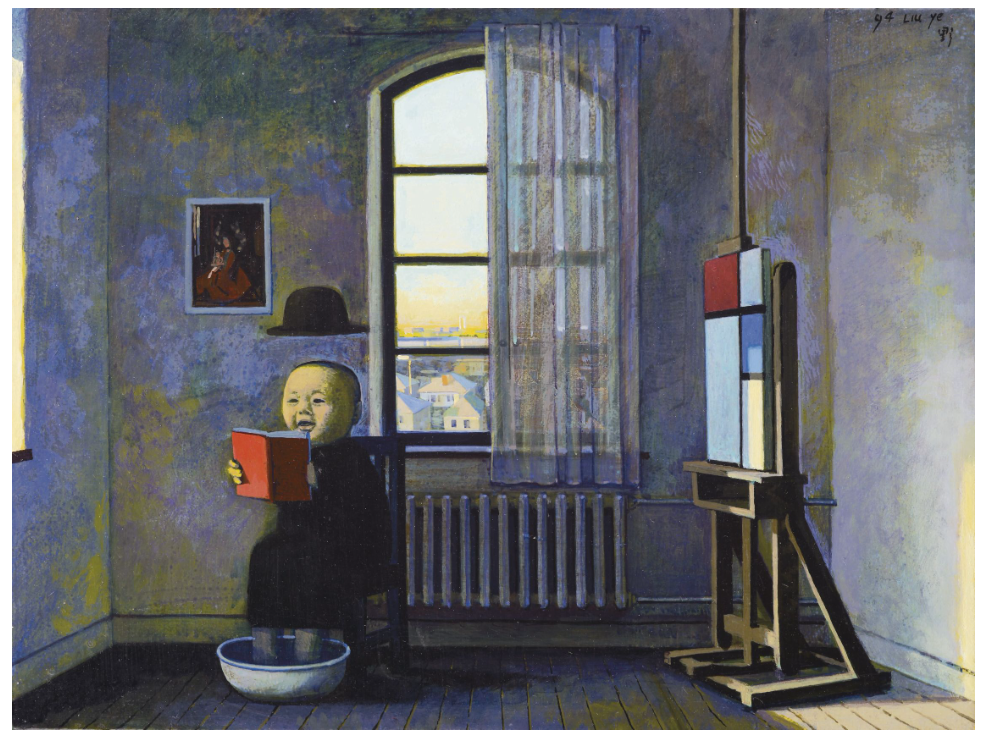
Liu Ye, Lucas, 1994. Christie’s Hong Kong, 25 May 2008, lot 437
The beam of oblique light streaming in from outside the frame of the canvas lends Blue Sea a distinct theatrical quality. In 1998, Liu travelled to the Royal Academy of Art in Amsterdam to take part in an artist-in-residence programme, further deepening his study of European artists such as Johannes Vermeer, Paul Klee and Mondrian. Created during this period, Blue Sea was exemplary of Liu’s continued pursuit of his favorite themes of the sea and navigation. It also pays homage to his beloved Western masters through the use of meticulous composition, pure and saturated colours, as well as the emphasis on forms and theatricality. From Caravaggio’s use of light and shadow to create dramatic tension, Vermeer’s portrayal of his subjects retreating to their inner worlds as they sit quietly by the window, to Giorgio de Chirico’s rendering of long shadows to evoke a surreal, mysterious atmosphere, light has always been a vital medium for guiding the viewer into different psychological states. Liu clearly understands the importance of light to his works. In the lower-right corner of the composition of Blue Sea, a young sailor stands alone in a corner of the deck, looking into the distance through a telescope. No one knows whether he is gazing upon the first light of dawn or the afterglow of sunset, and whether it is his friends or foes who are waiting for him in the distance – it is precisely this sense of unresolved ambiguity that renders the entire scene like a pantomime frozen in a single moment. Somewhere between the still waters and the subdued light lies a space that opens to infinite possibilities for narratives and imagination.
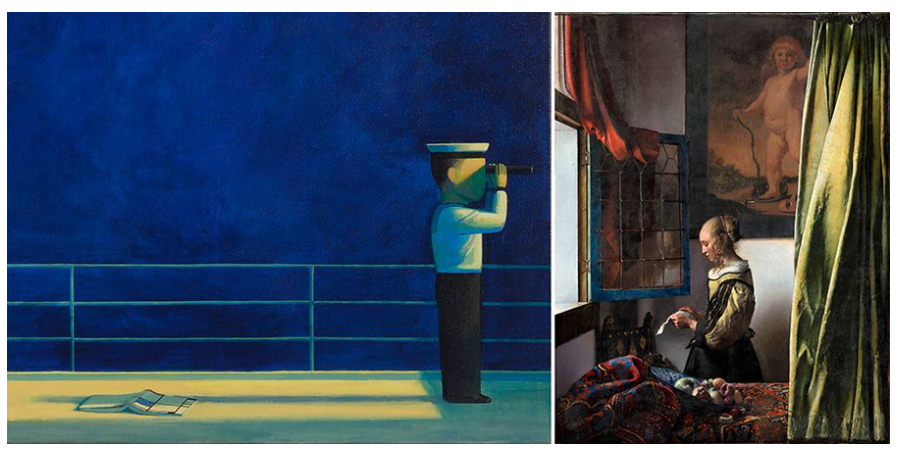
Left: Present lot illustrated (detail)
Right: Johannes Vermeer, Girl Reading a Letter at an Open Window, circa 1657-1659. Gemäldegalerie, Dresden.
Liu has not chosen a grand historical narrative as the subject matter of Blue Sea. Rather, he transformed the weight of the era into a child’s gaze into the distance. The child’s small and fragile figure is set against a vast ocean and a mighty warship, creating an uncanny tension on the canvas. The Mondrian-esque composition, Vermeer-style lighting, together with a set design verging on the theatrical, combine to turn reality into a fairy tale-like allegory. As art critic Zhu Zhu opines, the charm of Liu’s art lies in his ability to convey the most profound of themes in the lightest of ways, distilling the memory of an era into something akin to ‘the unbearable lightness of being’ that characterized the works of Milan Kundera. In Blue Sea, the tranquil and vast expanse of the sea is like a mirror reflecting the loneliness, hope and aspirations of every individual facing the unknown in the distance. This is the power of Liu’s art–transforming the burden of history into vitality, and the complexities of life into clarity.
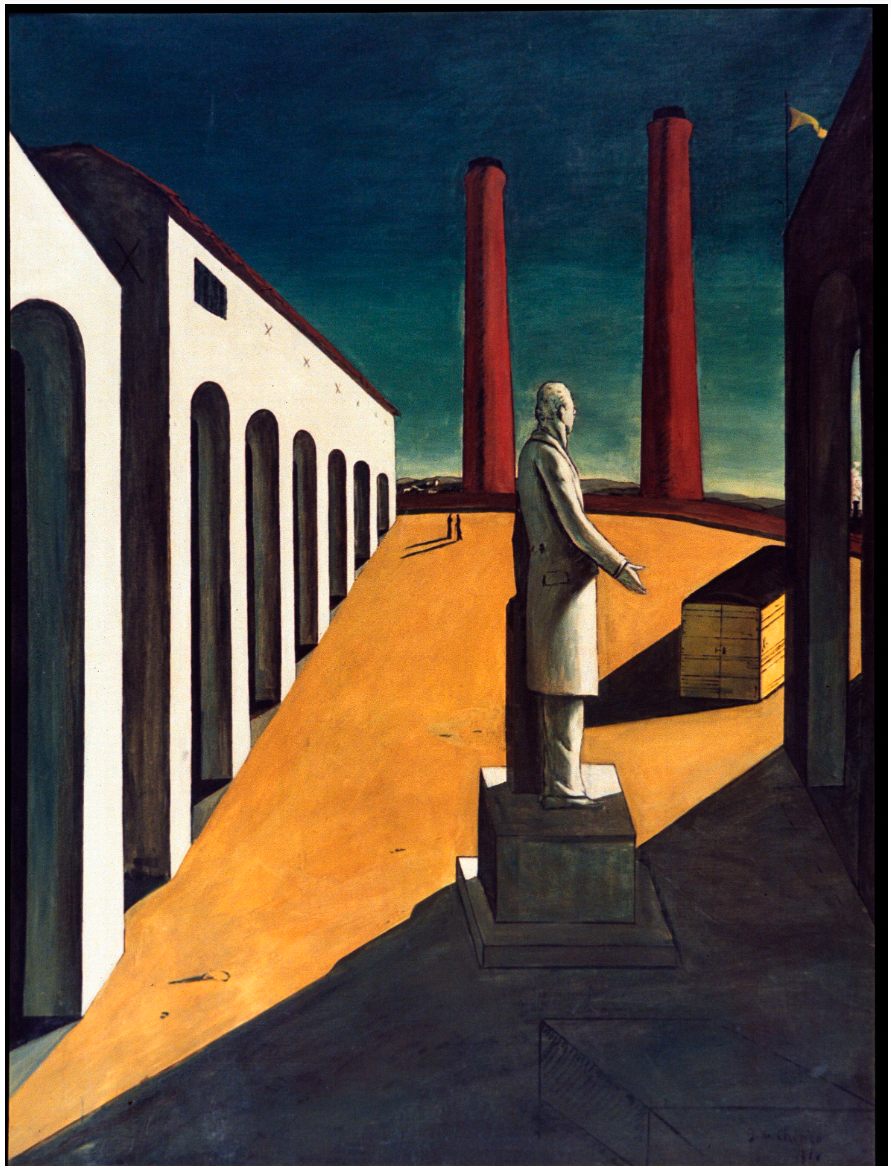
Georgio de Chirico, The Enigma of a Day, 1914. The Museum of Modern Art, New York.
Artwork: © 2026 Artists Rights Society (ARS), New York / SIAE, Rome. Image: Luisa Ricciarini / Bridgeman Images
In 1994, Liu returned to China after completing his studies at the Berlin University of the Arts (Universität der Künste Berlin). Having spent five years living abroad, he came home to find himself confronted with a society undergoing rapid modernization in the wake of the country’s reforms and opening-up policy. Witnessing first-hand the dramatic changes in his surroundings, he began–without even being conscious of it–to contrast them with his own childhood memories. Such comparison is projected onto the children dressing as naval officers in his navy-themed paintings, who, despite having to sit upright and observe strict discipline, always exude a hint of innocence and childlike playfulness.
Coincidentally, Yoshitomo Nara also travelled to Germany in the late 1980s to further his studies. Deeply influenced by the German Neo-Expressionist movement, he gradually developed a unique artistic vocabulary characterized by the iconic image of children with large heads. The two artists’ artistic styles are markedly different: Liu’s compositions are calm, restrained, precise and rigorous; Nara, on the other hand, conveys emotion through his bold, vigorous brushstrokes. Yet, both use the image of children to manifest the complex emotions of the adult world, revealing a deep spiritual resonance between the two artists on the themes of innocence, alienation, purity and rebellion. Liu’s Blue Sea was created during the most mature phase of his navy-themed period. Using a vivid, distilled visual language, the work conveys the artist’s reflections on childhood, history, navigation and distant lands. It also demonstrates Liu’s masterful assimilation of Western classical painting and modern art traditions into his artistic practice. Blue Sea is, undoubtedly, one of Liu’s most representative and finest works within his navel motifs.
Gerhard Richter
Abstraktes Bild, 1991
Christie’s Hong-Kong: 29 September 2026
Estimated: HKD 38,000,000 – 55,000,000
GERHARD RICHTER (B. 1932), Abstraktes Bild | Christie’s
GERHARD RICHTER (B. 1932)
Abstraktes Bild, 1991
Oil on wood
95.3 x 100 cm (37-1/2 x 39-3/8 inches)
Signed, titled and dated ‘746-4 Richter 1991’ (on the reverse)
Chance and control are central to Gerhard Richter’s practice, yet his art is ultimately driven by a fundamental question: how do we make meaning from what we see? Created at a pivotal moment in Gerhard Richter’s ascent to international prominence, Abstraktes Bild belongs to the celebrated group of 30 red-dominant abstract paintings executed in 1991, of which only 27 remain today. The series marked the first occasion in Richter’s abstract practice in which he concentrated with such intensity on a single colour, testing the expressive and conceptual possibilities of red across a sequence of closely related works. Most were unveiled at Galerie Liliane & Michel Durand-Dessert in Paris in September 1991, including the present painting. Richly layered and exceptionally chromatic, Abstraktes Bild stands among the most visually complex examples of the series, with flashes of yellow, blue, green and white emerging through its luminous red surface. Created in the same year as Richter’s landmark retrospective at Tate Gallery, London, and following the major touring retrospectives that cemented his international reputation during the late 1980s, the work belongs to a defining chapter in the artist’s career. Examples from this rare body of red paintings are today held in major public collections including the Israel Museum, Jerusalem, the Institut für Auslandsbeziehungen, Stuttgart, and the Pérez Art Museum Miami, underscoring the series’ enduring significance within Richter’s oeuvre.
“All that I am trying to do in each picture is to bring together the most disparate and mutually contradictory elements, alive and viable, in the greatest possible freedom.”
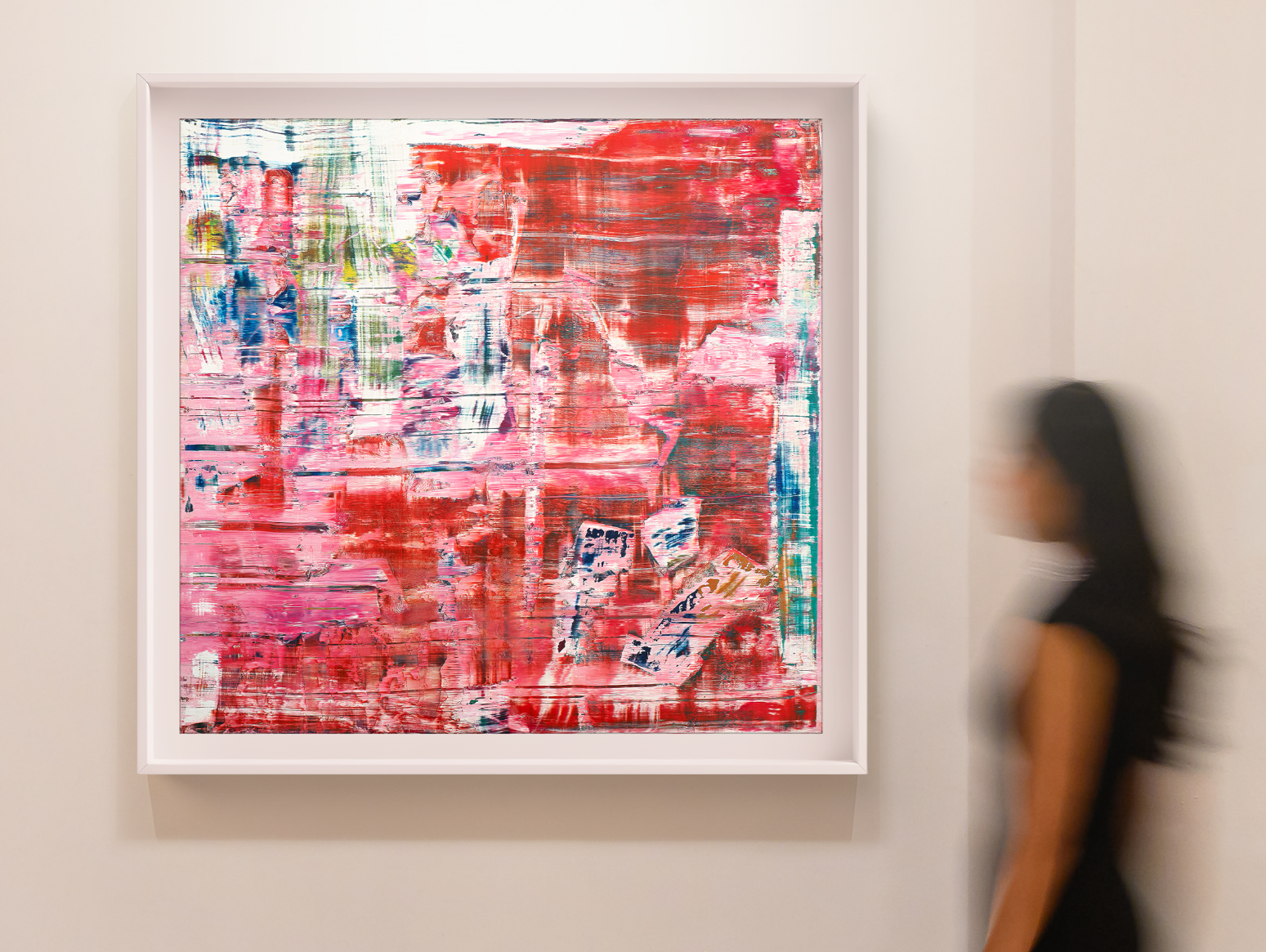
Although frequently discussed as abstractions, Richter’s paintings could be part of a lifelong investigation into the nature of images themselves. Throughout his career, Richter repeatedly challenged the assumption that pictures communicate fixed meanings. Whether working from newspaper photographs, family snapshots, mirrors, landscapes or abstract fields of colour, he remained fascinated by the unstable relationship between reality and representation. His paintings expose the mechanisms through which meaning is constructed, inviting viewers to confront the ways they project memory, experience and expectation onto what they see.
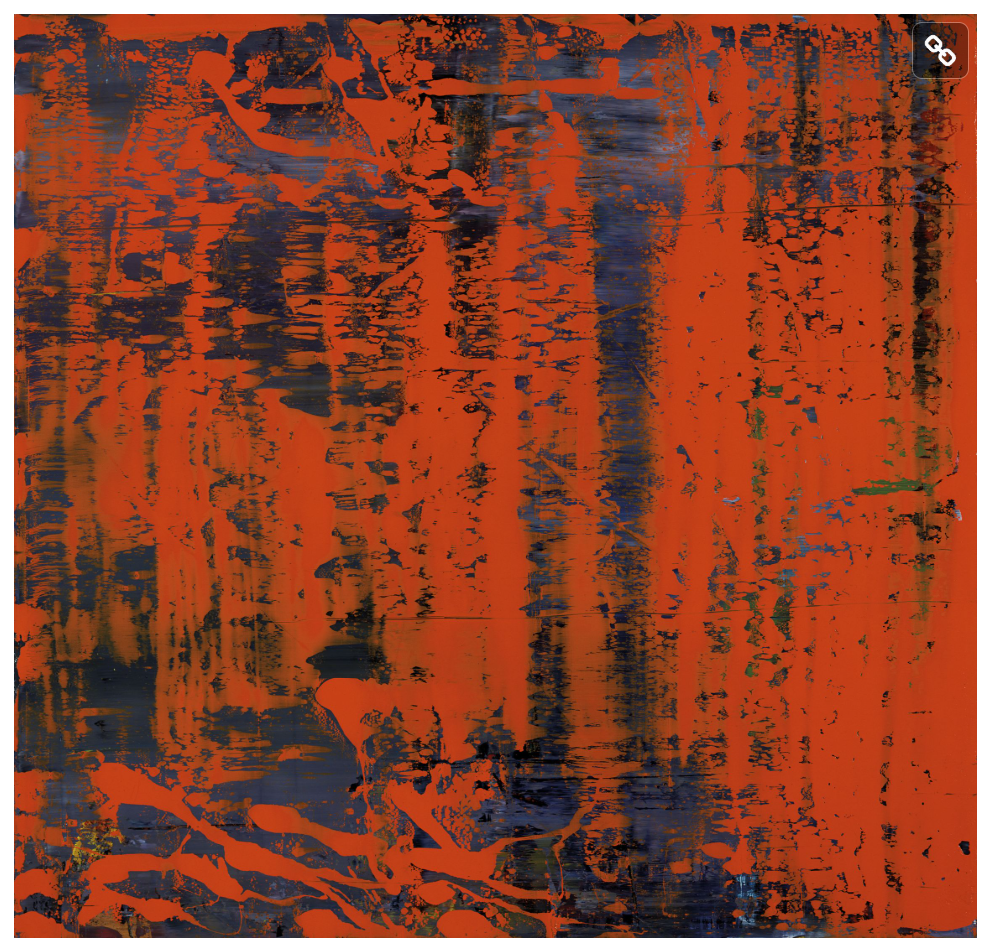
Gerhard Richter, Abstraktes Bild (742-4), 1991, Pérez Art Museum, Miami. © Gerhard Richter 2026 (0171)
This inquiry emerged from the particular historical circumstances that shaped Richter’s generation. Born in Dresden in 1932, he was educated under the strictures of Socialist Realism in East Germany and witnessed the competing ideologies that claimed authority in postwar Europe. Having defected from East Germany to the West in 1961, just before the construction of the Berlin Wall, Gerhard Richter experienced first-hand the total collapse of the ideological, cultural, and moral absolute truths peddled by both the Nazi regime and Soviet-style communism. Within this context, traditional landscape painting no longer functioned as an uncomplicated vehicle for meaning. A landscape possessed no inherent significance; its meanings were created through memory, history and human experience. Richter’s work repeatedly returns to this notion, suggesting that images continually reshaped by those who look at them.

Such thinking underpins Richter’s celebrated photo-paintings, in which recognisable subjects are obscured through his distinctive blur. At first glance these works appear to deny the clarity normally associated with photography. Despite the blurring of edges and details, viewers instinctively reconstruct what is missing, identifying faces, places and landscapes. In his blurred landscapes of the 1980s, Richter demonstrated that images need not be clear to remain meaningful. Even as forms dissolve, viewers continue to perceive places, atmospheres and spatial relationships, instinctively completing what remains uncertain.

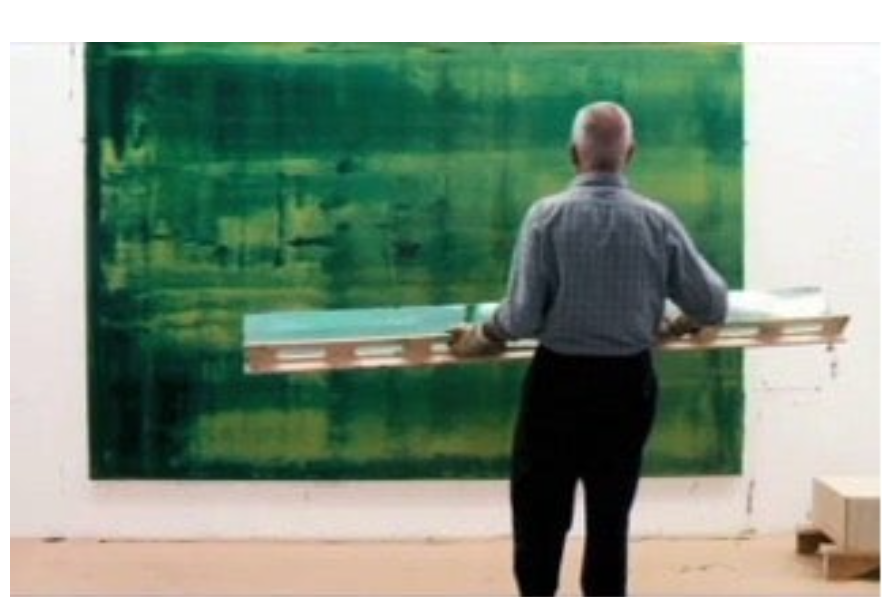
Gerhard Richter in his studio, 1994. Photo: Benjamin Katz. © 2024 Artists Rights Society (ARS), New York / VG Bild-kunst, Bonn.
Artwork: © Gerhard Richter 2026 (14092026)
Richter’s exploration of perception did not end with the blurred photo-paintings. During the late 1980s, Richter had recently devoted himself to a series of red and grey mirrors, objects that dispensed with representation altogether and instead transformed the viewer into the subject of the artwork. In these works, the painted image is replaced by reflection. The artwork changes with every shift in light, viewpoint and spectator, making the viewer an active component of the work itself. Abstraktes Bild extends this investigation. Where the mirrors generate meaning through reflection, the painting does so through ambiguity, encouraging viewers to search for images, landscapes and associations within a surface that resists fixed interpretation.
Executed using the squeegee technique that Richter had developed from the 1980s onward, Abstraktes Bild embodies the tension between control and chance that characterises his mature abstraction. Successive applications of paint are spread, scraped, concealed and revealed, producing a surface that records both creation and destruction. Beneath its dominant red field, traces of blue, yellow, green and white emerge only to disappear again beneath subsequent layers. At different moments, viewers may sense horizons, geological formations or atmospheric effects, despite the absence of any explicit subject matter. The painting demonstrates Richter’s remarkable ability to evoke the experience of landscape without depicting landscape directly.

Claude Monet, Nymphéas en fleur, circa 1914-1917. Christie’s New York, sold for US$84.5 million at Christie’s New York in 2018.
Richter’s red abstractions of 1991 represent a decisive moment in his ongoing investigation of perception and pictorial ambiguity. In Abstraktes Bild, layers of crimson are built up and disrupted through a process of scraping, revealing flashes of colour beneath the surface that suggest depth, atmosphere and fleeting traces of landscape. The painting hovers between emergence and erasure, refusing to settle into a stable image and instead demanding sustained acts of looking. While Claude Monet’s late Water Lilies offer a revealing point of comparison, Richter’s paintings extend this investigation into the nature of seeing itself. Rather than depicting a motif observed in the world, he constructs a space in which appearance remains fluid, shifting constantly between image, memory and sensation. Although separated by nearly a century, both artists challenge the notion of a fixed image, emphasising instead the instability of vision and the act of looking itself. Through layered colour, optical ambiguity and the dissolution of compositional hierarchy, Monet and Richter engage in a cross-generational dialogue.
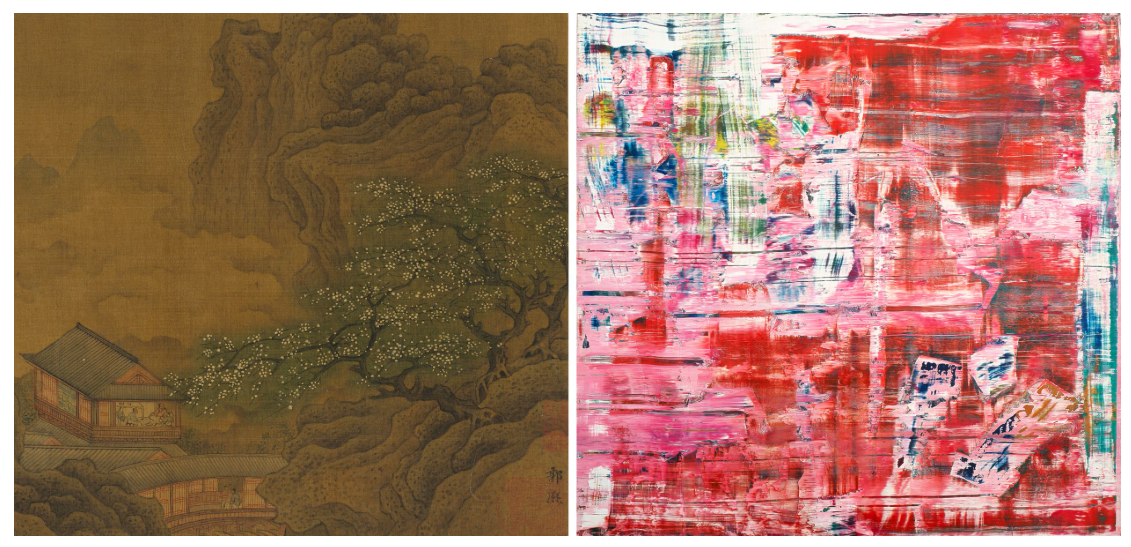
Left: Guo Xi, Landscape, from Album of Paintings by Tang, Song, Yuan and Ming Masters, Palace Museum, Taipei, CC BY 4.0 @ www.npm.gov.tw
Right: Present lot illustrated.
The work also invites intriguing comparisons with older pictorial traditions in which absence and ambiguity play active roles in perception. The method of leaving expansive voids (liubai or leaving space) of Song dynasty landscape painting were never conceived as empty space; rather, they functioned as sites of contemplation, allowing viewers to mentally traverse the image and complete its meaning. Richter’s red abstractions somehow theoretically echoed these traditions in their reliance upon the viewer’s imagination.
Abstraktes Bild brings together some of the artist’s most enduring exploration. The blurred photo-paintings questioned the reliability of images; the mirror works dissolved the distinction between image and reality; and the red abstractions push these inquiries into their purest form. The work embodies Richter’s conviction that meaning does not reside in an image itself, but is projected onto it through memory, experience and perception. At a time when abstraction had been repeatedly challenged by Conceptual and postmodern critiques, Richter reaffirmed painting’s capacity to engage profound questions of perception and meaning.
Abstraktes Bild (522-1), 1983
Phillips Hong-Kong: 30 September 2026
Estimated: HKD 18,000,000 – 25,000,000
Gerhard Richter Modern & Contemporary Art Evening Sale
Oil on canvas
100×70 cm (39-3/8 x 27-1/2 inches)
Signed, numbered and dated ‘522-1 Richter 1983’ on the reverse
At the very center of the canvas, a deep red tears through the surface like uncoagulated lava, its edges dragged into fine horizontal striations by the squeegee, as though exposing the strata of a geological fault line—yet this is not the violence of nature, but a meticulously orchestrated “loss of control.” On either side, lemon yellow and pale pink interweave into luminous fields, while a slash of cobalt blue and viridian intrudes from the lower left, an unexpected guest striking a cold note against the chorus of warmer tones. Several coral strokes slash diagonally across the composition, like impromptu cursive script or fragments of an ancient code, silently awaiting decipherment.
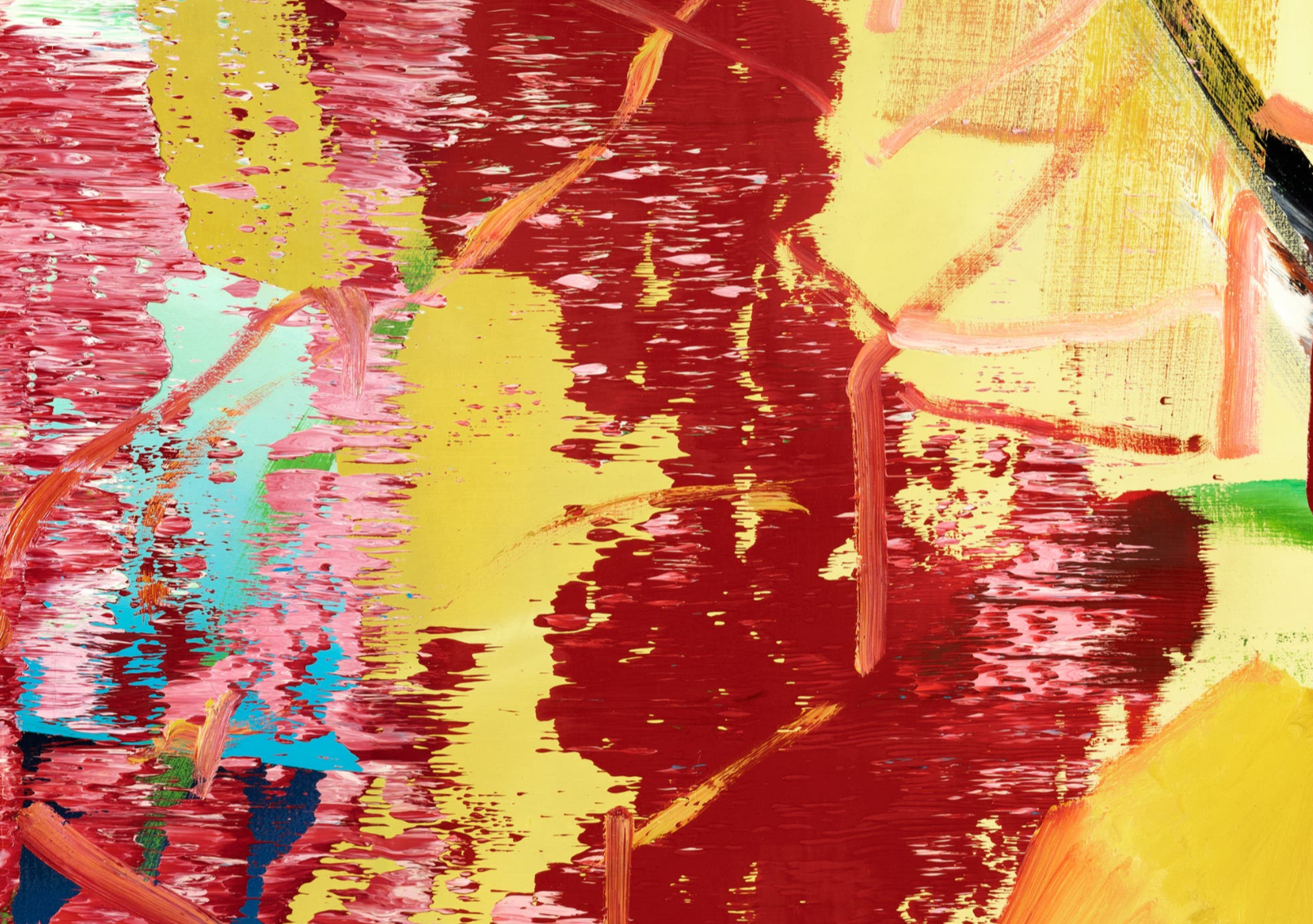
Gerhard Richter’s Abstraktes Bild (522-1) (100 x 70 cm) is not an outpouring of Expressionist passion, but a rigorously calculated visual testimony, documenting the most dangerous and glorious act of defection in his creative journey. As he himself once declared, “Painting is a luxury, but it is even more a necessity.” Across the long twilight of twentieth-century Western painting, Richter assumed a posture of profound paradox, breathing new life into this ancient craft. Photography, installation, abstraction—he moved with equal mastery across multiple media, emerging as both the most devout believer in art and its most severe judge: surfacing from the muted grays of photographic images only to proclaim the rebirth of painting in a riot of color. Created in 1983, Abstraktes Bild (522-1) strikes like a sudden bolt of lightning, illuminating the most critical watershed in this German master’s oeuvre: the passage from the cold gaze of his early “photo-paintings” to the fiery liberation of abstract expression.
In Abstraktes Bild (522-1), one can clearly distinguish at least three distinct visual registers. The foundation consists of broad bands of color generated by the squeegee, extending in parallel with the cool regularity of industrial production. The middle layer comprises thicker accumulations of pigment, where the boundaries between red and yellow create subtle transitions and confrontations. The uppermost layer is formed by slender, hand-drawn lines that traverse the surface with an almost provocative gesture, disrupting the horizontal rhythm of the underlying bands. This Schichtung (stratification) is not merely a physical accumulation of pigment; it is an archaeological response to the history of painting itself—from the transparent glazes of the Renaissance, through the optical decomposition of Impressionism, to the action painting of Abstract Expressionism—all traditions have left their ghostly traces on this canvas.
Jean-Michel Basquiat
Ancient Scientist, 1984
PROPERTY FROM AN IMPORTANT FAMILY COLLECTION
Christie’s Hong-Kong: 29 September 2026
Estimated: HKD 56,000,000 – 76,000,000
JEAN-MICHEL BASQUIAT (1960-1988), Ancient Scientist | Christie’s
REPEAT SALE
Phillips Hong-Kong: 3 December 2020
Estimated: HKD 50,000,000 – 70,000,000
HKD 58,330,000 / USD 7,525,230
Jean-Michel Basquiat – 20th Century … Lot 7 December 2020 | Phillips
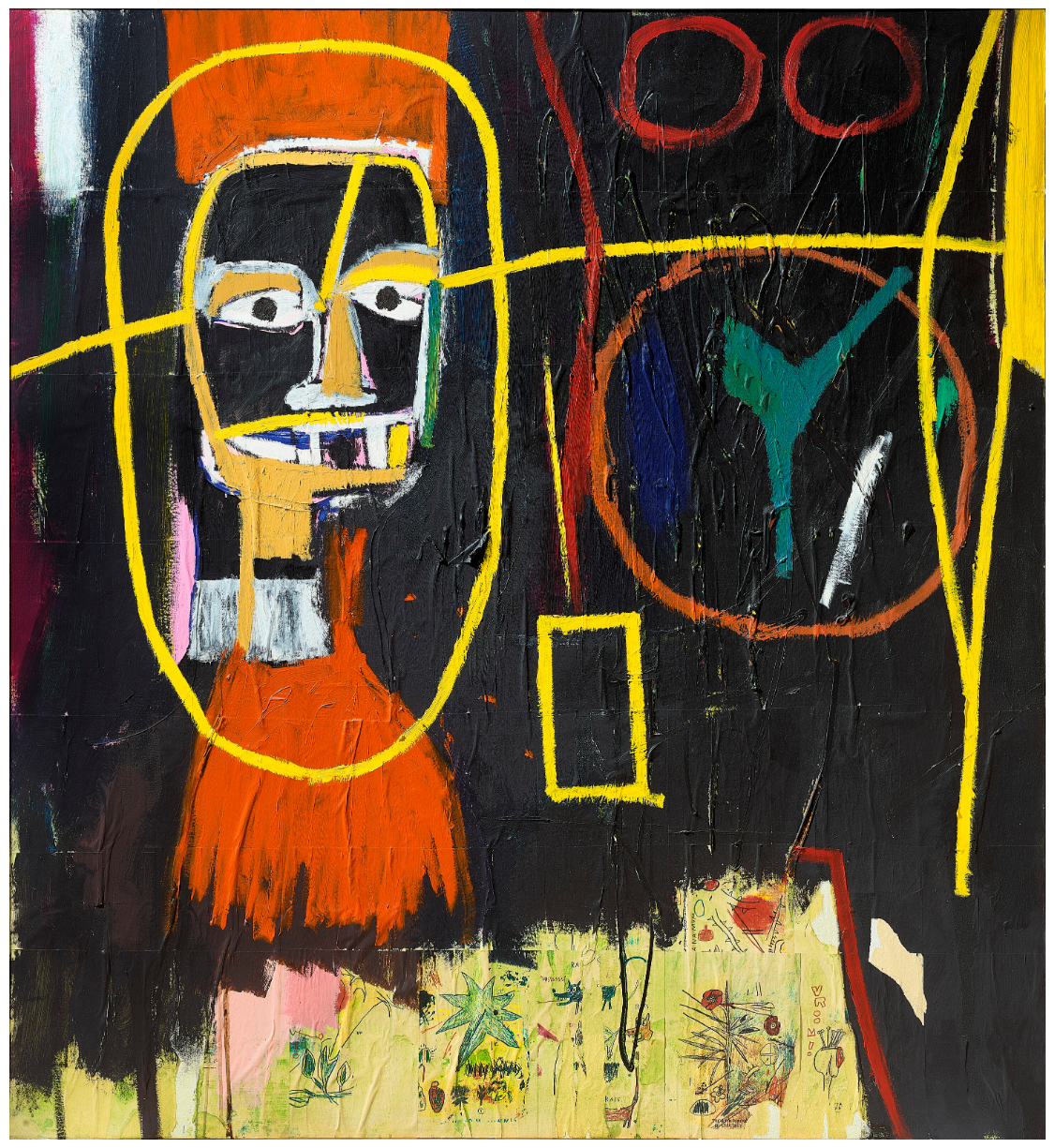
JEAN-MICHEL BASQUIAT (1960-1988)
Ancient Scientist, 1984
Acrylic, oilstick and Xerox paper collage on canvas
66-1/2 x 61-3/8 inches (169×156 cm)
Signed with artist’s initials, titled and dated ‘JMB “ANCIENT SCIENTIST” 1984’ (on the reverse)
Jean-Michel Basquiat possessed one of the most extraordinarily capricious minds of any artist of his generation. Shaped by the cultural scene of downtown New York in the 1970s and 1980s (including jazz, early punk, street art, performance, and slam poetry), he nonetheless cast his net further afield in search of subjects and ideas for his paintings. These other interests included anatomy, astronomy, botany, history, exploration, colonialism, literature, music, poetry, art, and sport. Much like his hero Leonardo da Vinci, Basquiat used his canvases and drawings as a way of challenging and refining his ideas, and to determine his place as a Black man in a predominantly white world. These ideas play out in real time on the surface of his art; Ancient Scientist is one such painting.
This richly layered painting reveals itself slowly, as a considered examination of Basquiat’s various symbols, themes, motifs, and graphic devices begins to tell the story of a voracious, yet complex, artist. Like the archeological digs that fascinated him as a child, the layers of Basquiat’s painting can be ‘excavated’ to reveal many of the sources and subjects that influenced his short but prolific career. Oblique references to botany, travel, exploration, Basquiat’s own African heritage, art history, ancient ethnography, and contemporary culture can viewed through a highly sophisticated visual vocabulary and an extraordinary range of mark-making techniques.
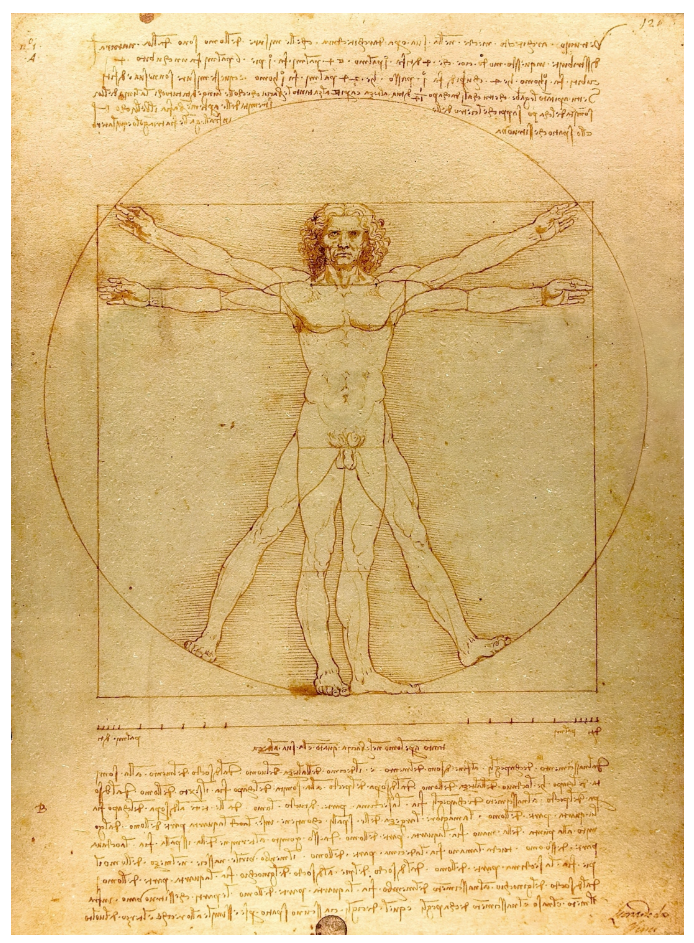
Leonardo da Vinci, Vitruvian Man, c. 1490, Gallerie dell’Accademia, Venice.
Ancient Scientist is dominated by a large field of dark black paint. On it Basquiat lays out a complex array of signs, symbols, and one of his iconic ‘heads’ in a cryptic network of cyphers. Commanding the composition, an impressive and imposing head gazes out of the picture plane. Constructed in Basquiat’s trademark style, the artist eschews traditional academic techniques in favor of raw and elemental applications of pigment and oilstick. Penetrating eyes are framed by prominent eyebrows, a broad nose is ‘carved’ out of yellow, white, and pink pigment, and a wide grin is constructed out of a progression of large teeth. The figure is further adorned by some dominant red headwear and a matching red tunic. This could be an art historical reference to Piero della Francesca’s famous fifteenth century portrait of the Duke of Urbino, a painting which the artist may have seen during his visits to Italy in the early 1980s. Depicting a black face in the manner of such an iconic Renaissance portrait may have been Basquiat’s way of inserting himself into an art historical narrative from which he otherwise felt excluded.

Left: Present lot illustrated (detail)
Right: Piero della Francesca, Diptych of Federico da Montefeltro and Battista Sforza (Left Panel), circa 1473-1475. Uffizi Gallery, Florence.
To the right of the head is another figure which suggests art historical references. Three circles are enclosed within the curved silhouette of a female body, a subject that has served as a central motif in art since the earliest civilizations. From the prehistoric Venus of Willendorf (circa 30,000 BCE, Naturhistorisches Museum, Vienna) to Botticelli’s The Birth of Venus (circa 1484-1486, Galleria degli Uffizi, Florence), the fecund female figure has been staple of art history.
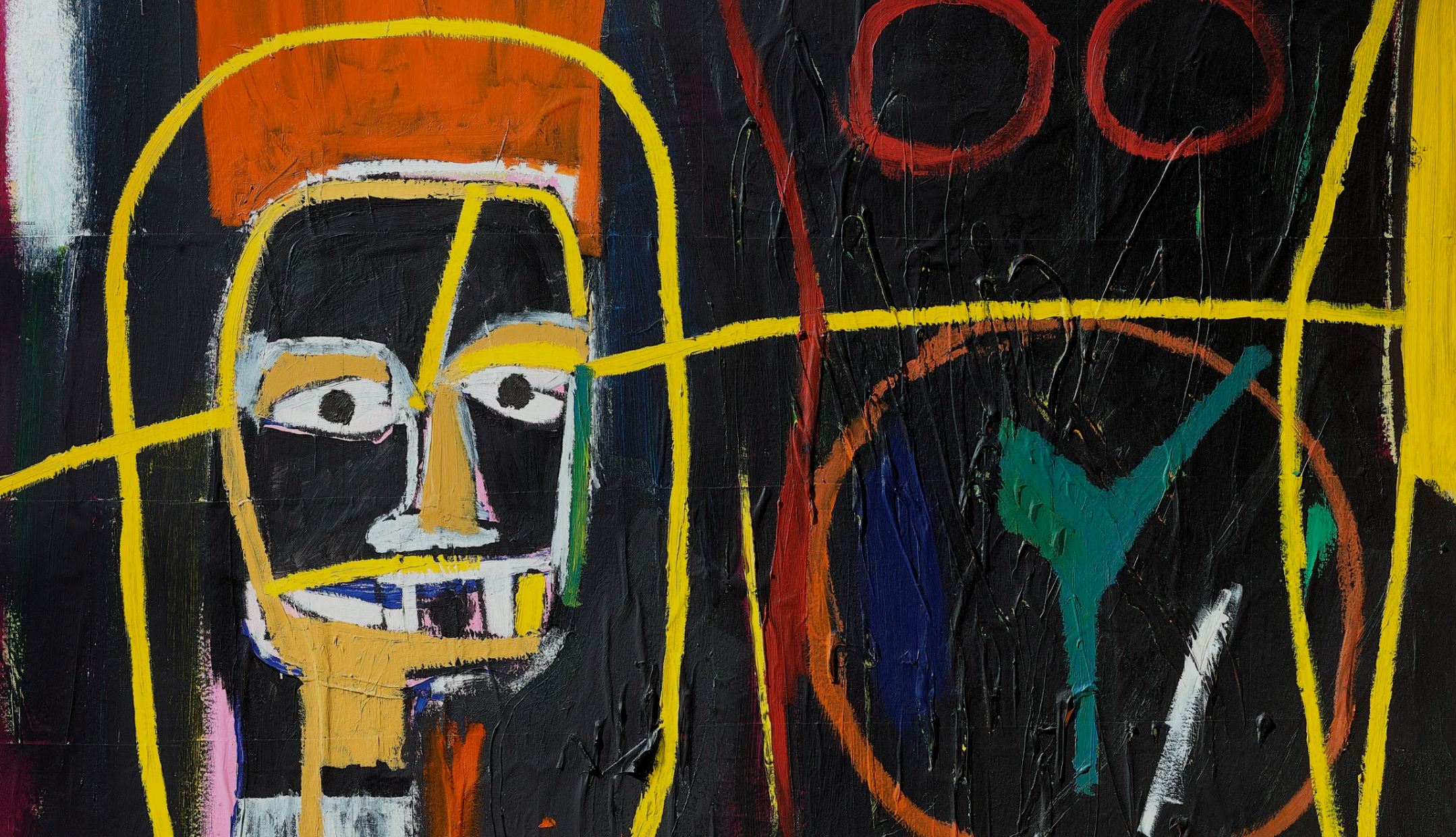
The nature of the black surface suggests that underneath lies collaged layers of paper applied directly to the surface of the canvas. This is borne out by the emergence along the lower edge of the painting of a series of collaged xeroxed drawings by the artist. This established technique can be found in many of the artist’s most celebrated paintings from this period including Glenn (1985) and Pink Devil (1984, The Broad, Los Angeles). The xeroxed sheets feature a series of botanical drawings, some depicting flowers and plants native to Hawaii and others indigenous to the regions of eastern and southern Africa. The ‘spikey’ plant with the red flower that occurs on the right of the drawings has been identified as red oleander (Nerium oleander), a plant which although beautiful is poisonous to both people and animals. Likewise on the opposite side of this passage of drawings, and partly obscured by pink paint, is a rendering of Solanum Sodomeum, the Devil’s Apple, a poisonous plant from the Nightshade family. Basquiat’s interest in the flora of Hawaii might have been sparked by a trip he made there in February 1984.
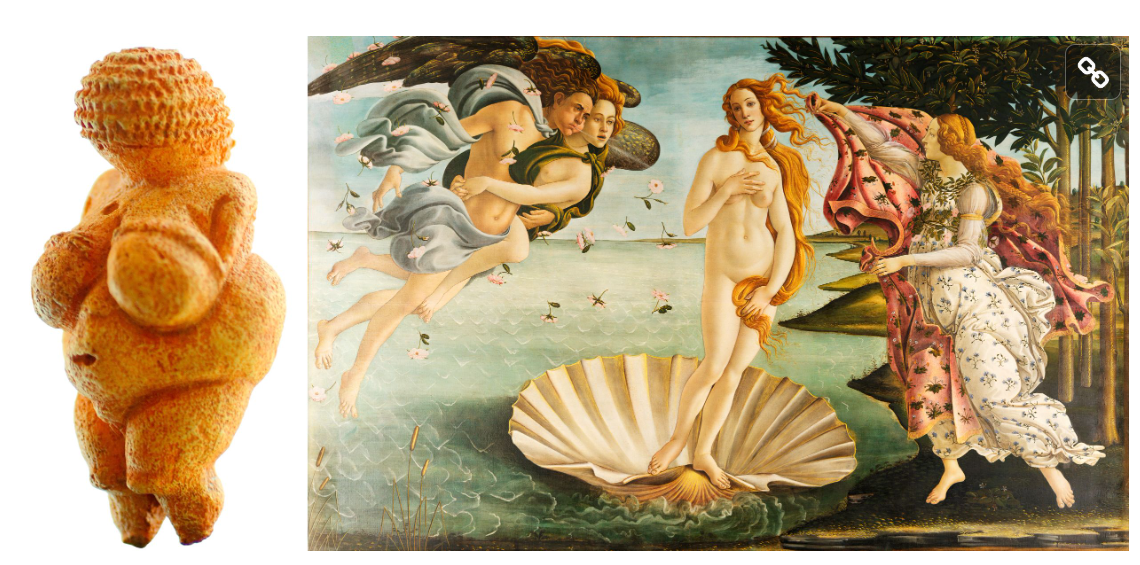
Left: Venus of Willendorf, c. 30,000 BCE, Naturhistorisches Museum, Vienna. Photo by Matthias Kabel under CC BY-SA 3.0
Right: Sandro Botticelli, The Birth of Venus, c. 1484-1486, Uffizi Gallery, Florence.
1984, the year Ancient Scientist was painted, was a year which saw Basquiat traverse the globe to escape what had become a high-pressure environment in New York; having become one of the most in-demand artist in the city, the attention often overwhelmed him. First in Los Angeles, and later in Hawaii, Basquiat would secrete himself away from the pressure of dealers, critics, patrons, and the assorted ‘hangers-on’ that wanted to be in circle. His girlfriend at the time, Paige Powell, remembered that Hawaii became a particularly special place for the artist, seduced by the colors, the fragrant air, and the fresh fruit—all depicted in the drawings of the present work.
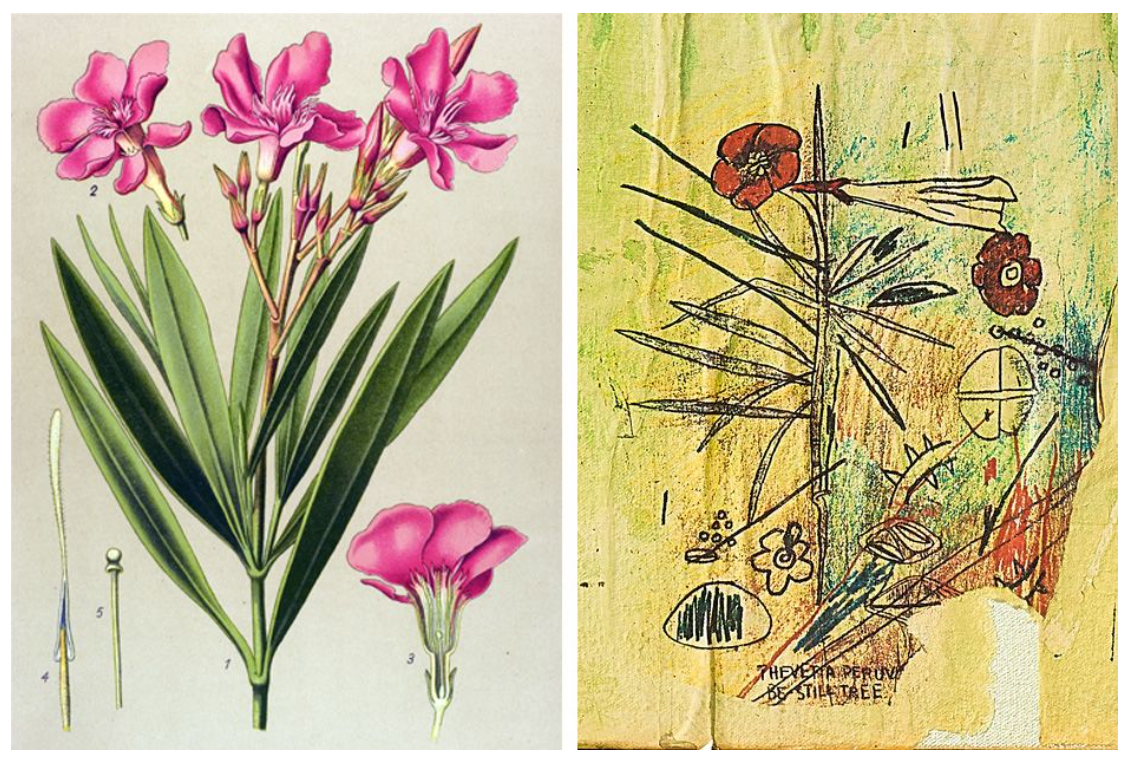
Left: Illustration of Red Nerium Oleander © Imagebroker / Bridgeman Images
Right: Present lot illustrated (detail)
Basquiat’s lifelong interest in science began at an early age. In September 1968, at the age of eight, the artist was hit by a car while playing in the street in Brooklyn and spent a prolonged period in hospital being treated for a broken arm and series of internal injuries. During his month-long stay, his mother gave him a copy of Gray’s Anatomy which he studied avidly. The artist’s subsequent fragmented and diagrammatic representations of the human body clearly have their roots in this influential medical text and demonstrate his ability to transform personal experiences into enduring artistic inspiration.
During the course of his career, Basquiat produced a number of paintings that directly referenced this interest in science and the wider world around him. In addition to the present work, he painted Future Sciences Versus the Man (1982), with its references to ancient Egypt, the chemical element radium, and aeronautics, as well as Leonardo da Vinci’s Greatest Hits, and its direct references to anatomy. In 1983 he painted what is probably his most searing commentary in the political nature of science and progress. In Untitled (Charles Darwin), Basquiat juxtaposes the legacy of evolutionary science with broader themes of marginality, connecting the work of Darwin with that of Thomas Huxley (an English biologist and leading advocate of Darwin’s theory of evolution), and Gregor Mendel (the founder of the modern science of genetics) to the subsequent commodification of Blackness and the manipulation of scientific discourse for socio-political ends. This interplay between science and art highlights how Basquiat critiques both racial and intellectual histories, revealing their entanglement in narratives of oppression and commodification.
Gray’s Anatomy book cover
Ancient Scientist stands as a compelling testament to Basquiat’s remarkable ability to collapse disparate histories, cultures, and systems of knowledge into a single pictorial field. Here, science, botany, ethnography, art history, and personal identity converge in a work that reveals the extraordinary breadth of the artist’s intellectual curiosity and the sophistication of his visual language. Rather than presenting knowledge as fixed or authoritative, Basquiat transforms it into a dynamic process of inquiry, layering imagery and meaning in ways that invite continual discovery. The painting’s commanding central figure, enigmatic symbols, and evocative references to the natural and scientific worlds exemplify the artist’s lifelong project of reclaiming, revising, and expanding historical narratives from which Black voices had too often been excluded. Ancient Scientist encapsulates the restless brilliance, cultural awareness, and profound originality that secured Basquiat’s place among the most important artists of the twentieth century.
Yayoi Kusama
PUMPKIN (TWPOT), 2010
Sotheby’s Hong-Kong: 28 September 2026
Estimated: HKD 48,000,000 – 68,000,000
Yayoi Kusama 草間彌生 | Pumpkin (TWPOT) 南瓜(TWPOT) | Modern & Contemporary
REPEAT SALE
Sotheby’s Hong-Kong: 1 April 2019
Estimated: HKD 12,000,000 – 22,000,000
HKD 54,460,000
(#1138) KUSAMA YAYOI | Pumpkin (TWPOT) (sothebys.com)
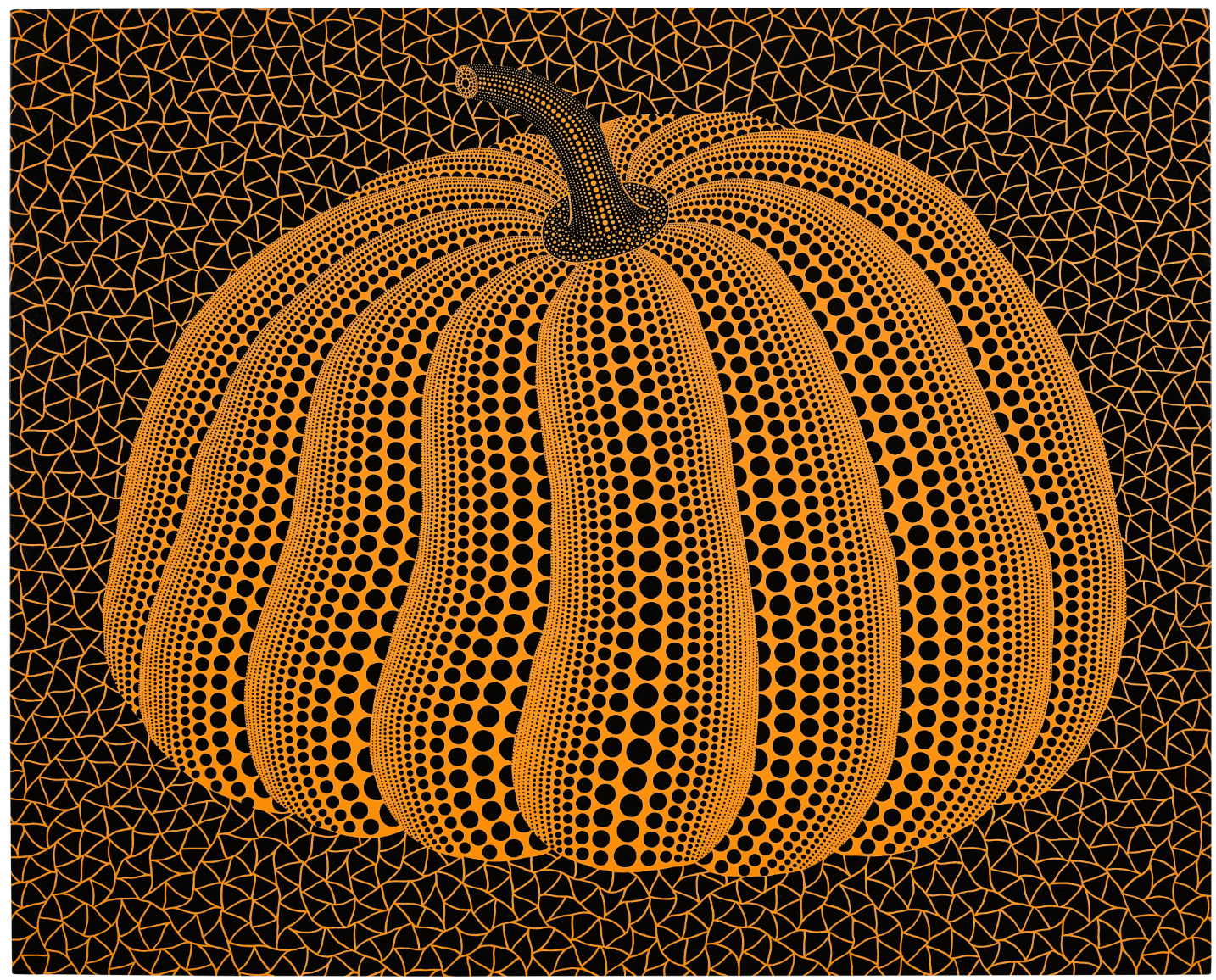
YAYOI KUSAMA (1929 – 2026)
PUMPKIN (TWPOT), 2010
Acrylic on canvas
130 x 162.5 cm (51-1/8 x 64 inches)
Signed, titled and dated 2010 (on the reverse)
Plump, feisty and bursting with an electrically psychedelic energy, Pumpkin (TWPOT) evinces a rare and seldom-seen shade of golden-orange that distinguishes it within the artist’s iconic pumpkin motif, adding chromatic scarcity to its market appeal. Belonging to Kusama’s most coveted large-format pumpkin paintings—where canvases at or above 130 × 130 cm consistently achieve her highest auction prices—the present work achieved the top record price for a Kusama pumpkin painting when it was last sold at auction in 2019 at HK$54.5 million (US$6.9 million), a testament to its exceptional quality. Executed in 2010, a year prior to Kusama’s revered international retrospectives at Tate Modern and Museo Reina Sofía in 2011–2012, the present work witnessed several key milestones, including her participation in the inaugural Aichi Triennale in Nagoya, the acquisition of her historic landmark installation Infinity Mirror Room – Phalli’s Field by the prominent Museum Boijmans Van Beuningen in Rotterdam, and the artist’s embarkment on her monumental ongoing series My Eternal Soul, which would later anchor her major late-career global retrospectives. In 2026, the blockbuster artist’s passing is marked while she remains the subject of an ongoing landmark retrospective, touring Fondation Beyeler (Riehen/Basel) in Switzerland, Museum Ludwig in Cologne, and concluding at the Stedelijk Museum in Amsterdam (October 2025–January 2027).
Manifesting as an unequivocally consummate and technically impeccable archetype of Kusama’s oeuvre—a testament to almost nine decades of astonishing dedication to art and creation—Pumpkin (TWPOT) stands as an emblem of the artist’s epochal, multi-faceted practice. Arguably the most important female artist in history, responsible for revolutionising Abstraction, Expressionism, Emotionalism, Pop Art and Minimalism, Yayoi Kusama’s phenomenal oeuvre transgresses paradigms in all fields and media. Since her early days of explosive stardom creating cutting-edge avant-garde art in parallel with key figures in the male-dominated global art scene such as Andy Warhol, George Segal, Donald Judd and Claes Oldenburg, Kusama’s ground-breaking innovation never diminished; now in her late-eighties, the octogenarian shows no signs of slowing down. Fuelled by an irrepressible drive and a singularly extraordinary vision, Kusama works tirelessly and compulsively, producing captivating and intricate works each more beautiful and mesmerising than the last.
“Artists do not usually express their own psychological complexes directly, but I use my complexes and fears as subjects… I make them and make them and then keep on making them, until I bury myself in the process. I call this ‘obliteration’.”
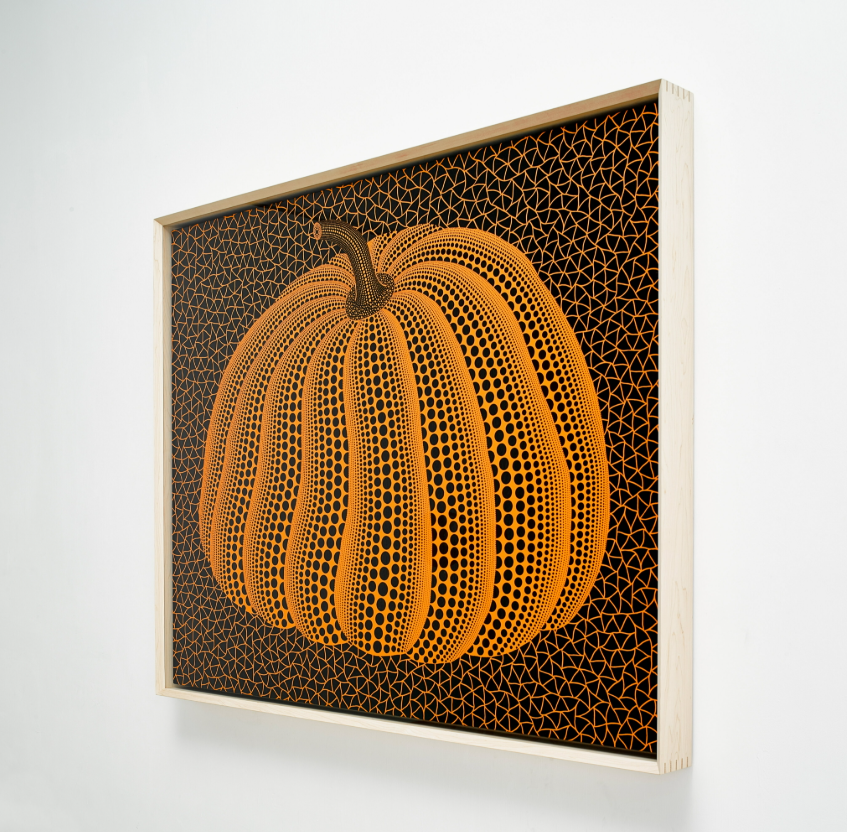
Embodying an iconic, charismatic and highly personal motif, Kusama’s pumpkins are as universally emblematic of her oeuvre as the Campbell’s soup can was to Andy Warhol’s. Rendered in a shade of golden-orange, Kusama deliberately painted Pumpkin (TWPOT) in the gourd’s essential colour with a direct semblance to a sweet, tender and luscious kabocha. The work is covered in precisely painted polka dots and set against a wall of tessellated nets – all of which are wholly iconic and era-defining features of the artist’s style. Developed to mature perfection through decades of near-obsessive production and reproduction, each of these distinct elements of the piece reflect a different segment within Kusama’s expansive aesthetic philosophy whilst coming together to create a dazzlingly hypnotic visual narrative – one that evokes strong associations with the formal reduction of Minimalism, the repetitive symbolism of Pop and the hypnotic illusions of Op Art. Surreal and fantastical, Kusama’s pumpkin paintings exhibit extraordinary dexterity in skill and execution as well as the single-minded meticulous vision that defines the artist’s career – all the while being deeply personal and indexical, representing a wholly epic extension of Kusama’s legacy in contemporary art and culture.
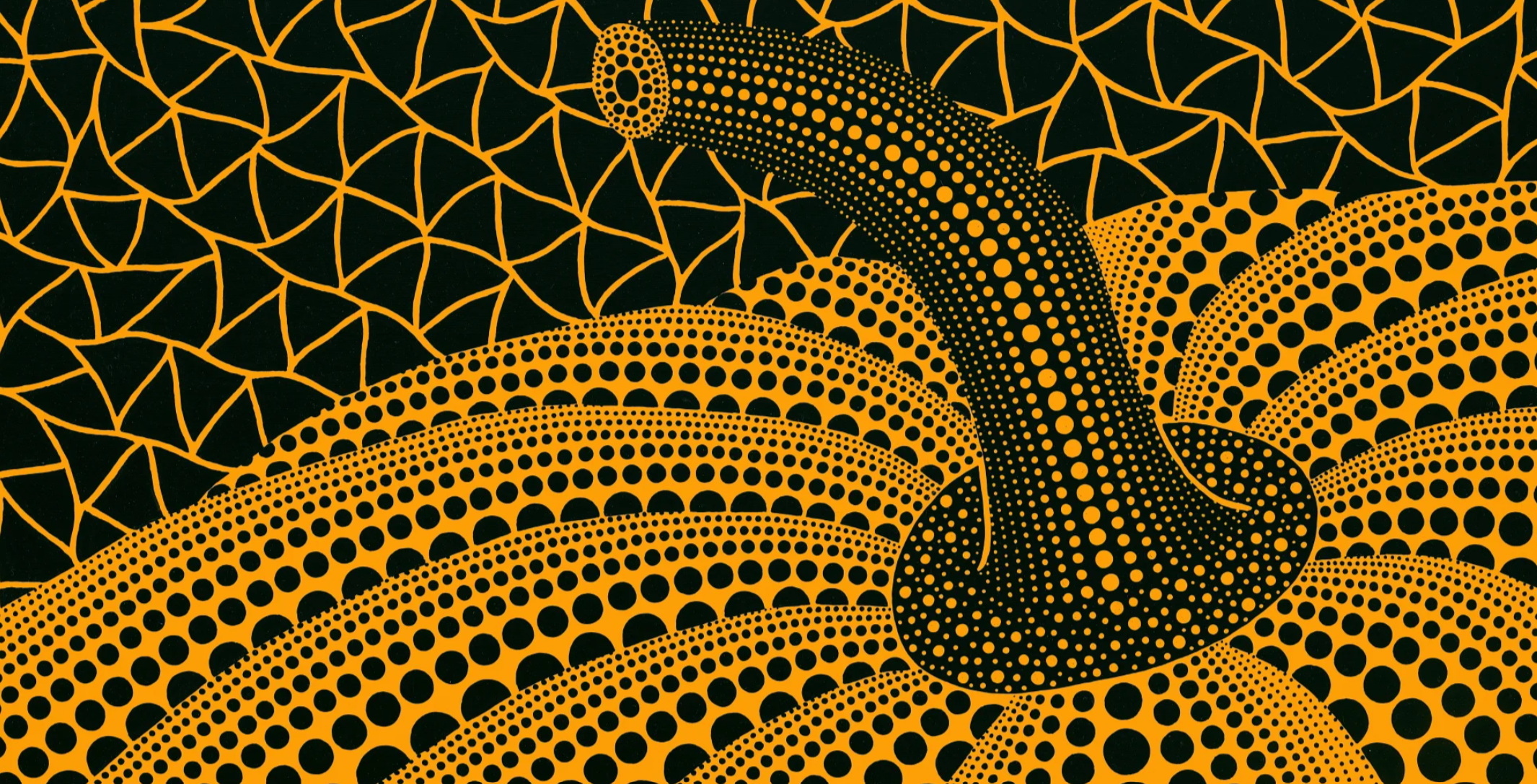
The incipient appearance of Kusama’s mature pumpkins occurred in the 1980s and 1990s – a period in which Kusama returned to works with richer narrative content as opposed to the stark austere aesthetic of her 1960s infinity nets. However, the initial manifestation of the motif itself (not yet rendered in its present polka-dotted form) can be traced back to the artist’s Nihonga practice at the Kyoto Municipal School of Arts and Crafts in the late 1940s. The pumpkin is deeply central to the artist’s core psyche, stemming from a vivid hallucination from her childhood. “The first time I ever saw a pumpkin was when I was in elementary school and went with my grandfather to visit a big seed-harvesting ground…and there it was: a pumpkin the size of a man’s head… It immediately began speaking to me in a most animated manner” (Infinity Net, Yayoi Kusama, trans. Ralph McCarthy, Tate Publishing, London, UK, 2011, p. 75). The anthropomorphised pumpkin can here be seen as indexical to Kusama’s other encounters with animated plants and objects, such as her memory of speaking to a talking flower and dog in her childhood. However, unlike the traumatic feelings that the artist associates with the flower and dog, the talking pumpkin exuded a “generous unpretentiousness” (Infinity Net, Yayoi Kusama, trans. Ralph McCarthy, Tate Publishing, London, UK, 2011, p. 76), emitting a “solid spiritual balance” (Ibid.).
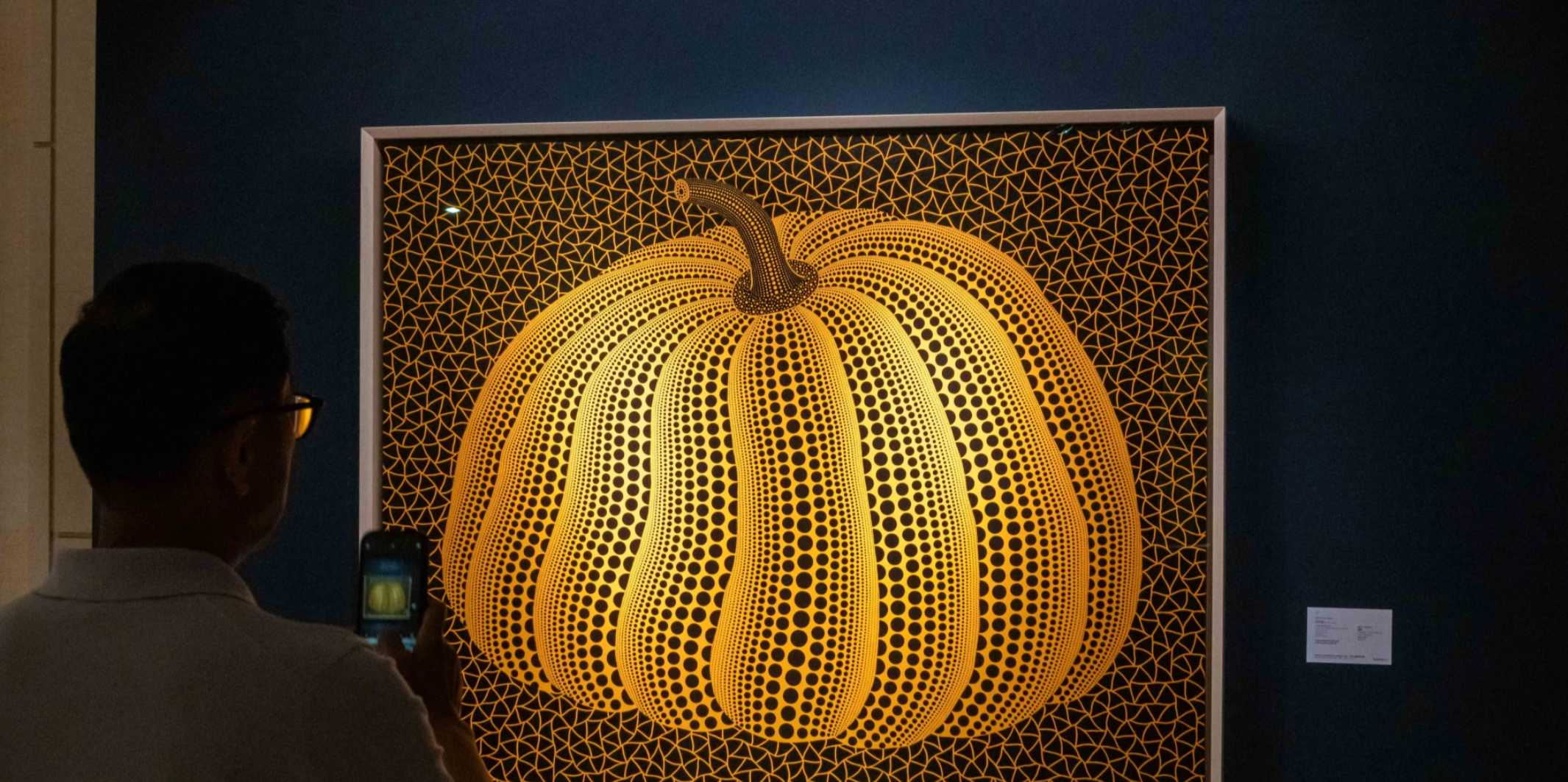
Functioning as both an allegory and a form of self-portraiture, Kusama’s pumpkin as an uncanny yet benign and nurturing subject exudes peace, serenity, life and vigour. Traditionally a symbol of fertility, the pumpkin also gives one a feeling of abundance, joy, triumph and reward – not unlike the feelings one would experience when reaping one’s harvest after an arduous season of work. In 1993, after almost two decades of a retreated presence from the international art world, Kusama was invited to be the first solo artist and first woman ever to grace the Japanese pavilion at the 45th Venice Biennale. For this momentous occasion she constructed Mirror Room (Pumpkin), consuming a section of the pavilion in an immersive floor-to-ceiling extravaganza of black-on-yellow polka dots. At its centre was a dazzling mirrored room filled with pumpkin sculptures, echoing her seminal 1966 Infinity Mirror Room—Love Forever installation whilst grandly introducing the theme of the pumpkin. The pumpkin thus stands as a symbol of triumph for the artist’s international resurgence and rise to global eminence.

Repetitive net patterns are also a central representative element of Kusama’s visual lexicon. Starting with the New York period Infinity Nets, Kusama’s nets have become synonymous with “obsession” – a word that populates many of her interviews, book covers, as well as art reviews. To the artist, this “obsession” with reproduction at the most minute level was and is much more than meets the eye. Looking back on her nets, Kusama remarked that hers was a “method opposite to the emotional space of Abstract Expressionism (which prevailed in New York)” (Yayoi Kusama, “A Lone Woman Takes on the International Art World”, Yayoi Kusama Exhibition, Kitakyushu Municipal Museum of Art, Kitakyushu, Japan, 1987, p. 117). Indeed, working against conventions and forging her own unique path, Kusama’s method was one that was primarily born of her mental illness – her way of combatting fears through obliteration.

The process of repetition is also a method through which Kusama attains technical and formal perfection. The present Pumpkin (TWPOT) embodies the artist’s unequivocally consummate and impeccable technical execution – a dazzling image of flawless and meticulous exactitude. “Forget yourself,” proclaimed Kusama, the “High Priestess of Polka Dots”, on a 1968 flyer for one of her art shows. “Self-Destruction is the only way out – but, after self-destruction comes Resurrection, a new life of oneness, peace and happiness with the other beings of the Universe” (Kusama’s Body Festival in 60’s, Access Co., Ltd., p. 148). This mantra of “self-obliterating”, of blurring the lines between where one being ends and the next one begins, has been tremendously representative of Kusama’s oeuvre. Pumpkin (TWPOT) no doubt exhibits this feature: it is hard to tell where the polka dots end and the psychedelic nets begin; it is as if they are one and the same, blending seamlessly into one another, creating an enthralling piece of oneness and cohesion within Kusama’s Universe.
Infinity-Nets (LHLUJ), 2017
Sotheby’s Hong-Kong: 28 September 2026
Estimated: HKD 8,000,000 – 12,000,000
Yayoi Kusama 草間彌生 | Infinity-Nets (LHLUJ) 無限網(LHLUJ) | Modern &

YAYOI KUSAMA (1929 – 2026)
Infinity-Nets (LHLUJ), 2017
Acrylic on canvas
130.5 x 130.3 cm (51-1/2 x 51-1/4 inches)
Signed, titled and dated 2017 (on the reverse)
Fresh to auction, Infinity-Nets (LHLUJ) (2017) represents a superb iteration of Yayoi Kusama’s most iconic and historically significant body of work. Created in 2017—a watershed year marked by major global retrospectives and the opening of the Yayoi Kusama Museum in Tokyo—the canvas synthesizes the monochromatic purity of her early 1960s white nets with a modern, electric blue underlayer. Evoking the white-capped waves of the Pacific Ocean that first inspired her vision during her transatlantic flight to America, the work bridges her personal history with her contemporary mastery. Featuring a distinguished museum exhibition history from Life is the Heart of a Rainbow at Museum MACAN, the painting epitomizes the artist’s meditative, obsessive practice on an optimal domestic scale. Rooted in both psychological necessity and groundbreaking post-minimalist art history, the white Infinity Nets category remains her most highly coveted, accounting for two of her top five auction records.
“A white net of nothingness composed of an astronomical aggregation of connected dots will obliterate me and others, and the whole of the universe.”
Executed in 2017, Infinity-Nets (LHLUJ) emerged during one of the most triumphant moments of Kusama’s career. The year was defined by extensive international institutional recognition, featuring major touring exhibitions across North America and London, participation in the inaugural Honolulu Biennial, and the long-awaited opening of the Yayoi Kusama Museum in Shinjuku, Tokyo. Adding to its institutional weight, the present work was featured in Yayoi Kusama: Life is the Heart of a Rainbow, the artist’s first major survey exhibition in Southeast Asia. Installed at Museum MACAN in Jakarta within a gallery dedicated specifically to her net paintings, the work stood as a primary testament to her hypnotic accumulation of form.
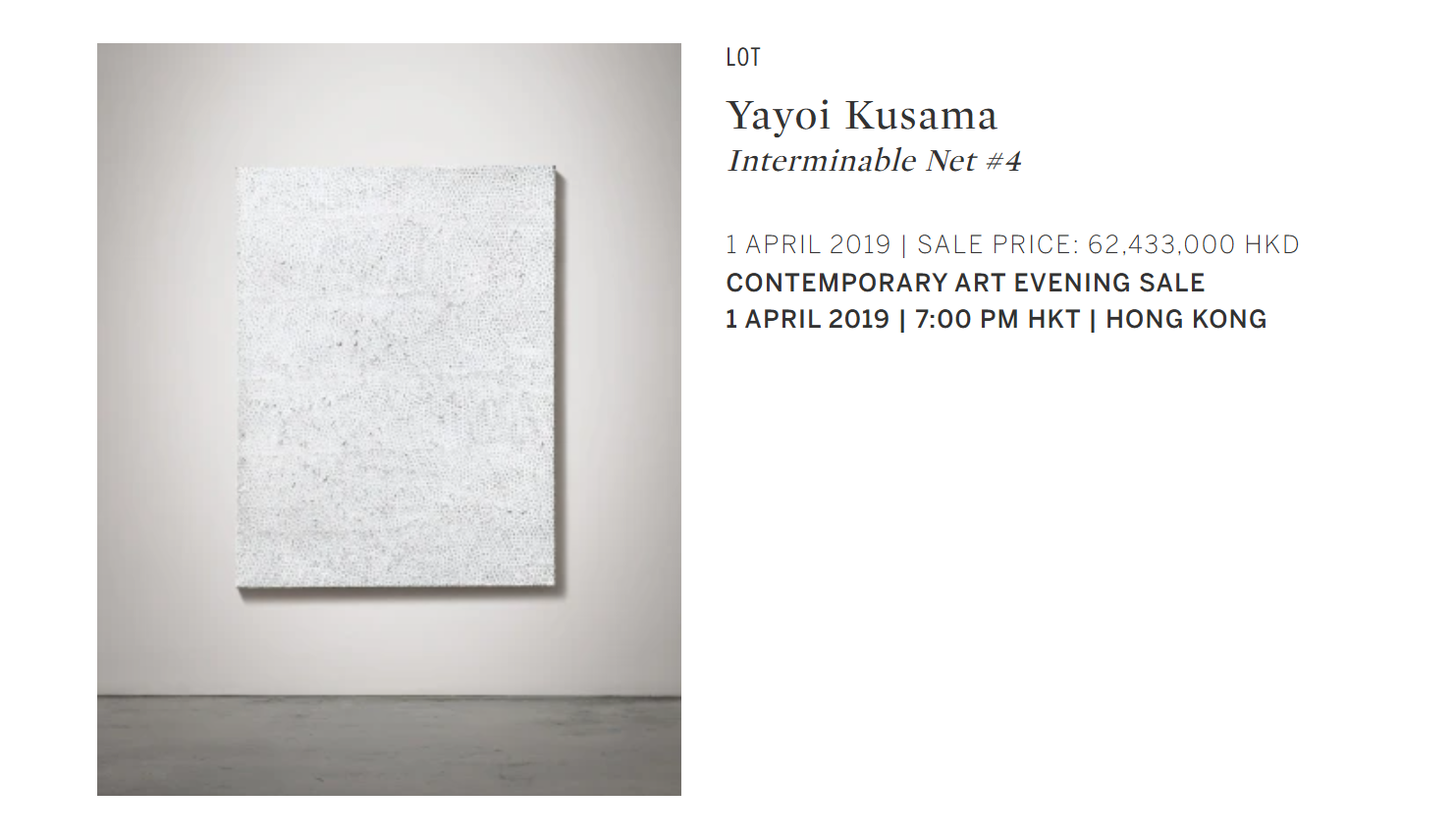
Visually, Infinity-Nets (LHLUJ) bridges Kusama’s historic origins with her contemporary mastery. The painting’s classic white palette directly evokes her earliest white Infinity Nets painted upon her arrival in New York in the late 1950s and early 1960s. However, rather than painting white upon a dark or neutral ground, Kusama here superimposes pristine white impasto over a vibrant electric blue base. The underlying cobalt hue radiates through the delicate loops of paint, creating a pulsating, optical depth that gives the illusion of a living, breathing expanse.
Executed on an ideal, domestic scale, the work strikes a balance between impressive visual presence and architectural adaptability. Its intimate proportions draw the viewer into a close, meditative encounter, emphasizing the rhythmic, handcrafted nature of each brushstroke.
This shimmering interaction of white mesh over vivid blue bears a profound connection to the origin of the series itself. As Kusama flew from Japan to the United States in 1957 to establish herself in the American art world, she looked out of her airplane window and was entranced by the endless, white-capped waves stretching across the Pacific Ocean. Here, the white lattice superimposed on blue vividly recalls that vast expanse of sky and sea, capturing the very epiphany that launched her artistic journey. Executed on an ideal domestic scale, the work strikes a balance between impressive visual presence and architectural adaptability, drawing the viewer into an intimate, ocean-like contemplation.

The genesis of the Infinity Nets lies at the intersection of avant-garde innovation and personal catharsis. Emerging in New York during the late 1950s, Kusama established a radical voice as an Asian female artist navigating a dominant male hierarchy of European-American painters. Art historically, her monochromatic net paintings carved a unique position: bridging the raw, gestural energy of Abstract Expressionism with the disciplined, repetitive restraint of Minimalism.
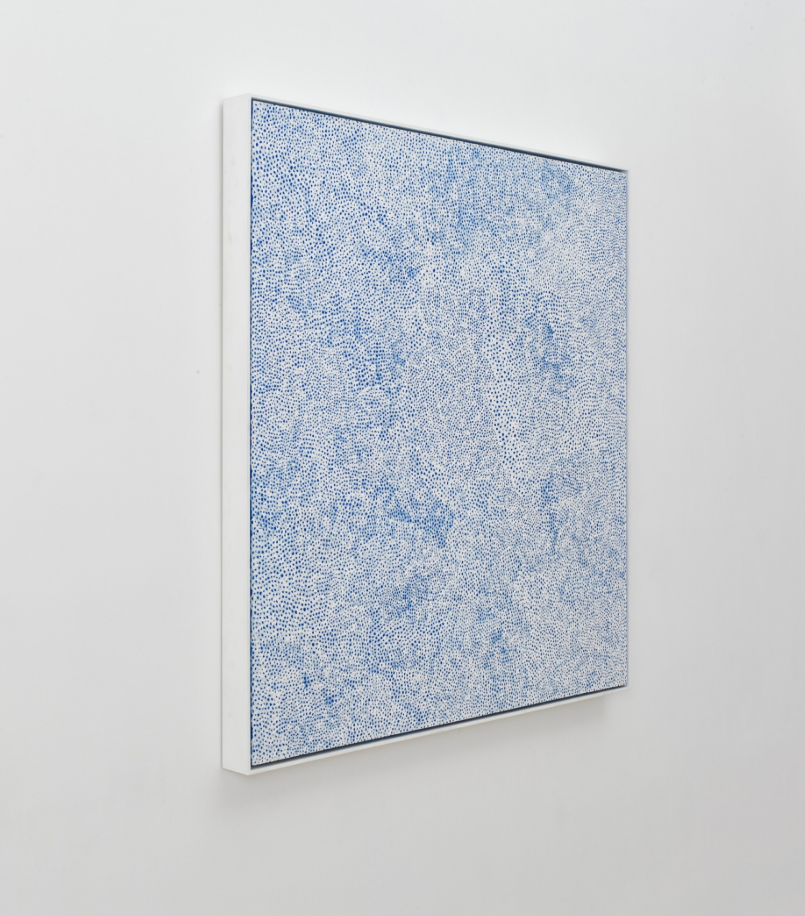
Yet for Kusama, the nets were fundamentally a psychological imperative. Suffering from auditory and visual hallucinations since childhood—in which patterns expanded to consume her surroundings—she transformed her psychological trauma into art. By repeating tiny, crescent-like arcs across the canvas, she engaged in “self-obliteration,” dissolving her ego into the infinite. Where her iconic polka dots signify discrete cosmic entities, the mesh-like web of the Infinity Nets represents the fundamental interconnectedness of all life.
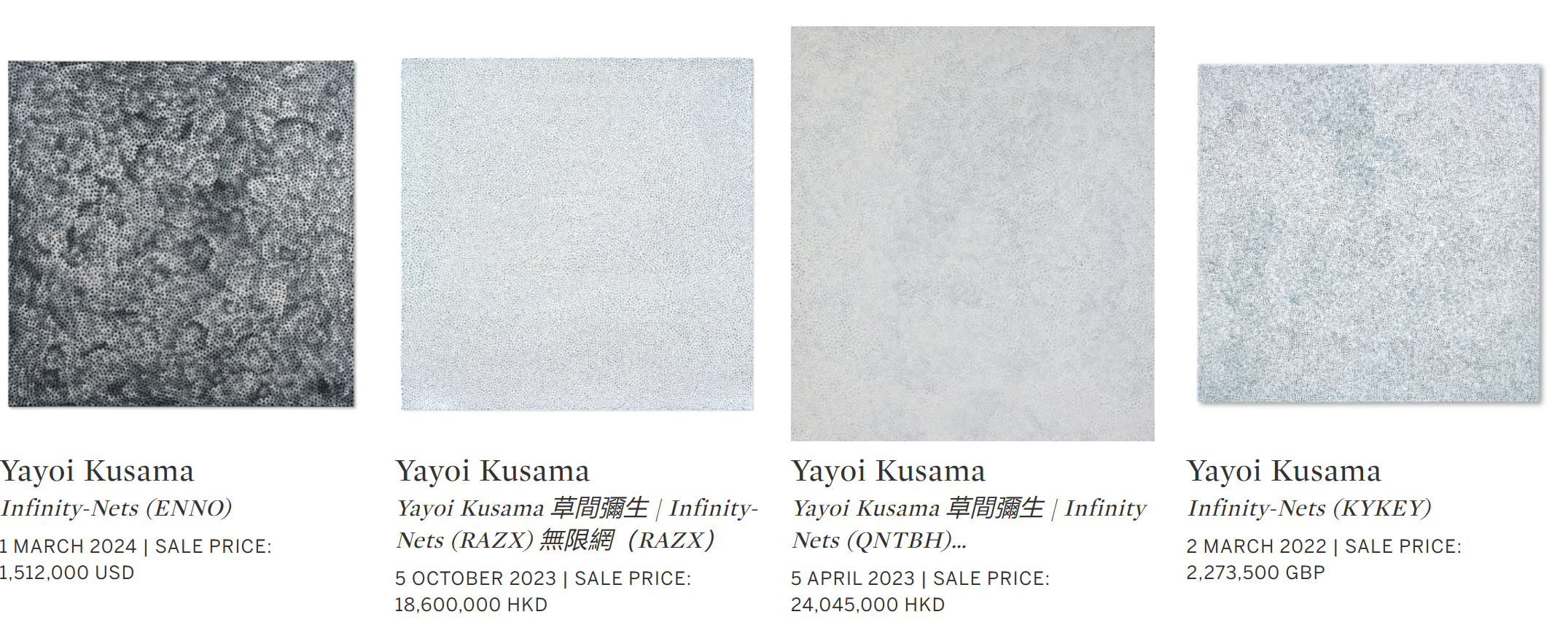
Within Kusama’s extensive oeuvre, the white Infinity Nets stand at the absolute pinnacle of market demand and critical acclaim. Representing two of the artist’s top five highest auction records, white-palette net paintings from both her early career and mature period are regarded as the ultimate realisation of her vision. Infinity-Nets (LHLUJ) stands as a testament to this legacy—combining pristine museum provenance, ideal scale, and an electric colourway that honors her past while celebrating her contemporary mastery.
Pumpkin, 1989
Sotheby’s Hong-Kong: 29 September 2026
Estimated: HKD 8,000,000 – 12,000,000
Yayoi Kusama 草間彌生 | Pumpkin 南瓜 | Contemporary Day Auction |
YAYOI KUSAMA (1929 – 2026)
Pumpkin, 1989
Acrylic on canvas
45.5 x 38 cm (17-7/8 x 15 inches)
Signed in English and Japanese, and dated 1989 (on the reverse)
Executed in 1989—a crucial transitional period marking Yayoi Kusama’s triumphant re-emergence into the international art world—Pumpkin is a vibrant, exquisitely balanced manifestation of the artist’s most celebrated signature motif. Rendered in a striking palette of golden yellow, rich vermilion, and deep black, the work encapsulates the formal precision, rhythmic repetition, and psychological resonance that define Kusama’s iconic visual language.
“I adore pumpkins. As my spiritual home since childhood, and with their infinite spirituality, they contribute to the peace of mankind across the world and to the celebration of humanity. And by doing so, they make me feel at peace.”
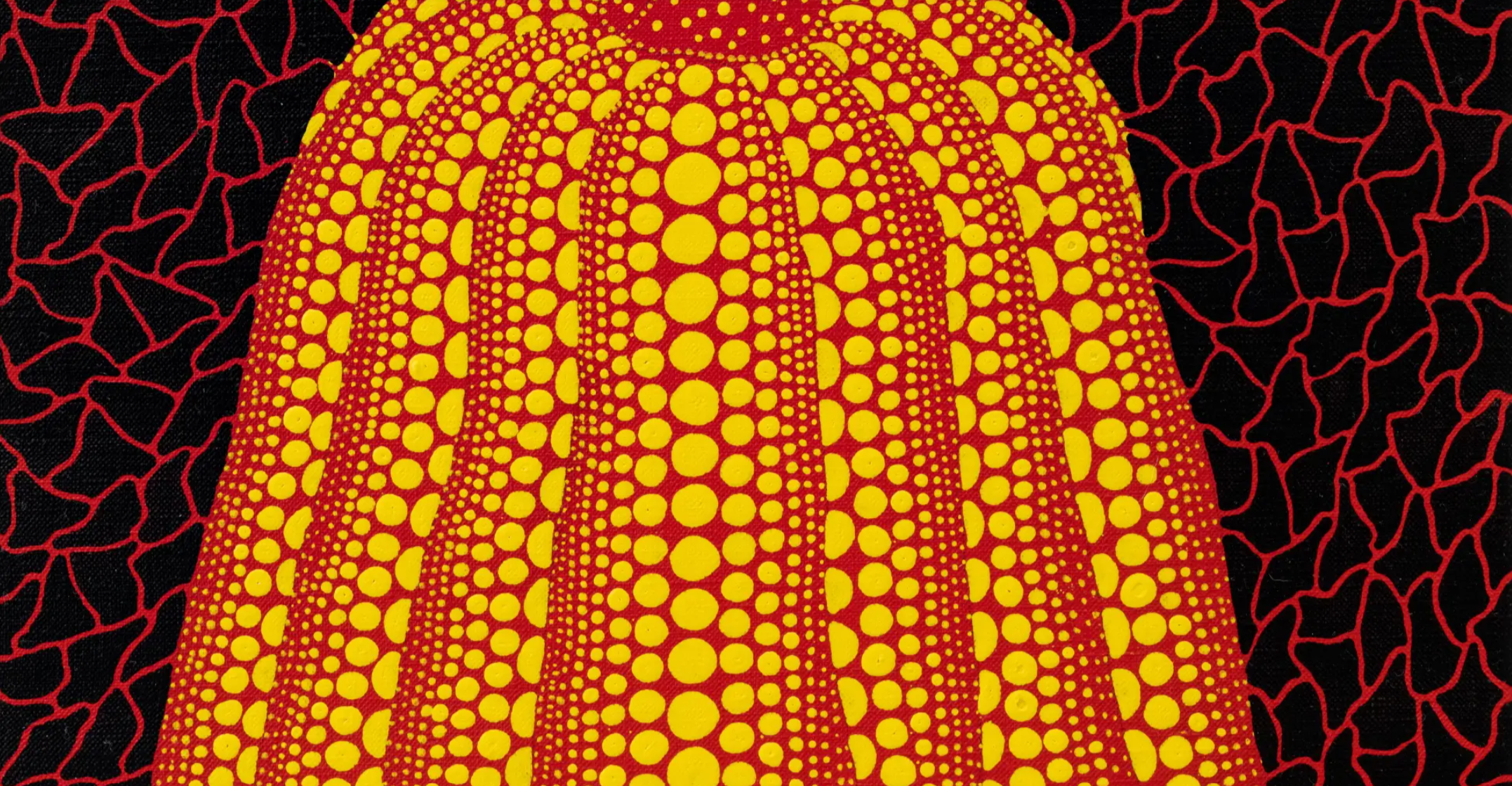
The motif of the pumpkin holds profound personal and spiritual significance for Kusama. First encountering the vegetable during her childhood on her family’s seed farm in Matsumoto, she found solace and warmth in its generous, bulbous form. As Kusama famously reflected, “Pumpkins bring about poetic peace in my mind. Pumpkins speak to me of the joy of living, body and soul.” Across her vast body of work, the gourd transcends simple depiction to become a self-portrait—a resilient, comforting anchor amidst her inner visions.
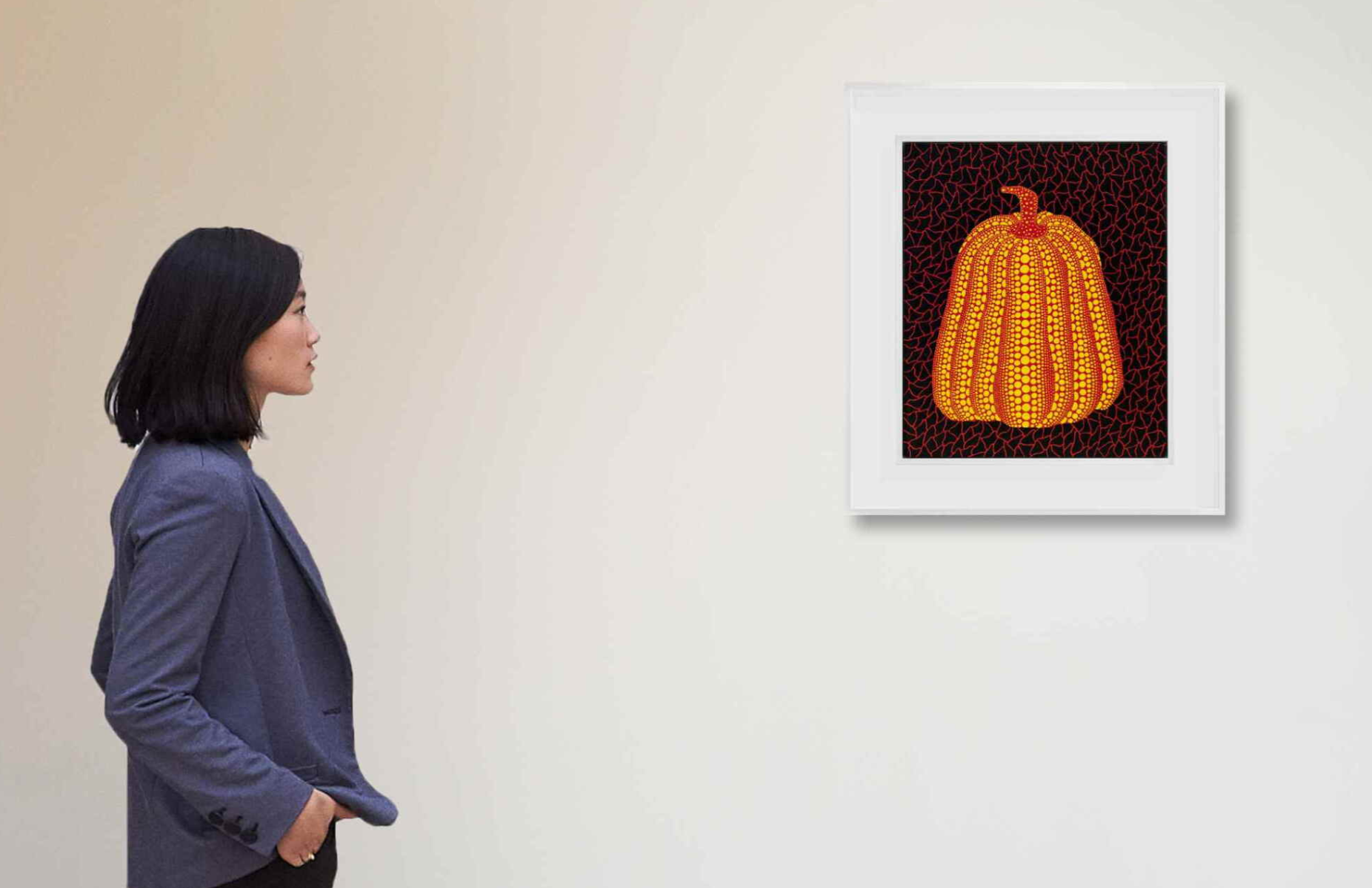
In Pumpkin, the central gourd commands the canvas with a statuesque presence. Its vertical ridges are built from meticulously graduated yellow polka dots that shift in scale, generating an undulating sense of volume and physical weight. Flanking the main yellow-and-red body, alternating red segments covered in fine dots introduce a dramatic spatial depth and optical vibration. Surrounding this luminous motif is a dense, web-like background of crimson net pattern set against solid black—a seamless synthesis of two of Kusama’s fundamental visual tropes: the Infinity Net and the Polka Dot.
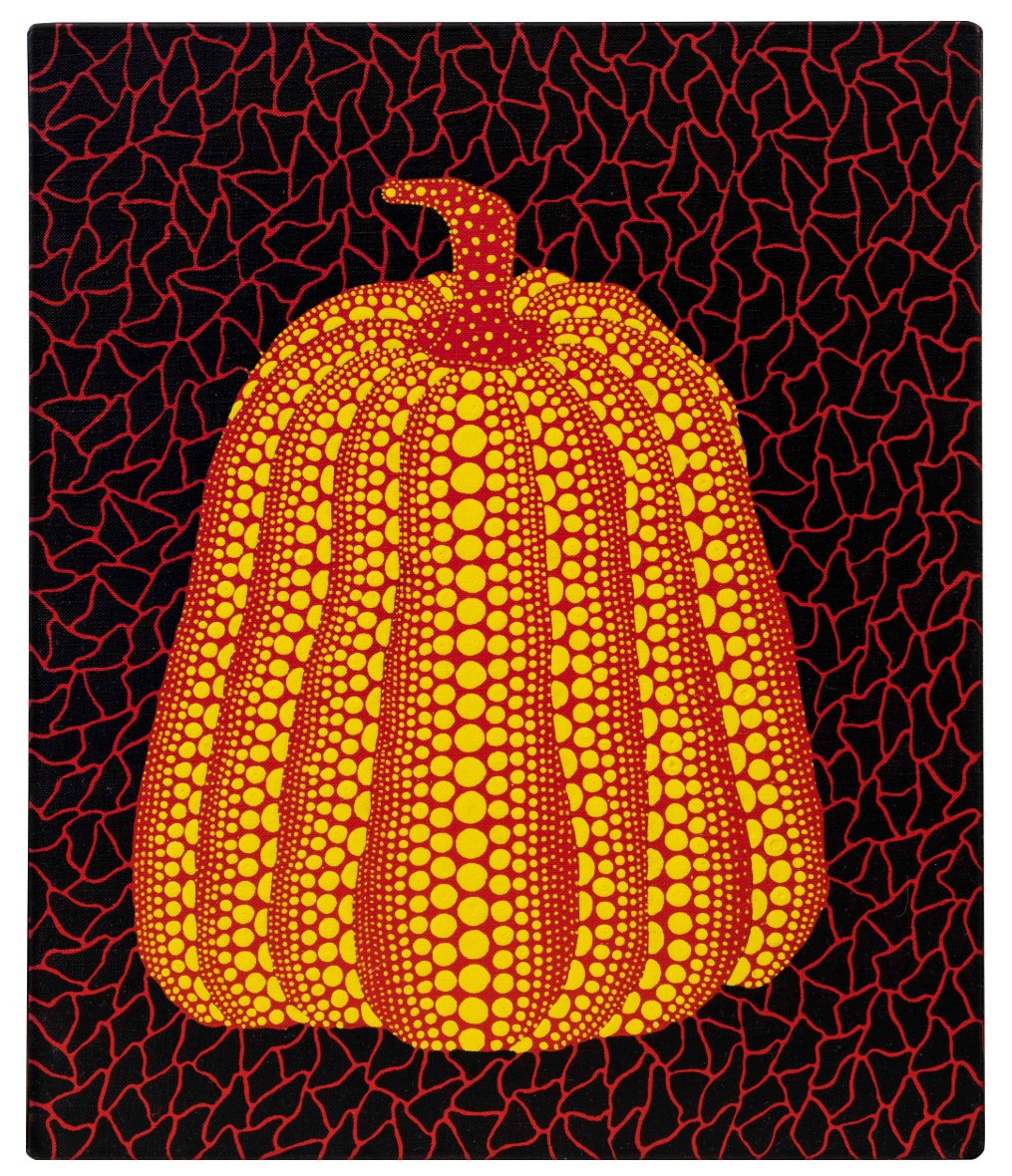
The late 1980s was a critical juncture in Kusama’s career, immediately preceding her historic representation of Japan at the 45th Venice Biennale in 1993, which cemented her global legacy. Works from 1989 exemplify a master at the height of her painterly control, combining rigorous geometric harmony with visceral emotional intensity. Pumpkin stands as a quintessential testament to Kusama’s enduring mastery, radiating warmth, strength, and infinite optical wonder.
Mark Rothko
Untitled (Plum and Dark Brown), 1964
Sotheby’s Hong-Kong: 28 September 2026
Estimated: HKD 78,000,000 – 128,000,000
Mark Rothko 馬克 · 羅斯科 | Untitled (Plum and Dark Brown) 無題(洋李色及深棕色) |
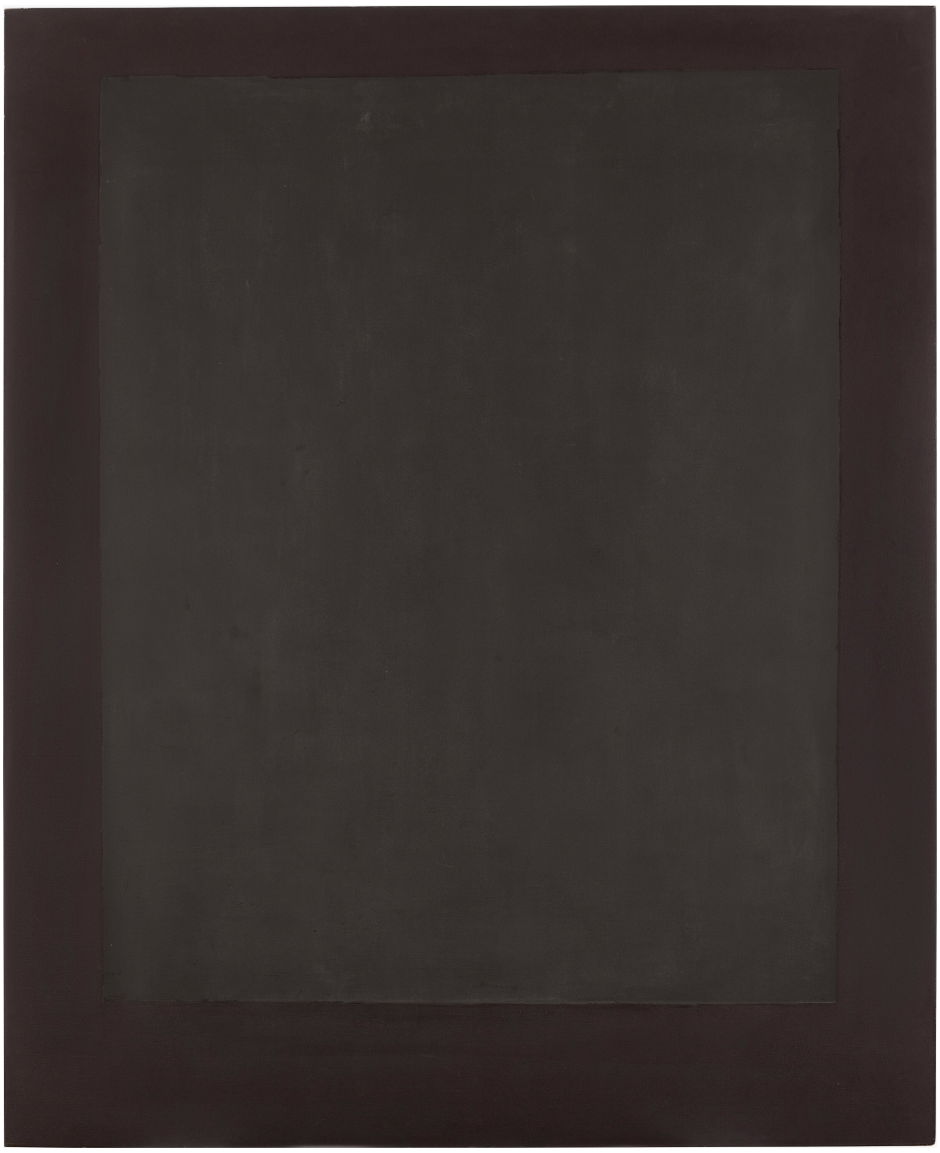
MARK ROTHKO (1903-1970)
Untitled (Plum and Dark Brown), 1964
Oil on canvas
93-1/8 x 76-1/4 inches (236.5 x 193.5 cm)
Signed and dated 1964 (on the reverse)
In 1964, Mark Rothko painted Untitled (Plum and Dark Brown), one of a celebrated group of large, black-toned and contemplative paintings which share both mood and temperament with the famous 1965 Rothko Chapel series. The canvases produced in his “Classic Years,” what David Anfam calls the artist’s mature period beginning around 1951 and continuing until his death in 1970, epitomizes Rothko’s career-long quest to convey themes pervasive to the human experience. In the predominately black paintings which Rothko produced from 1957 onwards, he relinquished the hazy, glowing color which had defined his works of the 1950s, turning instead towards the ascetic black fields seen in the present work. Pitting the formal opposites of light and dark in fervent equipoise, hope and despair, longing and rejection, are compressed into the heart of these paintings, in which black has never achieved so much color and luminosity. Subtle variations in Untitled (Plum and Dark Brown) are only perceived through careful contemplation, its hidden depths only coming to light through close study. Before the seventeen Chapel paintings commissioned by Dominique and John de Menil, Rothko produced a series of nine numbered works and eight unnumbered, to which the present work belongs, with thirteen of these being in museum collections. Untitled (Plum and Dark Brown) was also featured in the landmark exhibition The Spiritual in Art: Abstract Painting 1890-1985, chosen as a definitive example of Rothko’s influence within the canon of 20th century art.
The present work belongs to the period when Rothko had adopted the deep, somber colours which would come to dominate his palette for the remainder of his life. Sharing the uncanny gestures of shadow itself, these works embody a metaphor of inwardness and emotionality. Relating closely to the complex play of color and luminosity of such works as No. 6 (?) (1964) in the collection of the National Gallery of Art, Washington, DC, Untitled (Plum and Dark Brown) is a profound example of the extraordinary focus and commitment required to produce such intricate interplays of light within the strict confines of darkness. The relationship between darkness and the artist’s innate sense of light appears barely visible in the present work, engaging the viewer in an exchange; by leaving much unsaid, some form of solitary transcendence is allowed to come forth. As such, these works share in the sublime evocations of J. M. W. Turner and Caspar David Friedrich, portals or doorways of experience which tower over and pull the eye further inwards. Many critics have identified these later works with the artist’s increasing depression in the final years of his life, equating many of these black works with death and darkness. Whilst compelling, this fails to convey what had been the artist’s aim throughout his career. In a famous 1943 letter to the New York Times, budding Abstract Expressionist painters Mark Rothko and Adolph Gottlieb declared the only legitimate subject is the “tragic and the timeless”. The dark paintings, which began in 1957, reflect not so much the darkening of the artist’s mood, but a deepening of emotion as Rothko wrestled with the essential qualities of the human experience, that of tragedy, and that unbridled feeling. The denial of every superficiality, reducing each painting to its most essential qualities, Rothko hints at glacial movements below the muted surface. Space and color are Rothko’s fundamental elements, and sole actors of Untitled (Plum and Dark Brown), the pregnant emptiness and direct simplicity of its depths expressing an instantly perceived and unconsciously felt psychological reality. Profoundly influenced by Friedrich Nietzsche’s The Birth of Tragedy, Rothko’s paintings stage the dualism inherent to human nature; that of the Apollonian, representing structure and the universal order, and the Dionysian, representing the forces of chaos, instability and wildness.
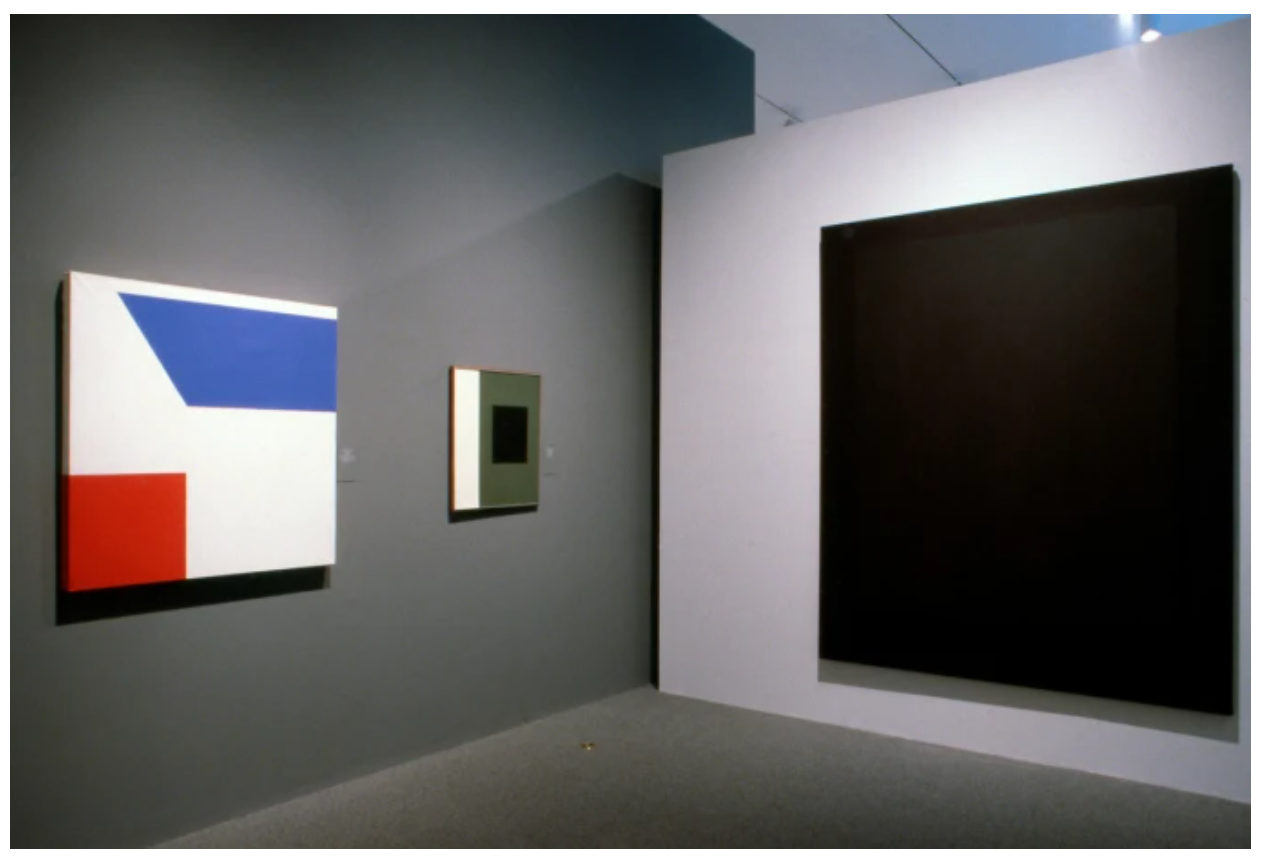
The present work was exhibited at The Spiritual in Art: Abstract Painting 1890–1985 (LACMA, Chicago MCA, The Hague, 1986–87)
The size of the present work in relation to the viewer is important to the efficacy of Rothko’s mature canvases. Testing the limits of visibility through scale, seen most acutely in the over three meter tall Untitled (Dark Gray on Maroon) (1963), or the 4 meter wide Section 6 (Untitled) [Seagram Mural] (1959), Rothko sought to surround and engulf the viewer within a plane of experience which seems to stretch beyond the confines of the canvas. When standing directly in front of the present work, the viewer confronts a canvas that extends above and beyond the range of vision, thereby locating the viewer squarely in the heart of experiencing the work itself. Thus, every variation in color, tone and layering, each contending with one another for dominance, emerges and recedes in a fragile balance, and emotive drama, where calm serenity vies with shimmering darkness.

Henri Matisse, The Red Studio, 1911, oil on canvas. Museum of Modern Art, New York.
From Bruegel to Rembrandt to Goya to Matisse, artists have seen black as a powerful medium for exploring the relationship between space and visibility. Rothko famously admired Matisse’s The Red Studio (1911), a work notable for its great expanse of a single color. He also admired Matisse’s famously abstract French Window at Collioure (1914) with its domineering black rectangle. Of this work Matisse said, “I began to use pure black as a color of light and not as a cooler of darkness” (Matisse, quoted in Stephanie Rosenthal, Black Paintings (exh. cat., Haus der Kunst, Munich, 2006), pp. 15). In black, Rothko found an inner light, reimagining the reductive relationship between darkness and despair. As opposed to voids, these black works reveal nuances in depth and hues which gradually reveal themselves, with a range of hidden feelings similarly emerging. The rectangular element shifts in tone, shadows moving across the surface, whilst the weight of the ambient area variously lifts and recedes this central element. In this work, brightness is subsumed by a deep richness that is heavy with emotion and meaning. As the eye responds to this shifting play in form and coloor, the viewer’s mind conjures shifting emotional and spiritual dramas, yet Rothko retains a fragile balance using the rich plum background’s calm serenity. Sharing a similarity with Old Masters who explored a shadow-laden chiaroscuro, the tenebroso style, Rothko himself told critic Michel Ragon in 1964 that his recent work was influenced by late Rembrandt.