PRELIMINARY DRAFT
WORK IN PROGRESS
Agenda

Masterpieces from the Lewis Collection
24 June 2026
Masterpieces from the Lewis Collection | 2026 | Sotheby’s
Modern & Contemporary Evening Auction
24 June 2026
Modern & Contemporary Evening Auction | 2026 | Sotheby’s
Contemporary Day Auction
25 June 2026
Contemporary Day Auction | 2026 | Sotheby’s

Beyond Ordinary – Then. Now. Next. Works from the Zabludowicz Collection
25 June 2026
Beyond Ordinary – Then. Now. Next. Works from the Zabludowicz Collection
Post-War to Present
25 June 2026

Modern & Contemporary Art Evening & Afternoon Sale
26 June 2026
Modern & Contemporary Art Evening & Afternoon Sale Friday, June 26, 2026
Masterpieces from the Lewis Collection
24 June 2026
Masterpieces from the Lewis Collection | 2026 | Sotheby’s
XXXXXXXXXX
Total:
GBP 296,315,500 / USD 391,117,785
# Lots: 25 Lots
# Lots Sold: 24 Lots
# Lots Passed: 1 Lot
Sell-Through Rate: 96%
XXXXXXXXXX
#1. Nu assis au collier, 1917-18
Masterpieces from the Lewis Collection
Sotheby’s London: 24 June 2026
Estimate upon Request
GBP 48,235,000 / USD 63,667,160
Amedeo Modigliani | Nu assis au collier | Masterpieces from the Lewis
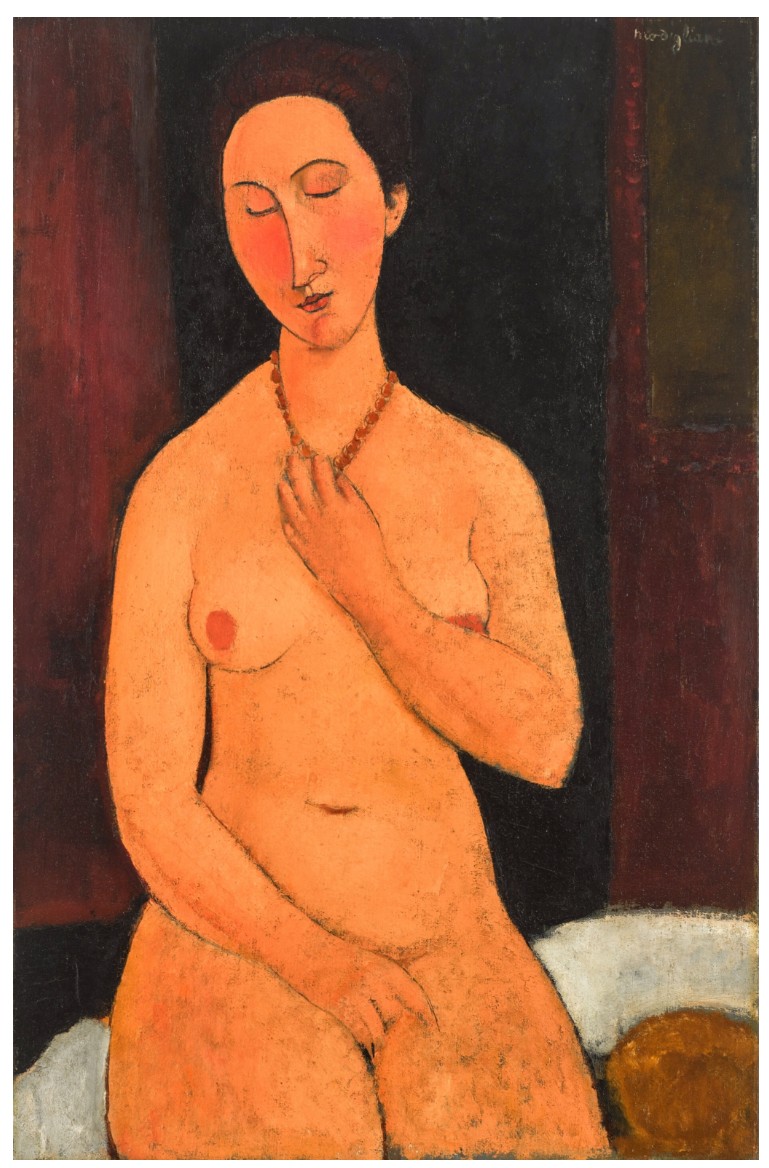
AMEDEO MODIGLIANI (1884 – 1920)
Nu assis au collier, 1917-18
Oil on canvas
91.5 x 59.7 cm (36 x 23-1/2 inches)
Signed Modigliani (upper right)
#2. Portrait of Gertrud Loew (Gertha Felsőványi), 1902
Masterpieces from the Lewis Collection
Sotheby’s London: 24 June 2026
Estimated: GBP 20,000,000 – 30,000,000
GBP 36,160,000 / USD 47,728,920
Gustav Klimt | Bildnis Gertrud Loew (Gertha Felsőványi) (Portrait of
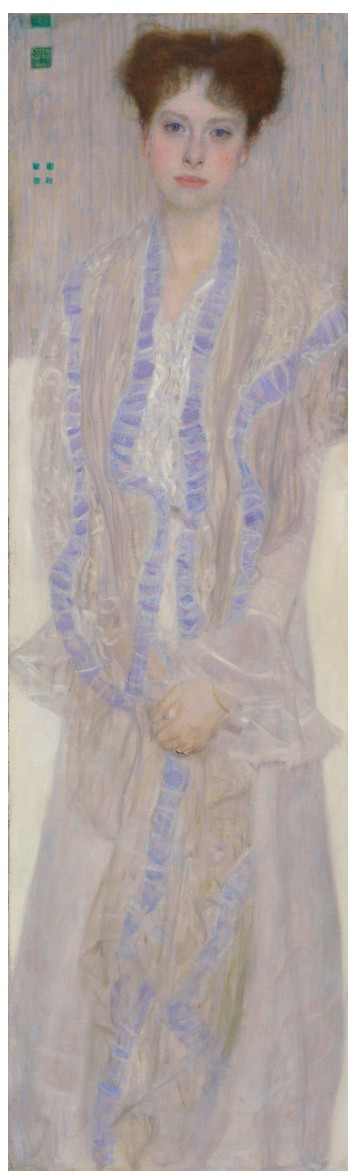
GUSTAV KLIMT (1862 – 1918)
Bildnis Gertrud Loew (Gertha Felsőványi) (Portrait of Gertrud Loew (Gertha Felsőványi)), 1902
Oil on canvas
149.5 x 44.2 cm (58-7/8 x 17-1/2 inches)
Signed Gustav Klimt and dated 1902 (upper left)
#3. Sleeping by the Lion Carpet, 1995-96
Masterpieces from the Lewis Collection
Sotheby’s London: 24 June 2026
Estimated: GBP 25,000,000 – 35,000,000
GBP 29,260,000 / USD 38,621,355
Lucian Freud | Sleeping by the Lion Carpet | Masterpieces from the
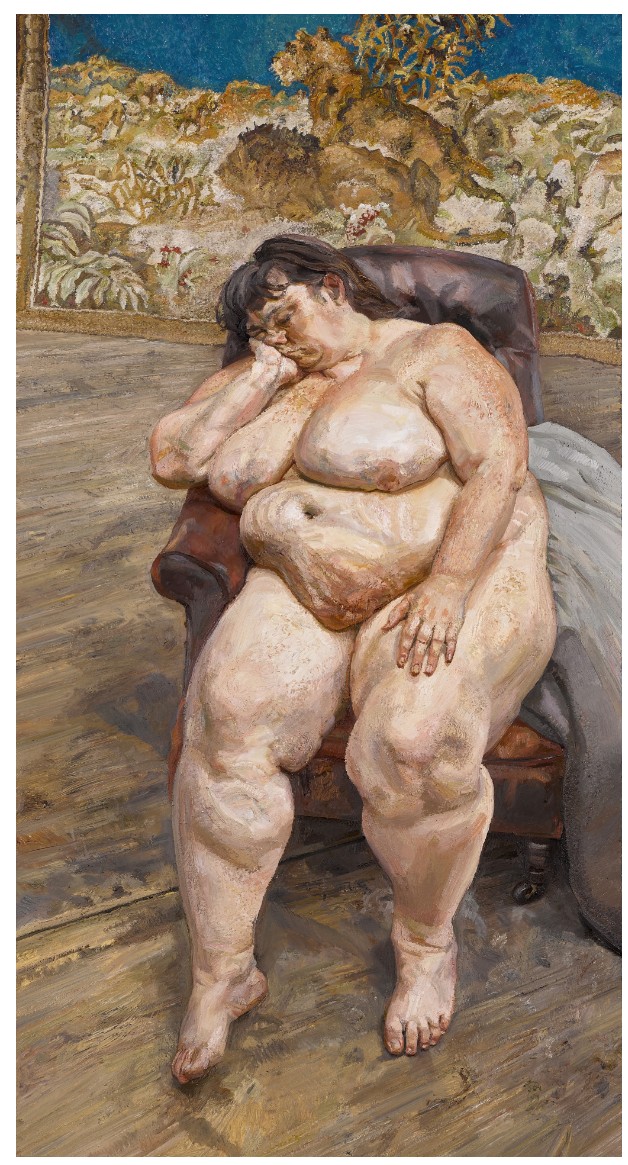
LUCIAN FREUD (1922 – 2011)
Sleeping by the Lion Carpet, 1995-96
Oil on canvas
228 x 120.6 cm (89-3/4 x 47-1/2 inches)
#4. Petite danseuse de quatorze ans, 1879-81/1922
Masterpieces from the Lewis Collection
Sotheby’s London: 24 June 2026
Estimated: GBP 18,000,000 – 25,000,000
GBP 25,120,000 / USD 33,156,815
Edgar Degas | Petite danseuse de quatorze ans | Masterpieces from the
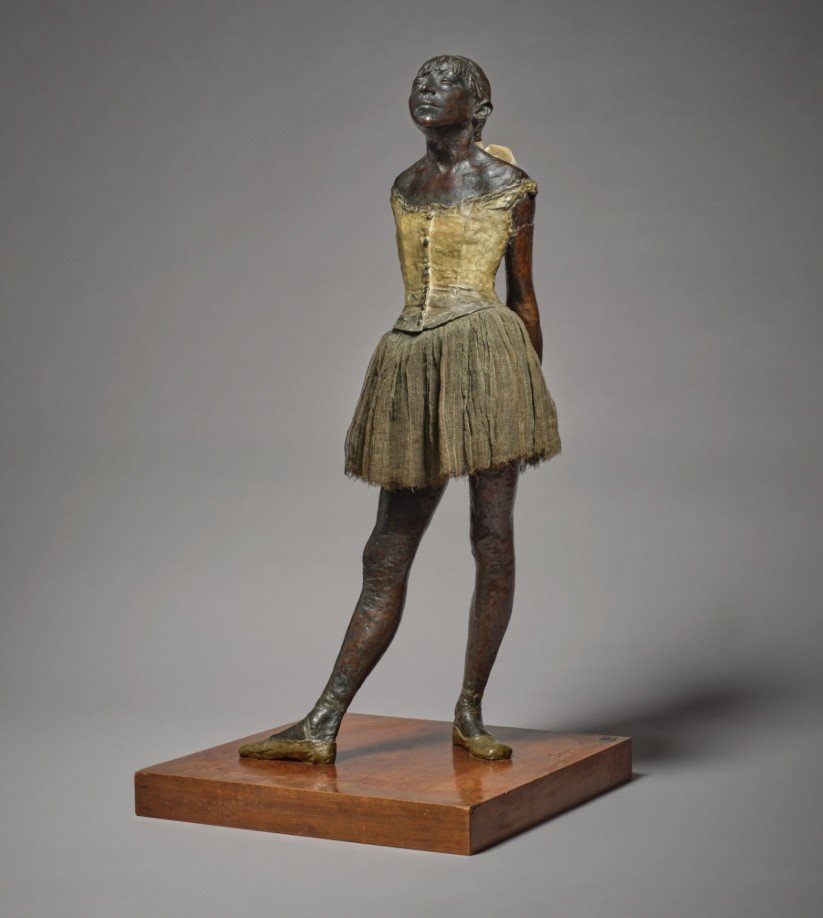
EDGAR DEGAS (1834 – 1917)
Petite danseuse de quatorze ans, 1879-81/1922
Bronze with muslin skirt and satin hair ribbon on a wooden base
Height: 101.3 cm (39-7/8 inches)
Inscribed Degas, numbered HER and stamped with the foundry mark A.A. HÉBRARD CIRE PERDUE (on the base)
Conceived in wax circa 1879-81 and cast in bronze from 1922
#5. Buste de femme, 1938
Masterpieces from the Lewis Collection
Sotheby’s London: 24 June 2026
Estimated: GBP 12,000,000 – 18,000,000
GBP 23,855,000 / USD 31,487,095
Pablo Picasso | Buste de femme | Masterpieces from the Lewis
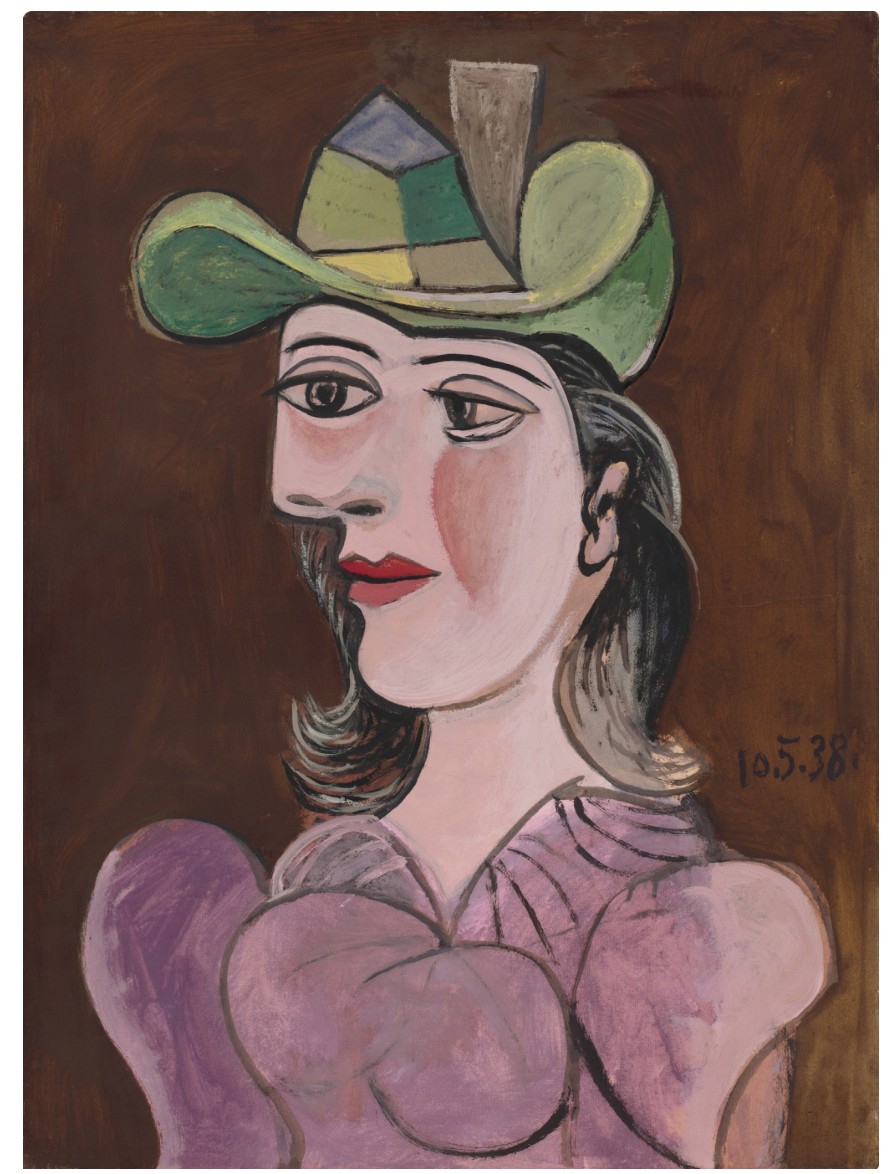
PABLO PICASSO (1881 – 1973)
Buste de femme, 1938
Oil on paper laid down on canvas
78.7 x 60.5 cm (31 x 23-7/8 inches)
Signed indistinctly Picasso (lower right)
Dated 10.5.38 (centre right)
#6. Homme à la pipe (Le Notaire de Nice), 1918-19
Masterpieces from the Lewis Collection
Sotheby’s London: 24 June 2026
Estimated: GBP 12,000,000 – 18,000,000
GBP 23,280,000 / USD 30,728,135
Amedeo Modigliani | Homme à la pipe (Le Notaire de Nice) |
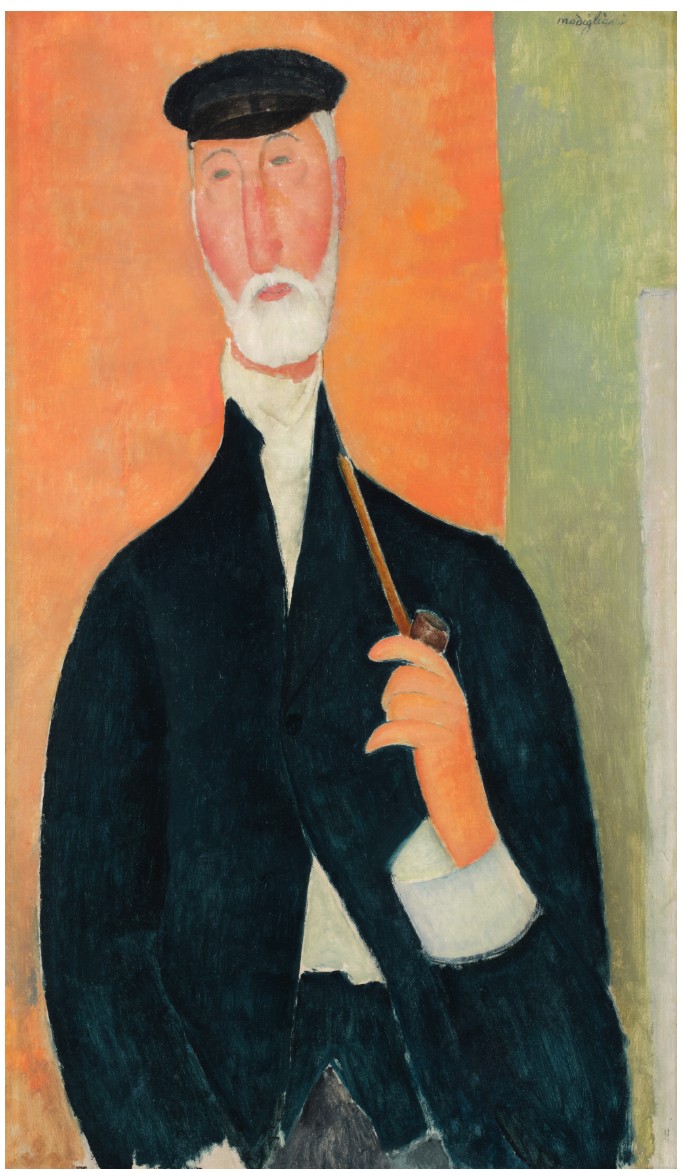
AMEDEO MODIGLIANI (1884 – 1920)
Homme à la pipe (Le Notaire de Nice), 1918-19
Oil on canvas
92.1 x 54.3 cm (36-1/4 x 21-3/8 inche)
Signed Modigliani (upper right)
Modern & Contemporary Evening Auction
24 June 2026
Modern & Contemporary Evening Auction | 2026 | Sotheby’s
XXXXXXXXXX
Total:
GBP 97,053,786 / USD 128,104,881
# Lots: 41 Lots
# Lots Withdrawn: 1 Lot
# Lots Sold: 34 Lots
# Lots Passed: 6 Lots
Sell-Through Rate: 85%
XXXXXXXXXX
#1. Nymphéas, 1907
Sotheby’s London: 24 June 2026
Estimated: GBP 30,000,000 – 40,000,000
GBP 40,760,000 / USD 53,800,630
Claude Monet | Nymphéas | Modern & Contemporary Evening Auction |
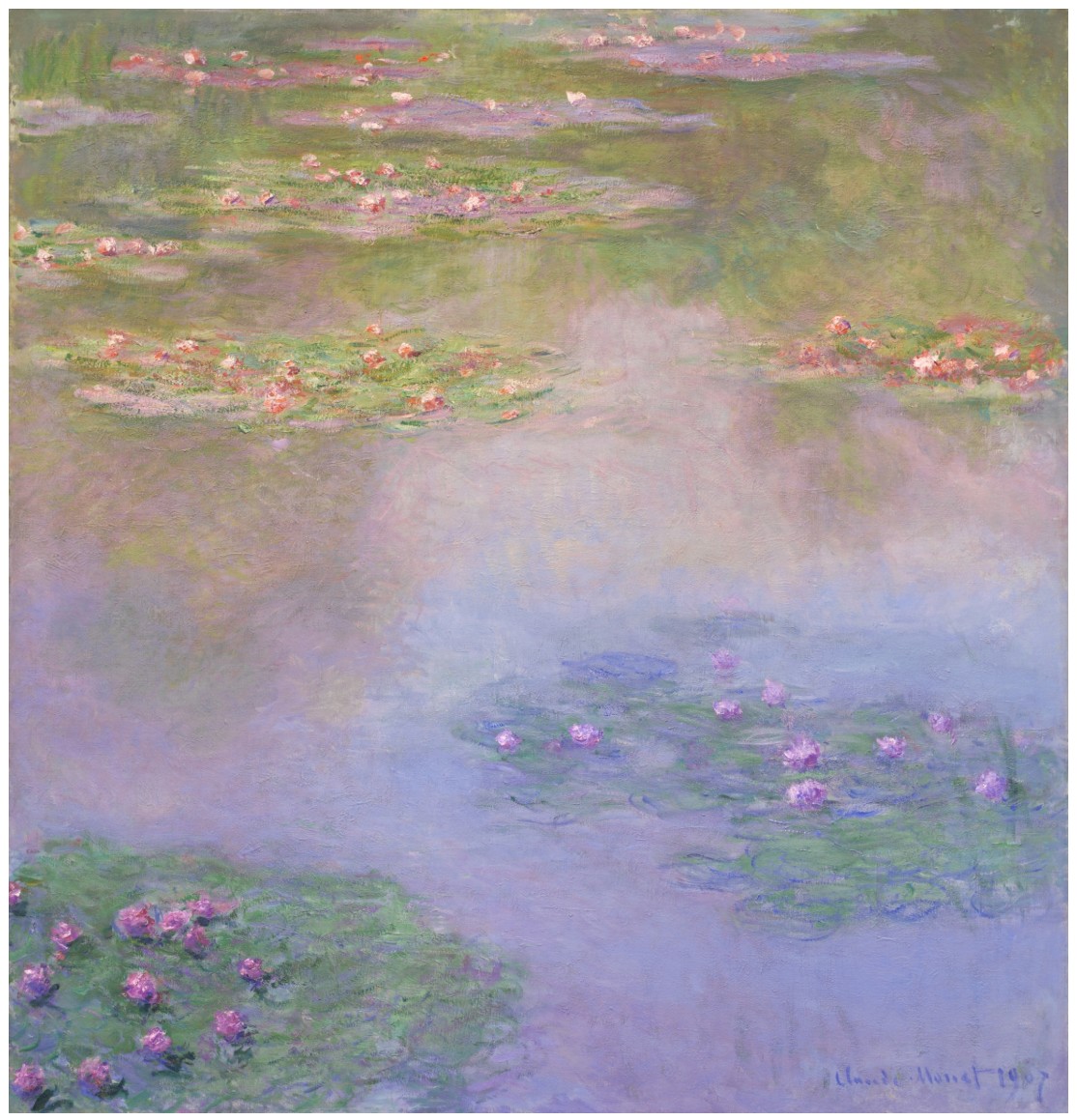
CLAUDE MONET (1840 – 1926)
Nymphéas, 1907
Oil on canvas
93.7 x 89.5 cm (36-7/8 x 35-1/4 inches)
Signed Claude Monet and dated 1907 (lower right)
GBP 10 million
#2. Untitled, 1959
Sotheby’s London: 24 June 2026
Estimated: GBP 4,000,000 – 6,000,000
GBP 9,020,000 / USD 11,905,830
Mark Rothko | Untitled | Modern & Contemporary Evening Auction | 2026
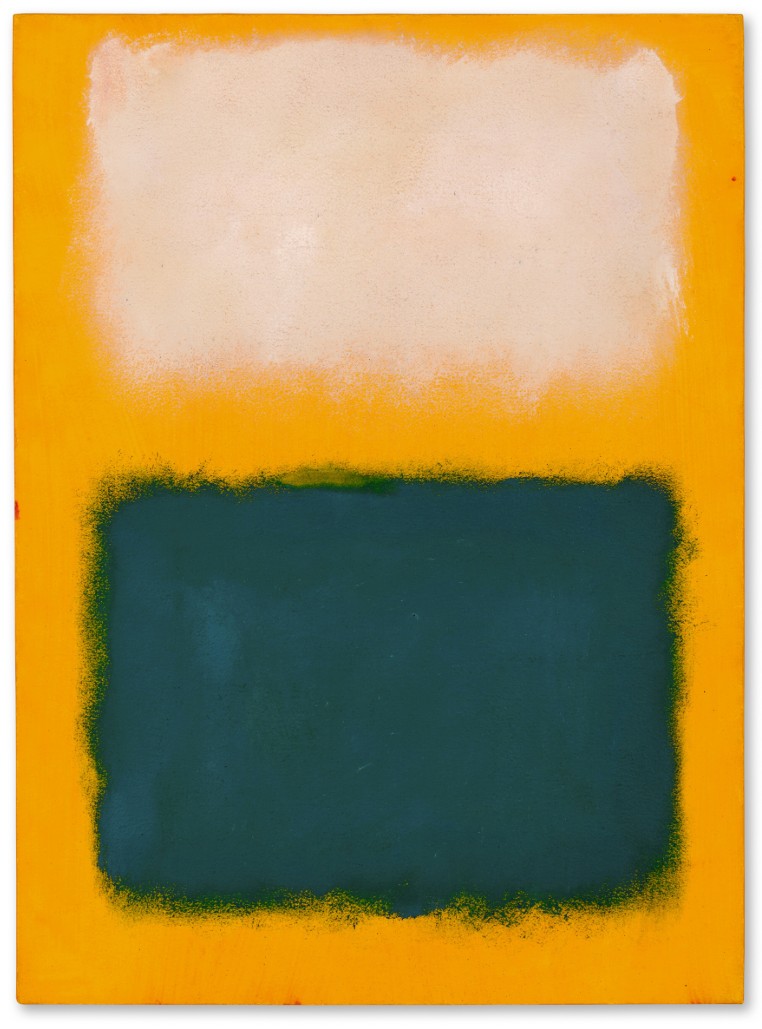
MARK ROTHKO (1903 – 1970)
Untitled, 1959
Oil and watercolor on paper mounted on linen
29-5/8 x 21-3/4 inches (75.2 x 55.2 cm)
Signed and bearing the date 1956 (on the reverse)
#3. Love Is In The Air (life size), 2011
Sotheby’s London: 24 June 2026
Estimated: GBP 3,500,000 – 5,500,000
GBP 6,434,000 / USD 8,492,475
Love Is In The Air (life size) | Modern & Contemporary Evening
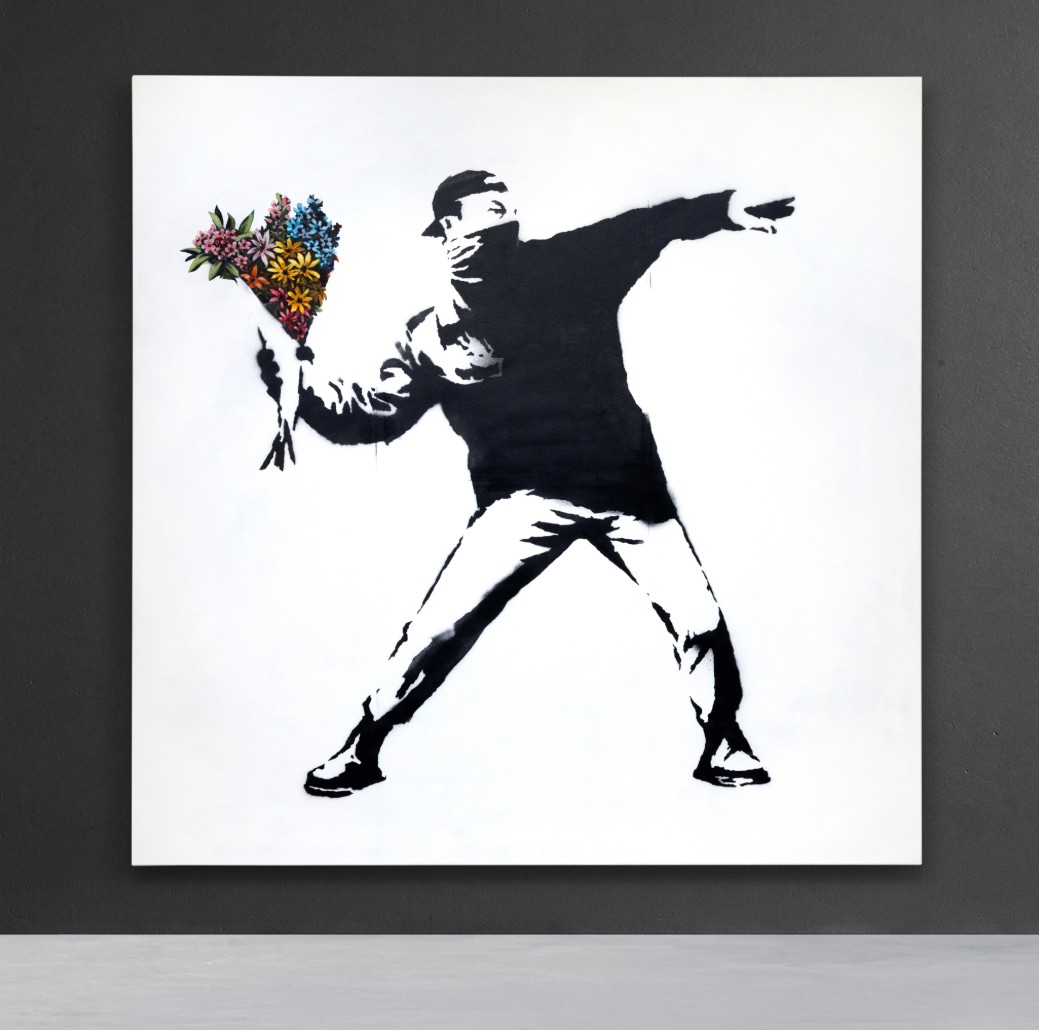
BANKSY (b. 1973)
Love Is In The Air (life size), 2011
Spray paint and oil on canvas
210×210 cm (82-5/8 x 82-5/8 inches)
Signed and dated 11 (on the overlap)
XXXXXXXXXX
#9. Down in Chinatown, 2010
Sotheby’s London: 24 June 2026
Estimated: GBP 1,500,000 – 2,000,000
GBP 2,164,000 / USD 2,856,345
George Condo | Down in Chinatown | Modern & Contemporary Evening
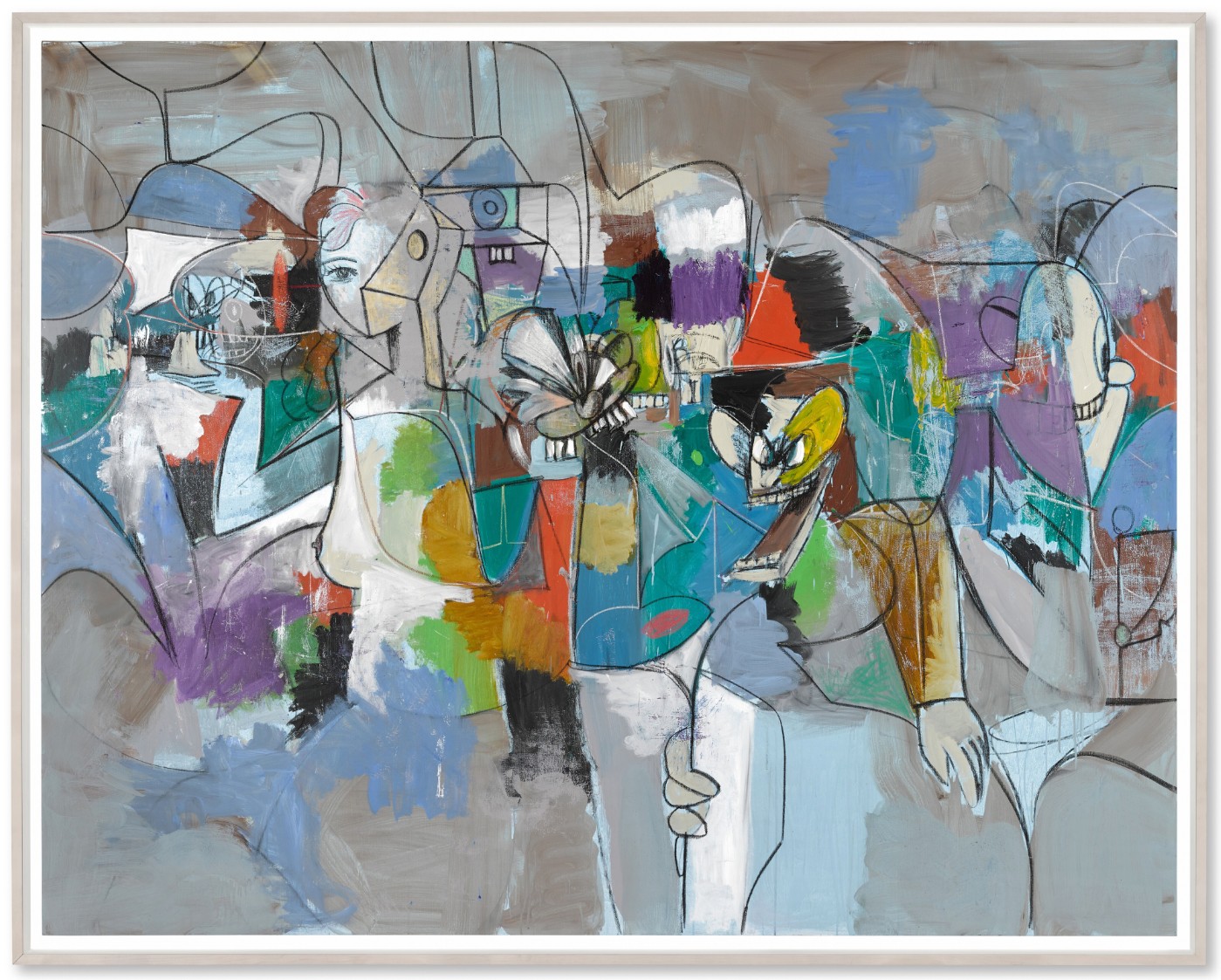
GEORGE CONDO (b. 1957)
Down in Chinatown, 2010
Acrylic, charcoal, and pastel on linen, in artist’s frame
79-3/8 x 99-1/2 inches (201.7 x 252.7 cm)
Signed and dated 2010 (upper left)
#10. Two Chairs and a Wooden Spoon, July 1988
Sotheby’s London: 24 June 2026
Estimated: GBP 1,200,000 – 1,800,000
GBP 2,164,000 / USD 2,856,345
David Hockney | Two Chairs and a Wooden Spoon, July 1988 | Modern &
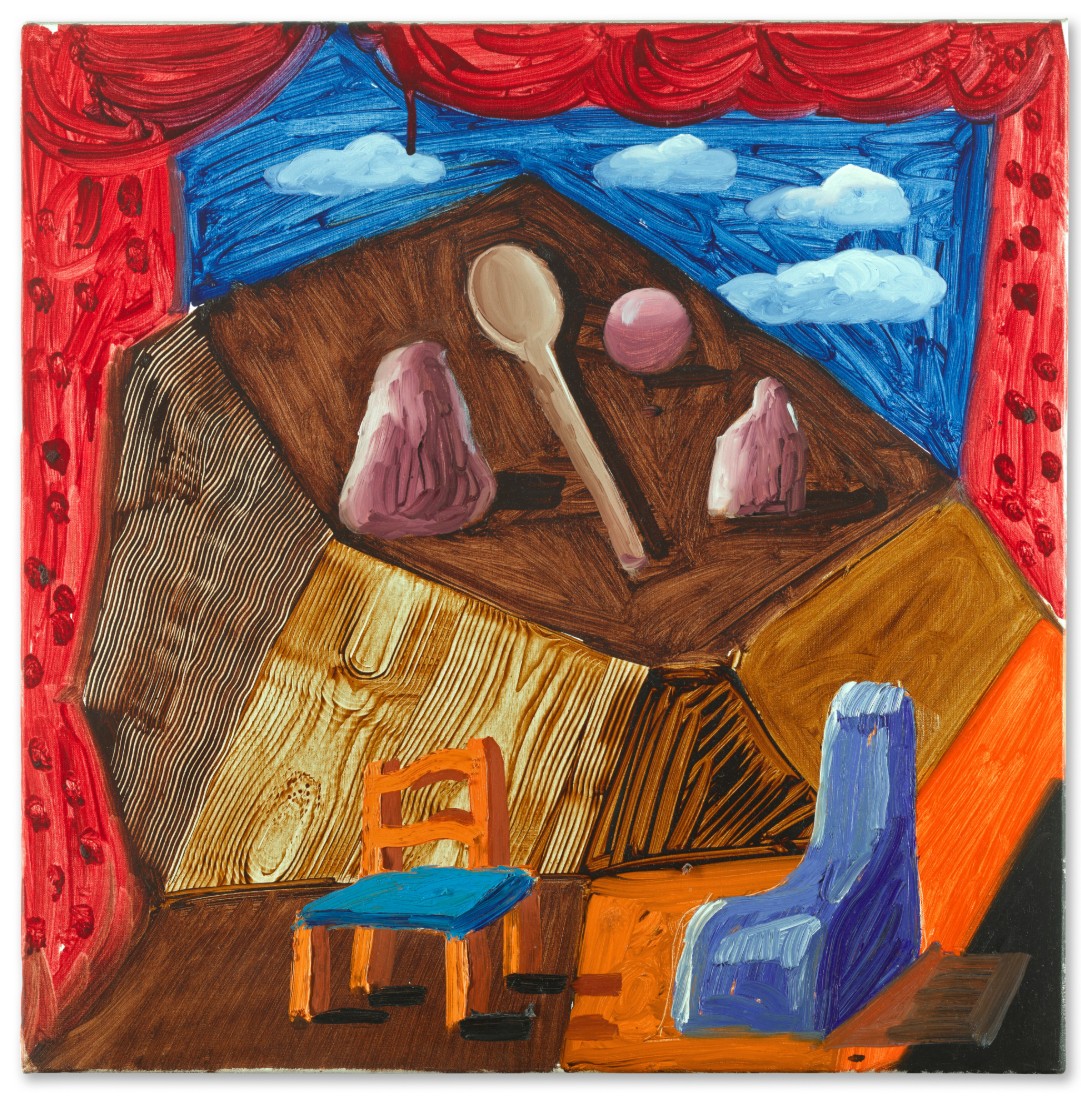
DAVID HOCKNEY (1937 – 2026)
Two Chairs and a Wooden Spoon, July 1988
Oil on canvas
24×24 inches (61×61 cm)
Signed and titled (on the reverse)
#11. Landscape with Grass, 1996
Sotheby’s London: 24 June 2026
Estimated: GBP 2,000,000 – 3,000,000
GBP 2,042,000 / USD 2,695,310
Roy Lichtenstein | Landscape with Grass | Modern & Contemporary
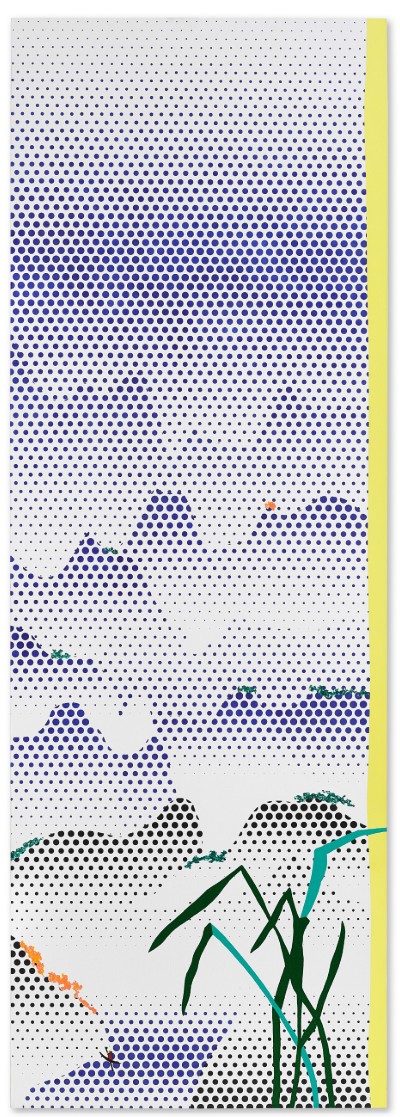
ROY LICHTENSTEIN (1923 – 1997)
Landscape with Grass, 1996
Acrylic, oil, and graphite on canvas
110-1/4 x 38-3/8 inches (280 x 97.5 cm)
Signed and dated ’96 (on the reverse)
Lots Passed
Camille assise sur la plage à Trouville, 1870
Sotheby’s London: 24 June 2026
Estimated: GBP 7,000,000 – 10,000,000
PASSED
Claude Monet | Camille assise sur la plage à Trouville | Modern &
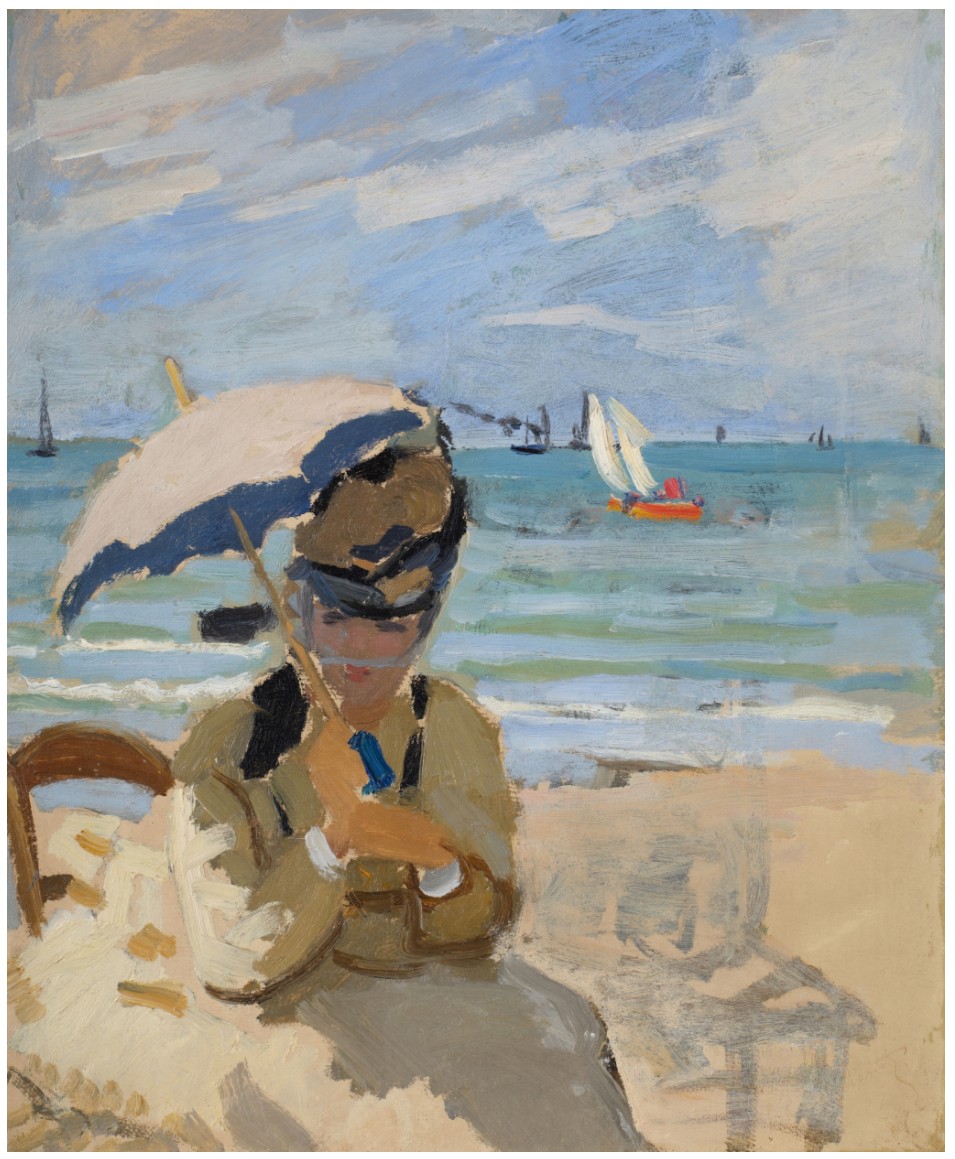
CLAUDE MONET (1840 – 1926)
Camille assise sur la plage à Trouville, 1870
Oil on canvas
46.2 x 38.3 cm (18-1/8 x 15 inches)
Indistinctly signed Claude Monet (lower right)
Lots Withdrawn
Cabin Essence, 1993-94
Sotheby’s London: 24 June 2026
Estimated: GBP 10,000,000 – 15,000,000
WITHDRAWN
Peter Doig | Cabin Essence | Modern & Contemporary Evening Auction |
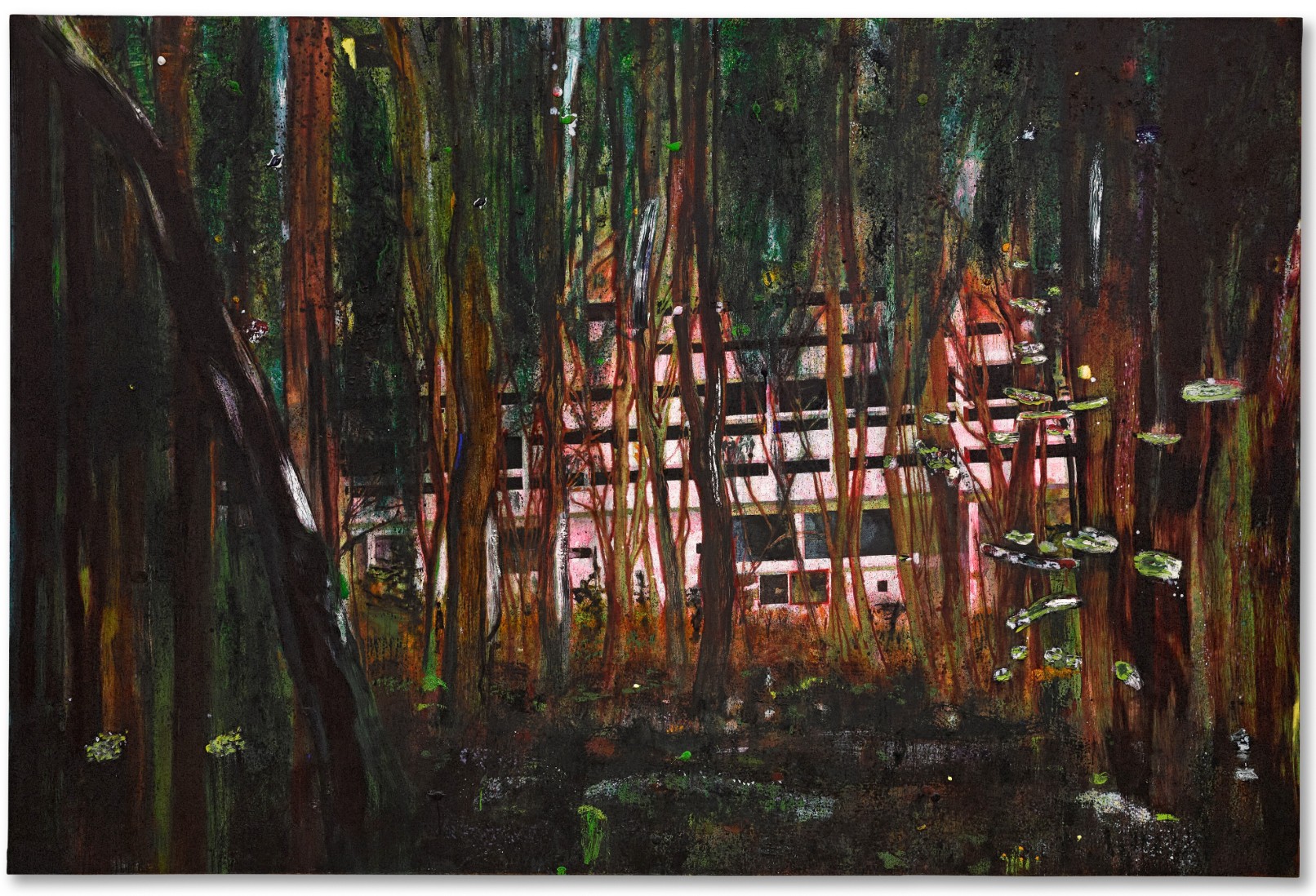
PETER DOIG (b. 1959)
Cabin Essence, 1993-94
Oil on canvas
230×350 cm (90 x 137-3/4 inches)
Titled, inscribed Black, and dated 1993-1994 (on the reverse)
Contemporary Day Auction
25 June 2026
Contemporary Day Auction | 2026 | Sotheby’s
#1. Zombie Modernism, 2015
Sotheby’s London: 25 June 2026
Estimated: GBP 600,000 – 800,000
GBP 832,000 / USD 1,098,190
George Condo | Zombie Modernism | Contemporary Day Auction | 2026 |
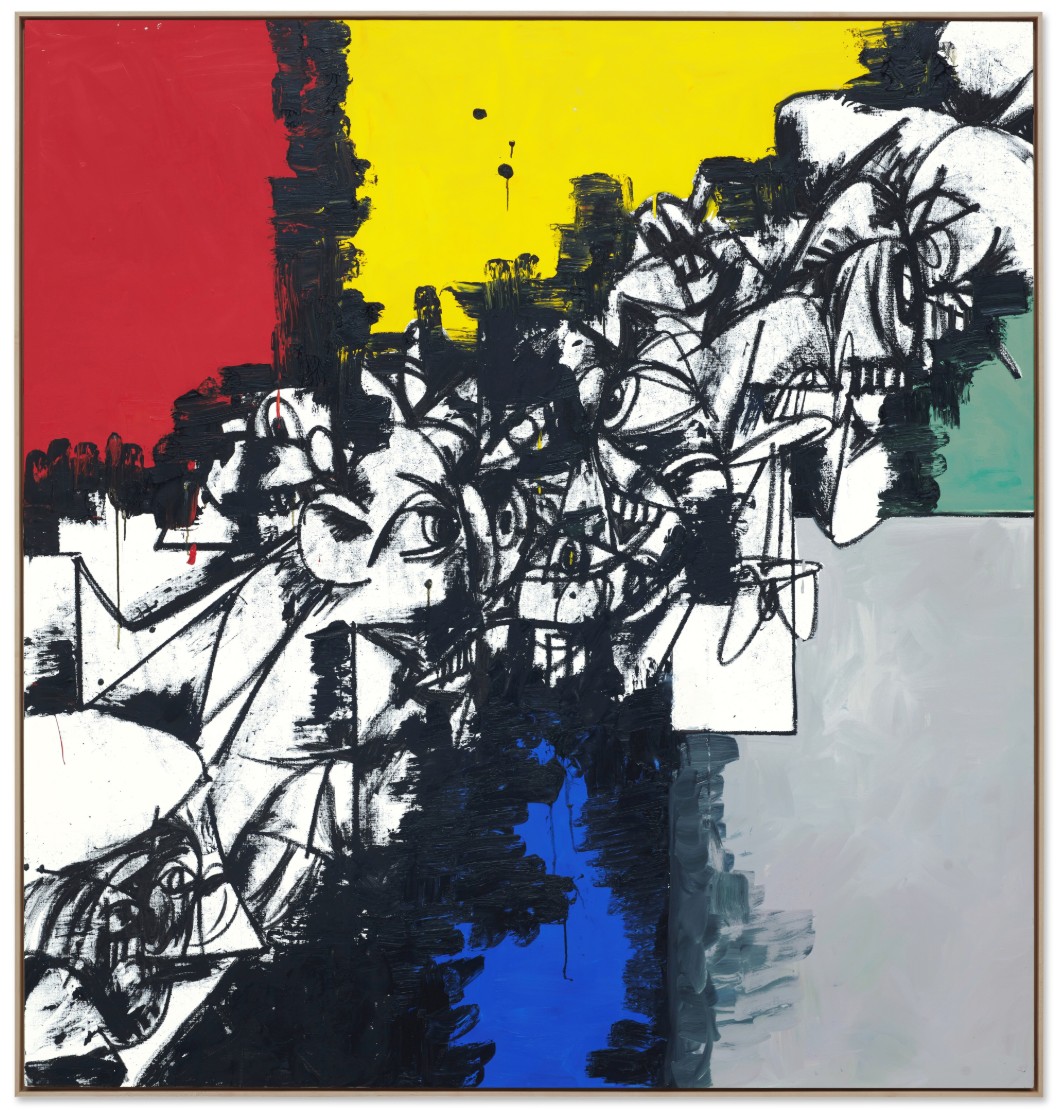
GEORGE CONDO (b. 1957)
Zombie Modernism, 2015
Oil and pigment stick on linen
78-1/8 x 74-1/8 inches (198.5 x 188.3 cm)
Signed and dated 2015 (on the reverse)
The Arrival of Spring in Woldgate – 30 May, 2011
Sotheby’s London: 25 June 2026
Estimated: GBP 250,000 – 350,000
GBP 512,000 / USD 675,810
David Hockney | The Arrival of Spring in Woldgate, East Yorkshire in
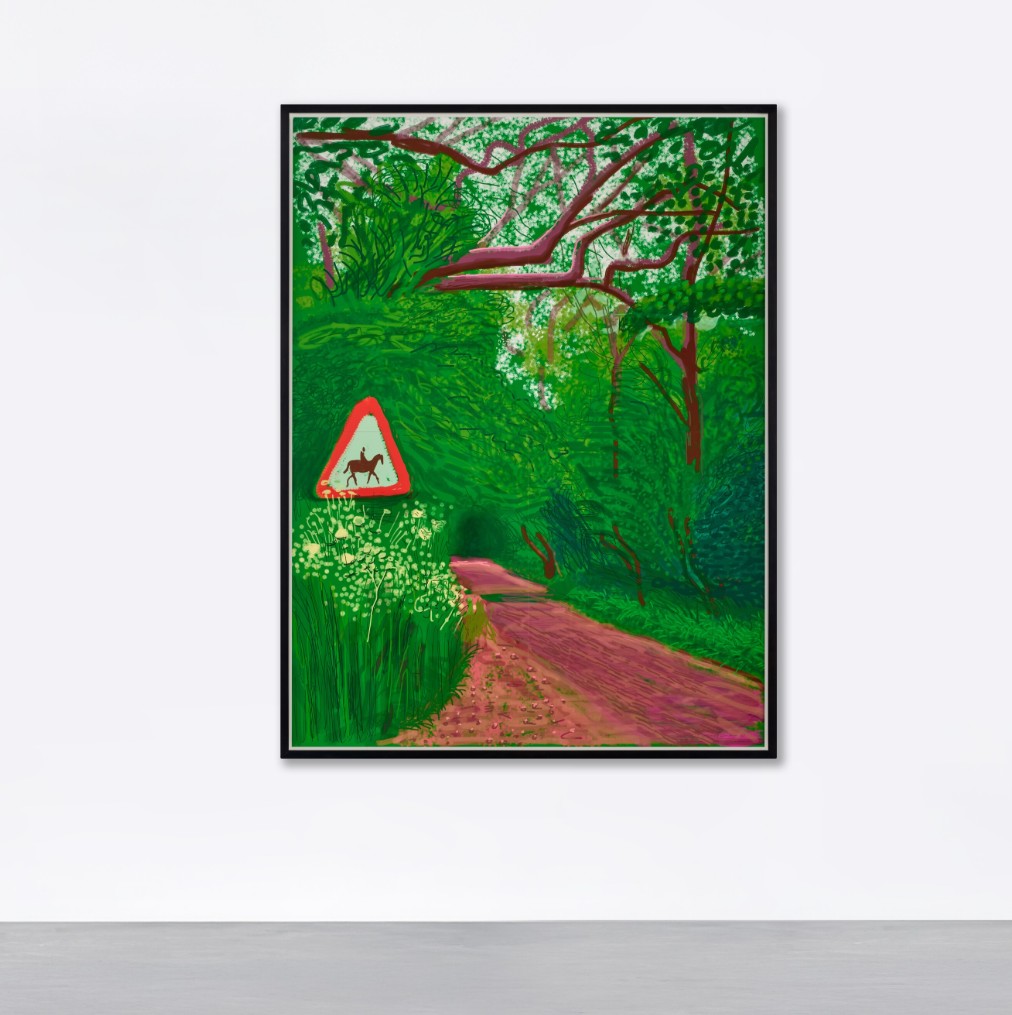
DAVID HOCKNEY (b. 1932)
The Arrival of Spring in Woldgate, East Yorkshire in 2011 (twenty eleven) – 30 May, 2011
iPad drawing printed on four sheets of paper, mounted on four sheets of Dibond
Each sheet: 46-1/2 x 35 inches (118.1 x 88.9 cm)
Overall: 93×70 inches (236.2 x 177.8 cm)
Signed and dated 2011 (lower right)
Numbered 6/10 (lower left)
Beyond Ordinary – Then. Now. Next. Works from the Zabludowicz Collection
25 June 2026
Beyond Ordinary – Then. Now. Next. Works from the Zabludowicz Collection
#1. Mirror Head, 1977
Works from the Zabludowicz Collection
Christie’s London: 25 June 2025
Estimated: GBP 3,500,000 – 5,500,000
GBP 3,954,000 / USD 5,219,030
PHILIP GUSTON (1913-1980), Mirror Head | Christie’s
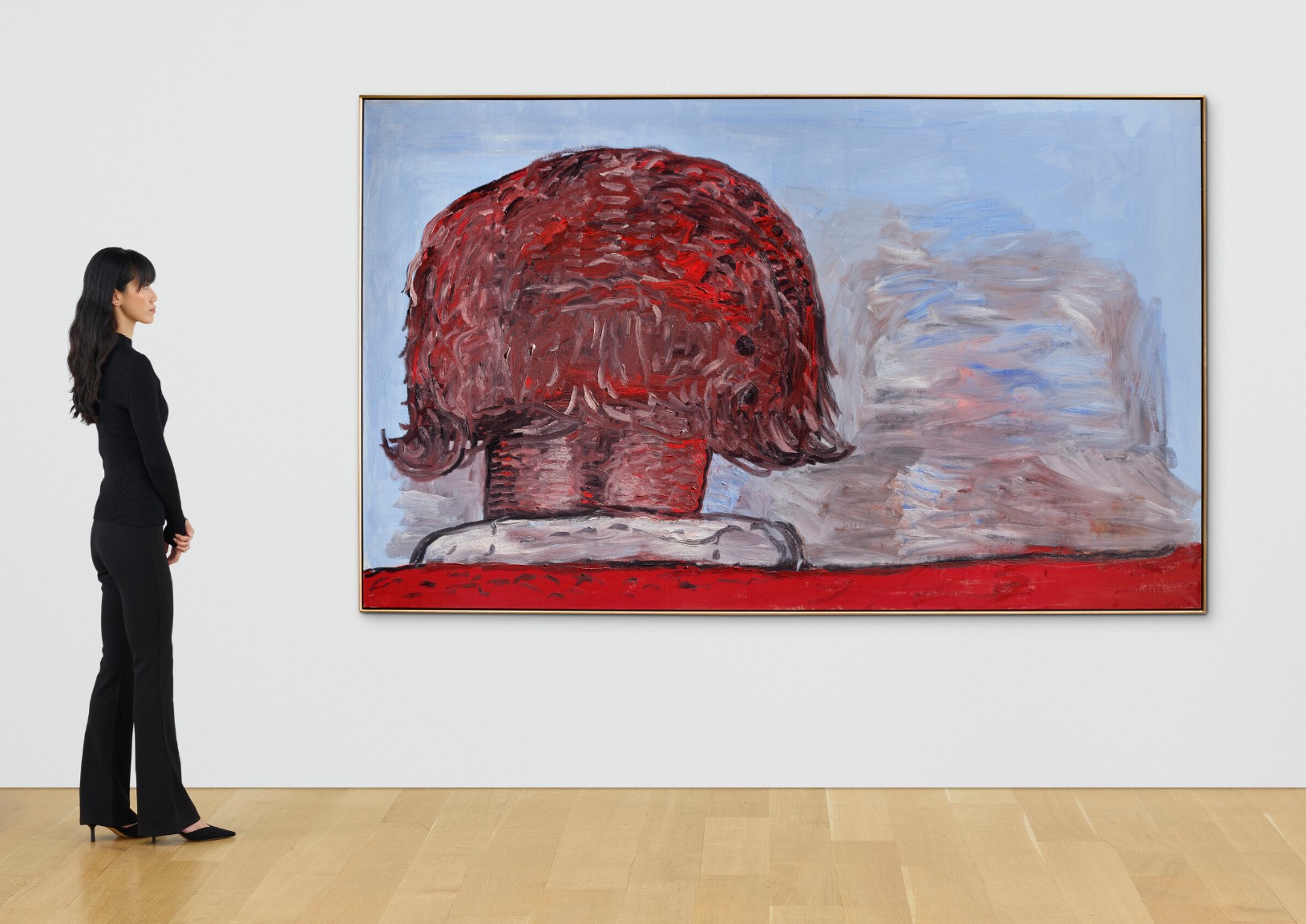
PHILIP GUSTON (1913-1980)
Mirror Head, 1977
Oil on canvas
68×112 inches (172.7 x 284.5 cm)
Signed, titled, inscribed and dated ‘PHILIP GUSTON ”MIRROR HEAD” 1977’ (on the reverse)
#2. Untitled (Cowboy), 1994
Works from the Zabludowicz Collection
Christie’s London: 25 June 2025
Estimated: GBP 800,000 – 1,200,000
GBP 1,575,000 / USD 2,078,900
RICHARD PRINCE (B. 1949), Untitled (Cowboy) | Christie’s
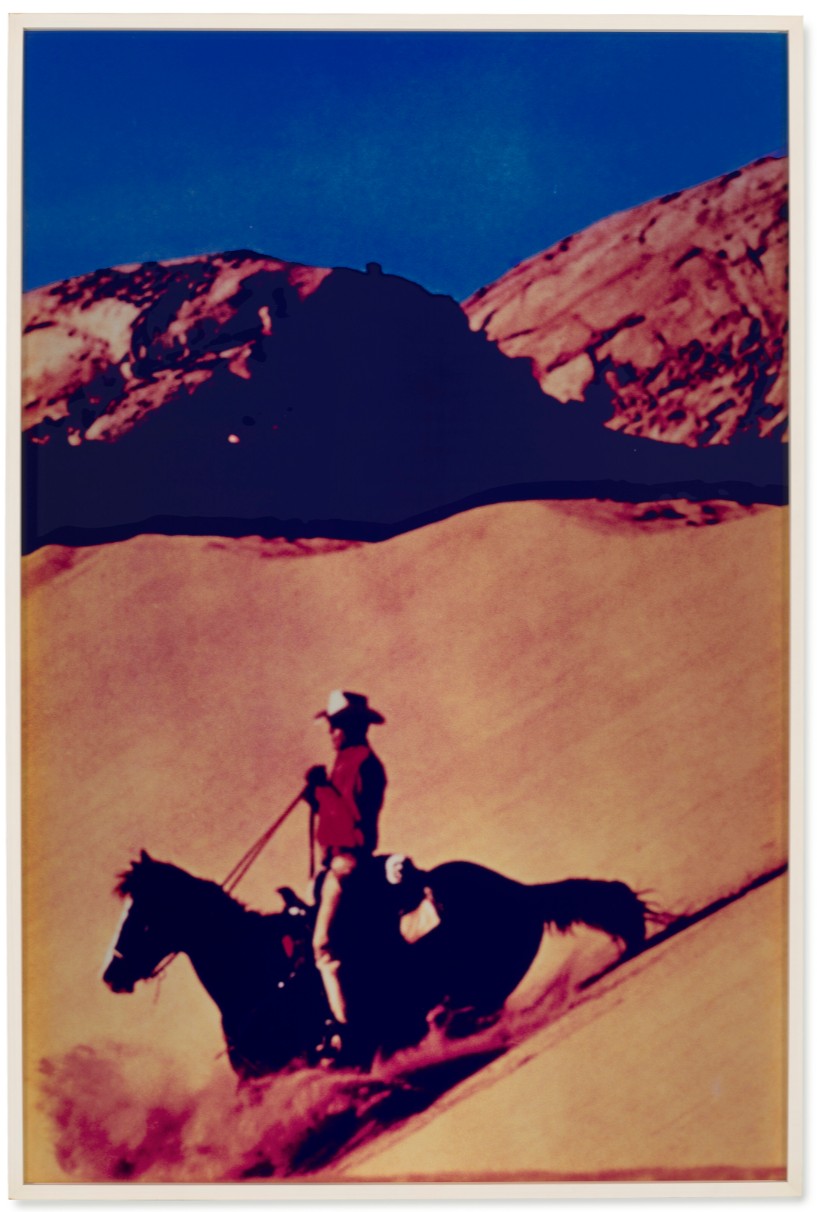
RICHARD PRINCE (B. 1949)
Untitled (Cowboy), 1994
Ektacolor print
59-7/8 x 39-7/8 inches (152.1 x 101.4 cm)
This work is number two from an edition of two, plus one artist’s proof
#3. Farther South and Elsewhere, 2015
Works from the Zabludowicz Collection
Christie’s London: 25 June 2025
Estimated: GBP 1,000,000 – 1,500,000
GBP 1,270,000 / USD 1,676,320
MARK BRADFORD (B. 1961), Farther South and Elsewhere | Christie’s
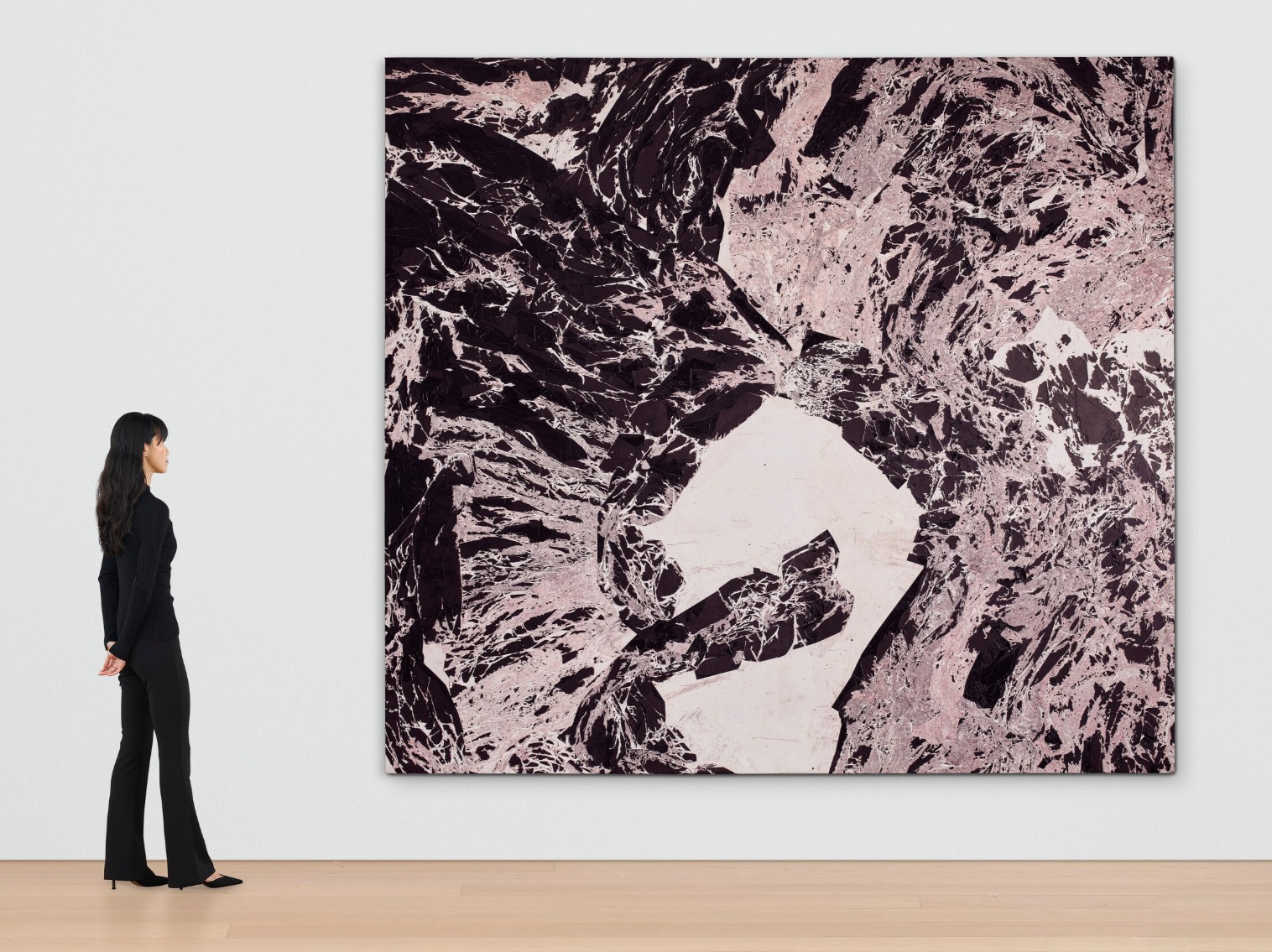
MARK BRADFORD (B. 1961)
Farther South and Elsewhere, 2015
Mixed media collage on canvas
120 x 132-1/8 inches (304.8 x 335.7 cm)
Signed, titled and dated ‘Farther South and Elsewhere Mark Bradford 2015’ (on the reverse)
GBP 1 million
#4. Untitled Broken Crowd, 2021
Works from the Zabludowicz Collection
Christie’s London: 25 June 2025
Estimated: GBP 800,000 – 1,200,000
GBP 952,500 / USD 1,257,240
RASHID JOHNSON (B. 1977), Untitled Broken Crowd | Christie’s
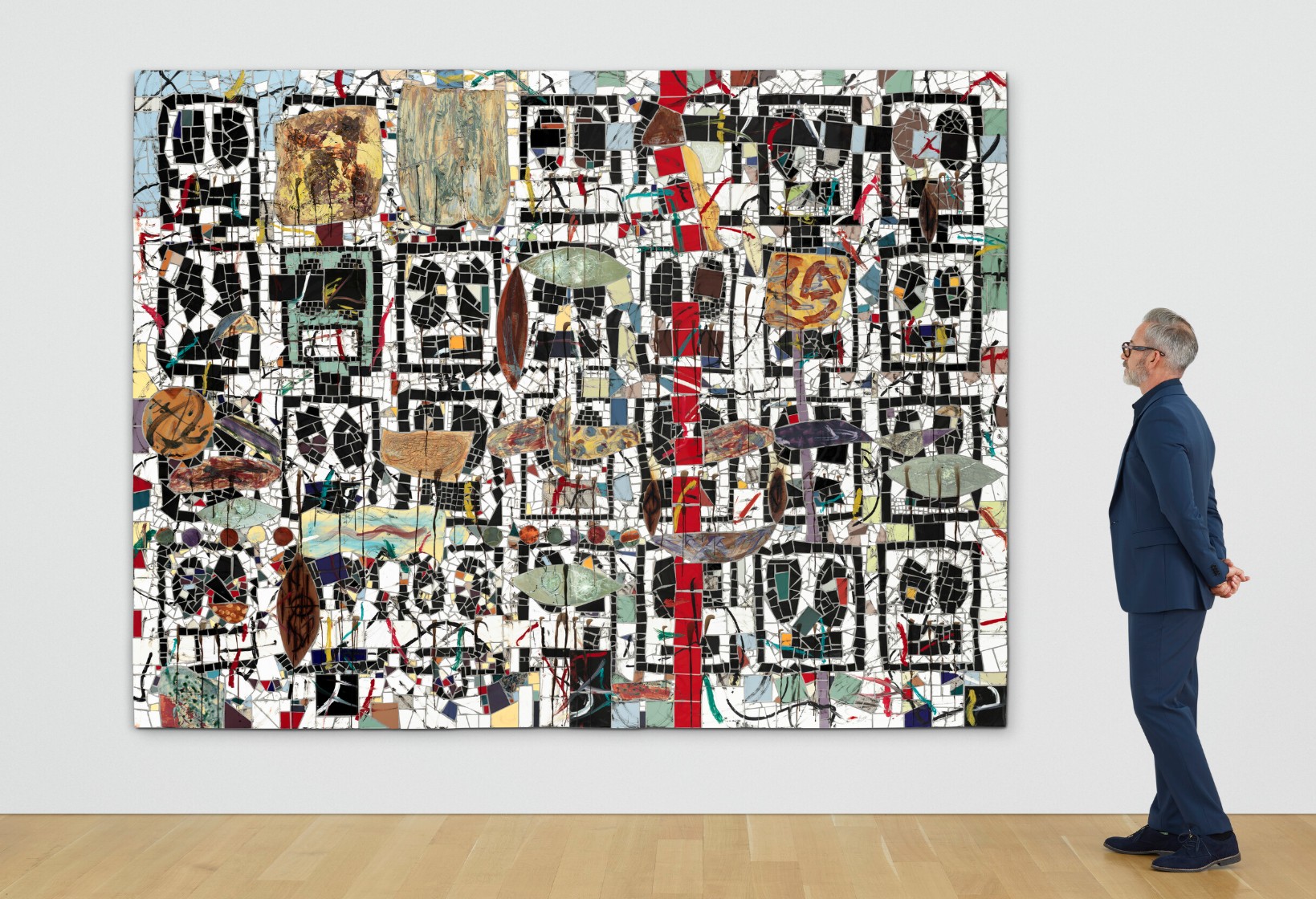
RASHID JOHNSON (B. 1977)
Untitled Broken Crowd, 2021
Ceramic tile, mirror tile, branded red oak, spray enamel, oil stick, black soap and wax, in two parts
Overall: 94-3/4 x 124-3/8 inches (240.8 x 316 cm)
#5. Your Dog, 2002
Works from the Zabludowicz Collection
Christie’s London: 25 June 2025
Estimated: GBP 550,000 – 850,000
GBP 787,400 / USD 1,039,320
YOSHITOMO NARA (B. 1959), Your Dog | Christie’s
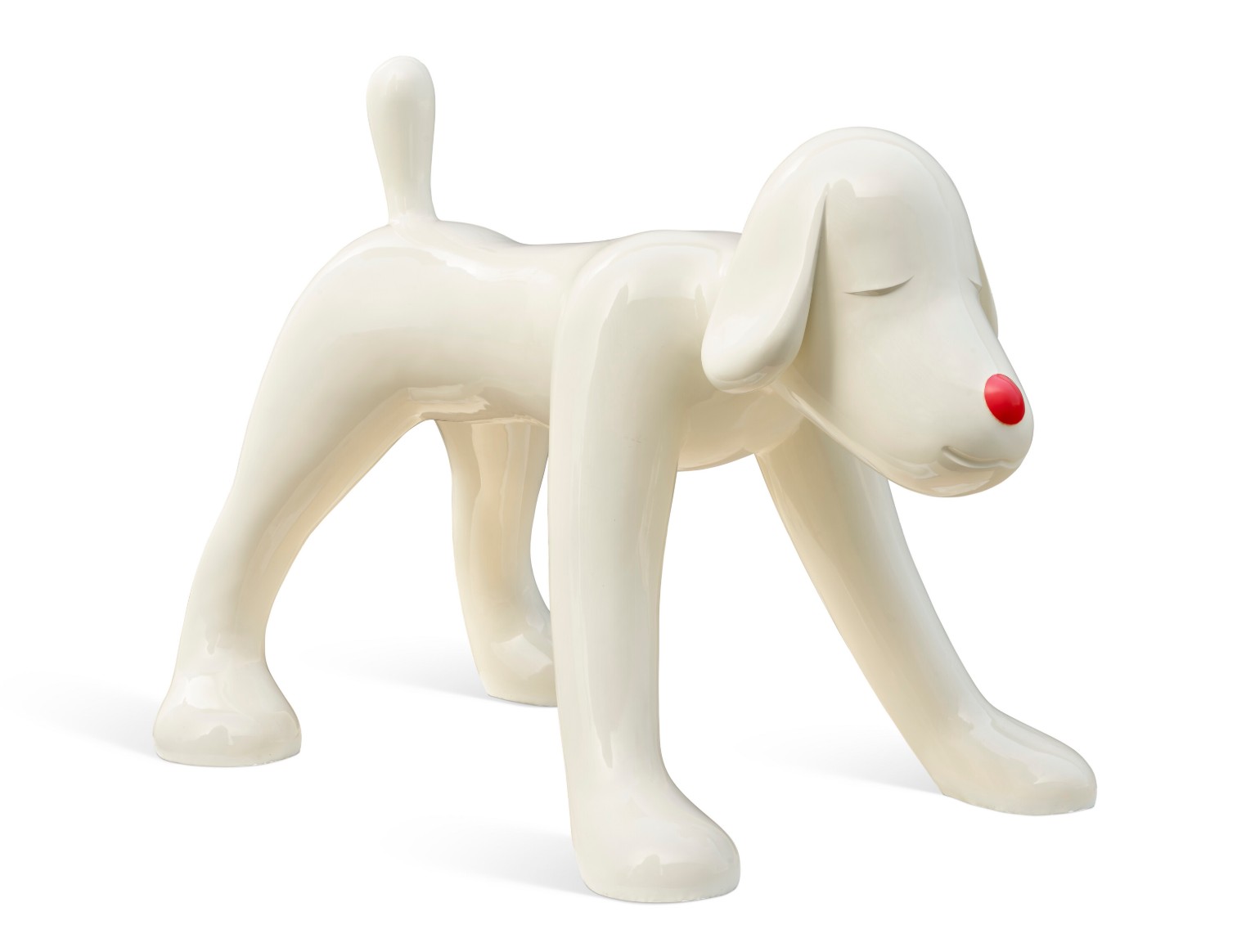
YOSHITOMO NARA (B. 1959)
Your Dog, 2002
Lacquer and urethane on FRP
183x265x149 cm (72 x 104-3/8 x 58-5/8 inches)
This work is the artist’s proof number two from an edition of six plus two artist’s proofs
#6. I Love You, 1994-95
Works from the Zabludowicz Collection
Christie’s London: 25 June 2025
Estimated: GBP 600,000 – 800,000
GBP 762,000 / USD 1,005,790
DAMIEN HIRST (B. 1965), I Love You | Christie’s
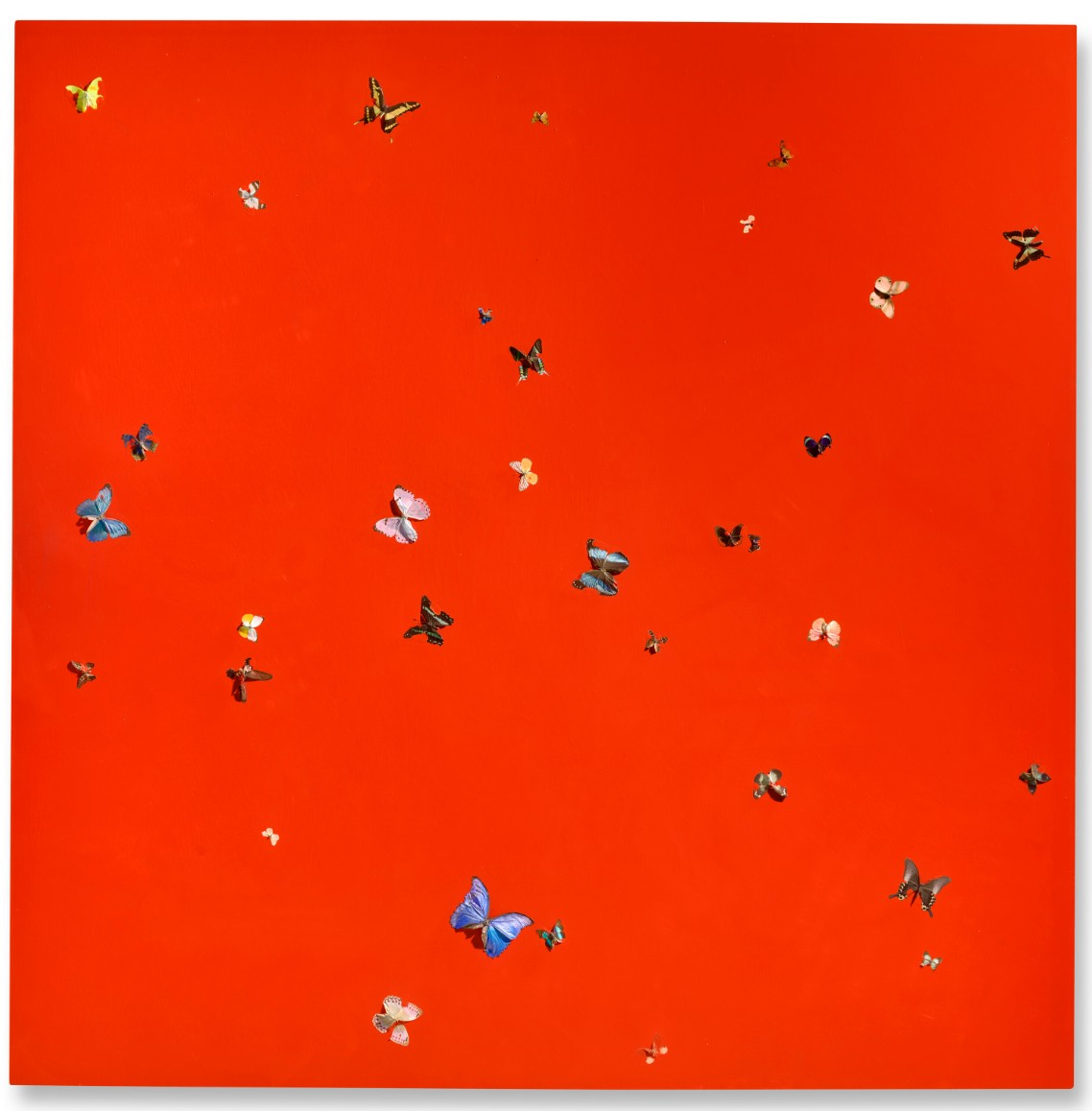
DAMIEN HIRST (B. 1965)
I Love You, 1994-95
Household gloss and butterflies on canvas
84×84 inches (213.3 x 213.3 cm)
Modern & Contemporary Art
Evening & Afternoon Sale
26 June 2026
Modern & Contemporary Art Evening & Afternoon Sale Friday, June 26, 2026
#1. The Only One with Waves, 1991
Property of an Important Collector
Phillips London: 26 June 2026
Estimated: GBP 1,800,000 – 2,500,000
GBP 2,423,000 / USD 3,198,205
David Hockney Modern & Contemporary Art Evening & Afternoon Sale
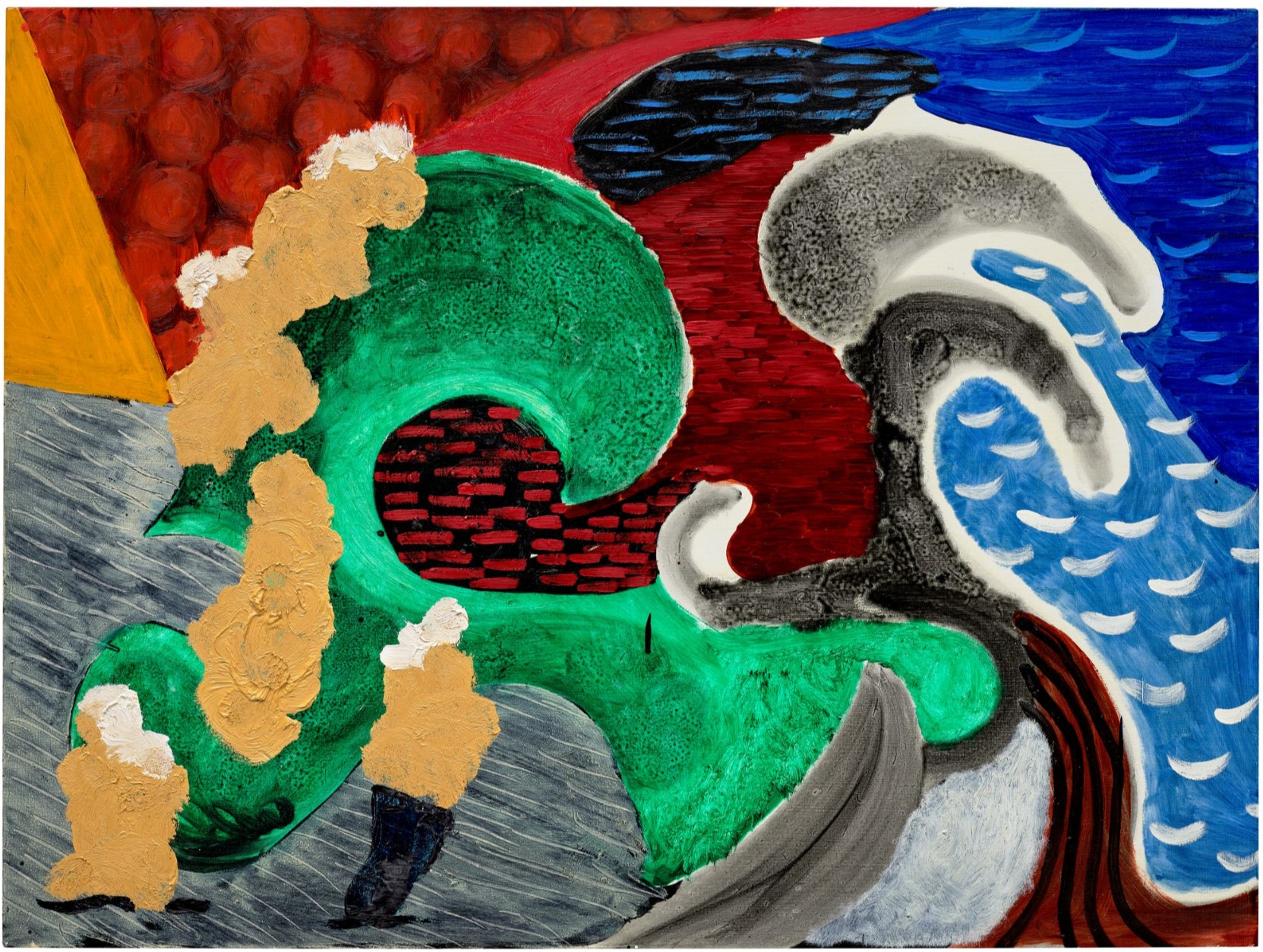
DAVID HOCKNEY
The Only One with Waves, 1991
Oil on canvas
35 7/8 x 48 inches (91.4 x 122 cm)
Signed, titled and dated ‘The Only One with Waves David Hockney 1991’ on the reverse
#2. INFINITY-NETS (MAE), 2013
Phillips London: 26 June 2026
Estimated: GBP 800,000 – 1,200,000
GBP 1,548,000 / USD 2,043,260
Yayoi Kusama Modern & Contemporary Art Evening & Afternoon Sale
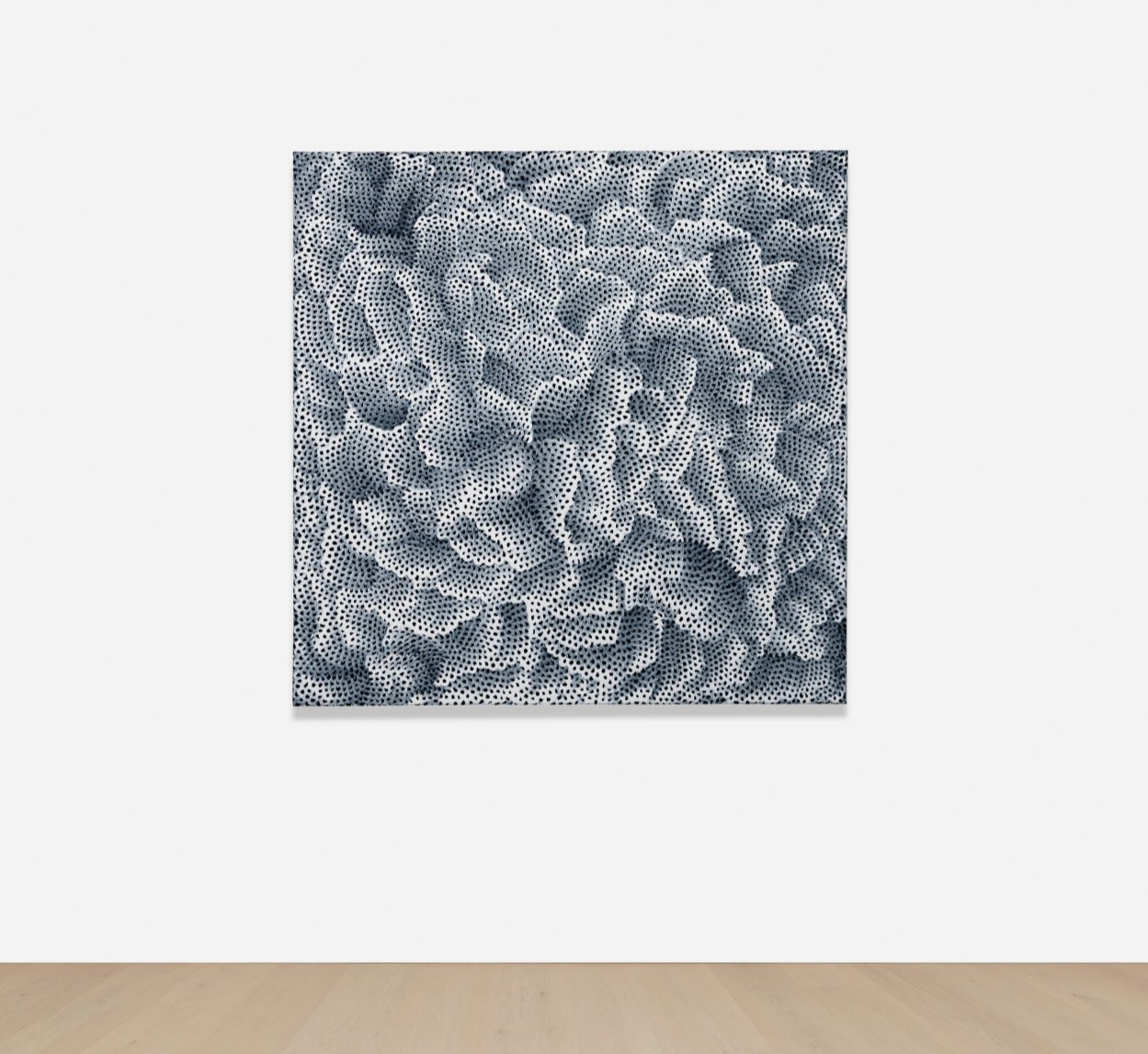
YAYOI KUSAMA
INFINITY-NETS (MAE), 2013
Acrylic on canvas
130×130 cm (51-1/8 x 51-1/8 inches)
Signed, titled and dated ‘”MAE INFINITY. NETS” YAYOI KUSAMA 2013’ on the reverse
Rashid Johnson
Untitled Broken Crowd, 2021
Works from the Zabludowicz Collection
Christie’s London: 25 June 2025
Estimated: GBP 800,000 – 1,200,000
GBP 952,500 / USD 1,257,240
RASHID JOHNSON (B. 1977), Untitled Broken Crowd | Christie’s
RASHID JOHNSON (B. 1977)
Untitled Broken Crowd, 2021
Ceramic tile, mirror tile, branded red oak, spray enamel, oil stick, black soap and wax, in two parts
Overall: 94-3/4 x 124-3/8 inches (240.8 x 316 cm)
Untitled Broken Crowd (2021) is a dazzling monumental work from one of Rashid Johnson’s most celebrated series. Twenty-eight faces emerge from a melee of ceramic tiles, mirror and branded wood. The mosaic is overlaid with colorful spray-paint, oilstick, splashed black soap and wax. Somewhere between sculpture and painting, the composition is charged with the energy and chaos of contemporary life, displaying identities in kaleidoscopic flux. Works from the ‘Broken’ series are held in institutions including the San Francisco Museum of Modern Art, the Philadelphia Museum of Art and the Art Gallery of New South Wales, Sydney: in New York alone, they are represented in the Metropolitan Museum of Art, the Whitney Museum of American Art and the Solomon R. Guggenheim Museum. Johnson has also created two colossal, site-specific mural commissions, The Broken Nine (2020-2021) and “The Travelers” Broken Crowd (2022), for the Metropolitan Opera and LaGuardia Airport.
“My work has always had concerns around race, struggle, grief and grievance, but also joy and excitement around the tradition and opportunities of Blackness.”
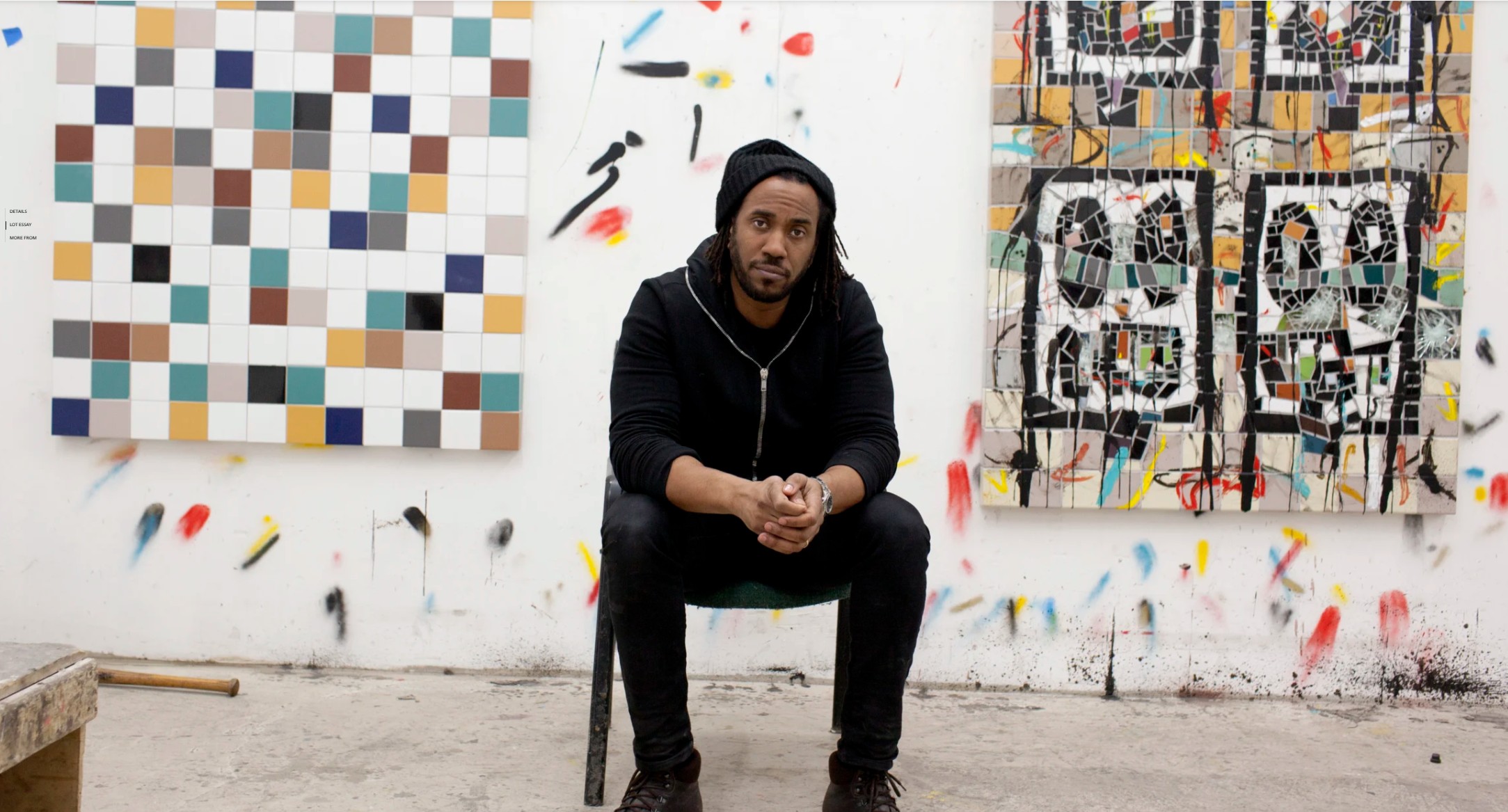
Rashid Johnson in his studio, 2019. Photo: Lexie Moreland/WWD via Contour RA by Getty Images.
Artwork: © Rashid Johnson. Courtesy the artist and Hauser & Wirth.
Honored last year with a landmark mid-career retrospective at the Guggenheim, Johnson first made waves as the youngest artist in Thelma Golden’s 2001 group exhibition ‘Freestyle’ at the Studio Museum in Harlem: a seminal moment in what came to be known as ‘post-Black’ art. Expanding from his early photographic practice, he went on to build cosmologies of varied media and domestic objects—including piles of books, tropical plants, shea butter and record covers—in a complex engagement with aspects of African-American intellectual history, collective identity and experience. The ‘Broken’ series evolved from Johnson’s ‘Anxious Men’, begun in 2015, which depicted wild-eyed faces in black wax on grids of white tiling. Johnson conceived of them as spectators to an agitated time: ‘global immigration issues, attacks on America, and attacks within America by police on young black men’ (R. Johnson quoted in C. Kino, ‘Rashid Johnson: An Anxious Man’, Cultured Magazine, Fall 2016, p. 175). With the ‘Broken’ series, he pushed the figures to breaking point, and took his practice to intricate, ambitious new heights.
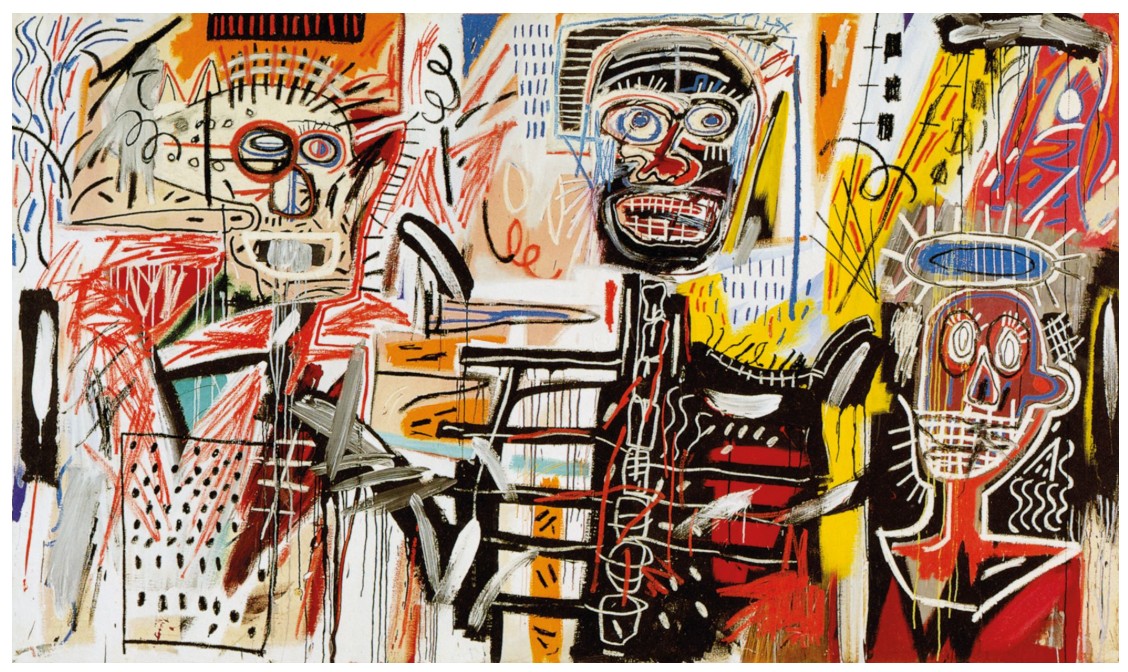
Jean-Michel Basquiat, Philistines, 1982. Private collection. Artwork: © Estate of Jean-Michel Basquiat. Licensed by Artestar, New York.
The present work’s material riches invoke a wide array of associations, variously personal, poetic and political. The tiles—as in the earlier ‘Anxious Men’—echo the social space of the Russian bath house the artist attended in Chicago during his twenties. Johnson was further inspired by the variegated techniques of the Catalan Modernist Antoni Gaudí, whose work he encountered in Barcelona. The faces are assemblies of countless small shards, with some blocked out in single ceramic elements, glazed, daubed and incised with lines. Painted loops and scrawls and strips of tiled color electrify the composition. Sections of branded red oak—recalling the scorched wooden works Johnson showed at the 2011 Venice Biennale, which evoked the violence of the transatlantic slave trade—are inlaid among fragments of mirror. When the viewer looks closely, their own broken reflection becomes part of the work.
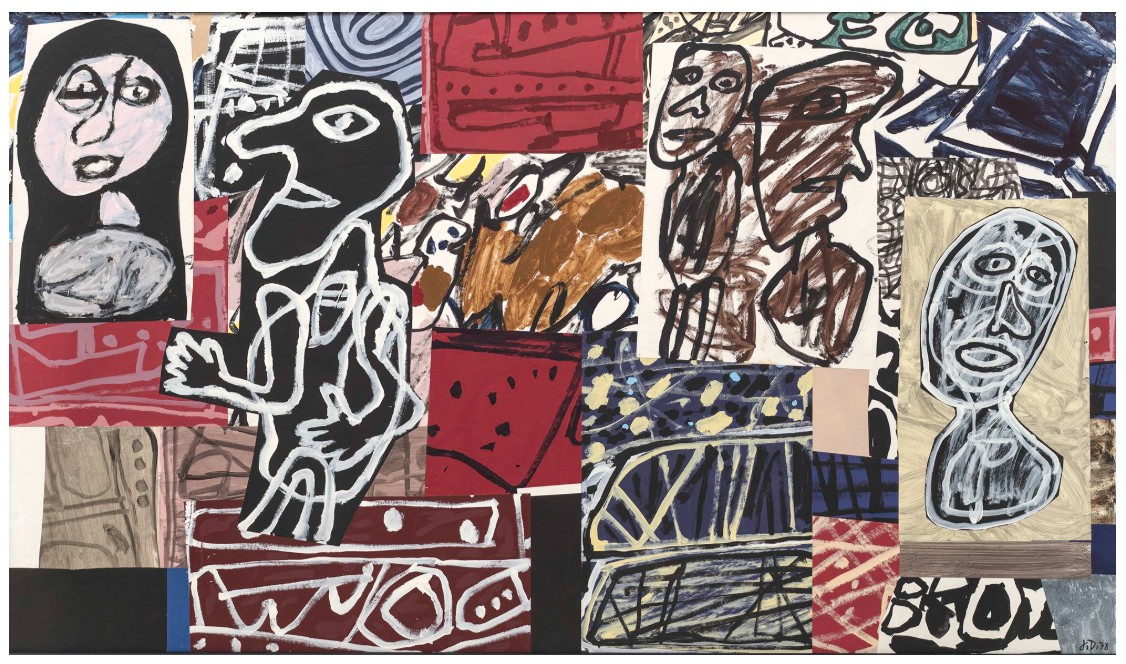
Jean Dubuffet, The Misunderstanding (La Mésentente), 1978. The Solomon R. Guggenheim Foundation, New York. Artwork: © 2026 Jean Dubuffet / DACS. Digital image: © 2026 The Solomon R. Guggenheim Foundation/Art Resource, NY/ Scala, Florence.
Black soap, another longstanding material in Johnson’s art, is typically exported from West African countries such as Ghana. It is popular among African-Americans, he has explained, ‘a way to culturize oneself in Africanness as you’re exploring or looking for an identity, especially in a country that has had such a complicated history with the people’ (R. Johnson quoted in P. Laster, ‘An interview with Rashid Johnson: “I was more African before going to Africa,”’ Conceptual Fine Arts, 26 October 2016). The splashed substance here, mixed with hot wax, evokes a reach for identity amid the work’s visual confusion. Johnson also weaves in ancient art history, repeating an almond shape that represents the intersection of two circles—a Byzantine symbol of the divine. At the same time, this motif echoes the shields of warriors seen in the South African TV series Shaka Zulu, which Johnson grew up watching in the 1980s.
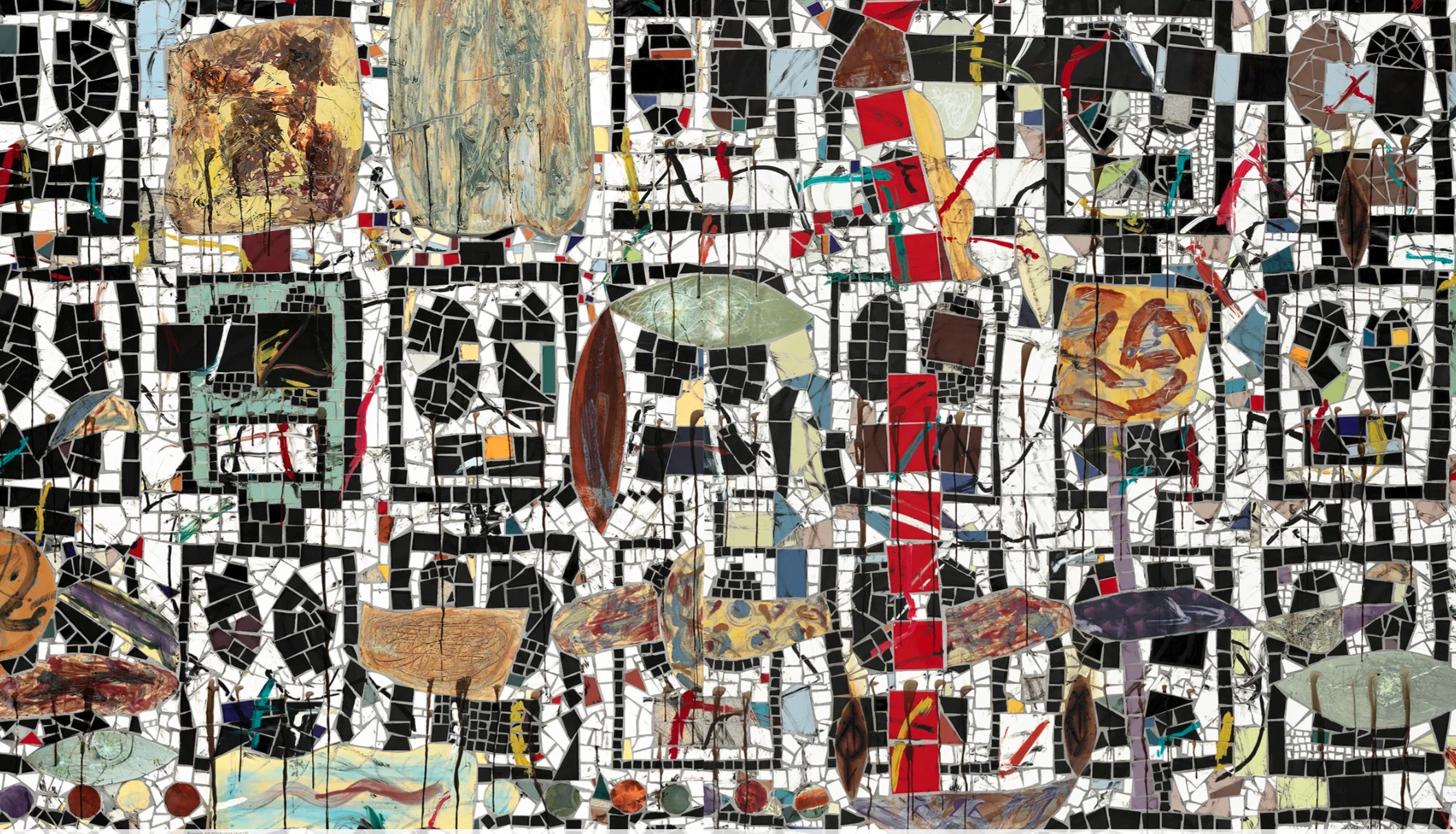
Where the ‘Anxious Men’ were expressions of overwhelming alarm, Untitled Broken Crowd invites multivalent readings in its intricate, glittering surface. ‘My work has always had concerns around race, struggle, grief and grievance,’ Johnson explains, ‘but also joy and excitement around the tradition and opportunities of Blackness.’ Although they have been shattered, the artist in some sense makes his figures whole again. Survivors, witnesses and stand-ins for the artist himself, they are emblems of the strength of community, and of Johnson’s own triumphs over adversity. ‘They’ve definitely been through something,’ he says, ‘but those experiences they’ve had to negotiate are maybe the ones that have left good scars’ (R. Johnson quoted in H. M. Sheets, ‘In Rashid Johnson’s Mosaics, Broken Lives Pieced Together’, The New York Times, 23 September 2021).
George Condo
Zombie Modernism, 2015
Sotheby’s London: 25 June 2026
Estimated: GBP 600,000 – 800,000
George Condo | Zombie Modernism | Contemporary Day Auction | 2026 |
GEORGE CONDO (b. 1957)
Zombie Modernism, 2015
Oil and pigment stick on linen
78-1/8 x 74-1/8 inches (198.5 x 188.3 cm)
Signed and dated 2015 (on the reverse)
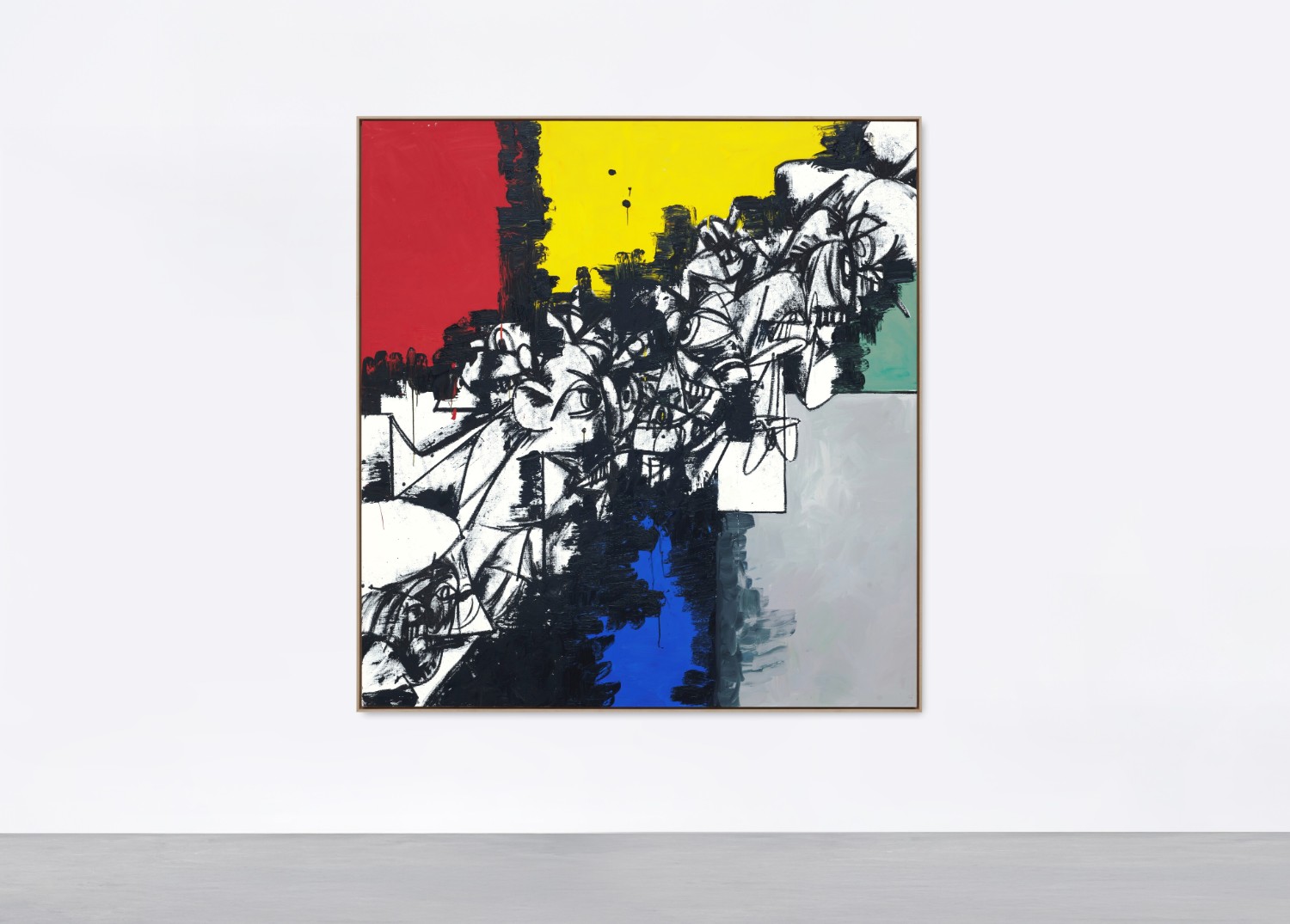
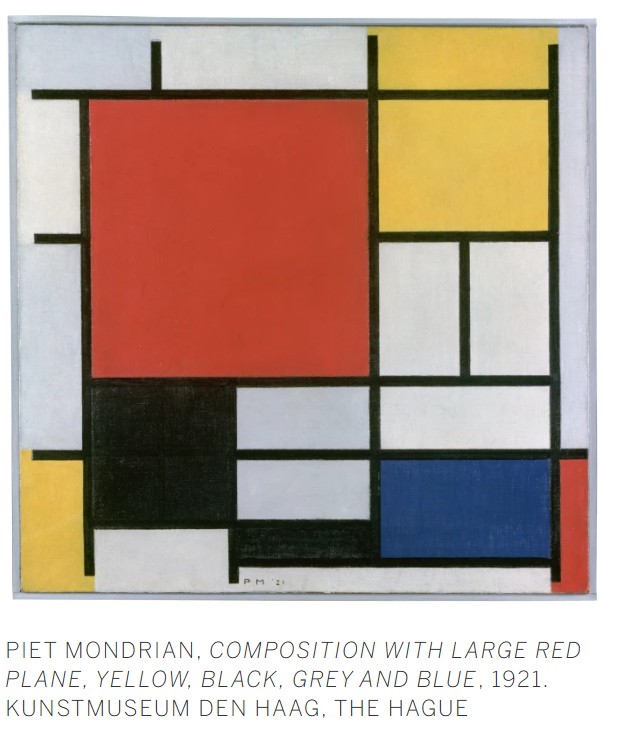
George Condo’s Zombie Modernism stands as a compelling example of the artist’s mature practice, synthesising abstraction and figuration while interweaving original invention with canonical art-historical reference. Blocks of bold, modular colour form a structured base beneath a tumultuous accumulation of abstracted forms and corporeal fragments. Eyes, teeth, and ears, which are rendered in Condo’s distinctive cartoon-inflected idiom, emerge from a dense entanglement of limbs and geometric shapes, generating a pronounced sense of upward momentum. While the chromatic flatness of the background evokes the compositional rigor of Piet Mondrian’s de Stijl paintings, Condo deliberately disrupts this order through dry, expressive black brushstrokes and errant drips that fracture the modular clarity of the color fields.
The dismembered and reassembled body parts occupying the foreground reflect Condo’s longstanding engagement with Cubism, recalling the fractured anatomies of Pablo Picasso, Georges Braque, and Fernand Léger. Simultaneously, the palpable dynamism of the composition resonates with Italian Futurism, particularly the work of Umberto Boccioni and Giacomo Balla, whose paintings sought to encapsulate movement and simultaneity within a single pictorial frame. Yet, through its title, Zombie Modernism is firmly anchored in the contemporary moment, collapsing historical reference into the present moment through a distinctly Pop culture sentiment. In doing so, Condo forges a dialogue between modernist tradition and twenty-first-century cultural anxieties.
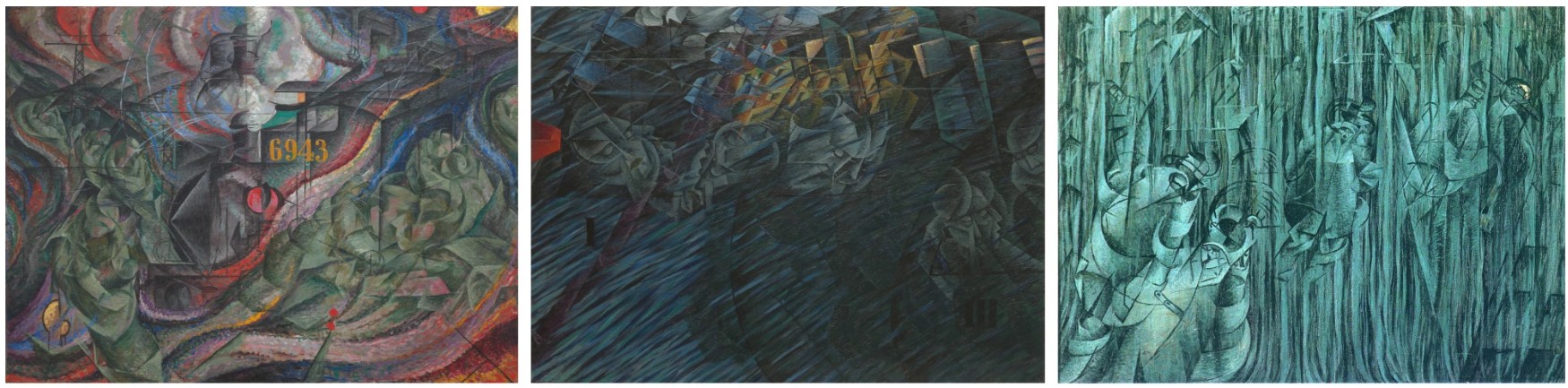
Left: Umberto Boccioni, States of Mind I: The Farewell, 1911. The Museum of Modern Art, New York
Centre: Umberto Boccioni, States of Mind II: Those Who Go, 1911. The Museum of Modern Art, New York
Right: Umberto Boccioni, States of Mind III: Those who Stay, 1911. The Museum of Modern Art, New York
The work was first exhibited in Condo’s 2016 solo exhibition Entrance to the Void, a pivotal moment in his career that consolidated the diverse stylistic modes he had developed over decades. The exhibition explored the conceptual “void” between figuration and abstraction, offering a nuanced reflection on Condo’s evolving approach to painting. By merging references to his own artistic lexicon with the broader trajectories of art history, Entrance to the Void articulated Condo’s progressive stance toward the medium. The paintings from this series demonstrate his capacity to evoke pathos through fragmented corporeal detail, presenting human existence as simultaneously tragic, comic, and disorienting.
Exuberant in its use of saturated color and assertive in its expressive mark-making, Zombie Modernism exemplifies Condo’s sustained interrogation of portraiture. Alongside contemporaries such as Jean-Michel Basquiat and Keith Haring, Condo played a critical role during the 1980s in reimagining figurative painting through the fusion of representational and abstract vocabularies. As his practice evolved, he coined the terms ‘artificial realism’ and ‘psychological cubism’ to describe his hybrid methodology, which fuses Old Master conventions with the fractured perspectives of Cubism in order to articulate complex psychological states.
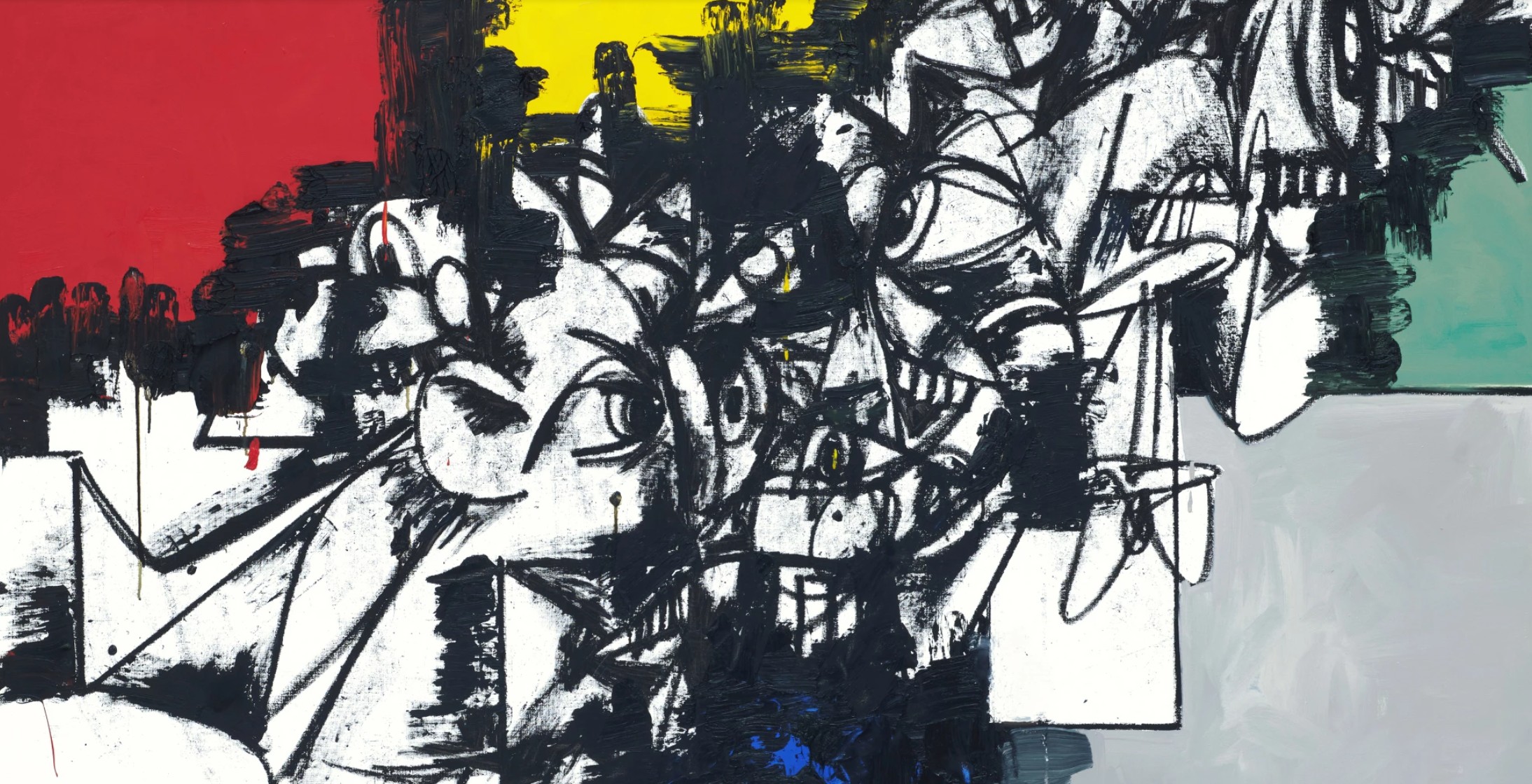
In Zombie Modernism, the central figure is presented as a bust, a compositional format rooted in Italian Renaissance portraiture, yet destabilized through a multiplicity of converging viewpoints. The figure expands toward the edges of the canvas, its extremities dissolving into a vivid red ground. While the subject’s identity remains ambiguous, exaggerated breasts imply femininity, juxtaposed against a shattered visage composed of purple, orange, and green chromatic planes, tenuously contained by thick black outlines. Teeth, eyes, and hair collide and fragment, challenging the viewer’s ability to coherently read the image. Through this process of continual assembly and disassembly, Condo constructs a portrait that resists fixity, proposing instead a fluid and destabilized conception of identity.
Thus, Zombie Modernism encapsulates the defining concerns of George Condo’s later oeuvre: the synthesis of historical reference and contemporary critique, the collapse of figuration into abstraction, and the psychological complexity embedded within portraiture. The work demonstrates an artist operating with remarkable confidence and freedom, unencumbered by stylistic constraint and fully engaged in testing the expressive limits of painting. By drawing upon centuries of art-historical precedent while simultaneously subverting them, Condo achieves a composition that is both referential and radically inventive. As such, Zombie Modernism stands as an exceptional and emblematic work within his mature practice, affirming Condo’s enduring relevance and his incisive redefinition of modern portraiture.
David Hockney
The Only One with Waves, 1991
Property of an Important Collector
Phillips London: 26 June 2026
Estimated: GBP 1,800,000 – 2,500,000
GBP 2,423,000 / USD 3,198,205
David Hockney Modern & Contemporary Art Evening & Afternoon Sale
DAVID HOCKNEY
The Only One with Waves, 1991
Oil on canvas
35 7/8 x 48 inches (91.4 x 122 cm)
Signed, titled and dated ‘The Only One with Waves David Hockney 1991’ on the reverse
When David Hockney painted The Only One with Waves in 1991, the artist experienced profound changes in his life and his surroundings. Opened up by the world of the stage and spectacle while working on opera sets, Hockney simultaneously turned to the inspiration and respite afforded by the sun-hued vistas of the Southern Californian coast. Realized with a chromatic brilliance and fluid, essentialized style, The Only One with Waves draws upon the themes of his greatest paintings — a journey that has seen Hockney tenderly chronicle his own life through the landscapes and places he inhabited.
“When you live […] close to the sea, when it literally comes up and splashes the windows, it is not the horizon line that dominates, but the close movement of the water itself. It’s like fire and smoke, endlessly changing, endlessly fascinating.”
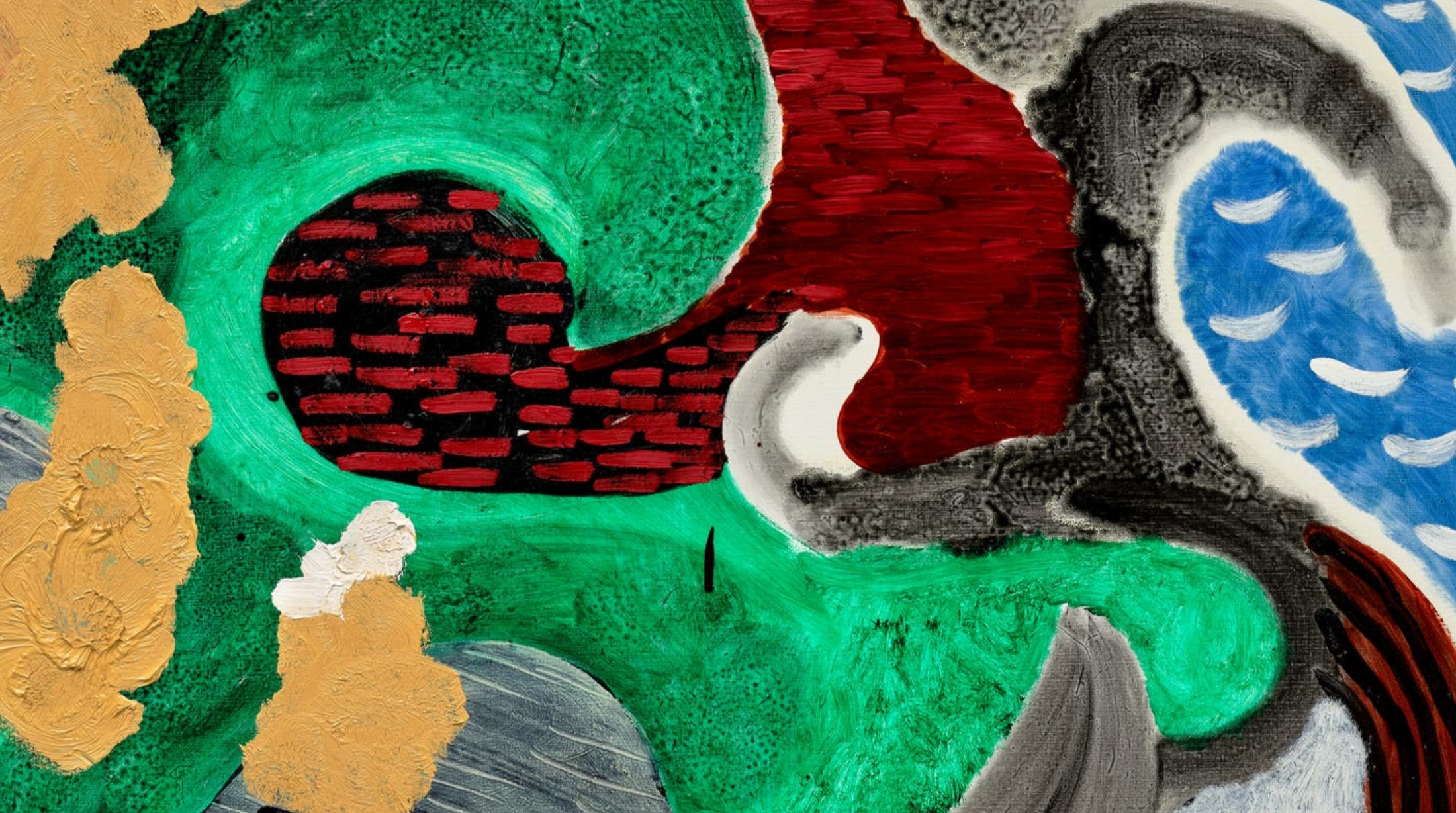
The Only One with Waves was first exhibited in a suite of works presented at Richard Gray Gallery in Chicago at the beginning of 1992. Anticipating the series of Very New Paintings conceived in 1992, Hockney approached the canvas here with the same gusto and tenacity, constructing space as he approached the stage. In abbreviating the elements of the landscape into their key attributes, heightening the sweeping contours and salty foams of breaking waves, using a flattened pictorial space, Hockney communicates a theatrical dynamism. The Only One with Waves marks the ever-present vivacity of Hockney in the middle of his career — an energy that poured into the subsequent years passed in Yorkshire, London and Normandy.
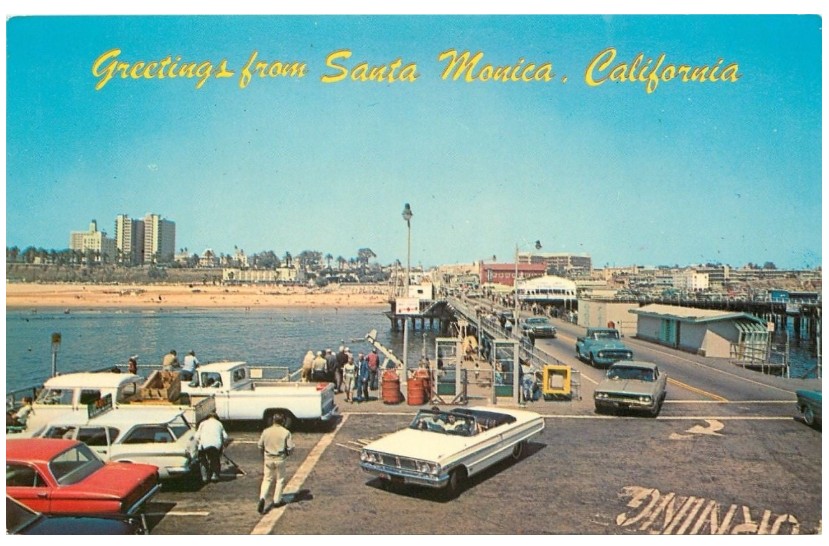
Postcard of Santa Monica Pier, circa 1960
Born in the industrial city of Bradford, West Yorkshire in 1937, as a young student at his local art school and then in London, Hockney looked to the freedom and excitement provided by travel. Having saved enough from the sale of paintings after graduating from the Royal College of Art to travel in 1963 to Egypt and then New York, by 1964 Hockney first arrived in California and set up his studio in Santa Monica. Though Hockney only permanently moved to Los Angeles in the summer of 1978, from his first trip the Southern Californian climate and light left an enduring impression.
“I was brought up in Gothic gloom […] I’m a bit like van Gogh. He’s a northerner who went to the sun. He thought there was more joy in the sun, and I tend to think that as well.”
At the time Hockney painted The Only One with Waves, the artist continued to find fresh stimuli from the simmering light and radiant colours of California while revisiting key subjects that he had scrutinized and refined over the course of his career. From his long-term neighborhood of the Hollywood Hills, by the end of the 1980s Hockney had also purchased a coastal home in Malibu. Maintaining the residence’s bohemian, seaside charm — even painting his bedroom walls inspired by the pinks and greens of a Matisse wallpaper — the house’s vantage point overlooking the Pacific Ocean allowed Hockney to study the wild, capricious forces of the ocean with greater proximity. Breathing new life into Hockney’s lifelong fascination with water’s alchemy, the shimmering fields of his first pool paintings especially resonate here. During his early years in California, Hockney sought to convey the complexities of liquid’s ability to reflect and refract light with veristic precision in A Bigger Splash (1967) or with the looser, serpentine ripples of Sunbather (1966). Using the same sense of pattern-like mark making as the latter yet clarified into shorter, more abbreviated strokes, in The Only One with Waves Hockney emulates the same sparkling waters, except now taking the open expanse of Pacific — a subject he aptly described as ‘the largest swimming pool in the world’. The experience of ‘studying the movement of water’ in Malibu left a lasting impression, leaving Hockney in ‘a profound meditative state’ and energized by the horizon’s ‘endlessly changing, endlessly fascinating’ state.
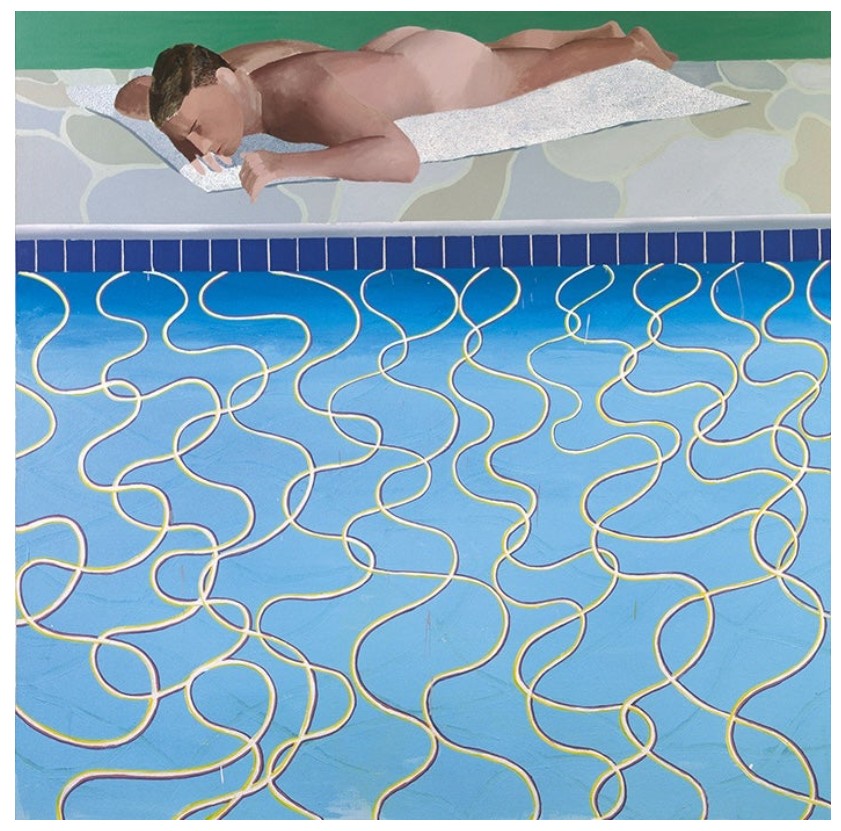
David Hockney, Sunbather, 1966, Museum Ludwig, Cologne. Artwork: © David Hockney
Concurrent to his days spent in Malibu, Hockney continued to develop his interest in art’s broad parameters and its intersection with music, design and performance. Having first seen Puccini’s La Bohème as a boy, Hockney was commissioned by the Lyric Opera of Chicago and the San Francisco Opera to take on the lyric heights of another one of the composer’s classics, Turandot. With his experience producing stage sets including The Rake’s Progress (1975) and The Magic Flute (1978), Turandot was scheduled to open in 1992 and saw Hockney continue to work on ambitious proportions – he even transformed his tennis court in the Hollywood Hills into a studio to fully comprehend the practicalities of staging.
“I said long ago that I thought of all my paintings as drama. Some of my early pictures have titles such as Theatrical Landscape. I was always interested in the theatre because it is about creating illusion in space.”
A project that was shortly followed by the end of 1992 with the production of Richard Strauss’ Die Frau ohne Schatten at London’s Royal Opera, during these years Hockney deepened his understanding of working in ‘three dimensions […] chopping up space using colour, using texture using line’. Placing himself in dialogue with the long legacy of artists from Pablo Picasso to Salvador Dali who explored the arena of theatre and spectacle, Hockney brings forth his understanding of illusions and the elasticity of space in The Only One with Waves. Focusing primarily on the ‘architectural’ dimensions of stage for Turandot, the sweeping roofs of the imperial palace rendered in fictive, luminous color find rich parallel in the curvilinear, natural forms of The Only One with Waves. With the sweeping, looping gestures metaphorically embodying the lyricism of the opera’s high octaves, Hockney’s hearing had been declining in the 1990s: a state that seems to have heightened his ability to intensify the complexity of the visual experience and internal rhythms embodied by the seascape.
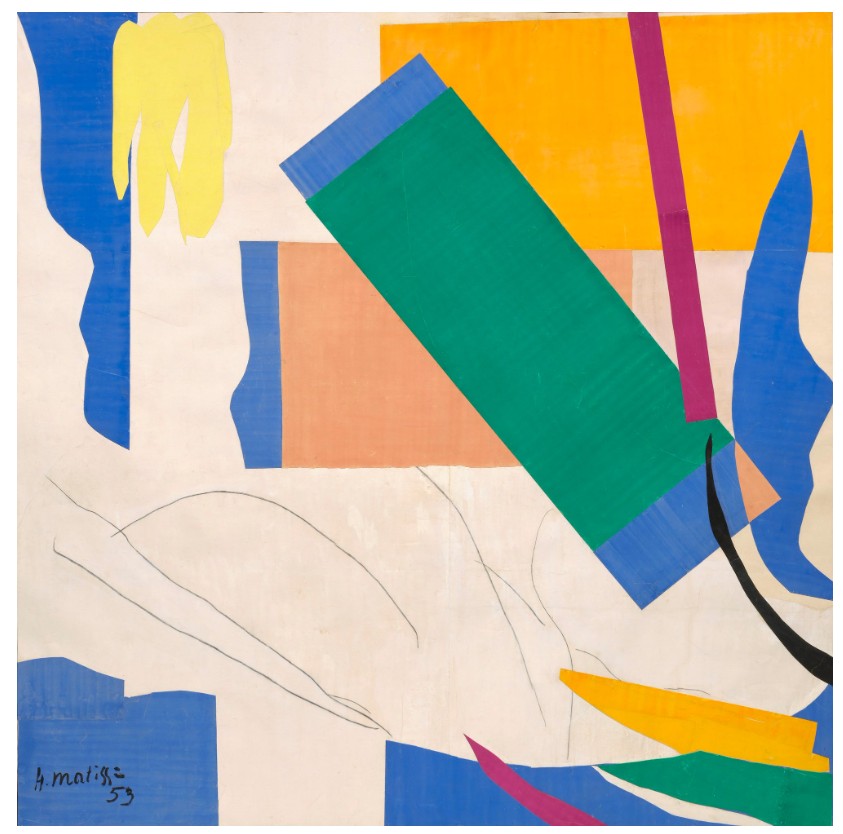
Henri Matisse, Memory of Oceania, 1952-1953, The Museum of Modern Art, New York.
Image: The Museum of Modern Art, New York/Scala, Florence
Radically eluding fixed, single point perspective and realized in a shallow pictorial space, Hockney generates a sense of depth through the layering of the breaking waves and foams, drawing upon the lessons of Analytical Cubism. As Hockney experimented with innovative mediums like photocollage at the beginning of the 1980s to explore perspective through the camera lens, in The Only One with Waves Hockney again combines multiple viewpoints and parallel fragmentation of the surroundings while in color, evoking the Fauves. Connecting to the cutouts of Henri Matisse and his Memory of Oceania, like Matisse who had synthesized his memories of his 1930 trip to Tahiti into their core, essential elements, Hockney uses parallel plains of vivid hues. Working with more descriptive line, Hockney invokes nature’s lasting power and ability to inspire, seeing his passion for place and sensitivity to composition and colour come into sharp focus. An ode to the sea’s raw beauty and frothing sprays, through The Only One with Waves Hockney appeals to the viewer’s most primal senses and offers a glimpse into the joy possible through a life spent on the simple act of observing.
Two Chairs and a Wooden Spoon, July 1988
Sotheby’s London: 24 June 2026
Estimated: GBP 1,200,000 – 1,800,000
GBP 2,164,000 / USD 2,856,345
David Hockney | Two Chairs and a Wooden Spoon, July 1988 | Modern &
DAVID HOCKNEY (1937 – 2026)
Two Chairs and a Wooden Spoon, July 1988
Oil on canvas
24×24 inches (61×61 cm)
Signed and titled (on the reverse)
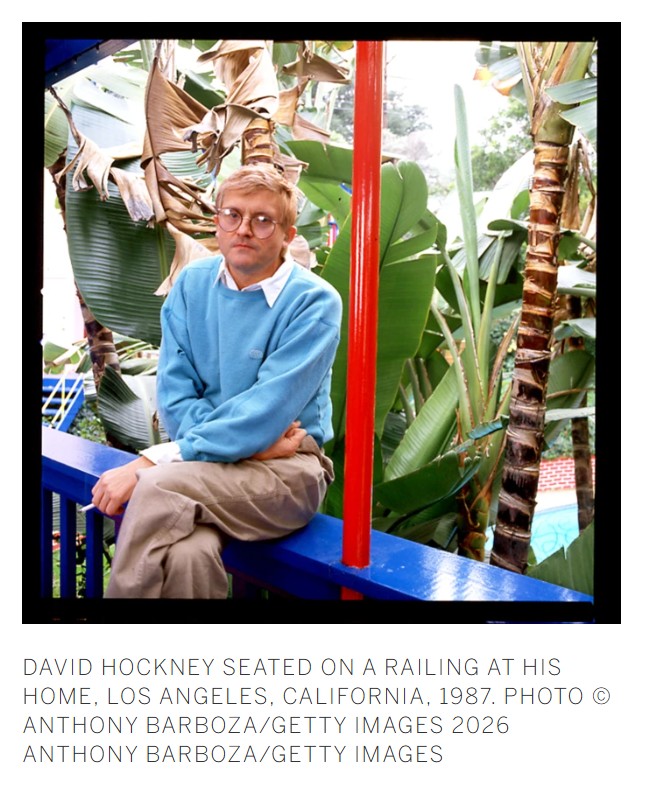
Never before seen in public, Two Chairs and a Wooden Spoon, July 1988 emerges from a moment in which David Hockney’s practice had come to exert a distinctly generational influence, as he continued to expand and recalibrate the possibilities of pictorial space through a sustained investigation into perception itself. Executed in the summer of 1988, the composition is dominated by a faceted wooden structure populated by two chairs, a wooden spoon and a cluster of enigmatic forms, unfolding within a theatrical setting framed by rich crimson drapery, beyond which stretches a brilliant expanse of blue sky and drifting clouds. 1988 marked a period of extraordinary professional acclaim for the artist. Hockney’s major retrospective opened at the Los Angeles County Museum of Art before travelling to the Metropolitan Museum of Art in New York and Tate Gallery in London, becoming one of the most celebrated exhibitions of his career. That same year, Hockney returned to the medium of painting with full furor, embarking on a series of outstanding works representing the living room and veranda of his Hollywood Hills studio that the artist referred to as “narrative abstractions.” Hockney’s renewed intensity for and love of painting followed the success of his stage designs for Wagner’s Tristan und Isolde; the artist’s operatic design debut with a now legendary 1987 production at the Los Angeles Music Center Opera directed by Jonathan Miller and conducted by Zubin Mehta. Indeed, remaining in the same private collection since it was acquired from Knoedler Gallery in 1988, when it was due to have been shown at Same New Paintings, but sold prior, Two Chairs and a Wooden Spoon, July 1988 has remained effectively suspended within this remarkable moment in the artist’s trajectory, preserving the spirit of enquiry that animated Hockney’s most ambitious paintings of the period.
At the heart of the painting lies a challenge to the fixed conventions of Renaissance perspective. Throughout the 1980s Hockney became increasingly dissatisfied with the notion that a single viewpoint could adequately represent lived experience, arguing instead that vision unfolds through movement, memory and the accumulation of sustained and active looking. In the present work, objects appear simultaneously stable and unstable; planes tilt forwards and recede, viewpoints shift imperceptibly across the picture surface, and spatial relationships resist complete resolution. The angular timber form that anchors the composition functions at once as table, stage and architectural framework, denying any singular orientation within space. The central wooden spoon operates almost as a compositional fulcrum around which the entire arrangement pivots, while the chairs assume a curious anthropomorphic presence, appearing less as items of furniture than protagonists inhabiting an invented pictorial world.
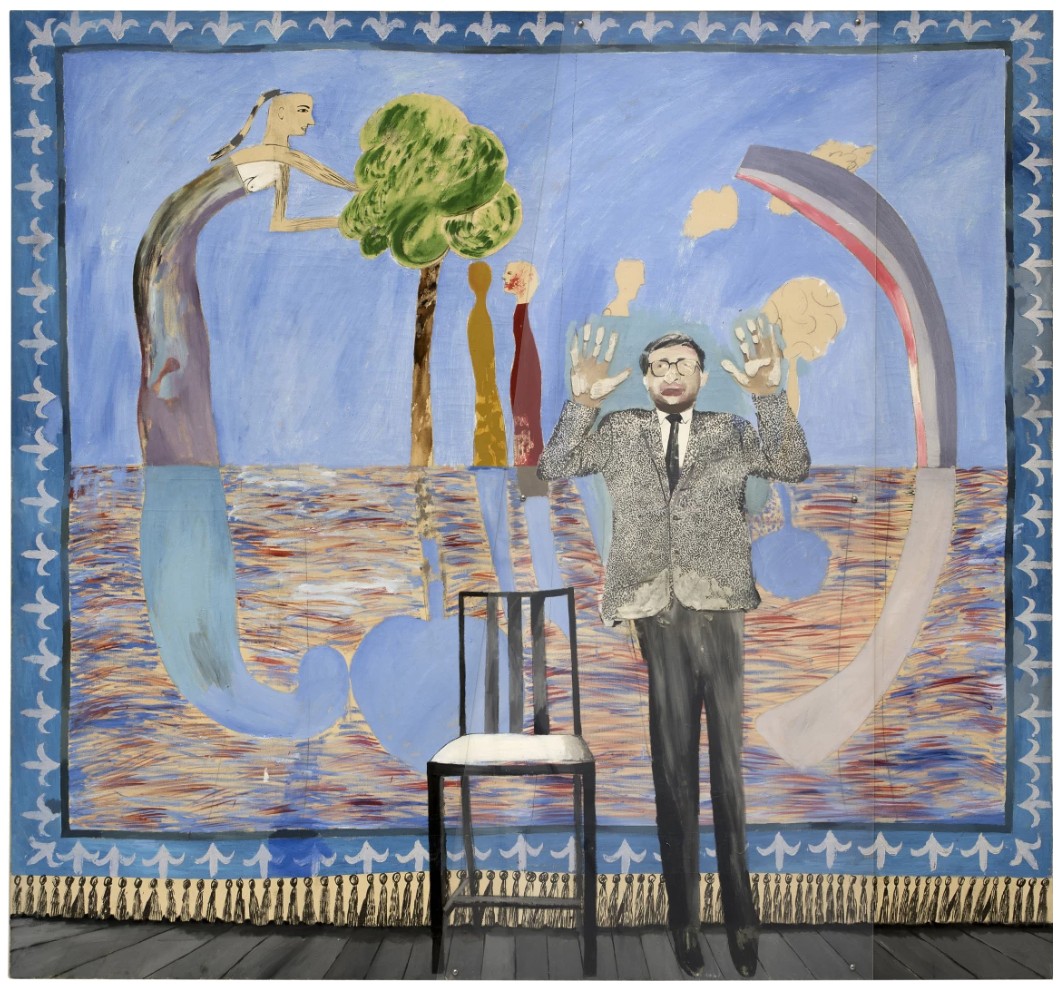
David Hockney, Play Within a Play, 1963. Private Collection. Image/Artwork: © David Hockney 2026 FABRICE.GIBERT
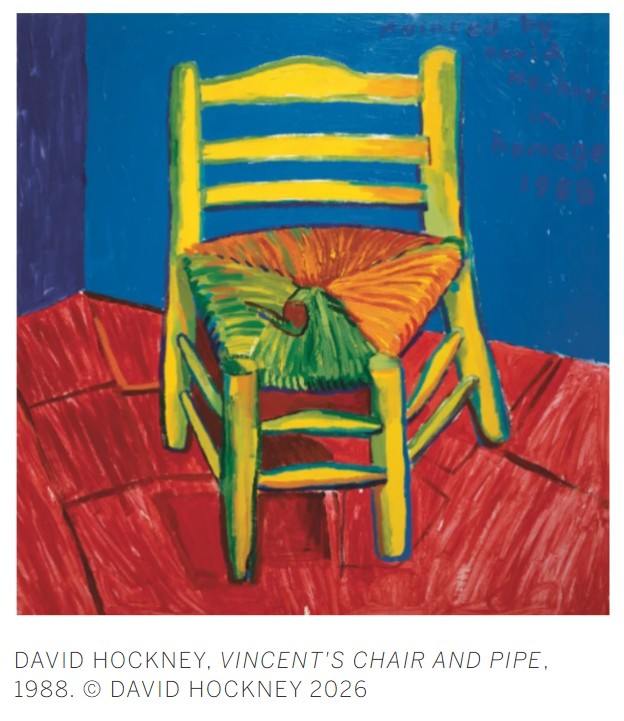
This animation of the everyday object was particularly resonant in 1988. That year, prompted by an invitation from the Fondation Vincent van Gogh to participate in the centenary celebrations of Van Gogh’s arrival in Arles, Hockney embarked upon a series of paintings devoted to chairs, inspired by Van Gogh’s iconic depictions of empty furniture as surrogate portraits. Several of these works became vehicles for his ongoing investigations into reverse perspective, a concern that finds a sophisticated parallel here, where the chairs assume an almost human presence while simultaneously participating in the painting’s shifting and unstable spatial logic. These concerns were further informed by Hockney’s deep engagement with Chinese scroll painting, whose unfolding spatial logic offered a compelling alternative to the fixed viewpoint of Renaissance perspective. Like a handscroll gradually revealed to the eye, the composition encourages the viewer to navigate a sequence of shifting spatial relationships, transforming the act of looking into an active process of discovery. Such concerns were closely connected to Hockney’s broader investigations into photographic collage and so-called ‘joiners’, works that sought to overcome the static limitations of conventional photography by assembling multiple moments of vision within a single image. Painting afforded an even greater latitude. Rather than fixing a scene from a single vantage point, Hockney sought to render the act of looking itself, producing images that reveal themselves incrementally as the eye moves through the architectonics of space.
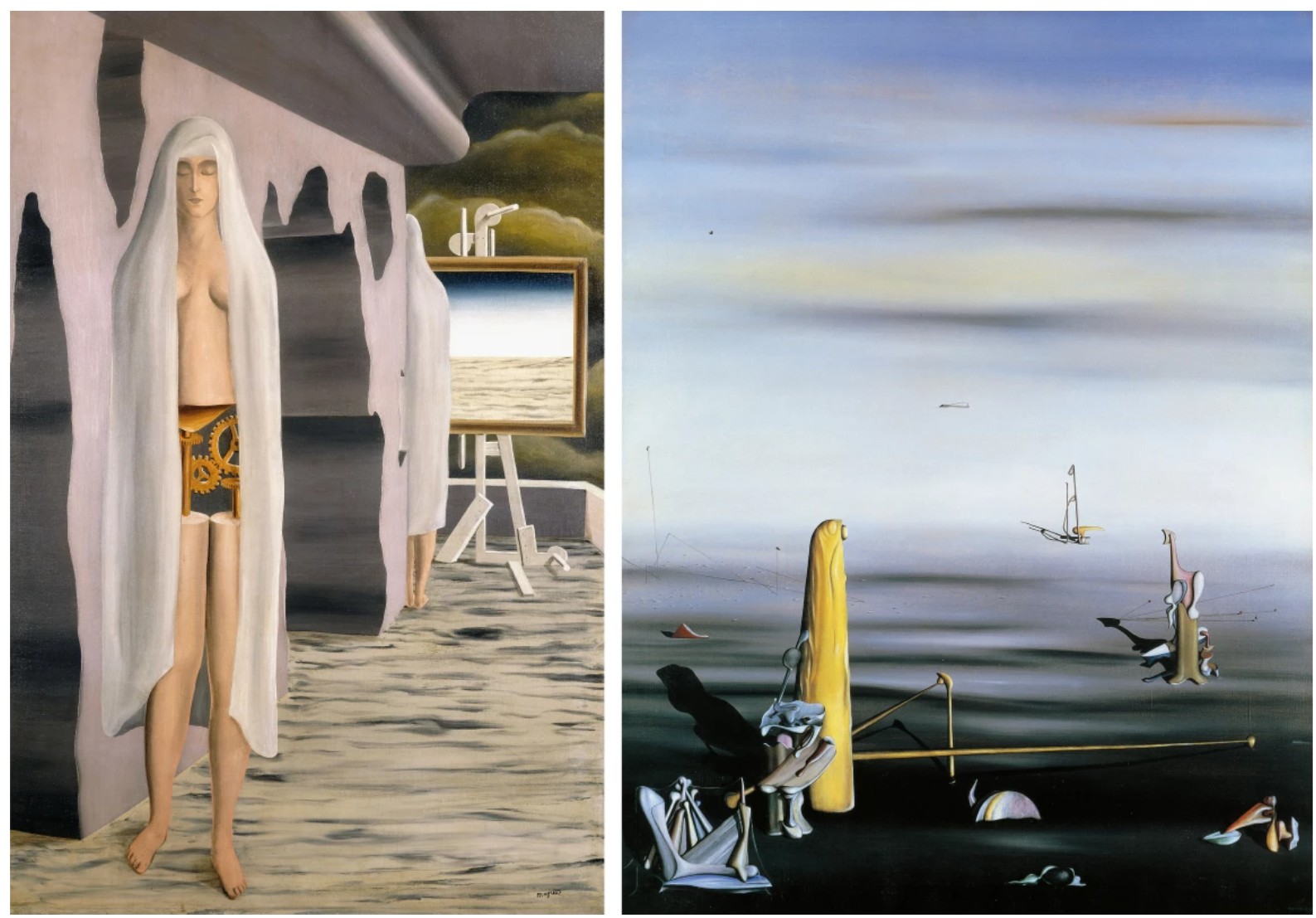
Left: Rene Magritte, Age of Wonders; L’Age des Merveilles, 1926, Private Collection, Image: © 2026 ADAGP, Paris and DACS, London
Right: Yves Tanguy, The Sun in its Jewel Case, 1937, Peggy Guggenheim Foundation, Venice, Image: © NPL – DeA Picture Library / Bridgeman 2026
The painting’s theatrical character further enriches this exploration of perception. The parted crimson curtains immediately evoke the proscenium arch, transforming the composition into a stage upon which objects perform. Here, however, the curtain operates as more than a decorative framing device. It establishes a threshold between interior and exterior, reality and imagination, while simultaneously foregrounding the constructed nature of representation itself. Color plays an equally important role in constructing this visual theatre. Rich ochres, russets and warm timber tones are juxtaposed against passages of saturated blue, creating a dynamic chromatic tension that animates the composition. The sky glimpsed beyond the curtains introduces an almost dreamlike expansiveness, opening the enclosed interior onto an infinite exterior realm. As throughout Hockney’s greatest paintings, color serves not merely descriptive ends but operates structurally, organizing space, directing vision and generating emotional intensity. The result is a scene that oscillates between intimacy and monumentality, between domestic familiarity and imaginative invention.
More than a still life, Two Chairs and a Wooden Spoon, July 1988 belongs to a remarkable group of paintings in which Hockney transformed the familiar motifs of the studio interior into arenas for some of his most searching investigations into perception and pictorial construction. The chairs, spoon and timber framework derive from the ordinary fabric of everyday life, yet through the artist’s extraordinary powers of invention they assume an almost theatrical presence, suspended between object and protagonist, observation and imagination. Informed equally by the lessons of Cubism, the temporal unfolding of Chinese scroll painting, and Hockney’s own experiments with photographic collage, the work rejects the fixed certainties in favor of a more fluid and experiential understanding of vision. What emerges is a painting that does not simply depict a scene but choreographs an act of looking, inviting the viewer to participate in the continual reconstruction of space. Preserved within the same private collection since the year of its creation, the work remains a compelling testament to one of the most intellectually ambitious and formally inventive moments in Hockney’s career.
Roy Lichtenstein
Landscape with Grass, 1996
Sotheby’s London: 24 June 2026
Estimated: GBP 2,000,000 – 3,000,000
Roy Lichtenstein | Landscape with Grass | Modern & Contemporary
ROY LICHTENSTEIN (1923 – 1997)
Landscape with Grass, 1996
Acrylic, oil, and graphite on canvas
110-1/4 x 38-3/8 inches (280 x 97.5 cm)
Signed and dated ’96 (on the reverse)
Serene and refined, Landscape with Grass elegantly evokes the iconic Chinese tradition of landscape painting, embodying Roy Lichtenstein’s career-long synthesis of cross-cultural influences through his distinctive Pop sensibility. Presented in a scroll-like format, in the present work Lichtenstein’s mountainscape of Benday dots is punctuated by verdant grass fronds and painterly daubs of orange and black, among which sits a small bird in the lower register. The history of Chinese landscape painting, known as Shan shui, originated in China approximately 1500 years ago, where ink paintings of sacred motifs such as mountains and rivers were painted with a striking economy of line and mark-making. Through his irreverent inquiry, Lichtenstein pays homage to a cultural tradition, and in doing so, illuminates the frequent generalization of Eastern motifs by Western artists over centuries. Landscape with Grass belongs to his series of Landscapes in the Chinese Style, one of Lichtenstein’s final two major series that he embarked on in the 1990s. Situated within this series, Landscape with Grass is an exemplar of Lichtenstein’s mature practice, embodying the radical inquiry and masterful invention of his oeuvre.
“The thing that interested me was the mountains in front of mountains in front of mountains, and huge nature with little people… We all have a vague idea of what Chinese landscape look like—that sense of grandeur the Chinese felt about nature.”
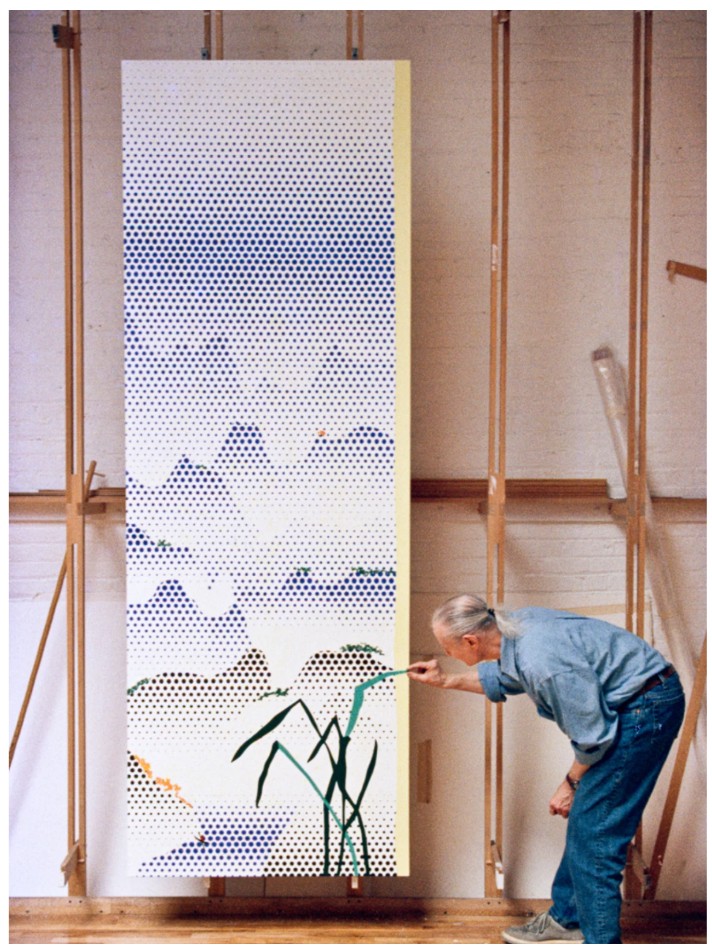
The artist working on the present work in his studio. Photo © Bob Adelman. Art © 2026 Estate of Roy Lichtenstein/DACS
In the 1960s, Lichtenstein began his probe of the art historical canon, contending with a range of influences from Pablo Picasso’s Cubism to Piet Mondrian’s abstracted picture planes, and the architectural monuments of ancient Egypt and Greece. Lichtenstein reinterpreted and reevaluated these visual icons through the representational systems of contemporary mass media. Applying the visual strategies of comic books and advertisements, Lichtenstein developed his compositions using Benday Dots, bold contour lines, and flat planes of color. In each case, Lichtenstein played with a representational cliche of an artist or cultural iconography, responding to the commodification and proliferation of art as a symbol in the image-saturated culture of the Post-War era.
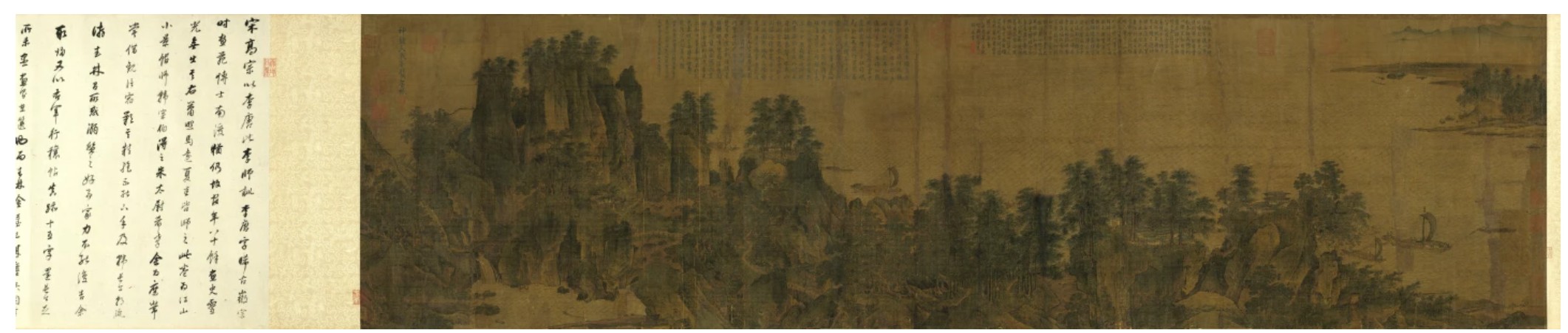
Li Tang, Intimate Scenery of River and Mountains, early 12th century. National Palace Museum, Taipei.
In the final decade of his life, Lichtenstein turned his focus to East Asian art, developing a series of works inspired by the visual tropes of East Asian art in the Western imagination. Lichtenstein’s interest in Chinese art though began almost five decades prior. Stationed in London during World War II, twenty-one-year-old Lichtenstein wrote home to his parents: “I bought a book on Chinese painting, which I could have gotten in New York half the price. I’ll probably send it home with my collection of African masks, as my duffle bag now weighs more than I do, with all the art supplies.” (the artist quoted in: Exh. Cat., Hong Kong, Gagosian Gallery, Roy Lichtenstein: Landscapes in the Chinese Style, 2011, p. 7). Later, when Lichtenstein returned to Ohio State University to complete his undergraduate and graduate degrees after the war, he enrolled in classes on East Asian art history.
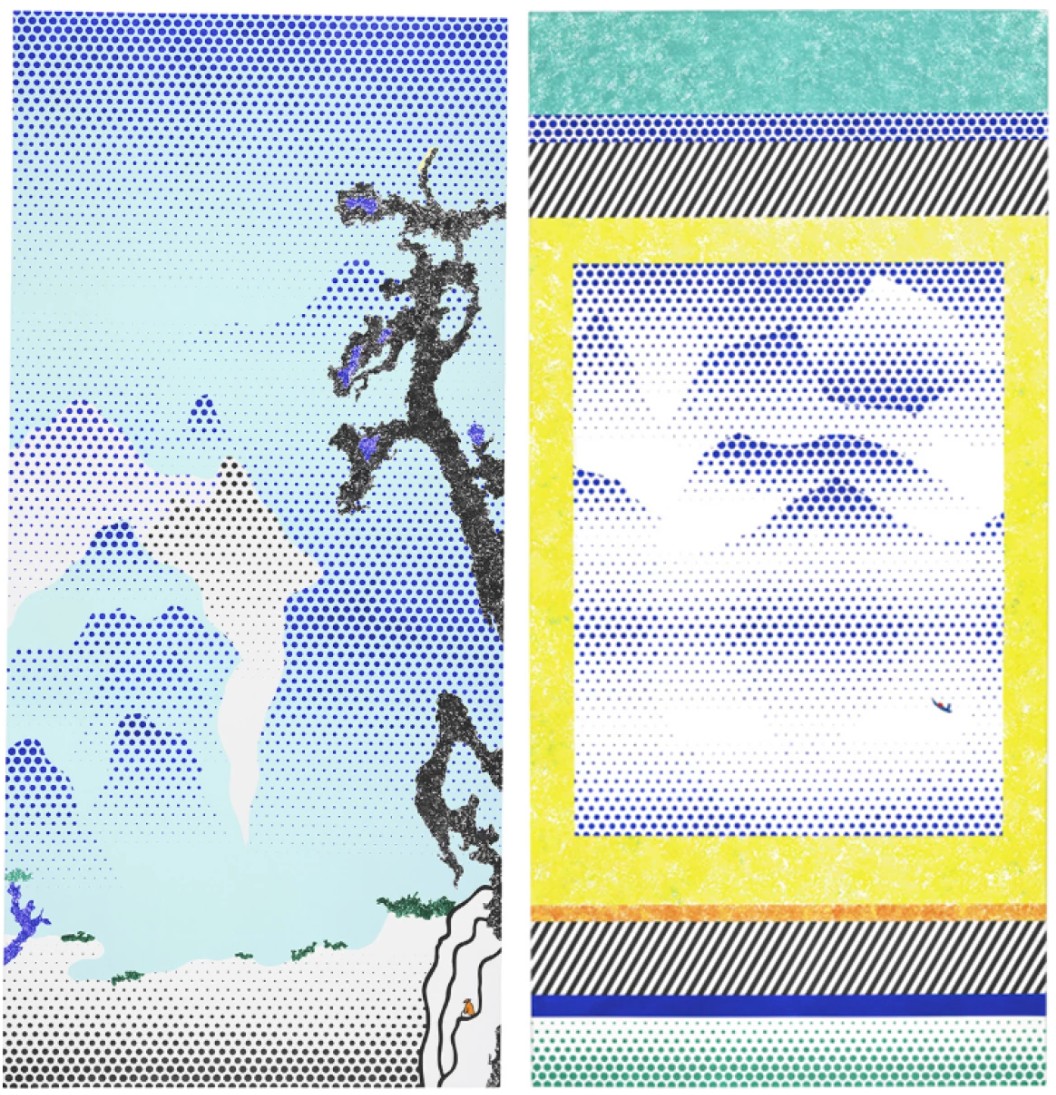
Left: Landscape with Philosopher, 1996. The Metropolitan Museum of Art, New York. © 2026 Estate of Roy Lichtenstein/DACS
Right: Landscape in Scroll, 1996. Smithsonian Institution, Washington, D.C. © 2026 Estate of Roy Lichtenstein/DACS
In the last two years of his life, Lichtenstein twice visited the storerooms of the Museum of Fine Arts, Boston, in order to view their Southern Song album leaves. He was profoundly influenced by such thirteenth century Song artists as Ma Yuan, Liang Kai, and Muqi, all of whom investigated: “the effects of atmosphere with brush and ink in sophisticated and subtle manner, pushing the real and the visible to the edges of abstraction in a way that resonated deeply with Lichtenstein’s own artistic goals.” (Stephen Little, “Landscapes in the Chinese Style,” in: Exh. Cat., Chicago, Art Institute of Chicago, Roy Lichtenstein: A Retrospective, 2013, p. 89).
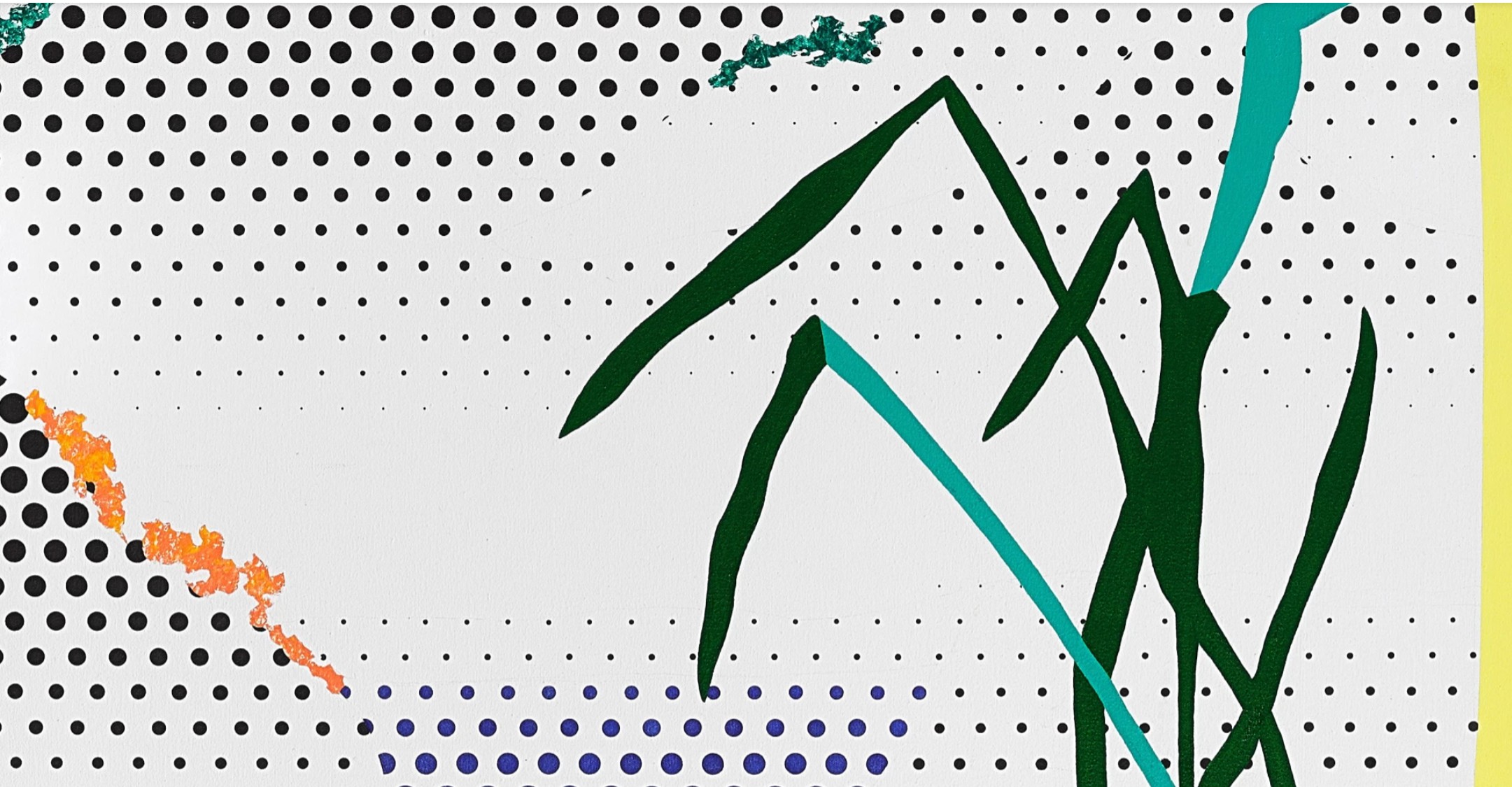
Lichtenstein’s quotations from visual culture are inherent reproductions – reductive representations which stimulate the viewer’s recognition through sparse means. Through calculated gradations of his iconic Benday dots, Lichtenstein evokes traditional Chinese landscape painting, whilst fundamentally reinterpreting their visual language. In Landscape with Grass, abstraction is sought through means of mechanical representation. Testifying to the importance of Lichtenstein’s explorations into Chinese landscapes, works from the series are held in prestigious institutional collections, including the Metropolitan Museum of Art, New York, and the Smithsonian Institution, Washington D.C.. Landscape with Grass is a superlative example of Lichtenstein’s acclaimed mature painting practice, embodying the central artistic explorations of his final decade.
Amedeo Modigliani
Nu assis au collier, 1917-18
Masterpieces from the Lewis Collection
Sotheby’s London: 24 June 2026
Estimate upon Request
Amedeo Modigliani | Nu assis au collier | Masterpieces from the Lewis
AMEDEO MODIGLIANI (1884 – 1920)
Nu assis au collier, 1917-18
Oil on canvas
91.5 x 59.7 cm (36 x 23-1/2 inches)
Signed Modigliani (upper right)
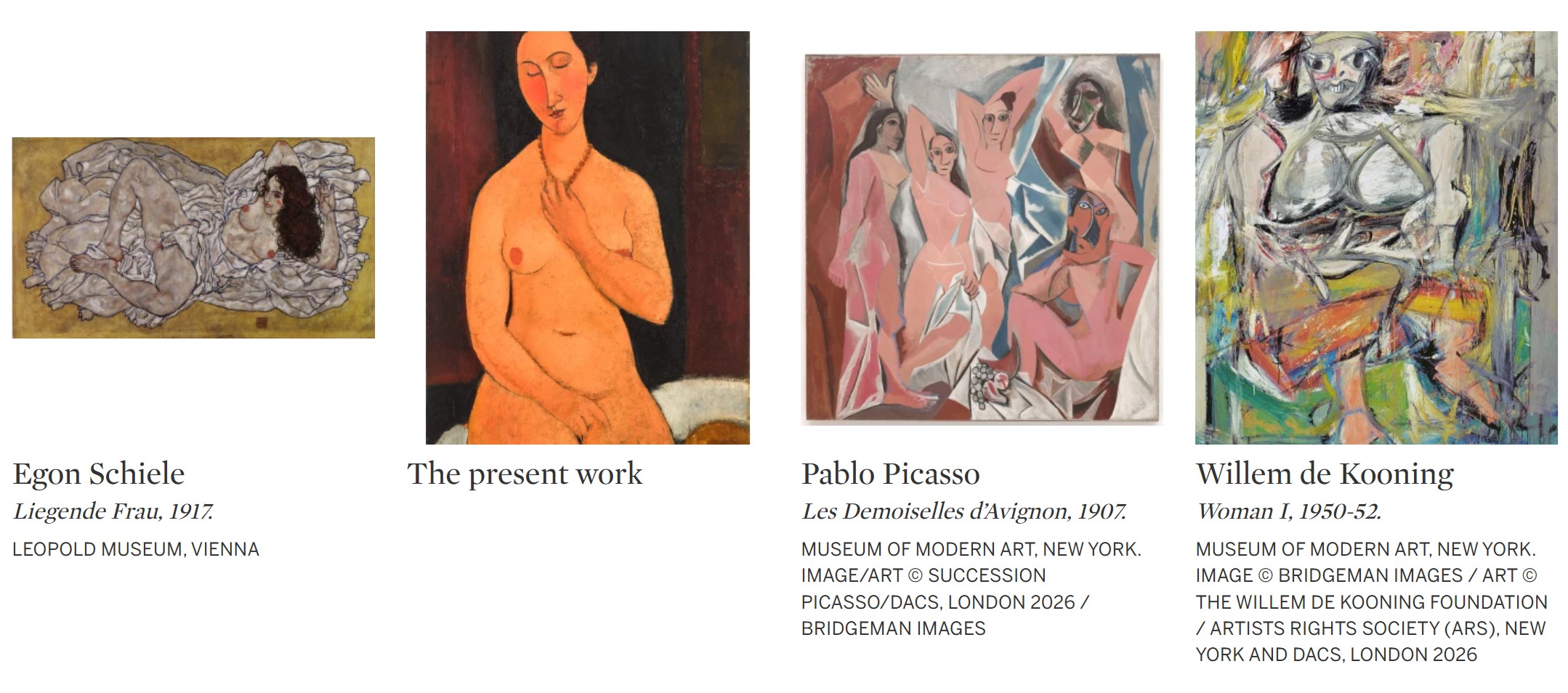
Painted in an extraordinary burst of inspiration and creativity in a small, poorly furnished Parisian room in Montparnasse, during the darkest days of the First World War, Nu assis au collier is one of Amedeo Modigliani’s legendary nudes – the works for which the Italian artist is today best known. Just as Édouard Manet had confounded contemporary audiences of the previous generation with his Olympia, Modigliani’s provocatively modern take on the timeless subject of the reclining female nude would have a profound impact on twentieth century art. As the art historian Werner Schmalenbach has written of these famous paintings, “the name of Modigliani is almost synonymous with his nudes. No other painter, in our century or any other, has painted the human female body as he did […]. A symptom of Modigliani’s position between tradition and Modernism […] they shocked the contemporary public [and yet] they are a continuation of a great tradition of European painting, […] a celebration of beauty, immaculateness and perfection” (Exh. Cat., Dusseldorf, Kunstsammlung Nordrhein-Westfalen, Amedeo Modigliani, Paintings, Sculptures, Drawings, 1991, p. 47).
With its tender, almost reverential depiction of a young woman sitting on the edge of a chaise, lost in a private reverie and affectionately fondling the coral necklace around her neck, Nu assis au collier is one of the most subtle and intimate of these famous and warmly erotic works. Seated in a pose that knowingly echoes the Venus pudica of classical antiquity, and wearing a coral necklace reminiscent of those worn in the Italian Renaissance portraits that Modigliani so admired, this painting of an unknown woman sitting in an otherwise nondescript, early twentieth century Parisian apartment is a timeless fusion of ancient tradition and Modernist innovation.
Radical Nudes Through Art History
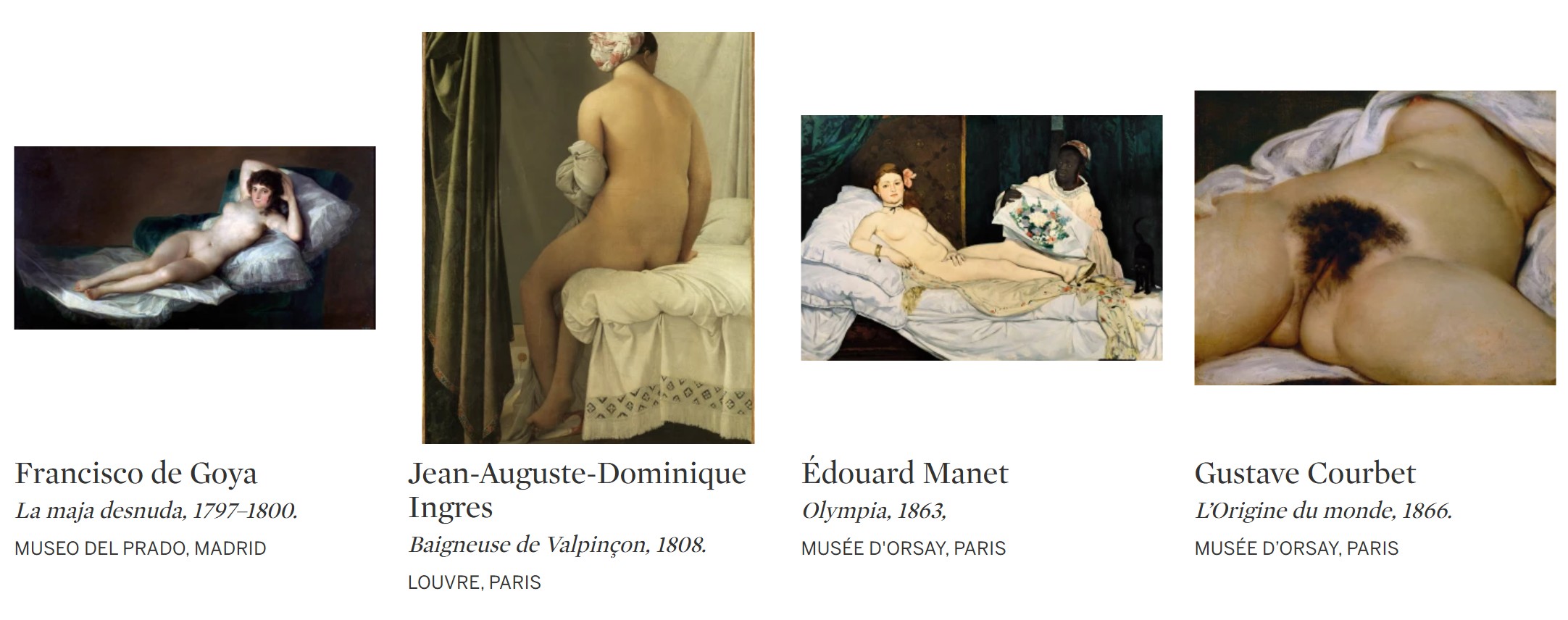
As in all his great series of nudes, Modigliani treats his sitter here as a kind of goddess, subtly modifying the forms of her body and her features into elegant but stylized lines and curves that both capture her individuality and at the same time elevate her into the idealized figure of a modern-day Venus. This is not to say that Modigliani fetishizes his subject into a cold or impersonal icon or statue; far from it. As a result of his extraordinary mastery of his medium, Modigliani generates a powerful sense of the living, breathing warmth of the human body through the simplest and most eloquent of painterly marks, subtle color variation and an intrinsic understanding of the fleshy, material nature of the paint itself. In this way, Modigliani’s nudes are not typical life-studies or naked portraits, but much more ambitious works. They are paeans to the combined ideal of “truth, life, beauty and art” that Modigliani had first stated as the aim of his art during his student days in Rome and which he had passionately pursued ever since. This quest to create his truth of “life, beauty and art” was one that Modigliani had first attempted to realize on a grand scale between the years 1910 and 1914 in the extensive series of carved-stone sculptures of women he had made with the intention of forming them into one, great, eternal, “Temple of Beauty.” This elaborate project involving numerous stylized stone-carved female heads and caryatids had to be abandoned after repeated exposure to the stone dust exacerbated his already chronic tubercular condition. In the war-torn winter of 1916-17, however, the idea for an extensive series of painted nudes provided him with the opportunity to attempt in paint the creation of a second “Temple of Beauty.” Drawing upon all the experience he had now gained in the fields of both oil painting and sculpture, Modigliani jumped at this opportunity to create an extensive body of work on a single theme that also stood as a direct counter to the dark times in which they were made.
Like Claude Monet, deliberately immersing himself in the painting of his waterlilies while the guns roared in the distance, Modigliani too, in a Paris then undergoing privations and bombardment, threw himself into the creation of a series of paintings that epitomised the essence of his life-long aesthetic vision. He sought in these works to invoke the eternal, life-affirming power of Eros by transforming each of his individually chosen sitters into a modern-day Venus. Desirous figures of feminine beauty and allure, they personified the ideals of his abandoned sculptures for a “Temple of Beauty” as well as his nostalgia for his homeland, for Italian art and culture and also, and perhaps most poignantly, the preciousness and vitality of life itself. In short, these famous paintings are collectively a defiant statement of Modigliani’s continuing faith in life, beauty and art – a kind of “Triumph of Eros” – made in the midst of the all-pervasive force of Thanatos which in 1914 had swept across Europe and erased so much of the earlier optimism of the Parisian avant-garde.
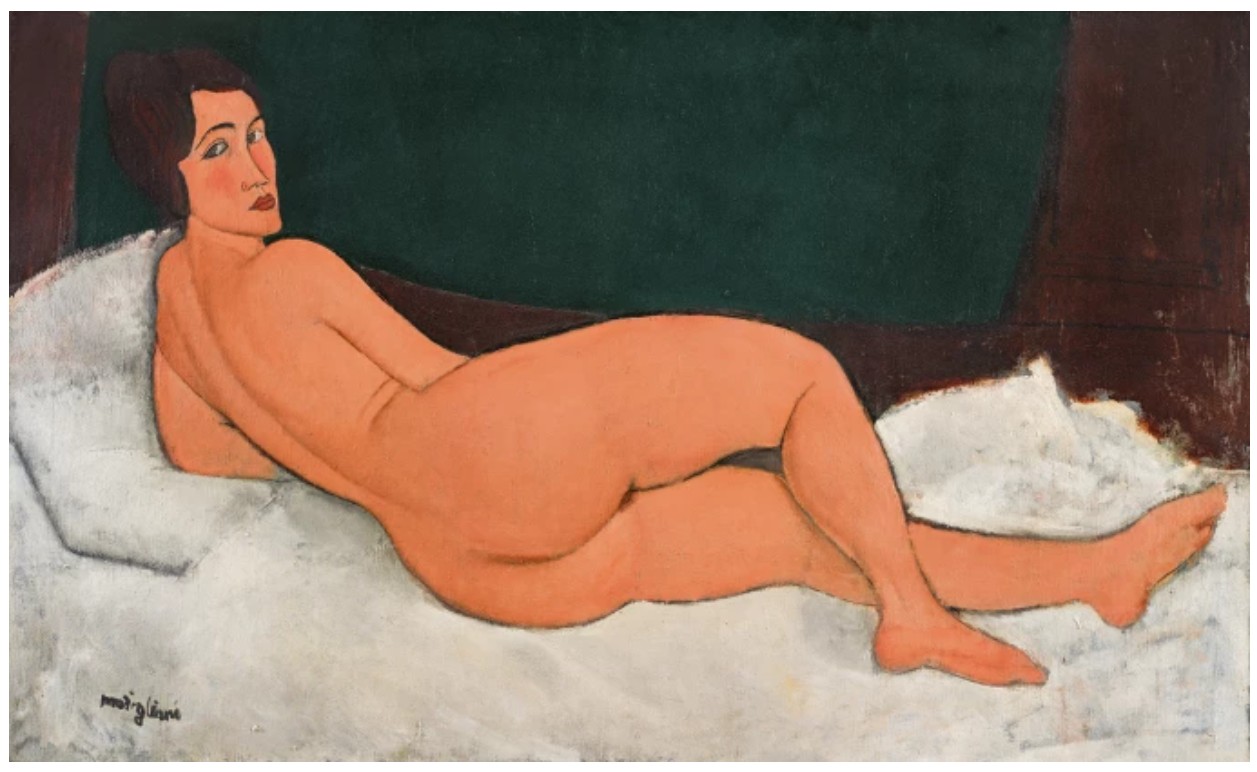
Amedeo Modigliani, Nu couché (sur le côté gauche), 1917, oil on canvas. Sold Sotheby’s New York, May 2018, for $157 million
The idea for painting a series of nudes is believed to have first been suggested to Modigliani by the Polish émigré Leopold Zboroswki, whom the artist met in late 1916. Although Zborowski had few contacts and knew less about the art world than many of Modigliani’s earlier patrons and supporters, what he did have was an unswerving devotion to the Italian’s unique genius. Over the last three years of Modigliani’s life, Zborowski was to work tirelessly on the artist’s behalf, keeping the notoriously bohemian artiste maudit busy working, and supplying him with food, alcohol, models and all the artistic materials he required while also trying to promote his art to anyone willing to listen. Zboroswki may have suggested the idea of creating a prolonged series of these paintings as a way of instilling in the tubercular and alcoholic artist a healthier and more disciplined routine. What is clear is that Modigliani immediately poured himself into this project with a passion unseen since the days of his focus on sculpture. The first paintings in the series were made in December 1916 and at the end of that year Zborowski and his wife Hanka moved into an apartment at 3, rue Joseph Bara, where they turned over one of their rooms specifically for Modigliani to use as a studio. It was there that many of the finest of this great series of nudes were painted in a sequence of prolonged single sessions alone with the model. Vehemently refusing any interruptions and working feverishly, or even “orgasmically” as the painter Foujita recalled, rumors soon abounded that Modigliani slept with all his models. Certainly, the post-coital look of several of the resultant paintings, and statements that Modigliani himself made, did little to assuage such rumors.
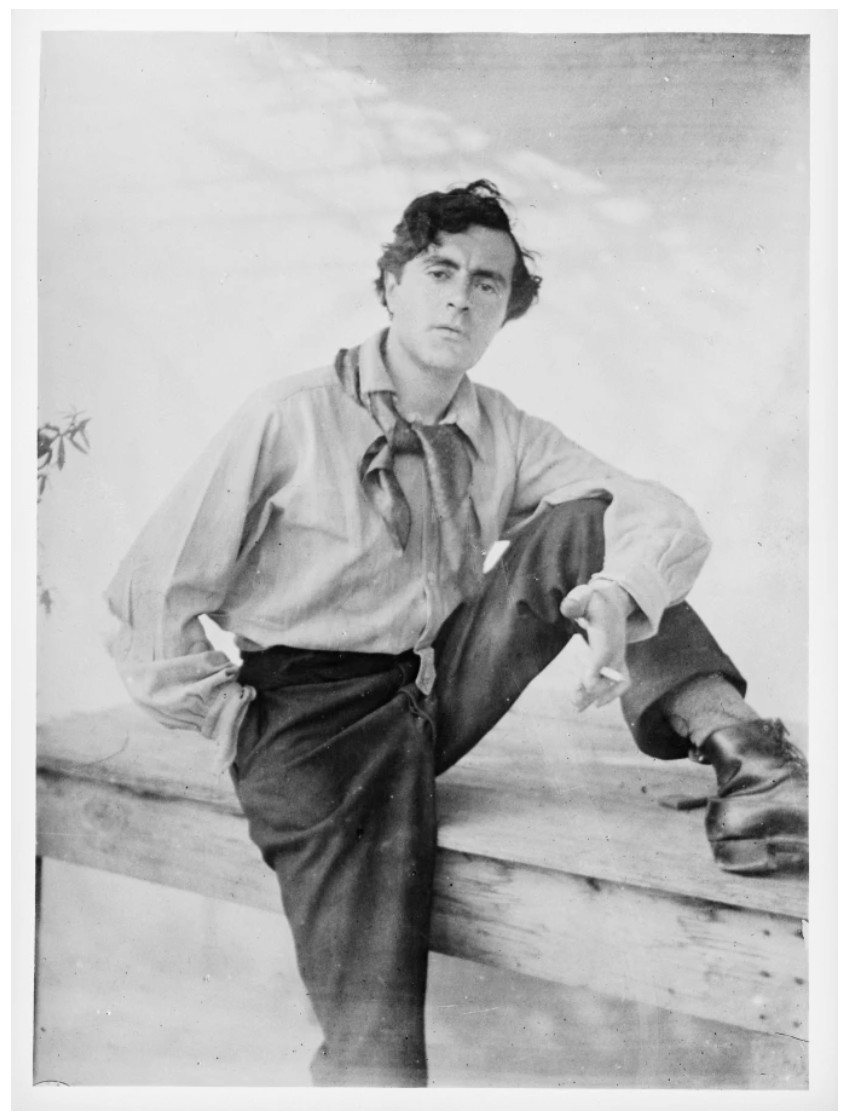
Amedeo Modigliani by an unknown photographer.
Nevertheless, it is possible to see Modigliani’s claim that “to paint a woman is to possess her” as a sincere statement of his artistic intent. “What I am searching for,” Modigliani had once noted to himself, “is neither the real nor the unreal, but the Subconscious, the mystery of what is Instinctive in the human Race” (artist quoted in Noël Alexandre, The Unknown Modigliani. Drawings from the Collection of Paul Alexandre, New York, 1993, p. 91). Modigliani, was in this regard, no advocate of Surrealism, but instead referring to a search for the inner forces and drives that he, as a devotee of Nietzsche, believed defined humanity. As the painter Léopold Survage, who sat for Modigliani in 1918, noted, Modigliani was able to “read the character of someone near him very accurately and swiftly. This psychological gift was such that you could say his sitters resembled their portraits rather than vice versa. He underlined and exaggerated characteristics of his sitters and brought out what was hidden by secondary and subsidiary features […] It was human beings that interested him and the invisible forces that were at work in them. Behind the physical appearance he imagined a mysterious world” (Werner Schmalenbach, Modigliani Paintings, Sculptures Drawings, Munich, 1990, p. 202).
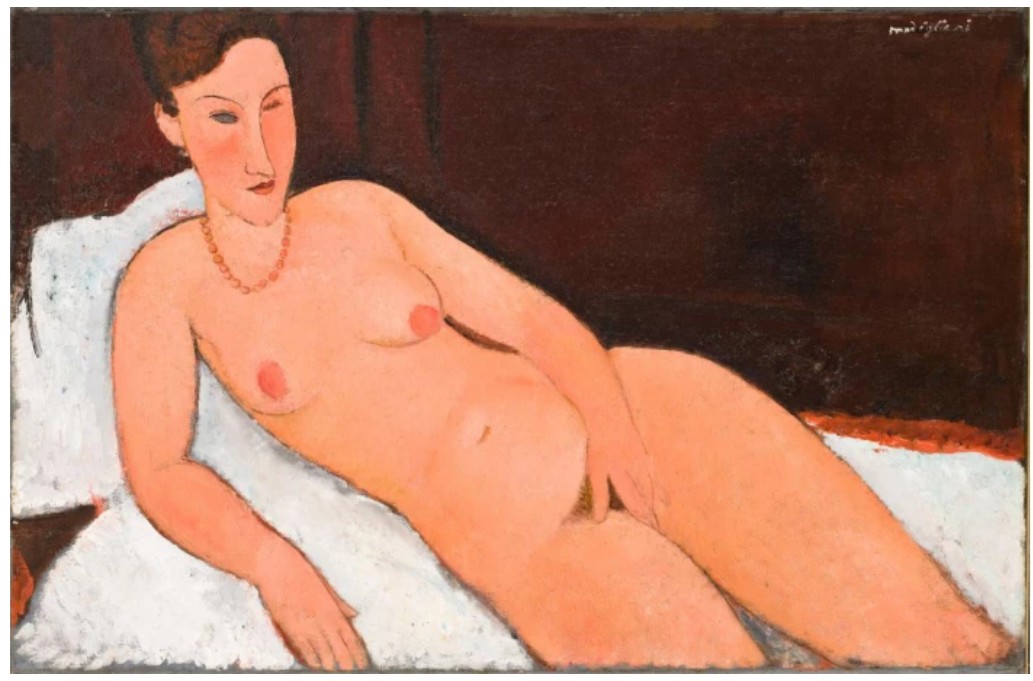
Amedeo Modigliani, Nu au collier de corail, 1917, oil on canvas. Allen Memorial Art Museum, Oberlin College Ohio
Nu assis au collier is one of three magnificent nudes that Modigliani painted showing the same sitter wearing a red coral necklace. As John Russell was to write in the 1963 Tate Gallery exhibition of Modigliani’s work, “these three paintings form a group quite on its own among Modigliani’s late nudes” (Exh. Cat., London, Tate Gallery, Modigliani, 1963, p. 19). The other two paintings are Nu au collier (1917; Allen Memorial Art Museum, Oberlin College, Ohio) and Nu aux yeux clos (1917; Solomon R. Guggenheim Museum, New York). Each of these three paintings depicts the same model in a markedly different pose: each one reflective of different aspects of Modigliani’s central aims for the series as a celebration of modern-day woman as Venus. In the Oberlin College picture Modigliani presents his model reclining in the classic pose of Titian’s Venus of Urbino, and, perhaps even more specifically, with her necklace and open eyes directly confronting the viewer, of Édouard Manet’s scandalous take on this painting, his Olympia of 1863. In the Guggenheim painting, the same woman is shown, eyes closed and reclining with her arms raised behind her head. Yet it is Nu assis au collier that offers the most tender depiction.
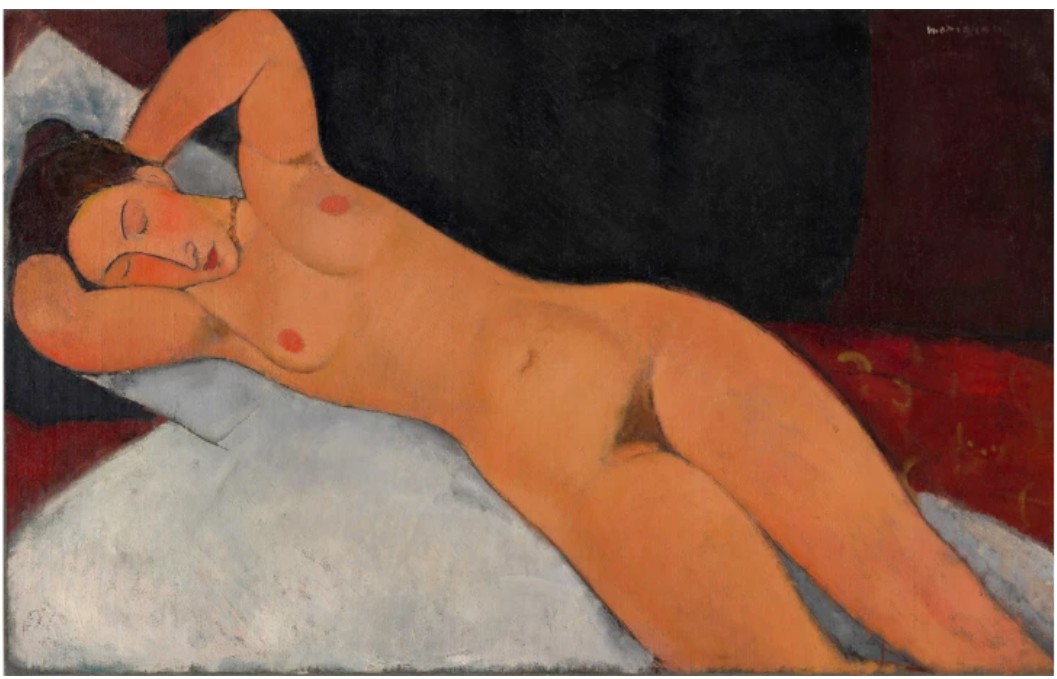
Amedeo Modigliani, Nu, 1917, oil on canvas, Solomon R. Guggenheim Museum, New York
Portraying his model seated in a position of elegant and imposing verticality, with her eyes closed and head slightly tilted, this work is the most classically Venus-like of these three different presentations of the subject. Here, Modigliani has set his model into a pose indicative of the Venus pudica, her right hand modestly covering her sex – while at the same time drawing attention to it – and her left raised over her left breast clutching at her necklace, her touch emphasizing the erotic tactility of the composition (again, in a probable nod to Manet). This traditional, classical, but also classicizing, pose would have been known to Modigliani as an antiquated formal device from his art school days, from the studies of the Medici Venus that he had made in Florence and most pertinently from the Italian Renaissance icon of female beauty, Botticelli’s Birth of Venus.
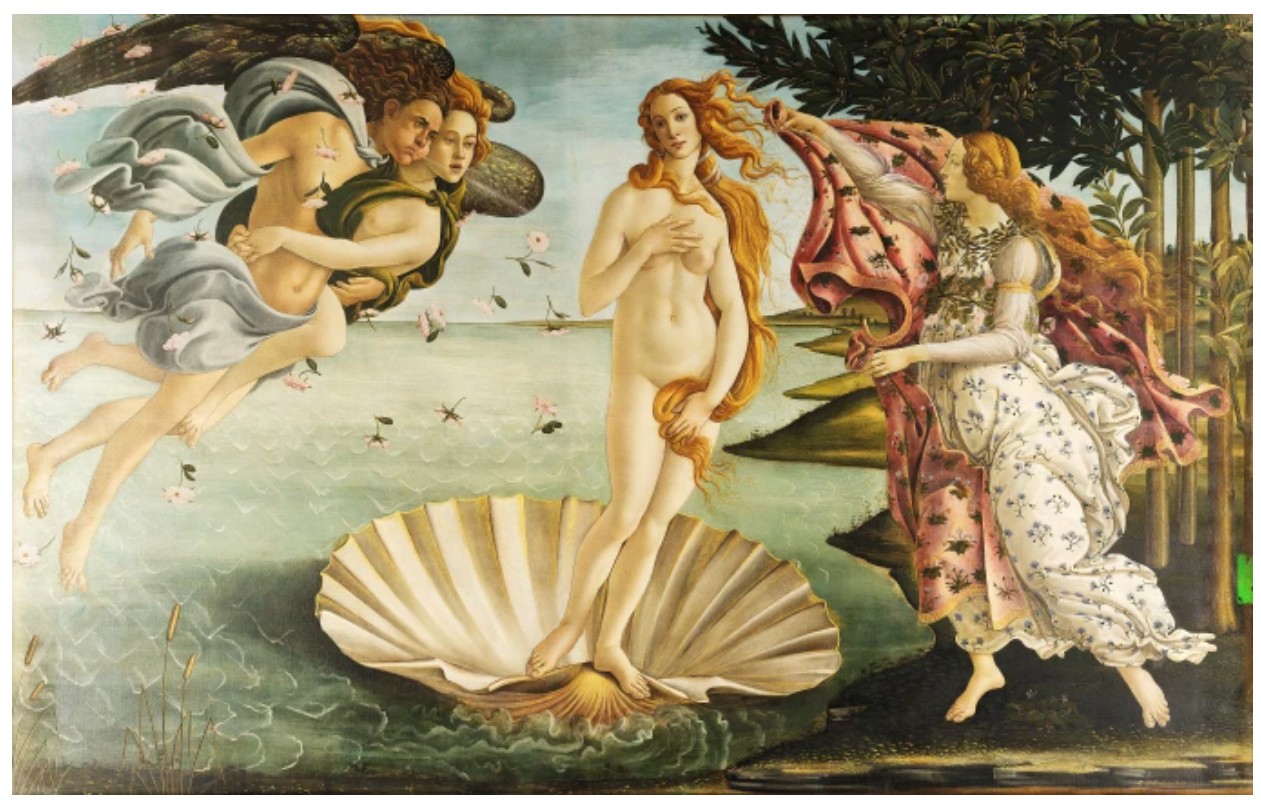
Sandro Botticelli, Nascita di Venere (The Birth of Venus), circa 1484-86, tempera on canvas. Uffizi, Florence
Botticelli’s graceful use of line and gentle, feminizing distortion of his figures, was a feature of the Renaissance master’s style that Modigliani had both admired and adopted early on in his own work. He combined it to unique effect with the refined simplifications of the African sculpture he knew from Paul Guillaume’s collection and from visits to the Trocadero. As can be seen in the elegant elongated curves of the face of the girl in Nu assis au collier, Modigliani combines the refined simplicity of these masks and heads with what Katherine Kuh describes as “Botticelli’s fluid line and urbane individualism… [to create] a [new] language of his own as authentic as those he combined” (K. Kuh, “Italy’s ‘New’ Renaissance: An Inquiry,” Saturday Review, vol. XLIV, no. 6, New York, 11 February 1961, p. 32).
Another distinctive reference to the past made in Nu assis au collier is Modigliani’s prominent use of the red coral necklace. Coral necklaces of this kind, while not really in fashion in Modigliani’s time, were a common feature of Italian Renaissance art. They appear as charms and amulets in paintings of the Madonna and Child by Andrea Mantegna and Piero della Francesca and are also a frequent feature of female portraits of the same period. Red coral was in regular use as a talisman during the Renaissance period in Italy as it was believed to have powers that warded off the negative force of evil spirits. Indeed, Modigliani may have deliberately included the red coral necklace as a way of enhancing the life-affirming presence of his figures.
Modigliani’s utilisation of such traditional themes and motifs in paintings like Nu assis au collier mark him as almost unique among his avant-garde contemporaries. Anticipating the “return to order” that was soon to engulf the Parisian avant-garde in the aftermath of the war, paintings such as Nu assis au collier fly directly in the face of the Italian Futurists’ demand, in 1910, that all painting of the nude should be banned on the grounds that it was regressive and backwards-looking. They also stand apart from the work of his Parisian contemporaries Henri Matisse, Pablo Picasso and Marcel Duchamp, all of whose celebrated nudes from this period were, in different ways, pictorial assaults upon the holistic integrity of the female figure. In direct contrast to these avant-garde artists’ attacks on the nude and the academic tradition that it seemed to represent, Modigliani saw his art, much like that of his friend and fellow sculptor Constantin Brancusi, as establishing a timeless bridge between the ancient and the modern.
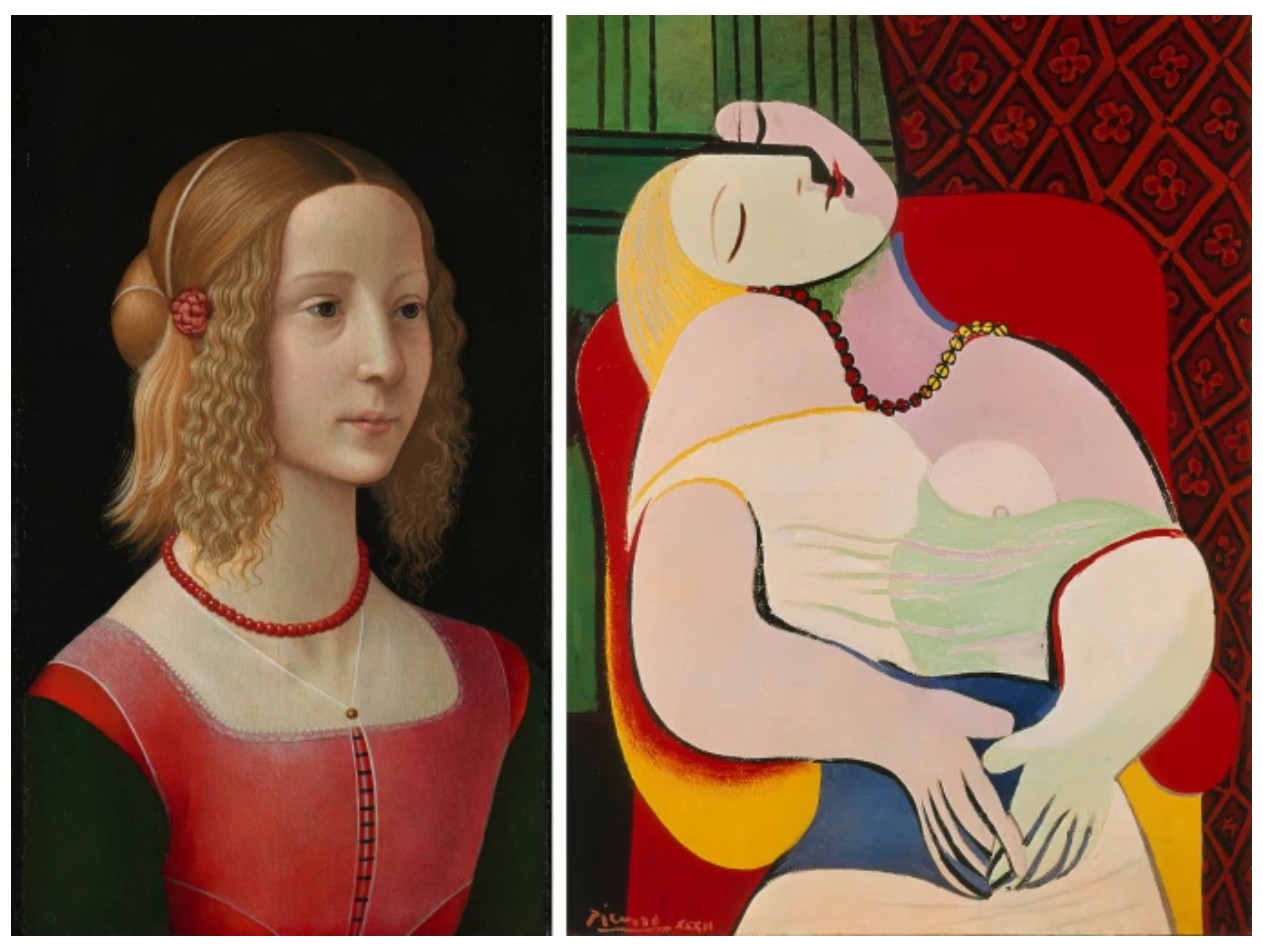
Left: Workshop of Domenico Ghirlandaio, Portrait of a Girl, circa 1490, egg tempera on wood. National Gallery, London
Right: Pablo Picasso, Le rêve, 1932, oil on canvas. Private Collection © 2026 Succession Picasso/DACS, London
Modigliani’s Modernist distortions do not dismantle the integrity of the figure but rather emphasise and celebrate it as the vehicle and container of positive and erotic energy. Nowhere is this often highly sensual aspect of his nudes more noticeable than in his handling of paint. Modigliani had a genius for painting the subtle changes of light and shadow on the human skin and for conveying its surface as a soft, warm, living entity. “An air comes off his nudes,” wrote the poet Francis Carco, “which is the very breath of life” (F. Carco, Le Nu dans la peinture moderne 1863-1920, Paris, 1924). Modigliani achieved this “air” through a specific technique. Eschewing the steady build-up of volume through the traditional method of applying numerous thin layers of oil paint to create a sense of depth and mass, he worked with more immediacy by juxtaposing a second opaque layer of dry paint in a subtly different tone over a single sketchy underlayer.
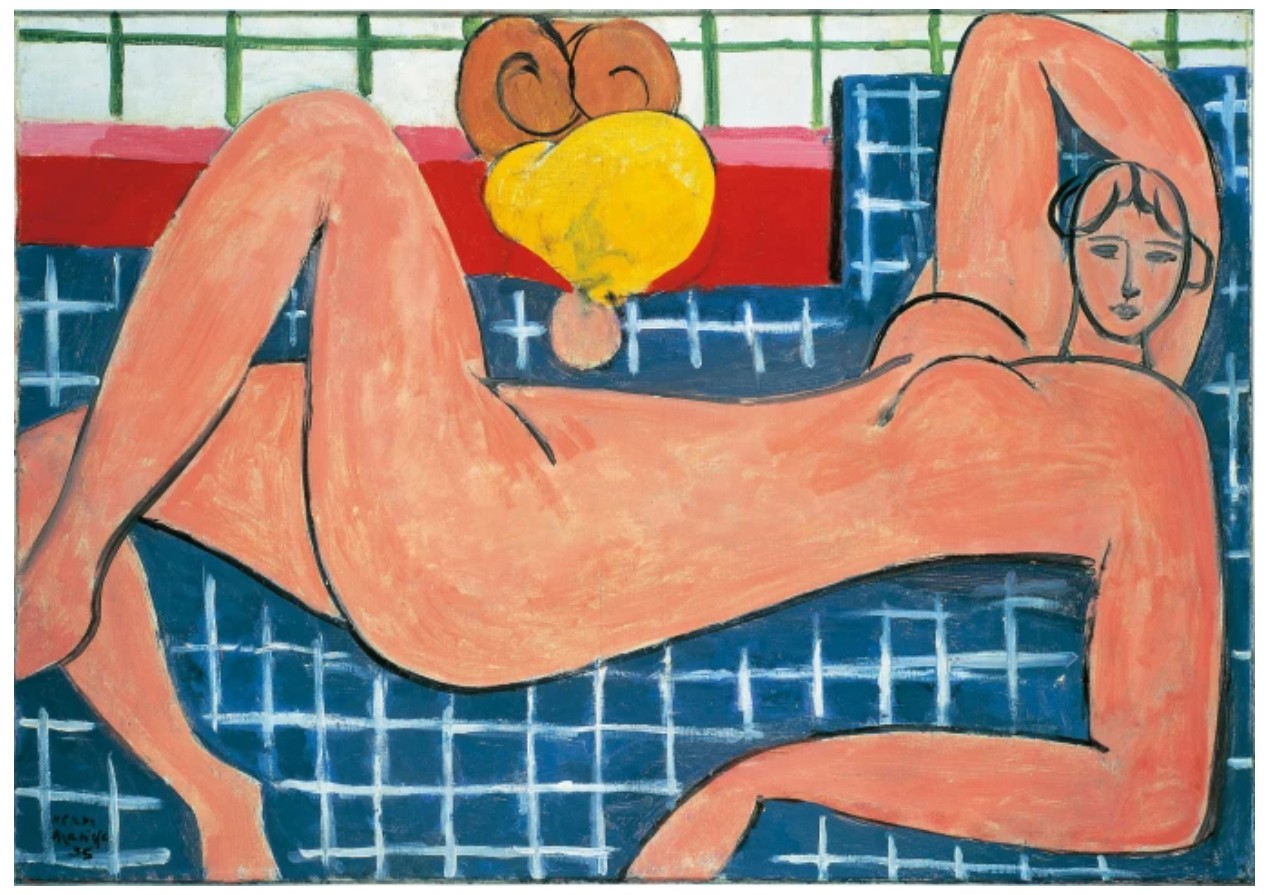
Henri Matisse, Nu rose, 1935, oil on canvas.
Baltimore Museum of Art © 2026 Succession H. Matisse / Artists Rights Society (ARS), New York
Not only did this technique allow Modigliani to work more swiftly – his nudes were all famously completed in single sessions – but also, as in Nu assis au collier, it encouraged a bravura style of painting; one where the most impressive details are often those achieved through the addition of an intuitive and bold colour accent. Modigliani’s technique also allowed him to exploit the corpulence that paint acquires when diluted in such little oil, turning the scumbled traces left by the brush into a poetic means. In the subtle daubs across the figure’s lower torso and thighs, the creases and veins left by Modigliani’s brush generate a magnetic evocation of that soft, warm reflection of light so specific to the human skin.
It was in part this “realness” that provoked scandal when at least four of them were exhibited for the very first time at the Galerie Berthe Weill in December 1917. This – now infamous – exhibition was the only one-man show that Modigliani held during his lifetime and the notoriety surrounding its enforced closure played an important role in establishing the “myth of Modigliani.” The strength of reaction to his now-celebrated nudes was indicative of their central role in establishing him as one of the great voices in the history of twentieth century art. Following the artist’s death in January 1920, a swiftly organized mini-retrospective was made as part of the Venice Biennale of 1922 and later the major Exposition Modigliani held at the Galerie Bing in Paris in 1925, did much to champion Modigliani’s growing reputation throughout the 1920s as perhaps the leading avant-garde genius of his generation. As early as 1920, André Salmon had begun to proclaim of Modigliani that “there is only one painter of the modern nude,” he is our sole “painter of women from life” (A. Salmon, L’art vivant, Paris, 1920, quoted in Ambrogio Ceroni, op. cit., 1972, p. 70). Francis Carco, too, who had bought one of the contentious nudes from the Berthe Weill show of 1917 and then gone on to acquire five more, went so far as to claim that Modigliani’s nudes represented the pinnacle of a tradition he was now outlining in a book dedicated to the theme of the nude in modern painting. “The more I lived with the Modigliani nude I had bought,” he wrote, “the more I liked it: but none of my friends did. They laughed at it and said I was a fool, a cretin. But all the same, I saved up to buy more from Zborowski, who delightedly shouted the fact from the rooftops. Often I would gaze at the beauty and music of his work and imagine his awful life and his absorbing passion to paint, and I’d close my eyes. He was there standing before me, half drunk, asking, ‘you like my painting, eh? But why? You understand it? […] You love it – as you do women? Ah!, ah!, ah!..Yes, that’s the way’” (F. Carco quoted in Pierre Sichel, Modigliani: A Biography of Amedeo Modigliani, London, 1967, no. 8, p. 374).
Nu assis au collier was acquired in 1949 by the legendary collector Ralph F. Colin. A lawyer by training, Colin and his wife started collecting art shortly after they married in 1931 and amassed one of the pre-eminent private collections of art in the twentieth century. Their tastes ranged widely and they always eschewed any notion of ‘building’ a collection, placing an importance on seeing art rather recognising it in a canonical sense. Buying according to their own tastes, they never sold or swapped a painting, and their collection was sold following his wife’s death in one of the most important single-owner sales ever held. It was at this legendary sale that Joe Lewis acquired the present work – along with Chaim Soutine’s Portrait du garçon en bleu (lot 17) – and it has been in his collection ever since.
Claude Monet
Nymphéas, 1907
Sotheby’s London: 24 June 2026
Estimated: GBP 30,000,000 – 40,000,000
Claude Monet | Nymphéas | Modern & Contemporary Evening Auction |
CLAUDE MONET (1840 – 1926)
Nymphéas, 1907
Oil on canvas
93.7 x 89.5 cm (36-7/8 x 35-1/4 inches)
Signed Claude Monet and dated 1907 (lower right)
In 1903 Monet began to focus in earnest on the series of paintings that would occupy him for the final decades of his life and which represent the absolute culmination of his artistic vision. Inspired by his gardens at Giverny, the Nymphéas are now acknowledged as among the most iconic and celebrated Impressionist paintings and Monet’s radical treatment of color and space in these works would have a profound impact on later generations of artists. Dating from a crucial early period in the development of this motif, and among the works included in the now-legendary exhibition of his waterlilies at Galerie Durand-Ruel in 1909, the present work is a particularly rich and striking example from this remarkable body of work.
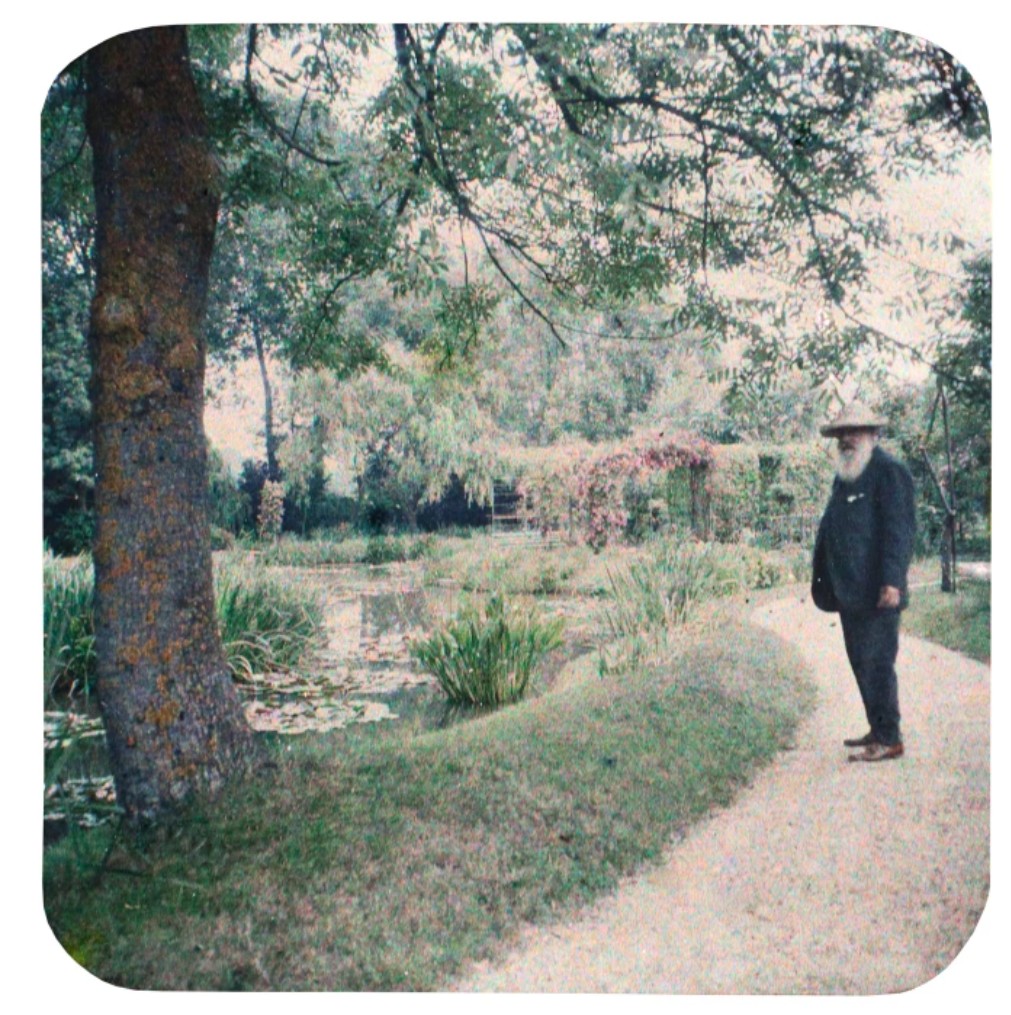
Monet in his garden art Giverny. Photograph by Etienne Clémentel © Musée d’Orsay, Dist. GrandPalaisRmn / Patrice Schmidt
By 1890, Monet had become successful enough to buy the house and large garden at Giverny which he had rented since 1883. With enormous vigor and determination, he set about transforming the gardens and creating a large pond. There were initially a number of complaints about Monet’s plans to divert the river Epte through his garden in order to feed his new pond, which he had to address in his application to the Préfet of the Eure department: “I would like to point out to you that, under the pretext of public salubrity, the aforementioned opponents have in fact no other goal than to hamper my projects out of pure meanness, as is frequently the case in the country where Parisian landowners are involved […] I would also like you to know that the aforementioned cultivation of aquatic plants will not have the importance that this term implies and that it will be only a pastime, for the pleasure of the eye, and for motifs to paint” (quoted in Michael Hoog, Musée de l’Orangerie. The Nymphéas of Claude Monet, Paris, 2006, p. 119). His comments suggest that he already had the garden in mind as a subject for his painting, and indeed it proved an endless source of inspiration, providing the major themes that dominated the last three decades of Monet’s career. Yet whilst he had always planned to paint in his garden, the importance of the waterlily as the defining subject of his late work was more gradual to emerge: “It took me some time to understand my water lilies. I planted them purely for pleasure; I grew them with no thought of painting them. A landscape takes more than a day to get under your skin. And then, all at once I had the revelation – how wonderful my pond was – and reached for my palette. I’ve hardly had any other subject since that moment” (quoted in Exh. Cat., Vienna, Österreichische Galerie Belvedere, Claude Monet, 1996, p. 146).
Although Monet had begun to work on his waterlilies as early as 1897, it was at the beginning of the twentieth century that he would make them his primary focus. The years from 1905 to 1907 mark a crucial period of development as the perspectival elements that had existed in his earlier renditions of the lily pond vanished, along with the banks and borders which sometimes featured as a framing device in these compositions. Now the surface of the water – interspersed with reflections of the eponymous waterlilies – filled the canvas, and the composition was fully given over to an exploration of colour and form. During this period Monet experimented with a range of different approaches and painting techniques, creating multiple variations on the theme. It was an approach that had its origins in his great series paintings of the 1890s but in the spectacular field of color presented by Nymphéas he attempted something new; no longer aiming to record a particular location, temporal condition or natural phenomena, he was now focused on eliciting an instinctive emotional response.
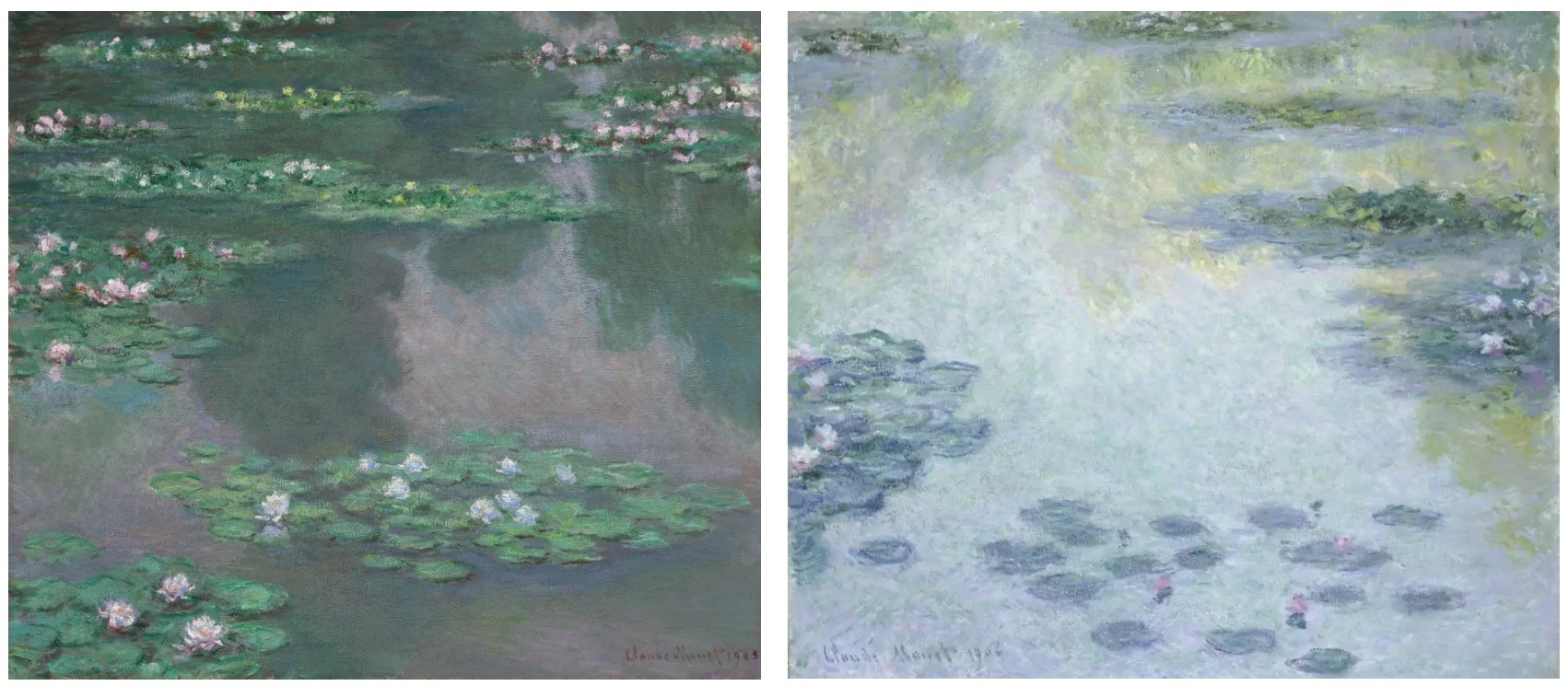
Left: Claude Monet, Nymphéas, 1905, oil on canvas, Museum of Fine Arts, Boston
Right: Claude Monet, Nymphéas, 1906, oil on canvas, National Museum of Wales, Cardiff
This nuanced, shifting treatment can be seen in the subtle differences as his work evolved from 1905-1907. The paintings from 1905 are thickly painted with a dense surface and horizontally oriented, whilst those from 1906 have a more painterly interplay between rich impastoed areas with finer luminous washes. By 1907 Monet was experimenting with longer brushstrokes and a softer, ‘overall’ effect. In his catalogue raisonné, Daniel Wildenstein divides the works of 1907 into two groups: “The first, painted in the morning or very early in the afternoon, is characterised by the water-lilies floating with their flowers open on the surface of the water in which the reflections of the trees surround a large expanse of bright light; the second, produced in the afternoon or at sundown, are recognisable by a long stream of light which traverses the whole height of the canvas” (op. cit., 1996, p. 772). The present work belongs to the first of these groups, which also includes the closely connected composition now in the Museum of Fine Arts in Boston. In this work, foreground and background elide in an immersive field of colour. The lower half of the composition is awash with blues and purples; the tones of the water echoed in the delicate lily flowers. The upper half, where invisible trees cast their reflections into the water, is a combination of greens and pinks, with Monet blending longer brushstrokes with areas of textured impasto that delineate the waterlilies. The remarkable tonal subtlety that he achieves conjures a profound sense of tranquillity that is the hallmark of these early Nymphéas.
From the very beginning of his treatment of this subject, Monet embraced a monumental scope which would be most fully realised in his Les Grandes décorations, a sequence of monumental paintings of the gardens that took his depictions of the water lily pond in a dramatic new direction – the artist envisaged an environment in which the viewer would be completely surrounded by the paintings. In 1909 Monet was quoted by Claude-Roger Marx outlining his vision: “The temptation came to me to use this water-lily theme for the decoration of a drawing room: carried along the length of the walls, enveloping the entire interior with its unity, it would produce the illusion of an endless whole, of a watery surface with no horizon and no shore; nerves exhausted by work would relax there, following the restful example of those still waters, […] a refuge of peaceful meditation in the middle of a flowering aquarium” (quoted in Claude Roger-Marx, “Les Nymphéas de Monet,” Le Cri de Paris, Paris, 23 May 1909). The present work and the others in this series eventually led to Les Grandes décorations, now in the Musée de l’Orangerie in Paris, which are according to Daniel Wildenstein “the crowning glory of Monet’s career, in which all his work seemed to culminate” (op. cit., 1996, p. 840).
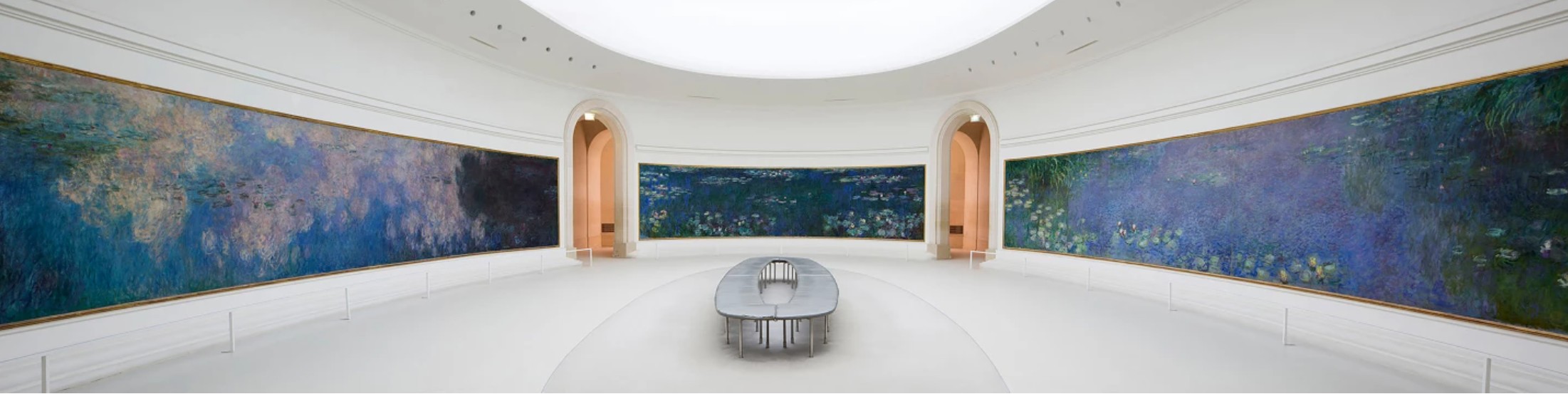
Claude Monet, Nymphéas, Grandes décorations, 1914-26, installed in the Musée de l’Orangerie, Paris
The present work was included in the seminal exhibition held at the Galerie Durand-Ruel in 1909, which the artist entitled Les nymphéas, series de paysages d’eau par Claude Monet. This long-awaited show had been planned for many years and delayed by Monet’s prevarication and his lengthy trip to Venice in autumn 1908. The artist insisted on payment for almost all the works to be included in the show, resulting in Durand-Ruel, not having the funds to bankroll the whole exhibition, having to jointly acquire the pictures with the Bernheim-Jeune brothers. Monet and the dealers chose 48 canvas all of the same subject which were shown in three rooms and drew the attention and admiration of countless collectors. In his review of the exhibition, the contemporary writer Jean-Louis Vaudoyer stated: ‘None of the earlier series… can, in our opinion, compare with these fabulous Water Landscapes, which are holding spring captive in the Durand-Ruel Gallery. Water that is pale blue and dark blue, water like liquid gold, treacherous green water reflects the sky and the banks of the pond and among the reflections pale water lilies and bright water lilies open and flourish. Here, more than ever before, painting approached music and poetry. There is in these paintings an inner beauty that is both plastic and ideal’ (J.-L. Vaudoyer in La Chronique des Arts et de la Curiosité, 15th May 1909, p. 159, translated from French).
This ecstatic praise – though not shared by all of Monet’s contemporaries – would ultimately prove prophetic. By the mid-1940s, his work was experiencing a renewed appreciation, led in no small part by the Abstract Expressionists’ discovery of paintings like the present work. The natural heirs to Monet’s visionary treatment of color and form, artists like Jackson Pollock, Joan Mitchell and Mark Rothko each made their own pioneering contributions to the evolution of abstract art. “Late Monet is a mirror in which the future can be read. The generation that, in about 1950, rediscovered it, also taught us how to see it for ourselves. And it was Monet who allowed us to recognize this generation. Osmosis occurred between them. The old man, mad about color, drunk with sensation, fighting with time so as to abolish it and place it in the space that sets it free, atomizing it into a sumptuous bouquet and creating a complete film of a “beyond painting”, remains of consequential relevance today” (Jean-Domnique Rey, Monet Water Lilies – The Complete Series, Paris, 2008, p. 116).