MAY 2026 NEW-YORK AUCTIONS
Ultra-Contemporary Artists
Rashid Johnson
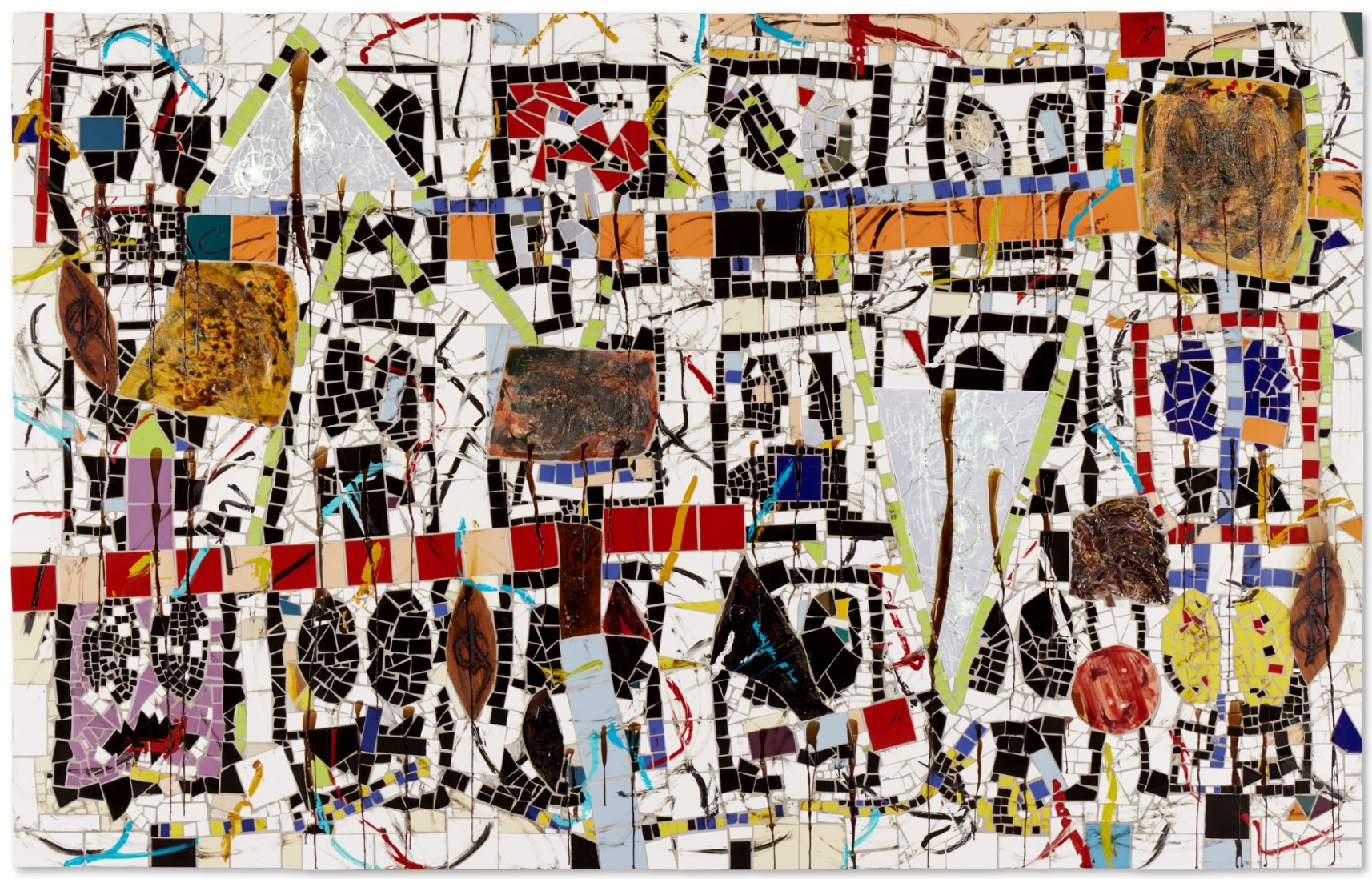
Untitled Broken Crowd, 2021
Sotheby’s New-York: 15 May 2026
Estimated: USD 800,000 – 1,200,000
USD 1,024,000
Rashid Johnson | Untitled Broken Crowd | Contemporary Day Auction |
RASHID JOHNSON (b. 1977)
Untitled Broken Crowd, 2021
Ceramic tile, mirror tile, spray enamel, branded red oak flooring, bronze, oilstick, black soap and wax
72 x 114-1/8 inches (182.9 x 289.9 cm)
Signed (on the reverse)
Executed in 2021, Untitled Broken Crowd belongs to one of the most compelling and immediately recognizable bodies of work in Rashid Johnson’s recent oeuvre. Expansive in scale and charged with restless energy, the present work transforms Johnson’s now-iconic fractured visages into a densely orchestrated field of line, reflection and material tension. Across its wide horizontal surface, faces appear and dissolve within a lattice of black mosaic contours, mirrored fragments, branded red oak flooring and passages of spray enamel, oilstick, black soap and wax. The result is at once architectural and improvisatory: a work that reads as both image and object, its composite surface alive with interruption, compression and rhythmic dispersal. In Johnson’s hands, fragmentation never signals mere rupture; rather, it becomes a mode of building, of allowing identity, emotion and collective presence to emerge through accumulation and fracture alike.
“I say that I suffer from what Rosalind Krauss was calling the post-medium condition, where an artist essentially employs several mediums in order to bring to life whatever specific ideas that they have. For me it’s always been that way.”
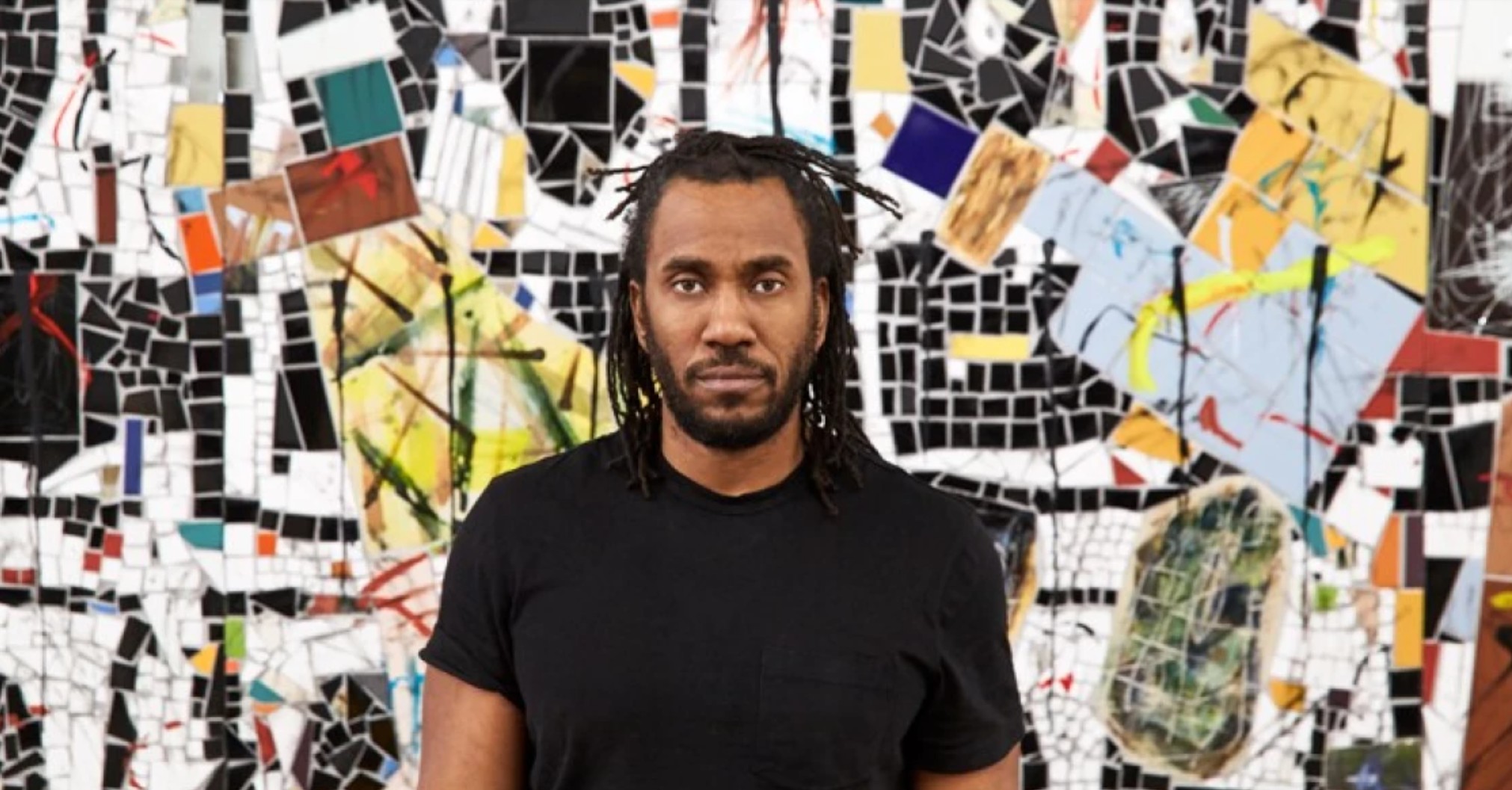
The artist in front of Untitled Broken Crowd. Photography by Kendall Mills, 2021.
What distinguishes the Broken Crowd works is the way they hold multiplicity in unstable but forceful balance. Here, individual heads cohere only partially before slipping back into the larger structure, so that the “crowd” is never fully fixed as portrait, pattern or social tableau. Johnson’s visual language—at once graphic, tactile and improvisational—allows these figures to register as both singular presences and part of a larger collective condition. The present work is especially powerful in this regard. Its broad format gives the composition the sweep of a frieze, while the repeated faces, staggered across a fractured grid, create an insistent rhythm of encounter and dispersal. Mirror tile interrupts the surface with flashes of reflection, implicating the viewer within the work’s field, while ceramic tile and bronze introduce shifts of density and weight that keep the entire composition in a state of formal and psychological tension. The crowd is broken, but it is also animated, held together through pulse, repetition and a remarkable internal momentum.
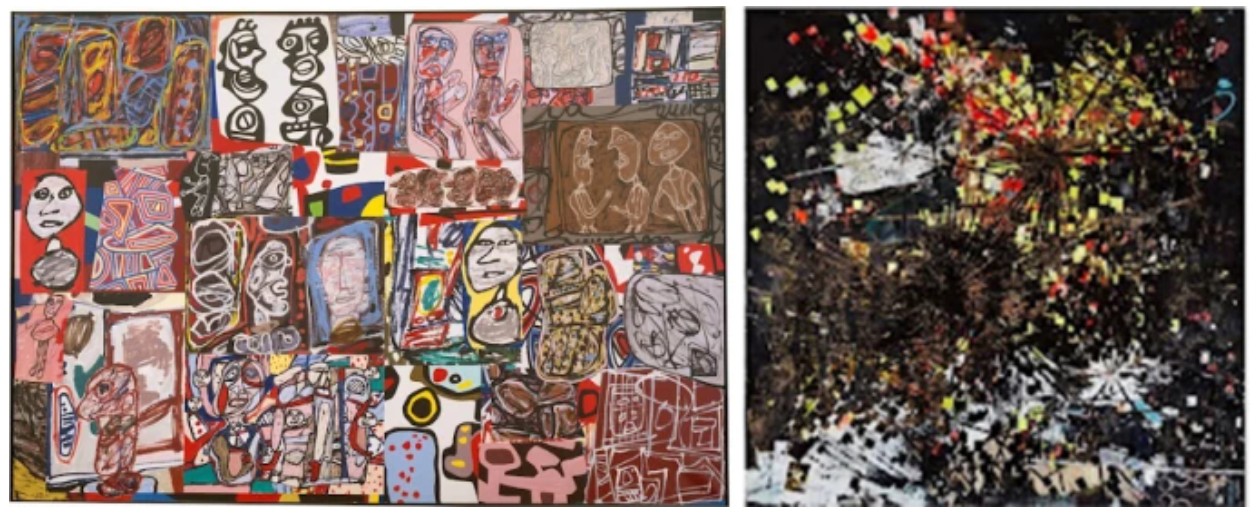
Left: Jean Dubuffet, La ronde des images, 1977. National Gallery of Art, Washington, D.C.. Art © 2026 Artists Rights Society (ARS), New York / ADAGP, Paris.
Right: Mark Bradford, Method Man, 2004. Private Collection. Sold at Sotheby’s New York in November 2021 for $6 million. Art © 2025 Mark Bradford. Courtesy the artist and Hauser & Wirth.
Johnson’s practice has long moved between personal narrative and broader histories of Black cultural experience, weaving symbolic materials and autobiographical vocabularies into works of unusual formal intensity. Sotheby’s notes that his multidisciplinary oeuvre interrogates cultural identity, critical history and personal narrative, while many of his more recent series—including the Broken Crowd works—bring a “caring and attentive lens” to existential themes of anxiety and interiority. That framework is crucial to understanding the present work. Untitled Broken Crowd does not offer a single legible scene so much as a field of psychic and social compression, in which repeated faces flicker between expression and mask, intimacy and distance. The jagged tessellation of the surface suggests both connection and disjunction, while the work’s scale insists on the crowd as something bodily, immersive and shared. Johnson’s achievement lies in making such complexity feel neither illustrative nor fixed, but materially and emotionally immediate.
Rashid Johnson’s Broken Works in Select Public Collections
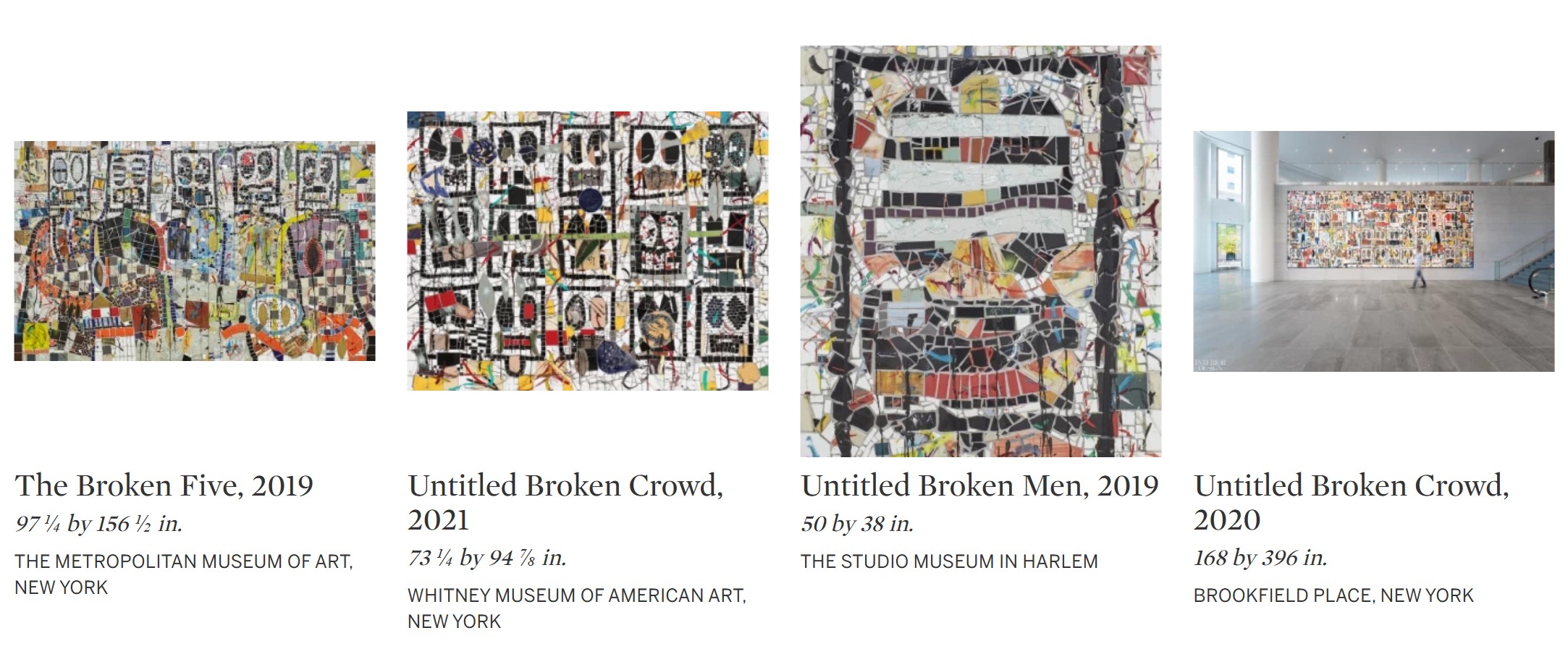
The material vocabulary of the present work is central to that immediacy. Johnson’s use of ceramic tile, mirror tile, branded red oak flooring, bronze, oilstick, black soap and wax is never merely additive; each element carries distinct visual and symbolic force. The oak planks establish a structural armature, their branded surfaces evoking use, inscription and pressure. Black soap and wax lend the work its velvety density and absorptive depth, while mirrored passages open the composition outward, creating moments of reflection that are both literal and destabilizing. Spray enamel and oilstick animate the surface with quickened marks and chromatic accents, so that the work oscillates between construction and gesture, permanence and improvisation. This is one of Johnson’s great strengths as an artist: to marshal materials of different temperature, texture and cultural resonance into compositions that remain rigorously built yet palpably alive.
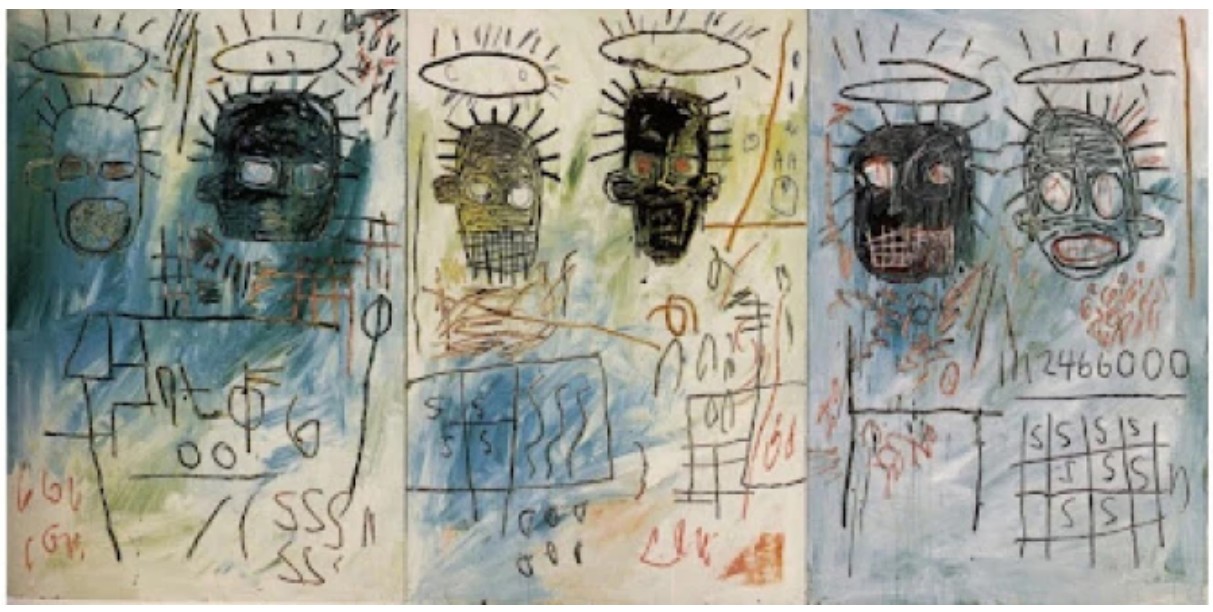
Jean-Michel Basquiat, Six Crimee, 1982. Museum of Contemporary Art, Los Angeles.
Art © Estate of Jean-Michel Basquiat. Licensed by Artestar, New York
By 2021, Johnson had already secured his position as one of the most influential American voices in contemporary art, with a practice spanning painting, sculpture, film and installation, and with major institutional recognition including A Poem for Deep Thinkers at the Solomon R. Guggenheim Museum. Untitled Broken Crowd belongs emphatically to that mature moment. Monumental without heaviness and emotionally charged without sacrificing formal clarity, it gives concentrated expression to the concerns that have made Johnson’s art so resonant: identity as composite, history as layered material, and collectivity as both burden and possibility. In its fractured faces, reflective interruptions and commanding scale, the present work stands as a particularly strong example of the Broken Crowd series—urgent, sophisticated and unmistakably of its moment.
Color Men, 2016
Estimated: USD 300,000 – 500,000
USD 348,300
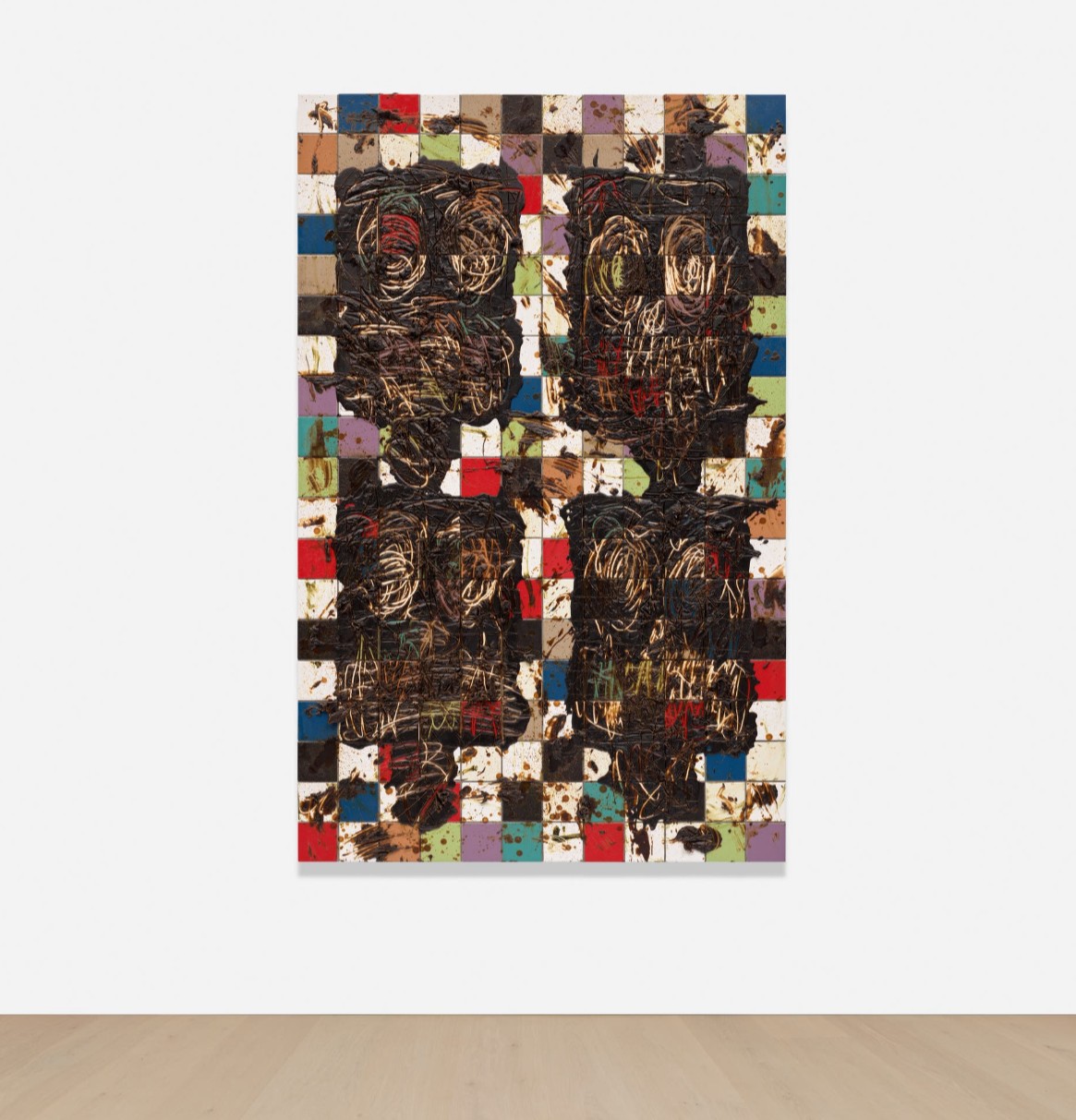
Color Men, 2016
Spray enamel, black soap and wax on ceramic tile
75 x 47-1/2 inches (190.5 x 120.7 cm)
Composed of spray enamel, black soap, and wax on ceramic tile, Rashid Johnson’s Color Men, 2016, juxtaposes the orderliness of a grid with fast-paced, gestural mark-making. Featuring Johnson’s signature materials and motifs, the present example embodies order and disruption. Unfolding across a modular surface of neatly arranged ceramic tiles, four faces, arranged analogously in quadrants, are built in a process of accumulation and deduction. Scratched, dragged, and partially erased through dense applications of black soap and wax, Johnson’s working process resists precision. Solidified accumulations scatter across the plane, producing a surface that feels open-ended rather than overly resolved. Working across painting, sculpture, installation and film, Johnson has developed a practice that draws deeply from his upbringing in Chicago and the broader histories of the African diaspora. His work persistently engages questions of personal, racial, and cultural identity, synthesizing art historical references with vernacular materials and symbolic forms. In Color Men, these concerns manifest through a composition that is both materially rich and psychologically charged.
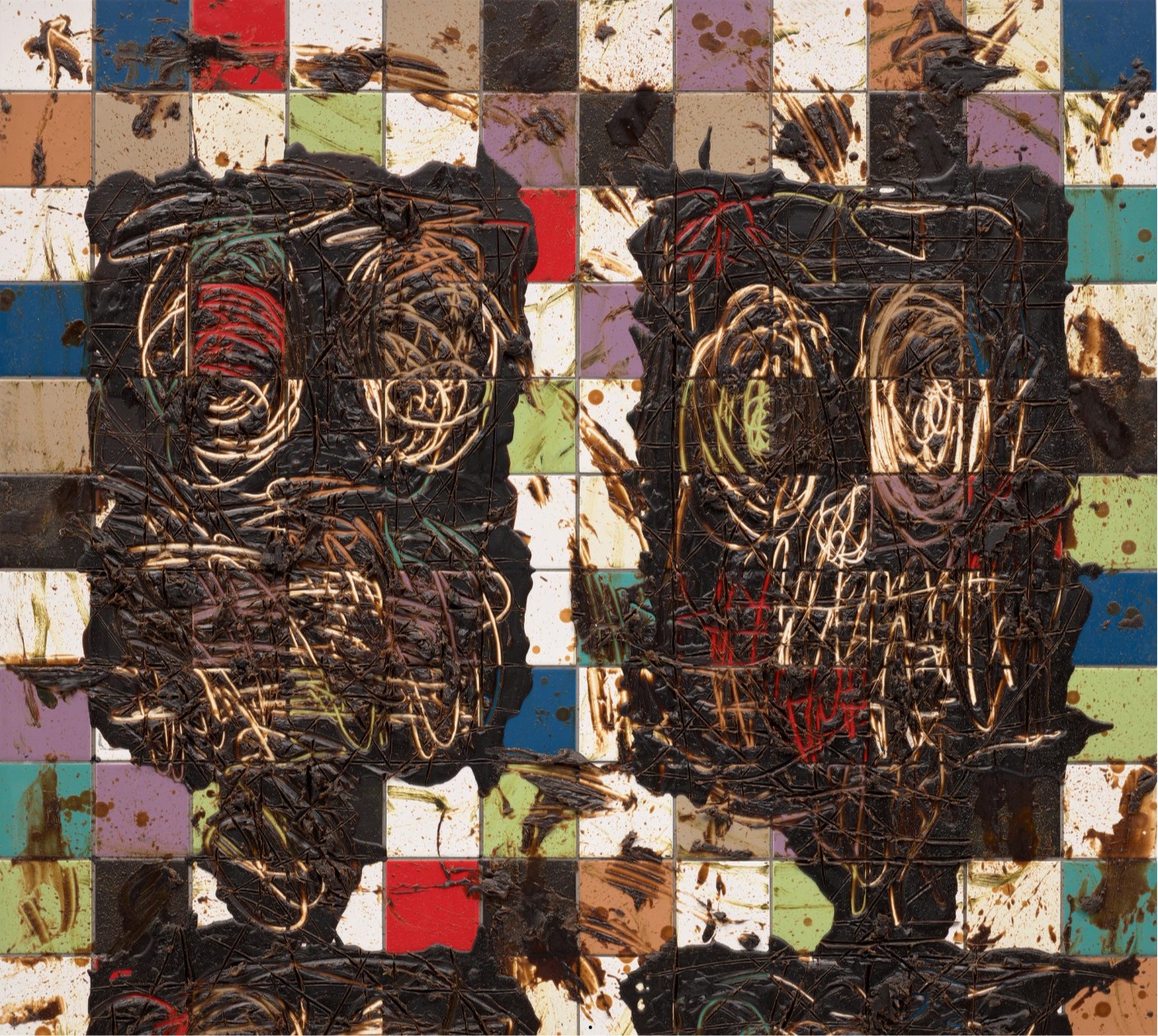
The figures that populate Color Men evolve from Johnson’s Anxious Men series, first presented in his 2015 solo exhibition at the Drawing Center in New York. Here, faces linger between legibility and dissolution. Anonymous and abstracted faces are rendered through a process that resembles drawing by erasure: thick applications of black soap and wax are scratched, smeared, and reworked, recording the immediacy of the artist’s hand.
“The black soap and wax is melted down into a liquid, and after it’s poured you have between five and ten minutes to manipulate it.”
Thus, materiality dictates form, and the resulting faces appear caught in states of heightened emotionality– an accumulation of gestures through which repetition compounds into a sense of unease. Johnson has described the creation of these works as a cathartic act, a means of processing his own anxieties amid a broader climate of violence, racial injustice, and political instability.
Adrian Ghenie
The Blue Rain, 2009
Sotheby’s New-York: 15 May 2026
Estimated: USD 600,000 – 800,000
USD 896,000
Adrian Ghenie | The Blue Rain | Contemporary Day Auction | 2026 |
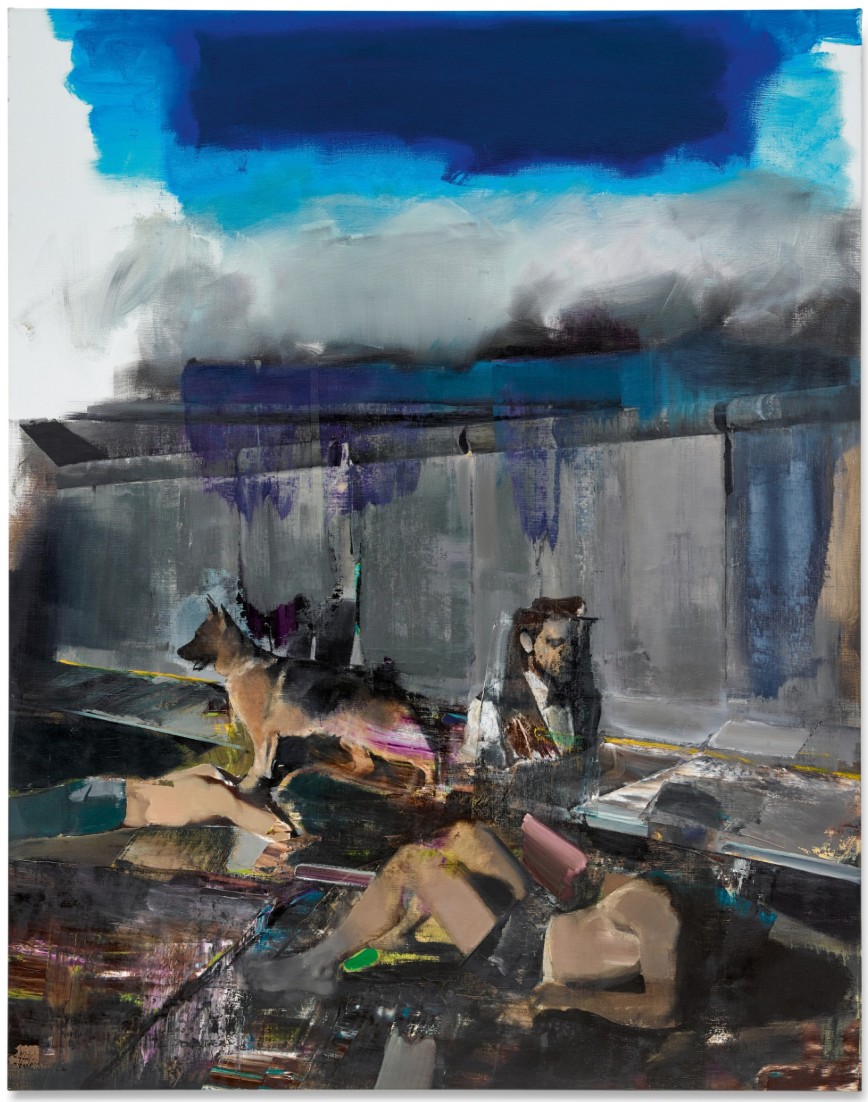
ADRIAN GHENIE (b. 1977)
The Blue Rain, 2009
Oil on canvas
240×190 cm (94-1/2 x 74-3/4 inches)
Signed and dated 2009 (on the reverse)
Blurring the boundaries between fact and fiction, past and present, figuration and abstraction into a dreamlike haze, The Blue Rain from 2009 is a stellar embodiment of the gestural bravura and psychological intensity that distinguish Adrian Ghenie’s revolutionary oeuvre. Drawing together incongruous narratives and motifs as diverse as Elvis Presley and the Berlin Wall, The Blue Rain evokes a disorienting sensation that invokes an allusion to the sociopolitical turmoil of European history. Within the dynamic amalgamation of richly variegated layers in the present work is the thrilling amalgam of painterly technique and historical narrative that defines Ghenie’s singular artistic practice.
“What interests me is the texture of history”
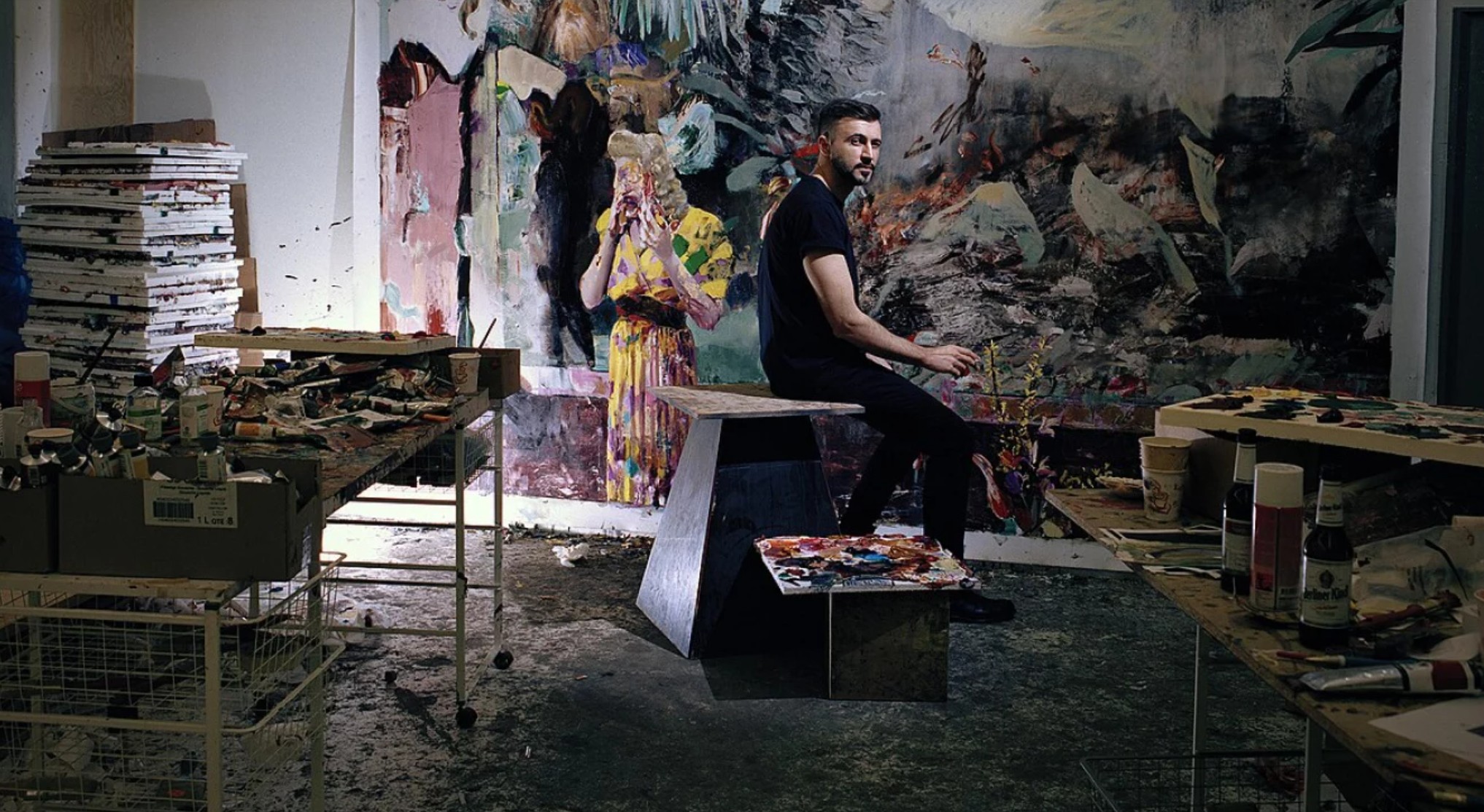
Oliver Mark – Adrian Ghenie, Berlin 2014. By © Oliver Mark, CC BY-SA 4.0
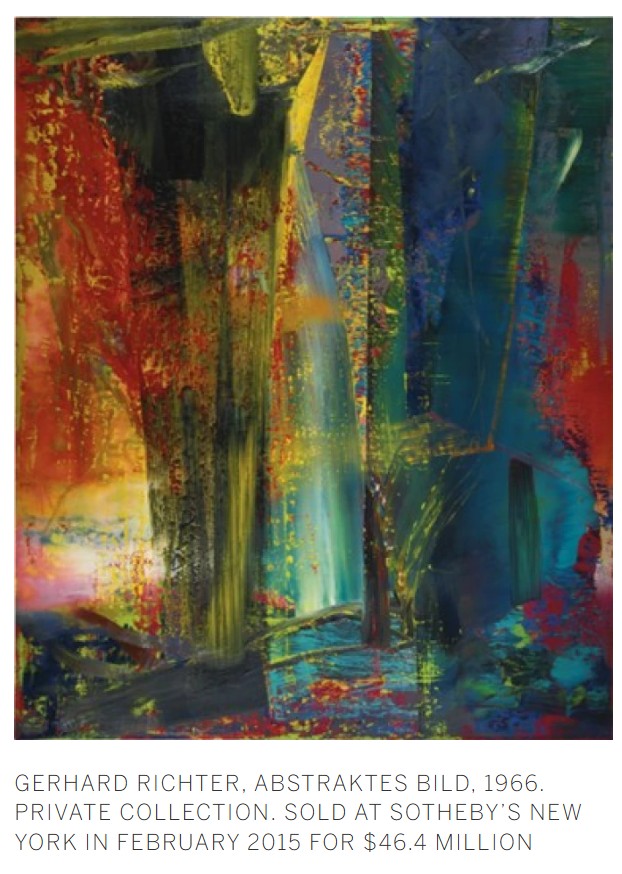
Applying oil paint with a palette knife, Ghenie builds up a sumptuously textured surface. The forms in The Blue Rain slips in and out of focus like the half-remembered fragments of a fading dream. The lower portion of the canvas melds the squeegee scrape of Gerhard Richter’s post-photographic abstraction with the psychological intensity of Francis Bacon portraits, while the atmospheric color fields of the top recall the work of Mark Rothko.
“There is a nice anecdote about Francis Bacon looking at Rothko. He didn’t look at Rothko in awe – he wanted to figure out whether it would fit as background for his silhouettes. Rothko for him was a background provider.”
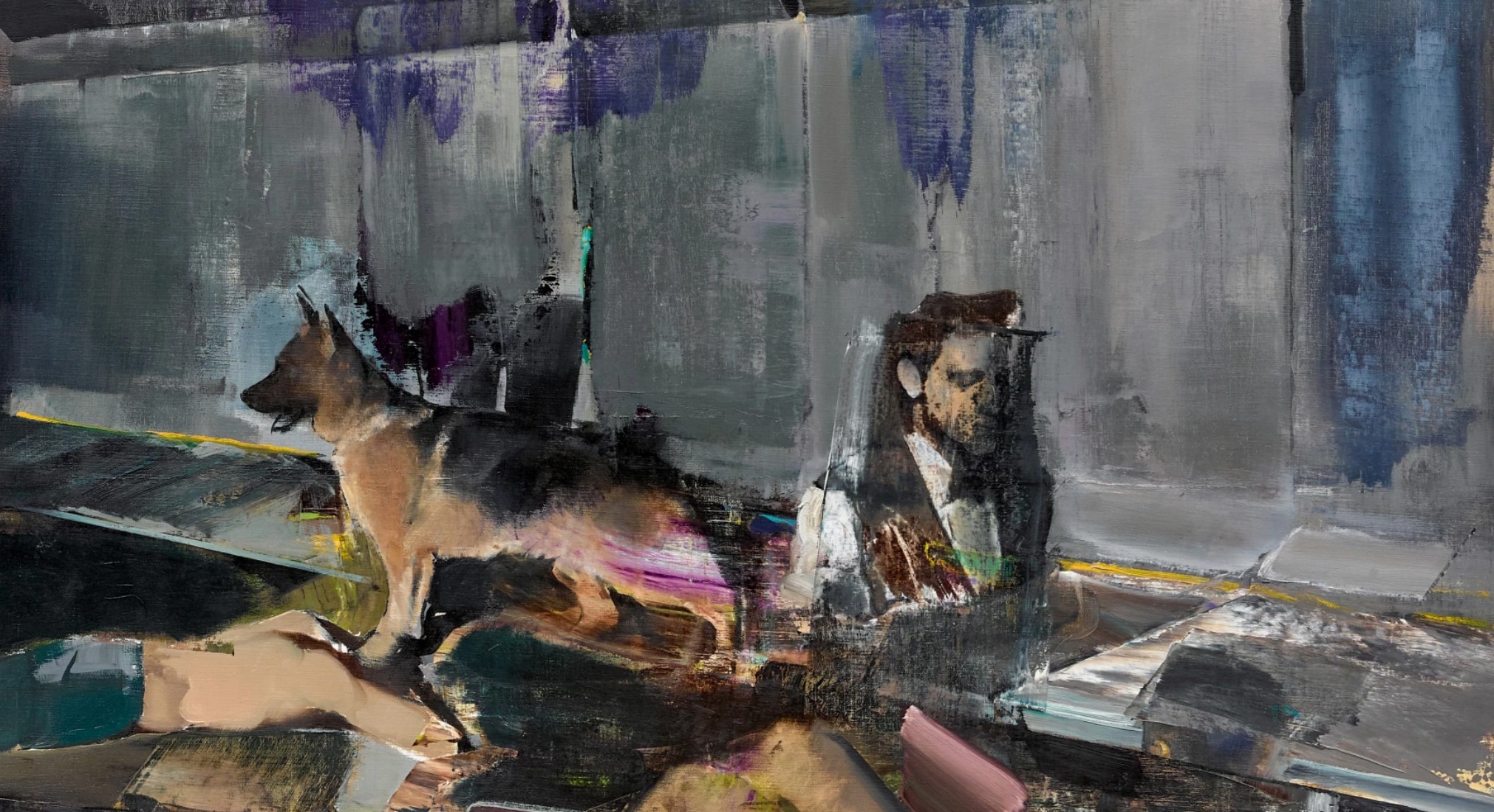
The superbly rendered surrealistic amalgamation of color and form evince Ghenie’s post-modern fluency as a painter.
“On one hand…I work on an image in an almost classical vein: composition, figuration, use of light. On the other hand, I do not refrain from resorting to all kinds of idioms, such as the surrealist principle of association or the abstract experiments which foreground texture and surface.”
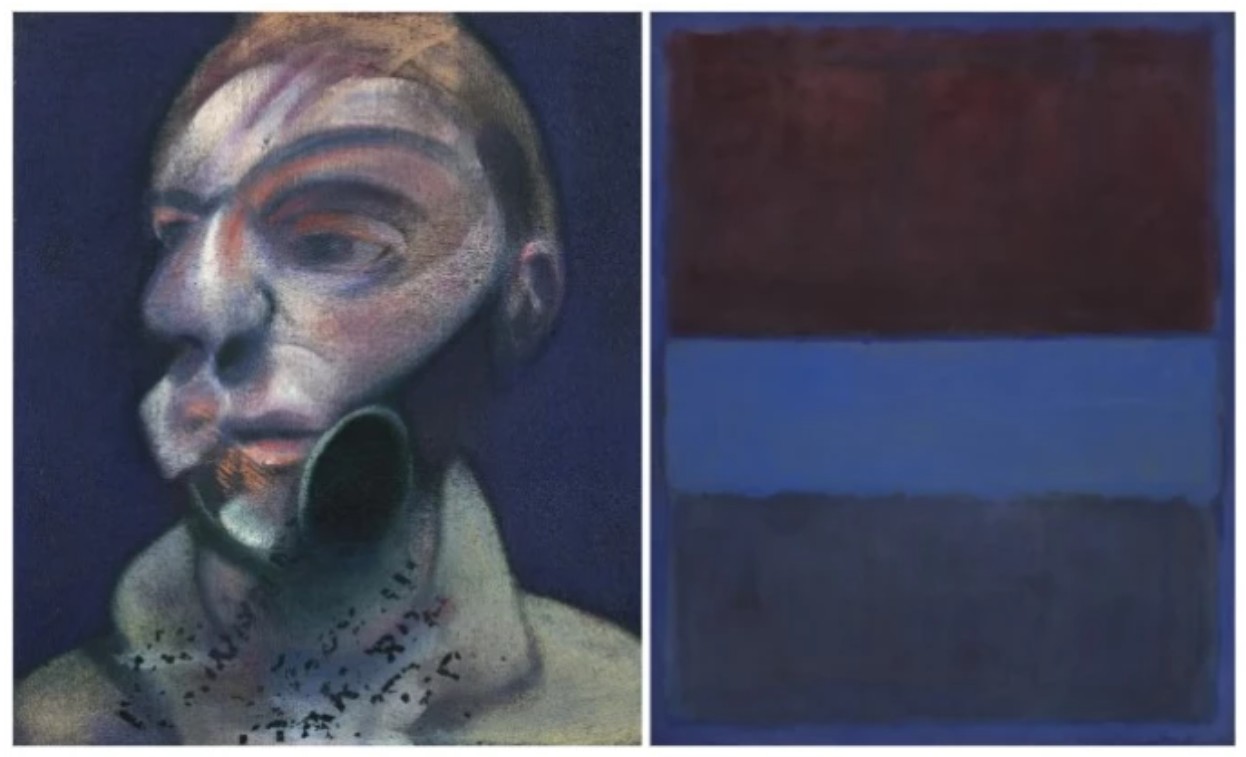
LEFT: Francis Bacon, Self-Portrait, 1975. Private Collection. Sold at Sotheby’s London in 2019 for $21 million. Art © The Estate of Francis Bacon. All rights reserved. / DACS, London / ARS, NY 2022
RIGHT: MARK ROTHKO, NO. 61 (RUST AND BLUE) [BROWN BLUE, BROWN ON BLUE], 1953. MUSEUM OF CONTEMPORARY ART, LOS ANGELES. ©1998 KATE ROTHKO PRIZEL & CHRISTOPHER ROTHKO / ARTISTS RIGHTS
Emerging from layered curtains of painting and sharp fragments that form reclining figures and chromatic rubble, Ghenie paints the iconic figure of Elvis Presley. The motif of Elvis, and its accompanying visual cliches, are of particular interest to the artist and were the focus of the exhibition at Tim Van Laere Gallery in Antwerp in which the present work debuted. Arguably the first truly global icon, Elvis serves as a means of interrogating the history of the entertainment industry and its attendant iconography, a myth so pervasive that it managed to cross the iron curtain and create imitative phenomena. Here Ghenie positions his Hollywood simulacrum at the company of a German shepherd that evokes the charged symbolism of power and surveillance, constructing a visual and thematic tension that permeates throughout the painting. Further, the looming, architectonic form that cuts through the composition immediately draws an association with the Berlin Wall which for decades divided the city that would become Ghenie’s second home.
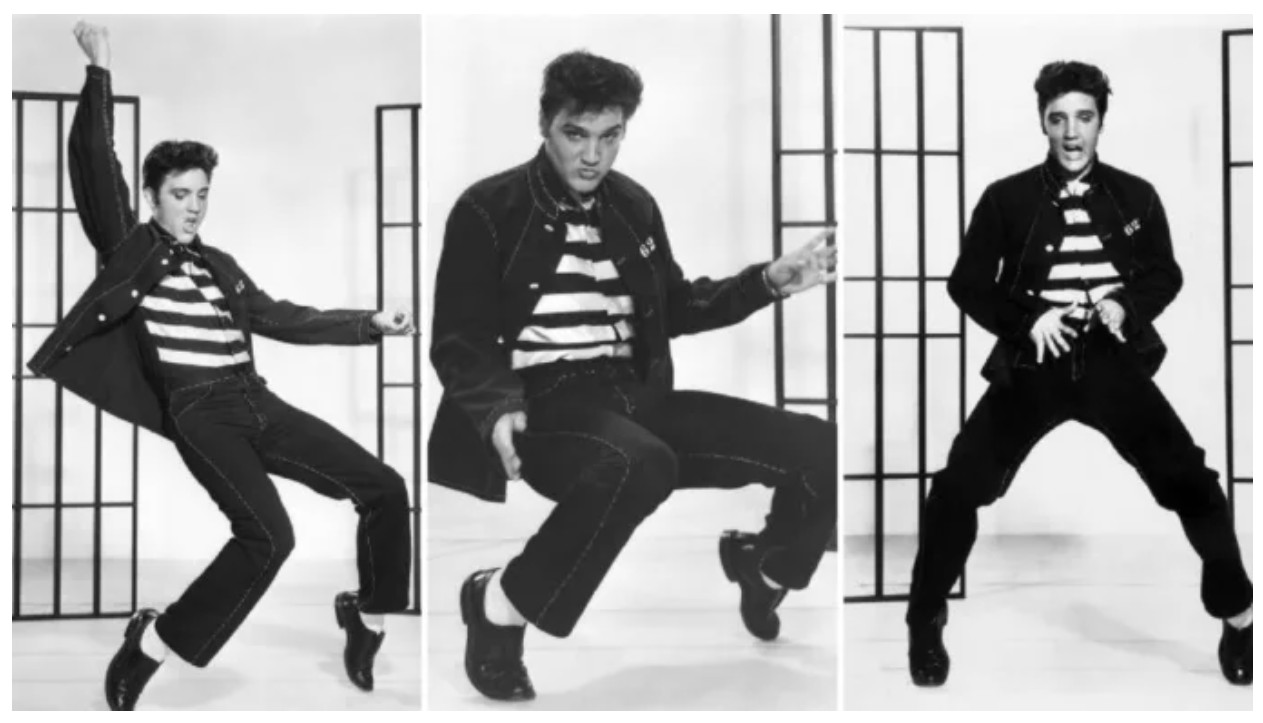
Elvis Presley on the set of Jailhouse Rock, directed by Richard Thorpe.
Photo by Metro-Goldwyn-Mayer/Sunset Boulevard/Corbis via Getty Images.
Born in Romania in 1977 and raised under Nicolae Ceausescu’s repressive communist regime, Adrian Ghenie developed a visceral pictorial language that addresses some of contemporary history’s darkest chapters. His psychologically charged subjects, which have included portraits of the likes of Hitler, Lenin and Josef Mengele, interrogate themes of malevolence, totalitarianism, dictatorship, and the very fallibility of human nature. In The Blue Rain, Ghenie visualizes the intricate space of personal and collective memory after the fall of the Berlin wall, a complex subject explored through the interweaving of complicated personal and historical narratives, motifs, and idioms.
“What happened in Romania after ’89 – the fall of the Berlin Wall – was very interesting. When you realize a whole country can be manipulated and made to believe one thing about itself, and then the regime falls and you find out that no, it was the other way around. “I saw how it is possible to manipulate a whole country. What is the truth? What is trauma?”
It is precisely this instability of collective memory, the gap between lived experience and its official narrative, that drives Ghenie’s work.
The Blue Rain is a stratified visual and metaphorical palimpsest. Cast in an atmospheric aura of cold blue light, The Blue Rain can be likened to the silver screen, which conjures fiction in the guise of reality. The Blue Rain speaks to a realization “that the world is changing its texture, is changing its skin…The world is beginning to have the texture of easy-to-clean surfaces. It no longer has pores. All the objects around us are beginning to be shinier and shinier” (the artist in quote in: Adrian Ghenie: Darwin’s Room, Exh. Cat., Romanian Pavilion, Biennale de Venezia, Venice, 2015, p. 31) Working from source images on his laptop screen, Ghenie champions the act of giving corporeal form to imagery in an increasingly cerebral, digitized, social landscape, redressing the relationship between source and reference in contemporary acts of recording. The Blue Rain employs a broad reach of the medium of painting to subsume the historical development of the image-making technologies, ultimately forming a trans-historical mode of visualizing the world.
Jonas Wood
Clipping J1, 2015
Property from an Ambassadorial Collection
Sotheby’s New-York: 15 May 2026
Estimated: USD 500,000 – 700,000
USD 640,000
Jonas Wood | Clipping J1 | Contemporary Day Auction | 2026 | Sotheby’s
JONAS WOOD (b. 1977)
Clipping J1, 2015
Oil and acrylic on canvas
87-1/2 x 69 inches (222.2 x 175.3 cm)
Signed with the artist’s initials, titled and dated 2015 (on the reverse)
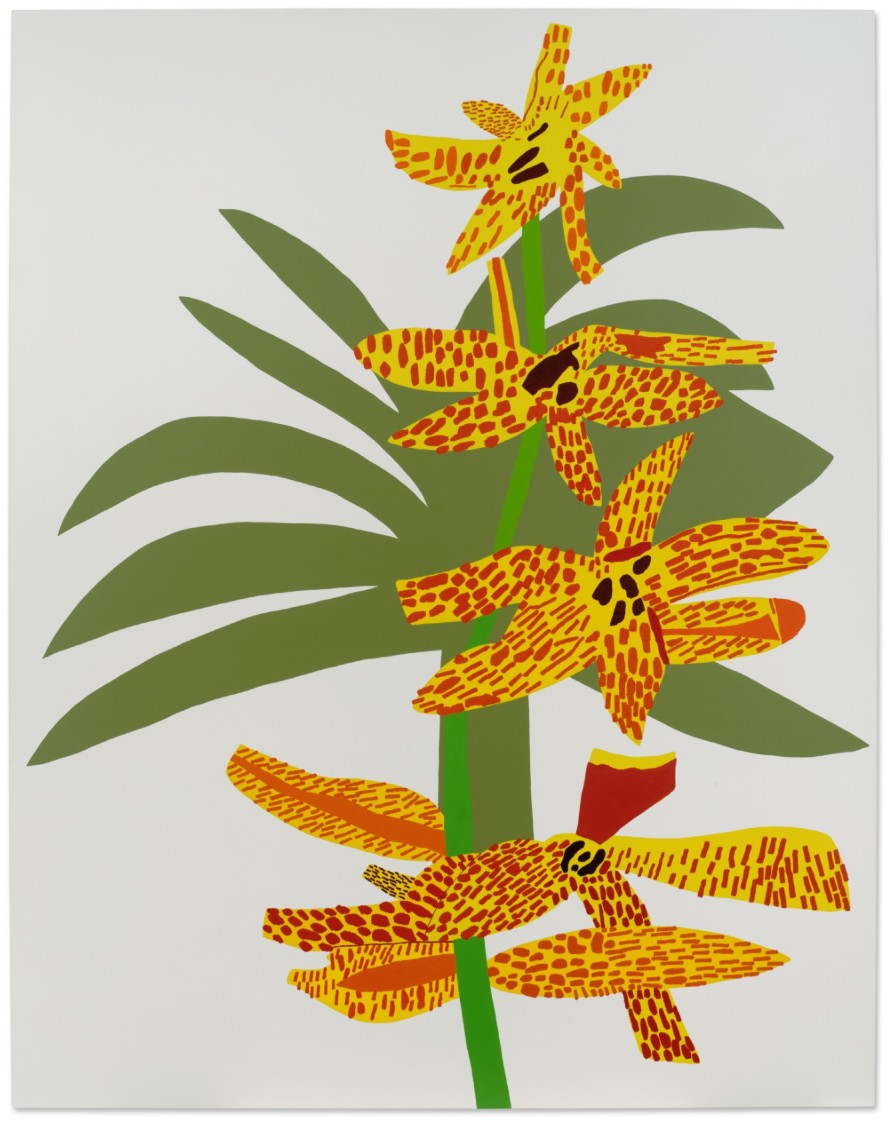
Lusciously unfolding across a monumental canvas, Jonas Wood’s Clipping J1 exemplifies the aesthetic project that has distinguished the artist among his contemporaries. Executed in 2015, the present work belongs to the celebrated Clipping series, where Wood sought to isolate botanical forms from the intimate world of his domestic interiors and granted them a new, monumental autonomy. Geometric, stylized, and arrestingly sharp, Clipping J1 captures the artist’s signature deployment of an array of formal techniques to create viewpoints deliberately at odds with the viewer’s expectations.
“I wanted it to feel like this plant was so much larger than a person that it would sort of engulf the viewer.”
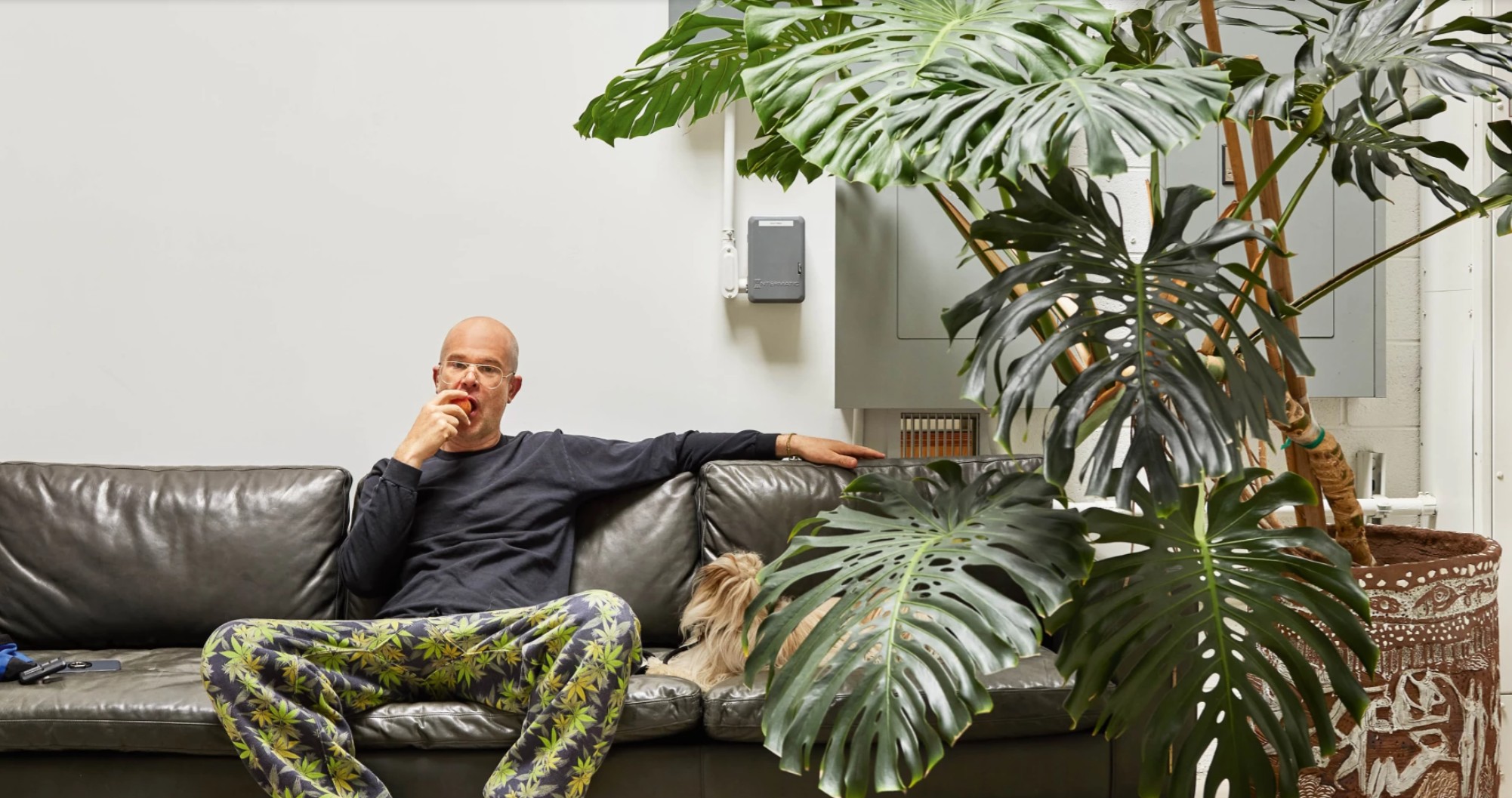
Jonas Wood in his studio, Los Angeles, 2024. Image © Laure Joliet
Begun in 2013, the Clippings crystallize Wood’s singular artistic approach. Drawn from the potted plants and foliage that populate his Los Angeles home, the series title alludes both to the act of botanical trimming and to Wood’s own recursive process of excerpting and reworking imagery from his previous paintings. Marked distinctly by their mosaic-like reconfiguration onto immense solid-colored canvas, Wood extracts the plant from its original setting so that it assumes a commanding pictorial presence. In Clipping J1, a vibrant orchid rises against a pale gray ground with extraordinary clarity and poise. Broad green leaves arc across the canvas in sweeping, flattened bands, while the flowers flare outward in vivid yellow, animated by dense vermillion flecks. Wood’s handling is at once spare and exacting. Yet for all its reduction, Clipping J1 never relinquishes its descriptive power. The painting effortlessly oscillates between representation and abstraction, preserving the orchid’s delicacy even as it becomes a bold orchestration of shape, color, and scale.
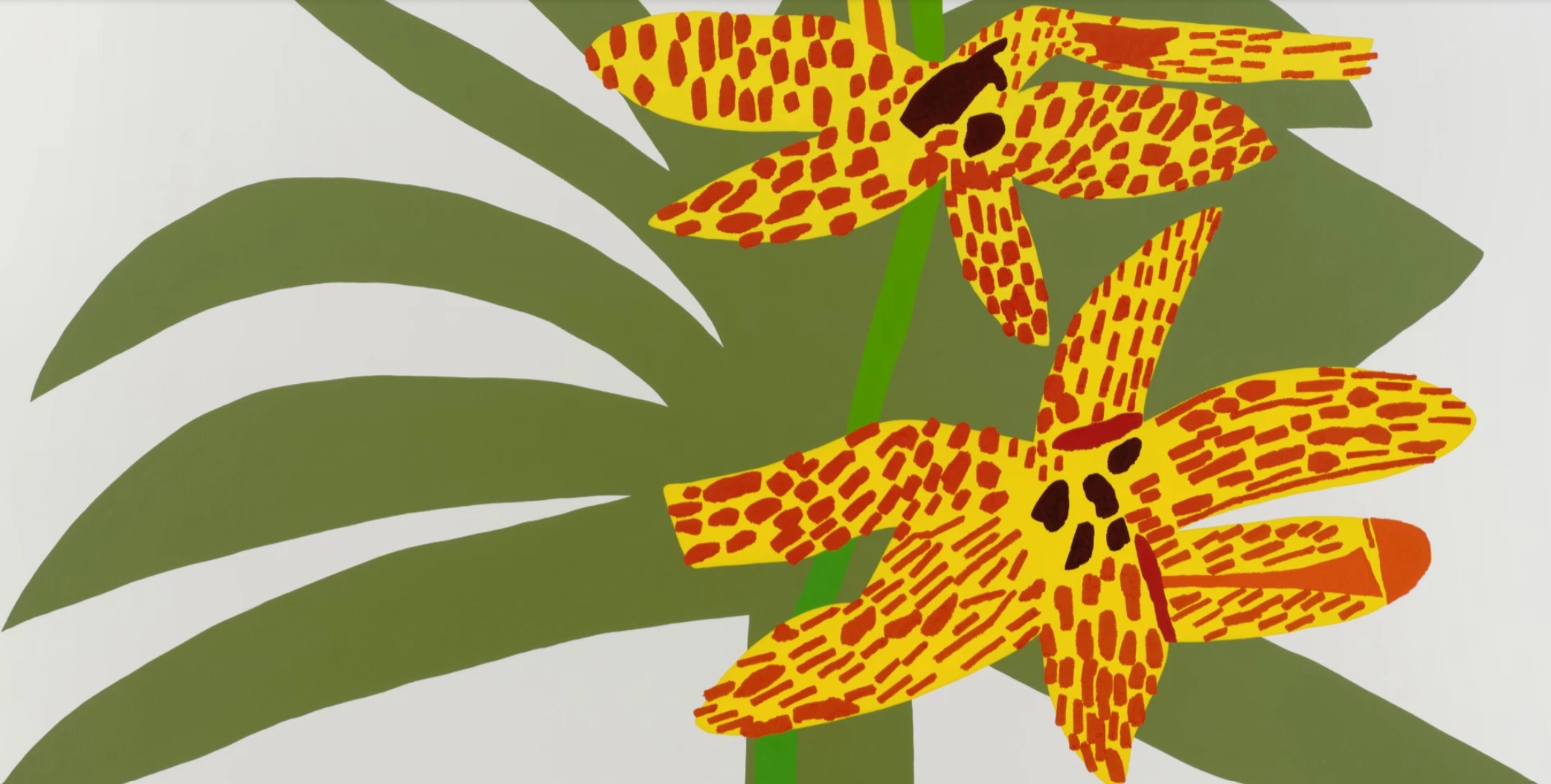
In Clipping J1, exuberant orchids and foliage are rendered with vivid pattern and saturated color, yet held within the artist’s signature flatness and spacious reserve. The negative space becomes an active device, emphasizing the collage-like construction of the image. This method recalls Henri Matisse’s late cut-outs, in which painted paper forms were cut, rearranged, and reconfigured into compositions of striking economy and vitality. Discussing the overlaps between Matisse and Wood, art historian Ken D. Allan states: “In 1908 Henri Matisse explained, ‘The entire arrangement of my picture is expressive…Composition is the art of arranging in a decorative manner the diverse elements at the painter’s disposal to express his feelings.’ Wood’s return to such questions allows us to see that painting’s delivery of visual pleasure has a history—a history that Wood’s work surely continues.” (Ken D. Allan in conversation with Hans Ulrich Obrist in: Exh. Cat., Dallas, Dallas Museum of Art, Jonas Wood, 2019, pp. 22-23)
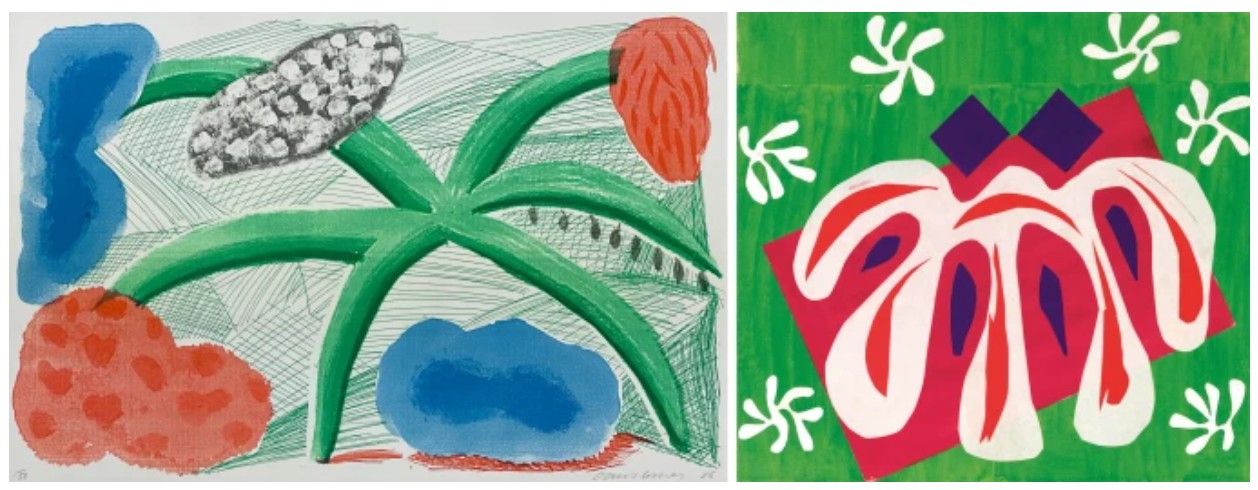
LEFT: David Hockney, Landscape With A Plant, 1986. © Archeus / Post-Modern Ltd.
RIGHT: Henri Matisse. Two Masks (The Tomato) (Deux Masques [La Tomate]), 1947. © 2014 Succession H. Matisse / Artists Rights Society (ARS), New York.
Enlarged to a monumental scale, the orchid is transformed from an intimate domestic detail into an image of almost architectural presence. What might ordinarily be glanced at in passing is here slowed down, isolated, and reimagined with total conviction. This ability to monumentalize the familiar lies at the heart of Wood’s practice. His subjects are drawn from the fabric of daily life, yet in his hands they assume singular motifs, rigorously edited, becoming the site of maximum visual impact. In Clipping J1, Wood transforms the orchid into something at once decorative and structural, intimate and iconic, coolly graphic yet deeply sensuous.
“I wanted it to feel like this plant was so much larger than a person that it would sort of engulf the viewer.”
With a commanding scale, radiant palette, and distilled formal intelligence, Clipping J1 stands as a radiating example of the Clippings series through which Wood expanded the possibilities of contemporary still life. Synthesizing the defining concerns of his practice, the present work offers a compelling expression of his visual language, poised between observed reality and abstract construction.
French Open Four, 2012
Sotheby’s New-York: 15 May 2026
Estimated: USD 400,000 – 600,000
USD 896,000
Jonas Wood | French Open Four | Contemporary Day Auction | 2026 |
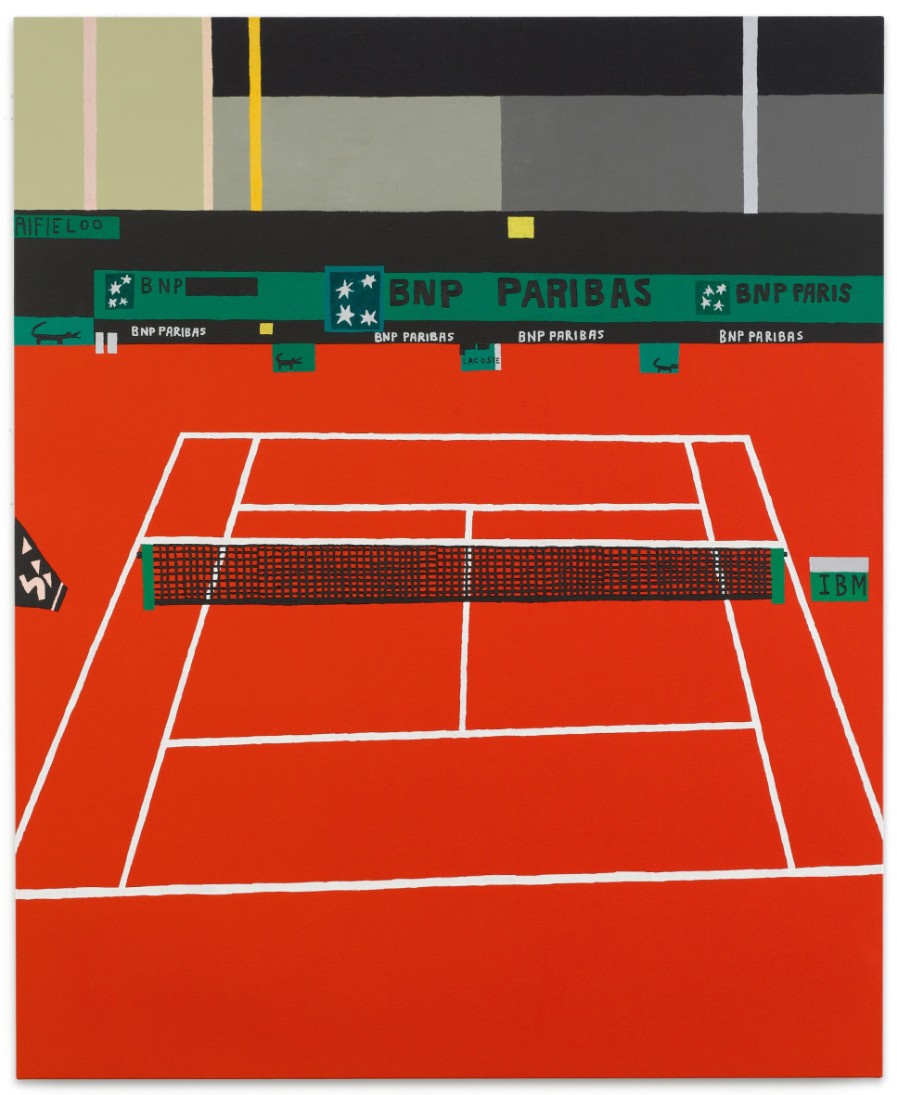
JONAS WOOD (b. 1977)
French Open Four, 2012
Oil and acrylic on linen
62 x 50-1/8 inches (157.5 x 127.3 cm)
Signed with the artist’s initials, titled and dated 2012 (on the reverse)
Lynette Yiadom-Boakye
Shoot The Desperate, Hug The Needy, 2010
Christie’s New-York: 21 May 2026
Estimated: USD 700,000 – 1,000,000
USD 825,500
LYNETTE YIADOM-BOAKYE (B. 1977), Shoot The Desperate, Hug The Needy | Christie’s
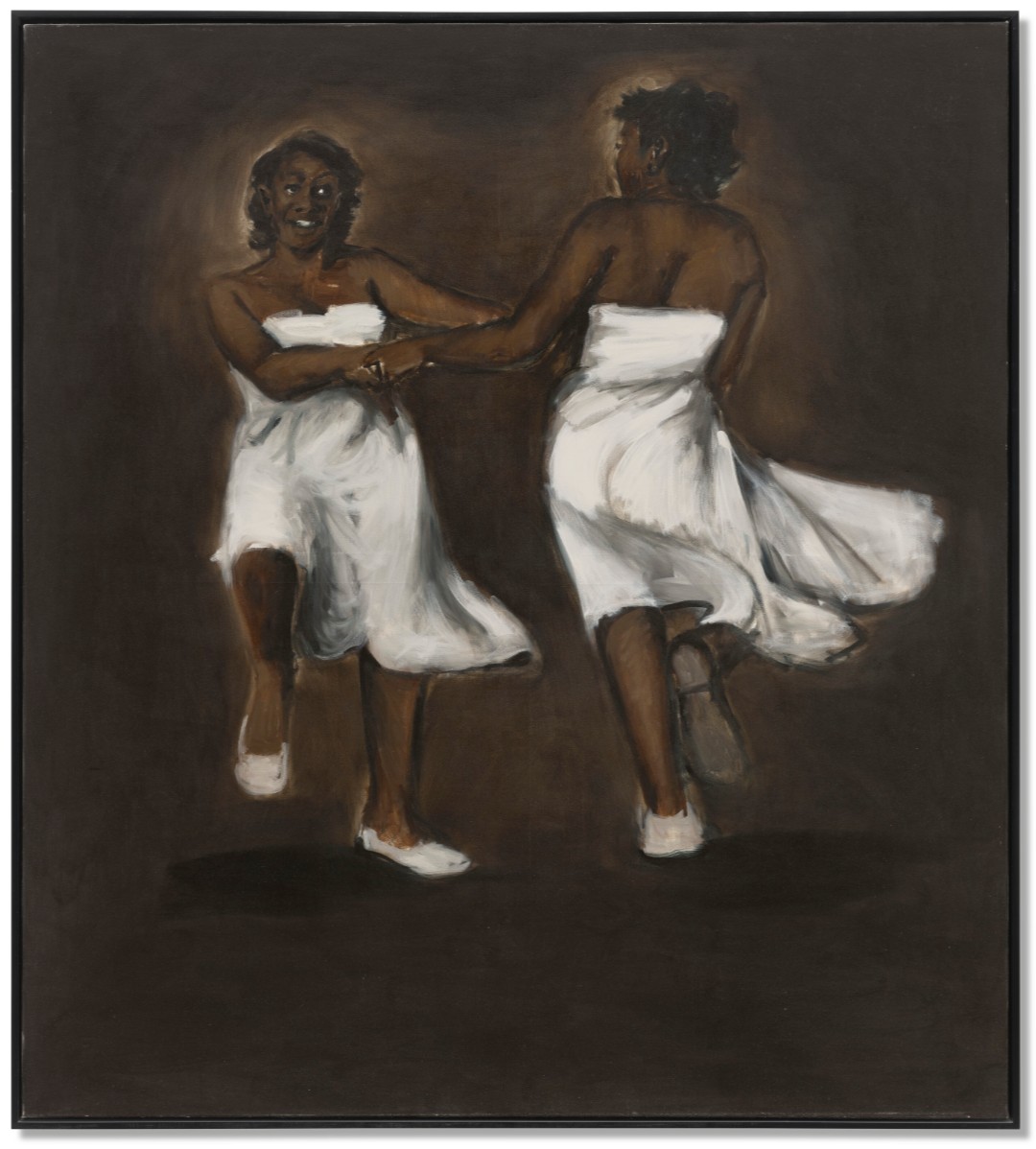
LYNETTE YIADOM-BOAKYE (B. 1977)
Shoot The Desperate, Hug The Needy, 2010
Oil on canvas
78-3/4 x 70-7/8 inches (200×180 cm)
Signed with the artist’s initials, titled and dated
‘Shoot the Desperate, Hug the Needy LYB 2010’
(on the reverse)
“In many ways, I think less about the figures than I do about how they are painted.
I ceased to see the paintings as portraits a long time ago.
Thus, I don’t really see them as ‘characters’ in the individual sense, as personalities or people with specific traits.
I always think of them as somehow beyond these things.
They exist entirely in paint.”
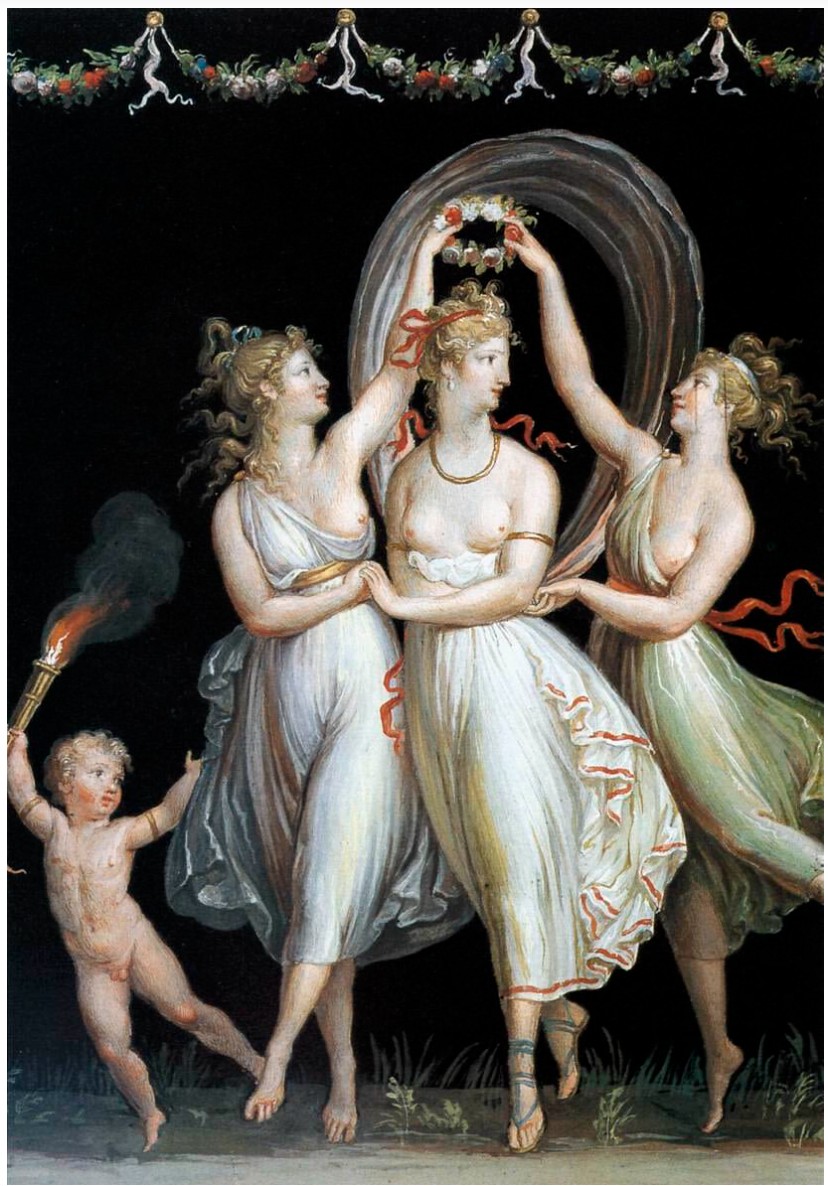
Antonio Canova, The Three Graces, 1799 (detail). Museo Canova, Italy.