MAY 2026 NEW-YORK AUCTIONS
KAWS
UNTITLED (CHUM, HOUSTON STREET), 2000
UNTITLED (CHUM, HOUSTON STREET), 2000
Phillips New-York: 21 May 2026
Estimated: USD 250,000 – 350,000
KAWS Modern & Contemporary Art: Afternoon Session
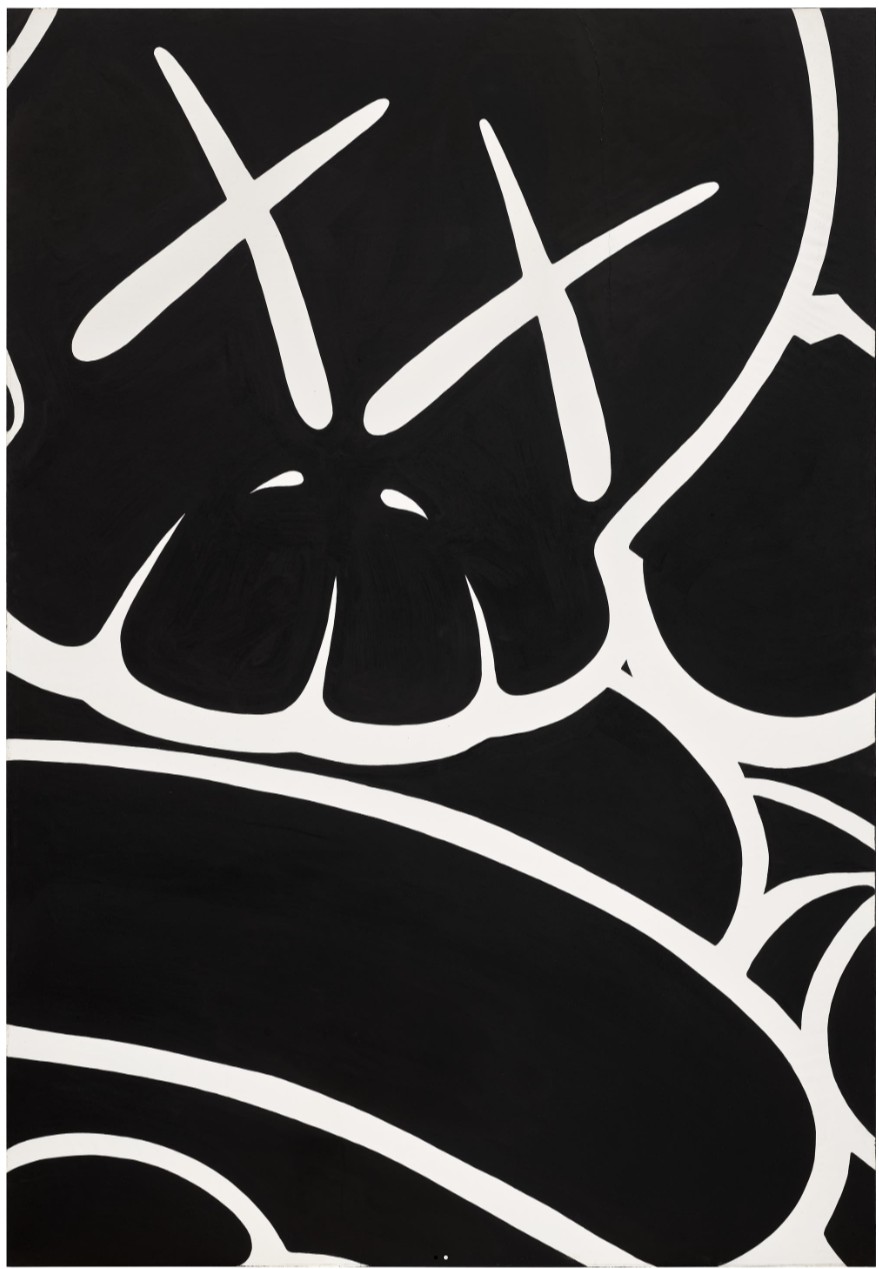
Acrylic on paper
69-3/4 x 48 inches (177.2 x 121.9 cm)
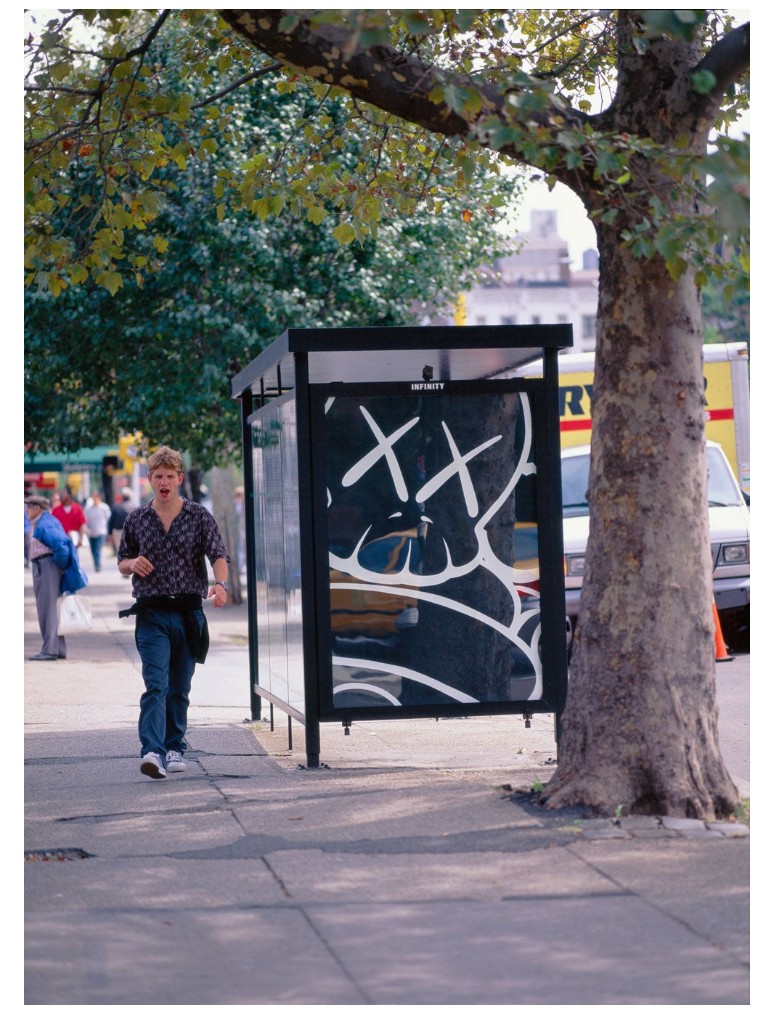
Executed in 2000, UNTITLED (CHUM, HOUSTON STREET) is a rare surviving example of KAWS’s bus shelter interventions — the clandestine series that defined his early career and remains foundational to his practice today. In the mid-1990s, KAWS began a series of “ad interventions,” in which he took existing advertisements on mylar and painted over them, obscuring models’ faces with cartoon-like skulls or wrapping them in coiling snakes. As his engagement with this guerilla act deepened, he began working with blank sheets of paper, creating original images from scratch before installing them into bus shelters. Featuring KAWS’ iconic CHUM character, this unique, hand-painted painting on paper captures the artist’s practice at one of the most generative and insurgent moments of his early career. This exceptional work belongs to that electrifying chapter of his practice and represents a singular evolution within it. Initially displayed in a bus shelter on New York’s Houston Street, bordering the SoHo neighborhood, it has been widely reproduced in an in situ photograph from the time, cementing its status as the most iconic example from this series.
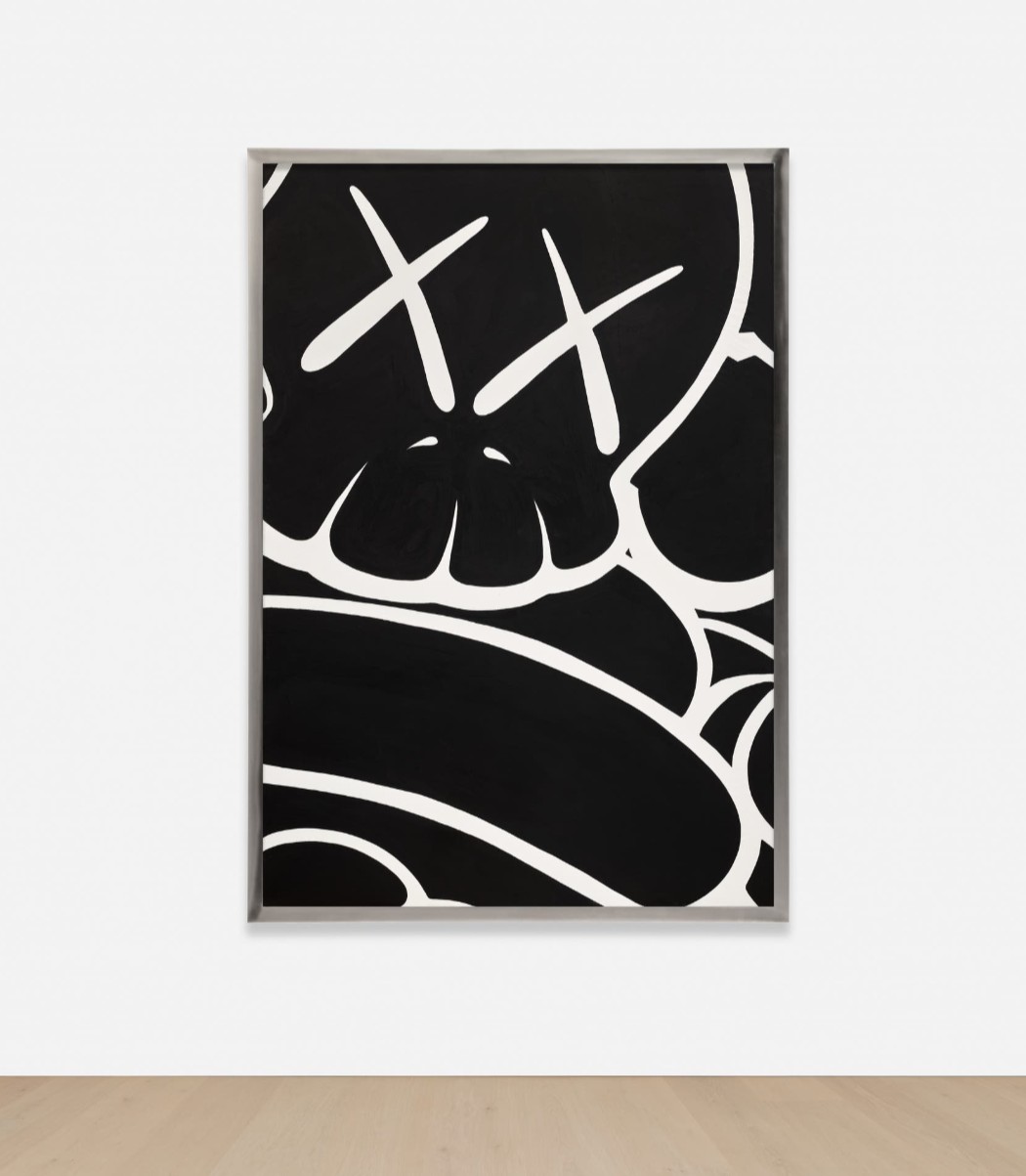
The ad interventions were a natural extension of KAWS’s graffiti practice, which had begun earlier in the decade. A pivotal moment came in 1996, when during a stint in San Francisco, KAWS met fellow street artist Barry McGee, who supplied him with a tool used to open display cases, leading to his first bus shelter works (Germano Celant, KAWS 1993–2010, New York, 2010, p. 48). Begun from a blank sheet of paper, UNTITLED (CHUM, HOUSTON STREET) shows KAWS defining his artistic idiom while embracing compositional control. The work centers on CHUM, one of the artist’s most central and enduring characters alongside COMPANION and ACCOMPLICE. CHUM iterates on the highly recognizable Michelin Man, the character used in the French tiremaker’s advertisements since the late 19th century, and is reimagined with the artist’s signature “X” eyes. In the present example, the figure is rendered in close crop, the body pushed to near-abstraction, lending the composition a quality of spontaneity and surprise, as though CHUM were peering through a window or emerging unexpectedly.
Image/Artwork: © KAWS
The bold white lines set against a black ground carry a clear visual echo of Keith Haring’s subway drawings, in which the artist used white chalk on the black paper lining New York’s transit system to cover outdated advertisements. KAWS, working in the same city decades later, picks up this lineage, inserting art into the existing architecture of commercial display. Yet where Haring’s interventions carried an overt countercultural charge, KAWS’s impulse is perhaps more democratic than adversarial: rather than critiquing the spaces of advertising, he inhabits and reimagines them, folding art into the rhythms of everyday urban life. UNTITLED (CHUM, HOUSTON STREET) is a rare and important document of KAWS’s practice in dialogue with the city itself. It crystallizes the intersections across art, fashion and advertising that remain paramount in his work today — at once a museum-caliber artwork, and a record of a specific moment in New York’s art scene.
SEPARATED, 2021
SEPARATED, 2021
Phillips New-York: 21 May 2026
Estimated: USD 200,000 – 300,000
KAWS Modern & Contemporary Art: Afternoon Session
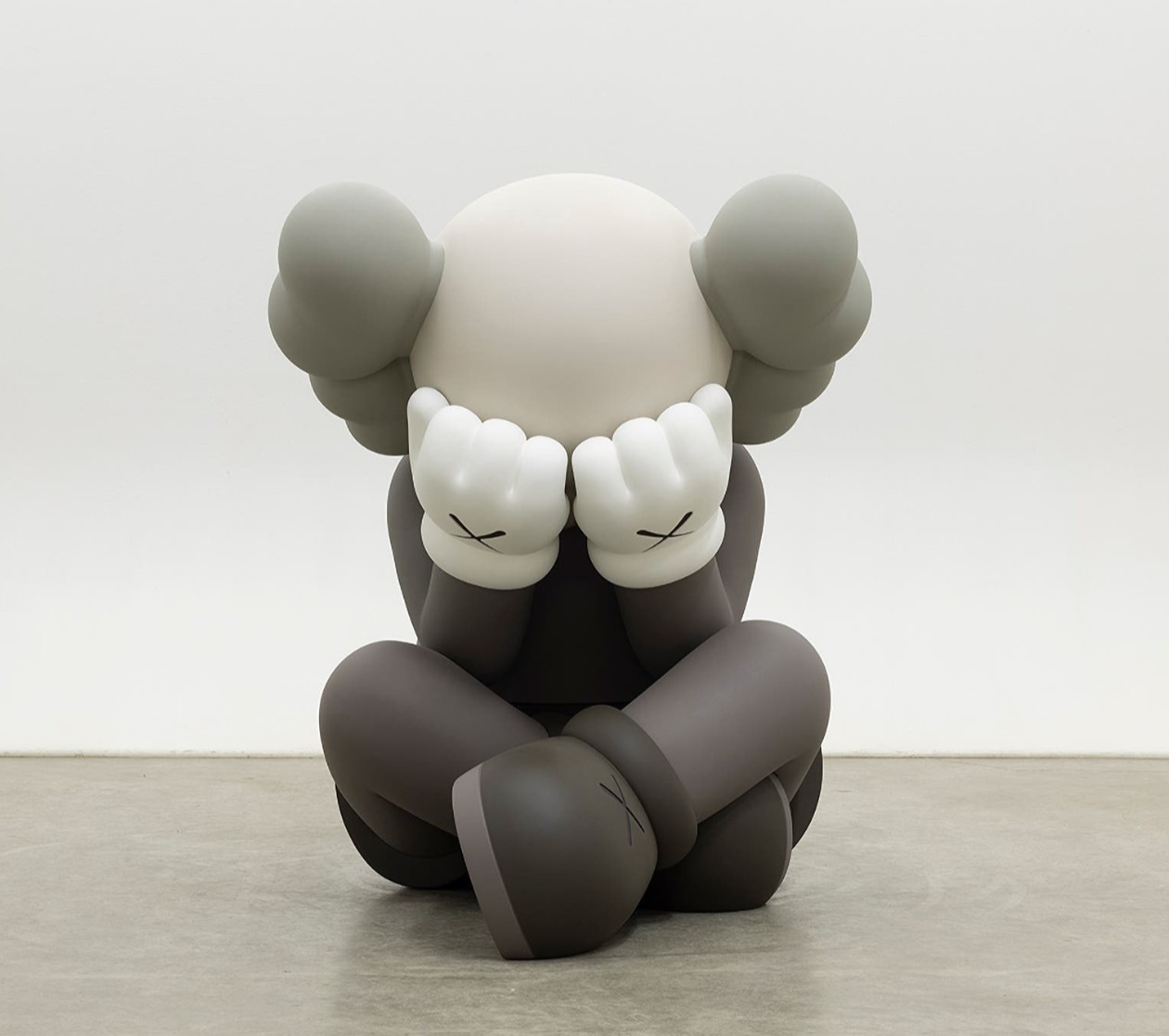
Bronze and paint
48 x 39 1/8 x 49 5/8 inches (121.9 x 99.4 x 126 cm)
Incised with the signature, number and date “2/5 KAWS..21” on the underside
This work is number 2 from an edition of 5 plus 2 artist’s proofs
In SEPARATED, KAWS’ now iconic COMPANION is seated on the ground, legs crossed, body folded inward. Its head is buried into its hands, fully obscuring the face: a rare and deliberate erasure of identity. The posture is compact, almost protective, as if the figure is attempting to disappear into itself. The formal vocabulary remains consistent with KAWS’ Companion: rounded ears, simplified anatomy, and gloved hands marked with the signature “X.” Yet here, these familiar elements are subordinated to gesture. The sculpture is no longer about character recognition: it is about emotional state.
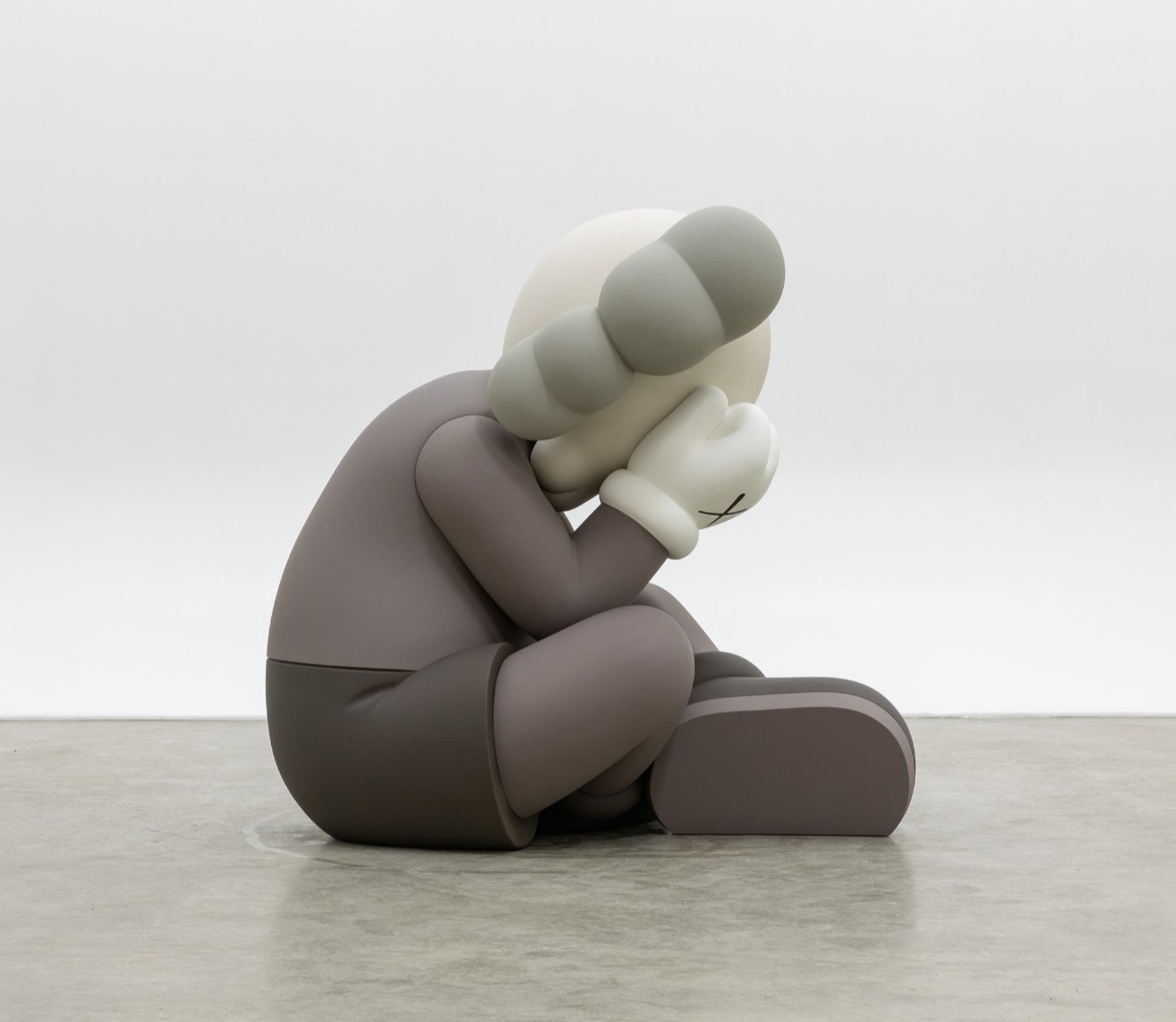
Despite its apparent simplicity, the sculpture is carefully engineered. The compact pose creates a self-contained volume, allowing the work to function almost as a closed form: an object that resists external engagement, mirroring its internalized subject. Released during a period marked by global disruption, Separated Companion was widely interpreted as a reflection of collective emotional states: loneliness, anxiety, and disconnection. While KAWS rarely anchors his works in explicit narratives, the timing of this release inevitably shaped its reception. The sculpture also extends a trajectory within KAWS’ practice toward increasingly introspective figures. From earlier standing or reclining Companions, the move to a fully withdrawn posture represents a conceptual shift: the character is no longer performing for the viewer, but retreating from them.
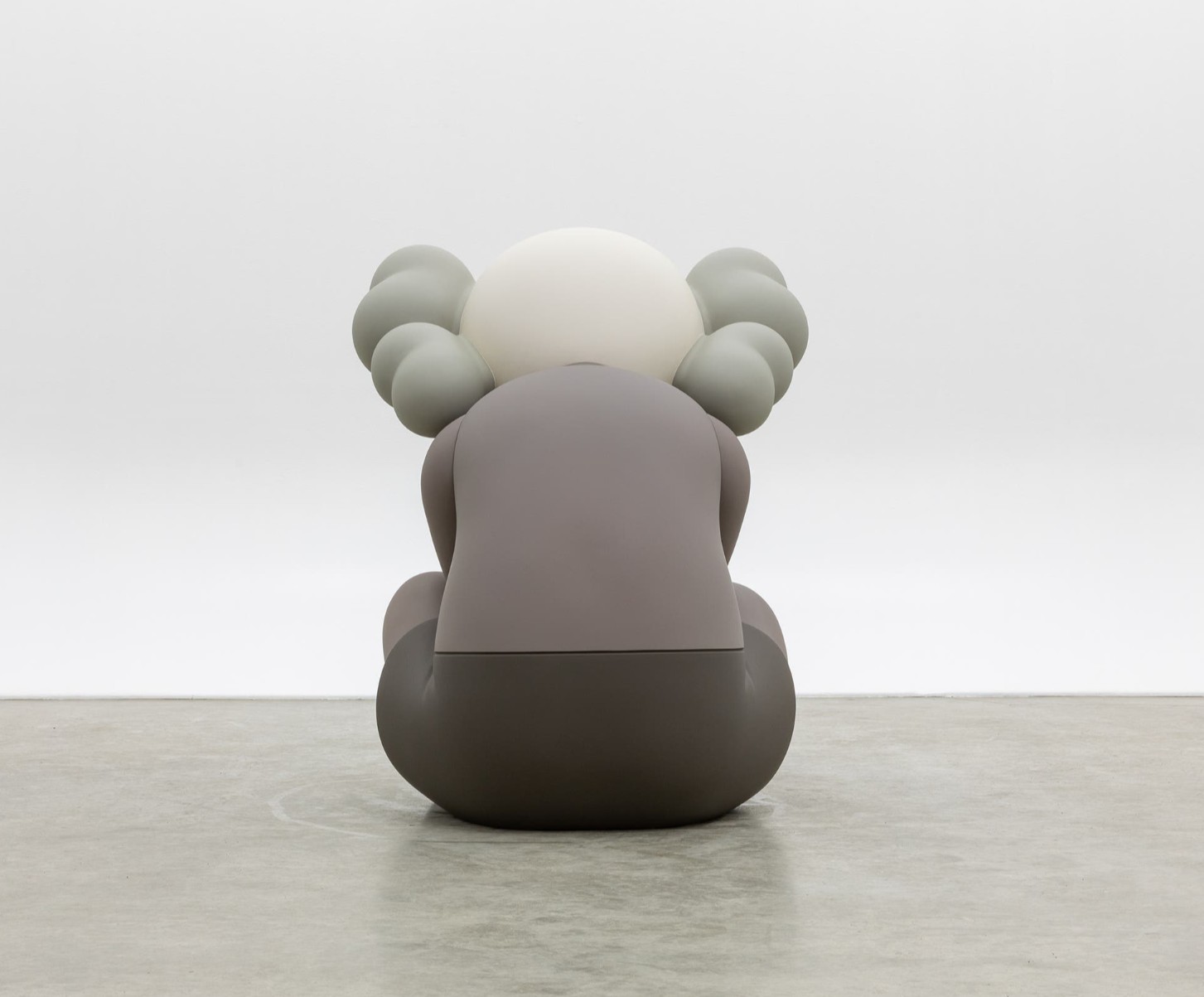
At its core, Separated Companion is about absence: of face, of expression, of interaction. By covering the head entirely, KAWS removes the primary site of communication, forcing the viewer to read the body instead. The result is immediate and universal. The work operates in a delicate space between specificity and abstraction. It is clearly a figure, yet its emotional content is open-ended: grief, exhaustion, shame, or simply withdrawal. This ambiguity is precisely what gives the sculpture its strength. The title reinforces this reading. “Separated” suggests not only physical isolation, but also a psychological divide: between self and world, between presence and disappearance.