MAY 2026 NEW-YORK AUCTIONS
Joan Mitchell
Auction Results
#1. Cherchez l’aiguille, 1958
The Arc of Abstraction: Masterpieces from a Private European Collection
Christie’s New-York: 18 May 2026
Estimated: USD 10,000,000 – 15,000,000
USD 12,135,000
JOAN MITCHELL (1925-1992), Cherchez l’aiguille | Christie’s
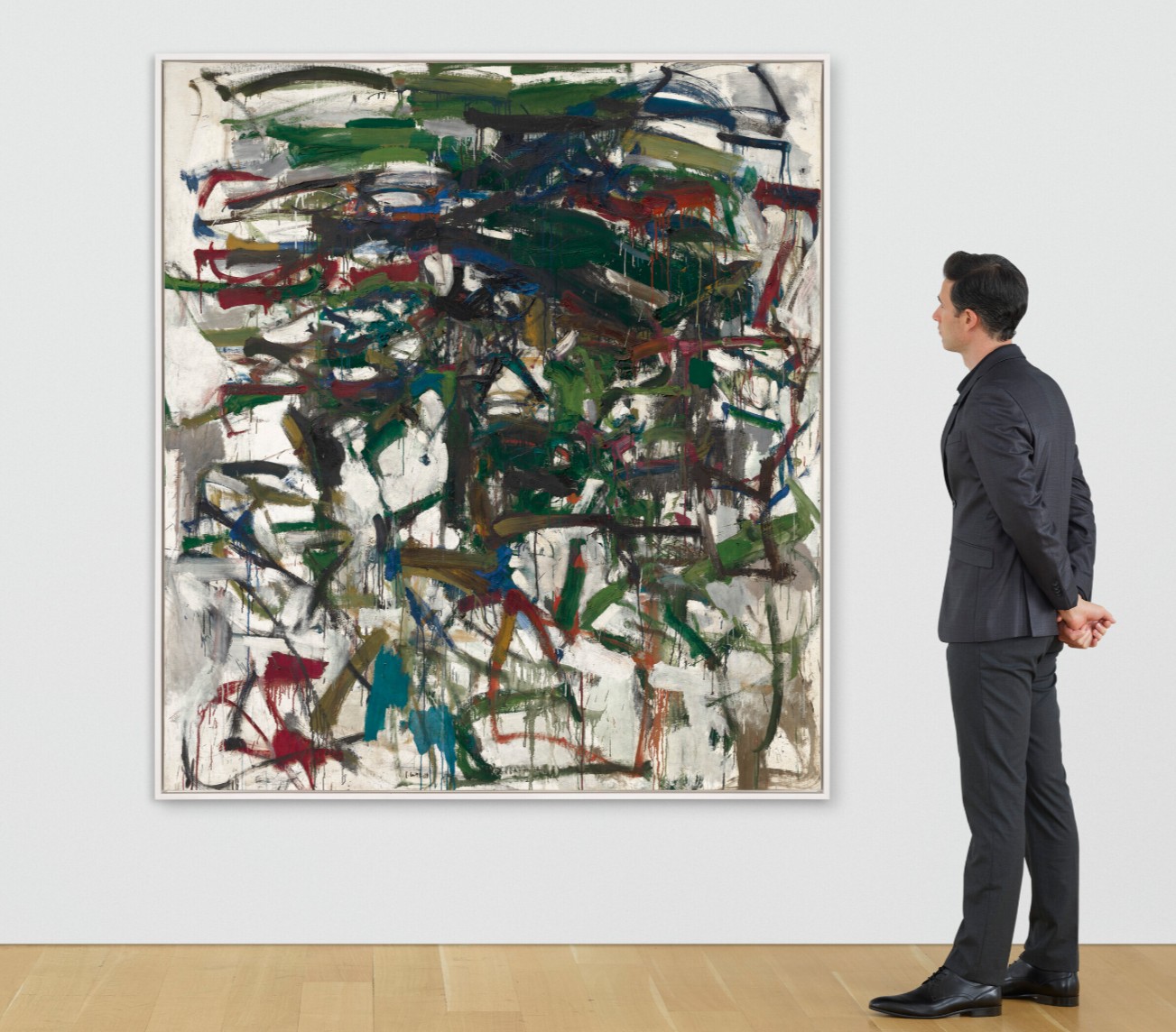
JOAN MITCHELL (1925-1992)
Cherchez l’aiguille, 1958
Oil on canvas
76-1/2 x 69 inches (194.3 x 175.3 cm)
Signed ‘J. Mitchell’ (lower center)
#2. Loom II, 1976
Property from the Collection of Jennifer Gilbert Sold to Benefit Lumana Detroit
Sotheby’s New-York: 14 May 2026
Estimated: USD 5,000,000 – 7,000,000
USD 7,806,000
Joan Mitchell | Loom II | The Now & Contemporary Evening Auction |
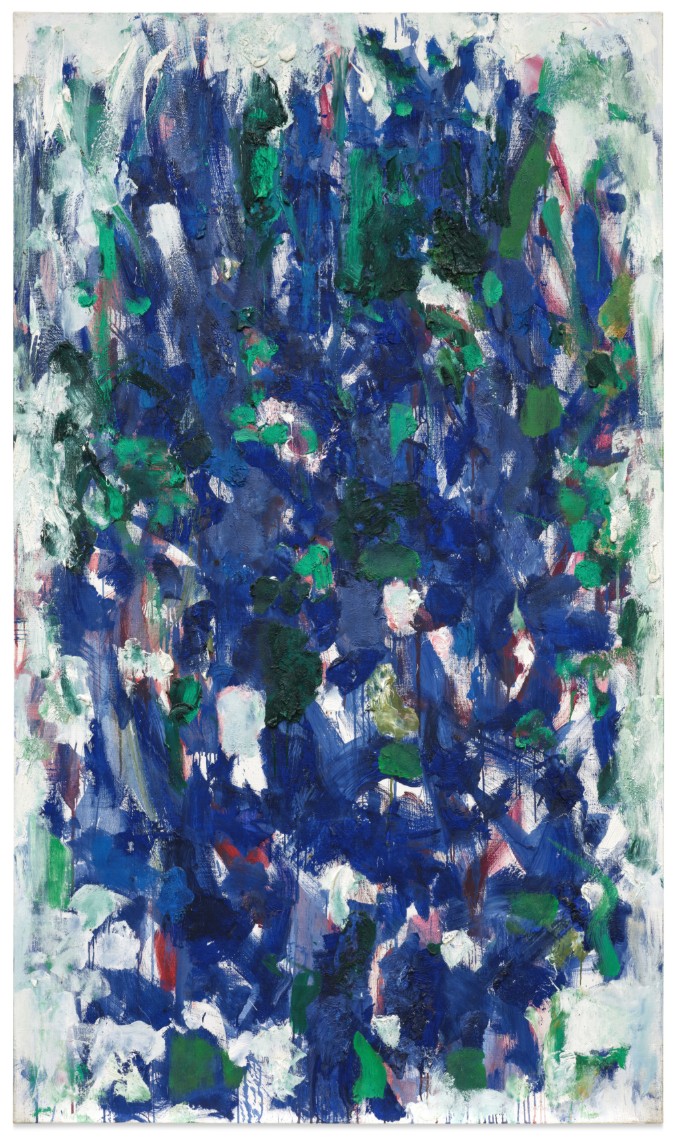
JOAN MITCHELL (1925 – 1992)
Loom II, 1976
Oil on canvas
77 x 44-7/8 inches (195.6 x 114 cm)
Signed (lower right)
#3. Plain, 1989
A Life in Color: Property from the Estate of Tina Hills
Phillips New-York: 19 May 2026
Estimated: USD 5,000,000 – 7,000,000
USD 6,850,000
Joan Mitchell Modern & Contemporary Art Evening Sale
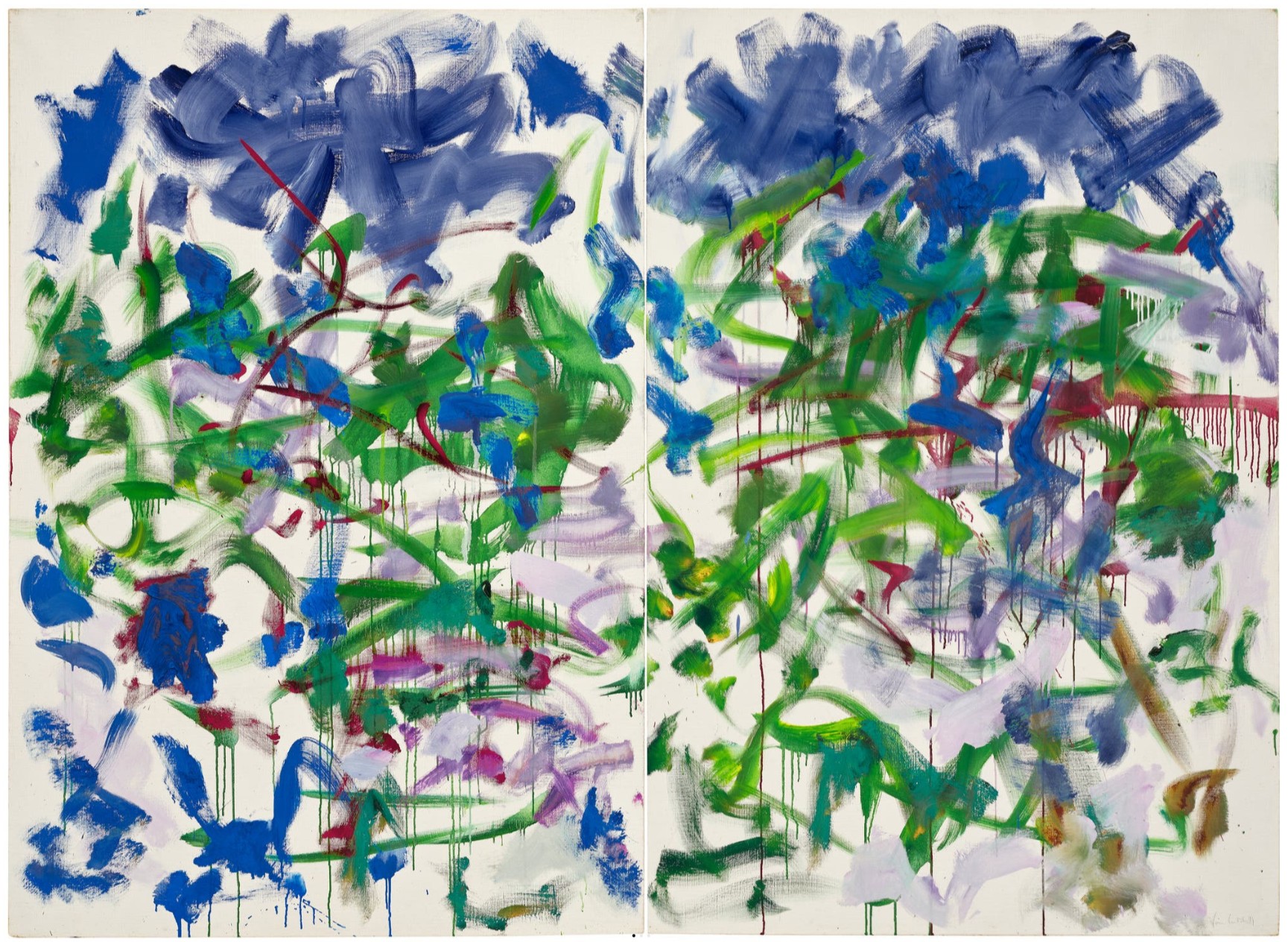
JOAN MITCHELL
Plain, 1989
Oil on canvas, diptych
Each: 51×35 inches (129.5 x 88.9 cm)
Overall: 51 x 70-1/2 inches (129.5 x 179.1 cm)
Signed “Joan Mitchell” lower right
#4. Untitled, 1965
Property from a Private New Jersey Collection
Christie’s New-York: 21 May 2026
Estimated: USD 4,000,000 – 6,000,000
USD 5,382,000
JOAN MITCHELL (1925-1992), Untitled | Christie’s
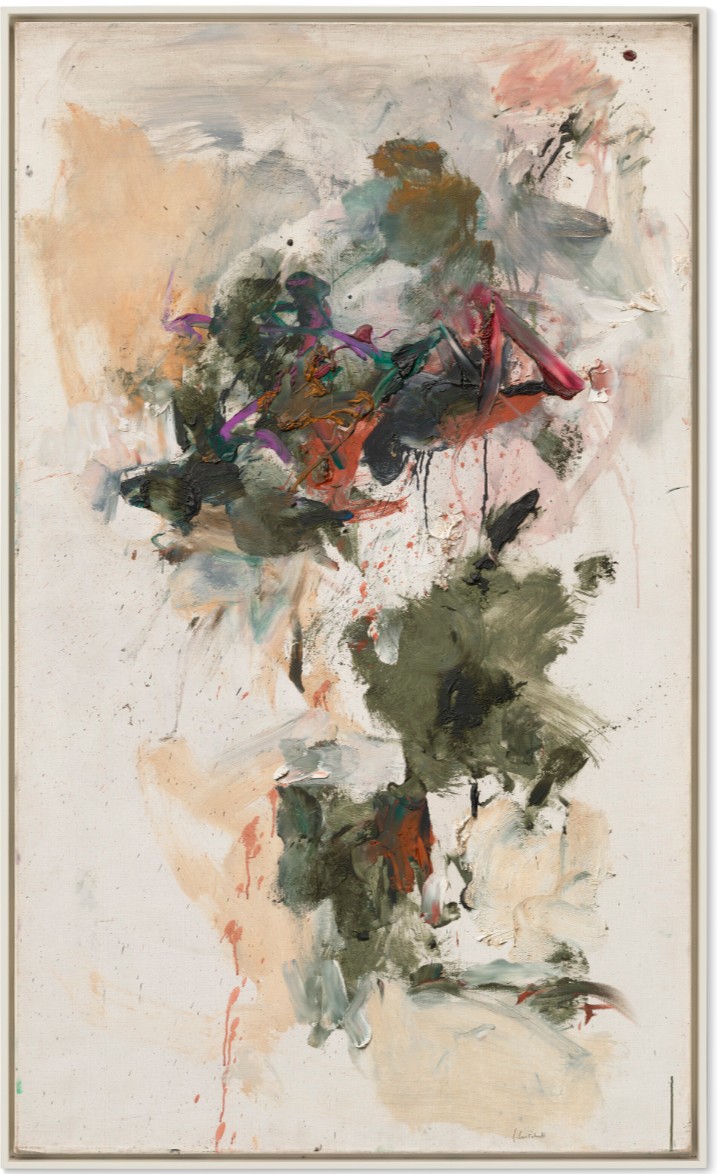
JOAN MITCHELL (1925-1992)
Untitled, 1965
Oil on canvas
64 x 38-1/4 inches (162.6 x 97.2 cm)
Signed ‘J. Mitchell’ (lower right)
Signed again ‘Mitchell’ (on the reverse)
#5. Untitled, 1977
Property from the Deutsche Bank Collection
Christie’s New-York: 21 May 2026
Estimated: USD 150,000 – 200,000
USD 520,700
WORK ON PAPER
JOAN MITCHELL (1925-1992), Untitled | Christie’s
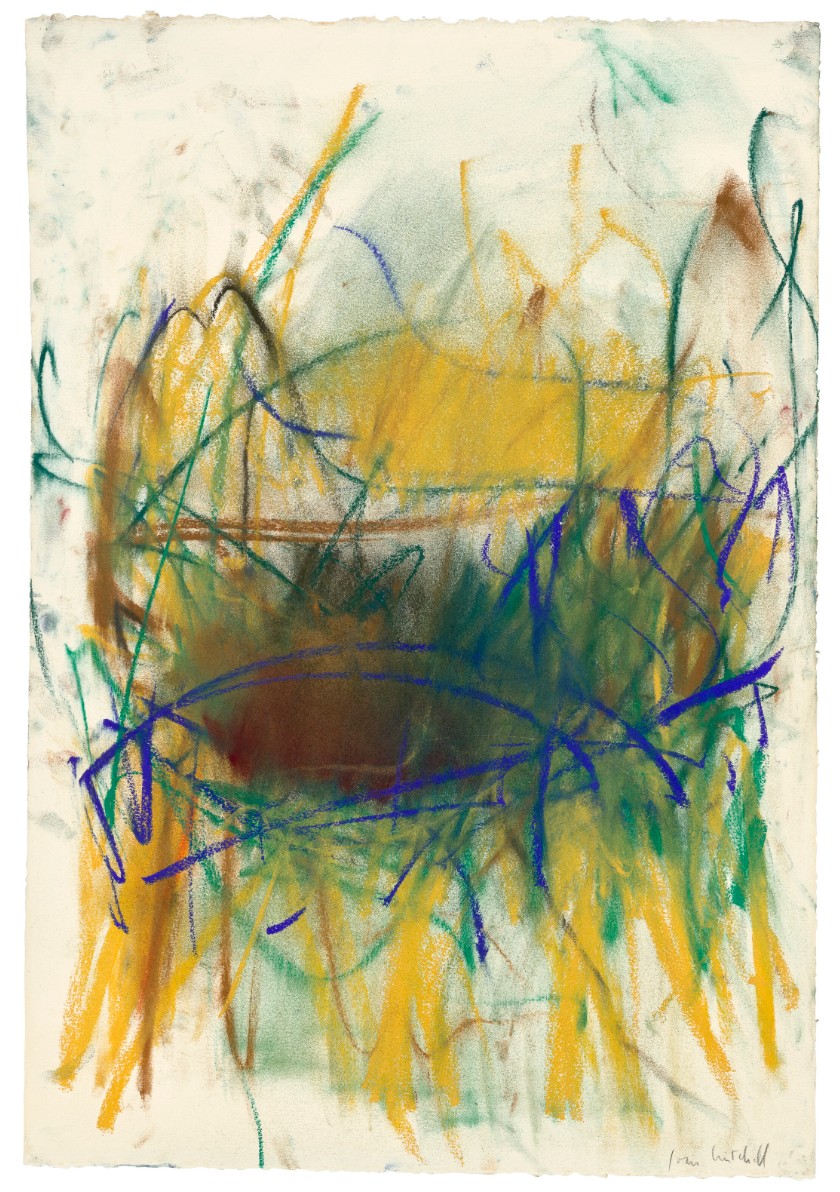
JOAN MITCHELL (1925-1992)
Untitled, 1977
Pastel on paper
22-1/2 x 15-1/2 inches (56.1 x 38.3 cm)
Signed ‘Joan Mitchell’ (lower right)
#6. Tilleul, 1978
Property from a Private French Collection
Sotheby’s New-York: 15 May 2026
Estimated: USD 250,000 – 350,000
USD 281,600
WORK ON PAPER
Joan Mitchell | Tilleul | Contemporary Day Auction | 2026 | Sotheby’s
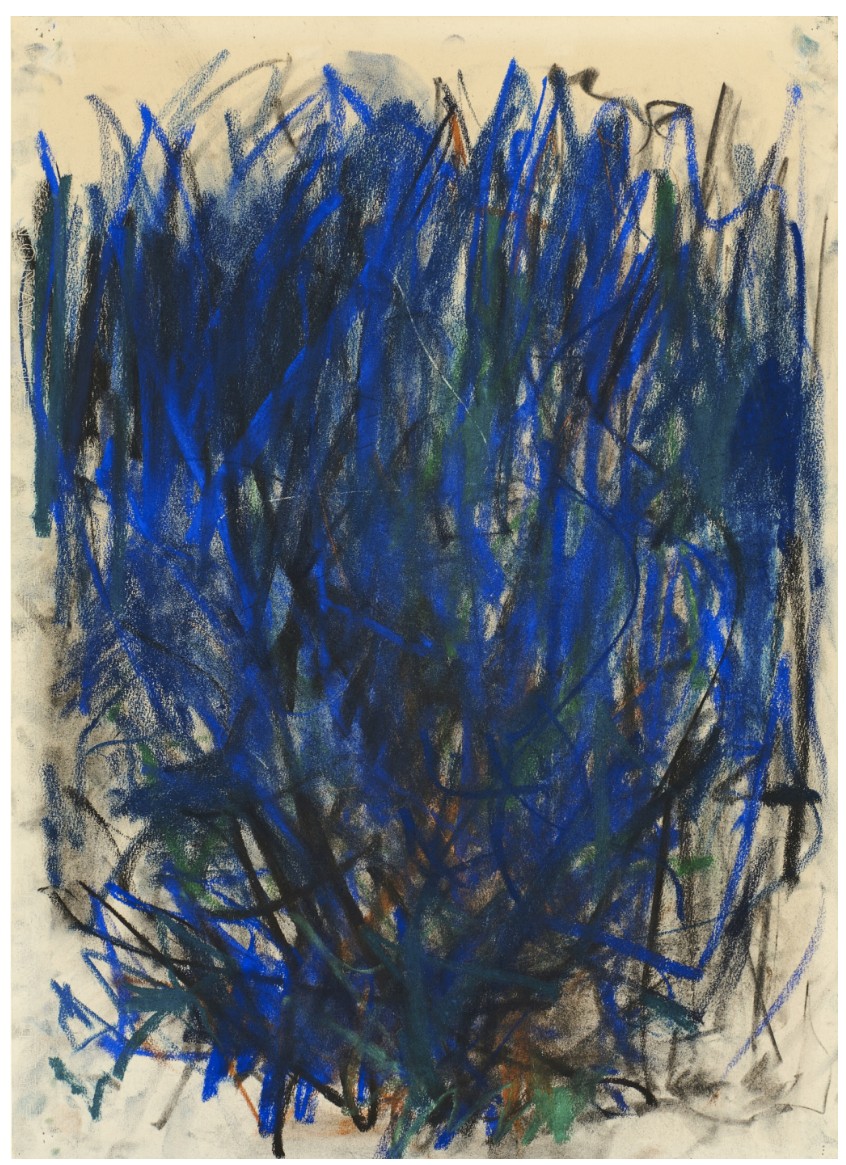
JOAN MITCHELL (1925 – 1992)
Tilleul, 1978
Pastel on paper
19-1/8 x 13-3/4 inches (48.6 x 34.9 cm)
Cherchez l’aiguille, 1958
Cherchez l’aiguille, 1958
The Arc of Abstraction: Masterpieces from a Private European Collection
Christie’s New-York: 18 May 2026
Estimated: USD 10,000,000 – 15,000,000
USD 12,135,000
JOAN MITCHELL (1925-1992), Cherchez l’aiguille | Christie’s
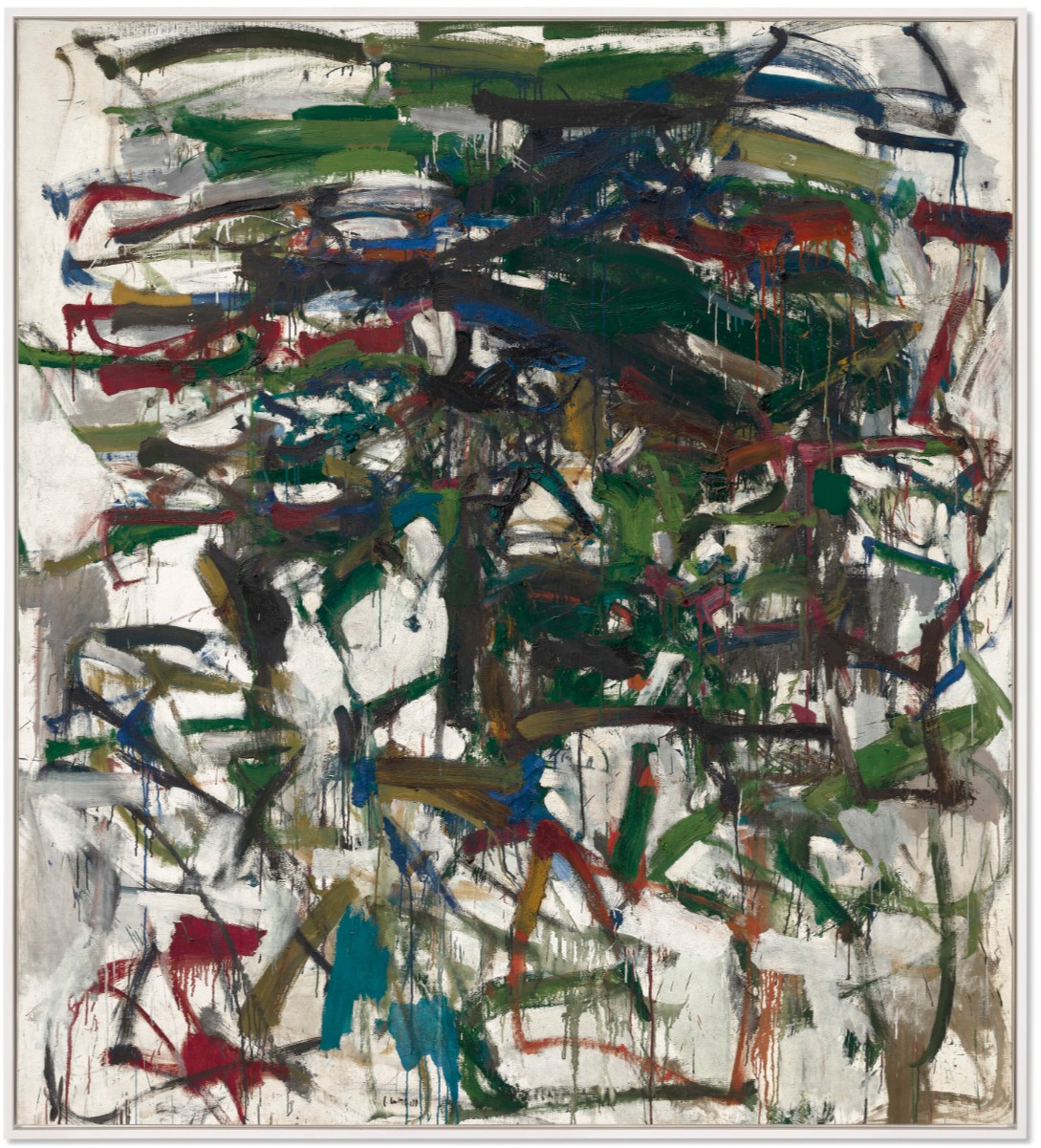
JOAN MITCHELL (1925-1992)
Cherchez l’aiguille, 1958
Oil on canvas
76-1/2 x 69 inches (194.3 x 175.3 cm)
Signed ‘J. Mitchell’ (lower center)
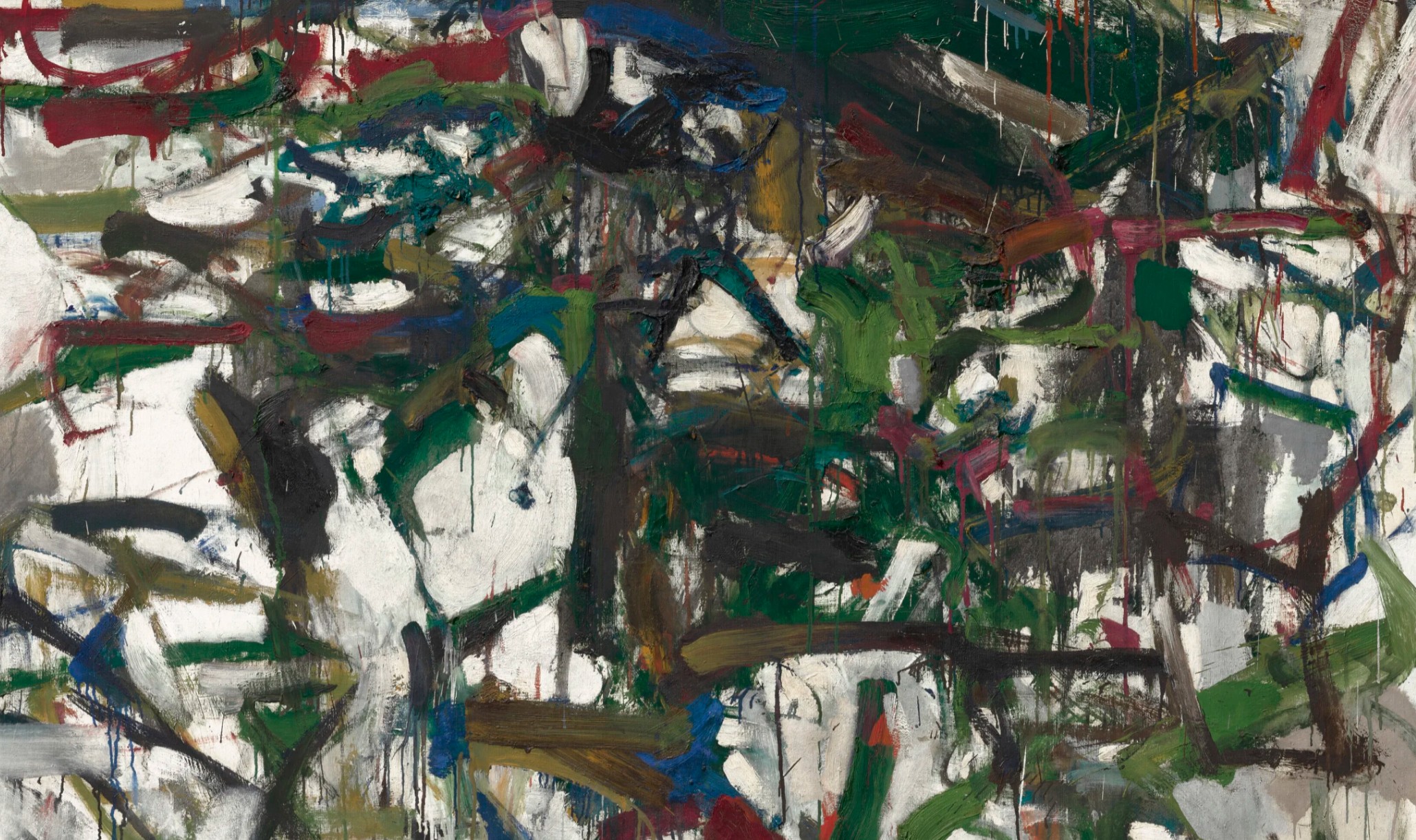
Joan Mitchell’s Cherchez l’aiguille is a remarkable painterly tour de force dating from the critical juncture when the American artist was beginning to fully embrace her adopted French environment. Mitchell’s first voyage to France, in 1947, witnessed her first development into an abstract idiom, incorporating the lessons of Cezanne into her work. Her deep engagement with fellow Abstract Expressionists in New York at the beginning of the 1950s crystallized her approach to painting, as she befriended artists Willem de Kooning and Franz Kline at the Cedar Tavern. Mitchell mastered her technique and consolidated her reputation in the middle of the decade, showing annually at Stable Gallery. As Jane Livingston writes, at the time, “most of her fellow painters felt that Mitchell’s best work of the 1950s established a new high mark in Abstract Expressionist painting” (The Paintings of Joan Mitchell, exh cat., Whitney Museum of American Art, New York, 2002, p. 23). Cherchez l’aiguille reveals Mitchell at the height of her abstract idiom, incorporating her new French influence into her New York School foundations to achieve an exceptional result. Cherchez l’aiguille is a masterpiece of Mitchell’s energetic Abstract Expressionist style, created just before her transition into a more delicate and lyrical style and withdrawn palette that would demarcate her paintings of the 1960s.
Lyrical ribbons of paint stretch horizontally across the surface of the canvas, building up into a crescendo of pure, unmitigated color. Verdant greens mingle with vibrant reds and bold blues to create a palimpsest of pigments, each stroke a bold thread weaving a rich polychromatic tapestry of paint. The density of strokes is weighted toward the top of canvas, achieving a perfect counterbalance with the more fluid brushwork in the work’s foreground, executed in more diluted paint. The frenzied timbre of Mitchell’s brushwork belies the methodical undertaking of her compositions: as Leo Steinberg comments on the artist’s formal structures: “the artist’s stroke—like a cat’s paw on a truant mouse—descends again to score triumphantly for the willed act as against chance effect” (quoted in J. E. Bernstock, Joan Mitchell, exh. cat., Corcoran Gallery of Art, Washington, D.C., 1988, p. 29). Cherchez l’aiguille builds upon Mitchell’s architectonic expressionism developed earlier in the decade, the work’s forceful brushstrokes now broader and built up in a latticed structure, functioning as lines as well as forms. As the art historian Sarah Roberts writes of Mitchell’s paintings of this period, “these compositions begin to contract toward the center, with leggy right-angle marks creating a sense of spiraling or oscillation” (“Frémicourt,” in Joan Mitchell, exh. cat., San Francisco Museum of Modern Art, 2020, p. 98).
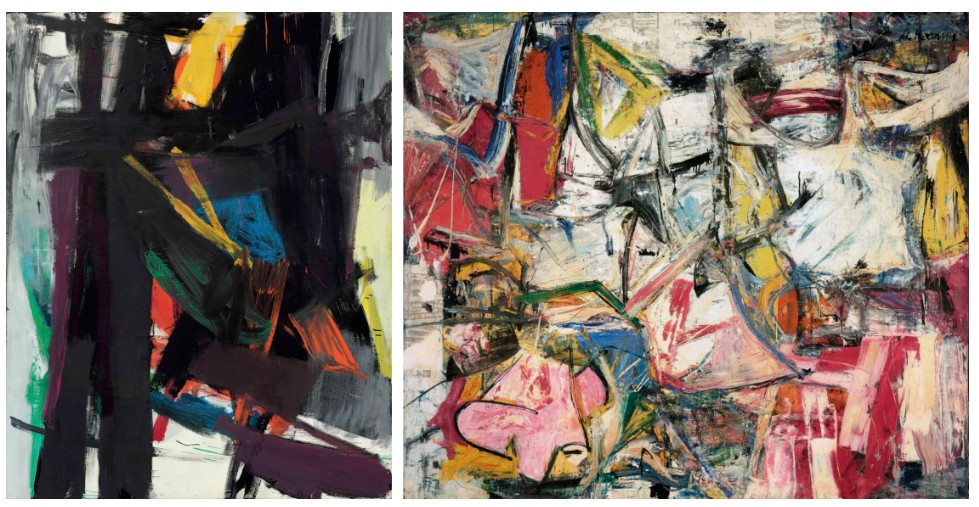
Left: Franz Kline, King Oliver, 1958. Private collection. © 2026 The Franz Kline Estate / Artists Rights Society (ARS), New York.
Right: Willem de Kooning, Gotham News, 1955. Buffalo AKG Museum. © 2026 The Willem de Kooning Foundation / Artists Rights Society (ARS), New York.
The scholar Klaus Kertess identifies 1957, the year prior to Cherchez l’aiguille, as an essential moment in the formation of Mitchell’s mature abstraction: “Mitchell’s mastery was taking full flight into the eclipse of gestural painting. Her work was receiving support that was hardly inconsequential, but the art public’s gaze was more and more shifting elsewhere” (Joan Mitchell, New York, 1997, p. 26). As Kertess acknowledges, as the decade waned, Abstract Expressionism was losing currency in the New York art world, with second- and third-generation abstract painters executing tired derivations of the work of Jackson Pollock, Willem de Kooning, and Franz Kline. Mitchell avoided this aesthetic exhaustion through her determined exposure to new sources of inspiration, most significantly in France. The art critic William Rubin noted in his review of the School of New York: Some Younger Artists exhibition at Stable Gallery, which opened in December of 1959, how “the only really refreshing painter working in this vein [Abstract Expressionism]… is Joan Mitchell and it may be significant that this exception is a painter who for some years has lived in Paris… her work retains a freshness that one misses in her near counterparts in New York” (quoted in É. De Chassey, “A Country of Her Own: Joan Mitchell and France, 1948-1967,” in Joan Mitchell, op. cit., 2020, p. 94).
The present work was the centerpiece of Joan Mitchell’s first European exhibition, at Galerie Neufville in 1960, following its tour in the seminal traveling group exhibition Vitalità nell’arte—originating at Palazzo Grassi in Venice before touring to the Stedelijk Museum, Amsterdam and the Kunsthalle, Recklinghausen—which was one of the first public exhibitions of international abstraction in Europe. This exhibition was co-curated by Willem Sandberg and Count Paolo Marinotti, and is considered one of the first curated exhibitions of contemporary art in Europe and “a significant event in the postwar art world” (K. Handberg, “Vitalitá nell’arte: An Entry into the Trans-European Birth of the Contemporary Art Exhibition?,” Konsthistorisk tidskrift, vol. 81, no. 1, 2020, p. 2). Beyond his curatorial contributions, Marinotti was an art collector and dealer, becoming an early champion of Abstract Expressionism in Europe and eventually holding one of the most significant collections in Europe. The count had just acquired Cherchez l’aiguille, along with another work by Joan Mitchell, Mephisto (1958; Centre Pompidou, Paris), and included both in the exhibition, along with two Jackson Pollocks from his collection. Marinotti, along with his social companion, Princess Ira von Fürstenberg, lived with the present work for decades alongside masterpieces by Pollock, Roy Lichtenstein, and Mark Rothko.
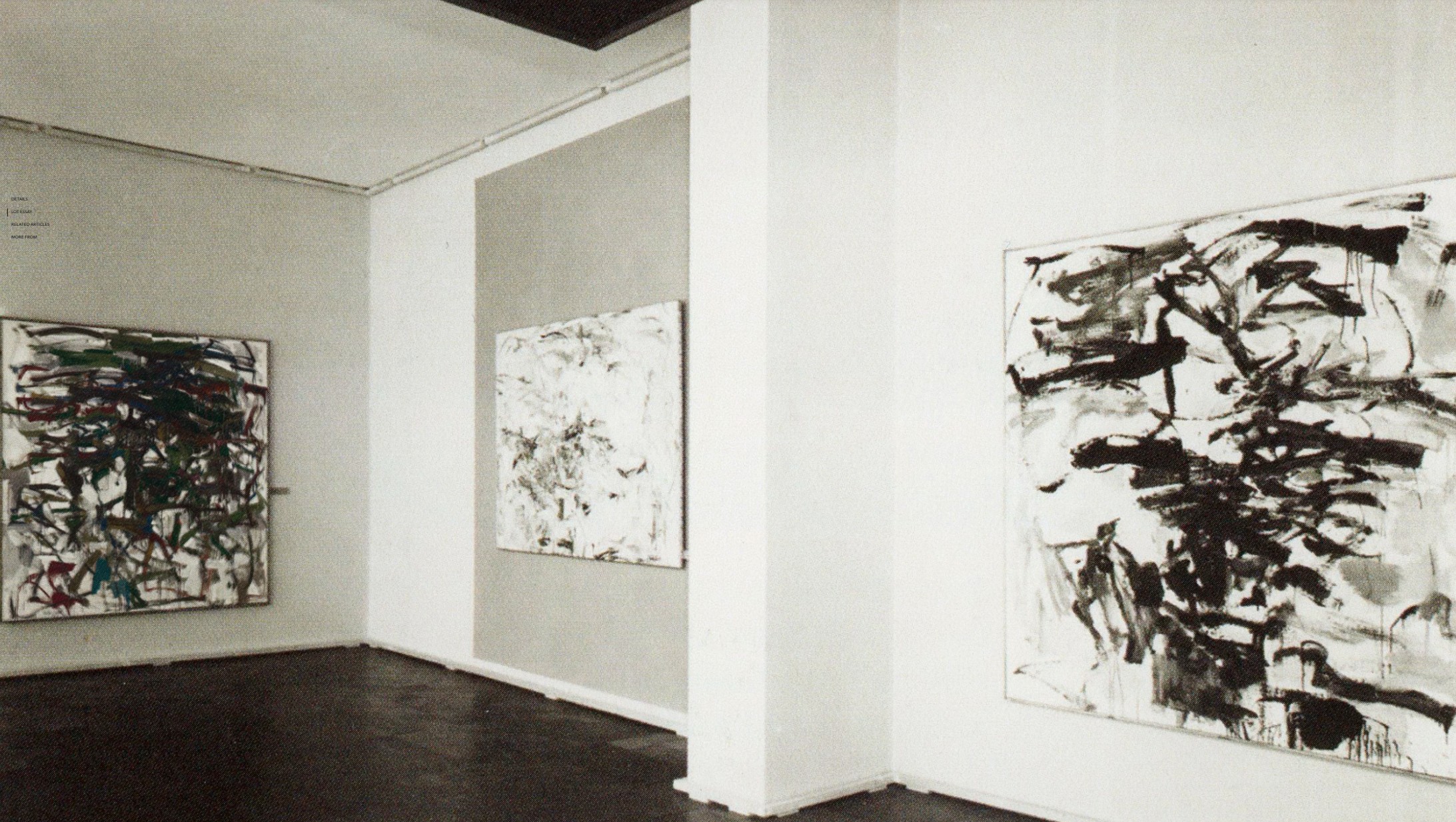
Installation view, Centro internazionale delle arti e del costume, August 1959 – January 1960. Palazzo Grassi, Venice.
Far left, the present work; far right, Mephisto, 1958, Centre Pompidou, Paris. Artwork: © Estate of Joan Mitchell.
Cherchez l’aiguille epitomizes Mitchell’s embrace of French influences, particularly that of the ‘non-figuration’ school which sought to express grounded, worldly experiences through abstraction. Mitchell here concentrates her gestural color through broader, more economic strokes on a neutral background, revealing an affinity to the work of the French artist Simon Hantaï. The present work similarly reveals the potent influence of her most significant French interlocutor, the Québécois painter Jean-Paul Riopelle. After meeting in Paris in 1955, the two artists became lovers and close collaborators, incorporating the other’s style into their own work. This dual influence is revealed in a letter which Mitchell sent to Riopelle around the time the present work was made in 1958: “last night I painted eight pictures on paper… some were grey and dark [and] had an influence of someone I know in Paris—including a palette knife” (quoted in ibid., p. 90).
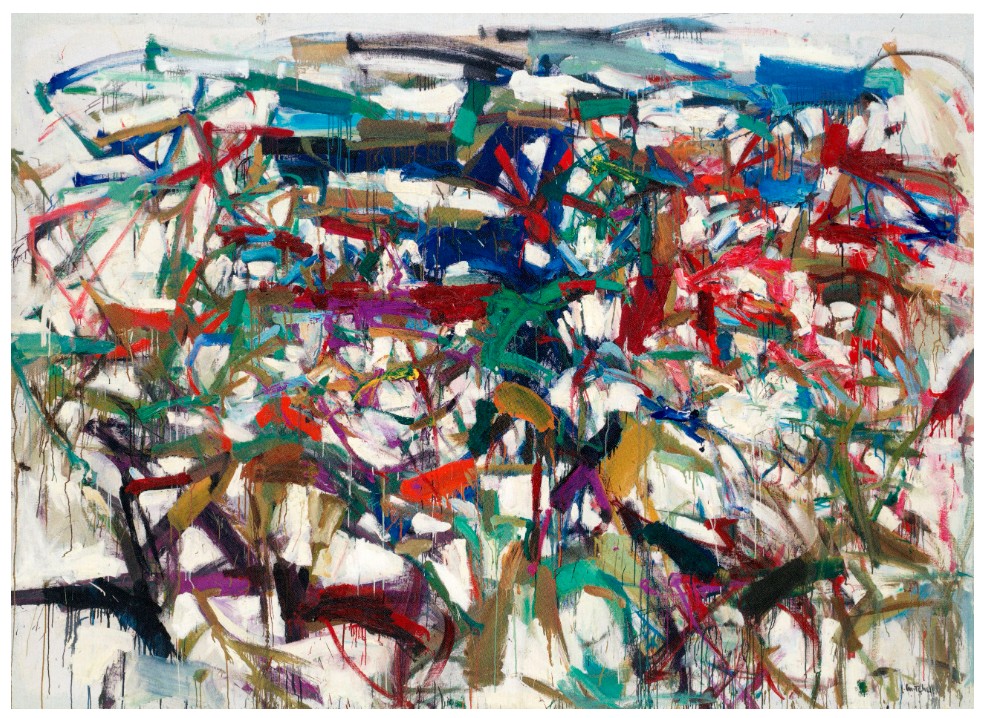
Joan Mitchell, Ladybug, 1957. Museum of Modern Art, New York. © Estate of Joan Mitchell.
After years of determined effort, the thirty-three-year-old American finally received her first solo show at Galerie Neufville in 1960, with Cherchez l’aiguille as its centerpiece. Joan Mitchell, curated by the gallery’s owner, Laurence Rubin—whose brother William Rubin reviewed Mitchell’s New York shows so favorably—established the artist’s reputation as one of the leading lights of abstract painting across the continent. The esteemed critic Pierre Restany praised Mitchell for being so distinct from the “anonymous crowd of New York Action painters,” thanks to her virtuoso orchestration of color and harnessing of the spontaneity of gesture with a measure of control. Restany concluded by praising Mitchell’s “organic consistency and internal order rarely equaled in Abstract Expressionism” (quoted in S. Roberts, op. cit., p. 98). The anonymous reviewer in Connaissance des arts similarly celebrated Mitchell as a “painter of gesture,” whose painting “suggests landscapes through intertwined lines and colors of soft light” (“Les expositions à Paris,” Connaissance des arts 98, April 1960, p. 41). The review mentions only Cherchez l’aiguille by name, remarking on the work’s “humorous title” and its connection to Claude Monet and Vincent van Gogh by the title’s association with haystacks (ibid.).
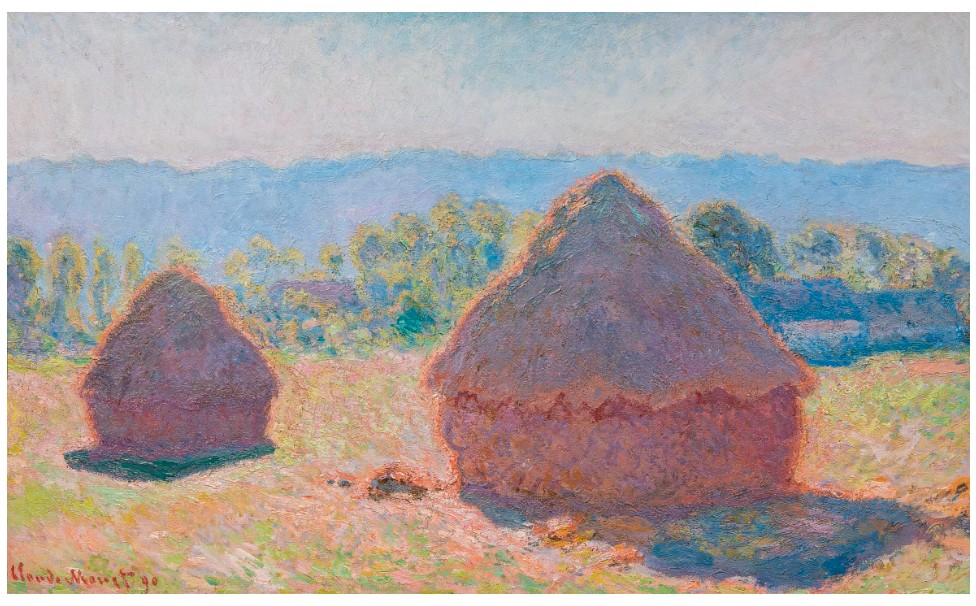
Claude Monet, Grainstacks in bright Sunlight, 1890. Hill-Stead Museum, Farmington, Connecticut.
Cherchez l’aiguille, translating to the imperative phrase “find the needle,” is taken after the common French figurative expression “chercher une aiguille dans une botte de foin,” meaning to look for a needle in a haystack. Conjuring the sense of futility in the titular phrase, Mitchell turns the expression into a demand, exercising her reader to delve into the depths of her dense brushstrokes and mesmeric colors. Pondering the meaning of Mitchell’s titles, the philosopher and critic Linda Nochlin writes: “Almost all of Mitchell’s canvases were titled after the fact, not before. Far from being a painter who worked sur le motif, like Monet or Cezanne, one might say that Mitchell was a painter who worked the motif in after. She discovered analogies to some thing, place, idea or feeling after she completed the work, not before. Many of the titles are facetious or arcane… Some of them are flatly descriptive… but all of them are aware of what art critic Barbara Rose denominated the ‘struggle between coherence and wild rebellion.’ That is, if anything, what Mitchell’s paintings are ‘about’” (“Joan Mitchell: A Rage to Paint,” in J. Livingston, The Paintings of Joan Mitchell, exh cat., Whitney Museum of American Art, New York, 2002, p. 58). Finding her footing in France, Mitchell was able to look into the present work to see the future path of her stylistic development; finding the needle out from the haystack, she takes her first steps toward the stylistic shifts which would mark the remainder of her career.
Plain, 1989
Plain, 1989
A Life in Color: Property from the Estate of Tina Hills
Phillips New-York: 19 May 2026
Estimated: USD 5,000,000 – 7,000,000
USD 6,850,000
Joan Mitchell Modern & Contemporary Art Evening Sale
JOAN MITCHELL
Plain, 1989
Oil on canvas, diptych
Each: 51×35 inches (129.5 x 88.9 cm)
Overall: 51 x 70-1/2 inches (129.5 x 179.1 cm)
Signed “Joan Mitchell” lower right
Painted in 1989, Plain belongs to the final and most distilled phase of Joan Mitchell’s career, when the artist’s painterly language achieved a remarkable synthesis of gesture, color, and remembered landscape. Acquired from the Robert Miller Gallery in New York just two days after Mitchell’s debut solo exhibition with the gallery opened on 25 October 1989, the painting has remained in the distinguished collection of the Miami-based collectors Lee and Argentina “Tina” Hills and is now offered publicly for the first time. A pioneering media executive, philanthropist, and arts patron—and the first woman president of the Inter American Press Association—Tina Hills, together with her husband, Pulitzer Prize–winning editor Lee Hills, helped shape downtown Miami’s cultural arts plaza and played a key role in transforming the Miami Art Museum of Dade County, now the Pérez Art Museum Miami, into a leading cultural institution through their philanthropy and the creation of the Museum Loan Network.
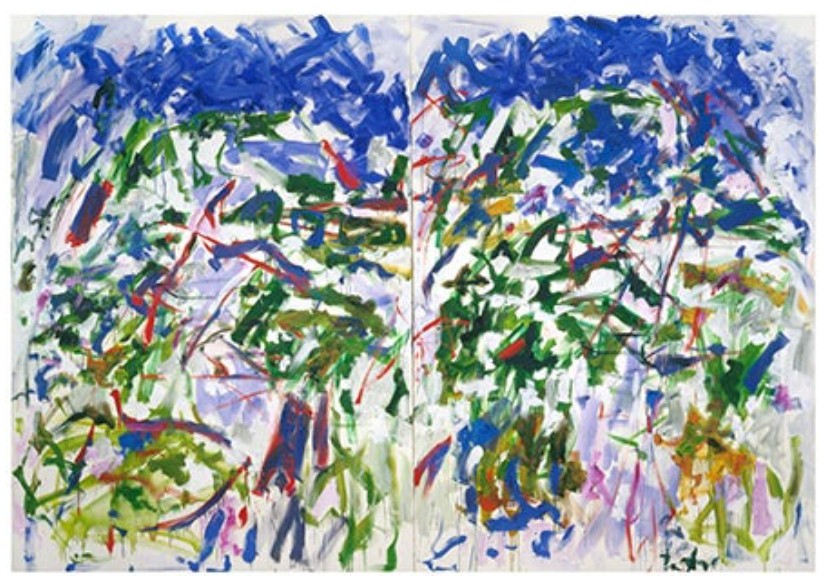
Joan Mitchell, Land, 1989. National Gallery of Art, Washington, D. C. Image/Artwork: © Joan Mitchell Estate
Cerulean and ultramarine blues mingle with passages of grassy and viridian green across the diptych, punctuated by slashing accents of crimson and rose that pirouette across its monumental surface. Muscular yet balletic, these marks articulate the mature visual vocabulary Mitchell forged over decades—one rooted in the gestural freedom of Abstract Expressionism yet profoundly attuned to the sensory memory of landscape. Executed during the final years of her life, Plain demonstrates the extraordinary vitality of Mitchell’s late practice, its saturated color and painterly force belying the artist’s declining health.
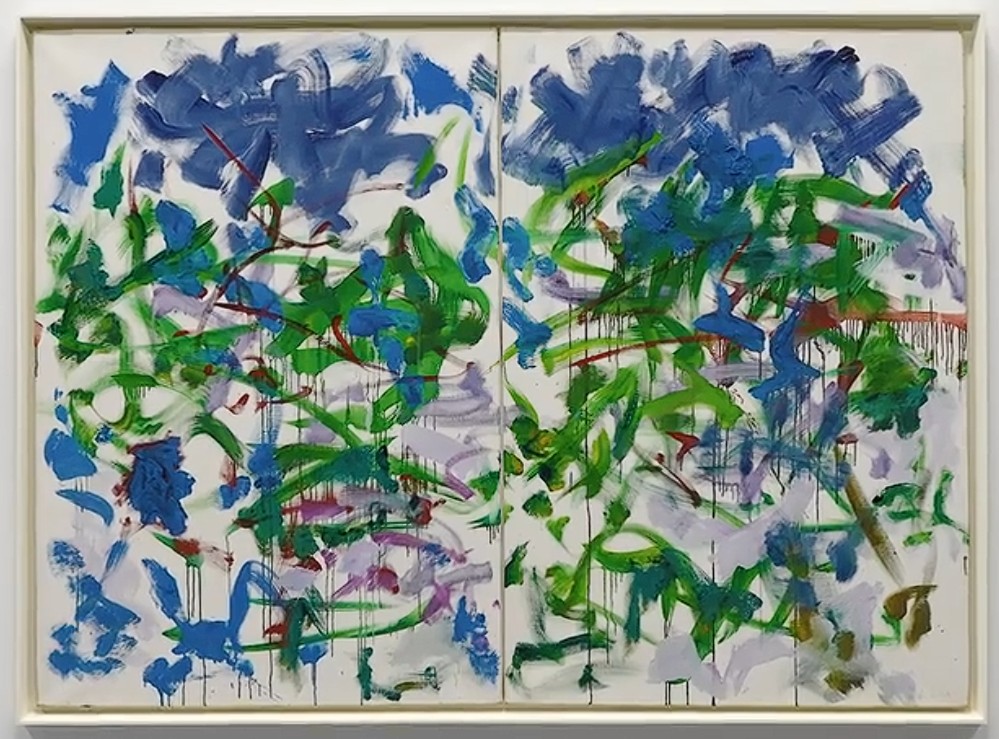
The painting’s binocular format plays a crucial role in its physical and perceptual impact. Since the early 1960s Mitchell had frequently joined multiple canvases together to achieve panoramic scale, using the vertical breaks between panels to activate the gaze. In Plain, dense clusters of gestural marks surge across both panels, with passages of heightened activity answered by corresponding bursts of color on the opposite side. The result is a loose equilibrium: a continuous field of movement that resists strict symmetry while sustaining a rhythmic exchange between the two halves. The format amplifies the bodily dimension of Mitchell’s process, inviting the viewer to scan laterally across the surface as if moving through space.
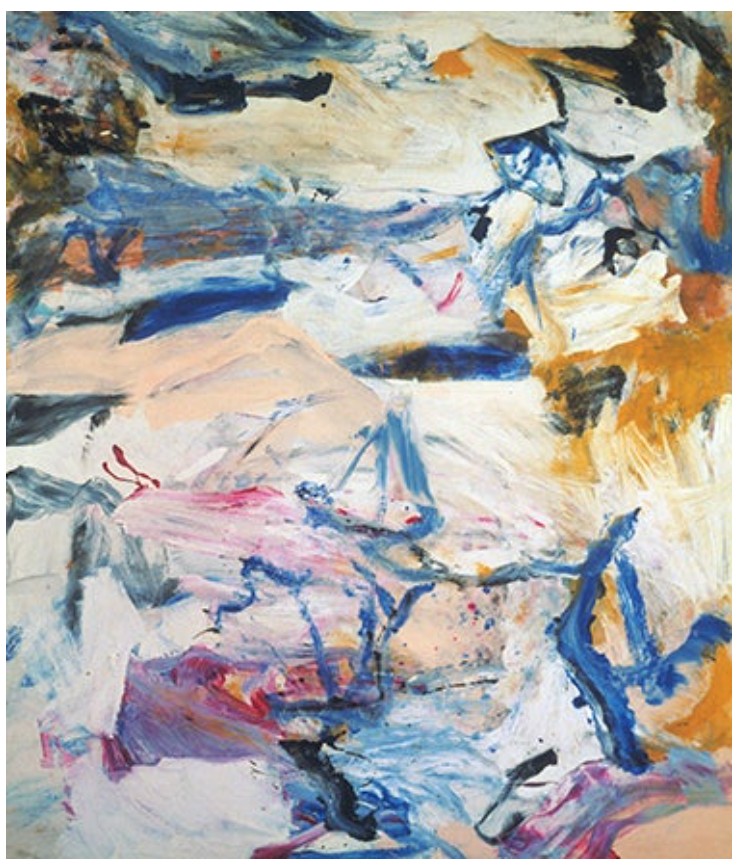
Willem de Kooning, North Atlantic Light, 1977. Stedelijk Museum, Amsterdam.
Image: Art Resource, NY, Artwork: © 2026 The Willem de Kooning Foundation/Artists Rights Society (ARS), New York
Works of this scale and ambition occupy a central place within Mitchell’s mature oeuvre. Other large-scale multi-panel paintings from the late 1980s until her death in 1992 are now held in major international collections, including the Fondation Louis Vuitton, Paris; Joan Mitchell Foundation, New York; Museum of Modern Art, New York; National Gallery of Art, Washington, D.C.; National Gallery of Victoria, Melbourne; Saint Louis Art Museum; San Francisco Museum of Modern Art; and Walker Art Center, Minneapolis, among others. These works represent the culmination of decades of formal experimentation, distilling Mitchell’s painterly vocabulary into gestures of remarkable clarity and force. As Michel Waldberg observed, “the magnificence of painting reaches its zenith, in the already considerable oeuvre of Joan Mitchell, from the 1980s. As if something, in her, had come to surface, as if freedom had at last been conquered… Never has color been more delicate, more sumptuous; never the gesture more independent, more audacious.”
“I don’t set out to achieve a specific thing, perhaps to catch a motion or to catch a feeling. […] I try to make it exact. My painting is not an allegory or a story. It is more of a poem.”
Mitchell emerged in the late 1940s as one of few prominent women within the predominantly male circle of New York’s Abstract Expressionists, developing alongside figures such as Willem de Kooning and Franz Kline a dynamic, gesture-driven approach to paint. Yet unlike many of her contemporaries, Mitchell never abandoned landscape as a conceptual point of departure. Her abstractions, however, are not depictions of nature but translations of its internalized sensations. “I am very much influenced by nature as you define it,” Mitchell once explained. “I paint from remembered landscapes that I carry with me – and remembered feelings of them, which of course become transformed.” In Plain, these impressions emerge in lyrical tangles of brushwork and tonal variation set against the exposed ground. The forms remain deliberately indeterminate, less descriptive than experiential, evoking shifting fields of sensation rather than fixed geography. The emphasis on bodily movement is central to this effect. Mitchell’s heavily loaded brush produces strokes that retain the immediacy of her gesture, appearing suspended across a luminous white expanse. Color functions not merely as light but as a trace of motion—the residue of the painter’s physical engagement with the canvas.
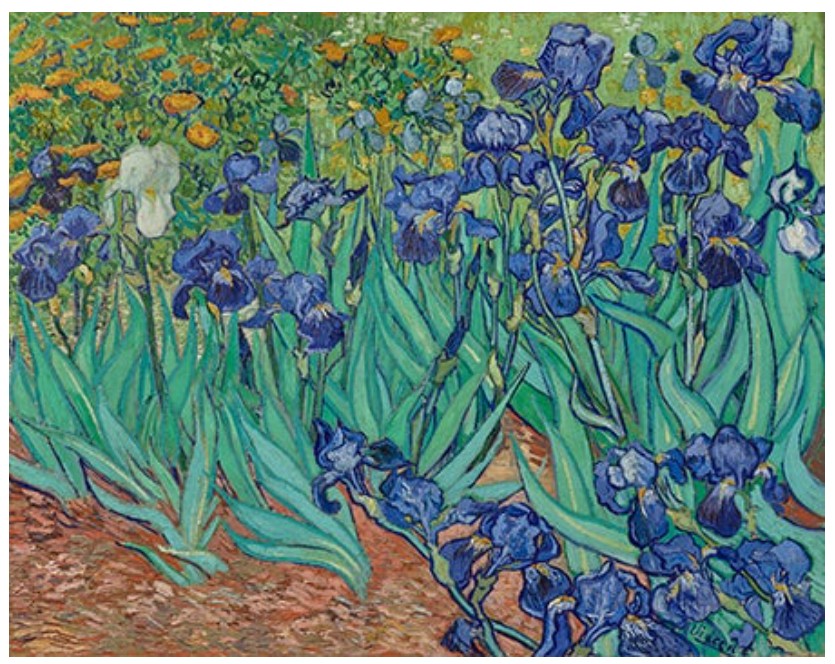
Vincent Van Gogh, Irises, 1889. J. Paul Getty Museum, Los Angeles. Image: Digital image courtesy of Getty’s Open Content Program
The orchestration of color in Plain is inseparable from the landscape surrounding Mitchell’s estate at Vétheuil, where she lived and worked from 1968 until her death in 1992. Her property at La Tour, perched on a hillside overlooking the Seine valley, was surrounded by gardens, orchards, and expansive fields that informed the sensibility of her late paintings. Though Mitchell generally worked at night in her studio—its windows covered with burlap and illuminated by what she described as “electric light”—the terrain around Vétheuil remained a persistent reservoir of visual memory. The title Plain quietly evokes this environment, suggesting both the open fields visible from the property and the painting’s wide horizontal span.
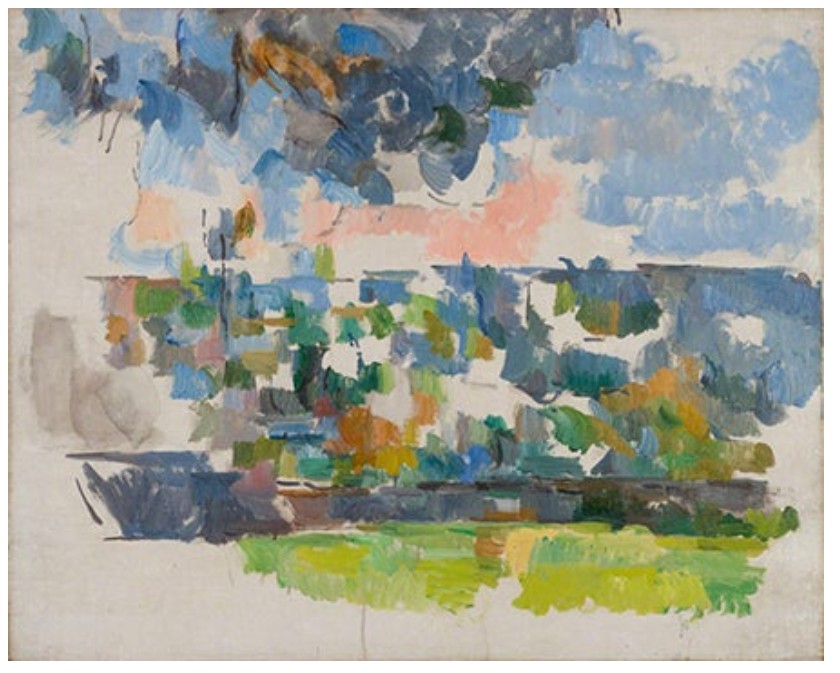
Paul Cézanne, Le Jardin des Lauves, 1906. The Phillips Collection, Washington, D.C.
Vétheuil also carries a particular resonance within the history of modern landscape painting: Claude Monet lived and worked there between 1878 and 1881, producing a series of canvases that explored the shifting light and atmosphere of the Seine valley. In Plain, Mitchell approaches that legacy obliquely, translating the Impressionist sensitivity to light and color into a gestural and resolutely abstract idiom. At the same time, the painting’s interlocking passages of color recall the chromatic architecture of Paul Cézanne’s landscapes, while the directional force of its brushwork finds an affinity with the charged surfaces of Vincent van Gogh’s painted fields. In Plain, these precedents register not as quotation but as lineage—an extension of the European landscape tradition through Mitchell’s physical, improvisational language of paint.
Despite being produced during a period when Mitchell’s health was increasingly fragile, the works of the late 1980s possess an unmistakable bravura. As Klaus Kertess observed of Mitchell’s paintings of 1989, “Each stroke is responsive to the color, light, shape, and directionality of those surrounding it and becomes a unit of intuited liquid architecture. An ecstatic agitation courses through these paintings, as much from the pleasures of mark making as the remembrances of landscape.”v
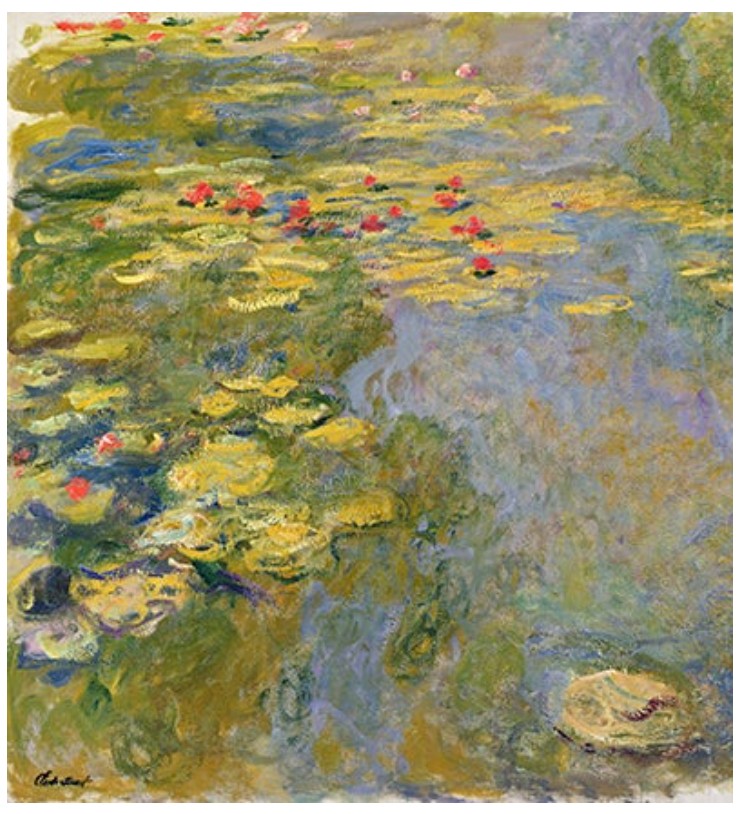
Claude Monet, Le Bassin aux nymphéas, 1917-1919. Musée Monet-Marmottan, Paris. Image: Bridgeman Images
In Plain, that “ecstatic agitation” courses across the diptych in a vivid orchestration of gesture and color, transforming remembered landscape into a field of painterly intensity. Unfolding across a nearly six-foot-wide canvas, the composition reflects the confidence and ambition of Mitchell’s practice following her move to Vétheuil, its scale allowing her to engage the full force of her body in swift, vigorous gestures. At once rooted in the expansive landscapes of her Midwestern childhood and shaped by the painterly traditions she absorbed in France, Plain unites an outsized Americanness with the refined European sensibility that defines Mitchell’s most powerful late paintings.
Loom II, 1976
Loom II, 1976
Property from the Collection of Jennifer Gilbert Sold to Benefit Lumana Detroit
Sotheby’s New-York: 14 May 2026
Estimated: USD 5,000,000 – 7,000,000
USD 7,806,000
Joan Mitchell | Loom II | The Now & Contemporary Evening Auction |
JOAN MITCHELL (1925 – 1992)
Loom II, 1976
Oil on canvas
77 x 44-7/8 inches (195.6 x 114 cm)
Signed (lower right)
Tall, sweeping strokes and liberal clusters of cerulean, violet, ultramine, and emerald green dance across the towering surface of Loom II, a vital, verdant canvas that brings to life the lush plenitude of her beloved Vétheuil. Executed in 1976, the critical year Mitchell began her career-defining partnership with dealer Xavier Fourcade, Loom II hails from the esteemed collection of Jennifer Gilbert, presenting a magnificent, monumental translation of the surrounding French countryside, Here, we see Mitchell evolve out of the dense, cellular compositional forms of her works from the 1960s, exuberantly blooming into the loose and lyrical gestures that would dominate her final decade.
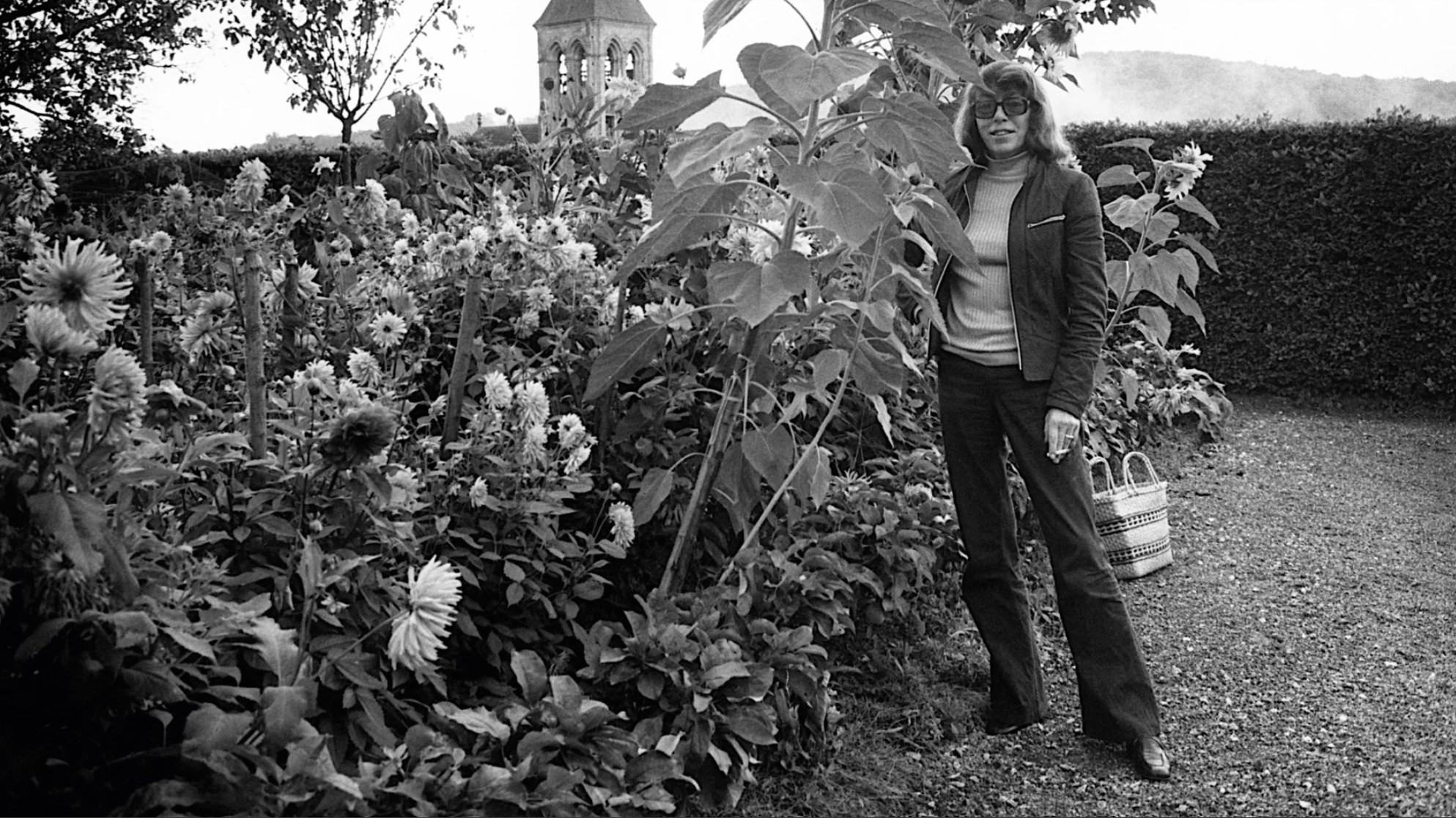
JOAN MITCHELL PHOTOGRAPHED IN VÉTHEUIL, FRANCE, 1972. PHOTO © NANCY CRAMPTON
Possibly referring to the weaver paintings created by Vincent van Gogh in Nuenen, The Netherlands, the present work and its sister painting, Loom, proffers Mitchell’s own impression of light, land, and vegetation, composed meticulously and vigorously, thread by thread, woven together in pastose oil. Testament to the importance of the rare and pivotal works from this period, other paintings from 1976 are held in museum collections around the world, including The Museum of Modern Art, New York; Fondation Louis Vuitton, Paris; and Museum of Fine Arts, Houston, among others.
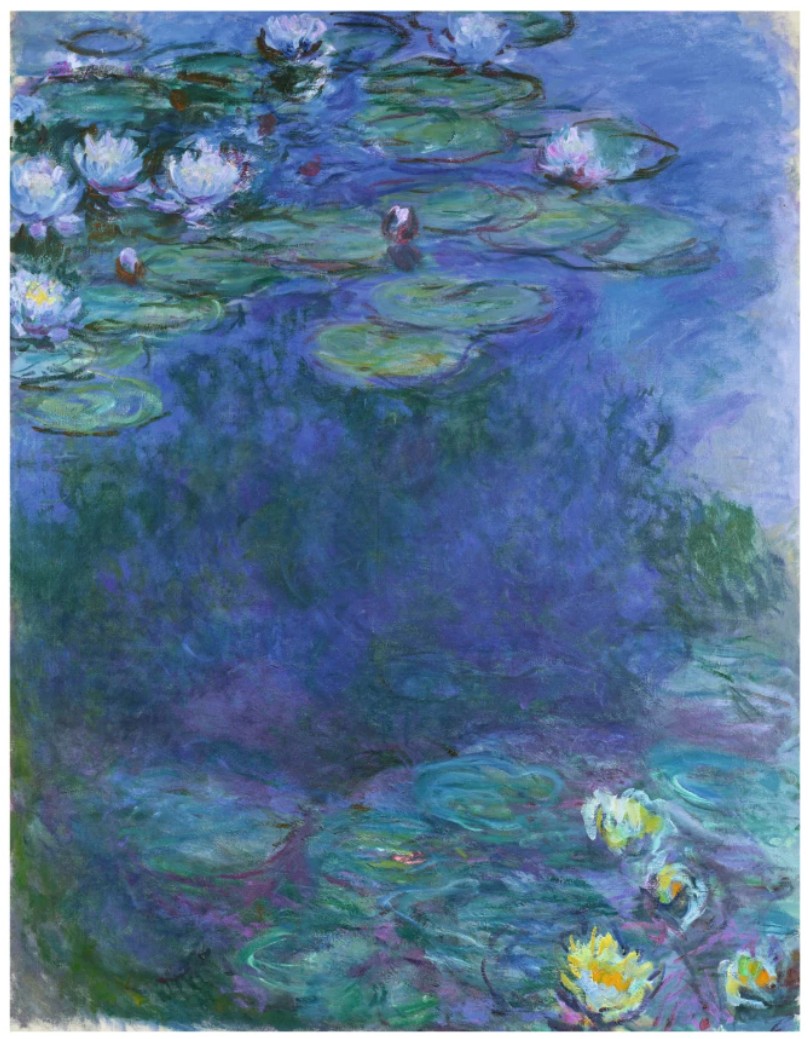
Claude Monet, Nymphéas, 1914-1917. Private Collection. Sold at Sotheby’s New York in November 2024 for $65.5 million
As a student at the School of the Art Institute of Chicago, Mitchell reveled in the magisterial canvases by Claude Monet and Vincent van Gogh housed at the Art Institute’s galleries. Indeed, Klaus Kertess described Mitchell’s life in Vétheuil as a series of moments rife with “celebrating and declaring her connections to French culture – that of its soil as well as that of its art.” (Klaus Kertess, Joan Mitchell, New York, 1997, p. 33) Fittingly, in 1968, Mitchell would permanently settle on a sprawling rural estate in Vétheuil, a town once home to Claude Monet.
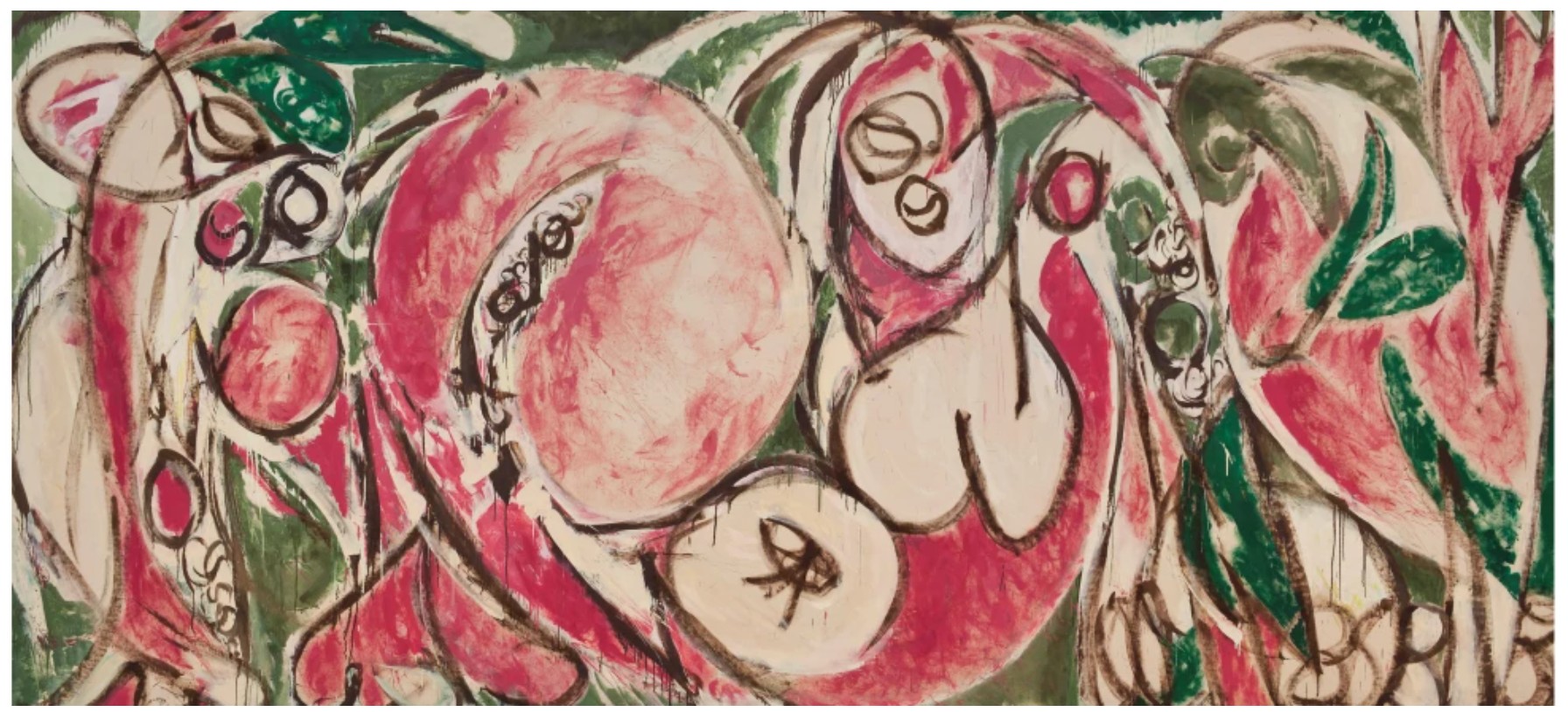
Lee Krasner, The Seasons, 1957. Whitney Museum of American Art, New York. Image © Whitney Museum of American Art / Licensed by Scala / Art Resource, NY. Art © 2026 Pollock-Krasner Foundation / Artists Rights Society (ARS), New York
There, secluded from the Abstract Expressionist milieu in which she was so enmeshed, Mitchell’s paintings adopted the same sumptuous palette and acute sensitivity to light articulated in Monet’s plein air paintings of Vétheuil years earlier. Ariella Budick observes: “She felt free to indulge in a grand botanical abstraction. She painted canvases of majestic size that didn’t so much copy nature as plumb her sensual, emotional and mythological terroir. When she gazed out of the window or went for a walk, she saw a fiercely animated psychic landscape.” (Ariella Budick, “Joan Mitchell at Baltimore Museum of Art – an immersive symphony of color,” The Financial Times, 6 April 2022 (online))
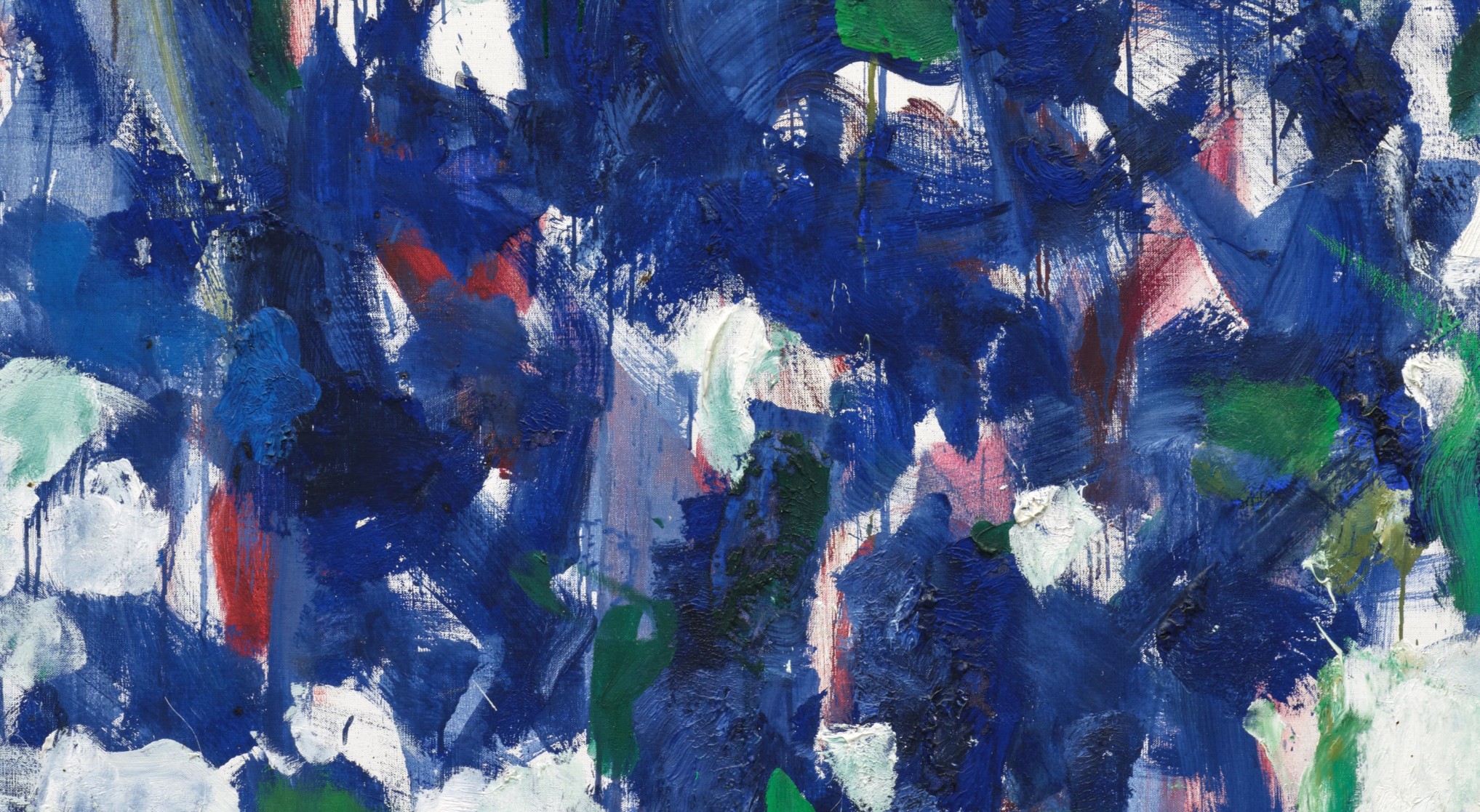
Indeed, all the French countryside had to offer her planted itself in her consciousness, and she reaped the wealth Vétheuil had to offer, and her canvases likewise continued to stretch upwards and outwards, reaching to meet the vaulted ceilings of her studio. Here, the alabaster field counterbalances the wild and overgrown panoply of royal blues and pine greens, punctuated by glimpses of scarlet; Loom II absorbs its viewer in its poetic translation of bursting, uncompromising light, color, and form. The confidence with which Mitchell poetically translates her paradisiac environs into paint reveals the height of Mitchell’s powers. Executed two years after Mitchell’s monumental mid-career retrospective at the Whitney Museum of American Art in New York, Loom II testifies to the profundity of Mitchell’s encounters with the natural world: the riches of color, space, and light, the exacting specificity in this moment in a life shaped by place, directed by gesture, and documented rigorously by brush. Asserting the full range and plasticity of oil’s material properties, Mitchell tells the story of the world around her, from planar fields, to abundant foliage, to fallen fruit, to the extraordinary brilliance of her garden.
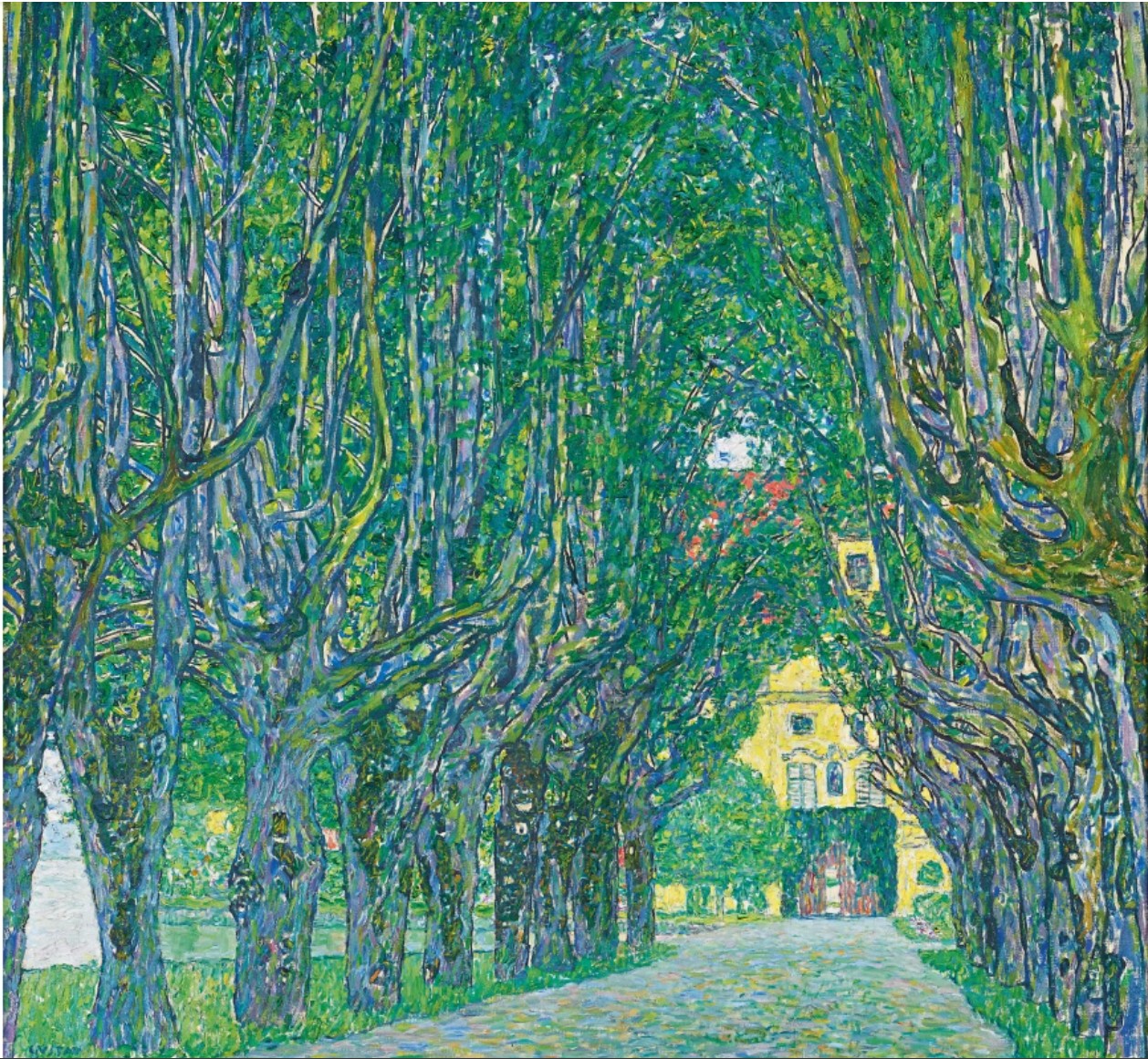
Gustav Klimt, Avenue of Schloss Kammer Park, 1912. Osterreichische Galerie Belvedere, Vienna. Image © Bridgeman Images
Marrying the ephemeral with the physical, muscular and balletic, felt and seen, Mitchell’s steadfast commitment to the language of abstraction and her inimitable ability to channel place and memory through color and gesture alone is laid manifest in the spectacular theater contained in Loom II. Sumptuously layered, Loom II presents a powerful and affecting memorial to the landscape she tirelessly captured and concretized on canvas.
Untitled, 1965
Untitled, 1965
Property from a Private New Jersey Collection
Christie’s New-York: 21 May 2026
Estimated: USD 4,000,000 – 6,000,000
USD 5,382,000
JOAN MITCHELL (1925-1992), Untitled | Christie’s
JOAN MITCHELL (1925-1992)
Untitled, 1965
Oil on canvas
64 x 38-1/4 inches (162.6 x 97.2 cm)
Signed ‘J. Mitchell’ (lower right)
Signed again ‘Mitchell’ (on the reverse)
Painted at an inflection point in Joan Mitchell’s career, Untitled shows an artist at the peak of her powers, deftly developing her own mode of painterly expression. Demonstrating her mastery of color, gesture and movement, this assured abstract composition exemplifies the unique formal language that earned Mitchell the reputation as one of the foremost American painters of her generation.
“I paint from remembered landscapes that I carry with me – and remembered feelings of them, which of course become transformed. I would rather leave nature to itself. I would like more to paint what it leaves me with.”
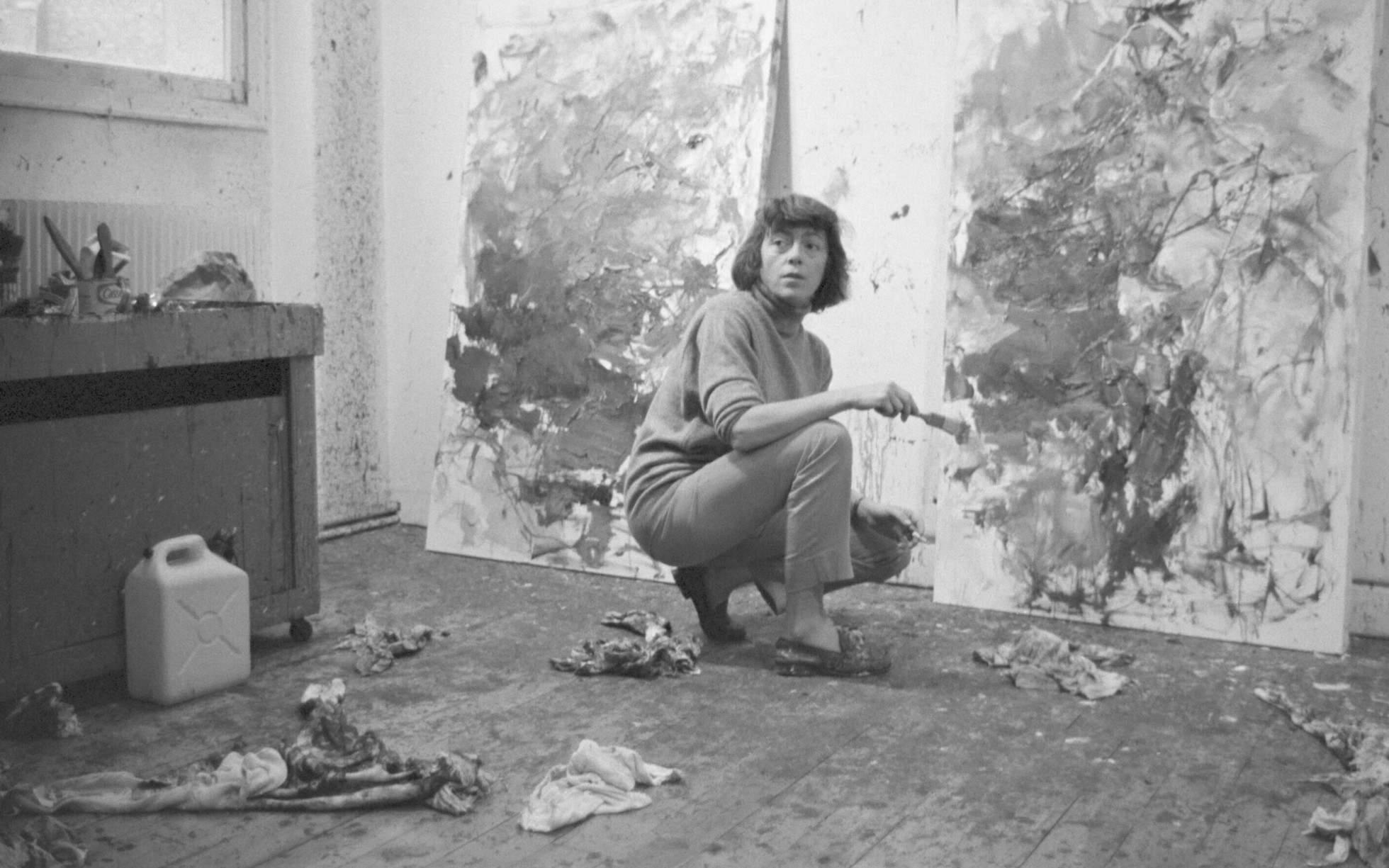
Joan Mitchell in her studio, 1962. Photo: BIOT Jean-Pierre / Paris Match via Getty Images. © Estate of Joan Mitchell.
Painted in 1965, Untitled is characteristic of a group of paintings executed in the first half of the decade that Mitchell described as the ‘new black’ pictures, adding “although there’s no black in any of them.” (J. Mitchell, quoted in J. Ashbery, “An Expressionist in Paris,” ArtNews, April 1965, p. 63). Indeed, the palette is far from monochrome, drawing inspiration from the artist’s lived experience of nature. Vigorous areas of silvery-green emerge against a dusty-white ground, awash with ethereal hints of stoney-grays, peach-pinks and sunset-orange. Cascading down the center of the canvas, tangles of violet and rusty-red brushstrokes interplay with somber hues of cool blue-greens. The gestures are complex and innovative: paint has been flung, smeared, sprayed and washed across the canvas to create a textured terrain that only intensifies the sense of physicality exuding from its surface.
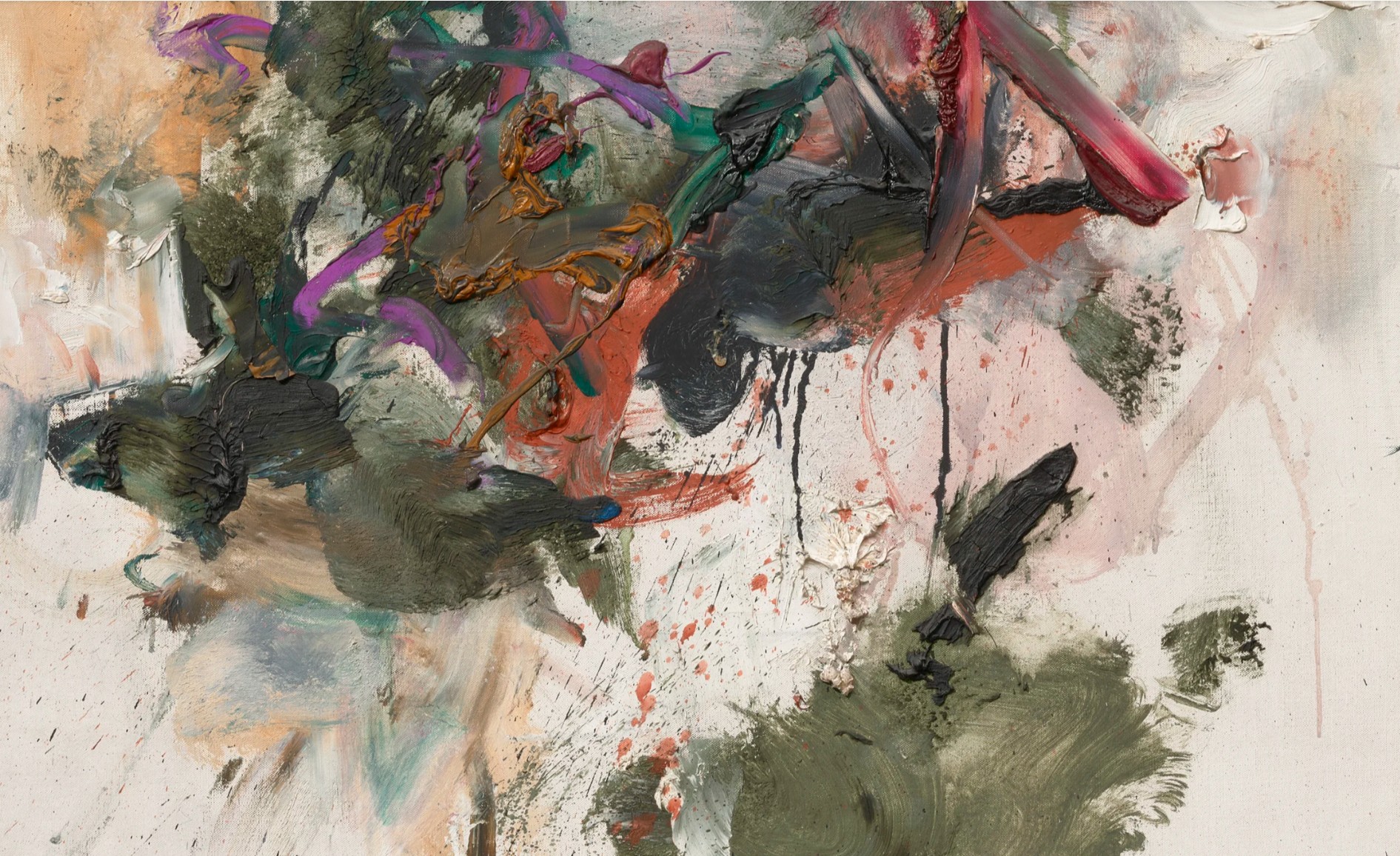
“Joan’s paintings of the mid-sixties,” writes her biographer Patricia Albers, “oppose scruffy atmospheric whiteish areas to hovering of thalo greens, dusty silver greens, cerulean blues, and red violets. Emphatically tactile, they evoke dusk-strangled terrains where light sensuously clings to a green, liquifies a blue, untarnishes a silver. The whole weight of some paintings hangs to one side. Edges are complicated. Here and there heavy bright whites sidle up to greens or blues as if to infringe upon them, yet, for once in Joan’s work, the relationship between figure and ground feels unambivalent” (P. Albers, Joan Mitchell: Lady Painter, New York, 2011, p. 303). Despite the apparent spontaneity of the mark-making, the paintings from this period derive from a contemplative process that belies their energetic brushwork. In contrast to many of her Abstract-Expressionist peers, each gesture was deliberate and highly controlled: after each stroke, she would step back and study it, before moving on.
“I paint from a distance. I decide what I’m going to do from a distance. The freedom in my work is quite controlled; I don’t close my eyes and hope for the best.”
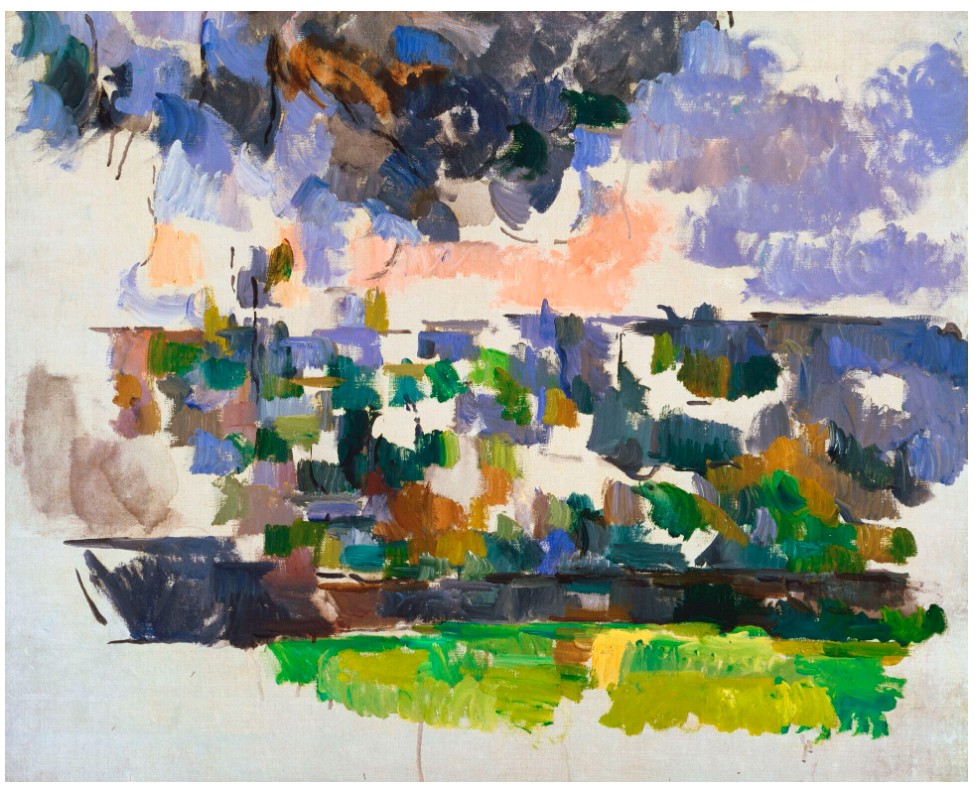
Paul Cezanne, The Garden at Le Lauves, 1906. Phillips Collection, Washington, D.C.
While these ‘new black paintings’ are enlivened with color and a palpable vitality, there is an intensity and seriousness to them that reflects the transitional nature of this period of Mitchell’s life. In 1960, her mother was diagnosed with the cancer that was to take her life six years later, while Mitchell’s father died in 1963. It was also a time when Mitchell was shifting her life away from the U.S., where she was born and raised, towards France, where she would live until her death in 1992. In 1955, she boarded an ocean liner for Europe, planning on spending the summer in Paris. She soon became integrated into a group of artists, authors and poets including the painter Jean-Paul Riopelle, with whom she began a relationship with that would last for over two decades.
During the late-1950s, Mitchell began to spend her summers on the Cote d’Azur, or sailing on Riopelle’s yacht in the Mediterranean. She would not work while away from her studio but would store up rich visual memories that she would then draw upon in the studio, calling up a sensation that she would then strive to recreate on canvas. It was around this time that she stated that her aim was to capture “that particular thing I want can’t be verbalized…I’m trying for something more specific than movies of my everyday life: To define a feeling.” (J. Mitchell, quoted in J. Ashbery, “An Expressionist in Paris,” ArtNews, April 1965, p. 63)
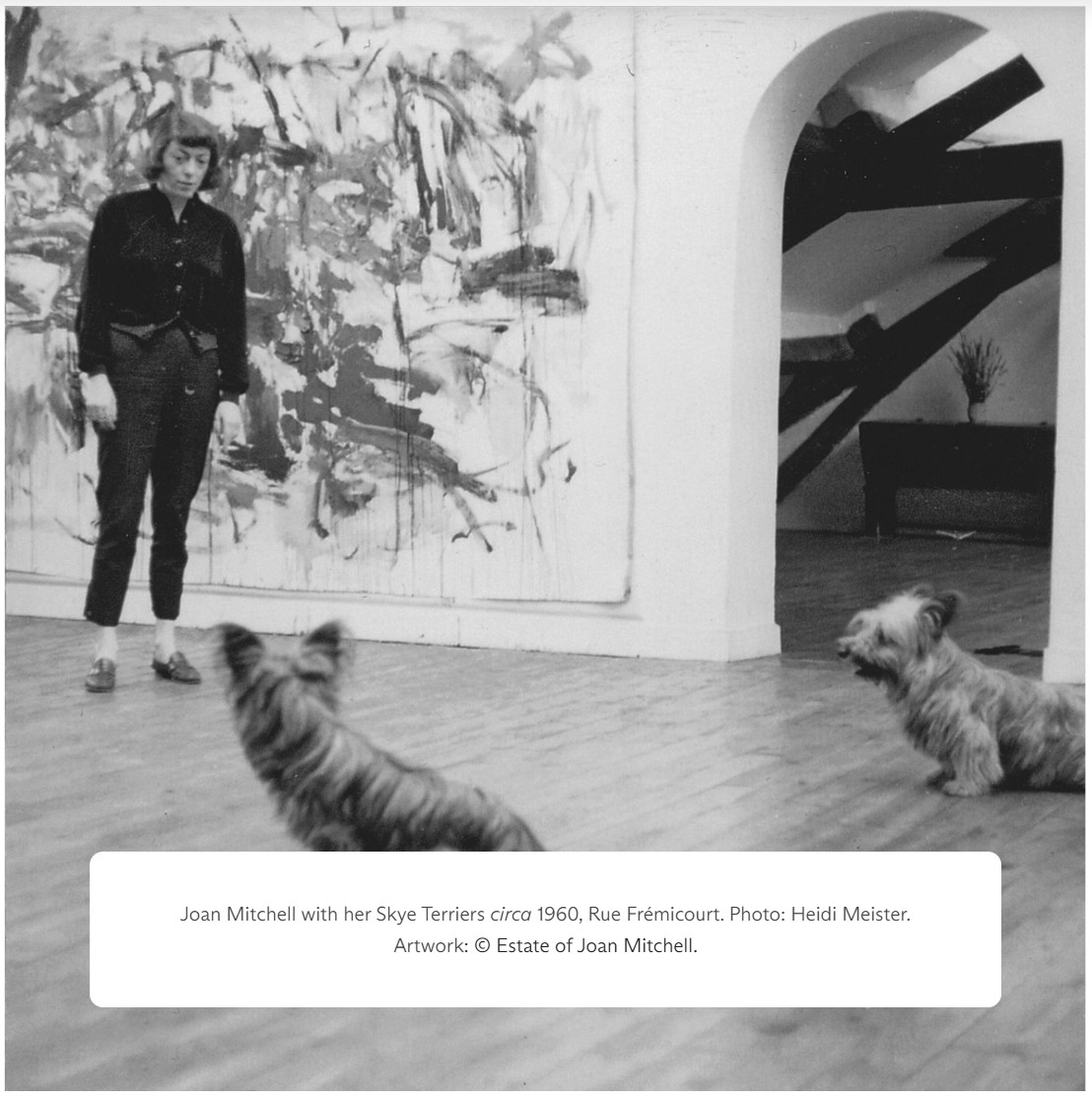
In 1959, Mitchell decided to move to Paris permanently, taking a studio on Rue Fremicourt in the fifteenth arrondissement – where it is likely this painting was made. The apartment appealed because of its similarity to the loft spaces she had become accustomed to in New York; its spaciousness allowed her to work on several canvases at once. In Paris, distanced from the New York scene and the Abstract Expressionist painters with whom she had socialized and exhibited, Mitchell’s work grew increasingly ambitious and experimental. She would pour, rub, wash and flick paint onto her canvases, conjuring central, colored forms from pale and ghostly surroundings. She was defiantly independent: when asked by art historian Dorothy Seckler about these central dark masses, she replied, “Clement Greenberg said there never should be a central image so I decided to make one.” (Interview of Joan Mitchell, conducted by Dorothy Seckler for the Archives of American Art, Smithsonian Institution, in New York, on May 21, 1965).
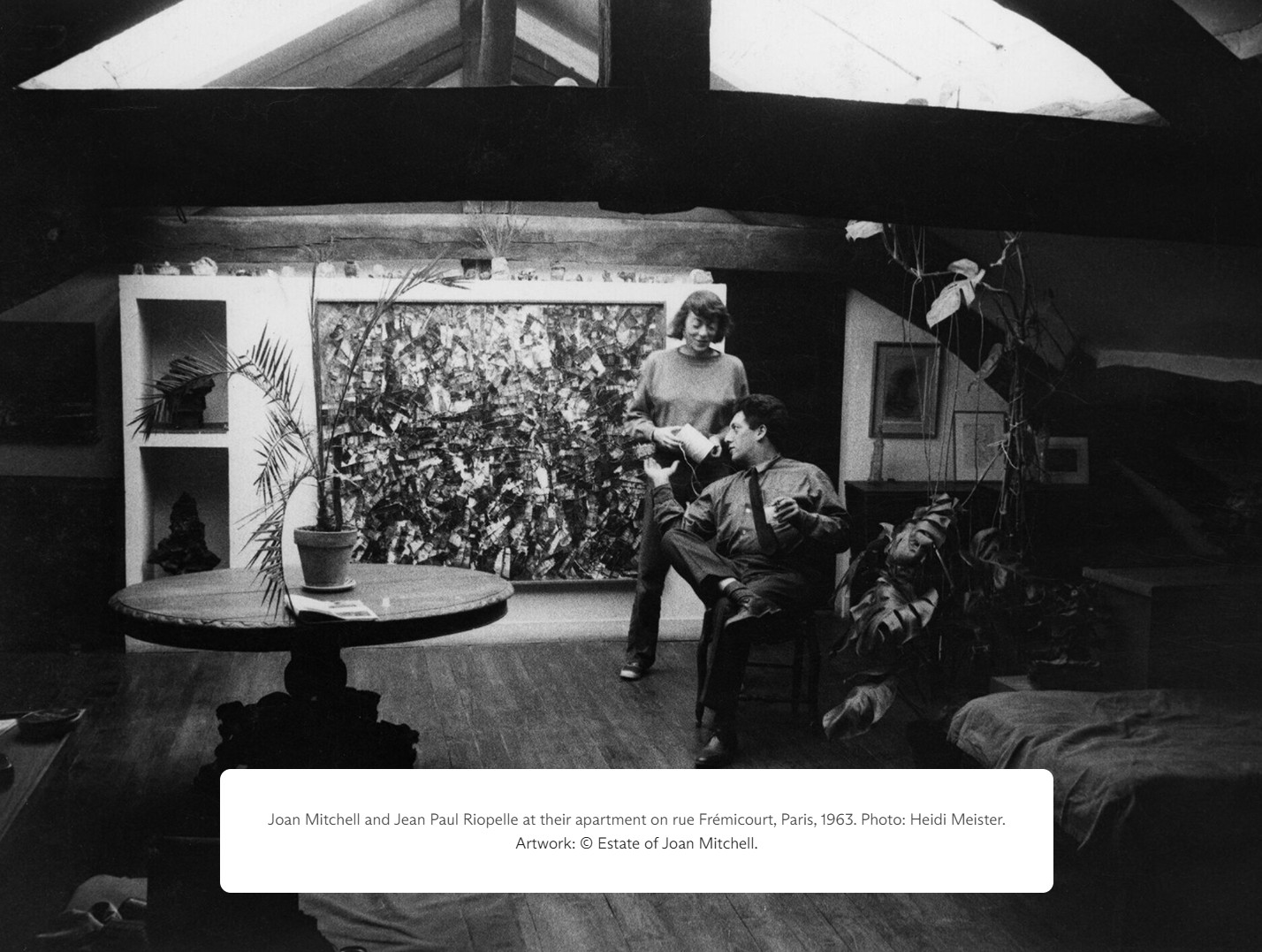
In 1965, the year that the present work was painted, Mitchell was the subject of an essay in Art News by the acclaimed American poet and critic John Ashbery. He reflects upon Mitchell’s unwavering commitment to painting at a time when the Pop art was at its height in New York, admiring the fact that she seemed impervious to whichever culture milieu she found herself. “She does not talk much about her work,” he observed, “perhaps not out of reticence, but because the paintings are meaning and therefore do not have a residue of meaning which can be talked about. The recent upsurge of “intellectual” art and the resultant downgrading of Abstract-Expressionism do not particularly surprise or alarm her. Working in Paris, she has always been fairly independent of her fellow artists, American or French, and intends to go on as before” (J. Ashbery, “An Expressionist in Paris,” ArtNews, April 1965, p. 63)
“There’ll always be painters around…It’ll take more than Pop or Op to discourage them—they’ve never been encouraged anyway. So we’re back where we started from. There have always been very few people who really like painting—like poetry.”
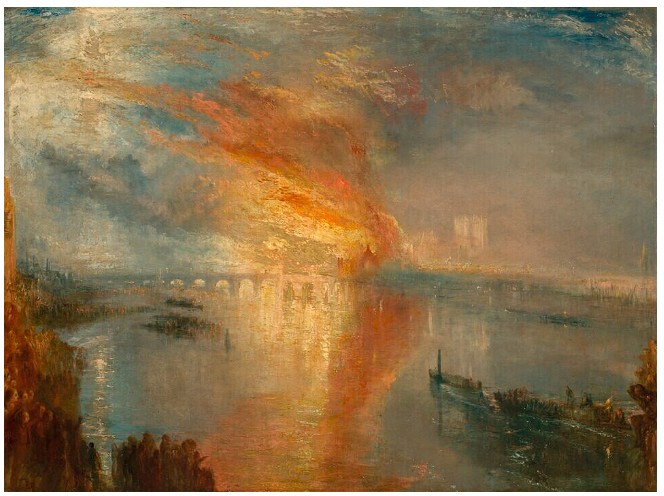
Joseph Mallord William Turner, The Burning of the Houses of Lords and Commons, 16 October 1834, 1835. Cleveland Museum of Art.
Mitchell’s poetic analogy is apt. As Ashbery himself points out, these are not legible paintings in any traditional sense, and yet they manage to convey distinct moods and atmospheres that are timeless evocations of lived feeling and experience. As he puts it, “we move in and out of these episodes, coherent or enigmatic ones, always with a sense of feeling at home with the painter’s language, of understanding what she is saying even when we could not translate it” (J. Ashbery, “An Expressionist in Paris,” ArtNews, April 1965, p. 63). In this respect, Mitchell continues in the tradition of the greatest landscape painters of the past, such as the 19th century painter J.M.W. Turner, who were not interested in making faithful replications of what they saw before them, but rather strove to imbue the painting with a sense of the feeling certain places evoked. As Mitchell once described, “I would rather leave Nature to itself. It is quite beautiful enough as it is. I don’t want to improve it, I certainly never mirror it. I would like more to paint what it leaves me with” (J. Mitchell, quoted in J.I.H. Baur, Nature in Abstraction, exh. cat., Whitney Museum of American Art, New York, 1958, p. 75).