MAY 2026 NEW-YORK AUCTIONS
Elizabeth Peyton
Auction Results
#1. Earl’s Court (Liam + Noel), 1996
Property from an Important Private Collection, New York
Sotheby’s New-York: 14 May 2026
Estimated: USD 1,500,000 – 2,000,000
USD 1,920,000
Elizabeth Peyton | Earl’s Court (Liam + Noel) | The Now &
ELIZABETH PEYTON (b. 1965)
Earl’s Court (Liam + Noel), 1996
Oil on board
10×8 inches (25.4 x 20.3 cm)
Signed, titled Earl’s Court (Liam + Noel) December 1995 and dated 1996 (on the reverse)
#2. Jarvis after Jail, 1996
Christie’s New-York: 20 May 2026
Estimated: USD 1,200,000 – 1,800,000
USD 1,651,000
ELIZABETH PEYTON (B. 1965), Jarvis after Jail | Christie’s
ELIZABETH PEYTON (B. 1965)
Jarvis after Jail, 1996
Oil on board
12-1/4 x 15 inches (31.1 x 38.1 cm)
Signed, titled and dated ‘JARVIS (AFTER JAIL) 1996 Elizabeth Peyton’ (on the reverse)
#3. Mendips, 1996
Sotheby’s New-York: 15 May 2026
Estimated: USD 900,000 – 1,200,000
USD 998,400
Elizabeth Peyton | Mendips | Contemporary Day Auction | 2026 |
REPEAT SALE
Phillips New York: 14 November 2023
Estimated: USD 900,000 – 1,200,000
USD 1,206,500
ELIZABETH PEYTON (B. 1965), Mendips, 1963 | Phillips (phillips.com)
ELIZABETH PEYTON (b. 1965)
Mendips, 1996
Oil on canvas
32-1/4 x 28-1/4 inches (81.9 x 71.8 cm)
#4. Max, 1996
Sotheby’s New-York: 14 May 2026
Estimated: USD 800,000 – 1,200,000
USD 768,000
Elizabeth Peyton | Max | The Now & Contemporary Evening Auction |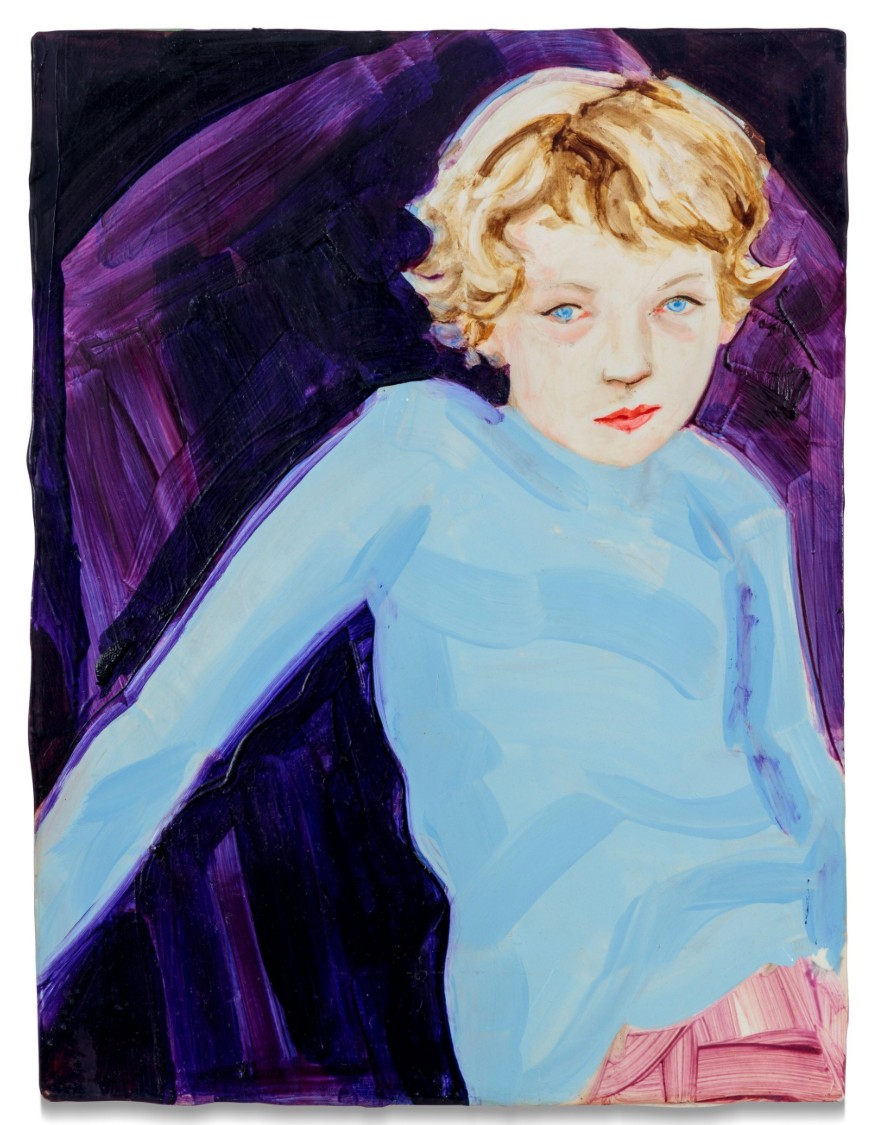
ELIZABETH PEYTON (b. 1965)
Max, 1996
Oil on board
12×9 inches (30.5 x 22.9 cm)
Signed, titled Maxie August 1996 and dated 1996 (on the reverse)
#5. Peconic (Ben), 2002
Christie’s New-York: 21 May 2026
Estimated: USD 250,000 – 350,000
USD 368,300
ELIZABETH PEYTON (B. 1965), Peconic (Ben) | Christie’s
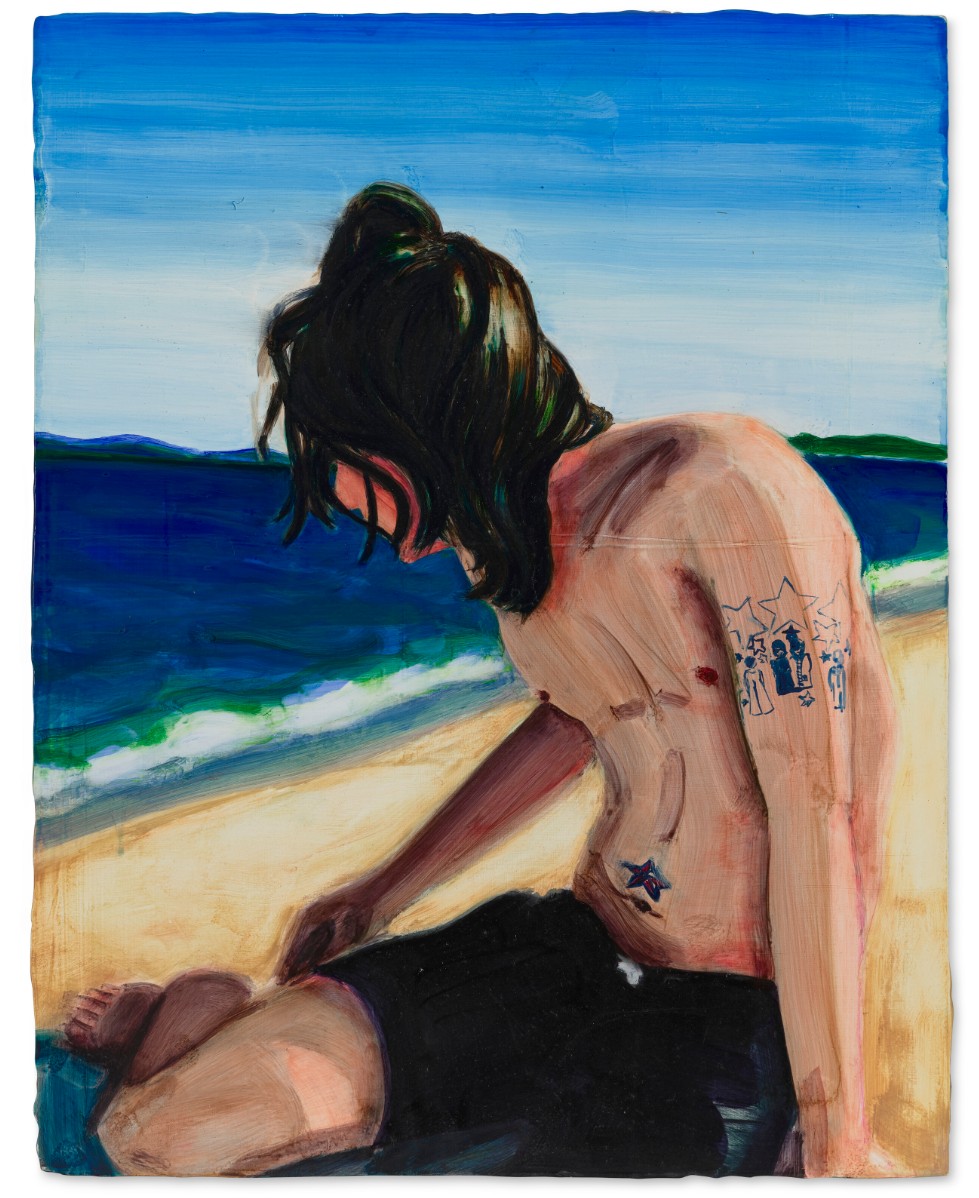
ELIZABETH PEYTON (B. 1965)
Peconic (Ben), 2002
Oil on panel
14-1/8 x 11-1/8 inches (35.8 x 28.2 cm)
Signed, titled and dated ‘Peconic (Ben) Elizabeth Peyton AUGUST 2002’ (on the reverse)
#6. Ozzy (Two), 2002
Christie’s New-York: 21 May 2026
Estimated: USD 60,000 – 80,000
USD 120,650
WORK ON PAPER
ELIZABETH PEYTON (B. 1965), Ozzy (Two) | Christie’s
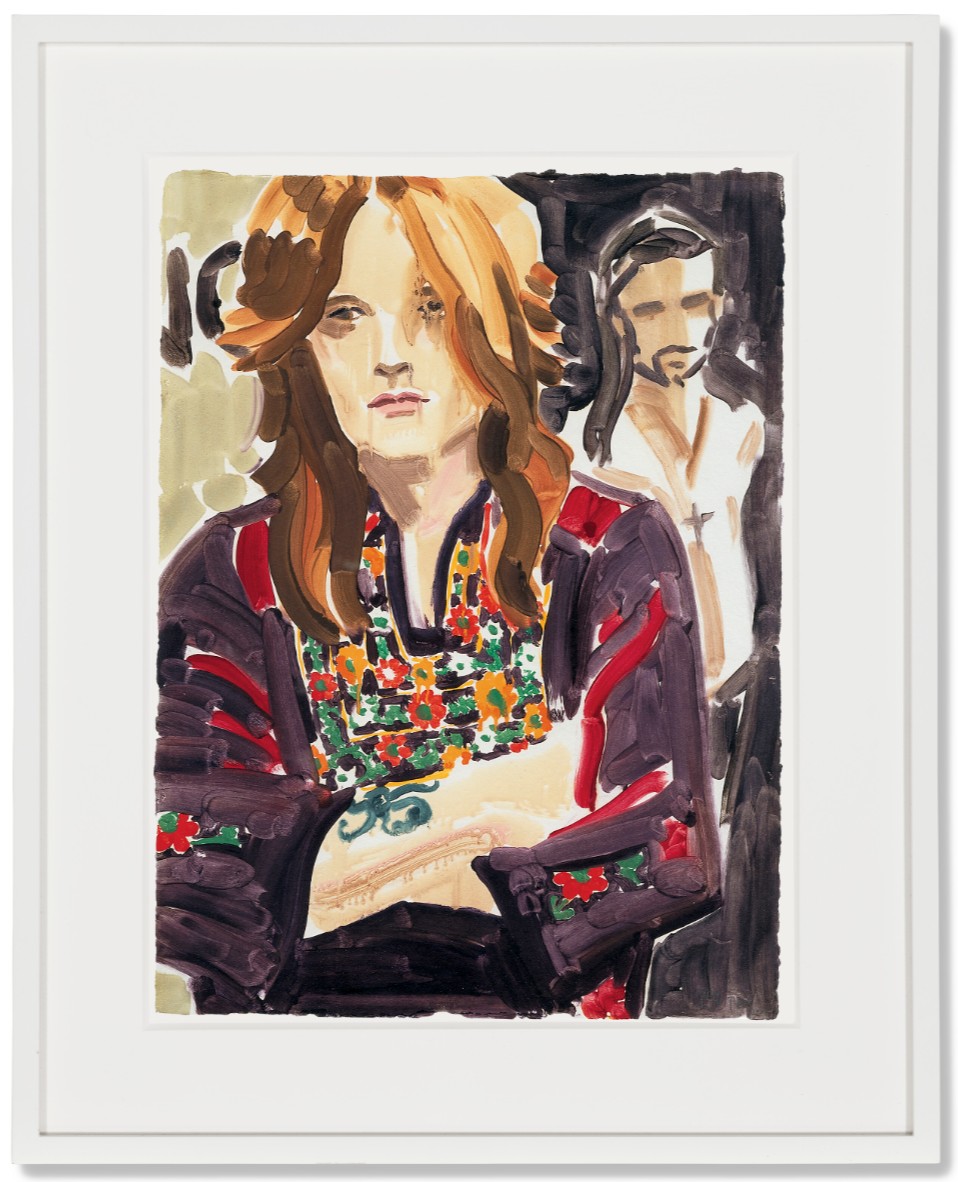
ELIZABETH PEYTON (B. 1965)
Ozzy (Two), 2002
Hand-painted oil monotype on paper
30 x 22-1/8 inches (76.3 x 56.2 cm)
Signed, titled and dated ‘OZZY Elizabeth Peyton 2002′ (lower right)
Signed again with the artist’s initials, inscribed, titled and dated again ‘OZZY II 2002 EP’ (on the reverse)
Vichy (David at the Spa), 1997
Christie’s New-York: 21 May 2026
Estimated: USD 20,000 – 30,000
USD 109,950
WORK ON PAPER
ELIZABETH PEYTON (B. 1965), Vichy (David at the Spa) | Christie’s
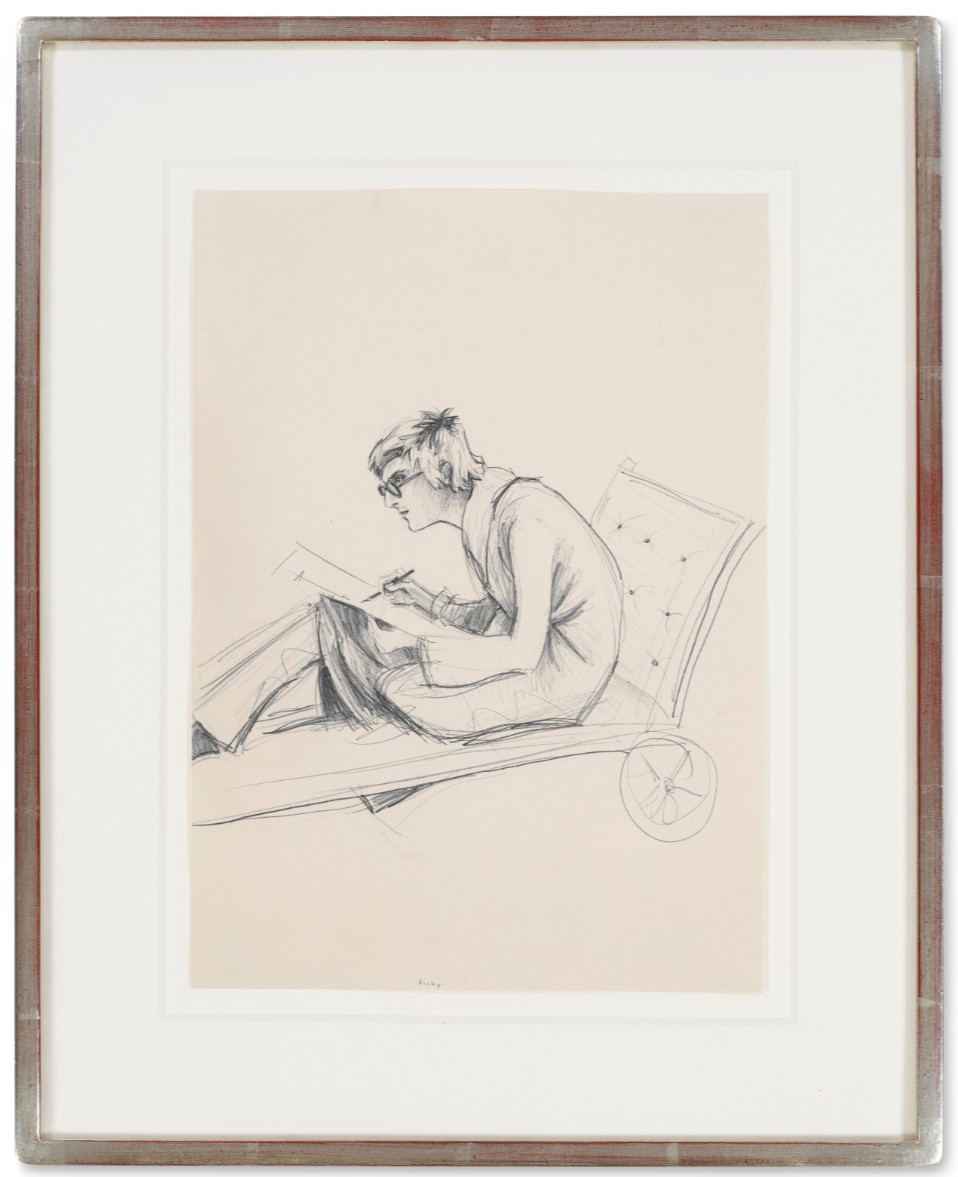
ELIZABETH PEYTON (B. 1965)
Vichy (David at the Spa), 1997
Graphite on paper
12 x 8-1/2 inches (30.5 x 21.6 cm)
Signed, titled and dated ‘Vichy (David @ the Spa) Elizabeth Peyton 1997’ (on the reverse)
Earl’s Court (Liam + Noel), 1996
Earl’s Court (Liam + Noel), 1996
Property from an Important Private Collection, New York
Sotheby’s New-York: 14 May 2026
Estimated: USD 1,500,000 – 2,000,000
USD 1,920,000
Elizabeth Peyton | Earl’s Court (Liam + Noel) | The Now &
ELIZABETH PEYTON (b. 1965)
Earl’s Court (Liam + Noel), 1996
Oil on board
10×8 inches (25.4 x 20.3 cm)
Signed, titled Earl’s Court (Liam + Noel) December 1995 and dated 1996 (on the reverse)
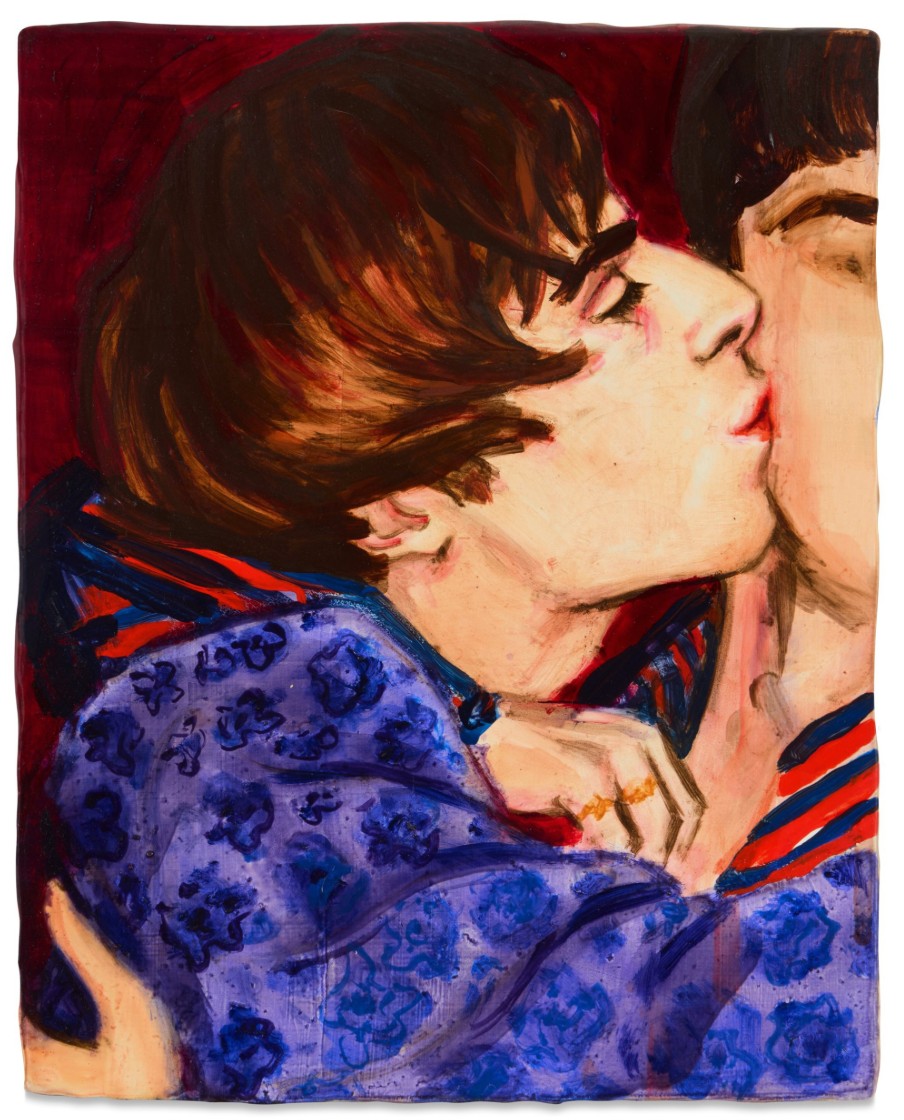
Brushstrokes of vibrant color and sincere tenderness coalesce upon the intimately scaled picture plane of Elizabeth Peyton’s Earl’s Court. One of the most influential figurative artists working today, Peyton is celebrated for her paintings that portray cultural icons and close friends with a singularly tender and observant gaze that unearths the profound essence lying behind each of her subjects. Executed in 1996, the present work captures Oasis frontman Liam Gallagher kissing his brother Noel on the cheek, at the apex of their fame and cultural potency.
“Making art is making something live forever. Human beings especially—we can’t hold on to them in any way. Painting is a way of holding onto things and making things go on through time.”
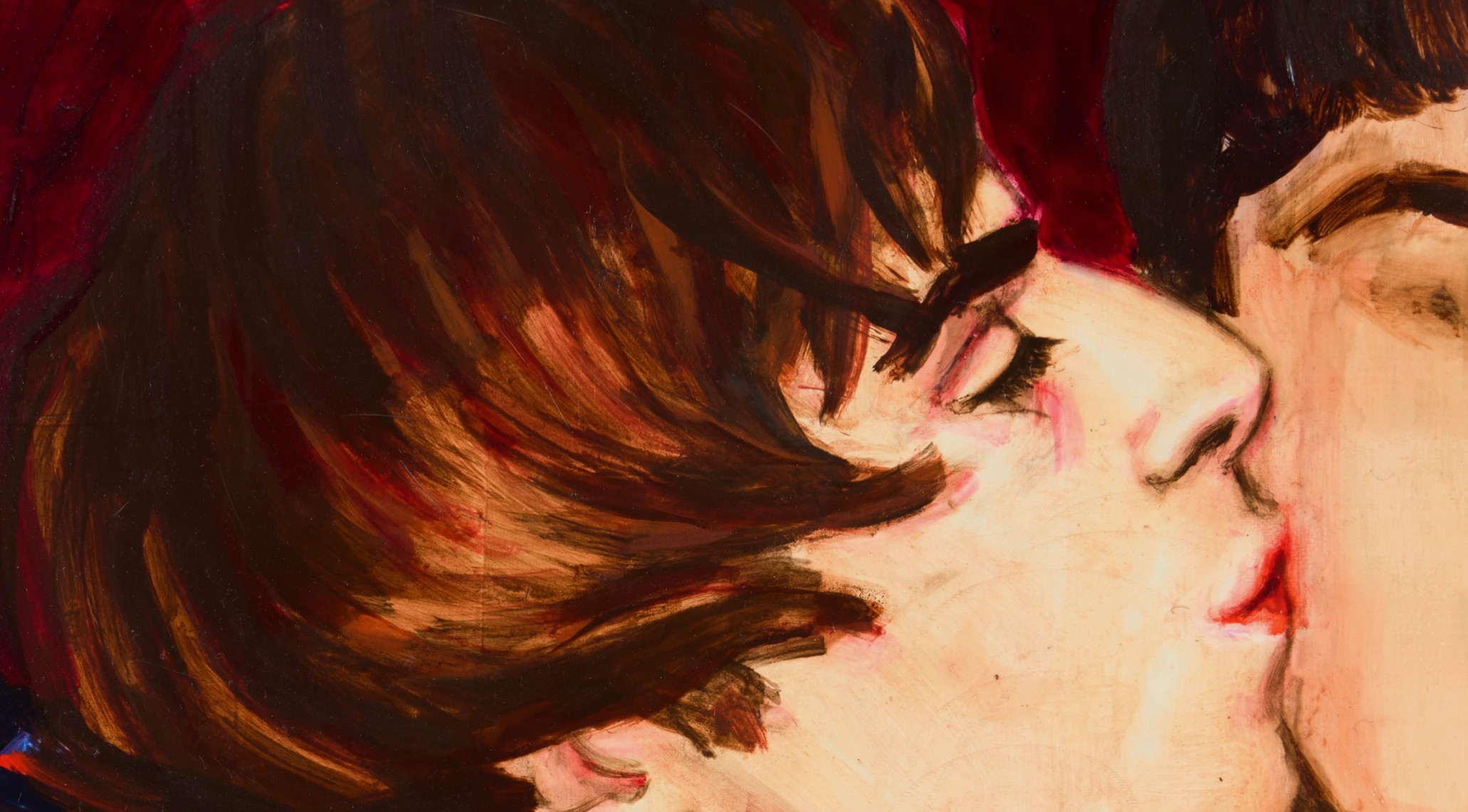
Inextricably woven into the mythological fabric of British music following their first two albums of immense commercial success and critical acclaim, Oasis played two iconic sold-out shows at London’s Earl’s Court on November 4th and 6th, 1995, from which Peyton’s intimate composition takes its inspiration. Here, the artist freezes these rockstars in a pivotal moment of their lives, the composition radiating not only the fervor surrounding the band, but also Peyton’s singular ability to capture the psychological undertow behind public image, portending the eventual friction that grew between the two brothers.
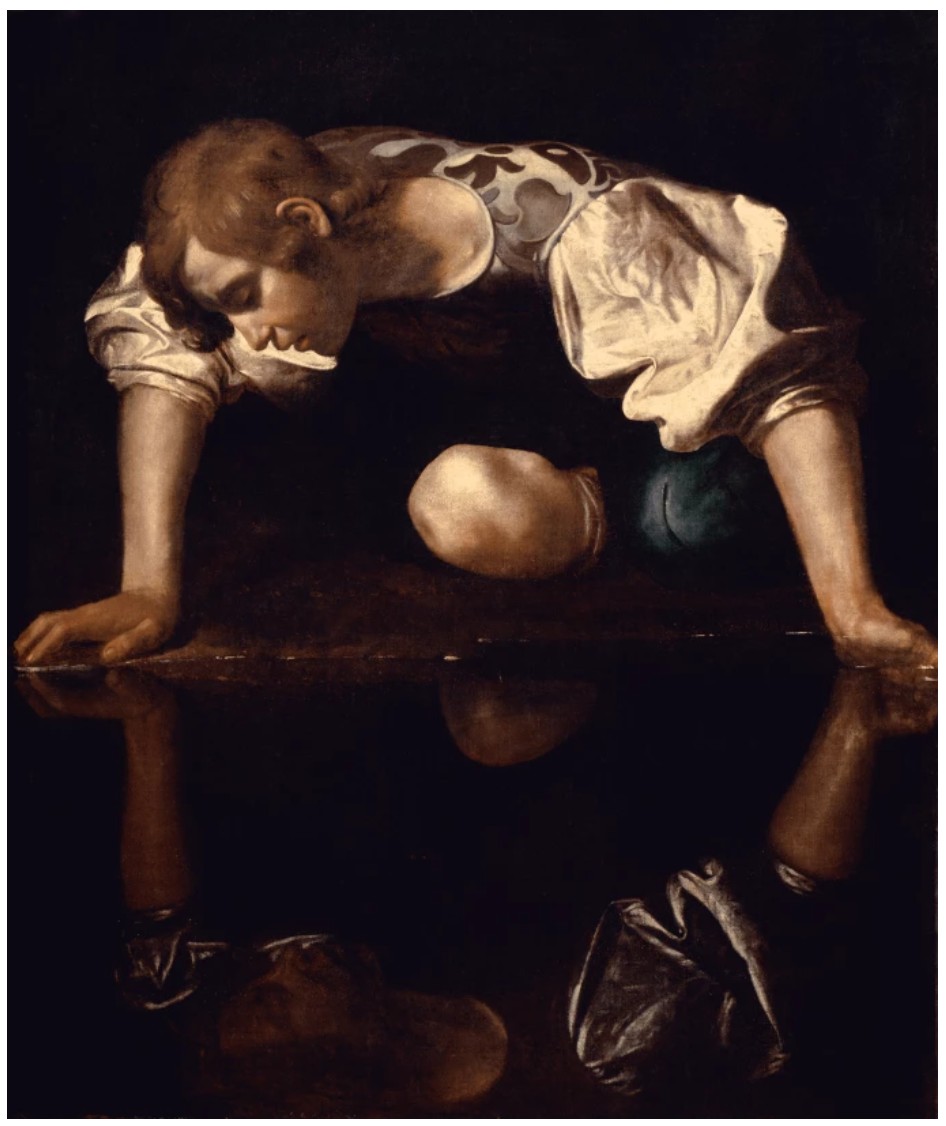
Michelangelo Merisi da Caravaggio, Narcissus, c.1597–99. Gallerie Nazionali di Arte Antica, Barberini Corsini, Palazzo Barberini, Rome. Image © Luisa Ricciarini / Bridgeman Images
Oasis, led by two brothers, Noel and Liam Gallagher, hailing from Manchester, was indubitably the cornerstone of Britpop’s meteoric ascent to global prominence. Their second studio album, (What’s the Story) Morning Glory?, released a year prior to the execution of Earl’s Court, catapulted the band into becoming a worldwide rock phenomenon as it spent 10 weeks at number one in the United Kingdom Albums Chart and reached number four on the U.S. Billboard 200. Coupled with their stardom was extensive paparazzi coverage on their daily lives, often offering narratives of the brothers as combative and volatile, marked by high tension and frequent public fighting. Here in Earl’s Court, Peyton frames them in a moment of intimacy and repose, zooming in on Liam and inviting the viewer to gaze closely at the protagonist. Against a luscious maroon backdrop, he is seen in a purple jacket patterned with cobalt flowers, encapsulating the working-class cool that became a hallmark of the Oasis aesthetic. Unlike how the tabloids would make their relationship seem, the Gallaghers here appear in a moment of fragility, care, and boyish joy; Peyton’s luminous palette, diaphanous facture, and refined sense of composition thus imbues the painting with a heightened emotionality, taking two idols of celebrity and turning them into a poetic meditation on kinship, fame, love, rivalry, and vulnerability.
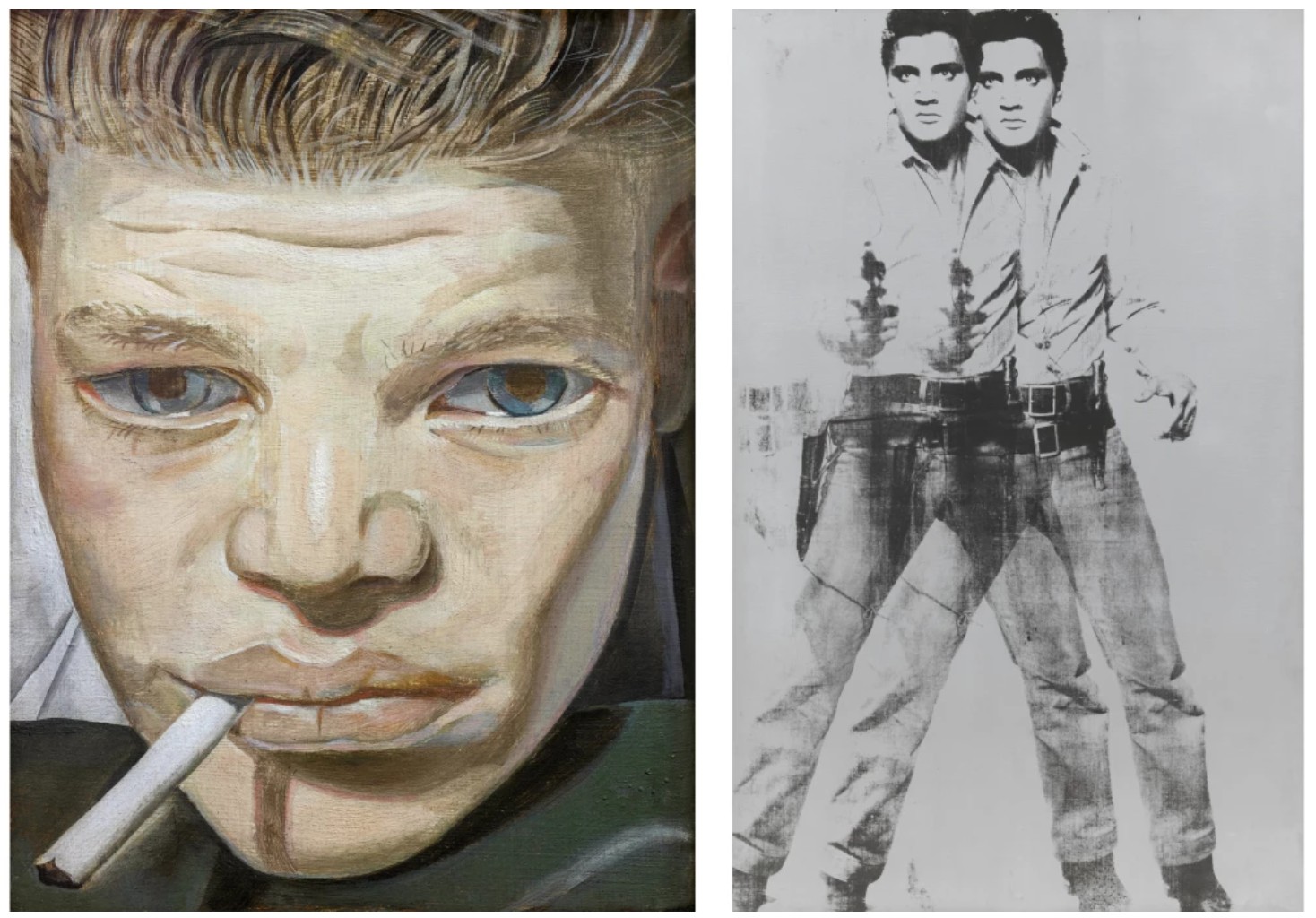
Left: Lucian Freud, Boy Smoking, 1950–51. Tate Modern, London. Image © The Lucian Freud Archive. All Rights Reserved 2026 / Bridgeman Images. Art © 2026 Lucian Freud.
Right: Andy Warhol, Double Elvis, 1963. The Museum of Modern Art, New York. Image © The Museum of Modern Art/Licensed by SCALA / Art Resource, NY. Art © 2026 Andy Warhol Foundation for the Visual Arts / Artists Rights Society (ARS), New York
Peyton’s lush and swift brushstrokes oscillate between projection and interiority, a dynamic central to the potency of Earl’s Court and her celebrated practice in portraiture. By appropriating an original photograph and elevating the moment to a new contemplative level, she deftly contrasts the brothers’ increasingly strained relationship with their unprecedented musical success, their idolization as rock stars with their mutual care and appreciation as siblings, their glories with their faults. As art critic Jon Savage explains, Peyton is “an unashamed fan” with “an idiosyncratic, feminine gaze” that invites us to encounter hypermasculine icons not as caricatures but as individuals caught in the tensions of visibility and myth: “It’s all right for disco divas to take off the slap when they get home, but rock stars have to be who they are, offstage and on. This absurd state of affairs crucifies lives and stunts individual and collective growth. Peyton is careful to emphasize male tenderness.” (Jon Savage, “Boys Keep Swinging, Elizabeth Peyton,” Frieze, November – December 1996 (online)) In the process, she reanimates nineteenth-century traditions of portraiture, which glorified high art while also finding beauty in unifying the subject with expressions of humanity.
“It’s almost a nineteenth-century idea that what’s on the inside appears on the outside, Balzac was into the curve of your nose or mouth, expressing some kind of inner quality that it could be read on your face.”
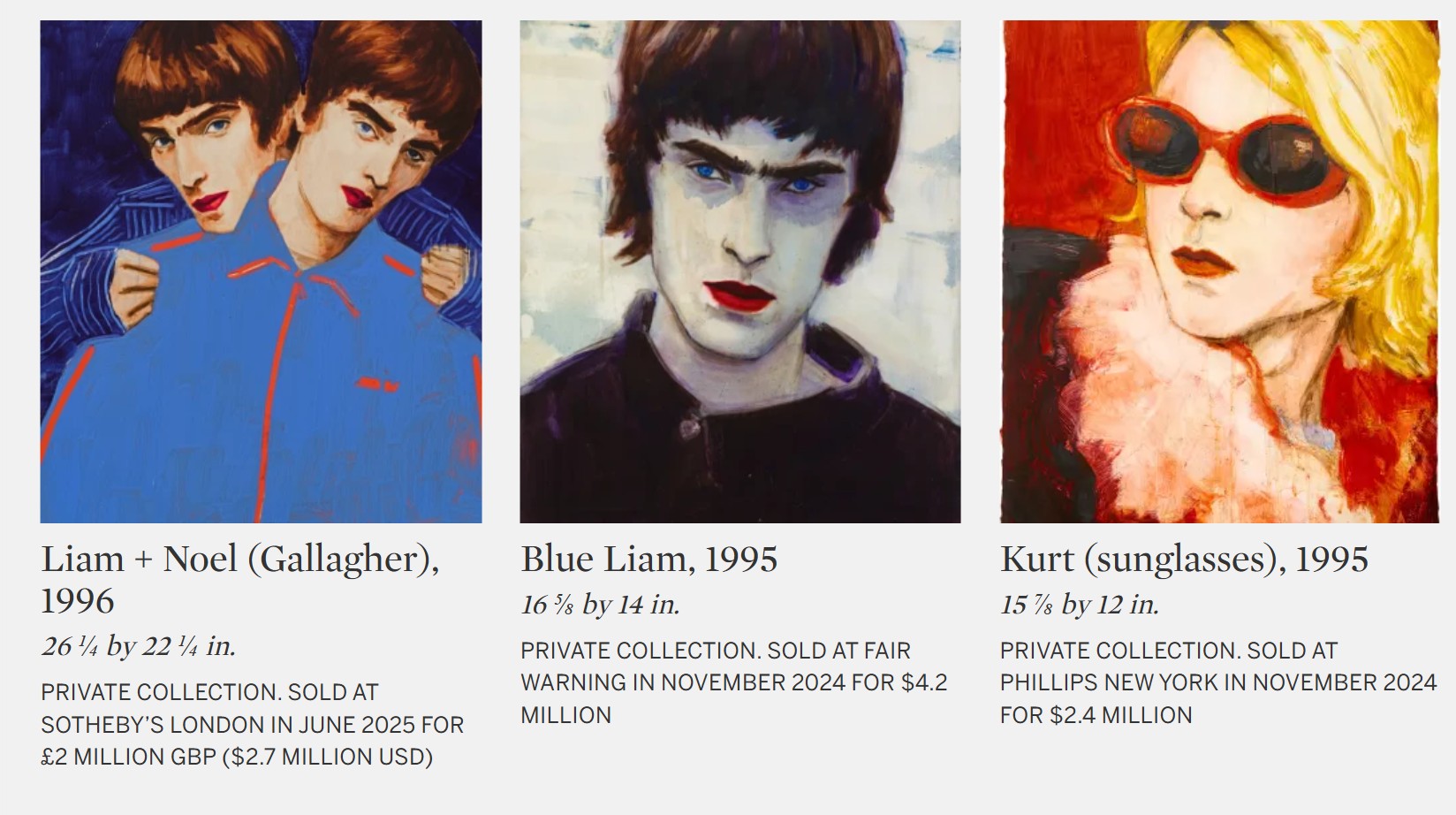
Market Precedents
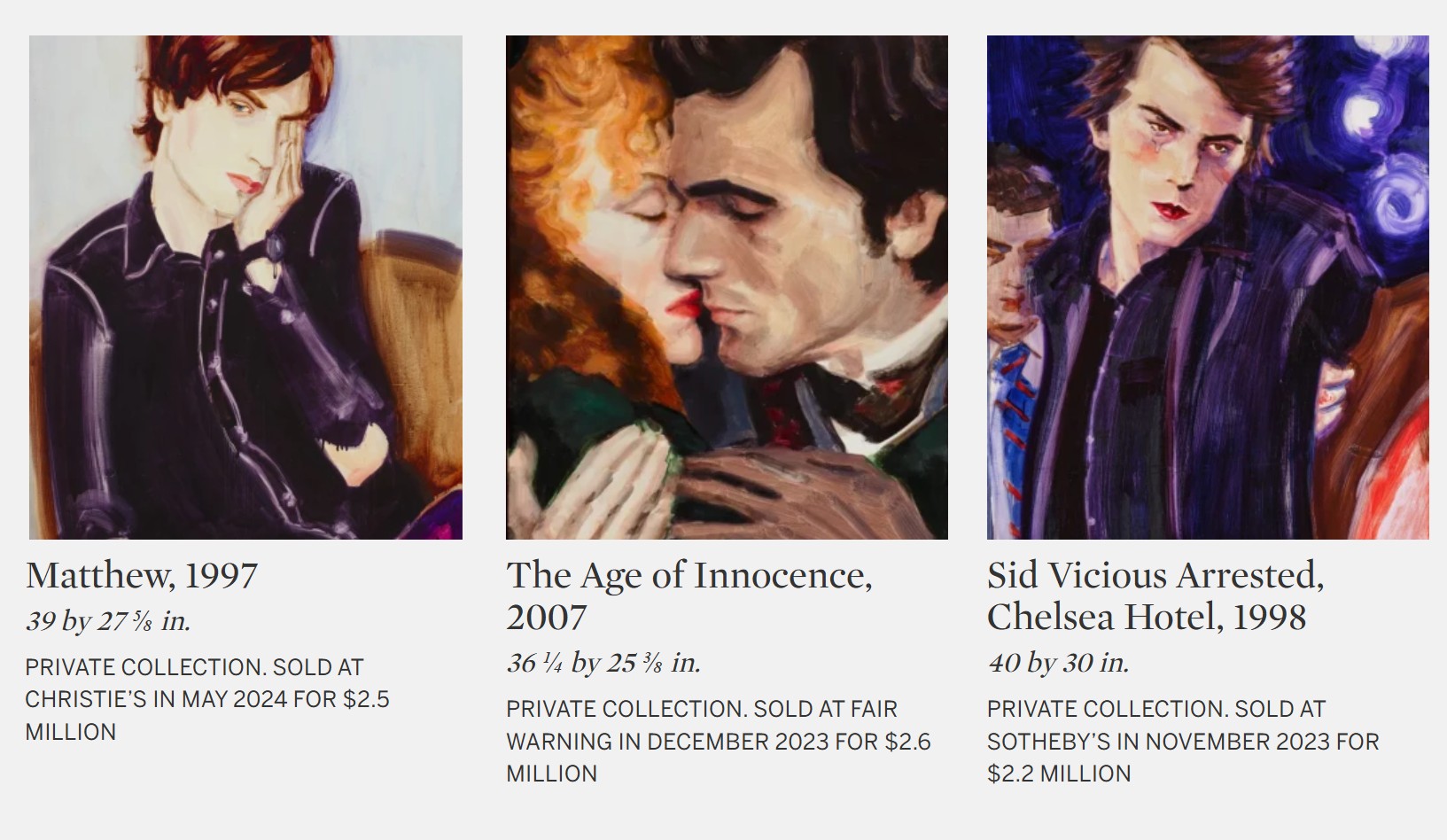
Peyton emerged in the 1990s and immediately captivated the art world with her portraits of friends, artists, musicians, and historical figures rendered with an intimate gaze and vivid palette, parsing the cultural iconography of her generation. Fundamentally, Peyton regards her works as “paintings of people,” capturing an individual’s essence in a manner reminiscent of still life. Painting her friends and public figures with equal reverence.
“There is no separation for me between people I know through their music or photos and someone I know personally. The way I perceive them is very similar, in that there’s no difference between certain qualities that I find inspiring in them.”
Peyton has through her celebrated career enacted a quiet but radical flattening of social hierarchy, a decisive spotlighting of the tender humanity lying in us all. The 8-by-10 inch composition of Earl’s Court thus captures one such moment, the complicated intertwinings of brotherly love found in two legendary icons of popular culture. In doing so, the present work decisively affirms Elizabeth Peyton’s singular position as one of the most perceptive chroniclers of fame and cultural mythology.
Jarvis after Jail, 1996
Jarvis after Jail, 1996
Christie’s New-York: 20 May 2026
Estimated: USD 1,200,000 – 1,800,000
USD 1,651,000
ELIZABETH PEYTON (B. 1965), Jarvis after Jail | Christie’s
ELIZABETH PEYTON (B. 1965)
Jarvis after Jail, 1996
Oil on board
12-1/4 x 15 inches (31.1 x 38.1 cm)
Signed, titled and dated ‘JARVIS (AFTER JAIL) 1996 Elizabeth Peyton’ (on the reverse)
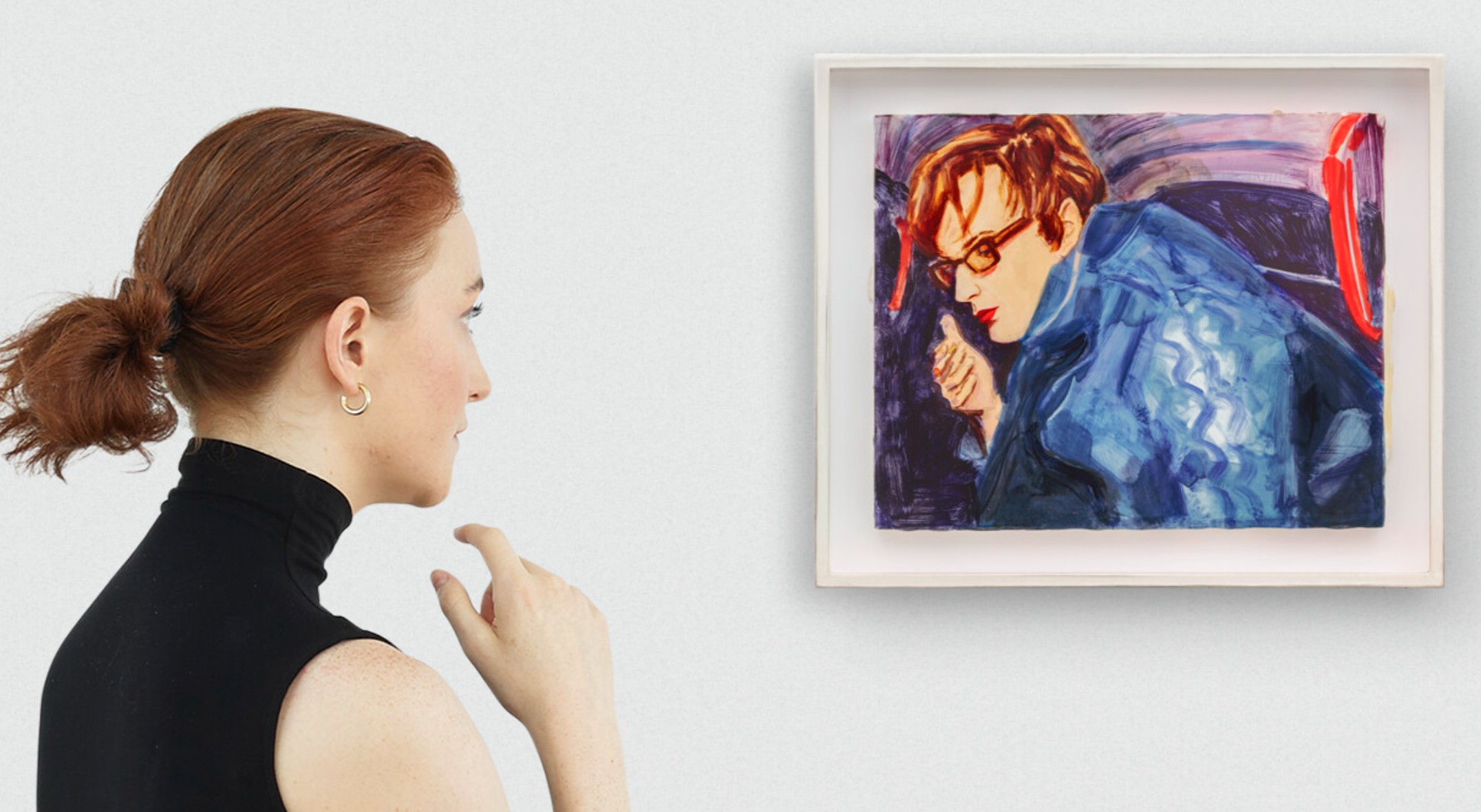
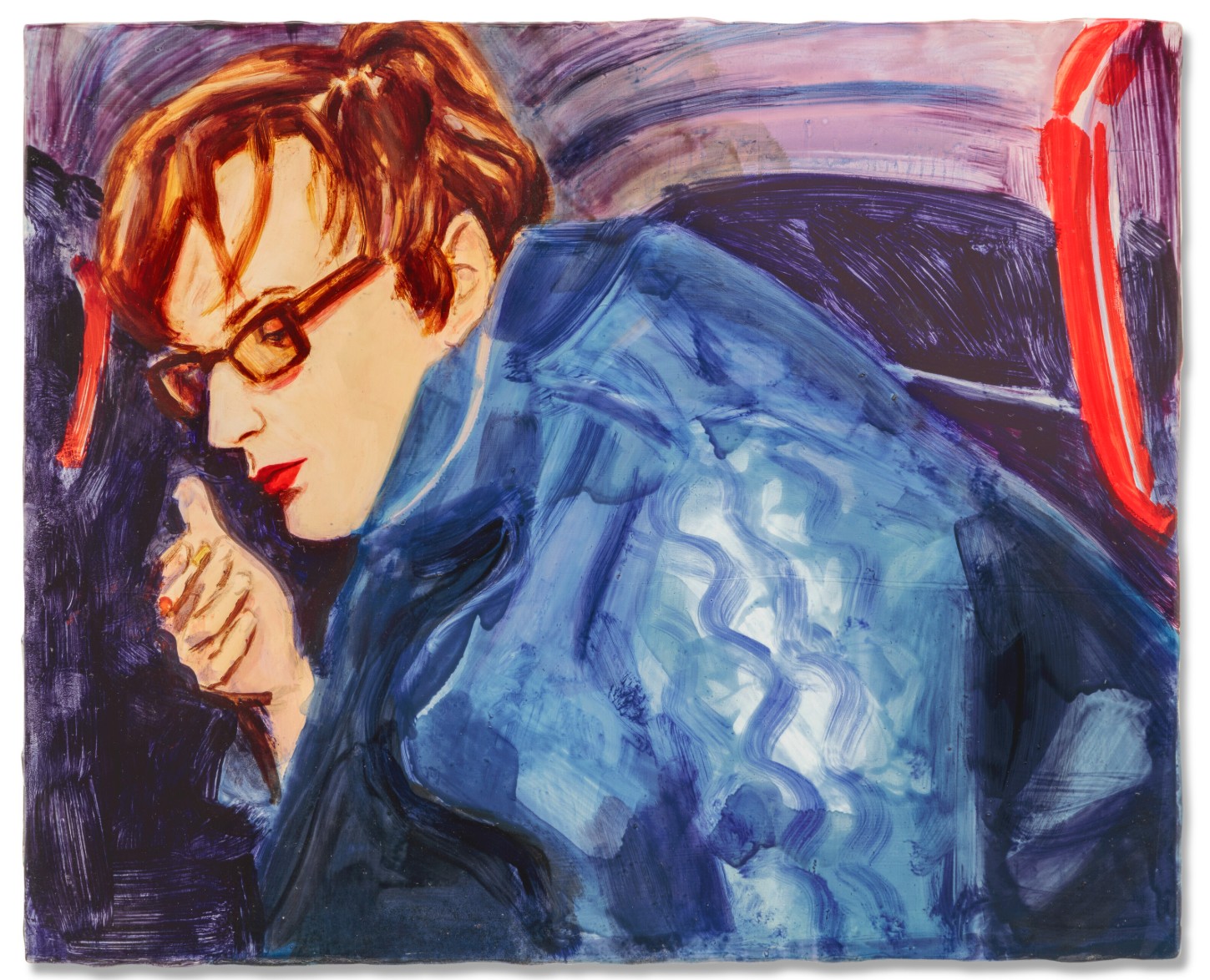
Elizabeth Peyton’s astute painting Jarvis after Jail captures the fallout from one of the most infamous events in British Pop music history. In 1996, during a performance of Earthsong by Michael Jackson, Jarvis Cocker—the lead singer of the English rock band Pulp—rushed the stage to protest Jackson’s depiction of himself as a Christ-like figure with the apparent power of healing. Following the incident, Cocker was detained by the police and questioned on suspicion of assault, but was later released without charge. Peyton’s source image for the present work comes from a press photo taken after Cocker’s release and published on the front page of Melody Maker music magazine.
Broadcast around the world, the incident caused a media frenzy, with many—including politicians and the tabloid press—decrying Cocker’s actions as setting a bad example for the audience of children and young people watching. Peyton, on the other hand, saw things differently. “I’m interested in making pictures of artists whose work inspires me,” Peyton once said (E. Peyton quoted in C. Roux “Elizabeth Peyton: The Exceptional Portrait Painter”, The Gentlewoman, no. 8 Autumn & Winter 2013). In an interview with Cocker in 2008, she told him that she decided to paint him after his act of protest at the Brit Awards.
“There aren’t many people who stand up, whether it be in culture or politics, and say: “Listen, this is dumb. It doesn’t have to be like this.” After that awards show, I made a painting of you getting out of jail because I thought what you did was so heroic.”
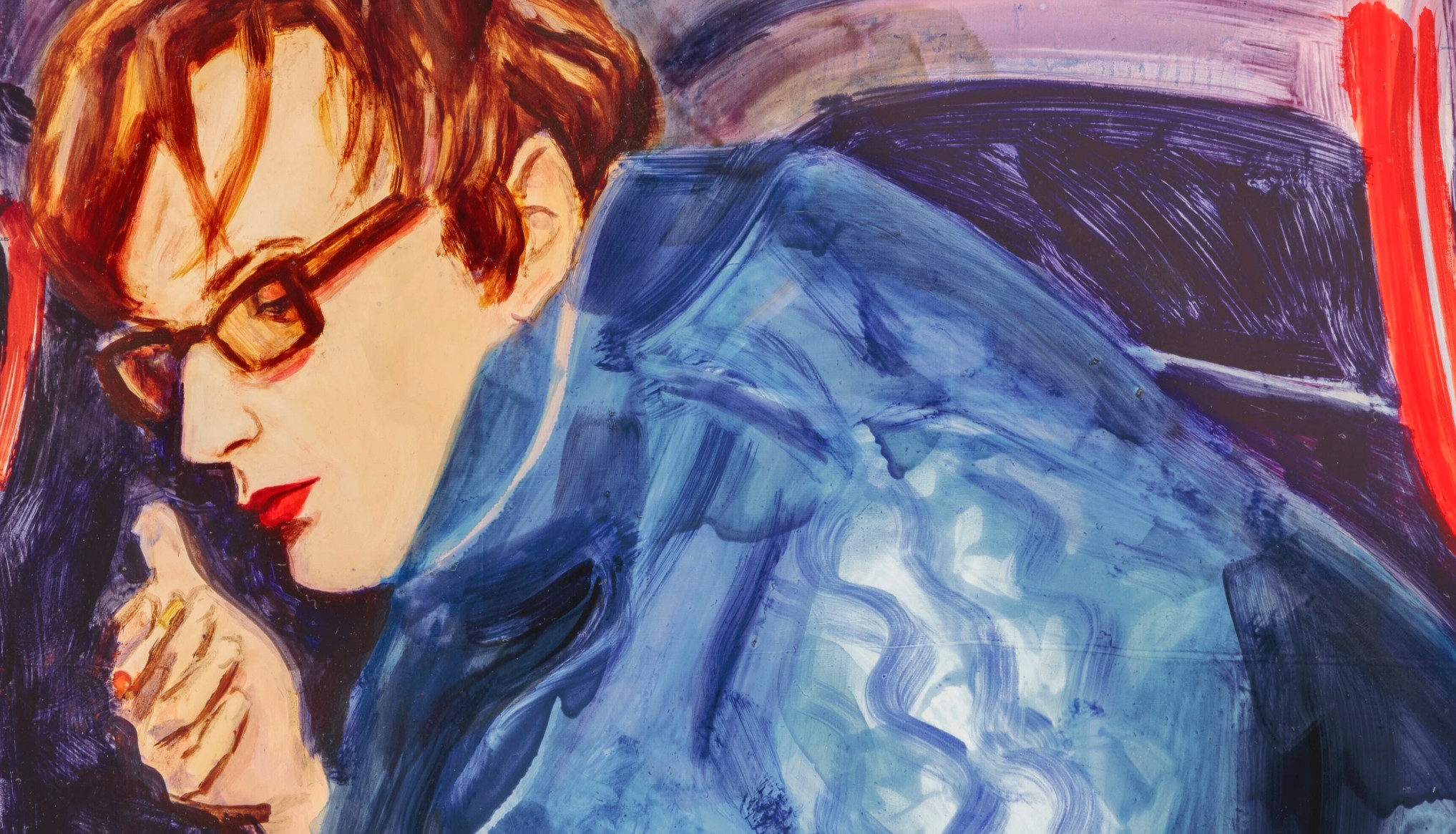
The disheveled figure of Cocker is deftly manifested out of Peyton’s fluid brushwork. The musician’s famous tousled hair and iconic thick-rimmed glasses are the result of ample, confident strokes from a fully loaded brush, while Peyton precisely captures the texture of Cocker’s embroidered jacket as it merges with the upholstered interior of the London taxi as he’s driven away to avoid the attention of waiting paparazzi. Enhancing the sense of drama, Peyton adds pops of color to the interior gloom of the taxi, highlighting his cherry-red lips and the illuminated end of the lit cigarette with pops of bright red that match the colorful grab handles located near the doors of the taxi. Peyton works spontaneously, without the need for preparatory sketches or drawings. Her aim is to capture the impulse of the moment or event she is immortalizing. In this sense, this present image of Jarvis Cocker becomes the perfect subject for her unique style. Cocker is on record as saying that his stage “invasion” was completely spontaneous.
“I was quite surprised, as suddenly I was there,
and once I was there I didn’t really know what to do.”
In the present work, Peyton perfectly captures the aftermath of what record company executive Marc Marot called “the perfect moment of rock’n’roll bedlam.”
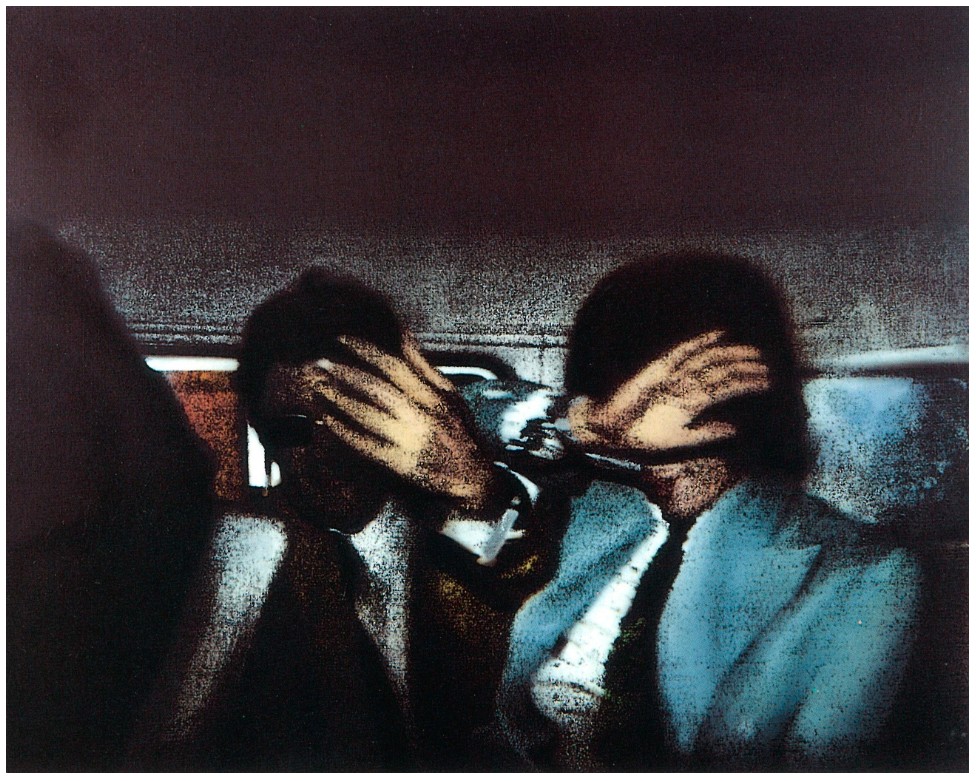
Richard Hamilton, Swingeing London 67 (f), 1968-1969. Tate, London. © R. Hamilton. All Rights Reserved, DACS and ARS 2026.
Cocker was by no means the first musician to have fallen foul of a public ideal of perfection and subsequently caught the attention of artists. From Andy Warhol’s immortalization of Elvis Presley and John Lennon at the height of media frenzy to Richard Hamilton’s Swinging London (1968-69), capturing the moment in 1967 when Mick Jagger, lead singer of the Rolling Stones, was released after being arrested for drug possession, the media roller-coaster of Pop icons has provided a rich seam of subject material for artists.
Jarvis after Jail was painted shortly after Peyton’s breakthrough solo show at Gavin Brown’s Enterprise in New York. Reviewing that show, The New York Times critic Roberta Smith noted, “Her penchant for indicating his pale skin and bleached hair with stark white lines gives his famous charisma an incandescent glow that seems to be both coming into focus and fading away. In these and other ways, the auras of painting and fame are repeatedly equated” (R. Smith, “Blood and Punk Royalty to Grunge Royalty,” The New York Times, March 24, 1995, p. C30, online [accessed:10/23/2025]). It is precisely due to this beguiling nature that Peyton decided to revisit Cocker in several institutional works, including Jarvis (1998) in the Boros Collection, Berlin; and Jarvis Cocker (1996) in the Seattle Art Museum.
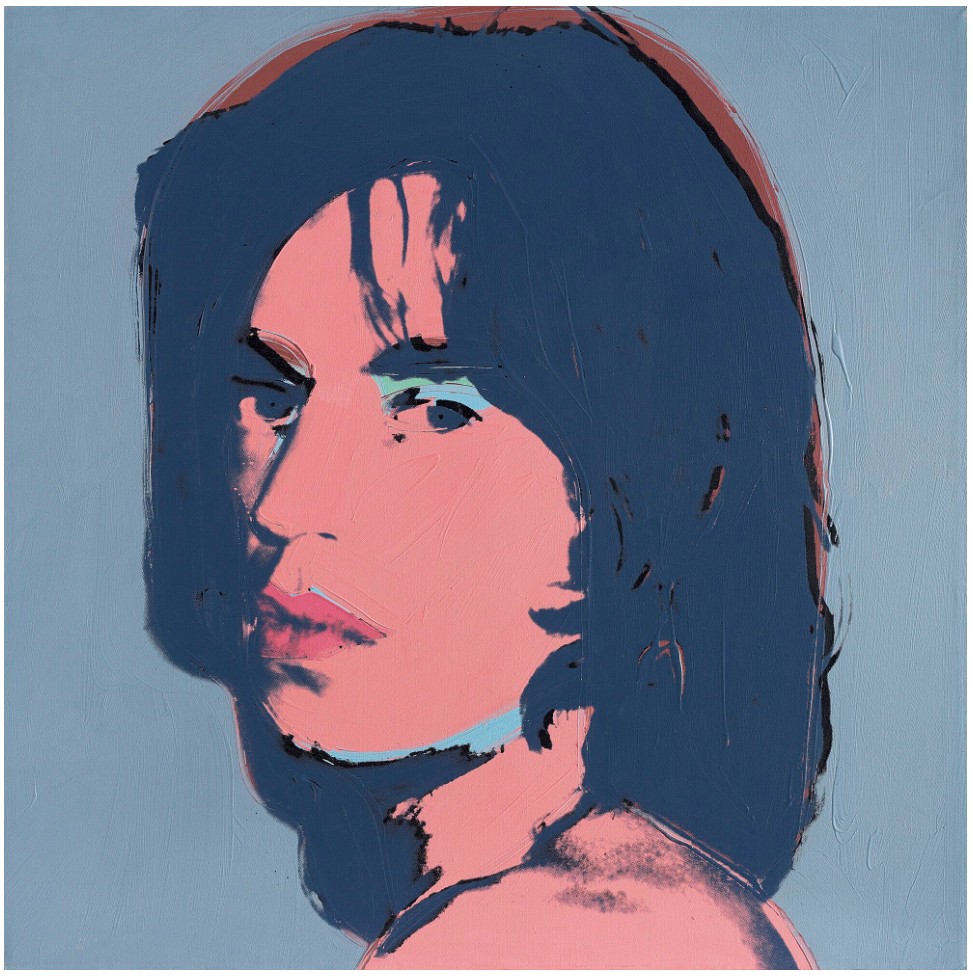
Andy Warhol, Mick Jagger, circa 1975.
© 2026 The Andy Warhol Foundation for the Visual Arts, Inc. / Licensed by Artists Rights Society (ARS).
Elizabeth Peyton’s subjects find themselves inhabiting a magical space where many overlapping and divergent worlds coalesce. Like Elvis, Lennon and Mick Jagger, Jarvis Cocker in Jarvis after Jail occupies both a public and private space. In her hands, the 90s-era aesthetic personified by the present work transcends time. Using heightened colors, intense and intimate detail and a votive-like approach to her subjects, Peyton has found a way to be both of her time and mystically of another.
Mendips, 1996
Mendips, 1996
Sotheby’s New-York: 15 May 2026
Estimated: USD 900,000 – 1,200,000
USD 998,400
Elizabeth Peyton | Mendips | Contemporary Day Auction | 2026 |
REPEAT SALE
Phillips New York: 14 November 2023
Estimated: USD 900,000 – 1,200,000
USD 1,206,500
ELIZABETH PEYTON (B. 1965), Mendips, 1963 | Phillips (phillips.com)
ELIZABETH PEYTON (b. 1965)
Mendips, 1996
Oil on canvas
32-1/4 x 28-1/4 inches (81.9 x 71.8 cm)
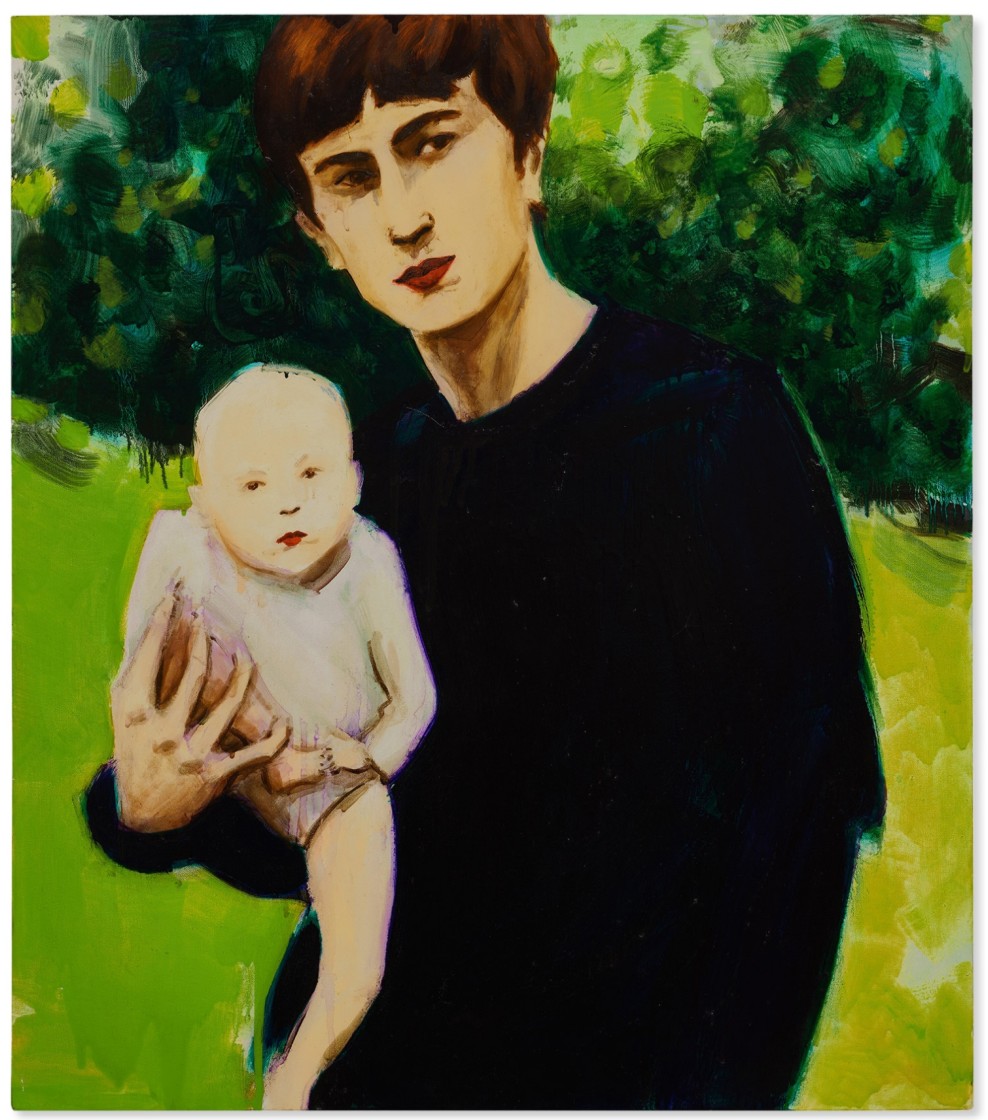
A red-lipped young man slouches in a verdant garden in Elizabeth Peyton’s 1996 painting, Mendips, 1963, holding a baby dressed in white. At first glance, the pale, lithe man seems an interchangeable member of the chorus of beautiful young people Peyton painted in the 1990s, a roster that included friends, lovers, historical figures, and celebrities. However, figural clues (from the man’s bowl cut to the infant in his arms), along with the work’s title, reveal the specificity of Peyton’s vision: a photograph of John Lennon at his family home, Mendips, in Liverpool, holding his infant son, Julian, born in 1963. Painted the year after Peyton was featured at the Venice Biennale in 1995, Mendips, 1963, presents the compositional elements and wider themes that brought her renown as a figural artist in the 1990s, with enchanting portraits that engage cultural ideals of fame, artistry, and intimacy. Photographs have long been a source of inspiration for Peyton. By drawing from photographs, Peyton engages a long-standing question of modern art, from the Impressionists onwards, of the relationship between painting and photography. Gerhard Richter’s photo paintings stand as a contemporary forebear to Peyton’s method. But where artists like Richter use photography as a tool against subjectivity and sentimentality, Peyton is forthcoming in her love and personal admiration for her painted subjects. Rather than focusing on the materiality of the photograph itself, she hones in on the personality of the subject, and “at some point,” she says, “the photo’s got to get lost.”
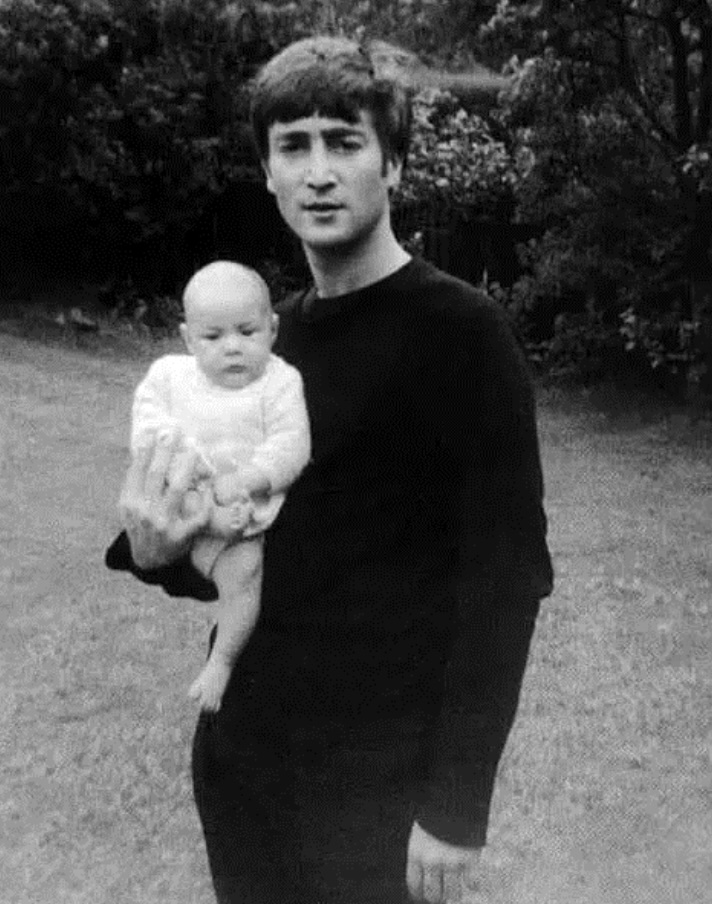
With Mendips, 1963, the original photograph of John and Julian “gets lost” through Peyton’s painterly interventions. She alters the composition in slight, yet significant ways, tilting Lennon, who stands upright in the photograph, on a diagonal, and cropping the canvas closer to his body, which encourages a more intimate relationship between figure and viewer. Peyton also trades in the photographer’s black and white for a vibrant palette of spring greens, and the photograph’s realistic precision gives way to rounded, swishing brushstrokes and an abstracted background. Lennon’s face grows angular, and his features more stylized; he averts his gaze, in demure contrast to his photographed self. Peyton paints his berry-red lips parted and full, almost like a Pre-Raphaelite model’s. Her brushstrokes seem to transform the suburban Liverpool setting of Mendips, 1963 into a mythical English garden.
Max, 1996
Max, 1996
Sotheby’s New-York: 14 May 2026
Estimated: USD 800,000 – 1,200,000
USD 768,000
Elizabeth Peyton | Max | The Now & Contemporary Evening Auction |
ELIZABETH PEYTON (b. 1965)
Max, 1996
Oil on board
12×9 inches (30.5 x 22.9 cm)
Signed, titled Maxie August 1996 and dated 1996 (on the reverse)
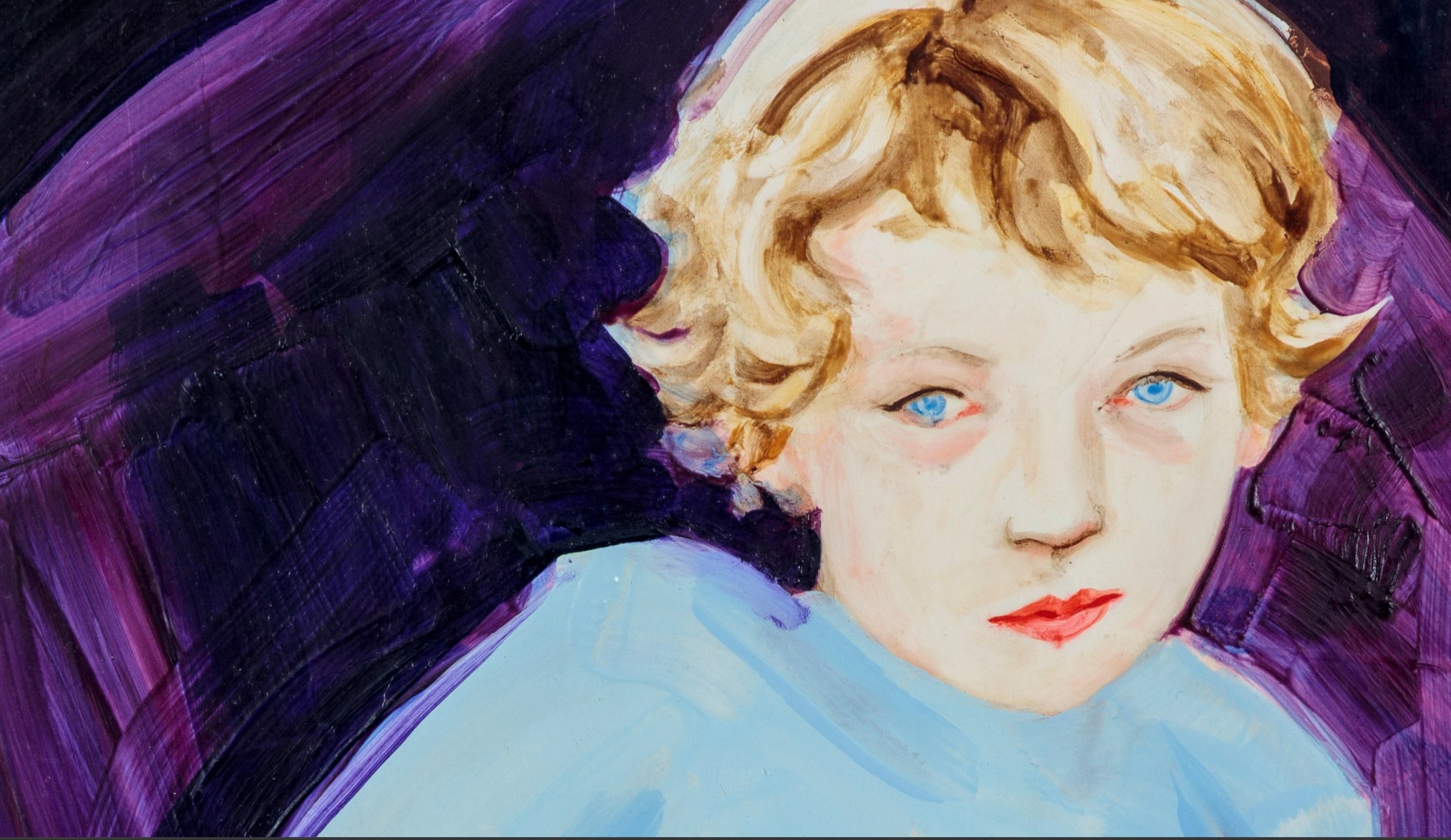
A deeply personal, intimate portrait of her close friend and gallerist Gavin Brown’s son, Max, from 1996, reveals Elizabeth Peyton’s artistic genius in all its subdued, yet piercingly vivid, nature. Testament to the high regard in which she held his father, her painted tribute does not portray the child with the expected virtues of playfulness and naivete, but rather a knowing, delicate representation of the child. Complete with a resolute, unwavering gaze; one of confidence and brash attitude, Max offers a quiet, enigmatic portrayal of the child from Peyton’s highly coveted mid-90s working period, capturing the best of her genius with a deeply personal muse.
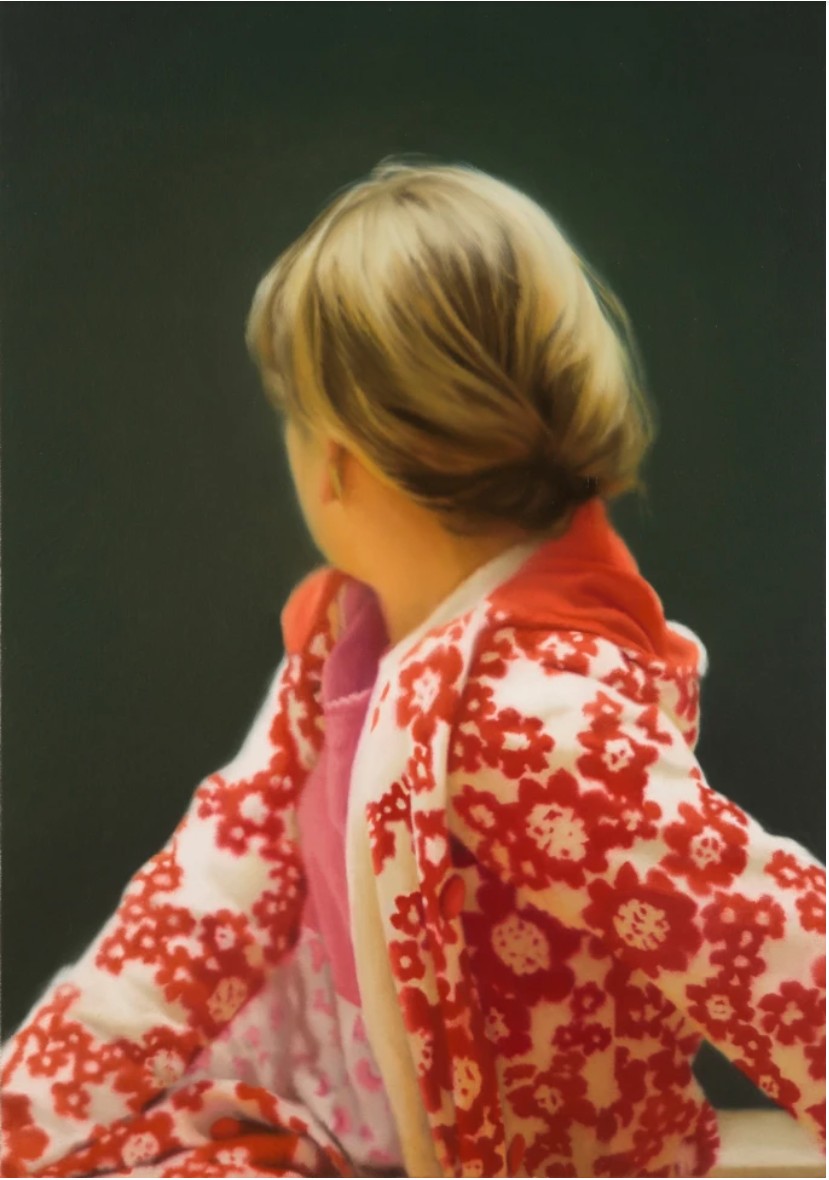
Gerhard Richter, Betty, 1988. Saint Louis Art Museum. Art © 2026 Gerhard Richter
Peyton’s artistic genesis took shape at the Chelsea Hotel in 1993—a place already steeped in decades of creative breakthroughs. By staging an exhibition of her latest drawings in room 828, she deliberately inserted herself into that lineage. The work wasn’t simply on display; viewers had to request a key from the front desk, turning the act of seeing into a quiet initiation. It was there that she met Gavin Brown, the gallerist who would become both a close friend and a catalyst for her remarkably swift rise.
“Human beings are very avant-garde, and are as worthy a contemporary subject as anything else.”
Soon after, Peyton shifted from drawing to painting, focusing on portraits of the people who captivated her—friends, cultural figures, and personal heroes alike. As she put it: “I guess I like looking at people when they’re finding their way, living up to themselves. It’s something that looks spectacular.” (The artist quoted in: Steve Lefreniere and Elizabeth Peyton, Elizabeth Peyton, New York 2005, p. 253) Her early critical reception was far from unanimous. One New York Times review described her portraits as “beautiful in an awkward, self-effacing way,” (Roberta Smith, “ART REVIEW: Blood and Punk Royalty to Grunge Royalty,” The New York Times, 24 March 1995, p. C30) capturing both their intimacy and their perceived fragility. Gavin Brown, however, defended her work with conviction, and his clarity of vision and steady advocacy proved pivotal, helping propel Peyton into broader recognition and forming the foundation of their enduring professional partnership. Within that context, Peyton’s decision to paint Brown’s son, Max, reads as both reciprocal and deeply personal—a gesture that transforms portraiture into a record of trust and friendship, as much as artistic observation.
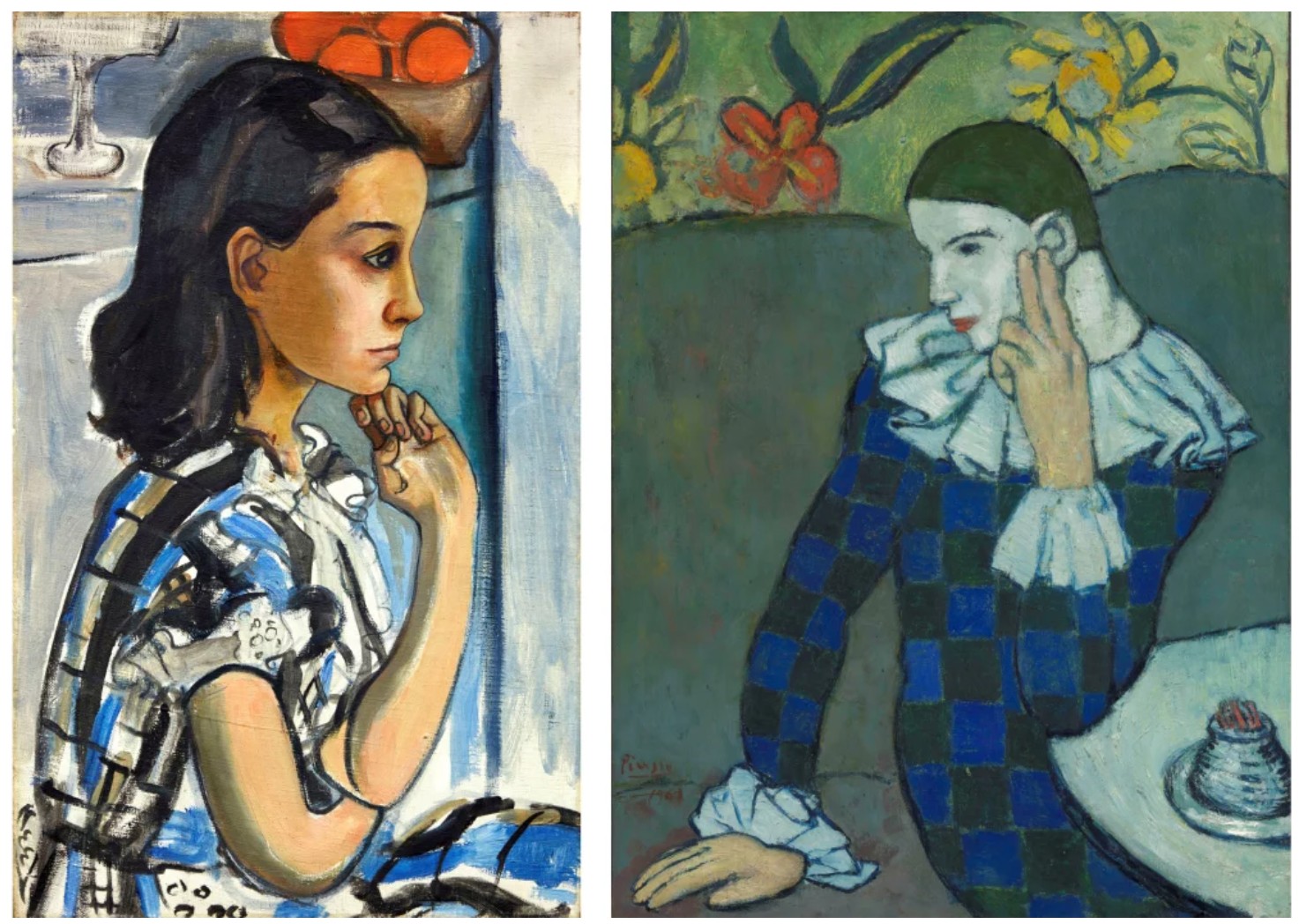
Left: Alice Neel, Mady, 1942. Private Collection. Sold at Sotheby’s New York in November 2021 for $1.8 million. Art © 2026 Alice Neel. Right: Pablo Picasso, Seated Harlequin, 1901. Metropolitan Museum of Art, New York. Image © The Metropolitan Museum of Art. Image source: Art Resource, NY. Art © 2026 Estate of Pablo Picasso / Artists Rights Society (ARS), New York
Set against a moody plum backdrop, Peyton paints Max with a baby blue shirt that brings out the boy’s intensely striking gaze, looking out at the viewer with a glare that reads – humorously – disappointed. Executed with a few, thinly impastoed brush strokes, the boy’s right arm extends out bracing himself, while compositionally, it expertly points the viewer directly to his face. With such a casual, unpretentious feel to the portrait, the viewer isn’t prepared for Max’s captivating visage: bright blue eyes that confront you resolutely; red lips that smirk ever so slightly, and soft skin that appears youthful, though not angelic. Sweeping beneath his eyes are the familiar dark crescents of tiredness. Just as with all of her portraits, Peyton took her time with Max’s face, imbuing a sensitivity to emotion and verisimilitude with a few dancing strokes. With this magnificent depiction of the boy as human and as hero, Max holds a pivotal place in Peyton’s body of work. Through her highly acclaimed portraits, Peyton presents a modest, yet intense view of her subjects. Whether close friends or front-page celebrities, she captures her subjects with gleaming intensity and intimate knowing, stripping portraiture back to its most personal ethos. In doing so, she inserts herself as artist – and her subjects as art – into a longer lineage of art history and, ultimately, humanity. Quoting Shakespeare’s 55th sonnet in her 2001 book, Prince Eagle, she provides an epigraph for her own oeuvre, explaining to her portrait subjects: “But you shall shine more bright in these contents / Than unswept stone.” Max embraces these emblematic words; a deeply intimate portrait of a child not set in the context of his youth, but seen first and foremost as a human, entitled to opinions and understanding just as the rest of Peyton’s older subjects. Max shines brightly in Peyton’s oeuvre as an exquisite legacy of the artist and subject – containing multitudes of her artistic genius and, more importantly, as a loving monument to her friendship with Gavin Brown.