
Botero first began experimenting with sculpture in 1972, eventually expanding his métier from wood and clay to bronze, the medium in which has best translated the pillowy volumes of his paintings into three dimensions. Since the early 1980s, his summer were dedicated to sculpture, working from a studio in Pietrasanta, a small town on the Tuscan coast that has attracted many famed artist-residents from Michelangelo to Isamu Noguchi and Henry Moore. Botero’s sculptures are characterized by the same aesthetic principles that define his paintings – exaggerated volumes, harmonious proportions, and a playful approach to form. Transitioning from canvas to the three-dimensional, Botero has given his iconic subjects a tangible and interactive presence, encouraging viewers to engage on a more physical level. Whilst humor and irony are present in his work, the magnified proportions of Botero’s figures can be interpreted as an endearing nod to the pleasure of the tactility of life and beauty explored through the female form.
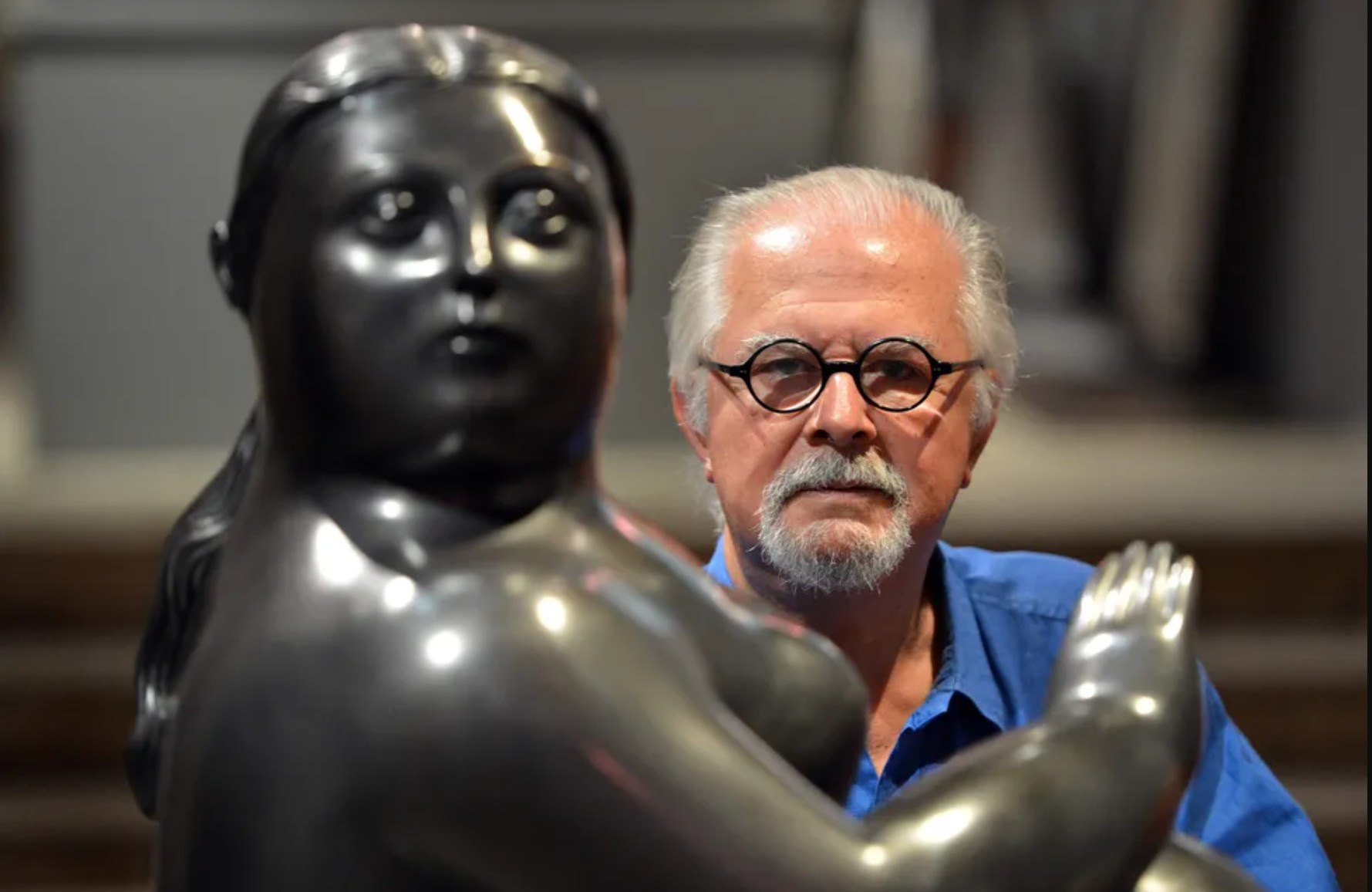
Fernando Botero’s sculptural repertoire faithfully echoes the subjects and motifs recurrent in his painted compositions: human figures, male and female, bathers, dancers, various animals, and mythological characters. The monumental quality and sheer physicality of the artist’s corpulent figures manifest most vividly within his sculptural work.
Auction Market Overview
2025 Auction Highlights
16 lots sold at auction in 2025 for a total turnover of USD 8,826,833. With 4 lots failing to sell, the sell-through rate is 80%.
2025 Top 3 Lots
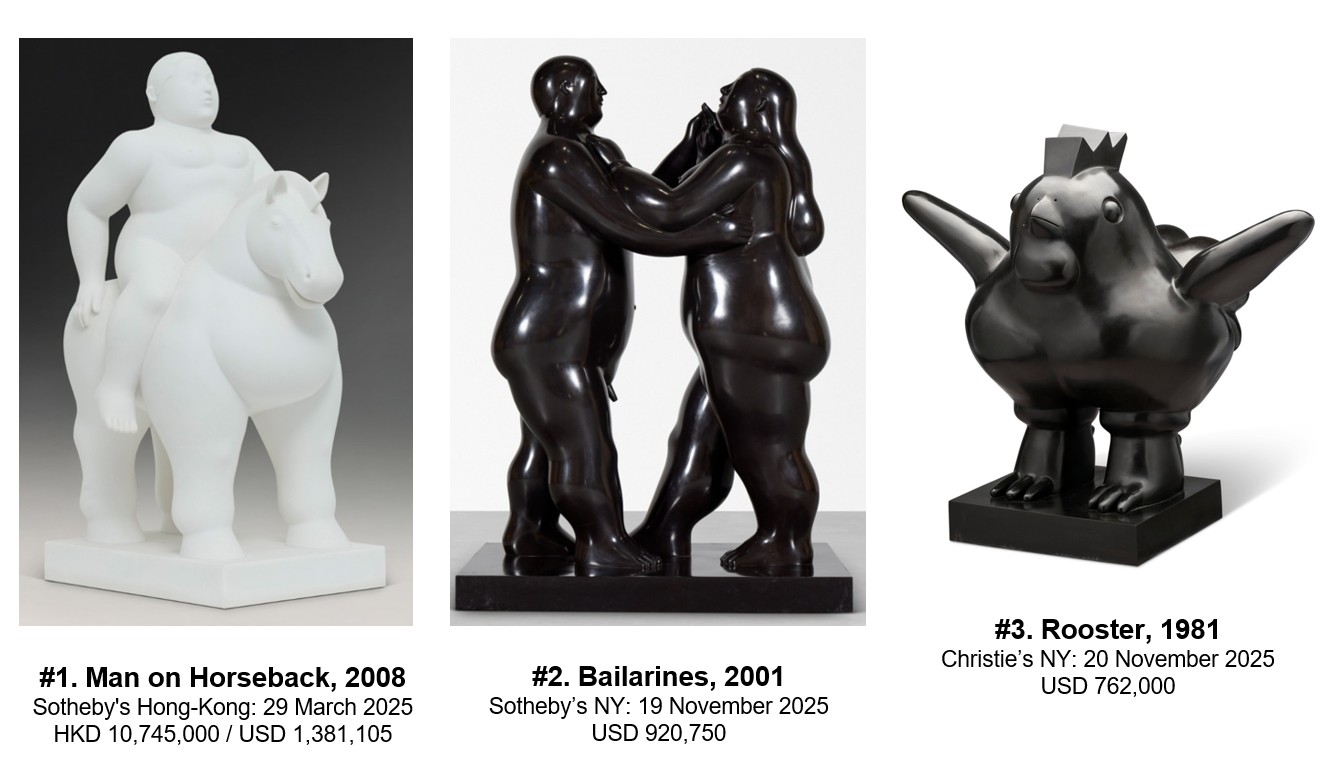
The highest price was achieved by Man on Horseback, a marble sculpture dated 2008 that sold at Sotheby’s in Hong-Kong on 29 March 2025 for HKD 10,745,000 (USD 1,381,105). Only 1 lot sold for more than USD 1 million. 8 lots sold for more than USD 500,000, generating a cumulative turnover of USD 6,171,800, representing 69.9% of the total turnover for 2025.
2024 Auction Highlights
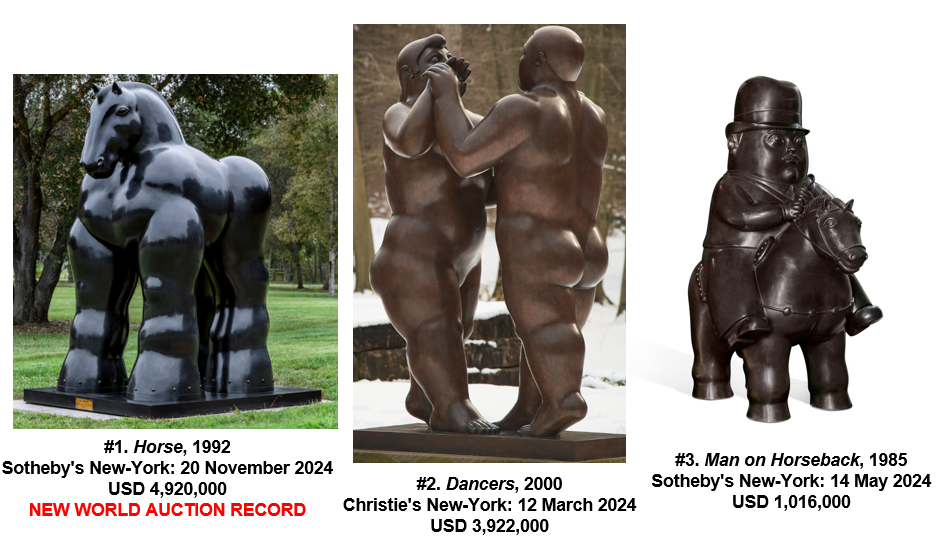
22 lots sold at auction in 2024 for a total turnover of USD 19,017,085. With 7 lots failing to sell, the sell-through rate is 85%. The highest price has been achieved at Sotheby’s in New-York on 20 November 2024, when Horse, a Bronze dated 1992, sold for USD 4,920,000, a new world auction record for a sculpture of the artist.
2024 Top 3 Lots
2023 Auction Highlights
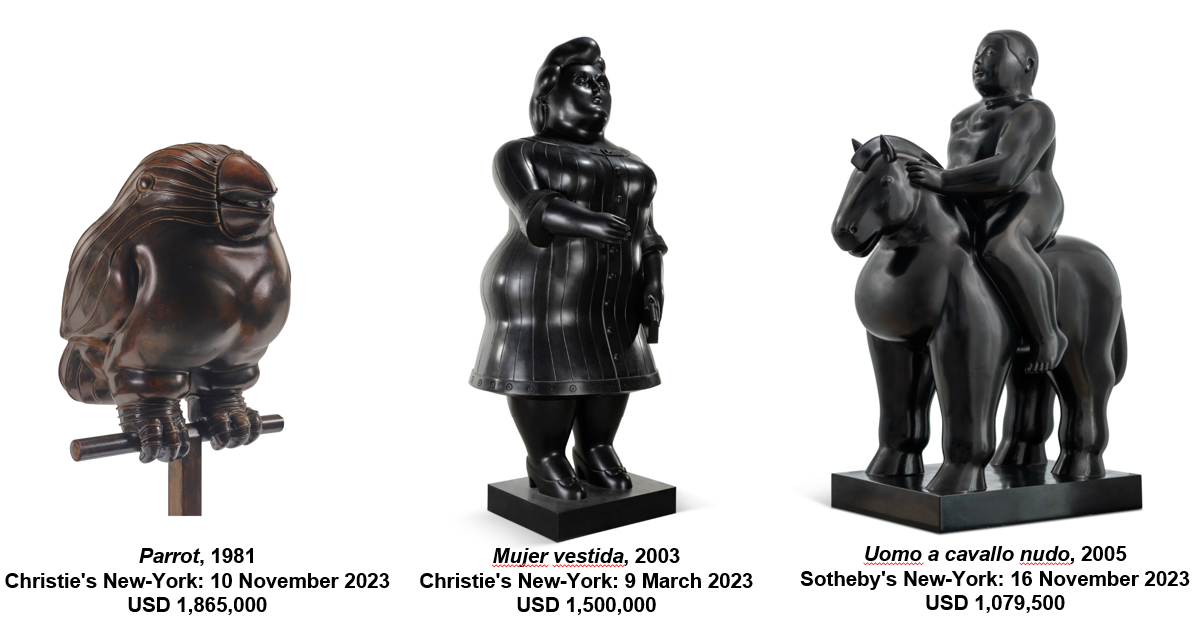
24 lots sold at auction in 2023 for a total turnover of USD 14,378,460. With 2 lots failing to sell, the sell-through rate is a solid 92.3%. The highest price was achieved at Christie’s on 10 November 2023 for Parrot, sold for USD 1,865,000. 4 lots sold above USD 1 million generating a cumulative turnover of USD 5,452,500, representing 37.9% of the total turnover for 2023.
2023 Top 3 Lots
2022 Auction Highlights
19 lots sold at auction in 2022 for a total turnover of USD 13,261,876. With only 1 lot failing to sell, the sell-through rate is 95%. The highest price of USD 4,320,000 was achieved at Christie’s in New-York for Man on a Horse (1999). 8 lots sold over USD 500,000, generating a cumulative turnover of USD 9,518,653, representing 71.8% of the total turnover for 2022.
2022 Top 3 Lots
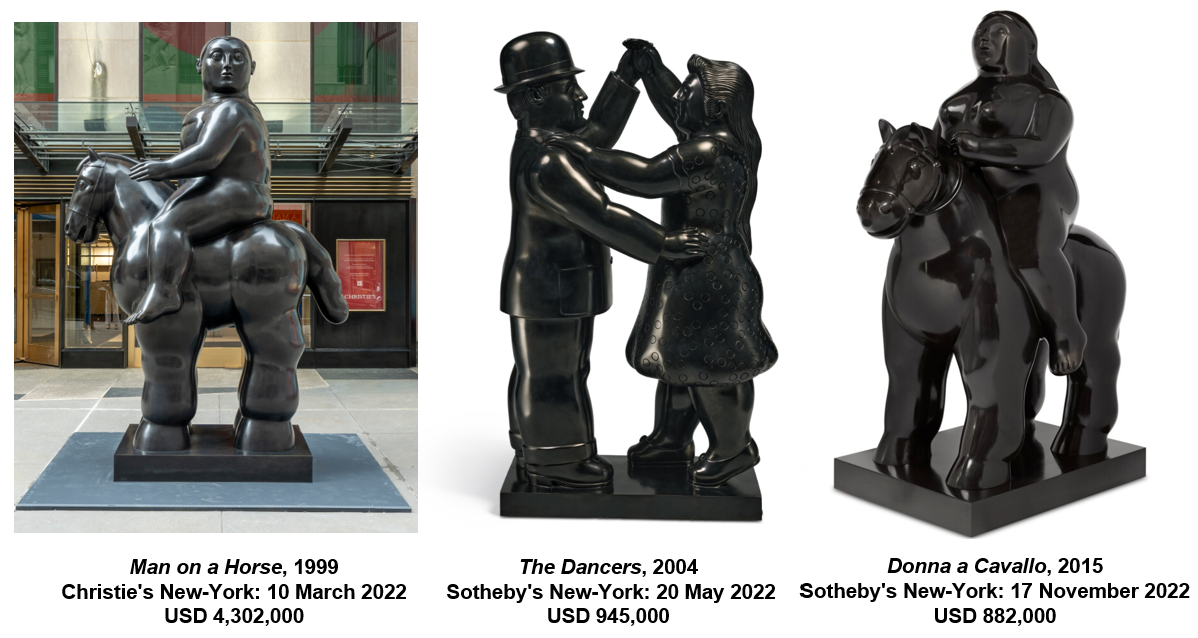
Top Lots
#1. Horse, 1992
Sotheby’s New-York: 20 November 2024
Estimated: USD 3,000,000 – 5,000,000
USD 4,920,000
NEW AUCTION RECORD FOR THE ARTIST
Horse | The Now and Contemporary Evening Auction | 2024 | Sotheby’s
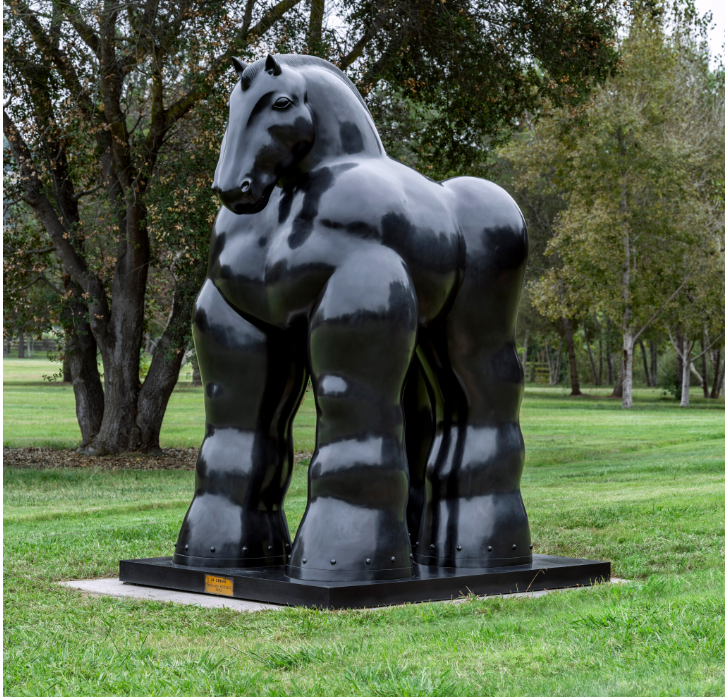
FERNANDO BOTERO (1932 – 2023)
Horse, 1992
Bronze
304.8 x 174.6 x 229.9 cm (120 x 68 3/4 x 90 1/2 inches)
Incised with the artist’s signature, numbered E.A. 1/2 and stamped with the foundry mark (on the base)
This work is artist’s proof 1 from an edition of 3 plus 2 artist’s proofs
#2. Man on a Horse
Christie’s New-York: 10 March 2022
Estimated: USD 2,000,000 – 3,000,000
USD 4,302,000
FERNANDO BOTERO (b. 1932) (christies.com)
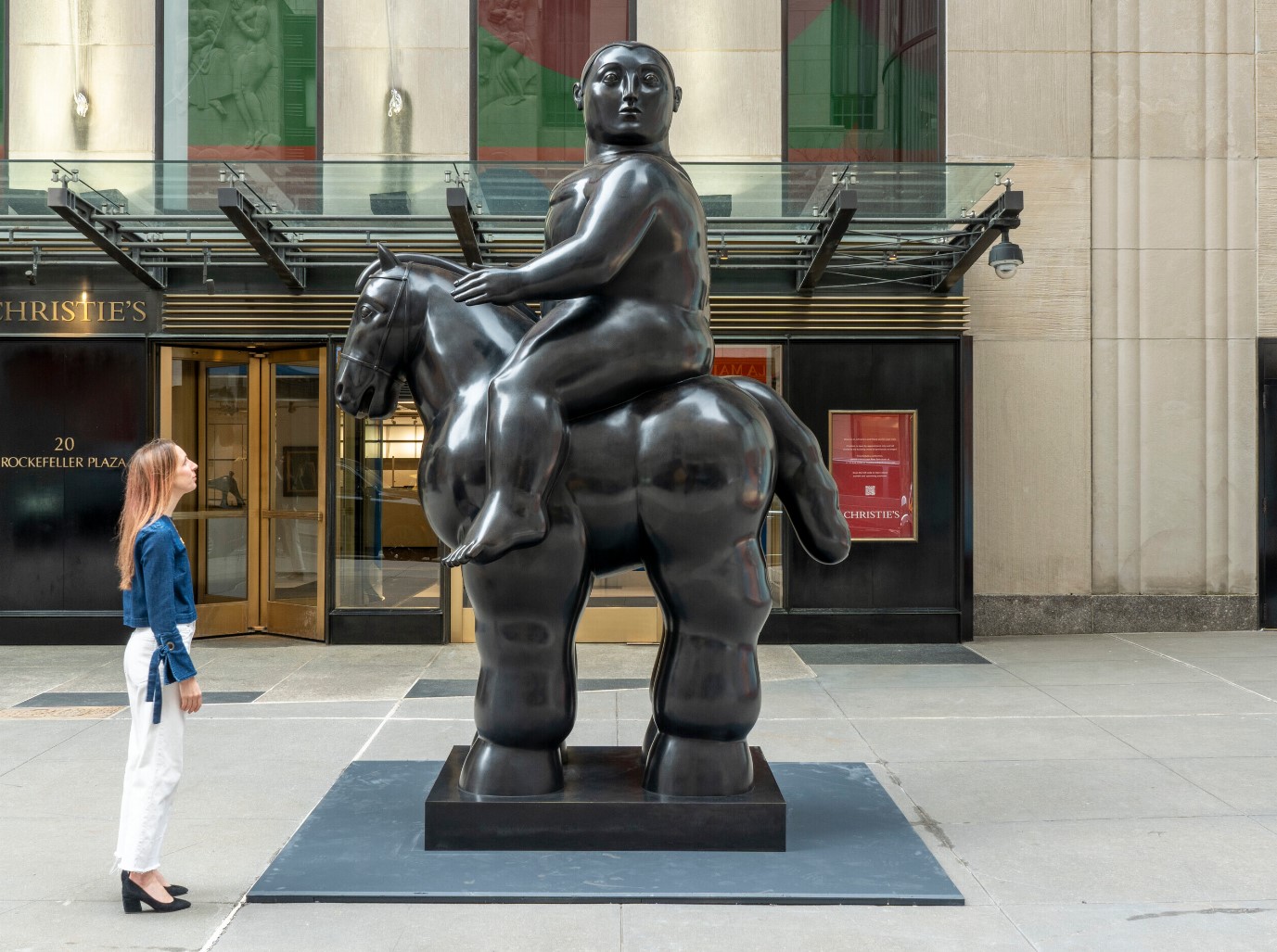
FERNANDO BOTERO (b. 1932)
Man on a Horse, 1999
Bronze
Height: 348 cm (137 inches)
Width: 160 cm (63 inches)
Depth: 230 cm (90 1⁄2 inches)
Edition three of three
Signed and numbered ‘Botero 3⁄3’ (on the base)
#3. Adam and Eve, 2003
Bonhams London: 26 March 2018
Estimated: GBP 600,000 – 800,000
GBP 2,048,750 / USD 2,916,992
Bonhams : Fernando Botero (Colombian, born 1932) Adam and Eve, 2003
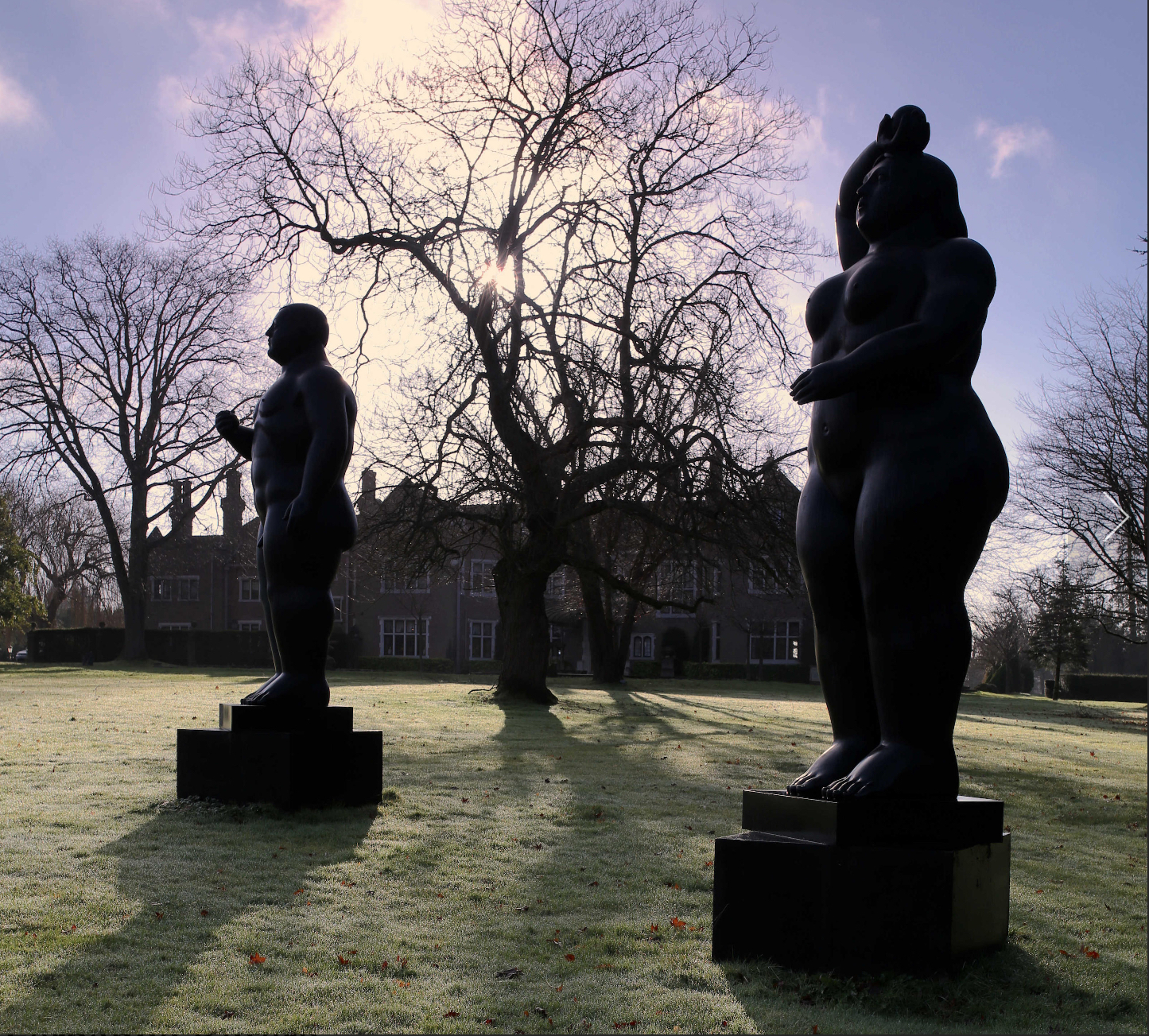
Bronze
Adam: 120cm wide x 96cm deep x 337cm high (47 1/4in wide x 37 13/16in deep x 141 5/16in high)
Eve: 120cm wide x 90cm deep x 359cm high (47 1/4in wide x 35 7/16in deep x 141 5/16in high)
This work is number 3 from an edition of 3.
#4. Adam and Eve, 1990
Christie’s New-York: 25 November 2014
Estimated: USD 1,800,000 – 2,500,000
USD 2,573,000
Fernando Botero (Colombian b. 1932) (christies.com)
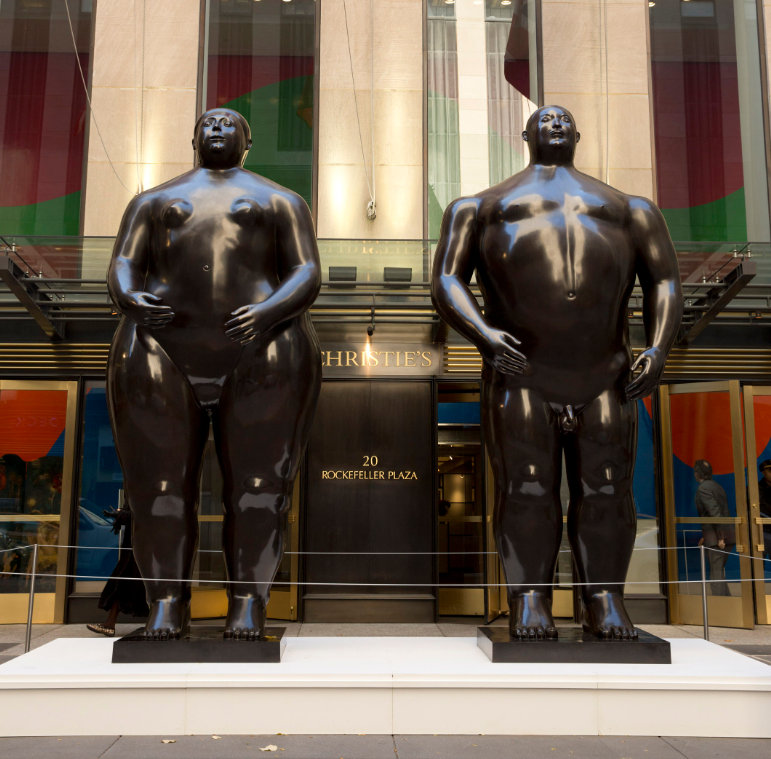
FERNANDO BOTERO (Colombian b. 1932)
Adam and Eve, 1990
Bronze with dark brown patina
Adam: 141x67x38 inches (358.1 x 170.2 x 96.5 cm) including base
Eve: 138x56x46 inches (350.5 x 142.2 x 116.8 cm) including base
Each signed and numbered ‘Botero 1/3’ and stamped with a foundry mark (on the base)
Edition one of three
#5. Dancers, 2012
Sotheby’s New-York: 17 May 2018
Estimated: USD 1,500,000 – 2,000,000
USD 2,475,000
(#446) Fernando Botero (sothebys.com)
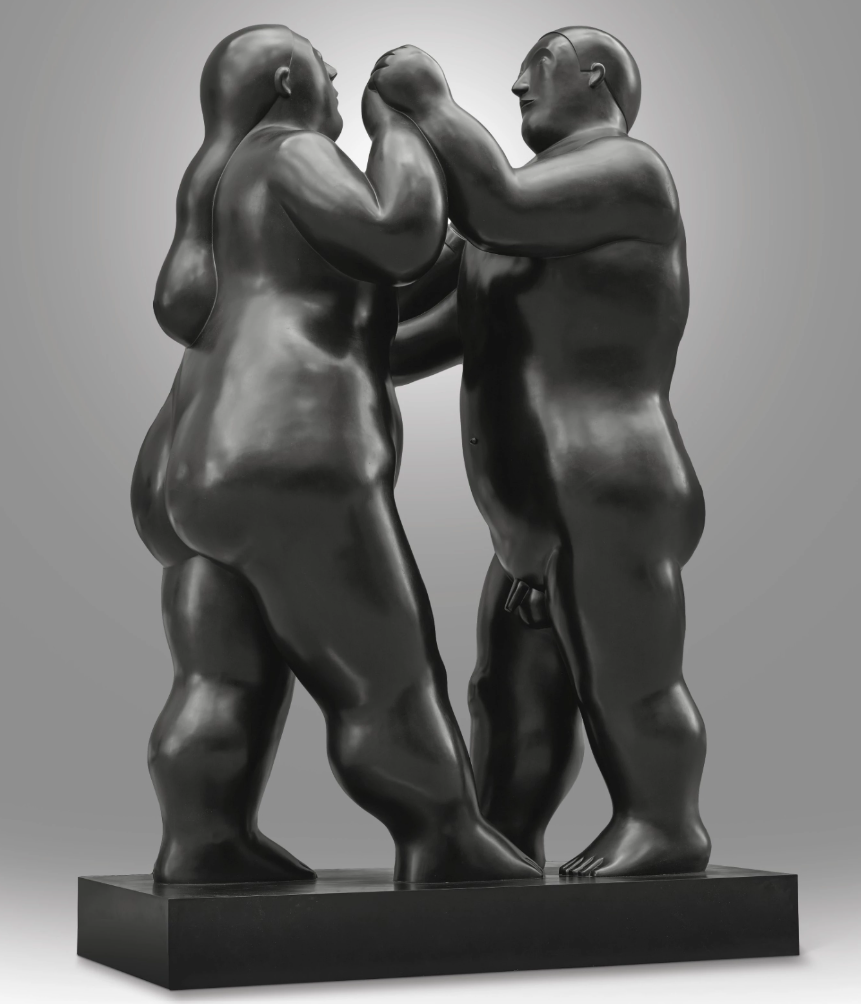
FERNANDO BOTERO
Dancers, 2012
Bronze
298x190x122 cm (117 3/8 x 74 3/4 x 48 inches)
Stamped with the artist’s signature and number E.A. 1/2 on the base
This work is artist’s proof number 1 from an edition of 3, plus 2 artist’s proofs
#6. Leda and the Swan, 1996
Sotheby’s New-York: 17 November 2020
Estimated: USD 1,200,000 – 1,800,000
USD 2,440,000
Leda and the Swan | Contemporary Art Day Auction | 2020 | Sotheby’s (sothebys.com)
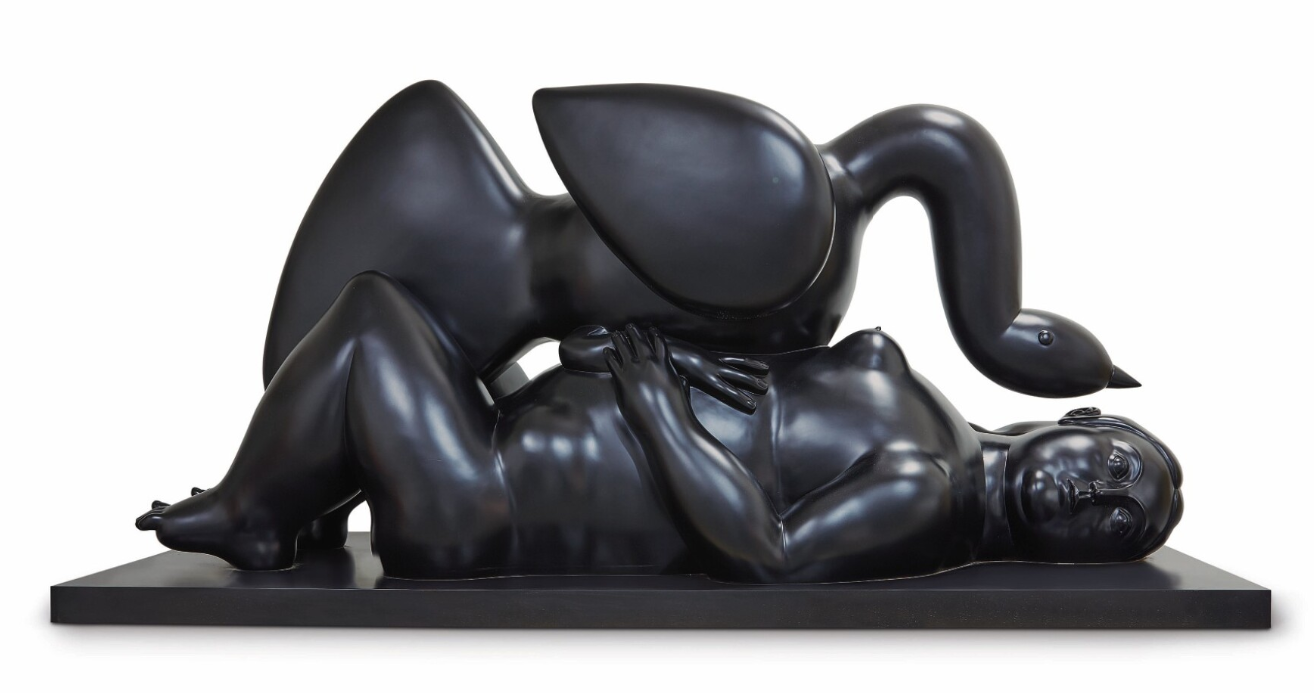
FERNANDO BOTERO
Leda and the Swan, 1996
Bronze
170.1 x 322.6 x 145.4 cm (67 x 127 x 57 1/4 inches)
Inscribed with the artist’s signature, number EA 1/2 and foundry mark
This cast executed in 2018 is the artist’s proof number 1 from an edition of 3 plus 2 artist’s proofs
#7. Rape of Europa (Abduction of Europa), 1992
Sotheby’s New-York: 15 November 2019
Estimated: USD 1,800,000 – 2,500,000
USD 2,060,000
(#148) FERNANDO BOTERO | Rape of Europa (Abduction of Europa) (sothebys.com)
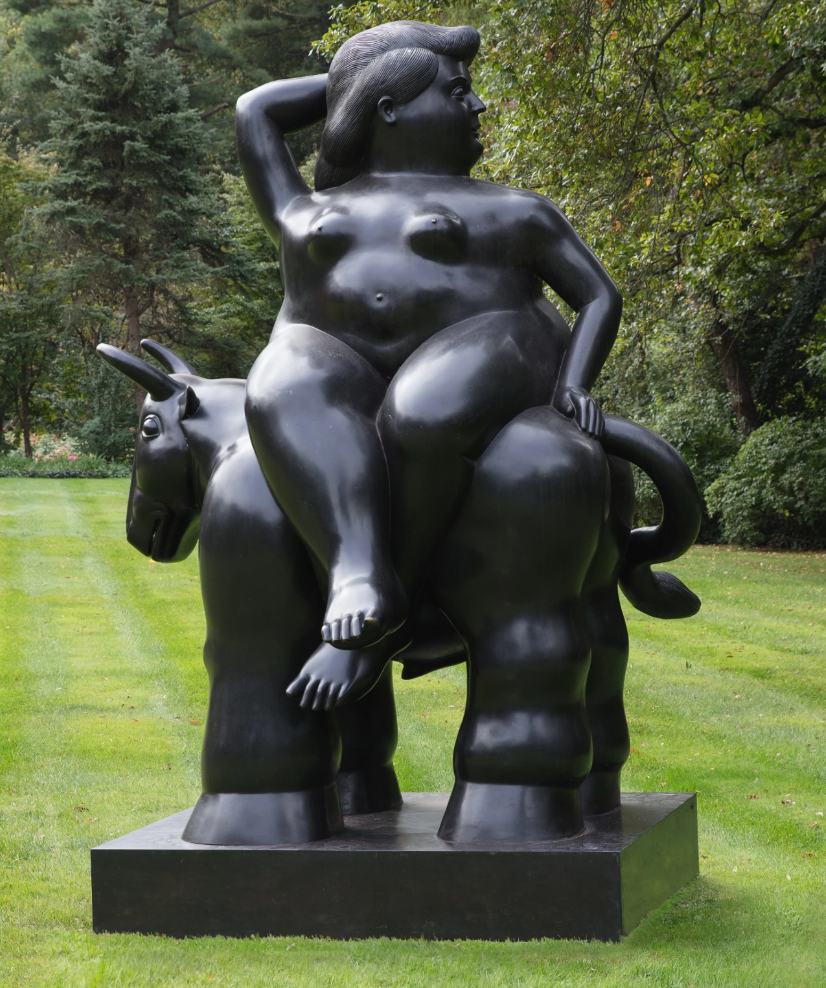
FERNANDO BOTERO
Rape of Europa (Abduction of Europa), 1992
Bronze
315 x 210.8 x 183 cm (124x83x72 inches)
Incised with the artist’s signature, number 2/3 and stamp Fonderia Mariani on the base
Executed in 1992, this work is number 2 from an edition of 3
#8. Parrot, 1981
Christie’s New-York: 10 November 2023
Estimated: USD 200,000 – 300,000
USD 1,865,000
FERNANDO BOTERO (1932-2023) (christies.com)
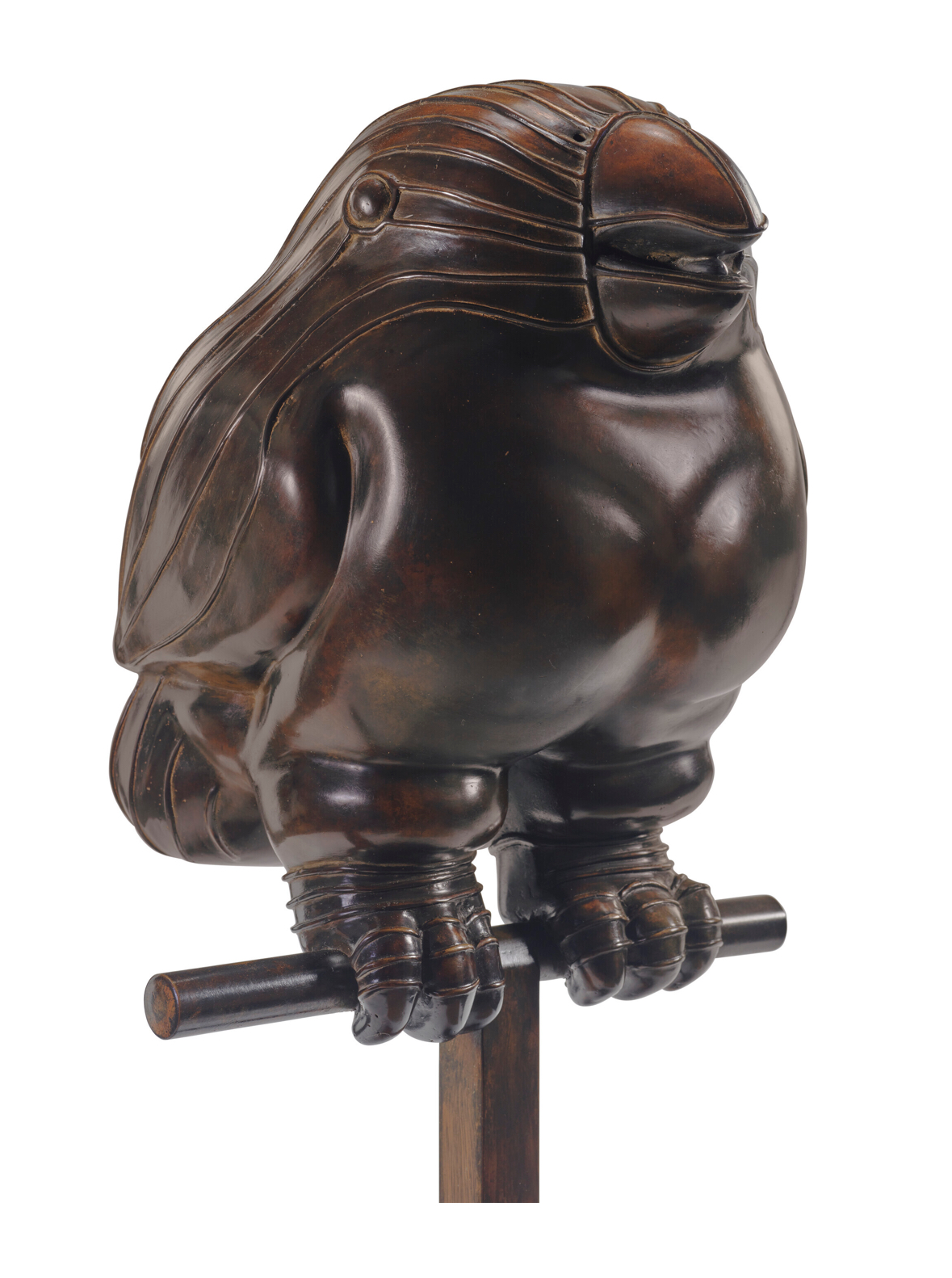
FERNANDO BOTERO (1932-2023)
Parrot, 1981
Bronze, on artist’s base
Overall: 58 ¼ x 16 ¼ x 16 ¼ inches (148 x 41.3 x 41.3 cm)
Signed and numbered ‘Botero 4⁄6’ (on the base)
This work is number four from an edition of six
#9. Man on a Horse, 1999
Sotheby’s New-York: 23 November 2016
Estimated: USD 800,000 – 1,200,000
USD 1,824,500
(#19) Fernando Botero(b. 1932) (sothebys.com)
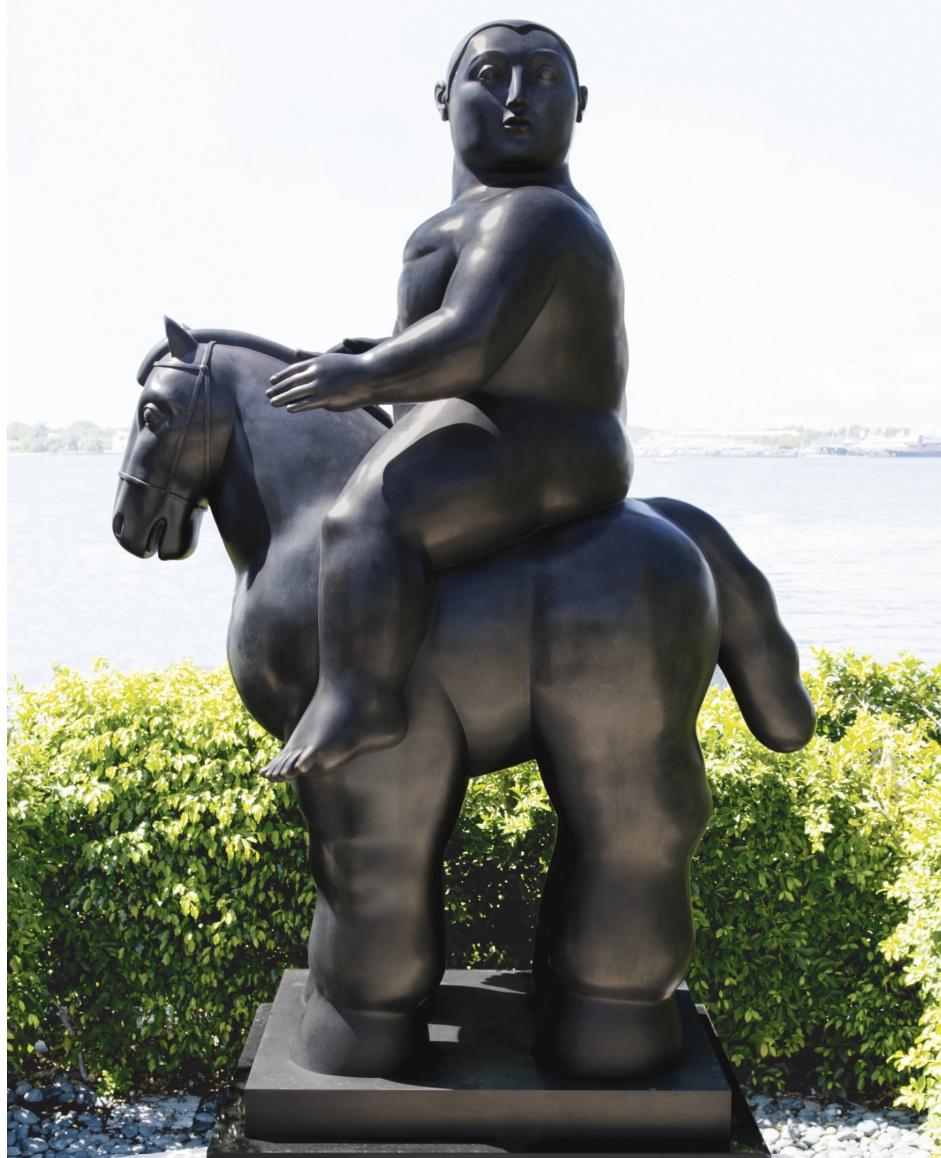
FERNANDO BOTERO
Man on a Horse, 1999
Bronze
348x230x160 cm (137 x 90 1/2 x 63 inches)
Inscribed with artist signature; also numbered 3/3 and stamped with foundry mark
#10. Woman with an Umbrella and Man with a Cane, 1977
Christie’s New-York: 25 May 2017
Estimated: USD 1,500,000 – 2,500,000
USD 1,807,500
Fernando Botero (b. 1932) (christies.com)
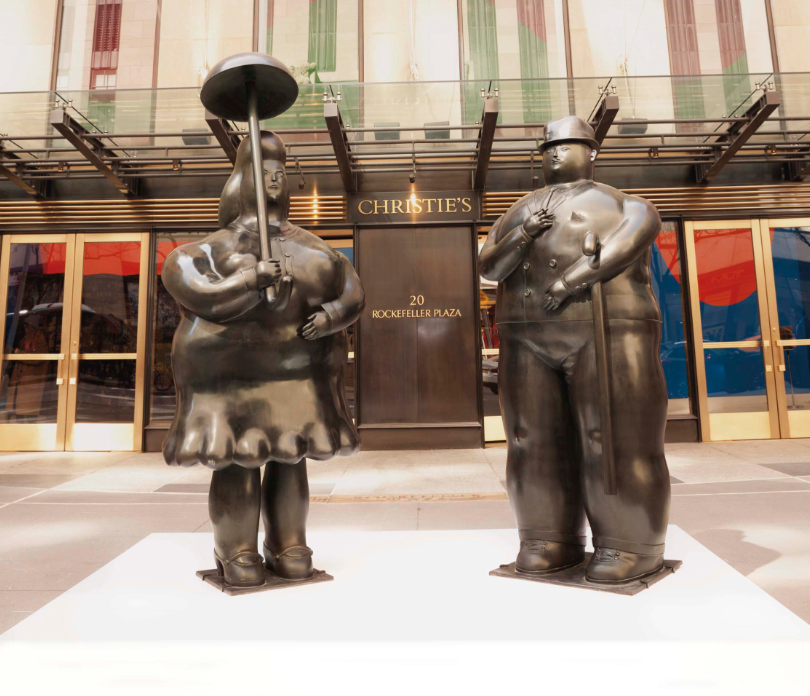
FERNANDO BOTERO
Woman with an Umbrella and Man with a Cane, 1977
Bronze
Woman with an Umbrella, 1977
90x35x30 inches (228.6 x 88.9 x 76.2 cm)
Signed and numbered ‘Botero, E/A 1/2’ and stamped with a foundry mark (on the base)
Artist’s proof one of two; Edition of six.
Man with a Cane, 1977
80x34x25 inches (203.2 x 86.4 x 63.5 cm)
Signed and numbered ‘Botero 4/6’ and stamped with a foundry mark (on the base)
Edition four of six
2026 Auction Results
PRELIMINARY AUCTION RESULTS
As of 1 June 2026
#1. Horse, 2008
Property from an Important Private Collection
Christie’s New-York: 21 May 2026
Estimated: USD 500,000 – 700,000
USD 1,778,000
FERNANDO BOTERO (1932-2023), Horse | Christie’s
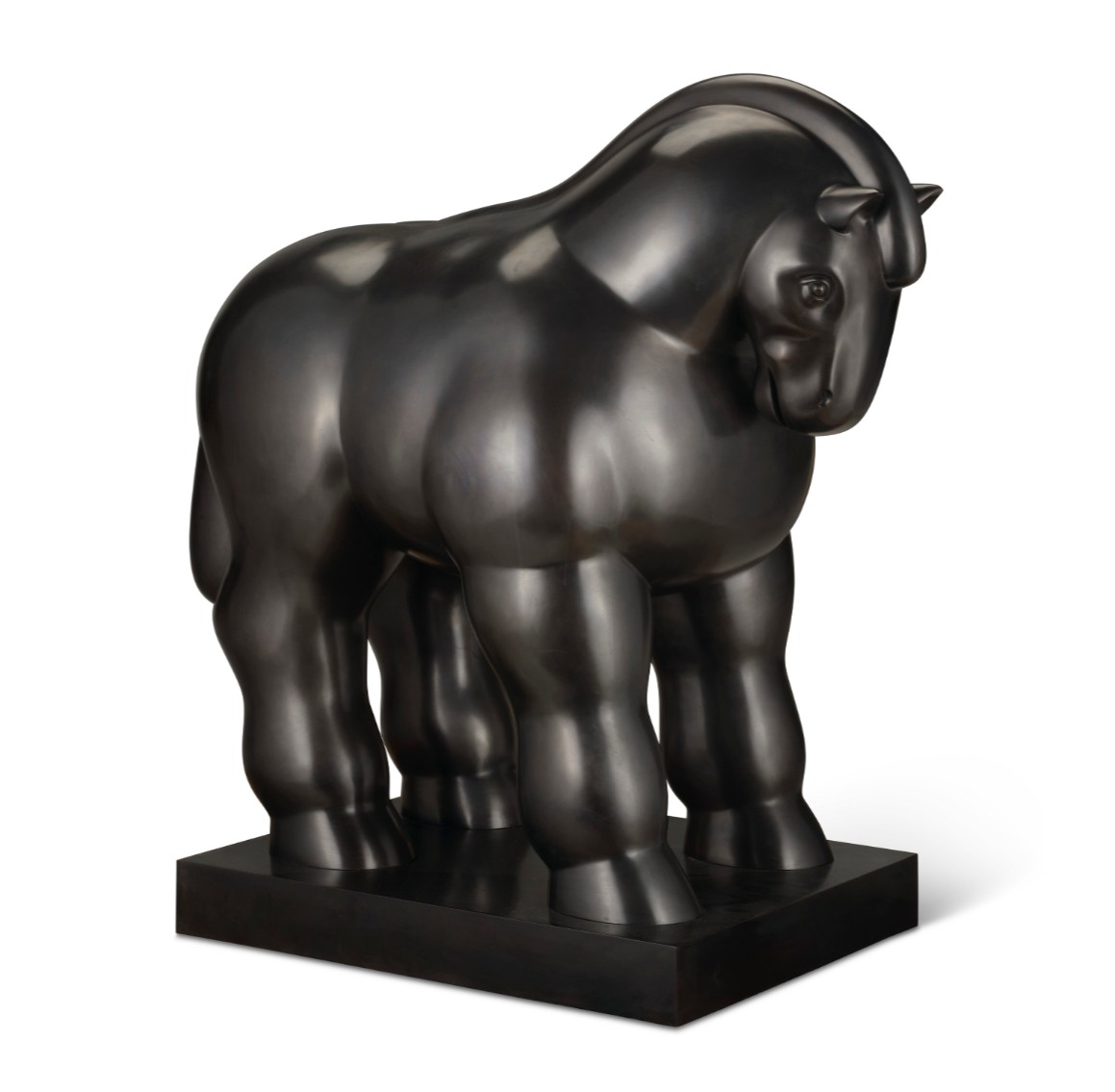
FERNANDO BOTERO (1932-2023)
Horse, 2008
Bronze
92.1 x 52.1 x 101.6 cm (36-1/4 x 20-1/2 x 40 inches)
Incised with the artist’s signature and stamped with the number and foundry mark ‘Botero 3⁄6’ (on the base)
This work is number three from an edition of six
USD 1 million
#2. Roman Soldier, 1985
Property from the Maharam Family Collection
Sotheby’s New-York: 15 May 2026
Estimated: USD 350,000 – 550,000
USD 704,000
Fernando Botero | Roman Soldier | Contemporary Day Auction | 2026 |
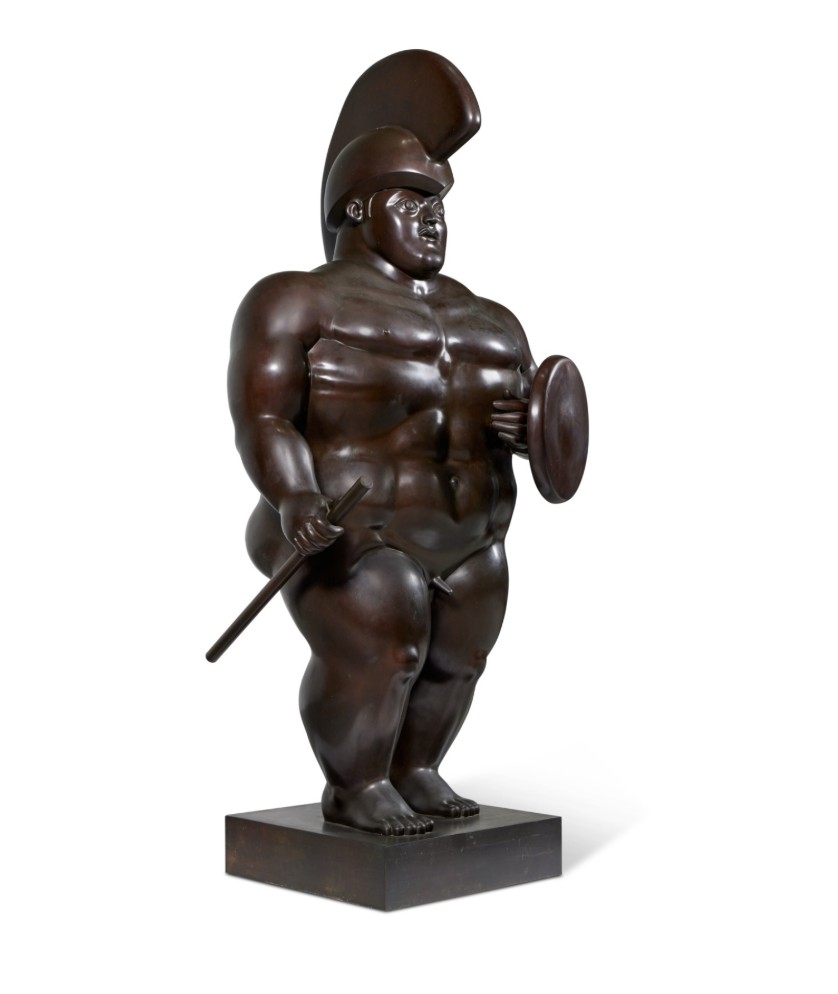
FERNANDO BOTERO (1932 – 2023)
Roman Soldier, 1985
Bronze
188 x 91.4 x 54 cm (74 x 36 x 21-1/4 inches)
Incised with the artist’s signature and number 4/6 and stamped with the foundry mark (on the base)
This work is number 4 from an edition of 6
#3. Bird, 1981
Property from a Distinguished East Coast Collection
Sotheby’s New-York: 15 May 2026
Estimated: USD 250,000 – 350,000
USD 640,000
Fernando Botero | Bird | Contemporary Day Auction | 2026 | Sotheby’s
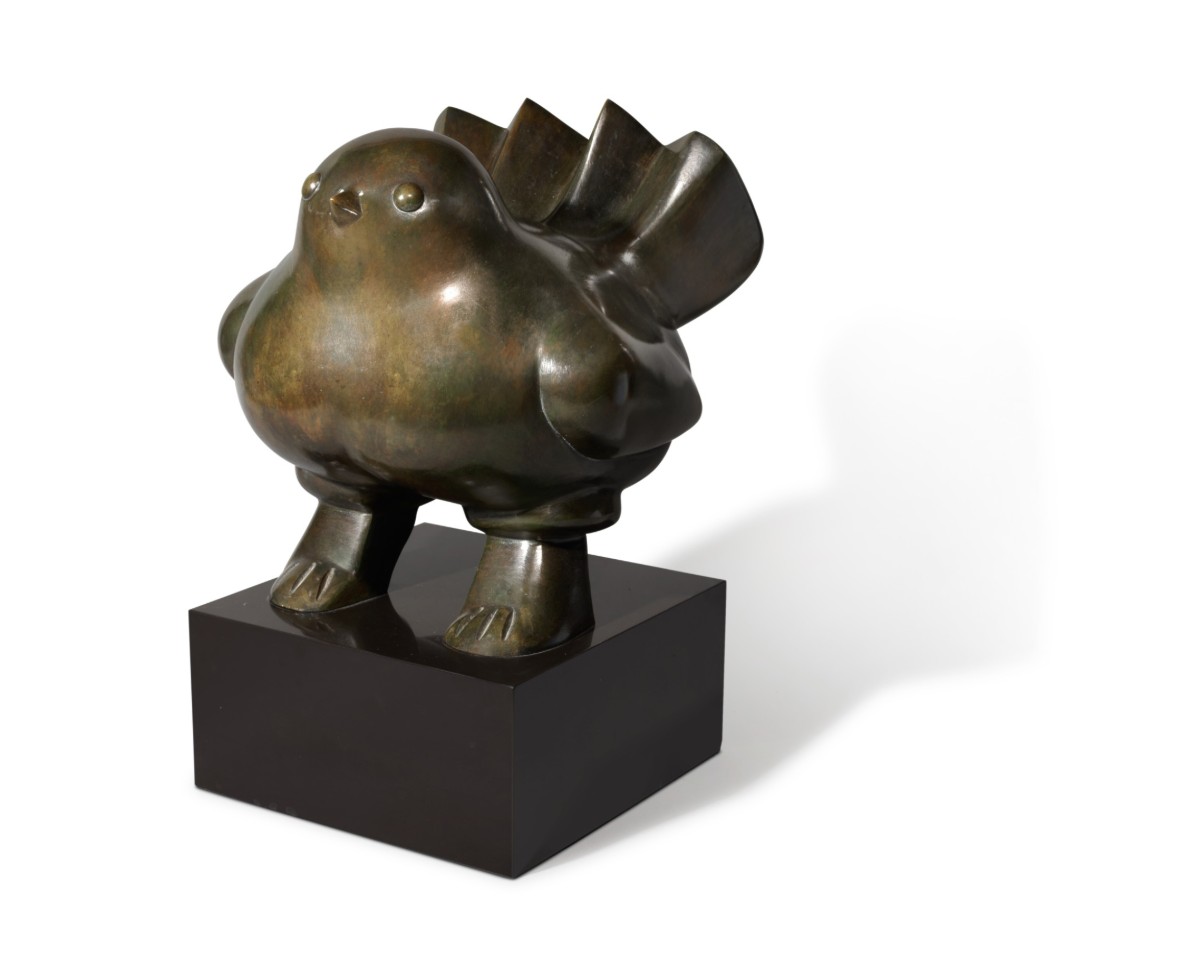
FERNANDO BOTERO (1932 – 2023)
Bird, 1981
Bronze
43.2 x 25.4 x 38.1 cm (17x10x15 inches)
Incised with the artist’s signature and number 2/6 (lower edge)
This work is number 2 from an edition of 6
#4. Cat, 1976
Modern Visionaries – The Roger and Josette Vanthournout Collection – Day Sale
Christie’s London: 6 March 2026
Estimated: GBP 200,000 – 300,000
GBP 469,900 / USD 627,740
FERNANDO BOTERO (1932-2023), Cat | Christie’s
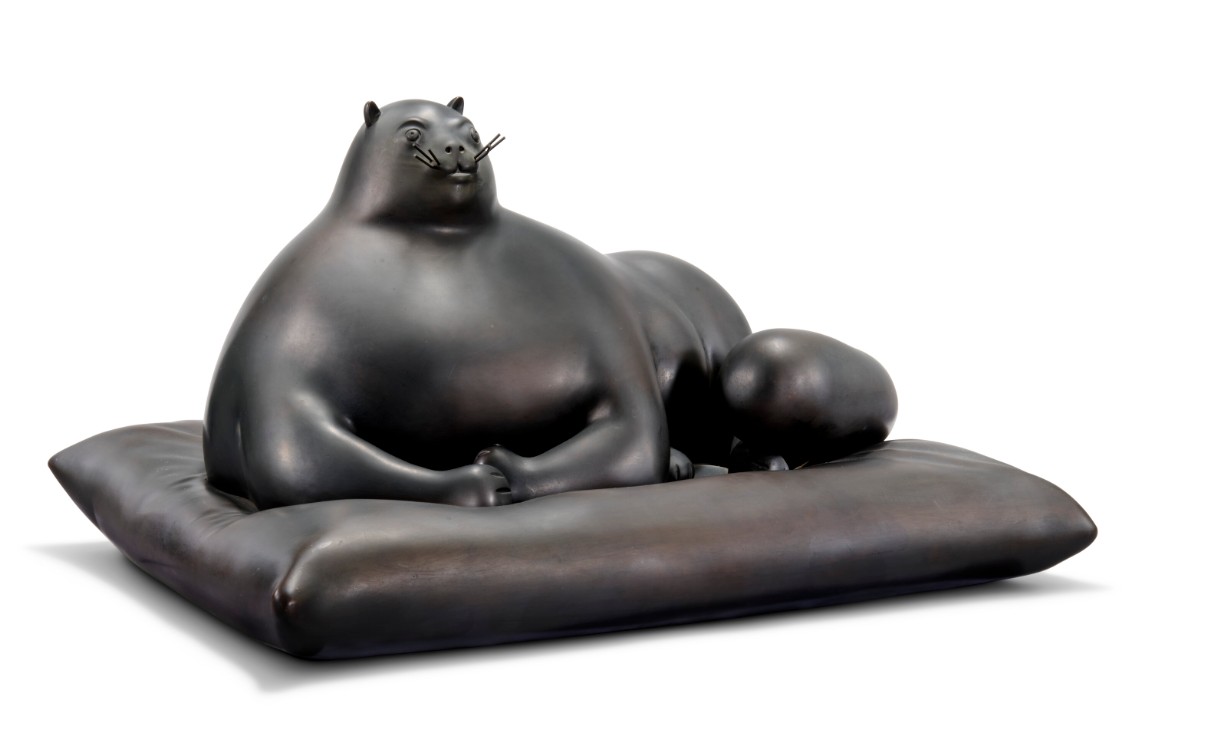
FERNANDO BOTERO (1932-2023)
Cat, 1976
Bronze
33 x 57.2 x 48.9 cm (13 x 22-1/2 x 19-1/4 inches)
Incised with the artist’s signature and stamped with the number and foundry mark ‘Botero 6⁄6’ (near the base)
This work is number six from an edition of six
USD 500,000
#5. Le Matin, 1981-1982
Phillips New-York: 21 May 2026
Estimated: USD 280,000 – 350,000
USD 361,200
Fernando Botero Modern & Contemporary Art: Morning Session
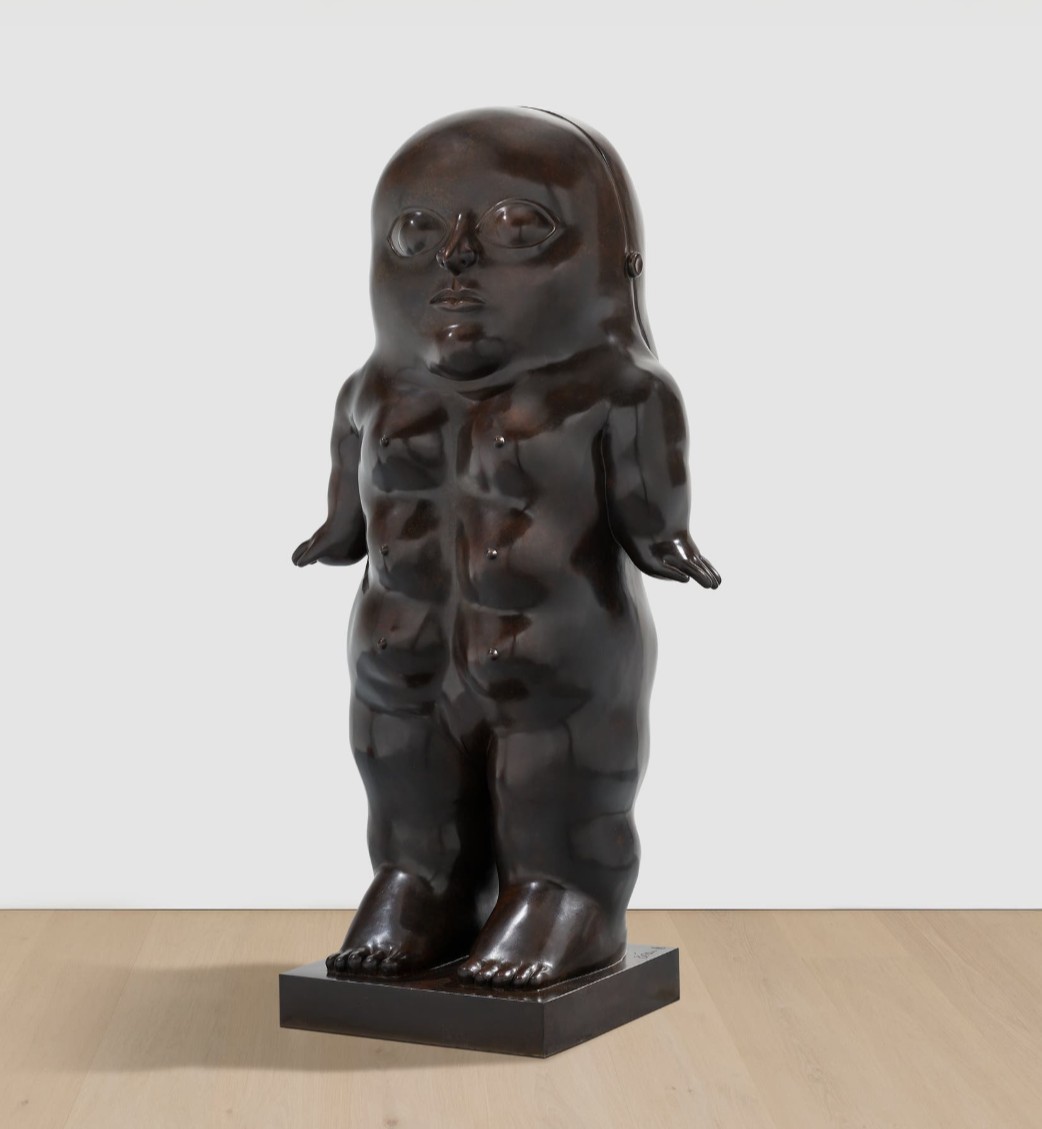
FERNANDO BOTERO
Le Matin, 1981-1982
Bronze
167.6 x 91.4 x 61.3 cm (66 x 36 x 24 1/8 inches)
Incised with the artist’s signature and number “Botero 1/6” on the base
Stamped with the foundry mark “Susse Fondeur, Paris” lower edge of base
#6. A woman lying face down, 2005
Ravenel Taipei: 24 May 2026
Estimated: TWD 9,500,000 – 14,000,000
TWD 10,800,000 / USD 342,315
Rovo | Fernando. Portero, ‘The Woman Reclining Face’ at Robeo Taipei 2026 Spring Auction, No. 061
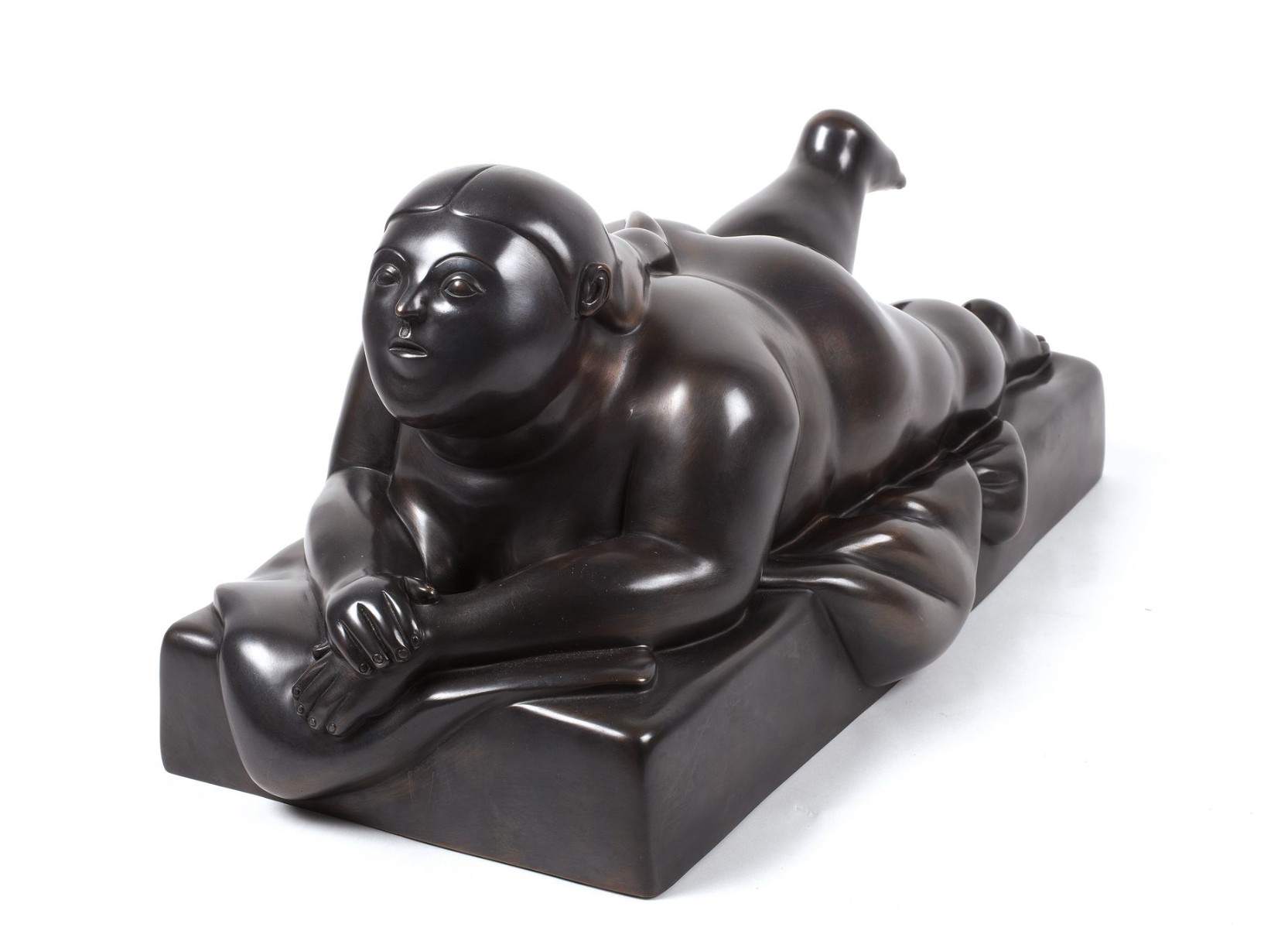
FERNANDO BOTERO (Colombia, 1932 – 2023)
A woman lying face down, 2005
Bronze sculpture
Edition: 1/6
53 (L) x 25.5 (W) x 27 (H) cm
Signature engraved base: Botero 1/6
#7. Hombre que fuma, 1976
Christie’s New-York: 26 February 2026
Estimated: USD 150,000 – 250,000
USD 304,800
FERNANDO BOTERO (1932-2023), Hombre que fuma | Christie’s
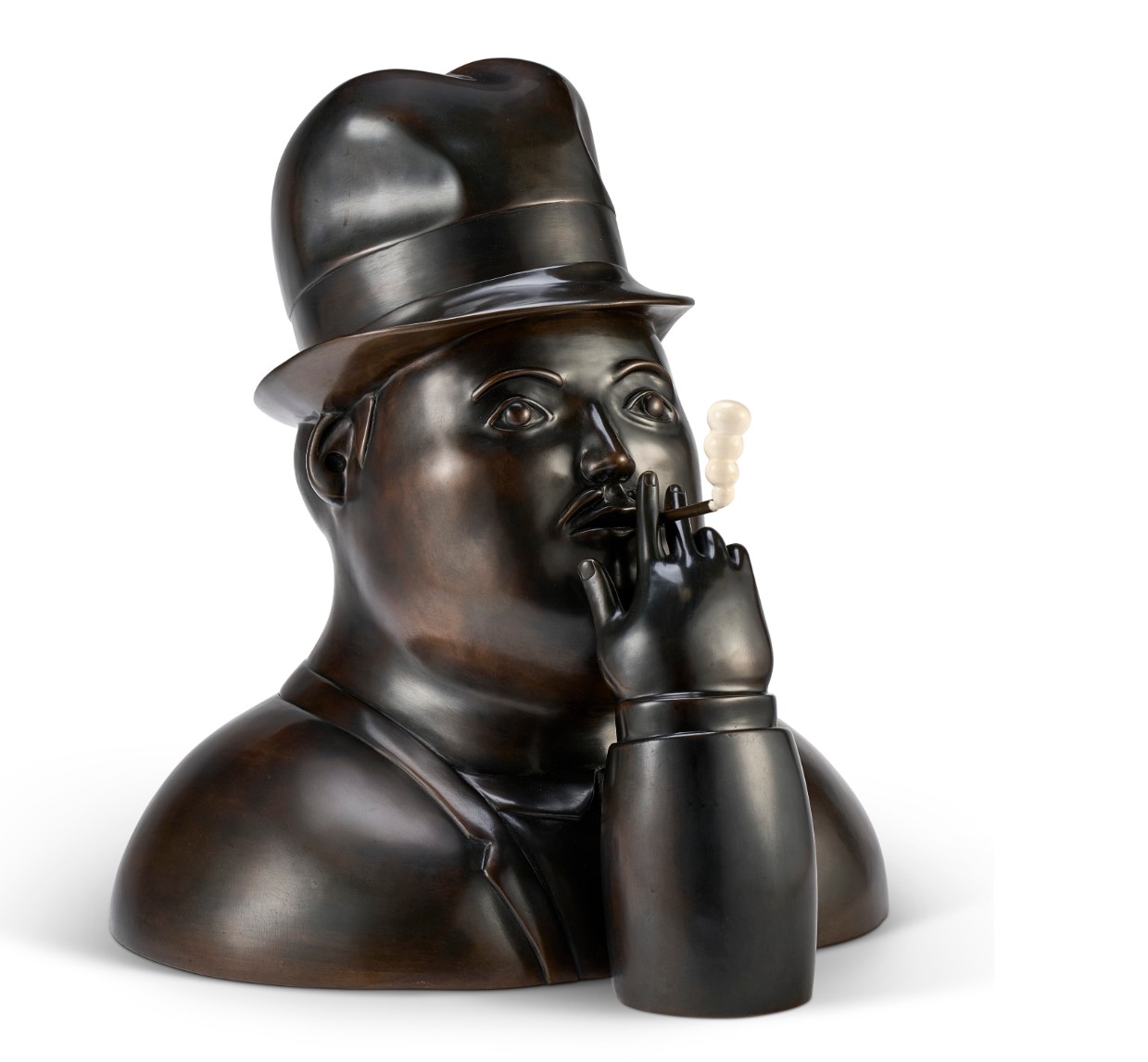
FERNANDO BOTERO (1932-2023)
Hombre que fuma, 1976
Bronze and resin, in three parts
Installation dimensions variable
54.6 x 50.8 x 49.5 cm (21-1/2 x 20 x 19-1/2 inches)
Incised with the artist’s signature and stamped with the number and foundry mark ‘Botero 4⁄6’ (near the base)
This work is number four from an edition of six
“When you paint a figure, you give the illusion that it exists, but at the same time it is imaginary. If you sculpt it, it becomes an object of the spirit and is a splendid and sensual experience, because from the moment you start creating, shaping, and developing it, you enjoy it infinitely.”
#8. Standing Woman, 1984-1985
Property from the Collection of Max and Cecile Draime
Christie’s New-York: 26 February 2026
Estimated: USD 150,000 – 250,000
USD 215,900
FERNANDO BOTERO (1932-2023), Standing Woman | Christie’s
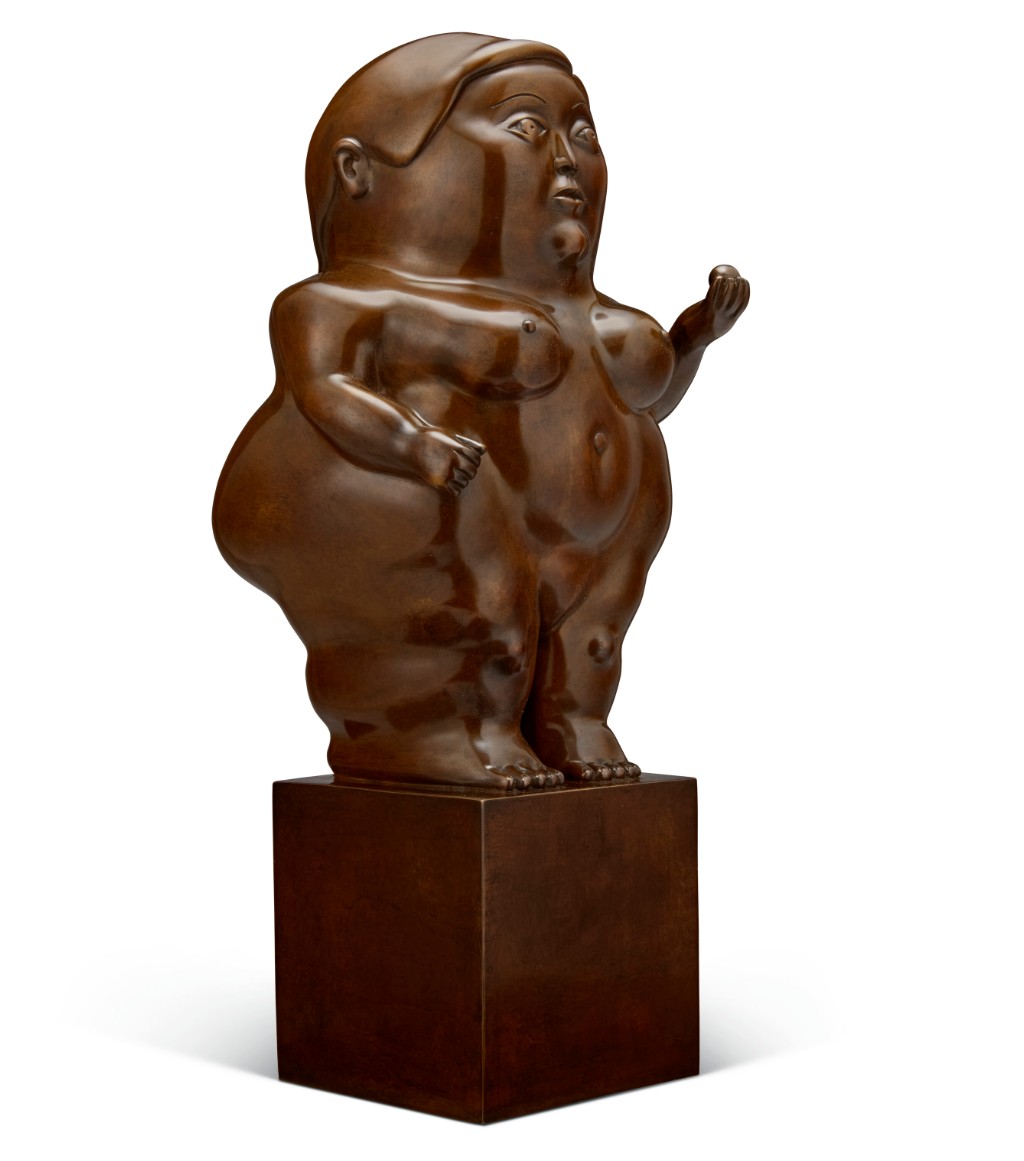
FERNANDO BOTERO (1932-2023)
Standing Woman, 1984-1985
Bronze
62.2 x 24.1 x 26.7 cm (24-1/2 x 9-1/2 x 10- 1/2 inches)
Incised with the artist’s signature and number ‘Botero 1⁄9’ (near the base)
This work is number one from an edition of nine
#9. Perro, 1989
Property from the Maharam Family Collection
Sotheby’s New-York: 25 February 2026
Estimated: USD 150,000 – 250,000
USD 102,400
MARBLE UNIQUE
Perro | Contemporary Curated | 2026 | Sotheby’s
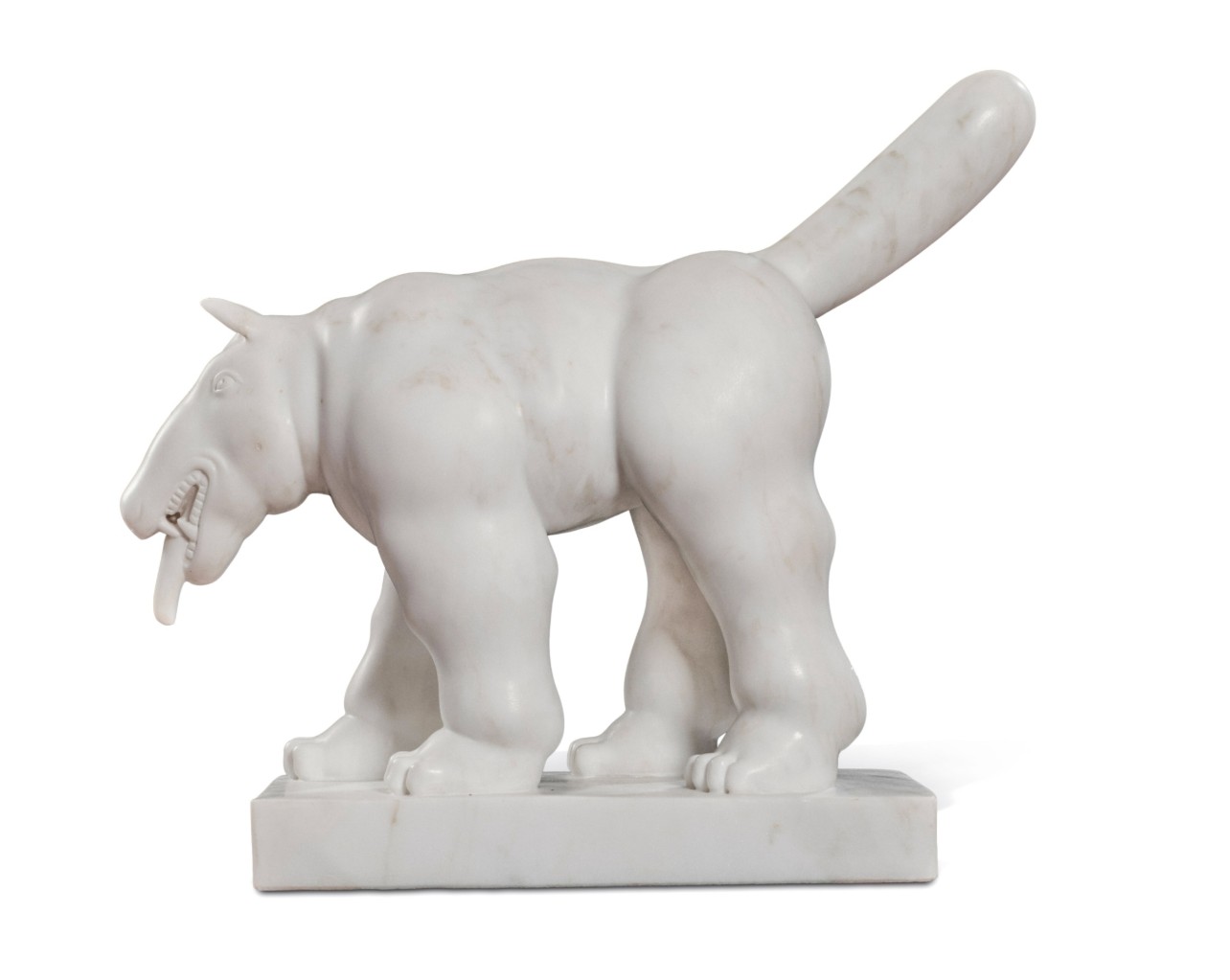
FERNANDO BOTERO (1932 – 2023)
Perro, 1989
Marble
48.3 x 38.1 x 22.2 cm (19 x 15 x 8-3/4 inches)
Incised with the artist’s signature (on the base)
2025 Auction Results
16 lots sold at auction in 2025 for a total turnover of USD 8,826,833. With 4 lots failing to sell, the sell-through rate is 80%.
2025 Top 3 Lots
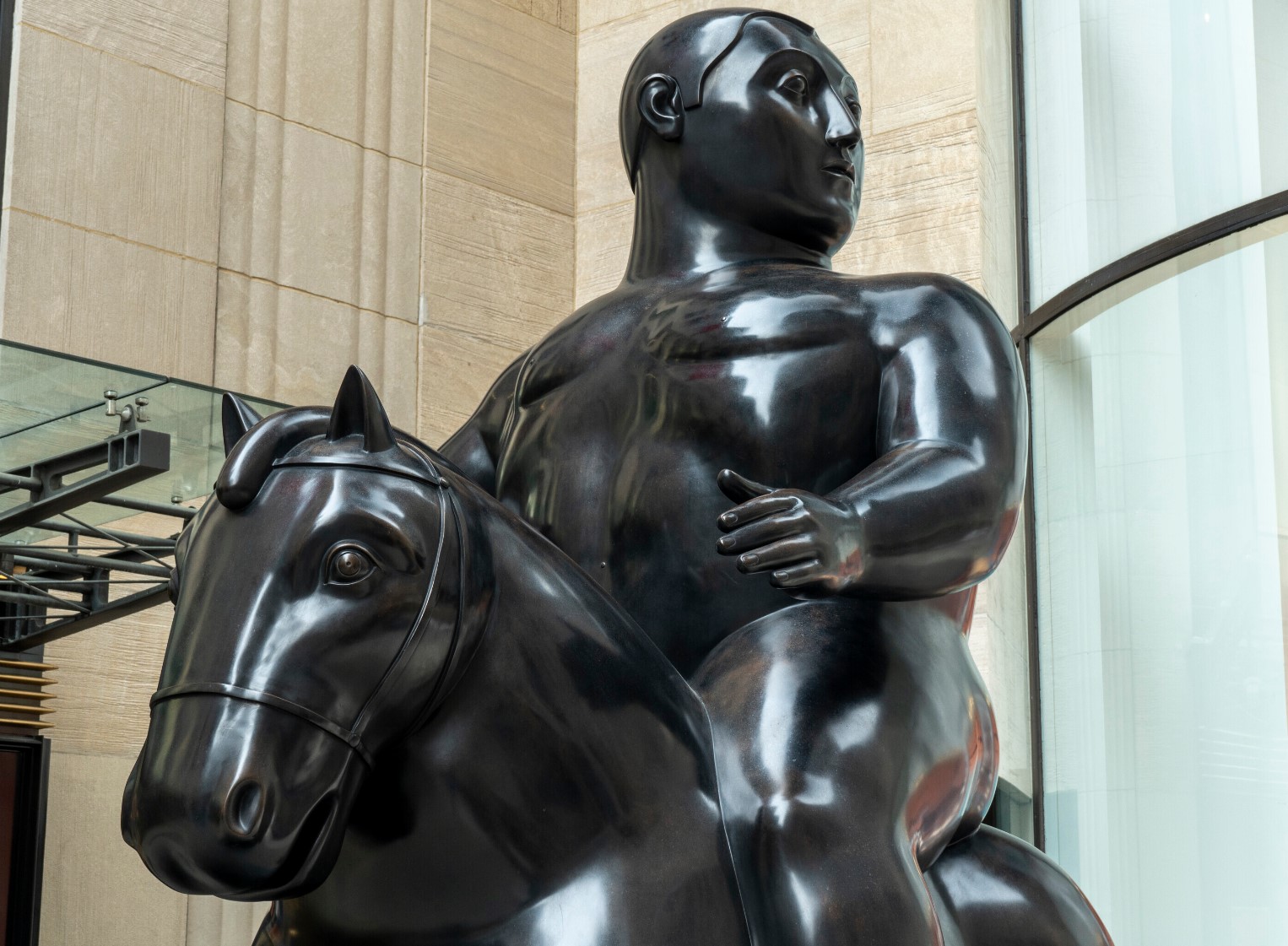
The highest price was achieved by Man on Horseback, a marble sculpture dated 2008 that sold at Sotheby’s in Hong-Kong on 29 March 2025 for HKD 10,745,000 (USD 1,381,105). Only 1 lot sold for more than USD 1 million. 8 lots sold for more than USD 500,000, generating a cumulative turnover of USD 6,171,800, representing 69.9% of the total turnover for 2025.
#1. Man on Horseback, 2008
Sotheby’s Hong-Kong: 29 March 2025
Estimated: HKD 5,400,000 – 11,000,000
HKD 10,745,000 / USD 1,381,105
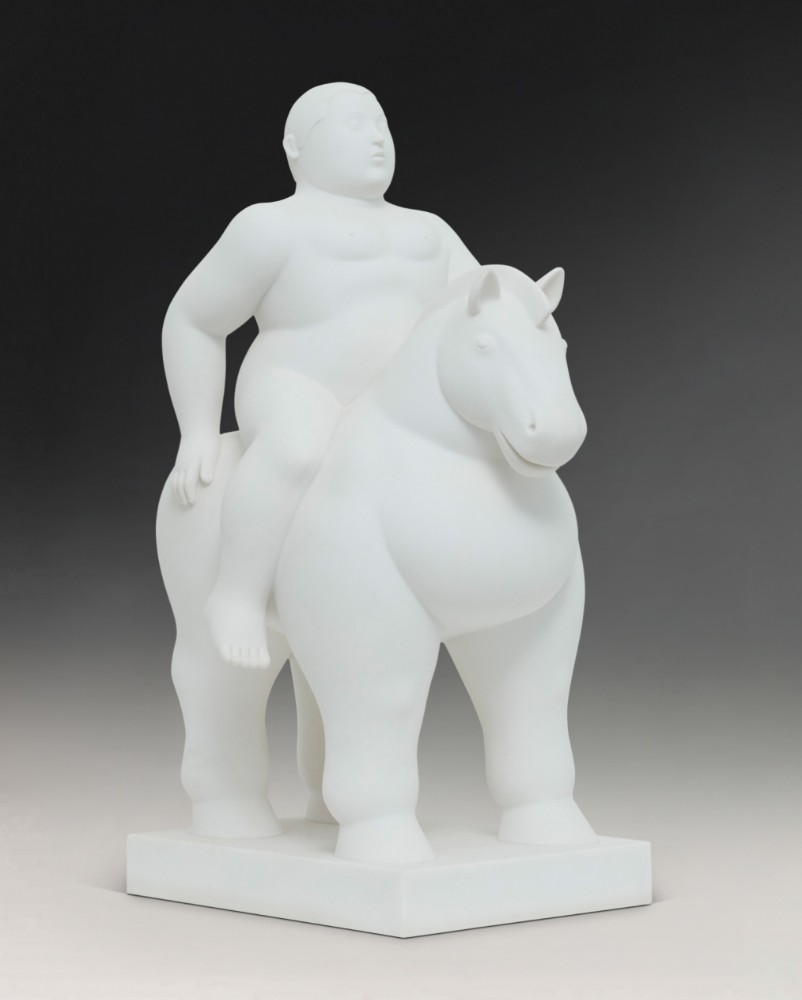
FERNANDO BOTERO (1932 – 2023)
Man on Horseback, 2008
White Carrara marble
110x85x57 cm (43 1/4 x 33 1/2 x 22 3/8 inches)
Inscribed with artist signature (on the base)
USD 1 million
#2. Bailarines, 2001
Sotheby’s New-York: 19 November 2025
Estimated: USD 800,000 – 1,200,000
USD 920,750
Bailarines | Contemporary Day Auction | 2025 | Sotheby’s
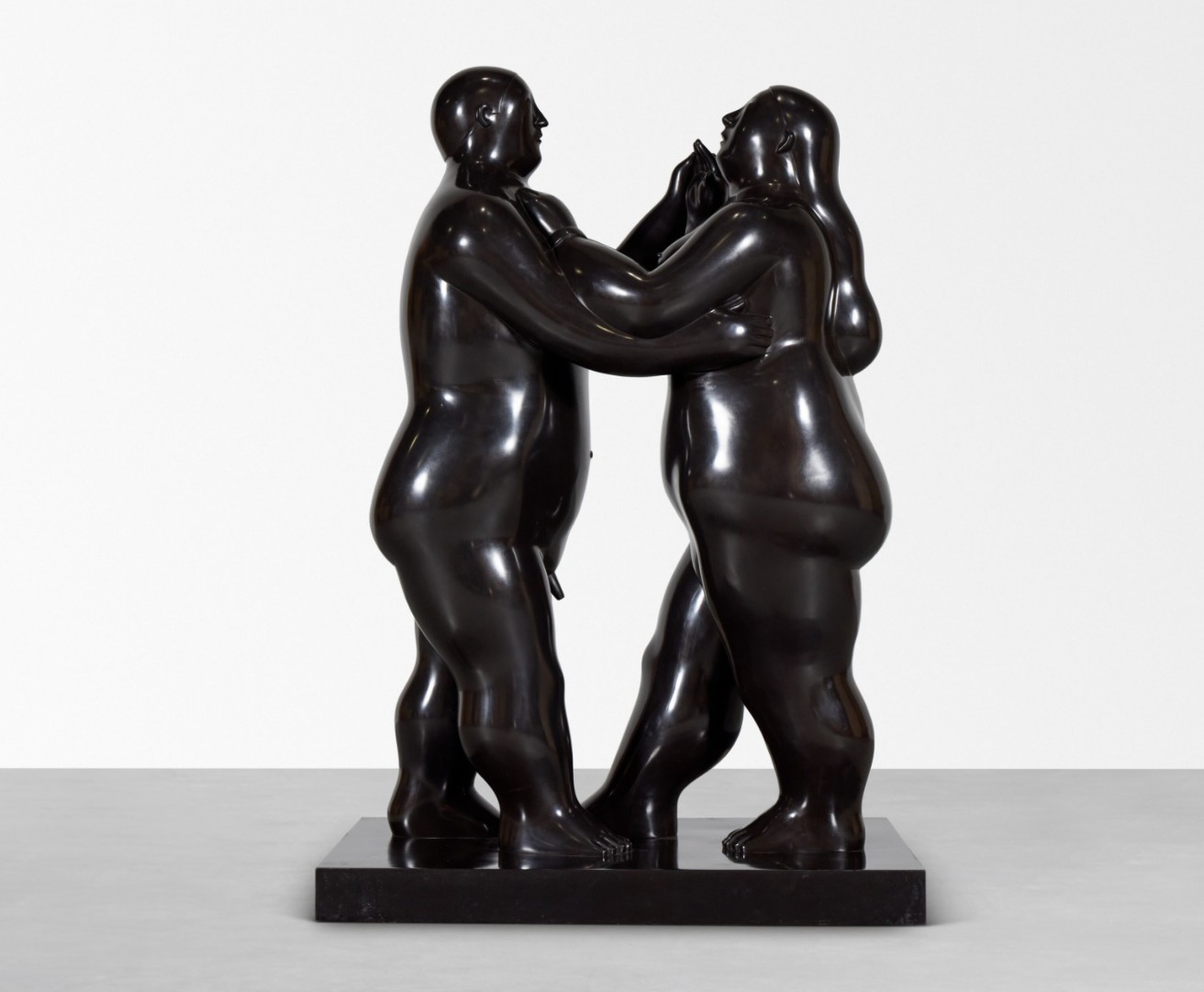
FERNANDO BOTERO (1932 – 2023)
Bailarines, 2001
Bronze
134.6 x 53.5 x 89.2 cm (53 x 21 1/8 x 35 1/8 inches)
Incised with the number PA 1/2 (lower edge)
This work is artist’s proof 2 from an edition of 6 plus 2 artist’s proofs
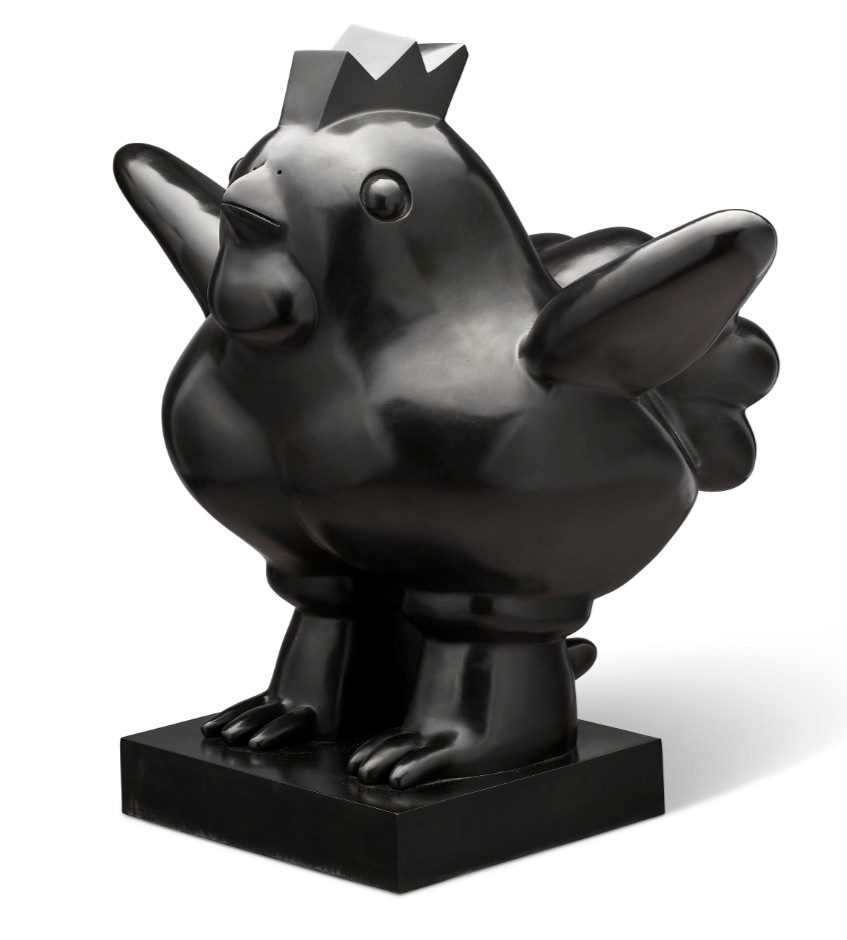
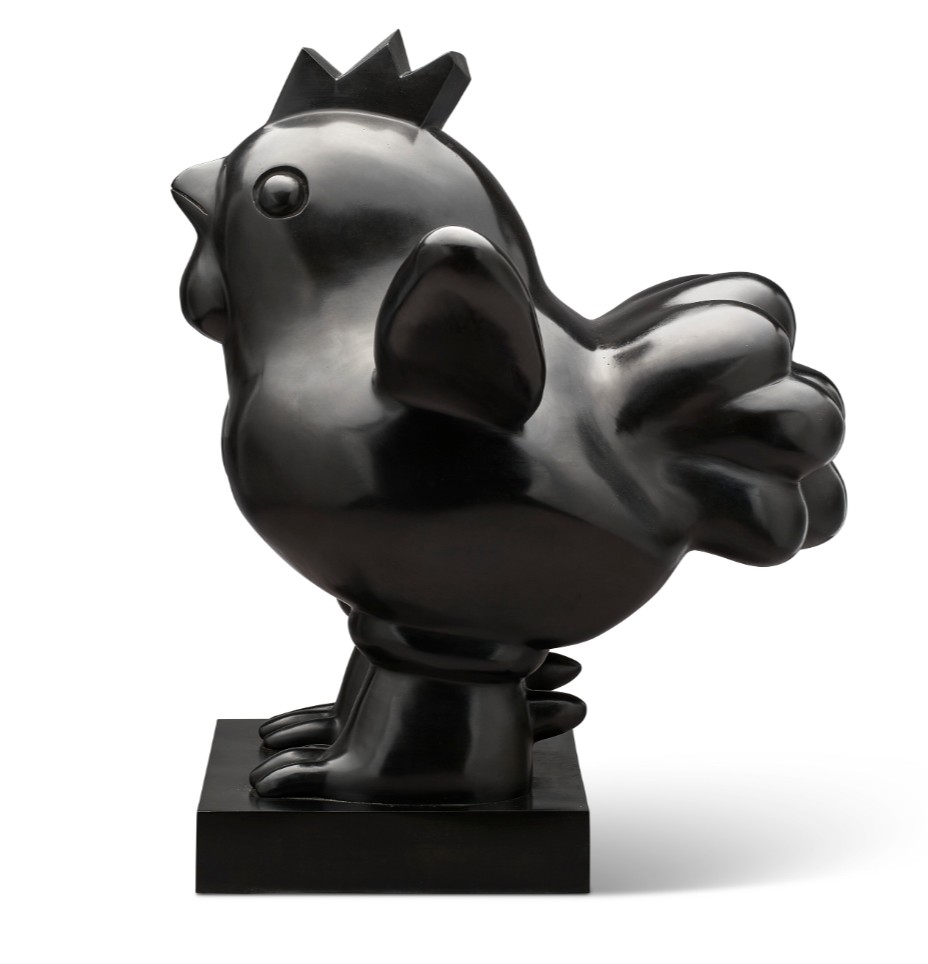
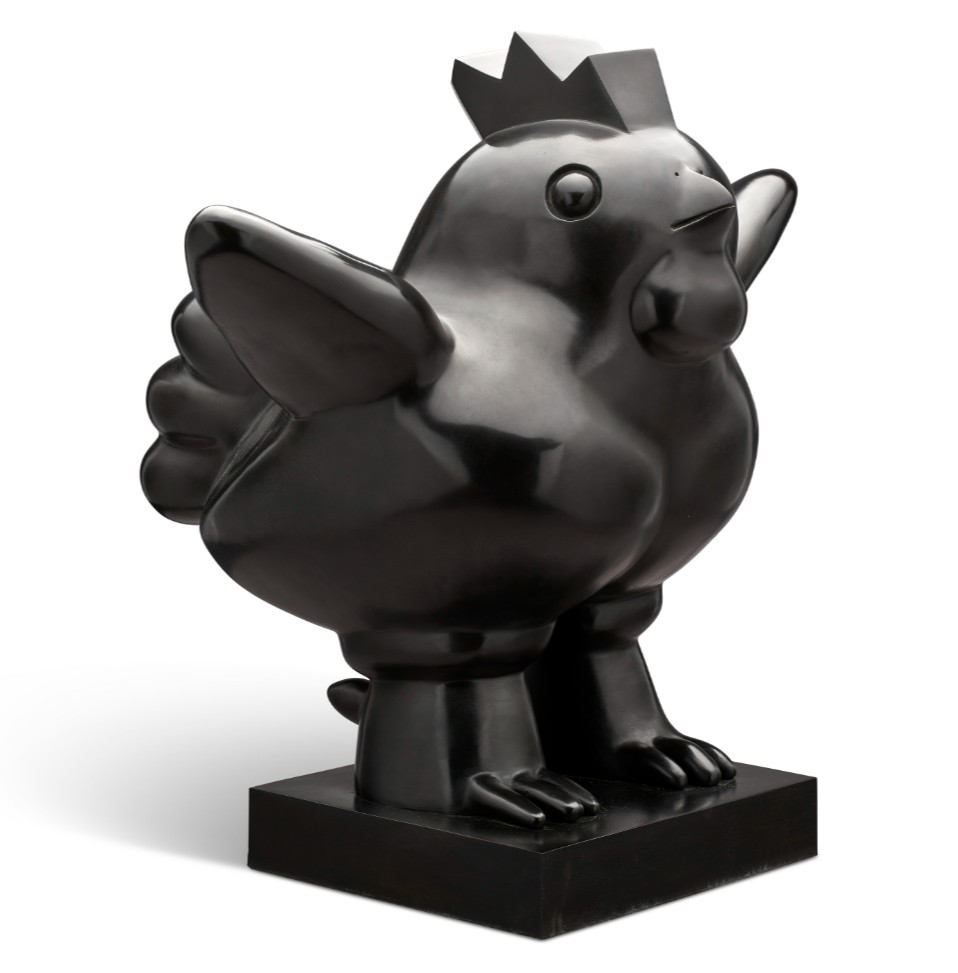
#3. Rooster, 1981
Christie’s New-York: 20 November 2025
Estimated: USD 150,000 – 250,000
USD 762,000
FERNANDO BOTERO (1932-2023), Rooster | Christie’s
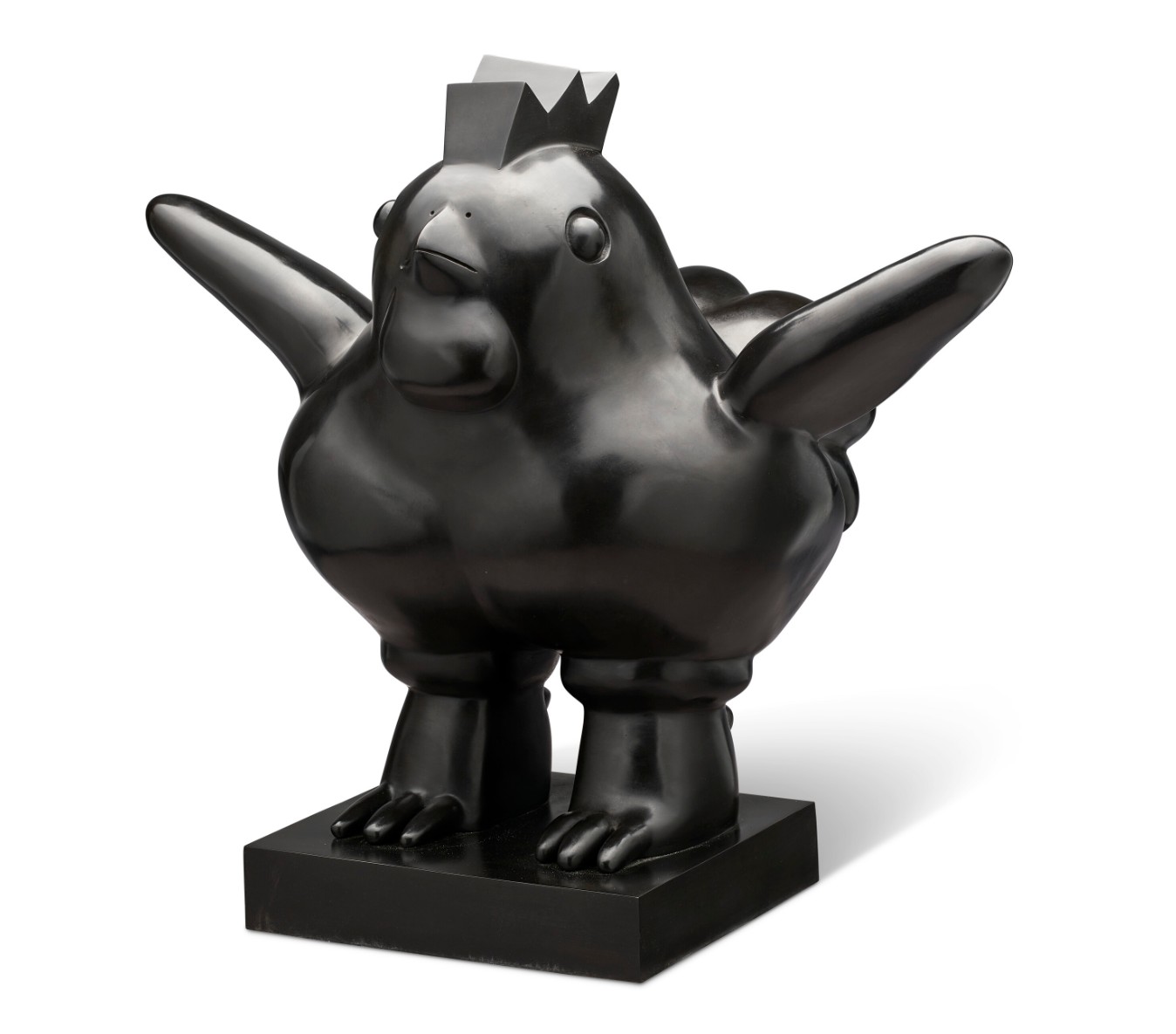
FERNANDO BOTERO (1932-2023)
Rooster, 1981
Bronze
68.6 x 75 x 58.4 cm (27 x 29 1/2 x 23 inches)
Incised with the artist’s signature and number and stamped with the foundry mark ‘Botero 5⁄6’ (on the base)
This work is number five from an edition of six

#4. Mujer fumando, 1989
Christie’s New-York: 30 September 2025
Estimated: USD 500,000 – 700,000
USD 736,600
FERNANDO BOTERO (1932-2023), Mujer fumando | Christie’s
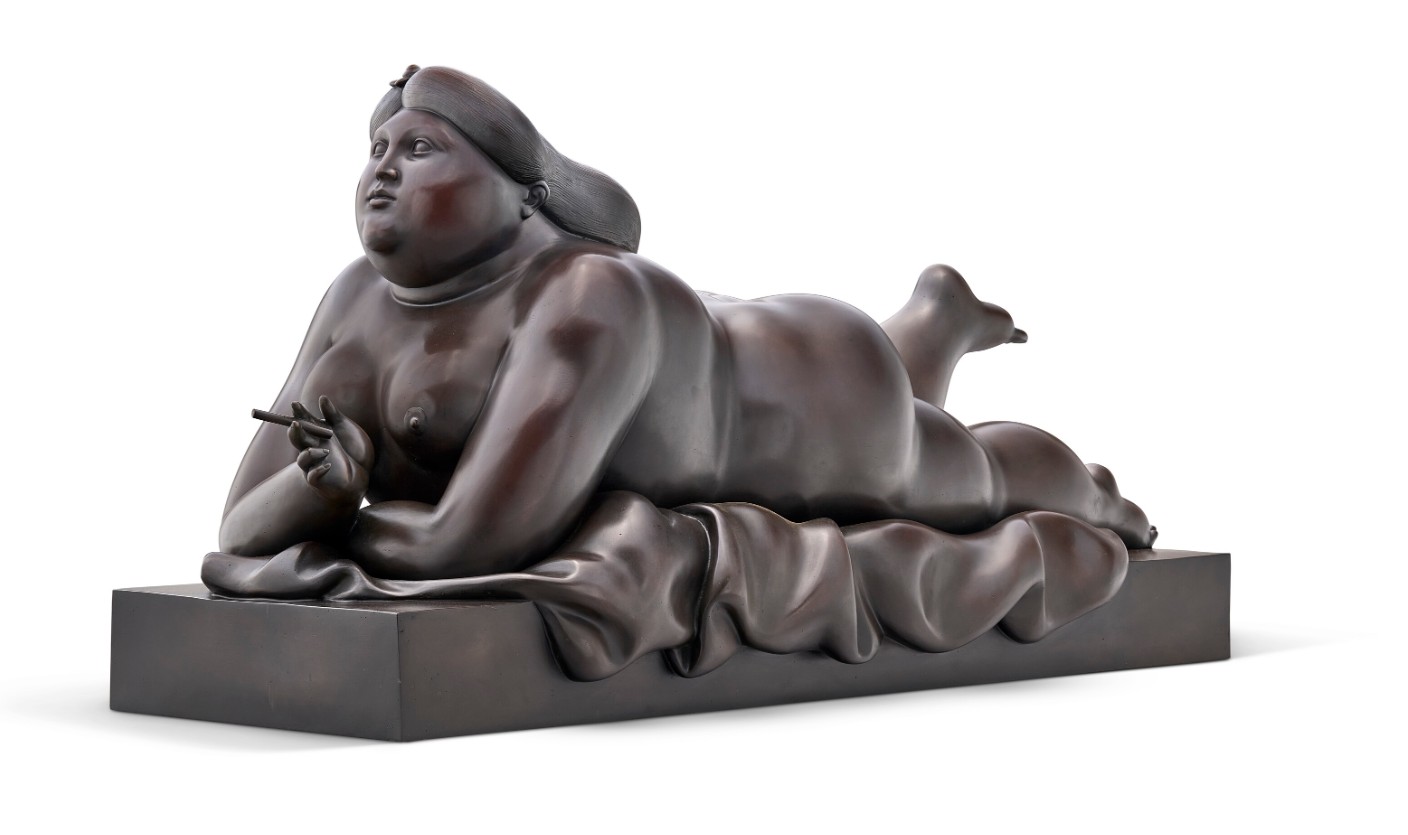
FERNANDO BOTERO (1932-2023)
Mujer fumando, 1989
Bronze
70x128x46 cm (27 1/2 x 50 3/8 x 21 inches)
Incised with the artist’s signature and number and stamped with the foundry mark ‘Botero 1⁄6’ (on the base)
#5. Reclining Woman with Fruit, 1996
The Collection of Baron Diego von Buch
Christie’s London: 5 June 2025
Estimated: GBP 300,000 – 500,000
GBP 516,600 / USD 700,040
FERNANDO BOTERO (1932-2023), Reclining Woman with Fruit | Christie’s
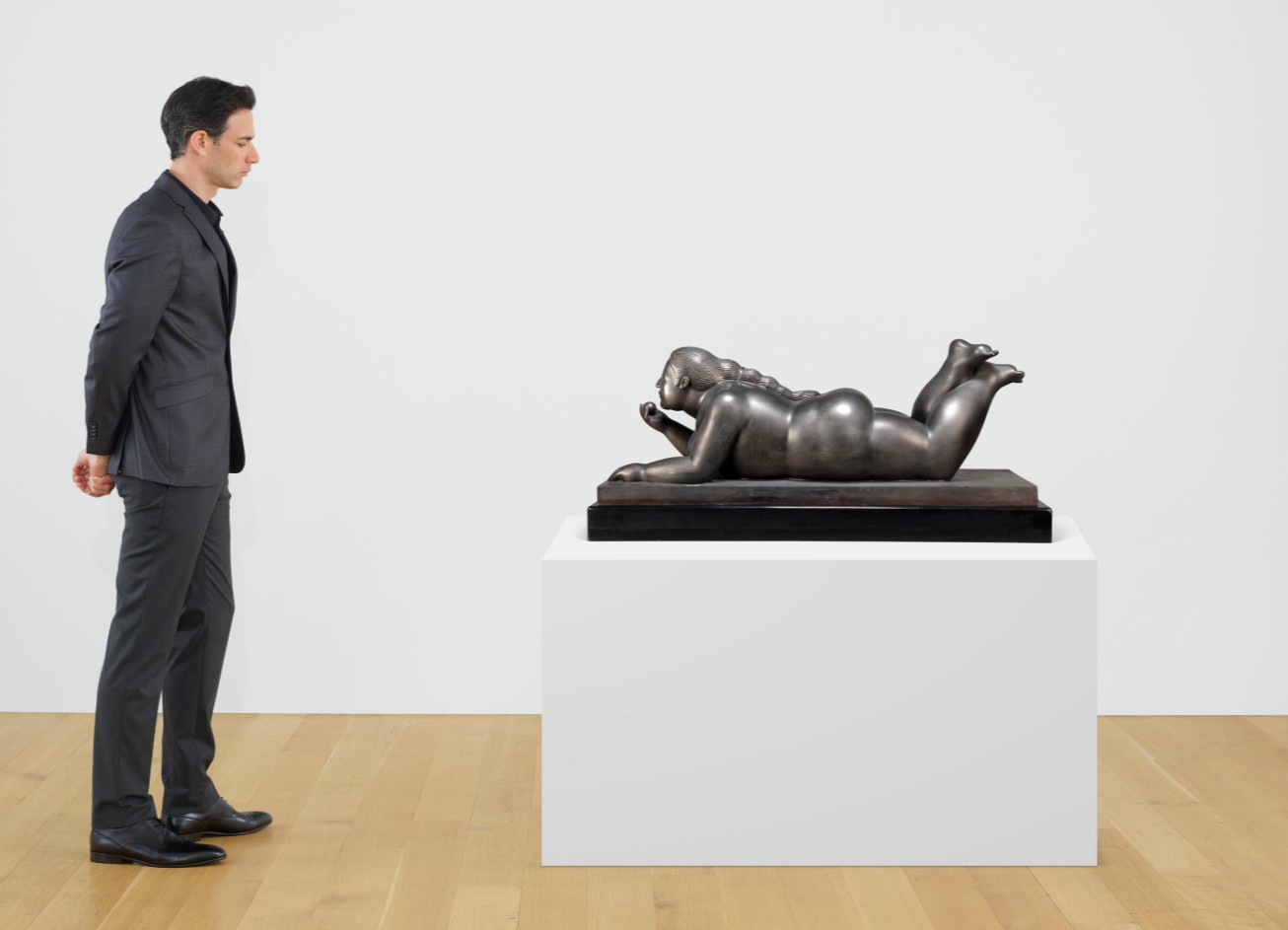
FERNANDO BOTERO (1932-2023)
Reclining Woman with Fruit, 1996
Bronze
49x138x41 cm (19 1/3 x 50 3/8 x 16 1/8 inches)
Signed and numbered ‘Botero 3⁄6’ and stamped with foundry mark (on the base)
This work is numbered three from an edition of six
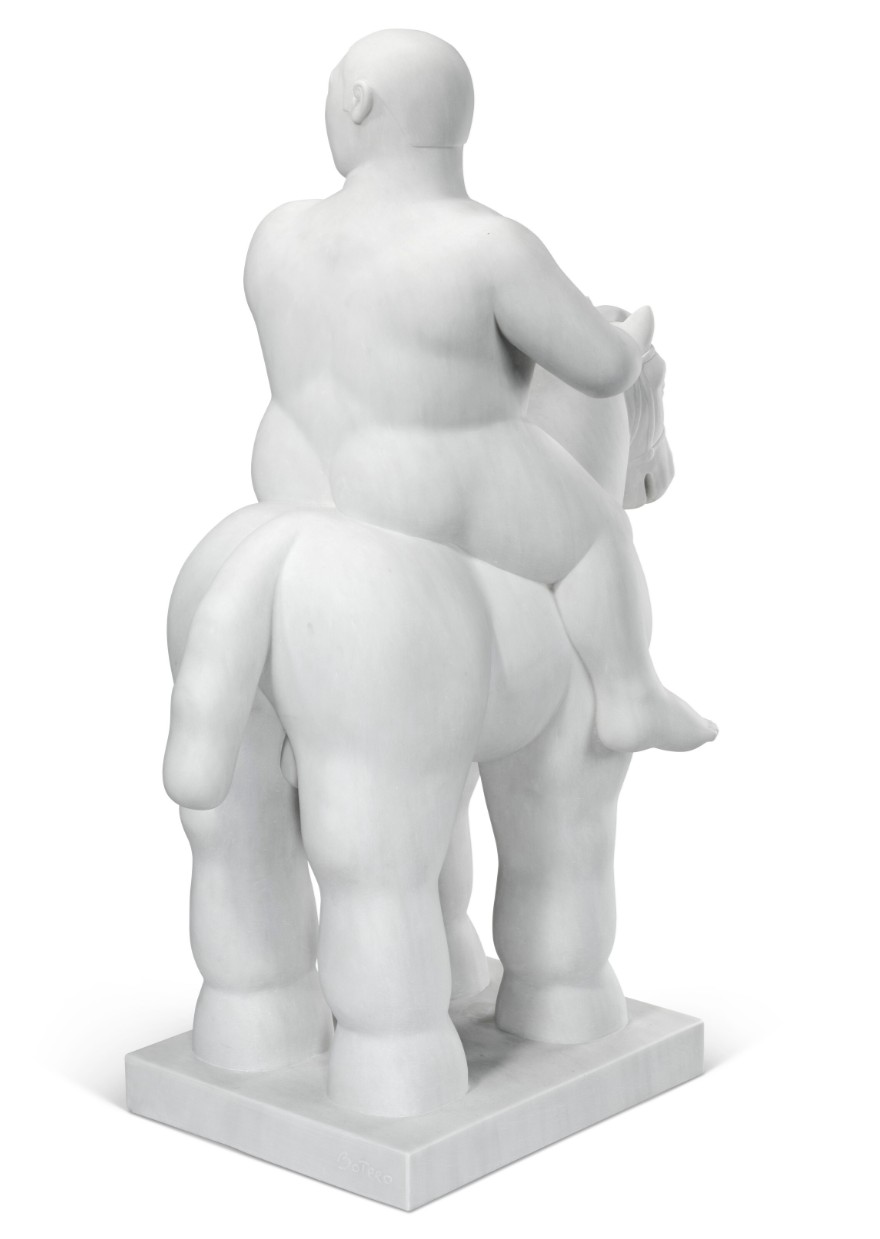
#6. Man on a Horse, circa 1990
Christie’s New-York: 20 November 2025
Estimated: USD 400,000 – 600,000
USD 609,600
FERNANDO BOTERO (1932-2023), Man on a Horse | Christie’s
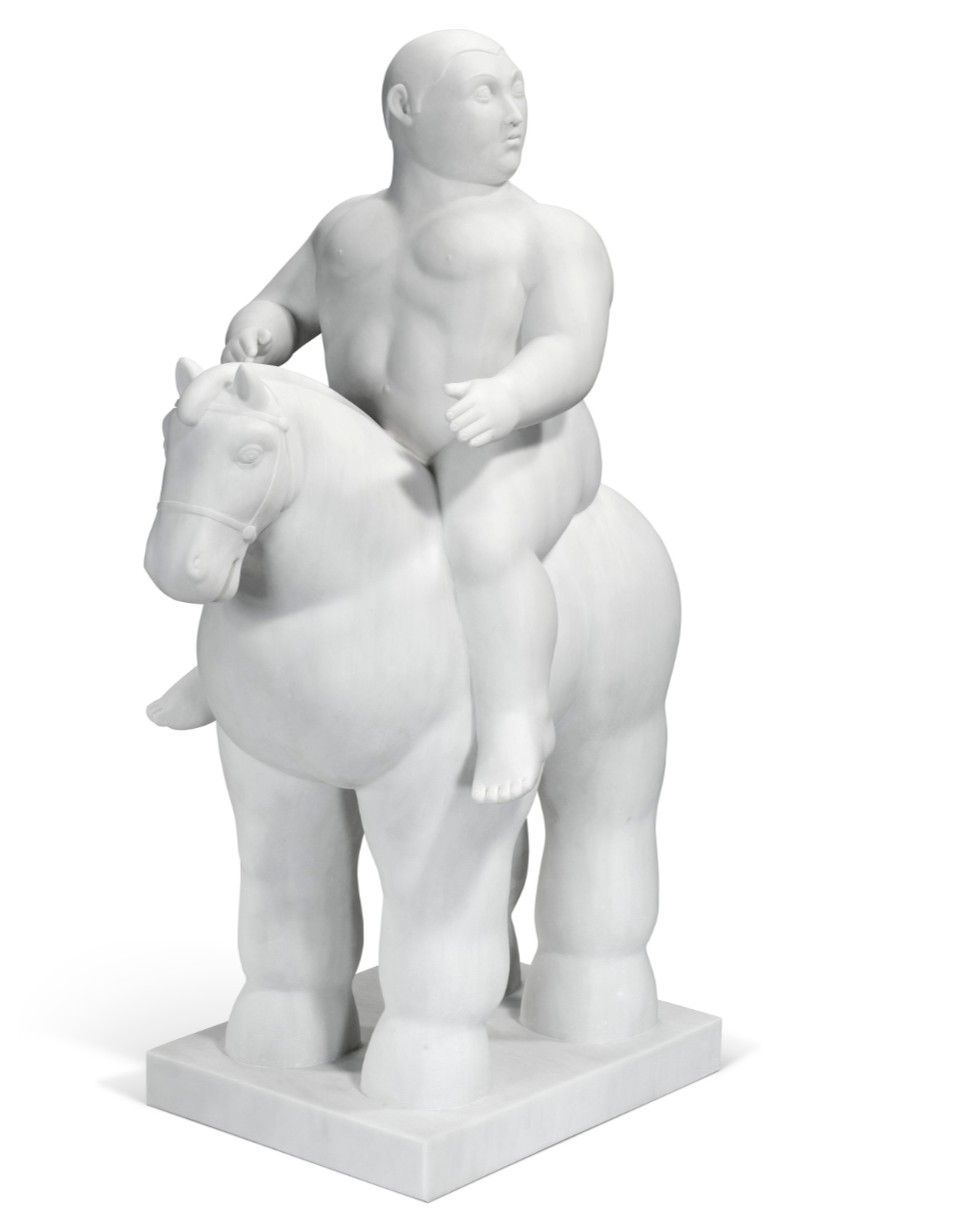
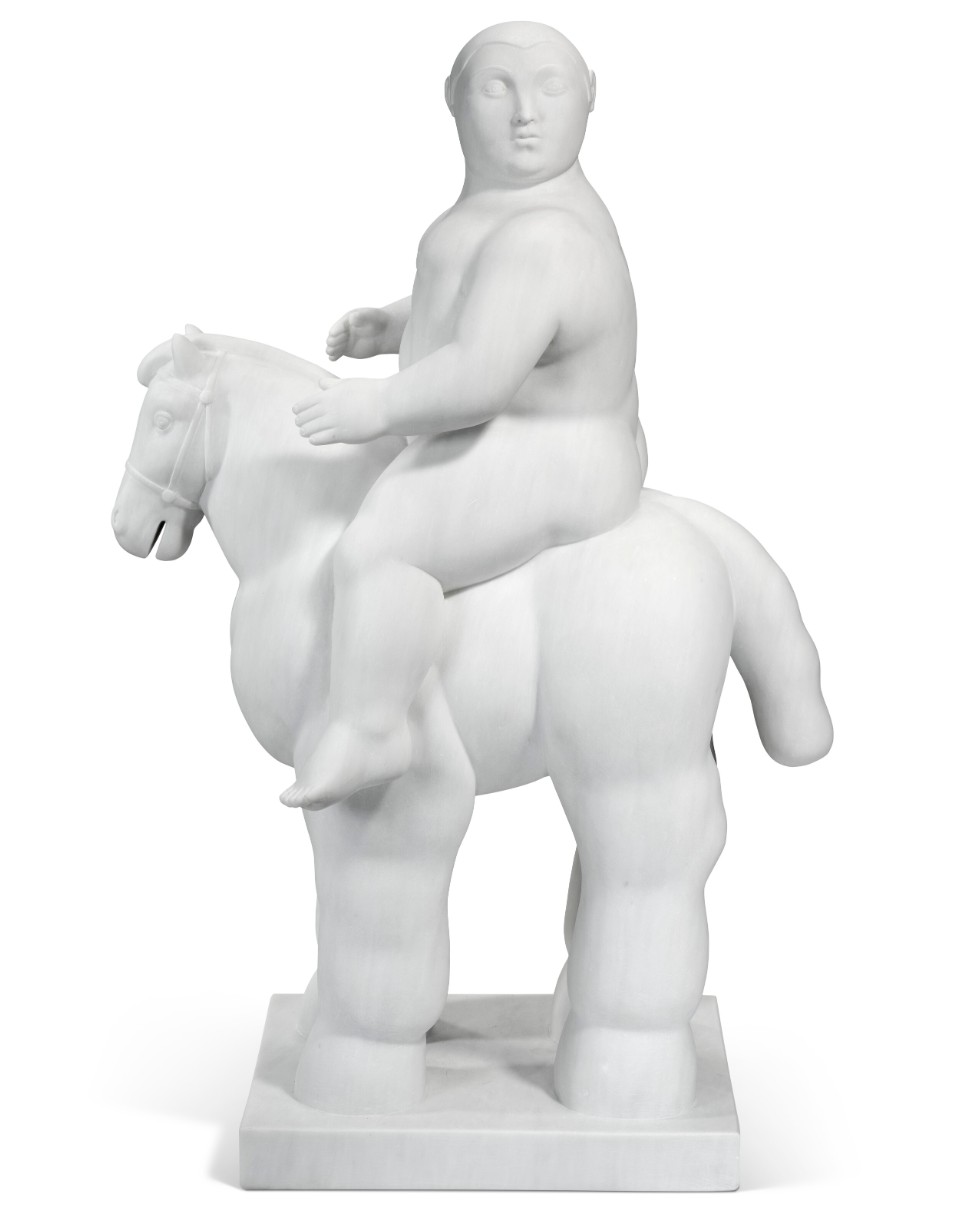
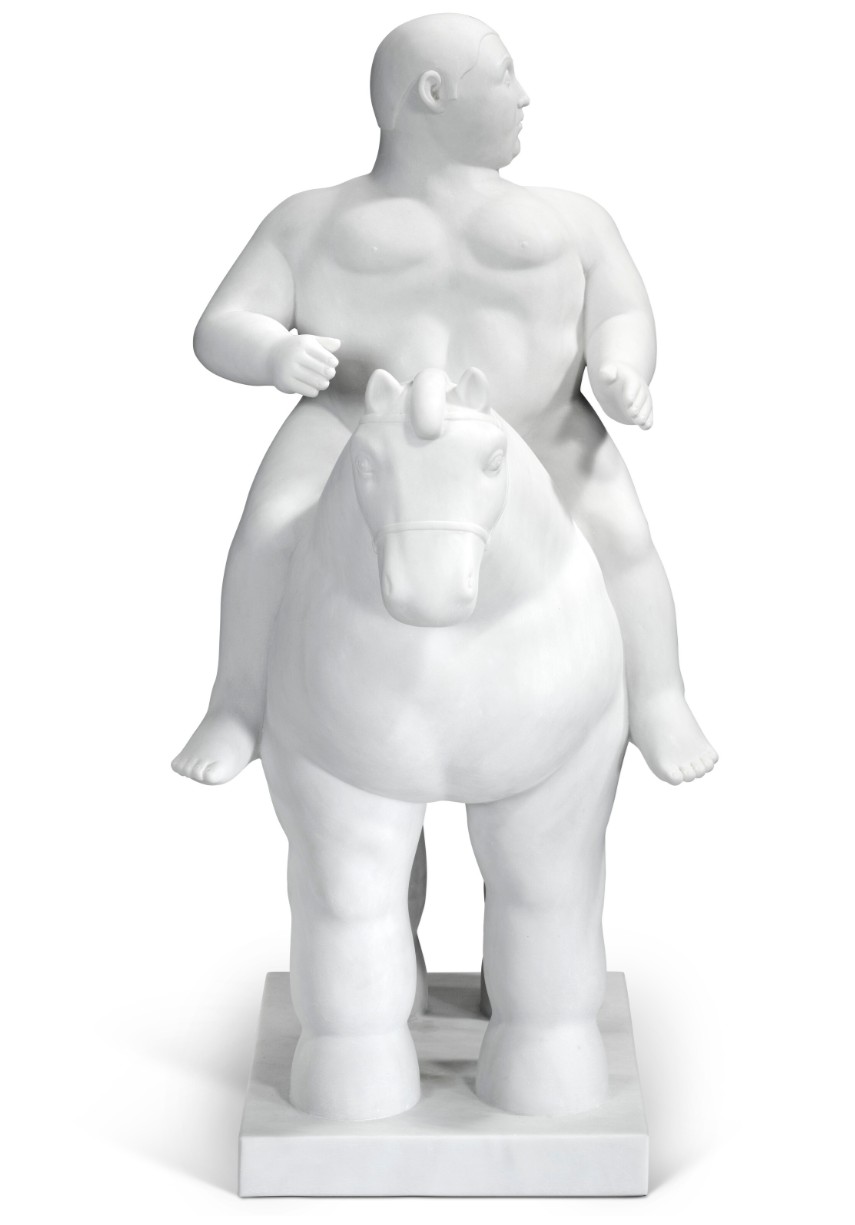
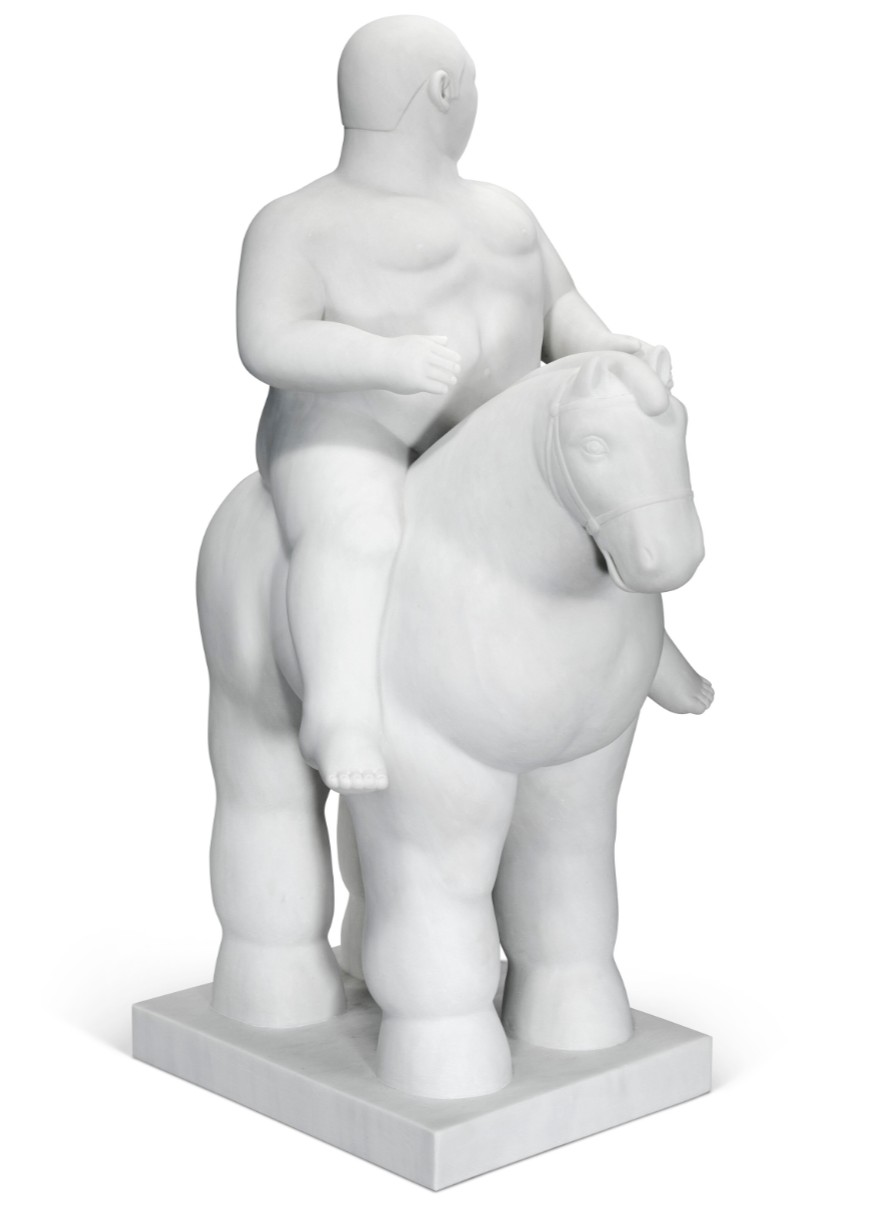
FERNANDO BOTERO (1932-2023)
Man on a Horse, circa 1990
White Carrara marble
74.9 x 48.3 x 33 cm (29 1/2 x 19 x 13 inches)
Incised with the artist’s signature ‘Botero’ (on the base)
“Sculpture enables me to create real volumes…Sculpture is like a caress. You touch the form, you can give the forms the softness, the sensuality you want. It’s magnificent.”
#7. Rapto de Europa, circa 1994
Sotheby’s New-York: 26 February 2025
Estimated: USD 300,000 – 400,000
USD 533,400
Rapto de Europa | Contemporary Curated | 2025 | Sotheby’s
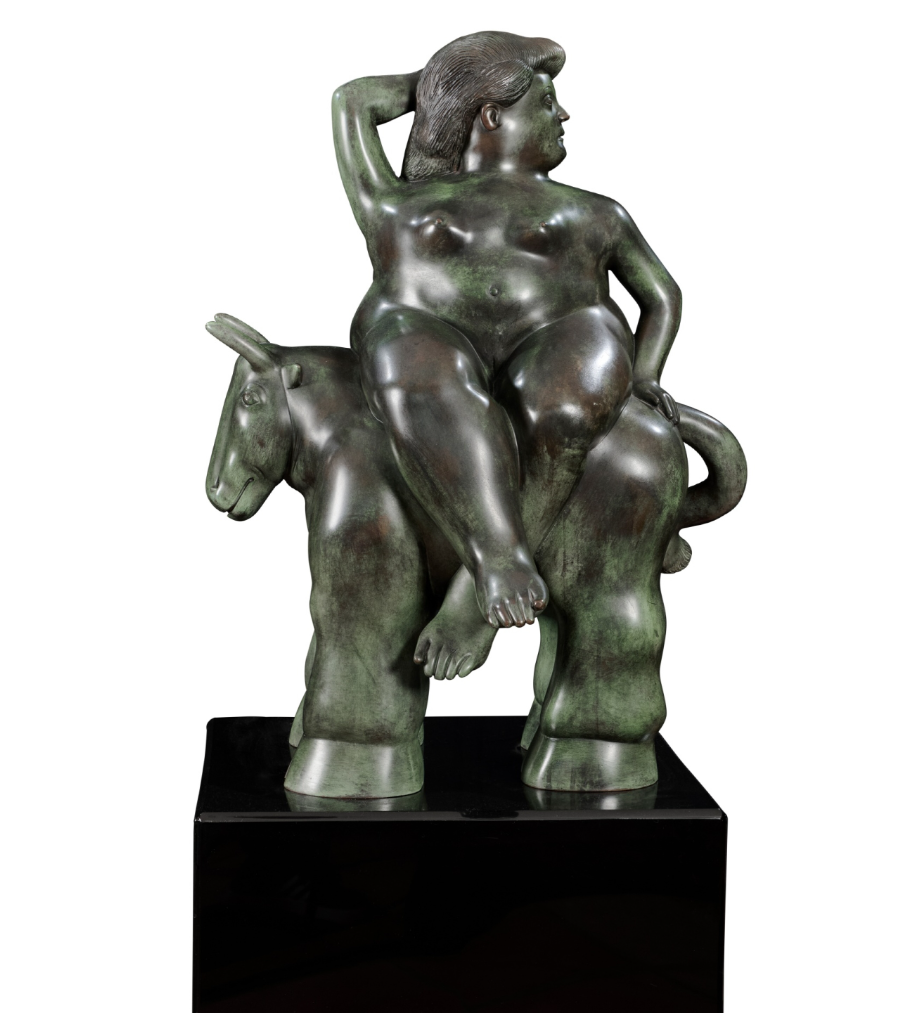
FERNANDO BOTERO (1932 – 2023)
Rapto de Europa, circa 1994
Bronze
56 x 45.7 x 48.2 cm (27 1/2 x 18 x 19 inches)
Incised with the artist’s signature and number 2/2 E/A (on the rear hoof)
This work is artist’s proof 2 from an edition of 6 plus 2 artist’s proofs
#8. Woman on a Horse, 1998
Dorotheum Vienna: 21 May 2005
Estimated: EUR 300,000 – 400,000
EUR 468,000 / USD 528,305
Fernando Botero * – Contemporary Art I 2025/05/21 – Realized price: EUR 468,000 – Dorotheum
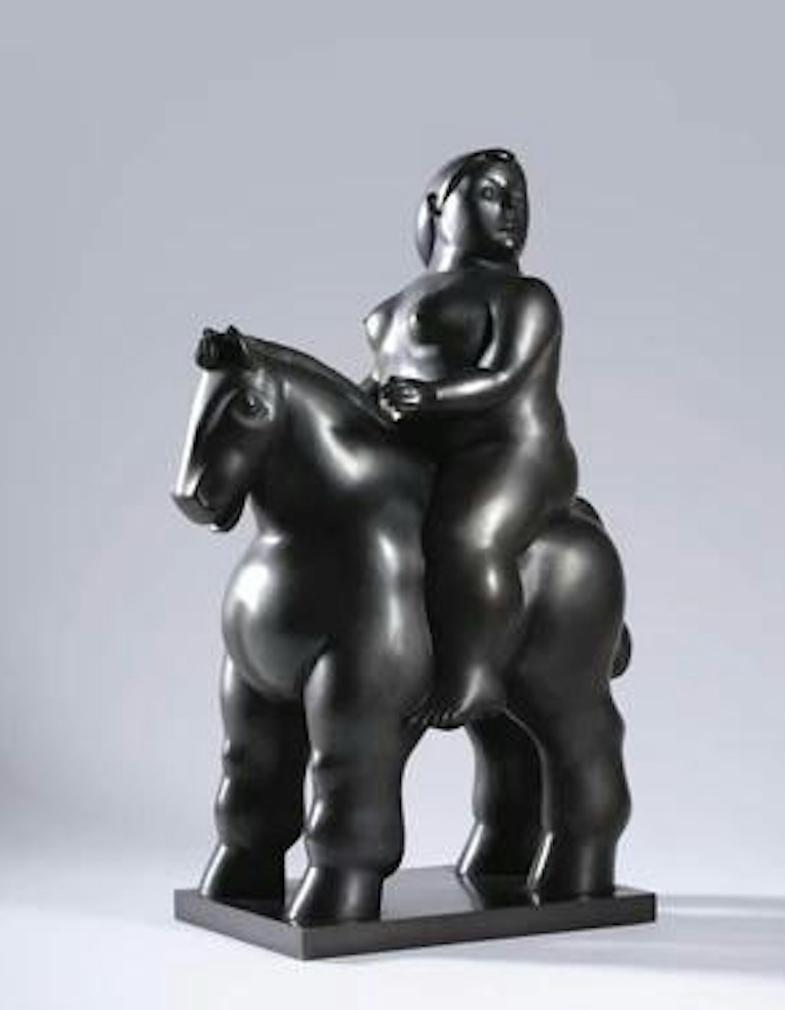
FERNANDO BOTERO (Medellin, Colombia 1932 – 2023 Monaco)
Woman on a Horse, 1998
Bronze with dark brown patina
62x40x28 cm (24 3/8 x 15 3/4 x 11 inches)
Signed, numbered 2/6 and stamped with a foundry mark (on the base)
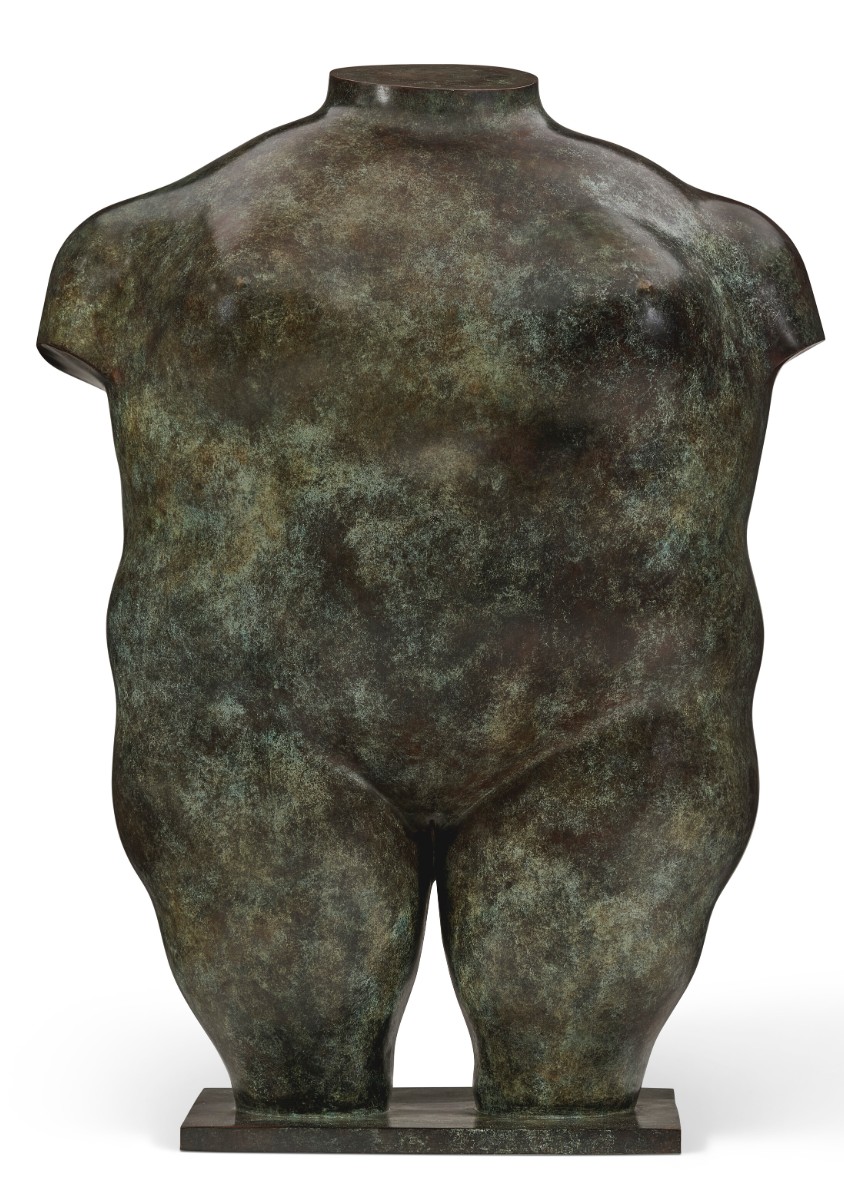
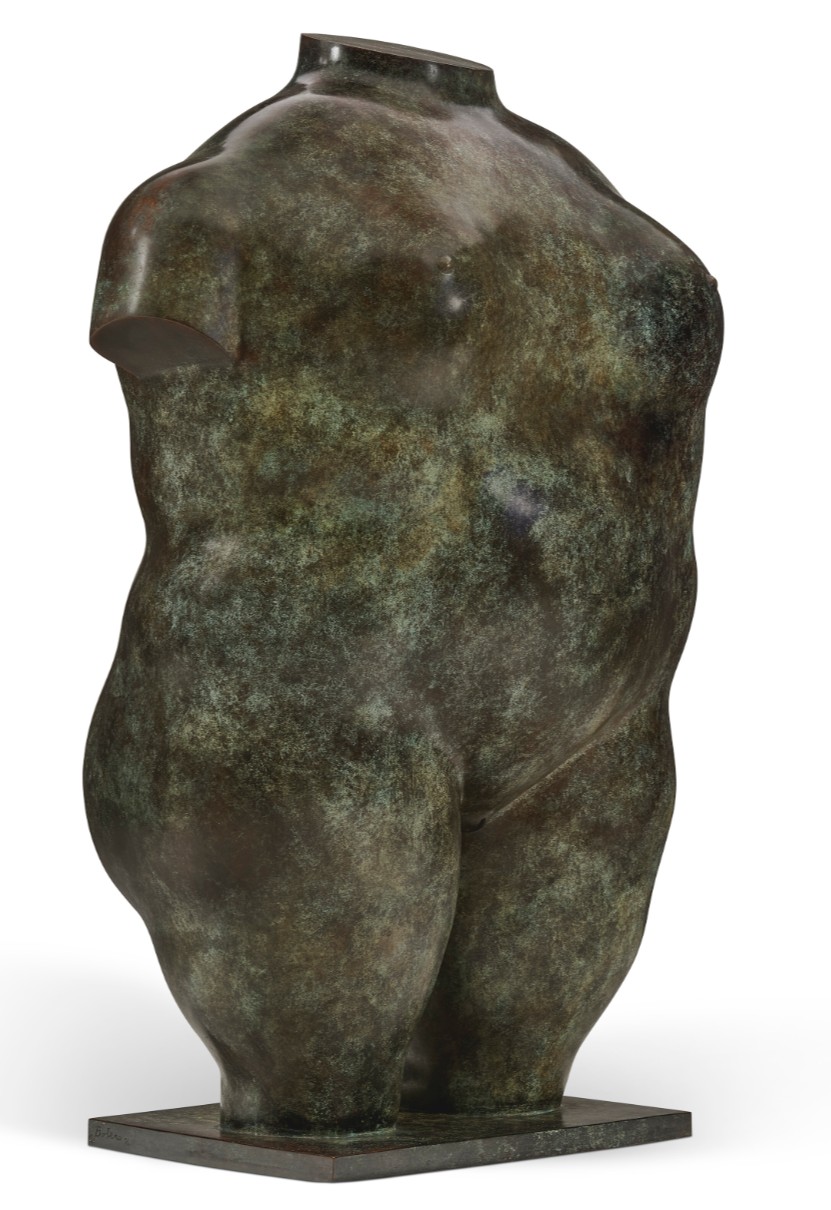
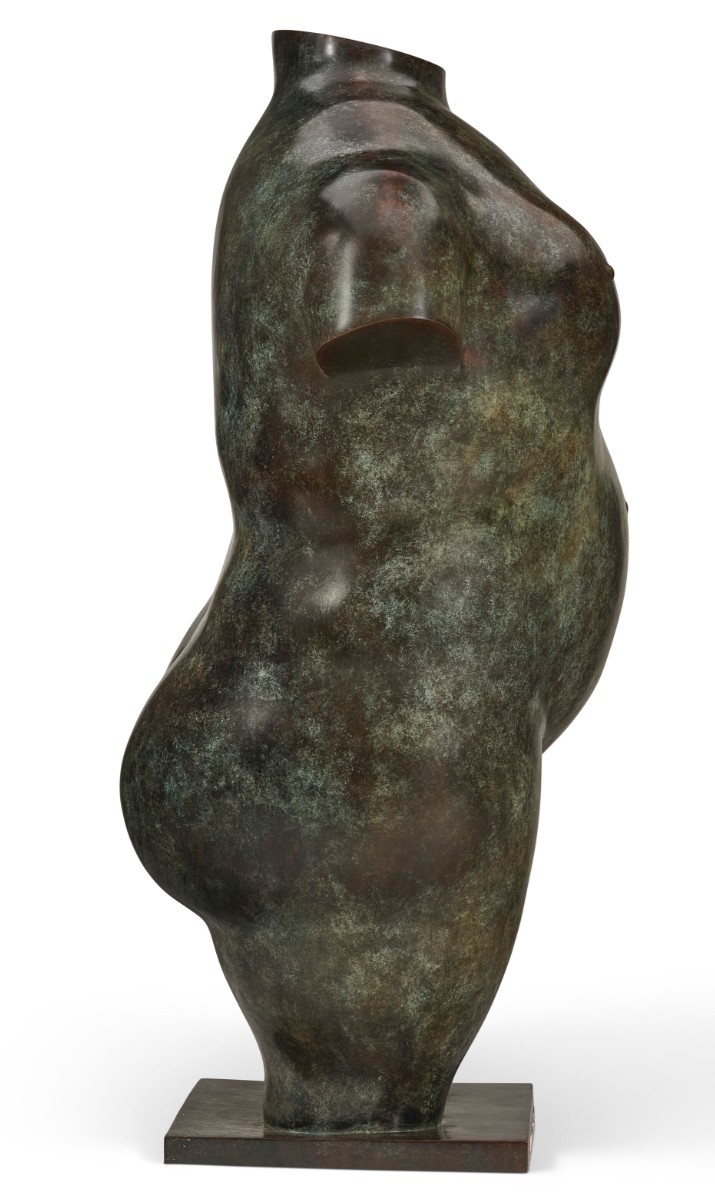
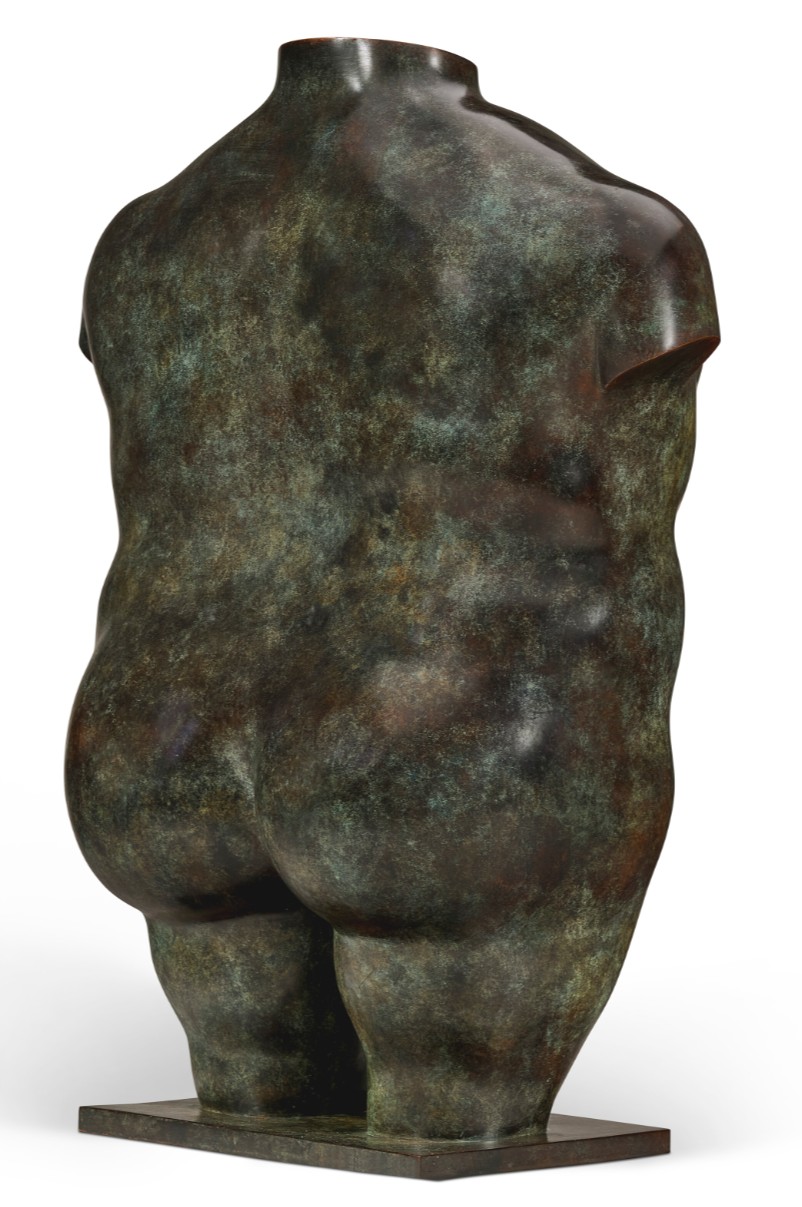
#9. Torso, 1981
Christie’s New-York: 20 November 2025
Estimated: USD 300,000 – 400,000
USD 457,200
FERNANDO BOTERO (1932-2023), Torso | Christie’s
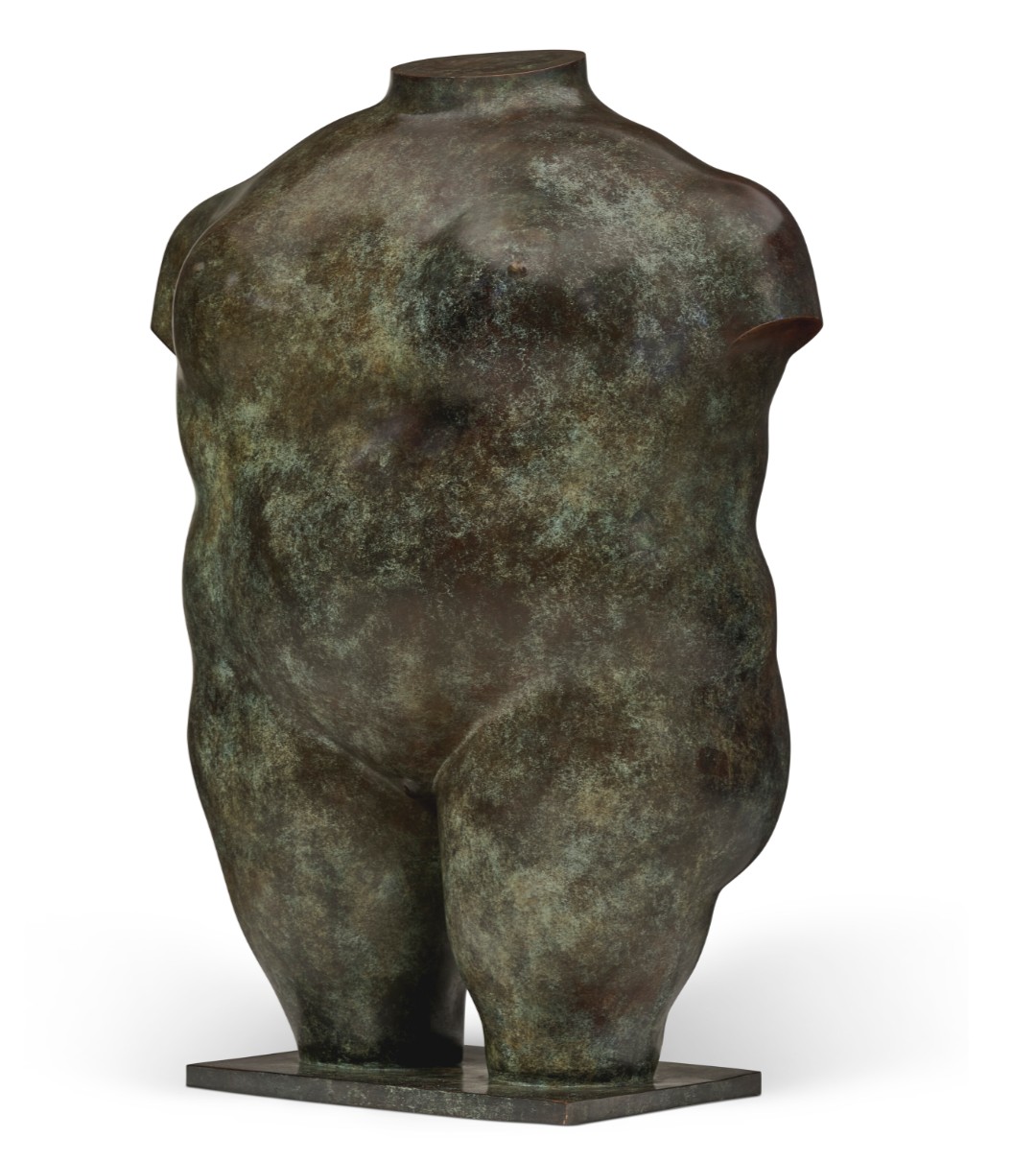
FERNANDO BOTERO (1932-2023)
Torso, 1981
Bronze
108 x 80 x 50.8 cm (42 1/2 x 31 1/2 x 20 inches)
Incised with the artist’s signature and number ‘Botero 2⁄6’ (on the base)
This work is number two from an edition of six
“Sculpture allows me to transform the torso into an object of spirit and sensuality. It’s not about anatomy, but about presence and a feeling of monumentality.”
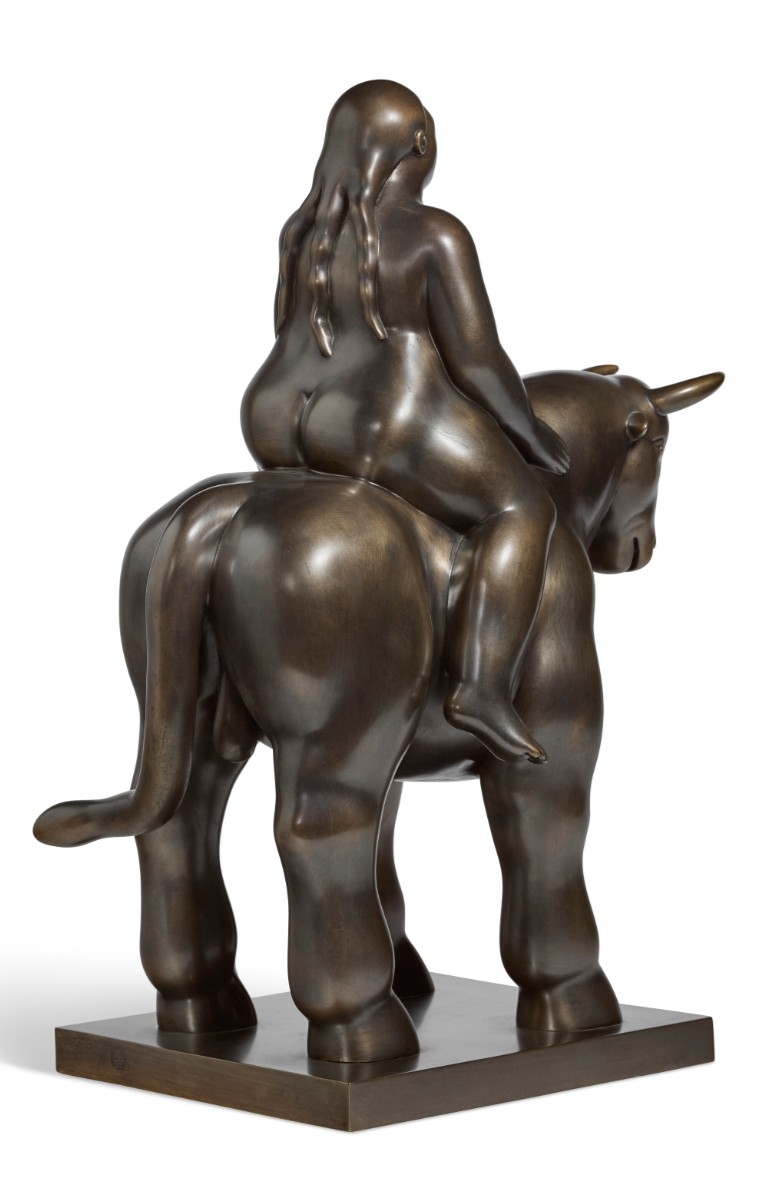
#10. Rape of Europa, 1995
The Collection of Lucille Coleman
Christie’s New-York: 20 November 2025
Estimated: USD 350,000 – 450,000
USD 406,400
FERNANDO BOTERO (1932-2023), Rape of Europa | Christie’s
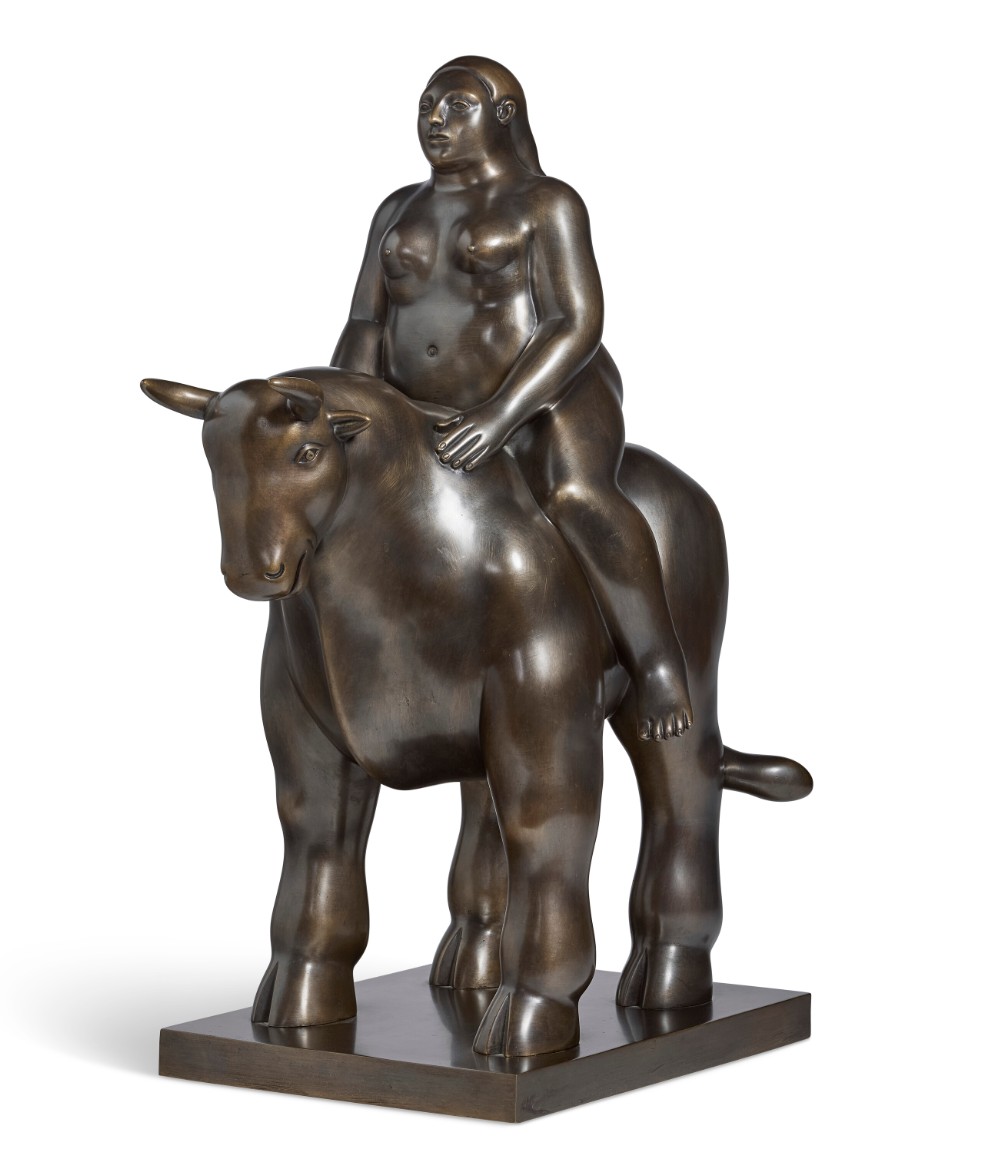
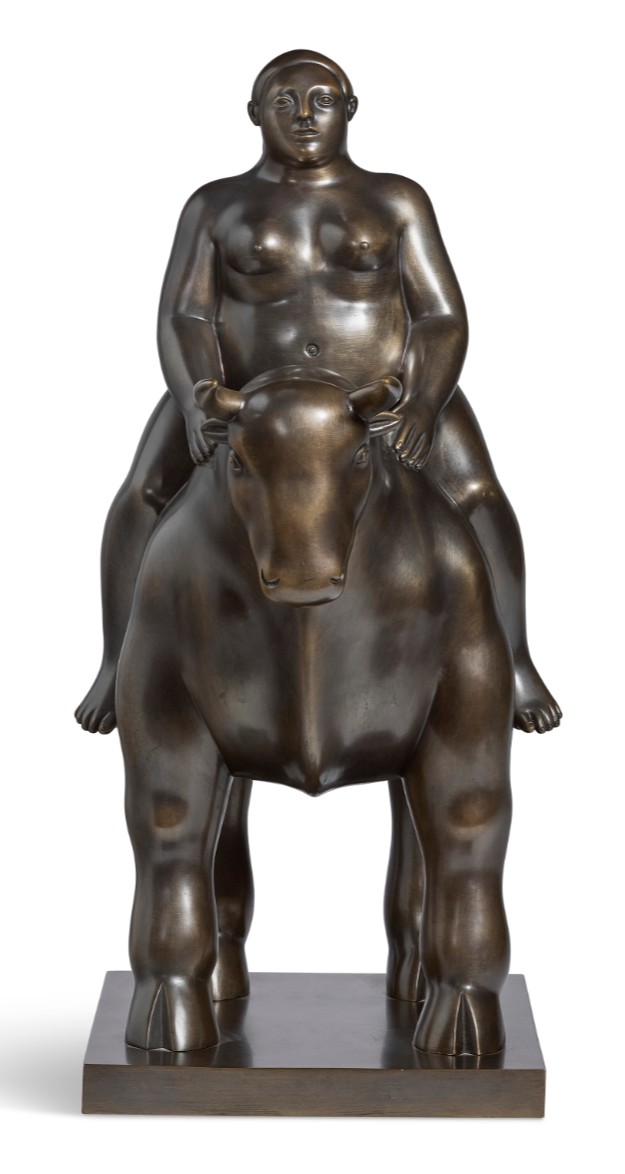
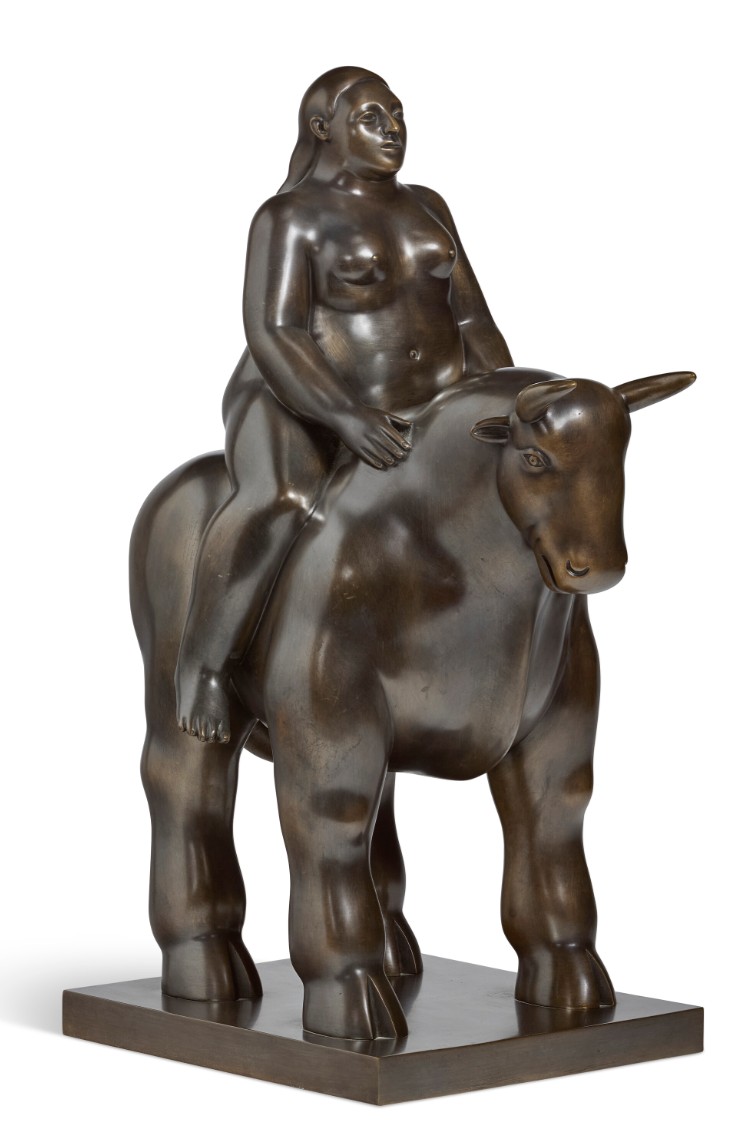
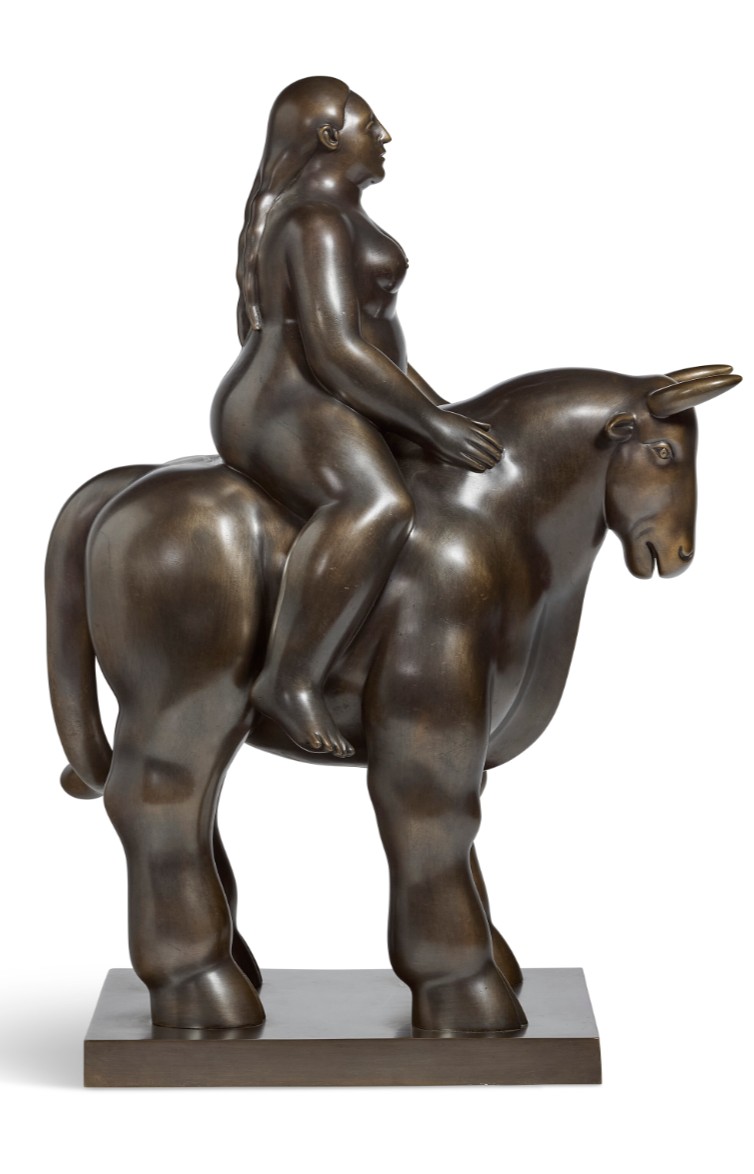
FERNANDO BOTERO (1932-2023)
Rape of Europa, 1995
Bronze
63.5 x 47 x 31.1 cm (25 x 18 1/2 x 12 1/4 inches)
Incised with the artist’s signature and stamped with the number and foundry mark ‘Botero 3⁄6’ (on the base)
This work is number three from an edition of six
#11. Male Torso with Leaf, 1993
Christie’s London: 5 June 2025
Estimated: GBP 80,000 – 120,000
GBP 264,600 / USD 358,555
FERNANDO BOTERO (1932-2023), Male Torso with Leaf | Christie’s
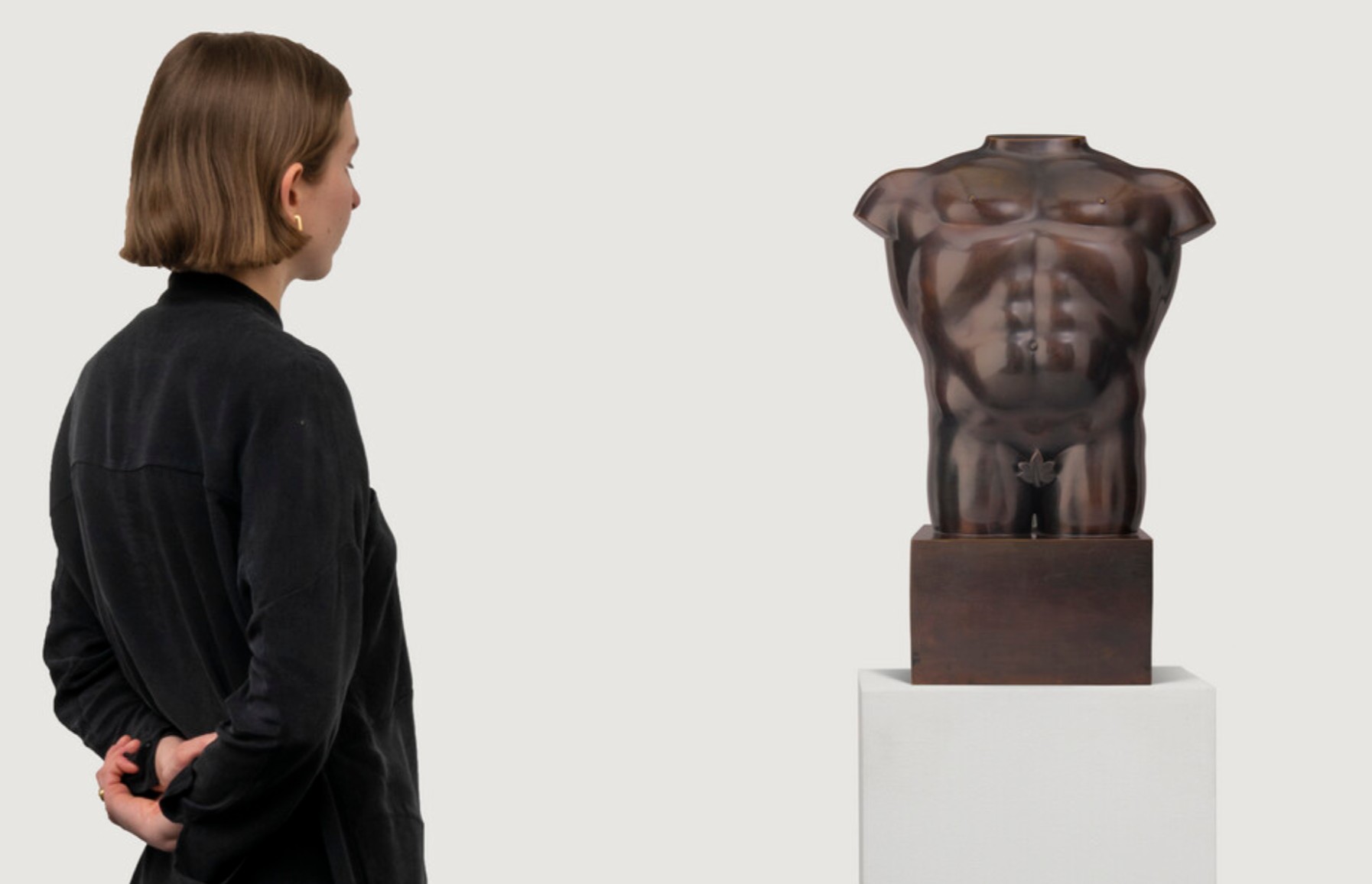
FERNANDO BOTERO (1932-2023)
Male Torso with Leaf, 1993
Bronze
51.9 x 34 x 17.5 cm (20 3/8 x 13 3/8 x 6 7/8 inches)
Signed and numbered ‘Botero 2⁄6’ and stamped with foundry mark (on the base)
This work is numbered two from an edition of six
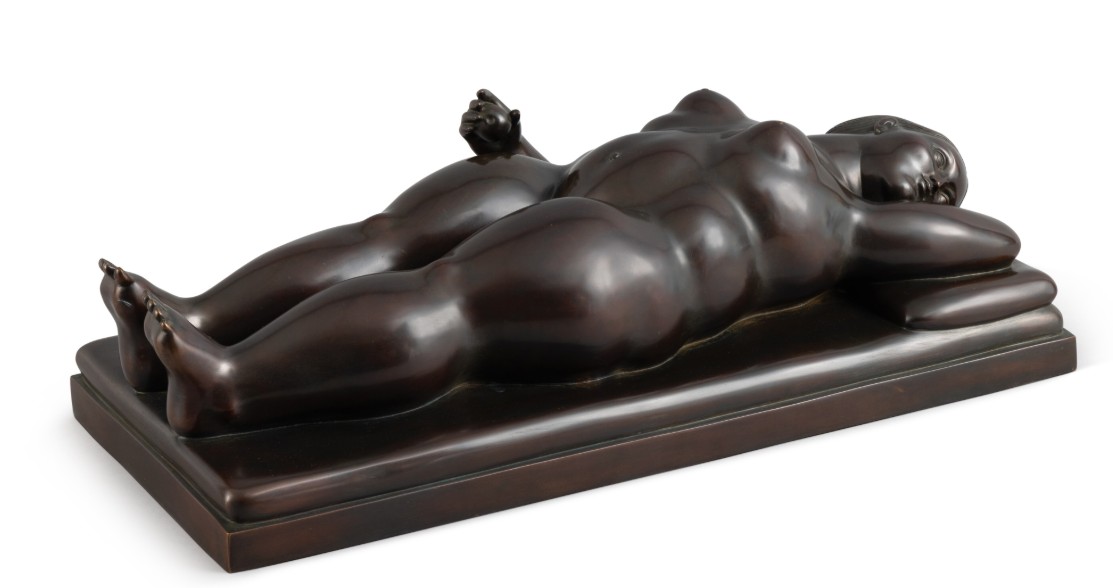
#12. Reclining Woman with Apple, 1988
Property from a Private Florida Collection
Sotheby’s New-York: 19 November 2025
Estimated: USD 200,000 – 300,000
USD 342,900
Reclining Woman with Apple | Contemporary Day Auction | 2025 | Sotheby’s
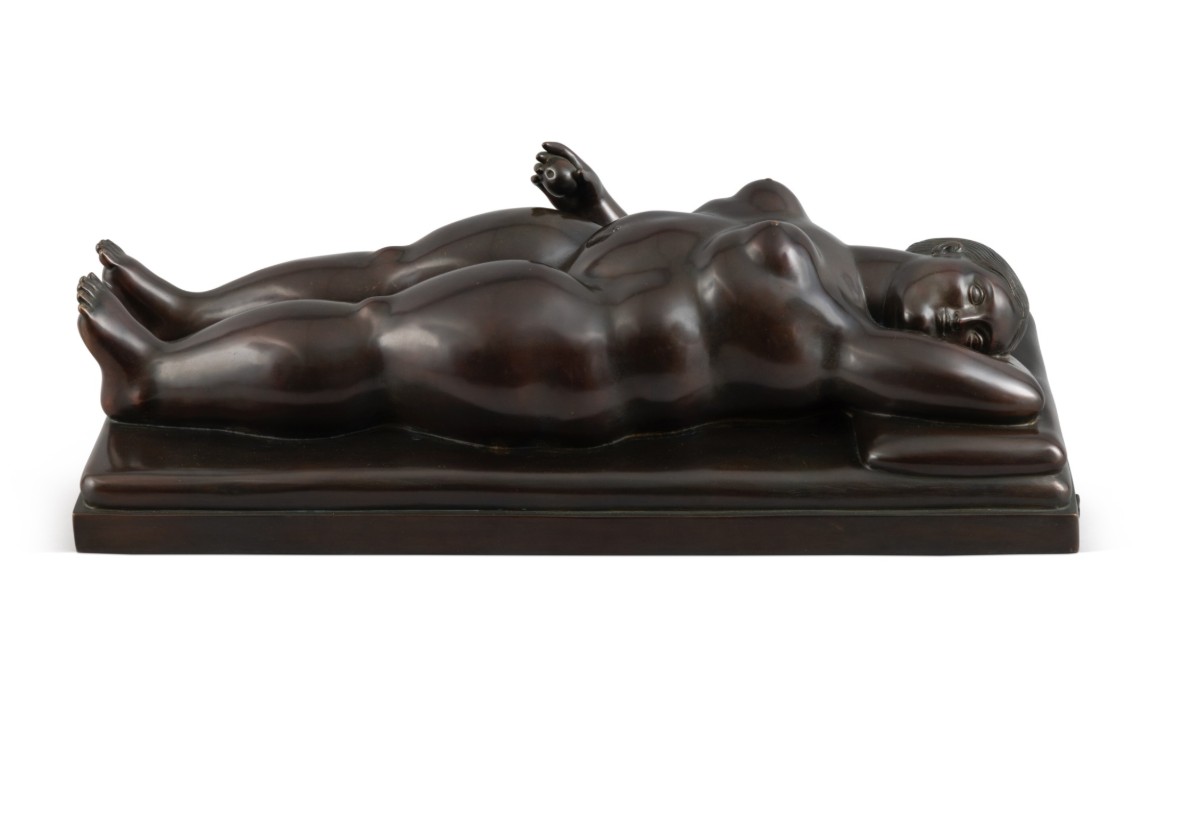
FERNANDO BOTERO (1932 – 2023)
Reclining Woman with Apple, 1988
Bronze
22.9 x 67.3 x 30.5 cm (9 x 26 1/2 x 12 inches)
Incised with the artist’s signature and number 1/6 (lower edge)
This work is number 1 from an edition of 6
#13. Maternity
Christie’s London: 26 June 2025
Estimated: GBP 120,000 – 180,000
GBP 239,400 / USD 327,980
FERNANDO BOTERO (1932-2023), Maternity | Christie’s
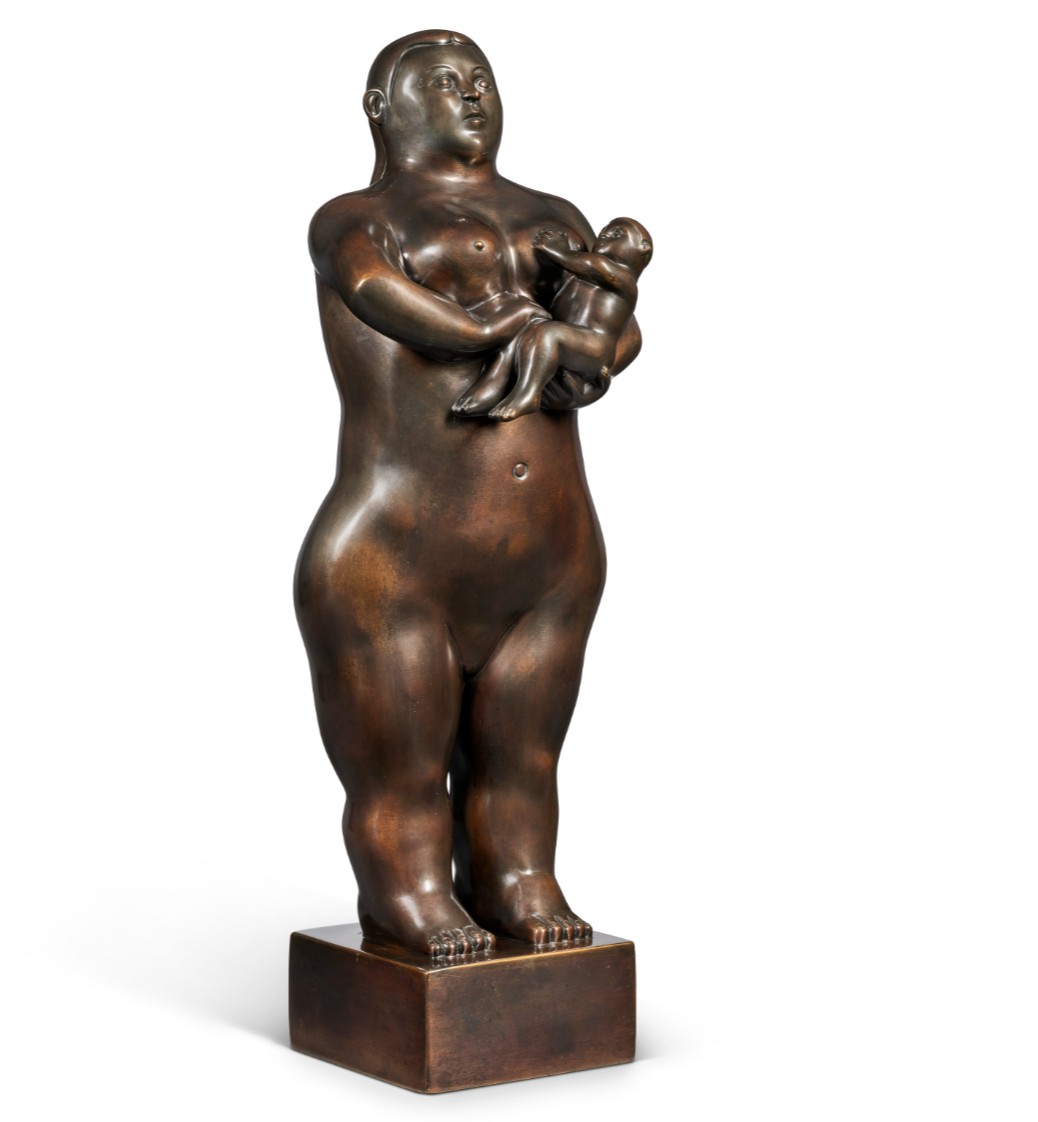
FERNANDO BOTERO (1932-2023)
Maternity
Bronze
63.3 x 21.1 x 17.9 cm (24 7/8 x 8 1/2 x 7 1/4 inches)
Signed and numbered ‘Botero 1⁄6’ (on the reverse of the base)
This work is number one from an edition of six
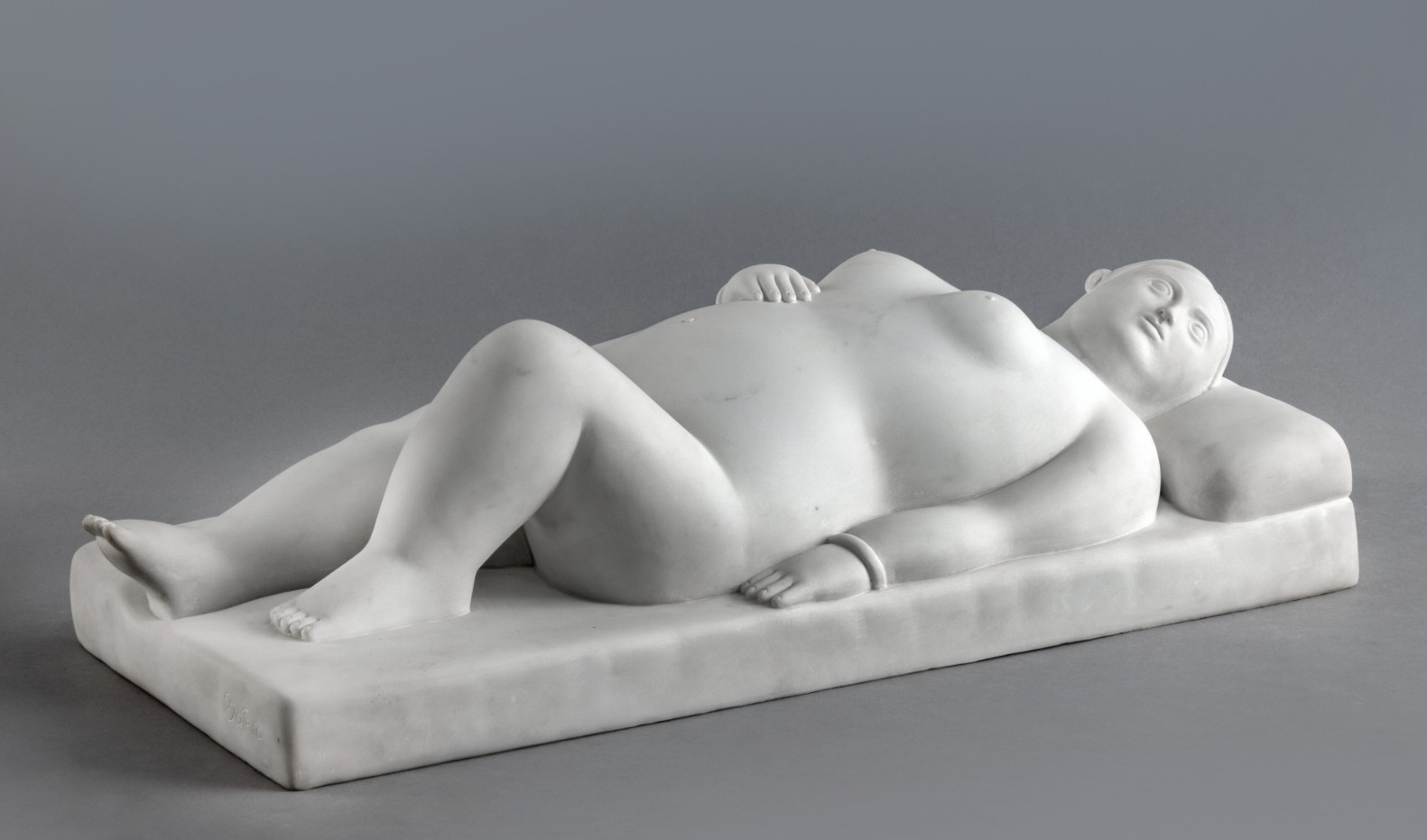
#14. Reclining Woman on a Pillow, 2010
Sotheby’s New-York: 19 November 2025
Estimated: USD 250,000 – 300,000
USD 279,400
Reclining Woman on a Pillow | Contemporary Day Auction | 2025 | Sotheby’s
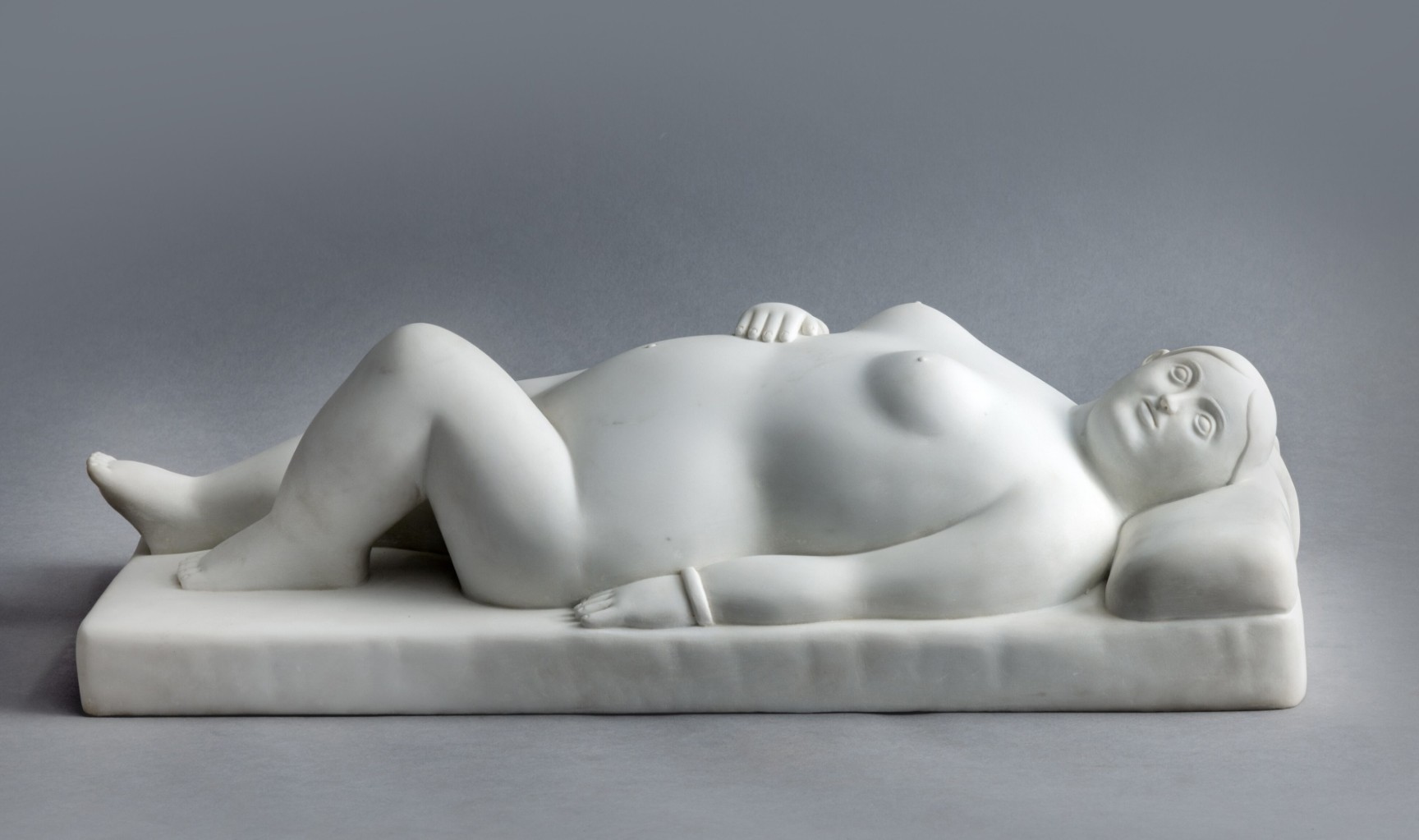
FERNANDO BOTERO (1932 – 2023)
Reclining Woman on a Pillow, 2010
White marble
20.3 x 63.5 x 27.3 cm (8 x 25 x 10 3/4 inches)
Incised with the artist’s signature (lower edge)
This work is unique
#15. Woman with Mirror, 1988
Christie’s New-York: 30 September 2025
Estimated: USD 200,000 – 300,000
USD 241,300
FERNANDO BOTERO (1932-2023), Woman with Mirror | Christie’s
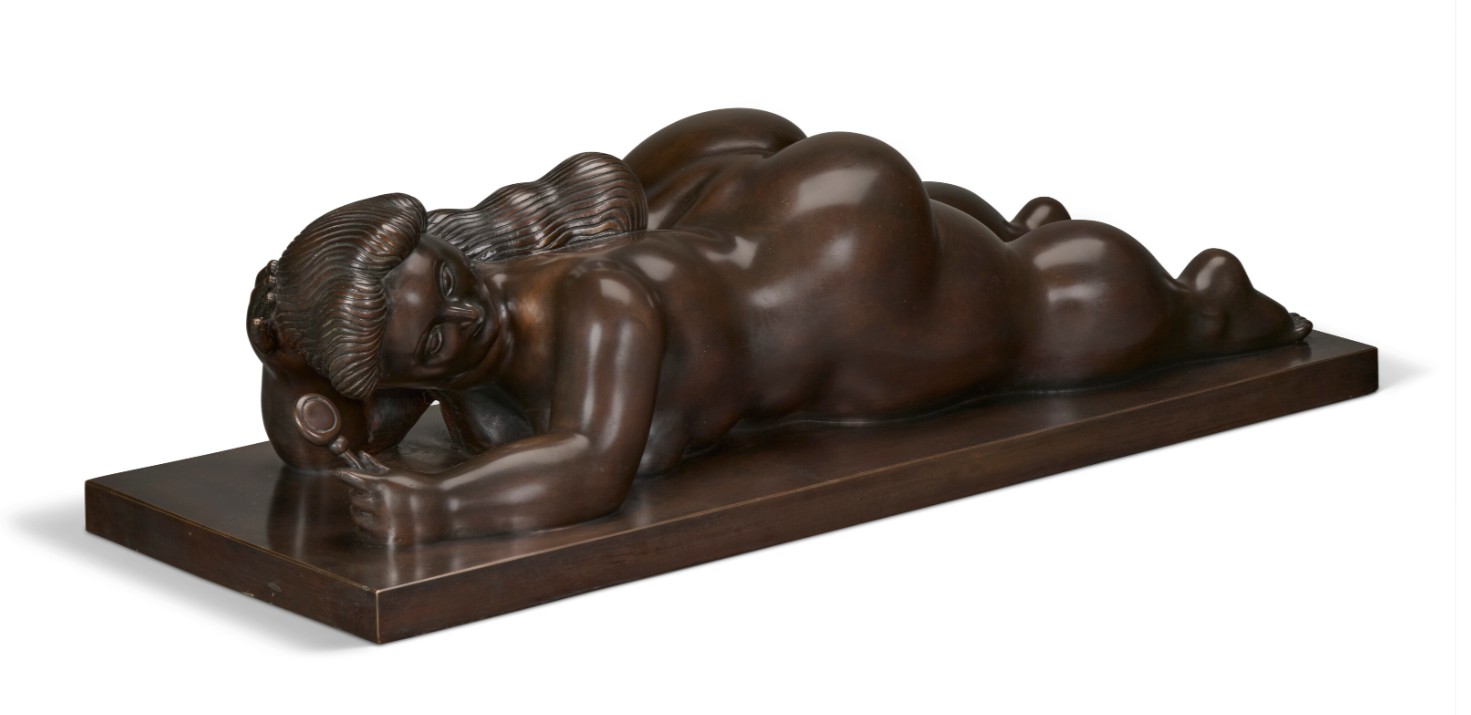
Woman with Mirror, 1988
Bronze
17.8 x 70.5 x 25.4 cm (7 x 27 3/4 x 10 inches)
This work is number four from an edition of six plus two artist’s proofs
#16. Reclining Nude, 1976
Sotheby’s New-York: 19 November 2025
Estimated: USD 150,000 – 200,000
USD 241,300
Reclining Nude | Contemporary Day Auction | 2025 | Sotheby’s
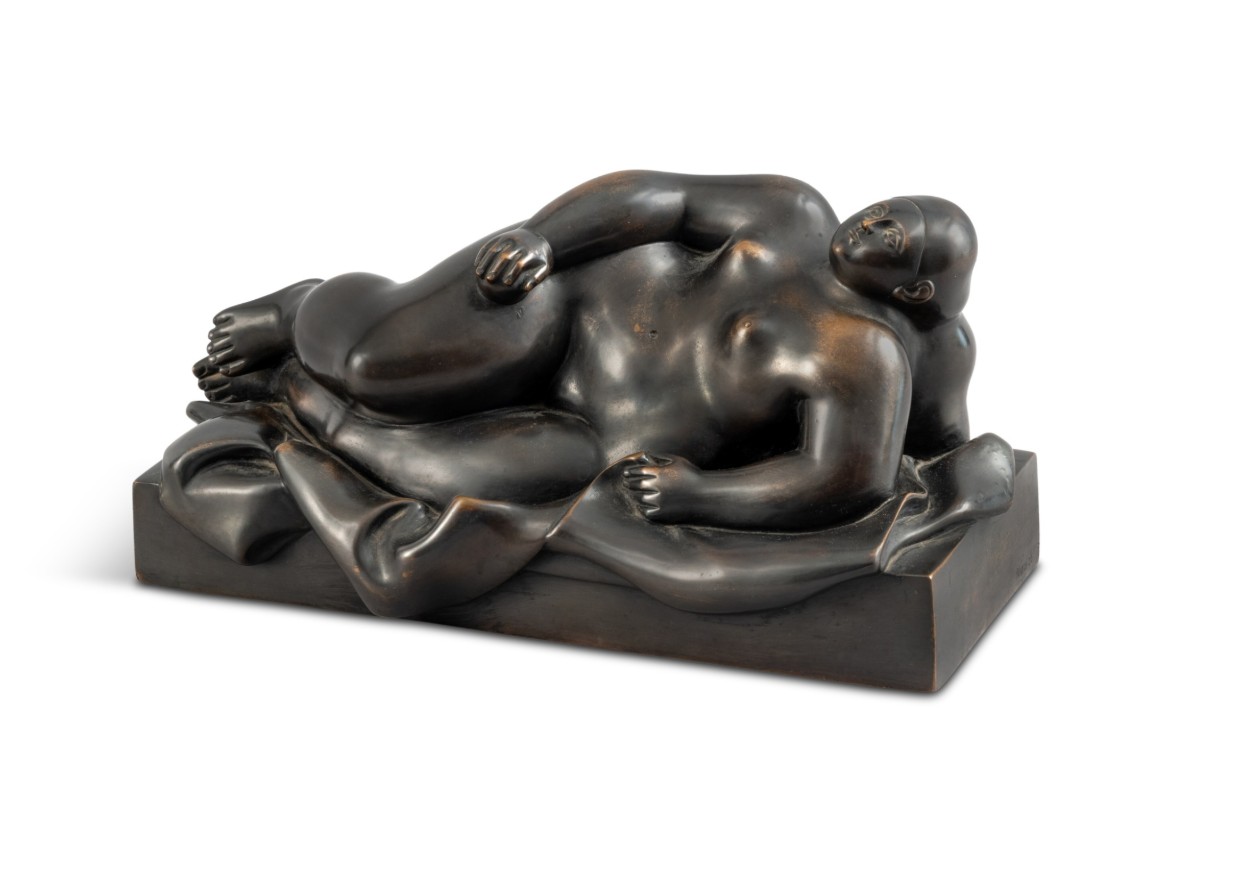
FERNANDO BOTERO (1932 – 2023)
Reclining Nude, 1976
Bronze
17.8 x 34.3 x 16.5 cm (7 x 13 1/2 x 6 1/2 inches)
Incised with the artist’s signature and number 2/6 (lower edge)
This work is number 2 from an edition of 6
Lots Passed
Bishop, 1977
Sotheby’s New-York: 16 May 2025
Estimated: USD 300,000 – 500,000
PASSED
Bishop | Contemporary Day Auction | 2025 | Sotheby’s
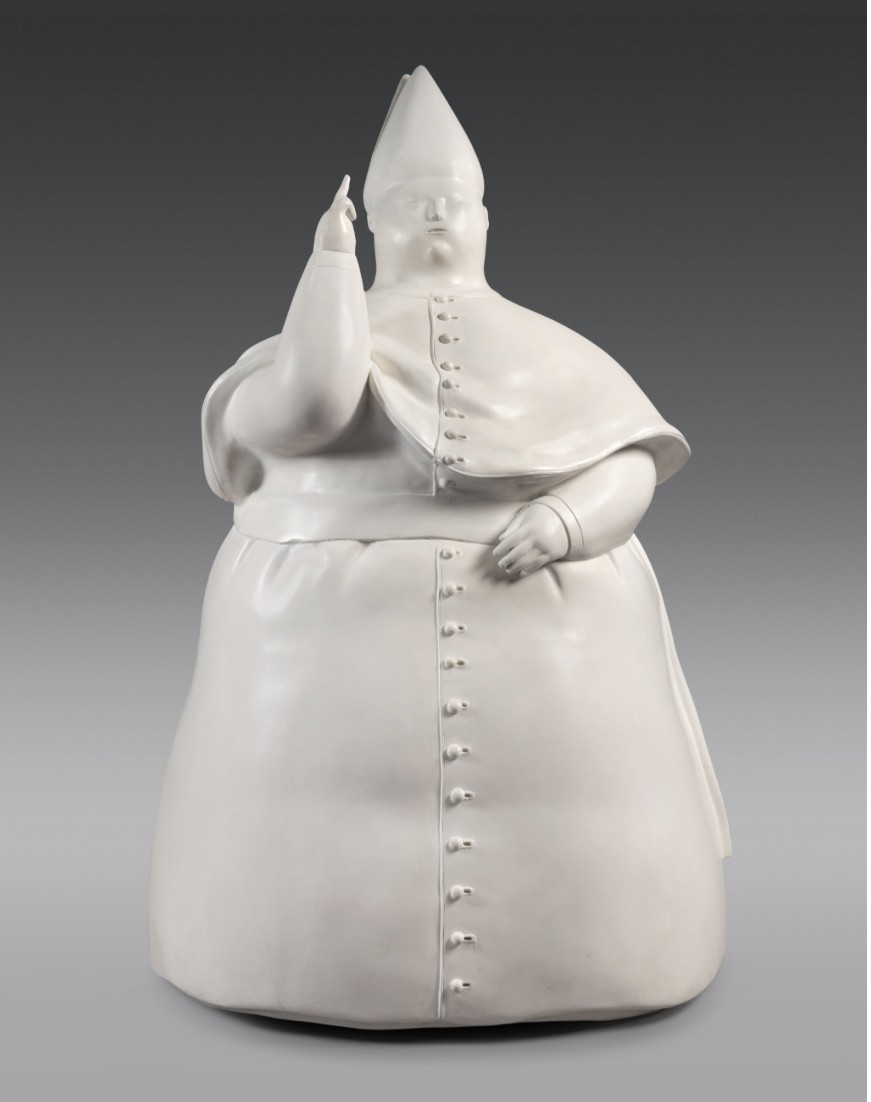
FERNANDO BOTERO (1932 – 2023)
Bishop, 1977
Painted epoxy
127x76x64 cm (50 x 30 x 25 1/8 inches)
Incised with the artist’s signature and number 6/6 (lower edge)
Horse with Saddle, 1995
Christie’s New-York: 28 February 2025
Estimated: USD 350,000 – 550,000
PASSED
FERNANDO BOTERO (1932-2023), Horse with Saddle | Christie’s
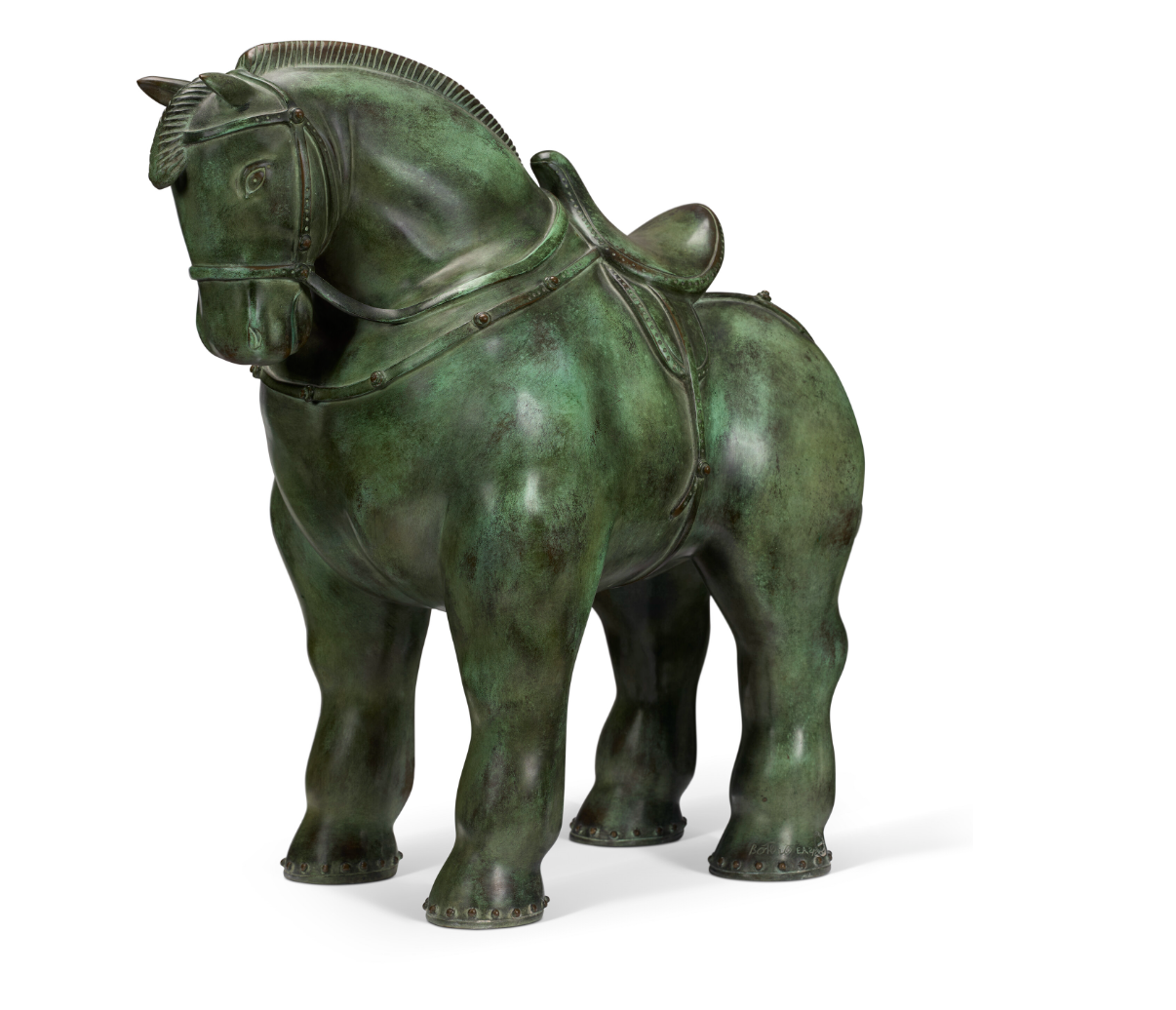
FERNANDO BOTERO (1932-2023)
Horse with Saddle, 1995
Bronze
50.8 x 53.3 x 28 cm (20 x 21 x 11 inches)
Signed and numbered ‘Botero E.A. 2⁄2’ and stamped with foundry mark (on the hind hoof)
This work is artist’s proof two of two (the edition was six)
Man on Horse, 2010
Sotheby’s Diriyah: 8 February 2025
Estimated: USD 1,000,000 – 1,500,000
PASSED
Man on Horse | Origins | 2025 | Sotheby’s
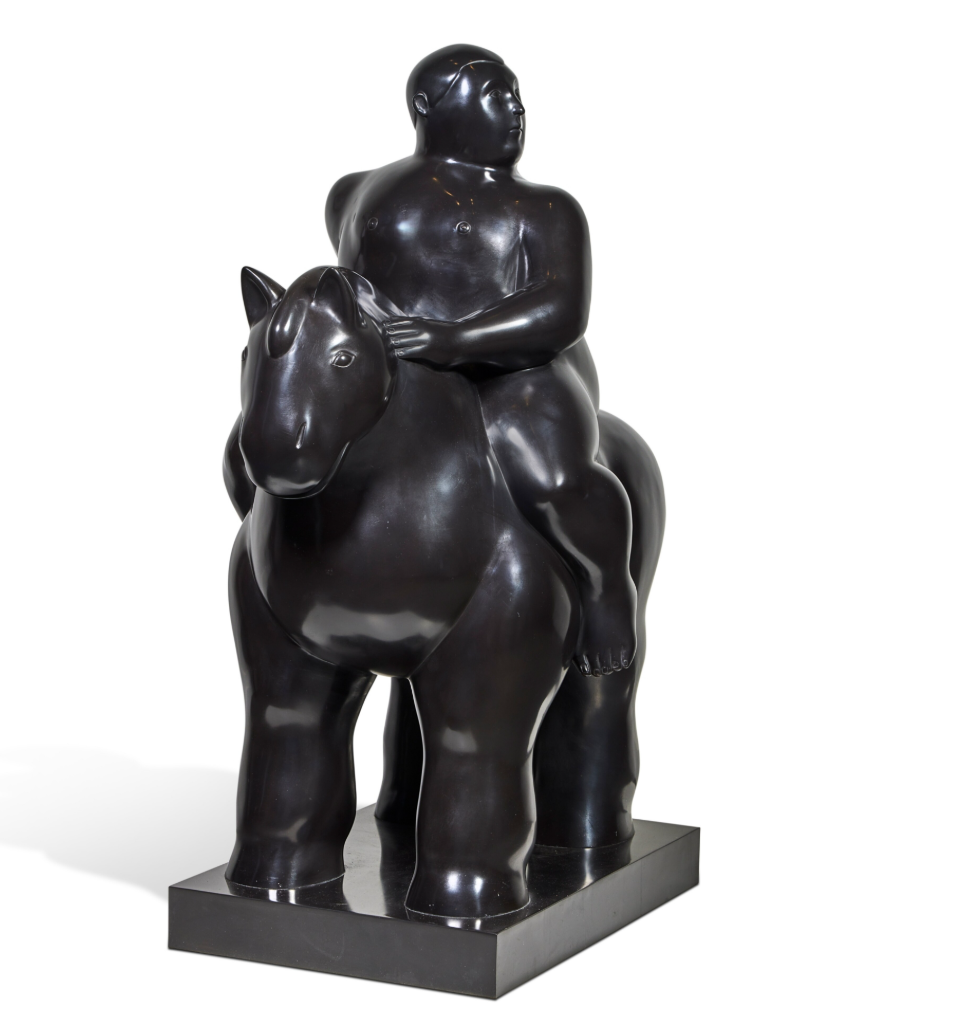
FERNANDO BOTERO (1932 – 2023)
Man on Horse, 2010
Bronze
119.4 x 91.4 x 63.5 cm (47x36x25 inches)
Incised with the artist’s signature Botero and number E/A 1/2 (on the base)
This work is artist proof 1/2 from an edition of 6 plus 2 artist’s proofs
2024 Auction Results
22 lots sold at auction in 2024 for a total turnover of USD 19,017,085. With 7 lots failing to sell, the sell-through rate is 85%. The highest price has been achieved at Sotheby’s in New-York on 20 November 2024, when Horse, a Bronze dated 1992, sold for USD 4,920,000, a new world auction record for a sculpture of the artist.
2024 Top 3 Lots
#1. Horse, 1992
Sotheby’s New-York: 20 November 2024
Estimated: USD 3,000,000 – 5,000,000
USD 4,920,000
NEW WORLD AUCTION RECORD FOR THE ARTIST
Horse | The Now and Contemporary Evening Auction | 2024 | Sotheby’s
FERNANDO BOTERO (1932 – 2023)
Horse, 1992
Bronze
304.8 x 174.6 x 229.9 cm (120 x 68 3/4 x 90 1/2 inches)
Incised with the artist’s signature, numbered E.A. 1/2 and stamped with the foundry mark (on the base)
This work is artist’s proof 1 from an edition of 3 plus 2 artist’s proofs
#2. Dancers, 2000
Christie’s New-York: 12 March 2024
Estimated: USD 1,500,000 – 2,500,000
USD 3,922,000
FERNANDO BOTERO (1932-2023), Dancers | Christie’s (christies.com)
FERNANDO BOTERO (1932-2023)
Dancers, 2000
Bronze
261.6 (H) x 165.1 (W) x 74.6 (D) cm (103 x 65 x 29 3/8 inches)
Signed, dated and numbered ‘Botero, 2000, 2⁄3’ and stamped with foundry mark (on the base)
Edition two of three
#3. Man on Horseback, 1985
Sotheby’s New-York: 14 May 2024
Estimated: USD 600,000 – 800,000
USD 1,016,000
Man on Horseback | Contemporary Day Auction | 2024 | Sotheby’s (sothebys.com)

FERNANDO BOTERO (1932 – 2023)
Man on Horseback, 1985
Bronze
42x20x32 inches (106.7 x 50.8 x 81.3 cm)
Incised with the artist’s signature and number 5/6 and stamped with the foundry mark (on the rear hoof)
USD 1 million
#4. Caballo con brida, 2013
Sotheby’s New-York: 21 November 2024
Estimated: USD 800,000 – 1,200,000
USD 960,000
Caballo con brida | Contemporary Day Auction | 2024 | Sotheby’s
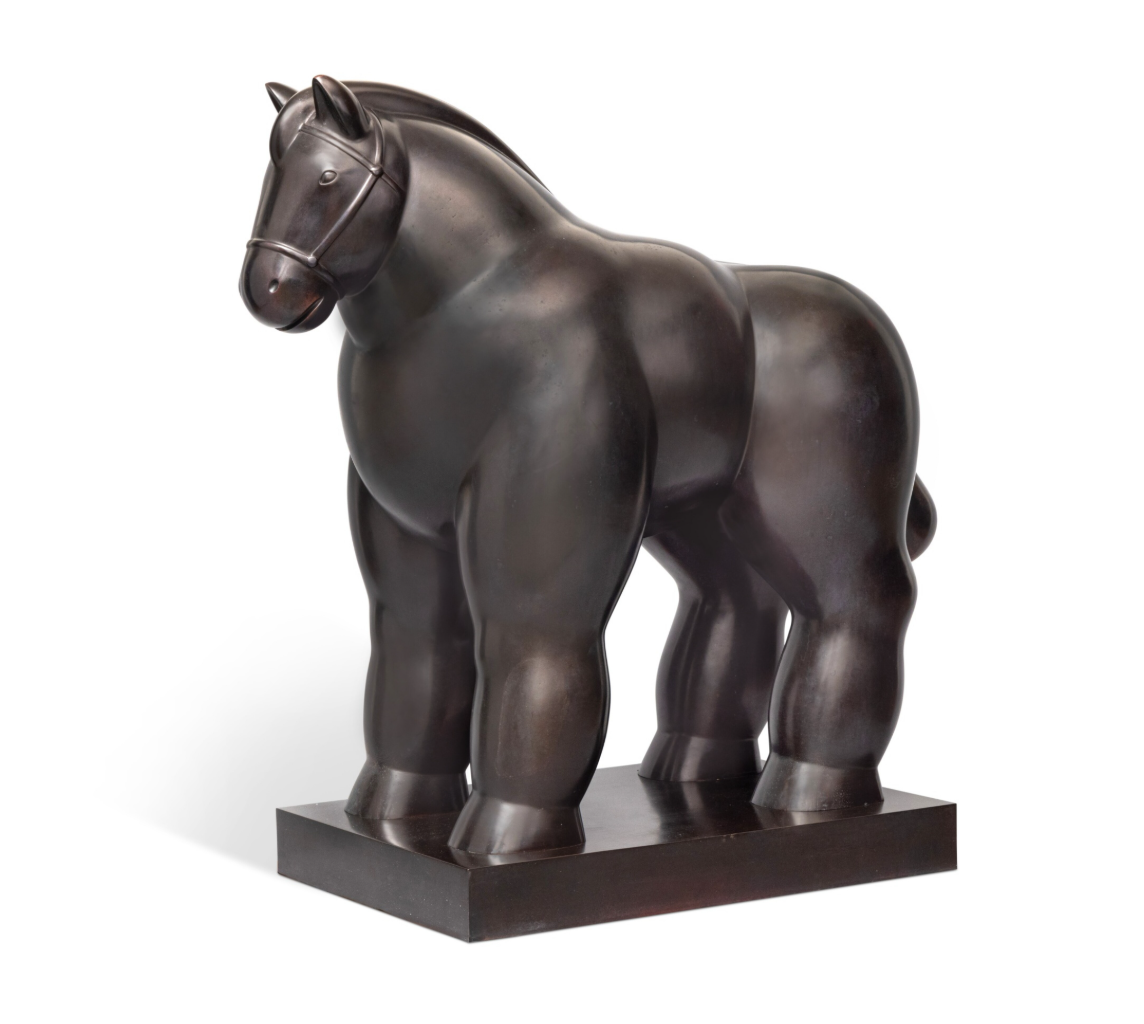
FERNANDO BOTERO (1932 – 2023)
Caballo con brida, 2013
Bronze
97x85x48 cm (38 1/4 x 33 1/2 x 19 inches)
Incised with the artist’s signature and number 4/6 and stamped with the foundry mark (on the base)
#5. Roman Soldier, 1985
Christie’s New-York: 12 March 2024
Estimated: USD 600,000 – 800,000
USD 756,000
FERNANDO BOTERO (1932-2023), Roman Soldier | Christie’s (christies.com)
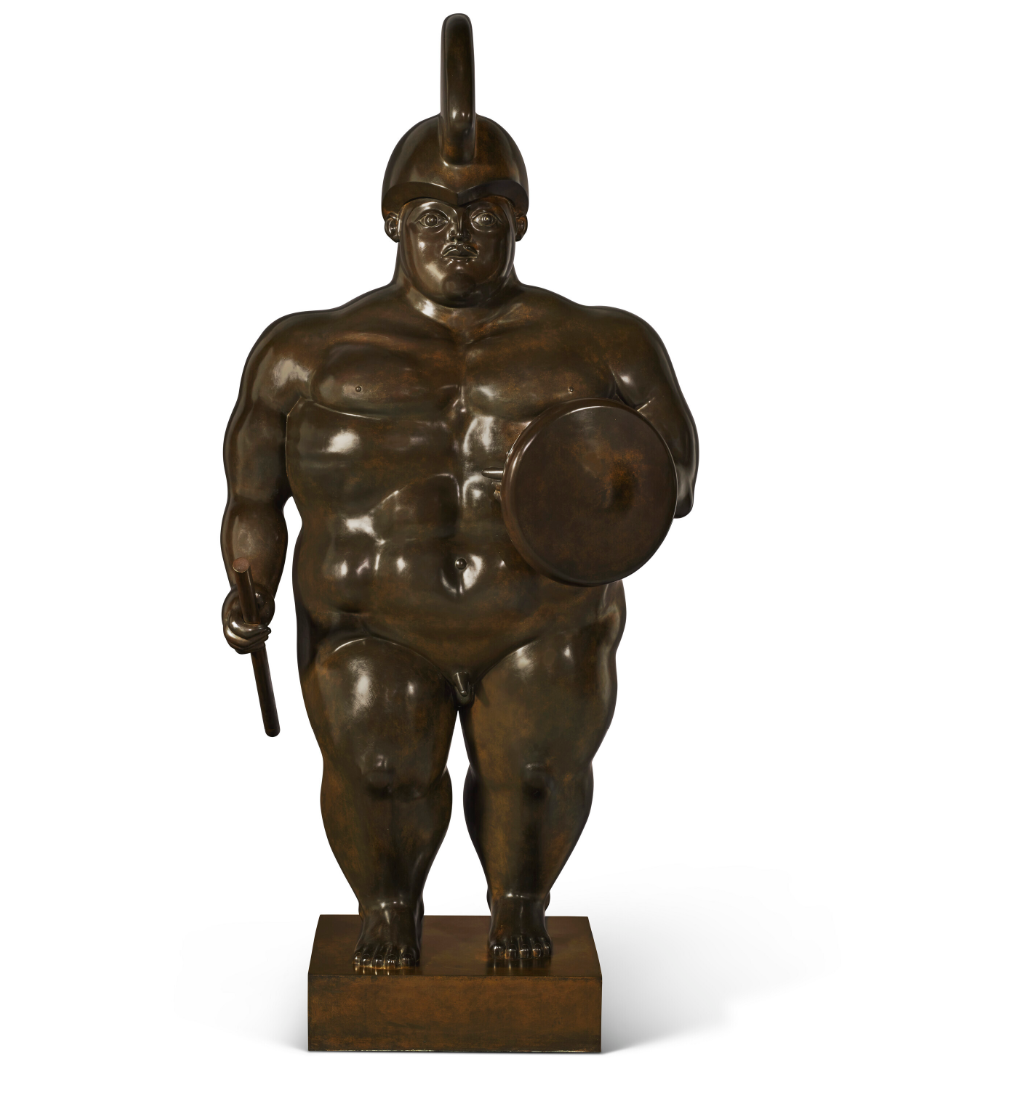
FERNANDO BOTERO (1932-2023)
Roman Soldier, 1985
Bronze
189.2 (H) x 91.4 (W) x 71.1 (D) cm (74 1/2 x 36 x 28 inches)
Signed and numbered ‘Botero, 2⁄6’ and stamped with foundry mark (on the base)
Edition two of six
#6. Standing Woman with Fruit, 2018
Sotheby’s New-York: 14 May 2024
Estimated: USD 700,000 – 900,000
USD 698,500
Standing Woman with Fruit | Contemporary Day Auction | 2024 | Sotheby’s (sothebys.com)

FERNANDO BOTERO (1932 – 2023)
Standing Woman with Fruit, 2018
Bronze
56 x 21 x 19 1/2 inches (142.2 x 53.3 x 49.5 cm)
Incised with the artist’s signature and number 1/6 and stamped with foundry mark (on the base)
#7. Man on a Horse, 2009
Christie’s New-York: 2 October 2024
Estimated: USD 350,000 – 450,000
USD 604,800
FERNANDO BOTERO (1932-2023), Man on a Horse | Christie’s (christies.com)
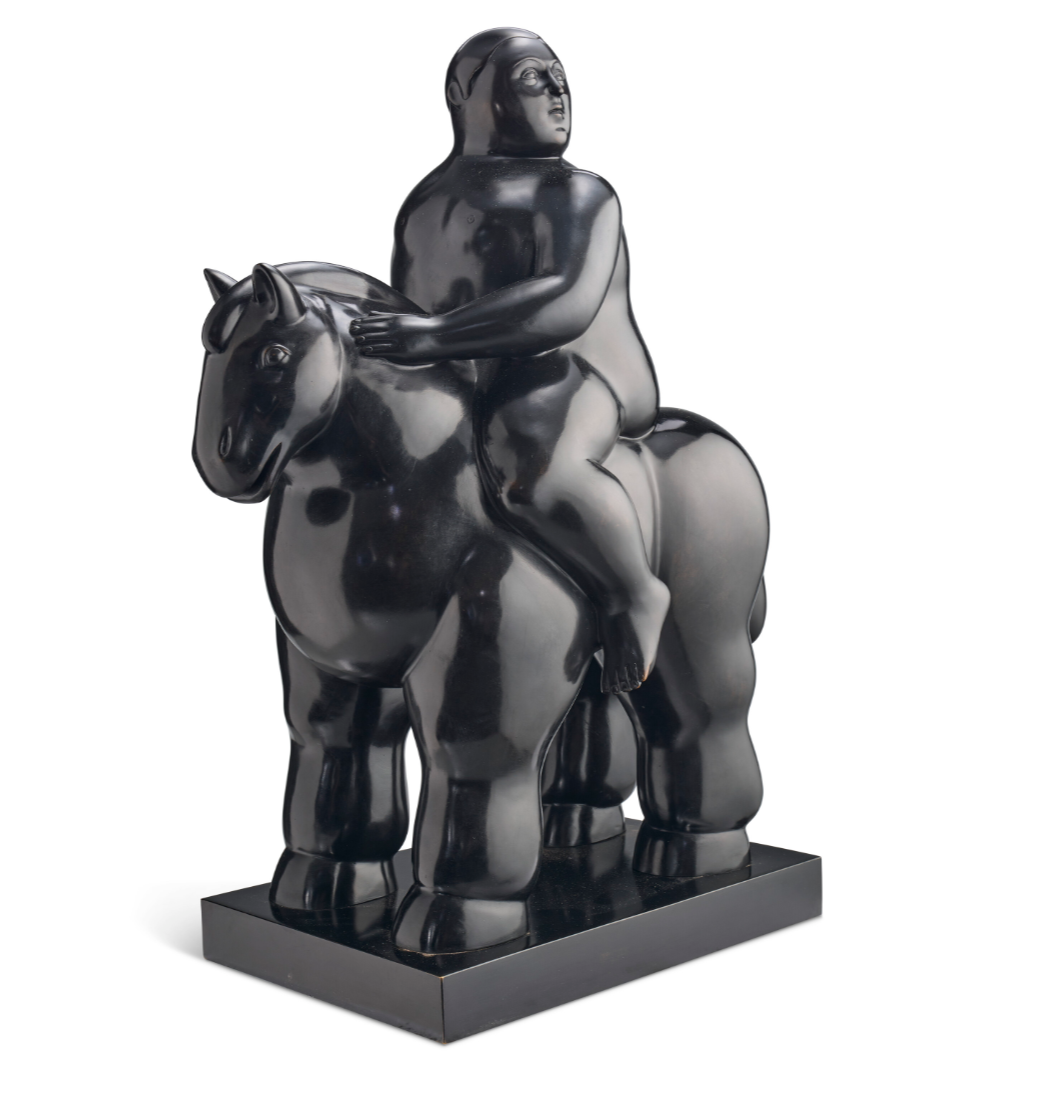
FERNANDO BOTERO (1932-2023)
Man on a Horse, 2009
Bronze
47 x 24.1 x 58.4 cm (18 1/2 x 9 1/2 x 23 inches)
Signed ‘Botero 4⁄6’ (on the base)
This work is numbered four from an edition of six plus two artist’s proofs
#8. Pedro on a Horse, 1977
Sotheby’s New-York: 14 May 2024
Estimated: USD 500,000 – 700,000
USD 571,500
Pedro on a Horse | Contemporary Day Auction | 2024 | Sotheby’s (sothebys.com)

FERNANDO BOTERO (1932 – 2023)
Pedro on a Horse, 1977
Painted epoxy and resin with synthetic hair and leather
153x90x80 cm (60 1/4 x 35 1/2 x 31 1/2 inches)
Incised with the artist’s signature and number 2/6 (on the rear hoof)
#9. Eve, 1995
Sotheby’s New-York: 1 March 2024
Estimated: USD 350,000 – 450,000
USD 508,000
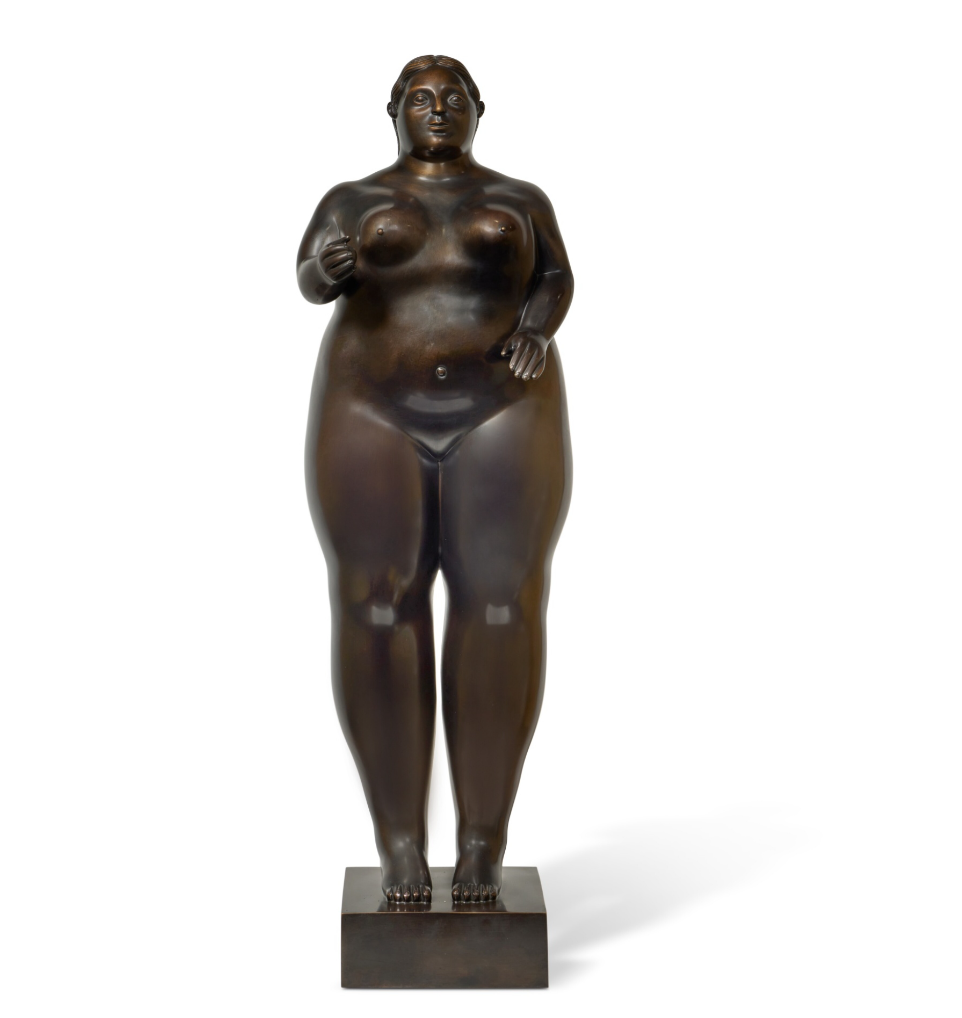
FERNANDO BOTERO (1932 – 2023)
Eve, 1995
Bronze
86.4 x 25.4 x 25.4 cm (34x10x10 inches)
Incised with the artist’s signature Botero
Numbered 5/6 and stamped with the foundry mark (on the base)
#10. Eve, 2007
Christie’s New-York: 2 October 2024
Estimated: USD 400,000 – 600,000
USD 504,000
FERNANDO BOTERO (1932-2023), Eve | Christie’s (christies.com)
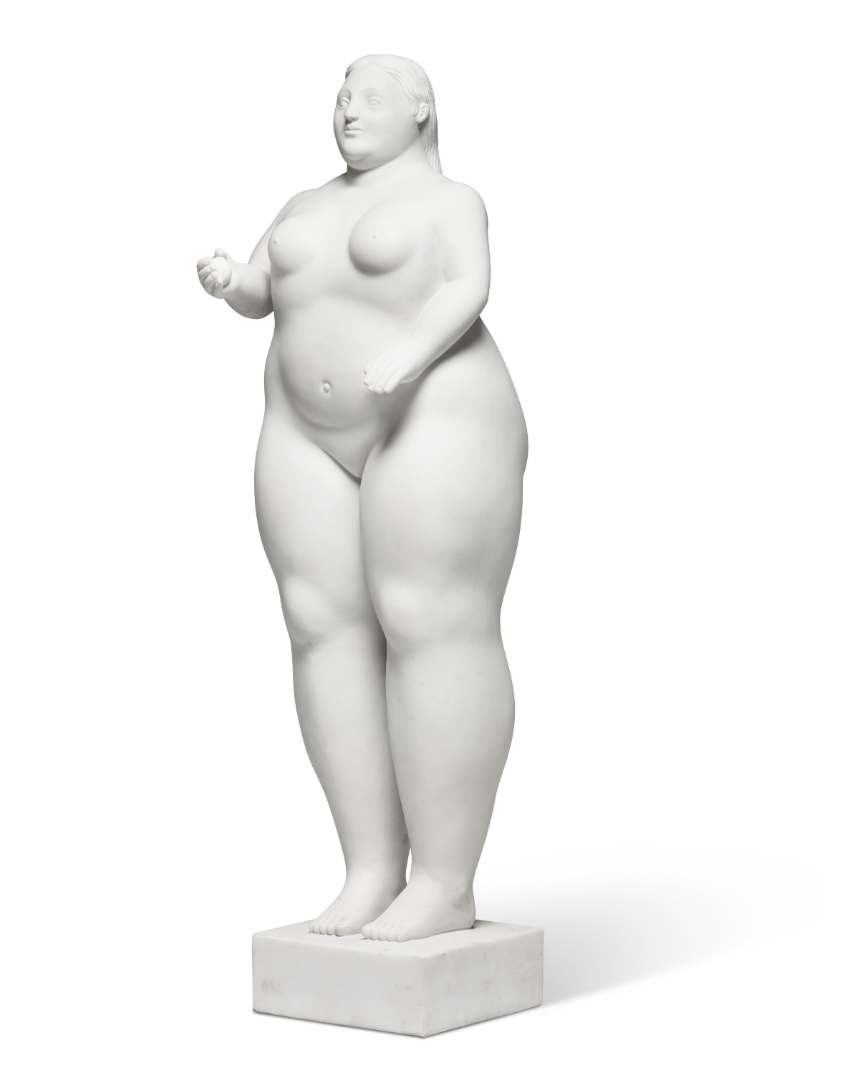
FERNANDO BOTERO (1932-2023)
Eve, 2007
White Carrara marble
90.2 x 25.4 x 19.1 cm (35 1/2 x 10 x 7 1/2 inches)
Signed ‘BOTERO’ (on the base)
USD 500,000
#11. Gato, 1999
Sotheby’s New-York: 14 May 2024
Estimated: USD 400,000 – 600,000
USD 482,600
Gato | Contemporary Day Auction | 2024 | Sotheby’s (sothebys.com)

FERNANDO BOTERO (1932 – 2023)
Gato, 1999
Bronze
54x31x33 cm (21 1/4 x 14 x 13 inches)
Incised with the artist’s signature and number 5/6 (on the base)
#12. Familia
Sotheby’s New-York: 1 March 2024
Estimated: USD 180,000 – 250,000
USD 444,500
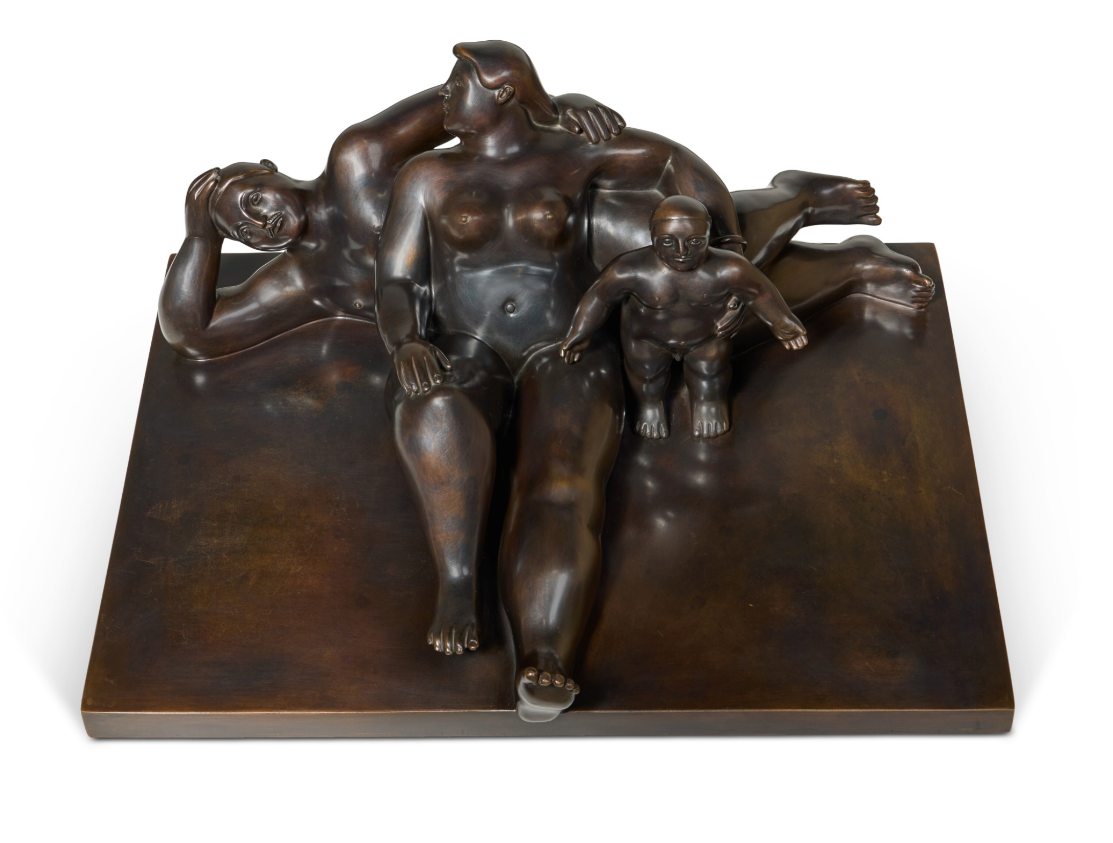
FERNANDO BOTERO (1932 – 2023)
Familia
Bronze
23x54x38 cm (9 x 21 1/4 x 15 inches)
Incised with the artist’s signature Botero
Numbered 4/6 and stamped with the foundry mark (on the base)
#13. Rape of Europa, 1995
Sotheby’s New-York: 21 November 2024
Estimated: USD 350,000 – 450,000
USD 444,000
Rape of Europa | Contemporary Day Auction | 2024 | Sotheby’s
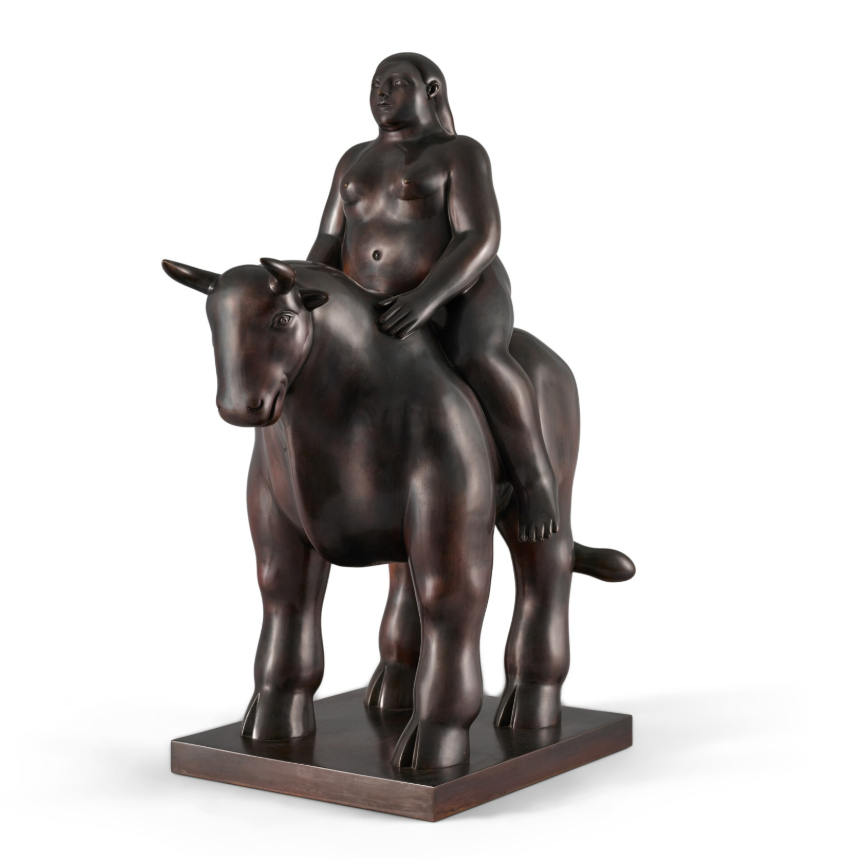
FERNANDO BOTERO (1932 – 2023)
Rape of Europa, 1995
Bronze
62.8 x 31 x 45 cm (24 3/4 x 12 1/4 x 17 3/4 inches)
Incised with the artist’s signature and number 5/6 and stamped with the foundry mark (on the base)
#14. Woman on a Horse
Christie’s New-York: 2 October 2024
Estimated: USD 300,000 – 400,000
USD 441,000
FERNANDO BOTERO (1932-2023), Woman on a Horse | Christie’s (christies.com)
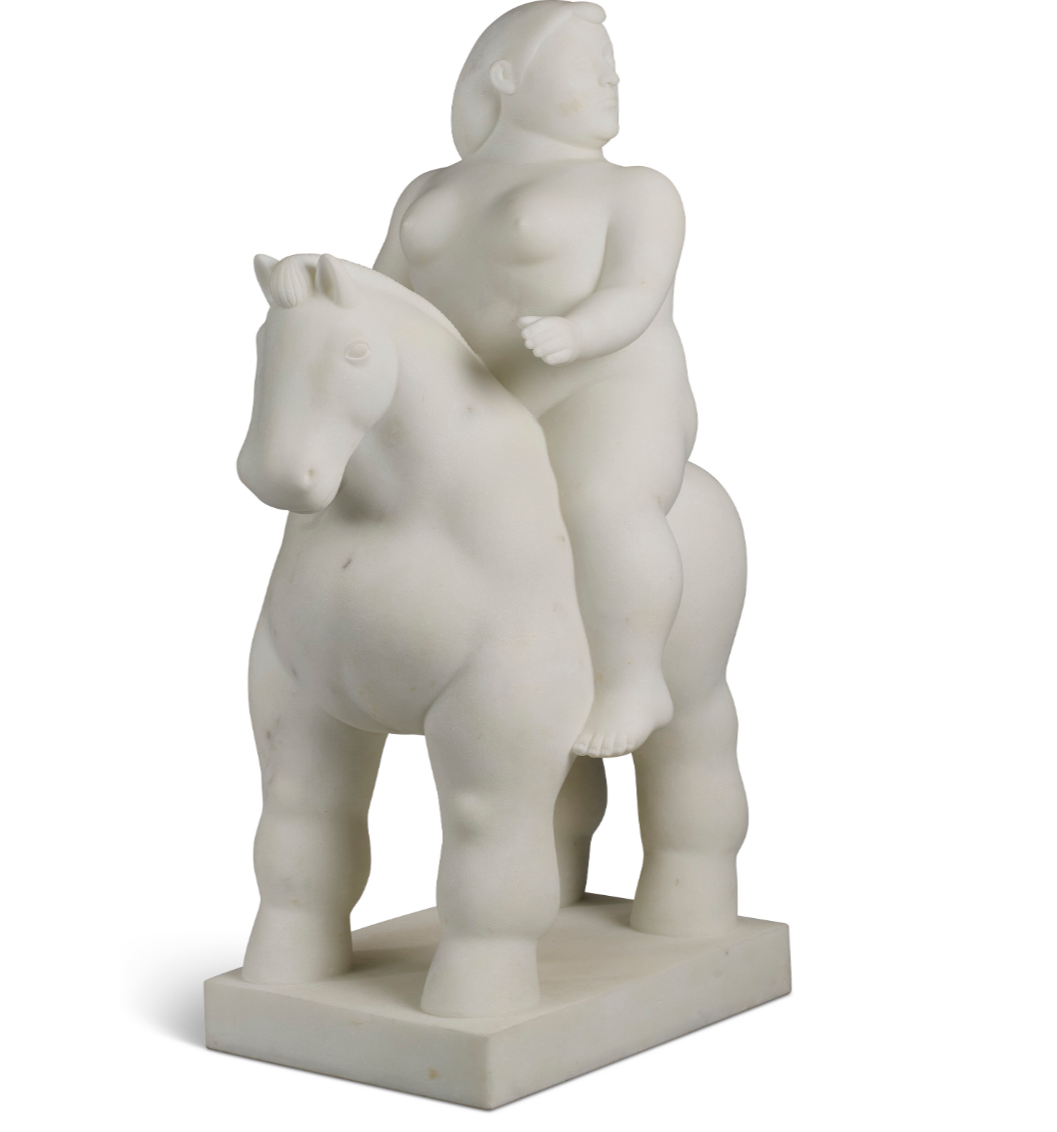
FERNANDO BOTERO (1932-2023)
Woman on a Horse
White Carrara marble
66 x 43.2 x 27.9 cm (26x17x11 inches)
Signed ‘Botero’ (on the base)
#15. Hombre que fuma, 1976
Christie’s New-York: 12 March 2024
Estimated: USD 100,000 – 150,000
USD 428,400
FERNANDO BOTERO (1932-2023), Hombre que fuma | Christie’s (christies.com)
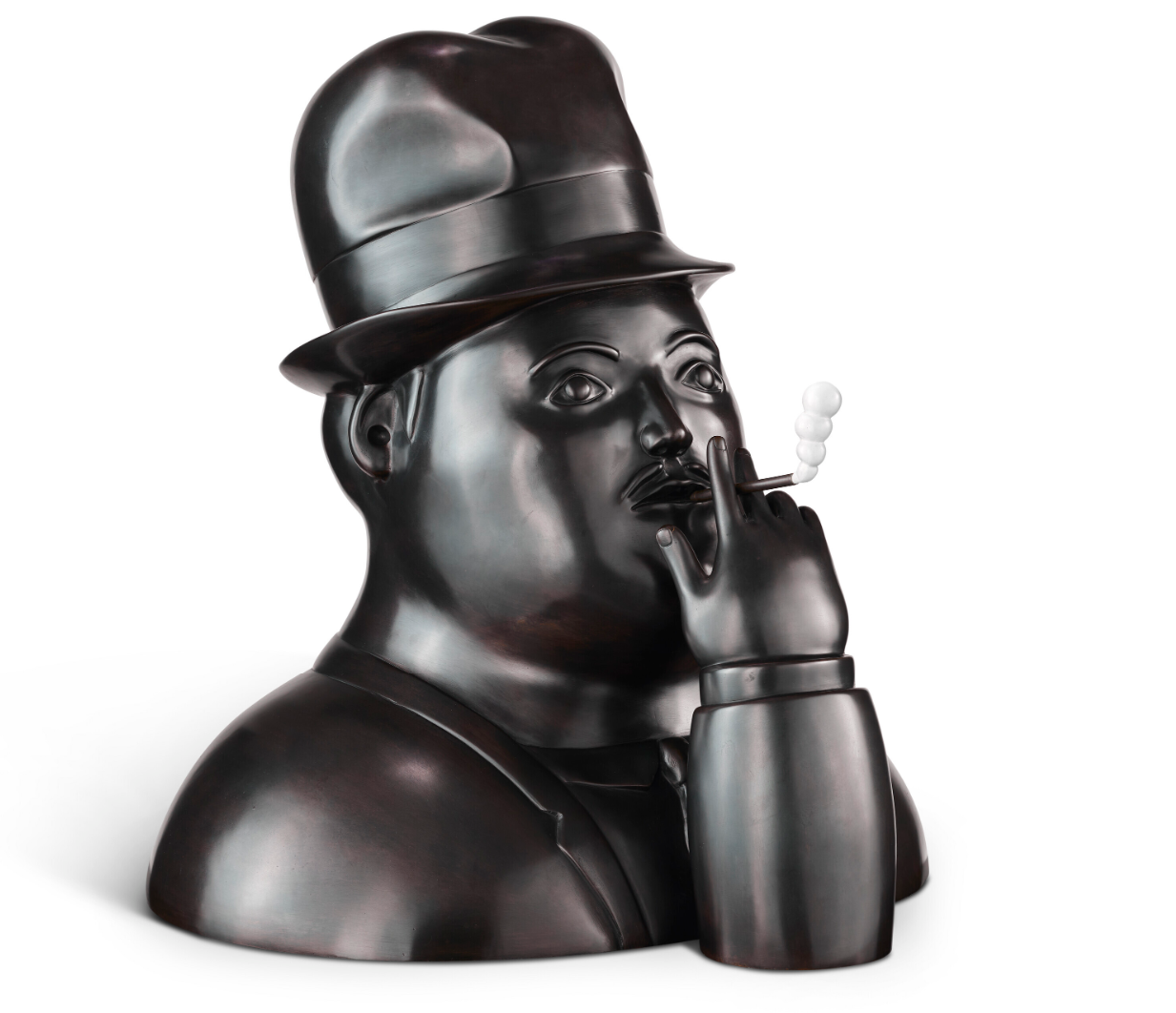
FERNANDO BOTERO (1932-2023)
Hombre que fuma, 1976
Bronze, in three parts
54.6 (H) x 50.8 (W) x 49.5 (D) cm (21 1/2 x 20 x 19 1/2 inches)
Overall dimensions variable
Signed and numbered ‘Botero, 3⁄6’ and stamped with foundry mark (on the base)
Edition three of six
#16. Seated Woman
Christie’s New-York: 12 March 2024
Estimated: USD 400,000 – 600,000
USD 403,200
FERNANDO BOTERO (1932-2023), Seated Woman | Christie’s (christies.com)
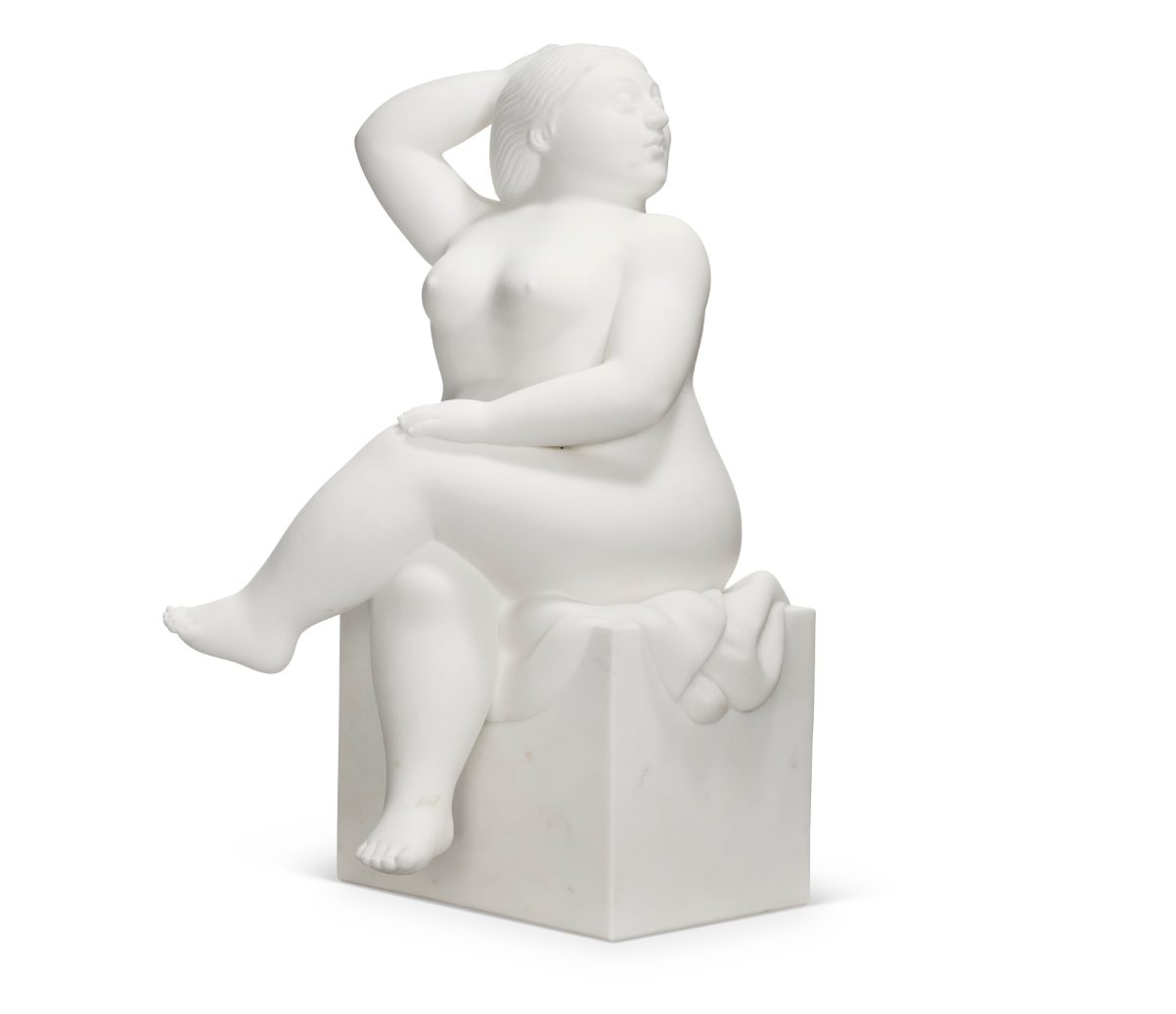
FERNANDO BOTERO (1932-2023)
Seated Woman
White Carrara marble
48.3 (H) x 26.7 (W) x 33 (D) cm (19 x 10 1/2 x 13 inches)
Signed ‘Botero’ (on the base)
#17. Donna sul letto, 1998
Sotheby’s New-York: 14 May 2024
Estimated: USD 250,000 – 350,000
USD 381,000
Donna sul letto | Contemporary Day Auction | 2024 | Sotheby’s (sothebys.com)

FERNANDO BOTERO (1932 – 2023)
Donna sul letto, 1998
Bronze
33 x 62.2 x 30.5 cm (13 x 24 1/2 x 12 inches)
Incised with the artist’s signature and number E.A. 1/2 and stamped with the foundry mark (on the base)
This work is number 1 of 2 artist’s proofs from an edition of 6 plus 2 artist’s proofs
#18. Pedro on a Horse, 1977
Sotheby’s New-York: 21 November 2024
Estimated: USD 350,000 – 450,000
USD 360,000
Pedro on a Horse | Contemporary Day Auction | 2024 | Sotheby’s
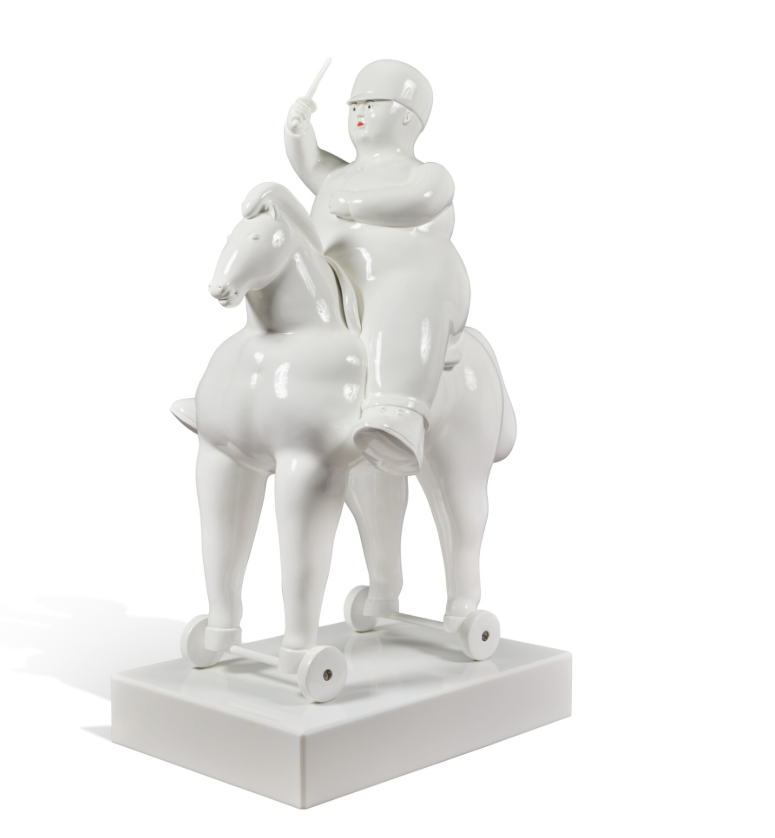
FERNANDO BOTERO (1932 – 2023)
Pedro on a Horse, 1977
Painted epoxy
151.8 x 98.7 x 78 cm (59 3/4 x 38 7/8 x 30 3/4 inches)
Incised with the artist’s signature and number 5/6 (on the rear hoof)
#19. Sonámbula, 2001
Sotheby’s New-York: 1 March 2024
Estimated: USD 250,000 – 350,000
USD 355,600
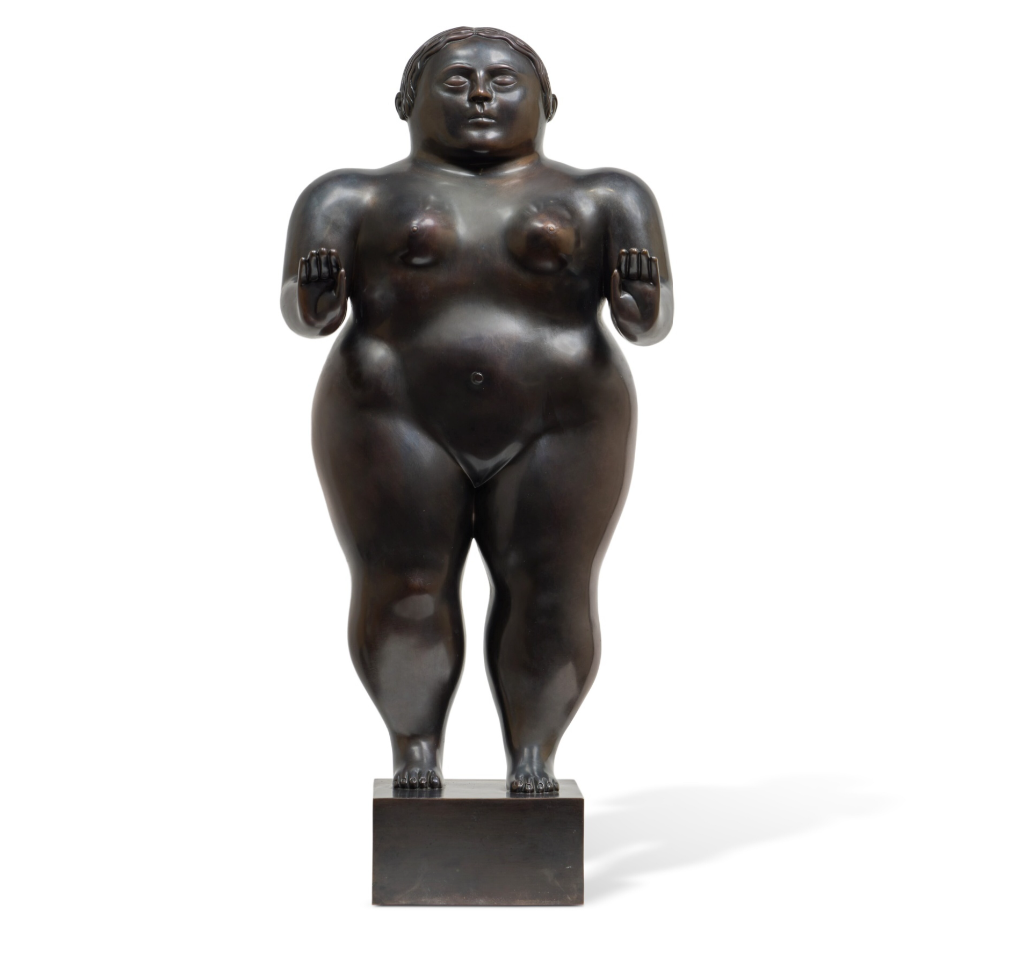
FERNANDO BOTERO (1932 – 2023)
Sonámbula, 2001
Bronze
62.2 x 29.2 x 22.9 cm (24 1/2 x 11 1/2 x 9 inches)
Incised with the artist’s signature Botero
Numbered 2/6 and stamped with the foundry mark (on the base)
#20. Maternidad, 1995
Bonhams London: 11 October 2024
Estimated: GBP 150,000 – 200,000
GBP 254,400 / USD 332,285
Bonhams : FERNANDO BOTERO (1932-2023) Maternidad
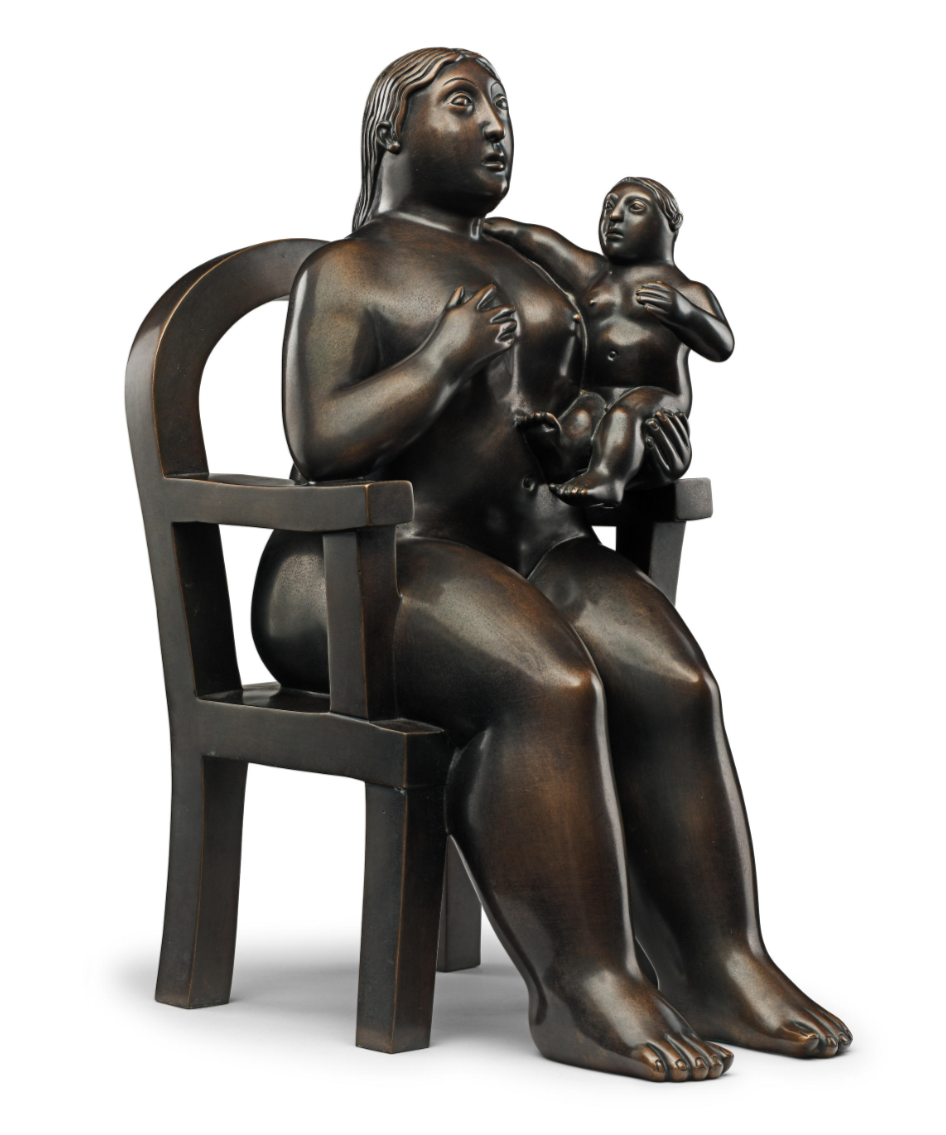
Bronze with brown patina
47 x 19.5 x 32 cm (18 1/2 x 7 11/16 x 12 5/8 inches)
This work is from an edition of 6, plus 2 artist’s proofs
#21. Reclining Woman, 1983
Bonhams New-York: 15 May 2024
Estimated: USD 200,000 – 300,000
USD 267,200
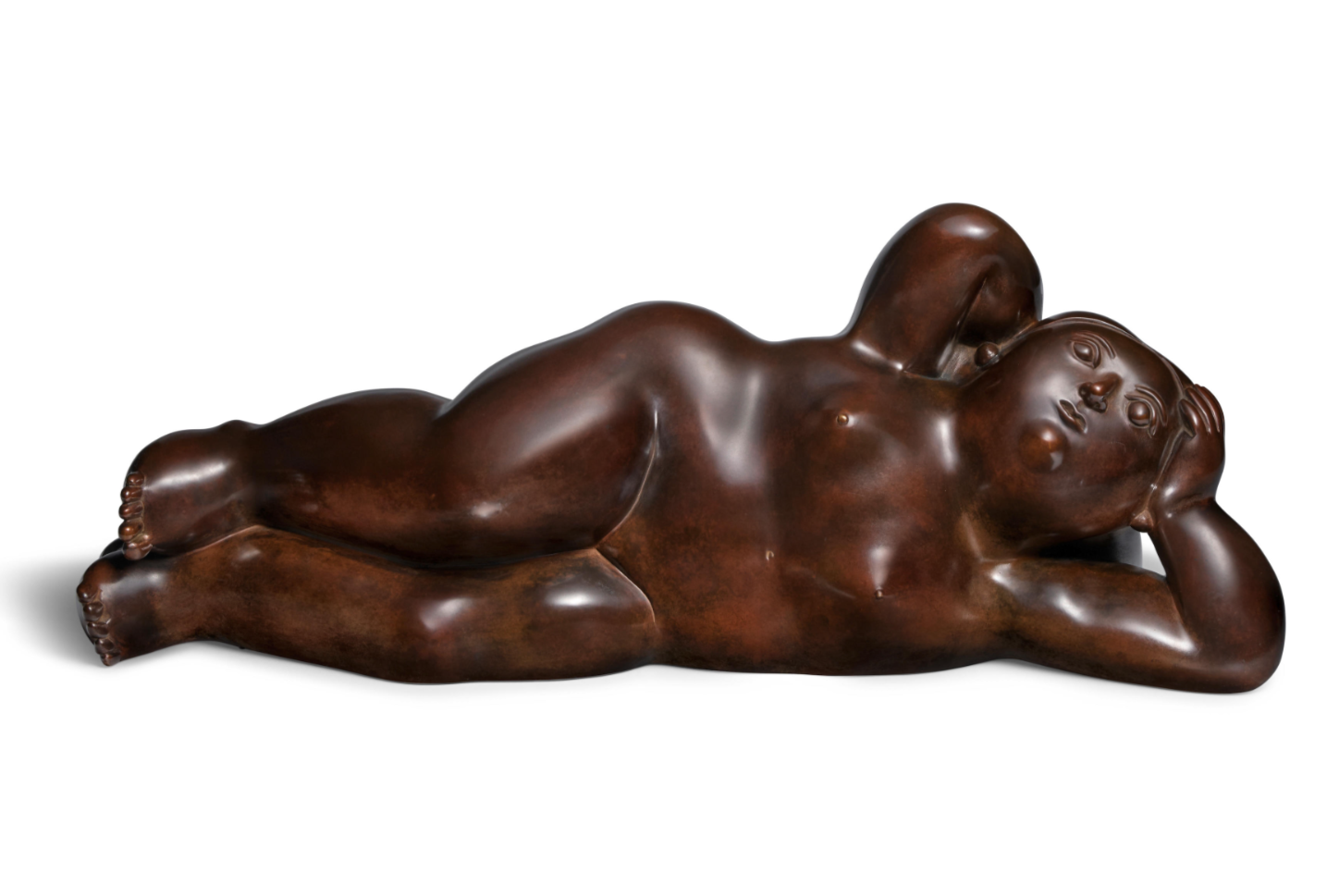
Bronze with brown patina
22.4 x 59.7 x 18 cm (8 6/8 x 23 1/2 x 7 1/8 inches)
Signed, stamped with the foundry mark and numbered ‘Botero 1/9’ (on the back of the thigh)
#22. Dog on a Cushion, 1976
Christie’s New-York: 2 October 2024
Estimated: USD 200,000 – 300,000
USD 220,500
FERNANDO BOTERO (1932-2023), Dog on a Cushion | Christie’s (christies.com)
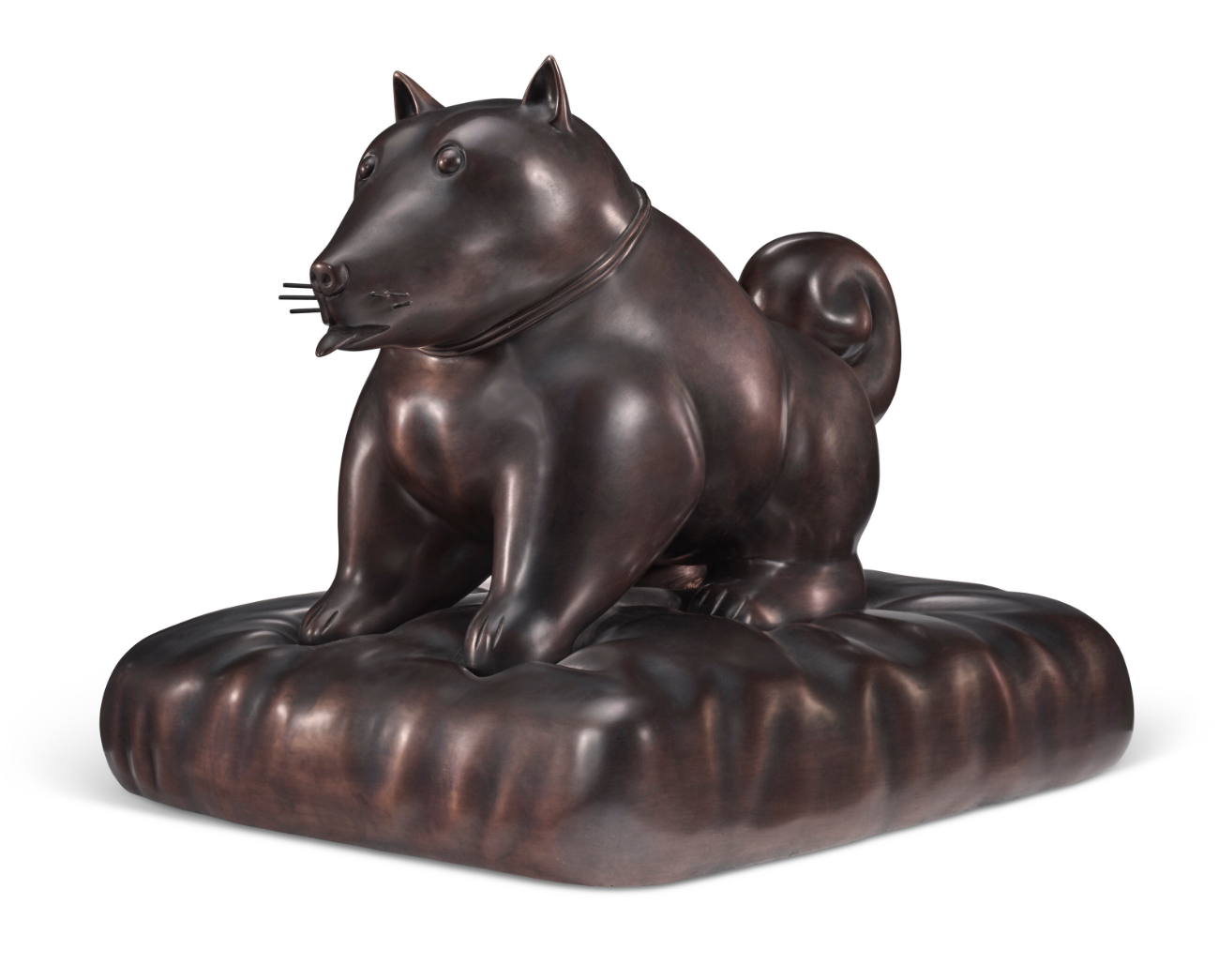
FERNANDO BOTERO (1932-2023)
Dog on a Cushion, 1976
Bronze
35.3 x 36.2 x 38.7 cm (13 7/8 x 14 1/4 x 15 1/4 inches)
Signed and numbered ‘Botero 1⁄2 E/A’ (on the base)
This work is artist’s proof one of two. Edition of six
Lots Passed
Seated Woman, 1981
Christie’s New-York: 12 March 2024
Estimated: USD 200,000 – 300,000
PASSED
https://www.christies.com/en/lot/lot-6471178
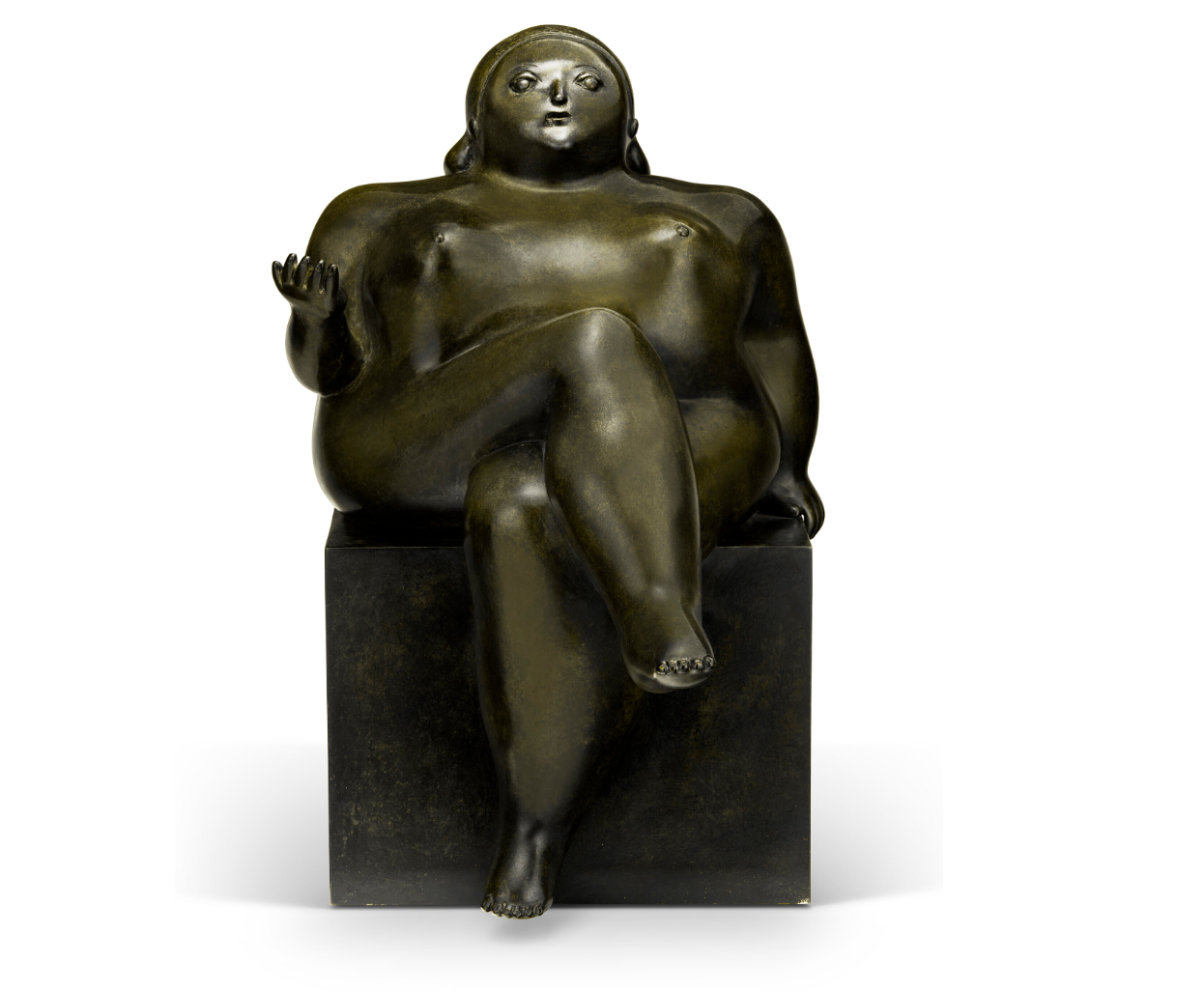
FERNANDO BOTERO (1932-2023)
Seated Woman, 1981
Bronze
41.9 x 25.4 x 32.4 cm (16 1/2 x 10 x 12 3/4 inches)
Signed and numbered ‘Botero, 6⁄9’ and stamped with foundry mark (on the base)
Mujer de pie, 2005
Sotheby’s New-York: 21 November 2024
Estimated: USD 400,000 – 600,000
PASSED
Mujer de pie | Contemporary Day Auction | 2024 | Sotheby’s
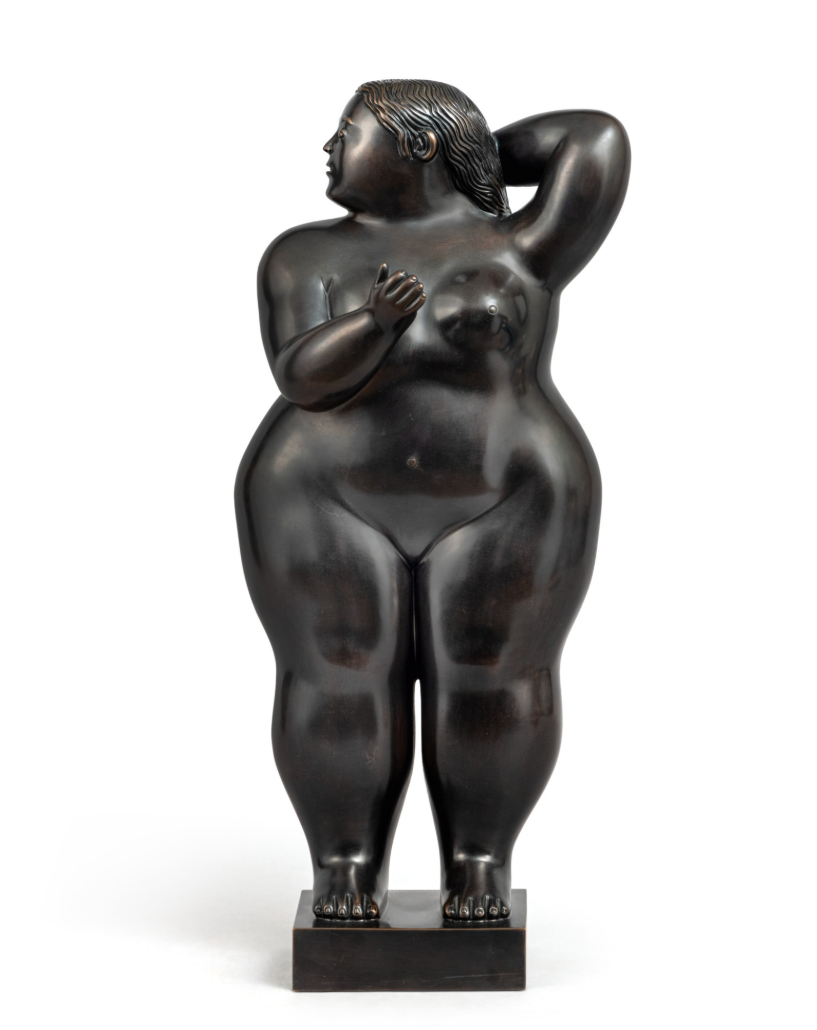
FERNANDO BOTERO (1932 – 2023)
Mujer de pie, 2005
Bronze
68x28x23 cm (26 3/4 x 11 x 9 inches)
Incised with the artist’s signature and number EA 1/2 and stamped with the foundry mark (on the base)
This work is number 1 of 2 artist’s proofs from an edition of 6 plus 2 artist’s proofs
Woman on a Horse, 1991
Christie’s New-York: 22 November 2024
Estimated: USD 300,000 – 400,000
PASSED
FERNANDO BOTERO (1932-2023), Woman on a Horse | Christie’s
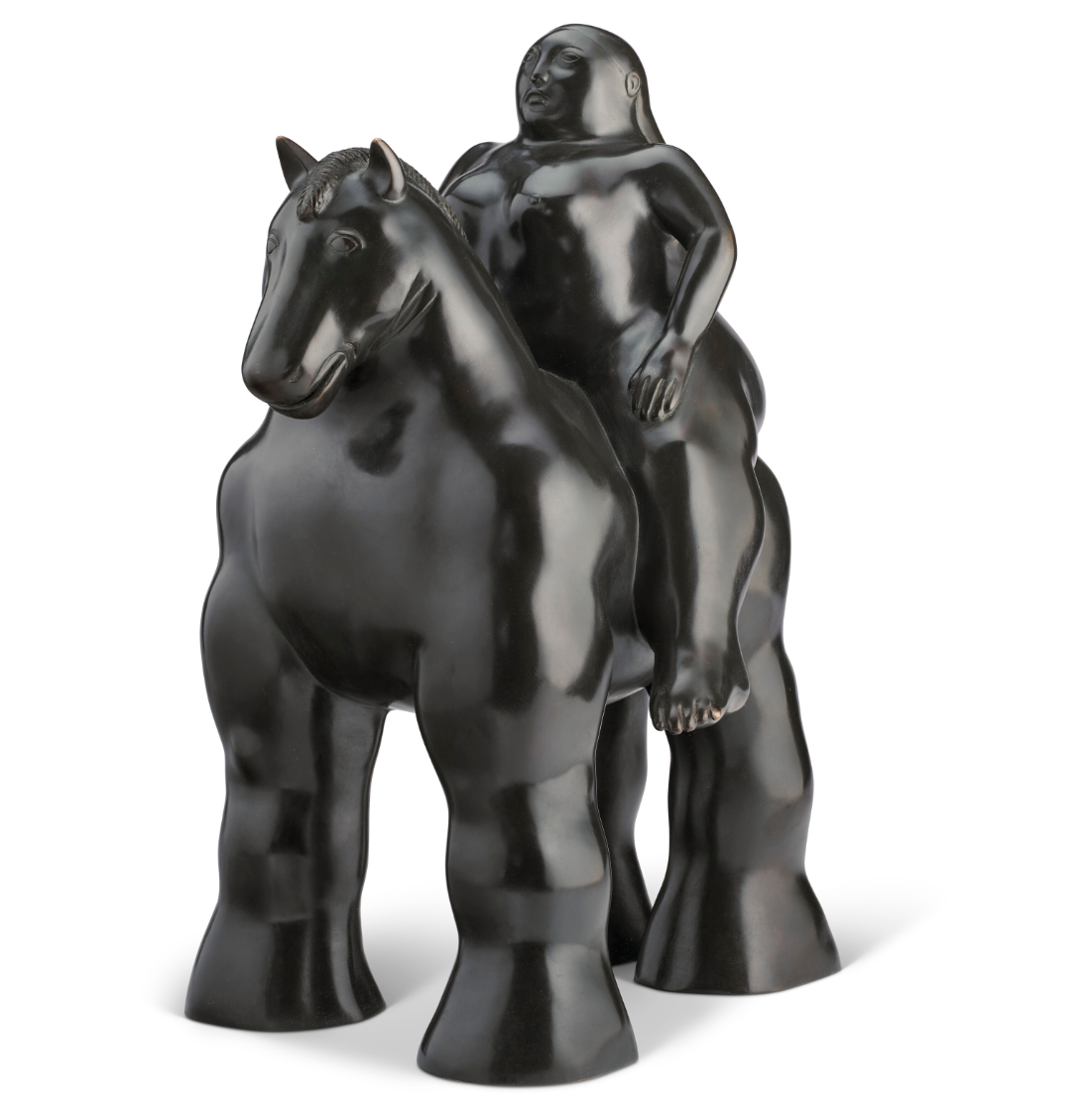
FERNANDO BOTERO (1932-2023)
Woman on a Horse, 1991
Bronze
48.3 x 33 x 33 cm (19x13x13 inches)
Incised with the artist’s signature and number and stamped with the foundry mark ‘Botero AP 2⁄2’ (lower edge)
This work is the second artist’s proof from an edition of six plus two artist’s proofs
Sleeping Woman, 2001
Sotheby’s New-York: 21 November 2024
Estimated: USD 250,000 – 350,000
PASSED
Sleeping Woman | Contemporary Day Auction | 2024 | Sotheby’s
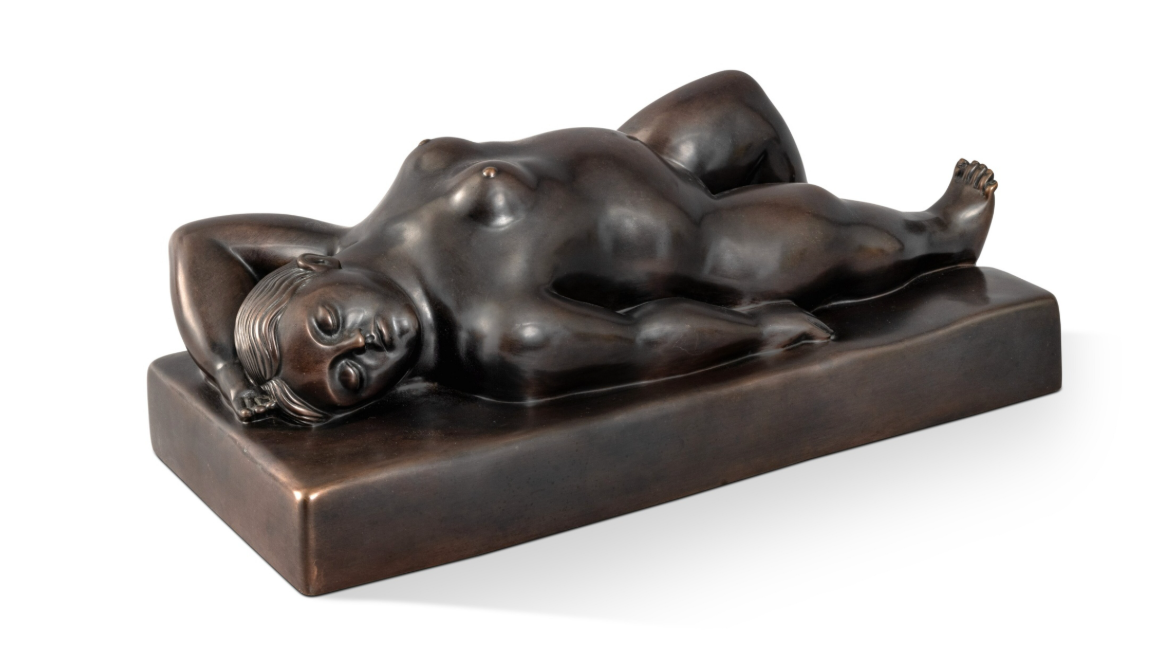
FERNANDO BOTERO (1932 – 2023)
Sleeping Woman, 2001
Bronze
17.8 x 51.4 x 23.5 cm (7 x 20 1/4 x 9 3/8 inches)
Inscribed with the artist’s signature, number 2/6 and stamped with foundry mark (on the base)
2023 Auction Results
24 lots sold at auction in 2023 for a total turnover of USD 14,378,460. With 2 lots failing to sell, the sell-through rate is a solid 92.3%. The highest price was achieved at Christie’s on 10 November 2023 for Parrot, sold for USD 1,865,000.
2023 Top 3 Lots
4 lots sold above USD 1 million generating a cumulative turnover of USD 5,452,500, representing 37.9% of the total turnover for 2023.
#1. Parrot, 1981
Christie’s New-York: 10 November 2023
Estimated: USD 200,000 – 300,000
USD 1,865,000
FERNANDO BOTERO (1932-2023) (christies.com)
FERNANDO BOTERO (1932-2023)
Parrot, 1981
Bronze, on artist’s base
Overall: 58 ¼ x 16 ¼ x 16 ¼ inches (148 x 41.3 x 41.3 cm)
Signed and numbered ‘Botero 4⁄6’ (on the base)
This work is number four from an edition of six
#2. Mujer vestida, 2003
Christie’s New-York: 9 March 2023
Estimated: USD 1,500,000 – 2,500,000
USD 1,500,000
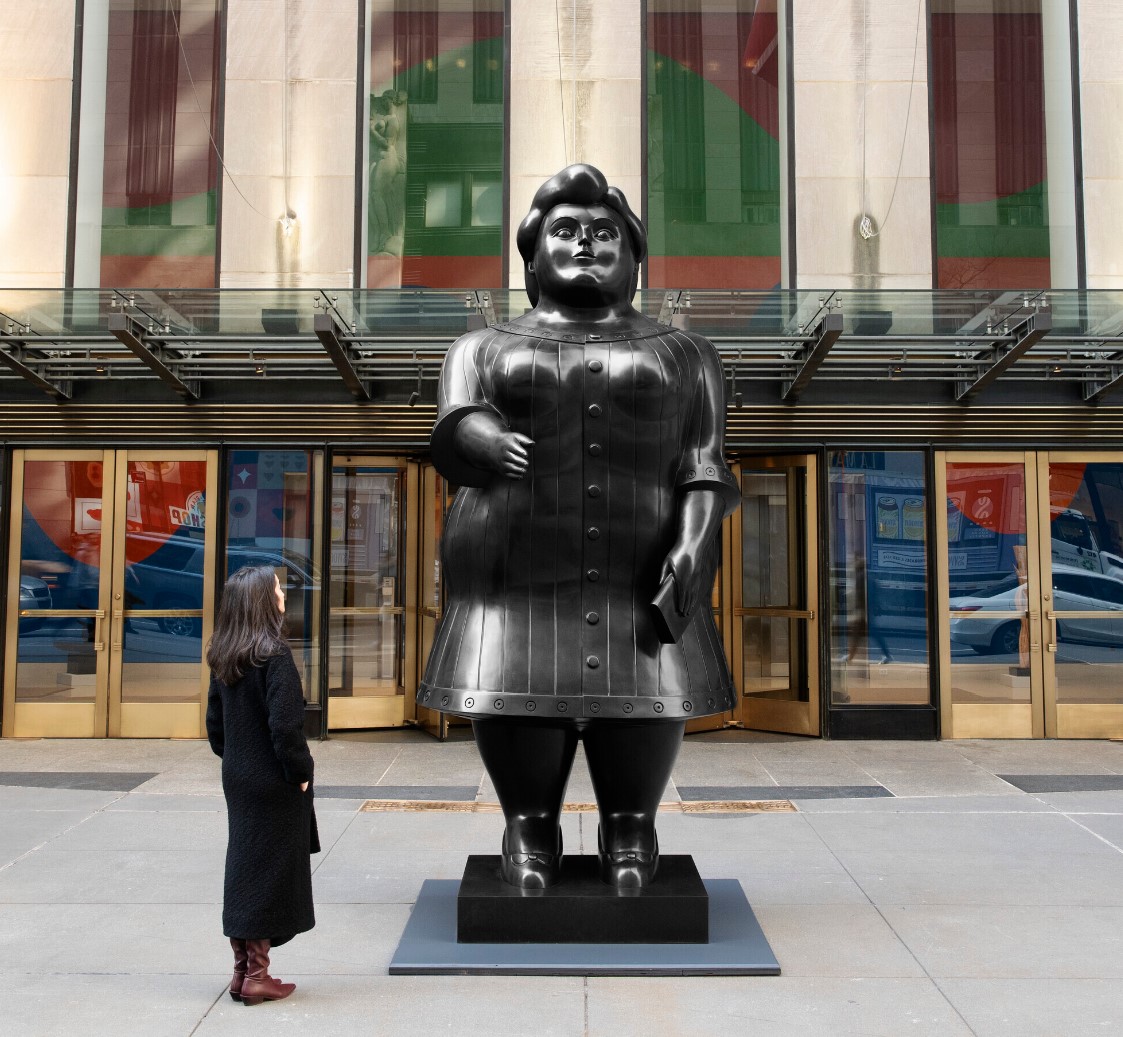
FERNANDO BOTERO (b. 1932)
Mujer vestida, 2003
Bronze with black patina
362 x 167.6 x 147.3 cm (142 1/2 x 66 x 58 inches)
Signed, numbered and stamped with foundry mark ‘Botero 1/3’ (near base)
Edition one of three
#3. Uomo a cavallo nudo, 2005
Sotheby’s New-York: 16 November 2023
Estimated: USD 800,000 – 1,200,000
USD 1,079,500
Uomo a cavallo nudo | Contemporary Day Auction | 2023 | Sotheby’s (sothebys.com)
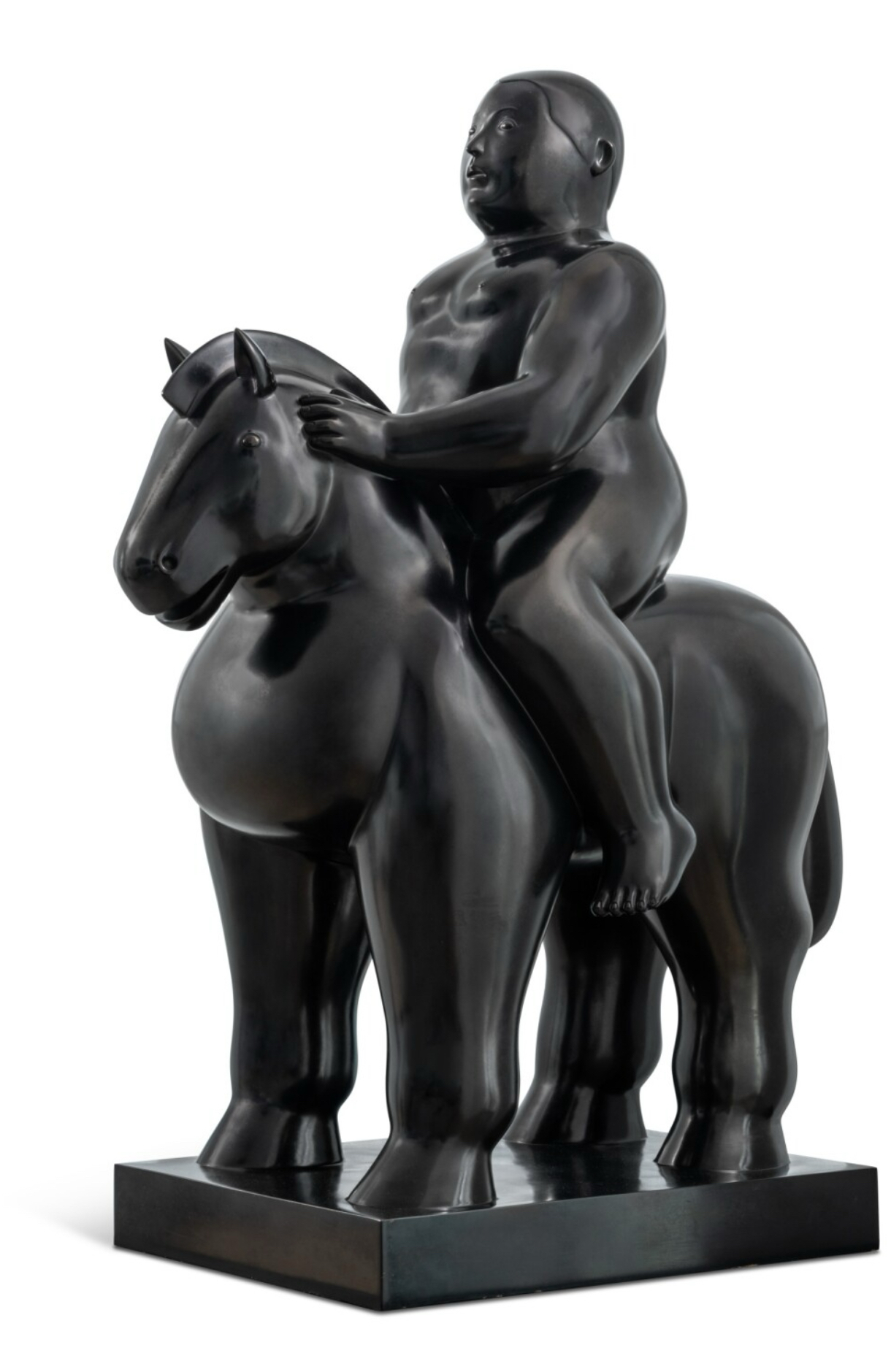
FERNANDO BOTERO (1932 – 2023)
Uomo a cavallo nudo, 2005
Bronze
109.2 x 83.8 x 49.5 cm (43 x 33 x 19 1/2 inches)
Incised with the artist’s signature, number 5/6 and stamped with the foundry mark (on the base)
This work is number 5 from an edition of 6 plus 2 artist’s proofs
#4. Mujer fumando, 1986
Christie’s New-York: 9 March 2023
Estimated: USD 1,000,000 – 1,500,000
USD 1,008,000
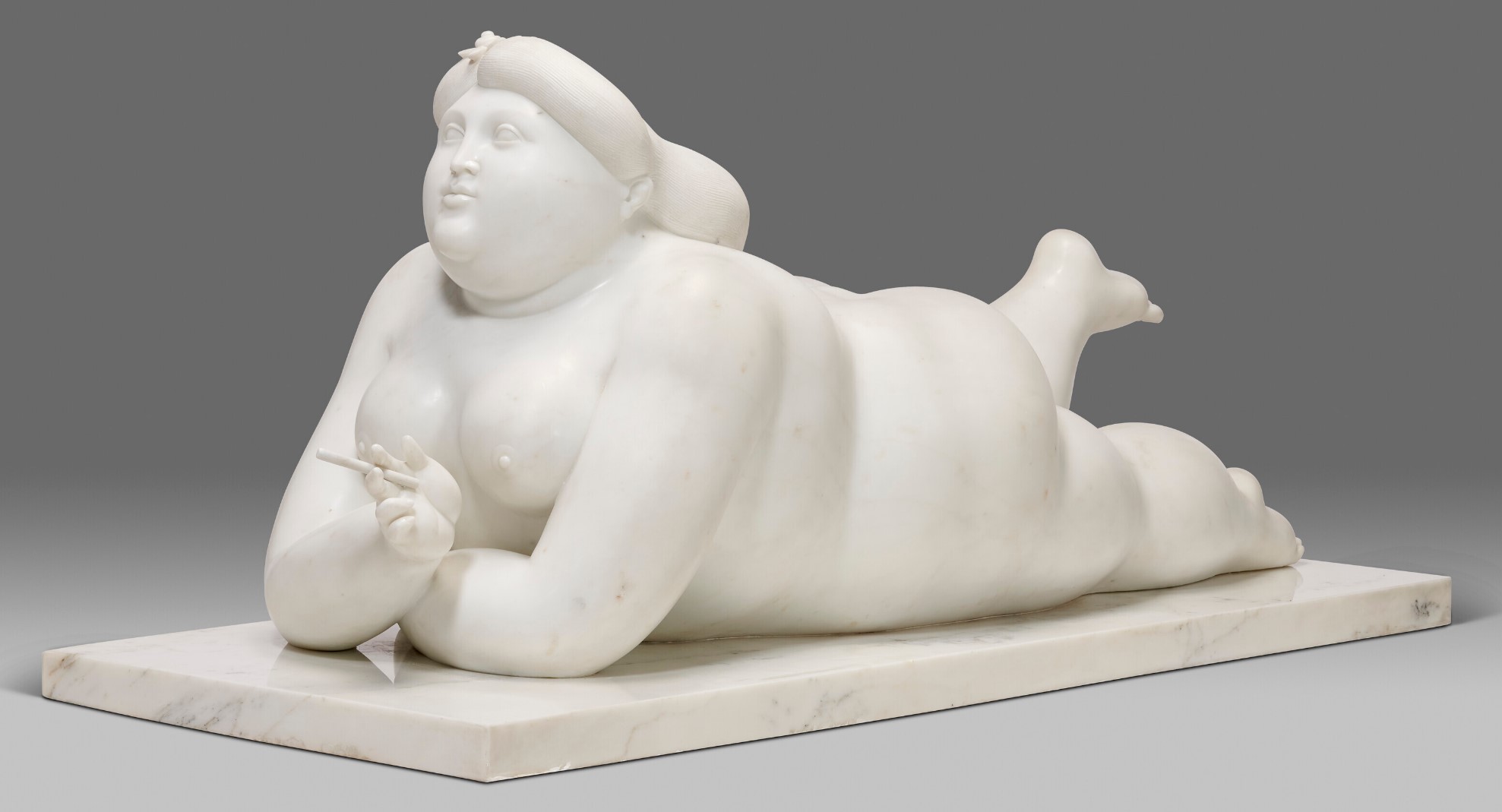
FERNANDO BOTERO (b. 1932)
Mujer fumando, 1986
White Carrara marble
58.4 x 141 x 56 cm (23 x 55 1/2 x 22 inches)
Signed ‘Botero’ (near base)
Unique
#5. Dancing Couple, 2006
Sotheby’s New-York: 19 May 2023
Estimated: USD 700,000 – 900,000
USD 825,500
Dancing Couple | Contemporary Day Auction | 2023 | Sotheby’s (sothebys.com)
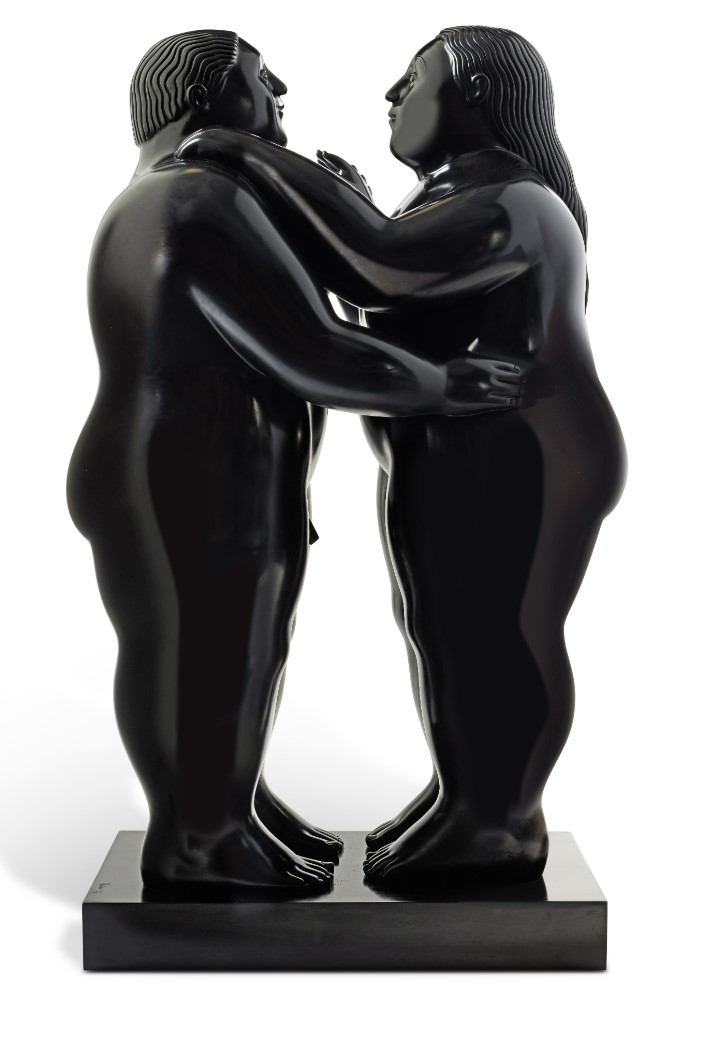
FERNANDO BOTERO (b. 1932)
Dancing Couple, 2006
Bronze
110.2 x 66 x 53.3 cm (43 3/8 x 26 x 21 inches)
Incised with the artist’s signature and numbered 2/6
Stamped with the foundry mark Fonderia d’Arte del Chiaro Pietrasanta Lucca – Italy (on the base)
This work is number 2 from an edition of 6 plus 2 artist’s proofs
#6. Cavallo con Sella, 2011
Heritage Auctions: 14 November 2023
Estimated: USD 600,000 – 800,000
USD 765,000
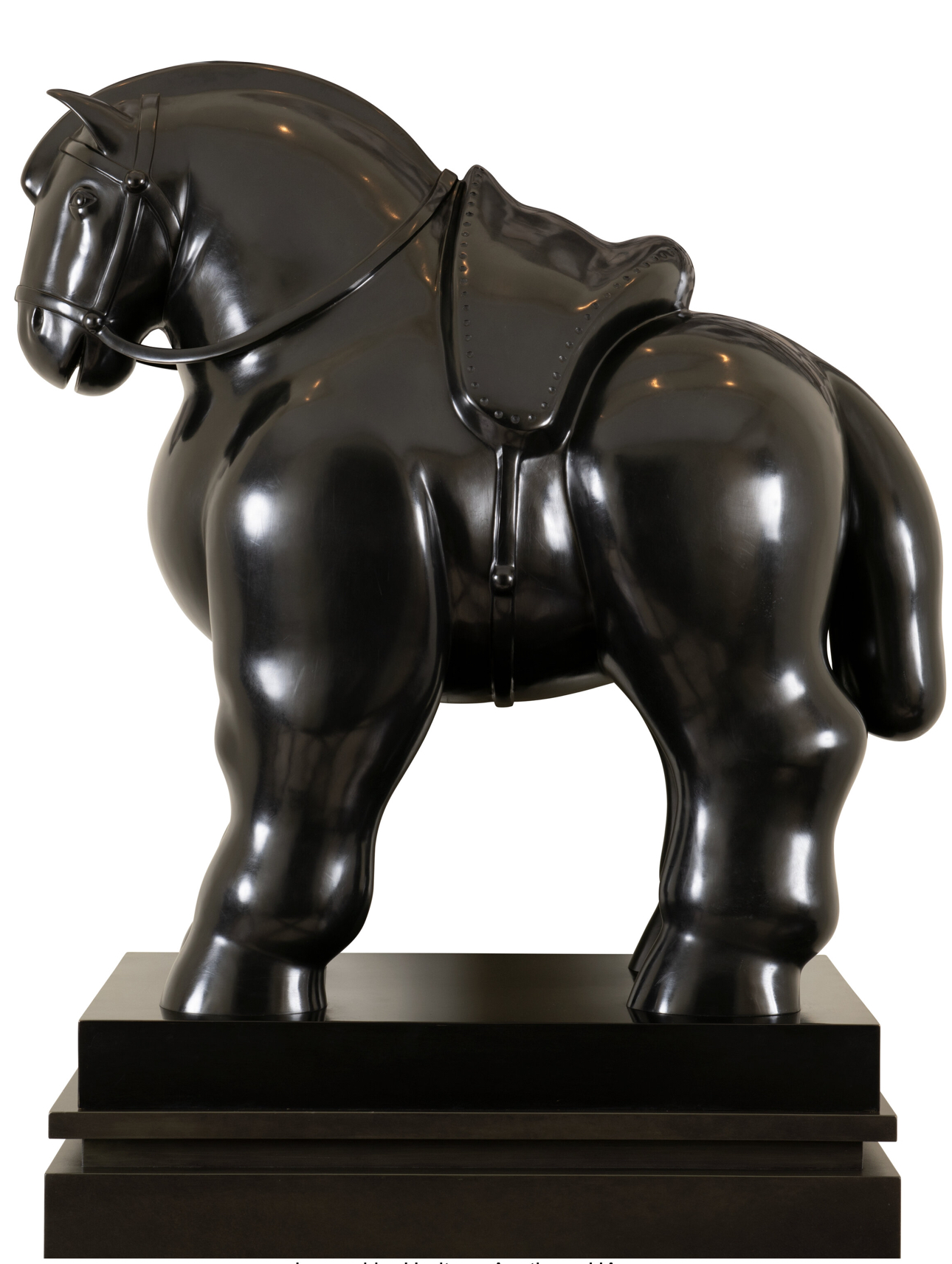
FERNANDO BOTERO
Cavallo con Sella, 2011
Bronze
101 x 95.9 x 49.5 cm (39 3/4 x 37 3/4 x 19 1/2 inches)
Incised and numbered 3/6 on base
#7. Reclining Woman with an Apple, 2007
Heritage Auctions: 14 November 2023
Estimated: USD 600,000 – 800,000
USD 675,000
Fernando Botero (1932-2023). Reclining Woman with an Apple, 2007. | Lot #77029 | Heritage Auctions
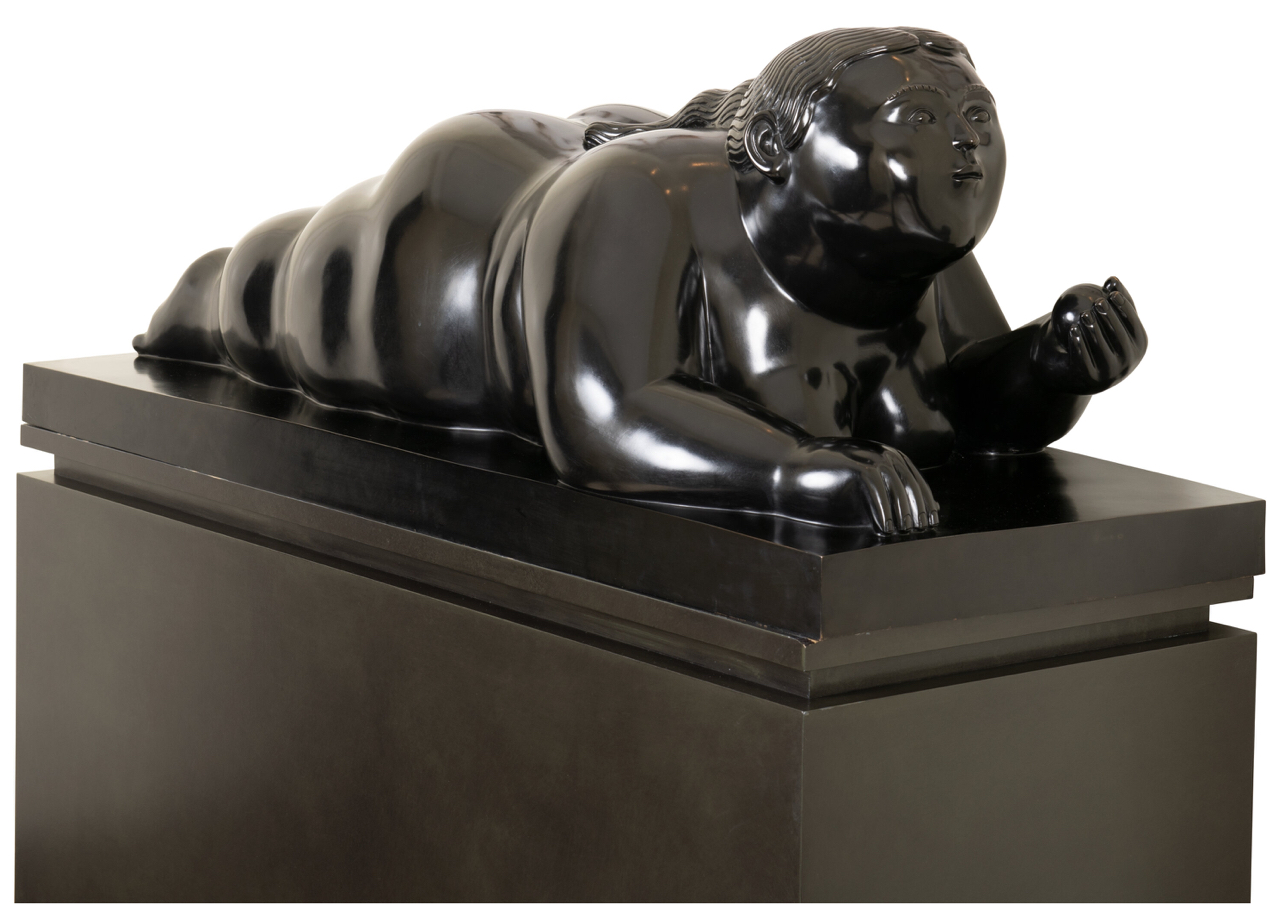
FERNANDO BOTERO (1932-2023)
Reclining Woman with an Apple, 2007
Bronze
54.6 x 143.5 x 53.3 cm (21-1/2 x 56-1/2 x 21 inches)
Ed. 3/6
Incised and stamped with foundry mark on base: Botero
#8. Still Life, 2009
Christie’s New-York: 28 September 2023
Estimated: USD 150,000 – 200,000
USD 630,000
FERNANDO BOTERO (1932-2023) (christies.com)
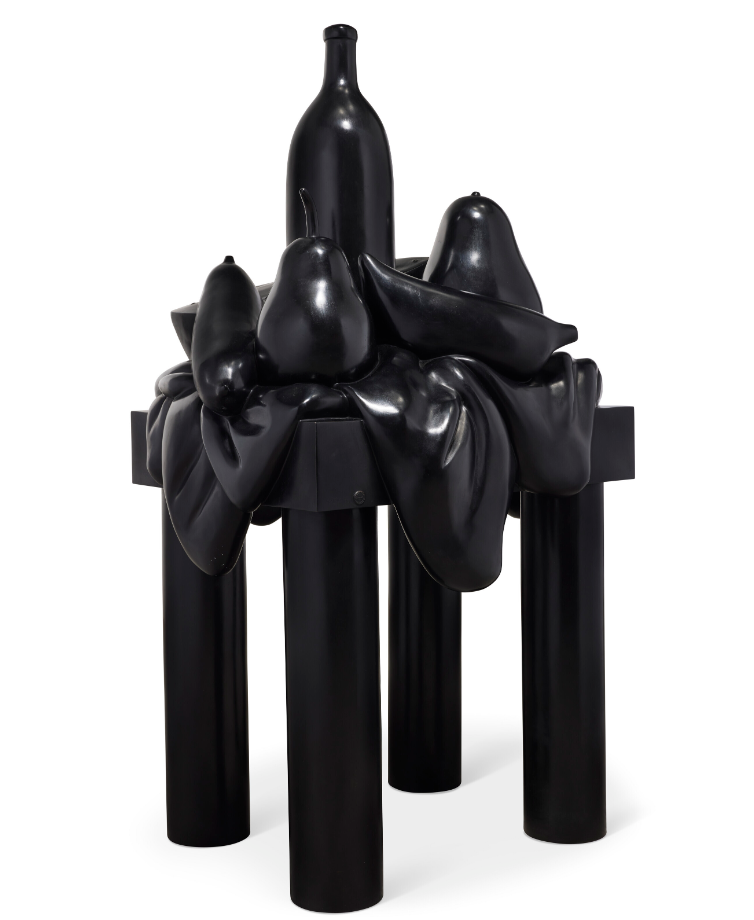
FERNANDO BOTERO (1932-2023)
Still Life, 2009
Bronze
Height: 189.9 cm (74 3/4 inches)
Width: 114.9 cm (45 1/4 inches)
Depth: 94 cm (37 inches)
Signed and numbered ‘Botero 1⁄3’ and stamped with foundry mark (on the side of table top)
Edition one of three
#9. Girl with a Bow, 1982
Sotheby’s New-York: 19 May 2022
Estimated: USD 350,000 – 450,000
USD 571,500
Girl with a Bow | Contemporary Day Auction | 2023 | Sotheby’s (sothebys.com)
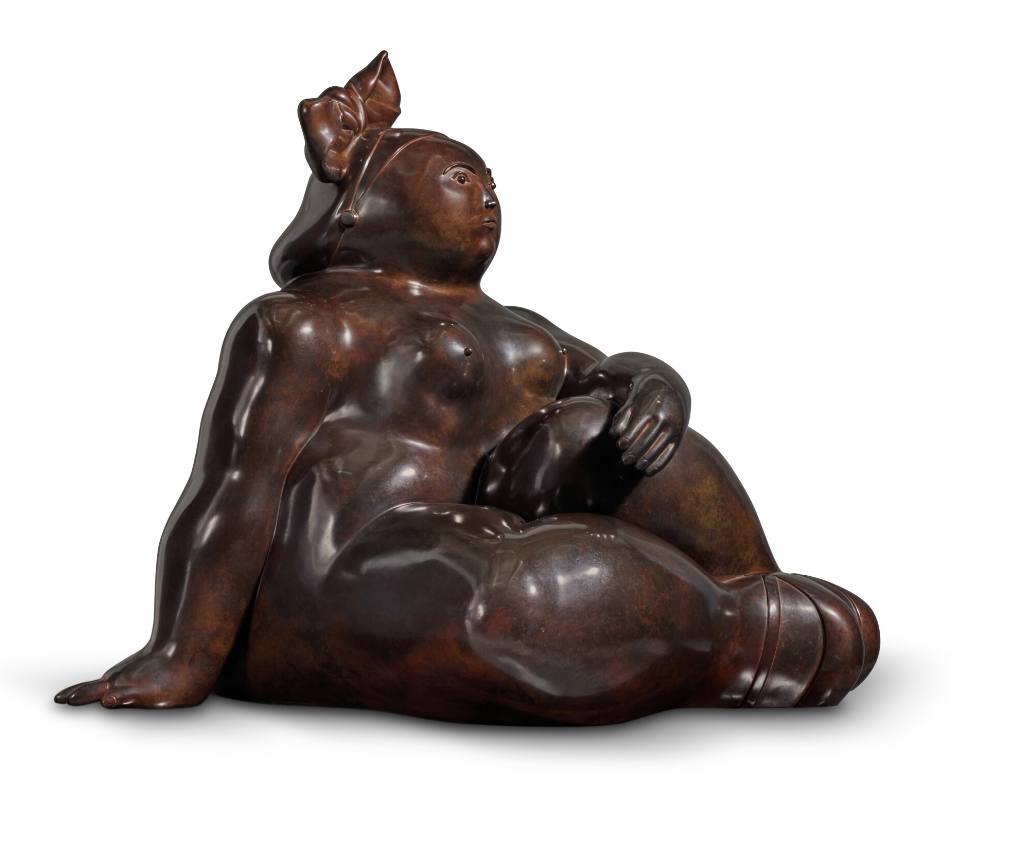
FERNANDO BOTERO
Girl with a Bow, 1982
Bronze
71.4 x 73.7 x 71.1 cm (28 1/8 x 29 x 28 inches)
Incised with the artist’s signature and number 5/6; stamped with the foundry mark Fonderia M Italy (on the base)
This work is number 5 from an edition of 6 plus 2 artist’s proofs
#10. Reclining Woman, 2010
Christie’s New-York: 28 September 2023
Estimated: USD 250,000 – 350,000
USD 554,400
FERNANDO BOTERO (1932-2023), Reclining Woman | Christie’s (christies.com)
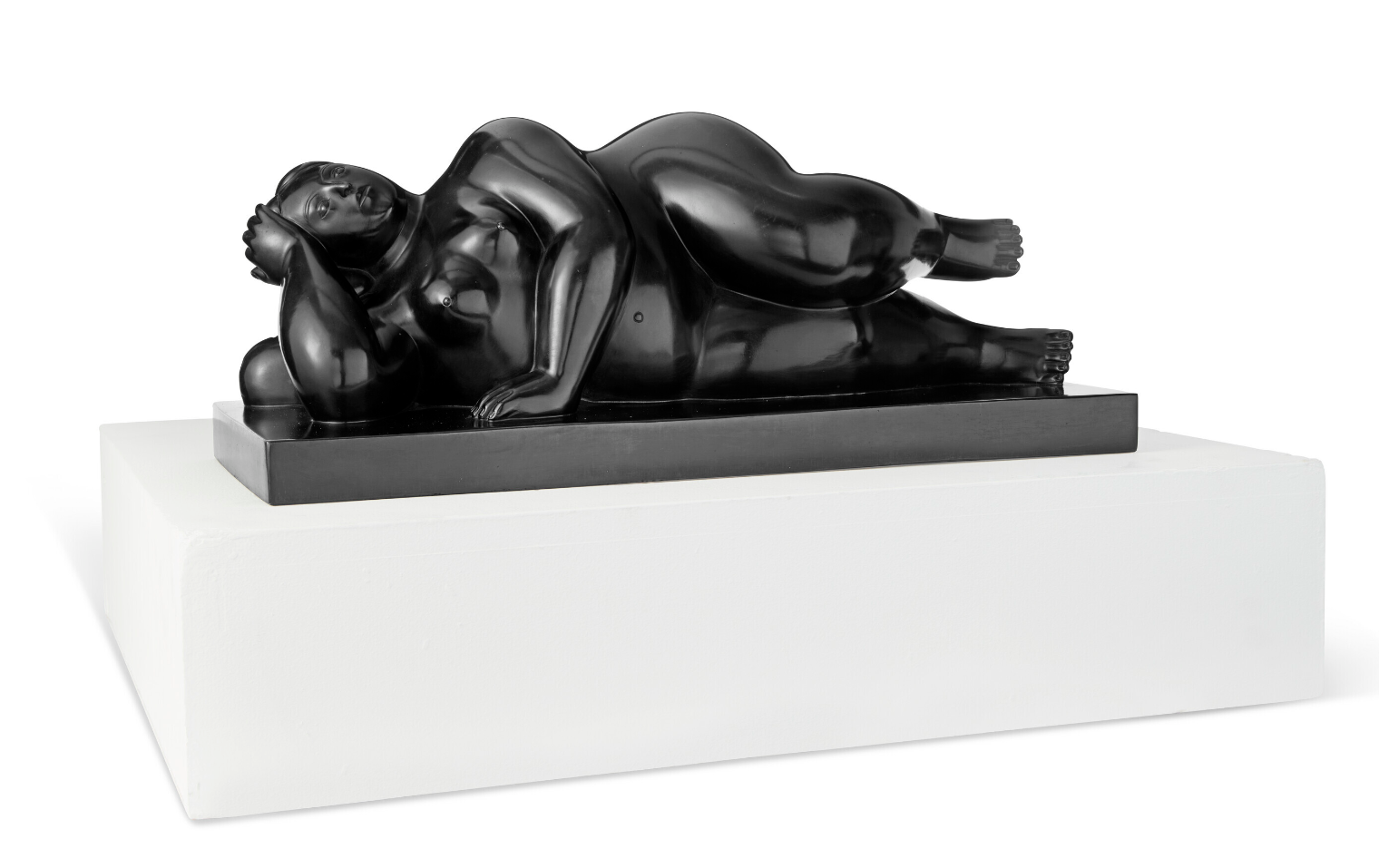
FERNANDO BOTERO (1932-2023)
Reclining Woman, 2010
Bronze
24.1 (H) x 57.2 (W) x 23.5 (D) cm (9 1/2 x 22 1/2 x 9 1/4 inches)
Signed and numbered ‘Botero 6⁄6’ (on the base)
Edition six of six
#11. Rape of Europa, 2005
Christie’s New-York: 28 September 2023
Estimated: USD 300,000 – 400,000
USD 529,200
FERNANDO BOTERO (1932-2023) (christies.com)
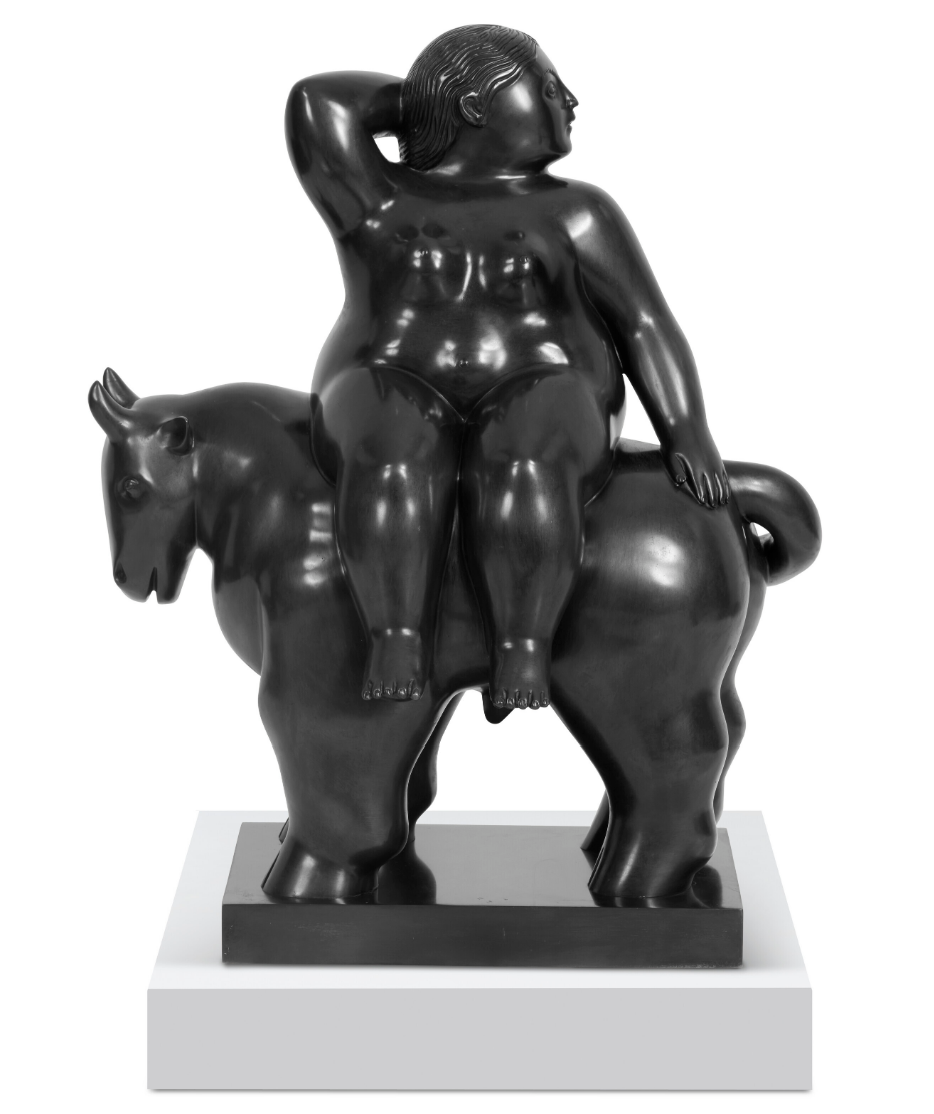
FERNANDO BOTERO (1932-2023)
Rape of Europa, 2005
Bronze
Height: 23 inches (58.4 cm)
Width: 18 3/4 inches (47.6 cm)
Depth: 12 inches (30.5 cm)
Signed and numbered ‘Botero EA 1⁄2’ and stamped with foundry mark (on the base)
Artist’s proof one of two
#12. Horse with Saddle, 1995
Sotheby’s New-York: 16 November 2023
Estimated: USD 250,000 – 350,000
USD 469,900
Horse with Saddle | Contemporary Day Auction | 2023 | Sotheby’s (sothebys.com)
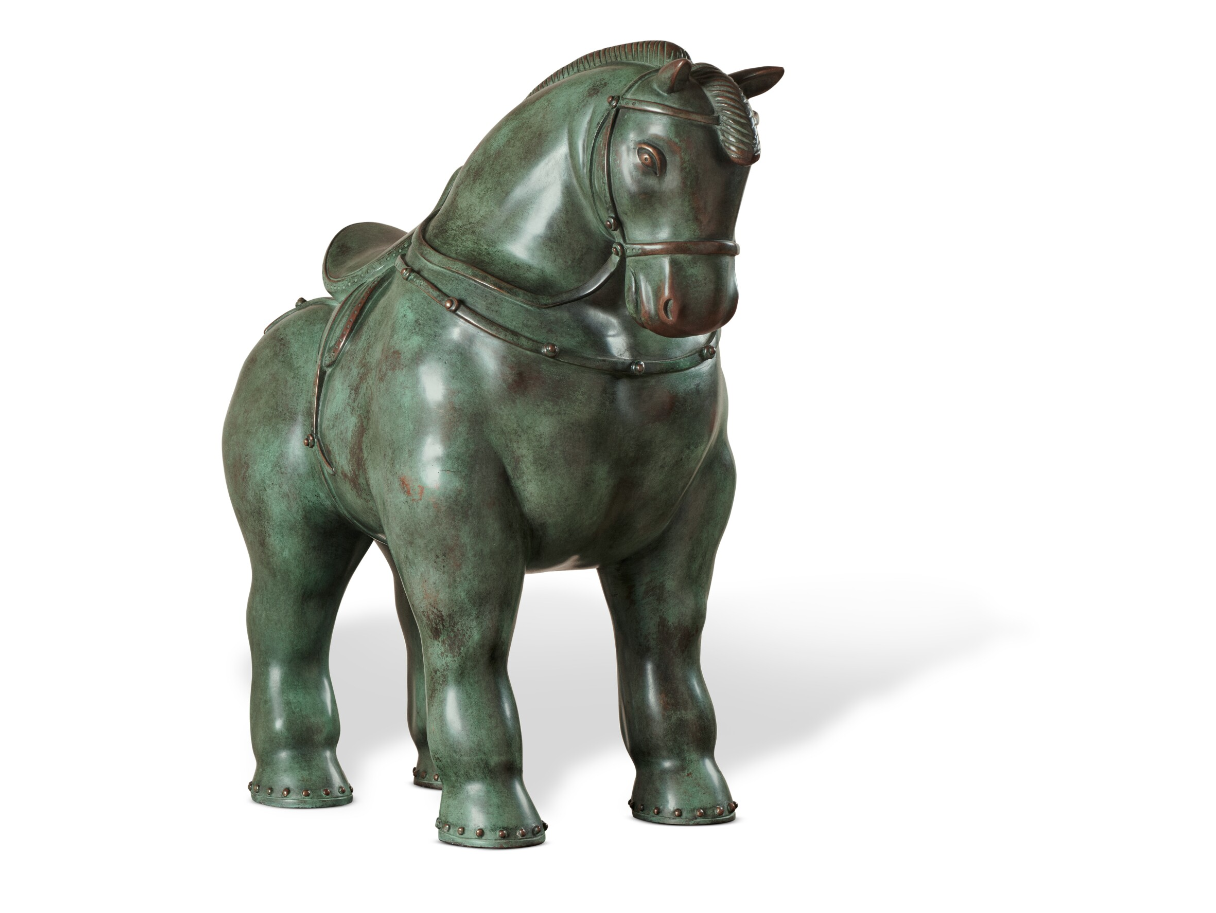
FERNANDO BOTERO (1932 – 2023)
Horse with Saddle, 1995
Bronze
50.8 x 52 x 28 (20 x 20 1/2 x 11 inches)
Incised with the artist’s signature and number EA 1/2 and stamped with the foundry mark (on the proper left rear hoof)
This work is number 1 of 2 artist’s proofs aside from an edition of 6
#13. Il Ratto d’Europa, 2011
Sotheby’s New-York: 16 November 2023
Estimated: USD 300,000 – 400,000
USD 444,500
Il Ratto d’Europa | Contemporary Day Auction | 2023 | Sotheby’s (sothebys.com)
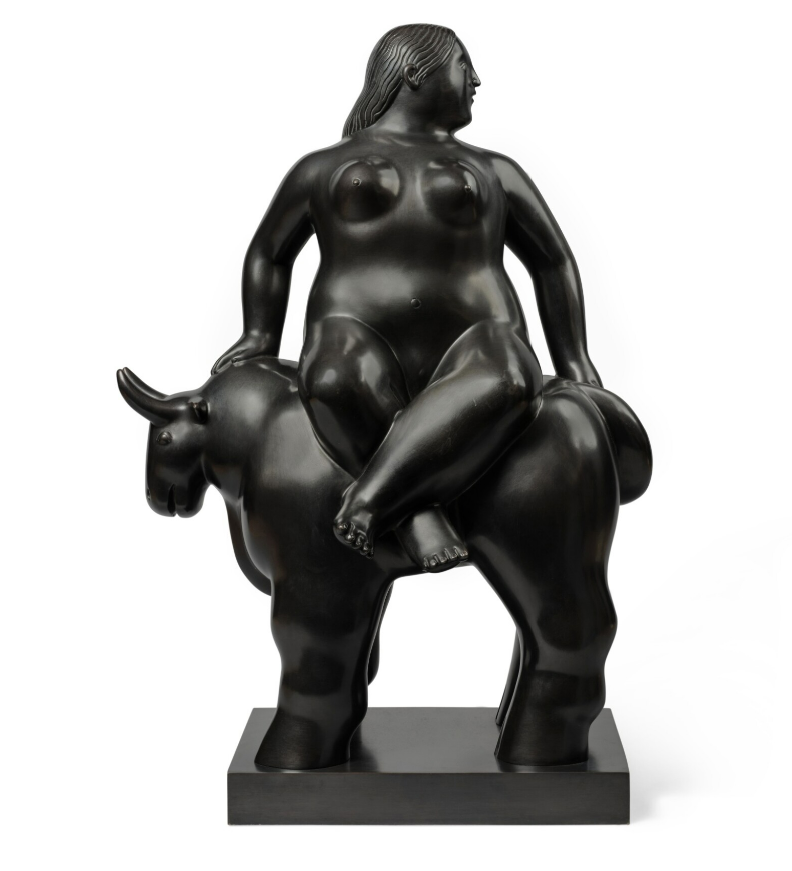
FERNANDO BOTERO (1932 – 2023)
Il Ratto d’Europa, 2011
Bronze
74.9 x 45.1 x 30.2 cm (29 1/2 x 17 3/4 x 11 7/8 inches)
Incised with the artist’s signature and number 3/6 and stamped with foundry mark Da Prato (on the base)
This work is number 3 from an edition of 6 plus 2 artist’s proofs
#14. Donna Sdraiata, 2012
Sotheby’s New-York: 16 November 2023
Estimated: USD 250,000 – 350,000
USD 444,500
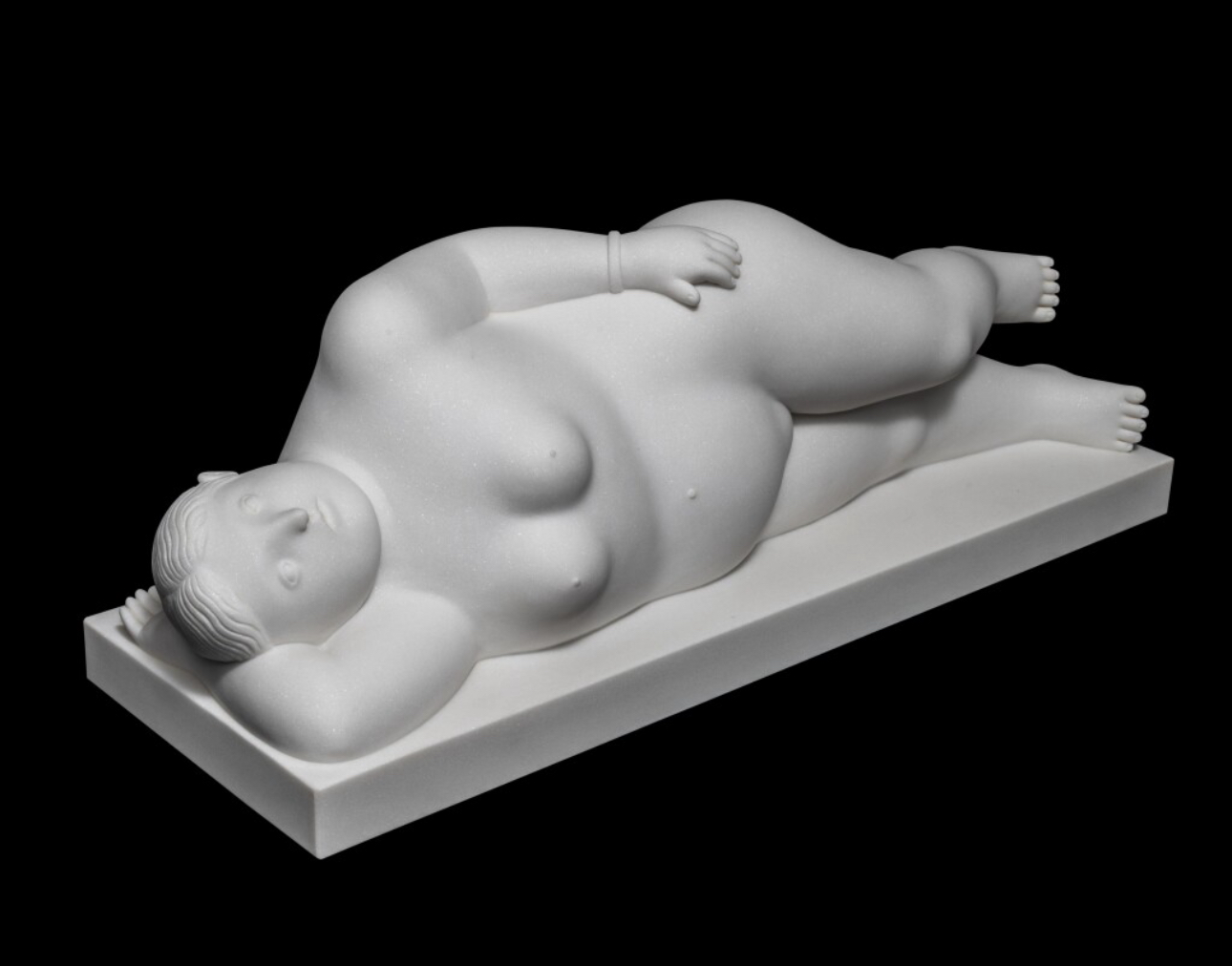
FERNANDO BOTERO (1932 – 2023)
Donna Sdraiata, 2012
Carrara marble
25.7 x 61.3 x 22.9 cm (10 1/8 x 24 1/8 x 9 inches)
Incised with the artist’s signature (on the base)
#15. Reclining Woman with Apple, 1990
Christie’s New-York: 28 September 2023
Estimated: USD 250,000 – 350,000
USD 415,800
FERNANDO BOTERO (1932-2023) (christies.com)
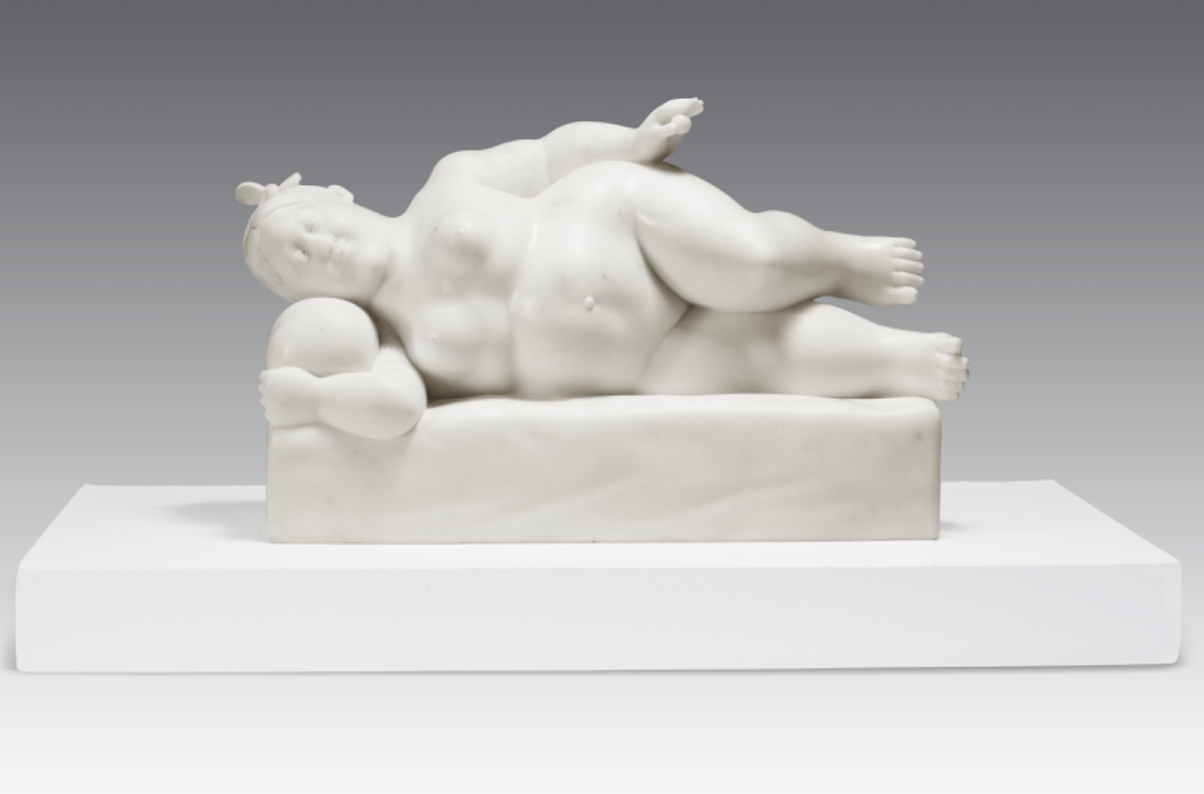
FERNANDO BOTERO (1932-2023)
Reclining Woman with Apple, 1990
White Carrara marble
Height: 13 3/4 inches (34.9 cm)
Width: 23 1/4 inches (59.1 cm)
Depth: 9 3/4 inches (24.8 cm)
Signed ‘Botero’ (near base)
Unique
#16. Mujer con pájaro, 1992
Sotheby’s New-York: 16 November 2023
Estimated: USD 200,000 – 300,000
USD 317,500
Mujer con pájaro | Contemporary Day Auction | 2023 | Sotheby’s (sothebys.com)
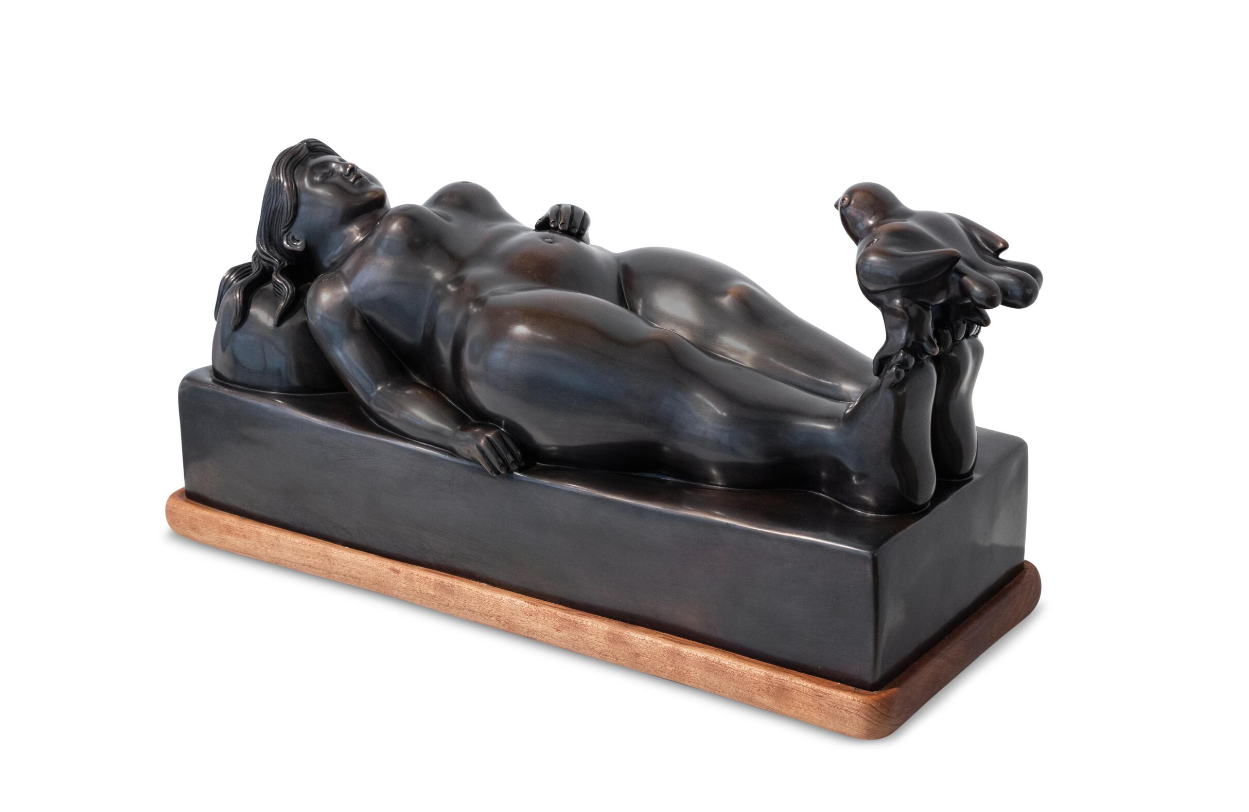
FERNANDO BOTERO (1932 – 2023)
Mujer con pájaro, 1992
Bronze
29.2 x 61 x 25.4 cm (11 1/2 x 24 x 10 inches)
Incised with the artist’s signature and number 4/6 and stamped with the foundry mark (on the base)
This work is number 4 from an edition of 6
#17. Hombre que fuma, 1976
Sotheby’s New-York: 16 November 2023
Estimated: USD 100,000 – 150,000
USD 317,500
Hombre que fuma | Contemporary Day Auction | 2023 | Sotheby’s (sothebys.com)
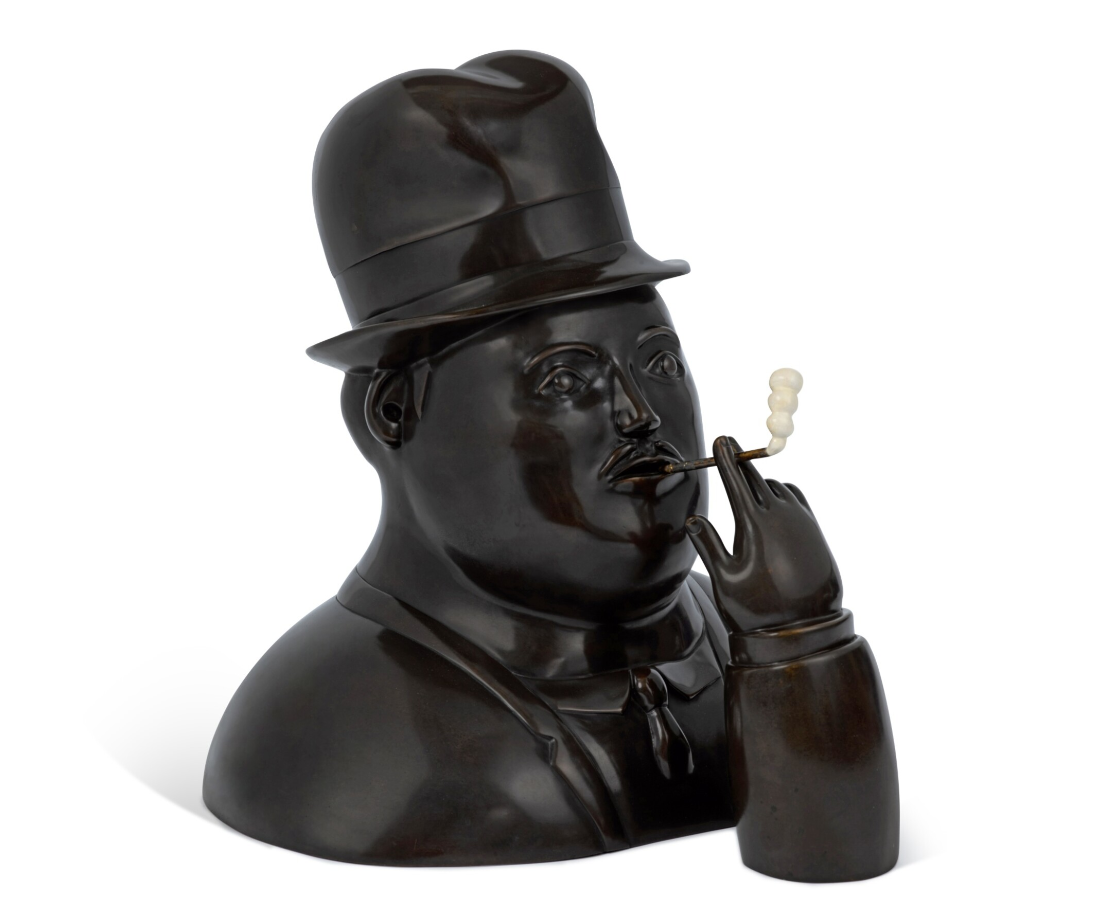
FERNANDO BOTERO (1932 – 2023)
Hombre que fuma, 1976
Bronze, in 3 parts
57 x 48.3 x 47 cm (22 1/2 x 19 x 18 1/2 inches)
Incised with the artist’s signature and number 1/6 and stamped with the foundry mark (on the reverse)
This work is number 1 from an edition of 6 plus 2 artist’s proofs
#18. Dog on a cushion, 1976
Bonhams London: 12 October 2022
Estimated: GBP 200,000 – 300,000
GBP 254,400 / USD 310,160
Bonhams : FERNANDO BOTERO (1932-2023) Dog on a cushion 1976
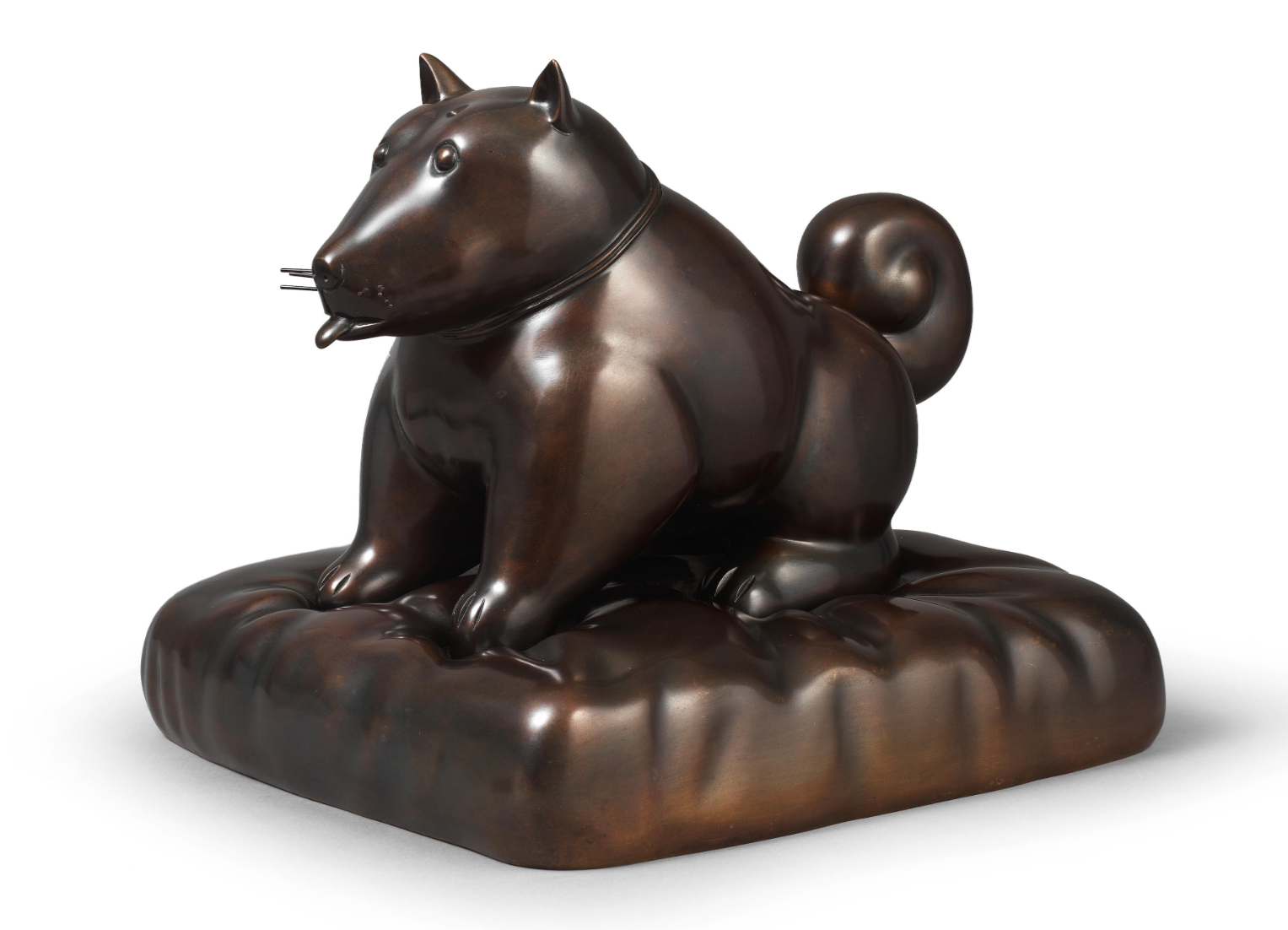
Bronze
34x37x40 cm (13 3/8 x 14 9/16 x 15 3/4 inches)
This work is number 5 from an edition of 6
#19. Still Life with Jug and Bottle, 1981
Christie’s New-York: 10 November 2023
Estimated: USD 180,000 – 220,000
USD 302,400
FERNANDO BOTERO (1932-2023) (christies.com)
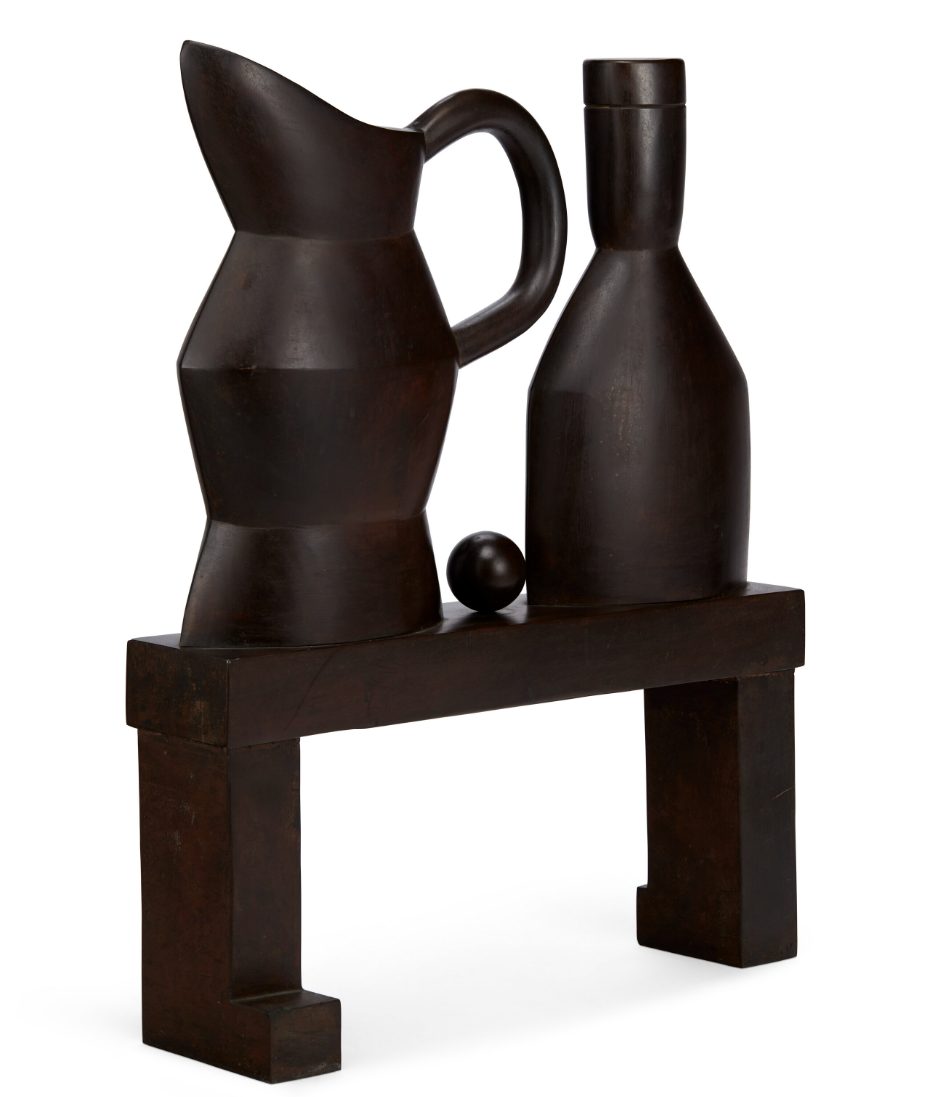
FERNANDO BOTERO (1932-2023)
Still Life with Jug and Bottle, 1981
Bronze with brown patina
54.6 x 41.9 x 11.4 cm (21 1/2 x 16 1/2 x 4 1/2 inches)
Signed and numbered ‘Botero. 1⁄6’ (lower right)
This work is number one from an edition of six
#20. Horse, 1995
Hindman: 14 December 2023
Estimated: USD 200,000 – 300,000
USD 289,800
Horse, 1995 (hindmanauctions.com)
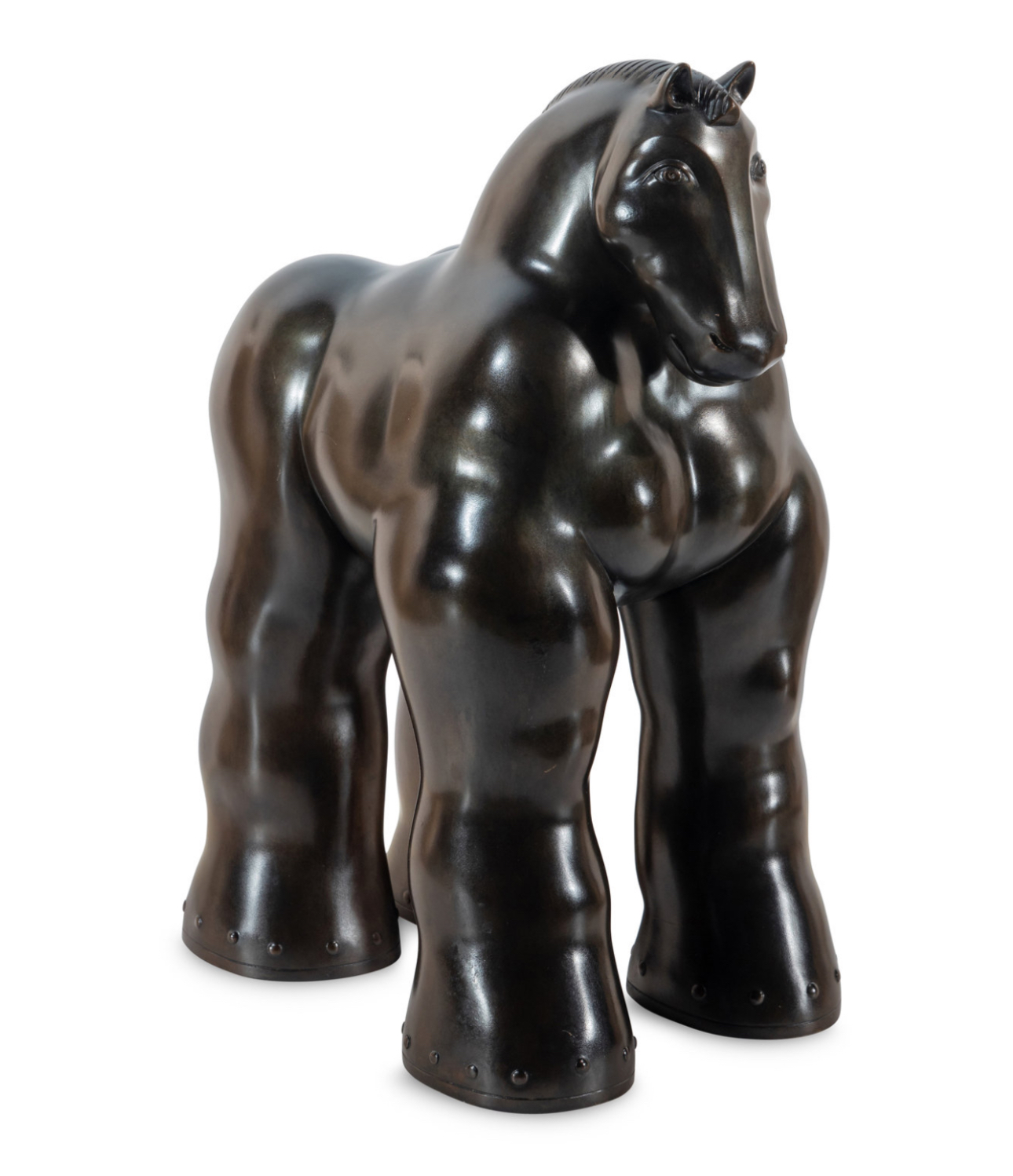
FERNANDO BOTERO (Colombian, 1932-2023)
Horse, 1995
Bronze
20 x 15 x 10 1/2 inches
Incised Botero and numbered 6/6
#21. Somnambulist, 2001
Sotheby’s New-York: 28 September 2023
Estimated: USD 220,000 – 280,000
USD 279,400
Somnambulist | Contemporary Curated | 2023 | Sotheby’s (sothebys.com)
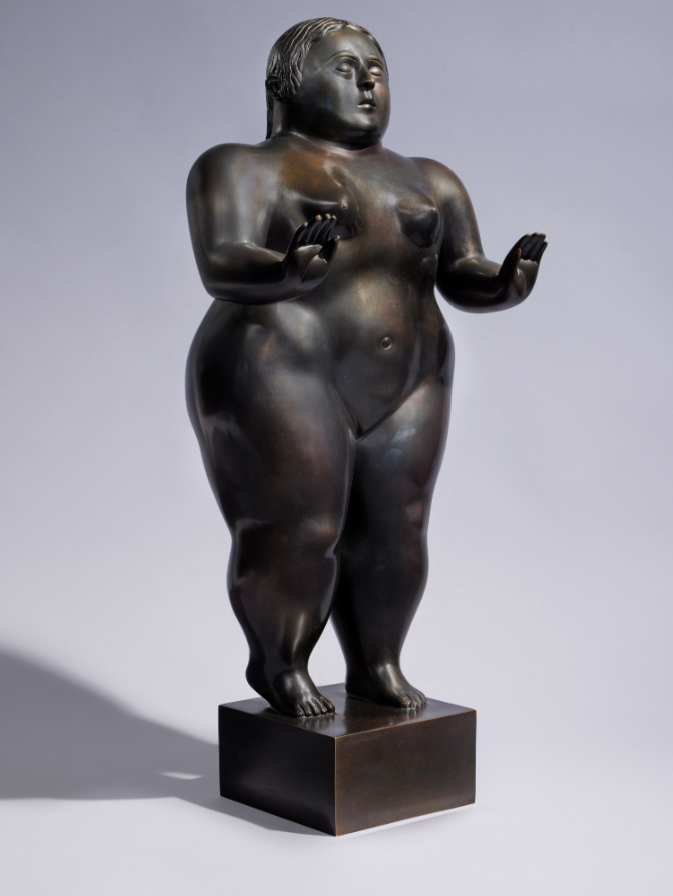
FERNANDO BOTERO (1932 – 2023)
Somnambulist, 2001
Bronze
62.2 x 29.2 x 22.9 cm (24 1/2 x 11 1/2 x 9 inches)
Incised with the artist’s signature, numbered 1/6 and stamped with the foundry mark (on the base)
#22. Reclining Woman (Donna sdraiata), 2004
Phillips New-York: 16 May 2023
Estimated: USD 200,000 – 300,000
USD 279,400
Fernando Botero – 20th Century & Contem… Lot 227 May 2023 | Phillips
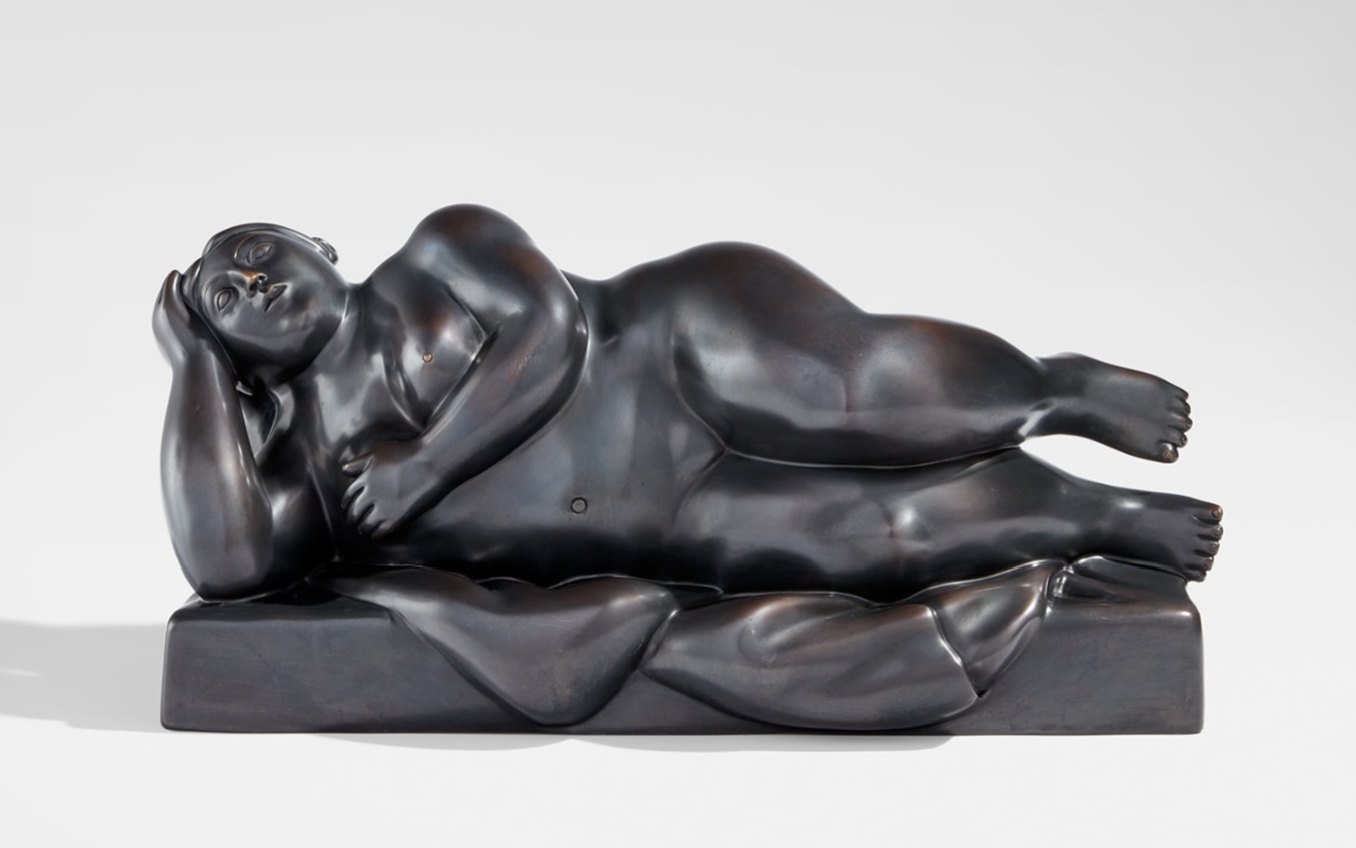
FERNANDO BOTERO
Reclining Woman (Donna sdraiata), 2004
Bronze with black patina
26.4 x 56.2 x 22.9 cm (10 3/8 x 22 1/8 x 9 inches)
Incised with the artist’s signature and number “Botero 2/6” on the base
This work is number 2 from an edition of 6, plus 2 artist’s proofs
#23. Perro (Dog), 1993
Rago: 8 November 2023
Estimated: USD 200,000 – 300,000
USD 264,600
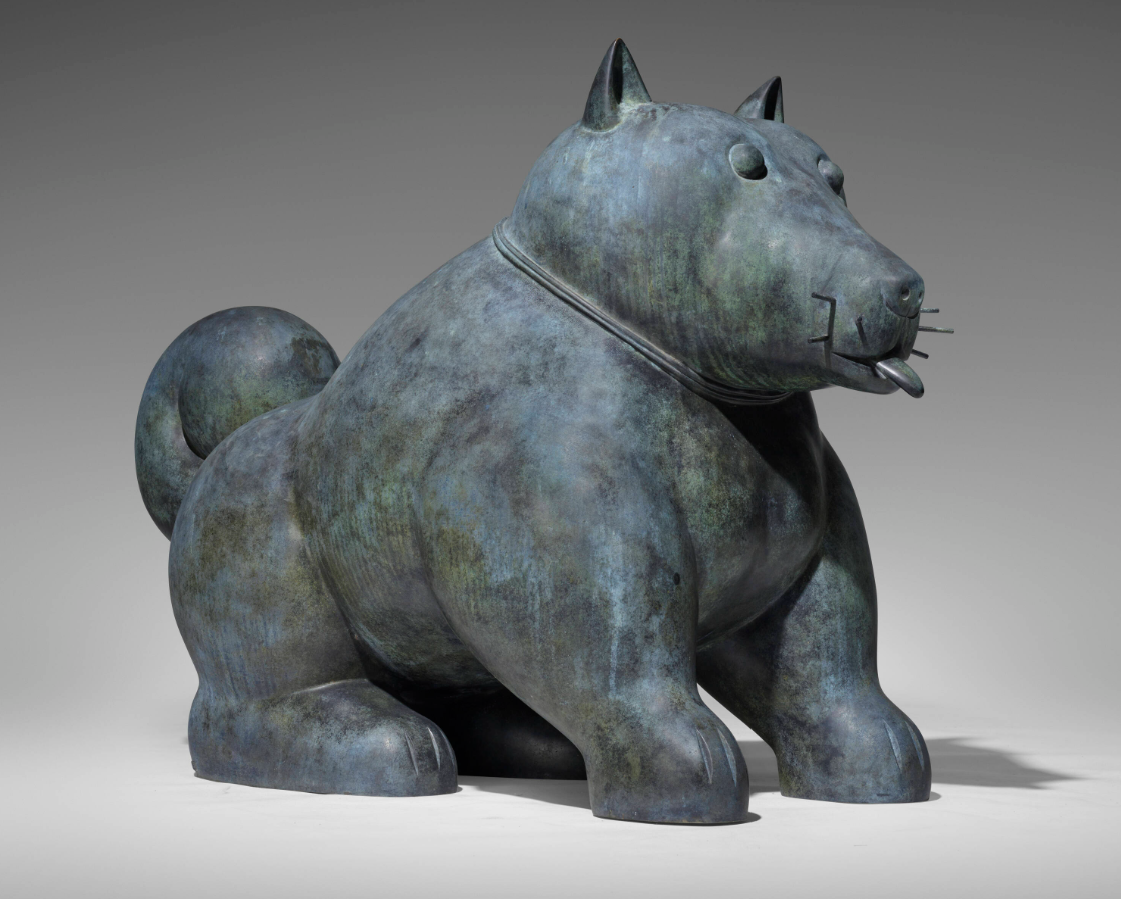
FERNANDO BOTERO (1932–2023)
Perro (Dog), 1993
Patinated bronze
86 (H) × 58 (W) × 122 (D) cm (34×23×48inches)
Signed and numbered to back foot ‘Botero 1/3’ with foundry mark
This work is number 1 from the edition of 3
#24. Reclining Woman
Christie’s New-York: 28 September 2023
Estimated: USD 180,000 – 220,000
USD 239,400
FERNANDO BOTERO (1932-2023), Reclining Woman | Christie’s (christies.com)
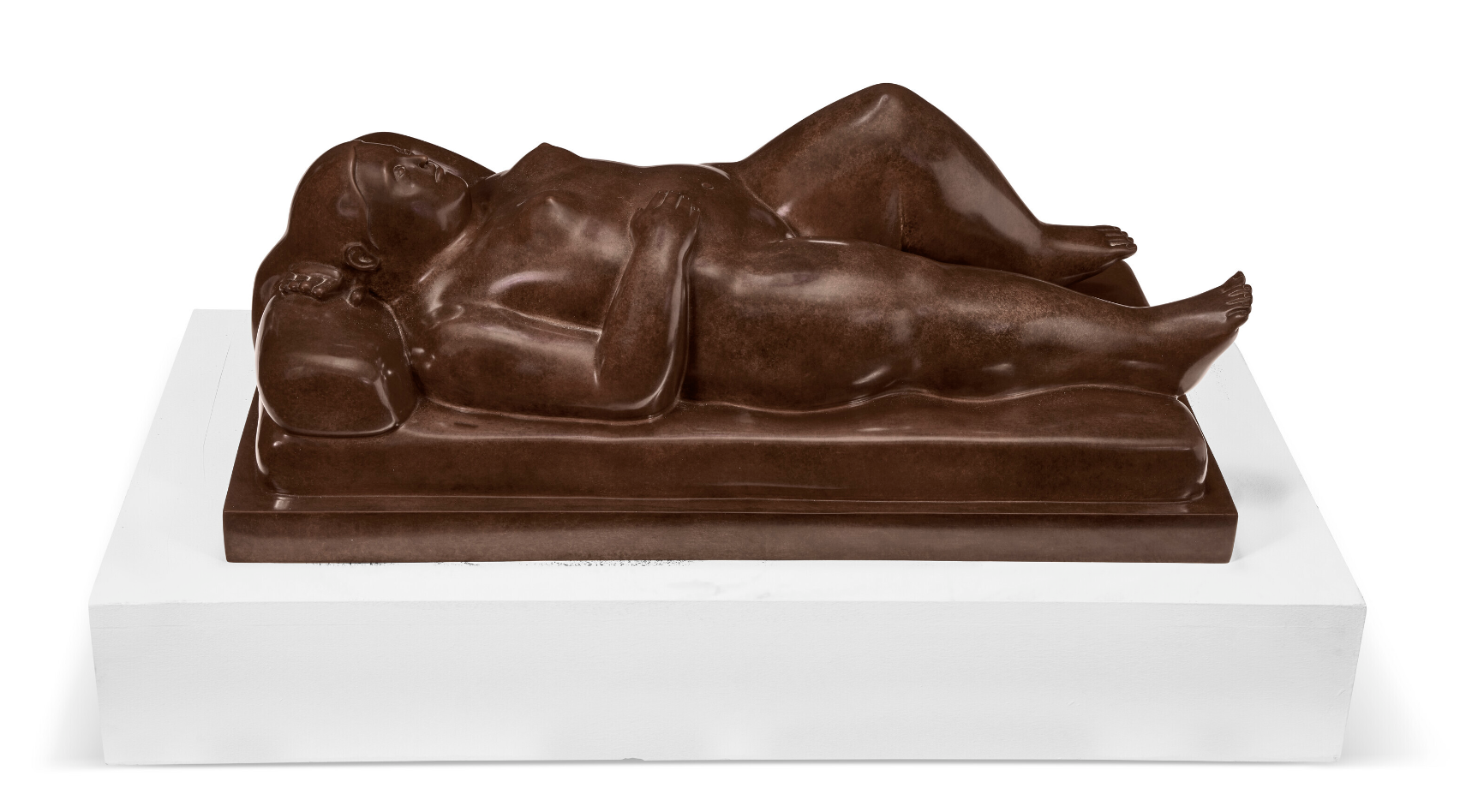
FERNANDO BOTERO (1932-2023)
Reclining Woman
Bronze
26.7 (H) x 69.9 (W) x 32.4 (D) cm (10 1/2 x 27 1/2 x 12 3/4 inches)
Signed and numbered ‘Botero 1⁄6’ and stamped with foundry mark (on the base)
Edition one of six
2022 Auction Results
19 lots sold at auction in 2022 for a total turnover of USD 13,261,876.
With only 1 lot failing to sell, the sell-through rate is 95%. The highest price of USD 4,320,000 was achieved at Christie’s in New-York for Man on a Horse (1999). 8 lots sold over USD 500,000, generating a cumulative turnover of USD 9,518,653, representing 71.8% of the total turnover for 2022.
2022 Top 3 Lots
#1. Man on a Horse, 1999
Christie’s New-York: 10 March 2022
Estimated: USD 2,000,000 – 3,000,000
USD 4,302,000
FERNANDO BOTERO (b. 1932) (christies.com)
FERNANDO BOTERO (b. 1932)
Man on a Horse, 1999
Bronze
Height: 348 cm (137 inches)
Width: 160 cm (63 inches)
Depth: 230 cm (90 1⁄2 inches)
Edition three of three
Signed and numbered ‘Botero 3⁄3’ (on the base)
#2. The Dancers, 2004
Sotheby’s New-York: 20 May 2022
Estimated: USD 500,000 – 700,000
USD 945,000
The Dancers | Contemporary Day Auction | 2022 | Sotheby’s (sothebys.com)

FERNANDO BOTERO
The Dancers, 2004
Bronze
Height: 114.3 cm (45 inches)
Inscribed with artist’s signature and numbered 3/6 (on the base)
This example executed in 2004 as number 3 from an edition of 6, plus 2 artist’s proofs
#3. Donna a Cavallo, 2015
Sotheby’s New-York: 17 November 2022
Estimated: USD 500,000 -700,000
USD 882,000
Donna a Cavallo | Contemporary Day Auction | 2022 | Sotheby’s (sothebys.com)
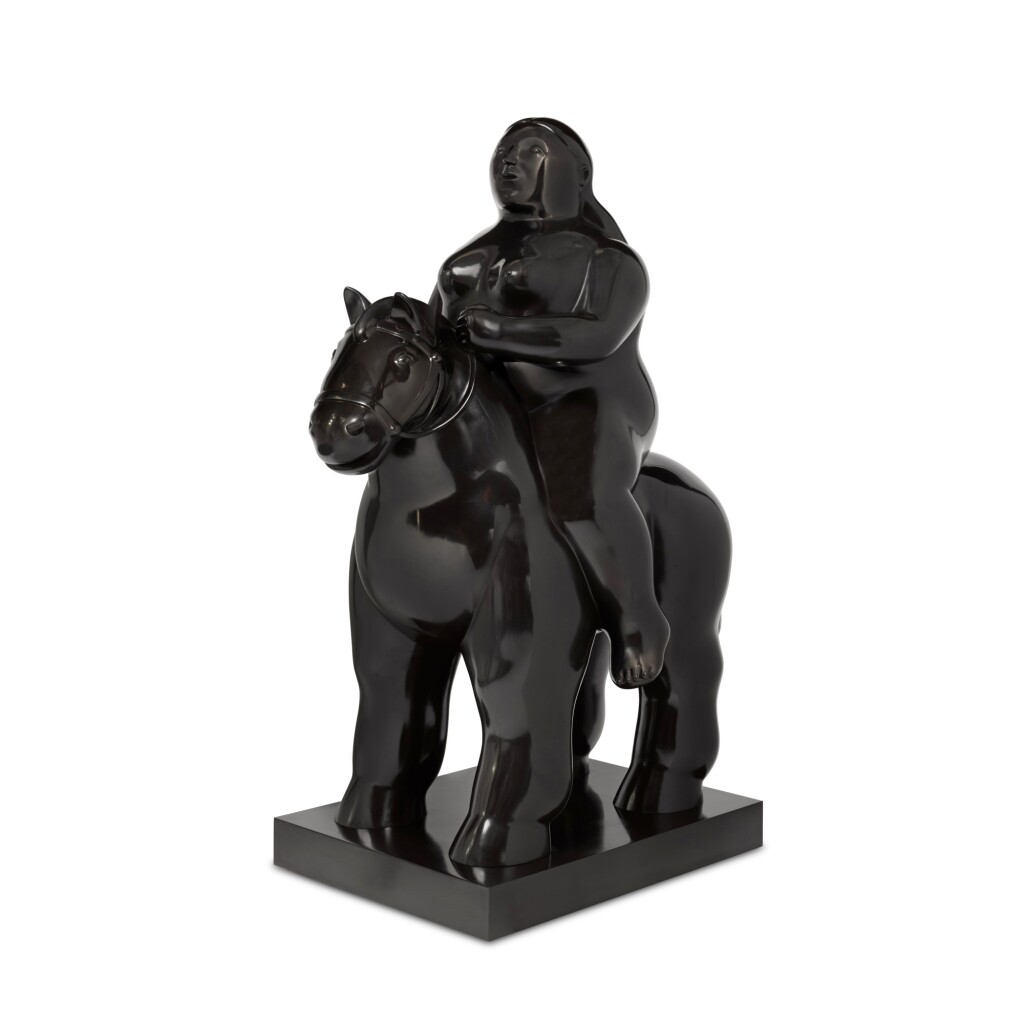
FERNANDO BOTERO (B. 1932)
Donna a Cavallo, 2015
Bronze
119.4 x 49.8 x 63.5 cm (47 x 19 ⅝ x 25 inches)
Executed in 2015, this work is number 3 from an edition of 6 plus 2 artist’s proofs
Inscribed with the artist’s signature and numbered 3/6 (on the base)
Stamped with the foundry mark Da Prato (on the base)
#4. Donna sul leto, 2003
Sotheby’s Singapore: 28 August 2022
Estimated: SGD 650,000 – 1,000,000
SGD 1,134,000 / USD 813,953
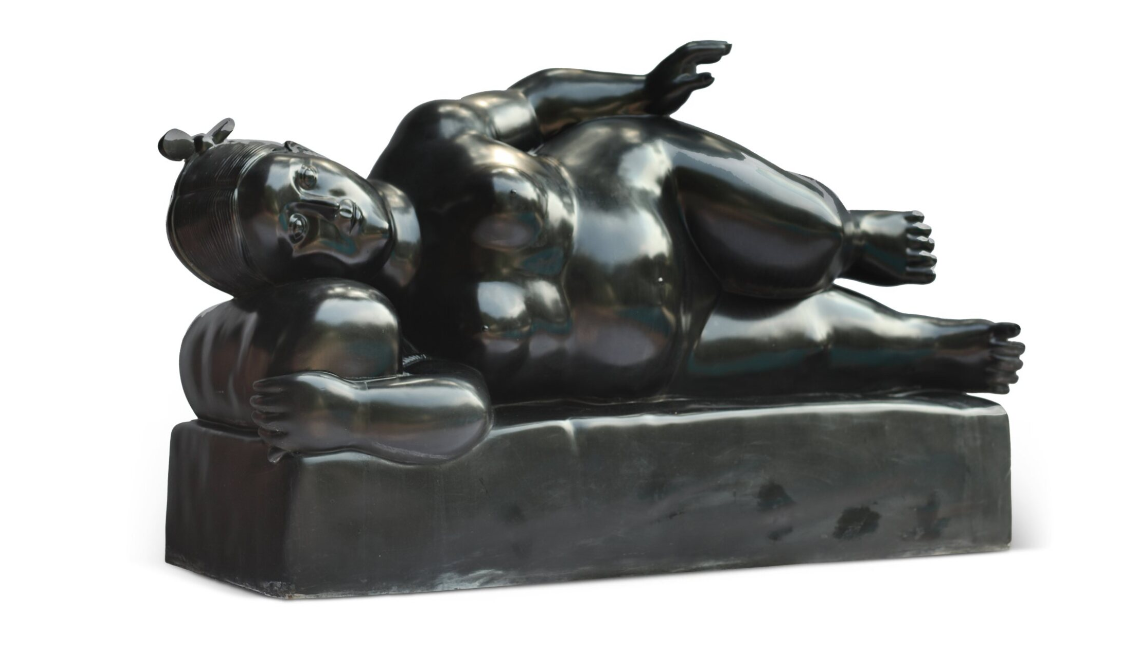
FERNANDO BOTERO
Donna sul leto, 2003
Bronze
100x168x60 cm (39 1/4 x 66 x 23 1/2 inches)
Edition 4/6
#5. Man on a Horse, 1982
Sotheby’s New-York: 22 May 2022
Estimated: USD 250,000 – 350,000
USD 768,600
Man on a Horse | Modern Day Auction | 2022 | Sotheby’s (sothebys.com)
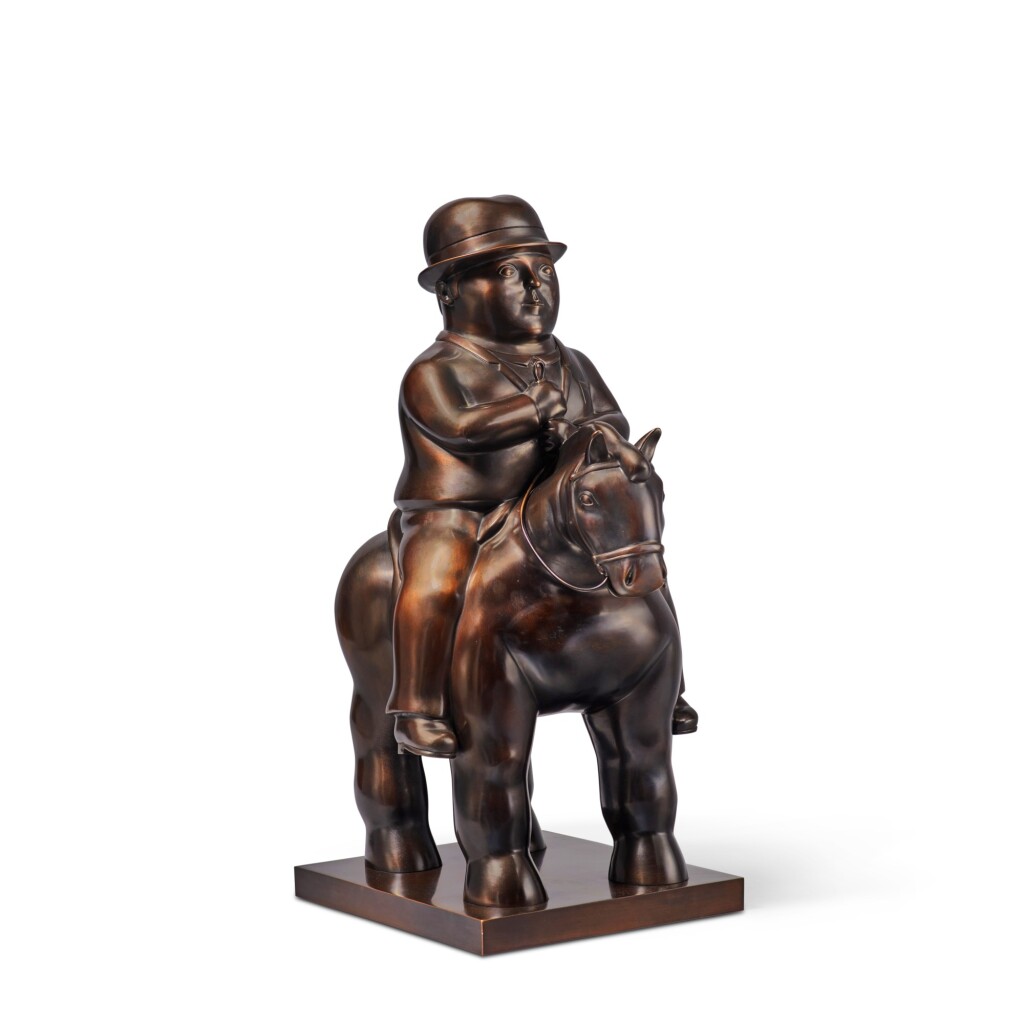
FERNANDO BOTERO (B. 1932)
Man on a Horse, 1982
Bronze
Height: 66 cm (26 inches)
This example executed in 1982 as number 2 from an edition of 6 plus 2 artist’s proofs
Inscribed with artist’s signature and numbered 2/6
Stamped with the foundry mark Da Prato (on the base)
#6. Man on a Horse, 1982
Sotheby’s New-York: 15 November 2022
Estimated: USD 150,000 – 200,000
USD 780,800
Man on a Horse | Modern Day Auction | 2022 | Sotheby’s (sothebys.com)
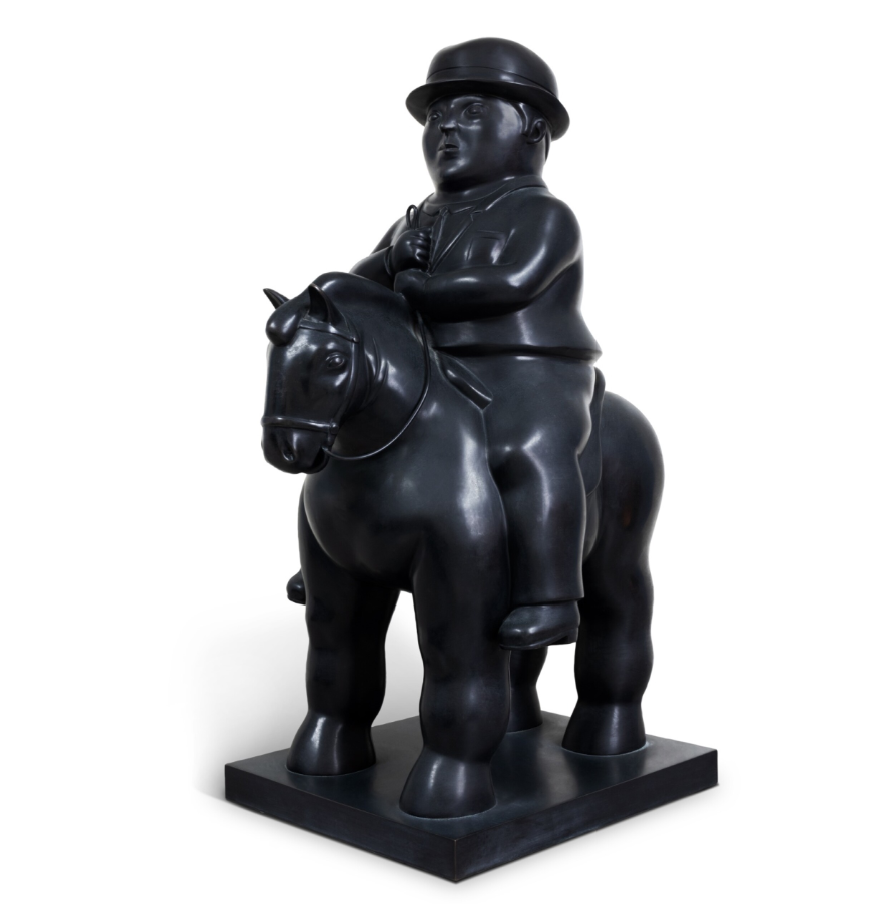
FERNANDO BOTERO
Man on a Horse, 1982
Bronze
Height: 68.6 cm (27 inches)
Inscribed with the artist’s signature, numbered 1/6 and stamped with the foundry mark DP Fonderia (on the base)
This example executed in 1982 as number 1 from an edition of 6 plus 2 artist’s proofs
#7. Femme allongée, 2007
Sotheby’s New-York: 20 May 2022
Estimated: USD 400,000 – 600,000
USD 529,200
Femme allongée | Contemporary Day Auction | 2022 | Sotheby’s (sothebys.com)
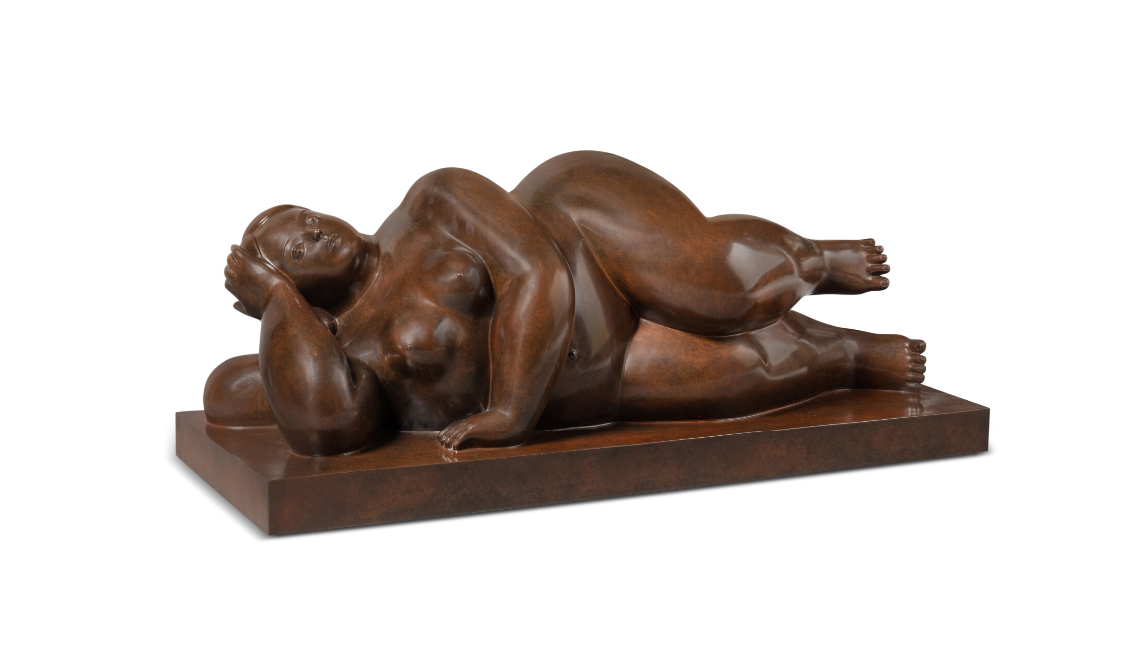
FERNANDO BOTERO
Femme allongée, 2007
Bronze
Length: 115 cm (45 1/4 inches)
Inscribed with artist’s signature and numbered 4/6 and stamped with foundry mark Fonderia Artistica Versiliese (on the base)
This example executed in 2007 as number 4 from an edition of 6 plus 2 artist’s proofs
#8. Ballerina
Christie’s New-York: 10 March 2022
Estimated: USD 300,000 – 400,000
USD 529,200
FERNANDO BOTERO (b. 1932) (christies.com)
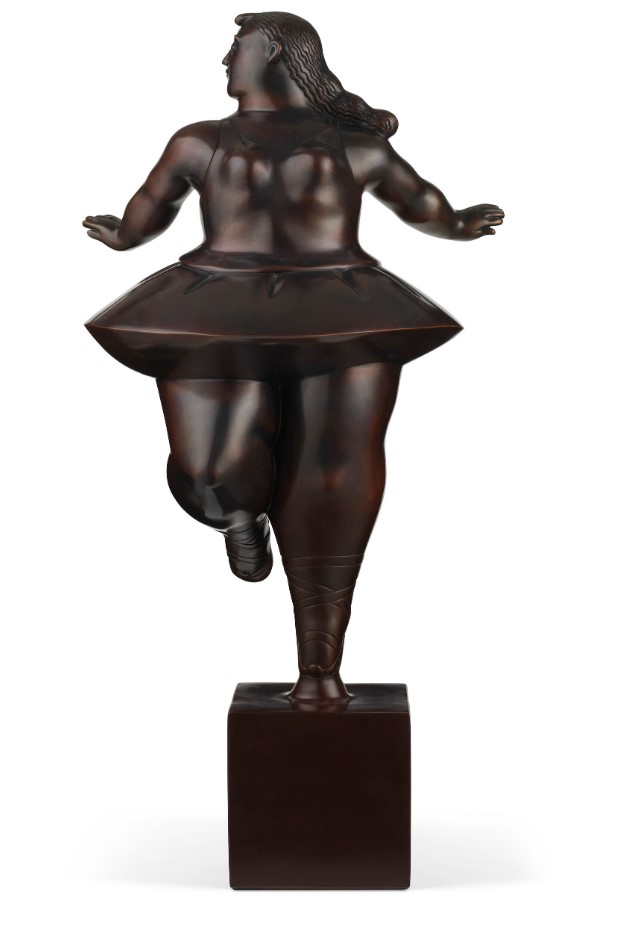
FERNANDO BOTERO (b. 1932)
Ballerina
Bronze
68.6 x 36.8 x 24.1 cm (27 x 14 1/2 x 9 1/2 inches)
Signed and numbered ‘Botero 2⁄6’ (on the base)
Edition two of six
#9. Man on a Horse, 1998
Christie’s New-York: 30 September 2022
Estimated: USD 280,000 – 320,000
USD 453,600
Fernando Botero (b. 1932), Man on a Horse | Christie’s (christies.com)
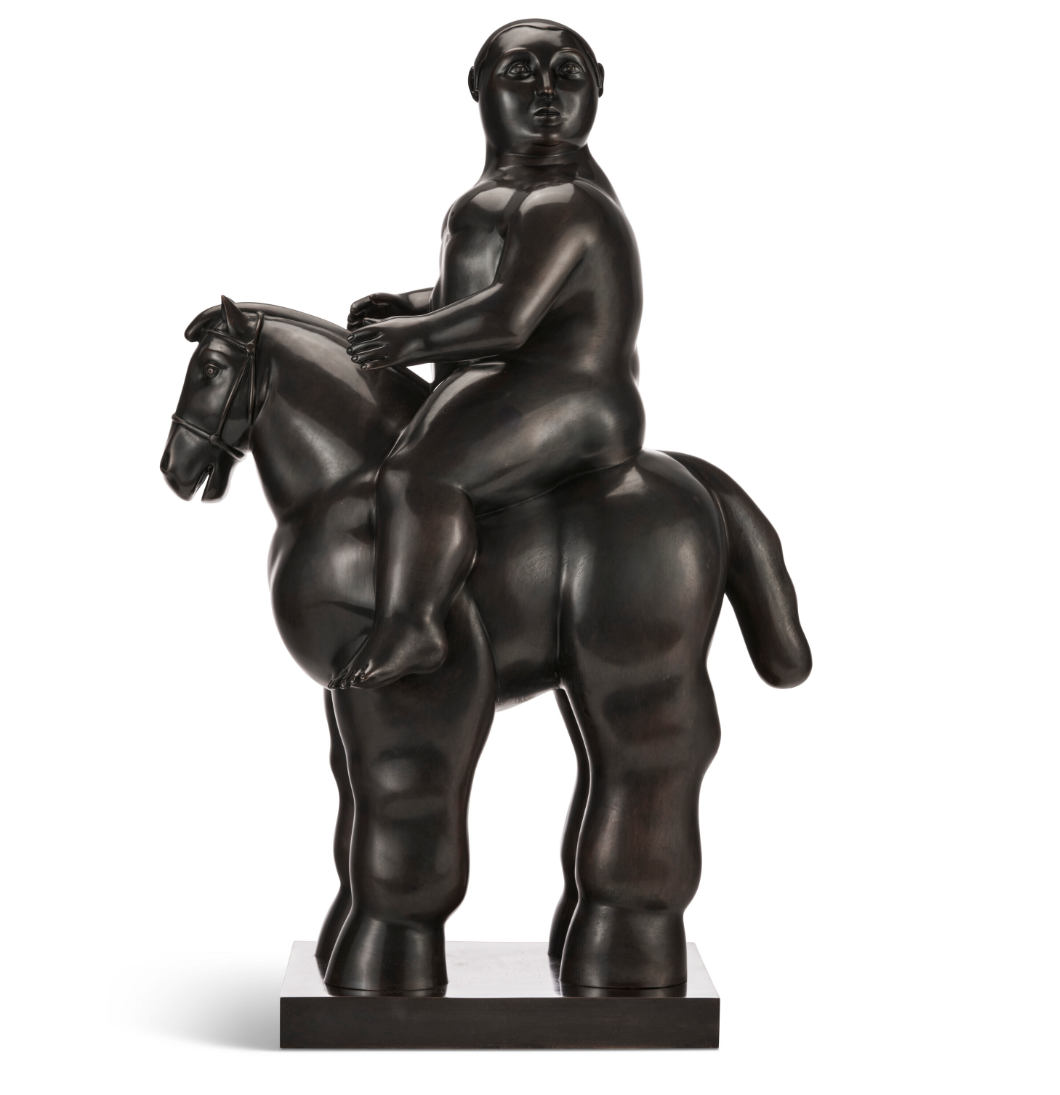
FERNANDO BOTERO (b. 1932)
Man on a Horse, 1998
Bronze
72.4 (H) x 35.6 (W) x 45.7 (D) cm (28 1/2 x 14 x 18 inches)
Signed and numbered ‘Botero 4/6’ and stamped with a foundry mark (on the base)
Edition four of six
#10. Lovers, 1982
Sotheby’s New-York: 20 May 2022
Estimated: USD 250,000 – 350,000
USD 441,000
Lovers | Contemporary Day Auction | 2022 | Sotheby’s (sothebys.com)
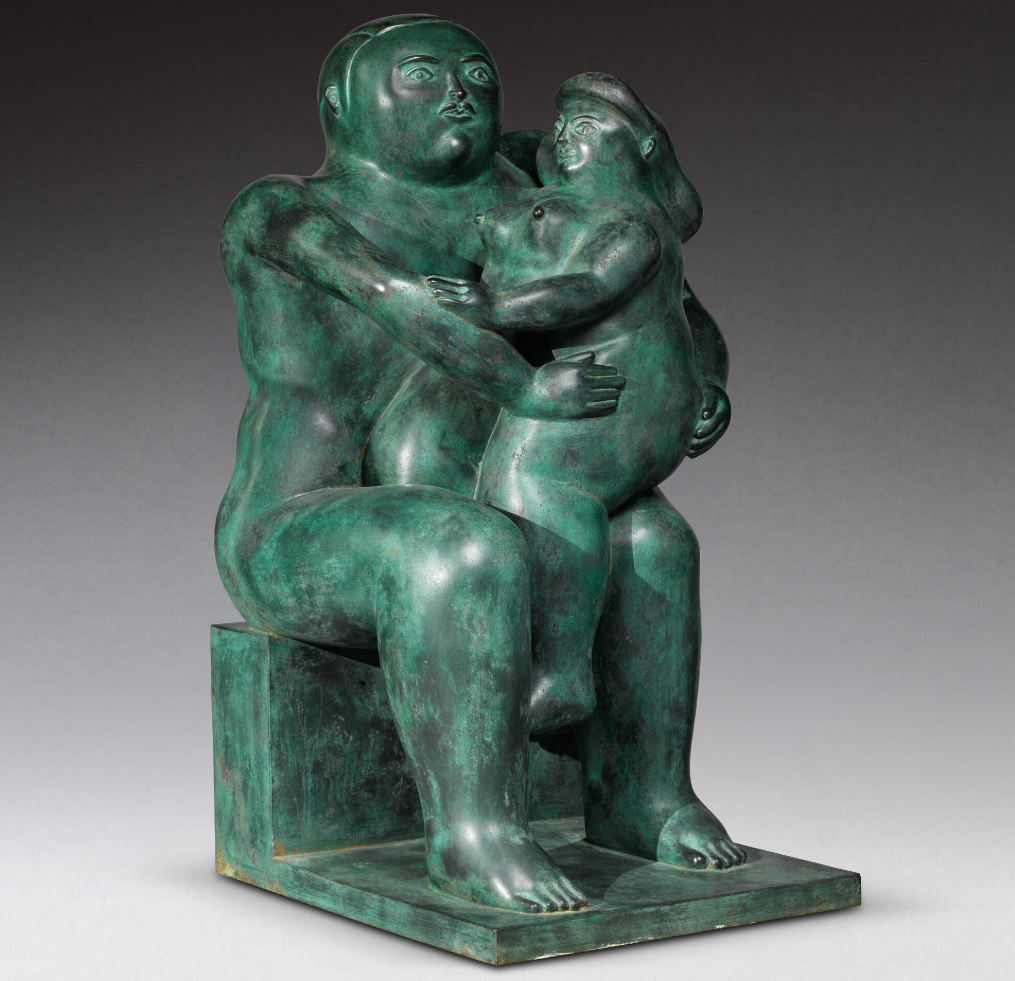
FERNANDO BOTERO
Lovers, 1982
Bronze with green patina
Height: 91.4 cm (36 inches)
Inscribed with artist’s signature and numbered 1/6
This example executed in 1982 as number 1 from an edition of 6
#11. Le Matin, 1981/82
Van Ham: 30 November 2022
Estimated: EUR280,000
EUR 369,600 / USD 381,424
Fernando Botero – Buy & Sell | VAN HAM Art Auctions (van-ham.com)
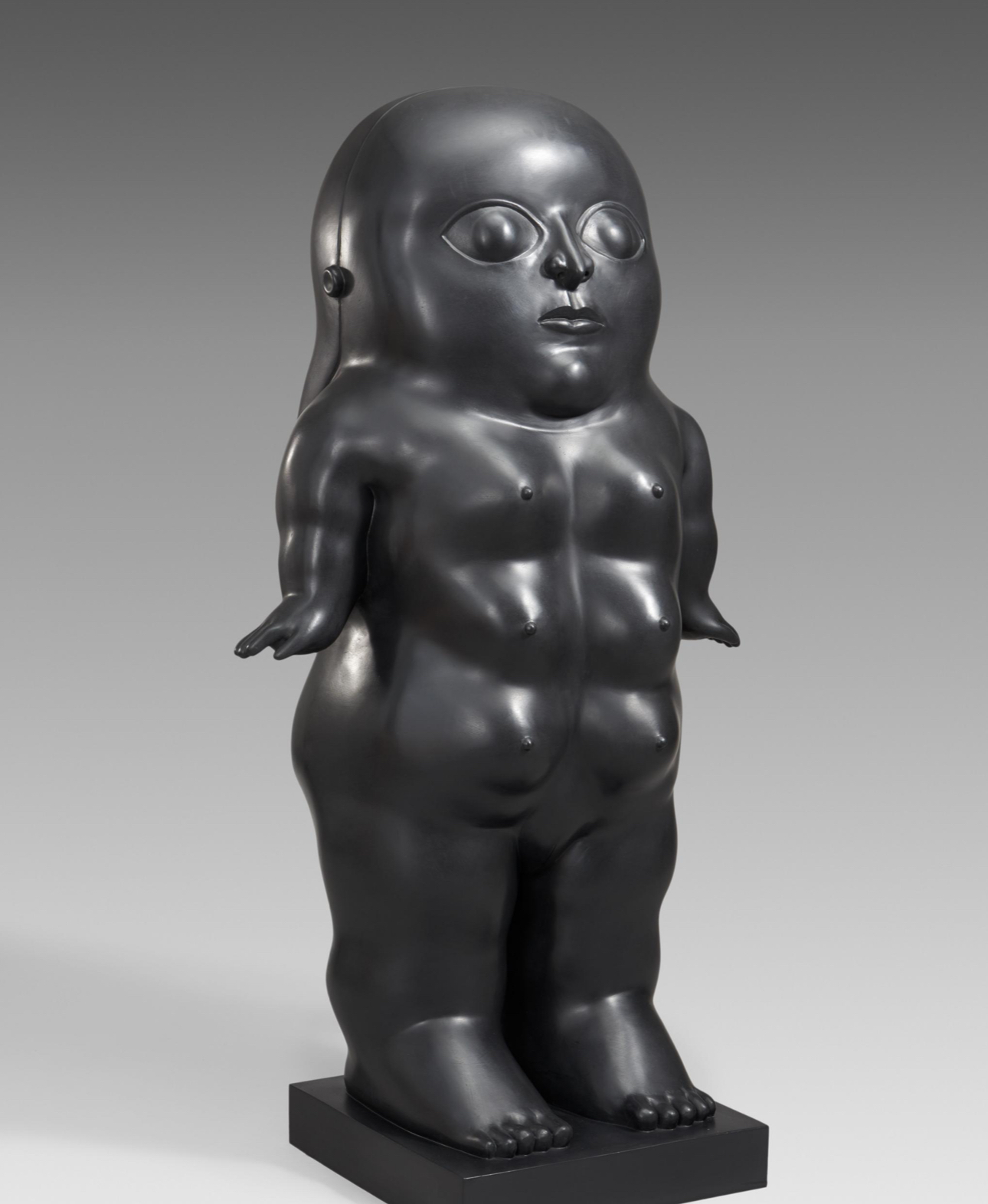
FERNANDO BOTERO
Le Matin, 1981/82
Bronze, black patina
168x93x63 cm
Signed and numbered on the base: Botero 3/6.
Verso on the base of the foundryman’s stamp: Susse fondeur Paris. Copy: 3/6
#12. Standing Woman, 1990
Sotheby’s New-York: 17 November 2022
Estimated: USD 400,000 – 600,000
USD 378,000
Standing Woman | Contemporary Day Auction | 2022 | Sotheby’s (sothebys.com)
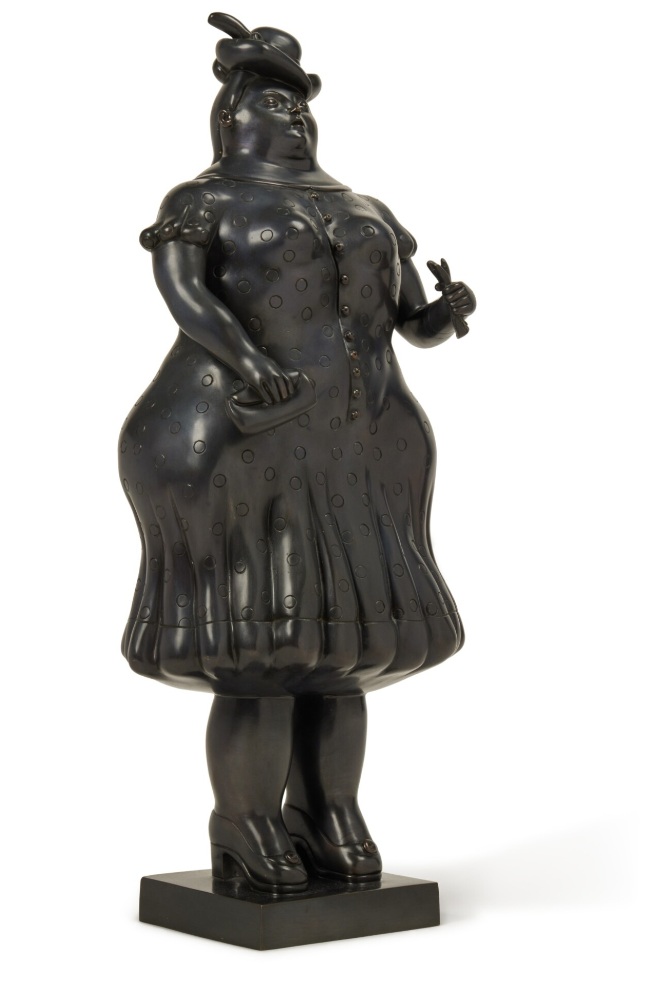
FERNANDO BOTERO
Standing Woman, 1990
Bronze
81.3 x 38.1 x 25.3 cm (32 1/2 x 15 x 10 inches)
Inscribed with artist’s signature, numbered 3/6 and stamped with the foundry mark Fonderia M Italy (on the base)
Executed circa 1990 this work is number 3 from an edition of 6 plus 2 artist’s proofs
#13. Man, Woman and Child
Christie’s New-York: 29 September 2022
Estimated: USD 250,000 – 350,000
USD 378,000
Fernando Botero (b. 1932) (christies.com)
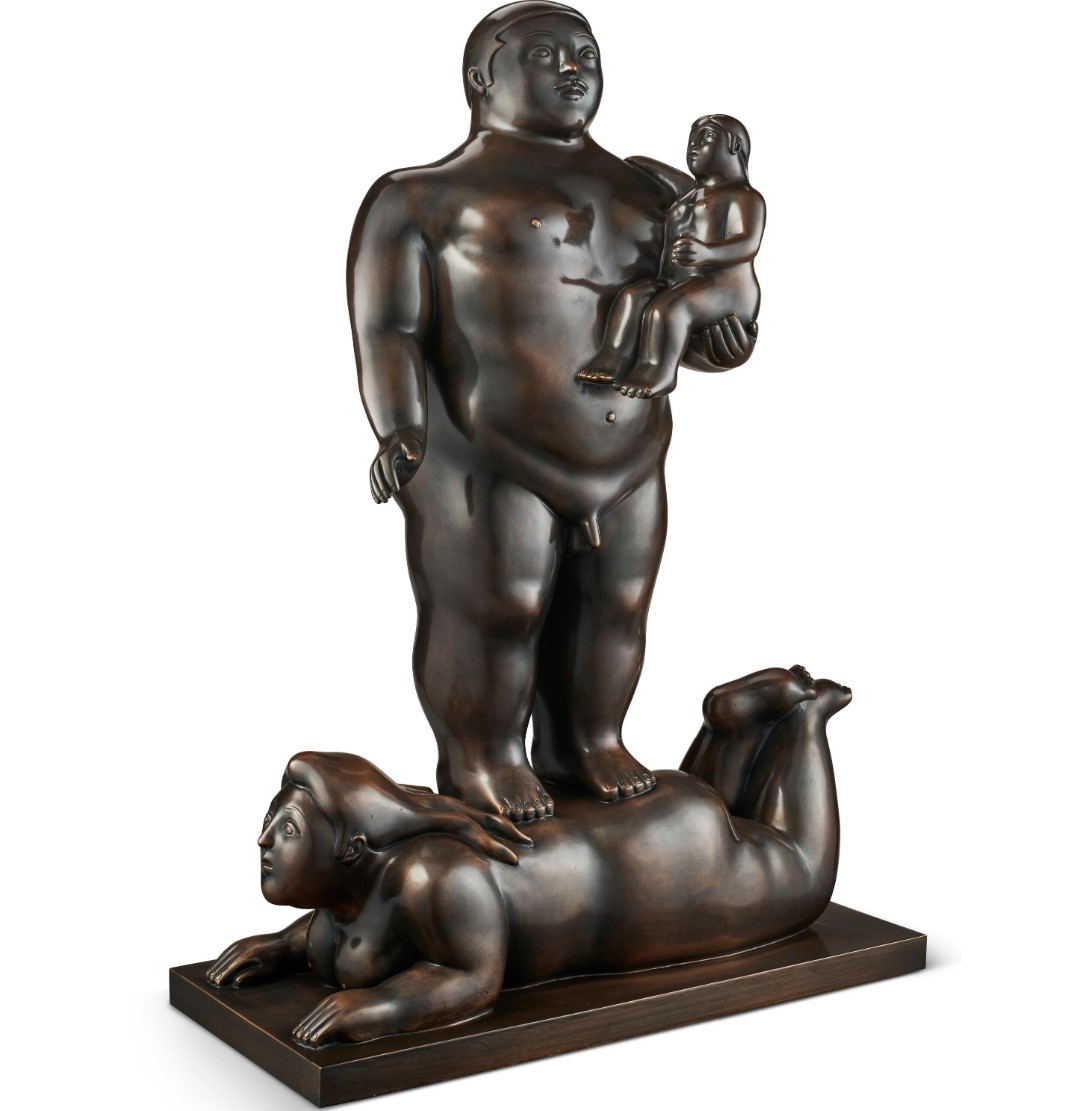
FERNANDO BOTERO (b. 1932)
Man, Woman and Child
Bronze
71.1 x 50.8 x 23.5 cm (28 x 20 x 9 1/4 inches)
Signed and numbered ‘Botero 2/6’ and stamped with a foundry mark (on the base)
Edition two of six
#14. Donna a cavallo, 1999
Sotheby’s New-York: 11 March 2022
Estimated: USD 250,000 – 350,000
USD 378,000
Donna a cavallo | Contemporary Curated | 2022 | Sotheby’s (sothebys.com)
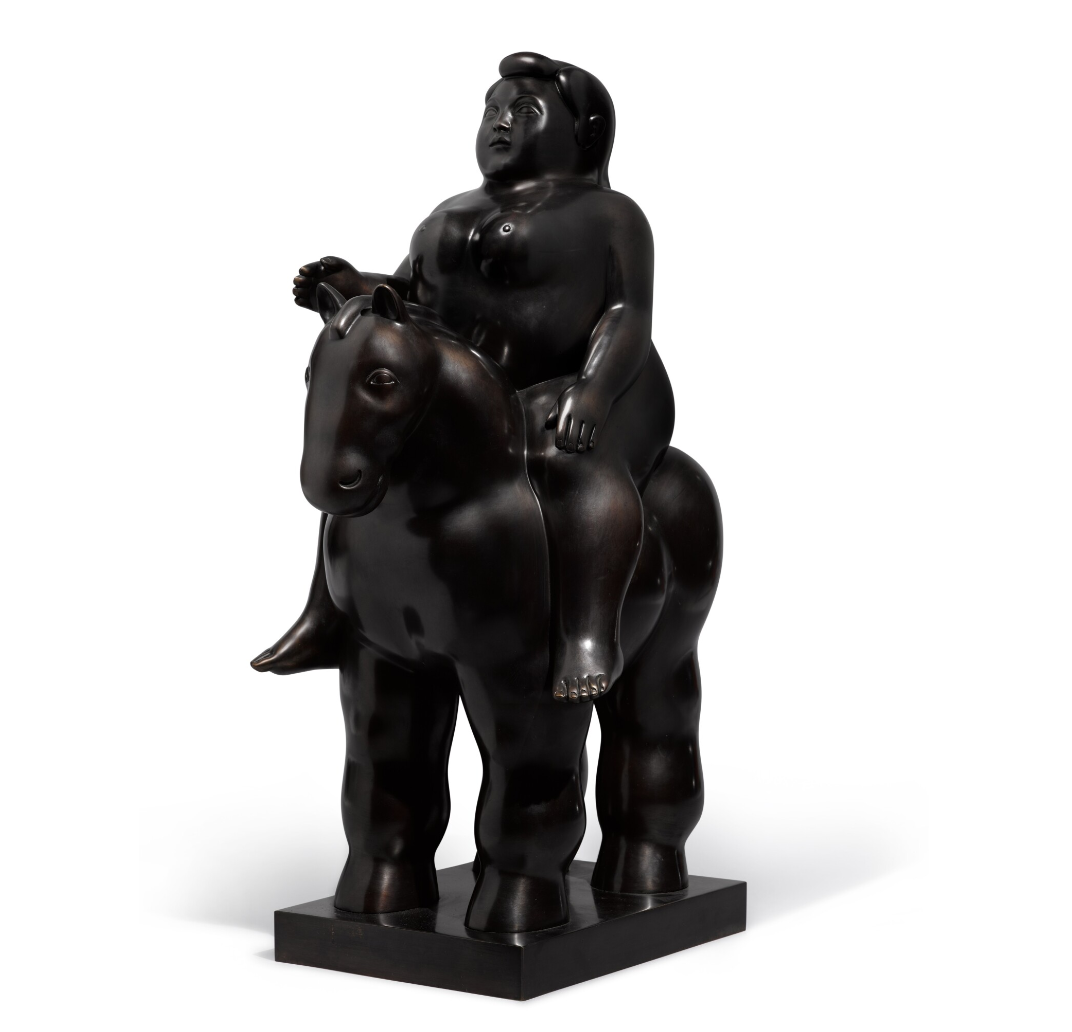
FERNANDO BOTERO (b. 1932)
Donna a cavallo, 1999
Bronze
62.2 x 40.6 x 31.8 cm (24 1/2 x 16 x 12 1/2 inches)
Inscribed with the signature Botero and numbered E/A 2/2
This work is the second artist’s proof from an edition of 6, plus 2 artist’s proofs
#15. The Lovers
Christie’s New-York: 11 March 2022
Estimated: USD 250,000 – 350,000
USD 352,800
FERNANDO BOTERO (b. 1932), The Lovers | Christie’s (christies.com)
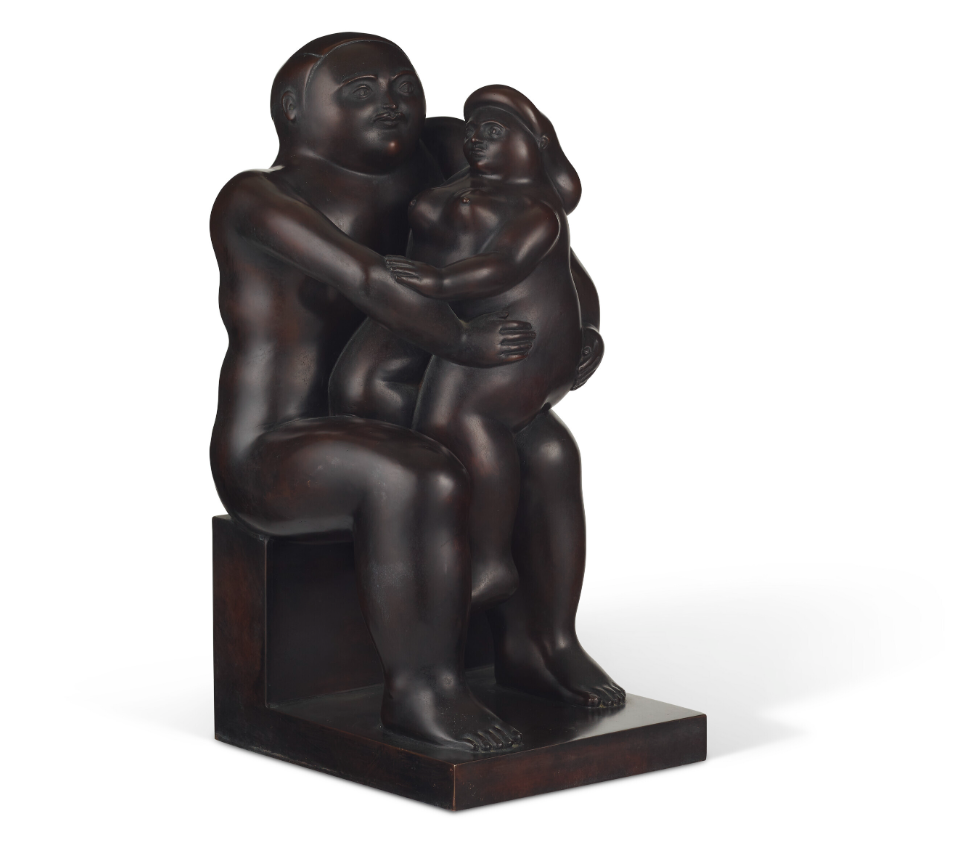
FERNANDO BOTERO (b. 1932)
The Lovers
Bronze
48.3 (H) x 21.6 (W) x 26 (D) cm (19 x 8 1/2 x 10 1/4 inches)
Signed and numbered ‘Botero 6⁄9’ (on the base)
Edition six of nine
#16. Horse, 1981
Christie’s Hong-Kong: 1 December 2022
Estimated: HKD 2,500,000 – 3,500,000
HKD 2,646,000 / USD 340,199
FERNANDO BOTERO (B. 1932) (christies.com)
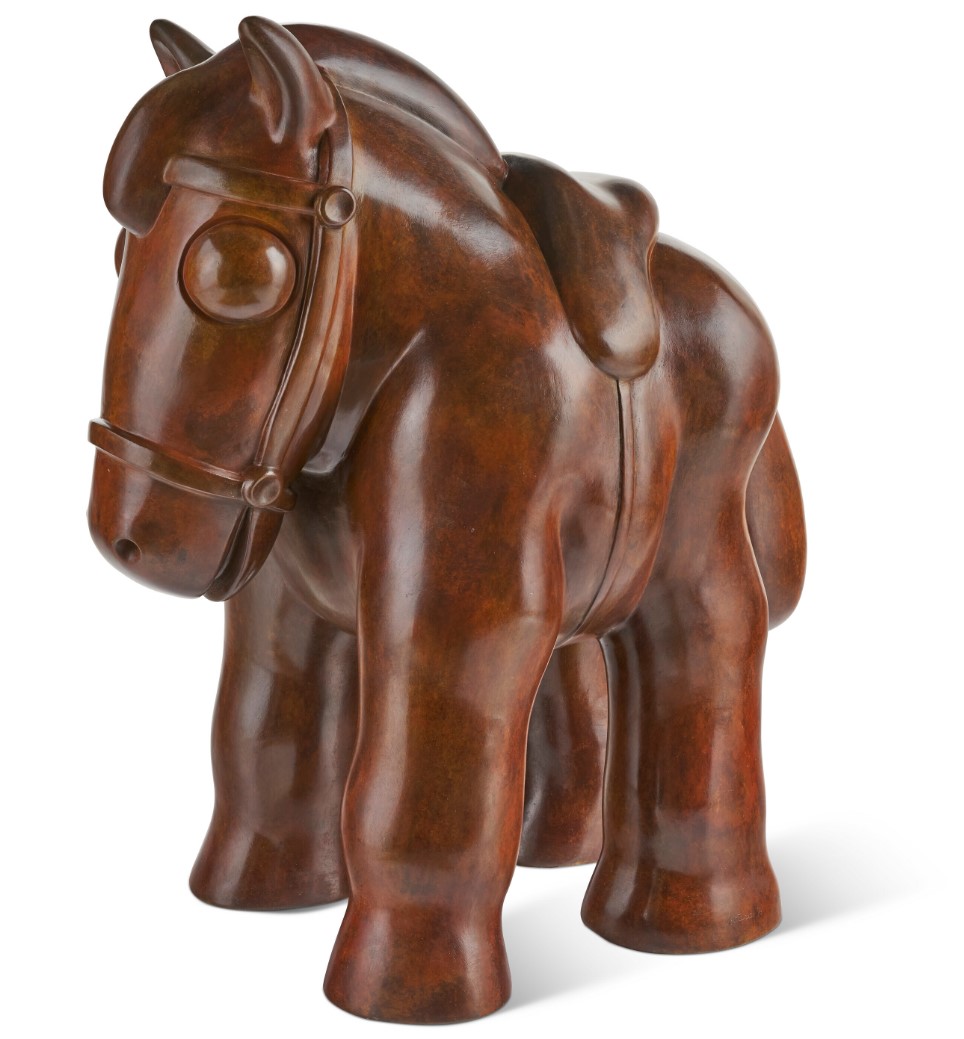
FERNANDO BOTERO (B. 1932)
Horse, 1981
Bronze
82.3 x 48.9 x 74.9 cm (32 3/8 x 19 1/4 x 29 1/2 inches)
Inscribed with foundry mark ‘FOND. ART. BROTAL MENDRISIO’ (left hind hoof)
Edition of six
#17. Ballerina, 1981
Hindman: 14 December 2022
Estimated: USD 200,000 – 300,000
USD 300,000
Ballerina (hindmanauctions.com)
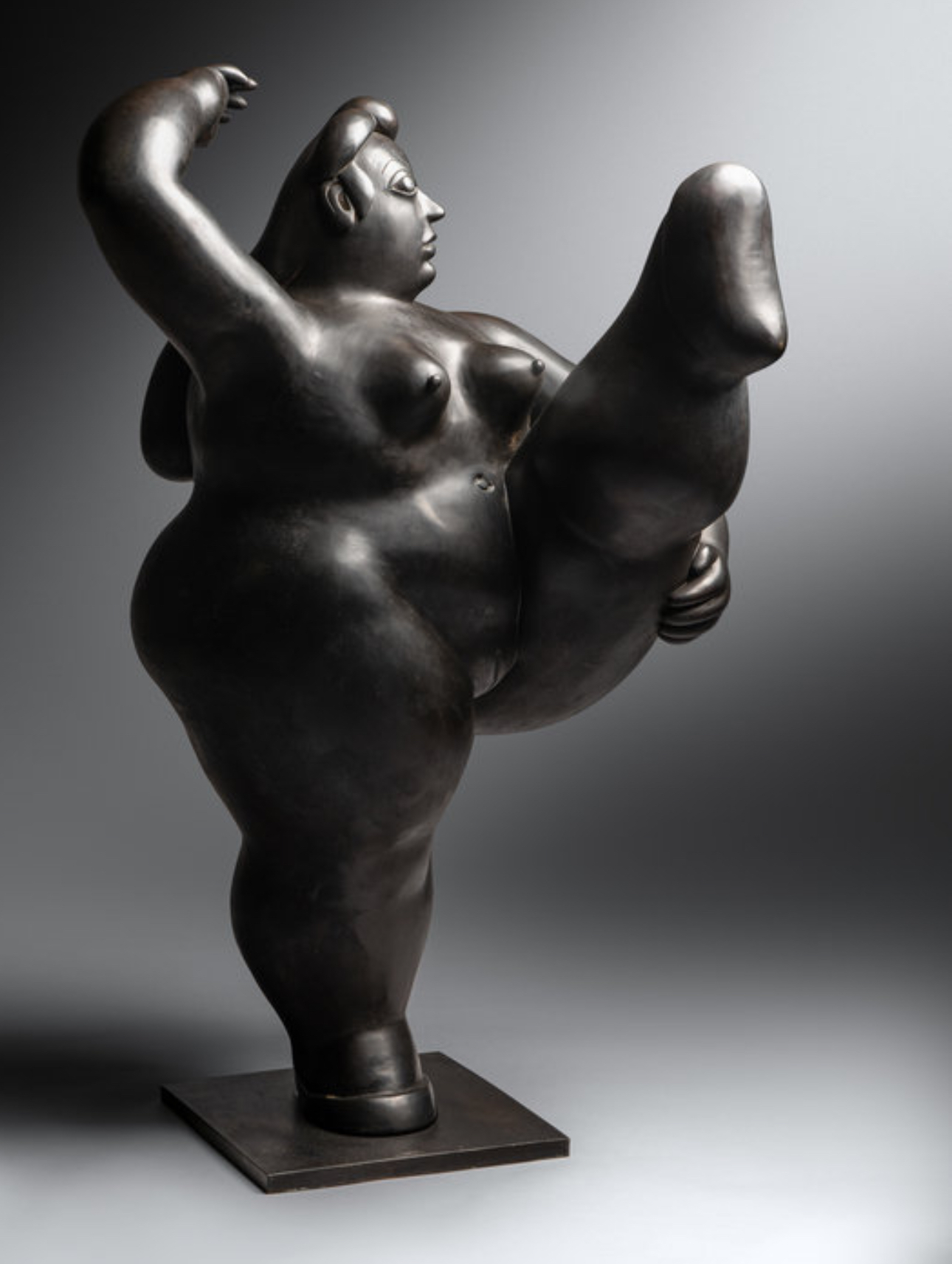
FERNANDO BOTERO (Colombian, b. 1932)
Ballerina, 1981
Bronze
Height: 41 inches
Inscribed Botero and numbered 5/6
#18. Woman with Serpent, 1983
Phillips New-York: 19 May 2022
Estimated: USD 120,000 – 180,000
USD 176,400
Fernando Botero – 20th Century & Contem… Lot 177 May 2022 | Phillips
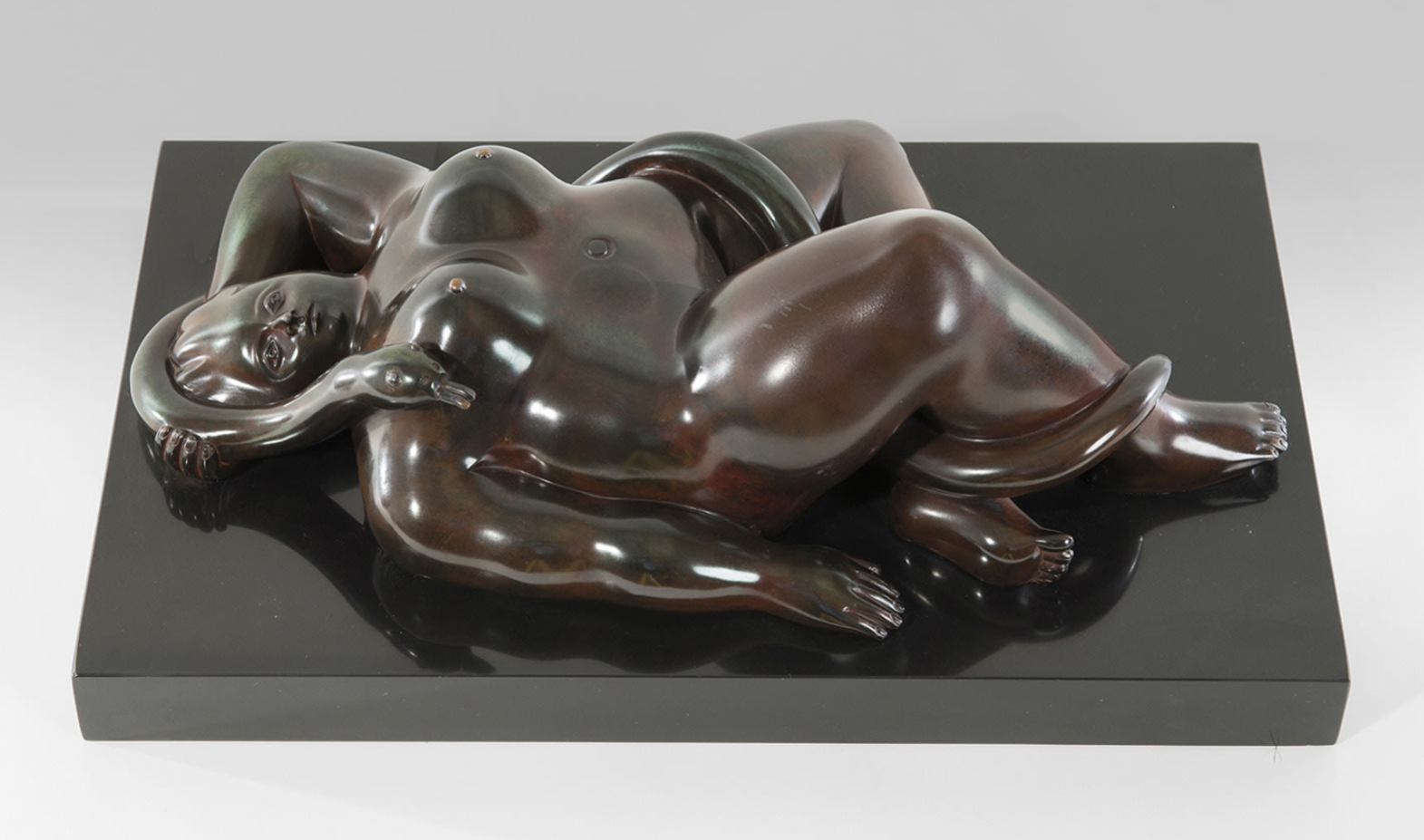
FERNANDO BOTERO
Woman with Serpent, 1983
Bronze
19.1 x 46.4 x 27.9 cm (7 1/2 x 18 1/4 x 11 inches)
Incised with the artist’s signature and number “Botero 8/9”
Stamped with the Fonderia M Italy foundry mark on the figure’s proper right upper arm
This work is number 8 from an edition of 9 plus 2 artist’s proofs
#19. Ballerina, 1980
Christie’s New-York: 11 March 2022
Estimated: USD 150,000 – 200,000
USD 163,800
FERNANDO BOTERO (b. 1932), Ballerina | Christie’s (christies.com)
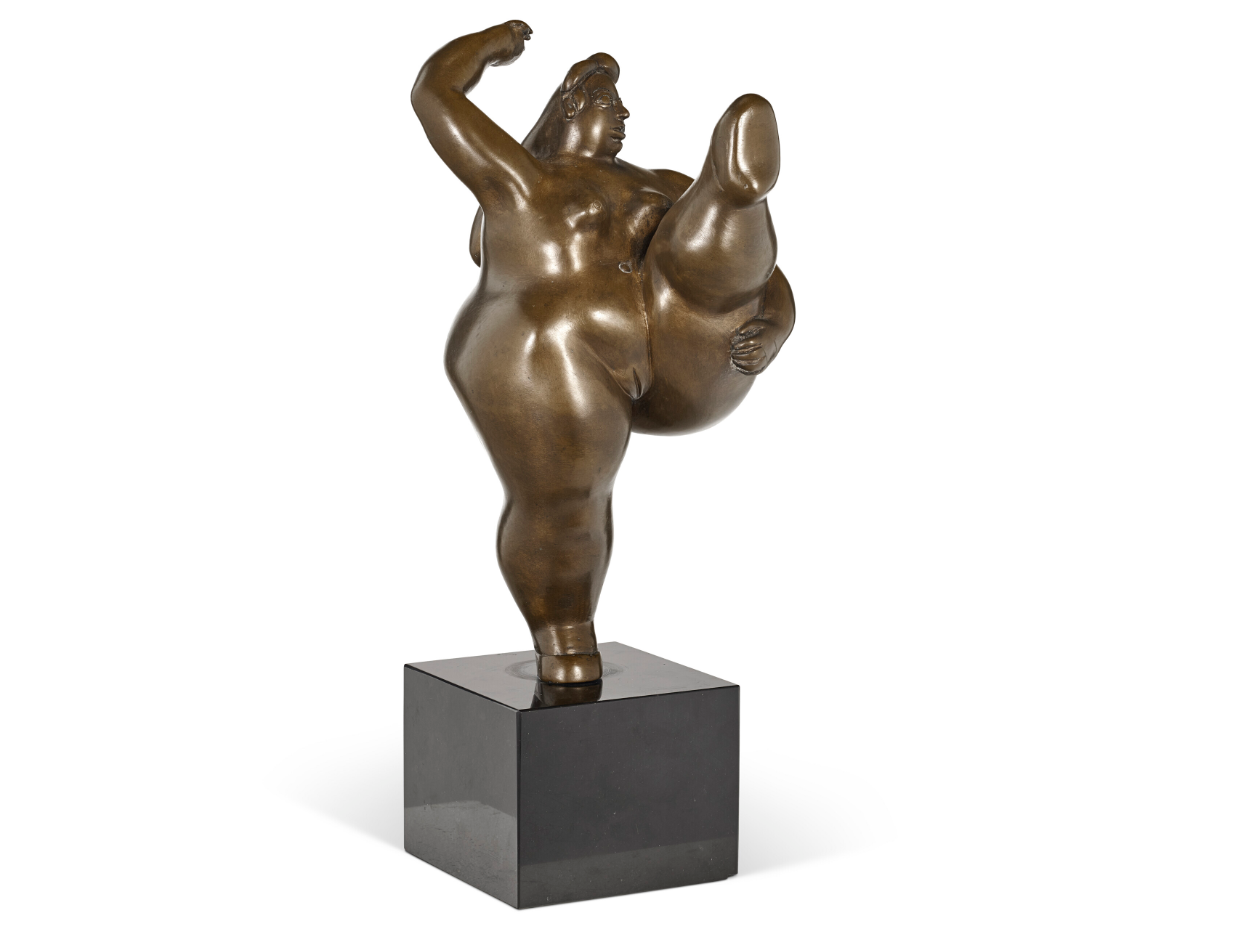
FERNANDO BOTERO (b. 1932)
Ballerina, 1980
Bronze
32.6 (H) x 21 (W) x 14.6 (D) cm (12 7/8 x 8 1/4 x 5 3/4 inches)
Signed and numbered ‘Botero 8⁄9’ (on the foot)
Edition eight of nine
2021 Auction Results
WORK IN PROGRESS
1. Paintings
#1. The Bather, 1975
Christie’s New-York: 19 May 2021
Estimated: USD 1,800,000 – 2,500,000
USD 1,830,000
Fernando Botero (b. 1932) (christies.com)
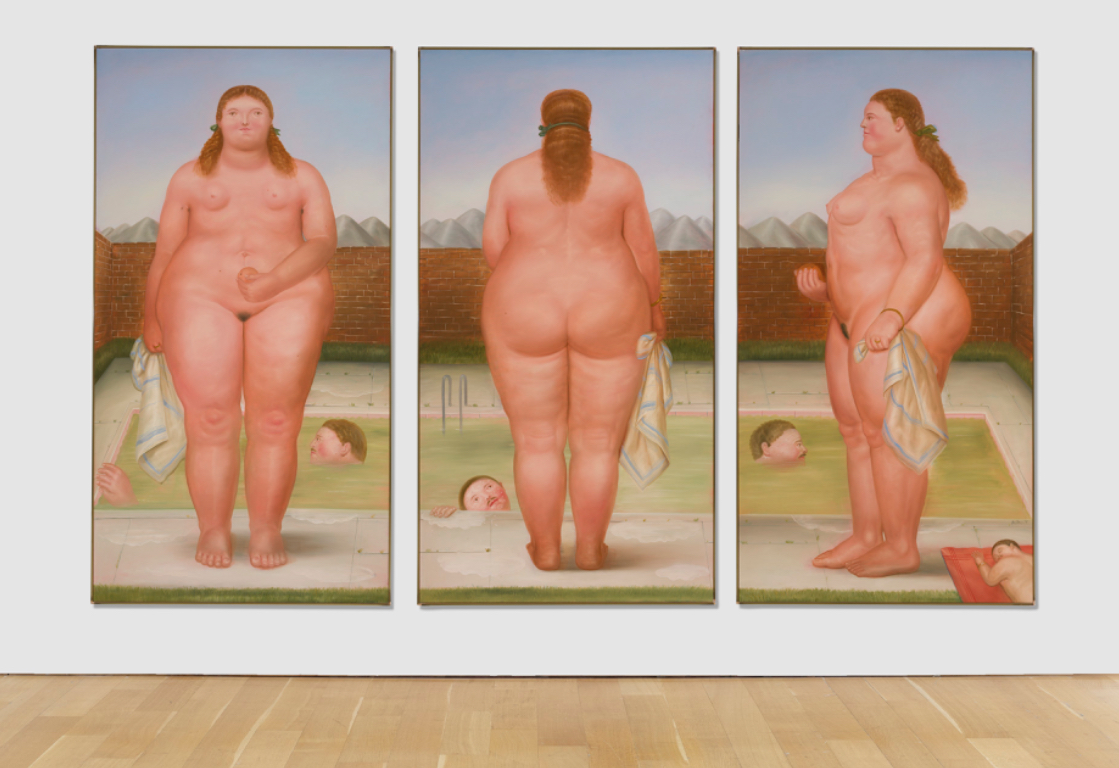
FERNANDO BOTERO (b. 1932)
The Bather, 1975
Oil on canvas in three parts
Each: 236.2 x 126 cm (93 x 49 1/2 inches)
Overall: 236.2 x 377.2 cm (93 x 148 1/2 inches)
Signed and dated ‘Botero 75’ (lower right, right panel)
#2. La Cantante, 2016
Christie’s Hong-Kong: 1 December 2021
Estimated: HKD 7,800,000 – 13,800,000
HKD 12,250,000 / USD 1,571,792
FERNANDO BOTERO (B. 1932) (christies.com)
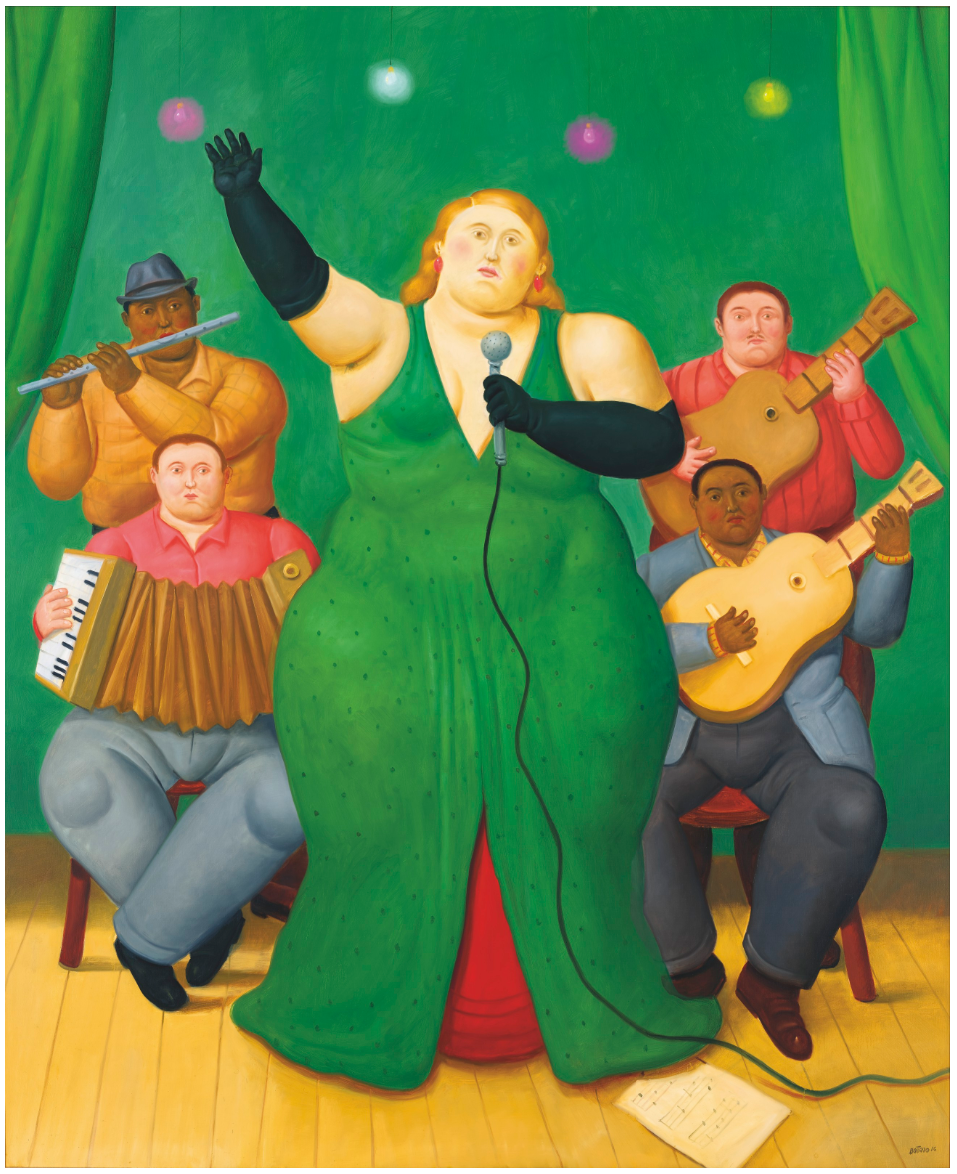
FERNANDO BOTERO (B. 1932)
La Cantante, 2016
Oil on canvas
189×155 cm (74 3/8 x 61 inches)
Signed and dated ‘Botero 16’ (lower right)
#3. Femme à la guitare, 1988
Christie’s Paris: 13 October 2021
Estimated: EUR 500,000 – 700,000
EUR 920,000 / USD 1,063,705
Fernando Botero (né en 1932), Femme à la guitare | Christie’s
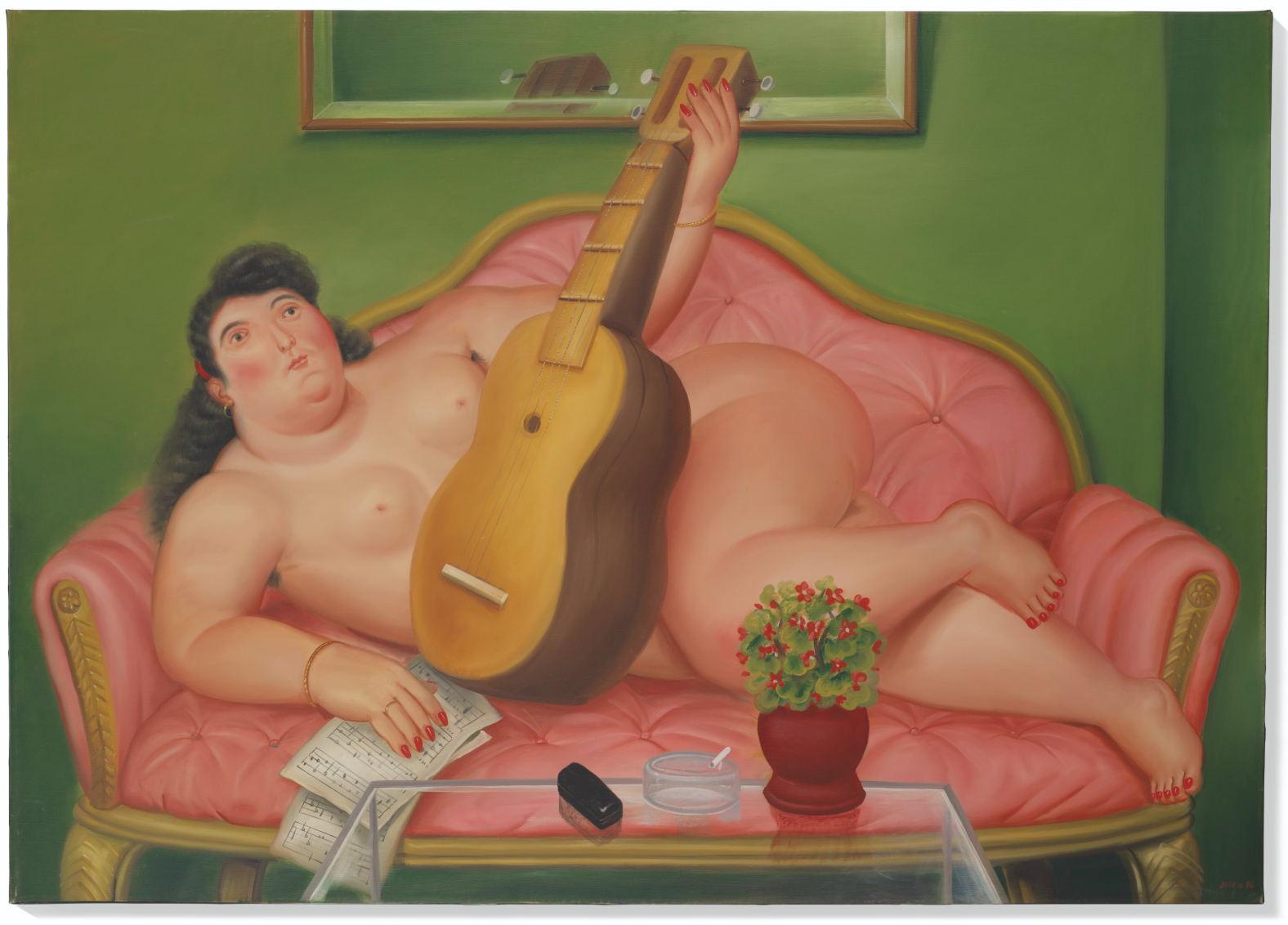
FERNANDO BOTERO
Femme à la guitare, 1988
Oil on canvas
130×183 cm (51 1/8 x 72 inches)
Signed and dated ‘BOTERO 88’ (lower right)
PART III: FOCUS
Horses
Horse, 2008
Property from an Important Private Collection
Christie’s New-York: 21 May 2026
Estimated: USD 500,000 – 700,000
USD 1,778,000
FERNANDO BOTERO (1932-2023), Horse | Christie’s
FERNANDO BOTERO (1932-2023)
Horse, 2008
Bronze
92.1 x 52.1 x 101.6 cm (36-1/4 x 20-1/2 x 40 inches)
Incised with the artist’s signature and stamped with the number and foundry mark ‘Botero 3⁄6’ (on the base)
This work is number three from an edition of six
“Sculpture is painting without borders…Sculpture was a natural experience in my evolution because of the obvious sculptural element in my paintings. This was a return to simplicity, to growing indifference to details and to a more geometric awareness of shape.”
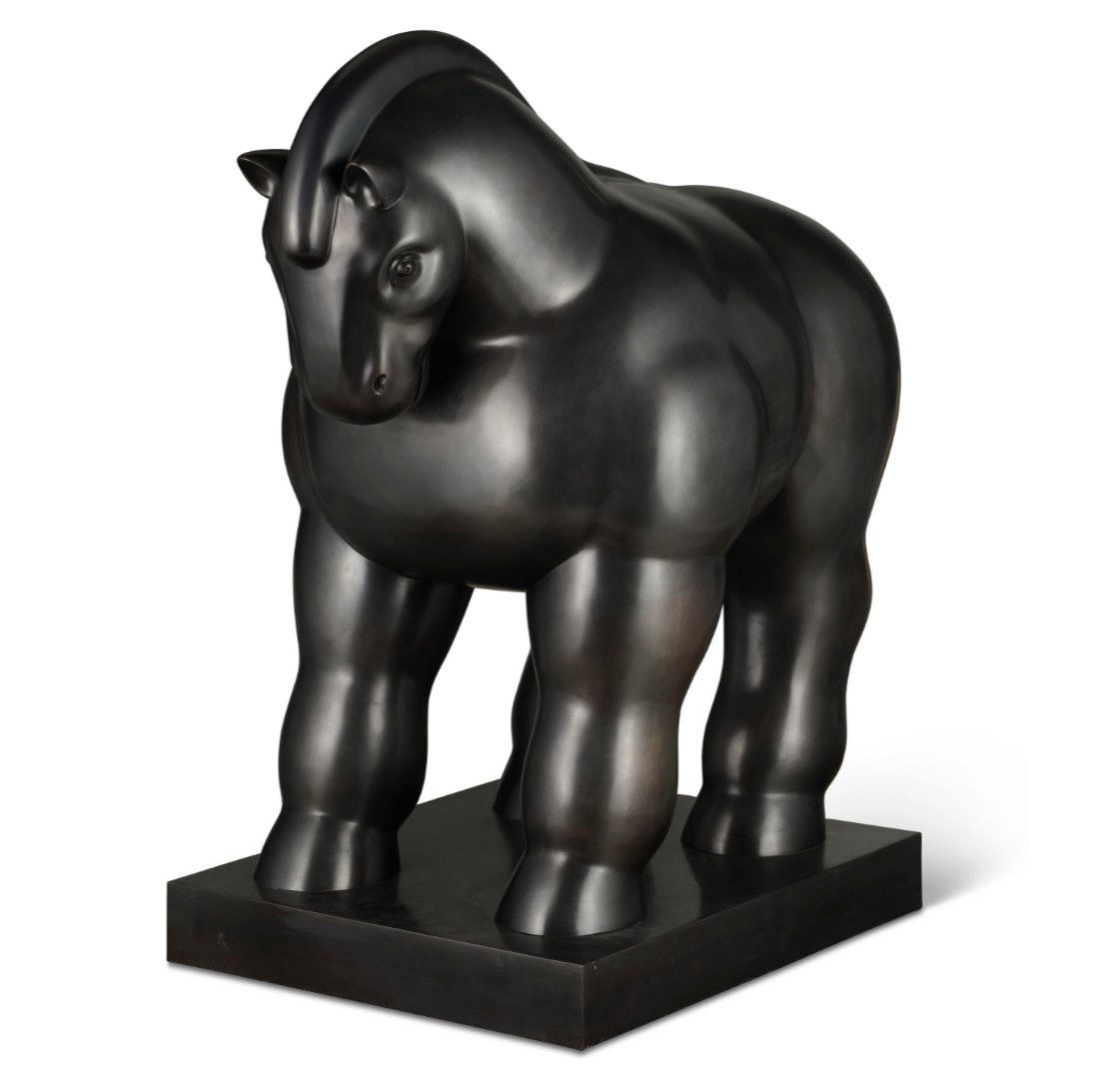
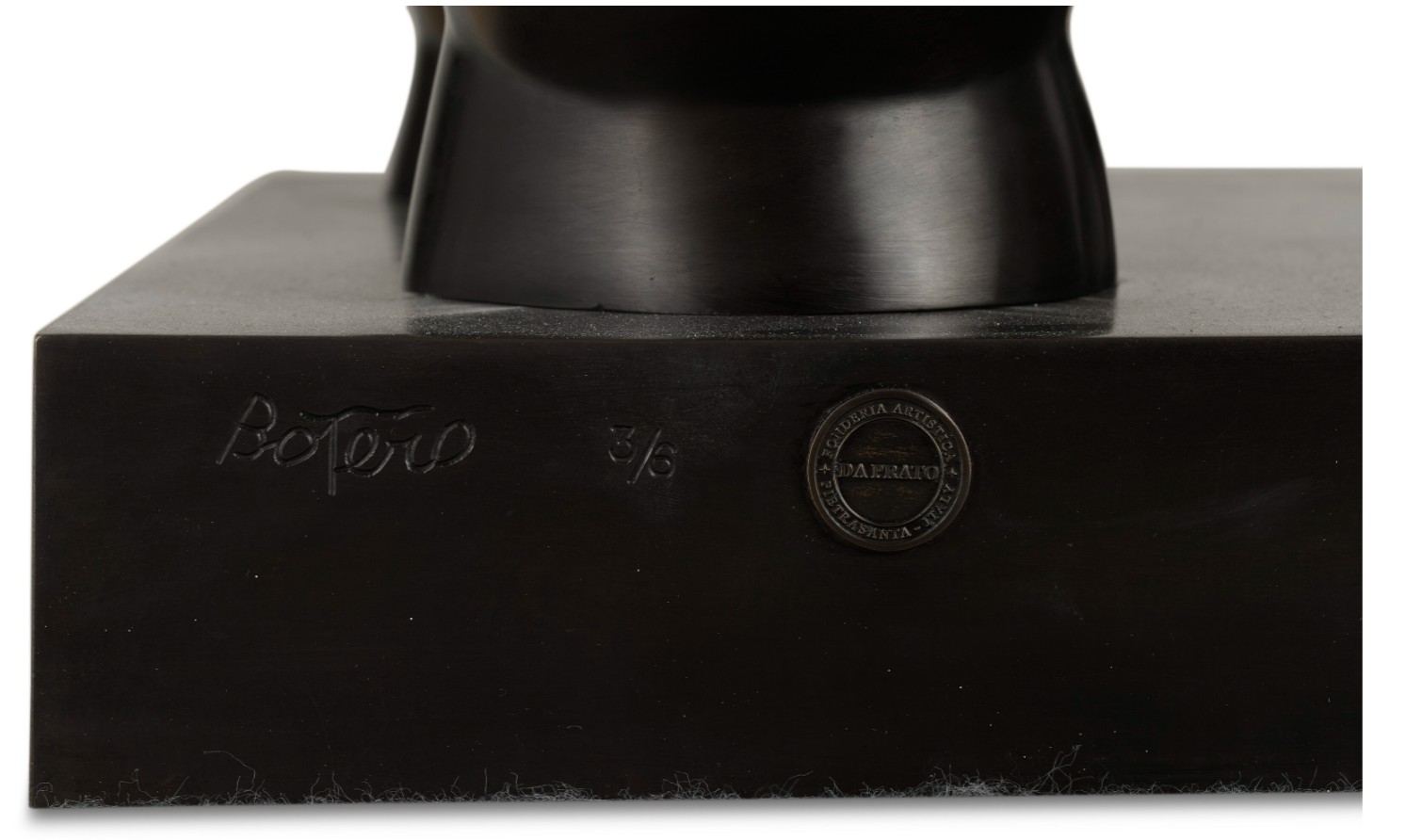
Man on Horse, 2010
Sotheby’s Diriyah: 8 February 2025
Estimated: USD 1,000,000 – 1,500,000
PASSED
Man on Horse | Origins | 2025 | Sotheby’s
FERNANDO BOTERO (1932 – 2023)
Man on Horse, 2010
Bronze
119.4 x 91.4 x 63.5 cm (47x36x25 inches)
Incised with the artist’s signature Botero and number E/A 1/2 (on the base)
This work is artist proof 1/2 from an edition of 6 plus 2 artist’s proofs
Fernando Botero’s Man on Horse from 2010 stands as a remarkable contribution to the tradition of sculpture and the equine motif. With its exaggerated geometric proportions and mesmerizing voluminous form, the present work exemplifies Botero’s distinct contribution to sculpture since his foray into the medium in 1972. Bearing exceptional provenance, Man on Horse is being offered from the collection of Fernando Botero Jr., the late artist’s son.
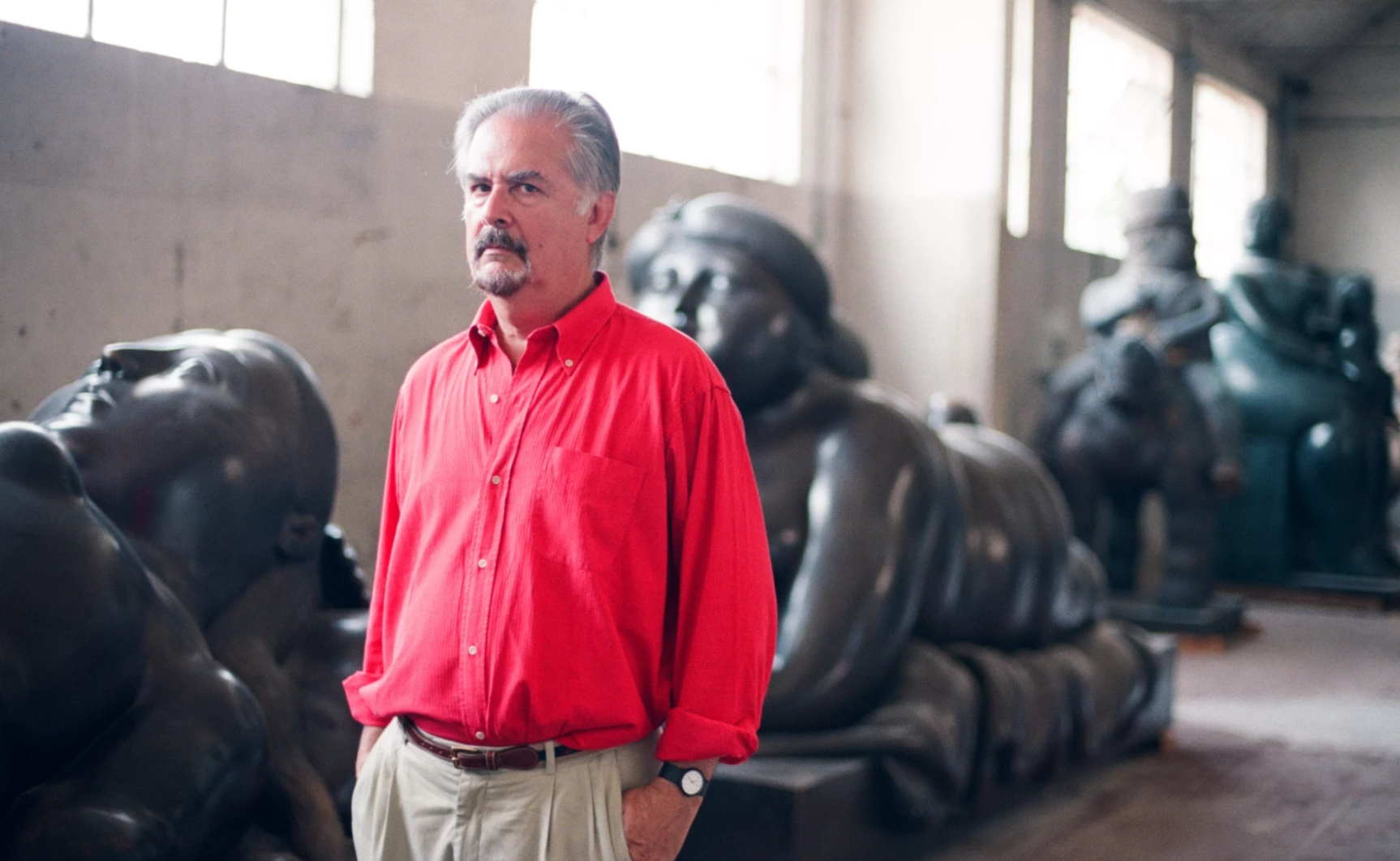
Fernando Botero in his studio workshop in Pietra Santa, Italy, 1995.
Image © Catherine Panchout – Corbis/Corbis via Getty Images
Throughout the history of human creativity, few symbols are more iconic and ubiquitous than the horse. Across civilizations, the motif has appeared and reappeared, proving itself to be an enduring, arguably even universal, emblem of strength and majesty. In Man on Horse, Botero brings his singular visual lexicon and his unparalleled skill in fusing playful stylization with historical reverence, to bring to life a sculpture that is equal parts playful and profound.
“The subject is always the same, but the way you express it is always different. I have always said that the horse, the man, the tree, they were all always, since prehistoric times, the same, and yet, there have been thousands of ways to express them. The horse of the School of Altamira, the horse of Velázquez, of Caravaggio, of Giotto, of Picasso … they are all the same horse, but it is the way they express it that is different…”
Botero’s lengthy and dedicated study of the Western art historical canon underscores how the equine motif, so elegantly interrogated in the present work, would have been present throughout the artist’s career. Informed by art historical influences ranging from Italian Renaissance and Dutch Golden Age Masters to the French Impressionists and even his New York School contemporaries, Fernando Botero achieved a uniquely personal solution to bring figuration into the twentieth century: one that embraces both pointed societal critique and a sly sense of humor. Born to humble beginnings in the countryside near Medellín, Colombia in 1932, Botero’s ambition took him to the prestigious Academia San Fernando in Madrid in 1952. Once there, he funded years of study and travel to Europe’s great museums by selling copies of Velázquez, Goya and Rubens’ masterpieces to tourists, executed over painstaking hours of observation in the Prado — where equestrian portraits of Europe’s royal families litter the storied halls. These formative images of power and conquest would inform the reappearance of the animal throughout Botero’s later oeuvre.
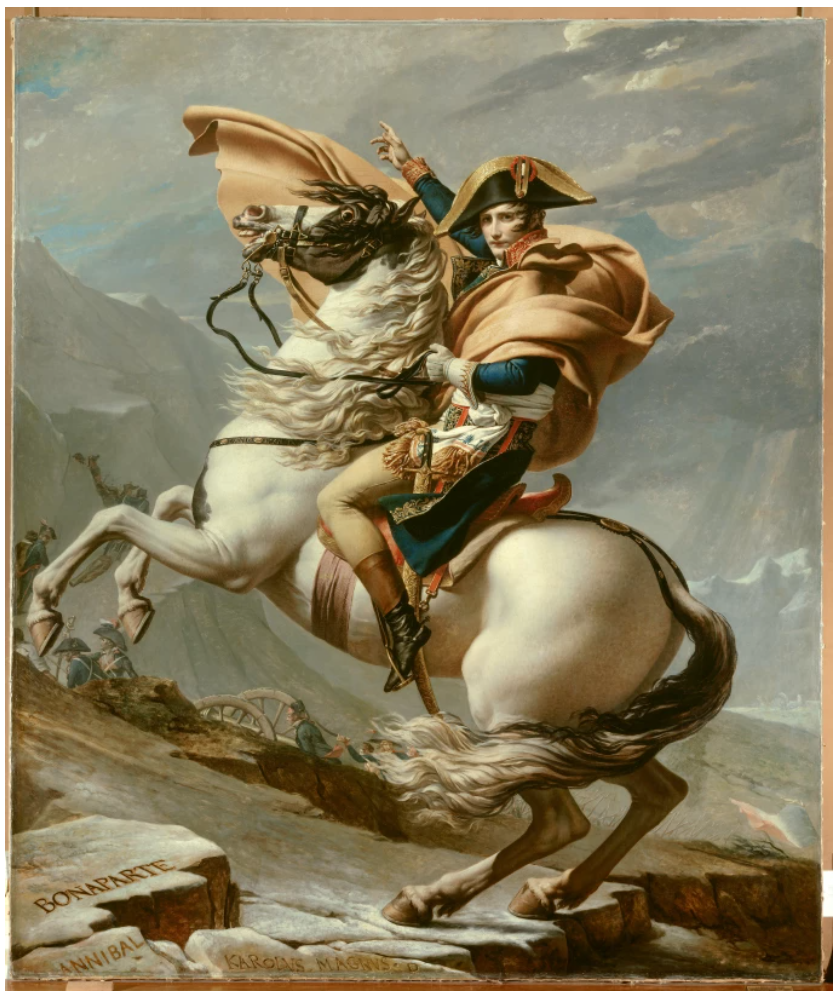
Jacques-Louis David, Napoleon Crossing the Alps, 1803. Musee National du Chateau de Malmaison, Rueil-Malmaison, France.
Image © Photo Josse / Bridgeman Images
Botero’s interrogation of the horse motif finds its roots not only in the art historical canon but also in his rural Colombian childhood. The artist’s father, David Botero, was a traveling salesman who rode on horseback for work and passed away when Botero was just four years old. Decades later, following the tragic death of Botero’s four-year-old son Pedro in a car accident, he began a mournful series of portraits and sculptures of Pedro on horseback, echoing the significance of the animal in his relationship with his own father. These works were among the artist’s first forays into sculpture — and retained a profound personal resonance within his wider body of work. Often echoing the conventions of Western equestrian portraits of royal families, or of Colombian depictions of Simón Bolivar, Botero’s horses retain a characteristic warmth.
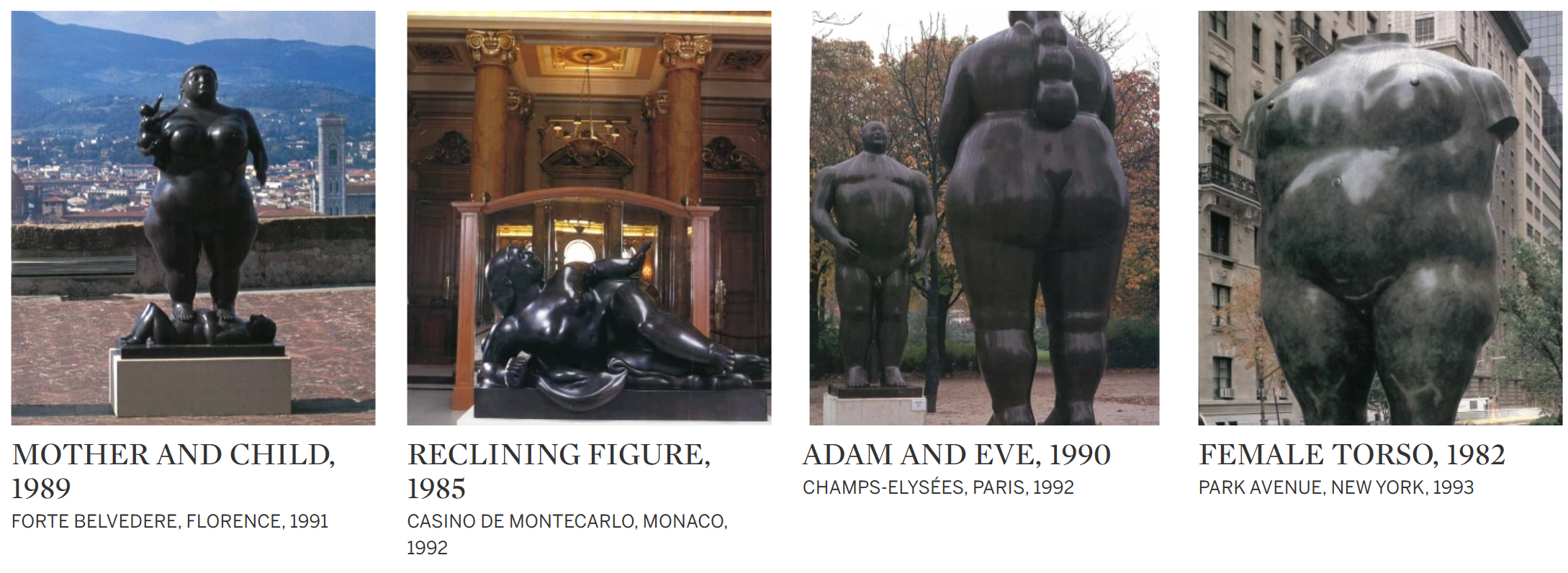
Monumental Works Around the World
One of the major influences that drove him to develop his world-renowned volumetric style is Paolo Uccello, the Italian Renaissance painter who used the horse’s muscles and rounded extremities to introduce a sense of volume and, thus, of perspective in his legendary triptych, The Battle of San Romano. As a figurative painter, Botero favors the anatomy of the horse to implement his aesthetic of undulating muscle in exaggerated forms and to pay tribute to the Renaissance Masters who revolutionized art history by exploring perspective in canvas, mainly through the use of volume.
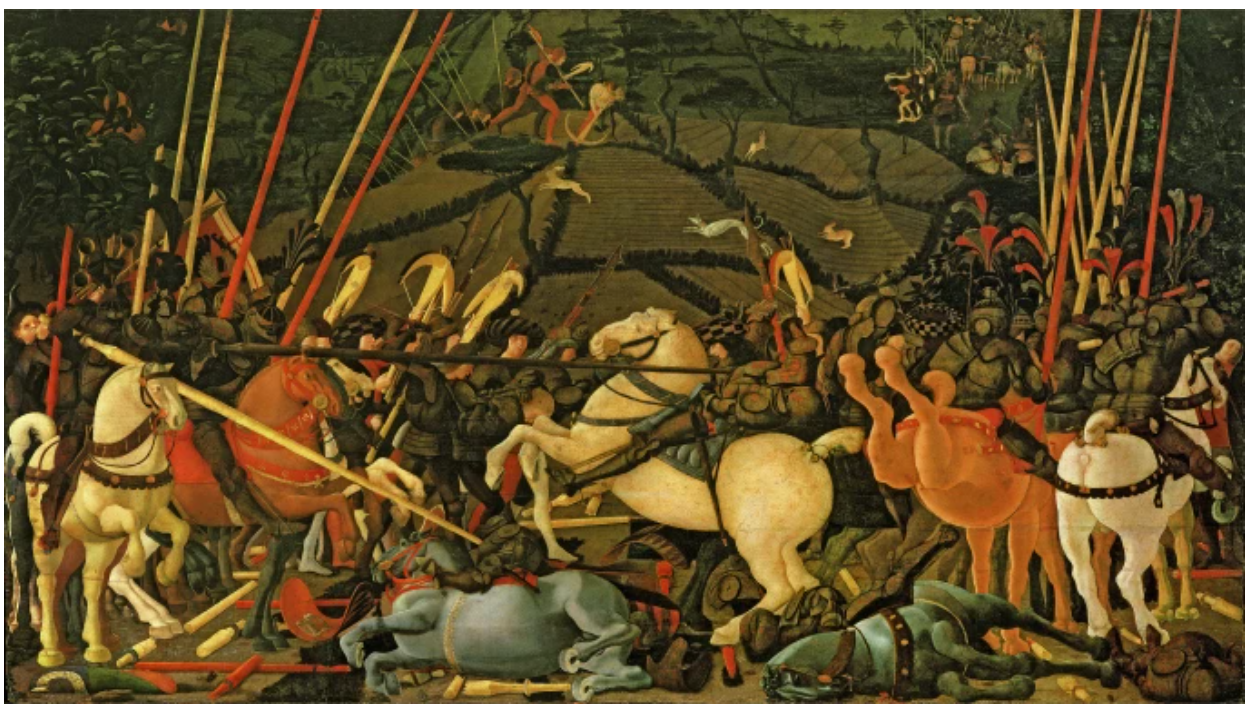
Paolo Uccello, The Battle of San Romano, c. 1435-1440. Gallerie degli Uffizi, Florence.
Image © Bridgeman Images
The exaggerated proportions and softened forms—most prominent in the horse’s thick, curvaceous legs, oversized muscles, and barrel-like torso—challenge the viewer’s perception of reality. Botero lived in New York from the late 1950s-70s, and a kindred instinct can be seen between the Colombian artist and a nascent American movement that emerged during those years — Pop Art. Artists like Roy Lichtenstein, Andy Warhol and Alex Katz processed the relentless consumerism of midcentury America with a certain sarcasm, applying the gleaming, plastic aesthetic of advertising to everyday subjects. Likewise Botero applies a certain irony in his processing of celebrated works of the Western canon, with a kindred impulse to reveal (and revel in) the artifice of these works.
“Without knowing it it was a little like the philosophy of Pop Art. Another thing I found was important was that – with a bold approach – the head is so overblown that it takes up the entire space. I’m not saying that I created this in American art but I wasn’t taking it from American artists.”
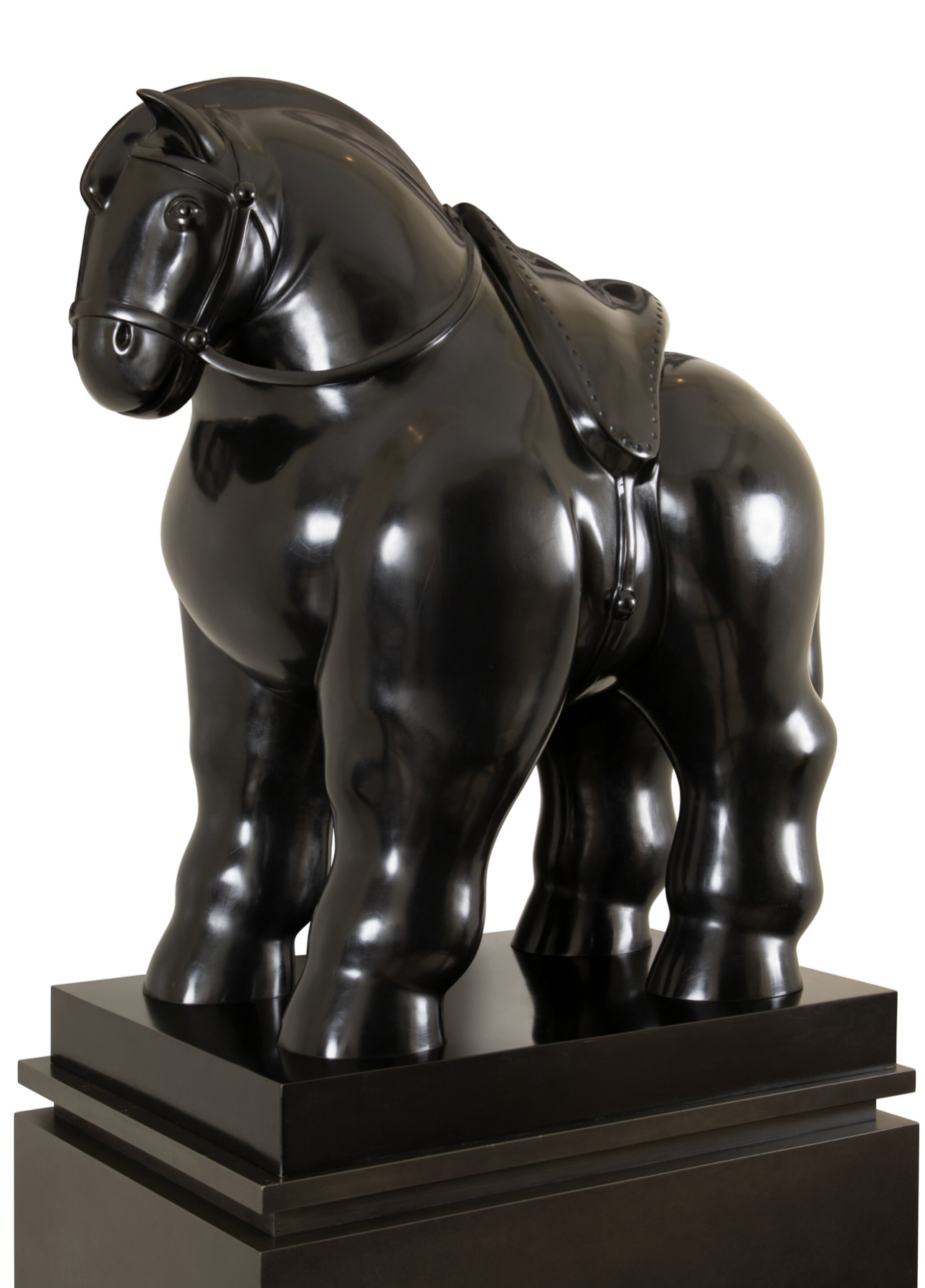
Botero is perhaps most celebrated for this exploration of volume and dimensions in a way that adds an element of whimsy to his work. The artist’s signature style, often dubbed “Boterismo,” shed light on the artist’s interest in capturing the sensual language of painting and sculpture, particularly in the aesthetics that arise in the expansion of mass and form. Botero demonstrates his mastery of bronze in the smooth polished surface gleaming with a dark, velvety patina, and along with it a refined elegance. The resulting sculpture is a work that is indubitably part of a broader conversation about power and monumentality without losing its engaging playfulness, boasting an inviting and approachable grandeur to the motif of the horse.
Horse, 1992
Sotheby’s New-York: 20 November 2024
Estimated: USD 3,000,000 – 5,000,000
USD 4,920,000
NEW WORLD AUCTION RECORD FOR THE ARTIST
Horse | The Now and Contemporary Evening Auction | 2024 | Sotheby’s
FERNANDO BOTERO (1932 – 2023)
Horse, 1992
Bronze
304.8 x 174.6 x 229.9 cm (120 x 68 3/4 x 90 1/2 inches)
Incised with the artist’s signature, numbered E.A. 1/2 and stamped with the foundry mark (on the base)
This work is artist’s proof 1 from an edition of 3 plus 2 artist’s proofs
Fernando Botero’s Horse of 1992 stands as a remarkable contribution to the tradition of monumental sculpture and the equine motif. With its exaggerated geometric proportions and mesmerizing voluminous form, the present work exemplifies Botero’s distinct contribution to sculpture, particularly monumental forms, since his foray into the medium in 1972. Throughout the history of human creativity, few symbols are more iconic and ubiquitous than the horse. Across civilizations, the motif has appeared and reappeared, proving itself to be an enduring, arguably even universal, emblem of strength and majesty. In Horse, Botero brings his singular visual lexicon and his unparalleled skill in fusing playful stylization with historical reverence, to bring to life a monument that is equal parts playful and profound.
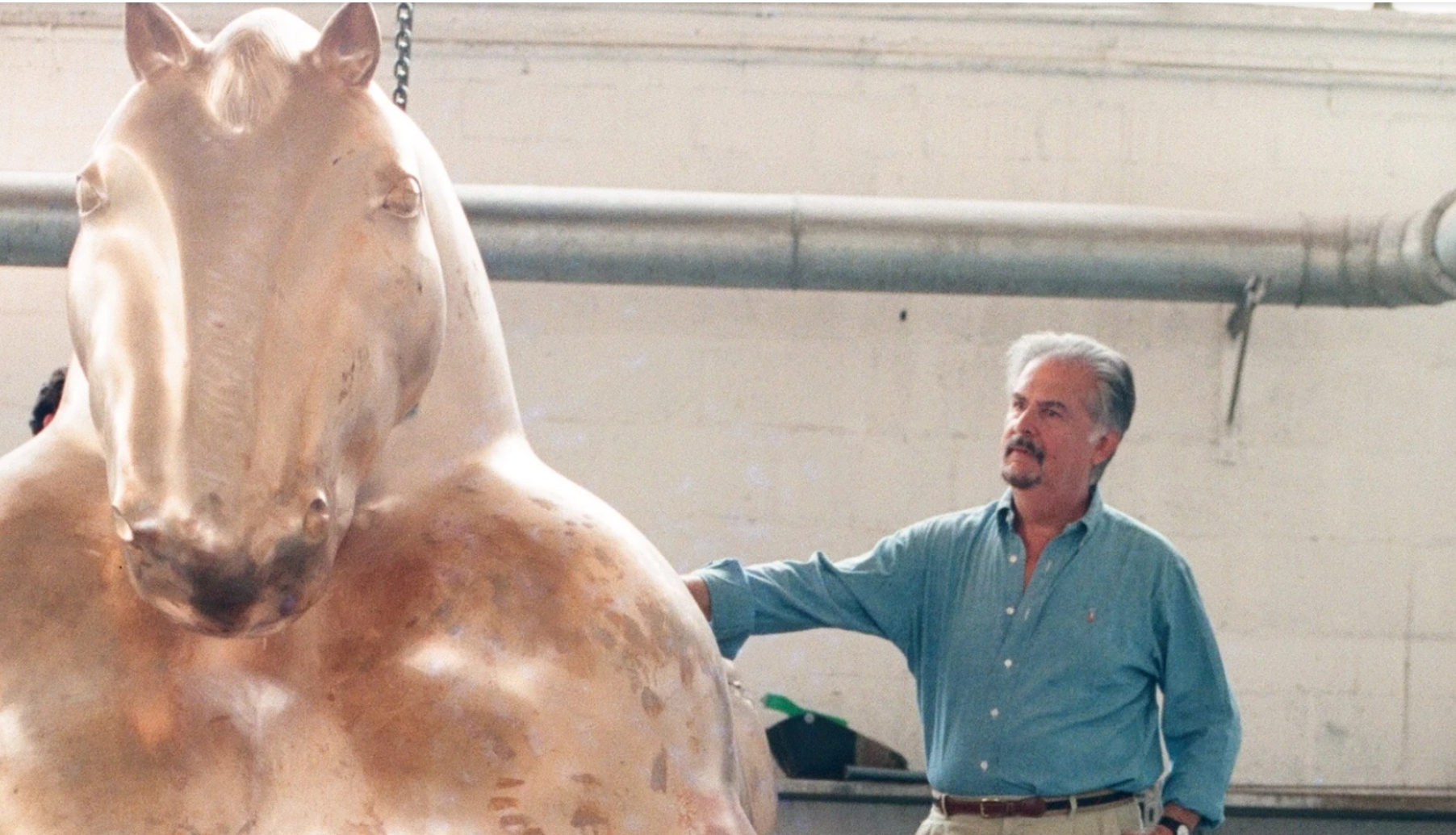
Fernando Botero in his Pietrasanta foundry, 1995.
Photo © Catherine Panchout – Corbis/Corbis via Getty Images. Art © 2024 Fernando Botero
The artist’s lengthy and dedicated study of the Western art historical canon underscores how the equine motif, so elegantly interrogated in the present work, would have been present throughout the artist’s career. Informed by art historical influences ranging from Italian Renaissance and Dutch Golden Age Masters to the French Impressionists and even his New York School contemporaries, Fernando Botero achieved a uniquely personal solution to bring figuration into the twentieth century: one that embraces both pointed societal critique and a sly sense of humor. Born to humble beginnings in the countryside near Medellín, Colombia in 1932, Botero’s ambition (and a scholarship) took him to the prestigious Academia San Fernando in Madrid in 1952. Once there, he funded years of study and travel to Europe’s great museums by selling copies of Velázquez, Goya and Rubens’ masterpieces to tourists, executed over painstaking hours of observation in the Prado — where equestrian portraits of Europe’s royal families litter the storied halls. These formative images of power and conquest would inform the reappearance of the animal throughout Botero’s later oeuvre.
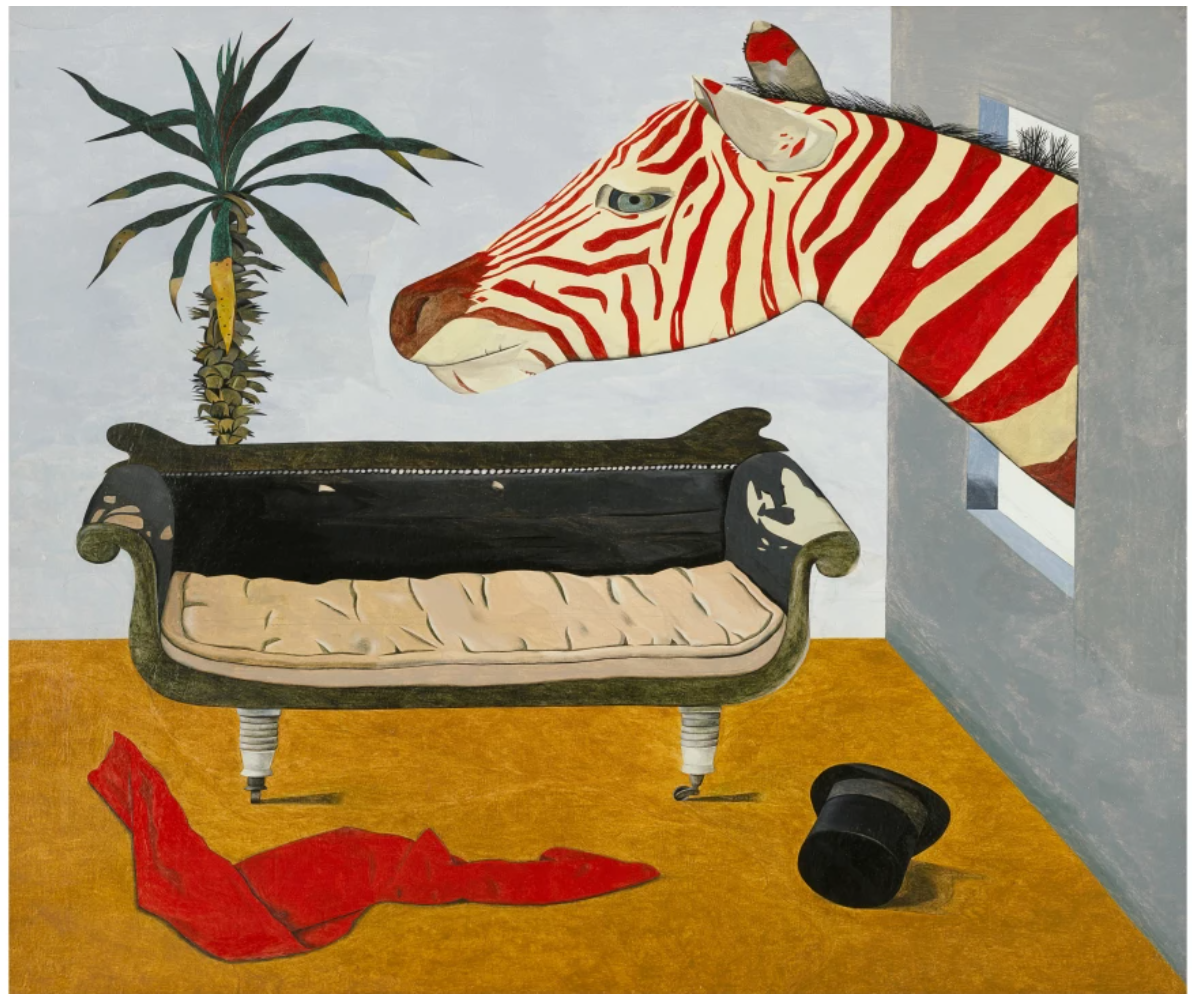
Lucian Freud, The Painter’s Room, 1944. Private Collection.
Image © The Lucian Freud Archive. All Rights Reserved 2024 / Bridgeman Images. Art © 2024 Lucian Freud
Botero’s interrogation of the horse motif finds its roots not only in the art historical canon but also in his rural Colombian childhood. The artist’s father, David Botero, was a traveling salesman who rode on horseback for work and passed away when Botero was just four years old. Decades later, following the tragic death of Botero’s four-year-old son Pedro in a car accident, he began a mournful series of portraits and sculptures of Pedro on horseback, echoing the significance of the animal in his relationship with his own father. These works were among the artist’s first forays into sculpture — and retained a profound personal resonance within his wider body of work. Often echoing the conventions of Western equestrian portraits of royal families, or of Colombian depictions of Simón Bolivar, Botero’s horses retain a characteristic warmth.
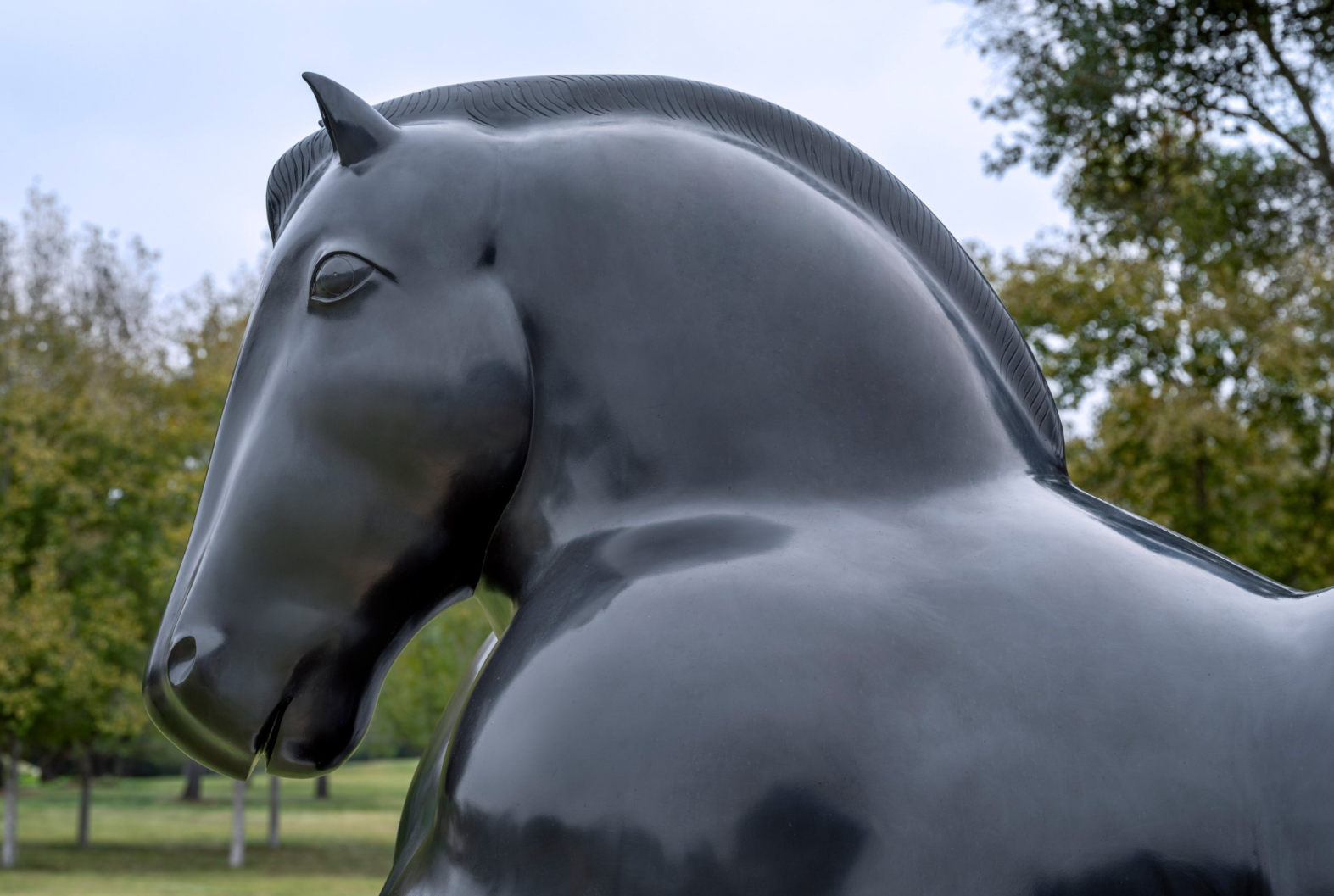
Horse, in its extraordinary physicality and satirical sensibility, at once pays homage to many of these art historical influences while remaining true to his characteristic style. The present work’s magnificent build and elongated legs evoke the sturdy, geometric representations of the horse finely crafted in Ancient Greece, while its monumentality immediately draws comparisons to Leonardo da Vinci’s Gran Cavallo which now stands over 24 feet tall at the Hippodrome de San Siro in Milan. Through its sheer bronze mass, the present work conveys a sense of strength and power while also presenting a quiet, almost stoic, dignity through its aloof gaze and still stance, akin to the posed elegance of the Celestial Horses of the Chinese Han Dynasty, which were interred with emperors to serve as spiritual companions in the afterlife.
Man on Horseback, 1985
Sotheby’s New-York: 14 May 2024
Estimated: USD 600,000 – 800,000
USD 1,016,000
Man on Horseback | Contemporary Day Auction | 2024 | Sotheby’s (sothebys.com)
FERNANDO BOTERO (1932 – 2023)
Man on Horseback, 1985
Bronze
106.7 x 50.8 x 81.3 cm (42x20x32 inches)
Incised with the artist’s signature and number 5/6 and stamped with the foundry mark (on the rear hoof)
 “Botero has always loved animals and infuses his paintings and sculptures of them with great life and personality. A special place in his menagerie seems to be reserved for horses, which he has enjoyed since his earliest years. As we have seen, his father traveled throughout Antioquia on horseback, and Fernando also saw horses at bullfights as well as in many other contexts. The early sculpture, The Horse, full of humor and affection foreshadows the horses of his later oeuvre, such as those ridden by his son Pedro in Pedro on a Horse or in the Man on Horseback.”

BOTERO WITH PLASTER CAST OF MAN ON HORSEBACK, 1985
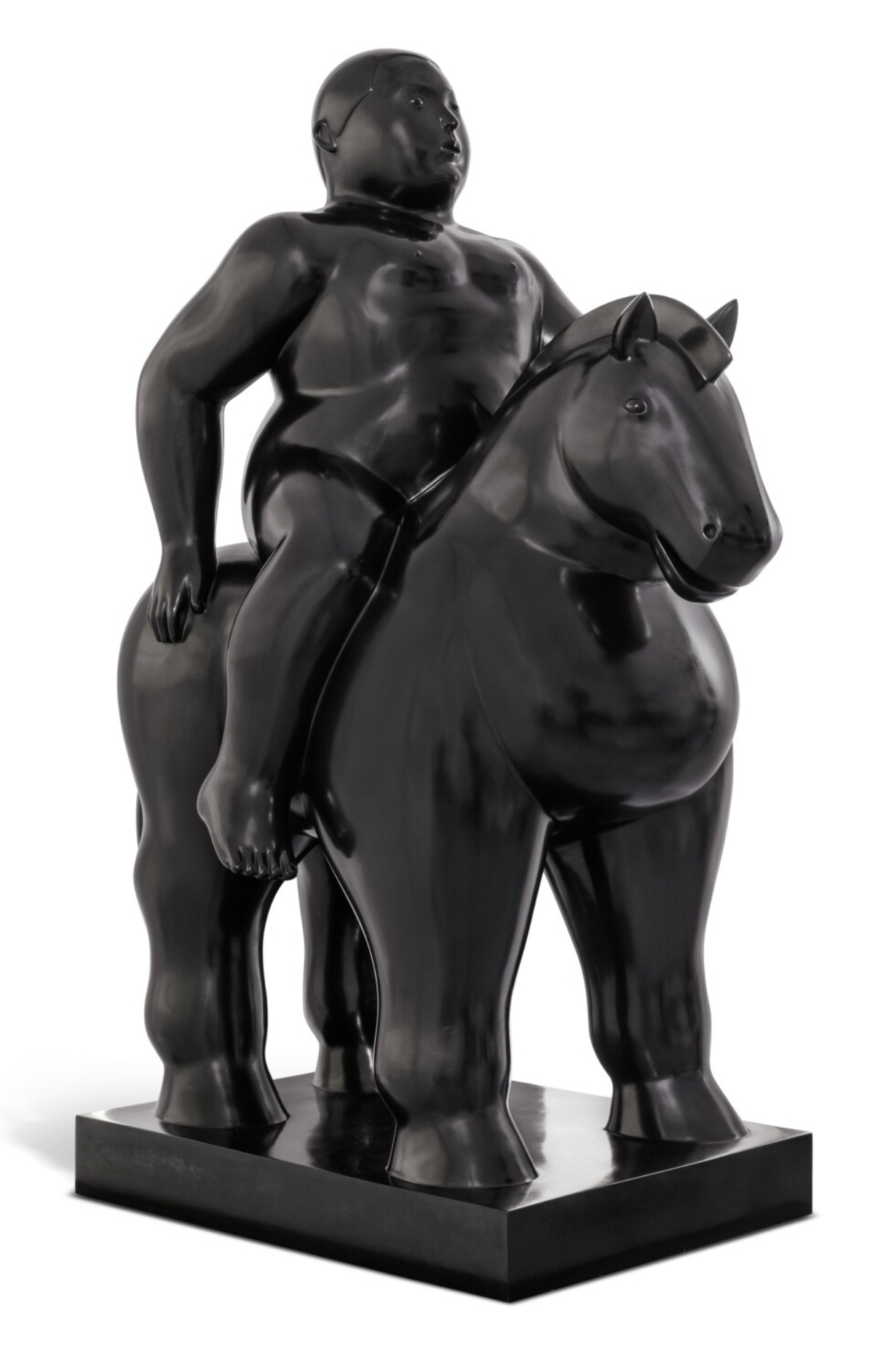
Uomo a cavallo nudo, 2005
Sotheby’s New-York: 16 November 2023
Estimated: USD 800,000 – 1,200,000
USD 1,079,500
Uomo a cavallo nudo | Contemporary Day Auction | 2023 | Sotheby’s (sothebys.com)
FERNANDO BOTERO (1932 – 2023)
Uomo a cavallo nudo, 2005
Bronze
109.2 x 83.8 x 49.5 cm (43 x 33 x 19 1/2 inches)
Incised with the artist’s signature, number 5/6 and stamped with the foundry mark (on the base)
This work is number 5 from an edition of 6 plus 2 artist’s proofs
Il Ratto d’Europa, 2011
Sotheby’s New-York: 16 November 2023
Estimated: USD 300,000 – 400,000
USD 444,500
Il Ratto d’Europa | Contemporary Day Auction | 2023 | Sotheby’s (sothebys.com)
FERNANDO BOTERO (1932 – 2023)
Il Ratto d’Europa, 2011
Bronze
74.9 x 45.1 x 30.2 cm (29 1/2 x 17 3/4 x 11 7/8 inches)
Incised with the artist’s signature and number 3/6 and stamped with foundry mark Da Prato (on the base)
This work is number 3 from an edition of 6 plus 2 artist’s proofs
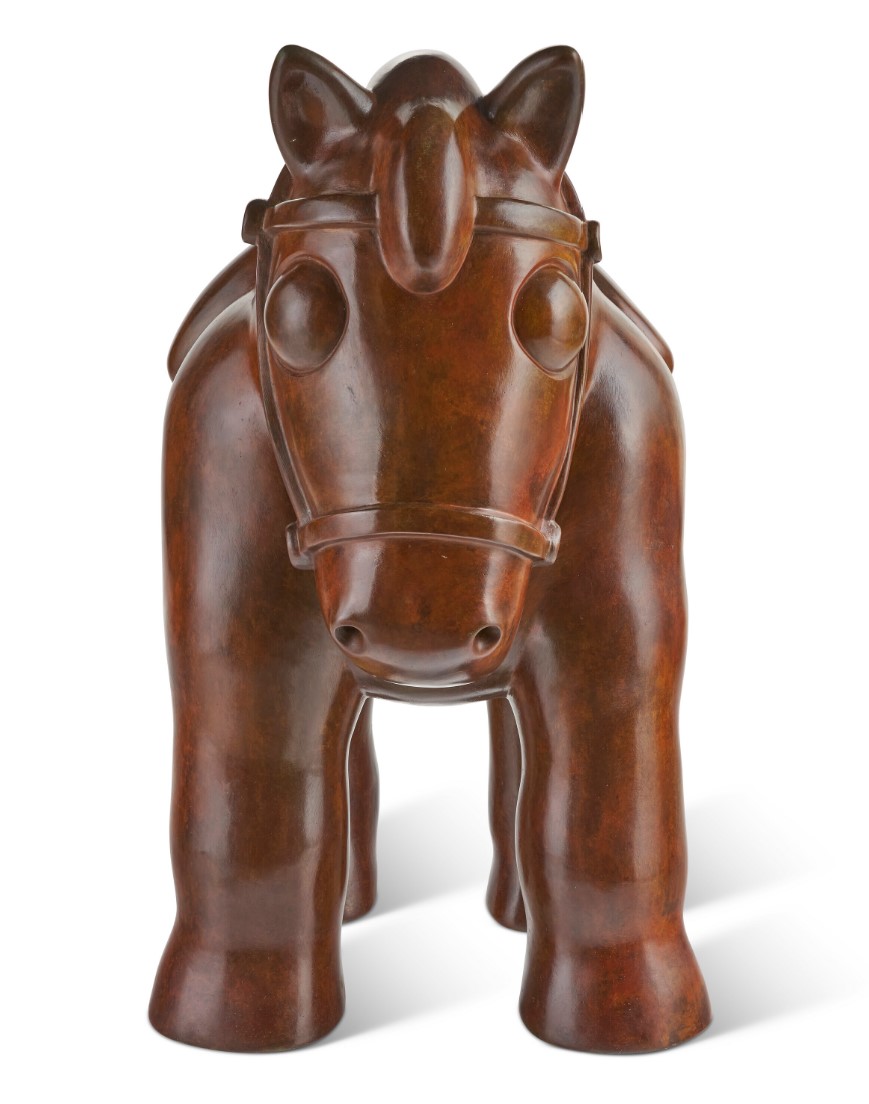
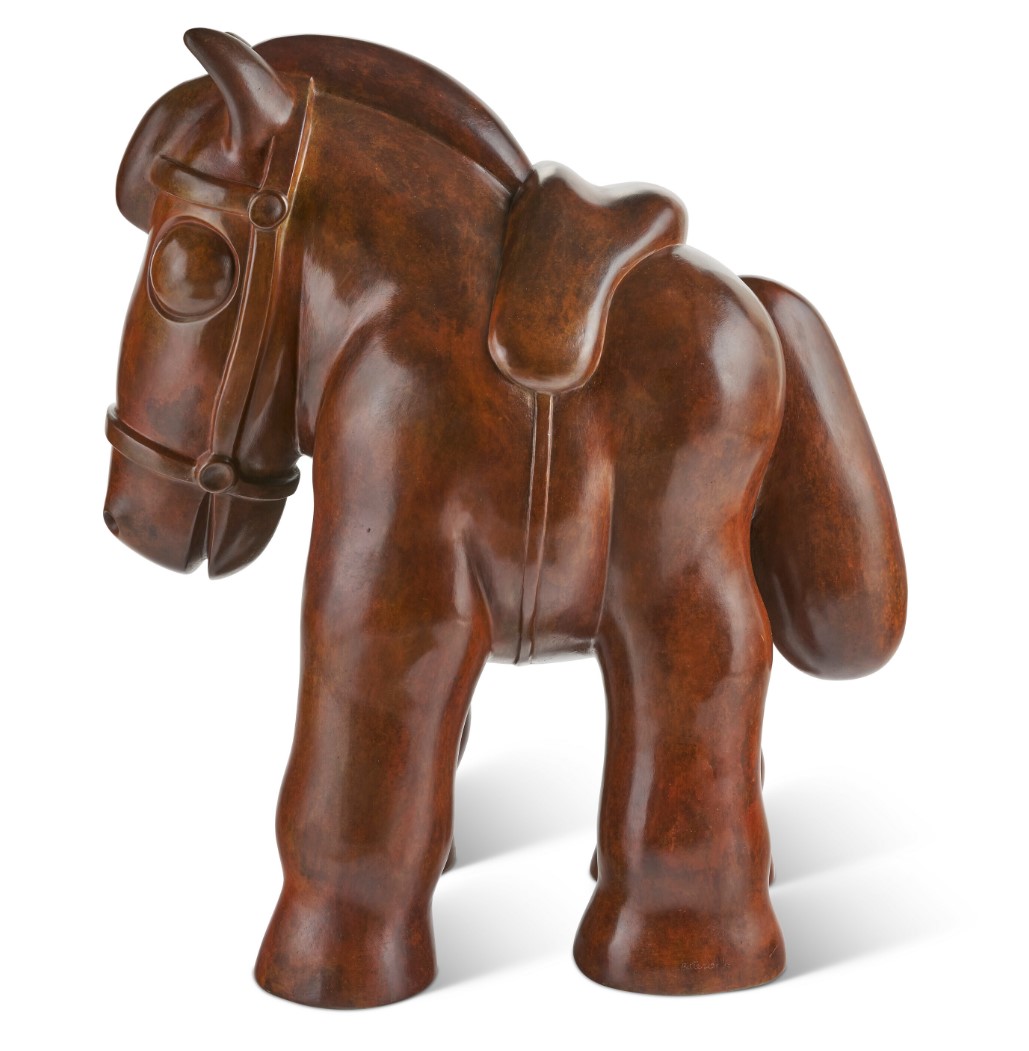
Cavallo con Sella, 2011
Heritage Auctions: 14 November 2023
Estimated: USD 600,000 – 800,000
USD 765,000
FERNANDO BOTERO
Cavallo con Sella, 2011
Bronze
101 x 95.9 x 49.5 cm (39 3/4 x 37 3/4 x 19 1/2 inches)
Incised and numbered 3/6 on base
Horse, 1981
Christie’s Hong-Kong: 1 December 2022
Estimated: HKD 2,500,000 – 3,500,000
HKD 2,646,000 / USD 340,199
FERNANDO BOTERO (B. 1932) (christies.com)
FERNANDO BOTERO (B. 1932)
Horse, 1981
Bronze
82.3 x 48.9 x 74.9 cm (32 3/8 x 19 1/4 x 29 1/2 inches)
Inscribed with foundry mark ‘FOND. ART. BROTAL MENDRISIO’ (left hind hoof)
Edition of six
It was not until 1973, when he moved to Paris and was financially more secure, that Botero turned to sculpture. In the early 1980s he acquired two houses in Pietrasanta, from here he has a view of Europe’s most famous marble quarries. He then dedicated his summers to sculpture, long working from the studio in Pietrasanta, this small town on the Tuscan coast that has drawn artist-residents from Michelangelo to Isamu Noguchi and Henry Moore. ‘It provides the ideal conditions for sculpting,’Botero explains. “Centuries of art are breathing there.”
Bronze is his favorite material for sculptures. By no means is this just a sideline to his paintings, but rather the natural extension of the latter where the essence of his artistic ideas is concerned: namely the sensuous quality of the forms, technical perfection, and classical themes. Perfect craftsmanship is no less important for Botero’s sculptural oeuvre than for his painting. In the Versiliese, Tesconi, Mariani and Tomassi foundries he has discovered the skilled workers who are so vital to the manufacturing of the sculptures. Henry Moore, who likewise demanded an immaculately smooth surface to bronze, a surface that invited stroking, also had his works cast here.
Forged as early as 1981, Horse was elegantly distilled to essences of shape and volume. Cast in bronze in the prestigious foundry, it wonderfully exemplifies the unique aesthetic developed as a result of Botero’s pursuit of beauty through form and volume. In the following three decades, Botero has exhibited his sculptures in iconic public spaces around the world, among them the Champs-Élysées in Paris and New York’s Park Avenue and the ‘theme’ of horse has become one of his most important themes.
Man on a Horse
Christie’s New-York: 10 March 2022
Estimated: USD 2,000,000 – 3,000,000
USD 4,302,000
FERNANDO BOTERO (b. 1932) (christies.com)
FERNANDO BOTERO (b. 1932)
Man on a Horse, 1999
Bronze
Height: 348 cm (137 inches)
Width: 160 cm (63 inches)
Depth: 230 cm (90 1⁄2 inches)
Edition three of three
Signed and numbered ‘Botero 3⁄3’ (on the base)
Botero first turned to sculpture in 1972, eventually expanding his métier from wood and clay to bronze, the medium in which he has best translated the pillowy volumes of his painting into three dimensions. He has dedicated his summers to sculpture since the early 1980s, long working from a studio in Pietrasanta, a small town on the Tuscan coast that has drawn artist-residents from Michelangelo to Isamu Noguchi and Henry Moore. “It provides the ideal conditions for sculpting,” Botero explains. “Centuries of art are breathing there.” He considers sculpture “a natural extension” of his painting; “for me,” he allows, “sculpture is painting without borders.” At times scaled to monumental proportions, as in Man on a Horse, his sculptures render the serene, statuesque bodies of his paintings in real space, their volumes fully realized in the round. “Sculpture was a natural experience in my evolution because of the obvious sculptural element in my paintings,” Botero acknowledges. “This was a return to simplicity, to growing indifference to details and to a more geometric awareness of shape.”
The subjects of Botero’s sculpture are familiar from his work on canvas: men and women, bathers and dancers, animals and myths. “The truth is that in sculpture the themes have always been the same,” he observes. “For example, a horse: in art it has existed forever, since prehistoric times, but you see a Chinese horse, an Egyptian, or Assyrian, or a Picasso horse, and they are always different. In painting, there is still room to disseminate with color, with the background; the poetic implications can be distracting. Not in sculpture. It’s like a bullfight. You can go out with the muleta and play a little, but there comes a moment when you have to confront the bull and stab him with the sword. It’s the hour of truth. Sculpture is the same: the nude is the hour of truth.
Rape of Europa (Abduction of Europa), 1992
Sotheby’s New-York: 15 November 2019
Estimated: USD 1,800,000 – 2,500,000
USD 2,060,000
(#148) FERNANDO BOTERO | Rape of Europa (Abduction of Europa) (sothebys.com)
FERNANDO BOTERO
Rape of Europa (Abduction of Europa), 1992
Bronze
315 x 210.8 x 183 cm (124x83x72 inches)
Incised with the artist’s signature, number 2/3 and stamp Fonderia Mariani on the base
Executed in 1992, this work is number 2 from an edition of 3
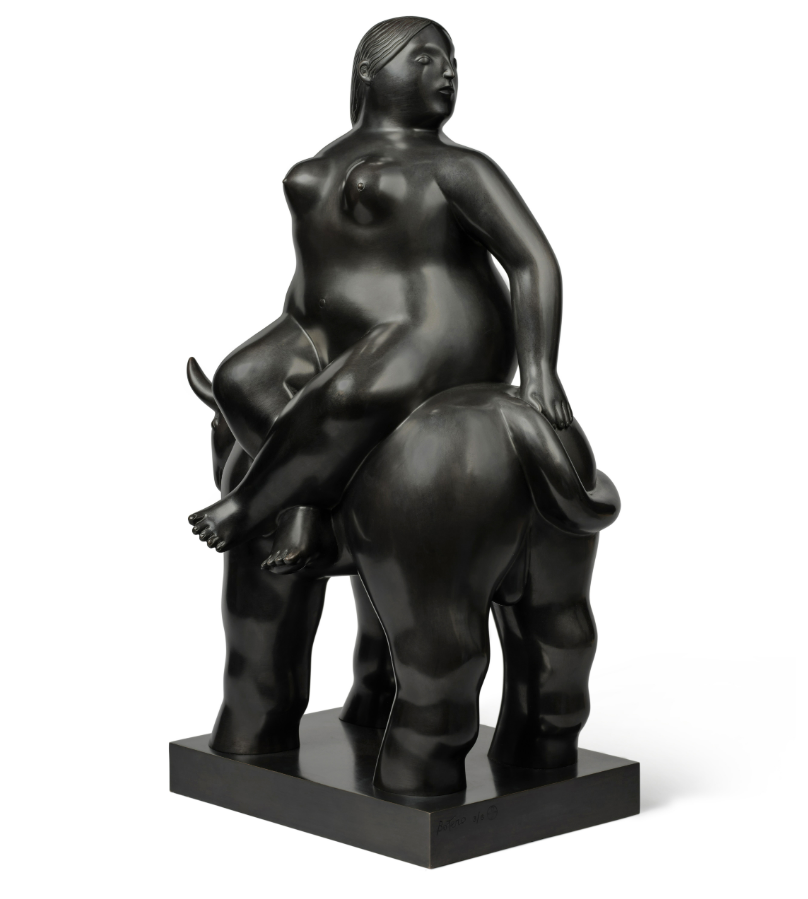
Among his most celebrated sculptural series is his homage to Titian’s (Tiziano Vecillio) Rape of Europa. Painted by the Italian artist sometime during the period of 1559 to 1562 for the King of Spain Phillip II, the work depicts a demure and vulnerable Europa flailing her arms and legs as she is suddenly carried away on Jupiter’s back. Disguised as an ornamented white bull, Jupiter’s massive strength seems to confront the viewer while two playful Cupids entertain themselves flying carelessly in a turbulent sky. While a clear reference to Titian’s masterpiece, Botero’s interpretation of this historical subject is a keen embodiment of his approach to contemporary sculpture. Distilled to its primary actors, Botero portrays Jupiter as an amiable bull whose tender nature is diametrically opposed to Titian’s fierce treatment. Likewise, our Europa appears placidly and comfortably seated on this larger-than-life bull; her long hair creating a beautiful cascade on her nude body. Feminine and coquettish, she crosses her legs and raises her right arm behind her head in a flirting pose more closely resembling the unabashed attitude of a contemporary model than that of a frightened mythological princess. Botero’s Rape of Europa is unequivocally unsentimental. As with other historical imagery, Botero reveals a surprising alternative narrative: one where women have been purposely afforded control of their fates. No longer victimized, they reveal themselves as powerful participants rejoicing in their choices—whether situated in family kitchens, brothels or opera houses.
Man on a Horse, 1999
Sotheby’s New-York: 23 November 2016
Estimated: USD 800,000 – 1,200,000
USD 1,824,500
(#19) Fernando Botero(b. 1932) (sothebys.com)
FERNANDO BOTERO
Man on a Horse, 1999
Bronze
348x230x160 cm (137 x 90 1/2 x 63 inches)
Inscribed with artist signature; also numbered 3/3 and stamped with foundry mark
We must keep in mind that the equestrian image has been used since antiquity to signify nobility and courage. The equestrian statue of Emperor Marcus Aurelius on the Capitoline Hill in Rome is the earliest surviving example of this genre. It represents one of the many ways that ancient sculptures depicted the majesty and glory of the emperor. The pose was taken up in the Middle Ages and with even greater enthusiasm in the Renaissance, when it was used by such artists as Verrocchio and Donatello. In the seventeenth and eighteenth centuries, sculptors such as Bernini, François Girardon, and Etienne Maurice Falconet employed this sort of image with great success… Botero…has the greatest reverence for horses, as we have seen: his father rode a horse through the hills of Antioquia; Pedro [the artist’s son] rides a hobby horse in the representations of him, both painted and sculpted. Botero’s use of the figure of the horse is something akin to Cervantes’ use of the nag Rocinante in Don Quixote. Downtrodden and worn out, the horse is the constant companion of man in his journeys and travails. In reading Cervantes’ great novel, we increasingly feel the author’s affection for the horse. Botero’s equally affectionate evocations of all his various animals remind us that he thinks of these creatures as integral to his own personal universe.
Women
Reclining Nude, 1976
Sotheby’s New-York: 19 November 2025
Estimated: USD 150,000 – 200,000
USD 241,300
Reclining Nude | Contemporary Day Auction | 2025 | Sotheby’s
FERNANDO BOTERO (1932 – 2023)
Reclining Nude, 1976
Bronze
17.8 x 34.3 x 16.5 cm (7 x 13 1/2 x 6 1/2 inches)
Incised with the artist’s signature and number 2/6 (lower edge)
This work is number 2 from an edition of 6
Fernando Botero’s Reclining Nude from 1976 embodies the artist’s signature celebration of volume, sensuality, and serene monumentality at an intimate scale. Cast in bronze, the figure’s generous curves and tranquil pose reimagine the classical nude, transforming it into an emblem of vitality and timeless grace. Botero’s mastery lies in his ability to elevate fullness into poetry, giving physical form to harmony and abundance.
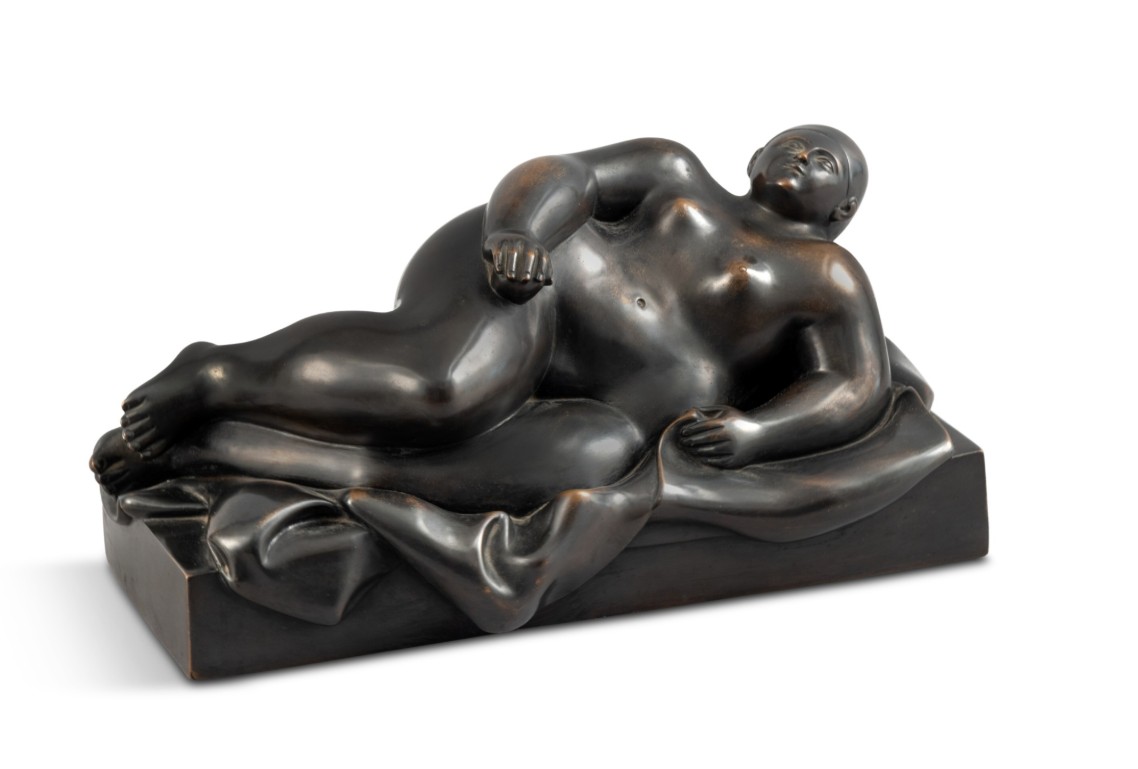
The sculpture was once part of the distinguished collection of Marie Pierre Colle Corcuera, whose life was shaped by art and fashion between Paris and Mexico. Daughter of the celebrated dealer Pierre Colle and Carmen Corcuera y Mier—one of Christian Dior’s muses—Marie Pierre grew up among artists such as Cocteau, Rivera, and Giacometti. Her discerning eye and refined sensibility found resonance in Botero’s lyrical humanism. Reclining Nude thus reflects not only the artist’s sculptural eloquence but also the collector’s enduring devotion to beauty, culture, and form.
Maternity
Christie’s London: 26 June 2025
Estimated: GBP 120,000 – 180,000
GBP 239,400 / USD 327,980
FERNANDO BOTERO (1932-2023), Maternity | Christie’s
FERNANDO BOTERO (1932-2023)
Maternity
Bronze
63.3 x 21.1 x 17.9 cm (24 7/8 x 8 1/2 x 7 1/4 inches)
Signed and numbered ‘Botero 1⁄6’ (on the reverse of the base)
This work is number one from an edition of six
Exploring the theme of motherhood in Botero’s immediately recognizable playful, sculptural style, Maternity portrays the nurturing and protective embrace of a mother and her infant child as it rests delicately in her arms. Gazing into the distance towards the viewer, we are brought into the intimacy of this endearing scene. The female figure stands upon a smooth bronze base, serving as an homage to the role of motherhood, female strength and the wisdom that this pedestal elevates her to.
“There were no museums in Colombia when I was young. The only paintings I saw were those of Colombian Baroque artists in churches, when Colombian children go to church they see all these Madonnas, so clean and perfect. In South America, china-like perfection is very much a part of an ideal of beauty…So, in contrast to Europe or North America, you connect the notions of art and beauty at a very early stage. I grew up with the idea that art is beauty. All my life I’ve been trying to produce art that’s beautiful, to discover all the elements that make up visual perfection.”
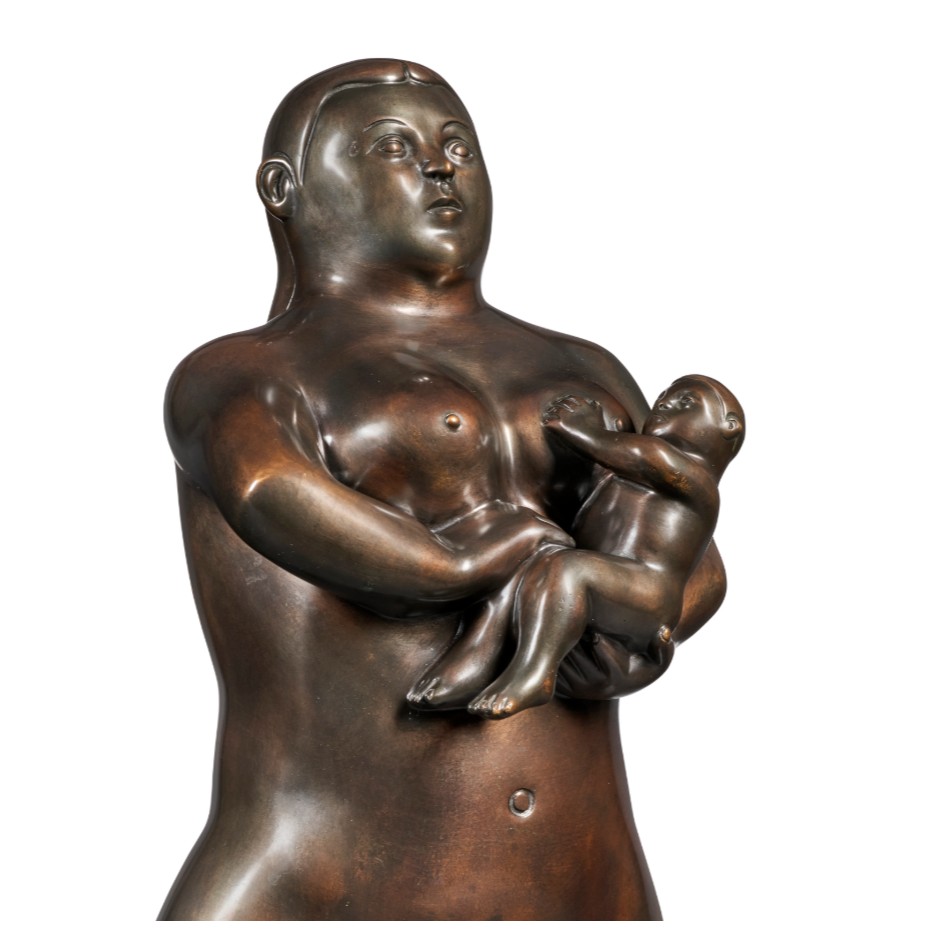
Maternity is also a nod to the motif of the Madonna and child, one that was both deeply personal to Botero as well as a classic and timeless art historical subject. Botero’s earliest experiences of art were inextricably intertwined with his Roman Catholic upbringing in Medellín, Colombia. As a young boy, he was only ever able to observe art first-hand in religious contexts such as churches, entwining these artistic experiences with religious ones. Religious themes, figures and motifs such as priests, nuns, and the Madonna and child would subsequently recur throughout his oeuvre. Maternity encapsulates Botero’s fusion of his Colombian and Latina American identity with religious iconography and art historical tradition, positioning motherhood not only as a subject of tenderness but as a vessel for cultural and historical continuity.
Reclining Woman with Fruit, 1996
Christie’s London: 5 June 2025
Estimated: GBP 300,000 – 500,000
GBP 516,600 / USD 700,040
FERNANDO BOTERO (1932-2023), Reclining Woman with Fruit | Christie’s
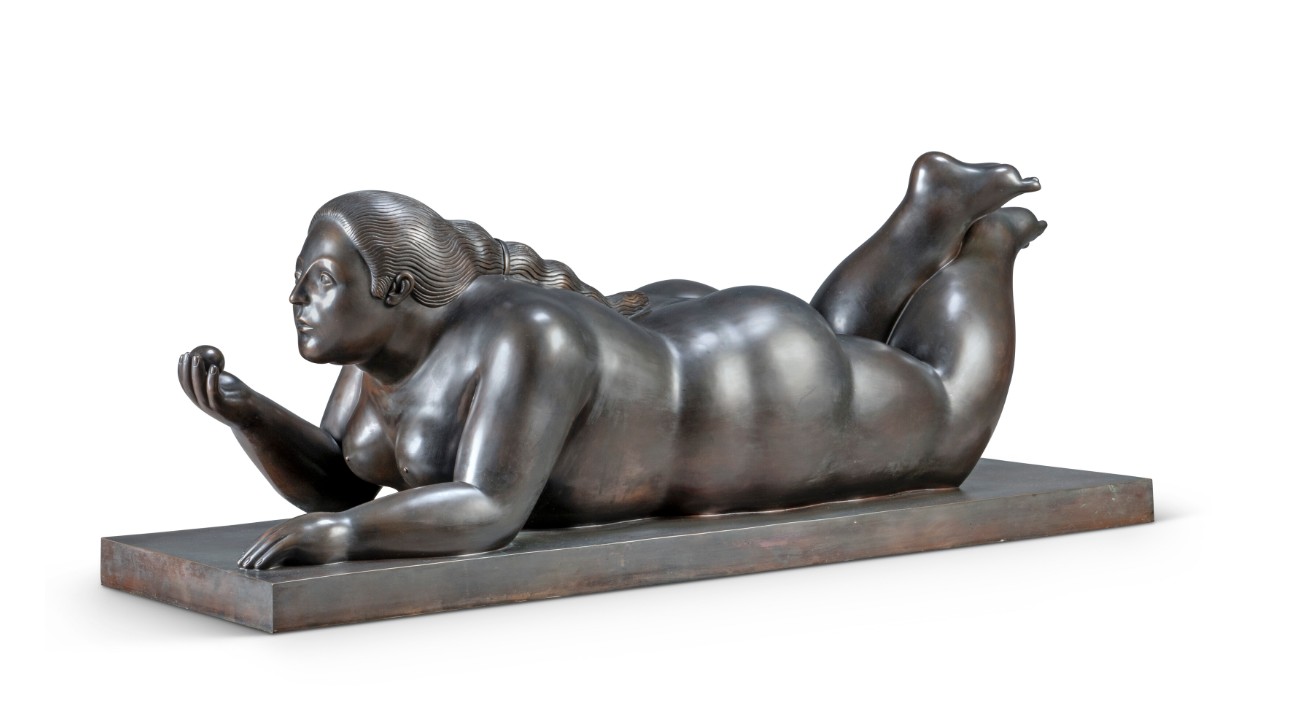
FERNANDO BOTERO (1932-2023)
Reclining Woman with Fruit, 1996
Bronze
49x138x41 cm (19 1/3 x 50 3/8 x 16 1/8 inches)
Signed and numbered ‘Botero 3⁄6’ and stamped with foundry mark (on the base)
This work is numbered three from an edition of six
Reclining Woman with Fruit (1996) exemplifies Fernando Botero’s mastery in encapsulating sensuality through the language of exaggerated form. In this sculpture, the interplay between the woman’s body and the fruit she holds extends a visual metaphor for plenitude and sensual indulgence, themes that pervade Botero’s oeuvre.
Cast in bronze and stretching over four feet in length, the balanced structure of Reclining Woman with Fruit is further emphasized by the rich patina it exhibits, underscoring the work’s material weight and permanence. Standing at the intersection of modernist stylization and classical repose, this sculpture is a compelling testament to Botero’s enduring engagement with the human figure.
Maternidad, 1995
Bonhams London: 11 October 2024
Estimated: GBP 150,000 – 200,000
GBP 254,400 / USD 332,285
Bonhams : FERNANDO BOTERO (1932-2023) Maternidad
Bronze with brown patina
47 x 19.5 x 32 cm (18 1/2 x 7 11/16 x 12 5/8 inches)
This work is from an edition of 6, plus 2 artist’s proofs
“Certainly, in a painting you give the illusion of truth, but with sculpture, you can touch its reality. . . If I paint a knife in my pictures, it’s imaginary, but if I sculpt it, then the sensation of having it in your hand is real— it’s an object from your spirit, it’s a sensual experience even in its execution. It brings a special joy to touch the material with your hands.”
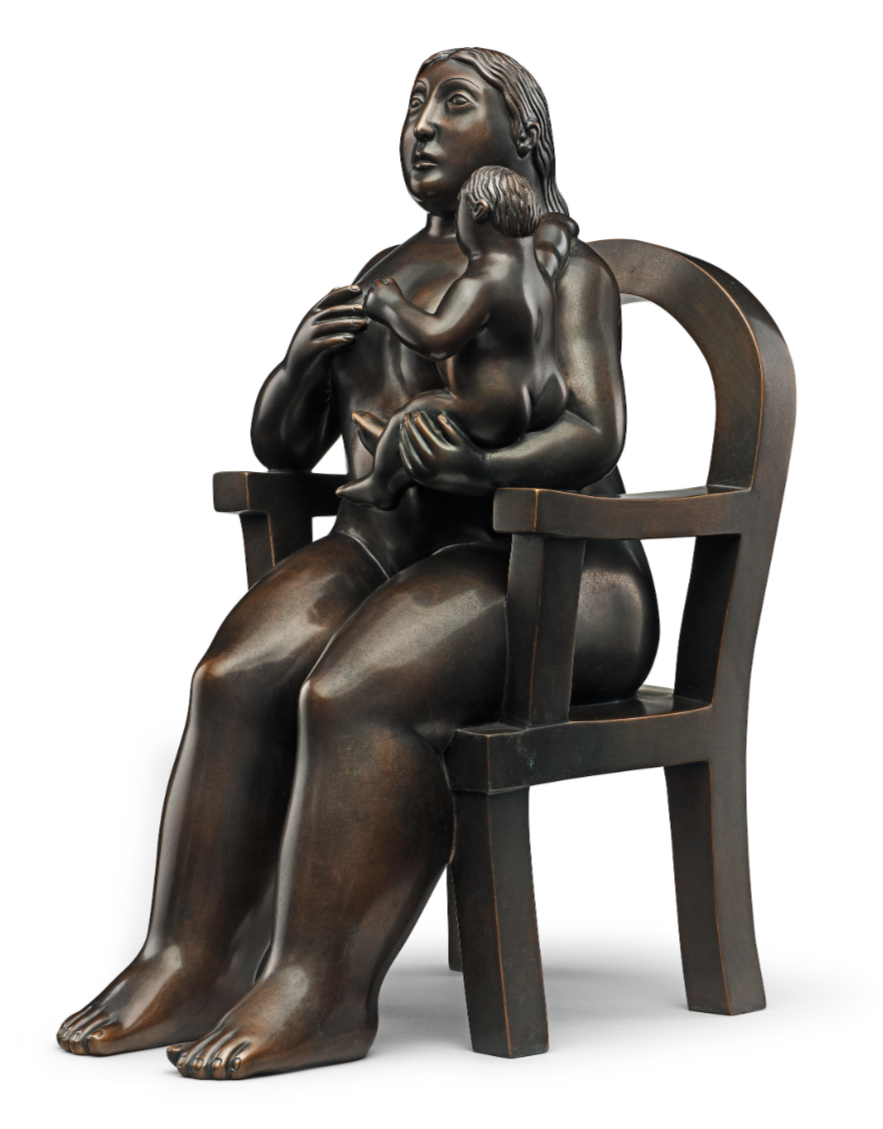
Maternidad wonderfully captures the essence of motherhood; the plumpness of the bodies perhaps helps convey this sense of maternal abundance and the fertility associated with motherhood, while her gentle embrace and the placement of her hand on her chest suggestive of a sense of tenderness. Domestic life is a central motif in Botero’s body of work, especially women’s roles within it. Here, Botero portrays the quintessential woman as both mother and caregiver to her young child combined with the heavy weight of art historical and religious iconography and a sense of shared human experience.
Donna sul letto, 1998
Sotheby’s New-York: 14 May 2024
Estimated: USD 250,000 – 350,000
USD 381,000
Donna sul letto | Contemporary Day Auction | 2024 | Sotheby’s (sothebys.com)
FERNANDO BOTERO (1932 – 2023)
Donna sul letto, 1998
Bronze
33 x 62.2 x 30.5 cm (13 x 24 1/2 x 12 inches)
Incised with the artist’s signature and number E.A. 1/2 and stamped with the foundry mark (on the base)
This work is number 1 of 2 artist’s proofs from an edition of 6 plus 2 artist’s proofs

Standing Woman with Fruit, 2018
Sotheby’s New-York: 14 May 2024
Estimated: USD 700,000 – 900,000
USD 698,500
Standing Woman with Fruit | Contemporary Day Auction | 2024 | Sotheby’s (sothebys.com)
FERNANDO BOTERO (1932 – 2023)
Standing Woman with Fruit, 2018
Bronze
142.2 x 53.3 x 49.5 cm (56 x 21 x 19 1/2 inches)
Incised with the artist’s signature and number 1/6 and stamped with foundry mark (on the base)
 “In the history of sculpture, eighty percent of the subject matter has been a woman, either reclining standing or seated. It is a great tribute paid to the most beautiful form of nature. The interesting thing is that in returning to the same subject, you always say something different. This is one of the charms, one of the limitations and one of the difficulties that I describe in being a sculptor. You have to truly be original each time.”

BOTERO WORKING IN STUDIO
Mujer vestida, 2003
Christie’s New-York: 9 March 2023
Estimated: USD 1,500,000 – 2,500,000
USD 1,500,000
FERNANDO BOTERO (b. 1932) (christies.com)
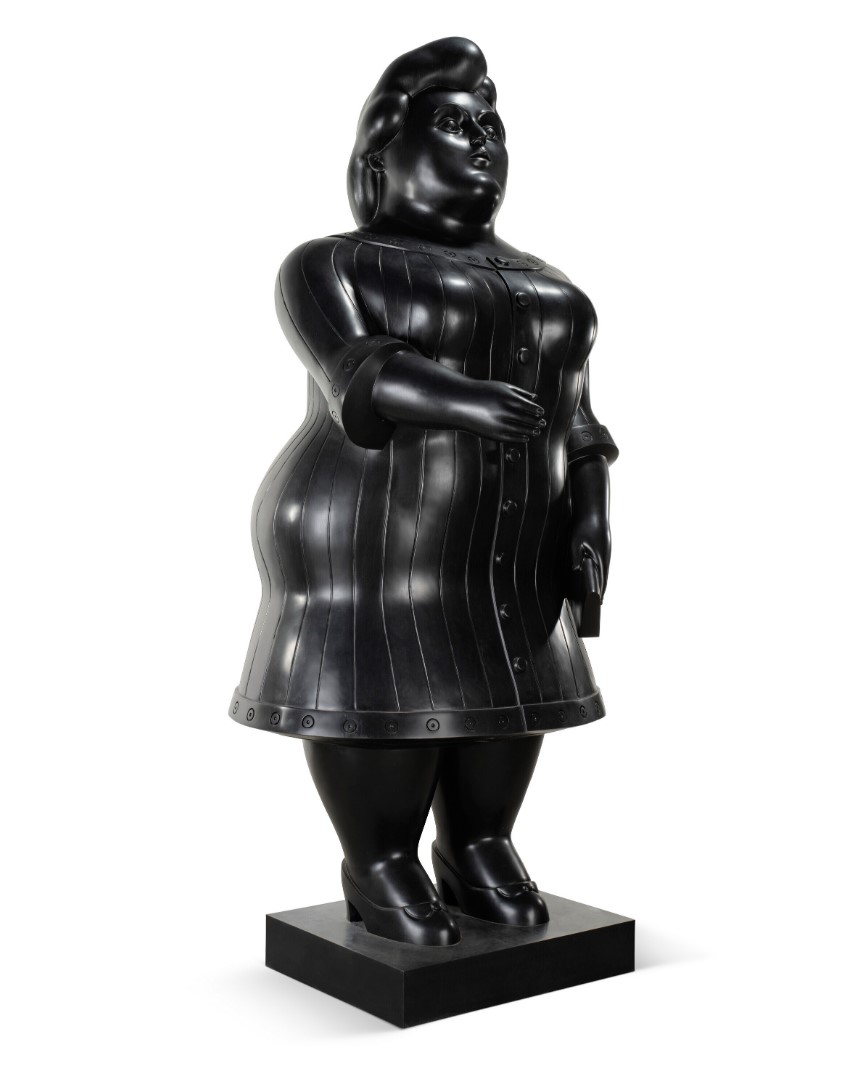
FERNANDO BOTERO (b. 1932)
Mujer vestida, 2003
Bronze with black patina
362 x 167.6 x 147.3 cm (142 1/2 x 66 x 58 inches)
Signed, numbered and stamped with foundry mark ‘Botero 1/3’ (near base)
Edition one of three
Botero first turned to sculpture in 1972, eventually expanding his métier from wood and clay to bronze, the medium in which he has best translated the pillowy volumes of his painting into three dimensions. He has dedicated his summers to sculpture since the early 1980s, long working from a studio in Pietrasanta, a small town on the Tuscan coast that has drawn artist-residents from Michelangelo to Isamu Noguchi and Henry Moore.
At times scaled to monumental proportions, as in Mujer vestida, his sculptures render the serene, statuesque bodies of his paintings in real space, their volumes fully realized in the round. “Sculpture was a natural experience in my evolution because of the obvious sculptural element in my paintings,” Botero acknowledges. “This was a return to simplicity, to growing indifference to details and to a more geometric awareness of shape” (in Botero: Aquarelles, Dessins, Sculptures, exh. cat., Galerie Beyeler, Basel, 1980).
The subjects of Botero’s sculpture are familiar from his work on canvas: men and women, bathers and dancers, animals and myths.
“The truth is that in sculpture the themes have always been the same, If you start wandering in the history of art, almost everything has been done on the subject of the woman, seated, lying down, or standing up. It is fascinating to see that one always takes off from an idea that is incredibly specific. This is where the artist has to test his originality and make his mark, show that he really has something to say. This is the problem and the marvel of art…It’s like a bullfight. You can go out with the muleta and play a little, but there comes a moment when you have to confront the bull and stab him with the sword. It’s the hour of truth. Sculpture is the same”
A portrait of decorum and gentility, Mujer vestida stands tall atop modest, bow-tied pumps, clutch in one hand and the other stretched forward in gesture of salutation. An elegant dress with stripes and decorative button details clings to her curves, flaring slightly at the knees. Matriarch and madonna, she embodies an olden ideal of femininity, imperturbably stoic and self-possessed as she faces the world.
Leda and the Swan, 1996
Sotheby’s New-York: 17 November 2020
Estimated: USD 1,200,000 – 1,800,000
USD 2,440,000
Leda and the Swan | Contemporary Art Day Auction | 2020 | Sotheby’s (sothebys.com)
FERNANDO BOTERO
Leda and the Swan, 1996
Bronze
170.1 x 322.6 x 145.4 cm (67 x 127 x 57 1/4 inches)
Inscribed with the artist’s signature, number EA 1/2 and foundry mark
This cast executed in 2018 is the artist’s proof number 1 from an edition of 3 plus 2 artist’s proofs
A popular subject throughout Europe’s Early Modern period, Leda and the Swan offered artists an erotic subject matter that, due to its mythological origin, could sometimes escape the censorship of the Church. Botero’s rendition seems most closely to quote a lost painting by Michelangelo in its composition; yet where Michelangelo’s entwined figures roil with motion, their eyes locked intently, Botero’s are quite still, seeming to pause and gaze suggestively out towards the viewer. Where traditional depictions offer voyeuristic access to a private scene of lust and violence, Botero’s version turns this dynamic inside out – rendering the viewer’s gaze part of the work and, in his characteristic way, offering a winking critique of the image. Evoking lost Greek original sculptures copied by the Romans in marble, Botero turns to bronze for his Leda. A masterful play of volumes on a monumental scale, Leda is marked by the sensual patina, geometric harmony and sardonic wit for which his sculpture is celebrated around the world. Imbued with characteristic Boterian humor, this Leda and the Swan is an iconic example of the artist’s mature sculptural practice.

When Botero traveled to Europe in the early 1950s as an up-and-coming artist, he found himself captivated by the timeless masterpieces of the Italian Renaissance. Between 1953 and 1955, he delved into the study of art history and fresco techniques in Florence, embarking on pilgrimages to Europe’s renowned museums. It was during this formative period that Botero meticulously analyzed and absorbed the compositional tactics and color strategies employed by Italian, Dutch, and Spanish master painters. These foundational studies not only enriched Botero’s painting practice, providing him with enduring themes to explore throughout his career, but also laid the groundwork for his venture into sculpture, which began around 1963. In his work Leda and the Swan, Botero enters into a dialogue with the vast expanse of Western art history, consciously appropriating the ideological framework that prioritizes the primacy of the idea over the physical manifestation of the artwork. By doing so, Botero not only engages with the enduring themes and motifs of classical art but also challenges and reinterprets them through his distinctive artistic lens.

LEFT:AFTER MICHELANGELO, LEDA AND THE SWAN, AFTER 1530, OIL ON CANVAS, THE NATIONAL GALLERY PERMANENT COLLECTION, LONDON
RIGHT: STATUE OF LEDA AND THE SWAN, MARBLE, 1ST CENTURY A.D., VILLA MAGNANI, ROME, ITALY, THE J. PAUL GETTY MUSEUM, VILLA COLLECTION
Throughout Europe’s Early Modern period, the theme of Leda and the Swan remained a popular subject among artists, providing an avenue for exploring eroticism that occasionally evaded the scrutiny of the Church due to its mythological origins. Botero’s interpretation appears to draw inspiration from a lost painting by Michelangelo in its composition; however, whereas Michelangelo’s intertwined figures appear intimate and active, their gazes locked in intense engagement, Botero’s rendition presents a striking contrast with its serene stillness. In Botero’s portrayal, the figures seem to pause, with Leda’s head turned away from the Swan and toward the viewer. Unlike traditional depictions that offer a voyeuristic glimpse into a scene of private passion and violence, Botero subverts this dynamic, integrating the viewer’s gaze into the artwork itself. In his characteristic style, Botero offers a playful critique of the image as well as artists of the Italian Renaissance’s interpretation of mythical stories. Imbued with characteristic Boterian subversive practice and humor, this Leda and the Swan is an iconic example of the artist’s mature sculptural practice.
Animals
Gato, 1999
Sotheby’s New-York: 14 May 2024
Estimated: USD 400,000 – 600,000
USD 482,600
Gato | Contemporary Day Auction | 2024 | Sotheby’s (sothebys.com)
FERNANDO BOTERO (1932 – 2023)
Gato, 1999
Bronze
54x31x33 cm (21 1/4 x 14 x 13 inches)
Incised with the artist’s signature and number 5/6 (on the base)

“The animals created in sculpture by Botero are among his most appealing works…Botero’s horses, dogs, cats, birds, and snakes are part of his own highly inventive world of fantasy and play. They embody the same principles as his sculptures of the human form, investigating the potentials of roundness, pliability, and texture…Perhaps Botero, by isolating and enlarging this cat, conceives of them as the singular inhabitants of his own Garden of Eden or as representatives from a Noah’s Ark dreamt up by the artist in reverie of creation.”

CAT STATUETTE INTENDED TO CONTAIN A MUMMIFIED CAT, LEADED BRONZE, PTOLEMAIC PERIOD, EGYPT, METROPOLITAN MUSEUM OF ART PERMANENT COLLECTION
Dog on a cushion, 1976
Bonhams London: 12 October 2022
Estimated: GBP 200,000 – 300,000
GBP 254,400 / USD 310,160
Bonhams : FERNANDO BOTERO (1932-2023) Dog on a cushion 1976
Bronze
34x37x40 cm (13 3/8 x 14 9/16 x 15 3/4 inches)
This work is number 5 from an edition of 6
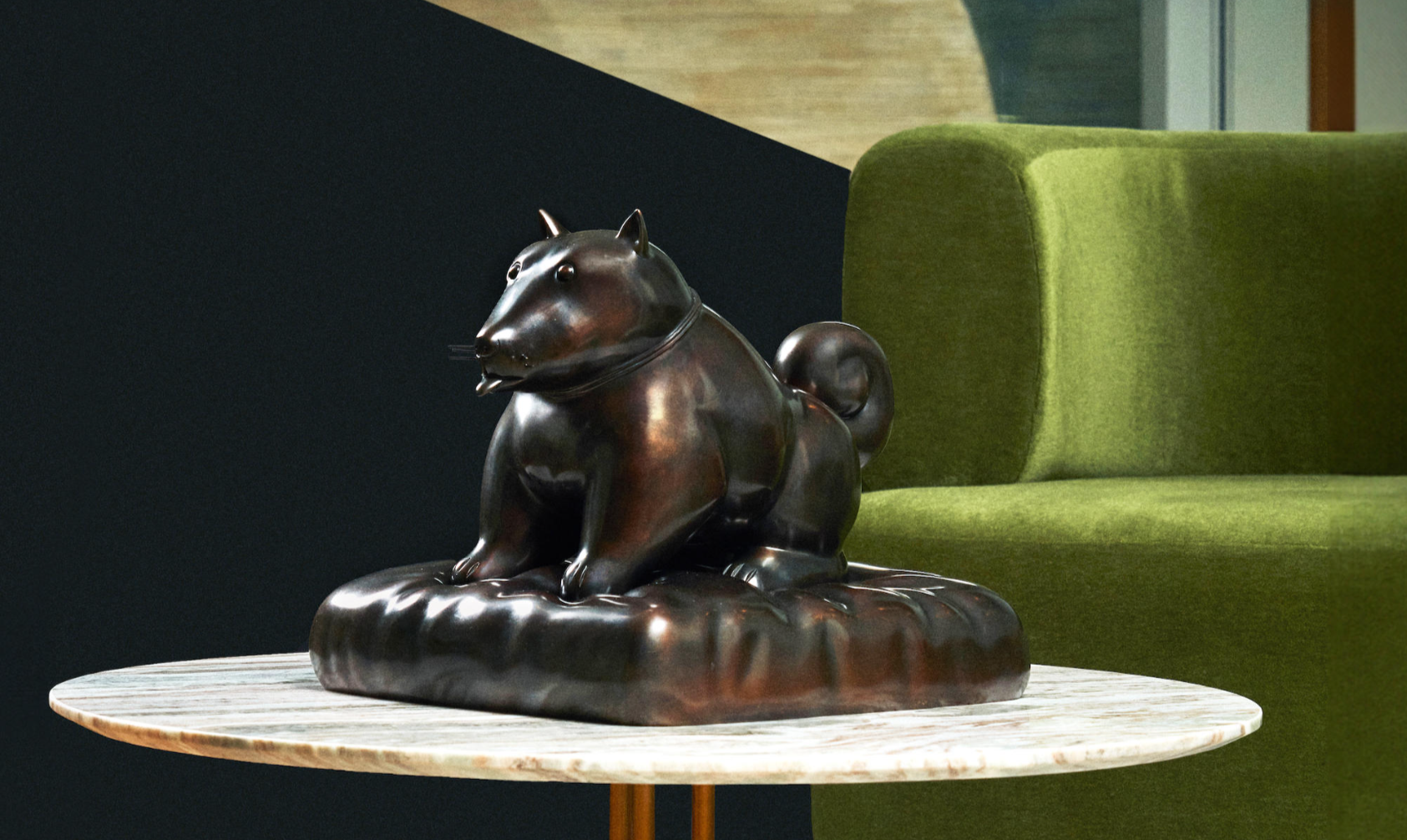
Dog on a Cushion from 1976 is a beautifully playful example of Botero’s celebrated sculptural practice, with the small well-rounded canine proudly perching on a fluffy cushion- an emblem of domesticity and comfort but also a nod to the importance we give to the pets in our lives. The artist’s fascination with horses, cats, birds, and dogs is a prominent feature throughout his oeuvre. Characterized by an intentional exaggeration of his subjects’ forms, Botero’s ability to infuse life into his sculptures is striking. The present work is not a mere imitation of a dog but a celebration of its essence, the exaggerated curves and humorous expectantly outstretched tongue emphasize the joviality and charm of the animal, which might at any moment jump off the cushion. Dogs have held a significant role in art history as subjects of fascination, symbolism, and companionship. From ancient cave paintings to the masterpieces of the Renaissance and beyond, dogs have been depicted in various contexts, reflecting their diverse roles in human societies. As companions and symbols of fidelity, dogs often appear in portraits, signifying loyalty, trust, and the bonds of friendship. Furthermore, their depictions in hunting scenes highlight their utilitarian roles as skilled hunters and trackers. In the broader context of art history, dogs have served as allegorical symbols, representing virtue, faithfulness, or even human qualities, reminding us of their enduring importance in the human experience.
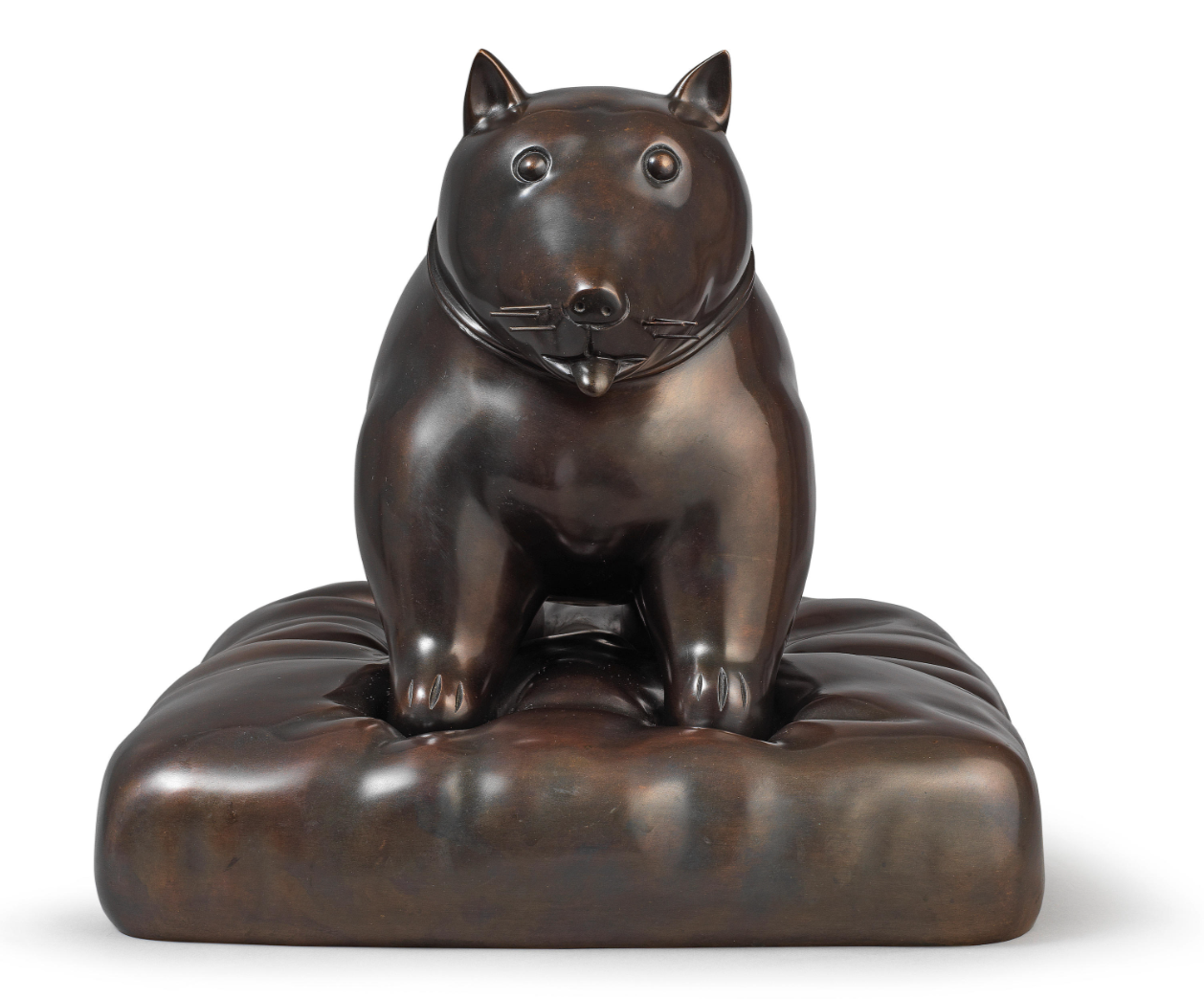
World-renowned for his often-epic paintings, Botero’s foray into sculpture has further enriched his artistic repertoire over the decades. Dog on a Cushion stands as a prime example of his prowess in this medium. His sculptures are characterized by the same aesthetic principles that define his paintings—exaggerated volumes, harmonious proportions, and a playful approach to form. The transition from canvas to three-dimensional sculpture however allowed the artist to bring his iconic subjects to life in a tangible and interactive way with a tactile quality that invites viewers to engage on a more physical level. Dog on a Cushion exemplifies this approach, with its smooth, sensuous surfaces inviting touch and exploration. Fernando Botero’s contributions to the world of art are substantial and far-reaching and his unique style and unwavering commitment to his artistic vision have earned him a significant place in art history. His oeuvre serves as a bridge between traditional and contemporary art, drawing from classical techniques while infusing them with a modern and innovative sensibility. Embracing diversity and celebrating the inherent charm in all subjects, he challenges conventional notions of beauty and representation and forces viewers to reconsider their preconceived notions and stereotypes.
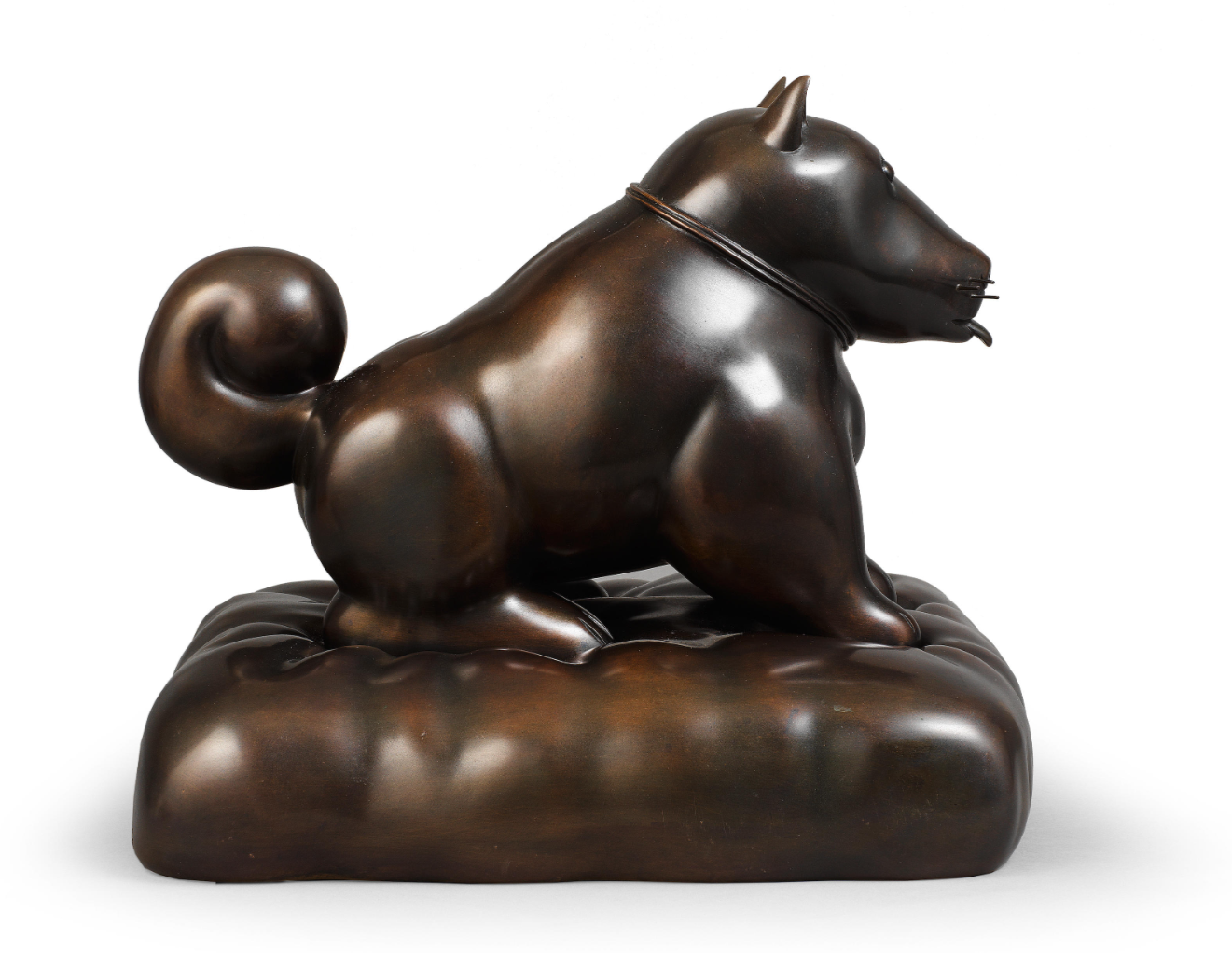
The same dog of undefined breed as in the present work can be found in many of the artist’s paintings, and a large-scale sculpture version, without the plump cushion, can be found in the Plaza Botero in the artist’s hometown of Medellín.
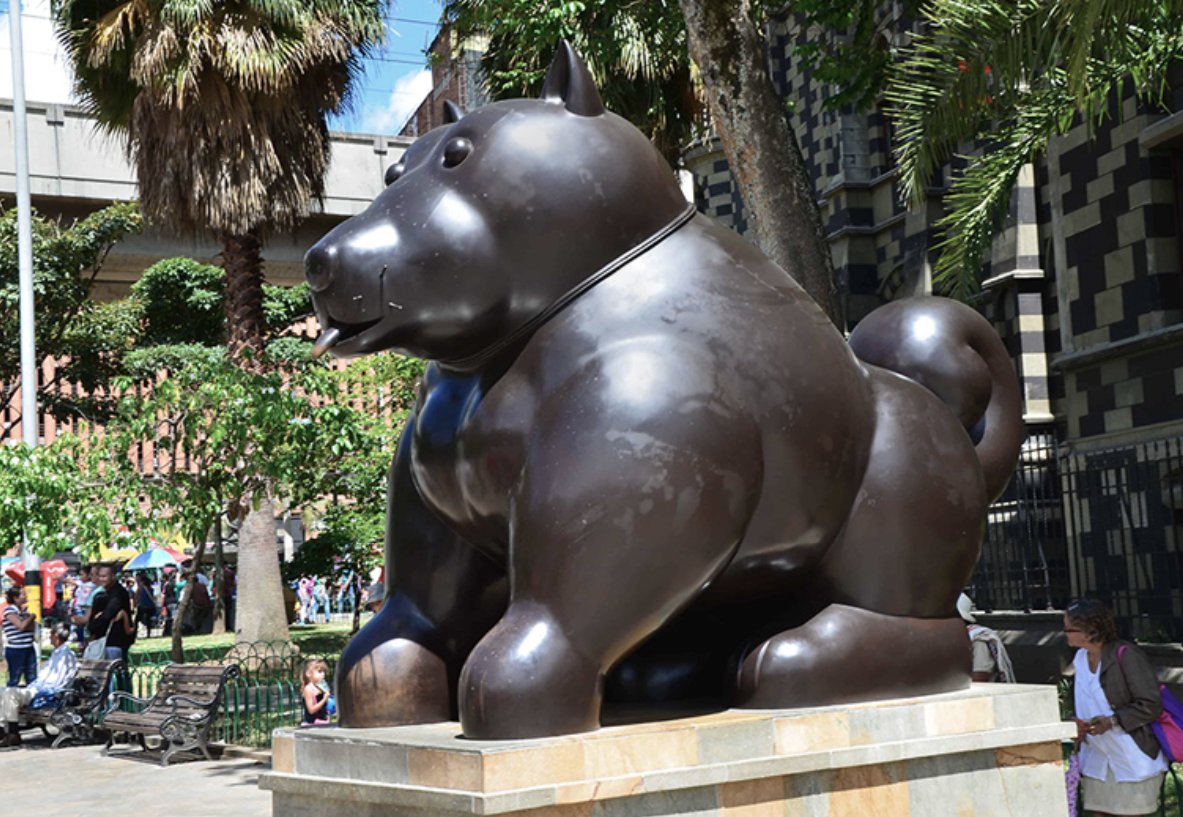
Dancers
Bailarines, 2001
Sotheby’s New-York: 19 November 2025
Estimated: USD 800,000 – 1,200,000
USD 920,750
Bailarines | Contemporary Day Auction | 2025 | Sotheby’s
FERNANDO BOTERO (1932 – 2023)
Bailarines, 2001
Bronze
134.6 x 53.5 x 89.2 cm (53 x 21 1/8 x 35 1/8 inches)
Incised with the number PA 1/2 (lower edge)
This work is artist’s proof 2 from an edition of 6 plus 2 artist’s proofs
Capturing Botero’s refined yet sensuous figures on a monumental scale, Bailarines manifests the characteristics of the artist’s oeuvre for which he is most beloved. Two figures, male and female, are locked in a gentle dance, their voluminous bodies poised in a moment of suspended motion. The motif of the dancing couple occupies a central place in Botero’s exploration of human connection, stretching back into even his earliest works. Across paintings and sculptures alike, Botero returns to scenes of ballroom dancers, musicians, and lovers—subjects that embody the harmony and sensuality of everyday life.
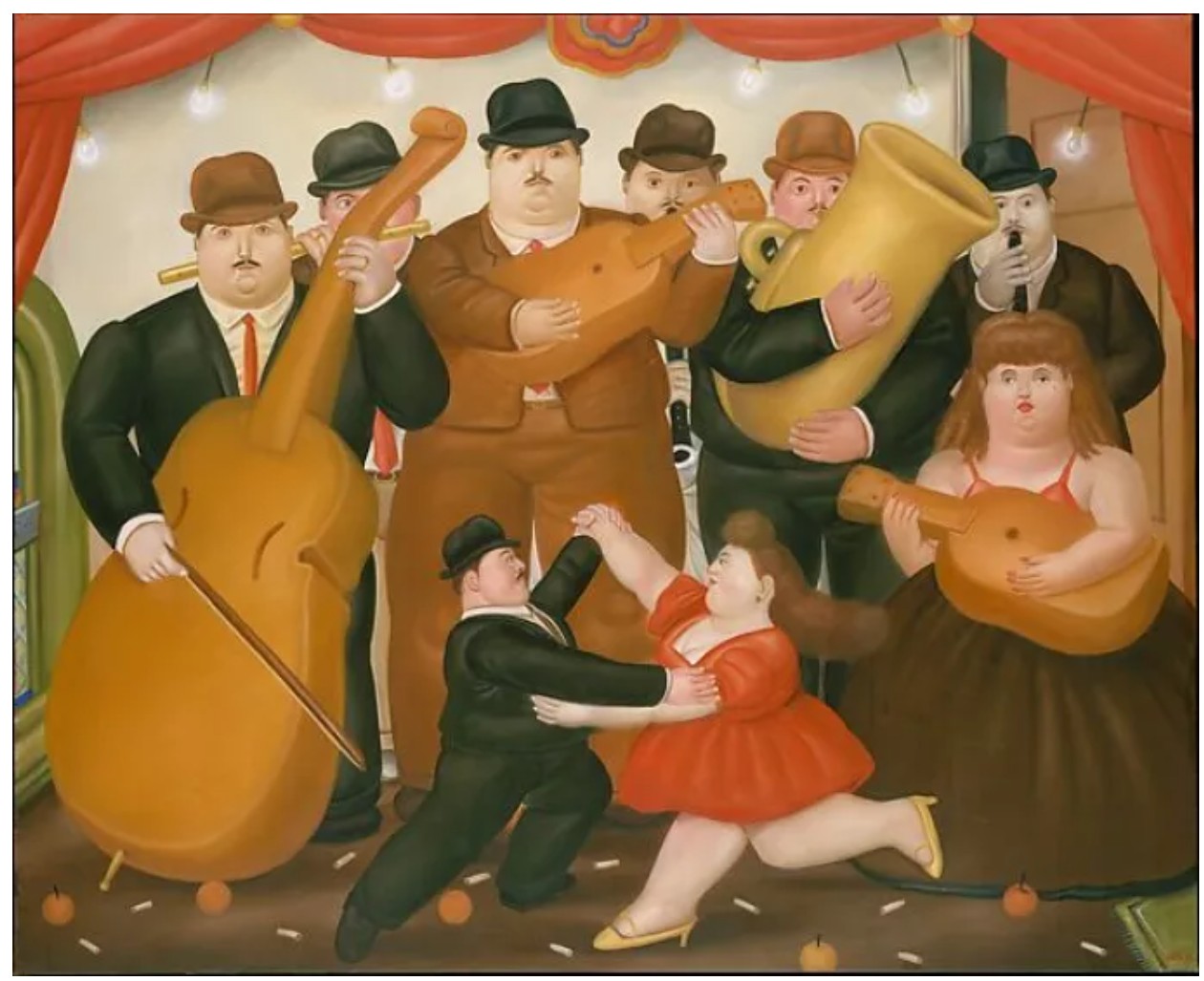
Fernando Botero, Dancing in Colombia, oil on canvas, 1890. The Metropolitan Museum © Fernando Botero
In Bailarines, Botero’s figures are stripped of ornament or narrative setting, imparting a timelessness that is often evoked by Botero’s simplified settings. The figure’s interlocking legs set forth the dancing motion. The rounded modeling of their bodies amplifies their intimacy, inviting viewers to sense not the heaviness of mass but the role of the human body as a vessel of rhythm, warmth and affection.
From his earliest experiments in the 1950s to his mature bronzes of the 1990s and 2000s, Botero treats the human body as a vehicle for form and feeling rather than pursuing anatomical precision. While Botero’s abandonment of physiological accuracy opposes much of Western art history’s traditional treatment of the nude figure, the artist’s oeuvre is heavily informed by and deeply in dialogue with precisely this tradition.
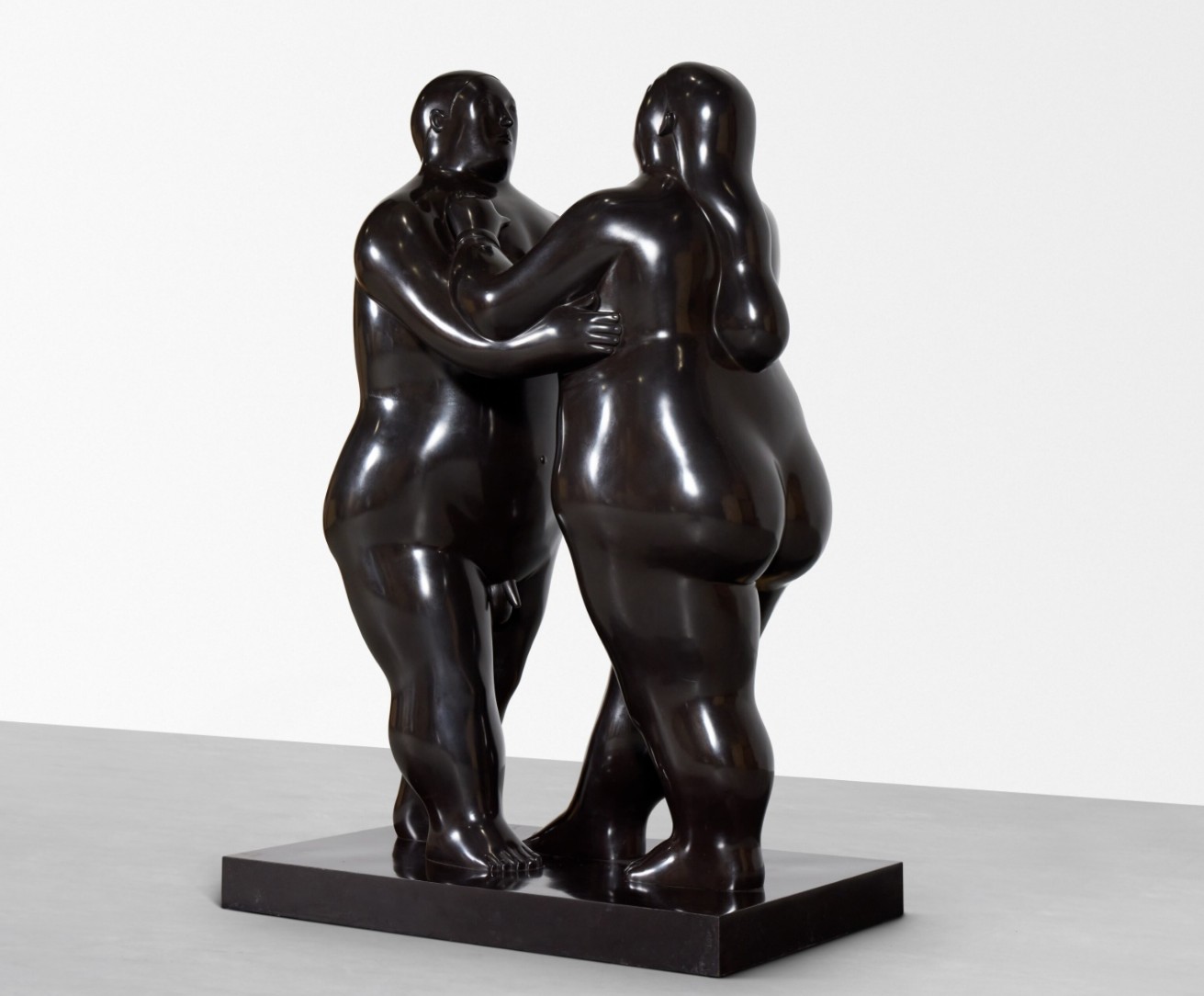
Botero spent his childhood and early adolescence in Medellín, Colombia, where he encountered pre-Columbian and Baroque, Spanish colonial art. Holding his first exhibition in Bogotá at the age of 19, Botero’s career began early and his immediately recognizable style quickly gained traction, reflected in his winning second place in the Salon Nacional de Artistas in 1952. Botero used his prize money to leave Colombia in hopes of honing his artistic abilities surrounded by historical masters. In the 1950s, the artist travelled to Spain, France and Italy, where he further embraced his interest in the human figure. Botero credits institutions such as Museo del Prado and Gallery Uffitzi for administering him a formal education in art and art history. Artists like Francisco Goya and Titan would come to profoundly impact the visual language that would become distinctly his own; he admired their command of mass and curvature in portraying the human body and their mastery of the classical nude.
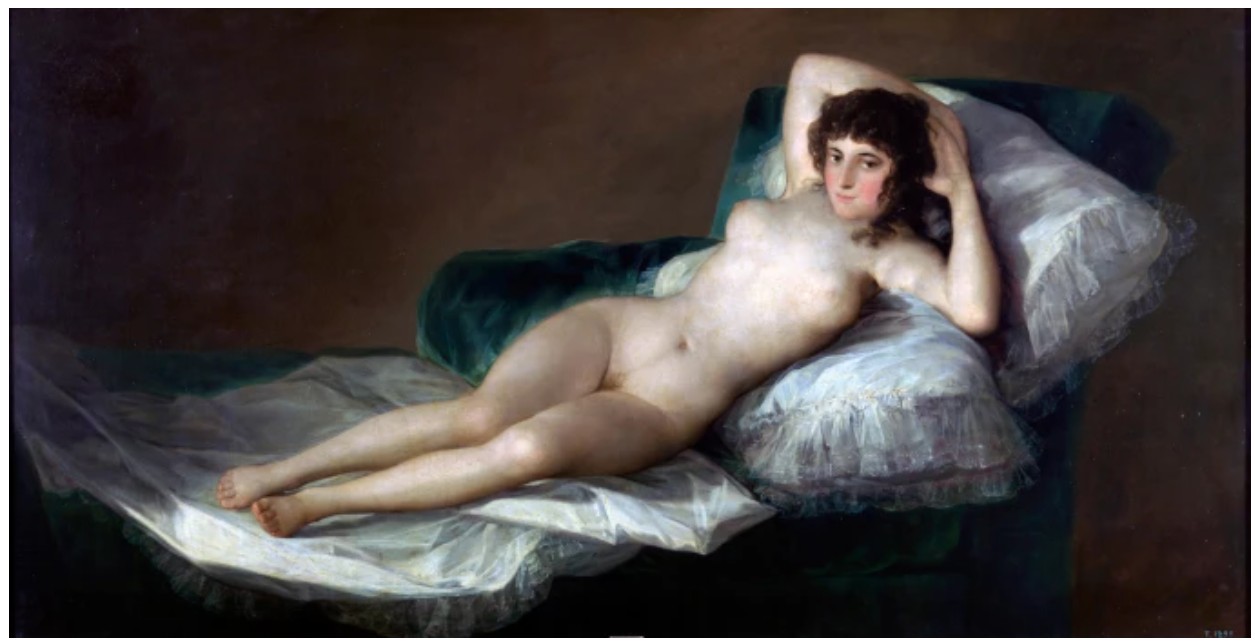
Francisco Goya, La Maja Desnuda, oil on canvas, 1797-1800. Museo del Prado, Madrid
One of the most recognizable sculptors of the modern age, Botero achieved international acclaim with public installations gracing Park Avenue in New York, the Champs-Élysées in Paris, and beyond. His Bailarines exemplifies the artist’s ability to fuse levity and mass, humor and elegance, all of which are qualities that have made his work both instantly recognizable and universally beloved.
Dancers, 2000
Christie’s New-York: 12 March 2024
Estimated: USD 1,500,000 – 2,500,000
USD 3,922,000
FERNANDO BOTERO (1932-2023), Dancers | Christie’s (christies.com)
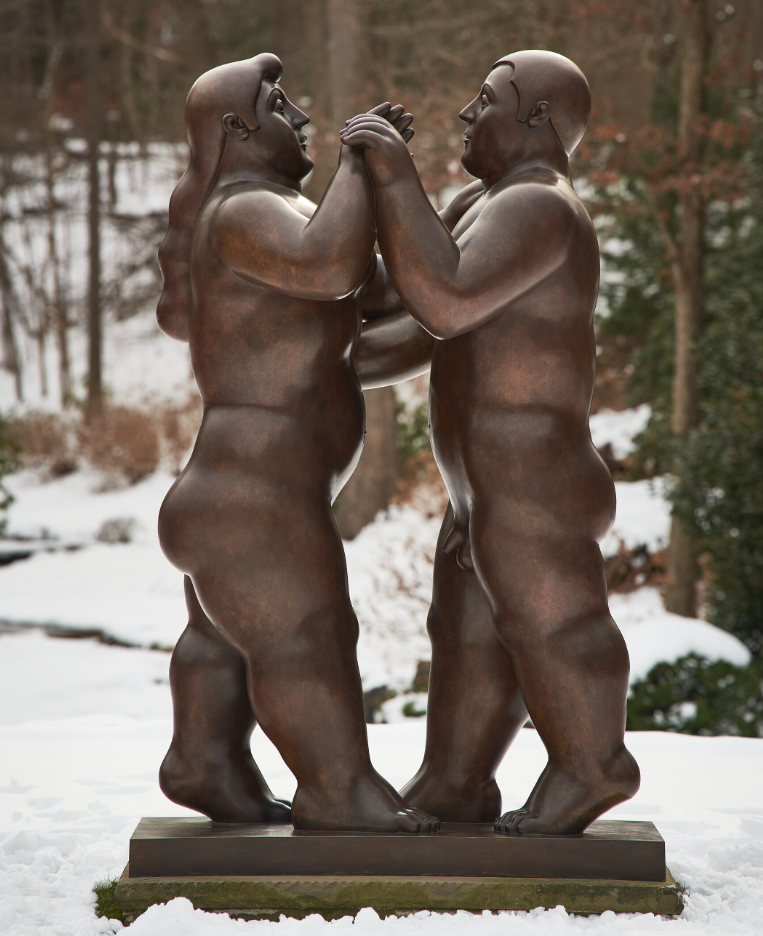
FERNANDO BOTERO (1932-2023)
Dancers, 2000
Bronze
261.6 (H) x 165.1 (W) x 74.6 (D) cm (103 x 65 x 29 3/8 inches)
Signed, dated and numbered ‘Botero, 2000, 2⁄3’ and stamped with foundry mark (on the base)
Edition two of three
Never a follower of the modernist dictum “less is more”, Fernando Botero indulged in a baroque sensibility that rather gleefully asserts “less may be better but more is even better.” Perhaps nowhere is this philosophy more apparent than in Botero’s monumental bronze sculptures in which his familiar cast of corpulent figures and objects appear to have been plucked from his canvases and casually placed along our boulevards, plazas, and lobbies. Indeed Botero’s gargantuan tribe of men, women, children, dancers, horses, and other assorted characters precariously teeter between the realms of reality and fiction while seemingly rendering our own world into a Lilliputian fantasy.
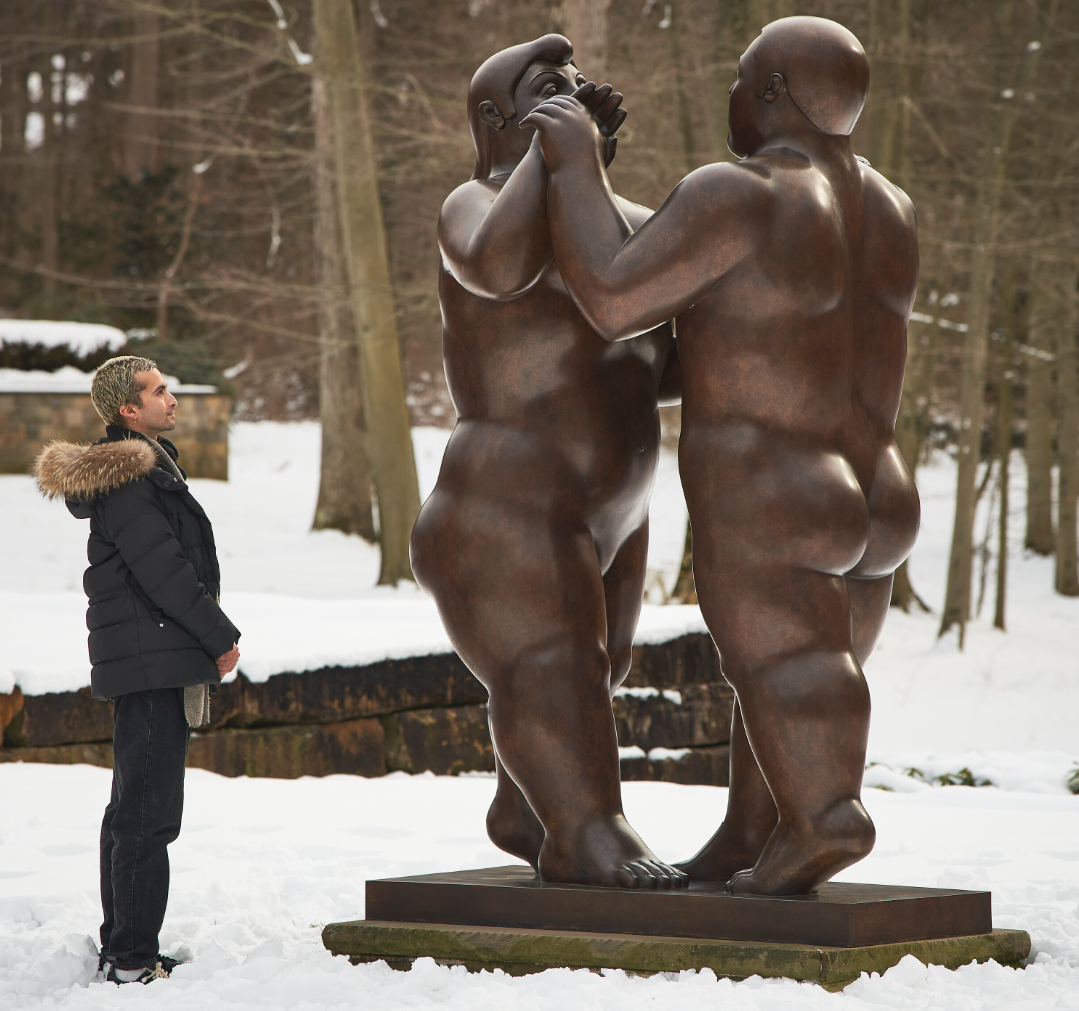
This monumental and dazzling pair of dancers–a recurrent motif in the artist’s oeuvre–posits the cultural significance of dance throughout Latin America, and in particular in Botero’s hometown of Medellín, a city known for its love of dance and in particular the tango. Echoing the crowded dancehalls, clubs and bars of his beloved Medellín, Botero effectively transports us to another space and time-we can almost hear the striking baritone voice of Carlos Gardel in the background as we envision our dancing lovers gliding across the dance floor their bodies perfectly in synch with each other, embracing, yet careful to maintain a certain space between them as they gaze into each other’s eyes. The couple’s materiality and size belies the affective tenderness and intimacy of this shared moment forever frozen in time.
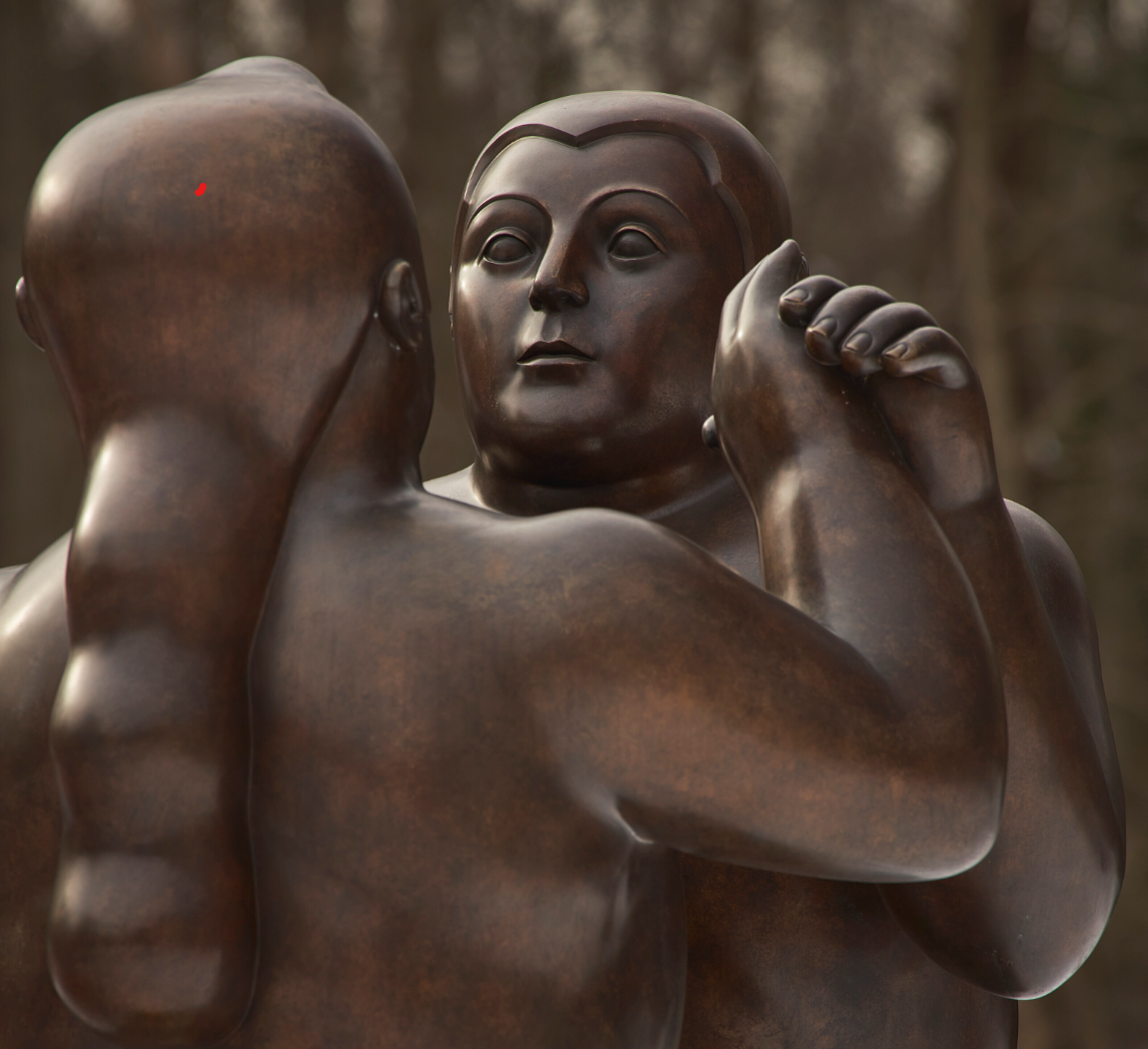
In the early 1990s, Botero’s uncommonly beautiful and oversized bronze sculptures began cropping up alongside some of the world’s most famous boulevards and spaces. From the Champs Elysee to Park Avenue, these massive public exhibitions not only reignited interest in art in public places, but soon made Botero’s name and signature style ubiquitous in our collective consciousness. And while it is tempting to seek the sources of Botero’s sculpture in the arts of Mesoamerican cultures that share a sense of simplicity of form and a scale reminiscent of Botero’s monumental figures, the Colombian master’s art practice is perhaps more closely aligned to that of classical art and the work of the great sculpture Phidias. Indeed, Botero was quick to posit that his own fascination with volume was part of a longstanding thread in the history of art, most notably Greek art, which the artist asserted was “at its greatest in the fifth century, when its figures [were] most voluminous. With Phidias, Greek art entered its “fattest” phase. Phidias’s forms are very round. The classical phase, the moment of full maturity, always has the greatest fullness.” Perhaps it is this classical lineage that endows Botero’s plus-sized men and women with a sense of continuity and grace, slightly unexpected and surreal, yet strangely familiar.
Dancers, 2012
Sotheby’s New-York: 17 May 2018
Estimated: USD 1,500,000 – 2,000,000
USD 2,475,000
(#446) Fernando Botero (sothebys.com)
FERNANDO BOTERO
Dancers, 2012
Bronze
298x190x122 cm (117 3/8 x 74 3/4 x 48 inches)
Stamped with the artist’s signature and number E.A. 1/2 on the base
This work is artist’s proof number 1 from an edition of 3, plus 2 artist’s proofs
Botero’s fascination with sculpture grew from his love of the paintings and sculptures of Renaissance masters, which he studied in depth during his first trip to Italy in 1953. There, he was particularly taken Andrea Mantegna and Piero della Francesca, whose simplicity and clarity of compositional structure and mastery of perspective were highly influential on Botero’s career from then on. Two decades later he set up his sculpture studio in Pietrasanta, Italy, in the same region where Michelangelo and other Renaissance artists once came to seek the perfect slabs of marble for their sculptures.Throughout Fernando Botero’s oeuvre, he references and reinterprets the classical past and the Western canon in his own aesthetic style – from lithe Orientalist nudes to Dutch still lifes and Renaissance interpretations of Biblical episodes. In Monumental Dancers, he reiterates the motif of the dancers reminiscent of turn of the century masterpieces such as Matisse’s The Dance and Renoir’s Dance at Bougival. These works celebrate graceful, elongated figures as they participate in the universal dynamics of celebratory human engagement.
Epoxy
Pedro on a Horse, 1977
Sotheby’s New-York: 21 November 2024
Estimated: USD 350,000 – 450,000
USD 360,000
Pedro on a Horse | Contemporary Day Auction | 2024 | Sotheby’s
FERNANDO BOTERO (1932 – 2023)
Pedro on a Horse, 1977
Painted epoxy
151.8 x 98.7 x 78 cm (59 3/4 x 38 7/8 x 30 3/4 inches)
Incised with the artist’s signature and number 5/6 (on the rear hoof)
Executed in 1977, Pedro on a Horse serves as a poignant tribute by Fernando Botero to his late son, Pedro. Depicted as a gallant soldier, young Pedro sits atop a stoic steed, embodying the valor typically reserved for figures of great political power in traditional equestrian portraiture. By adopting this genre, Botero places his son within a lineage of revered leaders immortalized in art, yet he subtly subverts the genre through his characteristic blend of humor and playfulness. Thus, Pedro on a Horse holds both profound autobiographical significance and art historical importance.
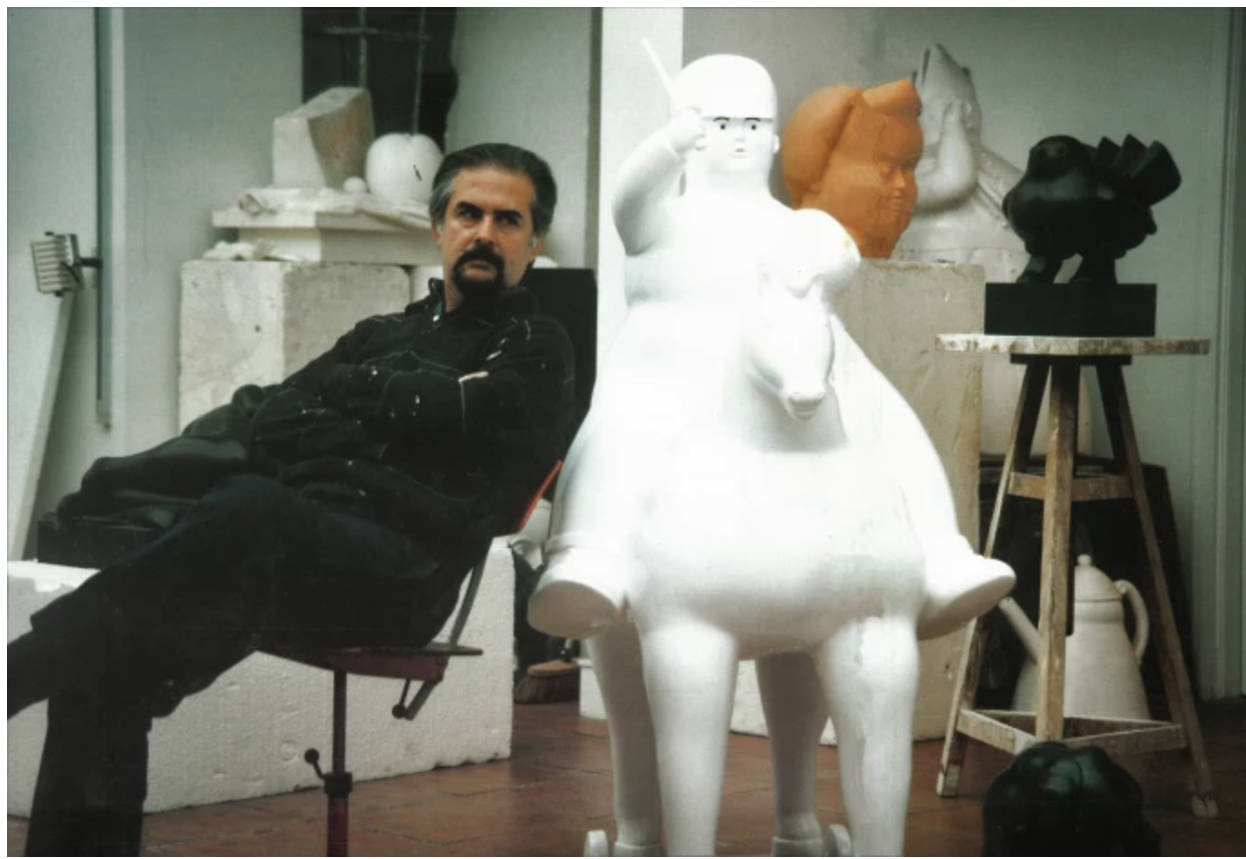
Richard Schulman, Untitled (Portrait of Fernando Botero), 1984
The catalytic tragedy was a 1974 car accident in Spain, where Botero survived with injuries but tragically lost his four-year-old son. The impact of this loss permeates much of Botero’s work, leaving an indelible mark on his life and artistic expression. Known for his vibrant color palette, Botero exercises restraint in this piece. The faint color on Pedro’s lips brings a touch of life to his figure, a vitality amplified by his fierce, sword-wielding pose. Pedro’s expressive eyes add a touch of humanity to an otherwise solemn depiction, balancing stoicism with tender realism. Pedro on a Horse transcends a father’s intimate, loving portrayal of his son. By drawing on the tradition of equestrian monuments, Botero offers a personal take on an art historical genre that commemorates influential figures, from the iconic statue of Marcus Aurelius on Rome’s Capitoline Hill to Charles IV in Mexico City and Simon Bolívar, the revered liberator of Latin America. Reflecting the noble demeanor of these celebrated figures, Botero portrays Pedro as he solemnly charges ahead, sword raised. In this work, Botero’s craftsmanship and deep emotion converge, creating both a timeless tribute to his son and a monumental sculpture within its own right.
Pedro on a Horse, 1977
Sotheby’s New-York: 14 May 2024
Estimated: USD 500,000 – 700,000
USD 571,500
Pedro on a Horse | Contemporary Day Auction | 2024 | Sotheby’s (sothebys.com)
FERNANDO BOTERO (1932 – 2023)
Pedro on a Horse, 1977
Painted epoxy and resin with synthetic hair and leather
153x90x80 cm (60 1/4 x 35 1/2 x 31 1/2 inches)
Incised with the artist’s signature and number 2/6 (on the rear hoof)
Executed in 1977, the present work is the most important early sculpture by Fernando Botero. Honoring his recently deceased son, Pedro, the work is emblematic of the Colombian artist’s oeuvre. Perched upon his stoic steed, Pedro adopts the role of a gallant soldier, clutching crimson leather reins in one hand while wielding a bright yellow sword in the other. The application of color infuses the scene with vitality, amplifying the whimsical allure inherent in Botero’s figures. While light and playful as is typical of Botero’s work, Pedro on a Horse, also holds profound significance in its meaningful portrayal of Botero’s son Pedro.

Created in Botero’s Paris studio in which he was working at the time, Pedro on a Horse subtly recalls the work of the French Impressionists, specifically that of Edgar Degas. Recognized for his innovative approach to sculpture, Degas often integrated unconventional materials such as real hair, fabric, and wire into his wax representations of horses and dancers. Botero’s thorough examination of diverse artistic influences suggests his familiarity with Degas’s avant-garde sculptural techniques. The incorporation of non-traditional elements like the leather strap and synthetic hair adorning the horse’s mane and tail could be seen as a tribute to the enduring impact of the French master on Botero’s artistic evolution.

In 1974, Botero and his four-year-old son Pedro were in a tragic car accident in Spain. Although Botero survived with sustained injuries, his son was killed which left an unforgettable mark on his life and artwork. Botero first explored the subject of his son, three years before the present sculpture in the painting Pedro on Horseback. Similar to the sculpture, the work features the central figure of Pedro wearing a policeman’s uniform and riding a hobby horse inside the child’s playroom. While taking inspiration from the painting, Pedro on a Horse creates new imagery of Botero’s son, focusing specifically on the boy and his humble steed. Pedro’s beaming, cherubic face, stands in stark contrast to the simplicity of the hobby horse he rides. His rosy cheeks reflect his horse’s mouth and his flushed hands. Pedro holds a pair of bright red reins that mirror the wheels of his horse, the hue of his hat’s brim, and his pursed lips. Renowned for his vibrant palette, even in his sculptural works, Botero exercises restraint in color usage here. The small splashes of color bring a subtle life into the figures. Furthermore, Pedro’s eyes, though devoid of expression—a hallmark of Botero’s style—infuse a touch of humanity into an otherwise aloof figure.

However, Pedro on a Horse, transcends a father’s personal and loving portrayal of his son. In this piece, Botero, calling upon art historical sculpture, gives his own take on the age-old tradition of commemorating influential figures through equestrian monuments. From the iconic Marcus Aurelius statue on the Capitoline Hill in Rome to Charles IV’s likeness in Mexico City and the revered liberator of Latin America, Simon Bolívar, leaders both military and political have been immortalized in bronze and stone throughout the annals of time. Mirroring the stoic demeanor of these historical figures, Botero portrays Pedro solemnly charging ahead, sword aloft, thus elevating his son to the childlike equivalent of Aurelius or Bolívar.

LEFT: EQUESTRIAN STATUE OF MARCUS AURELIUS, 13.9 FEET, CIRCA 175 AD, CAPITOLINE MUSEUMS
RIGHT: SIMÓN BOLÍVAR, SOUTH AMERICAN LIBERATOR, 24 BY 12 FT, EXECUTED IN 1959, SIMON BOLIVAR PARK, DC
Pedro on a Horse thus exemplifies Botero’s ability to weave complex layers of meaning into a tender and enchanting image. The work transcends its status as a mere sculpture and becomes a testament to love, loss, and the enduring power of art to capture the essence of the human experience. Through Botero’s skillful craftsmanship and profound emotion, this work stands as a timeless tribute to a beloved son and a monumental sculpture in its own right.
Marble
Donna Sdraiata, 2012
Sotheby’s New-York: 16 November 2023
Estimated: USD 250,000 – 350,000
USD 444,500
Donna Sdraiata | Contemporary Day Auction | 2023 | Sotheby’s (sothebys.com)
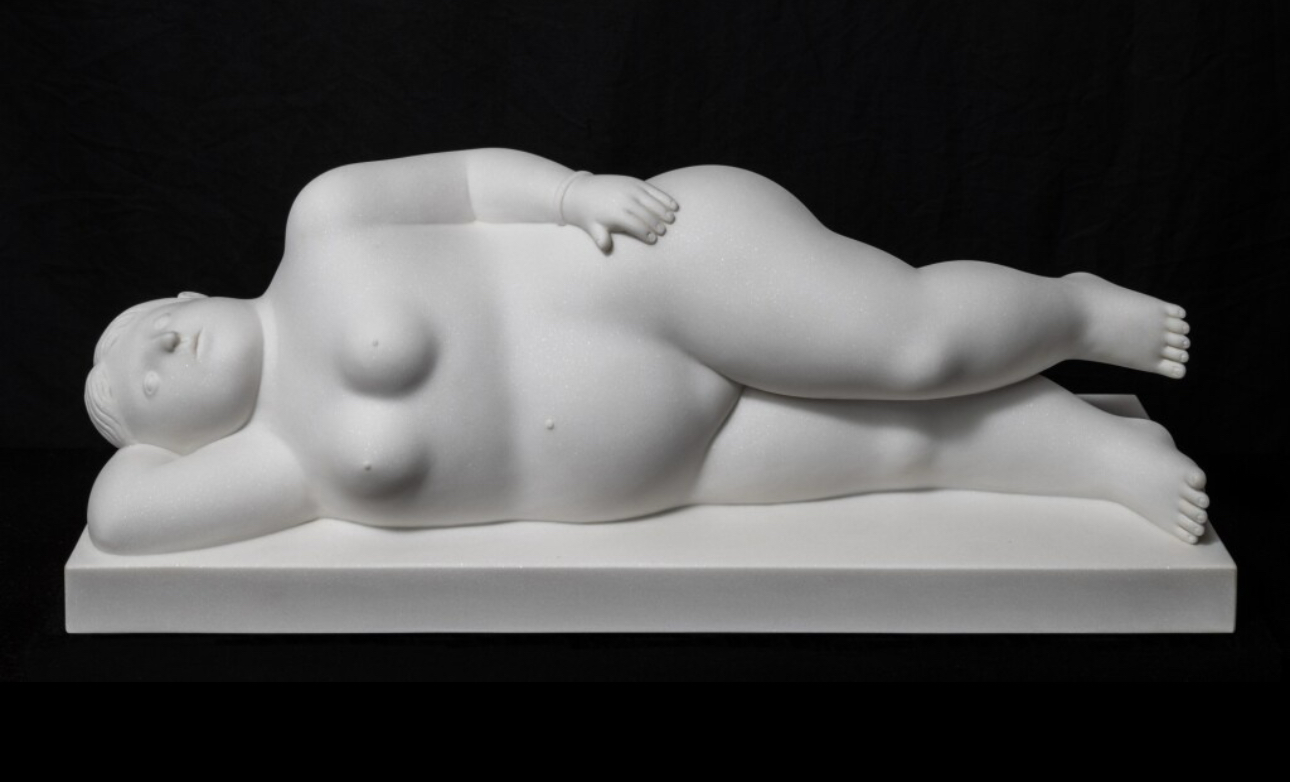
FERNANDO BOTERO (1932 – 2023)
Donna Sdraiata, 2012
Carrara marble
25.7 x 61.3 x 22.9 cm (10 1/8 x 24 1/8 x 9 inches)
Incised with the artist’s signature (on the base)
Reclining Woman with Apple, 1990
Christie’s New-York: 28 September 2023
Estimated: USD 250,000 – 350,000
USD 415,800
FERNANDO BOTERO (1932-2023) (christies.com)
FERNANDO BOTERO (1932-2023)
Reclining Woman with Apple, 1990
White Carrara marble
Height: 13 3/4 inches (34.9 cm)
Width: 23 1/4 inches (59.1 cm)
Depth: 9 3/4 inches (24.8 cm)
Signed ‘Botero’ (near base)
Unique
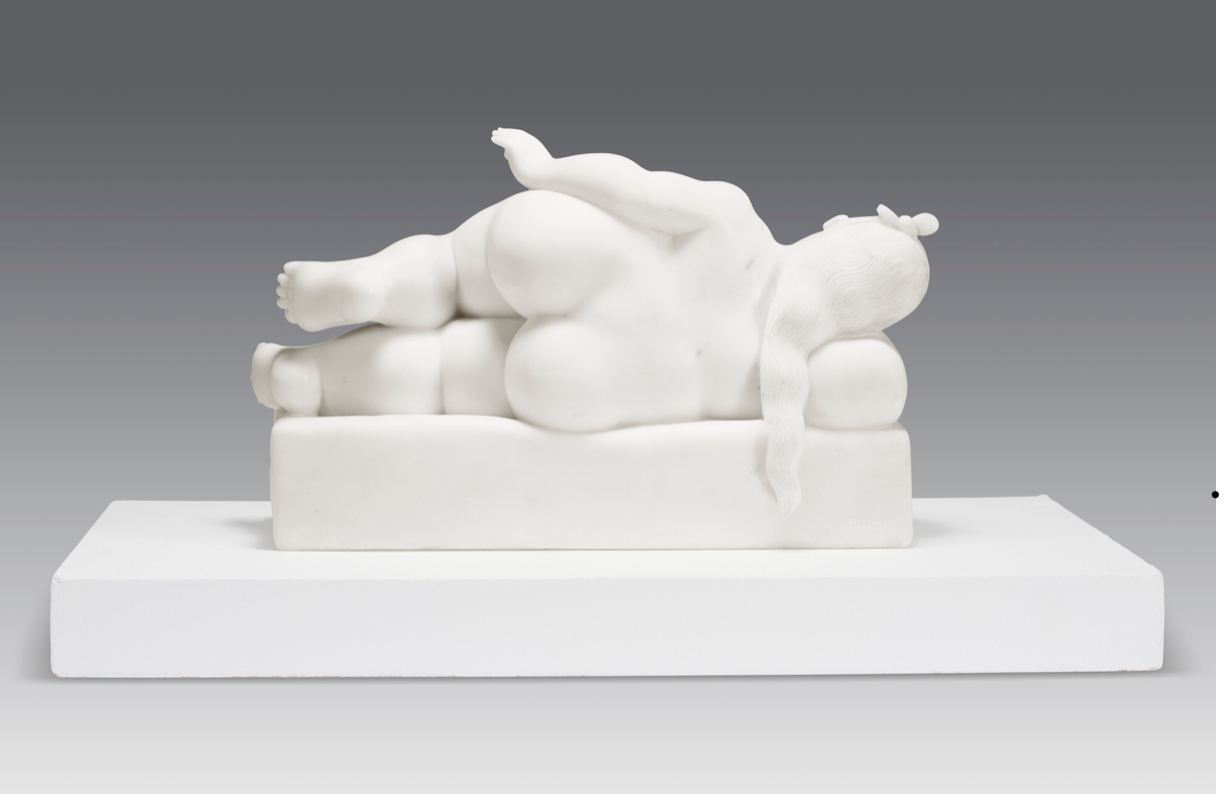
Mujer fumando, 1986
Christie’s New-York: 9 March 2023
Estimated: USD 1,000,000 – 1,500,000
USD 1,008,000
FERNANDO BOTERO (b. 1932) (christies.com)
FERNANDO BOTERO (b. 1932)
Mujer fumando, 1986
White Carrara marble
58.4 x 141 x 56 cm (23 x 55 1/2 x 22 inches)
Signed ‘Botero’ (near base)
Unique
The voluptuous female form is Fernando Botero’s constant muse. She appears in canvas, bronze and stone throughout the artist’s long, prolific career. Although Botero began exploring this subject in his paintings of the 1950s, his fleshy figures do not materialize in sculpture until the 1970s. Mujer fumando is an iconic example of Botero’s mature investigation of his most beloved theme in three dimensions. A young woman lies on her stomach propped up on her arms while daintily holding a cigarette in her right hand and playfully kicking up her leg. Viewed from the front, the woman unabashedly reveals her plump breasts through the cross of her arms while nonchalantly gazing up into space. When seen from behind, the woman becomes all undulating curves, beginning with her hair which falls in neat waves down her back and is followed by the repeating rolls of flesh on her buttocks and legs. Mujer fumando captures what Botero considers the essence of his work. As he once stated, “What I am concerned with is form–creating smooth, rounded surfaces that emphasize the sensuality of my work.” (E.J. Sullivan, Botero Esculpture, New York, 1986, p. 55.) More so than in his paintings, sculpture allows Botero to create a tangible sensuality, exemplified here in the woman’s corporal fullness.
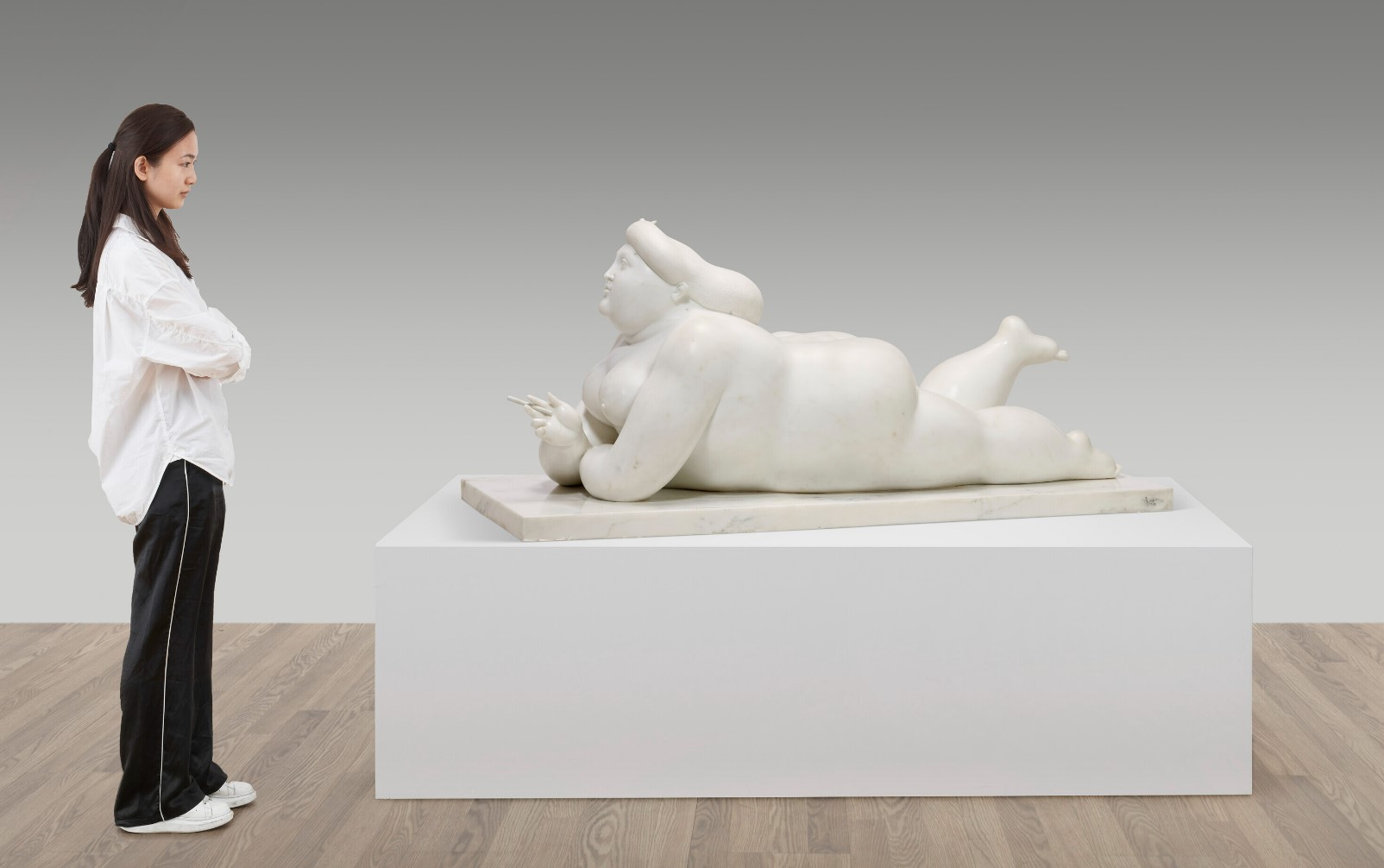 Botero created Mujer fumando during a period of intense sculptural activity in the 1980s at his then new studio in Pietrasanta, Italy. Pietrasanta is a town steeped in sculptural tradition; indeed many of the greatest artists of all times such as Michelangelo and Donatello came here in search of the perfect stone in the nearby quarries for their work. In Pietrasanta, Botero immersed himself in the town’s heritage, exploring these same quarries for the marble which he would transform into his now famous rotund figures. While Mujer fumando is unmistakably Botero in style, she is also part of a long lineage of female nudes in art. Voluptuous women appear in art throughout history from the Venus of Willendorf to the Renaissance and Baroque goddesses of Titian and Rubens to the smooched figures of contemporary artist Jenny Saville. Botero, who devoted himself at a young age to studying the work of European masters, is well versed in this tradition of depicting the female form. More specifically, Mujer fumando, refers to representations of the reclining nude. Two of the most famous examples of such a type seen from behind include the Rokeby Venus and the Grand Odalisque, by Diego Velázquez and Jean Auguste-Dominique Ingres respectively, two artists whom Botero claims as seminal influences.