
Among the many bodies of work developed by Damien Hirst over the past three decades, the butterfly paintings occupy a particularly important place. Visually seductive yet conceptually unsettling, these works encapsulate many of the artist’s central concerns: the tension between beauty and violence, the relationship between life and death, and the human desire to transform fragile natural phenomena into symbols of permanence. If Hirst first achieved international notoriety through works such as animals preserved in formaldehyde, the butterfly paintings reveal another dimension of his practice—one that is more decorative, spiritual, and meditative, yet no less provocative.
The butterfly motif entered Hirst’s work very early in his career and has remained one of his most persistent visual languages. Through these works, Hirst explores how something universally associated with beauty and fragility can simultaneously function as a powerful symbol of mortality, transformation, and transcendence.
Introduction
Butterflies first appeared prominently in Hirst’s work in 1991 with the installation In and Out of Love, one of the most memorable projects of the Young British Artists period. In this exhibition, live butterflies were allowed to hatch inside the gallery space, feeding on fruit, flying freely among visitors, and eventually dying on the gallery floor.
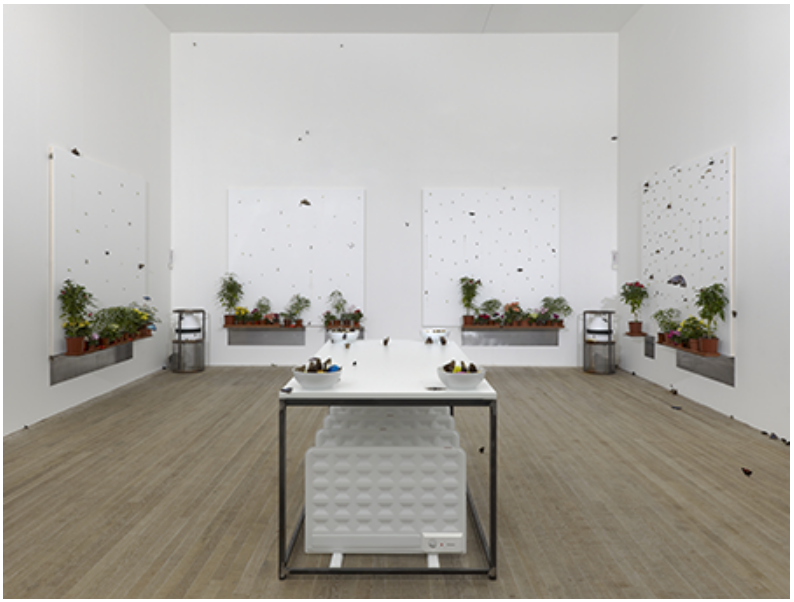
Damien Hirst, In & Out of Love (White Paintings & Live Butterflies), 1991, installed at Tate Modern, London, 2012. Image: © Damien Hirst and Science Ltd. All rights reserved, DACS/Artimage 2023. Photo: Prudence Cuming Associates Ltd, Artwork: © Damien Hirst and Science Ltd. All rights reserved/ DACS, London/ARS, NY 2023
The employment of butterflies in Hirst’s practice can be traced all the way back to his first solo exhibition, the legendary In and Out of Love installation, 1991, held at a vacant commercial space near Anthony d’Offay Gallery, where the artist worked as a part-time technician. Upstairs, butterflies hatched from pupae embedded in five white canvases, and spent the duration of the show mating, floating around, and laying new eggs; on view downstairs was a series of monochromatic paintings with dead butterflies pressed into the surfaces. The vivid and disconcerting image of these dead insects was so striking that a detail of one of these latter canvases was chosen for the cover of the pilot issue of Frieze magazine that same year.
Alongside this installation, Hirst created paintings incorporating real butterflies attached to monochrome surfaces. The works immediately introduced a paradox that would remain central to the series: the viewer is drawn to the extraordinary beauty of the insect while simultaneously confronted with the reality that the artwork is composed of dead creatures. This early project established the butterfly as both subject and material. Rather than painting butterflies in a traditional sense, Hirst uses the wings themselves as pictorial elements, turning natural specimens into components of a constructed image.
Symbolism: Transformation, Mortality, and the Soul
The symbolic resonance of the butterfly has deep historical roots. Across many cultures, the butterfly has been associated with transformation, resurrection, and the human soul. Its life cycle—from caterpillar to chrysalis to winged insect—has long served as a metaphor for spiritual renewal and rebirth. Hirst deliberately draws upon this symbolism. In his work, the butterfly becomes a meditation on the fragility of life and the inevitability of death. The creature’s short lifespan and delicate beauty make it an ideal symbol for the transience of existence.
At the same time, the butterfly paintings reflect Hirst’s fascination with how humans aestheticize death. The insects are arranged in visually harmonious compositions that celebrate color, symmetry, and decorative beauty. Yet beneath this elegance lies a disturbing reality: the works are constructed from the remains of once-living organisms. This duality between attraction and discomfort is central to their impact.
The Kaleidoscope Paintings
Beginning in the early 2000s, Hirst expanded the butterfly motif into one of the most recognizable series of his career: the Kaleidoscope Paintings. In these works, hundreds of butterfly wings are arranged into highly symmetrical geometric compositions radiating from a central point. The paintings often resemble mandalas, stained-glass windows, or intricate sacred diagrams. Their luminous colors and radial patterns produce a hypnotic visual effect.
“The death of an insect that still has this really optimistic beautify of a wonderful thing.”
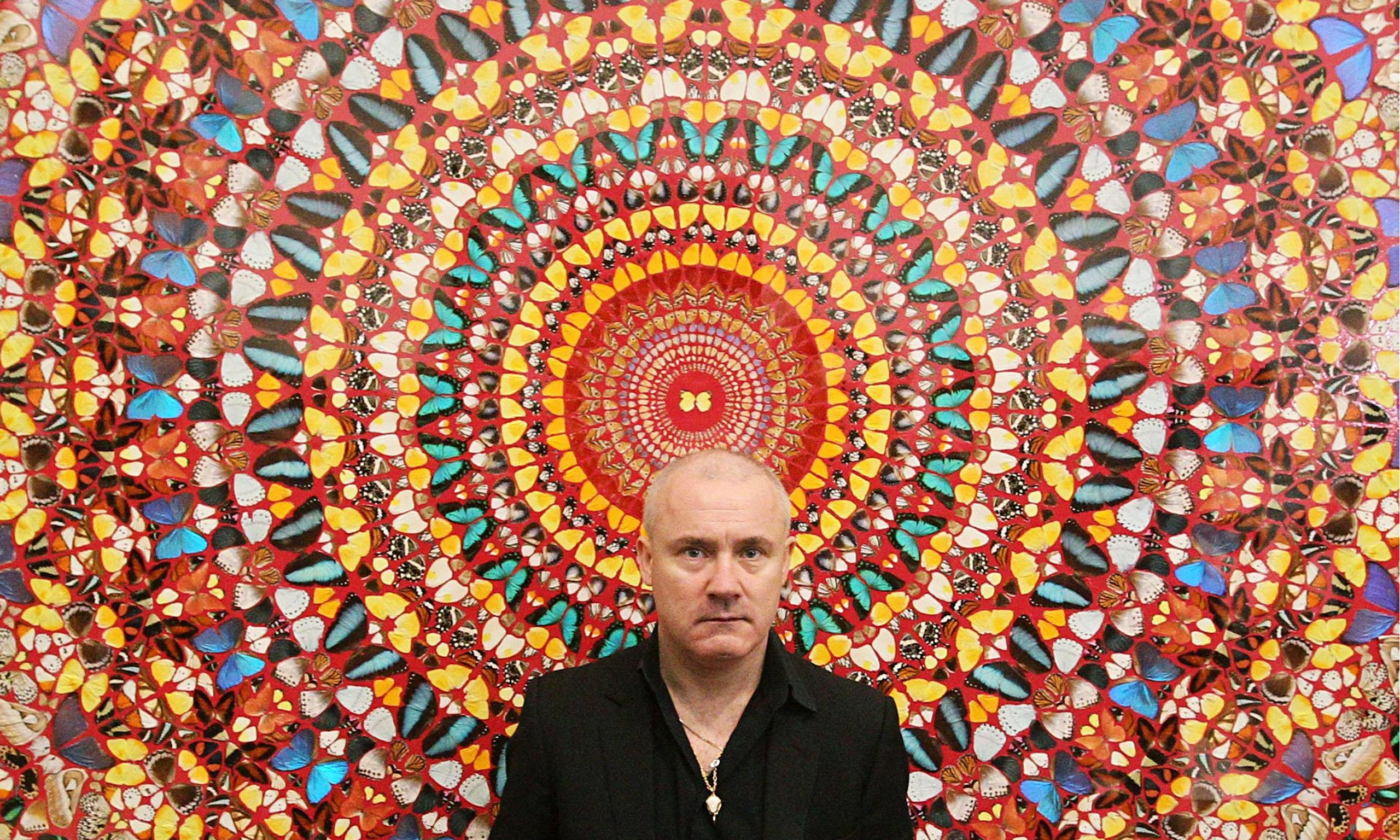
The shift from isolated butterflies to kaleidoscopic compositions represents a conceptual transformation. Individual insects are no longer presented as specimens but become units within a larger decorative structure. Nature is reorganized into an ordered system governed by symmetry and repetition.
The result is both mesmerizing and unsettling. The works evoke religious architecture and sacred ornamentation while simultaneously reminding viewers that the radiant patterns are built from fragments of dead butterflies.
Religion, Mandalas, and Sacred Geometry
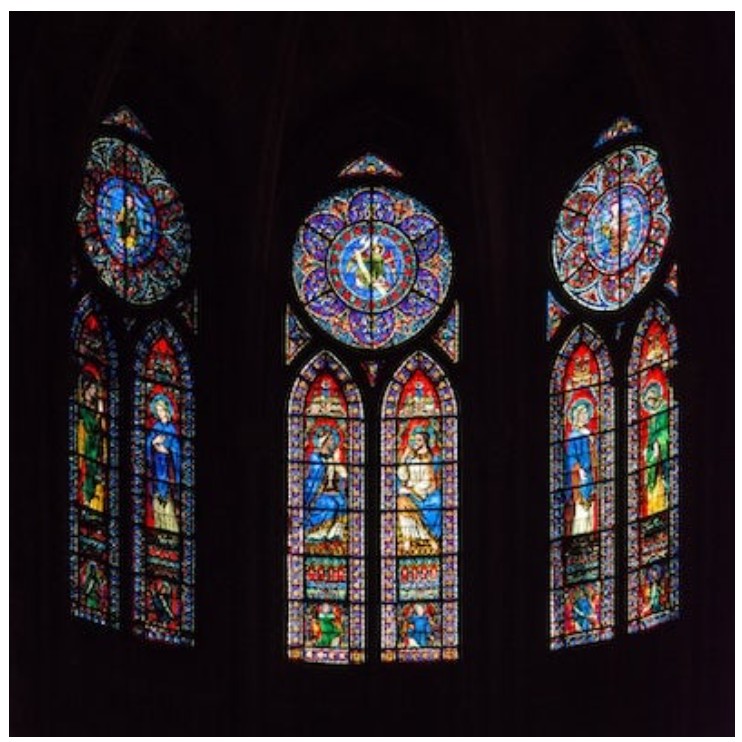
Many of the kaleidoscope paintings evoke religious imagery. Their circular structures recall the rose windows of Gothic cathedrals as well as mandalas used in Hindu and Buddhist traditions to symbolize the structure of the universe.
This connection to sacred geometry reflects Hirst’s long-standing interest in belief systems. The butterfly paintings suggest that art can occupy a space similar to religion, offering visual experiences that inspire contemplation and transcendence without necessarily promoting a specific doctrine.
Through symmetry, repetition, and radiant color, Hirst creates compositions that feel almost devotional. The paintings invite prolonged contemplation, encouraging viewers to lose themselves in patterns that appear both cosmic and meticulously constructed.
Yet the tension between spiritual aspiration and biological reality remains unresolved. The works offer visions of harmony while quietly reminding us of the mortality that underlies their creation.
Beauty as Provocation
Unlike some of Hirst’s more confrontational works, the butterfly paintings initially appear gentle and decorative. Their vibrant colors and refined compositions draw viewers in with immediate visual pleasure.
However, this beauty functions as a subtle provocation. The viewer eventually becomes aware that the paintings depend upon the destruction of the very creatures that make them beautiful. The aesthetic experience becomes complicated by ethical and existential questions.
This strategy reflects Hirst’s broader artistic approach. Rather than shocking viewers outright, the butterfly works seduce them first and disturb them afterward. The tension between attraction and discomfort creates a complex emotional response that lingers long after the initial encounter.
Technique and Material
Technically, the butterfly paintings are highly controlled compositions. The wings are carefully arranged on panels painted with glossy industrial paint, often in monochrome backgrounds that heighten the brilliance of the insects’ natural colors.
Symmetry plays a crucial role. Each wing is positioned to create balanced patterns that guide the viewer’s eye across the surface. The precision of these arrangements contrasts with the organic irregularities of the butterflies themselves.
The works also blur the boundary between painting, collage, and assemblage. While they function visually as paintings, they are constructed objects that incorporate elements of natural history display, taxidermy, and decorative design.
Seen up close, the viewer becomes aware of the physical fragility of the wings and the individuality of each insect. From a distance, these details dissolve into dazzling abstract compositions.
Major Butterfly Series
Over time, Hirst has developed several bodies of work based on the butterfly motif.
The earliest works stem from In and Out of Love, where individual butterflies were incorporated into paintings and installations that explored life cycles and mortality.
The Kaleidoscope Paintings remain the most iconic development of the motif. Their monumental scale and radiant symmetry transformed the butterfly into a central element of Hirst’s visual language.
Closely related works include the Cathedral Paintings, which explicitly reference stained-glass windows, and later mandala-like compositions that emphasize circular geometry and spiritual symbolism.
More recently, Hirst has revisited the motif in large-scale editions and print series such as The Souls, The Empresses, and The Kaleidoscopes, demonstrating the enduring importance of the butterfly within his practice.
Institutional Presence and Exhibitions
Butterfly paintings have been prominently featured in major exhibitions devoted to Hirst’s work. They appeared in the artist’s large retrospective at Tate Modern and have been included in numerous international museum shows.
The early installation In and Out of Love is now held in the collection of the Yale Center for British Art, reflecting its significance within the history of contemporary British art.
The butterfly motif has also expanded beyond traditional painting. In recent years, Hirst has translated the kaleidoscopic imagery into architectural and design projects, including large stained-glass installations that extend the visual language of the paintings into physical space.
Damien Hirst’s butterfly paintings remain among the most recognizable images associated with his career. They demonstrate the artist’s ability to combine decorative beauty with philosophical depth, transforming fragile natural elements into powerful symbolic compositions.
More than simple aesthetic objects, these works explore humanity’s relationship with mortality, spirituality, and the desire to impose order on the natural world. Their radiant surfaces conceal complex questions about life, death, and the transformation of living beings into art.
In this sense, the butterfly paintings represent a distillation of Hirst’s broader artistic project. They are at once elegant and unsettling, celebratory and melancholic. Beneath their extraordinary beauty lies a quiet reminder of life’s impermanence—a reminder rendered all the more powerful by the brilliance with which it is displayed.
Top Lots
#1. Eternity, 2002-2004
Phillips London: 13 October 2007
Estimated: GBP 2,500,000 – 3,500,000
GBP 4,724,000 / USD 9,597,354
Damien Hirst – Contemporary Art Eve… Lot 239 October 2007 | Phillips
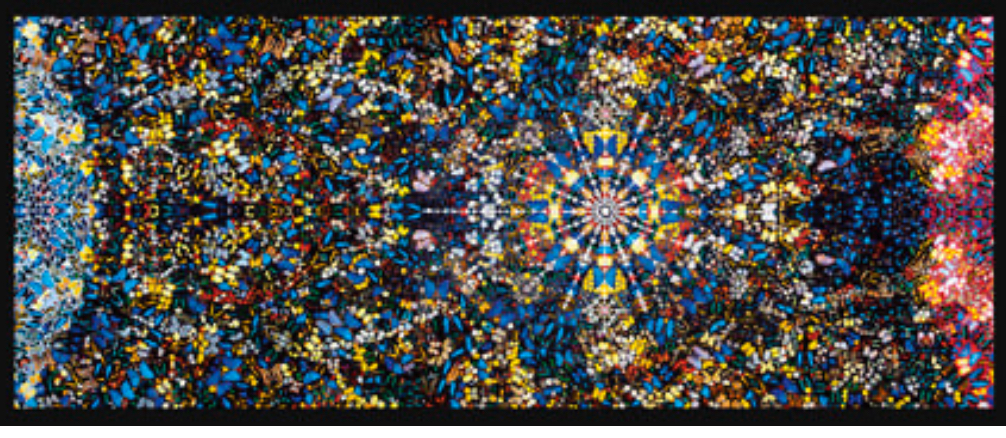
DAMIEN HIRST
Eternity, 2002-2004
Butterflies and gloss household paint on canvas.
84×210 inches (213.4 x 533.4 cm)
#2. Ascended, 2008
Sotheby’s London: 16 May 2008
Estimated: GBP 500,000 – 700,000
GBP 2,281,250 / USD 4,060,370
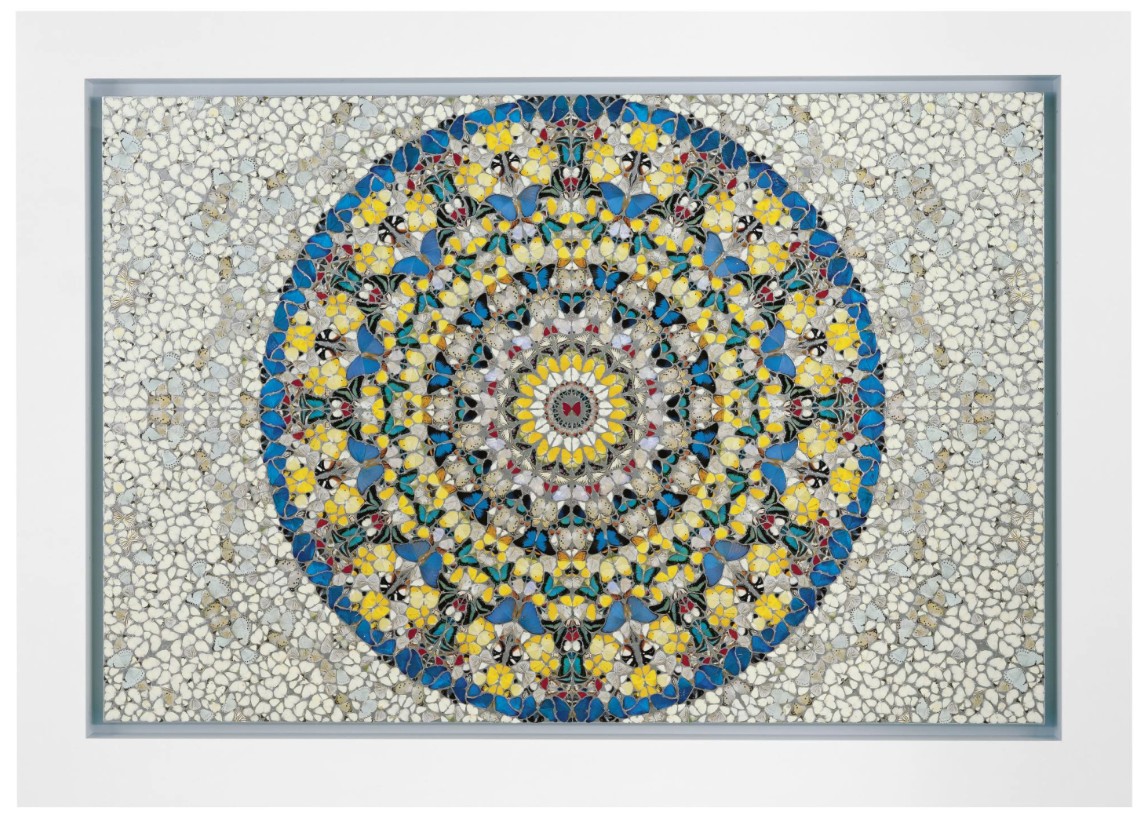
DAMIEN HIRST
Ascended, 2008
Butterflies and household gloss on canvas in artist’s frame
72×108 inches (182.9 x 274.3 cm)
Signed, titled and dated 2008 on the backing board
#3. I am Become Death, Shatterer of Worlds, 2006
Christie’s London: 14 October 2010
Estimated: GBP 2,500,000 – 3,500,000
GBP 2,169,250 / USD 3,467,790
Damien Hirst (b. 1965) , I am Become Death, Shatterer of Worlds | Christie’s
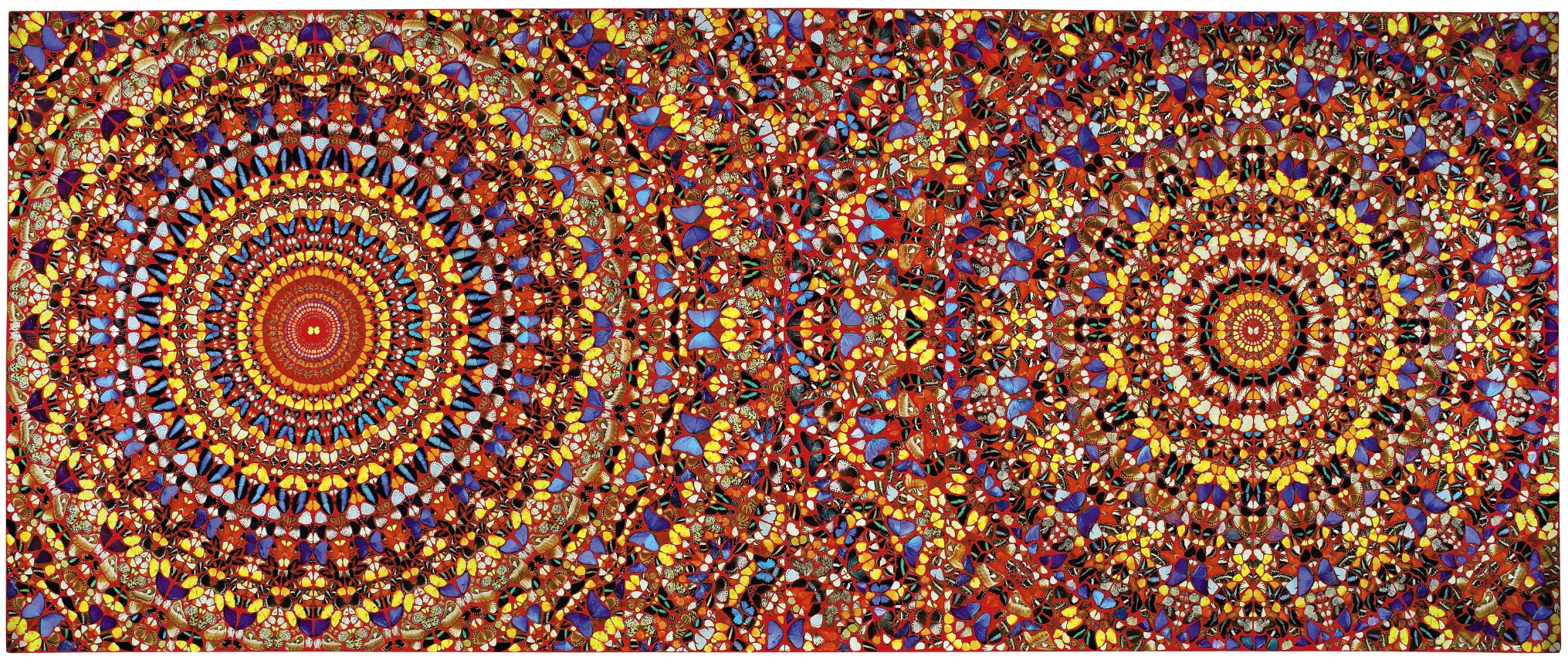
DAMIEN HIRST (b. 1965)
I am Become Death, Shatterer of Worlds, 2006
Butterflies and household gloss paint on canvas in artist’s frame
84×210 inches (213.4 x 533.4 cm)
#5. Love You, 2007
Sotheby’s New-York: 14 February 2008
Estimated: USD 1,000,000 – 1,500,000
USD 3,300,000
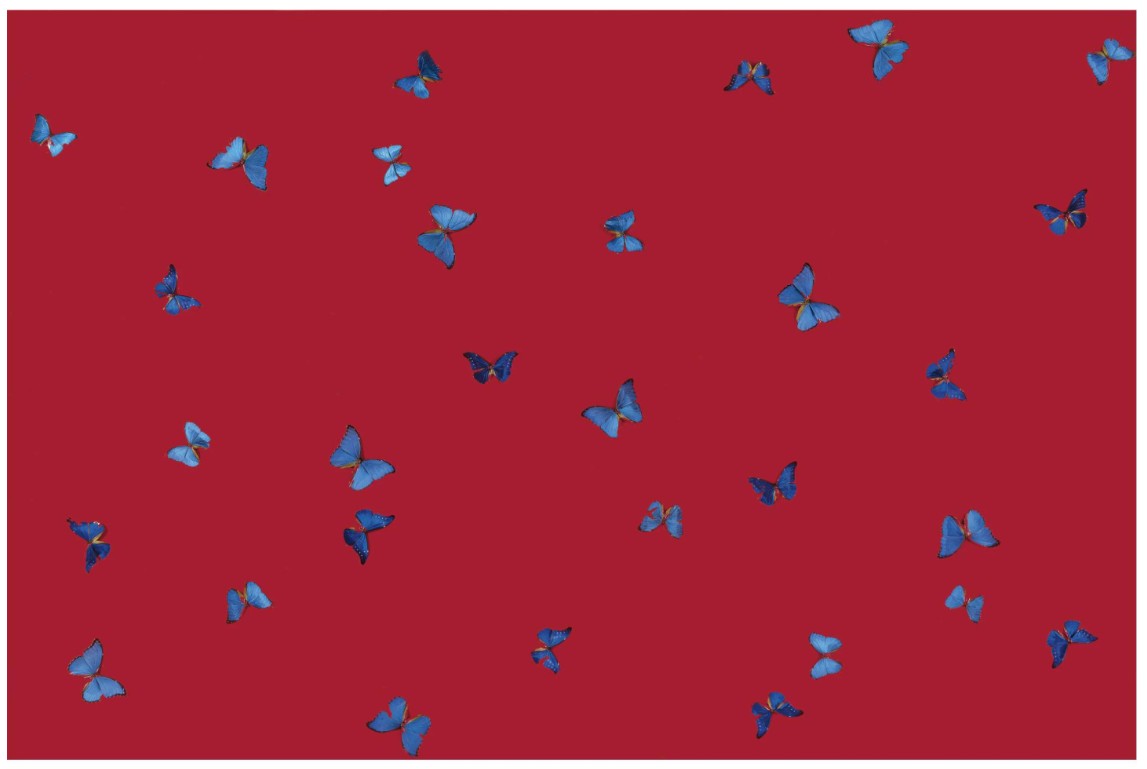
DAMIEN HIRST
Love You, 2007
Butterflies and household gloss paint on canvas
72×108 inches (182.9 x 274.4 cm)
Signed on the stretcher; signed, titled and dated 2007 on the reverse
2026 Auction Results
Love Affair, 2001
Property from a Prestigious Collection
Sotheby’s London: 4 March 2026
Estimated: GBP 300,000 – 400,000
GBP 320,000 / USD 427,490
Love Affair | Modern & Contemporary Evening Auction | 2026 | Sotheby’s
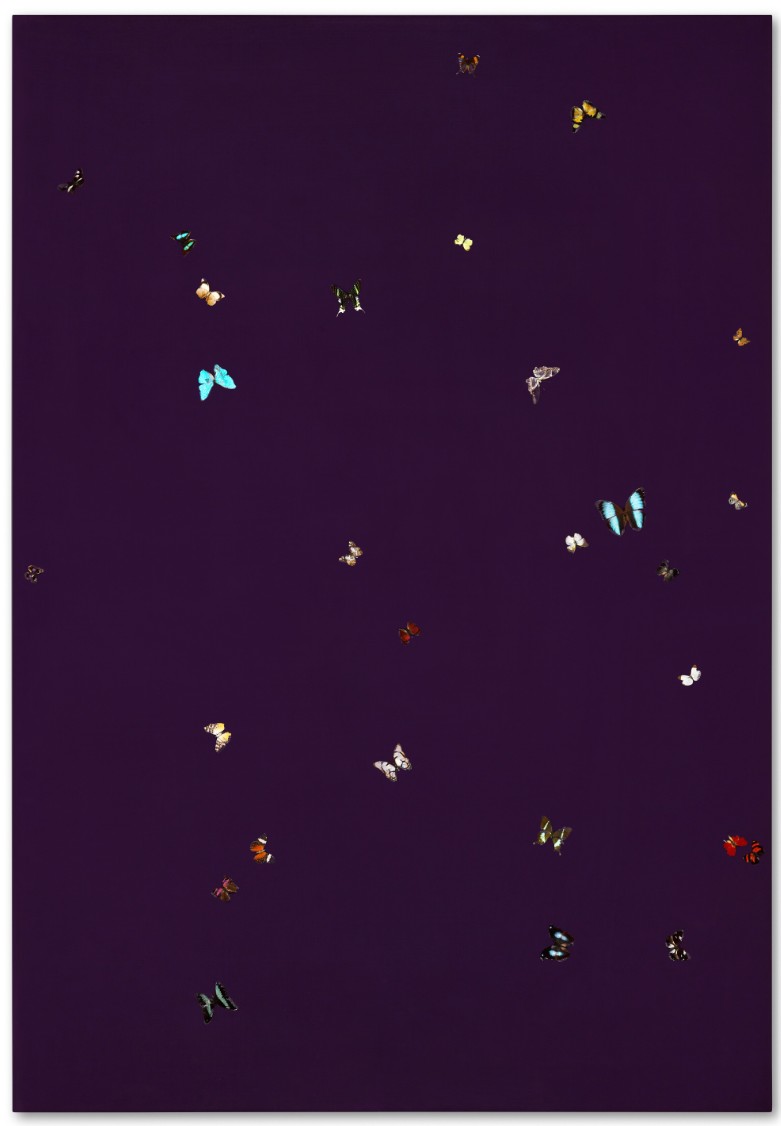
DAMIEN HIRST (b. 1965)
Love Affair, 2001
Household gloss on canvas with butterflies
100-3/8 x 69-3/8 inches (255 x 176.2 cm)
Signed (on a label affixed to the reverse)
Untitled, 2000
Modern Visionaries – The Roger and Josette Vanthournout Collection
Christie’s London: 6 March 2026
Estimated: GBP 150,000 – 200,000
GBP 127,000 / USD 169,660
DAMIEN HIRST (B. 1965), Untitled | Christie’s
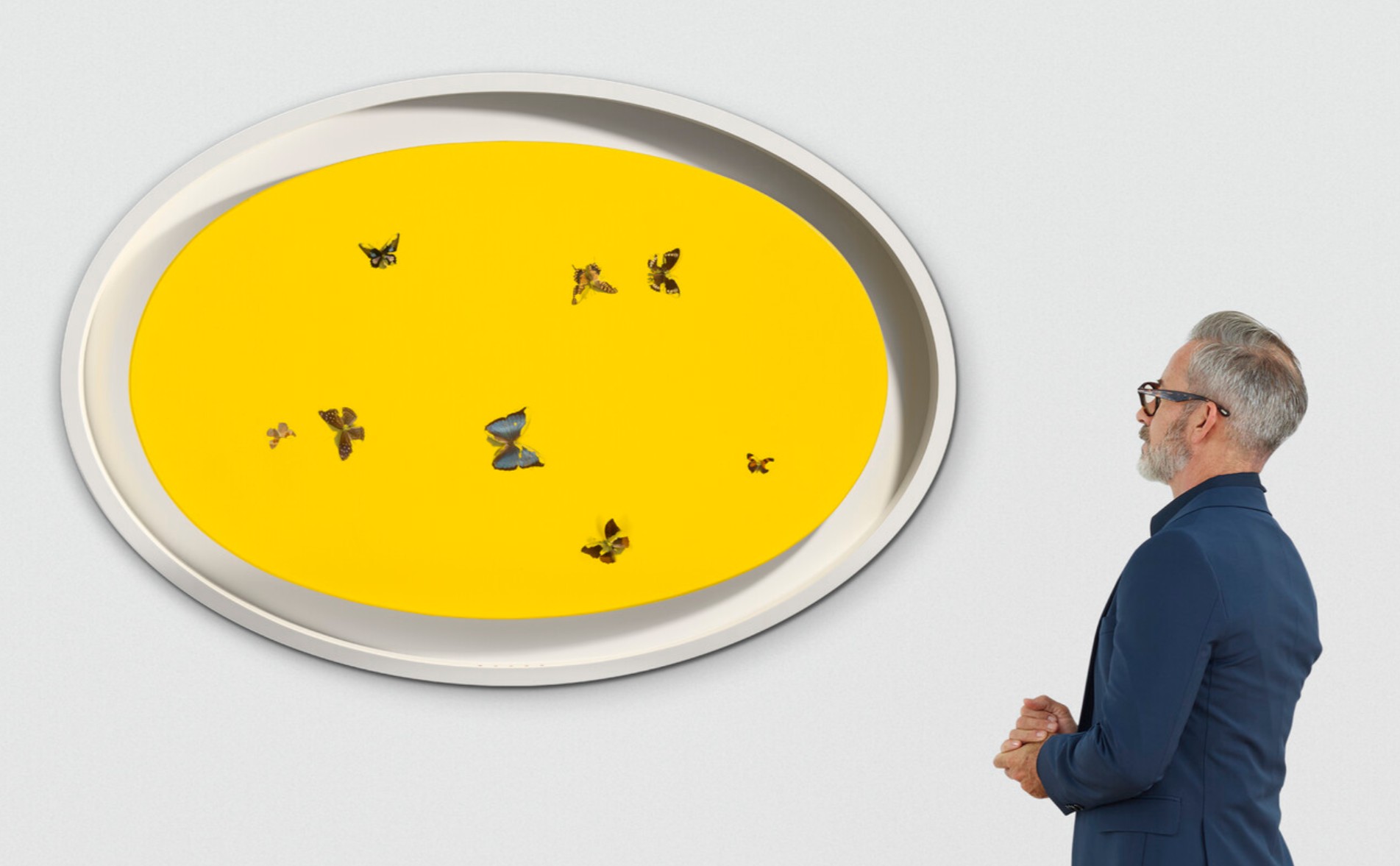
DAMIEN HIRST (B. 1965)
Untitled, 2000
Butterflies and household gloss on canvas
30×48 inches (76.2 x 121.9 cm)
2025 Auction Results
#1. Oranges and Lemons, 2008
Christie’s London: 26 June 2025
Estimated: GBP 500,000 – 700,000
GBP 504,000 / USD 690,480
DAMIEN HIRST (B. 1965), Oranges and Lemons | Christie’s
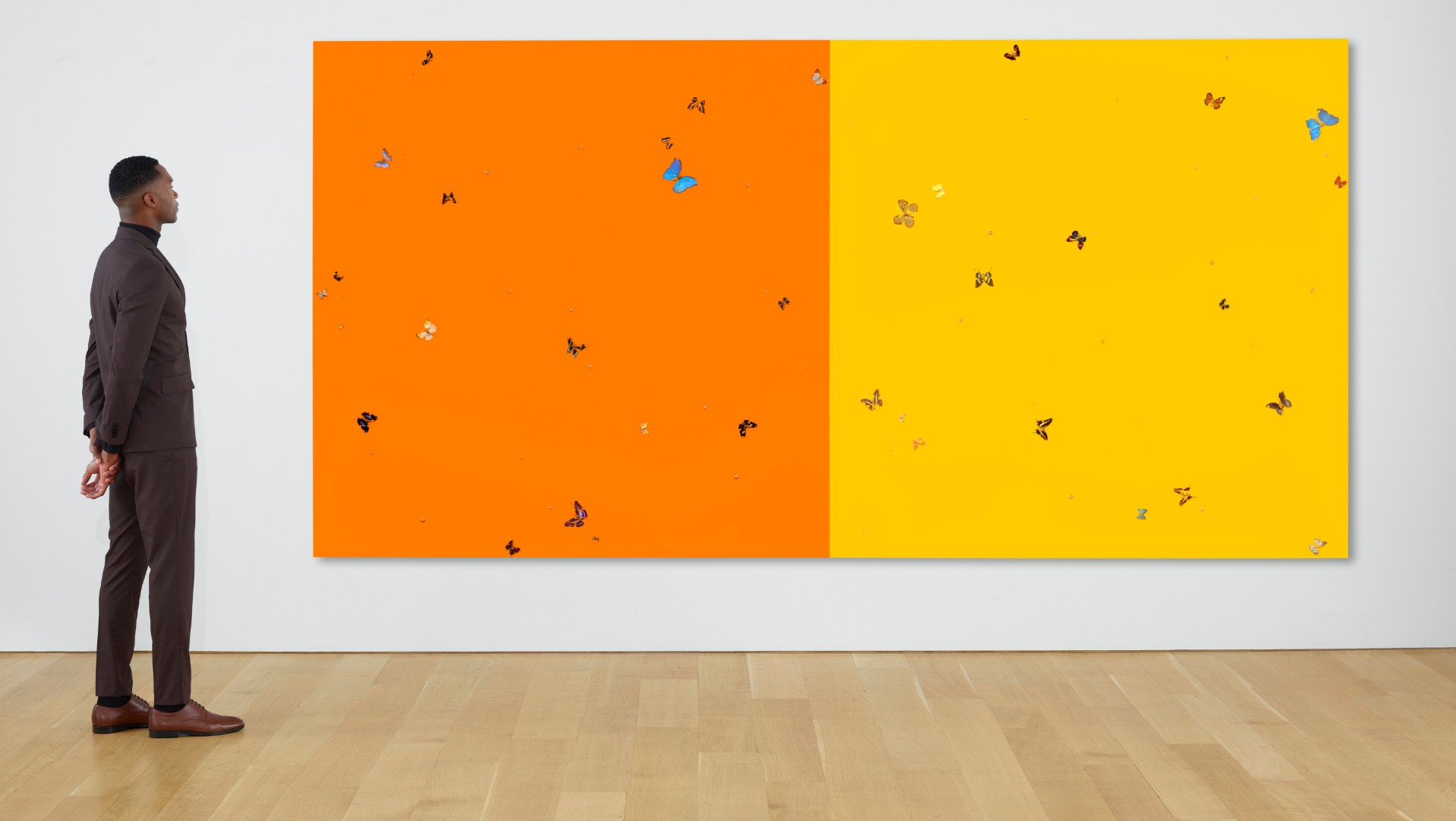
DAMIEN HIRST (B. 1965)
Oranges and Lemons, 2008
Butterflies, cubic zirconia and household gloss on canvas, in two parts
Each: 84×84 inches (213.4 x 213.4 cm)
Overall: 84×168 inches (213.4 x 426.8 cm)
Each: signed, titled, inscribed and dated ‘Damien Hirst 2008 “Oranges and Lemons”‘ (on the reverse)
#2. A Summers Day, 2002
Christie’s London: 6 March 2025
Estimated: GBP 250,000 – 350,000
GBP 504,000 / USD 645,120
DAMIEN HIRST (B. 1965), A Summers Day | Christie’s
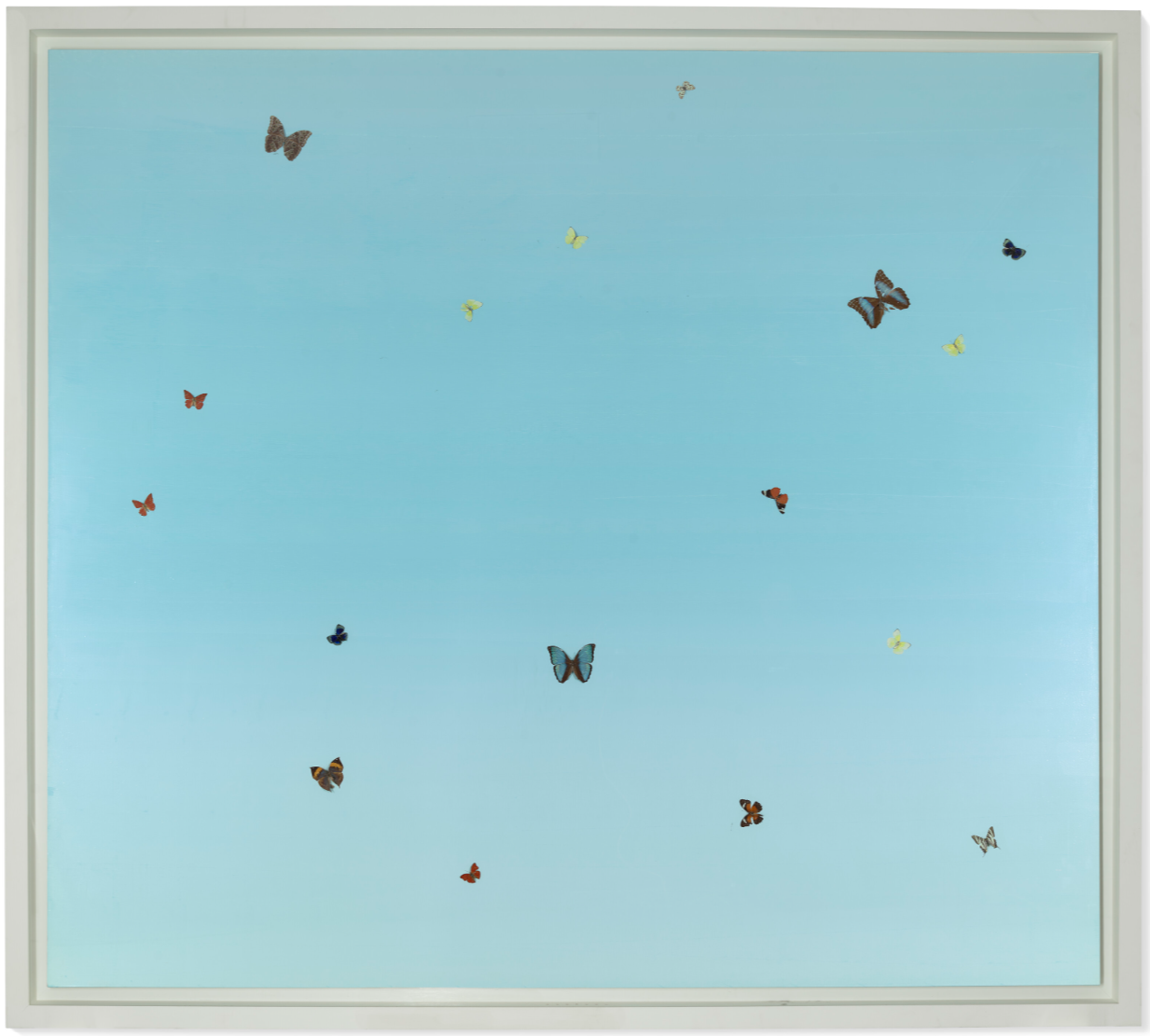
DAMIEN HIRST (B. 1965)
A Summers Day, 2002
Household gloss and butterflies on canvas
96×108 inches (243.8 x 274.3 cm)
#3. Untitled, 2000
Christie’s New-York: 15 May 2025
Estimated: USD 150,000 – 200,000
USD 378,000
DAMIEN HIRST (B. 1965), Untitled | Christie’s
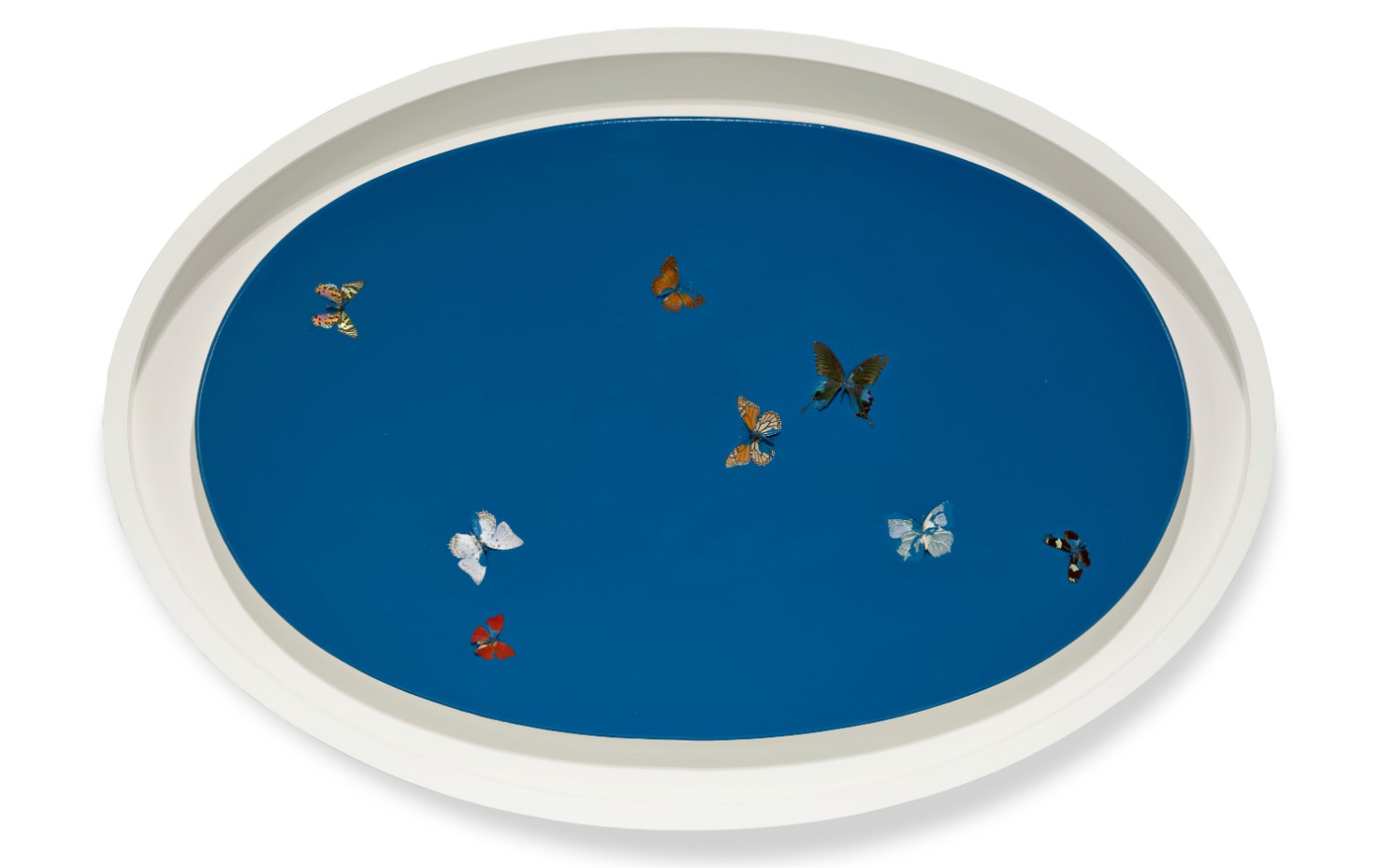
DAMIEN HIRST (B. 1965)
Untitled, 2000
Butterflies and household gloss on canvas
30 1/2 x 48 1/2 inches (76.4 x 122.2 cm)
#4. Butcher’s Love, 2008
Sotheby’s London: 5 March 2025
Estimated: GBP 200,000 – 300,000
GBP 254,000 / USD 325,120
Butcher’s Love | Contemporary Day Auction | 2025 | Sotheby’s
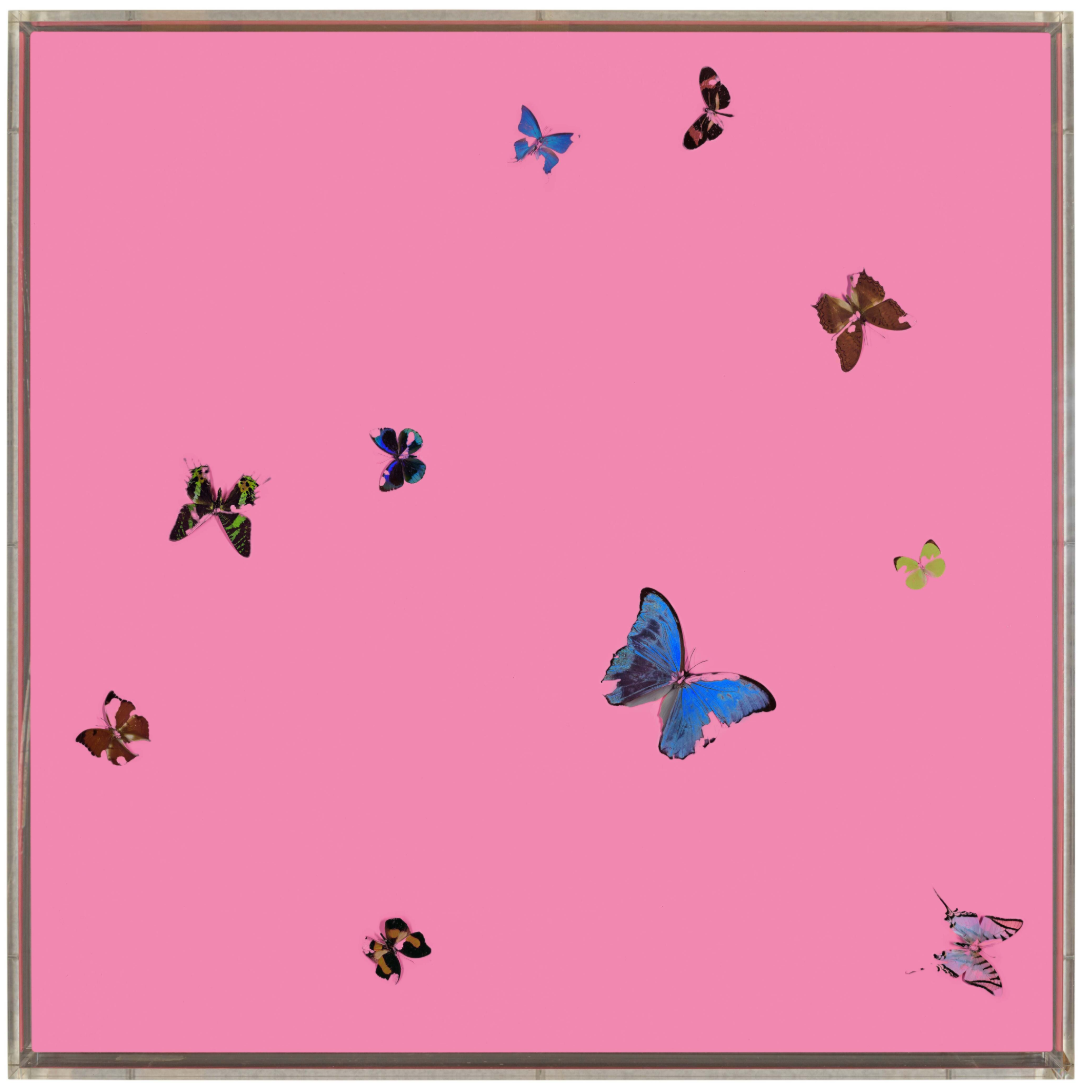
DAMIEN HIRST (b. 1960)
Butcher’s Love, 2008
Butterflies and household gloss on canvas
36×36 inches (91.4 x 91.4 cm)
Signed twice, titled, dated 2008 and dedicated for Martin (on the reverse)
#5. Damned If You Don’t, Damned If You Do, 2005
Phillips New-York: 14 May 2025
Estimated: USD 300,000 – 400,000
USD 304,800
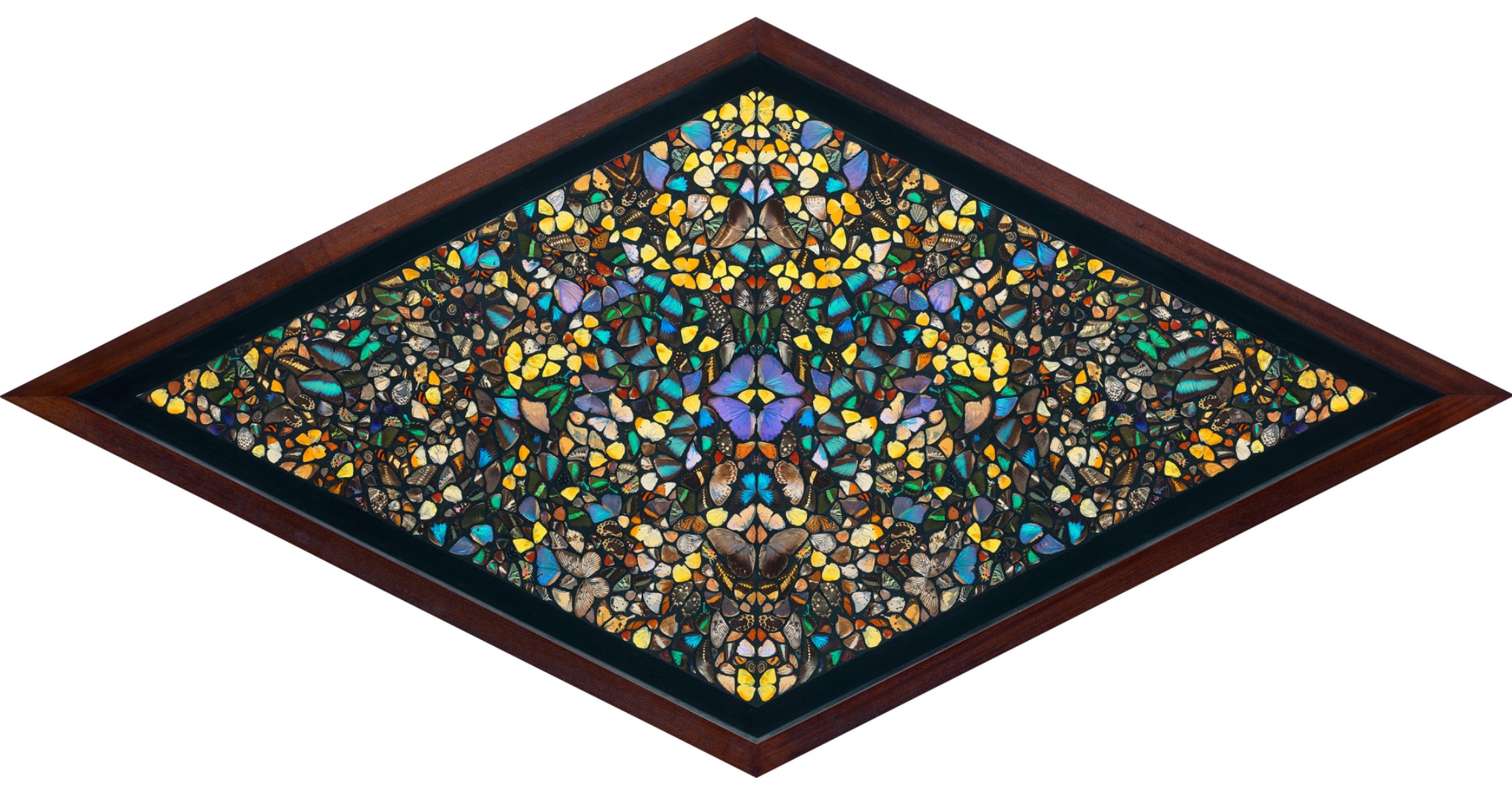
Damien Hirst Modern & Contemporary Art Day Sale, Afternoon Session
#6. Psalm 45: Eructavit cor meum, 2008
Christie’s London: 6 March 2025
Estimated: GBP 70,000 – 100,000
GBP 81,900 / USD 104,832
DAMIEN HIRST (B. 1965), Psalm 45: Eructavit cor meum | Christie’s
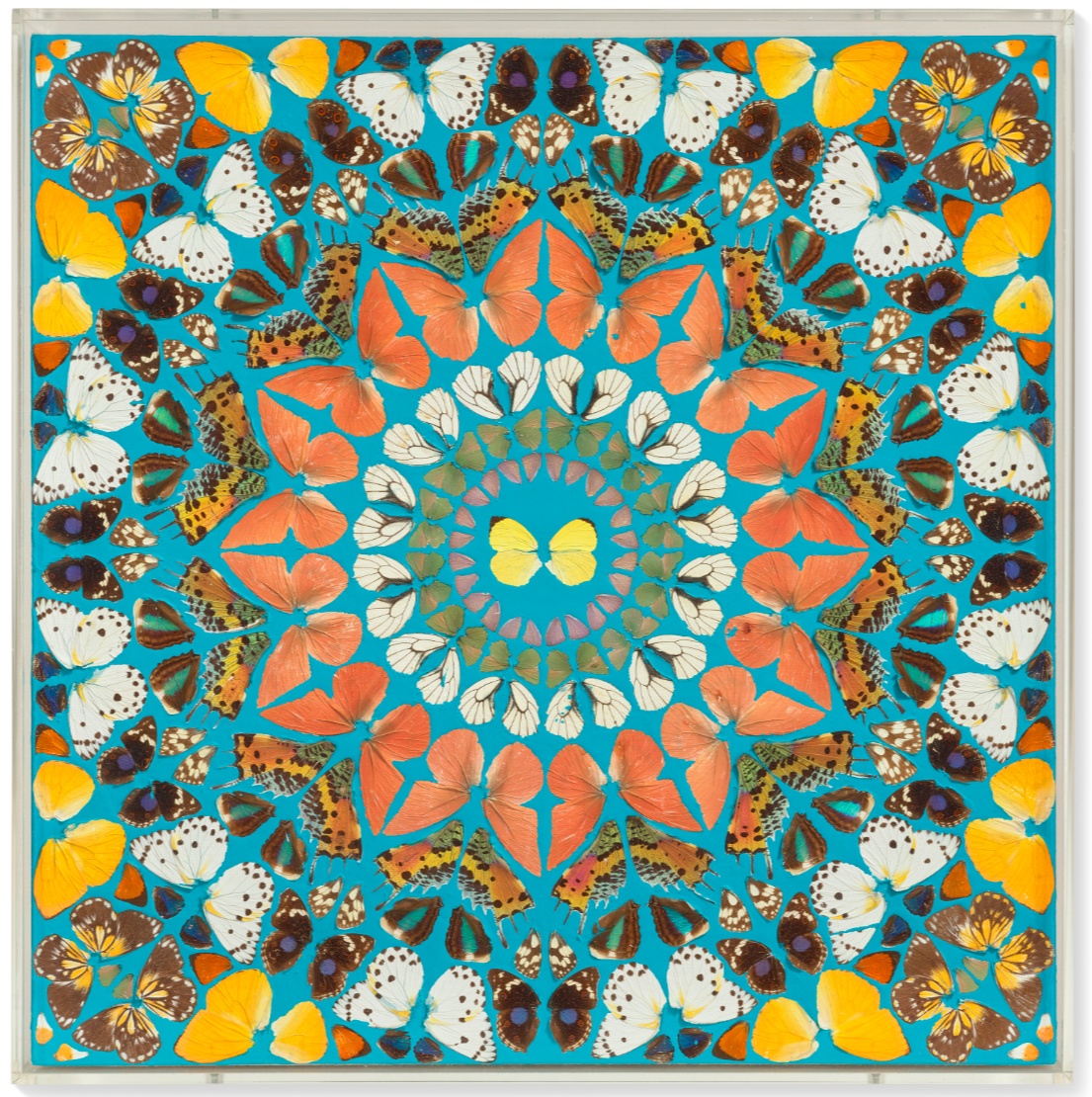
DAMIEN HIRST (B. 1965)
Psalm 45: Eructavit cor meum, 2008
Butterflies and household gloss on canvas
18 1/8 x 18 1/8 inches (46×46 cm)
Signed, inscribed and dated ’45th Psalm Damien Hirst 2008′ (on the reverse)
Lots Passed
Happy, Happy, Harvest, 2006
Christie’s Hong-Kong: 28 November 2025
Estimated: HKD 1,500,000 – 3,000,000
PASSED
DAMIEN HIRST (B. 1965), Happy, Happy, Harvest | Christie’s
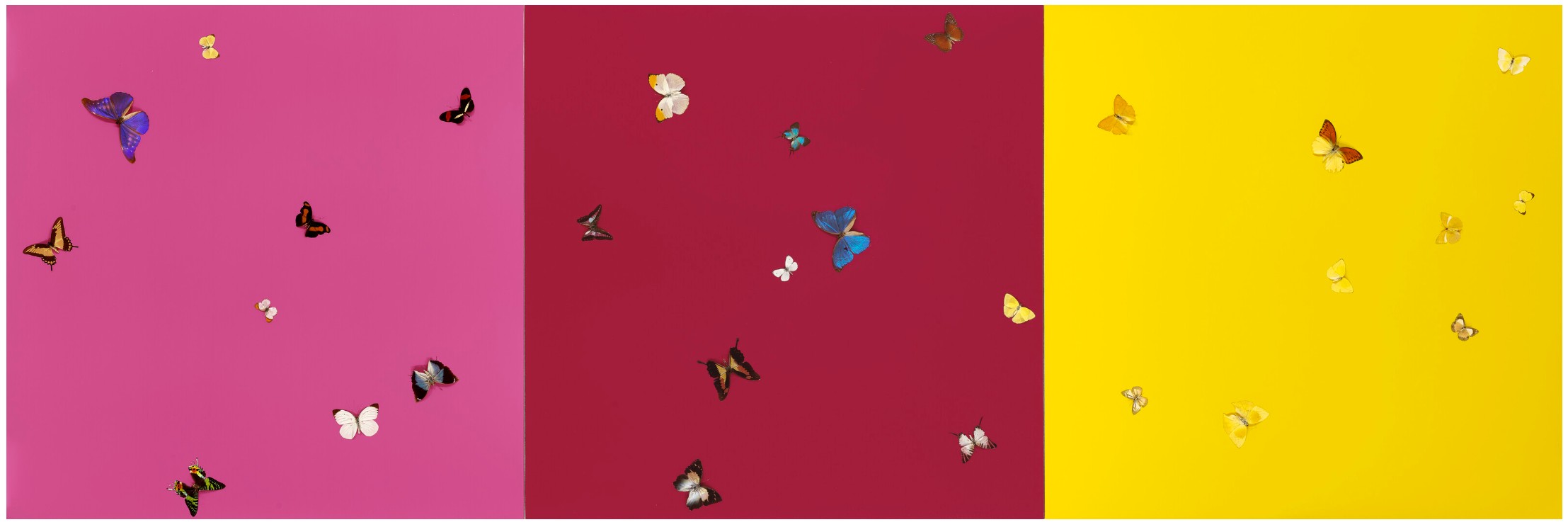
DAMIEN HIRST (B. 1965)
Happy, Happy, Harvest, 2006
Butterflies and household gloss on canvas (triptych)
Each: 36×36 inches (91.4 x 91.4 cm) (3)
Overall: 36×108 inches (91.4 x 274.2 cm)
Each signed, titled, inscribed and dated
‘Damien Hirst Happy, Happy, Harvest triptych 2006’
Numbered respectively
(on the reverse)
Rapture, 2003
Sotheby’s New-York: 19 November 2025
Estimated: USD 600,000 – 800,000
PASSED
Rapture | Contemporary Day Auction | 2025 | Sotheby’s
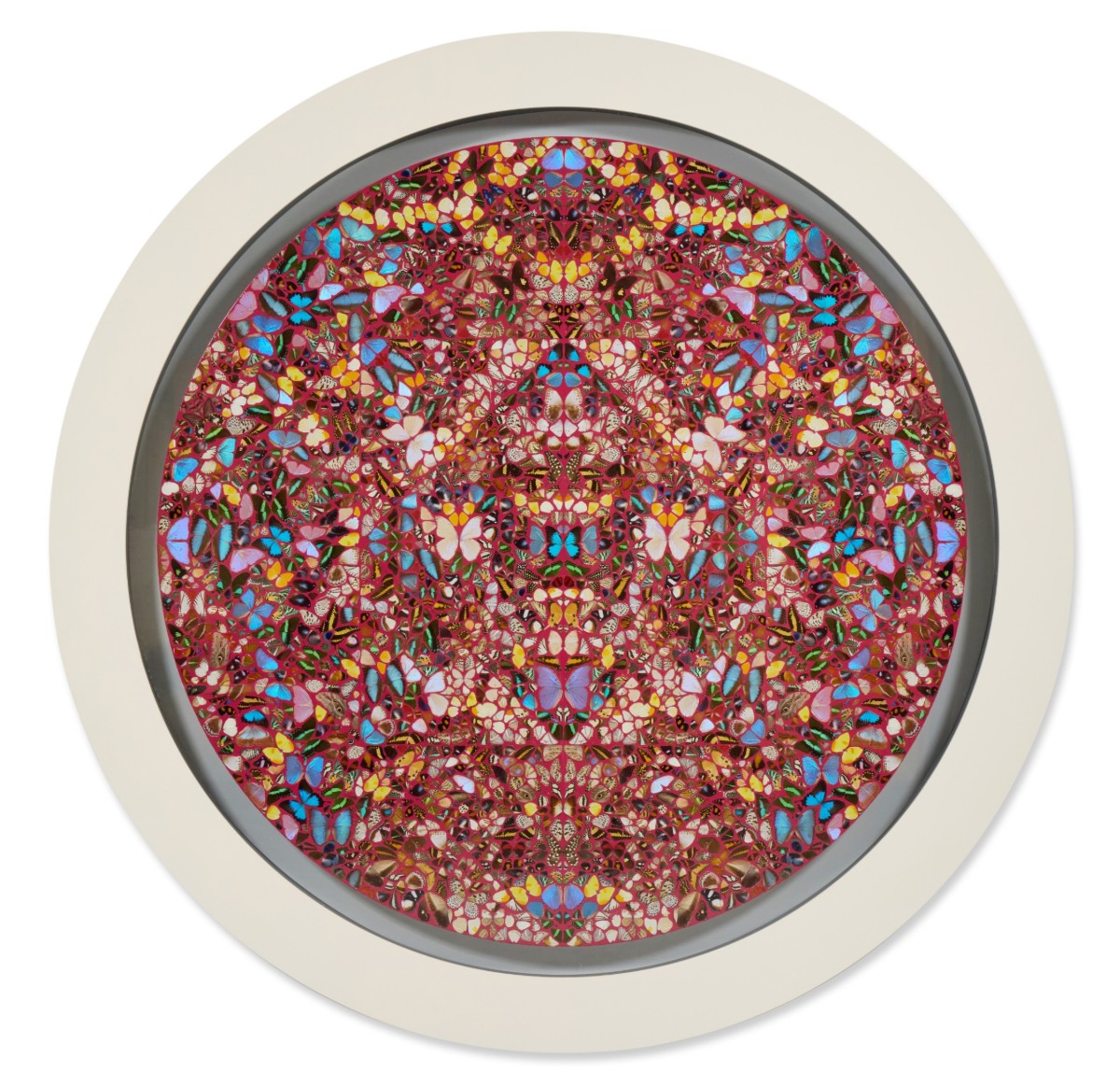
DAMIEN HIRST (b. 1965)
Rapture, 2003
Butterfly wings on household gloss on canvas in artist’s frame
Diameter: 105 3/4 inches (268.6 cm)
Full of Love, 1998
Christie’s New-York: 20 November 2025
Estimated: USD 250,000 – 350,000
PASSED
DAMIEN HIRST (B. 1965), Full of Love | Christie’s
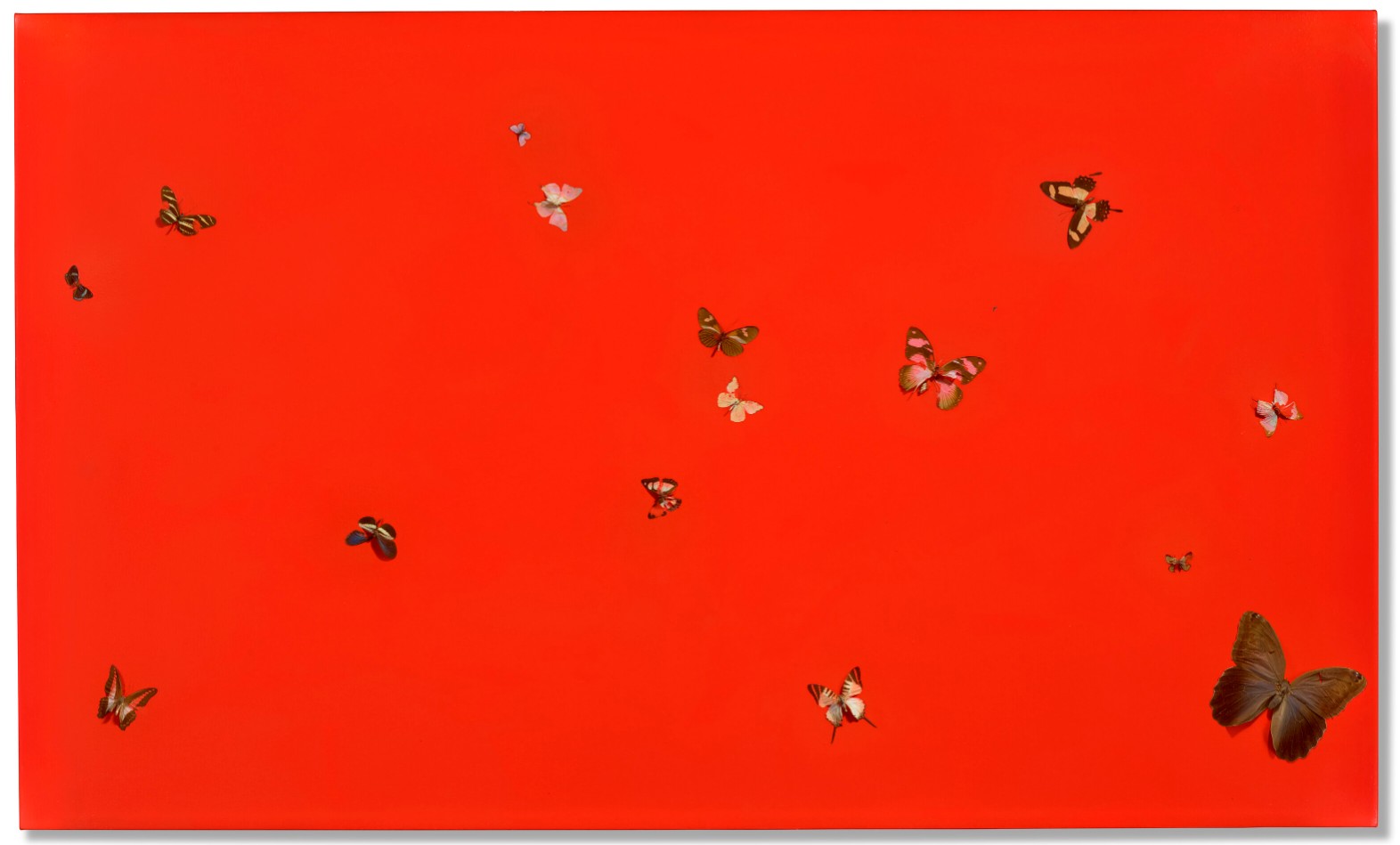
DAMIEN HIRST (B. 1965)
Full of Love, 1998
Butterflies and household gloss on canvas
36×60 inches (91.4 x 152.4 cm)
Signed, titled and dated twice ‘Full of Love. 98. Damien Hirst 98.’ (on the overlap)
Signed again ‘D Hirst’ (on the stretcher)
Sexy Love, 2007
Phillips London: 17 July 2025
Estimated: GBP 180,000 – 250,000
PASSED
Damien Hirst Hoarder VI: The Migration
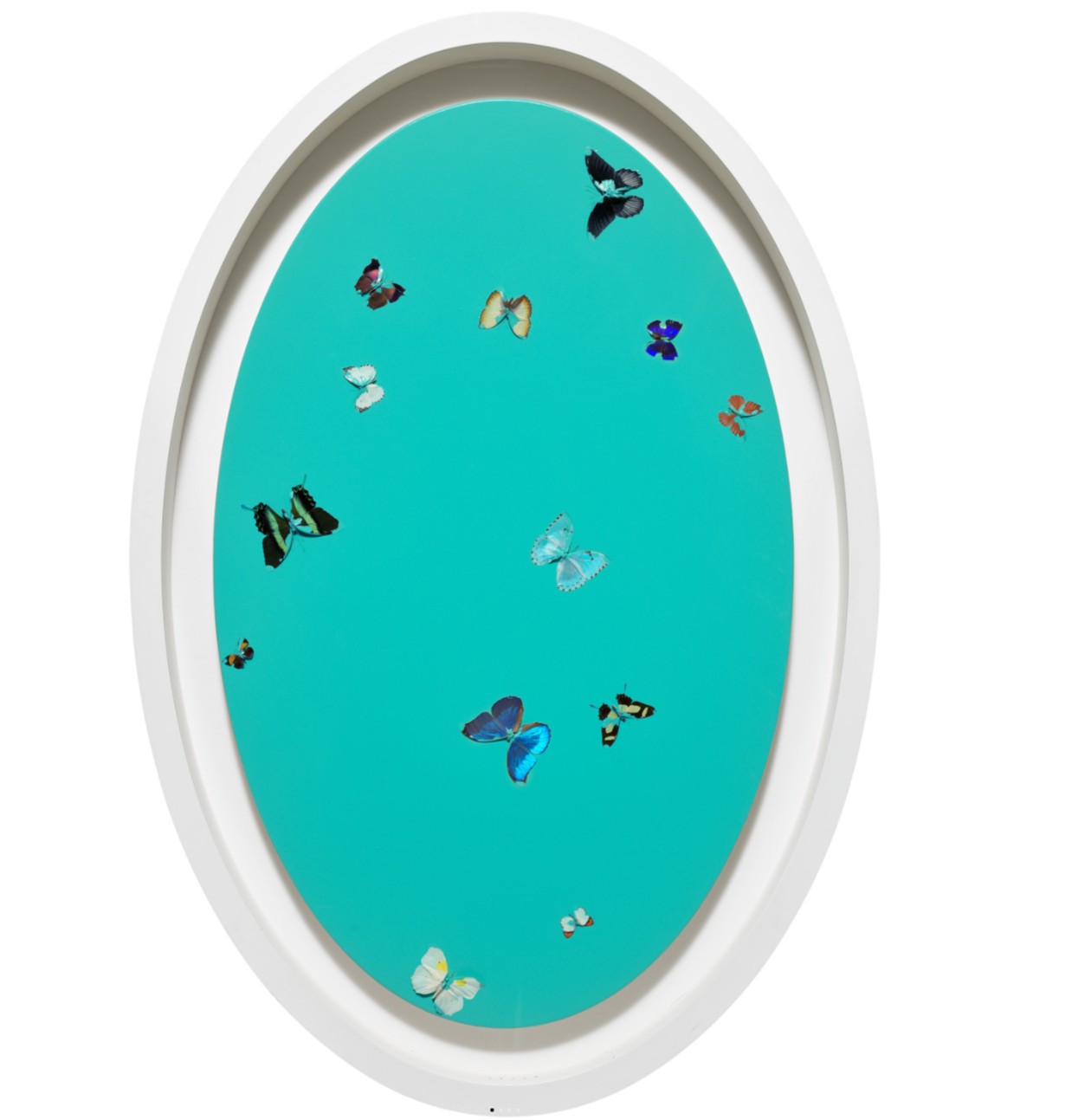
Butterflies and household gloss on canvas
Signed “D Hirst” on the stretcher
Invocation, 2006
Phillips London: 26 June 2025
Estimated: GBP 400,000 – 600,000
PASSED
Damien Hirst Modern & Contemporary Art: Evening & Day Sale
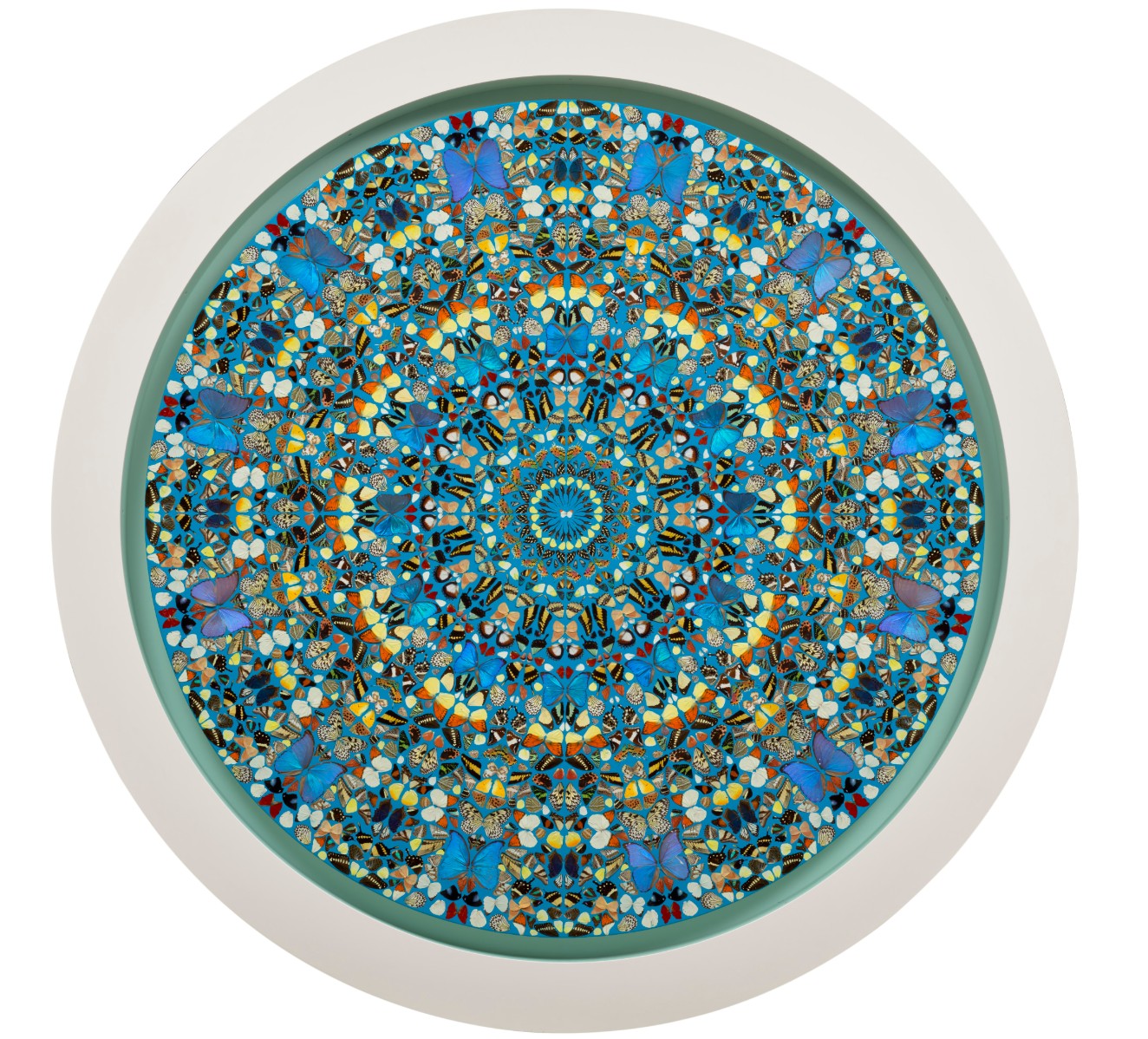
Invocation, 2006
Butterflies and household gloss on canvas
Signed, titled and dated ‘”Invocation” 2006 Damien Hirst’ on the reverse
Ascent, 2018
Phillips London: 6 March 2025
Estimated: GBP 500,000 – 700,000
PASSED
Damien Hirst – Modern & Contemporary A… Lot 26 March 2025 | Phillips
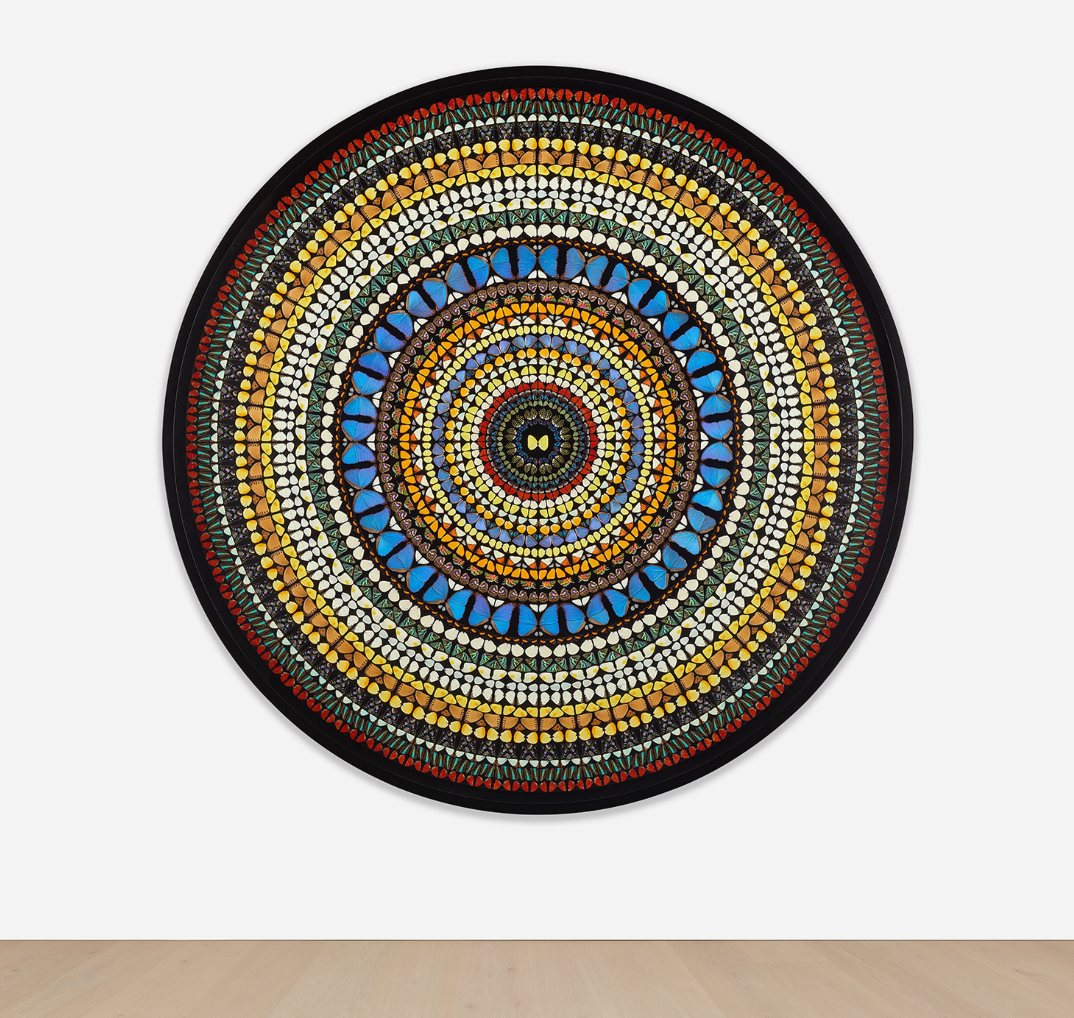
DAMIEN HIRST
Ascent, 2018
Butterflies and household gloss on canvas
Diameter: 83 7/8 inches (213 cm)
Signed, titled, inscribed and dated
‘Onward and Upward Baby Fuck ’em All! ‘Ascent’ D Hirst Damien Hirst 2018′
Stamped twice with the artist’s stamp on the reverse
Faithless, 2005
Sotheby’s New-York: 8 February 2025
Estimated: USD 400,000 – 600,000
PASSED
Faithless | Origins | 2025 | Sotheby’s
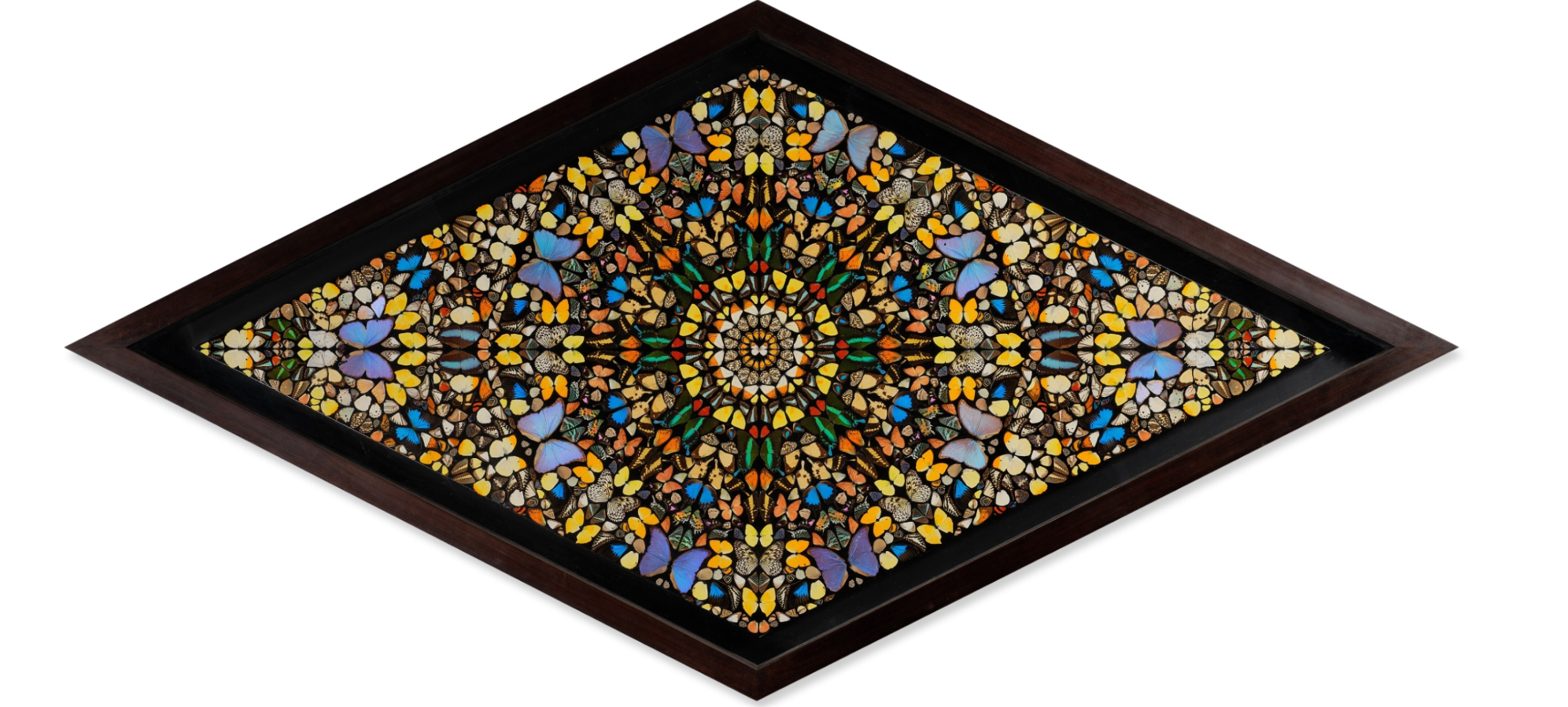
DAMIEN HIRST (b. 1965)
Faithless, 2005
Butterflies and household gloss on canvas in artist’s chosen frame
48 x 95 7/8 inches (121.9 x 243.8 cm)
Signed Damien Hirst twice, titled and dated 2005 (on the reverse)
Lots Withdrawn
The Tree of Life, 2007
Phillips London: 16 October 2025
Estimated: GBP 400,000 – 600,000
WITHDRAWN
Damien Hirst Modern & Contemporary Art Evening Sale
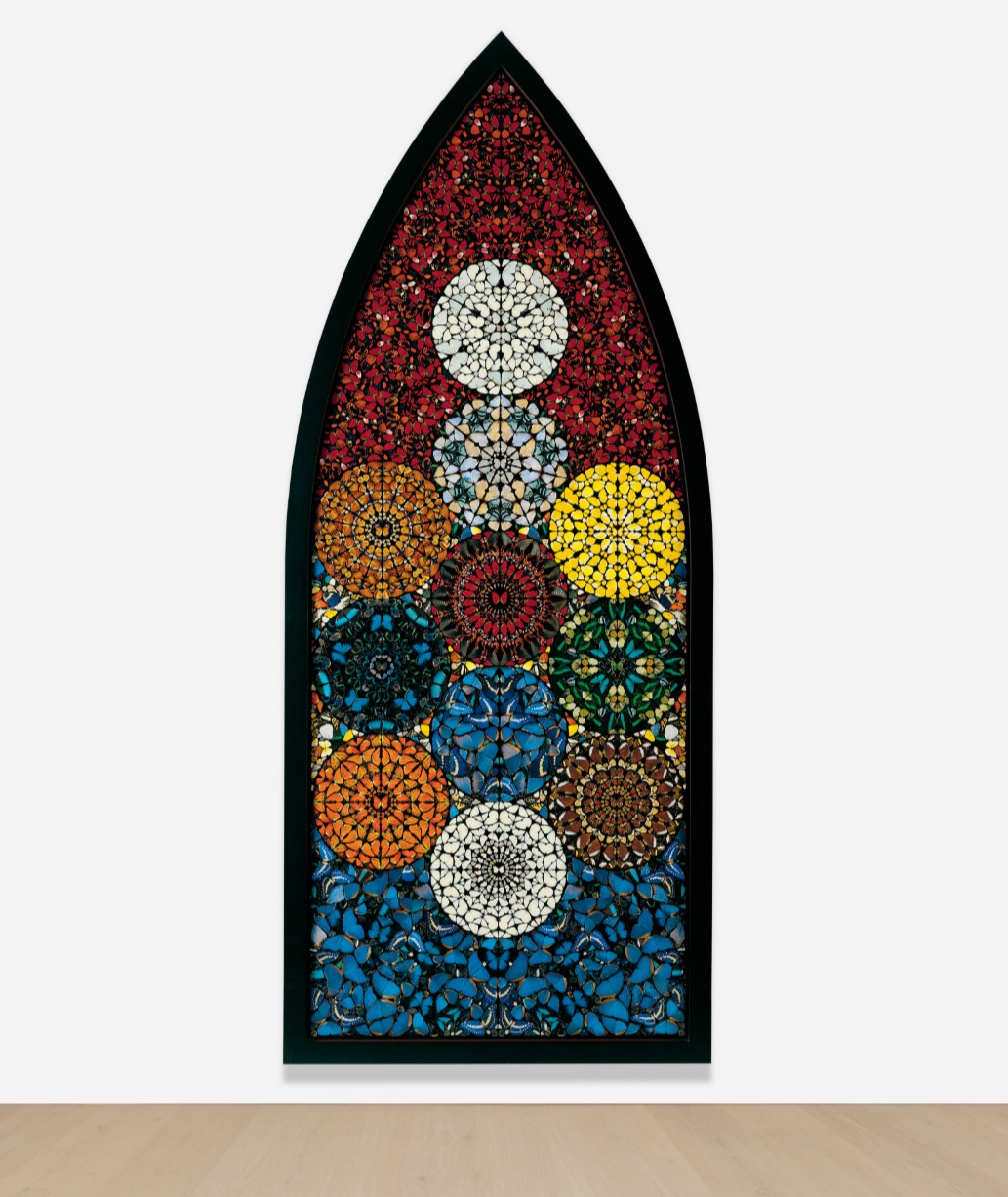
The Tree of Life, 2007
Butterflies and household gloss on canvas
Tulips – And I am Aware of my Heart It Opens and Closes, 2006
Estimated: HKD 2,000,000 – 3,000,000
WITHDRAWN
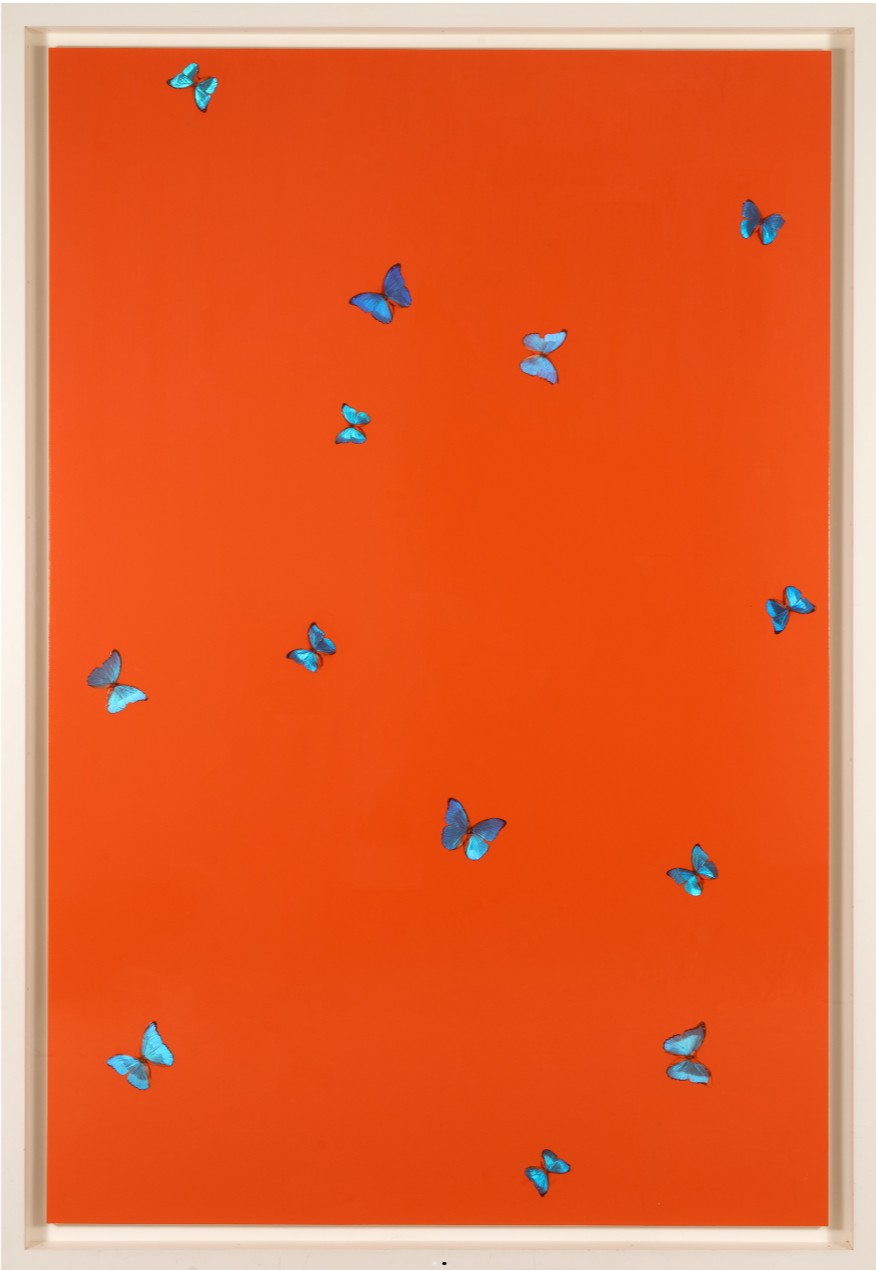
2024 Auction Results
#1. Assumption, 2012
Christie’s London: 9 October 2024
Estimated: GBP 450,000 – 650,000
GBP 945,000 / USD 1,237,950
DAMIEN HIRST (B. 1965), Assumption | Christie’s
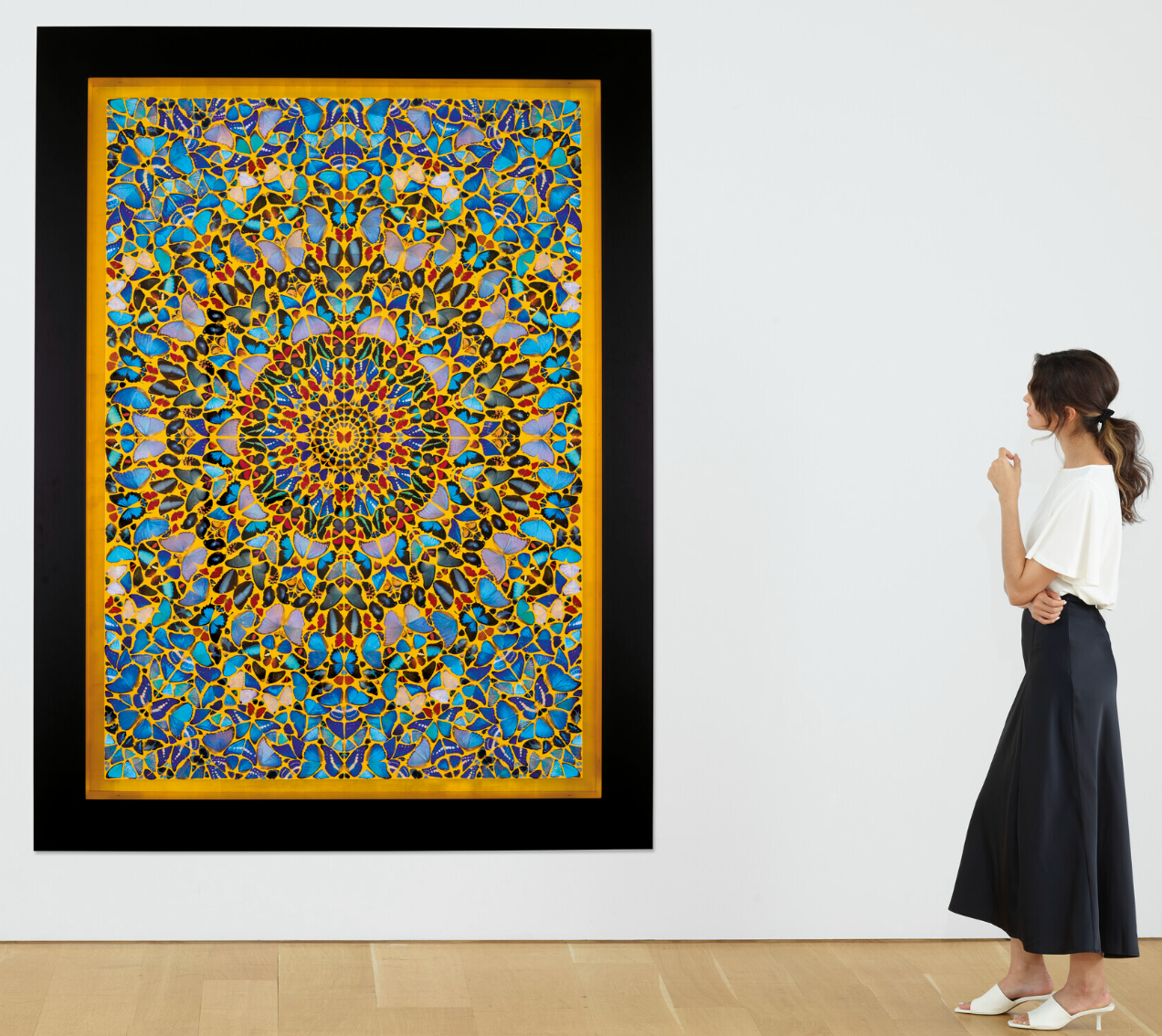
DAMIEN HIRST (B. 1965)
Assumption, 2012
Butterflies and household gloss on canvas in artist’s frame
94 1/2 x 71 inches (240 x 180.3 cm)
Signed ‘Damien Hirst’ (on the stretcher)
Signed, titled, stamped with the artist’s monogram and dated ‘Damien Hirst 2012 Assumption’ (on the reverse)
#2. Creed, 2006
Phillips London: 27 June 2024
Estimated: GBP 500,000 – 700,000
GBP 685,800 / USD 869,594
https://www.phillips.com/detail/damien-hirst/UK010424/18
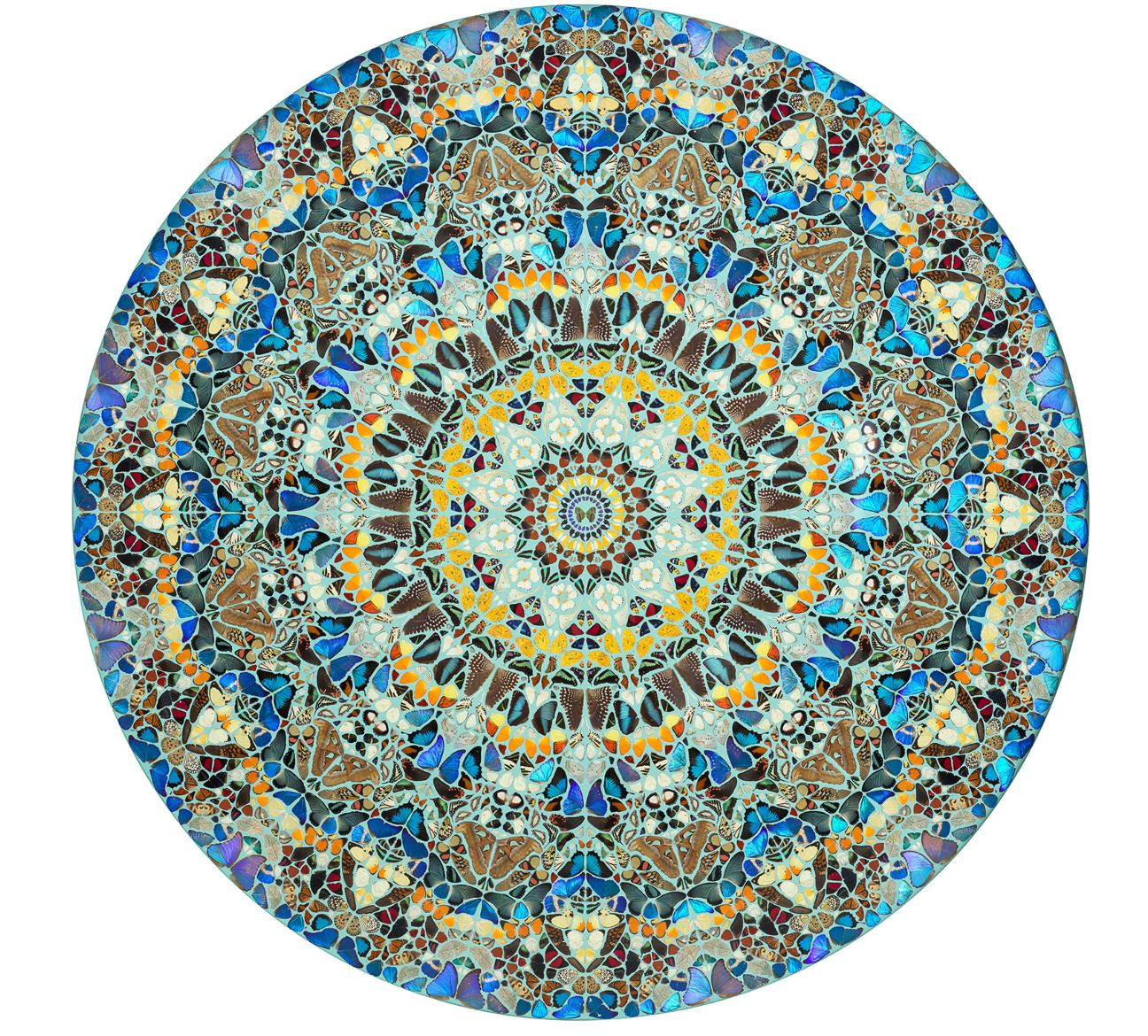
DAMIEN HIRST
Creed, 2006
Butterflies and household gloss on canvas
Diameter: 96 inches (243.8 cm)
Stamped with the artist’s stamp, titled and dated ”Creed’ 2006 HIRST’ on the reverse
#3. Lovely and Kind, 2001
Ravenel Taipei: 1 December 2024
Estimated: TWD 12,000,000 – 22,000,000
TWD 21,600,000 / USD 665,230
Ravenel | Damien HIRST《Lovely and Kind》 Ravenel Autumn Auction 2024 Taipei Lot 062
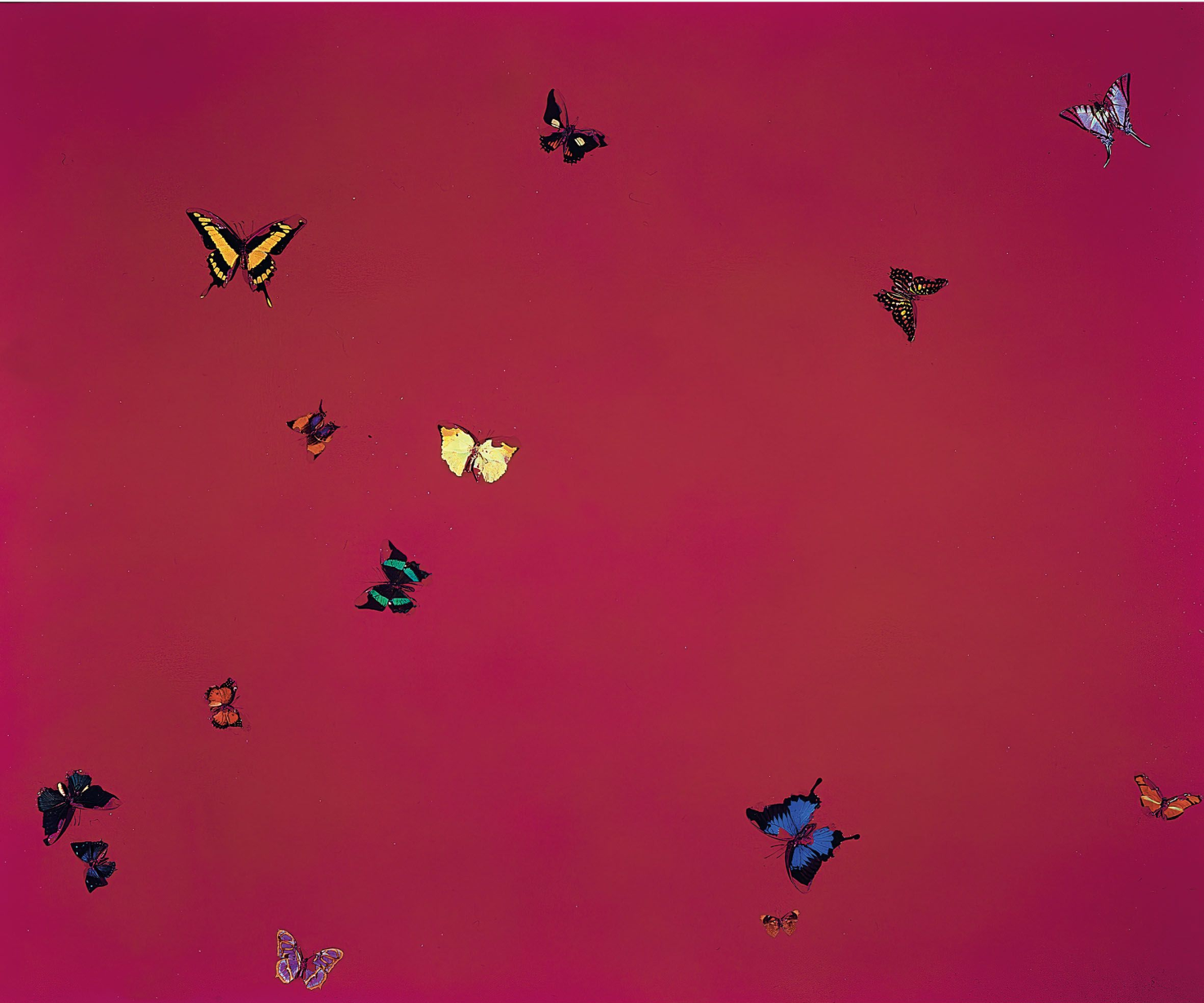
DAMIEN HIRST (British, 1965)
Lovely and Kind, 2001
Household gloss on canvas with butterflies
42 5/8 x 51 3/8 inches (108.2 x 130.3 cm)
Signed reverse Damien Hirst, titled Lovely and Kind and dated 2001
#4. Omnipotence, 2008
Phillips London: 10 October 2024
Estimated: GBP 350,000 – 450,000
GBP 444,500 / USD 582,595
Damien Hirst – Modern & Contemporary… Lot 33 October 2024 | Phillips
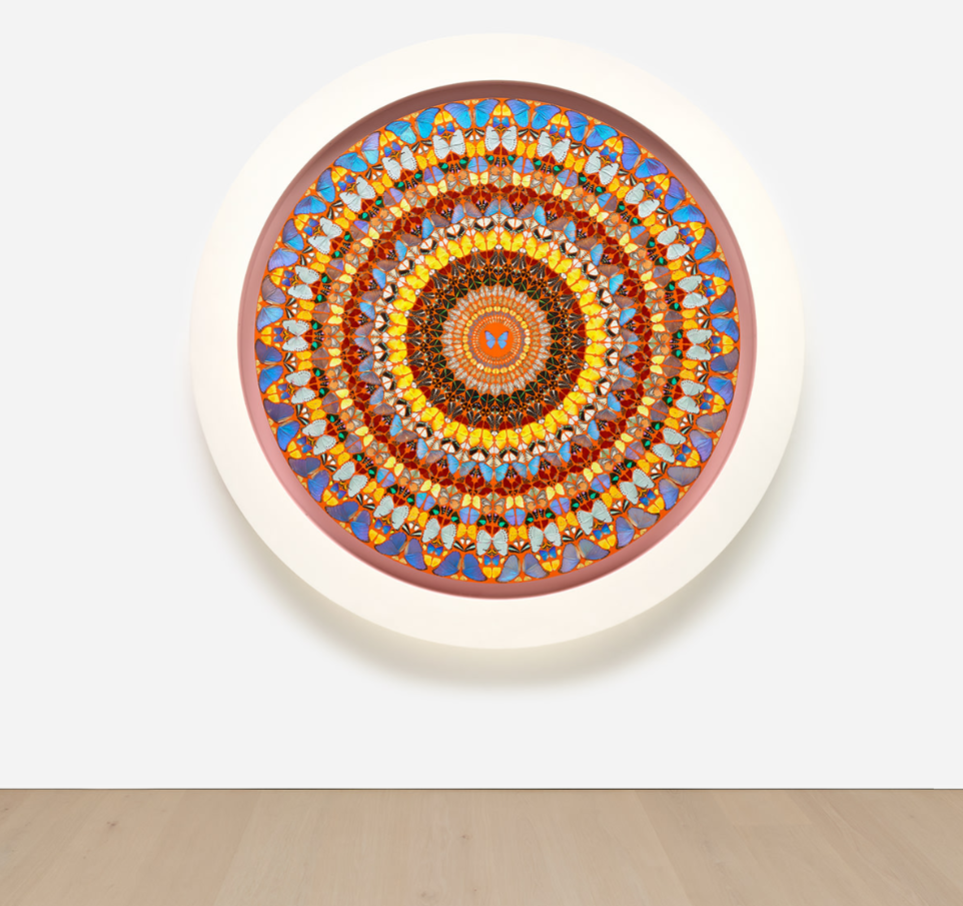
DAMIEN HIRST
Omnipotence, 2008
Butterflies and household gloss on canvas
Diameter: 60 inches (152.4 cm)
Signed, stamped with the artist’s stamp, titled and dated ‘“Omnipotence” Damien Hirst 2008’ on the reverse
Signed and stamped with the artist’s stamp ‘D. Hirst’ on the stretcher
#5. Visionary, 2008
Sotheby’s New-York: 14 May 2024
Estimated: USD 400,000 – 600,000
USD 571,500
Visionary | Contemporary Day Auction | 2024 | Sotheby’s (sothebys.com)

DAMIEN HIRST (b. 1965)
Visionary, 2008
Butterflies and household gloss on canvas, in artist’s chosen frame
Diameter: 60 inches (152.4 cm)
Titled and dated 2008 (on the reverse); signed (on the stretcher)
#6. Beautiful Architect, 2003
Sotheby’s Hong-Kong: 11 November 2024
Estimated: HKD 3,500,000 – 5,500,000
HKD 3,000,000 / USD 385,810
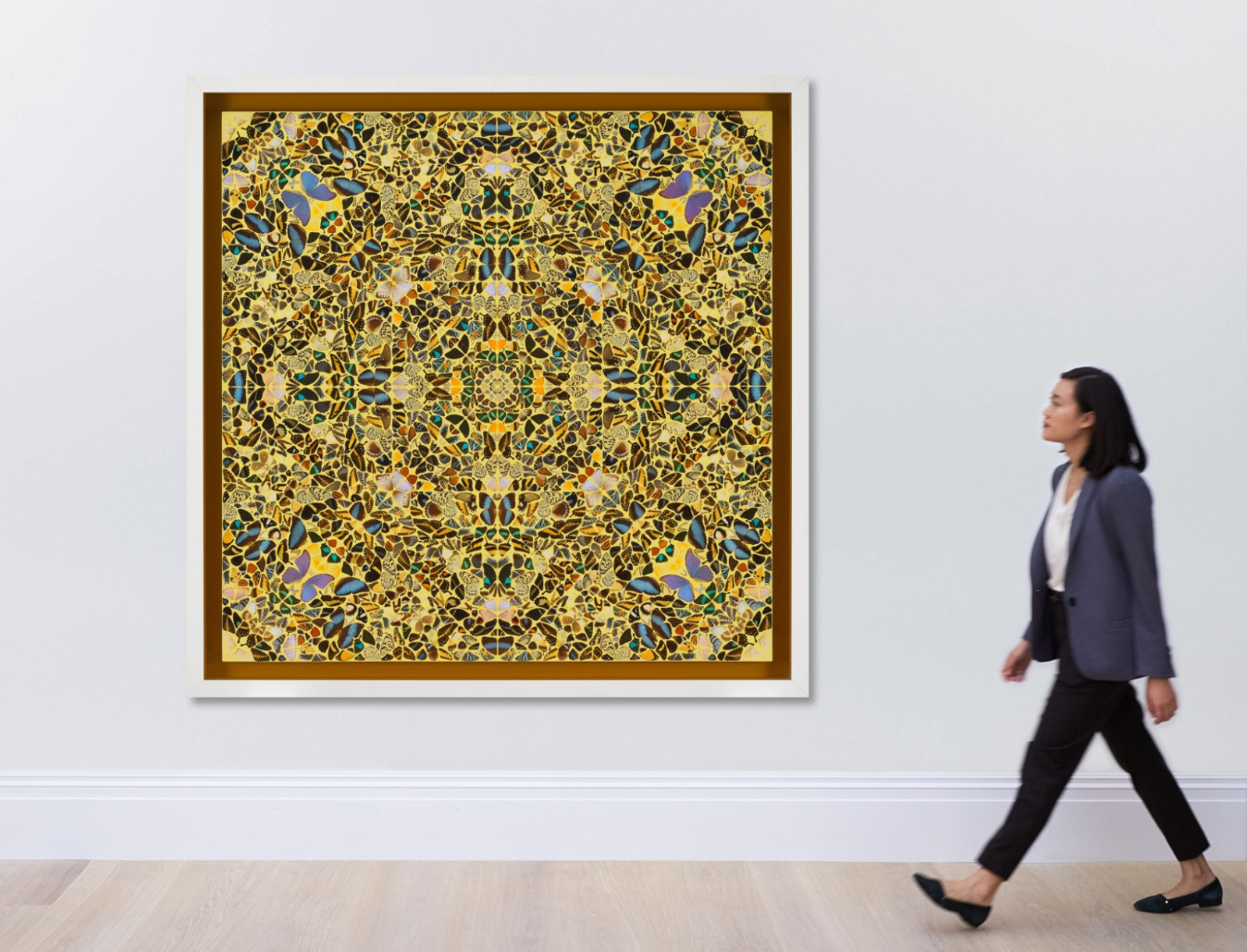
DAMIEN HIRST (b. 1965)
Beautiful Architect, 2003
Butterflies and household gloss on canvas
63×63 inches (160×160 cm)
#7. Untitled (Birthday Card), 1999
Phillips London: 11 October 2024
Estimated: GBP 250,000 – 350,000
GBP 254,000 / USD 332,740
Damien Hirst – Modern & Contemporar… Lot 151 October 2024 | Phillips
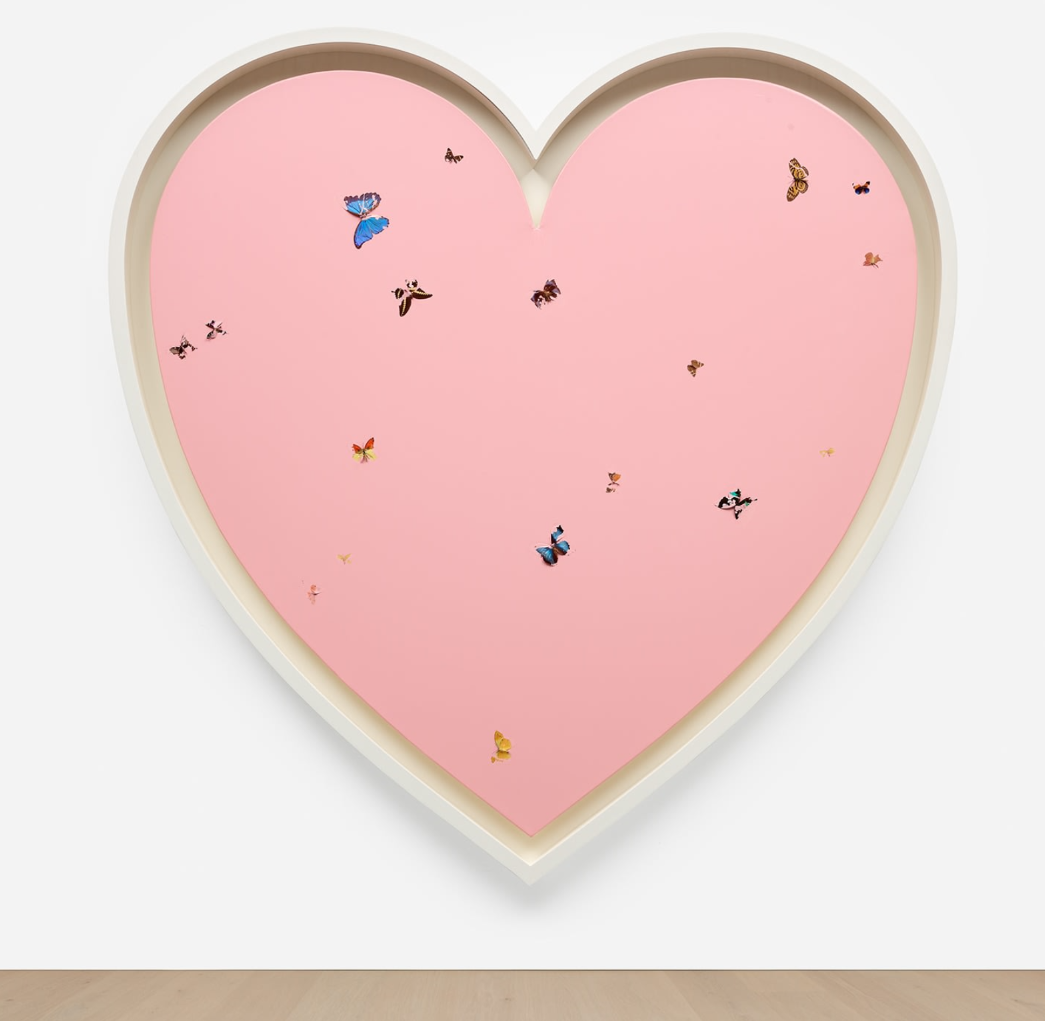
DAMIEN HIRST
Untitled (Birthday Card), 1999
Household gloss and butterflies on canvas
84 x 84 1/2 inches (213.5 x 214.5 cm)
Signed ‘D Hirst’ on the stretcher
Signed, titled and dated ”Untitled (Birthday Card)’ 1999 Damien Hirst’ on the reverse
#8. I Need You, 1998
Christie’s London: 7 March 2024
Estimated: GBP 220,000 – 280,000
GBP 252,000 / USD 319,536
DAMIEN HIRST (B. 1965), I Need You | Christie’s (christies.com)
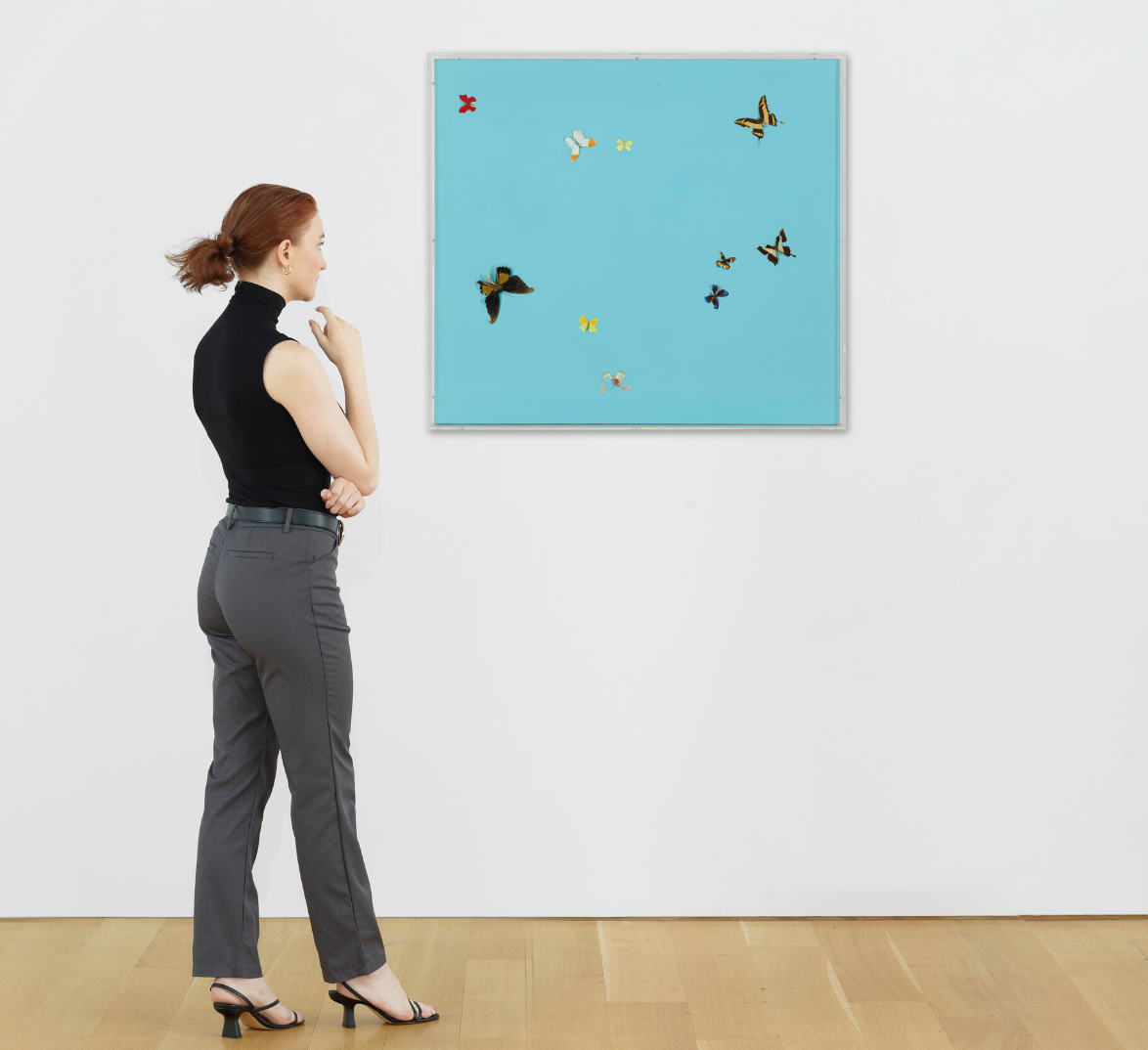
DAMIEN HIRST (B. 1965)
I Need You, 1998
Butterflies and household gloss on canvas
36×40 inches (91.4 x 101.6 cm)
Signed, titled and dated ‘I need you. 98. Damien Hirst’ (on the overlap)
Signed ‘D Hirst’ (on the stretcher)
#9. Midas Asteroid, 2007
Phillips London: 4 December 2024
Estimated: GBP 150,000 – 200,000
GBP 177,800 / USD 225,345
Damien Hirst – New Now: Modern & Co… Lot 14 December 2024 | Phillips
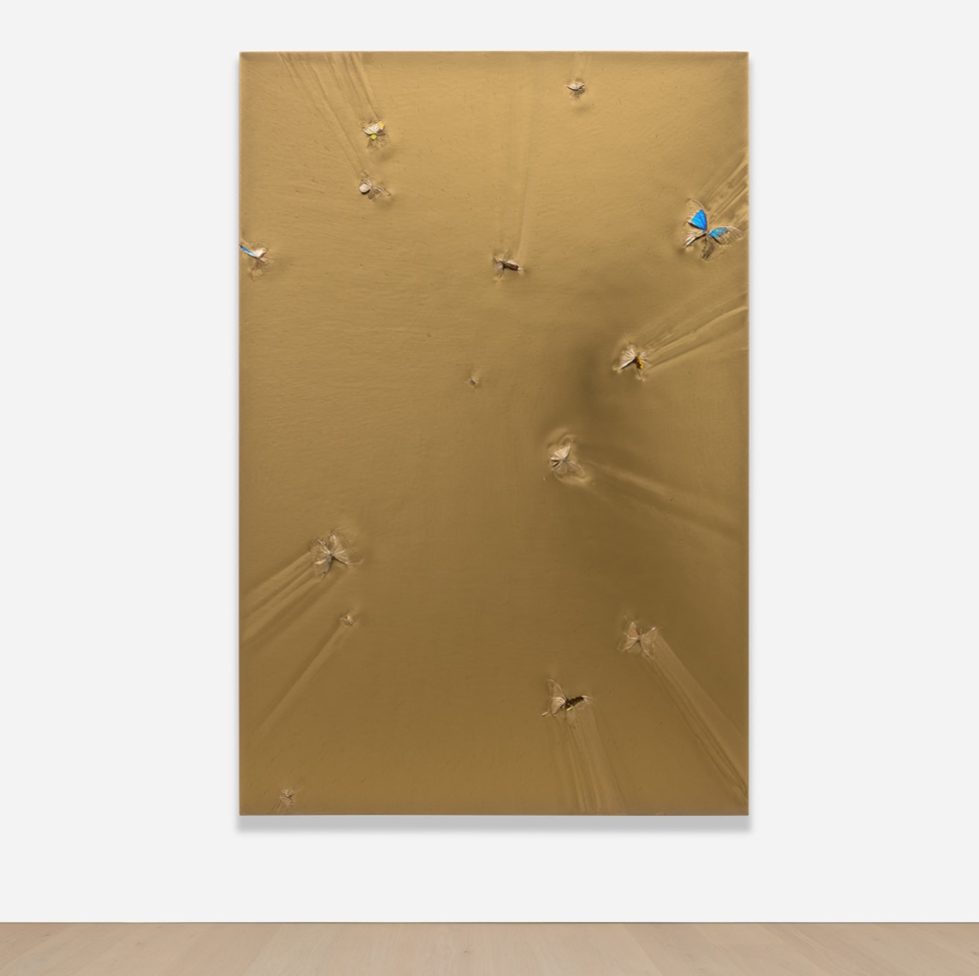
DAMIEN HIRST
Midas Asteroid, 2007
Butterflies and household gloss on canvas
72 x 47 7/8 inches (182.9 x 121.9 cm)
Signed, titled and dated ‘”Midas Asteroid” 2007 2007 Damien Hirst’ on the reverse; signed ‘DHirst’ on the stretcher
#10. Psalm 2: quare fremuerunt gentes?, 2008
Sotheby’s Milan: 12 April 2024
Estimated: EUR 80,000 – 120,000
EUR 114,300 / USD 122,570
Psalm 2: quare fremuerunt gentes? | Modern & Contemporary Art | 2024 | Sotheby’s (sothebys.com)
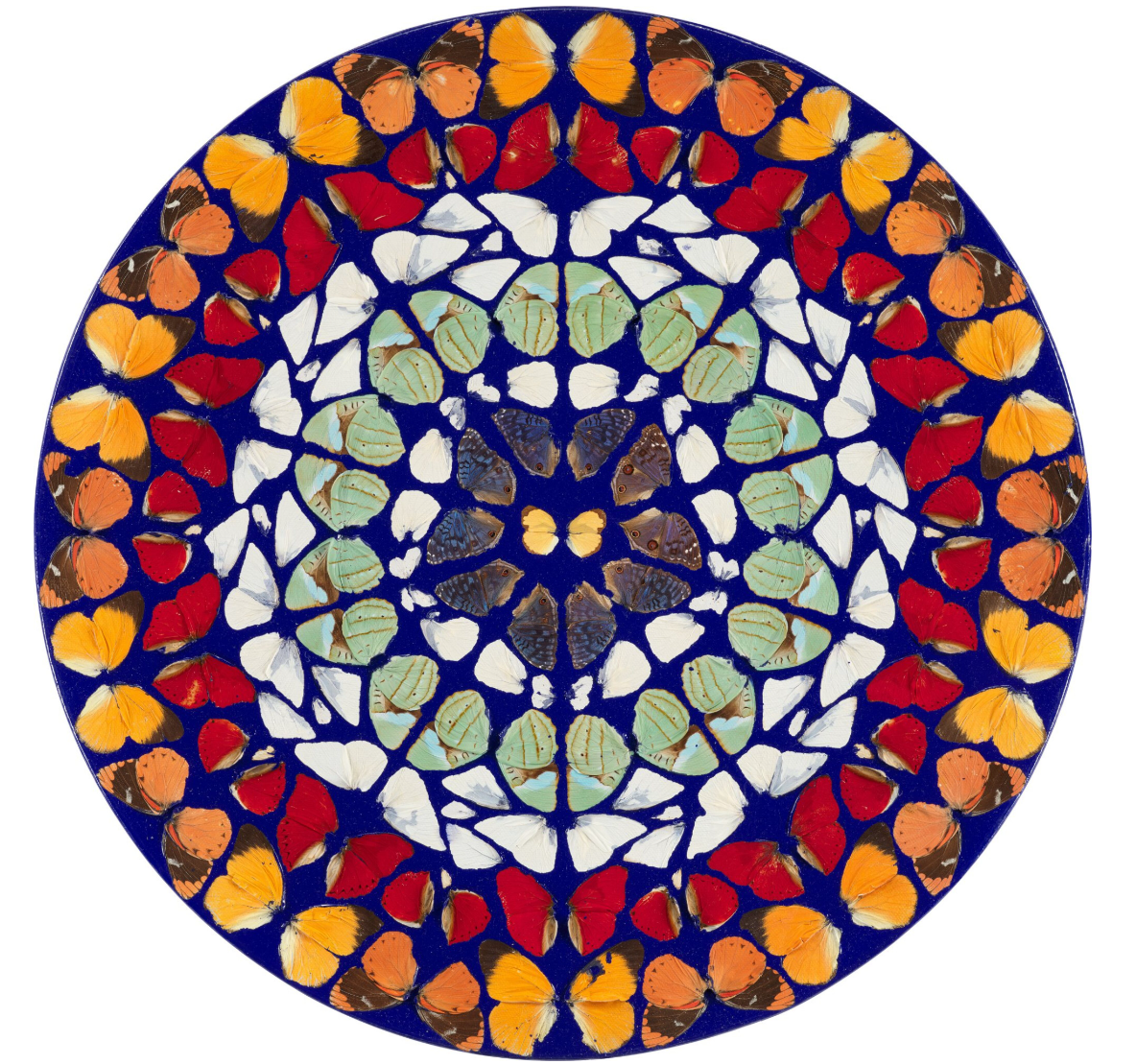
DAMIEN HIRST (b. 1965)
Psalm 2: quare fremuerunt gentes?, 2008
Butterflies and household gloss on canvas
Diameter: 18 inches (45.7 cm)
Signed, titled and dated 2008 on the reverse
#11. Psalm 6: Domine, ne in furore, 2008
Phillips London: 11 October 2024
Estimated: GBP 70,000 – 100,000
GBP 88,900 / USD 116,115
Damien Hirst – Modern & Contemporar… Lot 201 October 2024 | Phillips
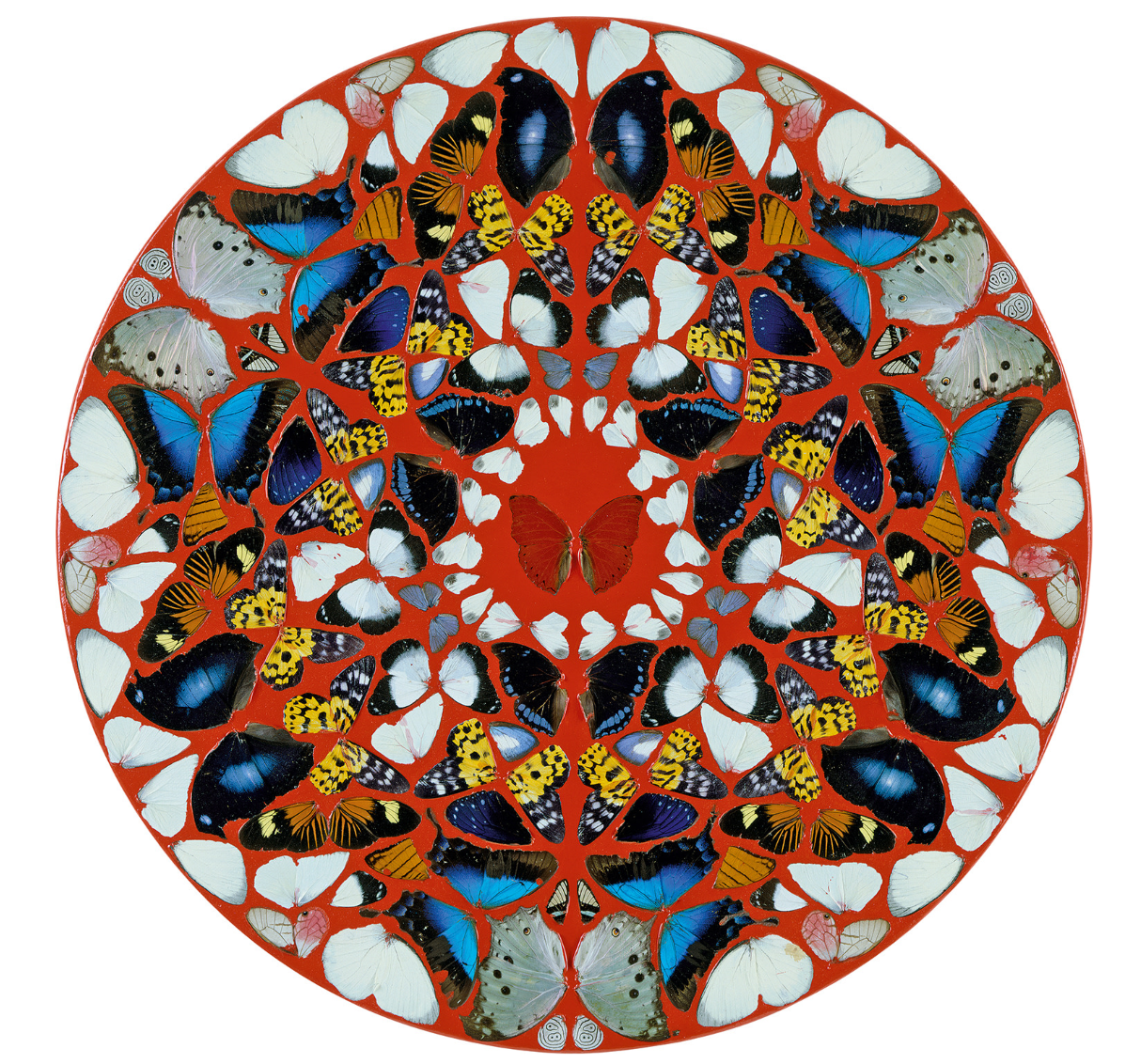
DAMIEN HIRST
Psalm 6: Domine, ne in furore, 2008
Butterflies and household gloss on canvas
17 7/8 x 17 7/8 inches (45.7 x 45.7 cm)
Signed, inscribed and dated ‘6th Psalm Damien Hirst 2008’ on the backboard
#12. Psalm 3: Domine, quid multiplicati?, 2008
Phillips London: 4 December 2024
Estimated: GBP 60,000 – 80,000
GBP 69,850 / USD 88,530
Damien Hirst – New Now: Modern & Co… Lot 17 December 2024 | Phillips
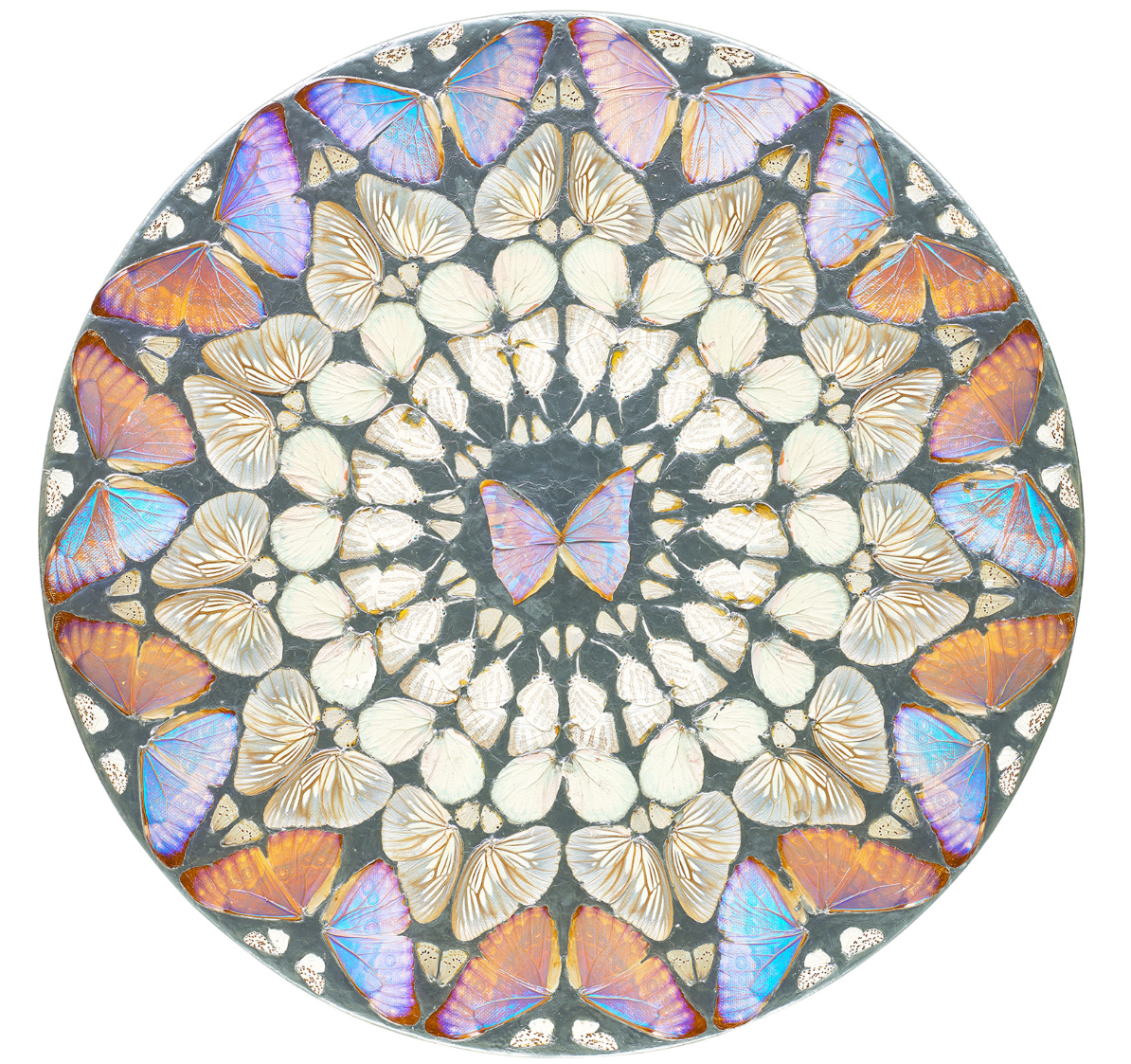
DAMIEN HIRST
Psalm 3: Domine, quid multiplicati?, 2008
Butterflies and enamel on canvas
Diameter: 17 7/8 inches (45.7 cm)
Signed, partially titled and dated ‘Psalm 3 Damien Hirst 2008 Hirst’ on the reverse
#13. A Tangy Orange Kiss, 2006
Christie’s London: 10 October 2024
Estimated: GBP 30,000 – 50,000
GBP 37,800 / USD 49,390
DAMIEN HIRST (B. 1965), A Tangy Orange Kiss | Christie’s
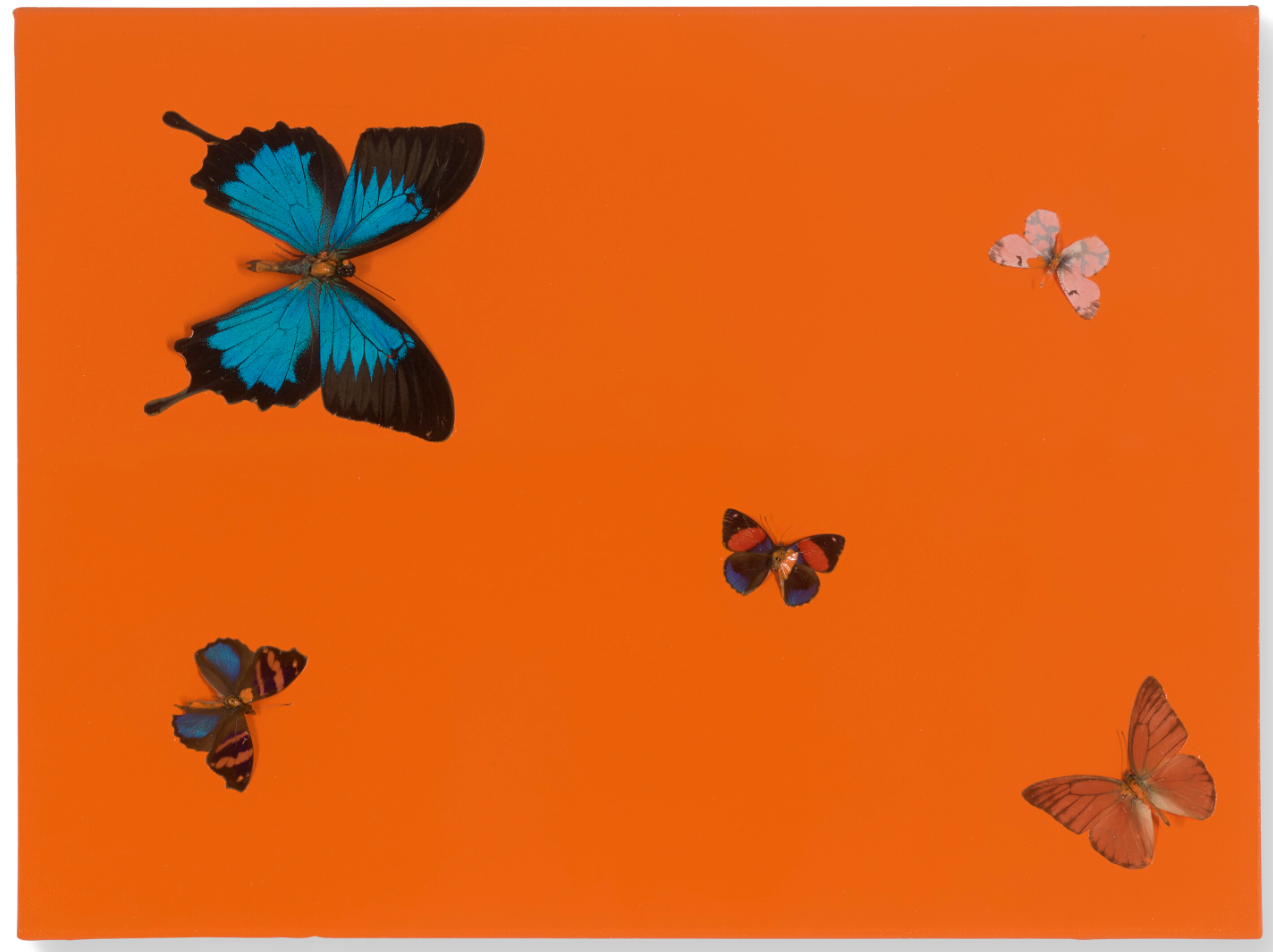
DAMIEN HIRST (B. 1965)
A Tangy Orange Kiss, 2006
Butterflies and household gloss on canvas
12×16 inches (30.5 x 40.6 cm)
Signed and dated ‘Damien Hirst 2006’ (on the overlap)
#14. A Playful Bubblegum Kiss, 2006
Christie’s Hong-Kong: 29 May 2024
Estimated: HKD 300,000 – 500,000
HKD 378,000 / USD 48,390
https://www.christies.com/en/lot/lot-6486339
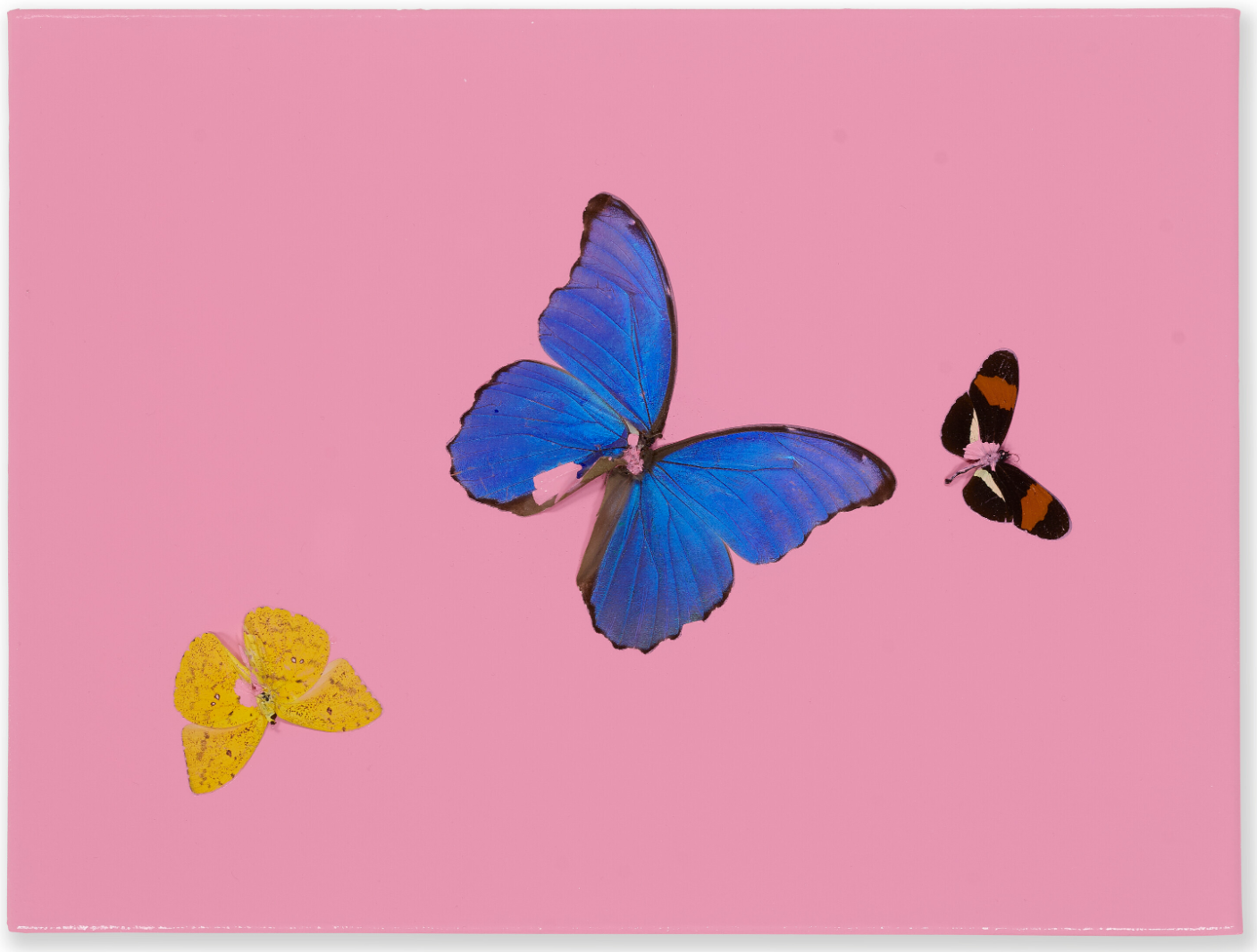
DAMIEN HIRST (B. 1965)
A Playful Bubblegum Kiss, 2006
Butterflies and household gloss on canvas
12×16 inches (30.5 x 40.6 cm)
Signed and dated ‘Damien Hirst 2006’ (on the overlap)
Lots Passed
A Bossa Nova Green Kiss, 2006
Christie’s London: 10 October 2024
Estimated: GBP 30,000 – 50,000
PASSED
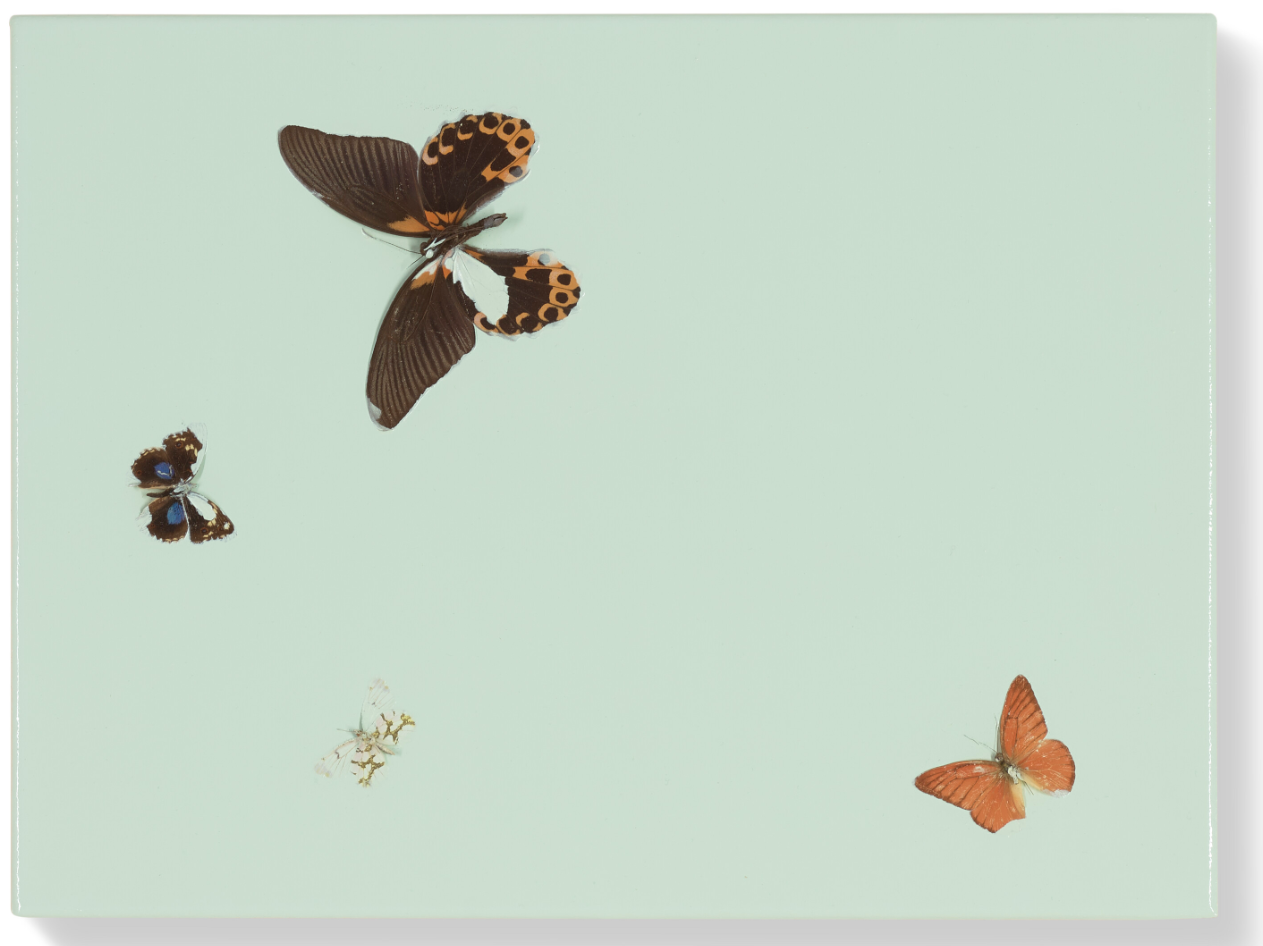
DAMIEN HIRST (B. 1965)
A Bossa Nova Green Kiss, 2006
Butterflies and household gloss on canvas
12 x 15 7/8 inches (30.5 x 40.4 cm)
Signed and dated ‘Damien Hirst 2006’ (on the overlap)
2023 Auction Results
#1. I am Become Death, Shatterer of Worlds, 2006
Christie’s London: 13 October 2023
Estimated: GBP 1,500,000 – 2,500,000
GBP 1,492,000 / USD 1,810,679
READ MORE IN FOCUS SECTION
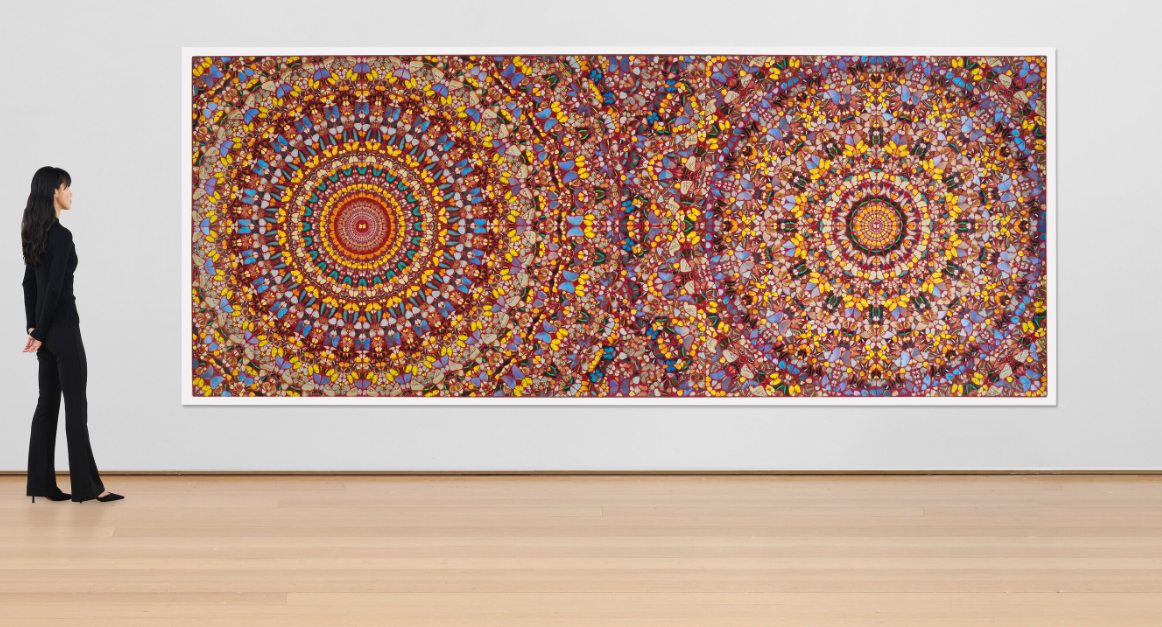
DAMIEN HIRST (B. 1965)
I am Become Death, Shatterer of Worlds, 2006
Butterflies and household gloss on canvas
84 1/8 x 210 inches (213.4 x 533.4 cm)
Signed three times, titled and dated
‘Damien Hirst “I am Become Death, Shatterer of Worlds” D Hirst D Hirst 2006’ (on the reverse)
#2. Covenant, 2007
Phillips New-York: 14 November 2023
Estimated: USD 700,000 – 1,000,000
USD 952,500
READ MORE IN FOCUS SECTION
Damien Hirst – 20th Century & Conte… Lot 48 November 2023 | Phillips
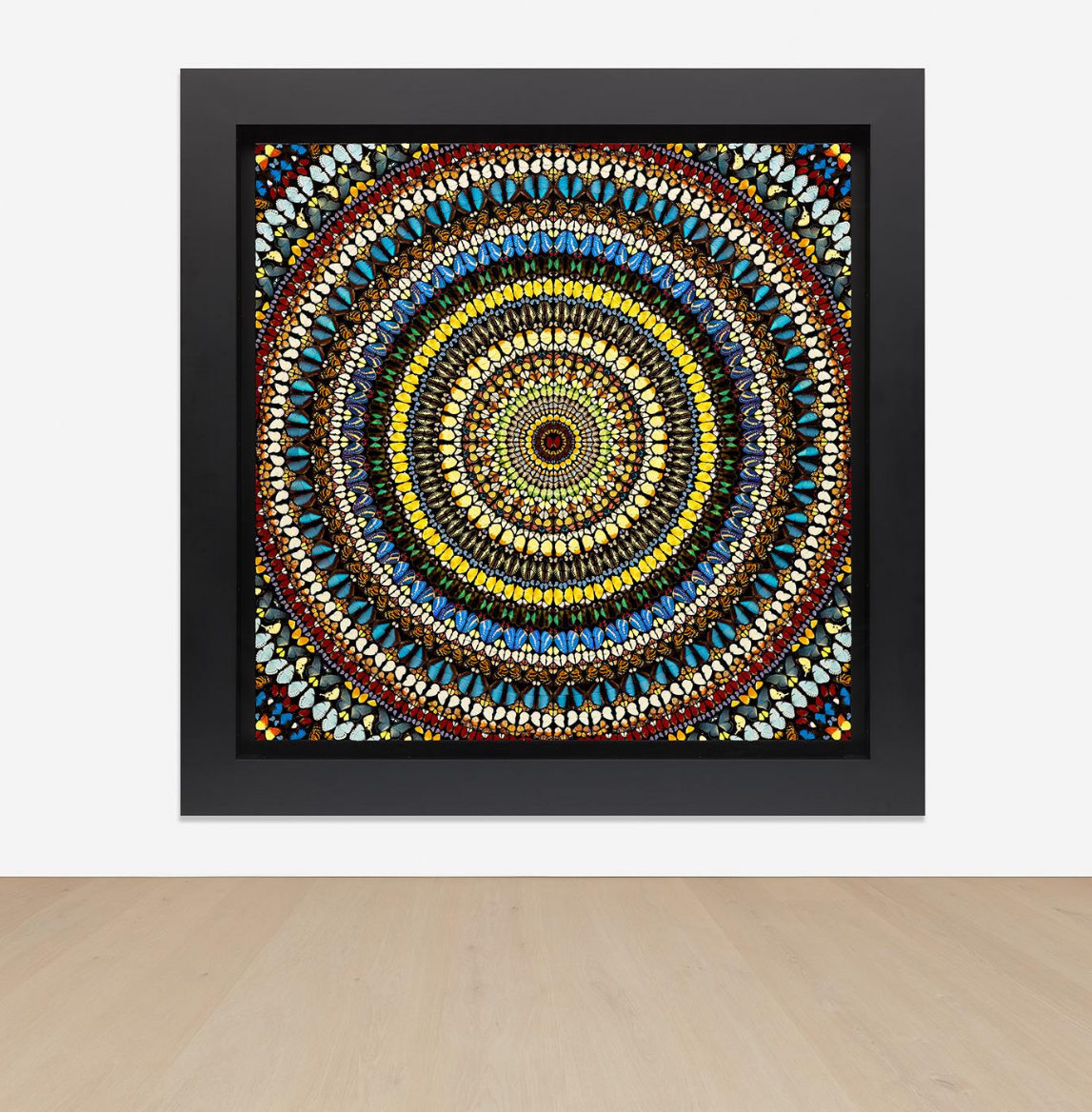
DAMIEN HIRST
Covenant, 2007
Butterflies and household gloss on canvas
84×84 inches (213.4 x 213.4 cm)
Signed, stamped with the artist’s stamp, titled and dated “‘Covenant’ 2007 Damien Hirst” on the reverse
#3. Reconciliation, 2018
Phillips New-York: 17 May 2023
Estimated: USD 700,000 – 1,000,000
USD 927,100
READ MORE IN FOCUS SECTION
Damien Hirst – 20th Century & Contempora… Lot 19 May 2023 | Phillips
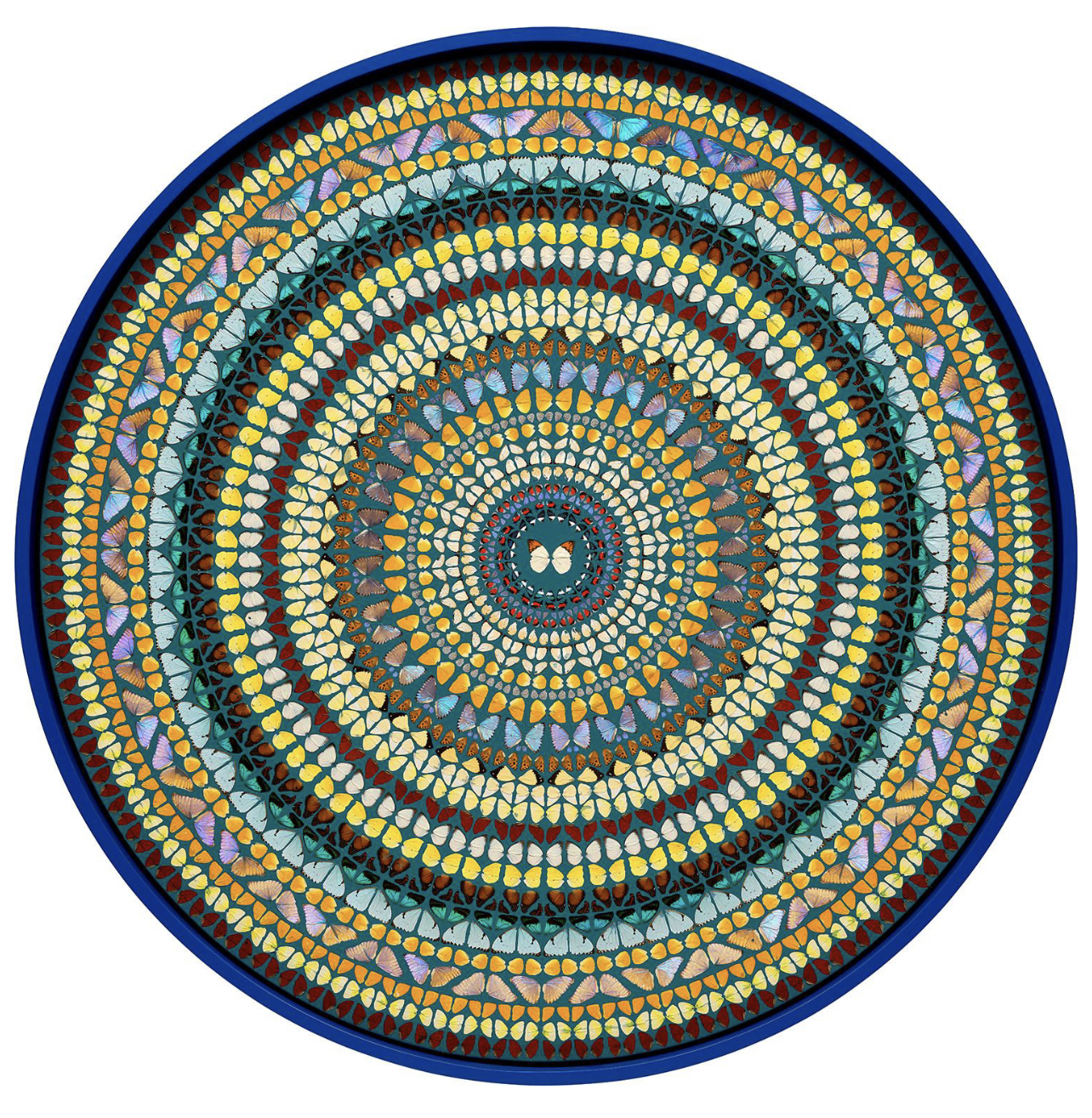
DAMIEN HIRST
Reconciliation, 2018
Butterflies and household gloss on canvas
Diameter: 72 inches (182.9 cm)
Signed, stamped with the artist’s stamp
Titled and dated “2018 Damien Hirst ‘Reconciliation'” on the reverse
#4. Ulysses, 2008
Christie’s London: 13 October 2023
Estimated: GBP 600,000 – 800,000
GBP 756,000 / USD 917,475
READ MORE IN FOCUS SECTION
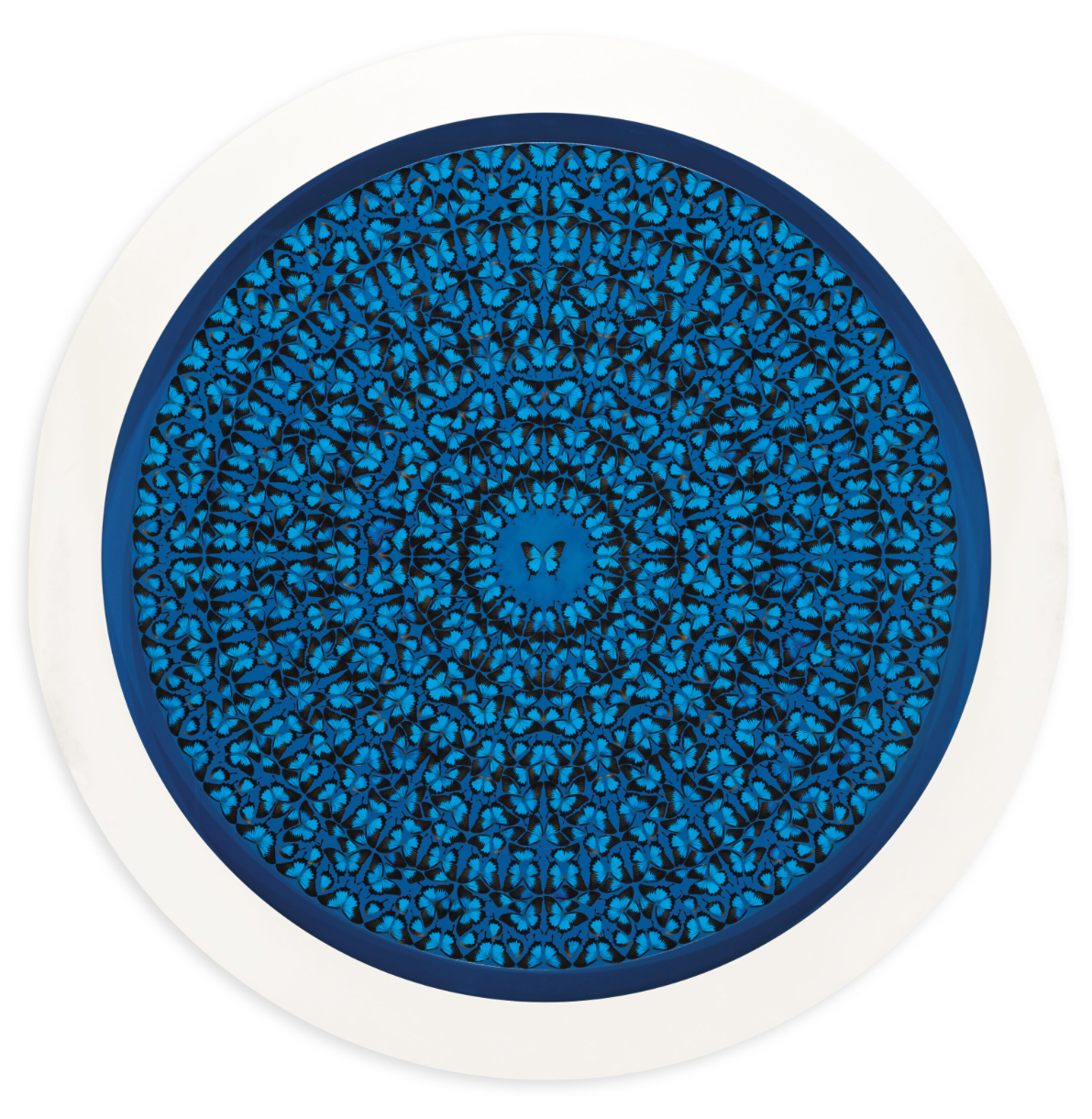
DAMIEN HIRST (B. 1965)
Ulysses, 2008
Butterflies and household gloss on canvas
Diameter: 84 inches (213.3 cm)
Signed, titled twice and dated ‘ULYSSES 2008 Damien Hirst ‘Ulysses” (on the reverse)
#5. Love Will Never Die, 1999
Christie’s London: 28 June 2023
Estimated: GBP 250,000 – 350,000
GBP 535,500 / USD 676,563
READ MORE IN FOCUS SECTION
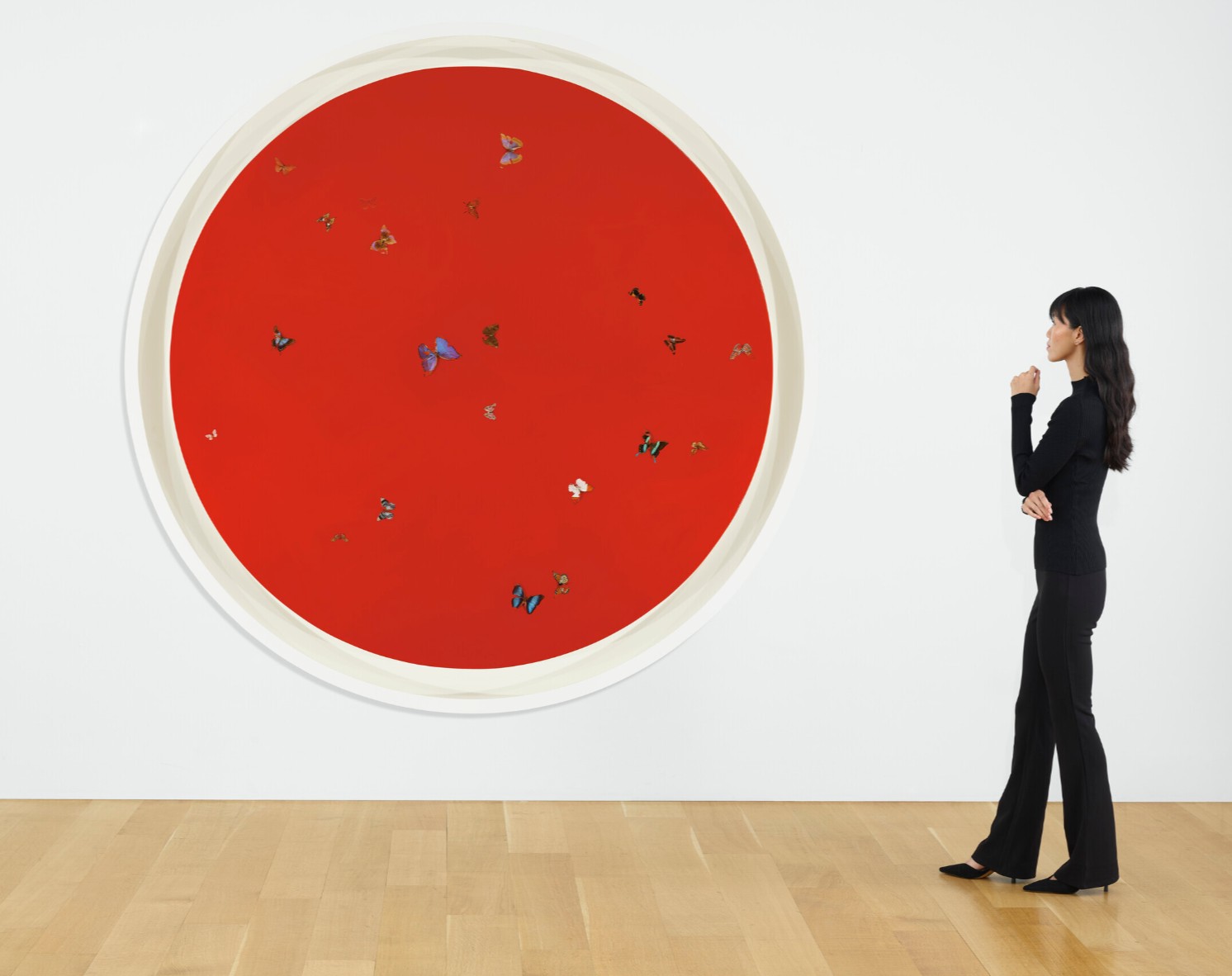
DAMIEN HIRST (B. 1965)
Love Will Never Die, 1999
Butterflies and household gloss on canvas
Diameter: 84 inches (213.4 cm)
#6. I Love You More Than Words Can Say, 1999
Sotheby’s London: 1 March 2023
Estimated: GBP 300,000 – 500,000
GBP 508,000 / USD 611,385
READ MORE IN FOCUS SECTION
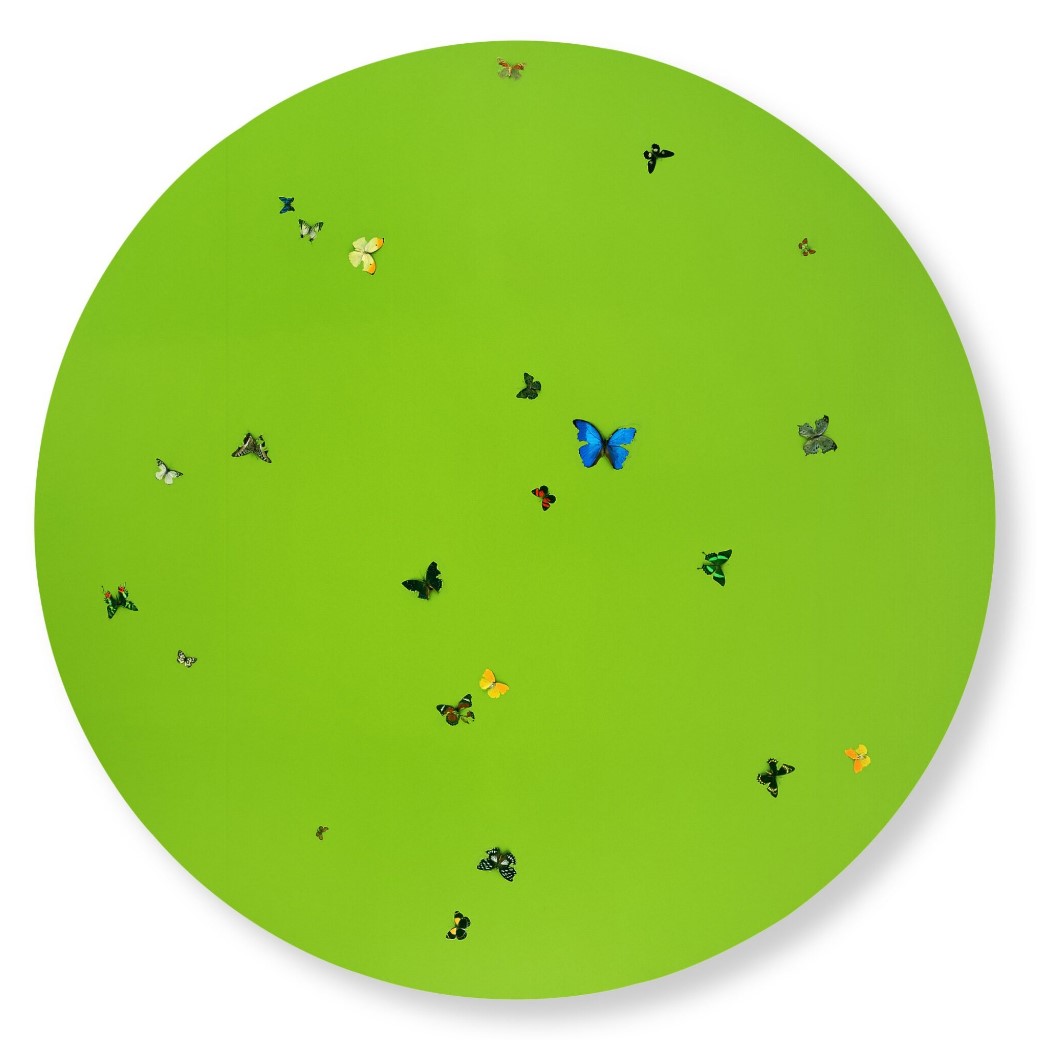
DAMIEN HIRST (b. 1965)
I Love You More Than Words Can Say, 1999
Butterflies and household gloss on canvas
Diameter: 84 inches (213.4 cm)
#7. Briareus, 2012
Phillips London: 2 March 2023
Estimated: GBP 400,000 – 600,000
GBP 457,200 / USD 545,845
READ MORE IN FOCUS SECTION
Damien Hirst – 20th Century & Contempo… Lot 18 March 2023 | Phillips
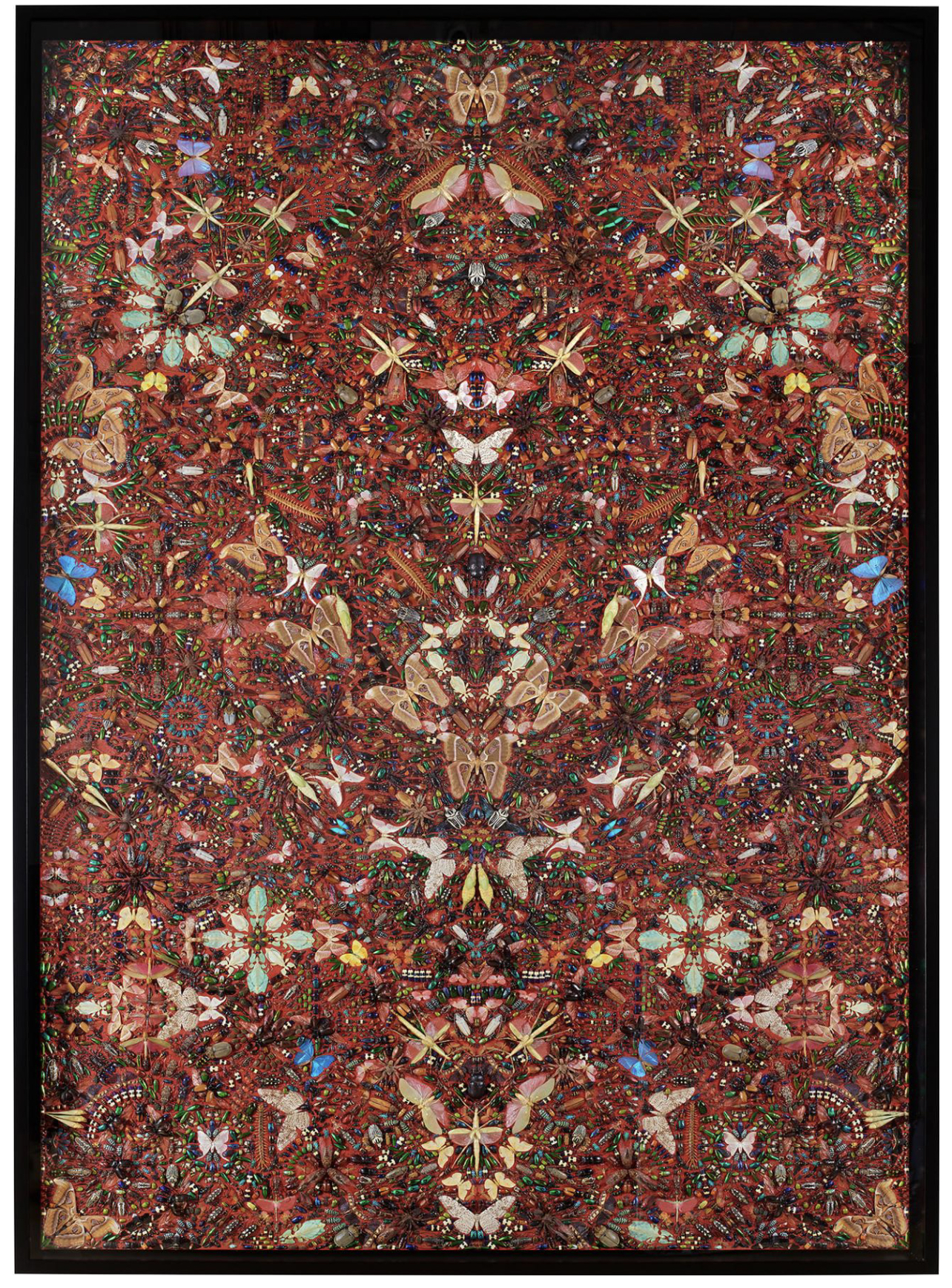
DAMIEN HIRST
Briareus, 2012
Entomological specimens and Hammerite paint on canvas
365.8 x 243.8 cm (144 x 95 7/8 inches)
Signed, stamped with the artist’s stamp, titled and dated on the backing board
#8. Eshara, 2019
Phillips London: 30 June 2023
Estimated: GBP 400,000 – 600,000
GBP 406,400 / USD 516,456

DAMIEN HIRST
Eshara, 2019
Butterflies and household gloss on canvas
Diameter: 72 inches (183 cm)
Signed, titled and dated ‘Damien Hirst ‘Eshara’ 2019′ on the reverse
Signed and stamped with the artist’s stamp ‘D. Hirst’ on the stretcher
#9. Untitled, 2001
K Auction Seoul: 20 December 2023
Estimated: KRW 520,000,000 – 900,000,000
KRW 598,000,000 / USD 460,460
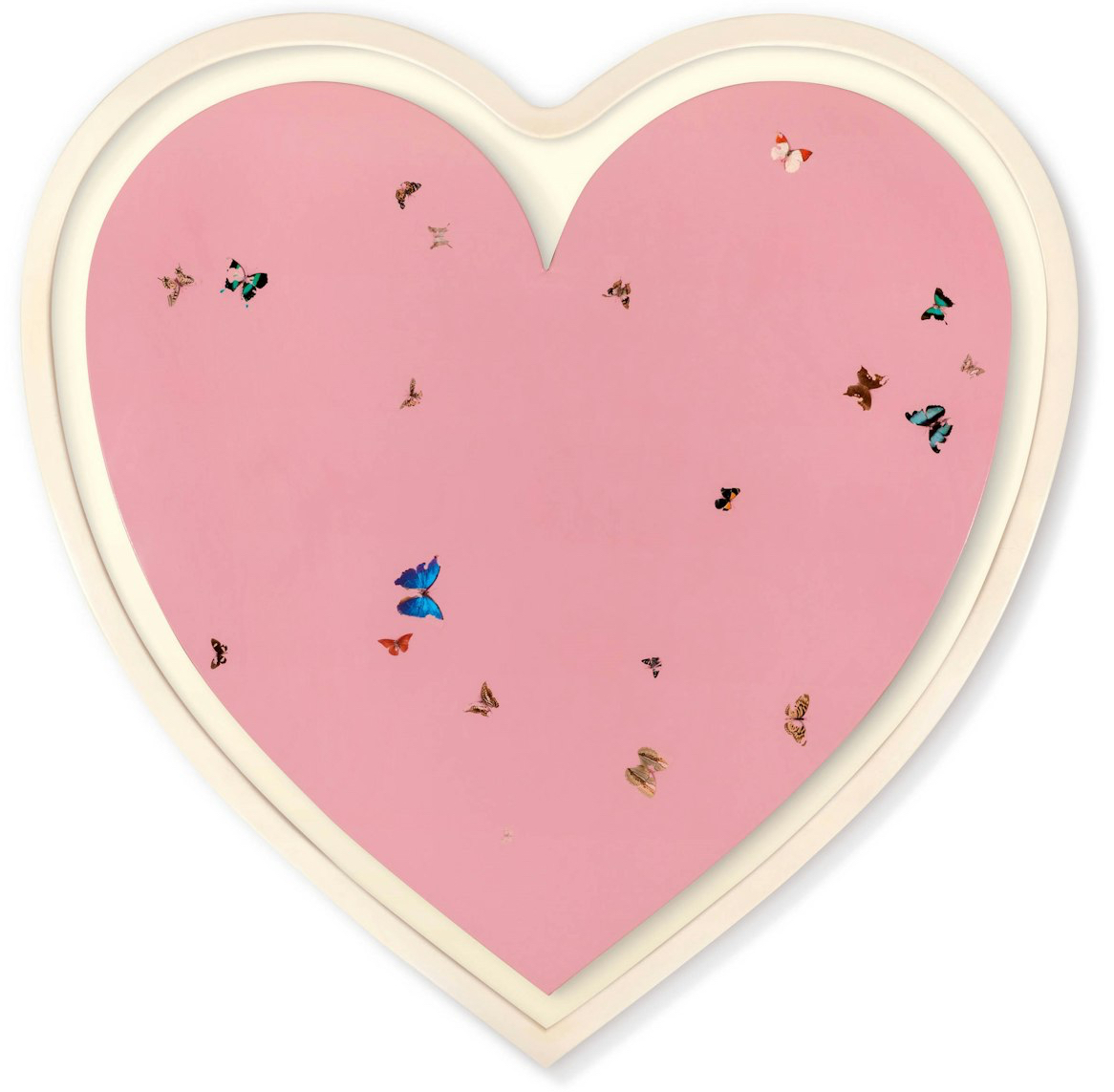
DAMIEN HIRST
Untitled, 2001
Butterflies and household gloss on canvas
84×84 inches (214×214 cm)
#10. Wonderful Week, 2008
Christie’s London: 14 October 2023
Estimated: GBP 200,000 – 300,000
GBP 327,600 / USD 397,235
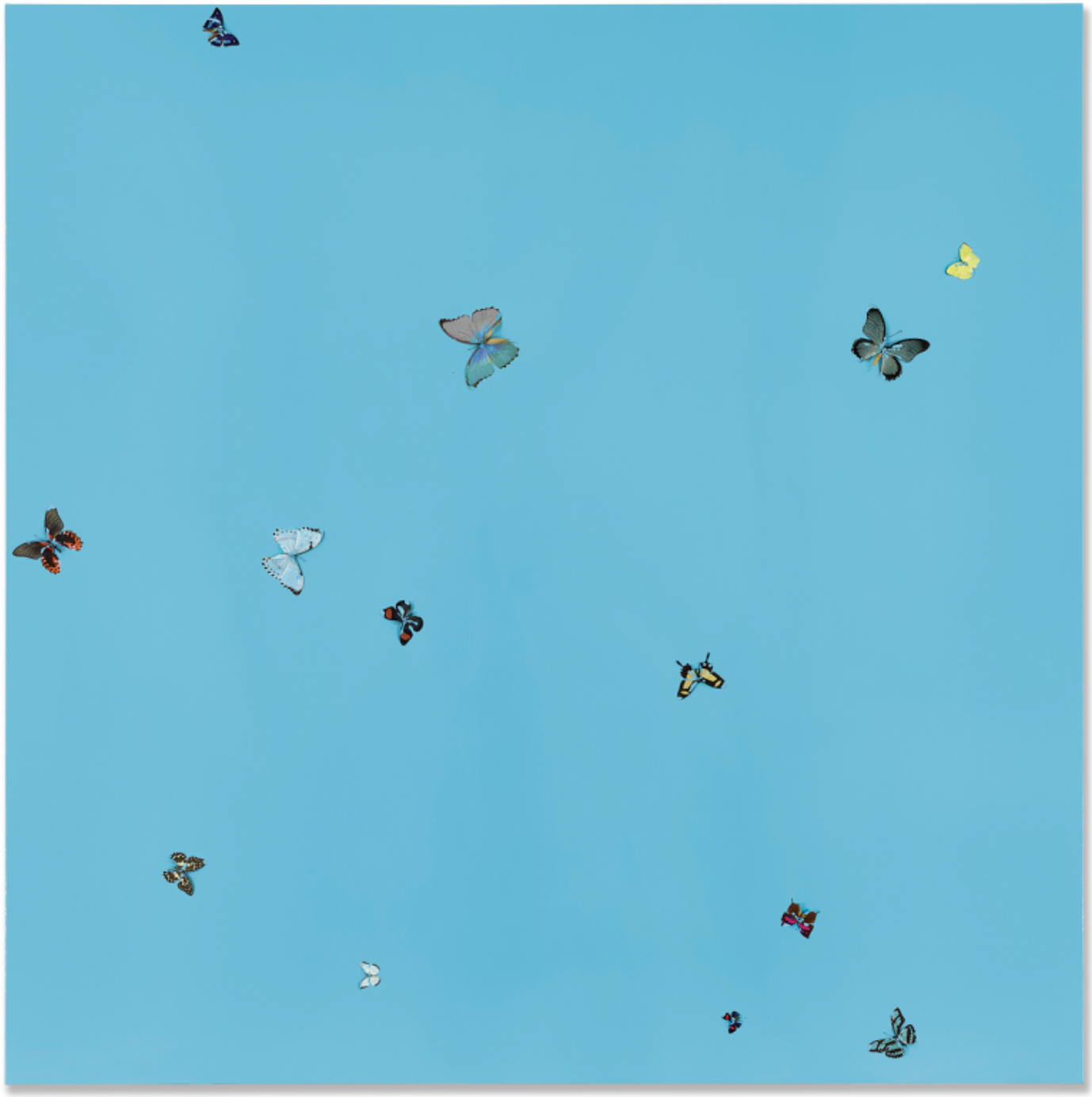
DAMIEN HIRST (B. 1965)
Wonderful Week, 2008
Butterflies and household gloss on canvas
72×72 inches (182.8 x 182.8 cm)
Signed, titled and dated ‘2008 “Wonderful Week” Damien Hirst’ (on the reverse)
Signed ‘Damien Hirst’ (on the stretcher)
#11. Resurrection, 2016
Bonhams NY: 18 May 2023
Estimated: USD 300,000 – 500,000
USD 365,775
Bonhams : DAMIEN HIRST (B. 1965) Resurrection 2016
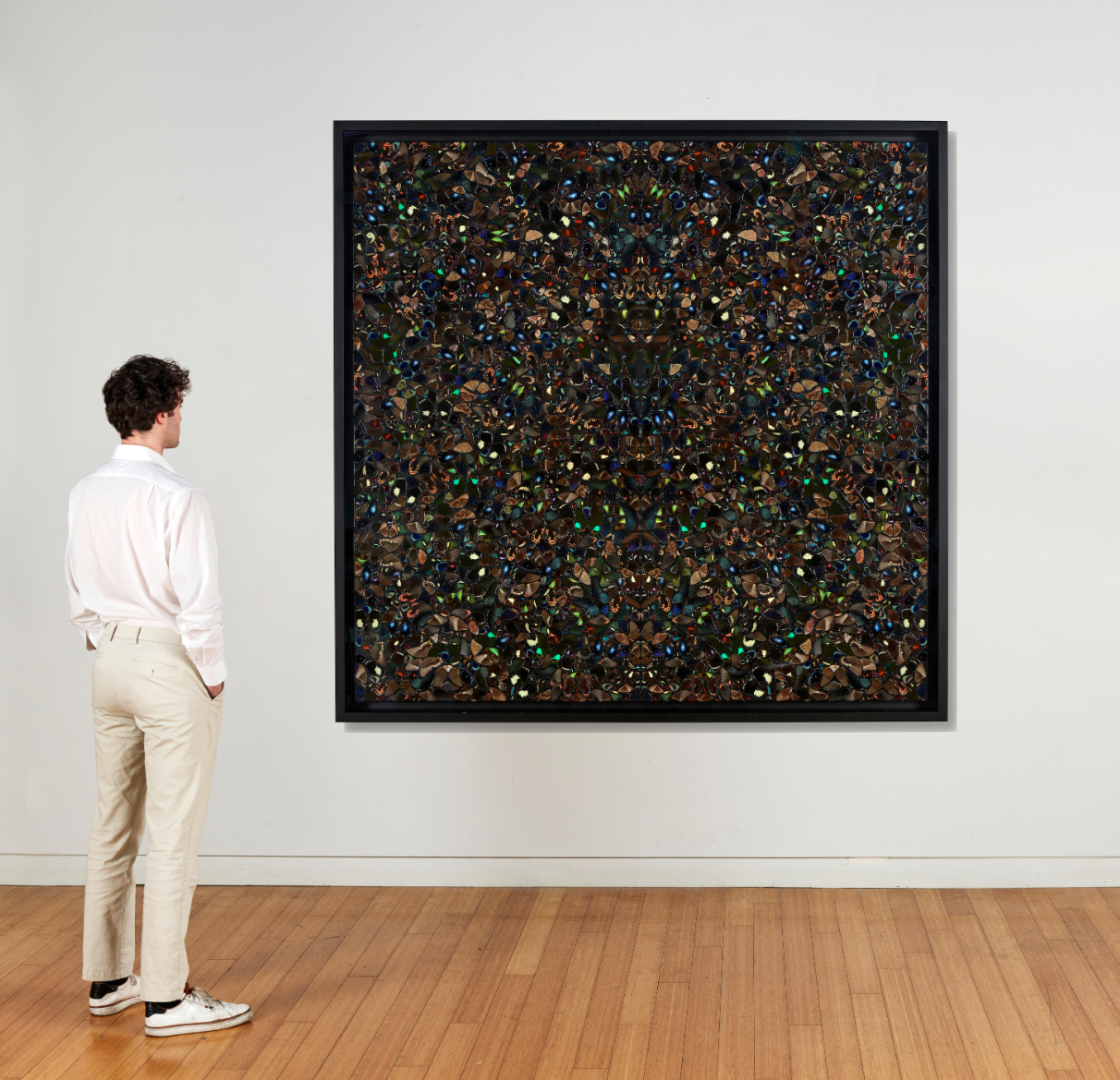
Butterflies and household gloss on canvas
68 5/16 x 69 5/8 inches (173.5 x 177 cm)
Signed, titled and dated 2016 on the reverse
#12. Trinity I, 2007
Christie’s New-York: 12 May 2023
Estimated: USD 250,000 – 350,000
USD 302,400
DAMIEN HIRST (B. 1965) (christies.com)
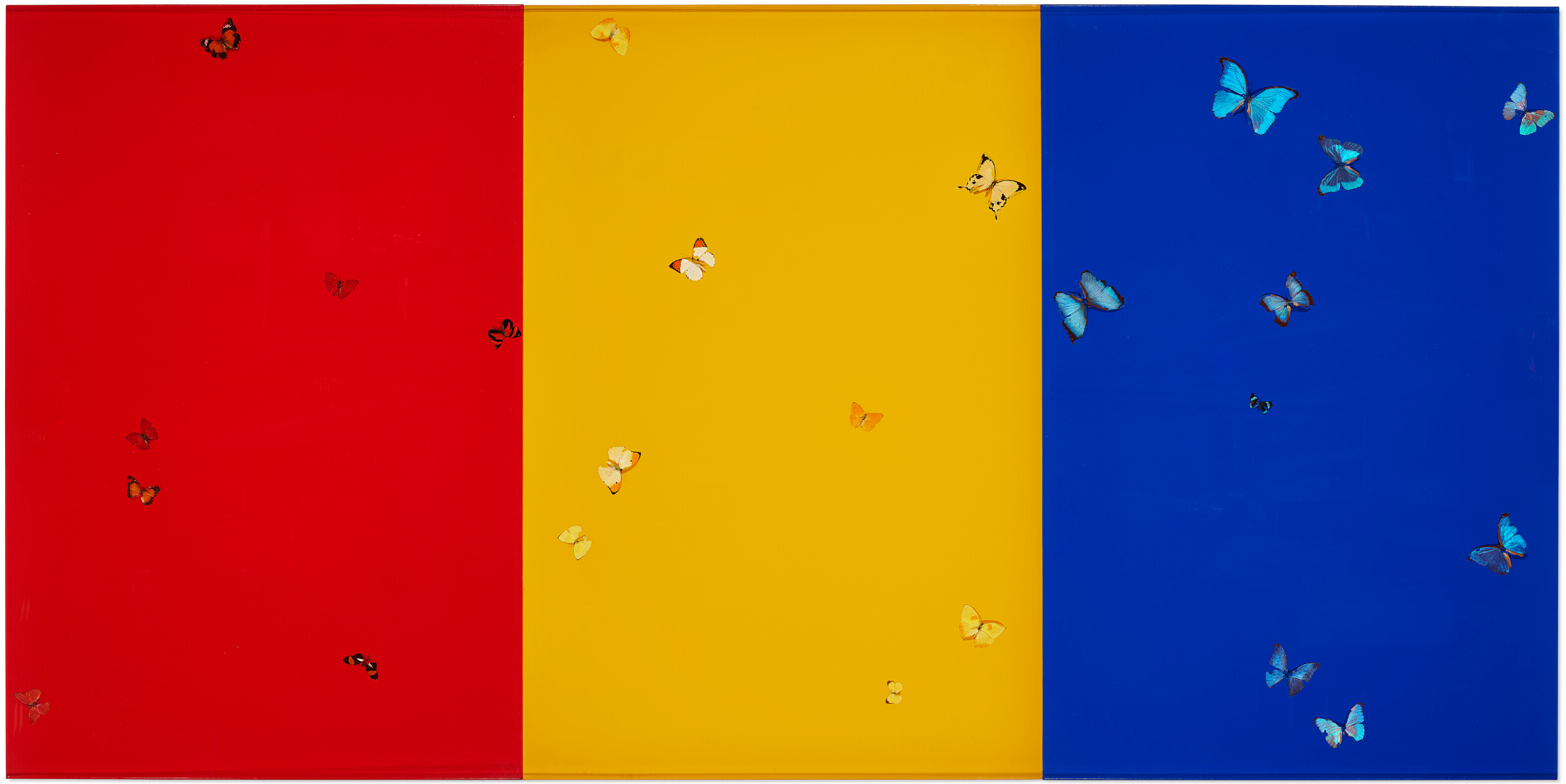
DAMIEN HIRST (B. 1965)
Trinity I, 2007
Butterflies, household gloss and gold leaf on canvas, in three parts
Each: 54×36 inches (137.2 x 91.4 cm)
Overall: 54×108 inches (137.2 x 274.3 cm)
Signed and titled ‘Damien Hirst “The Trinity”‘ (on the reverse of each canvas)
Signed again and dated ‘Damien Hirst 2007’ (on each stretcher)
#13. Beautiful Dreamer, 2008
Sotheby’s Hong-Kong: 5 April 2023
Estimated: HKD 2,000,000 – 3,000,000
HKD 2,159,000 / USD 275,028
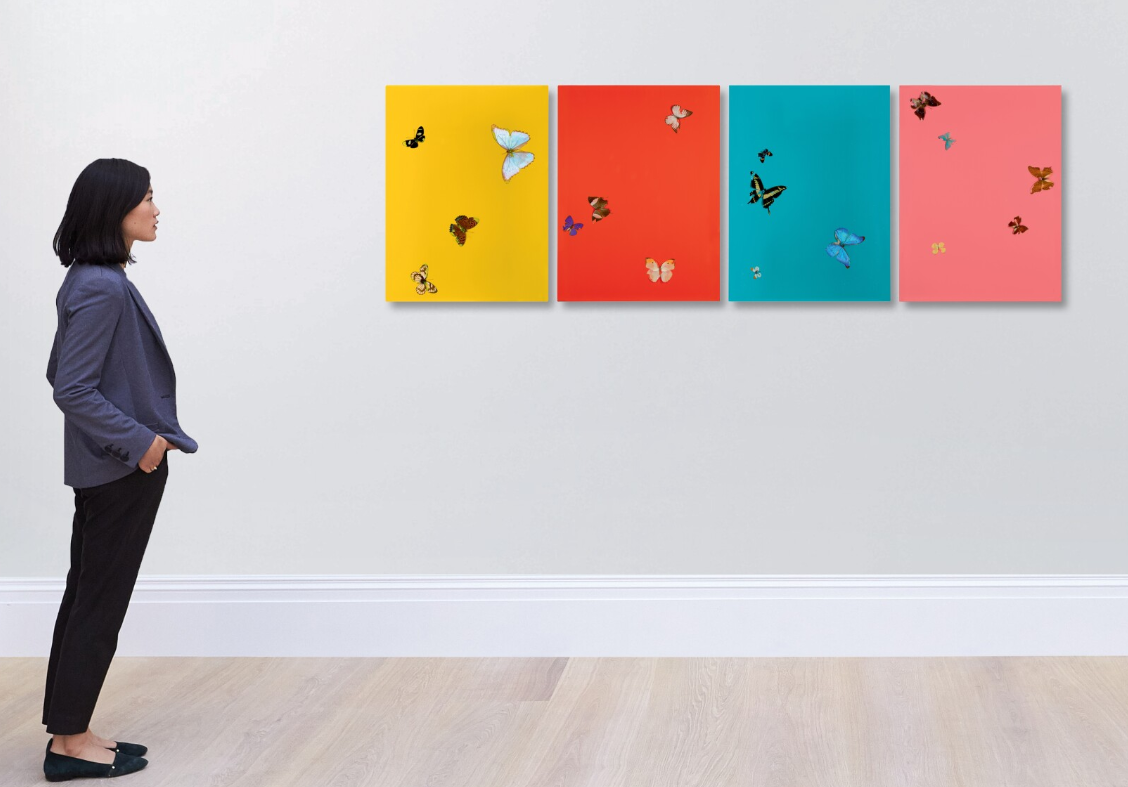
DAMIEN HIRST (b. 1965)
Beautiful Dreamer, 2008
Butterflies and household gloss on canvas, in 4 parts
Each: 24×18 inches (61 x 45.7 cm)
Overall: 24×72 inches (61 x 182.8 cm)
Each: signed, titled, dated 2008 and numbered 1/4, 2/4, 3/4 and 4/4 on the reverse, respectively
#14. Love to You, 2007
Sotheby’s Hong-Kong: 6 October 2023
Estimated: HKD 1,200,000 – 1,800,000
HKD 1,651,000 / USD 210,812
REPEAT SALE
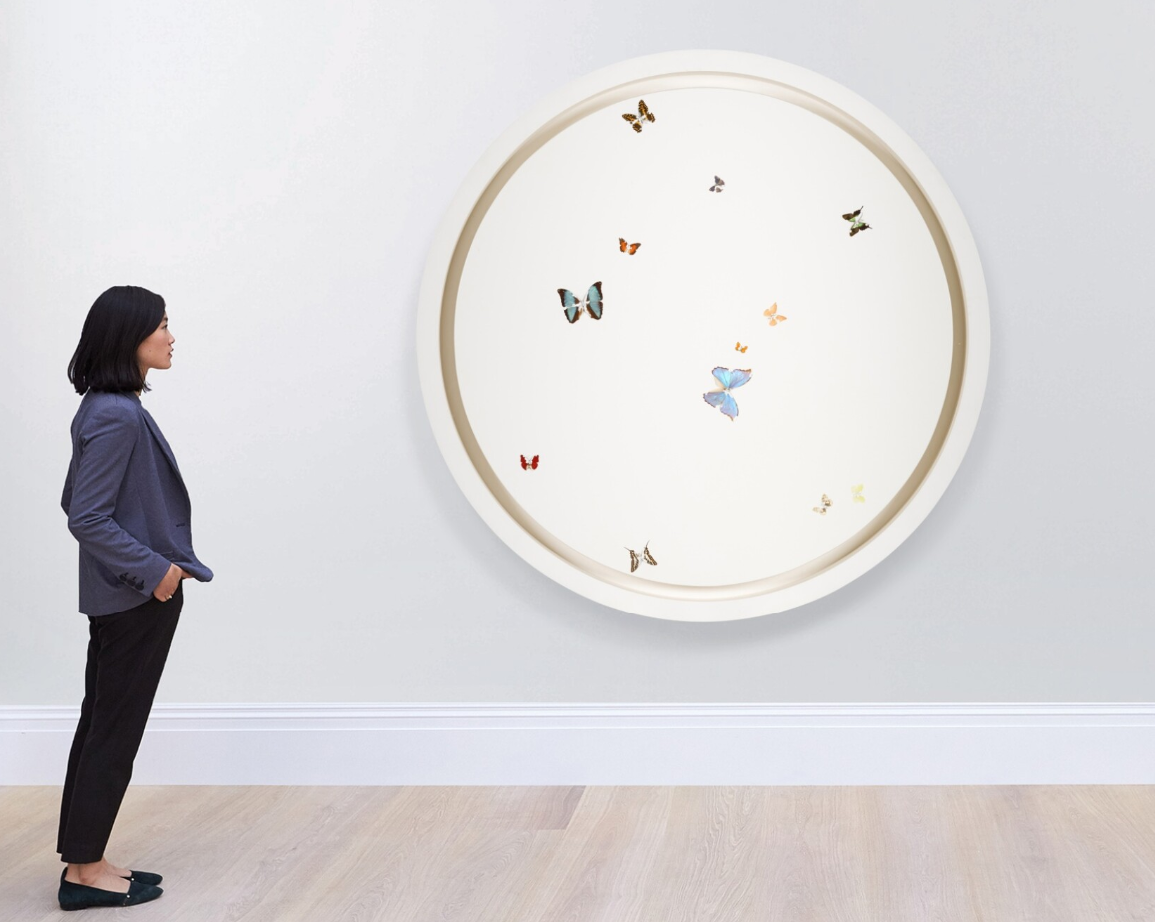
DAMIEN HIRST (b. 1965)
Love to You, 2007
Butterflies and household gloss on canvas
Diameter: 54 inches (137.2 cm)
Signed and titled on the stretcher
#15. Pratyahara, 2019
Christie’s Hong-Kong: 29 May 2023
Estimated: HKD 1,500,000 – 2,500,000
HKD 1,386,000 / USD 177,049
DAMIEN HIRST (B. 1965) (christies.com)
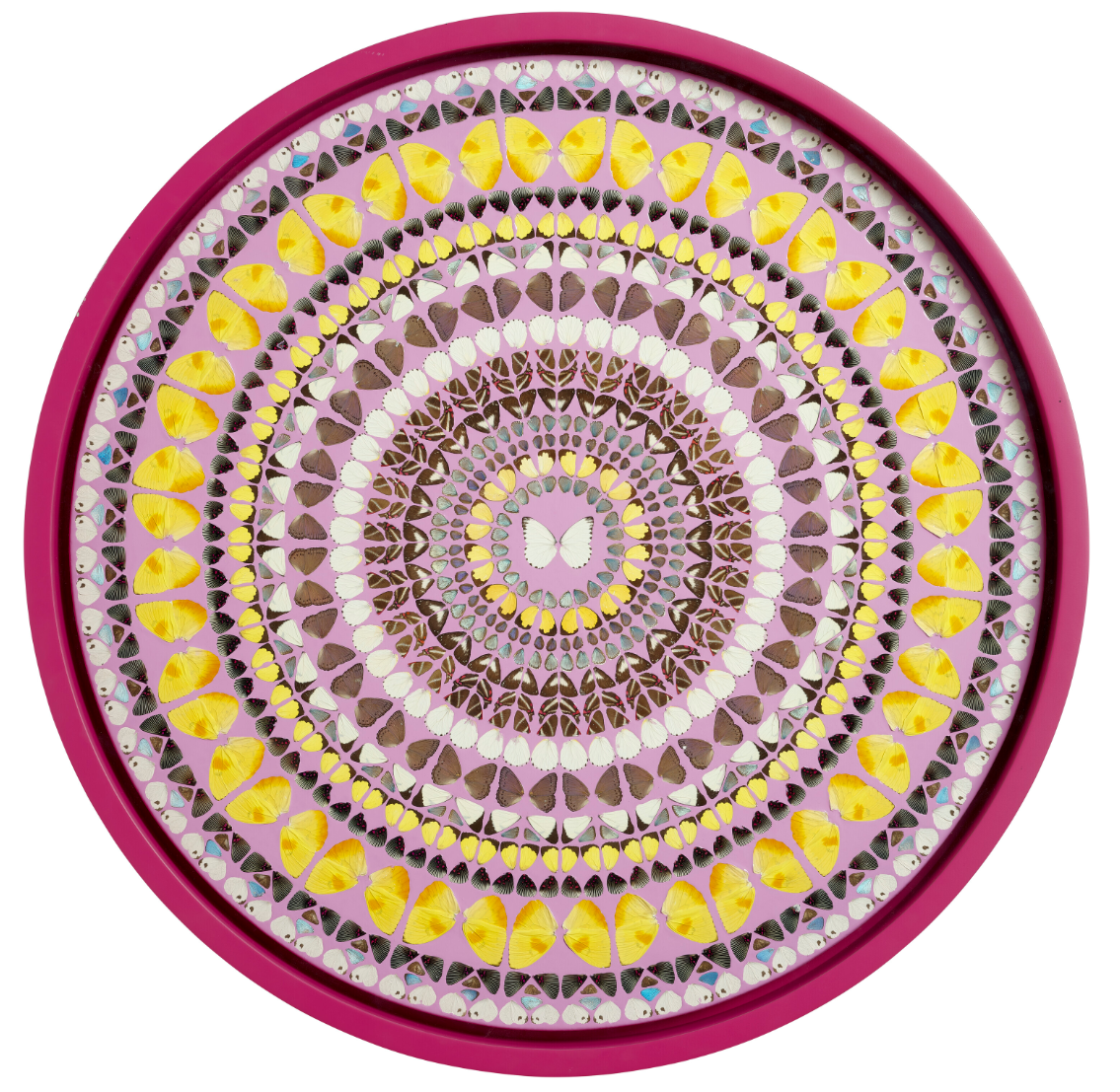
DAMIEN HIRST (B. 1965)
Pratyahara, 2019
Butterflies and household gloss on canvas
Diameter: 30 inches (76.2 cm)
Signed twice, titled, dated ‘Damien Hirst D Hirst Pratyahara 2019’ (on the reverse)
#16. Cancer, 2008
Phillips New-York: 16 May 2023
Estimated: USD 40,000 – 60,000
USD 107,950
Damien Hirst – 20th Century & Contempor… Lot 487 May 2023 | Phillips
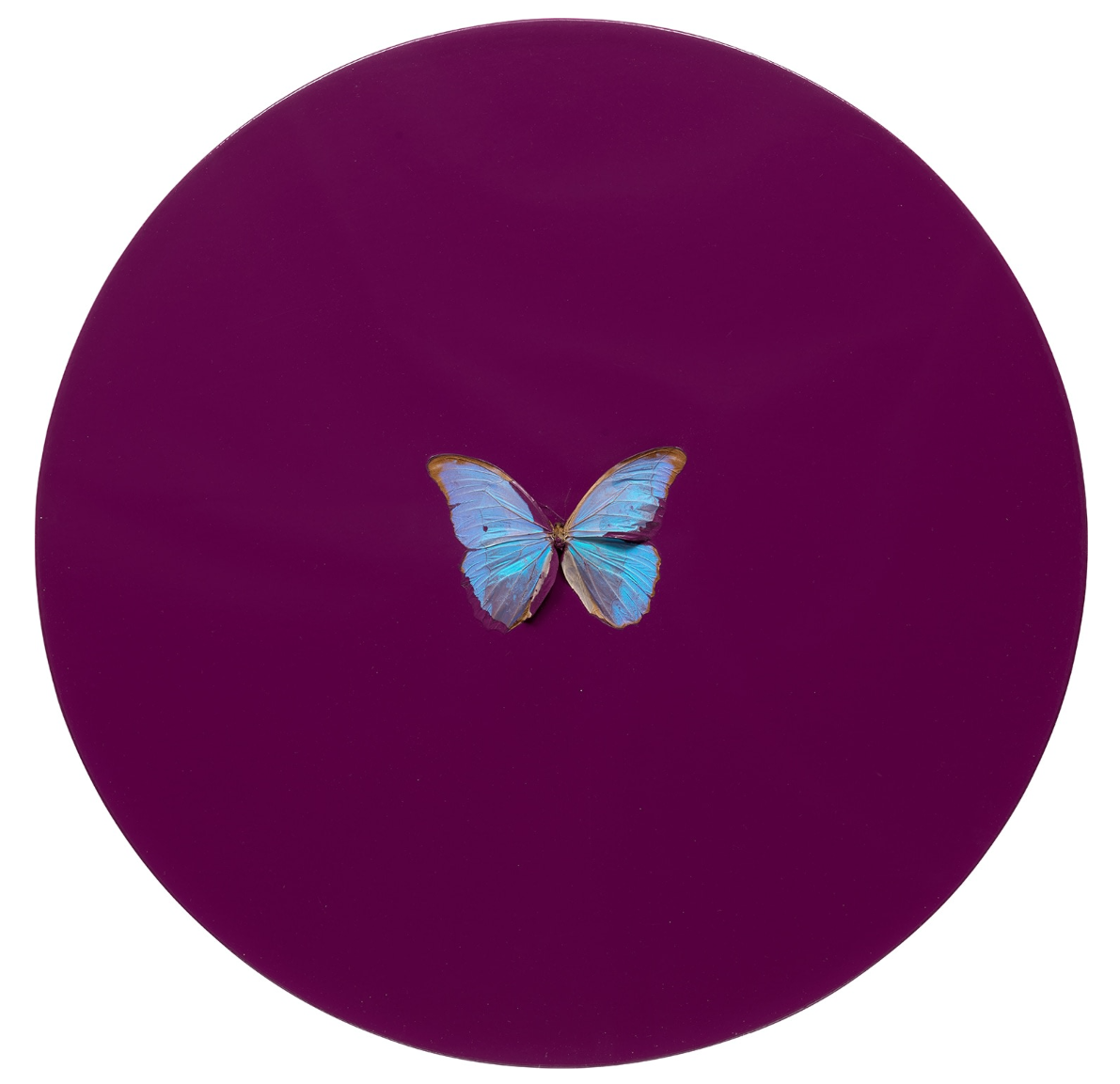
DAMIEN HIRST
Cancer, 2008
Butterfly and household gloss on canvas
Diameter: 24 inches (61 cm)
Signed, titled and dated “Damien Hirst “Cancer” 2008″ on the reverse
#17. Time, 2019
Christie’s London: 29 June 2023
Estimated: GBP 80,000 – 120,000
GBP 75,600 / USD 95,370
DAMIEN HIRST (B. 1965) (christies.com)

DAMIEN HIRST (B. 1965)
Time, 2019
Butterflies and household gloss on canvas
Diameter: 24 inches (61 cm)
Signed, titled and dated ‘Damien Hirst 2019 ‘Time” (on the reverse)
2022 Auction Results
#1. Beautiful Architect, 2003
Sotheby’s London: 30 June 2022
Estimated: GBP 400,000 – 600,000
GBP 882,000 / USD 1,072,470
READ MORE IN FOCUS SECTION
Beautiful Architect | Modern & Contemporary Day Auction | 2022 | Sotheby’s (sothebys.com)
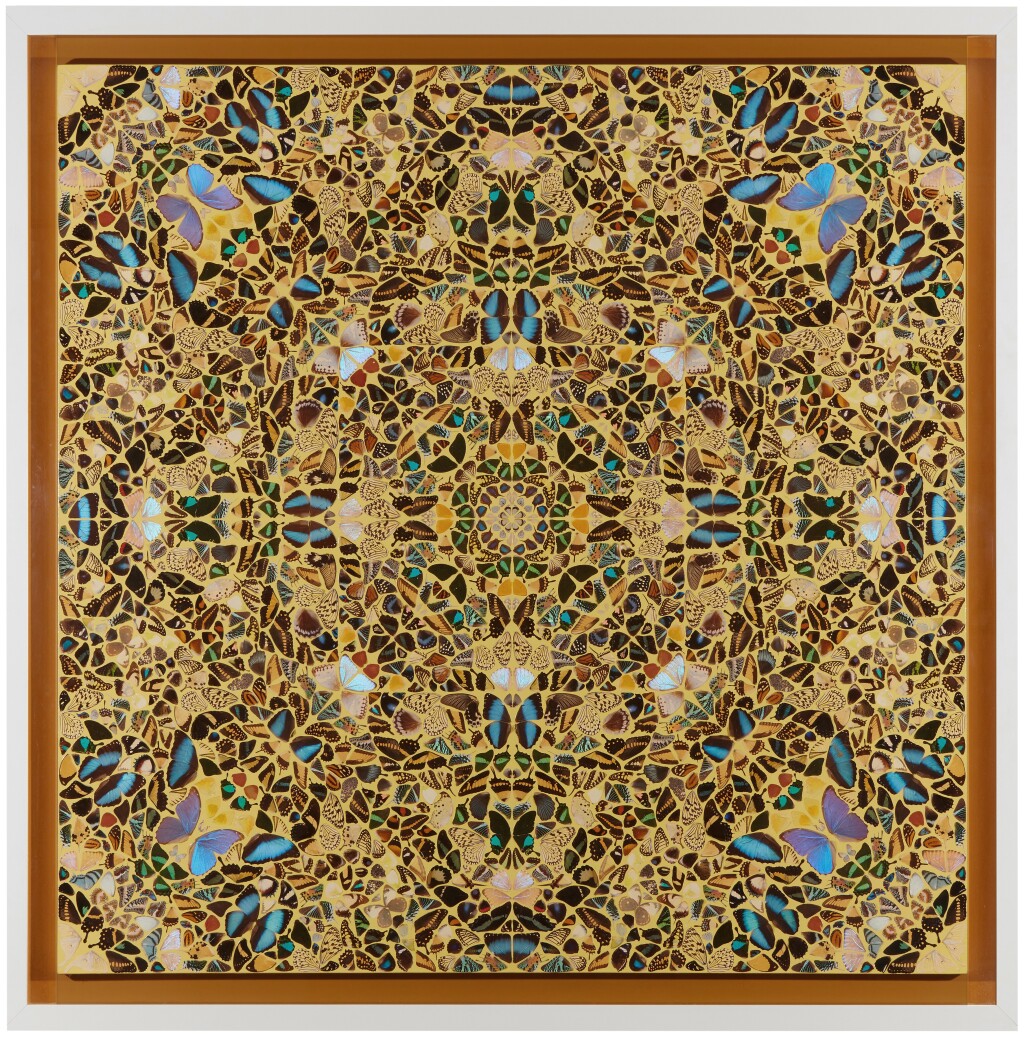
DAMIEN HIRST (B. 1965)
Beautiful Architect, 2003
Butterflies and household gloss on canvas
63×63 inches (160×160 cm)
#2. Forgiven, 2008
Phillips Hong-Kong: 1 December 2022
Estimated: HKD 6,000,000 – 9,000,000
HKD 7,510,000 / USD 965,768
Damien Hirst – 20th Century & Conte… Lot 10 December 2022 | Phillips
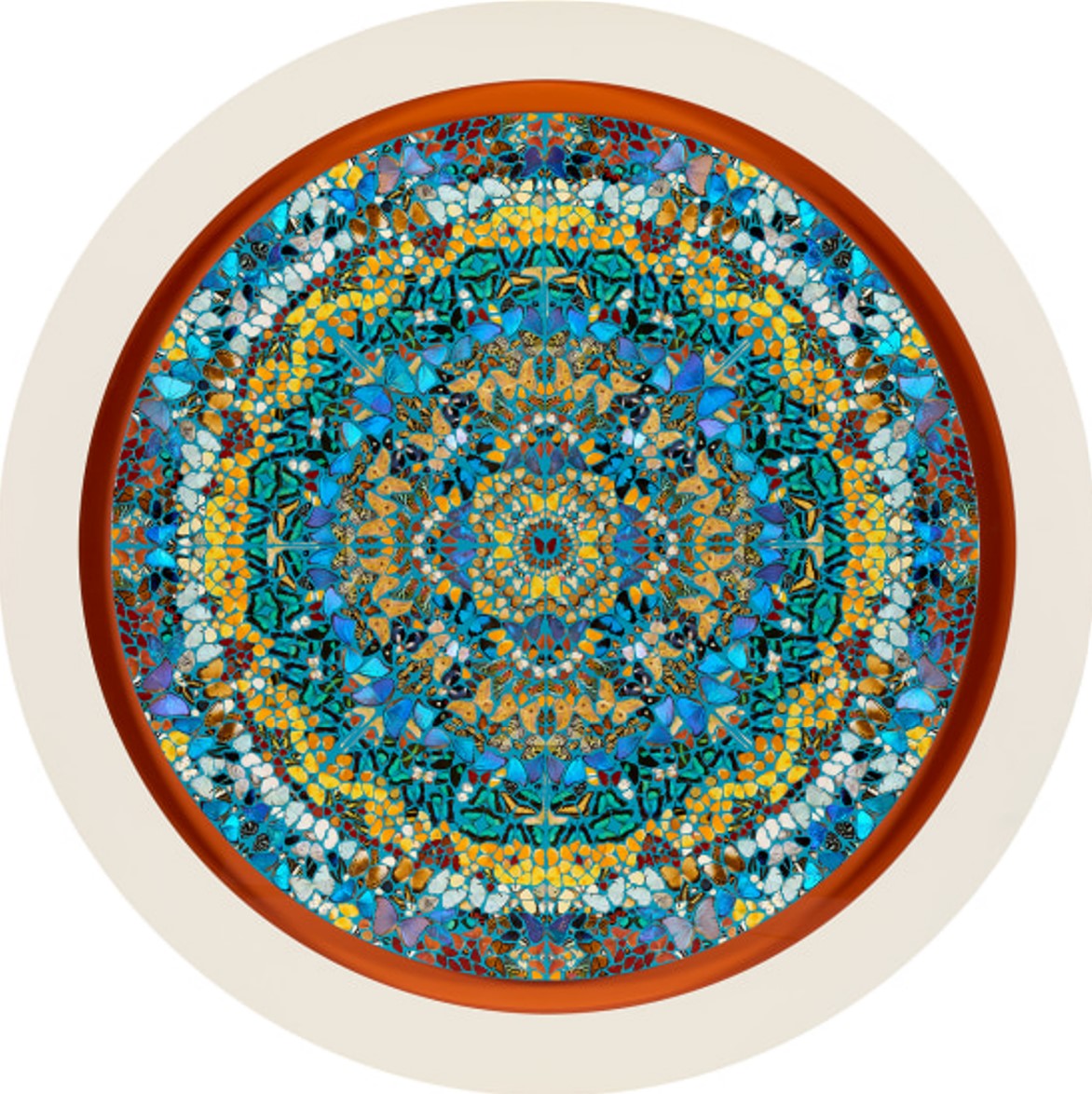
DAMIEN HIRST
Forgiven, 2008
Butterflies and household gloss on canvas
Diameter: 213.4 cm (84 inches)
Signed, titled and dated on the stretcher
#3. Edith, 2008-2009
Sotheby’s Hong-Kong: 28 April 2022
Estimated: HKD 1,600,000 – 2,400,000
HKD 7,560,000 / USD 963,499
READ MORE IN FOCUS SECTION
Damien Hirst 達米恩 · 赫斯特 | Edith 伊迪絲 | Contemporary Day Auction | 2022 | Sotheby’s (sothebys.com)
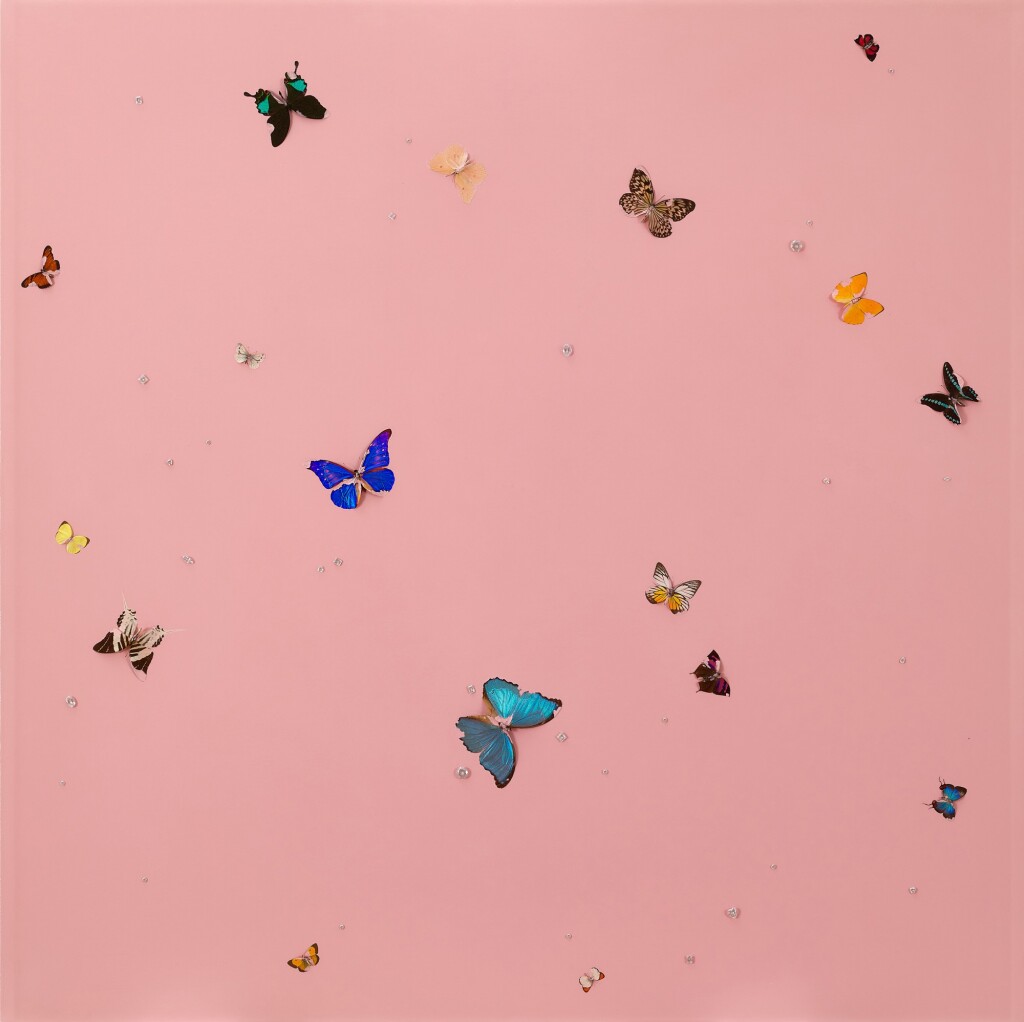
DAMIEN HIRST (B. 1965)
Edith, 2008-2009
Butterflies, cubic zirconia and household gloss on canvas
55.2 x 55.2 inches (140×140 cm)
Signed, titled and dated 2008/09 on the reverse
#4. Omnipotence, 2008
Phillips London: 14 October 2022
Estimated: GBP 350,000 – 450,000
GBP 796,900 / USD 893,385
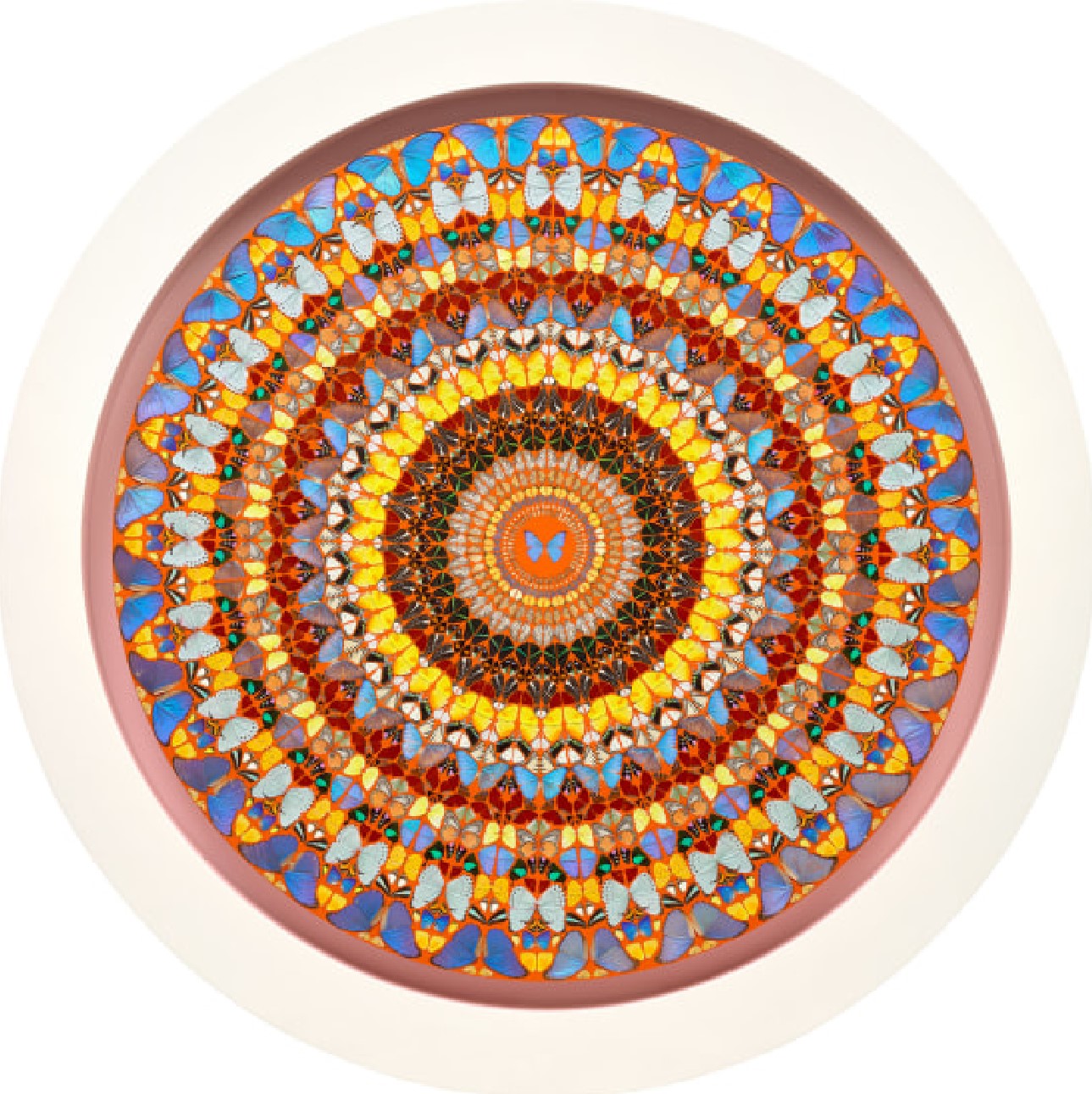
DAMIEN HIRST
Omnipotence, 2008
Butterflies and household gloss on canvas
Diameter: 60 inches (152.4 cm)
Signed, stamped, titled and dated on the backing board
Signed and stamped on the stretcher
#5. Omniscience, 2007
Sotheby’s Hong-Kong: 27 April 2022
Estimated: HKD 5,000,000 – 7,000,000
HKD 4,410,000 / USD 562,012
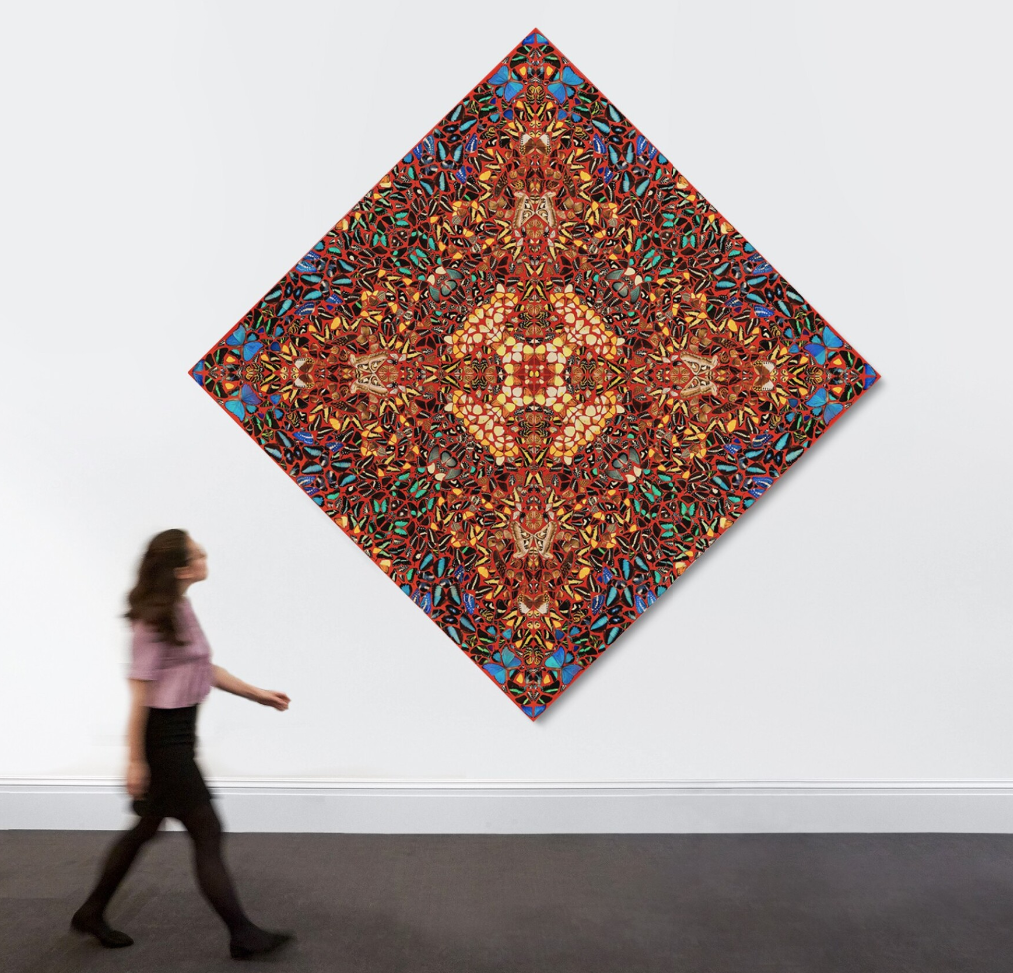
DAMIEN HIRST (b. 1965)
Omniscience, 2007
Butterflies and household gloss on canvas
102×102 inches (258.6 x 258.6 cm)
Signed, titled and dated 2007 on the reverse
#6. Gospel, 2004
Sotheby’s London: 3 March 2022
Estimated: GBP 220,000 – 280,000
GBP 403,200 / USD 537,098
Gospel | Modern & Contemporary Day Auction | 2022 | Sotheby’s (sothebys.com)
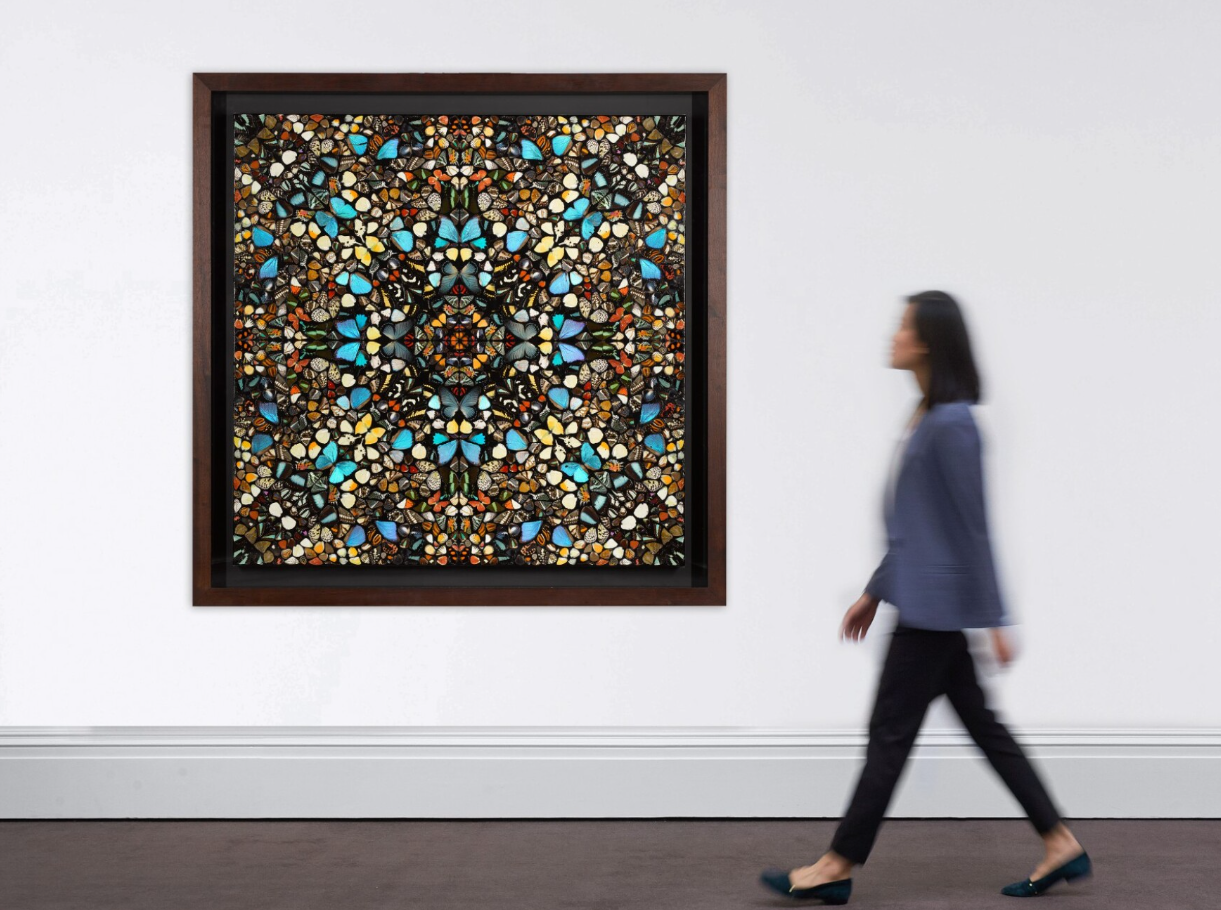
DAMIEN HIRST (b. 1965)
Gospel, 2004
Butterflies and household gloss on canvas
48×48 inches (121.9 x 121.9 cm)
#7. Can’t Buy Me Love, 2007
Sotheby’s New-York: 20 May 2022
Estimated: USD 120,000 – 180,000
USD 529,200
Can’t Buy Me Love | Contemporary Day Auction | 2022 | Sotheby’s (sothebys.com)
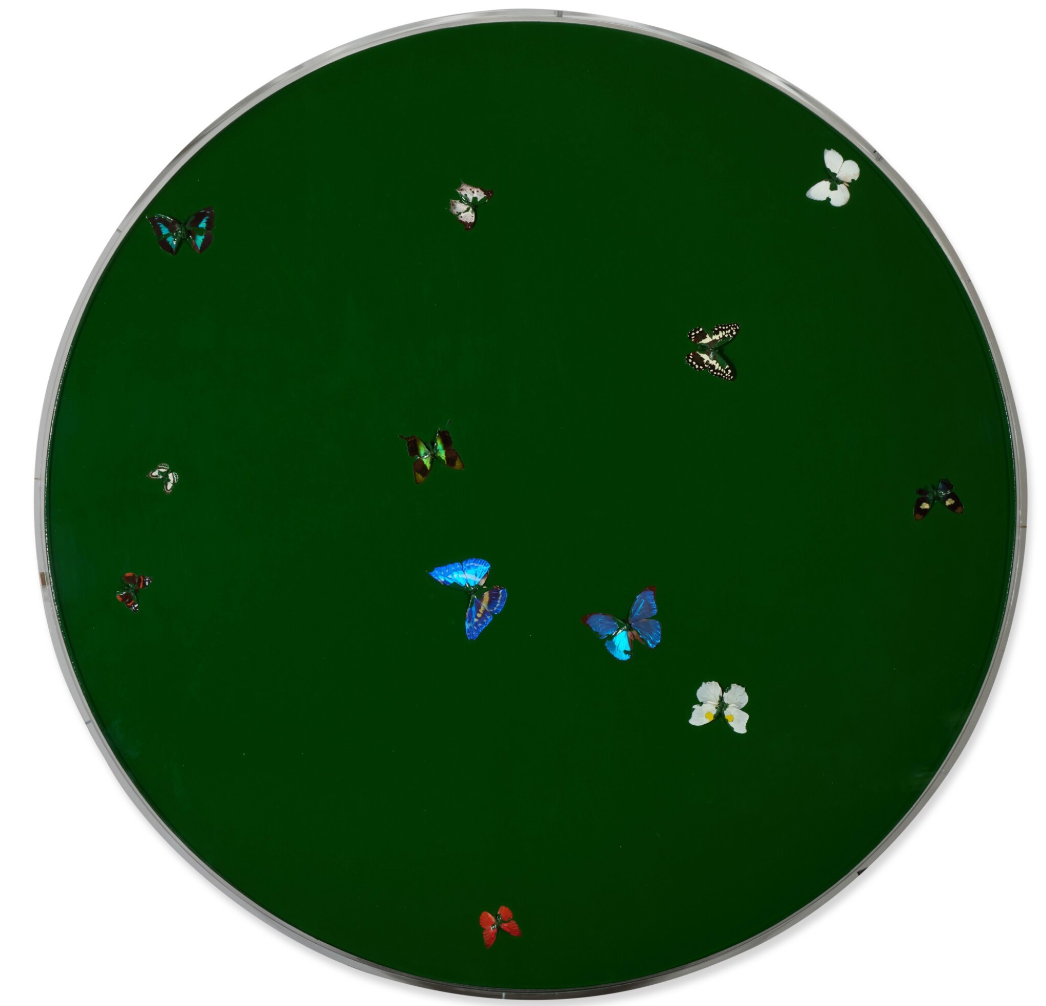
DAMIEN HIRST (b. 1965)
Can’t Buy Me Love, 2007
Butterflies and household gloss on shaped canvas
Diameter: 54 inches (137.2 cm)
Signed (on the stretcher); signed, titled and dated 2007 (on the reverse)
#8. Beauty is in the Eye of the Beholder, 1998
Sotheby’s New-York: 16 November 2022
Estimated: USD 600,000 – 800,000
USD 484,000
Beauty is in the Eye of the Beholder | The Now Evening Auction | 2022 | Sotheby’s (sothebys.com)
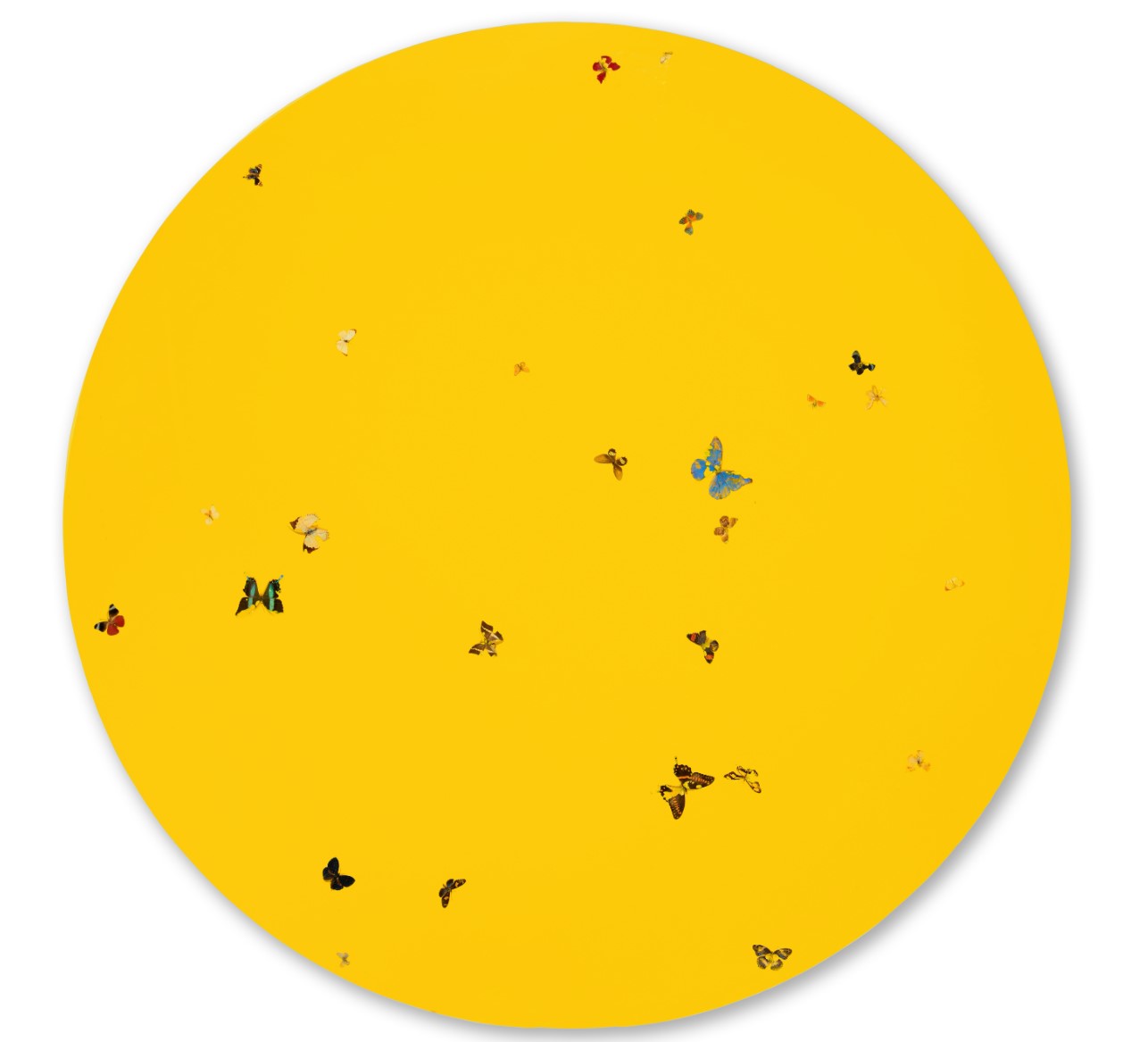
DAMIEN HIRST (b. 1965)
Beauty is in the Eye of the Beholder, 1998
Butterflies and household gloss on canvas
Diameter: 84 inches (213.4 cm)
2021 Auction Results
#1. The Human Voice, 2006
Sotheby’s London: 25 March 2021
Estimated: GBP 600,000 – 800,000
GBP 620,000 / USD 850,596
READ MORE IN FOCUS SECTION
The Human Voice | 《人聲》 | Modern Renaissance: A Cross-Category Sale | 2021 | Sotheby’s (sothebys.com)
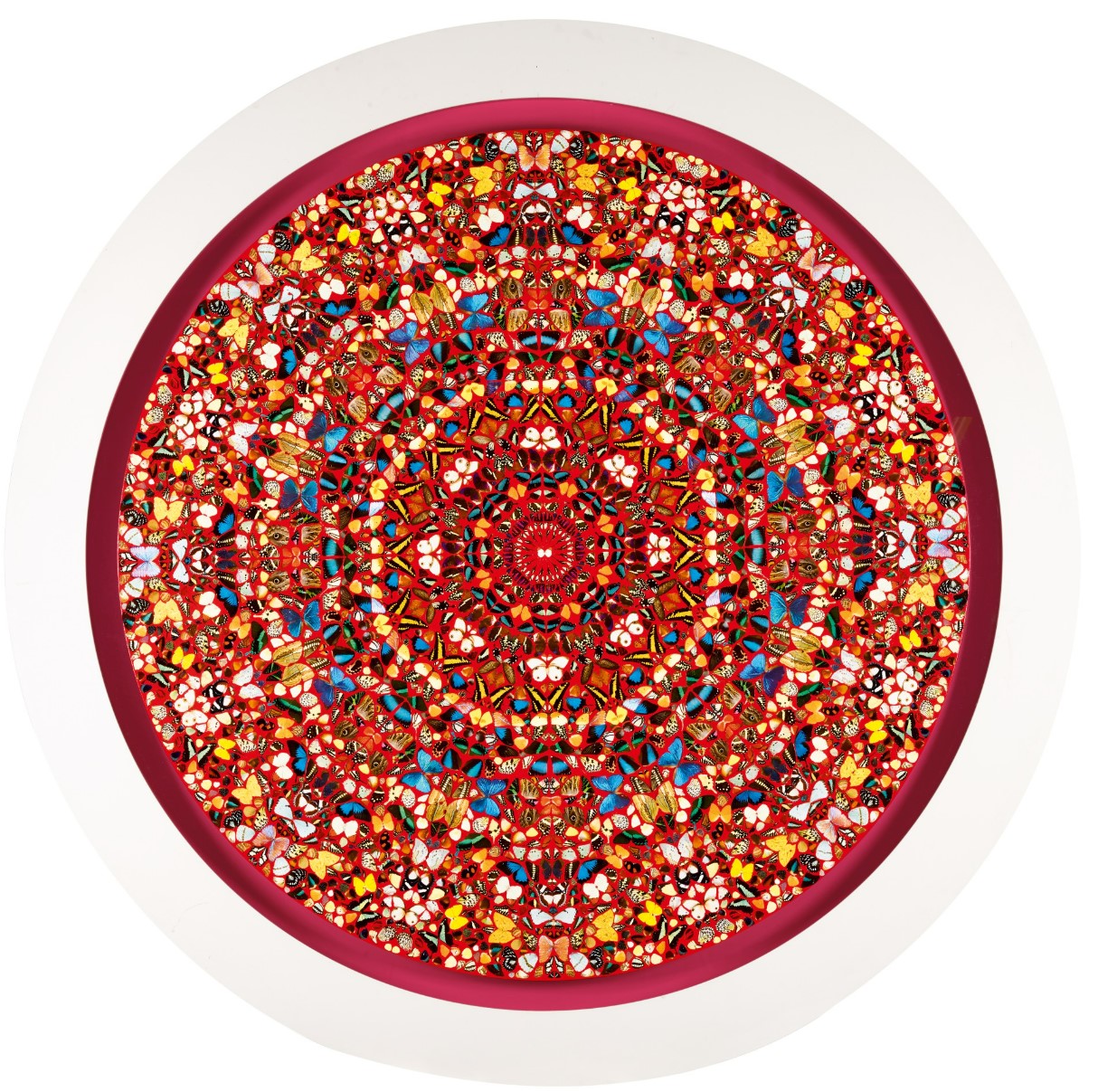
DAMIEN HIRST (B. 1965)
The Human Voice, 2006
Butterflies and household gloss on canvas
Diameter: 84 inches (213.3 cm)a
Titled and dedicated For Jimmy I Love You! on the reverse
Signed, titled and dated 2006 on the stretcher
#2. Sinful, 2007
Sotheby’s London: 13 April 2021
Estimated: GBP 250,000 – 350,000
GBP 315,000 / USD 432,811
Sinful | Contemporary Curated | 2021 | Sotheby’s (sothebys.com)
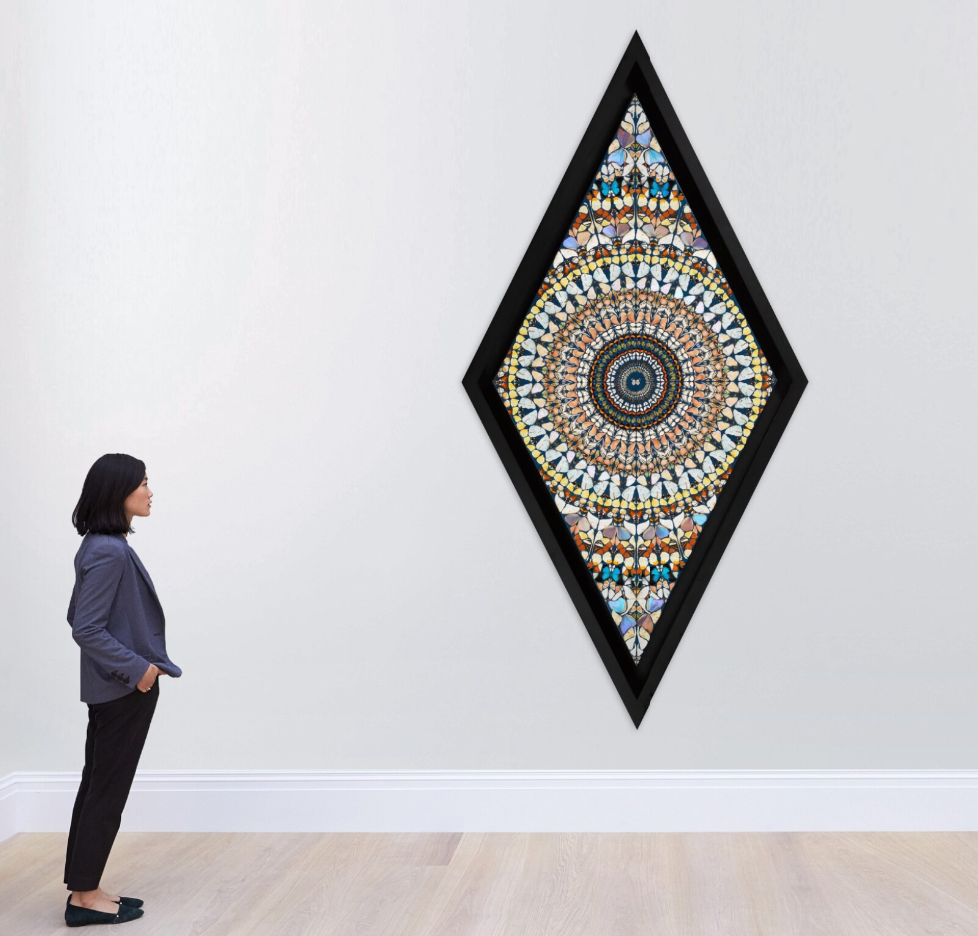
DAMIEN HIRST (b. 1965)
Sinful, 2007
Butterflies and household gloss on canvas
96×48 inches (243.8 x 121.9 cm)
Signed, titled and dated 2007 on the reverse
#3. Love to You, 2007
Sotheby’s London: 26 March 2021
Estimated: GBP 100,000 – 150,000
GBP 252,000 / USD 347,634
Love to You | Contemporary Art Day Auction | 2021 | Sotheby’s (sothebys.com)
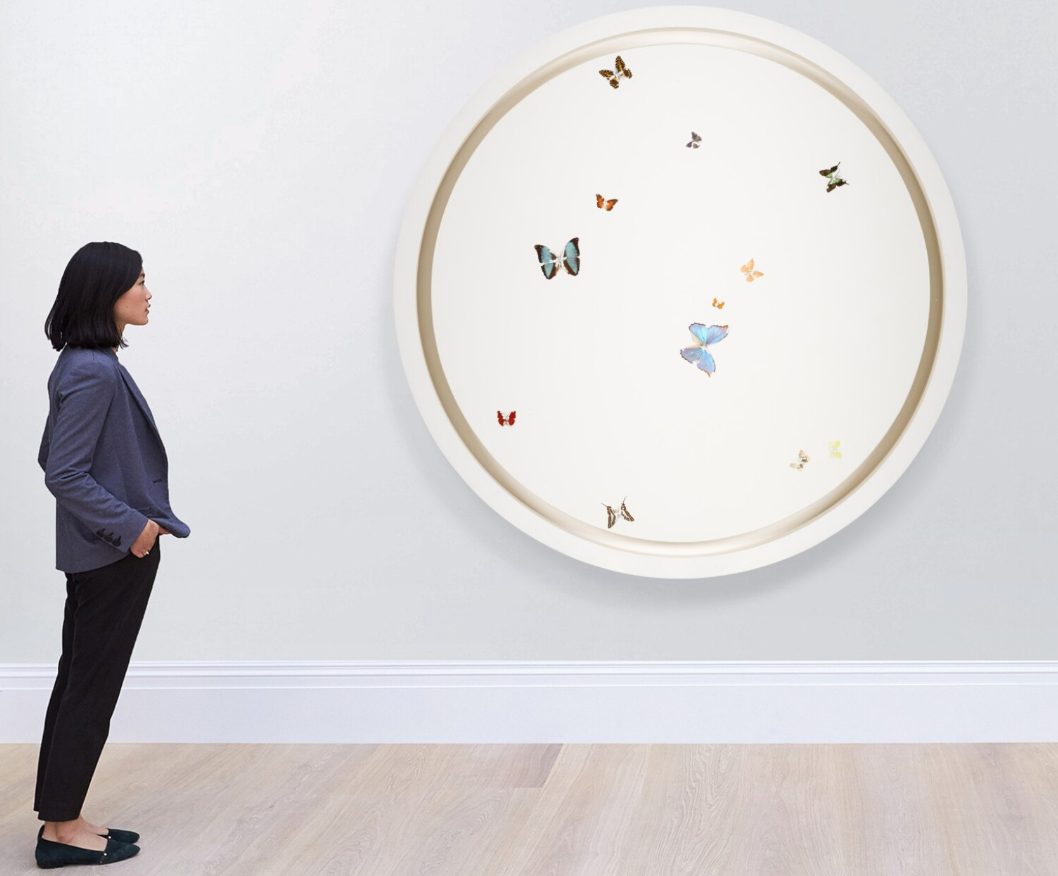
DAMIEN HIRST (b. 1965)
Love to You, 2007
Butterflies and household gloss on canvas
Diameter: 54 inches (137.2 cm)
Signed and titled on the stretcher
#4. Psalm 2: Quare fremuerunt gentes?, 2008
Christie’s London: 16 October 2021
Estimated: GBP 70,000 – 100,000
GBP 125,000 / USD 171,467
DAMIEN HIRST (B. 1965) (christies.com)
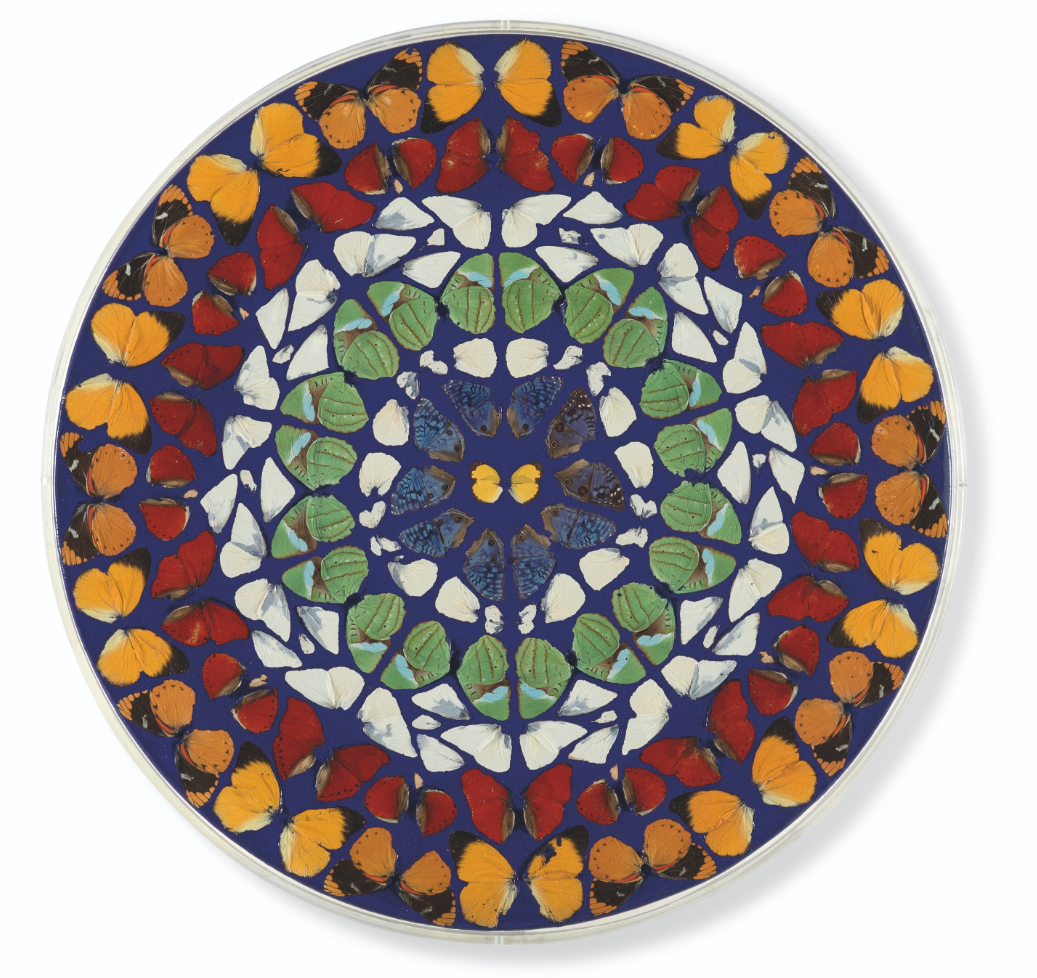
DAMIEN HIRST (B. 1965)
Psalm 2: Quare fremuerunt gentes?, 2008
Butterflies and household gloss on canvas
Diameter: 18 inches (45.7 cm)
Signed, titled and dated ‘2nd Psalm Damien Hirst 2008’ (on the reverse)
#5. Psalm 141: Domine, clamavi, 2008
Christie’s London: 16 October 2021
Estimated: GBP 70,000 – 100,000
GBP 68,750 / USD 93,307
DAMIEN HIRST (B. 1965) (christies.com)
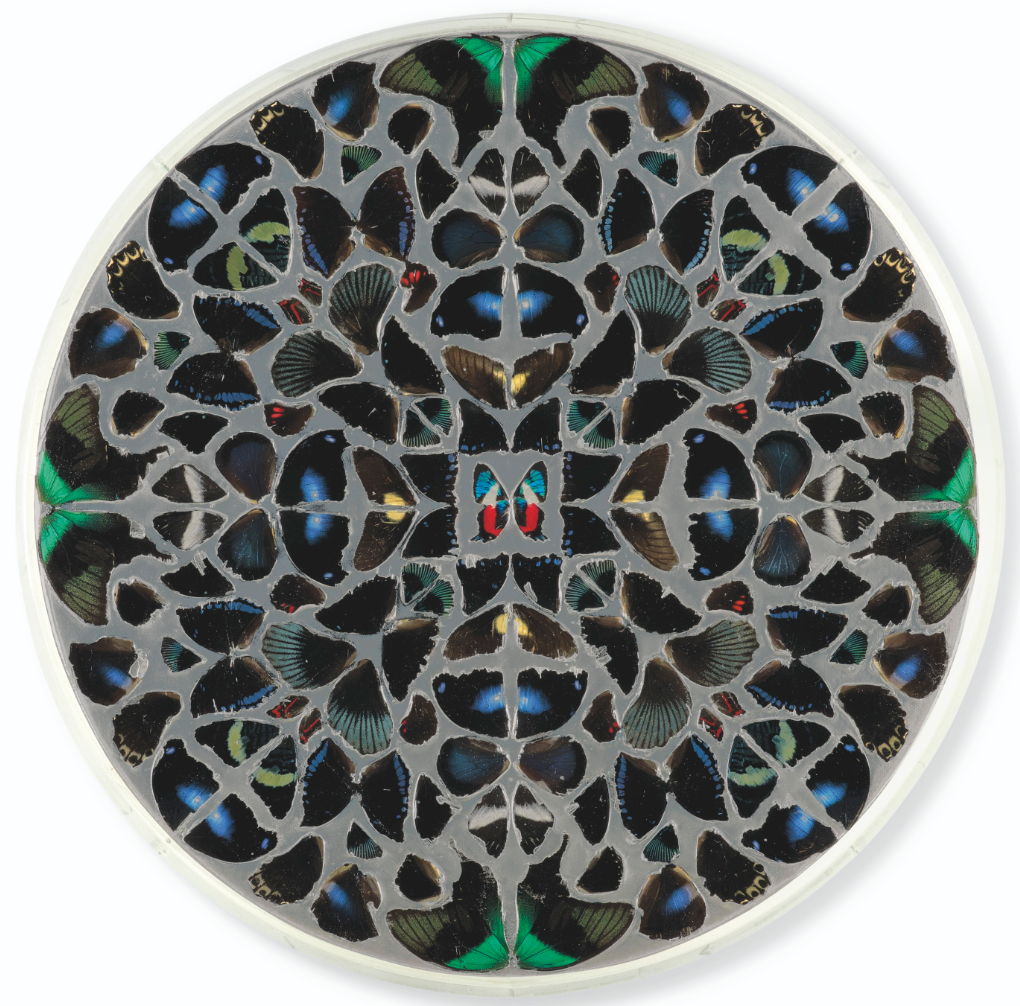
DAMIEN HIRST (B. 1965)
Psalm 141: Domine, clamavi, 2008
Butterflies, household gloss and chrome lacquer on canvas
Diameter: 18 inches (45.7 cm)
Signed, titled and dated ‘Psalm 141 Damien Hirst 2008’ (on the reverse)
Record Breakers
I am Become Death, Shatterer of Worlds, 2006
Christie’s London: 13 October 2023
Estimated: GBP 1,500,000 – 2,500,000
GBP 1,492,000 / USD 1,810,679
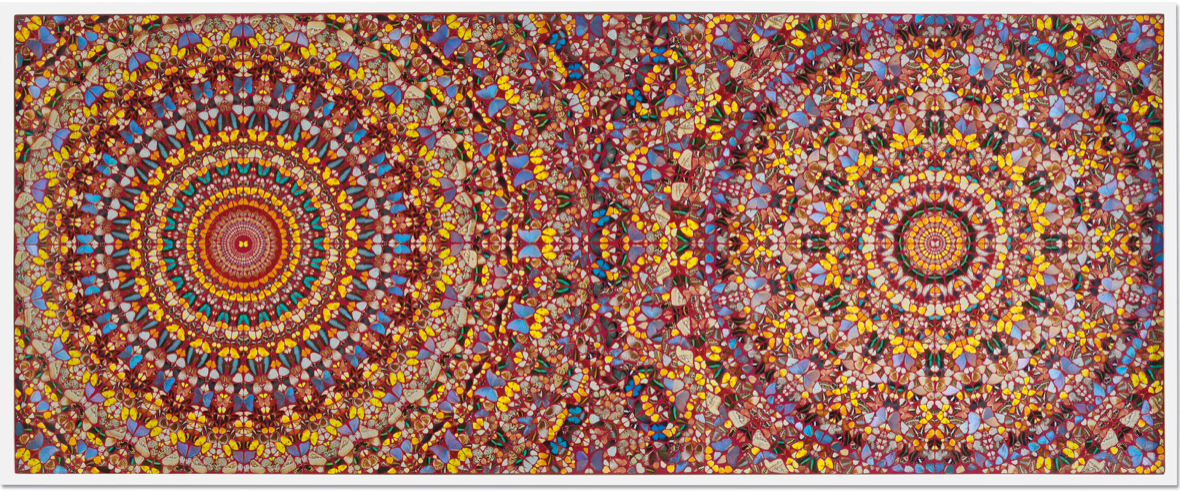
DAMIEN HIRST (B. 1965)
I am Become Death, Shatterer of Worlds, 2006
Butterflies and household gloss on canvas
84 1/8 x 210 inches (213.4 x 533.4 cm)
Signed three times, titled and dated
‘Damien Hirst “I am Become Death, Shatterer of Worlds” D Hirst D Hirst 2006’ (on the reverse)
A centerpiece of the artist’s landmark career survey at Tate Modern, London in 2012—and unseen in public since that time—I am Become Death, Shatterer of Worlds (2006) is the most spectacular butterfly painting Damien Hirst has ever created, and one of the very largest. Across a canvas more than five meters in width, two concentric explosions of vibrant, iridescent wings burst forth against a bright red backdrop. In brilliant yellows, metallic blues, blacks, greens and veined, marbled patterns, they are arranged in twin kaleidoscopes of radial symmetry, glowing with the light and color of an immense stained-glass window. Their splendor contrasts with the morbid undertones of the work’s creation, crystallizing the dualities that lie at the heart of Hirst’s outlook. Awe-inspiring and disquieting in equal measure, its title invokes one of the most infamous quotations of the twentieth century: a line from the Bhagavad Gita, an ancient Hindu text, used by J. Robert Oppenheimer in reference to his invention of the atomic bomb. In I am Become Death, Shatterer of Worlds, Hirst uses the visual language of the divine to touch on the majesty and terror of forces beyond human control.
I am Become Death, Shatterer of Worlds represents the climax of a journey that began with In and Out of Love, Hirst’s seminal installation at the Woodstock Street Gallery, London, in 1991. There, pupae were affixed to primed canvases, gradually hatching into live butterflies that flew freely through the gallery space. A downstairs room featured paintings with dead butterflies entombed in their surfaces. Those works led to a series of butterfly monochromes pursued through the following decade, with the insects scattered—as if caught mid-flight—across fields of pristine gloss pigment. During the early 2000s Hirst took these ideas further with his Kaleidoscope series, which was sparked by the sight of a Victorian tea-tray decorated with butterfly wings under glass. The present work, incorporating more than 2,700 butterflies, is the ultimate example of these refractive, densely-patterned compositions. With its vast, panoramic scale, I am Become Death, Shatterer of Worlds invokes the aesthetic of the sublime: an intertwined experience of beauty and terror, where the viewer is overwhelmed by an object’s magnitude. The grandeur of a cathedral’s interior might inspire such a response. So too might a dramatic landscape, as explored in the 19th-century paintings of the German Romantics. The Abstract Expressionists in post-war New York—particularly Barnett Newman and Mark Rothko—saw their work in the same terms. These artists aimed to provoke intense emotional reactions, and their huge, immersive ‘colour fields’, for some, offer an almost religious viewing experience.
The highest price paid at auction for a Butterfly painting is GBP 4,724,000 (USD 9,597,354) for Eternity (2002-2004) sold at Phillips in London on 13 October 2007.
Eternity, 2002-2004
Phillips London: 13 October 2007
Estimated: GBP 2,500,000 – 3,500,000
GBP 4,724,000 / USD 9,597,354
Damien Hirst – Contemporary Art Eve… Lot 239 October 2007 | Phillips
DAMIEN HIRST
Eternity, 2002-2004
Butterflies and gloss household paint on canvas.
84×210 inches (213.4 x 533.4 cm)
Eternity is a unique and beautiful example of a Damien Hirst butterfly painting. Created more than a decade after the first of the butterfly paintings was exhibited, Eternity benefits from the series’ maturing over a decade and incorporates a vivid and vibrant display of colors. Although each butterfly is different in shape, there is an overarching sense of balance and symmetry within the work, a tribute to the artist’s vision and the complexity of the endeavor. It is particularly impressive, given the scale of the work, to consider the level of attention placed on each butterfly’s placement within the larger group. The internal design and “flow” of the network of butterflies shimmers as each sector of color is highlighted and then seamlessly blends into the next, creating a hypnotizing web. Resembling the rose windows found within a Rayonnant style church (cf. Figure 2), Eternity boldly riffs on a centuries old tradition of stained glass craftsmanship, essential to the world’s oldest and most revered churches. It is of course not coincidental that the surface of the painting glistens like these rose windows, as Hirst’s conscious decision to reference the church and religion as a whole in this work fits neatly into his larger exploration of posterity in art. The remnants of the butterflies are of course dead, yet their application to the canvas’ surface is permanent and they are in a way eternal, hence the title of the work. The painting then functions as both a literal and metaphorical representation of life and death, and perhaps what comes after, but more importantly, Hirst attempts to bi-pass the restrictions of the words “life” and “death” by immortalizing his butterflies, making them eternal. In this way, Hirst engages himself in a conversation that has its roots in the oldest religious iconography of Western art – creating an object that has the potential to live on forever.
Kaleidoscope
Damned If You Don’t, Damned If You Do, 2005
Phillips New-York: 14 May 2025
Estimated: USD 300,000 – 400,000
USD 304,800
Damien Hirst Modern & Contemporary Art Day Sale, Afternoon Session
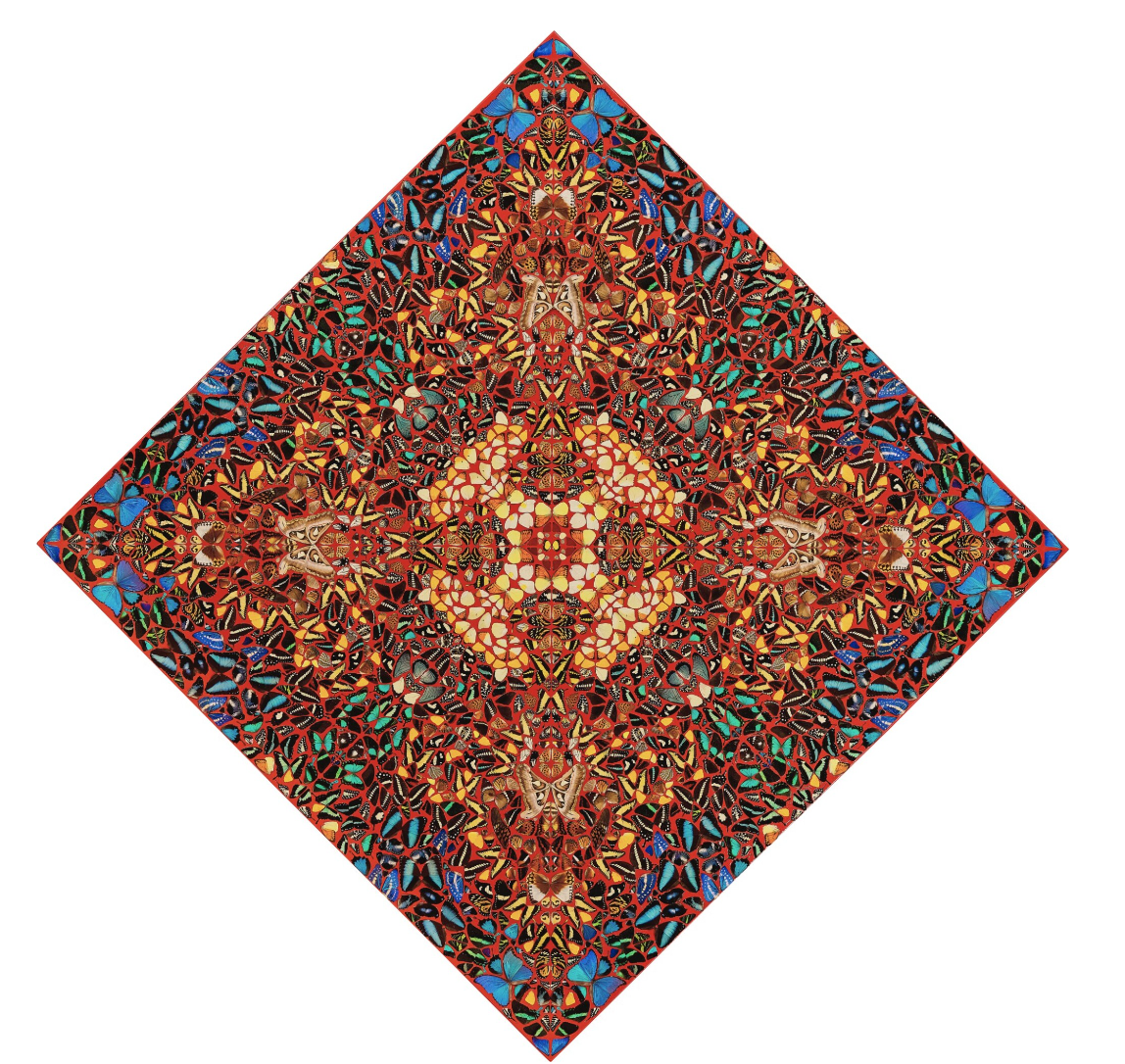
Damien Hirst’s Damned If You Don’t, Damned If You Do, 2005 is an object of both sumptuous beauty and existential confrontation. Made with real butterfly wings encased in industrial gloss, the work belongs to one of the artist’s most iconic series. In a diamond format spanning eight feet across, its formal symmetry, kaleidoscopic arrangement and reflective details immediately evoke spiritual allure. Within its delicate, jewel-like shimmer lies a meditation on mortality, belief, and the paradox of preserving life through death.
“I am interested in realism. I want art to be life but it never can be.”
Damned If You Don’t, Damned If You Do is poly-referential but nonspecific, evoking universalities regarding life, death and spirituality that bridge eastern and western culture, religion and science, and life and death. Most substantial is the work’s use of the butterfly. Frequently associated with transformation and resurrection in Christian symbology, the butterfly offers an ideal conduit for Hirst’s exploration of spirituality. His use of real butterfly wings viscerally emphasizes their fragility and impermanence; while butterflies typically only live for two weeks, the wings within the artwork, in essence, live on. The natural iridescence of the wings furthermore recalls the spiritual effect of light coming through stained glass, as in ecclesiastical windows.
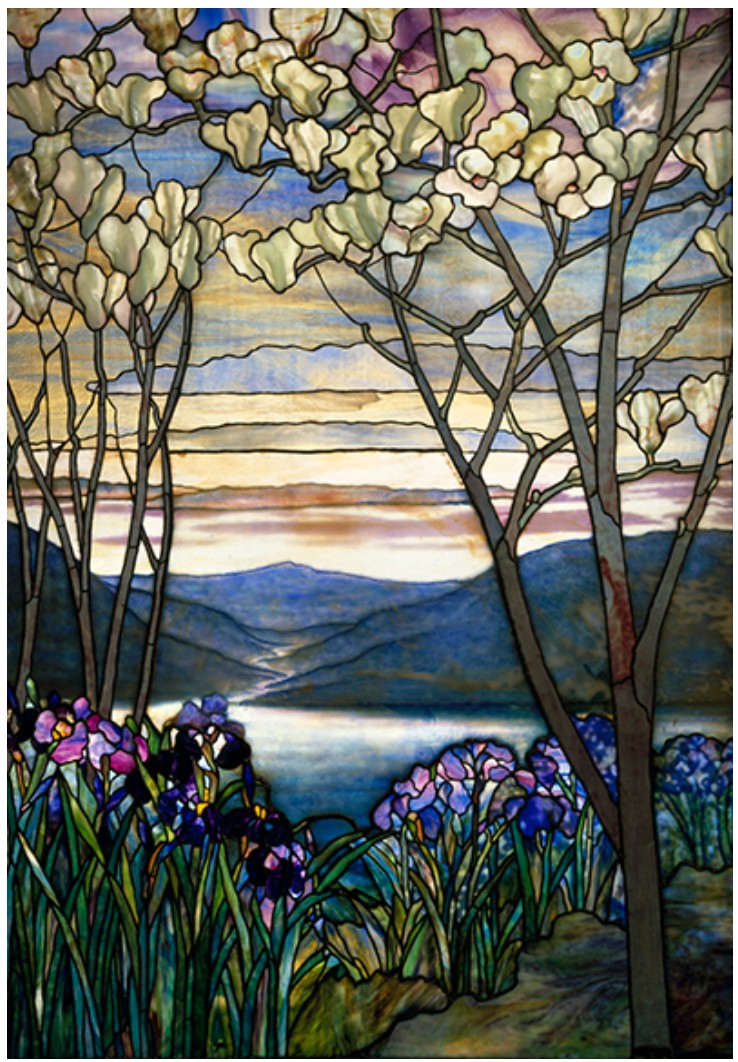
Tiffany Studios, designed by Louis C. Tiffany, Magnolias and Irises, c. 1908. The Metropolitan Museum of Art, New York.
Image: © The Metropolitan Museum of Art/Art Resource/Scala, Florence
With an emphasis on lavender and golden hues, the present example recalls the Tiffany Studios window Magnolias and Irises, circa 1908, in the permanent collection of the Metropolitan Museum of Art, New York. In Magnolias and Irises, meticulously arranged, organically shaped panels of hand-cut glass depict the River of Life. Rendered with astonishing delicacy, Tiffany used the mediums of glass and light to evoke the divine. Hirst’s butterfly works nod to centuries of stained-glass windows while invoking a Postmodern detachment. Both Hirst’s and Tiffany’s works offer windows into transcendence, but whereas Tiffany relies on nature as a symbol of divine promise, Hirst captures nature at the moment of its demise, preserving it as evidence of impermanence. The result is a secular reliquary, shimmering with both reverence and irony. The title Damned If You Don’t, Damned If You Do underscores this existential ambiguity. A fatalistic play on the familiar idiom, it is a gesture both cynical and spiritual, reinforcing the dualities at the heart of Hirst’s practice. He creates tension by presenting luminous creatures but also foregrounding their downfall. The wings are radiant, but fixed—caught mid-flight and suspended in paint. Beauty, here, is not transcendent but terminal. Akin to the tradition of vanitas paintings, Damned If You Don’t, Damned If You Do powerfully confronts mortality, devotion and the desire to eternalize the fleeting.
Creed, 2006
Phillips London: 27 June 2024
Estimated: GBP 500,000 – 700,000
GBP 685,800 / USD 869,594
https://www.phillips.com/detail/damien-hirst/UK010424/18
DAMIEN HIRST
Creed, 2006
Butterflies and household gloss on canvas
Diameter: 96 inches (243.8 cm)
Stamped with the artist’s stamp, titled and dated ”Creed’ 2006 HIRST’ on the reverse
Embodying the transient beauty of life, the motif of the butterfly has proved foundational to British artist Damien Hirst’s practice, anchoring his investigations into systems of knowledge including religion, science, and myth. A sophisticated example of the artist’s celebrated Mandala paintings, Creed adopts a mosaic arrangement, assembled with a luminous range of vivid purples, cobalt blue, yellows, and whites set against a turquoise gloss ground. The work refers back to the very outset of Hirst’s career, butterflies being the focus of his debut solo exhibition In and Out of Love. Held over two floors in a former travel agency on Woodstock Street, London in 1991, Hirst’s original installation presented a dramatic and controversial staging of the life-cycle of the butterfly. On the ground floor, Hirst attached pupae to five white canvases, carefully timing the hatching for the exhibition’s opening, while downstairs the delicate bodies of expired butterflies were fixed across eight monochrome canvases. Trays of cigarette butts accompanied the series, juxtaposed with nourishing sugar water for the live specimens upstairs. An elegant symbol condensing Hirst’s conflicted and complex feelings on mortality, the butterfly combines beauty and decay alongside notions of resurrection and transcendence, a paradox succinctly summarized by the artist’s comment that ‘the death of an insect […] has this really optimistic beauty of a wonderful thing’.
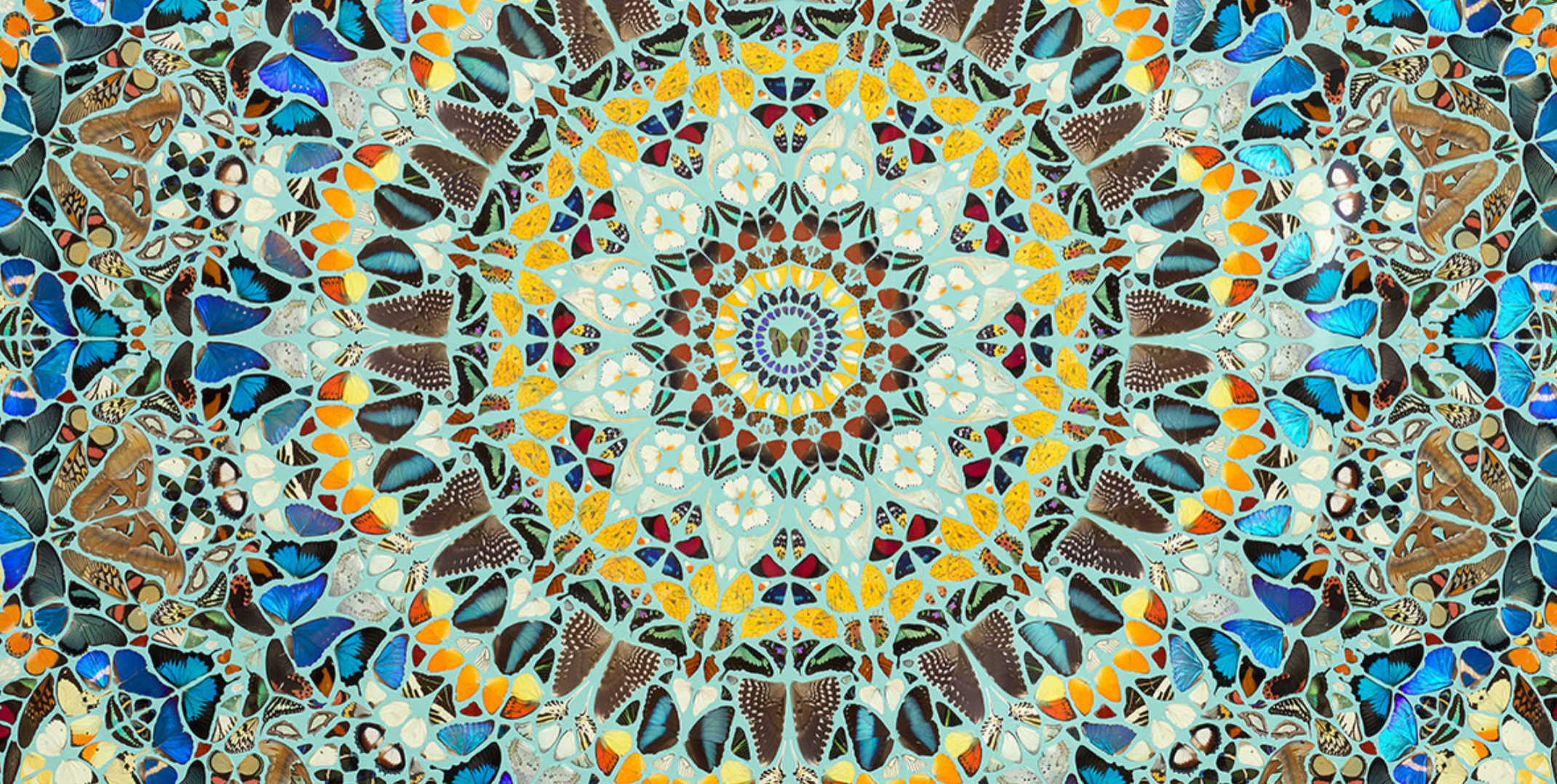
In continuing his exploration of life and death, Hirst began his intricately patterned paintings using butterfly wings in 2001. Inspired by Victorian lepidopterologist’s arrangement of winged insects, the Kaleidoscope series foregrounded aesthetic concerns alongside the spiritual and philosophical potential of the butterfly. Associations between the butterfly and the transmigration of the soul have been well established across diverse belief systems and cultures, the mythological goddess of the soul – Psyche – even lending her name to the formal Greek term for the delicate creature. As is evident across this series of works, the mimetic organization, tondo format, translucency, and vivid hues of the present work recalls the stained-glass rose windows in Gothic cathedrals across Europe. Undoubtably derived from Hirst’s Catholic upbringing, the emphasis on symmetry and harmonized patterning might also remind the viewer of the mandala in religions like Hinduism and Buddhism, typically emblematic of the cosmos. As the mandala is used in meditative rituals, in Creed the composition centers on a single butterfly from which the pattern seems to emanate and shift before the viewer’s eyes, a process of looking that encourages introspection and self-reflection. The title itself has overt religious connotations, referencing short statements of faith passed through universal religions, Hirst evoking a mode of spiritualism to encompass all belief systems, achieved through the sheer resplendence of the butterfly, even in death.
Covenant, 2007
Phillips New-York: 14 November 2023
Estimated: USD 700,000 – 1,000,000
USD 952,500
Damien Hirst – 20th Century & Conte… Lot 48 November 2023 | Phillips
DAMIEN HIRST
Covenant, 2007
Butterflies and household gloss on canvas
84×84 inches (213.4 x 213.4 cm)
Signed, stamped with the artist’s stamp, titled and dated “‘Covenant’ 2007 Damien Hirst” on the reverse
The vibrant, iridescent wings of exotic butterflies are among Damien Hirst’s most enduring materials, recurring time and time again in his oeuvre as a symbol of the transience of life. A kaleidoscopic mosaic of these gem-like insects, Covenant, 2007, is exemplary of the artist’s iconic large-scale butterfly paintings. The image so compelled the artist—and epitomized his practice—that he took it up once again for an edition of screenprints six years later. With concentric circles unravelling like a Catholic prayer labyrinth, Covenant is a poignant meditation on ephemeral beauty and renewal.
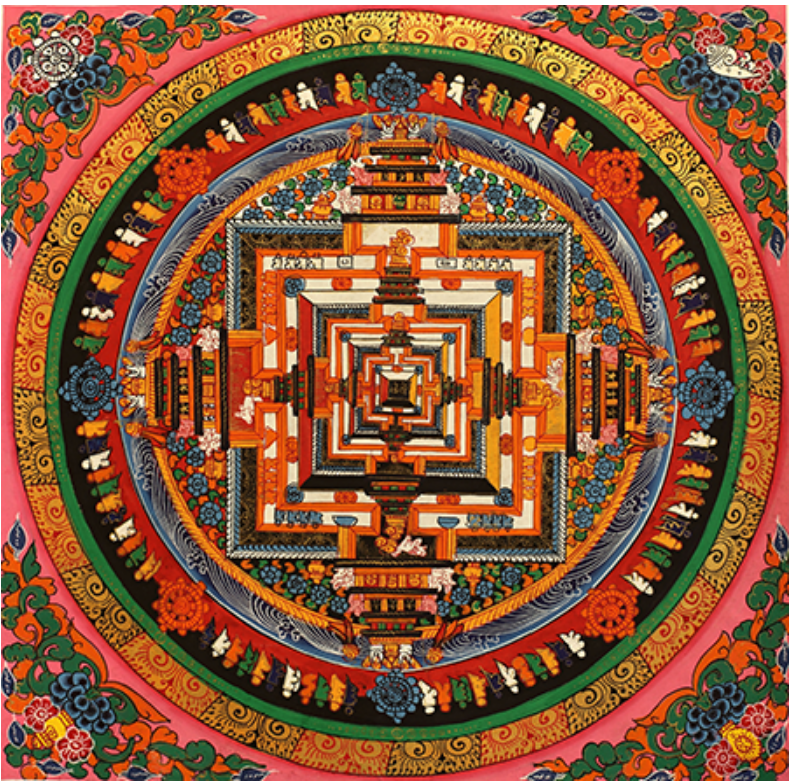
Buddhist mandala painting, Nepal. Image: Werli Francois / Alamy Stock Photo
The many themes that these butterflies represent for Hirst—the transience of living beings, the inevitability of death, and the possibility of an afterlife—synergize with those explored by religion. In 2007, the year Covenant was executed, the artist began to turn more explicitly to the Christian iconography he exposed to in his youth. Deliberately drawing from the visual language of stained glass, the present work evokes the grandeur of medieval Christian cathedrals. This engagement with spirituality is furthered by its title: Covenant, referring to a sacred biblical agreement between God and a religious community, which plays a central role in Judaism, Christianity, and Islam. Also resonating beyond the Abrahamic religions, the work’s concentric shape is redolent of the intricate mandalas used in Buddhist, Hindu, Shinto, and Jain traditions to picture the cosmos. Inspired by a Victorian tea-tray in which butterflies were pressed under glass, Hirst returned to the motif for his Kaleidoscope series begun in the early 2000s, removing the insects’ bodies and arranging their wings into densely-patterned geometric compositions.
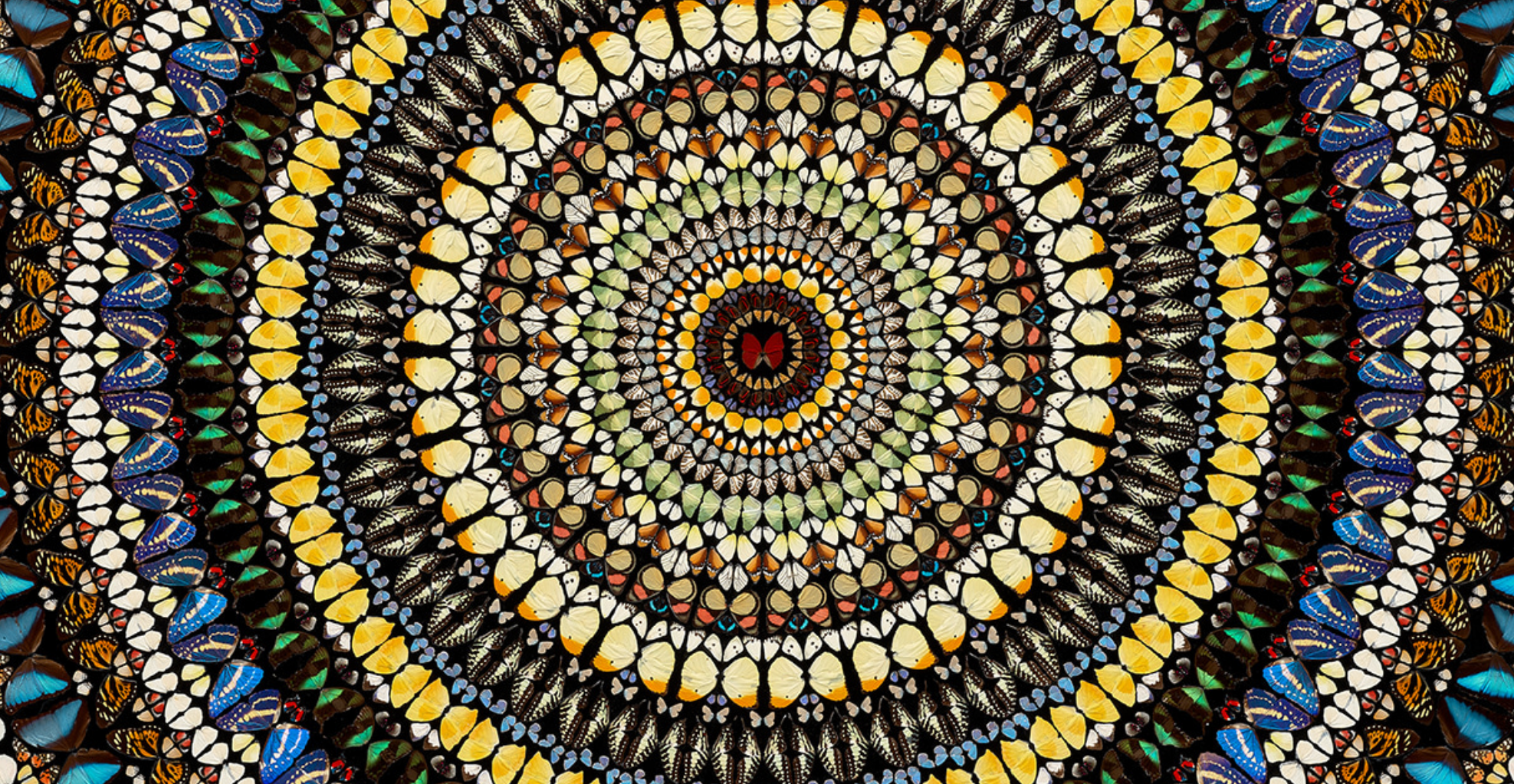
Hirst’s intention behind Covenant was therefore not to invoke a specific religious practice, but to interrogate the complex relationship between art, death, and belief. Symbolizing the fragility of life, the radiant metamorphosis of the butterfly is cut short by its very brief lifespan, which typically amounts to only two weeks. However, the butterflies are a metaphor not only for mortality but also for remembrance: after their death, their beauty is forever preserved in his paintings.
Ulysses, 2008
Christie’s London: 13 October 2023
Estimated: GBP 600,000 – 800,000
GBP 756,000 / USD 917,475
DAMIEN HIRST (B. 1965)
Ulysses, 2008
Butterflies and household gloss on canvas
Diameter: 84 inches (213.3 cm)
Signed, titled twice and dated ‘ULYSSES 2008 Damien Hirst ‘Ulysses” (on the reverse)
Created in 2008, Ulysses by Damien Hirst is a striking meditation on life and beauty. Within the monumental, round canvas, vibrant blue butterflies form concentric circles, together suggesting an infinite, unfolding expanse. The work’s deep blue surface, notably, conjures the otherworldly azure of Hirst’s celebrated formaldehyde tanks, which engaged with similar themes, as well as invoking the dazzling, opulent interiors of mosques and other Middle Eastern architecture.
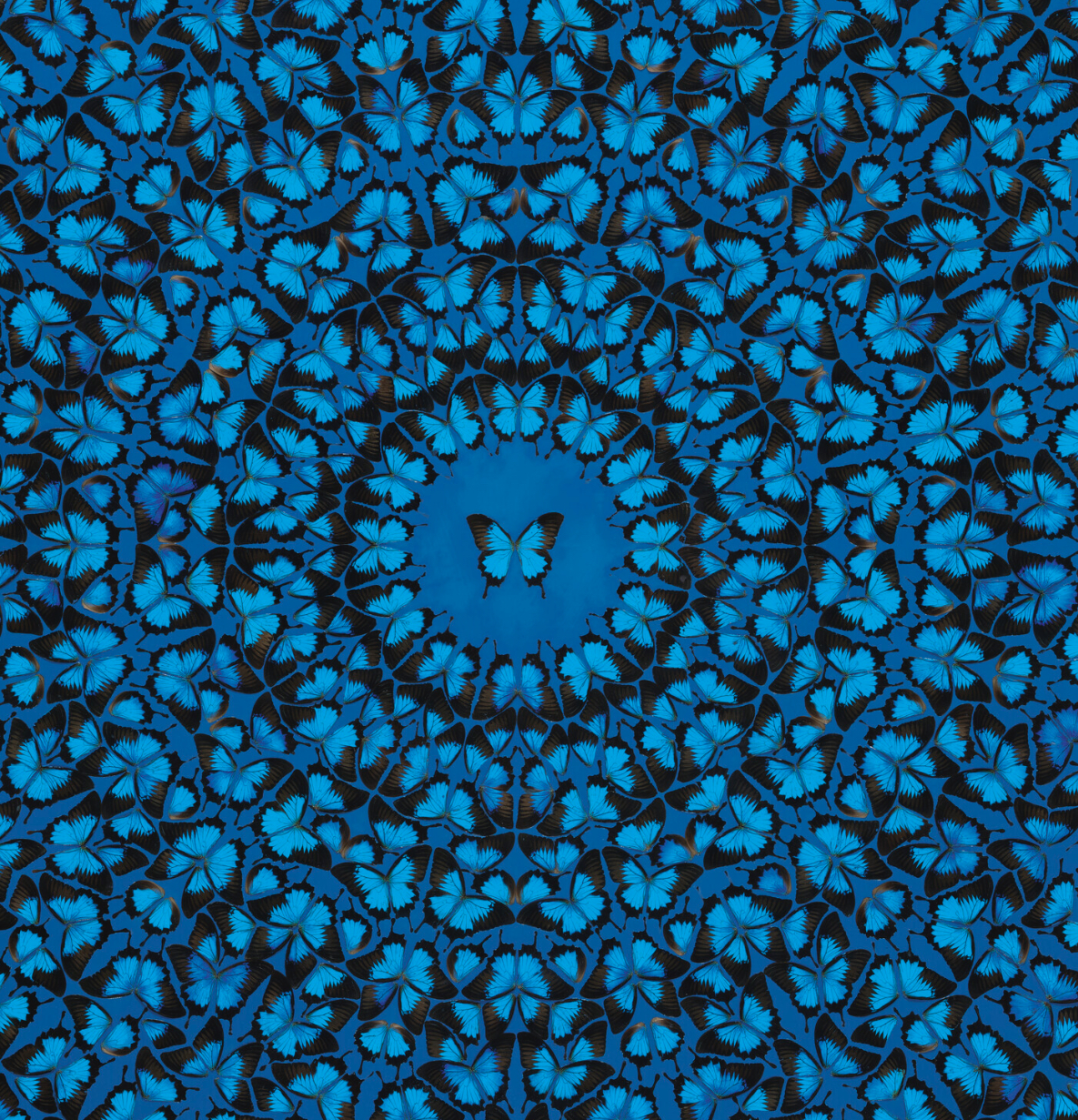
Just as many of the artists who painted skulls and decaying fruit hoped to remind their viewers of the fleetingness of life, so too do Hirst’s butterflies suggest a corporeal insubstantiality. These are fragile beings, a sense built into their gossamer physiological makeup. Yet far from despairing or bleak, Ulysses instead reveals a determined hope, conjured in the implication of stained glass tracery formed by the butterflies’ black bodies. This is further underscored by the work’s title. Though ‘Ulysses’ refers to the species of blue butterfly used here, it also recalls the great Homeric epic that follows the Greek hero and King of Ithaca, Odysseus, on his ten-year journey home, as well as James Joyce’s modern retelling of the story. Hirst, significantly, was beginning to plan ideas for his own great odyssey, Treasures from the Wreck of the Unbelievable, during this period.
Reconciliation, 2018
Phillips New-York: 17 May 2023
Estimated: USD 700,000 – 1,000,000
USD 927,100
Damien Hirst – 20th Century & Contempora… Lot 19 May 2023 | Phillips
DAMIEN HIRST
Reconciliation, 2018
Butterflies and household gloss on canvas
Diameter: 72 inches (182.9 cm)
Signed, stamped with the artist’s stamp
Titled and dated “2018 Damien Hirst ‘Reconciliation'” on the reverse
Damien Hirst’s Reconciliation, 2018, is a hypnotic example of the artist’s most recent series of large-scale butterfly works. The wings of butterflies are set in meticulous, concentric circles, with a Hebomoia Glaucippe butterfly at the very center, functioning as a point of visual focus. The round, uniform composition of the work has a soothing, even spiritual effect, reminiscent of the mandala, an intricate, stylized representation of the divinely-ordered cosmos common to Hindu, Buddhist, Jain, and Shinto religious traditions. The eye moves around Reconciliation like a penitent Catholic walks a prayer labyrinth, a concentric path for contemplation, found in the gardens of Catholic monasteries, or paved into the stones of cathedral floors.
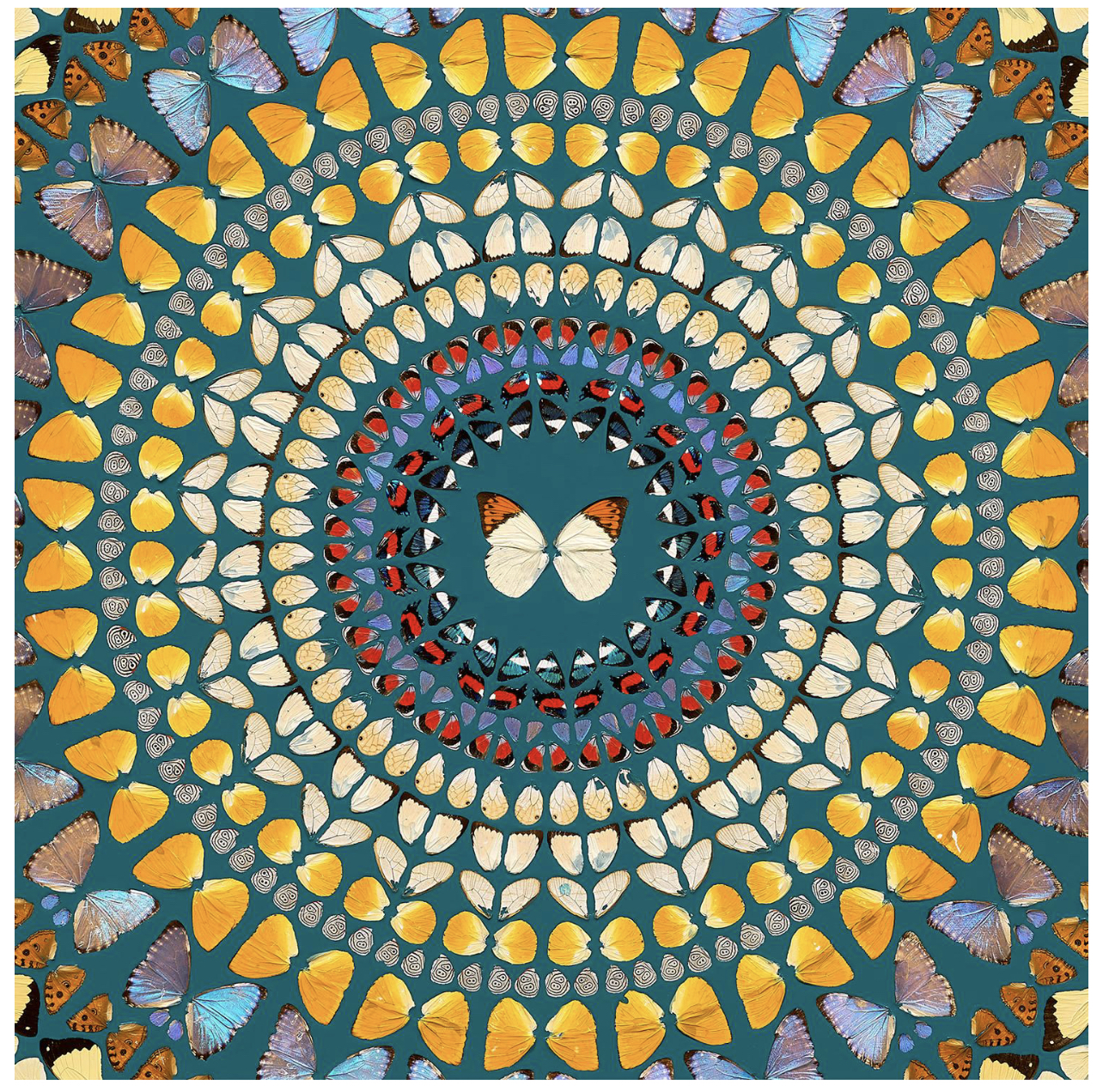
Hirst’s deployment of Catholic references in his works strongly correlates with his use of butterflies as art materials. While his first solo exhibition, In and Out of Love, 1991, featured live butterflies, it wasn’t until the early 2000s, with his Kaleidoscope series (2001-present), that Hirst began using butterfly wings in earnest as a medium. In the mid-2000s, he executed a series of 150 concentric butterfly works, smaller in scale than Reconciliation, with each work taking its title from an entry in the Book of Psalms in the Bible. The Cathedrals series, begun c. 2007, draws a direct link to perhaps the strongest Catholic visual reference for Hirst’s butterflies: the stained-glass windows of Catholic cathedrals. Hirst recently brought this connection to its apex with a stained-glass skylight of butterflies for Claridge’s, London, in 2022.
Forgiven, 2008
Phillips Hong-Kong: 1 December 2022
Estimated: HKD 6,000,000 – 9,000,000
HKD 7,510,000 / USD 965,768
Damien Hirst – 20th Century & Conte… Lot 10 December 2022 | Phillips
DAMIEN HIRST
Forgiven, 2008
Butterflies and household gloss on canvas
Diameter: 213.4 cm (84 inches)
Signed, titled and dated on the stretcher
To encapsulate a maverick artist as manifold as Damien Hirst in a single object is a Herculean task, one that most critics and academics would shun for the fear of failure. Yet here with Forgiven, we are given a cheat sheet into one of the world’s greatest creative minds. His fascination with color, the aesthetics of display and the methodology of collecting, and crucially, mortality and the transience of beauty are placed on a pedestal for us to contemplate, muse, wonder and venerate; a pleasure rare to the world.
Omnipotence, 2008
Phillips London: 14 October 2022
Estimated: GBP 350,000 – 450,000
GBP 796,900 / USD 893,385
Damien Hirst – 20th Century & Contem… Lot 30 October 2022 | Phillips
DAMIEN HIRST
Omnipotence, 2008
Butterflies and household gloss on canvas
Diameter: 60 inches (152.4 cm)
Signed, stamped, titled and dated on the backing board
Signed and stamped on the stretcher
Shimmering with a jewel-like iridescence, Omnipotence is a mesmeric example of British artist Damien Hirst’s Kaleidoscope series. Composed of the wings of butterfly specimens geometrically arranged in a radial fashion around a central loci, marked here by a set of brilliant, azure wings, the work offers an appropriately kaleidoscopic vison, the dazzling fractured shards of lapis, citrine, topaz, and opal shades appearing to splinter and multiply before our eyes. Possessing remarkable vitality, chromatic variety, and radiance, the present work brings together key conceptual threads of Hirst’s provocative practice: his fascination with colour and systems of structuring it; collecting practices and the aesthetics of display; mortality and the transience of beauty. Adopting the appearance of delicate stained glass, in its luminosity and radial arrangement, Omnipotence takes on the appearance of the kind of Gothic Rose window discovered in the most spectacular Cathedrals of Europe – a point directly referenced in the titles of some of the works from the series. Although not directly referencing ecclesiastical sites or architectural elements, the title of the present work of course also carries with it a strong sense of doctrinal wisdom, the omnipotence of the deity taken as a foundation stone for many different belief systems. Absorbing and meditative, the devotional aspect of the Mandala works was further emphasized by Hirst in the Psalm subseries, a limited group of butterfly works which Hirst started in 2008 – the same year as the current work’s execution.
Beautiful Architect, 2003
Sotheby’s London: 30 June 2022
Estimated: GBP 400,000 – 600,000
GBP 882,000 / USD 1,072,470
Beautiful Architect | Modern & Contemporary Day Auction | 2022 | Sotheby’s (sothebys.com)
DAMIEN HIRST (B. 1965)
Beautiful Architect, 2003
Butterflies and household gloss on canvas
63×63 inches (160×160 cm)
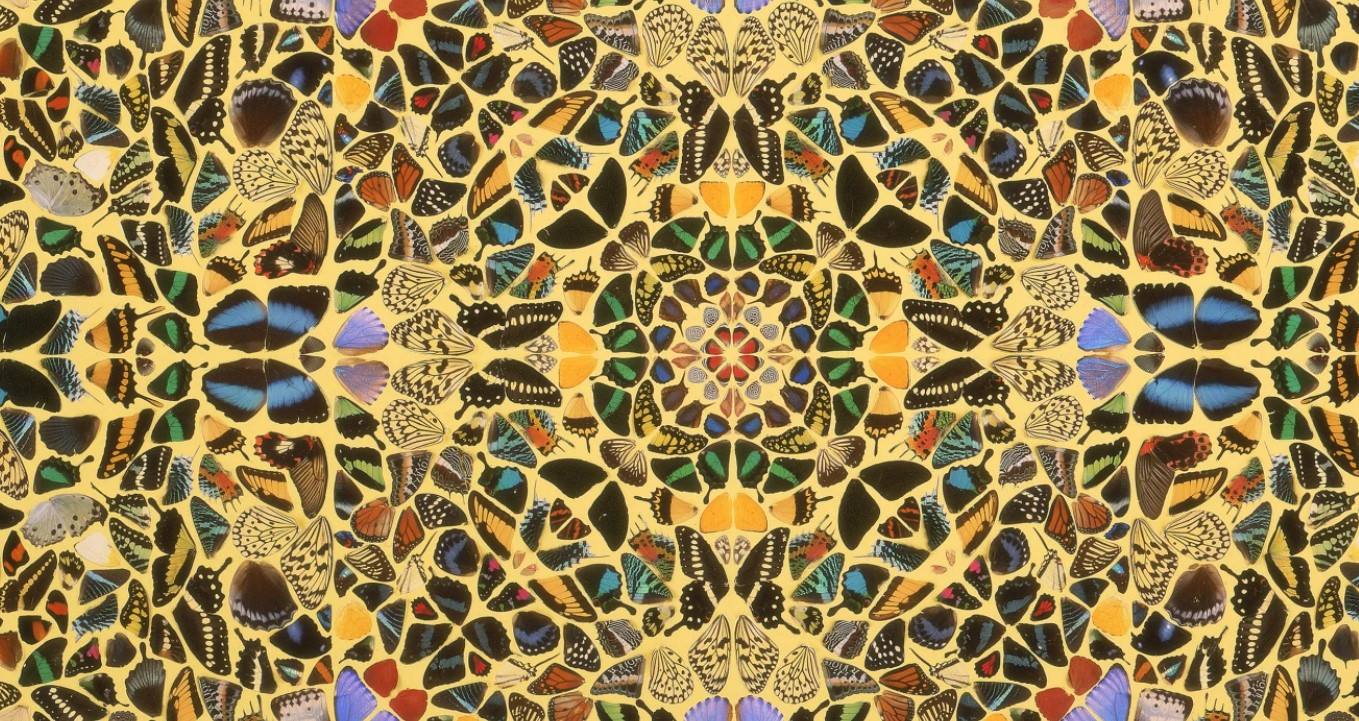
Mesmerizing in its geometrical complexity, Beautiful Architect from 2003 is a dazzling example of Damien Hirst’s iconic butterfly paintings. Hirst first began sticking the bodies of dead butterflies into thick layers of household gloss on canvas in the early 1990s, but it was not until 2001 that Hirst began his archetypal Kaleidoscope paintings. Inspired by Victorian naturalists who bred and organized butterflies by category for scientific understanding, Hirst began to arrange the insects by color into a vivid mosaic-like surface. As a larger oeuvre of work, the butterfly works serve as rumination on the most important concern for Hirst – death as channeled through the two dominating belief structures of contemporary existence: religion and science. A visual feast of vibrant color and elaborate pattern, the present work is composed of a kaleidoscope of delicate butterfly wings, arranged upon a shining gold background to create an organic stained-glass window, encouraging the viewer to focus on the extraordinary – yet fragile – beauty of the natural world.
The butterfly has become an iconic motif in Hirst’s highly developed artistic lexicon, signifying the soul itself. The association of the butterfly with religion and spirituality is a venerable one: the Ancient Greeks employed an identical word for ‘butterfly’ and ‘soul,’ whilst in Christian tradition the rebirth of a butterfly from its cocoon symbolizes the miracle of Christ’s resurrection. The incredibly detailed symmetry of Beautiful Architect is reminiscent of the intricate stained glass in Europe’s great cathedrals.
Striking a delicate balance between tragic poignancy and exultant splendor, Beautiful Architect interweaves religion, science and art, distinct categories each with its own fervent claim to truth, to create an object of bewildering beauty. Ephemeral and bewildering in its beauty, the present work becomes a powerful icon for humankind’s own temporal existence and life cycle. The delicate and effervescent butterflies bestow an unrivalled expression of the beauty and fragility of life. Hirst captures the oxymoronic beauty of horror, and horror of beauty, in a complex metaphor: the caterpillar dies in its chrysalis and is reborn as a butterfly. This delicate creature dies, but in doing so gives birth to a beautiful object, the work of art.
Omniscience, 2007
Sotheby’s Hong-Kong: 27 April 2022
Estimated: HKD 5,000,000 – 7,000,000
HKD 4,410,000 / USD 562,012
DAMIEN HIRST (b. 1965)
Omniscience, 2007
Butterflies and household gloss on canvas
102×102 inches (258.6 x 258.6 cm)
Signed, titled and dated 2007 on the reverse
Arguably Britain’s most famous living artist, Damien Hirst is known for his controversial and provocative oeuvre of multi-colored spots, preserved animals, medicine cabinets and diamond-encrusted skulls that explore the complex relationships between art, life, death, beauty, religion and science. Perhaps one of his most recognizable and iconic motifs, Hirst’s butterfly art established the artist as a household name, and has been featured in major notable institutions such as the Tate. Hirst first began sticking the bodies of dead butterflies into thick layers of household gloss on canvas in the late 1980s, but it was not until 2001 that Hirst began his archetypal Kaleidoscope paintings in which the artist carefully sticks the wings of butterflies into symmetrical, visually pleasing compositions. Omniscience is a monumental Kaleidoscope painting executed in 2007, the year before he started his Psalm paintings in 2008. Here, Hirst presents us with a kaleidoscopic vision of hundreds of meticulously placed butterfly wings, set against a sizzling backdrop of vivid red gloss paint. Omniscience is a highly kinetic work in which the butterfly wings appear to rotate and shift before the viewer’s eyes, like the image within a kaleidoscope, absorbing the viewer into the heart of the work, before shifting the gaze back out to the brilliant blue edges of the canvas. The image bursts with a fizzling energy—indeed, the piercing cobalt blue and electric yellow elements of the butterfly wings evoke the gradients of a flame, transitioning from blue to yellow to red as it combusts.
In the early 2000s, a decade after his seminal In and Out of Love show in 1991, Hirst found inspiration for his Kaleidoscope paintings in a Victorian tea tray that was decorated with a detailed pattern of butterfly wings. The work evokes a Victorian preoccupation with nature and science, and recalls the Victorian past time of butterfly collecting, a popular hobby that led many to display their captured species in their homes, presenting them in display cabinets or drawers, pinned in rows in a manner not dissimilar to Hirst’s butterfly art. Throughout Hirst’s oeuvre, the artist continues to interrogate the themes of life and death. Indeed, the artist has stated: “Art’s about life and it can’t really be about anything else…there isn’t anything else” (the artist quoted in Amie Corry, “Light in the Darkness” in Damien Hirst and Jason Beard (eds.), Damien Hirst: The Complete Psalm Paintings, London, 2014, n.p.). Discussing Hirst’s exploration of mortality in his Kaleidoscope works such as Omniscience, Amie Corry argues: “By detaching the wings from the insects’ bodies, there is a sense in which Hirst seems to abandon the sometimes meaningless realities of life, in favour of the certainty of death” (Amie Corry, “Light in the Darkness” in Damien Hirst and Jason Beard (eds.), Damien Hirst: The Complete Psalm Paintings, London, 2014, n.p.).
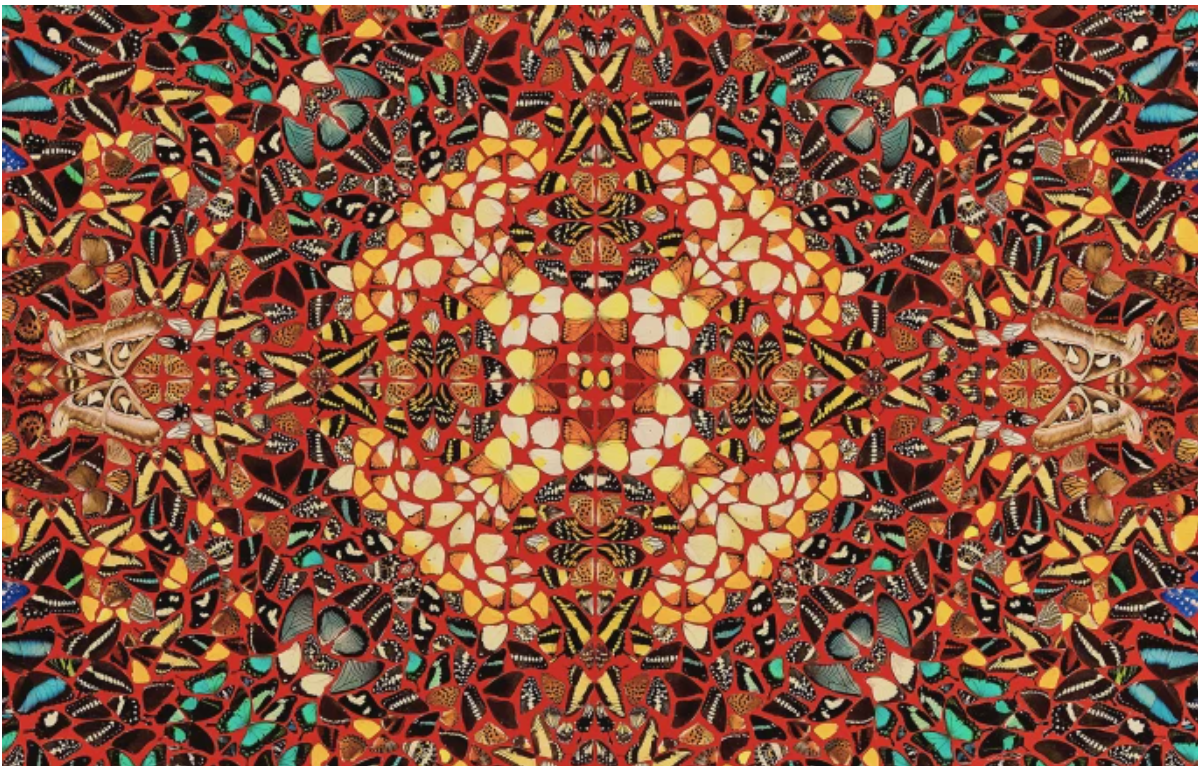
Writing about this work on his Instagram account, Hirst stated: “This is ‘Omniscience’. A lot of my butterfly kaleidoscope paintings are named after religious ideas because they always look and feel religious to me. There’s also something spiritual about repetition” (29 May 2018). Indeed, the repetition of Hirst’s work and its astonishing ability to absorb the viewer in its imagery recalls the work of Yayoi Kusama and her signature nets composed of hundreds of repetitive gestures. However, the precision in which the butterflies have been placed into the household gloss paint and the almost exact symmetry within the image appears almost machine manufactured, opposing the biological, natural essence of the painting—the wings of dead butterflies. Nevertheless, there is a distinct religious quality embedded in the work, perhaps due to its repetition as commented upon by Hirst, or perhaps due to each butterfly’s representation of a soul. Hirst often gives his Kaleidoscope paintings titles with religious meanings or connotations, such as Doorways to the Kingdom of Heaven and The Kingdom of the Father, both executed in 2007. Here, Omniscience refers to the state of knowing everything, and is therefore suggestive of a higher, all-knowing presence. The vivid chromaticity and luminosity of the work also recalls the brilliance of stained glass windows particularly in Gothic churches, further reinforcing the religious reading of Omniscience, in which Hirst creates a similar portal for the viewer to commune with another dimension or higher power. Overall, Omniscience is an outstanding butterfly work by Damien Hirst that is not only aesthetically stunning, but powerfully explores the relationship between art, life, beauty and death, key themes that define Hirst’s artistic practice.
Gospel, 2004
Sotheby’s London: 3 March 2022
Estimated: GBP 220,000 – 280,000
GBP 403,200 / USD 537,098
Gospel | Modern & Contemporary Day Auction | 2022 | Sotheby’s (sothebys.com)
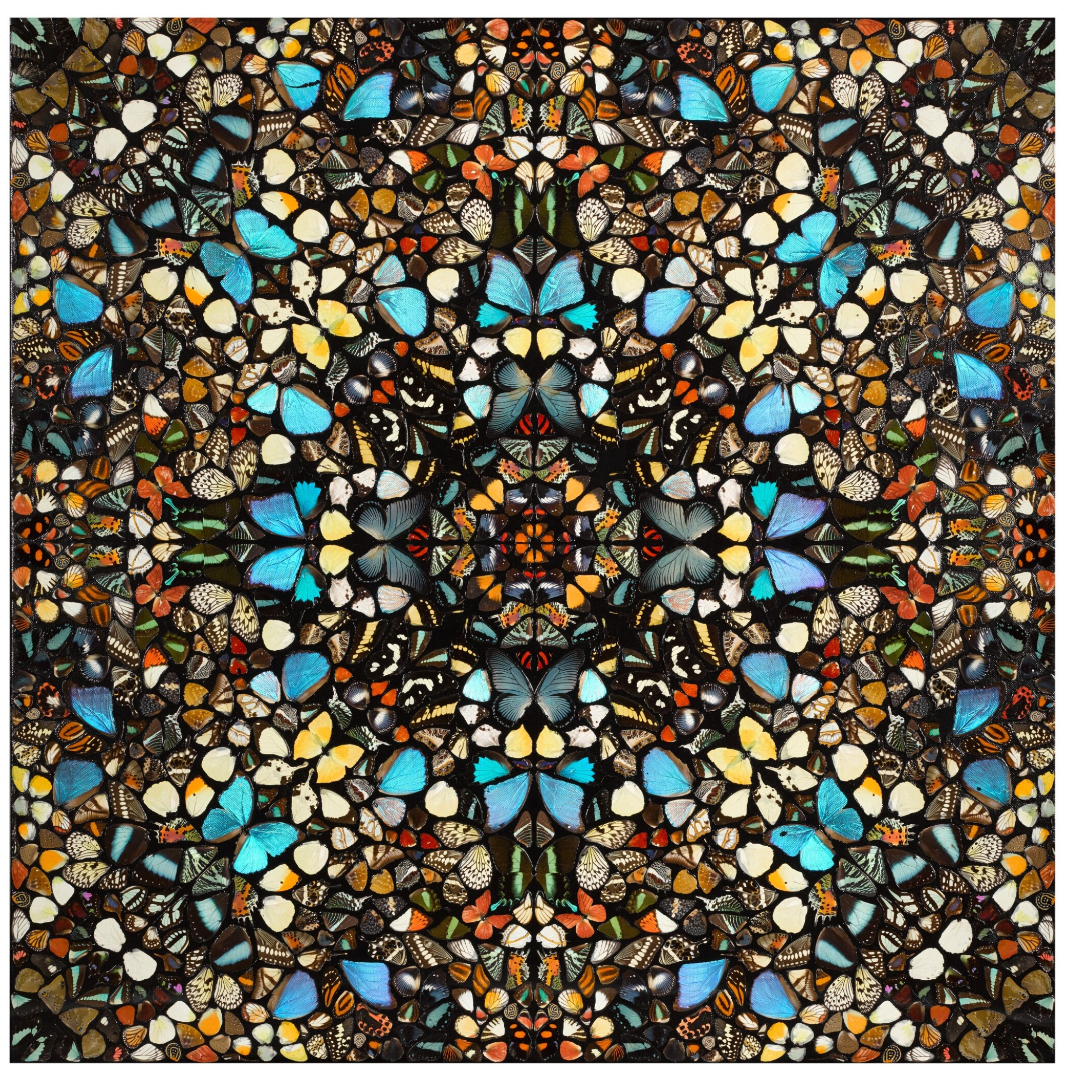
DAMIEN HIRST (b. 1965)
Gospel, 2004
Butterflies and household gloss on canvas
48×48 inches (121.9 x 121.9 cm)
Embodying Damien Hirst’s ongoing dialogue with the theme of mortality, Gospel is a mesmerizing example of the artist’s Butterfly Grid Paintings. Arranged here in an intricate mosaic on the surface of deep black gloss paint, the butterfly wings coalesce into a kaleidoscopic composition which appears to shift and revolve before the viewer’s eyes. The Butterfly Grid Paintings serve as a meditation on the intersection between life and death, exploring how contemporary society’s two dominant belief structures – religion and science – might negotiate this crucial juncture. While the butterflies on the surface of Gospel remain dead and utterly inert, their wings retain their intrinsic aesthetic allure, remaining intact for eternity.
Hirst began the Butterfly Grid Paintings in 2001, their collaged compositions initially inspired by a Victorian tea tray the artist found earlier that year. The paintings investigate the Victorian fascination with the natural world and their reverence for the spectacle of nature and the unpredictability of scientific specimen. Inspired by Victorian naturalists who bred and organised butterflies by category for scientific understanding, Hirst began to arrange the insects by colour into a vivid mosaic-like surface. Some of Hirst’s most iconic paintings, sculptures and installations have employed the live or decaying bodies of butterflies, using the symbolism of the insect to magnificent effect. In and Out of Love, an early, seminal work from 1991, consisted of an entire room of live butterflies floating freely amongst pots of flowers and sugar. The elegance of the live butterflies was juxtaposed against the dormant bodies of dead butterflies, which were affixed to monochrome canvases as though accidentally caught in the sticky surface of the gloss paint. In the same room, Hirst applied a number of unhatched pupae to monochrome white canvases and over time butterflies emerged from the chrysalises. The subsequent hatching and metamorphosis effectively served as a miniature illustration of the complete cycle of life and death: a theme of endless fascination for Hirst. In and Out of Love was to become the first occasion on which Hirst exploited the natural beauty of the butterfly in his ruminations on mortality, and the Butterfly Grid Paintings build upon the artist’s earlier existential introspection. Hirst himself maintains, “I’ve got an obsession with death… But I think it’s like a celebration of life rather than something morbid” (Damien Hirst cited in: Gordon Burn and Damien Hirst, Eds.,On the Way to Work, London 2011, p. 21). Compelling viewers to confront the immediacy of death, Gospel is imbued with conflicting sentiments of anguish and celebration, tragedy and splendor.
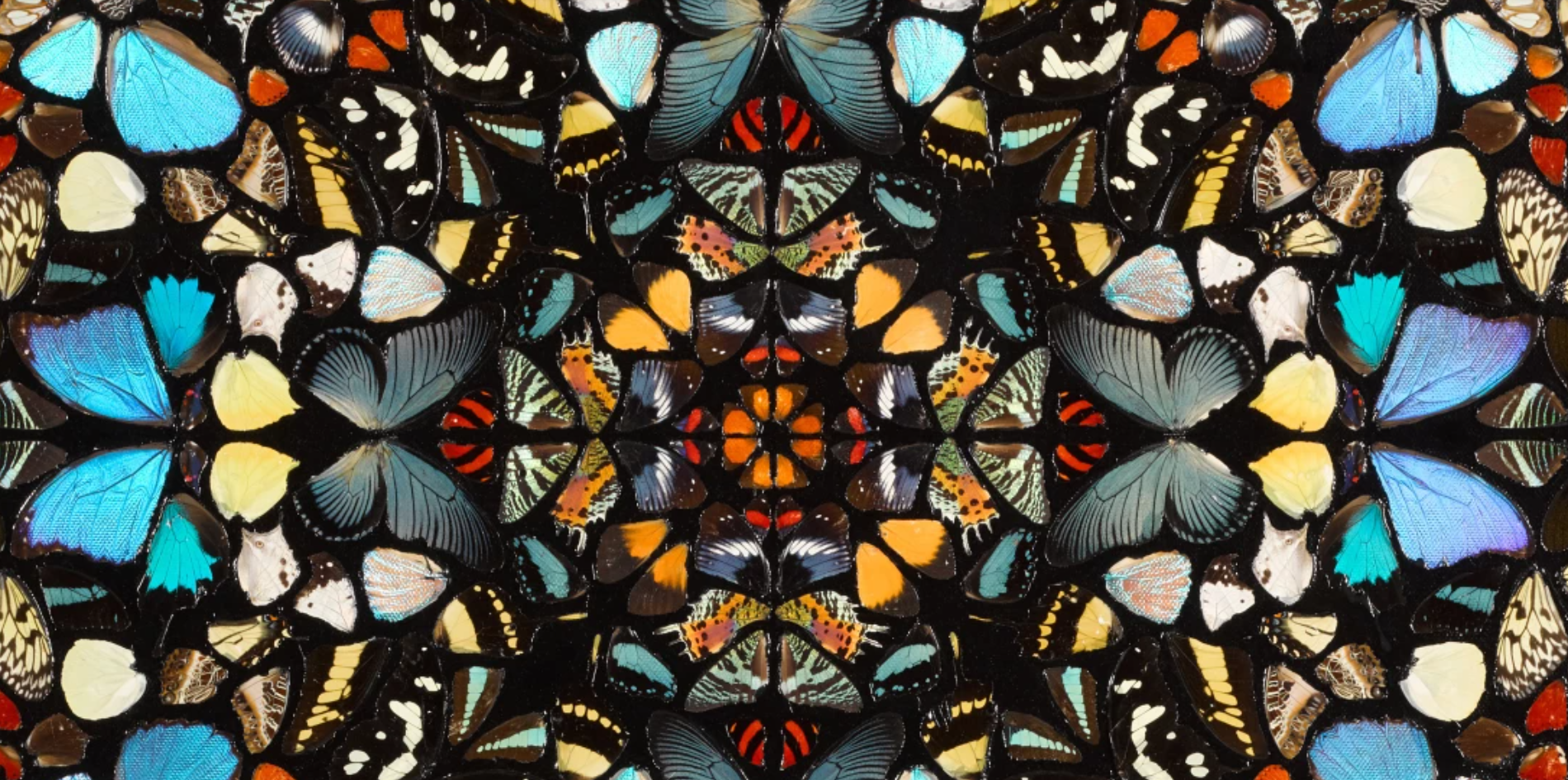
While Hirst’s Butterfly Grid Paintings recall a Victorian obsession with nature and science, they also evoke religious iconography, imagery undoubtedly derived from Hirst’s own Catholic upbringing. The symmetrical quality of Gospel is reminiscent of the intricate stained glass in Europe’s great cathedrals, whilst the birth of a butterfly from its cocoon presents a lasting symbol of Christ’s resurrection. As an emblem of religion, death and rebirth, the butterfly has become one of Hirst’s most enduring motifs, one that encourages his viewers to consider the extraordinary – yet fragile – beauty of the natural world. As art critic and writer Michael Bracewell vividly summarises, “The viewer is confronted in each work by the physical representation, or its meticulously honed depiction, of those beliefs, ideas, conditions and institutions which shape the common basis of human experience. Morality, faith, medicine, religion, wealth and aesthetics comprise the principal themes and subject matter of Hirst’s paintings, sculptures and installations. The ceaseless interplay of these fundamental concerns, and their intrinsic relationship to the individual and society, are brought to life in works of the exquisite aphoristic refinement as well as graphic violence and sheer spectacle” (Michael Bracewell cited in: Damien Hirst, Requiem I, 2009, online).
Sinful, 2007
Sotheby’s London: 13 April 2021
Estimated: GBP 250,000 – 350,000
GBP 315,000 / USD 432,811
Sinful | Contemporary Curated | 2021 | Sotheby’s (sothebys.com)
DAMIEN HIRST (b. 1965)
Sinful, 2007
Butterflies and household gloss on canvas
96×48 inches (243.8 x 121.9 cm)
Signed, titled and dated 2007 on the reverse
Embodying Damien Hirst’s ongoing dialogue with the theme of mortality, Sinful is a mesmerizing example of the artist’s Butterfly Grid Paintings. In tones of turquoise, ultramarine, and yellow, the present work is comprised of hundreds of individual butterfly wings, each with a distinct pattern and hue. Arranged here in an intricate mosaic on the surface of gloss paint, the butterfly wings coalesce into a kaleidoscopic composition which appears to shift and revolve before the viewer’s eyes. The Butterfly Grid Paintings serve as a meditation on the intersection between life and death, exploring how contemporary society’s two dominant belief structures – religion and science – might negotiate this crucial juncture. While the butterflies on the surface of Sinful remain dead and utterly inert, their wings retain their intrinsic aesthetic allure, remaining intact for eternity.
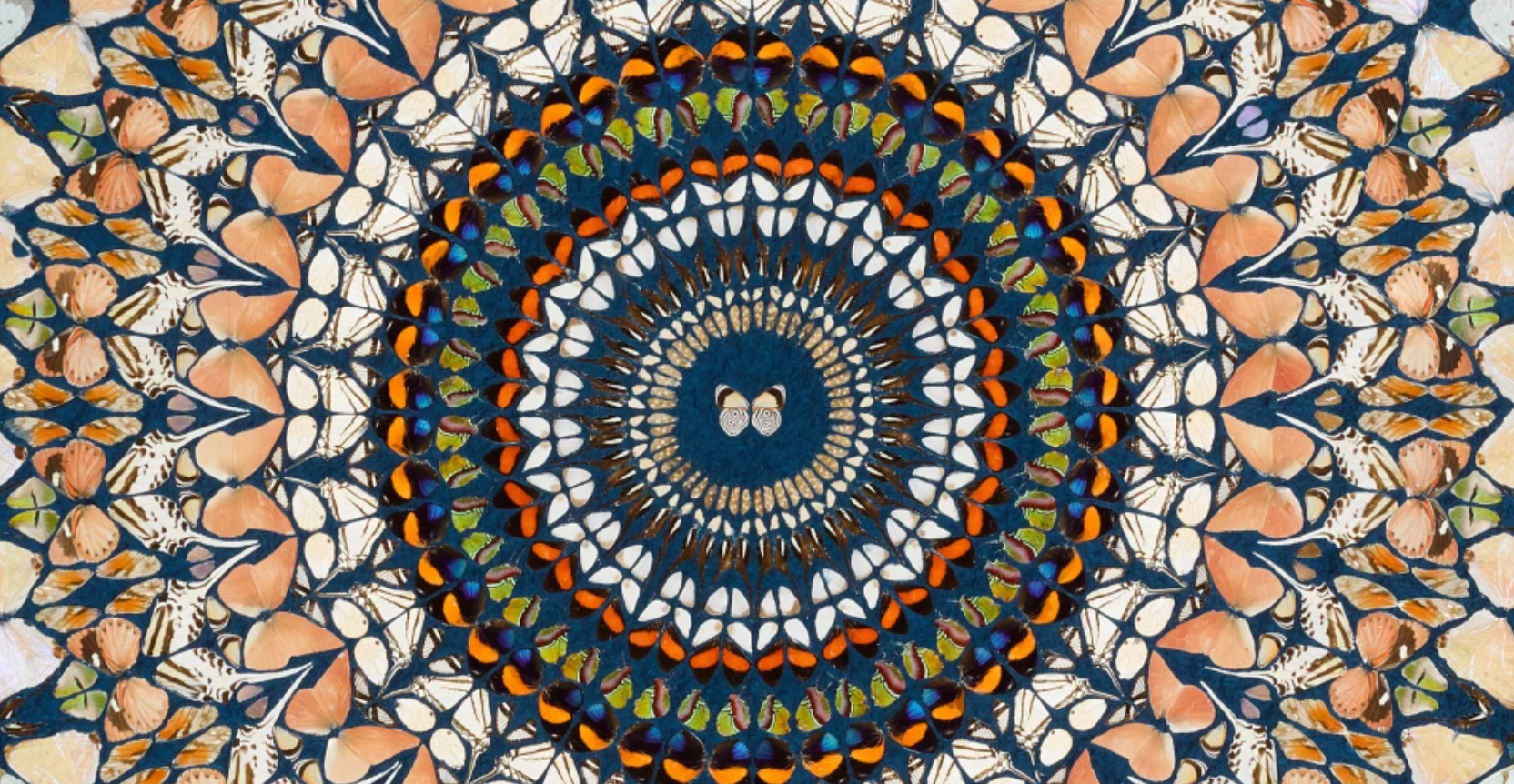
Compelling viewers to confront the immediacy of death, Sinful is imbued with conflicting sentiments of anguish and celebration, tragedy and splendor. While Hirst’s Butterfly Grid Paintings recall a Victorian obsession with nature and science, they also evoke religious iconography, imagery undoubtedly derived from Hirst’s own Catholic upbringing. The symmetrical quality of Sinful is reminiscent of the intricate stained glass in Europe’s great cathedrals, whilst the birth of a butterfly from its cocoon presents a lasting symbol of Christ’s resurrection. As an emblem of religion, death and rebirth, the butterfly has become one of Hirst’s most enduring motifs, one that encourages his viewers to consider the extraordinary – yet fragile – beauty of the natural world.
The Human Voice, 2006
Sotheby’s London: 25 March 2021
Estimated: GBP 600,000 – 800,000
GBP 620,000 / USD 850,596
The Human Voice | 《人聲》 | Modern Renaissance: A Cross-Category Sale | 2021 | Sotheby’s (sothebys.com)
DAMIEN HIRST (B. 1965)
The Human Voice, 2006
Butterflies and household gloss on canvas
Diameter: 84 inches (213.3 cm)
Titled and dedicated For Jimmy I Love You! on the reverse
Signed, titled and dated 2006 on the stretcher
Embodying Damien Hirst’s ongoing dialogue with the theme of mortality, The Human Voice is a mesmerizing example of the artist’s Butterfly Grid Paintings. In tones of crimson, sapphire, amber and tangerine, the present work is comprised of hundreds of individual butterfly wings, each with a distinct pattern and hue. Arranged here in an intricate mosaic on the surface of red gloss paint, the butterfly wings coalesce into a kaleidoscopic composition which appears to shift and revolve before the viewer’s eyes. The Butterfly Grid Paintings serve as a meditation on the intersection between life and death, exploring how contemporary society’s two dominant belief structures – religion and science – might negotiate this crucial juncture. While the butterflies on the surface of The Human Voice remain dead and utterly inert, their wings retain their intrinsic aesthetic allure, remaining intact for eternity. Having been installed on the walls of the prestigious The Belvedere Restaurant since its acquisition, The Human Voice is a captivating and striking example from this exquisite series of paintings.
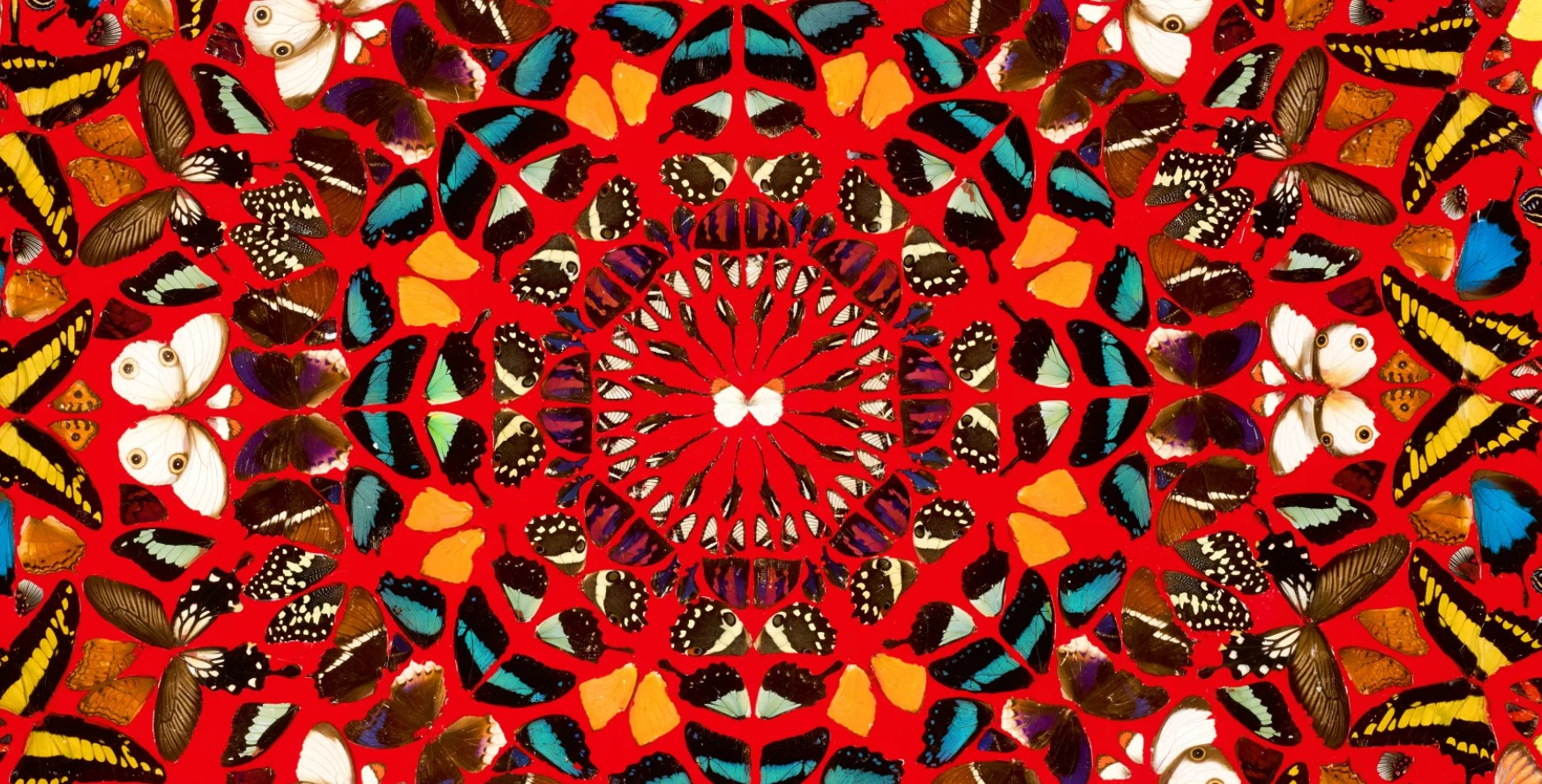
Hirst began the Butterfly Grid Paintings in 2001, their collaged compositions initially inspired by a Victorian tea tray the artist found earlier that year. The paintings investigate the Victorian fascination with the natural world and their reverence for the spectacle of nature and the unpredictability of scientific specimen. Inspired by Victorian naturalists who bred and organised butterflies by category for scientific understanding, Hirst began to arrange the insects by colour into a vivid mosaic-like surface. Some of Hirst’s most iconic paintings, sculptures and installations have employed the live or decaying bodies of butterflies, using the symbolism of the insect to magnificent effect. In and Out of Love, an early, seminal work from 1991, consisted of an entire room of live butterflies floating freely amongst pots of flowers and sugar. The elegance of the live butterflies was juxtaposed against the dormant bodies of dead butterflies, which were affixed to monochrome canvases as though accidentally caught in the sticky surface of the gloss paint. In the same room, Hirst applied a number of unhatched pupae to monochrome white canvases and over time butterflies emerged from the chrysalises. The subsequent hatching and metamorphosis effectively served as a miniature illustration of the complete cycle of life and death: a theme of endless fascination for Hirst. In and Out of Love was to become the first occasion on which Hirst exploited the natural beauty of the butterfly in his ruminations on mortality, and the Butterfly Grid Paintings build upon the artist’s earlier existential introspection. Compelling viewers to confront the immediacy of death, The Human Voice is imbued with conflicting sentiments of anguish and celebration, tragedy and splendor.
The Tree of Life, 2007
Phillips London: 16 October 2025
Estimated: GBP 400,000 – 600,000
WITHDRAWN
Damien Hirst Modern & Contemporary Art Evening Sale
The Tree of Life, 2007
Butterflies and household gloss on canvas
“I love butterflies because when they are dead, they look alive.”
Hirst’s use of butterflies in The Tree of Life serves as a thoughtful yet disquieting instrument for examining the subject of transformation. This device marks a sophisticated engagement with religious art historical traditions, in line with the artist’s evocation of Gothic cathedral windows. In Christian iconography, the butterfly serves as a symbol of Christ’s second coming, their life cycle – from caterpillar to chrysalis, then butterfly – being perceived to parallel the birth, death and resurrection of Christ. In Albrecht Dürer’s engraving, The Holy Family with the Butterfly, for example, the artist depicts the Virgin Mary, Christ Child and Joseph with a small butterfly in the lower right corner, subtly but potently foreshadowing Christ’s resurrection.
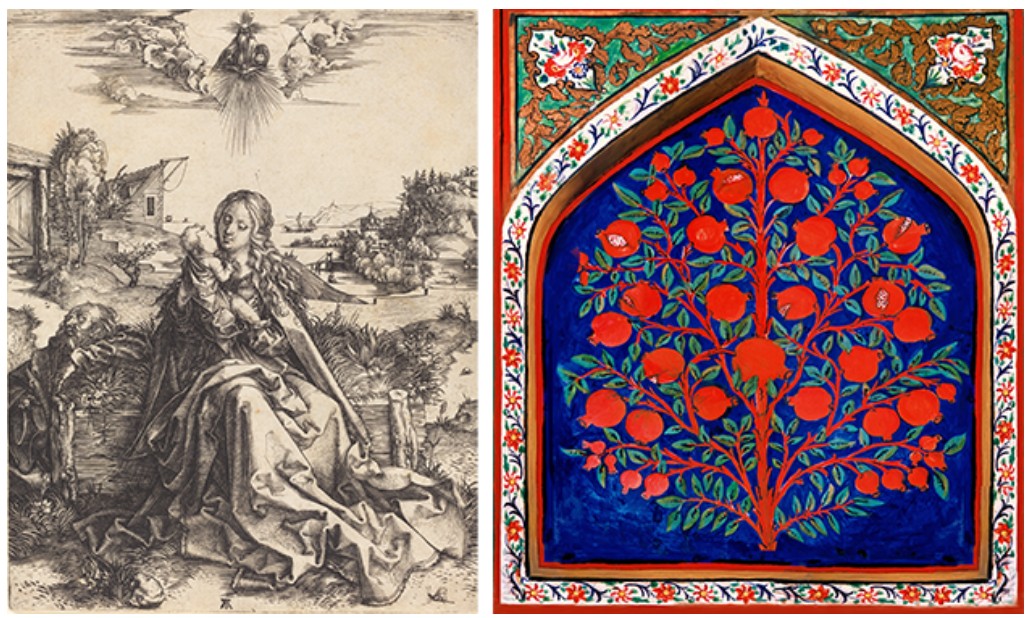
Left: Albrecht Dürer, The Holy Family with the Butterfly, c. 1495-1496, National Gallery of Art, Washington, D.C. Image: National Gallery of Art, Washington, D.C., Rosenwald Collection, 1943.3.3453
Right: 17th-century depiction of the tree of life in Palace of Shaki Khans, Azerbaijan
Hirst escalates the symbolic use of butterflies in The Tree of Life by incorporating actual specimens, rather than mere representations. Beyond theological associations, butterflies are perceived to signify change, while their aerial grace and chromatic brilliance suggest liberation and joy. In Tree of Life, Hirst radically disrupts these connotations. Entombed beneath household gloss, though the butterflies retain their striking coloration, their capacity to purely provide aesthetic delight is forfeited. By preventing the butterflies from decaying, Hirst entirely disrupts the natural order. This effect is amplified by the extreme precision with which the butterflies are arranged, contradicting their uncontainable nature when alive. Through these subversive techniques, Hirst emphasizes the unavoidability of transience in human experience.
“There’s a hole there in people. In everybody. In me. A hole that needs filling, and religion fills it for some people. And art for others. I don’t think religion is the answer, but it helps. I use art in a similar way to fill that hole.”

A potent, pre-Christian motif connecting Norse myth, ancient Mesopotamian, Iranian, and Persian symbology, Hinduism, Chinese mythology, and Judeo-Christian cosmologies, the ‘Tree of Life’ is a fundamental and unifying cultural construct, connecting seemingly disparate cultures and religious practices across time and space. Whether pictured as the source of all knowledge or creation, as a bridge connecting underworld and celestial heavens, or as part of a quest for immortality it remains a powerful and resonant symbol that reminds us of our shared historical roots, and the universal power of myth in expressing and exploring deeper human aspirations and anxieties. The remarkable quality of Hirst’s The Tree of Life lies in its ability to simultaneously showcase an exquisite composition, while drawing deeply from art historical traditions and employing radical techniques, imbuing the work with a profound commentary on the philosophical dimensions of our existence.
Monochrome
Love Affair, 2001
Property from a Prestigious Collection
Sotheby’s London: 4 March 2026
Estimated: GBP 300,000 – 400,000
GBP 320,000 / USD 427,490
Love Affair | Modern & Contemporary Evening Auction | 2026 | Sotheby’s
DAMIEN HIRST (b. 1965)
Love Affair, 2001
Household gloss on canvas with butterflies
100-3/8 x 69-3/8 inches (255 x 176.2 cm)
Signed (on a label affixed to the reverse)
Executed in 2001, Love Affair is a commanding and monumental example of Damien Hirst’s butterfly paintings, articulating with clarity the enduring tension between beauty and mortality that lies at the core of his practice. Perhaps his most recognizable and iconic motif, Hirst’s butterflies established the artist as a household name in the enveloping canon of contemporary art. Hypnotic and immersive in equal measure, the present work epitomizes Hirst’s ongoing dialogue with art history, recalling Dosso Dossi, Jupiter and Painter: an allegory of boundless imagination. In a further nod to the Victorian pastime of entomology, the present work teeters between tragic poignancy and exultant splendor. Here, set against a lustrous ground of deep violet gloss and arranged in a rhythmic constellation, the butterflies hover between flight and stasis, embodying the philosophical contradictions that define Hirst’s oeuvre.
“I think I’ve got an obsession with death, but I think it’s like a celebration of life rather than something morbid. You can’t have one without the other.”
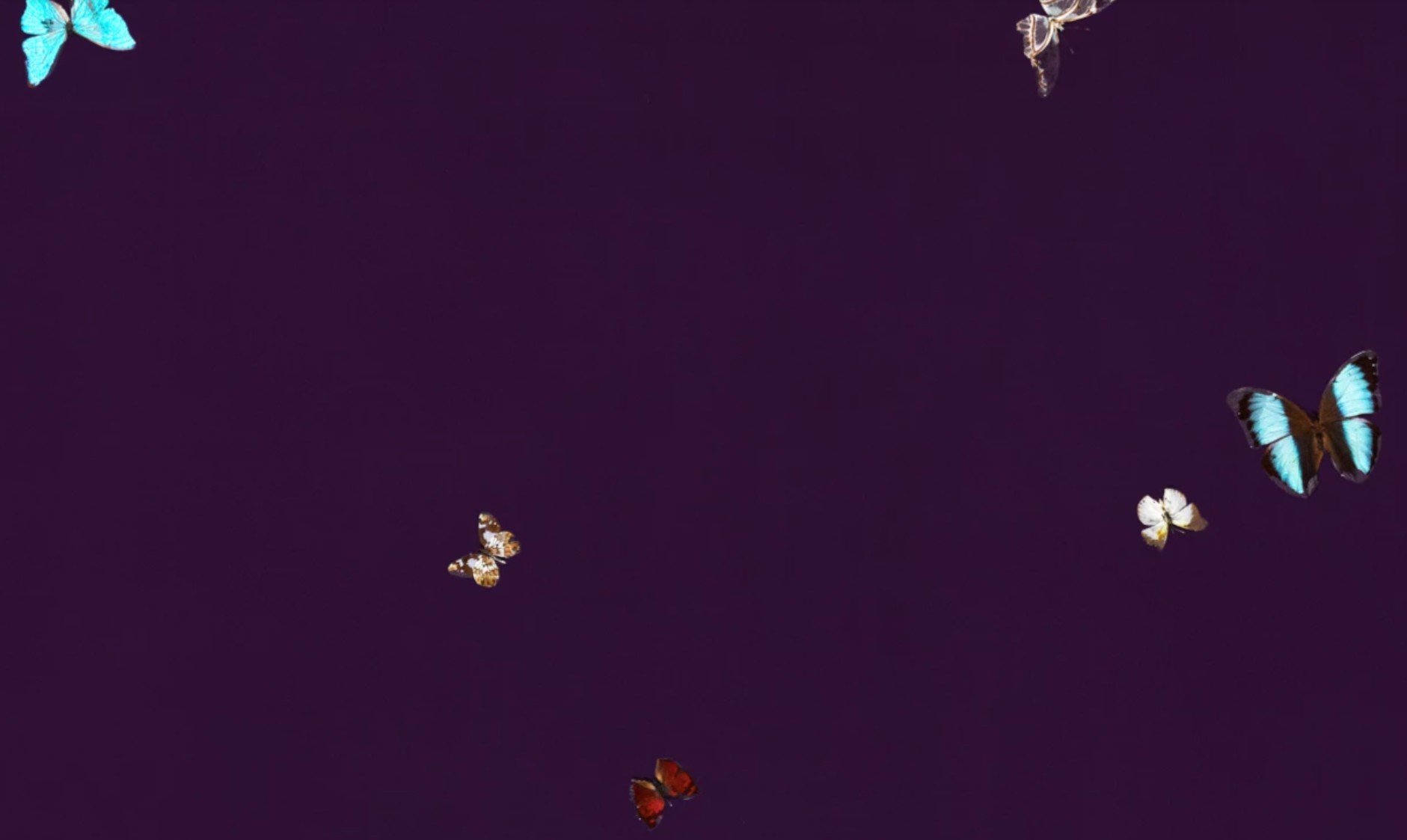
Hirst’s use of exotic butterflies dates back to his first solo exhibition in 1991, In and out of Love, which took place in an empty shop split over two floors. Downstairs, Hirst presented his first series of monochrome butterfly paintings alongside ashtrays containing cigarette butts; the inherent natural beauty of the butterflies juxtaposed by the chemical toxicity of the cigarettes, symbolically tainting the air we breathe. Upstairs, white paintings covered with pupae of Malaysian butterflies were hung about the room. Butterflies would hatch and flutter around the room, feeding on nectar from potted plants before eventually dying in the very same room wherein they were born. In a captivatingly sensationalist manner, Hirst presented life and death for all to witness and experience in a manner fully encapsulated within Love Affair. Hirst’s butterflies have quickly become a potent symbol for both the beauty and fragility of life.
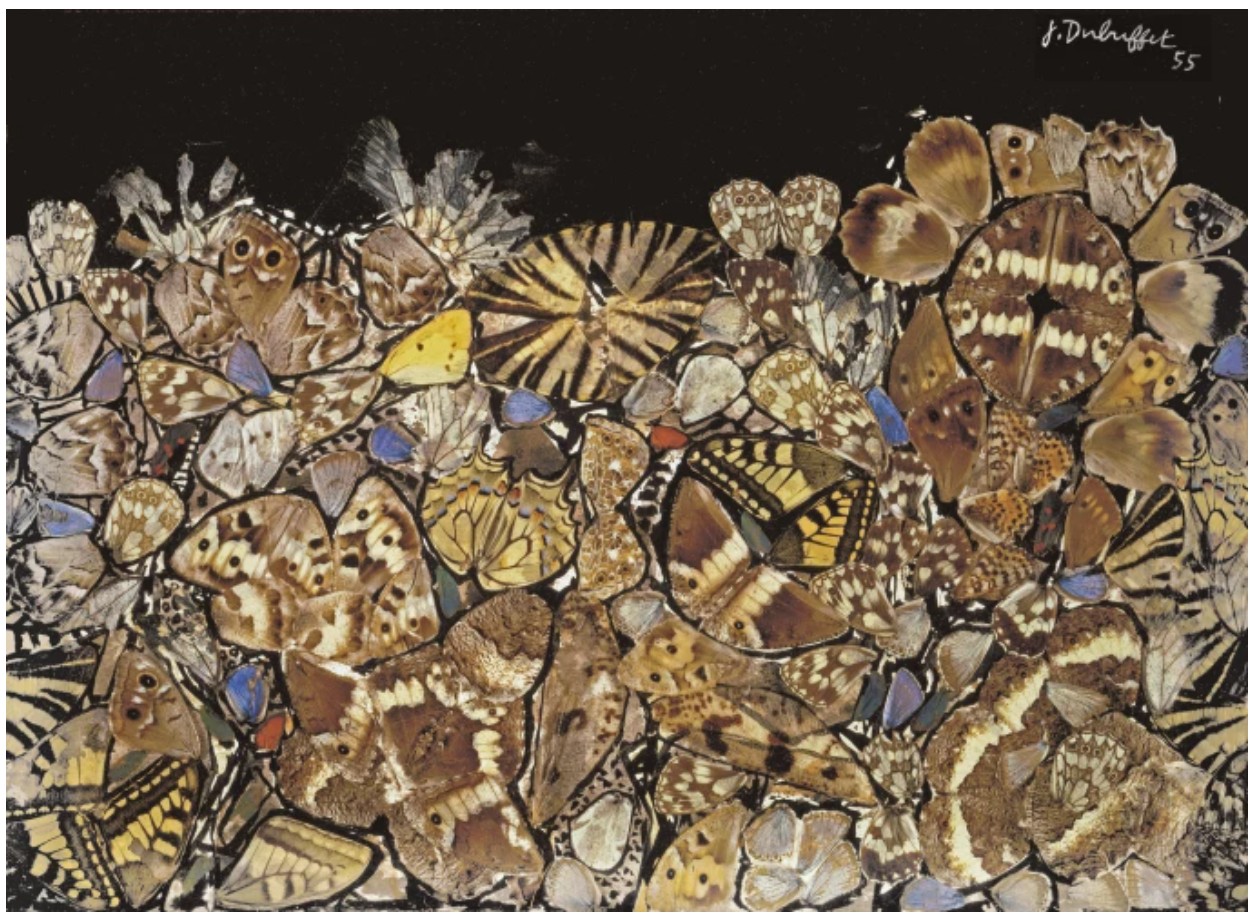
Jean Dubuffet , Jardin Mouvementé, 1955. Private Collection. Image/Art: © 2026 ADAGP, Paris/DACS, London Jean Dubuffet
Butterflies have long been a source of artistic inspiration and fascination; from the sixteenth century still-life painters, including the likes of Jan Brueghel the Elder, whose fine brush strokes captured the intricate patterns of fluttering wings, to Jean Dubuffet who collaged the iridescent species as found objects on his canvases. As a universal symbol of metamorphosis from chrysalis, the butterfly serves as both subject and material in Love Affair, their brief, radiant existence serving as a profound existential metaphor for the human condition. As the work’s title suggests, for Hirst, the very transience of the butterfly: its intense, ephemeral burst of beauty before inevitable disappearance, mirrors the fleeting, intoxicating nature of a love affair.
Dosso Dossi, Jupiter, Mercury and Virtue, 1524. Wawel Royal Castle National Art Collection, Krakow.
When asked to comment on the connection between love in relation to his butterfly paintings, as epitomized by Love Affair, Hirst responded: “Because it seems too difficult to sustain. Love is realistic; desire unrealistic. It’s easier to blindfold yourself, change your girlfriend every six months and not look in the mirror to live with someone forever and see change. Although I’m tired of the word Love, it’s like ‘God’. Instead of saying ‘I love you,’ I want to say, ‘I’m delighted you’re alive.” (the artist quoted in: Exh. Cat., New York, Gagosian Gallery, Damien Hirst: No Sense of Absolute Corruption, 1996, pp. 116-17). The present work, in this sense, offers a profound meditation on desire and loss, articulating the enduring human impulse to hold on to that which is, by its nature, miraculous, though destined to disappear.
A Summers Day, 2002
Christie’s London: 6 March 2025
Estimated: GBP 250,000 – 350,000
GBP 504,000 / USD 645,120
DAMIEN HIRST (B. 1965), A Summers Day | Christie’s
DAMIEN HIRST (B. 1965)
A Summers Day, 2002
Household gloss and butterflies on canvas
96×108 inches (243.8 x 274.3 cm)
Across a flawless, pale blue sky flutter a kaleidoscope of butterflies in Damien Hirst’s A Summers Day (2002). Caught mid-flight upon the painted surface, several large, brilliant blue morpho butterflies interlace with smaller tropical species in shades of red, orange and yellow. This monumental canvas, spanning over two and a half meters, fills the viewer’s field of vision in a mesmeric monochrome bejeweled with gossamer wings. The effect is of time stood still, a hazy summer moment captured and preserved. From Hirst’s earliest adoption of the butterfly motif in the early 1990s, these fragile creatures have become emblematic of the artist’s practice. Examples of Hirst’s celebrated butterfly monochromes are held in the permanent collections of museums including Tate, London and the Yale Center for British Art, New Haven. A Summers Day has been held in the same private collection for almost two decades.
Odilon Redon, Butterflies, circa 1910. Museum of Modern Art, New York.
Digital image: © 2025 Museum of Modern Art / Licensed by Scala.
Hirst’s fascination with the butterfly motif stems from the universal significance of these fragile, beautiful creatures.
“You have to find universal triggers. Everyone’s frightened of glass, everyone’s frightened of sharks, everyone loves butterflies.”
Hirst first used butterflies in his debut solo exhibition, In and Out of Love, staged in 1991 at the Woodstock Street Gallery, London. His earliest butterfly paintings—monochrome canvases adorned with insects as in the present work—hung in the downstairs gallery space, while the upper floor became a theatre for the cycle of life, as butterfly pupae glued to white canvases hatched, matured, and died within the confines of the gallery’s white walls. At the time, Hirst didn’t have a studio and had been breeding butterflies in his bedroom. With this exhibition, art and life could evolve within the gallery space itself, which became both studio and vitrine.
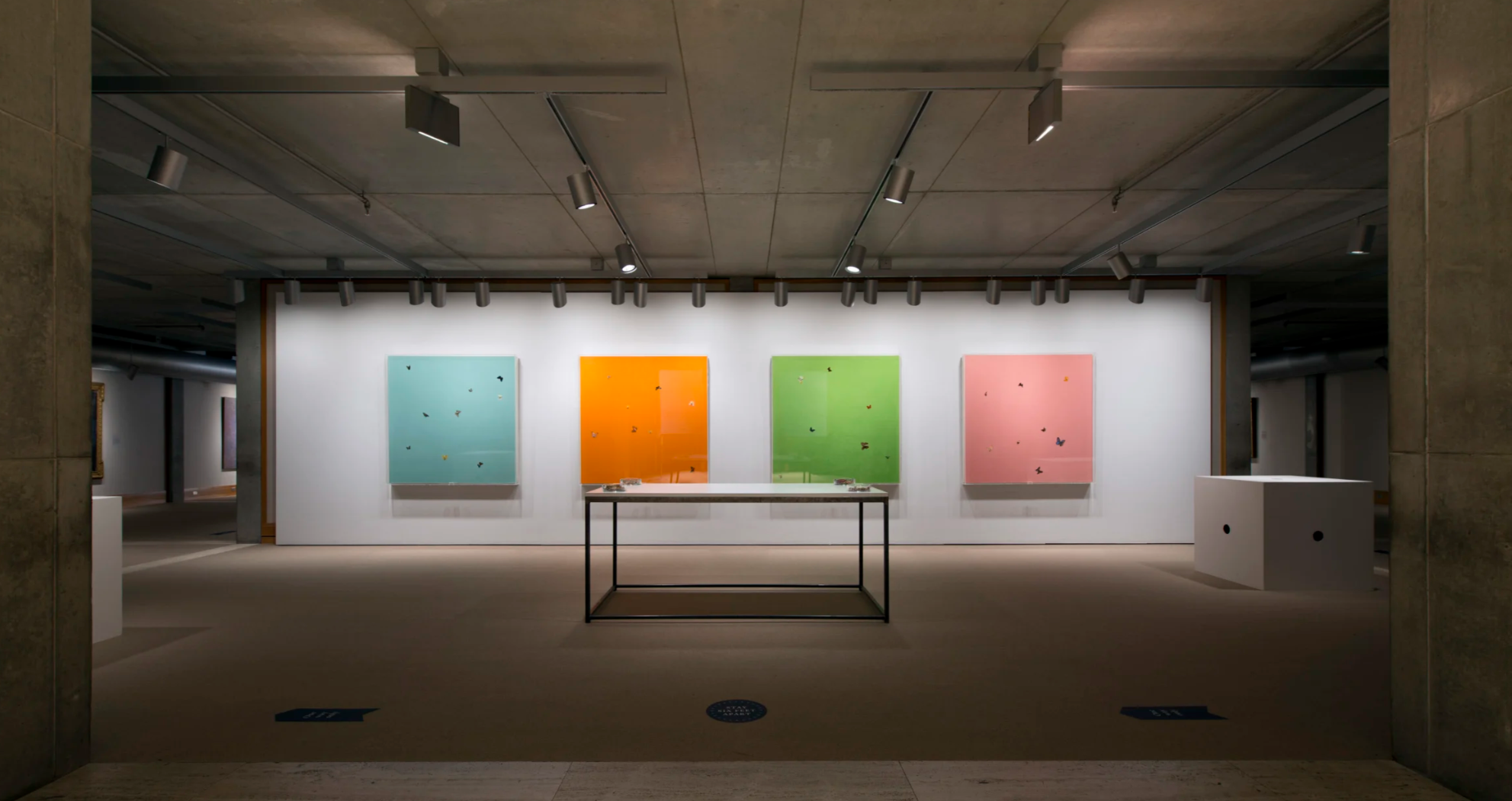
Installation view, In and Out of Love (White Paintings and Live Butterflies), 1991. Yale Center for British Art, New Haven.
Photograph by Richard Caspole. Artwork: © Damien Hirst and Science Ltd. All rights reserved, DACS 2025.
Digital image: Yale Center for British Art, photo by Richard Caspole.
Underlying Hirst’s entire oeuvre is the artist’s well-chronicled obsession with mortality.
“I am going to die and I want to live forever.
I can’t escape the fact, and I can’t let go of the desire.”
Throughout his infamous ‘Natural History’ series, medicine cabinets and canvases, Hirst adopts the theme of preservation as a means of dissecting the thin line between life and death. The final, mature stage of a butterfly’s lifecycle, known as the ‘imago,’ translates from Latin as ‘image’. Preserved upon a clear, glossy sky, in A Summers Day the butterflies reveal the essential joy and beauty of life as richer, not poorer, for all its brevity and inevitable conclusion.
Butcher’s Love, 2008
Sotheby’s London: 5 March 2025
Estimated: GBP 200,000 – 300,000
GBP 254,000 / USD 325,120
Butcher’s Love | Contemporary Day Auction | 2025 | Sotheby’s
DAMIEN HIRST (b. 1960)
Butcher’s Love, 2008
Butterflies and household gloss on canvas
36×36 inches (91.4 x 91.4 cm)
Signed twice, titled, dated 2008 and dedicated for Martin (on the reverse)
Executed in 2008, the present work is a vivid example of Damien Hirst’s Butterfly Paintings, scattered with the immaculate, delicate wings of the jewel-like insects frozen in a glossy embrace of household paint. A central motif of Hirst’s 30-year career, the butterflies are iconic within the artist’s practice – the contradiction of the British artist’s oeuvre is nowhere better exemplified than in his celebrated Butterfly Paintings. Deliberating on life, love, death and art, Hirst’s spectacular installations have advanced the grand, epistemological and existential investigations that are at the core of his artistic endeavor. Poised with the stillness of death, the radiant butterflies provoke debate on issues of contemporary existence as the viewer makes subtle links between the transient fragility of life and the simultaneous imminence of death.
“It’s a recurring image in art history, the butterfly as the soul […] Fragility. Mortality. The fragile beauty of life.”
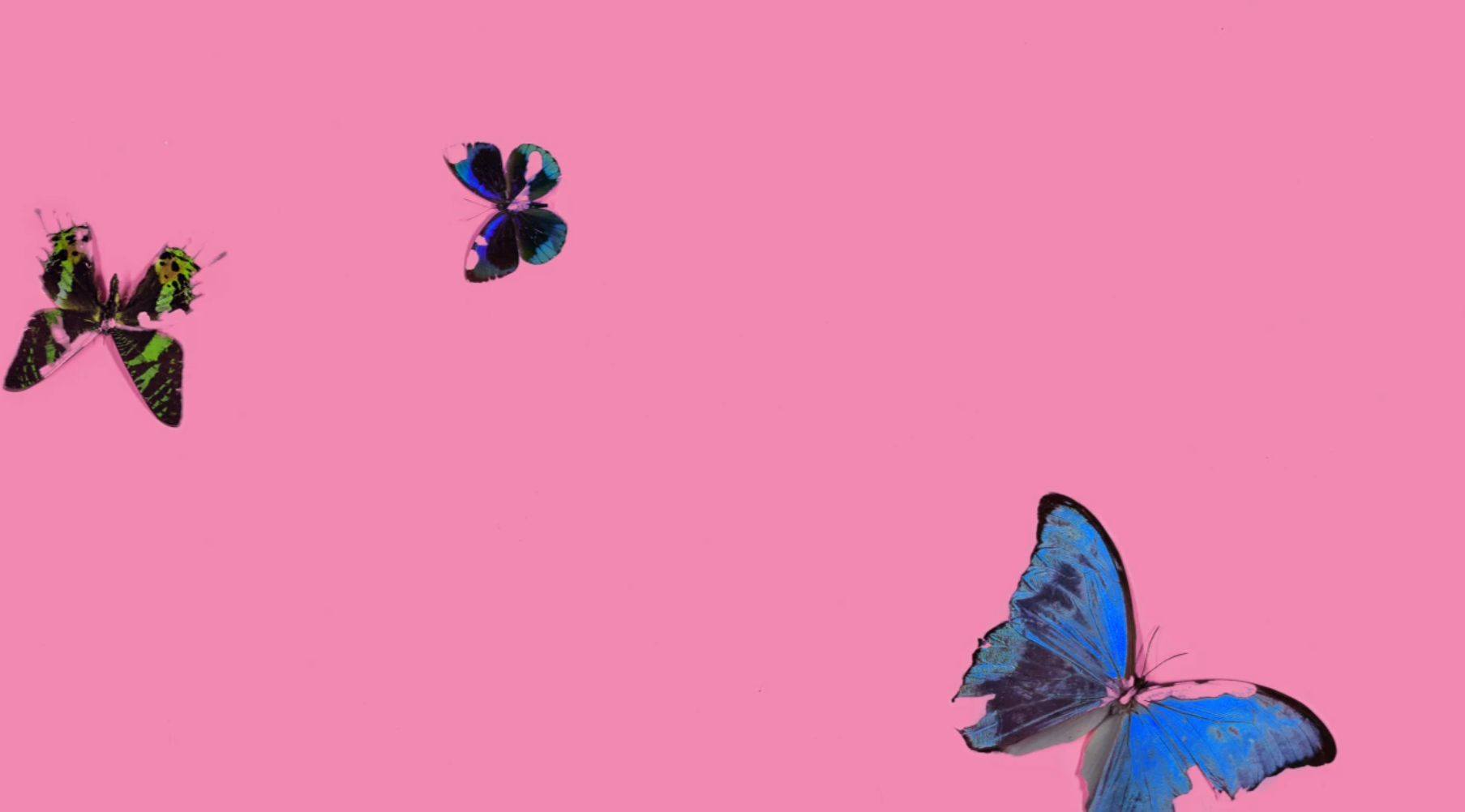
Butterflies were one of Hirst’s first and most recognizable masterpieces in his career. For the artist, the brevity of a butterfly’s life, the way in which it almost magically appears to animate and the magnificent color it brings to the world, render it as nature’s ultimate symbol of love and beauty.
“I had butterflies in my bedroom… I got wooden frames and nylon mesh and I made a huge box in my bedroom.”
Hirst’s use of exotic butterflies dates back to his first solo exhibition in 1991, In and out of Love, which took place in an empty shop split over two floors. Downstairs, Hirst presented his first series of monochrome butterfly paintings alongside ashtrays containing cigarette butts, the inherent natural beauty of the butterflies juxtaposed by the chemical toxicity of the cigarettes. Upstairs, white paintings covered with pupae of Malaysian butterflies were hung about the room. Butterflies would hatch and flutter around the room, feeding on nectar from potted plants before eventually dying in the very same room wherein they were born. Presenting life and death for all to witness and experience, Hirst’s butterflies became a potent symbol for both the beauty and fragility of life.
“I remember painting something white once to flies landing on it, thinking “Fuck!” but then thinking it was funny. This idea of an artist trying to make a monochrome and being fucked up by flies landing in the paint or something like that. Then you get the beauty of the butterfly, but it is actually something horrible. It is like the butterfly has flown around and died horribly in the paint. The death of an insect that still has this really optimistic beauty of a wonderful thing.”
Whereas Hirst’s sharks and cattle monumentalize the drama of death by their sheer scale, the butterfly paintings embrace a subtler effect, calling to mind the historical-spiritual intimations of butterflies that appear in the still life paintings of the Dutch Golden Age by the likes of Ambrosius Bosschaert, often as symbols of passing beauty and the resurrection of Christ. In the present work, Hirst preserves the delicate frames of the butterflies’ wings, casting their perpetual flight from life to death and beyond in a painterly reflection on existence. Bringing into play art, religion and science, Hirst’s Butterfly Paintings represent a sympathetic and elegant contemplation on existentialist themes, and the present work – with specimens of turquoise and orange composed over a rich umber ground – is an exemplary work from one of the most longstanding and iconic series by the artist.
Lovely and Kind, 2001
Ravenel Taipei: 1 December 2024
Estimated: TWD 12,000,000 – 22,000,000
TWD 21,600,000 / USD 665,230
Ravenel | Damien HIRST《Lovely and Kind》 Ravenel Autumn Auction 2024 Taipei Lot 062
DAMIEN HIRST (British, 1965)
Lovely and Kind, 2001
Household gloss on canvas with butterflies
42 5/8 x 51 3/8 inches (108.2 x 130.3 cm)
Signed reverse Damien Hirst, titled Lovely and Kind and dated 2001
Damien Hirst was born in Bristol, UK, in 1965. In 1986, he enrolled at Goldsmiths, University of London, to
pursue a Bachelor of Arts in Fine Art and graduated in 1989. During his time at Goldsmiths, Hirst began to gain prominence, conceiving and organizing an exhibition called “Freeze,” which he co-exhibited with fellow students. He then became a key member of the Young British Artists (YBA) movement, which significantly influenced the development of contemporary British art in the 1990s. In 1995, Hirst was awarded the prestigious Turner Prize. In 1991, Damien Hirst’s first solo exhibition, In and Out of Love, was showcased across two floors of the Woodstock Street Gallery in London. The exhibition featured a room filled with chrysalises from which butterflies emerged, along with an installation titled Butterfly Paintings and Ashtrays. Thirty years later, in 2021, the Yale Center for British Art recreated a smaller-scale version of the original exhibition setting. The theme of “butterflies” has been a constant throughout Hirst’s artistic career. Utilizing butterflies as his primary medium, Hirst’s five-meter-tall piece Eternity set a record in 2007 for the highest auction price of the artist’s two- dimensional works. His art delves into core themes such as love and death, beauty and desire, the contrast between pain and eternity, symbolism and reality, and the intersection of life and art. In Greek, “Psyche” carries both meanings of “soul” and “butterfly” It symbolizes Man’s spirit; on the other hand, the term “butterfly” itself carries the double significance of “transformation” and “new life” symbolizing love in terms of art. To become a beautiful butterfly, one must undergo a process of transformation and only death leads to the beginning of new life. The artist, Hirst, used the symbolic meaning of butterflies as a metaphor for the transience and impermanence of life and love. Once shot by Cupid’s arrows, they fall into the sweet traps of paint, which is tantamount to being willing captives for the attainment of a lasting and meaningful art. In English, the word “Lovely” means cute and is mostly used in describing women. “Kind” though normally means merciful and is mostly used to describe men. Hirst is once again seen here to be playing a game of words that is filled with incisive wit.
I Need You, 1998
Christie’s London: 7 March 2024
Estimated: GBP 220,000 – 280,000
GBP 252,000 / USD 319,536
DAMIEN HIRST (B. 1965), I Need You | Christie’s (christies.com)
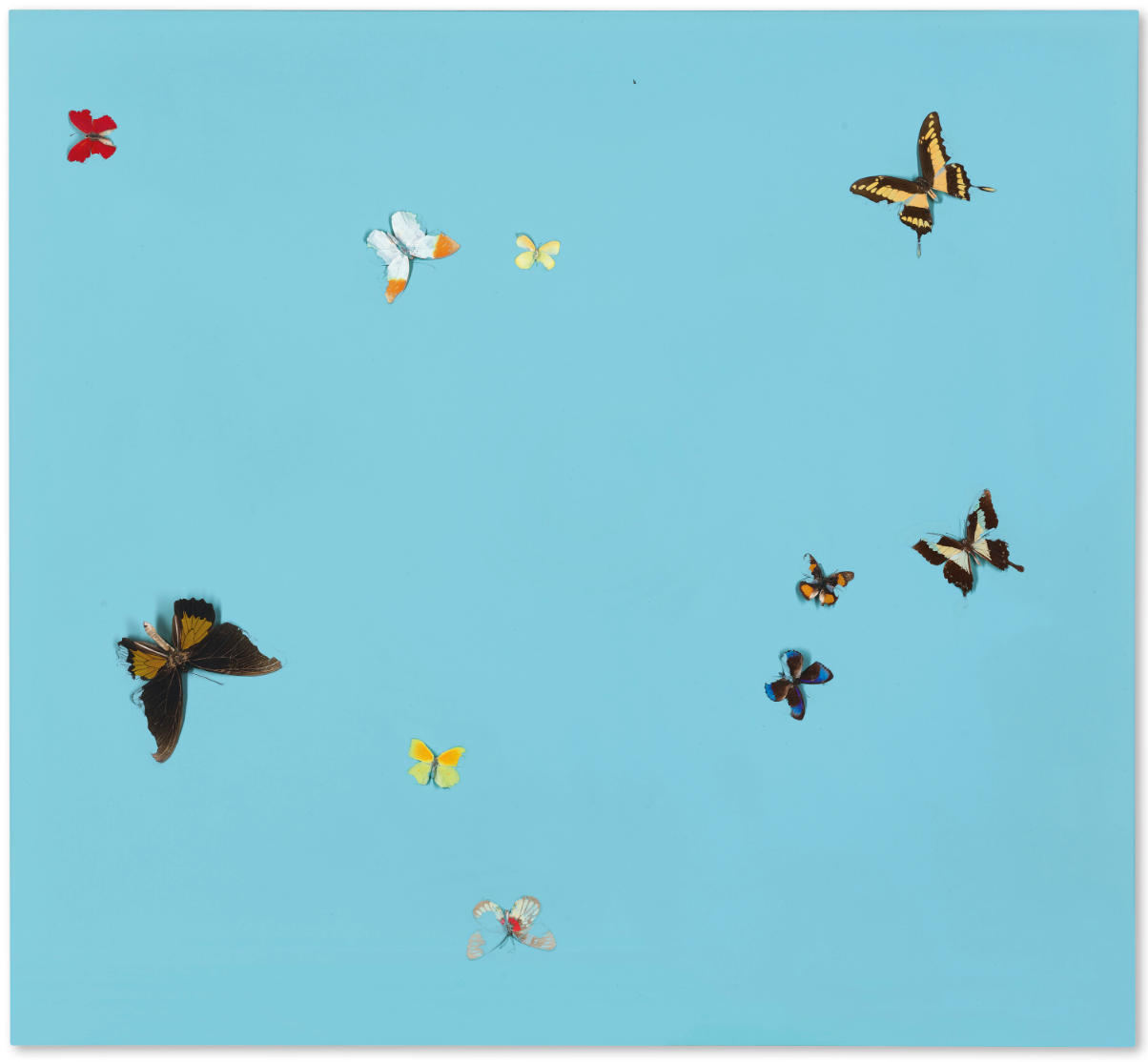
DAMIEN HIRST (B. 1965)
I Need You, 1998
Butterflies and household gloss on canvas
36×40 inches (91.4 x 101.6 cm)
Signed, titled and dated ‘I need you. 98. Damien Hirst’ (on the overlap)
Signed ‘D Hirst’ (on the stretcher)
Originally displayed in Damien Hirst’s landmark restaurant Pharmacy, where it formed part of one of the most high-profile art installations of its kind, I Need You is a rare and historic example of the artist’s butterfly paintings. Ten tiny winged creatures are choreographed against an exquisite sky-blue backdrop, suspended in motion before the void. Executed in 1998, at the height of Hirst’s early celebrity, the work is one of just ten butterfly paintings that featured on the upper floor of the artist’s Notting Hill restaurant. There, it took its place alongside examples of his pharmaceutical cabinets, spot paintings and other bespoke pieces, together forming a permanent exhibition that represented his largest solo show to date at the time. Opening in 1998, Pharmacy became an icon of ‘Cool Britannia’, frequented by the likes of David Bowie and Kate Moss. It closed in 2003, and the present work has remained in the same private collection for the past two decades.
Hirst’s butterfly paintings lie at the core of his practice. They evolved from his seminal 1991 exhibition In and Out of Love: his first solo show in London. Held at Woodstock Street Gallery, the exhibition was spread across two floors. On the ground floor, Hirst created an artificial humid environment that he filled with live butterflies. They hatched from pupae attached to white canvases, fed upon sugar water, settled upon plants and flowers and flew freely about the room. In the basement, Hirst mounted eight brightly-coloured monochrome canvases, each with dead butterflies pressed into their glossy surfaces. This portion of the installation, which now resides in the Yale Center for British Art, shares much in common with the suite of paintings subsequently hung at Pharmacy. Each set features a similar rainbow palette of distinctive jewel-toned hues, ranging from orange, red and yellow to pink, green and blue. The present work’s celestial backdrop, evocative of a Tiepolo fresco, is particularly entrancing. The butterfly paintings embody many of Hirst’s central dichotomies: the fragile balance between life and death, the transition from reality to art, the intersection of faith and science and the beauty of mortality. By 1998, his dark, witty confrontation with these themes had propelled him to international fame. His inclusion in Charles Saatchi’s epoch-defining exhibition Sensation at London’s Royal Academy of Arts the previous year followed hot on the heels of the 1995 Turner Prize, which Hirst had won with his ground-breaking formaldehyde tank Mother and Child Divided. Much like the latter, the butterfly paintings preserve their subjects after death. From the chaos and unpredictability of life comes sleek, near-minimalist abstraction, each creature frozen in a radiant monochrome tomb. In Pharmacy, these paintings formed an elegant, contemplative counterpoint to the pill cabinets that populated the ground floor: they were art’s antidote to death, rather than medicine’s. If Christian iconography had often postulated the butterfly as a symbol of resurrection, Hirst too plays God: here, his insects are spared from the abyss, and reborn as art.
Wonderful Week, 2008
Christie’s London: 14 October 2023
Estimated: GBP 200,000 – 300,000
GBP 327,600 / USD 397,235
DAMIEN HIRST (B. 1965)
Wonderful Week, 2008
Butterflies and household gloss on canvas
72×72 inches (182.8 x 182.8 cm)
Signed, titled and dated ‘2008 “Wonderful Week” Damien Hirst’ (on the reverse)
Signed ‘Damien Hirst’ (on the stretcher)
Suspended across an immense and glossy sky-blue canvas of almost two by two meters, Damien Hirst’s Wonderful Week (2008) presents a mesmeric kaleidoscope of butterflies. In what is undoubtedly one of his most iconic and widely celebrated series, the iridescent butterflies in Hirst’s Butterfly Paintings are transfixed upon the canvas like inlaid gemstones, their diaphanous wings delicately spread open in a captivating display. Retaining an impossible, immaculate beauty even in death, the insect is a perfect embodiment of the inquiry at the heart of Hirst’s artistic practice, that of life, death, and perishability. Fixed to the canvas in a fluttering array of yellows, whites and blues, the insects appear as though captured in flight amidst a cloudless sky. Conjuring the luminous, pale Venetian blues of Titian’s canvases, Hirst’s Wonderful Week is at first glance entrancingly lyrical. Belying the glossy surface of household paint however, are the potent and disquieting connotations of mortality. As though mimicking the twisted fantasy of the Victorian lepidopterist, piercing the specimens with pins upon a mount, Hirst captures the beauty of the living in an artificially preserved death. Like a contemporary play on the memento mori, a device popularized in oil paintings of the seventeenth century, Hirst confronts his present-day viewer with his elected symbol of mortality. Imbued with its own connotations of Christ’s resurrection, the butterfly, emerging reborn from its chrysalis, is an emblem of metamorphosis, and speaks to life beyond the bounds of the perishable body. Wonderful Week is an impressive example of what Hirst does best. Exploring highly conceptual notions of existence via the physical, tangible matter of the once-living, he sheds light on the strangely beautiful fragility of life.
Love Will Never Die, 1999
Christie’s London: 28 June 2023
Estimated: GBP 250,000 – 350,000
GBP 535,500 / USD 676,563
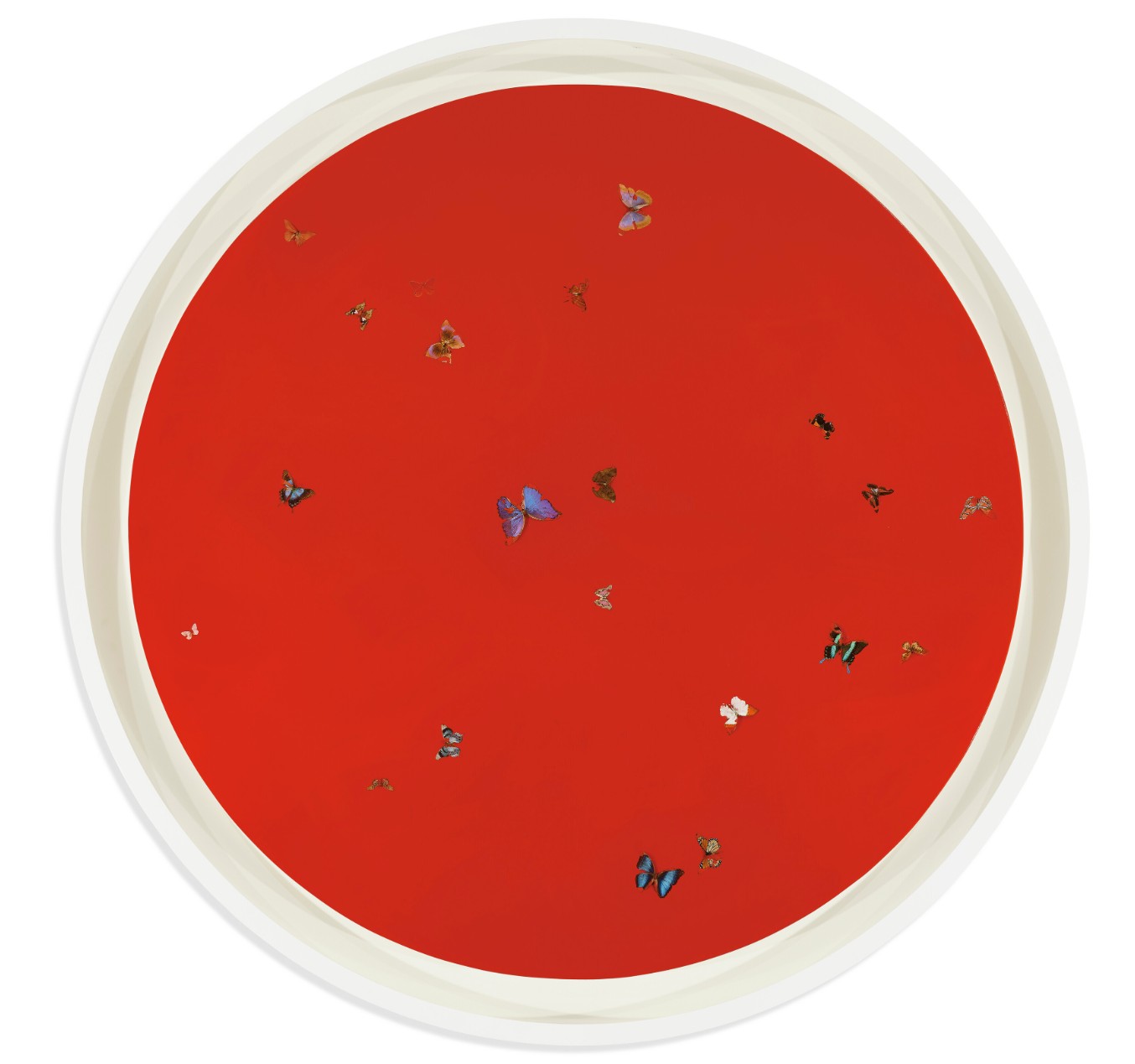
DAMIEN HIRST (B. 1965)
Love Will Never Die, 1999
Butterflies and household gloss on canvas
Diameter: 84 inches (213.4 cm)
With its tiny iridescent forms splayed against a circular red backdrop, Love Will Never Die (1999) is an arresting early example of Damien Hirst’s butterfly paintings. Both disquieting and mesmerizing, its delicate winged creatures are ensnared within a crimson void, preserved for eternity in a glowing painterly tomb. Within a practice dedicated to exploring themes of life and death, the butterfly paintings stand among Hirst’s most conceptually incisive works. Operating in counterpoint with his fly paintings, as well as the formaldehyde vitrines that had won him the Turner Prize in 1995, they offer visions of hope and beauty in the face of mortality. Here, his butterflies are frozen in time, as radiant and bewitching as when they were alive. Artificially spared from their inevitable decay, they fly in the face of death, sublimated by paint and reborn as art.
Butterflies have always been a central medium for Hirst. Executed in a variety of colors, formats and scales, the paintings evolved from his seminal installation In and Out of Love (1991). Many—including the present—would explicitly riff upon its title.
Trinity I, 2007
Christie’s New-York: 12 May 2023
Estimated: USD 250,000 – 350,000
USD 302,400
DAMIEN HIRST (B. 1965) (christies.com)
DAMIEN HIRST (B. 1965)
Trinity I, 2007
Butterflies, household gloss and gold leaf on canvas, in three parts
Each: 54×36 inches (137.2 x 91.4 cm)
Overall: 54×108 inches (137.2 x 274.3 cm)
Signed and titled ‘Damien Hirst “The Trinity”‘ (on the reverse of each canvas)
Signed again and dated ‘Damien Hirst 2007’ (on each stretcher)
The search for beauty within death has been a constant endeavor for Damien Hirst throughout his artistic career. His artworks share with the viewer his exploration of life, death, beauty, religion, and science, and these ideas are well captured by one of his most iconic motifs: the butterfly. Trinity I quintessentially encapsulates these themes through his use of triptych which mirrors religious altarpieces, as well as the butterfly, which represents science and the paradoxical beauty of life and death. The delicacy of the butterflies’ placements and translucent wings is one of the many aspects of Trinity I that makes it so beautiful. Scattered throughout the three primary-colored sectors as if they landed there on their own, embedded in the world of lush color, the butterflies melt into the surface layered with thick gloss. His use of vast colors – red, yellow, and blue – is reminiscent of minimalist Ellsworth Kelly’s 1965 Red Yellow Blue II. It is clear, through the present lot specifically, that Hirst was enthused by the minimalist movement as a whole. Through his use of vibrant and delicate butterfly wings, Hirst challenges viewers to consider the fleeting nature of life, beauty, and the concept of death itself. These works, specifically Trinity I, exemplifies Hirst’s endless imagination, creativity, and ability to create works that make a significant impact on the art world and continue to inspire discussion and debate.
I Love You More Than Words Can Say, 1999
Sotheby’s London: 1 March 2023
Estimated: GBP 300,000 – 500,000
GBP 508,000 / USD 611,385
DAMIEN HIRST (b. 1965)
I Love You More Than Words Can Say, 1999
Butterflies and household gloss on canvas
Diameter: 84 inches (213.4 cm)
Within the frame of its perfectly circular composition, I Love you More Than Words Can Say from 1999 exhibits an array of butterflies of varied shapes, colors, and sizes which pepper its luscious field of glossy green paint. Perhaps one of his most recognizable and iconic motifs, Hirst’s butterflies established the artist as a household name. Setting the luminous butterflied against an expanse of vibrant green, the present work is a contemporary take on the idealized British landscape. Poised within the stillness of death, the radiant butterflies also provoke debate on issues of contemporary existence as the viewer makes subtle links between the transient fragility of life and the simultaneous imminence of death. The central contradiction of Hirst’s oeuvre is nowhere better exemplified than in his celebrated Butterfly Paintings.
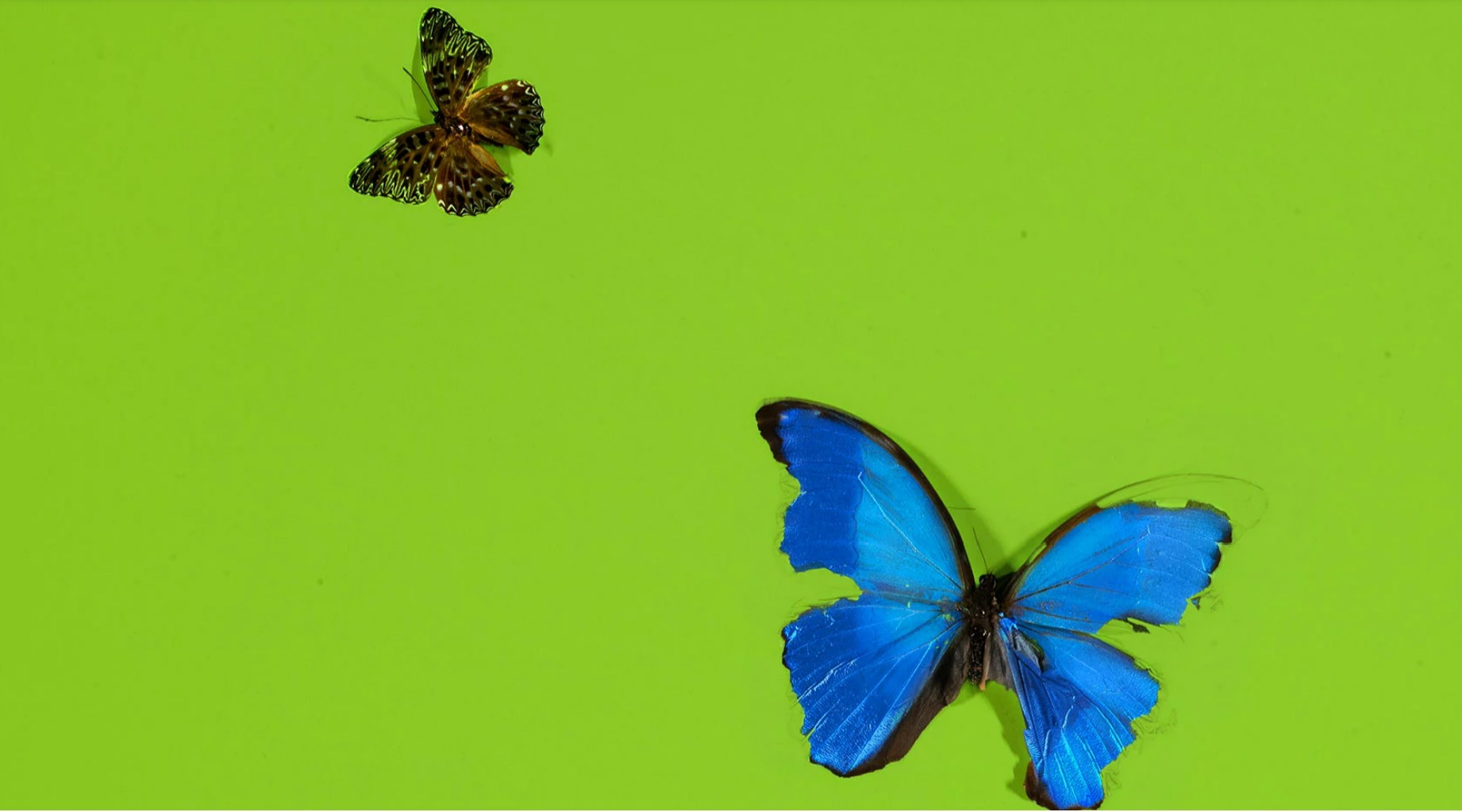
An emblem of religion, death and rebirth, the butterfly has become one of Hirst’s most enduring motifs, one that encourages his viewers to consider the extraordinary — yet fragile — beauty of the natural world. As art critic and writer Michael Bracewell vividly summarizes, “The viewer is confronted in each work by the physical representation, or its meticulously honed depiction, of those beliefs, ideas, conditions and institutions which shape the common basis of human experience. Morality, faith, medicine, religion, wealth and aesthetics comprise the principal themes and subject matter of Hirst’s paintings, sculptures and installations. The ceaseless interplay of these fundamental concerns, and their intrinsic relationship to the individual and society, are brought to life in works of the exquisite aphoristic refinement as well as graphic violence and sheer spectacle” (Michael Bracewell quoted in: Damien Hirst, Requiem I, 2009 (online)). Illustrating the beauty of horror and the horror of beauty, the caterpillar dies in the chrysalis and is reborn a butterfly. Powerfully suggestive, I Love you More Than Words Can Say recalls the ever-revolving cycle of life and death with an image of heavenly beauty.
Beauty is in the Eye of the Beholder, 1998
Sotheby’s New-York: 16 November 2022
Estimated: USD 600,000 – 800,000
USD 484,000
Beauty is in the Eye of the Beholder | The Now Evening Auction | 2022 | Sotheby’s (sothebys.com)
DAMIEN HIRST (b. 1965)
Beauty is in the Eye of the Beholder, 1998
Butterflies and household gloss on canvas
Diameter: 84 inches (213.4 cm)
A sensational beacon of chromatic allure, Beauty is in the Eye of the Beholder from 1998 sees an array of butterflies in various shapes, colors, and sizes preserved and dispersed across a pool of bright yellow paint. Executed in 1998, Beauty is in the Eye of the Beholder belongs to Hirst’s celebrated series of Butterfly Paintings, which provokes debate on issues of contemporary existence by confronting us with both the fragility of life and imminence of death through the symbol of the butterfly. An emblem of religion, death and rebirth, the butterfly has become one of Damien Hirst’s most enduring and iconic motifs, visualized here in a memento mori to encourage his viewers to consider the extraordinary — yet fragile — beauty of the natural world. While Hirst later continued to arrange butterflies into grand configurations that mirror stained glass windows, early Butterfly Paintings such as Beauty is in the Eye of the Beholder witness his engagement with the Minimalist tradition with his lyrical play on light, color, and space. Previously held in the private collection of advertising executive Jay Chiat, one of the earliest collectors of Damien Hirst’s art in the United States, the present work brilliant exemplifies the central contradictions at the heart of Hirst’s work.
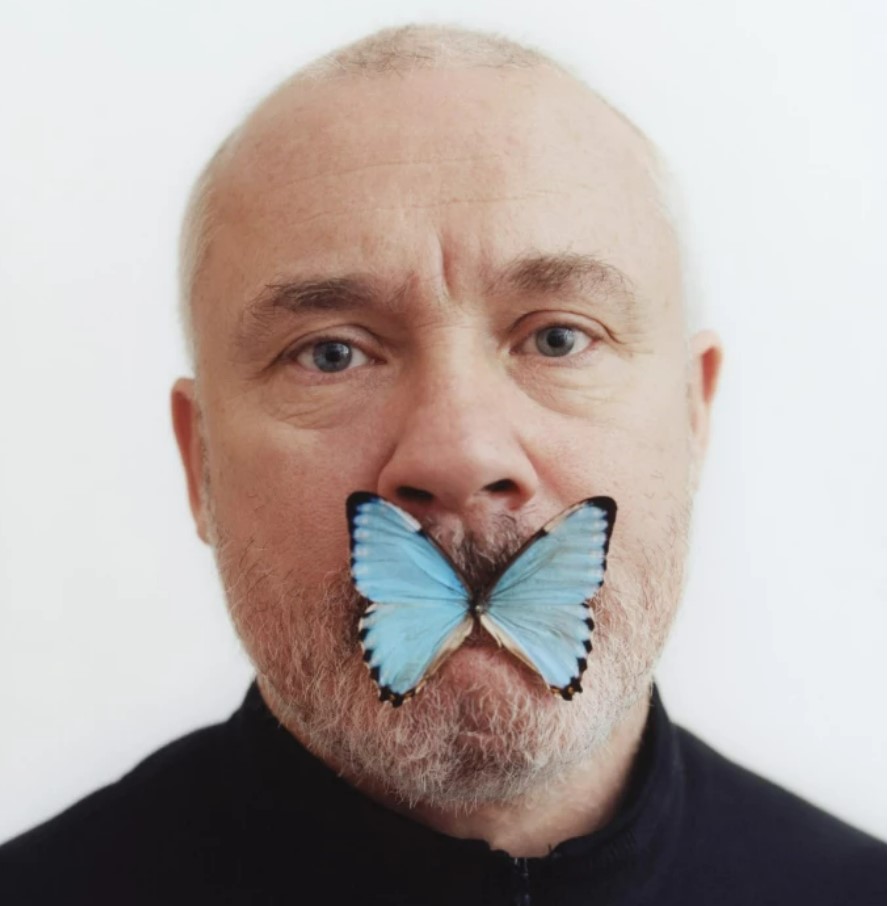
In the present work, the vibrant colors of real butterflies burst from the artificial background with a seductive luminosity that speak of life and joy, even in the face of death. Embodying a symbol of hopeless romance through this contradiction, the butterflies here cling to their existence on the surface of the painting, their fragility and tactility blissfully celebratory yet poignantly sad. Their dispersal across the perfectly circular composition suggests a freedom of movement, invoking an airiness that fundamentally contrasts their lifeless entombment in paint.
Edith, 2008-2009
Sotheby’s Hong-Kong: 28 April 2022
Estimated: HKD 1,600,000 – 2,400,000
HKD 7,560,000 / USD 963,499
Damien Hirst 達米恩 · 赫斯特 | Edith 伊迪絲 | Contemporary Day Auction | 2022 | Sotheby’s (sothebys.com)
DAMIEN HIRST (B. 1965)
Edith, 2008-2009
Butterflies, cubic zirconia and household gloss on canvas
55.2 x 55.2 inches (140×140 cm)
Signed, titled and dated 2008/09 on the reverse
One of Damien Hirst’s most defining artistic innovations, Edith is an immaculate example of Hirst’s butterfly monochrome painting series. An embodiment of his revolutionary and philosophically rich aesthetic practice, the present work eloquently transmits Hirst’s obsession with the dichotomy of life and death, natural and artificial, the beautiful and the grotesque. A panoply of butterfly species are scattered across a pastel pink, gently perched on the heavy layers of household gloss paint. Dotting the canvas are white cubic gems of different shapes and sizes, sparkling and glistening as light reflects from its translucent mass. Laying beside the cheap cubic gems, the delicate iridescence of the butterfly wings and its natural fragility juxtaposes the sharp light of the industrially cut, mass produced cubic. This invites the viewer to contemplate the lasting beauty of their wings against the transience of their life, poignantly illuminating the perishability of their existence in their enshrinement within the artificial pink gloss. Presenting a series of dualisms within the pink confines of the canvas, Hirst explores the complex relationship between art and nature, of the organic and artificial.
Love to You, 2007
Sotheby’s London: 26 March 2021
Estimated: GBP 100,000 – 150,000
GBP 252,000 / USD 347,634
Love to You | Contemporary Art Day Auction | 2021 | Sotheby’s (sothebys.com)
DAMIEN HIRST (b. 1965)
Love to You, 2007
Butterflies and household gloss on canvas
Diameter: 54 inches (137.2 cm)
Signed and titled on the stretcher
Love to You is an elegant example of one of Damien Hirst’s celebrated Butterfly Paintings. Deliberating on love, life, death and art, Hirst’s spectacular butterfly works have advanced the grand, epistemological and existential investigations that are at the core of his artistic endeavour. The momentous exhibition In and Out of Love in 1991 saw Hirst transform a multi-storey London gallery into a butterfly sanctuary, marking his first use of the insects – Love To You is a highly refined, exquisite work that is deeply evocative of the fragility and brevity of life. Themes of life and death permeate the extensive practice of Hirst, who is without question one of the most prominent and acclaimed contemporary practitioners of the postmodern period. Such a focus on fundamentally philosophical questions has garnered Hirst a comprehensive appreciation, posing myriad challenges to the tenets of artistic production by consistently breaking down the dividing line between ‘real life’ and contemporary art.
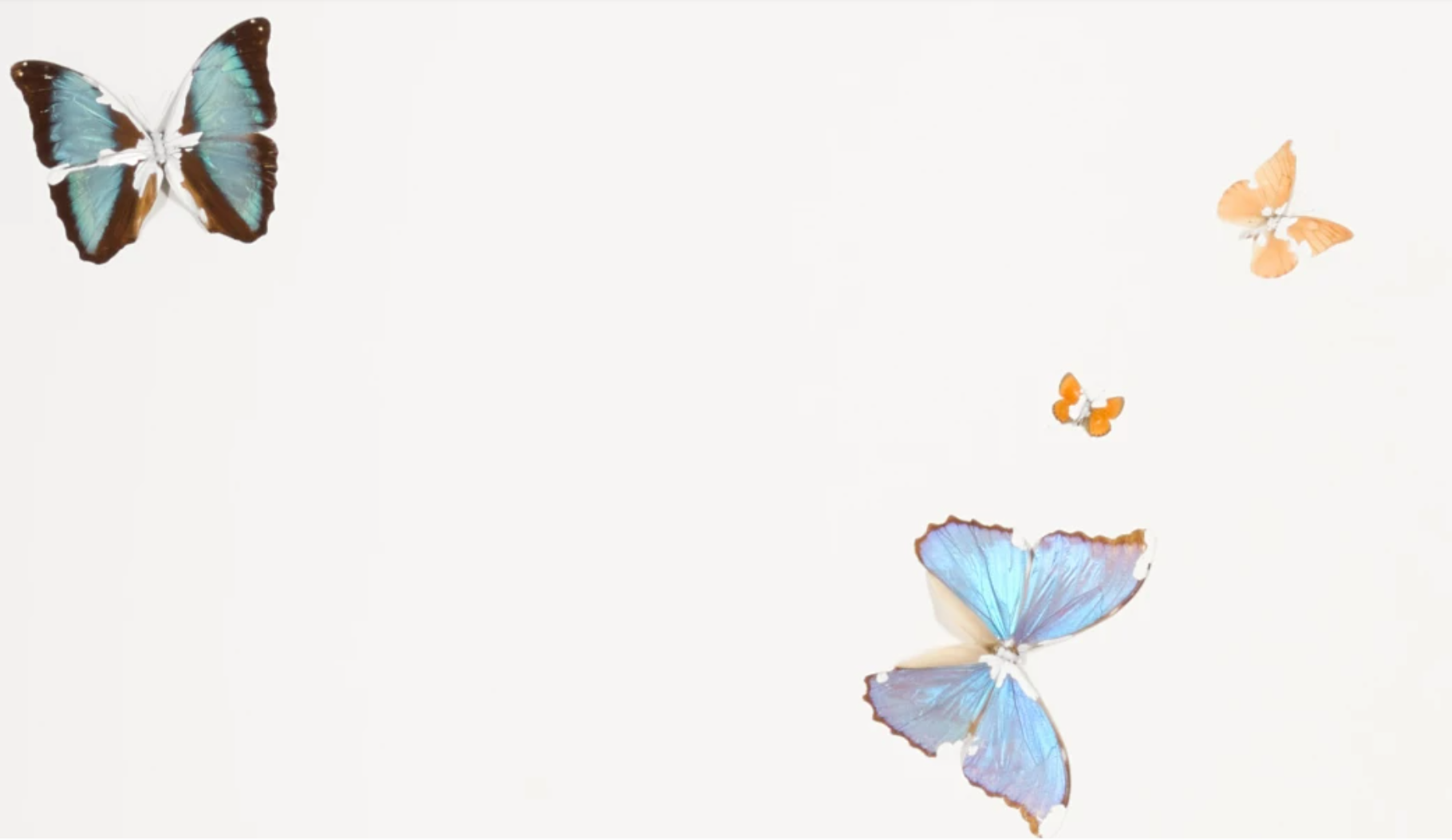
Combining an intense, stylish theatricality with art historical cues and contemporary materials and procedures, Hirst has achieved a unique synthesis of iconographical representations and scientific specimens. Suspending the art object between narrative and analysis, therefore, Hirst’s paintings and sculptures bear their closeness to life, encased as they are in art. Wings spread, as if mid-flight, there is a delicate majesty to the creatures of Love To You that are painted into the monochrome surface of the canvas, delivering a tranquil reminder of the ephemeral nature of being and existence. Hirst has long since explored this frozen-in-time cycle of life, most notably in his 1990 work A Thousand Years, in which fly larvae, born inside a vitrine and nourished by the decapitated head of a cow, were systematically killed by an ‘Insect-O-Cutor’ inside the installation; a microcosm of the passage from birth to death. In the present work, this relentless rhythm is affixed at its end, the painting acting as a magnificent tomb for the fleeting insects. Whereas Hirst’s sharks and cattle monumentalize the drama of death by their sheer scale, the butterfly paintings embrace a subtler effect, calling to mind the historical-spiritual intimations of butterflies that appear in the still life paintings of the Dutch Golden Age by the likes of Ambrosius Bosschaert, often as symbols of passing beauty and the resurrection of Christ. In Love To You, Hirst preserves the delicate frames of the butterflies’ wings, casting their perpetual flight from life to death and beyond in a painterly reflection on existence. Bringing into play art, religion and science, Hirst’s Butterfly Paintings represent a sympathetic and elegant contemplation on existentialist themes, and the present work – with specimens of turquoise and orange composed over a pristine white ground – is an exemplary work from one of the most long standing and iconic series by the artist.
Other Butterfly Paintings
Midas Asteroid, 2007
Phillips London: 4 December 2024
Estimated: GBP 150,000 – 200,000
GBP 177,800 / USD 225,345
Damien Hirst – New Now: Modern & Co… Lot 14 December 2024 | Phillips
DAMIEN HIRST
Midas Asteroid, 2007
Butterflies and household gloss on canvas
72 x 47 7/8 inches (182.9 x 121.9 cm)
Signed, titled and dated ‘”Midas Asteroid” 2007 2007 Damien Hirst’ on the reverse; signed ‘DHirst’ on the stretcher
Responding to Mirta d’Argenzio in an interview following his major retrospective at the Museo Archeologico Nazionale di Napoli, Damien Hirst perfectly captures the dialectic at the heart of his use of the butterfly. A dramatic and poised image of life and death, in Midas Asteroid Hirst continues his exploration of mortality: a theme evident from the very beginnings of his artistic practice.
“The death of an insect […] has this really optimistic beauty of a wonderful thing […] They don’t rot like humans.”
Emboldened after the success of his 1988 Freeze exhibition that catalyzed the establishment of the Young British Art movement, the same punk-like audacity drove Hirst to new heights during the early 1990s. Working out of the makeshift apparatus that he had organized in his ‘cramped’ Brixton bedroom, Hirst conceived his groundbreaking installation In and Out of Love from experiments with breeding pupae. Exhibiting in a vacant commercial space instead of a gallery, Hirst had timed the opening of his first London solo exhibition in 1991 with the hatching of butterfly pupae affixed to canvases, landing on the unsuspecting visitor as they flew around the space. On the lower ground floor, butterflies were pressed into the surfaces of eight vividly painted canvases, as if caught by chance in the gloss ground.
“The butterflies move between this life and the beyond: in the fleeting beauty of their suspended shimmering levitation, there is a lightness that simultaneously augurs the inevitability of death and thus the frailty of all that is worldly.”
Executed in 2007, in Midas Asteroid Hirst recalls the composition of these earlier canvases. Titled after the ‘1981 Midas’ asteroid and the Greek legend of King Midas, Hirst develops themes related to mythology, metamorphosis, and mortality. Named after this potentially hazardous and monumental meteorite that was discovered in 1973 to orbit the sun with the earth, the butterflies’ physical path across the canvas traces the velocity of the comet, on the edge of obliterating humanity. As King Midas was granted the ability to turn everything that he touched into gold – a desire that was in fact a curse – the seductive reflective surface has equally entrapped the butterfly: an eternal mise en scène.
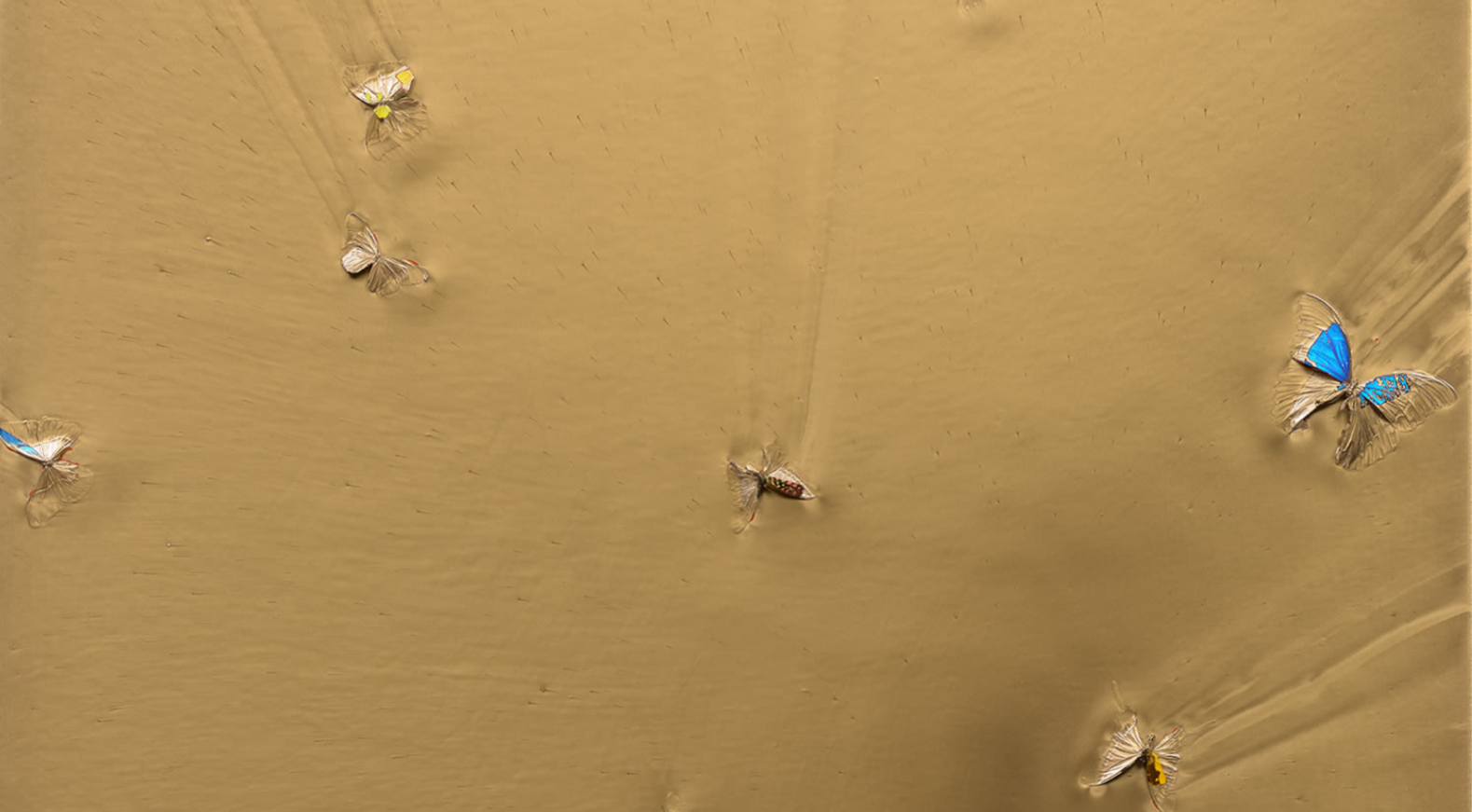
Typical of Hirst’s use of paradox, the butterfly symbolically and metaphysically manifests the beauty and brevity of our fleeting existence. A more hopeful foil to Hirst’s more nihilistic considerations of life including blackened masses of flies and formaldehyde vitrines, in their journey from pupae to caterpillar then chrysalis, the butterfly transcends a singular life cycle. Appealing tantalisingly to the senses, Midas Asteroid affirmingly reflects on the human condition, conjuring the possibilities of the cosmos beyond.
Beautiful Squawk Painting (with Butterflies), 2007
Christie’s London: 9 March 2024
Estimated: GBP 120,000 – 180,000
GBP 277,200 / USD 351,490
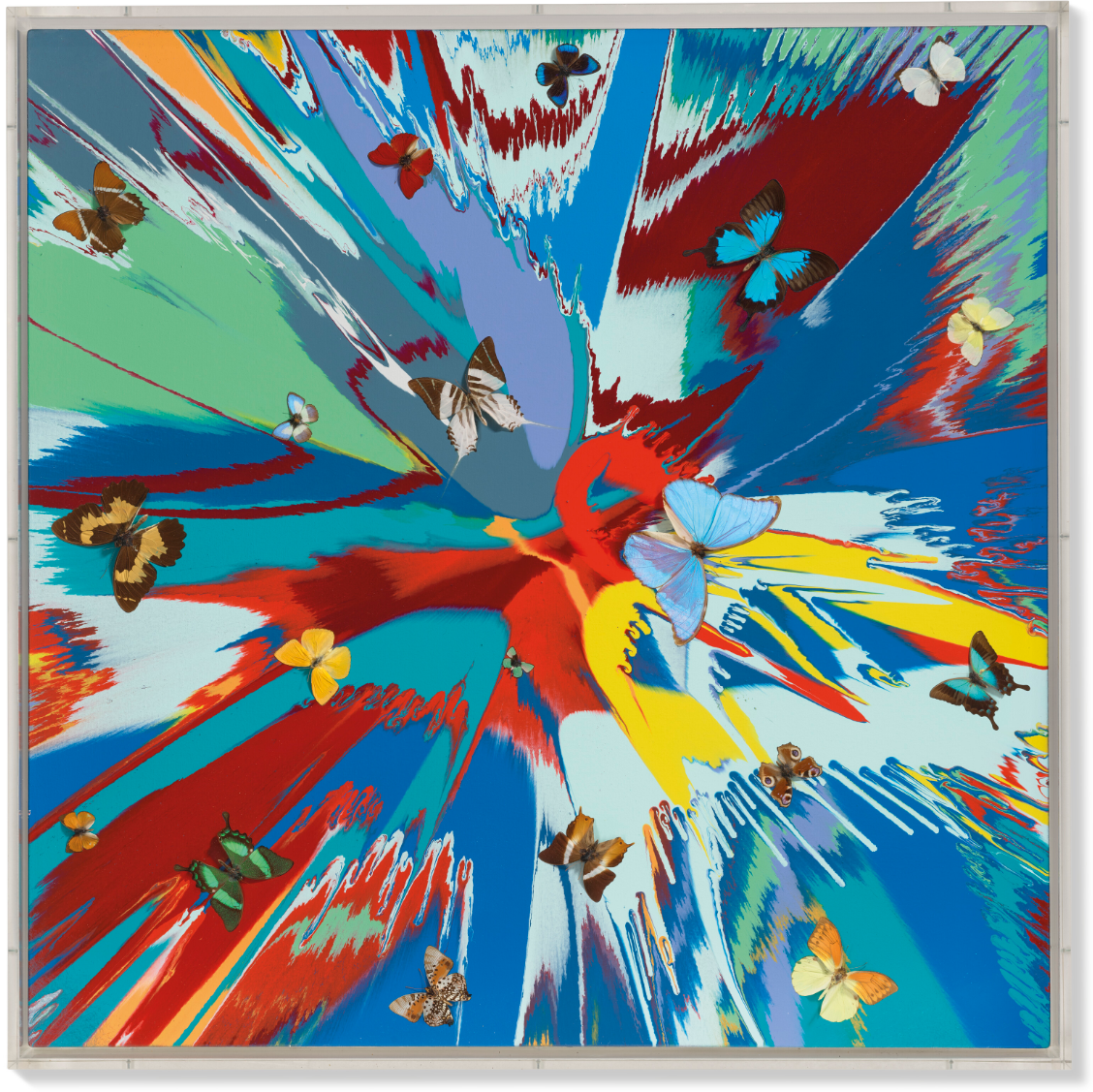
DAMIEN HIRST (B. 1965)
Beautiful Squawk Painting (with Butterflies), 2007
Household gloss and butterflies on canvas
36×36 inches (91×91 cm)
Signed, titled and dated ‘Damien Hirst “Beautiful Squawk Painting” 2007’ (on the reverse)
With its evocative, radial burst of color, Damien Hirst’s Beautiful Squawk Painting (with Butterflies) (2007) pulses with joyful energy. Out of a vortex of red burst waves of turquoise, yellow, navy, and momentous streaks of sky blue. Hirst poured household paints onto a rotating canvas to achieve these kaleidoscopic patterns, and they present a striking index of spontaneous gesture in bright, dazzling color. Atop the medley of frenetic movement flutter delicate butterflies with gossamer wings. As such, the work combines the action painting of the artist’s iconic ‘Spin’ series with the evanescent insects that adorn so many of his canvases. While the vivacious colors teem with life, the artist’s use of butterflies also ties the painting to Hirst’s career-long inquiry into themes of mortality. At once a meditation on chaos and order, chance and predestiny, Beautiful Squawk Painting (with Butterflies) reveals the ways in which external forces always shape reality. Control and its loss fascinate Hirst, and in the present work—as in all the spin paintings—the artist effectively absents his hand from the final composition; the speed of the machine and the color of the paint are the only two elements that determine the final image. In a world where so much is chance and haphazard, the spin paintings celebrate the possibilities that fate has in store for us all: a theme foregrounded by the present work’s addition of Hirst’s butterflies, which become a gleaming memento mori.
Briareus, 2012
Phillips London: 2 March 2023
Estimated: GBP 400,000 – 600,000
GBP 457,200 / USD 545,845
Damien Hirst – 20th Century & Contempo… Lot 18 March 2023 | Phillips
DAMIEN HIRST
Briareus, 2012
Entomological specimens and Hammerite paint on canvas
365.8 x 243.8 cm (144 x 95 7/8 inches)
Signed, stamped with the artist’s stamp, titled and dated on the backing board
Immersive in its scale and brilliantly shifting, kaleidoscopic qualities, Briareus is a mesmerizing example of Damien Hirst’s Entomology Paintings. Refracting outwards from a central line of symmetry, vivid, jeweled hues of lapis lazuli, chartreuse, and jade shimmer and refract across its complex surface, its effects ‘at once delicate and epic […] the relays of mirrored and repeating elements’ overwhelming in its totality. Appearing at first glance like highly polished precious stones, the dazzling visual effects created here have quite a different source. In an evolution of the iconic butterfly paintings first explored in his Kaleidoscope series, the artist started to explore the possibilities of expanding his repertoire to incorporate other, perhaps less straightforwardly ‘beautiful’ species. Composed of hundreds of different varieties of insect, beetle, and butterfly species affixed with Hammerite gloss paint, Briareus exemplifies the delicate balance that Hirst strikes in his work between beauty and horror, desire and disgust, and the very human preoccupation with life and death that continues to absorb the artist. Included in Hirst’s 2013 exhibition with White Cube in Hong Kong alongside examples of his Entomology Cabinets and Scalpel Blade Paintings, Briareus highlights the close stylistic and conceptual connections between these bodies of work.