SUMMARY
Agenda

Christie’s Hong-Kong
20th/21st Century Evening Sale
26 September 2025
20th/21st Century Evening Sale
Christie’s Hong-Kong
20th Century Day Sale
27 September 2025
Christie’s Hong-Kong
21st Century Day Sale
27 September 2025

Phillips Hong-Kong
Modern and Contemporary Art Evening Sale
27 September 2025
Modern & Contemporary Art Evening Sale Saturday, September 27, 2025
Phillips Hong-Kong
Modern and Contemporary Art Day Sale
28 September 2025
Modern & Contemporary Art Day Sale Sunday, September 28, 2025

Sotheby’s Hong-Kong
Modern & Contemporary Evening Auction
28 September 2025
Modern & Contemporary Evening Auction | 2025 | Sotheby’s
Sotheby’s Hong-Kong
Modern & Contemporary Day Auction
29 September 2025
Modern & Contemporary Day Auction | 2025 | Sotheby’s
Auction Statistics
COMING SOON
AUCTION RESULTS

20th/21st Century Evening Sale
26 September 2025
20th/21st Century Evening Sale
TOTAL
HKD 565,649,000 / USD 72,705,527
# Lots
Total: 38 Lots
Withdrawn: 0 Lot
Passed: 3 Lots
Sold: 35 Lots
Sell-Through Rate: 92.1%
TOP LOT
HKD 196,750,000 / USD 25,289,205
34.8% of Total
#1. Buste de femme, 1944
Christie’s Hong-Kong: 26 September 2025
Estimated: HKD 86,000,000 – 106,000,000
HKD 196,750,000 / USD 25,289,205
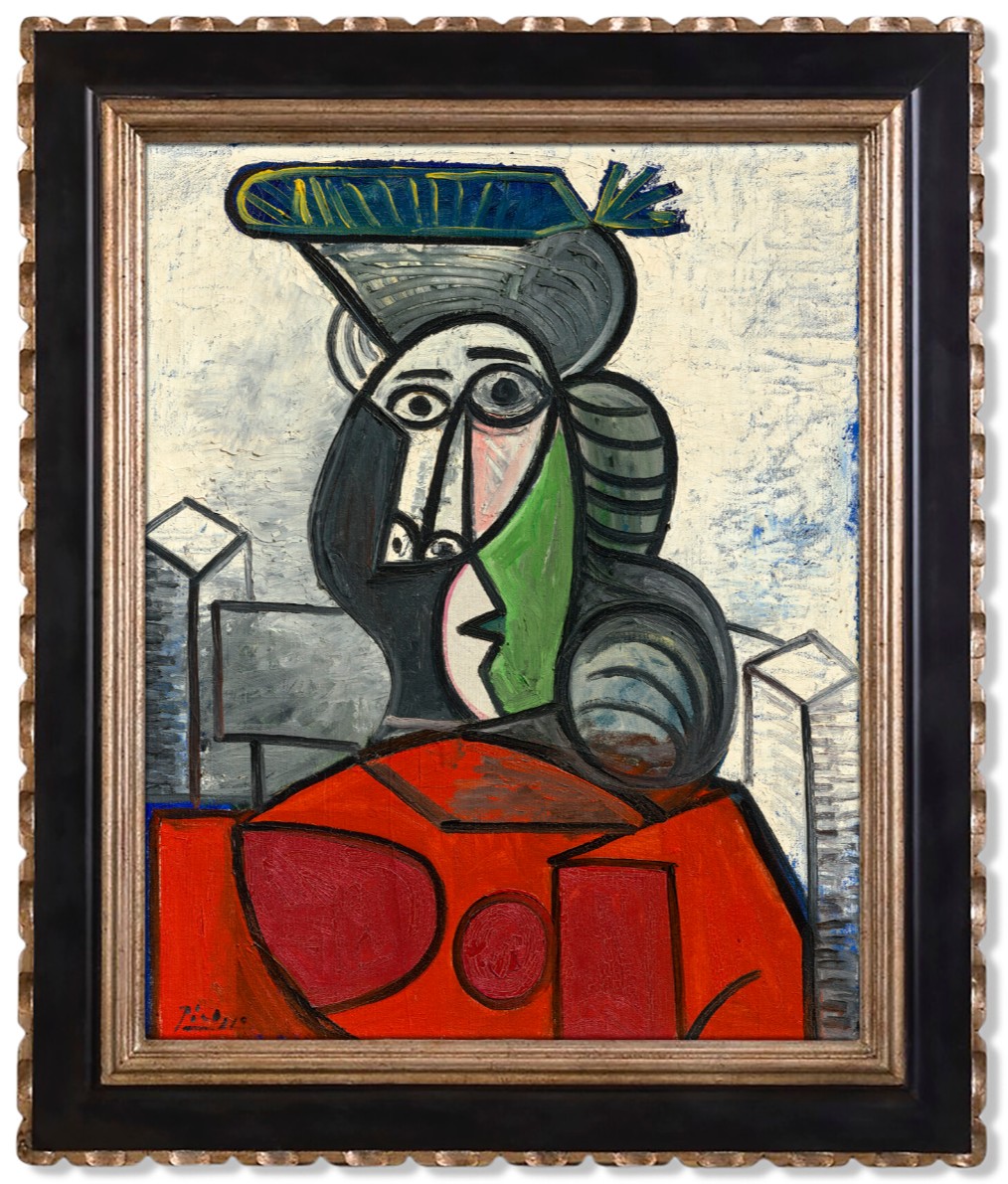
PABLO PICASSO (1881-1973)
Buste de femme, 1944
Oil on canvas
80.8 x 65 cm (31 7/8 x 25 5/8 inches)
Signed ‘Picasso’ (lower left)
Painted on 5 March 1944
#2. 17.3.63, 1963
Christie’s Hong-Kong: 26 September 2025
Estimated: HKD 70,000,000 – 90,000,000
HKD 85,200,000 / USD 10,951,155
ZAO WOU-KI (ZHAO WUJI, 1920-2013), 17.3.63 | Christie’s
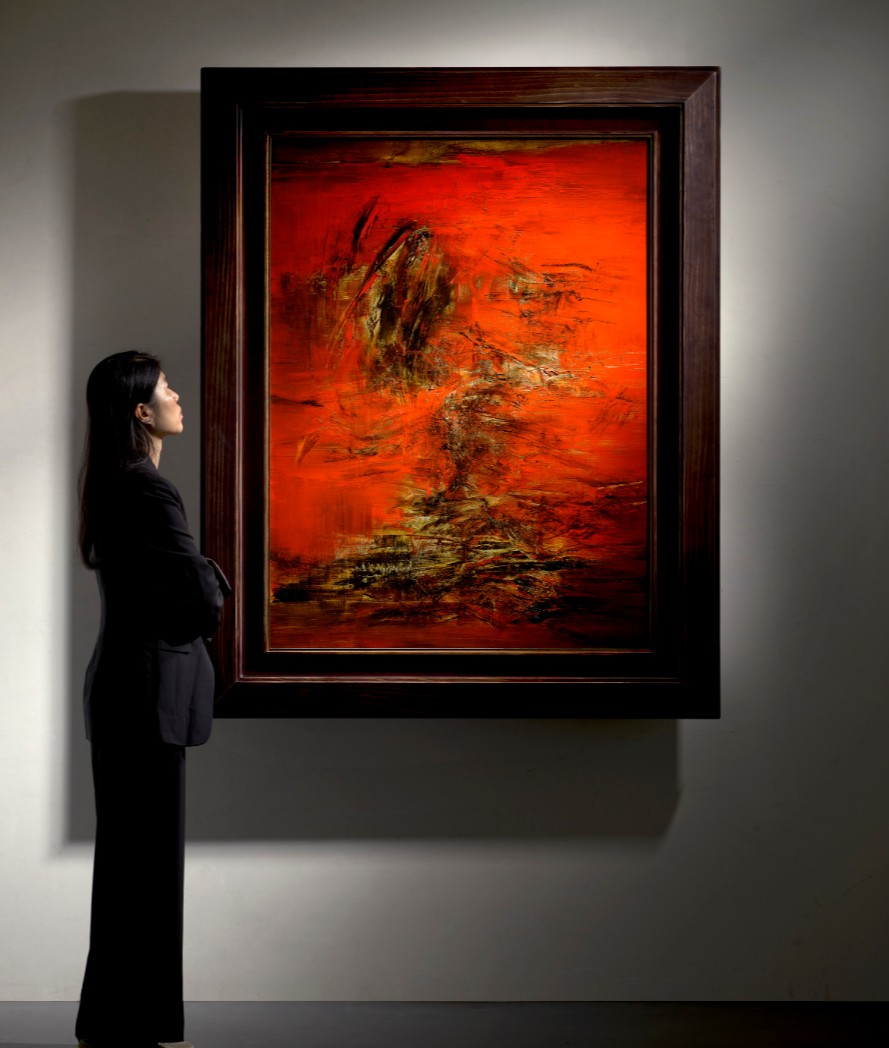
ZAO WOU-KI (ZHAO WUJI, 1920-2013)
17.3.63, 1963
Oil on canvas
130 x 97.2 cm (51 1/8 x 38 1/4 inches)
Signed in Chinese and signed ‘ZAO’ (lower right)
Signed and titled ‘ZAO WOU-KI 17.3.63.‘ (on the reverse)
#3. Printemps à Giverny, effet d’après-midi, 1885
Christie’s Hong-Kong: 26 September 2025
Estimated: HKD 33,000,000 – 55,000,000
HKD 37,100,000 / USD 4,768,640
Printemps à Giverny, effet d’après-midi
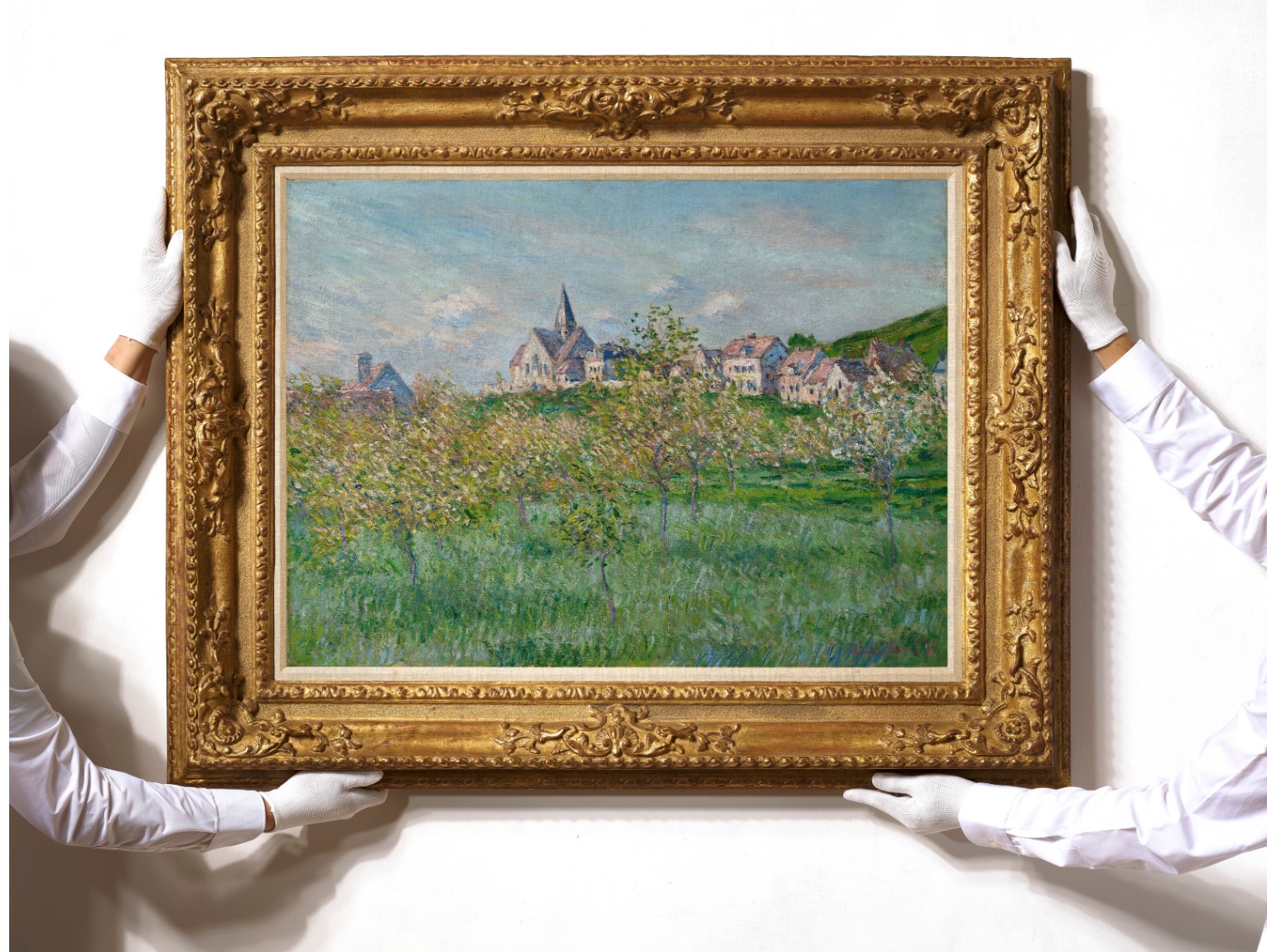
CLAUDE MONET (1840-1926)
Printemps à Giverny, effet d’après-midi, 1885
Oil on canvas
60.4 x 81.7 cm (23 5/8 x 32 1/8 inches)
Signed and dated ‘Claude Monet 85’ (lower right)
#4. PUMPKIN [TWAQN], 2015
Christie’s Hong-Kong: 26 September 2025
Estimated: HKD 22,000,000 – 32,000,000
HKD 34,660,000 / USD 4,445,015
YAYOI KUSAMA (B. 1929), PUMPKIN [TWAQN] | Christie’s
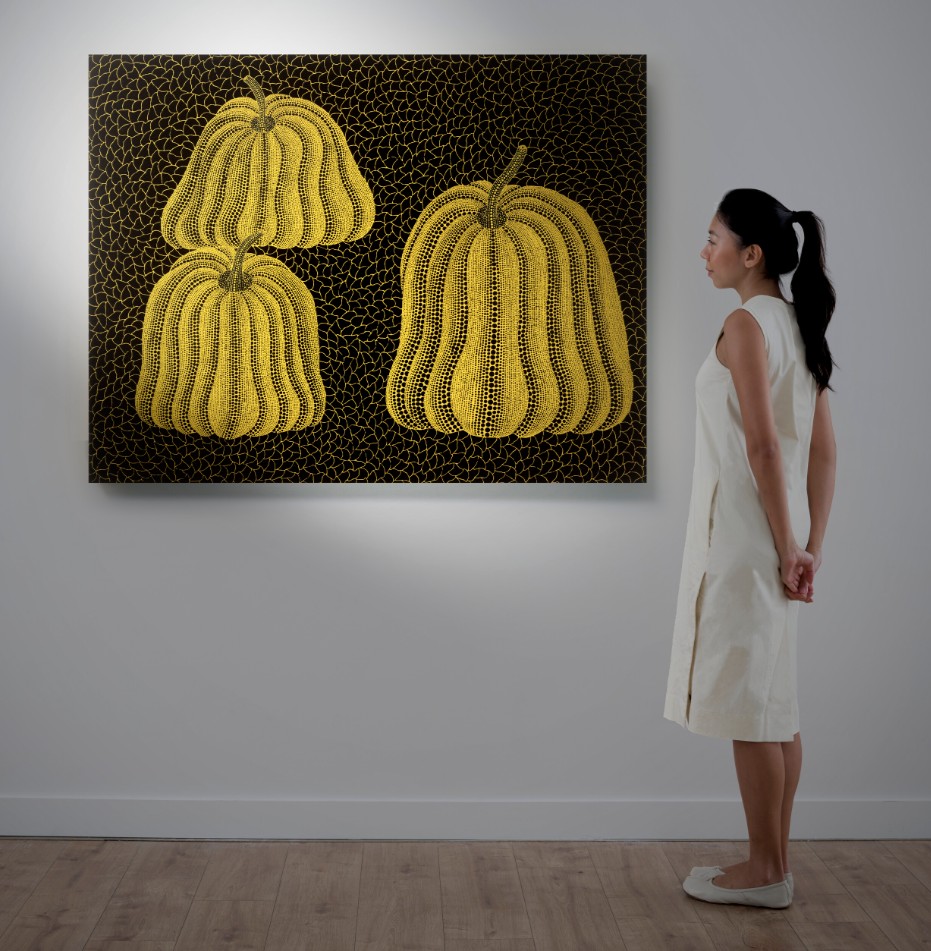
YAYOI KUSAMA (B. 1929)
PUMPKIN [TWAQN], 2015
Acrylic on canvas
112 x 145.5 cm (44 1/8 x 57 1/4 inches)
Signed, titled, and dated ‘TWAQN PUMPKIN YAYOI KUSAMA 2015’ (on the reverse)
#5. Nu assis appuyé sur des coussins, 1964
Christie’s Hong-Kong: 26 September 2025
Estimated: HKD 20,000,000 – 30,000,000
HKD 32,220,000 / USD 4,141,390
Nu assis appuyé sur des coussins
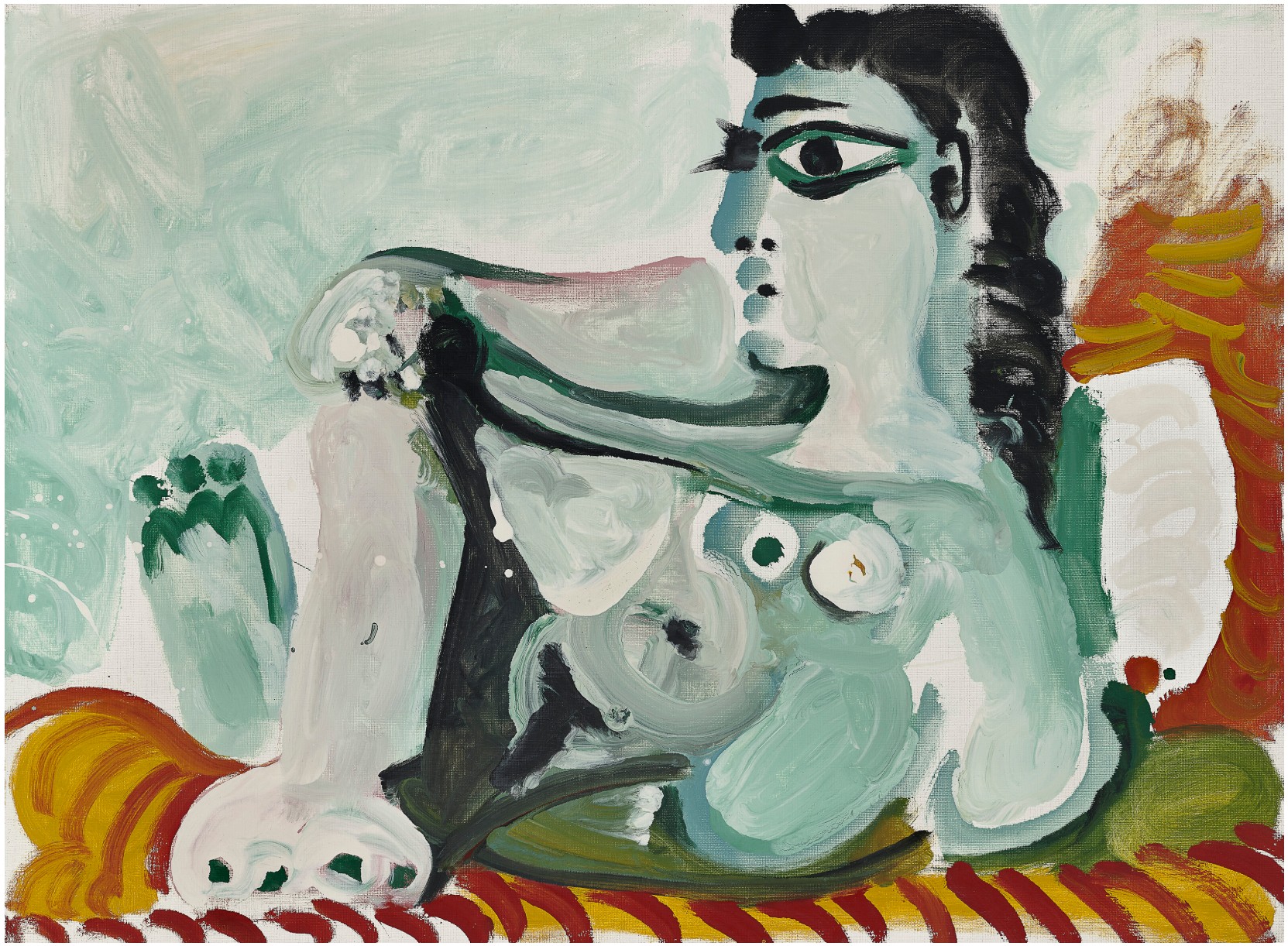
PABLO PICASSO (1881-1973)
Nu assis appuyé sur des coussins, 1964
Oil on canvas
54×73 cm (21 1/4 x 28 3/4 inches)
Dated and numbered ‘19.12. 64. III’ (on the reverse)
Painted on 19 December 1964
#6. Pagodenlandschaft (Landscape with a Pagoda by a Lake), 1929
Christie’s Hong-Kong: 26 September 2025
Estimated: HKD 20,000,000 – 30,000,000
HKD 26,120,000 / USD 3,357,325
Pagodenlandschaft (Landscape with a Pagoda by a Lake)
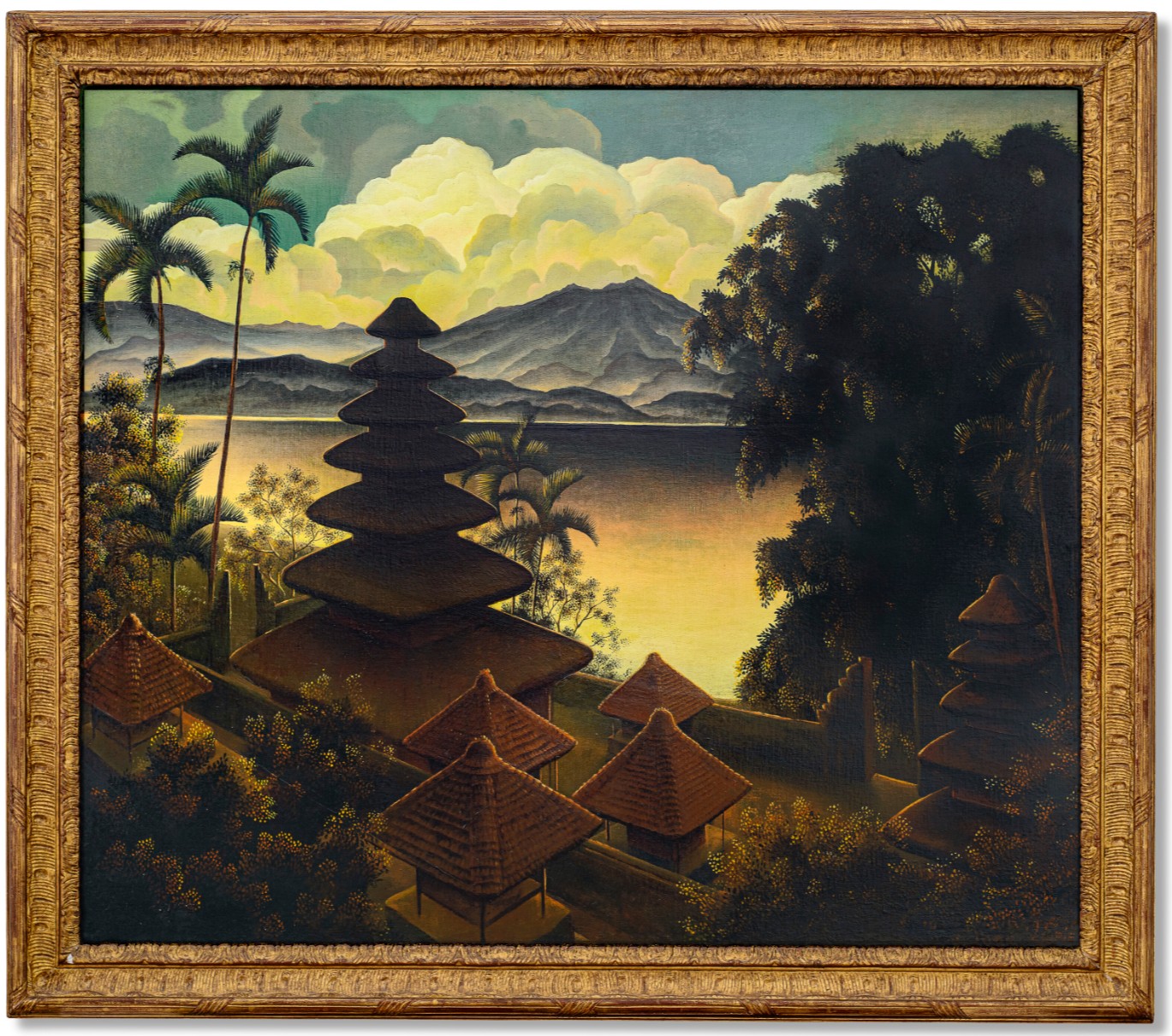
WALTER SPIES (1895-1942)
Pagodenlandschaft (Landscape with a Pagoda by a Lake), 1929
Oil on canvas
91.2 x 106.7 cm (35 7/8 x 42 inches)
Signed ‘Walter Spies’ (lower right)
#7. Reclining Blue Form, 2011
Christie’s Hong-Kong: 26 September 2025
Estimated: HKD 12,500,000 – 22,500,000
HKD 18,190,000 / USD 2,338,045
GEORGE CONDO (B. 1957), Reclining Blue Form | Christie’s
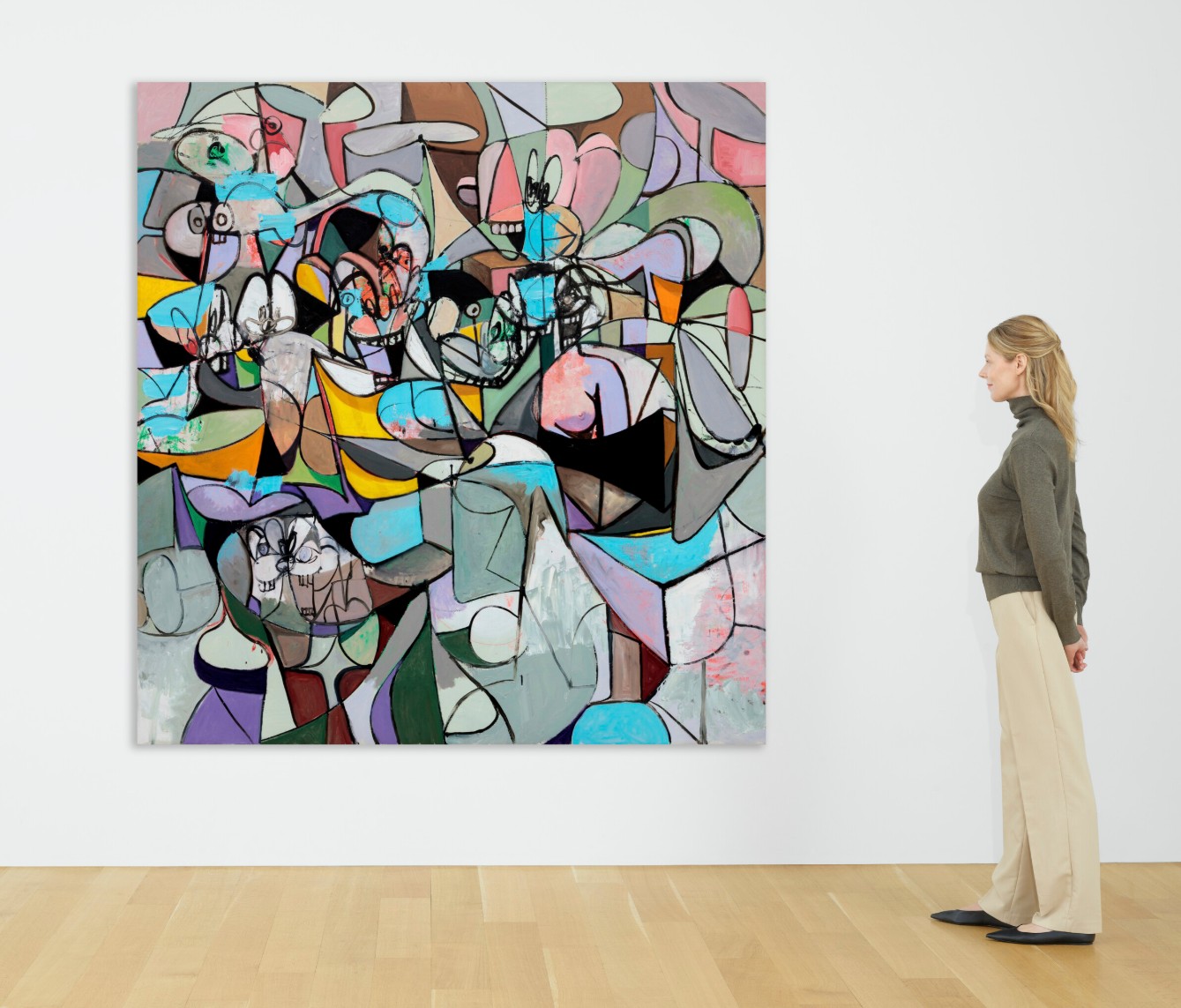
GEORGE CONDO (B. 1957)
Reclining Blue Form, 2011
Oil on linen
78×74 inches (198×188 cm)
Signed, titled and dated ‘condo 2011 Reclining Blue Form’ (on the overlap)
#8. Fleurs ou Bouquet de fleurs aux amoureux, 1930
Christie’s Hong-Kong: 26 September 2025
Estimated: HKD 5,500,000 – 7,500,000
HKD 15,140,000 / USD 1,946,015
MARC CHAGALL (1887-1985), Fleurs ou Bouquet de fleurs aux amoureux | Christie’s
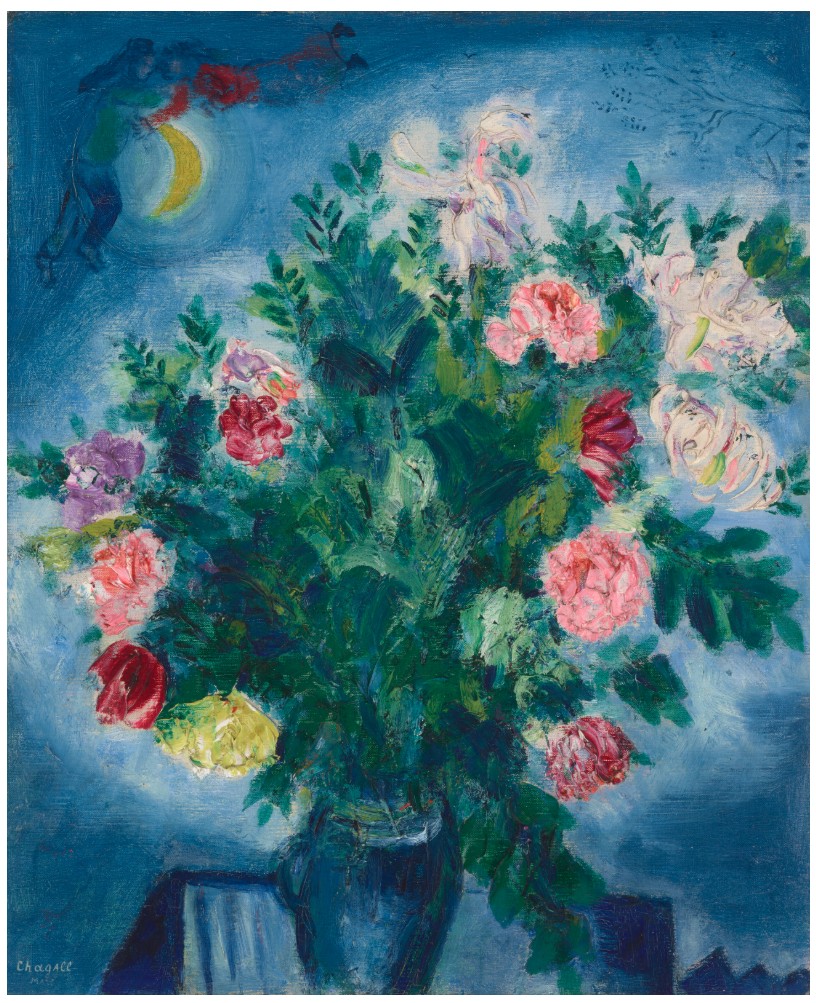
MARC CHAGALL (1887-1985)
Fleurs ou Bouquet de fleurs aux amoureux, 1930
Oil on canvas
46.2 x 38.2 cm (18 1/4 x 15 inches)
Signed ‘Marc Chagall’ (lower left)
#9. Reach Up to the Universe, Dotted Pumpkin (Vermilion), 2010
Christie’s Hong-Kong: 26 September 2025
Estimated: HKD 9,000,000 – 15,000,000
HKD 12,065,000 / USD 1,550,770
YAYOI KUSAMA (B. 1929), Reach Up to the Universe, Dotted Pumpkin (Vermilion) | Christie’s
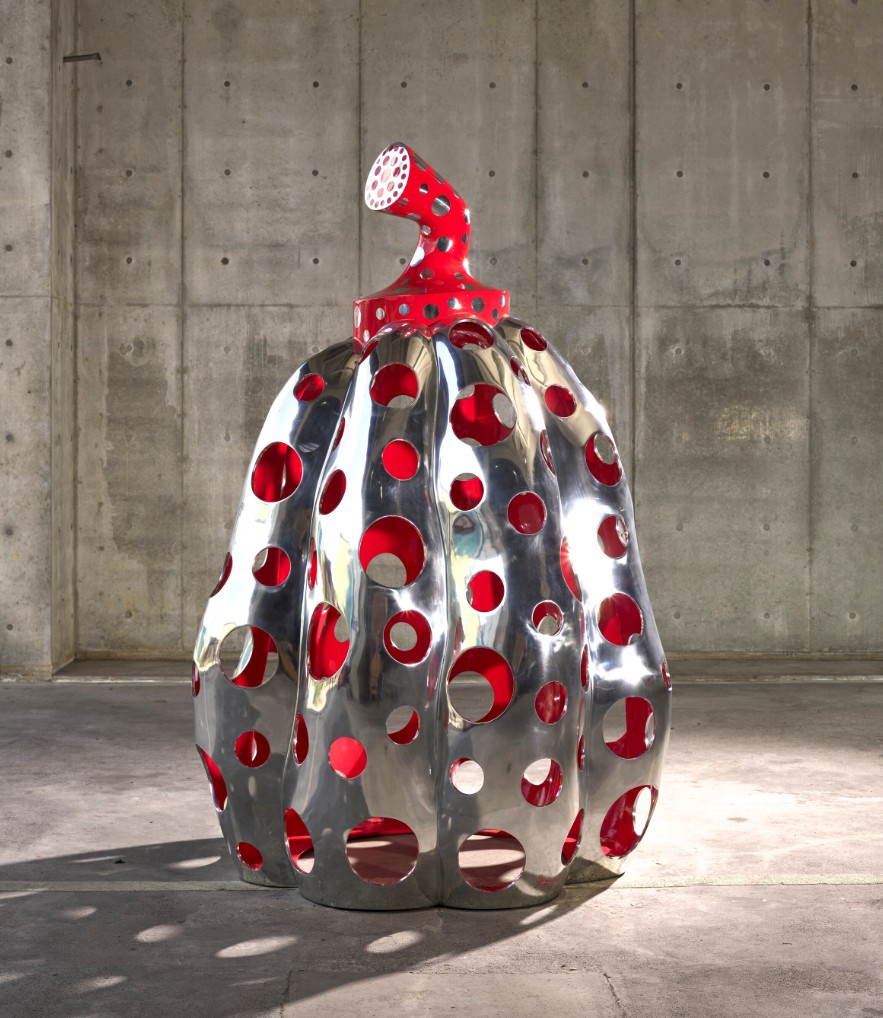
YAYOI KUSAMA (B. 1929)
Reach Up to the Universe, Dotted Pumpkin (Vermilion), 2010
Painted aluminum sculpture
200 (H) x 150 x 150 cm (78 3/4 x 59 x 59 inches)
Signed ‘Yayoi Kusama’ (on the side)
Incised ‘PA005 2010⁄8’ (on the bottom)
HKD 10,000,000
#10. Untitled 09-1-5, 2008
Christie’s Hong-Kong: 26 September 2025
Estimated: HKD 3,000,000 – 5,000,000
HKD 9,017,000 / USD 1,158,995
ZENG FANZHI (B. 1964), Untitled 09-1-5 | Christie’s
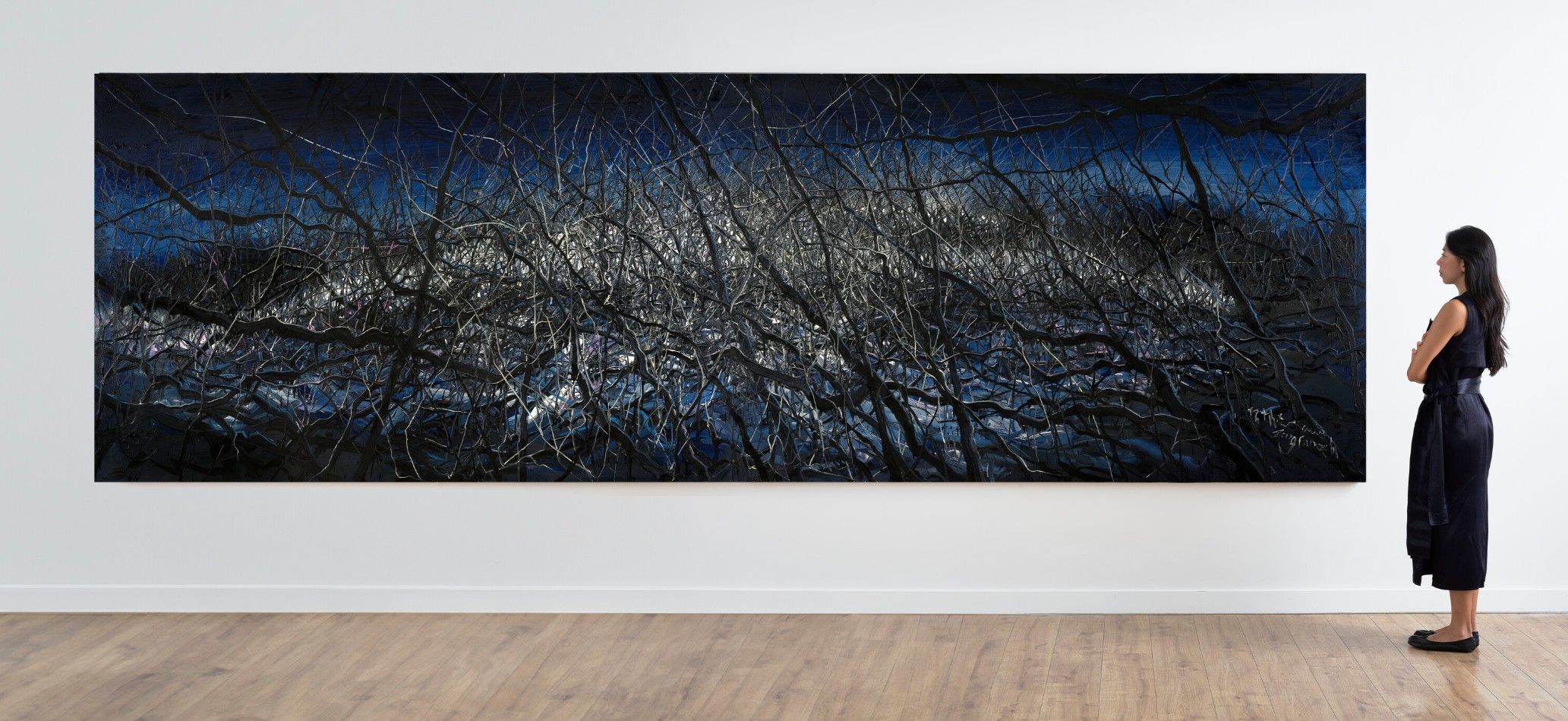
ZENG FANZHI (B. 1964)
Untitled 09-1-5, 2008
Oil on canvas (diptych)
Each: 180×280 cm (70 7/8 x 110 1/4 inches) (2)
Overall: 180×560 cm (70 7/8 x 220 1/2 inches)
Signed in Chinese, signed again and dated ‘2008 Zeng Fanzhi’ (on the lower right of the right panel)
#11. The Double Helix, Reversal, 2001
Christie’s Hong-Kong: 26 September 2025
Estimated: HKD 8,000,000 – 12,000,000
HKD 8,890,000 / USD 1,142,675
TAKASHI MURAKAMI (B. 1962), The Double Helix, Reversal | Christie’s
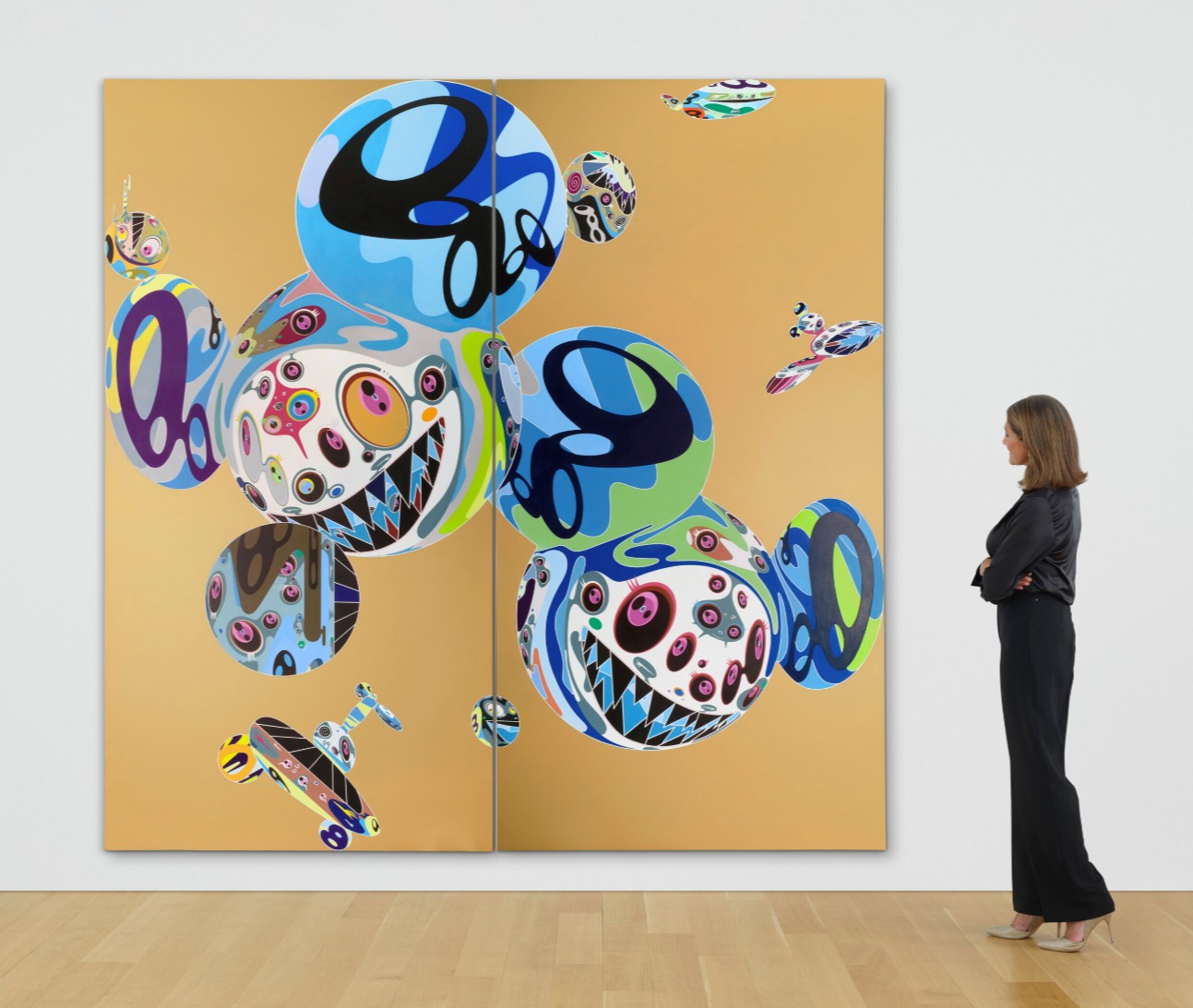
TAKASHI MURAKAMI (B. 1962)
The Double Helix, Reversal, 2001
Acrylic on canvas mounted on wood (diptych)
each: 300×150 cm (118 1/8 x 59 inches)
Overall: 300×300 cm (118 1/8 x 118 1/8 inches)
Signed and dated ‘Takashi 01’ (on the reverse of the left panel)
#15. Untitled, 2020-2022
Christie’s Hong-Kong: 26 September 2025
Estimated: HKD 3,000,000 – 5,000,000
HKD 6,096,000 / USD 783,550
MR. (B. 1969), Untitled | Christie’s
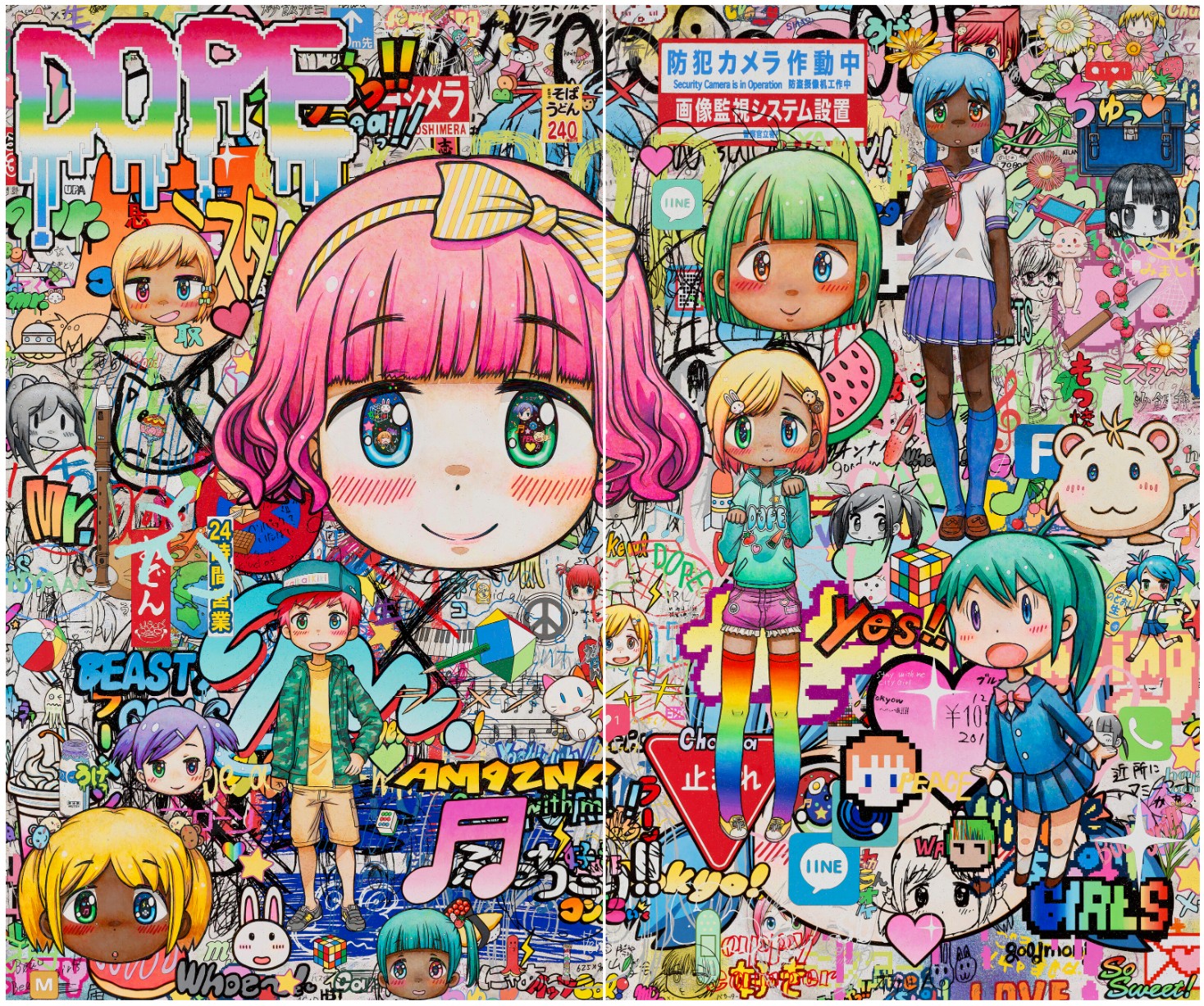
MR. (B. 1969)
Untitled, 2020-2022
Acrylic and silkscreen on canvas mounted on wood panel (diptych)
Each: 235 x 142.5 cm (92 1/2 x 56 1/8 inches)
Overall: 235×285 cm (92 2/2 x 112 1/4 inches)
Signed with artist’s signature and dated ‘Mr. 2022’ (on the side of the left panel)
#16. Singer Songwriter, 2013
Christie’s Hong-Kong: 26 September 2025
Estimated: HKD 6,000,000 – 9,000,000
HKD 5,715,000 / USD 734,575
DANA SCHUTZ (B. 1976), Singer Songwriter | Christie’s
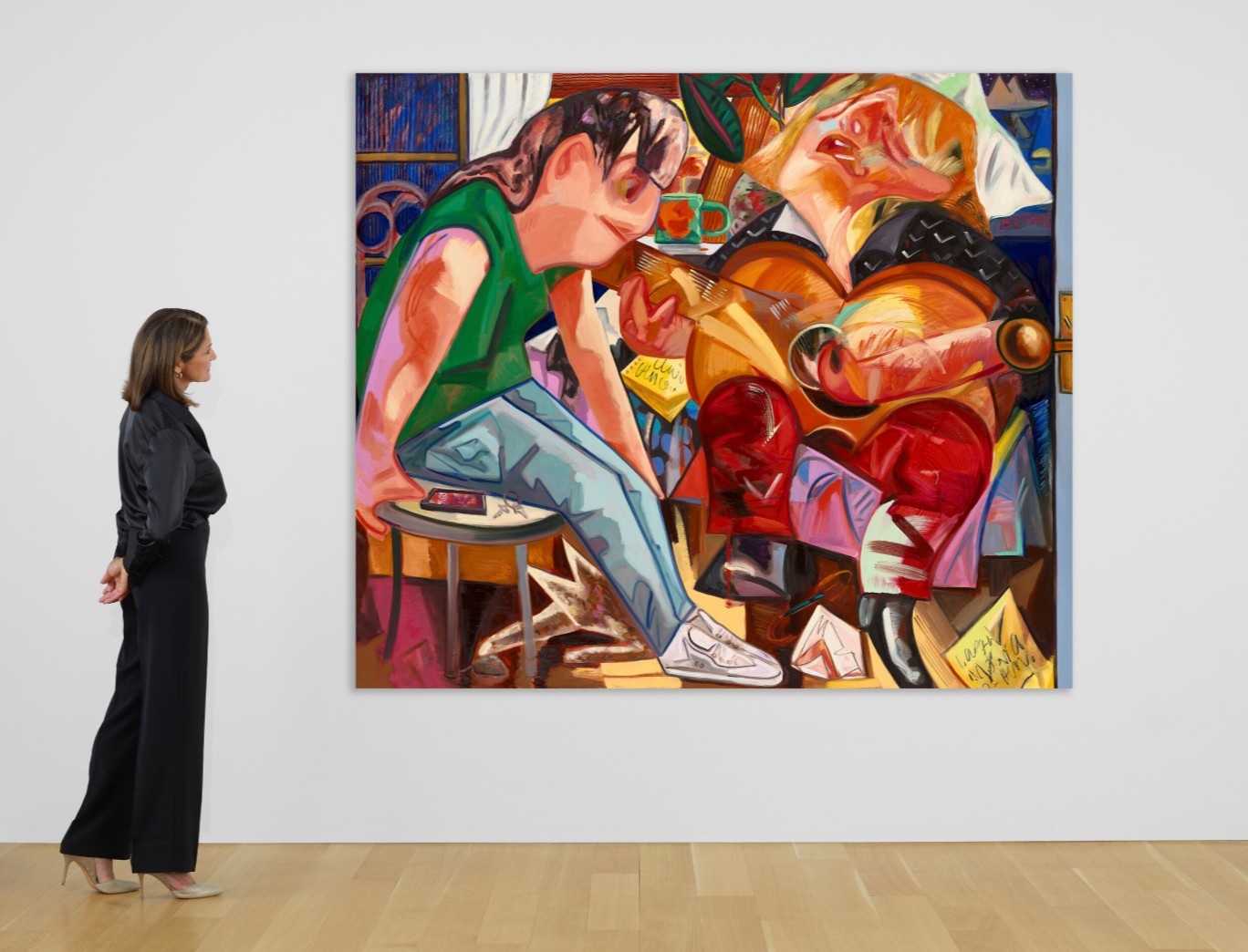
DANA SCHUTZ (B. 1976)
Singer Songwriter, 2013
Oil on canvas
77×90 inches (195.5 x 228.6 cm)
Signed and dated ‘Dana Schutz 2013’ (on the reverse)
#17. Woman In the Shower, 2005
Christie’s Hong-Kong: 26 September 2025
Estimated: HKD 3,800,000 – 5,500,000
HKD 5,461,000 / USD 701,930
FERNANDO BOTERO (1932-2023), Woman In the Shower | Christie’s
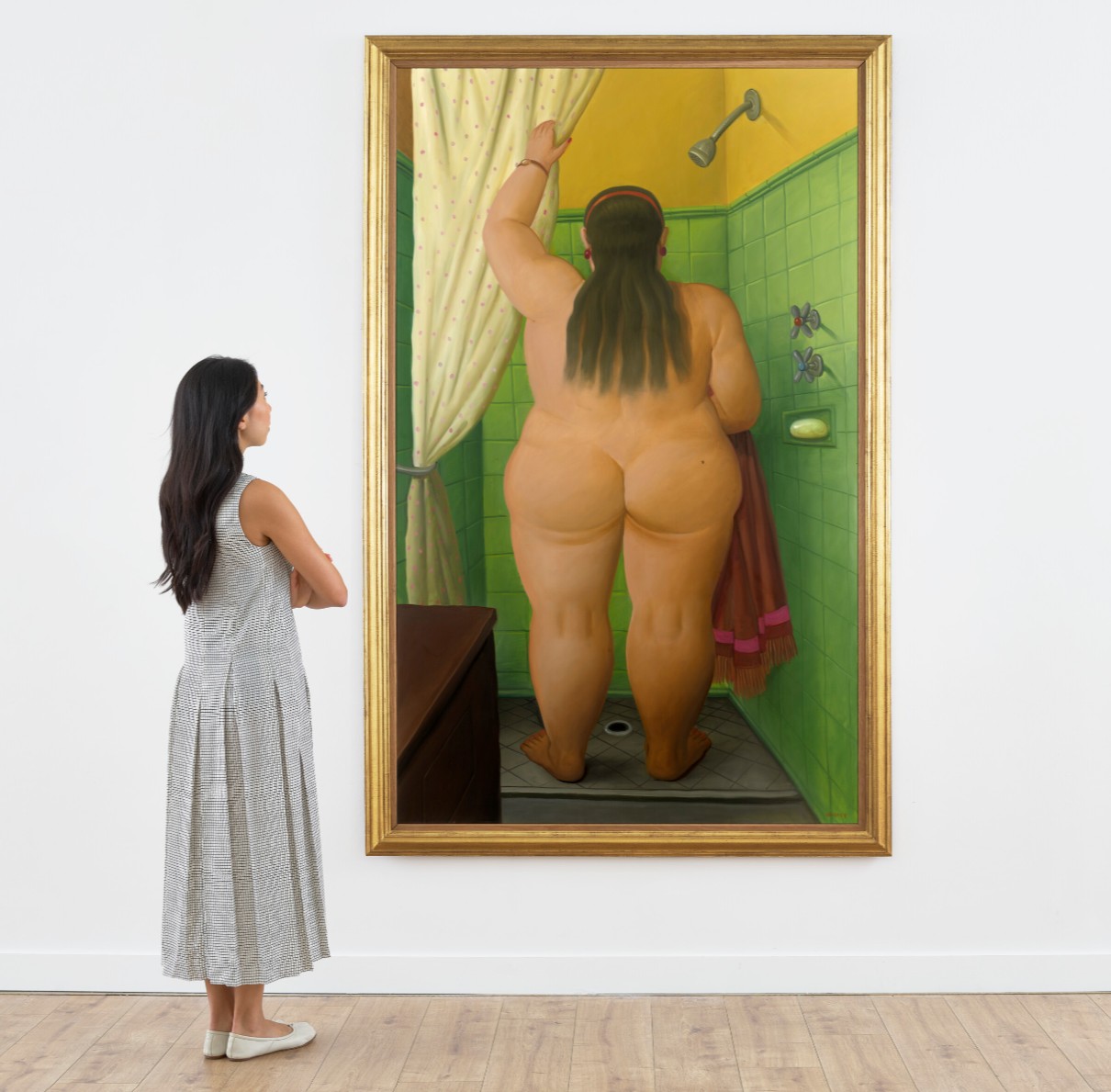
FERNANDO BOTERO (1932-2023)
Woman In the Shower, 2005
Oil on canvas
201 x 123.5 cm (79 1/8 x 48 5/8 inches)
Signed and dated ‘Botero 05’ (lower right)
#18. Mattino di primavera (Spring Morning), 2007
Christie’s Hong-Kong: 26 September 2025
Estimated: HKD 800,000 – 1,500,000
HKD 5,080,000 / USD 652,955
SALVO (1947 – 2015), Mattino di primavera (Spring Morning) | Christie’s
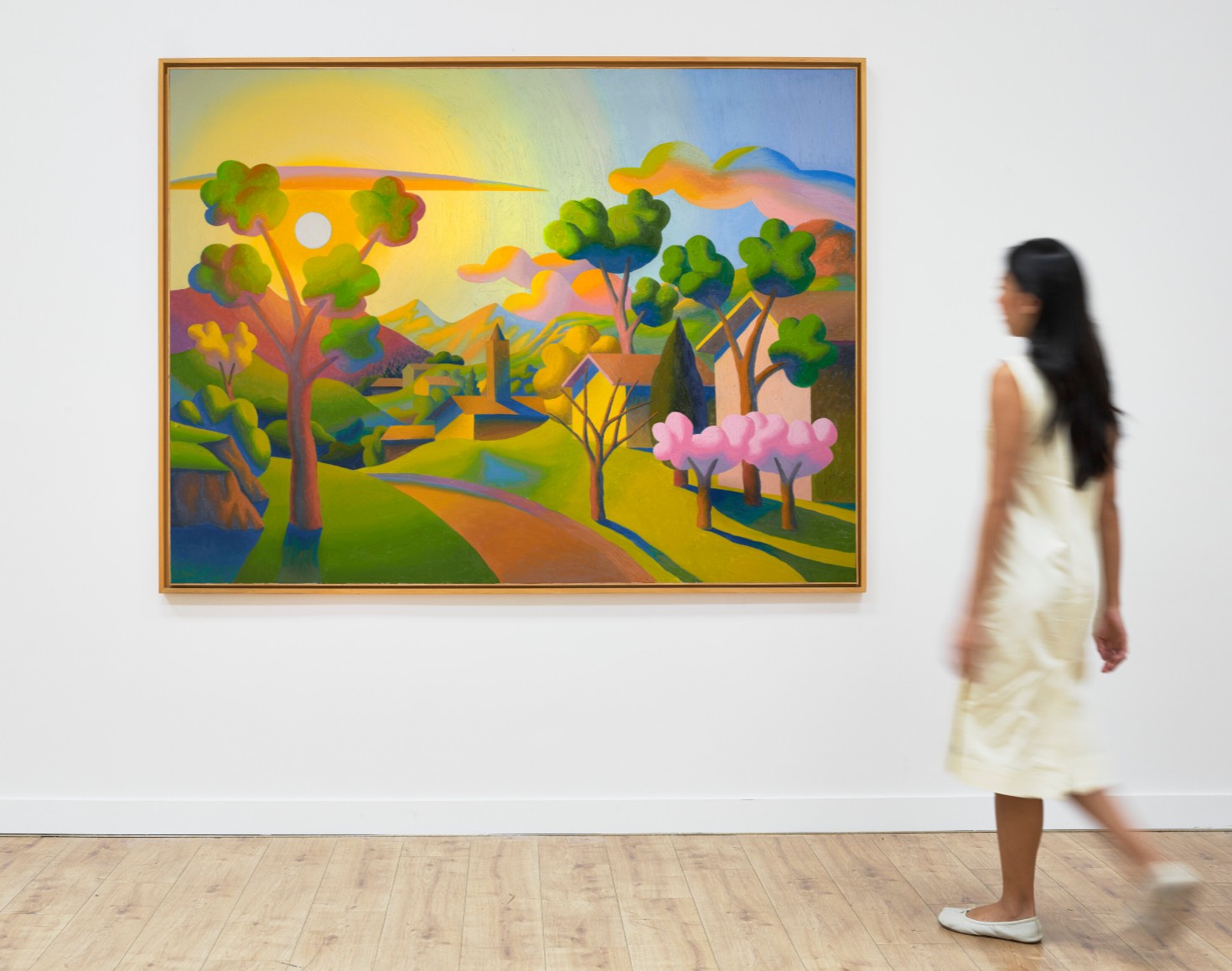
SALVO (1947 – 2015)
Mattino di primavera (Spring Morning), 2007
Oil on canvas
150×200 cm. (59 x 78 3/4 inches)
Registered in the Archivio Salvo, Turin under the no. S.2007-7
#19. 8:50, 2020
Christie’s Hong-Kong: 26 September 2025
Estimated: HKD 3,000,000 – 5,000,000
HKD 4,699,000 / USD 603,985
LUCY BULL (B. 1990), 8:50 | Christie’s
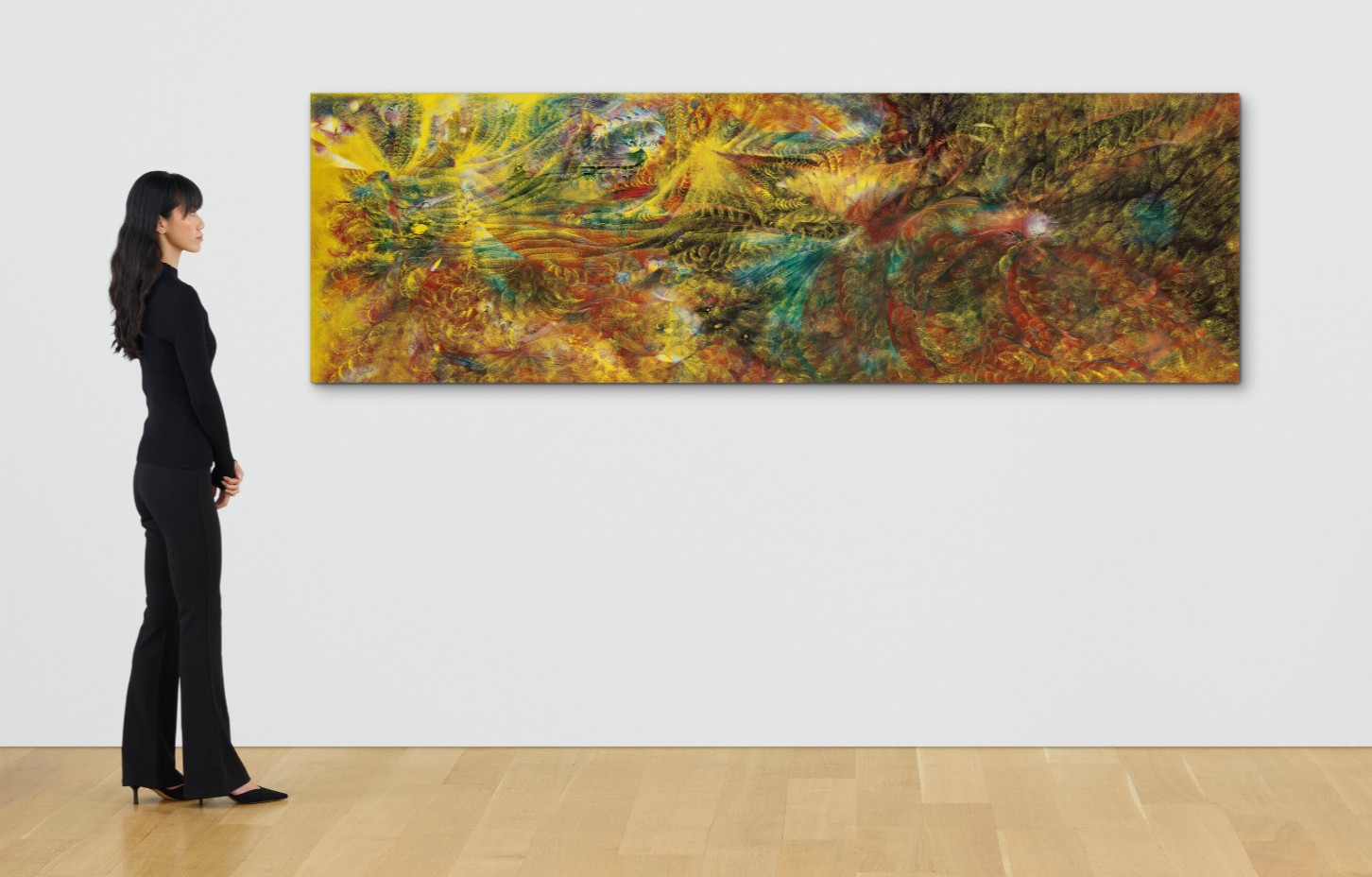
LUCY BULL (B. 1990)
8:50, 2020
Oil on canvas
36 5/8 x 116 3/4 inches (93 x 296.5 cm)
Signed and dated ‘LB 2020’ (on the reverse)
#23. Woven Futures, 2022
Christie’s Hong-Kong: 26 September 2025
Estimated: HKD 3,000,000 – 5,000,000
HKD 3,810,000 / USD 489,715
JADÉ FADOJUTIMI (B. 1993), Woven Futures | Christie’s
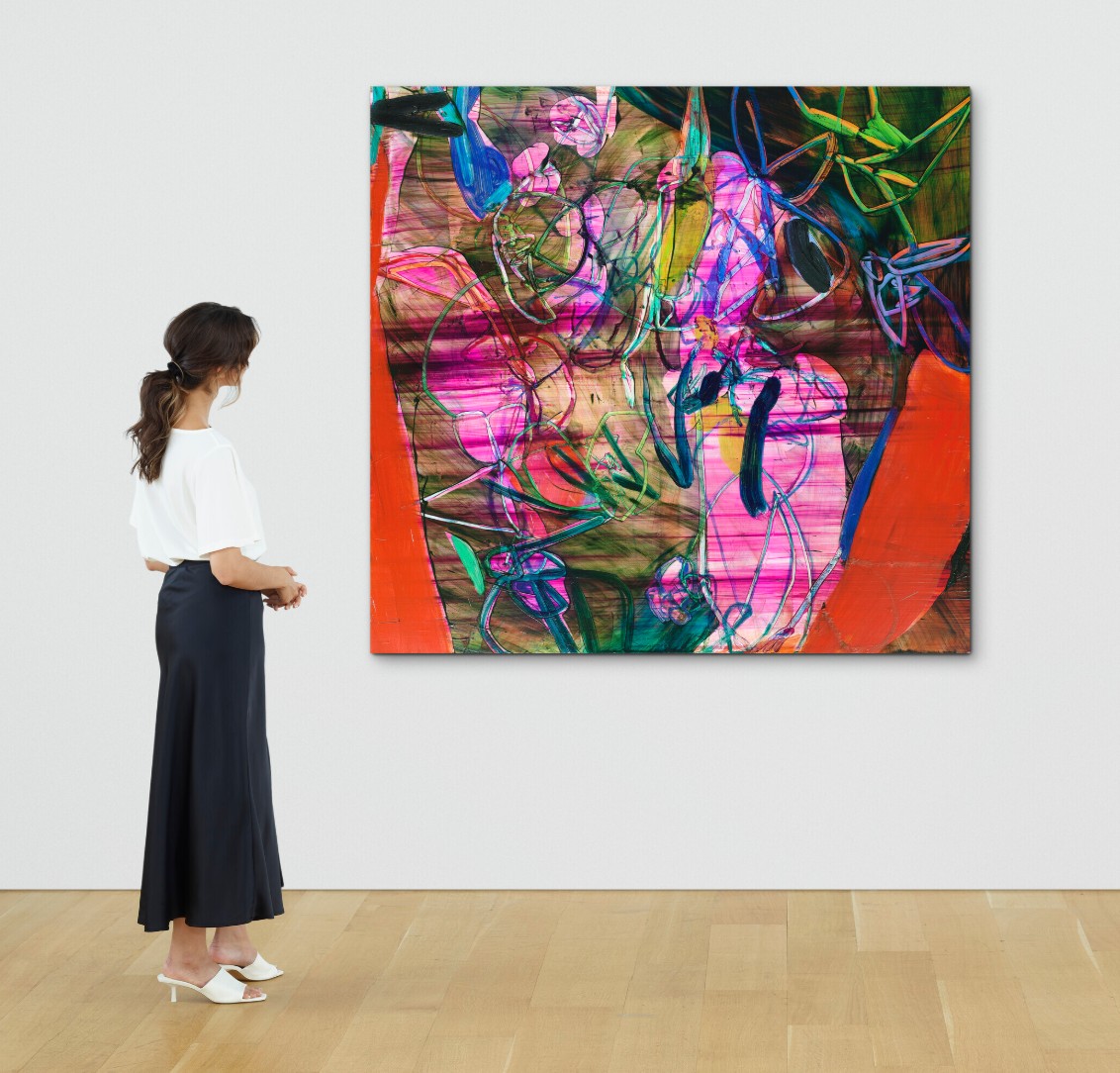
JADÉ FADOJUTIMI (B. 1993)
Woven Futures, 2022
Acrylic, oil, and oil pastel on canvas
170×180 cm (66 7/8 x 70 7/8 inches)
Signed with the artist’s intials, signed again, titled, and dated
‘JF Jadé Fadojutimi ‘Woven Figures’ Aug’22’
(on the reverse)
#27. Interior Labyrinth, 2021
Christie’s Hong-Kong: 26 September 2025
Estimated: HKD 800,000 – 1,200,000
HKD 2,159,000 / USD 277,505
EDDIE MARTINEZ (B. 1977), Interior Labyrinth | Christie’s
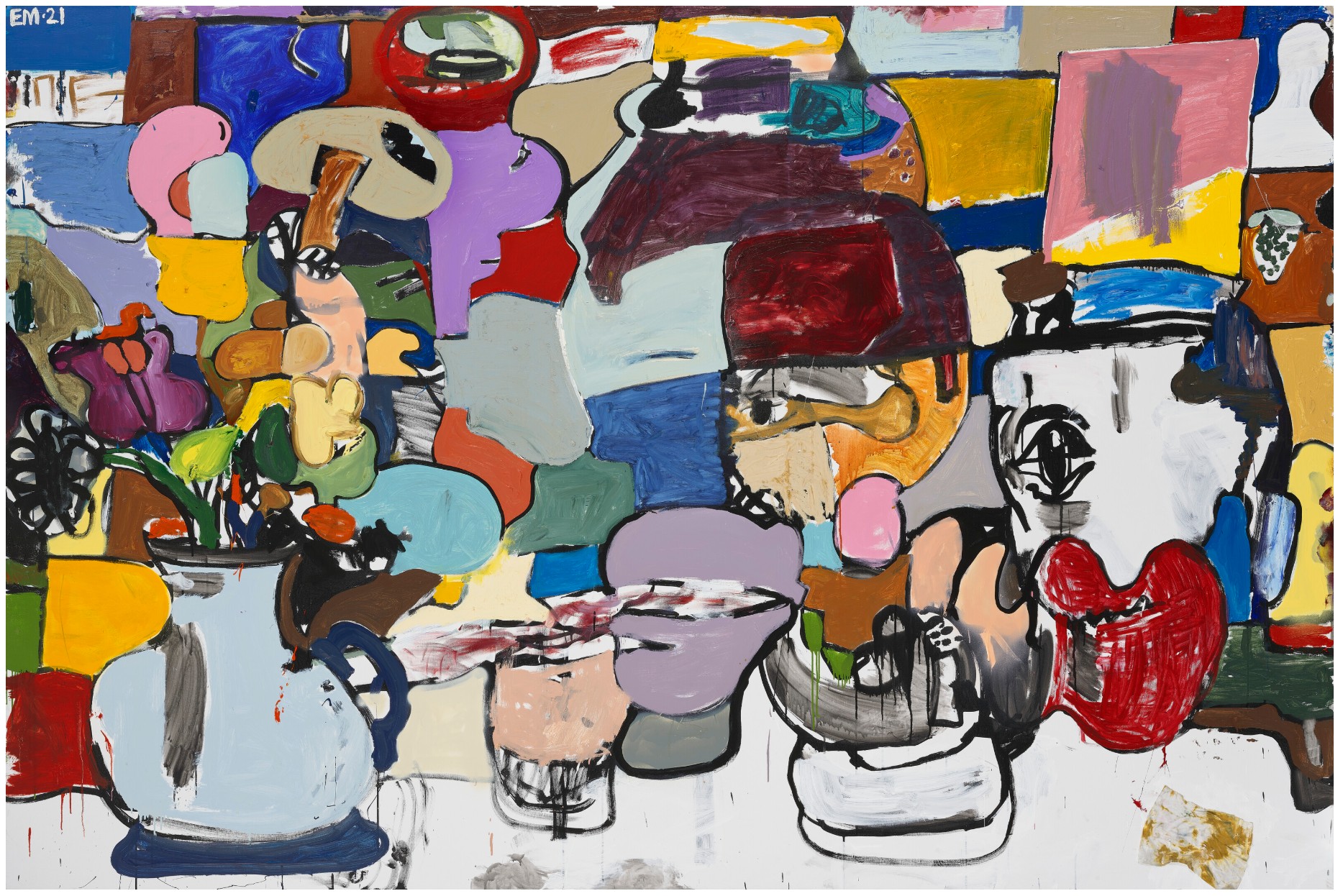
EDDIE MARTINEZ (B. 1977)
Interior Labyrinth, 2021
Oil, acrylic, spray paint and collaged baby wipe on canvas
72×108 inches (182.9 x 274.3 cm)
Signed and dated ‘EM.21’ (upper left)
Untitled Mask Collage, 2017
Christie’s Hong-Kong: 26 September 2025
Estimated: HKD 1,000,000 – 1,200,000
HKD 1,651,000 / USD 212,210
RASHID JOHNSON (B. 1977), Untitled Mask Collage | Christie’s
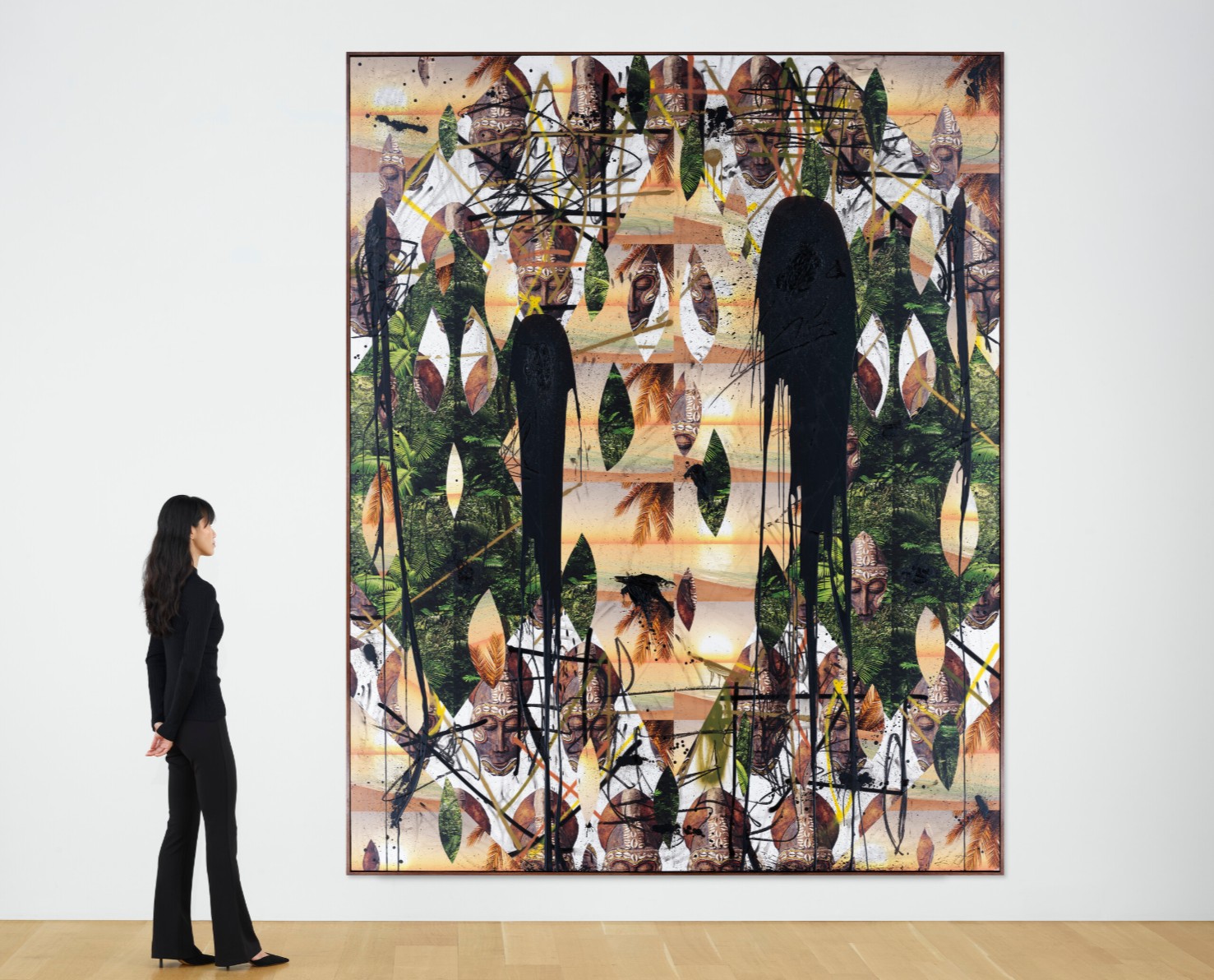
RASHID JOHNSON (B. 1977)
Untitled Mask Collage, 2017
Vinyl, spray enamel, oil stick, black soap, wax on panel in walnut lattice frame
Overall: 121 5/8 x 97 5/8 x 2 1/8 inches (309 x 248 x 5.5 cm)
Signed ‘Rashid’ (on the reverse)
Lots Passed
Table with Conversation, 1988
Christie’s Hong-Kong: 26 September 2025
Estimated: HKD 40,000,000 – 60,000,000
PASSED
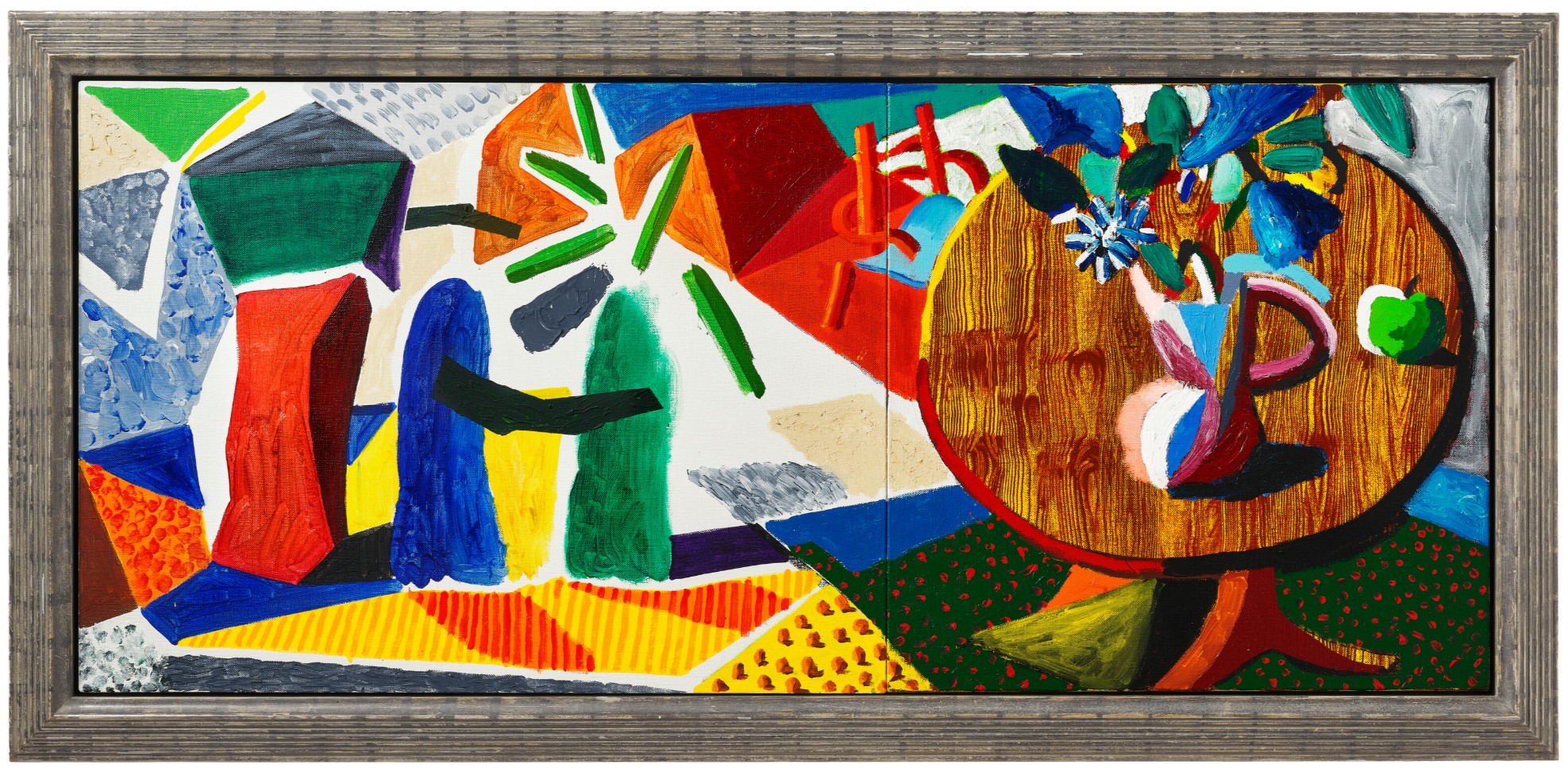
DAVID HOCKNEY (B. 1937)
Table with Conversation, 1988
Oil on two canvases
Overall: 91.8 x 213.5 cm (36 1/8 x 84 inches)
Signed, titled and dated ‘Table “with conversation” David Hockney 1988’ (on the reverse)
Self-Portrait in Villa Borghese, 2023
Christie’s Hong-Kong: 26 September 2025
Estimated: HKD 7,500,000 – 11,500,000
PASSED
ADRIAN GHENIE (B. 1977), Self-Portrait in Villa Borghese | Christie’s
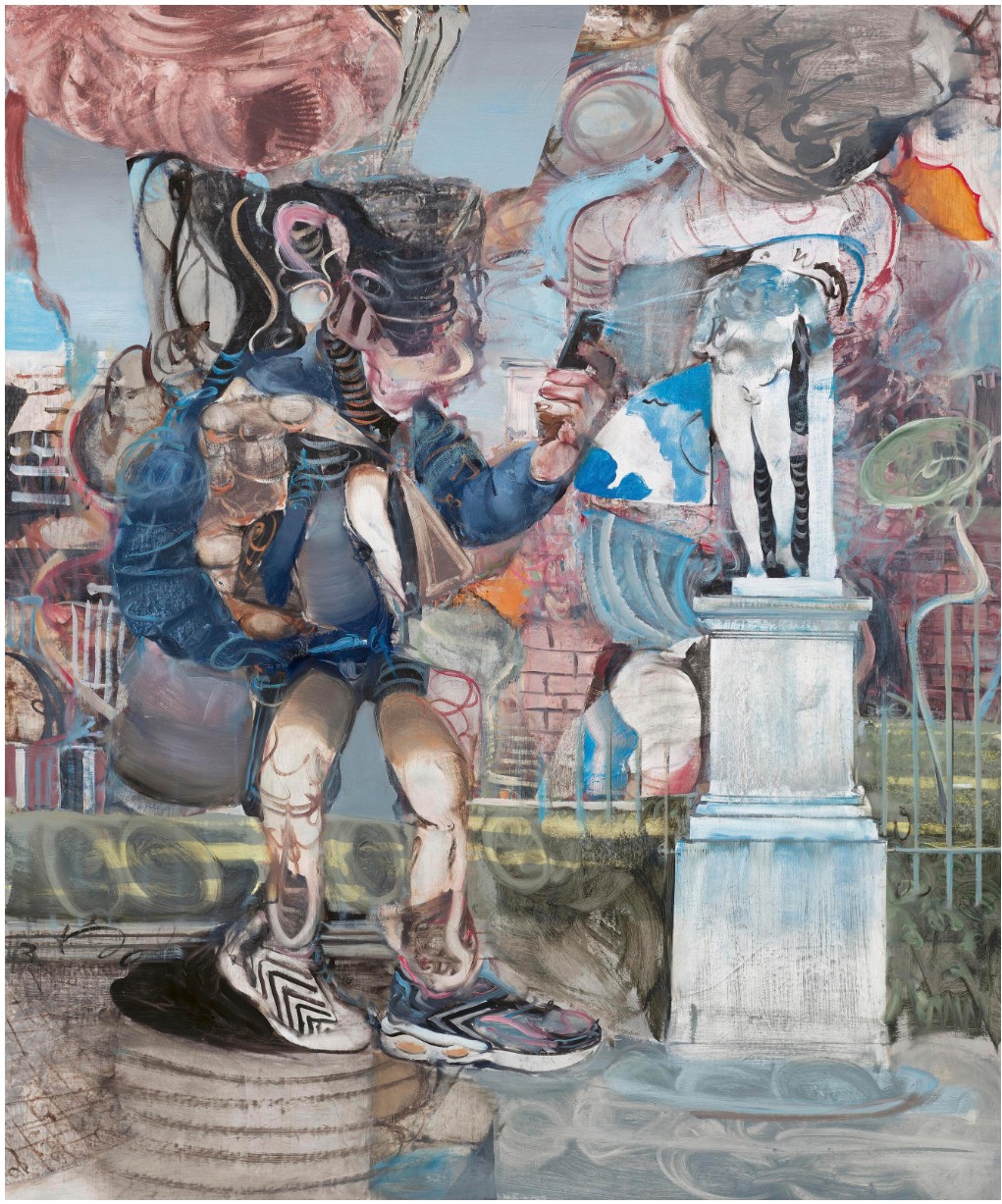
ADRIAN GHENIE (B. 1977)
Self-Portrait in Villa Borghese, 2023
Oil on canvas
240×200 cm (94 1/2 x 78 3/4 inches)
Signed and dated ‘Ghenie 2023’ (on the reverse)
20th Century Day Sale
27 September 2025
The Twelfth V.N. Painting, 1992
Christie’s Hong-Kong: 27 September 2025
Estimated: HKD 15,000,000 – 20,000,000
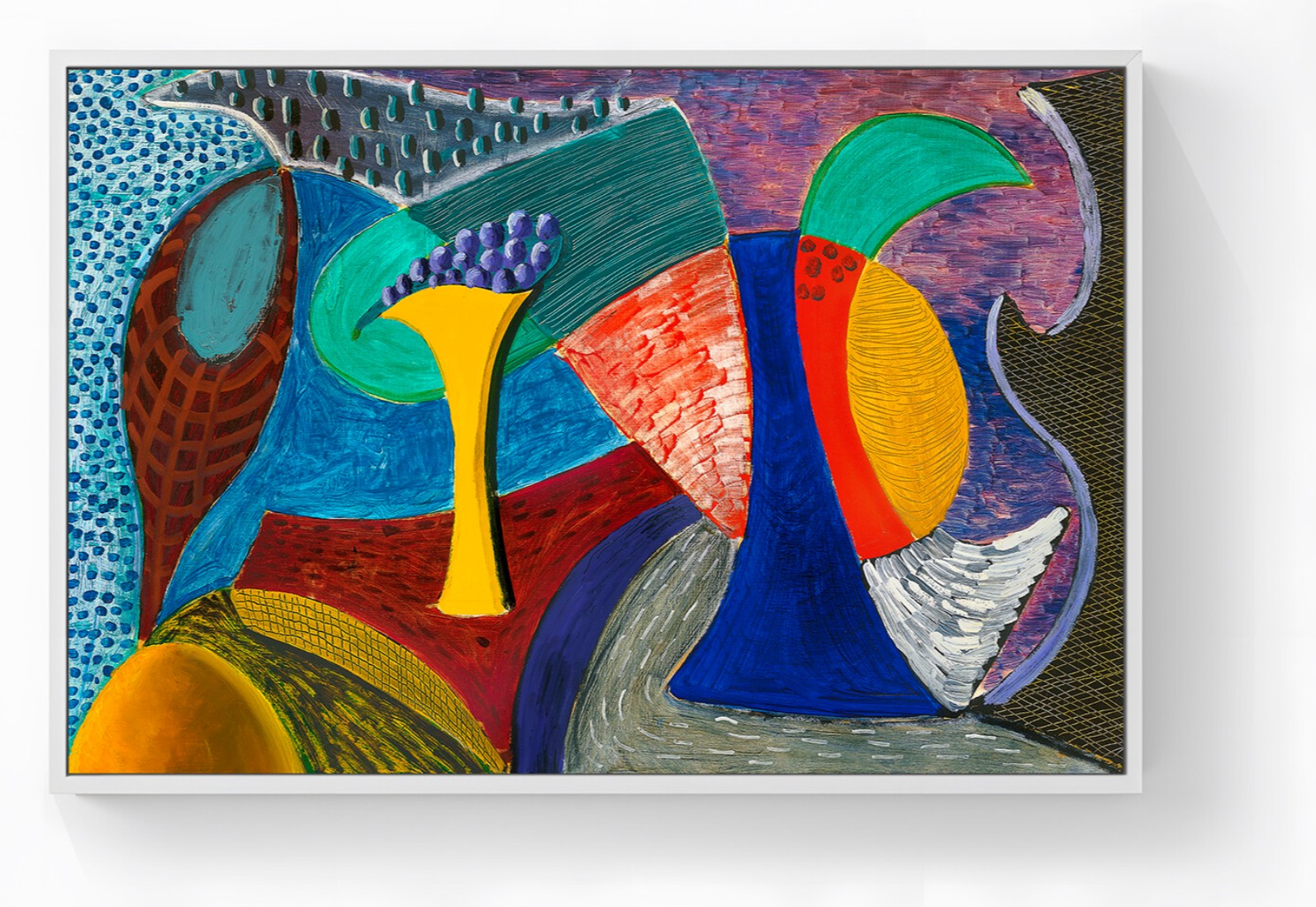
DAVID HOCKNEY (B. 1937)
The Twelfth V.N. Painting, 1992
Oil on canvas
24 x 36 inches (61 x 91.4 cm)
Signed, titled and dated ‘David Hockney 92 The Twelfth V N Painting’ (on the reverse)
21st Century Day Sale
27 September 2025
TOTAL
HKD 107,612,700 / USD 13,831,965
# Lots
Total: 65 Lots
Withdrawn: 0 Lot
Passed: 4 Lots
Sold: 61 Lots
Sell-Through Rate: 93.8%
#1. Pumpkin (C), 1991
Christie’s Hong-Kong: 26 September 2025
Estimated: HKD 13,800,000 – 18,800,000
HKD 21,240,000 / USD 2,730,075
YAYOI KUSAMA (B. 1929), Pumpkin (C) | Christie’s
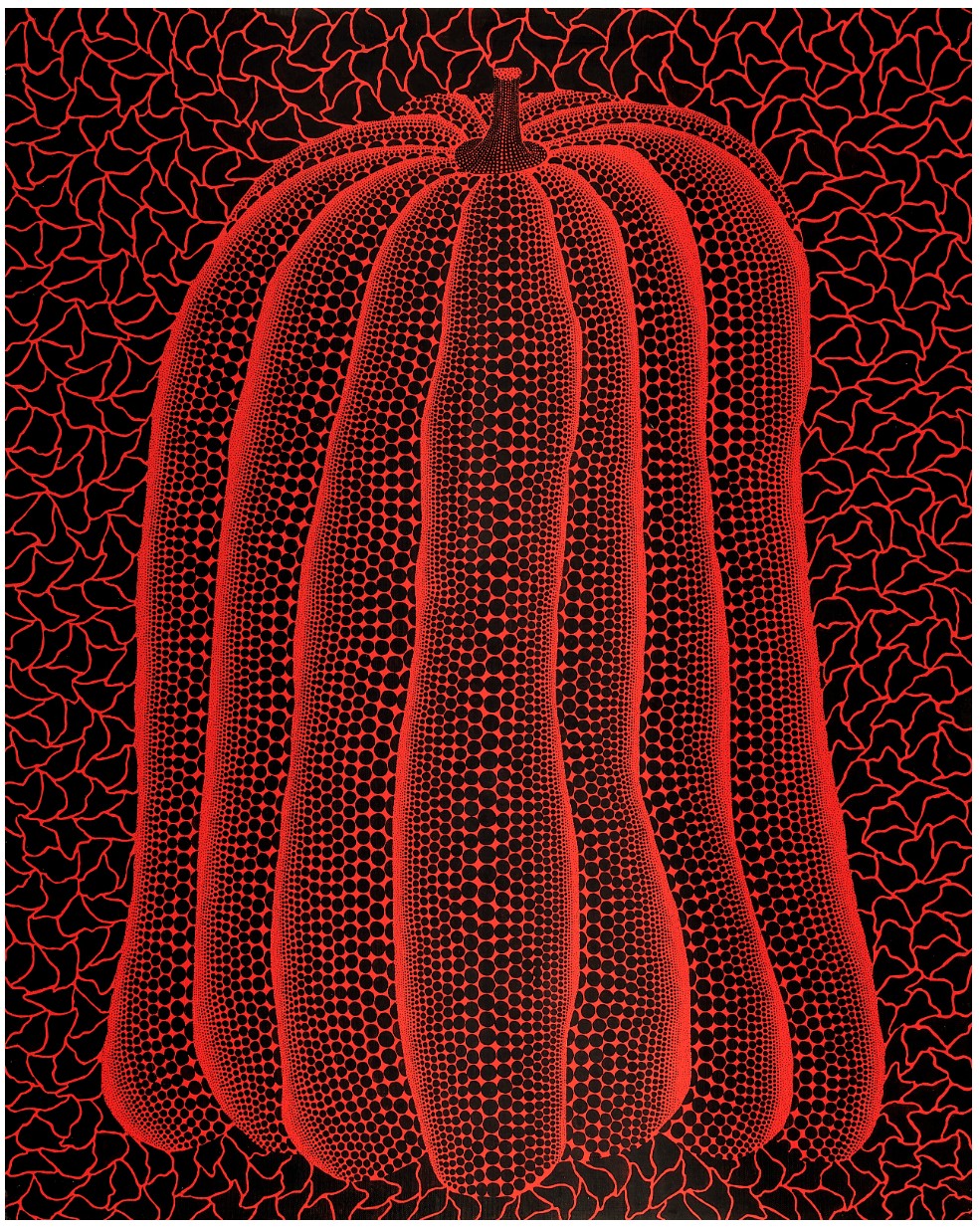
YAYOI KUSAMA (B. 1929)
Pumpkin (C), 1991
Acrylic on canvas
91 x 72.7 cm (35 7/8 x 28 5/8 inches)
Signed and dated ‘Yayoi Kusama 1991’
Titled in Japanese (on the reverse)
#2. Mumps, 1993
Christie’s Hong-Kong: 26 September 2025
Estimated: HKD 8,000,000 – 12,000,000
HKD 10,160,000 / USD 1,305,915
YOSHITOMO NARA (B. 1959), Mumps | Christie’s
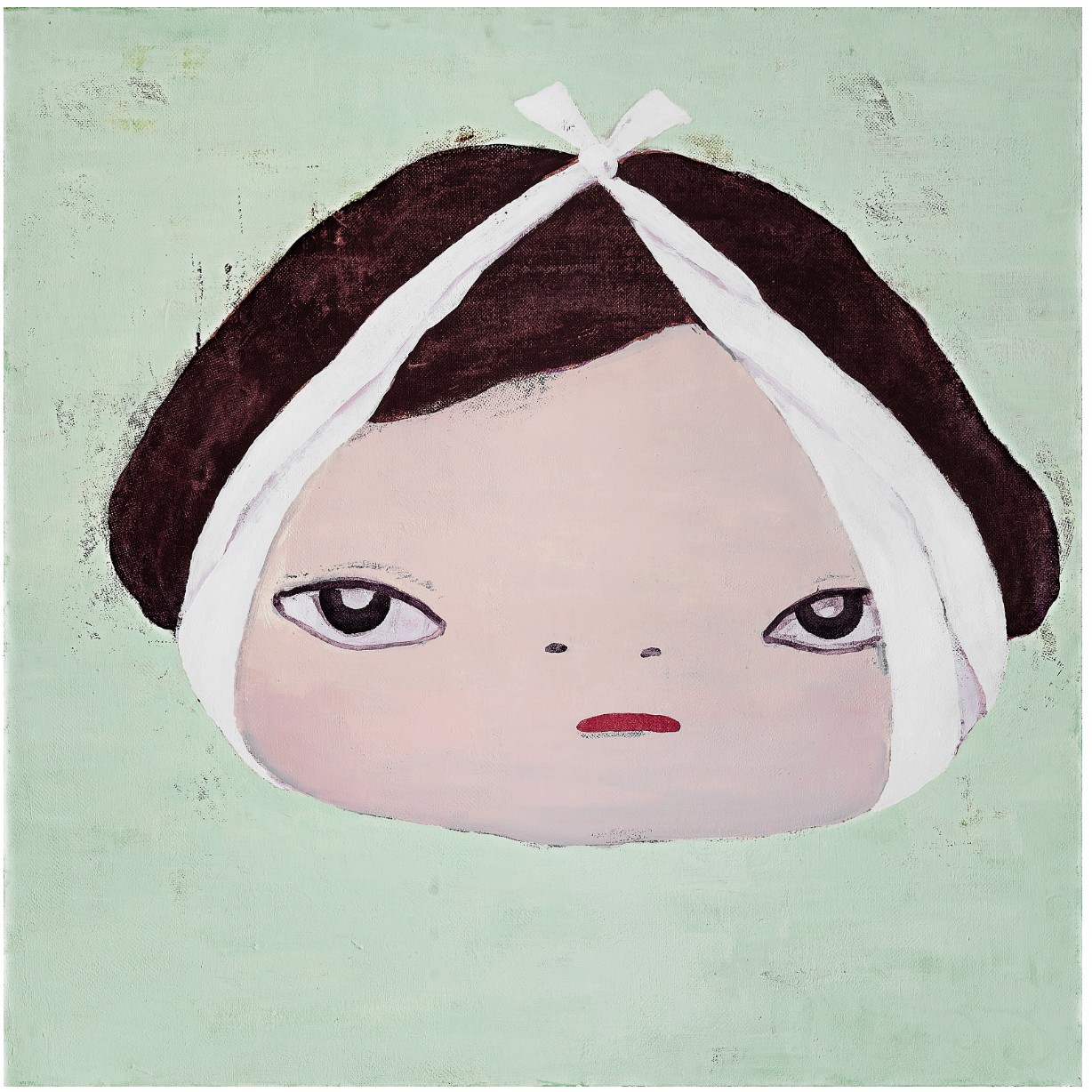
YOSHITOMO NARA (B. 1959)
Mumps, 1993
Acrylic on canvas
110×110 cm (43 1/4 x 43 2/4 inches)
Signed, signed again with artist’s signature, titled, inscribed and dated
‘Yoshitomo Nara ’93 110 x 110 cm “Mumps”’
(on the reverse)
#3. The Showgirl, 2008
Christie’s Hong-Kong: 26 September 2025
Estimated: HKD 7,500,000 – 9,500,000
HKD 9,525,000 / USD 1,224,295
GEORGE CONDO (B. 1957), The Showgirl | Christie’s
REPEAT SALE
Phillips London: 15 October 2021
Estimated: GBP 1,000,000 – 1,500,000
GBP 1,232,500
George Condo 20th Century & Contemporary Art Evening Sale
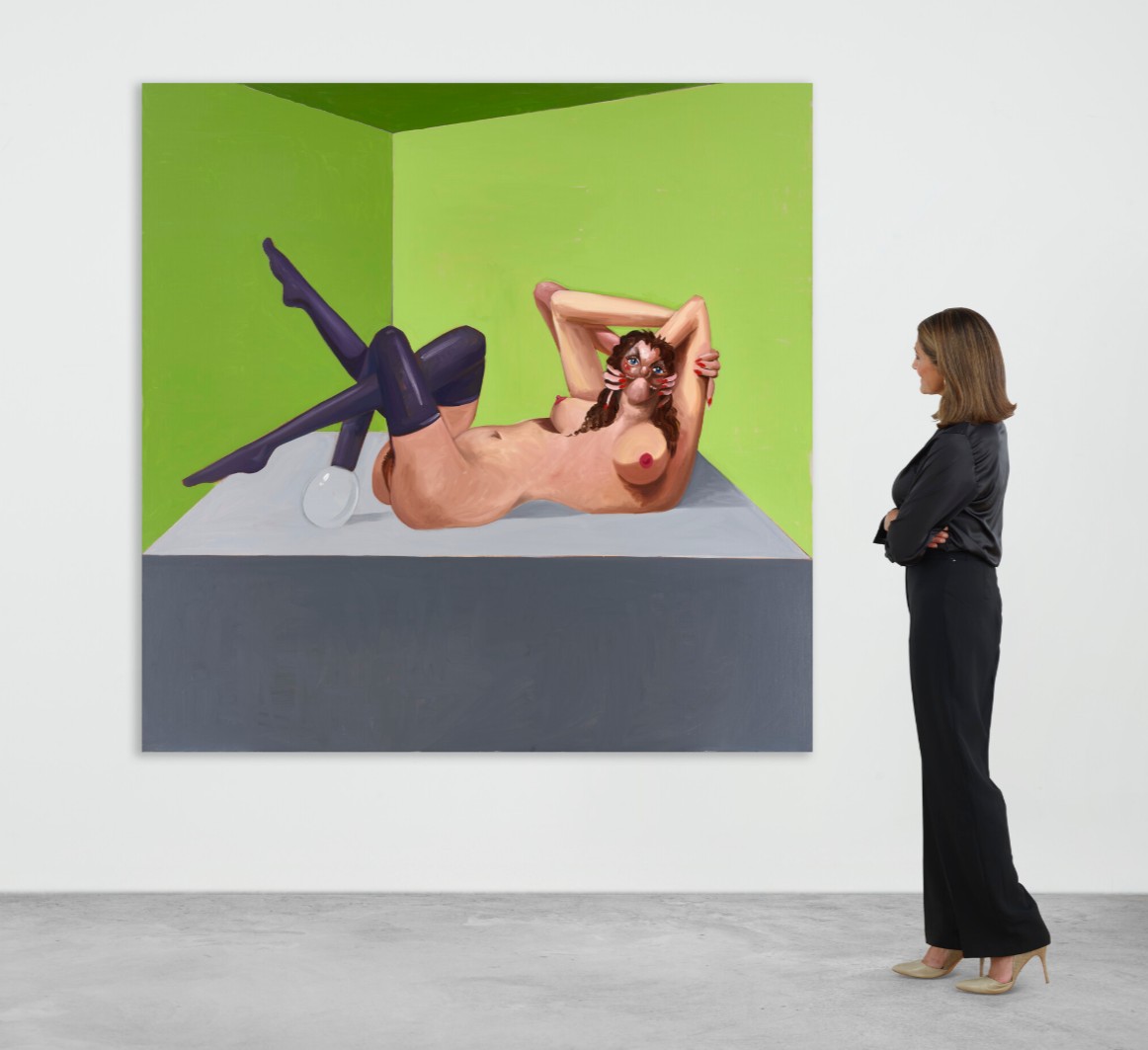
GEORGE CONDO (B. 1957)
The Showgirl, 2008
Oil on linen
203.5 x 203.5 cm (80 1/8 x 80 1/8 inches)
Signed and dated ‘Condo 08’ (on the reverse)
#4. INFINITY-NETS [HOAWD], 2014
Christie’s Hong-Kong: 26 September 2025
Estimated: HKD 6,000,000 – 9,000,000
HKD 7,620,000 / USD 979,435
YAYOI KUSAMA (B. 1929), INFINITY-NETS [HOAWD] | Christie’s
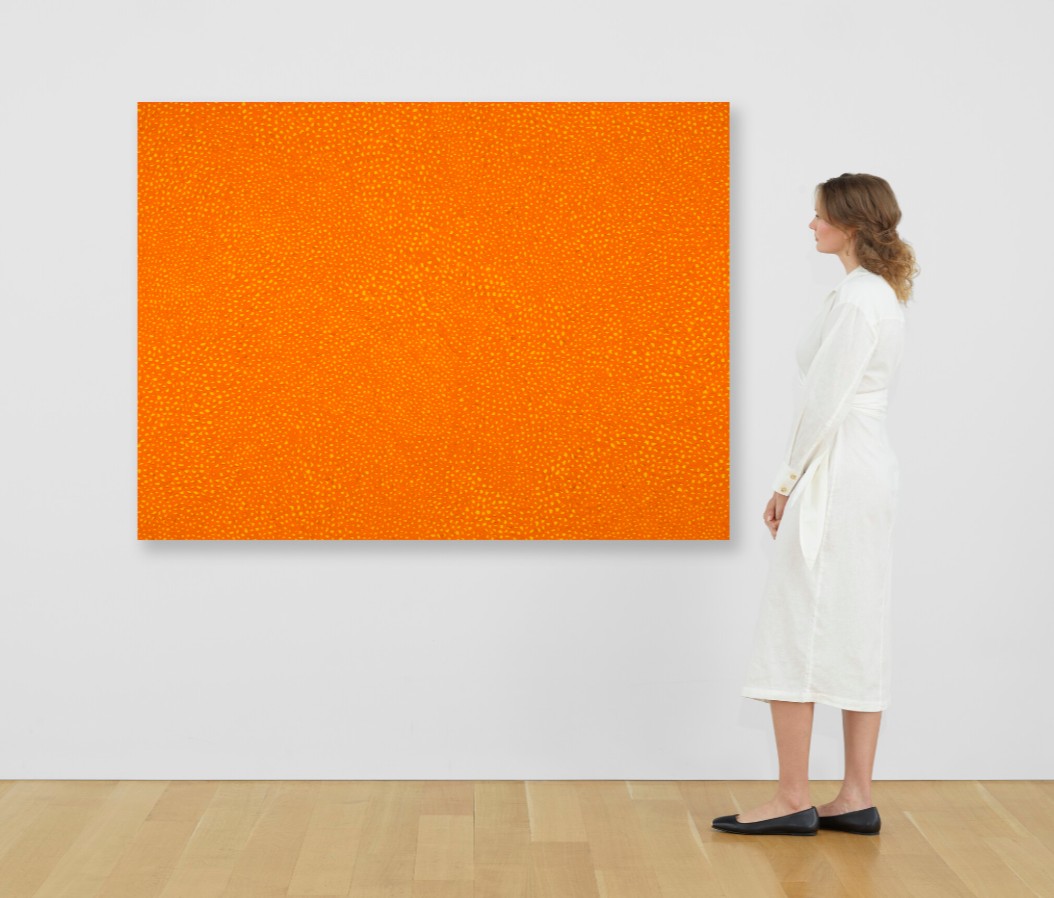
YAYOI KUSAMA (B. 1929)
INFINITY-NETS [HOAWD], 2014
Acrylic on canvas
97 x 130.3 cm (38 1/4 x 51 1/4 inches)
Signed, titled and dated ‘HOAWD INFINITY-NETS YAYOI KUSAMA 2014’ (on the reverse)
#5. Black Butterflies, 1989
Christie’s Hong-Kong: 26 September 2025
Estimated: HKD 3,800,000 – 5,800,000
HKD 5,842,000 / USD 750,900
YAYOI KUSAMA (B. 1929), Black Butterflies | Christie’s
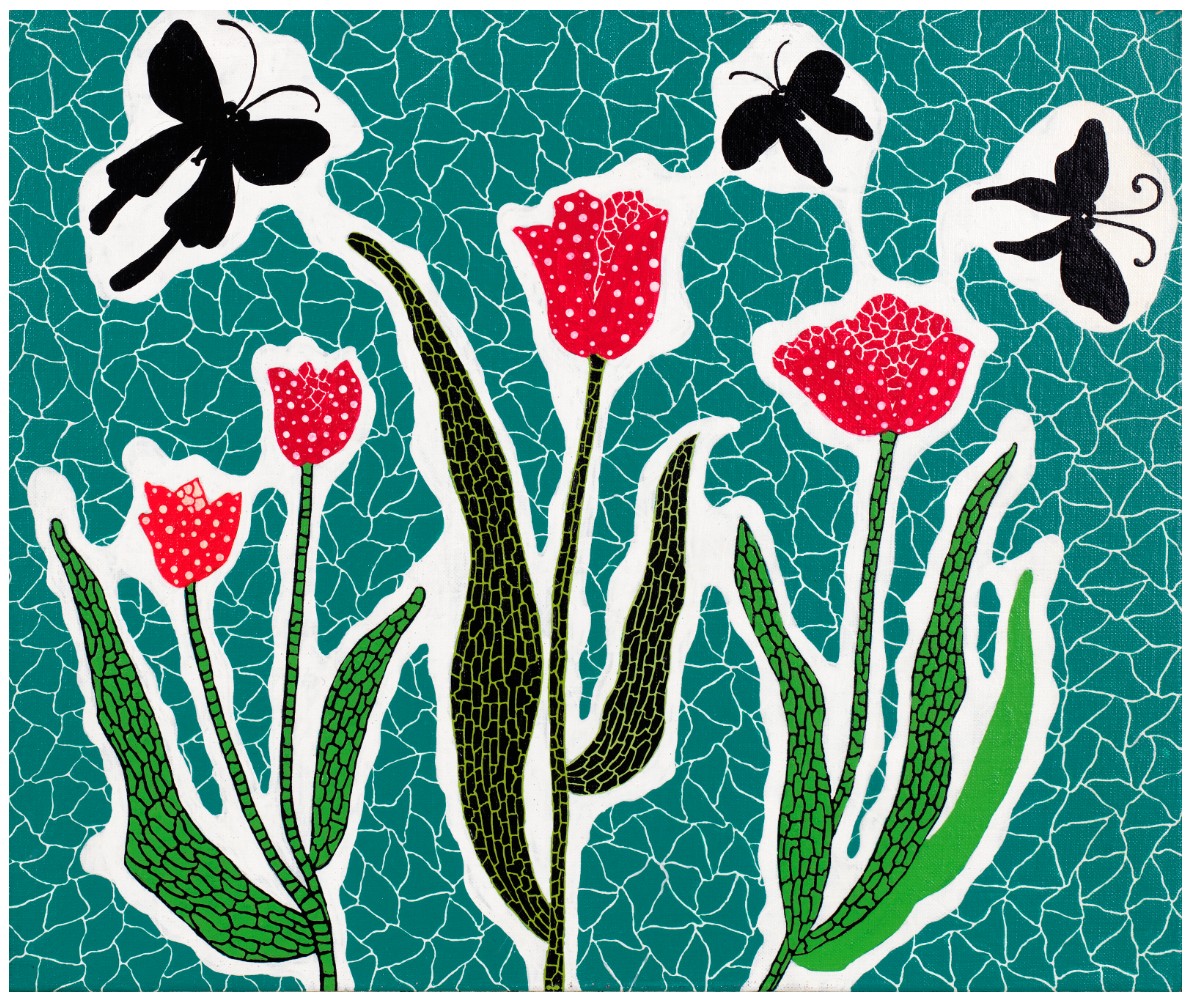
YAYOI KUSAMA (B. 1929)
Black Butterflies, 1989
Acrylic on canvas
38 x 45.5 cm (14 3/4 x 17 7/8 inches)
Signed and dated ‘Yayoi Kusama 1989’
Titled in Japanese (on the reverse)
#6. Nikki II, 2006
Christie’s Hong-Kong: 26 September 2025
Estimated: HKD 4,500,000 – 6,500,000
HKD 5,461,000 / USD 701,930
ALEX KATZ (B. 1927), Nikki II | Christie’s
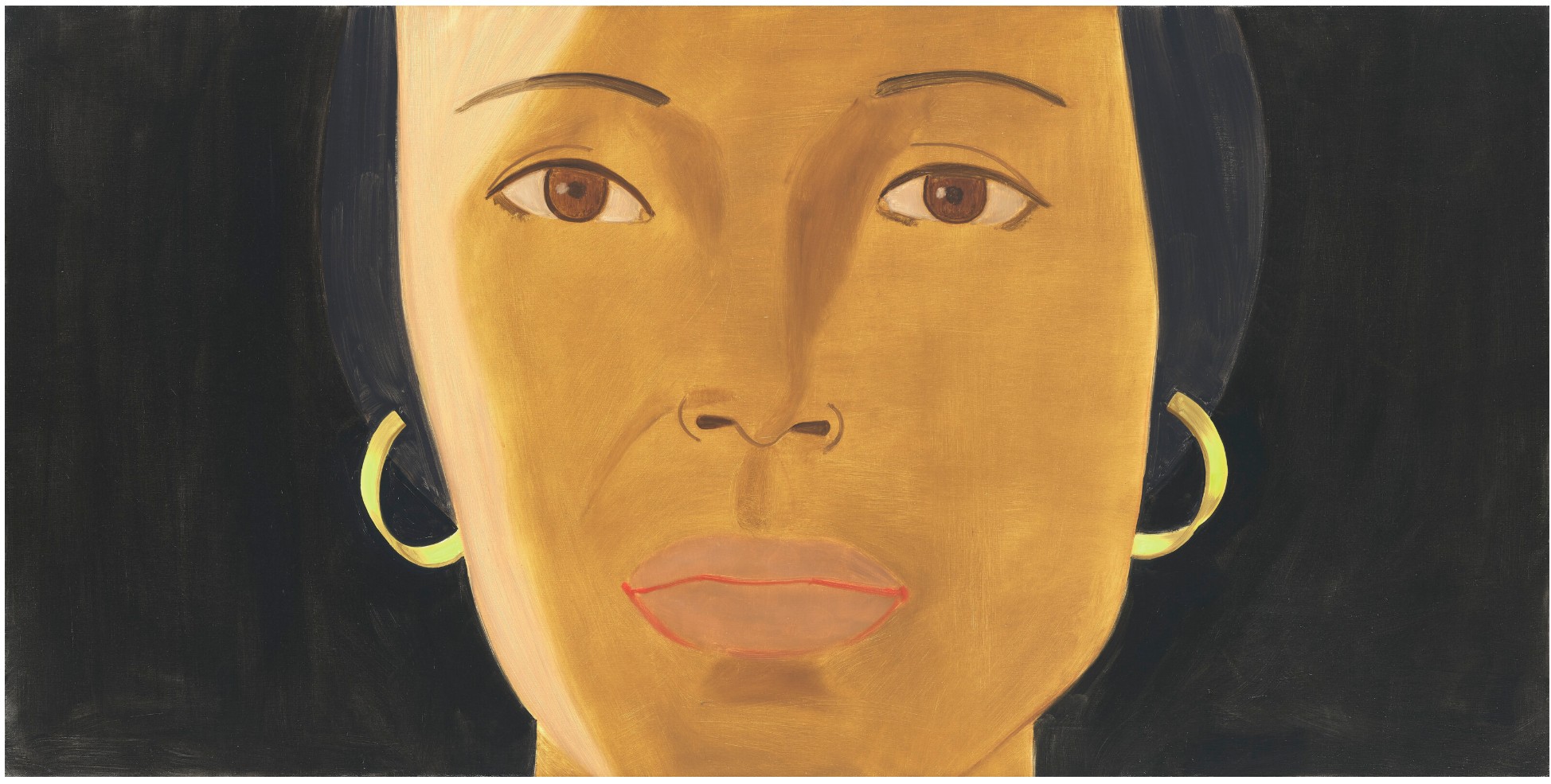
ALEX KATZ (B. 1927)
Nikki II, 2006
Oil on canvas
48 1/8 x 96 1/4 inches (122.3 x 244.5 cm)
Signed and dated ‘Alex Katz 06’ (on the overlap)
“The black seems to mean different things to different people. To me it was so much light in the front and dark in the back. Black is technically a very difficult color to handle so that was a challenge and with the older black paintings I had some perfect surfaces and with these I don’t think I got perfect surfaces but they’re all different.”
#11. For Richard D. Marshall, Rest in Paintings, 2014
Christie’s Hong-Kong: 26 September 2025
Estimated: HKD 1,800,000 – 2,800,000
HKD 2,286,000 / USD 293,830
EDDIE MARTINEZ (B. 1977), For Richard D. Marshall, Rest in Paintings | Christie’s
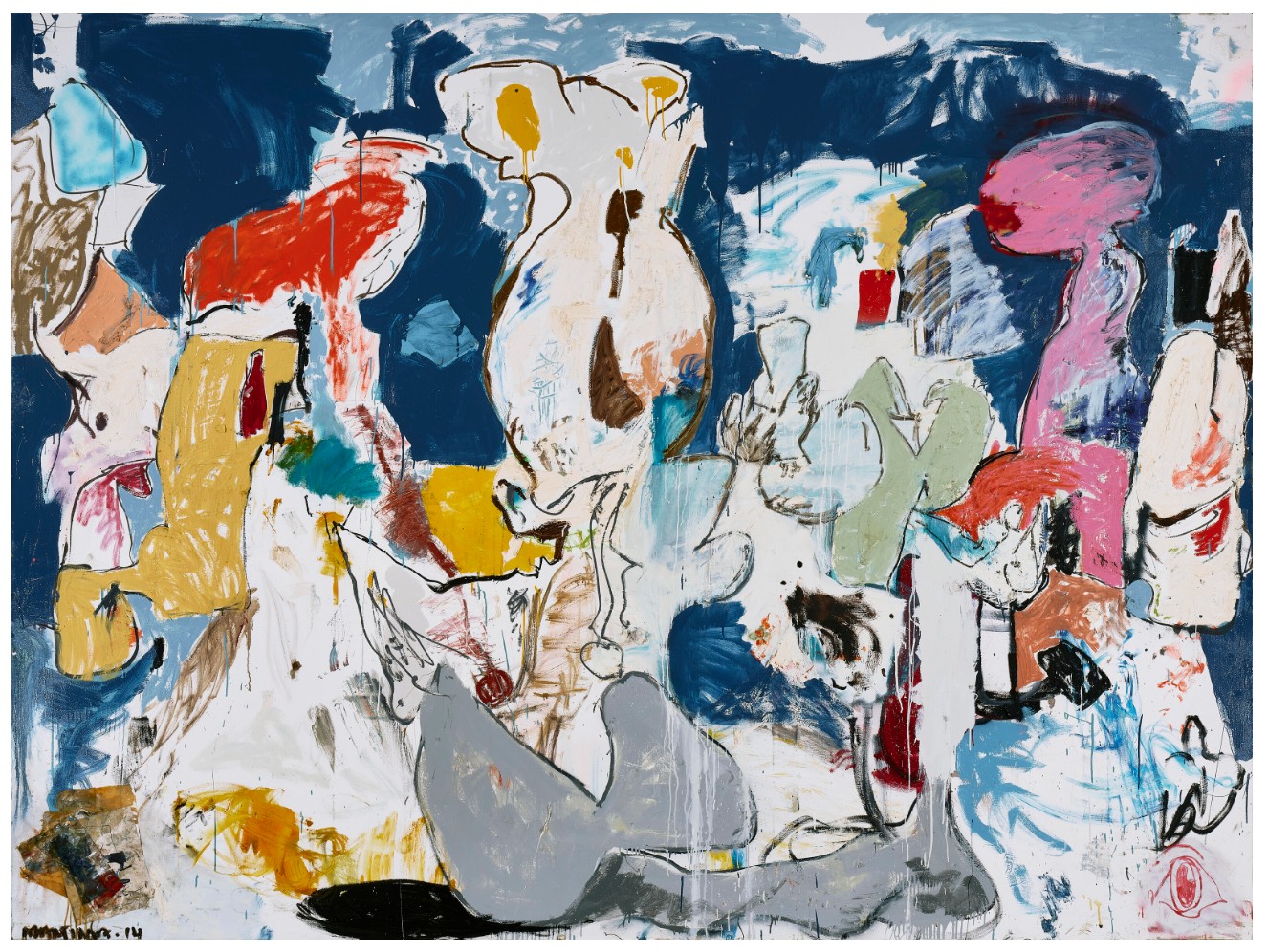
EDDIE MARTINEZ (B. 1977)
For Richard D. Marshall, Rest in Paintings, 2014
Oil, enamel, spray paint, thumb tacks, and paper collage on canvas
108×144 inches (274 x 365.8 cm)
Signed and dated ‘MARTINEZ · 14’ (lower left)
#12. UP!, 2021
Christie’s Hong-Kong: 26 September 2025
Estimated: HKD 1,200,000 – 2,200,000
HKD 2,032,000 / USD 261,185
JAVIER CALLEJA (B. 1971), UP! | Christie’s
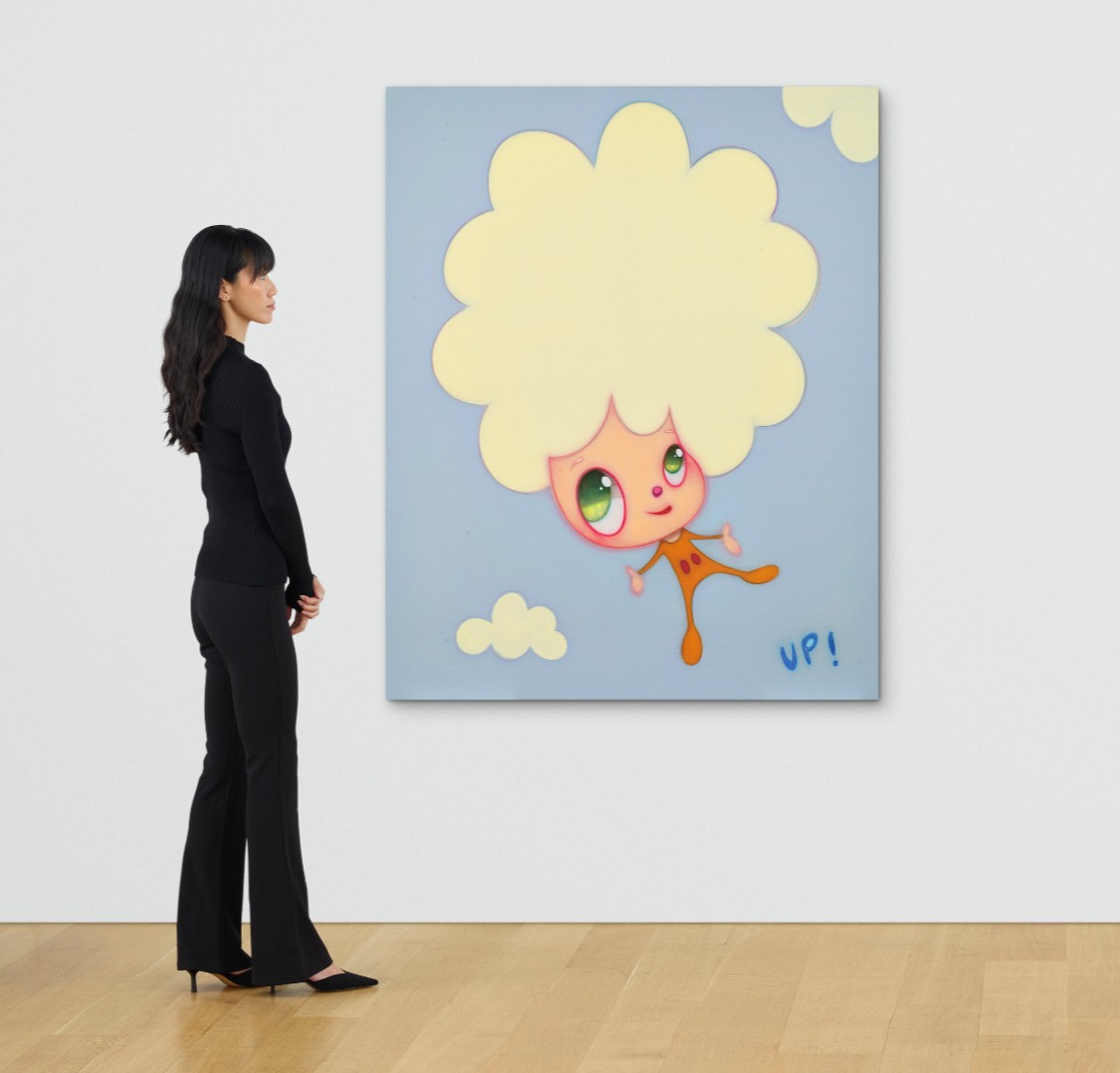
JAVIER CALLEJA (B. 1971)
UP!, 2021
Acrylic on canvas
162×130 cm (63 3/4 x 51 1/8 inches)
Titled ‘UP!’ (on the overlap)
#13. Miffy and Mondrian, 2014
Christie’s Hong-Kong: 26 September 2025
Estimated: HKD 800,000 – 1,200,000
HKD 1,651,000 / USD 212,210
LIU YE (B. 1964), Miffy and Mondrian | Christie’s
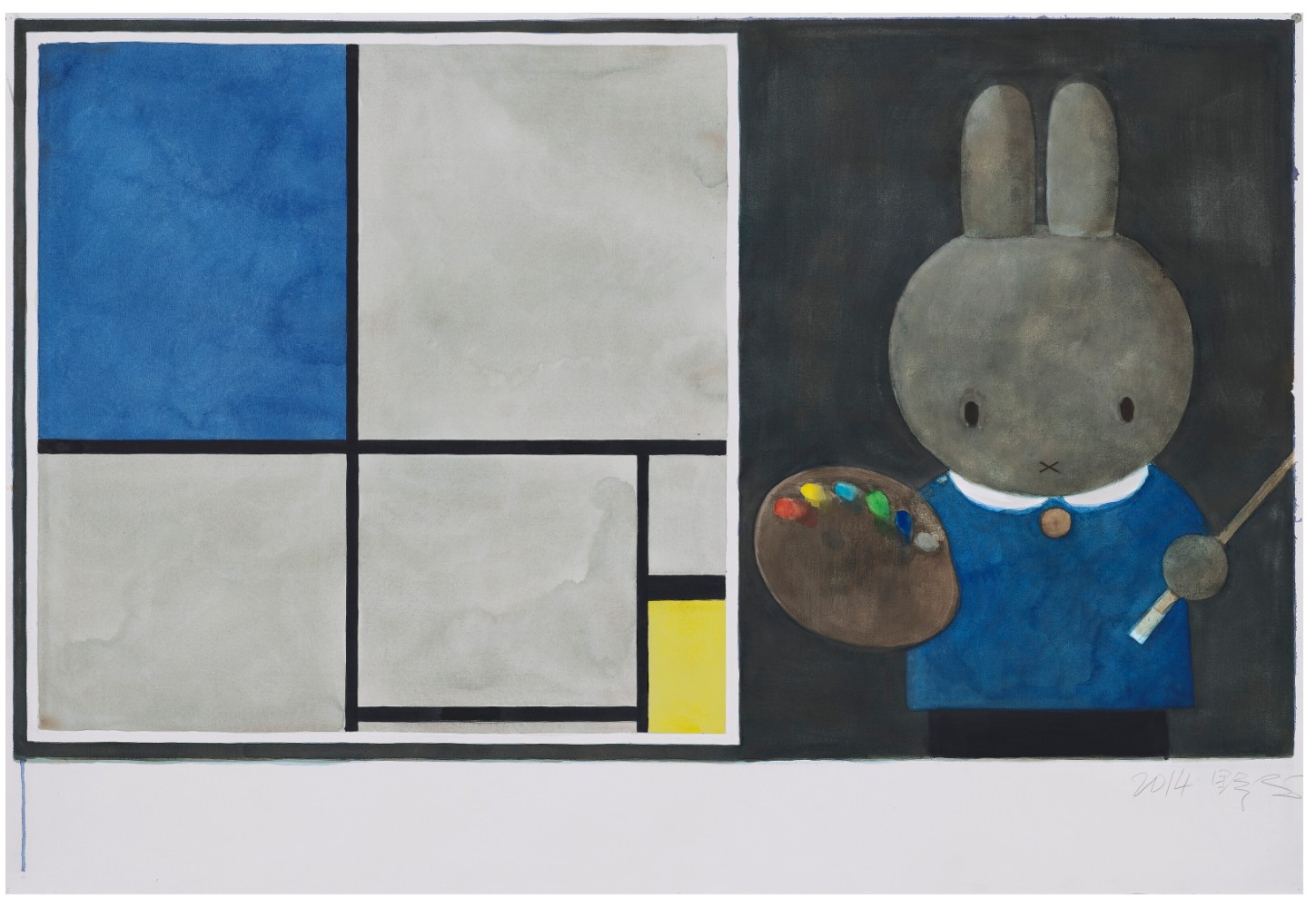
LIU YE (B. 1964)
Miffy and Mondrian, 2014
Watercolor and pencil on paper
76 x 111.5 cm (29 7/8 x 43 7/8 inches)
Signed in Chinese and dated ‘2014’ (lower right)
#14. Naomi – Relaxing on Tropical Seashore, 2021
Christie’s Hong-Kong: 26 September 2025
Estimated: HKD 1,000,000 – 2,000,000
HKD 1,651,000 / USD 212,210
MR. (B. 1969), Naomi – Relaxing on Tropical Seashore | Christie’s
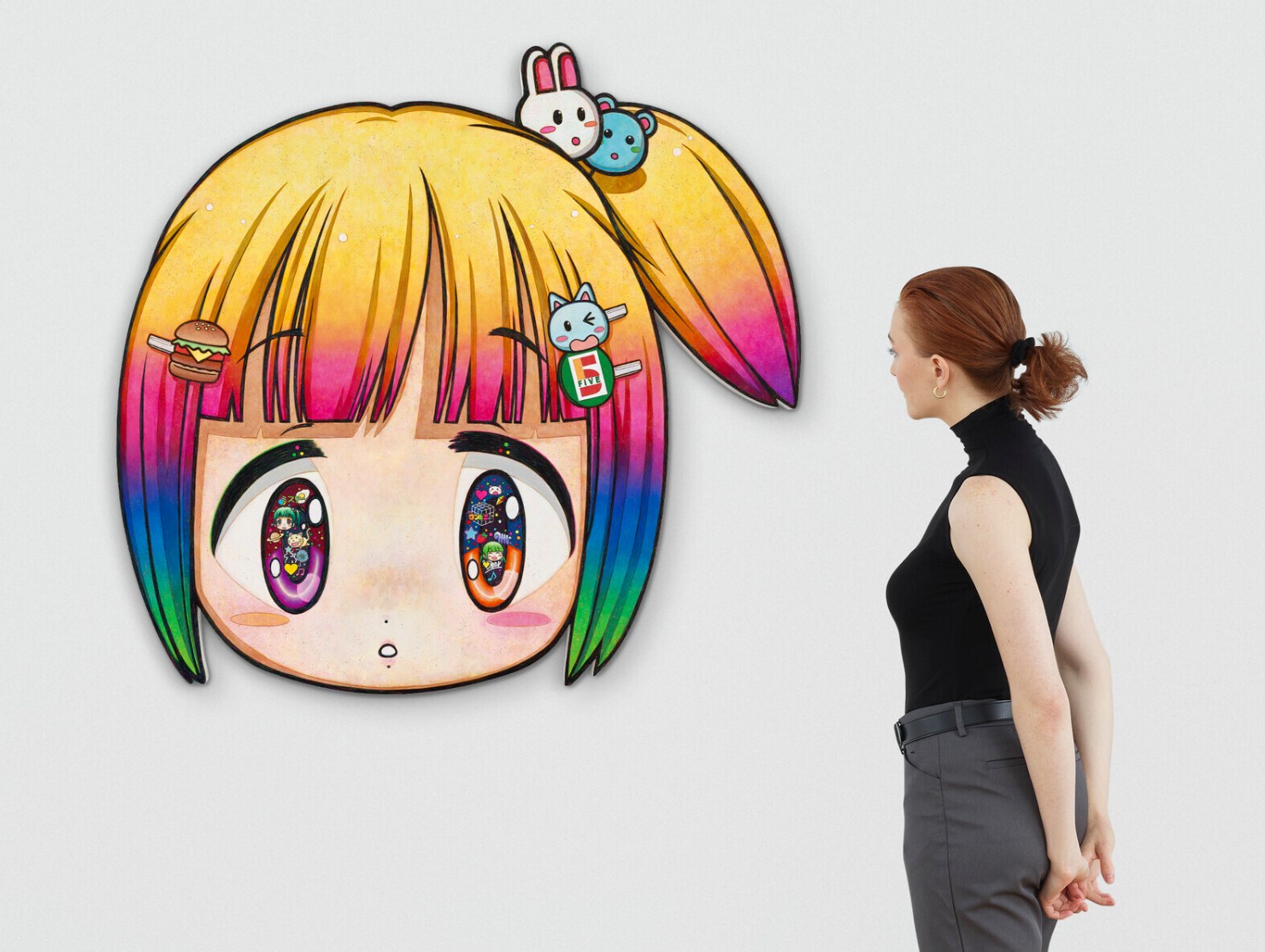
MR. (B. 1969)
Naomi – Relaxing on Tropical Seashore, 2021
Acrylic on canvas mounted on wood panel
120 x 125.6 cm (47 1/4 x 49 1/2 inches)
Signed and dated ‘Mr. 2021’ (on the overlap)
#16. Untitled, 2008
Christie’s Hong-Kong: 26 September 2025
Estimated: HKD 900,000 – 1,500,000
HKD 1,524,000 / USD 195,885
YOSHITOMO NARA (B. 1959), Untitled | Christie’s
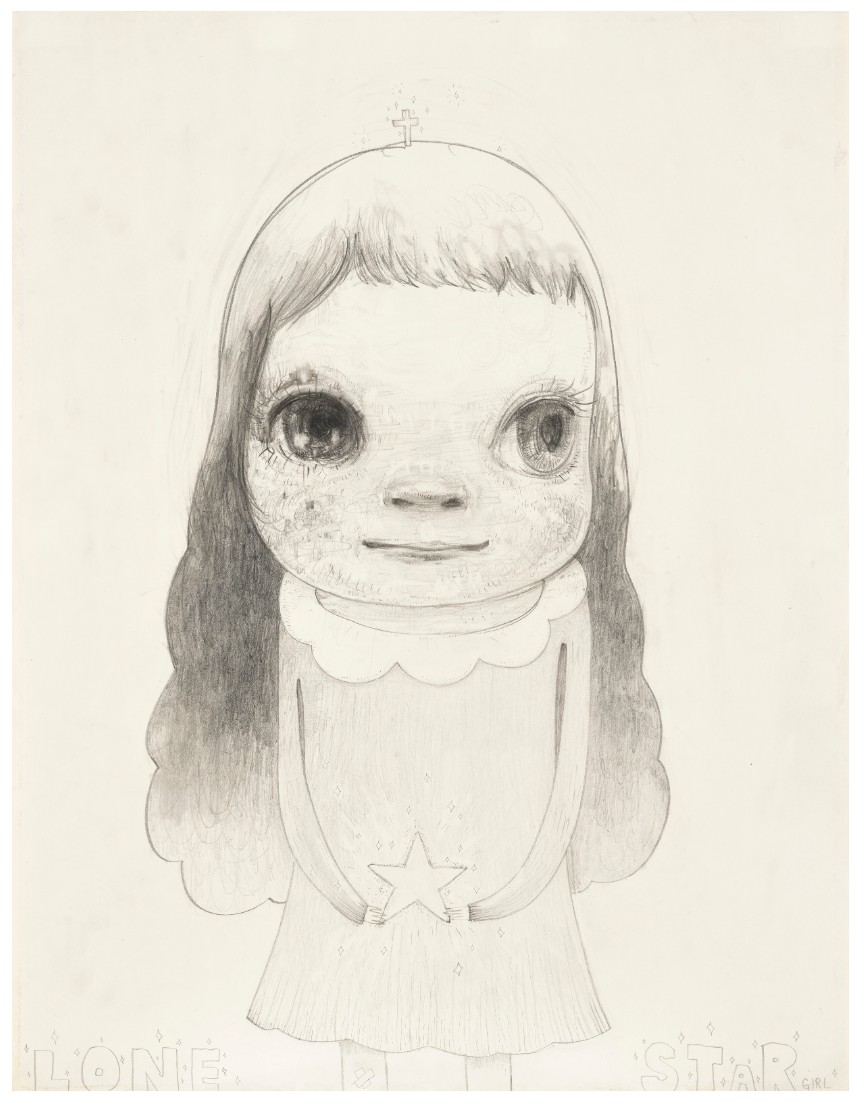
YOSHITOMO NARA (B. 1959)
Untitled, 2008
Pencil on paper
65.1 x 50.1 cm (25 5/8 x 19 3/4 inches)
Inscribed ‘LONE STAR GIRL’ (bottom edge)
Signed with artist’s signature and dated ’08’ (on the reverse)
#18. Red Apple (Study), 1980
Christie’s Hong-Kong: 26 September 2025
Estimated: HKD 1,400,000 – 2,400,000
HKD 1,397,000 / USD 179,565
ROY LICHTENSTEIN (1923-1997), Red Apple (Study) | Christie’s
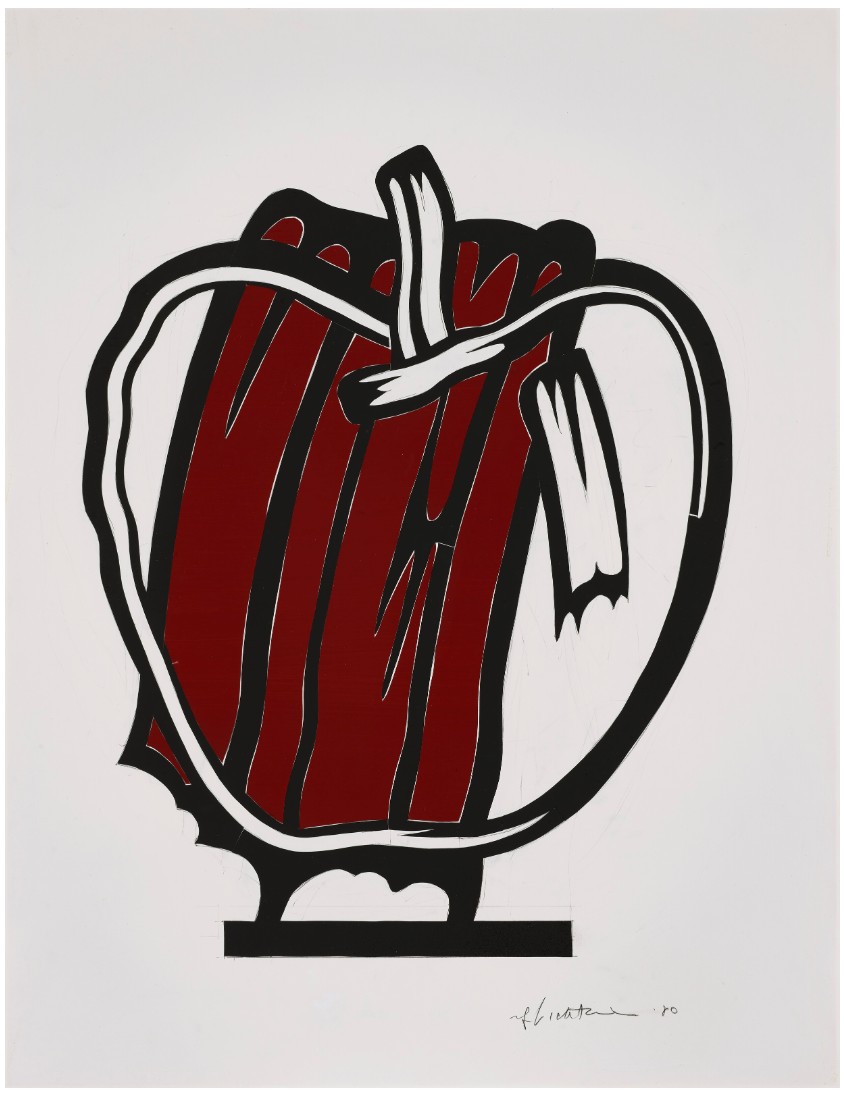
ROY LICHTENSTEIN (1923-1997)
Red Apple (Study), 1980
Cut painted paper, cut printed paper, correction fluid or opaque watercolor, graphite pencil on paper
28 1/2 x 22 inches (72.4 x 55.9 cm)
Signed and dated ‘rf Lichtenstein ’80’ (lower right)
Signed and dated again ‘rf Lichtenstein ’80’ (on the reverse)
#20. Hat (3 works), 1985
Christie’s Hong-Kong: 26 September 2025
Estimated: HKD 1,500,000 – 2,500,000
HKD 1,270,000 / USD 163,240
YAYOI KUSAMA (B. 1929), Hat (3 works) | Christie’s
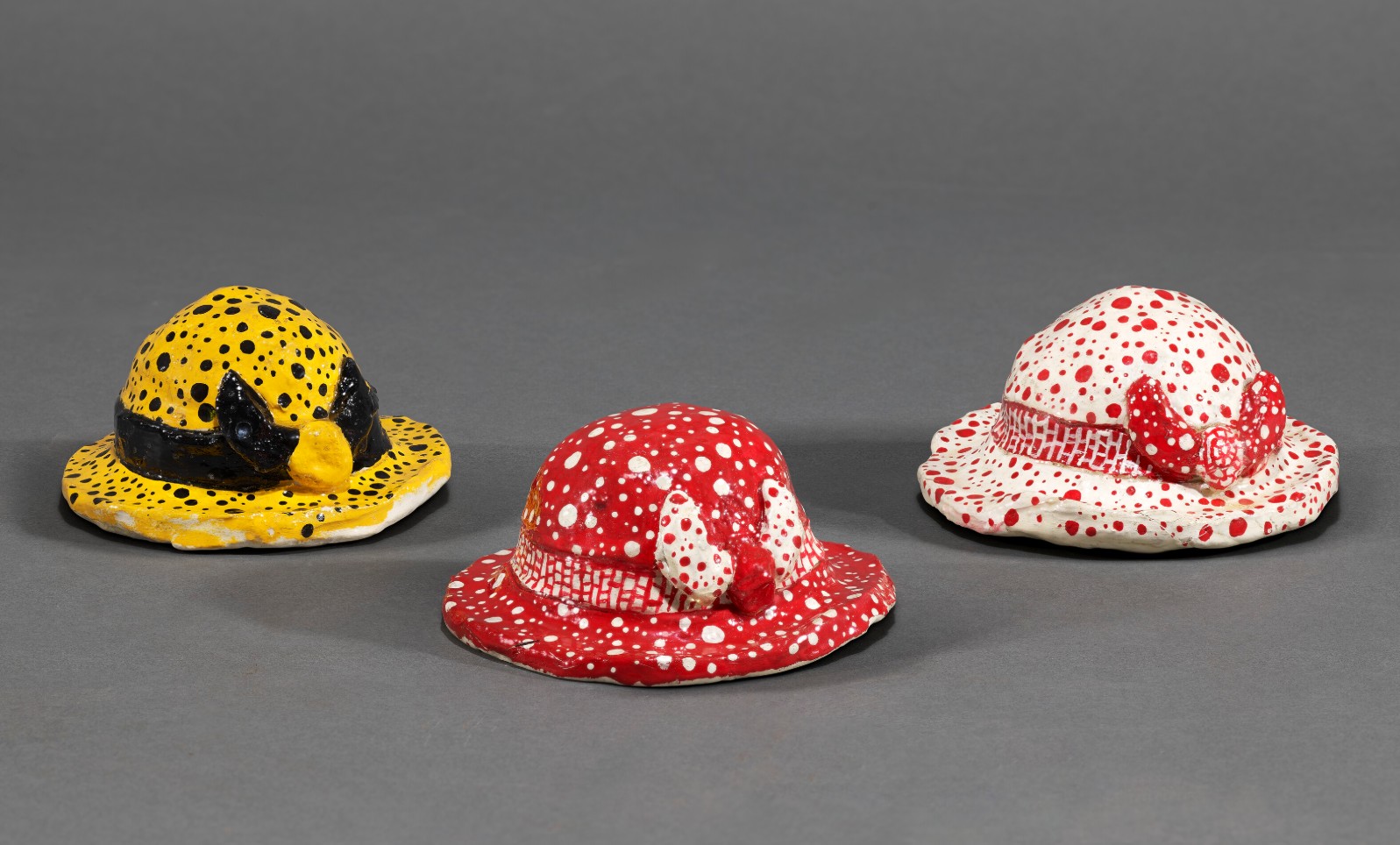
YAYOI KUSAMA (B. 1929)
Hat (3 works), 1985
Mixed media sculpture (3)
Yellow hat: 6 (H) x 11 x 11 cm (2 3/8 x 4 3/8 x 4 3/8 inches)
Red hat: 5.8 (H) x 11 x 11 cm (2 1/4 x 4 3/8 x 4 3/8 inches)
White hat: 6 (H) x 11 x 11.5 cm (2 3/8 x 4 3/8 x 4 1/2 inches)
Signed and dated ‘1985 Yayoi Kusama’; titled in Japanese (on the underside of each hat)
#21. Green Earring, 1977
Christie’s Hong-Kong: 26 September 2025
Estimated: HKD 900,000 – 1,500,000
HKD 1,143,000 / USD 146,915
YAYOI KUSAMA (B. 1929), Green Earring | Christie’s
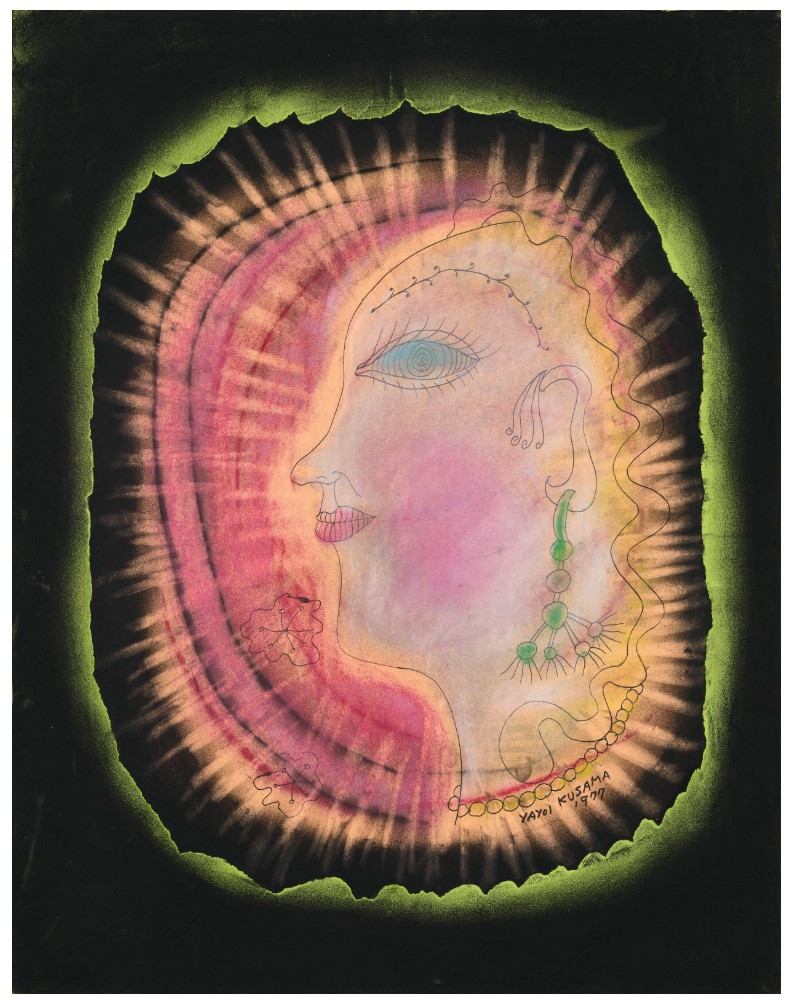
YAYOI KUSAMA (B. 1929)
Green Earring, 1977
Mixed media on paper mounted on original backing board
65.8 x 51.5 cm (25 7/8 x 20 1/4 inches)
Signed and dated ‘Yayoi Kusama 1977’ (lower right)
Signed and dated ‘Yayoi Kusama 1977’
Titled in Japanese (on the original backing board)
#23. Untitled, 2019
Christie’s Hong-Kong: 27 September 2025
Estimated: HKD 500,000 – 800,000
HKD 952,500 / USD 122,430
TAKASHI MURAKAMI (B. 1962), Untitled | Christie’s
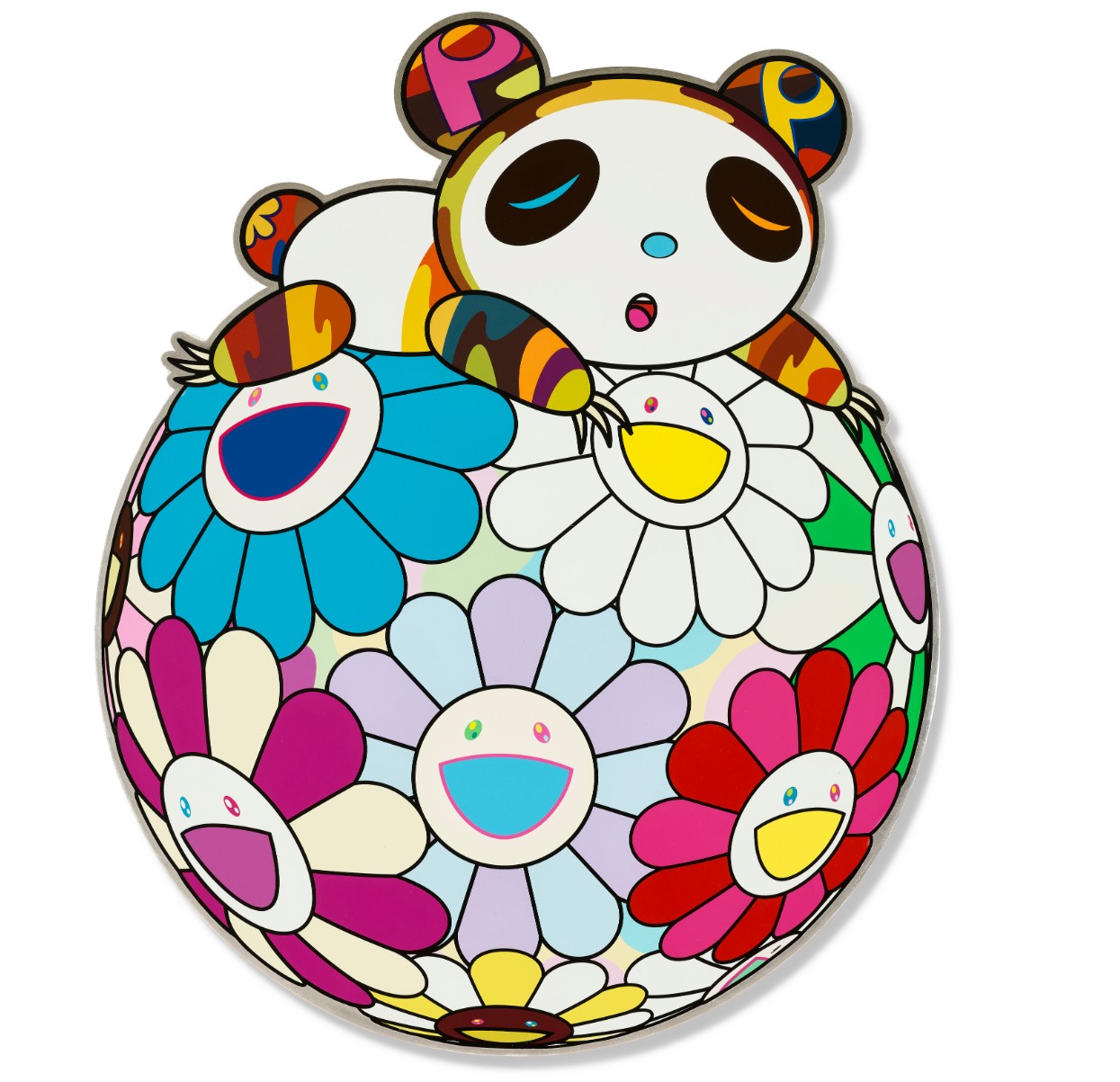
TAKASHI MURAKAMI (B. 1962)
Untitled, 2019
Acrylic on canvas mounted on wood panel
78.3 x 63.4 cm (30 7/8 x 25 inches)
Signed with the artist’s signature and dated ‘2019’ (on the reverse)
#24. No Art Here, 2020
Christie’s Hong-Kong: 27 September 2025
Estimated: HKD 500,000 – 800,000
HKD 952,500 / USD 122,430
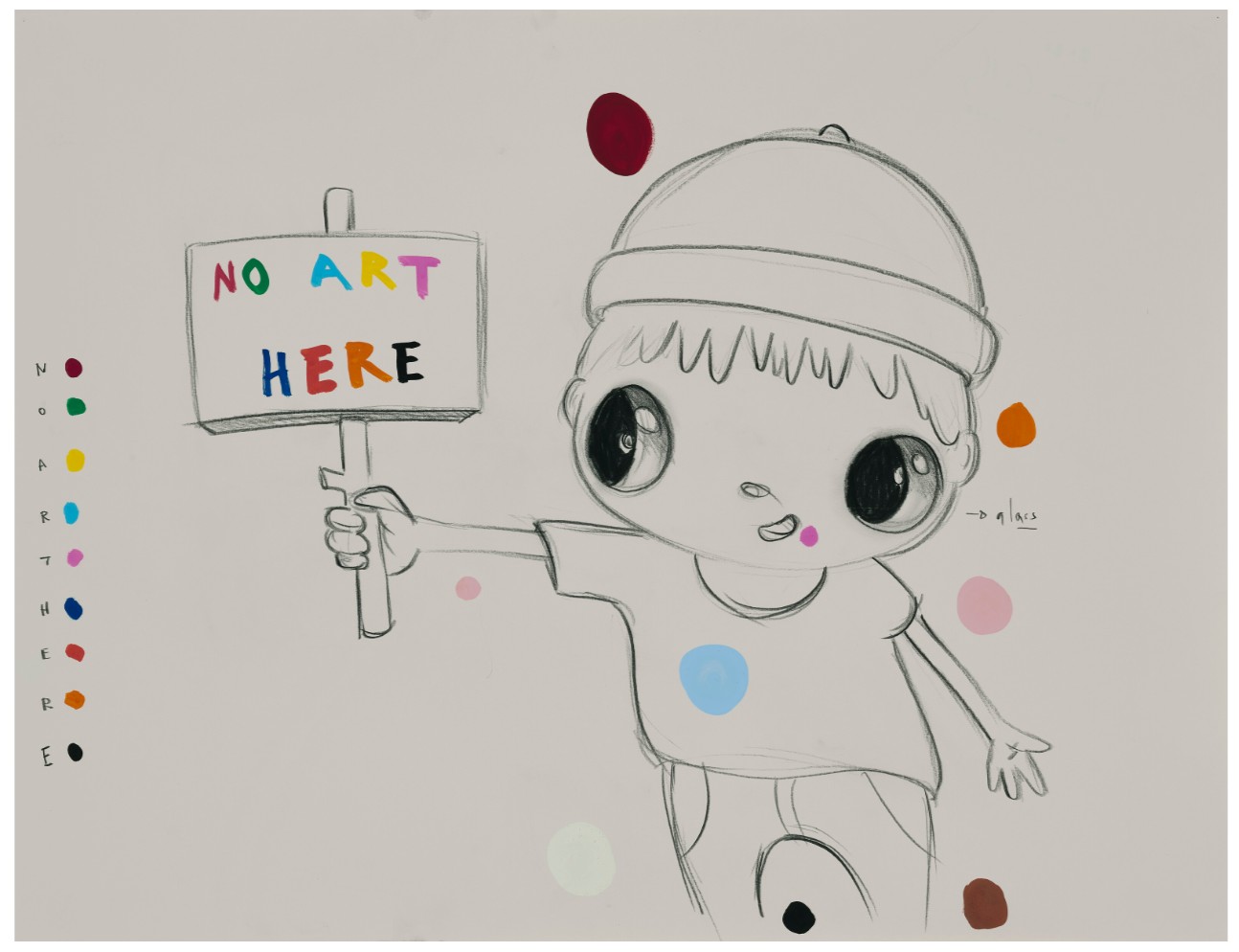
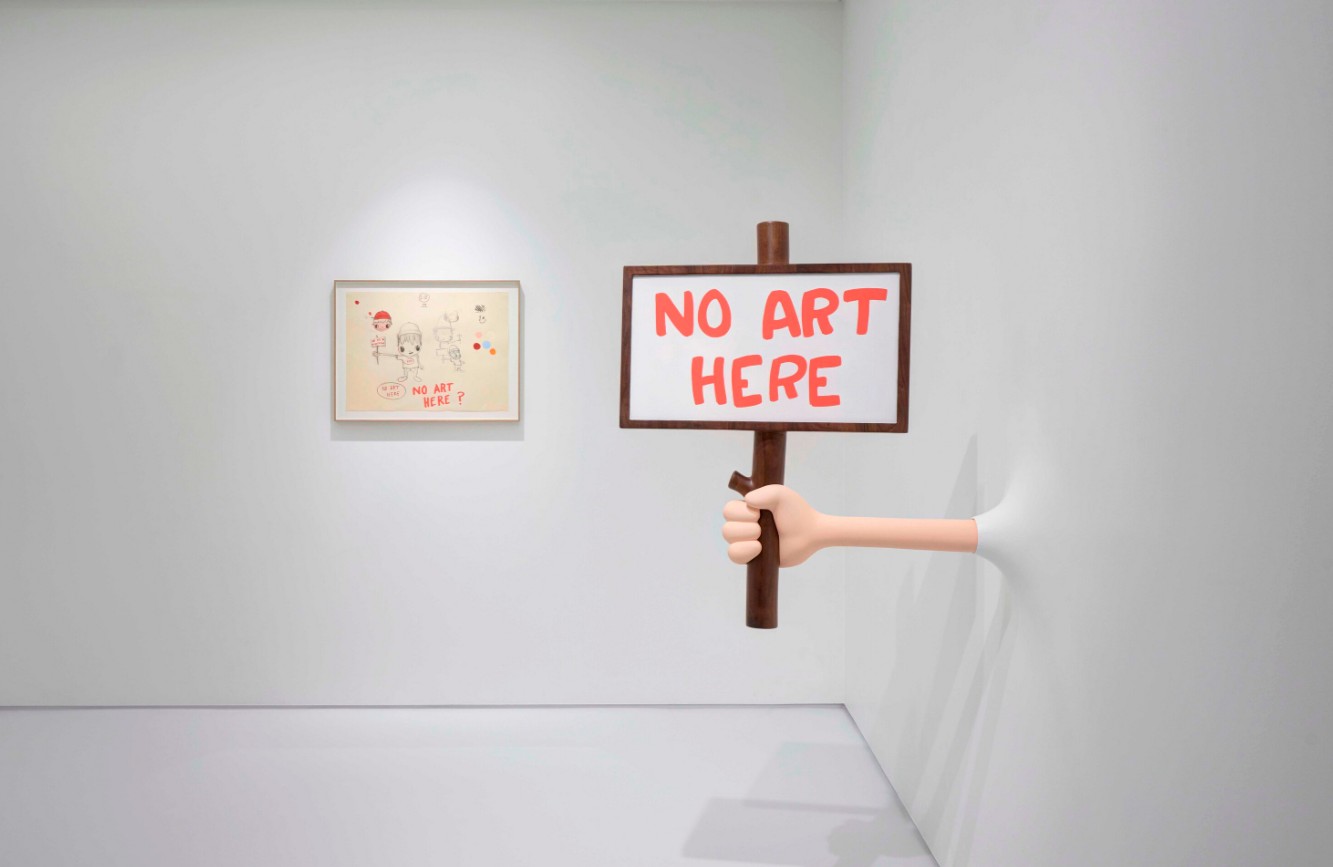
JAVIER CALLEJA (B. 1971), No Art Here | Christie’s
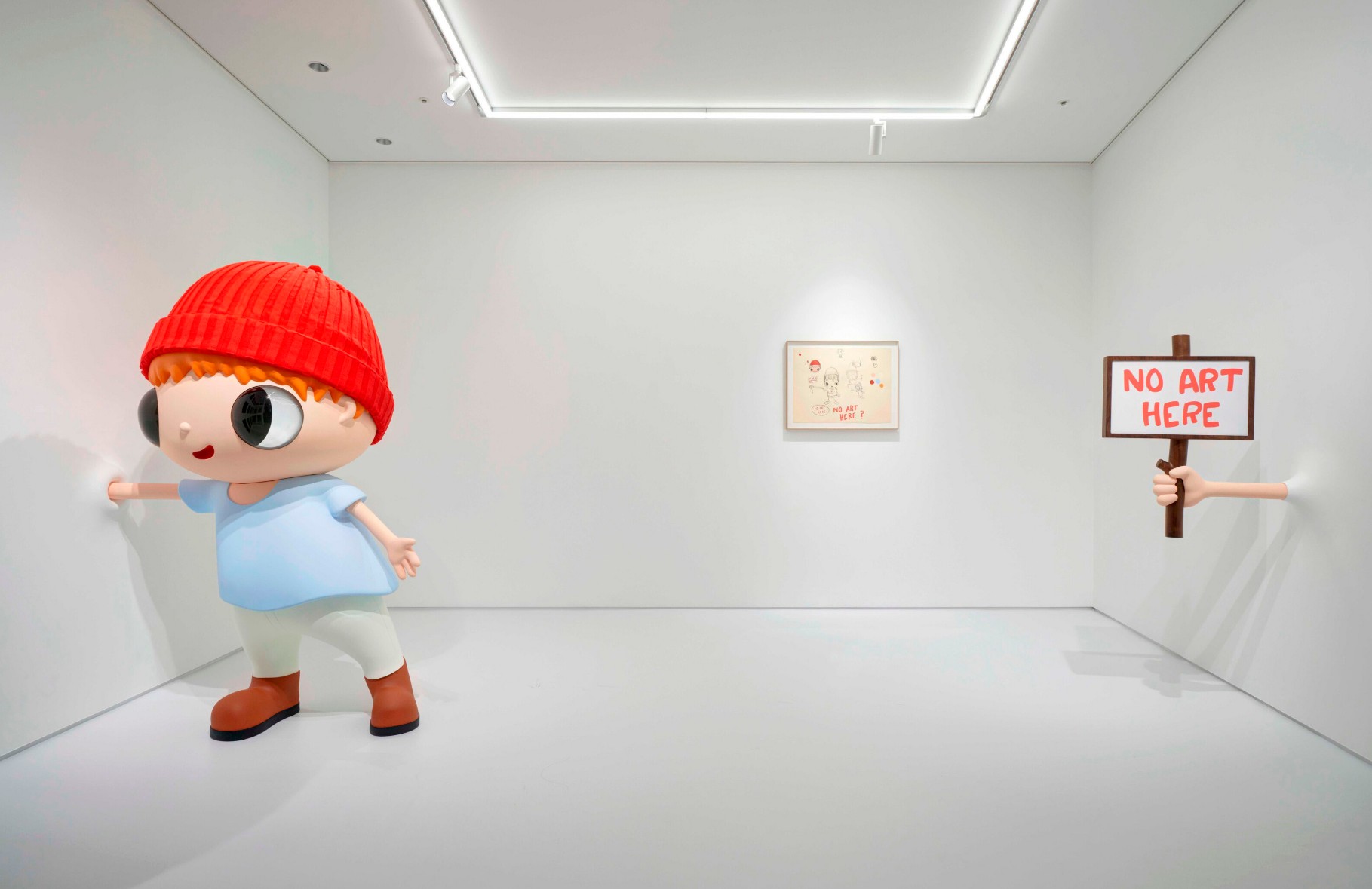
JAVIER CALLEJA (B. 1971)
No Art Here, 2020
Aluminum, crystal glass and a knit hat sculpture; mixed media on paper
Overall sculpture dimensions variable, approx.: 180 (H) x 130 x 80 cm (70 7/8 x 51 1/8 x 31 1/2 inches)
Drawing: 50×65 cm (19 5/8 x 25 5/8 inches)
Signed, numbered and dated ‘2⁄5 2020 Javier Calleja’ (on the bottom edge of the placard)
Edition: 2⁄5 + 3AP
#25. Untitled, 2002
Christie’s Hong-Kong: 27 September 2025
Estimated: HKD 600,000 – 800,000
HKD 762,000 / USD 97,945
YOSHITOMO NARA (B. 1959), Untitled | Christie’s
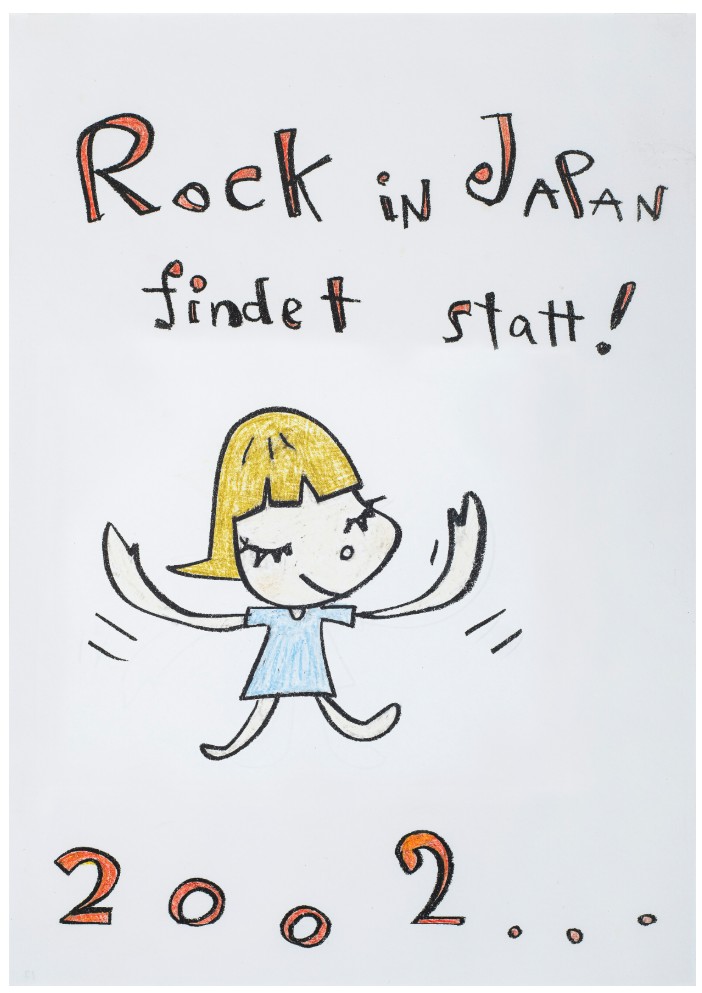
YOSHITOMO NARA (B. 1959)
Untitled, 2002
Colored pencil on paper
29.7 x 21 cm (11 3/4 x 8 1/4 inches)
#29. Trees, 2024
Christie’s Hong-Kong: 26 September 2025
Estimated: HKD 500,000 – 800,000
HKD 635,000 / USD 81,620
NICOLAS PARTY (B. 1980), Trees | Christie’s
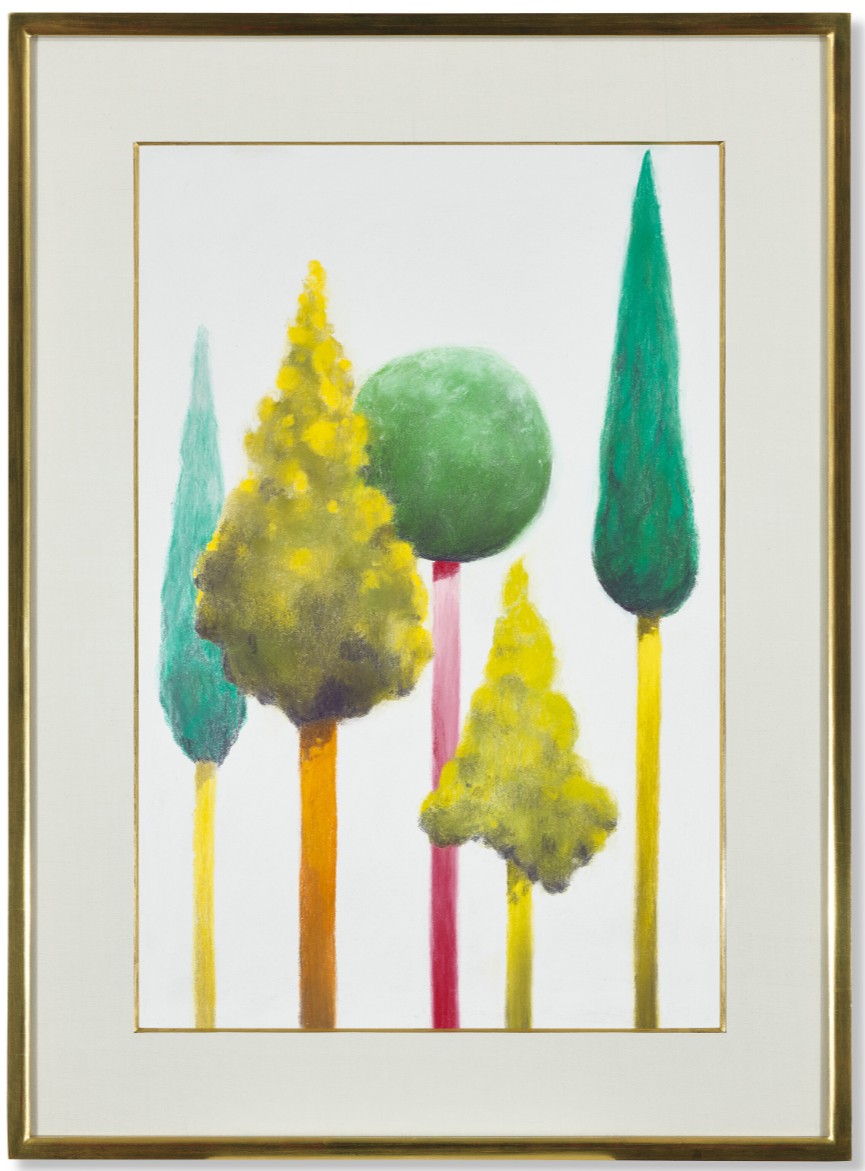
NICOLAS PARTY (B. 1980)
Trees, 2024
Soft pastel on pastel card
49.9 x 33 cm (19 5/8 x 13 inches)
Signed and dated ‘Nicolas Party 2024’ (on the reverse)
#33. Chill Pill, 2016
Christie’s Hong-Kong: 27 September 2025
Estimated: HKD 400,000 – 600,000
HKD 609,600 / USD 78,355
SHARA HUGHES (B. 1981), Chill Pill | Christie’s
REPEAT SALE
Christie’s New-York: 13 May 2022
Estimated: USD 100,000 – 150,000
USD 138,600
SHARA HUGHES (B. 1981), Chill Pill | Christie’s
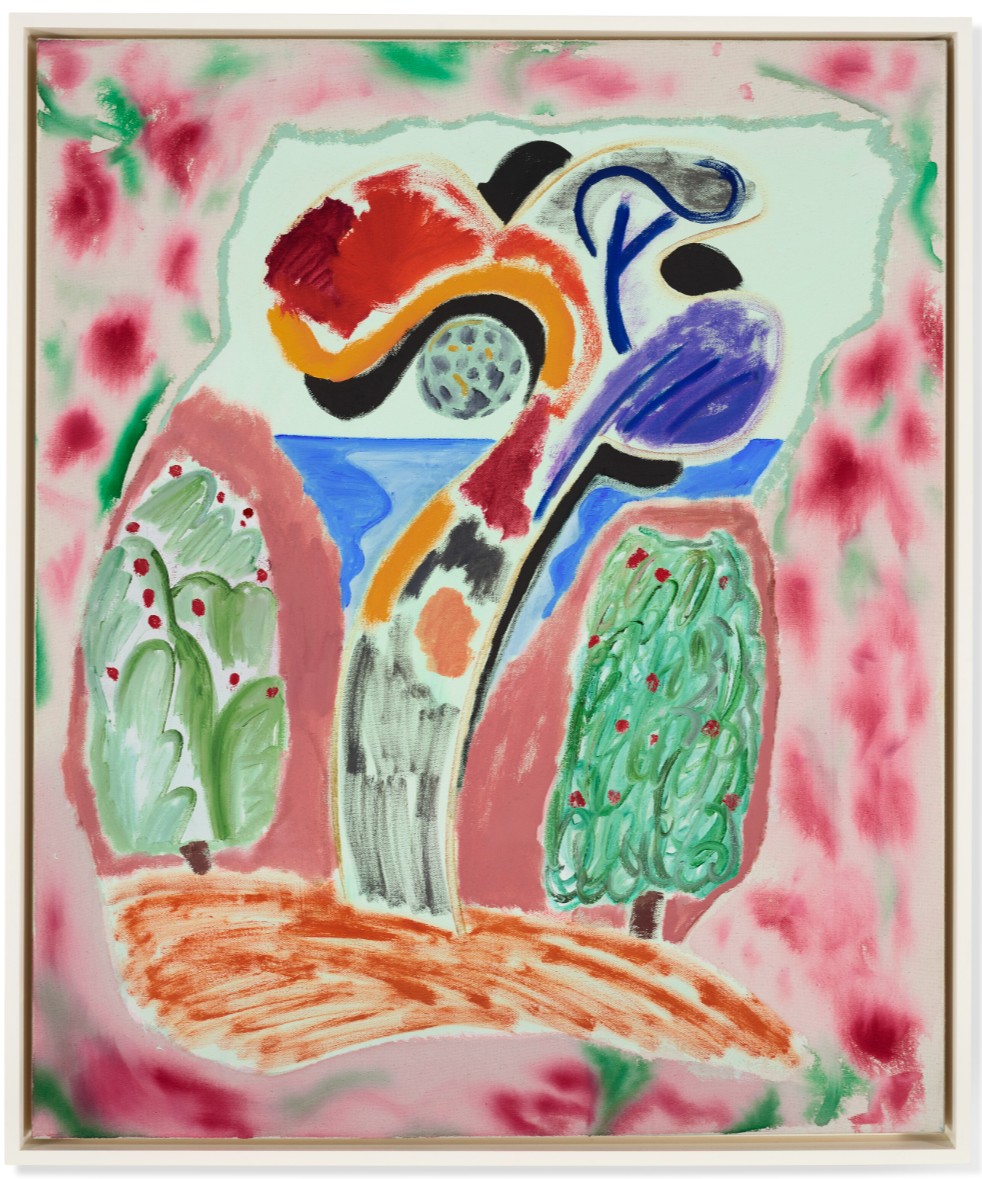
SHARA HUGHES (B. 1981)
Chill Pill, 2016
Oil, acrylic and dye on canvas
36 1/8 x 30 inches (91.6 x 76.2 cm)
Signed, titled, inscribed and dated ‘SHARA HUGHES “Chill Pill” 2016 NYC 36 X 30’ (on the reverse)
#38. “Penyo-Henyo” Autumn Leaves Edition “Pluto”, 2004-2006
Christie’s Hong-Kong: 26 September 2025
Estimated: HKD 800,000 – 1,500,000
HKD 508,000 / USD 65,295
MR. (B. 1969), “Penyo-Henyo” Autumn Leaves Edition “Pluto” | Christie’s
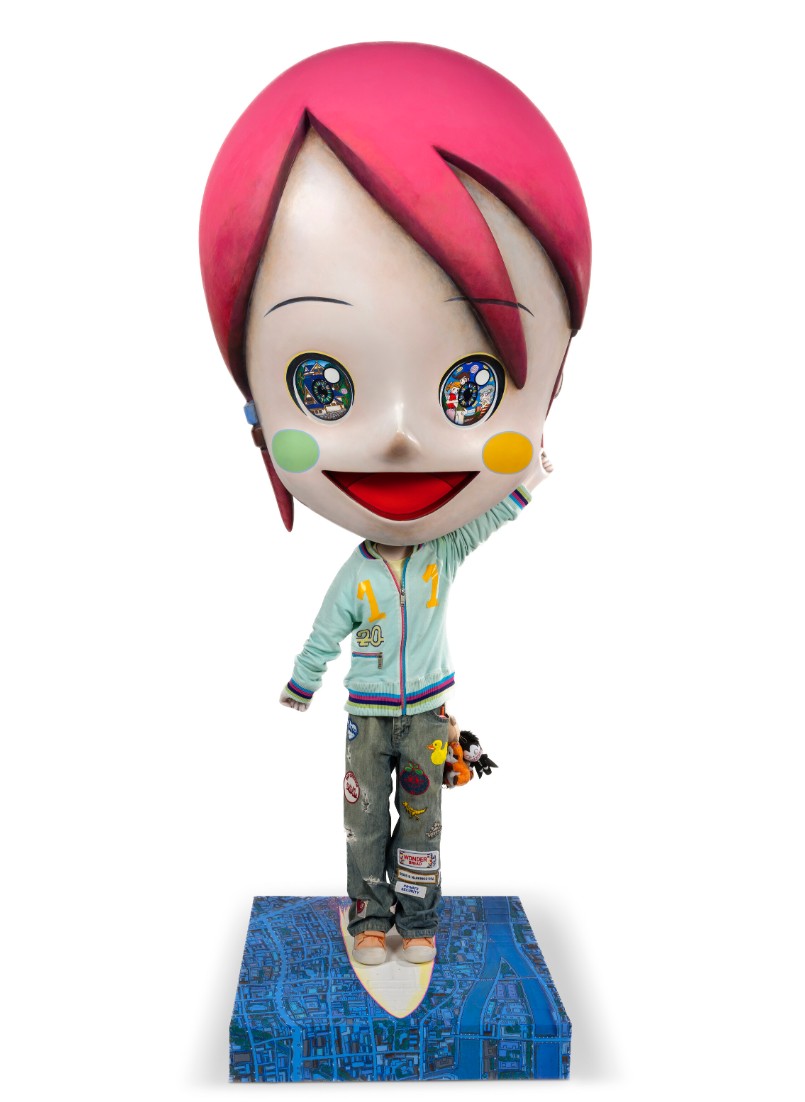
MR. (B. 1969)
“Penyo-Henyo” Autumn Leaves Edition “Pluto”, 2004-2006
Fiberglass, steel, acrylic, resin, iron, and various fabrics sculpture
212 (H) x 80 x 86.5 cm (83 1/2 x 31 1/2 x 34 inches)
Signed and dated ‘Mr. 2006’ (on the underside)
#40. Gerard at the Country Club, 2013
Christie’s Hong-Kong: 27 September 2025
Estimated: HKD 300,000 – 500,000
HKD 482,600 / USD 62,030
LOUISE BONNET (B. 1970), Gerard at the Country Club | Christie’s
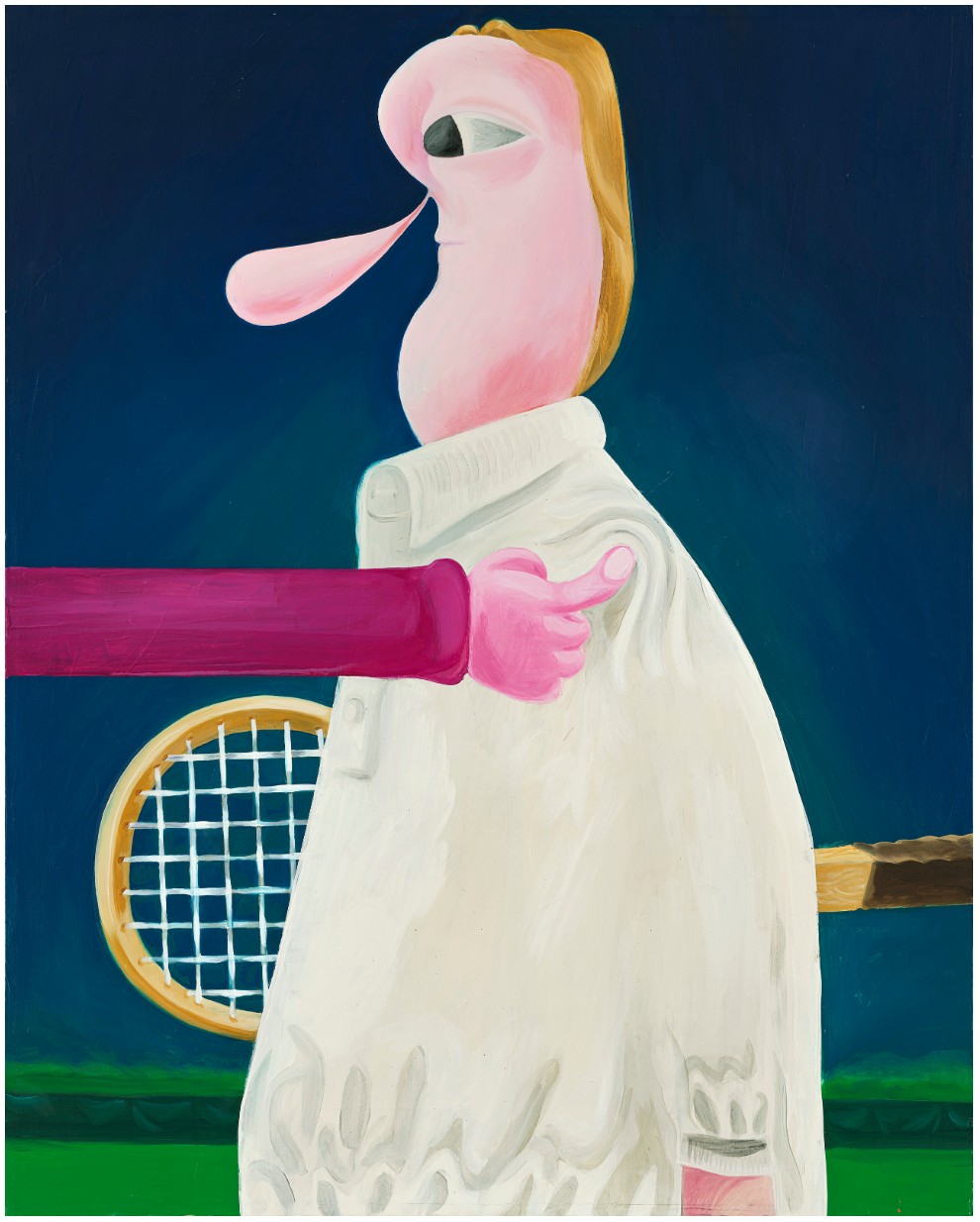
LOUISE BONNET (B. 1970)
Gerard at the Country Club, 2013
Oil on canvas
30×24 inches (76.2 x 61 cm)
Signed with the artist’s signature and dated ‘2013’ (on the reverse)
Lots Passed
French Maid, 2006
Christie’s Hong-Kong: 27 September 2025
Estimated: HKD 400,000 – 600,000
PASSED
GEORGE CONDO (B. 1957), French Maid | Christie’s
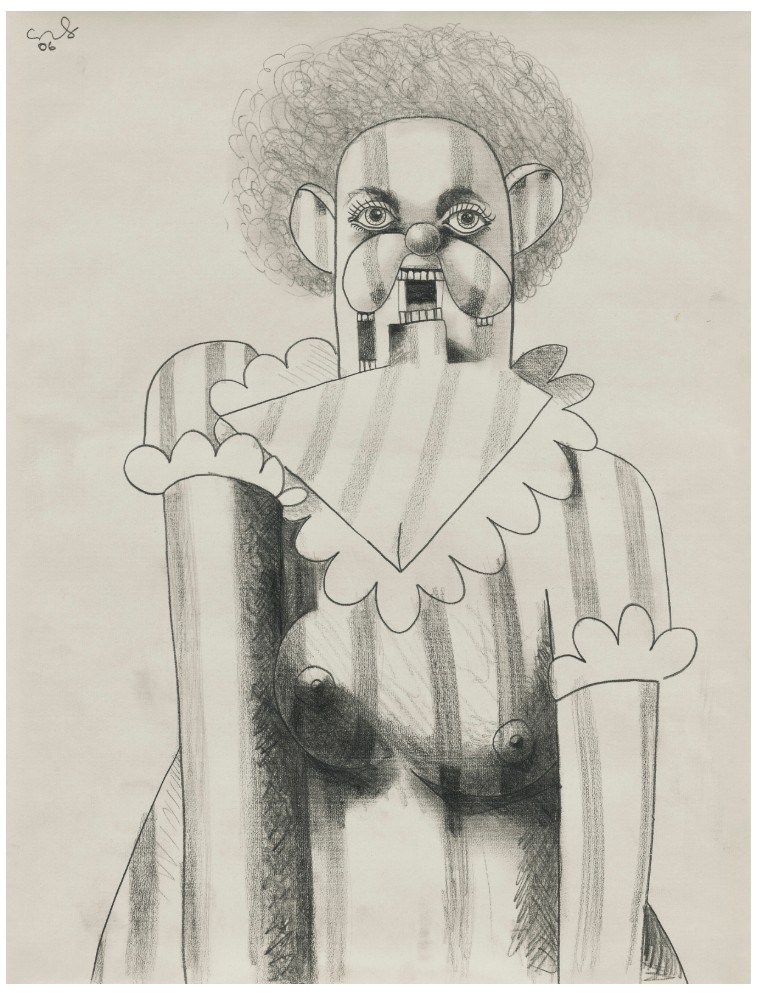
GEORGE CONDO (B. 1957)
French Maid, 2006
Graphite on paper
25 x 19 1/4 inches (63.5 x 49 cm)
Signed and dated ‘Condo 06’ (upper left)

Modern & Contemporary Evening Auction
28 September 2025
Modern & Contemporary Evening Auction | 2025 | Sotheby’s
TOTAL
HKD 336,061,000 / USD 43,195,500
# Lots
Total: 40 Lots
[Withdrawn: 4 Lots]
Passed: 2 Lots
Sold: 38 Lots
Sell-Through Rate: 95%
TOP LOT
HKD 79,900,000 / USD 10,269,925
23.8% of Total
#1. Can’t Wait ’til the Night Comes, 2012
Sotheby’s Hong-Kong: 28 September 2025
Estimated: HKD 65,000,000 – 85,000,000
HKD 79,900,000 / USD 10,269,925
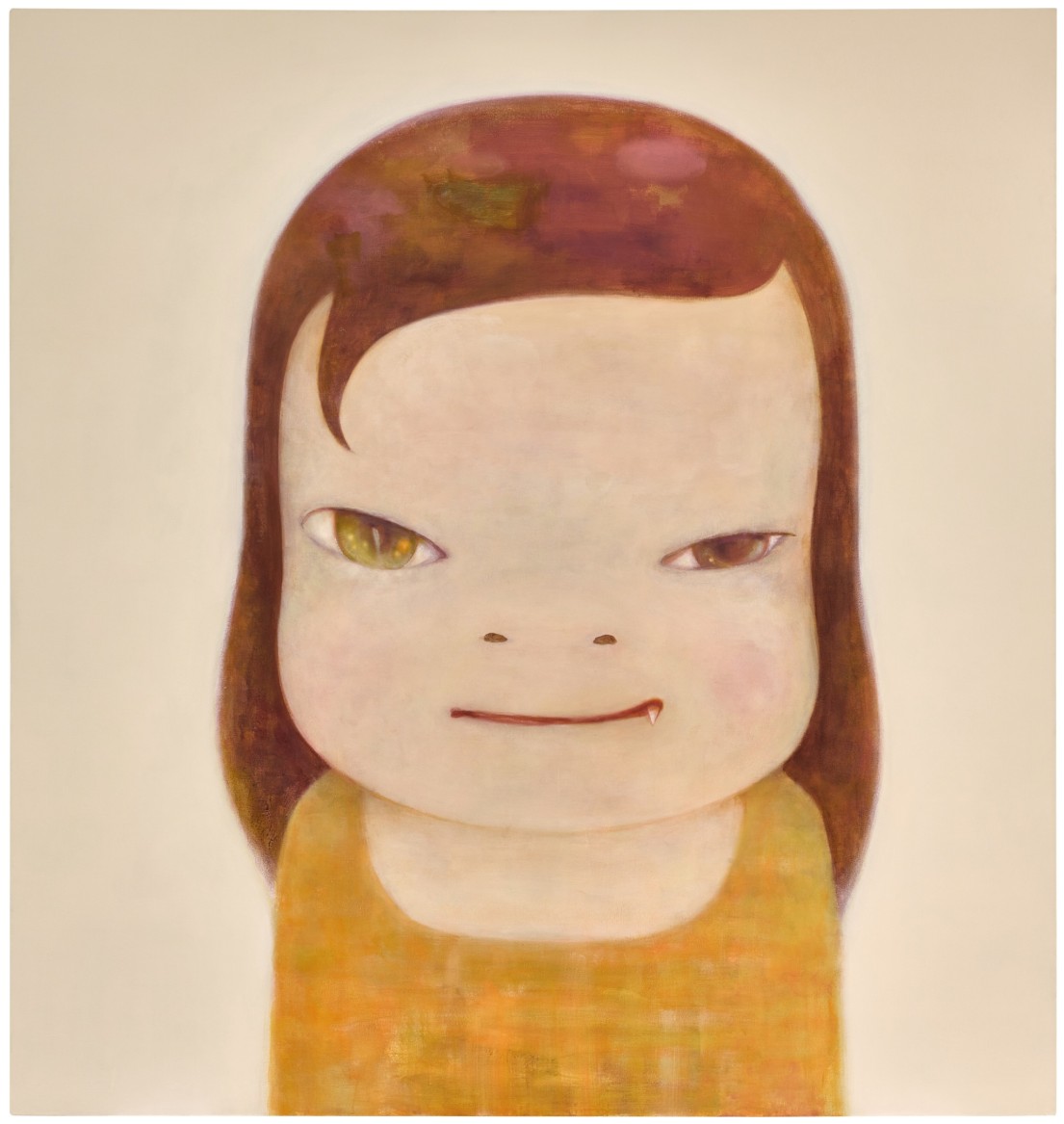
YOSHITOMO NARA (b. 1959)
Can’t Wait ’til the Night Comes, 2012
Acrylic on canvas
193.6 x 183 cm (76 1/4 x 72 inches)
Signed and dated 2012 (on the reverse)
Signed, titled in Japanese and dated 2012 (on the stretcher)
#2. Vista with Bridge, 1996
Sotheby’s Hong-Kong: 28 September 2025
Estimated: HKD 28,000,000 – 35,000,000
HKD 30,875,000 / USD 3,968,510
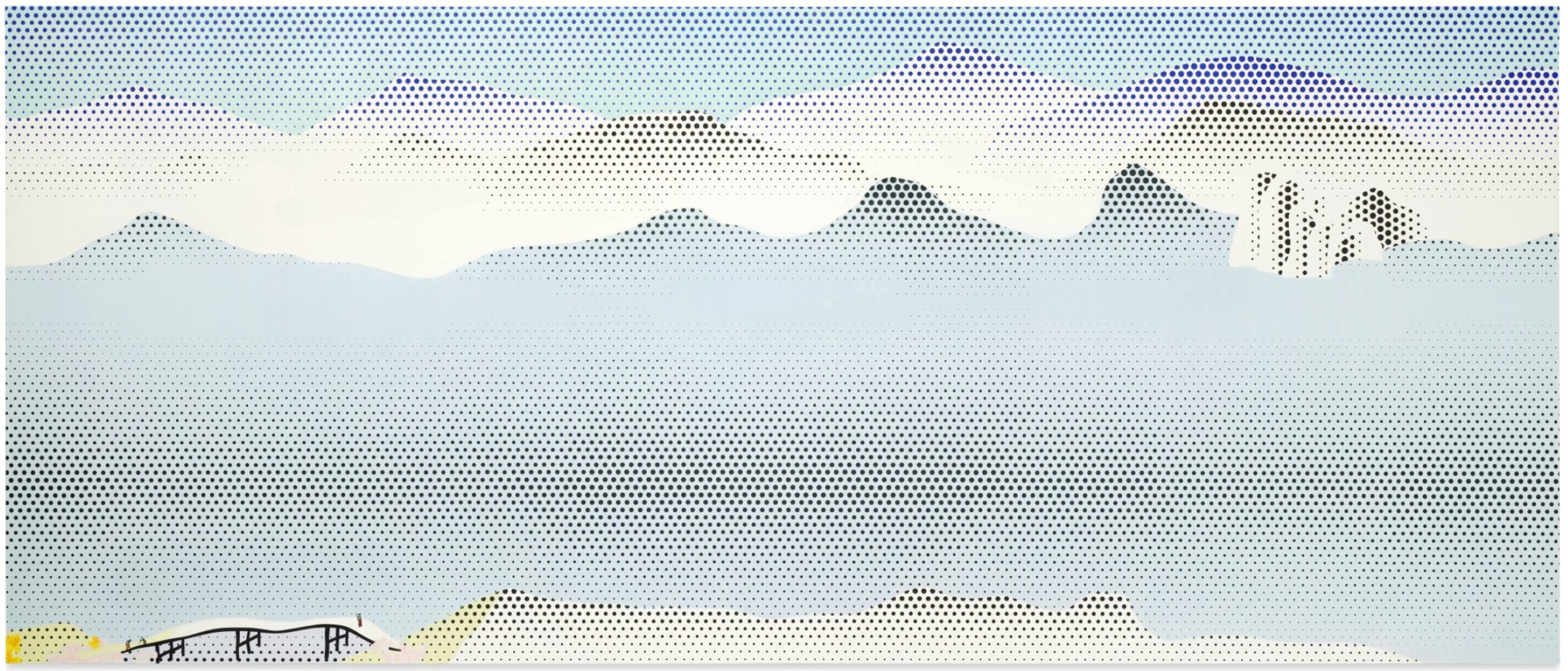
ROY LICHTENSTEIN (1923 – 1997)
Vista with Bridge, 1996
Acrylic, oil and graphite on canvas
75 x 178 1/4 inches (190.5 x 452.8 cm)
Signed and dated ’96 (on the reverse)
#3. Buste d’homme, 1969
Sotheby’s Hong-Kong: 28 September 2025
Estimated: HKD 15,500,000 – 25,000,000
HKD 20,505,000 / USD 2,635,605
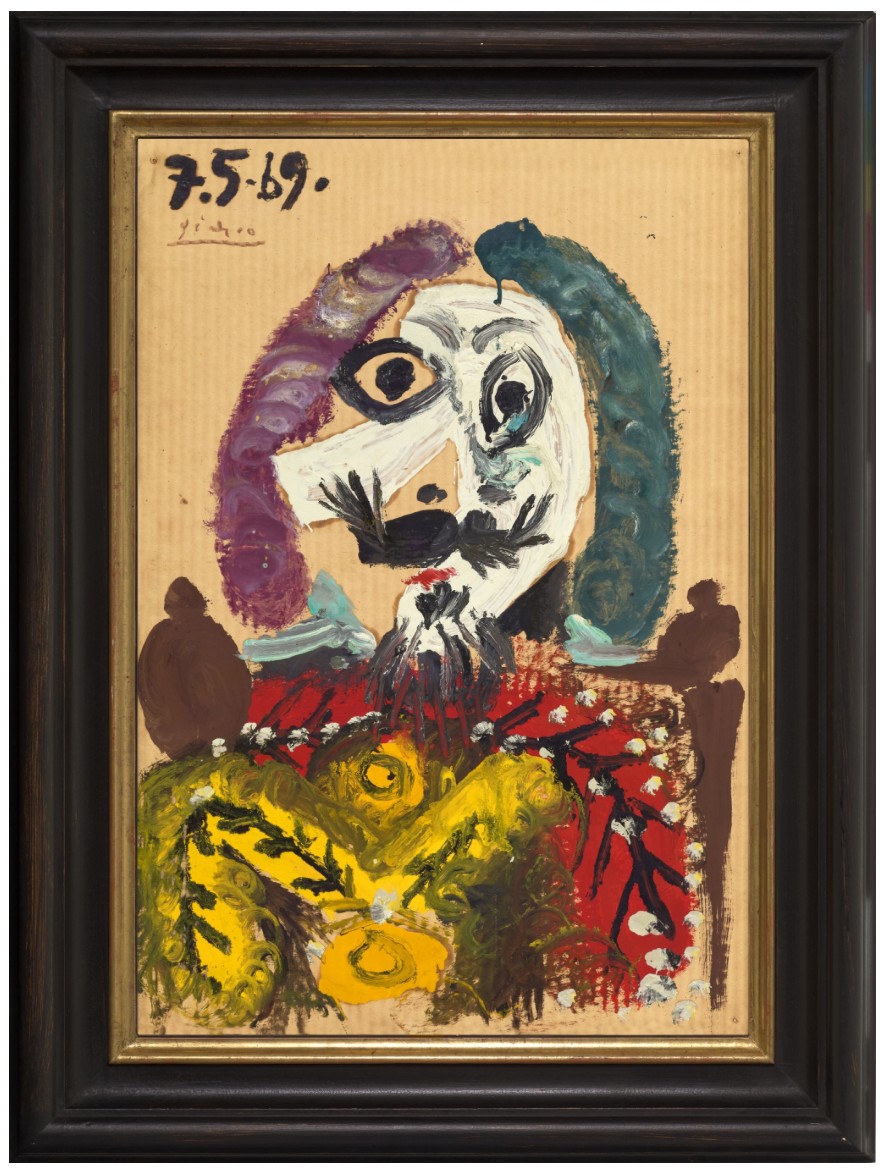
PABLO PICASSO (1881 – 1973)
Buste d’homme, 1969
Oil on corrugated cardboard
72.4 x 49.8 cm (28 1/2 x 19 5/8 inches)
Signed Picasso and dated 7.5.69 (upper left)
#4. Les fleurs de l’amour ou Les iris, 1948
Sotheby’s Hong-Kong: 28 September 2025
Estimated: HKD 9,500,000 – 14,000,000
HKD 19,895,000 / USD 2,557,200
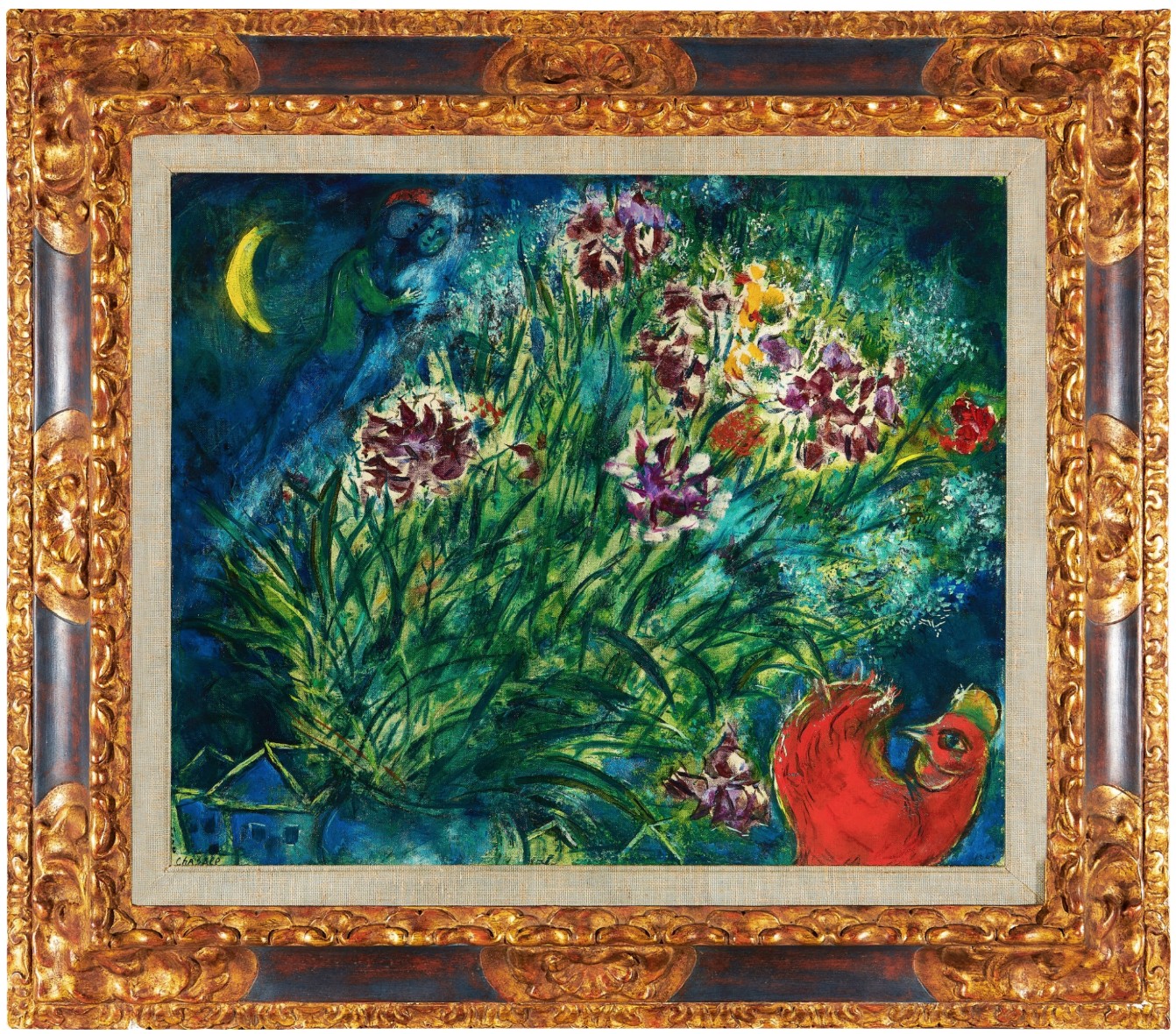
MARC CHAGALL (1887 – 1985)
Les fleurs de l’amour ou Les iris, 1948
Oil on canvas
20 1/8 x 24 inches (51×61 cm)
Signed Marc Chagall (lower left); dated 1948 (lower right)
#5. Sprout the Ambassador, 2001
Sotheby’s Hong-Kong: 28 September 2025
Estimated: HKD 9,000,000 – 15,000,000
HKD 18,431,000 / USD 2,369,025
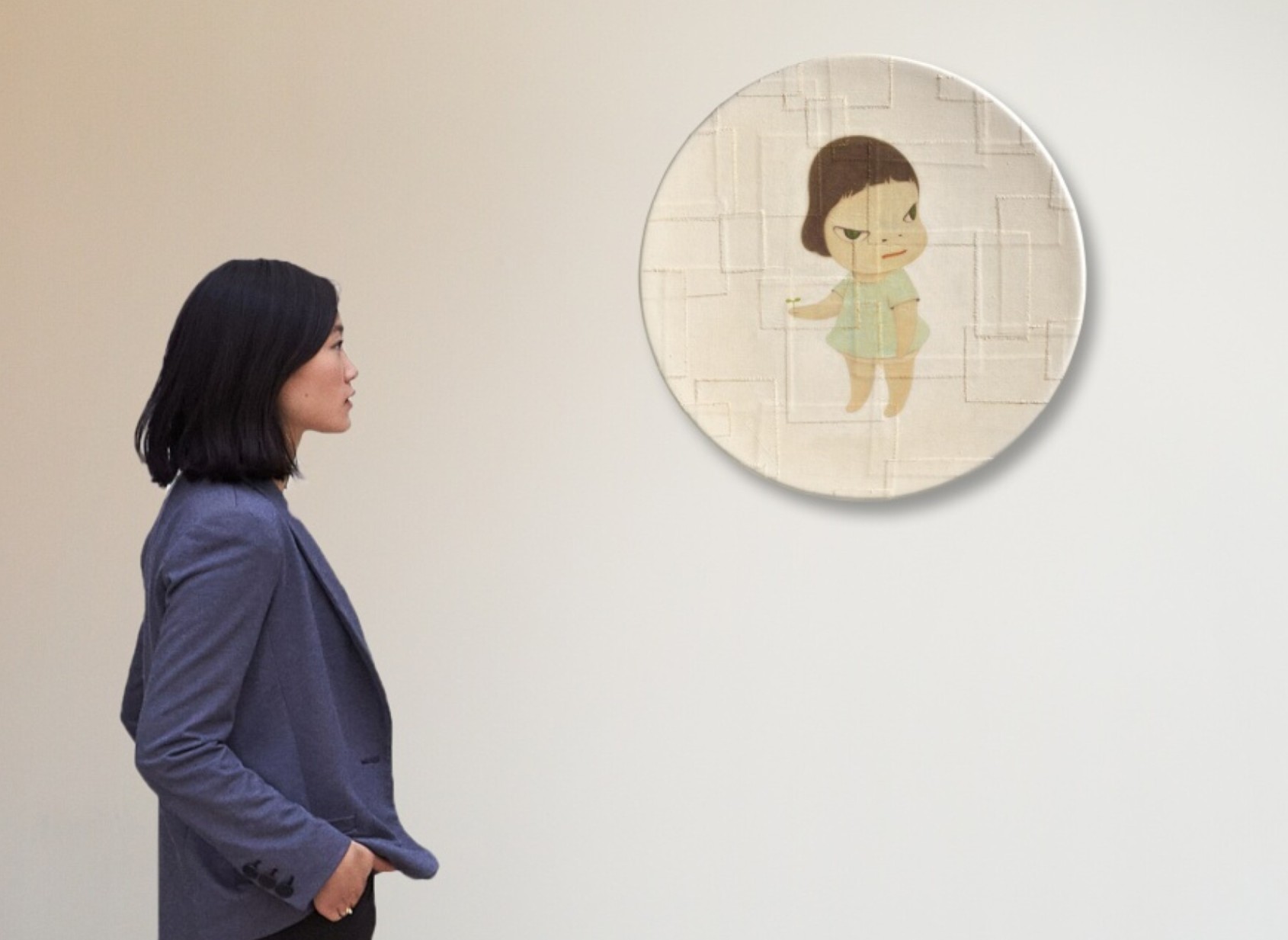
YOSHITOMO NARA (b. 1959)
Sprout the Ambassador, 2001
Acrylic on cotton mounted on FRP
55 x 55 x 9.5 cm (21 5/8 x 21 5/8 x 3 3/4 inches)
Signed, titled and dated 01 (on the reverse)
#6. Flower Parent and Child, 2021
Sotheby’s Hong-Kong: 28 September 2025
Estimated: HKD 8,000,000 – 16,000,000
HKD 12,575,000 / USD 1,616,325
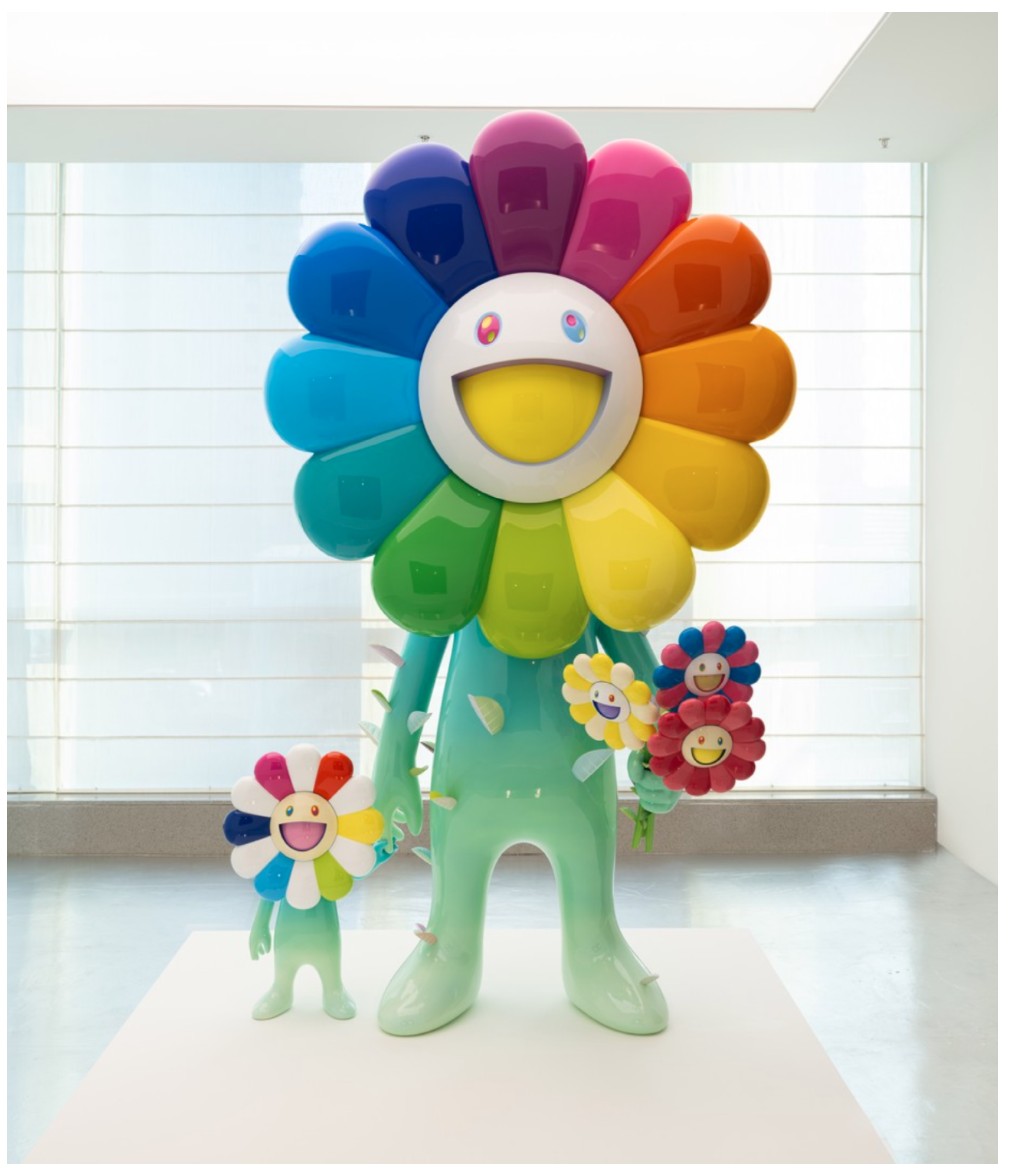
TAKASHI MURAKAMI (b. 1962)
Flower Parent and Child, 2021
Fiber reinforced plastic, urethane paint, stainless steel, wood base
Flower parent: 252x147x94 cm (100 3/8 x 57 7/8 x 37 inches)
Child: 78x46x48 cm (70 3/4 x 18 1/8 x 18 7/8 inches)
Flower bouquet: dimensions variable.
Wood base: 15x196x178 cm. (5 7/8 x 77 1/4 x 70 1/8 inches)
Signed, doodled, inscribed color 2 ED, and dated 2021 on the neck base of Flower Parent
© 2021 Takashi Murakami./Kaikai Kiki Co., Ltd. All Rights Reserved.
XXXXXXXXXX
#11. Water Lilies with Japanese Bridge, 1992
Sotheby’s Hong-Kong: 28 September 2025
Estimated: HKD 3,000,000 – 5,000,000
HKD 7,620,000 / USD 979,435
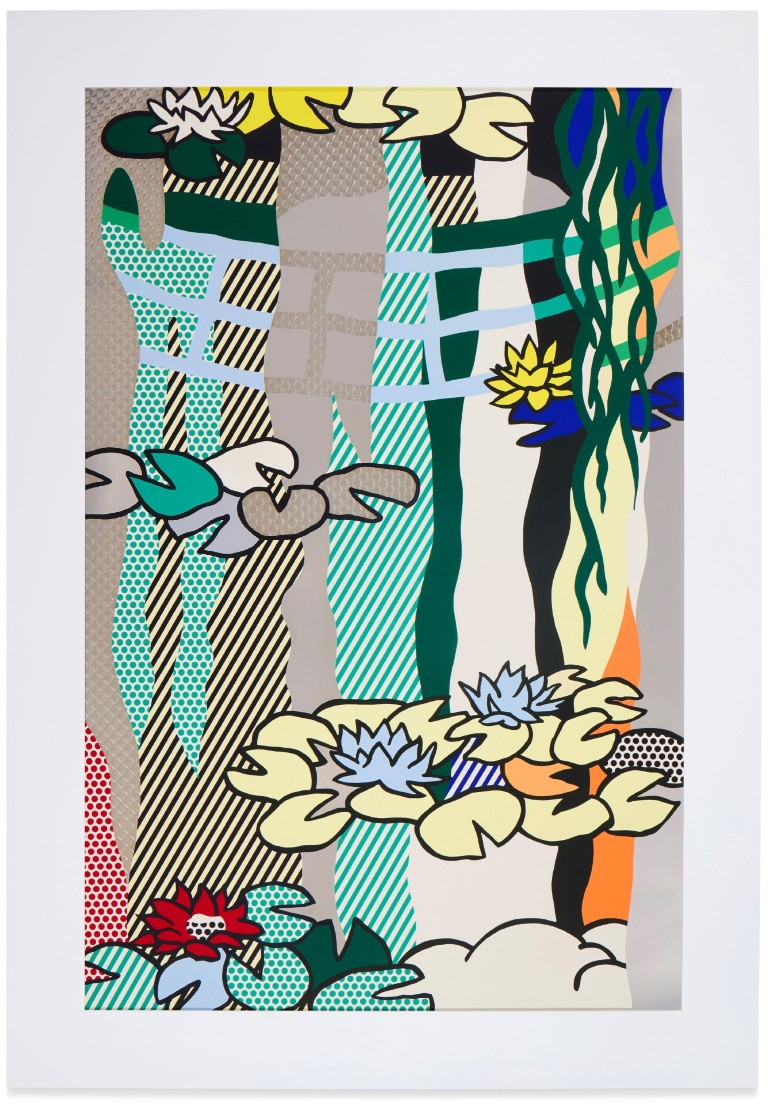
ROY LICHTENSTEIN (1923 – 1997)
Water Lilies with Japanese Bridge, 1992
Screenprinted enamel in colors on processed and swirled stainless steel, with painted aluminum frame
Overall: 83 1/4 x 57 3/4 inches (211.3 x 146.7 cm)
Signed in felt-tip pen, dated ’92 and inscribed AP 5/7 (on the verso)
This work is number 5 of 7 artist’s proofs aside from the numbered edition of 23
#13. Xiao Hong and Plum Blossom, 2003
Sotheby’s Hong-Kong: 28 September 2025
Estimated: HKD 6,000,000 – 8,000,000
HKD 7,366,000 / USD 946,785
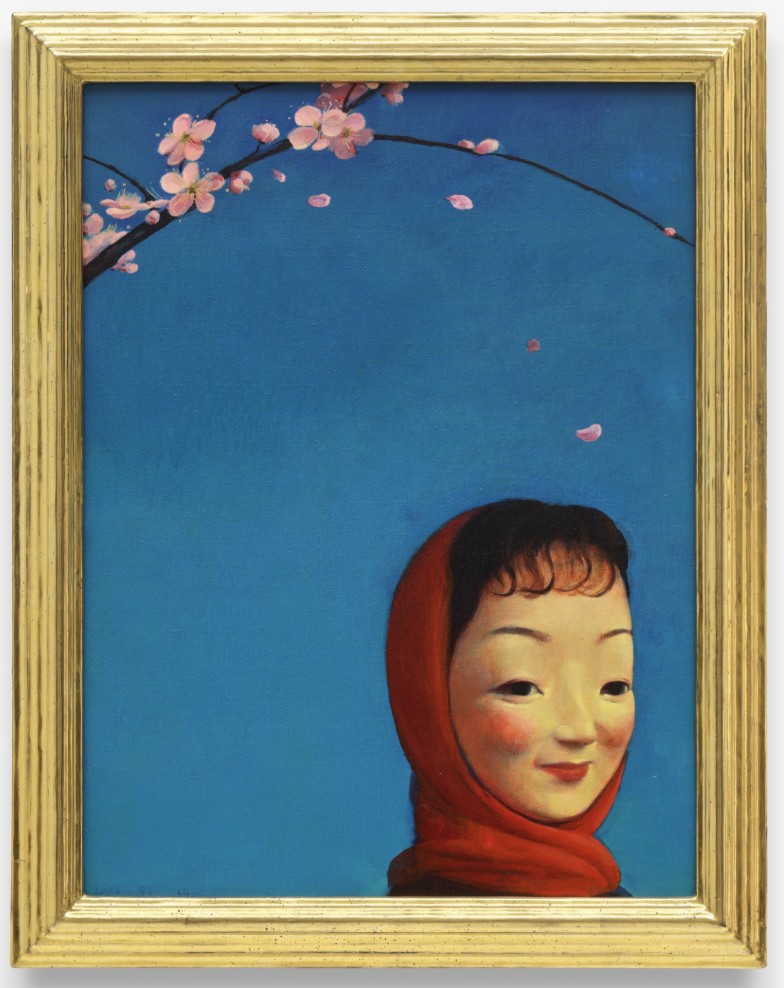
LIU YE (b. 1964)
Xiao Hong and Plum Blossom, 2003
Acrylic and oil on canvas
60×45 cm (23 5/8 x 17 3/4 inches)
Signed in Chinese and Pinyin, and dated 2003 (lower left)
XXXXXXXXXX
#16. Into the Night, 2019
Sotheby’s Hong-Kong: 28 September 2025
Estimated: HKD 3,800,000 – 5,500,000
HKD 5,842,000 / USD 750,900
Matthew Wong 王俊傑 | Into the Night 長夜行 | Modern & Contemporary Evening Auction | 2025 | Sotheby’s
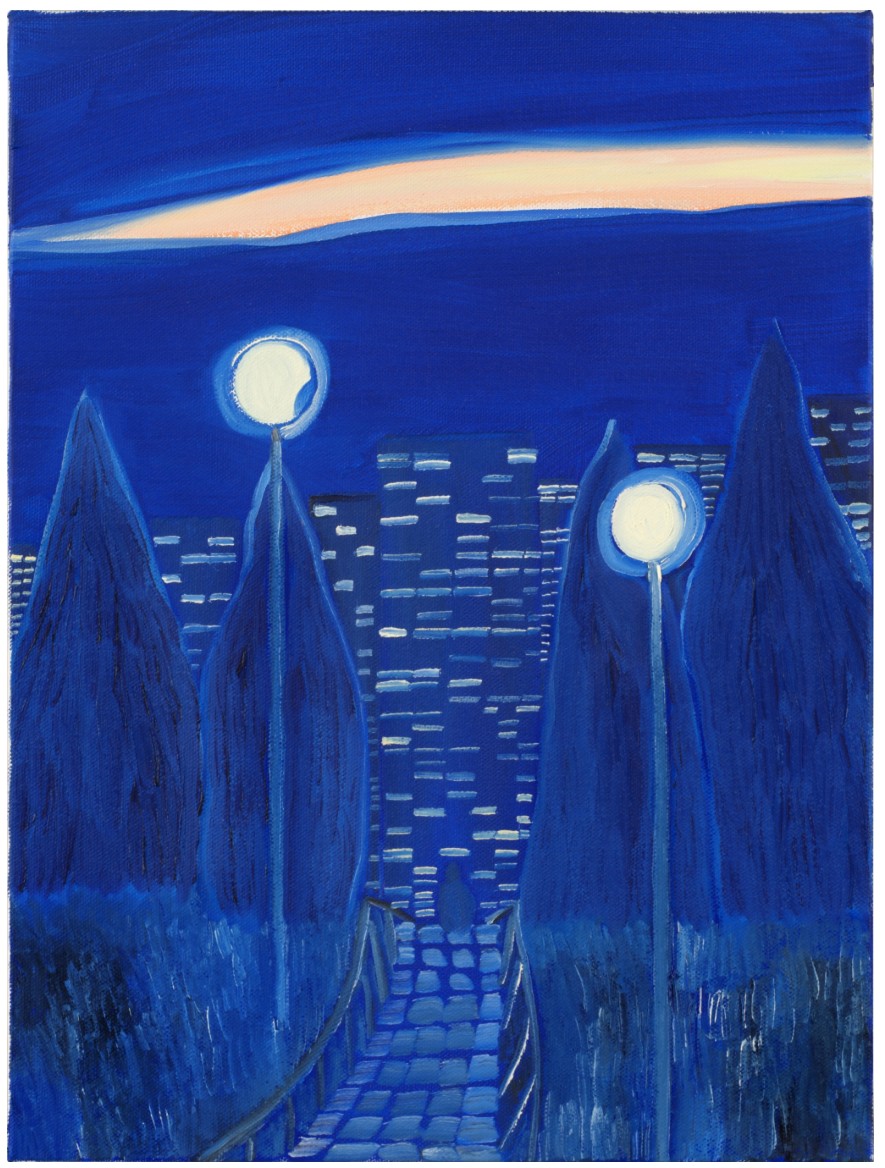
MATTHEW WONG (1984 – 2019)
Into the Night, 2019
Oil on canvas
41 x 30.5 cm (16 1/8 x 12 inches)
Titled in English, signed and dated in Chinese (on the reverse)
XXXXXXXXXX
#19. Oil No. 19, 1997
Sotheby’s Hong-Kong: 28 September 2025
Estimated: HKD 3,500,000 – 7,000,000
HKD 5,080,000 / USD 652,955
Yayoi Kusama 草間彌生 | Oil No. 19 油畫19號 | Modern & Contemporary Evening Auction | 2025 | Sotheby’s
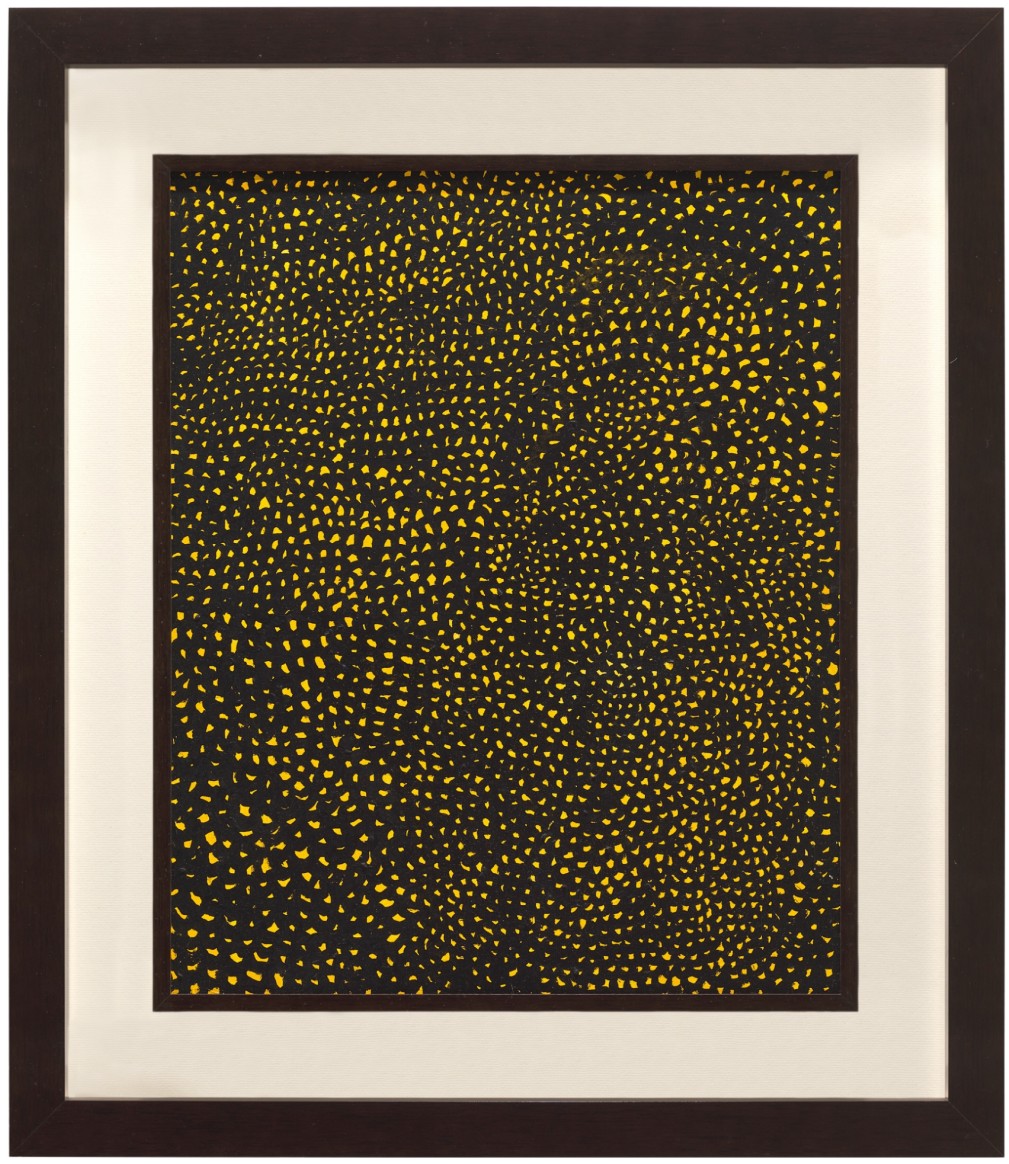
YAYOI KUSAMA (b. 1929)
Oil No. 19, 1997
Oil on canvas
65.3 x 53 cm (25 3/4 x 20 7/8 inches)
Signed, titled, and dated 1997 on the reverse
XXXXXXXXXX
#26. Flower Sparkles!, 2021
Sotheby’s Hong-Kong: 28 September 2025
Estimated: HKD 3,000,000 – 5,000,000
HKD 3,556,000 / USD 457,070
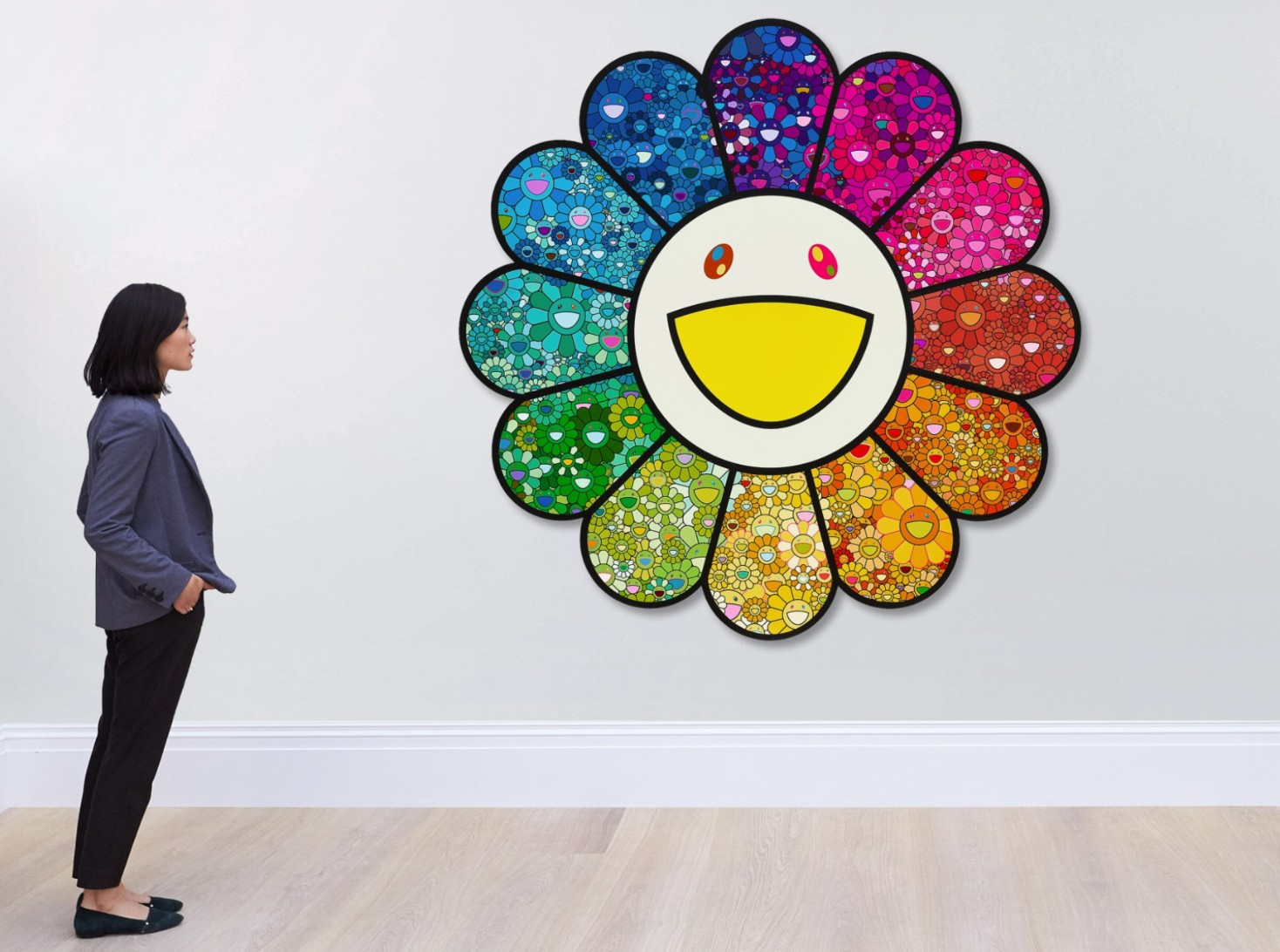
TAKASHI MURAKAMI (b. 1962)
Flower Sparkles!, 2021
Acrylic on canvas mounted on wood panel
150×150 cm (59×59 inches)
Signed and dated 2021 (on the reverse)
© 2021 Takashi Murakami/Kaikai Kiki Co., Ltd. All Rights Reserved
#27. Reflections on Girl (Study), circa 1989
Sotheby’s Hong-Kong: 28 September 2025
Estimated: HKD 2,000,000 – 3,000,000
HKD 3,175,000 / USD 408,100
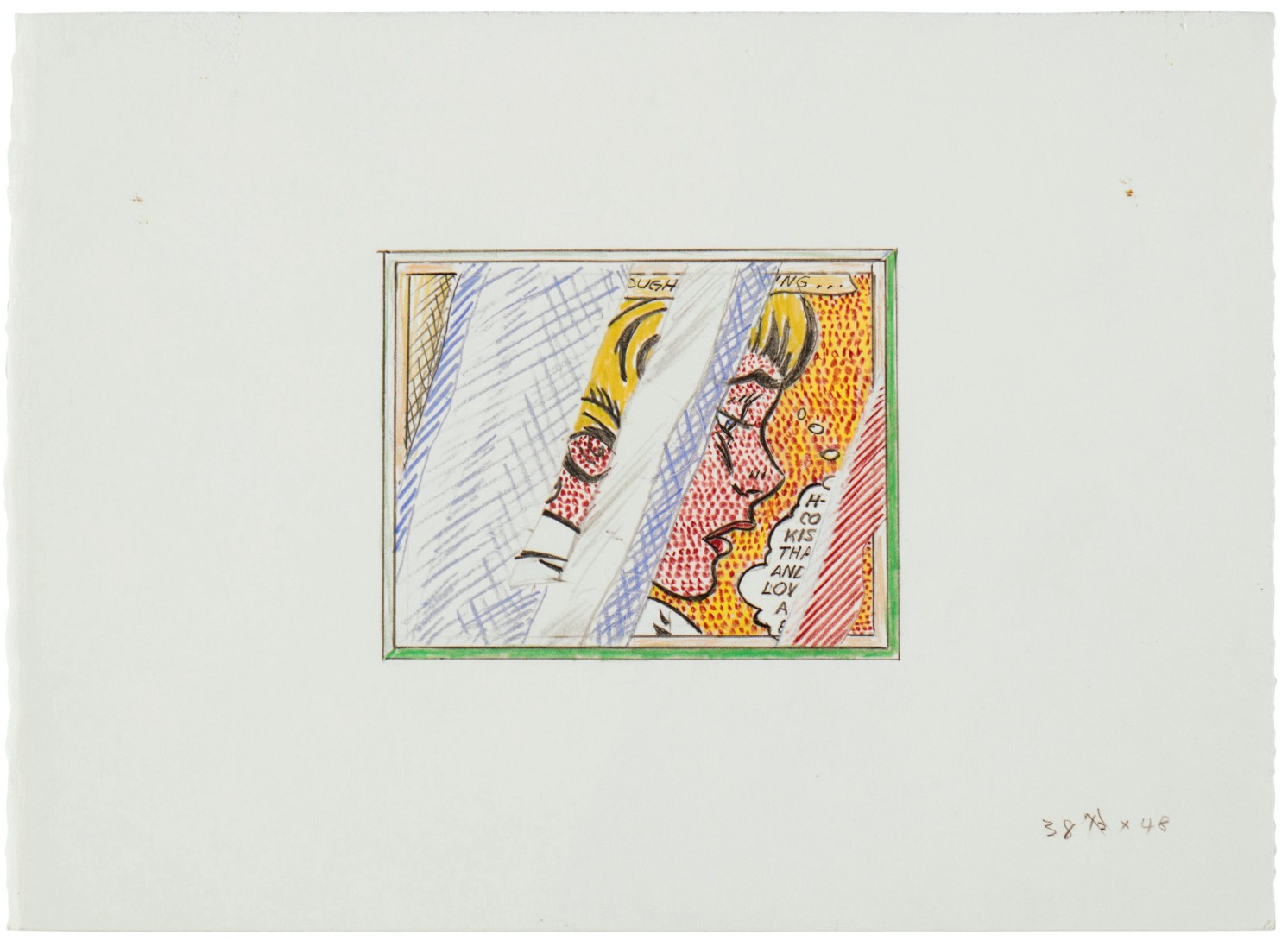
ROY LICHTENSTEIN (1923 – 1997)
Reflections on Girl (Study), circa 1989
Colored pencil and graphite on paper
Image: 4 1/2 x 5 5/8 inches (11.4 x 14.3 cm)
Sheet: 10 x 13 3/4 inches (25.4 x 34.9 cm)
XXXXXXXXXX
#29. Bonsai Tree (Study), 1992
Sotheby’s Hong-Kong: 28 September 2025
Estimated: HKD 2,000,000 – 3,000,000
HKD 3,048,000 / USD 391,775
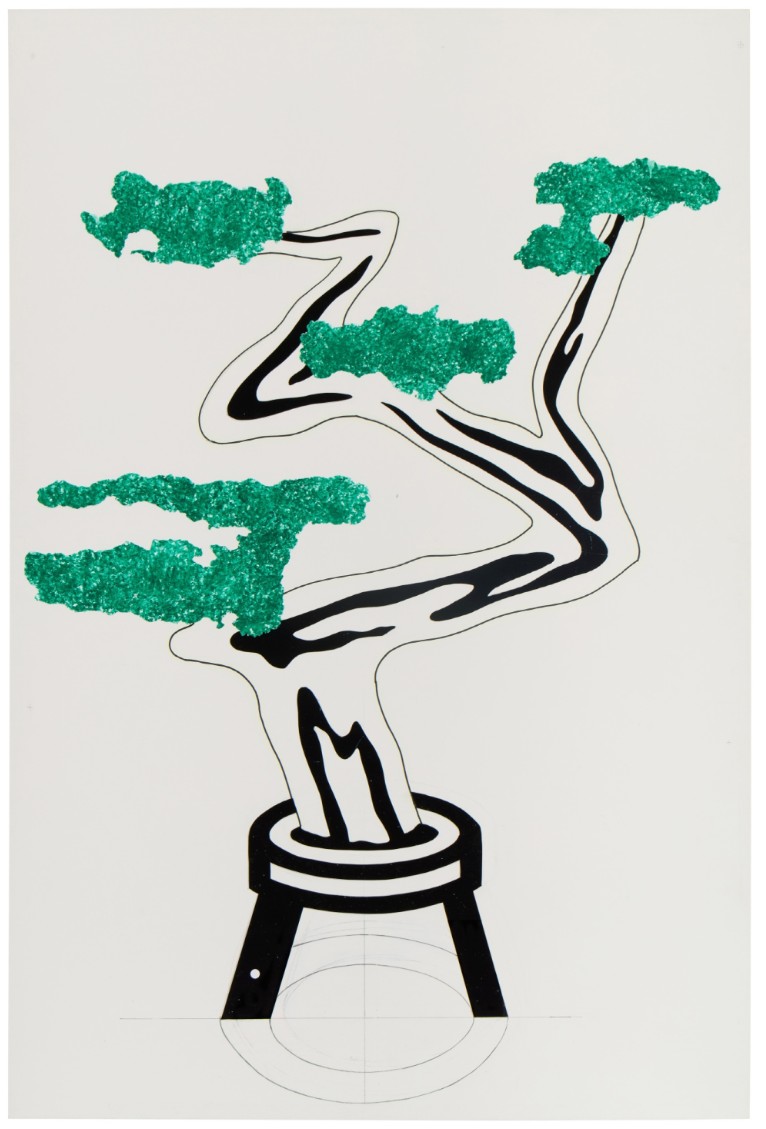
ROY LICHTENSTEIN (1923 – 1997)
Bonsai Tree (Study), 1992
Cut painted paper, acrylic, marker and graphite on foamcore
60 x 40 1/8 inches (152.4 x 101.9 cm)
Signed and dated ‘92 (on the reverse)
#30. Coffee Table, 2020
Sotheby’s Hong-Kong: 28 September 2025
Estimated: HKD 2,400,000 – 4,000,000
HKD 2,921,000 / USD 375,450
Hilary Pecis 希拉里 · 佩西斯 | Coffee Table 咖啡桌 | Modern & Contemporary Evening Auction | 2025 | Sotheby’s
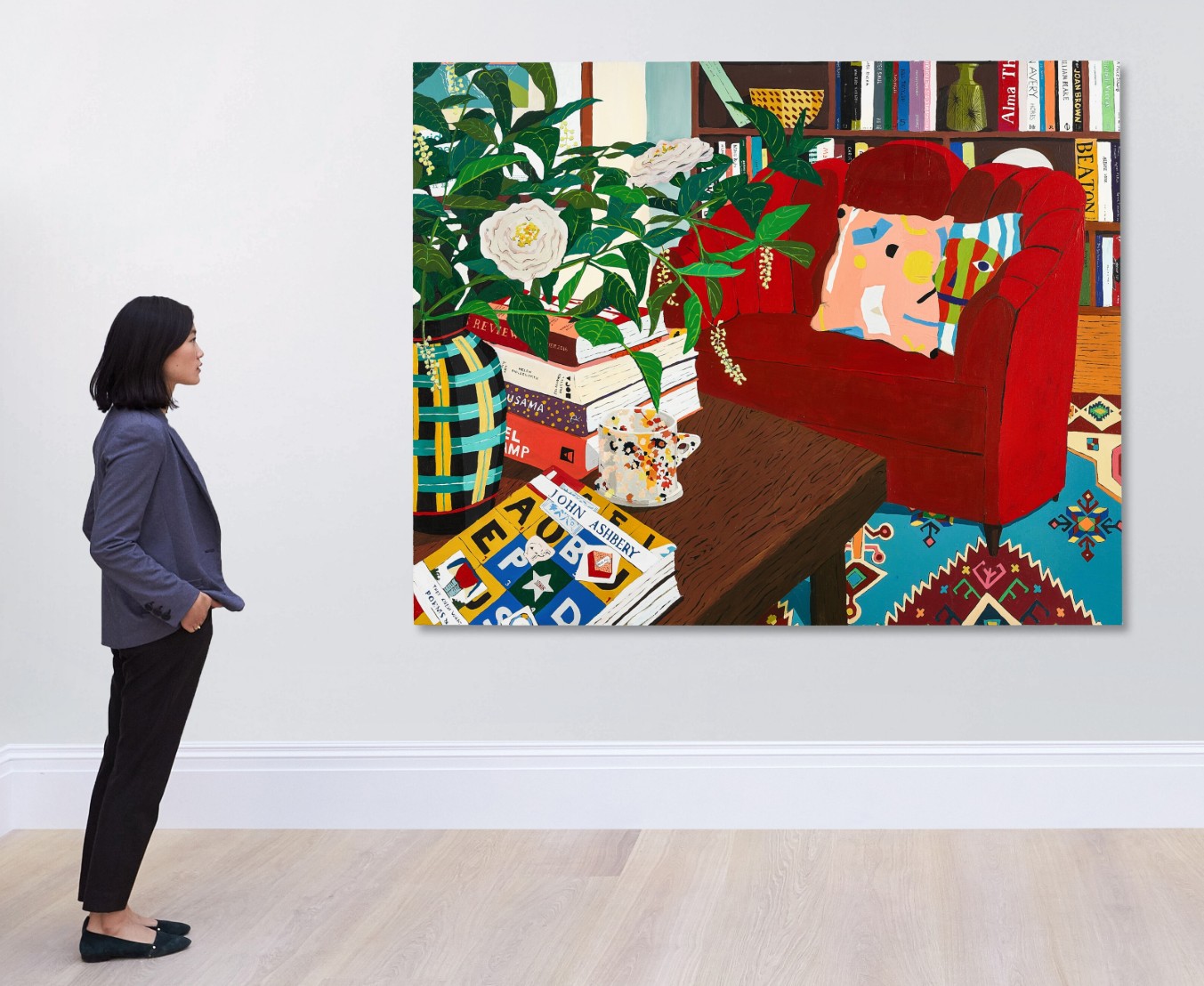
HILARY PECIS (b. 1979)
Coffee Table, 2020
Acrylic on canvas
137×173 cm (54 x 68 1/8 inches)
Signed (on the overlap)
Signed, titled and dated 2020 (on the reverse)
XXXXXXXXXX
#37. Scholar’s Rock, 1997
Sotheby’s Hong-Kong: 28 September 2025
Estimated: HKD 1,000,000 – 1,500,000
HKD 1,651,000 / USD 212,210

ROY LICHTENSTEIN (1923 – 1997)
Scholar’s Rock, 1997
Painted stainless steel
28 x 17 1/8 x 8 3/4 inches (71.1 x 43.5 x 22.2 cm)
Incised with the artist’s signature, numbered 0/6 and dated ‘97 (lower edge)
This work is the artist’s cast from an edition of 6
Lots Withdrawn / Passed
Untitled Escape Collage, 2017
Sotheby’s Hong-Kong: 28 September 2025
Estimated: HKD 3,000,000 – 4,000,000
PASSED
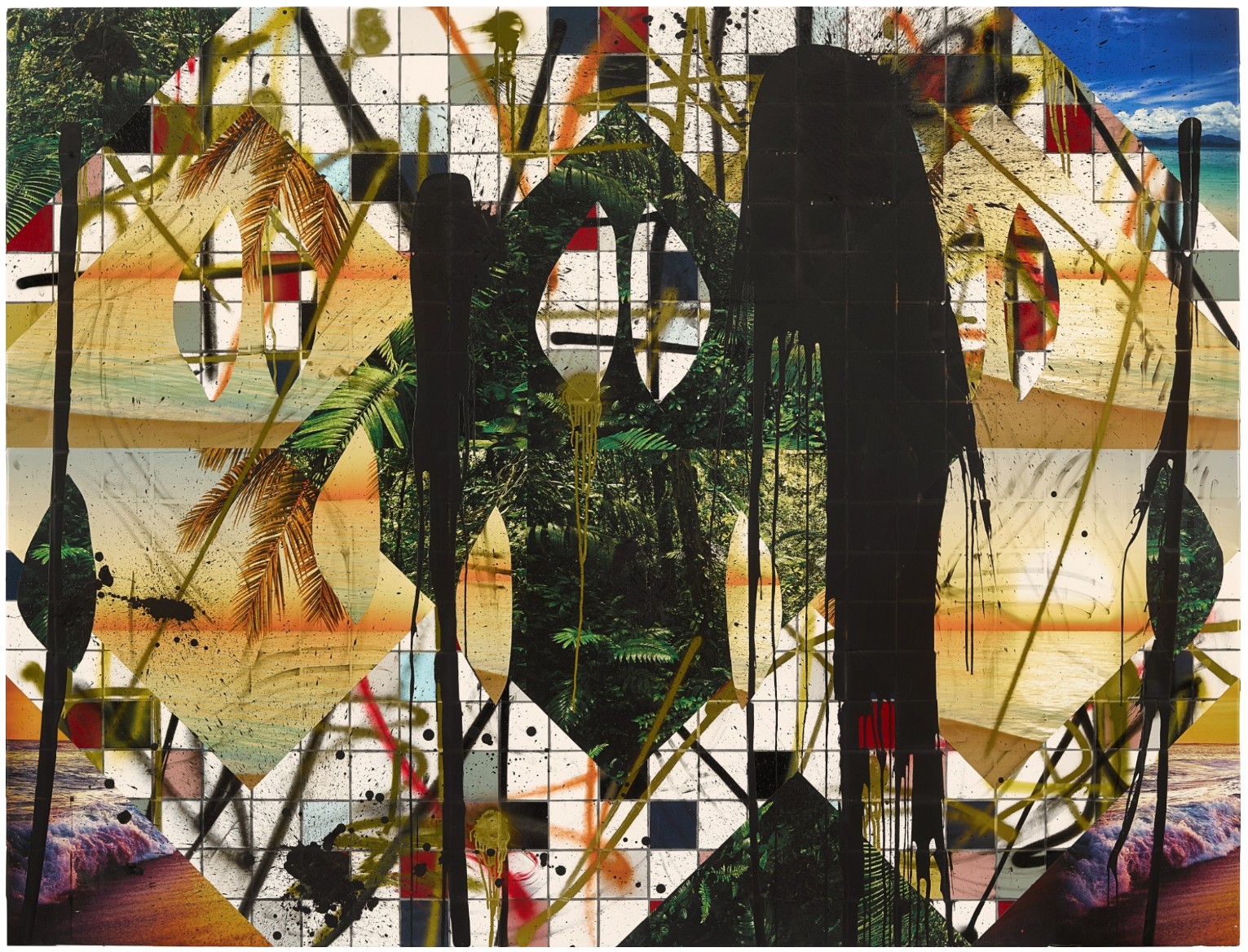
RASHID JOHNSON (b. 1977)
Untitled Escape Collage, 2017
Ceramic tile, mirror, vinyl, spray enamel, branded red oak flooring, oil stick, black soap and wax on panel
70 5/8 x 94 1/2 x 2 1/2 inches (180.5 x 240 x 6.3 cm)
Infinity-Nets (OQ4), 2000
Sotheby’s Hong-Kong: 28 September 2025
Estimated: HKD 13,000,000 – 18,000,000
WITHDRAWN
REPEAT SALE
Sotheby’s London: 7 March 2018
Estimated: GBP 800,000 – 1,200,000
GBP 1,269,000
(#37) YAYOI KUSAMA | Infinity Nets (OQ4)
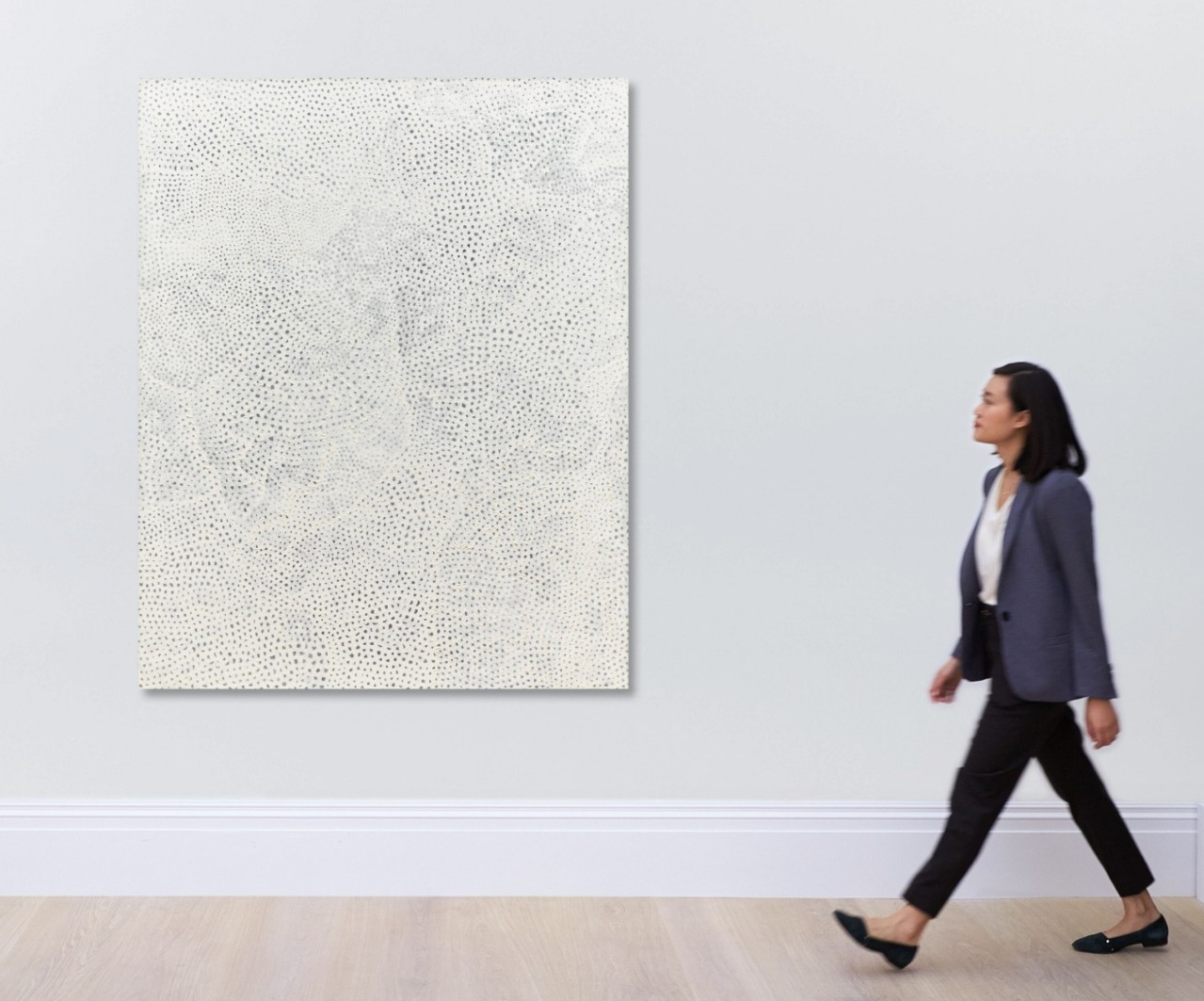
YAYOI KUSAMA (b. 1929)
Infinity-Nets (OQ4), 2000
Acrylic on canvas
162 x 130.4 cm (63 3/4 x 51 3/8 inches)
Signed, titled and dated 2000 (on the reverse)
Modern & Contemporary Day Auction
29 September 2025
Modern & Contemporary Day Auction | 2025 | Sotheby’s
TOTAL
HKD 112,191,800 / USD 14,420,540
# Lots
Total: 110 Lots
[Withdrawn: 0 Lot]
Passed: 20 Lots
Sold: 90 Lots
Sell-Through Rate: 81.8 %
#1. Response, 2021
Sotheby’s Hong-Kong: 29 September 2025
Estimated: HKD 4,000,000 – 6,000,000
HKD 6,604,000 / USD 848,845
Lee Ufan 李禹煥 | Response 應答 | Modern & Contemporary Day Auction | 2025 | Sotheby’s
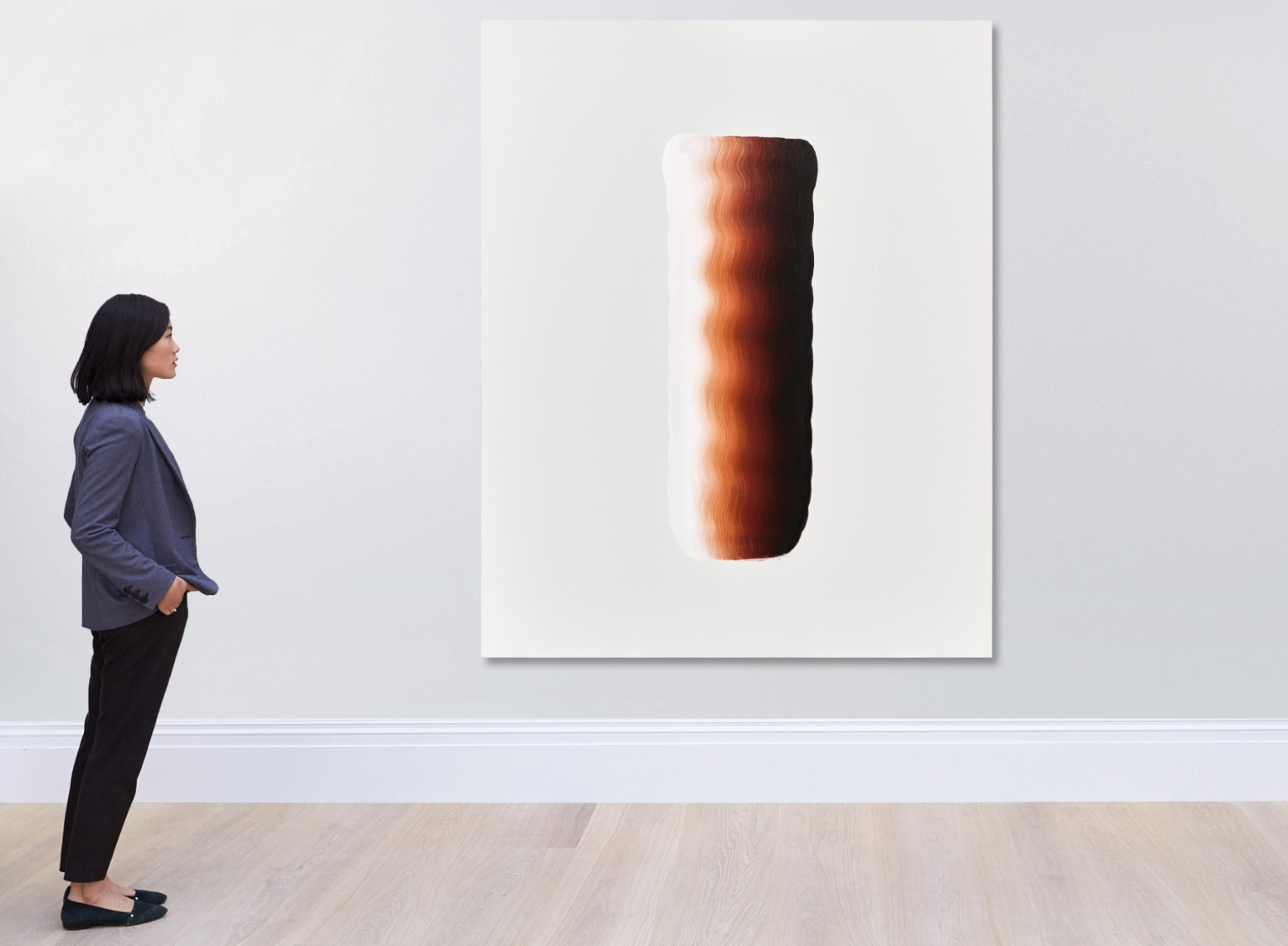
LEE UFAN (b. 1936)
Response, 2021
Acrylic on canvas
162×130 cm (63 3/4 x 51 1/8 inches)
Signed and dated ‘21 (on the side)
Signed, titled and dated 2021 (on the reverse)
Inscribed (on the overlap)
#3. Strange Girl, 1991
Sotheby’s Hong-Kong: 29 September 2025
Estimated: HKD 2,500,000 – 3,500,000
HKD 5,334,000 / USD 685,605
Yoshitomo Nara 奈良美智 | Strange Girl 奇特的女孩 | Modern & Contemporary Day Auction | 2025 | Sotheby’s
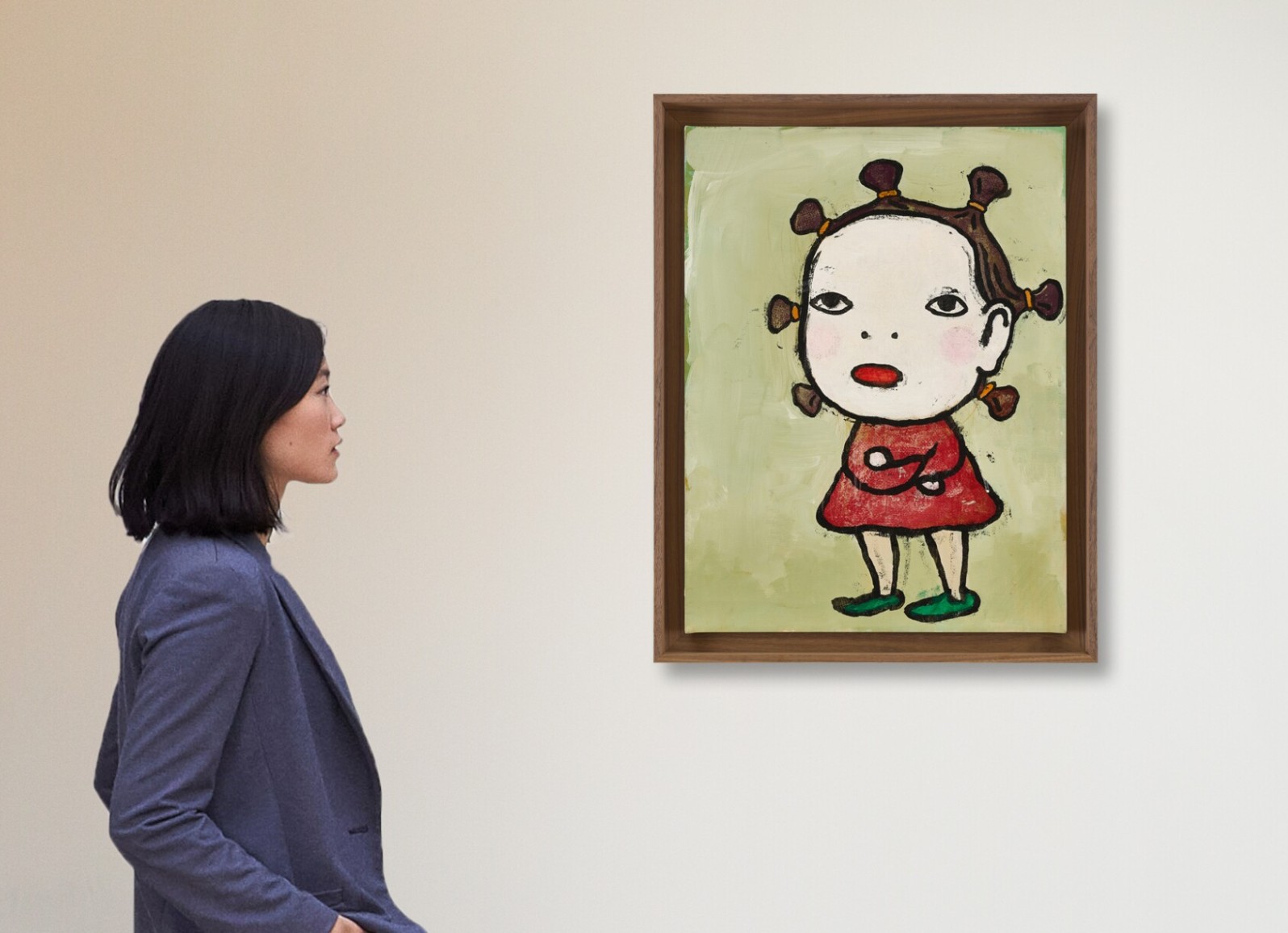
YOSHITOMO NARA (b. 1959)
Strange Girl, 1991
Acrylic on canvas
60.1 x 45.1 cm (23 5/8 x 17 3/4 inches)
Signed, titled and dated ’91 (on the reverse)
#5. Pumpkin, 1999
Sotheby’s Hong-Kong: 29 September 2025
Estimated: HKD 2,400,000 – 3,200,000
HKD 3,556,000 / USD 457,070
Yayoi Kusama 草間彌生 | Pumpkin 南瓜 | Modern & Contemporary Day Auction | 2025 | Sotheby’s
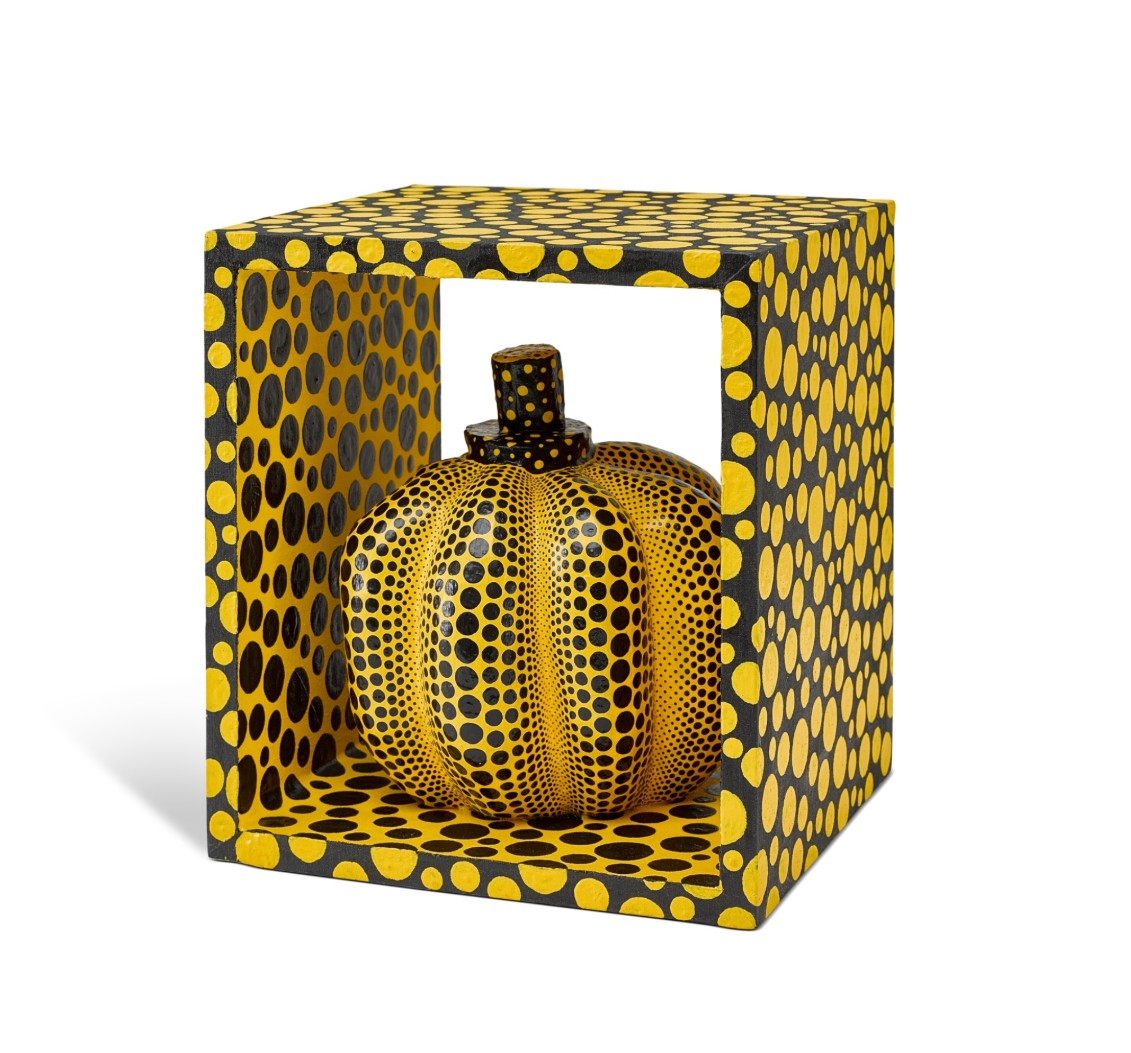
YAYOI KUSAMA (b. 1929)
Pumpkin, 1999
Acrylic on canvas laid on wood, mixed media
25 x 22.6 x 20.1 cm (9 7/8 x 8 7/8 x 7 7/8 inches)
Signed, titled in Japanese and dated 1999 (on the underside)
#6. Uncle Lei Feng, 2003
Sotheby’s Hong-Kong: 29 September 2025
Estimated: HKD 2,500,000 – 3,500,000
HKD 3,556,000 / USD 457,070
Liu Ye 劉野 | Uncle Lei Feng 雷鋒叔叔 | Modern & Contemporary Day Auction | 2025 | Sotheby’s
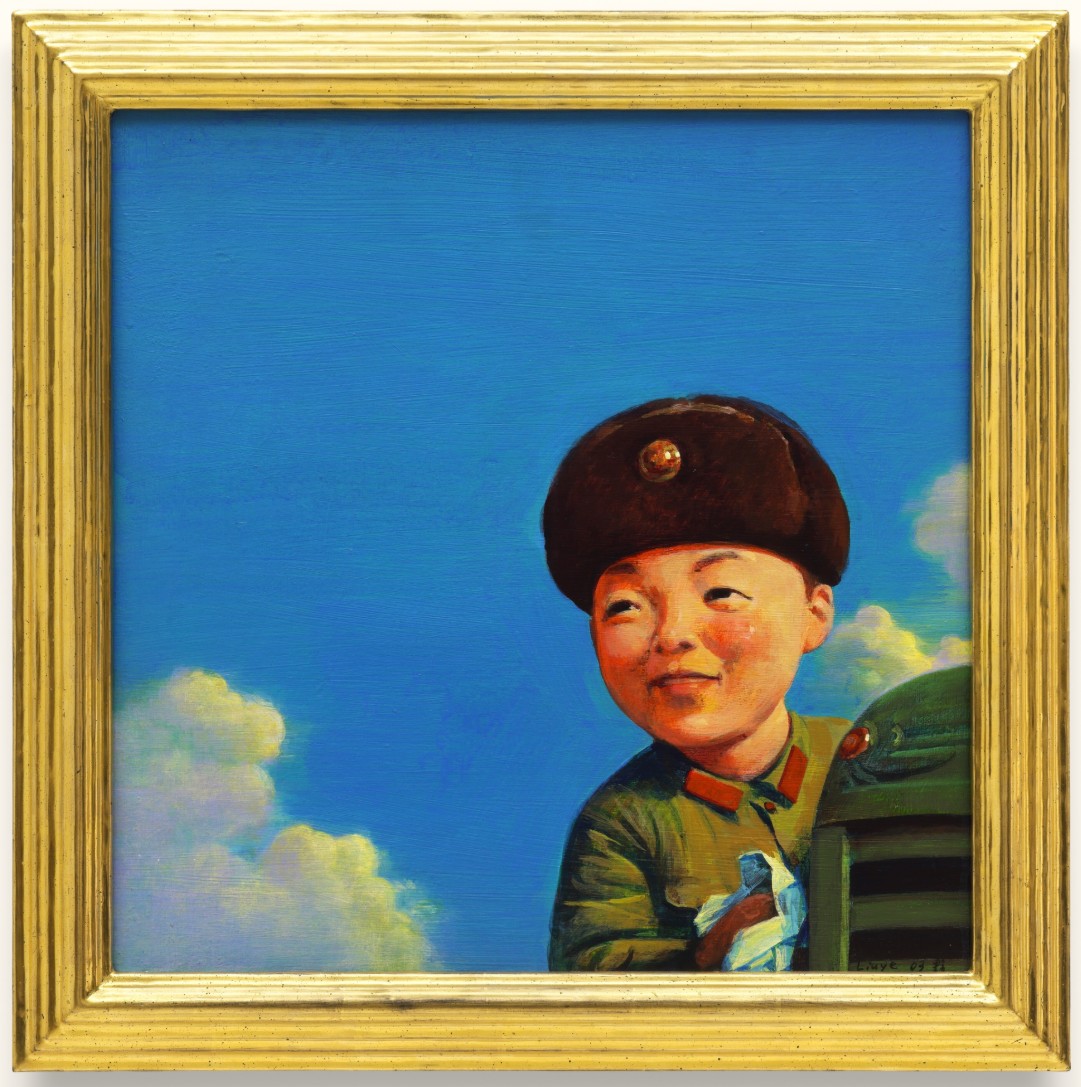
LIU YE (b. 1964)
Uncle Lei Feng, 2003
Acrylic on canvas
45.3 x 45.3 cm (17 7/8 x 17 7/8 inches)
Signed and dated 03 (lower right)
#8. Ashtray, 1981
Sotheby’s Hong-Kong: 29 September 2025
Estimated: HKD 2,500,000 – 5,000,000
HKD 3,175,000 / USD 408,100
Yayoi Kusama 草間彌生 | Ashtray 煙灰缸 | Modern & Contemporary Day Auction | 2025 | Sotheby’s
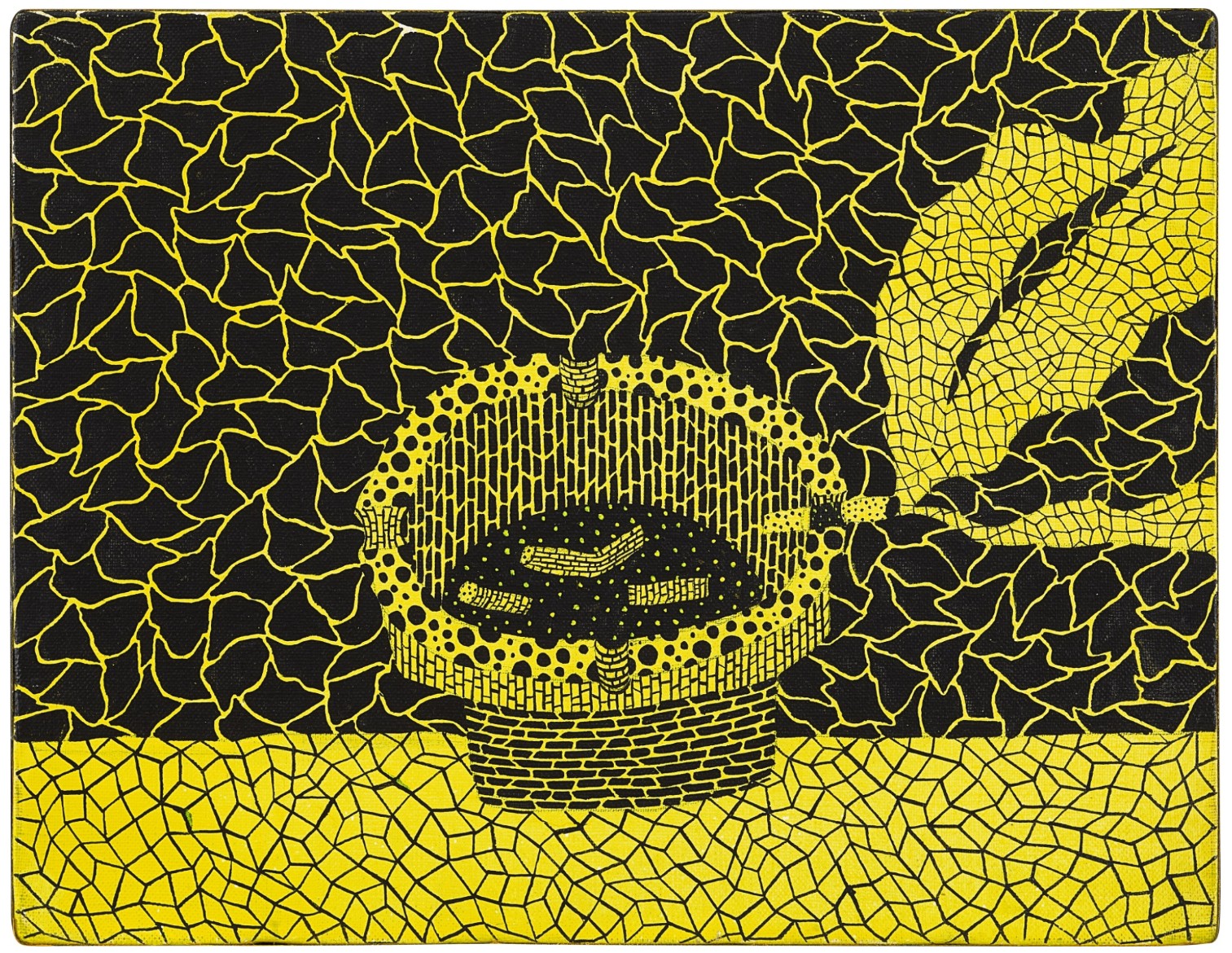
YAYOI KUSAMA (b. 1929)
Ashtray, 1981
Acrylic on canvas
31.5 x 41 cm (12 3/8 x 16 1/8 inches)
Signed in English, titled in Japanese and dated 1981 (on the reverse)
#9. Untitled Anxious Men, 2015
Sotheby’s Hong-Kong: 29 September 2025
Estimated: HKD 2,500,000 – 3,500,000
HKD 3,048,000 / USD 391,775
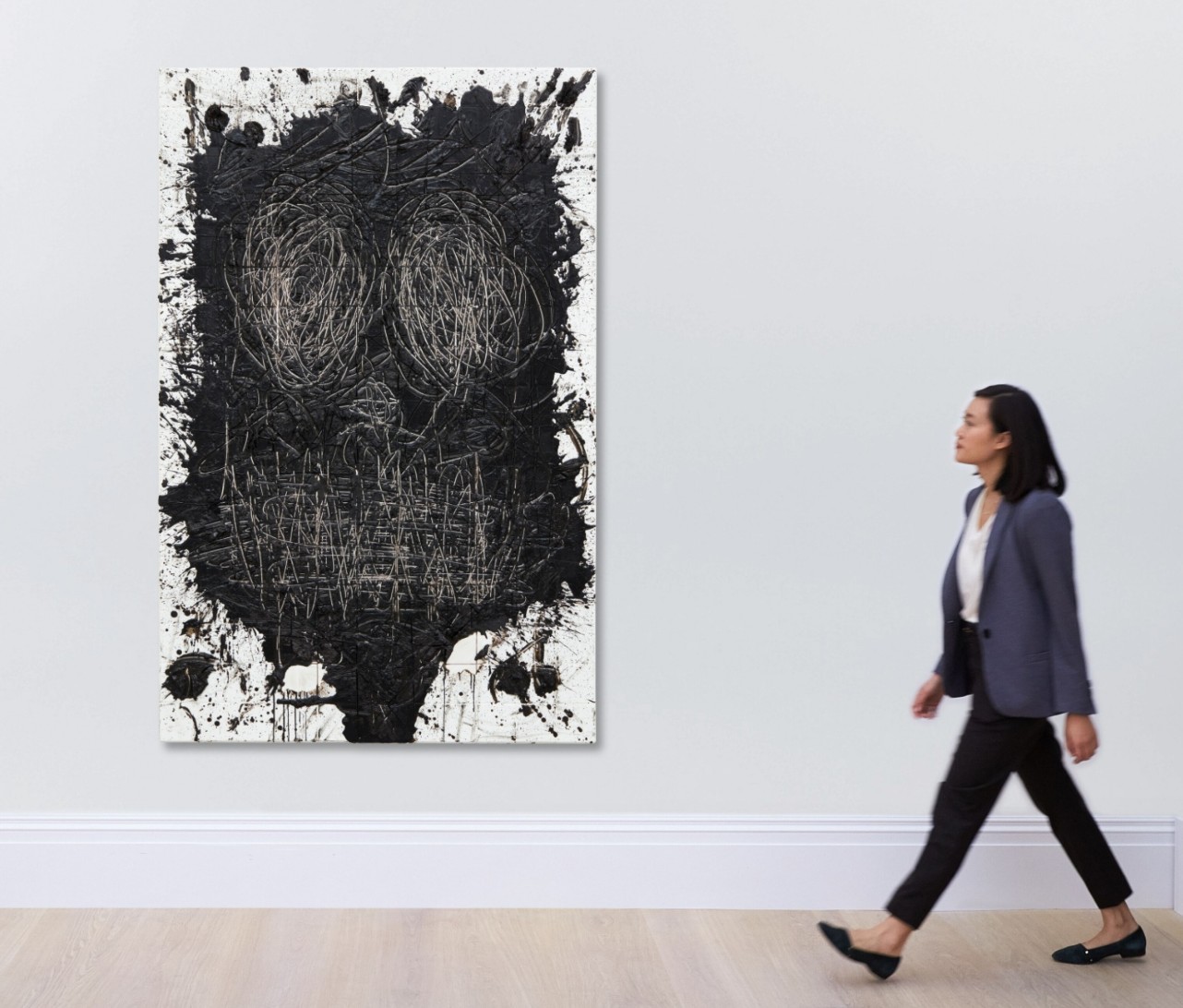
RASHID JOHNSON (b. 1977)
Untitled Anxious Men, 2015
Black soap and wax on white ceramic tile
72 7/8 x 47 1/4 x 2 1/2 inches (185 x 120 x 6.4 cm)
#11. The Earth Cat, 1992
Sotheby’s Hong-Kong: 29 September 2025
Estimated: HKD 1,500,000 – 2,500,000
HKD 2,032,000 / USD 261,185
Yoshitomo Nara 奈良美智 | The Earth Cat 地球貓 | Modern & Contemporary Day Auction | 2025 | Sotheby’s
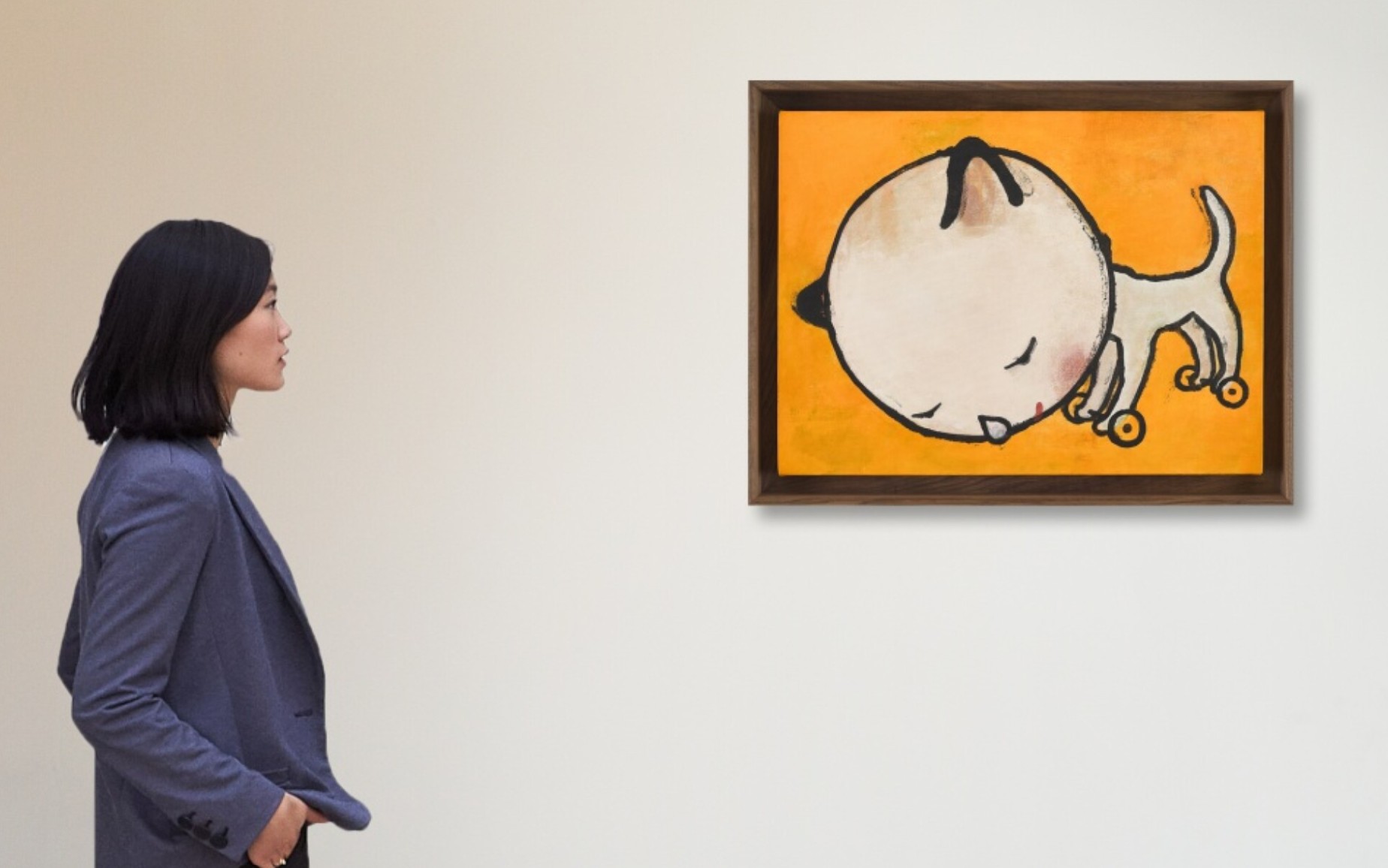
YOSHITOMO NARA (b. 1959)
The Earth Cat, 1992
Acrylic on canvas laid on board
45.7 x 60.4 cm (18 x 23 3/4 inches)
Signed, titled and dated ’92 (on the reverse)
#12. UNTITLED, 2014
Sotheby’s Hong-Kong: 29 September 2025
Estimated: HKD 1,500,000 – 2,000,000
HKD 2,032,000 / USD 261,185
KAWS | UNTITLED 無題 | Modern & Contemporary Day Auction | 2025 | Sotheby’s
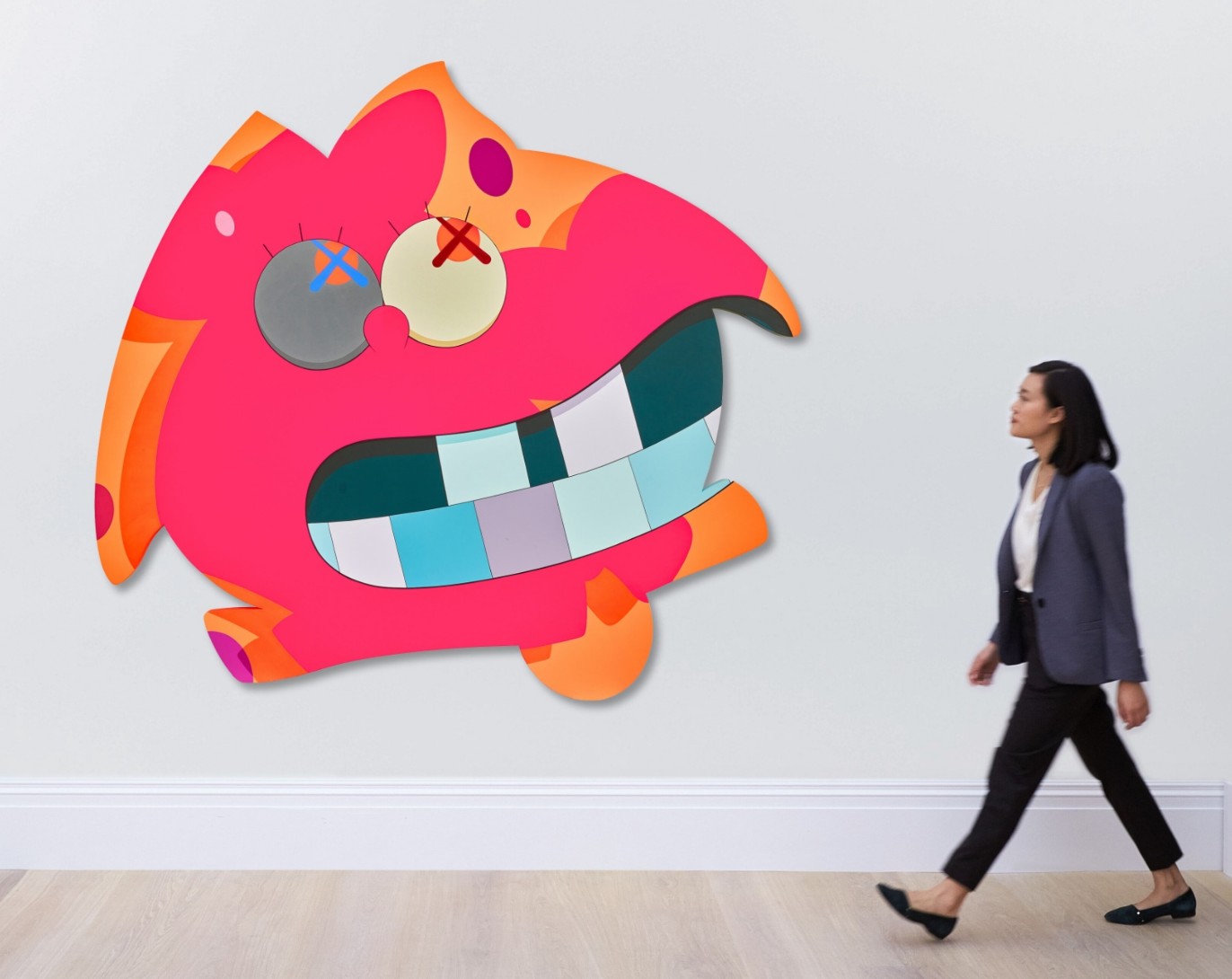
KAWS (b. 1974)
UNTITLED, 2014
Acrylic on canvas
70 3/4 x 82 1/8 inches (179.6 x 208.5 cm)
Signed and dated 14 (on the reverse)
#13. Untitled 95-26, 1995
Sotheby’s Hong-Kong: 29 September 2025
Estimated: HKD 450,000 – 750,000
HKD 2,032,000 / USD 261,185
Yoshitomo Nara 奈良美智 | Untitled 95-26 無題 95-26 | Modern & Contemporary Day Auction | 2025 | Sotheby’s
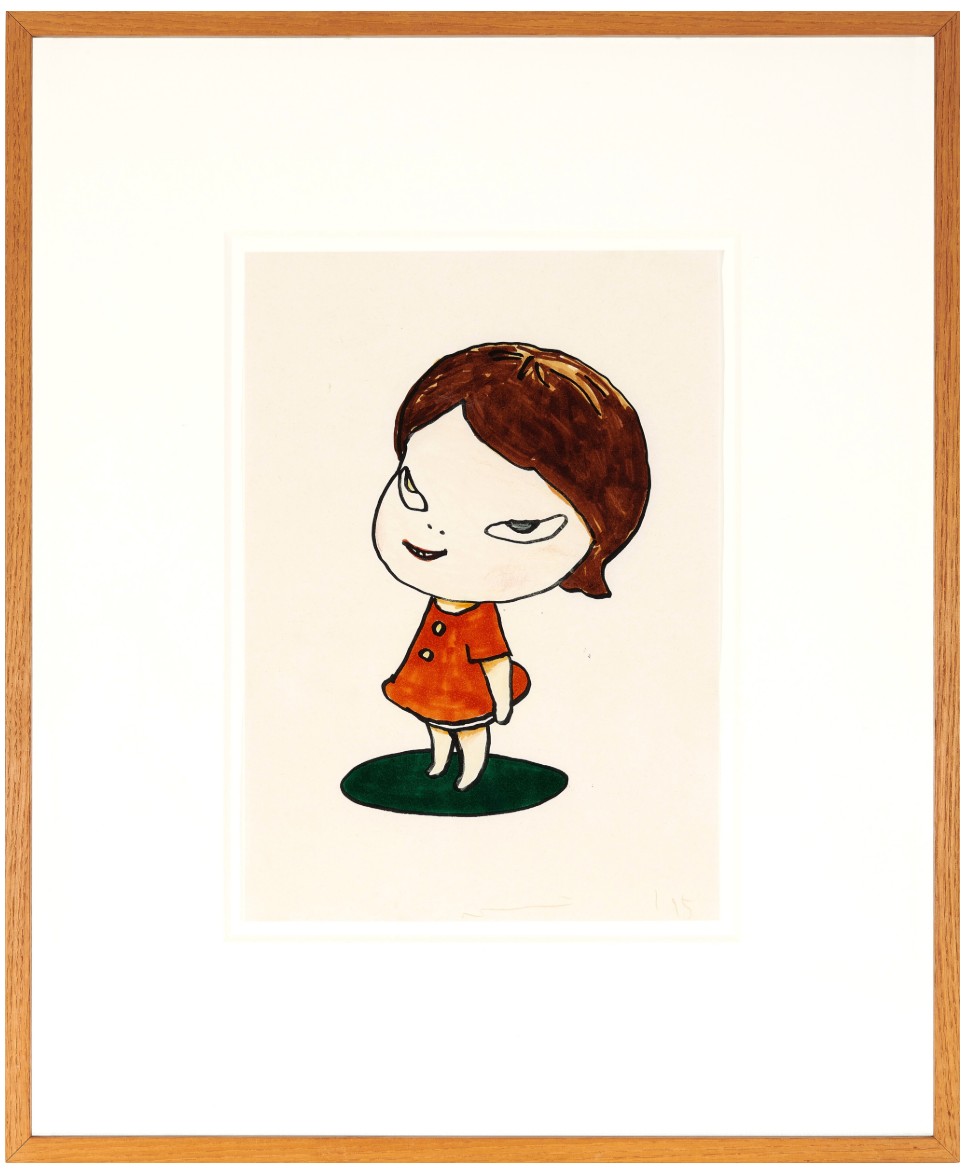
YOSHITOMO NARA (b. 1959)
Untitled 95-26, 1995
Ink on paper
29.4 x 20.8 cm (11 5/8 x 8 1/4 inches)
Signed and dated 95 (lower right)
XXXXXXXXXX
The Bath, 2007
Sotheby’s Hong-Kong: 29 September 2025
Estimated: HKD 1,500,000 – 2,000,000
HKD 1,905,000 / USD 244,860
Adrian Ghenie 亞德里安 · 格尼 | The Bath 洗澡 | Modern & Contemporary Day Auction | 2025 | Sotheby’s
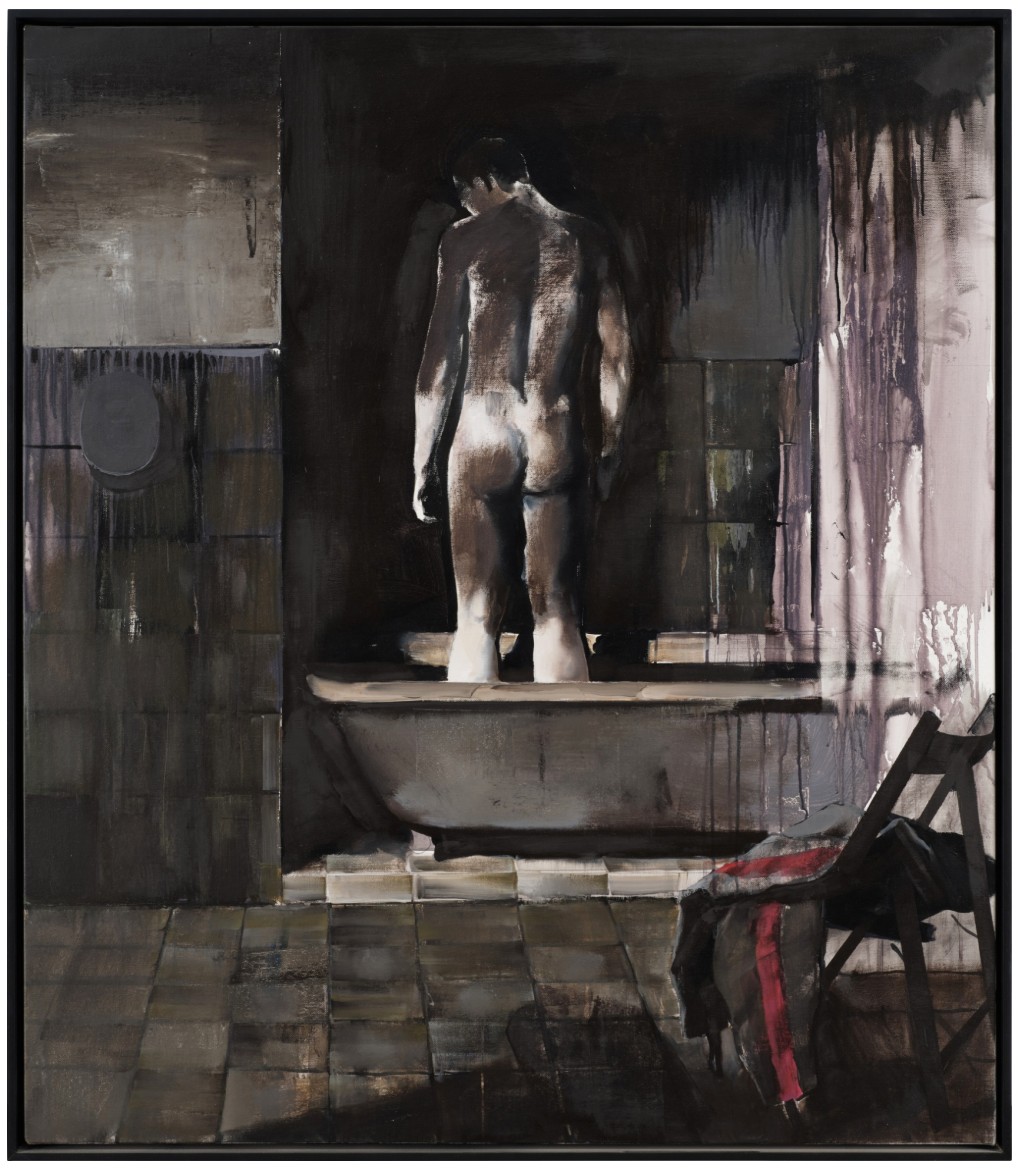
ADRIAN GHENIE (b. 1977)
The Bath, 2007
Acrylic on canvas
120×100 cm (47 1/4 x 39 3/8 inches)
Signed and dated 2007 (on the reverse)
Guitar Player, 2003
Sotheby’s Hong-Kong: 29 September 2025
Estimated: HKD 1,200,000 – 2,200,000
HKD 1,778,000 / USD 228,535
Fernando Botero 費南度・波特羅 | Guitar Player 吉他彈奏者 | Modern & Contemporary Day Auction | 2025 | Sotheby’s
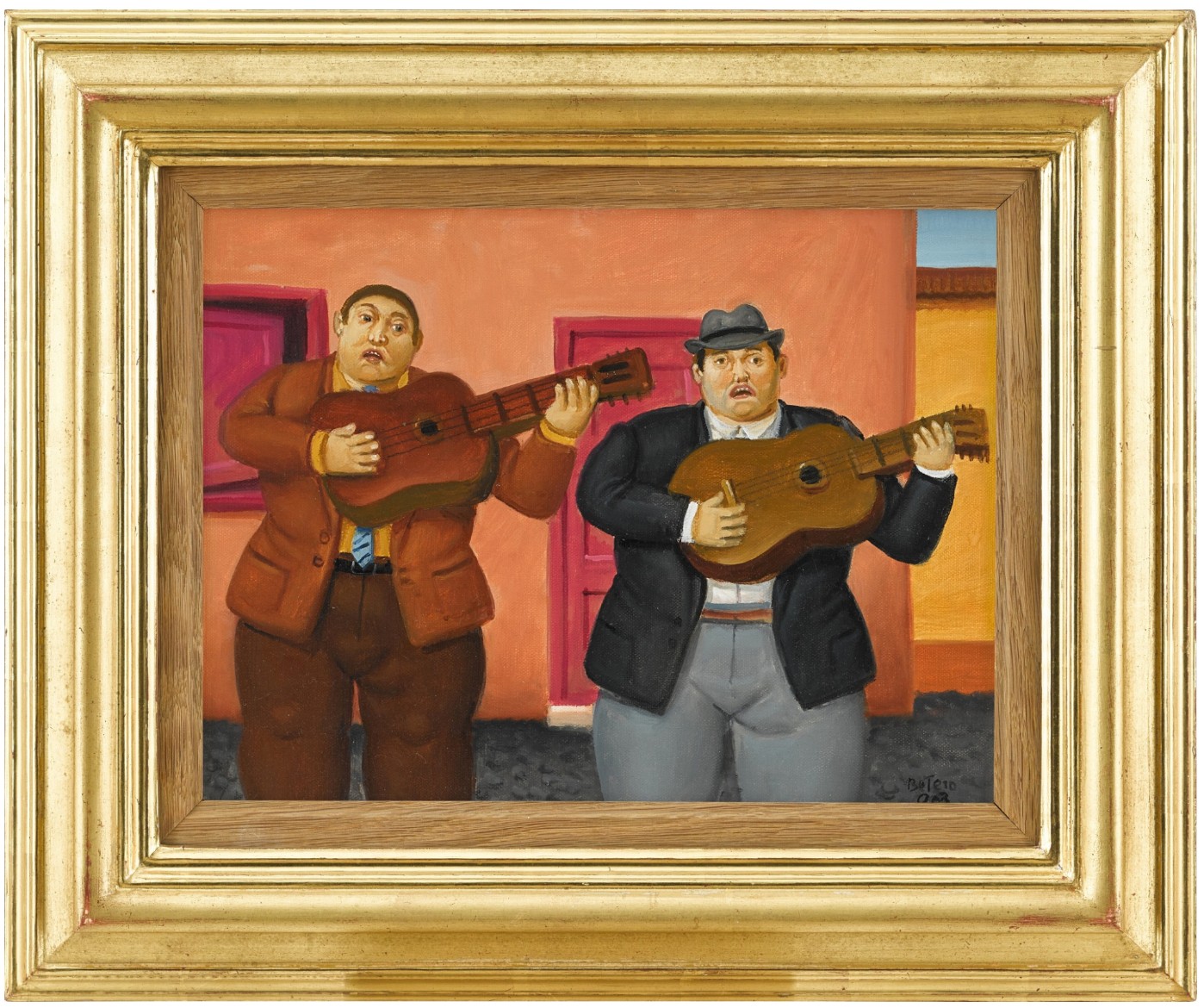
FERNANDO BOTERO (1932 – 2023)
Guitar Player, 2003
Oil on canvas
28.5 x 37.3 cm (11 1/4 x 14 5/8 inches)
Signed Botero and dated 003 (lower right)
The American LOVE (White Blue Red), 1966-2000
Sotheby’s Hong-Kong: 29 September 2025
Estimated: HKD 1,200,000 – 2,000,000
HKD 1,651,000 / USD 212,210
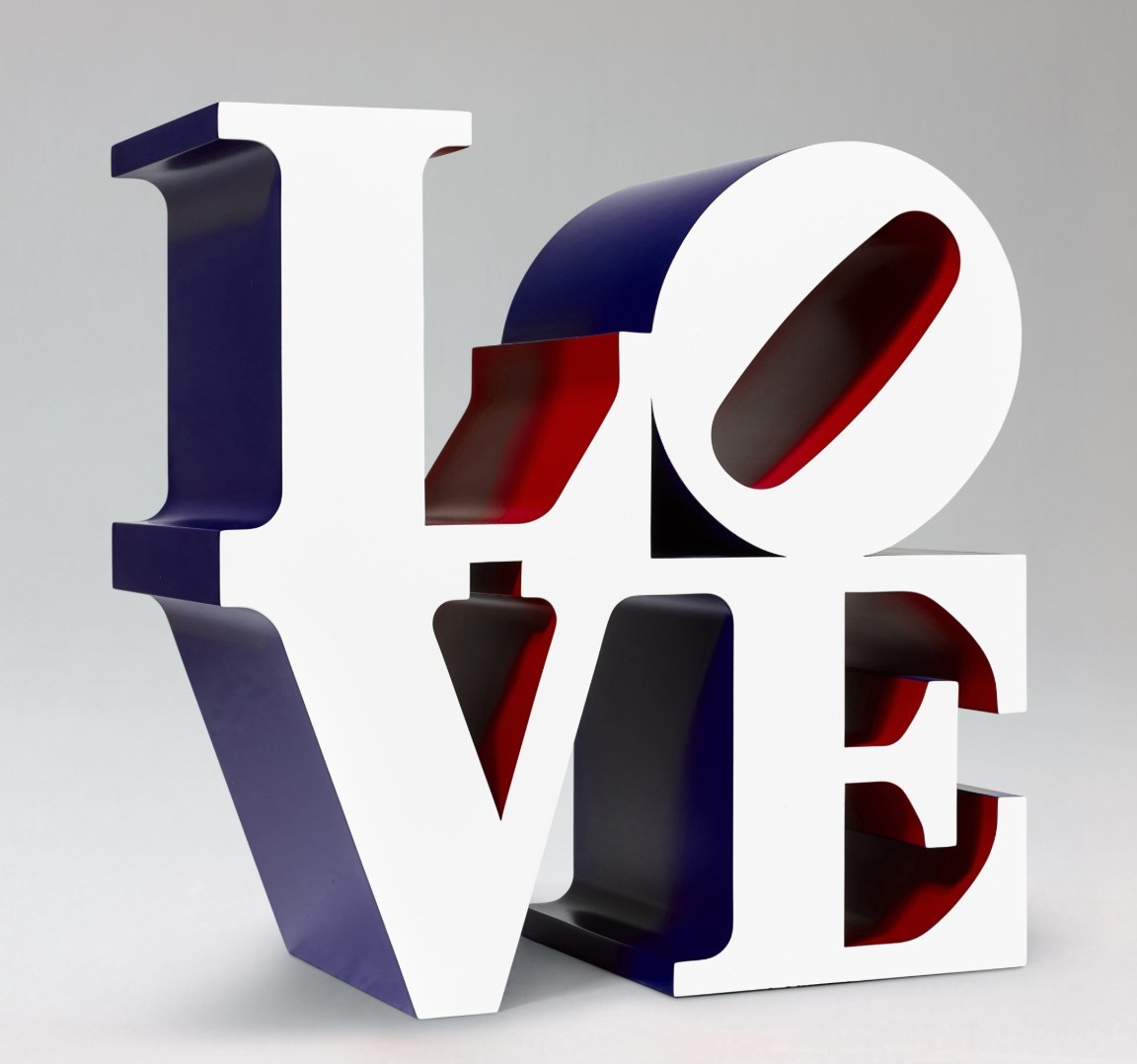
ROBERT INDIANA (1928 – 2018)
The American LOVE (White Blue Red), 1966-2000
Polychromed aluminum
17 7/8 x 17 7/8 x 9 inches (45.5 x 45.5 x 23 cm)
Stamped with the artist’s name, date 1966-2000, number 6/8 and fabricator’s copyright (at the bottom)
This work is number 6 from an edition of 8 plus 4 artist’s proofs
Tokyo, The Way We Were, 2013
Sotheby’s Hong-Kong: 29 September 2025
Estimated: HKD 1,400,000 – 2,400,000
HKD 1,206,500 / USD 155,075
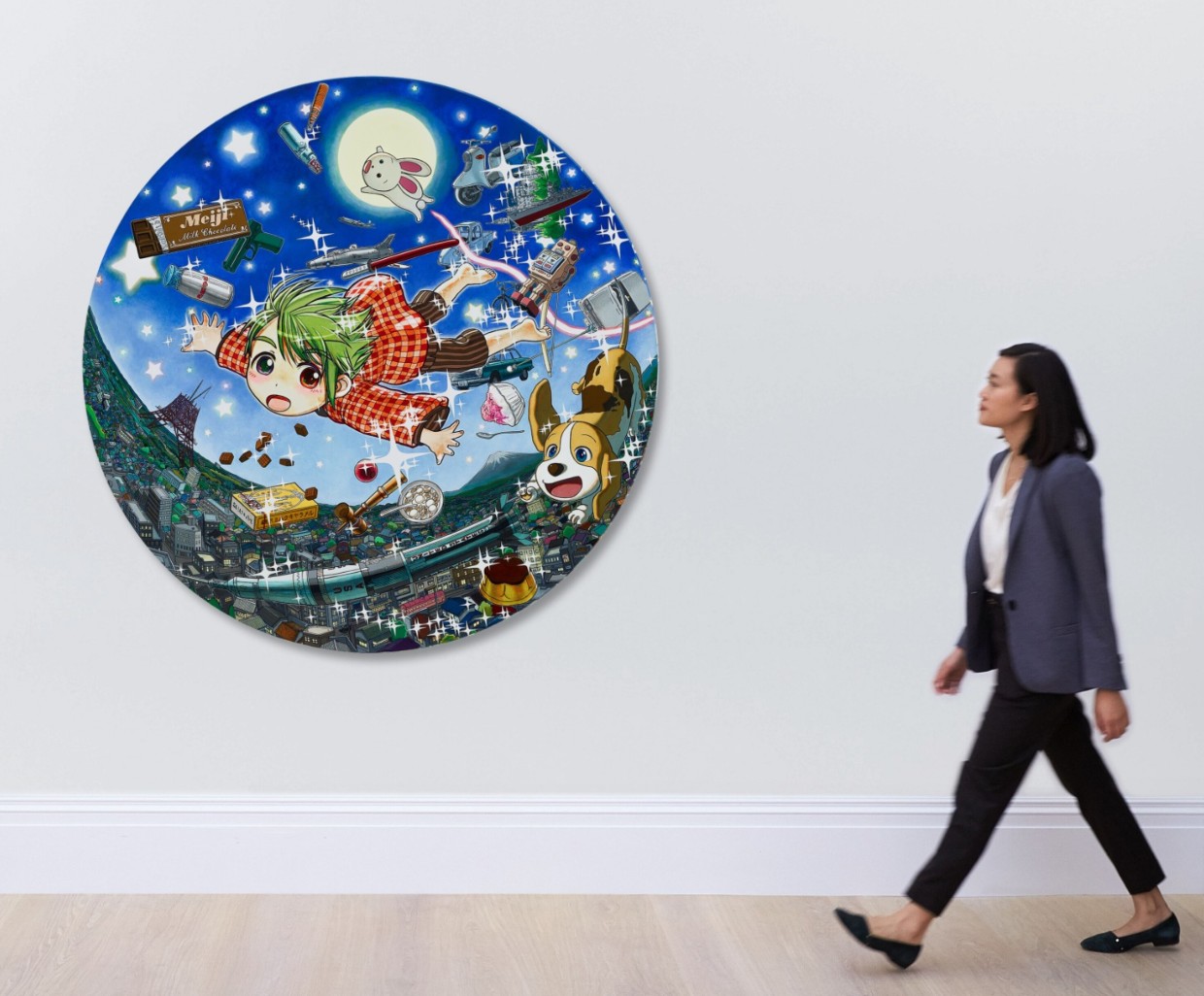
MR. (b. 1969)
Tokyo, The Way We Were, 2013
Acrylic on canvas
Diameter: 150 cm (59 inches)
Signed and dated 2013 (on the reverse)
© 2013 Mr./Kaikai Kiki Co., Ltd. All Rights Reserved.
Inside It Opens Up as Well, 2018
Sotheby’s Hong-Kong: 29 September 2025
Estimated: HKD 400,000 – 600,000
HKD 609,600 / USD 78,355
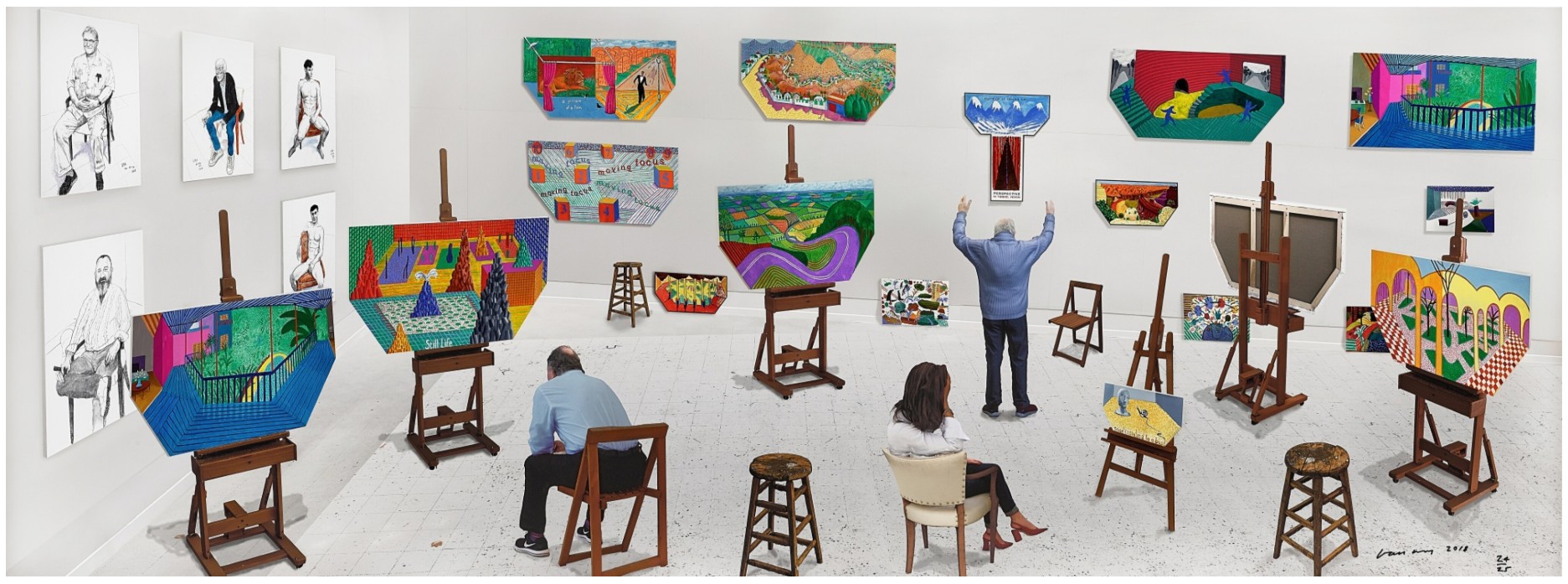
DAVID HOCKNEY (b. 1937)
Inside It Opens Up as Well, 2018
Photographic drawing printed on paper
60.2 x 167 cm (23 3/4 x 65 3/4 inches)
Signed, dated 2018 and numbered 24/25 (lower right)
Radiant, Apple, Space, 2013
Sotheby’s Hong-Kong: 29 September 2025
Estimated: HKD 250,000 – 350,000
HKD 457,200 / USD 58,765
Invader | Radiant, Apple, Space 光芒四射,蘋果,宇宙 | Modern & Contemporary Day Auction | 2025 | Sotheby’s
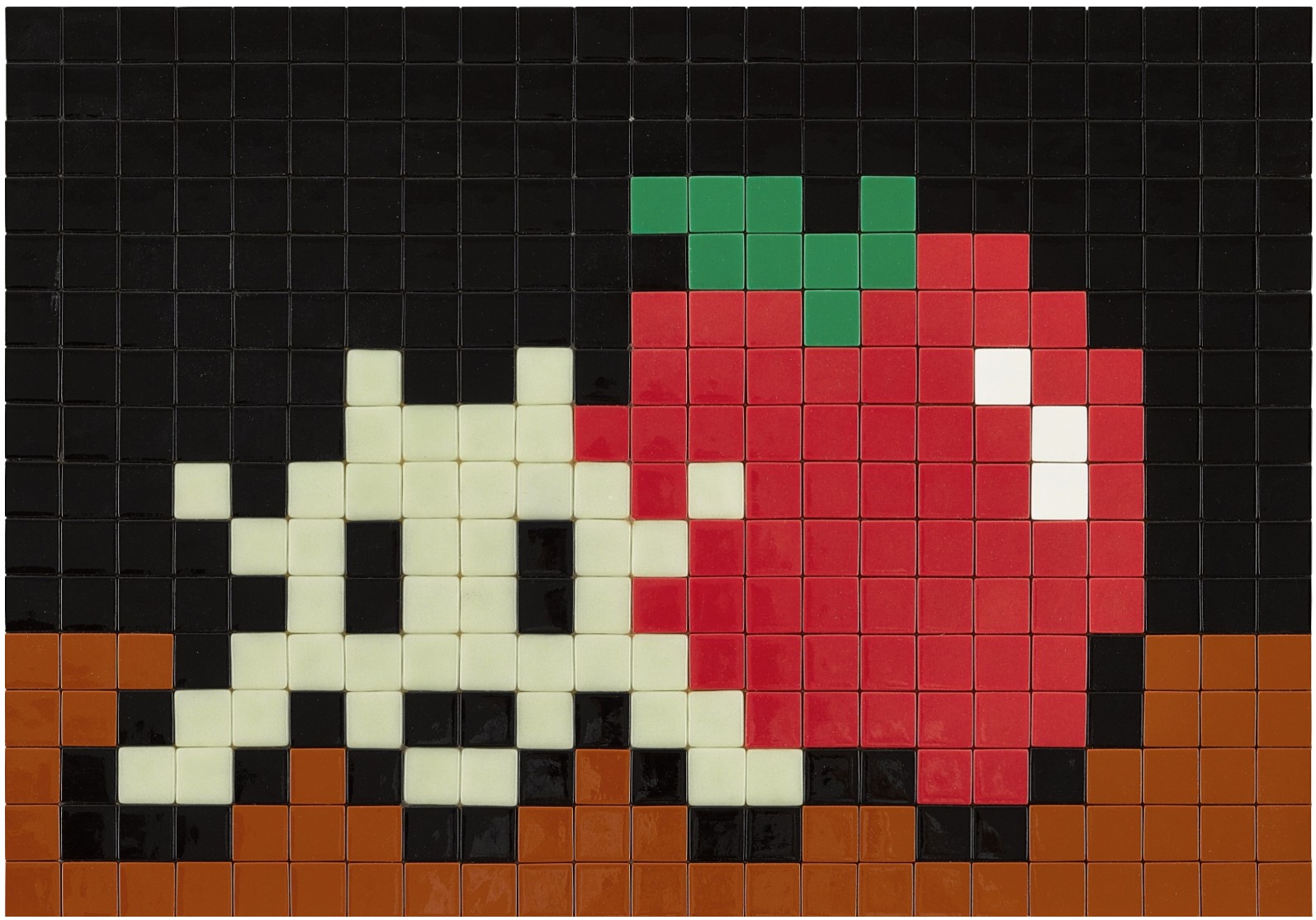
INVADER (b. 1969)
Radiant, Apple, Space, 2013
Mosaic tile
38 x 54.5 cm (15 x 21 1/2 inches)
Signed, titled and dated 2013 (on the reverse)
Untitled, 2016
Sotheby’s Hong-Kong: 29 September 2025
Estimated: HKD 250,000 – 350,000
HKD 190,500 / USD 24,485
Avery Singer 艾芙瑞 · 辛格 | Untitled 無題 | Modern & Contemporary Day Auction | 2025 | Sotheby’s
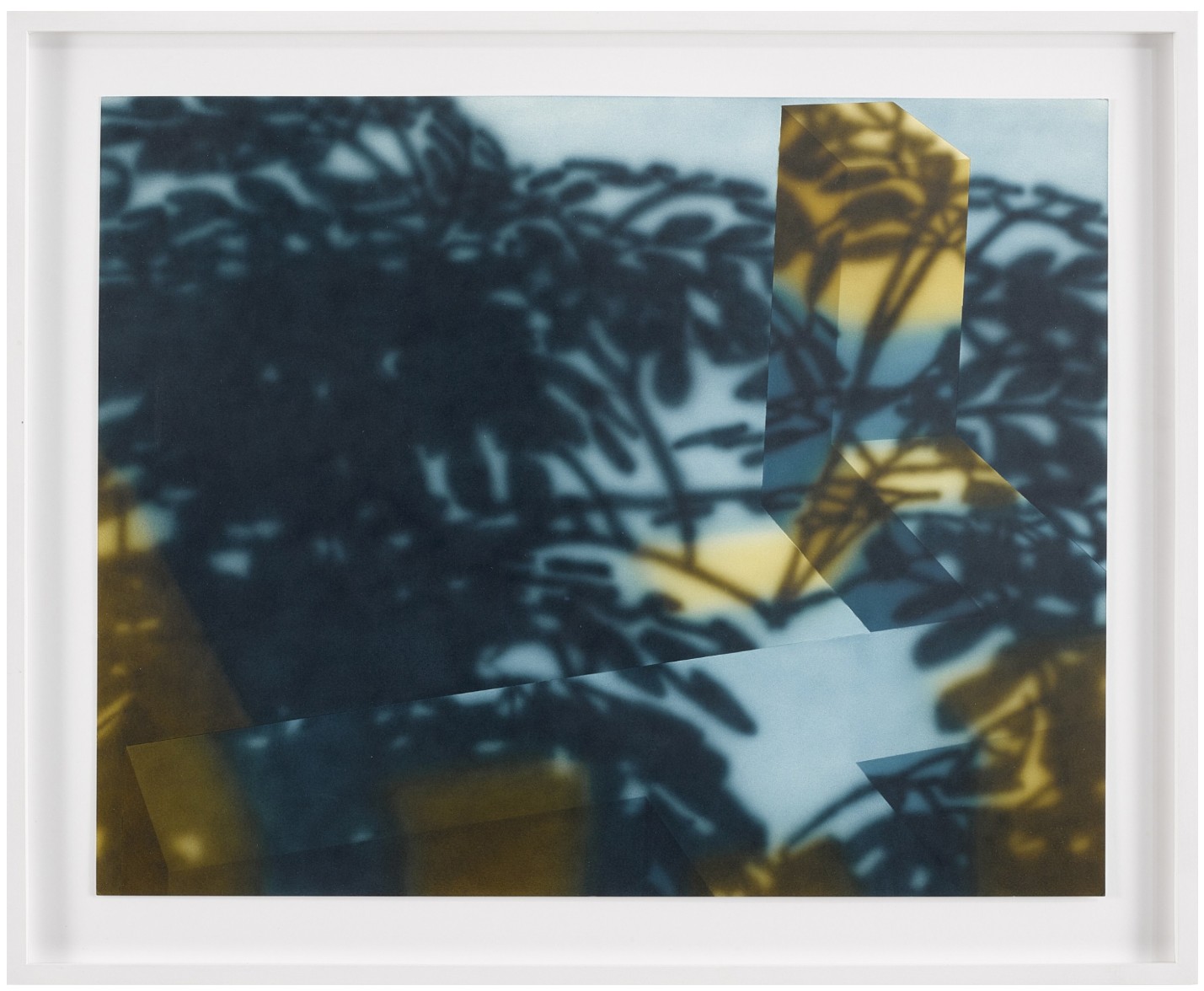
AVERY SINGER (b. 1987)
Untitled, 2016
Acrylic on paper
19×24 inches (48.2 x 61 cm)
Signed and dated 2016 (on the reverse)

Modern and Contemporary Art Evening Sale
27 September 2025
Modern & Contemporary Art Evening Sale Saturday, September 27, 2025
TOTAL
HKD 159,961,800 / USD 20,560,645
# Lots
Total: 20 Lots
[Withdrawn: 5 Lots]
Passed: 0 Lot
Sold: 20 Lots
Sell-Through Rate: 100%
TOP LOT
HKD 56,645,000 / USD 7,280,850
35.4% of Total
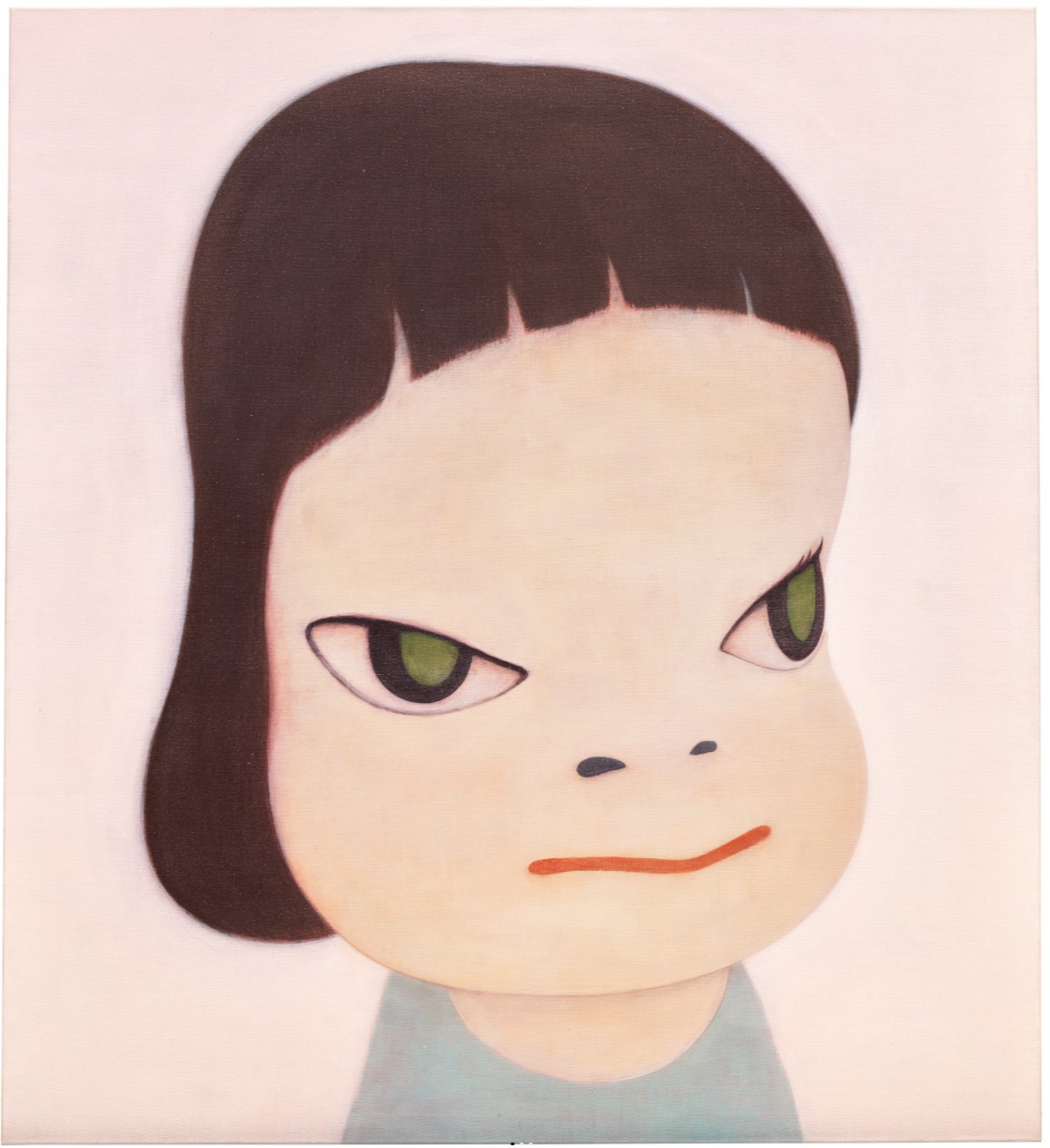
#1. Pinky, 2000
Phillips Hong-Kong: 27 September 2025
Estimated: HKD 35,000,000 – 55,000,000
HKD 56,645,000 / USD 7,280,850
Yoshitomo Nara Modern & Contemporary Art Evening Sale
#2. 27.01.86, 1986
Estimated: HKD 30,000,000 – 40,000,000
HKD 29,805,000 / USD 3,830,975
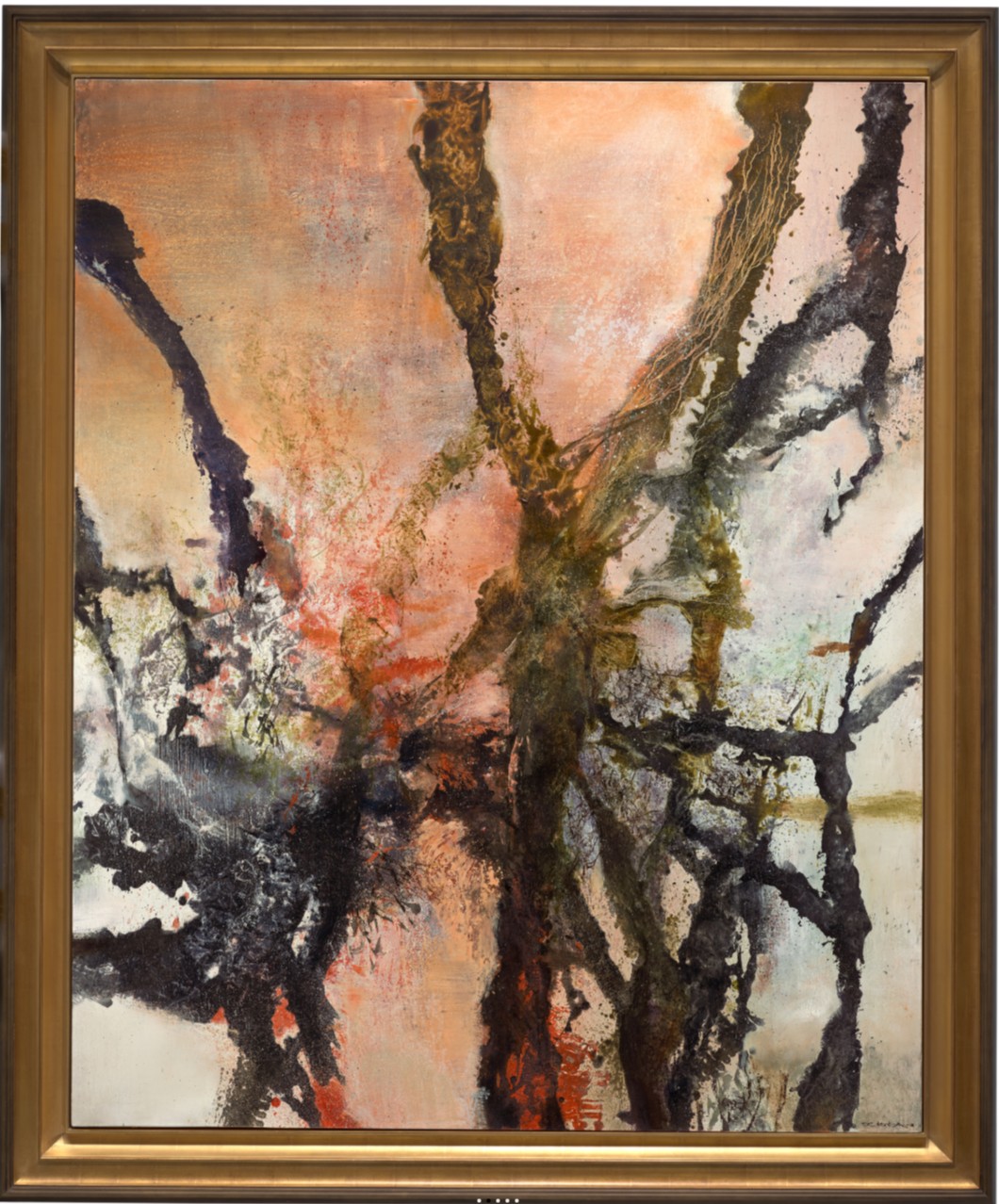
Further signed, titled and dated ‘ZAO WOU-KI “27.1.86.”‘ on the reverse
#3. Smoker #17, 1975
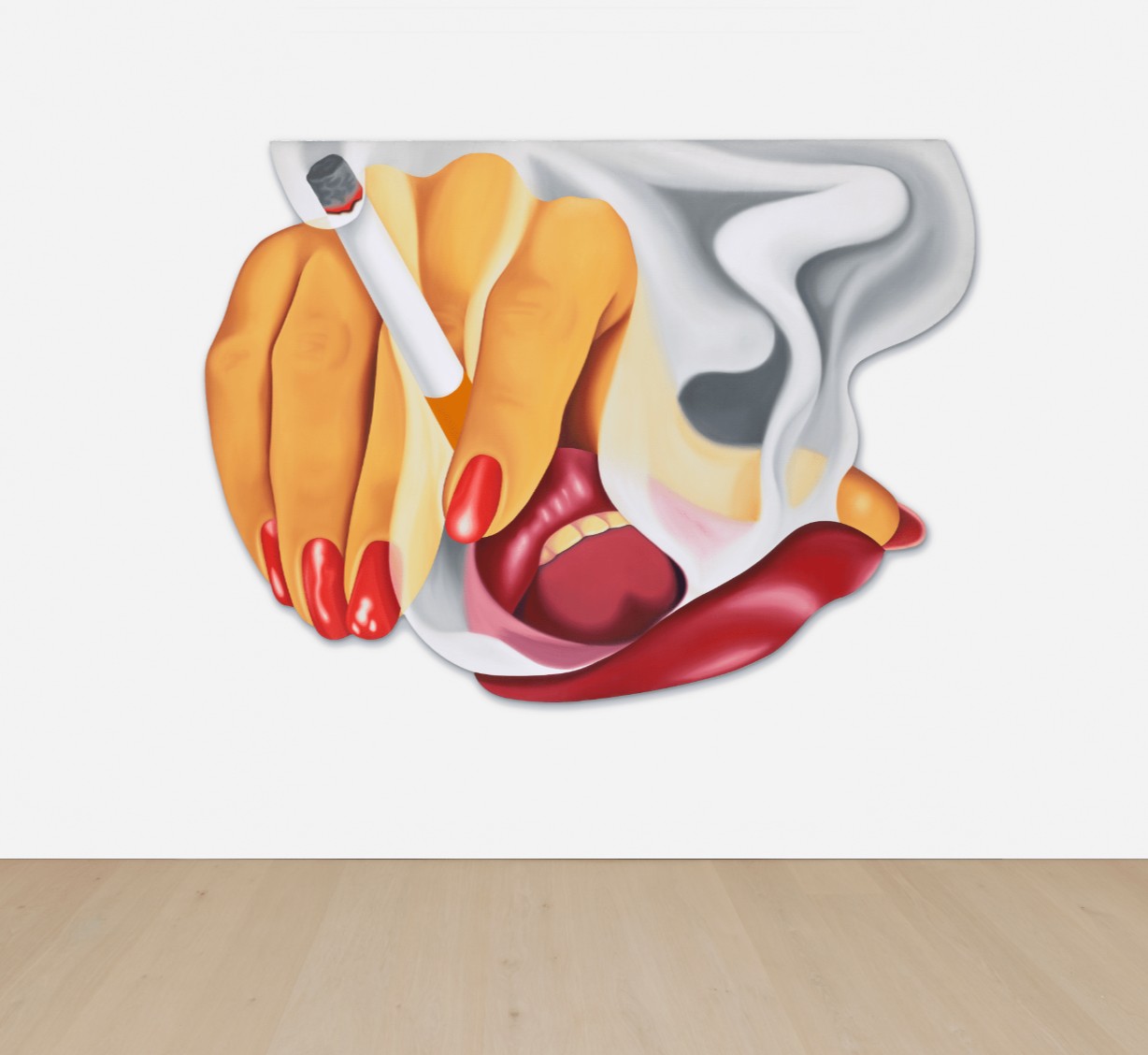
Estimated: HKD 13,000,000 – 20,000,000
HKD 13,945,000 / USD 1,792,415
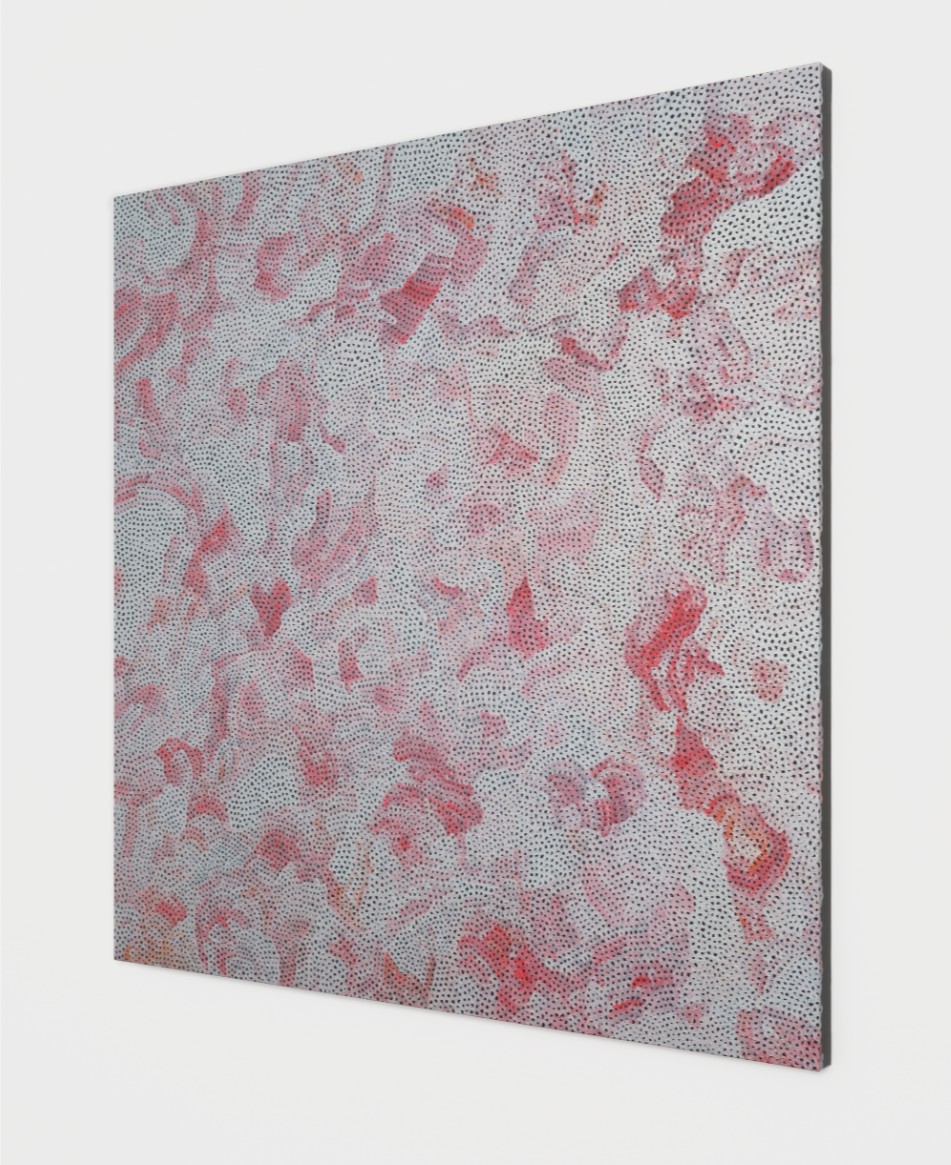
#4. INFINITY-NETS (SFOOUY), 2017
Estimated: HKD 10,000,000 – 15,000,000
HKD 12,725,000 / USD 1,635,605
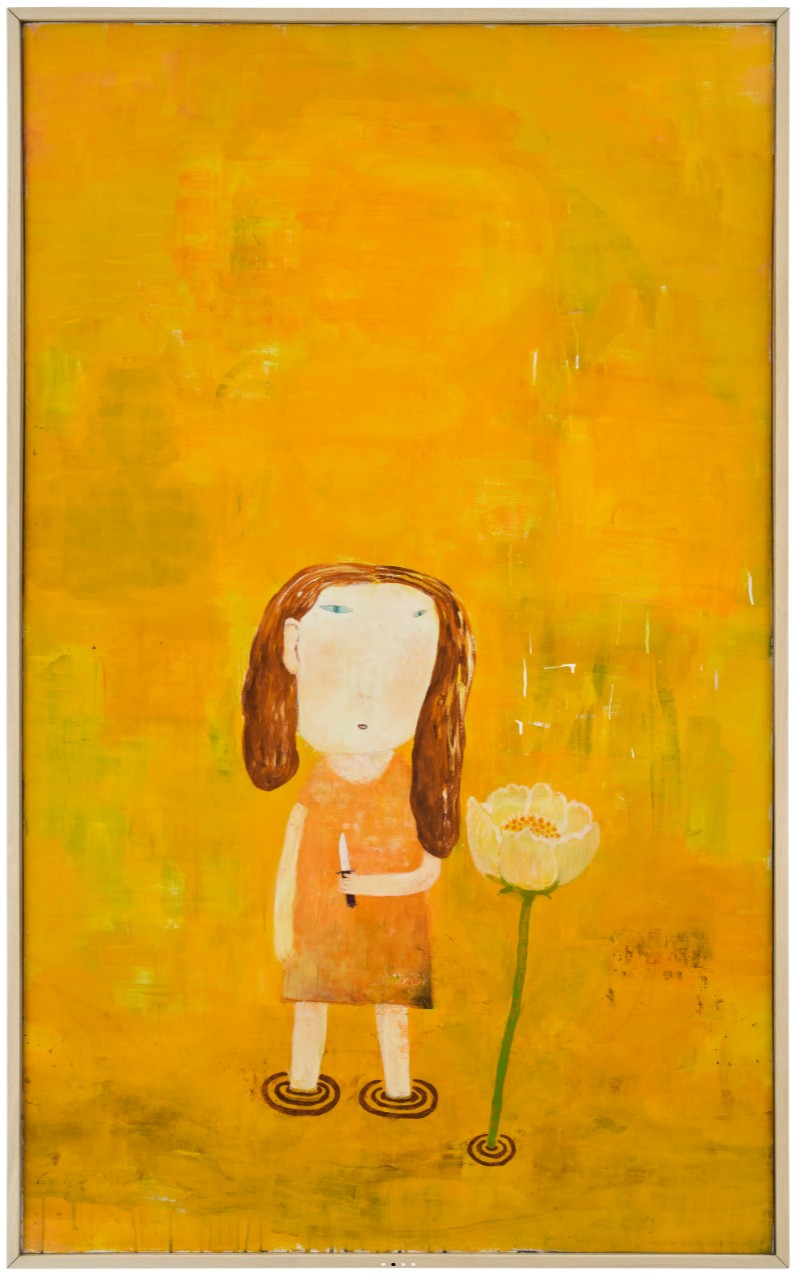
#5. Untitled, 1990
Estimated: HKD 10,000,000 – 15,000,000
HKD 11,505,000 / USD 1,478,790
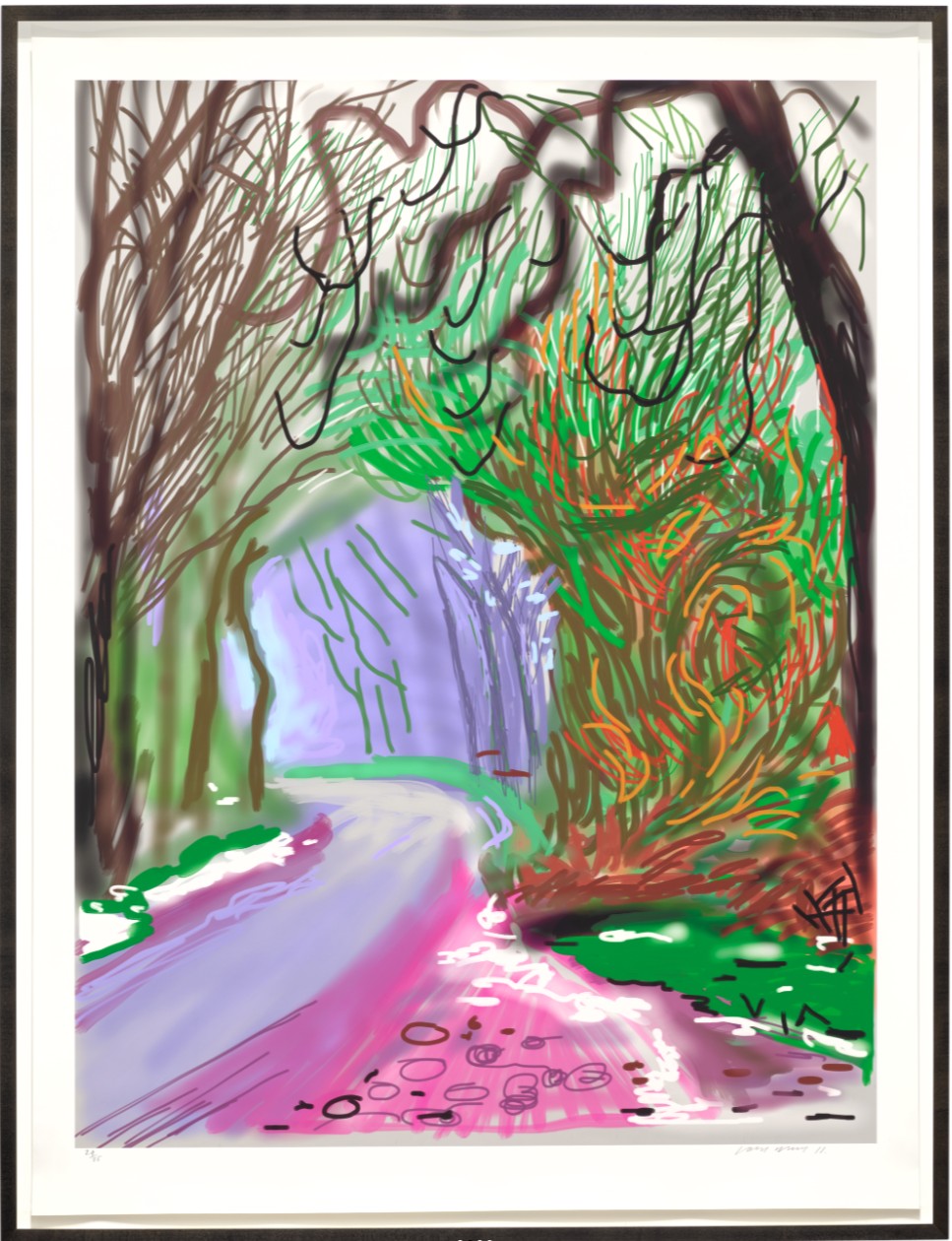
The Arrival of Spring in Woldgate – 1 January, 2011
Phillips Hong-Kong: 27 September 2025
Estimated: HKD 800,000 – 1,200,000
HKD 1,290,000 / USD 165,810
David Hockney Modern & Contemporary Art Evening Sale
Six Works, 2017
Phillips Hong-Kong: 27 September 2025
Estimated: HKD 1,200,000 – 2,200,000
HKD 387,000 / USD 49,745
Javier Calleja Modern & Contemporary Art Evening Sale
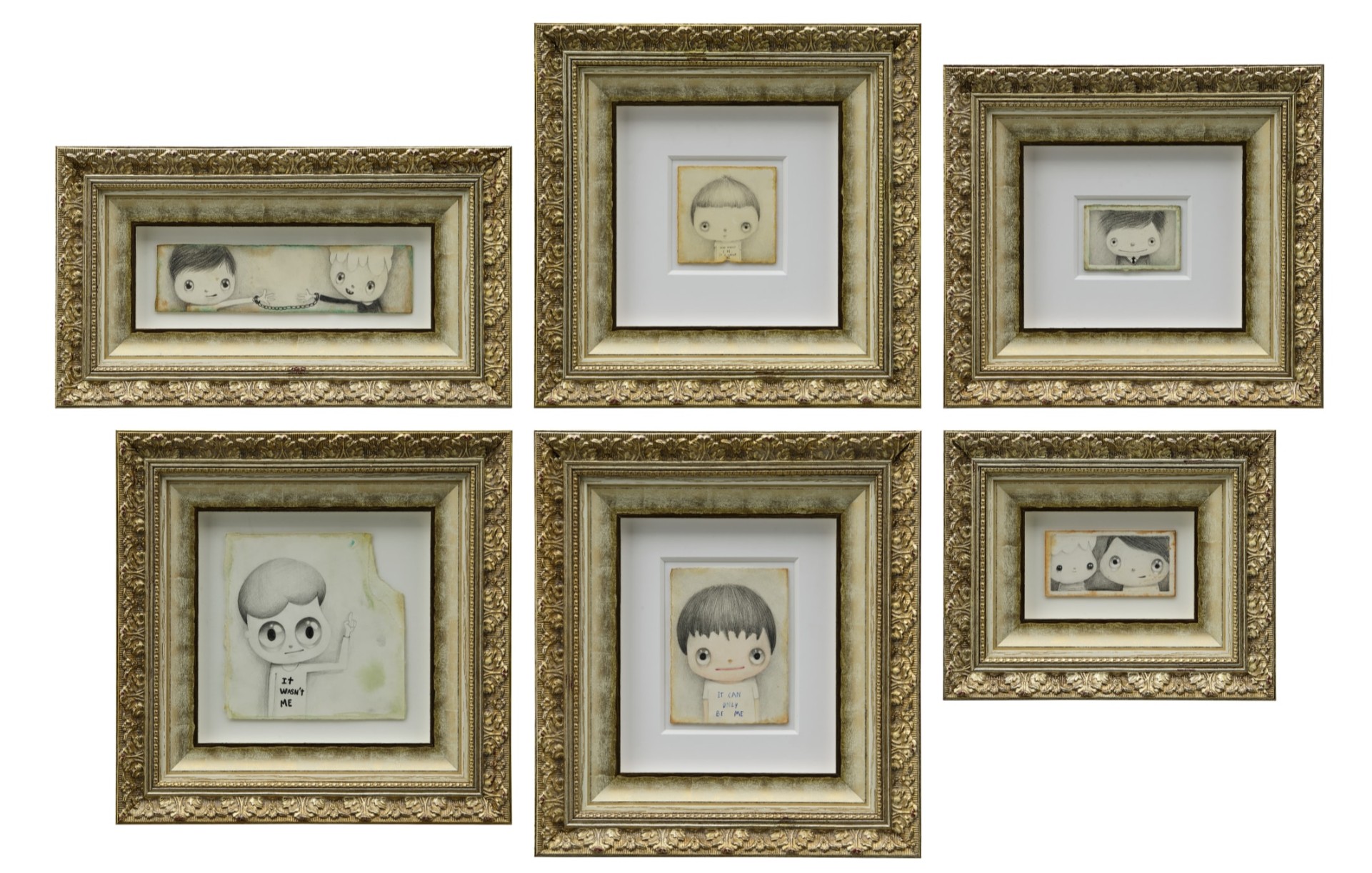
5×20 cm (1 7/8 x 7 7/8 inches)
(ii) It Wasn’t Me (#40)
7 x 7.5 cm (2 3/4 x 2 7/8 inches)
(iii) Bound (#33)
5 x 7.5 cm (1 7/8 x 2 7/8 inches)
(iv) Untitled
13 x 13.5 cm (5 1/8 x 5 3/8 inches)
(v) Who Would I Be, If I Could Be
11 x 7.5 cm (4 3/8 x 2 7/8 inches)
(vi) It Can Only Be Me
Lots Withdrawn
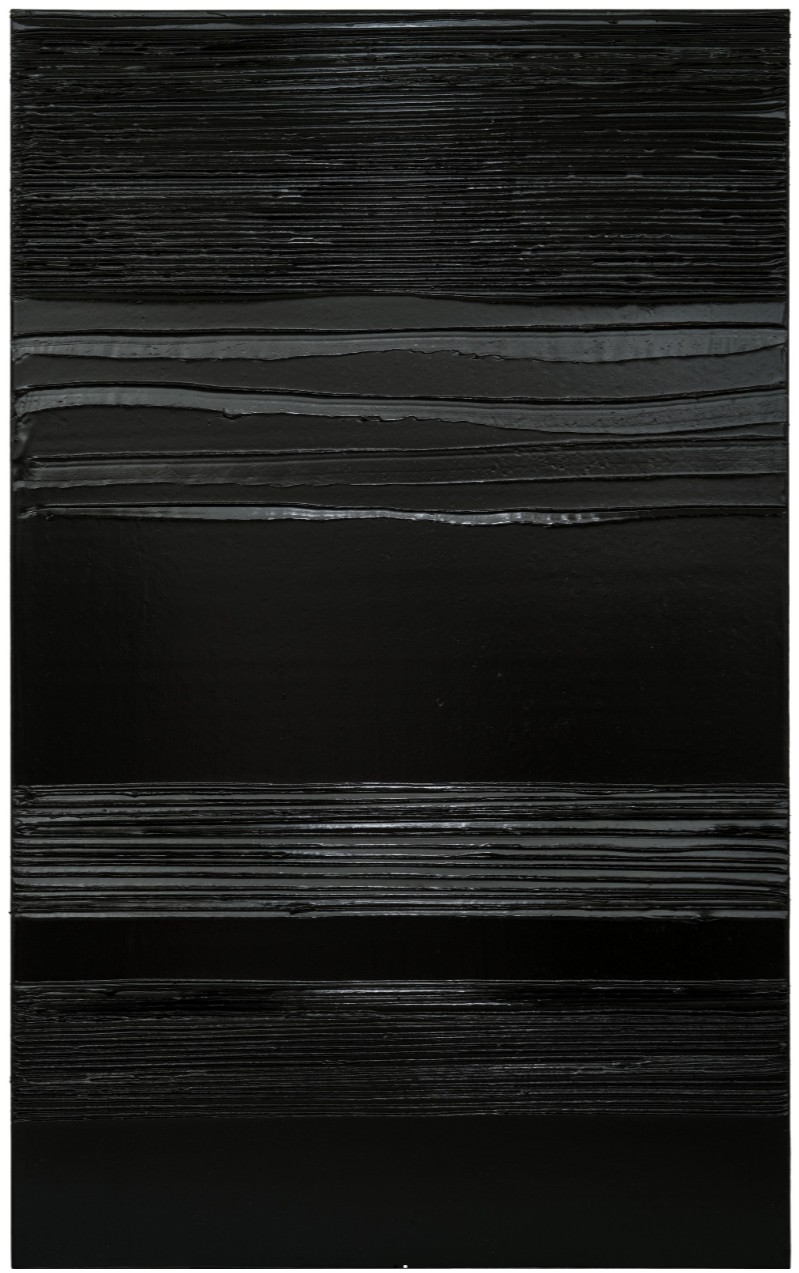
Peinture 222 x 137 cm, 14 mai 2015, 2015
Estimated: HKD 7,800,000 – 11,000,000
WITHDRAWN
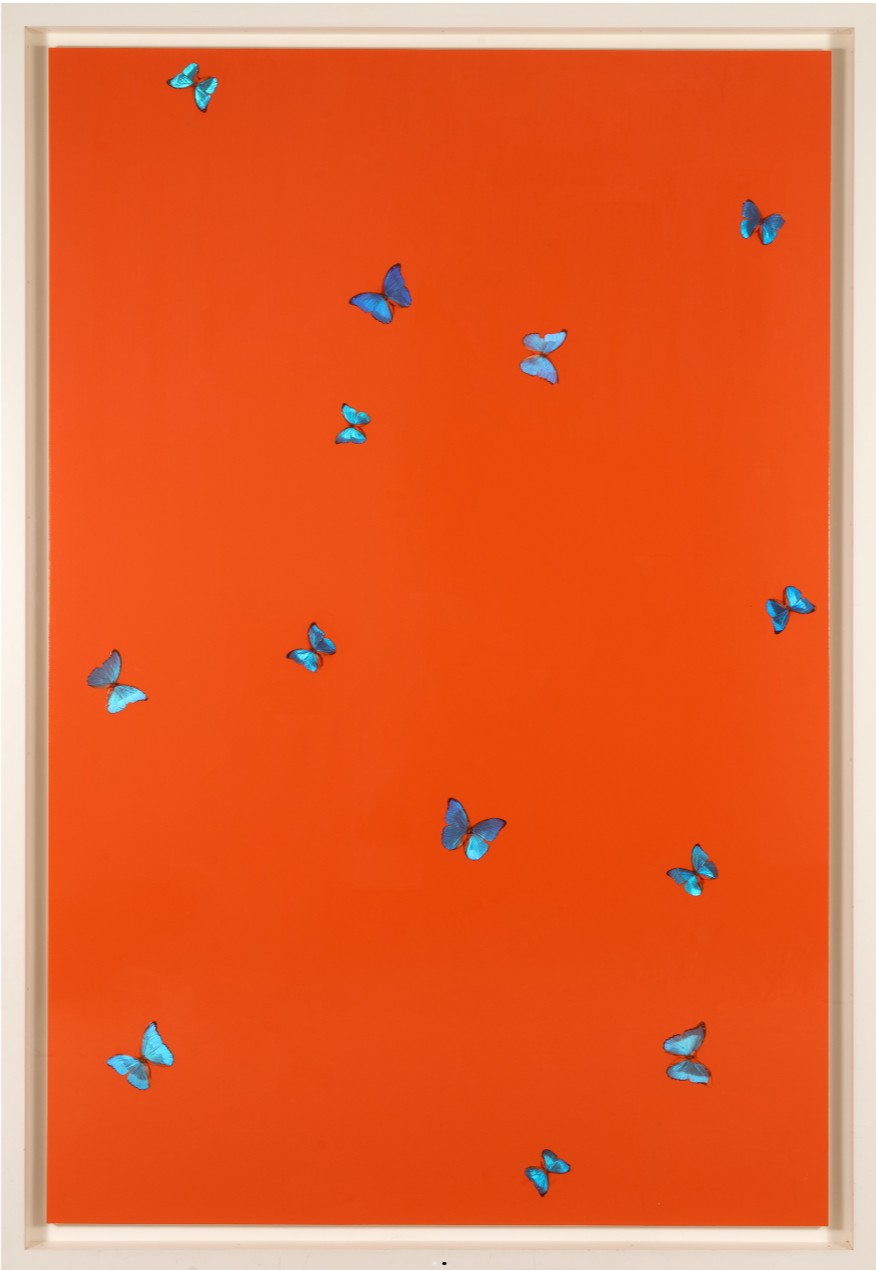
Tulips – And I am Aware of my Heart It Opens and Closes, 2006
Estimated: HKD 2,000,000 – 3,000,000
WITHDRAWN
Untitled, 2020-2021
Estimated: HKD 1,200,000 – 2,200,000
WITHDRAWN
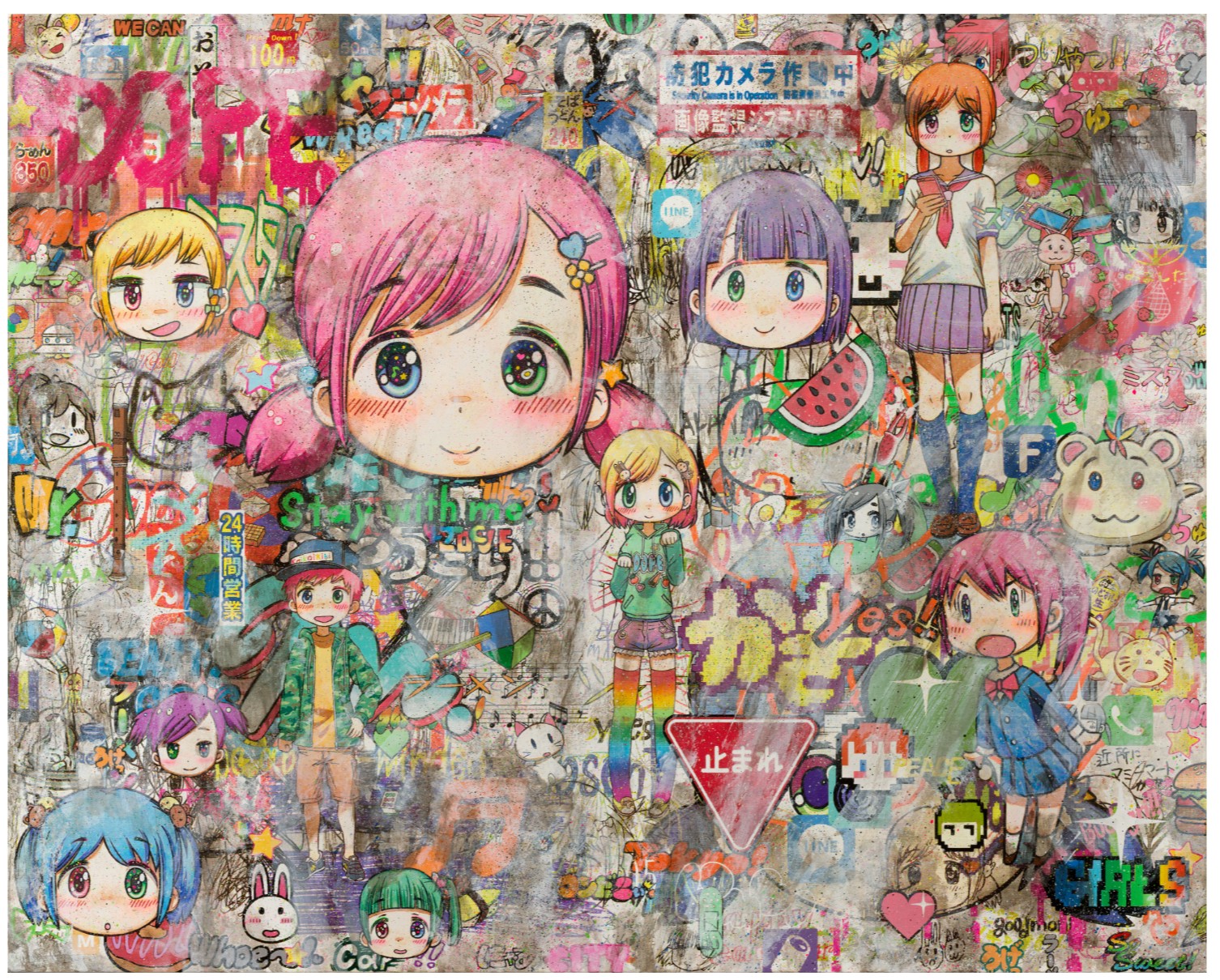
Untitled, 2020-2021
Estimated: HKD 1,200,000 – 2,200,000
WITHDRAWN
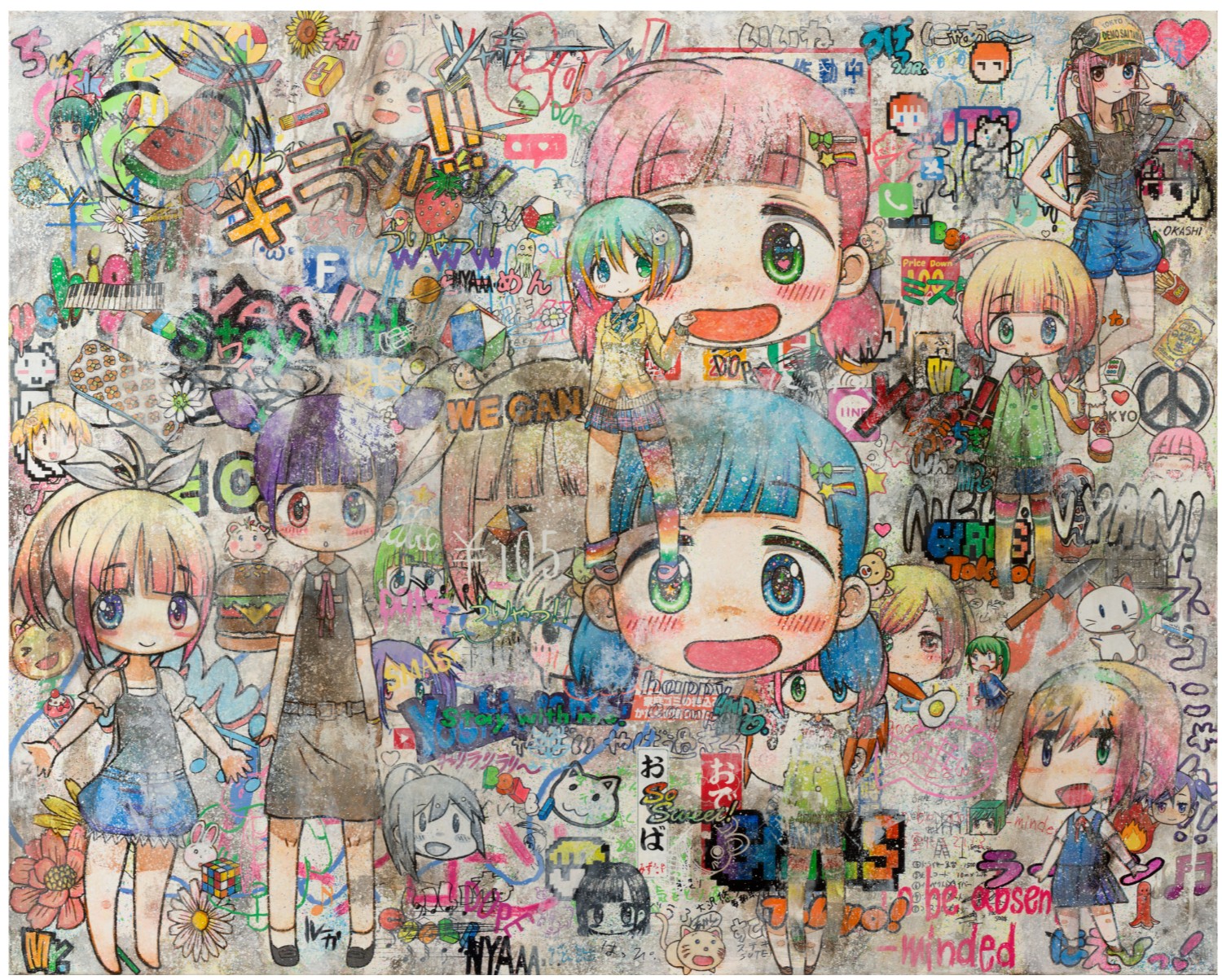
Acrylic on canvas
80×100 cm (31 1/2 x 39 3/8 inches)
Signed and dated ‘mr. 2020’ on the overlap
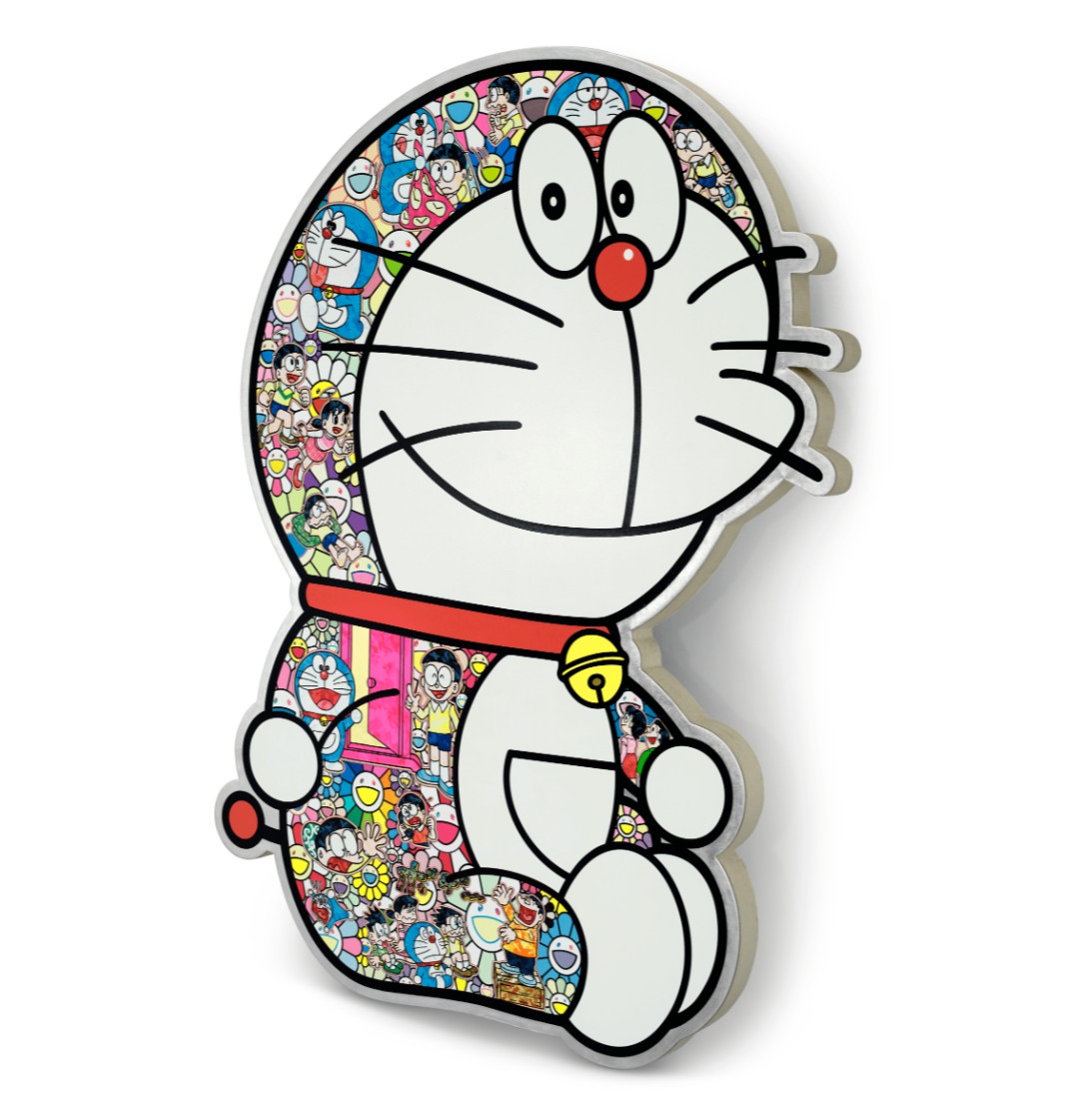
Doraemon Sitting Up: Everywhere Door (Dokodemo Door), 2018
Phillips Hong-Kong: 27 September 2025
Estimated: HKD 1,500,000 – 2,000,000
WITHDRAWN
Takashi Murakami Modern & Contemporary Art Evening Sale
Modern and Contemporary Art Day Sale
28 September 2025
Modern & Contemporary Art Day Sale Sunday, September 28, 2025
I stare into your eye, 2020
Phillips Hong-Kong: 28 September 2025
Estimated: HKD 3,500,000 – 5,500,000
Takashi Murakami Modern & Contemporary Art Day Sale

Visionary Wave Crest, 1978
Phillips Hong-Kong: 28 September 2025
Estimated: HKD 1,500,000 – 2,500,000
Yayoi Kusama Modern & Contemporary Art Day Sale
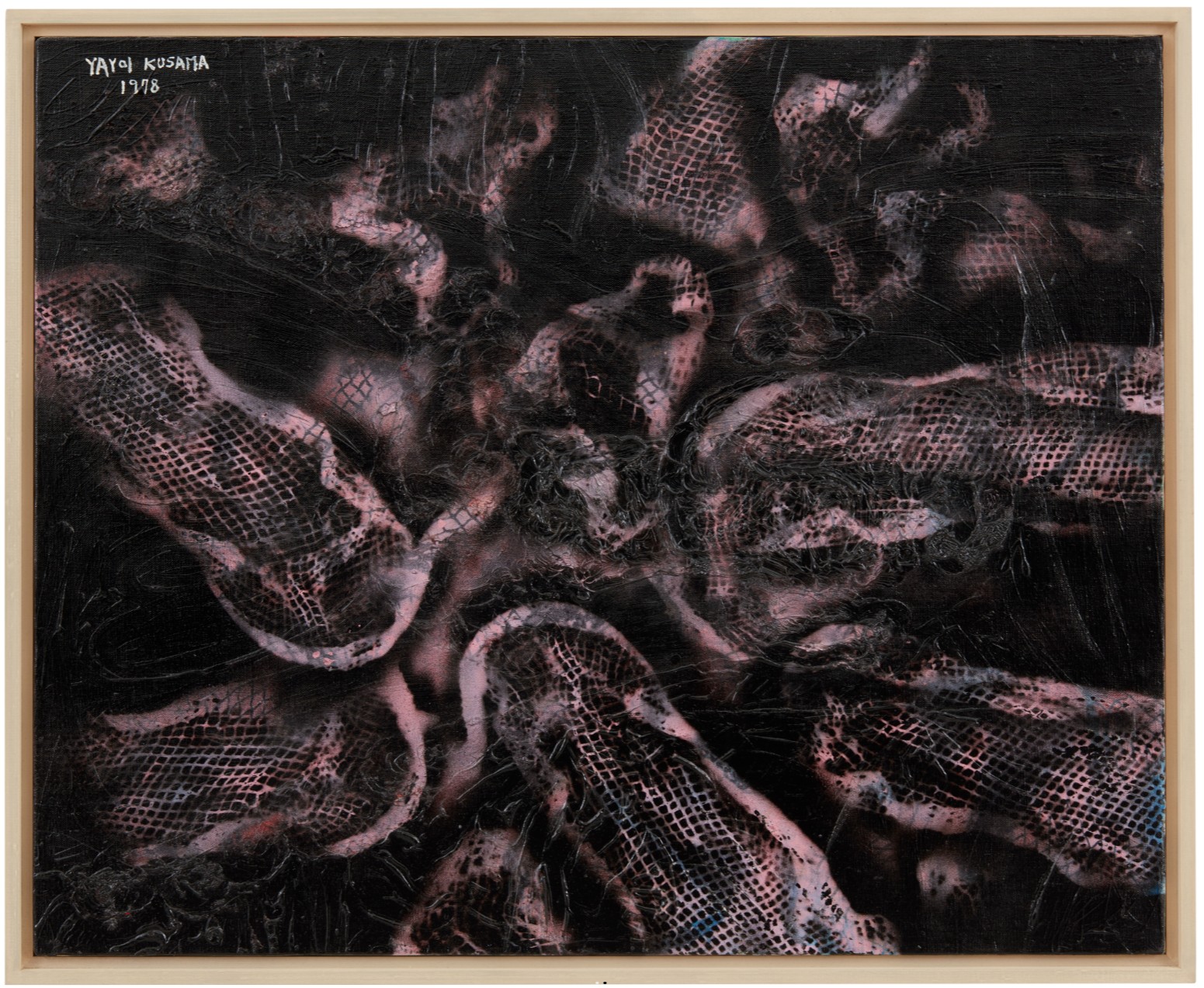
Further signed, titled and dated
‘YAYOI KUSAMA [in English and Kanji] “maboroshi no hatou” [in Japanese] 1978’
On the reverse
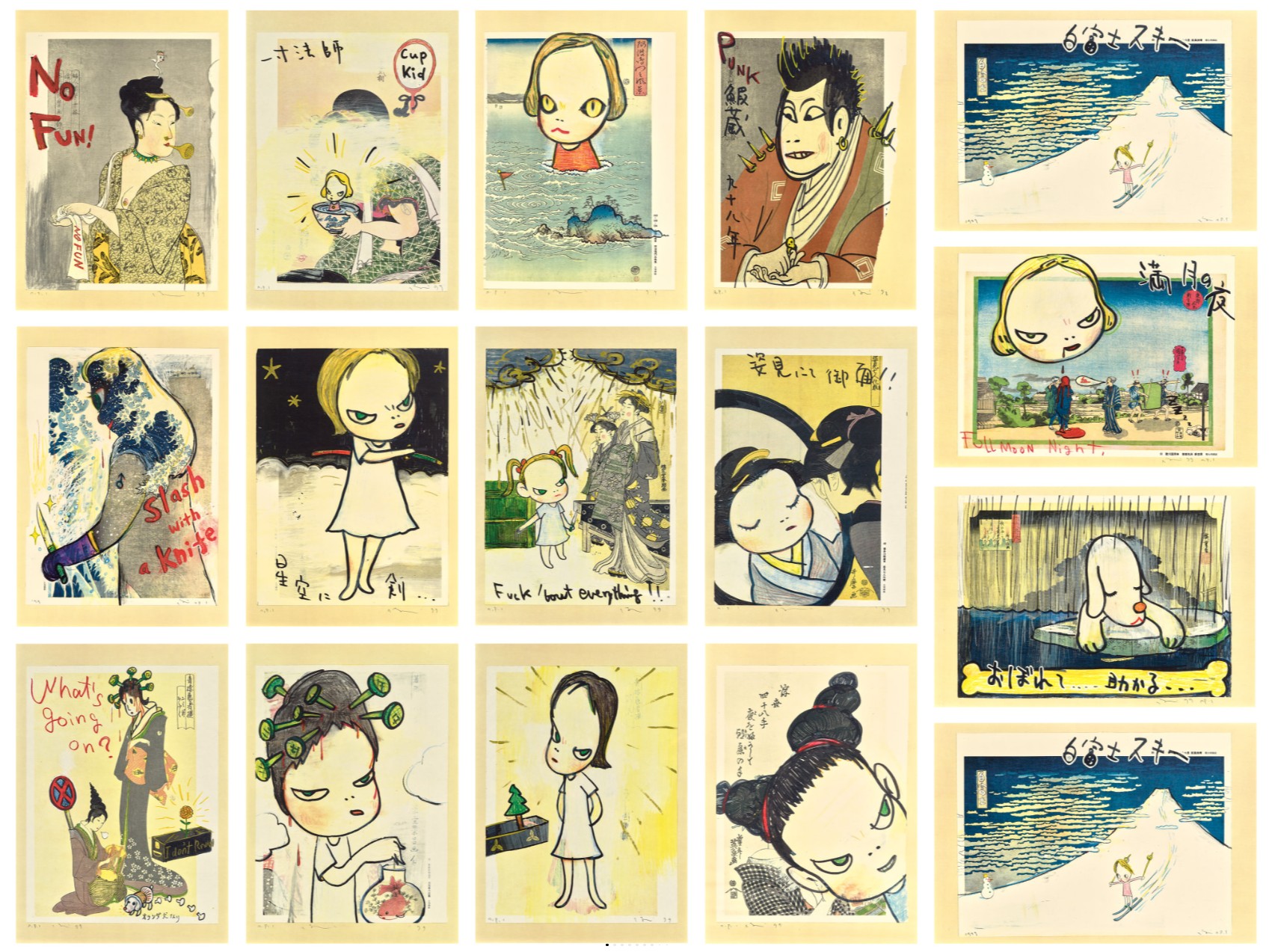
In the Floating World (set of 16), 1999
Phillips Hong-Kong: 28 September 2025
Estimated: HKD 1,200,000 – 2,200,000
Yoshitomo Nara Modern & Contemporary Art Day Sale
Kleine Taucherin auf der Wolke, 1996
Phillips Hong-Kong: 28 September 2025
Estimated: HKD 1,000,000 – 2,000,000
Yoshitomo Nara Modern & Contemporary Art Day Sale
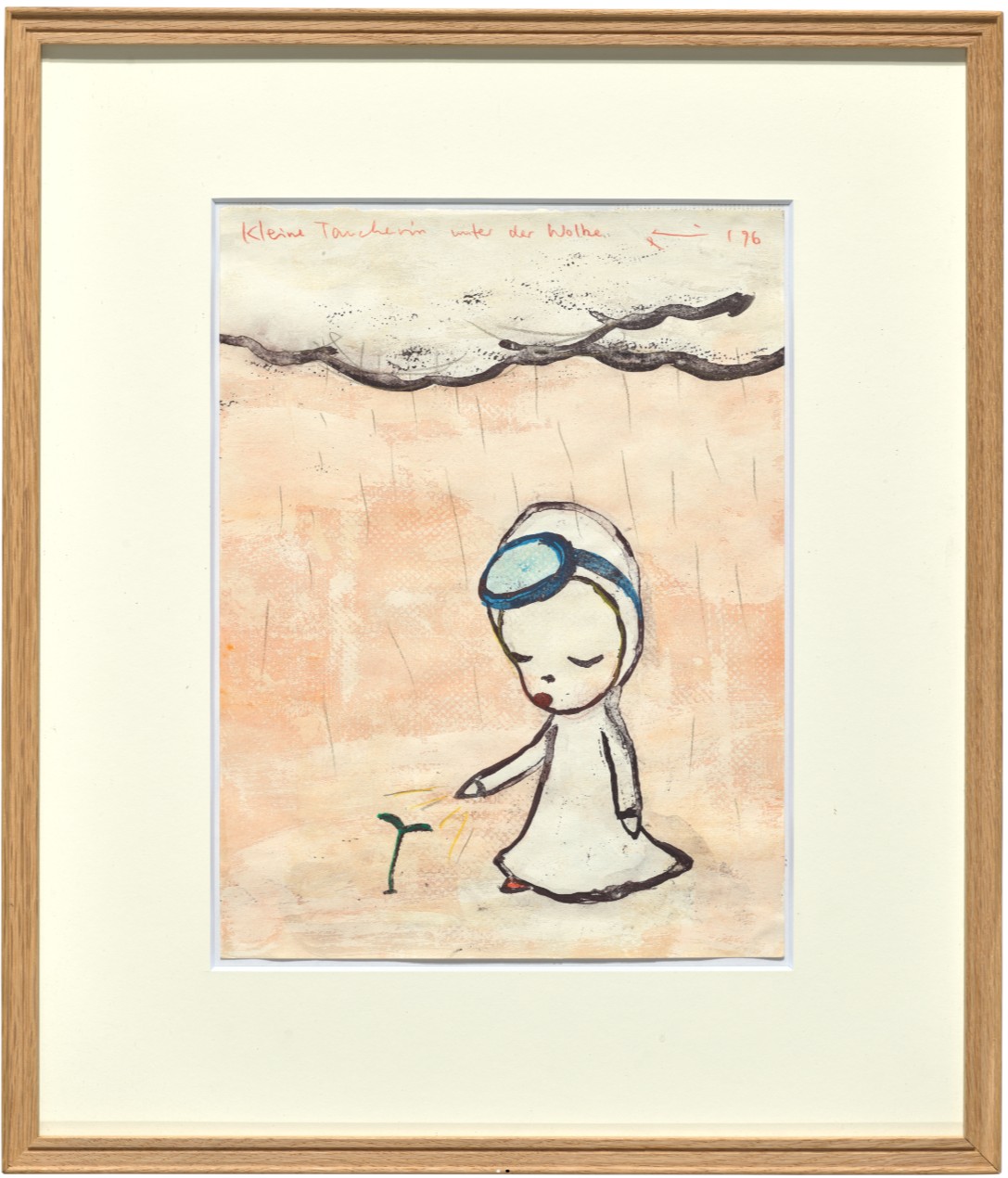
‘”Kleine Taucherin auf der Wolke” Na [in Japanese] ’96’
Along the top edge
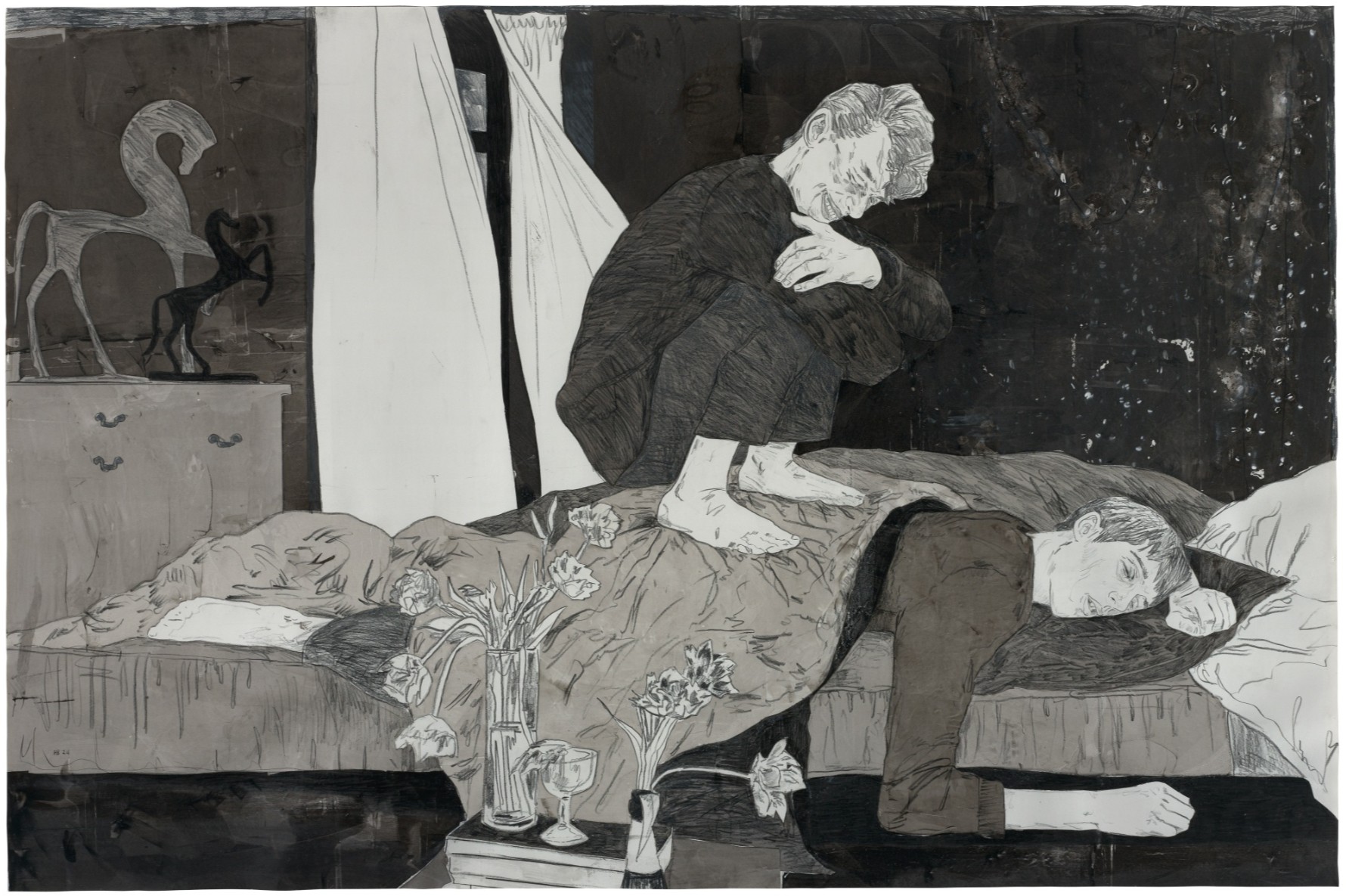
Nightmare, 2024
Estimated: HKD 1,000,000 – 2,000,000
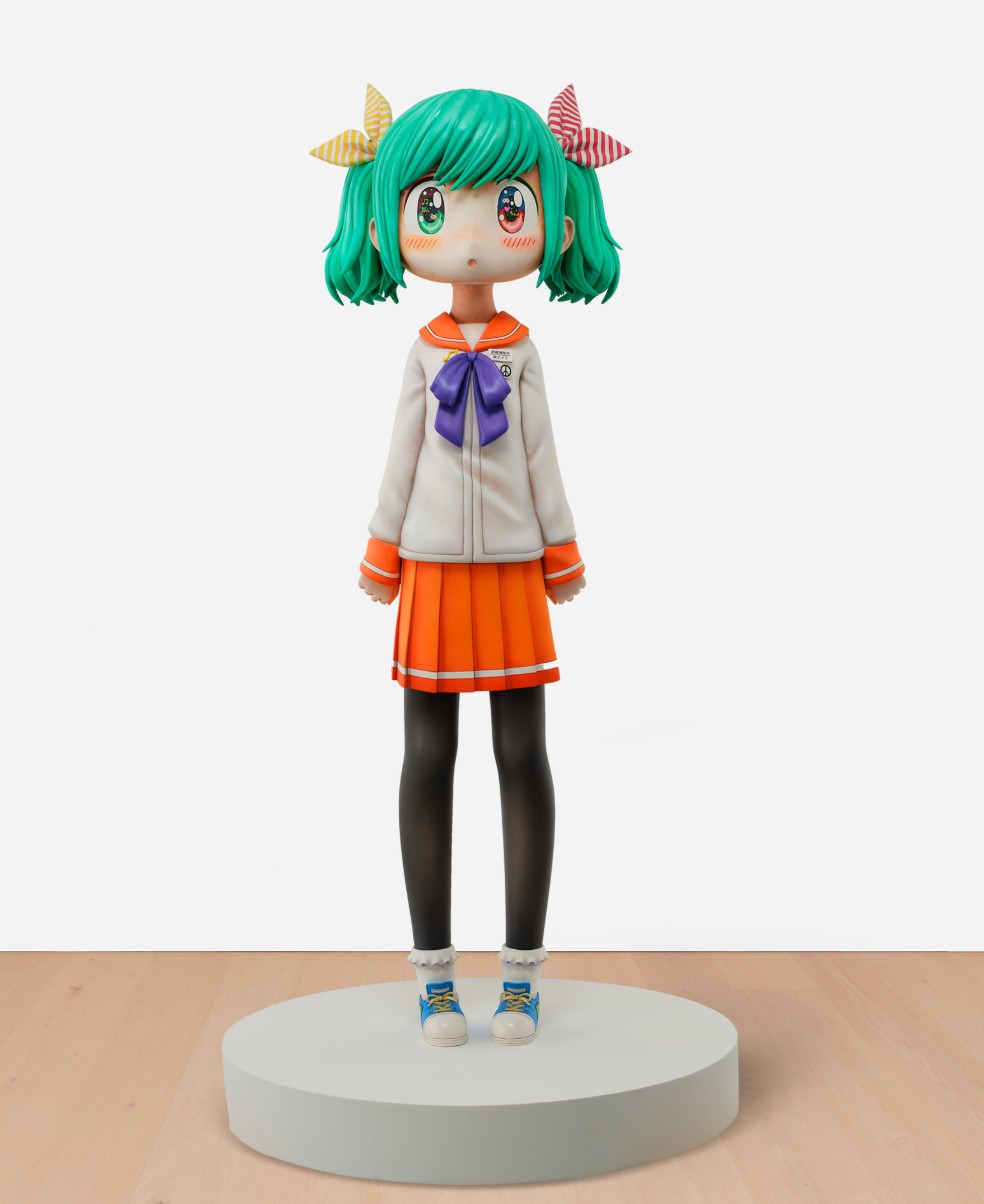
Amy——I Want to Protect Our Earth, 2021
Estimated: HKD 1,000,000 – 2,000,000
Twigs, 2017
Estimated: HKD 1,000,000 – 1,500,000
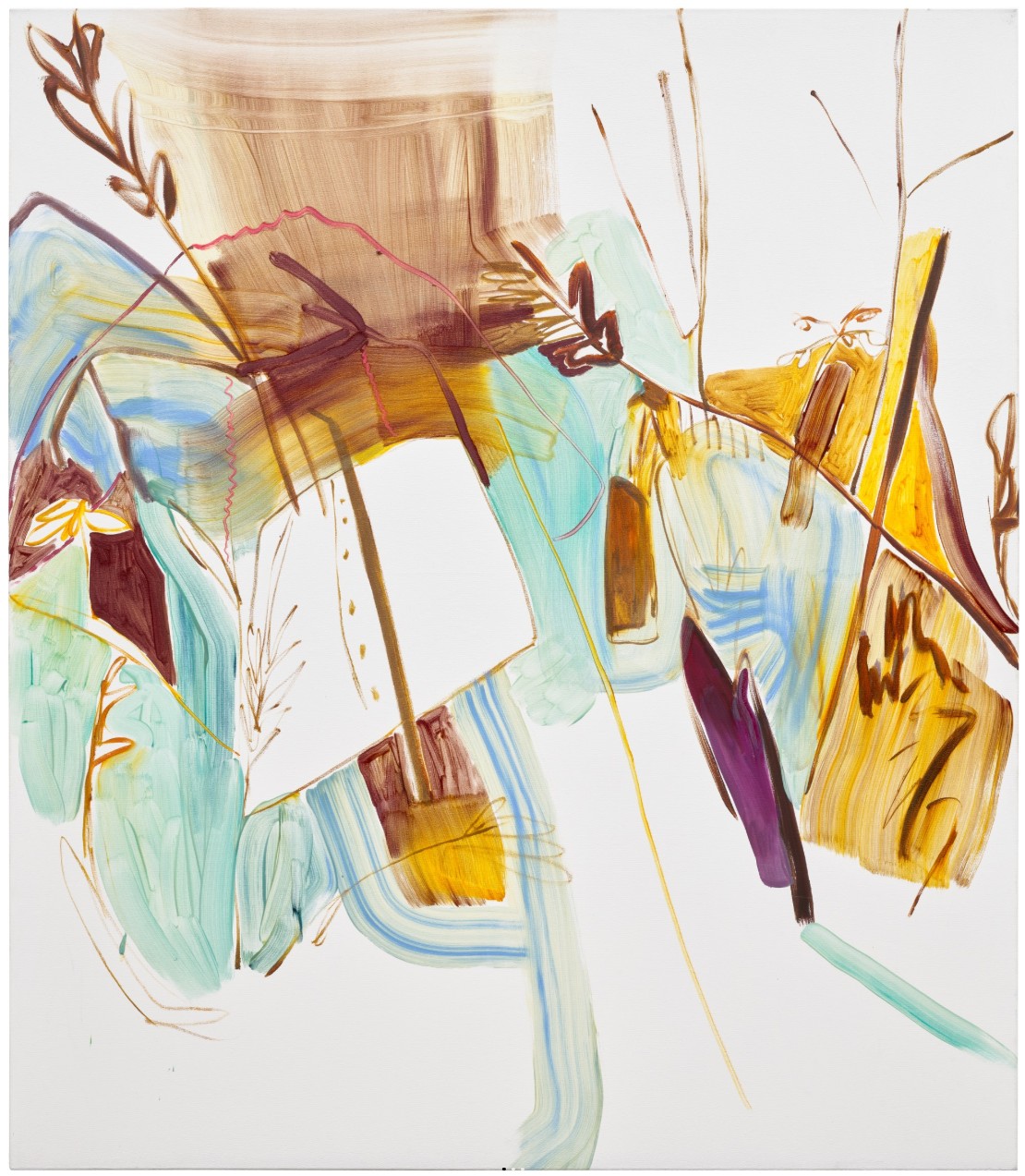
Further signed, titled and dated ‘Jadé Fadojutimi “Twigs” 2017 Jadé Fadojutimi’ on the reverse
ORIGINAL BUS STOP PAINTING, 2002
Phillips Hong-Kong: 28 September 2025
Estimated: HKD 800,000 – 1,200,000
KAWS Modern & Contemporary Art Day Sale
Untitled (Together as One), 2021
Estimated: HKD 800,000 – 1,200,000
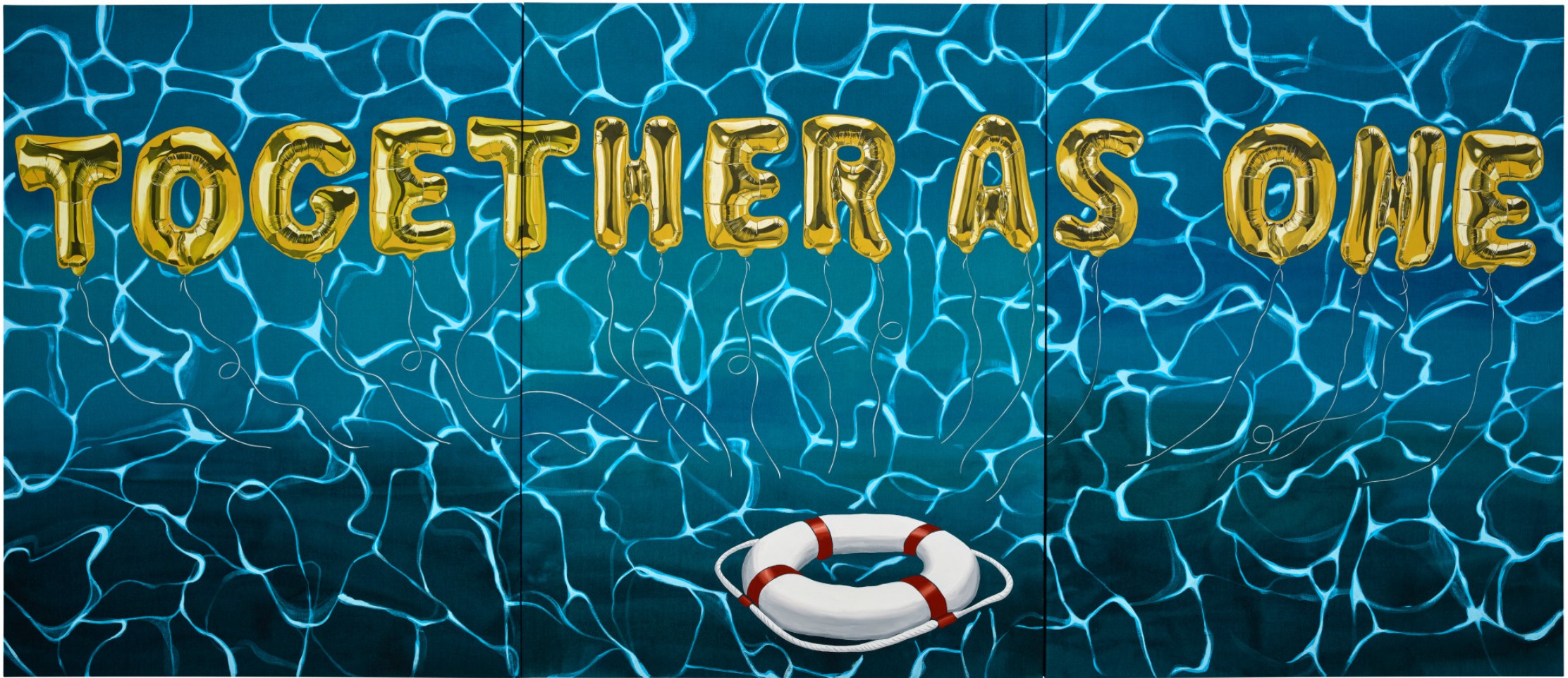
Overall: 84×195 inches (213.4 x 495.3 cm)
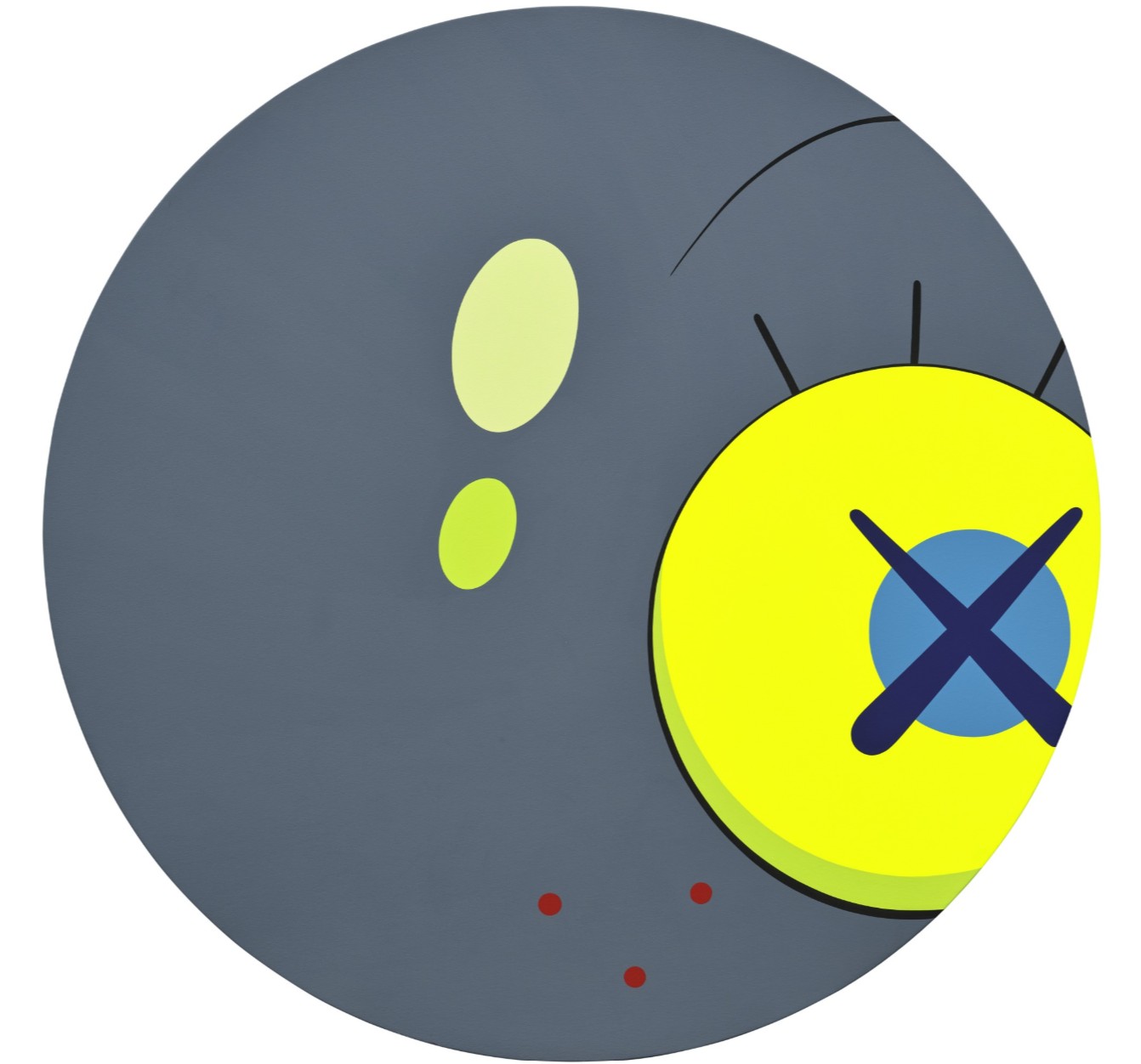
DON’T SINK, 2012
Phillips Hong-Kong: 28 September 2025
Estimated: HKD 700,000 – 900,000
KAWS Modern & Contemporary Art Day Sale
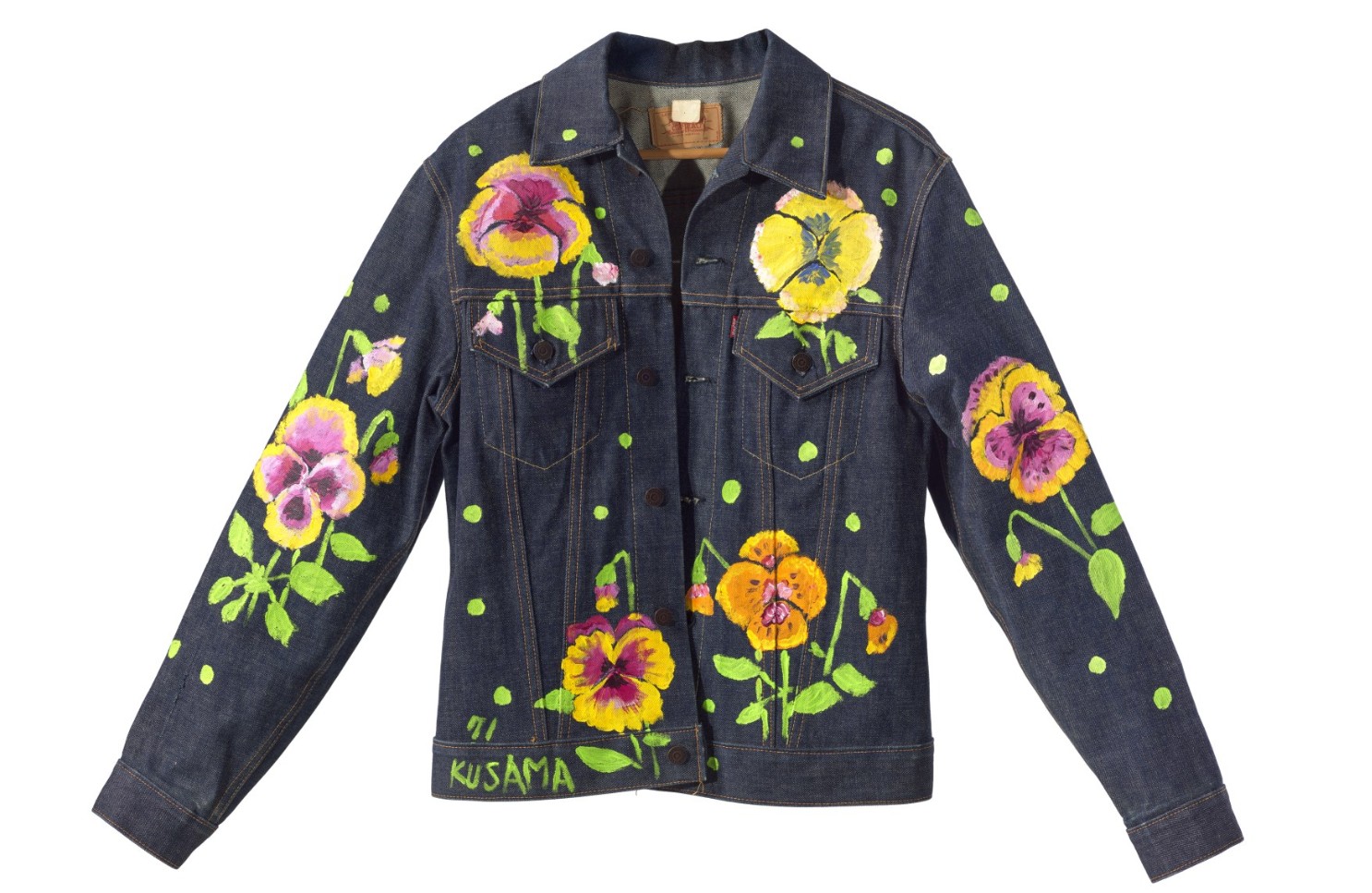
Untitled (hand-painted Levi’s Jean Jacket), 1971
Estimated: HKD 550,000 – 850,000
Women’s World, 1977
Estimated: HKD 500,000 – 700,000
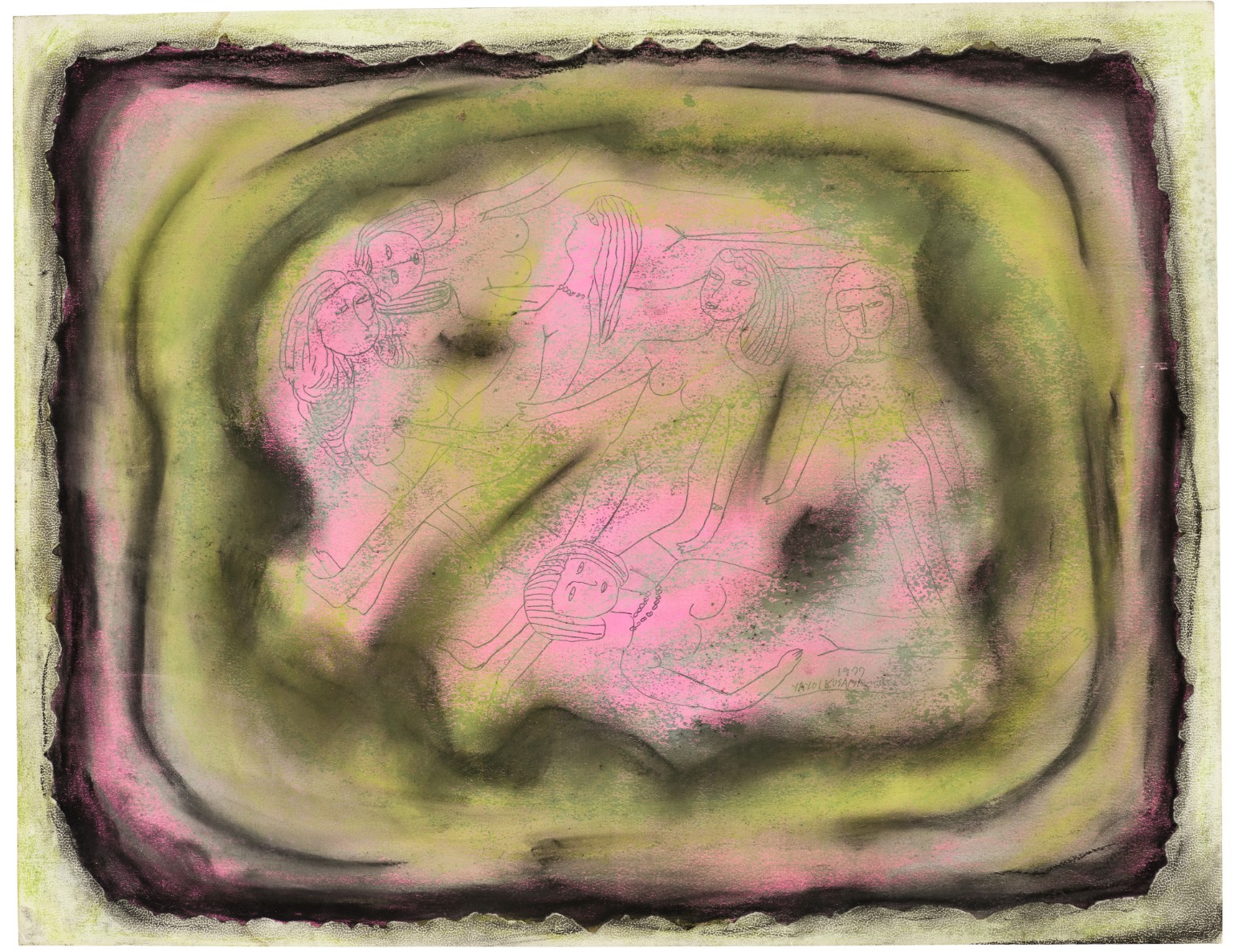
Further signed, titled and dated
‘Yayoi Kusama [in Japanese and English] “Women’s World” [in Japanese] 1977’
On the reverse
The Pumpkin Wine (Carlos Ghosn, in Early Childhood), 2004
Phillips Hong-Kong: 28 September 2025
Estimated: HKD 400,000 – 600,000
Mr. Modern & Contemporary Art Day Sale
Ground, 1953
Estimated: HKD 400,000 – 600,000
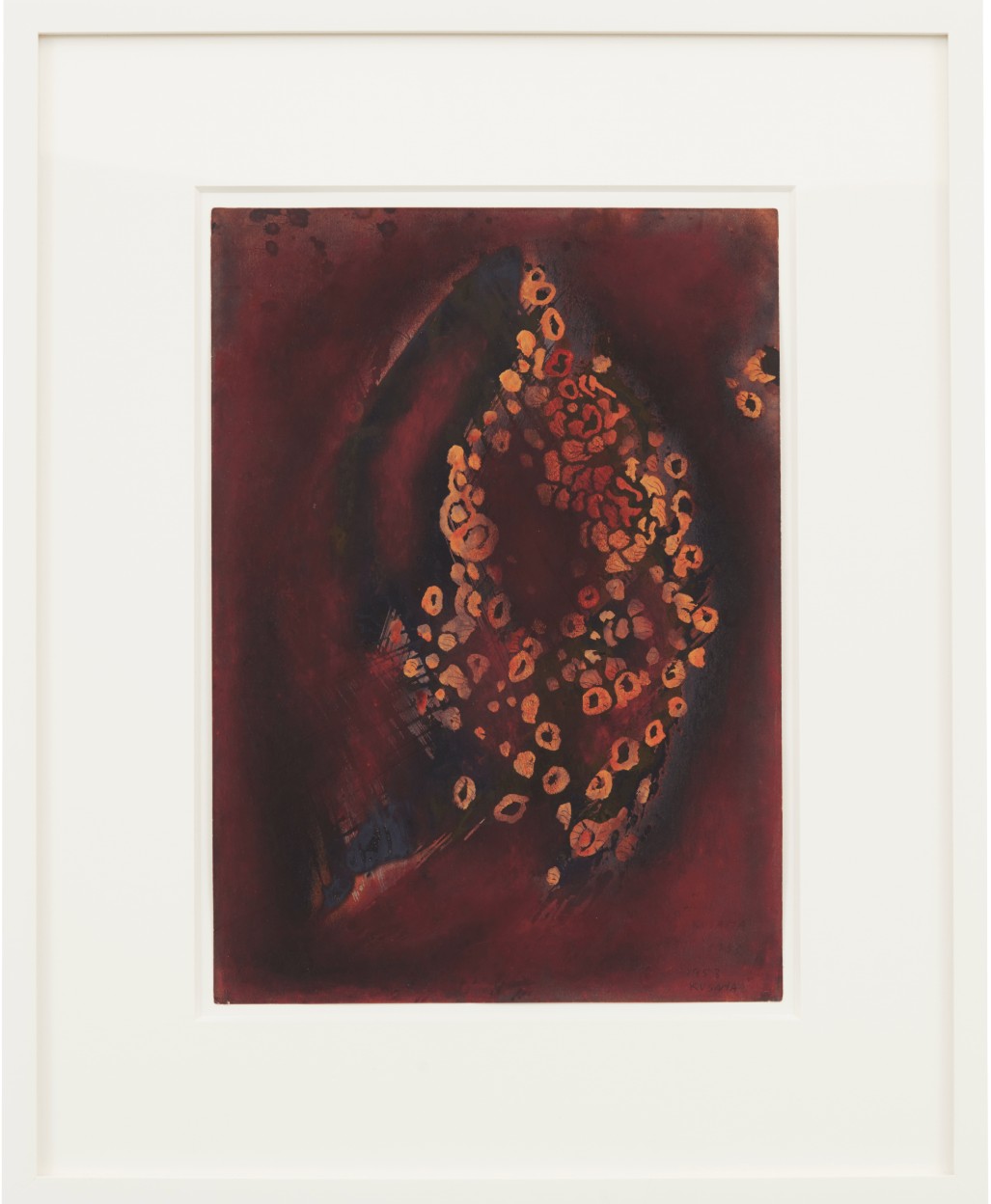
Ground, 1953
Pastel, watercolor and ink on paper
BETTER DAYS AHEAD, 2013
Phillips Hong-Kong: 28 September 2025
Estimated: HKD 250,000 – 350,000
KAWS Modern & Contemporary Art Day Sale
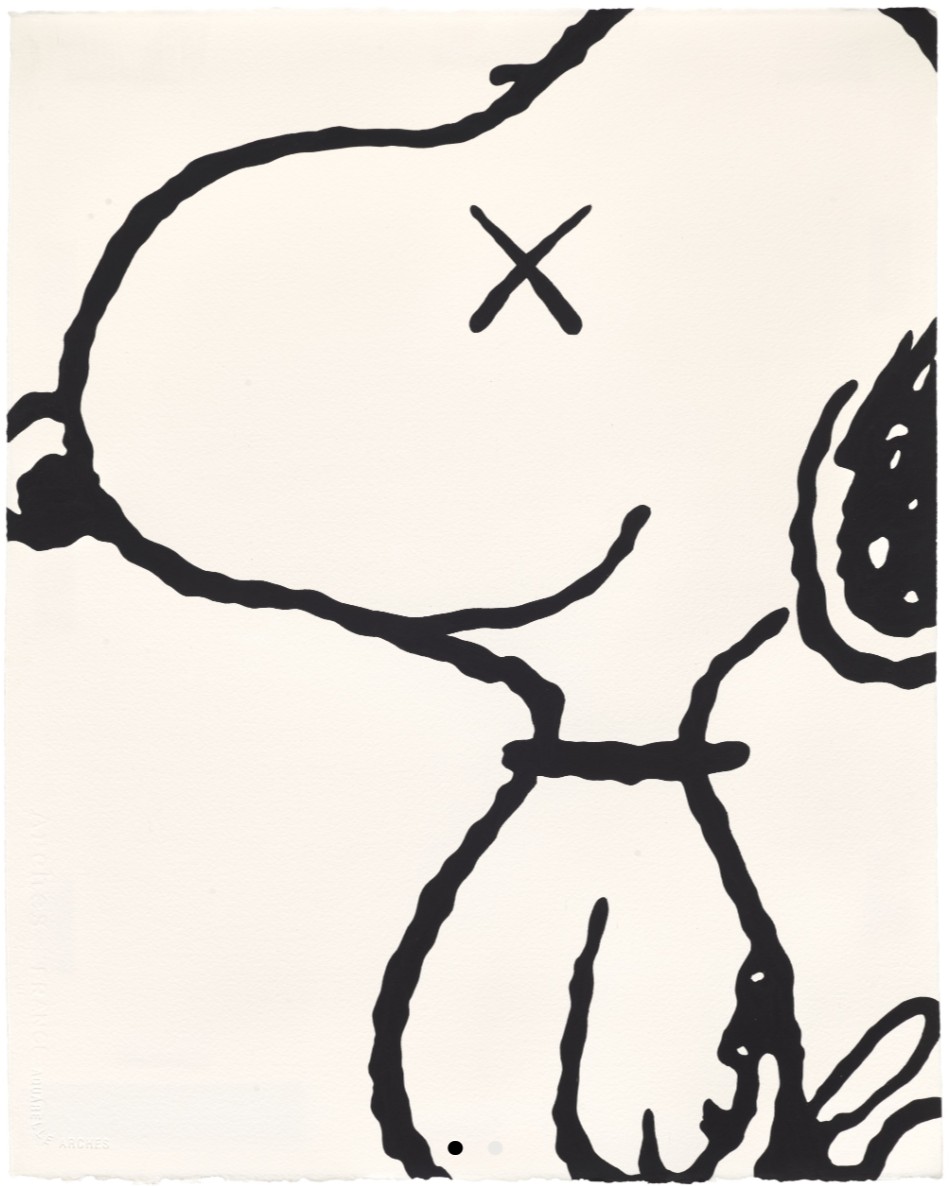
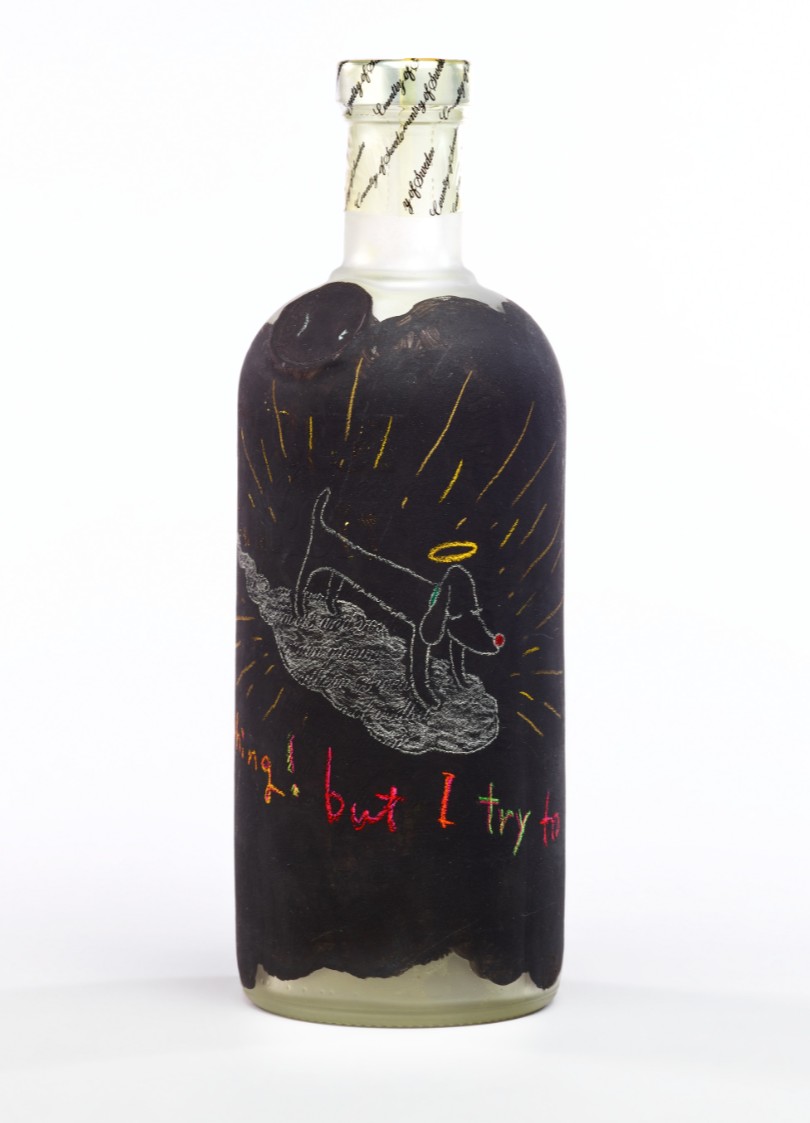
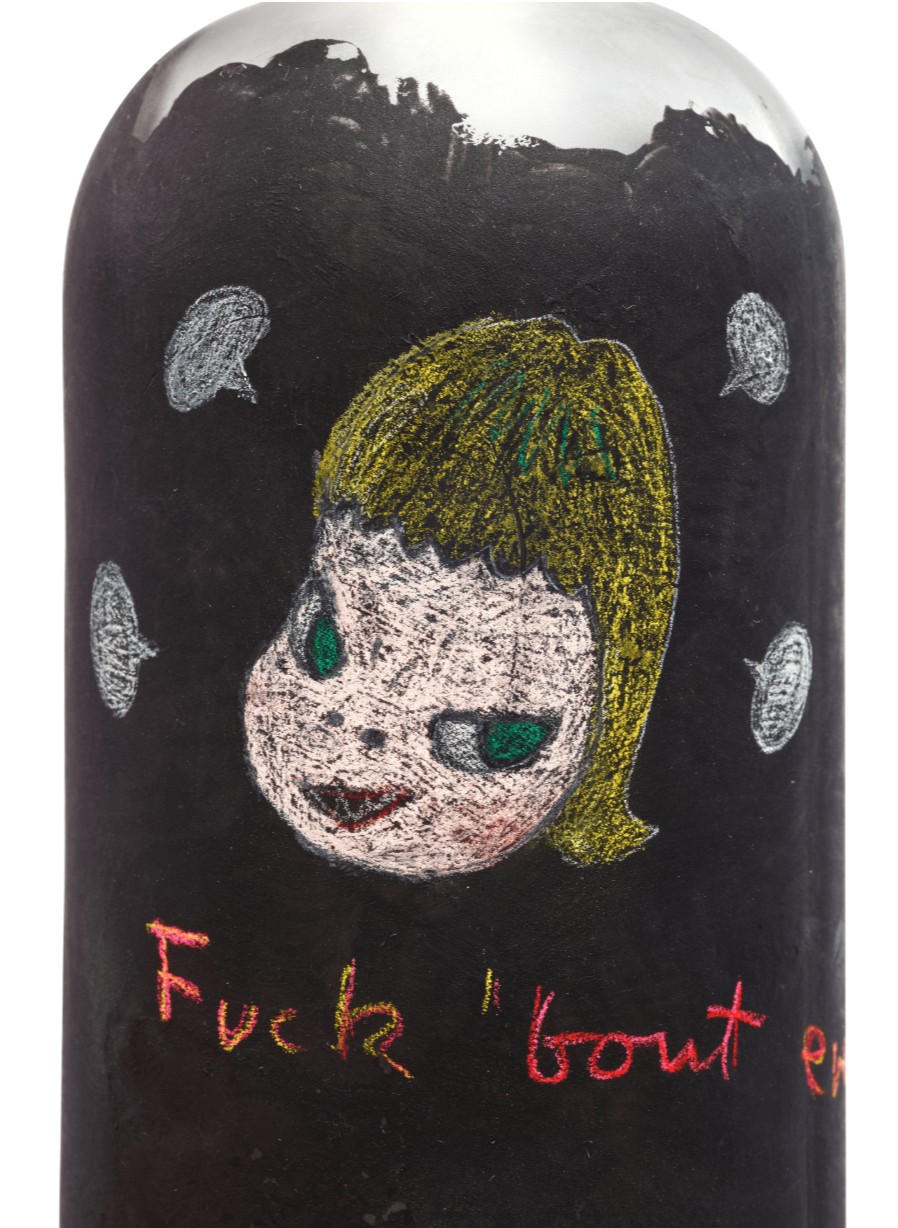
Absolut Vodka Bottle
(Fuck bout everything! But I try to go…), 2000
Estimated: HKD 700,000 – 1,200,000
Untitled, 1997
Phillips Hong-Kong: 28 September 2025
Estimated: HKD 500,000 – 700,000
Yoshitomo Nara Modern & Contemporary Art Day Sale
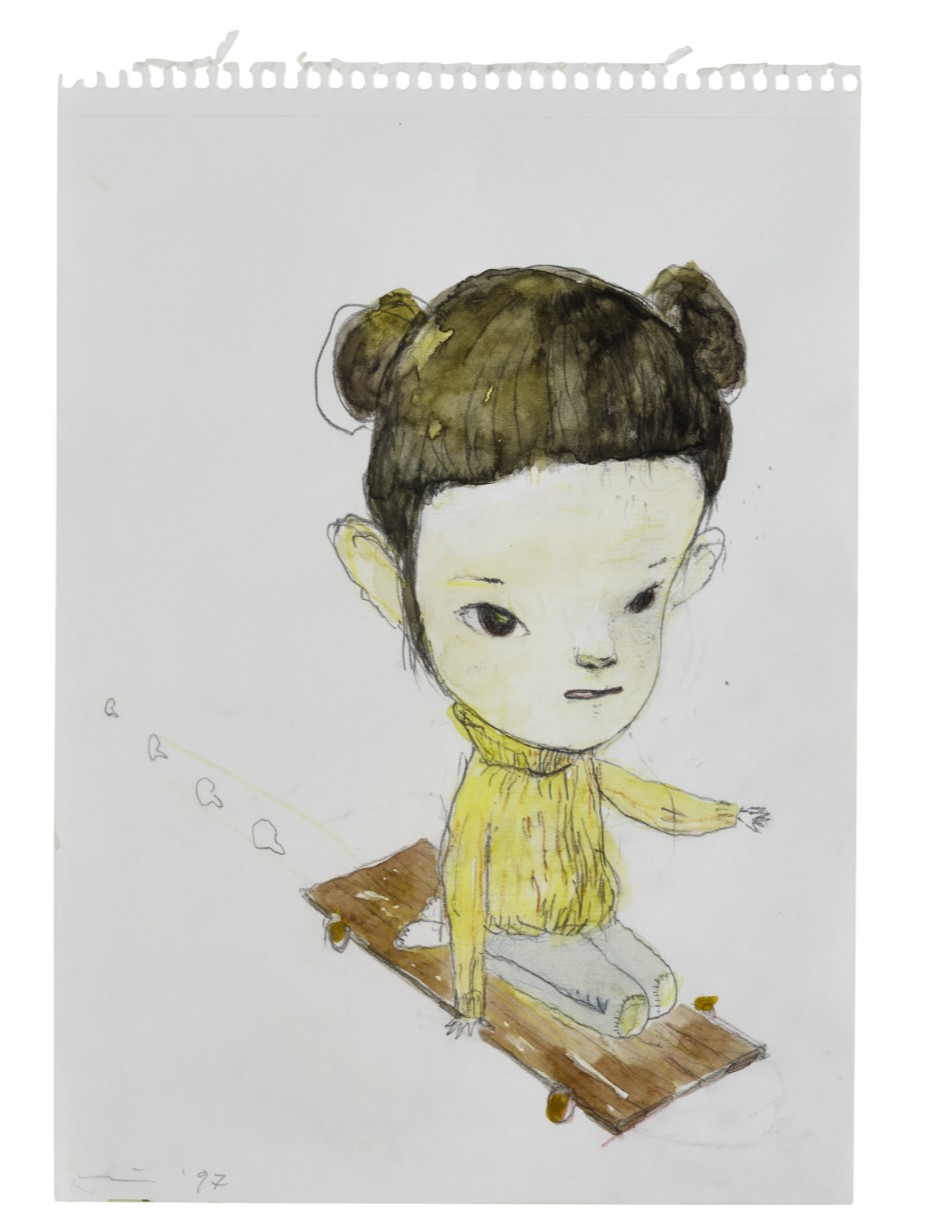
Untitled, 1997
Pencil, watercolor and colored pencil on paper
FOCUS
Rashid Johnson
Untitled Escape Collage, 2017
Sotheby’s Hong-Kong: 28 September 2025
Estimated: HKD 3,000,000 – 4,000,000
RASHID JOHNSON (b. 1977)
Untitled Escape Collage, 2017
Ceramic tile, mirror, vinyl, spray enamel, branded red oak flooring, oil stick, black soap and wax on panel
70 5/8 x 94 1/2 x 2 1/2 inches (180.5 x 240 x 6.3 cm)
Renowned for his multifaceted approach and embodiment of the uncertainty of our time, Rashid Johnson speaks to a world filled with impulse and overstimulation while also reflecting on his personal journey. Working with diverse and numerous media forms, Johnson uses the physicality of his chosen materials to investigate the construction of identity – both visual and conceptual. Many of the materials used reference his own childhood as well as African American history and cultural identity, and in doing so Johnson simultaneously creates both a deeply personal and broader cultural narrative.
“I think about most things that I make as quite topographic. So you imagine a landscape, the different materials in it, then just begin to translate them. Making a painting using a thousand different cuts brings that paint to life. Inside of this exists maybe 300 abstract micro-paintings. And then stepping back, just one large macro.”
Rashid Johnson’s Untitled Escape Collage from 2017 belongs to a group of large-scale paintings of kaleidoscopic color and ephemeral collage that incorporate the vestiges of the artist’s life in America, as well as symbols of the contemporary African-American experience, to create his layered, complex symphony of materials. Within this series, Johnson constructs multiple facets of his own personal identity through assemblages of wallpaper patterning created from stock photographs of tropicalia. These are collaged over ceramic tiles that have been splattered and marked with color spray paint and swathed in black soap, which the artist has also utilized in his portraiture, and wax. Weaving in photographic images of indigenous masks, Johnson’s combination of abstraction and figuration produces a narrative of the African American experience replete with imagery.
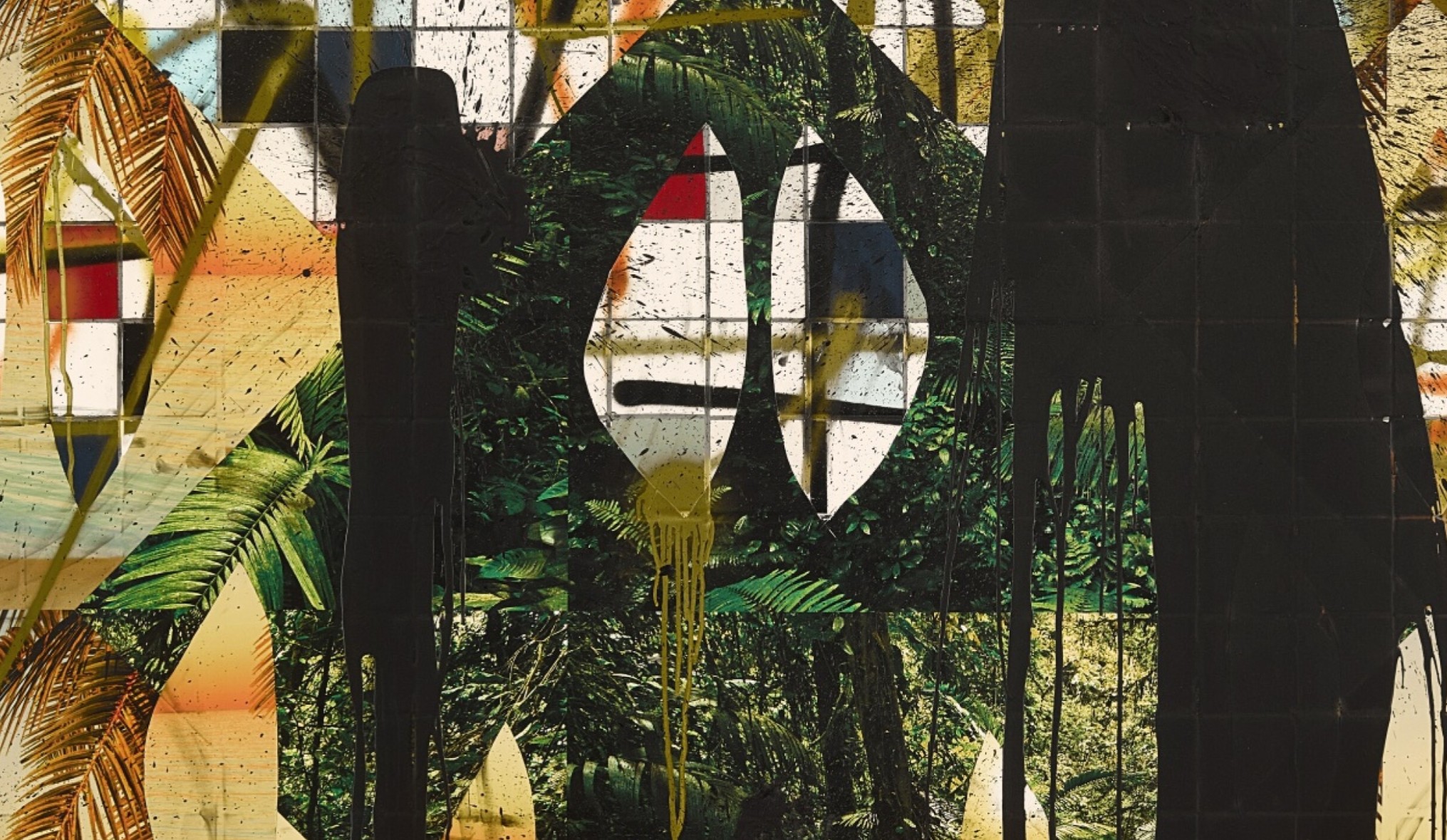
Although these compositions could appear suggestive of black culture, in general, certain elements point directly towards Johnson’s more personal experiences. Replete with emotional symbolism, the present work embodies an act of longing and optimism on the part of the artist. Recalling the image of palm trees as a child in Chicago, tropical vegetation has come to stand for whimsical dreaming for Johnson.
“As a kid I remember thinking that if you could actually live in a place with palm trees, if you could get away from the city and the cold, that meant you’d definitely made it.”
Gathering together disparate elements of personal and parasocial history, Untitled Escape Collage revels in juxtaposition – between material and paraphernalia – yet is brought together by Johnson’s use of paint. Replete with shades of green, yellow and red, the chromatic vibrancy of the present work is in stark contrast to the typical sparse compositions of Johnson’s previous series. Offering a landscape of flora and fauna to explore, the present work is a testament to Johnson’s ability to redefine the narrative surrounding art made by black artists, while creating meaningful, impactful, and beautiful works in the process.
Untitled Anxious Men, 2015
Sotheby’s Hong-Kong: 28 September 2025
Estimated: HKD 2,500,000 – 3,500,000
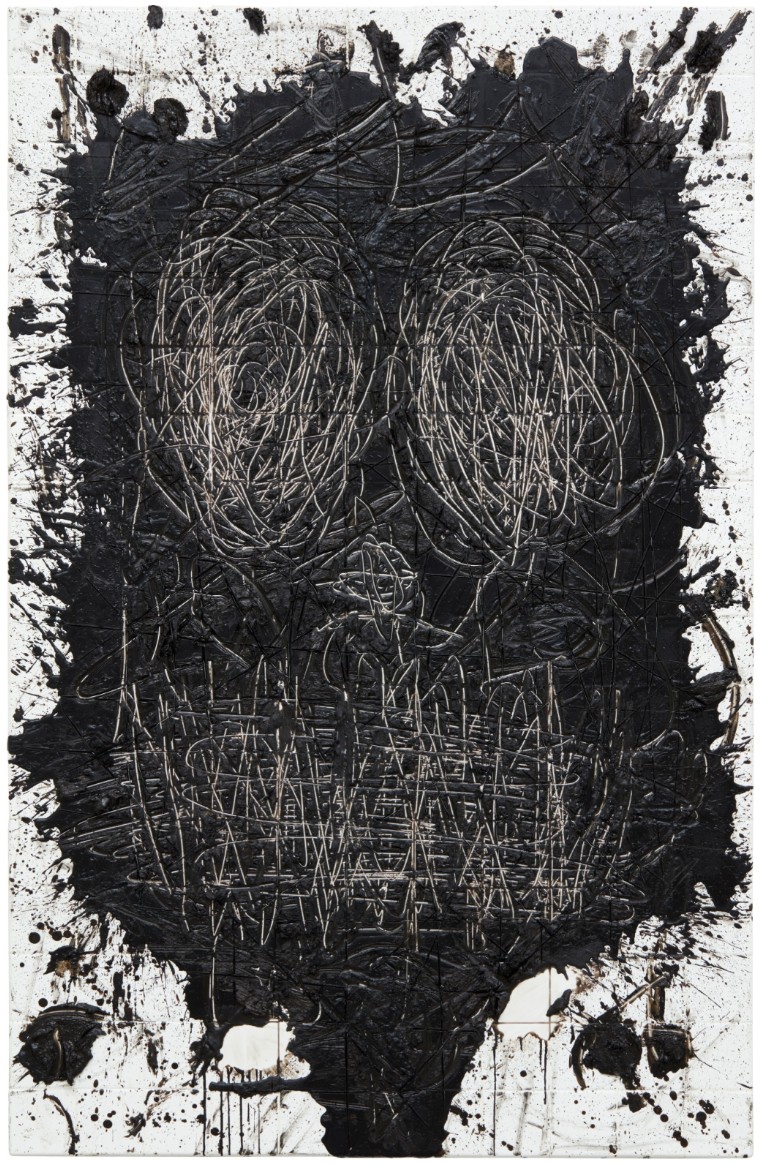
RASHID JOHNSON (b. 1977)
Untitled Anxious Men, 2015
Black soap and wax on white ceramic tile
72 7/8 x 47 1/4 x 2 1/2 inches (185 x 120 x 6.4 cm)
Fresh to market, this large-scale Untitled (Anxious Men) (2015) showcases Rashid Johnson’s most iconic motif, the Anxious Man, a series that dominates his top auction results and stands as his most celebrated body of work. Executed in Johnson’s signature combination of black soap and wax on white ceramic tile, this piece embodies the artist’s mastery of materiality and psychological depth, distilling the raw, universal experience of modern anxiety. As Johnson himself observes, each work in this series is utterly unique.
“They’re really like snowflakes…none of them are the same…born of the actual moment to which they’re made.”
This 2015 iteration, executed in the very year the Anxious man series was created, captures one such irreplicable moment. Its gestural marks and material imperfections frozen in time as a testament to Johnson’s spontaneous creative process. The series’ auction record was set at $2.7 million in November 2023, with three of Johnson’s top five prices achieved in the last two years alone, underscoring accelerating market demand. Here, Johnson’s abstract yet figurative forms invite viewers to project their own emotions, forging an intimate connection while layering personal and cultural narratives through symbolic materials like shea butter and black soap. The choice in material was a deliberate evocation of his Afrocentric upbringing and what he describes as the “Africanness” of his childhood home (Art in America, 2012).
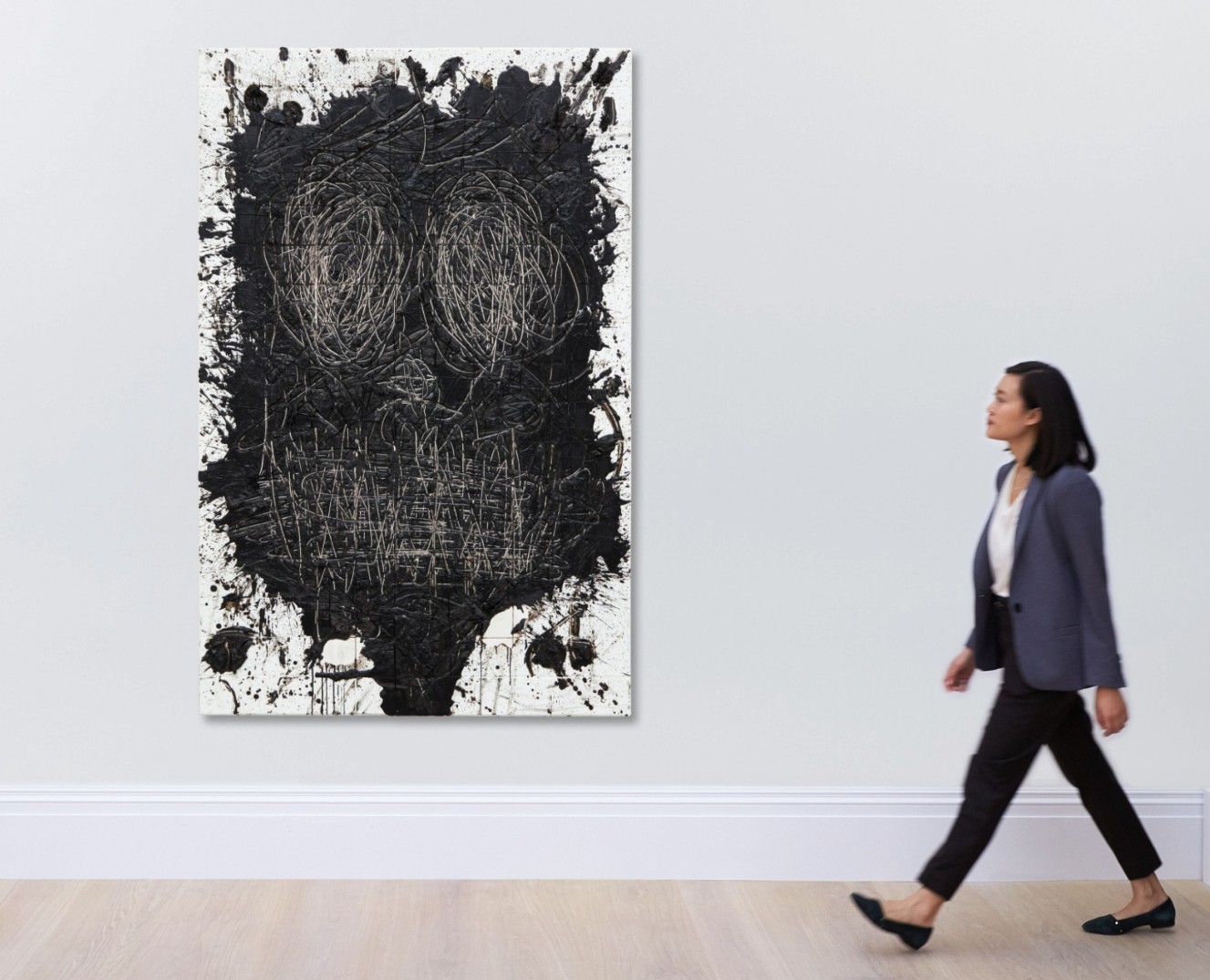
Johnson’s current solo exhibition, A Poem for Deep Thinkers at the Guggenheim Museum (on view until January 2025), reinforces his status as a defining contemporary voice, amplifying the critical and investment appeal of the Anxious Men series. This 2015 work, created during the series’ formative years, channels the cathartic urgency of Jean Dubuffet’s art brut and the gestural force of Abstract Expressionism. Its poured wax and smeared soap surfaces is reminiscent of Chicago bathhouse tiles and bears the unmistakable imprint of Johnson’s hand, with every drip and crack preserving the energy of its creation. This work arrives at a watershed moment. With pieces in the Whitney, MoMA, and Guggenheim, Johnson’s institutional legacy is secure even as his market reaches new heights. Untitled (Anxious Men) (2015) represents both a cultural touchstone and a strategic acquisition: it distills the emotional power of Johnson’s most sought-after works while benefiting from the series’ proven market performance. More than just a painting, it offers collectors ownership of a singular artistic performance, one that, like all works in this series, can never be exactly repeated.
Yoshitomo Nara
Can’t Wait ’til the Night Comes, 2012
Sotheby’s Hong-Kong: 28 September 2025
Estimated: HKD 65,000,000 – 85,000,000
YOSHITOMO NARA (b. 1959)
Can’t Wait ’til the Night Comes, 2012
Acrylic on canvas
193.6 x 183 cm (76 1/4 x 72 inches)
Signed and dated 2012 (on the reverse)
Signed, titled in Japanese and dated 2012 (on the stretcher)
Impressive in size and arresting in its visual power, Can’t Wait ’til the Night Comes is the largest work known on canvas featuring Nara’s ‘children of the night’. Dazzling and beguiling, the painting is a superlative example from the artist’s pivotal point in his career, whereby his works undergo a stylistic shift. Larger than life, the protagonist with a mischievous smirk engulfs one’s peripheral vision. It is significantly larger than any other vampire motif that has been at auction. Nara’s nocturne child emerges from a luminous cream background, absorbing the viewer into her sparkling eyes of different colours. Executed in 2012, the painting belongs to the most coveted of Nara’s works, with four out of the top ten auction records of the artist being of his works from 2012 and beyond. The epitome of Nara’s later works, this painting was exhibited at Nara’s first major museum solo show in the same year, “NARA Yoshitomo: a bit like you and me…” at Yokohama Museum of Art in Yokohama, Japan, after a period during which the artist had lost his desire to paint following the 2011 earthquake. It was also used as a poster image for the exhibition. The exhibition later travelled to the Aomori Museum of Art, Aomori, Japan, and the Contemporary Art Museum, Kumamoto, Japan.
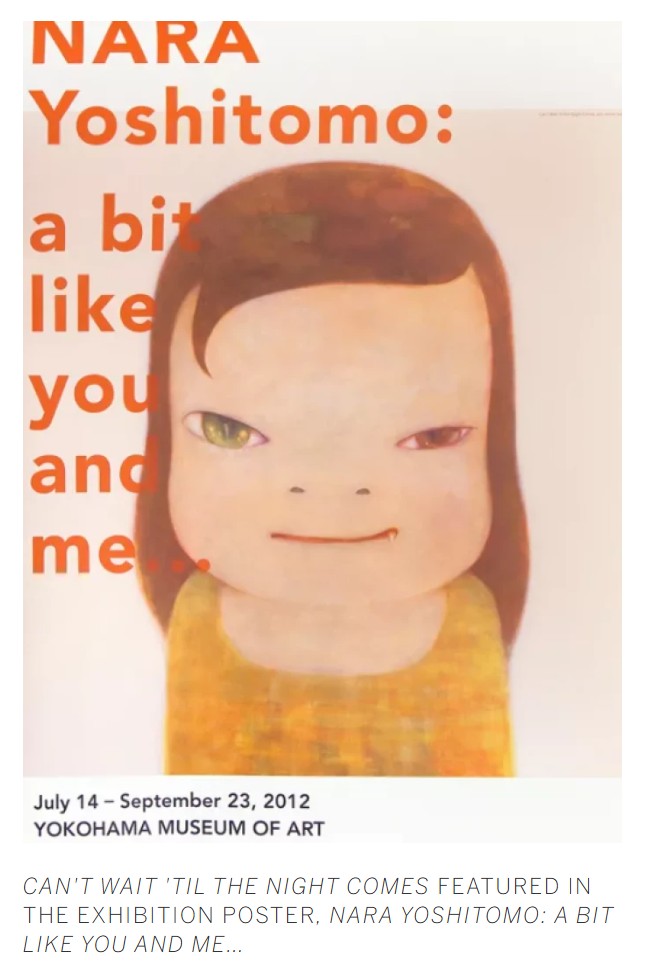
In 1994, Yoshitomo Nara, with the help of gallerist Jörg Johnen, relocated to Cologne following his graduation from the esteemed Staatliche Kunstakademie in Düsseldorf. This move allowed the artist to begin working on large-scale canvases. Considered a highlight of the artist’s early career, it was living and working on the outskirts of Cologne that Nara’s highly solitary practice began to emerge. Stripping away superfluous detail from the background, Nara began to focus instead on the emotive potential of the lonely central figure and “the allegorical ability to express narrative through singular image endowed with powerful emotional appeal and enigmatic fragment that evoked associations’ (M. Matsui, ‘A Child in the White Field: Yoshitomo Nara as a Great “Minor Artist”’, Yoshitomo Nara: The Complete Works, Paintings, Sculptures, Editions, Photographs, Vol. 1, Tokyo 2011, p. 334).
Nara’s interests in creatures of the nocturnal, such as cats and vampires, began as early as his Cologne days (1993-1999). These characteristics are often depicted with fangs and/or eyes of entrancing design, evoking living beings with enhanced night vision. Nara revisits this theme repeatedly throughout his career. An intimate part of his creative process, Nara would work “alone in his studio, usually late at night, with punk rock screaming from speakers”, and rising only well into the mature hours of the day. Parallels are undoubtedly evident between the Artist and the vampire protagonist of Can’t Wait ’til the Night Comes; a lonesome nocturnal existence characterizes this mythical yet fearsome figure. Executed in 2012, Can’t Wait ’til the Night Comes is a quintessential example from a distinctive body of work that Nara began in the same year, after his return to the studio in April following the Great East Japan Earthquake on 11 March 2011. 2012 was a significant year for the artist, coming to terms with the sheer devastation of the earthquake and resulting tsunami that left more than 450,000 people homeless and caused more than 18,000 people to lose their lives.
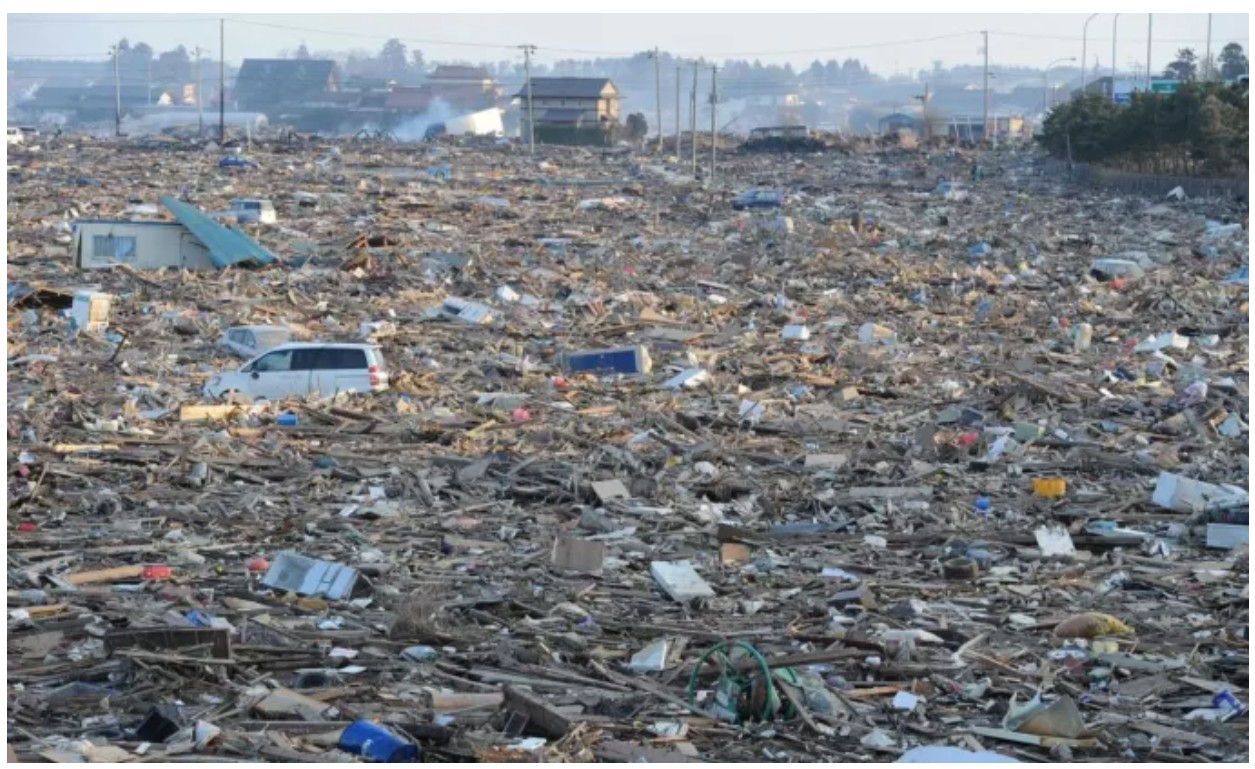
Image of the destruction of Natori City in Miyagi prefecture on 14 March 2011, three days after the Great East Japan Earthquake
MIKE CLARKE/AFP/Getty Images, 2011
Deeply connected to the northeastern part of Japan, which was hit worst by the earthquake, the natural disaster triggered a significant change in his artistic practice and a shift in his aesthetic, as seen in Can’t Wait ’til the Night Comes. Executed the year after his return to the studio, Can’t Wait ’til the Night Comes is demonstrative of this shift in the artist’s visual language, softening the once menacing expressions of his little girls, depicting his figures from the bust upwards, expanding his color palette and experimenting with a shimmering translucency through more meditative layering. Nara’s treatment of his subject’s eyes changed around 2005, becoming more realistic through the deft interplay of light and shadow.
“They say human eyes are the mirror of the soul, and I used to draw them too carelessly. Say, to express the anger, I just drew some triangular eyes. I drew obviously-angry eyes, projected my anger there, and somehow released my pent-up emotions. [Afterwards] I became more interested in expressing complex feelings in a more complex way.”
While each eye is rendered in a different variety of tonal hues—one a biscuit-fired red, the other an olive green—together, they hint at the twilight transformation of our nocturne protagonist as the night approaches.
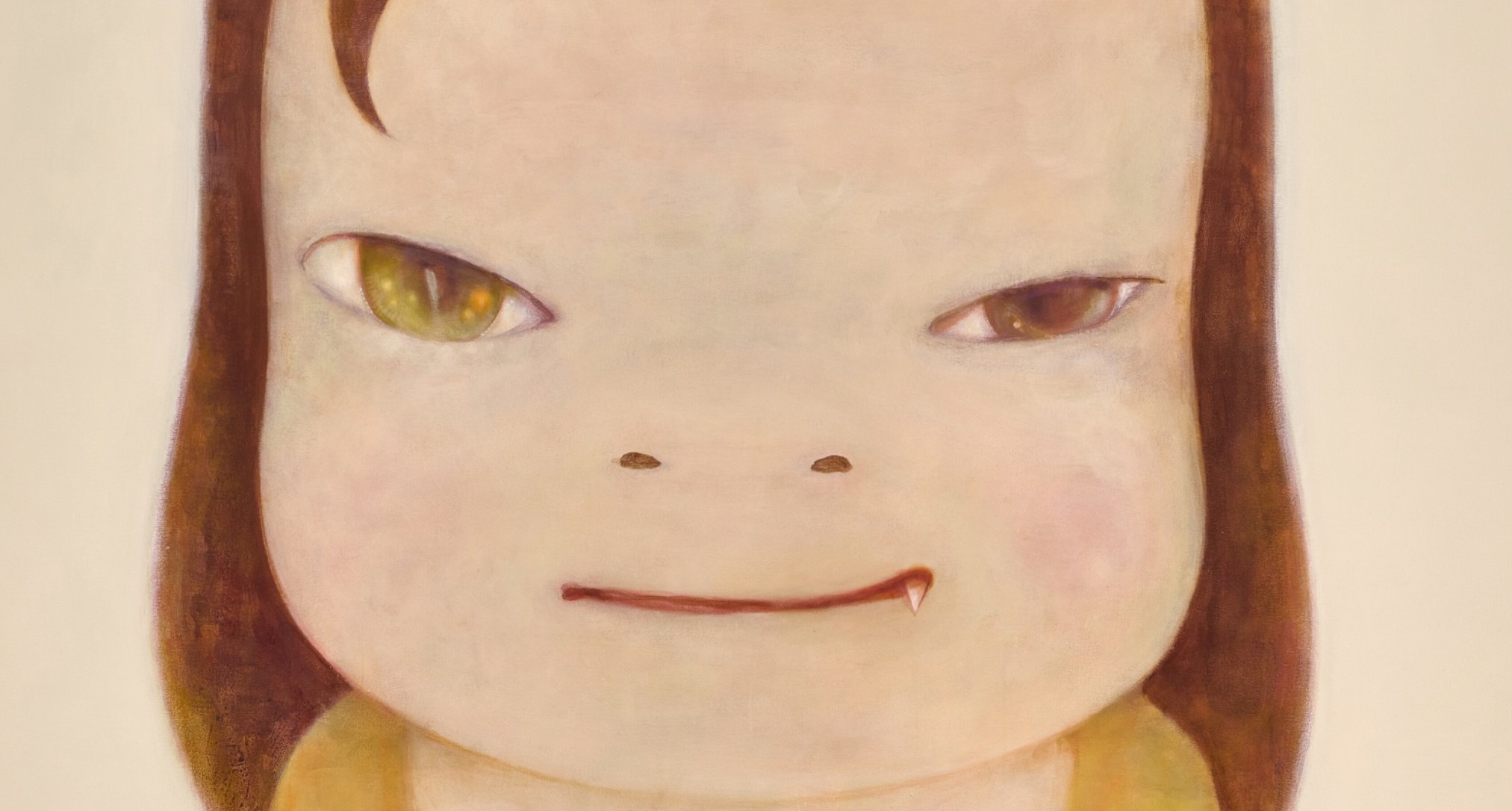
Nara, in the foreword of the exhibition “NARA Yoshitomo: a bit like you and me…” in which the present work was featured, elaborates explicitly on the transition of the nature of his works. They are no longer his self-portraits but portraits through which the viewer can experience introspective self-projection. The exhibition marks a pivotal transition in the artist’s painterly style, where his subjects assume the form of large-scale bust portraiture set against a minimalist, monochromatic background. The brushworks and colours soften, while the enhanced focus on the subject’s expression puts greater emphasis on the human psyche, as exemplified by the present work. Nara’s process is discernibly more meditative and introspective in “Can’t Wait ’til the Night Comes” than in his earlier works. It took him nearly a year to complete this painting, achieving a shimmering translucency through his deft layering of acrylic paint.
Another reason behind the lengthy painterly process was the presence of an original composition underneath, which the Artist decided to paint over. The original composition depicted a smirking child holding a two-leafed sprout, a motif recurrent in Nara’s oeuvre and one that has been revisited frequently after the devastating Great Eastern Japan Earthquake in 2011. By then, the sprout meant a lot more than just a symbol of peace.
“How many children have I depicted holding a futaba sprout…? I don’t think many people have noticed that the nuclear plant in Fukushima is located in a place called Futaba.”
The drastic change in subject matter, urging Nara to paint over incomplete work, suggests a profound shift in the Artist’s thought process. Arguably Japan’s most internationally acclaimed painter working today with a global collector base, Yoshitomo Nara has captivated the imaginations of collectors and critics around the world, achieving institutional recognition. Testament to the importance of the artist, Nara has recently been honored with the most extensive retrospective in Europe, held at the Hayward Gallery in London, preceded by the critically acclaimed retrospective at the Los Angeles County Museum of Art, which later travelled to the Yuz Museum in Shanghai.
Sprout the Ambassador, 2001
Sotheby’s Hong-Kong: 28 September 2025
Estimated: HKD 9,000,000 – 15,000,000
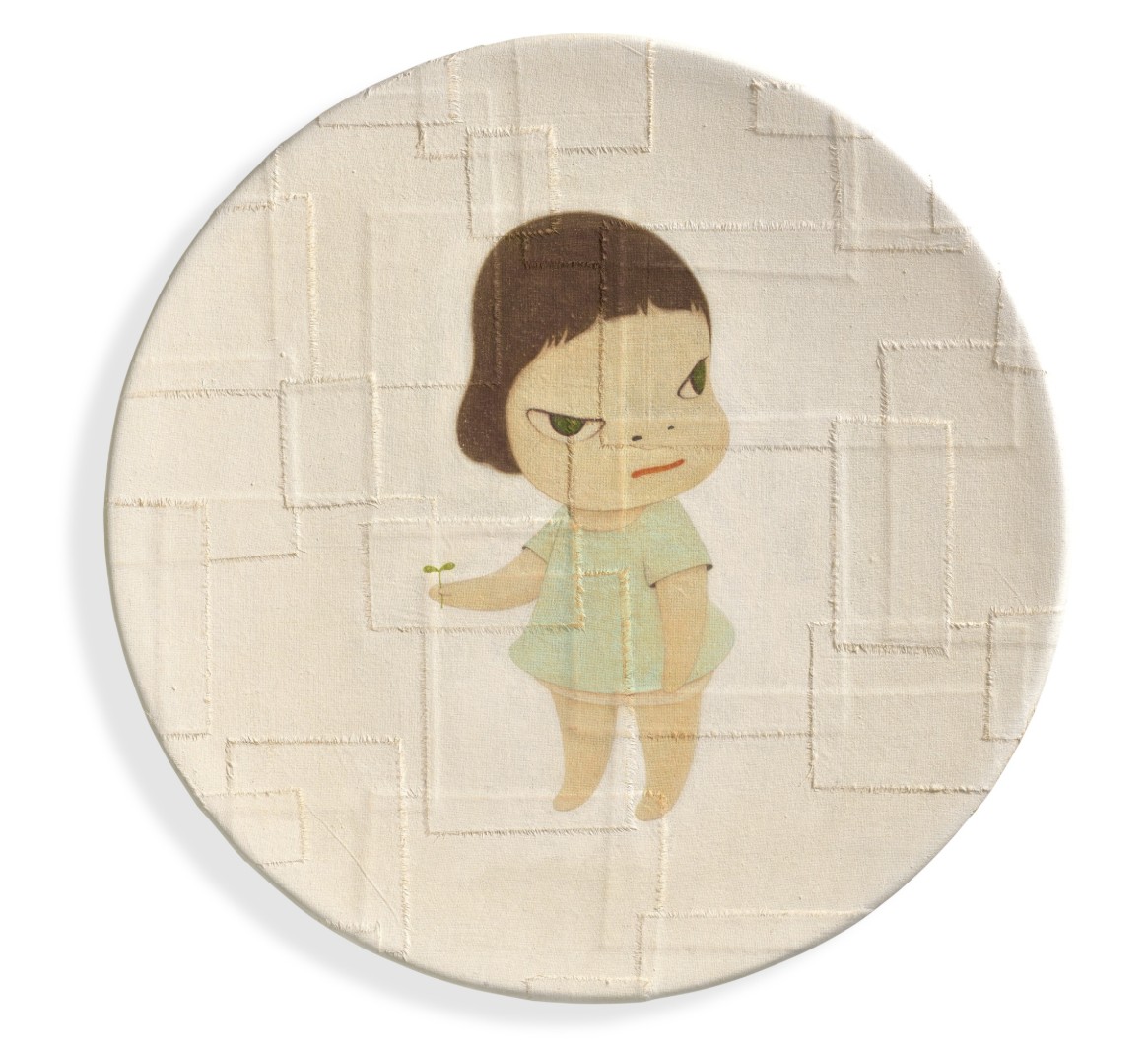
YOSHITOMO NARA (b. 1959)
Sprout the Ambassador, 2001
Acrylic on cotton mounted on FRP
55 x 55 x 9.5 cm (21 5/8 x 21 5/8 x 3 3/4 inches)
Signed, titled and dated 01 (on the reverse)
Sprout the Ambassador is an iconic, thought-provoking work by Yoshitomo Nara, featuring two of Nara’s most famous motifs—the large-headed little girl as an ambassador and the futaba (two-leafed sprout), rendered in a tondo-esque composition. Belonging to the very first batch of iconic Ambassador series that Nara created in the early 2000s, it is one of the only six circular acrylic on cotton mounted on FRP works featuring both motifs mentioned above. It is also the only one from the series that is household-friendly in scale, as the majority are over one meter in diameter.
“[Futaba] is just that, it’s hope. Hope that grows. A small feeling grows a stem, forms leaves, spreads its branches and becomes a large tree…it’s the beginning of this process. It exists, and there are people who plant it.”
Marking a turning point in Nara’s career, works from the series have been highly sought after. The first Ambassador painting on canvas, The Little Ambassador (2000), sold in 2016 was, at the time, the second-highest auction record for the artist. Under the Hazy Sky (2012), featuring Nara’s sprout-holding protagonist, was featured prominently in the Artist’s recently concluded retrospective at Hayward Gallery, London. Executed in 2001, this work stems from the concave disks that Nara began exploring extensively shortly after returning to his native Japan from twelve years in Germany, where he had been immersed in Western art history and surrounded by classical masterpieces. Delicate Renaissance-esque brushwork along the surface of the fibreglass typifies the artist’s mature 2000s aesthetic, culminating in a striking portrayal of a fearless little girl eager to explore, encounter, and challenge the unknown. With penetrating eyes, she glares defiantly out at the audience, raising the delicate yet resilient sprout in her hand, as if to commence her duty as an ambassador with a speech.
Sprout the Ambassador constitutes Nara’s peace-advocating oeuvre, and this is his painterly response to his visit to Auschwitz in the year before he painted the present work. The sprout is a favoured motif that can be found throughout Nara’s oeuvre, ranging from his large canvas paintings to his works on paper and cardboard. Having grown up in the small town of Hirosaki, located 400 miles from Tokyo and near a US Air Force base, Nara has long been engaged with Japan’s complex and painful history with war and nuclear weaponry. Not alone in his exploration of World War II’s enduring impact on society, many artists of his generation have sought to examine the war’s legacy through their work, exemplified by Takashi Murakami and his theory of “Superflat”, reflective of the consumer culture that arose after World War II.
The Little Ambassador, 2000
Sotheby’s Hong-Kong: 2 October 2016
Estimated: HKD 16,000,000 – 24,000,000
HKD 24,080,000
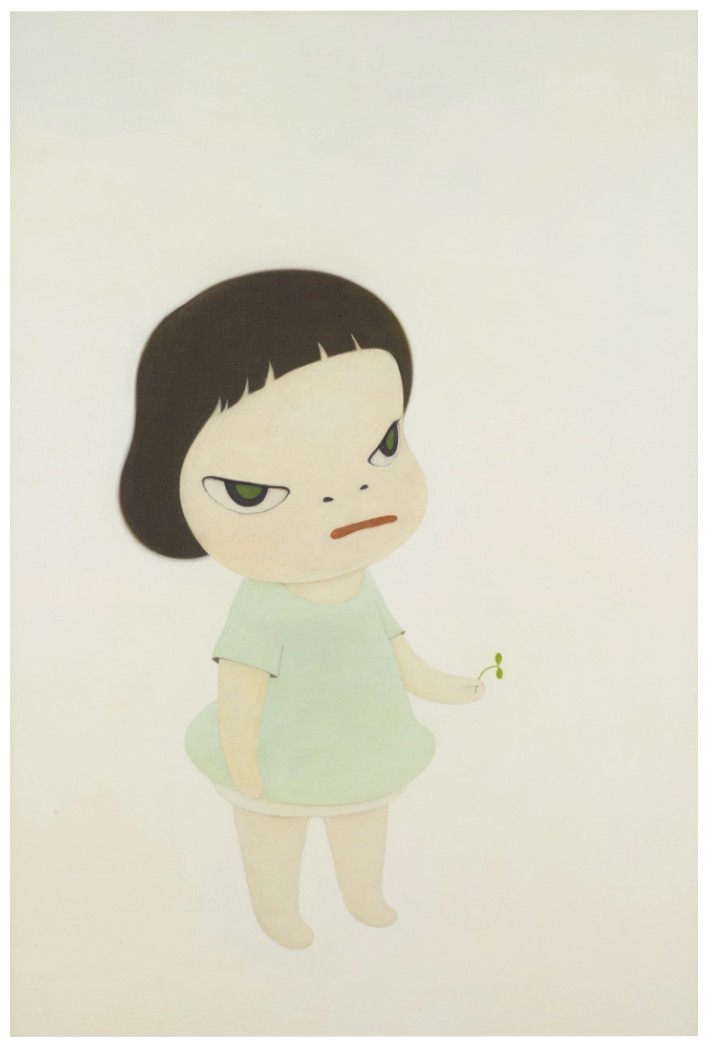 YOSHITOMO NARA
The Little Ambassador, 2000
Acrylic on canvas
Signed in Japanese, titled in English and dated 2000 on the reverse, framed
Articulating deeply rooted sentiment against war and conflict, Nara’s works often express his sincere desire for peace. For Nara, the sprout, is a symbol of hope and peace. “It’s just that, it’s hope. Hope that grows. A small feeling grows a stem, forms leaves, spreads its branches and becomes a large tree…it’s the beginning of this process. It exists, and there are people who plant it.” (Nara quote in “In Conversation with Yoshitomo Nara”, Exh. Cat., London, Hayward Gallery, Yoshitomo Nara, p. 73) It is also worth noting that a decade after painting the present work, in the wake of the 2011 Fukushima disaster, Nara famously uploaded his “No Nukes” anti-nuclear painting to the internet, allowing people to print it out and take it to demonstrations. Since then, his sprout-holding heroines returned and propagated significantly across his artistic creations through a wide range of media. This time, the sprout meant a lot more, as he commented:
“How many children have I depicted holding a futaba sprout…? I don’t think many people have noticed that the nuclear plant in Fukushima is located in a place called Futaba.”
Upon Nara’s homecoming to Japan in 2000, one year prior to the creation of Sprout the Ambassador, the artist’s style evinced subtle technical maturations – a disintegration of sharp lines into nuanced, meticulous and poetic brushwork, and a warming of his palette with pastel colours. In the present work, the surface texture comprises multiple layers of translucent colours and a multitude of intricate tones, which imbue the otherwise flat composition with an enigmatic sense of depth. Nara explicitly cited the pre-Renaissance Italian painter Giotto as an influence to his stylistic shift in the 2000s, and parallels can be observed between the two artists through Nara’s extensive formal experimentation with patchwork composition. The patchwork method of painting is reminiscent of how Giotto painted his frescoes, finishing compositions patch by patch on freshly plastered areas of the wall, which were painted while the plaster was still wet. This enhances the refined painterly quality of color layering.
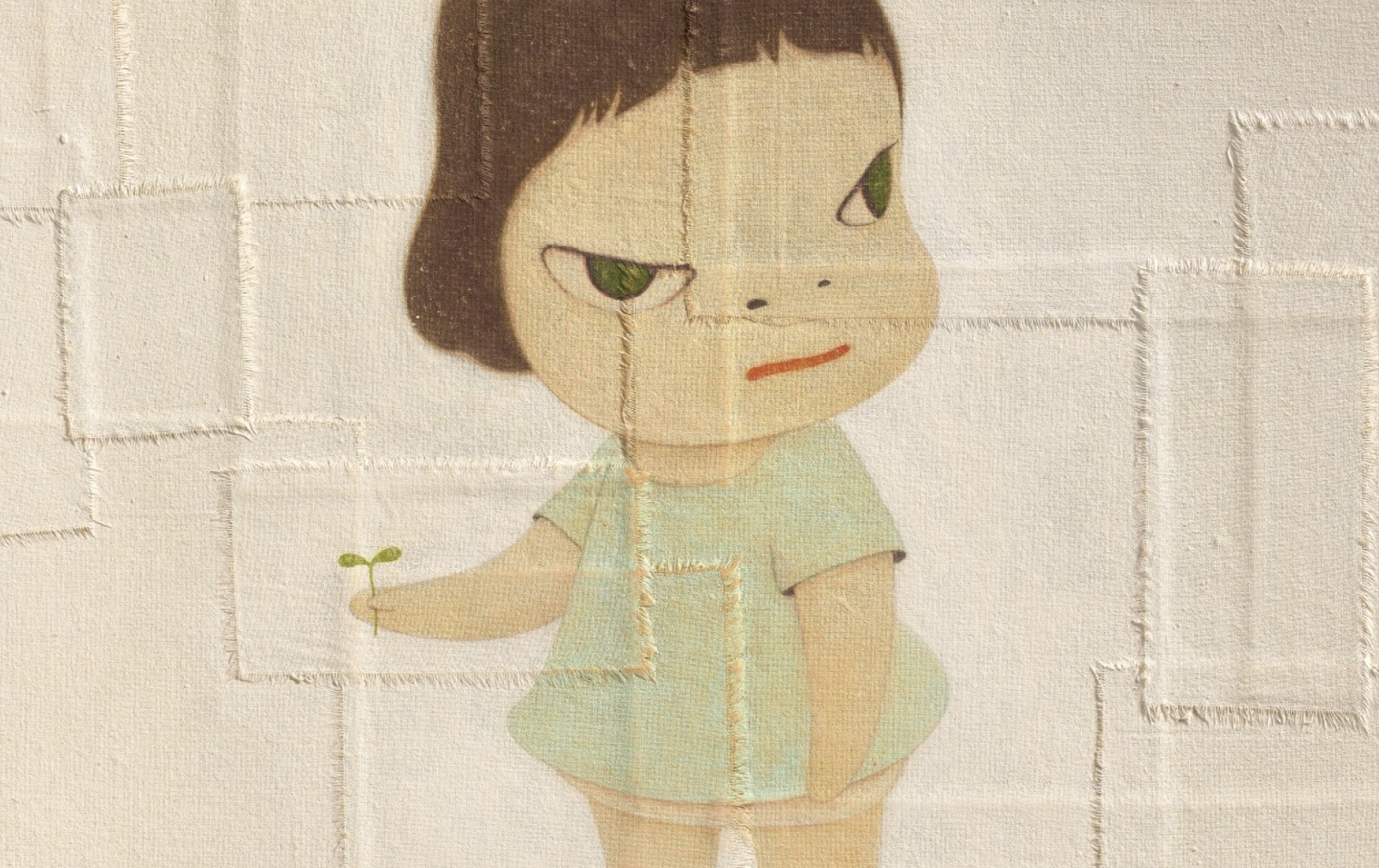
The rounded form of the present work, reminiscent of Renaissance tondo paintings, is also worth noting. Commenting on his round paintings, the artist once said, “There is no necessity of having corners.” A Renaissance term for a circular work of art, the word tondo derives from the Italian rotondo, or ‘round’; created since Greek antiquity, tondi (plural of tondo) was revived in the fifteenth and sixteenth centuries in Italy. Historically, tondi featured enclosed scenes, with the circular composition serving to focus the viewer’s attention on the central characters. The background scene in a tondo is either simplified or omitted altogether – a stylistic strategy that is echoed in Nara’s modus operandi. By synthesizing diverse sources from different traditions and different eras of art history, Nara’s oeuvre operates simultaneously as a universal emotional vehicle through which viewers excavate childhood memories, and a powerful entry point into a re-evaluation of the canon of figurative painting, representation, and storytelling through art.
Strange Girl, 1991
Sotheby’s Hong-Kong: 28 September 2025
Estimated: HKD 2,500,000 – 3,500,000
Yoshitomo Nara 奈良美智 | Strange Girl 奇特的女孩 | Modern & Contemporary Day Auction | 2025 | Sotheby’s
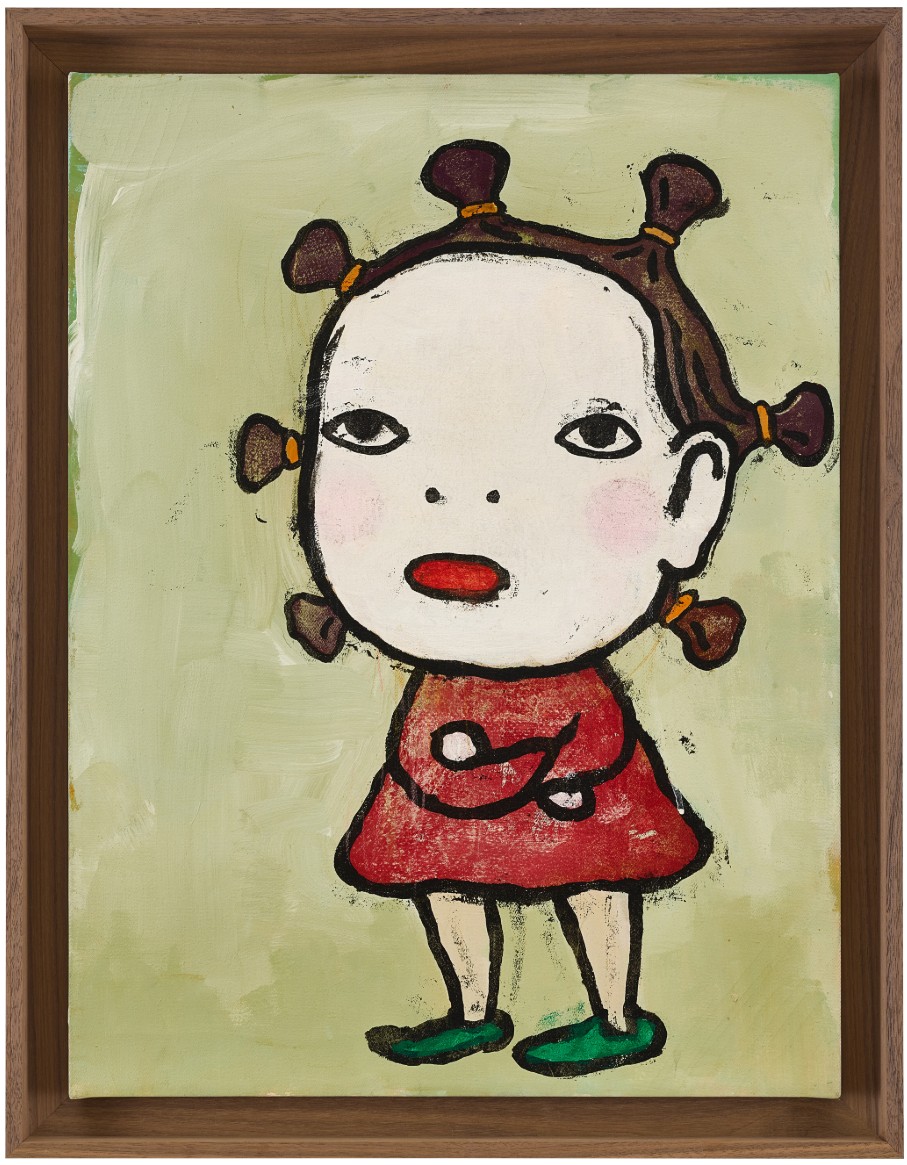
YOSHITOMO NARA (b. 1959)
Strange Girl, 1991
Acrylic on canvas
60.1 x 45.1 cm (23 5/8 x 17 3/4 inches)
Signed, titled and dated ’91 (on the reverse)
Emerging from the intersection of postwar Japanese culture and personal memory, Yoshitomo Nara’s early 1990s works mark a pivotal moment in his artistic development. Strange Girl (1991) and The Earth Cat (1992), created in close succession, encapsulate the emotional and visual language that would come to define his oeuvre; a duality of childlike innocence and emotional tension. These pieces showcase Nara’s signature artistic style while exploring deeper themes of resilience and the complexities of childhood. Both paintings are fresh to auction and have been in private hands for over three decades. Renowned for his ‘Angry Girls’, Nara captures the spirit of childhood with a unique twist. These subjects, with their large heads and captivating eyes, challenge conventional notions of cuteness, embodying a delightful mix of defiance, joy, and vulnerability. Inspired by his own experiences in post-war Japan and his love for punk rock, Nara expresses the complex emotions of youth, celebrating both the frustrations and the resilience of children.
Strange Girl (1991) becomes not just a portrayal of anger but an uplifting reminder of the strength and confidence that can emerge from the heart of childhood. The girl in a vibrant pink dress stands confidently against a pastel green backdrop. Her wide doe-like eyes and crossed arms convey a quaint yet assertive confidence. Nara often uses hairstyles to add emotional depth to his character. As seen in this painting, the distinctive hairdo with twisted buns and the girl’s crossed arms emphasize her playful demeanor. Each element further enhances the emotional undertone of the figure, aligning perfectly with Nara’s signature style.
The Earth Cat, 1992
Sotheby’s Hong-Kong: 28 September 2025
Estimated: HKD 1,500,000 – 2,500,000
Yoshitomo Nara 奈良美智 | The Earth Cat 地球貓 | Modern & Contemporary Day Auction | 2025 | Sotheby’s
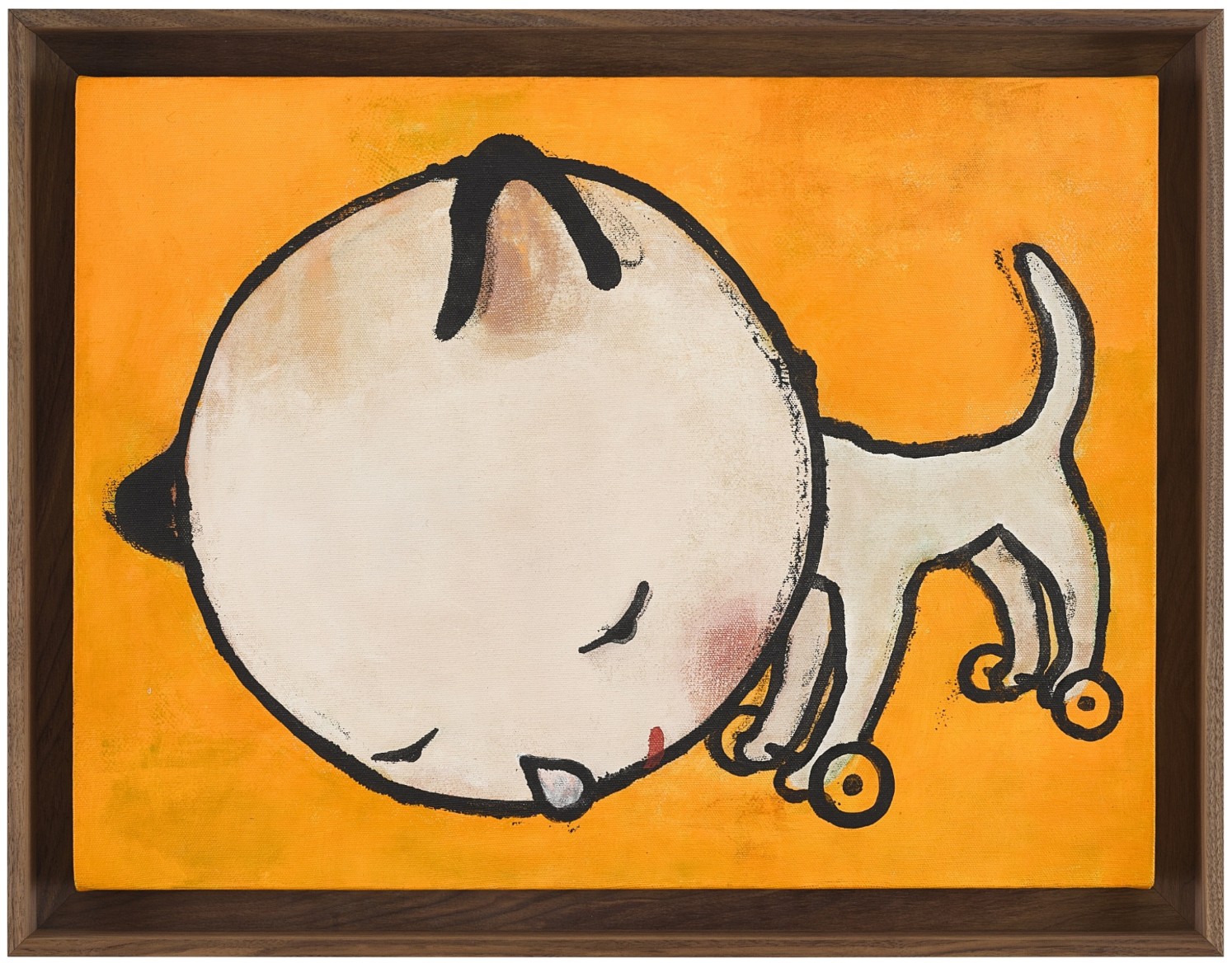
YOSHITOMO NARA (b. 1959)
The Earth Cat, 1992
Acrylic on canvas laid on board
45.7 x 60.4 cm (18 x 23 3/4 inches)
Signed, titled and dated ’92 (on the reverse)
In The Earth Cat, a blushing cat on wheels takes center stage against a brilliantly orange backdrop. This charming motif evokes memories of childhood pets and toys, while the wheels suggest mobility and a sense of rootlessness. This theme resonates deeply with Nara’s own life, as he spent twelve years in Germany, far from his native culture and language. During this time, he grappled with feelings of isolation and loneliness, mirroring the solitude of his youth in post-war Japan. Through his art, Nara reflects on childhood with a wistful fondness, channeling the emotions and memories that shape his identity. The expressions of his characters echo his introspective journey, capturing the bittersweet essence of growing up amidst uncertainty.
Together, Strange Girl and The Earth Cat convey a profound sense of emotional autonomy. Each piece offers a vision of selfhood, with child and animal serving as parallel avatars of introversion, instinct, and quiet resistance. Through his distinctive visual language, both paintings effectively articulate resonant themes in Nara’s oeuvre.
Pinky, 2000
Phillips Hong-Kong: 27 September 2025
Estimated: HKD 60,000,000 – 80,000,000
Yoshitomo Nara Modern & Contemporary Art Evening Sale
Untitled, 1990
Estimated: HKD 10,000,000 – 15,000,000
Mumps, 1993
Christie’s Hong-Kong: 26 September 2025
Estimated: HKD 8,000,000 – 12,000,000
YOSHITOMO NARA (B. 1959), Mumps | Christie’s
YOSHITOMO NARA (B. 1959)
Mumps, 1993
Acrylic on canvas
110×110 cm (43 1/4 x 43 2/4 inches)
Signed, signed again with artist’s signature, titled, inscribed and dated
‘Yoshitomo Nara ’93 110 x 110 cm “Mumps”’
(on the reverse)
Untitled 95-26, 1995
Sotheby’s Hong-Kong: 29 September 2025
Estimated: HKD 450,000 – 750,000
Yoshitomo Nara 奈良美智 | Untitled 95-26 無題 95-26 | Modern & Contemporary Day Auction | 2025 | Sotheby’s
YOSHITOMO NARA (b. 1959)
Untitled 95-26, 1995
Ink on paper
29.4 x 20.8 cm (11 5/8 x 8 1/4 inches)
Signed and dated 95 (lower right)
In the Floating World (set of 16), 1999
Phillips Hong-Kong: 28 September 2025
Estimated: HKD 1,200,000 – 2,200,000
Yoshitomo Nara Modern & Contemporary Art Day Sale
Kleine Taucherin auf der Wolke, 1996
Phillips Hong-Kong: 28 September 2025
Estimated: HKD 1,000,000 – 2,000,000
Yoshitomo Nara Modern & Contemporary Art Day Sale
‘”Kleine Taucherin auf der Wolke” Na [in Japanese] ’96’
Along the top edge
Absolut Vodka Bottle
(Fuck bout everything! But I try to go…), 2000
Estimated: HKD 700,000 – 1,200,000
Untitled, 1997
Phillips Hong-Kong: 28 September 2025
Estimated: HKD 500,000 – 700,000
Yoshitomo Nara Modern & Contemporary Art Day Sale
Untitled, 1997
Pencil, watercolor and colored pencil on paper
Untitled, 2008
Christie’s Hong-Kong: 26 September 2025
Estimated: HKD 900,000 – 1,500,000
YOSHITOMO NARA (B. 1959), Untitled | Christie’s
YOSHITOMO NARA (B. 1959)
Untitled, 2008
Pencil on paper
65.1 x 50.1 cm (25 5/8 x 19 3/4 inches)
Inscribed ‘LONE STAR GIRL’ (bottom edge)
Signed with artist’s signature and dated ’08’ (on the reverse)
Untitled, 2002
Christie’s Hong-Kong: 27 September 2025
Estimated: HKD 600,000 – 800,000
YOSHITOMO NARA (B. 1959), Untitled | Christie’s
YOSHITOMO NARA (B. 1959)
Untitled, 2002
Colored pencil on paper
29.7 x 21 cm (11 3/4 x 8 1/4 inches)
Takashi Murakami
Flower Parent and Child, 2021
Sotheby’s Hong-Kong: 28 September 2025
Estimated: HKD 8,000,000 – 16,000,000
TAKASHI MURAKAMI (b. 1962)
Flower Parent and Child, 2021
Fiber reinforced plastic, urethane paint, stainless steel, wood base
Flower parent: 252x147x94 cm (100 3/8 x 57 7/8 x 37 inches)
Child: 78x46x48 cm (70 3/4 x 18 1/8 x 18 7/8 inches)
Flower bouquet: dimensions variable.
Wood base: 15x196x178 cm. (5 7/8 x 77 1/4 x 70 1/8 inches)
Signed, doodled, inscribed color 2 ED, and dated 2021 on the neck base of Flower Parent
© 2021 Takashi Murakami./Kaikai Kiki Co., Ltd. All Rights Reserved.
Flower Sparkles!, 2021
Sotheby’s Hong-Kong: 28 September 2025
Estimated: HKD 3,000,000 – 5,000,000
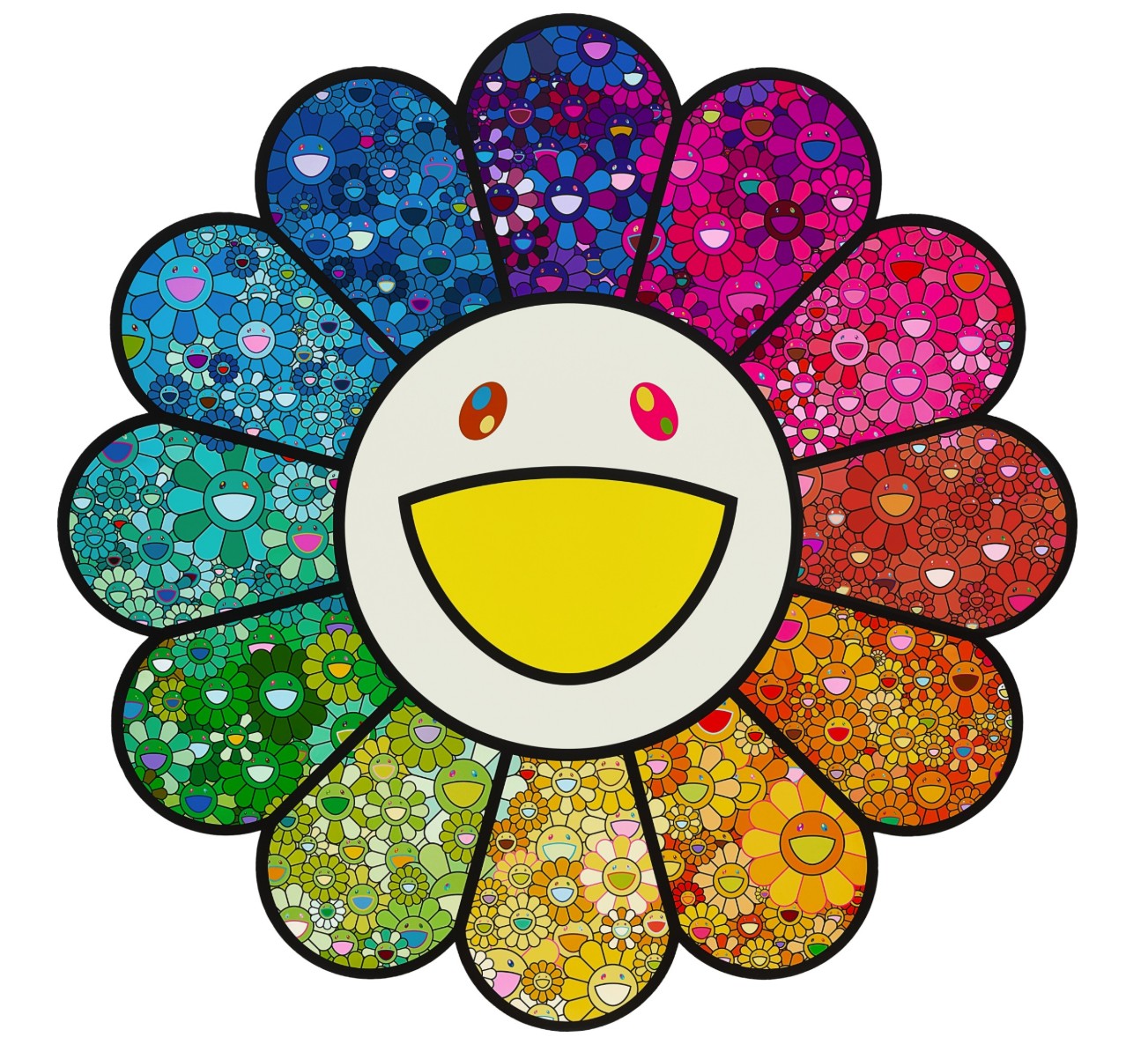
TAKASHI MURAKAMI (b. 1962)
Flower Sparkles!, 2021
Acrylic on canvas mounted on wood panel
150×150 cm (59×59 inches)
Signed and dated 2021 (on the reverse)
© 2021 Takashi Murakami/Kaikai Kiki Co., Ltd. All Rights Reserved
Flower Sparkles! blossoms as a paragon of Murakami’s Superflat philosophy – his visionary synthesis of high art, commercial culture, Eastern tradition, and Western modernism. The present work is an exceptional example from Murakami’s most iconic motif: the smiling flower. First introduced in 1995, these cheerful blossoms have become emblematic of Murakami’s global identity and are repeated, recontextualized, and reinvented across his oeuvre. The surface of Flower Sparkles! is populated by dazzling chromatic blooms, their petals arranged in kaleidoscopic harmony, their faces beaming with irrepressible joy. The work’s composition exemplifies the artist’s approach to flatness: its depth compressed, its perspective destabilized, its serial repetition producing an image at once decorative and conceptually charged. The flower, in Murakami’s hands, is never merely botanical – it is symbolic, cultural, and psychological.
“I spent nine years working in a preparatory school, where I taught the students to draw flowers […] At the beginning, to be frank, I didn’t like flowers, but as I continued teaching in the school, my feelings changed: their smell, their shape – it all made me feel almost physically sick, and at the same time I found them very “cute”. Each one seems to have its own feelings, its own personality.”
Trained in the rigorous traditions of Nihonga at Tokyo University of the Arts, Murakami sought to address what he perceived as their lack of resonance in a contemporary world defined by mass media. Out of this dissatisfaction emerged Superflat, a concept and aesthetic framework that dissolves hierarchies: between fine art and commercial design, between the institution and the market, merging disciplines into a cohesive visual experience. Murakami appropriates a central theme of Western modernism – the flatness of the pictorial surface, famously described by critic Clement Greenberg as the essence of modern painting – while infusing it with a distinctly Japanese sensibility, producing a work that is both culturally hybrid and visually striking. Here, this plurality is vividly on display: the purity of Edo-period ukiyo-e woodblock prints finds resonance alongside the bold repetition of Pop Art – recalling Warhol’s Flowers, Kusama’s polka dots, Koon’s balloon forms, and the graphic immediacy of Keith Haring, while also echoing the serial logic of Minimalism. At the same time, Murakami acknowledges a personal debt to American abstraction.
“There was a time when I really wanted to be a painter who could paint abstract paintings. I was imitating American expressionism or minimalism, and I was studying them and imitating them.”
Yet Murakami’s achievement is not imitation but inversion. Whereas 19th-century European painters such as Van Gogh, Monet, Gauguin incorporated Japanese motifs into Western painting, Murakami reverses the dynamic. Through works such as Flower Sparkles!, Japanese popular culture — anime, manga, kawaii aesthetics — becomes the lens through which Western modernism is reinterpreted and reabsorbed. His flowers are not delicate Impressionist motifs but mass-cultural emblems, multiplied, standardized, commodified, and yet infused with a distinctly Japanese sensibility that embraces cuteness (kawaii) alongside existential unease. Beyond its painterly qualities, the work belongs to a larger cultural project. The artist has famously extended his flowers into the cultural sphere at large and brought his iconic flowers to collaborations with Louis Vuitton, Supreme, Hublot, and Pharrell Williams, without compromising their artistic statements. In this, Murakami recalls his stated ambition:
“What you need to know is that I want to (a) approach the great accomplishments of Walt Disney, (b) add to that Duchamp’s humor and Warhol’s devilishness, and (c) do as Steve Jobs did and build a creative business that cannot be copied.”
By transforming the simple flower into a radiant field of sparkling delight, Flower Sparkles! crystallizes the artist’s enduring vision: that the playful and the profound, the decorative and the philosophical, the local and the global, coexist seamlessly in a single, radiant canvas. It is a work that embodies joy while asking deeper questions about how culture is made, consumed, and circulated in the twenty-first century. Both universally accessible and deeply rooted in Japanese aesthetics, Flower Sparkles! is a consummate example of Murakami’s ambition to create an art that cannot be confined — an art, as he has said, “that cannot be copied”.
The Double Helix, Reversal, 2001
Christie’s Hong-Kong: 26 September 2025
Estimated: HKD 8,000,000 – 12,000,000
TAKASHI MURAKAMI (B. 1962), The Double Helix, Reversal | Christie’s
TAKASHI MURAKAMI (B. 1962)
The Double Helix, Reversal, 2001
Acrylic on canvas mounted on wood (diptych)
each: 300×150 cm (118 1/8 x 59 inches)
Overall: 300×300 cm (118 1/8 x 118 1/8 inches)
Signed and dated ‘Takashi 01’ (on the reverse of the left panel)
Untitled, 2019
Christie’s Hong-Kong: 27 September 2025
Estimated: HKD 500,000 – 800,000
TAKASHI MURAKAMI (B. 1962), Untitled | Christie’s
TAKASHI MURAKAMI (B. 1962)
Untitled, 2019
Acrylic on canvas mounted on wood panel
78.3 x 63.4 cm (30 7/8 x 25 inches)
Signed with the artist’s signature and dated ‘2019’ (on the reverse)
Doraemon Sitting Up: Everywhere Door (Dokodemo Door), 2018
Phillips Hong-Kong: 27 September 2025
Estimated: HKD 1,500,000 – 2,000,000
Takashi Murakami Modern & Contemporary Art Evening Sale
I stare into your eye, 2020
Phillips Hong-Kong: 28 September 2025
Estimated: HKD 3,500,000 – 5,500,000
Takashi Murakami Modern & Contemporary Art Day Sale
MR.
Untitled, 2020-2022
Christie’s Hong-Kong: 26 September 2025
Estimated: HKD 3,000,000 – 5,000,000
MR. (B. 1969), Untitled | Christie’s
MR. (B. 1969)
Untitled, 2020-2022
Acrylic and silkscreen on canvas mounted on wood panel (diptych)
Each: 235 x 142.5 cm (92 1/2 x 56 1/8 inches)
Overall: 235×285 cm (92 2/2 x 112 1/4 inches)
Signed with artist’s signature and dated ‘Mr. 2022’ (on the side of the left panel)
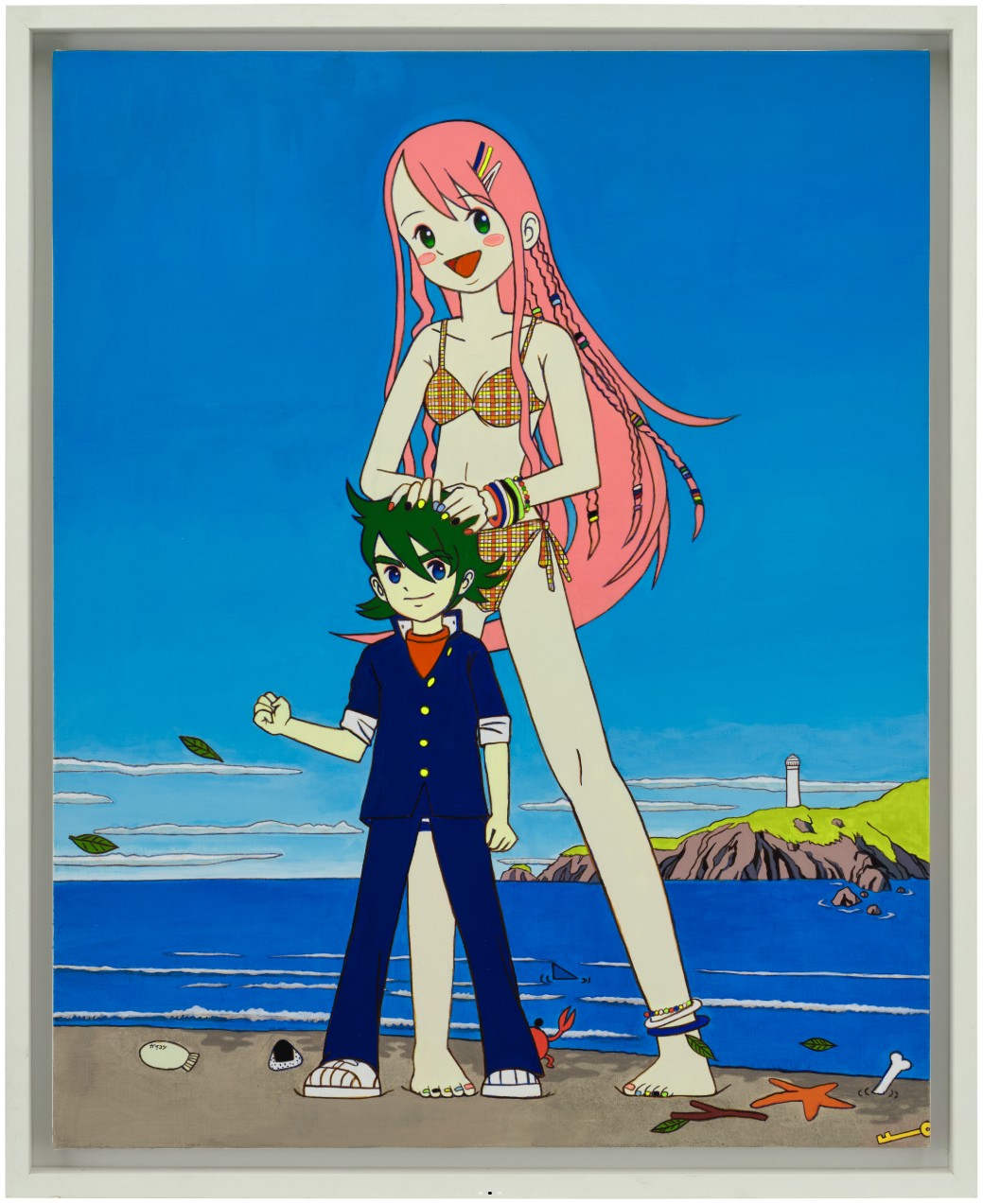
Naomi – Relaxing on Tropical Seashore, 2021
Christie’s Hong-Kong: 26 September 2025
Estimated: HKD 1,000,000 – 2,000,000
MR. (B. 1969), Naomi – Relaxing on Tropical Seashore | Christie’s
MR. (B. 1969)
Naomi – Relaxing on Tropical Seashore, 2021
Acrylic on canvas mounted on wood panel
120 x 125.6 cm (47 1/4 x 49 1/2 inches)
Signed and dated ‘Mr. 2021’ (on the overlap)
“Penyo-Henyo” Autumn Leaves Edition “Pluto”, 2004-2006
Christie’s Hong-Kong: 26 September 2025
Estimated: HKD 800,000 – 1,500,000
MR. (B. 1969), “Penyo-Henyo” Autumn Leaves Edition “Pluto” | Christie’s
MR. (B. 1969)
“Penyo-Henyo” Autumn Leaves Edition “Pluto”, 2004-2006
Fiberglass, steel, acrylic, resin, iron, and various fabrics sculpture
212 (H) x 80 x 86.5 cm (83 1/2 x 31 1/2 x 34 inches)
Signed and dated ‘Mr. 2006’ (on the underside)
Nostalgic Childhood Flying in the Night Sky, 2013
Sotheby’s Hong-Kong: 29 September 2025
Estimated: HKD 1,400,000 – 2,400,000
MR. (b. 1969)
Nostalgic Childhood Flying in the Night Sky, 2013
Acrylic on canvas
Diameter: 150 cm (59 inches)
Signed and dated 2013 (on the reverse)
© 2013 Mr./Kaikai Kiki Co., Ltd. All Rights Reserved.
Untitled, 2020-2021
Estimated: HKD 1,200,000 – 2,200,000
Untitled, 2020-2021
Estimated: HKD 1,200,000 – 2,200,000
Acrylic on canvas
80×100 cm (31 1/2 x 39 3/8 inches)
Signed and dated ‘mr. 2020’ on the overlap
Amy——I Want to Protect Our Earth, 2021
Estimated: HKD 1,000,000 – 2,000,000
The Pumpkin Wine (Carlos Ghosn, in Early Childhood), 2004
Phillips Hong-Kong: 28 September 2025
Estimated: HKD 400,000 – 600,000
Mr. Modern & Contemporary Art Day Sale
Internationally recognized for his vibrant and nostalgic aesthetic, the artist Mr. examines otaku subculture—the Japanese fan community for anime, manga, and video games. By incorporating such motifs into his works, he blurs the lines between high and low culture. Drawing visual cues from the Japanese culture of cuteness, Mr. first gained popularity in the early 2000s for his depictions of young female characters, which remain synonymous with his artistic identity today. These characters are rendered in the typical kawaii style—featuring sparkling wide eyes, colorful hair, and round, blush-tinted faces—designed to evoke moe, the Japanese pop-culture notion of feeling affection and protectiveness for fictional characters due to their cuteness and innocence. First unveiled in 2004 at his solo exhibition Mr. – Thank You for Your Hard Work, the current lot is imbued with rich layers of subcultural references, exemplifying Mr.’s otaku philosophy. It parodies the 1980s manga series The Kabocha Wine, a romantic comedy about a ‘Tiny Guy, Huge Girl’ couple—the relationship between the short, gruff, yet kind-hearted Shunsuke Aoba and the tall, sweet, and energetic Natsumi Asaoka. The composition mirrors evocatively and deconstructively the iconic cover of the manga, depicting a giant figure of a heroic-looking shojo (girl in Japanese) protecting a thin and weak shonen (boy in Japanese). Intriguingly, the male protagonist here is a cartoon image of the former president of Nissan Motor Carlos Ghosn—though controversial now for legal issues, a legendary figure for Mr.’s generation who was once highly praised for his achievements in the Japanese auto industry.
Liu Ye
Xiao Hong and Plum Blossom, 2003
Sotheby’s Hong-Kong: 28 September 2025
Estimated: HKD 6,000,000 – 8,000,000
LIU YE (b. 1964)
Xiao Hong and Plum Blossom, 2003
Acrylic and oil on canvas
60×45 cm (23 5/8 x 17 3/4 inches)
Signed in Chinese and Pinyin, and dated 2003 (lower left)
Famed for his whimsical paintings that often feature young girls in ambiguous settings, Xiao Hong and Plum Blossom is an exquisite example from Liu Ye’s deeply enchanting and hypnotic oeuvre. Executed in 2003, it stems from a series of portraits of famous Chinese cultural figures Liu Ye painted in the early 2000s, alongside other notable examples, including the novelist and writer Eileen Chang, the actress Ruan Lingyu, and the singer Zhou Xuan. Along with Ruan Lingyu (2002) and Zhou Xuan (2003), the present work was exhibited at Liu Ye’s seminal solo show at the Schoeni Art Gallery in Beijing in 2003. The protagonist of the present work recalls Xiao Hong (1911-1942), a Chinese writer whose novels explored her deep connection to her community and the sharing of emotions and experiences with the people around her. Her life story was elaborated in recent biopics titled Falling Flowers (2012) and The Golden Era (2014). By pairing his protagonist with the flowers of the Chinese plum, a tree that symbolizes endurance as it is the first tree to bloom in early Spring despite the cold, Liu makes a compelling reference to the writer’s resolute character during the most adverse times in life, as well as her astounding achievement in pioneering feminism in Chinese contemporary literature.
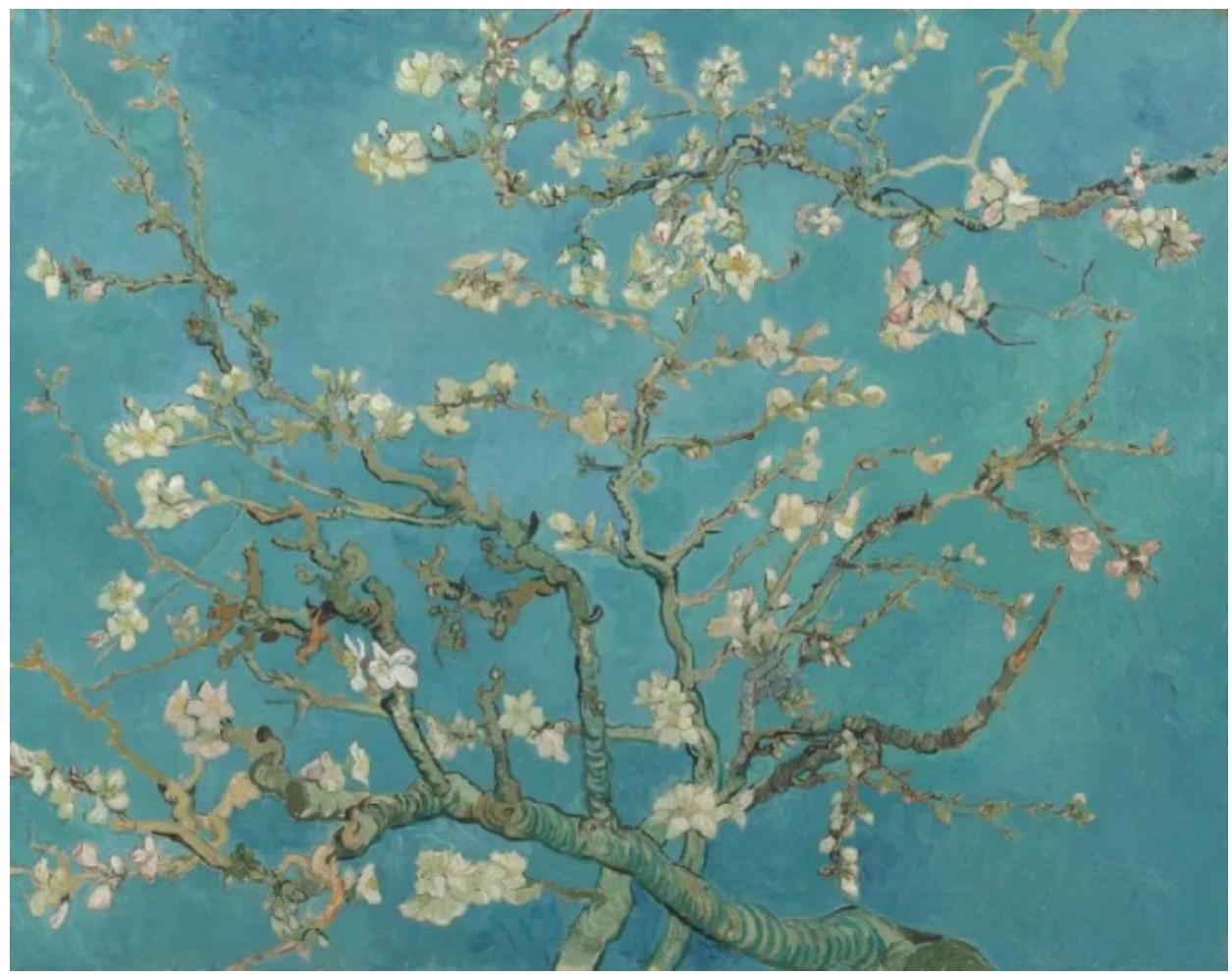
Vincent Van Gogh, Almond Blossom, 1890, Van Gogh Museum, Amsterdam
Liu Ye’s stark arrangement of the composition, with the protagonist and plum blossom tree positioned at polar diagonal opposites, is reminiscent of the dramatic and close-cropped compositions frequently used in Japanese Ukiyo-e prints. The absence of a horizon and the gently upward-glancing perspective find resemblance with Vincent Van Gogh’s Almond Blossoms. This playful spatial maneuvering, with the protagonist seemingly passing by the viewer while they admire the blooming branch, elevates the viewer’s role in experiencing the painting beyond that of a mere observer of a narrative, to one that actively participates.
Uncle Lei Feng, 2003
Sotheby’s Hong-Kong: 29 September 2025
Estimated: HKD 2,500,000 – 3,500,000
Liu Ye 劉野 | Uncle Lei Feng 雷鋒叔叔 | Modern & Contemporary Day Auction | 2025 | Sotheby’s
LIU YE (b. 1964)
Uncle Lei Feng, 2003
Acrylic on canvas
45.3 x 45.3 cm (17 7/8 x 17 7/8 inches)
Signed and dated 03 (lower right)
Miffy and Mondrian, 2014
Christie’s Hong-Kong: 26 September 2025
Estimated: HKD 800,000 – 1,200,000
LIU YE (B. 1964), Miffy and Mondrian | Christie’s
LIU YE (B. 1964)
Miffy and Mondrian, 2014
Watercolor and pencil on paper
76 x 111.5 cm (29 7/8 x 43 7/8 inches)
Signed in Chinese and dated ‘2014’ (lower right)
Yayoi Kusama
PUMPKIN [TWAQN], 2015
Christie’s Hong-Kong: 26 September 2025
Estimated: HKD 22,000,000 – 32,000,000
YAYOI KUSAMA (B. 1929), PUMPKIN [TWAQN] | Christie’s
YAYOI KUSAMA (B. 1929)
PUMPKIN [TWAQN], 2015
Acrylic on canvas
112 x 145.5 cm (44 1/8 x 57 1/4 inches)
Signed, titled, and dated ‘TWAQN PUMPKIN YAYOI KUSAMA 2015’ (on the reverse)
Reach Up to the Universe, Dotted Pumpkin (Vermilion), 2010
Christie’s Hong-Kong: 26 September 2025
Estimated: HKD 9,000,000 – 15,000,000
YAYOI KUSAMA (B. 1929), Reach Up to the Universe, Dotted Pumpkin (Vermilion) | Christie’s
YAYOI KUSAMA (B. 1929)
Reach Up to the Universe, Dotted Pumpkin (Vermilion), 2010
Painted aluminum sculpture
200 (H) x 150 x 150 cm (78 3/4 x 59 x 59 inches)
Signed ‘Yayoi Kusama’ (on the side)
Incised ‘PA005 2010⁄8’ (on the bottom)
Pumpkin (C), 1991
Christie’s Hong-Kong: 26 September 2025
Estimated: HKD 13,800,000 – 18,800,000
YAYOI KUSAMA (B. 1929), Pumpkin (C) | Christie’s
YAYOI KUSAMA (B. 1929)
Pumpkin (C), 1991
Acrylic on canvas
91 x 72.7 cm (35 7/8 x 28 5/8 inches)
Signed and dated ‘Yayoi Kusama 1991’
Titled in Japanese (on the reverse)
INFINITY-NETS (SFOOUY), 2017
Estimated: HKD 10,000,000 – 15,000,000
INFINITY-NETS [HOAWD], 2014
Christie’s Hong-Kong: 26 September 2025
Estimated: HKD 6,000,000 – 9,000,000
YAYOI KUSAMA (B. 1929), INFINITY-NETS [HOAWD] | Christie’s
YAYOI KUSAMA (B. 1929)
INFINITY-NETS [HOAWD], 2014
Acrylic on canvas
97 x 130.3 cm (38 1/4 x 51 1/4 inches)
Signed, titled and dated ‘HOAWD INFINITY-NETS YAYOI KUSAMA 2014’ (on the reverse)
Infinity-Nets (OQ4), 2000
Sotheby’s Hong-Kong: 28 September 2025
Estimated: HKD 13,000,000 – 18,000,000
REPEAT SALE
Sotheby’s London: 7 March 2018
Estimated: GBP 800,000 – 1,200,000
GBP 1,269,000
(#37) YAYOI KUSAMA | Infinity Nets (OQ4)
YAYOI KUSAMA (b. 1929)
Infinity-Nets (OQ4), 2000
Acrylic on canvas
162 x 130.4 cm (63 3/4 x 51 3/8 inches)
Signed, titled and dated 2000 (on the reverse)
Oil No. 19, 1997
Sotheby’s Hong-Kong: 28 September 2025
Estimated: HKD 3,500,000 – 7,000,000
Yayoi Kusama 草間彌生 | Oil No. 19 油畫19號 | Modern & Contemporary Evening Auction | 2025 | Sotheby’s
YAYOI KUSAMA (b. 1929)
Oil No. 19, 1997
Oil on canvas
65.3 x 53 cm (25 3/4 x 20 7/8 inches)
Signed, titled, and dated 1997 on the reverse
Black Butterflies, 1989
Christie’s Hong-Kong: 26 September 2025
Estimated: HKD 3,800,000 – 5,800,000
YAYOI KUSAMA (B. 1929), Black Butterflies | Christie’s
YAYOI KUSAMA (B. 1929)
Black Butterflies, 1989
Acrylic on canvas
38 x 45.5 cm (14 3/4 x 17 7/8 inches)
Signed and dated ‘Yayoi Kusama 1989’
Titled in Japanese (on the reverse)
Visionary Wave Crest, 1978
Phillips Hong-Kong: 28 September 2025
Estimated: HKD 1,500,000 – 2,500,000
Yayoi Kusama Modern & Contemporary Art Day Sale
Further signed, titled and dated
‘YAYOI KUSAMA [in English and Kanji] “maboroshi no hatou” [in Japanese] 1978’
On the reverse
Hat (3 works), 1985
Christie’s Hong-Kong: 26 September 2025
Estimated: HKD 1,500,000 – 2,500,000
YAYOI KUSAMA (B. 1929), Hat (3 works) | Christie’s
YAYOI KUSAMA (B. 1929)
Hat (3 works), 1985
Mixed media sculpture (3)
Yellow hat: 6 (H) x 11 x 11 cm (2 3/8 x 4 3/8 x 4 3/8 inches)
Red hat: 5.8 (H) x 11 x 11 cm (2 1/4 x 4 3/8 x 4 3/8 inches)
White hat: 6 (H) x 11 x 11.5 cm (2 3/8 x 4 3/8 x 4 1/2 inches)
Signed and dated ‘1985 Yayoi Kusama’; titled in Japanese (on the underside of each hat)
Pumpkin, 1999
Sotheby’s Hong-Kong: 28 September 2025
Estimated: HKD 2,400,000 – 3,200,000
Yayoi Kusama 草間彌生 | Pumpkin 南瓜 | Modern & Contemporary Day Auction | 2025 | Sotheby’s
YAYOI KUSAMA (b. 1929)
Pumpkin, 1999
Acrylic on canvas laid on wood, mixed media
25 x 22.6 x 20.1 cm (9 7/8 x 8 7/8 x 7 7/8 inches)
Signed, titled in Japanese and dated 1999 (on the underside)
At the brink of the third millennium, Yayoi Kusama found herself at the crossroads of a new era for the avant-garde. In 1999, the Museum of Contemporary Art in Tokyo hosted a showing of Love Forever: Yayoi Kusama, 1958–1968, accompanied by In Full Bloom: Yayoi Kusama, Years in Japan, two major retrospectives comprising over 200 works from the artist’s practice before and after her time in New York. Executed in the same year is Pumpkin, an accumulation of the artist’s oeuvre across five decades up till that point, a testament to her pioneering creative vision and style.
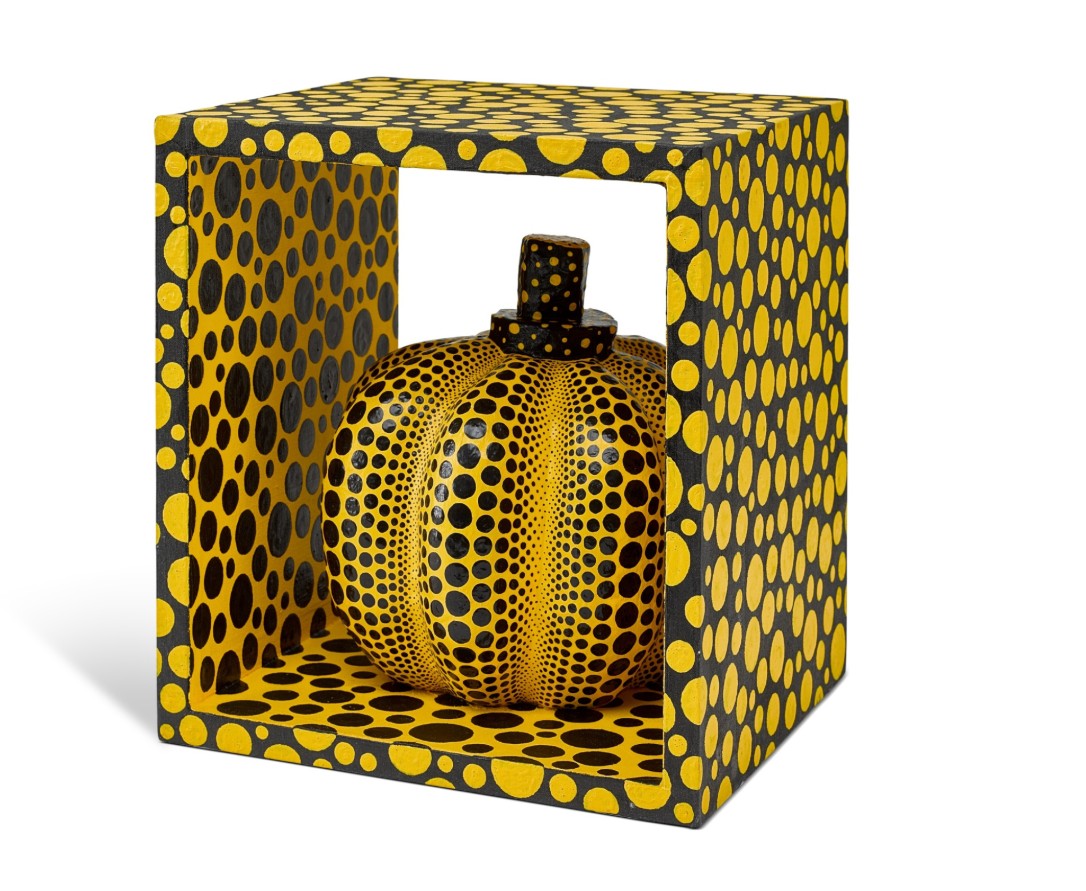
Fully hand-painted in her signature pattern and palette, Pumpkin stands as an exceptional example of Kusama’s prolific small-scale pumpkin sculptures. Core to her artistic legacy, the pumpkin is deeply connected to the artist’s past growing up near a seedling farm in Matsumoto, Nagano, where the plump gourd was commonly found. Voluptuous and unyielding, Kusama found solace in the sturdiness of the pumpkin. The iconic motif began to emerge as early as the 40s, with her first sculptures created in the 70s. During the 1991 Venice Biennale, the artist personally handed out small pumpkins to visitors, sparking the spread of the pumpkin as her own artistic symbol and allowing it to grow as she herself gained increased exposure. Presently, the pumpkin has transcended to be one of the most universally recognizable images in contemporary art and visual media, considered as the artist’s alter ego with various renditions of sizes, colours and mediums which aptly represented her growth and development of her artistic journey.
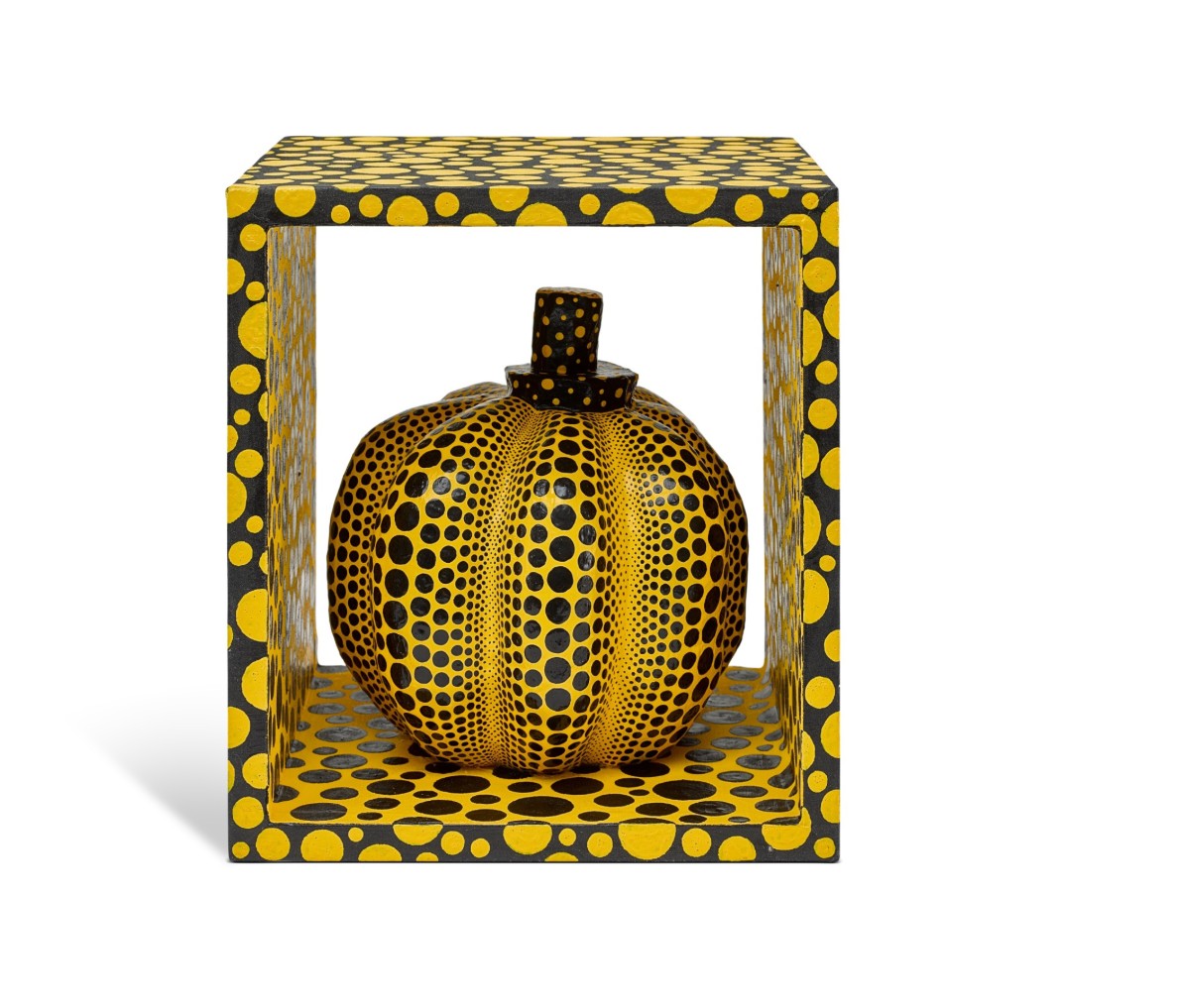
Encompassing the precious pumpkin is a hand-painted box, reminiscent of the structure of works by two of Kusama’s dear muse and friends during her time in New York, American artists Donald Judd and Joseph Cornell. Kusama and Judd met in 1959 and, both finding common ground as poor emerging artists trying to find their footing and experiment with their art in New York city, formed an intimate and profound friendship. As neighbors, the two worked and lived closely with each other, with Kusama partly influencing Judd to create his box pieces when the latter was lacking inspiration, to which the present piece echoes in its structural form. Kusama then met Joseph Cornell in 1962, who, as an older, more experienced and established presence, highly cared for and supported her personal and artistic growth. An unlikely bond between two artists from opposite ends of the world, their connection too left an undeniable mark on each other’s lives. Kusama considers her relationship with Cornell platonically passionate, and once sent him a note, “You & me—birds of a feather.” Following his death in 1972 and subsequently Judd’s in 1994, the present pumpkin takes shape with an encompassing box, tracing the iconic structure of their respective frame and box sculptures, suggesting a homage to two extremely influential figures during a pivotal time of Kusama’s life.
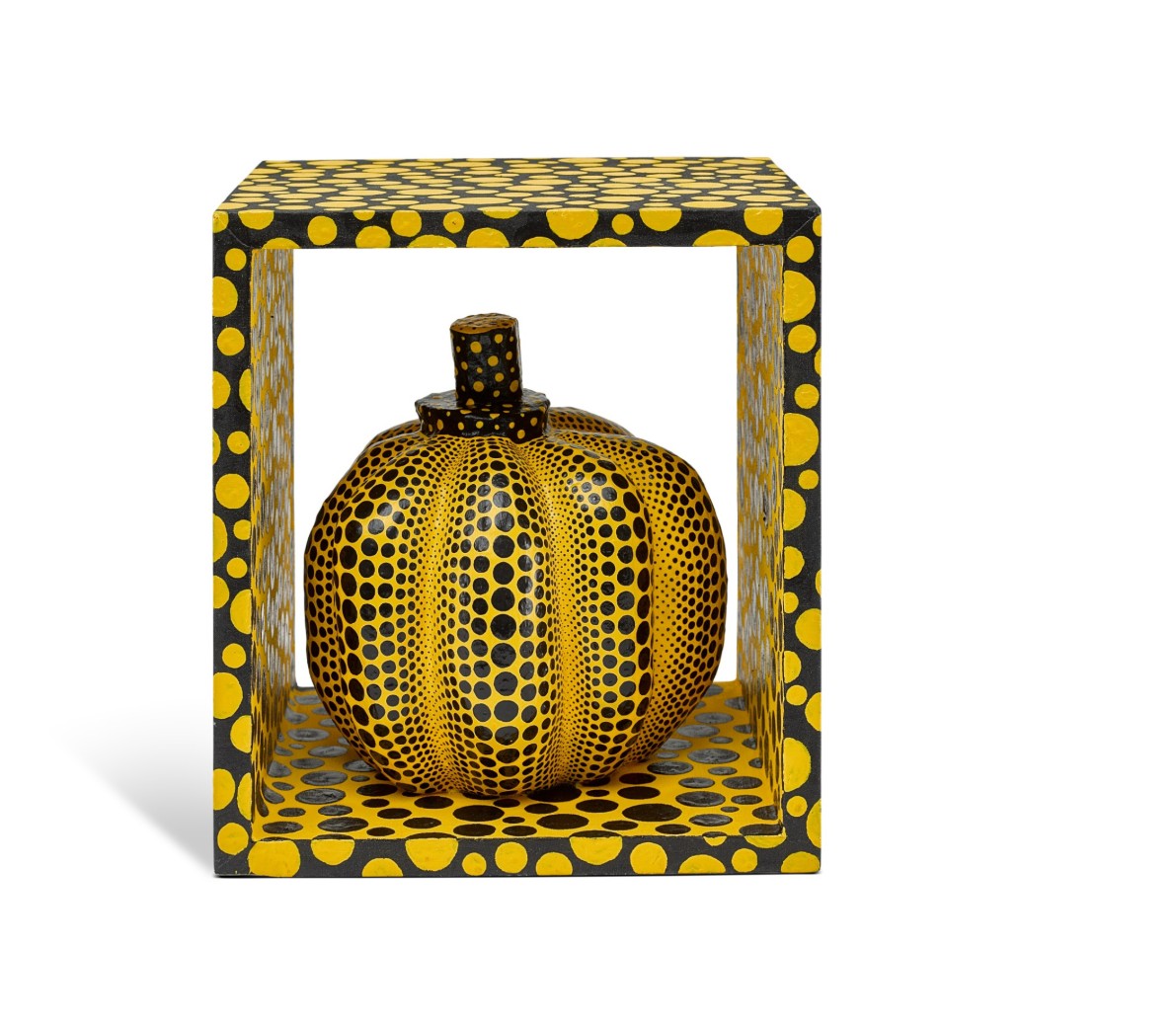
Kusama’s self-obliteration is also a significant and highly personal visual and philosophical theme throughout her artistic development. The encapsulating box and the pumpkin within are meticulously painted with obliteration dots through inverting palettes of black and yellow, interplaying the visual dimensionality of the piece and transforming the dotted box into a separate spatial plane — a unique self-obliterated room. Originating from Kusama’s past struggle with her visions since childhood and later struggles with her mental health, the obliteration of matter and the concept of self majorly defined her artistic language. At once aware of her identity and the surrounding space, the pumpkin springs into life as a self-aware subject, reflecting Kusama’s interpretation of mortal existence and the ever-changing nature of the universe, ultimately making her own spiritual peace within it.
“Polka dots are the symbol of the spiritual peace and love, and the starting point of all of [my] hopes and thoughts. While there is Dots, there is Kusama.”
As one of the most recognized and respected faces of contemporary art, Yayoi Kusama has embodied the avant-garde across over eight decades of relentless breakthrough and creation ranging from pumpkins and nets to breathtaking installations. Nesting within the obliteration box, Pumpkin combines Kusama’s profound identity as an artist who found salvation and resilience in her art amidst her struggles and chaos, a diaristic witness of her inspiring development and artistry.
Ashtray, 1981
Sotheby’s Hong-Kong: 29 September 2025
Estimated: HKD 2,500,000 – 5,000,000
Yayoi Kusama 草間彌生 | Ashtray 煙灰缸 | Modern & Contemporary Day Auction | 2025 | Sotheby’s
YAYOI KUSAMA (b. 1929)
Ashtray, 1981
Acrylic on canvas
31.5 x 41 cm (12 3/8 x 16 1/8 inches)
Signed in English, titled in Japanese and dated 1981 (on the reverse)
Green Earring, 1977
Christie’s Hong-Kong: 26 September 2025
Estimated: HKD 900,000 – 1,500,000
YAYOI KUSAMA (B. 1929), Green Earring | Christie’s
YAYOI KUSAMA (B. 1929)
Green Earring, 1977
Mixed media on paper mounted on original backing board
65.8 x 51.5 cm (25 7/8 x 20 1/4 inches)
Signed and dated ‘Yayoi Kusama 1977’ (lower right)
Signed and dated ‘Yayoi Kusama 1977’
Titled in Japanese (on the original backing board)
Untitled (hand-painted Levi’s Jean Jacket), 1971
Estimated: HKD 550,000 – 850,000
Women’s World, 1977
Estimated: HKD 500,000 – 700,000
Further signed, titled and dated
‘Yayoi Kusama [in Japanese and English] “Women’s World” [in Japanese] 1977’
On the reverse
Ground, 1953
Estimated: HKD 400,000 – 600,000
Ground, 1953
Pastel, watercolor and ink on paper
Signed and dated ‘YAYOI KUSAMA 1953 1953 KUSAMA’ lower right
Roy Lichtenstein
Vista with Bridge, 1996
Sotheby’s Hong-Kong: 28 September 2025
Estimated: HKD 28,000,000 – 35,000,000
HKD 30,875,000 / USD 3,968,510
ROY LICHTENSTEIN (1923 – 1997)
Vista with Bridge, 1996
Acrylic, oil and graphite on canvas
75 x 178 1/4 inches (190.5 x 452.8 cm)
Signed and dated ’96 (on the reverse)
Majestic and tranquil, Vista and Bridge is a paragon of the final series of Roy Lichtenstein’s prolific oeuvre, one that embodies the extraordinary marriage of cross-cultural influences, exacting painterly skill and superlative Pop sensibility that defines the best of the artist. Executed in 1996, the present work is part of Landscapes in the Chinese Style, a series created between 1991 and 1997, comprising twenty-one paintings, two prints, two sculptures, and numerous preparatory works including drawings, sketches and collages. Testament to the importance of this late body of work, key examples reside in the permanent collections of institutions such as the Hirshhorn Museum and Sculpture Garden, Washington, D.C., and The Metropolitan Museum of Art, New York. Vista and Bridge has been featured in numerous international exhibitions, including the Louisiana Museum of Art, the London Hayward Gallery, Museo Nacional Centro de Arte Reina Sofía in Madrid, and Museum Ludwig in Cologne, to name but a few.
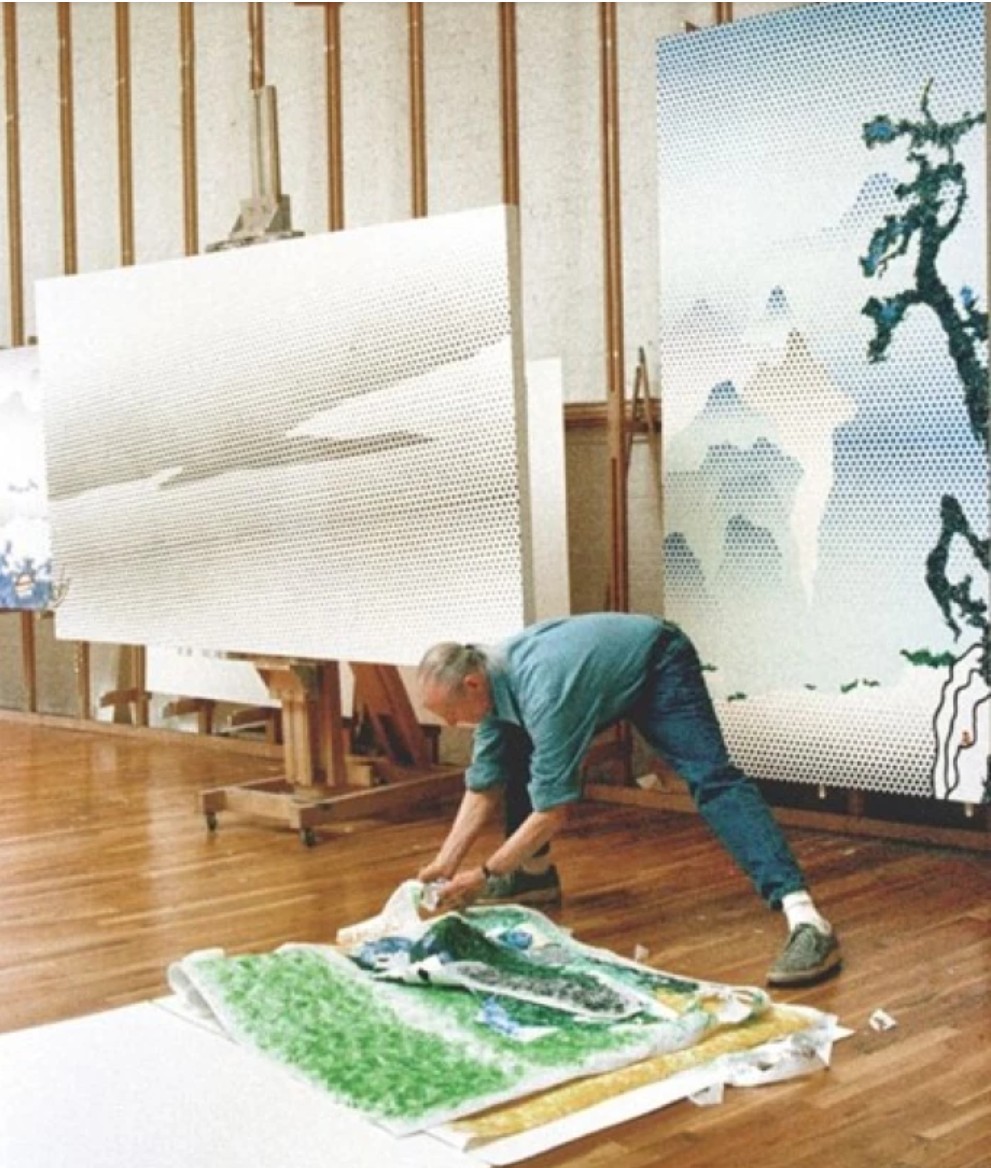
Artist in his studio © Estate of Roy Lichtenstein
Lichtenstein’s interest in Chinese art dates back to the late 1940s, when he was stationed in London during World War II. The twenty-one-year-old Lichtenstein wrote home to his parents:
“I bought a book on Chinese painting, which I could have gotten in New York half the price. I’ll probably send it home with my collection of African masks, as my duffle bag now weighs more than I do, with all the art supplies.”
Later, when Lichtenstein returned to Ohio State University to complete his undergraduate and graduate degrees after the war, he enrolled in classes on East Asian art history. Decades later, it was a pivotal moment in 1994 that would trigger Lichtenstein’s return to the landscape genre in 1995. His encounter with the monotype and pastel landscapes of Edgar Degas at the Metropolitan Museum of Art, New York, inspired him to explore the representational potential of monochromatic shapes, using his signature Ben-Day dots to render serene landscapes that play with perceptions of depth and scale.
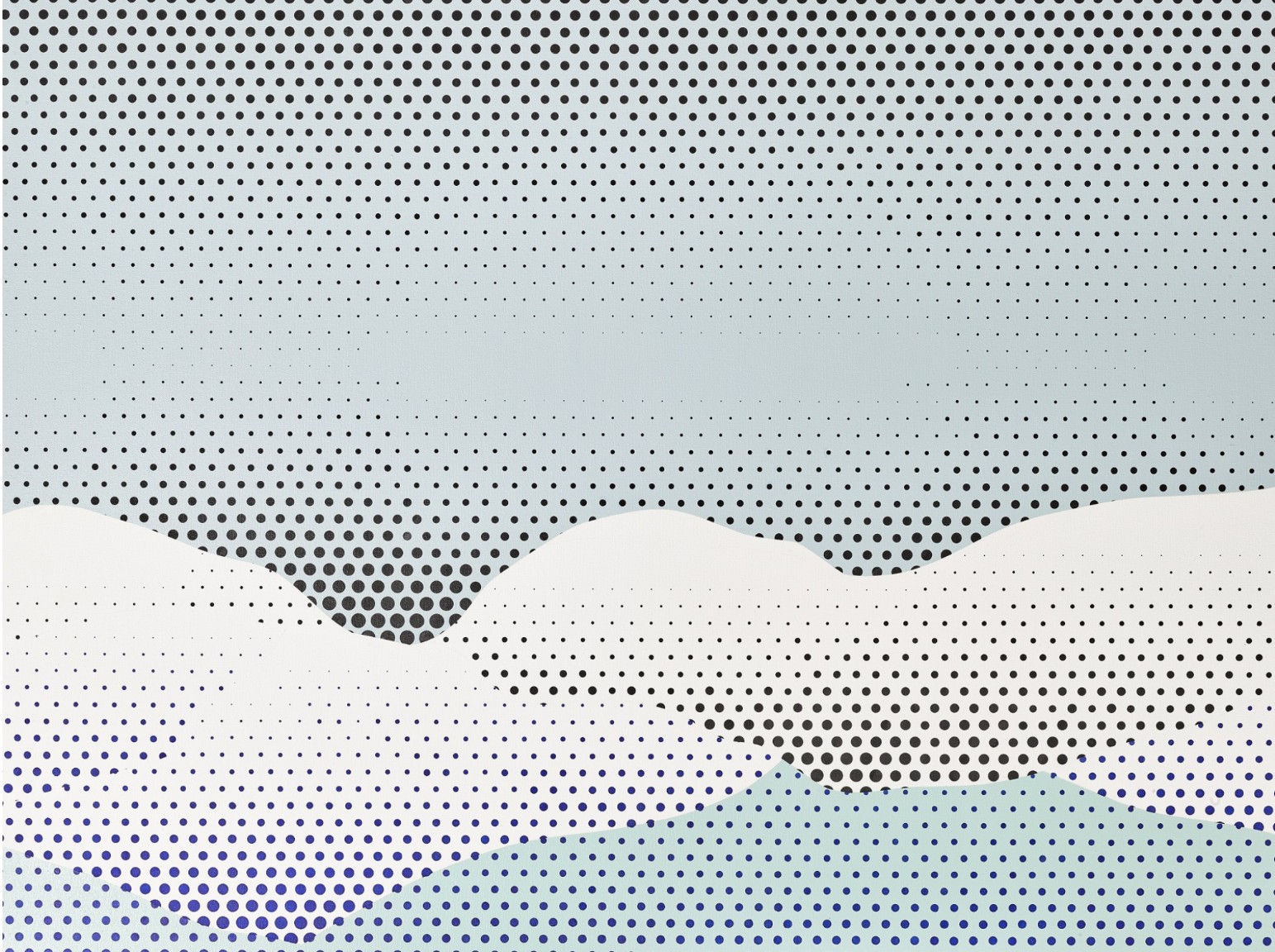
“I am thinking about something like Chinese landscapes with mountains a million miles high, and a tiny fishing boat—something scroll-like, and horizontal with graduated dots making these mountains, and dissolving into mist and haze. It will look like Chinese scroll paintings, but all mechanical.”
Summarized in this horizontal vista, akin to a rolling scroll, are all the stereotypes associated with Chinese landscape painting in the West. The continuous, crescent-shaped mountain range recedes into the billowing clouds and mist, while three figures cross a bridge at the foreground, flanked by sponged-on plantations.
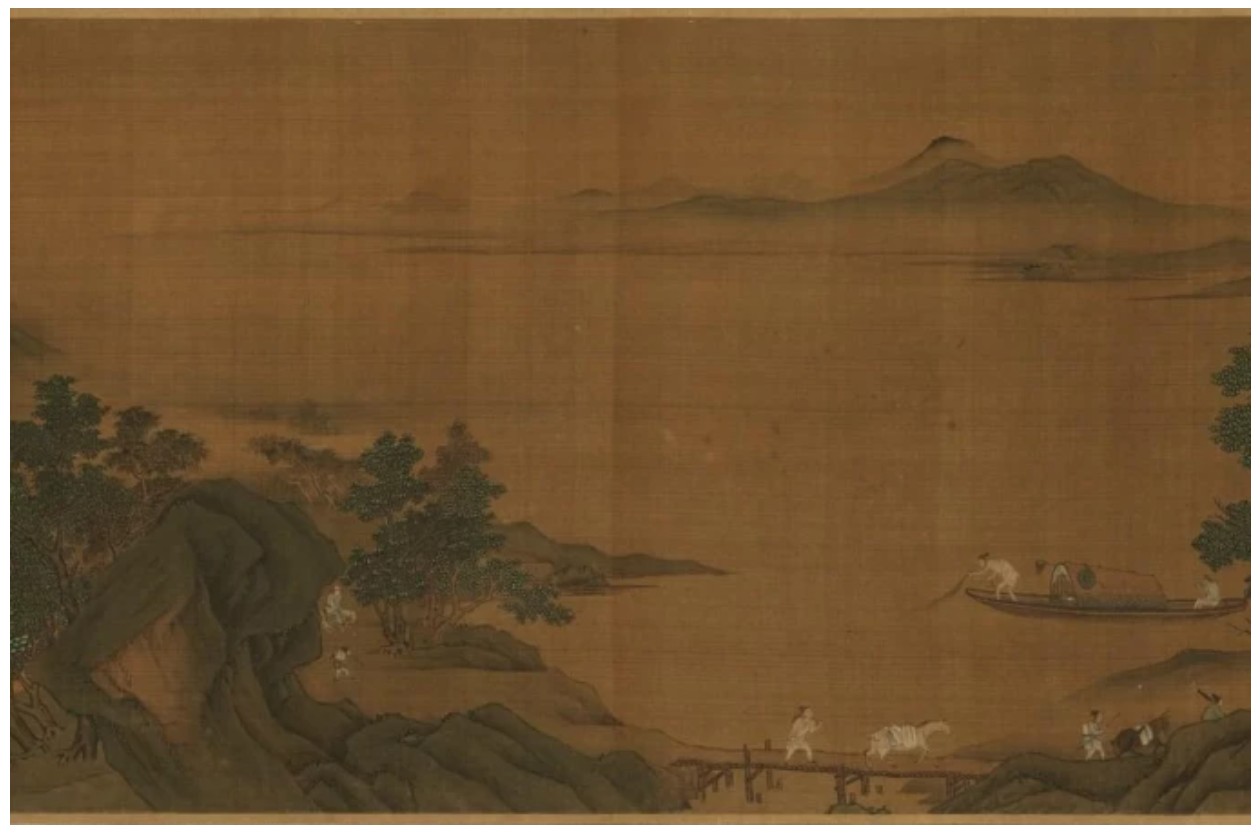
Song Yanwen, Travelling in the Autumn Mountains, 1195, Collection of National Palace Museum, Taipei . An example of one-corner composition is a distinctive feature of Southern Song landscapes, which the Vista and Bridge recalls.
Vista and Bridge recalls the transient landscapes painted by Ma Yuan, a master from the Southern Song Dynasty who is known for his innovative compositions and use of negative space, such as the distinctive one-corner composition, which involves placing the main subject of the painting in one corner of the composition, leaving the rest of the space empty or filled with mist or water. The vastness of nature in both Song works and Lichtenstein’s renditions is heightened by the inclusion of tiny details such as a pine tree, a bridge or a scholar’s rocks. Lichtenstein’s virtuosity is reflected in his meticulous mastery of the technical approach, which recreates the ephemeral quality achieved by traditional Chinese brushwork through the varying sizes and densities of his Ben-Day dots.
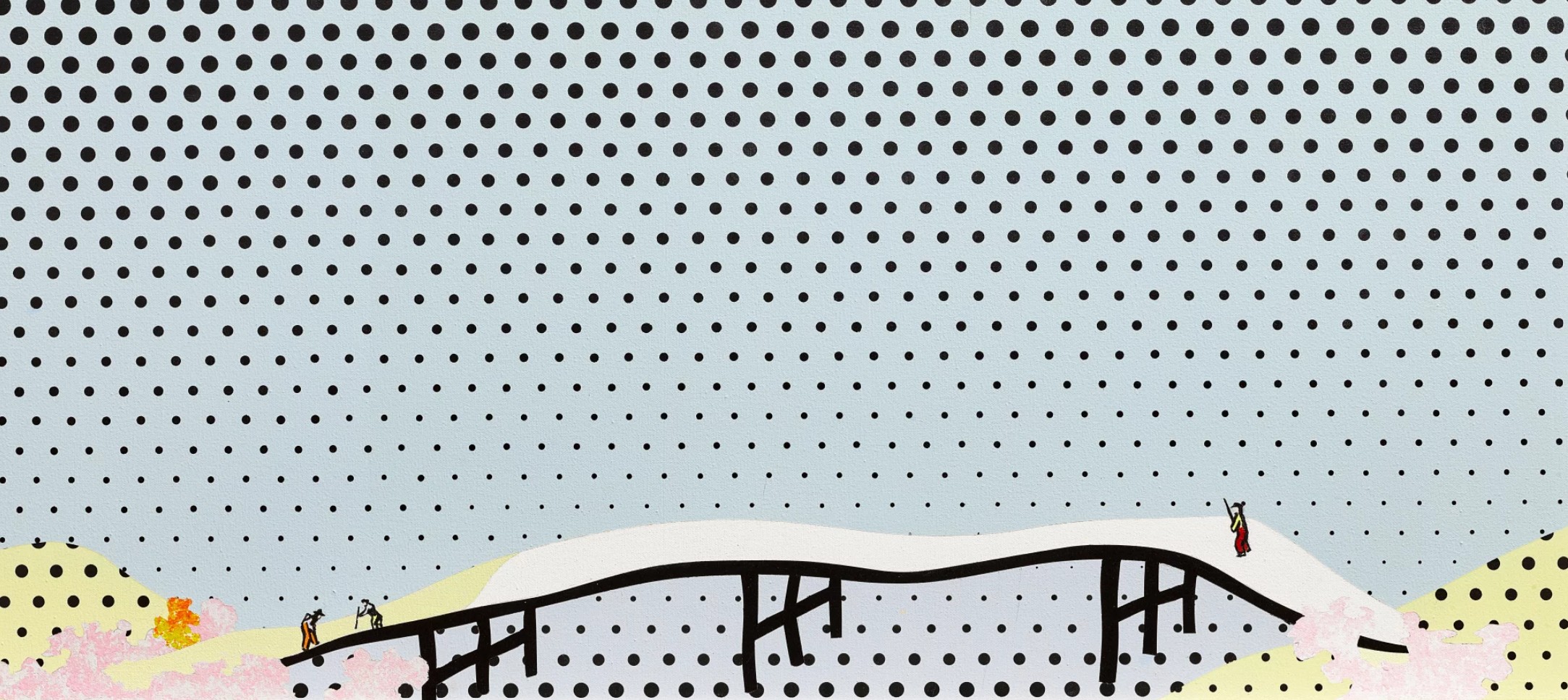
“I think [the Chinese landscapes] impress people with having somewhat the same kind of mystery [historical] Chinese paintings have, but in my mind it’s a sort of pseudo-contemplative or mechanical subtlety. . . . I’m not seriously doing a kind of Zen-like salute to the beauty of nature. It’s really supposed to look like a printed version.”
Throughout his career, Lichtenstein engaged with the work of other artists and cultures, continually reinterpreting historical styles and traditions. From comic books and advertising to Cubism and Expressionism, Lichtenstein’s oeuvre is marked by his ability to interpret and reimagine images through his signature visual lexicon. His landscapes, a recurring theme, culminated in this remarkable final series. Landscapes in the Chinese Style continues this lifelong engagement, honoring a revered visual tradition whilst continuing to push his career into new grounds. The present work demonstrates the culmination of Lichtenstein’s prolific practice and how his understanding of the past helped him create one of the most technically ambitious series of his oeuvre.
Bonsai Tree (Study), 1992
Sotheby’s Hong-Kong: 28 September 2025
Estimated: HKD 2,000,000 – 3,000,000
HKD 3,048,000 / USD 391,775
ROY LICHTENSTEIN (1923 – 1997)
Bonsai Tree (Study), 1992
Cut painted paper, acrylic, marker and graphite on foamcore
60 x 40 1/8 inches (152.4 x 101.9 cm)
Signed and dated ‘92 (on the reverse)
A product of a half-century-long fascination with classical Chinese art, Roy Lichtenstein’s Bonsai Tree (Study) is a superlative example of Lichtenstein’s enduring synthesis of cross-cultural influences through his iconic Pop vernacular. Elegant and serene, Lichtenstein’s Bonsai Tree (Study) evokes the historic Japanese practice of cultivating serpentine trees known as Bonsai or the similar Chinese tradition of Penjing. Meticulously executed, Lichtenstein’s masterful collage predates the artist’s celebrated sculpture of the same title. In the 1990s, Lichtenstein embarked on his final two major series, Landscapes in the Chinese Style and Interiors, through both of which he continued his career-long investigation and reinterpretation of art history and contemporary culture within his Pop idiom. A synthesis of both series, the present work draws upon the artist’s fascination with Eastern motifs and his exploration of the contemporary interior. Lichtenstein’s pursuit of East Asian visual tropes through his Landscapes in the Chinese Style series developed in parallel with his iconic Interiors series. Both series would occupy the artist in his final decade, representing the artist’s continued quest for reinvention and reflection in his mature practice. The present work sits at the nexus of these two seminal series. In 1991, Lichtenstein developed a series of paintings, collages, works on paper and sculptures inspired by the visual tropes of East Asian art in the Western imagination. The image of the bonsai tree first appears in Lichtenstein’s oeuvre in 1991 in his painting, Interior with Bonsai Tree. In 1992, Lichtenstein returned to the subject, executing the present work, which predated a sculpture edition of the same title.
Water Lilies with Japanese Bridge, 1992
Sotheby’s Hong-Kong: 28 September 2025
Estimated: HKD 3,000,000 – 5,000,000
HKD 7,620,000 / USD 979,435
ROY LICHTENSTEIN (1923 – 1997)
Water Lilies with Japanese Bridge, 1992
Screenprinted enamel in colors on processed and swirled stainless steel, with painted aluminum frame
Overall: 83 1/4 x 57 3/4 inches (211.3 x 146.7 cm)
Signed in felt-tip pen, dated ’92 and inscribed AP 5/7 (on the verso)
This work is number 5 of 7 artist’s proofs aside from the numbered edition of 23
Reflections on Girl (Study), circa 1989
Sotheby’s Hong-Kong: 28 September 2025
Estimated: HKD 2,000,000 – 3,000,000
HKD 3,175,000 / USD 408,100
ROY LICHTENSTEIN (1923 – 1997)
Reflections on Girl (Study), circa 1989
Colored pencil and graphite on paper
Image: 4 1/2 x 5 5/8 inches (11.4 x 14.3 cm)
Sheet: 10 x 13 3/4 inches (25.4 x 34.9 cm)
Reflections on Girl (Study) is an exquisite work on paper from a suite of seven prints from the Reflections series that Lichtenstein prepared at Tyler Graphics in Mount Kisco, New York ,between 1989-90.. In each of the Reflections prints, the subject is partly obscured by semi-abstract blocks of color and bold diagonal lines which evoke the effect of a reflective or transparent surface, as if the viewer is observing the work through glass or reflected in another surface. Lichtenstein developed this idea when he attempted to photograph a print by Robert Rauschenberg that was under glass, and the reflections obscured the image. He then expanded this concept to a group of paintings he began in 1988 and continued to work on until 1993, during which he revisited some of his earlier works.
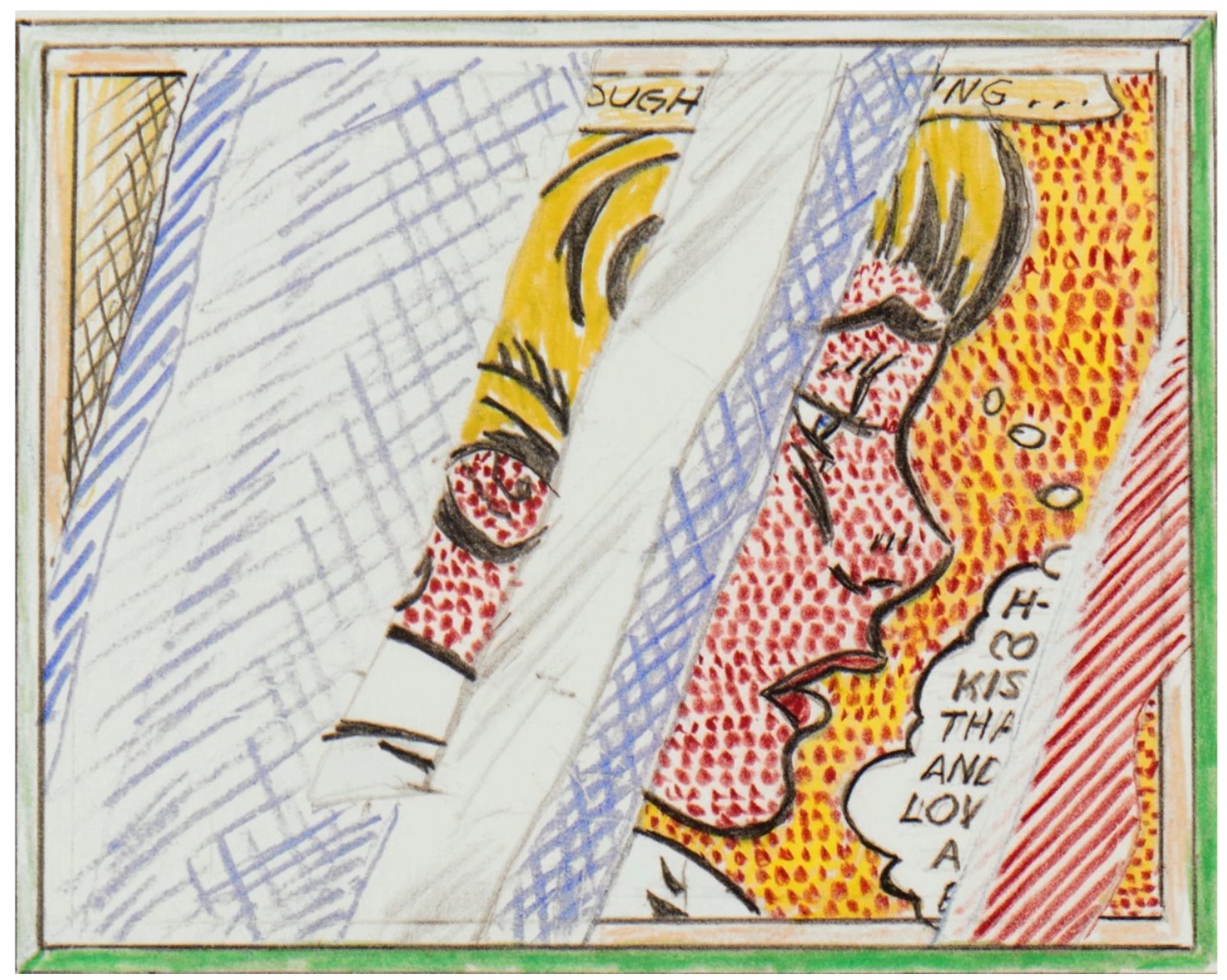
In making the screenprints in the Reflections series, Lichtenstein appropriated imagery from his past works, and particularly from his early comic book sources, returning to subject matter he had addressed in the 1960s as he gained prominence in the American Pop art scene. Reflections on Girl (Study) harkens back to Lichtenstein’s iconic early comic-book heroines, rendered in bold lines and Ben Day dots. In the present work, Lichtenstein draws inspiration from a 1960s edition of the comic book ‘Falling in Love’. Lichtenstein reimagined the composition and palette, obscuring the original text–‘Fire seethed through my body … fanning … spreading’ and ‘H-He couldn’t kiss me that way and be love someone else!’. – with his abstracted reflections. Lichtenstein’s Reflections not only literally illustrate reflections, but also exemplify Lichtenstein’s process of reflecting Pop culture and art history through his work.
Scholar’s Rock, 1997
Sotheby’s Hong-Kong: 28 September 2025
Estimated: HKD 1,000,000 – 1,500,000
HKD 1,651,000 / USD 212,210
ROY LICHTENSTEIN (1923 – 1997)
Scholar’s Rock, 1997
Painted stainless steel
28 x 17 1/8 x 8 3/4 inches (71.1 x 43.5 x 22.2 cm)
Incised with the artist’s signature, numbered 0/6 and dated ‘97 (lower edge)
This work is the artist’s cast from an edition of 6
Roy Lichtenstein’s Scholar’s Rock is a masterful example of the artist’s enduring fascination with classical Chinese art, which led to a career-long synthesis of cross-cultural influences through his distinctive Pop sensibility. Here, Lichtenstein pays homage to the scholar’s rock, known as Gongshi in Chinese. These organic, naturally formed stones have historically been displayed in the homes of Chinese scholars. Their twisting shapes evoke mountain landscapes with varying textures and terrains. In his signature Pop idiom, Lichtenstein creates his Scholar’s Rock with bold contour lines and gradations of white and grey to convey shadow and depth. Simultaneously sublime and subtle, Lichtenstein employs his quintessential Pop vernacular and irreverent inquiry both to pay homage to a cultural tradition and to illuminate the frequent generalization of Eastern motifs by Western artists for centuries. Scholar’s Rock is a paragon of Lichtenstein’s mature practice and exploration of three-dimensional expression, embodying the radical inquiry and masterful invention of his oeuvre.
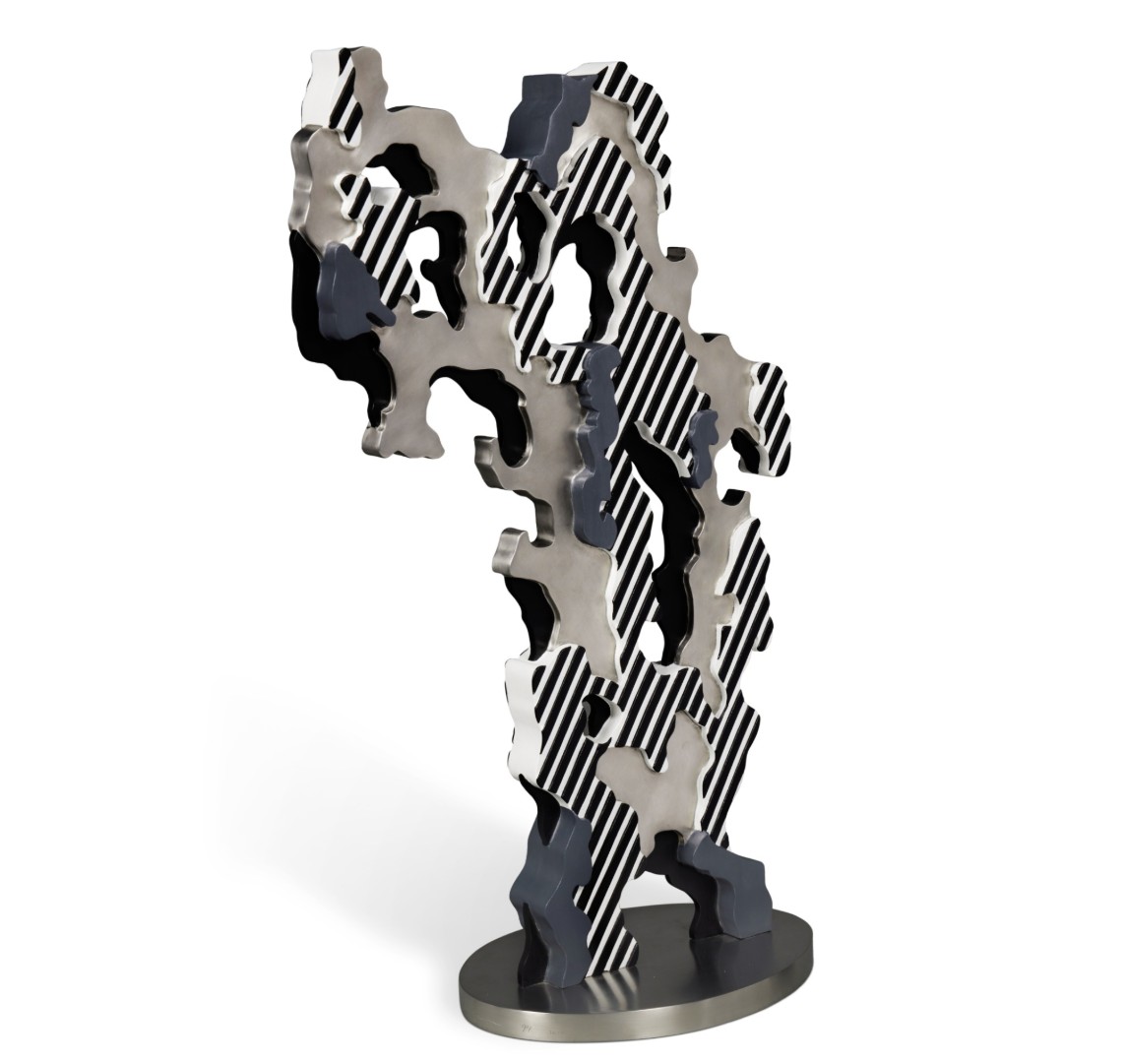
In 1991, Lichtenstein turned his focus to East Asian art, developing a series of paintings, collages, works on paper and sculptures inspired by the visual tropes of East Asian art in the Western imagination. The scholar’s rock first appears in Lichtenstein’s oeuvre through a drawing in 1995, later becoming a subject of painting and sculpture, including the present work. Lichtenstein’s Scholar’s Rock retains the planar, comic-book-like two-dimensionality of his paintings and drawings but exists as a three-dimensional form. The artist uses consecutive diagonal lines as well as flat planes of pigment to create the impression of depth, despite the planar construction of the form.
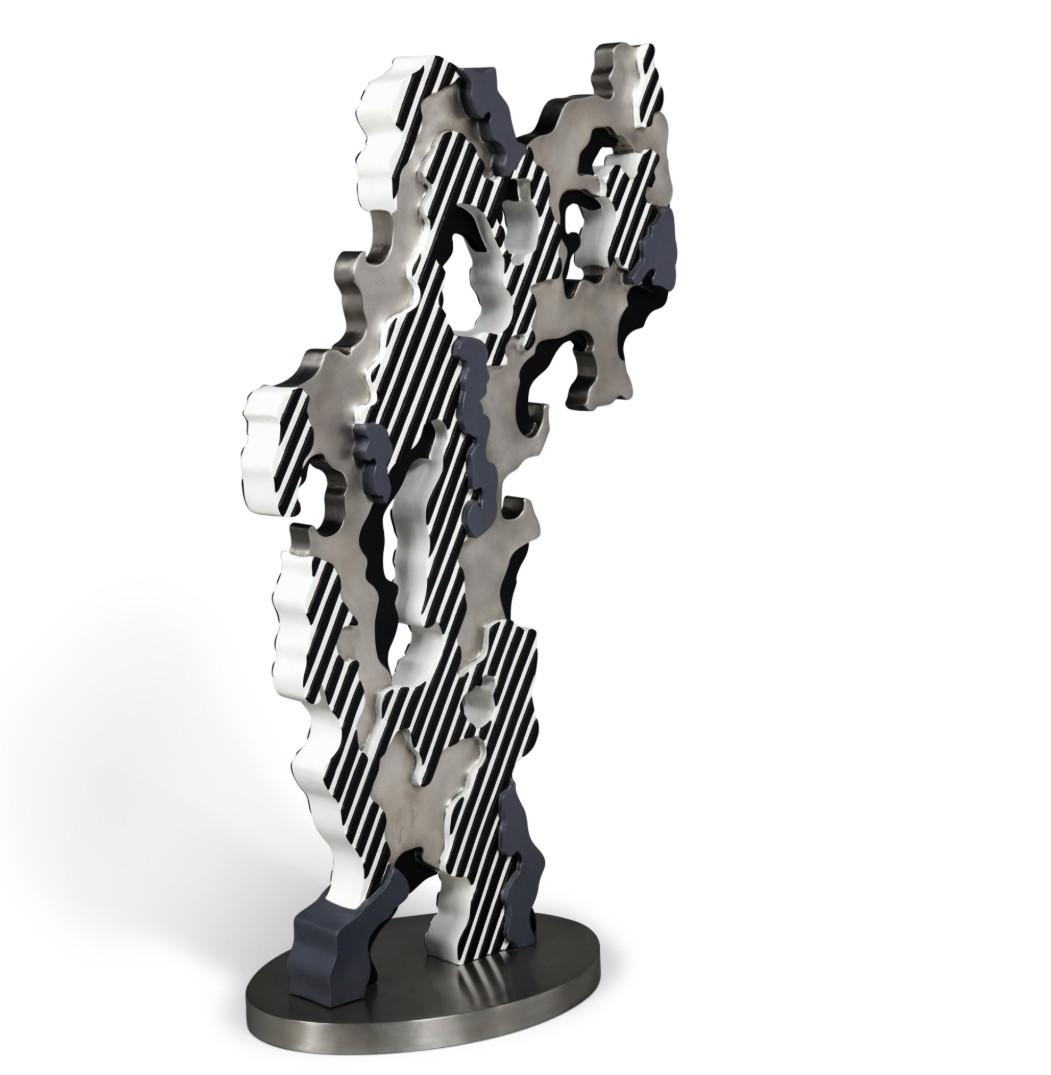
Lichtenstein’s fascination with the literati rock is notably evident in his 1997 painting, Landscape with Scholar’s Rock, held in the collection of the Fondation Carmignac, Paris. The prototype of the present work was displayed alongside the painting at Gagosian Hong Kong in 2011, during an exhibition that paid tribute to Lichtenstein’s celebrated body of work, inspired by Chinese landscapes and paintings. Lichtenstein’s pursuit of East Asian visual tropes through his Landscapes in the Chinese Style series developed in parallel with his iconic Interiors series. Both series would occupy the artist in his final decade, representing the artist’s continued quest for reinvention and reflection in his mature practice. The present edition of the Scholar’s Rock was featured in the artist’s major retrospective at the Art Institute of Chicago in 2012. It was, at the time, the most comprehensive review of the artist’s legacy. The show later travelled to multiple locations, including the National Gallery of Art in Washington, D.C., the Tate Modern in London, and the Pompidou in Paris, where the sculpture was featured prominently in rooms dedicated to the artist’s late career and his fascination with Chinese landscapes and East Asian influences.
Red Apple (Study), 1980
Christie’s Hong-Kong: 26 September 2025
Estimated: HKD 1,400,000 – 2,400,000
HKD 1,397,000 / USD 179,565
ROY LICHTENSTEIN (1923-1997), Red Apple (Study) | Christie’s
ROY LICHTENSTEIN (1923-1997)
Red Apple (Study), 1980
Cut painted paper, cut printed paper, correction fluid or opaque watercolor, graphite pencil on paper
28 1/2 x 22 inches (72.4 x 55.9 cm)
Signed and dated ‘rf Lichtenstein ’80’ (lower right)
Signed and dated again ‘rf Lichtenstein ’80’ (on the reverse)
David Hockney
Table with Conversation, 1988
Christie’s Hong-Kong: 26 September 2025
Estimated: HKD 40,000,000 – 60,000,000
DAVID HOCKNEY (B. 1937)
Table with Conversation, 1988
Oil on two canvases
Overall: 91.8 x 213.5 cm (36 1/8 x 84 inches)
Signed, titled and dated ‘Table “with conversation” David Hockney 1988’ (on the reverse)
Few works embody the vitality of David Hockney in the late 1980s as vividly as Table with Conversation, a two-metre panorama painted in 1988 at the height of his fame. Painted the same year with his retrospective opened at the Los Angeles County Museum of Art before travelling to the Metropolitan Museum of Art and Tate, the work fuses interior and exterior, East and West, intimacy and vastness into a single sweeping panorama.
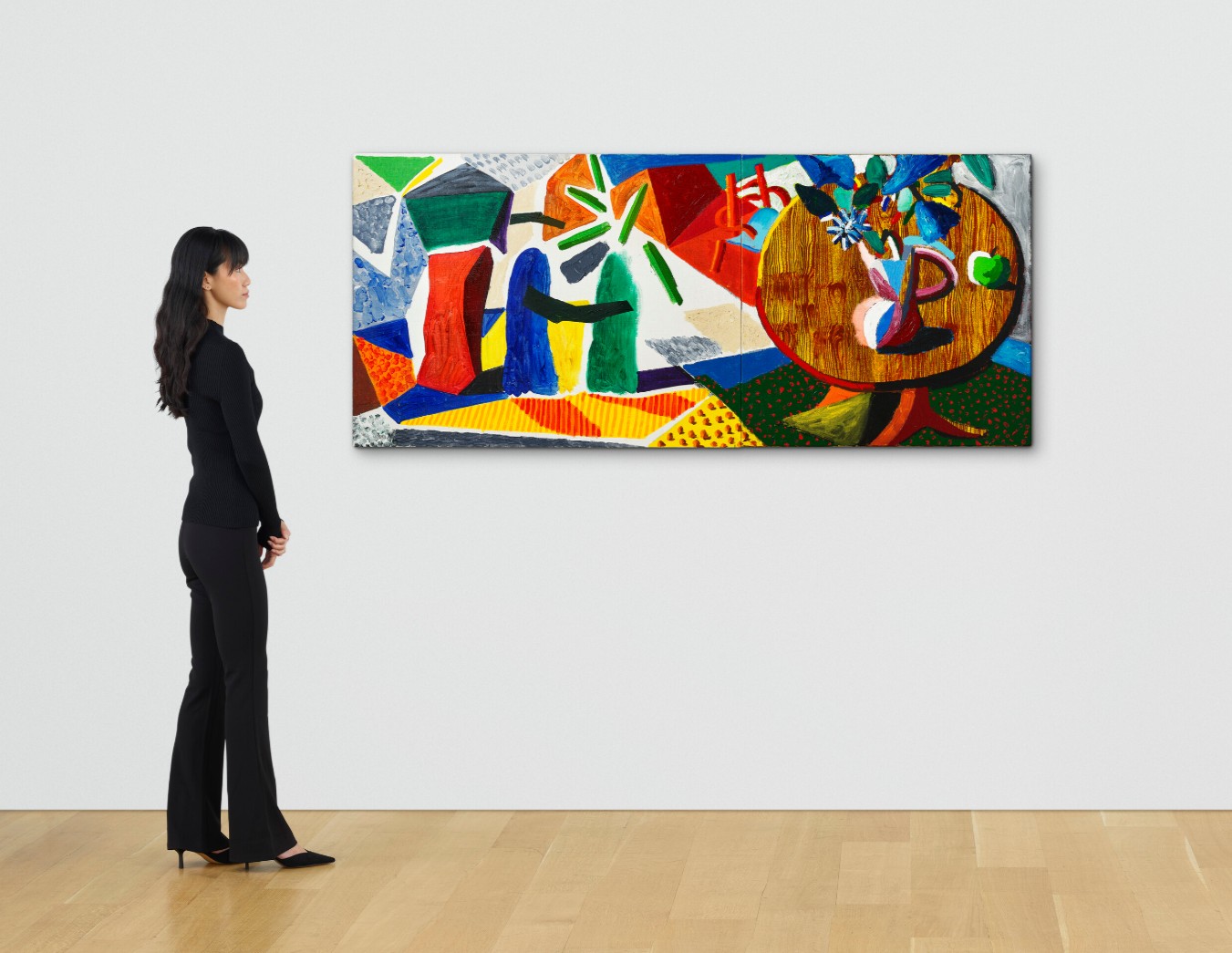
Its significance was swiftly recognized: once in the collection of Elaine and Melvin Merians—celebrated for assembling one of the most important holdings of British and figurative art in the United States—it was chosen as the cover image for the Yale Center for British Art’s exhibition The School of London and Their Friends in 2000. With its immediacy and energy, Table with Conversation embodies the restless brilliance of Hockney’s vision at this moment.
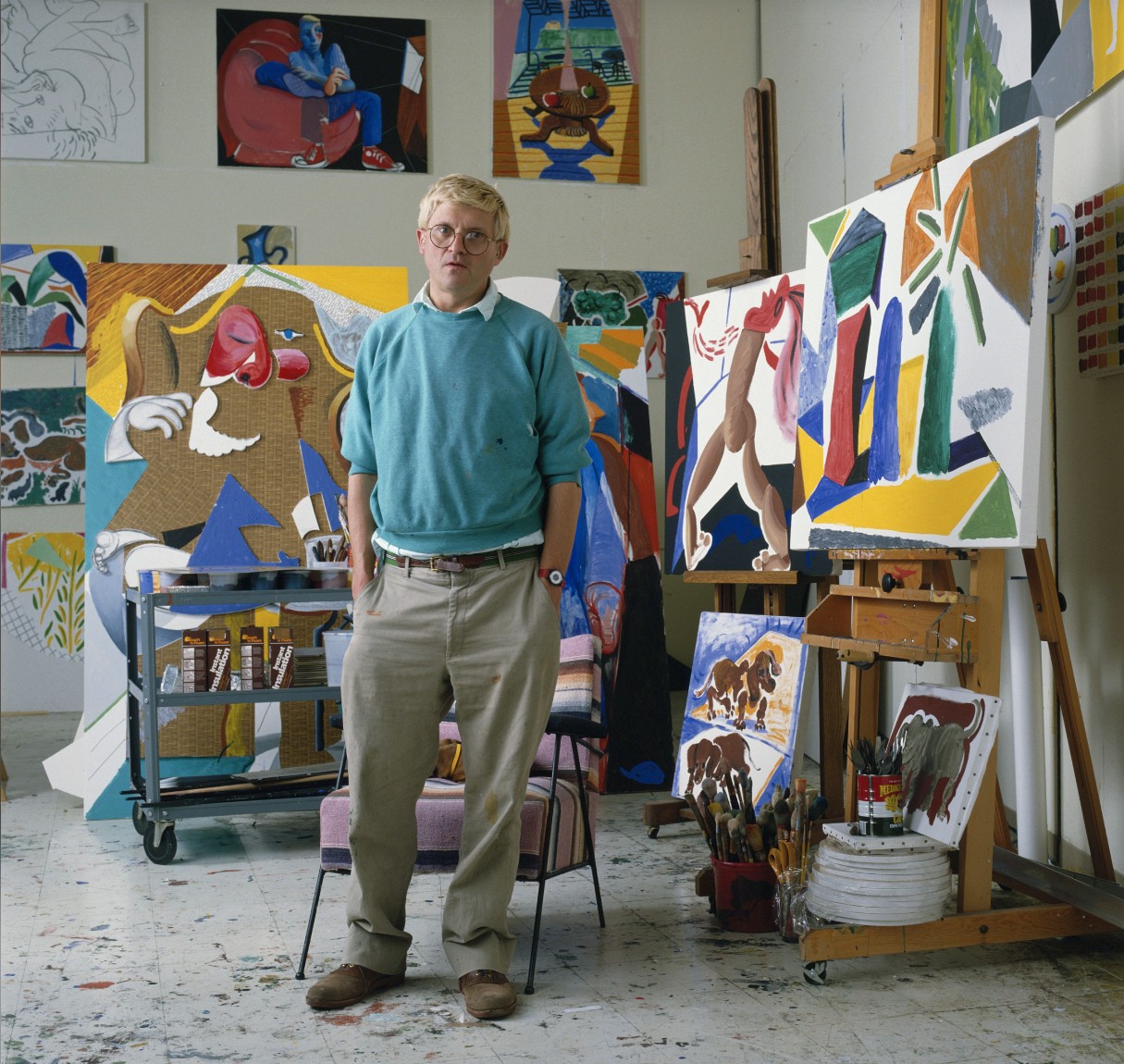
The left panel of our work (in progress) is visible on the easel. English artist David Hockney, 1988. Artist: © David Hockney. Image: Photo by David Montgomery/Getty Images
On the canvas, the viewer’s eye is first caught by the large round table on the right, crowned with a faceted pink and marine vase bursting with flowers and a green apple that seems to teeter on the edge. The table tilts up toward the picture plane, while the precarious fruit recalls Cézanne’s still lifes. Beside it sits an empty chair, angled invitingly toward us, a quiet surrogate for the absent figure. From this anchor of domestic solidity, the composition unfurls into the left half of the canvas, where fractured diagonals of cadmium red, cobalt blue, emerald green, and bright yellow collide with stippled ground and striated passages of paint. Three tall verticals rise against this kaleidoscopic backdrop, their forms oscillating between shadow, tree, column, or figure, holding the composition in balance while remaining elusive. Across the painting, every surface displays a different painterly treatment—heavy impasto against translucent wash, trompe-l’œil wood grain against flat planes of color, meticulous detail beside exuberant gesture. The result is a restless visual rhythm that drives the eye across the canvas, creating an effect at once intimate and expansive, rigorous and playful.
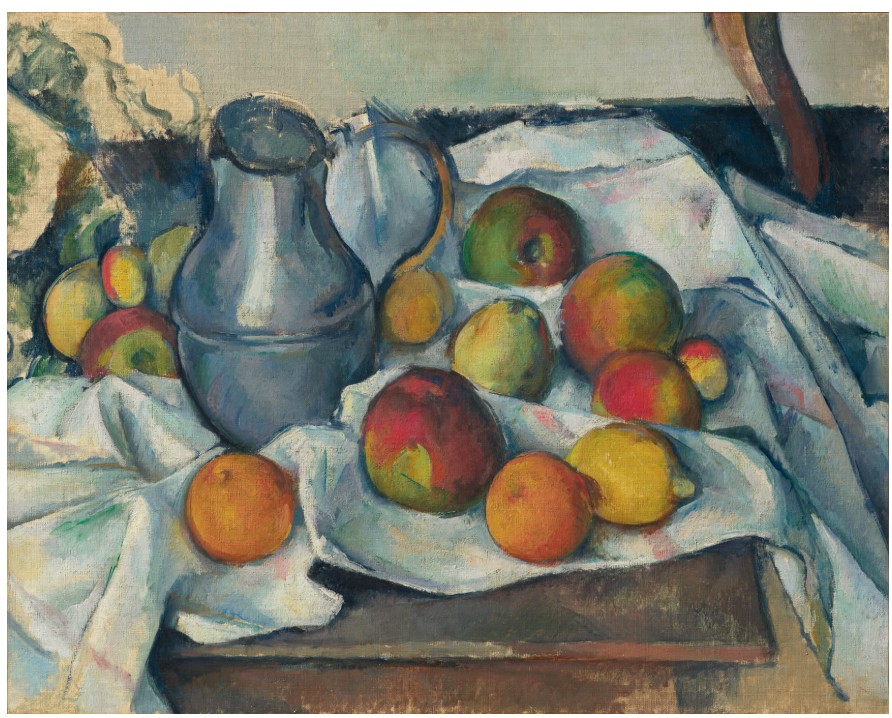
Paul Cézanne, Bouilloire et fruits, 1880-1890, Christie’s New York, May 13 2019, Lot 18A, Sold for USD 59,295,000
Underlying this orchestration of forms is Hockney’s profound engagement with Chinese scroll painting, which had fascinated him since his first trip to China in 1981 and his discovery of George Rowley’s The Principles of Chinese Painting two years later. Rowley described the scroll as a temporal experience, unfolding like music or poetry, guiding the viewer laterally, bit by bit. For Hockney, this offered a radical alternative to the fixed geometry of Western perspective. His interest reached a peak in 1988 when he released the film A Day on the Grand Canal with the Emperor of China, narrating part of Wang Hui’s monumental handscroll The Kangxi Emperor’s Southern Inspection Tour (1691–98). In this painting, the viewer literally “walks” along the landscape, shifting constantly between scenes of the imperial entourage, villages, and riverscapes. Hockney recognised in this shifting, unfolding journey a mirror of how we actually perceive the world: never fixed at a single glance, but always mobile, layered, and temporal. Table with Conversation translates this philosophy into painting, inviting the viewer to move through the composition, whether from the warm embrace of the table into the fractured light of Los Angeles, or the reverse, from open space back into an intimate interior.
This dynamic conception of vision had already driven Hockney’s experiments throughout the 1980s. Inspired by renewed encounters with Picasso—particularly the Museum of Modern Art’s 1980 retrospective—he explored Cubism’s fractured perspectives through photographic collages, or “joiners,” overlaying multiple snapshots to approximate the way the eye constantly shifts and scans.
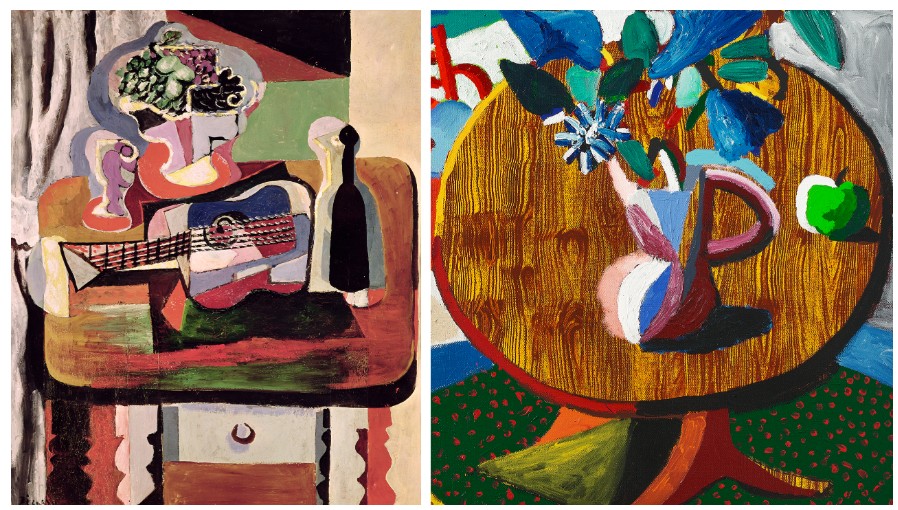
Left: Pablo Picasso, Glass, bouquet, guitar and bottle, 1919. Museum Berggruen, Berlin Artwork: © 2025 Estate of Pablo Picasso / Artists Rights Society (ARS), New York. Image: © Archives Charmet / Bridgeman Images.
Right: Present lot illustrated (detail)
In painting he absorbed these lessons too: the tilted table and faceted vase echo Cubist fracture, while the bold chromatic verticals resonate with Matisse’s late cut-outs. The solitary chair, meanwhile, invokes Van Gogh’s symbolic presence—a motif Hockney had already paid tribute to in earlier works. Rather than quoting these sources directly, Hockney orchestrates them into a vivid polyphony, weaving their voices across the canvas. Every brushstroke asserts its own identity—patterned, stippled, gestural, flat—yet all combine into a coherent whole, a living demonstration of Hockney’s conviction that “I like clarity, but I also like ambiguity: you can have both in the same painting, and I think you should.” (D. Hockney, That’s the Way I See It, London 1993, p. 152)
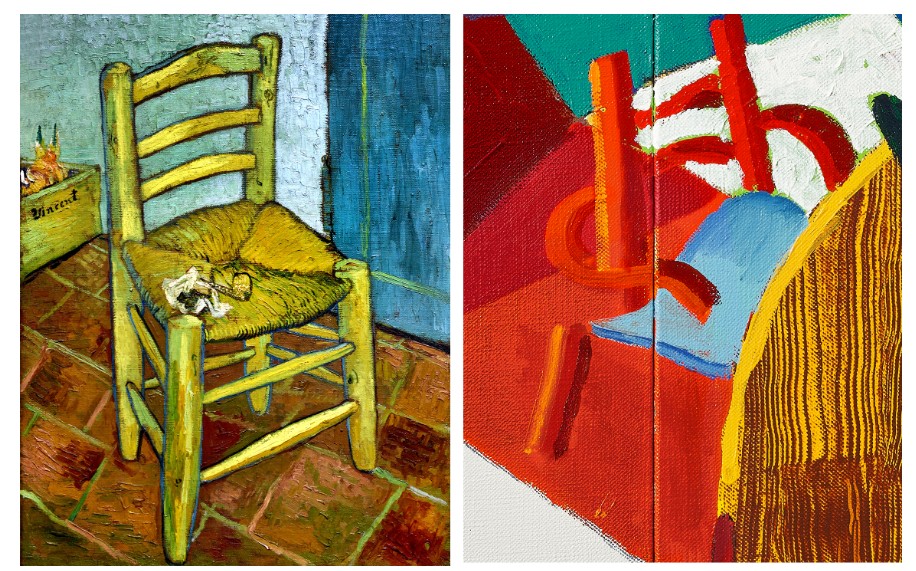
Left: Vincent Van Gogh, Van Gogh’s Chair, 1888. The National Gallery, London. Uwe Deffner/Alamy.
Right: Present lot illustrated (detail)
The year 1988 was also personally defining. His LACMA retrospective—the first comprehensive survey since Whitechapel in 1970—drew record audiences and cemented his international stature. That same year he purchased a house in Malibu, re-immersing himself in painting after a period of photographic and theatrical experiments. Works such as Large Interior, Los Angeles (1988, Metropolitan Museum of Art, New York) emerged from this fertile period, expanding domestic motifs into panoramic compositions that bridged figuration and abstraction.
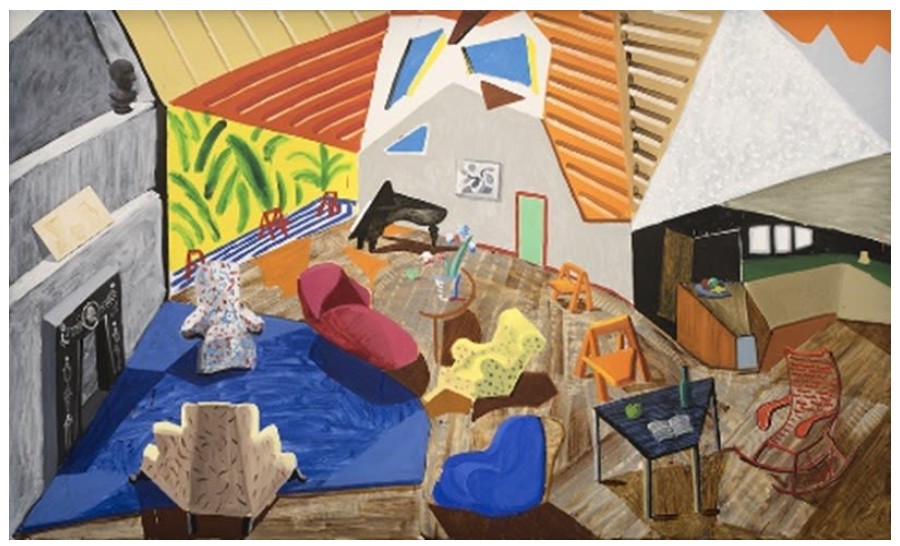
David Hockney, Large Interior, Los Angeles, 1988.
Artwork: © David Hockney. Image copyright: © The Metropolitan Museum of Art. Image source: Art Resource, NY
Table with Conversation crystallises this moment of renewal: it synthesises the discoveries of the photographic collages, the lessons of Chinese aesthetics, and the homage to modern masters, while anticipating the abstract canvases of the following decade. Its surfaces burst with colour, gesture, and rhythm; its spaces invite us to move, pause, and look again. It is at once rooted in the intimacy of the interior and propelled into a realm of abstraction, a dialogue between modernism and tradition, a fusion of clarity and ambiguity. Above all, it is an open conversation—between artist and viewer, between seeing and experiencing—that continues to unfold with every encounter.
David Hockney’s global significance continues to be celebrated on the world stage. He recently held a major retrospective, DAVID HOCKNEY 25, at the Fondation Louis Vuitton in Paris, reaffirming his status as one of the most inventive and influential artists of our time. Looking ahead, the Serpentine Gallery in London is set to dedicate a landmark exhibition to his work in 2026, further underscoring the enduring relevance and boundless vitality of his artistic vision.
The Twelfth V.N. Painting, 1992
Christie’s Hong-Kong: 27 September 2025
Estimated: HKD 15,000,000 – 20,000,000
DAVID HOCKNEY (B. 1937)
The Twelfth V.N. Painting, 1992
Oil on canvas
24 x 36 inches (61 x 91.4 cm)
Signed, titled and dated ‘David Hockney 92 The Twelfth V N Painting’ (on the reverse)
Highly stylized, bold, and bursting with kaleidoscopic energy, The Twelfth V.N. Painting is a remarkable example from David Hockney’s The V.N. Paintings (short for Very New Paintings)—a seminal series of 26 abstract pieces that marked a pivotal moment in his artistic evolution. The series reflected a fusion of influences – the spatial awareness developed through his opera set designs, his personal theories on perspective, and the vivid inspiration drawn from the Malibu coastline. The present work was featured in several notable exhibitions throughout the 1990s and beyond, such as the Summer Exhibition at London’s Royal Academy of Art in 1993 and in Crosscurrents: Modern Art from the Sam Rose and Julie Walters Collection at the Smithsonian American Art Museum in Washington D.C. from 2015 to 2016.
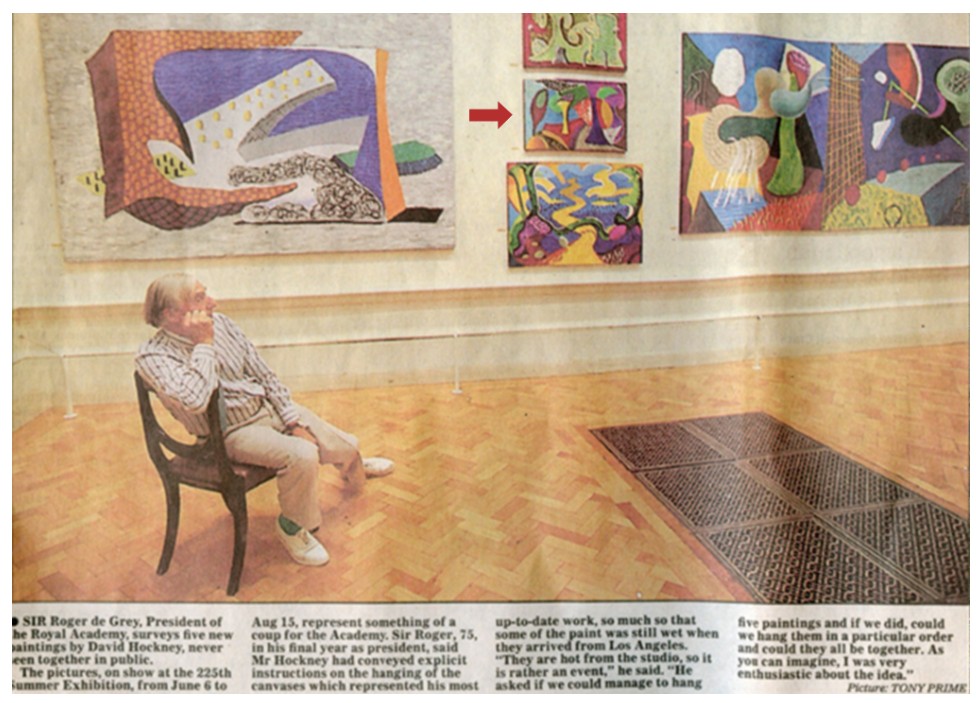
Roger de Grey sitting in front of David Hockney’s contribution to the 1993 Summer Exhibition, current lot is marked with arrow, reproduced in The Daily Telegraph, 26 May 1993. Digital image courtesy of Tony Prime
Hockney became deeply involved in stage design in the late 1980s, creating sets for Tristan und Isolde (1987), followed by Turandot and Die Frau ohne Schatten in 1992, the same year he painted The Twelfth V.N. Painting. The intense hues of greens and blues, fiery oranges and reds of the present work immediately capture the viewer’s attention, the effect of which mirrors the phantasmagorical lights that cast across the landscape of stage design of Die Frau Ohne Schatten.
Stage design for Die Frau Ohne Schatten, performed at the Royal Opera, London, 1992. © David Hockney
Set against a grey-blue outcrop in the upper left and center of the composition, several rows of carefully placed blue roundels evoke the presence of performers on an opera stage.
The V.N. Paintings series marks a turning point in Hockney’s art as it reveals his deep engagement with the traditions of art history. In the present work, the vibrant swathes of saturated color evoke the influences of several early twentieth-century masters. Its vibrant energy recalls Picasso’s dynamic layering of paint, while the interplay of shapes and tones echoes Robert Delaunay’s balance between abstraction and figuration. Franz Marc’s expressive compositions also resonate here, sharing a similar sense of movement and emotional intensity.
“People said that the New Paintings had a three-dimensional look. I feel that is true, in the sense that they have two spatial dimensions – vertical and horizontal – and that the third dimension is of course time, the time you give a picture when you look at it and it pulls you in and moves you round and you therefore become aware of taking time.”
Rather than presenting a fixed narrative, Hockney’s work invites the viewer into an immersive experience, encouraging a personal journey through what he calls the “internal landscape.” This connection resonates prominently in the Twelfth (the present work) through the Fourteenth V.N. Paintings, as they were created in Bridlington, Yorkshire, during Hockney’s visit to his mother and sister in June 1992. The intimacy of that setting subtly informs the emotional depth and introspective quality of these works. In The Twelfth V.N. Painting, Hockney constructs a dynamic visual field in the foreground using short white strokes scattered across a soft grey backdrop. These marks suggest the motion and rhythm of a highway, guiding the viewer’s eye through the composition like directional cues.
To the left, a grid of curved lines on a yellow background connects with a red surface, creating spatial depth and evoking the contours of a stadium or amphitheater. The interplay between these linear elements introduces a sense of three-dimensionality and transforms the flat canvas into an immersive environment.
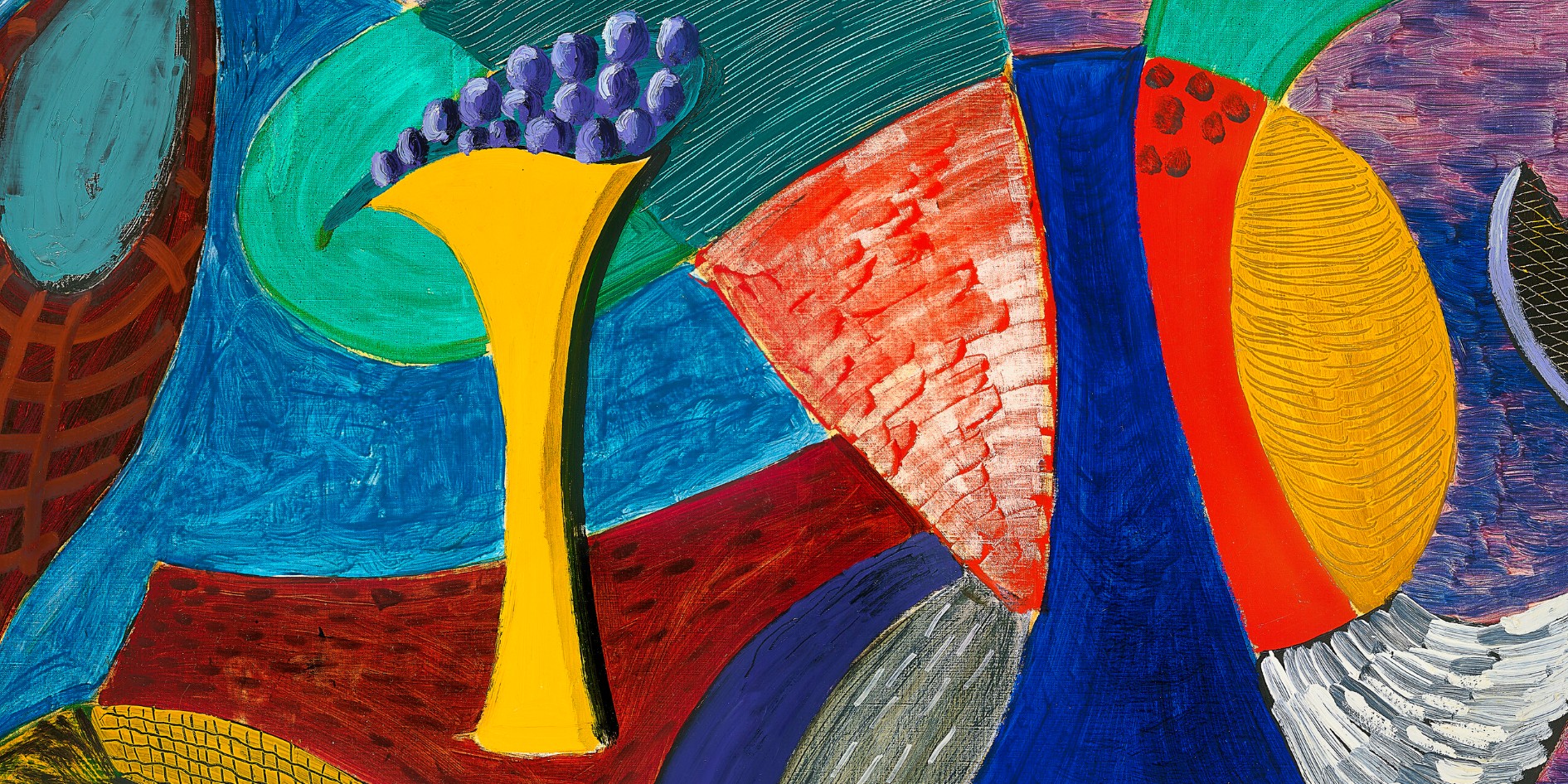
From the outset, Hockney had viewed the two-dimensional world of the picture as both a challenge and a trap, believing that rigid conventional perspective often falls short of capturing the way we truly see and experience our surroundings. Traditional perspective tends to present time as static and space as fixed, anchoring the viewers in place and limiting their presence. For Hockney, truly seeing requires active observation, and real representation should capture that lived experience. When real space entered his creative process through the medium of stage design and the vast, dynamic landscape of Malibu, it profoundly shaped his artistic trajectory. These encounters allowed him to think more expansively about how art could reflect the way we move through and feel space, not just how we see it in a static frame. Ultimately, they marked a shift in his focus from the purely pictorial to a deeper exploration of spatial experience.
Pablo Picasso
Buste de femme, 1944
Christie’s Hong-Kong: 26 September 2025
Estimated: HKD 86,000,000 – 106,000,000
HKD 196,750,000 / USD 25,289,205
PABLO PICASSO (1881-1973)
Buste de femme, 1944
Oil on canvas
80.8 x 65 cm (31 7/8 x 25 5/8 inches)
Signed ‘Picasso’ (lower left)
Painted on 5 March 1944
Eyes wide open, the face of Pablo Picasso’s muse Dora Maar stares at us from her armchair. Painted on 5 March 1944, Buste de femme is one of the searing, psychological portraits of Dora that Picasso painted during the Second World War. Shown here with one of the chic hats that had become one of her attributes, Dora was a complex figure, a successful Surrealist photographer and a formidable character, with a complex psychology. Picasso has managed to condense this, and the tension that still reigned in Paris in the final months of the Occupation of France, into Buste de femme. ‘I have not painted the war because I am not the kind of painter who goes out like a photographer for something to depict,’ Picasso reflected shortly after the Occupation had ended. ‘But I have no doubt that the war is in these paintings I have done. Later on perhaps the historians will find them and show that my style has changed under the war’s influence. Myself, I do not know’ (Picasso, in Picasso and the War Years 1937-1945, ed. Steven. A. Nash, exh. cat., New York, 1998, p. 13). Picasso’s portraits of Dora such as Buste de femme are the quintessence of this phenomenon.
Man Ray, Dora Maar, 1936. Christie’s Paris, March 2, 2021, Lot 165.
© 2025 Man Ray Trust / Artists Rights Society (ARS), New York / ADAGP, Paris
Dora was a part of the Surrealist circles that Picasso himself frequented during the mid-1930s. After his affair with the wholesome and sporty Marie-Thérèse Walter, Dora’s intellectual stamina and emotional complexity provided a rich, vital contrast. Picasso’s subsequent partner Françoise Gilot recalled the artist’s description of one of his first indicative encounters with Dora at the famous café, the Deux Magots:
‘She was wearing black gloves with little pink flowers appliquéd on them. She took off the gloves and picked up a long, pointed knife, which she began to drive into the table between her outstretched fingers to see how close she could come to each finger without actually cutting herself. From time to time she missed by a tiny fraction of an inch and before she stopped playing with her knife, her hand was covered with blood. Pablo […] was fascinated’ (F. Gilot & C. Lake, Life with Picasso, New York, Toronto and London, 1964, pp. 85-86).
Edgy, elegant and unpredictable, Dora was a perfect vehicle for the expression of Picasso’s feelings during the tumultuous years of the later 1930s and early 1940s. ‘Dora, for me, was always a weeping woman,’ Picasso told André Malraux the year after he painted Buste de femme. (Picasso to André Malraux, A. Malraux, Picasso’s Mask, New York, 1976, p. 138). In this capacity, Dora inspired Picasso to create a string of expressive masterpieces, such as the paintings entitled Femme qui pleure in Tate, London and the National Gallery of Victoria, Melbourne amongst others. This marked a distinct change from the preceding sensuality of his depictions of Marie-Thérèse, and the elegant classicism of his wife, the Russian ballerina Olga Khokhlova. As is clear in Buste de femme, Dora brought a brittle sense of unease and violence to his work, fitting the period of the Spanish Civil War and then the Second World War.
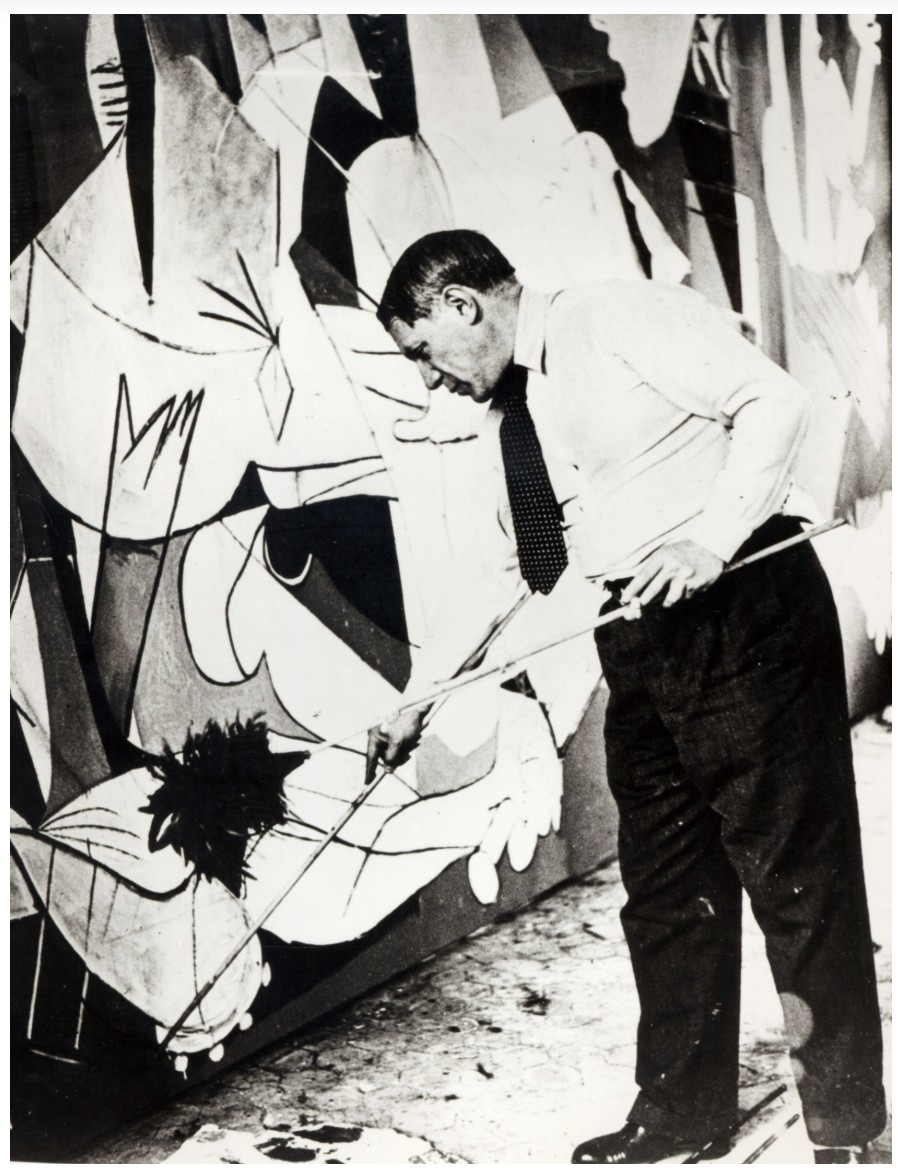
Dora Maar, Pablo Picasso painting ‘Guernica’, 1937, Private collection.
Artwork: ©2025 Estate of Pablo Picasso / Artists Rights Society (ARS), New York.
Photo: Dora Maar © 2025 Artists Rights Society (ARS), New York / ADAGP, Paris. Image: © Archives Charmet / Bridgeman Images
Dora played a pivotal role in Picasso’s world. She enjoyed rare access to his studio, where she was able to document his creativity, not least with an almost-forensic run of photographs showing the evolution of Guernica, his vast masterpiece of 1937 fuelled by the tragedy of the Spanish Civil War. However, Dora was not a mere observer. She influenced Picasso, heightening his political sensibilities, shifting his style. Indeed, looking at Buste de femme, it appears that Picasso might have deliberately presented Dora’s features, with the fragmented, refracted nose in particular, in a manner that recalls her own distorted self-portrait photomontage from circa 1936-37 held by the Cleveland Museum of Art. This suggests that Buste de femme embodies an artistic dialogue between the two creators.
By the time Picasso painted Buste de femme, the atmosphere in Paris was beginning to shift, with signs that the tide of war might be turning. Yet the realities of Occupation remained deeply felt. Just days earlier, his longtime friend, the poet Max Jacob, had been arrested—an event that would have weighed heavily on Picasso. Though he may not have known that Jacob passed away on the very day this painting was completed, the emotional gravity of the moment is subtly echoed in the work’s introspective tone and expressive brushwork.
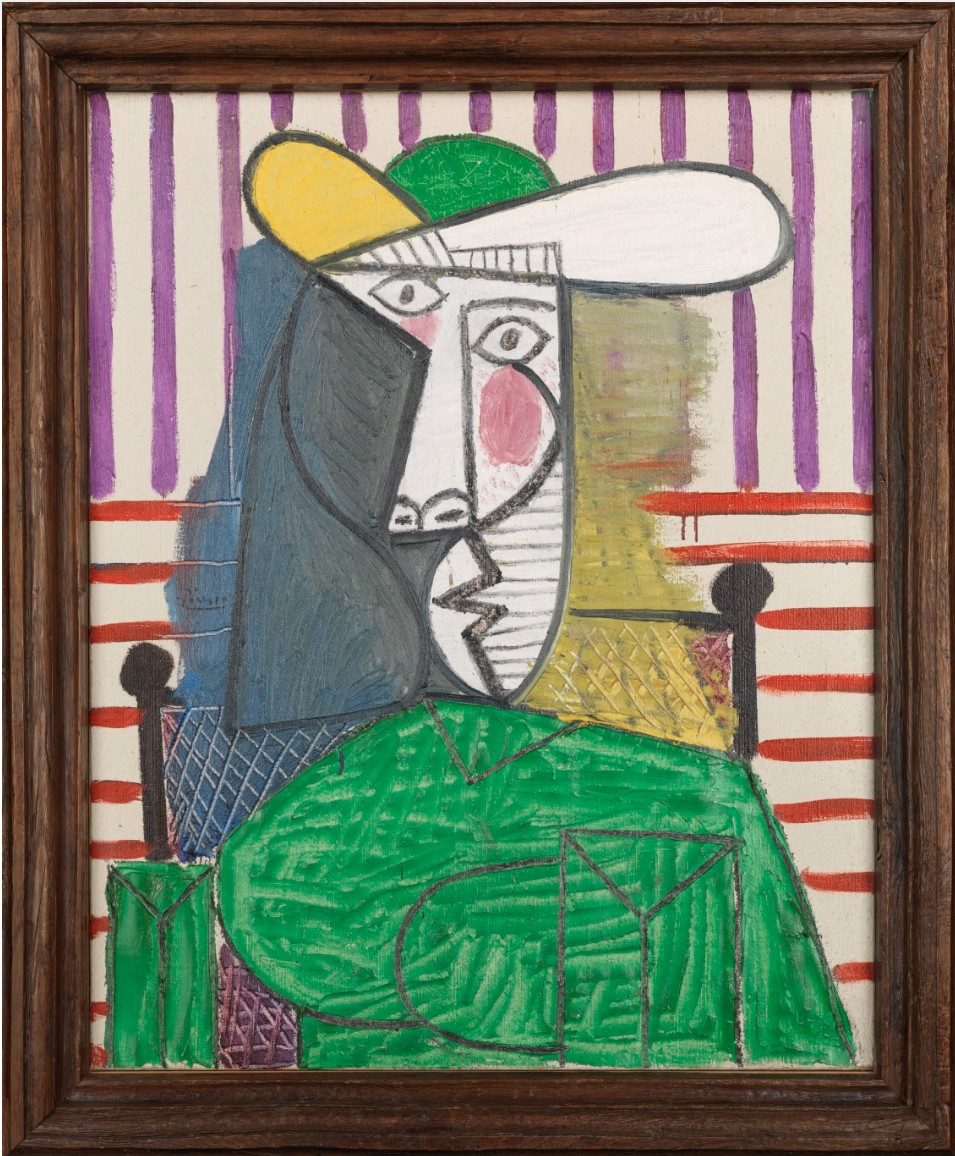
Pablo Picasso, Bust of a Woman, 1944. Long term loan at Tate
Artwork: ©2025 Estate of Pablo Picasso / Artists Rights Society (ARS), New York. Photo: Tate
Buste de femme conveys a sense that there might be a glimmer of hope, with the blue flecks illuminating the grisaille background like a distant dawn, a change from the muted hues of works from earlier in the War. Likewise, the vivid, contrasting red and green on her clothes and face are imbued with an intensity through black outlines reminiscent of stained-glass windows. There is also a sense of play in the way that Dora’s breasts appear to spell out part of her name across the bottom of the canvas. However, Buste de femme retains a haunting sense of oppression: Dora’s features have been twisted so that her nose recalls that of Picasso’s Afghan hound, recalling the paintings he made of her in Royan during the earliest days of the Occupation. By the time Buste de femme was painted, Picasso’s relationship with Dora Maar was nearing its end. This emotional turning point may well inform the painting’s expressive intensity, rendering it a poignant yet powerful tribute—at once tender, complex, and deeply personal. It stands as a compelling reflection of both their shared history and the turbulent times in which it was created.
Nu assis appuyé sur des coussins, 1964
Christie’s Hong-Kong: 26 September 2025
Estimated: HKD 20,000,000 – 30,000,000
HKD 32,220,000 / USD 4,141,390
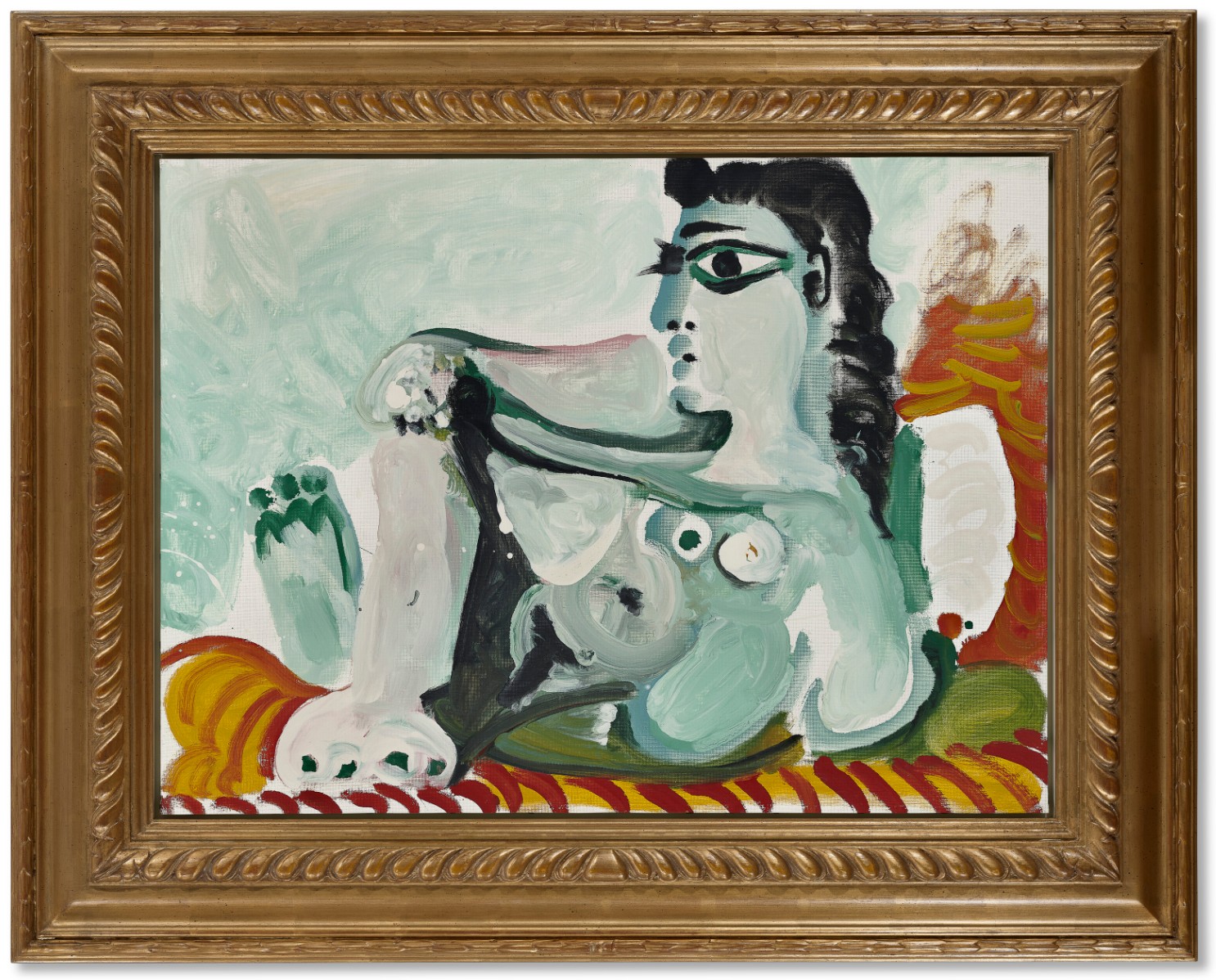
PABLO PICASSO (1881-1973)
Nu assis appuyé sur des coussins, 1964
Oil on canvas
54×73 cm (21 1/4 x 28 3/4 inches)
Dated and numbered ‘19.12. 64. III’ (on the reverse)
Painted on 19 December 1964
At once solemn and sensuous, Nu assis appuyé sur des coussins embodies Pablo Picasso’s continuing spontaneity and boundless inventiveness during the great late period of his career. Depicting the artist’s wife and final muse, Jacqueline Roque, the painting radically reimagines the art historical tradition of the reclining nude for a 20th century audience. Painted in December 1964, the work remained with Picasso until his death, and subsequently passed to the artist’s estate.
By 1961, Picasso had settled permanently at Notre-Dame-de-Vie in Mougins, the home he acquired as a gift for Jacqueline Roque shortly after their marriage the same year. Jacqueline, Picasso’s most enduring muse, possessed dark almond-shaped eyes, sculpted brows, pronounced cheekbones, and thick black hair—features that became central to Picasso’s painting during this stage of his career. Though she never formally posed in the studio, her presence was an inexhaustible source of inspiration for the artist and came to dominate Picasso’s work throughout the 1960s and 1970s.
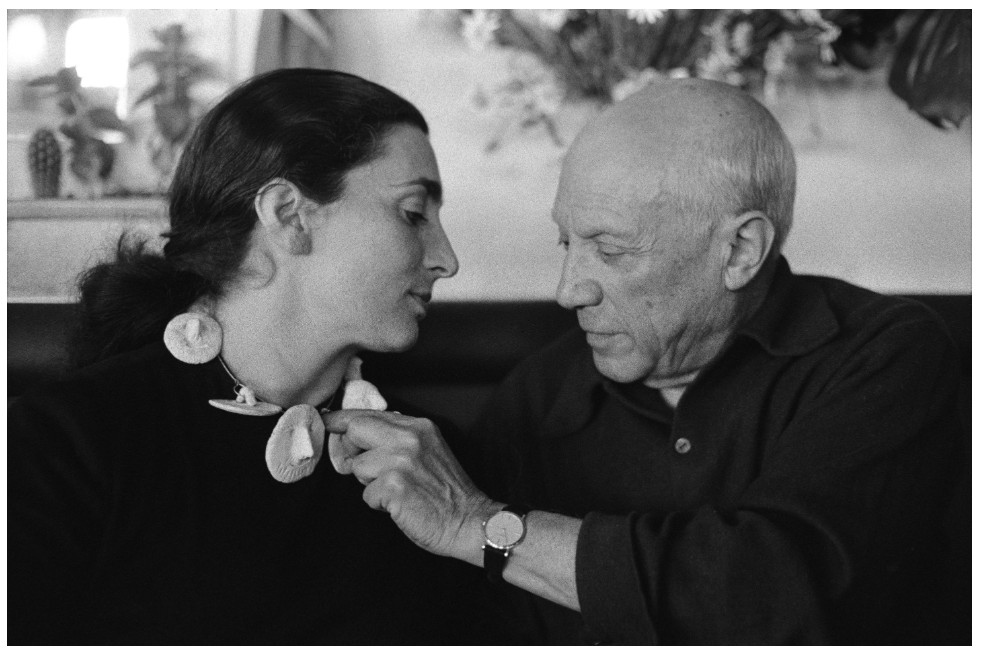
David Douglas Duncan, Picasso and Jacqueline Roque, c. 1957. Artwork: ©2025 Estate of Pablo Picasso / Artists Rights Society (ARS), New York. Image: David Douglas Duncan Papers and Photography Collection, © Harry Ransom Center, The University of Texas at Austin
Between 1963 and 1965, Picasso produced a remarkable series of canvases centered on the theme of the painter and his model—a subject that captivated his imagination throughout the early 1960s and became an almost exclusive focus, particularly in 1963-1964. In some, the artist appeared as the protagonist, with or without his muse; in others, as in this work, Jacqueline is shown alone, reclining on her divan. Marie-Laure Bernadac, curator of the 1988 exhibition Late Picasso at the Tate Gallery and Centre Pompidou, shrewdly pointed out the ultimate drive behind this series: “The more Picasso painted this theme, the more he pushed the artist-model relationship towards its ultimate conclusion: the artist embraces his model, cancelling out the barrier of the canvas and transforming the artist-model relationship into a man-woman relationship. Painting is an act of love” (“Picasso 1953-1972: Painting as Model” in Late Picasso, exh. cat., Tate, London, 1988, p. 77).
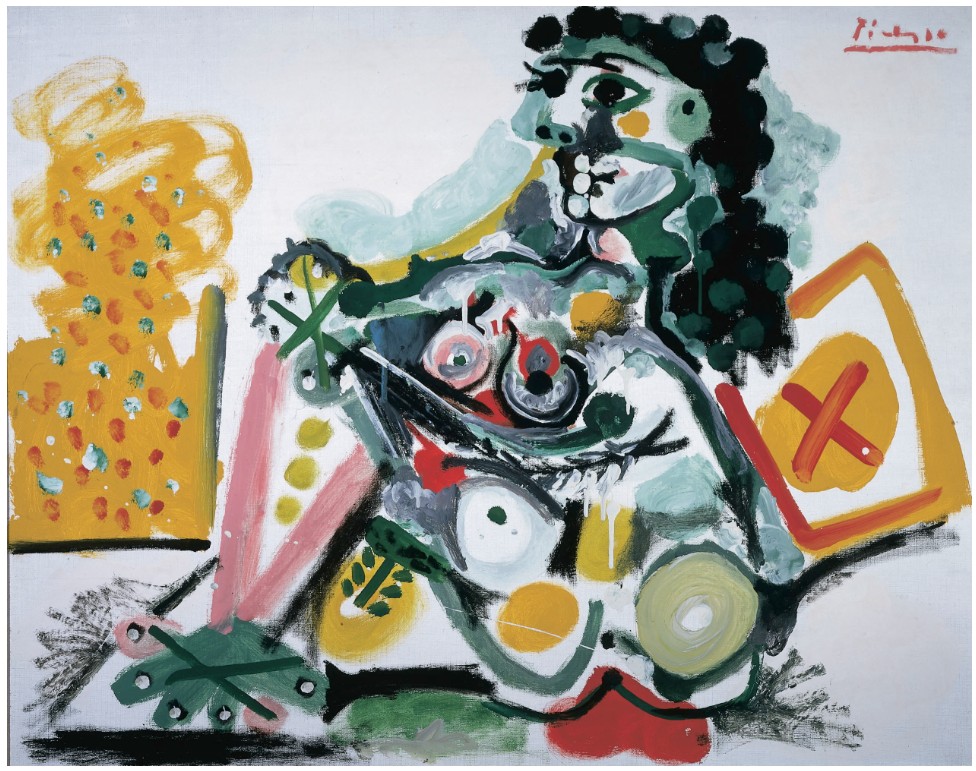
Pablo Picasso, Seated Nude Leaning on Pillows, 1964.
Artwork: © 2025 Estate of Picasso/Artists Rights Society (ARS). Image: The Kreeger Museum, Washington, DC
The reclining nude also belongs to a long art-historical tradition that Picasso continually revisited and reinterpreted. Since the Italian Renaissance, the female nude has been one of painting’s central subjects: Titian’s Venus of Urbino (1538) established an enduring model of the reclining goddess; Goya’s La Maja Desnuda (circa 1797–1800) modernized the theme by portraying a nude figure with an assertive and unapologetic presence, confronting traditional ideals of passive femininity; and in the 19th century, Ingres and Delacroix transformed the subject into odalisques, imbued with orientalist fantasy. Picasso’s lifelong friend and rival Henri Matisse extended this lineage into the 20th century with his radiant odalisques, such as Odalisque, harmonie rouge (1926–1927).
Titian, Venus of Urbino, 1538, Gallerie degli Uffizi, Florence. © Raffaello Bencini / Bridgeman Images
Within this tradition, Picasso reimagined the reclining nude through his own creative lens, transforming Jacqueline into both muse and archetype. Her body is distilled into flowing curves, her most sensual attributes emphasized through simplified line. Turquoise and aquamarine flesh are contoured in deep black and offset with touches of salmon pink on her arm, her form set against a boldly striped divan and white pillow. Together, these elements evoke a Mediterranean vision of warmth and light.
Henri Matisse, Odalisque, Harmony in Red, 1926–27.
Image copyright: © The Metropolitan Museum of Art. Image source: Art Resource, NY
Expressed through bold colors, free brushstrokes, and unrestrained imagination, Nu assis appuyé sur des coussins reveals both the physicality of the female form and the liberty of painting itself. Bernadac described this period in Picasso’s work as “characterized by the juxtaposition of two ways of painting: one elliptical and stenographic, made up of ideograms, codified signs which can be inventoried; and the other thick and flowing, a hastily applied matière of runny, impastoed, roughly brushed paint” (ibid., p. 85) The present work demonstrates both tendencies at play: the abbreviated line used to delineate Jacqueline’s body and essence, and the richness of pigment enlivening the surface with expressive vitality. Ultimately, this 1964 reclining nude embodies the fusion of art and life that defined Picasso’s final decades. Jacqueline is both the intimate companion of the artist and the universal figure of l’éternel féminin. Through her image, Picasso explored the lineage of the great European nude, while simultaneously reinventing it for the 20th century with unflinching passion and pictorial invention.
Buste d’homme, 1969
Sotheby’s Hong-Kong: 28 September 2025
Estimated: HKD 15,500,000 – 25,000,000
HKD 20,505,000 / USD 2,635,605
PABLO PICASSO (1881 – 1973)
Buste d’homme, 1969
Oil on corrugated cardboard
72.4 x 49.8 cm (28 1/2 x 19 5/8 inches)
Signed Picasso and dated 7.5.69 (upper left)
The musketeer is one of the most celebrated subjects within the iconography which filled Picasso’s prolific late body of work. A motif that dates back to mid-1960s when Picasso re-read Alexandre Dumas’s The Three Musketeers, the powerful and virile musketeer is reflective of the aging artist’s own vision of himself, whose artistic vigor and prowess remained strong and unwithered in the final years of his life. Executed in bold, gestural brushstrokes, Buste d’homme contains highly-colored, elaborate details in the depiction of the character. Gowned in a glamourous doublet while seated on a throne-like armchair, the musketeer is a character of distinctive Spanish heritage, like Picasso himself, with the use of national colours of blood red and golden yellow. The interlocking profiles of the musketeer evoke the iconic double portrait motif that Picasso invented in his portraits of Dora Maar, but the roots of which ultimately go back to his early Cubist experiments of multiple viewpoints.
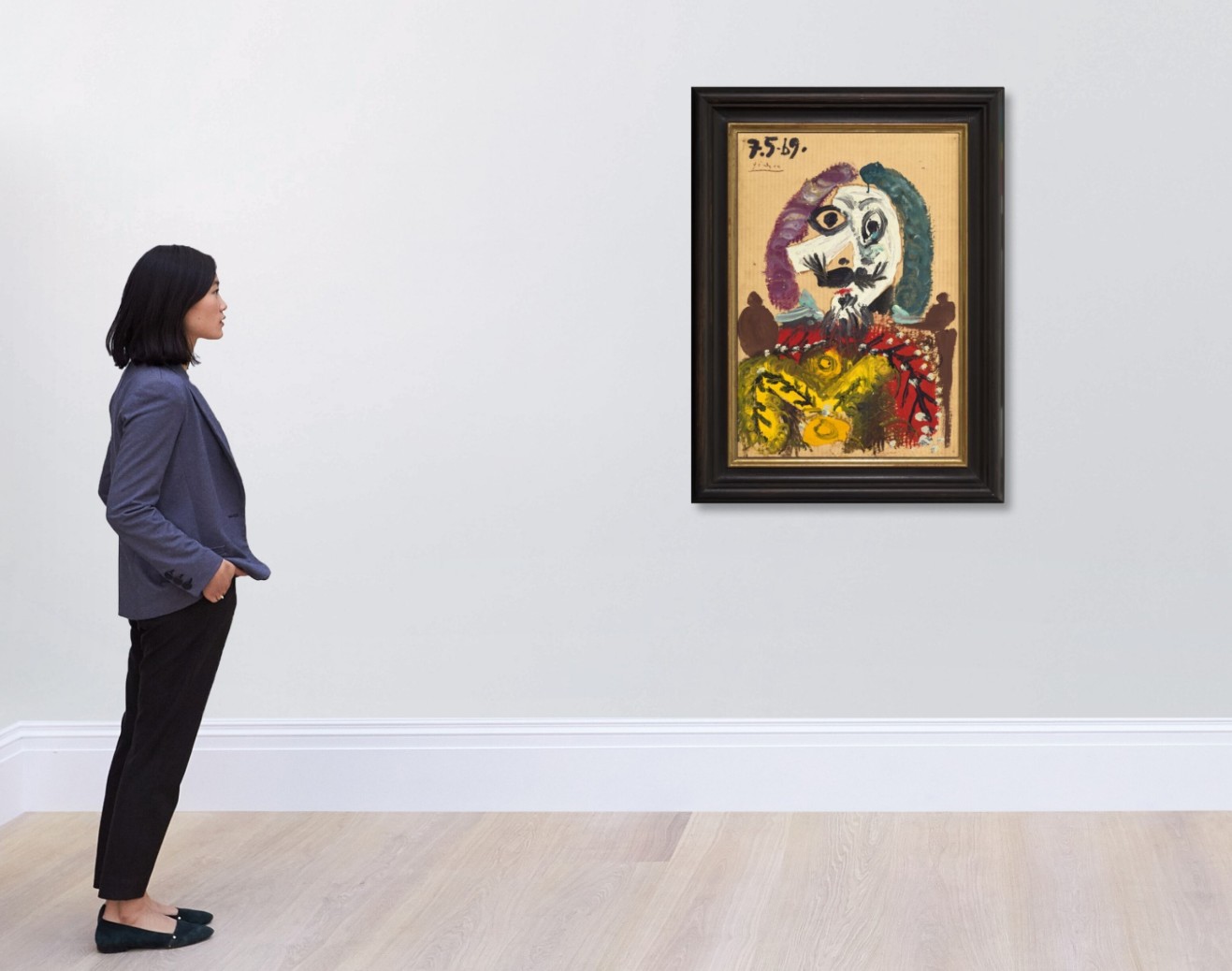
Appearing as the Spanish version of the seventeenth-century cavalier with his moustache, goatee, long curls and doublet, the character embodied the courtly mannerisms of the Baroque maestros. In the 1960s, Picasso devoted a huge portion of his work to the reinterpretation of the old masters, especially to pay tribute to two artists he had adored throughout his life – Velasquez and Rembrandt. This thematic focus in his final years was a pointed self-affirmation of Picasso’s own place in the revered lineage of the Western canon.
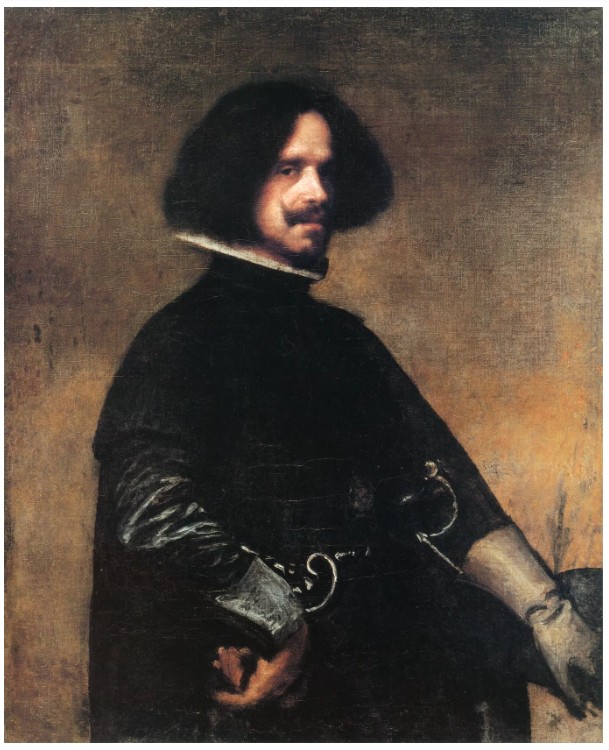
Diego Velázquez, Self-portrait, circa 1645
1969 was one of the most prolific years for Picasso, as an entire volume of the Zervos catalogue raisonné is dedicated to his output from that year. His work from that year was celebrated with a major exhibition held at the Palais des Papes in Avignon in1970, an important milestone in the final chapter of his life and a testament to his unending drive for innovation.
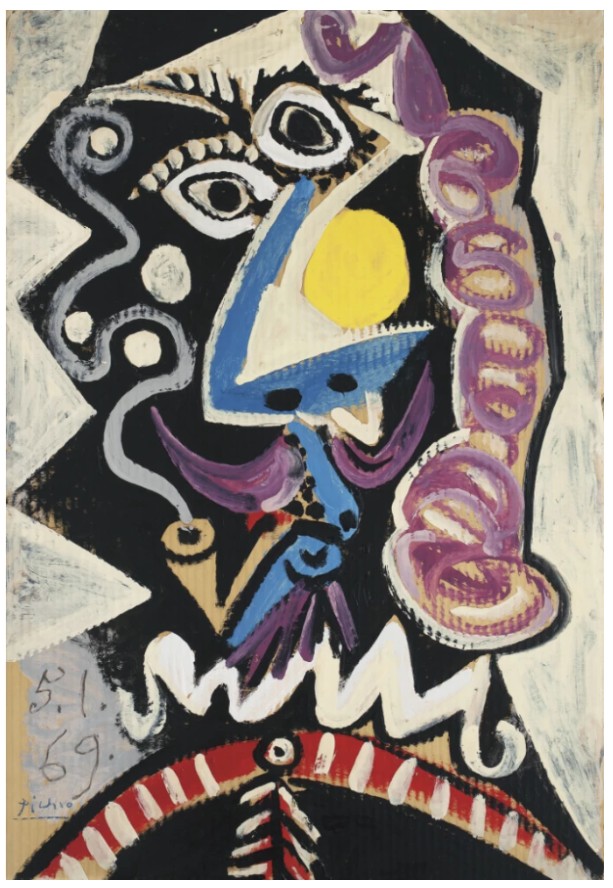
Pablo Picasso, Tête d’homme à la pipe, 1969 in Sotheby’s New York, 4 November 2017.
Sold for: USD 4,421,000 Premium (HKD 34,273,360)
Top auction record of the series
In early 1969, Picasso began experimenting with the medium of corrugated cardboard and created a series of 39 portraits of the mostly musketeers, including Buste d’homme. Demonstrating the unique texture of the medium, Picasso continued to use corrugated cardboards in 1970 for 10 other portraits of broader themes, including matadors and females. It is a medium that Picasso specifically chose to use for a very limited period. The series of corrugated cardboard portraits created in 1969 to 1970 is seen in numerous important global institutions, including The Israel Museum (Jerusalem), Musée Zervos (Vézelay), Museu Picasso (Barcelona) and Fundación Almine & Bernard Ruiz-Picasso para el Arte.