Auction Results
#1. Salvator Mundi, circa 1500
Christie’s New-York: 15 November 2017
Estimate on Request
USD 450,312,500
Leonardo da Vinci (1452-1519), Salvator Mundi | Christie’s
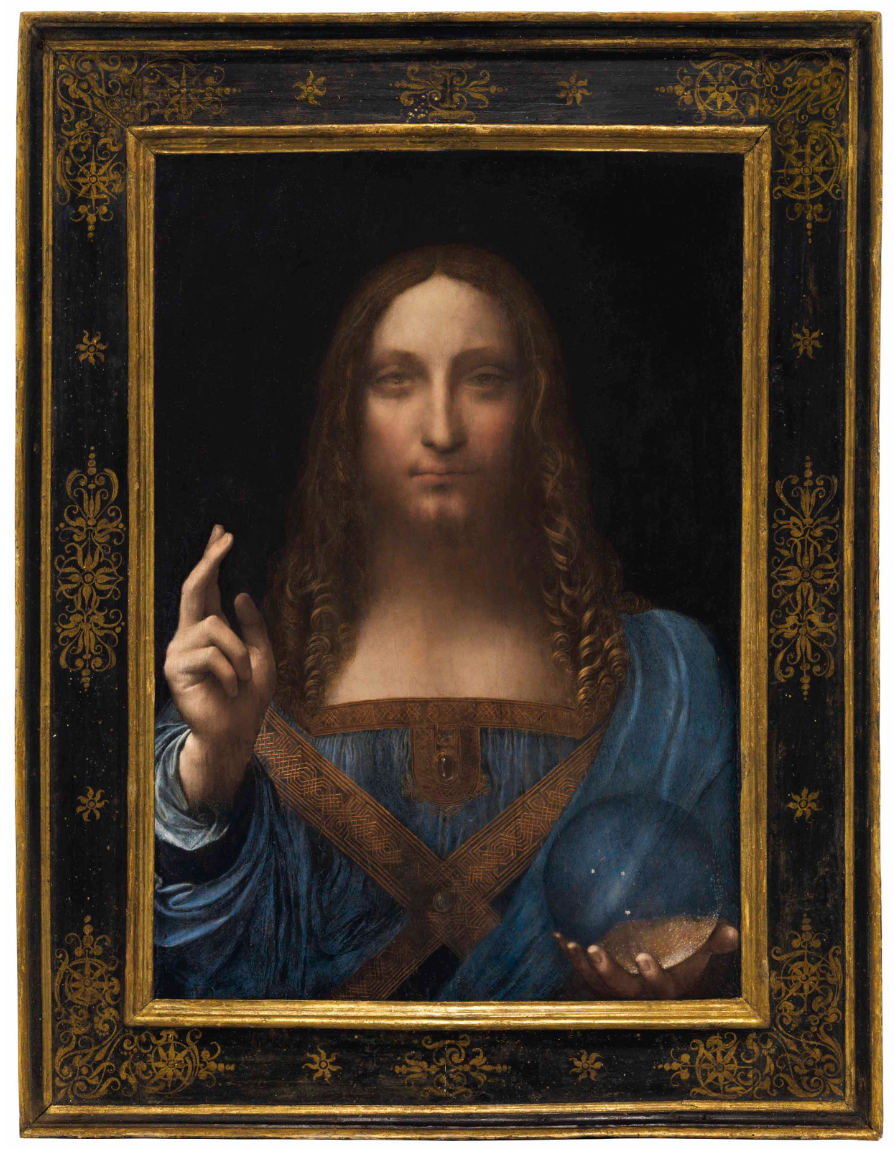
LEONARDO DA VINCI (1452-1519)
Salvator Mundi, circa 1500
Oil on panel
65.7 x 45.7 cm (25 7/8 x 18 inches)
#2. Shot Sage Blue Marilyn, 1964
Christie’s New-York, 9 May 2022
Estimated on Request
USD 195,040,000
ANDY WARHOL (1928-1987), Shot Sage Blue Marilyn | Christie’s
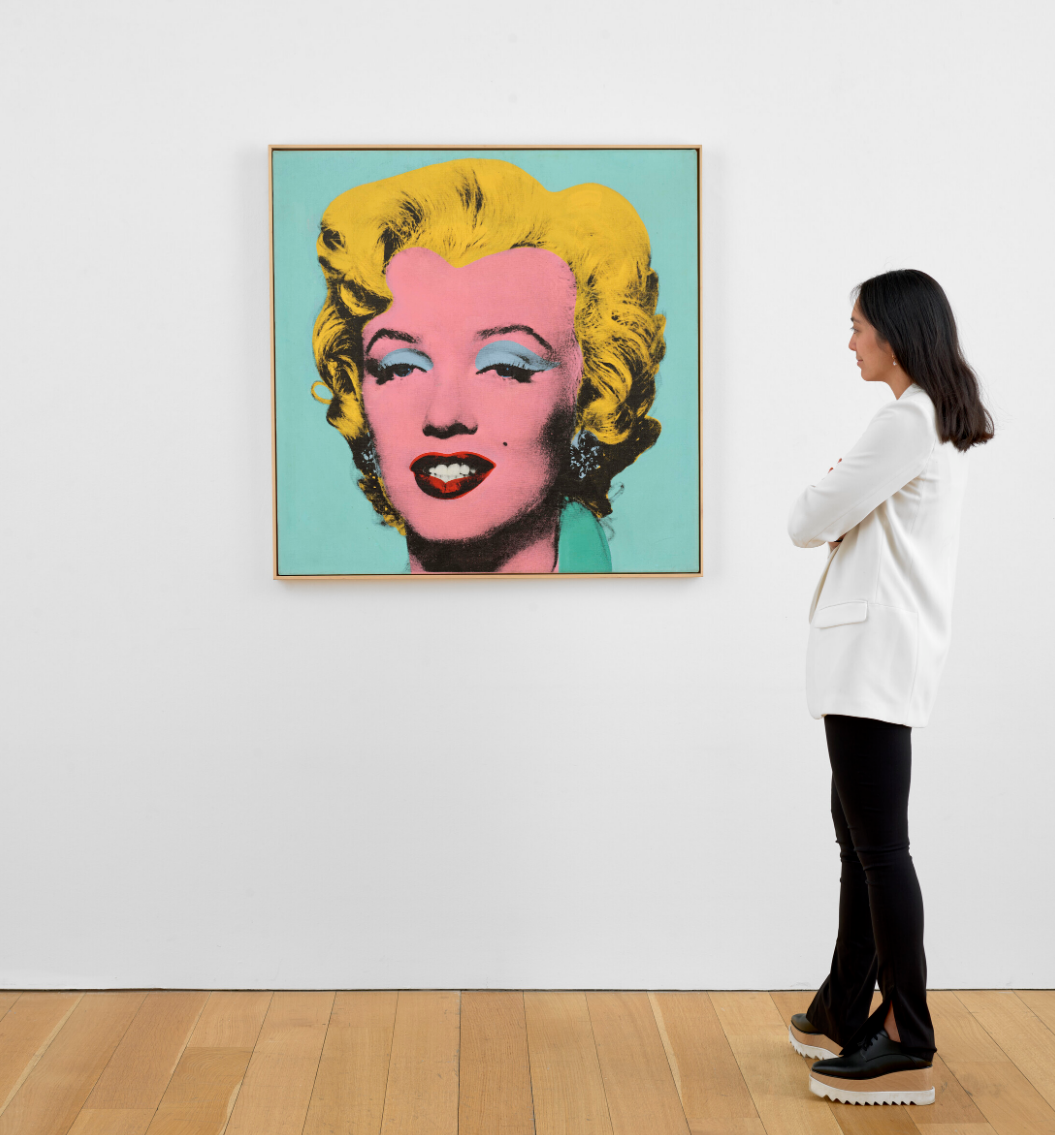
ANDY WARHOL
Shot Sage Blue Marilyn, 1964
Acrylic and silkscreen ink on linen
40 x 40 inches (101.6 x 101.6 cm)
Signed and dated ‘Andy Warhol / 64’ (on the overlap)
#3. Les femmes d’Alger (Version ‘O’), 1955
Christie’s New-York: 11 May 2015
Estimate on Request
USD 179,365,000
https://www.christies.com/en/lot/lot-5895962
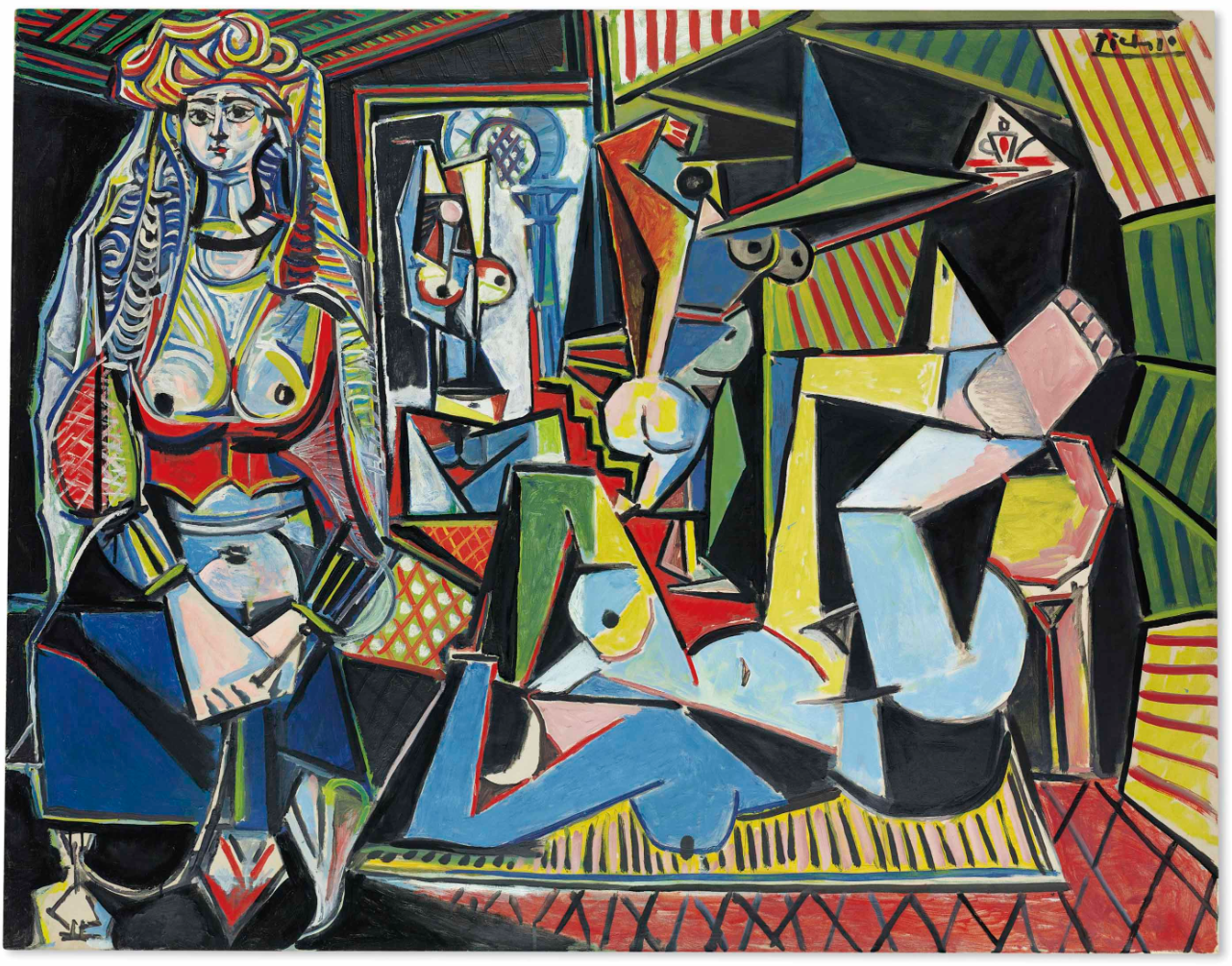
Pablo Picasso (1881-1973)
Les femmes d’Alger (Version ‘O’), 1955
Oil on canvas
114 x 146.4 cm (44 7/8 x 57 5/8 inches)
Signed ‘Picasso’ (upper right); dated ‘14.2.55.’ (on the reverse)
Painted on 14 February 1955
#4. Nu couché, 1917-1918
Christie’s New-York: 9 November 2015
Estimate on Request
USD 170,405,000
Amedeo Modigliani (1884-1920), Nu couché | Christie’s
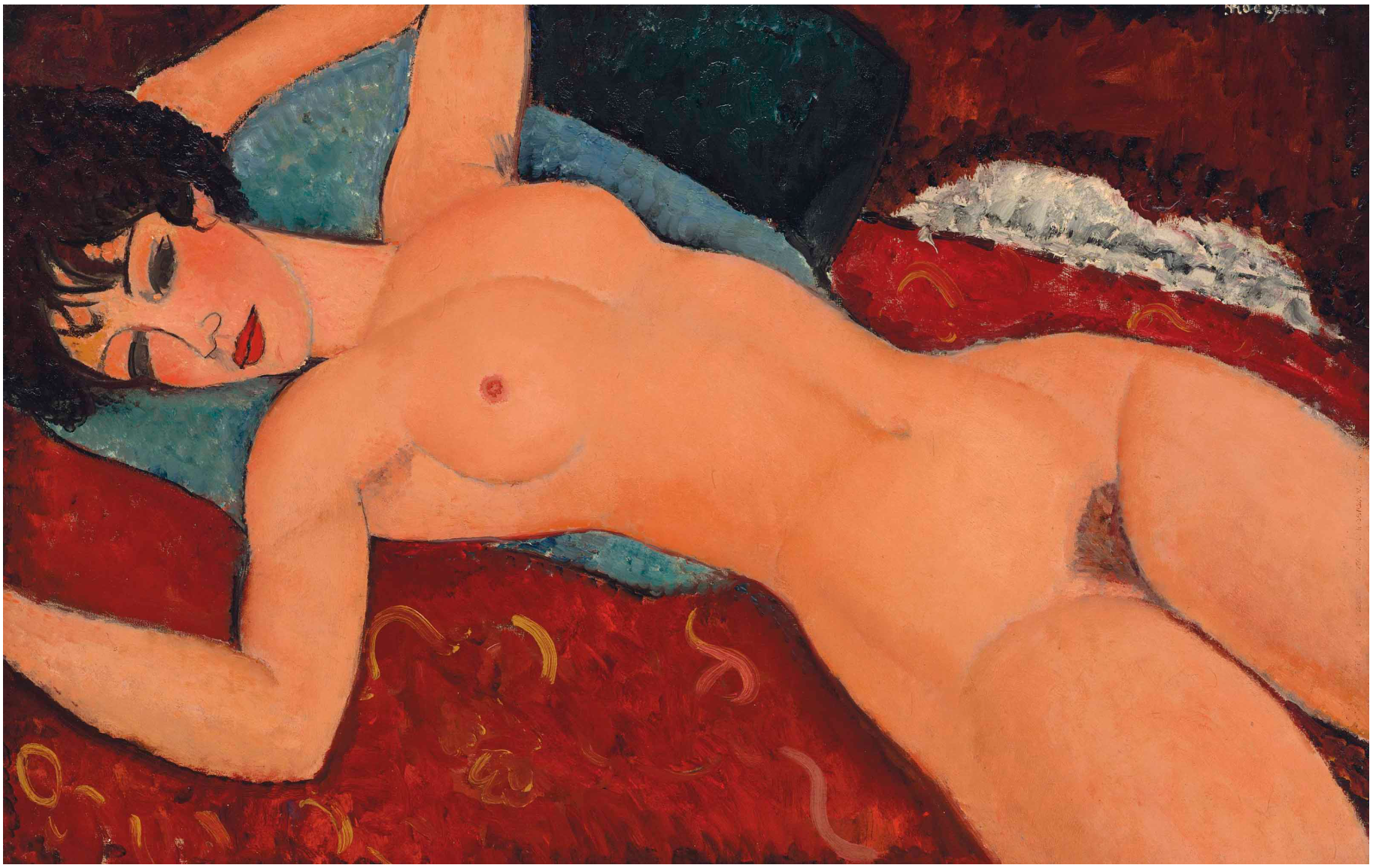
AMEDEO MODIGLIANI (1884-1920)
Nu couché, 1917-1918
Oil on canvas
59.9 x 92 cm (23 5/8 x 36 1/4 inches)
Signed ‘modigliani’ (upper right)
#5. Nu couché (sur le côté gauche), 1917
Sotheby’s New-York: 14 May 2018
Estimate on Request
USD 157,159,000
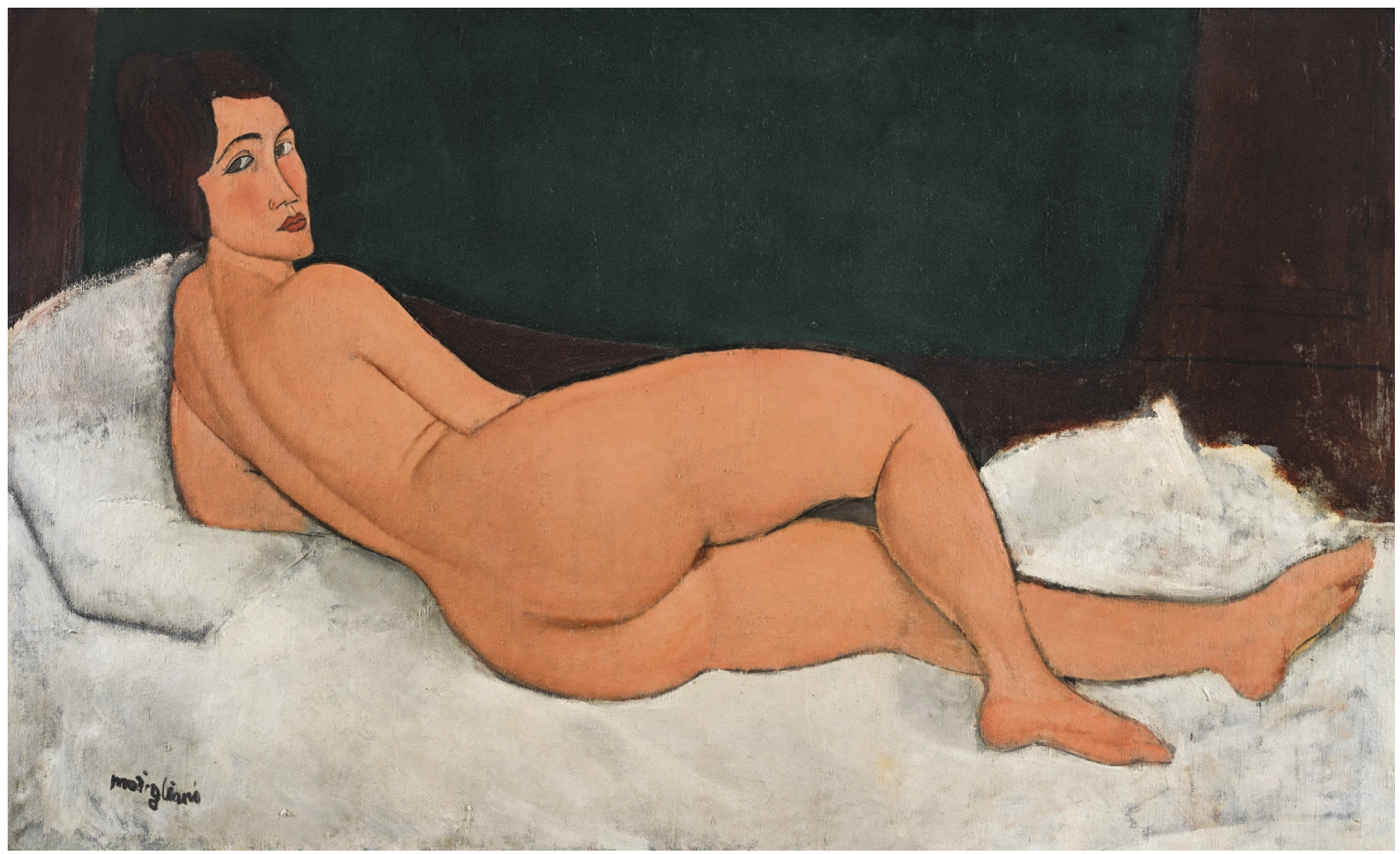
AMEDEO MODIGLIANI
Nu couché (sur le côté gauche), 1917
Oil on canvas
89.5 x 146.7 cm (35 1/4 x 57 3/4 inches)
Signed Modigliani (lower left)
#6. Les Poseuses, Ensemble (Petite version), 1888
Christie’s New-York: 9 November 2022
Estimate on Request
USD 149,240,000
GEORGES SEURAT (1859-1891), Les Poseuses, Ensemble (Petite version) | Christie’s
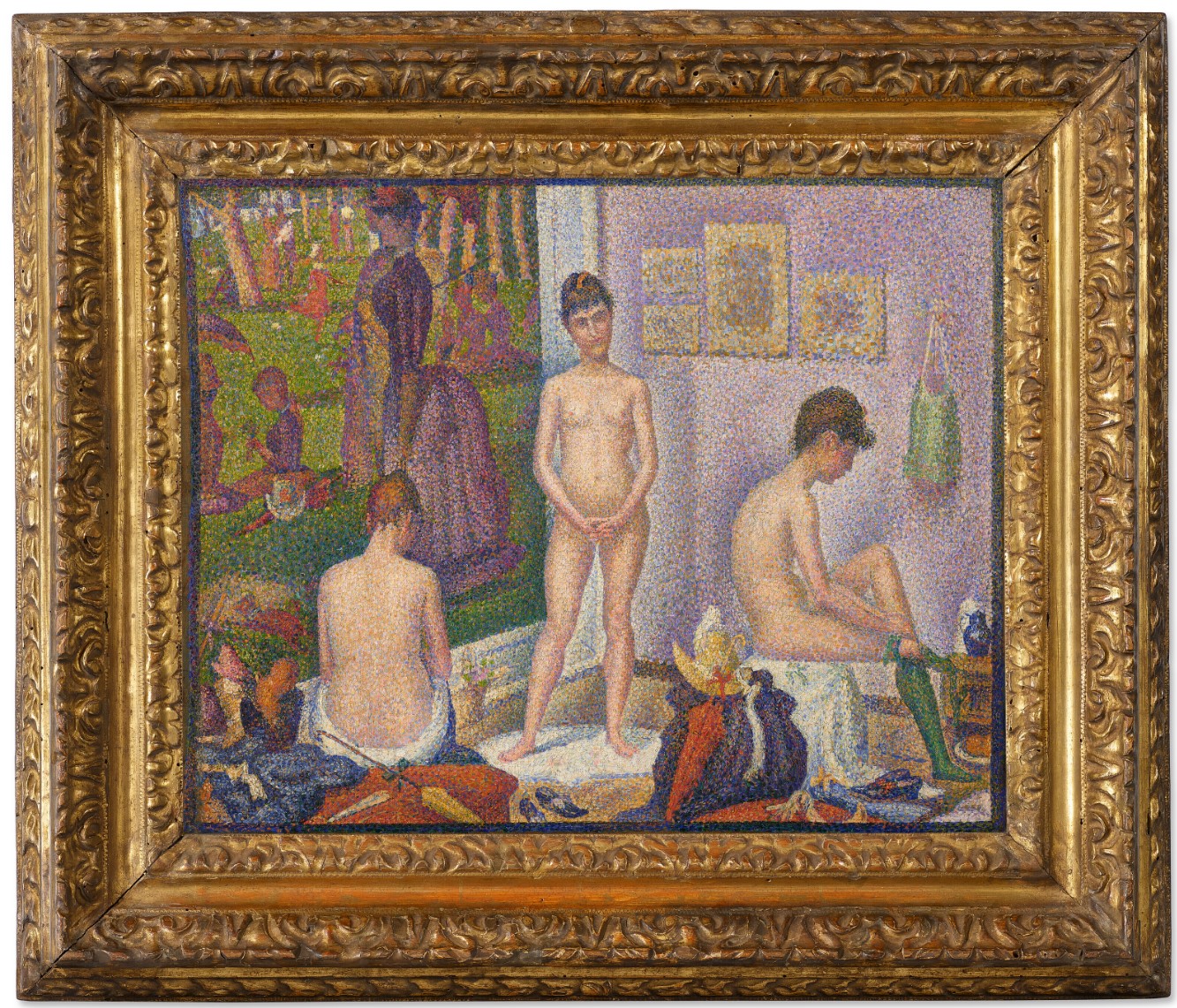
Les Poseuses, Ensemble (Petite version), 1888
Oil on canvas
39.3 x 50 cm (15 1/2 x 19 3/4 inches)
Christie’s New-York: 9 November 2022
Estimate on Request
USD 149,240,000
#7. Three Studies of Lucian Freud, 1969
Christie’s New-York: 12 November 2013
Estimate on Request
USD 142,405,000
Francis Bacon (1909-1992) (christies.com)
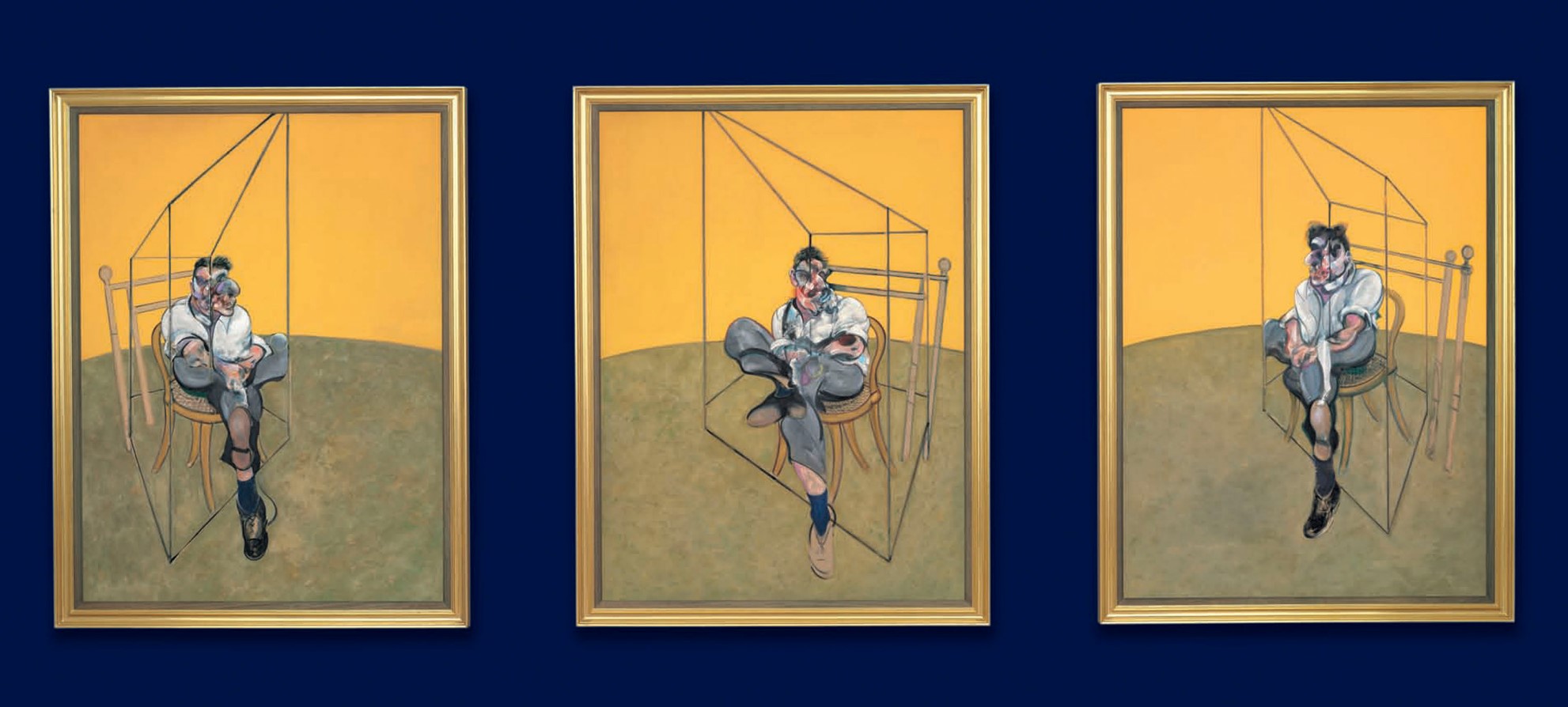
Francis Bacon (1909-1992)
Three Studies of Lucian Freud, 1969
Oil on canvas, in 3 parts
Each: 78×58 inches (198 x 147.5 cm)
Titled and dated ‘3 studies for portrait Lucian Freud 1969’ (on the reverse of the center panel)
#8. Femme à la montre, 1932
Sotheby’s New-York: 8 November 2023
Estimate Upon Request
USD 139,363,500
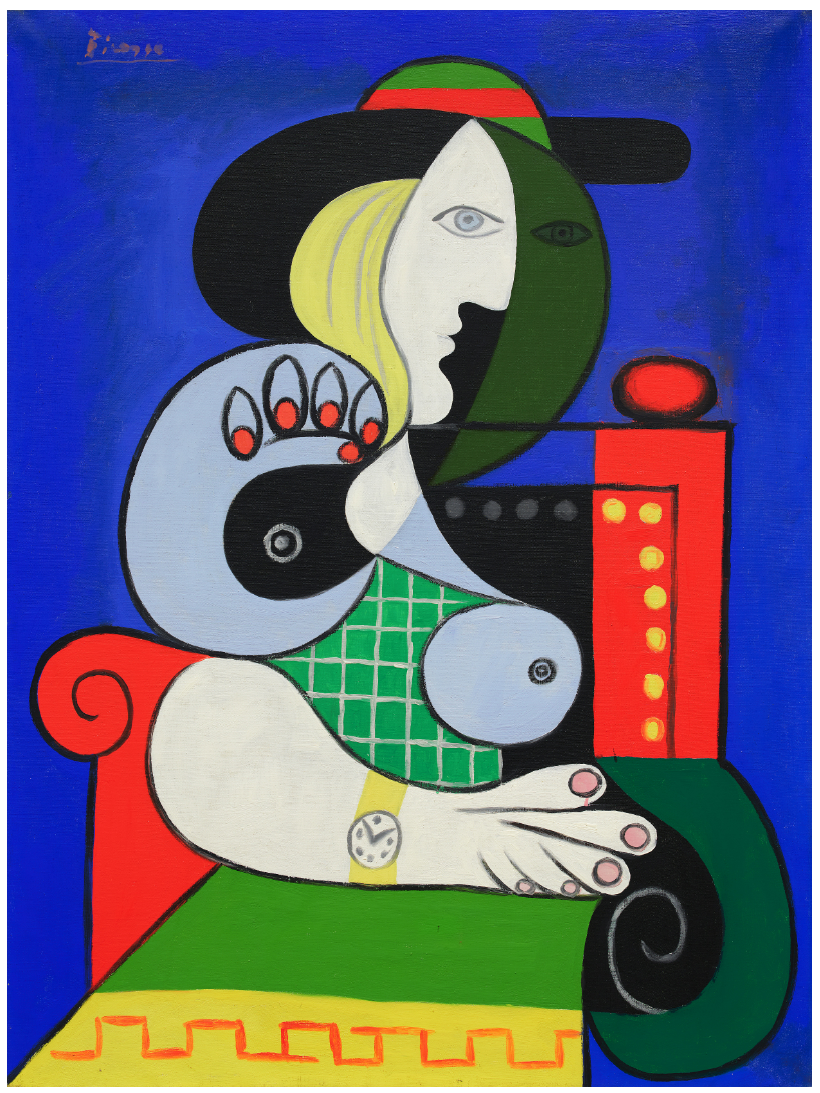
PABLO PICASSO (1881 – 1973)
Femme à la montre, 1932
Oil on canvas
130×97 cm (51 1/8 x 38 1/8 inches)
Signed Picasso (upper left)
Inscribed Boisgeloup and dated 17 Août XXXII. (on the stretcher)
Executed on 17 August 1932
#9. La Montagne Sainte-Victoire, 1888-1890
Christie’s New-York: 9 November 2022
Estimate on Request
USD 137,790,000
PAUL CEZANNE (1839-1906), La Montagne Sainte-Victoire | Christie’s
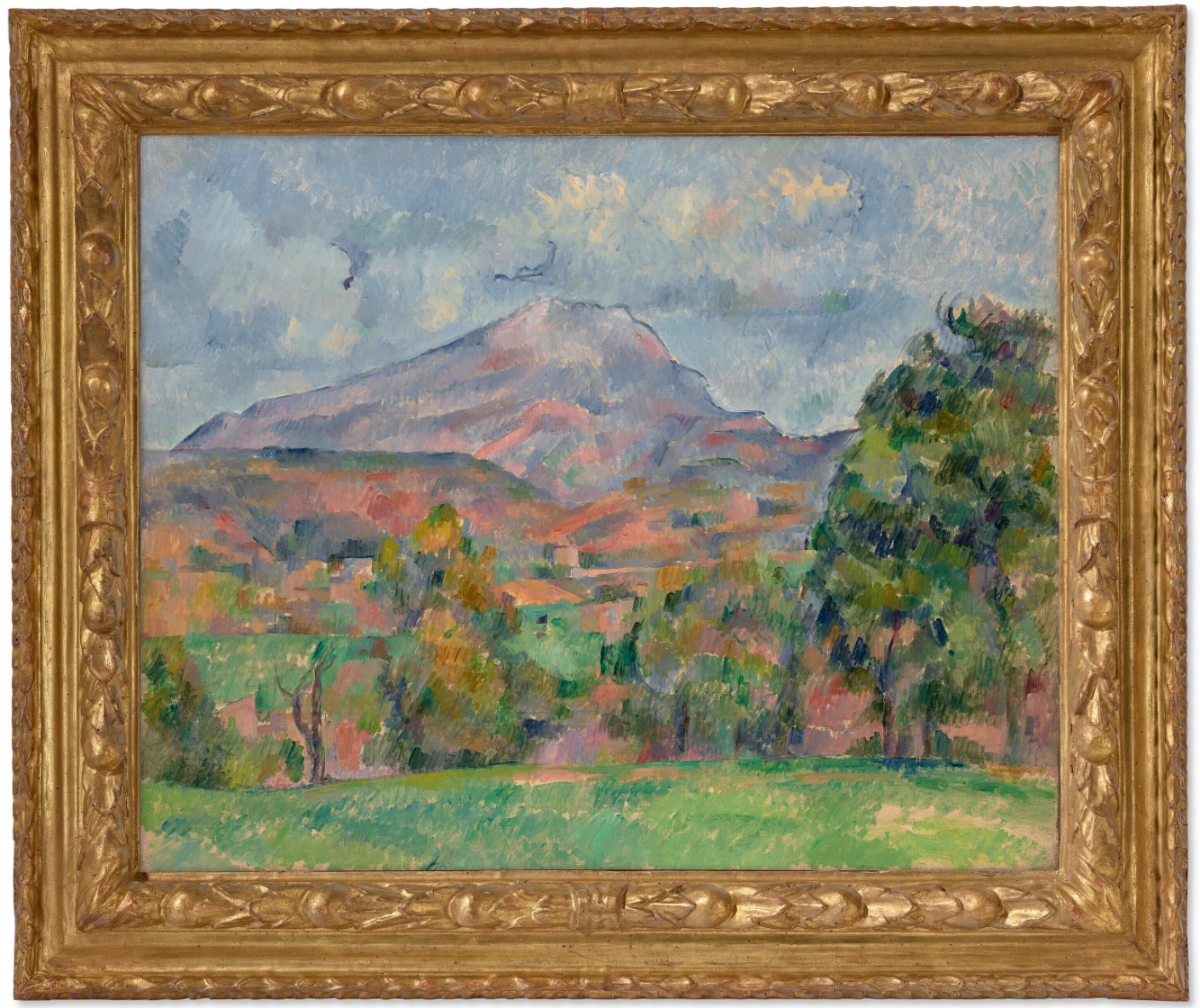
La Montagne Sainte-Victoire, 1888-1890
Oil on canvas
65.2 x 81.2 cm (25 5/8 x 31 7/8 inches)
L’empire des lumières, 1954
Christie’s New-York: 19 November 2024
Estimate on Request
USD 121,160,000
RENE MAGRITTE (1898-1967), L’empire des lumières | Christie’s
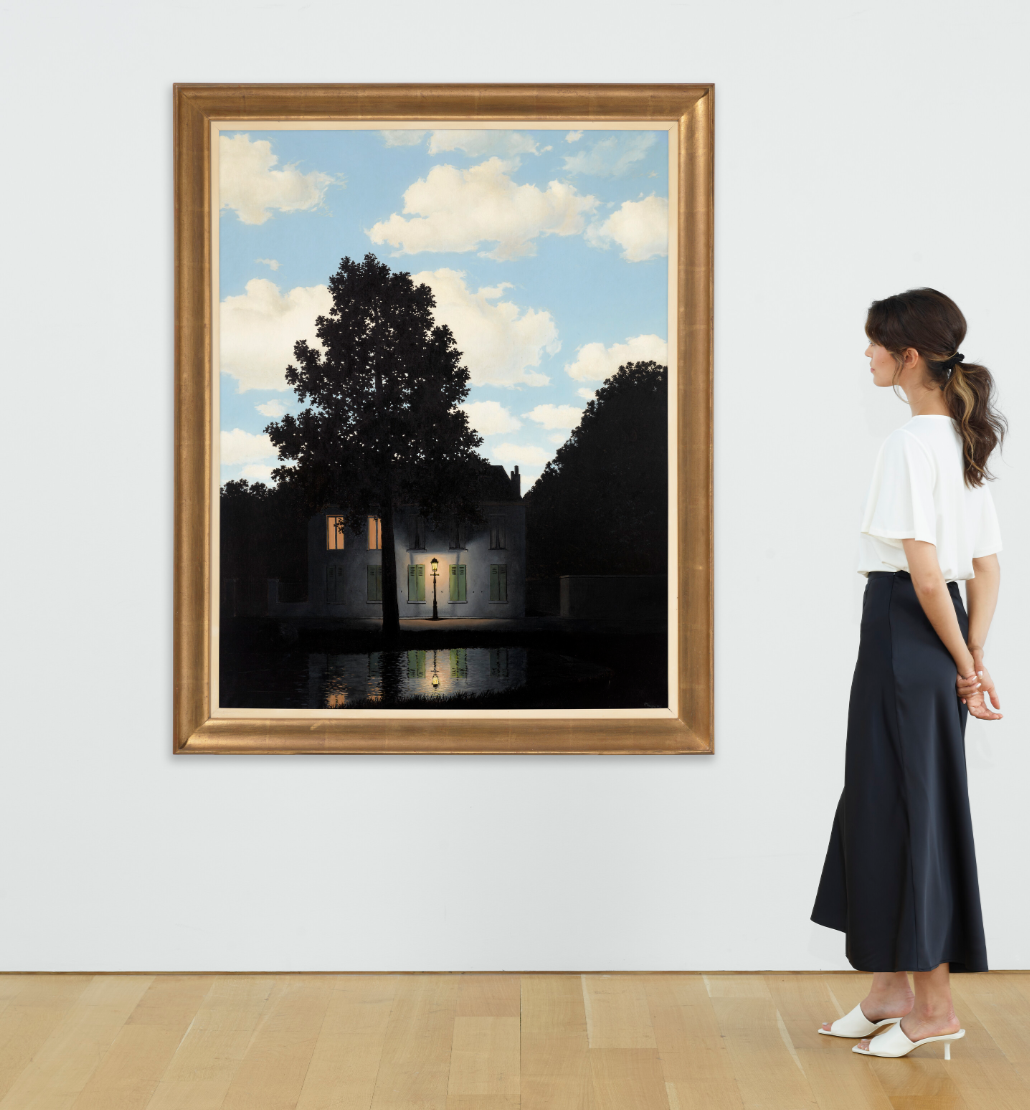
RENE MAGRITTE (1898-1967)
L’empire des lumières, 1954
Oil on canvas
146×114 cm (57 1/2 x 44 7/8 inches)
Signed ‘Magritte’ (lower right)
Signed again, dated and titled ‘”L’Empire des Lumières” Magritte 1954’ (on the reverse)
Andy Warhol
Shot Sage Blue Marilyn, 1964
Christie’s New-York, 9 May 2022
Estimated on Request
USD 195,040,000
ANDY WARHOL (1928-1987), Shot Sage Blue Marilyn | Christie’s
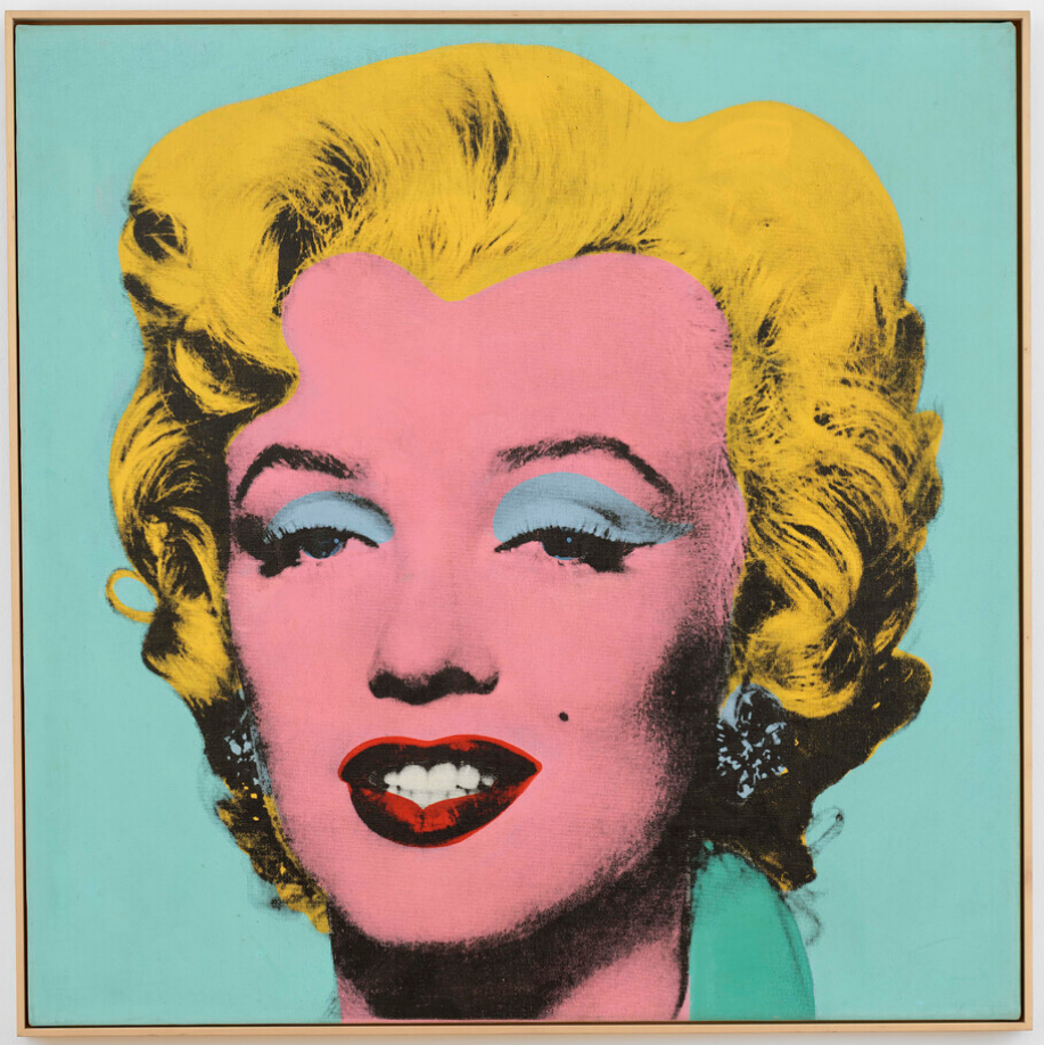 ANDY WARHOL
Shot Sage Blue Marilyn, 1964
Acrylic and silkscreen ink on linen
40 x 40 inches (101.6 x 101.6 cm)
Signed and dated ‘Andy Warhol / 64’ (on the overlap)
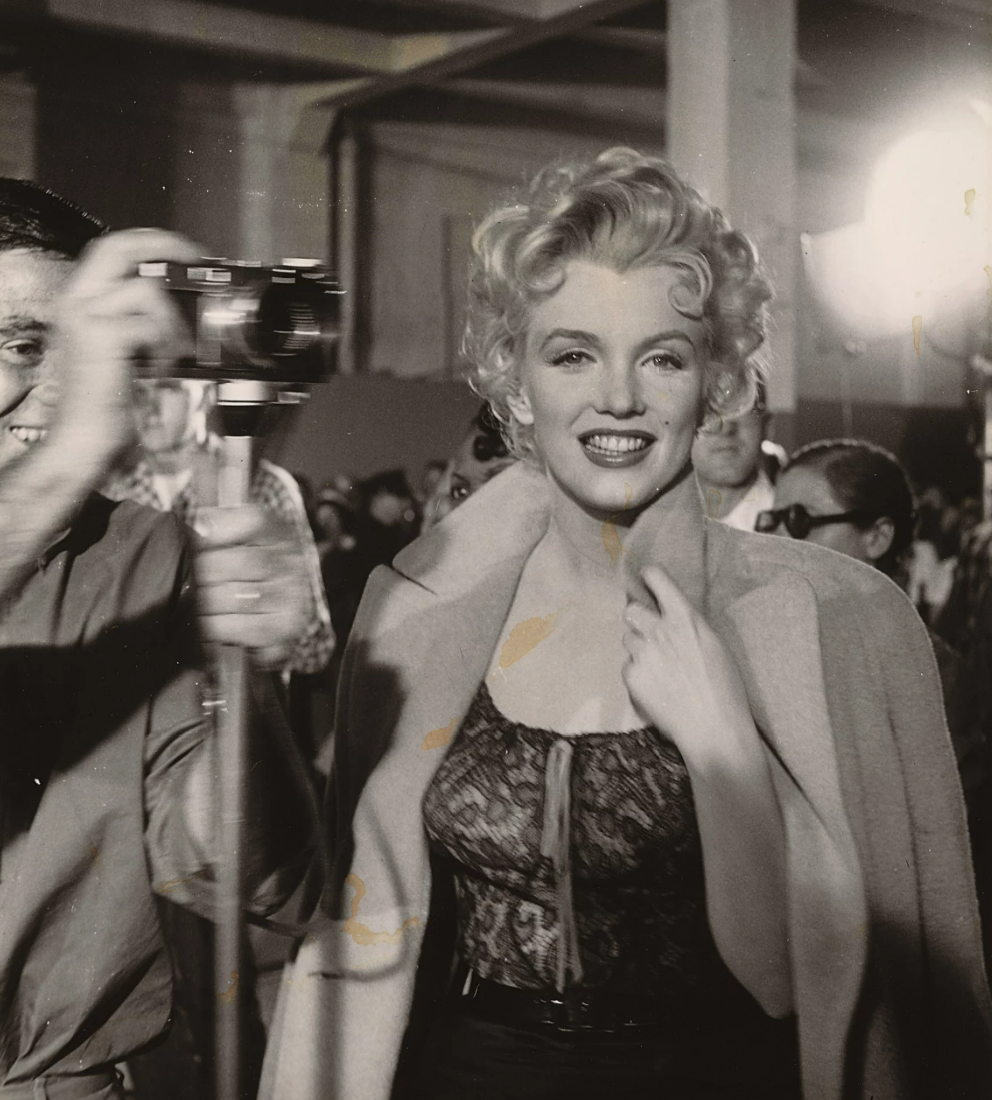
There are few images in history that have the ability to transcend the time and place of their creation, surpassing even the reputation of their creator or the magnificence of their subject. From the classical beauty of the Venus de Milo and the enigmatic smile of the Mona Lisa, to the sultry Sirens of Picasso’s Les Demoiselles D’Avignon, the beauty of the human figure has inspired artists to extend their creativity to new heights. In the latter half of the twentieth-century, one woman captivated the world with her legendary looks, the Hollywood star Marilyn Monroe. This small town girl rose to become the most famous woman in the world, and today—sixty years after her death—the myth of Marilyn Monroe is still as potent as ever. This is due to one man: Andy Warhol, his unique ability to capture the humble beauty of a global superstar has seared her likeness onto our collective consciousness. His flawless rendering has become the image of Marilyn Monroe. It represents not only her physical attractiveness, but also her cultural power and enduring legacy. Through this image, she lives on forever as one of the definitive artistic icons of all time, a Mona Lisa for the twentieth-century.
Shot Sage Blue Marilyn is Warhol’s ultimate depiction of his ultimate muse; an image that surpasses the transient nature of the actress’s life and the fame she endured. Distinguished by an inner luminosity, the screen idol’s legendary beauty radiates out from the surface of this large-scale painting. Her blond hair, piercing eyes, full-lips, and even her famous beauty spot are all rendered in a clarity and detail that is absent from other examples of Warhol’s famous screening process. Here, the flatness and uniformity of previous renderings of her famous locks have been replaced by an expansive sweep of voluminous curls executed with such skill that individual strands are highlighted; even the renegade coils that have escaped her hairdresser’s attention—such as the one just above her real right ear—are perfectly captured by Warhol in consecutive layers of yellow and black paint. Marilyn’s arched eyebrows define generous arcs of blue eyeshadow, which in turn frame her piercing deep blue eyes. The outline of her red lipstick perfectly hugs the outline of her full red lips and—to her real left—the iconic beauty spot sits proudly on the surface of her cheek. In addition to the obvious facial features, the clarity of Marilyn’s image is enhanced by Warhol’s sophisticated use of chiaroscuro. At her left temple, embracing her cheek and shrouding her neck, soft shadows add a unrivalled degree of depth and plasticity to Warhol’s iconic image.
The aesthetic superiority of Marilyn is the result of a radically different and more complex screening process that Warhol developed in 1964. In his earlier silkscreens of the actress, or any of his portraits executed between 1962 and 1964 for that matter, the colored elements were applied between two layers of black silkscreen ink. The use of a preparatory screened underlayer, followed by the elements of local color, following by another screening of black, often led to images that lacked a degree of crispness due to the difficulty of accurately lining up the three independent layers of screening. This often led to “ghost-images,” where the eye shadow or red lips, for example, extended beyond the physical features defined by the black screened layers. On occasions it also led to somewhat blurry images as subsequent layers merged together somewhat unsuccessfully.By mid-1964, and Shot Sage Blue Marilyn, where local color was required, there is little evidence of a preliminary silkscreen impression, and the registration of the uppermost black screen and color is virtually seamless. Warhol had arrived at a new method for registering local colors, using a positive image that his silkscreen maker would print on acetate and provide him as a proof. Warhol was then able to trace this image onto the canvas as an under-drawing, guiding both the hand-painted local color and the subsequent black layer. Both Gerrard Malanga and Mark Lancaster—frequent visitors to the Factory during this period—also observed that the tracing was partially masked with tape, allowing the local color to be applied by hand with much greater clarity and precision. This new, more intricate, method ultimately proved to be too time consuming for the famously impatient artist, and Warhol abandoned
This painting also enters ‘Warhol-lore’ as one of the famous Shot Marilyns, a group of four paintings involved in an infamous event that took place at the Factory in the fall of 1964. Warhol had just completed a set of five 40×40 inch canvases of Marilyn (the four Shot Marilyns plus Turquoise Marilyn) using his new screening process, when he was visited by his friend Ray Johnson and a woman named Dorothy Podber. She was a sometime performance artist and the owner of outlandish pets including an ocelot which she took for walks around New York’s Central Park. She was also known as a photographer and when she entered the Factory and saw Andy silkscreening, she asked if she could shoot them. Assuming that she meant photograph his latest work, Warhol agreed. Podber promptly took a gun from purse and fired a single shot at the canvases leant up against the wall. She then put the gun back in her purse and left.
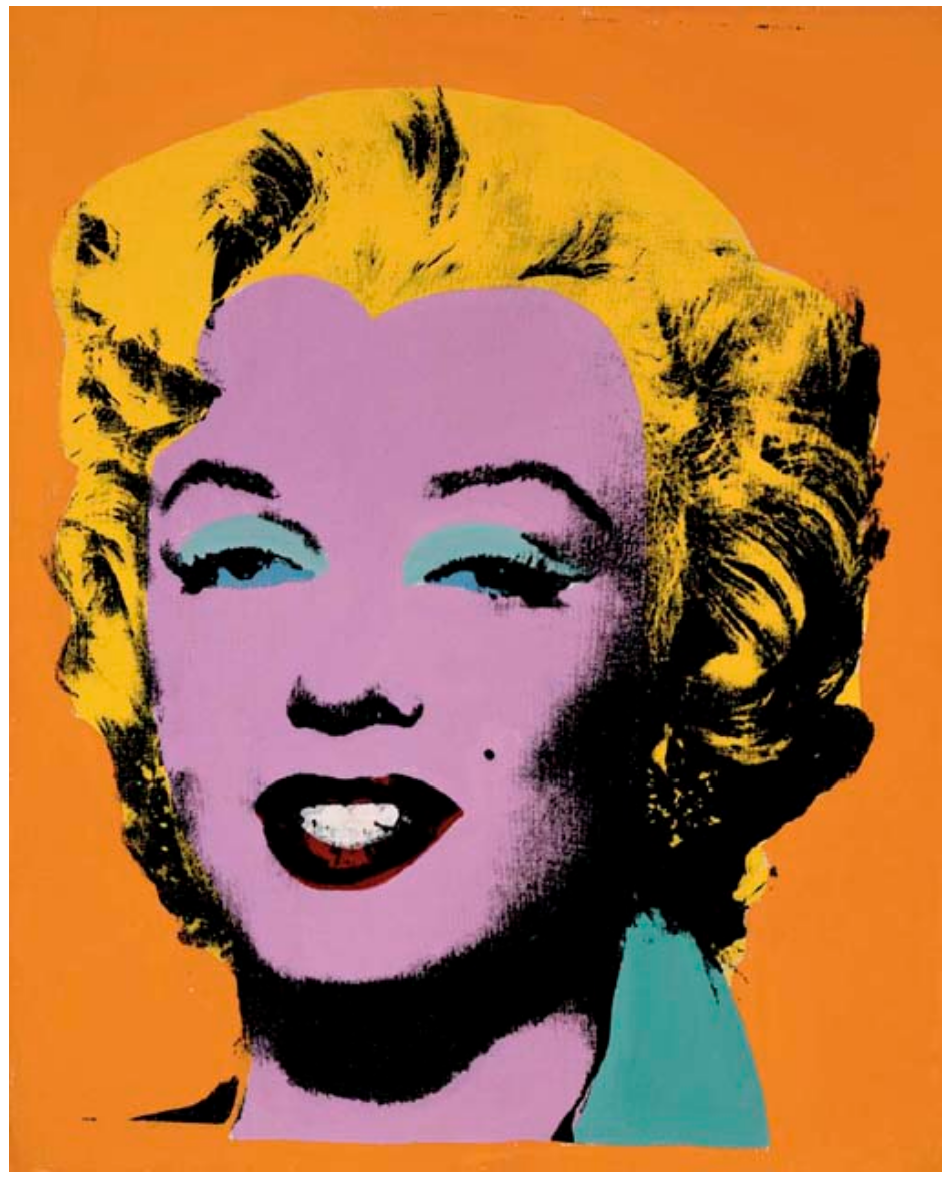
Subsequently the paintings became among the most celebrated of the twentieth-century postwar canon, each with provenance to match. Shot Sage Blue Marilyn was first acquired by the legendary New York Pop collector Leon Kraushar. During an intense period in the early 1960s, Kraushar—an advertising executive—amassed one of the greatest collections of Pop Art ever assembled. Kraushar and his wife acquired many early works by Warhol and Roy Lichtenstein. Among his early purchases were the now legendary Red Jackie, Green Liz and Orange Marilyn, all of which were displayed alongside Lichtenstein’s iconic Nurse in bedroom of Kraushar’s suburban Long Island home. The painting was then acquired by Fred Mueller, the influential contemporary art dealer and former partner in the Pace Gallery along with Arne and Eva Glimcher. Subsequently, S.I. Newhouse, the owner of the Condé Nast magazine empire, acquired the painting in the early 1970s, before Thomas Ammann acquired it in the early 1980s, and in whose private collection it has remained ever since.
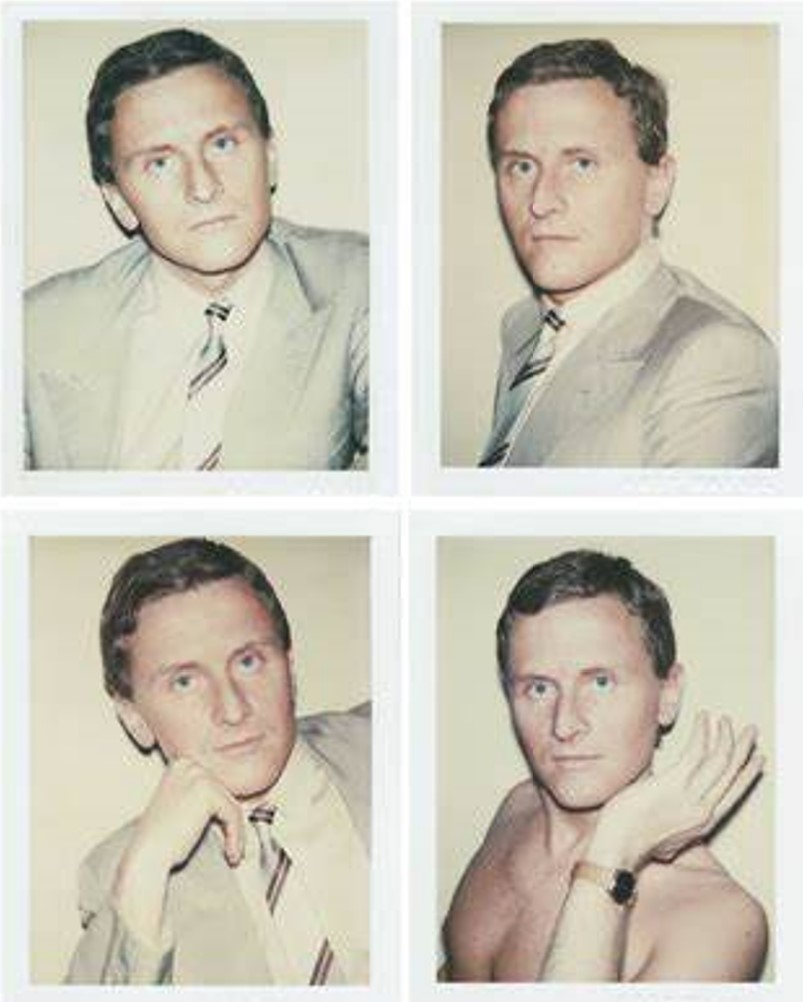
ANDY WARHOL, Thomas Ammann, 1977
Four unique polaroid prints
Each: 4.2 x 3.4 inches (10.8 x 8.6 cm)
Ammann built a reputation as one of the most respected dealers and gallery owners in the world. After leaving school at 18, he worked for the legendary dealer Swiss Bruno Bischofberger, before opening his eponymous gallery, Thomas Ammann Fine Art, in Zürich in 1977. Together with his older sister, Doris, he quickly became one of the pre-eminent dealers in Impressionist and twentieth-century art including works by Matisse, Picasso, Giacometti, and Francis Bacon. They boasted a client list that included all of the world’s top collectors who appreciated his knowledge, his highly-sophisticated eye, and—perhaps most importantly—his discretion. In addition to acquiring works for his private clients, Thomas was also instrumental in placing major works in international museum and institutional collections, including Max Ernst’s The Blessed Virgin Chastises the Infant Jesus Before Three Witness in the Ludwig Museum and Vincent van Gogh’s Portrait of Joseph Roulin at the Museum of Modern Art, New York. When Thomas died in 1993, Doris took over the running of the gallery, building on her brother’s legacy, while at the same time introducing a new generation of contemporary artists to collectors around the world.
Thomas and Andy Warhol became close friends after being introduced by his mentor Bruno Bischofberger. Warhol was a frequent visitor to Thomas’s house in Switzerland, and the pair quickly became close friends. In 1977, Ammann initiated a project to produce an authoritative catalogue raisonné of the artist’s paintings, sculptures, and drawings, and working Warhol began the daunting task of assembling the material needed for such a monumental undertaking. In 2002, under the editorship of Georg Frei and Neil Printz, the first of the current five volumes was published. In 1978, Thomas also organized a large retrospective exhibition of Warhol’s work at the Kunsthaus in Zurich which did much to bolster Warhol’s reputation in Europe.
Pablo Picasso
Les femmes d’Alger (Version ‘O’), 1955
Christie’s New-York: 11 May 2015
Estimate on Request
USD 179,365,000
https://www.christies.com/en/lot/lot-5895962
Pablo Picasso (1881-1973)
Les femmes d’Alger (Version ‘O’), 1955
Oil on canvas
114 x 146.4 cm (44 7/8 x 57 5/8 inches)
Signed ‘Picasso’ (upper right); dated ‘14.2.55.’ (on the reverse)
Painted on 14 February 1955
Pablo Picasso was a passionate student of the grand tradition of European painting; he pitted himself ferociously against the great masters of European painting in a dialogue which lasted his entire life, taking up their artistic concerns and making audacious responses of his own. El Greco, Velázquez and Goya were of crucial importance to Picasso, as was Eugène Delacroix and in particular Delacroix’ 1834 work Femmes d’Alger dans leur appartement.
This 1834 painting, which depicted Algerian concubines in their harem with a hookah used to smoke hashish or opium, was known, in the 19th century, for its sexual content and its orientalism. It was first displayed at the Salon where it was universally admired and bought by King Louis Philippe who presented it to the Musée du Luxembourg which was at the time dedicated to contemporary art. After Delacroix’ death in 1874, the painting was moved to the Louvre, which is where Picasso would visit it.
‘He had often spoken to me of making his own version of Femmes d’Alger,’ Françoise Gilot wrote in her 1964 book, ‘and had taken me to the Louvre on an average of once a month to study it. I asked him how he felt about Delacroix. His eyes narrowed and he said, “That bastard. He’s really good.”’
The series based on the Delacroix ‘femmes’ Picasso painted during 1954–55 consisted of nearly 100 studies on paper and 14 other paintings of which this, Version “O” is the acknowledged masterpiece, joining Les demoiselles d’Avignon (1907) and Guernica (1937) on the undoubted peaks of Picasso’s oeuvre.
In addition to taking on Delacroix, Picasso had also conceived the series as an elegy to his friend and great artistic rival, Matisse, who died five weeks before he began the series in 1954. Matisse had viewed Delacroix as his immediate forebear in terms of colour and oriental subject matter. ‘When Matisse died he left his odalisques to me as a legacy,’ Picasso stated.
Les femmes d’Alger (Version “O”) is a phenomenon. This vast canvas is packed with references to Cubism, fractured or flat perspectives, violent colour clashes and the brilliant syntheses of Picasso’s lifelong obsessions, all referenced together as a savage response to the Delacroix work and echoing Matisse in a maelstrom of colour and shattered and flattened perspectives. In the process, Picasso created a new style of painting.
Previously in the collection of Victor and Sally Ganz, Christie’s sold this work in 1997 for $31,902,500; more than twice its high estimate of $12m. Over the years, Les femmes d’Alger (Version “O”) has been featured prominently in major Picasso retrospectives, including The Museum of Modern Art, New York in 1957 and 1980, The National Gallery in London in 1960, the Grand Palais, Paris in 1966–67, The Metropolitan Museum of Art, New York in 1968 and more recently in the survey Picasso et les Maîtres at the Louvre in 2008–09 as well as in Picasso: Challenging the Past at London’s National Gallery in 2009 and Picasso & Modern British Art at Tate Britain in 2002.
Femme à la montre, 1932
Sotheby’s New-York: 8 November 2023
Estimate Upon Request
USD 139,363,500
PABLO PICASSO (1881 – 1973)
Femme à la montre, 1932
Oil on canvas
130×97 cm (51 1/8 x 38 1/8 inches)
Signed Picasso (upper left)
Inscribed Boisgeloup and dated 17 Août XXXII. (on the stretcher)
Executed on 17 August 1932
Among the representations of ardor and desire in the canon of twentieth-century art, Picasso’s sensuous depictions of his lover and muse Marie-Thérèse Walter reign supreme. Executed in 1932 at the pinnacle of Picasso’s impassioned affair, Femme à la montre exists as one of the most resolved and complex depictions from this highly charged year. The rapturous period from which Femme à la montre originates has been described by the artist’s biographer John Richardson as Picasso’s annus mirabilis or ‘year of wonders.’ In 1932, Picasso worked at a feverish pace, ceaselessly inspired by his new muse’s presence and the longing felt in her absence. Utterly consumed by his amour fou—the Surrealist notion of an obsessional, vortex-like desire—each work from this period reads like an entry in a diary, documenting the pair’s evolving relationship. Among the artist’s 1932 works, it is the monumental canvases like Femme à la montre, which unapologetically announce Marie-Thérèse’s presence, that are most widely acclaimed for their singular importance in Picasso’s oeuvre.
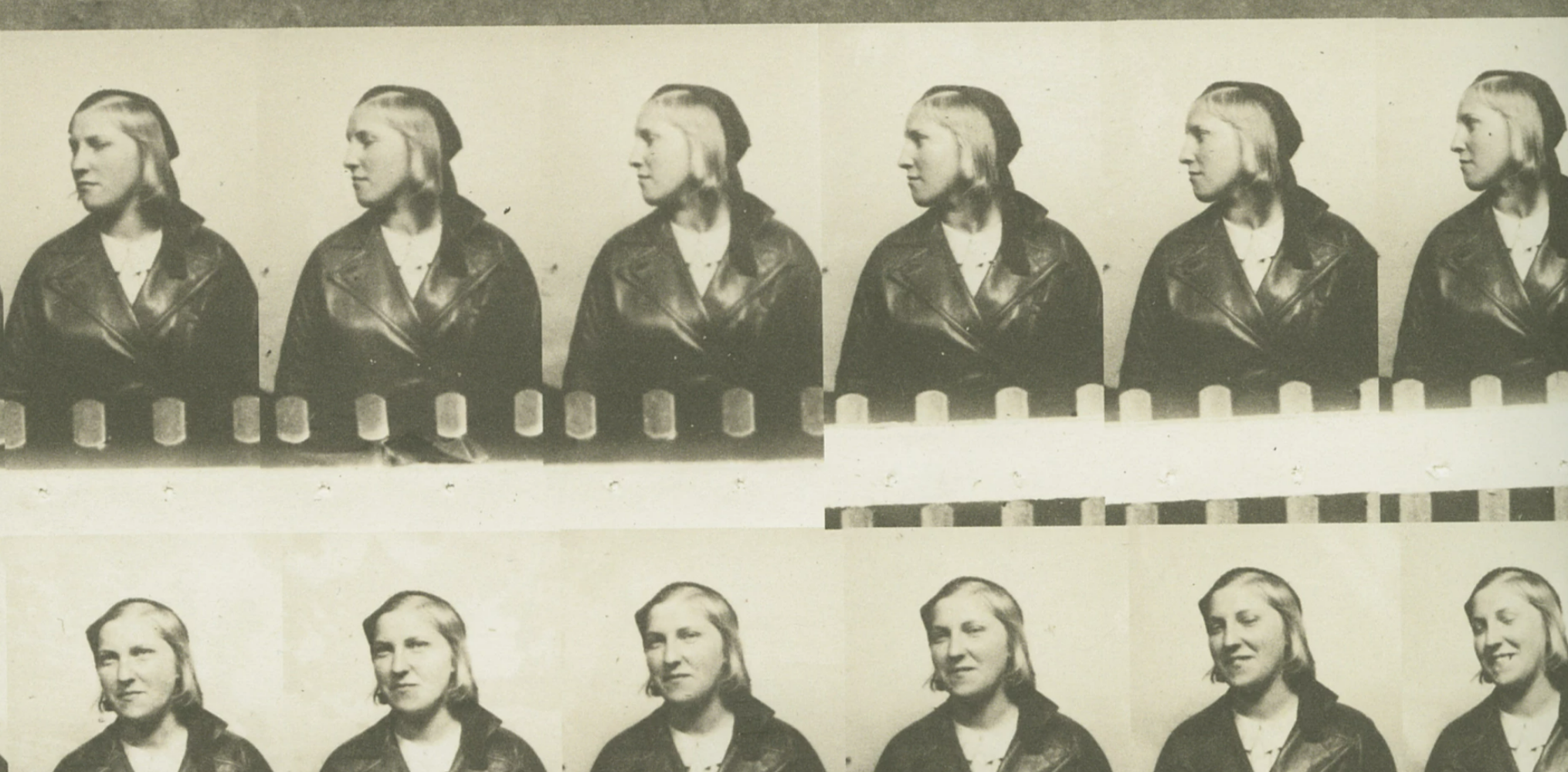
PHOTOGRAPHS OF MARIE-THÉRÈSE WALTER, 1930. PHOTO © COURTESY ARCHIVES MAYA WIDMAIER PICASSO.
Picasso’s infatuation took on near-mythic proportions, the likeness of Marie-Thérèse spilling out onto canvas after canvas, in sculpture and on paper. Due to the age difference and Picasso’s marriage to Olga, their relationship remained a secret and was hidden even from the artist’s innermost circle of friends. As a result, Marie-Thérèse’s identity is hidden in Picasso’s earliest works, obscured by his Surreal biomorphic interpretations, hinted at in shadowy profiles or tantalizingly suggested in the still lifes which conceal the initials ‘MT.’ As Françoise Gilot would later write, Marie-Thérèse was “the luminous dream of youth, always in the background but always within reach, that nourished his work… Marie-Thérèse, then, was very important to him as long as he was living with Olga because she was the dream when the reality was someone else” (quoted in Exh. Cat., London, Tate, Picasso 1932 – Love, Fame, Tragedy, 2018, p. 18).
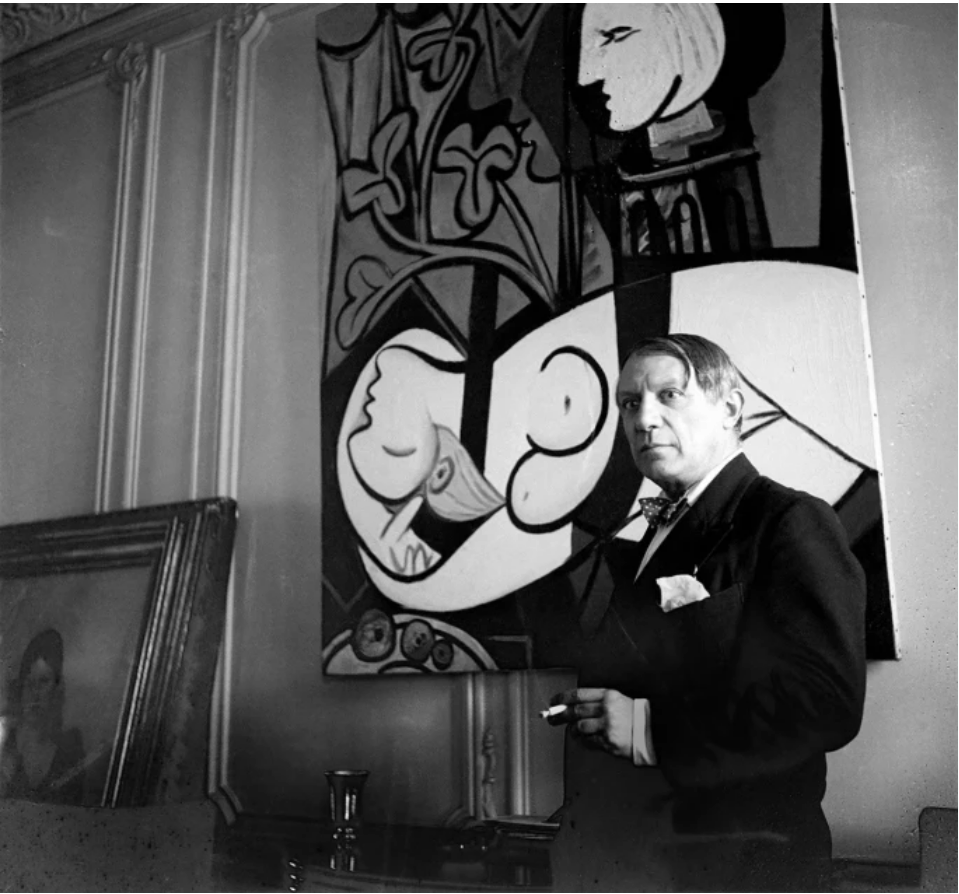
CECIL BEATON, PABLO PICASSO, RUE LA BOÉTIE, 1933. PHOTO © THE CECIL BEATON STUDIO ARCHIVE AT SOTHEBY’S. ART © 2023 ESTATE OF PABLO PICASSO / ARTISTS RIGHTS SOCIETY (ARS), NEW YORK
Their furtive liaison resulted in scores of coded images of his lover, eventually culminating in the undeniably bold and sensuous portraits of 1932 at the apex of their relationship. His muse’s potent mix of physical appeal and sexual naïveté had an intoxicating effect on Picasso, and his rapturous desire for the young woman brought about a wealth of images that have been praised as the most erotic and emotionally uplifting compositions of his long career. Augmented by the forbidden nature of their years-long relationship, Picasso’s unleashed passion is nowhere more apparent than in his 1932 depictions of his muse.
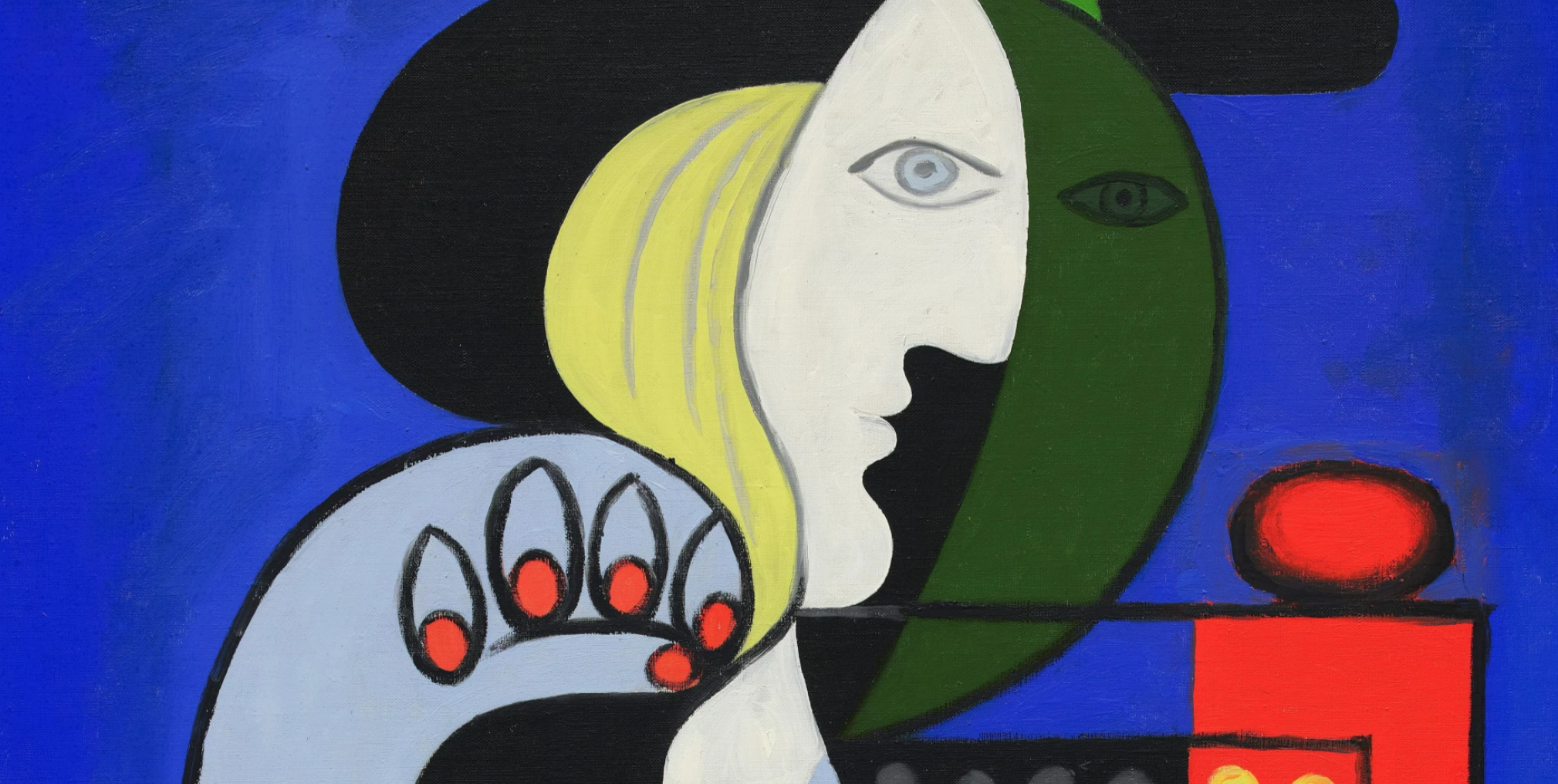
Executed in August of that year, Femme à la montre depicts a smartly dressed young woman seated in an armchair against a striking blue background. Back in Boisgeloup after the opening of his retrospective in Paris, Picasso enjoyed a calmer environment free of pre-exhibition stresses and time constraints. Consequently, the present work displays a heightened level of detail and pictorial complexity compared to related compositions from earlier in the year, resulting in one of the most compelling portrayals of his Golden Muse ever created.
Rendered in volumetric curves and set against geometric delineations of her dress and chair, Marie-Thérèse conveys a sense of poise and assuredness. Her gaze is directed at the viewer, the illuminated half of her visage mirrored and joined by the shaded half—like sun and moon—in the characteristic implication of Picasso’s own presence. The brilliant blue background against which Marie-Thérèse is posed is exceptional for seated portraits from the period. While the bold primary color is seen in a few of the reclining nudes, Femme à la montre is the only depiction to offer the numinous backdrop to such a powerful extent, lending the seated Marie-Thérèse a reverential, almost hallowed aura like a mandorla surrounding a Madonna.
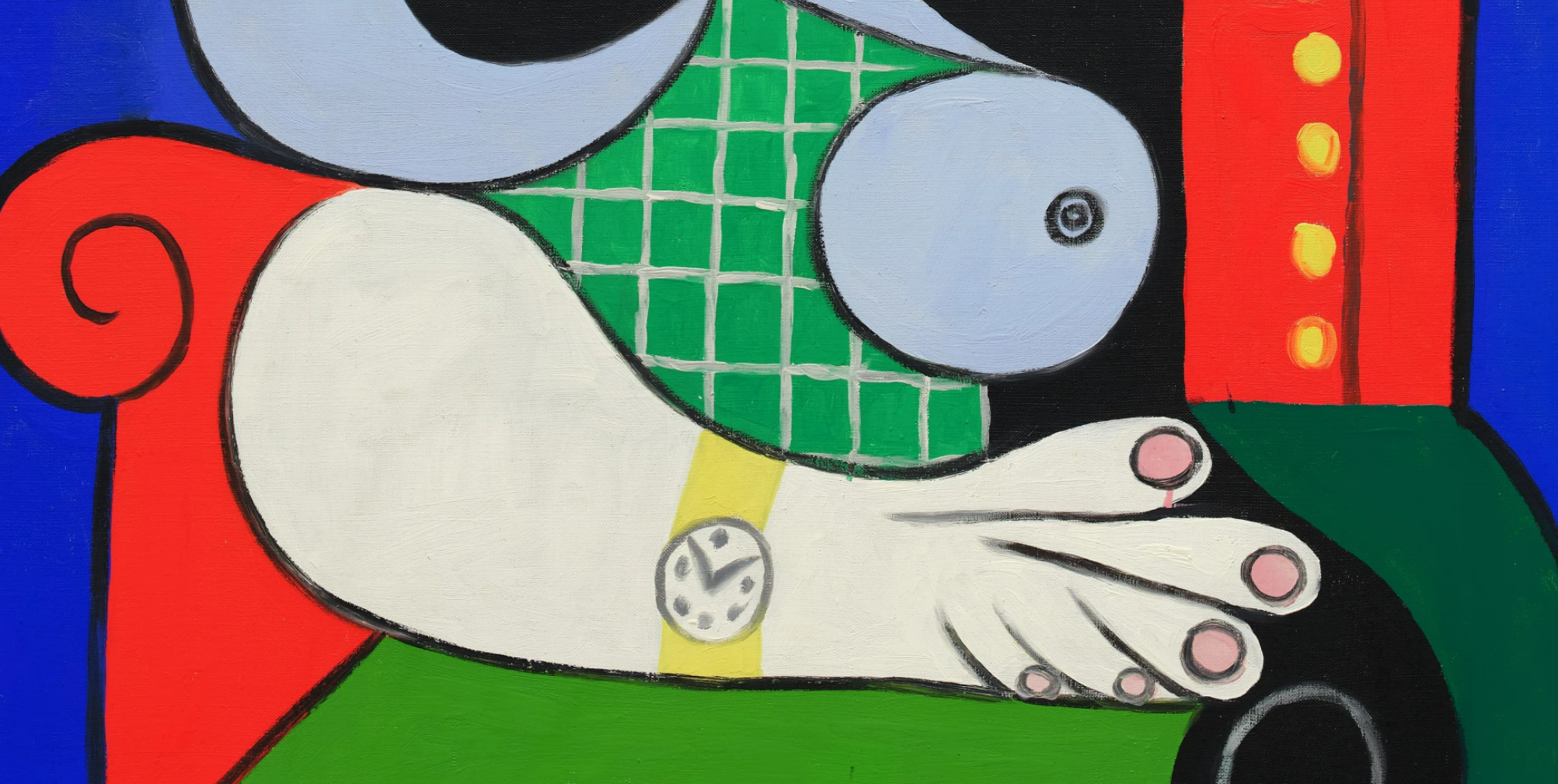
The present work is further distinguished by the crisply articulated lines and geometric forms of the armchair and pattered dress, each element carefully offset by contrasting colors and shapes. Marie-Thérèse’s green checked blouse can be read a direct reference to the patterned tapestries and garments found within Matisse’s canvases from the period, like his 1927 Femme à l’eveil, which was included in The Museum of Modern Art’s 1931 retrospective on Matisse. Accordingly, Femme à la montre acts not only as an ode to Picasso’s Madonna, but also as a direct riposte to his greatest artistic rival.
Amedeo Modigliani
Nu couché, 1917-1918
Christie’s New-York: 9 November 2015
Estimate on Request
USD 170,405,000
Amedeo Modigliani (1884-1920), Nu couché | Christie’s
AMEDEO MODIGLIANI (1884-1920)
Nu couché, 1917-1918
Oil on canvas
59.9 x 92 cm (23 5/8 x 36 1/4 inches)
Signed ‘modigliani’ (upper right)
Amedeo Modigliani’s Nu couché is one of the great, undisputed facts of his extraordinary life and tragically brief, but brilliant, artistic career. It is one of the defining masterpieces of his work: a seamless fusion of classical idealism, sensual realism and modernist invention. It is a work that reaches the lofty heights of Modigliani’s long-held ambition to create a sublime sculptural icon in the form of a woman – what he called a ‘column of tenderness’ – while acknowledging the gritty reality of his bohemian life as an impoverished émigré eking out an existence in a poor district of Paris.
Realistic enough to seduce, yet stylized to the point that it stands as an idealized vision, Nu couché is no portrait, but rather a great artist’s paean to idea of the beauty of life itself. It is one of the finest and most admired of an extraordinary series of joyous, sensual, erotic and life-affirming nudes. Modigliani painted Nu Couché in an intense spate of creativity from the winter of 1917 onwards. It was, by all accounts, the product of several hours of intense, feverish work painting ‘orgasmically’, according to the painter Tsuguharu Foujita, in a small, poorly furnished room, alone with his model, two chairs, a couch and a bottle of brandy during what was probably the worst year of the Great War. It is a defiant life-affirming ‘yes-saying’ to life made directly in the face of great personal adversity during one of the darkest and most traumatic periods of the 20th century.
Nu couché (sur le côté gauche), 1917
Sotheby’s New-York: 14 May 2018
Estimate on Request
USD 157,159,000
AMEDEO MODIGLIANI
Nu couché (sur le côté gauche), 1917
Oil on canvas
89.5 x 146.7 cm (35 1/4 x 57 3/4 inches)
Signed Modigliani (lower left)
“There is only one painter of the modern nude” – André Salmon Fifteen Francs a day. That was the stipend Leopold Zborowski, Modigliani’s dealer, offered him in 1917 to paint a series of nudes. With this sum Modigliani created several of the most stunning paintings in the history of art, reimagining the nude for the Modern era. Nu couché is the masterpiece of that series.
Modigliani’s models were paid five francs to pose in an apartment just above Zborowksi’s own at 3 rue Joseph Bara, tucked between the Cimetière du Montparnasse and the Jardin du Luxembourg. These models, draped in sheets, perched on chairs, reclining on sofas or beds, were relatively anonymous; Modigliani did not paint his paramours en déshabille. While the artist may have had emotional distance from the sitters of these works, he certainly did not have physical distance. They dominate their space, devoid of setting beyond a pillow or chair, filling the frame with stretching hands and feet, forearms and calves literally off of the edges of the canvas. Sometimes the model clasps a chemise or sheet around her, often putting more on display than the drapery conceals. Modigliani’s women feel strong, real, and substantial. Their nudity is self-assured and proud, not cloaked in myth or allegory.
Nu couché is the largest painting Modigliani every painted, and the only one of his horizontal nudes to contain the entire figure within the canvas. The sitter looks confidently back over her right shoulder, the slope of her profile echoing the negative space along the edges of her torso. Combined with the figures’ richly modulated flesh tones and dark-hued background, Nu couché, delivers a uniquely modern vision of the greatest subject in Western Art.
This series of nude canvases are some of the most joyful and unabashedly erotic images in the history of art. They are deceptively pioneering; they assimilate diverse visual cultures from across the globe and across the centuries while incorporating the avant-garde of his contemporaries. These paintings also represent the new woman of World War I, Paris; a woman whose embrace of her own sexuality alludes to the increasing power and autonomy of women. The year Nu couché was painted, a woman’s right to vote was supported in places as distant as New York State and the Russian Republic. In short order the United Kingdom and United States as a whole would follow suit, and a vast array of legal rights including control over property, wages and child support continued to be made into law throughout much of Europe.
Modigliani began painting nudes in 1908, with four examples marked, it two cases, by their rigidity (Ceroni nos. 10 & 11) and in the others by a unresolved move towards expressionism (Ceroni nos. 7a & 8). A few years later from 1911-12 he executed nudes in the stylized forms of caryatids (Ceroni nos. 32-39), but it was only after he abandoned sculpture in 1914 that he developed the unique idiom evident in the present painting. His was an aesthetic gleaned from the artistic precedents of Italian Renaissance and Mannerist painting, the linear simplicity of African carvings and the earth-toned palette and geometric modelling of Cubism. All of these influences can be identified in Nu couché, painted by the artist in 1917.
The majority of Modigliani’s output was based in portraiture, which, more often than not, depicted those who surrounded him: fellow artists Jacques Lipchitz, Diego Rivera, Chaim Soutine, Juan Gris, poets including Jean Cocteau and Max Jacob, lovers from Beatrice Hastings to Jeanne Hébuterne and patrons including Paul Alexandre, Paul Guillaume and Léopold & Hanka Zborowski. Aside from a veritable who’s who of the more bohemian artistic circles in Paris, Modigliani would also seize upon chances to find other sitters – though the opportunities for unpaid models were few and far between. Simonetta Fraquelli reflected on Modigliani’s portraiture output: “Modigliani’s portraits and single-figure paintings are among the most memorable and popular images of the early twentieth century…. They possess an archetypal quality that sets them apart from the art of his contemporaries in Paris in the first two decades of the last century. Like the artist’s nudes, they testify to an enduring fascination with the human form and physiognomy. Modigliani’s mastery lies in his ability to retain the essential likeness of his sitters while couching that likeness in his own circumscribed vocabulary of forms” (Modigliani and His Models (exhibition catalogue), Royal Academy of Arts, London, 2006, p. 31).
It was not until Zborowski stepped forward with both a space and paid models that Modigliani embarked on his great series of nudes. “Like the caryatids, the nudes were the result of a concerted effort,” Emily Braun relates. “He completed 35 between 1916 and 1919 (the majority in 1917) on commission from the Polish expatriate and dealer Léopold Zborowski…. The artist demanded isolation and was furious when Zborowksi once interrupted him to steal a glance at a particularly attractive blonde model…. Of the 35 nudes, some two-thirds feature models reclining along the horizontal axis, while the remaining stand or sit in a vertical format. The artist’s fully nude ‘grand horizontals’ are far more successful than the upright figures, whose bodies appear stiffer in pose and pictorial handling, and are often semi-draped, their facial demeanors less at ease” (Modigliani and His Models (exhibition catalogue), Royal Academy of Arts, London, 2006, pp. 52-53). The majority of the artist’s reclining nudes are found in museums around the globe; the United States is particularly rich in its holdings with two in The National Gallery in Washington, one in the Barnes Foundation in Philadelphia and three in New York at the Solomon R. Guggenheim Museum, The Museum of Modern Art and The Metropolitan Museum of Art respectively; one further reclining nude is found at The Allen Memorial Art Museum in Oberlin, Ohio.
What is it about Modigliani’s nudes that have long drawn fascination? From the first moment they were displayed, traffic – quite literally – stopped. In 1917, Berthe Weill, at the request of Zborowski, staged an exhibition of Modigliani’s paintings and works on paper. Weill was long a champion of young Avant Garde artists in Paris. During Picasso’s first visit to the city in 1900 she sold several of his pastel bull fight scenes. According to John Richardson, “Berthe Weill was virtually the only one [of the art dealers in Paris] who never took advantage of his [Picasso’s] chronic penury. Her funds were very limited… but she prided herself on her fairness…. No wonder this prickly, peppery schoolmarm of a woman, who prided herself on telling people what she thought of them and had the invective with which to do so, never made enough money to build up a stock” (J. Richardson, A Life of Picasso, New York, 1991, vol. I, p. 163). For the opening of her Modigliani exhibition “She invited a few carefully chosen people to a vernissage on Monday, December 3, 1917. Unlike the pattern of most such events the guests came and stayed. The door was open and before she knew it passersby joined the throng, there were crowds looking into the windows, and traffic was stopped on the street” (M. Secrest, Modigliani, A Life, New York, 2011, p. 265). The crowds were after all, perhaps not so difficult to explain. In the window of her gallery – by some accounts directly hung in the window and by others clearly visible through it, though hung on the wall – were a number of Modigliani’s nudes. Across the way from Weill’s gallery was a police station and the aforementioned commotion did not, as one might expect, go unnoticed. An officer traipsed across the road and asked for the removal of the cause of the flap; Weill’s subsequent refusal found her in the police station speaking with the police chief: “The chief constable was visibly alarmed. Either she removed them all or he was going to impound them. It was an offense against public morals. How could that be, she asked, knowing perfectly well but making him say it. ‘They’ve got pppubic hair!’ That for the moment, was that, and Zborowski only sold two drawings at thirty francs each. Weill, evidently realizing she had made a tactical error, bought five paintings so that the artist would not be too discouraged. Modigliani returned temporarily to portraits and when he tackled other nudes the offending areas were covered , as they had been since time immemorial, by lingerie, draperies, or a hand in the right place” (ibid., p. 266).
Growing up in Livorno and travelling in his youth to Rome, Florence and Venice, Modigliani was exposed to the greats of Medieval and Renaissance Italian art. From the elongated, sinuous lines of trecento and quattrocento images of the Virgin Mary to Titian’s voluptuous Venus of Urbino, to Botticelli and Lippi’s religious and mythological flights of fancy, the influences of Modigliani’s early exposure to the practices of previous generations shaped his later output in much the same way as that of his Montparnasse circle and the new waves of interest in African art and the abstraction of Cubism and Futurism, not to mention the scandalous nudes of the previous century such as Édouard Manet’s Olympia and Francisco Goya’s La Maja desnuda. Almost from the moment he arrived in Paris, Modigliani toured the museums and galleries. He could have hardly failed to see Jean-Auguste-Dominique-Ingres La Grande Odalisque whose pose closely mirrors that of Nu couché. Painted by Ingres in 1814 and commissioned by Napoleon’s sister Caroline Murat, the Queen of Naples, Ingres’ nude also met with disapproval when it was exhibited in the Paris salon of 1819 – critics pointed to the anatomical impossibilities of the figure who appeared to have, according to their views, added vertebrae in her overly long, curving back. Despite the initial criticism of this work, which depicts a resplendent member of a Harem, surrounded by and adorned in attributes to identify her as such, this work entered the Musée du Louvre’s collection later in the century.
A decade after Manet’s death, in 1893, his Olympia, at the direction of Clemenceau, was moved to the Louvre where it hung opposite Ingres’ Grande Odalisque. While Manet’s nude wears a ribbon choker and a pair of satin slippers (not to mention her adornments of a flower in her hair, bangle on her arm and delicate earring), Ingres’ Odalisque, barefoot, holds an ornate peacock feather fan, her hair captured in a sumptuous turban bedecked with jewels and a pipe, of some variety, rests at the base of her blue satin cushion. Almost unrecognizable from these women – who are nude and yet clothed in attributes – is Modigliani’s Nu couché. She wears quite simply nothing. There are no symbols to allude to who she is, what her place is, where she belongs. She is simply a nude woman on a white cushion against a dark background. Modigliani doesn’t tell his viewer what to think of this. As Meryle Secrest observes, “One can admire any of Modigliani’s nude studies for its painterly qualities, its air of assurance, its bravado sweeps of the brush that, with great economy of means, convey the weight of a coverlet, a flash of light in the background, or those tiny, pleasing details that echo the main theme so satisfyingly. One admires most of all the lyrical loveliness of line. Years after he began a search for the simplified line, which Mauroner saw as ‘a solution to his search for the essential meaning of life,’ he perfected it in his magnificent nudes. The female form, idealized, stretches itself out across his canvases in ‘all the lineaments of gratified desire,’ as William Blake wrote…. for in fact these works are ‘as simple, sensuous and passionate as the poetry of Keats’ to quote Kenneth Clark in The Nude. Masks disguise truths, his nudes reveal the essential nature of Modigliani himself” (ibid. pp. 262-63).
The sheer lack of explanation which accompanied the female form in Nu couché and the other nudes of 1917, combined with certain anatomical details, were enough to severely limit the works displayed in Berthe Weill’s gallery on the first day of the exhibition’s opening. This perceived indignity was not the same as the outrage which met Marcel Duchamp’s Nude Descending a Staircase, no. 2 at the Armory Show in New York in 1913, described by one critic as “an explosion in a shingle factory” – and it bears mentioning that his readymade Fountain (a urinal signed R. Mutt) was created and exhibited in 1917, the same year Nu couché was painted. While those works were too abstract or entirely too shocking to be grappled with by the general public, Modigliani’s nudes were too understandable to ignore. Werner Schmalenbach writes: “they shocked the contemporary public…. This, again, is a symptom of Modigliani’s position between tradition and Modernism. No other painter, in our century or in any other, has painted the female human body as he did. And yet his nudes evoke involuntary associations of Classicism. They are a continuation of a great tradition of European painting, not only thematically but also in the ‘spiritual’ interpretation of the theme, insofar as they constitute a celebration of beauty, immaculateness and perfection, and thus an idealization of physical Nature – which, in these pictures, dispenses with an idealized visual context and may thus be understood as a contribution to the freeing of sex from moralistic intrusions. The nudes are wholly liberated, even if the artist himself had no thought of making them a liberating gesture” (W. Schmalenbach, Amedeo Modilgiani, Paintings, Sculptures, Drawings (exhibition catalogue) Kunstsammlung Nordrhein-Westfalen, Dusseldorf & Kunsthaus, Zurich 1991, p. 47).
During the recent Tate retrospective, the qualities of Modigliani’s nudes in general and Nu couché in particular were fully explored. Jackie Wullschlager writes of the gallery of nudes: “From all sides of a huge central gallery, their dark almond eyes meet our gaze. Unusual vertical figures with luxuriant folds of flesh — ‘Seated Nude,’ ‘La Belle Romaine’ — arrest us with startling arabesque poses. The sweeping, sinuous ‘Nude’ seen from the back [the present work] turns enquiringly in our direction” (J. Wullschlager, “The Shock Factor: Modigliani at Tate Modern” in Financial Times, November 24, 2017). Matthew Collings goes further, exploring the shapes and textures of these canvases: “The nudes are rich in other visual dimensions besides just imagery (or what is depicted). They are arrangements of shapes and spaces, surprising surfaces and scratchy and scrubbed paintwork contrasted with thin, black, elegant lines that stop and start…. you will find yourself lost in lines and structures…. The construction of the nudes as shapes is mesmerizing” (M. Collings, “Modigliani, exhibition review: A Chaotic Bohemian Life Revealed in Mesmerising Form” in Evening Standard, December 21, 2017).
Modigliani’s influence is clearly felt in the generations which followed. Canonized by the art world virtually within days of his death, and the death of his paramour Jeanne Hébuterne, the myths surrounding his artistic practice and bohemian lifestyle in Paris have become legendary. A certain romanticism, including the view of Modigliani as “the melancholy angel” permeated scholarship for decades, as demand for his paintings and sculpture soared. His shocking new take on the nude would come to influence some of the greatest artists in the generations to follow, including the somnolent figures of Lucian Freud, the brightly colored, pert bodies of Tom Wesselman, Jenny Saville’s tactile nudes who fill her canvases, de Kooning’s brash and flowing brushstrokes forming seemingly disembodied female figures, John Currin’s playful, winking take on the Northern European Renaissance woman and Cecily Brown’s frenetically active canvases whose nudes emerge on the picture surface. The frank sexuality of Nu couché incited the passion for the nude in Contemporary Art.
Over 100 years after its creation, Nu couché’s power to amaze and startle remains as potent as it did in 1917. What Modigliani captured was essential in that it captures the being or the essence of the nude. Writing to his friend Oscar Ghilia in 1901, Modigliani stated “I am trying to formulate with the greatest lucidity the truths of art and life I have discerned scattered amongst the beauties of Rome; and as their inner meaning becomes clear to me, I shall seek to reveal and to re-arrange their composition, I could almost say metaphysical architecture, in order to create out of it my truth of life, beauty, and art” (quoted in Modigliani Unmasked (exhibition catalogue), The Jewish Museum, New York, 2017-18, p. 147).
Rene Magritte
L’empire des lumières, 1954
Christie’s New-York: 19 November 2024
Estimate on Request
USD 121,160,000
NEW WORLD AUCTION RECORD FOR THE ARTIST
RENE MAGRITTE (1898-1967), L’empire des lumières | Christie’s
RENE MAGRITTE (1898-1967)
L’empire des lumières, 1954
Oil on canvas
146×114 cm (57 1/2 x 44 7/8 inches)
Signed ‘Magritte’ (lower right)
Signed again, dated and titled ‘”L’Empire des Lumières” Magritte 1954’ (on the reverse)
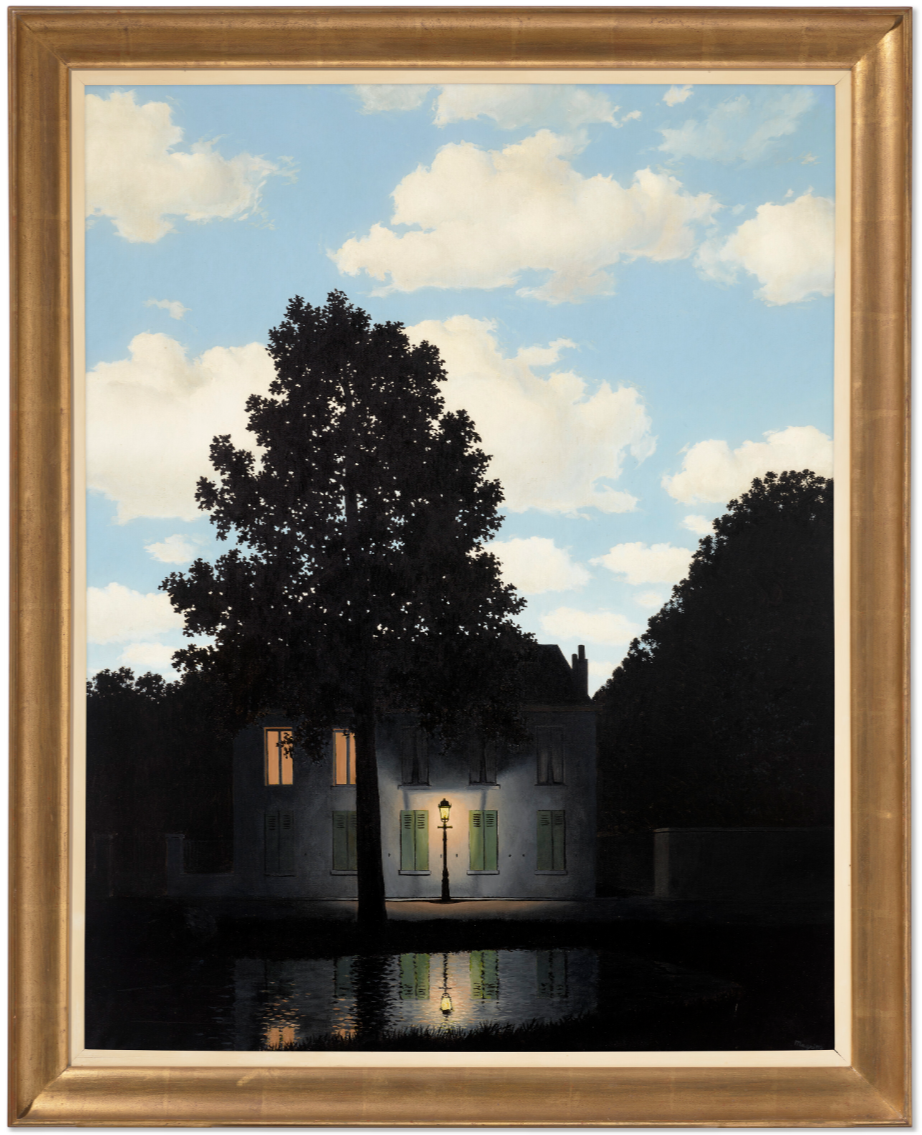
Filled with a rich sense of mystery that confounds and beguiles in equal measure, René Magritte’s L’empire des lumières of 1954 is a powerful example of the artist’s extraordinary, mature Surrealist vision. Focusing on the juxtaposition of a landscape bathed in deep shadows with the blue expanse of a day-lit sky above, this seemingly impossible collision of day and night in a single moment quickly became one of his most celebrated and iconic subjects. Between 1949 and 1964, the artist created a total of seventeen versions in oil, with several more iterations in gouache, on the theme of the L’empire des lumières. Each subtly different from the next, with intriguing variations and diversions from canvas to canvas, these paintings demonstrate Magritte’s endless spirit of invention, as he probed the rich poetic potential of his deceptively simple subjects.
As Magritte explained, the power of works such as L’empire des lumières lay in transforming the familiar, everyday world in unexpected ways: “For me it’s not a matter of painting ‘reality’ as though it were readily accessible to me and to others, but of depicting the most ordinary reality in such a way that this immediate reality loses its tame or terrifying character and presents itself with mystery” (quoted in H. Torczyner, Magritte: Ideas and Images, New York, 1977, p. 203). Executed with a precision and attention to detail that only reinforces the uncanniness of the scene, the L’empire des lumières paintings offer an elegant summation of Magritte’s unique form of Surrealism, reveling in a game of unexpected contradictions, in which all is familiar and yet ultimately strange and the ordinary is rendered extraordinary.
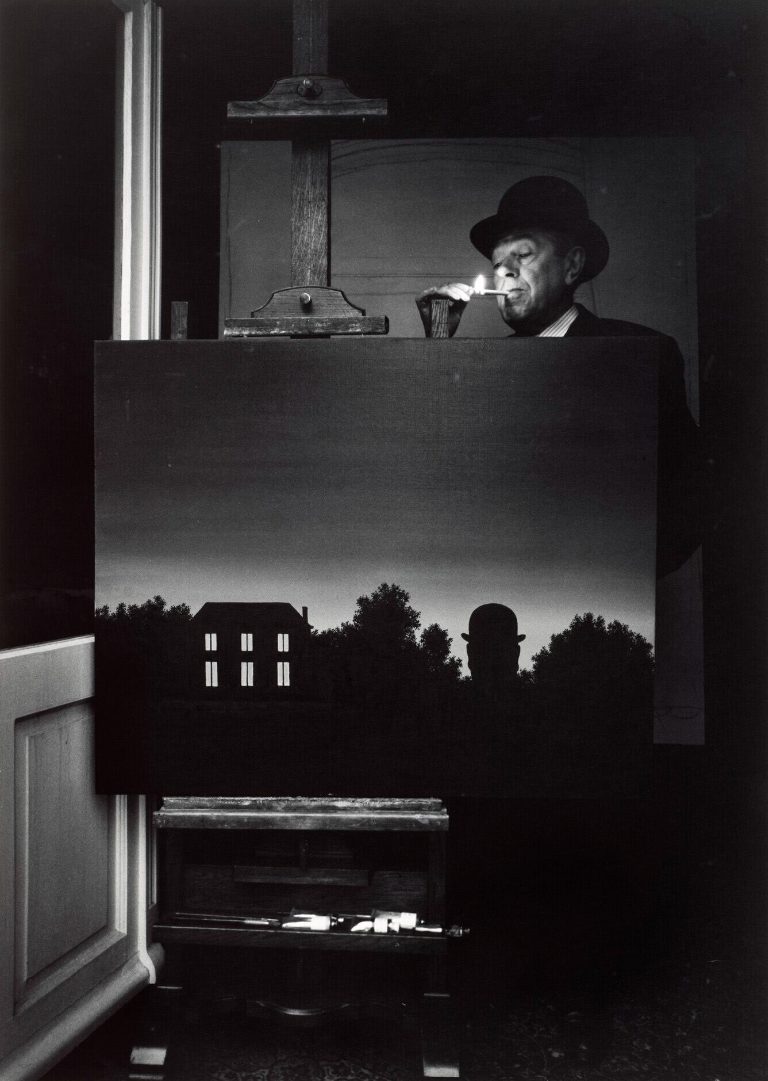
René Magritte, 1967. Photo: Marcel Broodthaers. © 2024 Artists Rights Society (ARS), New York / SABAM, Brussels. Image: The Art Institute of Chicago / Art Resource, NY. Artwork: © 2024 C. Herscovici / Artists Rights Society (ARS), New York.
The idea behind the L’empire des lumières series appears to have been percolating in Magritte’s mind for several years prior to his first painting on the theme. While staying with the collector Edward James in London during the spring of 1937, Magritte gave a presentation at Roland Penrose’s London Gallery in which he discussed “certain features peculiar to words, images and real objects” (quoted in D. Sylvester, op. cit., 1993, vol. III, p. 53). In one example early in the discussion, the artist cited the opening line of André Breton’s poem L’Aigrette (from Terre de clair, 1923): “If only the sun would shine tonight” (ibid.). The following year, the artist created a gouache entitled Le Poison (Sylvester, no. 1142; Museum Boijmans-Van Beuningen, Rotterdam) in which a row of buildings took on the appearance of the night sky, dotted with constellations of stars and a delicate crescent moon, transforming the bricks and mortar streetscape into an evocative, otherworldly vision of the cosmos.
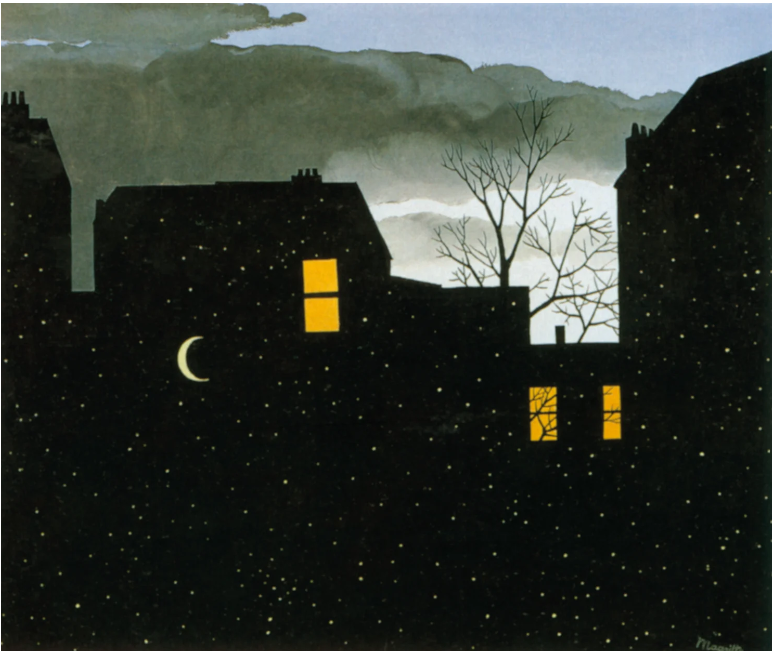
René Magritte, Le Poison, 1938 or 1939. Museum Boijmans-van Beuningen, Rotterdam. © 2024 C. Herscovici, London / Artists Rights Society (ARS), New York.
In this way, Le Poison was a continuation of Magritte’s different translations and juxtapositions of the sky, which was a recurring character in his work, its familiarity allowing him to investigate the world of appearances, and question our understanding of its properties. While paintings such as Les muscles célestes (Sylvester, no. 166; Private collection) explored the physicality and presence of the sky, and L’ombre céleste (Sylvester, no. 168; Private collection) transformed it into a flat piece of stage scenery, it most frequently appeared as a framed picture within Magritte’s oeuvre. In these works, a little segment of the vast blue expanse, dotted with clouds, has been magically captured and condensed into a small, portable object, as in Les perfections célestes (Sylvester, no. 329; Private collection), Le Salon de Monsieur Goulden (Sylvester, no. 300; Private collection) and Le palais de rideaux (Sylvester, no. 305; The Museum of Modern Art, New York). In other works, Magritte used the ubiquitous sight to generate impossible scenarios, as in his famed oiseau de ciel, a magical bird, captured mid-flight, which appears to be cut from the sky itself, its body filled with a pale blue sky and soft, fluffy clouds.
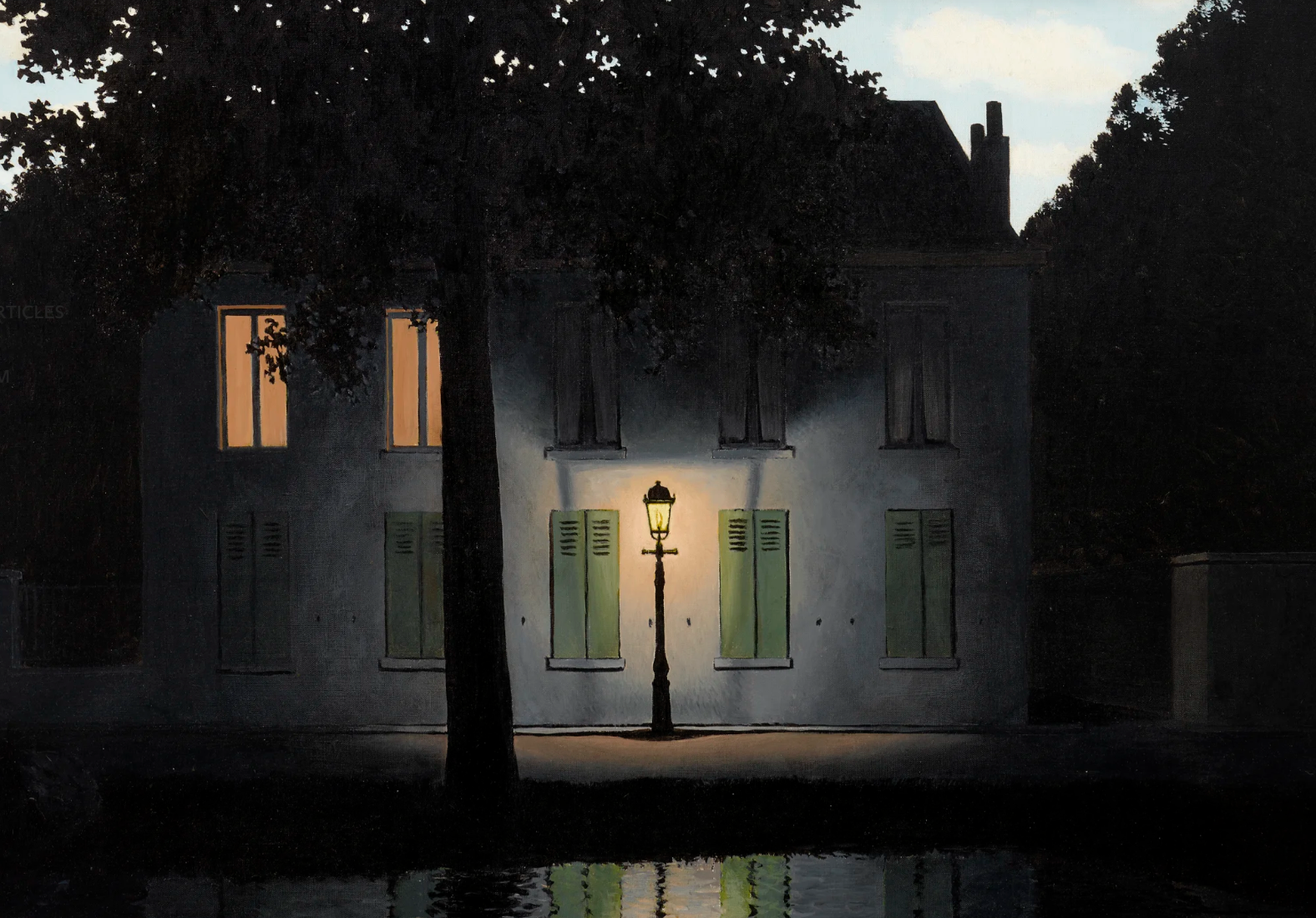
In the L’empire des lumières paintings, the sky is once again an essential tool in Magritte’s elegant disruption of our understanding of the world around us. With these works he adopts a subtle evocation of the dichotomy of night and day, simplifying the concept explored in Le Poison to create a composition that is all the more unsettling for its quiet strangeness. The first work in the series to be completed (Sylvester, no. 709; Private collection) depicts a quiet, suburban street scene with eerily shuttered houses, some curtained windows faintly lit from within, and a single lamppost, shining forth like a beacon, the sole illumination along this darkened length of avenue. Above, the sky remains in its natural position, untouched by unexpected cracks or objects, but rather than a scattering of stars, broad daylight and white clouds fill the pale blue expanse. While at first glance the painting appears to simply present the crepuscular light of dusk, on further inspection the deep shadows and soft glow of the streetlamp suggests the sky exists in an alternate timeline to the rest of the scene. In this way, the painting pivots on the construction of a somewhat familiar, yet impossible scenario that forces us, the viewer, to examine and question our own expectations.
Francis Bacon
Three Studies of Lucian Freud, 1969
Christie’s New-York: 12 November 2013
Estimate on Request
USD 142,405,000
Francis Bacon (1909-1992) (christies.com)
Francis Bacon (1909-1992)
Three Studies of Lucian Freud, 1969
Oil on canvas, in 3 parts
Each: 78×58 inches (198 x 147.5 cm)
Titled and dated ‘3 studies for portrait Lucian Freud 1969’ (on the reverse of the center panel)
An undeniable icon of twentieth century art, the masterpiece triptych Three Studies of Lucian Freud (1969) marks the epic culmination of Francis Bacon’s relationship with fellow painter and chronicler of the human condition, Lucian Freud. Glowing in a palette of sunshine yellow and carried out in Bacon’s celebrated triptych format, the towering, life-size painting pulses with vitality. With each masterful sweep of the brush, Bacon has animated his friend, Freud being seen to restlessly reposition himself, pivot his raised foot, kneed his hands in his lap and rotate his head from canvas to canvas. Reincarnated in paint, we are invited to get up close and personal with Freud.
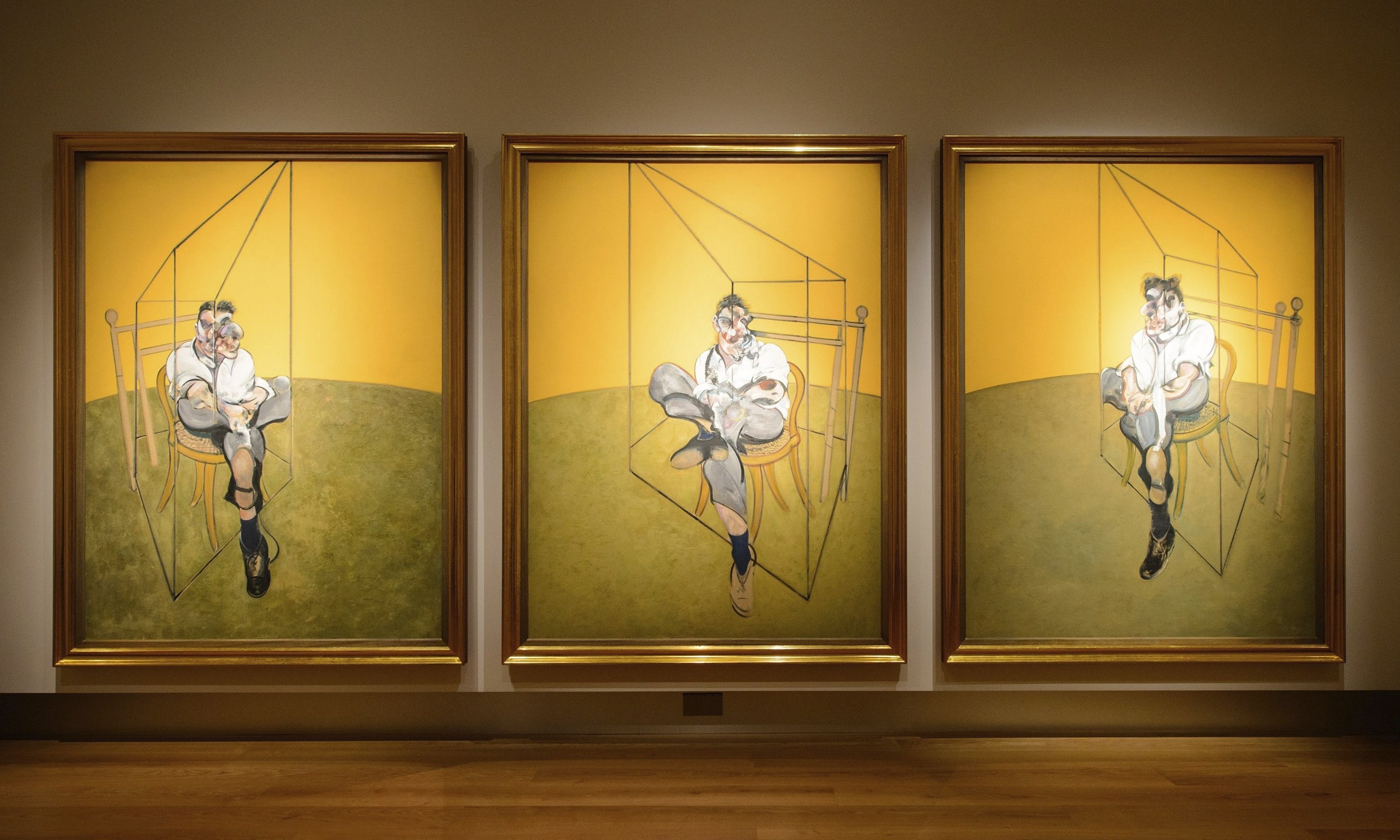
In Three Studies of Lucian Freud, Bacon has combined with characteristic alacrity, a vital human form with a precise description of the architecture of space, and explosive, stochastic outbursts of thick texture. One of the greatest artistic friendships and rivalries of the twentieth century, the trajectory of their relationship over nearly half a century, from the moment of their introduction through Graham Sutherland in early 1945, goaded each man to greater levels of excellence in the field of figurative painting. Painter to painter, their practices impacted one another, as did their characters: Bacon finding a compliment to his own charismatic but capricious nature in Freud’s confident and considered manner. Just as Freud’s intimate portrait of Bacon painted in 1952, tragically stolen from the Tate collection while on display in Berlin in 1988, stands as one of the artist’s greatest achievements, so Three Studies of Lucian Freud an be understood to be one of Bacon’s greatest masterpieces.
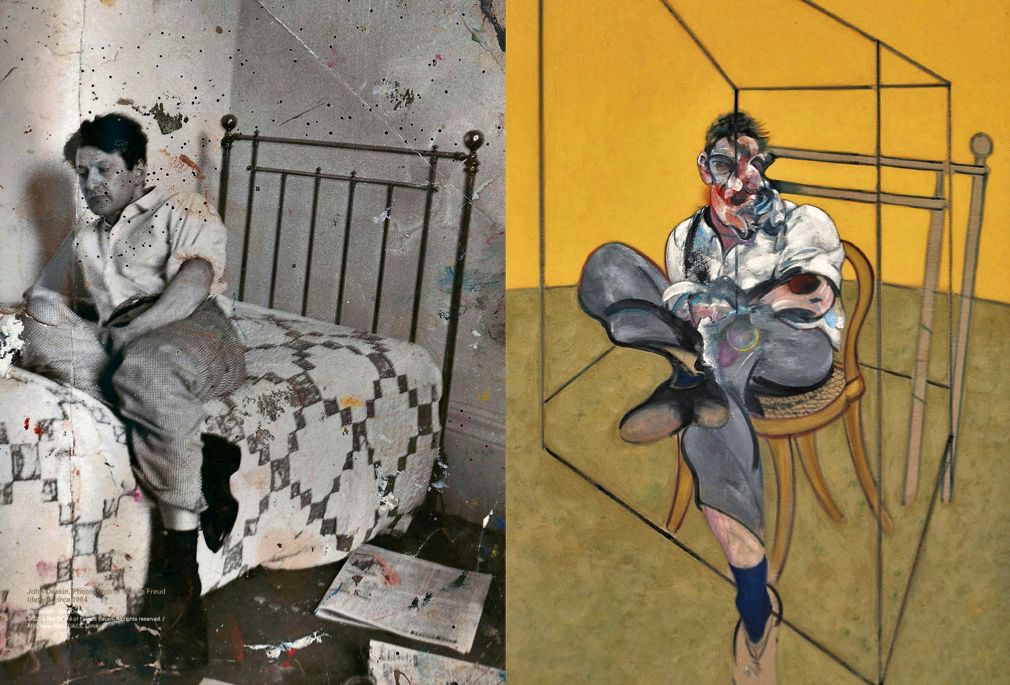
A golden masterpiece, the three paintings of Three Studies of Lucian Freud form a near-devotional trinity to Freud: friend and foil, confidant and rival. Each exceptional in their own right, the paintings are spectacularly resolved and harmonious in unity, from left to right teaming with life in every brushstroke. Bacon has animated every one of his figures: the lean, sculpted limbs and lithe figure of Freud flowing with smooth gestures of the brush, while each face courses with energy and attitude lent by impulsive, staccato dashes of color. The scene for each painting is set up with precision, Bacon carefully establishing the radiant colored ground and building clean, crystalline prisms, to then rapidly establish the figure, using his free but controlled hand with extraordinary facility. It is along this fine knife’s edge of calculated contingency that Bacon operates, balancing his fury and his flair with the paintbrush to ‘clinch the image’. In each image, Freud is wearing a white shirt rolled up to its sleeves. His hands disappear into his lap as Bacon’s attention turns to the flowing contours of the forearm and smooth curve of the thighs and calf. In every painting, the soles of Freud’s leather-clad brogues turn up to confront the viewer, while in two paintings, left and center we catch a glimpse of bare skin, as the artist’s trouser leg rises above the tidal mark of his navy blue sock. The cane-bottomed chair belongs to Bacon’s studio, but he has also incorporated the headboard from the bed in John Deakin’s photo shoot, to create a clean, linear backdrop to the drama of the figure.
Georges Seurat
Les Poseuses, Ensemble (Petite version), 1888
Christie’s New-York: 9 November 2022
Estimate on Request
USD 149,240,000
GEORGES SEURAT (1859-1891), Les Poseuses, Ensemble (Petite version) | Christie’s
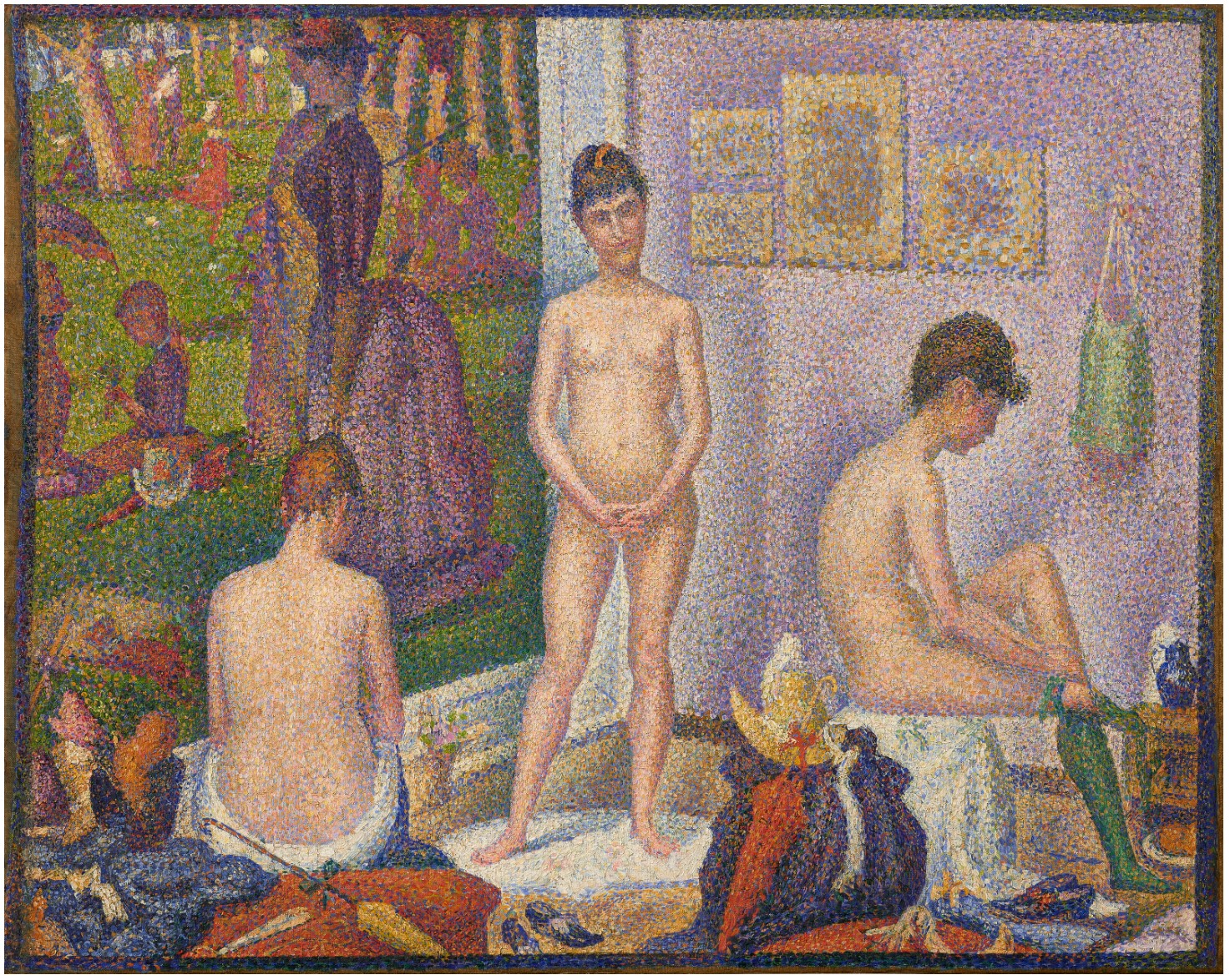
Les Poseuses, Ensemble (Petite version), 1888
Oil on canvas
39.3 x 50 cm (15 1/2 x 19 3/4 inches)
Christie’s New-York: 9 November 2022
Estimate on Request
USD 149,240,000
When Georges Seurat’s grand, tour-de-force Un dimanche d’été à l’Île de La Grande Jatte (De Hauke, no. 162; The Art Institute of Chicago) made its debut at the eighth and final Impressionist Exhibition in May 1886, it caused a sensation, launching the artist to the very forefront of the avant-garde and establishing his reputation as one of the most exciting voices of his generation. A monumental work that stood over six feet tall and ten feet long, the painting drew widespread attention in both the press and amongst the general public, who were astonished by its large cast of characters, conjured through a myriad of carefully placed, precise, colorful dots. While it was clear to contemporary viewers that the startling effect of Seurat’s innovative pointillist technique hailed the work as a bold new masterpiece of modern art, some commentators questioned whether the methodical, carefully planned application of paint would prove suitable for capturing a diverse range of subjects and scenes, particularly the subtle tones and soft contours of the human figure. In typical Seurat fashion, the artist did not respond to such criticism with a written statement of intent or defense in the papers. Instead, he retreated to his studio and began work on another large-scale canvas which would meet the challenge head-on and showcase the full expressive potential of pointillism. The resulting composition, Les Poseuses (De Hauke, no. 185; The Barnes Foundation, Philadelphia), was to become one of the artist’s most celebrated and iconic works, a bold riposte that not only answered his critics directly but which also captured a sense of Seurat’s pioneering spirit and revolutionary vision, as he examined one of the most familiar and traditional motifs from the history of art through a thoroughly modern lens.
Les Poseuses, Ensemble (Petite version) is an extremely rare work associated with this project—unlike other large-scale canvases from Seurat’s oeuvre such as La Grande Jatte or Une baignade à Asnières (De Hauke, no. 92; National Gallery, London), the artist created only a handful of drawings and oil studies in preparation for the final composition of Les Poseuses, the majority of which are now in the collections of esteemed museums around the world, including The Metropolitan Museum of Art, New York, the Musée d’Orsay in Paris, and the National Gallery of Art, Washington, D.C. Painted in 1888, the present composition is believed to have been created during the final stages of the painting’s completion, perhaps even after the canvas was finished, and is the most complete and refined version of the scene among the associated works. For much of the twentieth century, this small canvas has been the primary means for scholars and the public to study Seurat’s intricate play of color and light, and the complex compositional arrangement of Les Poseuses, as the larger canvas remained sequestered away in the collection of the Barnes Foundation, Philadelphia. As such, Les Poseuses, Ensemble (Petite version) has played a pivotal role in the development of Seurat’s reception through the past century, its extensive exhibition and publication history a testament to its influence across the decades.
Paul Cezanne
La Montagne Sainte-Victoire, 1888-1890
Christie’s New-York: 9 November 2022
Estimate on Request
USD 137,790,000
PAUL CEZANNE (1839-1906), La Montagne Sainte-Victoire | Christie’s
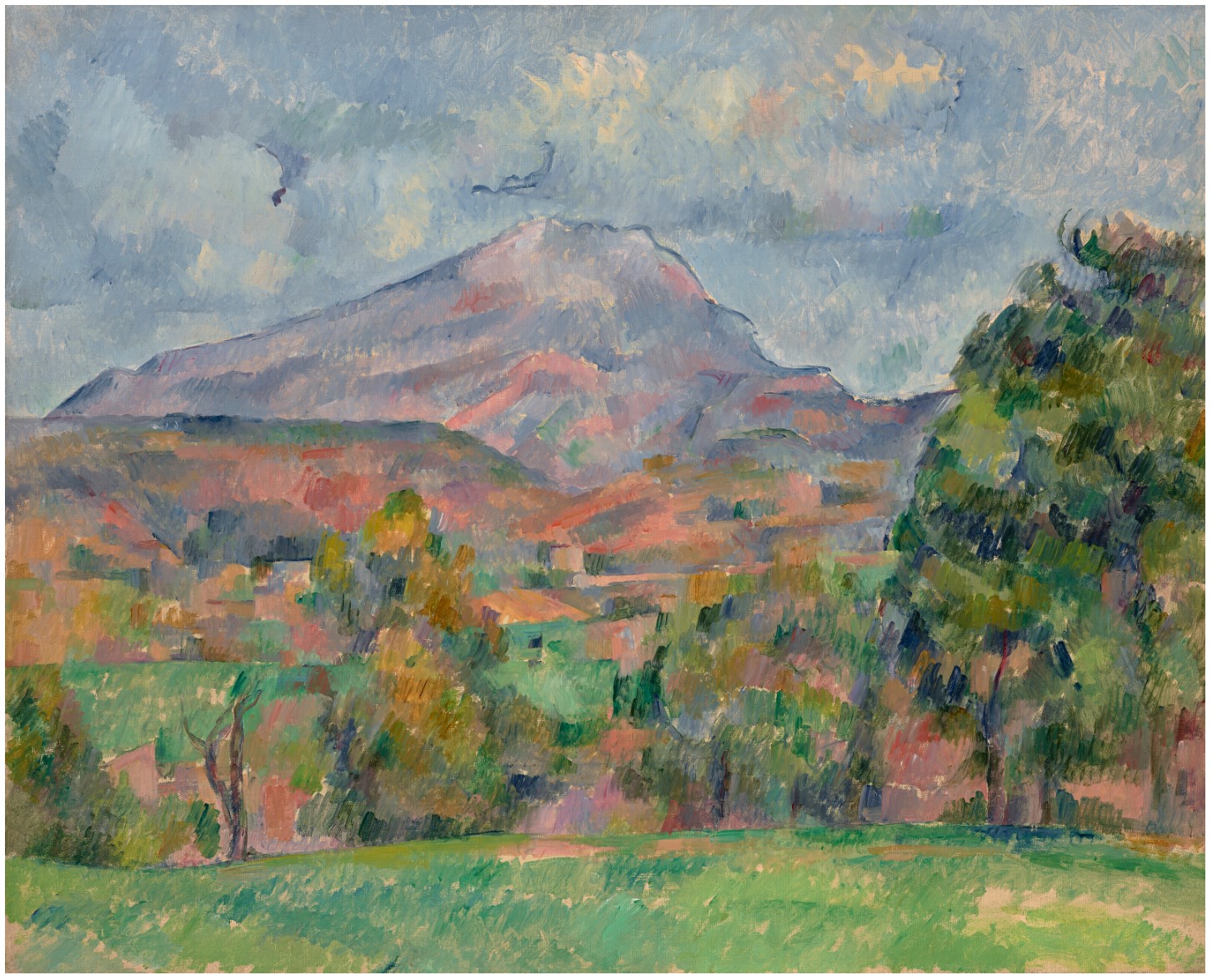
La Montagne Sainte-Victoire, 1888-1890
Oil on canvas
65.2 x 81.2 cm (25 5/8 x 31 7/8 inches)
Leonardo da Vinci
Salvator Mundi, circa 1500
Christie’s New-York: 15 November 2017
Estimate on Request
USD 450,312,500
Leonardo da Vinci (1452-1519), Salvator Mundi | Christie’s
LEONARDO DA VINCI (1452-1519)
Salvator Mundi, circa 1500
Oil on panel
65.7 x 45.7 cm (25 7/8 x 18 inches)
The dramatic public unveiling of Christ as Salvator Mundi (“Savior of the World”) in the exhibition Leonardo da Vinci: Painter at the Court of Milan at The National Gallery, London, in 2011, caused a worldwide media sensation. Painted by one of history’s greatest and most renowned artists, as well as one whose works are among the rarest—fewer than twenty paintings in existence are generally accepted as from the artist’s own hand—it was the first discovery of a painting by Leonardo da Vinci since 1909, when the Benois Madonna, now in the Hermitage, St. Petersburg, came to light. In fact, its inclusion in the exhibition came after more than six years of painstaking research and inquiry to document the painting’s authenticity, begun shortly after it was discovered—heavily veiled with overpaints, long mistaken for a copy—in a small, regional auction in the United States. The painting’s new owners moved forward with admirable care and deliberation in cleaning and restoring the painting, researching and thoroughly documenting it, and cautiously vetting its authenticity with the world’s leading authorities on the works and career of the Milanese master. As fascinating as any of the many best-selling thrillers that have taken Leonardo for their subject, the rehabilitation of the Salvator Mundi is the story of the greatest and most unexpected artistic rediscovery of the 21st century.
The newly rediscovered masterpiece, dating from around 1500, depicts a half-length figure of Christ as Savior of the World, facing frontally, holding a crystal orb in his left hand as he raises his right in benediction. Leonardo’s painting of the Salvator Mundi was long believed to have existed but was generally presumed to have been destroyed. In 1650, the celebrated printmaker, Wenceslaus Hollar copied the painting in an etching, which he signed and dated, and inscribed ‘Leonardus da Vinci pinxit’, Latin for “Leonardo da Vinci painted it’. Two preparatory red-chalk drawings by Leonardo for Christ’s robes are in the English Royal Collection at Windsor and have long been associated with the composition, which has also been known through more than twenty painted copies by students and followers of the artist. Luke Syson, in the catalogue to the exhibition, Leonardo da Vinci: Painter at the Court of Milan, has speculated that Leonardo may have made the painting for the French royal family and that it was brought to England by Queen Henrietta Maria when she married King Charles I in 1625. What is known for certain is that it belonged to Charles I (1600-1649), the greatest picture collector of his age, and it is recorded in the inventory of the royal collection drawn up a year after his execution: “A piece of Christ done by Leonardo at 30:00:00” (£30). The painting appears to have hung in Henrietta Maria’s private chambers at her palace in Greenwich, until she fled England in 1644. The print after the painting, made by Hollar—himself a Royalist who had also escaped England in the 1640s—and presented to the Queen a year after her husband’s beheading, would therefore have held profound sentimental significance for her. An inventory records that the painting was sold at the ‘Commonwealth Sale’ on 23 October 1651 to John Stone, a mason (in modern terms an architect or builder) who was representative of a group of creditors who received it and other paintings in repayment of debts. Nine years later, when Charles II was restored to the throne and his late father’s possessions were recalled by an act of Parliament, Stone returned the painting to the Crown. A 1666 inventory of the collection of King Charles II at Whitehall lists it among the select paintings in the King’s closet, as item 311: “Leonard de Vince O.r. Savio.r w.th. a gloabe in one hand and holding up y.e other.” The picture very probably remained at Whitehall in the reign of Charles II’s successor, James II, passing to his mistress, Catherine Sedley, Countess of Dorchester (1657-1717), and by descent until the late 18th century.
The picture then disappeared until 1900 when—its authorship by Leonardo, origins and illustrious royal history entirely forgotten—it was acquired from Sir Charles Robinson as a work by Leonardo’s follower, Bernardino Luini, for the Cook Collection, Doughty House, Richmond. By this time, the walnut panel on which it is painted had been marouflaged and cradled and Christ’s face and hair had been extensively, and poorly, overpainted. A photograph taken in 1912 records its compromised appearance. The 1913 catalogue of the Italian paintings in the Cook Collection by Tancred Borenius calls it a “free copy after Boltraffio” (another pupil of Leonardo’s), while Sir Herbert Cook notes that he saw higher quality in it than that. In the dispersal of the Cook Collection it was ultimately consigned to auction in 1958 where it fetched £45 after which it disappeared once again for nearly 50 years, emerging only in 2005—its history still forgotten— when it was purchased from an American estate.
In 2007, a comprehensive restoration of the Salvator Mundi was undertaken by Dianne Dwyer Modestini, Senior Research Fellow and Conservator of the Kress Program in Paintings Conservation at the Conservation Center of the Institute of Fine Arts, New York University. She has meticulously documented the painting’s state of preservation and her conservation process. To summarize her findings, she concludes that the original walnut panel on which Leonardo executed the painting had split early in its history, almost certainly resulting from a knot in the wood, and bowed. Relentlessly experimental and ever searching as he was to achieve new visual effects, Leonardo was not always cautious in the material and supports with which he worked, displaying a conscious disregard for craft traditions which has sometimes left his paintings in naturally deteriorated condition. Old attempts to restore the Salvator Mundi had involved inserting areas of stucco fill in the split, along which paint had flaked and been lost. The panel had been thinned, flattened, and glued to another backing, perhaps as early as the 17th century, and attempts had been made to disguise the old repairs with areas of crude overpaint. Dr. Modestini’s conservation treatment has remedied these underlying problems, but the results of wear have not been entirely concealed. The split in the wood panel can still be detected on close examination, curving around and to the left of Christ’s head; the rich, dark background has survived only in irregular passages, and small local areas of abrasion are scattered throughout. Happily, the recent restoration of the painting has successfully reduced the visual impact of those areas where losses were once evident.
However, both of Christ’s hands, the exquisitely rendered curls of his hair, the orb, and much of his drapery are in fact remarkably well preserved and close to their original state. The magnificently executed blessing hand, Modestini notes, “is intact.” In addition, the painting retains a remarkable presence and haunting sense of mystery that is characteristic of Leonardo’s finest paintings. Above the left eye (right as we look at it), are the marks that Leonardo “made with the heel of his hand to soften the flesh,’’ as Martin Kemp has observed. “The face is very softly painted which is characteristic of Leonardo after 1500. And what very much connects these later Leonardo works is a sense of psychological movement, but also of mystery, of something not quite known. And he draws you in but he doesn’t provide you with answers… It has the uncanny strangeness that the later Leonardo paintings manifest.”
As the possibility of Leonardo’s authorship became clear, the painting was shown to a group of international scholars and experts in Leonardo’s works, so that an informed consensus about its attribution might be obtained. The initial phase of the conservation of the painting had been completed in the fall of 2007. At that time, the painting was viewed by Mina Gregori (University of Florence) and Sir Nicholas Penny (then, Chief Curator of Sculpture, National Gallery of Art, Washington, D.C.; subsequently Director of The National Gallery, London). In 2008, the painting was studied at The Metropolitan Museum of Art by museum curators Carmen Bambach, Andrea Bayer, Keith Christiansen, and Everett Fahy, and by Michael Gallagher, Head of the Department of Paintings Conservation. In late May 2008, the painting was taken to The National Gallery, London, where it was studied in direct comparison with The Virgin of the Rocks, Leonardo’s painting of approximately the same date that was itself to undergo a process of cleaning and restoration. Several of the world’s leading Leonardo scholars were also invited to study the two paintings together. These included Carmen Bambach of the Metropolitan Museum of Art, David Allan Brown (Curator of Italian Painting, National Gallery of Art, Washington, D.C.), Maria Teresa Fiorio (Raccolta Vinciana, Milan), Martin Kemp (University of Oxford), Pietro C. Marani (Professor of Art History at the Politecnico di Milano) and Luke Syson, the Curator of Italian Paintings at The National Gallery, who would be the curator of the exhibition, Leonardo da Vinci: Painter at the Court of Milan. More recently, following the completion of conservation treatment in 2010, the painting was again examined in New York by several of the above, as well as by David Ekserdjian (University of Leicester).
The study and examination of the painting by these scholars resulted in a broad consensus that the Salvator Mundi was painted by Leonardo da Vinci, and that it is the single original painting from which the many copies and student versions depend. Individual opinions vary slightly in the matter of dating. Most of the consulting experts place the painting at the end of Leonardo’s Milanese period in the later 1490s, contemporary with The Last Supper; almost certainly it would at least have been begun in Milan, as a walnut support was commonly used there. Others believe it to be slightly later, painted in Florence (where the artist moved in 1500), contemporary with the Mona Lisa. Like several of Leonardo’s later paintings, the Salvator Mundi was likely executed over a period of years.
The reasons for the unusually uniform scholarly consensus that the painting is an autograph work by Leonardo are several, including the previously mentioned relationship of the painting to the two autograph preparatory drawings in Windsor Castle; its correspondence to the composition of the “Salvator Mundi” documented in Wenceslaus Hollar’s etching of 1650; and its manifest superiority to the more than 20 known painted versions of the composition. Furthermore, the extraordinary quality of the picture, especially evident in its best-preserved areas—notably the blessing hand and the cascading curls of hair—and its close adherence in style to Leonardo’s known paintings from circa 1500, solidified this consensus. Powerfully convincing evidence of Leonardo’s authorship was provided by the discovery of numerous pentimenti—preliminary compositional ideas, subsequently changed by the artist in the finished painting, but not reflected in the etching or painted copies. The most prominent of these—a first position for the thumb in the blessing hand, more upright than in the finished picture—was uncovered and photographed during the conservation process.
Other pentimenti have been observed through infrared imaging. Luke Syson notes several of these “lesser adjustments of the contours elsewhere (such as in the palm of the left hand seen through the transparent orb).” “Such changes of mind,” he writes, “are typical of Leonardo and would be surprising in a copy of an existing design. The head was perhaps executed with the aid of a cartoon; when the picture is examined in infrared, spolveri—pouncing—can be seen running along the line of the upper lip. The rest of the body has a much looser, brushy underdrawing, with further small changes of mind. This combination of careful preparation for the head and much greater improvisation for the body is characteristic of Leonardo. The painting technique is close to that of the Mona Lisa and the Saint John the Baptist, the face in particular built up with multiple, extremely thin paint layers, another technical aspect that makes Leonardo’s authorship certain. Like both of these pictures, the Salvator Mundi may well have been painted over an extended period of time.” Technical examinations and analyses have demonstrated the consistency of the pigments, media, and technique discovered in the Salvator Mundi with those known to have been used by Leonardo. Syson notes particularly the use of precious lapis lazuli in the Christ’s celestial blue clothes, a practice that was unusual at this date, suggestive of the opulence of the commission.
The present painting, although only recently rediscovered, has already been extensively studied, with a remarkable campaign of specialist research lead by Dr. Robert Simon. The most insightful and broad-ranging examination of the painting was presented by Luke Syson in the 2011 catalogue of the Leonardo exhibition in London. The following discussion depends heavily on Syson’s entry, which itself drew on the unpublished research made available to him by Robert Simon, Dianne Dwyer Modestini, Nica Gutman Rieppi, Martin Kemp and, for the picture’s provenance, Margaret Dalivalle. (Much of their original material will appear in a forthcoming book: Margaret Dalivalle, Martin Kemp and Robert Simon, Leonardo’s ‘Salvator Mundi’ and the Collecting of Leonardo in the in the Stuart Courts, Oxford: Oxford University Press, 2018.)
In his painting, Leonardo presents Christ as he is characterized in the Gospel of John 4:14: “And we have seen and testify that the Father has sent his Son as the “Savior of the World.” It is a hieratic presentation, with Christ rigidly frontal and looking fixedly at the spectator, lightly bearded with auburn ringlets, holding a crystal sphere in his left hand and offering benediction with his right. As Martin Kemp has noted (in an unpublished essay), this is a conventional format and canonically required for the depiction of the subject: “Jesus is shown as the unwavering comforter of the burdened and offering the only true path towards salvation. The Savior literally holds the well-being of the world and its inhabitants in the palm of his hand.” The format follows the precedent of the “Christ Pantocrator” (“Ruler of All” or “Sustainer of the World”) from Eastern Orthodox traditions, commonplace in religious imagery dating to Byzantine mosaics, although Leonardo’s Christ is portrayed as resolutely human—unusual at this time—lacking as he does a crown or even a halo.
Christ does, however, carry an orb, an emblem of kingship as well as a symbol of the world itself. As several authors have observed, the tiny specks and inclusions that Leonardo has painstakingly reproduced in the orb indicate that it is meant to be made of rock crystal, the purest form of quartz, and widely believed in the Renaissance to possess formidable magical powers. Rock crystals cut in Antiquity had been set into reliquaries since the Middle Ages, giving the stone sacred associations. As Syson notes, the ancient secrets of working rock crystal were lost until the early 16th century and it was not until some years after the execution of this painting that Renaissance craftsmen rediscovered the technique. Therefore the very substance of the globe, as well as the perfection of its regular and continuous spherical form, endows it with a nearly miraculous essence. No crystal of this size was known to exist and its enormous weight would have precluded any normal man from being able to hold it in his palm so effortlessly. Thus, Leonardo would have chosen the crystal orb for theological and cosmological reasons as well as its obviously appealing optical characteristics. “The perfect sphere is seen to contain and transmit the light of the world,” as Syson notes, and Leonardo here focused his unrivaled painting technique on conveying its transparency and convexity through a series of “thin glazes and scumbles… painted with practically nothing,” as Dianne Modestini memorably observes. Leonardo had a wellknown interest in minerals that exhibited special optical properties. Francesco de Malatesta, agent for Isabella d’Este, reported that he had heard Leonardo especially praise a vase for the clarity of the crystal from which it was cut. Leonardo himself wrote in a scientific treatise that the light which passes through “diaphanous bodies” like glass or crystal produce the “same effect as though nothing intervened between the shaded object and the light that falls upon it.” Modestini notes of the inclusions in the orb that “they are astonishing under the microscope. Each has been described by an underpainted middle tone, bracketed by a curlicue of white, and a dark shadow. They vary in size and disposition and are each somewhat different depending on the fall of light. Only Leonardo, with his interest in the natural sciences, would have gone to such obsessive lengths.”
If the format of the painting is conventional and its presentation deliberately archaic in its rigid, symmetrical frontality—Syson and other authors have noted Leonardo’s dependence here on the blessing figure of Christ from the central panel of a 15th-century polyptych by Giotto and his workshop (North Carolina Museum of Art, Raleigh)—the execution of Christ’s face and hands is entirely new in the history of painting and unique to the peculiar genius of Leonardo. The flawlessly, almost divinely, beautiful face that emerges mysteriously from the deepest of shadows, the almost supernaturally penetrating eyes which convey an overwhelming psychological, emotional and spiritual profundity, have no parallels in Western painting until the creation of Mona Lisa and the Saint John the Baptist (both, Louvre), works painted by Leonardo around 1500, and the most obvious comparisons in style and manner to the Salvator Mundi. The extraordinary techniques employed in the painting of Christ—many revealed in the technological and scientific analyses of the picture performed in the course of its conservation—are entirely consistent with what is known of the execution of Leonardo’s later paintings. Christ’s head may have been executed with the aid of a cartoon. The body, on the other hand, revealed a looser, brushier underdrawing; as Syson remarks, “this combination of careful preparation for the head and greater improvisation for the body is again characteristic of Leonardo.” Cross sections of paint samples reveal that the face in particular was built up with multiple, extremely thin layers of pigment, suggesting that as with the other paintings made by Leonardo around 1500, the Salvator Mundi may have been painted over an extended period of time. Modestini observed that the artist first laid down a pale red underpaint, then pulled over this ground at least three more lightly colored scumbles applied in as smooth, opaque and thin layers as possible. “There are no perceptible brushstrokes in the flesh tone,” she continues, “the paint looks as if it had been blown on, one element in the creation of a carefully studied effect, the sfumato, of which the painter frequently writes. The transitions in the flesh tones aren’t visible from up close; they are only distinguishable when the viewer is ata certain distance from the painting, as in the Mona Lisa.” Leonardo smoothed and blotted the paint with his palm, and distinct handprints are visible in IRR images of the painting, especially evident on the proper left side of Christ’s forehead. This kneading of the paint in order to create soft and amorphous effects of shadow and light is typical of Leonardo’s technique in the latter part of his career.
Luke Syson has proposed that in the Salvator Mundi, Leonardo may have been consciously trying to emulate in paint those images of the Holy Face believed to have been made miraculously, such as the Veil of Saint Veronica (kept until the Sack of Rome at St. Peter’s), or the Mandylion of Edessa, a portrait said to be made by Christ pressing his face to a piece of cloth. (The controversial Shroud of Turin is probably the most famous such acheiropoetos today, an image not made by human hands and valued, therefore, as the most truthful likeness.) Magical restorative powers are often attributed to such objects and King Abgar V of Edessa was said to have been cured of a fatal disease when he touched the holy image which Jesus had sent to him. The history of the Mandylion of Edessa is obscure, but by 1500, three competing images claimed to be authentic; of these, one had long belonged to the French crown and was kept in the Sainte-Chapelle until the French Revolution, and another was (and still is) at San Bartolomeo degli Armeni near Genoa. The Italian city was a Sforza possession and when it was taken by the French in 1499, responsibility for this second claimant also fell to the French kings. If, as Syson posits, the Salvator Mundi was likely painted around 1500 for King Louis XII and his consort, Anne of Brittany (to be subsequently taken from the French royal collections and brought to England when the French princess Henrietta Maria married Charles I in 1625), it was likely commissioned soon after the conquests of Milan and Genoa and perhaps with an explicit connection to the recent acquisition of the second Mandylion of Edessa.
The earliest indisputable provenance for the painting securely locates it in the collection of King Charles I of England and Queen Henrietta Maria. It is recorded in the inventory of the late king compiled in fulfillment of an act of Parliament of 23 March 1649 requiring the sale of their property to meet the debts of their creditors and for the “publick uses of this Commonwealth.” That it was the present painting in the collection of Charles I and not one of the twenty known copies and replicas is attested to by Wenceslaus Hollar’s print which is signed and dated 1650 and identifies its source as an original painting by Leonardo da Vinci (“Leonardus da Vinci pinxit. Wenceslaus Hollar fecit Acua forti, secundum Originale, Ao 1650”). Although Hollar’s Christ is slightly heavier and thicker, with a more pronounced beard, the two images coincide almost exactly. In particular, the knot-pattern ornamentation on Christ’s crossed stole and on the border of his vestment is nearly identical, a crucial fact considering that the pattern is subject to change in the different surviving copies, and in no version apart from the present one does the pattern match the print so closely. The print itself was published in Antwerp in 1650 and proof copies sent to the queen in exile, six years after Henrietta Maria and the Royalist printmaker had fled England. It is therefore likely that the print was made (or at least completed) based on a drawing that Hollar had made of the painting in earlier years, which was a procedure he frequently followed. For example, in the late 1630s Hollar made drawings after paintings in the Arundel collection which he did not etch and publish as prints until the late 1640s, after Arundel was dead and his collection broken up. Given the extensive evidence, there is no reasonable doubt that the painting Hollar reproduced in his 1650 etching is the present, original version of the Salvator Mundi.
If Leonardo employed a cartoon to help him establish the precise contours of Christ’s face, the cartoon appears to be long lost; however, two drawings comprising three sketches survive in which he studied the basic folds and disposition of Christ’s tunic and its sleeves. The two sheets in the royal collections at Windsor are of a somewhat larger scale than the artist normally made for his drapery studies and are executed in a visually striking technique: red chalk on red prepared paper, the shadowed contours of the fabrics reinforced in brown ink, and rapidly heightened with white chalk. Drawn with superb confidence, they were almost certainly studied from draperies arranged on a lay figure (or mannequin) rather than a living model. None of the three sketches are precisely replicated in the final painting and they would have merely guided the artist as he worked out the details in paint. The prominent hatching that is used to create shading in the drawings is oriented diagonally and moves from left to right, as in all drawings by the famously lefthanded Leonardo. However, the separate sleeve study on the sheet with the tunic is more coarsely drawn than the other studies and the white highlights on the sleeve are clearly right-handed, indicating that they were applied by a pupil rather than the master himself. This is only one of a number of occasions around 1500 and afterward when Leonardo and a pupil can be found working side by side on the master’s preparatory drawings.
Of the roughly twenty known contemporary copies of the Salvator Mundi, some of which are by pupils
or followers of Leonardo and some almost certainly emanating from his workshop, none is of a level of quality to support an attribution to the master himself. Prior to the rediscovery of the present painting, only one version has in recent years been advanced as a candidate for Leonardo’s original, a painting formerly in the collection of Hubert, Marquis de Ganay, Paris. Carlo Pedretti (1973) first posited the Ganay panel as the finest known version of Leonardo’s composition, without asserting that it was actually painted by Leonardo himself. Subsequently, Joanne Snow-Smith, in a 1978 article in Arte Lombarda and then in a monograph published in 1982, proclaimed it as Leonardo’s lost original, commissioned by Louis XII and the source of Hollar’s etching. Snow-Smith’s two studies produced invaluable information about the origins and evolution of the composition, but her attribution of the Ganay painting to Leonardo never found support in the scholarly community and the painting has never since been considered to be from the master’s hand. It was later sold at Sotheby’s New York, 28 May 1999, lot 20, as an old copy from the ‘Circle of Leonardo da Vinci’.
A more extensive and detailed discussion of the conservation process that was undertaken to return the Salvator Mundi to its present glory appears elsewhere in this volume, but it is worth noting the many changes, large and small, that Leonardo made in the process of its creation and emerged only in the cleaning process. The dramatic shift in the position of the thumb on Christ’s blessing hand, the reposition of the palm that holds the orb, the significant movements to the bands that cross the stole, the repositioning of the jeweled ornament attached to his garment beneath the neckband all speak to the primacy and originality of the painting and to its authenticity as Leonardo’s original. But they also speak to the probing nature of Leonardo’s genius, the relentless experimentation, curiosity and perfectionism that led him to abandon, unsatisfied, most of the paintings he started, and resulted in a tiny body of finished masterpieces that rank among the most enigmatic and haunting works in the history of art. That the rediscovery of the Salvator Mundi is a once-in-a-century addition to this small but monumentally influential corpus is, in and of itself, more than enough reason to celebrate its return; that the painting is also a profoundly moving, affecting and evocative masterpiece by this towering genius of the Renaissance is almost miraculous in itself.