Introduction
In 1988, Roy Lichtenstein began working on a series of paintings in which he would return to his roots as a Pop artist while at the same time reinforcing his reputation as one of the most progressive artists of his generation. In his Reflections series, he re-investigates the comic book genre that, three decades earlier, had solidified his fame as a Pop Art master.
Lichtenstein’s Reflections Paintings exemplify the artist’s interest in the notion of perception and reproducing the ephemeral, having previously incorporated reflections in his early Pop works, Modern paintings and most markedly in his Mirror series (1969-1972). In his Mirror series, Lichtenstein employs his characteristic Ben-Day dot aesthetic—a common commercial printing technique in which small dots of color are used to create areas of shading and varied tonal hues—to reproduce the image of mirrors as found in mirror catalogues and the media, formulating a distinct visual strategy for the imitation of reflections.
“My first mirror paintings didn’t really look like mirrors to people. It required a little learning to make them understandable as mirrors. I think the same thing was true of the brushstroke paintings. I like to make very concrete symbols for ephemeral things. Reflections, for example.”
Using diagonal stripes of gradating dots and wedges of color, Lichtenstein successfully captures the wave-like effect of reflections and the appearance of light, establishing his own ‘concrete symbol’ that he went on to incorporate in his Reflections Paintings.
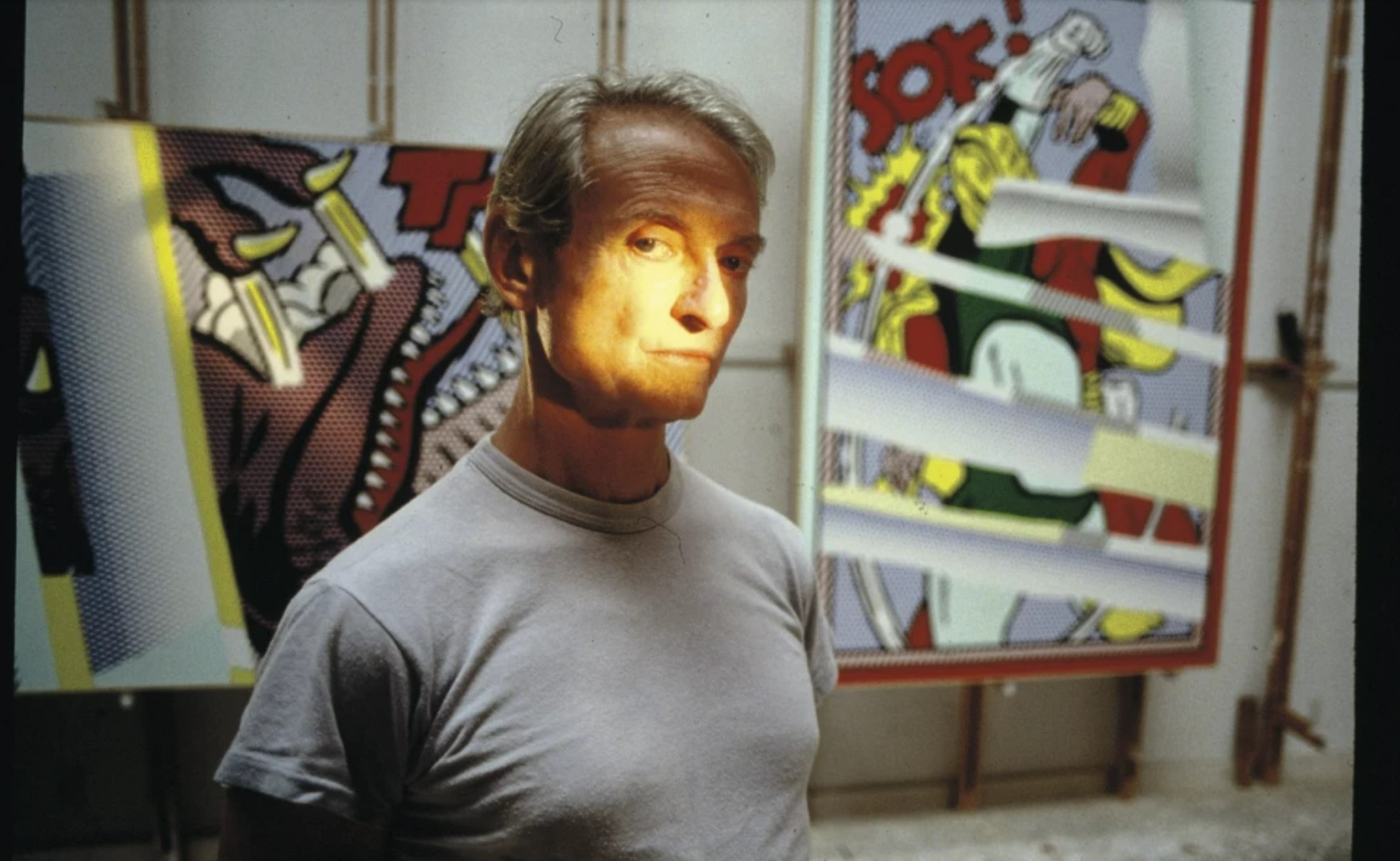
Lichtenstein had long been fascinated by the role of reflection in painting, evident in his early work Girl with Mirror (1964) and his Mirror series of 1969-1972. In the series of Reflections Paintings, Lichtenstein focuses specifically on the painterly device of diagonal lines to envision a painting as it would appear under a glass frame.
“It started when I tried to photograph a print by Robert Rauschenberg that was under glass. But the light from a window reflected on the surface of the glass and prevented me from taking a good picture. But it gave me the idea of photographing fairly well-known works under glass, where the reflections would hide most of the work, but you could still make out what the subject was…I started this series of Reflections on various early works of mine… It portrays a painting under glass. It is framed and the glass is preventing you from seeing the painting. Of course, the reflections are just an excuse to make an abstract work, with the cartoon image being supposedly partly hidden by the reflections”
The resulting push-pull effect of the glass barrier and the refracted image simultaneously creates distance while intensifying the emotions of the image.
Auction Results (Paintings)
#1. Reflections on the Prom, 1990
Christie’s New-York: 12 November 2014
Estimate on Request
USD 21,445,000
Roy Lichtenstein (1923-1997), Reflections on the Prom | Christie’s
REPEAT SALE
Christie’s New-York: 13 May 2008
Estimated: USD 3,000,000 – 5,000,000
USD 8,777,000
Roy Lichtenstein (1923-1997) , Reflections on the Prom | Christie’s
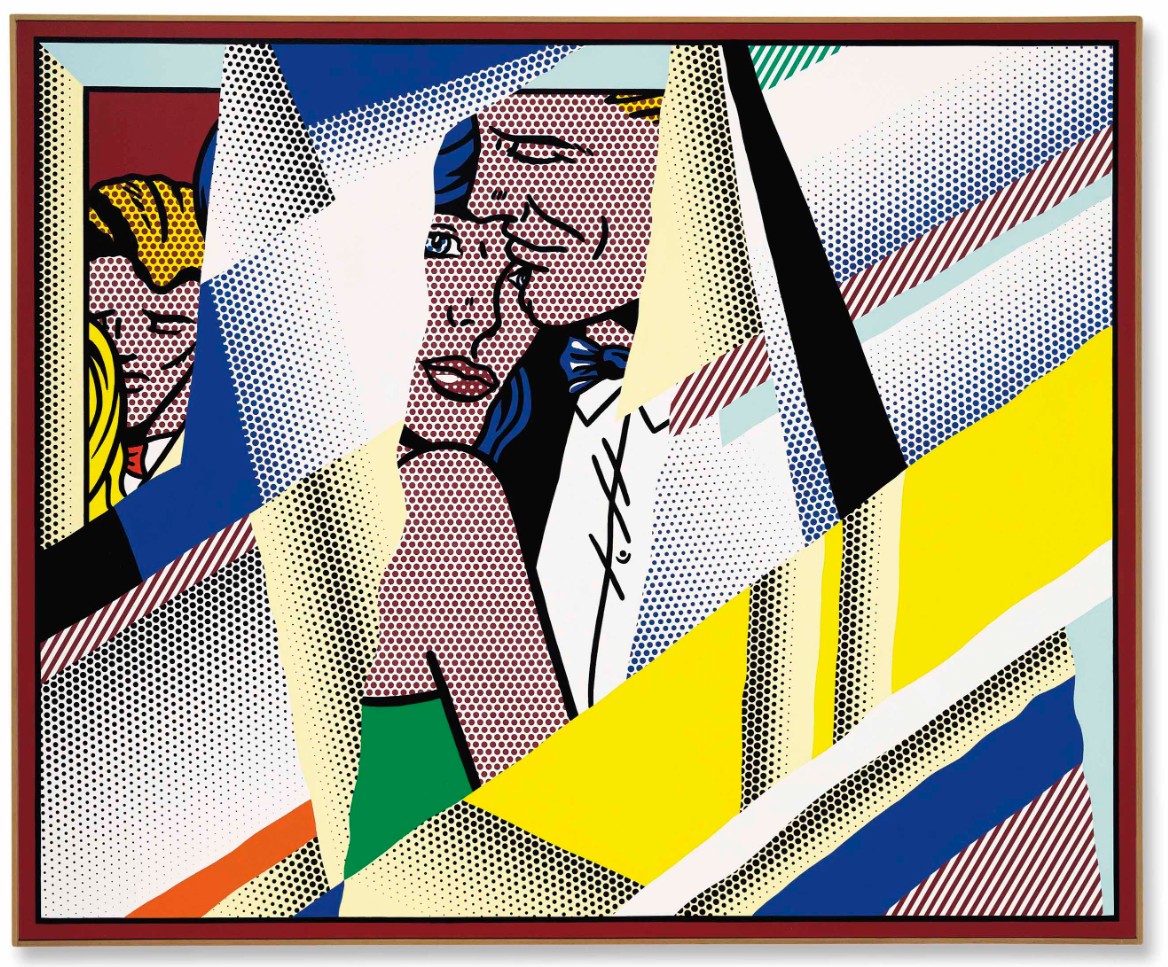
ROY LICHTENSTEIN (1923-1997)
Reflections on the Prom, 1990
Oil and Magna on canvas
74×90 inches (188 x 228.6 cm)
Signed and dated ‘rf. Lichtenstein 1990’ (on the reverse)
#2. Reflections on Thud!, 1990
Sotheby’s Hong-Kong: 19 April 2021
Estimated: HKD 78,000,000 – 108,000,000
HKD 110,072,000 / USD 14,173,212
Roy Lichtenstein 羅伊・李奇登斯坦 | Reflections on Thud! | Contemporary Art Evening Sale | | Sotheby’s (sothebys.com)
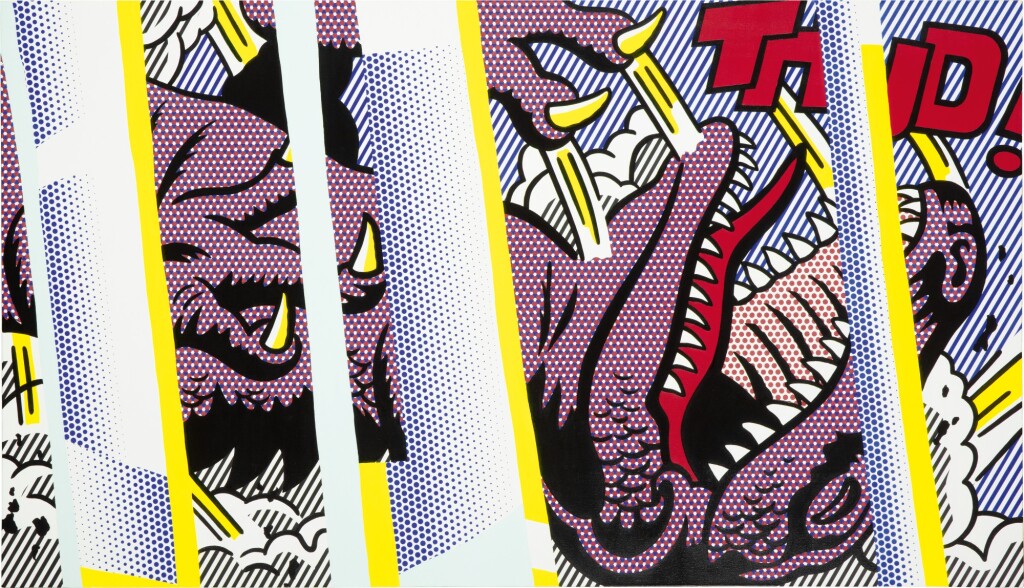
ROY LICHTENSTEIN (1923 – 1997)
Reflections on Thud!, 1990
Oil and magna on canvas
55×96 inches (139.7 x 244 cm)
Signed and dated 90 on the reverse
#3. Reflections on Jessica Helms, 1990
Christie’s London: 27 June 2012
Estimated: GBP 3,500,000 – 4,500,000
GBP 4,017,250 / USD 6,246,820
Roy Lichtenstein (1923-1997) , Reflections on Jessica Helms | Christie’s
REPEAT SALE
Sotheby’s New-York: 13 May 2003
Estimated: USD 800,000 – 1,200,000
USD 1,352,000
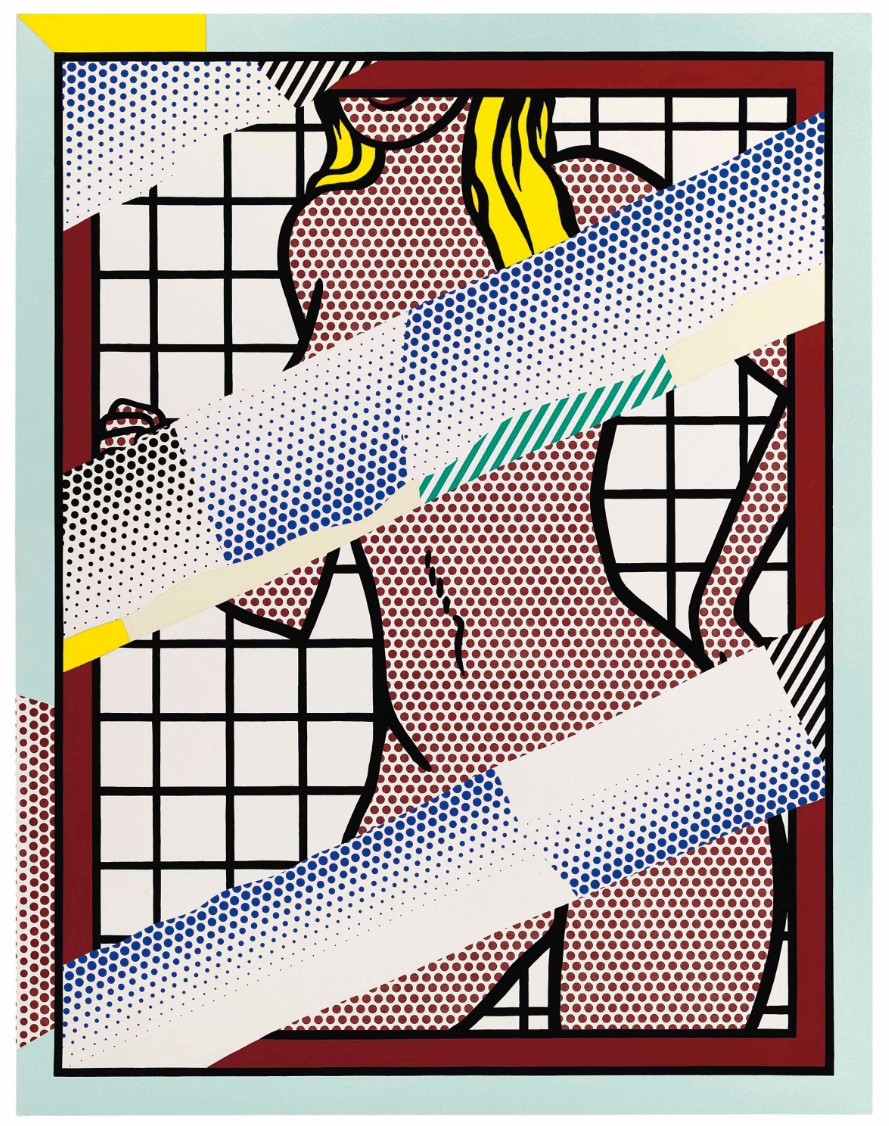
ROY LICHTENSTEIN (1923-1997)
Reflections on Jessica Helms, 1990
Oil and Magna on canvas
63×49 inches (160 x 124.6 cm)
Signed and dated ‘Roy Lichtenstein 90’ (on the reverse)
#4. Reflections: Mystical Painting, 1989
Sotheby’s Hong-Kong: 9 October 2021
Estimated: HKD 30,000,000 – 45,000,000
HKD 48,026,000 / USD 6,169,281
Roy Lichtenstein 羅伊・李奇登斯坦 | Reflections: Mystical Painting 反射系列:神秘的繪畫 | Contemporary Art Evening Sale | | Sotheby’s (sothebys.com)
REPEAT SALE
Christie’s New-York: 14 May 2003
Estimated: USD 800,000 – 1,200,000
USD 1,183,500
Roy Lichtenstein (1923-1997) , Reflections: Mystical Painting | Christie’s
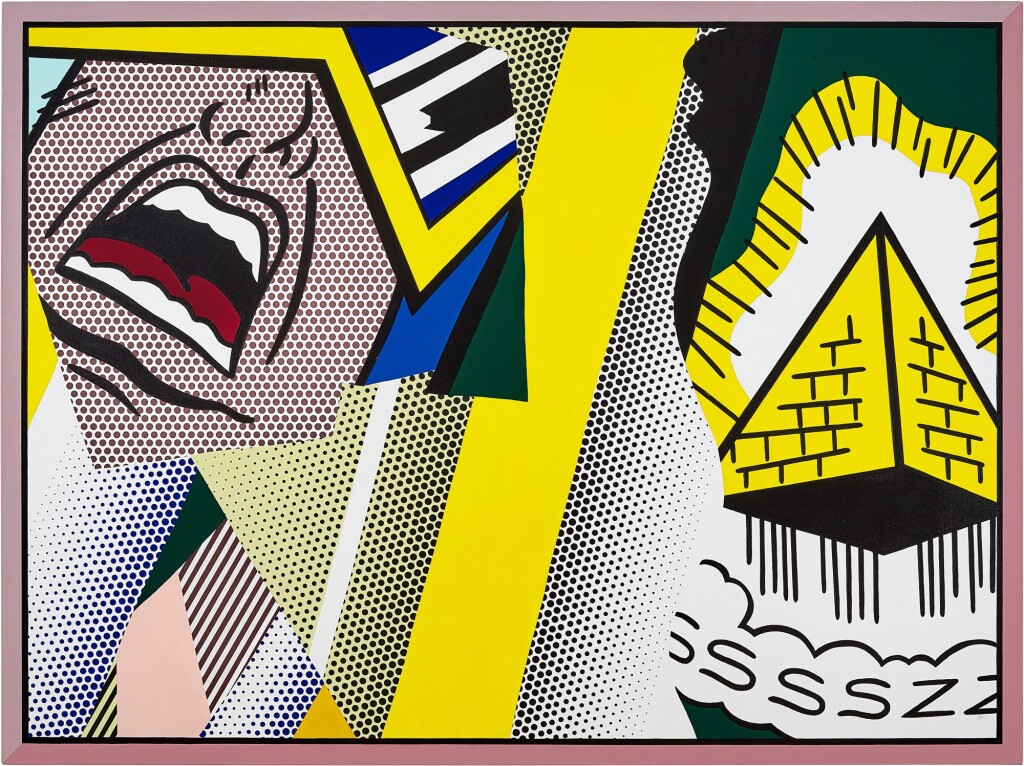
ROY LICHTENSTEIN (1923 – 1997)
Reflections: Mystical Painting, 1989
Oil and magna on canvas
56 ⅛ x 75 inches (142.5 x 190.5 cm)
Signed and dated 89 on the reverse
#5. Reflections: Art, 1988
Works from the Collection of Dorothy and Roy Lichtenstein
Sotheby’s New-York: 15 May 2025
Estimated: USD 4,000,000 – 6,000,000
USD 5,479,000
Reflections: Art | The Now and Contemporary Evening Auction | 2025 | Sotheby’s
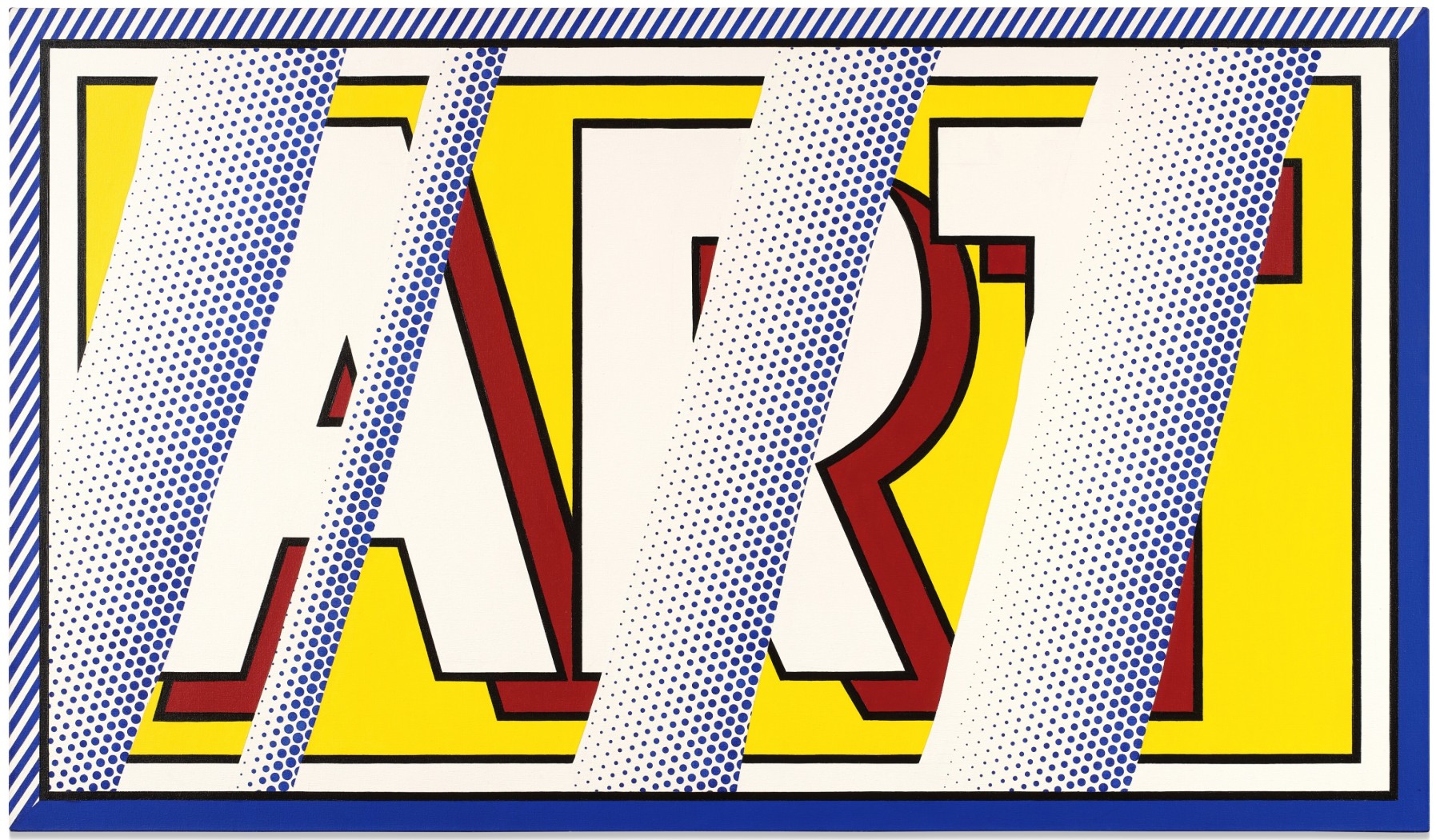
ROY LICHTENSTEIN (1923 – 1997)
Reflections: Art, 1988
Acrylic, oil and graphite on canvas
44 1/2 x 76 1/4 inches (113 x 193.7 cm)
Signed and dated ’88 (on the reverse)
#6. Reflections: Wimpy I, 1988
Reflections on Pop: Works from the Collection of Dorothy and Roy Lichtenstein
Sotheby’s New-York: 26 September 2025
Estimated: USD 1,000,000 – 1,500,000
USD 2,856,000
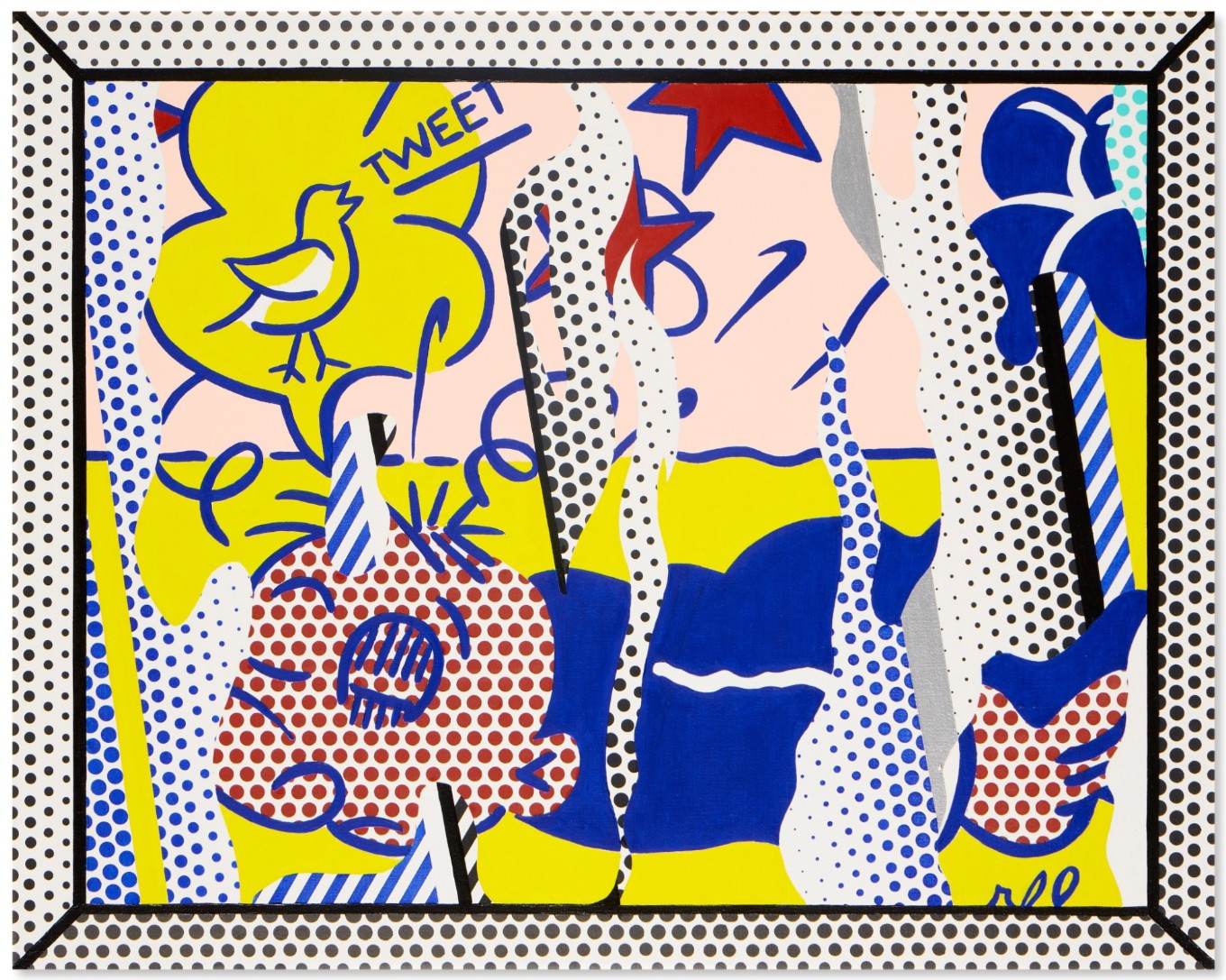
ROY LICHTENSTEIN (1923 – 1997)
Reflections: Wimpy I, 1988
Acrylic, oil and graphite on canvas
32×40 inches (81.3 x 101.6 cm)
Signed and dated ’88 (on the reverse)
#7. Reflections on Brushstrokes, 1990
Phillips Hong-Kong: 30 March 2023
Estimated: HKD 14,000,000 – 19,000,000
HKD 19,810,000 / USD 2,523,599
Roy Lichtenstein – 20th Century & Cont… Lot 18 March 2023 | Phillips
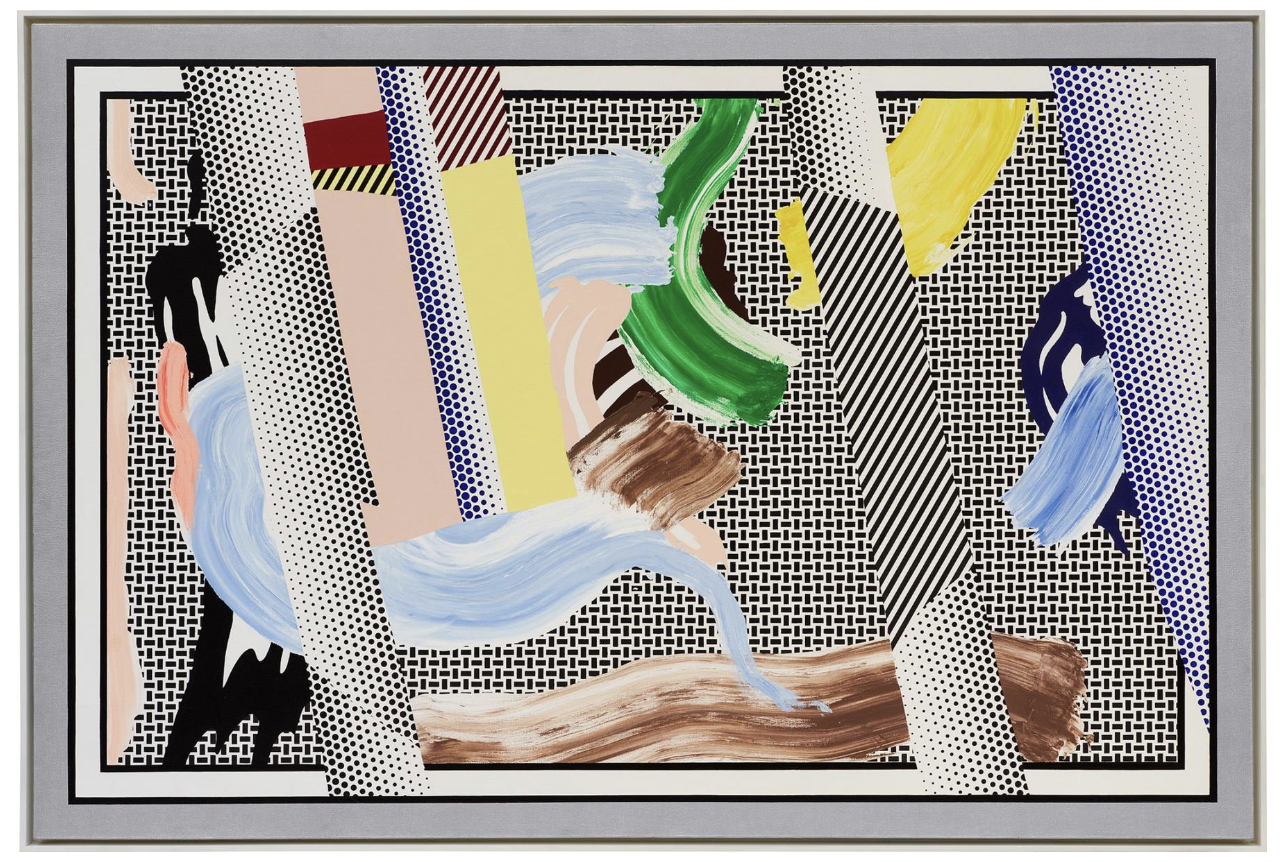
ROY LICHTENSTEIN
Reflections on Brushstrokes, 1990
Oil and magna on canvas
148.3 x 222.4 cm (58 3/8 x 87 1/2 inches)
Signed and dated ‘R. Lichtenstein 90’ on the reverse
#8. Reflections: Wimpy III, 1988
A Legacy Reimagined: Works from the Collection of Dorothy and Roy Lichtenstein
Sotheby’s New-York: 19 November 2025
Estimated: USD 1,000,000 – 1,500,000
USD 2,002,000
Reflections: Wimpy III | Contemporary Day Auction | 2025 | Sotheby’s
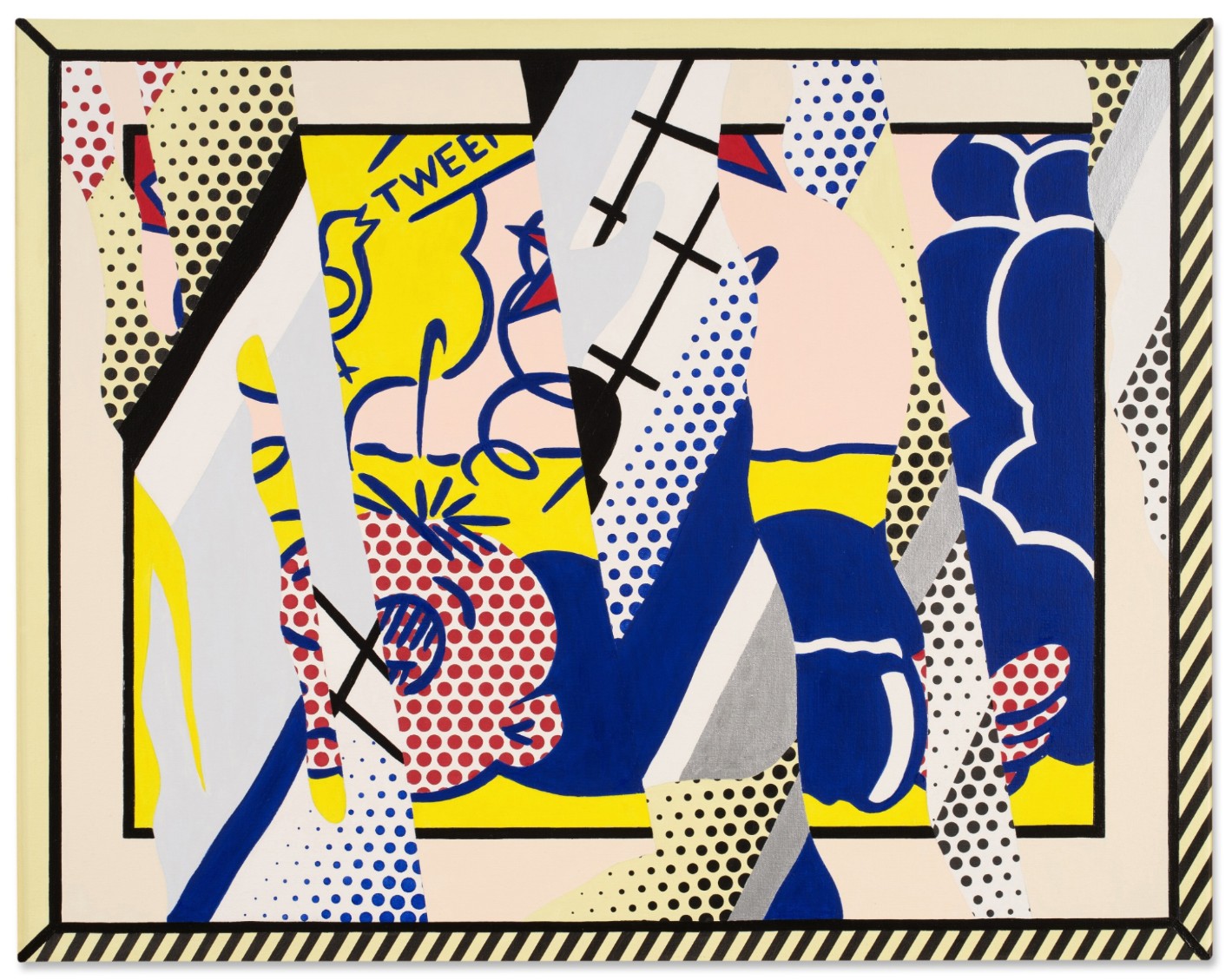
ROY LICHTENSTEIN (1923 – 1997)
Reflections: Wimpy III, 1988
Acrylic, oil and graphite on canvas
32×40 inches (81.3 x 101.6 cm)
Signed and dated ’88 (on the reverse)
#9. Reflections on Brushstrokes, 1990
A Legacy Reimagined: Works from the Collection of Dorothy and Roy Lichtenstein
Sotheby’s New-York: 19 November 2025
Estimated: USD 1,200,000 – 1,800,000
USD 1,392,000
Reflections on Brushstrokes | Contemporary Day Auction | 2025 | Sotheby’s
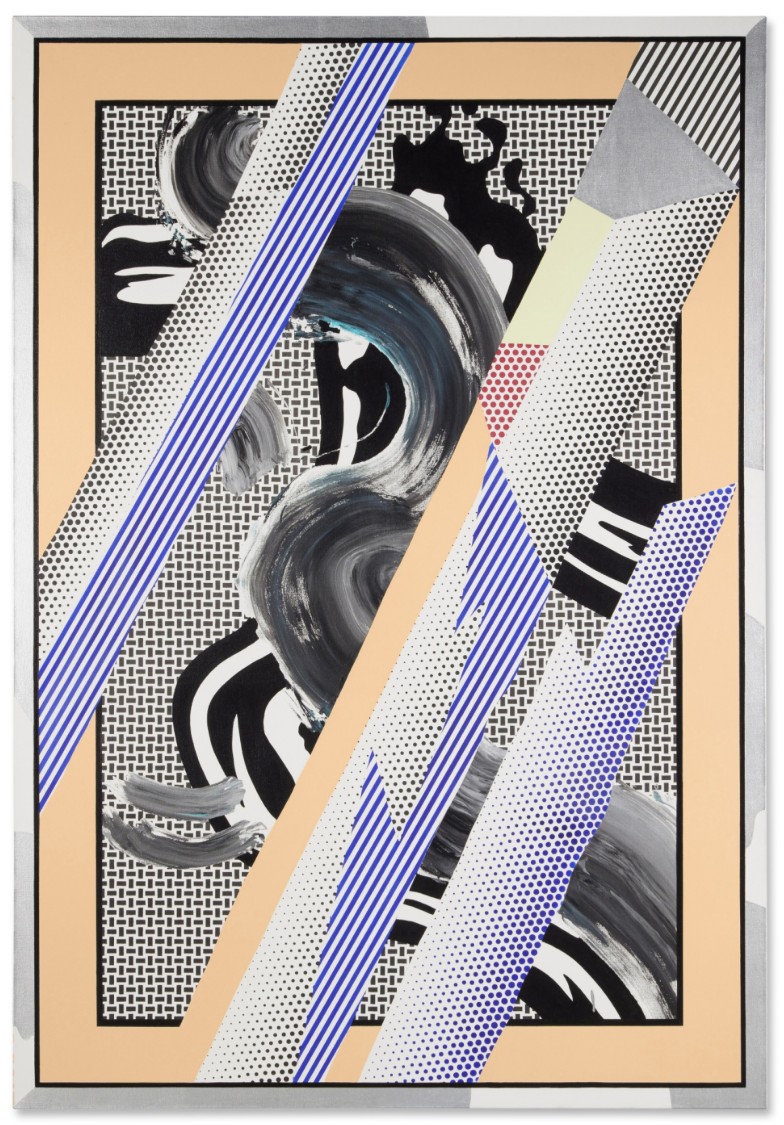
ROY LICHTENSTEIN (1923 – 1997)
Reflections on Brushstrokes, 1990
Acrylic, oil and graphite on canvas
87 1/4 x 60 inches (221.6 x 152.4 cm)
Signed and dated ‘90 (on the reverse)
Untitled Reflection, 1989
Reflections on Pop: Works from the Collection of Dorothy and Roy Lichtenstein
Sotheby’s New-York: 26 September 2025
Estimated: USD 300,000 – 400,000
USD 609,600
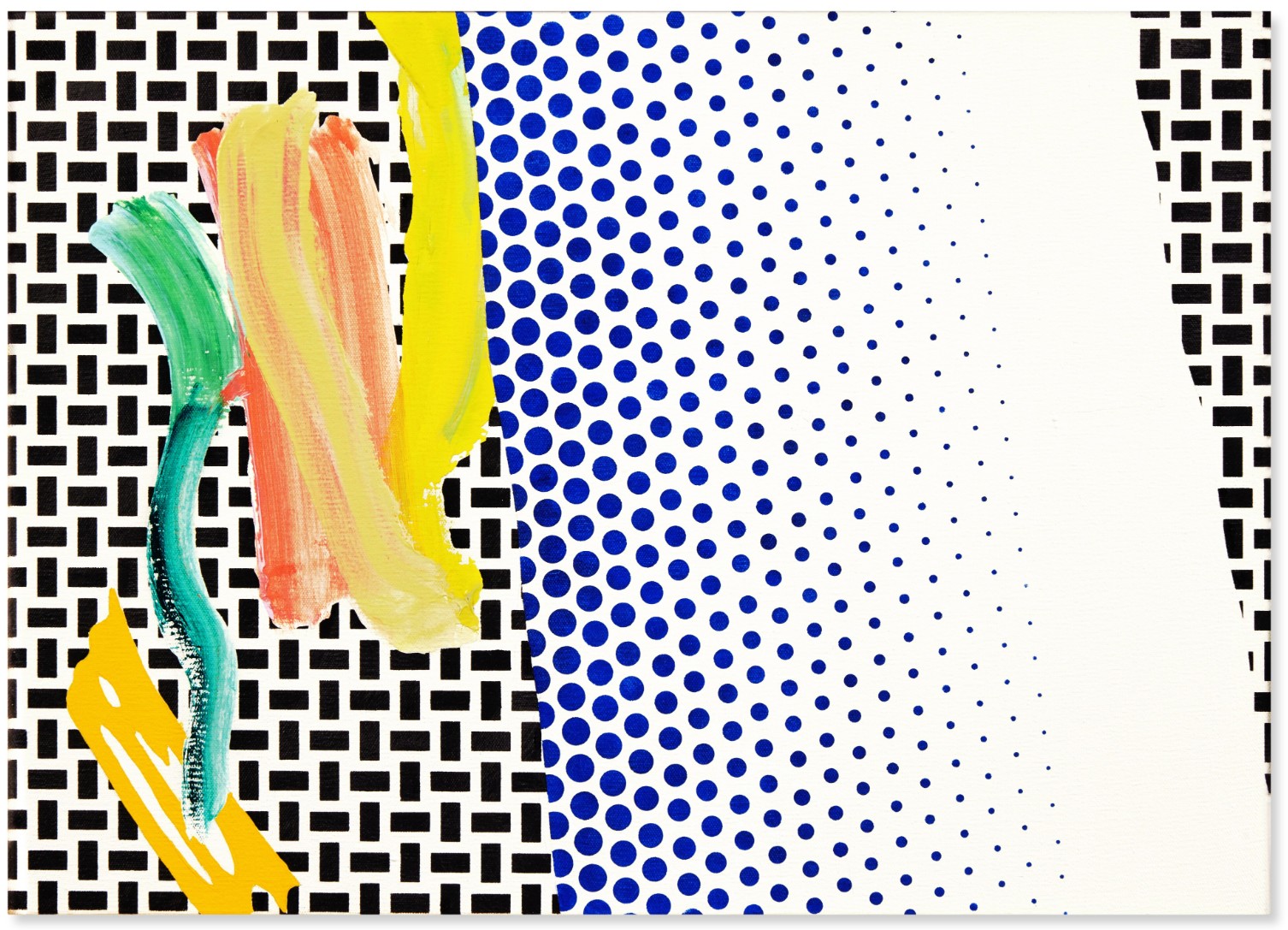
ROY LICHTENSTEIN (1923 – 1997)
Untitled Reflection, 1989
Acrylic, oil and graphite on canvas
17 1/8 x 24 1/8 inches (43.5 x 61.2 cm)
Signed and dated ’89 (on the reverse)
Untitled Reflection, 1989
Works from the Collection of Dorothy and Roy Lichtenstein
Sotheby’s London: 25 June 2025
Estimated: GBP 120,000 – 180,000
GBP 444,400 / USD 599,940
Untitled Reflection | Contemporary Day Auction | 2025 | Sotheby’s
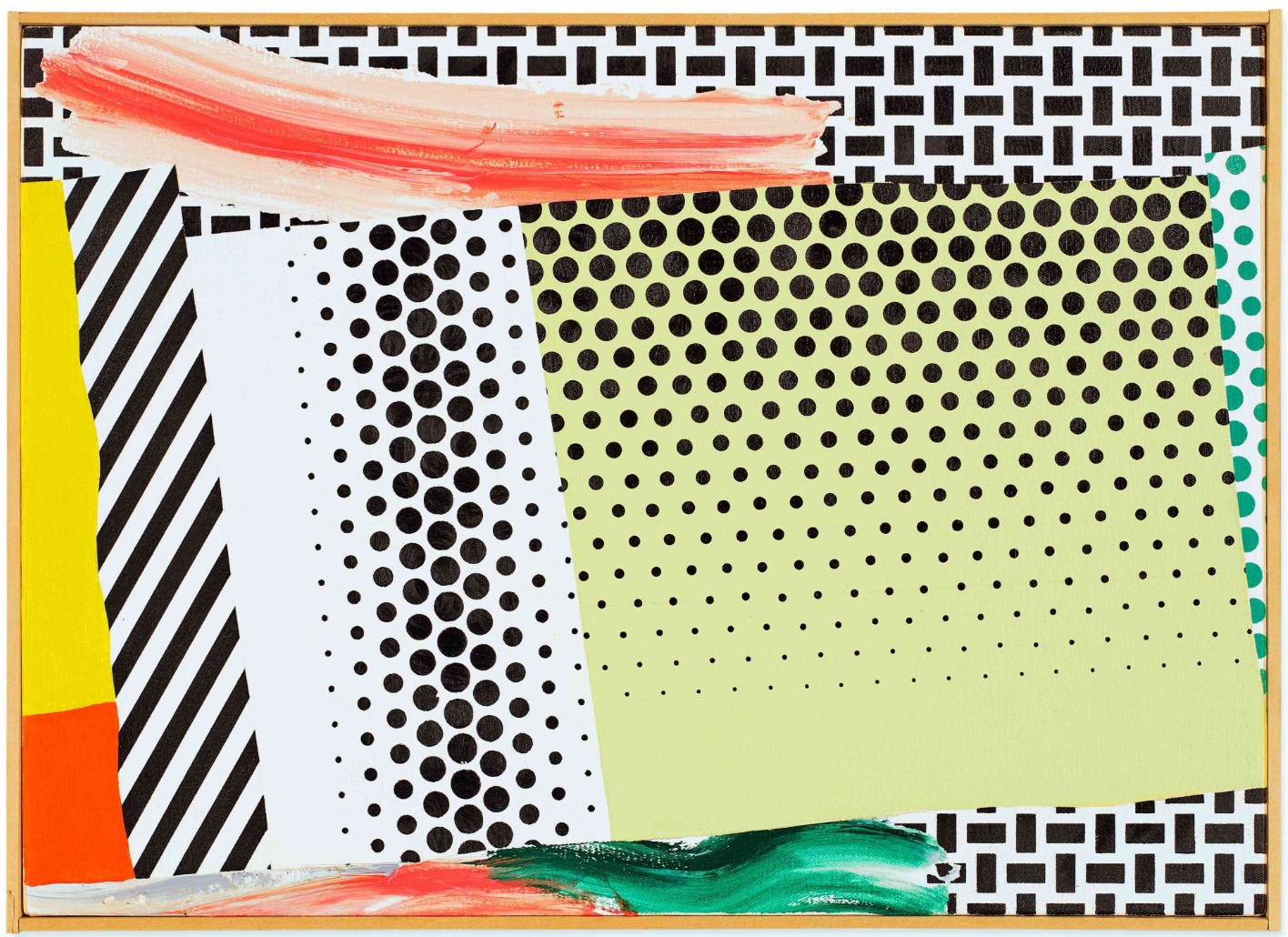
ROY LICHTENSTEIN (1923 – 1997)
Untitled Reflection, 1989
Acrylic, oil and graphite on canvas
17 1/8 x 24 inches (43.5 x 61 cm)
Signed and dated ‘89 (on the reverse)
Auction Results (Studies)
Reflections on Señorita (Study), circa 1990
A Legacy Reimagined: Works from the Collection of Dorothy and Roy Lichtenstein
Sotheby’s New-York: 19 November 2025
Estimated: USD 400,000 – 600,000
USD 952,500
WORK ON PAPER
Reflections on Señorita (Study) | Contemporary Day Auction | 2025 | Sotheby’s
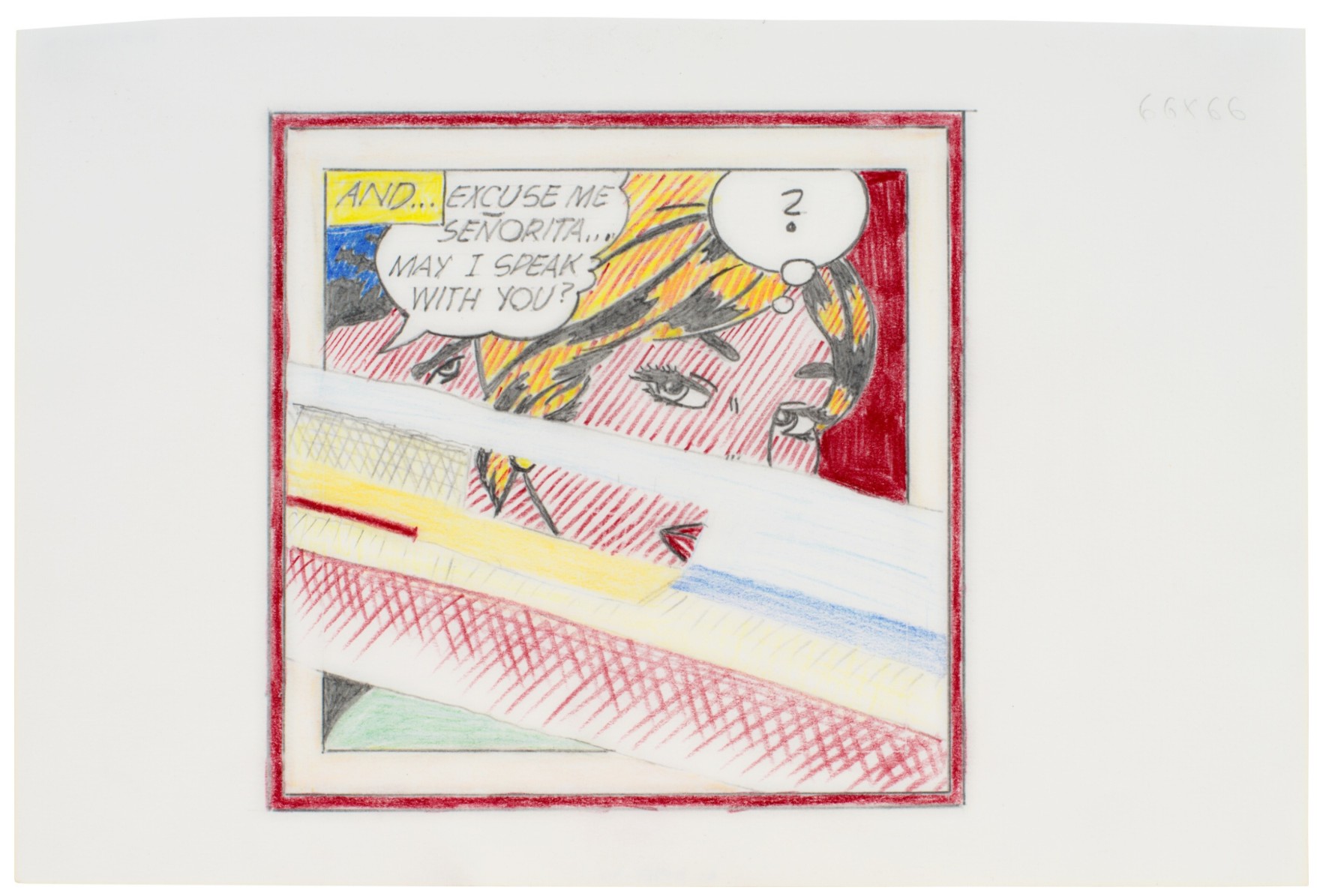
ROY LICHTENSTEIN (1923 – 1997)
Reflections on Señorita (Study), circa 1990
Colored pencil and graphite on paper
Image: 6 5/8 x 6 5/8 inches (16.8 x 16.8 cm)
Sheet: 8 1/4 x 12 1/4 inches (21 x 31.1 cm)
Reflections: Whaaam! (Study), circa 1990
Works from the Collection of Dorothy and Roy Lichtenstein
Sotheby’s New-York: 16 May 2025
Estimated: USD 250,000 – 350,000
USD 660,400
WORK ON PAPER
Reflections: Whaaam! (Study) | Contemporary Day Auction | 2025 | Sotheby’s
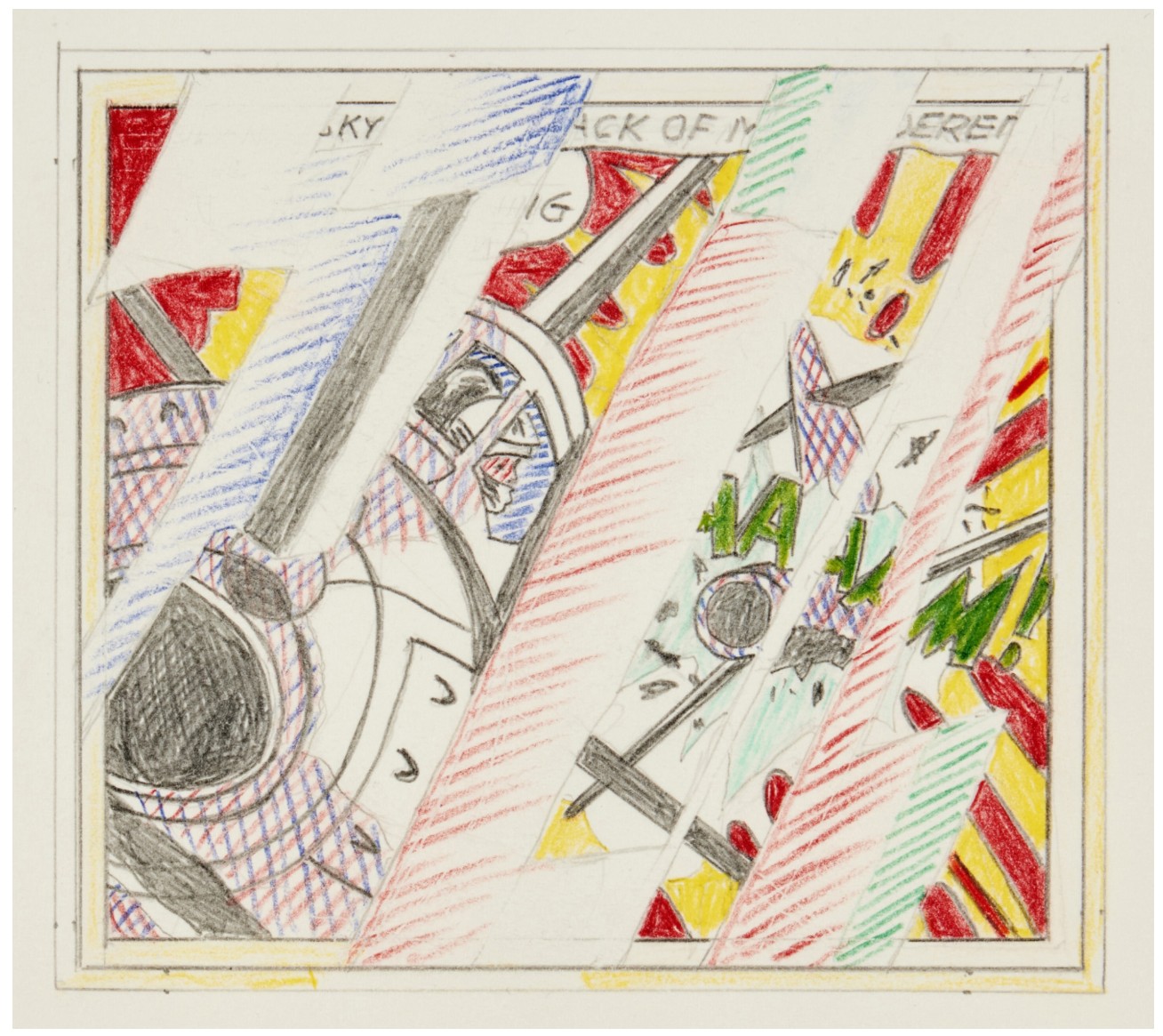
ROY LICHTENSTEIN (1923 – 1997)
Reflections: Whaaam! (Study), circa 1990
Colored pencil and graphite on paper
Image: 5 1/4 x 5 7/8 inches (13.3 x 14.9 cm)
Sheet: 7 1/2 x 10 1/2 inches (19.1 x 26.7 cm)
Reflections on Thud! (Study), 1990
A Legacy Reimagined: Works from the Collection of Dorothy and Roy Lichtenstein
Sotheby’s New-York: 19 November 2025
Estimated: USD 250,000 – 350,000
USD 482,600
WORK ON PAPER
Reflections on Thud! (Study) | Contemporary Day Auction | 2025 | Sotheby’s
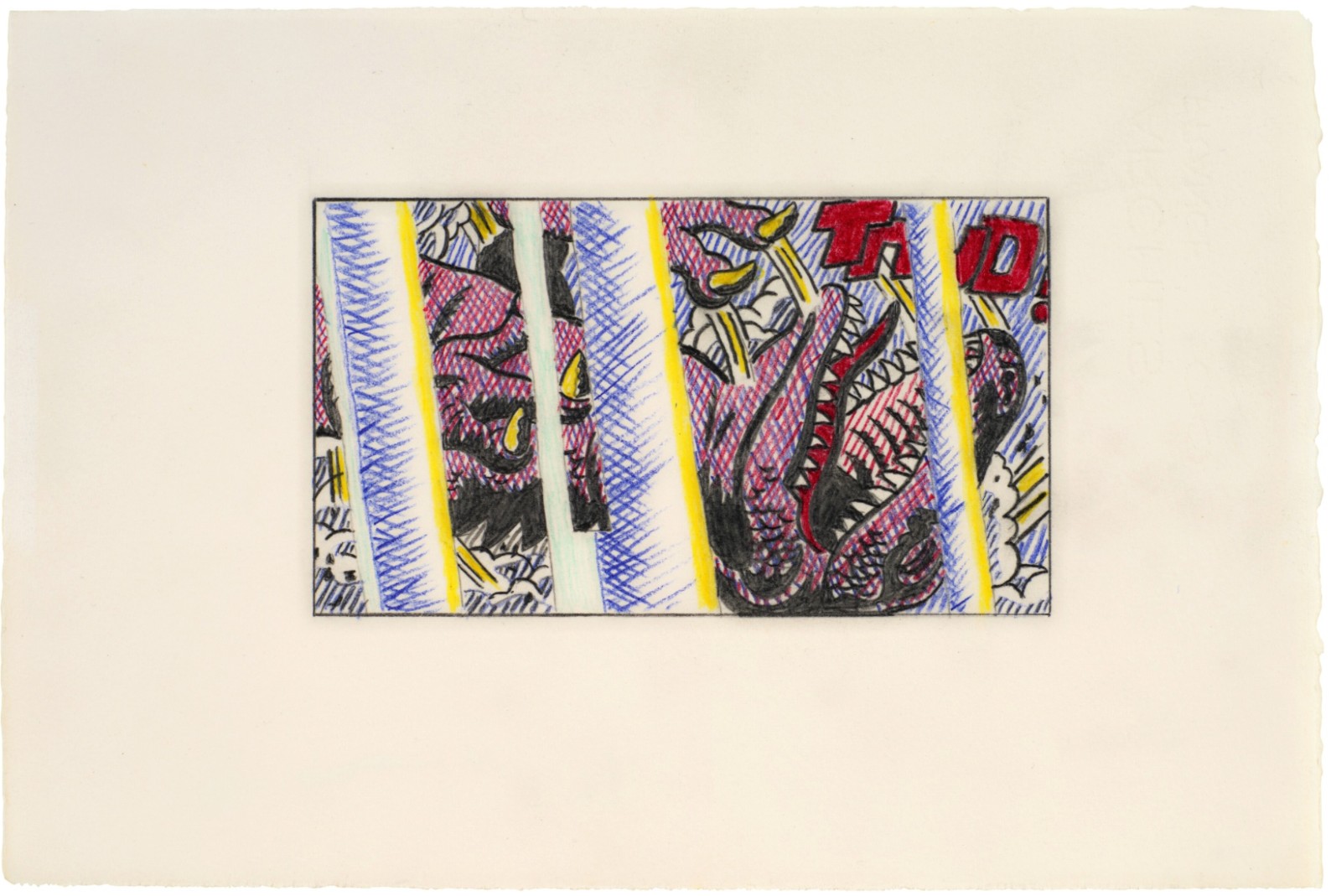
ROY LICHTENSTEIN (1923 – 1997)
Reflections on Thud! (Study), 1990
Colored pencil and graphite on paper
Image: 3 5/8 x 6 1/4 inches (9.2 x 15.9 cm)
Sheet: 7 1/2 x 11 1/8 inches (19 x 28.3 cm)
Signed and dated ‘90 (on the verso)
Reflections on Girl (Study), circa 1989
Works from The Collection of Dorothy and Roy Lichtenstein
Sotheby’s Hong-Kong: 28 September 2025
Estimated: HKD 2,000,000 – 3,000,000
HKD 3,175,000 / USD 408,100
WORK ON PAPER
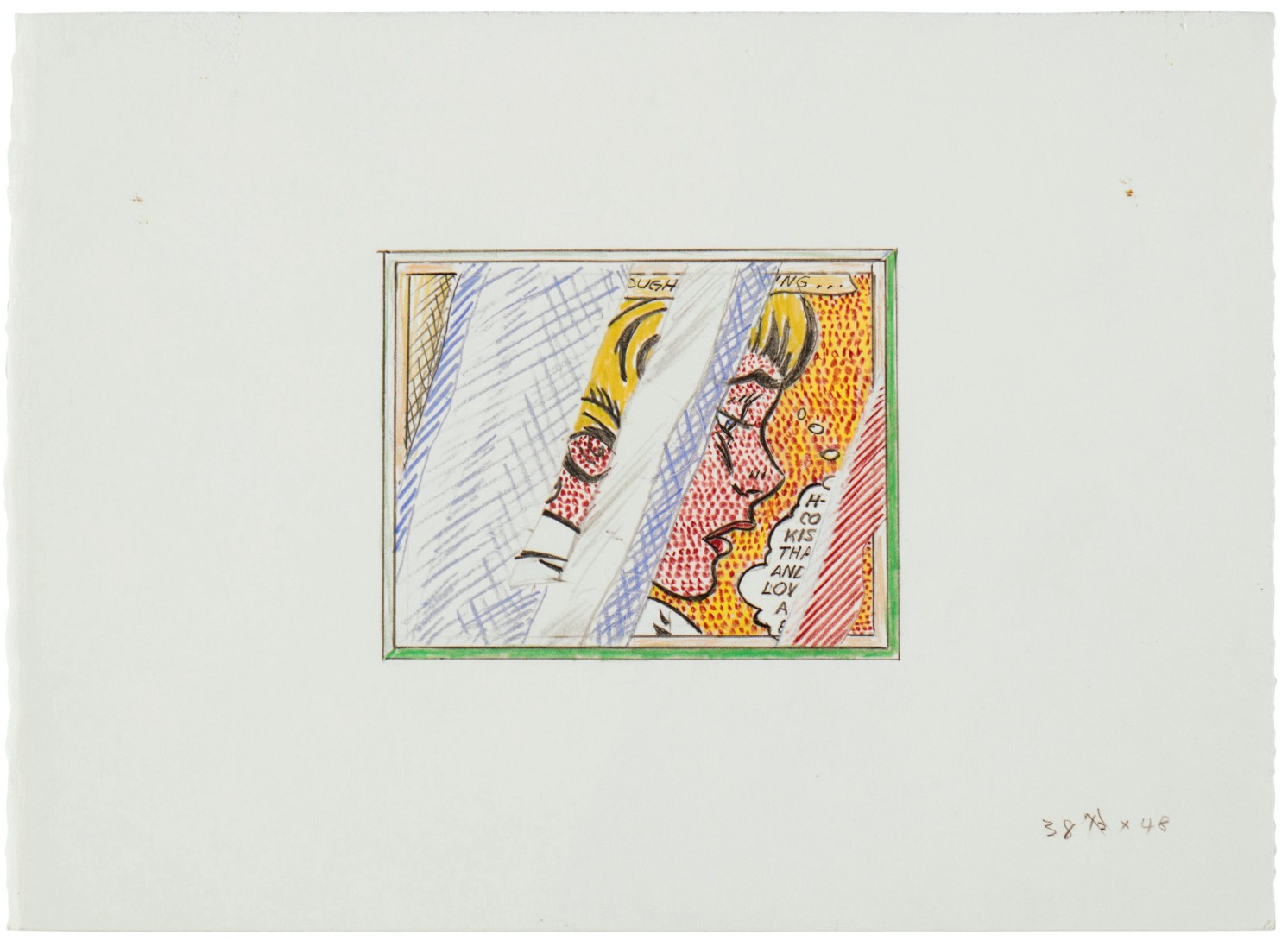
ROY LICHTENSTEIN (1923 – 1997)
Reflections on Girl (Study), circa 1989
Colored pencil and graphite on paper
Image: 4 1/2 x 5 5/8 inches (11.4 x 14.3 cm)
Sheet: 10 x 13 3/4 inches (25.4 x 34.9 cm)
Reflections on Wonder Woman (Study), circa 1989
Reflections on Pop: Works from the Collection of Dorothy and Roy Lichtenstein
Sotheby’s New-York: 26 September 2025
Estimated: USD 150,000 – 200,000
USD 254,000
WORK ON PAPER
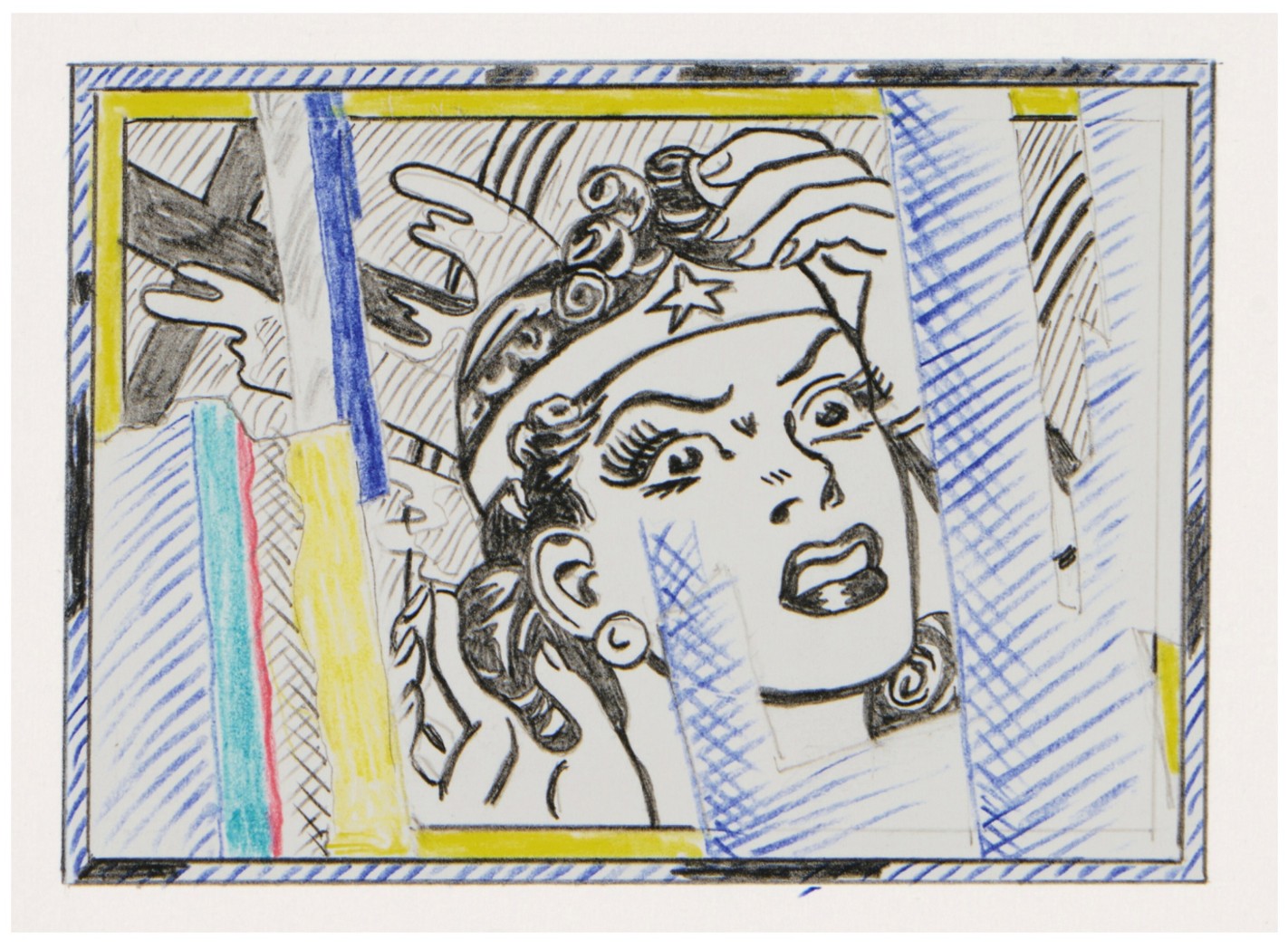
ROY LICHTENSTEIN (1923 – 1997)
Reflections on Wonder Woman (Study), circa 1989
Colored pencil and graphite on paper
Image: 3 7/8 x 5 1/2 inches (9.8 x 14 cm)
Sheet: 10 1/8 x 13 7/8 inches (25.7 x 35.2 cm)
PAINTINGS
Reflections on the Prom, 1990
Reflections on the Prom, 1990
Christie’s New-York: 12 November 2014
Estimate on Request
USD 21,445,000
Roy Lichtenstein (1923-1997), Reflections on the Prom | Christie’s
REPEAT SALE
Christie’s New-York: 13 May 2008
Estimated: USD 3,000,000 – 5,000,000
USD 8,777,000
Roy Lichtenstein (1923-1997) , Reflections on the Prom | Christie’s
ROY LICHTENSTEIN (1923-1997)
Reflections on the Prom, 1990
Oil and Magna on canvas
74×90 inches (188 x 228.6 cm)
Signed and dated ‘rf. Lichtenstein 1990’ (on the reverse)
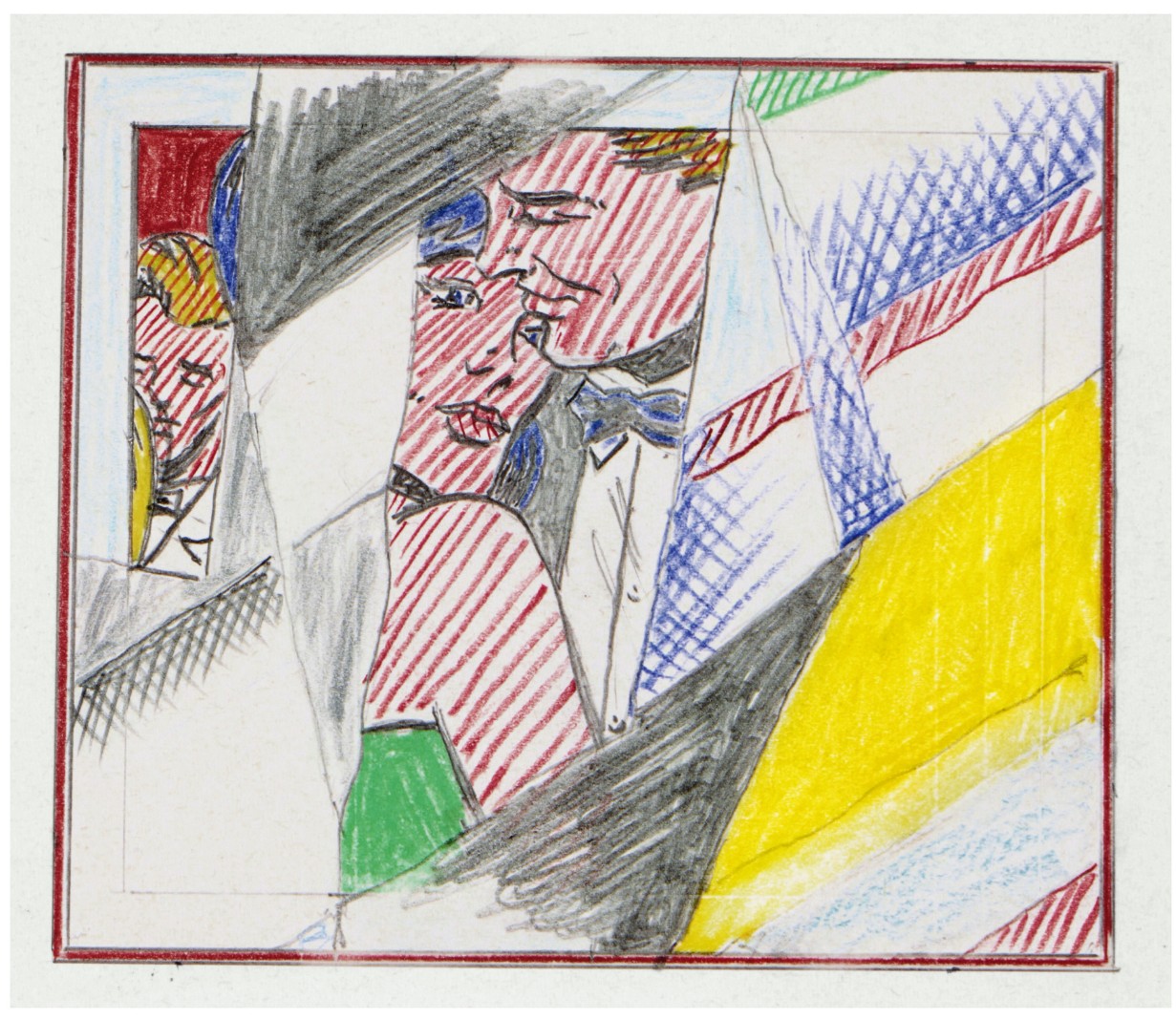
Reflections on the Prom takes as its subject one of the most important events in a teenager’s life; the rite of passage that is the Prom. This ‘all-American’ theme is based upon an image from a vintage DC Romance comic and reprises two of Lichtenstein’s best characters—the beautiful, troubled heroine and her leading man. Flawlessly executed on a monumental scale, the painting embodies all the emotional intensity a of Lichtenstein’s best works. Lichtenstein has long been an artist who sought innovation while continuing to work within his trademark style. In Reflections on the Prom, Lichtenstein uses slanting diagonal lines that run through the canvas, a pictorial shorthand used to depict a reflective surface. This device has a two-fold effect: while visually replicating the effect of reflection, it also literally slices through the picture plane, disrupting the sort of pictorial unity that Lichtenstein has long sought to achieve. In Reflections on the Prom, Lichtenstein reactivates his most highly-celebrated series in order to question the very nature of perception itself.
In Reflections on the Prom, the melodrama which featured so prominently in Lichtenstein’s best comic book paintings is on full display. The central heroine, her bare shoulder nuzzled against her leading man, peers pensively out of the painting, her lips pursed in serious contemplation. Her beautiful eyes display a forlorned melancholy that directly contrasts to the relaxed, at ease nature of the male figure, who gazes down complacently at his partner, totally oblivious to the turmoil that is written upon her expressive face. This, in fact, is the central tension contained within Reflections on the Prom, which Lichtenstein accentuates by placing the couple directly in the center of the large canvas, in a tightly-zoomed angle that heightens their contrasting emotions.
By this stage in his career, Lichtenstein had filled his Southampton studio with an endless array of books, magazines, posters, newspapers, comic books and other ephemera that he had spent a lifetime collecting. In Reflections on the Prom, Lichtenstein returns to the DC Romance Comics that he had first used in 1963, for the basis of the work. Lichtenstein selected a single image originally created by the comic artist Mike Sekowsky. In comparing Lichtenstein’s painting to Sekowsky’s, it becomes clear that Lichtenstein altered the original image to suit his pictorial needs. Lichtenstein has purposefully separated the two couples into two different parts of the canvas, thereby creating two separate and distinct narratives. (Even in his earliest work, Lichtenstein never dutifully copied from his source material, but rather made small tweaks and concessions, to enhance his pictorial composition.) Lichtenstein centers the main female heroine and her beau, while the second couple is moved to the painting’s left edge. The central heroine is embroiled by her own troubled thoughts (of which her hunky leading man is completely unaware), as she gazes, disheartened with melancholy, out from the painting, the viewer is left to ponder the meaning of her turmoil. Who is the couple toward the left edge of the painting? Might this be a memory in which our distressed heroine recalls the past transgressions of her beau? Perhaps this is the “reflection” to which Lichtenstein refers.
The reflection of the painting’s title most obviously refers to Lichtenstein’s painterly device of diagonal lines to represent a reflected surface. Lichtenstein had long been fascinated by the possibility of rendering reflection, evident in his early work Girl with Mirror (1964) and the Mirror series of 1969-1972. In Reflections on the Prom, Lichtenstein presents the image as it would appear under a glass frame. Glass is reflective by nature, and when used as a protective frame, the glass is simultaneously reflective like a mirror and transparent, allowing the viewer to see through to the narrative underneath.
“It started when I tried to photograph a print by Robert Rauschenberg that was under glass. But the light from a window reflected on the surface of the glass and prevented me from taking a good picture. But it gave me the idea of photographing fairly well-known works under glass, where the reflections would hide most of the work, but you could still make out what the subject was…I started this series of Reflections on various early works of mine…It portrays a painting under glass. It is framed and the glass is preventing you from seeing the painting. Of course, the reflections are just an excuse to make an abstract work, with the cartoon image being supposedly partly hidden by the reflections.”
Glass also has a protective quality that enhances the preciousness and rarity of the painting that it contains. In this respect, Lichtenstein’s depiction of reflected glass simultaneously invites viewers in while also keeping them out by means of the glass barrier, which further refracts and shatters the wholeness of the image. This separation is further problematized by the potent melodrama of the scene and the overall large scale of the painting, which engulfs the viewer, thereby inviting them in, but its diagonal lines refer to an image disrupted. By using this reflective device, Lichtenstein boldly severs the “pictorial unity” that has long been a hallmark in his work. This device further complicates the narrative, which is able to convey the complex emotions of memory, longing, nostalgia and desire, all within one work. Writing in his critical text on the artist, the historian Graham Bader describes this dual phenomenon: “[The paintings] foreground their beholders’ separation from the content they present. The series illustrates not the deep space of mirror illusion but impenetrable surface laid bare by reflected light. Lichtenstein accentuates the blockage by deploying his reflective streaks over particularly loaded or emotionally charged scenes.” (Graham Bader, Roy Lichtenstein Reflected, exh. cat., Mitchell, Innes & Nash, New York, 2011, p. 49). He goes on to say, succinctly: “The paintings suggest that to make art is to engage in a game of reflection and refraction that stretches across history and between works, enveloping artist, image and viewer alike” (G. Bader, ibid., p. 57).
Reflections on Thud!, 1990
Reflections on Thud!, 1990
Sotheby’s Hong-Kong: 19 April 2021
Estimated: HKD 78,000,000 – 108,000,000
HKD 110,072,000 / USD 14,173,212
Roy Lichtenstein 羅伊・李奇登斯坦 | Reflections on Thud! | Contemporary Art Evening Sale | | Sotheby’s (sothebys.com)
ROY LICHTENSTEIN (1923 – 1997)
Reflections on Thud!, 1990
Oil and magna on canvas
55×96 inches (139.7 x 244 cm)
Signed and dated 90 on the reverse
A strident vision of bold graphic efficiency and riveting, resounding triumph, Reflections on Thud! from 1990 is a dazzling example from Roy Lichtenstein’s important series of Reflections Paintings, which he began in 1988 and completed in 1993. As a T-Rex hits the ground in definitive defeat, Lichtenstein’s titular ‘reflections’ panels, flawlessly rendered in immaculate striations of the artist’s signature Ben-Day dots, slice exultantly through the picture plane, embodying the ultimate crystallization of the artist’s enduring engagement with the role of vision and perception in art. The pictorial shorthand of reflective lines has a threefold effect: first, the device replicates the visual effect of reflective glass, acting as a trompe l’oeil element explicitly manifests the reflective act; second, the replicated glass acts as a formal barrier that simultaneously compels viewers in to the disrupted image while also keeping them at bay, heightening the intrigue and drama in the act of viewing; third, the shattered pictorial unity further complicates the narrative, amplifying the theatrical drama in the original image. Painted in 1990, Reflections on Thud! is particularly desirable for its focus on the most iconic subject in Lichtenstein’s idiom – the comic strip, as well as his incorporation of a comic-style exclamatory onomatopoeia – Thud!. Only eight of Lichtenstein’s Reflective Paintings contain an onomatopoetic device, and of the artist’s 22 Onomatopoeia Paintings from the 1960s, half reside in prestigious institution collections. Representing multiple levels of self-reflexivity, not least harkening to the artist’s landmark Mirror series from 1969-1972, Lichtenstein’s highly celebrated Reflections Paintings quote from earlier paintings in his oeuvre and from the broader history of art, comprising an extraordinary survey of his career-long exploration of art about art.
Reflections on Jessica Helms, 1990
Reflections on Jessica Helms, 1990
Christie’s London: 27 June 2012
Estimated: GBP 3,500,000 – 4,500,000
GBP 4,017,250 / USD 6,246,820
Roy Lichtenstein (1923-1997) , Reflections on Jessica Helms | Christie’s
ROY LICHTENSTEIN (1923-1997)
Reflections on Jessica Helms, 1990
Oil and Magna on canvas
63×49 inches (160 x 124.6 cm)
Signed and dated ‘Roy Lichtenstein 90’ (on the reverse)
Executed in a kaleidoscope of rich colours, with this near life size image of a brazen naked young woman caught in the sanctity of her bathroom, Roy Lichtenstein returns to the genre that established him as one of the most progressive artists of his generation. Reflections on Jessica Helms combines this return to the female figure with the continuation of his rigorous examination into the formal nature of painting that he began in the 1980s. The seductive nature of the woman’s curvaceous body positioned against the formal regularity of the tiled bathroom is a resounding example of his signature painting; a style which mimicked the aesthetic of the mass-market comic books of his youth, whilst at the same time providing a rigorous investigation into the nature of representation. The precision of Lichtenstein’s technique, complimented by a diverse range of bold pigments and subtle hues, demonstrates the artist’s mastery of the codes and cyphers that we have amassed within our mass-media culture as a shortcut to visual comprehension. In the span of ten years between 1980 and 1990 Lichtenstein retreated from the full-on representation of the female body and Reflections on Jessica Helms marks his triumphal return to the potent mixture of colour and form that is encapsulated in the sensual contours of the female body.
Set against the strict rigidity of a grid pattern that replicates the tile wall intrinsic to most bathrooms, the curvaceous nature of the female’s body is enhanced by the Ben-Day dots that the artist used to denote volume and mass. Although the woman’s modesty is obscured by a trio of diagonal bands, the sense of sexuality is palpable. A tantalizing flash of cherry red lip is visible along the upper edge of the painting just as tussles of blond hair cascade over her bare shoulders only to disappear behind the censorial bands that lie across the composition. These are not the vulnerable girls that Lichtenstein painted in the 1960s; his nude figures from the 1990s have benefitted from the social advances that his earlier girls were struggling to come to terms with. Unlike these earlier Girl paintings (whose subjects still looked to ‘Brad’ or ‘Jeff’ to make their lives complete) the figure in Reflections on Jessica Helms is an independent woman and happy to acknowledge her body and the power it has over men, ‘The 1990s nudes take pleasure in their own company, without the slightest hint of needing or missing a man. They are not paralyzed by their emotions. In contrast to Lichtenstein’s original romance-comic pictures, this world flourishes exuberantly without men or engagement rings or kisses. The older norm didn’t disappear, but needed to be adjusted. Even as he updated the stereotypes of erotic fantasies, Lichtenstein wove them into the consistent narrative of his own carrier’ (A. Berman, ‘Joy and Bravura and Irreverence’ Roy Lichtenstein and Images of Women,’ in Roy Lichtenstein-Classic of the New, exh. cat., Kunsthaus Bregenz, Vienna 2005, p. 143).
The three wide bands that run diagonally across the surface of the work recall Lichtenstein’s earlier Mirrors series from the 1970s. As well as protecting the modesty of Jessica Helms, they appear to be reflecting back to the viewer the world in which we are standing. This simulated reflection is a conceit Lichtenstein started using in the Mirror series from 1969-1970 where he produced works based on advertisements for mirrors in retail catalogues. Depicting a blank reflection, the Mirror works are among the artist’s most abstract. Stripping down his subject matter, Lichtenstein used the series to concentrate on the formal aspects of painting and to study the various magnifications of light and optical distortion of shapes on the mirrors surface: ‘it enable[d] him to unleash a new range of inventive bravura, a heightened exploitation of spatial effects, and a new freedom in suggesting illusion’ (E. Baker, ‘The Glass of Fashion and the Mold of Form’ in J. Coplans, (ed.), Roy Lichtenstein, New York, 1972, p. 179).
Although Jessica Helms is a fictitious character, her name references that of Jesse Helms, the Senator from North Carolina and a leading proponent of art censorship. Helms is most famous for his battle with the National Endowment for the Arts battle in the late 1980s over what he saw as their support of blasphemous and pornographic art. As such, this painting could be seen as a wry comment on notions of morality and censorship, indicated through his employment of a nude figure, here in her shower, who keeps her modesty through three bars of reflections shooting across the canvas. Reflections on Jessica Helms is a culmination of the artist’s lifelong preoccupation with the fiction of representation. Lichtenstein’s calculated adaptations of cartoon images are a reminder that the simple surface of things does not necessarily correspond to or ‘reflect’ a complex reality. In addition to his characteristic replication of the Ben Day dot system used by printers, Lichtenstein’s method of splicing the composition with reflective streaks further dematerializes his subject matter, flattening it into the picture plane. By combining this sense of reflection with a suggestive narrative, in Reflections on Jessica Helms Lichtenstein highlights the fact that his painting is made up only of dots and lines to which it is impossible to resist applying meaning.
Reflections: Mystical Painting, 1989
Reflections: Mystical Painting, 1989
Sotheby’s Hong-Kong: 9 October 2021
Estimated: HKD 30,000,000 – 45,000,000
HKD 48,026,000 / USD 6,169,281
REPEAT SALE
Christie’s New-York: 14 May 2003
Estimated: USD 800,000 – 1,200,000
USD 1,183,500
Roy Lichtenstein (1923-1997) , Reflections: Mystical Painting | Christie’s
ROY LICHTENSTEIN (1923 – 1997)
Reflections: Mystical Painting, 1989
Oil and magna on canvas
56 ⅛ x 75 inches (142.5 x 190.5 cm)
Signed and dated 89 on the reverse
Enigmatic and theatrical, blazing colors radiating from meticulously painted Ben-Day dots, Reflections: Mystical Painting (1989) is a quintessential example from Roy Lichtenstein’s important series, Reflections Paintings (1988-1993) in which the artist continues his interrogation of perception and the abstract nature of reality. Lichtenstein presents the image as if viewed through a glass frame, using diagonal strips that slice through the canvas to suggest the reflection and refraction of light, urging the viewer to make sense of its various fragments. Fastidiously executed in the comic strip aesthetic for which Lichtenstein became known, Reflections: Mystical Painting immediately engages the viewer in the narrative of the work, with the artist’s love for moments of high drama exemplified by the gaping mouth yelling into the pointillist ether.
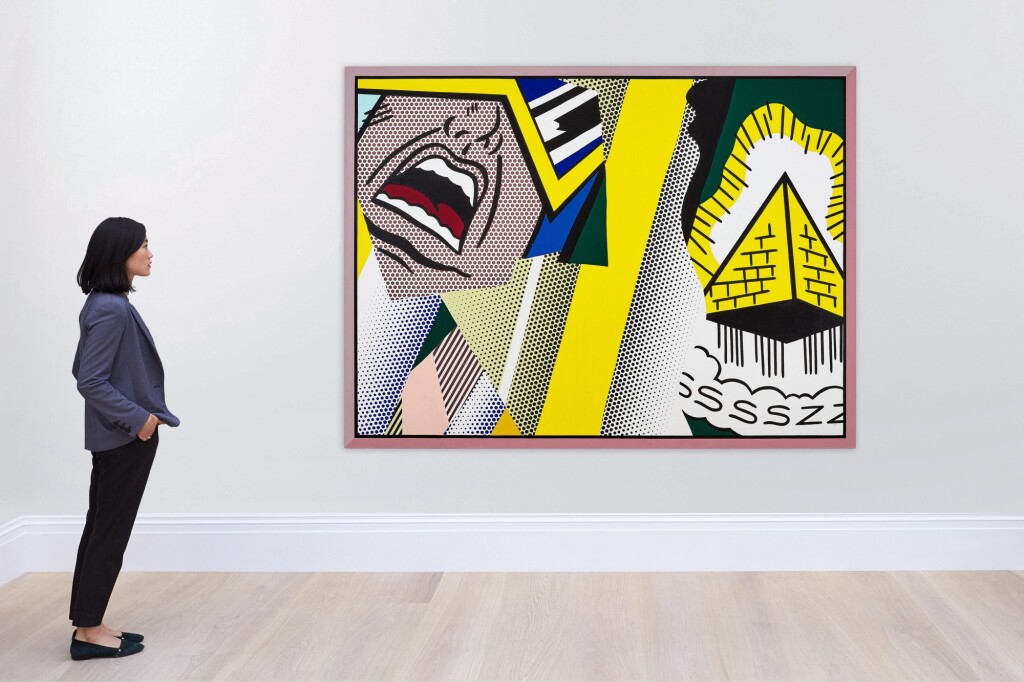
Significantly, the present work has been featured on the October 1989 cover of the high-profile international contemporary art magazine, Flash Art, which was subsequently included in Maurizio Cattelan’s sculptural work, Strategies (1990)—a house of cards composed entirely by Flash Art magazines—testament to Reflections: Mystical Painting’s powerful visual appeal and its importance in both art history and popular culture.
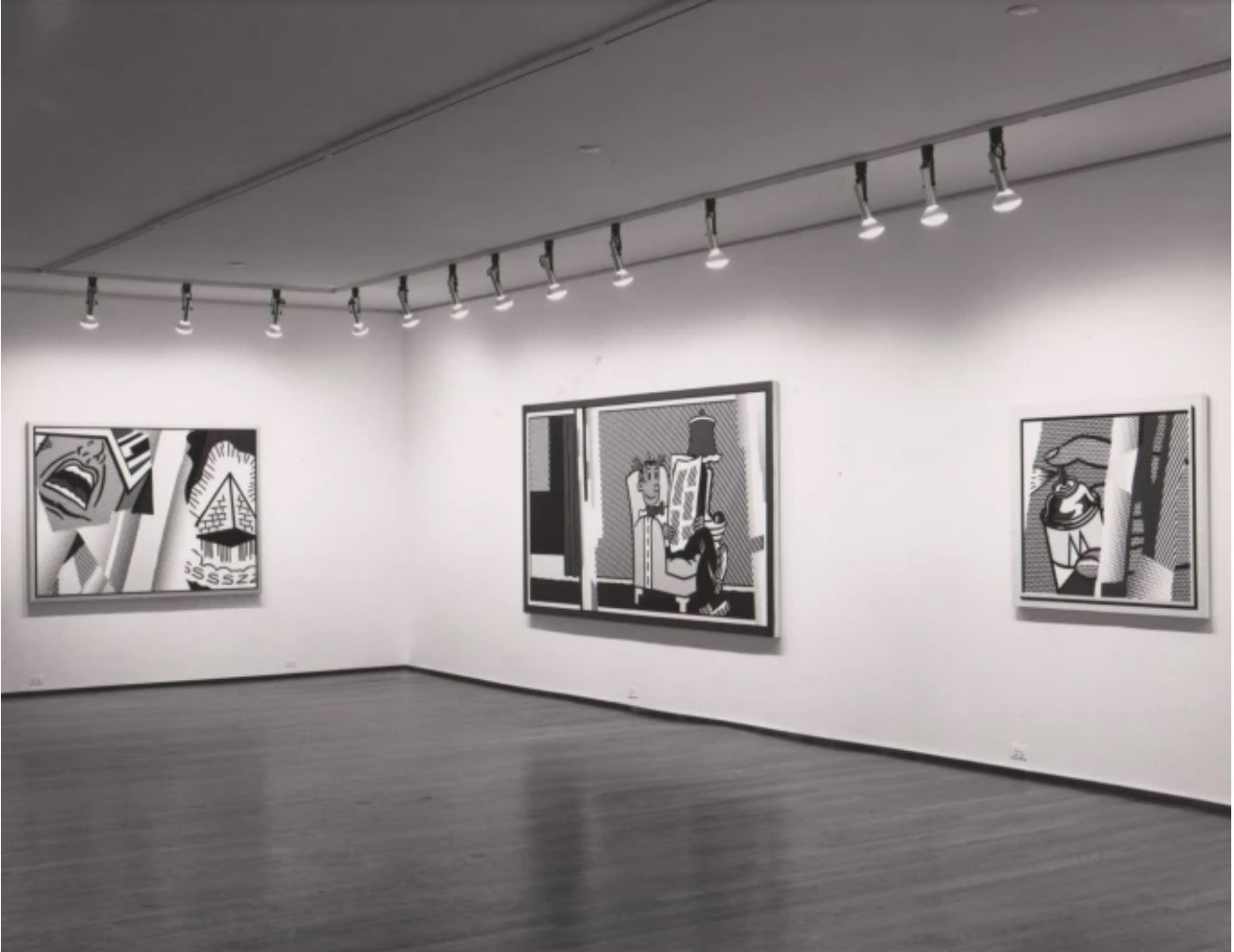
INSTALLATION VIEW OF REFLECTIONS: MYSTICAL PAINTING AT CASTELLI GALLERY, WEST BROADWAY, NEW YORK, ROY LICHTENSTEIN: REFLECTIONS, OCTOBER 21 – NOVEMBER 11, 1989 © CASTELLI GALLERY, ARTWORK © ESTATE OF ROY LICHTENSTEIN
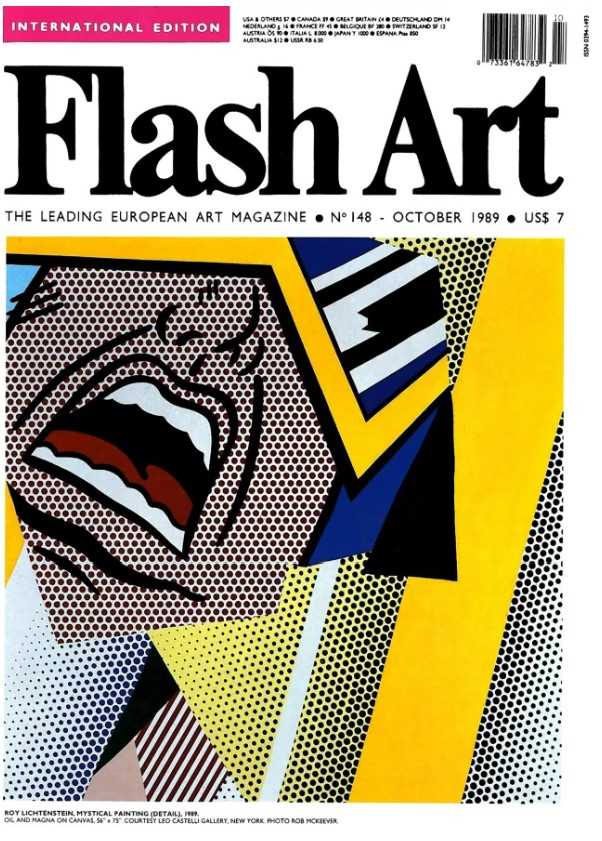
FLASH ART MAGAZINE, OCTOBER 1989, ILLUSTRATED ON THE COVER,
Reflections: Art, 1988
Reflections: Art, 1988
Works from the Collection of Dorothy and Roy Lichtenstein
Sotheby’s New-York: 15 May 2025
Estimated: USD 4,000,000 – 6,000,000
USD 5,479,000
Reflections: Art | The Now and Contemporary Evening Auction | 2025 | Sotheby’s
ROY LICHTENSTEIN (1923 – 1997)
Reflections: Art, 1988
Acrylic, oil and graphite on canvas
44 1/2 x 76 1/4 inches (113 x 193.7 cm)
Signed and dated ’88 (on the reverse)
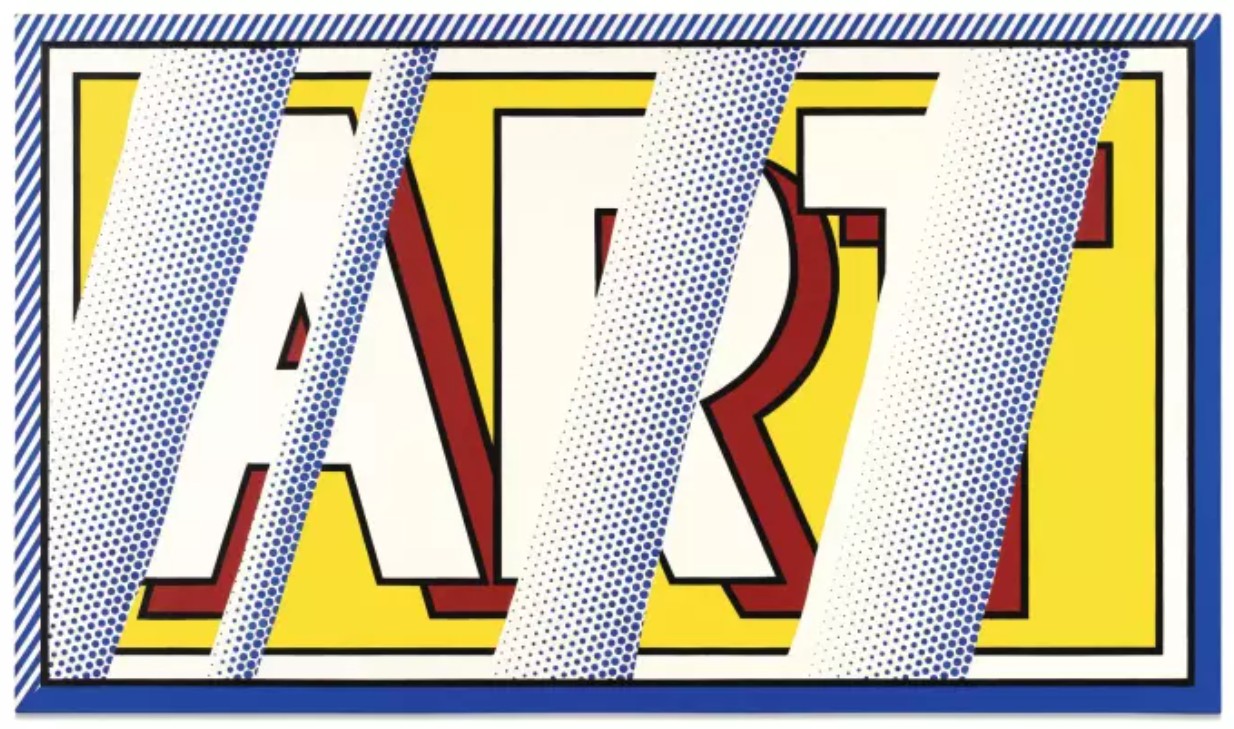
For over four decades, Roy Lichtenstein confronted the history of art head on. Whether Piet Mondrian’s grids or Henri Matisse’s dancers, Claude Monet’s cathedrals or Pablo Picasso’s lovers, Lichtenstein scoured the annals of art history for its most powerful and enduring subjects and themes, recasting them in Ben-Day-dotted splendor. It wasn’t until 1988, however, that Lichtenstein—by this time a canonical figure in his own right—turned his attention to a body of masterworks he had yet to reinvent: his earlier paintings. Here, the graphic resonance of the word “ART” thunders in scarlet, ultramarine, and cadmium yellow, disrupting and partially obscuring the composition of his 1962 masterpiece with the searing clamor of Lichtenstein’s reflections. Reflections: Art is one of the first of his seminal, career-defining Reflections series, and the 35 canvases to follow would see Lichtenstein fragment, wrestle, reconsider, and reunite with the most iconic works from his earlier output, complicating his own pictures from decades prior by rendering their surfaces both image and mirror. Other examples from the series reside in international institutional collections, including The Broad, Los Angeles; The Israel Museum, Jerusalem; and Yale University Art Gallery, New Haven, among others. Further testament to its extraordinary significance, Reflections: Art has remained in the treasured personal collection of Dorothy and Roy Lichtenstein since its execution, and on the Lichtenstein Foundation’s website, Reflections: Art serves as the digital icon for the artist’s newly published catalogue raisonné website. If the great feat of Art from 1962 is, as Diane Waldman observed, its ability to question what art is, then Reflections: Art follows suit, acting as both content and contemplation, creation and revisitation, canvas and mirror, probing not only what art is, but who we are in the face of it.
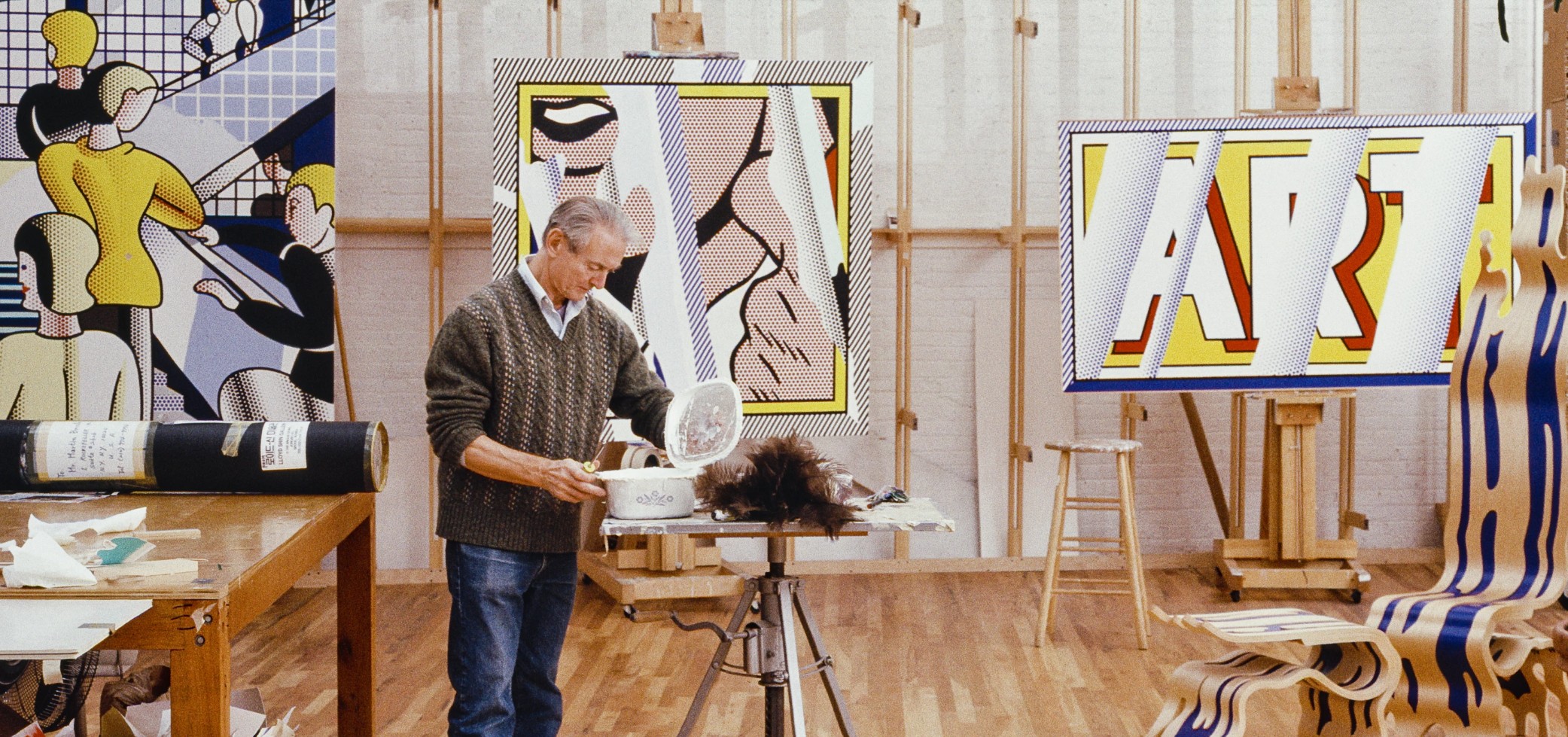
The artist working on the present work in his studio in New York, 1989. Photo © Bob Adelman. Art © Estate of Roy Lichtenstein
Summoning the catalytic intellectual heft of his 1962 painting, Reflections: Art further expands Lichtenstein’s engagement with the concern at the heart of his conceptual enterprise: artmaking itself. Nowhere is this clearer than in his two Art paintings, in both of which its namesakes appear spelled out, capitalized, and articulated in white, black, and two primary colors: art’s very own chromatic building blocks. In Art, Lichtenstein for the first time isolates text alone, as opposed to its subservient role up to this point denoting the Tzing! of a bullet or the Oh, Jeff… of an anguished damsel. Not unlike his Pop contemporaries Ed Ruscha and John Baldessari, Lichtenstein empowers “ART” with the full throttle clarity of its arresting legibility, doubling down on its semiotic subversion with the red “shadow” that elevates text into object, language into art, and colloquialism into critique.
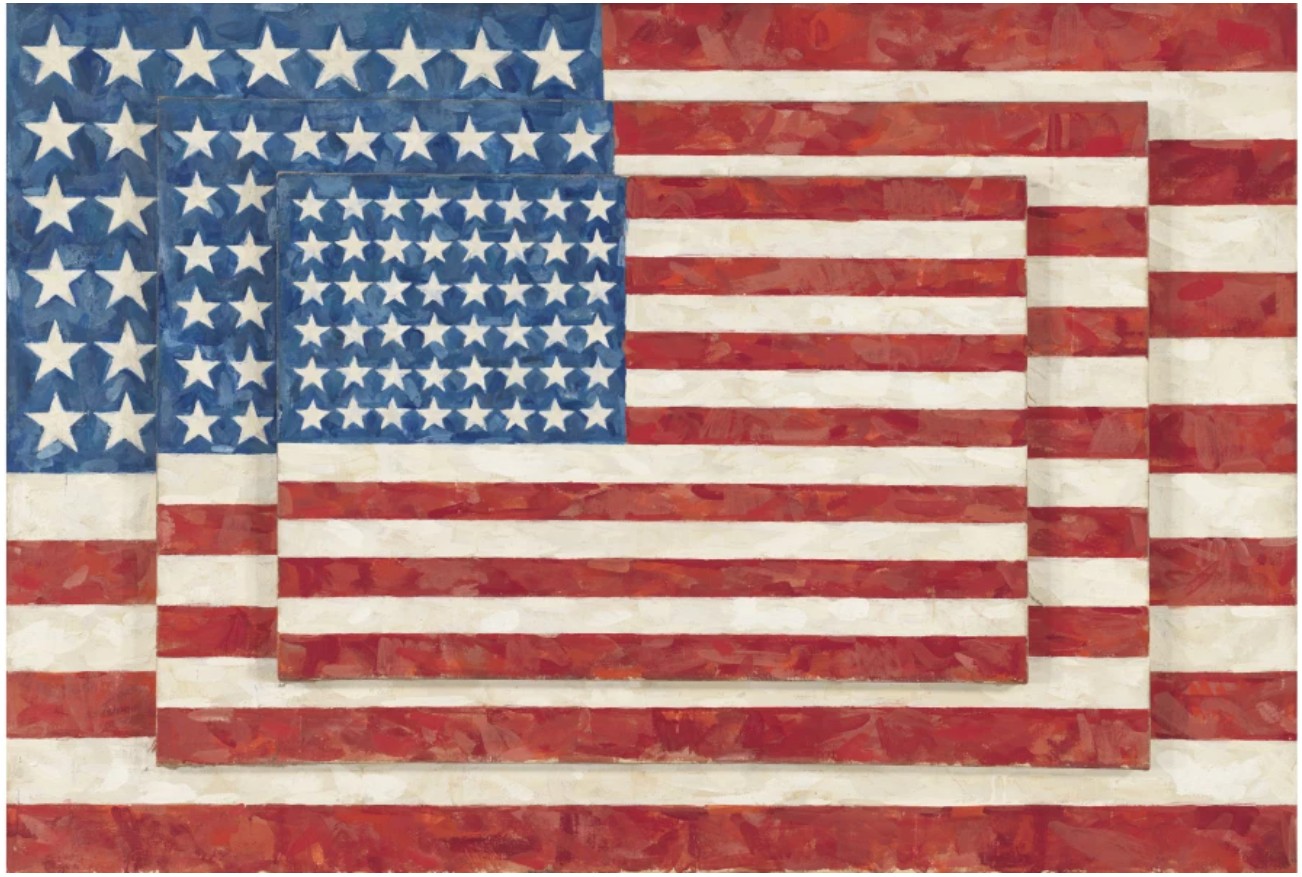
Jasper Johns, Three Flags, 1958. Whitney Museum of American Art, New York. Image © Whitney Museum of American Art / Licensed by Scala / Art Resource, NY. Art © 2025 Jasper Johns / Licensed by VAGA at Artists Rights Society (ARS), NY
Reflections: Art, taking both the 1962 work’s formal and intellectual content as its basis, “compounds the critical complications of this earlier work,” Graham Bader assesses. “Art, of course, had declared its status as art with the most distinctly inartistic of means, screaming this out with the cheapest sort of advertising script—and generating its aesthetic power through precisely the bluntness of this anti-aesthetic gesture. Reflections: Art both backtracks on and intensifies this effect. It subsumes the conceptual reflection at the core of the earlier painting (that is, the centrality of our act of ‘reflecting’ on Art’s aesthetic status to its power as an actual work of art) within a field of material – or at least materially represented – reflective effects.” (Graham Bader quoted in: Exh. Cat., New York, Mitchell-Innes & Nash, Roy Lichtenstein Reflected, 2010, pp. 54, 57)
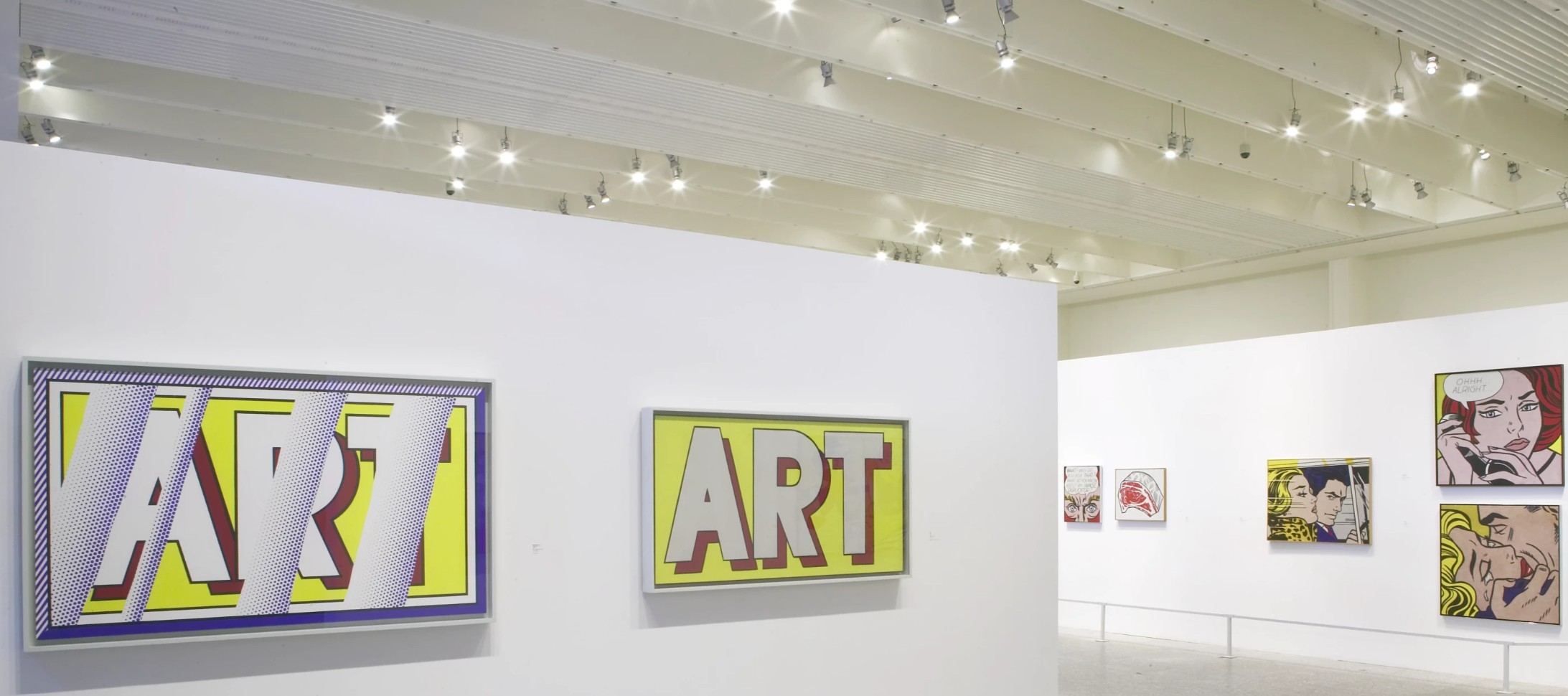
The present work installed in Roy Lichtenstein at Museo Nacional Centro de Arte Reina Sofía, Madrid, June – September 2004.
Art © Estate of Roy Lichtenstein
By this time 65 years old, the Reflections see Lichtenstein perhaps at his most shrewd, and certainly his most confident. Where he had developed his mature style by appropriating popular imagery – the world of comics, cartoons, and advertisements from the Yellow Pages – translating the potence of their illustrative omnipresence onto canvas, Lichtenstein began in the Reflections to appropriate the imagery of his own work.
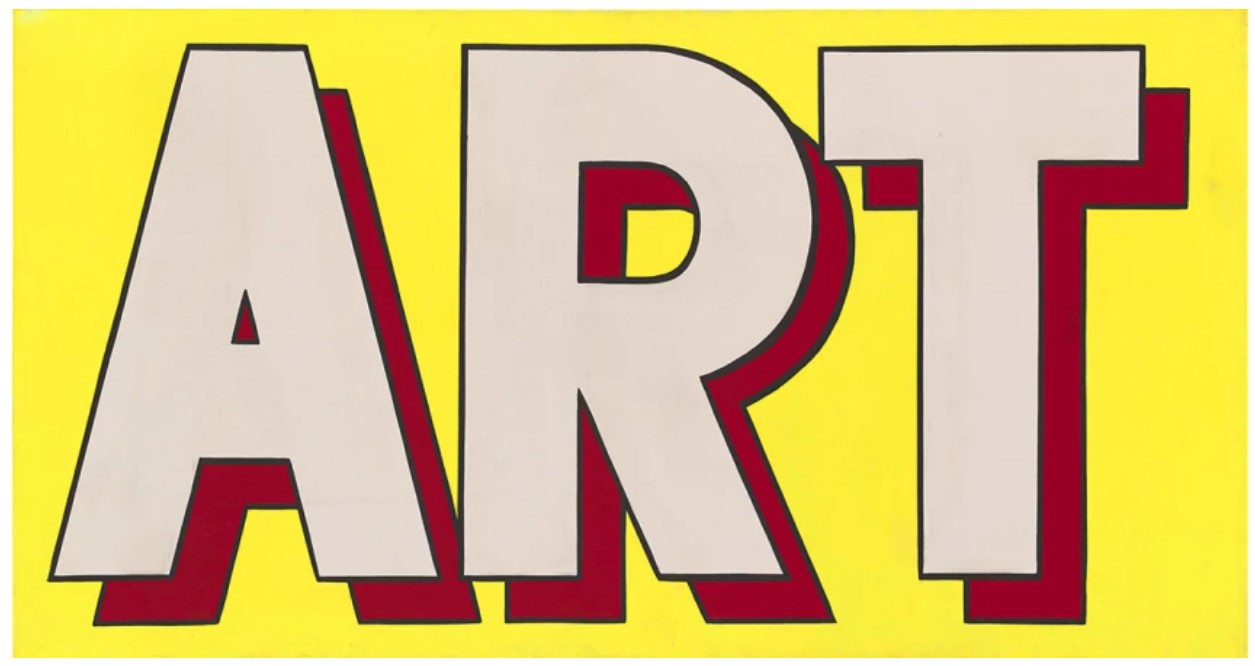
Roy Lichtenstein, Art, 1962. Private Collection. Art © Estate of Roy Lichtenstein
To borrow and manipulate his oeuvre, however, posed an entirely bolder proposition, recognizing – if not asserting – that his own body of work had reached the same stature of universal recognition during his lifetime. The Reflections together represent Lichtenstein’s ultimate Duchampian homage, the attitude and gesture which guided Lichtenstein’s entire career thus far.
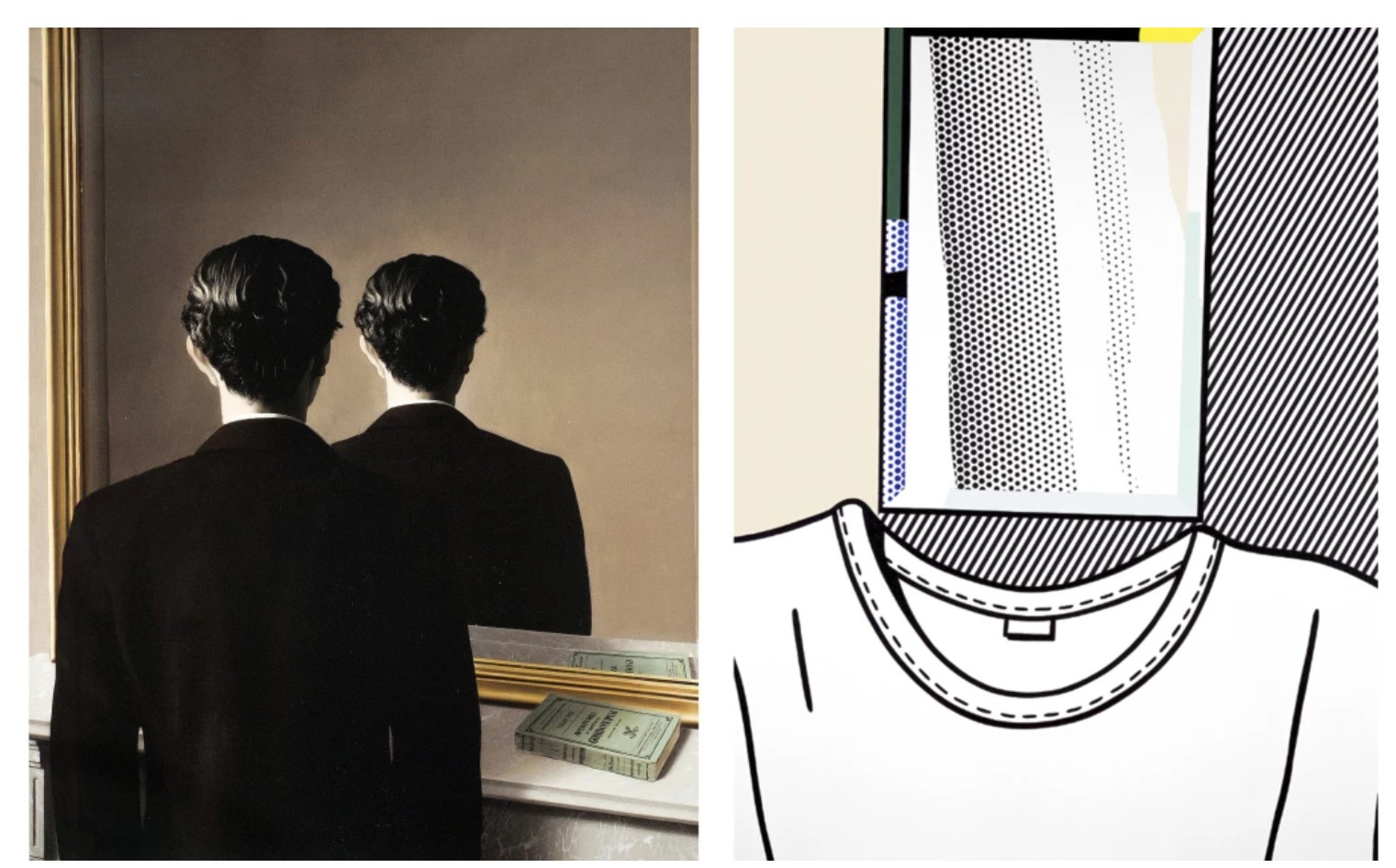
Left: René Magritte, La reproduction interdite, 1937. Museum Bojimans van Beuningen, Rotterdam. Image © Fine Art Images / Bridgeman Images. Art © 2025 C. Herscovici, Brussels / Artists Rights Society (ARS), New York.
Right: Roy Lichtenstein, Self-Portrait, 1978. Private Collection.Art © Estate of Roy Lichtenstein
As Diane Waldman observes, Lichtenstein “took the subject of the mirror as a means of questioning reality and painted his own self-portrait with a mirror as his face. He reflected on his own art and the art of others, incorporating images by Cezanne, Picasso, Matisse, Mondrian, and Leger into his paintings, together with images of Mickey Mouse, cartoon girls, who were all-American beauties, and guys, and household objects taken from comic books, catalogues, advertisements, and the Yellow Pages. His entire body of work was a reflection, an inquiry into his identity and his role as an artist.” (Diane Waldman quoted in: Exh. Cat., Rome, Chiostro del Bramante, Roy Lichtenstein: Riflessi-Reflections, 1999, pp. 17, 19) Thus, his lifelong mission of inspiring in his viewers their own reflections on art comes to a furious, brilliant coda in this canvas, swiftly summarizing a lifetime of creation in one canvas. If Monet’s Nympheas accomplished the miraculous conflation of 3 surfaces into one plane – surface, sky, and underwater – then it is Reflections: Art which furcates the surface even more times over: art as a readymade, as a word, as an artwork, as the canon, and as himself.
In 1988, Roy Lichtenstein inaugurated a series of 36 paintings entitled the Reflections, which featured revisitations of some of the most enduring and iconic works of the artist’s career. Testament to their significance in his oeuvre, examples from the series belong in esteemed institutional collections, illustrated below.
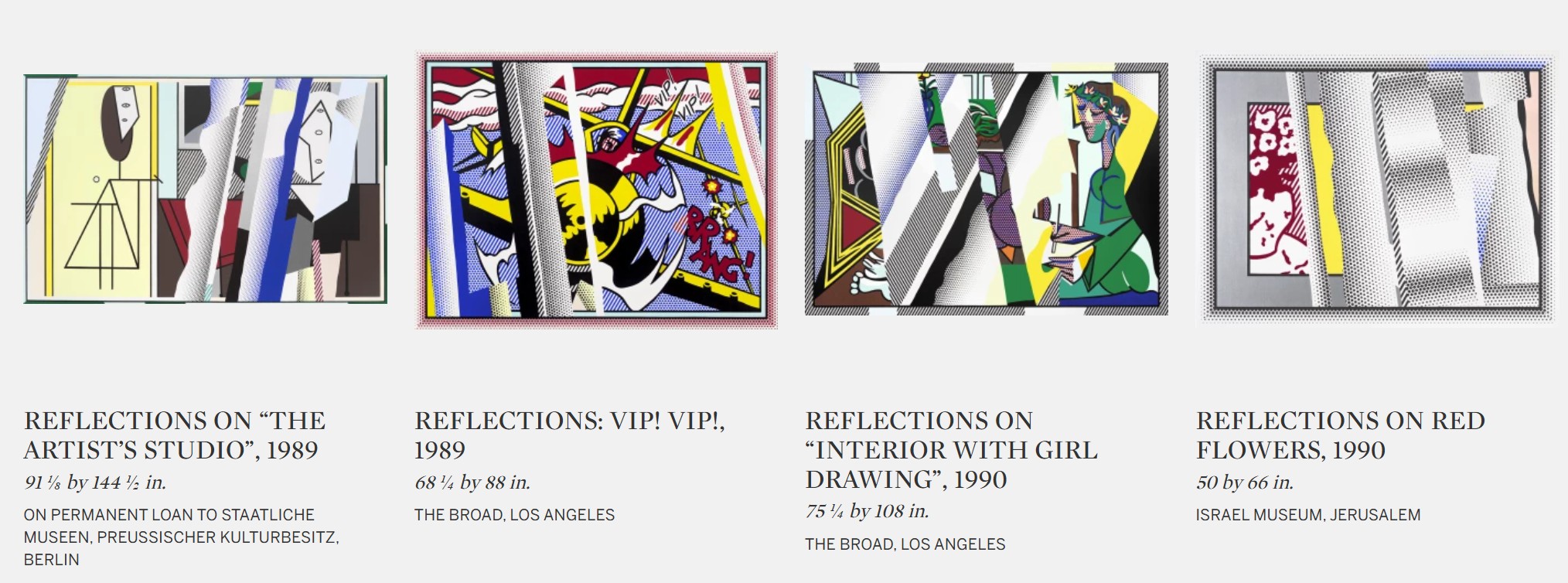
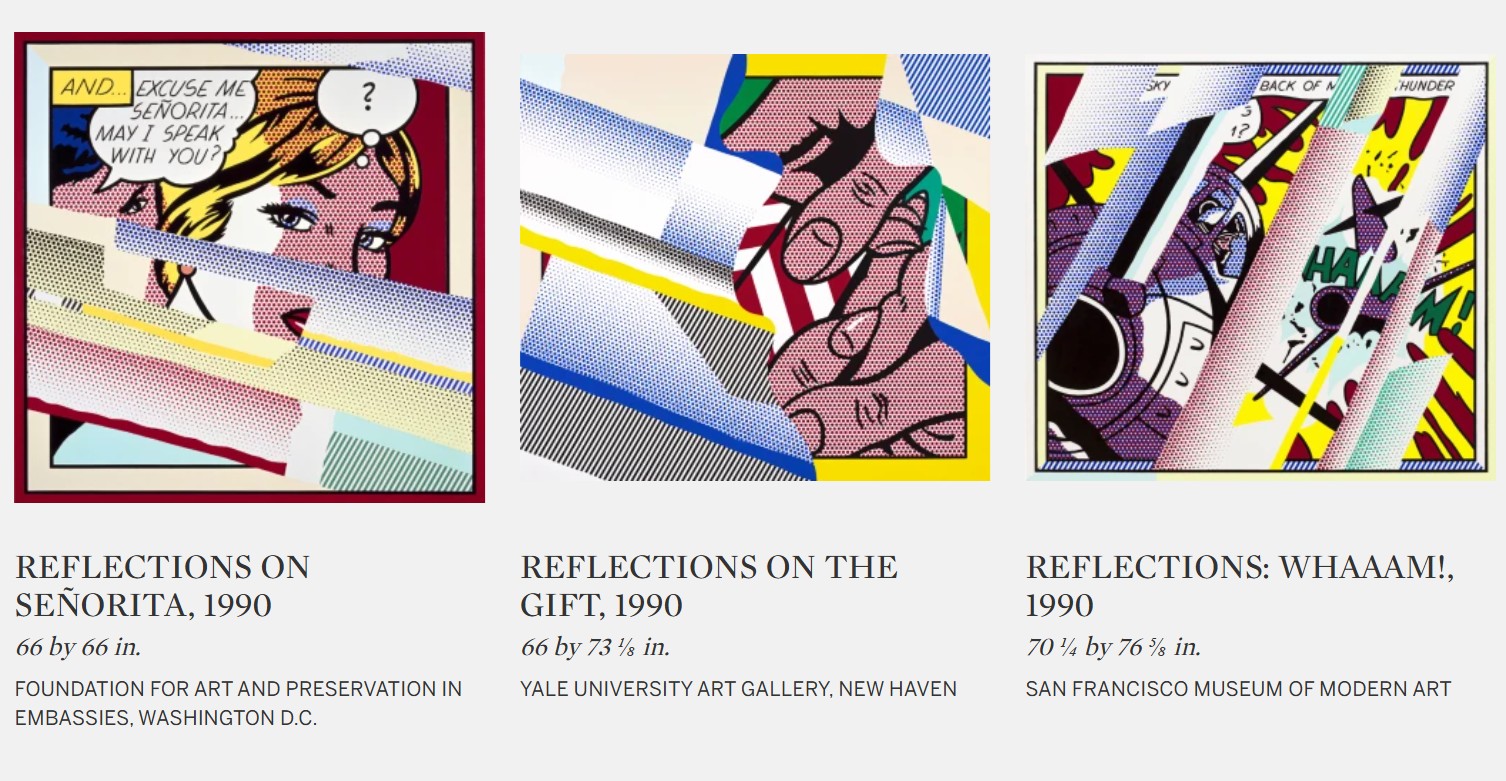
Like his Brushstrokes and their dialogue with Abstract Expressionism, his Stretcher Bars and their parody of Minimalism, Reflections: Art takes aim at Formalism altogether, simultaneously literalizing and dismantling the esoteric veneration of art for art’s sake. Everything that Reflections: Art engages with lies here – and accomplished with an exceptional economy of means. There is no physically reflective quality, only the simulation of it; there is no trompe l’oeuil, only its counterfeit. Laying the concerns of its creation and the terms of its manufacture bare to the viewer, Reflections: Art functions like a portrait of Lichtenstein’s mind, substantiating the lifelong reflections on artmaking that have indelibly refracted the direction of contemporary art as we understand it today.
Reflections: Wimpy, 1988
Reflections: Wimpy I, 1988
Reflections on Pop: Works from the Collection of Dorothy and Roy Lichtenstein
Sotheby’s New-York: 26 September 2025
Estimated: USD 1,000,000 – 1,500,000
USD 2,856,000
ROY LICHTENSTEIN (1923 – 1997)
Reflections: Wimpy I, 1988
Acrylic, oil and graphite on canvas
32×40 inches (81.3 x 101.6 cm)
Signed and dated ’88 (on the reverse)
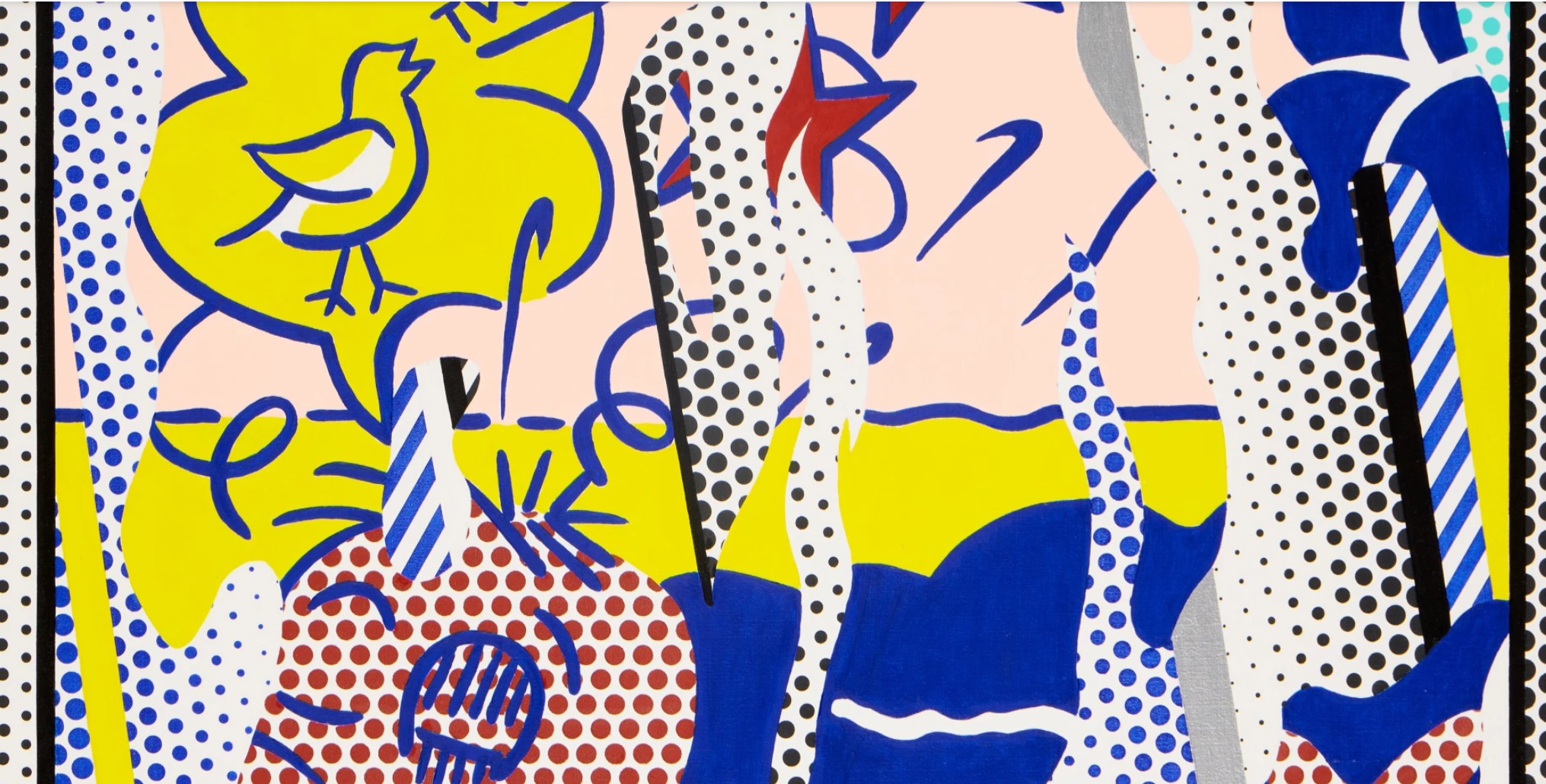
In 1961, Roy Lichtenstein introduced Wimpy (Tweet)—a vibrant portrait of J. Wellington Wimpy from the Popeye comic strip. Rendered in clean, hard-edged brushstrokes and dazzling color, it heralded both the arrival of Pop Art and the birth of Lichtenstein’s signature visual language. The years that followed found Roy Lichtenstein reinterpreting the chronicles of art history, taking inspiration from canonical titans like Vincent van Gogh, Piet Mondrian, Ernst Ludwig Kirchner, and Pablo Picasso, inscribing his own name into the cornerstones of modern art alongside those earlier masters. In 1988, twenty-seven years later, Lichtenstein revisited his earlier work with Reflections: Wimpy I, one of the inaugural pieces in his celebrated Reflections series. This collection of thirty-six works marked a moment of retrospection, staging his monumental subjects in dialogue with the passing tiers of art history and his evolving self-image.
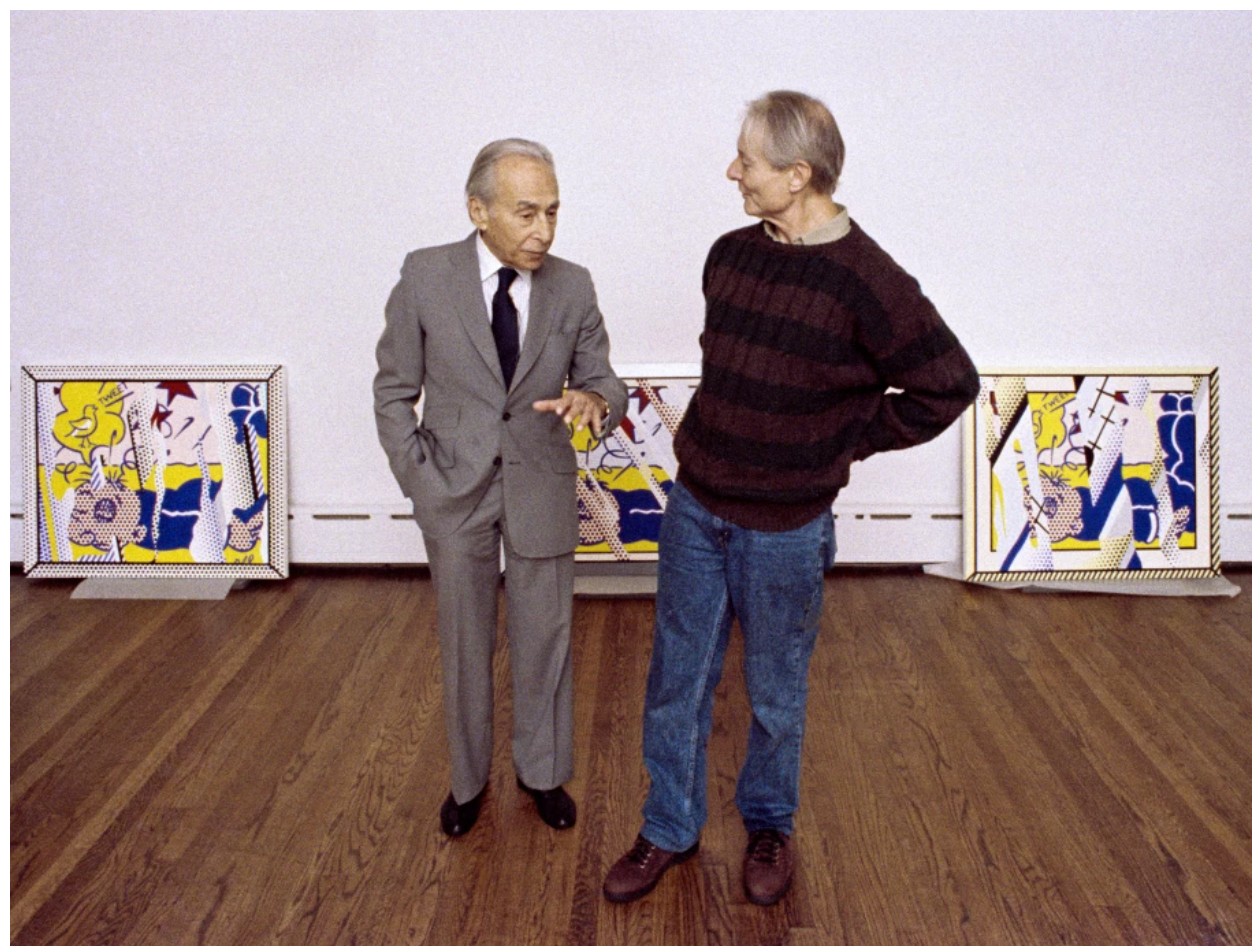
Roy Lichtenstein and Leo Castelli with the Reflections: Wimpy series at Castelli Gallery, New York City, 1989.
Photo © Bob Adelman. Art © Estate of Roy Lichtenstein
Reflections: Wimpy I revisits one of the artist’s most iconic early paintings, in which as artist David Salle masterfully observes, Wimpy is “still dreaming his cartoon dream, but now he lies practically buried beneath the caved-in house of modernism that Roy has brought crashing down on top of him.” (David Salle, “Roy Lichtenstein’s Reflection Paintings,” in: Exh. Cat., New York, Mitchell-Innes & Nash, Roy Lichtenstein Reflected, 2010, p. 13). In the present work, Wimpy lies sprawled, his black eye, swirling lines, red stars, and tweeting yellow bird signaling a powerful blow, and his image receding behind a border of black-and-white Ben-Day dot patterning.
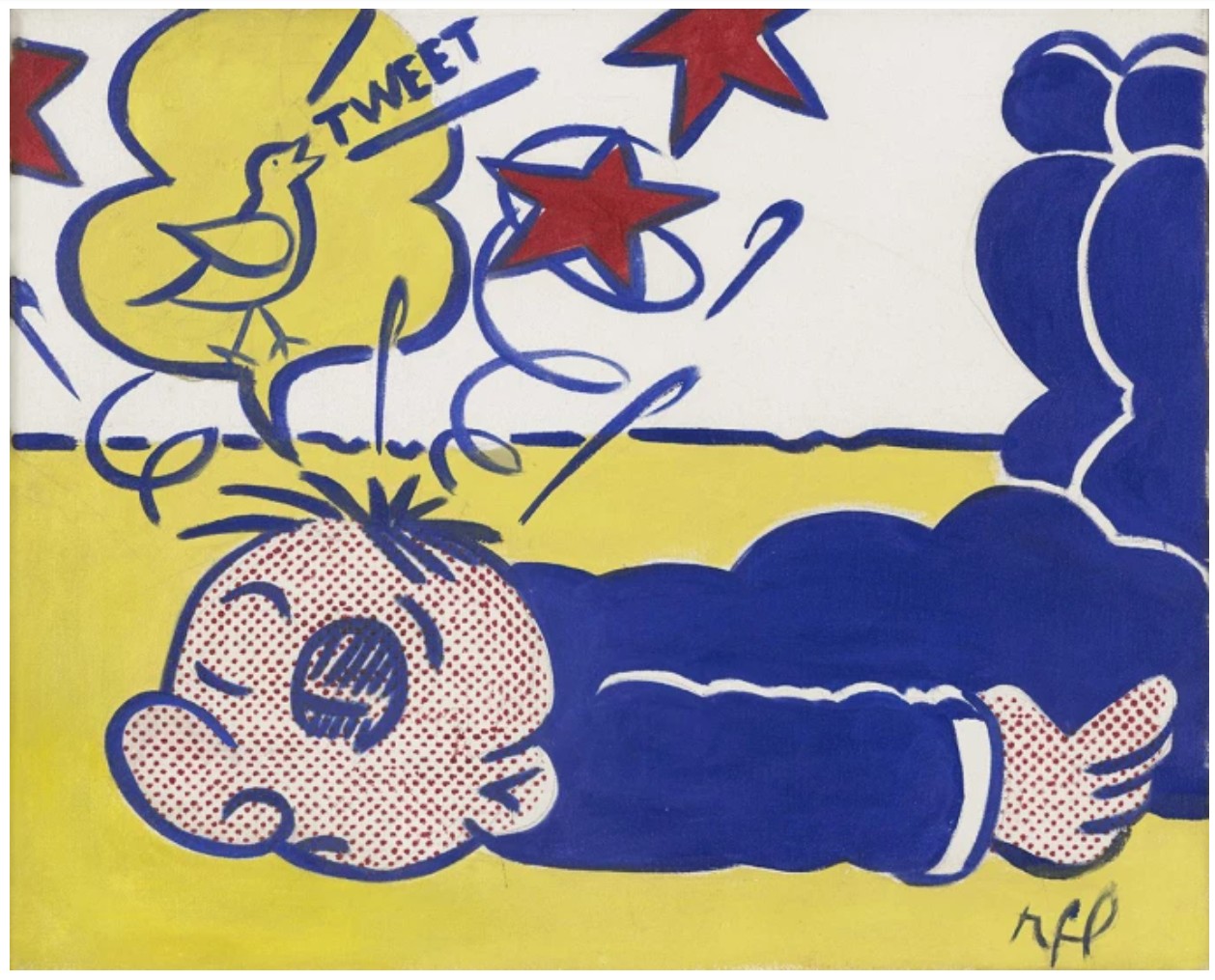
Roy Lichtenstein, Wimpy (Tweet), 1961. Private Collection. Art © Estate of Roy Lichtenstein
A key innovation in the piece is the shimmering reflection layer: a glass-like plane that fragments the image with translucent stripes of blue, black, and shimmering dots, reminding viewers of the painting’s material presence. These reflections disrupt the composition and complicate the viewer’s perception—imbuing the familiar image with deeper resonance and visual tension. Where Lichtenstein had developed his mature style by appropriating popular imagery, translating the potency of their illustrative omnipresence onto canvas, here he reflects upon his own decorated career, appropriating the imagery of his own work. Reflections: Wimpy I presents a monumental vantage point to look back on the questions that Lichtenstein’s oeuvre has left behind. As Lichtenstein observes, Pop Art has become an institutionalized style of high art that belongs in our museums, rather than the shocking and riveting spectatorial experience—one that can knock a viewer off their feet—as it once was. Popular imagery that inspired the movement are no longer outliers or outsiders but have become icons, fully subsumed into the canon of art history.
“All painters take a personal attitude towards painting. What makes each object in the work is that it is organized by that artist’s vision. The style and the content are also different from anyone else’s. They are unified by the point of view—mine. This is the big tradition of art.”
Throughout the almost three decades between Wimpy (Tweet) and Reflections: Wimpy I, and even in contemporary times, the question that Roy Lichtenstein ventured to ask has and continues to be more relevant than ever: What is art, and what can art be? The present work prods its viewers to reflect alongside the artist and proffer their own answers. Ultimately, Reflections: Wimpy I stands as a testament to Lichtenstein’s conceptual rigor and legacy. Deeply self-referential, it functions as both a self-portrait and a critical meditation—tracing the arc that elevated him from Pop provocateur to institutional luminary. At its core lies the artist’s unyielding conviction in his own vantage point.
Reflections: Wimpy III, 1988
A Legacy Reimagined: Works from the Collection of Dorothy and Roy Lichtenstein
Sotheby’s New-York: 19 November 2025
Estimated: USD 1,000,000 – 1,500,000
USD 2,002,000
Reflections: Wimpy III | Contemporary Day Auction | 2025 | Sotheby’s
ROY LICHTENSTEIN (1923 – 1997)
Reflections: Wimpy III, 1988
Acrylic, oil and graphite on canvas
32×40 inches (81.3 x 101.6 cm)
Signed and dated ’88 (on the reverse)
Reflections on Brushstrokes, 1990
Reflections on Brushstrokes, 1990
A Legacy Reimagined: Works from the Collection of Dorothy and Roy Lichtenstein
Sotheby’s New-York: 19 November 2025
Estimated: USD 1,200,000 – 1,800,000
USD 1,392,000
Reflections on Brushstrokes | Contemporary Day Auction | 2025 | Sotheby’s
ROY LICHTENSTEIN (1923 – 1997)
Reflections on Brushstrokes, 1990
Acrylic, oil and graphite on canvas
87 1/4 x 60 inches (221.6 x 152.4 cm)
Signed and dated ‘90 (on the reverse)
Resplendent in its fractured lyricism, Reflections on Brushstrokes from 1990 stands as one of the most incisive achievements of Roy Lichtenstein’s celebrated Reflections series, a body of work that redefined the possibilities of his Pop idiom in the final decades of his career. Monumental in scale and dazzling in execution, the present work revisits one of Lichtenstein’s most iconic motifs—the bravura brushstroke—only to fracture and reframe it through a dazzling play of obstruction and reveal. With its mirrored surfaces, embossed textures, and slivers of simulated glare, Reflections on Brushstrokes is at once a meditation on painting’s legacy and a reflection upon Lichtenstein’s own extraordinary artistic vocabulary.
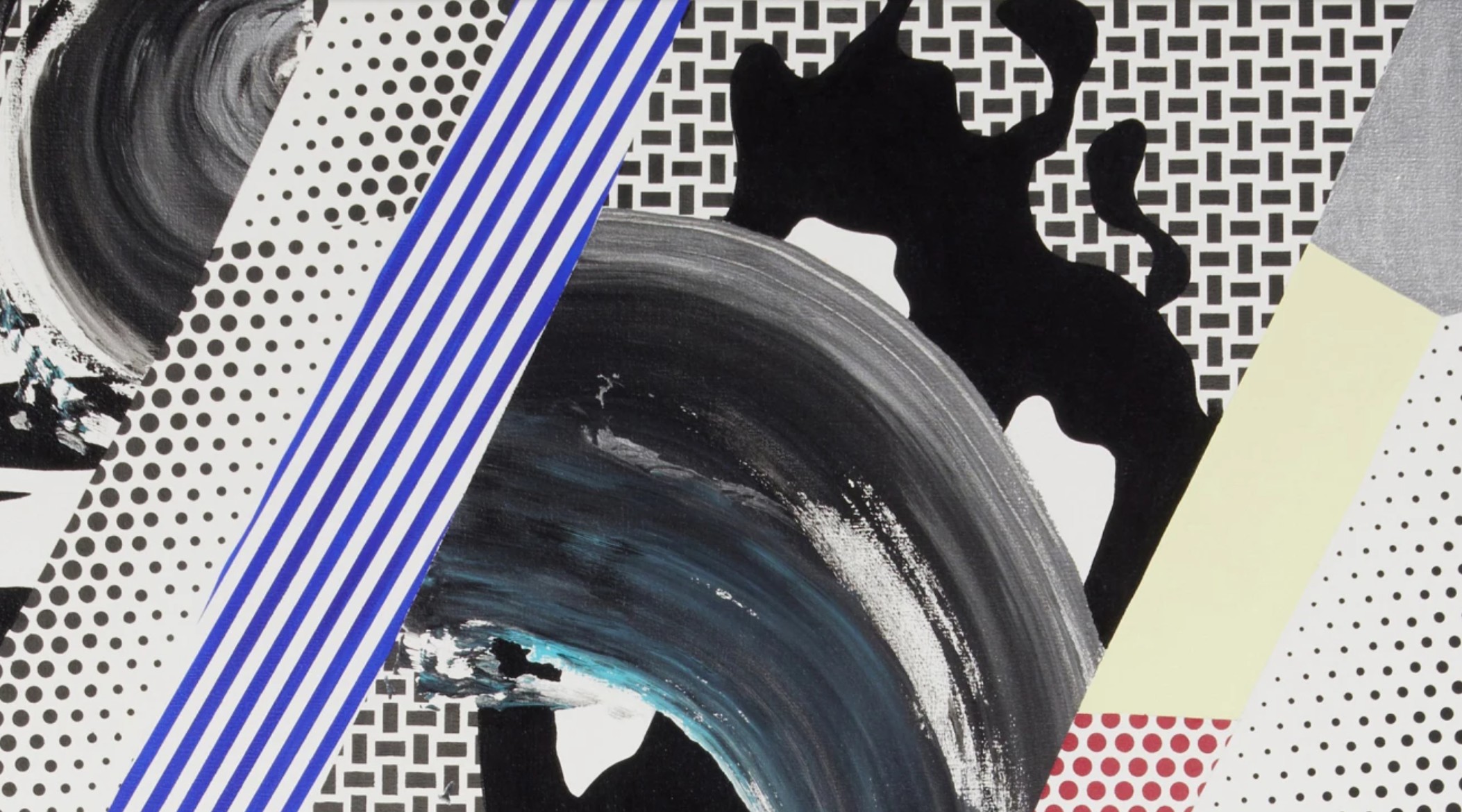
From the beginning of his career, Lichtenstein was fascinated by the paradox of the brushstroke. In the 1960s, his Brushstrokes paintings satirized the gestural excesses of Abstract Expressionism by rendering its marks as flat, comic-book signs. What in Pollock or de Kooning had been an index of expression and immediacy became, in Lichtenstein’s hands, a mechanical emblem—stylized, frozen, and repeatable. The brushstroke, emptied of expression, became a sign of expression itself. In Reflections on Brushstrokes, created nearly three decades later, that emblem returns with new complexity: larger, darker, weightier, and fragmented by layers of reflection. Here the brushstroke is not only a parody but a meditation—seen through veils of interference, as though caught between presence and absence, past and present. The composition is a virtuoso performance of visual interruption. Bold sweeps of black and gray curve across the surface, evoking both motion and mass, while vertical bars and diagonal stripes slice through the image, as though panes of glass were shattering across the picture plane. Embossed textures and bands of Ben-Day dots create rhythmic counterpoints; metallic PVC gleams and flickers, catching light and reflecting the viewer’s own presence back into the composition. The result is an image in constant flux, never static, always mediated by the conditions of looking. In this choreography of obstruction and revelation, Lichtenstein forces us to confront the very act of seeing as subject.
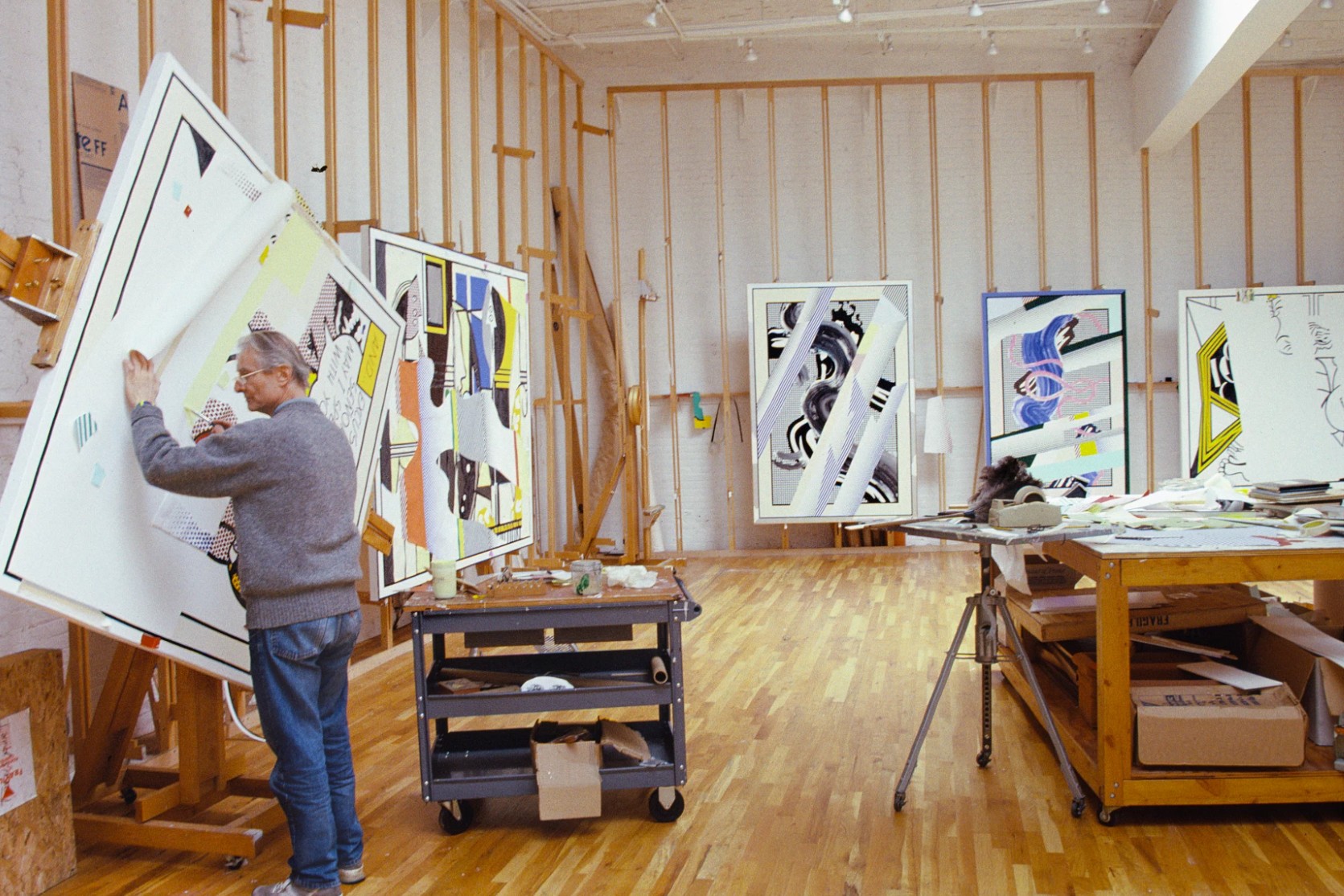
The present work installed in Roy Lichtenstein’s Washington Street studio, circa 1989.
Art © Estate of Roy Lichtenstein. Image © Bob Adelman.
The Reflections series, executed between 1988 and 1990, marked a decisive moment of retrospection and reinvention in Lichtenstein’s oeuvre. By overlaying his own motifs—comic heroines, art-historical quotations, still lifes, and the brushstroke itself—with simulated reflective bands, Lichtenstein turned his gaze upon his own practice. The mirror becomes metaphor: the work reflects not only imagery but also the artist’s career, and by extension the history of modern art.
“I started this series of Reflections on various early works of mine… It portrays a painting under glass. It is framed and the glass is preventing you from seeing the painting. Of course, the reflections are just an excuse to make an abstract work, with the cartoon image being supposedly partly hidden by the reflections.”
In the present work, the viewer, too, is implicated. Metallic passages and mirrored planes fold external space into the composition, pulling the spectator into its optical game. Standing before the work, one’s own image becomes part of the flicker of brushstroke and stripe. Lichtenstein transforms the passive act of looking into an active encounter: we are reflected in the very gesture we seek to apprehend. In this sense, Reflections on Brushstrokes extends his lifelong concern with perception and mediation, collapsing the distance between artwork, viewer, and cultural sign. The historical importance of the work is underscored by its extensive exhibition history. Reflections on Brushstrokes was included in Roy Lichtenstein: A Retrospective (1993–96), one of the most comprehensive surveys of his career, which traveled to major institutions including the Solomon R. Guggenheim Museum in New York, the Museum of Contemporary Art in Los Angeles, the Haus der Kunst in Munich, the Deichtorhallen in Hamburg, the Palais des Beaux-Arts in Brussels, and the Wexner Center for the Arts in Columbus. In that global survey, the work stood as a key demonstration of Lichtenstein’s capacity for reinvention in his final decades.
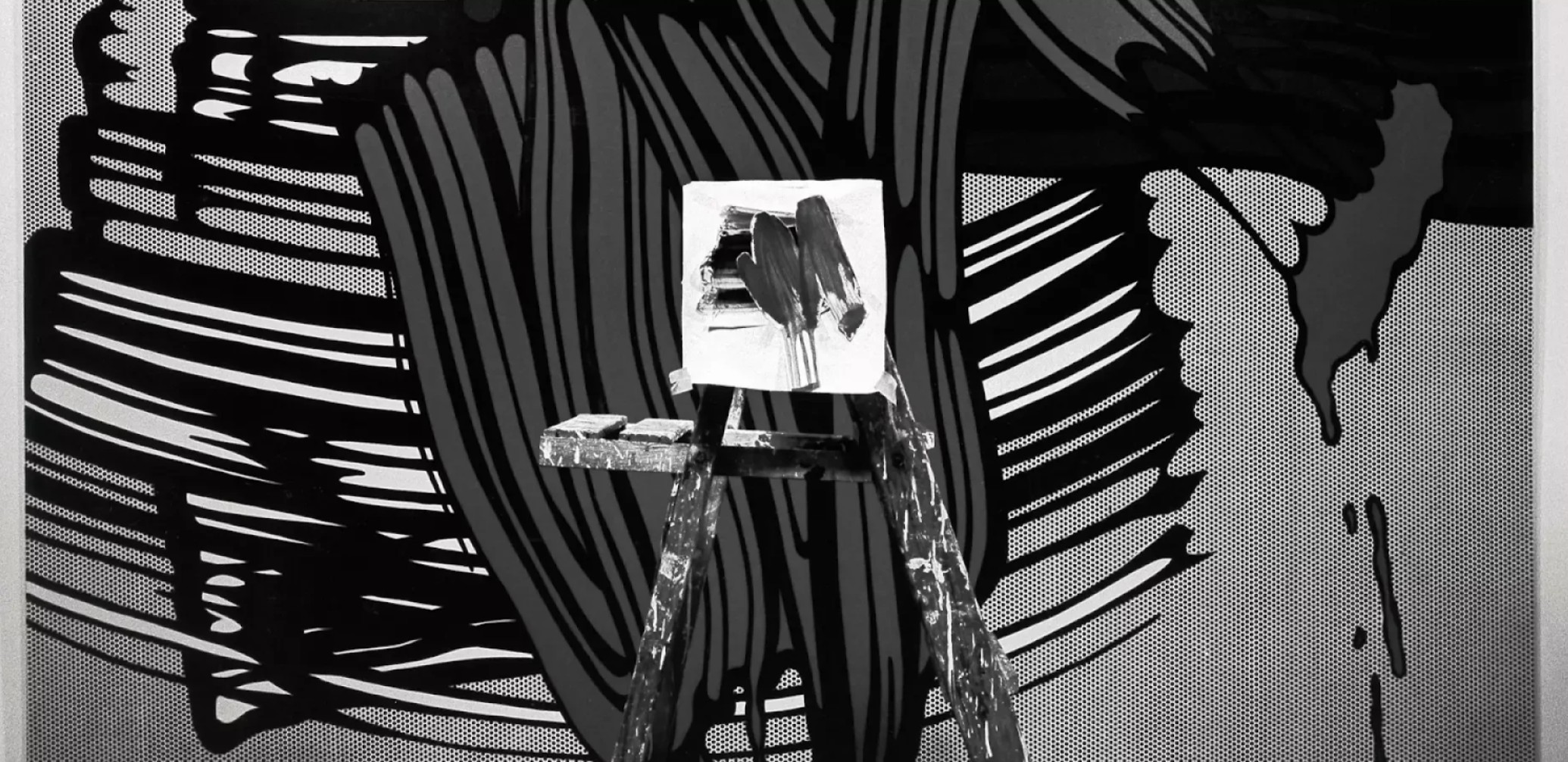
Big Painting VI in the artist’s studio, New York, 1965.
Photo by Ugo Mulas © Ugo Mulas Heirs. All rights reserved. Art © Estate of Roy Lichtenstein
In its ambition and complexity, Reflections on Brushstrokes condenses the arc of Lichtenstein’s career: the dialogue with Abstract Expressionism, the embrace of mechanical reproduction, the self-referential play of Pop, and the probing of perception in his late work. It is both a culmination and a mirror, folding the history of modern painting into a Pop idiom that remains as incisive today as when it was made. In its fractured brilliance, the work embodies the qualities that define Lichtenstein’s late triumph: boldness, irony, and a dazzling, self-aware clarity.
Reflections on Brushstrokes, 1990
Phillips Hong-Kong: 30 March 2023
Estimated: HKD 14,000,000 – 19,000,000
HKD 19,810,000 / USD 2,523,599
Roy Lichtenstein – 20th Century & Cont… Lot 18 March 2023 | Phillips
ROY LICHTENSTEIN
Reflections on Brushstrokes, 1990
Oil and magna on canvas
148.3 x 222.4 cm (58 3/8 x 87 1/2 inches)
Signed and dated ‘R. Lichtenstein 90’ on the reverse
In rare combination of Roy Lichtenstein’s two most practiced subjects, Reflections on Brushstrokes encapsulates the American pop icon’s most refined craft and revolutionary concepts. Joining the canonical art historical discussion on image-making, this magnum opus firmly grounds itself within the twentieth century American zeitgeist. In balancing an inherently academic investigation with the artist’s distinctively light-hearted charm, the masterpiece mimics a grand drama. Intrigue sizzles as a reflective silver frame stages the pictorial plane. Resting on controlled industrial patterns, sinuous and colorful paint strokes serve as crescendos that demand the viewer’s attention to the artist’s lingering presence. Building suspense to the narrative, oblique stripes featuring Lichtenstein’s signature Ben-day dots interrupt the performance. Evoking the experience of observing an image under glass, the reflective nature of these bands generate an intentional trompe l’oeil, leaving the audience bedazzled.
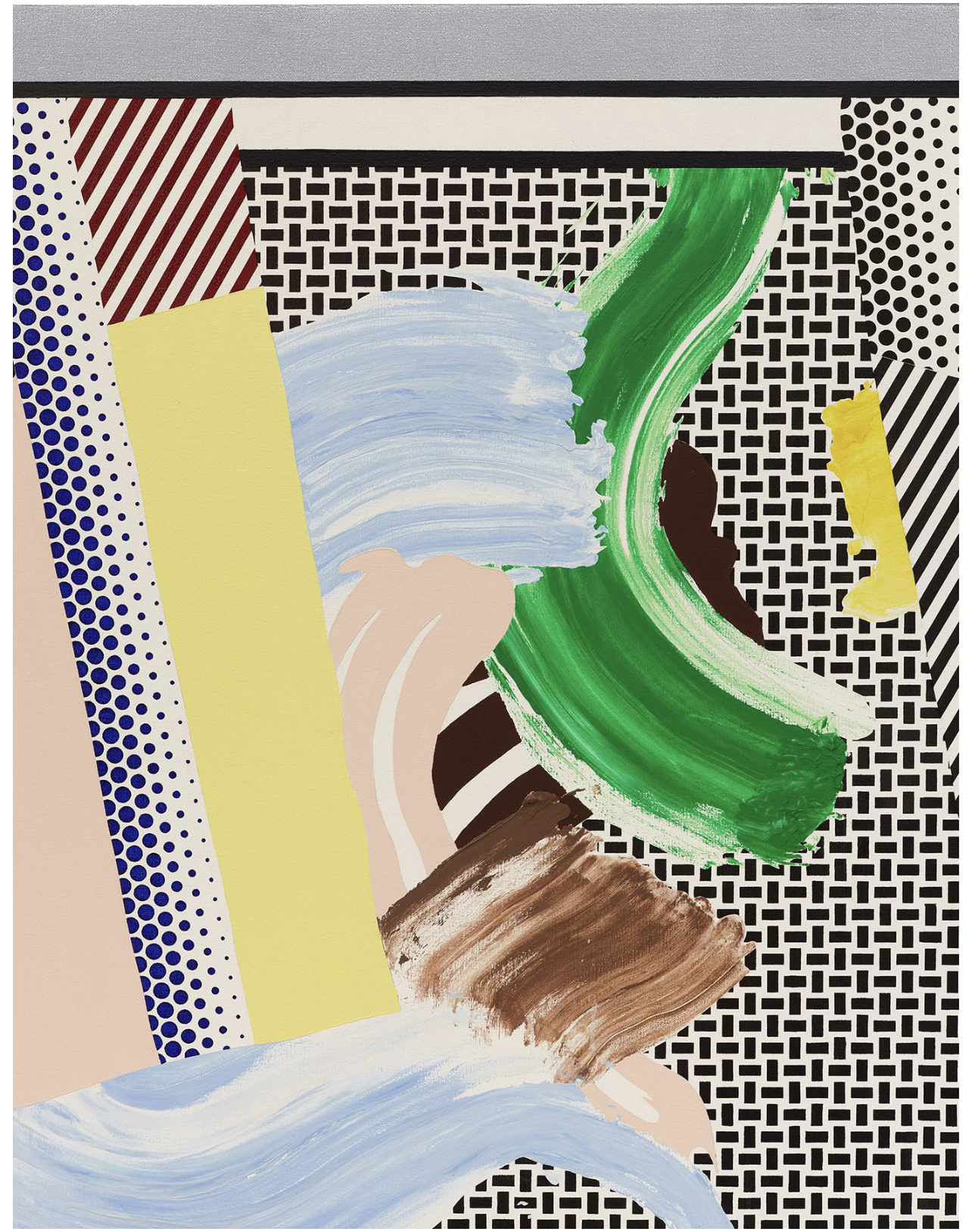
Indeed, multiple decades of tireless repetitions on brushstrokes and reflections have led to this exquisite moment. Reflections on Brushstrokes marks a monumental breakthrough in Lichtenstein’s oeuvre: no longer are advertising imageries of women or bold letters needed to recall post-war American sentiments. The artist has now masterfully channeled the spirit of pop art to painting’s purest languages, through primary colors and industrial patterns that resonate with mass culture. Simultaneously, in dissecting artistic components with surgical precision, Lichtenstein positions himself within the art historical canon, fine tuning Georges Seurat’s pointillism and drawing inspirations from Claude Monet’s reflective surfaces.
Untitled Reflection, 1989
Untitled Reflection, 1989
Reflections on Pop: Works from the Collection of Dorothy and Roy Lichtenstein
Sotheby’s New-York: 26 September 2025
Estimated: USD 300,000 – 400,000
USD 609,600
ROY LICHTENSTEIN (1923 – 1997)
Untitled Reflection, 1989
Acrylic, oil and graphite on canvas
17 1/8 x 24 1/8 inches (43.5 x 61.2 cm)
Signed and dated ’89 (on the reverse)
Roy Lichtenstein’s Untitled Reflections series marks a late-career fusion of his Pop Art vocabulary with a deepened engagement in abstraction. One of only eight works in the series, executed between 1988 and 1990, the present painting layers crisp Ben-Day dots, bold colors, and thick black outlines into a dynamic composition. These elements, rooted in commercial printing, are pushed toward pure abstraction, their interplay generating rhythm and optical complexity. The present work underscores this shift by transforming Lichtenstein’s familiar motifs into purely abstract structures. A field of blue Ben-Day dots dissolves into blank white, while interlocking black latticework asserts itself as an autonomous geometric form. No longer serving as backdrop for recognizable imagery, these patterns instead frame a new narrative: the encounter between the mechanical precision of Pop and the raw immediacy of painterly gesture.
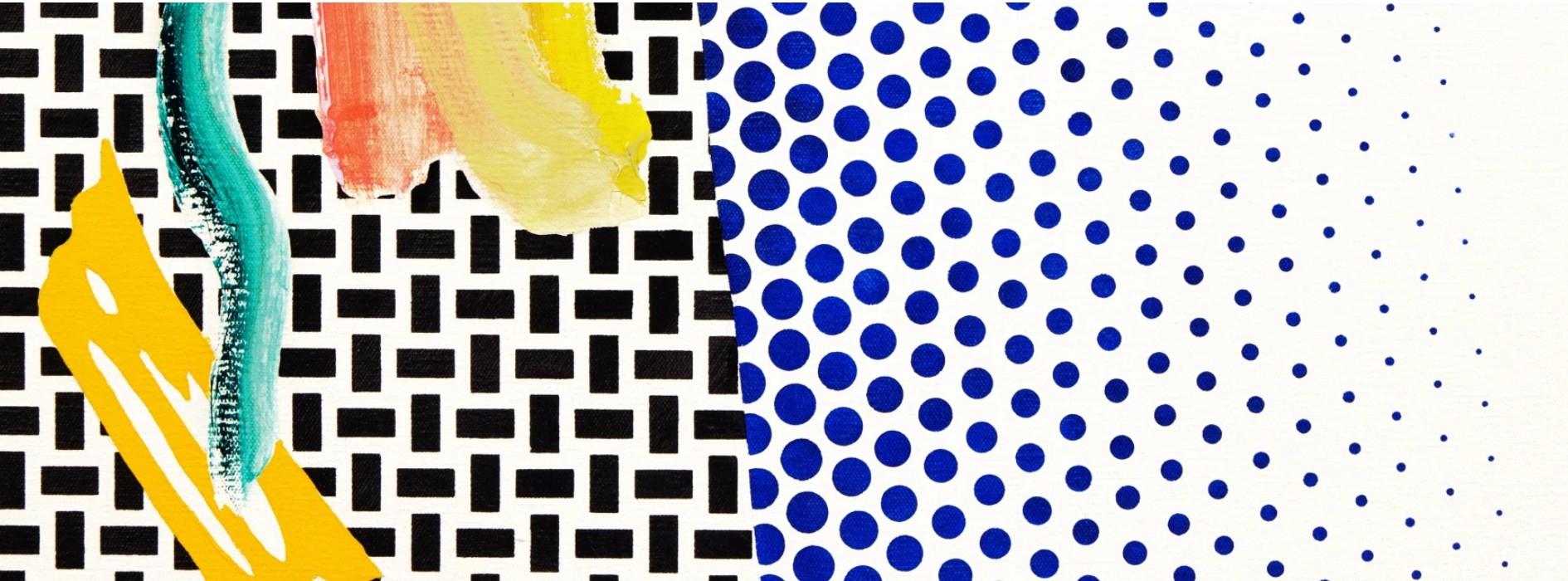
In a striking departure from his earlier, fully mediated surfaces, Lichtenstein introduces actual, loaded brushstrokes of vivid yellow, coral, and green. These marks carry the immediacy of the artist’s hand, their tactile presence breaking into the otherwise flat, printed-like geometry of the composition. Yet alongside them, he places his simulated brushstroke—crisp, flat, and stenciled—rendered with the calculated detachment that characterizes his style. The juxtaposition of authentic gesture with its stylized reproduction stages a witty dialogue between spontaneity and control, authenticity and artifice. This tension both honors and lampoons the heroic brushwork of Abstract Expressionism, a movement Lichtenstein admired yet approached with irony. By reframing painterly gesture through the cool, graphic lens of Pop Art, he transforms it into both subject and critique. The act of painting itself becomes the painting’s theme.
“Visible brushstrokes in a painting convey a sense of grand gesture. But, in my hands, the brushstroke becomes a depiction of a grand gesture. So the contradiction between what I’m portraying and how I am portraying it is sharp. The brushstroke became very important for my work.”
In this context, the “reflections” of the series title extend beyond those of mirrored surfaces. They are conceptual: reflections on image-making, on abstraction, and on the very status of the painted mark. Abstraction here is both genuine and performative, freedom both enacted and refracted through the logic of mechanical process. The result is a sophisticated meditation on art history and perception, one that situates Lichtenstein’s late work as both a continuation of Pop and a nuanced, postmodern exploration of the structures of looking.
Untitled Reflection, 1989
Works from the Collection of Dorothy and Roy Lichtenstein
Sotheby’s London: 25 June 2025
Estimated: GBP 120,000 – 180,000
GBP 444,400 / USD 599,940
Untitled Reflection | Contemporary Day Auction | 2025 | Sotheby’s
ROY LICHTENSTEIN (1923 – 1997)
Untitled Reflection, 1989
Acrylic, oil and graphite on canvas
17 1/8 x 24 inches (43.5 x 61 cm)
Signed and dated ‘89 (on the reverse)
Roy Lichtenstein’s Untitled Reflections series, created between 1988 and 1990, represents a late-career synthesis of Pop Art aesthetics and a growing interest in abstraction and self-reflexivity. The present work – unlike the others from the same series – abandons Lichtenstein’s earlier figurative subjects and instead layers patterns, color fields, and gestural marks into a striking visual collage. It is a meditation on surface, form, and perception, emblematic of his lifelong investigation into the structures of image-making. The composition is dominated by a patchwork of sharply defined patterns: Lichtenstein’s trademark Ben-Day dots in varying densities, bold primary colors, and thick black outlines. These elements evoke the mechanical reproduction techniques of commercial printing — a cornerstone of Pop Art— but in the present work, Lichtenstein pushes them towards abstraction. There are no recognizable characters or narratives. Instead, the patterns interact dynamically, creating rhythm and tension across the picture plane.
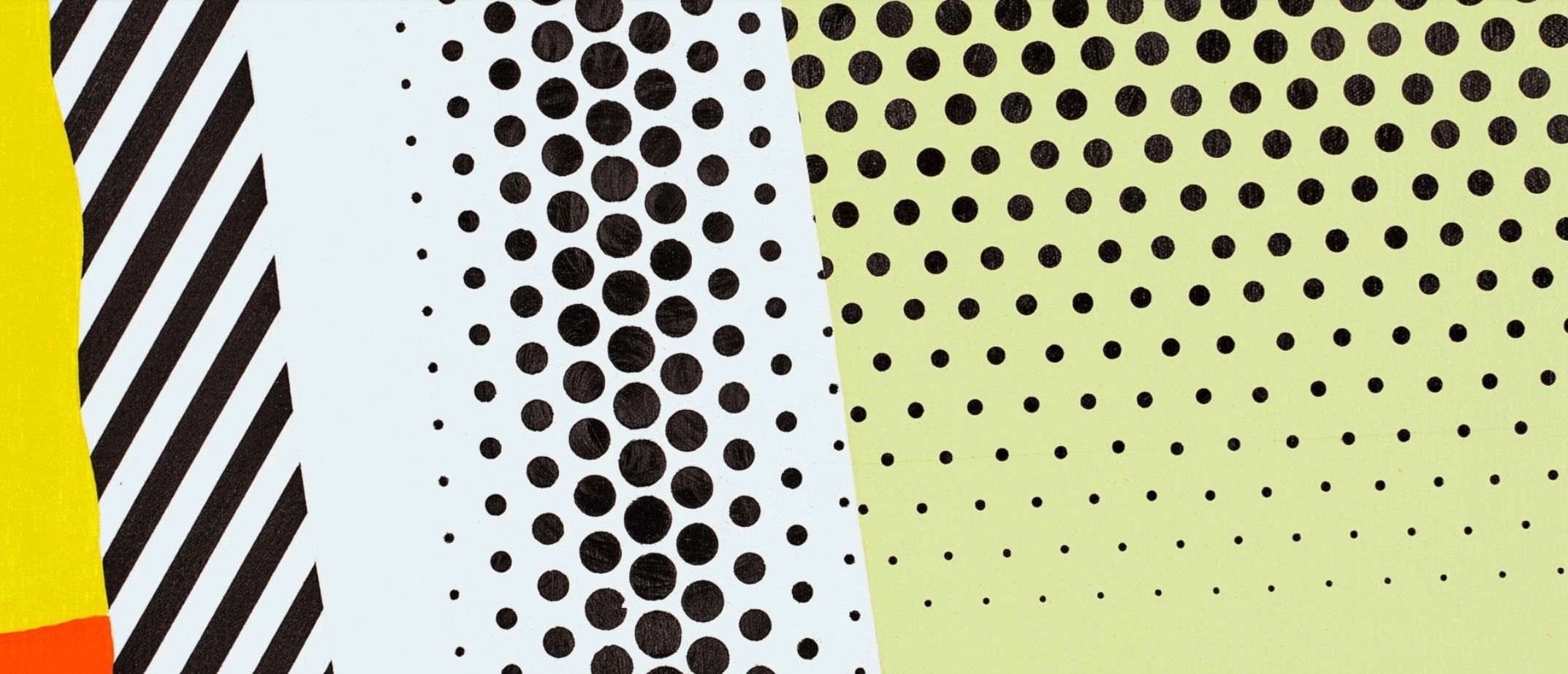
Overlaying these flat, industrial patterns are gestural swaths of red and green paint, rendered with deliberate mimicry of expressive brushwork. These marks parody the spontaneity associated with Abstract Expressionism, a movement Lichtenstein both admired and satirized. By reproducing gestural brushstrokes in a controlled, printed form, he blurs the line between authentic expression and manufactured image. This irony is central to the work’s meaning: the painting reflects on the act of painting itself. The “reflections” referenced in the series title can be interpreted metaphorically. Rather than suggesting literal light or mirrors, they point to the artwork’s layered commentary on visual culture and artistic style. Lichtenstein constructs a visual space where abstraction is both genuine and quoted—where painterly freedom is filtered through mechanical process. The result is a painting that seems to reflect not a scene, but art history, style, and the viewer’s own habits of looking.
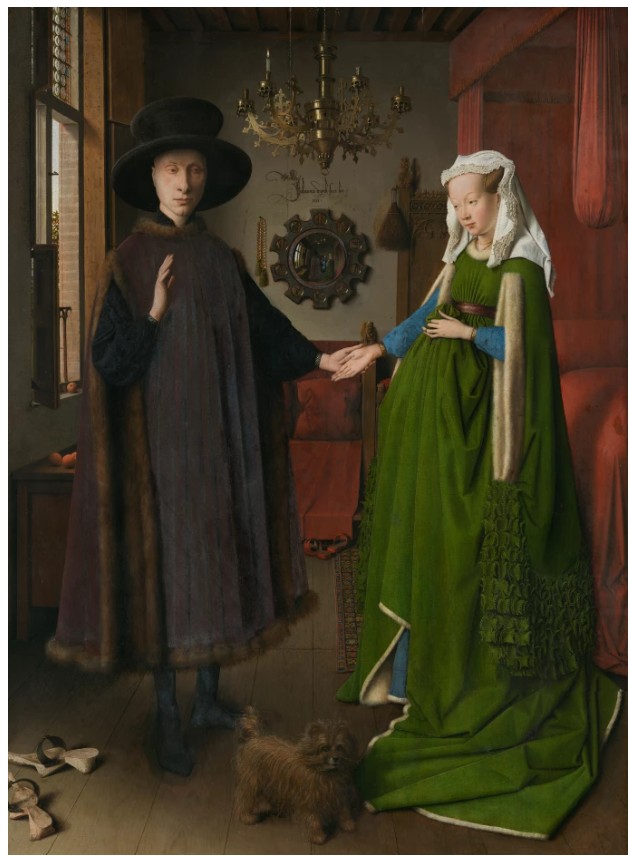
Jan Van Eyck,The Arnolfini Portrait, 1434. National Gallery, London
Colour plays a vital role as well. Bright yellows, oranges, and soft cream tones contrast sharply with the stark black patterns and vivid brushstrokes. This chromatic diversity contributes to the sense of a fractured, hyper-stylized surface—one that resists depth or clear narrative. The image holds the viewer at the surface, emphasizing the painting as an object, not as a window. Ultimately, Untitled Reflections represents a self-aware turn in Lichtenstein’s oeuvre. It synthesizes his formal concerns with a more nuanced, almost postmodern awareness of mediation. The act of viewing becomes thematic; the painting, a mirror to our own habits of looking. Through this subtle yet effective visual strategy, Lichtenstein both extends and subverts the legacy of Pop Art, inviting viewers to reflect—literally and metaphorically—on the images that shape modern life.
STUDIES
Reflections on Señorita (Study), circa 1990
Reflections on Señorita (Study), circa 1990
A Legacy Reimagined: Works from the Collection of Dorothy and Roy Lichtenstein
Sotheby’s New-York: 19 November 2025
Estimated: USD 400,000 – 600,000
USD 952,500
WORK ON PAPER
Reflections on Señorita (Study) | Contemporary Day Auction | 2025 | Sotheby’s
ROY LICHTENSTEIN (1923 – 1997)
Reflections on Señorita (Study), circa 1990
Colored pencil and graphite on paper
Image: 6 5/8 x 6 5/8 inches (16.8 x 16.8 cm)
Sheet: 8 1/4 x 12 1/4 inches (21 x 31.1 cm)
“I was very excited about and interested in the highly emotional content yet detached, impersonal handling of love, hate, war etc., in these cartoon images…
It is an intensification a stylistic intensification of the excitement which the subject matter has for me; but the style is, as you say, cool.
One of the things a cartoon does is to express violent emotion and passion in a completely mechanical and removed style.”
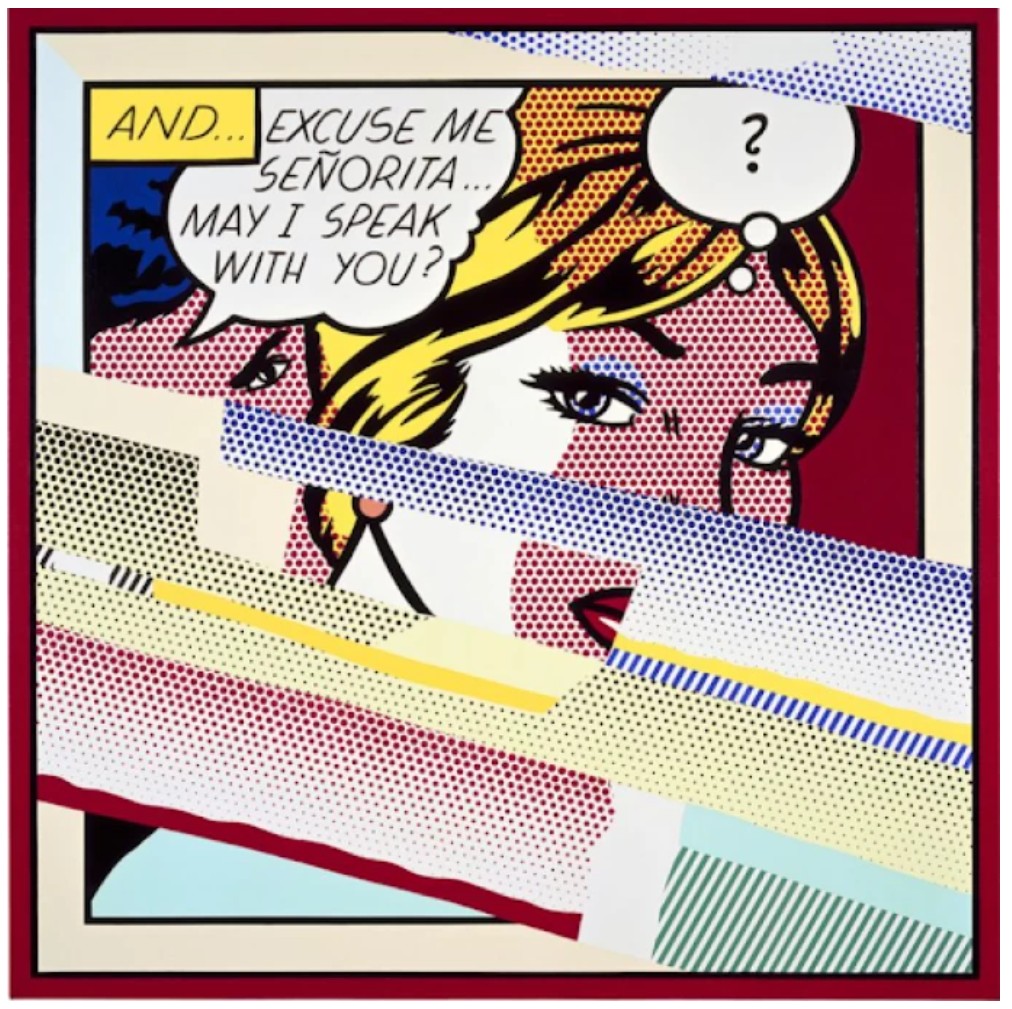
Roy Lichtenstein, Reflections on Señorita, 1990. Private Collection. Art © Estate of Roy Lichtenstein
Reflections: Whaaam! (Study), circa 1990
Reflections: Whaaam! (Study), circa 1990
Works from the Collection of Dorothy and Roy Lichtenstein
Sotheby’s New-York: 16 May 2025
Estimated: USD 250,000 – 350,000
USD 660,400
WORK ON PAPER
Reflections: Whaaam! (Study) | Contemporary Day Auction | 2025 | Sotheby’s
ROY LICHTENSTEIN (1923 – 1997)
Reflections: Whaaam! (Study), circa 1990
Colored pencil and graphite on paper
Image: 5 1/4 x 5 7/8 inches (13.3 x 14.9 cm)
Sheet: 7 1/2 x 10 1/2 inches (19.1 x 26.7 cm)
“Lichtenstein conveyed the notion that all art and life is a series of reflections and illusions.”
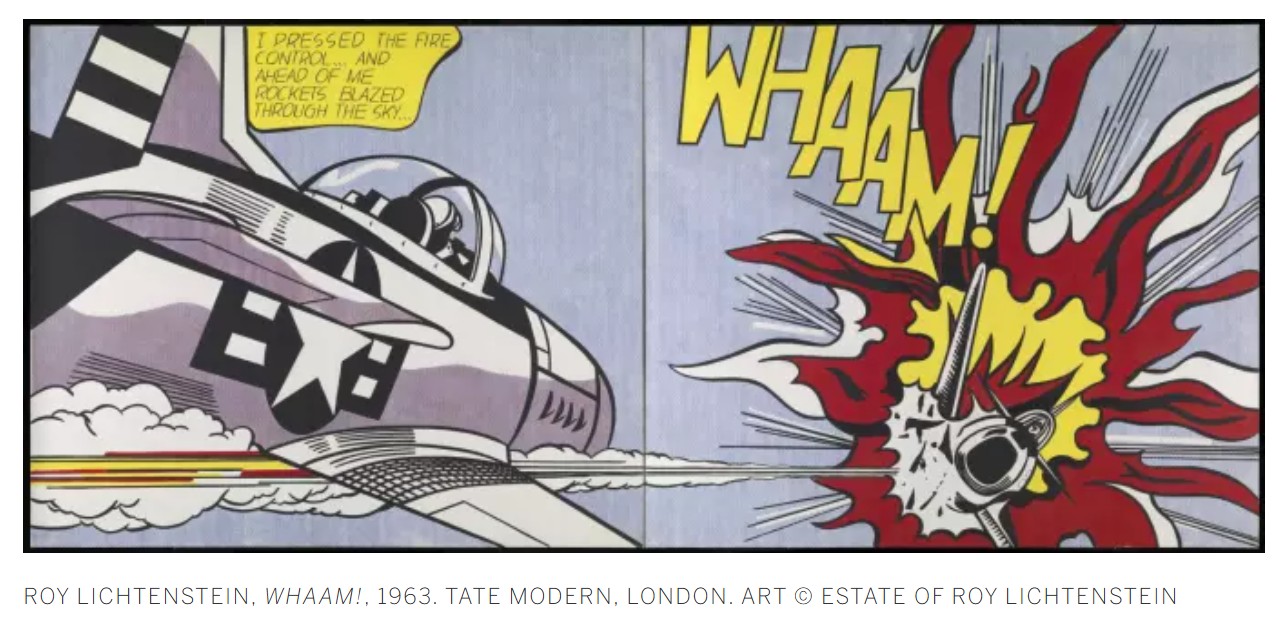
Reflections on Thud! (Study), 1990
Reflections on Thud! (Study), 1990
A Legacy Reimagined: Works from the Collection of Dorothy and Roy Lichtenstein
Sotheby’s New-York: 19 November 2025
Estimated: USD 250,000 – 350,000
USD 482,600
WORK ON PAPER
Reflections on Thud! (Study) | Contemporary Day Auction | 2025 | Sotheby’s
ROY LICHTENSTEIN (1923 – 1997)
Reflections on Thud! (Study), 1990
Colored pencil and graphite on paper
Image: 3 5/8 x 6 1/4 inches (9.2 x 15.9 cm)
Sheet: 7 1/2 x 11 1/8 inches (19 x 28.3 cm)
Signed and dated ‘90 (on the verso)
“I had been interested in the comic strip as a visual medium for a long time… This technique is a perfect example of an industrial process that developed as a direct result of the need for inexpensive and quick color-printing. These printed symbols attain perfection in the hands of commercial artists through the continuing idealization of the image made compatible with commercial considerations.”
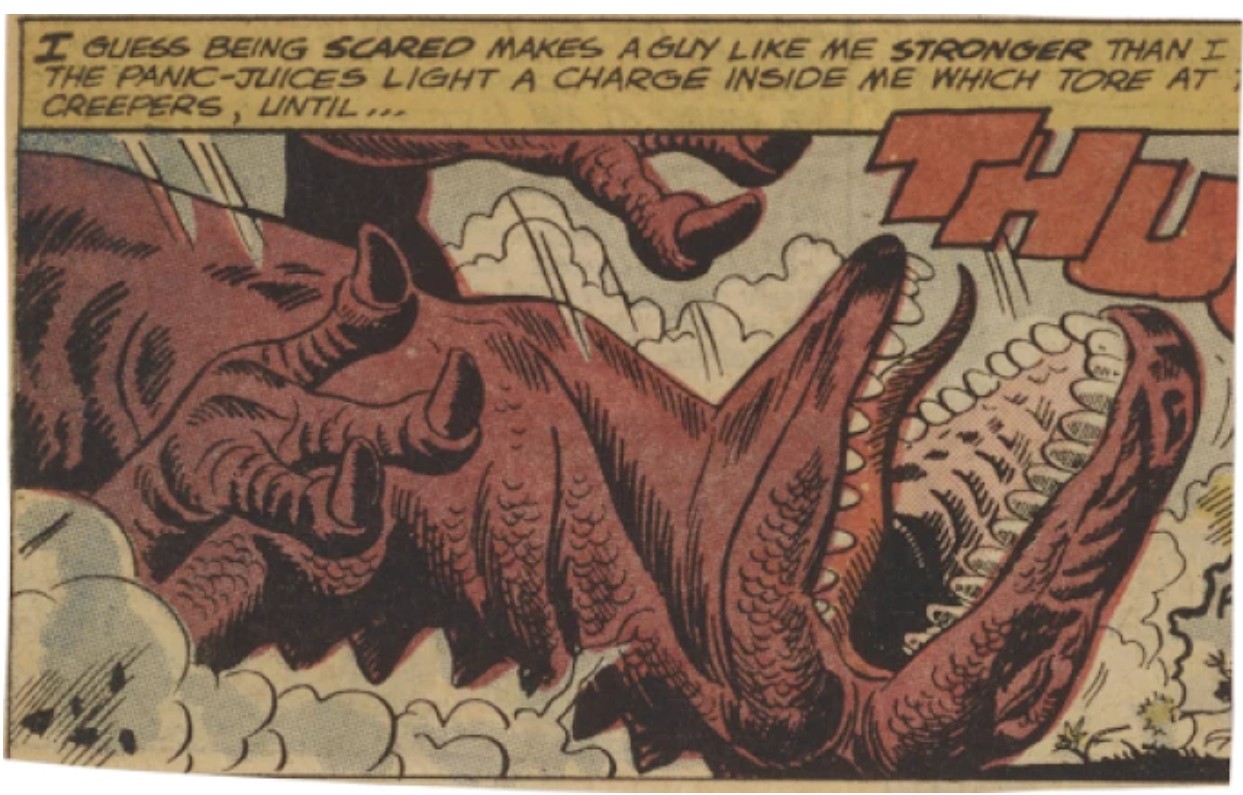
Source material for the present work from Star Spangled War Stories #117, October – November 1964.
Reflections on Girl (Study), circa 1989
Reflections on Girl (Study), circa 1989
Works from The Collection of Dorothy and Roy Lichtenstein
Sotheby’s Hong-Kong: 28 September 2025
Estimated: HKD 2,000,000 – 3,000,000
HKD 3,175,000 / USD 408,100
WORK ON PAPER
ROY LICHTENSTEIN (1923 – 1997)
Reflections on Girl (Study), circa 1989
Colored pencil and graphite on paper
Image: 4 1/2 x 5 5/8 inches (11.4 x 14.3 cm)
Sheet: 10 x 13 3/4 inches (25.4 x 34.9 cm)
Reflections on Girl (Study) is an exquisite work on paper from a suite of seven prints from the Reflections series that Lichtenstein prepared at Tyler Graphics in Mount Kisco, New York ,between 1989-90.. In each of the Reflections prints, the subject is partly obscured by semi-abstract blocks of color and bold diagonal lines which evoke the effect of a reflective or transparent surface, as if the viewer is observing the work through glass or reflected in another surface. Lichtenstein developed this idea when he attempted to photograph a print by Robert Rauschenberg that was under glass, and the reflections obscured the image. He then expanded this concept to a group of paintings he began in 1988 and continued to work on until 1993, during which he revisited some of his earlier works.
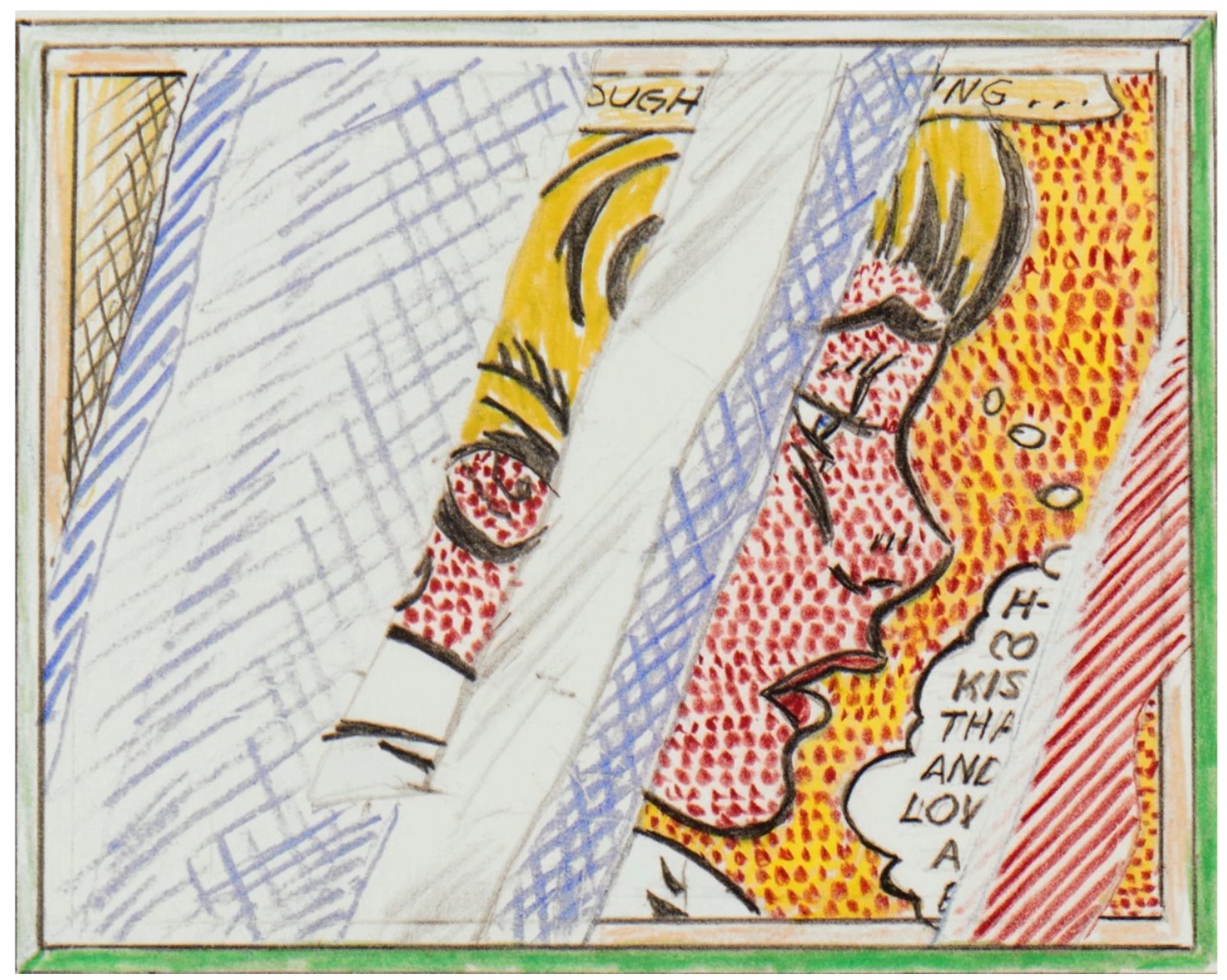
In making the screenprints in the Reflections series, Lichtenstein appropriated imagery from his past works, and particularly from his early comic book sources, returning to subject matter he had addressed in the 1960s as he gained prominence in the American Pop art scene. Reflections on Girl (Study) harkens back to Lichtenstein’s iconic early comic-book heroines, rendered in bold lines and Ben Day dots. In the present work, Lichtenstein draws inspiration from a 1960s edition of the comic book ‘Falling in Love’. Lichtenstein reimagined the composition and palette, obscuring the original text–‘Fire seethed through my body … fanning … spreading’ and ‘H-He couldn’t kiss me that way and be love someone else!’. – with his abstracted reflections. Lichtenstein’s Reflections not only literally illustrate reflections, but also exemplify Lichtenstein’s process of reflecting Pop culture and art history through his work.
Reflections on Wonder Woman (Study), circa 1989
Reflections on Wonder Woman (Study), circa 1989
Reflections on Pop: Works from the Collection of Dorothy and Roy Lichtenstein
Sotheby’s New-York: 26 September 2025
Estimated: USD 150,000 – 200,000
USD 254,000
WORK ON PAPER
ROY LICHTENSTEIN (1923 – 1997)
Reflections on Wonder Woman (Study), circa 1989
Colored pencil and graphite on paper
Image: 3 7/8 x 5 1/2 inches (9.8 x 14 cm)
Sheet: 10 1/8 x 13 7/8 inches (25.7 x 35.2 cm)
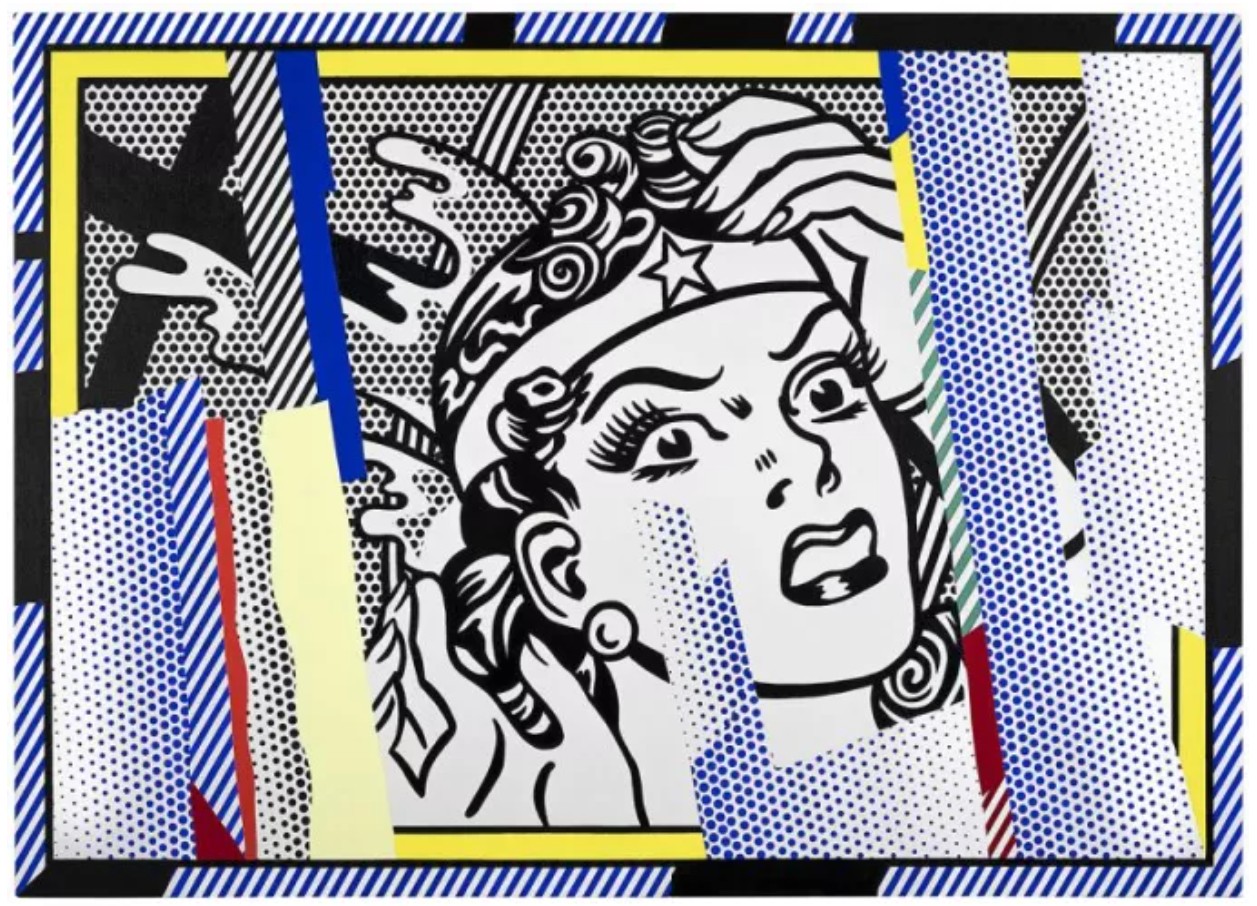
Roy Lichtenstein, Reflections on Wonder Woman, 1989. Private Collection. Art © Estate of Roy Lichtenstein
Reflections on the Prom (Study), 1990
Reflections on the Prom (Study), 1990
Reflections on Pop: Works from the Collection of Dorothy and Roy Lichtenstein
Sotheby’s New-York: 26 September 2025
Estimated: USD 150,000 – 200,000
USD 228,600
WORK ON PAPER
ROY LICHTENSTEIN (1923 – 1997)
Reflections on the Prom (Study), 1990
Colored pencil and graphite on paper
Image: 4 1/2 x 5 1/4 inches (11.4 x 13.3 cm)
Sheet: 6 1/2 x 9 3/8 inches (16.5 x 23.8 cm)
Dated ’90 (on the verso)
“It started when I tried to photograph a print by Robert Rauschenberg that was under glass. But the light from a window reflected on the surface of the glass and prevented me from taking a good picture. But it gave me the idea of photographing fairly well-known works under glass, where the reflections would hide most of the work, but you could still make out what the subject was…I started this series of Reflections on various early works of mine…It portrays a painting under glass. It is framed and the glass is preventing you from seeing the painting. Of course, the reflections are just an excuse to make an abstract work, with the cartoon image being supposedly partly hidden by the reflections.”
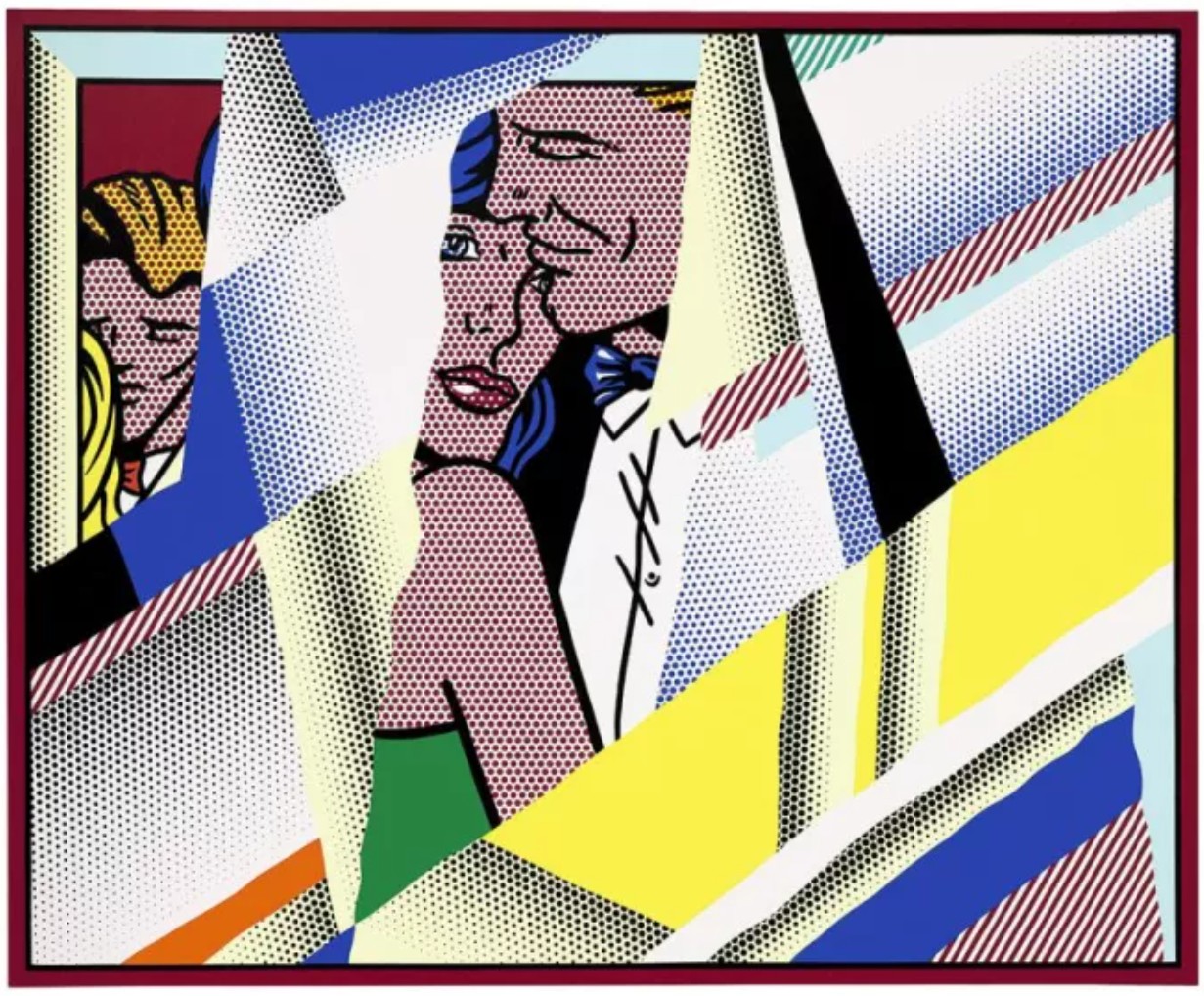
Roy Lichtenstein, Reflections on the Prom, 1990. Private Collection. Art © Estate of Roy Lichtenstein
Reflections: Art (Study), 1988
Reflections: Art (Study), 1988
Works from the Collection of Dorothy and Roy Lichtenstein
Sotheby’s New-York: 16 May 2025
Estimated: USD 150,000 – 200,000
USD 381,000
Reflections: Art (Study) | Contemporary Day Auction | 2025 | Sotheby’s
ROY LICHTENSTEIN (1923 – 1997)
Reflections: Art (Study), 1988
Colored pencil and graphite on paper
Image: 4 5/8 x 8 inches (11.7 x 20.3 cm)
Sheet: 10×13 inches (25.4 x 33 cm)
Signed and dated ’88 (on the verso)
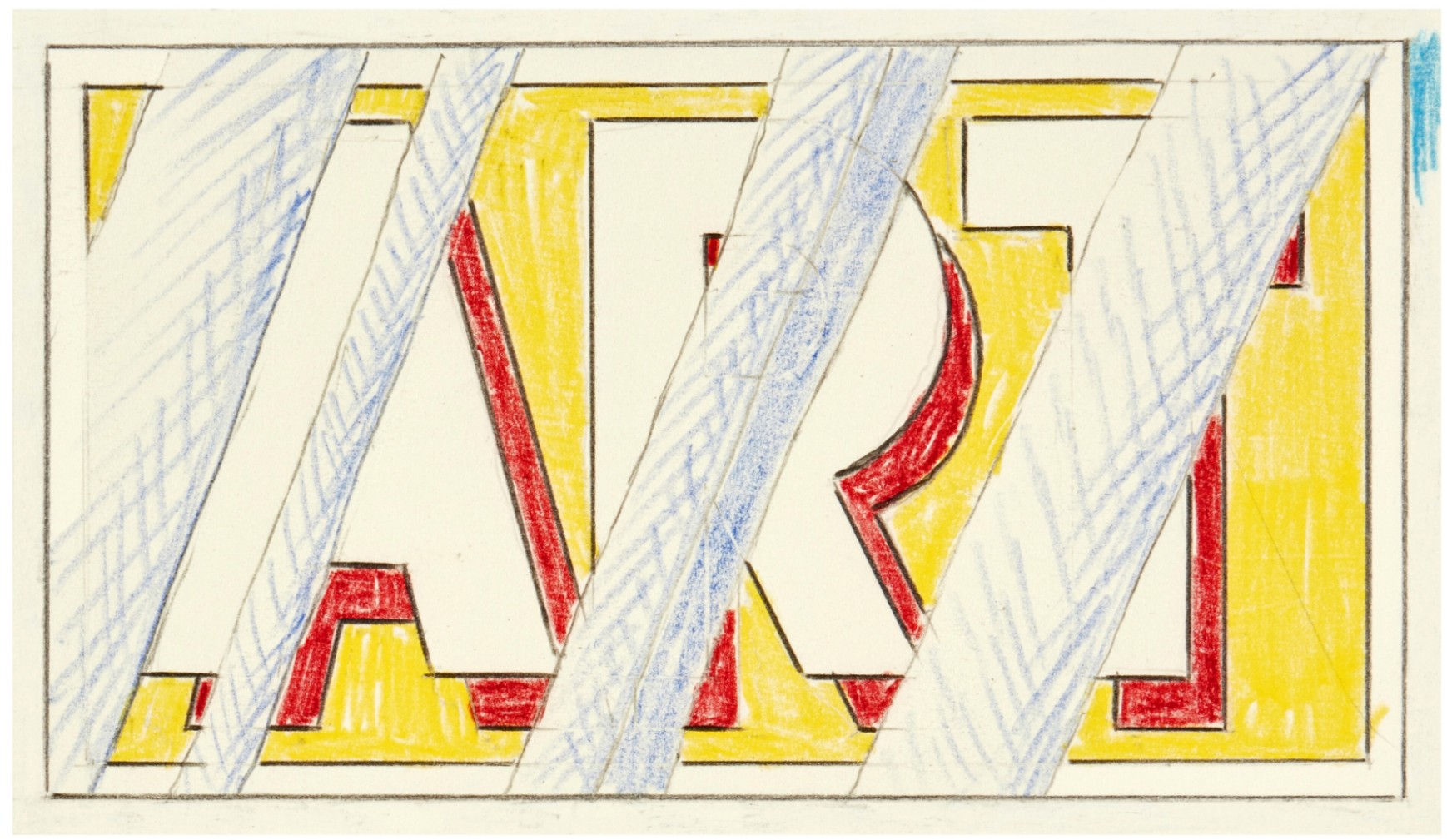
A revelatory insight into Roy Lichtenstein’s creative process, Reflections: Art (Study) is a pivotal preparatory work for one of the most significant paintings of his late career—Reflections on Art from 1988. This drawing marks the inception of the artist’s groundbreaking Reflections series, a suite of 35 paintings in which Lichtenstein reimagines and refracts the most iconic imagery of his own visual lexicon. As the very first in the series, Reflections on Art launched a bold self-inquiry into the nature of image-making, perception, and the art historical canon—here distilled in graphite into a single resonant word: ART.
Roy Lichtenstein, Reflections: Art, 1988. Art © Estate of Roy Lichtenstein.
This intimate study captures Lichtenstein at a moment of both reflection and reinvention. Rendered in the thin, pensive strokes of colored pencil and graphite, it stages the visual conceit that would animate the finished canvas—bold, graphic lettering overlaid with diagonal, semi-transparent striations that evoke glassy reflections. These illusionistic bands, hand-shaded in blue, do not merely obscure the text beneath; they transform it, suggesting a conceptual tension between the legibility of the word and the distortion of its surface. The result is both meditative and meta: a drawing about the act of seeing, a sketch about how we apprehend the thing we call “art.”
Perhaps even more than the painting, Reflections: Art (Study) underscores Lichtenstein’s meticulous commitment to process. Long before paint ever touched canvas, he would produce a suite of compositional studies to resolve questions of layout, contrast, and optical effect. Reflections: Art (Study) exemplifies his precision and thoughtfulness: the dynamic framing, the interplay of color and void, and the subtle inflections of light all reveal a mind actively calibrating both content and illusion. It is here, in this modest sheet, that the idea crystallizes—art as image, as object, and as self-aware fiction. If the final painting invites viewers to consider what art is, Reflections: Art (Study) invites us to consider how art is made. In tracing the genesis of an image that would inaugurate one of Lichtenstein’s most conceptually layered series, this drawing offers not only a glimpse into the artist’s creative practice but also into his enduring mission: to inspire, in the viewer, a reflection on the nature of art itself.