Roy Lichtenstein is widely known for his paintings based on material sourced from popular culture, creating prosaic images that are ironic in their tone. Created in 1986, Imperfect Paintings form part of an important late series in the artist’s oeuvre, in which he extended his exploration of the reduction of form at a time when ‘neo-geo’ painting was reaching its ascendancy. With this series, the painter took a playful approach to geometric abstraction, reflecting his ability to continually re-evaluate the strictures of art historical models and bring new meaning to the sign systems of mass culture.
Introduction
Lichtenstein’s Imperfect series sees the artist’s most sustained foray into total abstraction, rendering a geometric simplicity recalling that of the abstract minimalism of the early twentieth century, while employing the broken mold of the canvas pioneered by Frank Stella in the 1960’s. Testifying to the significance of this series, examples of Lichtenstein’s Modern Paintings are held in esteemed institutions such as The Broad, Los Angeles, The Whitney Museum of American Art, New York, and the Museum of Fine Arts, Houston.

Credit Photo: Bob Adelman
Inspired by Frank Stella’s irregular Polygons series of 1966, Lichtenstein was engaged with the once-popular misshapen canvas of abstractionists of the sixties. While his Perfect works celebrate boundaries, his Imperfect series, in exact contradiction, breaks those boundaries. In addition to highlighting his unswerving sensitivity to the symbolic power of pattern and line, the Imperfect series forms one crucial stage of Lichtenstein’s lifelong engagement with the concepts and aesthetics of Western art history. Throughout his career, Lichtenstein deliberately appropriated and transformed everything from Picasso’s portraits to Van Gogh’s Bedroom at Arles, filtering these movements through his iconic visual lexicon of Ben-Day dots and comic-book colors to bring them into the present day and age. Conceived as a response to Frank Stella’s shaped canvases and the sleek, industrial aesthetics of the Neo-Geo movement, the Imperfect paintings represent one of Lichtenstein’s most substantial ventures into the realm of total abstraction.
With Imperfect Paintings, Lichtenstein turns his meta-critical eye toward his own impressive oeuvre; diagonal lines take on a new meaning as they recall the hypnotic painted patterns of the Op Art movement, and Ben-Day dots break free from their printerly origins to become abstracted geometries in their own right. With its unexpected extension beyond the rectangular confines of the canvas, Imperfect Painting expands upon the action-packed scenes and punchy starburst sound effects of Lichtenstein’s monumental comic-book panel paintings from the 1960s, such as Whaam! (1963) and Blam! (1962)—yet the composition’s minimalistic hues and cool angular construction take these innovative impulses in a wholly new direction.
Auction Results
Imperfect Painting, 1986
Property from an Esteemed Private Collection
Sotheby’s London: 4 March 2026
Estimated: GBP 1,000,000 – 1,500,000
GBP 1,981,000 / USD 2,646,420
Imperfect Painting | Modern & Contemporary Evening Auction | 2026 | Sotheby’s
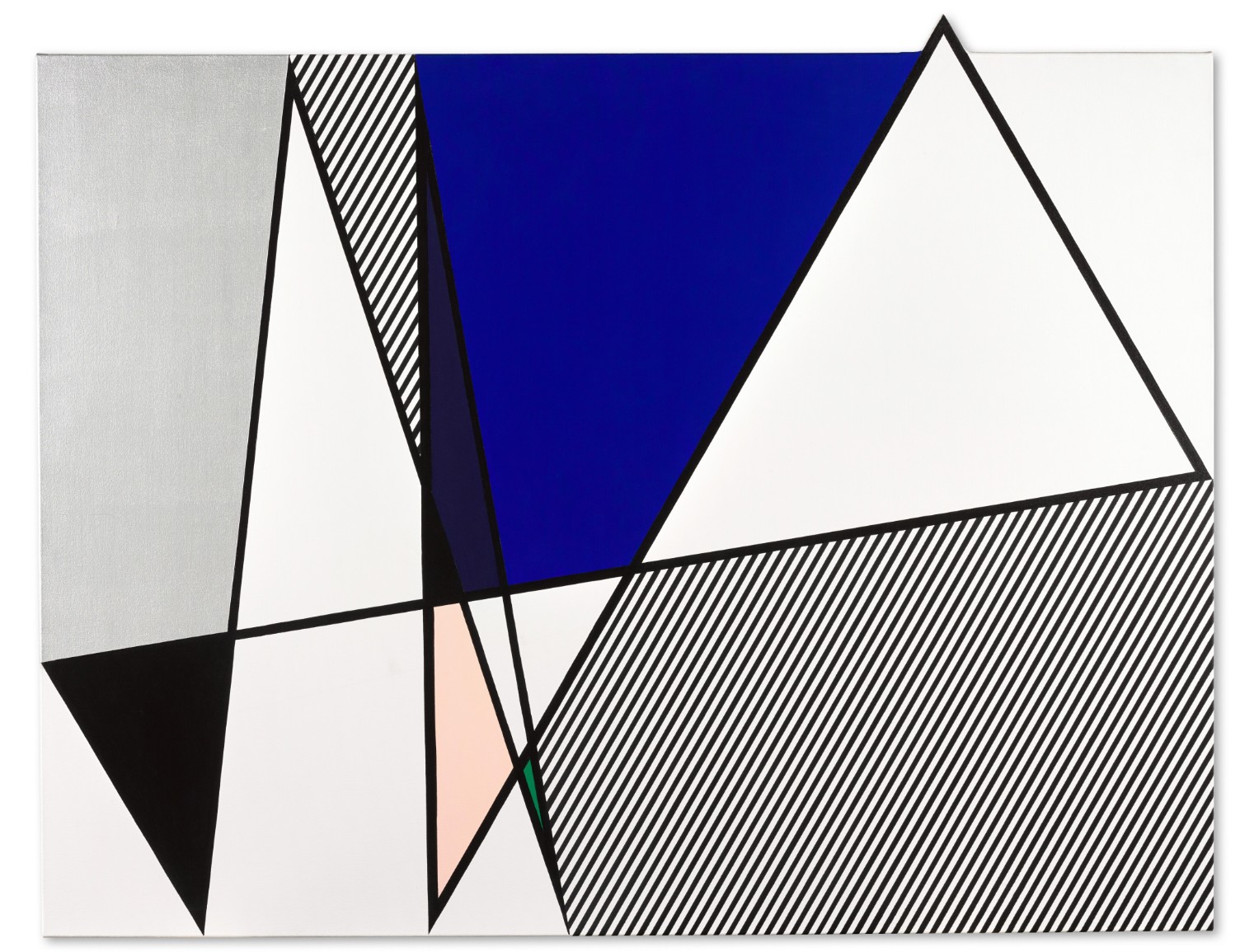
ROY LICHTENSTEIN (1923 – 1997)
Imperfect Painting, 1986
Acrylic, oil and pencil on shaped canvas
62-3/4 x 80 inches (159.5 x 203.2 cm)
Signed and dated ’86 (on the reverse)
Imperfect Painting, 1986
Sotheby’s New-York: 17 November 2022
Estimated: USD 1,000,000 – 1,500,000
USD 1,197,000
Imperfect Painting | Contemporary Day Auction | | Sotheby’s (sothebys.com)
REPEAT SALE
Sotheby’s New-York: 11 May 2011
Estimated: USD 500,000 – 700,000
USD 626,500
Results for “roy lichtenstein imperfect”
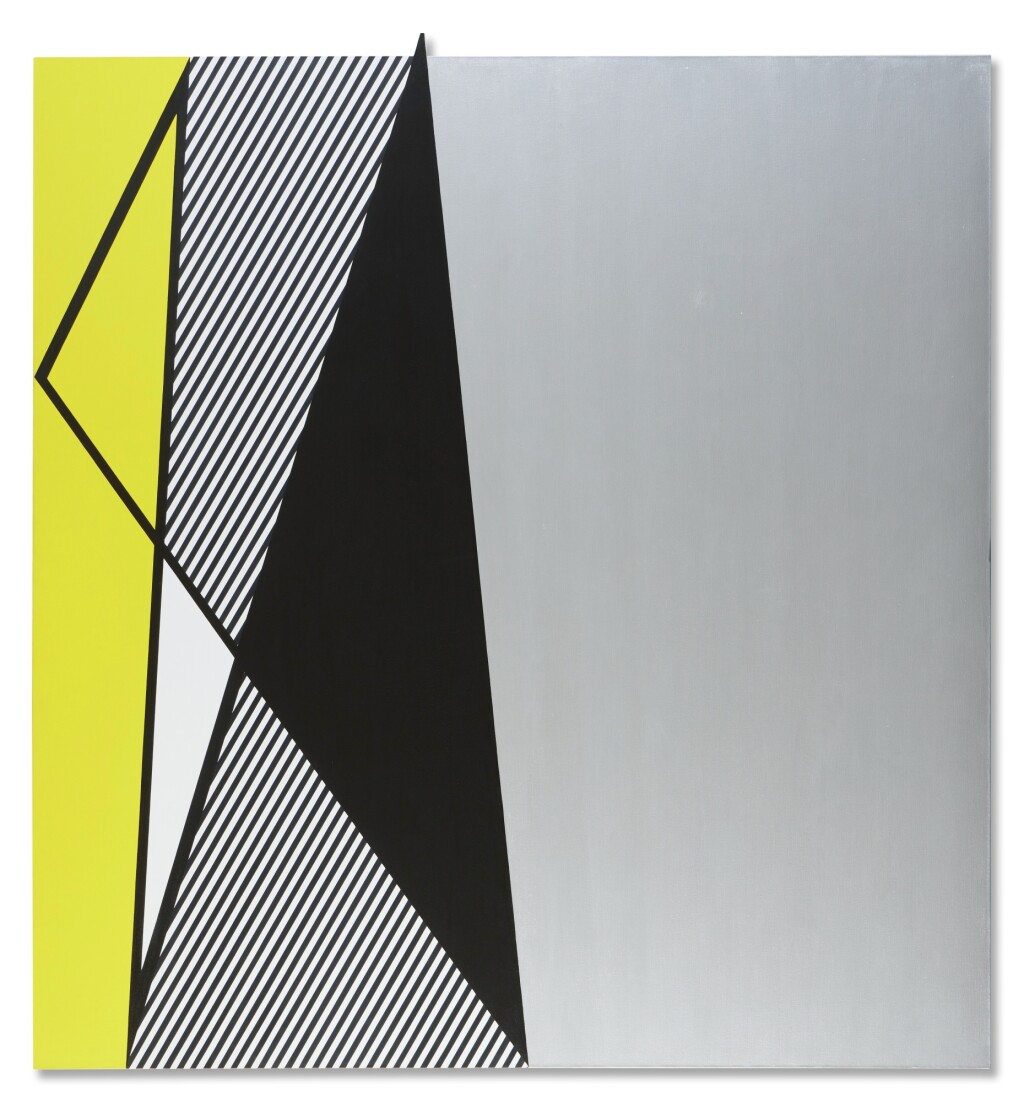
ROY LICHTENSTEIN (1923 – 1997)
Imperfect Painting, 1986
Oil and Magna on shaped canvas
111 ½ x 102 inches (283.2 x 259.1 cm)
Signed and dated ’86 (on the reverse)
Imperfect Painting, 1986
Sotheby’s New-York: 19 November 2021
Estimated: USD 700,000 – 1,000,000
USD 2,682,000
Imperfect Painting | Contemporary Day Auction | | Sotheby’s (sothebys.com)
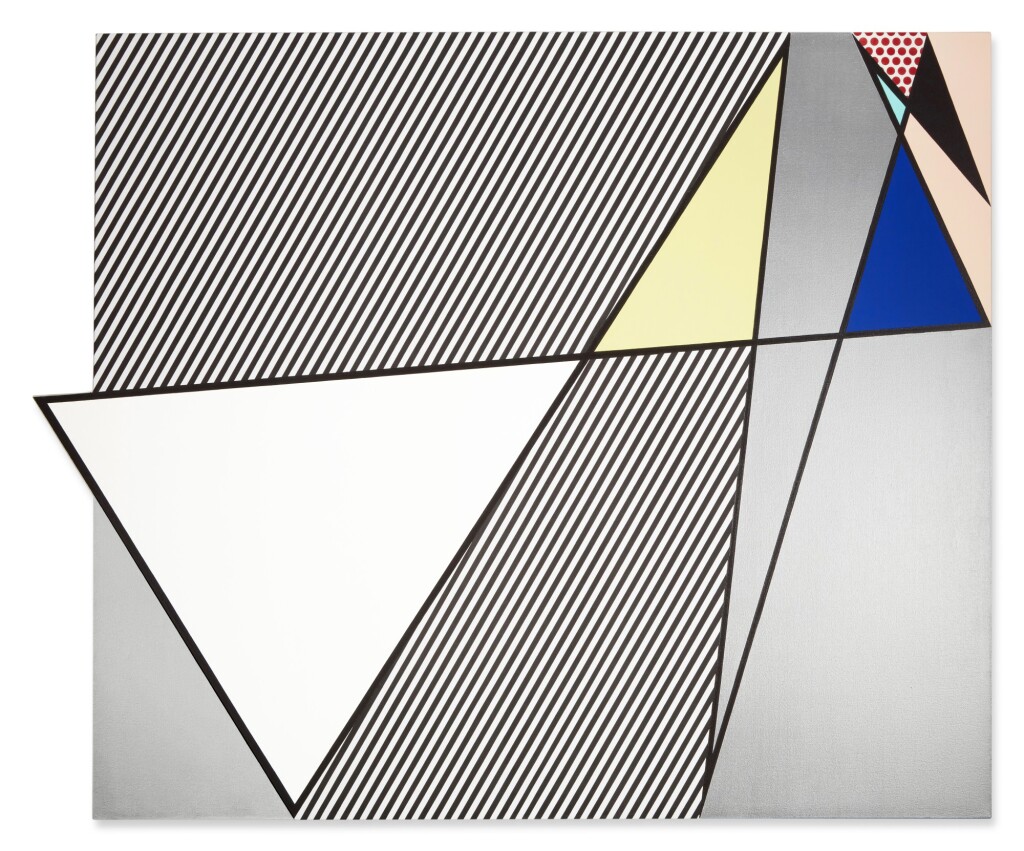
ROY LICHTENSTEIN (1923 – 1997)
Imperfect Painting, 1986
Oil and Magna on canvas
70x 85 ½ inches (177.8 x 217.2 cm)
Signed rf Lichtenstein and dated ’86 (on the reverse)
Imperfect Sculpture, 1995
Christie’s New-York: 9 November 2011
Estimated: USD 400,000 – 600,000
USD 506,500
Roy Lichtenstein (1923-1997) , Imperfect Sculpture | Christie’s
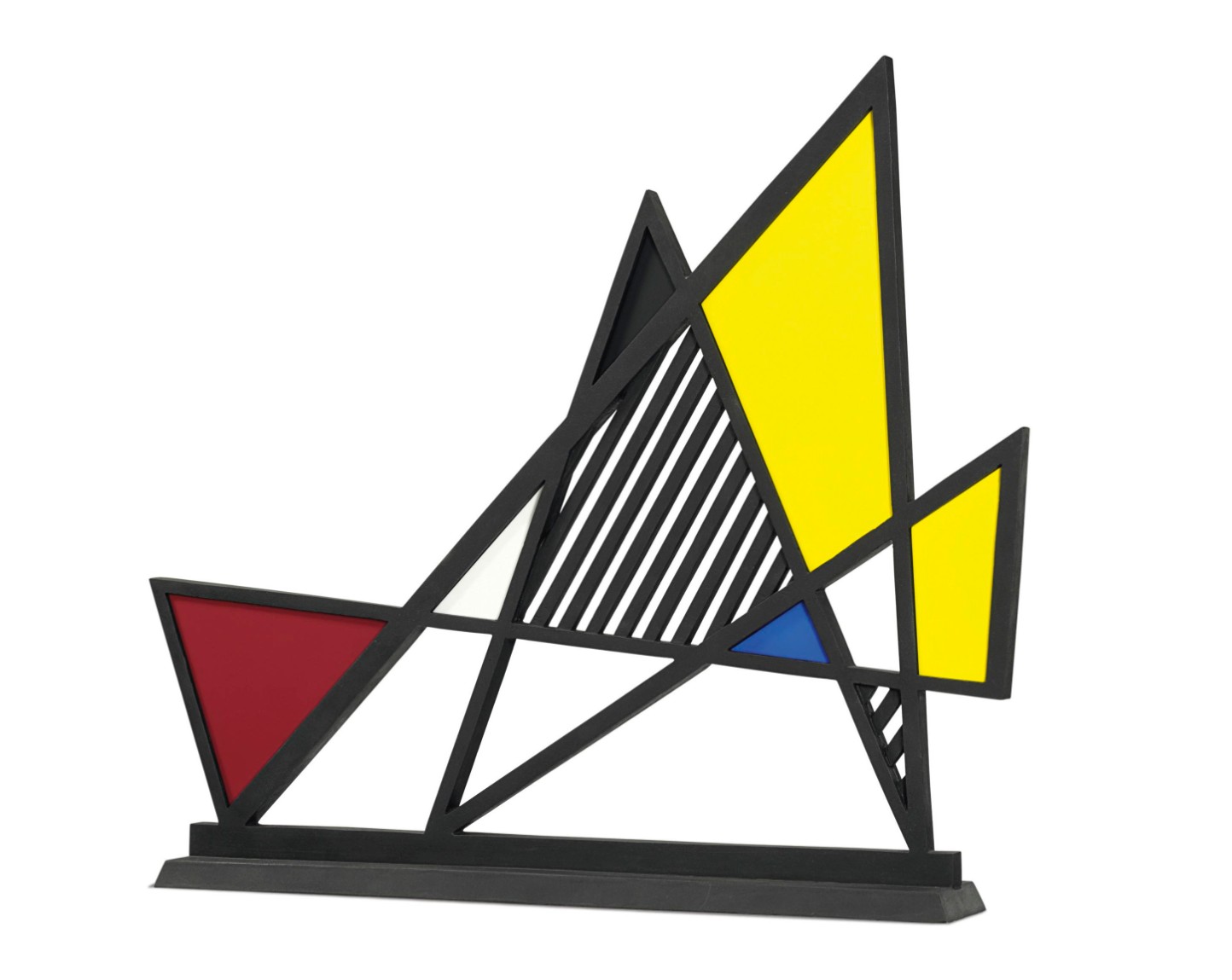
ROY LICHTENSTEIN (1923-1997)
Imperfect Sculpture, 1995
Stained cast iron and painted stainless steel plates
30 1/4 x 33 3/4 x 5 inches (78.1 x 88.3 x 12.7 cm)
Signed, numbered and dated ‘rf Lichtenstein ’95 4/6’ (lower edge)
This work is number four from an edition of six
Imperfect Painting, 1986
Christie’s London: 1 July 2008
Estimated: GBP 500,000 – 700,000
GBP 623,650 / USD 1,242,860
Roy Lichtenstein (1923-1997) , Imperfect Painting | Christie’s
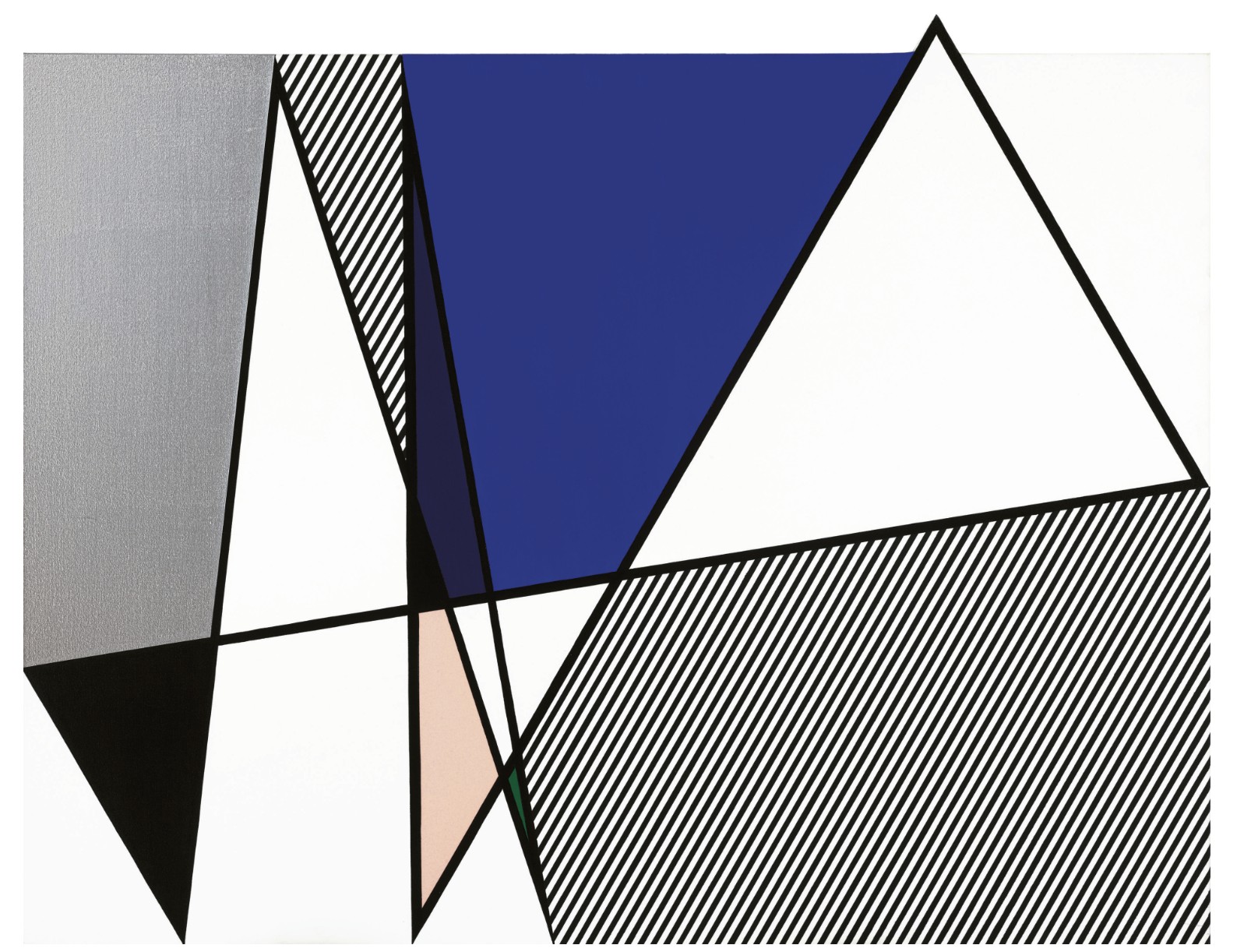
ROY LICHTENSTEIN (1923-1997)
Imperfect Painting, 1986
Oil and Magna on shaped canvas
62 5/8 x 79 3/4 inches (152.4 x 203.2 cm)
Signed and dated ‘© rf Lichtenstein ’86’ (on the reverse)
Imperfect Painting, 1986
Sotheby’s New-York: 11 May 2006
Estimated: USD 600,000 – 800,000
USD 576,000
Results for “roy lichtenstein imperfect”
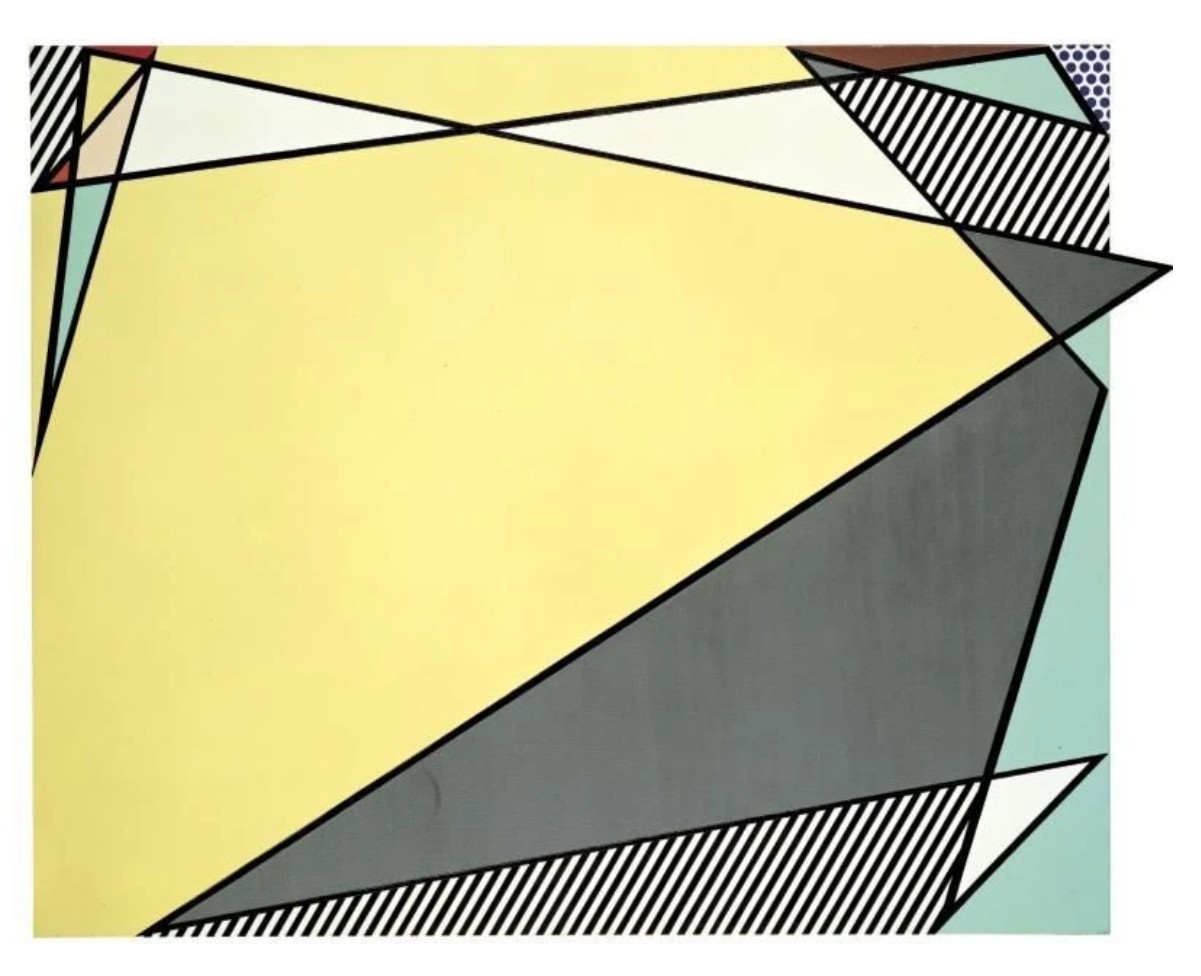
ROY LICHTENSTEIN (1923-1997)
Imperfect Painting, 1986
Oil and Magna on shaped canvas
66×85 inches (167.6 x 215.9 cm)
Signed and dated (on the reverse)
Imperfect Painting, 1986
Christie’s New-York: 9 November 2005
Estimated: USD 400,000 – 600,000
USD 520,000
Roy Lichtenstein (1923-1997) , Imperfect Painting | Christie’s
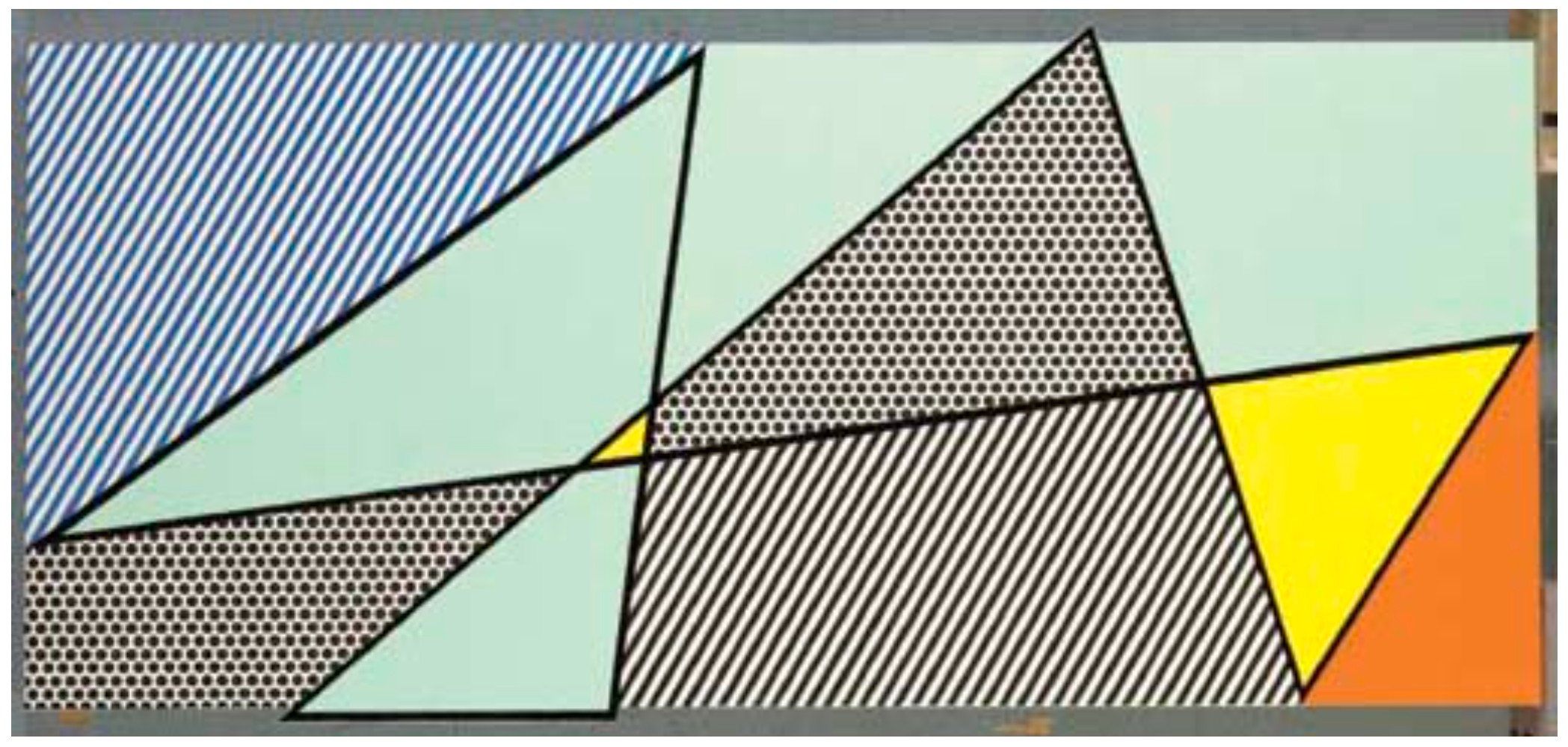
ROY LICHTENSTEIN (1923-1997)
Imperfect Painting, 1986
Oil and magna on shaped canvas
46×100 inches (116.8 x 254 cm)
Signed and dated ‘rf Lichtenstein ’86’ (on the reverse)
Imperfect Painting, 1986
Imperfect Painting, 1986
Property from an Esteemed Private Collection
Sotheby’s London: 4 March 2026
Estimated: GBP 1,000,000 – 1,500,000
GBP 1,981,000 / USD 2,646,420
Imperfect Painting | Modern & Contemporary Evening Auction | 2026 | Sotheby’s
ROY LICHTENSTEIN (1923 – 1997)
Imperfect Painting, 1986
Acrylic, oil and pencil on shaped canvas
62-3/4 x 80 inches (159.5 x 203.2 cm)
Signed and dated ’86 (on the reverse)
Characterized by its emphatic geometry and deliberate asymmetry, Roy Lichtenstein’s Imperfect Painting stages a sophisticated interplay between optical intensity and ironic self-reflection, underscoring the artist’s sustained engagement with the conventions of painting and his capacity to destabilize them from within. The present work is from Lichtenstein’s Imperfect Series created in the late 1980s – the artist’s most sustained exploration into total abstraction – drawing upon geometric simplicity akin to that of the abstract minimalism of the early twentieth century. In keeping with his broader practice in this series, the present work originated from a pencil sketch of a single line that the artist would fold and manipulate multiple times in order to create interlocking polygons.
“In the Imperfect Paintings the line goes out beyond the rectangle of the painting, as though I missed the edges somehow… The idea is that you can start with the line anywhere, and follow the line along, and draw all shapes in the painting and return to the beginning. I was interested in this idea because it seemed to be the most meaningless way to make an abstraction.”

Roy Lichtenstein working on the Perfect and Imperfect Paintings in New York, 1987.
Photo: © Bob Adelman. Art: © Estate of Roy Lichtenstein/DACS 2026
However, while the foundational Perfect series which began in the late 1970s features confined geometric forms that sit neatly within their rectangular frames, the Imperfect paintings that followed, features lines that deliberately challenge this confinement. These ‘mistakes’ become intentional gestures transforming human error into human artistry. The initial sketches undergo a process of deliberate standardization, removing any trace of improvisation, rendering them devoid of influence of the human hand.
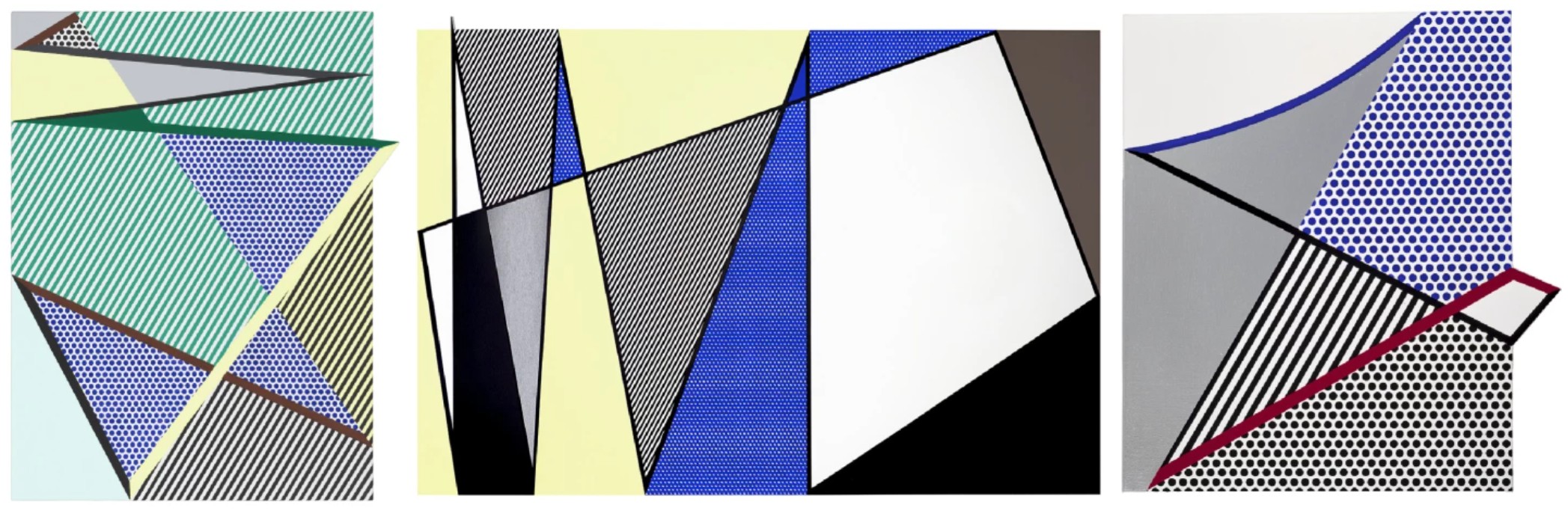
Left: Roy Lichtenstein, Imperfect Painting, 1986. The Broad, Los Angeles. Art: © Estate of Roy Lichtenstein/DACS 2026
Middle: Roy Lichtenstein, Imperfect Painting, 1988. The Whitney Museum of American Art, New York. Art: © Estate of Roy Lichtenstein/DACS 2026
Right: Roy Lichtenstein, Imperfect Painting, 1987. The Museum of Fine Arts, Houston. Art: © Estate of Roy Lichtenstein/DACS 2026
In the present work, Lichtenstein tests the boundaries of drawn and painted form, exploring the possibilities when artistic movements and visual motifs are removed from their conceptual origins and become reclaimed in popular culture as representations of a particular moment in time. Drawing on the forms of Cubist abstraction, the present work combines geometric simplicity with a vibrant chromatic palette. Dynamic lines cut across the composition, intersecting the canvas and ricocheting in a lively, rhythmic interplay as angular shapes coalesce to the left of the painting’s centre. As glossy silver contrasts deep blue, a line protrudes the upper edge, introducing tension as the image is thrust over the boundary, an intentional – but subtle – imperfection and a key facet of Lichtenstein’s critique of modernist painting and authenticity. In his characteristically industrial style, he subverts the purity traditionally associated with abstraction, filtering their influence through his own iconic and instantly recognizable visual language of comic book colours and stripes. Diagonal lines recall the patterns of the Op Art movement and – with its unexpected protrusion of the rectangular confines of the canvas – Imperfect Painting takes inspiration from the punchy starburst sound effects of Lichtenstein’s monumental comic book panel paintings from the 1960s such as Whaam! (1963) and Blam! (1962).
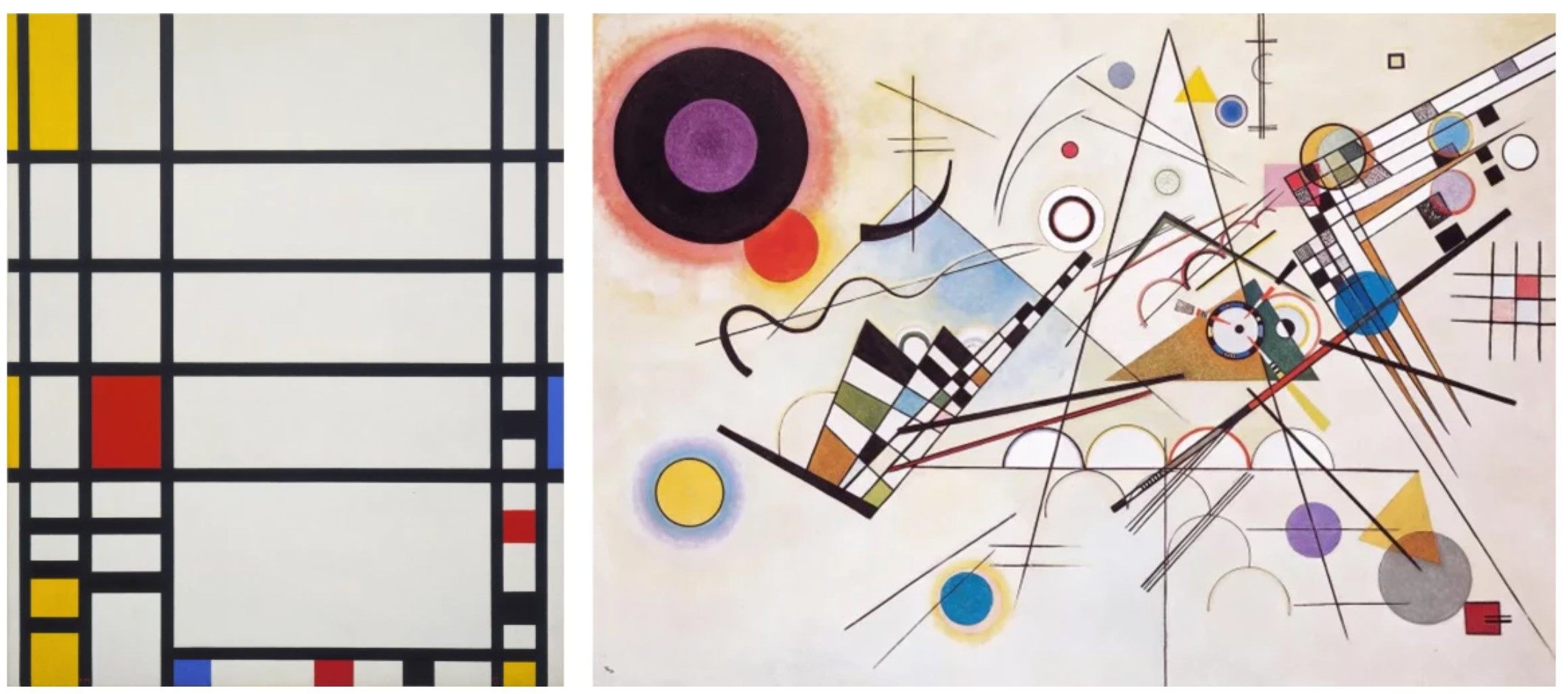
Left: Piet Mondrian, Trafalgar Square, 1939-43. The Museum of Modern Art, New York. Image: © The Museum of Modern Art, New York/Scala, Florence
Right: Wassily Kandinsky, Composition VIII, 1923, The Solomon R. Guggenheim Museum, New York
With its dazzling geometries and lyrical approach to asymmetry, Roy Lichtenstein’s Imperfect Painting represents a striking example from one of Lichtenstein’s most substantial ventures into the realm of abstraction. Having solidified his status as the premier Pop artist of the twentieth century through his canon of Pop art work inspired by cartoon and advertisement, the present work typifies the experimental artistry employed in his maturity, combining pure visual spectacle with a sly tongue-in-cheek humor, exemplifying the artist’s unparalleled ability to disrupt convention and take these innovative impulses in a wholly new direction.
Imperfect Painting, 1986
Imperfect Painting, 1986
Sotheby’s New-York: 19 November 2021
Estimated: USD 700,000 – 1,000,000
USD 2,682,000
Imperfect Painting | Contemporary Day Auction | | Sotheby’s (sothebys.com)
ROY LICHTENSTEIN (1923 – 1997)
Imperfect Painting, 1986
Oil and Magna on canvas
70x 85 ½ inches (177.8 x 217.2 cm)
Signed rf Lichtenstein and dated ’86 (on the reverse)
With its dazzling geometries and lyrical approach to asymmetry, Roy Lichtenstein’s Imperfect Painting combines pure visual spectacle with a sly tongue-in-cheek humor that exemplifies the artist’s unparalleled ability to think—quite literally—outside the box. Set against glossy silver panes and thrumming black-and-white lines, an array of angular, knifelike triangles cascades down the canvas, drawing the eye to and from with masterful precision. Like all of Lichtenstein’s Imperfect and Perfect paintings, the present work originated from a pencil sketch of a single line that the artist would zigzag and fold over itself multiple times across the page to create a prismatic matrix of polygons.
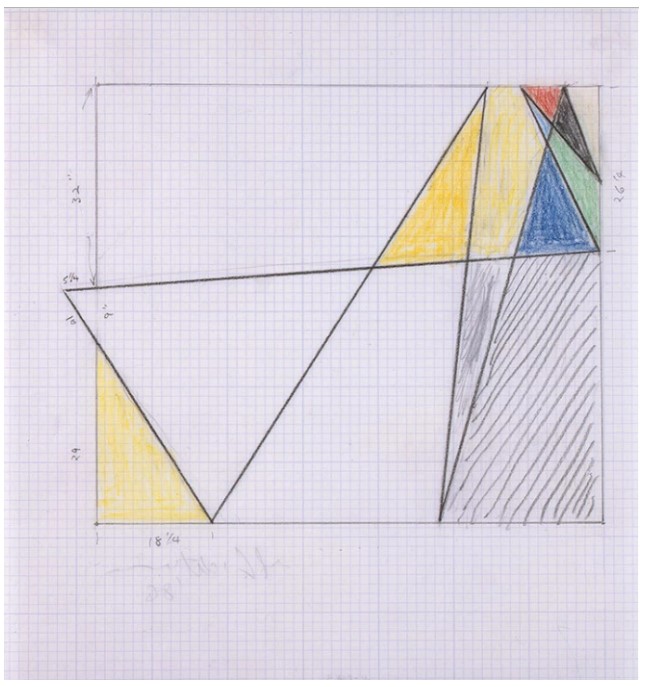
DRAWING FOR IMPERFECT PAINTING, 1986, PRIVATE COLLECTION
While the Perfects featured geometric arrangements boxed neatly into their rectangular frames, the Imperfects would always purposely “miss” the mark; Lichtenstein would allow his line to jut out past the pre-drawn borders of the composition, transforming the traditionally dreaded notion of human error into a deliberate celebration of the artistic process. A testament to the centrality of draftsmanship to Lichtenstein’s practice, Imperfect Painting ignites a creative tension between the artist’s analog hand and the crispness of Pop art’s signature mass-media aesthetic.
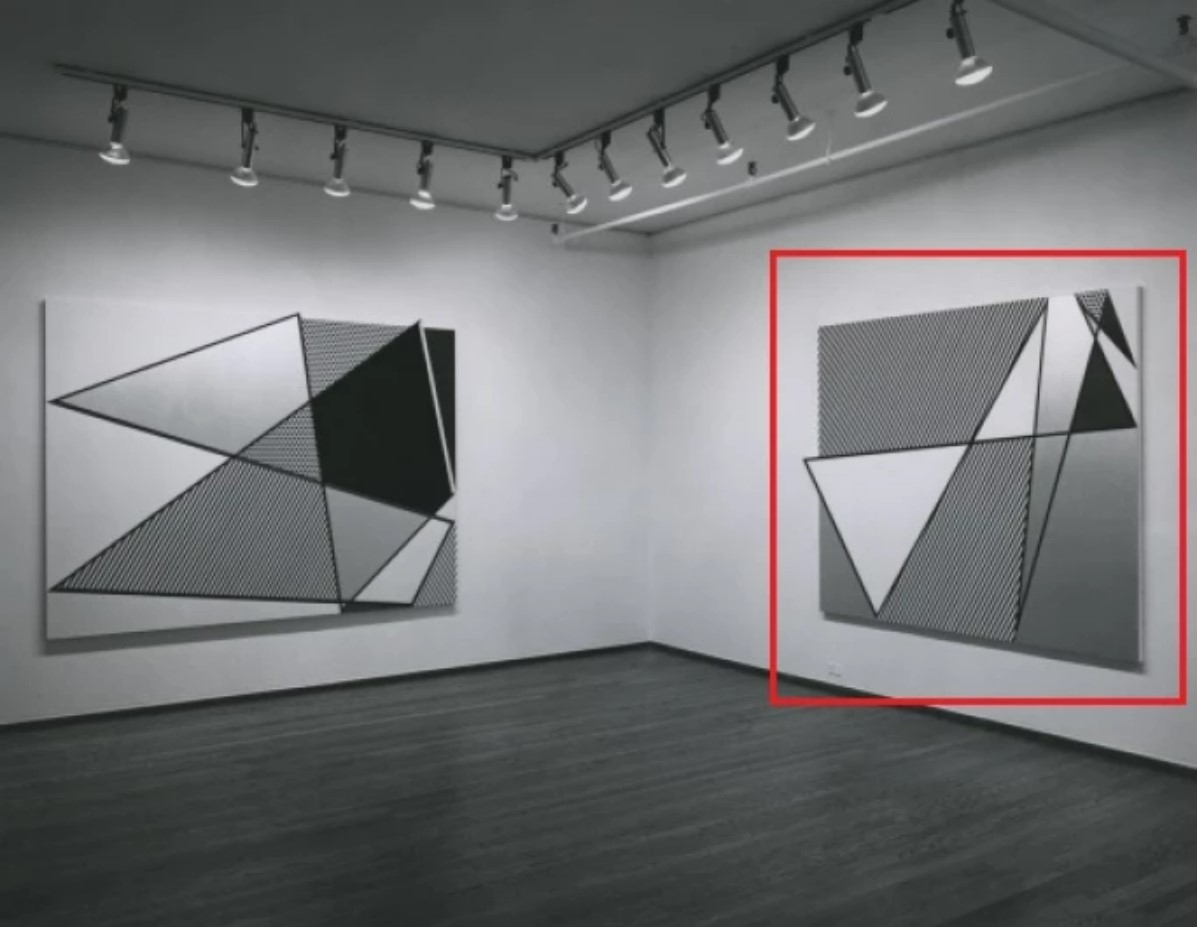
INSTALLATION VIEW OF IMPERFECT PAINTING IN ROY LICHTENSTEIN, LEO CASTELLI GALLERY, NEW YORK, 1987. PHOTO COURTESY OF CASTELLI GALLERY.
In the present work, Lichtenstein explores the endless mutability of the drawn and painted form, charting out the new possibilities that unfold when artistic movements and visual motifs come loose from their conceptual origins and become reclaimed in popular culture as symbolic representations of a particular moment in time.
Imperfect Painting, 1986
Imperfect Painting, 1986
Christie’s London: 1 July 2008
Estimated: GBP 500,000 – 700,000
GBP 623,650 / USD 1,242,860
Roy Lichtenstein (1923-1997) , Imperfect Painting | Christie’s
ROY LICHTENSTEIN (1923-1997)
Imperfect Painting, 1986
Oil and Magna on shaped canvas
62 5/8 x 79 3/4 inches (152.4 x 203.2 cm)
Signed and dated ‘© rf Lichtenstein ’86’ (on the reverse)
Lichtenstein began this series in 1985 with the production of “perfect” paintings, abstract compositions of triangles and quadrilaterals formed within intersecting lines filled with large planes of flat color, dots and stripes. As the lines usually meet in points at the edge of the canvas, these highly asymmetrical compositions generate a tension within the image that is opposed to the rectilinear format, whilst also signaling a dynamic outwards thrust. The “imperfect” paintings that followed take these darting angles further than their predecessors, breaking free from the canvas edge. Instead of making the triangles fit, the edges project beyond the limits of the canvas to deliberately disturb the relationship between figure and ground. The protrusion to the upper edge of Imperfect Painting is slight and not immediately observed, but once noticed, the “imperfection” is impossible to ignore.
The monumental and elegant Imperfect Painting brings a teasing approach to pure abstraction, which contrasts with the spiritual rhetoric often attached to the early modernists and their strict avoidance of three-dimensional spatiality in painting. This experimentation with shaped canvas and geometric imagery represents the formidable level of inventiveness Lichtenstein sustained throughout his career, by displaying a subversive questioning of pictorial precedents that confronts complex artistic problems in a uniquely simple and striking visual form.
Although distanced from the narrative aspects of his earlier work, these abstractions arguably remain figurative, in their ironic re-presentation of the aesthetic problems confronted by artists as diverse as Piet Mondrian, Frank Stella and Elsworth Kelly. Lichtenstein was fascinated by the way an artistic picture operates differently from all other pictures, and sought to investigate the limits and possibilities of art whilst also confronting the myth of the artist. In Imperfect Painting, Lichtenstein’s anonymous, though paradoxically personal style of painting, with its imitation of industrial reproduction techniques, seeks to undermine the purity typically attributed to abstraction. The typically irreverent conflation of ‘high’ and ‘low’ in Lichtenstein’s work is coupled here with a flagrant disregard of many abstract artists faith in the integrity of the picture surface. In titling the series Imperfect Paintings, Lichtenstein not only indicates the introduction of a sculptural aspect to an otherwise two-dimensional image, but also his conviction that all quests for higher meaning are absurd.
Imperfect Painting, 1986
Imperfect Painting, 1986
Sotheby’s New-York: 17 November 2022
Estimated: USD 1,000,000 – 1,500,000
USD 1,197,000
Imperfect Painting | Contemporary Day Auction | | Sotheby’s (sothebys.com)
REPEAT SALE
Sotheby’s New-York: 11 May 2011
Estimated: USD 500,000 – 700,000
USD 626,500
Results for “roy lichtenstein imperfect”
ROY LICHTENSTEIN (1923 – 1997)
Imperfect Painting, 1986
Oil and Magna on shaped canvas
111 ½ x 102 inches (283.2 x 259.1 cm)
Signed and dated ’86 (on the reverse)
With its dazzling geometries and lyrical approach to asymmetry, Roy Lichtenstein’s Imperfect Painting of 1986 combines pure visual spectacle with a sly tongue-in-cheek humor that exemplifies the artist’s unparalleled ability to think—quite literally—outside the box. Set against glossy silver and brilliant yellow panes contained within thrumming black lines, an array of angular, knifelike triangles cuts vertically across the canvas, drawing the eye to and fro with masterful precision.
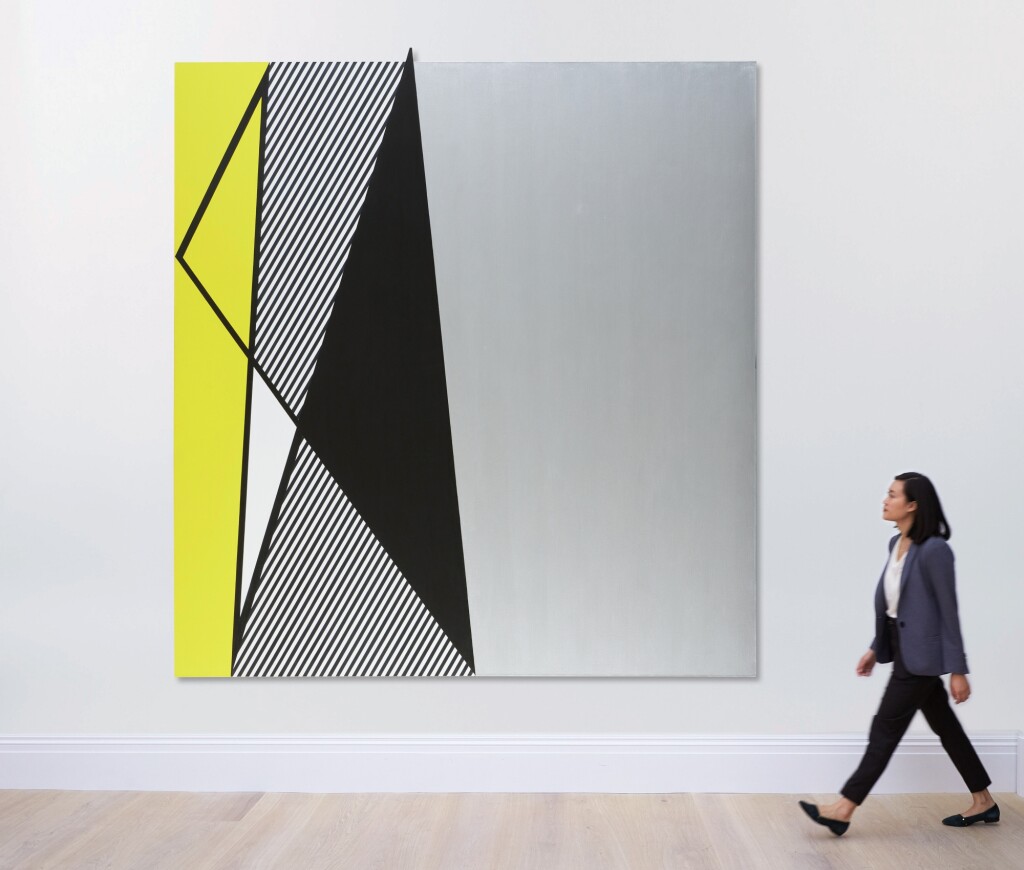
Executed in 1986, having already completed his canon of Pop Art work inspired by cartoon and advertisements that established him as the premier Pop artist of the twentieth century, the present work emerges from this mature period in Lichtenstein’s prolific oeuvre in which he experimented with compositions that mined art historical precedents and questioned the nature of art itself.
Imperfect Painting, 1986
Imperfect Painting, 1986
Christie’s New-York: 9 November 2005
Estimated: USD 400,000 – 600,000
USD 520,000
Roy Lichtenstein (1923-1997) , Imperfect Painting | Christie’s
ROY LICHTENSTEIN (1923-1997)
Imperfect Painting, 1986
Oil and magna on shaped canvas
46×100 inches (116.8 x 254 cm)
Signed and dated ‘rf Lichtenstein ’86’ (on the reverse)
Roy Lichtenstein came of age in a time when Abstract Expressionism was the dominant mode of expression and in many ways, his paintings, sculptures and prints were a response to it. The artist’s use of Ben Day dots gave the work a machine-made look, which was a challenge to the supposed angst-ridden strokes of the New York School. His Imperfect Paintings is a part of the artist’s dialogue with abstraction. The Imperfect Paintings continue Lichtenstein’s dialogue with the non-objectives. In the Imperfect Paintings, he takes on the geometric work of Kandinsky and his circle, as well as the shaped paintings of Ellsworth Kelly. Consisting of abstract compositions of interlocking triangles and the quadrilaterals formed within the triangles’ crisscrossed lines, the titles refer to Lichtenstein’s deformation of the “perfect” rectangular frame here, turning it into a shaped canvas.
Compared to the spiritual rhetoric attached to the early modernists, in Lichtenstein’s hands, abstraction becomes a playful event, with baby blue, bright orange and yellow forms jauntily scattered throughout. A small segment of the canvas projects out beyond one of its rectilinear edges in order to accommodate one of the triangles that doesn’t “fit.” Rather than truncate the triangle, Lichtenstein wittily extends the canvas. Here, the perimeter of the canvas conforms to the logic of the overall symmetrical composition, putting the image and the frame into perfect alignment. The wit of Lichtenstein’s Imperfect compositions arises from the conflict that he has set up between these two elements.
Brilliantly balanced and with a sophisticated and whimsical color harmony, Imperfect Painting is an extraordinary and large-scale example of an important late series for the artist.
Imperfect Sculpture, 1995
Imperfect Sculpture, 1994-95
Reflections on Pop: Works from the Collection of Dorothy and Roy Lichtenstein
Sotheby’s New-York: 26 September 2025
Estimated: USD 200,000 – 300,000
USD 381,000
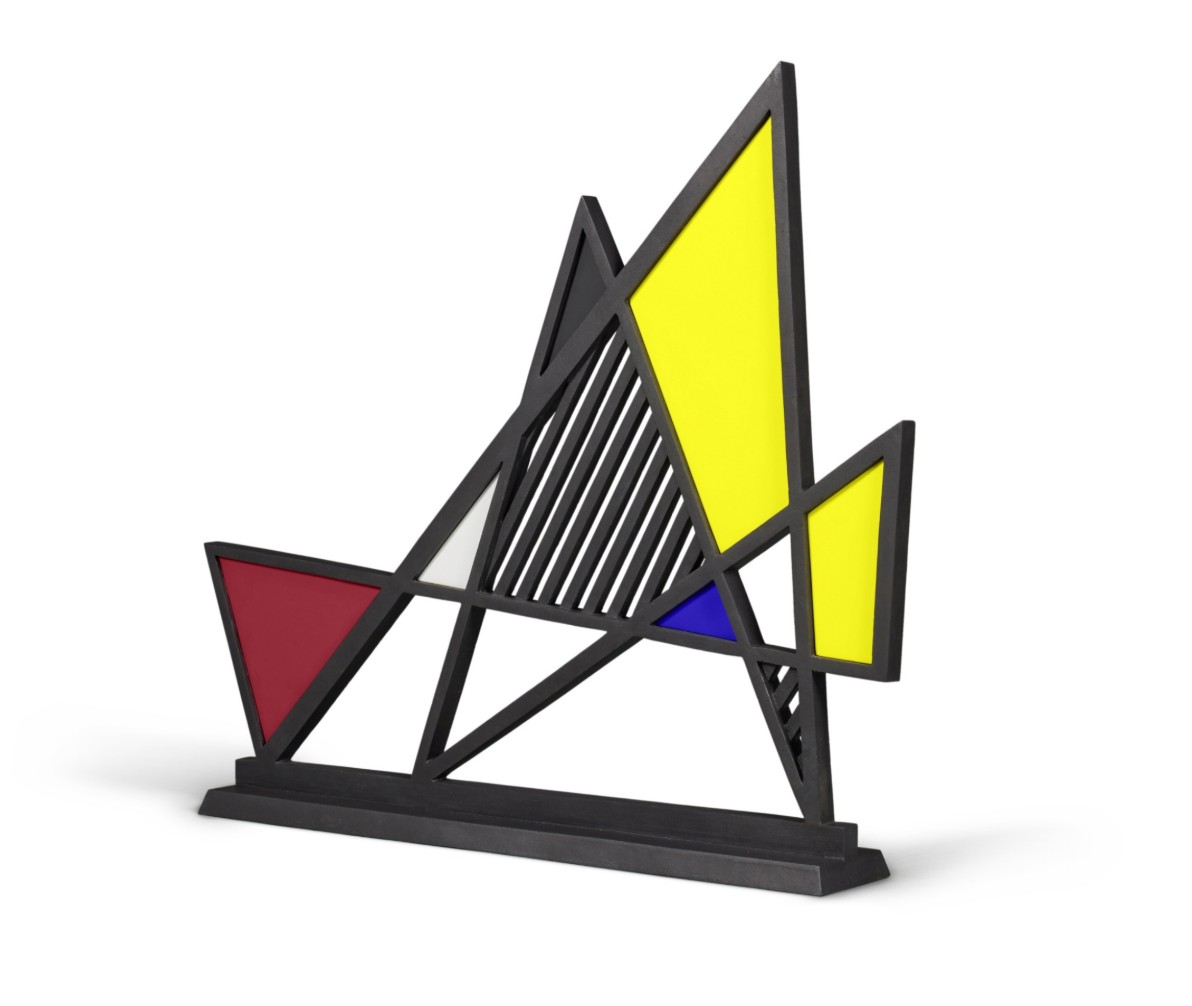
ROY LICHTENSTEIN (1923 – 1997)
Imperfect Sculpture, 1994-95
Stained cast iron and painted stainless steel
30 3/4 x 34 3/4 x 5 inches (78.1 x 88.3 x 12.7 cm)
Incised with the artist’s signature
Number AP 1/2 and date ’95 (along the lower edge of the sculpture)
Conceived in 1994 and cast in 1995
This work is artist proof 1 from an edition 6 plus 2 artist’s proofs
Imperfect Sculpture, 1995
Christie’s New-York: 16 November 2016
Estimated: USD 400,000 – 600,000
USD 427,500
Roy Lichtenstein (1923-1997), Imperfect Sculpture | Christie’s
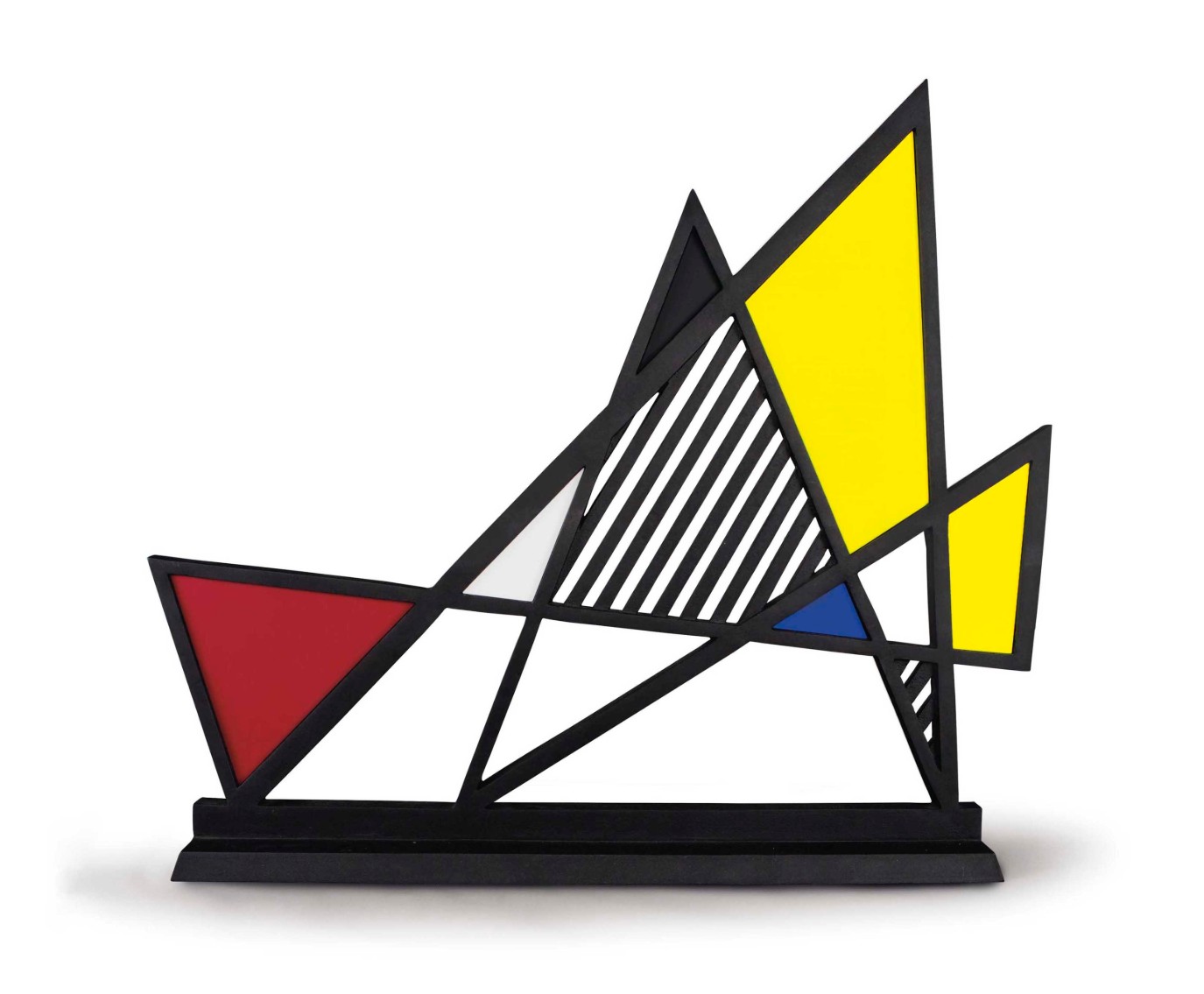
ROY LICHTENSTEIN (1923-1997)
Imperfect Sculpture, 1995
Stained cast iron and painted stainless steel plates
30 1/4 x 35 x 5 inches (78.1 x 88.9 x 12.7 cm)
Incised with the artist’s signature, numbered and dated ‘rf Lichtenstein ’95 5/6’ (lower edge)
This work is number five from an edition of six plus two artist’s proofs
Imperfect Sculpture, 1995
Christie’s New-York: 9 November 2011
Estimated: USD 400,000 – 600,000
USD 506,500
Roy Lichtenstein (1923-1997) , Imperfect Sculpture | Christie’s
ROY LICHTENSTEIN (1923-1997)
Imperfect Sculpture, 1995
Stained cast iron and painted stainless steel plates
30 1/4 x 33 3/4 x 5 inches (78.1 x 88.3 x 12.7 cm)
Signed, numbered and dated ‘rf Lichtenstein ’95 4/6’ (lower edge)
This work is number four from an edition of six
Roy Lichtenstein is widely known for basing his work on popular culture and creating prosaic images that are ironic in their tone. Created in 1995, Imperfect Sculpture forms part of an important late series in the artist’s oeuvre, in which he extended his exploration of the reduction of form at a time when ‘neo-geo’ painting was reaching its ascendancy. With this series, the sculptor took a playful approach to geometric abstraction, reflecting his ability to continually re-evaluate the strictures of art historical models and bring new meaning to the sign systems of mass culture. Although distanced from the narrative aspects of his earlier work, these abstractions arguably remain figurative, in their ironic re-presentation of the aesthetic problems confronted by artists as diverse as Piet Mondrian, Frank Stella and Ellsworth Kelly. Lichtenstein was fascinated by the way an artistic picture operates differently from all other pictures, and sought to investigate the limits and possibilities of art whilst also confronting the myth of the artist. In Imperfect Sculpture, Lichtenstein’s anonymous, though paradoxically personal style, with its imitation of industrial reproduction techniques, seeks to undermine the purity typically attributed to abstraction.
Imperfect Prints
READ ABOUT IMPERFECT SERIES
FIND ALL HISTORICAL AUCTION RESULTS