Introduction
In his Two Paintings series Lichtenstein depicts two paintings of iconic art images on a wall. While the appropriation of other artists is not new for Lichtenstein, this series portrays their work in a novel context, as framed pictures, close up and cropped to reveal only a section of the canvas. In this context, Lichtenstein goes beyond representing an artist’s style; he offers a context for the paintings that undermines our sense of perception: “Lichtenstein presents a series of ambiguities, making one ‘reality’ contradict the other, and thus questions the absolute validity of human perception” (D. Waldman, Roy Lichtenstein, New York, 1993, p. 295).
By cleverly juxtaposing familiar works from art history in an interior context, Lichtenstein creates an intriguing disjunction of reality at multiple levels, while paying homage to his predecessors who similarly grappled with the limits of human perception and of truthfully depicting of the material world.
WORK IN PROGRESS
Auction Results
#1. Two Paintings: Craig…, 1983
Sotheby’s New-York: 18 November 2021
Estimated: USD 12,000,000 – 18,000,000
USD 20,371,500
Two Paintings: Craig… | Contemporary Evening Auction | | Sotheby’s (sothebys.com)
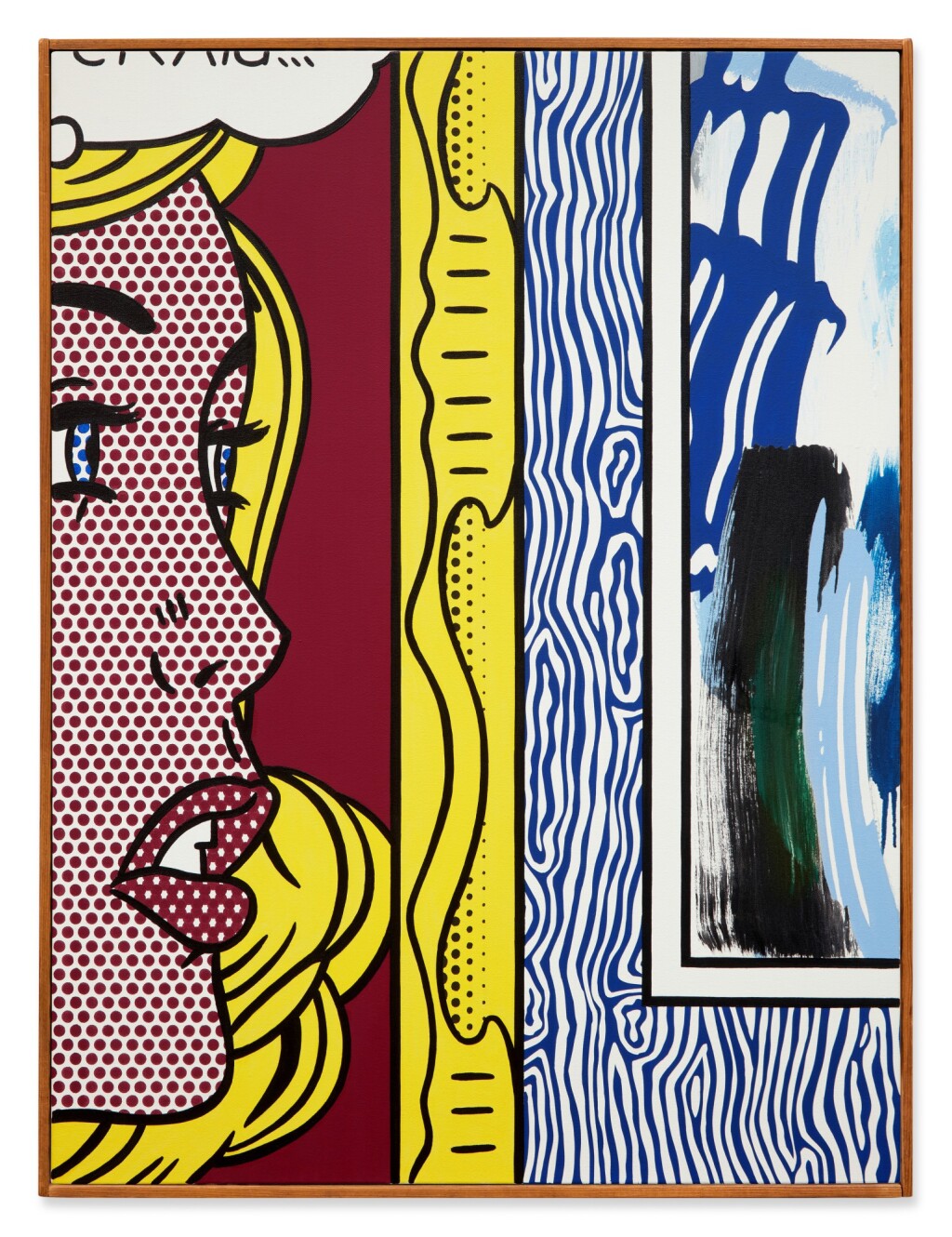
ROY LICHTENSTEIN (1923 – 1997)
Two Paintings: Craig…, 1983
Oil and Magna on canvas
48×36 inches (121.9 x 91.4 cm)
Signed Roy Lichtenstein and dated ’83 (on the reverse)
#2. Two Paintings with Dado, 1983
Sotheby’s London: 28 June 2017
Estimated: GBP 2,400,000 – 3,000,000
GPB 3,308,750 / USD 4,280,190
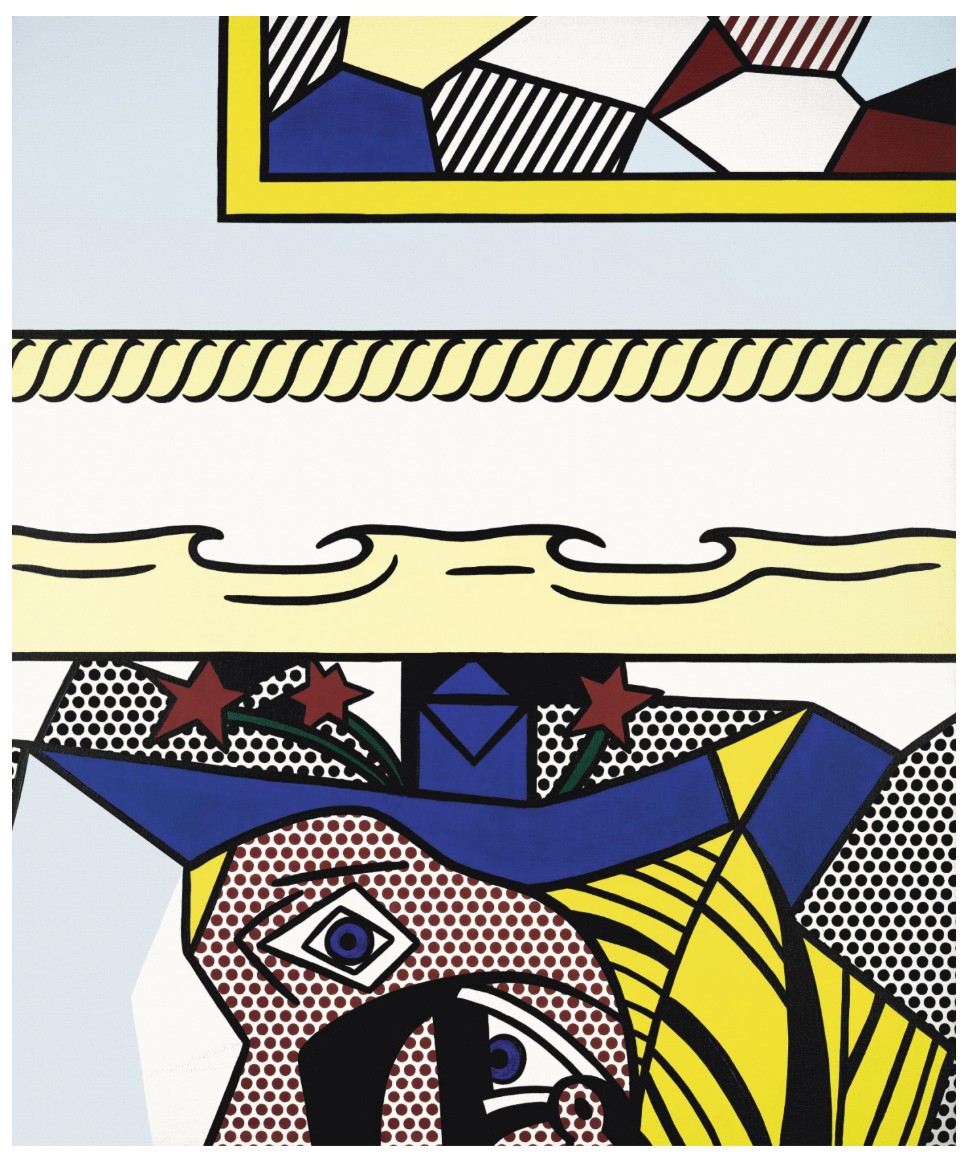
ROY LICHTENSTEIN
Two Paintings with Dado, 1983
Oil and Magna on canvas
50 1/4 by 42 7/8 inches (127.5 x 109 cm)
Signed and dated 83 on the reverse
#3. Two Paintings: Folded Sheets, 1983
Sotheby’s New-York: 10 May 2011
Estimated: USD 1,000,000 – 1,500,000
USD 2,098,500
Results for “roy lichtenstein two paintings”
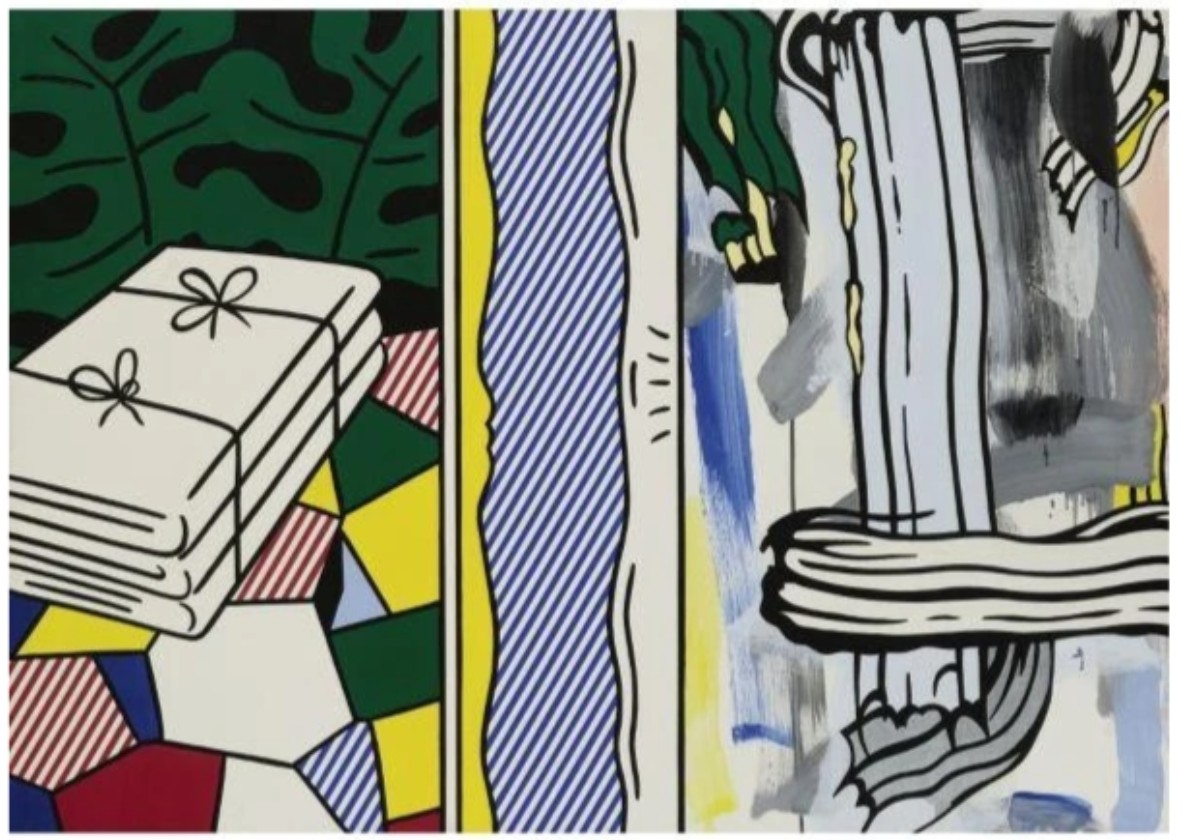
ROY LICHTENSTEIN
Two Paintings: Folded Sheets, 1983
Oil and Magna on canvas
50×70 inches (127 x 177.8 cm)
Signed and dated 83 on the reverse
Painting: Silver Frame, 1984
Christie’s New-York: 17 May 2024
Estimated: USD 1,000,000 – 1,500,000
USD 1,197,000
ROY LICHTENSTEIN (1923-1997), Painting: Silver Frame | Christie’s (christies.com)

ROY LICHTENSTEIN (1923-1997)
Painting: Silver Frame, 1984
Acrylic and graphite on canvas
54×60 inches (137.2 x 152.4 cm)
Signed and dated ‘Lichtenstein ’84’ (on the reverse)
Two Paintings: Alien, 1983
Sotheby’s New-York: 12 May 2004
Estimated: USD 500,000 – 700,000
USD 478,400
Results for “roy lichtenstein two paintings”
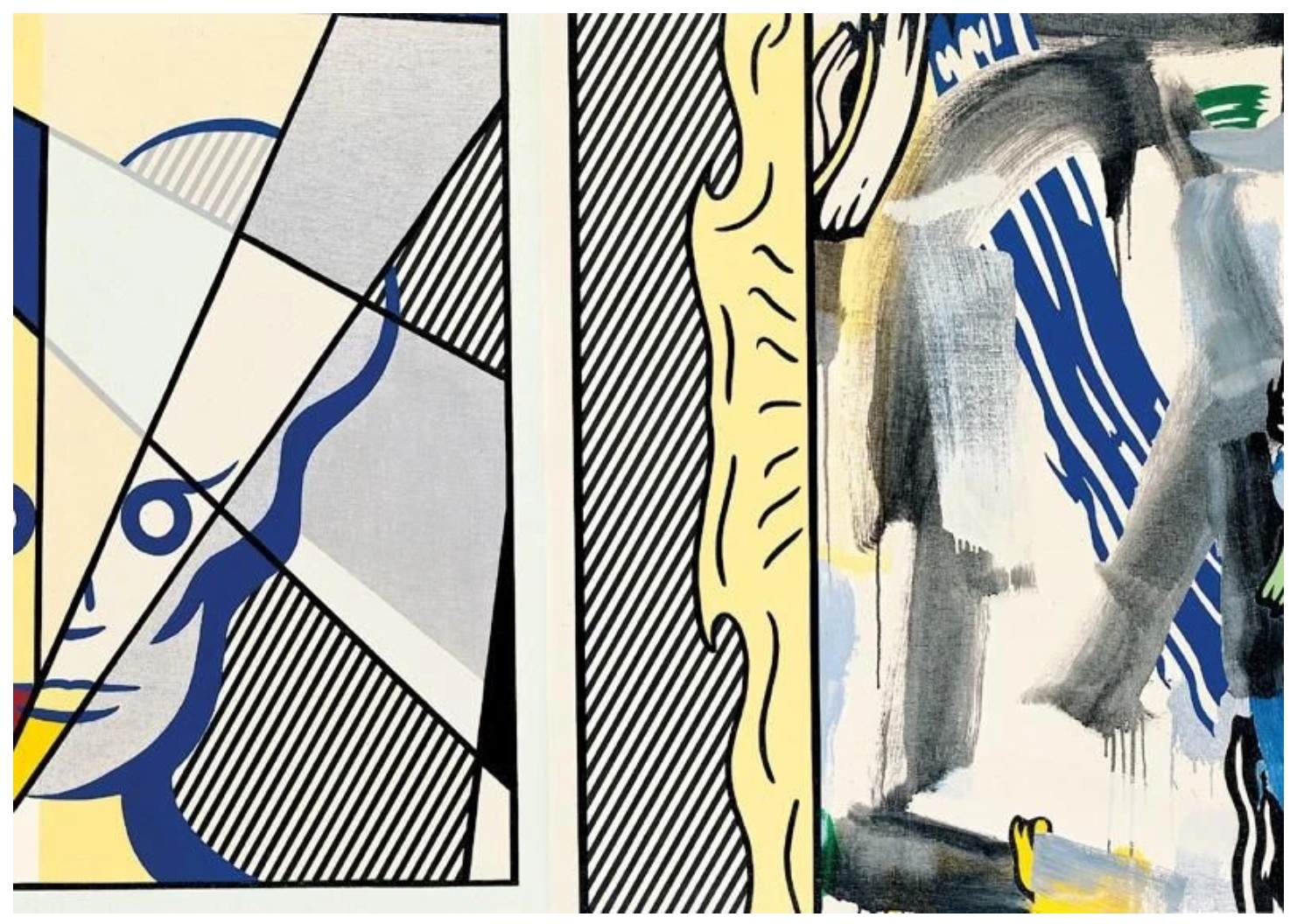
ROY LICHTENSTEIN
Two Paintings: Alien, 1983
Oil and Magna on canvas
Signed and dated 83 on the reverse
Two Paintings: Craig…, 1983
Two Paintings: Craig…, 1983
Sotheby’s New-York: 18 November 2021
Estimated: USD 12,000,000 – 18,000,000
USD 20,371,500
Two Paintings: Craig… | Contemporary Evening Auction | | Sotheby’s (sothebys.com)
ROY LICHTENSTEIN (1923 – 1997)
Two Paintings: Craig…, 1983
Oil and Magna on canvas
48×36 inches (121.9 x 91.4 cm)
Signed Roy Lichtenstein and dated ’83 (on the reverse)
Two Paintings: Craig…is the ultimate embodiment of Roy Lichtenstein’s career-long exploration of his signature Pop idiom and pioneering investigation into the form, content, and meaning of Contemporary Art. An autobiographical encapsulation of his artistic oeuvre, the blonde in his trademark Ben-Day dot wistfully peers towards the framed Brushstroke paintings of his later career. An unparalleled and exquisite survey of Lichtenstein’s ever-proliferating pictorial panorama of culture in 1960s America, Two Paintings: Craig… synthesizes the most important iconographical motifs of Lichtenstein’s artistic lexicon. In reference to his 1964 painting Craig…, Lichtenstein chronicles his own contribution and redefining of Pop art. Her radiant blonde locks pouted red lips, and enigmatic expression encompasses the best of Lichtenstein’s appropriated images, an unequivocal embodiment of female sexuality. Utterly breathtaking, Two Paintings: Craig… is the last of Lichtenstein’s unabstracted archetypal blonde, a uniquely striking exemplar of this undisputed icon of Post-War American art.
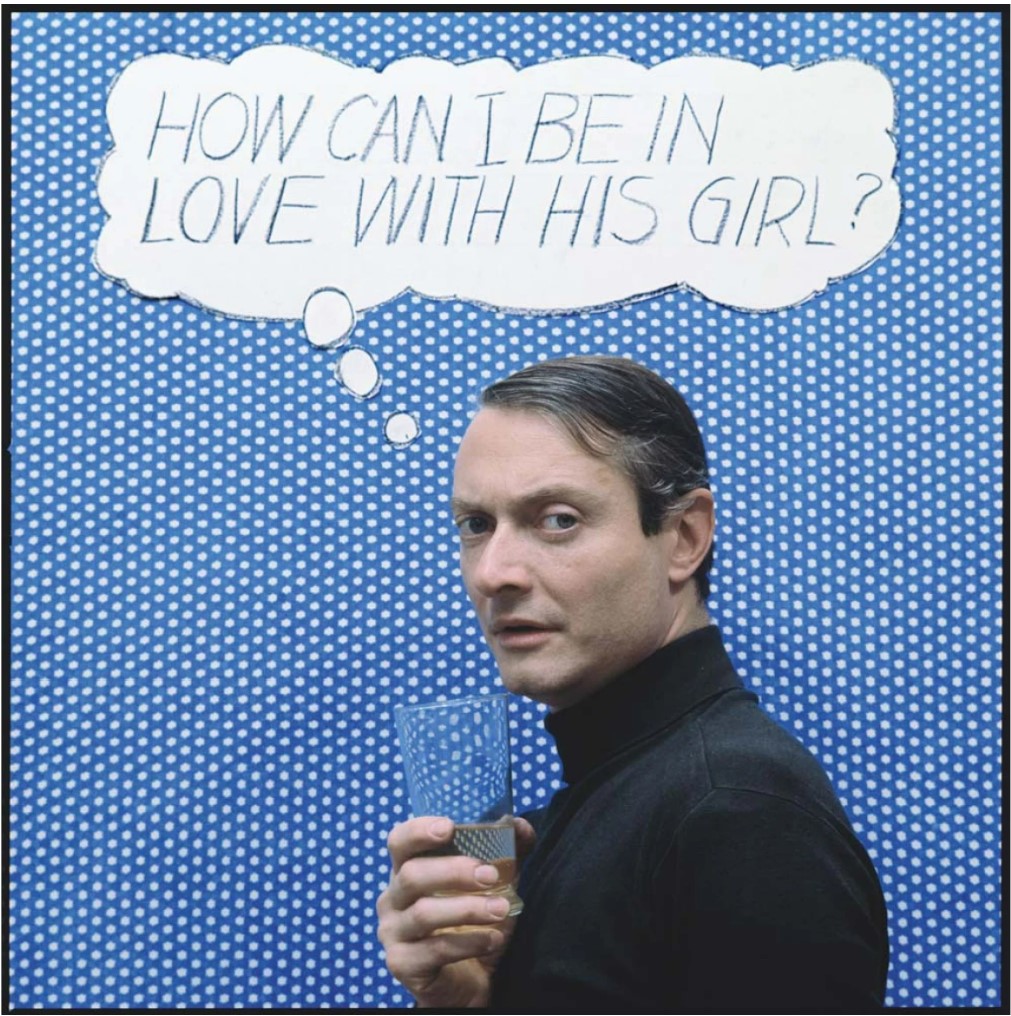
The present work incomparably reflects on Lichtenstein’s profound impact on twentieth-century art. Few masterworks, either by Lichtenstein or any of his contemporaries, subvert the heroic ideals of modern abstract painting as directly and successfully. The dream of being the blonde heroine from the present work, calling to her male savior, drove entire industries and billions of sales. Lichtenstein explained the appeal of comic books “[he] was very excited about, and interested in, the highly emotional content yet detached impersonal handling of love, hate, war, etc., in these cartoon images.” (Roy Lichtenstein quoted in: John Coplan’ An Interview with Roy Lichtenstein’ October 1963) Informed by the irrational hope inspired by cinematic fantasy and comic book fiction, her character triggers an inexplicably emotional reaction. Lichtenstein’s women explore society’s ghoulish and perverse fascination with vulnerable, helpless heroines, war, and loss.
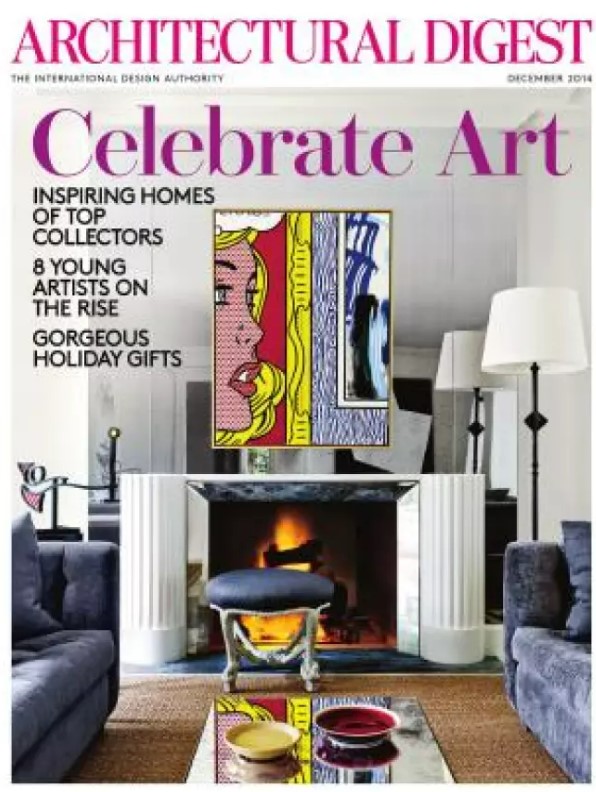
THE COVER OF ARCHITECTURAL DIGEST IN DECEMBER 2016, FEATURING THE MIAMI HOME OF DOUGLAS S. CRAMER AND THE PRESENT WORK ROY LICHTENSTEIN TWO PAINTINGS: CRAIG… PHOTO: BJÖRN WALLANDER / ARCHITECTURAL DIGEST. ART © ESTATE OF ROY LICHTENSTEIN
The present work’s flattened and foreshortened perspectival space recall modes of consumer advertising while strengthening formal principles and pictorial conventions native to early Modernism. Lichtenstein’s frames were quintessential of his Sixties paintings, a perfect amalgam of Pop sensibility and insightful engagement with prevailing art trends of the day. He looked to challenging the parameters of art itself, advertisements, and the visual culture contemporaneously unfolding around him. Bold, brilliant, and thrillingly irreverent, the brushstrokes reflect an exhilarating confrontation with the towering legacy of American Abstract Expressionism. Lichtenstein’s motif of the imitation woodgrain is a way of playing on the concept of authenticity with which woodgrain is associated. The symbol is a kind of paradox: the stamp of an authentic Pop artwork that rejects, implicitly, the notion of authenticity. Lichtenstein instinctively understood the phenomenal potential of popular imagery, and more than any artist of his generation, realigned the cipher of that imagery to unveil verities behind popular culture. Complicating the contentious dichotomy between what constitutes “high” versus “low” culture, the present work illustrates the most influential motifs of Lichtenstein’s investigation into mass-produced objects and reproduction of romantic comic books, exploring the distinction between the fine art and the commercial imagery that pervades our daily lives.
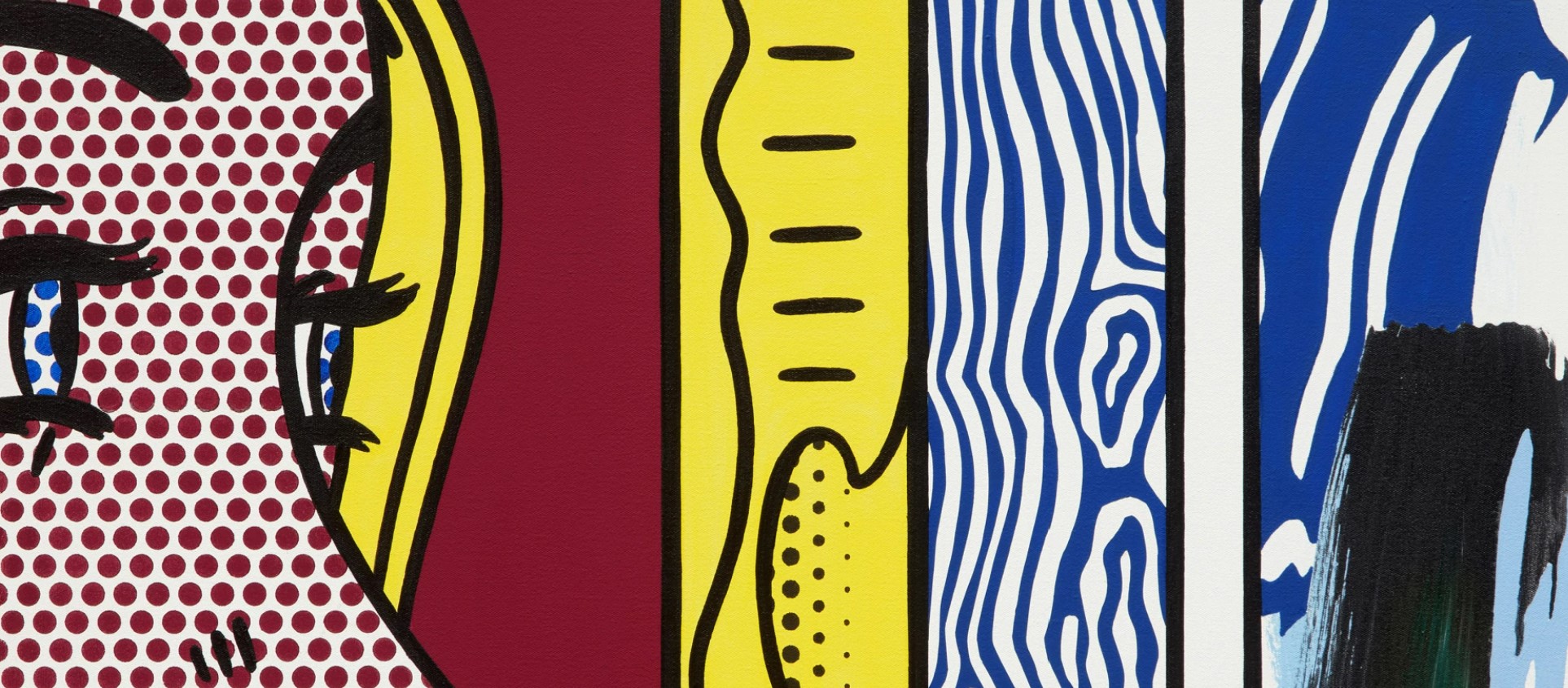
With half-lidded eyes and voluptuous lips, the protagonist calls “Craig…” This moment encapsulates the profound drama and sense of pregnant expectation that encapsulate Lichtenstein’s most iconic works. Lichtenstein’s painting is inherently and breathtakingly beautiful, both in its subject and its physical facture. It embodies the prevalent archetype of feminine beauty that had become the socio-cultural aspiration for millions since the Second World War. The viewer is granted visual access to the woman calling for ‘Craig’, however the male figure originally included in the source imagery is removed. Thus, the viewer becomes locked in a tantalizing interplay that teeters between attraction and the tension of irrevocable distance. With her open mouth and large, wistful eyes, she entrances the male she calls to with her beguiling temptation. Intriguing and mysterious, she demands our attention and seduces our gaze. She looks towards Lichtenstein’s representation of abstract Expressionism and painting itself and represents the consummate muse of both artist and viewer.
Two Paintings with Dado, 1983
Two Paintings with Dado, 1983
Sotheby’s London: 28 June 2017
Estimated: GBP 2,400,000 – 3,000,000
GPB 3,308,750 / USD 4,280,190
ROY LICHTENSTEIN
Two Paintings with Dado, 1983
Oil and Magna on canvas
50 1/4 by 42 7/8 inches (127.5 x 109 cm)
Signed and dated 83 on the reverse
From the very outset, Roy Lichtenstein dedicated his career to making art about art. Accompanying his formative transformations of mass-produced comic book scenes into high-art paintings, Lichtenstein exhibited a number of art historical icons rendered in the same hard-edged graphic style in his 1962 critical debut at the Leo Castelli Gallery. Indeed, this art historical branch of his oeuvre constitutes a practice that he continued to pursue for the rest of his career. Of all the modernist canons depicted however – from Claude Monet, Piet Mondrian, and Morris Louis through the movements of Cubism, Surrealism, German Expressionism and Purism – it was Picasso that proved the most vital for Lichtenstein. So much so that in April 1997, in his last published interview, the Pop pioneer admitted “I don’t think that I’m over his influence” (Roy Lichtenstein quoted in: Ira Candela, ‘Picasso in Two Acts’, in: Exh. Cat., London, Tate Modern (and travelling), Roy Lichtenstein: A Retrospective, 2012-13, p. 44). Belonging to this longstanding concern, first heralded in 1962 by Femme au Chapeau (Lichtenstein’s first painting after Picasso), Two Paintings with Dado from 1983 announces the continuation of a twenty-year dialogue. The present work however does more than offer respectful reverence for, and an irreverent parody of, Picasso. Akin to Warhol, who at the time was also revisiting his 1960s hay-day, Lichtenstein began appropriating and remixing his own back catalogue during the 1980s. Set within an interior, Lichtenstein re-appropriates his own 1963 version of Picasso’s Woman with a Flowered Hat (1939-40); brutally cropped this painting appears framed and sits below a dado rail, above which hangs a another framed painting – a geometric abstraction that looks like a Jasper Johns flagstone work. In Two Paintings with Dado Lichtenstein’s assimilation of iconic art historical tropes – including his own 1960s canon – imparts a complicated strata of appropriation: not only is he copying Picasso, he is copying himself copying Picasso and placing it next to another copy of a Johns in an imagined studio interior or exhibition space. Juxtaposing art historical icons and unifying them via the author’s own borrowed comic book aesthetic, Two Paintings with Dado at once reaffirms and furthers Lichtenstein’s position at the very forefront of appropriation art.
Lichtenstein’s inaugural painting after Picasso came very early in his career and was included in the artist’s breakthrough exhibition at the Leo Castelli Gallery in February-March of 1962. This exhibition caused a substantial degree of ambivalence from critics owing to Lichtenstein’s ‘copyist’ methods, particularly his apparent attempt at supplanting the master of modern painting. However as curator Ira Candela has explained, these early critics failed to register Lichtenstein’s announcement of the death of the author: “As Roland Barthes and Michel Foucault would soon argue, there is no such thing as an original text, for every work is a complex combination of previous ideas, a polysemic discourse without a single author… one could argue that Lichtenstein’s Picassos force the viewer to abandon outdated questions like Who paints? and With what originality?” (Ira Candela, ibid., 40). Lichtenstein’s artistic endeavour was far from new. It was Picasso’s own borrowing – such as his recapitulation of Eugène Delacroix’s Women of Algers in Their Apartment (1834) for his own Femme d’Alger (1955) – that first impelled Lichtenstein to so the same. Picasso was often explicit in his irreverence and parody of Old Master paragons; his late work in particular is known for its cannibalistic consumption of masters such as Velazquez, Rembrandt, and El Greco. Taking on the age-old mantle of influence and deviation as Picasso had done before him, the Pop art pioneer affirmed the primacy of artistic discourse in opposition to the singular originality of a lone author from the very outset.
When considering Lichtenstein’s method, it is clear that his works after Picasso are just as much about their means of production as they are about the modernist painter. Indeed, a further deviation that separates Lichtenstein’s work from Picasso is his borrowing from cheap mechanical reproductions with distorted color values. In works such as Still Life after Picasso (1964) Lichtenstein replicated a mechanical simulacrum of a Picasso rather than its original source, and in doing so, foregrounds the attendant fetishism and mystification endemic within commercial replications of venerated artworks. Furthermore, Lichtenstein’s masterful yet most deceptive transgression remains his faking of the industrial. Though his appropriative riff on Picasso takes on the production values of the mechanically produced – the half-tone dots and flat primary colours – they are painstakingly worked over by hand.
Into the 1970s Lichtenstein continued to engage Picasso; however, the works created in this decade exhibit a different manner that moved away from a working ‘after’ and more towards a working ‘with’ (Ibid.). In paintings such as Still Life with Picasso (1973) Lichtenstein blends his own compositional elements with those borrowed from Picasso’s oeuvre to playfully embark upon a free form dialogue with the revered Spanish master. Furthermore, the series of Artist’s Studios created between 1973-74 imparted another layer of complexity to this genre of metapainting. Taking on the tradition of genre painting, Lichtenstein began referring to his own back catalogue and melding it with other famous painterly icons. For example the early masterpiece Look Mickey (1961) appears above a sofa in furnished domestic interior in Artist’s Studio “Look Mickey” from 1973, while Matisse’s The Dance forms the backdrop of a still life scene of paintbrushes and lemons in Artist’s Studio “The Dance” of 1974. With the onset of the 1980s this dialogue entered yet another phase. As exemplified by the present work, during this decade Lichtenstein began painting closely cropped imaginary spaces in which artworks intermingle and coexist side by side. In Two Paintings with Dado, the top section of Lichtenstein’s 1963 work after Picasso, Woman with Flowered Hat, appears below a Johns flagstone painting. That both paintings are framed and positioned below and above a dado rail suggests that they form part of an imagined installation. In the present work, and many from this reflective moment in Lichtenstein’s oeuvre, the pioneering Pop artist has not simply painted any old exhibition view – he has painted his very own retrospective.
Painting: Silver Frame, 1984
Painting: Silver Frame, 1984
Christie’s New-York: 17 May 2024
Estimated: USD 1,000,000 – 1,500,000
USD 1,197,000
ROY LICHTENSTEIN (1923-1997), Painting: Silver Frame | Christie’s (christies.com)
ROY LICHTENSTEIN (1923-1997)
Painting: Silver Frame, 1984
Acrylic and graphite on canvas
54×60 inches (137.2 x 152.4 cm)
Signed and dated ‘Lichtenstein ’84’ (on the reverse)
Lichtenstein’s Painting: Silver Frame speaks to the artist’s inherent interest in the history of art and painting. Executed at his East 29th Street New York studio, the present work was painted at the apex of Lichtenstein’s trailblazing and continually inventive career, and brilliantly exemplifies the artist’s satirical character. The emotive immediacy of the Abstract-Expressionism stroke and the carefully flattened coolness of Pop are pitted against each other in a balanced composition stemming from the artist’s acclaimed Brushstroke series. Held in the same private collection since 1987, this exemplary composition surfaces to the public eye for the first time in nearly four decades.

Photography: Roy Liechtenstein‘s Studio, circa 1984. (present lot Illustrated). Photo: Hans Namuth. Courtesy Center for Creative Photography, University of Arizona © 1991 Hans Namuth Estate. Artwork: © Estate of Roy Lichtenstein.
Painting: Silver Frame was prominently displayed at Castelli Gallery as part of the pioneering 1987 exhibition, Art Against AIDS. This monumental event united renowned galleries in a citywide showcase lasting six months, featuring masterpieces by iconic artists like Picasso, Giacometti, Pollock, de Kooning, Nevelson, and Hockney. Over 600 artists, along with dealers and collectors, joined forces to raise vital funds in support of combating the critical AIDS crisis. After this exhibition, the painting was acquired by esteemed collectors, Mary and John Pappajohn. The Pappajohns were extremely generous philanthropists, with their most culturally significant gift being the world-class public sculpture park in West Des Moines. Although regarded as one of the founders of Pop Art, over the course of his career, Lichtenstein examined the formal language of many art movements including Cubism, Surrealism, and Abstract Expressionism. In Painting: Silver Frame, the cartoonish rendering of the signature of Abstract Expressionism – the dripping, expressive bravura brushstroke – served as a parody of the omnipresent style of Abstract Expressionism during the 1950s and 1960s and objectively frames it within the Pop idiom.

Source imagery for the brushstrokes, from “The Painting” by Dick Giordano, Strange Suspense Stories, No. 72, October 1964, Charlton Comics.
In 1965, Lichtenstein started developing a motif that would remain as one of his favorites throughout his career: the brushstroke. Although the Brushstroke paintings were informed by Abstract Expressionism, their sources are more varied. They are more than superficial parodies of abstract paintings; they are about issues in Lichtenstein’s art. The starting point was a comic strip; one of the artist’s first paintings from the series from the 1960s was a direct reference to a frame from the comic book which included a story titled “The Painting,” a horror story from Charlton Comics’ Strange Suspense Stories, no. 72 (October 1964). Here, the cartoonist shows an oversized brush and two large overlapping strokes of paint; it is from this particular comic strip image that Lichtenstein developed the ideas for the celebrated series.

The composition is structured around fluid, undulating, vertical stripes interlaced with sinuous black lines that command presence. Ethereal hues of yellow, blue, and red, are occasionally intersected by somber blacks, greys, and deep blues with a subtle touch of pink. Unmistakably, one can note the corners of a silver frame along the left and top edges, intriguingly missing from the rest of the surface. This disappearance hints that the viewer glimpses only a fraction of the concealed whole, imbuing the scene with an air of enigma. By inserting a painting in a painting in a nod to Velazquez Las Meninas, Lichtenstein reinvigorates the classic mise-en-abyme technique, propelling it forward to his time. During the Pop Art era, the towering influence of Abstract Expressionism commanded both admiration and a sense of constraint. Artists like Lichtenstein grappled with the weight of this predominant style, recognizing its revered status while also challenging its prominence. His innovative use of a stylized “brushstroke” imagery served as a deliberate departure from the heroic brushwork of Abstract Expressionists, daring their once avant-garde allure. By the 1960s, abstraction had become ingrained in the public consciousness, paralleling the pervasive presence of consumer mass media. While Lichtenstein’s Painting: Silver Frame acknowledges the groundbreaking achievements of Abstract Expressionism, it also subverts its splendor by presenting an ironic interpretation of its revered status. Through his signature style of incorporating comic book aesthetics and mechanical reproduction techniques, Lichtenstein challenges the notion of high art and invites viewers to reconsider the boundaries between fine art and popular culture. Central to this subversion is Lichtenstein’s choice of the brushstroke as his subject matter, a conscious nod to the heroic allover brushwork of Abstract Expressionism.

Diego Rodriguez Velázquez, Las Meninas, 1656. Museo del Prado, Madrid.
“Visible brushstrokes in a painting convey a sense of grand gesture. But, in my hands, the brushstroke becomes a depiction of the grand gesture. So the contradiction between what I’m portraying and how I’m portraying it is sharp. The brushstroke became very important for my work.”
Throughout the decades, Lichtenstein looked at every corner of art history. He pioneered his enduring style, while embracing the movements that resulted in postwar and contemporary art. Painting: Silver Frame is the result of his relationship between the choice of subject matter and how it is depicted and challenges the authority of such inimitable gestures. A painting can be reduced to a sign and a brushstroke can be the means by which we recognize not only style, but content. Across this large-scale canvas, Lichtenstein takes the essence of twentieth-century art and frames it within the Pop idiom.
Two Paintings: Sleeping Muse, 1983
Two Paintings: Sleeping Muse, 1983
Christie’s New-York: 16 November 2000
Estimated: USD 280,000 – 320,000
USD 589,000
WORK ON PAPER
Roy Lichtenstein (1923-1997) , Two Paintings: Sleeping Muse | Christie’s
ROY LICHTENSTEIN (1923-1997)
Two Paintings: Sleeping Muse, 1983
Collage and gouache on paper
39×50 inches (99.1 x 127 cm.)
Signed and dated ‘R.F. Lichtenstein ’83’ (on the reverse)
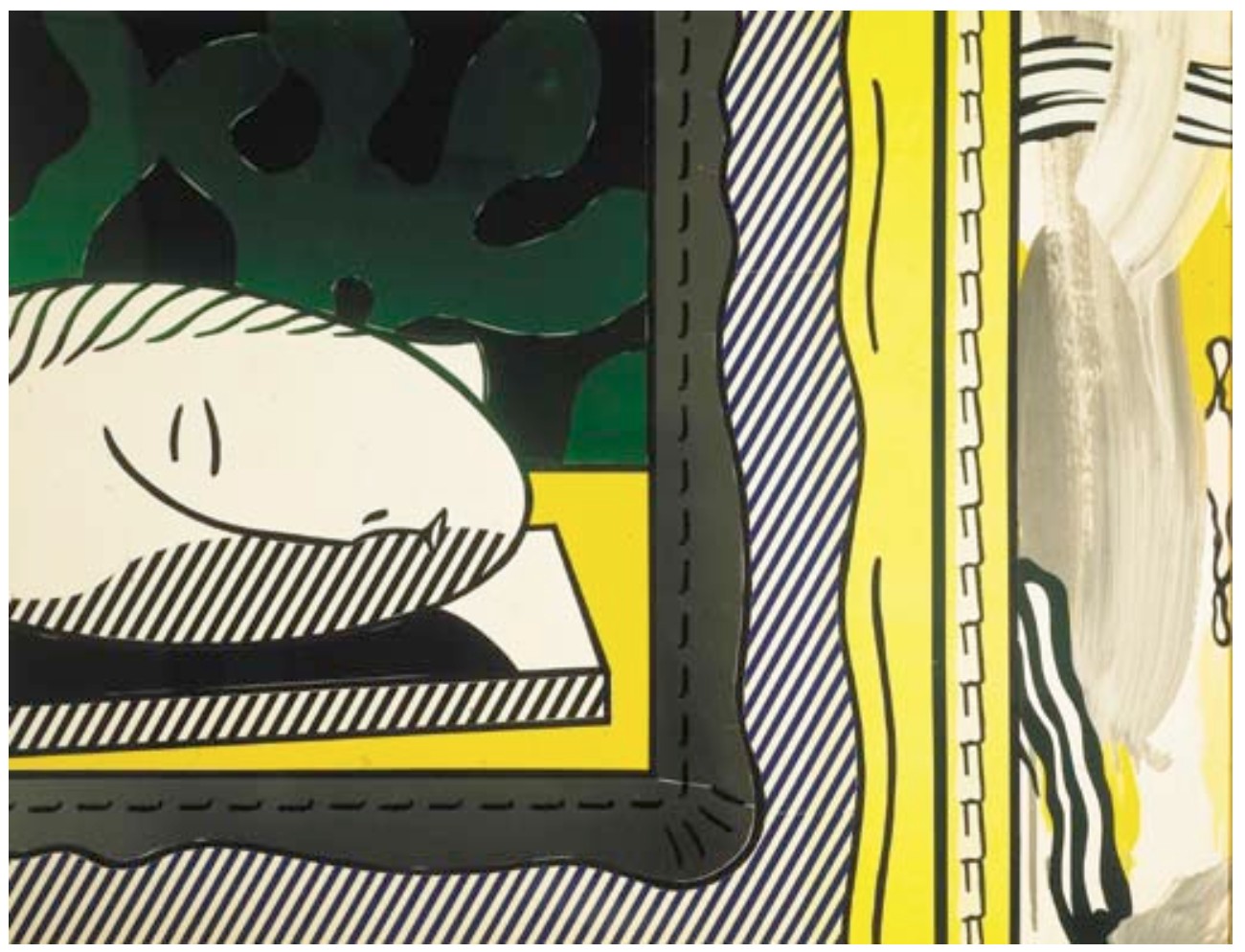
Two Paintings: Sleeping Muse is part of the 1980s series of works in which Lichtenstein depicts two paintings of iconic art images on a wall. While the appropriation of other artists is not new for Lichtenstein, this series portrays their work in a novel context, as framed pictures, close up and cropped to reveal only a section of the canvas.
In the present picture, Lichtenstein assembles together three canonical modern works of art, selecting a group of images so immediately recognizable that an abbreviated and simplified representation suffices to signal their source to the viewer. On the canvas to the left, he depicts a Matisse philodendron leaf cut-out above a Brancusi sleeping muse sculpture. On the canvas to the right, he shows the edge of an Abstract Expressionist painting. While these depictions do represent particular artists, they are interpreted through the Lichtenstein eye – flattened, simplified and stylized. By translating each of them into his own language, the artist equalizes them, allows them to compared at the same level and thus distills what comprises each artist’s style. “Lichtenstein does not wish to submerge the original source for his paintings; he wishes to identify it” (D. Waldman, Roy Lichtenstein, London, 1971, p.11).
In his Two Paintings series, however, Lichtenstein goes beyond representing an artist’s style; he offers a context for the paintings that undermines our sense of perception: “Lichtenstein presents a series of ambiguities, making one ‘reality’ contradict the other, and thus questions the absolute validity of human perception” (D. Waldman, Roy Lichtenstein, New York, 1993, p. 295). In the present work, the artist collapses three different levels of physicality – a sculpture, a paper cut-out, and a thickly painted picture – into a single plane, rendering them the same when we know that they are different. Furthermore, the painting on the left, illustrating a sculpture on a table in front of a cut-out, is once removed from the original object whereas the painting on the right is the object itself.
By cleverly juxtaposing familiar works from art history in an interior context, Lichtenstein creates an intriguing disjunction of reality at multiple levels, while paying homage to his predecessors who similarly grappled with the limits of human perception and of truthfully depicting of the material world.