Introduction
The Entablature series, produced between 1971 and 1976, represented a striking departure from the heroic narratives of his 1960s Pop. Where earlier works drew from comic books, advertisements, and the vocabulary of Abstract Expressionism, here Lichtenstein looked instead to the façades of classical and Beaux-Arts buildings. Translating cornices, moldings, and friezes into his distinctive idiom of flat color and bold outlines, he elevated ornament itself to the subject of painting. What had traditionally been the embellishment of structure became, in Lichtenstein’s hands, a structural subject in its own right.
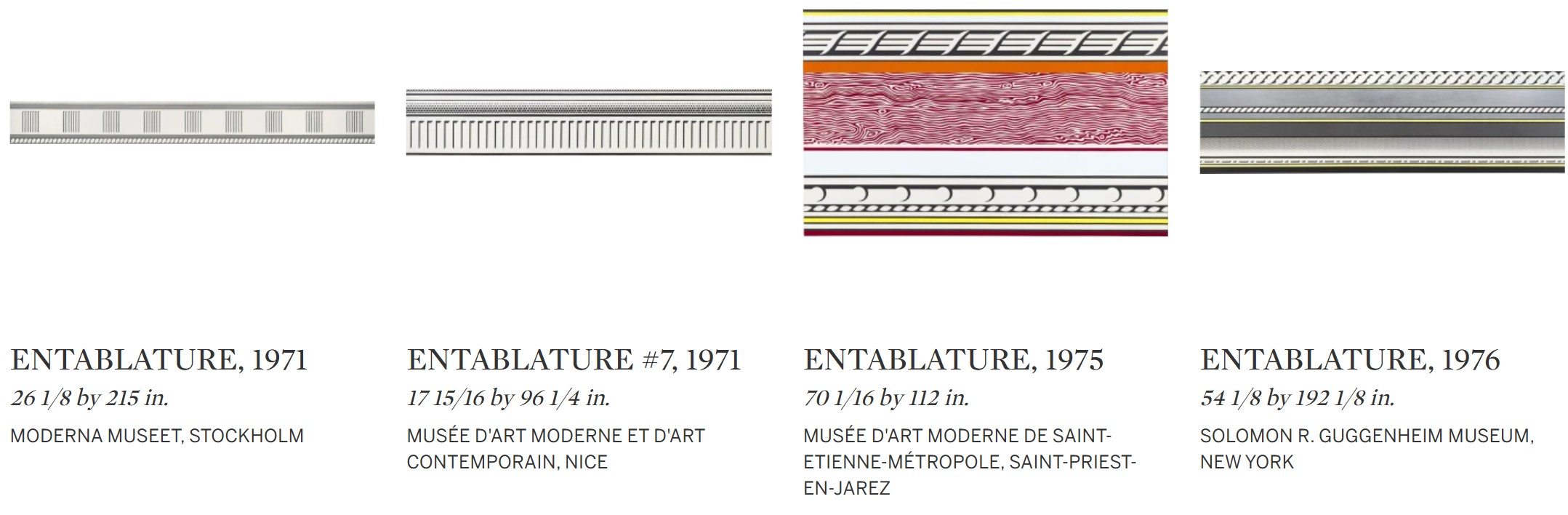
Entablatures in Museum Collections
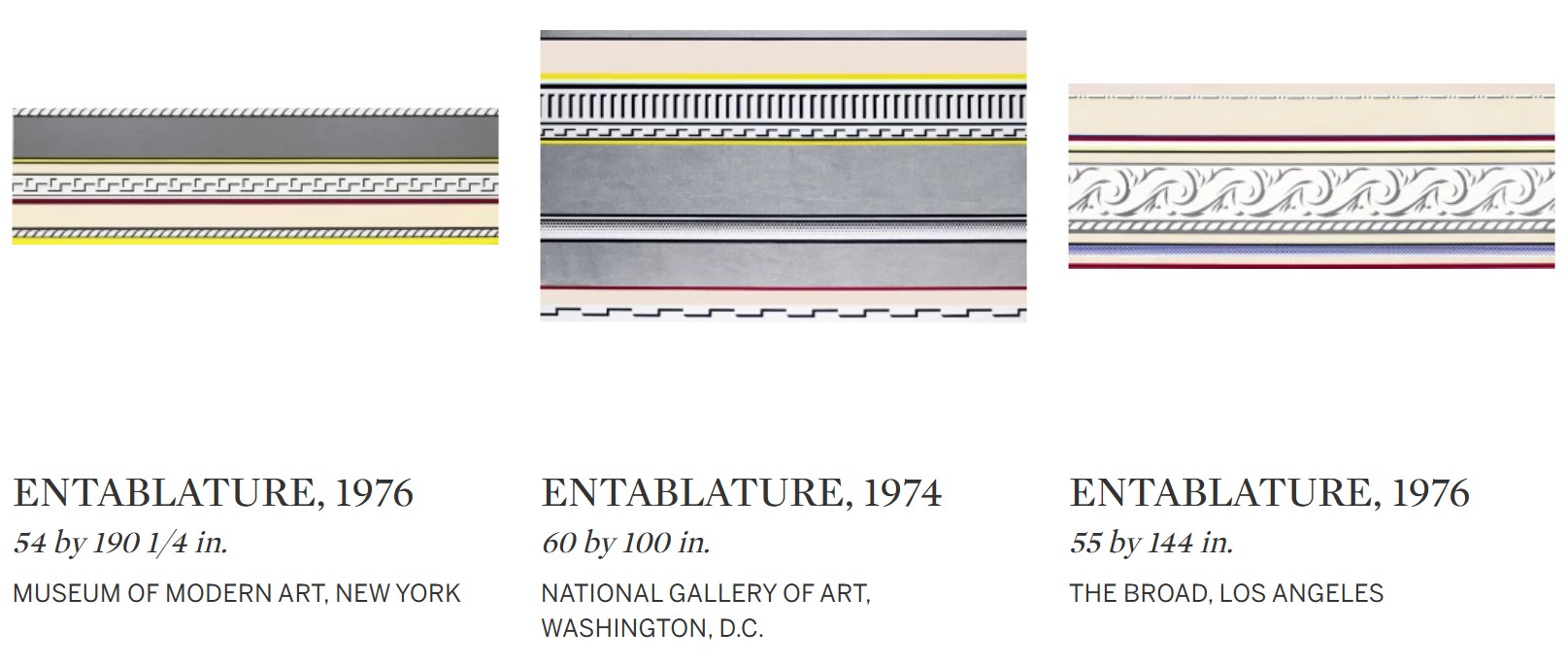
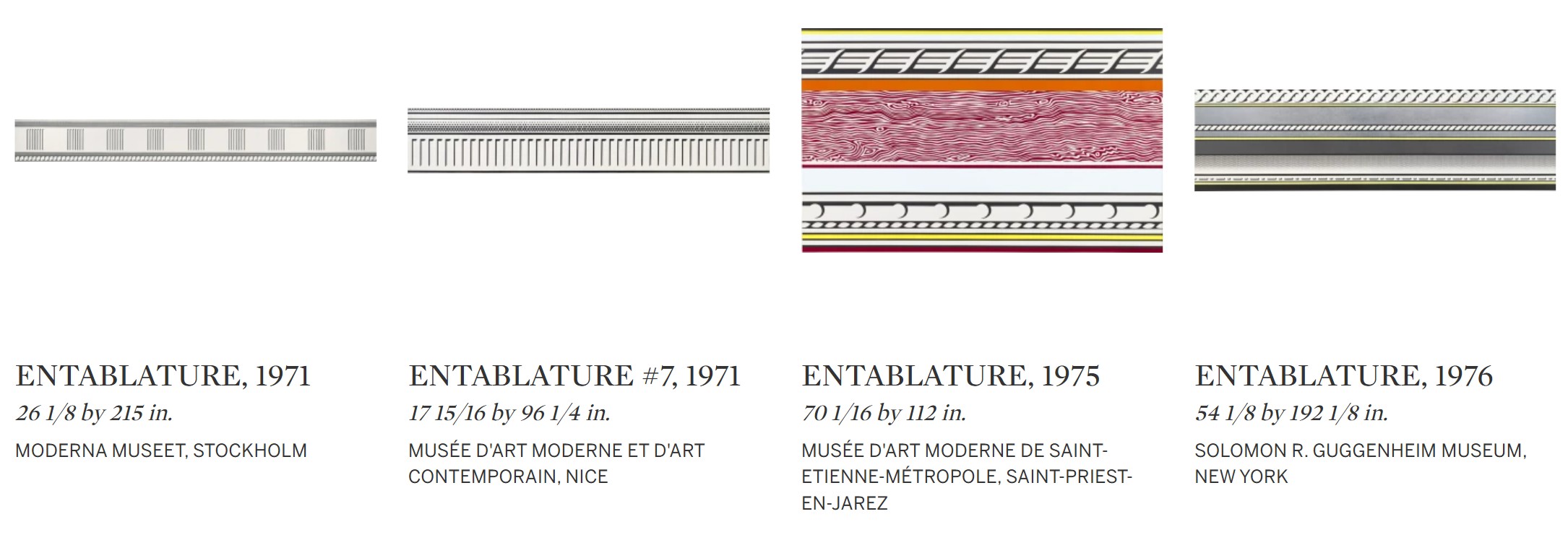
What makes the Entablatures so compelling is the tension they sustain between decoration and abstraction. The motifs themselves are ornamental, yet Lichtenstein distills them into the language of reduction—bands, stripes, flat zones, repeated patterns. By stripping away illusionism, he renders ornament at once minimal and monumental. The decorative, once marginal, is brought to the fore; the flourish becomes the subject. At this scale, the paradox is heightened: Lichtenstein transforms detail into drama, presenting ornament as both sign and structure.
“Even the Entablatures are meant to be humorous in a way, because they don’t seem to be funny but they mean imperial power or something like that.”
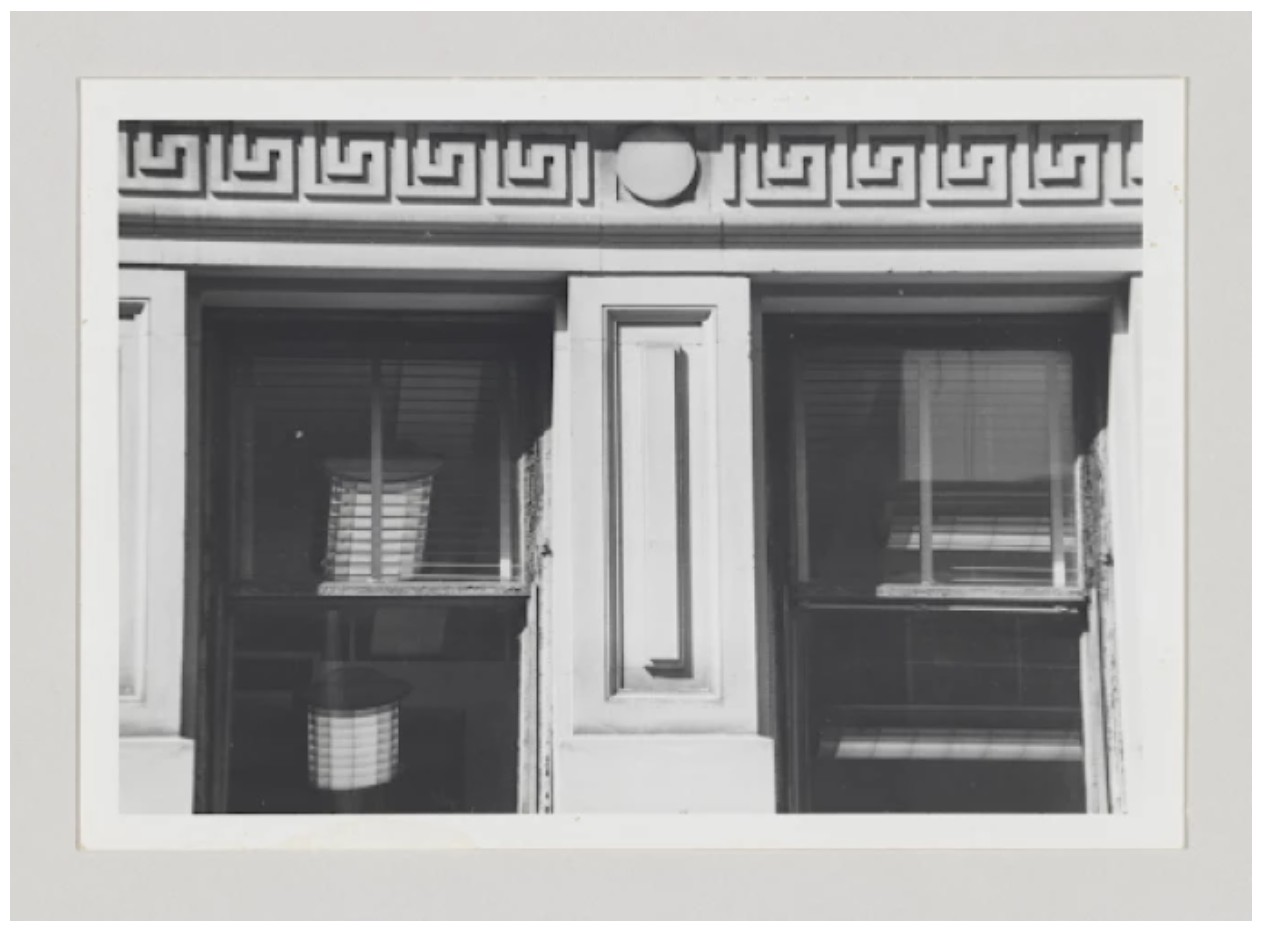
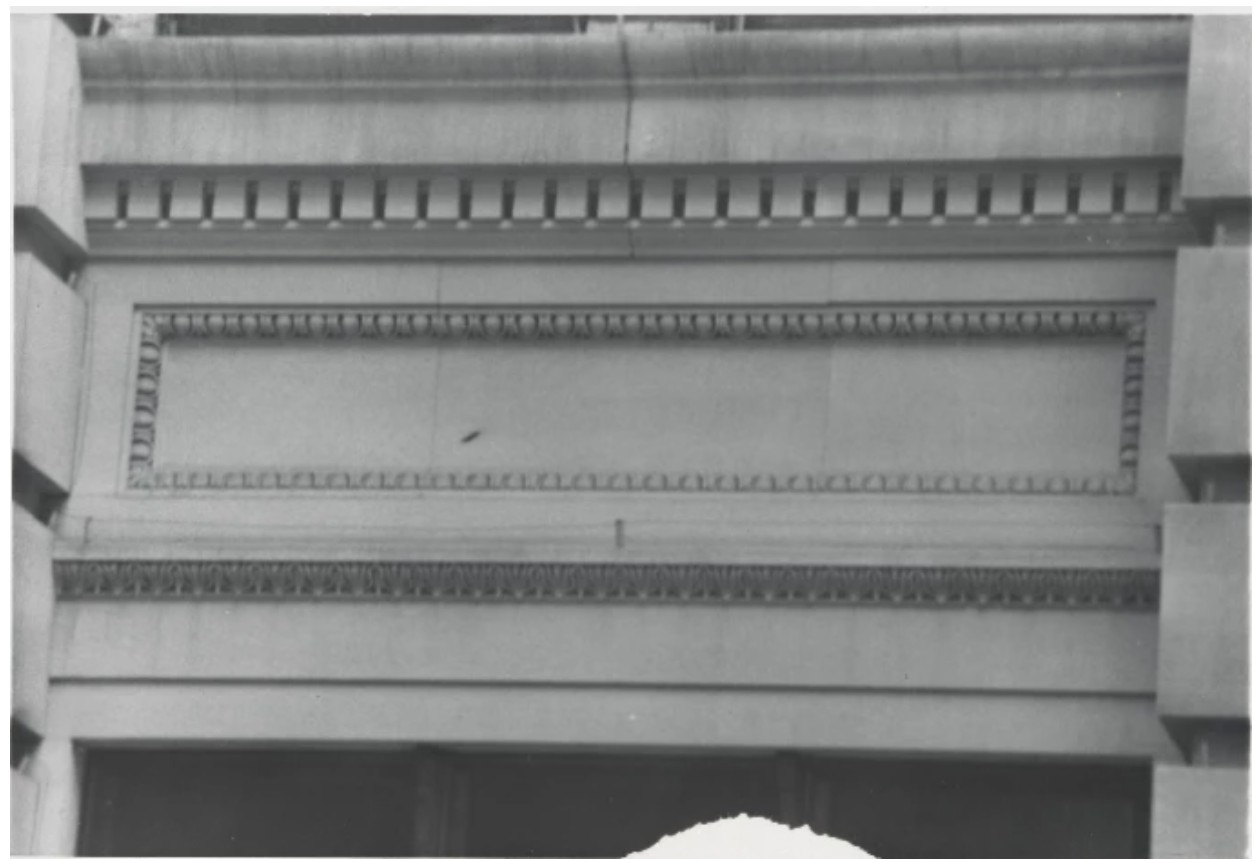
Roy Lichtenstein, Untitled [architecture study], c. 1970-1976.
The Whitney Museum of American Art, New York. Art © Estate of Roy Lichtenstein.
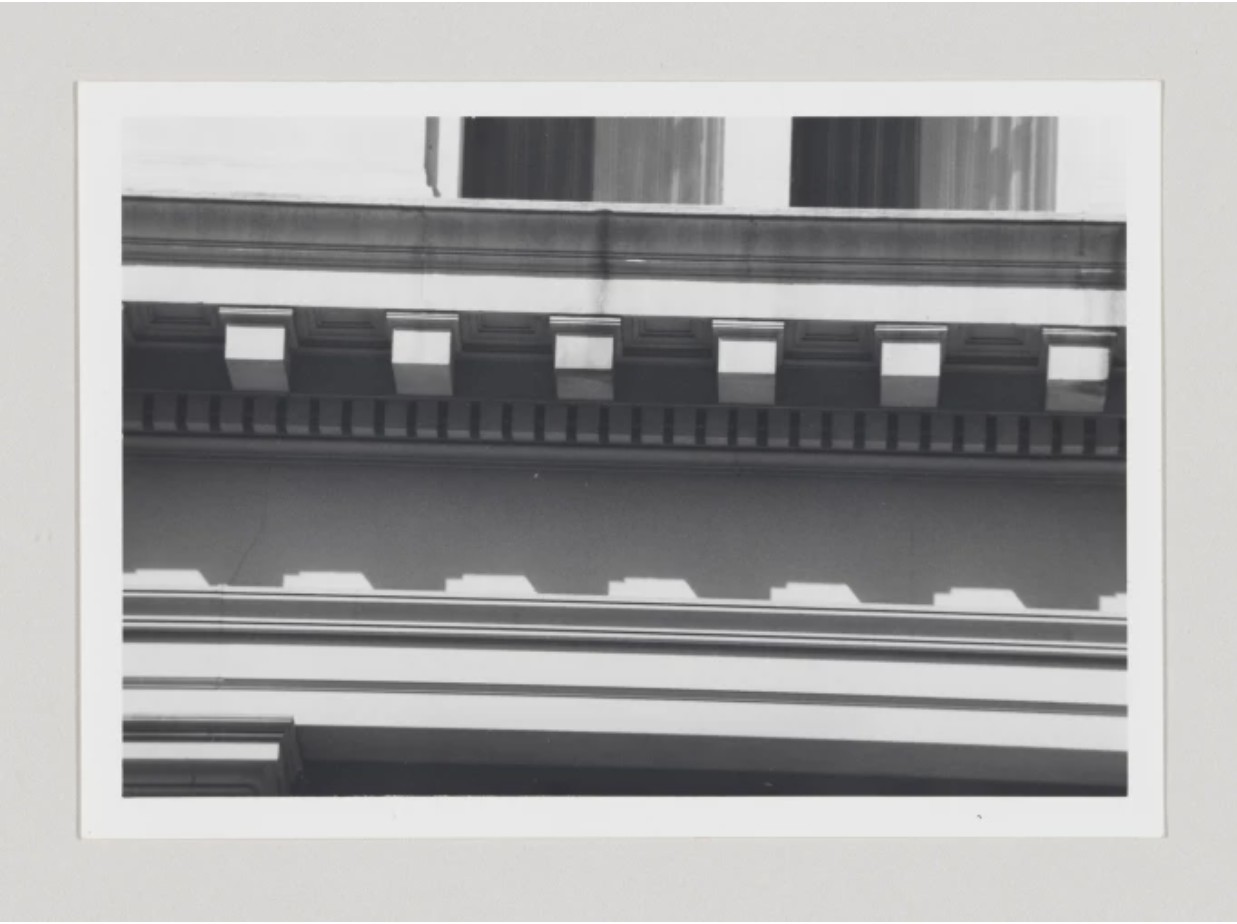
Although Lichtenstein looked to ancient Greek and Roman examples, the visual source most influential to Entablature was a photoshoot of the building façades in Manhattan. Shooting building fragments in the Wall Street area and in Lower Manhattan, close to his studio at the time, Lichtenstein tapped into the geographical jugular of the city. By capturing building fragments at a time of day when light and shadow were in high contrast, the ornamental features were successfully thrown in sharp relief. In this way of extrapolating architectural morsels, Lichtenstein ascertained the minimum information required to convey the architrave, cornice and frieze, the three components of classical architecture, across his canvas. In his early Entablatures, the canvases are heavily referent to their photographic source, yet become more experimental at the point of the present work’s creation in 1974, whereby the artist’s freer hand and concentration on the lateral expanse of the wall transforms its source and evokes an effortless congruence between the fuller, metallic colors that create a greater sense of mass.
“The Entablatures represent my response to Minimalism and the art of Donald Judd and Kenneth Noland. It’s my way of saying that the Greeks did repeated motifs very early on, and I am showing, in a humorous way, that Minimalism has a long history…It was essentially a way of making a Minimalist painting that has a classical reference”
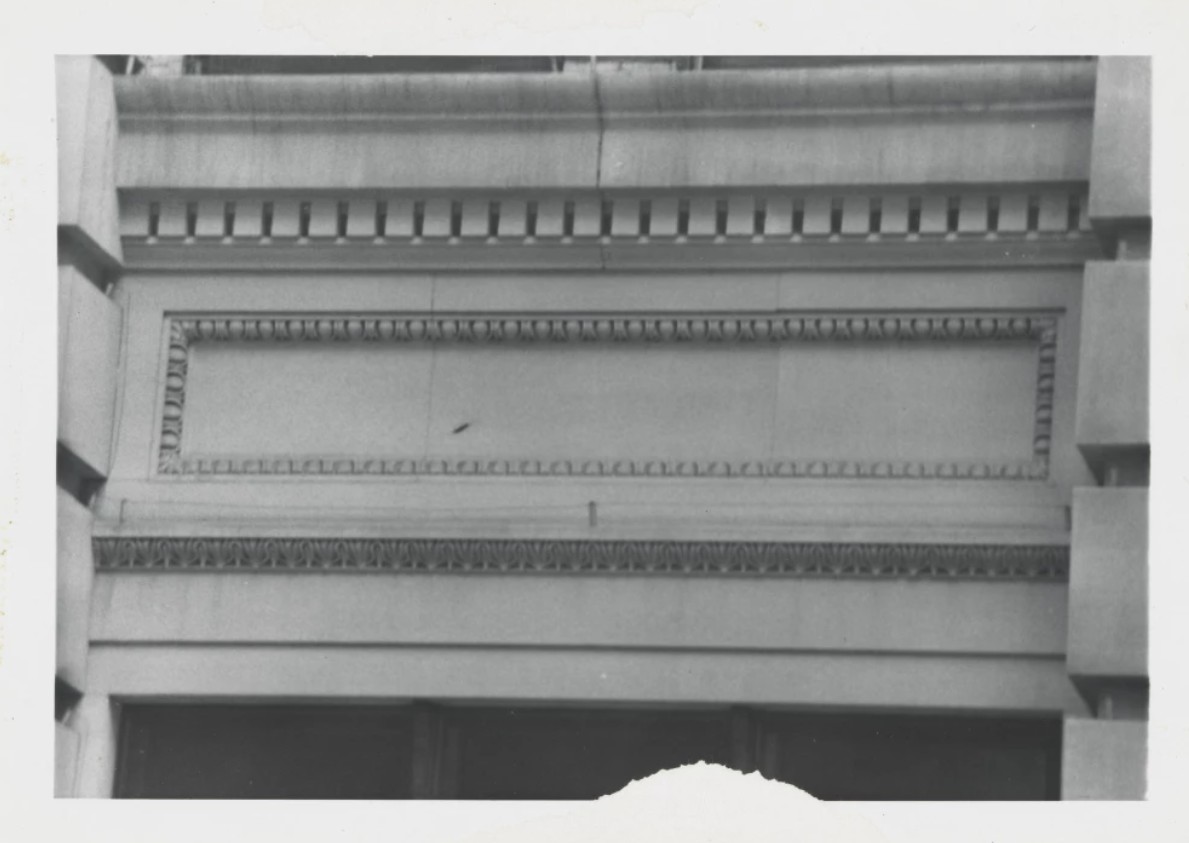
Roy Lichtenstein, Untitled [architecture study], c. 1970-1976, The Whitney Museum of American Art, New York.
Art © Estate of Roy Lichtenstein.
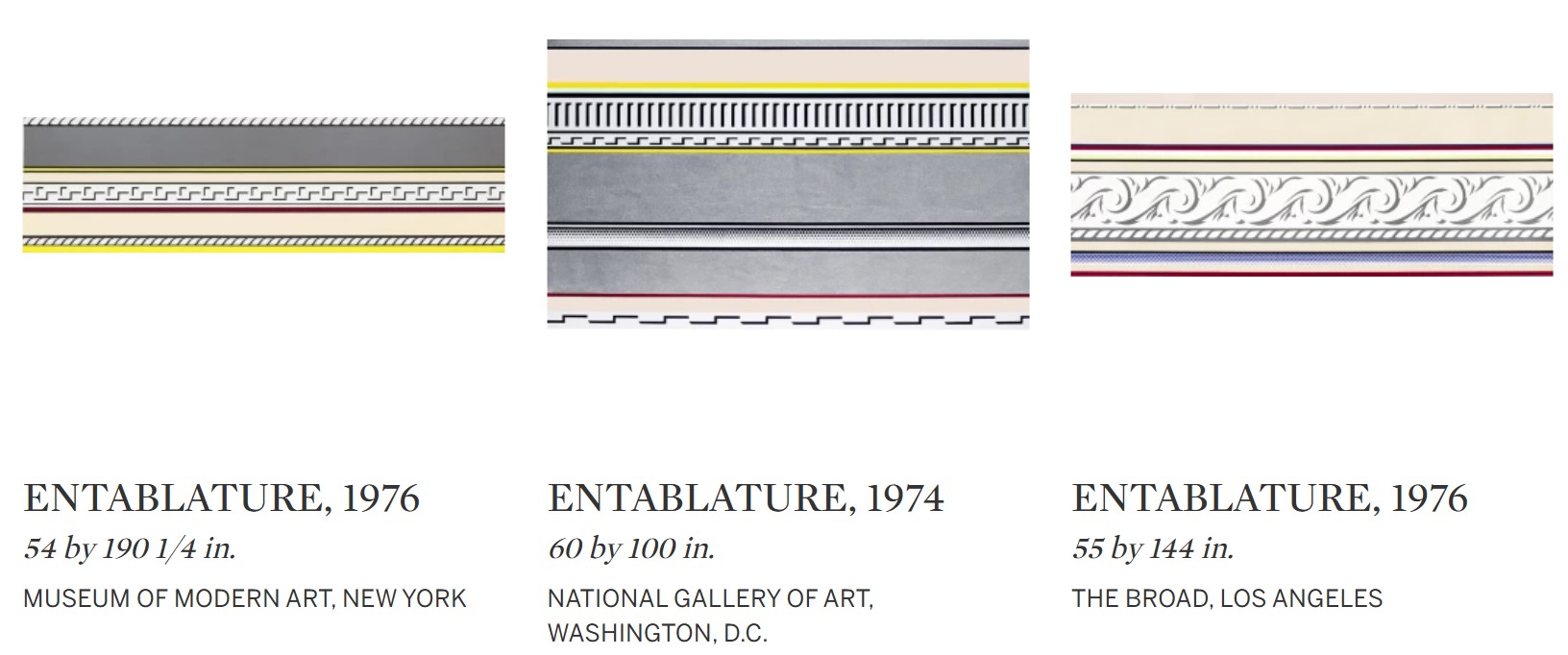
Further underscoring the significance of this body of work within Lichtenstein’s oeuvre, museums such as the Museum of Modern Art, New York, the National Gallery of Art, Washington, D.C., The Broad, Los Angeles and Moderna Museet, Stockholm hold paintings from the Entablature series in their permanent collections. It is a series that scholars have increasingly recognized as critical to understanding Lichtenstein’s post-1960s development—not merely a decorative detour, but a deeply thoughtful exploration of structure, symbol, and the lineage of art history itself.
Auction Results
#1. Entablature, 1975
Sotheby’s New-York: 15 May 2007
Estimated: USD 1,500,000 – 2,000,000
USD 2,280,000
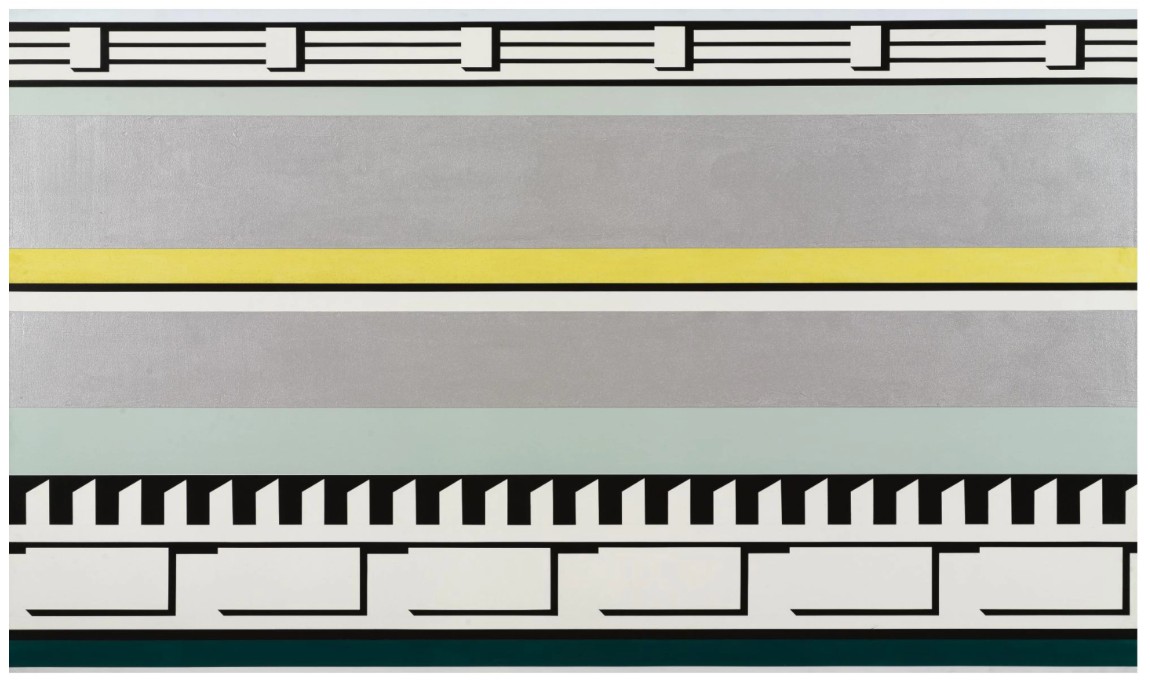
ROY LICHTENSTEIN
Entablature, 1975
Oil and magna on canvas
66 x 112 1/4 inches (167.6 x 285.1 cm)
Signed and dated 75 on the reverse
#2. Entablature, 1974
Reflections on Pop: Works from the Collection of Dorothy and Roy Lichtenstein
Sotheby’s New-York: 26 September 2025
Estimated: USD 700,000 – 1,000,000
USD 1,331,000
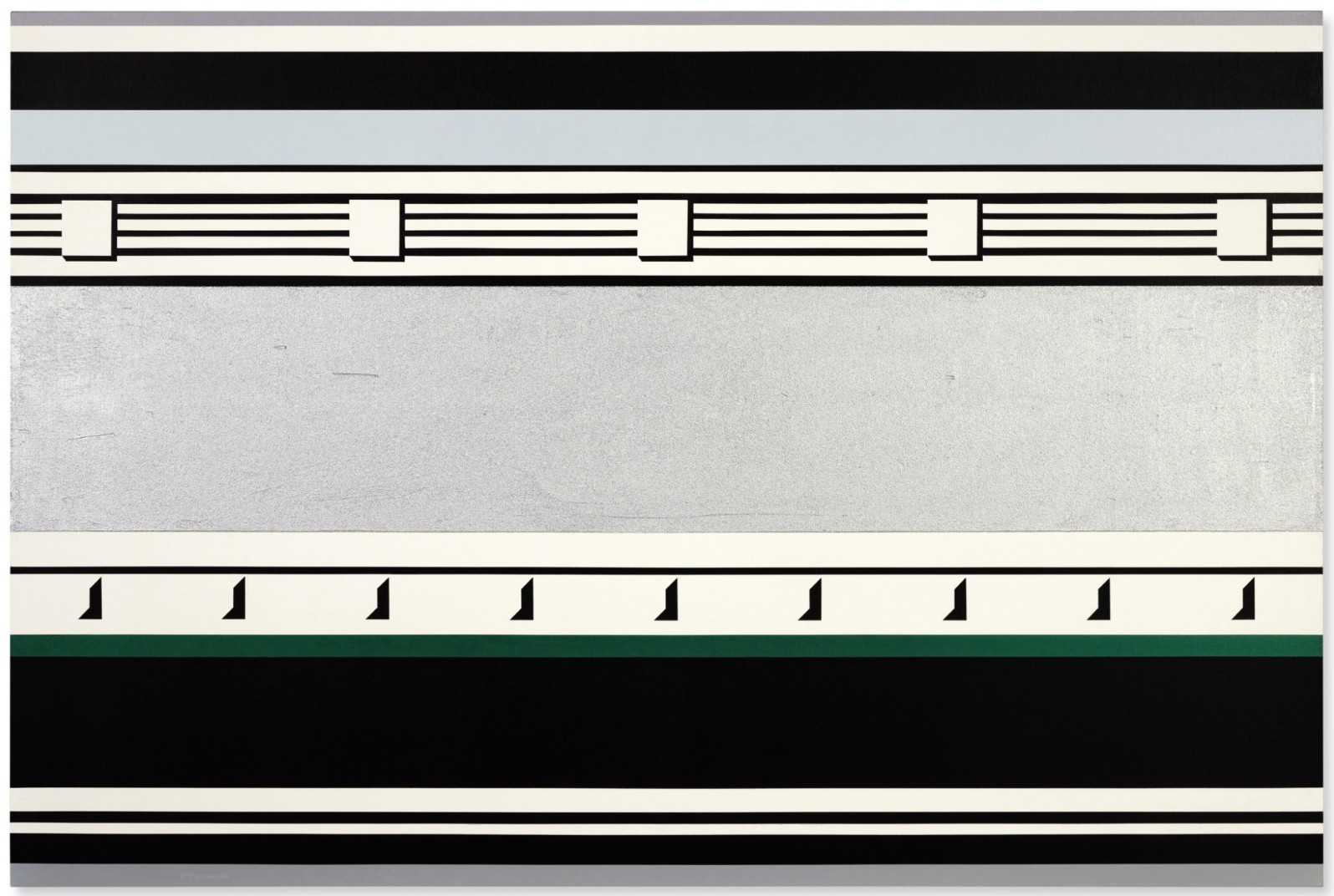
ROY LICHTENSTEIN (1923 – 1997)
Entablature, 1974
Acrylic, sand and graphite on canvas
60×90 inches (152.4 x 228.6 cm)
Signed and dated ’74 (on the reverse)
#3. Entablature, 1974
A Legacy Reimagined: Works from the Collection of Dorothy and Roy Lichtenstein
Sotheby’s New-York: 19 November 2025
Estimated: USD 800,000 – 1,200,000
USD 1,270,000
Entablature | Contemporary Day Auction | 2025 | Sotheby’s
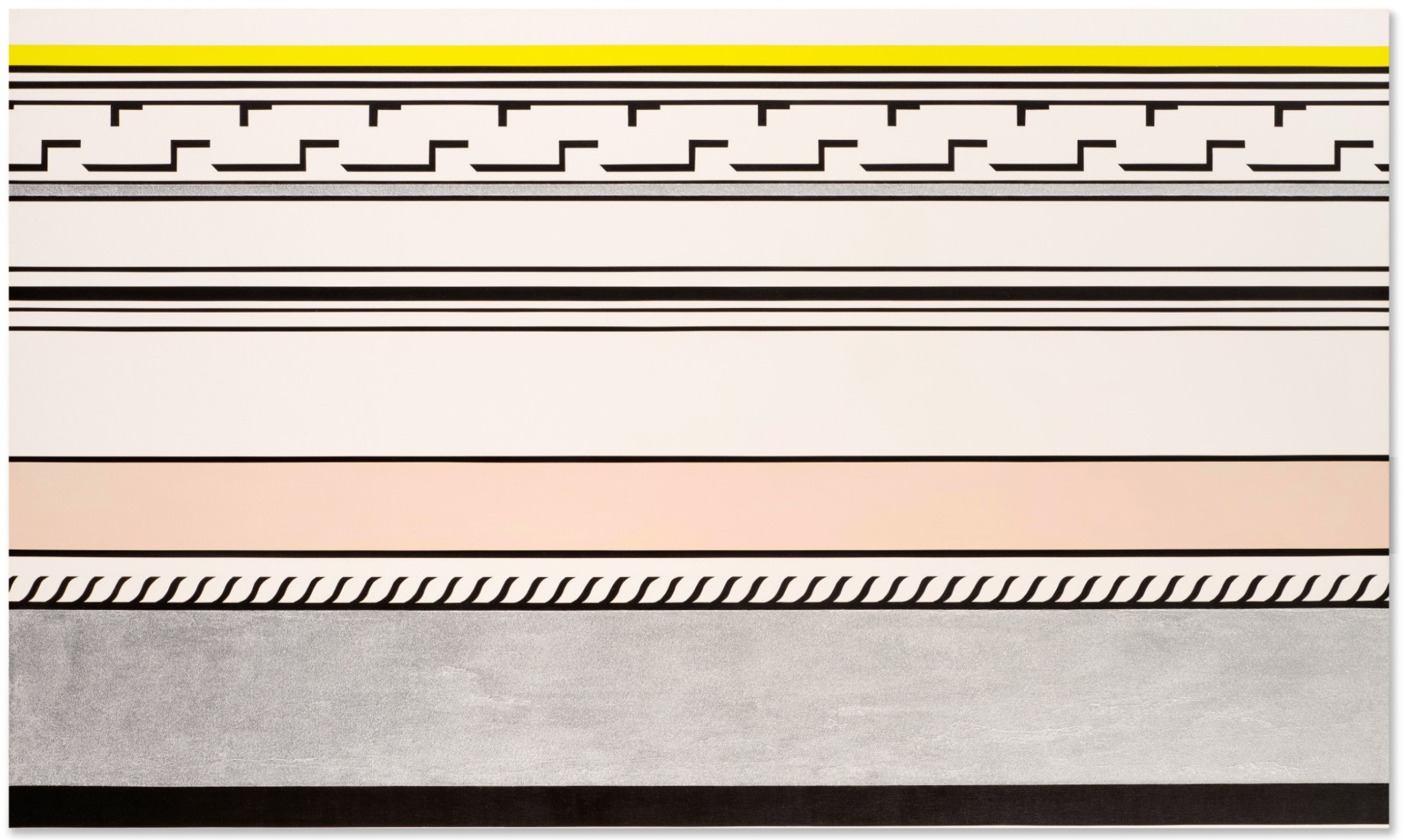
ROY LICHTENSTEIN (1923 – 1997)
Entablature, 1974
Acrylic, sand and graphite on canvas
60 x 100 1/8 inches (152.4 x 254.3 cm)
Signed and dated ‘74 (on the reverse)
#4. Entablature no. 2, 1971
Christie’s New-York: 12 May 2011
Estimated: USD 400,000 – 600,000
USD 1,142,500
Roy Lichtenstein (1923-1997) , Entablature no. 2 | Christie’s

ROY LICHTENSTEIN (1923-1997)
Entablature no. 2, 1971
Oil and Magna on canvas
26×168 inches (66 x 426.7 cm)
Signed and dated ‘rf Lichtenstein ’71’ (on the reverse)
#5. Entablature, 1975
Works from the Collection of Dorothy and Roy Lichtenstein
Sotheby’s New-York: 16 May 2025
Estimated: USD 500,000 – 700,000
USD 1,079,500
Entablature | Contemporary Day Auction | 2025 | Sotheby’s
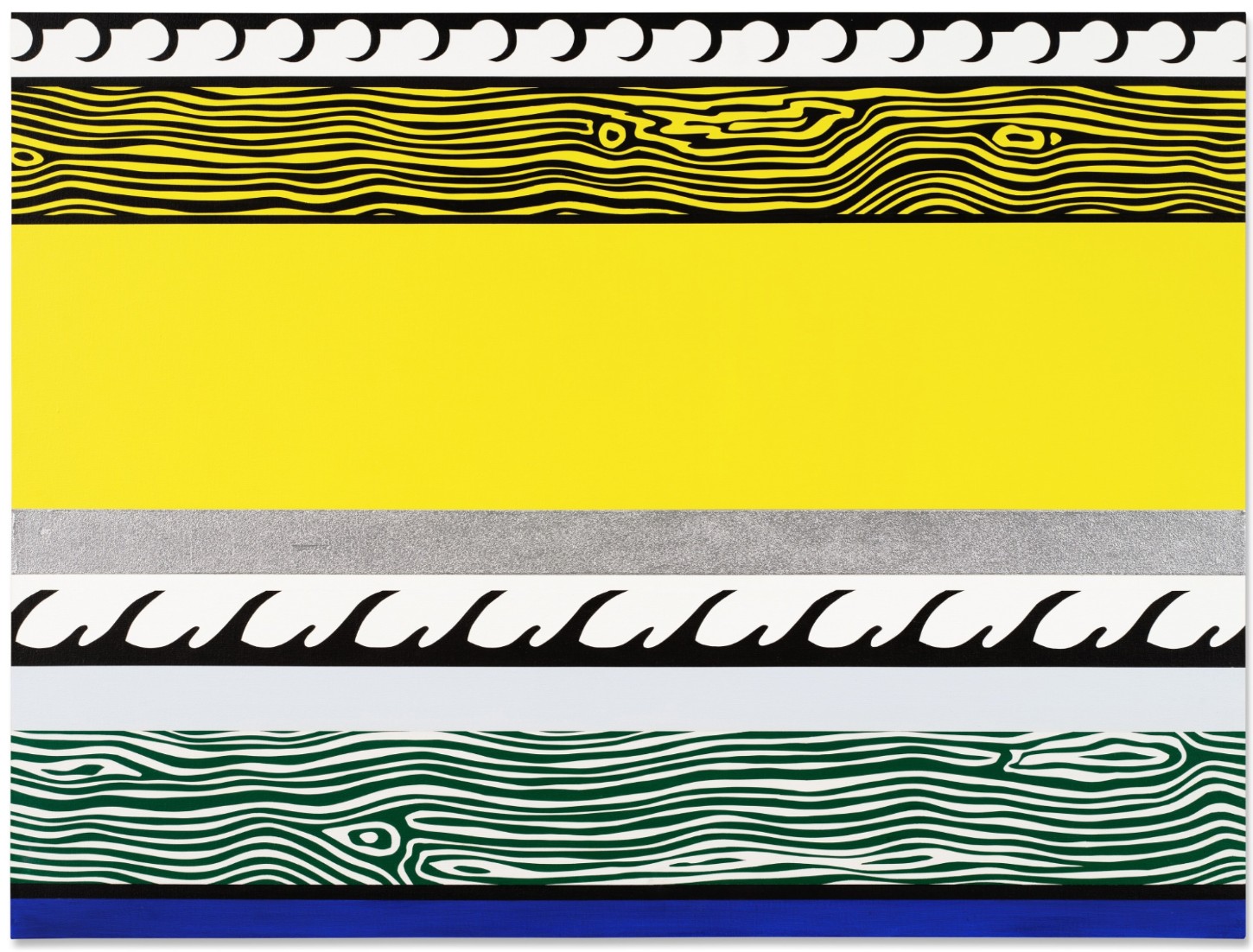
ROY LICHTENSTEIN (1923 – 1997)
Entablature, 1975
Acrylic, sand and graphite on canvas
36 x 48 1/4 inches (96.5 x 122.6 cm)
Signed and dated ’75 (on the reverse)
#6. Entablature, 1974
Sotheby’s New-York: 17 November 2017
Estimated: USD 800,000 – 1,200,000
USD 735,000
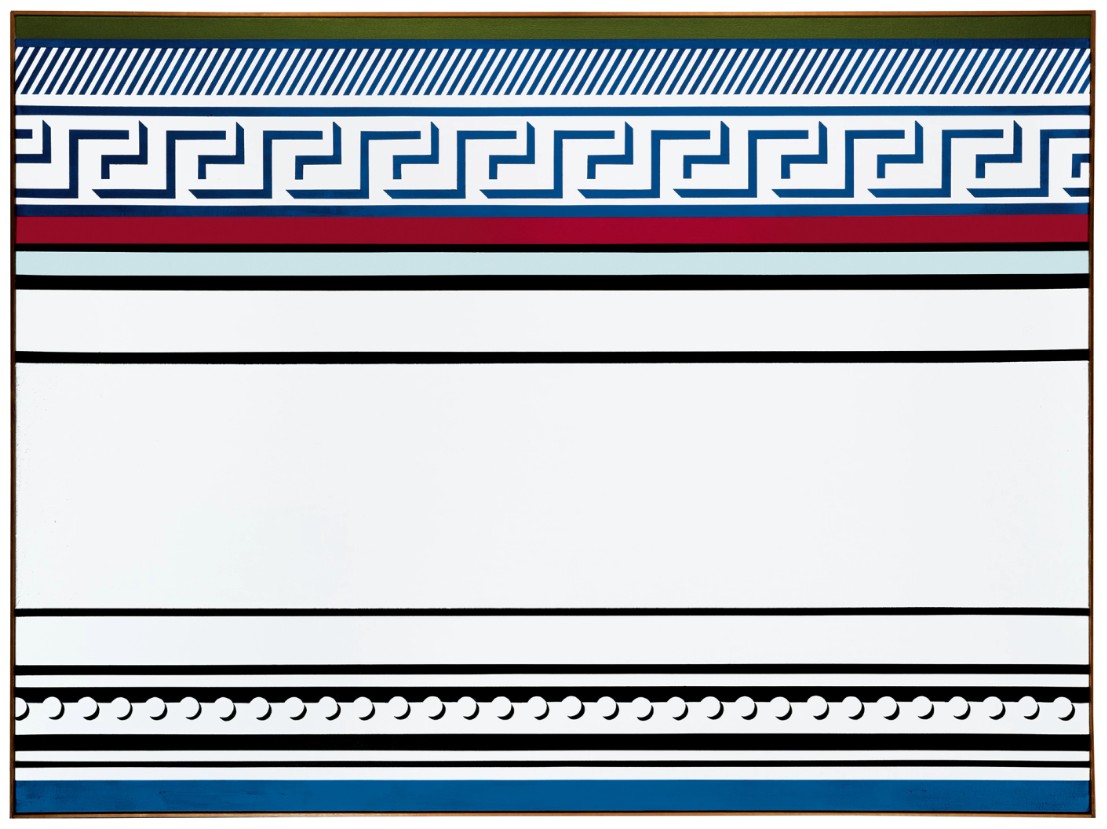
ROY LICHTENSTEIN
Entablature, 1974
Oil, Magna and sand on canvas
40×54 inches (101.6 x 137.2 cm)
Signed and dated ’74 on the reverse
#7. Entablature #6, 1971
Christie’s New-York: 16 November 2018
Estimated: USD 600,000 – 800,000
USD 636,500
Roy Lichtenstein (1923-1997), Entablature #6 | Christie’s

ROY LICHTENSTEIN (1923-1997)
Entablature #6, 1971
Oil and Magna on canvas
26 x 144 1/4 inches (66 x 366.4 cm)
Signed and dated ‘rf Lichtenstein ’71’ (on the reverse)
Entablature, 1975
Entablature, 1975
Sotheby’s New-York: 15 May 2007
Estimated: USD 1,500,000 – 2,000,000
USD 2,280,000
ROY LICHTENSTEIN
Entablature, 1975
Oil and magna on canvas
66 x 112 1/4 inches (167.6 x 285.1 cm)
Signed and dated 75 on the reverse
With his Entablature paintings, Roy Lichtenstein created one of his most refined graphic series. Considered predominantly as a Pop artist in the 1960s, Lichtenstein ventured down a new path with this series that allied him more closely with minimal art and color field abstraction. Lichtenstein moved away from popular images and towards more neutral subjects. In addition to the Entablatures, Lichtenstein also focused on landscapes and his Brushwork paintings. In Entablature from 1975, it is clear that Lichtenstein has retained some of the elements of his Pop cartoon style, such as thick black outlines, however the image itself is taken from art history and Greek architecture in particular.
Lichtenstein began working on his Entablatures in 1971 and created two sets of these paintings. The original series was executed in black and white and emerged from Lichtenstein’s earlier works, such as Temple of Apollo, from 1964. The present work is one of the eighteen paintings in the second set of Entablatures, in which Lichtenstein expanded his palette to include more vibrant colors and diminished the use of Benday dots. Entablature is an excellent example of the artist’s interest in creating new textures by incorporating sand and mica into his paint to create textures that relate to actual building materials. Lichtenstein studied a variety of sources on classical architecture in addition to photographing a number of buildings in the financial district of Manhattan. In the present work, Lichtenstein stays true to the classical model yet within a reductive style of extreme simplification in line and shape.
By turning entablatures into color-field landscapes, Lichtenstein creates stark, strong geometric surfaces. The canvas remains mainly unadulterated, punctuated only by strips of pattern and color that push the structure out of the picture plane and emphasize the flat surface of the work. Entablature from 1975 is a visually exciting example of Lichtenstein’s new refinement of curvilinear patterns as he isolates architectural ornament to create one of his most technically complex and sophisticated graphic series.
Entablature, 1974
Entablature, 1974
A Legacy Reimagined: Works from the Collection of Dorothy and Roy Lichtenstein
Sotheby’s New-York: 19 November 2025
Estimated: USD 800,000 – 1,200,000
USD 1,270,000
Entablature | Contemporary Day Auction | 2025 | Sotheby’s
ROY LICHTENSTEIN (1923 – 1997)
Entablature, 1974
Acrylic, sand and graphite on canvas
60 x 100 1/8 inches (152.4 x 254.3 cm)
Signed and dated ‘74 (on the reverse)
Monumental in scale and commanding in presence, Entablature (1974) belongs to one of the most ambitious and conceptually rigorous series of Roy Lichtenstein’s career. Spanning five by seven and a half feet, the painting evokes the authority of architecture while sustaining the crisp clarity and graphic vitality that had long defined his Pop idiom. A work of extraordinary ambition, Entablature captures the moment in the 1970s when Lichtenstein shifted away from his comic-derived imagery to probe the very structures of art and ornament, creating paintings that are at once austere, sumptuous, and profoundly architectural.
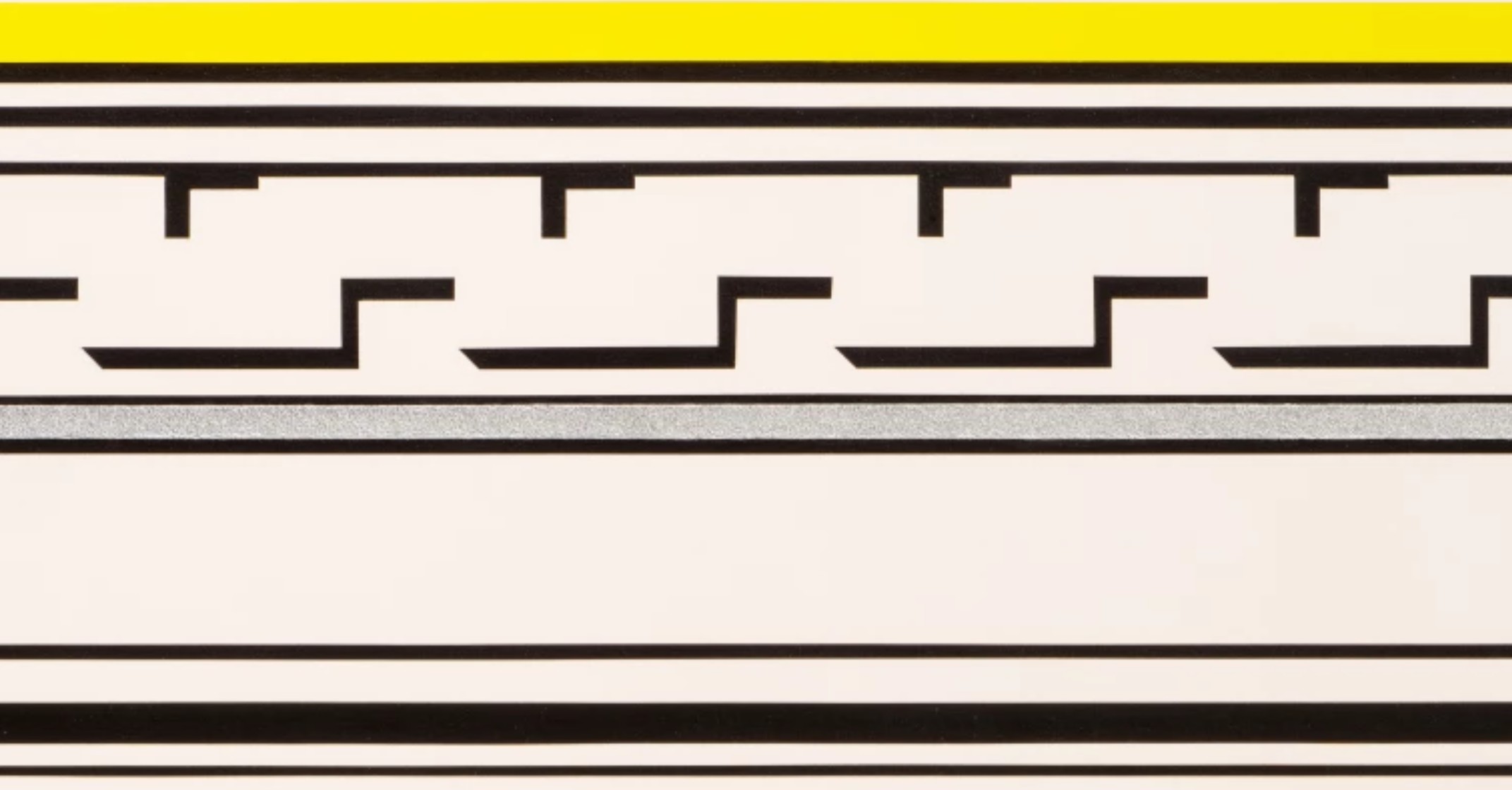
Formally, Entablature exemplifies the rigor of this pursuit. Its horizontal registers unfold with rhythmic order: geometric fretwork, sand-textured fields, linear stripes, and schematic patterns, each crisply articulated and stacked in succession. The addition of sand and graphite lends the surface a subtle tactility, pushing against the pure flatness of paint and animating the work with shifting texture. At this scale, the composition reads simultaneously as decorative pattern and monumental façade, commanding the viewer’s space like architecture transposed onto canvas.
Within the arc of Lichtenstein’s career, Entablature performs a double task. It extends his lifelong fascination with the mediated image—just as his comic panels, explosions, and brushstrokes were stylized signs rather than direct gestures, so too these architectural forms function as signs for ornament rather than ornament itself. At the same time, the series signals a profound dialogue with the artistic debates of its era. By reducing decorative motifs to modular bands, Lichtenstein aligns himself with the seriality and restraint of Minimalism and formal abstraction, while his colors, textures, and Pop precision distinguish his work from the austerity of his peers.
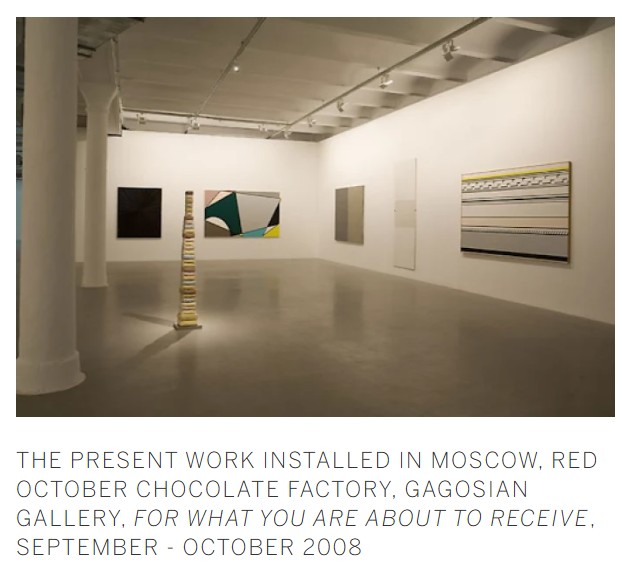
In this synthesis, Entablature demonstrates Lichtenstein’s ability to transform sources both high and low—from comic strips to classical façades—into a coherent and innovative pictorial language. It is a painting that is at once deeply rooted in art history and wholly of its time, reflecting on the endurance of ornament while speaking to the reductive impulses of the 1970s.
Monumental in size, exacting in execution, and ambitious in concept, Entablature is a landmark achievement of Lichtenstein’s mid-career production. It embodies the artist’s relentless capacity for reinvention, his willingness to interrogate the very terms of painting, and his ability to invest even the most overlooked details of culture—here, the decorative band of architecture—with the weight of modernist inquiry. With Entablature, Lichtenstein transforms ornament into monument, creating a work that resonates not only as a key chapter in his own oeuvre but as a profound contribution to the history of postwar art.
Entablature, 1974
Entablature, 1974
Reflections on Pop: Works from the Collection of Dorothy and Roy Lichtenstein
Sotheby’s New-York: 26 September 2025
Estimated: USD 700,000 – 1,000,000
USD 1,331,000
ROY LICHTENSTEIN (1923 – 1997)
Entablature, 1974
Acrylic, sand and graphite on canvas
60×90 inches (152.4 x 228.6 cm)
Signed and dated ’74 (on the reverse)
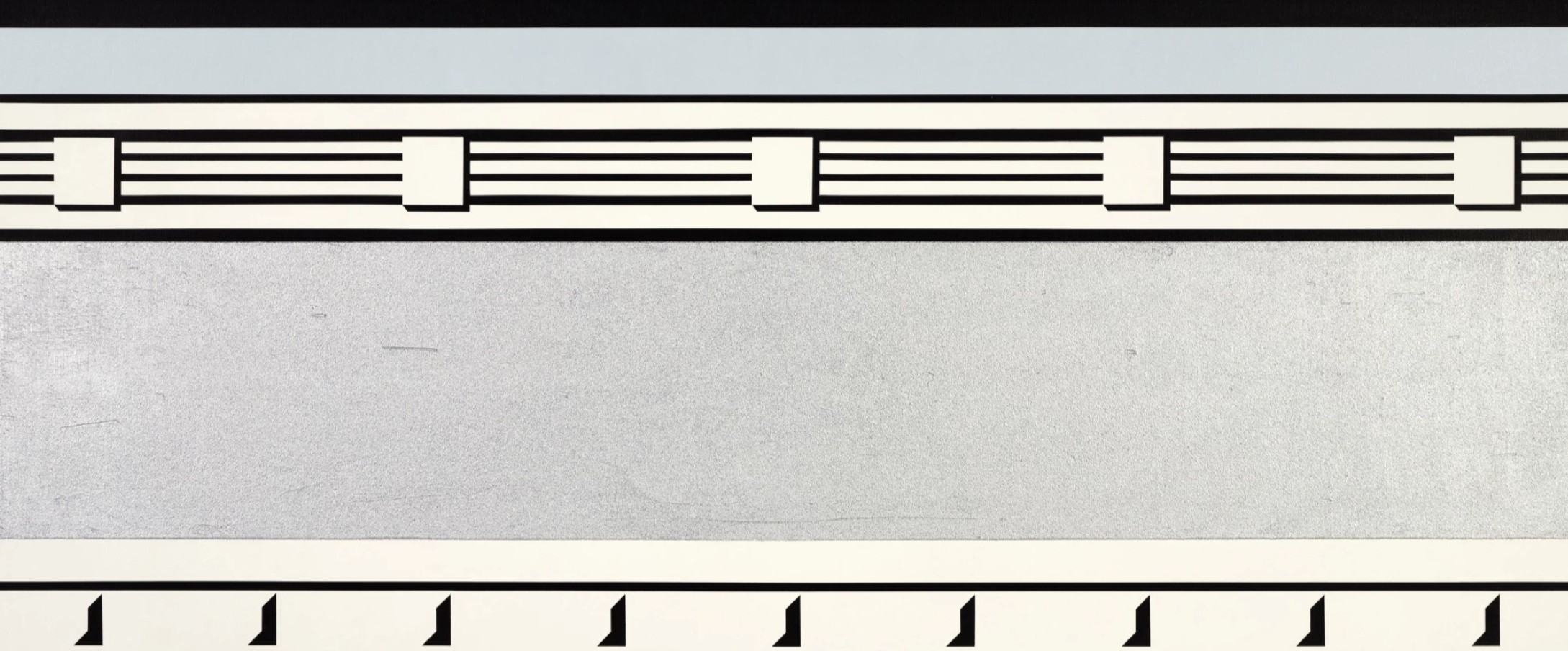
Roy Lichtenstein’s Entablature, executed in 1974, is an exceptional example from one of the artist’s most conceptually rich and visually distinctive series. Executed in acrylic, graphite, and sand on canvas, the present painting demonstrates Lichtenstein’s continued engagement with architectural motifs and Minimalism. Rendered in the artist’s signature flat planes, bold lines, and stylized patterning, the work merges high art with vernacular design.
Developed between 1971 and 1976, the Entablature series marked a dramatic shift in Lichtenstein’s practice. Moving away from comic book panels and commercial advertising, he turned to architectural ornamentation, specifically motifs drawn from American neoclassical façades. Drawing inspiration from Greek and Roman precedents as well as early twentieth-century Beaux-Arts revival buildings in Manhattan, Lichtenstein photographed local architecture and transformed classical entablatures into bold, graphic abstractions. In doing so, Lichtenstein absorbed the visual lessons of Minimalism, distilling ornate façades into bands of color, line, and texture. What had once been heavy stone carving becomes pure rhythm and repetition, stripped to its essential geometry. This translation of decorative architecture into a language of stark reduction places the Entablatures in dialogue with contemporaries such as Donald Judd and Sol LeWitt, while remaining unmistakably Lichtenstein in their wit and graphic precision.
Roy Lichtenstein, Untitled [Architecture Study], c. 1970-76.
The Whitney Museum of American Art, New York. Art © Estate of Roy Lichtenstein
Though the surface of Entablature reads as mechanical and precise, it is the product of meticulous handwork—a hallmark of Lichtenstein’s ongoing negotiation between the hand-drawn and the industrial. The inclusion of sand gathered from the Southampton beaches near the artist’s Long Island studio introduces a tactile immediacy that contrasts with the flat, graphic planes, transforming the painting into a subtly palpable object. In this granular texture, the traces of Lichtenstein’s hand become visible, revealing moments of irregularity that invite layered readings across time, space, and media. Here, formal discipline coexists with playful subversion, creating a work that meditates on structure, repetition, and the delicate tension between control and chance. Entablature stands as a powerful testament to Lichtenstein’s ability to fuse conceptual rigor with sensory experience, bridging Minimalism, historical reference, and the tactile world of his Southampton studio. At once monumental and intimate, the present work is an enduring demonstration of the formal intelligence and cultural sophistication of one of twentieth-century America’s most iconic painters.
Entablature, 1975
Entablature, 1975
Works from the Collection of Dorothy and Roy Lichtenstein
Sotheby’s New-York: 16 May 2025
Estimated: USD 500,000 – 700,000
USD 1,079,500
Entablature | Contemporary Day Auction | 2025 | Sotheby’s
ROY LICHTENSTEIN (1923 – 1997)
Entablature, 1975
Acrylic, sand and graphite on canvas
36 x 48 1/4 inches (96.5 x 122.6 cm)
Signed and dated ’75 (on the reverse)
Roy Lichtenstein’s Entablature from 1975 is an exceptional example from one of the artist’s most conceptually rich and visually distinctive series, the Entablatures. One of only a handful of examples executed in acrylic, graphite and sand on canvas, the painting demonstrates Lichtenstein’s continued engagement with architectural motifs and postmodern strategies of quotation. Rendered in the Pop artist’s signature flat planes, bold lines, and stylized patterning, this work is emblematic of a body of paintings that merge high art with vernacular design, and classical gravitas with the slick visual language of mass production. Distinguished by its formal complexity and material nuance, the present work ranks among the most compelling in the Entablature series, exemplifying Lichtenstein’s ability to synthesize historical reference with cool formal rigor. That the present work comes directly from the collection of Dorothy and Roy Lichtenstein—and includes sand gathered from the Southampton beach near the artist’s Long Island studio—further elevates its historic and personal resonance within Lichtenstein’s acclaimed oeuvre.
Developed between 1971 and 1976, Lichtenstein’s Entablature series marked a dramatic conceptual shift in the artist’s work. Moving away from comic book panels and consumer advertising, he turned his attention to architectural ornamentation—specifically, the motifs found on American neoclassical facades. Inspired by both Greek and Roman sources and the early 20th-century Beaux-Arts revival as seen in buildings throughout Manhattan, Lichtenstein photographed local architecture and translated its classical entablatures into bold, graphic abstractions. In doing so, he aligned himself with contemporaries like Robert Venturi, whose Learning from Las Vegas from 1972 questioned modernist purity and reclaimed ornament as meaningful cultural expression.
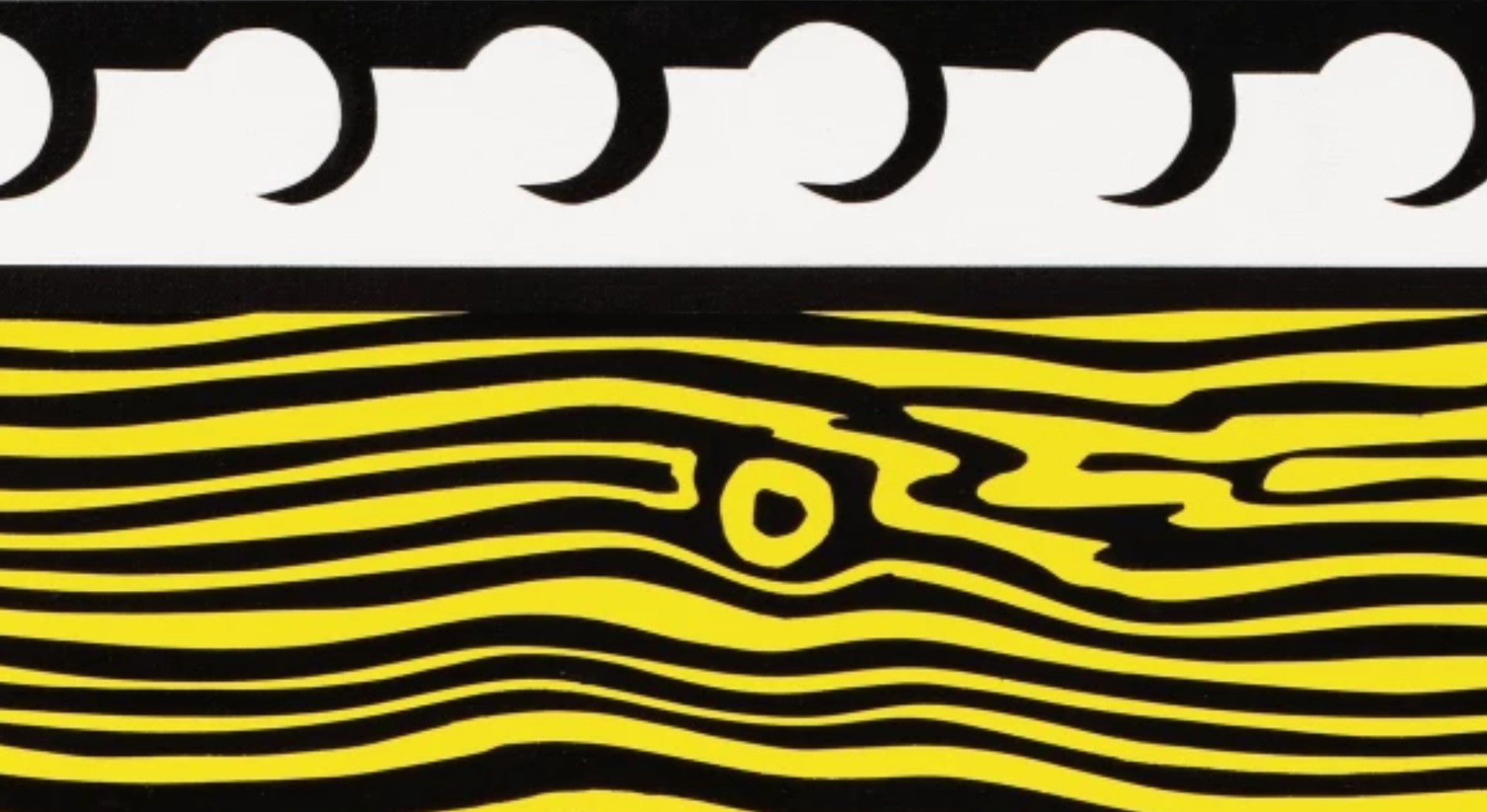
In the present work, the architecture is less a literal referent than a compositional scaffold. Bold bands of yellow, white, silver, and deep blue are punctuated by rhythmic patterns of stylized waves and faux woodgrain, creating a tightly structured but vibrantly playful surface. These motifs, which originally adorned the uppermost sections of buildings, are repurposed here into a linear visual poem—at once austere and exuberant. The use of graphite adds a layer of texture and nuance, while the addition of sand imbues the surface with a tactile immediacy and quiet materialism that anchors the work in physical experience. The sand, collected from the beach near Lichtenstein’s Southampton studio, subtly reinforces the connection between the abstract language of form and the grounded reality of place.
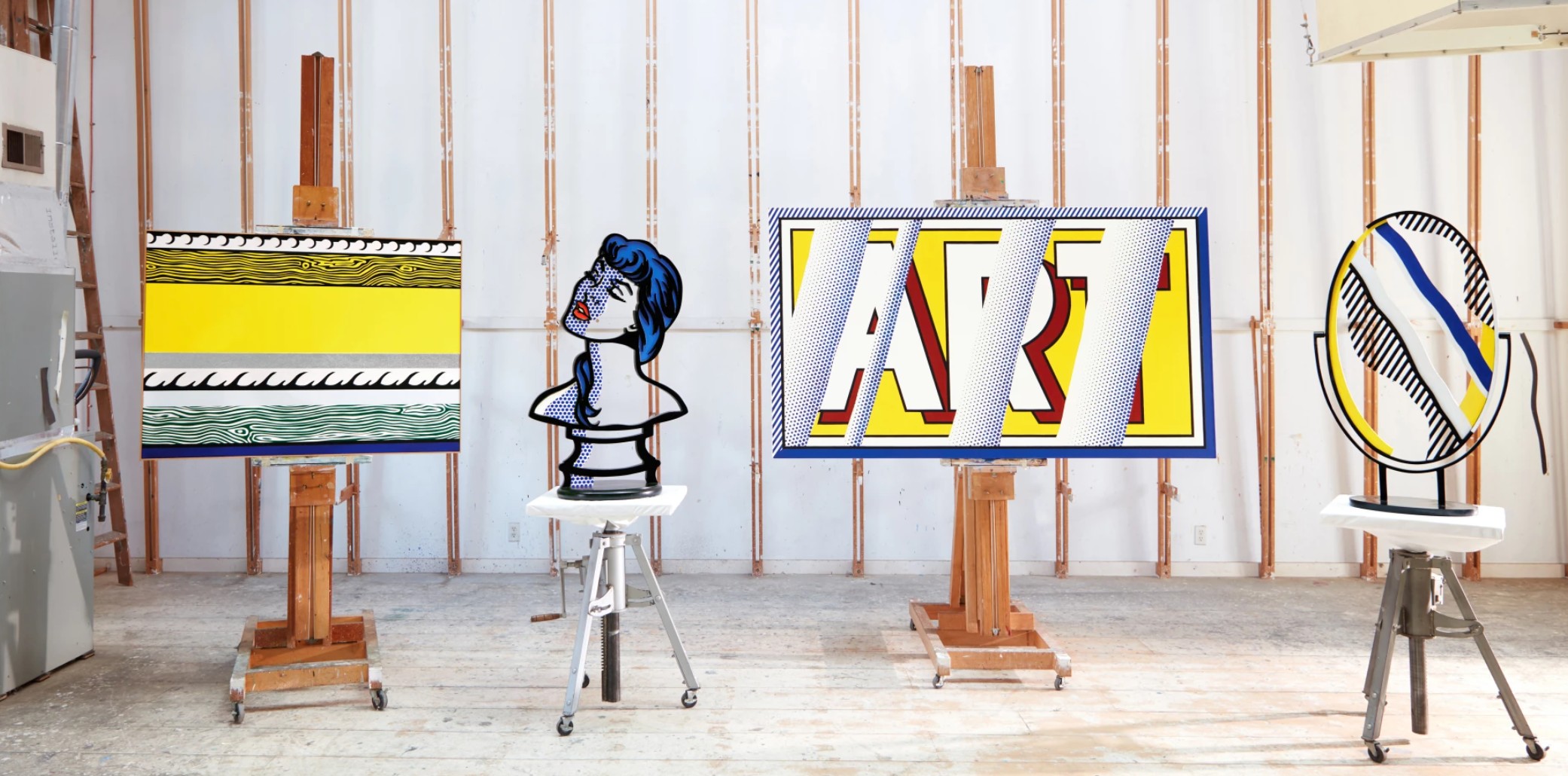
The present work (left) pictured in the artist’s Southampton studio. Art © Estate of Roy Lichtenstein
Though appearing mechanical and hard-edged, Entablature is in fact built through meticulous handwork, a hallmark of Lichtenstein’s career-long negotiation between the hand-drawn and the industrial. Here, the illusion of screen-printed uniformity is subverted by moments of subtle irregularity, particularly in the silver-gray band and its interplay with the graphite texture. The horizontal striations simultaneously suggest ancient stone friezes, mid-century Americana, and modern digital interface. In this way, the painting invites layered readings across time, geography, and media.
Indeed, Entablature can be understood as both homage and critique—a highly stylized reflection on the nature of image-making and the architectural ideals embedded in American visual culture. At the same time, the painting avoids heavy-handed irony, offering instead a cool elegance and formal satisfaction that rewards extended viewing. Lichtenstein’s controlled aesthetic masks a subversive edge: the transformation of marble into pigment, relief into line, monument into reproducible sign. In this regard, the Entablature series anticipates broader postmodern debates around appropriation, authorship, and style. Lichtenstein treats ornament not as a discardable excess but as a meaningful visual vocabulary—a gesture that resonates with contemporary reevaluations of decoration, craft, and pattern. The current painting, with its pristine surfaces and understated subversion, is thus a quietly powerful meditation on permanence, simulation, and the aesthetics of empire.
As one of the rare examples from the series that incorporates sand which was brought to his Southampton studio from the local beach this painting possesses a unique material and historical lineage. Entablature stands not only as a key example of Lichtenstein’s architectural investigations but also as a deeply personal work, one that bridges the conceptual rigor of his practice with the sensory world of his studio in Southampton. It is a painting that elegantly straddles the timeless and the timely, the monumental and the playful, the hand-drawn and the mass-produced—an enduring testament to the formal intelligence and cultural savvy of one of America’s most iconic painters.
Entablature, 1974
Entablature, 1974
Sotheby’s New-York: 17 November 2017
Estimated: USD 800,000 – 1,200,000
USD 735,000
ROY LICHTENSTEIN
Entablature, 1974
Oil, Magna and sand on canvas
40×54 inches (101.6 x 137.2 cm)
Signed and dated ’74 on the reverse
Applying a succinct methodology elevating Minimalism through its reduction of recognizable elements of Neo-Classical architecture, Roy Lichtenstein’s Entablature is part of a unique series of paintings that flouts tradition by underlining planarity via color and form. Having risen to prominence in the early 1960s with widely celebrated and recognizable Pop art subjects, Lichtenstein made the surprising move toward painting neutral subjects and objects that are intrinsically abstract. This newfound aesthetic was masterfully executed not only in his Entablatures series, but also in the Mirrors and Brushstrokes paintings. Demonstratively illusionistic, entablatures are an architectural element resembling a band or molding lying horizontally above the columns of a building. Originating in the architecture of ancient Greece and Rome, the morphology of a column capital as espoused by the five orders: Doric, Ionic, Corinthian, Tuscan and Composite, became an abundantly represented motif in America in the early 20th century Beaux-Arts and Greco-Roman revival used for public buildings such as museums and libraries. In his complex campaign of appropriation, Lichtenstein produced two sequences of Entablatures, the original group from 1971-1972 were executed exclusively in black and white, while the mature series culminated in 1974-1976, with richer additions to color and texture. Executed in 1974, the present work is a stylistic mélange; crisp horizontal lines of black, green and red zip from edge to edge of the canvas, punctuated by a frieze of Ben-Day dots and dazzling azure Greek fret weave. By exquisitely accentuating the schematic elements of Entablature, the present work effectively communicates the mechanically formed cast, density and durability of an ancient engineering marvel.
In the words of the artist himself, Entablature is thus an elegant reprisal of the most influential architectural ornaments of the ancient and modern worlds in a splendidly congruent way, which masterfully creates the illusion of landscape. As the uncontested supremely minimal paintings in Lichtenstein’s corpus, the reductive form of this late Entablature conveys the illusion of a flat plane, with just a few details of one repeated pattern, connoting Greek revival architecture. The use of flat color, equally flat black lines, and identical Benday dot screens found in the present work, allowed Lichtenstein to explore the same aesthetic territory as the Minimalist and Color Field painters. The present work therefore conveys a certain neutrality, appearing to be a fragment of a building of no particular style or character, an image one recognizes as vaguely classical. In portraying a fragment of an edifice, Lichtenstein brilliantly conveys the painting as a picture of a picture, eliminating any subjective point of view. As comic strips and consumer objects had provided earlier inspiration to explore formal issues, Entablature makes a relatively banal subject the focal point of dialectic with Modern and Contemporary art and the history of culture.
Entablature #6, 1971
Entablature #6, 1971
Christie’s New-York: 16 November 2018
Estimated: USD 600,000 – 800,000
USD 636,500
Roy Lichtenstein (1923-1997), Entablature #6 | Christie’s
ROY LICHTENSTEIN (1923-1997)
Entablature #6, 1971
Oil and Magna on canvas
26 x 144 1/4 inches (66 x 366.4 cm)
Signed and dated ‘rf Lichtenstein ’71’ (on the reverse)
By the 1970s, Roy Lichtenstein turned his attention away from the comic books which inspired his early Pop Art masterpieces and began exploring the great movements of Modern Art. Impressionism, Cubism, Surrealism—all of these provided the grist for Lichtenstein’s mill, as he created homages to the European masters, which he filtered and refined through a Pop Art lens. In the Entablatures, Lichtenstein playfully riffs on the American style of Beaux-Arts architecture so prevalent in turn-of-the- century New York. Measuring a full twelve feet in length, the monumentally-scaled Entablature #6 is an important example from this small, revelatory series, which encompasses only about ten black-and-white paintings made between 1971 and 1972. An elegant study in restraint, Entablature #6 epitomizes Lichtenstein’s signature Pop Art idiom: using Ben-Day dots and simple black outlines of varying widths and thicknesses, he flattens three-dimensional architecture into a crisply-delineated, syncopated pattern. Its elegance and symmetry, rendered on such a massive scale, demonstrates Lichtenstein’s shrewd translation of art historical precedent into his own, Pop Art vernacular, which he executes with characteristic wit and ingenuity.
Based on Classical Greek and Roman architecture, the neoclassical Beaux-Arts style was widely used between 1880 and 1920 in the United States for municipal buildings such as banks, libraries, and court houses. Essentially a derivative of the French Académie des Beaux-Arts style (itself a copy of Greco-Roman architecture), American Beaux-Arts design is a thrice-removed, imitative style—a copy of a copy of a copy. Indeed, the Beaux-Arts style is as far removed from its original source as Lichtenstein’s comic books were from “High” Art. In Entablature #6, he accentuates this effect, playing up the contrast and flattening out the architectural detail to create a seemingly infinite band of repeating decoration that displays an almost comic blandness. That Lichtenstein should focus on the entablature itself is noteworthy, since this decorative band of molding is typically used as a transitional area between the columns below and the triangular pediment above. Indeed, in Entablature #6 Lichtenstein questions the very nature of originality itself, especially as it applies to American Beaux-Arts design, saying: “Our architecture is not van der Rohe, it’s really McDonalds” (R. Lichtenstein, quoted in Y.-A. Bois, “Two Birds with One Stone,” Roy Lichtenstein: A Retrospective, exh. cat., Art Institute of Chicago, 2012, p. 64).
Coming of age in the early 1960s as one of the leading figures of the Pop Art movement, Roy Lichtenstein was already well-versed in its aesthetics by the time he painted Entablature #6. As the 70s dawned, Lichtenstein increasingly searched for newer and more challenging imagery and looked to modern art masters like Picasso and Matisse for inspiration. A few years earlier, Lichtenstein had limited himself to a series of rather zen-like, esoteric paintings that now stand as some of his most inspired work. Brushstrokes, Mirrors, and Stretcher Bars, for example, are among the most deliberately limited, abstract series of his career. Conceptual and rich in historical iconography, the Entablatures provided a natural continuation of these earlier series, allowing Lichtenstein to advance the ideology of Pop while tackling more complex, historically-loaded yet visually abstract subject matter. He began painting the Entablatures in 1971 and ultimately produced two separate series, in 1971-1972 and 1974-1976. Entablature #6 belongs to the smaller, earlier series and consists solely of works in black and white. As his source material, Lichtenstein photographed the Beaux-Arts architecture of lower Manhattan, focusing primarily on the vicinity of Wall Street and 28th street. He preferred to capture the buildings at mid-day under raking sunlight, which resulted in dramatic contrast between light and shadow that were exaggerated even further in the black-and-white photographs. Rather than painting from academic drawings of Beaux-Arts architecture or reproductions in a newspaper or magazine, for the Entablatures, Lichtenstein deliberately created his own photographs, often zeroing in on the most innocuous elements. The Entablature paintings played up the anonymous quality of the architecture even further. With its decorative band of repeating motifs, sleek surface, and elongated horizontal format, Entablature #6 also playfully jabs at the Minimalist and Color Field paintings of Morris Louis, Kenneth Noland, and even Donald Judd. Indeed, with tongue planted firmly in cheek, Lichtenstein tackles yet another of the great art “isms.” He described: “The Entablatures represent my response to Minimalism… It’s my way of saying that the Greeks did repeated motifs very early on, and I’m showing, in a humorous way, that Minimalism has a long history…It was essentially a way of making a Minimalist painting that has a Classical reference” (R. Lichtenstein, quoted in ibid., p. 67).
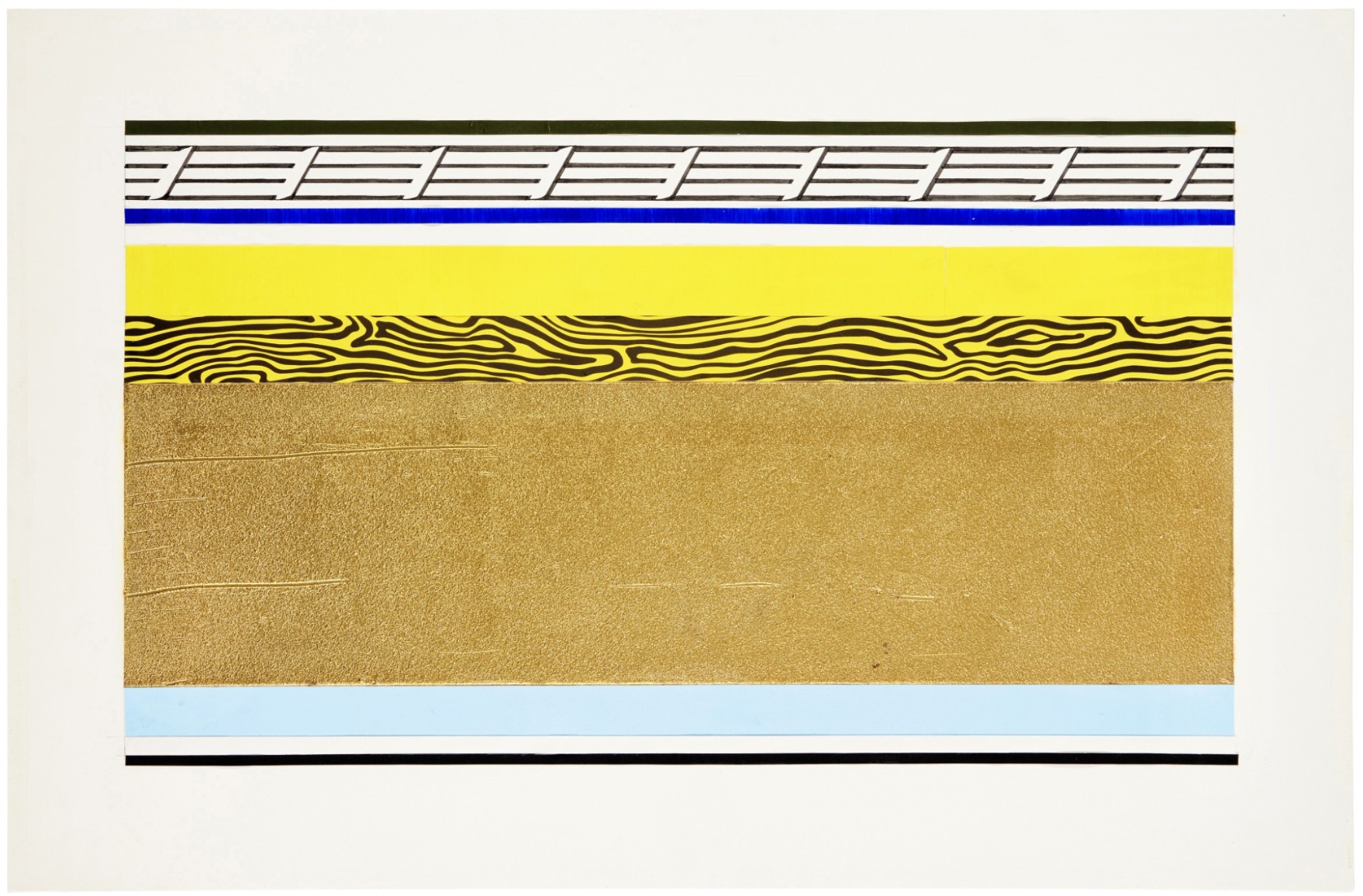
Entablature (Study), circa 1976
Entablature (Study), circa 1976
Property from the Collection of Dorothy and Roy Lichtenstein
Sotheby’s Riyadh: 31 January 2025
Estimated: USD 120,000 – 180,000
USD 165,100
Entablature (Study) | Origins II | 2026 | Sotheby’s
ROY LICHTENSTEIN (1923 – 1997)
Entablature (Study), circa 1976
Cut painted and printed paper, sand, brush and ink, marker, gouache and graphite on board
Image: 22 x 38 1/8 inches (55.9 x 96.8 cm)
Board: 30 x 45 7/8 inches (76.2 x 116.5 cm)
Executed circa 1976, Roy Lichtenstein’s Entablature (Study) is a striking example of the artist’s sustained engagement with architectural ornamentation. Departing from the comic-book imagery that defined his early Pop work, Lichtenstein turned instead to the classical motifs embedded in American neoclassical façades. He photographed cornices and friezes throughout Manhattan, focusing on their decorative bands, stylized shadows, and rhythmic patterning. These sources became the foundation for a series that translated architectural language into streamlined, graphic abstraction.
“Even the Entablatures are meant to be humorous in a way, because they don’t seem to be funny but they mean imperial power or something like that.”
In Entablature (Study), Lichtenstein reduces the architectural reference to a set of horizontal registers. A cool white band of linear slats anchors the upper edge, while vivid passages of blue and yellow bisect the composition with crisp clarity. Beneath them, a field of golden texture and a band of woodgrain patterning introduce textural nuance and playful artifice. Together, these elements highlight the artist’s ability to transform ornament into a visual code that is both formally rigorous and subtly witty.
Roy Lichtenstein, Untitled [Architecture Study], c. 1970-76.
The Whitney Museum of American Art, New York. Art © Estate of Roy Lichtenstein
This study reveals the conceptual sophistication of the broader Entablature project. Rather than merely replicating architectural detail, Lichtenstein reimagines it as an abstract vocabulary that negotiates the divide between high art and vernacular design. The work reflects his deep interest in how symbols migrate across cultural contexts, and how the classical past endures within the aesthetic codes of modern life. Entablature (Study) embodies the clarity, restraint, and conceptual intelligence that define Lichtenstein’s post-1960s development, offering an elegant distillation of one of his most ambitious and critically significant series.
Works on Paper
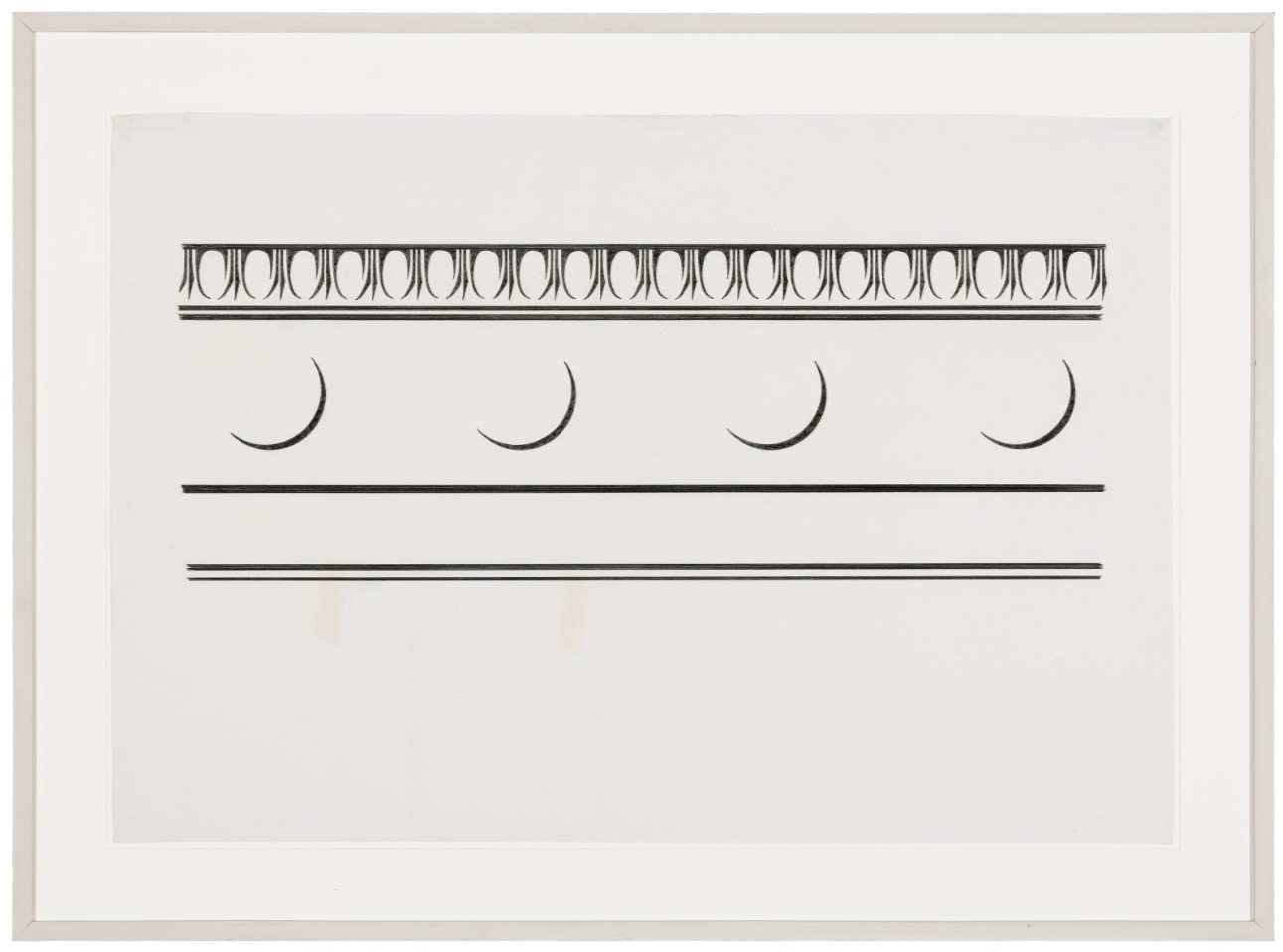
Entablature #5, 1971
Christie’s New-York: 27 February 2025
Estimated: USD 60,000 – 80,000
USD 63,000
WORK ON PAPER
ROY LICHTENSTEIN (1923-1997), Entablature #5 | Christie’s
ROY LICHTENSTEIN (1923-1997)
Entablature #5, 1971
Graphite on paper
28 1/8 x 41 inches (71.4 x 104.1 cm)
Signed and dated ‘rf Lichtenstein ’71’ (on the reverse)
Entablature #11, 1971
Phillips New-York: 13 November 2019
Estimated: USD 120,000 – 180,000
USD 112,500
WORK ON PAPER
Roy Lichtenstein 20th C. & Contemporary Art Day Sale, Morning Session
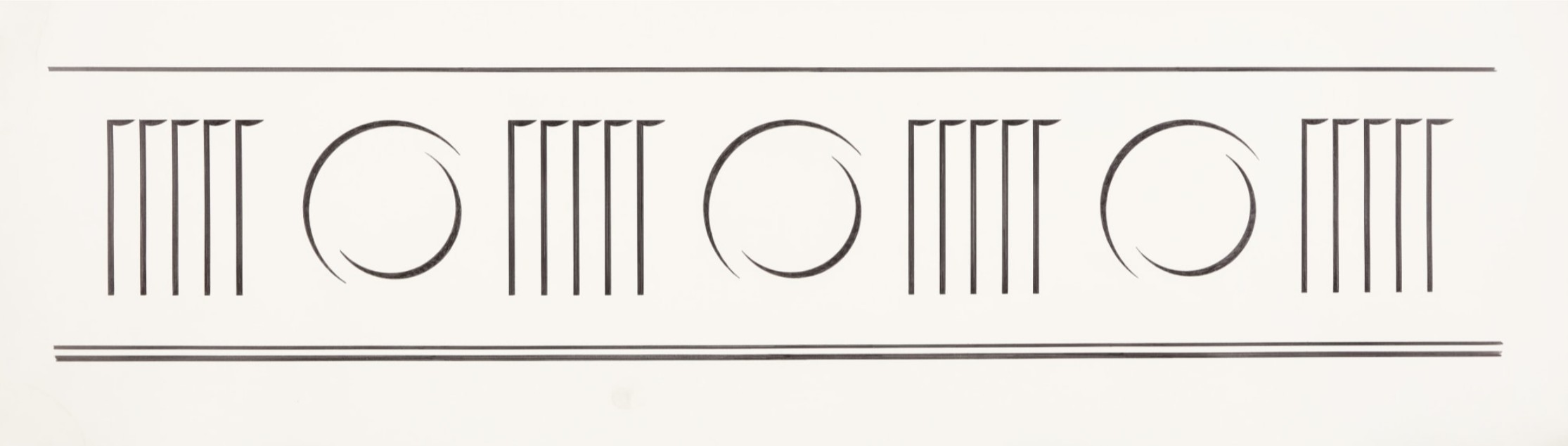
ROY LICHTENSTEIN
Entablature #11, 1971
Graphite on paper
20 3/4 x 71 3/8 inches (52.6 x 181.2 cm)
Signed and dated “rf Lichtenstein ’71” on the reverse
Entablature #6, 1971
Phillips New-York: 16 May 2018
Estimated: USD 150,000 – 200,000
WORK ON PAPER
PASSED
Roy Lichtenstein 20th Century & Contemporary Art Day Sale, Morning Session
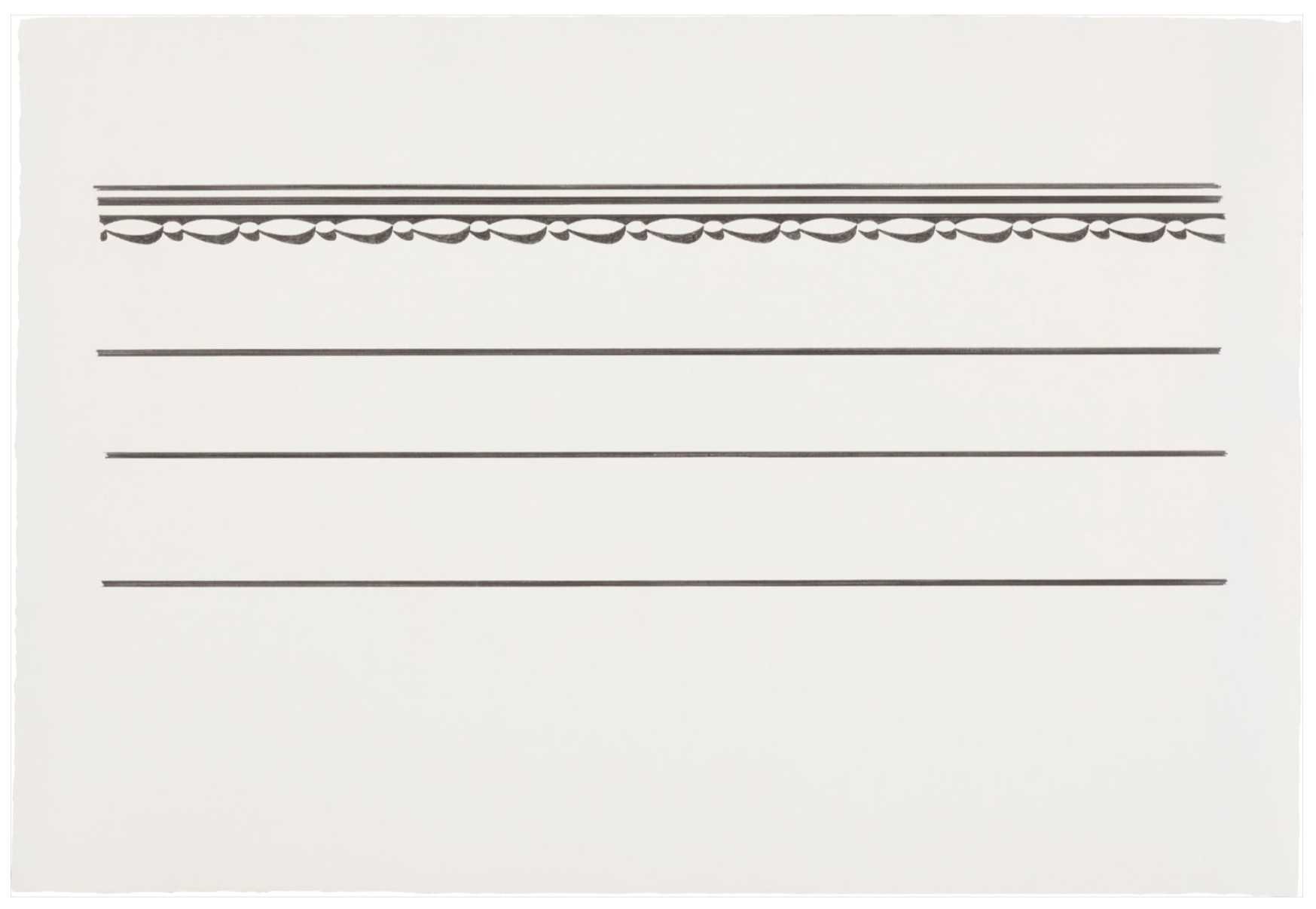
ROY LICHTENSTEIN
Entablature #6, 1971
Graphite pencil on paper
28 1/8 x 41 1/8 inches (71.4 x 104.5 cm)
Signed and dated “rf Lichtenstein 71” on the reverse
Entablature Prints
READ ABOUT ENTABLATURE SERIES
FIND ALL HISTORICAL AUCTION RESULTS