Introduction
In the latter half of the 1960s, Lichtenstein devoted his practice to reinterpreting icons of art history through his signature Pop Art lexicon, rooted in the aesthetic strategies of twentieth-century mass production and consumer branding. After exploring canonical art historical periods, such as Classical Antiquity, Impressionism, and Cubism, Lichtenstein considered one of the most iconic and technically challenging motifs of Western painting since the Renaissance: the mirror.
“Mirrors are flat objects that have surfaces you can’t easily see since they’re always reflecting what’s around them. There’s no simple way to draw a mirror, so cartoonists invented dashed or diagonal lines to signify ‘mirror’. Now, you see those lines and you know it means ‘mirror’ even though there are obviously no such lines in reality. If you put horizontal, instead of diagonal lines across the same object, it wouldn’t say ‘mirror’. It’s a convention that we unconsciously accept.”
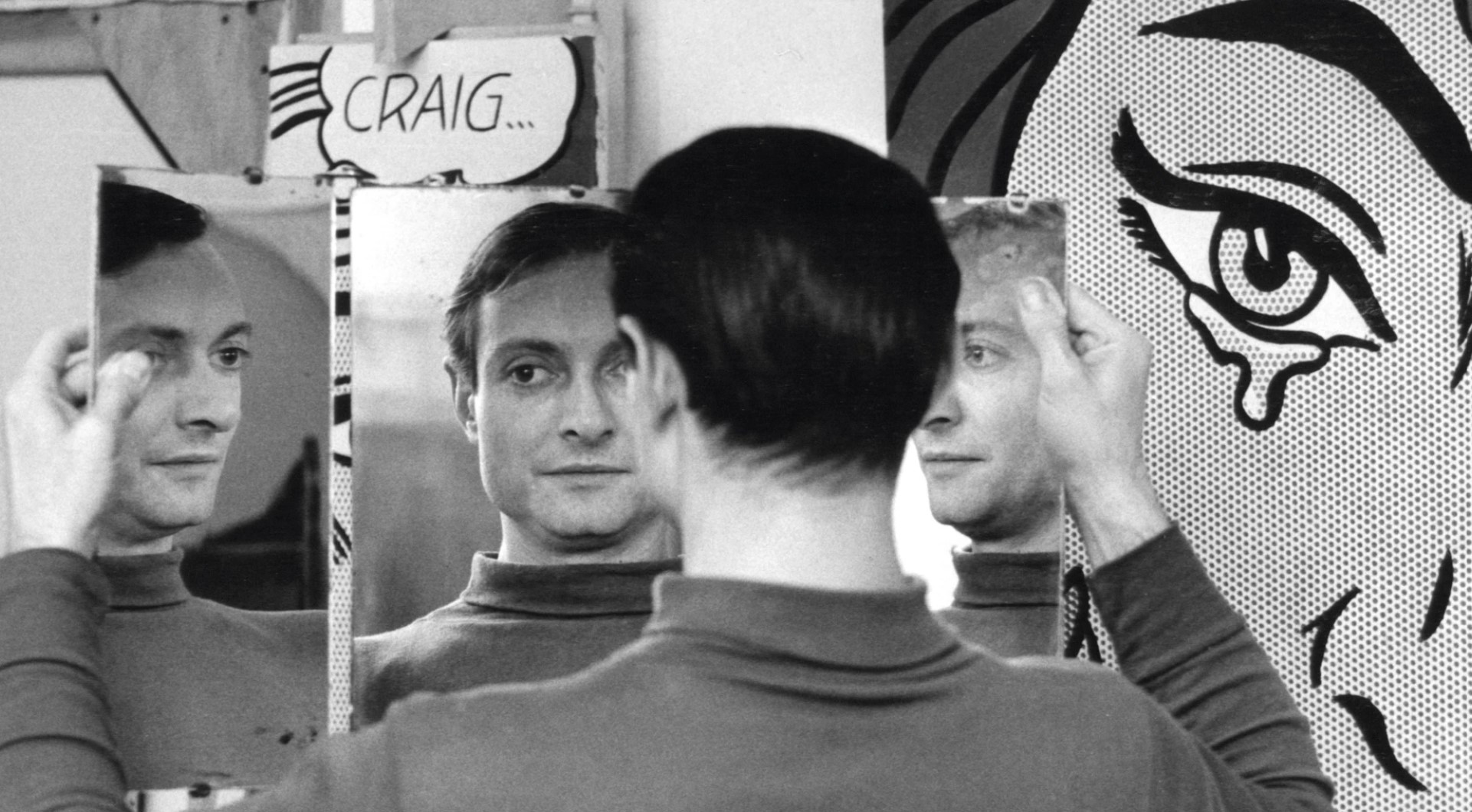
ROY LICHTENSTEIN IN HIS STUDIO, NEW YORK, 1964. PHOTO © KEN HEYMAN. ART © 2022 ESTATE OF ROY LICHTENSTEIN. COURTESY OF THE ROY LICHTENSTEIN FOUNDATION ARCHIVES.
Between 1969 and 1972, Lichtenstein produced a finite collection of Mirror paintings, through which he engaged with the representational strategies and tropes of mirrored surfaces in art history and contemporary advertising. Inspired by depictions of mirrors found in retail catalogues and magazines, Lichtenstein uses his unique artistic vocabulary to break down the codes inherent in reproduction and visual communication to their essential components.
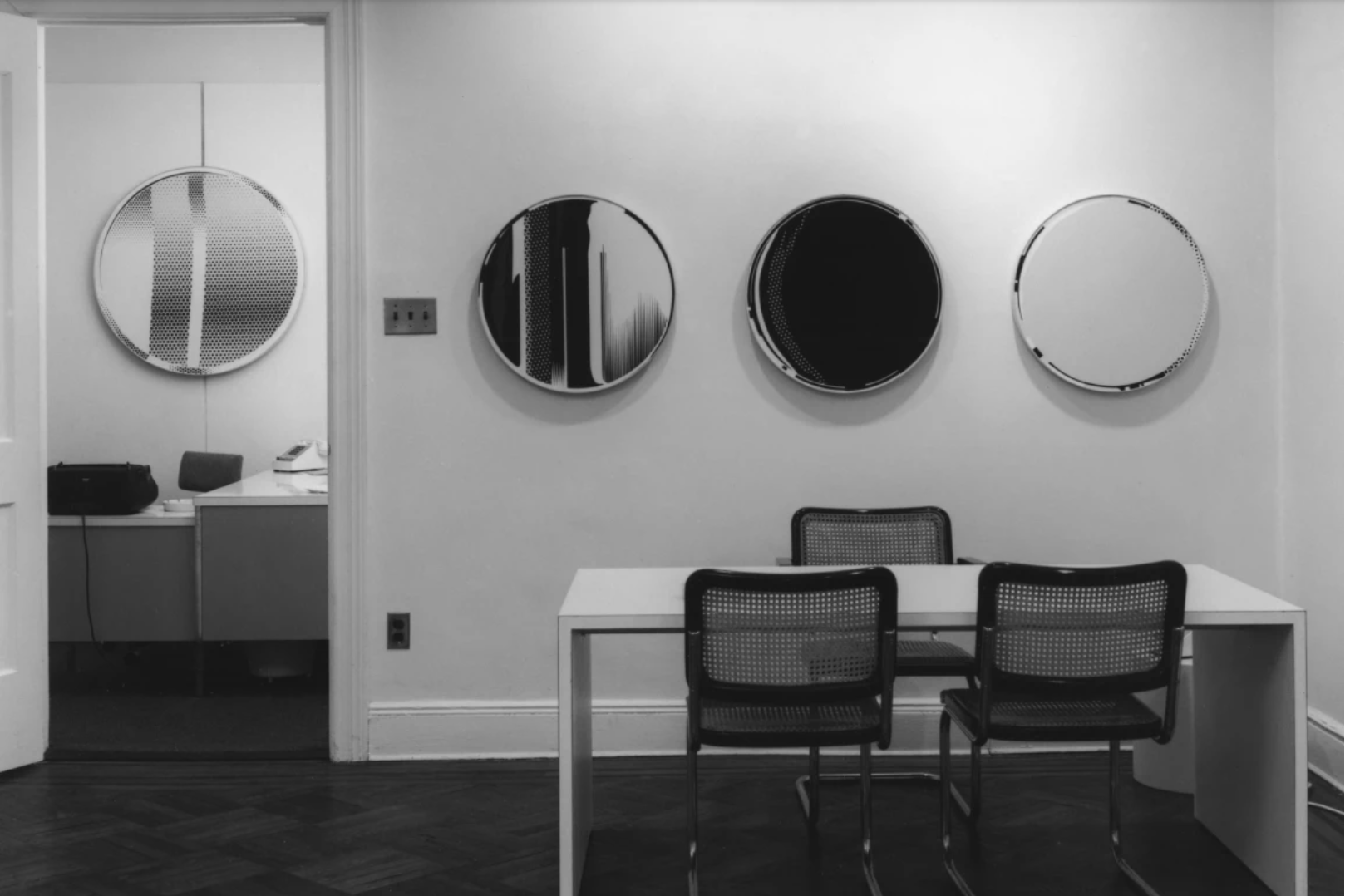
For each painting from the Mirror series, Lichtenstein uniquely interspersed his signature Ben Day dots, which refer to the mass-production technique used by newspaper printers, with areas of solid color in order to achieve the effect of a reflective surface. Here, the profusion of dots replaces the viewer’s reflection, suggesting a witty commentary on perception and the role of the artist. Like a Jasper Johns Flag, a Lichtenstein Mirror is as much a painted mirror as a painting of a mirror. Thus the Mirrors perfectly epitomize the conflict between reality and illusion that underpins Lichtenstein’s entire oeuvre. Mimicking consumer advertisements, Lichtenstein used simplified shapes to suggest the idea of a reflection, deconstructing not only the reality of his mirror subject, but also the artistic shorthand through which it is represented.
The Mirror in Art History
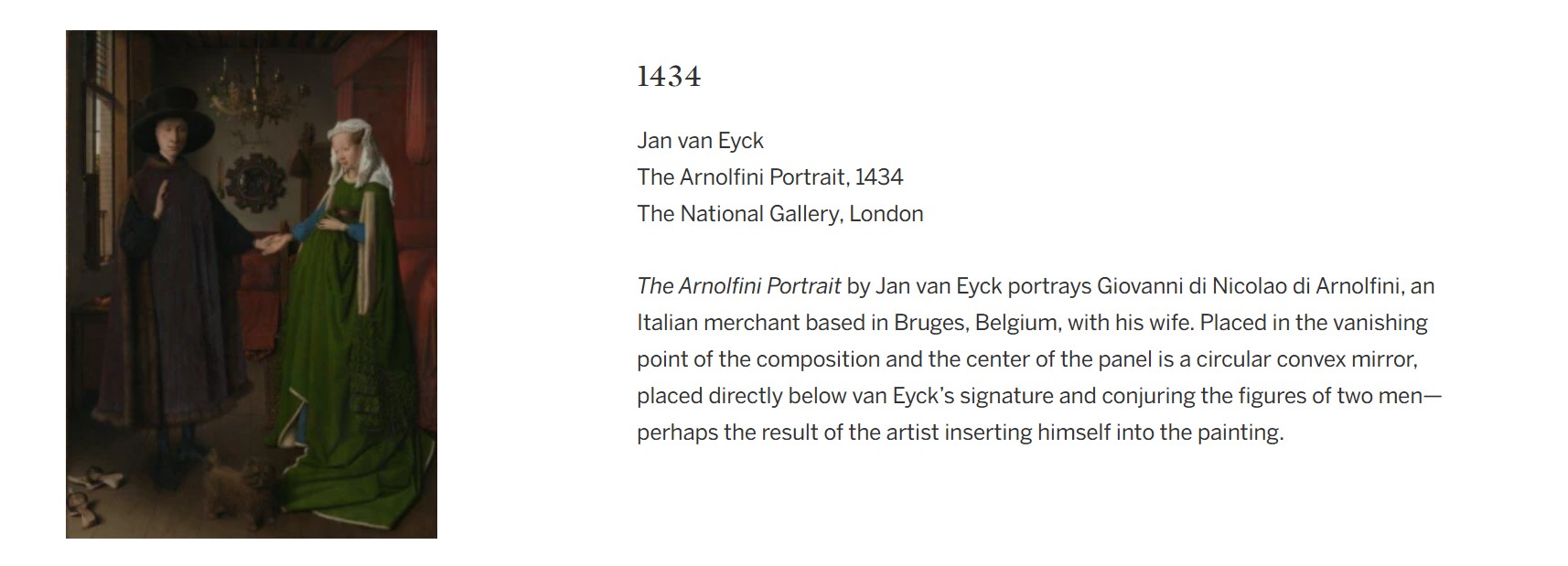
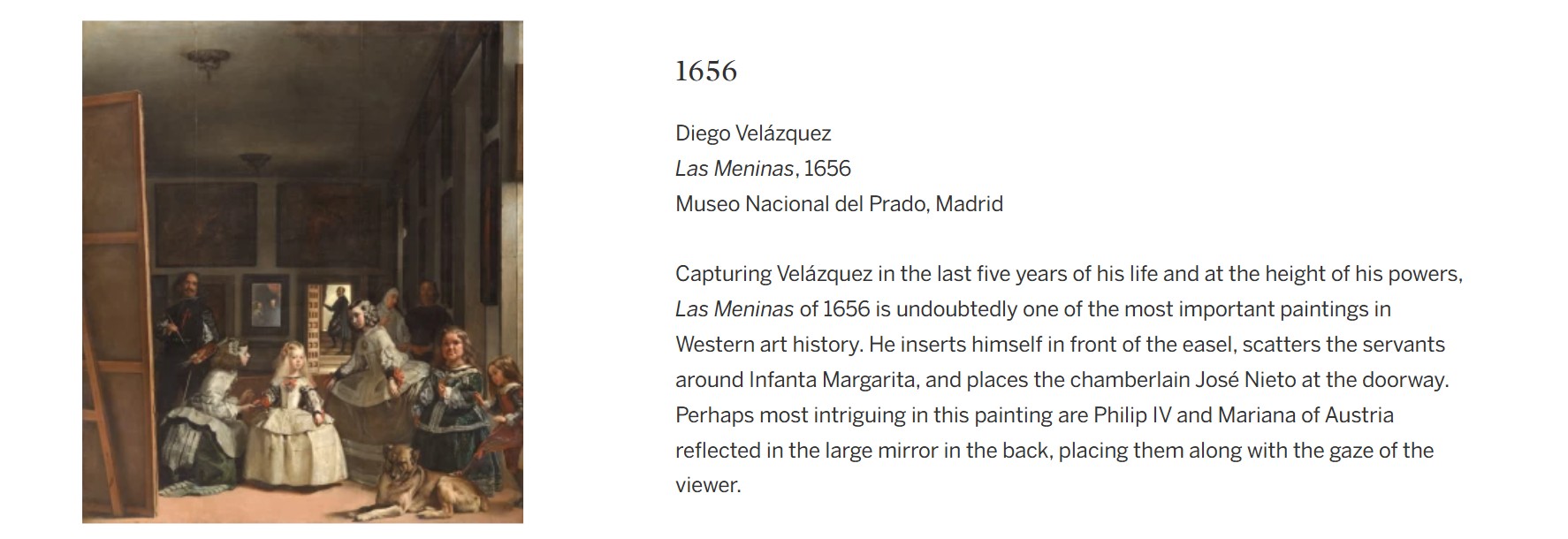
The motif of the mirror as an aid to human introspection has made a regular appearance throughout the art historical canon. Unlike many of his contemporaries, Lichtenstein was brave enough to build upon what his forebears had mastered and infuse it into his own ideas. He playfully contributes to centuries of dialogues with artists who sought to recreate the enigma of the mirror in paint. From Jan van Eyck’s The Arnolfini Portrait¸ 1434 (National Gallery, London), to Diego Rodríguez de Silva y Velázquez’ Las Meninas, 1656 (Museo Nacional del Prado), Édouard Manet’s A Bar at the Folies-Bergère, 1882 (Courtauld Institute of Art, London) and Pablo Picasso’s Girl Before a Mirror, 1932 (Museum of Modern Art, New York), Lichtenstein interjects with his own contribution to the discussion about the importance of the subject matter.
The Mirror in Art History
In the Mirror Series, Lichtenstein’s witty application of iconic style coupled with his deep appreciation of art history generates a work that is both visually and intellectually challenging. In these works Lichtenstein has continued his journey which had already taken him through Surrealism and Modernism, to arrive at Op Art. In his playful engagement with the movement, Lichtenstein offers a wry commentary on its dominance the past five years. By alternating the sizes, cutting them in and out, he employs his distinctive Ben Day dots to new effect, ultimately reflecting the way we look at refracted light. In doing so, he subversively echoes and comments upon the rigorous visual investigations of Op Art.
The Mirror in Art History
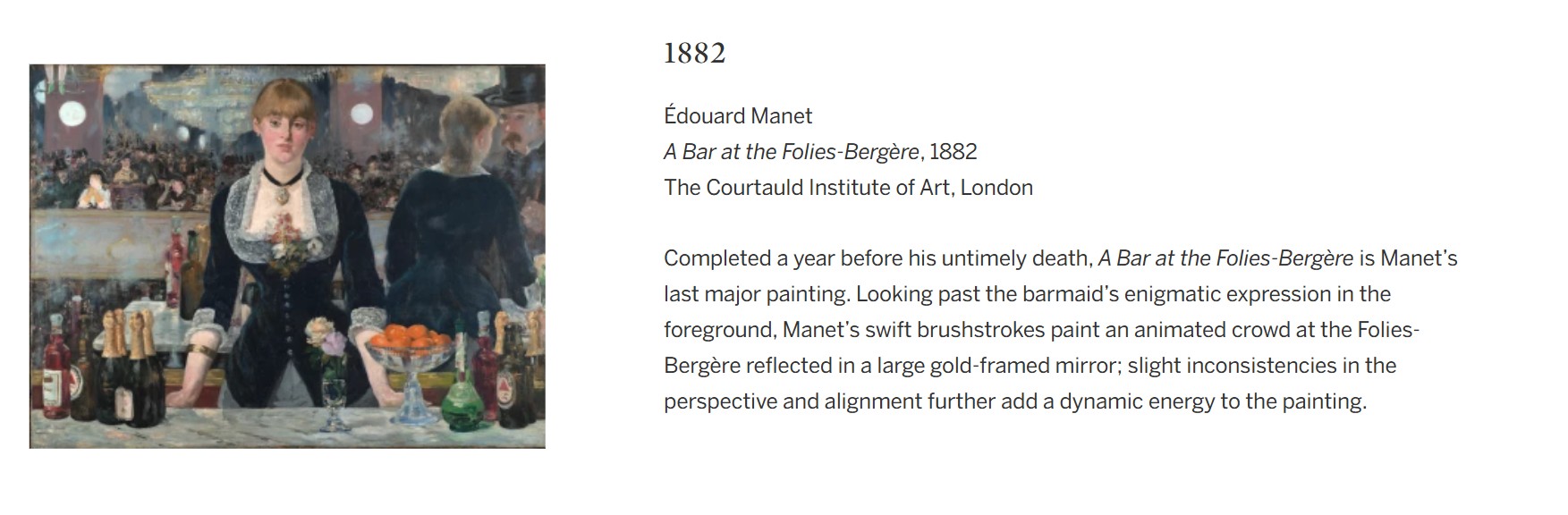
Continuing one of art history’s more nuanced motifs, Lichtenstein playfully contributes to centuries of dialogues with artists who sought to recreate the painted mirror. Aligning himself with such luminaries as Jan van Eyck, Diego Velázquez, Jean-Auguste-Dominique Ingres, Édouard Manet, Pablo Picasso, and Juan Gris, Lichtenstein offers his perspective on the continued relevance of the art object and the limitations of human perception and self-awareness through self reflection. Adding to this legacy in his own unique visual language, Lichtenstein employs his characteristic Ben Day dots to impart a cool, detached quality to what is usually reserved for the personal reflections of self-portraits. A wry addition to this canon, the dots are simultaneously devoid of the artist’s hand yet remain the artist’s signature mark.
The Mirror in Art History
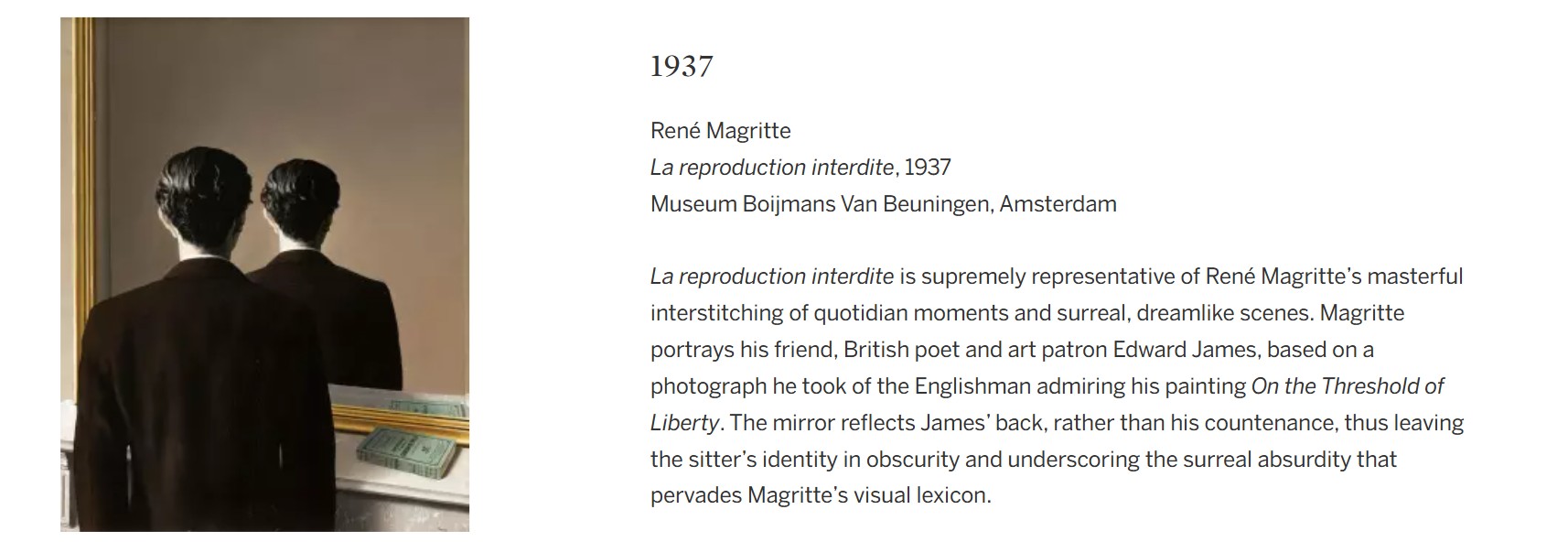
Reflective of the artist’s lifelong preoccupation with the fiction of representation, Lichtenstein’s calculated adaptations of a vacant mirror is a striking reminder that the simple surface of things does not necessarily correspond to or ‹reflect› a complex reality. Just as René Magritte’s The Forbidden Reproduction, 1937, confound traditional representation through painterly metaphors, Lichtenstein’s mirrors offer a painted surface upon which to contemplate. Lichtenstein’s mirror denies the possibility of engaging with the self, our refection barred by the very lines which inform us that what we are looking at is indeed a mirror. Through this simple gesture, Lichtenstein illustrates an exhilarating blend of wit and deep appreciation of art history to generate a work that is both visually and intellectually challenging.
In many ways, Lichtenstein’s paintings perform as mirrors. The self-proclaimed ‘image duplicator’, Lichtenstein often employs mirroring mechanisms, repeating or replicating found imagery from comic books and advertisements, selecting images which summarized the cultural zeitgeist of an era. The mirror performs as an allegory for Lichtenstein, a conduit in which to address the elusive notion of reproducibility. The Mirror Series takes this one step further, narrowing its focus to advertisements of real, physical mirrors, to address the optical qualities of depth and perception, refection and its relationship to reality. In part, it played to the direct connection that Lichtenstein felt between his own ideas and theirs, particularly their shared interest in the use and interpretation of symbols. It also allowed him to set up the visual wit and puns he so enjoyed and allowed him the freedom to make full use of his colorful imagination.
Auction Results (Paintings)
#1. Mirror #9, 1970
The Macklowe Collection
Sotheby’s New-York: 16 May 2022
Estimated: USD 1,500,000 – 2,000,000
USD 6,069,500
Mirror #9 | The Macklowe Collection | | Sotheby’s (sothebys.com)
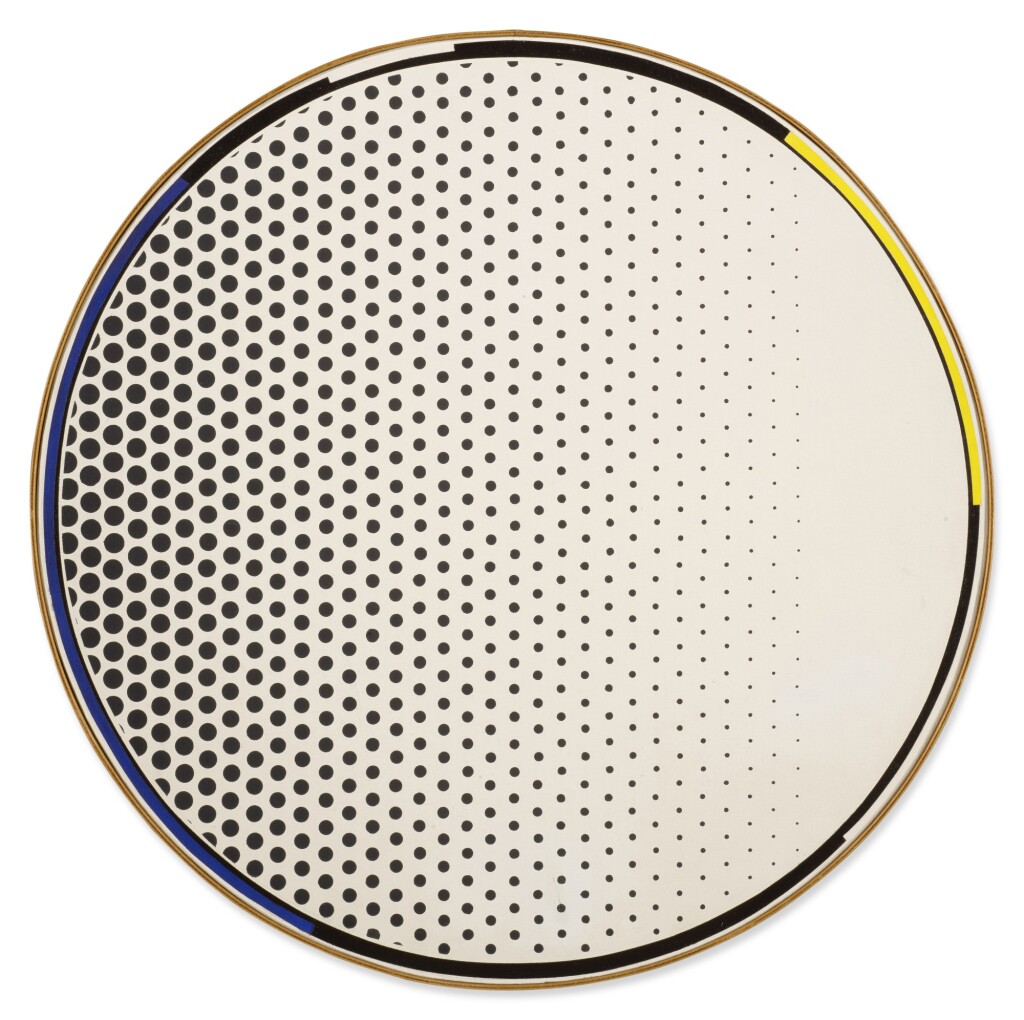
ROY LICHTENSTEIN (1923 – 1997)
Mirror #9, 1970
Oil and Magna on canvas
Diameter: 24 inches (61 cm)
Signed and dated ’70 on the reverse
#2. Mirror #1, 1969
Sotheby’ New-York: 18 November 2021
Estimated: USD 1,800,000 – 2,500,000
USD 4,618,000
Mirror #1 | Contemporary Evening Auction | | Sotheby’s (sothebys.com)
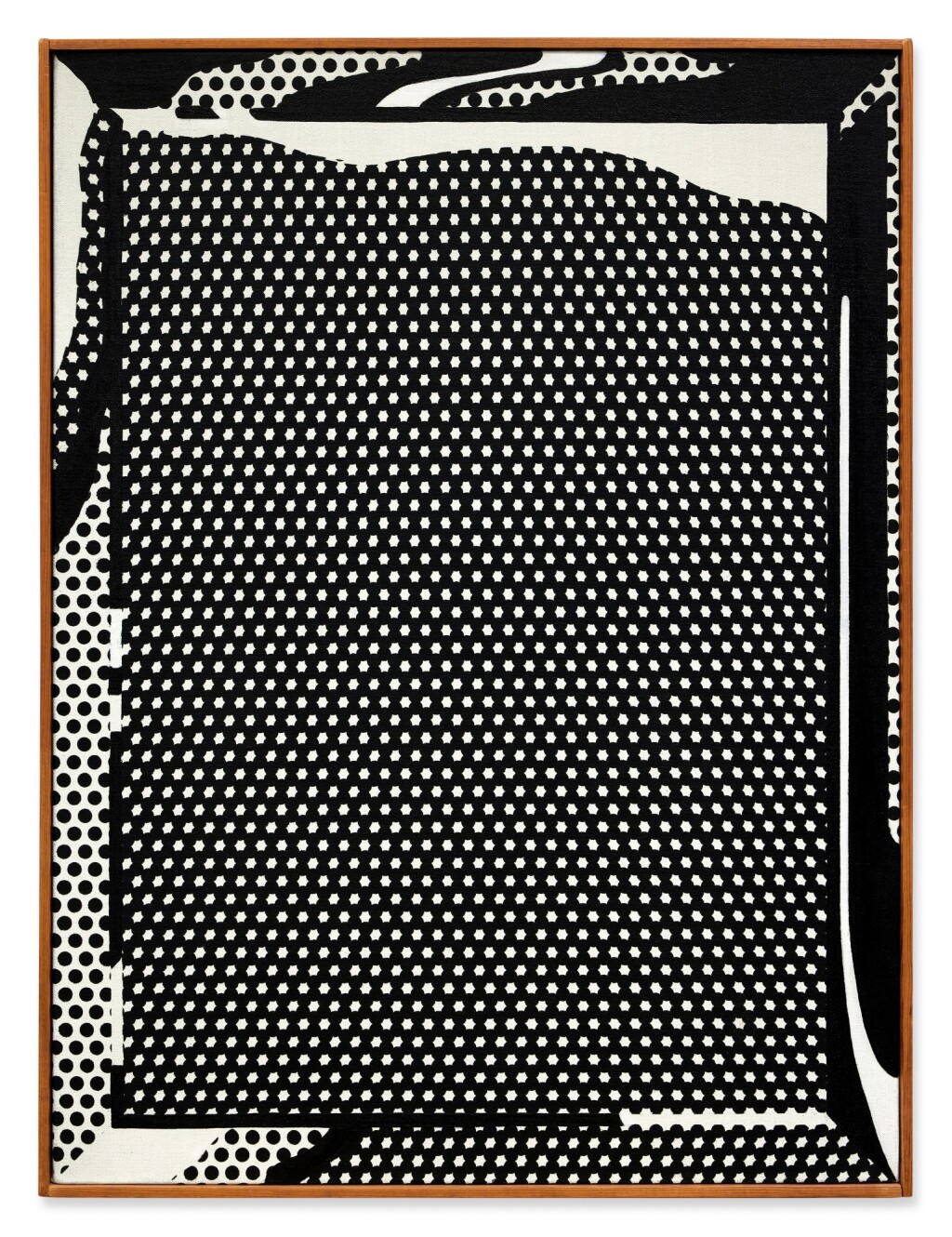
ROY LICHTENSTEIN (1923 – 1997)
Mirror #1, 1969
Oil and Magna on canvas
24×18 inches (61 x 45.7 cm)
Signed Roy Lichtenstein and dated ’69 (on the reverse)
#3. Mirror #9 (36″ diameter), 1972
Christie’s New-York: 10 November 2015
Estimated: USD 2,500,000 – 3,500,000
USD 4,197,000
Roy Lichtenstein (1923-1997), Mirror #9 (36″ diameter) | Christie’s
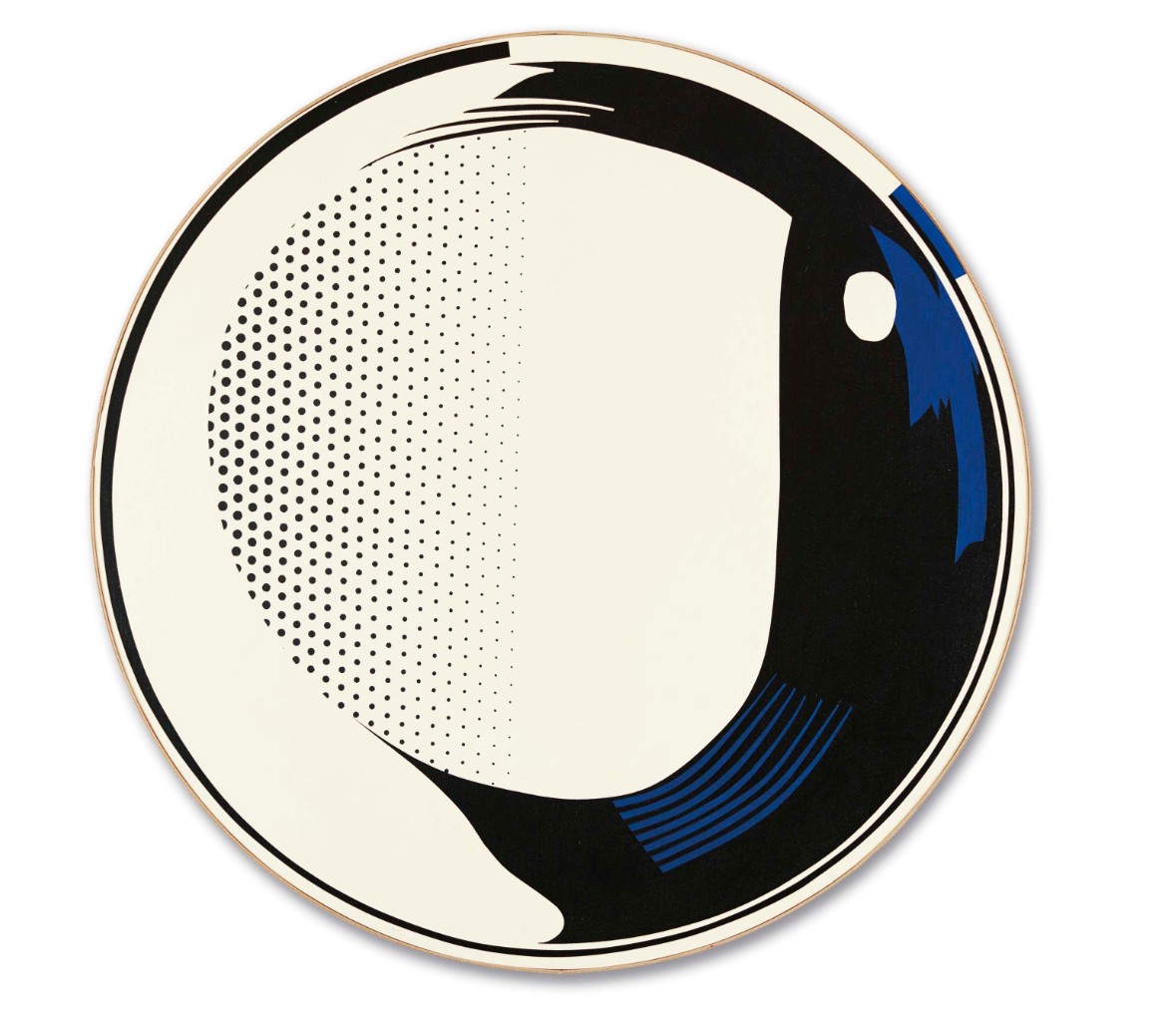
ROY LICHTENSTEIN (1923-1997)
Mirror #9 (36″ diameter), 1972
Oil and Magna on shaped canvas
Diameter: 36 inches (91.4 cm)
Signed and dated ‘rf Lichtenstein ’72’ (on the reverse)
#4. Mirror #8, 1971
Christie’s London: 1 July 2014
Estimated: GBP 500,000 – 700,000
GBP 1,986,500 / USD 3,405,600
ROY LICHTENSTEIN (1923-1997), Mirror #8 | Christie’s
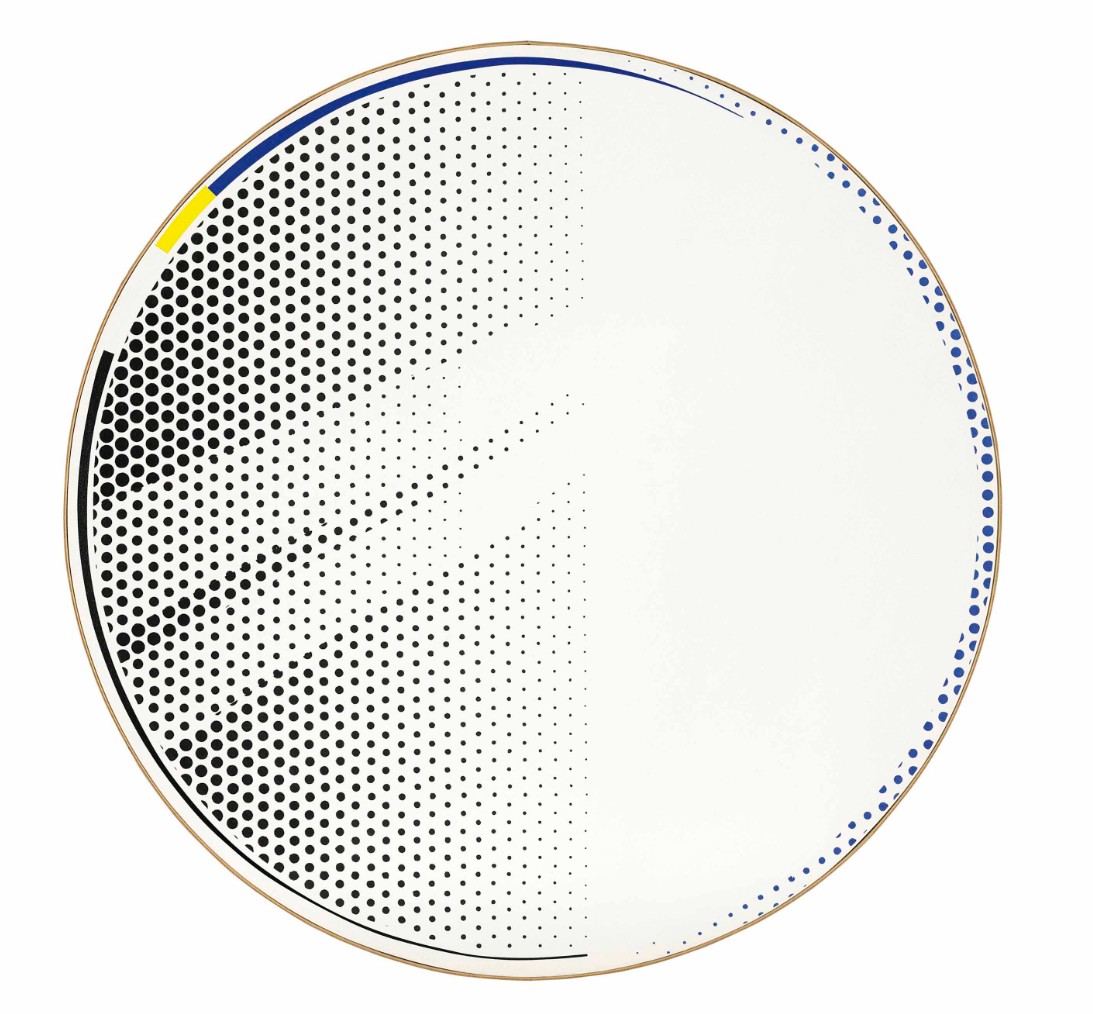
ROY LICHTENSTEIN (1923-1997)
Mirror #8, 1971
Oil and Magna on canvas
Diameter: 36 1/8 inches (91.8 cm)
Signed and dated ‘rf Lichtenstein ’71’ (on the reverse)
#5. Mirror #5, 1970
Christie’s New-York: 17 November 2022
Estimated: USD 3,500,000 – 5,500,000
USD 3,180,000
ROY LICHTENSTEIN (1923-1997) (christies.com)
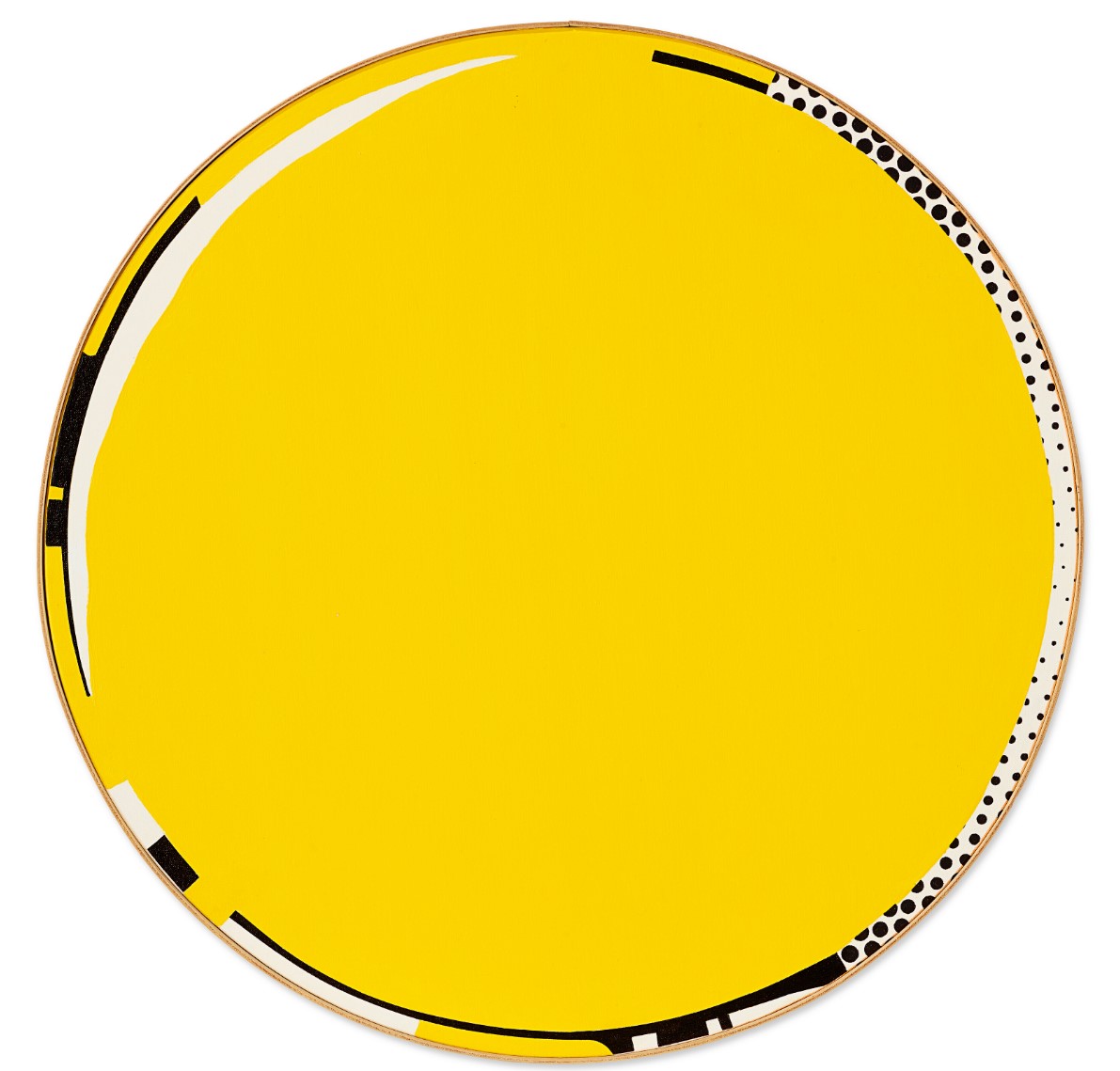
ROY LICHTENSTEIN (1923-1997)
Mirror #5, 1970
Oil and Magna on canvas
Diameter: 24 inches (61 cm)
Signed and dated ‘rf Lichtenstein ’70’ (on the reverse)
#6. Mirror #7, 1971
Phillips New-York: 17 May 2023
Estimated: USD 3,000,000 – 4,000,000
USD 2,843,000
Roy Lichtenstein – 20th Century & Contem… Lot 18 May 2023 | Phillips
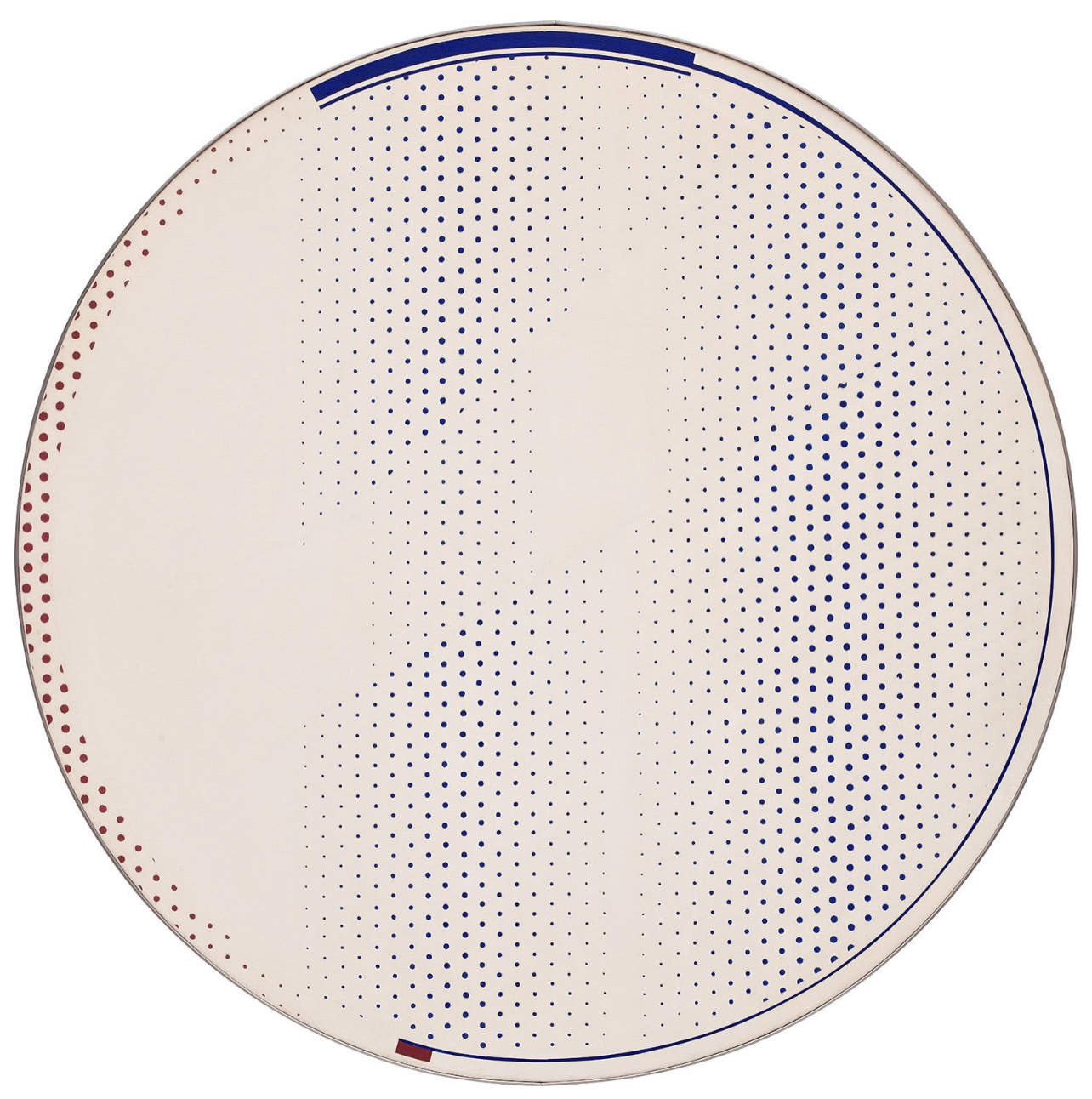
ROY LICHTENSTEIN
Mirror #7, 1971
Oil and Magna on canvas
Diameter: 36 inches (91.4 cm)
Signed and dated “rf Lichtenstein ‘71” on the reverse
#7. Mirror #3, 1971
Christie’s New-York: 13 May 2009
Estimated: USD 1,800,000 – 2,500,000
USD 1,650,500
Roy Lichtenstein (1923-1997) , Mirror #3 | Christie’s
ROY LICHTENSTEIN (1923-1997)
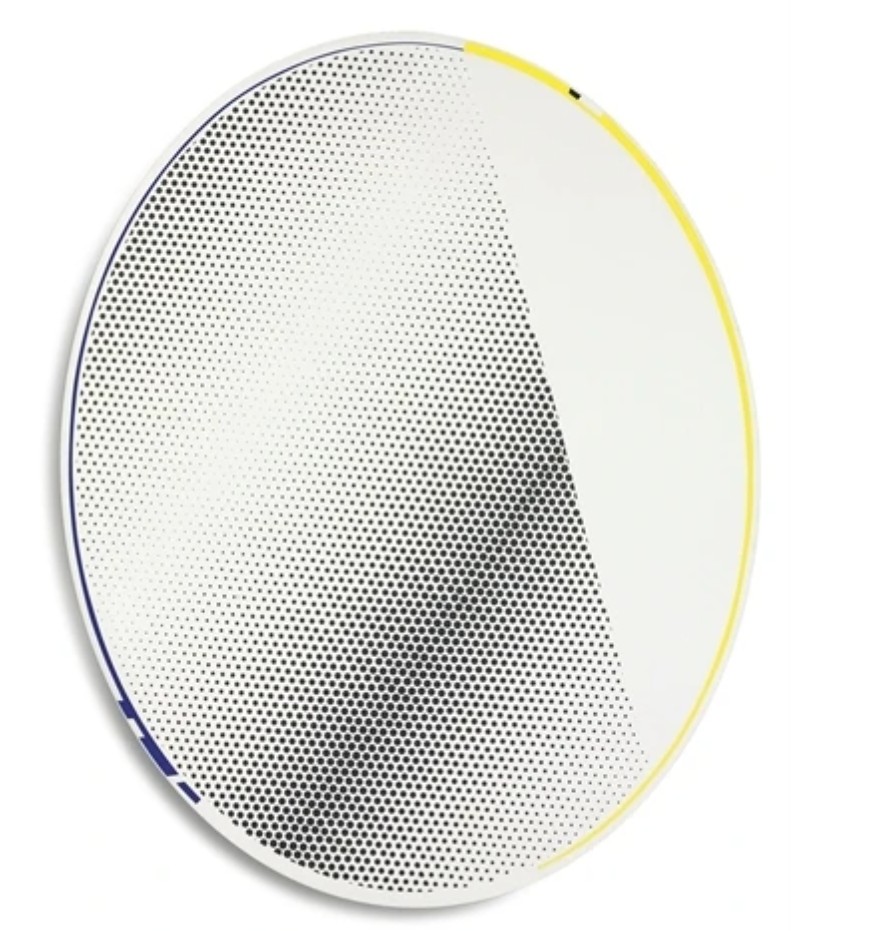
Mirror #3, 1971
Oil and magna on canvas
60×48 inches (152.4 x 121.9 cm)
Signed and dated ‘rf Lichtenstein ’71’ (on the reverse)
#8. Mirror Pair, 1971-1972
Sotheby’s New-York: 19 November 2021
Estimated: USD 600,000 – 800,000
USD 1,411,500
Mirror Pair | Contemporary Day Auction | 2021 | Sotheby’s (sothebys.com)
ROY LICHTENSTEIN (1923 – 1997)
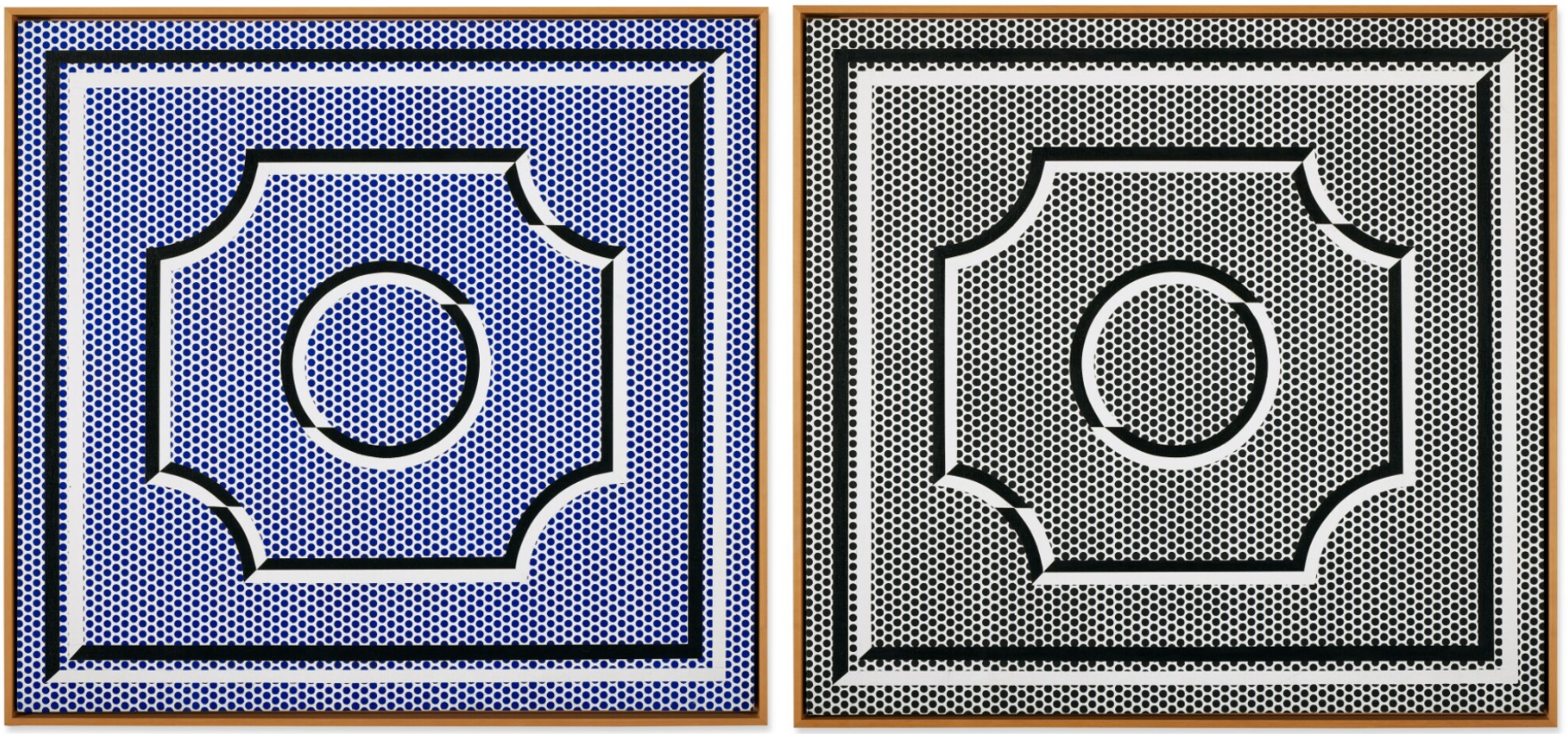
Mirror Pair, 1971-1972
Oil and Magna on canvas, in 2 parts
Each: 34×36 inches (86.4 x 91.4 cm)
Signed rf Lichtenstein and dated ’71-’72 (on the reverse of the left canvas)
Mirror #17, 1971
Christie’s New-York: 16 May 2001
Estimated: USD 200,000 – 300,000
USD 237,000
Roy Lichtenstein (1923-1997) , Mirror #17 | Christie’s
ROY LICHTENSTEIN (1923-1997)
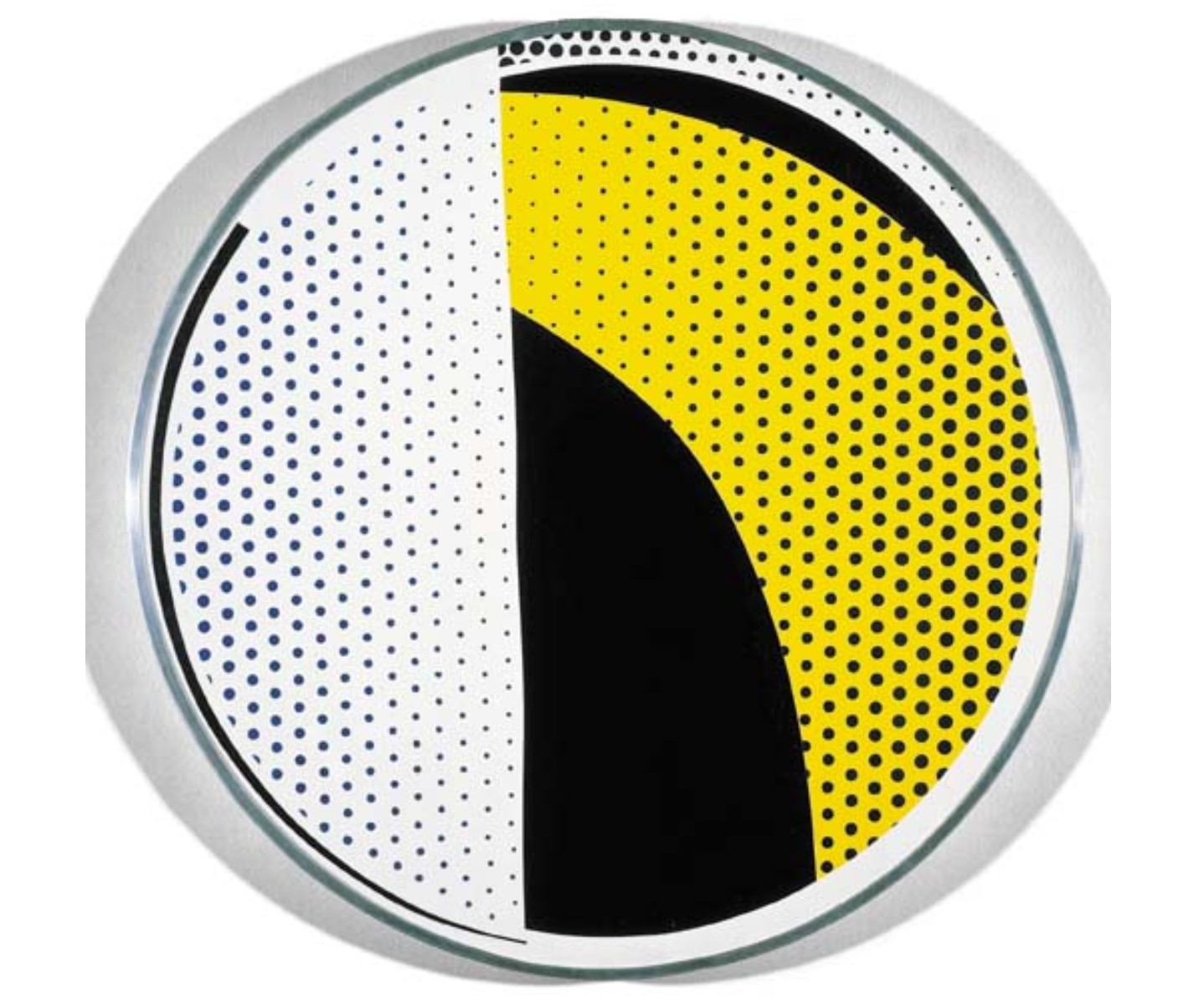
Mirror #17, 1971
Oil and magna on canvas
Diameter: 24 inches (61 cm)
Auction Results (Studies)
Mirror #8 (Study), 1970
Works from the Collection of Dorothy and Roy Lichtenstein
Sotheby’s New-York: 16 May 2025
Estimated: USD 350,000 – 450,000
USD 355,600
Mirror #8 (Study) | Contemporary Day Auction | 2025 | Sotheby’s
ROY LICHTENSTEIN (1923 – 1997)
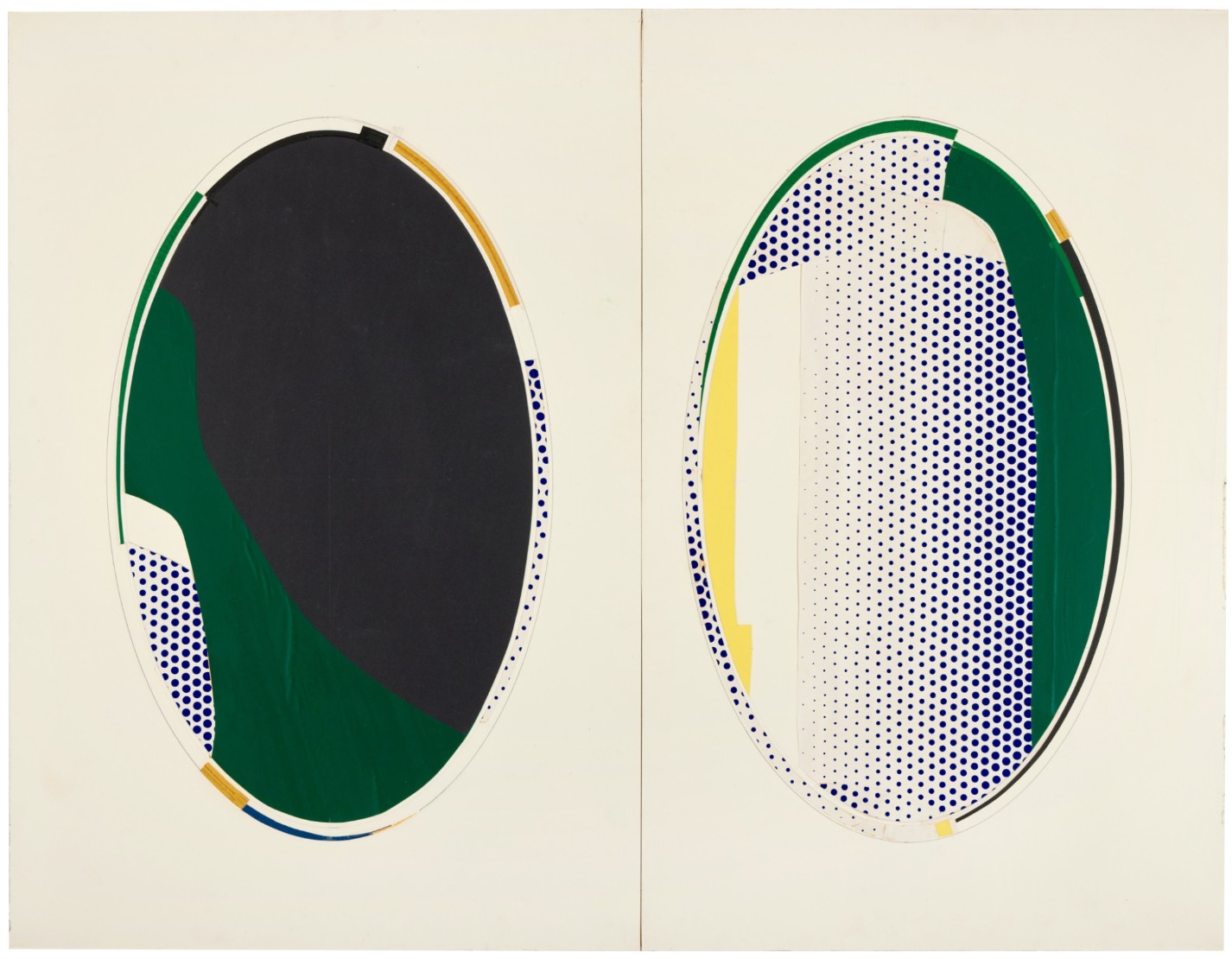
Mirror #8 (Study), 1970
Cut painted paper, cut printed paper, cut paper, tape and graphite on 2 joined boards
Overall: 38 7/8 x 50 1/2 inches (98.7 x 128.3 cm)
Signed, dated 1970 and inscribed Two oval mirrors (on the verso)
Mirror #1 (Study), 1970
Sotheby’s New-York: 19 November 2025
Estimated: USD 250,000 – 350,000
USD 279,400
Mirror #1 (Study) | Contemporary Day Auction | 2025 | Sotheby’s
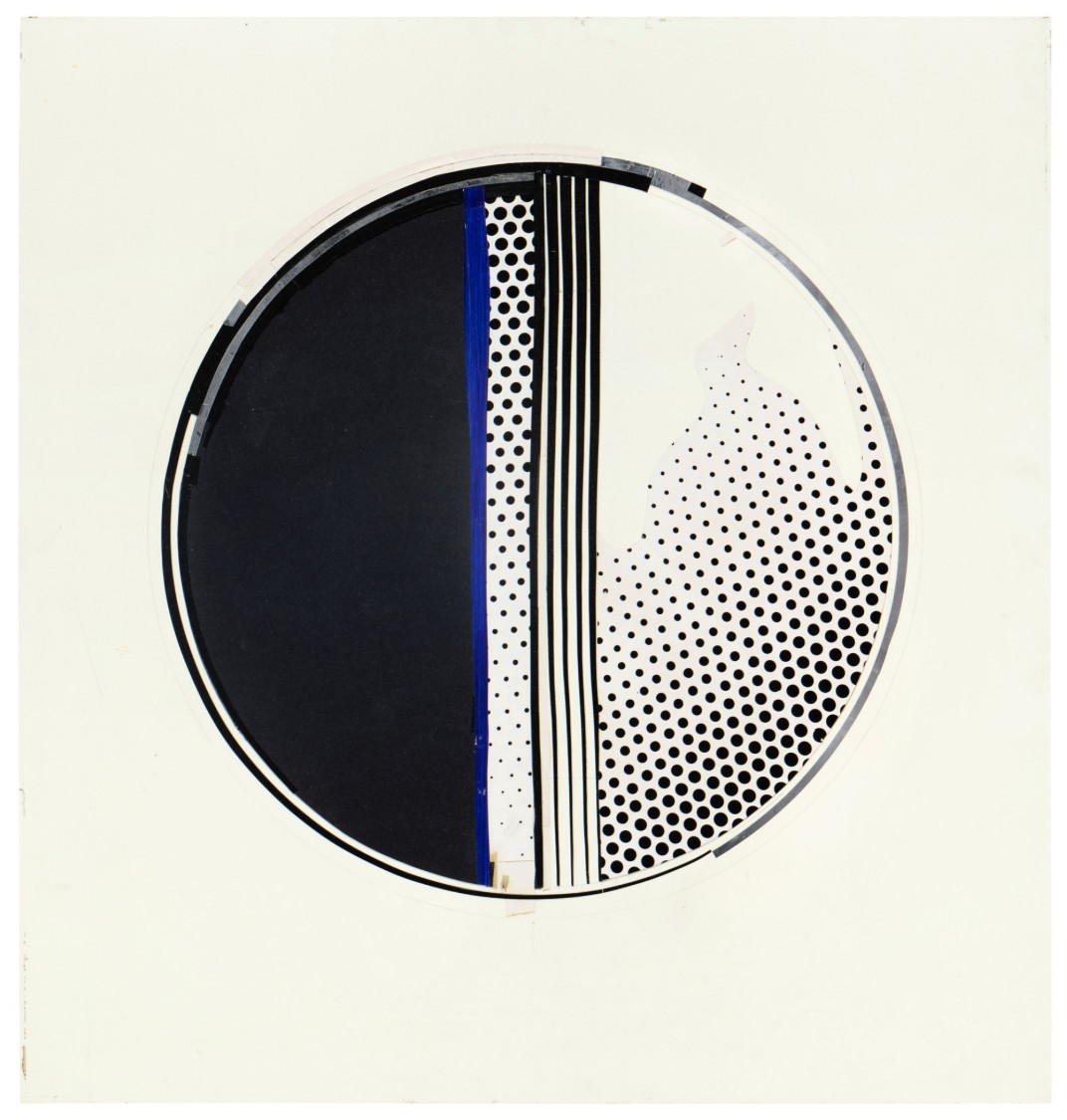
ROY LICHTENSTEIN (1923 – 1997)
Mirror #1 (Study), 1970
Cut painted and printed paper, tape, aluminum foil and graphite on board
Image diameter: 21 inches (53.3 cm)
Board: 29 3/8 x 28 inches (74.6 x 71.1 cm)
Signed and dated ’70 (on the verso)
Mirror #4 (Study), 1970
Reflections on Pop: Works from the Collection of Dorothy and Roy Lichtenstein
Sotheby’s New-York: 26 September 2025
Estimated: USD 150,000 – 200,000
USD 244,000
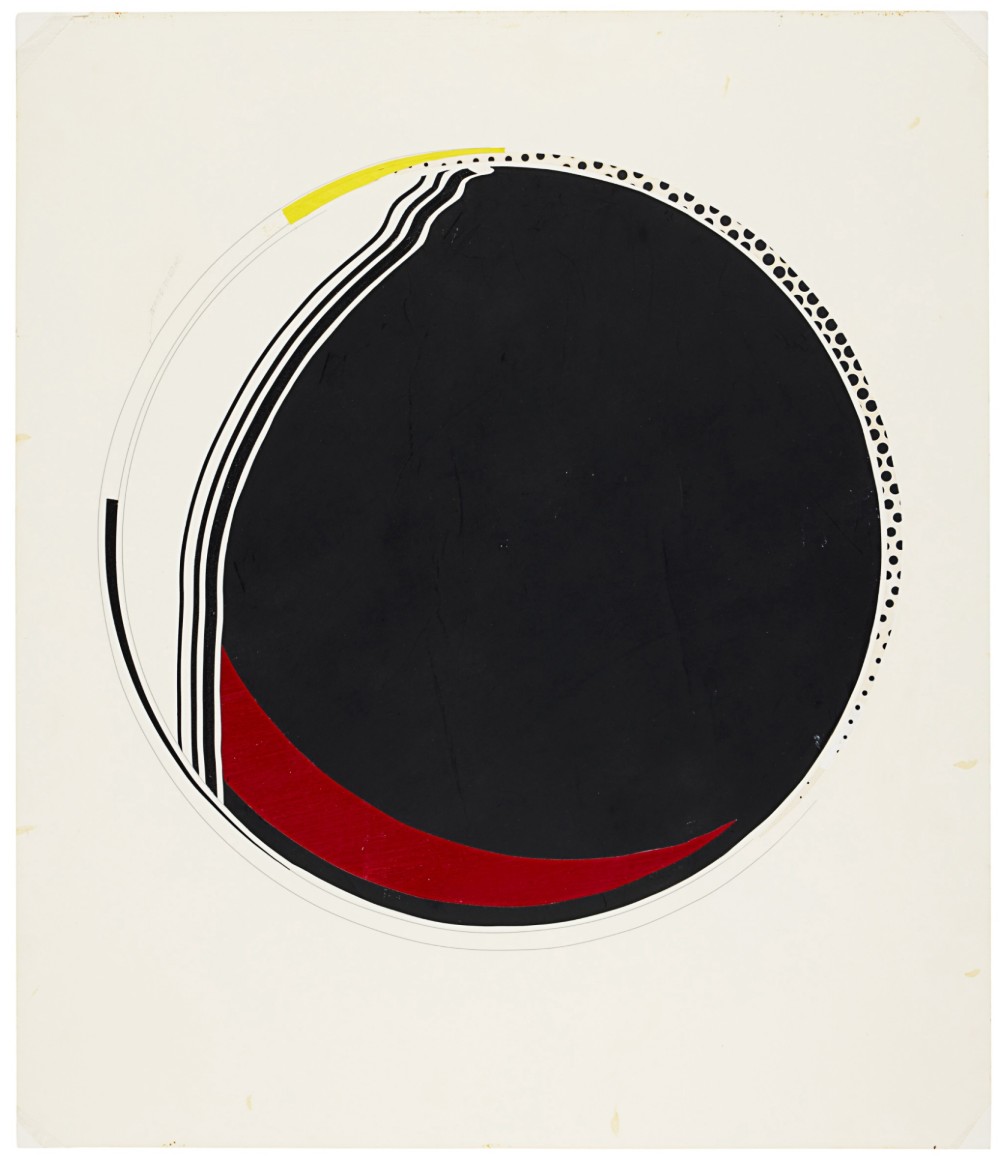
ROY LICHTENSTEIN (1923 – 1997)
Mirror #4 (Study), 1970
Tape, cut printed paper, cut painted paper, correction fluid and graphite on paperboard
Image diameter: 24 1/2 inches (62.2 cm)
Paperboard: 35×30 inches (88.9 x 76.2 cm)
Signed and dated 1970 (on the verso)
Mirror #9, 1970
Mirror #9, 1970
The Macklowe Collection
Sotheby’s New-York: 16 May 2022
Estimated: USD 1,500,000 – 2,000,000
USD 6,069,500
Mirror #9 | The Macklowe Collection | | Sotheby’s (sothebys.com)
ROY LICHTENSTEIN (1923 – 1997)
Mirror #9, 1970
Oil and Magna on canvas
Diameter: 24 inches (61 cm)
Signed and dated ’70 on the reverse
Mirror #9 elegantly captures Roy Lichtenstein’s singular ability to engage with canonical art historical themes through the motifs and idioms of twentieth-century consumer culture and, in doing so, interrogate conceptual and symbolic notions of art and illusion. Lichtenstein’s oeuvre is predicated on a semiotic investigation of the ways in which systems of representation allow us to conceptualize and interpret the world around us. Between 1969 and 1972, Lichtenstein produced a finite collection of Mirror paintings, through which he engaged with the representational strategies and tropes of mirrored surfaces in art history and contemporary advertising. Inspired by depictions of mirrors found in retail catalogues and magazines, Lichtenstein uses his unique artistic vocabulary to break down the codes inherent in reproduction and visual communication to their essential components. Mirror #9 thus stands as one of the most significant symbolic programs of Lichtenstein’s oeuvre, its subject persisting as a sign of artifice and illusion throughout the remainder of his prodigious career.
Mirror #1, 1969
Mirror #1, 1969
Sotheby’ New-York: 18 November 2021
Estimated: USD 1,800,000 – 2,500,000
USD 4,618,000
Mirror #1 | Contemporary Evening Auction | | Sotheby’s (sothebys.com)
ROY LICHTENSTEIN (1923 – 1997)
Mirror #1, 1969
Oil and Magna on canvas
24×18 inches (61 x 45.7 cm)
Signed Roy Lichtenstein and dated ’69 (on the reverse)
Mirror #1 poignantly encapsulates Roy Lichtenstein’s capacity to engage with canonical art historical concerns through the signs and symbols of twentieth-century consumer culture and, in doing so, raise complex conceptual questions about art and illusion. Lichtenstein’s oeuvre is predicated on a semiotic investigation of the ways in which systems of representation allow us to conceptualize and interpret the world around us. Between 1969 and 1972, Lichtenstein produced a finite collection of Mirror paintings, through which he engaged with the representational strategies and tropes of mirrored surfaces in art history and contemporary advertising. The second painting in the series, Mirror #1 helped inaugurate one of the most significant symbolic programs of Lichtenstein’s oeuvre, which would persist as a sign of artifice and illusion in his forthcoming bodies of work. In the latter half of the 1960s, Lichtenstein devoted his practice to reinterpreting icons of art history through his signature Pop Art lexicon, rooted in the aesthetic strategies of twentieth-century mass production and consumer branding. After exploring canonical art historical periods, such as Classical Antiquity, Impressionism, and Cubism, Lichtenstein considered one of the most iconic and technically challenging motifs of Western painting since the Renaissance: the mirror.
Mirror #9 (36″ diameter), 1972
Mirror #9 (36″ diameter), 1972
Christie’s New-York: 10 November 2015
Estimated: USD 2,500,000 – 3,500,000
USD 4,197,000
Roy Lichtenstein (1923-1997), Mirror #9 (36″ diameter) | Christie’s
ROY LICHTENSTEIN (1923-1997)
Mirror #9 (36″ diameter), 1972
Oil and Magna on shaped canvas
Diameter: 36 inches (91.4 cm)
Signed and dated ‘rf Lichtenstein ’72’ (on the reverse)
In Mirror #9 (36” diameter), Roy Lichtenstein tackles one of the most ineffable subjects in art history, that of the physical and philosophical nature of reflection and with this painting, Lichtenstein joins the pantheon of artistic greats, including van Eyck, Velásquez, Manet and Picasso, who have tackled this complex and difficult subject matter. Inspired by images of mirrors that he found in retail catalogues and newspapers, Lichtenstein uses his unique artistic language to break down the codes inherent in artistic communication to their essential elements. In his representation of the mirrored surface, he captures a fleeting image with his bold use of color and Ben-Day dots, all signature elements of classic Pop.
On this circular canvas, Lichtenstein displays the myriad of subtle variances that dance across the mirrored surface of the glass. A crescent-shaped passage of deep blue and black pigment occupies the right half of the canvas, suggesting the body or object which is displayed in the reflective surface of the glass. This effect is repeated in the opposite side of the mirror where Lichtenstein replicates the reflection by means of a thinner, semi-circular sliver of black pigment which accentuates the edge of the canvas. In between, the subtle gradations of a veil of signature Ben-Day dots that sweeps across the left half of the canvas, indicates the depths of shadows that this object leaves in its wake as it crosses in front of the mirror. Lichtenstein’s choice of color, and the density of his paint application suggests a substantial entity, yet the nature of reflection means that, in reality, the object might not be as significant as it appears here. All this leaves us with the mystery of what Lichtenstein is trying to depict here—is it the object and its reflection or just the nature of the reflection itself? Lichtenstein expertly captures the complicated laws of physics which deal with the refraction of light resulting in a painting of something so ostentatiously simple, yet also incredible complex. Unusually for a Pop artist, the largely empty reflection in Mirror #9 is among the artist’s most abstract works. By stripping down his subject matter in this way, Lichtenstein used works in this series to concentrate on the formal aspects of painting and to study the various magnifications of light and optical distortions of shapes on the mirror surface.
Mirror #8, 1971
Mirror #8, 1971
Christie’s London: 1 July 2014
Estimated: GBP 500,000 – 700,000
GBP 1,986,500 / USD 3,405,600
ROY LICHTENSTEIN (1923-1997), Mirror #8 | Christie’s
ROY LICHTENSTEIN (1923-1997)
Mirror #8, 1971
Oil and Magna on canvas
Diameter: 36 1/8 inches (91.8 cm)
Signed and dated ‘rf Lichtenstein ’71’ (on the reverse)
Throughout his Pop art oeuvre, the mirror, both real and metaphorical, can be seen as leitmotif for Roy Lichtenstein. Executed in 1971, in Mirror #8, the artist’s characteristic Ben Day dot system replaces our own refection, suggesting a witty commentary on the role of the artist, while addressing issues of vision and perception. Explicitly depicting a mirror with a curiously blank refection, Lichtenstein graduates his signature dot pattern across the tondo form to echo a wavering refection; the diagonal striations suggest the unmistakable refection of light bouncing off the glasses surface. Giving the appearance of a shattered image, Lichtenstein playfully hints at some unattainable refection, as flashes of color piece together the composition: the flicker of yellow glints in the corner, the unbroken crescent of blue of the glass’ beveled edge. Frozen upon its surface, there is a clear disjoint between the way that we see the world and the way in which it is being presented.
In tone and motif, the painting seems a nostalgic refection of the themes found in the earlier period of his career, but it is brought up to date through the addition of the ‘reflection’ device; that is, the fat, diagonal, bands of Ben Day dots that simulate reflected light. Informed by the artist’s earlier monochrome ‘object-paintings’, here he employs black dots across half the composition in a sort of faux trompe l’oeil, which offers no real reflections. In an interview with Michael Kimmelman, Lichtenstein said, ‘Mirrors are fat objects that have surfaces you can’t easily see since they’re always reflecting what’s around them. There’s no simple way to draw a mirror, so cartoonists invented dashed or diagonal lines to signify ‘mirror’. Now, you see those lines and you know it means ‘mirror’ even though there are obviously no such lines in reality. If you put horizontal, instead of diagonal lines across the same object, it wouldn’t say ‘mirror’. It’s a convention that we unconsciously accept’ (R. Lichtenstein quoted in M. Kimmelman, ‘Roy Lichtenstein at the Met, Portraits, Talking with Artists at the Met, the Modern, The Louvre and elsewhere’, The New York Times, 31 March 1995, p. C1).
Mirror #5, 1970
Mirror #5, 1970
Christie’s New-York: 17 November 2022
Estimated: USD 3,500,000 – 5,500,000
USD 3,180,000
ROY LICHTENSTEIN (1923-1997) (christies.com)
ROY LICHTENSTEIN (1923-1997)
Mirror #5, 1970
Oil and Magna on canvas
Diameter: 24 inches (61 cm)
Signed and dated ‘rf Lichtenstein ’70’ (on the reverse)
An extraordinary example of Roy Lichtenstein’s unique Mirror series, Mirror #5 distills and pushes the boundaries of the Pop Art icon’s canonical work. While Lichtenstein is perhaps best known for his paintings drawn from comic strips and using boisterous text, Mirror #5 is exemplary of a contemplative style and subject matter that question what vision itself means. Executed between 1969 and 1972, the Mirror paintings utilize Lichtenstein’s signature use of Ben-Day dots, but often in ways that are intriguingly opaque, abstract, and open-ended. Mirror #5 is a standout in this regard, as it pushes the Ben-Day dots all the way to the canvas’s edge, leaving us with a yellow, nearly solid expanse like the sun or a burning star. It follows that this particular canvas has been exhibited in renowned group shows and included in seminal exhibition catalogues at the Fondation Beyeler, Basel and the Centre Pompidou, Paris. One of Lichtenstein’s most innovative and mysterious paintings, Mirror #5 is a wordless, intimate, and abstract gem in a vast and influential oeuvre of more than forty years.
Mirror #7, 1971
Mirror #7, 1971
Phillips New-York: 17 May 2023
Estimated: USD 3,000,000 – 4,000,000
USD 2,843,000
Roy Lichtenstein – 20th Century & Contem… Lot 18 May 2023 | Phillips
ROY LICHTENSTEIN
Mirror #7, 1971
Oil and Magna on canvas
Diameter: 36 inches (91.4 cm)
Signed and dated “rf Lichtenstein ‘71” on the reverse
With its opaque white surface of red and blue dots, meticulously rendered by hand and clustered into carefully aligned sequences of varying thicknesses, Mirror #7, 1971, both evokes and obfuscates our notions of the form and function of the mirror. In his seminal series of mirror paintings, executed between 1969 and 1972, Roy Lichtenstein sought to create works that could be “moved as far as possible from realism…as stylized as you can get it.”In the process, he found a complex formal and symbolic reflection of his own art practice, keyed to the minimalist language of post-Pop American art.
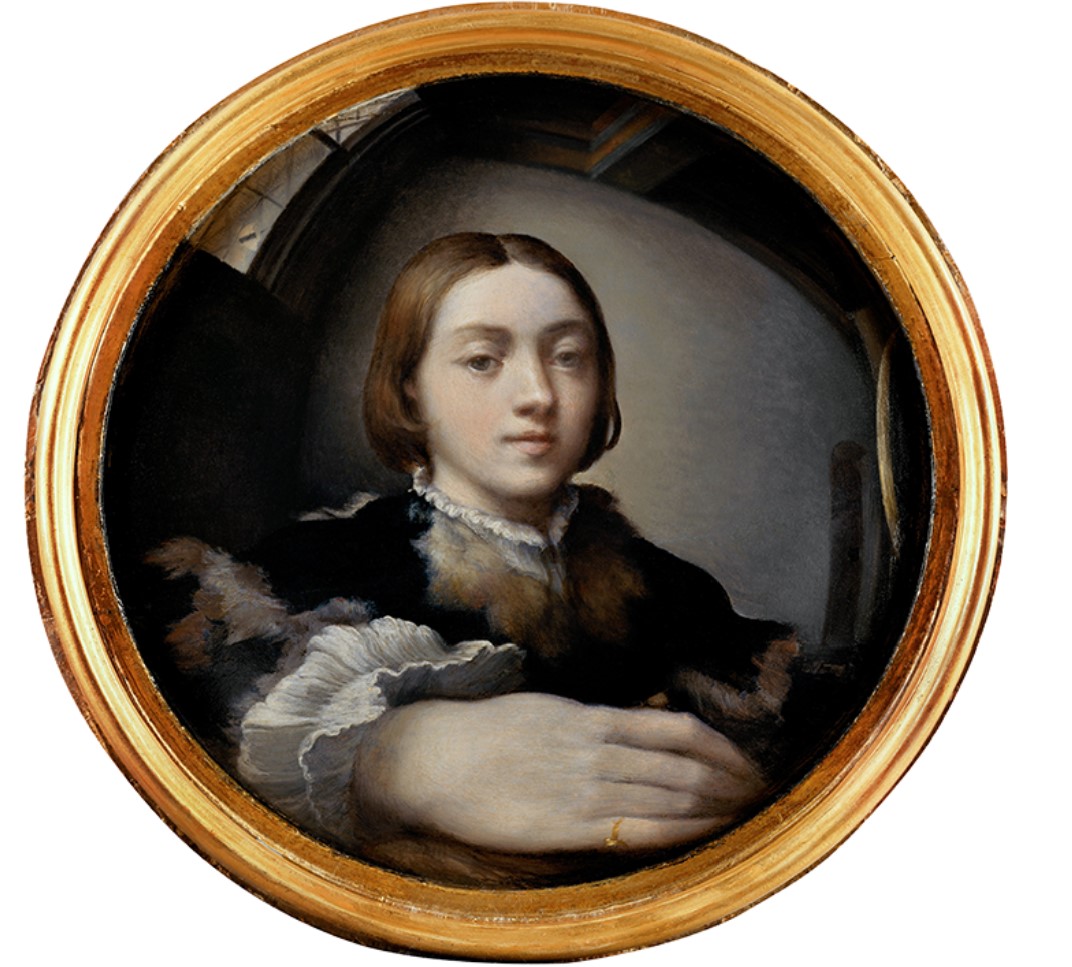
Parmigianino, Self-Portrait in a Convex Mirror, 1524. Kunsthistorisches Museum, Vienna. Image: Heritage Images / Fine Art Images / akg-images
“There’s no simple way to draw a mirror, so cartoonists invented dashed or diagonal lines to signify mirror. Now, you see those lines and you know it means mirror, even though there are obviously no such lines in reality. If you put horizontal, instead of diagonal, lines across the same object, it wouldn’t say ‘mirror’.”
The mirror, as an art historical symbol, enjoys a richness of meanings, representing vanity, beauty, the transience of life, and the fickleness of reality. The mirror itself, too, is a potent symbol of painterly skill. Historically, commercial artists would subtly advertise their talents in realist representation by painting complex mirrors or glassware into their work; a self-portrait with a mirror was their most effective business card. Lichtenstein, too, draws on more commercial meanings of mirrors with Mirror #7. He found his inspiration for the present series in brochures found in the window displays of glass stores on the Bowery on New York’s Lower East Side. He was fascinated by these depictions of mirrors as “air-brushed mirror symbols, reflecting nothing.” Lichtenstein’s perennial muse, cartoon art, provided further inspiration for Mirror #7. As with the advertising brochures found on the Bowery, cartoonists had their own, not-quite-realistic way of drawing mirrors.
Mirror #3, 1971
Mirror #3, 1971
Christie’s New-York: 13 May 2009
Estimated: USD 1,800,000 – 2,500,000
USD 1,650,500
Roy Lichtenstein (1923-1997) , Mirror #3 | Christie’s
ROY LICHTENSTEIN (1923-1997)
Mirror #3, 1971
Oil and magna on canvas
60×48 inches (152.4 x 121.9 cm)
Signed and dated ‘rf Lichtenstein ’71’ (on the reverse)
Where it is relatively easy to paint, say, a hot dog, a sunset or a woman by assembling a group of Ben Day dots and magna outlines, the subject of the reflection is ineffable, essentially impossible to capture. In Mirror #3 painted in 1971, Lichtenstein has used a gradation of dots to give the sense of light cast across a reflective surface. He has deconstructed not the reality of the mirror, but instead the artistic short-hand by which mirrors are represented. There’s no simple way to draw a mirror, so cartoonists invented dashed or diagonal lines to signify “mirror.” Now, you see those lines and you know it means “mirror,” even though there are obviously no such lines in reality. If you put horizontal, instead of diagonal, lines across the same object, it wouldn’t say “mirror.” It’s a convention that we unconsciously accept.
Lichtenstein invokes our reflexive understanding of the image, tapping into his career-long fascination with the way that we see, instilled in him from an early period by his teacher Hoyt L. Sherman. Lichtenstein casts a spotlight on the absurd way in which these essentially abstract dots and lines and areas of blank canvas come together and become comprehensible. In Mirror #3, he has taken an age-old subject, used by artists such as Van Eyck and Velasquez to create a picture-within-a-picture, and has then played with the boundaries between subject and object. He has imitated the sense of ambiguous objecthood and self-sufficiency of Jasper Johns’ Flag or Target, yet has deliberately undermined that ambiguity by creating something that is flagrantly unreal. Mirror #3 is a gleeful and deliberate failure. Lichtenstein exposes the reasons why the picture falls short of being a mirror in its own right. Rather than examining the ephemera of popular culture, Lichtenstein explores the way in which images function within the broad mass of the populace. Somehow, because of a knee-jerk reaction honed by life-long exposure to ads and mags and comics and cartoons, despite Lichtenstein’s blatant markers and overt lack of reflection in Mirror #3.
Mirror Pair, 1971-1972
Mirror Pair, 1971-1972
Sotheby’s New-York: 19 November 2021
Estimated: USD 600,000 – 800,000
USD 1,411,500
Mirror Pair | Contemporary Day Auction | 2021 | Sotheby’s (sothebys.com)
ROY LICHTENSTEIN (1923 – 1997)
Mirror Pair, 1971-1972
Oil and Magna on canvas, in 2 parts
Each: 34×36 inches (86.4 x 91.4 cm)
Signed rf Lichtenstein and dated ’71-’72 (on the reverse of the left canvas)
In Roy Lichtenstein’s supreme Mirror Pair from 1971-72, black and white accent lines coalesce to suggest the beveled edges of glass while repeating swathes of uniform Ben-Day dots—blue in one canvas, black in the other—hint at the existence of a solid, uniform surface. The two canvases placed side by side as a diptych recall religious iconography, also referenced in notable contemporary works by Andy Warhol and Frank Stella. Between 1969 and 1971, Roy Lichtenstein painted approximately 50 mirrors of varying sizes, shapes, and colors. His visual inspiration for the series ranged from catalogue illustrations to store brochures from New York merchants selling cut glass and mirrors on the gritty city streets. A self-proclaimed “image duplicator,” Lichtenstein was fascinated by the flat, air-brushed quality of these advertisement images and was captivated by the irony that these printed mirrors reflected nothing at all. Crafting the painted illusion of a mirror with meticulously applied colors, lines, and Ben-Day dots on the surfaces of shaped canvases, Lichtenstein’s mirrors are intentionally elusive and abstract, ultimately steeped in the irony of his iconic Pop aesthetic.
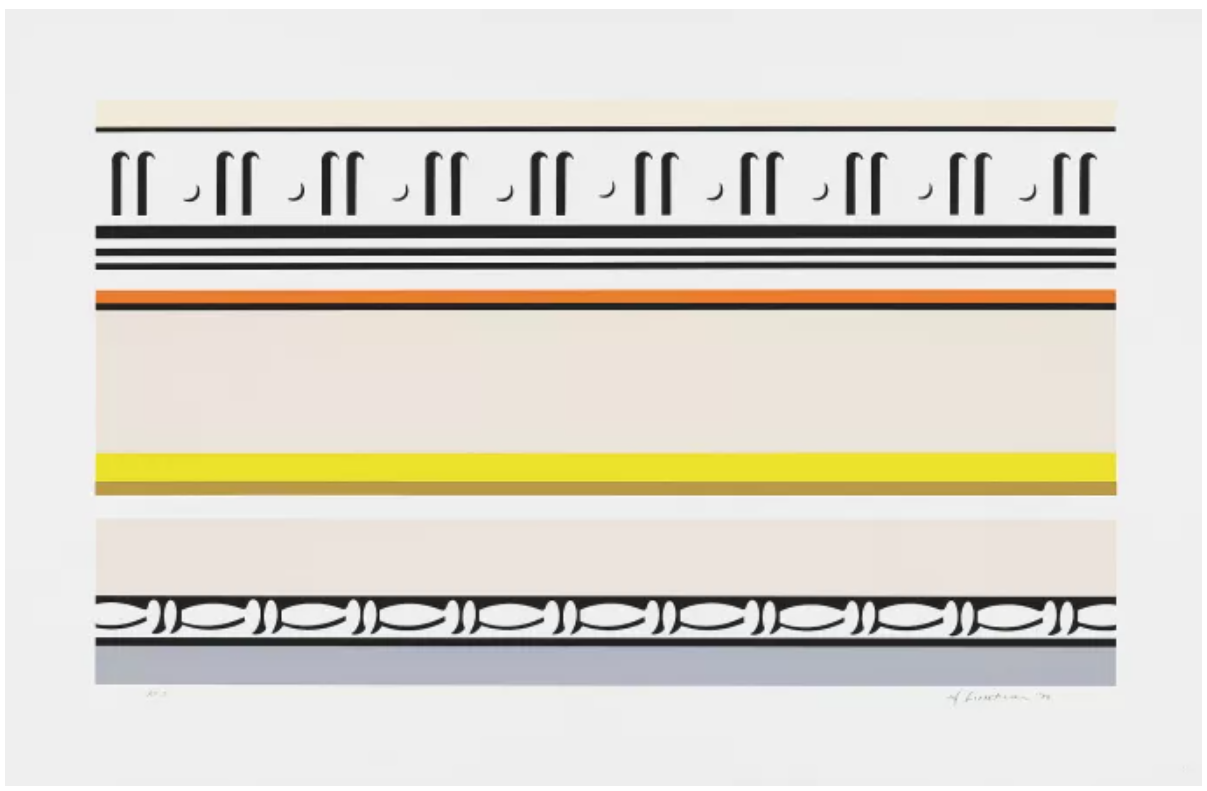
ROY LICHTENSTEIN, ENTABLATURE VIII, 1976, WHITNEY MUSEUM OF AMERICAN ART DENIS Y. SUSPITSYN
With its regular geometric forms and repeating construction, Mirror Pair is closely related to Lichtenstein’s contemporaneous series of Entablatures, in which he produced scrolling horizontal paintings and drawings of the titular architectural element. Walking down the streets of New York in the 1970s, Lichtenstein was inspired by the irony and symbolic potency of these simple decorative motifs. Plucked from the world of Classical art, the modern-day entablature offers an easy, prepackaged way to conjure the imperial stateliness of antiquity through design—even if the entablature in question had actually been mass-produced in an industrial factory. Lichtenstein was fascinated by this idea of the artistic motif as a signifier and a vessel for cultural meaning. Like the Entablatures, the Mirror series explores the dichotomy of universality and ephemerality between which visual symbols tread the line.
“Mirrors are flat objects that have surfaces you can’t easily see since they’re always reflecting what’s around them. There’s no simple way to draw a mirror, so cartoonists invented dashed or diagonal lines to signify ‘mirror’. Now, you see those lines and you know it means ‘mirror’ even though there are obviously no such lines in reality. If you put horizontal, instead of diagonal lines across the same object, it wouldn’t say ‘mirror’. It’s a convention that we unconsciously accept.”
Similar to his interest in the Greco-Roman entablature, Lichtenstein was undoubtedly fascinated by the use of the mirror as an enigmatic symbol throughout the history of painting, from Jan van Eyck’s Arnolfini Portrait, to Édouard Manet’s A Bar at the Folies-Bergère, to Diego Velázquez’s Las Meninas. The aforementioned artists incorporated mirrors into their respective compositions as a device to suggest the presence of actions occurring beyond their frames. In doing so, they heightened the illusion of painting as a reflection of reality, a motive adopted by Lichtenstein in his own mirror works. Underscoring the critical importance of this series, other examples of Lichtenstein’s early mirror paintings reside in the permanent collections of the Museum of Modern Art, New York; The Broad, Los Angeles; and the San Francisco Museum of Modern Art.
Mirror #17, 1971
Mirror #17, 1971
Christie’s New-York: 16 May 2001
Estimated: USD 200,000 – 300,000
USD 237,000
Roy Lichtenstein (1923-1997) , Mirror #17 | Christie’s
ROY LICHTENSTEIN (1923-1997)
Mirror #17, 1971
Oil and magna on canvas
Diameter: 24 inches (61 cm)
From 1969 to 1971, Roy Lichtenstein embarked on a series of works depicting types and shapes of mirrors. Inspired by images of mirrors in retail catalogues and newspaper advertisements, the paintings in this series are abstract interpretations of the mirror as an object and of perceptual effects of light reflected in mirrors. Depicting a blank reflection, the Mirror works are among the artist’s most abstract. Stripping down his subject matter in this way, Lichtenstein used the series to concentrate on the formal aspects of painting and to study the various magnifications of light and optical distortions of shapes on the mirror surface.
In the present work, the artist uses black and white gradations of his signature Benday dots to represent the mirror surface and the distortion of light. By fashioning a curved swathe of yellow, Lichtenstein further emphasizes the warping effect of light on our perception. The picture’s edges, defined by lines that suggest the beveled edges of a mirror, remind us that the work, however abstract, refers to an object in the real world. By creating a painting of a mirror the same size as the object in life, Lichtenstein conflates the thing depicted with the painted representation of it. Mirror #17 exemplifies the artist’s interest in the perception of light and of the art object.
Mirror Prints
READ ABOUT MIRROR SERIES
FIND ALL HISTORICAL RESULTS