WORK IN PROGRESS

intelART covers a diverse group of artists who are highly sought after by art collectors globally. All the most recent auction results are constantly updated within each Auction Market Overview, containing all auction results since 1/1/2021.
Number of Artists Covered: 60
Number of Referenced Artworks: 4,000
ULTRA CONTEMPORARY ART
23 Artists / 900 Auction Results
Hernan Bas (US, b. 1978)
Maria Berrio (Colombian, b. 1982)
Lucy Bull (US, b. 1990)
Jade Fadojutimi (UK, b. 1993)
Adrian Ghenie (Romania, b. 1977)
Shara Hughes (US, b. 1981)
Rashid Johnson (US, b. 1977)
Ewa Juszkiewicz (Poland, b. 1984)
Rafa Macarron (Spain, b. 1981)
Eddie Martinez (US, b. 1977)
Joel Mesler (US, b. 1974)
Nicolas Party (Switzerland, b. 1980)
Hilary Pecis (US, b. 1979)
Edgar Plans (Spain, b. 1977)
Christina Quarles (US, b. 1987)
Dana Schutz (US, b. 1976)
Avery Singer (US, b. 1984)
Salman Toor (UK, b. 1983)
Caroline Walker (Scotland, b. 1982)
Anna Weyant (Canada, b. 1995)
Kehinde Wiley (US, b. 1977)
Jonas Wood (US, b. 1977),
Matthew Wong (Canada, 1984-2019)
CONTEMPORARY ART
21 Artists / 1,350 Auction Results
BANKSY (UK, b. 1974)
Jean-Michel Basquiat (US, 1960-1988)
Louise Bonnet (Swiss, b. 1970)
Cecily Brown (UK, b.1969)
Javier Calleja (Spain, b. 1971)
George Condo (US, b. 1957)
Keith Haring (US, 1958-1990)
Damien Hirst (UK, b. 1965)
INVADER (France, b. 1969)
Scott Kahn (US, b. 1946)
KAWS (US, b. 1974)
Jeff Koons (US, b. 1955)
Mr. (Japan, b. 1969)
Takashi Murakami (Japan, b. 1962)
Yoshitomo Nara (Japan, b. 1959)
Richard Prince (US, b. 1949)
SALVO (Italy, 1947-2015)
Kenny Scharf (US, b. 1958)
Stanley Whitney (US, b. 1948)
Christopher Wool (US, b. 1955)
Liu Ye (Chinese, b. 1964)
POST-WAR ART
10 Artists / 1,500 Auction Results
Fernando Botero (Colombia, b. 1932)
David Hockney (UK, b. 1937)
Alex Katz (US, b. 1927)
Yayoi Kusama (Japan, b. 1929)
Roy Lichtenstein (US, 1923-1997)
Joan Mitchell (US, 1925-1992)
Gerhard Richter (Germany, b. 1932)
Ed Ruscha (US, b. 1937)
Pierre Soulages (France, 1919-2022)
Andy Warhol (US, 1928-1987)
MODERN ART
5 Artists / 300 Auction Results
Francis Bacon (UK, 1909-1992)
Jean Dubuffet (France, 1901-1985)
Willem de Kooning (US, 1904-1997)
Pablo Picasso (Spain, 1881-1973)
Mark Rothko (US, 1903-1970)
Ultra Contemporary Art
2021 and 2022 saw the rise of a new generation of artists, most of them born after 1980. Despite their young age, their works are purchased from all major auction houses, with a strong appetite coming from Asian collectors.
1. Female Artists
Jade Fadojutimi
A recent graduate of the Royal College of Art, Fadojutimi has seen a precipitous ascent to success: she is the youngest artist represented in the collection of the Tate, London, and has upcoming exhibitions planned for the Hepworth Wakefield and the Liverpool Biennial. Fadojutimi’s work is immersive and all-encompassing, featuring tightly woven lattices of ecstatic pigment and electric line. The raw but bubbly energy of her paintings reflects aspects of the artist’s own interiority, as she treats each canvas as an opportunity to explore undiscovered or under-interrogated aspects of her individuality. Fadojutimi believes that color and personality mingle and encourage one another; the matrices of line and color resemble the psychedelic spindles of neural networks, actualizing the artist’s investigative efforts as visual translations of the artist’s explorations of identity and fluidity. F
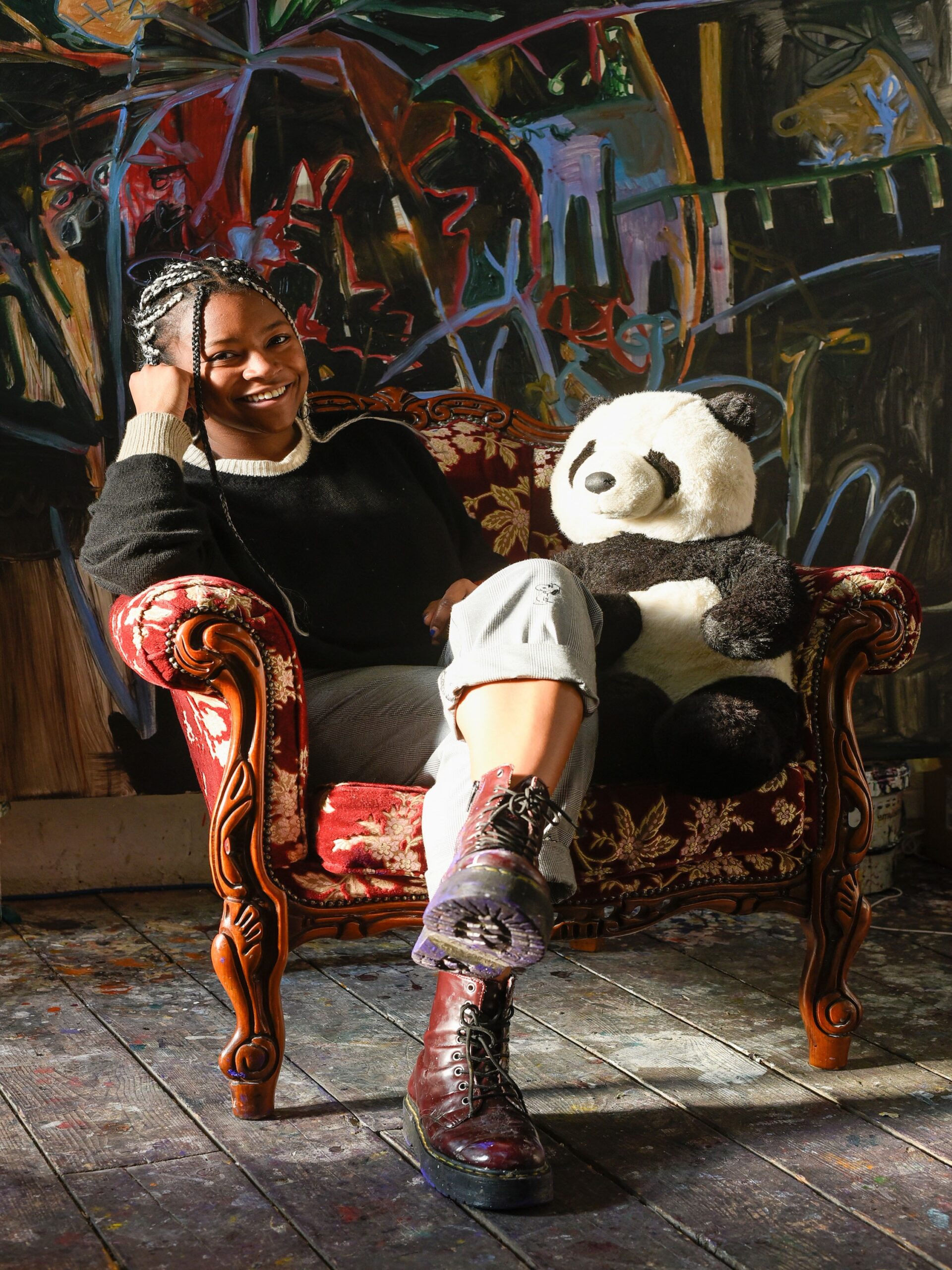
adojutimi brings a frenetic energy to painting, as many of her works are completed in late-night bursts of creativity; what may start the night as a blank canvas often emerges in the morning as a finished work. Describing her practice in environmental terms, Fadojutimi strives to incorporate the ineffable associations of memory absorbed from the warm moments and special objects of life; taken against the societal backdrop of their creation, Fadojutimi’s paintings shine out as optimistic beacons for dark times.
Shara Hughes
Shara Hughes uses dizzying brushwork, vibrant colors, and shifting perspectives to make paintings that defy many of the existing conventions associated with the landscape genre. Natural motifs and patterned elements recur throughout Hughes’s pictures: snake-like trees, floating moons, distorted reflections in bodies of water, and stippled night skies appear in various permutations, synchronized with harder-to-define forms in which abstract and representational impulses co-exist in unorthodox harmony.
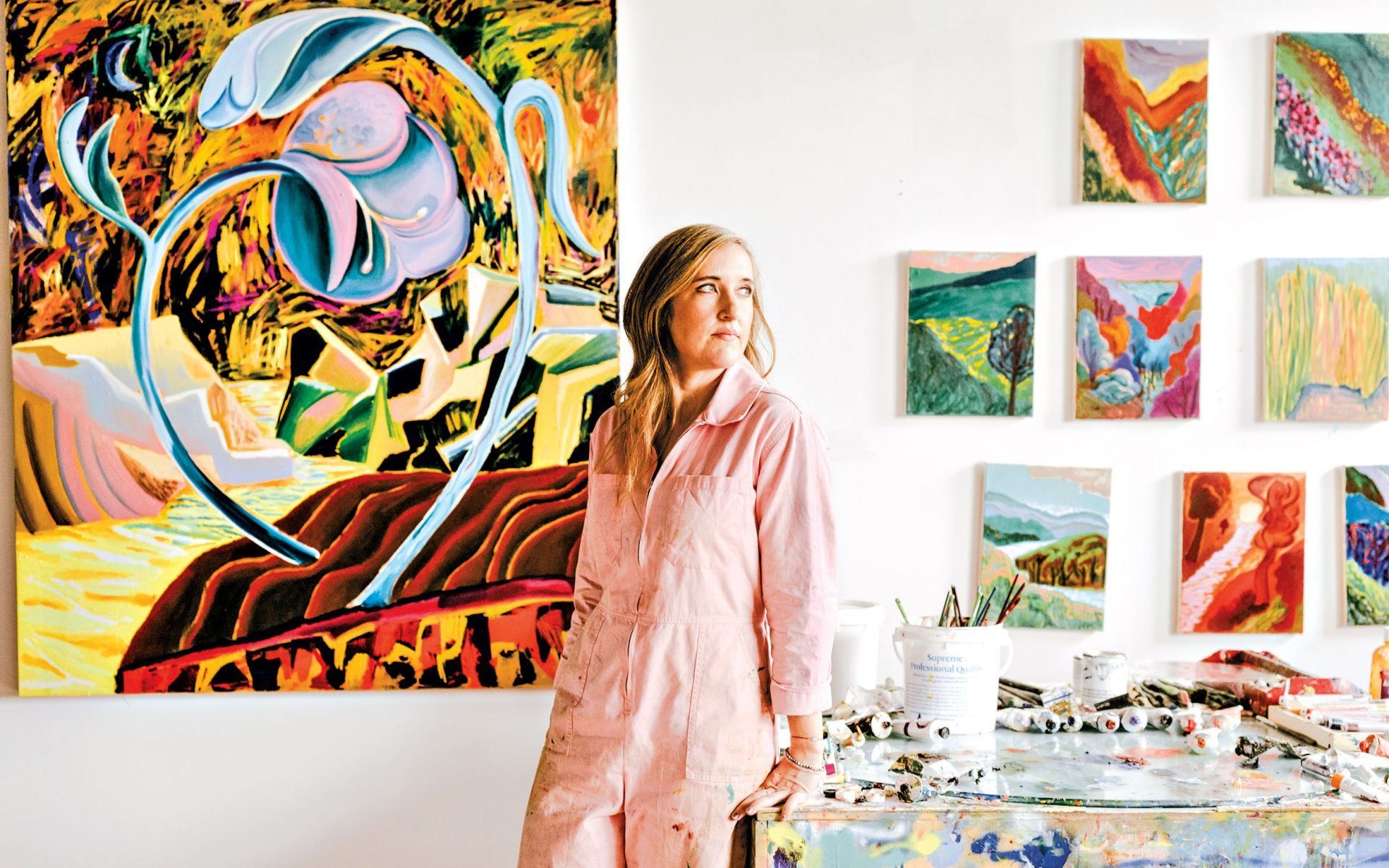
Hughes’s process rarely involves reference images; instead, she transposes the psychological complexity of her interior world into lush and layered compositions. She often mixes pigment directly atop her surfaces, and in this way creates intuitive, one-of-a-kind color palettes that simultaneously point to art historical movements like color field painting and Post-Impressionism. As she engages with these open-ended experiments in image-making, Hughes depicts kaleidoscopic visions of flora and fauna in processes of constant evolution.
Ewa Juszkiewicz
Ewa Juszkiewicz’s oil portraits of women turn genre conventions inside out. Beginning by producing a likeness of a historical European painting—her sources date from the Renaissance through the nineteenth century—she expertly imitates the original’s technique and style but replaces the subject’s face with a surreal or grotesque distortion. In some compositions, the Polish artist swathes her sitter’s head in folds of fabric or lush floral arrangements; in others, she redirects an elaborately plaited hairstyle to shield the woman’s face from view. The results of this process narrate a history of effacement and erasure that runs throughout the Western canon of female portraiture.
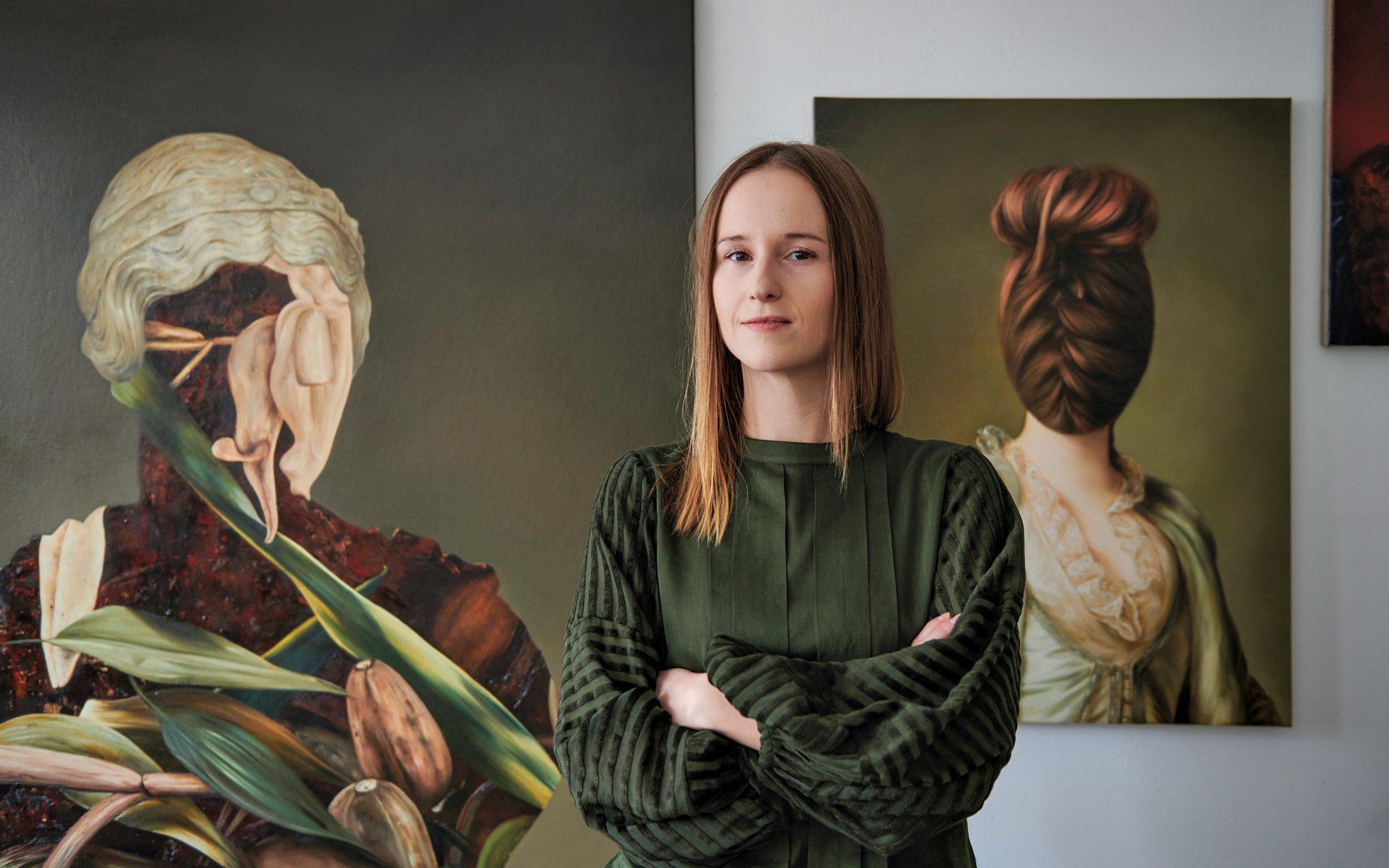
Born in Gdańsk, Poland, Juszkiewicz lives and works in Warsaw. She earned an MA in painting from the Akademia Sztuk Pięknych, Gdańsk, in 2009, and a PhD from the Akademia Sztuk Pięknych im. Jana Matejki, Krakow, in 2016. Juszkiewicz began her female portrait series in 2011 and continues to explore the unsettling possibilities it holds out, evoking the uncanny without compromising the aesthetic harmony of the images from which she works. Classical in method but subversive, eerie, even rebellious in content, her paintings deconstruct ideals of feminine beauty and the contexts in which they have arisen and persist.
Christina Quarles
The Los Angeles–based artist paints bodies that are subjected not only to the weight and gravity of the physical world but also to the pleasures and pressures of the social realm. Untangling the complexities of race and gender through her dynamic explorations of the human body, Christina Quarles has emerged as one of the leading figurative painters of her generation. In her large-scale paintings, entwined bodies are set against abstract backgrounds, their faces obscured and skin rendered in a kaleidoscope of vibrant colors. Seeking to counter the established binary categorization of race, gender, and sexuality, Quarles erases traditional gender and racial qualifiers by fragmenting, convulsing, and stretching her subjects until they reach the brink of dissolving into entirely abstract forms. Leaving large swaths of canvas unpainted, Quarles also invites the viewer to complete her unresolved pictures, further investigating this notion of ambiguity and identity.

Born in Chicago in 1985, Quarles moved following her parents’ divorce to Los Angeles in 1991: she still lives and works there today. After attending the Los Angeles High School for the Arts, she graduated from Hampshire College in 2007, where she studied philosophy and critical race theory. She found language a limiting way to approach thinking about identity and returned to making art, eventually earning an MA in painting from Yale School of Art in 2016. Her work has received rising acclaim ever since. Quarles was prominently featured in the 2020 Whitechapel Gallery group show Radical Figures: Painting in the New Millennium, and the following year held solo exhibitions at the Museum of Contemporary Art, Chicago, and the South London Gallery. Her works are held in major museum collections worldwide, including Tate, London; the Astrup Fearnley Museum of Modern Art, Oslo; the Whitney Museum of American Art, New York; the Pérez Art Museum, Miami; the Walker Art Center, Minneapolis; and the Los Angeles County Museum of Art, Los Angeles, among others.
Avery Singer
Raised by artist parents, Singer grew up in lower Manhattan and was around art and museums from a young age. She went on to study sculpture at the esteemed Cooper Union, and later developed her interests in architectural computer modelling before settling on the medium of painting, making her a painter with sculptor’s eyes. Like Kasia Redzisz suggested, ‘her 3D models serve as sketches for 2D artworks and for still lifes that seem to be in constant motion. Singer assembles a hybrid of past, present and future, which she then translates into paintings, approached as sculptures staged for performances frozen in time.’ (K. Redzisz, ‘In Focus: Avery Singer’, Frieze, Issue 164, May 2014).

“I want to make work that explores something that I haven’t seen in painting before. I guess it’s really a question of being generational – making art that belongs to your generation in some way.”
Often depicting figures operating within the romanticized rituals that surround the production of art, Singer’s practice both mines and pokes fun at the sanctioned structures of art history. Invoking the geometric forms of Constructivism, Futurism, and Cubism, Singer’s paintings extend the painterly language of abstraction to self-referential compositions of robot-like figures that mock the artist as a social being. As curator Beatriz Ruf notes, “The insignias of ‘fine arts’ collide with avant-garde tropes, and parodic autobiographical motifs constantly allude to cliches of the art world. Adopting a humorous tone, Avery Singer demonstrates rituals and social patterns and presents stereotypes of the artist, collector, and writer. In this context, she adopts the historical loci of artistic production…where the myth of the artist and cult of genius are fostered. How are artists made?” (Beatriz Ruf cited in: Exh. Cat., Kunsthalle Zürich (and travelling), Avery Singer: Pictures and Punish Words, 2015, p. 5)
2. The Spanish Avant-Garde
Javier Calleja
Javier Calleja is a Spanish artist whose paintings, sculptures, drawings, and prints are in the style of children’s books, toys, and cartoons, featuring deliberately saccharine faces with large, round eyes. For the youth market, Calleja has also created a collection of marketable bags, sneakers, and clothing, including for Vans.
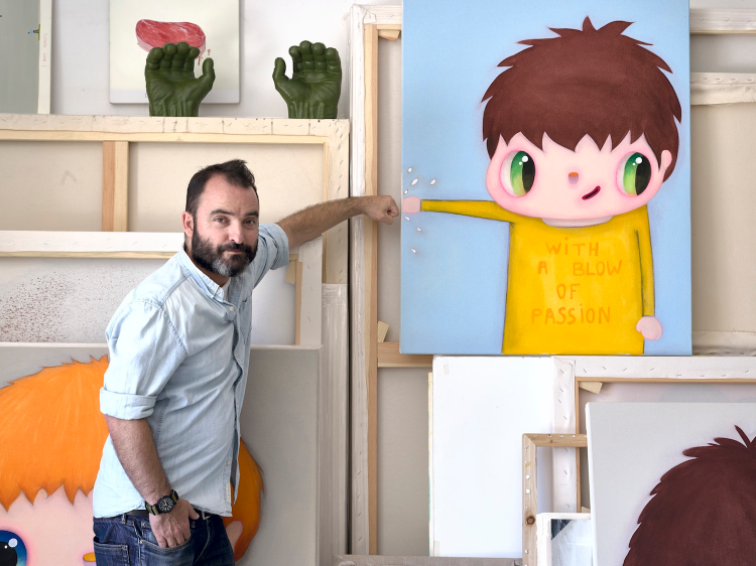
Depictions of upbeat, mischievous children lie at the core of Calleja’s practice. As a recurring subject-matter throughout art history, children portraiture is an imagery that never gets old, for it is a symbolic motif for going back to the basics with the carefree joy and the unbound curiosity that we all share as little ones. Historically, children’s portraits are done for the royals, and the children of the rich and the powerful, seen in works by Spanish court painter Diego Velázquez. As time went on, artists such as Renoir and Picasso brought their own styles into the exploration of this subject. As a result of their artistic investigation and the social climates of the time they lived in, the subject of depiction has become more and more relatable to the common viewer, with conspicuously less telling of the protagonist imbued in the attributes and surroundings, and much more focused on the behavior’s and emotions of the actual person.
Rafa Macarrón
2022 Turnover: USD 4,260,256 (↑)
# Lots sold: 31
% of Lots unsold: 6.1%
Inspired by the everyday, Spanish artist Rafa Macarrón imbues the typically mundane with an air of the uncanny and the fantastical, capturing the excitement and humor of ordinary life. A physiotherapist by training, Macarrón has a carefully studied knowledge of human anatomy, which he relates directly to his characteristic distortion of the figure.
“To create my elongated figures requires knowledge and respect for anatomy. I know the structure of the body perfectly. Then, I begin to try out distortions and deformations, which I think works very well. I am able to create my own characters, each with their own soul and personality.”

Further, his figures blend surrealist and expressionist elements, with the artist also citing Jean Dubuffet, Manuel Lança Bonifacio and Alfonso Fraile as his influences. Indeed, Macarrón’s work follows in the lineage of Dubuffet’s art brut, roughly translating to “raw art”, eschewing traditional and classical conventions of painting in the desire for a purer art, deriving more from intuition. Further, the artist has placed his work in the context of Spanish painting, influenced by the El Paso group in Madrid as well as the New Figuration in Latin America, commenting that: “I have had a very direct relationship with the Spanish painting, I have practically grown up in the Prado Museum, the best art gallery in the world. I am very proud to be part of Spanish painting tradition. Goya’s black paintings have always moved me, and of course Las Meninas by Velázquez, which I consider the best work” (Ibid.).
“My characters don’t go towards the caricature. I flee away from all kinds of cartoonish ornamentation. They are born from a fantastic, surreal, and expressionist figuration. I consider them hybrid characters that are closely related to my admiration for Dubuffet, Bonifacio, and Alfonso Fraile. My characters live in a transcended daily life, clean days, sunsets, and fresh air.”
Born in Madrid in 1981, self-taught artist Rafa Macarrón first came to prominence after winning the BMW Painting Award in 2010. Alongside solo exhibitions with Allouche Gallery in New York and Nino Mier Gallery in Los Angeles, Macarrón held his first institutional solo show at the Centro de Arte Contemporáneo de Málaga in 2021 with scenes of bathers and beaches providing the central thematic focus. Earlier this year the artist mounted his debut solo exhibition in Asia, held at the CVG Foudation in Beijing. In 2021, Macarrón exhibited at CAC, Málaga, Spain, followed by the first solo exhibition by a Spanish artist at La Fundacion La Nave Salinas, Ibiza, Spain. Other exhibitions also include Museo de Arte Contemporáneo, Alicante, Spain; Museo DA2, Salamanca, Spain; and his work is displayed at such institutions as the Hudson Valley Center for Contemporary Art, New York; Fundación BMW, Spain; Caja Campo, Valladolid, Spain; and Colección Mercadona, Spain; among others.
Edgar Plans
2022 Turnover: USD 9,720,814 (↑)
# Lots sold: 133
% of Lots unsold: 12.5%
In his mixed-media works, Edgar Plans places his mouse-eared, big-eyed cartoon characters against backdrops adorned with doodles and scrawl. These apparently spontaneous marks recall the canvases of Jean-Michel Basquiat, or Cy Twombly; the Spanish-born and -based Plans names graffiti, street art, comic books, illustrations, and animated films as major influences. Yet it’s really his characters, which Plans describes as “Hero Animals,” which have helped the artist win popularity and a number of gallery shows around Spain. Plans’s work has found high demand on the secondary market; his paintings have sold for six figures. Despite their vibrant color palette and cartoon-indebted aesthetics, Plans’s paintings tackle serious subject matter: With his animal heroes, he intends to criticize gender violence, racism, and envy.
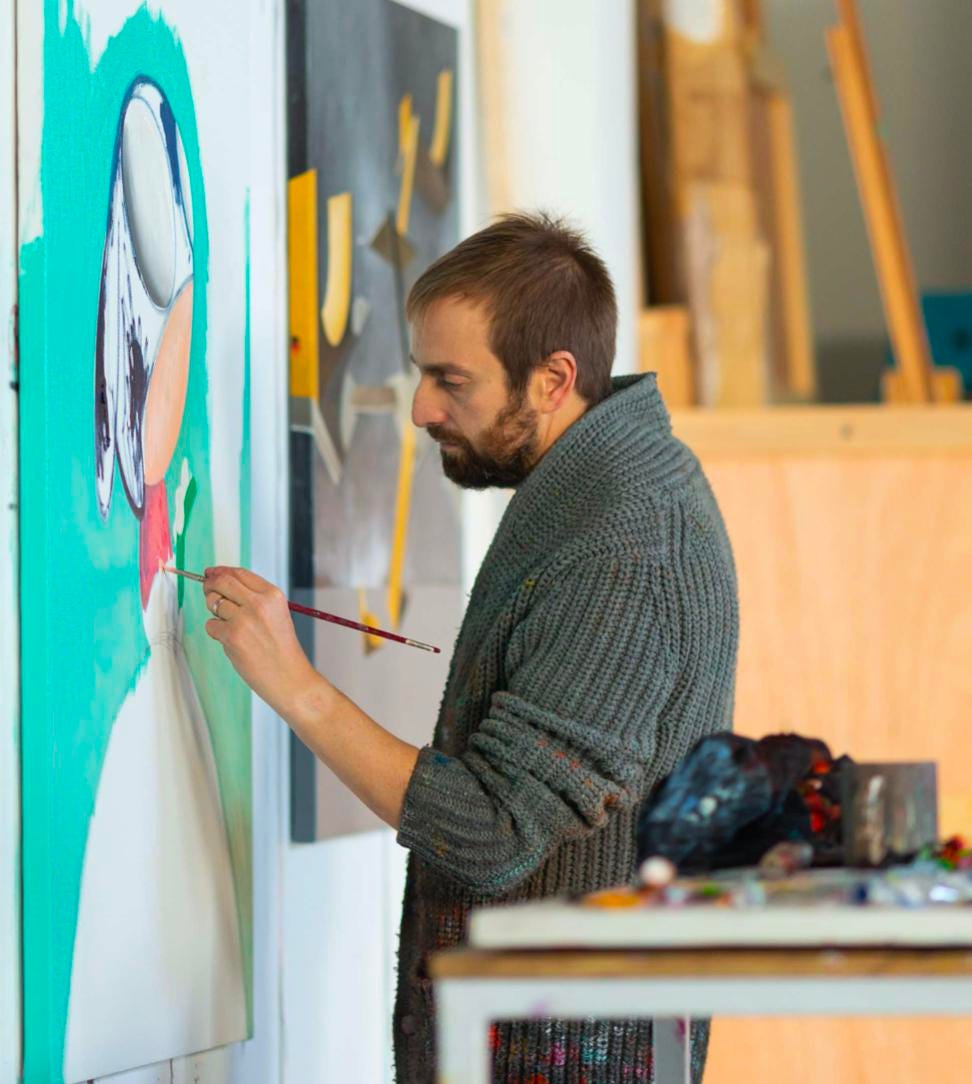
Typified by expressive characters, lively compositions and bright colors, Plans’ paintings are fantastical encounters with whimsical childhood reveries. Growing up surrounded by art around his home, Edgar Plans was encouraged to explore his creativity from a young age by his father, who is a science fiction and fantasy author. Surrounding himself with all sorts of pencils, pens, and brushes, Plans was able to explore freely and independently on painting and drawing, fueled by his fascination with graffiti, urban art, and comic books.
“The Animal Heroes arise from my intention to create pictures of denunciation in favour of the environment, to denounce the human actions that contaminate, destroy and poke the planet. In turn these heroes have simple powers that today’s society is losing as they are solidarity, companionship, respect… and these animals through art and their actions want to reintroduce people.”
First coming into fruition in 2006, Plans’ Animal Heroes series reflects the artist’s outstanding ability in portraying instant visual narratives in his oeuvre, typified by the variety of expressions and actions of the little heroes. These characters encompass a range of emotions such as joy, mischief and play – elements that define Plans’ celebrated oeuvre. Seemingly innocently at play, these light-hearted illustrations are in fact a commentary on socio-political issues of racism, gender equality and climate change. Through the creation of his personal heroes, the artist demonstrates a yearning for the ability to make one’s dreams come true with heroes of his own creations. Plans also aims to empower and urge everyone to take action against injustice, becoming heroes in their own right.
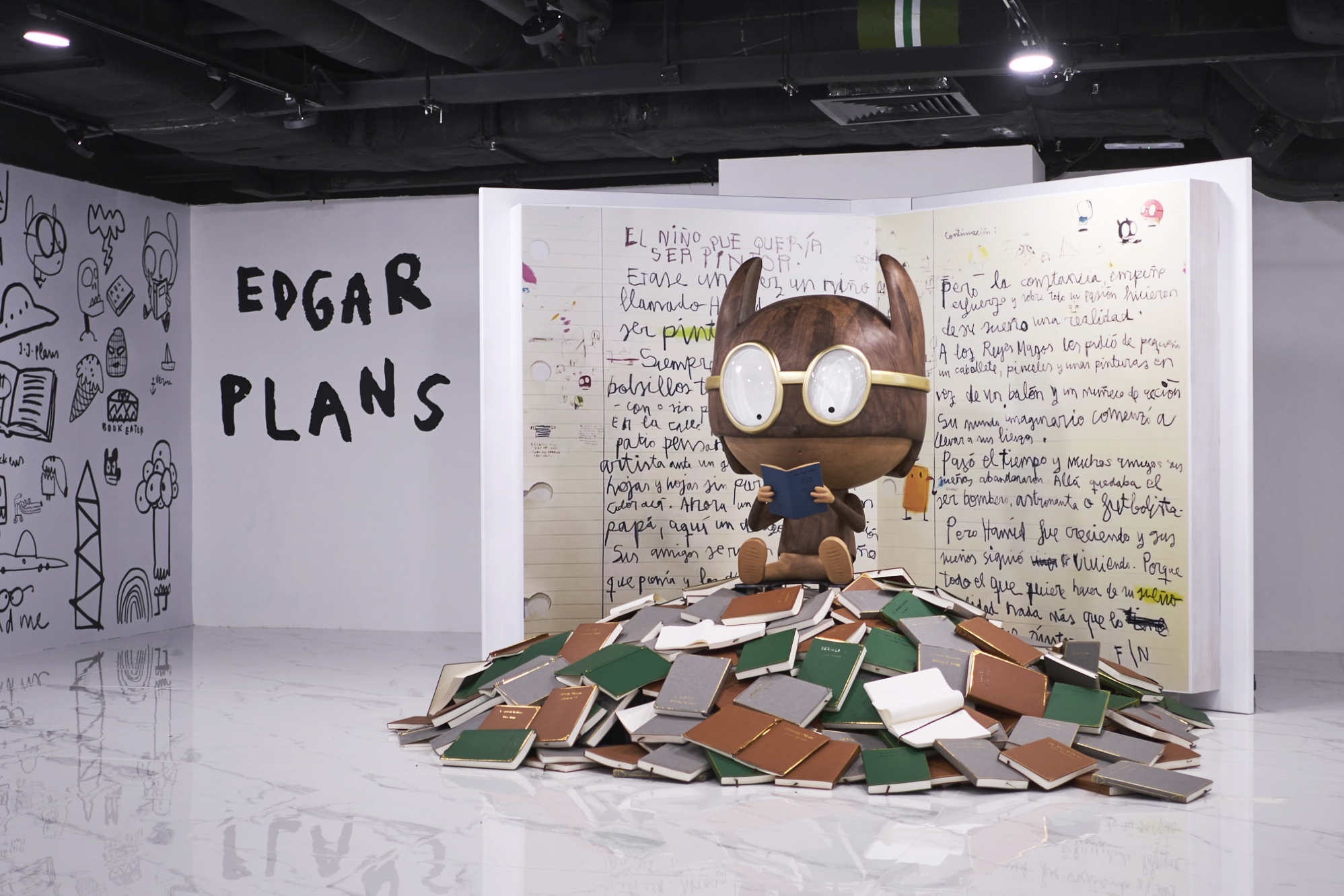 THE POWER OF THE LETTERS ART POP-UP BY EDGAR PLANS
Sharing a comparable conceptual and visual approach, fellow Spanish artists such as Javier Calleja and Rafa Macarrón also employ a similar mode of expression where the artists create childlike ideations of their own cast of creatures and characters to combat senses of loneliness, injustice or nostalgia, demonstrating a current trend of the Spanish New Wave within contemporary art.
Edgar Plans is represented by Almine Rech Gallery. Receiving growing international popularity in recent years, Edgar Plans latest solo exhibition focused on his Animal Heroes characters, The Freedom to Dream and Want to Be, held at the Moscow Museum of Modern Art in 2021. He has held further solo exhibitions at Almine Rech, Paris (2021) and Alzueta Gallery, Barcelona (2019), along with exhibition pop-ups in Hong Kong at the K11 Musea (2021) and WAREHOUSE Gallery (2020).
His works are also in public collections such as the Caixa Foundation, Masaveu Foundation, Illuro Foundation, the Museum of Fine Arts of Asturias, Spain, and the Contemporary Art Museum La Habana, Cuba. Edgar Plans is represented by Alzueta Gallery, Barcelona and Padre Gallery, New York & Moscow.
Contemporary Art
1. Jean-Michel Basquiat
Updated as of 1 June 2023
# of Referenced Artworks: 55
2022 Turnover: USD 221,018,518 (↓)
# Lots sold: 93
# Lots unsold: 33
When asked to describe his art, Jean-Michel Basquiat responded with customary aplomb: “royalty, heroism, and the streets.” A high school dropout, Basquiat found his true calling hanging out in the streets and inserting himself in the bustling urban milieu, ultimately becoming an influential figure in New York City’s Downtown, especially the East Village club scene. He was a regular among a group of filmmakers, artists, and musicians who made the Mudd Club, Club 57, and CBGB their stomping ground. Basquiat achieved his breakthrough in the early 1980s, developing a unique vocabulary characterized by repetitive images, human heads with open mouths as if in speech, a variety of marks, and xeroxed collage. In his paintings, the patches of intense color, created with acrylic, oil stick, and graphite, keyed into the excitement of New York’s subculture.
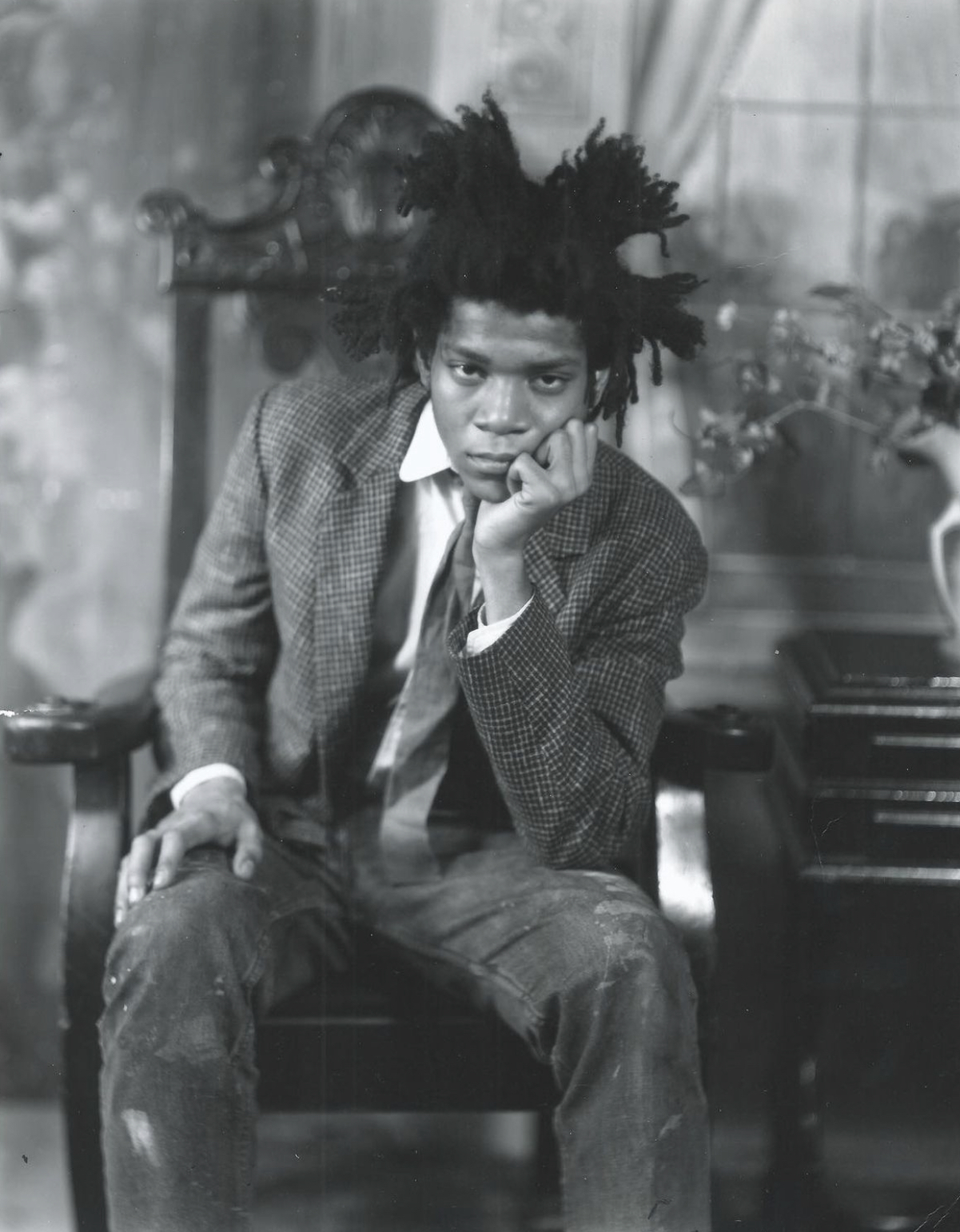
Jean-Michel Basquiat (1960-1988) was an American artist who rose to success during the 1980s as part of the Neo-expressionism movement. Basquiat first achieved fame as part of the graffiti duo SAMO, alongside Al Diaz, writing enigmatic epigrams in the cultural hotbed of Manhattan’s Lower East Side during the late 1970s, where rap, punk, and street art coalesced into early hip-hop music culture. By the early 1980s, his paintings were being exhibited in galleries and museums internationally. At 21, Basquiat became the youngest artist to ever take part in Documenta in Kassel, Germany. At 22, he was one of the youngest to exhibit at the Whitney Biennial in New York. The Whitney Museum of American Art held a retrospective of his artwork in 1992.
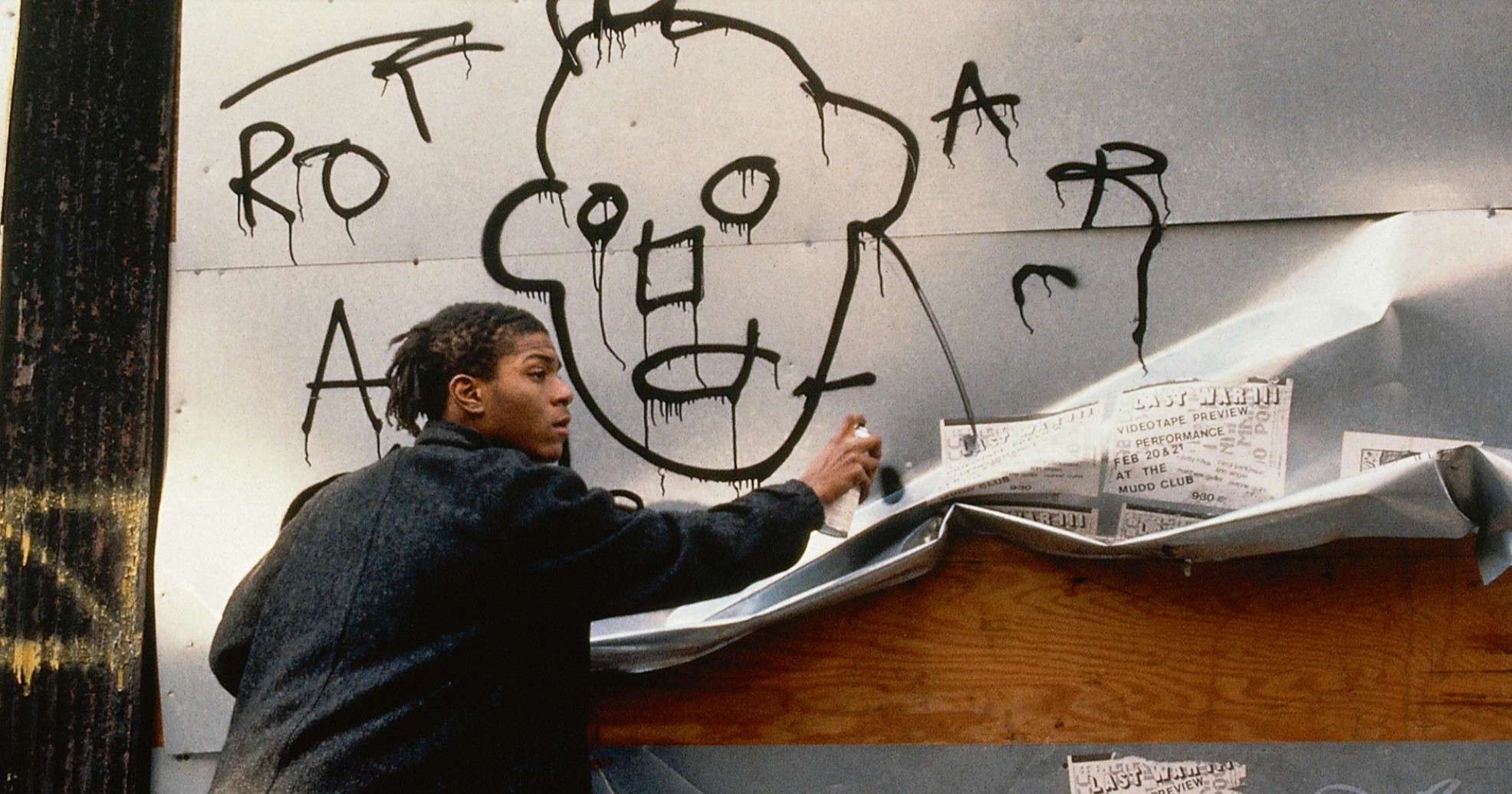
Basquiat’s art focused on dichotomies such as wealth versus poverty, integration versus segregation, and inner versus outer experience. He appropriated poetry, drawing, and painting, and married text and image, abstraction, figuration, and historical information mixed with contemporary critique. He used social commentary in his paintings as a tool for introspection and for identifying with his experiences in the black community, as well as attacks on power structures and systems of racism. His visual poetics were acutely political and direct in their criticism of colonialism and support for class struggle. Since his death at the age of 27 in 1988, Basquiat’s work has steadily increased in value. In 2017, Untitled, a 1982 painting depicting a black skull with red and yellow rivulets, sold for a record-breaking $110.5 million, becoming one of the most expensive paintings ever purchased.
2. Cecily Brown
Updated as of 1 June 2023
# Referenced Artworks: 23
2022 Turnover: USD 26,946,069 (↓)
# Lots sold: 33
% of Lots unsold: 19.5%
Born in Surrey in 1969, Brown knew as a young child she wanted to become an artist. Her father, art critic David Sylvester, was a close friend and early supporter of Francis Bacon, whose raw, abstracted figures are influential in Brown’s work today. She quickly found that her brand of conceptual figuratism was not aligned with the Conceptualism of the Young British Artists and left London for New York City in 1995. There, as with Arshile Gorky before her, the frenzy of life in the city lent its lurid colors and expressionist movement as inspiration for Brown’s work. Her first solo show, in 1997, received wide acclaim for its wild celebration of animalistic passion in oil paint.
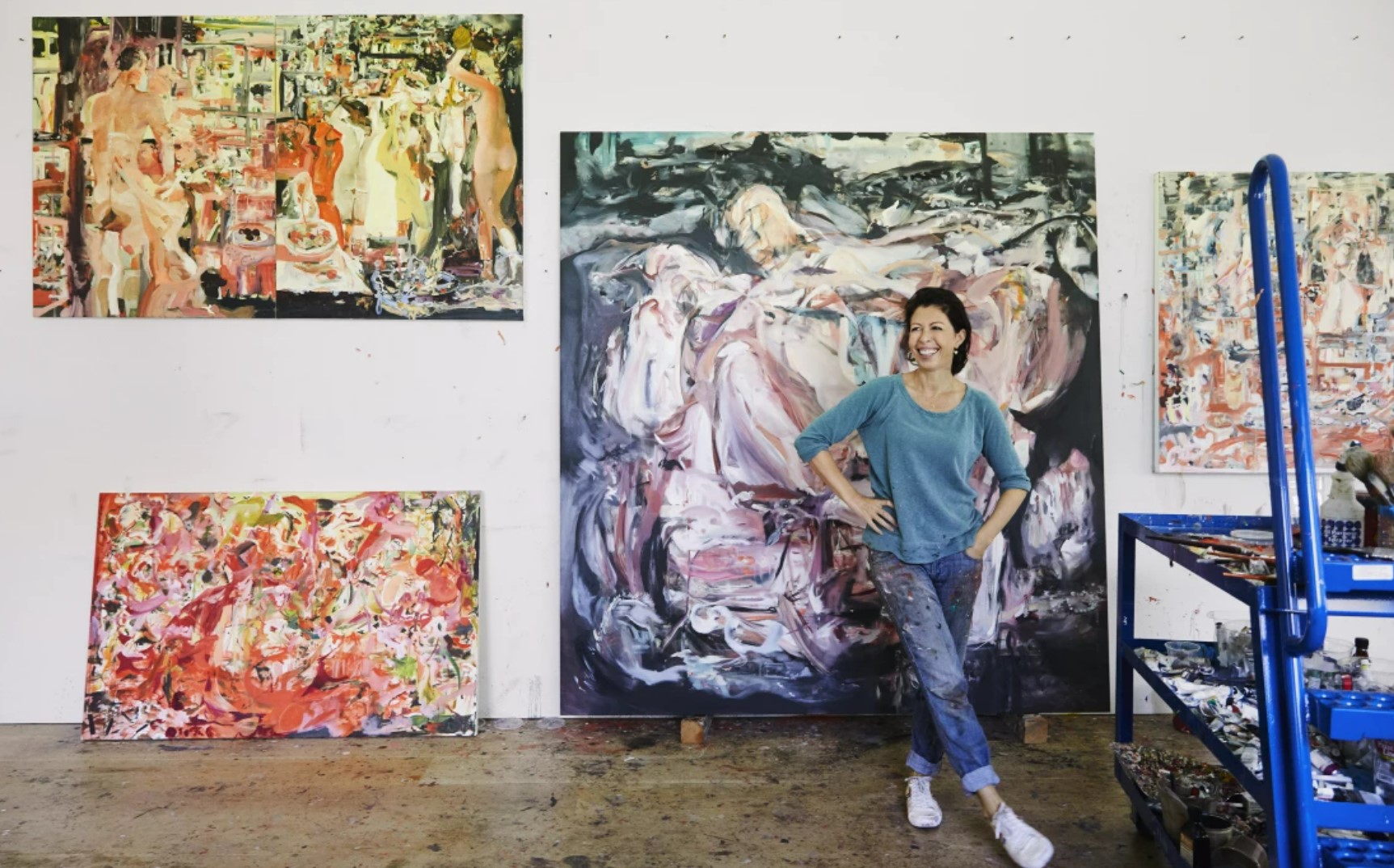
Brown graduated from the Slade School of Fine Art in London the early 1990s, coinciding with the rise of the Young British Artists. However, Brown didn’t share the group’s conceptual focus, ironic stance, or embrace of celebrity culture, and instead looked towards figurative painting, innovating and investing the practice with a renewed energy and cultural significance.
“The boundaries of painting excite me. You’ve got the same old materials—just oils and a canvas—and you’re trying to do something that’s been done for centuries…I have always wanted to make paintings that are impossible to walk past, paintings that grab and hold your attention.”
Seduced by the medium of painting, Brown deftly dialogues with art history, incorporating influences from Peter-Paul Rubens and Pierre Cezanne, to Willem de Kooning, Francis Bacon, Joan Mitchell and beyond.
“The more I look at paintings, the more I want to paint, the more engaged I become and the deeper and richer it gets.”
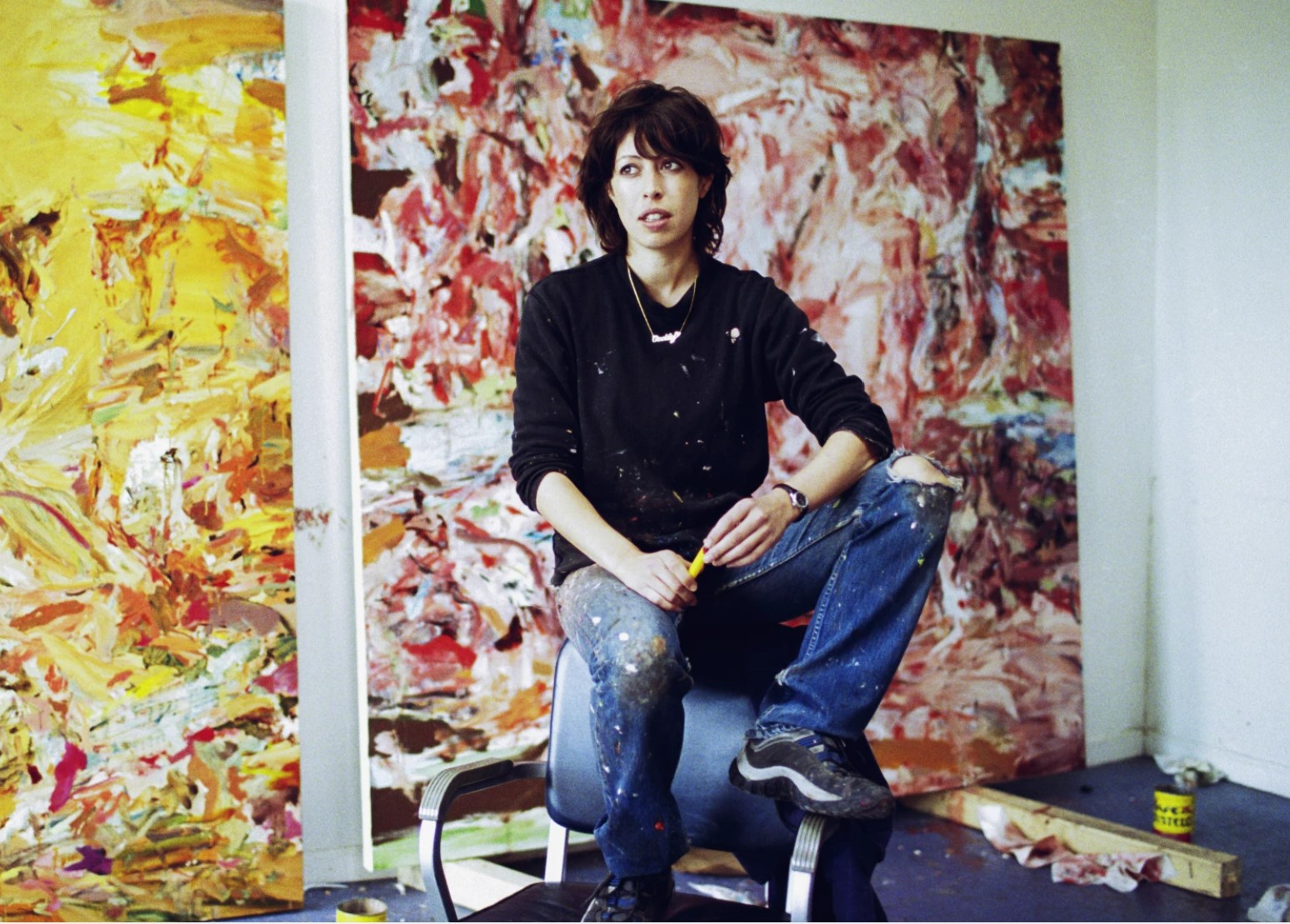
“I’m interested in the human need or desire to represent itself. I’m fascinated with human narcissism and obsessions with bodies.”
Since graduating from the Slade School of Art in 1994, Brown has become renowned for her works of polysemous beauty. Brown’s practice emerged in stark contrast to many artists of the YBA generation alongside whom she worked in London during the early 1990s. Championing a visual language of the body, its sensations, and its interactions, Brown’s oeuvre has faithfully explored and celebrated the inherent tactility of oil paint for its ability to map the nuances of the painter’s hand as it glides over the canvas. A stimulating meditation on the nature of contemporary painting in relation to its own past, Beautiful Not Realistic investigates the role of the human figure within it at both the micro and the macro levels. A testament to the artist’s prominence and distinction, Brown’s paintings reside in collections at esteemed institutions including the Museum of Modern Art, New York; Museum of Fine Arts, Boston; Whitney Museum, New York; Solomon R. Guggenheim Museum, New York; and the Broad, Los Angeles, amongst others.
3. George Condo
Updated as of 7 June 2023
# Referenced Artworks: 32
2022 Turnover: USD 33,898,587 (↓)
# Lots sold: 104
% of Lots unsold: 14.8%
Born in Concord, New Hampshire, in 1957, Condo studied art history and music theory at the University of Massachusetts, Lowell. In the late 1970s, he was a member of a band called The Girls, and while playing a show in New York City he met fellow artist Jean-Michel Basquiat; it would be Basquiat who would convince Condo to relocate to New York to further develop his career in art. By the early 1980s, Condo would become a recognized figure within the East Village art scene, even spending a brief time working in Andy Warhol’s Factory. The work of George Condo is populated largely by dramatically stylized, almost cartoonish, characters with exaggerated, often grotesque features such as protruding over or under bites, ghoulish expressions, or is fractured nearly beyond recognition.
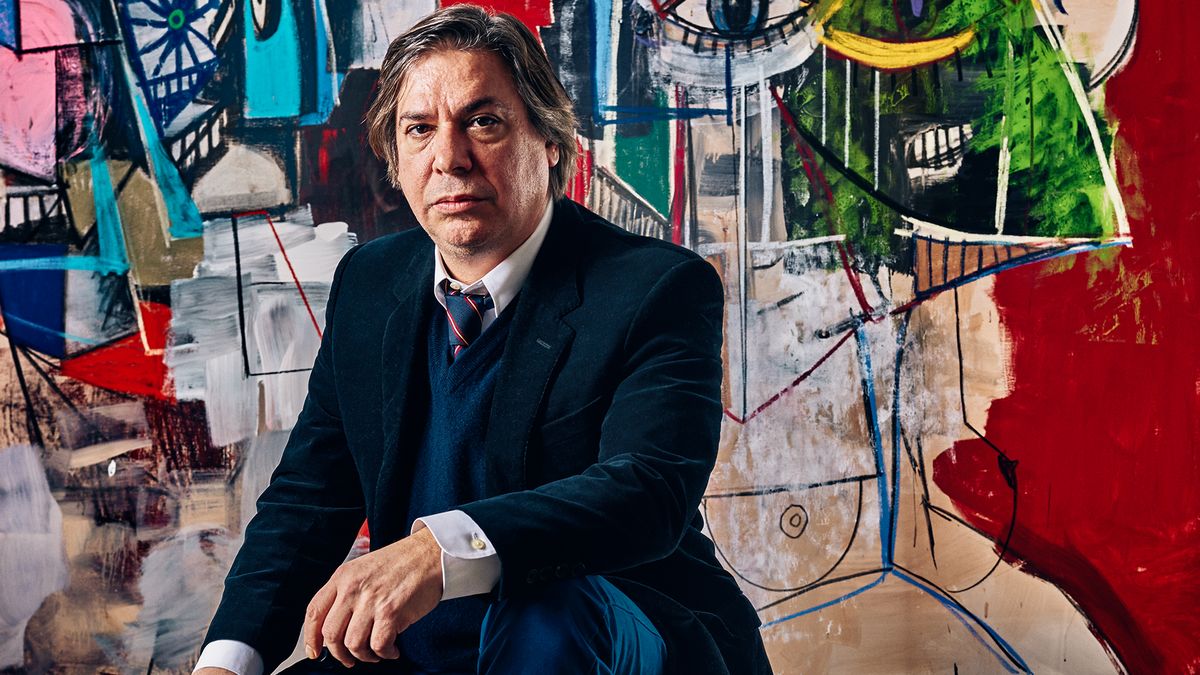
Through his experiences in New York, and his previous academic endeavors, Condo maintained a deep interest in art history, and drew much of his inspiration from historical antecedents. In 1985 he furthered his art historical understanding by moving to Paris, France, where he lived for a decade. He has described his artistic style as “psychological Cubism,” and much of his paintings evoke the work of such artists as Willem de Kooning and Pablo Picasso. His influence can be traced to numerous younger artists working today, such as John Currin and Lisa Yuskavage, and even artists working outside the realm of visual art – he collaborated with Kanye West on the cover art for the 2010 album Twisted Fantasy.
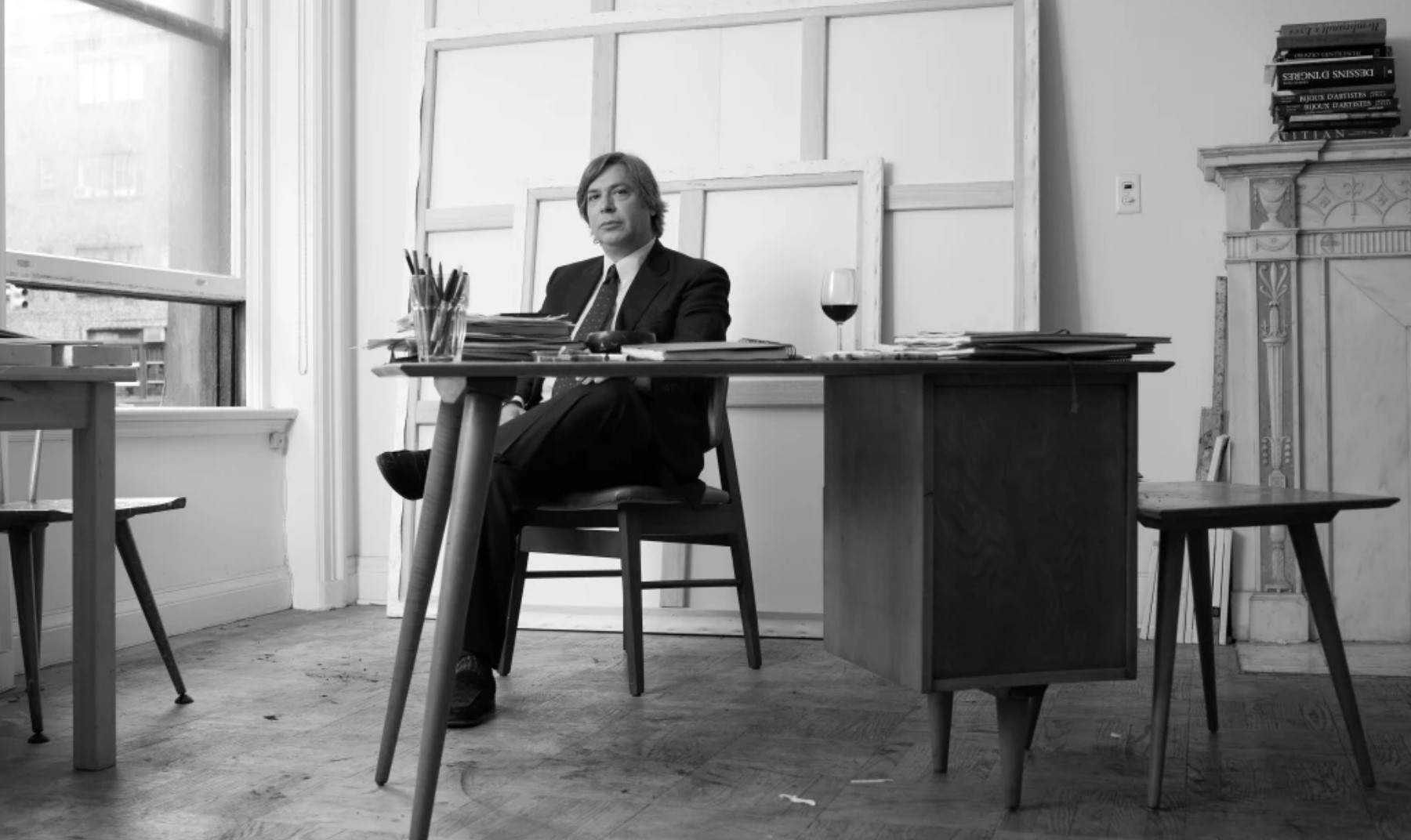
Condo approaches his creative process like a great jazz musician reinterpreting popular melodies to express their own unique sensibilities. Music, particularly jazz and classical music have been a great source of inspirations for the artist.
“Music is such a huge part of my life, without it I don’t know if I’d ever have painted anything… My favorite thing is to put on a record in the studio and to still be painting without noticing the fact that the music has stopped playing for hours and is just running through my head.”
Since the early 1980s, Condo has incorporated a myriad of different artistic references into his eccentric oeuvre, revealing a marked fascination with key figures in the canon of art history and a particular indebtedness to the cubist works of Pablo Picasso. Describing his approach to painting as “psychological cubism”, Condo adopts Picasso’s revolutionary method of representing reality. Like Picasso, the artist places emphasis on flatness and breaks down figures or objects into distinct planes in order to depict different viewpoints within the same space. However, while Picasso’s new way of seeing aimed to suggest the three-dimensionality of the object, Condo advances this approach further, illustrating the mental states of his figures.
“Picasso painted a violin from four different perspectives at one moment. I do the same with psychological states. Four of them can occur simultaneously. Like glimpsing a bus with one passenger howling over a joke they’re hearing down the phone, someone else asleep, someone else crying – I’ll put them all in one face.”
In 2017, Condo’s works on paper were the focus of a retrospective at the Phillips Collection in Washington, DC, and, previously, he was the subject of a major career retrospective at the New Museum in New York City. Museums worldwide count Condo’s work as part of their collections, including the Museum of Modern Art, New York; the Centre Georges Pompidou, Paris; the Tate Modern, London; and the Museo Jumex, Mexico City. He is currently based in New York City.
4. Damien Hirst
Updated as of 1 August 2023
# Referenced Artworks: 48
2022 Turnover: USD 34,992,829 (↑)
# Lots sold: 915
% of Lots unsold: 25.4%
Coming to prominence in the late 1980s as part of the group identified by collector and gallerist Charles Saatchi as a generation of ‘Young British Artists’, Damien Hirst is best known for his boundary-pushing sculptures of animals submerged in formaldehyde, his series of medicine cabinets, and his celebrated Spot Paintings. Since 1998 when the artist curated his seminal Freeze exhibition including work from his Goldsmith’s peer group, Hirst has continued to exhibit internationally, with major shows at Tate Modern in London and the Rijksmuseum in Amsterdam. Examples of his work can be found in major institutions including the Tate, London; the Hirschhorn Museum and Sculpture Garden, Washington D.C.; The Yorkshire Sculpture Park, Wakefield; and the Museum of Modern Art, New York.
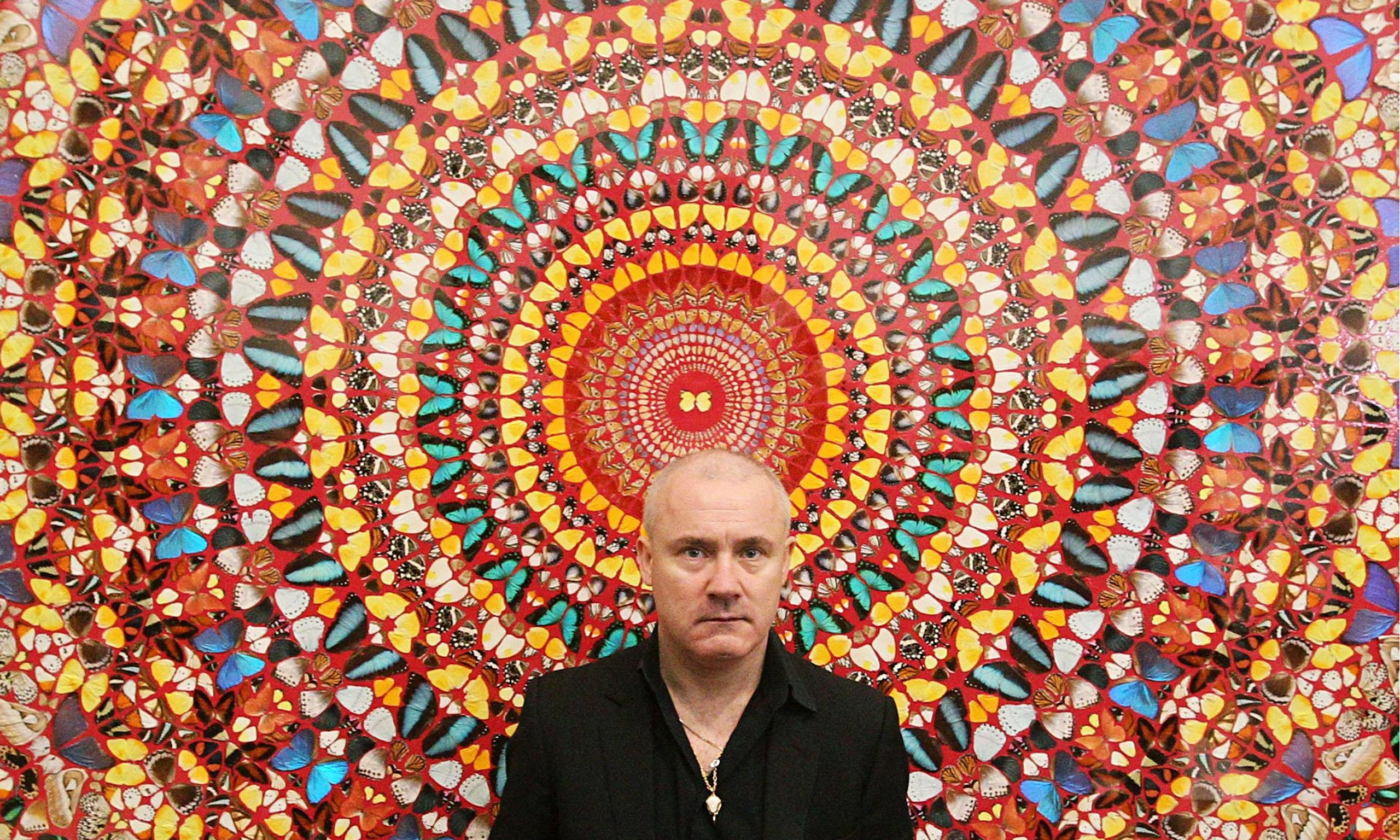
Most recently, Hirst’s Spot Paintings have been reimagined once again with his series of Veil Paintings, a looser, more gestural treatment of the motif that nevertheless still adheres to the same basic principles of the foundational series as an investigation into chromatic behaviors. Deeply metaphysical, Hirst’s work has long been interested in systems of belief, and here we can see the butterfly being invoked to speak to the more religious questions of the soul and the resurrection, adopted as the ‘trace element of the spiritual in a fallen world and associated with the hand of the divine in the creation of material existence. Beyond religion, Hirst’s oeuvre also probes the ways in which medicine and science conform to a similar structure based upon devotion and faith, his – borrowing from Victorian models of classification and display – operating like reliquaries or shrines.
Hirst’s interest in the intersections of art and science are well documented and long-standing. As Jonathan Jones suggested on the occasion of Hirst’s White Cube presentation of Mandala paintings, this inquiry was there at the artist’s conceptual beginnings, having always ‘claimed the same privilege for art that science has taken for granted since the 17th century – to pin the natural world to a table, to dissect and examine it. Lending itself naturally to the serial approach practiced by the artist and drawing conceptual connections with both Hirst’s Natural History series and his cabinet works, Victorian lepidoptery especially emphasized visual display over a strictly taxonomic organization, a tradition well-suited to Hirst’s own aesthetic approach. Doing away with the human imposition of order, Hirst’s Kaleidoscope works instead offer a geometric and compound vision, one that, perhaps, invokes the eye of the butterfly itself.
5. Jeff Koons
Updated as of 27 May 2023
# Referenced Artworks: 18
2022 Turnover: USD 38,922,490 (↑)
# Lots sold: 265
# Lots unsold: 110
Jeff Koons rose to prominence in the mid-1980s as part of a generation of artists exploring the meaning of art and spectacle in a media-saturated era. With his stated artistic intention to “communicate with the masses,” Koons makes use of conceptual constructs—including the ancient, the everyday, and the sublime—creating luxurious icons and elaborate tableaux, which, beneath their captivating exteriors, engage the viewer in a metaphysical dialogue with cultural history. Born in York, Pennsylvania in 1955, Koons studied at the School of the Art Institute of Chicago and the Maryland Institute College of Art in Baltimore and, receiving a BFA from the latter in 1976. Since his first solo exhibition in 1980, his work has evolved from small-scale assemblages of toys and found objects to his now iconic monumental works, including huge balloon animals rendered in mirror-polished stainless steel, as well as flowering topiary sculptures, such as Puppy (1992), which is permanently installed at the Guggenheim Museum Bilbao.
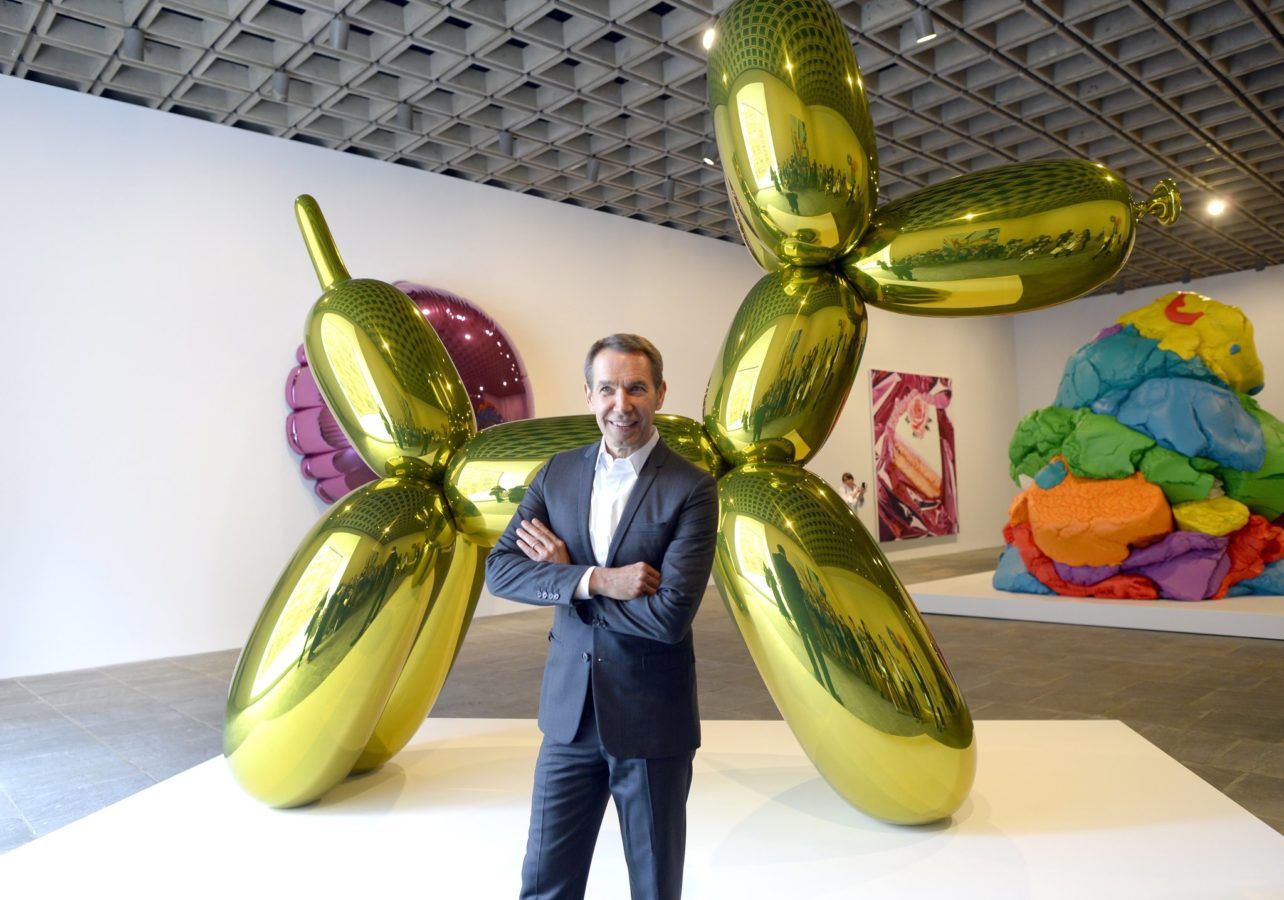
Koons draws attention to the continuity of images as they pass through time, combining art historical reference with vernacular images and objects, from common suburban products and mass media to symbols of sexuality and transcendence. Beginning with Inflatables (1978–79), a series inspired by the readymade, Koons created six series of innovative works in less than a decade including Pre-New (1979–80), The New (1980–87), Equilibrium (1983–93), Luxury & Degradation (1986), and Statuary (1986). His interest in popular culture expanded in the Banality series (1988), which included sculptures of recognizable figures such as Michael Jackson and Bubbles (1988)—a nearly life-size gold-leaf porcelain statue of the pop singer with his pet chimpanzee. In 1989, Koons presented Made in Heaven (1989–91), a series centered on him and his then-wife in sexually explicit poses, frequently in fairytale settings, evoking the stark bodily presence of the nudes depicted by French Realist painters.
During the mid-1990s, Koons expanded his Pop sensibility through the Celebration series (1994–): hyperrealistic, brightly colored paintings and large-scale sculptures depicting vernacular images and forms such as plastic figurines, Play-Doh, and jewelry. Conflating the readymade and the monumental, these works attest to Koons’s ongoing fascination with childlike consciousness and communication; transforming humble objects into abstract symbols of transcendence and the biological. In 2000, seven new works by Koons debuted at the Deutsche Guggenheim: the Easyfun-Ethereal paintings. Derived from the optimistic, colorful Easyfun series (1999–2000), these layered, collage-like tableaux depict cut-out photographs of packaged foods, paradisiacal landscapes, and fragments of women’s faces, limbs, hair, clothing, and accessories. Attesting to Koons’s interest in the simple pleasures of visual culture, Easyfun-Ethereal would eventually be expanded to twenty-four paintings, presenting uncanny, imaginative panoramas.
Post-War Art
1. Francis Bacon
Updated as of 1 August 2023
# of Referenced Artworks: 15
2022 Turnover: USD 219,668,471 (↑)
# of Lots sold: 138
% of Lots unsold: 18.8%
Francis Bacon (1909 – 1992) was an Irish-born British figurative painter known for his raw, unsettling imagery. Focusing on the human form, his subjects included crucifixions, portraits of popes, self-portraits, and portraits of close friends, with abstracted figures sometimes isolated in geometrical structures. Rejecting various classifications of his work, Bacon said he strove to render “the brutality of fact.” He built up a reputation as one of the giants of contemporary art with his unique style. Bacon said that he saw images “in series”, and his work, which numbers in the region of 590 extant paintings along with many others he destroyed, typically focused on a single subject for sustained periods, often in triptych or diptych formats.
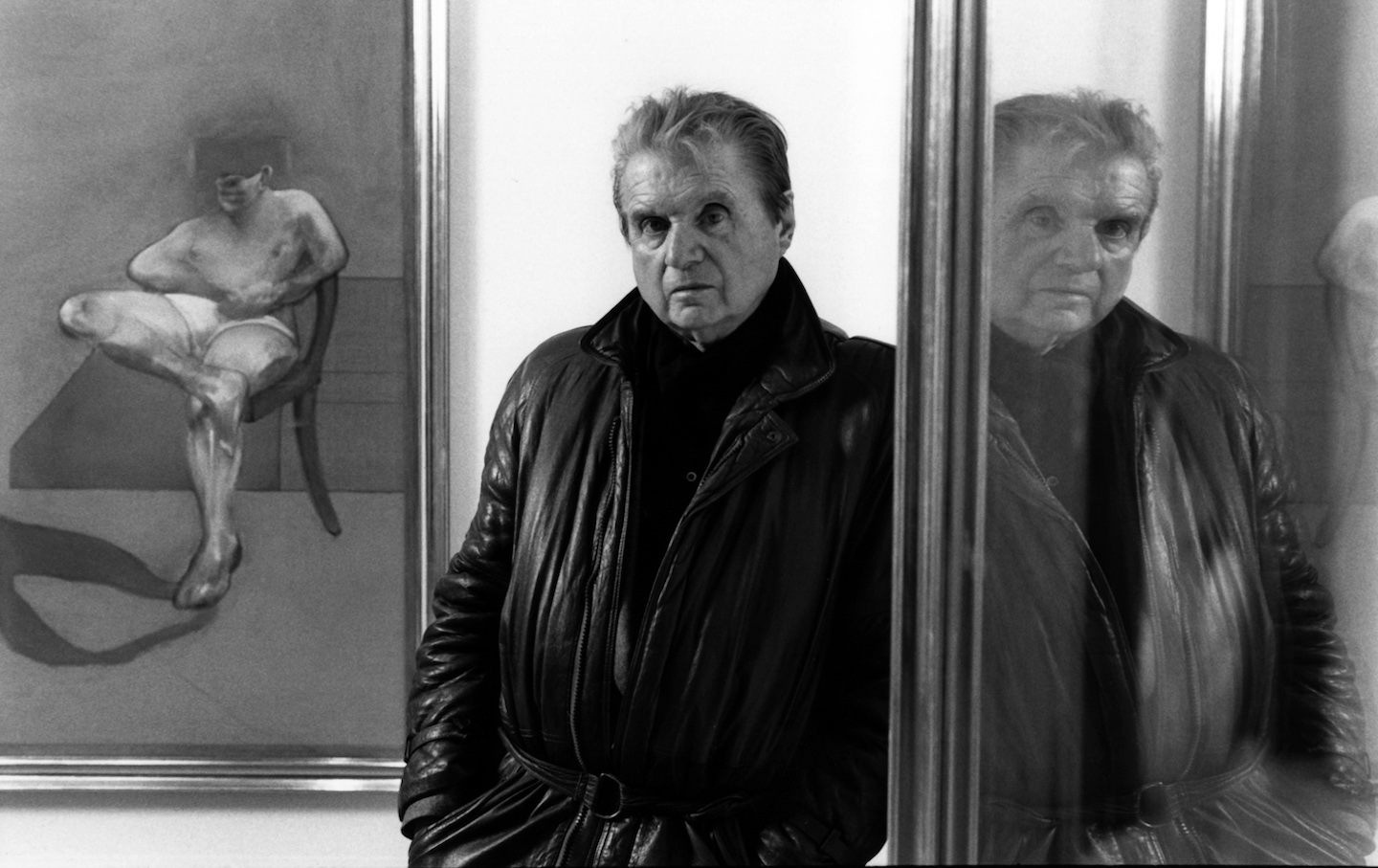
His output can be broadly described as sequences or variations on single motifs; including the 1930s Picasso-influenced bio-morphs and Furies, the 1940s male heads isolated in rooms or geometric structures, the 1950s “screaming popes,” the mid-to-late 1950s animals and lone figures, the early 1960s crucifixions, the mid-to-late 1960s portraits of friends, the 1970s self-portraits, and the cooler, more technical 1980s paintings. Bacon did not begin to paint until his late twenties, having drifted in the late 1920s and early 1930s as an interior decorator, bon vivant and gambler. He said that his artistic career was delayed because he spent too long looking for subject matter that could sustain his interest.
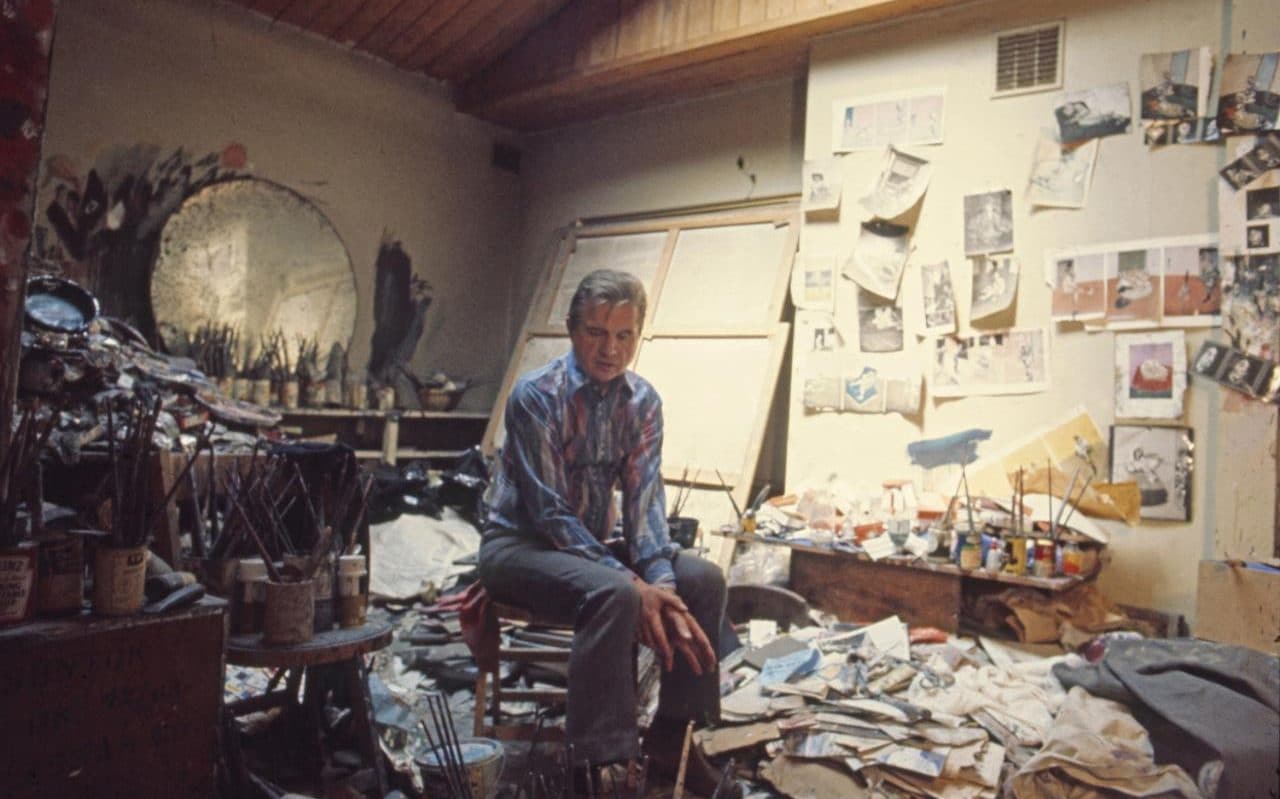
His breakthrough came with the 1944 triptych Three Studies for Figures at the Base of a Crucifixion, which sealed his reputation as a uniquely bleak chronicler of the human condition. From the mid-1960s he mainly produced portraits of friends and drinking companions, either as single, diptych or triptych panels. Following the suicide of his lover George Dyer in 1971 (memorialised in his Black Triptychs, and a number of posthumous portraits) his art became more sombre, inward-looking and preoccupied with the passage of time and death. The climax of his later period is marked by the masterpieces Study for Self-Portrait (1982) and Study for a Self-Portrait—Triptych, 1985–86. Despite his existentialist and bleak outlook, Bacon was charismatic, articulate and well-read. A bon vivant, he spent his middle age eating, drinking and gambling in London’s Soho with like-minded friends including Lucian Freud (although they fell out in the mid-1970s, for reasons neither ever explained), John Deakin, Muriel Belcher, Henrietta Moraes, Daniel Farson, Tom Baker and Jeffrey Bernard. After Dyer’s suicide he largely distanced himself from this circle, and while still socially active and his passion for gambling and drinking continued, he settled into a platonic and somewhat fatherly relationship with his eventual heir, John Edwards. Since his death, Bacon’s reputation has grown steadily, and his work is among the most acclaimed, expensive and sought-after on the art market. In the late 1990s a number of major works, previously assumed destroyed, including early 1950s pope paintings and 1960s portraits, re-emerged to set record prices at auction.
2. Fernando Botero