Other than purely abstract works such as the ones from the Infinity Net series, Kusama also painted representational subject matters such as still-lifes, landscapes, and figures. Although pumpkins are among her most iconic subjects, the Lemon Squash is also one of her favorite objects to depict. The Lemon Squash, or the glass of lemonade with different colors, or sometimes simply black and white, is a fascinating and recurring motif in Yayoi Kusama’s work. Like many elements in her art, this seemingly simple subject is rich with layers of meaning and symbolism.
The academic consensus amongst art historians is that still-life painting as an independent genre began in the 16th century. Before this period, still-lifes were considered inferior, peripheral works. Positioned on the lowest rung of the painting hierarchy, they were merely complementary to religious paintings and portraitures. Still-life paintings only began to gain popularity in Northern Europe in the 17th century. In particular, the Netherlands embraced this genre enthusiastically because of their flourishing economy, and the Dutch purchased still-life paintings as displays of wealth. Following the decline of Neoclassicism in the 19th century, more expressions of sentimentality were being infused into still life paintings. One of the prime examples of this transformation is Van Gogh’s Sunflower. Cézanne, the father of modernism, depicted objects in his still-life paintings as geometric shapes. By distorting perspective and space, he opened the doorway to abstract art. Still-life painting was no longer an objective representation of reality – it was a subject for the exploration of innovative visual experience. Matisse further flattened the space in his still-life paintings and filled the picture plane with symbolic elements. This flattening of foreground and background in still life painting would be further developed by the Cubists. These visual features would once again undergo transformation in Lemon Squash through Kusama’s idiosyncratic treatments.
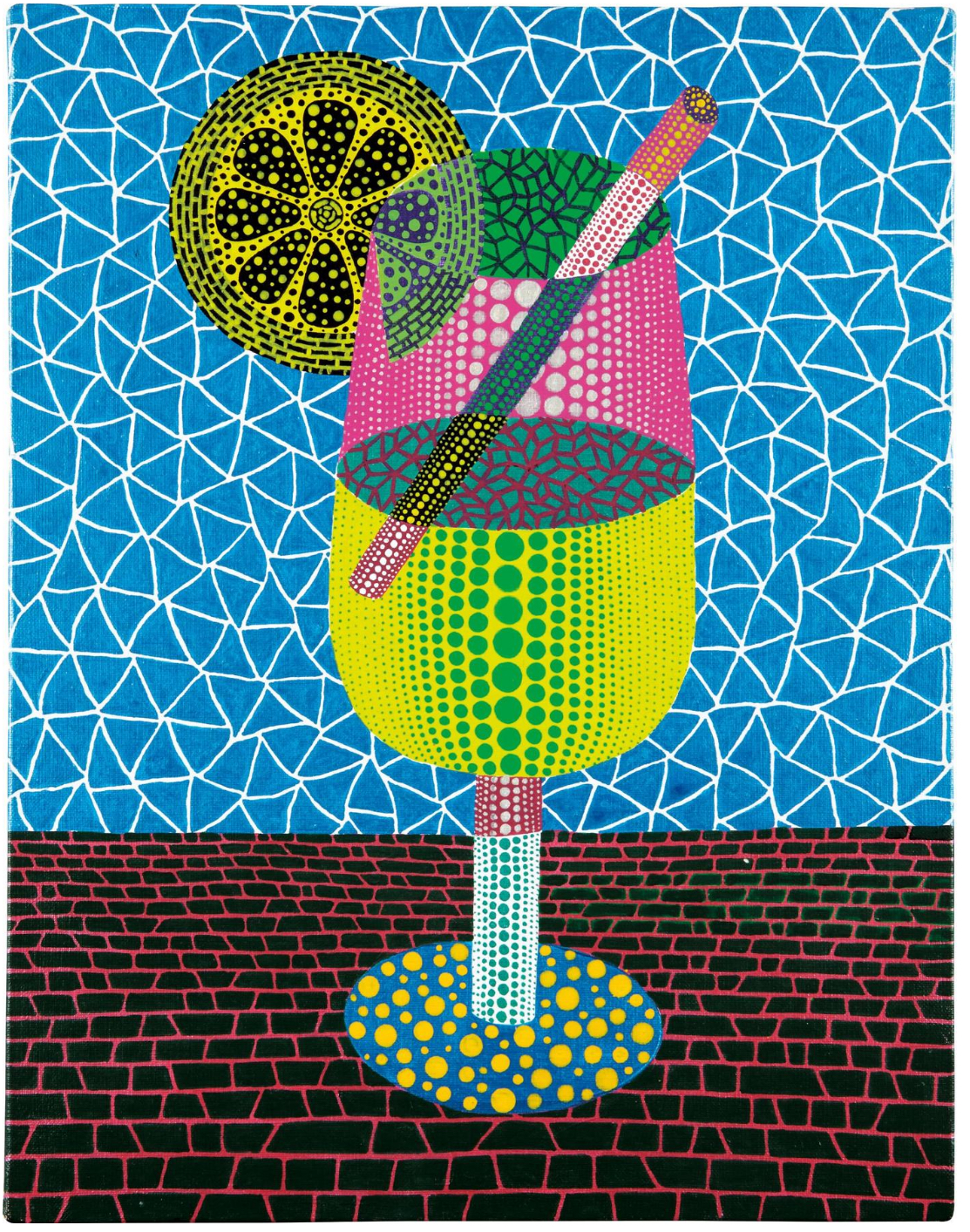
Kusama’s choice to depict a glass of lemonade may initially seem whimsical, but it carries deeper connotations. The Lemon Squash, with its vibrant and often exaggerated colors, represents both the ordinary and the extraordinary. It’s a common, everyday object, yet Kusama’s treatment of it transforms it into something otherworldly and surreal. This duality—taking something mundane and elevating it into the realm of the fantastic—is a hallmark of Kusama’s work. The Lemon Squash can be seen as a metaphor for the intersection of reality and imagination. Kusama has often spoken about how her art allows her to channel her inner world, a space filled with vivid colors, patterns, and forms that contrast with the sometimes harsh realities of life. The glass of lemonade, with its bright hues, might symbolize the sweetness of life, but also the tartness or challenges that come with it. By presenting it in various colors and forms, Kusama plays with the idea of perception, inviting viewers to see the world through her eyes, where nothing is ever just what it seems.
Additionally, the Lemon Squash could be linked to Kusama’s exploration of mental states and consciousness. The repetitive nature of this motif throughout her career might reflect her own obsessive tendencies—an attempt to capture and control an image that resonates deeply with her psyche. The changing colors and styles in which she depicts the lemon squash might represent the fluctuations in her mood and mental state, making it a symbol of both constancy and change.
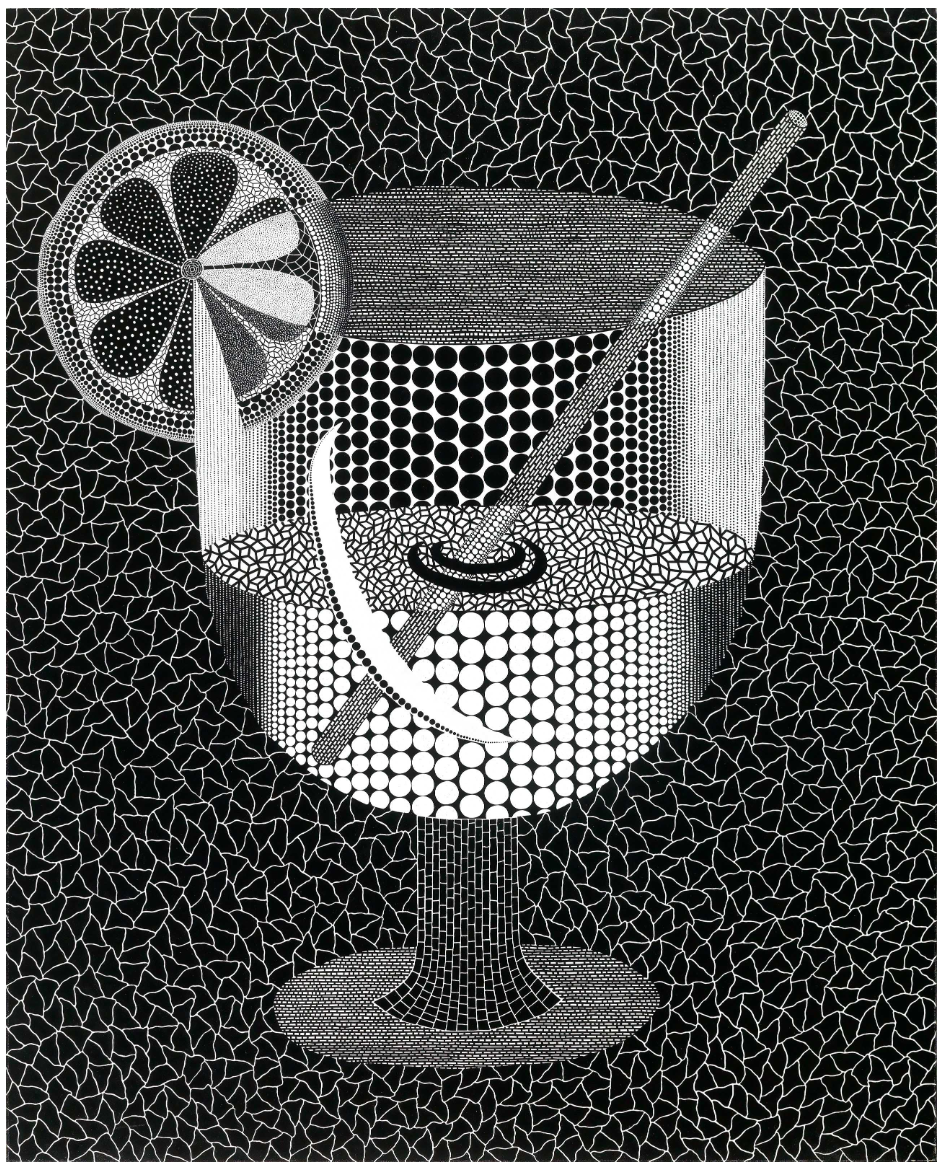
Lemon Squash is the result of a still-life transformed by abstraction and flattening of space. The monochrome palette unifies the tone of the picture. Akin to advertisement printing, Kusama painted unmodulated black lines and planes that completely eliminated the sense of three-dimensionality in the still-life. The overall flatness and design arrangement of the piece are emphasized here. The glass, straw, and lemon slice are divided into geometric shapes of varying sizes. Then, each surface is painted with Kusama’s signature dots. The arrangement of these dots differ from surface to surface. Compounded by the fact that highly saturated tones are used, these patterns produce a strong rhythmic effect. Viewers must reference the artist’s long-standing practice of using dots to perform self-obliteration in order to read the work properly. For this reason, Lemon Squash can be discussed in a formalist manner, yet at its core, the focus is still the vast void that is Kusama’s polka dot universe.
Culturally, the Lemon Squash also has connections to themes of refreshment, renewal, and even nostalgia. In Japan, citrus fruits like lemons are often associated with cleansing and purification. By repeatedly depicting the lemon squash, Kusama might be invoking these ideas, suggesting a continual process of renewal or a desire to cleanse the mind and spirit through her art.
In summary, the Lemon Squash in Kusama’s work is far more than just a colorful beverage. It is a symbol of the interplay between the ordinary and the extraordinary, reality and imagination. It reflects her ongoing exploration of perception, mental states, and the emotional and psychological experiences that have shaped her life. Through this motif, Kusama invites viewers into her unique world, where even a simple glass of lemonade can hold profound significance.
Originals
#1. Lemon Squash, 1991
Christie’s Hong-Kong: 27 May 2018
Estimated: HKD 6,000,000 – 8,000,000
HKD 11,500,000 / USD 1,465,685
YAYOI KUSAMA (JAPAN, B. 1929), Lemon Squash | Christie’s (christies.com)
YAYOI KUSAMA (JAPAN, B. 1929)
Lemon Squash, 1991
Acrylic on canvas
162 x 130.3 cm (63 3/4 x 51 1/4 inches)
Signed and dated ‘yayoi Kusama 1991’
Titled in Japanese (on the reverse)
#2. Lemon Squash, 1993
SBI Art Auction: 25 May 2024
Estimated: JPY 50,000,000 – 80,000,000
JPY 109,250,000 / USD 695,920
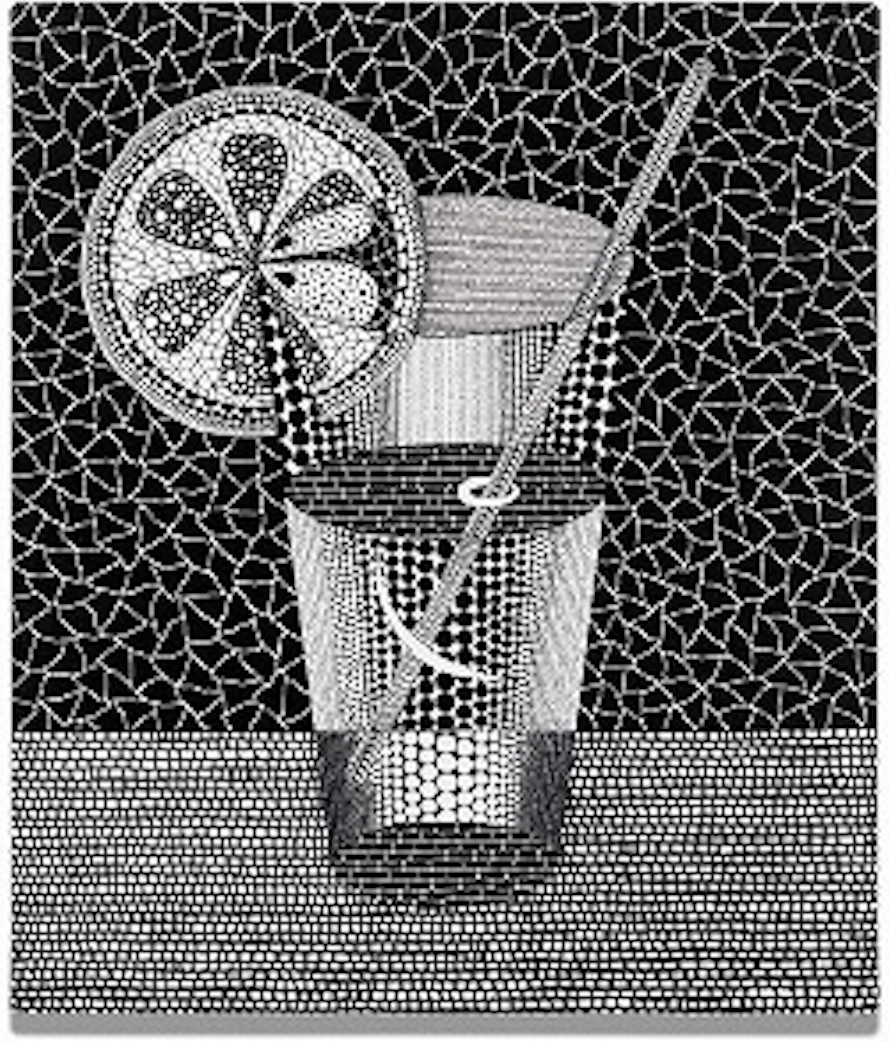
YAYOI KUSAMA
Lemon Squash, 1993
Acrylic on canvas
53 x 45.5 cm (20 7/8 x 17 7/8 inches)
Signed, titled and dated on the reverse
#3. Lemon Squash, 1991
Christie’s Hong-Kong: 15 March 2015
Estimated: HKD 2,900,000 – 3,900,000
HKD 4,240,000 / USD 545,910
YAYOI KUSAMA(Japanese, B. 1929), Lemon Squash | Christie’s (christies.com)
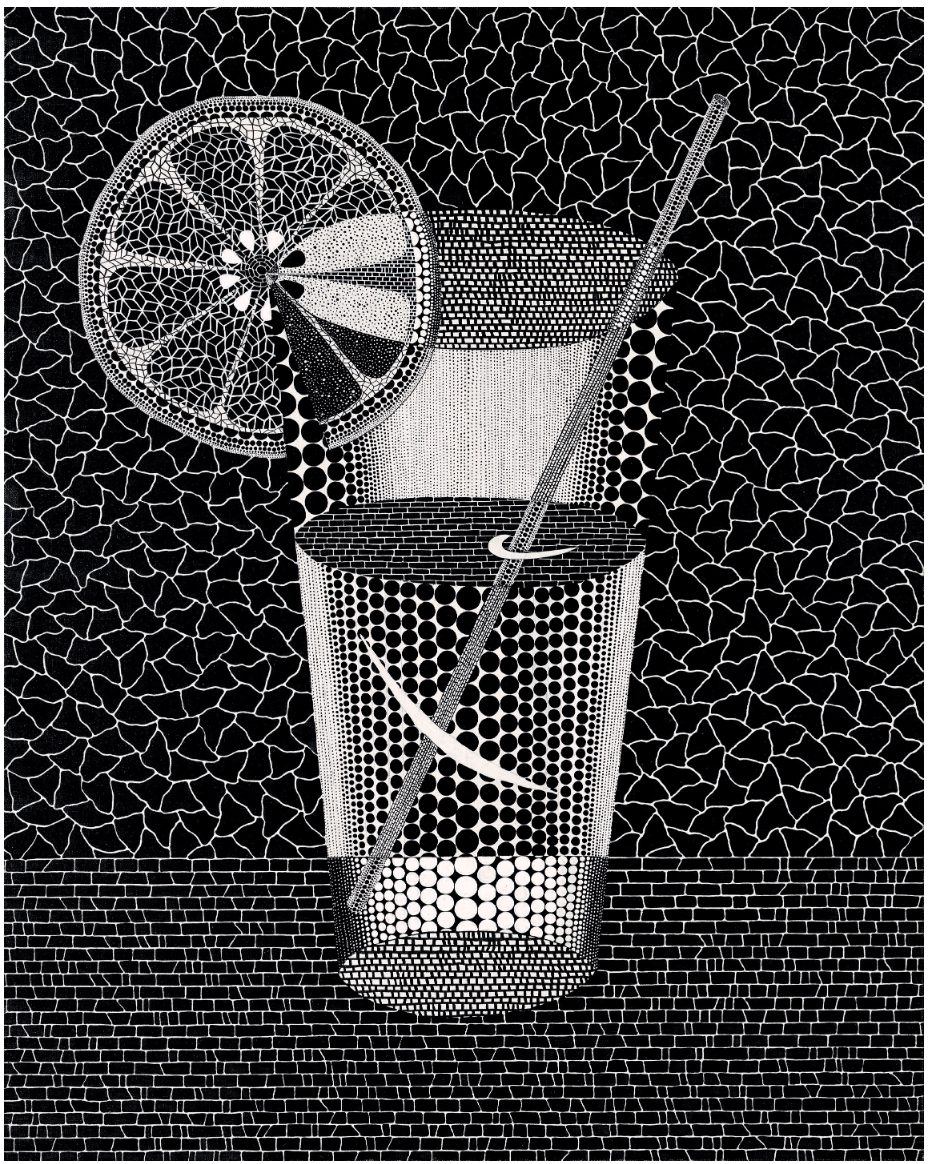
YAYOI KUSAMA (Japanese, B. 1929)
Lemon Squash, 1991
Acrylic on canvas
91 x 72.7 cm (35 7/8 x 28 5/8 inches)
Signed and dated ‘Yayoi Kusama 1991’
Titled in Japanese (on the reverse)
#4. Lemon Squash, 1991
Phillips Hong-Kong: 7 June 2021
Estimated: HKD 1,500,000 – 2,500,000
HKD 3,150,000 / USD 405,955
Yayoi Kusama – 20th Century & Contempo… Lot 181 June 2021 | Phillips
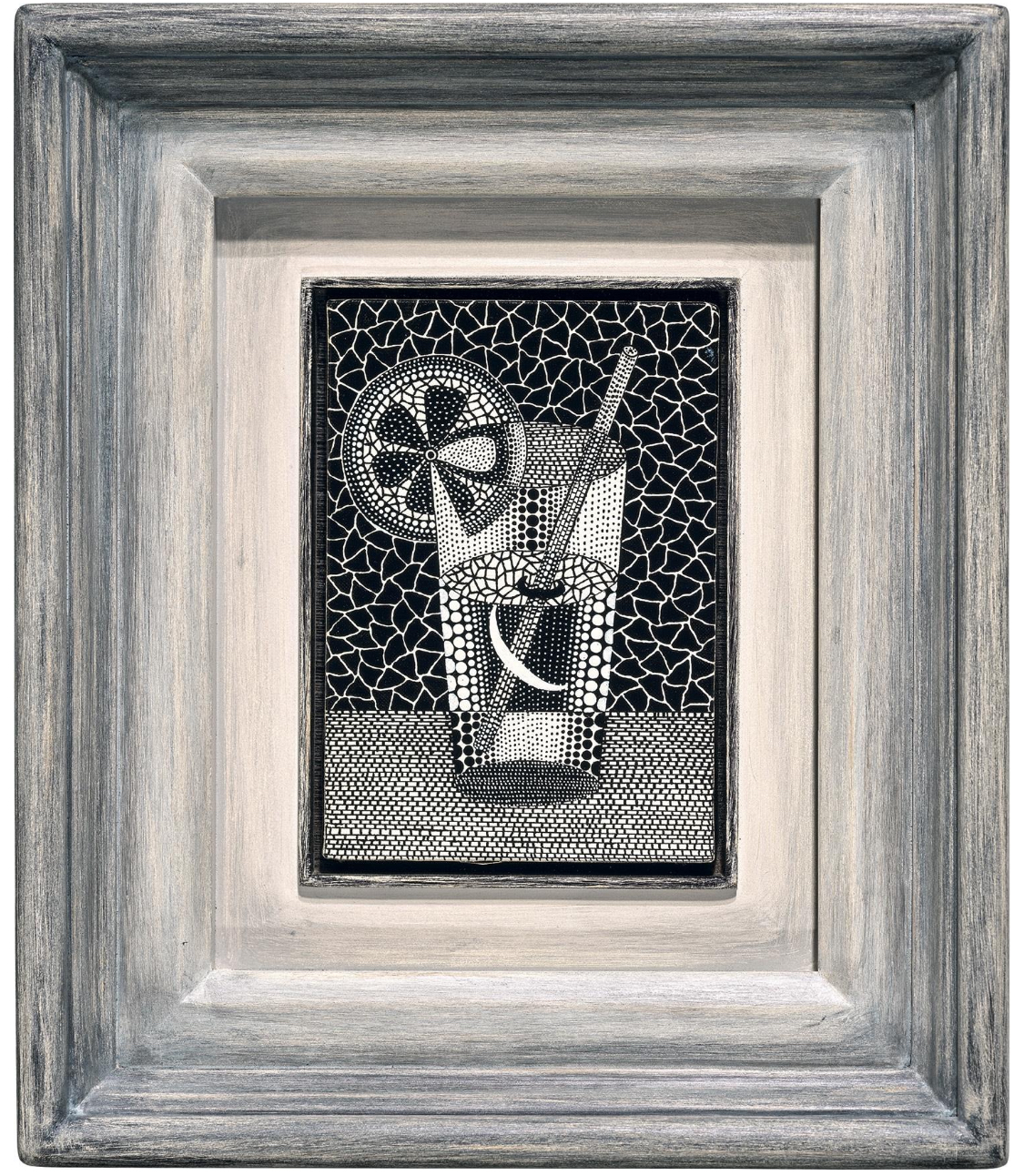
YAYOI KUSAMA
Lemon Squash, 1991
Acrylic on canvas
22.7 x 15.9 cm (8 7/8 x 6 1/4 inches)
Signed, titled and dated ‘YAYOI KUSAMA 1991 “Lemon Squash [in Japanese]”‘ on the reverse
#5. Lemon Squash, 1990
K Auction Seoul: 26 May 2021
Estimated: KRW 350,000,000 – 490,000,000
KRW 368,000,000 / USD 329,450
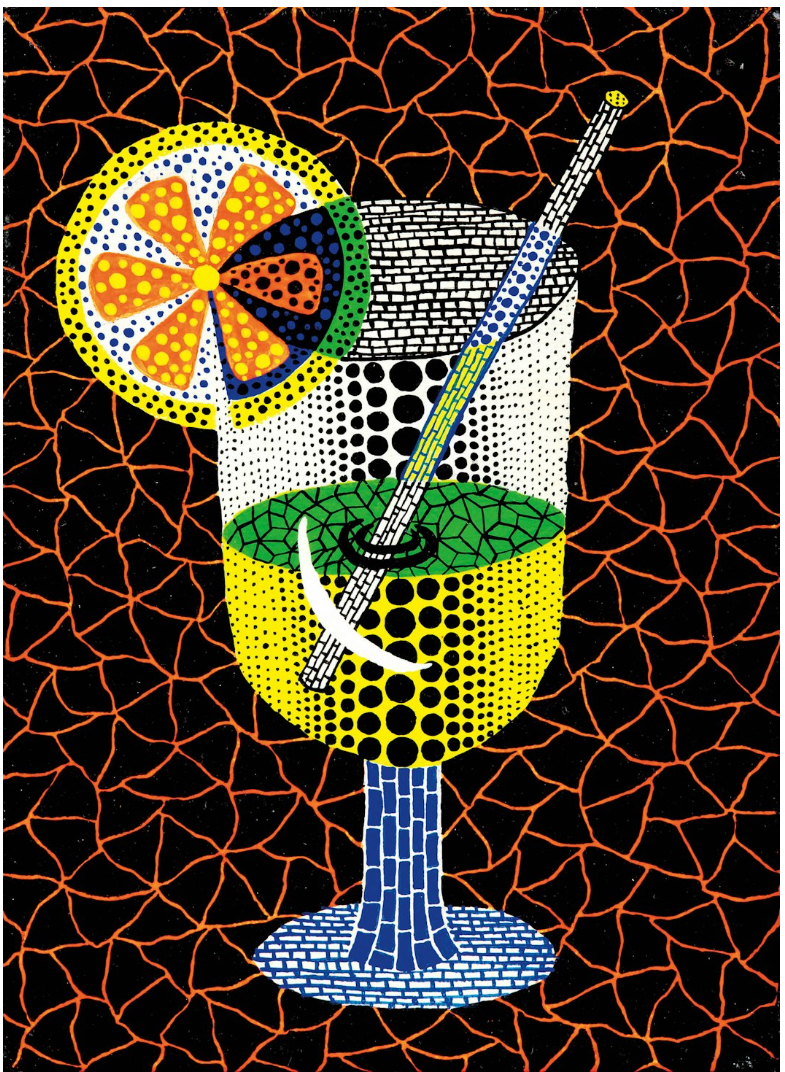
YAYOI KUSAMA
Lemon Squash, 1990
Acrylic on canvas
22.7 x 15.8 cm (9 x 6 1/4 inches)
Signed, titled and dated on the reverse
#6. Lemon Squash, 2004
Phillips New-York: 9 May 2016
Estimated: USD 100,000 – 150,000
USD 281,000
Yayoi Kusama – 20th Century & Contempor… Lot 203 May 2016 | Phillips
YAYOI KUSAMA
Lemon Squash, 2004
Oil on canvas
41 x 32.1 cm (16 1/8 x 12 5/8 inches)
Signed and titled in English and Japanese and dated “Lemon-Squash Yayoi Kusama 2004” on the reverse
Prints
Lemon Juice, 1984 (ABE 33)
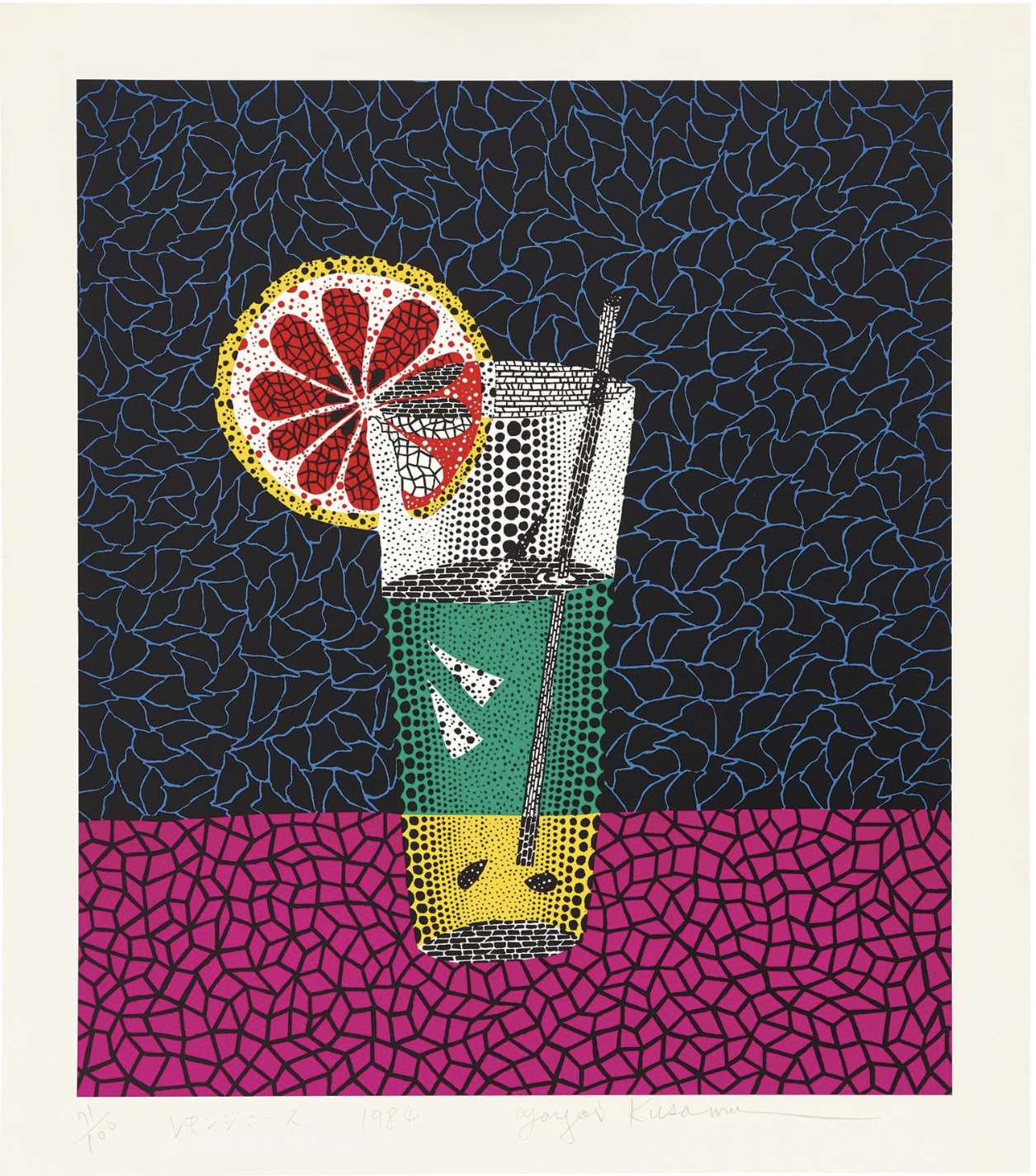
Lemon Juice, 1984
Screen-print in colors on Verin d’Arches paper
Sheet: 61 x 53.5 cm (24 x 21.1 inches)
Edition: 100
Literature: ABE 33
Lemon Squash, 1988 (ABE 117)
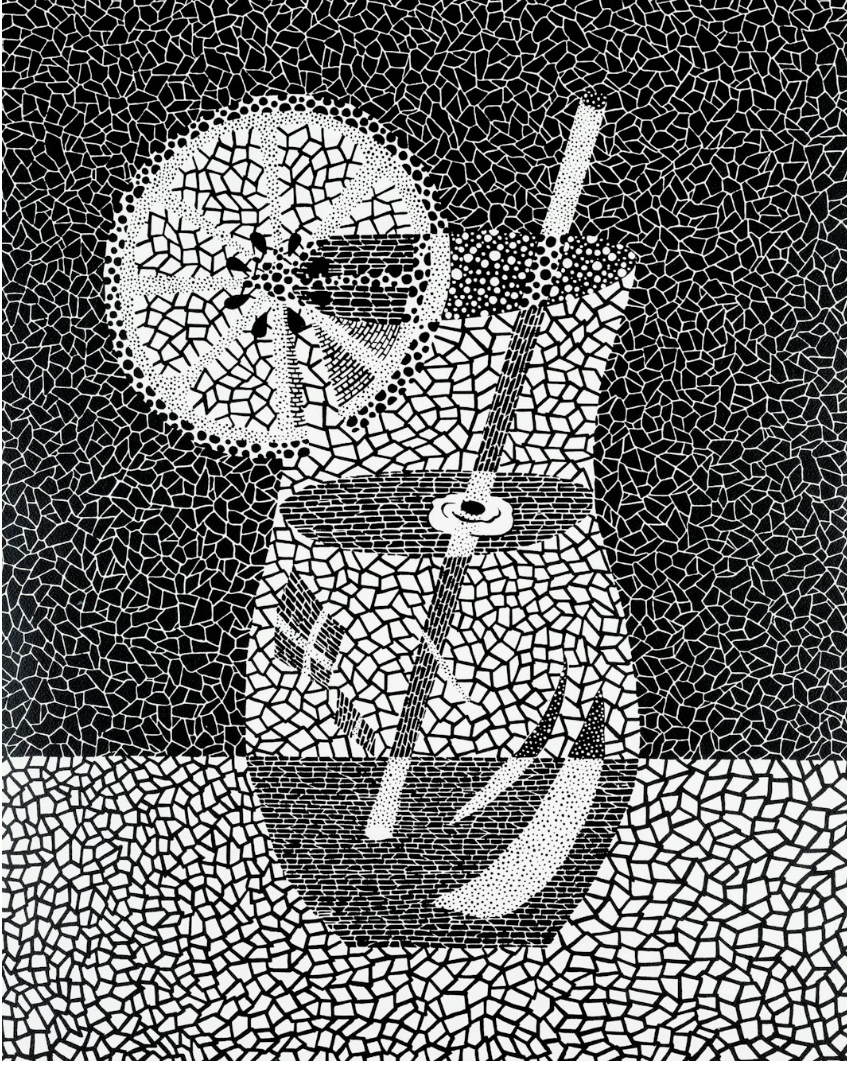
Lemon Squash, 1988
Screenprint on Verin d’Arches paper
Sheet: 97.5 x 79.3 cm (38.4 x 31.2 inches)
Edition: 50 + 5 AP + 3 PP
Literature: ABE 117
Lemon Squash (1), 1999 (ABE 263)
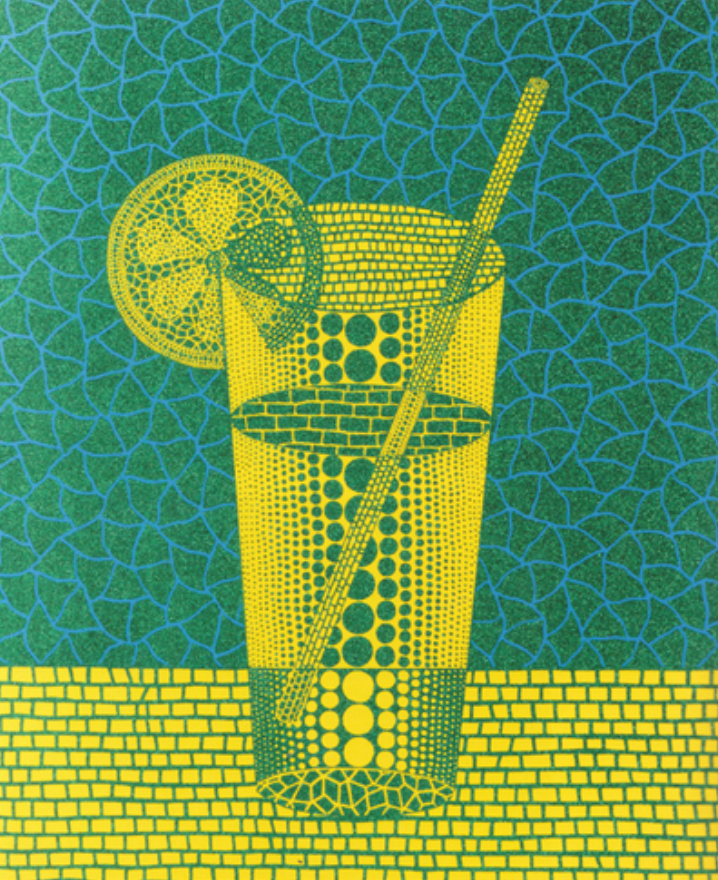
Lemon Squash (1), 1999
Screen-print in colors on Kakita-shi paper with Lame
Sheet: 70×59 cm (27.6 x 23.2 inches)
Edition: 60 + 6 AP + 5 PP
Literature: ABE 263
Lemon Squash (2), 1999 (ABE 264)
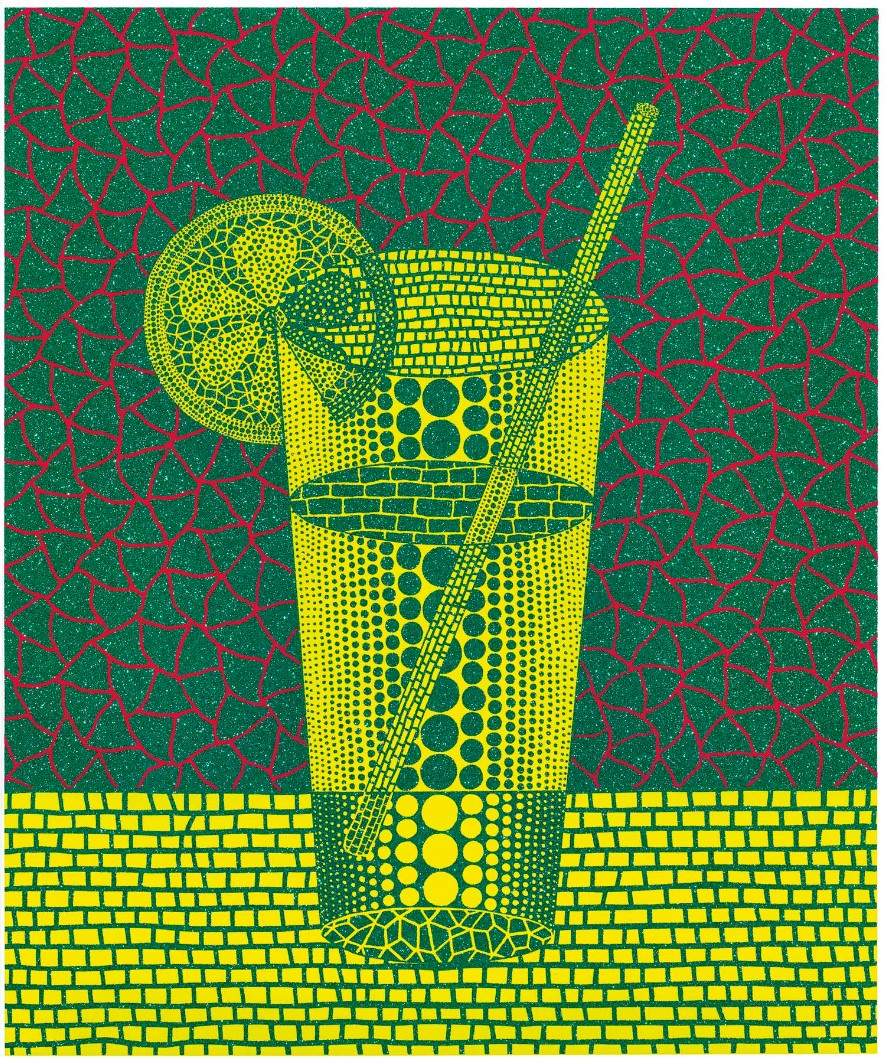
Lemon Squash (2), 1999
Screen-print in colors on Kakita-shi paper with Lame
Sheet: 70×59 cm (27.6 x 23.2 inches)
Edition: 60 + 6 AP + 5 PP
Literature: ABE 264
Lemon Squash (3), 1999 (ABE 265)
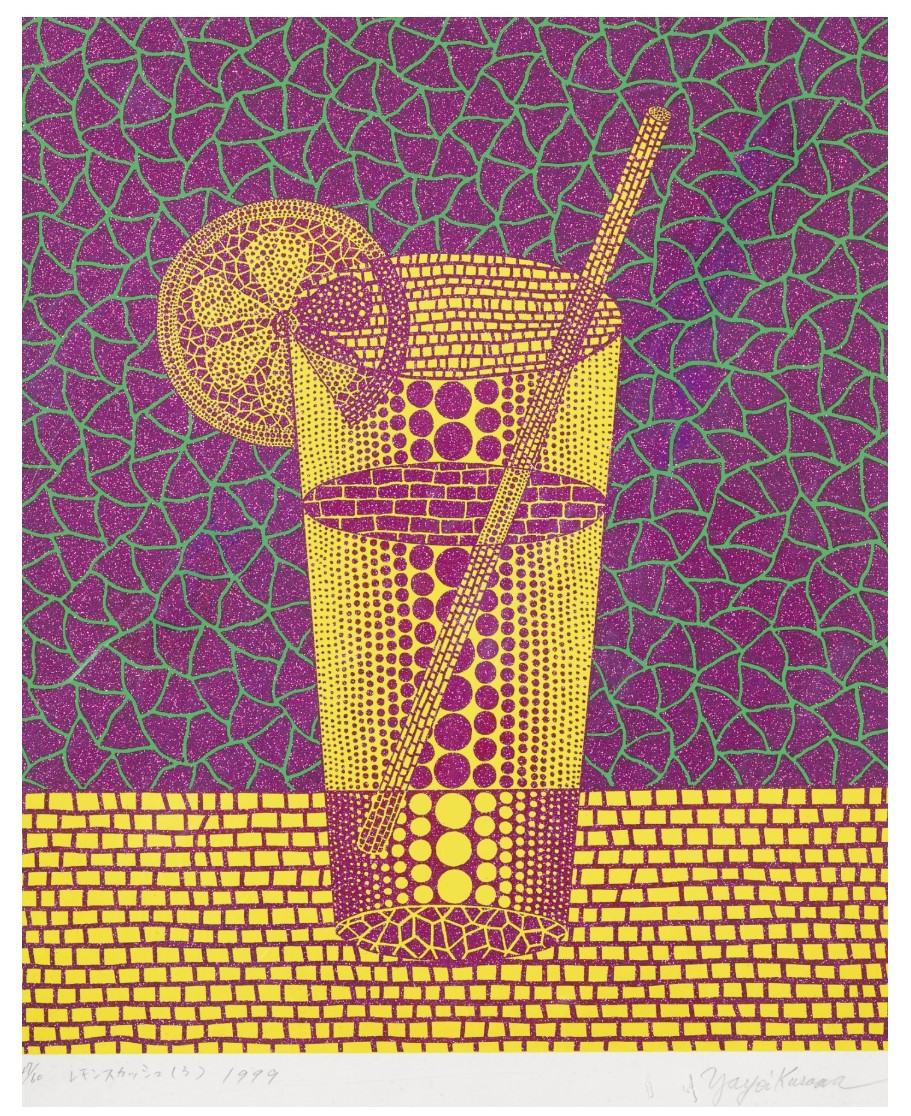
Lemon Squash (3), 1999
Screen-print in colors on Kakita-shi paper with Lame
Sheet: 70×59 cm (27.6 x 23.2 inches)
Edition: 60 + 6 AP + 5 PP
Literature: ABE 265
Lemon Squash (4), 1999 (ABE 266)
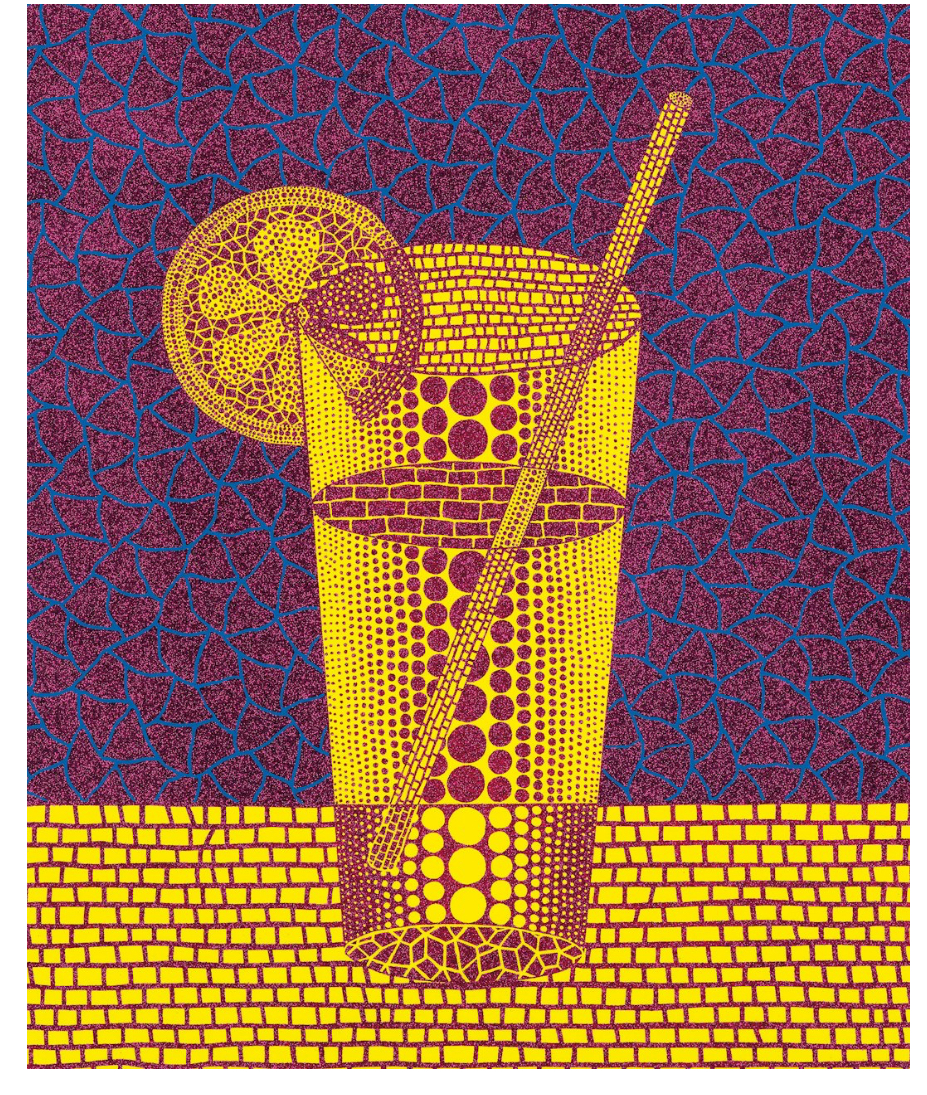
Lemon Squash (4), 1999
Screen-print in colors on Kakita-shi paper with Lame
Sheet: 70×59 cm (27.6 x 23.2 inches)
Edition: 60 + 6 AP + 5 PP
Literature: ABE 266
Lemon Squash (5), 1999 (ABE 267)
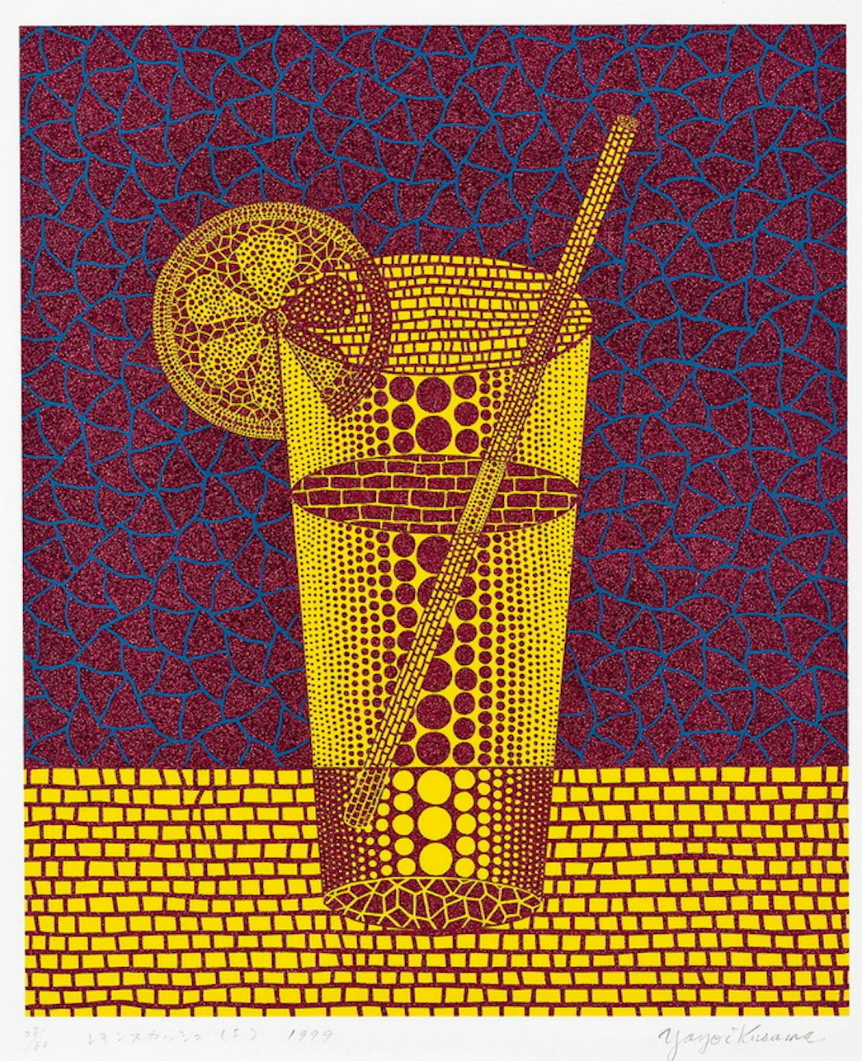
Lemon Squash (5), 1999
Screen-print in colors on Kakita-shi paper with Lame
Sheet: 70×59 cm (27.6 x 23.2 inches)
Edition: 60 + 6 AP + 5 PP
Literature: ABE 267
Lemon Squash, 2000 (ABE 292)
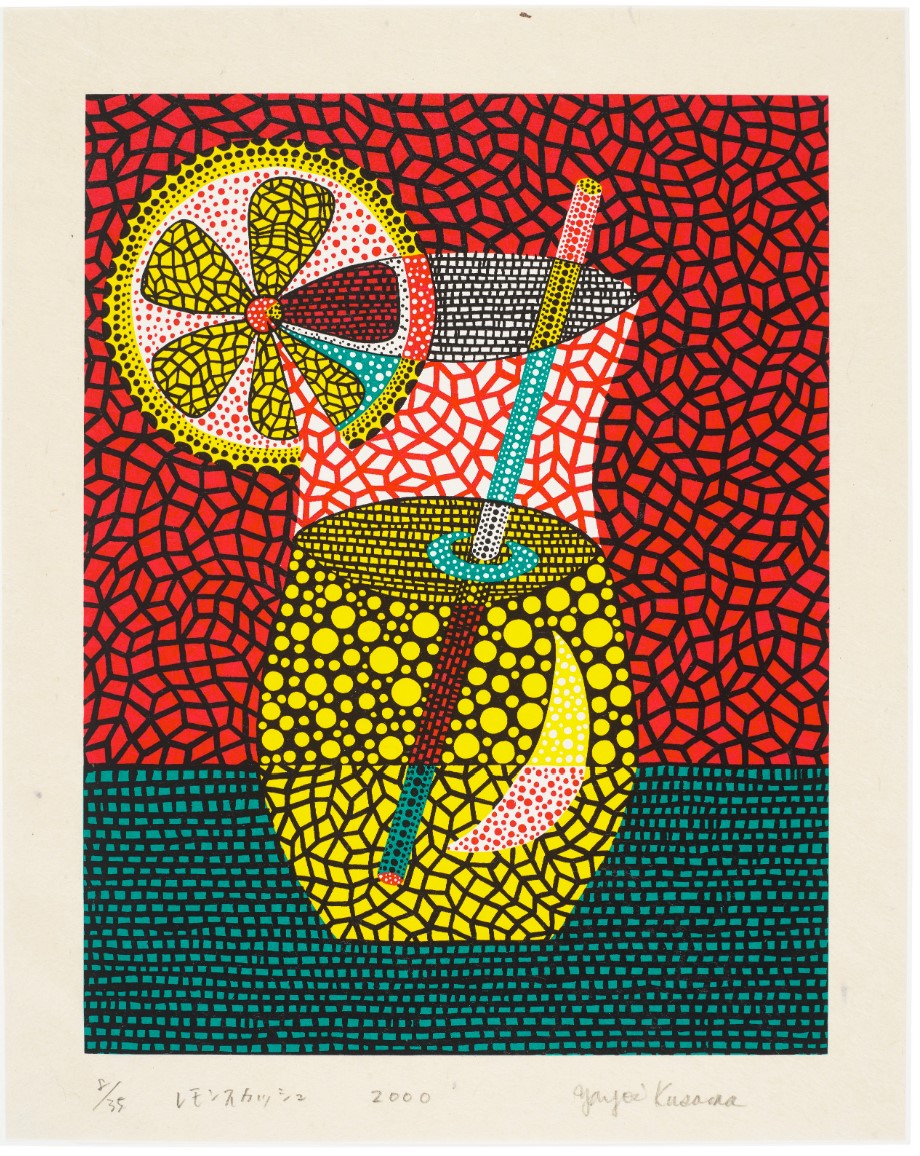
Lemon Squash, 2000
Screen-print in colors on Nishinouchi-gami paper
Sheet: 31.8 x 25.5 cm (12.5 x 10 inches)
Edition: 35 + 5 AP + 1 PP + 4 HC
Literature: ABE 292