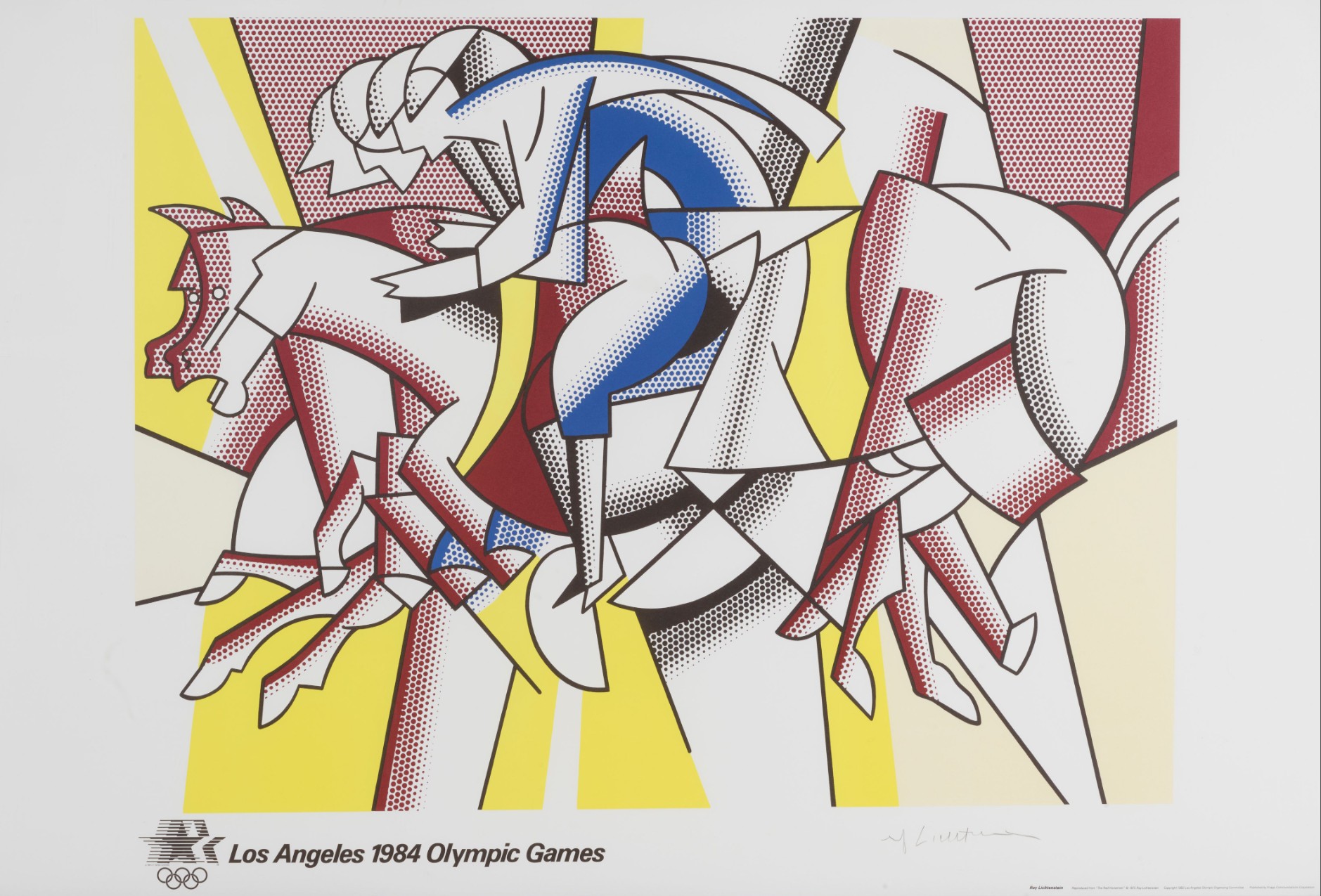
Los Angeles Olympic Games (The Red Horseman)
Medium: Offset lithographic poster on wove paper
Year: 1984
Image: 21×28 inches (53.2 x 71,2 cm)
Sheet: 24×36 inches (61×91 cm)
Edition: 750, unnumbered
Publishers: U.S. Olympics Committee and Knapp Communications Corporation, Los Angeles for the 1984 Los Angeles Olympic Games
Literature: not in Corlett
In 1982, the Los Angeles Olympic Organizing Committee commissioned a select group of internationally established artists to produce original images that would accompany the event and articulate its cultural ambitions. Lichtenstein was invited as one of the leading figures of postwar American art, alongside artists whose practices had already achieved broad institutional and public recognition. The Olympic edition based on The Red Horseman was conceived not as a reinterpretation but as a faithful translation of the earlier pictorial concept into print form. The image’s equestrian motif resonated naturally with Olympic symbolism: strength, motion, discipline, and controlled energy. Stripped of narrative specificity, the horseman becomes an emblem rather than a character, aligning with the Games’ desire for universally legible imagery detached from national or ideological markers.
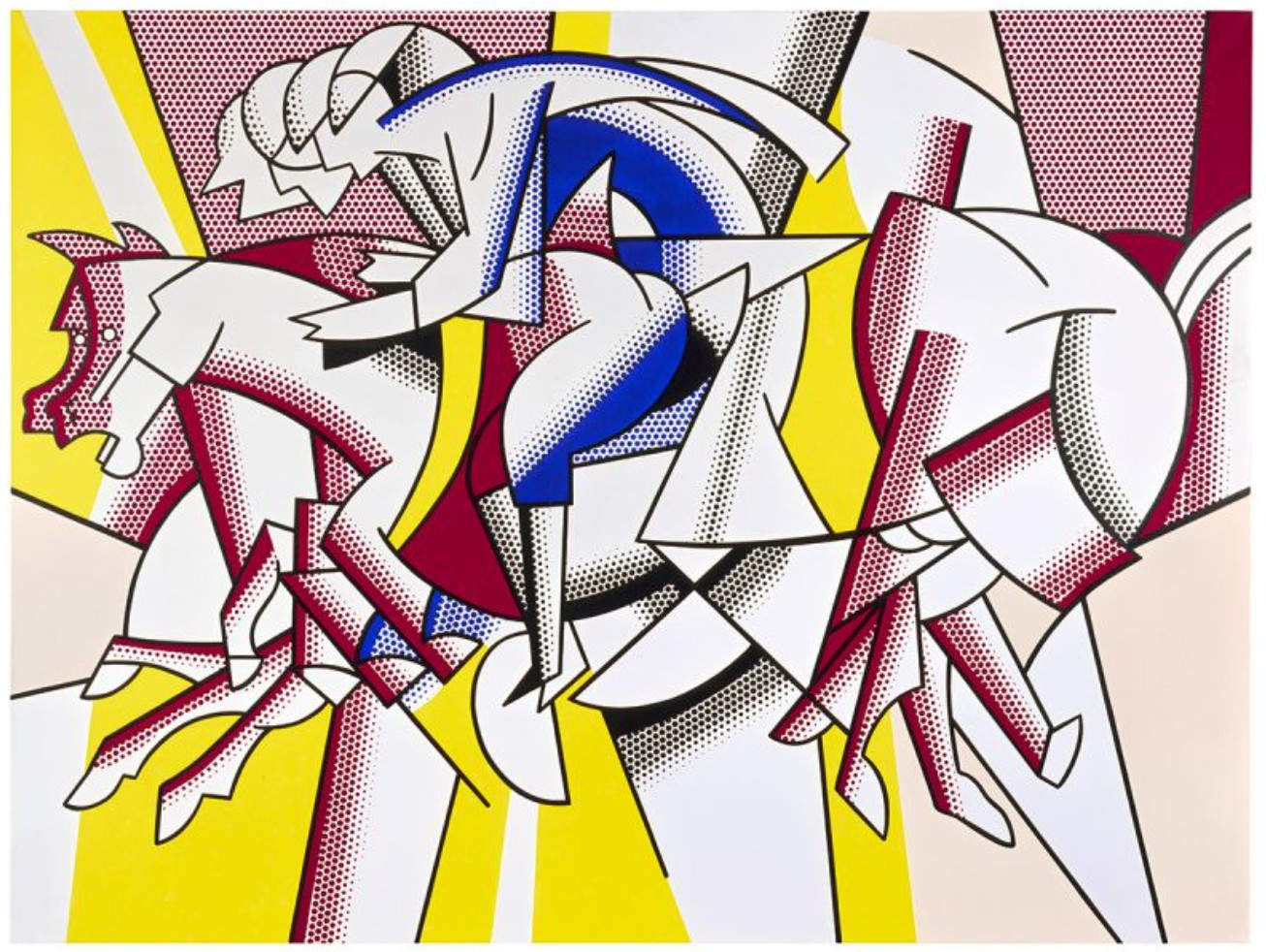
ROY LICHTENSTEIN, The Red Horseman, 1974, Acrylic, oil, graphite pencil on canvas
The Red Horseman, 1974 (RLCR 2315) | Catalogue entry | Roy Lichtenstein: A Catalogue Raisonné
In The Red Horseman, Roy Lichtenstein turns away from the vernacular of comic strips to engage directly with the language of early twentieth-century modernism. Executed in 1974, the work belongs to a group of paintings in which Lichtenstein interrogates the visual grammar of historical avant-gardes, translating their formal ambitions into his own rigorously controlled pictorial system. The result is neither homage nor parody, but a precise act of re-articulation. The composition is derived from Il Cavaliere Rosso (1913) by Carlo Carrà, a canonical work of Italian Futurism. Carrà’s original painting sought to convey speed, force, and ideological momentum through fractured planes and centrifugal movement. Lichtenstein extracts this dynamic core while stripping it of its historical rhetoric, replacing expressive fragmentation with clean contours, flattened color zones, and a carefully calibrated sense of visual tension.
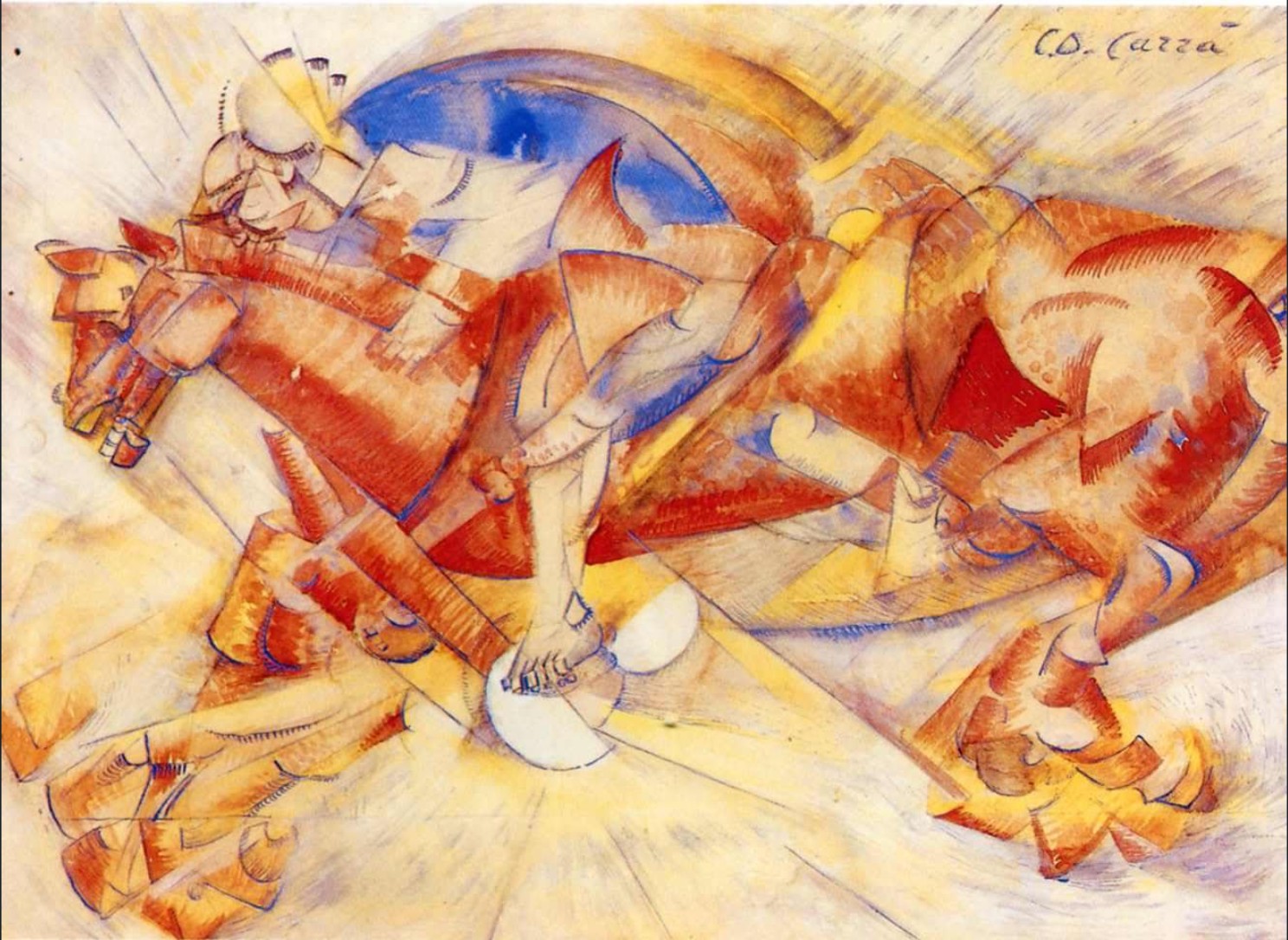
CARLO CARRA, Il Cavaliere Rosso (“The red knight”, 1913, tempera and ink on canvas paper
Civiche raccolte d’arte contempo, Milano (MI) – Milan, Lombardia – Lombardy, Italia – Italy
Red dominates the surface, functioning both as chromatic anchor and conceptual device. In Lichtenstein’s hands, color becomes declarative rather than expressive, reinforcing the work’s distance from Futurism’s emotional charge. Movement is suggested not through painterly agitation, but through the orchestration of diagonals, curves, and intersecting forms that remain resolutely graphic and self-contained. The painting exemplifies Lichtenstein’s mature engagement with art history, a period in which he systematically revisited Cubism, Futurism, Surrealism, and Abstract Expressionism. Rather than quoting style as surface effect, he subjected each source to a process of translation that exposed its structural logic. In The Red Horseman, this method produces an image that is simultaneously referential and autonomous, recognizably historical yet unmistakably Lichtenstein.
Within the artist’s broader oeuvre, the work occupies a pivotal position. It demonstrates how Pop Art, often misunderstood as anti-intellectual or purely ironic, could operate as a sophisticated analytical tool. By filtering Futurist ambition through Pop discipline, Lichtenstein offers a meditation on how images survive, mutate, and retain power once detached from their original context. Today, The Red Horseman stands as a measured and cerebral work, emblematic of Lichtenstein’s ability to engage the past without nostalgia and to assert that modern art history itself could become legitimate subject matter, handled with clarity, restraint, and a quiet sense of authority.
Auction Results
LA Modern: 3 September 2025
Estimated: USD 2,000 – 3,000
USD 1,397
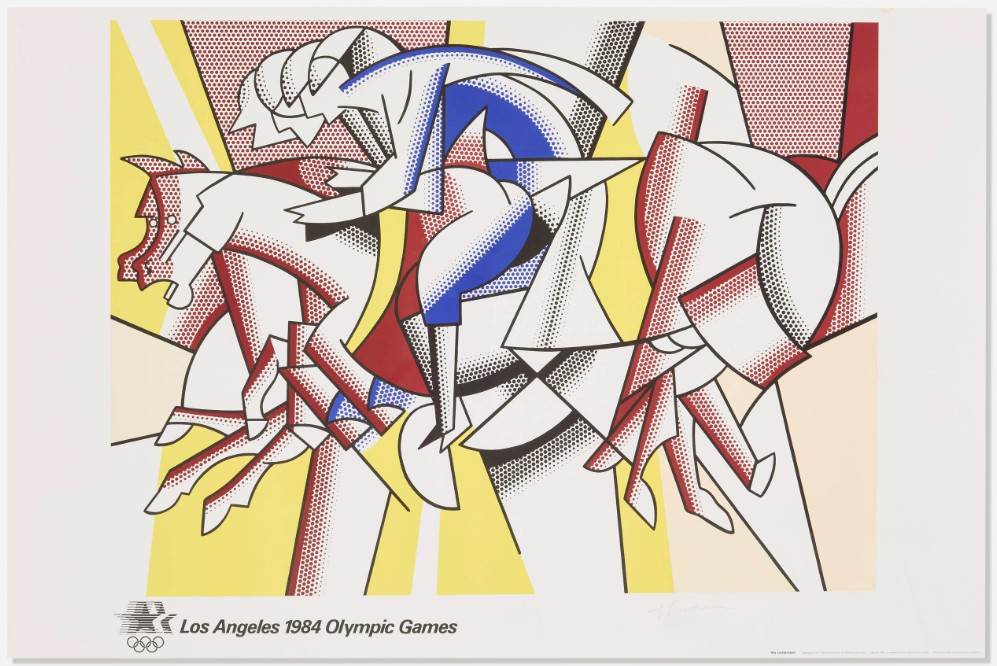
AFTER ROY LICHTENSTEIN
Los Angeles Olympic Games 1984 poster (The Red Horseman), 1984
Offset lithograph in colors
Signed to lower edge ‘rf Lichtenstein’
From the unnumbered edition of 750
Bonhams online: 26 June 2025
Estimated: USD 1,000 – 1,500
USD 2,304
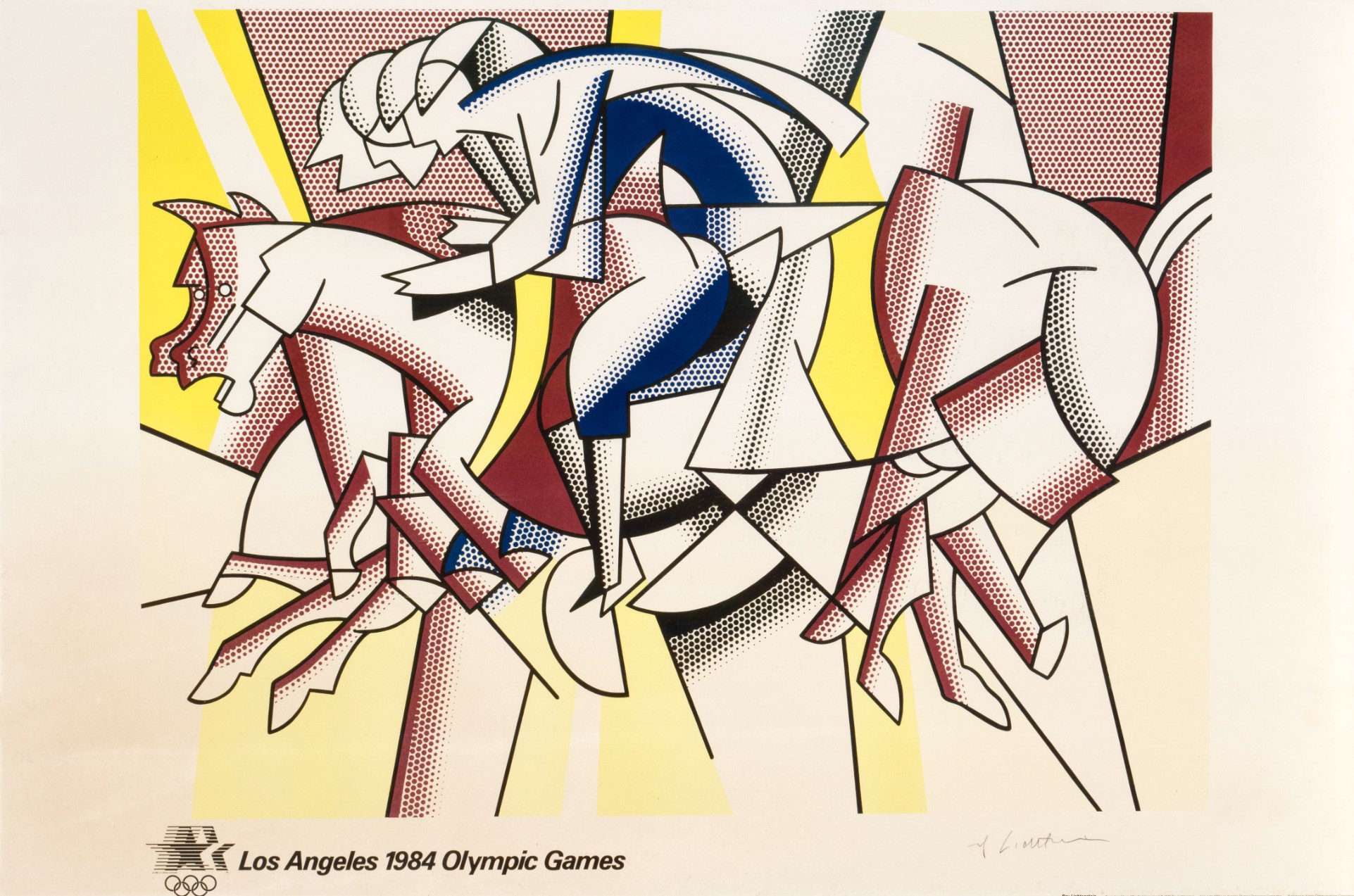
ROY LICHTENSTEIN (1923-1997)
Los Angeles Olympic Games (The Red Horseman) (Not in Corlett), 1984
Offset lithograph in colors on wove paper, with complimentary signature
From the edition of 750
CONDITION NOTE: Colors slightly attenuated
Rago: 16 October 2024
Estimated: USD 2,000 – 4,000
USD 2,772
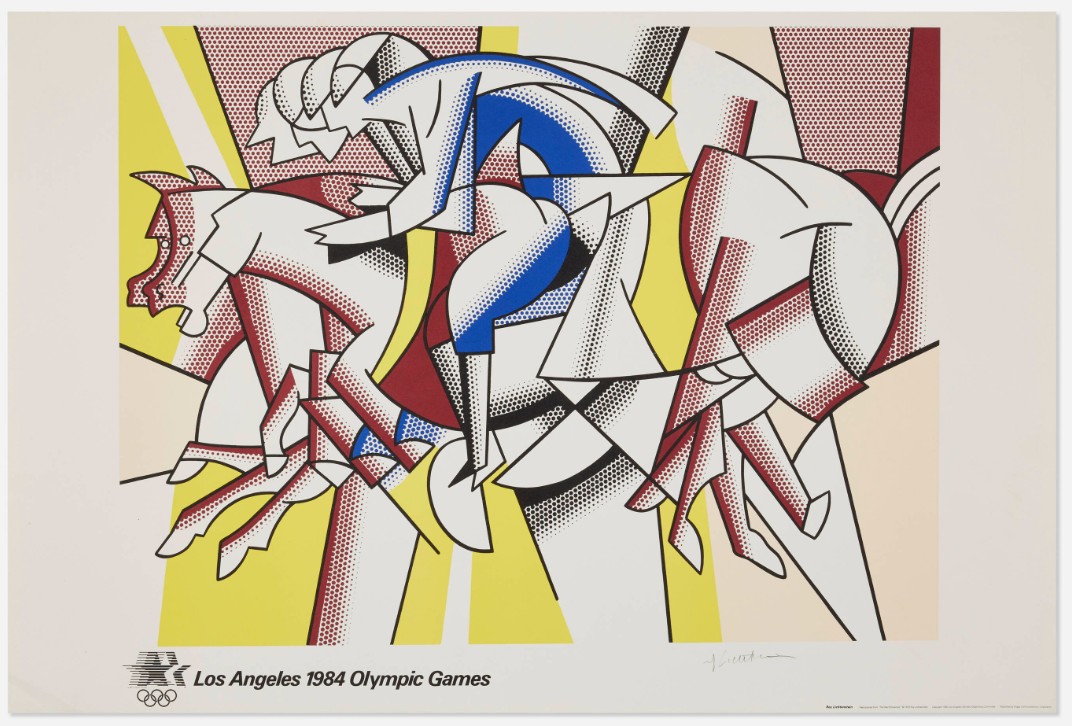
AFTER ROY LICHTENSTEIN
Los Angeles Olympic Games 1984 poster (The Red Horseman), 1984
Offset lithograph in colors
Signed to lower edge ‘rf Lichtenstein’
From the unnumbered edition of 750
Bonhams online: 19 January 2024
Estimated: USD 2,000 – 3,000
USD 5,632
ROY LICHTENSTEIN (1923-1997)
Los Angeles Olympic Games (The Red Horseman) (Not in Corlett), 1984
Offset lithographic poster on wove paper, with complimentary signature
From the edition of 750
Bonhams Los Angeles: 3 October 2023
Estimated: USD 2,000 – 3,000
USD 3,200
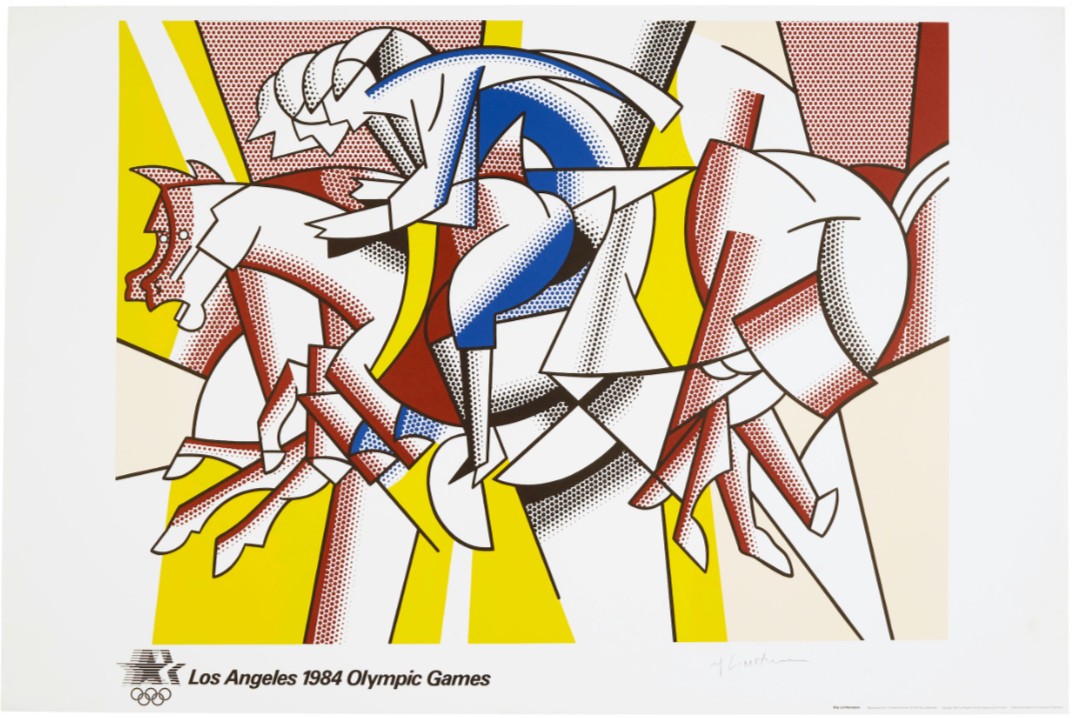
ROY LICHTENSTEIN (1923-1997)
Los Angeles Olympic Games (The Red Horseman) (Not in Corlett), 1984
Offset lithographic poster on wove paper, with complimentary signature
From the edition of 750
Bonhams online: 23 February 2023
Estimated: USD 4,500 – 6,500
USD 5,738
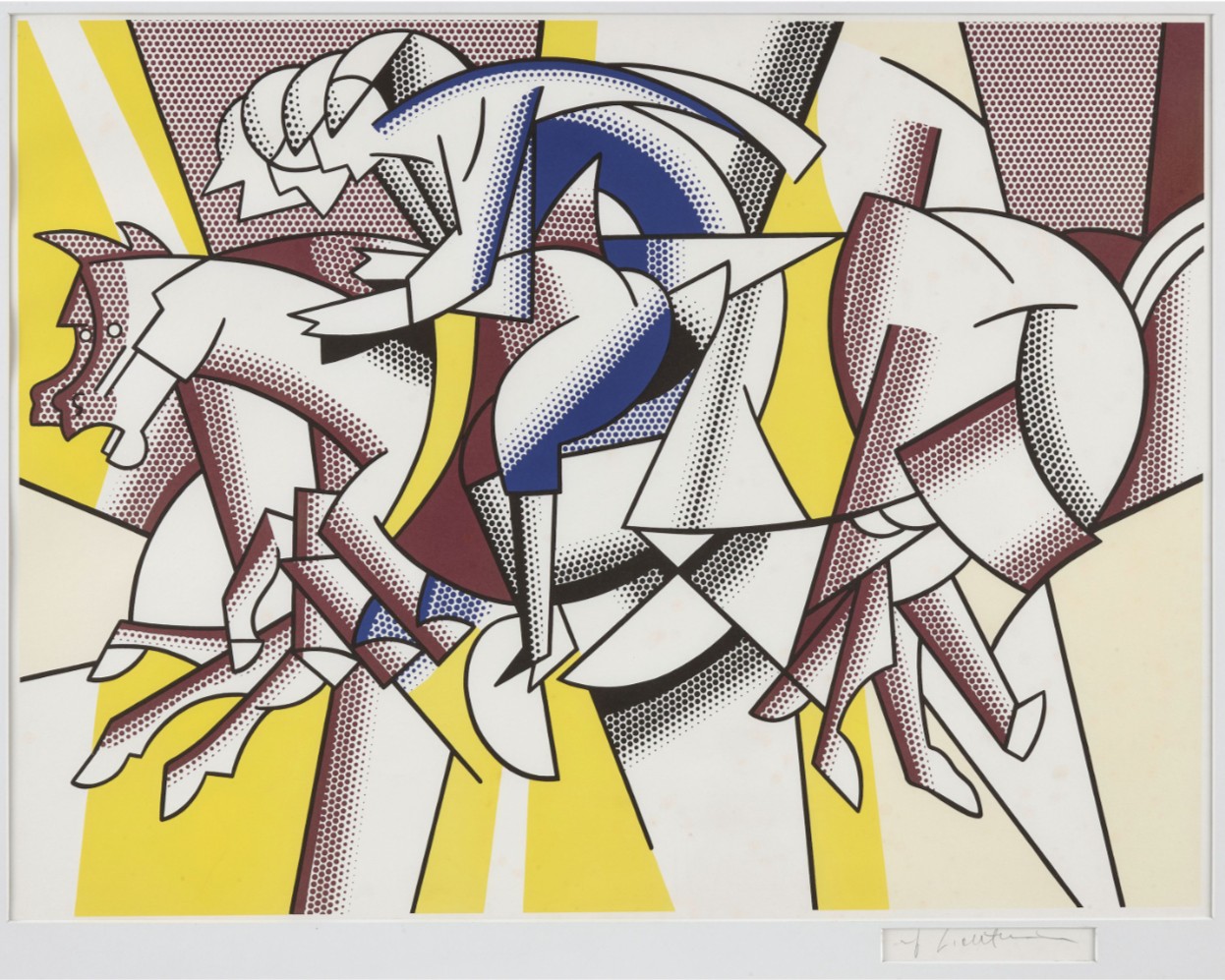
AFTER ROY LICHTENSTEIN (1923-1997)
The Red Horseman, from the Los Angeles Olympics Portfolio, 1982
Offset lithograph in colors on wove paper
Signed in pencil, from the edition of 750