
Listed among TIME magazine’s 2021 list of 100 emerging leaders shaping the future, Salman Toor has captured the attention of the art world as one of the most exciting figurative painters to emerge in recent years, constructing a body of work that is at once intimate, theatrical, and deeply attuned to the complexities of identity in the contemporary world. Based in New York, Toor explores scenes of private and semi-public life, moments of solitude, companionship, desire, and vulnerability, through a visual language that merges art historical references with a distinctly contemporary sensibility. His paintings are not merely depictions of daily life; they are carefully staged environments in which questions of belonging, queerness, diaspora, and visibility unfold with quiet intensity. Through a subtle balance of elegance and tension, Toor creates images that feel both deeply personal and culturally resonant.
Introduction
Salman Toor (b. 1983, Lahore, Pakistan) received his initial training at the National College of Arts in Lahore before moving to the United States, where he completed his MFA at Pratt Institute in New York. This transnational trajectory is central to his work. His paintings often reflect the experience of navigating multiple cultural frameworks, between South Asia and the West, tradition and modernity, public identity and private self.

THE ARTIST PHOTOGRAPHED IN HIS STUDIO BY STEFAN RUIZ. PHOTO © STEFAN RUIZ. ART © SALMAN TOOR
Rather than presenting identity as fixed, Toor approaches it as fluid and performative. His figures, often young men inhabiting interiors, bars, or ambiguous urban spaces, exist within a delicate interplay of visibility and concealment, intimacy and exposure. Born in Lahore, Pakistan in 1983, Toor moved to America in 2002 for university and there found a queer culture unlike any he had experienced before. The pronounced contrast between his experience of conservative Pakistan and that of a liberal college campus allowed him to understand the queer community from the perspective of both outsider and insider.
A Dialogue with Art History
While studying painting and drawing at Ohio Wesleyan University and during his MFA from Pratt Institute in Brooklyn, Toor spent his time copying the works of Rococo, Baroque, and Neoclassical-era artists like Caravaggio, Peter Paul Rubens, Anthony van Dyck, and Jean-Antoine Watteau. His dialogue with art history is honest and respectful. Idiosyncratically incorporating the Old Master styles into original compositions that are firmly grounded in contemporary culture, Toor’s paintings are imbued with a unique sense of familiarity, while simultaneously emulating the empowering and more contemporaneous insertion of people of color into the predominantly white canon of Western painting.
Toor’s work engages directly with the Western canon, reinterpreting its visual language through a contemporary lens. His paintings echo the compositional clarity of Édouard Manet and the psychological nuance of Peter Doig, while also recalling the intimacy of 18th- and 19th-century European genre painting. At the same time, these references are subtly destabilized. Toor inserts bodies and narratives historically excluded from these traditions, reconfiguring the canon from within. His work becomes a site of negotiation, between admiration and critique, inheritance and reinvention.
The “Green Paintings” and Core Themes
Central to Toor’s practice is his now-iconic use of a green-toned palette, often referred to as his “green paintings.” These works envelop figures in a luminous, sometimes eerie atmosphere, where color operates not only descriptively but emotionally. The green becomes a psychological filter—suggesting desire, alienation, memory, or even surveillance.
Recurring settings include domestic interiors, subway cars, nightclubs, and dreamlike spaces that blur the boundaries between reality and imagination. Figures gather, recline, embrace, or withdraw, their gestures charged with ambiguity. These are scenes of everyday life, yet they unfold with a quiet theatricality, as though suspended between performance and authenticity.
Technique and Painterly Approach
Working primarily in oil on panel or canvas, Toor combines a refined painterly technique with a loose, almost improvisational handling of form. His compositions are carefully structured, yet retain a sense of spontaneity. Brushwork ranges from delicate and precise to fluid and suggestive, allowing figures and environments to emerge and dissolve within the same pictorial space.
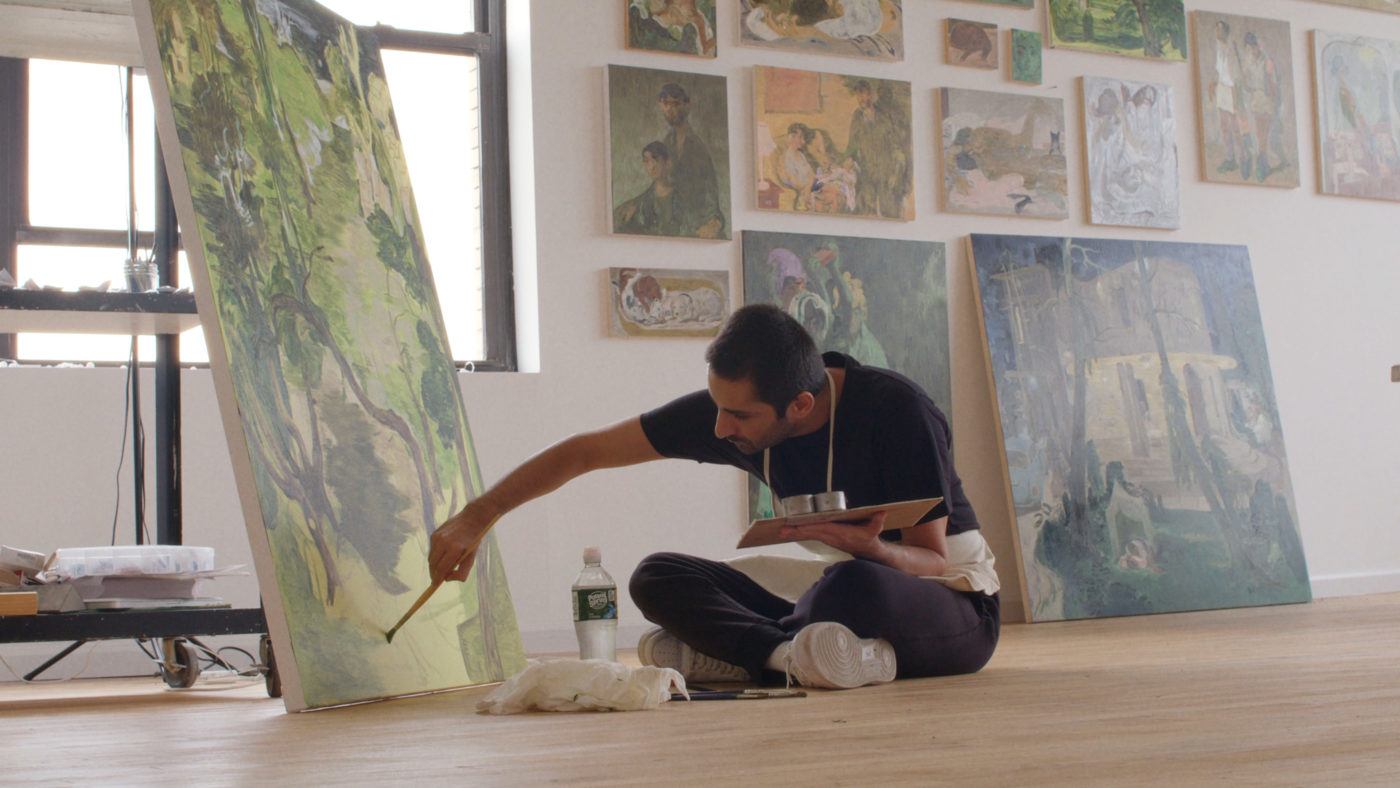
Light plays a crucial role in his work. Rather than a naturalistic source, it often appears artificial—casting an ambiguous glow that heightens the emotional tension of the scene. This interplay between clarity and obscurity reinforces the psychological depth of his paintings.
Institutional Recognition and Exhibitions
Salman Toor has achieved significant institutional recognition, most notably with his widely acclaimed solo exhibition How Will I Know at the Whitney Museum of American Art in 2020–2021. This exhibition marked a pivotal moment in his career, firmly establishing his position within the international contemporary art landscape.
In late 2022 a major retrospective titled No Ordinary Love, was held at the Baltimore Museum of Art in Maryland and later travelled to the Tampa Museum of Art in Florida, the Honolulu Museum of Art in Hawai’i, the Rose Art Museum at Brandeis University in Massachusetts before closing at M Woods in Beijing. These institutional acquisitions reflect both critical acclaim and the broader relevance of his work within current cultural and artistic discourse.
Salman Toor’s works are held in the permanent collections of the Tate, London, the Whitney Museum of American Art, New York, the Walker Art Center, Minneapolis, M Woods, Beijing and the Museum of Contemporary Art Chicago among others.
Gallery Representation and Market Position
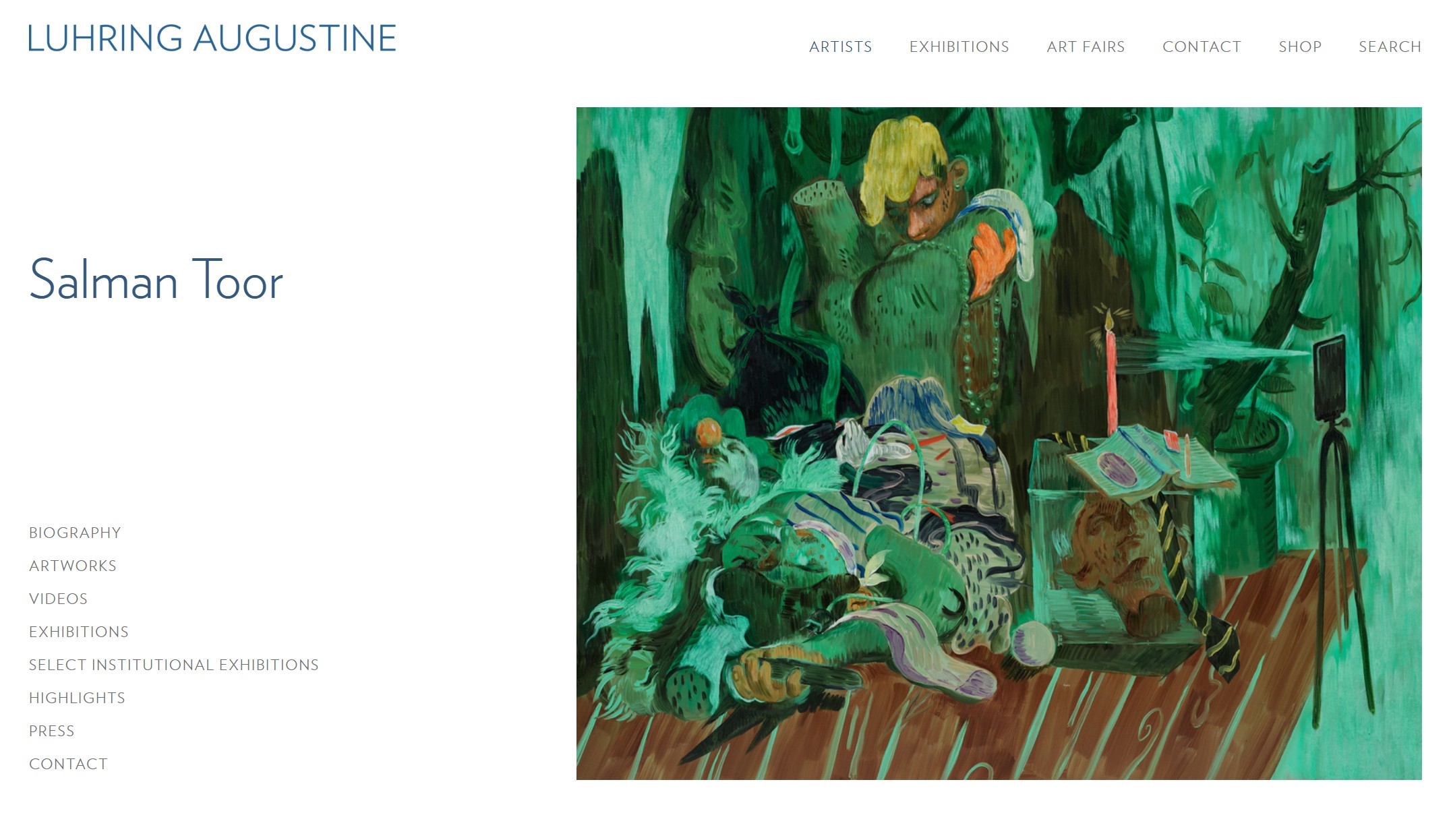
Salman Toor is represented by Luhring Augustine and Jhaveri Contemporary, galleries that have played a central role in shaping his international profile.
His market has developed with notable strength and consistency. Primary market demand remains high, with works placed in leading collections, while his presence at auction has shown steady growth. Collectors are drawn to the immediacy of his narratives, the elegance of his technique, and the cultural significance of his subject matter.
At its core, Salman Toor’s work is about presence: who is seen, how they are seen, and under what conditions. His paintings create spaces in which marginalized identities are not only represented, but centered, rendered with nuance, tenderness, and complexity. In doing so, Toor expands the possibilities of figurative painting today. He demonstrates that intimacy can be political, that beauty can coexist with tension, and that the everyday can become a stage for profound reflection. His work lingers, quietly, insistently, offering not answers, but a space in which to look, and to feel, more closely.
PART I: SUMMARY
Auction Market Overview
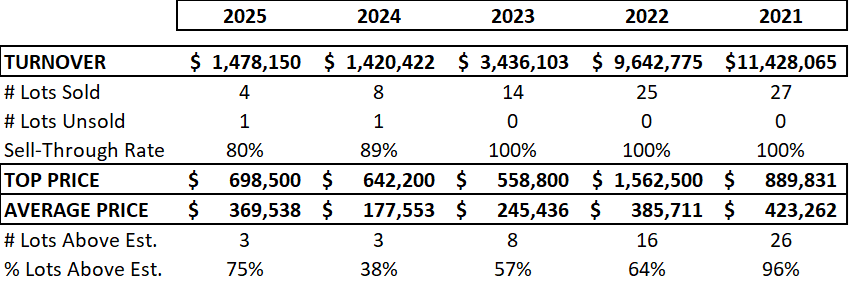
2025 AUCTION STATISTICS
Turnover: USD 1,478,150
+4.1% vs. 2024
# Lots sold: 4
Sell-Through Rate: 80%
MARKET SEGMENTATION
COMING SOON
Highest Price Achieved at Auction:
USD 1,562,500
(16 November 2022)
Auction Summary
2025 Auction Highlights
4 lots sold at auction in 2025 for a turnover of USD 1,478,150. With 1 lot failing to sell, the sell-through rate is 80%. One lot was withdrawn, an untitled painting dated 2017, at China Guardian in Hong-Kong, on 7 April 2025. The highest price for 2025 was achieved by Eleventh Street, a painting dated 2018, that sold at Sotheby’s in New-York, on 16 May 2025, for USD 698,500.
2025 Top 3 Lots
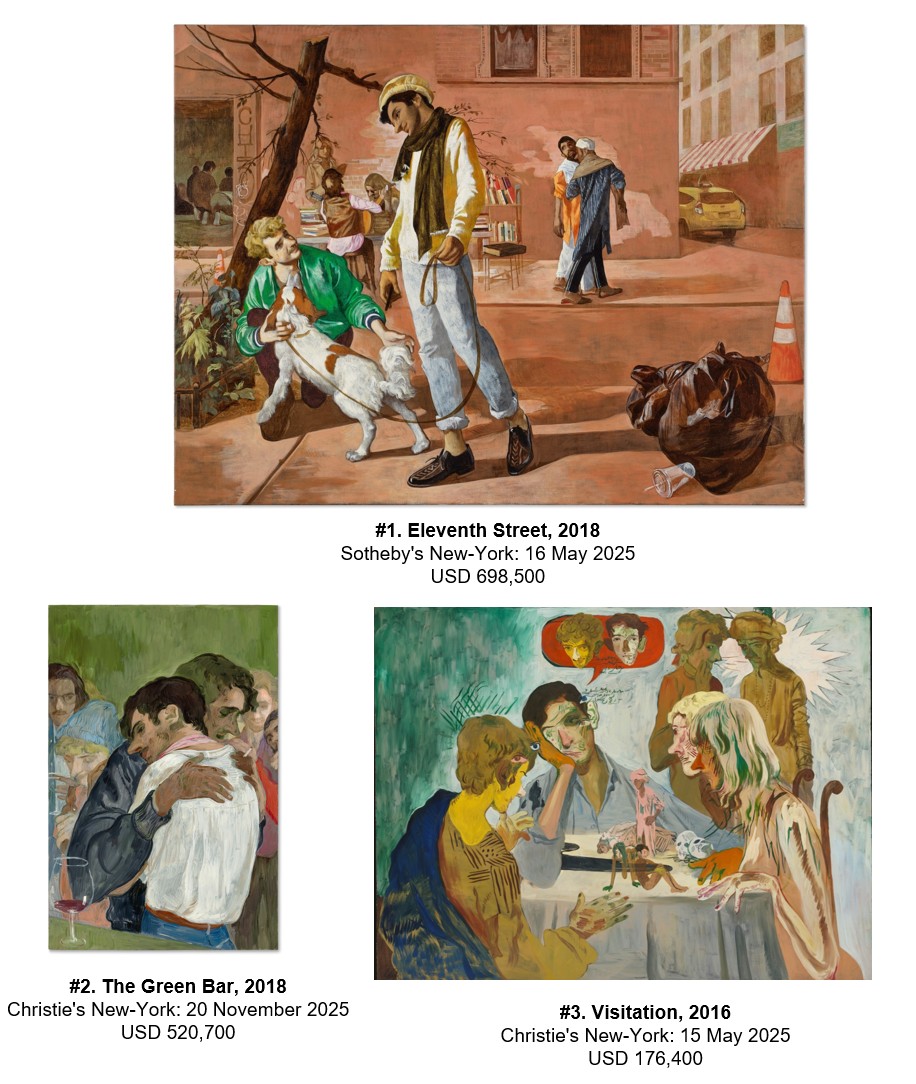
2 lots sold for more than USD 500,000, generating a cumulative turnover of USD 1,219,200, representing 82.5% of the total turnover in 2025.
2024 Auction Highlights
8 lots sold at auction in 2024 for a total turnover of USD 1,420,422. With 1 lot failing to sell, the sell-through rate is 89%. The highest price was achieved at Christie’s in New-York on 22 November 2024, when Garden Party, a painting dated 2018 sold for USD 642,200.
2024 Top 3 Lots
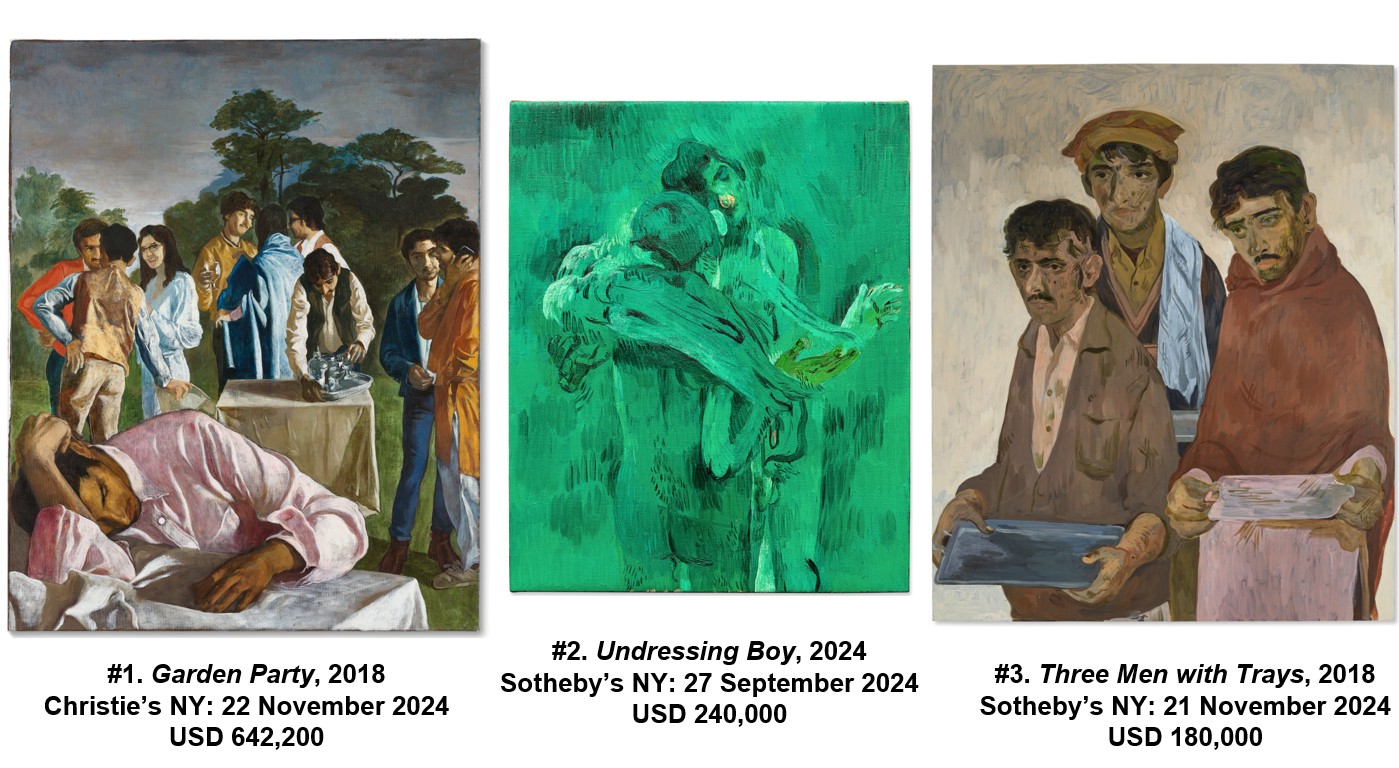
3 lots sold for more than USD 1 million, generating a cumulative turnover of USD 1,062,200, representing 74.8% of the total turnover for 2024.
2023 Auction Highlights
14 lots sold at auction in 2023 for a total turnover of USD 3,436,103. The sell-through rate is 100%. The highest price has been achieved by the Palm Reader (2018) sold at Sotheby’s in New-York on 9 March 2023 for USD 558,800. This is the only lot that sold above USD 500,000.
2023 Top 3 Lots
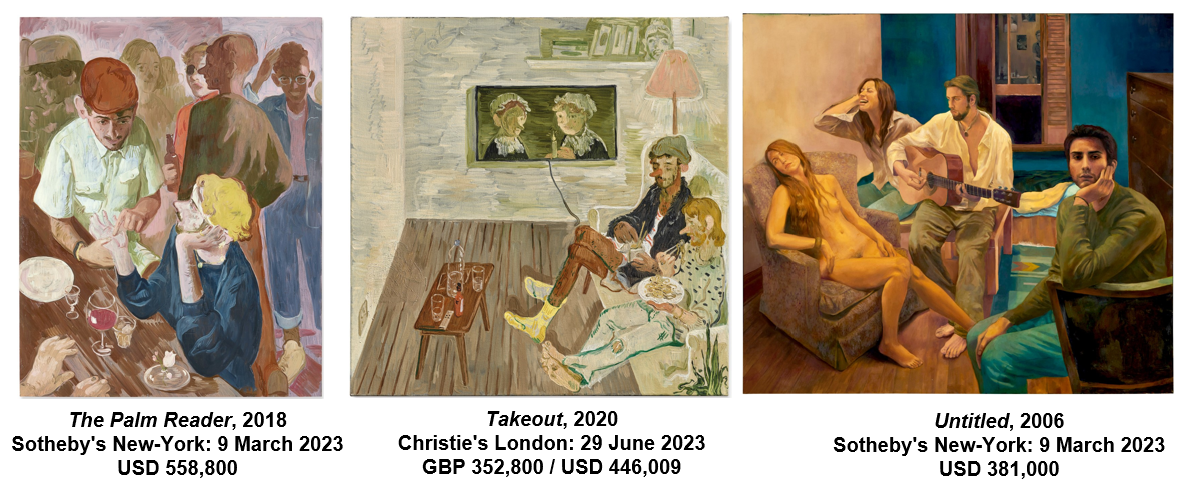
12 lots sold for more than USD 100,000 generating a cumulative turnover of USD 3,324,943, representing 96.8 of the total turnover for 2023.
2022 Auction Highlights
25 lots sold at auction in 2022 for a total turnover of USD 9,642,775. Sell-Through rate is 100%. The highest price of USD 1,562,500 was achieved at Sotheby’s in New-York on 16 November 2022 for Four Friends, a painting dated 2019.
2022 Top 3 Lots
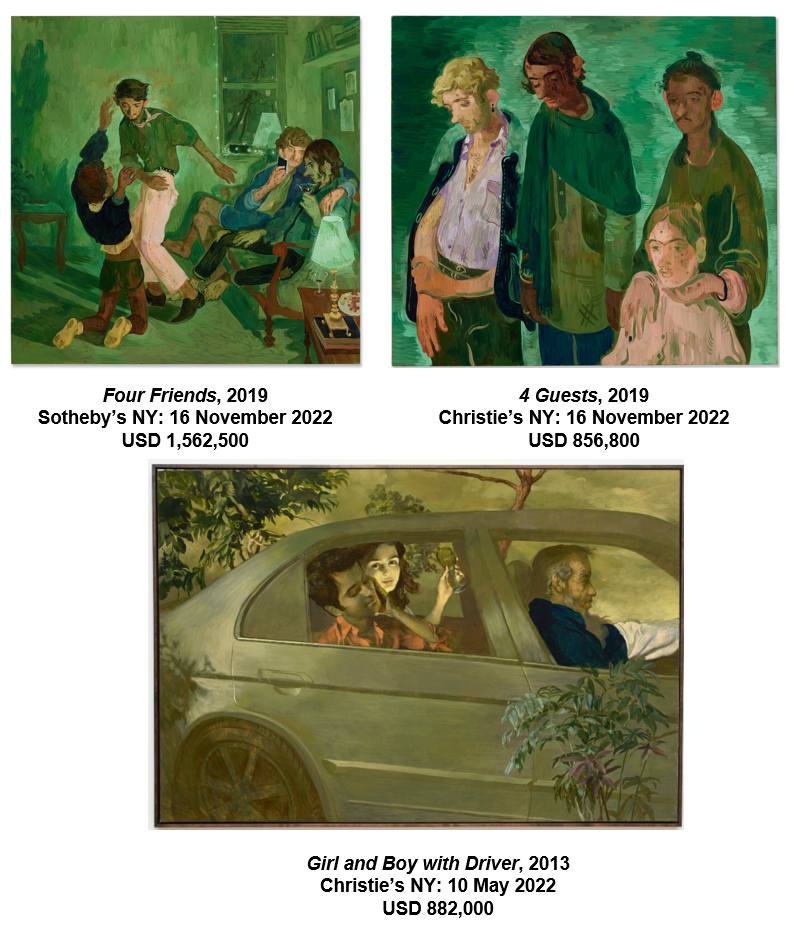
8 lots sold for more than USD 500,000, generating a cumulative turnover of USD 6,474,061, representing 67.1% of the total turnover for 2022.
2021 Auction Highlights
27 lots sold in 2021 for a total turnover of USD 11,428,065. With no lot failing to sell, the Sell-Through rate is 100%. The highest price was achieved by Girl with Driver, a painting dated 2013, that sold at Phillips in Hong-Kong, on 21 June 2021, for HKD 6,905,000 (USD 889,831).
2021 Top 3 Lots
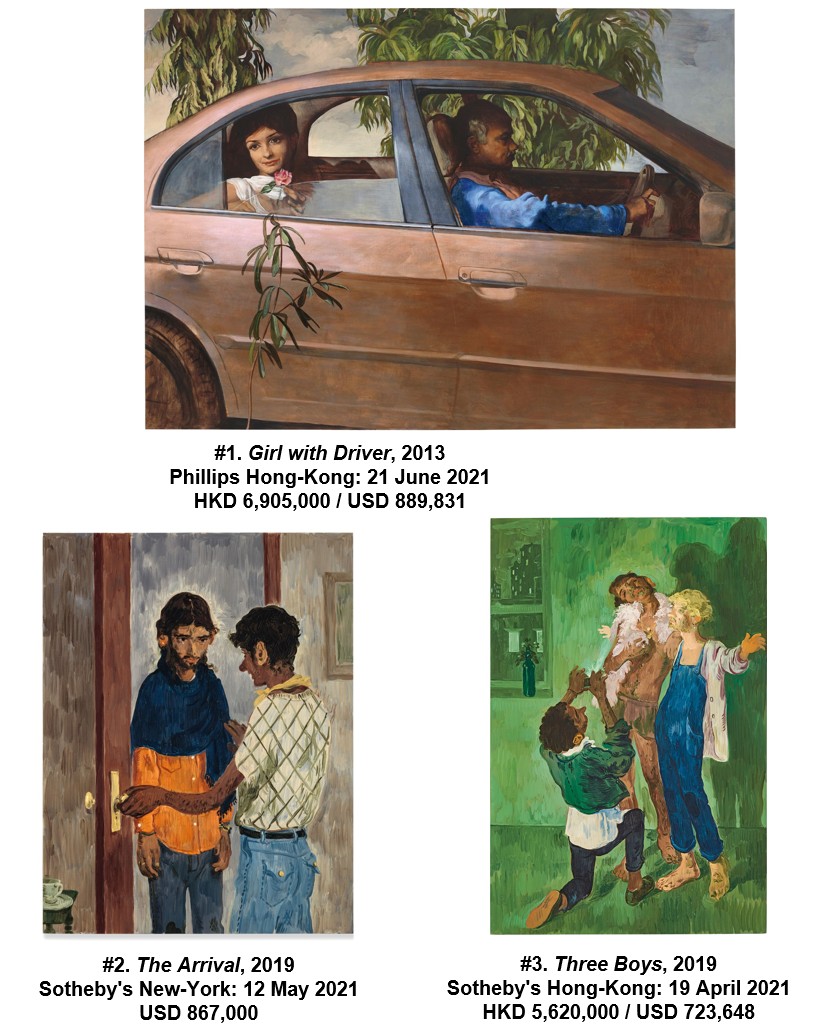
7 lots sold for more than USD 500,000, generating a cumulative turnover of USD 4,925,666, representing 43.1% of the total turnover for 2021. All lots except one sold for more than USD 100,000.
Top Lots
#1. Four Friends, 2019
Sotheby’s New-York: 16 November 2022
Estimated: USD 300,000 – 400,000
USD 1,562,500
Four Friends | The Now Evening Auction | 2022 | Sotheby’s (sothebys.com)
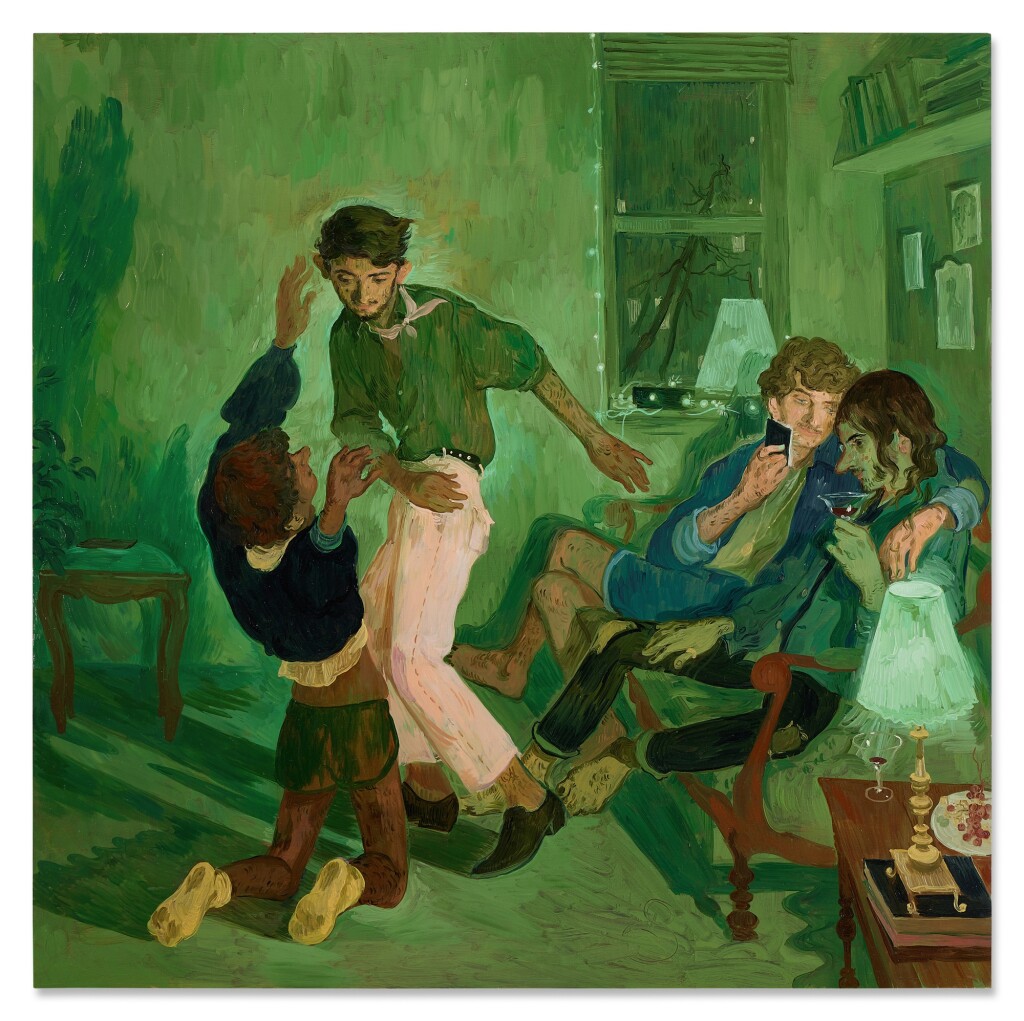
SALMAN TOOR (B. 1983)
Four Friends, 2019
Oil on panel
40×40 inches (101.6 x 101.6 cm)
Signed Salman Toor and dated ’19 (on the reverse)
#2. Girl with Driver, 2013
Phillips Hong-Kong: 21 June 2021
Estimated: HKD 1,200,000 – 2,200,000
HKD 6,905,000 / USD 889,831
Salman Toor – 20th Century & Contemporar… Lot 1 June 2021 | Phillips
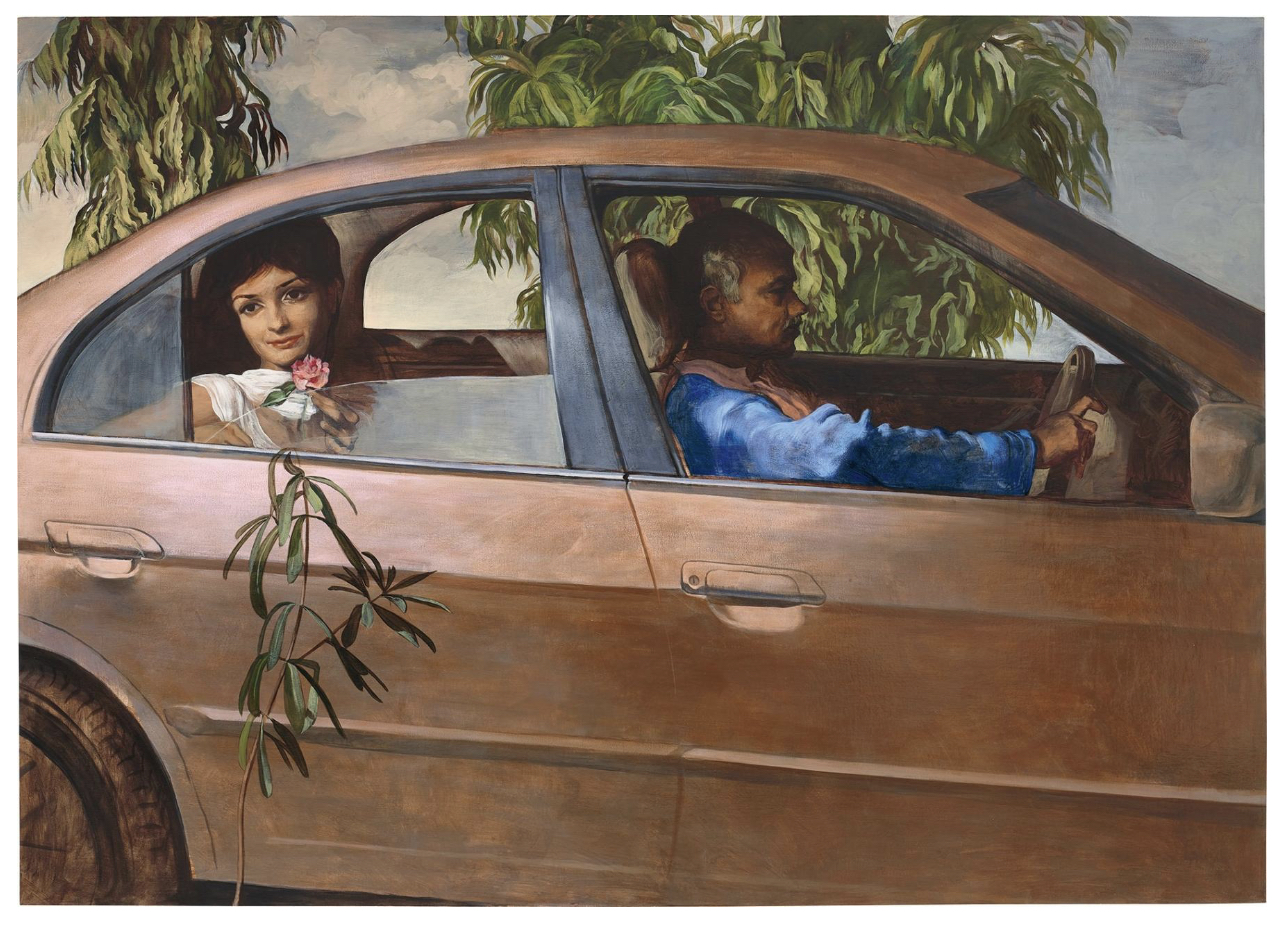
SALMAN TOOR
Girl with Driver, 2013
Oil on canvas
142×200 cm (55 7/8 x 78 3/4 inches)
#3. Girl and Boy with Driver, 2013
Estimated: USD 150,000 – 200,000
USD 882,000
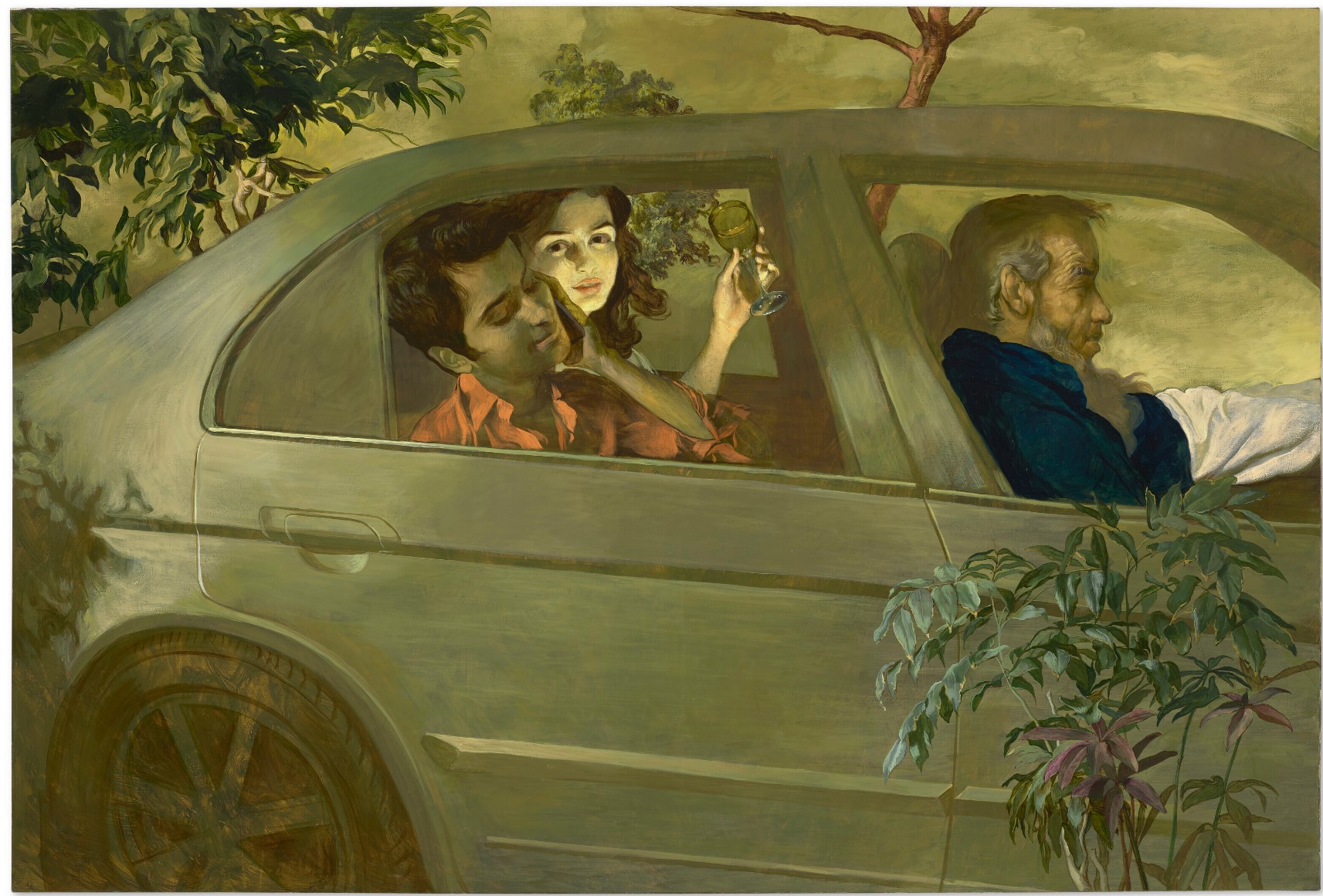
Girl and Boy with Driver, 2013
Oil on canvas
134.3 x 199 cm (52 7⁄8 x 78 3⁄8 inches)
#4. The Arrival, 2019
Sotheby’s New-York: 12 May 2021
Estimated: USD 60,000 – 80,000
USD 867,000
The Arrival | Contemporary Art Evening Auction | 2021 | Sotheby’s (sothebys.com)
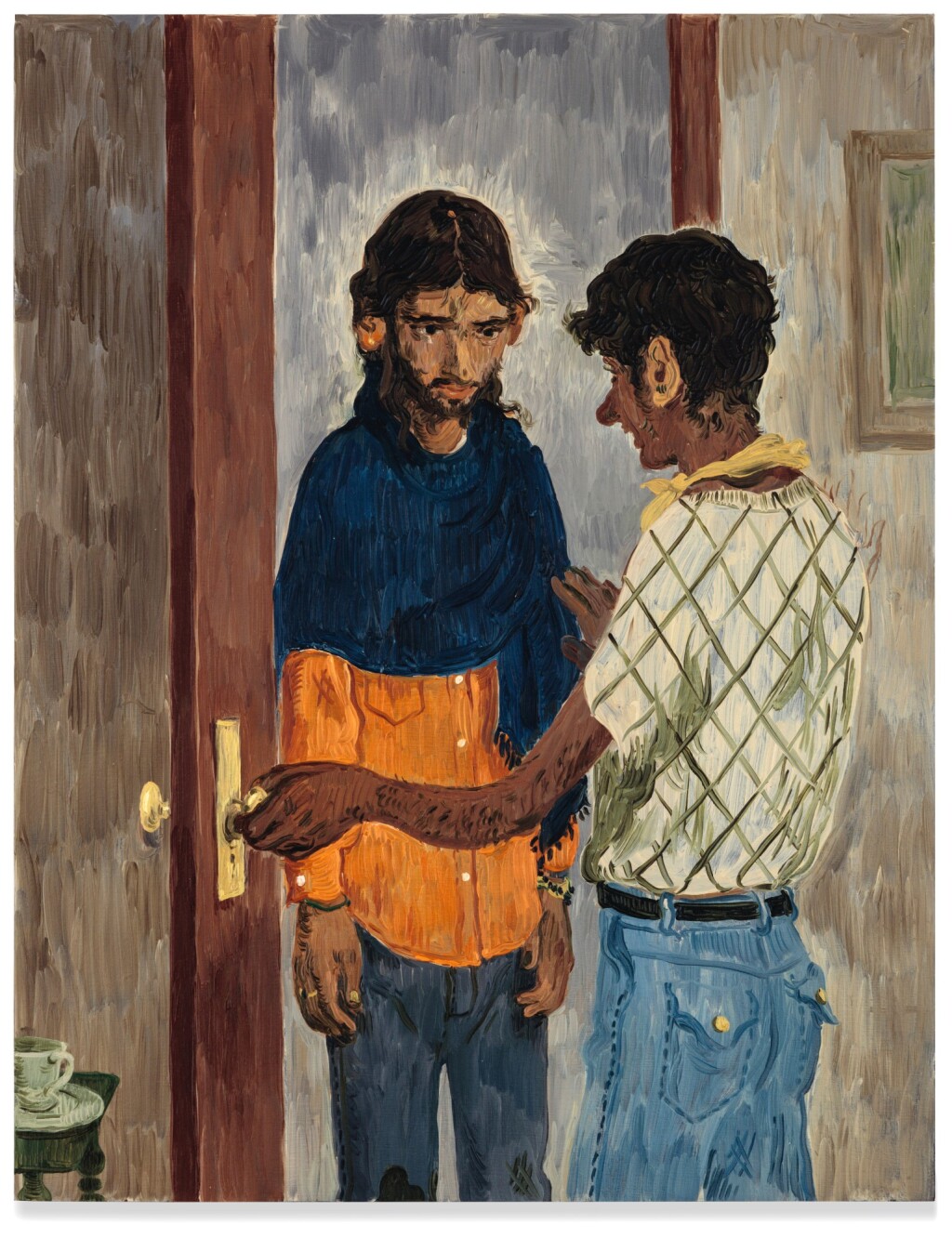
SALMAN TOOR (b. 1983)
The Arrival, 2019
Oil on panel
45.7 x 35.2 cm (18 x 13 ⅞ inches)
Signed and dated ’19 on the reverse
#5. 4 Guests, 2019
Christie’s New-York: 16 November 2022
Estimated: USD 120,000 – 180,000
USD 856,800
SALMAN TOOR (B. 1983) (christies.com)
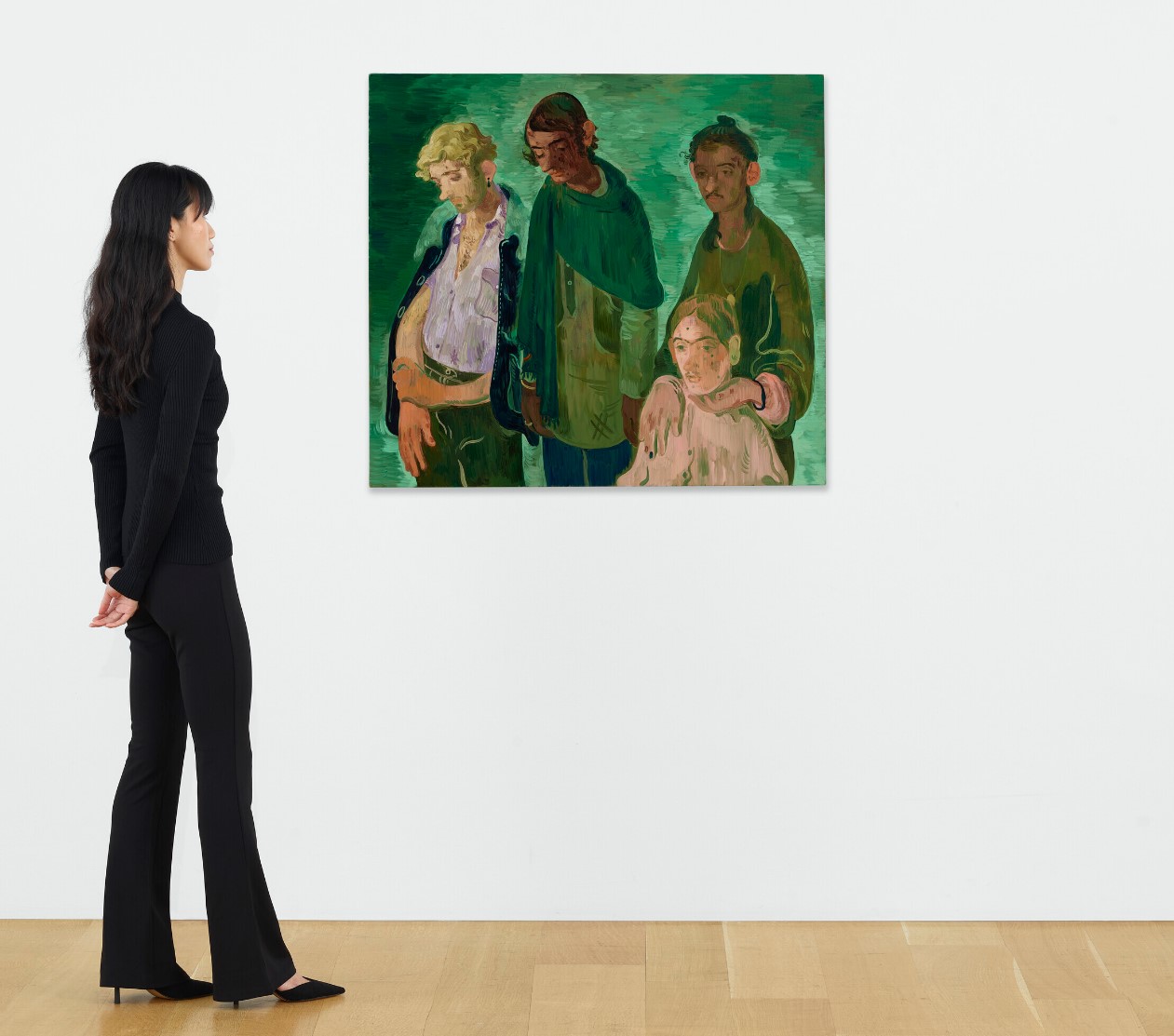
4 Guests, 2019
Oil on canvas
39 1/8 x 43 1/8 inches (99.4 x 109.5 cm)
Signed and dated ‘Salman Toor 2019’ (on the overlap)
PART II: AUCTION RESULTS
2026 Auction Results
4 Guests, 2019
Christie’s Hong-Kong: 28 March 2026
Estimated: HKD 800,000 – 1,500,000
HKD 3,556,000 / USD 454,150
SALMAN TOOR (B. 1983), 4 Guests | Christie’s
REPEAT SALE
Christie’s New-York: 17 November 2022
Estimated: USD 120,000 – 180,000
USD 856,800
SALMAN TOOR (B. 1983), 4 Guests | Christie’s
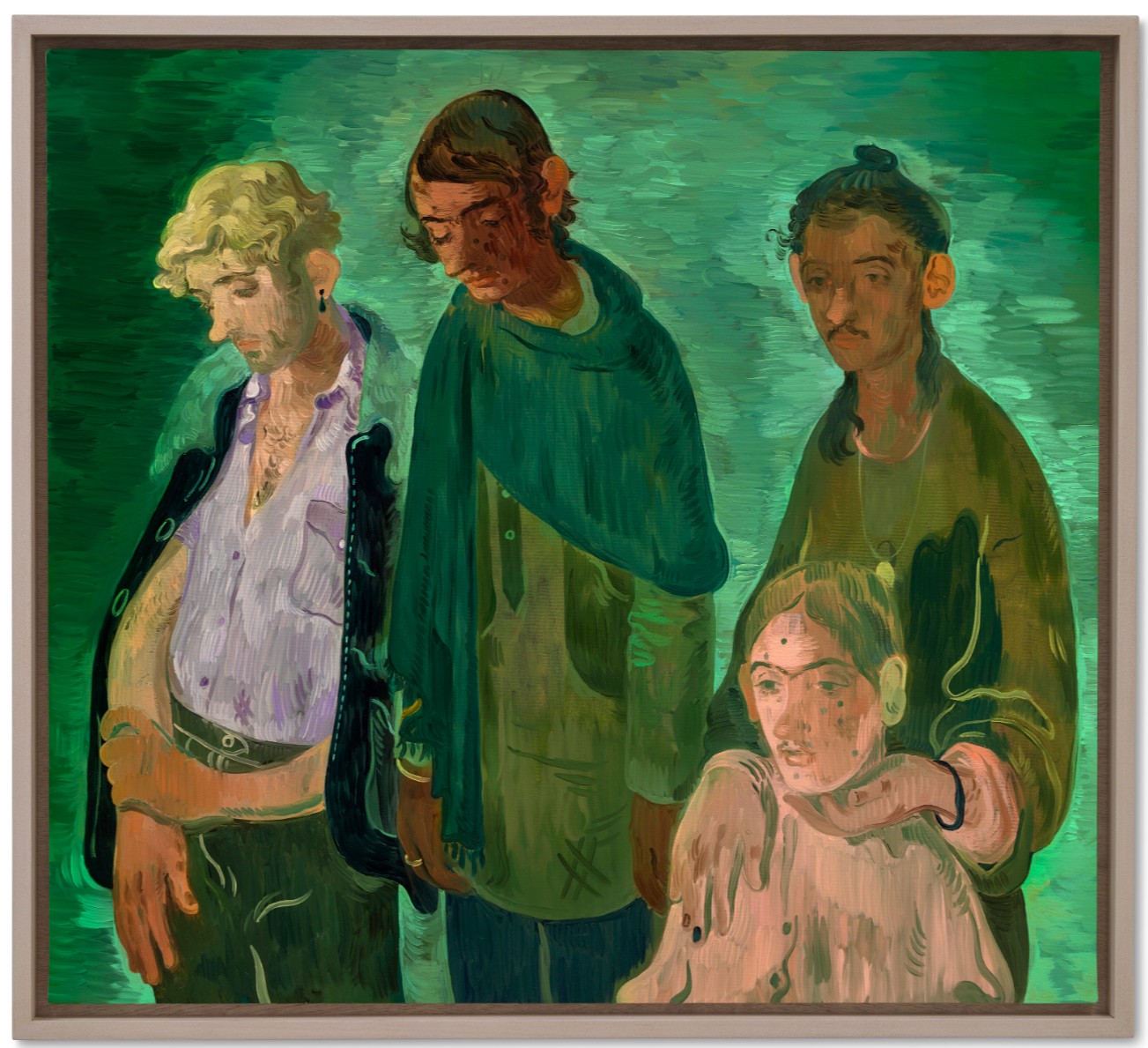
SALMAN TOOR (B. 1983)
4 Guests, 2019
Oil on canvas
99.4 x 109.5 cm (39-1/8 x 43-1/8 inches)
Signed and dated ‘Salman Toor 2019’ (on the overlap)
Untitled, 2009
Phillips Hong-Kong: 29 March 2026
Estimated: HKD 400,000 – 600,000
HKD 451,500 / USD 57,665
Salman Toor Modern & Contemporary Art
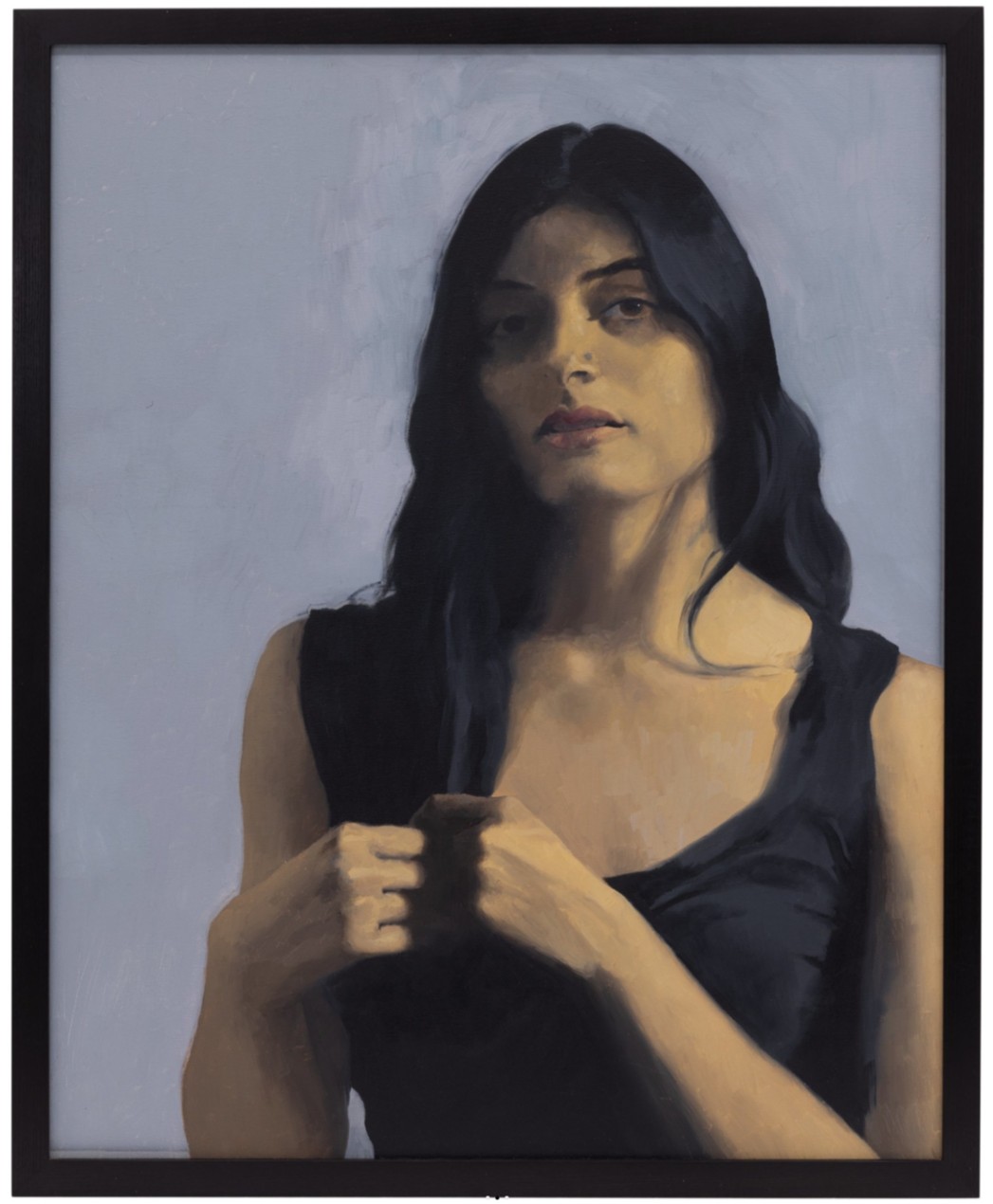
SALMAN TOOR
Untitled, 2009
Oil on canvas
75 x 60.5 cm (29-1/2 x 23-7/8 inches)
Signed with the artist’s signature and dated ”09′ on the reverse
2025 Auction Results
4 lots sold at auction in 2025 for a turnover of USD 1,478,150. With 1 lot failing to sell, the sell-through rate is 80%. One lot was withdrawn, an untitled painting dated 2017, at China Guardian in Hong-Kong, on 7 April 2025. The highest price for 2025 was achieved by Eleventh Street, a painting dated 2018, that sold at Sotheby’s in New-York, on 16 May 2025, for USD 698,500.
2025 Top 3 Lots
2 lots sold for more than USD 500,000, generating a cumulative turnover of USD 1,219,200, representing 82.5% of the total turnover in 2025.
#1. Eleventh Street, 2018
Sotheby’s New-York: 16 May 2025
Estimated: USD 400,000 – 600,000
USD 698,500
Eleventh Street | Contemporary Day Auction | 2025 | Sotheby’s
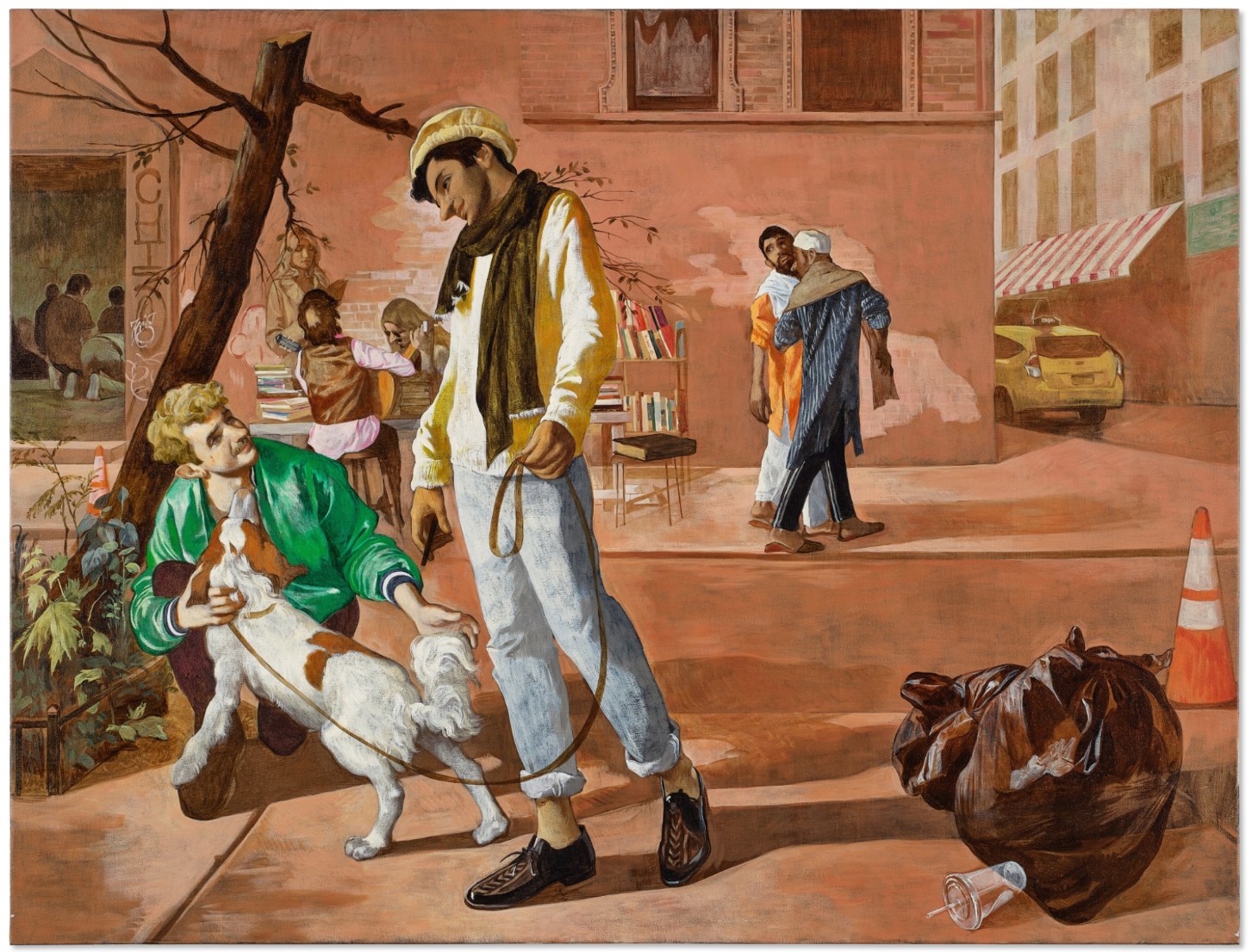
SALMAN TOOR (b. 1983)
Eleventh Street, 2018
Oil on canvas
129.5 x 170.2 cm (51×67 inches)
#2. The Green Bar, 2018
Christie’s New-York: 20 November 2025
Estimated: USD 80,000 – 120,000
USD 520,700
SALMAN TOOR (B. 1983), The Green Bar | Christie’s
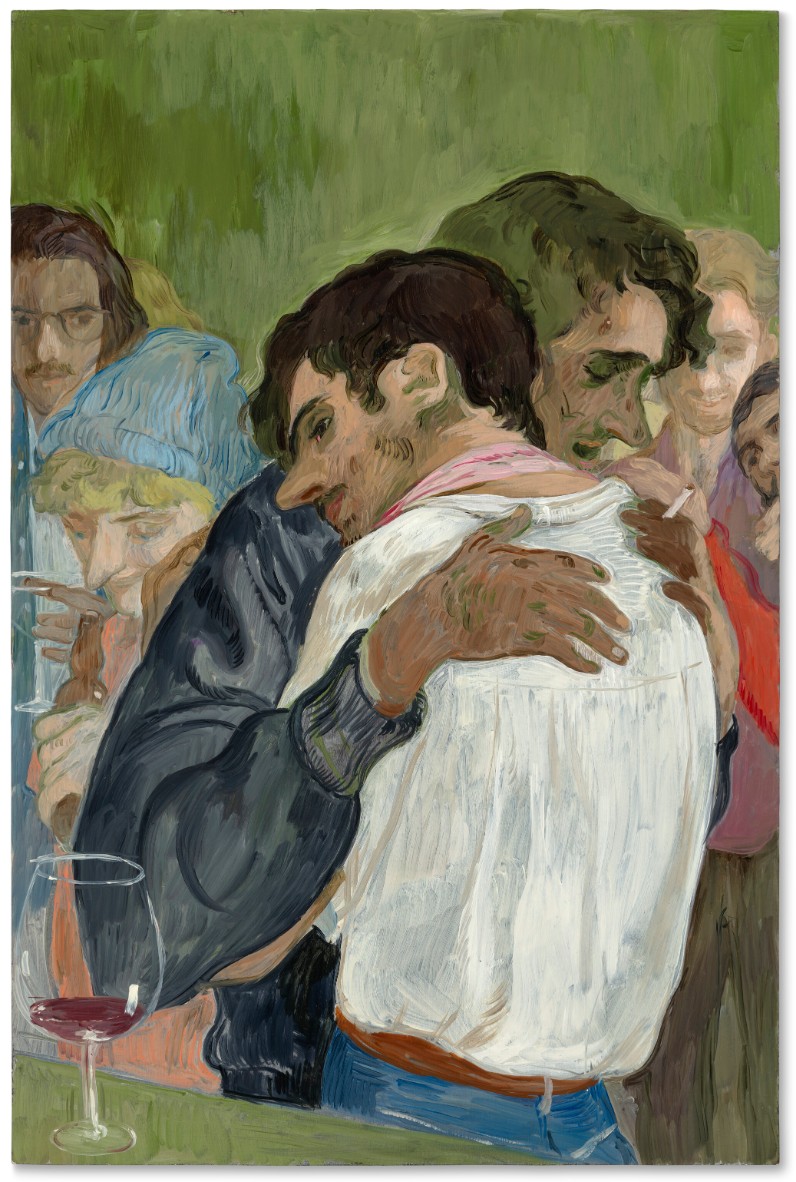
SALMAN TOOR (B. 1983)
The Green Bar, 2018
Oil on panel
45.7 x 30.5 cm (18×12 inches)
USD 500,000
#3. Visitation, 2016
Christie’s New-York: 15 May 2025
Estimated: USD 180,000 – 250,000
USD 176,400
SALMAN TOOR (B. 1983), Visitation | Christie’s
REPEAT SALE
Christie’s London: 2 July 2021
Estimated: GBP 120,000 – 180,000
GBP 250,000 / USD 344,875
SALMAN TOOR (B. 1983), Visitation | Christie’s (christies.com)
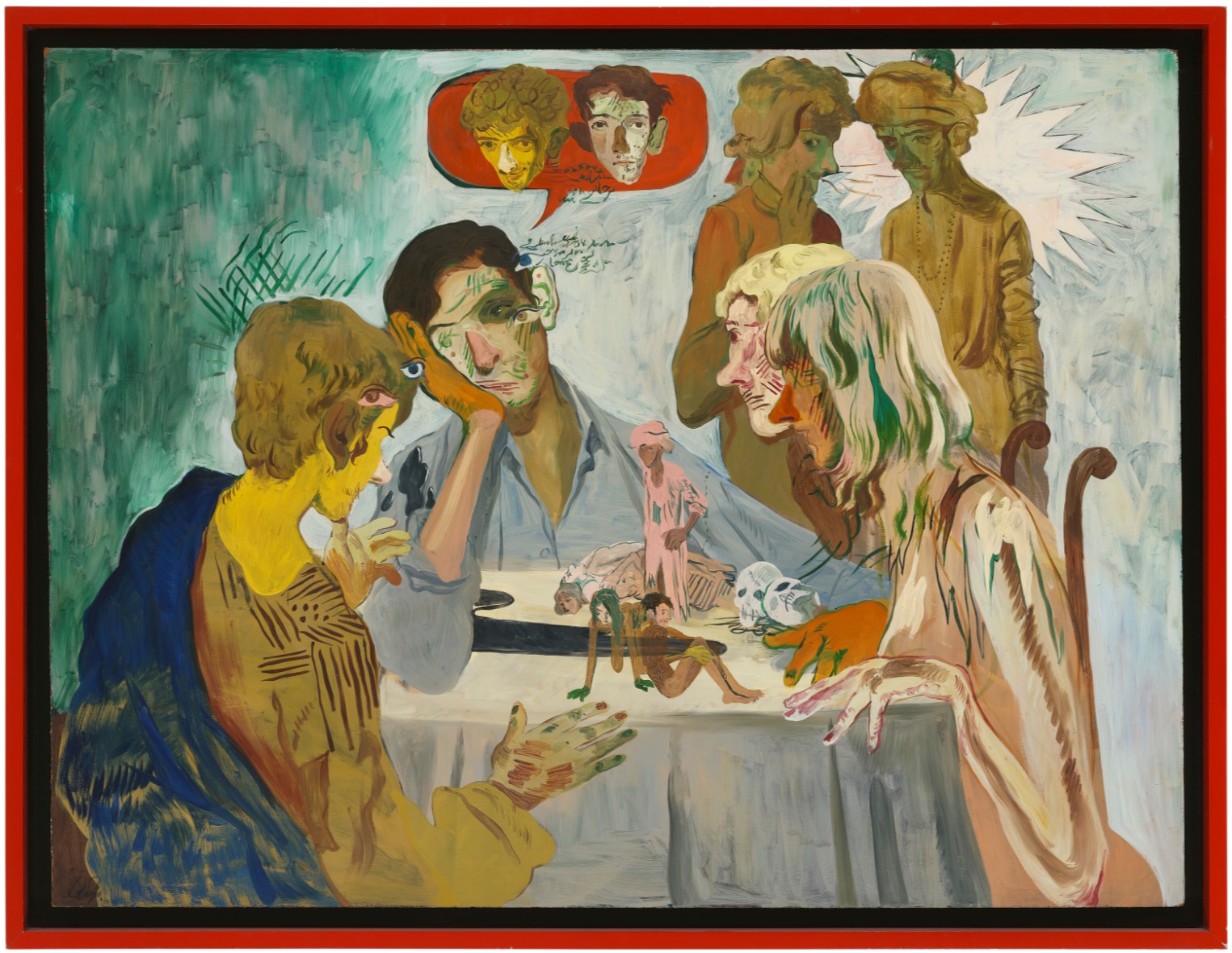
SALMAN TOOR (B. 1983)
Visitation, 2016
Oil on Masonite
91.4 x 121.9 cm (36×48 inches)
Signed and dated ‘Salman Toor ’16’ (lower left)
USD 100,000
#4. Poor Hobo Ghosts, 2016
Christie’s New-York: 20 November 2025
Estimated: USD 60,000 – 80,000
USD 82,550
SALMAN TOOR (B. 1983), Poor Hobo Ghosts | Christie’s
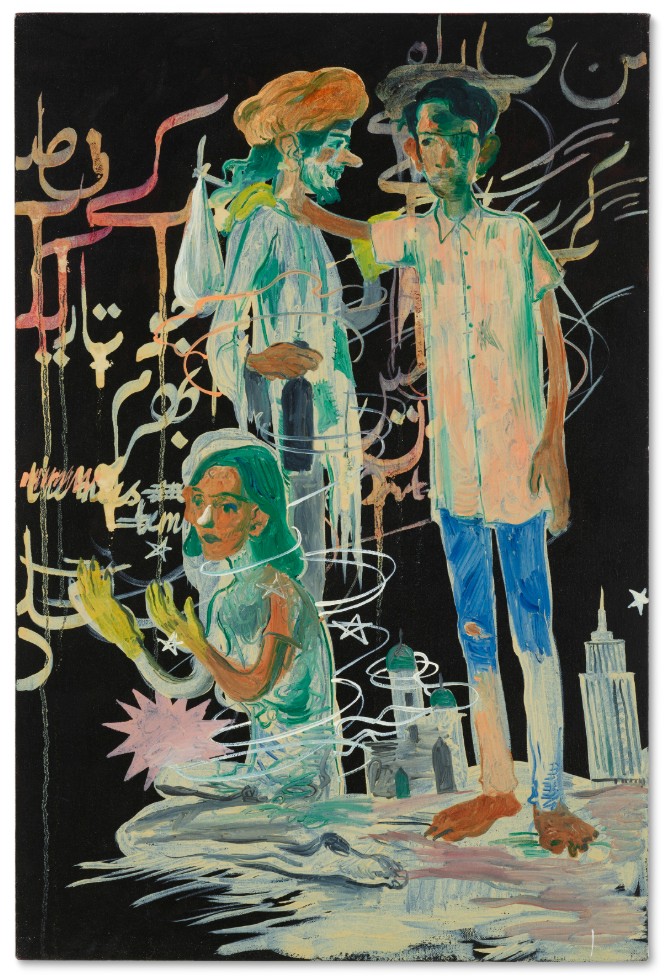
SALMAN TOOR (B. 1983)
Poor Hobo Ghosts, 2016
Oil on canvas
66 x 44.5 cm (26 x 17 1/2 inches)
Signed and dated ‘Salman Toor ’16’ (on the reverse)
Lots Passed
Untitled, 2010
Christie’s Hong-Kong: 29 March 2025
Estimated: HKD 800,000 – 1,500,000
PASSED
SALMAN TOOR (B. 1983), Untitled | Christie’s
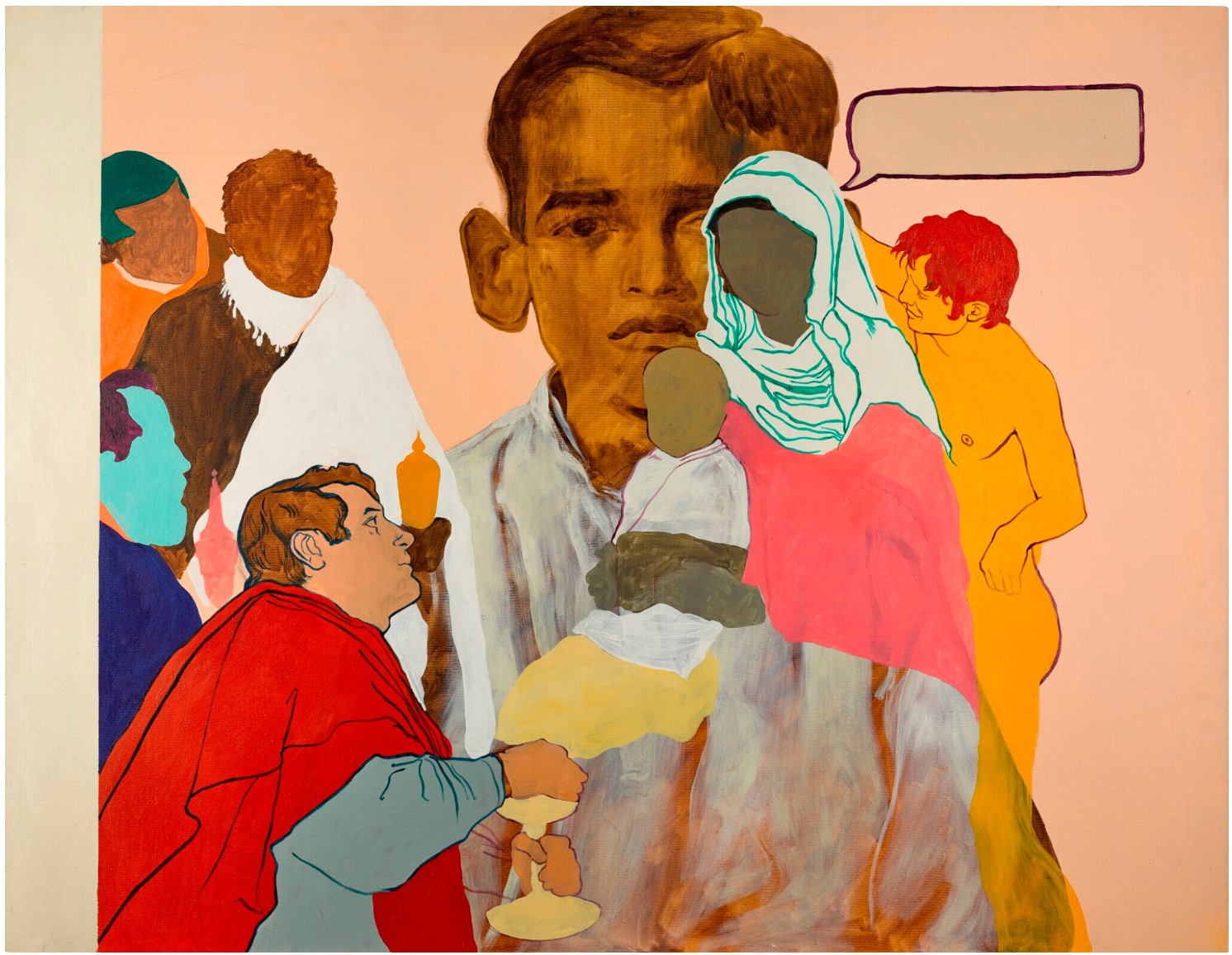
SALMAN TOOR (B. 1983)
Untitled, 2010
Oil on canvas
112 x 144.5 cm (44 x 57 7/8 inches)
2024 Auction Results
8 lots sold at auction in 2024 for a total turnover of USD 1,420,422. With 1 lot failing to sell, the sell-through rate is 89%. The highest price was achieved at Christie’s in New-York on 22 November 2024, when Garden Party, a painting dated 2018 sold for USD 642,200.
2024 Top 3 Lots
3 lots sold for more than USD 1 million, generating a cumulative turnover of USD 1,062,200, representing 74.8% of the total turnover for 2024.
#1. Garden Party, 2018
Christie’s New-York: 22 November 2024
Estimated: USD 150,000 – 200,000
USD 642,200
SALMAN TOOR (B. 1983), Garden Party | Christie’s
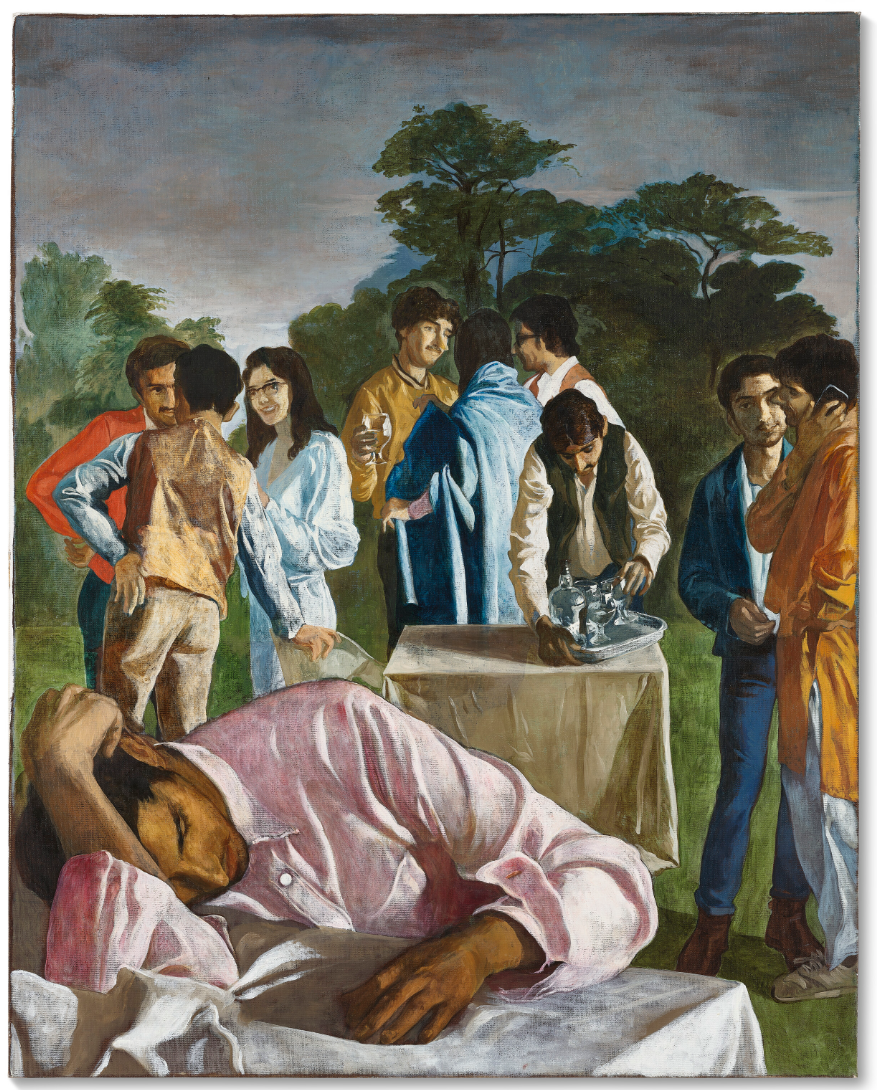
SALMAN TOOR (B. 1983)
Garden Party, 2018
Oil on canvas
99.7 x 79.4 cm (39 1/4 x 31 1/4 inches)
Signed, titled and dated ‘Garden Party Salman Toor 2018’ (on the reverse)
#2. Undressing Boy, 2024
Sotheby’s New-York: 27 September 2024
Estimated: USD 80,000 – 120,000
USD 240,000
Undressing Boy | Contemporary Curated | 2024 | Sotheby’s
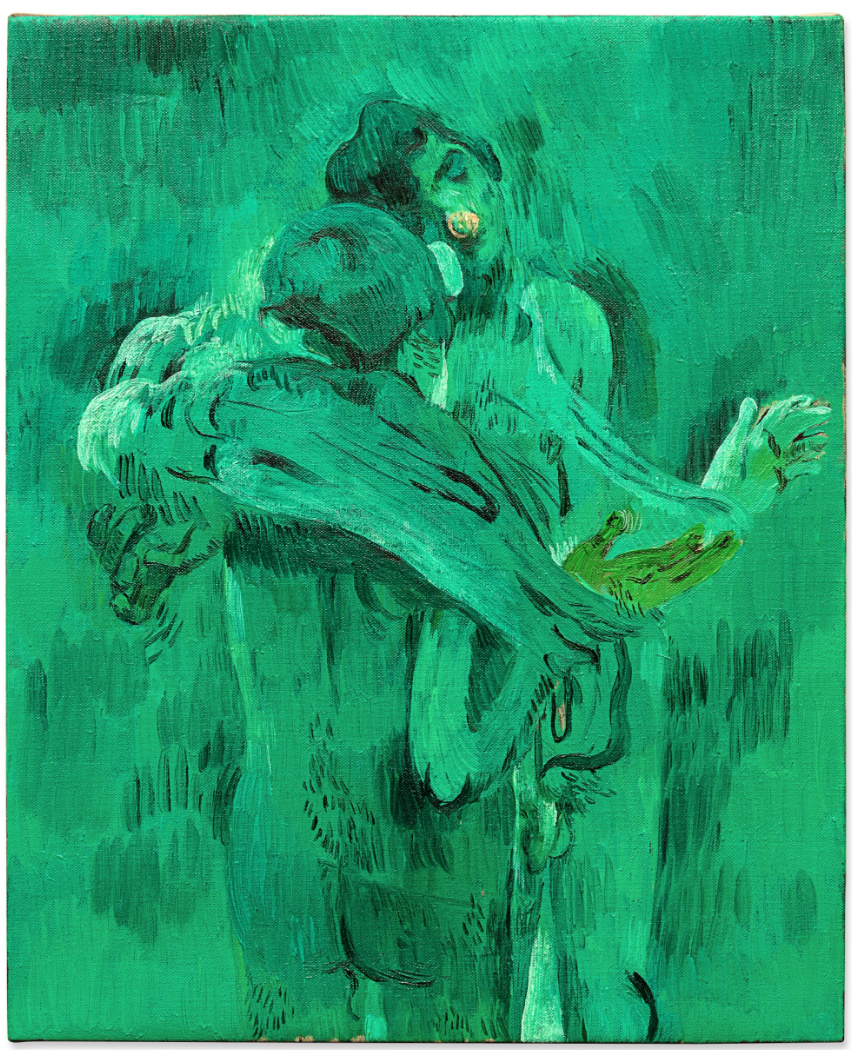
SALMAN TOOR (b. 1983)
Undressing Boy, 2024
Oil on linen
50.8 x 40.6 cm (20×16 inches)
Signed and dated ’24 (on the reverse)
#3. Three Men with Trays, 2018
Sotheby’s New-York: 21 November 2024
Estimated: USD 200,000 – 300,000
USD 180,000
Three Men with Trays | Contemporary Day Auction | 2024 | Sotheby’s
REPEAT SALE
Phillips London: 30 June 2022
Estimated: GBP 250,000 – 350,000
GBP 315,000 / USD 383,025
Salman Toor – 20th Century & Contempora… Lot 30 June 2022 | Phillips
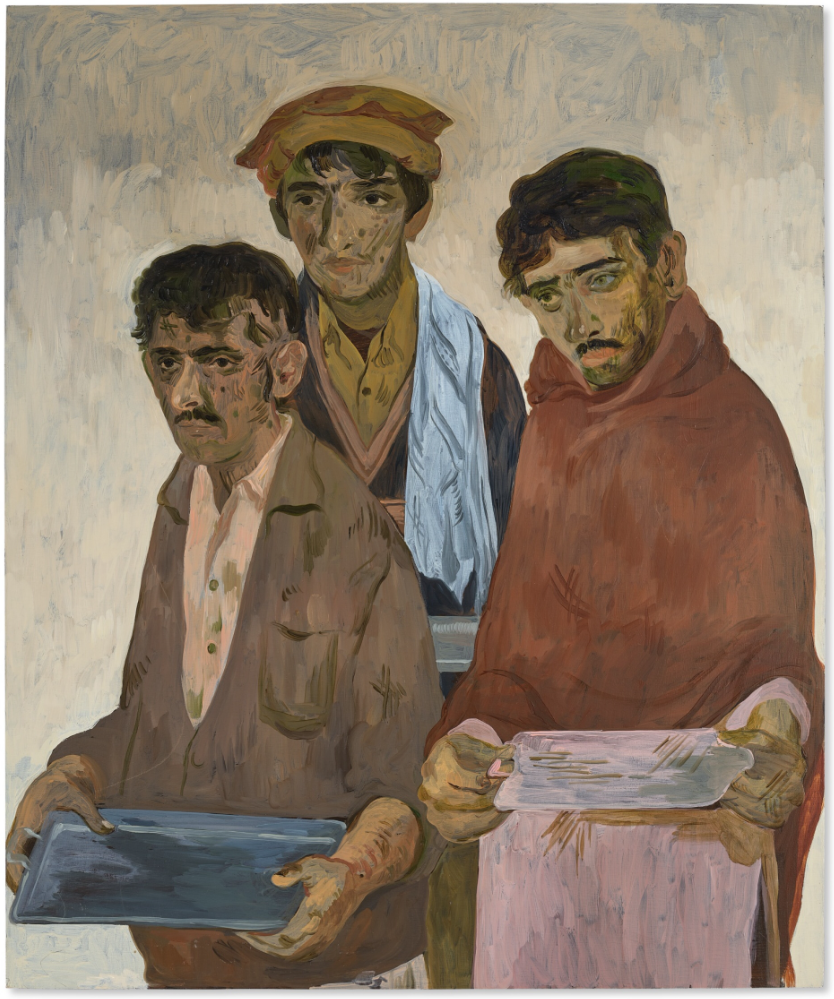
SALMAN TOOR (b. 1983)
Three Men with Trays, 2018
Oil on panel
60.6 x 50.5 cm (23 7/8 x 19 7/8 inches)
USD 100,000
#4. High Civilisation, 2011
Bonhams London: 24 March 2024
Estimated: GBP 60,000 – 80,000
GBP 76,600 / USD 98,000
Bonhams : SALMAN TOOR (B. 1983) High Civilisation 2011
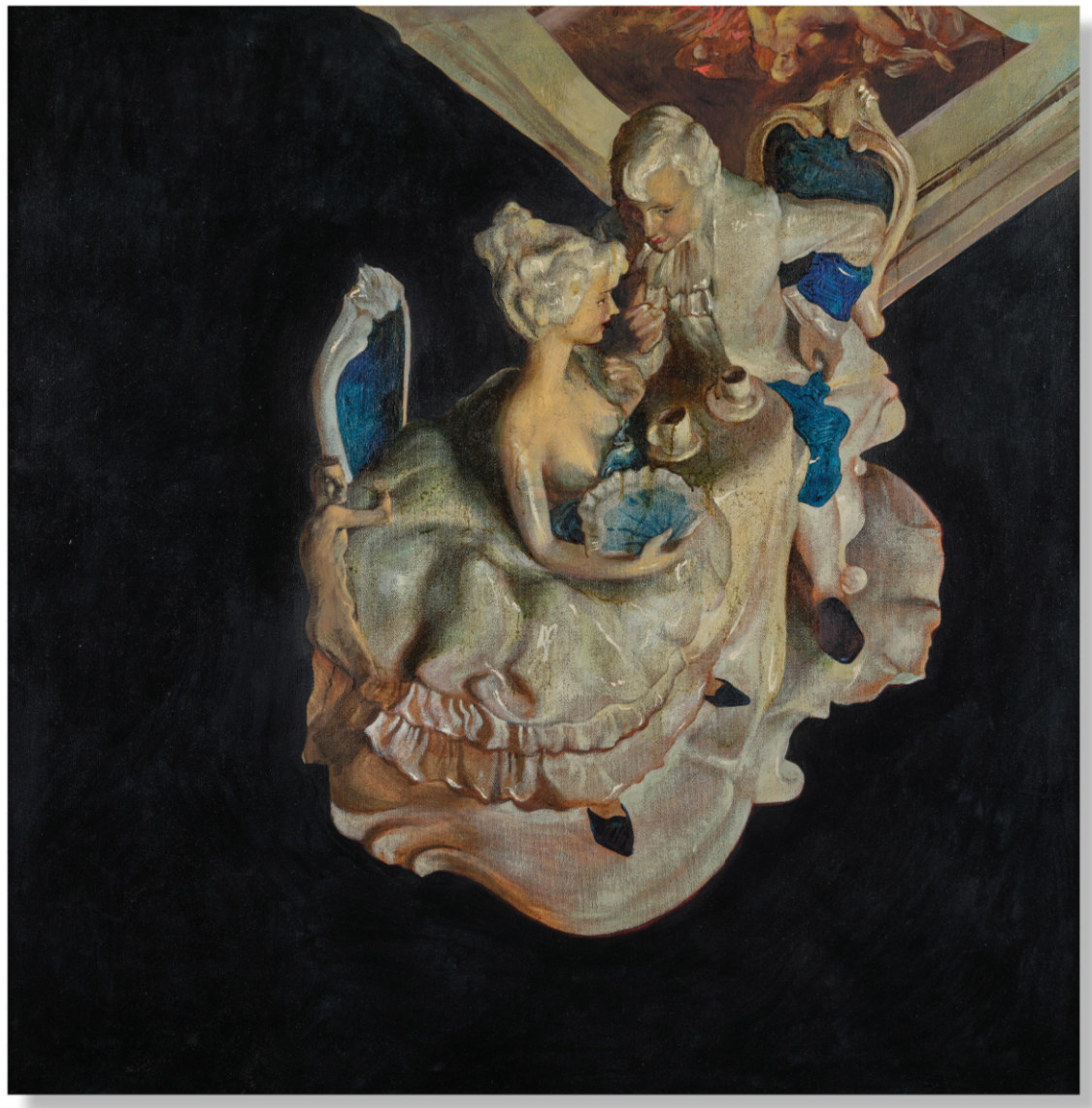
Oil on canvas
96.5 x 96.5 cm (38×38 inches)
Signed and dated ’11 on the reverse
#5. Untitled, 2010
Sotheby’s Hong-Kong: 5 April 2024
Estimated: HKD 600,000 – 800,000
HKD 762,000 / USD 97,418
Salman Toor 薩爾曼 · 圖爾 | Untitled 無題 | Contemporary Day Auction | 2024 | Sotheby’s (sothebys.com)
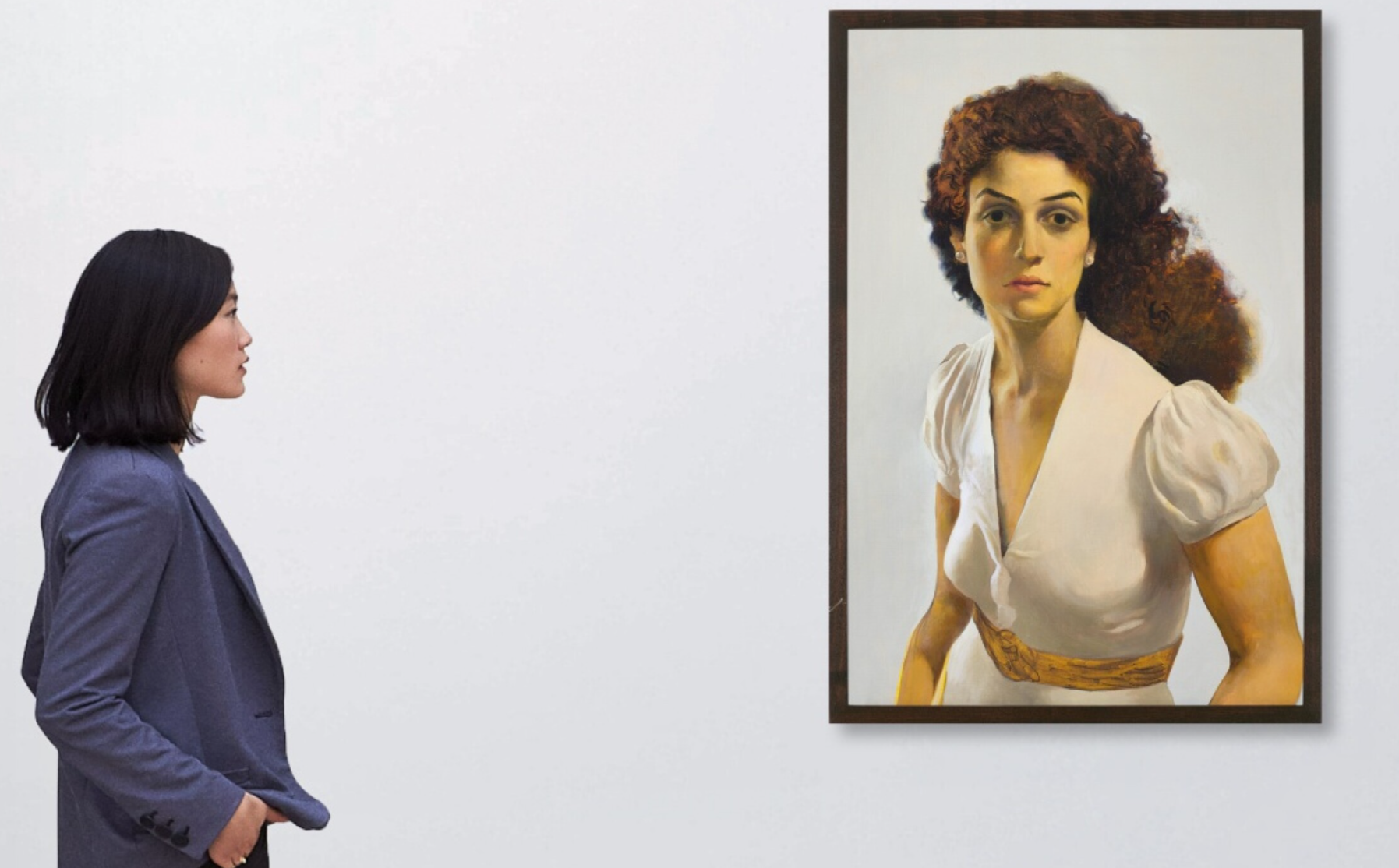
SALMAN TOOR (b. 1983)
Untitled, 2010
Oil on canvas
89 x 59.6 cm (35 x 23 1/2 inches)
Signed and dated 10 on the reverse
#6. Driver and Maid, 2013
Christie’s Hong-Kong: 29 May 2024
Estimated: HKD 480,000 – 680,000
HKD 504,000 / USD 64,524
SALMAN TOOR (B. 1983), Driver and Maid | Christie’s (christies.com)
REPEAT SALE
Christie’s New-York: 29 September 2022
Estimated: USD 60,000 – 80,000
USD 94,500
SALMAN TOOR (B. 1983), Driver and Maid | Christie’s (christies.com)
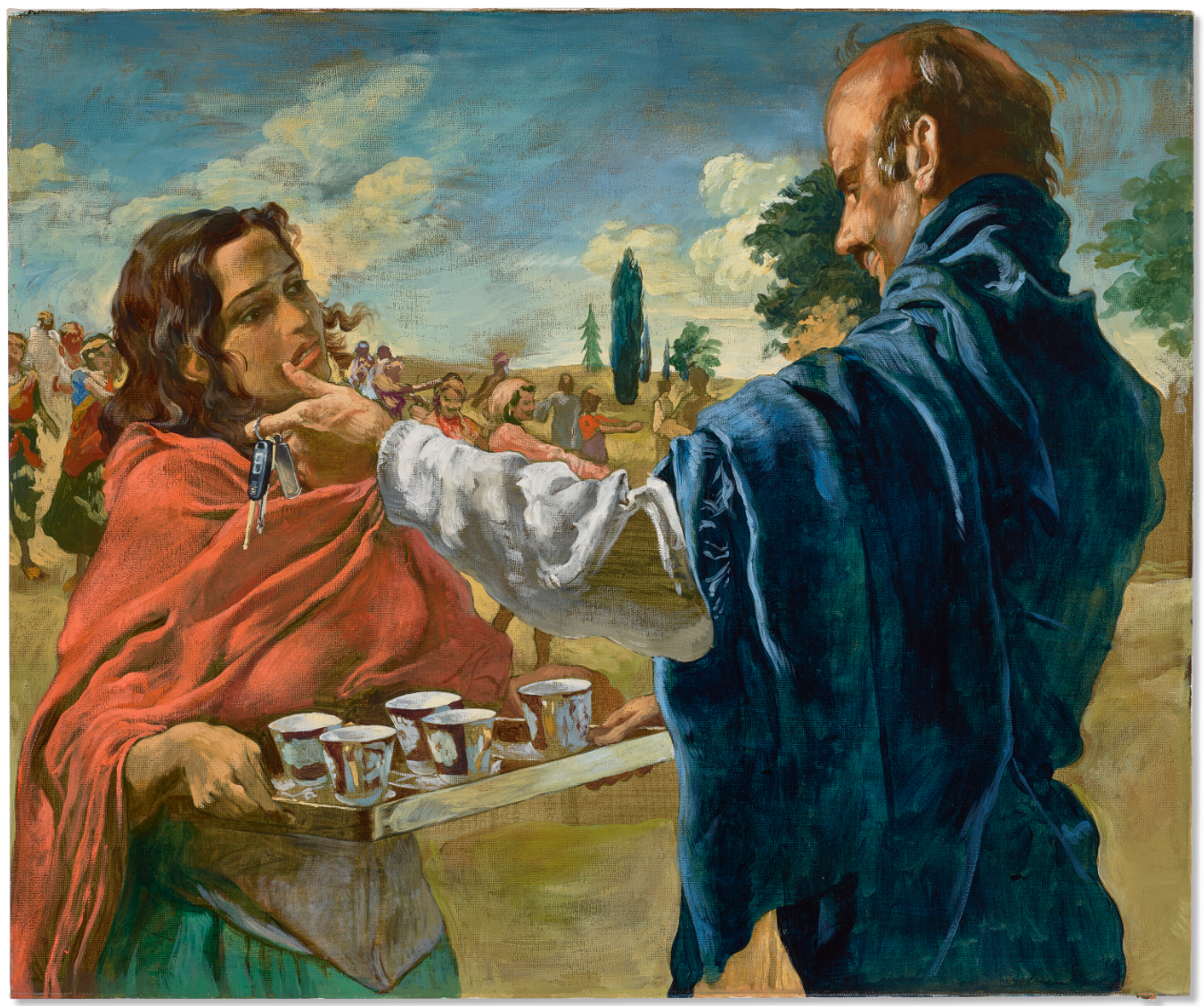
SALMAN TOOR (B. 1983)
Driver and Maid, 2013
Oil on canvas
60.3 x 72.4 cm. (23 3/4 x 28 1/2 in.)
signed and dated ‘Salman Toor ’13’ (on the reverse)
#7. Untitled (Woman), 2009
Christie’s New-York: 20 March 2024
Estimated: USD 30,000 – 50,000
USD 50,400
SALMAN TOOR (B. 1983), Untitled (Woman) | Christie’s (christies.com)
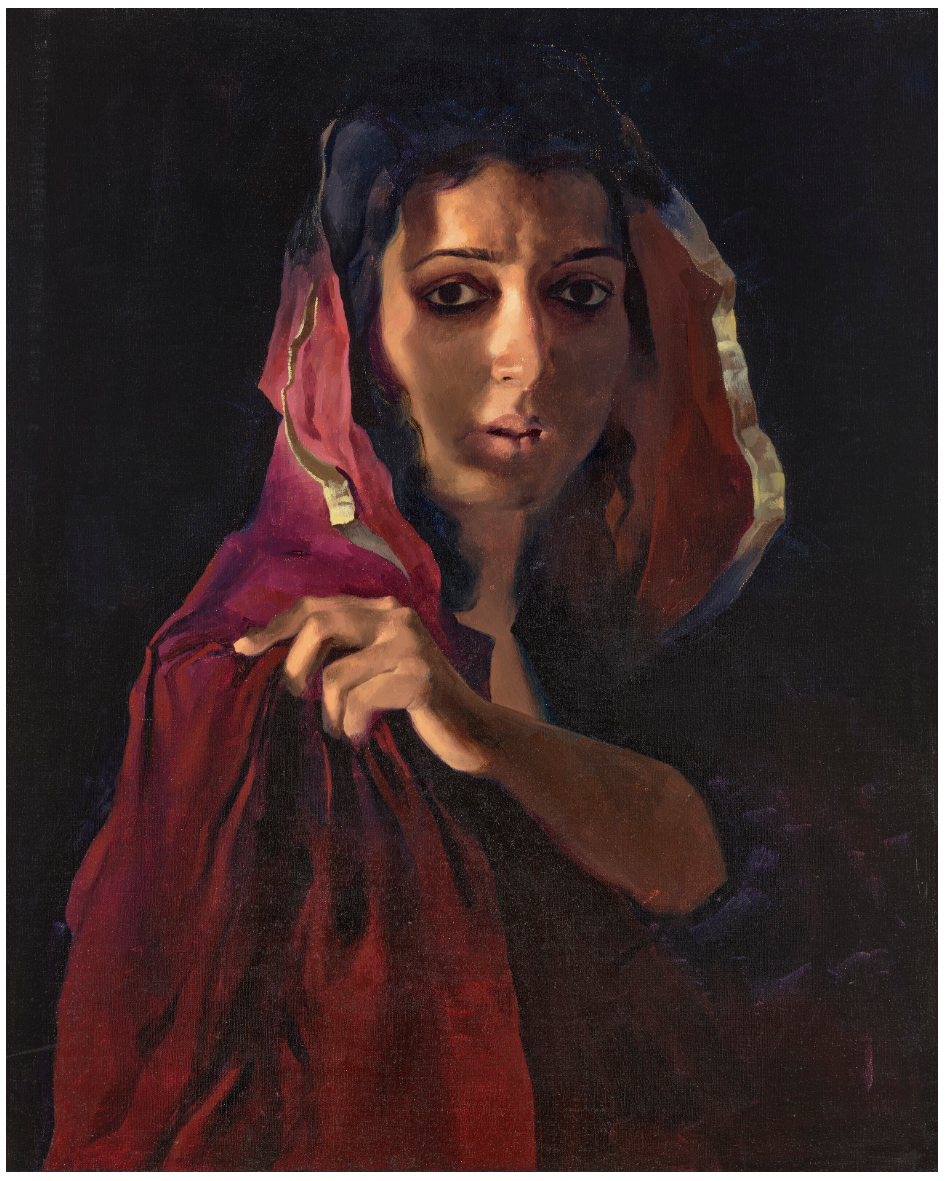
SALMAN TOOR (B. 1983)
Untitled (Woman), 2009
Oil on canvas
76.2 x 61 cm (30×24 inches)
Signed and dated ‘Salman Toor ’09’ (on stretcher bar on the reverse)
#8. Untitled (Self Portrait), 2004
Christie’s New-York: 20 March 2024
Estimated: USD 30,000 – 50,000
USD 47,880
SALMAN TOOR (B. 1983), Untitled (Self Portrait) | Christie’s (christies.com)
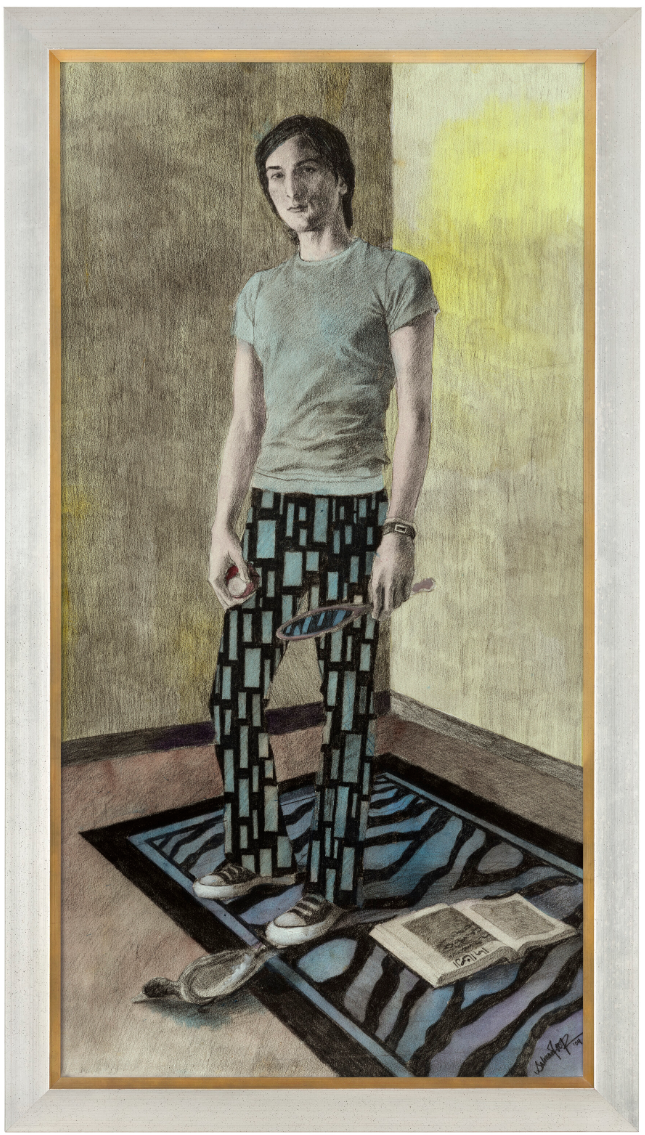
SALMAN TOOR (B. 1983)
Untitled (Self Portrait), 2004
Colored chalk and watercolor on paper laid on board
100.3 x 51.8 cm (39 1/2 x 20 3/8 inches)
Signed and dated ‘Salman Toor ’04’ (lower right)
2023 Auction Results
14 lots sold at auction in 2023 for a total turnover of USD 3,436,103.
The sell-through rate is 100%. The highest price has been achieved by the Palm Reader (2018) sold at Sotheby’s in New-York on 9 March 2023 for USD 558,800. This is the only lot that sold above USD 500,000. 12 lots sold above USD 100,000 for a cumulative turnover of USD 3,324,943, representing 96.8 of the total turnover for 2023.
2023 Top 3 Lots
#1. The Palm Reader, 2018
Sotheby’s New-York: 9 March 2023
Estimated: USD 200,000 – 300,000
USD 558,800
The Palm Reader | Contemporary Curated | 2023 | Sotheby’s (sothebys.com)
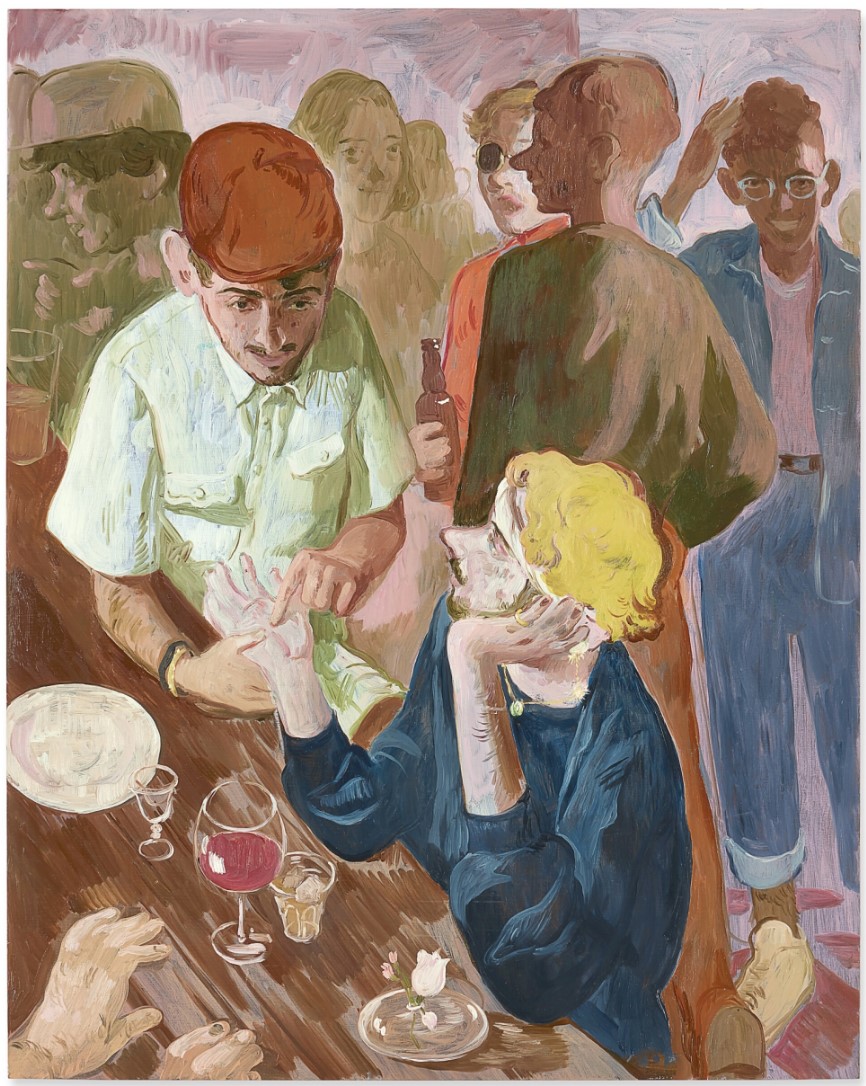
SALMAN TOOR (b. 1983)
The Palm Reader, 2018
Oil on panel
20×16 inches (50.8 x 40.6 cm)
#2. Takeout, 2020
Christie’s London: 29 June 2023
Estimated: GBP 200,000 – 300,000
GBP 352,800 / USD 446,009
SALMAN TOOR (b. 1983) (christies.com)

SALMAN TOOR (b. 1983)
Takeout, 2020
Oil on canvas
25×25 inches (63.5 x 63.5 cm)
Signed, titled and dated ‘Salman Toor ’20 TAKEOUT’ (on the overlap)
#3. Untitled, 2006
Sotheby’s New-York: 9 March 2023
Estimated: USD 100,000 – 150,000
USD 381,000
Untitled | Contemporary Curated | 2023 | Sotheby’s (sothebys.com)
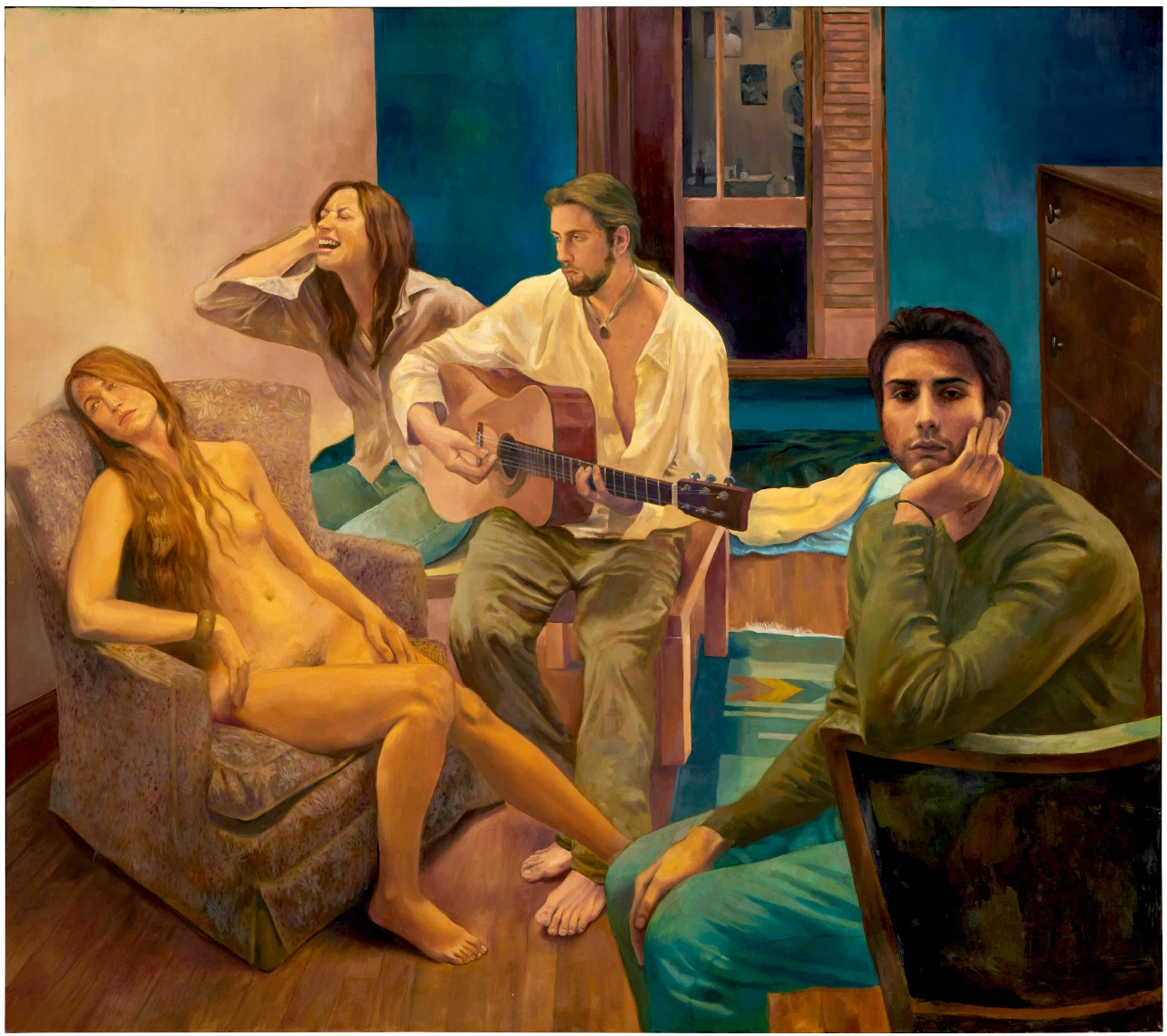
SALMAN TOOR (b. 1983)
Untitled, 2006
Oil on canvas
55 1/2 x 62 3/8 inches (141 x 158.4 cm)
Signed Toor (on the reverse); signed Toor (on the stretcher)
#4. Male Audience, 2018
Sotheby’s New-York: 19 May 2023
Estimated: USD 200,000 – 300,000
USD 279,400
Male Audience | Contemporary Day Auction | 2023 | Sotheby’s (sothebys.com)
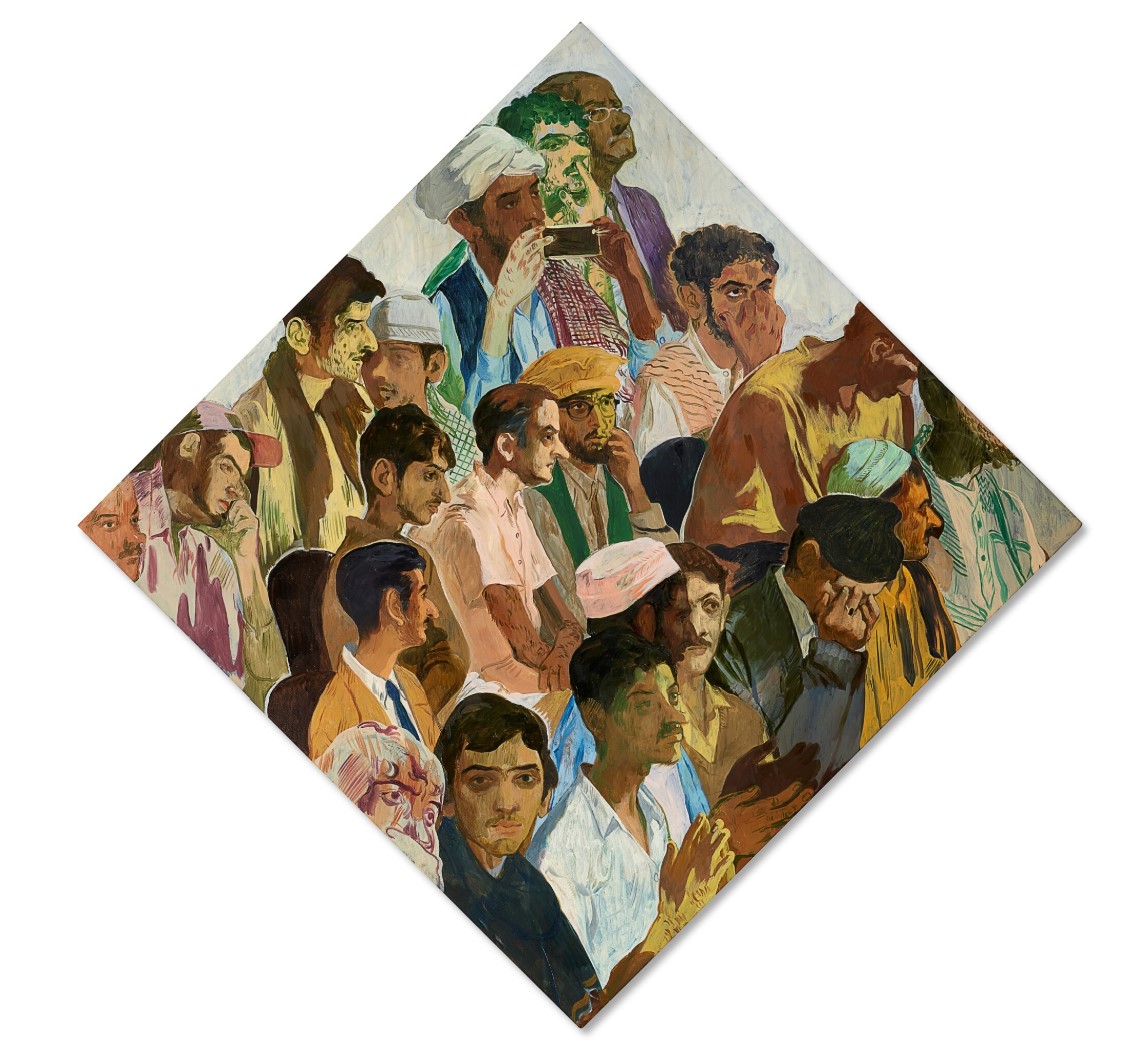
SALMAN TOOR (b. 1983)
Male Audience, 2018
Oil on panel
107.3 x 107.3 cm (42 1/4 x 42 1/4 inches)
#5. Pre-Drinks, 2018
Bonhams London: 12 October 2023
Estimated: GBP 150,000 – 200,000
GBP 216,300 / USD 266,379
Bonhams : SALMAN TOOR (B. 1983) Pre-Drinks 2018
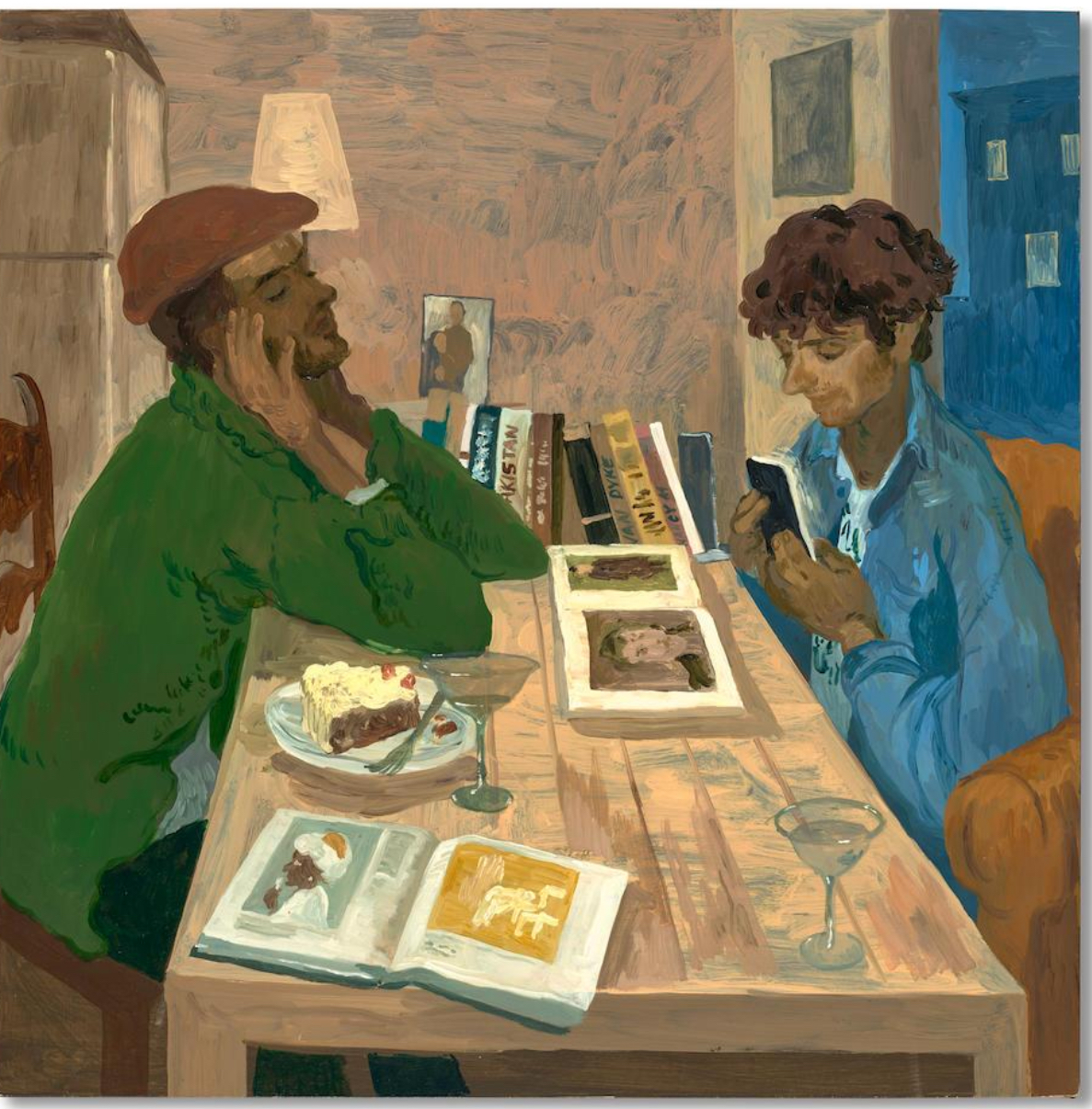
oil on panel
18×18 inches (45.7 x 45.7 cm)
#6. The Happy Servant, 2013
Christie’s New-York: 12 May 2023
Estimated: USD 120,000 – 180,000
USD 252,000
SALMAN TOOR (B. 1983) (christies.com)
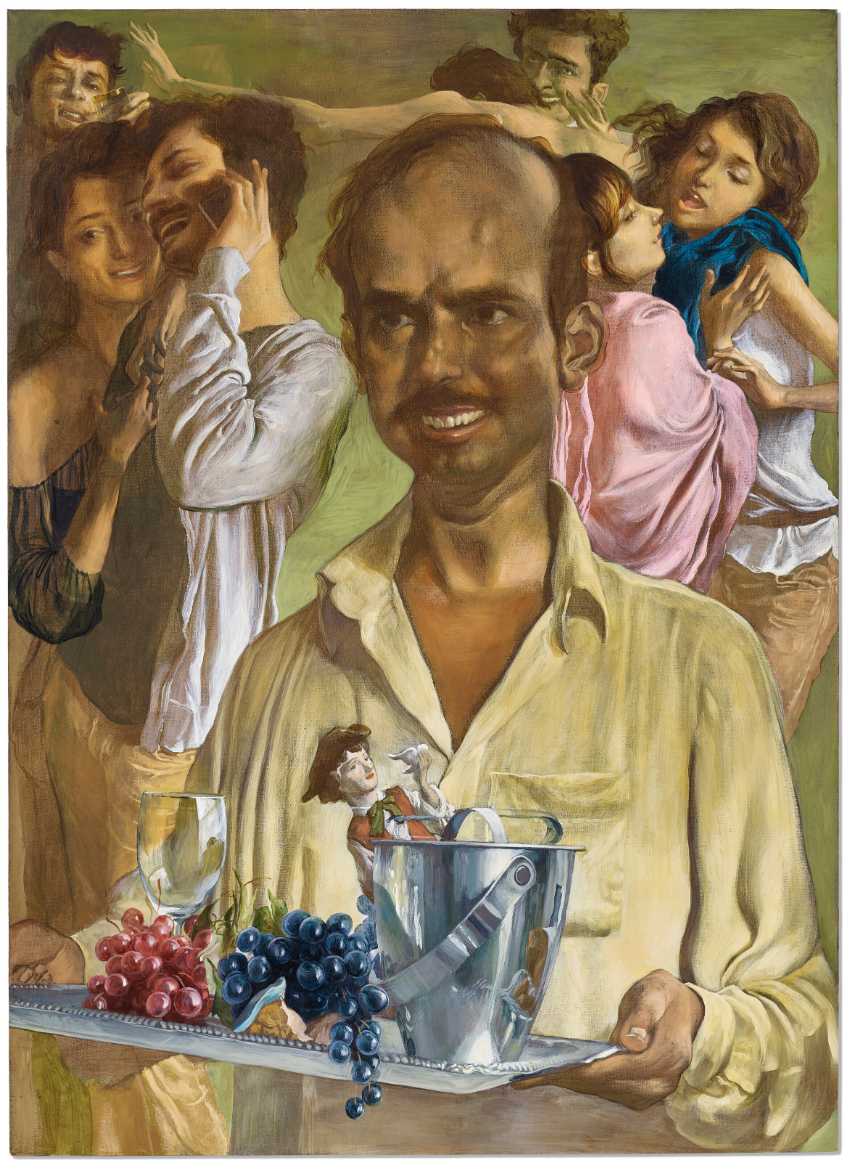
SALMAN TOOR (B. 1983)
The Happy Servant, 2013
Oil on canvas
45×33 inches (114.3 x 83.8 cm)
#7. Untitled, 2018
Christie’s New-York: 10 March 2023
Estimated: USD 200,000 – 300,000
USD 226,800
SALMAN TOOR (B. 1983) (christies.com)
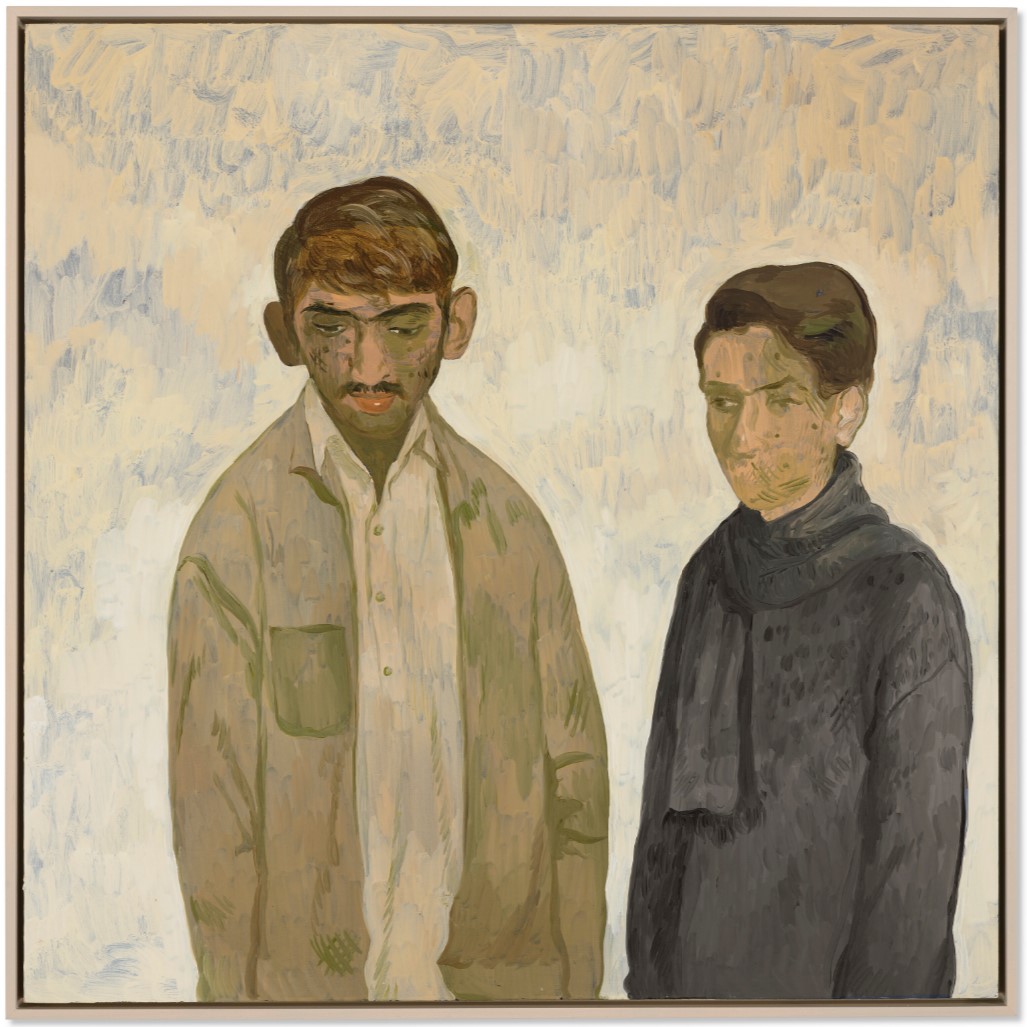
SALMAN TOOR (B. 1983)
Untitled, 2018
Oil on panel
23 3/4 x 23 7/8 inches (60.3 x 60.6 cm)
Signed and dated ‘Salman Toor ’18’ (on the reverse)
#8. Boy With Neck Chain and Plant, 2021
Sotheby’s New-York: 9 March 2023
Home Coming: Queer Artists Support the Ali Forney Center
Estimated: USD 80,000 – 120,000
USD 222,250
Boy With Neck Chain and Plant | Contemporary Curated | 2023 | Sotheby’s (sothebys.com)
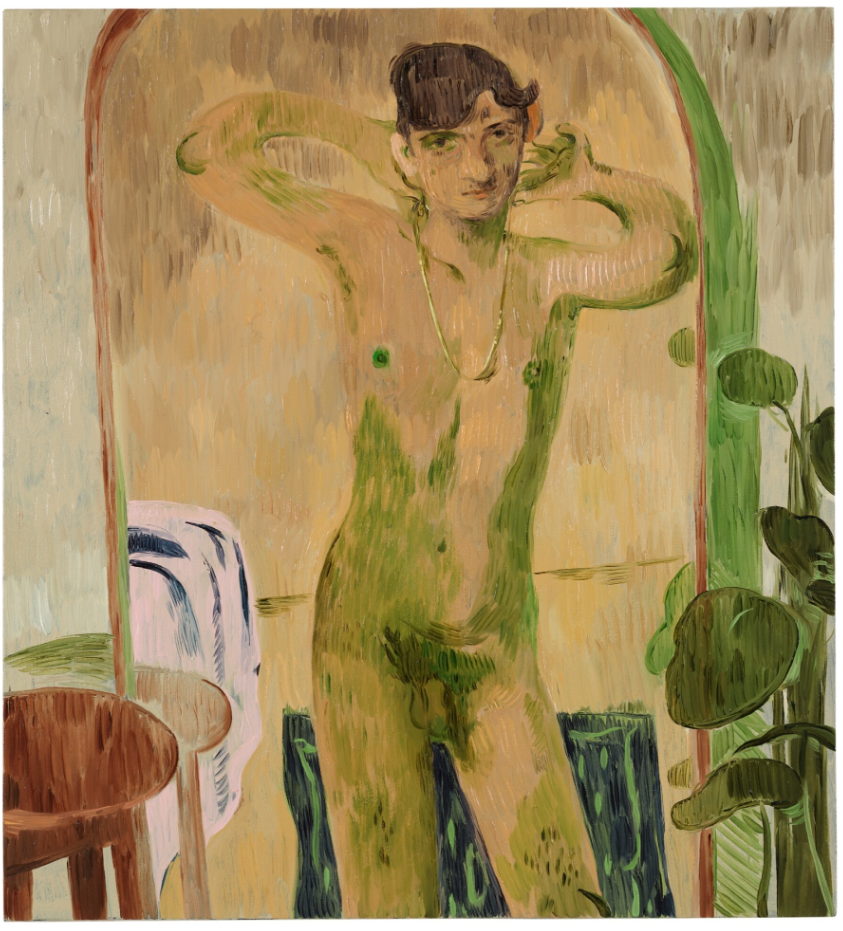
SALMAN TOOR (b. 1983)
Boy With Neck Chain and Plant, 2021
Oil on canvas
74.9 x 68.6 cm (29 1/2 x 27 inches)
Signed Salman Toor and dated ’21 (on the reverse)
#9. Barbie Bakri, 2011
Christie’s Hong-Kong: 29 November 2023
Estimated: HKD 400,000 – 800,000
HKD 1,512,000 / USD 193,975
SALMAN TOOR (B. 1983) (christies.com)
REPEAT SALE
Christie’s New-York: 14 May 2021
Estimated: USD 60,000 – 80,000
USD 375,000
SALMAN TOOR (B. 1983), Barbie Bakri | Christie’s
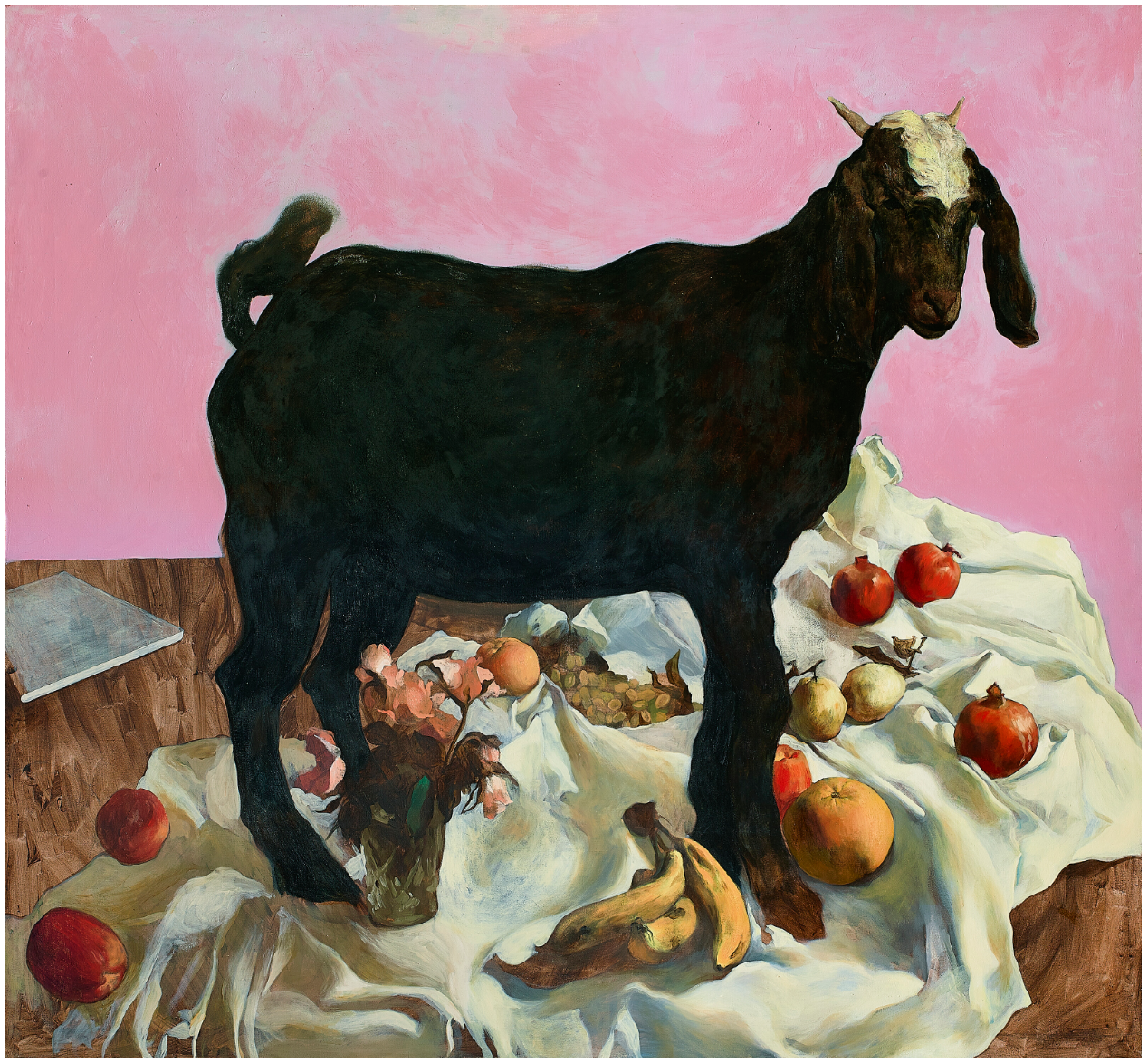
SALMAN TOOR (B. 1983)
Barbie Bakri, 2011
Oil on canvas
116.8 x 127 cm (46×50 inches)
Signed and dated ‘Salman Toor ’11’ (on the reverse)
#10. Waaldain, 2018
Christie’s London: 14 October 2023
Estimated: GBP 120,000 – 180,000
GBP 151,200 / USD 183,330
SALMAN TOOR (B. 1983) (christies.com)
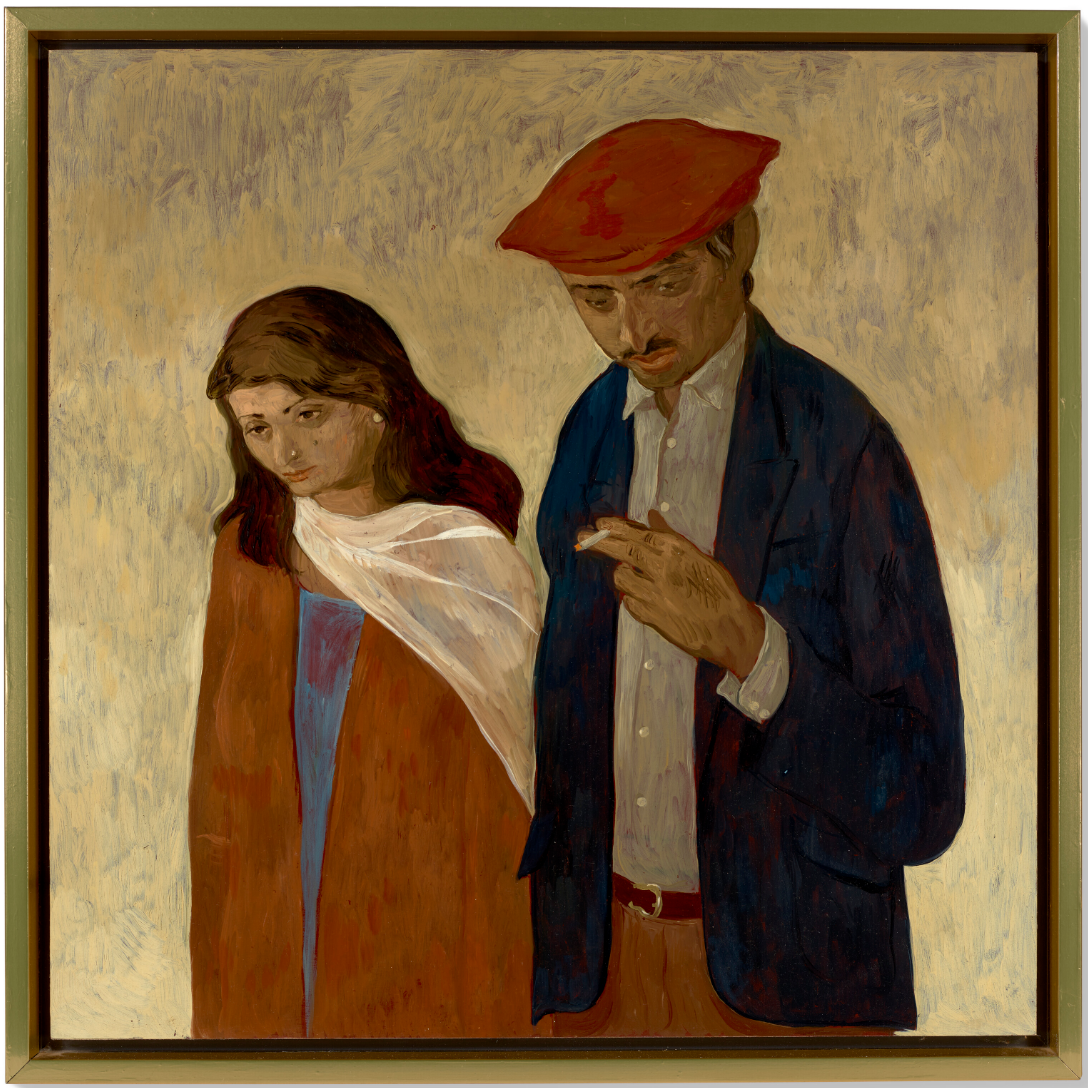
SALMAN TOOR (B. 1983)
Waaldain, 2018
Oil on panel
60.2 x 60.2 cm (24×24 inches)
Signed and dated ‘Salman Toor ’18’ (on the reverse)
#11. Three Men with Trays, 2018
Hindman Chicago: 14 December 2023
Estimated: USD 250,000 – 350,000
USD 163,800
Three Men with Trays, 2018 (hindmanauctions.com)
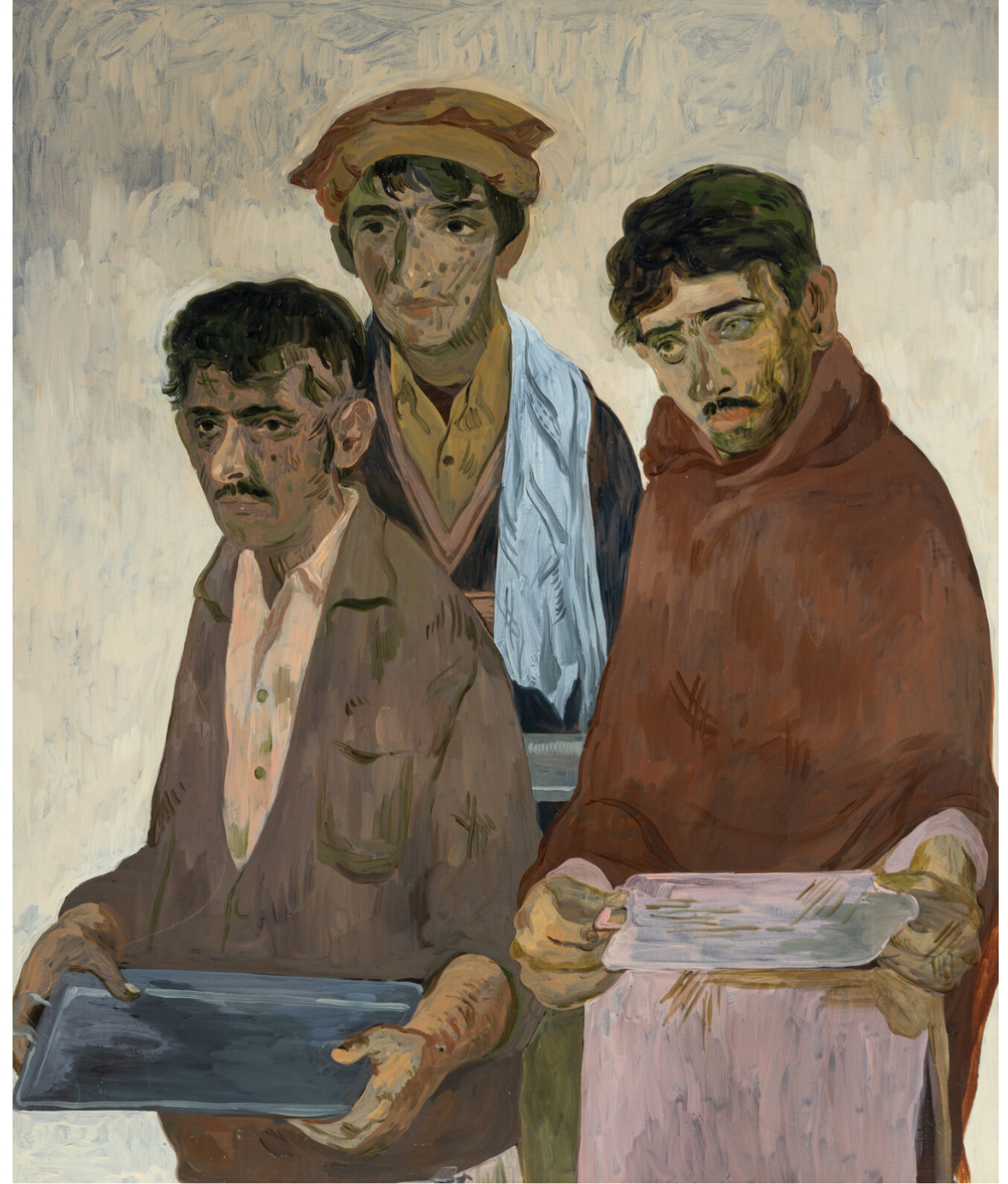
SALMAN TOOR (Pakistani, b. 1983)
Three Men with Trays, 2018
Oil on panel
23 7/8 x 19 7/8 inches
#12. Liberty Porcelain, 2012
Christie’s New-York: 10 November 2023
Estimated: USD 120,000 – 180,000
USD 151,200
SALMAN TOOR (B. 1983) (christies.com)
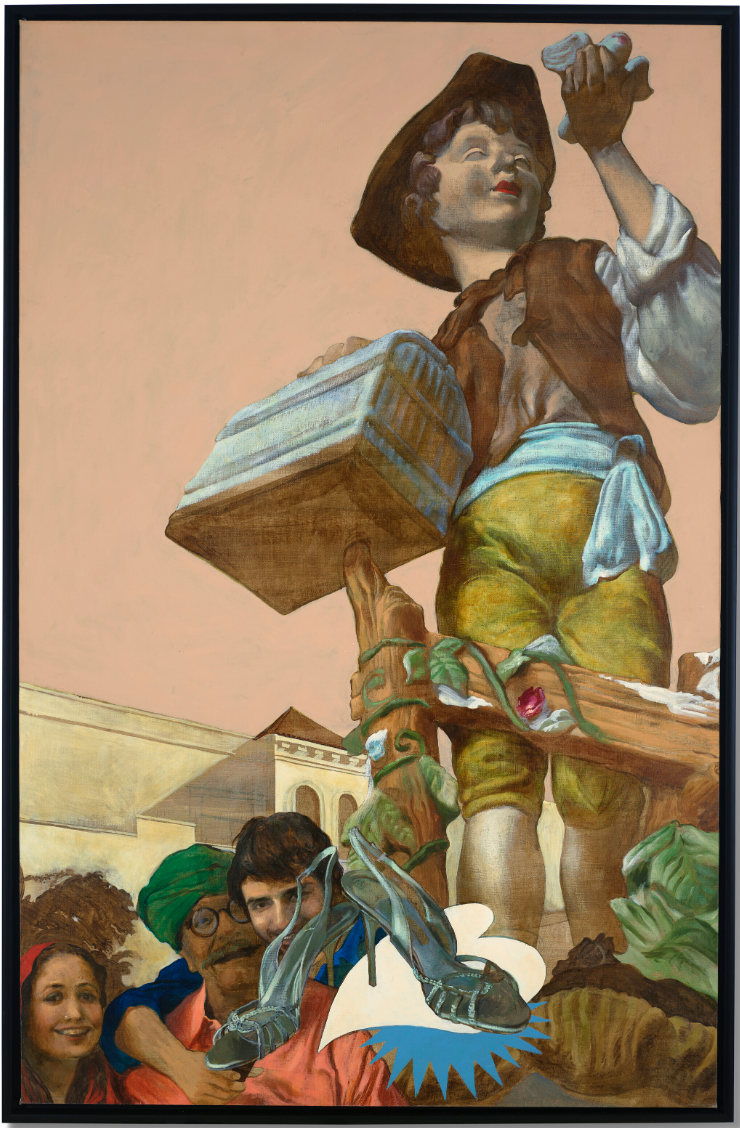
SALMAN TOOR (B. 1983)
Liberty Porcelain, 2012
Oil and graphite on canvas
56 1/4 x 36 3/8 inches (142.9 x 92.4 cm)
Signed and dated ‘Salman Toor ’12’ (on the reverse)
#13. Untitled, 2009
Christie’s New-York: 29 September 2023
Estimated: USD 50,000 – 70,000
USD 75,600
SALMAN TOOR (B. 1983), Untitled | Christie’s (christies.com)
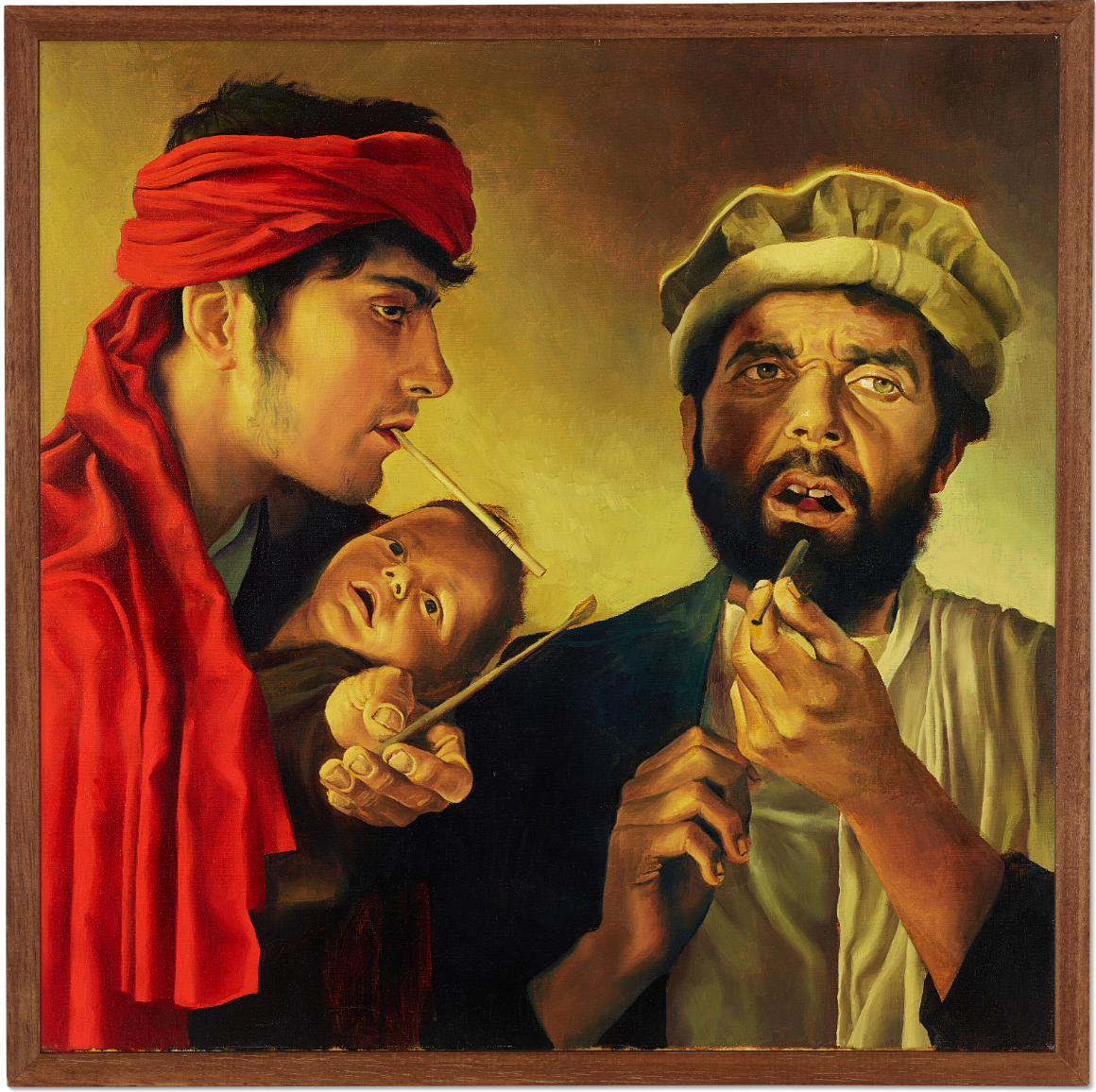
SALMAN TOOR (B. 1983)
Untitled, 2009
Oil on canvas
61×61 cm (24×24 inches)
Signed in Urdu and dated ”09′ (on the reverse)
#14. James, 2006
Sotheby’s New-York: 15 March 2023
Estimated: USD 40,000 – 60,000
USD 35,560
James | Contemporary Discoveries | 2023 | Sotheby’s (sothebys.com)
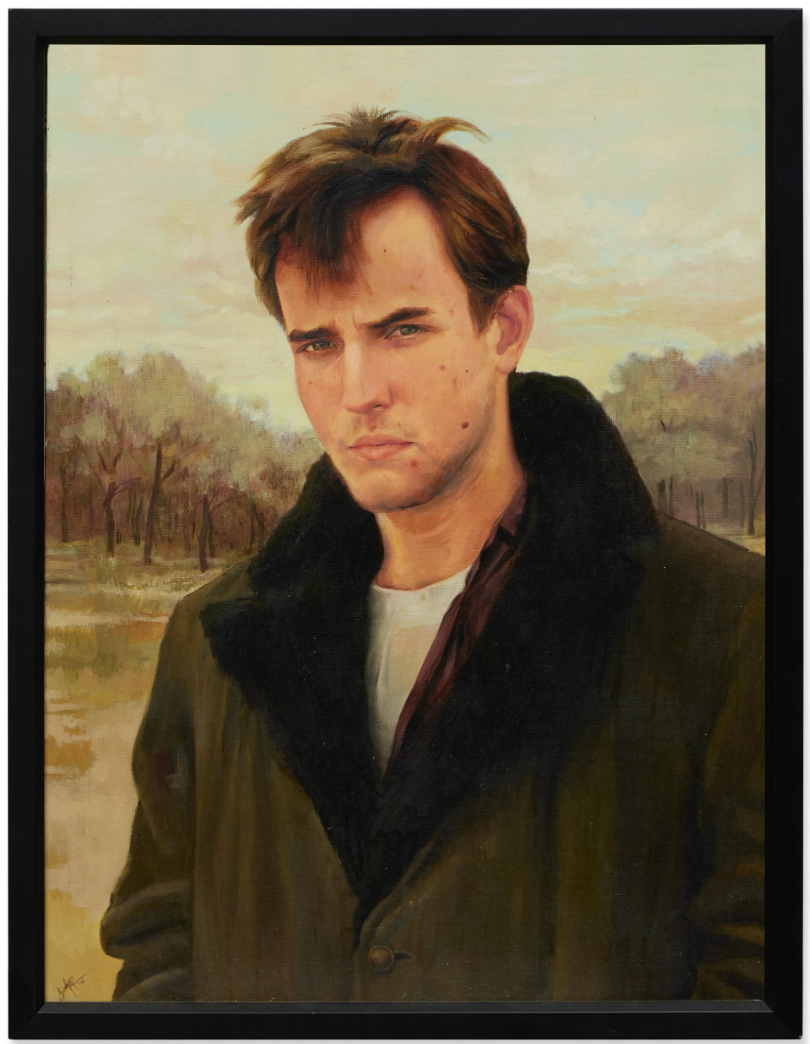
SALMAN TOOR (b. 1983)
James, 2006
Oil on canvas
60.6 x 45.4 cm (24×18 inches)
Signed Salman Toor and dated 2006 (lower left)
2022 Auction Results
25 lots sold at auction in 2022 for a total turnover of USD 9,642,775.
Sell-Through rate is 100%. The highest price of USD 1,562,500 was achieved at Sotheby’s in New-York on 16 November 2022 for Four Friends, a painting dated 2019. 8 lots sold for more than USD 500,000, generating a cumulative turnover of USD 6,474,061, representing 67.1% of the total turnover for 2022.
2022 Top 3 Lots
#1. Four Friends, 2019
Sotheby’s New-York: 16 November 2022
Estimated: USD 300,000 – 400,000
USD 1,562,500
Four Friends | The Now Evening Auction | 2022 | Sotheby’s (sothebys.com)
SALMAN TOOR (B. 1983)
Four Friends, 2019
Oil on panel
40×40 inches (101.6 x 101.6 cm)
Signed Salman Toor and dated ’19 (on the reverse)
USD 1 million
#2. Girl and Boy with Driver, 2013
Estimated: USD 150,000 – 200,000
USD 882,000
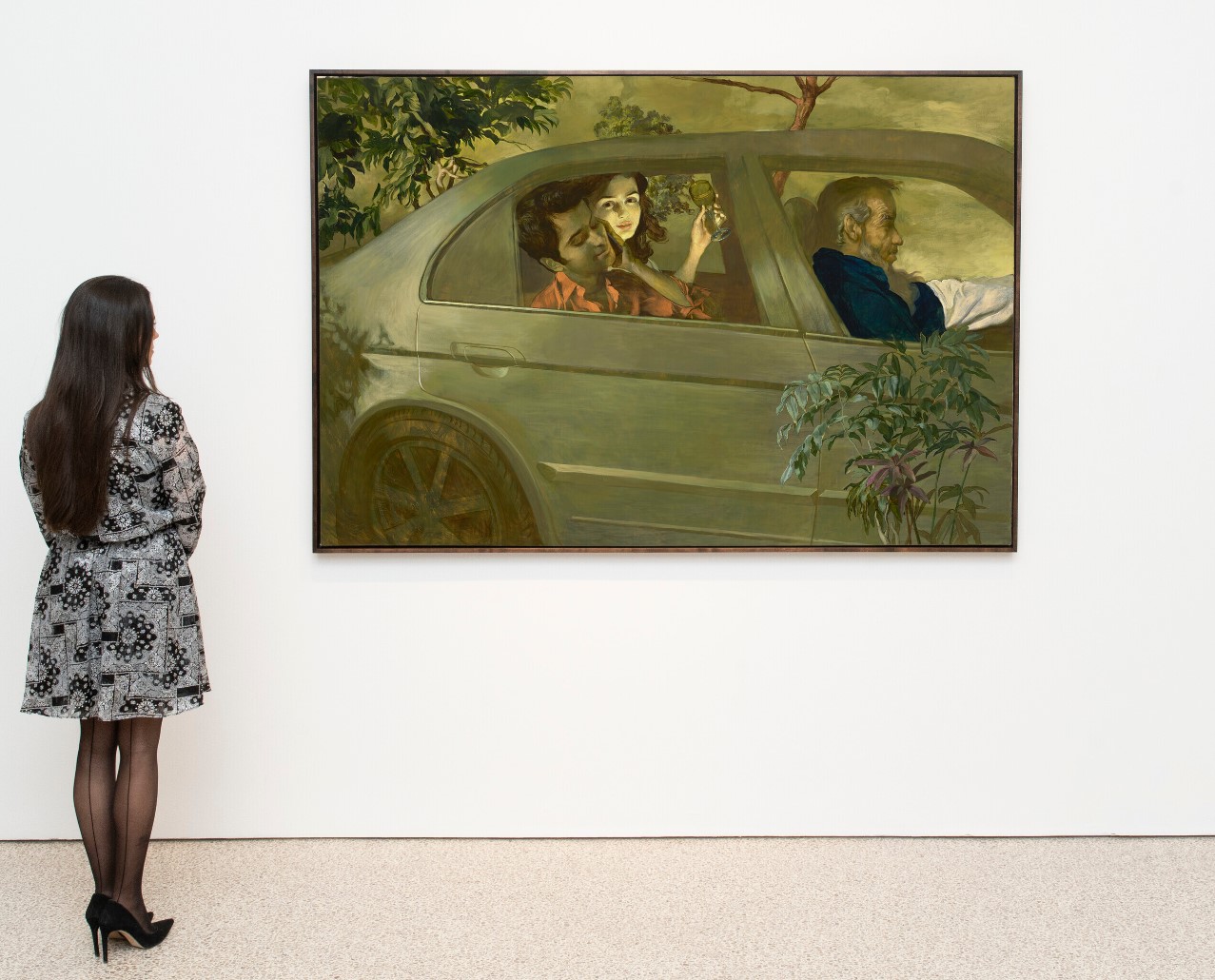
Girl and Boy with Driver, 2013
Oil on canvas
134.3 x 199 cm (52 7⁄8 x 78 3⁄8 inches)
#3. 4 Guests, 2019
Christie’s New-York: 16 November 2022
Estimated: USD 120,000 – 180,000
USD 856,800
SALMAN TOOR (B. 1983) (christies.com)
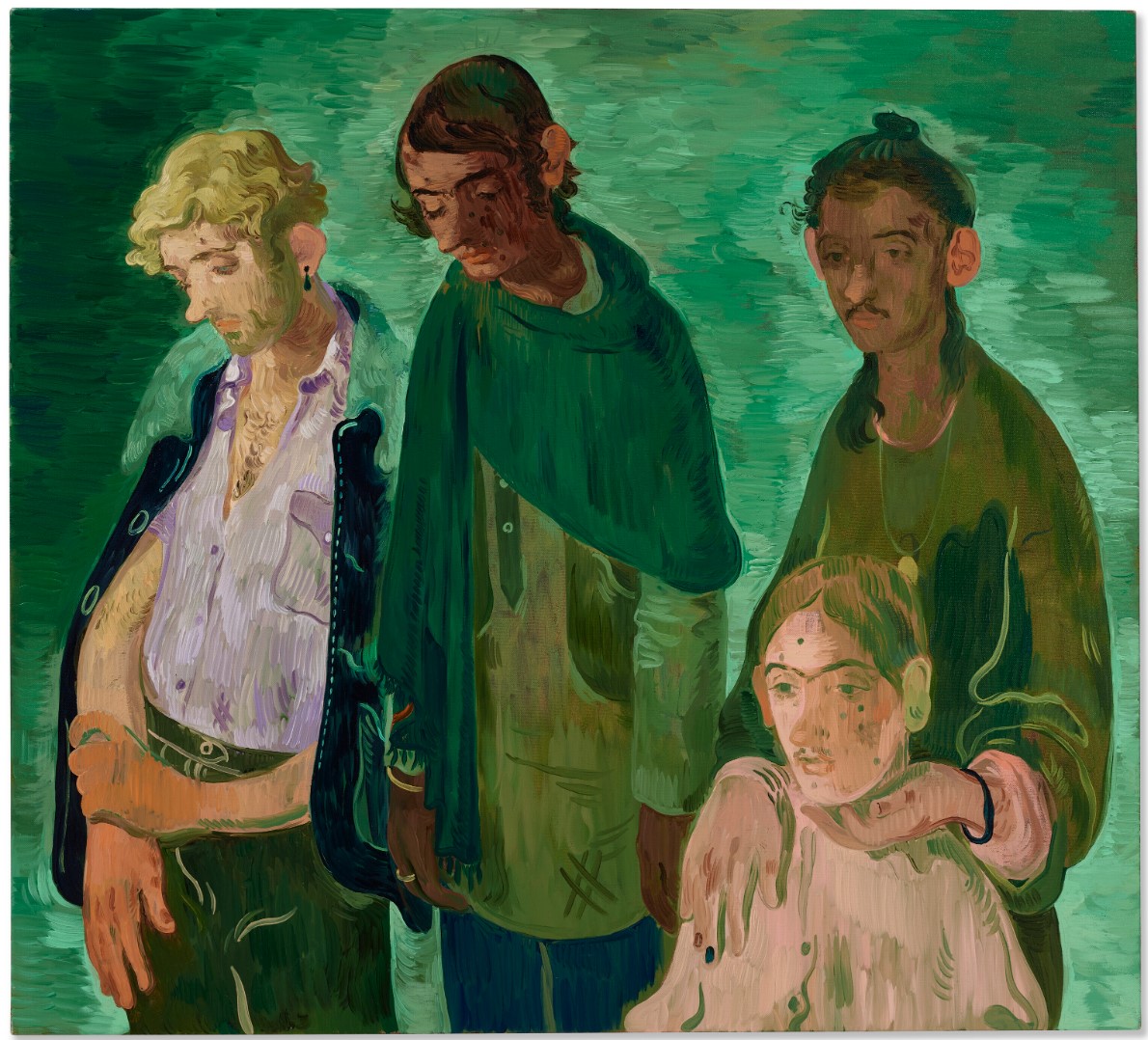
4 Guests, 2019
Oil on canvas
39 1/8 x 43 1/8 inches (99.4 x 109.5 cm)
Signed and dated ‘Salman Toor 2019’ (on the overlap)
#4. Untitled, 2014
Estimated: USD 180,000 – 250,000
USD 819,000
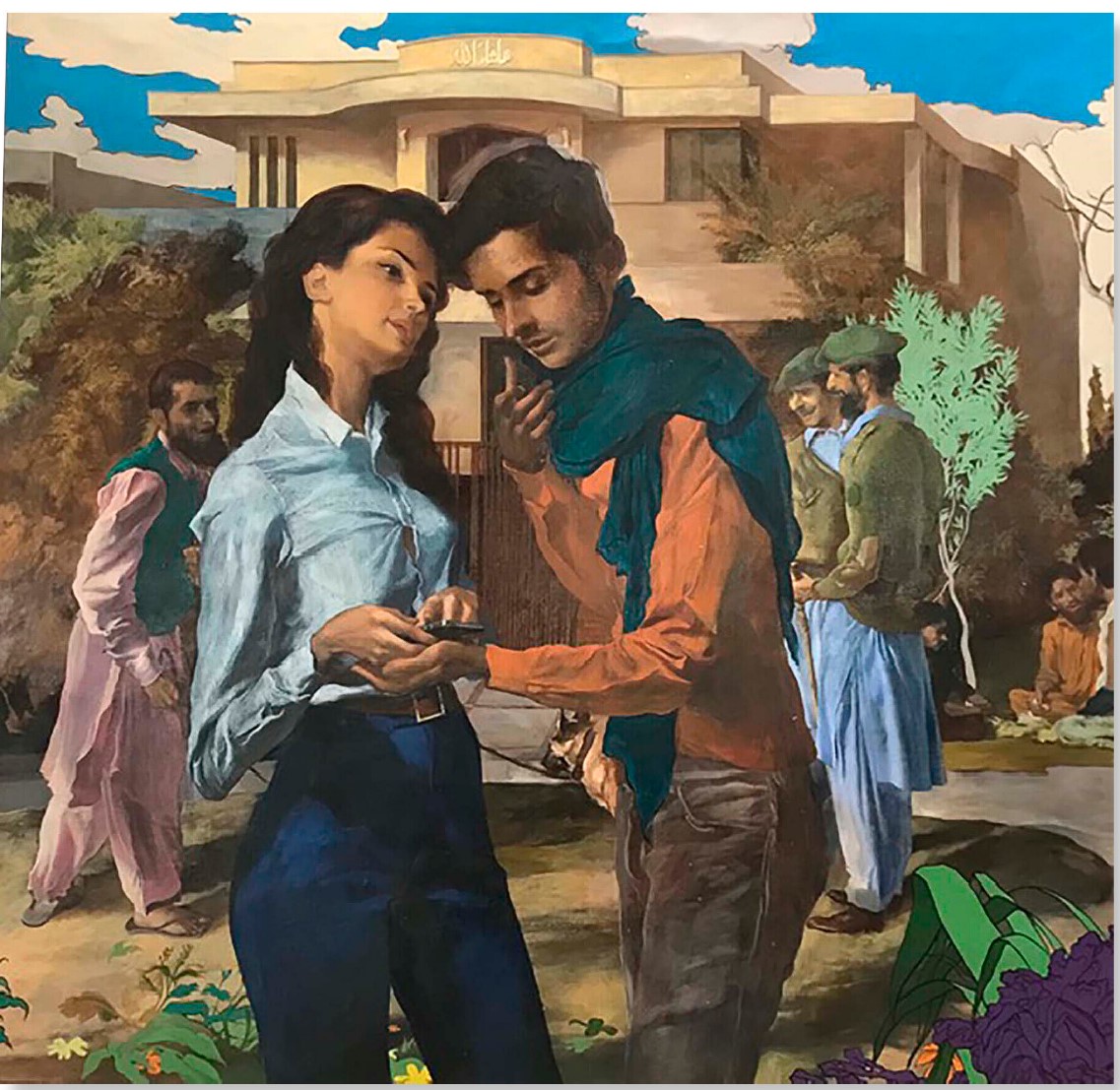
Untitled, 2014
Oil on canvas
143.5 x 148.6 cm (56 1⁄2 x 58 1⁄2 inches)
Signed and dated ‘Salman Toor ’14’ (on the reverse)
#5. Cloudy Day, 2017
Estimated: GBP 150,000 – 200,000
GBP 504,000 / USD 612,170
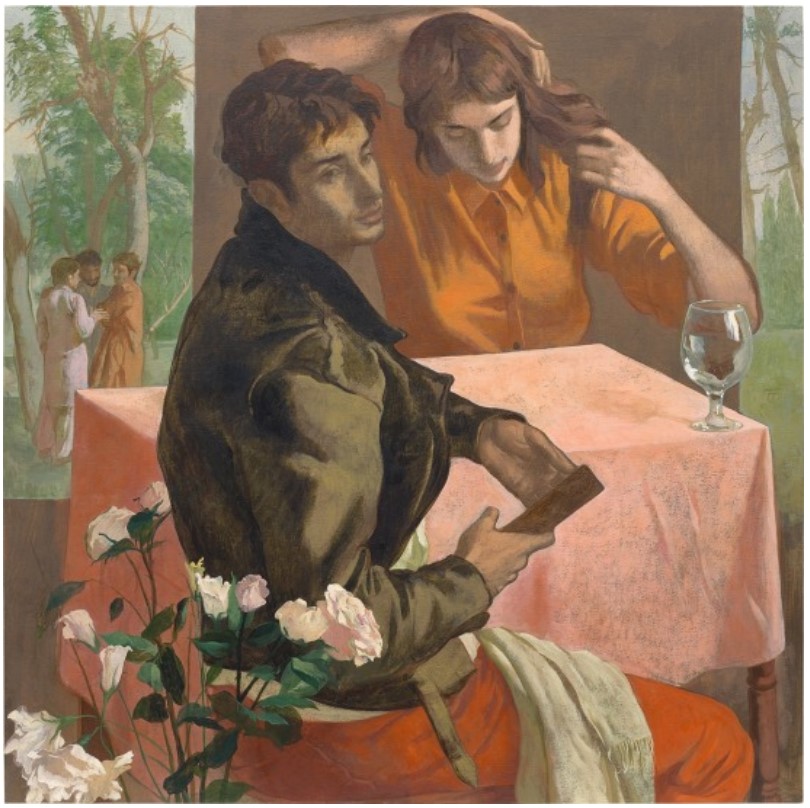
SALMAN TOOR
Cloudy Day, 2017
Oil on canvas
101.3 x 101.3 cm (39 7/8 x 39 7/8 in.)
Signed and dated ‘Salman Toor ’17’ on the reverse
#6. The Rooftop Singer, 2017
Estimated: HKD 1,200,000 – 2,200,000
HKD 4,788,000 / USD 610,185
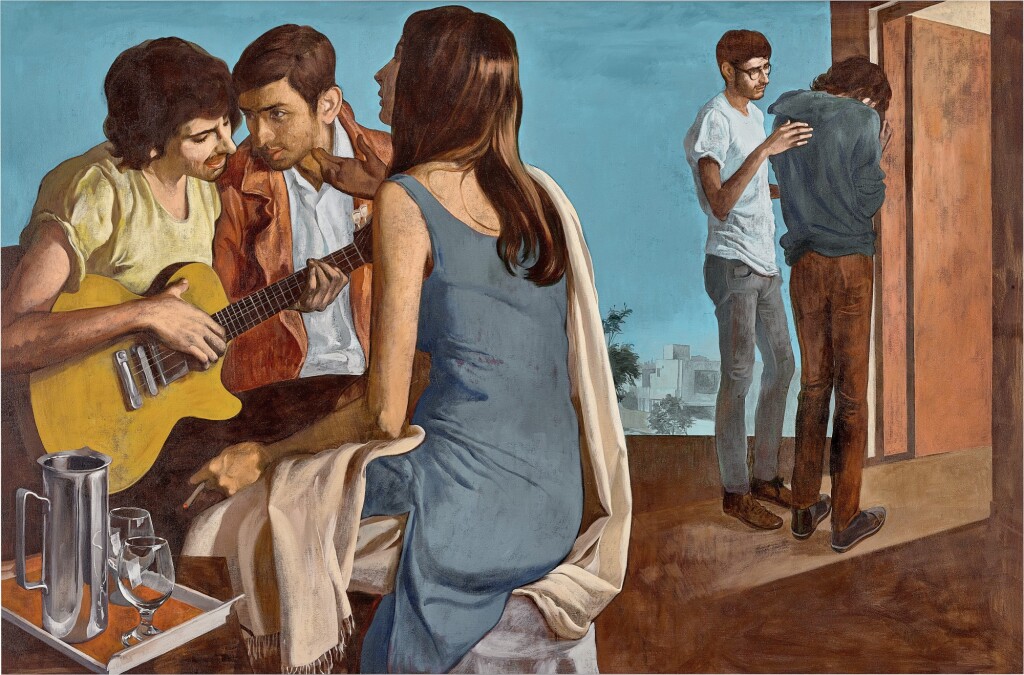
SALMAN TOR (B. 1983)
The Rooftop Singer, 2017
Oil on canvas
109.3 x 165.3 cm (43 x 65 1/8 inches)
Signed, titled and dated 2017 on the reverse
#7. Bendiyan Farm, 2016
Estimated: GBP 120,000 – 180,000
GBP 478,800 / USD 577,006
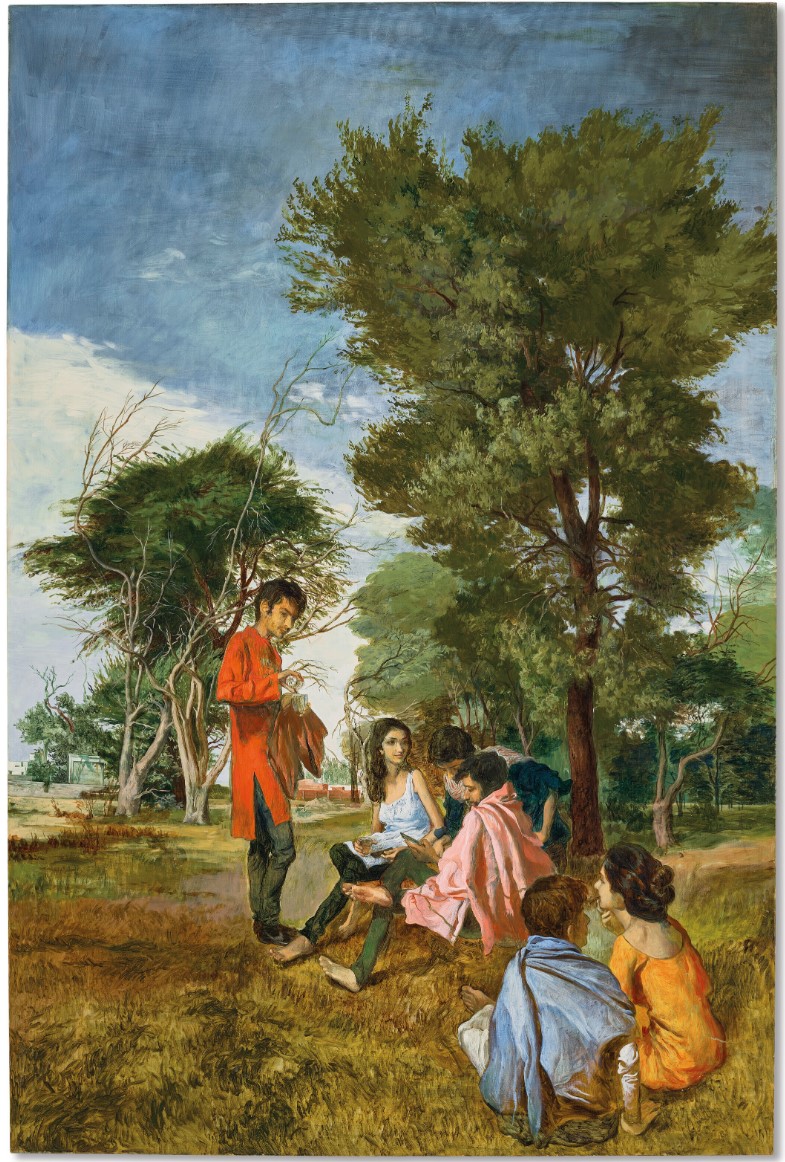
Bendiyan Farm, 2016
Oil on canvas
145 x 96.8 cm (57 1⁄8 x 38 1⁄8 inches)
signed and dated ‘Salman Toor ’16’ (on the reverse)
#8. Playground II, 2017
Christie’s New-York: 18 November 2022
Estimated: USD 150,000 – 200,000
USD 554,400
SALMAN TOOR (B. 1983), Playground II | Christie’s (christies.com)
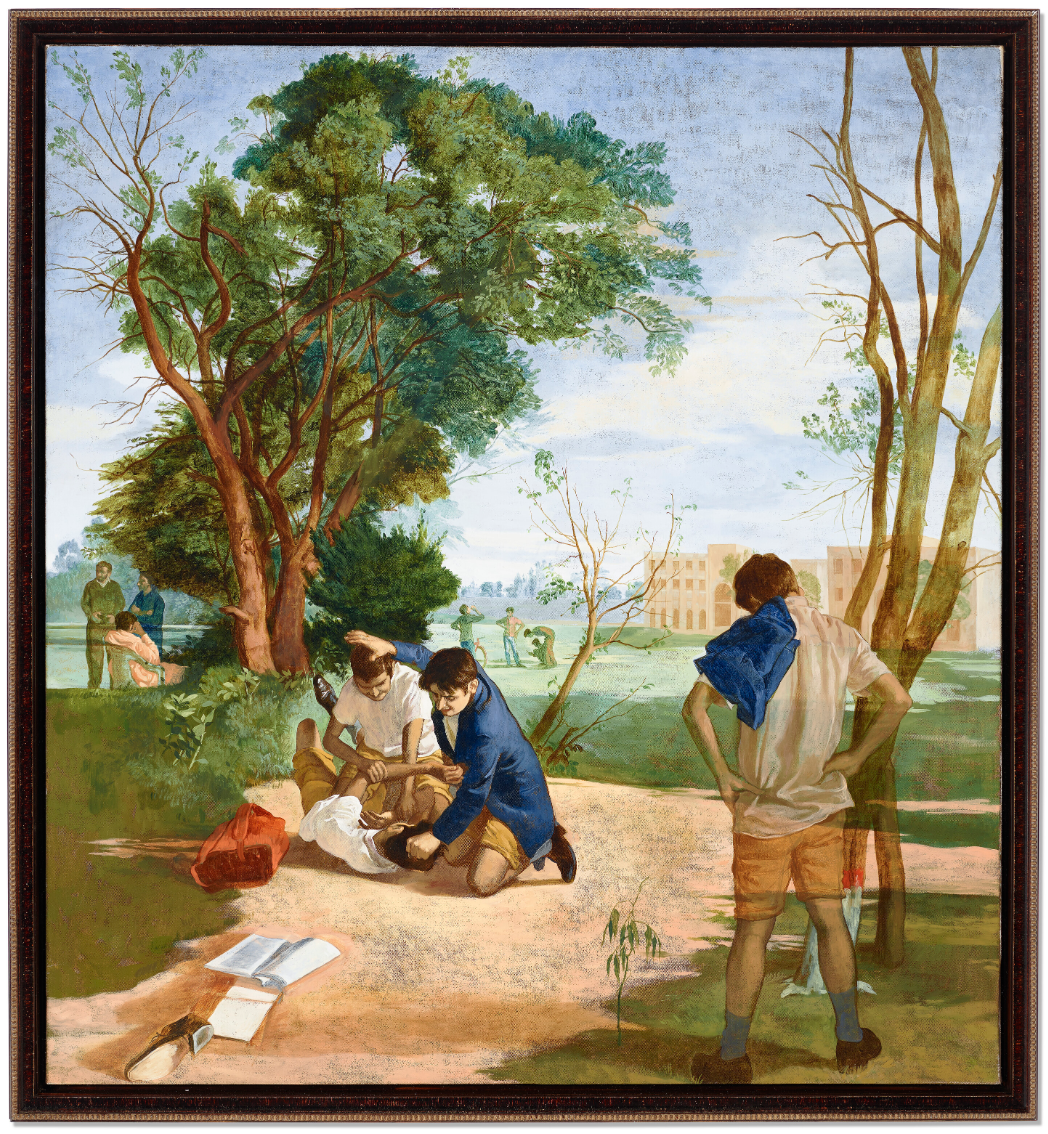
SALMAN TOOR (B. 1983)
Playground II, 2017
Oil on canvas
127.6 x 118.7 cm (50 1/4 x 46 3/4 inches)
USD 500,000
#9. Dancing to Whitney, 2018
Christie’s New-York: 18 November 2022
Estimated: USD 250,000 – 350,000
USD 453,600
SALMAN TOOR (B. 1983), Dancing to Whitney | Christie’s (christies.com)
REPEAT SALE
Phillips London: 16 April 2021
Estimated: GBP 40,000 – 60,000
GBP 252,000 / USD 348,405
Salman Toor – 20th Century & Contempo… Lot 201 April 2021 | Phillips
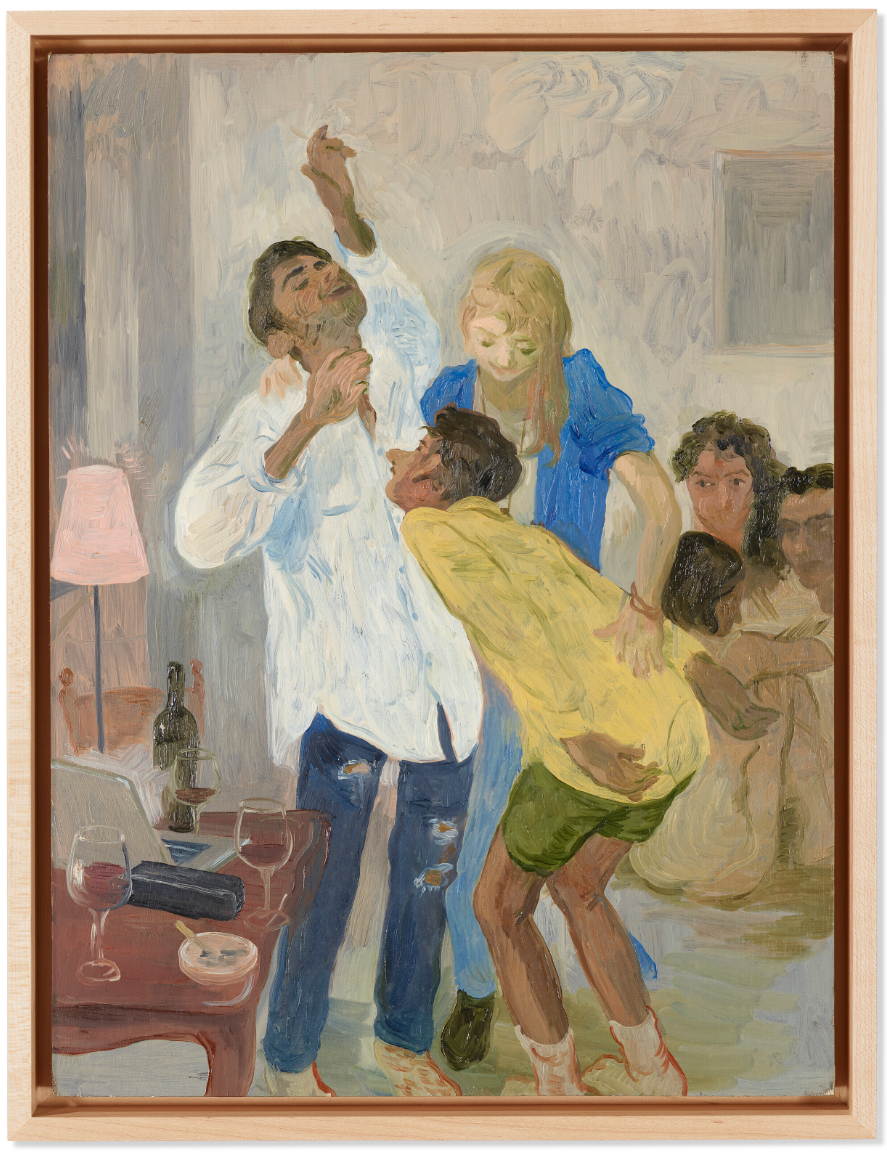
SALMAN TOOR (B. 1983)
Dancing to Whitney, 2018
Oil on panel
16×12 inches (40.9 x 30.7 cm)
Signed and dated ‘Salman Toor 2018’ (on the reverse)
#10. The Picnic, 2014
Christie’s New-York: 29 September 2022
Estimated: USD 200,000 – 300,000
USD 403,200
SALMAN TOOR (B. 1983), The Picnic | Christie’s (christies.com)
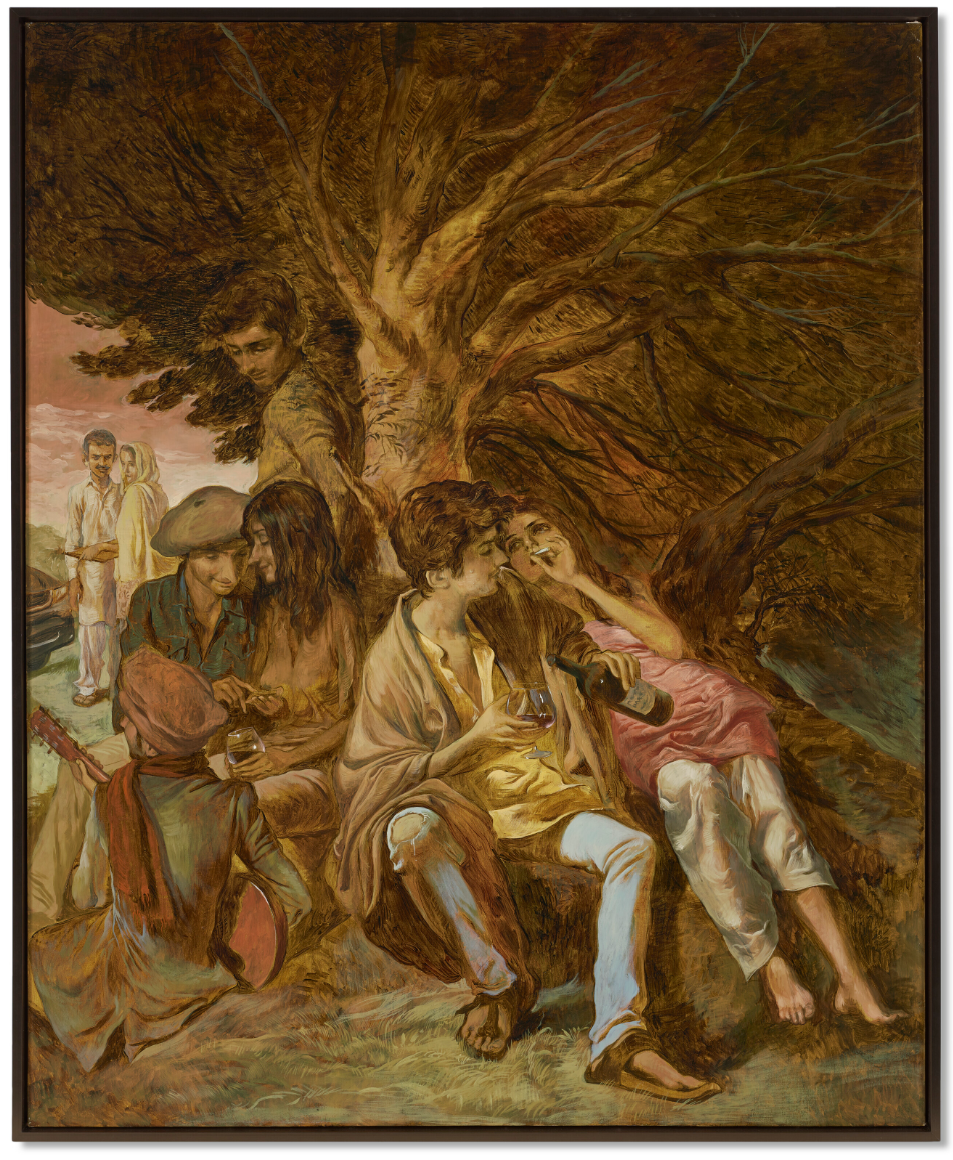
SALMAN TOOR (B. 1983)
The Picnic, 2014
Oil on canvas
59×48 inches (149.9 x 121.9 cm)
Signed and dated ‘Salman Toor 14’ (on the reverse)
#11. Three Men with Trays, 2018
Phillips London: 30 June 2022
Estimated: GBP 250,000 – 350,000
GBP 315,000 / USD 383,025
Salman Toor – 20th Century & Contempora… Lot 30 June 2022 | Phillips
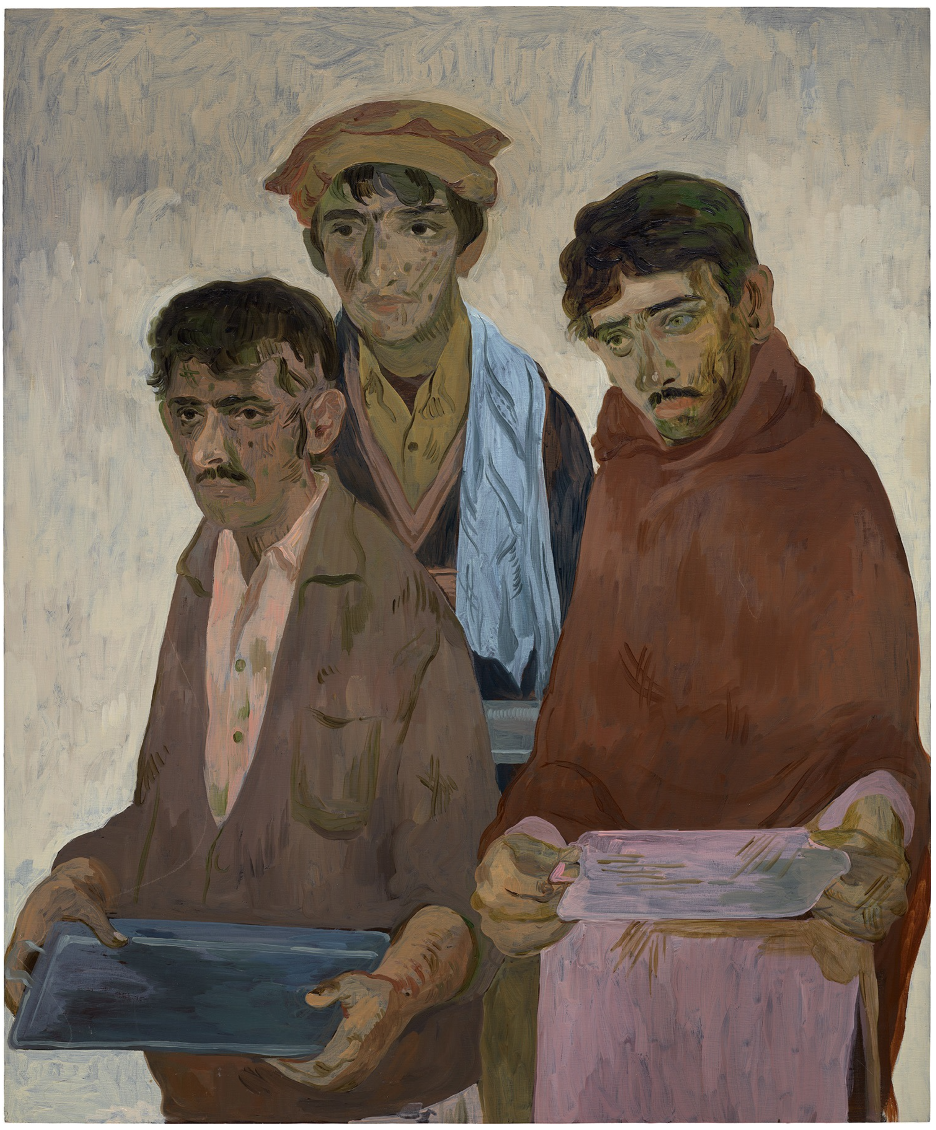
SALMAN TOOR
Three Men with Trays, 2018
oil on panel
60.6 x 50.5 cm (24×20 inches)
#12. Man with Tote Bag and Laptop, 2018
Sotheby’s Hong-Kong: 7 October 2022
Estimated: HKD 2,000,000 – 2,800,000
HKD 2,772,000 / USD 353,098
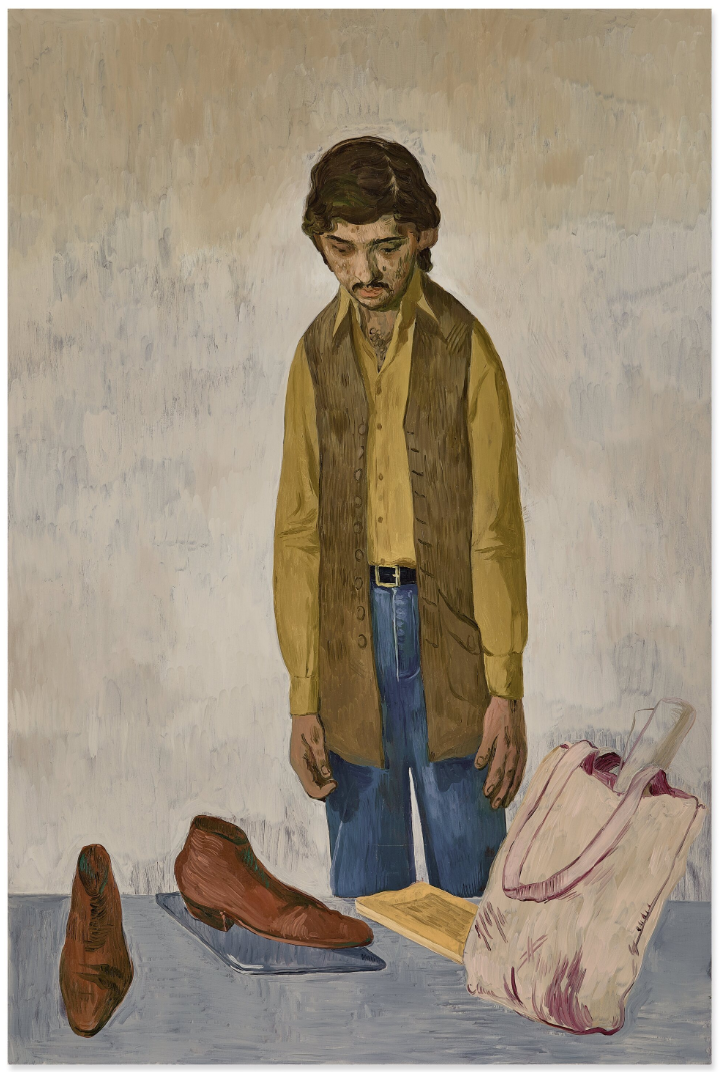
SALMAN TOOR (b. 1983)
Man with Tote Bag and Laptop, 2018
Oil on panel
91.4 x 60.9 cm (36×24 inches)
#13. Floating Bookshelf II, 2018
Sotheby’s London: 2 March 2022
Estimated: GBP 80,000 – 120,000
GBP 239,400 / USD 320,010
Floating Bookshelf II | The Now Evening Auction | 2022 | Sotheby’s (sothebys.com)
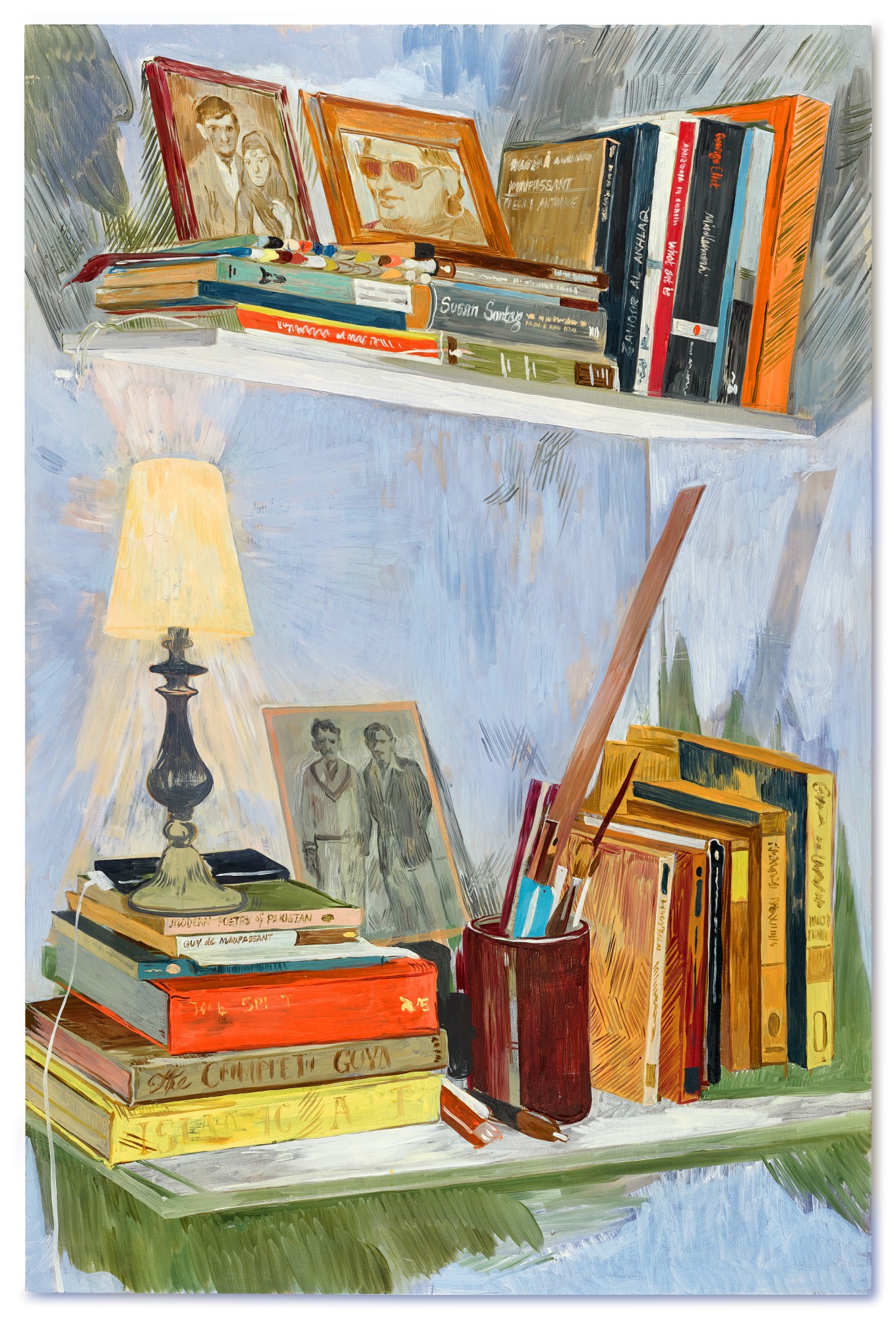
SALMAN TOOR (b. 1983)
Floating Bookshelf II, 2018
Oil on panel
91.2 x 61 cm (36×24 inches)
#14. Immigrant Gathering, 2016
Phillips London: 13 October 2022
Estimated: GBP 150,000 – 200,000
GBP 214,200 / USD 242,967
Salman Toor – 20th Century & Contem… Lot 118 October 2022 | Phillips
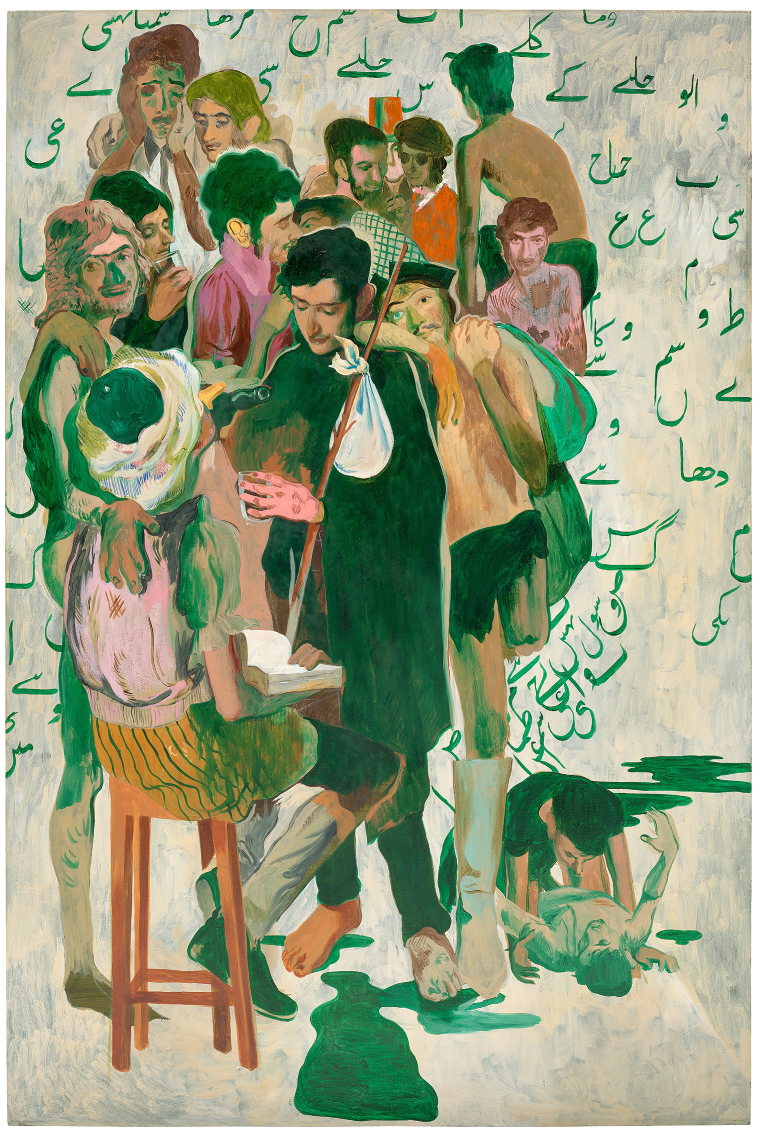
SALMAN TOOR
Immigrant Gathering, 2016
Oil on canvas
122 x 81.5 cm (48 x 32 1/8 inches)
Signed and dated ‘Salman Toor ’16’ on the reverse
#15. Alexandra, the Boys, City Lights, 2006
Bonhams London: 30 June 2022
Estimated: GBP 100,000 – 150,000
GBP 126,300 / USD 153,574
Bonhams : SALMAN TOOR (B. 1983) Alexandra, the Boys, City Lights 2006
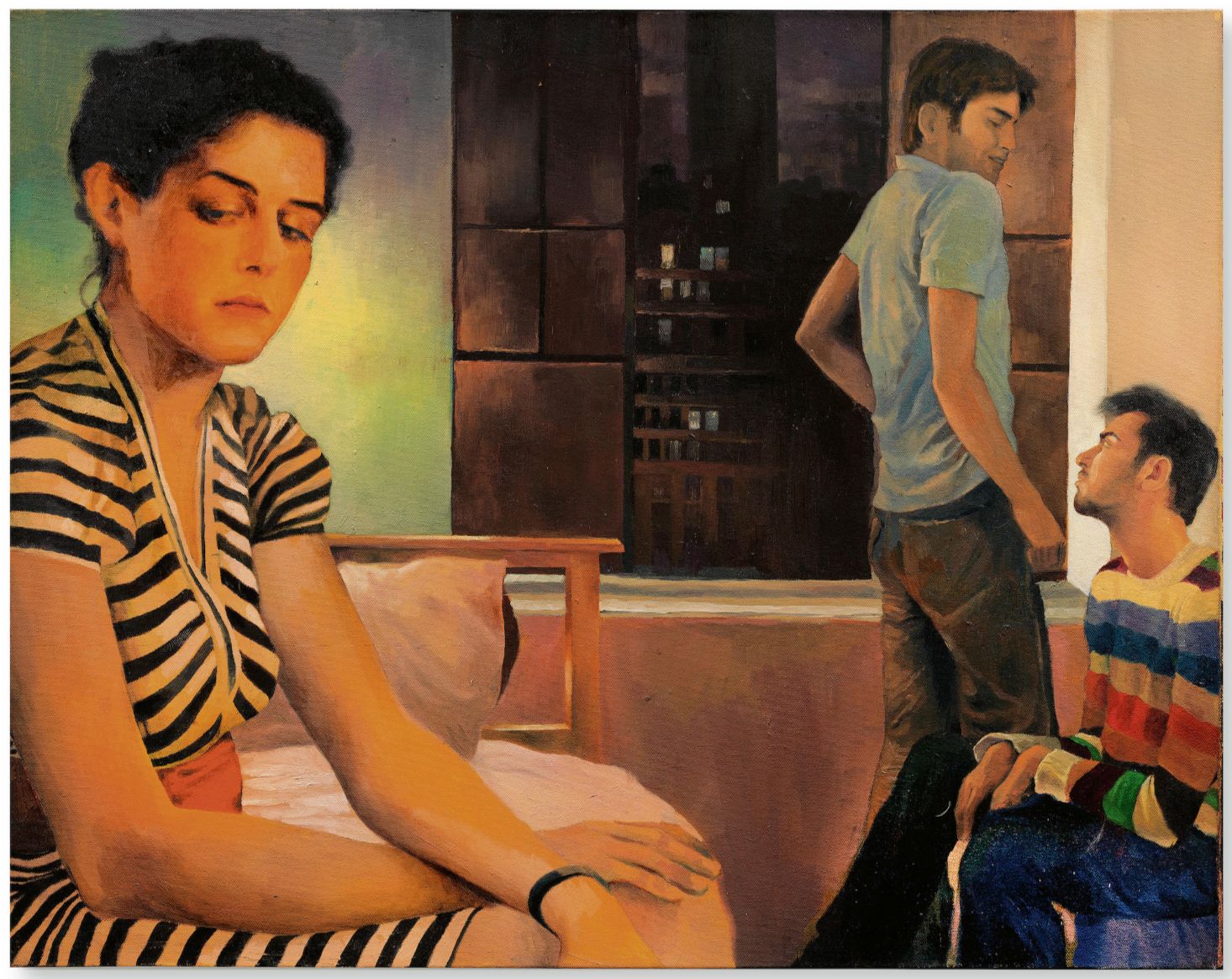
Oil on canvas
60.5 x 75.8 cm (23 13/16 x 29 13/16 inches)
#16. Decent Couple, 2012
Sotheby’s London: 30 June 2022
Estimated: GBP 60,000 – 80,000
GBP 119,700 / USD 145,749
Decent Couple | Modern & Contemporary Day Auction | 2022 | Sotheby’s (sothebys.com)
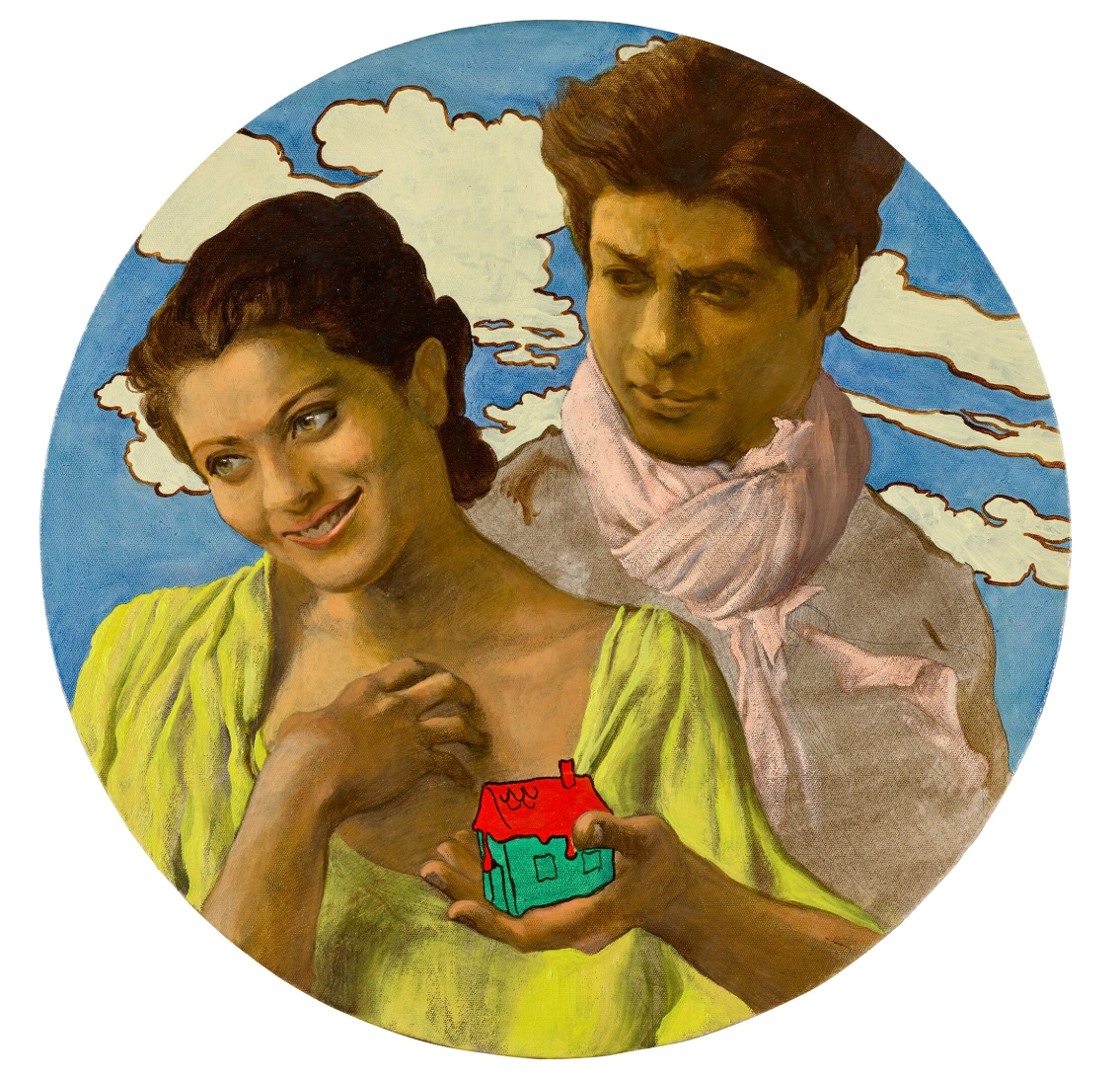
SALMAN TOOR (b. 1983)
Decent Couple, 2012
Oil and graphite on canvas
50.8 x 50.4 cm (20 x 19 7/8 inches)
Signed and dated ’12 on the reverse
#17. Untitled
Sotheby’s London: 25 October 2022
Estimated: GBP 60,000 – 80,000
GBP 100,800 / USD 115,622
Untitled | Modern & Contemporary South Asian Auction | 2022 | Sotheby’s (sothebys.com)
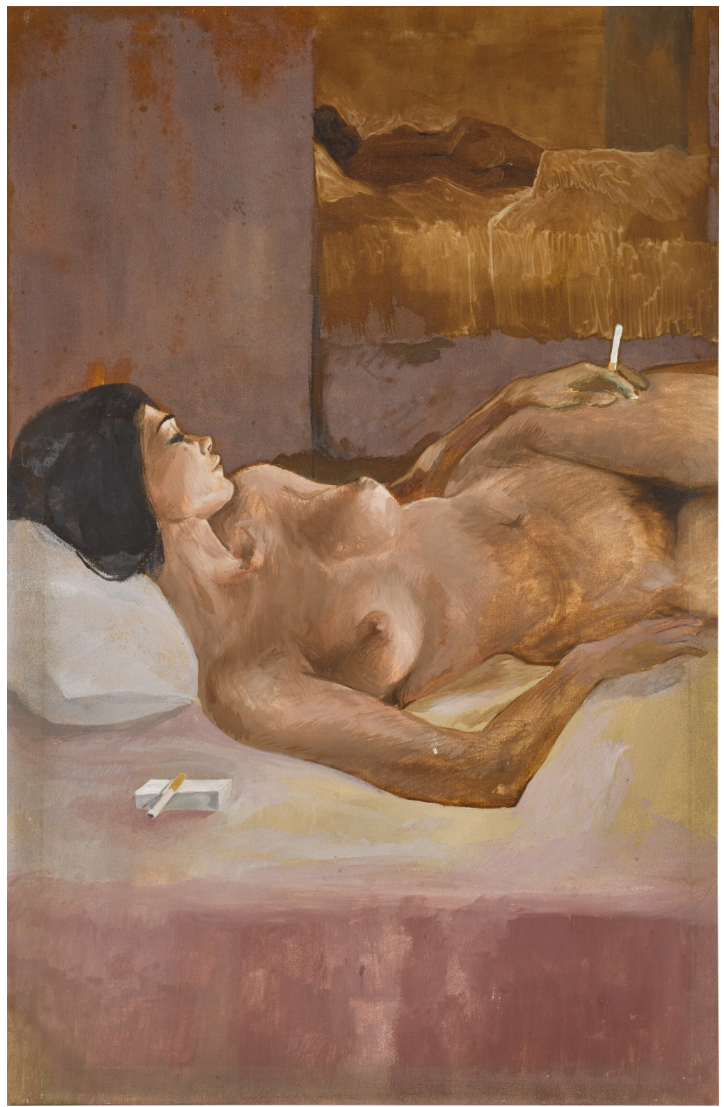
SALMAN TOOR (b. 1983)
Untitled
Oil on canvas
91.2 x 60.4 cm (35 7/8 x 23 3/4 inches)
#18. Poor Hobo Ghosts, 2015
Christie’s Hong-Kong: 1 December 2022
Estimated: HKD 800,000 – 1,200,000
HKD 882,000 / USD 113,399
SALMAN TOOR (B. 1983), Poor Hobo Ghosts | Christie’s (christies.com)
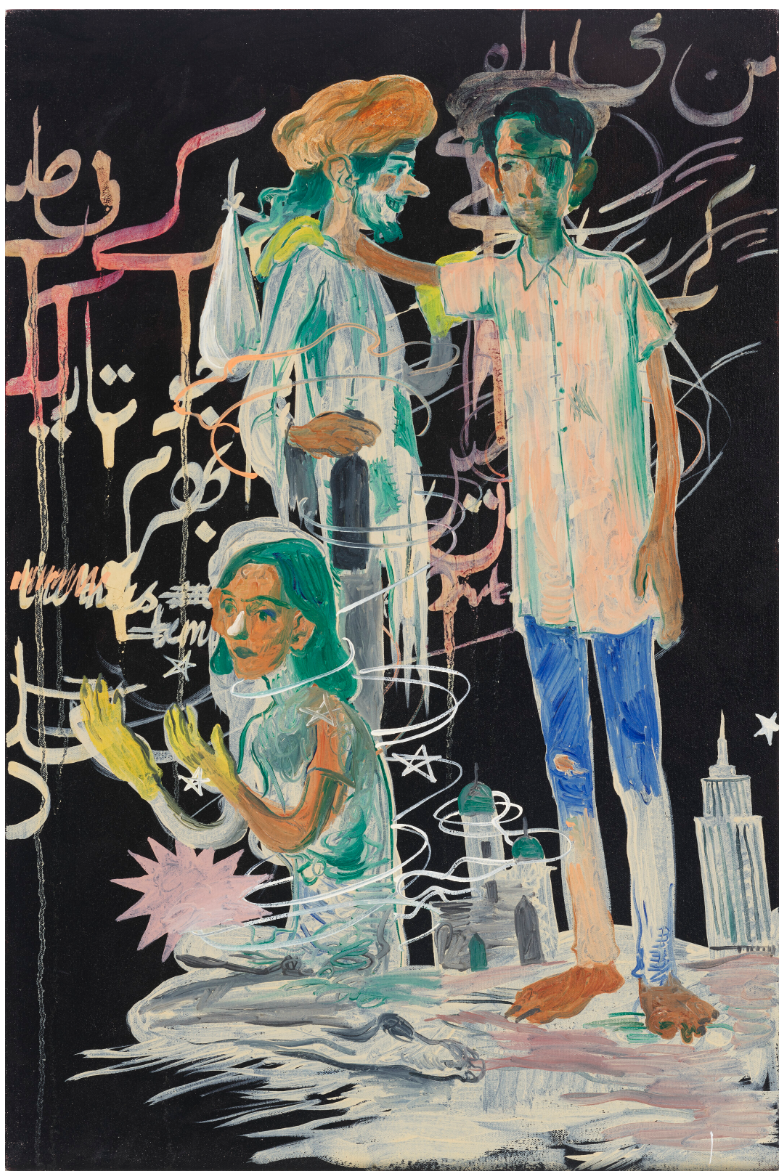
SALMAN TOOR (B. 1983)
Poor Hobo Ghosts, 2015
Oil on canvas
66 x 44.5 cm (26 x 17 1/2 inches)
Signed and dated ‘Salman Toor ’15’ (on the reverse)
#19. Itinerant Vagrant, 2018
Phillips London: 4 March 2022
Estimated: GBP 60,000 – 80,000
GBP 81,900 / USD 108,204
Salman Toor – 20th Century & Contempo… Lot 108 March 2022 | Phillips
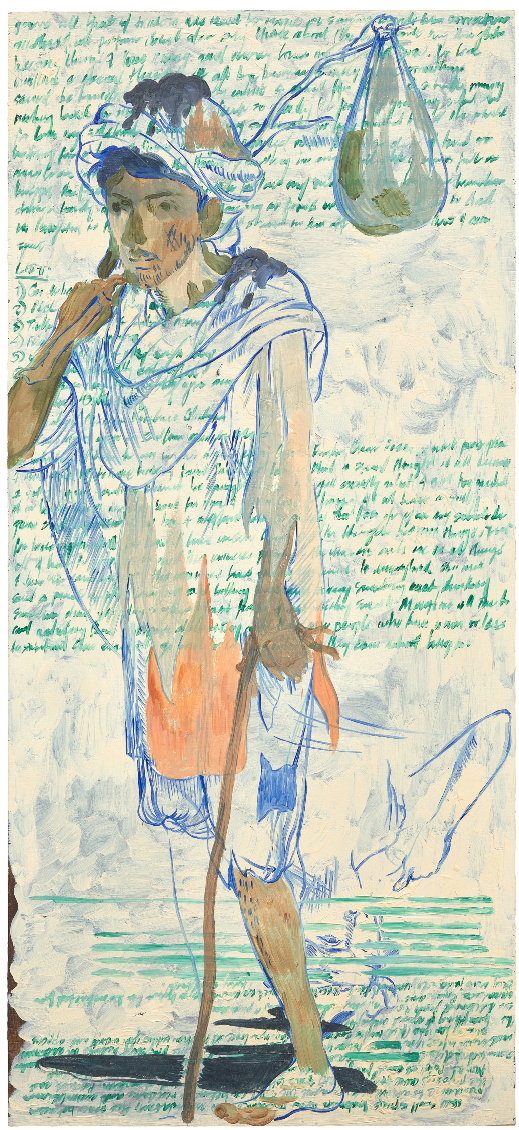
Itinerant Vagrant, 2018
Oil on panel
55.7 x 25.4 cm (21 7/8 x 10 inches)
Signed and dated ‘Salman Toor ’18’ on the reverse
#20. Driver and Maid, 2013
Christie’s New-York: 29 September 2022
Estimated: USD 60,000 – 80,000
USD 94,500
SALMAN TOOR (B. 1983), Driver and Maid | Christie’s (christies.com)
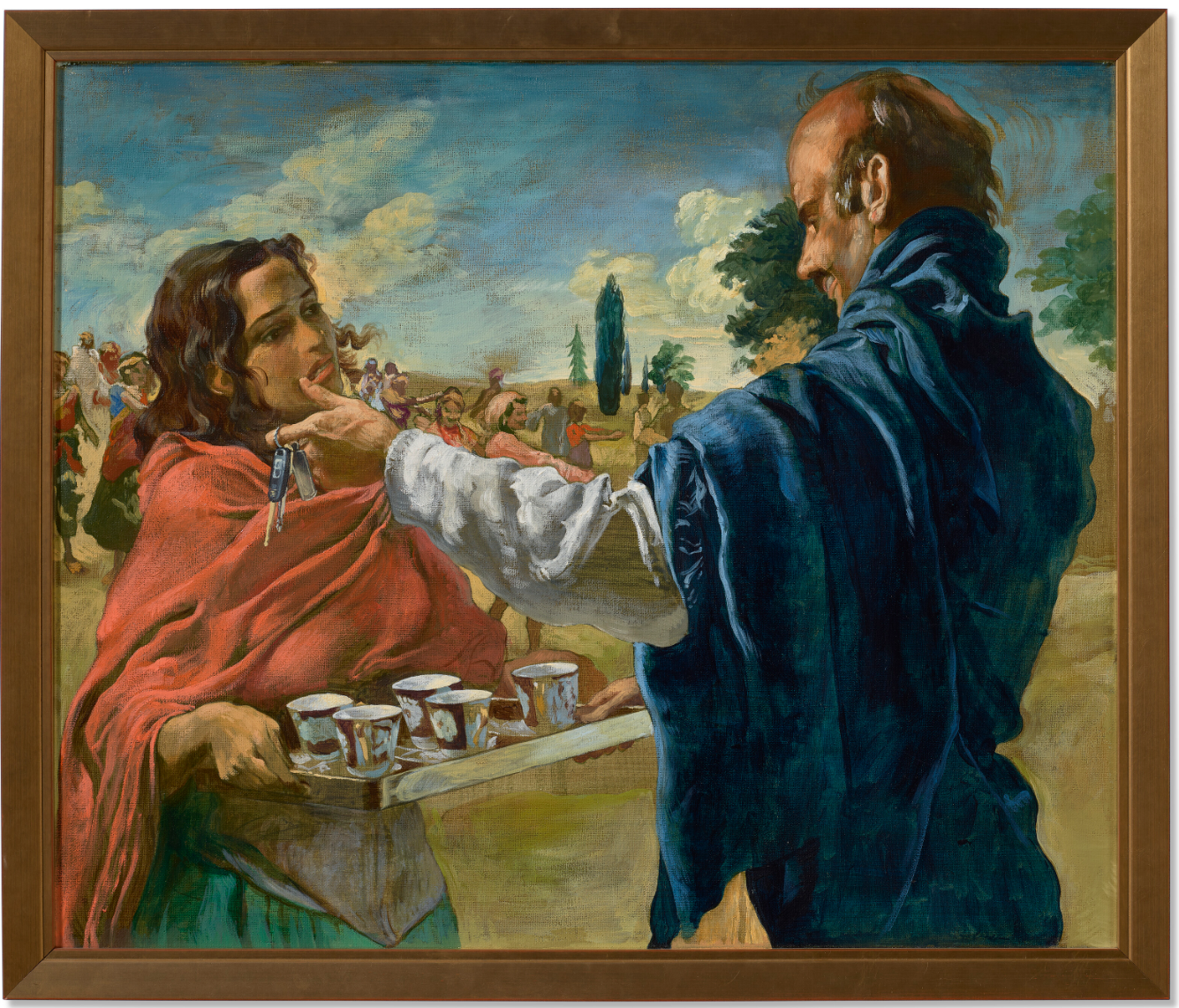
SALMAN TOOR (B. 1983)
Driver and Maid, 2013
Oil on canvas
60.3 x 72.4 cm (23 3/4 x 28 1/2 inches)
Signed and dated ‘Salman Toor ’13’ (on the reverse)
#21. Untitled, 2016
Christie’s New-York: 10 March 2022
Estimated: USD 50,000 – 70,000
USD 69,300
SALMAN TOOR (B. 1983), Untitled | Christie’s
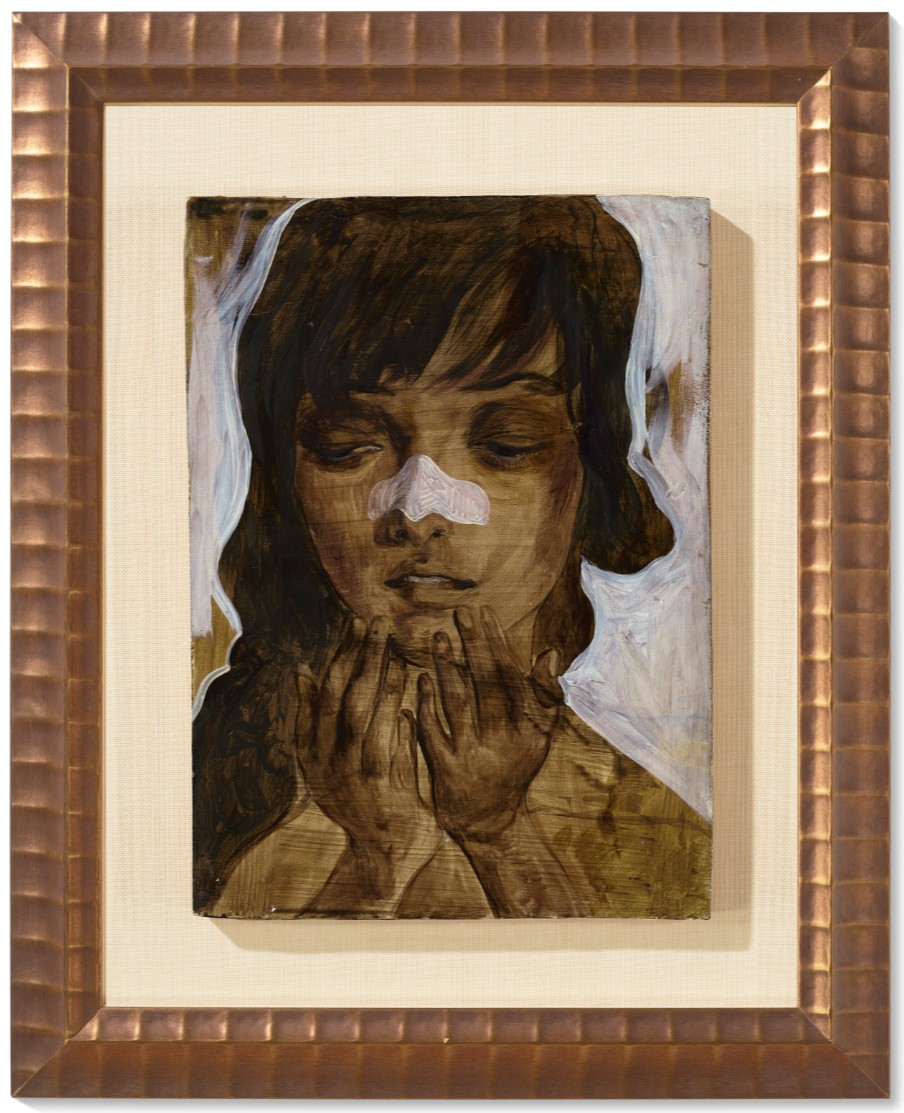
SALMAN TOOR (B. 1983)
Untitled, 2016
Oil on board mounted on Masonite
39.7 x 28.6 cm (15 5/8 x 11 1/4 inches)
Signed and dated ‘Salman Toor ’16’ (on the reverse)
#22. Avenue B Apartment, 2015
Christie’s New-York: 18 November 2022
Estimated: USD 60,000 – 80,000
USD 63,000
SALMAN TOOR (B. 1983), Avenue B Apartment | Christie’s (christies.com)
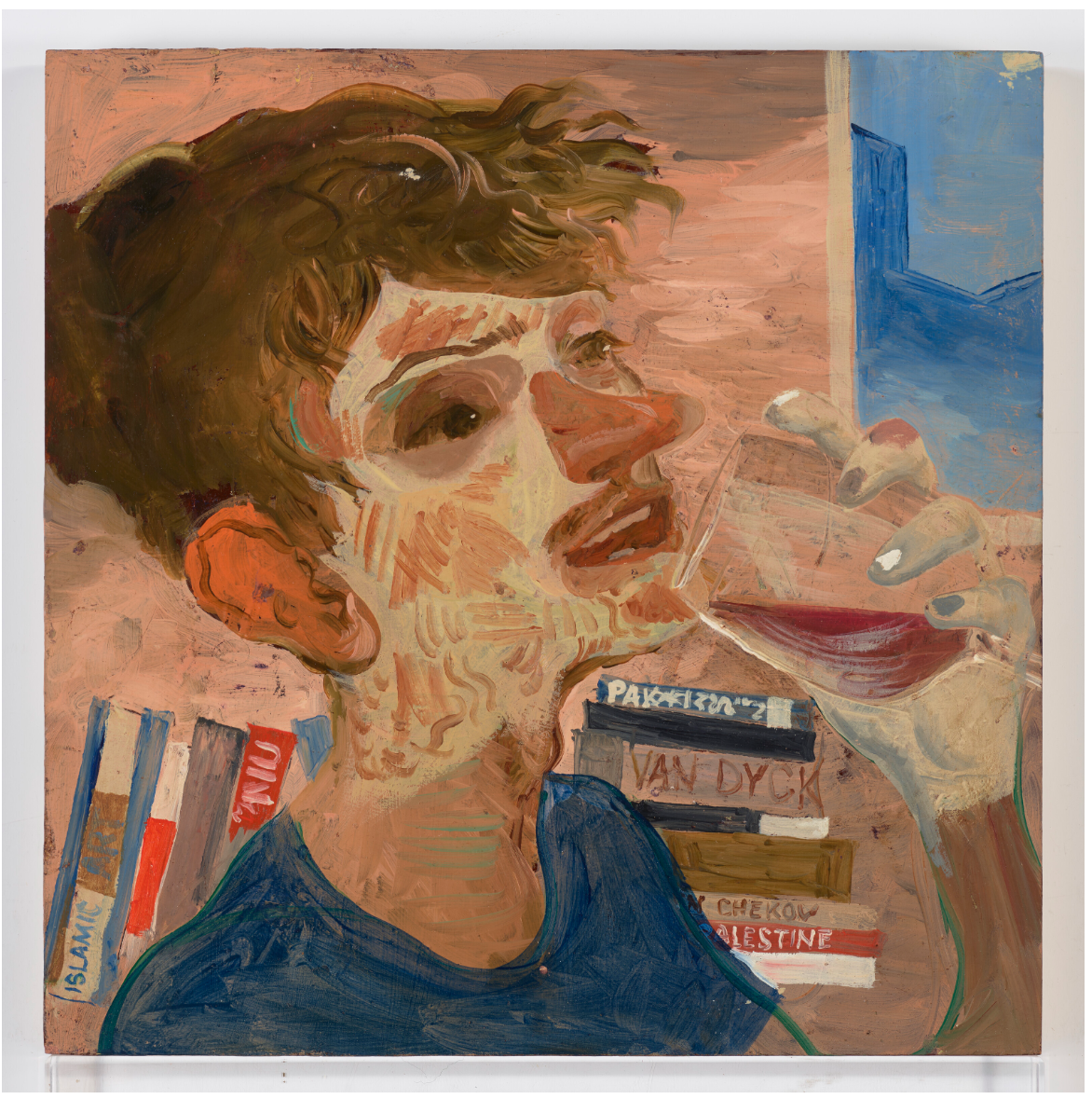
SALMAN TOOR (B. 1983)
Avenue B Apartment, 2015
Oil on panel
30.5 x 30.5 cm (12×12 inches)
#23. Mother, 2015
Phillips New-York: 19 May 2022
Estimated: USD 50,000 – 70,000
USD 60,480
Salman Toor – 20th Century & Contempora… Lot 344 May 2022 | Phillips
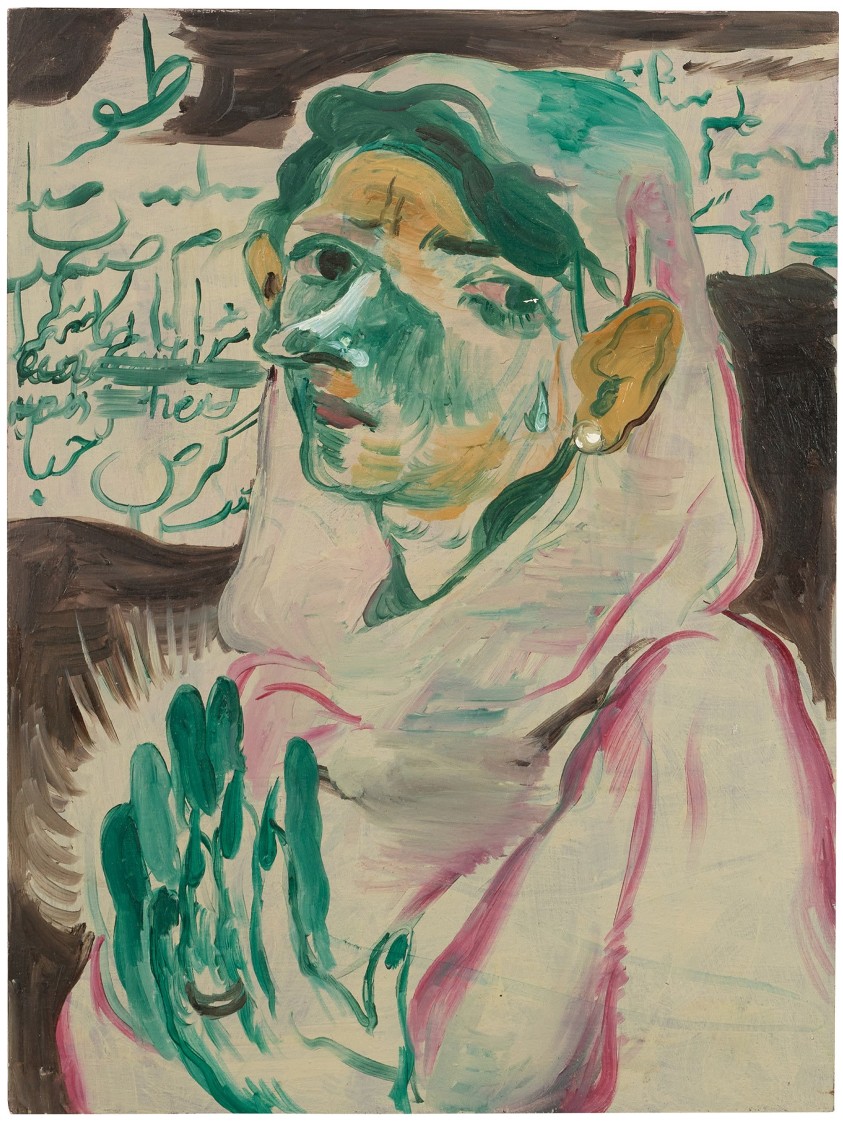
SALMAN TOOR
Mother, 2015
Oil on panel
30.5 x 22.9 cm (12×9 inches)
#24. Untitled, 2012
Sotheby’s Hong-Kong: 28 April 2022
Estimated: HKD 250,000 – 450,000
HKD 403,200 / USD 51,385
Salman Toor 薩爾曼 · 圖爾 | Untitled 無題 | Contemporary Day Auction | 2022 | Sotheby’s
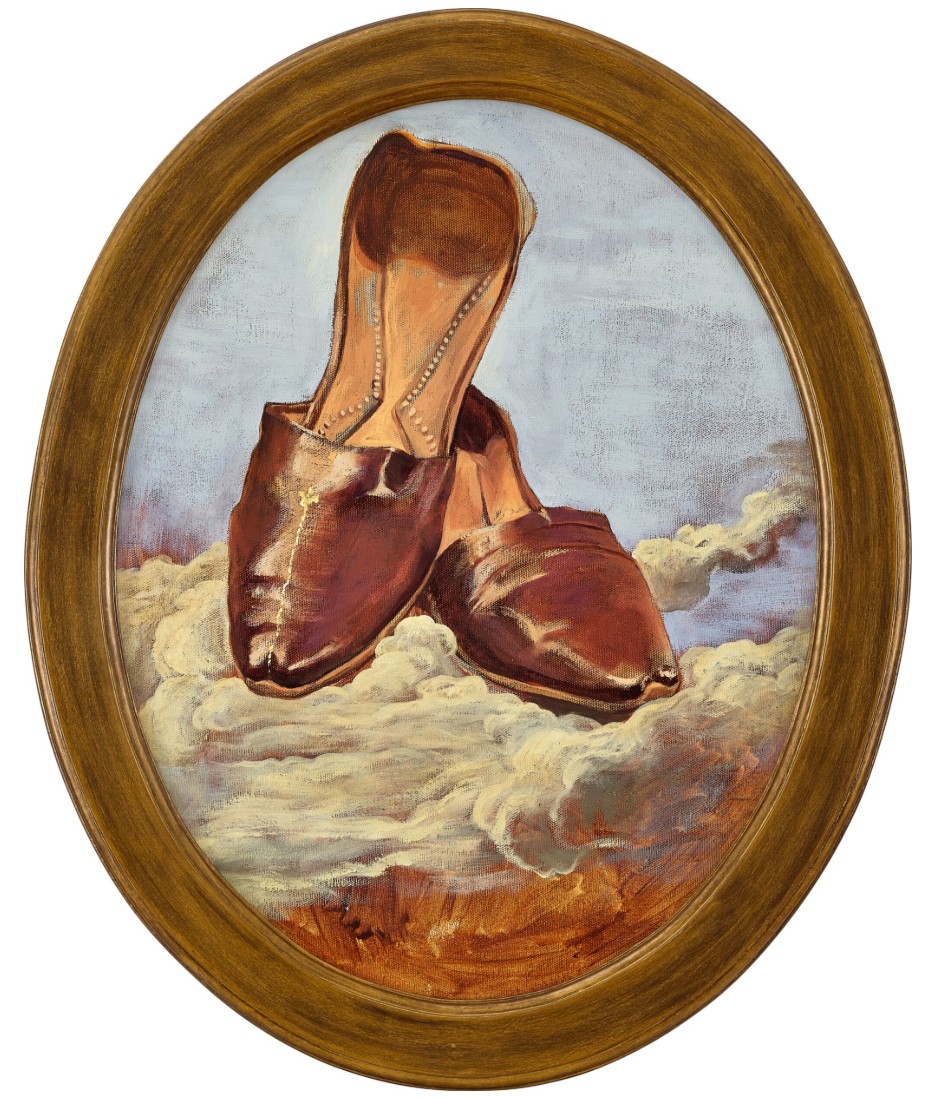
SALMAN TOOR (b. 1983)
Untitled, 2012
Oil on canvas
50×40 cm (19 3/4 x 15 3/4 inches)
Signed and dated 2012 on the reverse
#25. Humiliated Ancestor #2, 2016
Christie’s New-York: 13 May 2022
Estimated: USD 30,000 – 50,000
USD 37,800
SALMAN TOOR (B. 1983), Humiliated Ancestor #2 | Christie’s
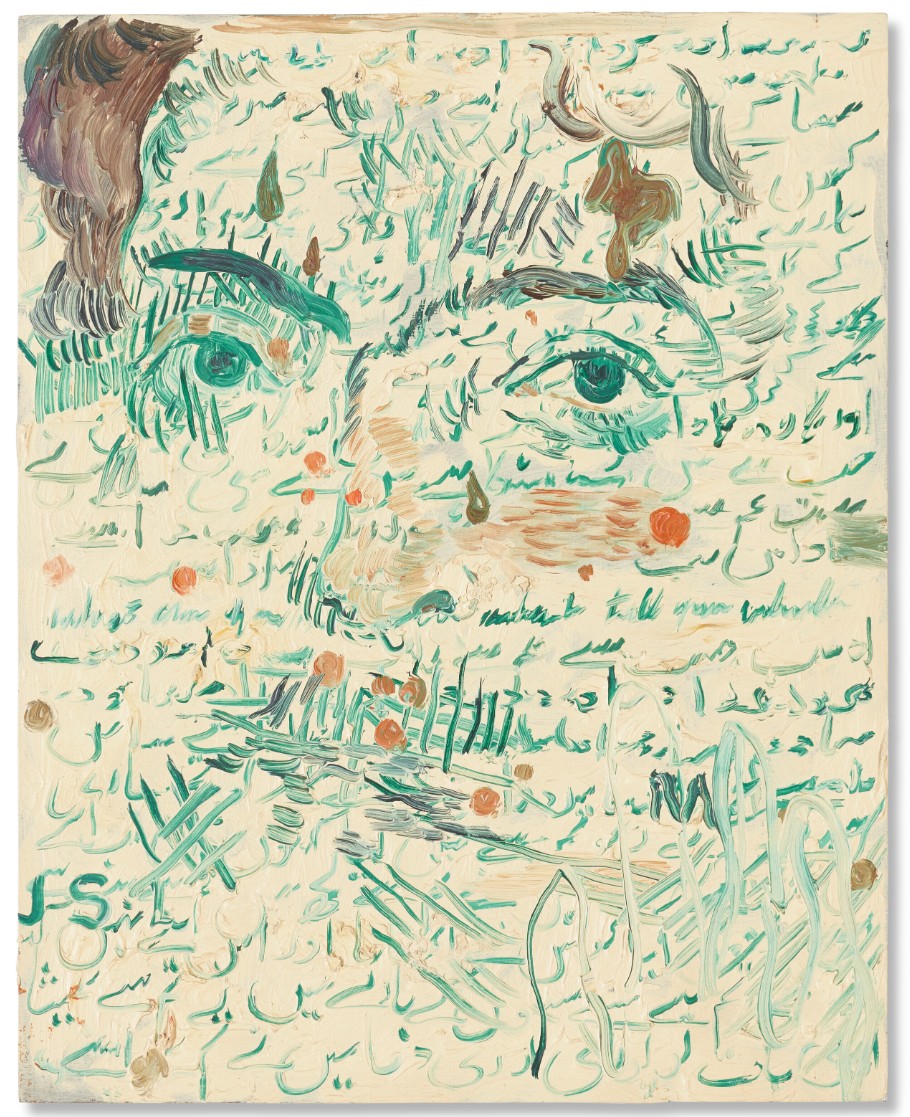
SALMAN TOOR (B. 1983)
Humiliated Ancestor #2, 2016
Oil on panel
25.4 x 20.3 cm (10×8 inches)
2021 Auction Results
27 lots sold in 2021 for a total turnover of USD 11,428,065.
With no lot failing to sell, the Sell-Through rate is 100%. The highest price was achieved by Girl with Driver, a painting dated 2013, that sold at Phillips in Hong-Kong, on 21 June 2021, for HKD 6,905,000 (USD 889,831). 7 lots sold for more than USD 500,000, generating a cumulative turnover of USD 4,925,666, representing 43.1% of the total turnover for 2021. All lots except one sold for more than USD 100,000.
2021 Top 3 Lots
#1. Girl with Driver, 2013
Phillips Hong-Kong: 21 June 2021
Estimated: HKD 1,200,000 – 2,200,000
HKD 6,905,000 / USD 889,831
Salman Toor – 20th Century & Contemporar… Lot 1 June 2021 | Phillips
SALMAN TOOR
Girl with Driver, 2013
Oil on canvas
142×200 cm (55 7/8 x 78 3/4 inches)
#2. The Arrival, 2019
Sotheby’s New-York: 12 May 2021
Estimated: USD 60,000 – 80,000
USD 867,000
The Arrival | Contemporary Art Evening Auction | 2021 | Sotheby’s (sothebys.com)
SALMAN TOOR (b. 1983)
The Arrival, 2019
Oil on panel
45.7 x 35.2 cm (18 x 13 ⅞ inches)
Signed and dated ’19 on the reverse
#3. Three Boys, 2019
Sotheby’s Hong-Kong: 19 April 2021
Estimated: HKD 250,000 – 450,000
HKD 5,620,000 / USD 723,648
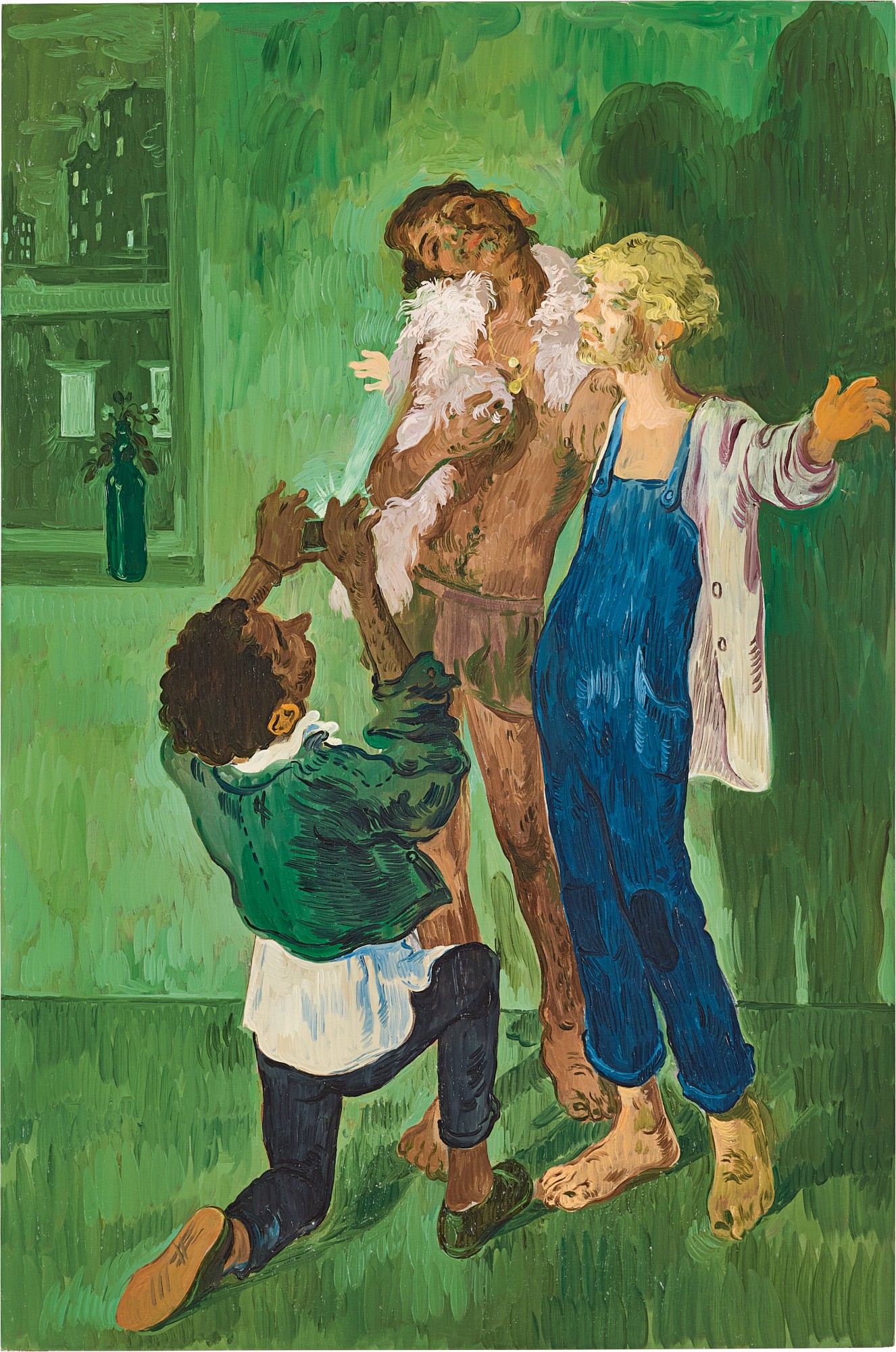
SALMAN TOOR (b. 1983)
Three Boys, 2019
Oil on panel
76.1 x 50.8 cm (30×20 inches)
Signed and dated ’19 on the reverse
#4. The Servant, 2013
Christie’s New-York: 14 May 2021
Estimated: USD 80,000 – 120,000
USD 687,500
SALMAN TOOR (B. 1983) (christies.com)
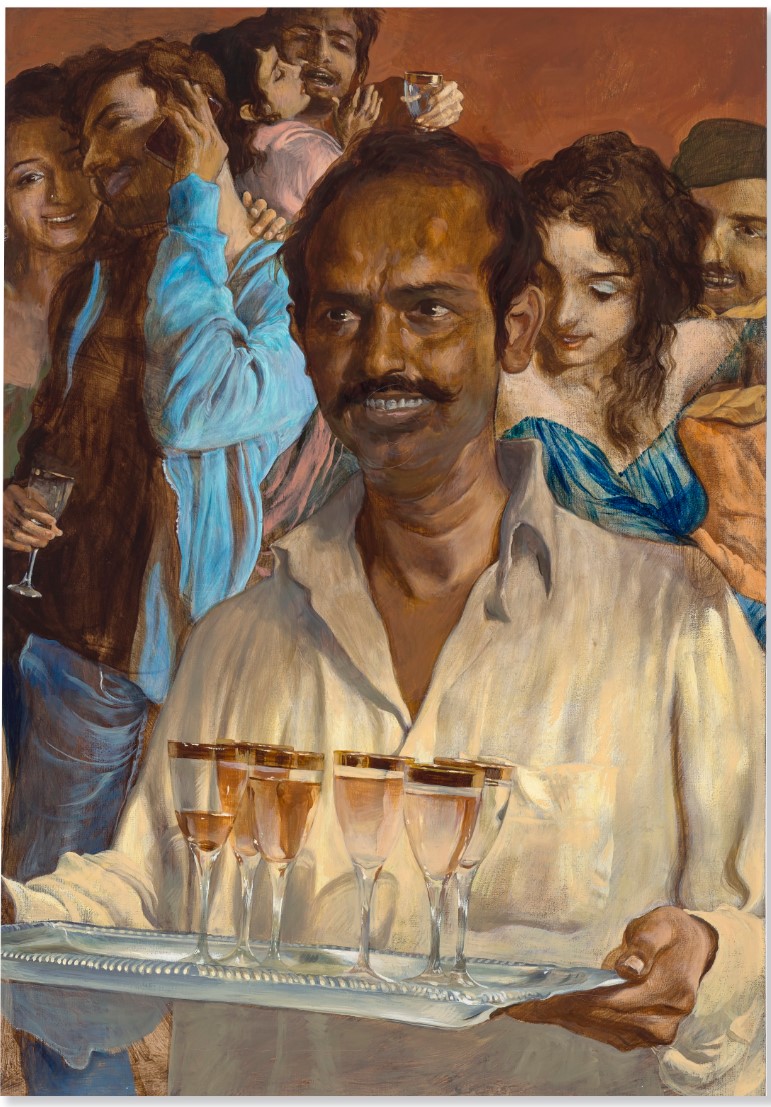
SALMAN TOOR (B. 1983)
The Servant, 2013
Oil on canvas
109.2 x 76.2 cm (43×30 inches)
#5. The Singers, 2019
Christie’s New-York: 9 March 2021
Estimated: USD 100,000 – 150,000
USD 612,500
Salman Toor (b. 1983), The Singers | Christie’s (christies.com)
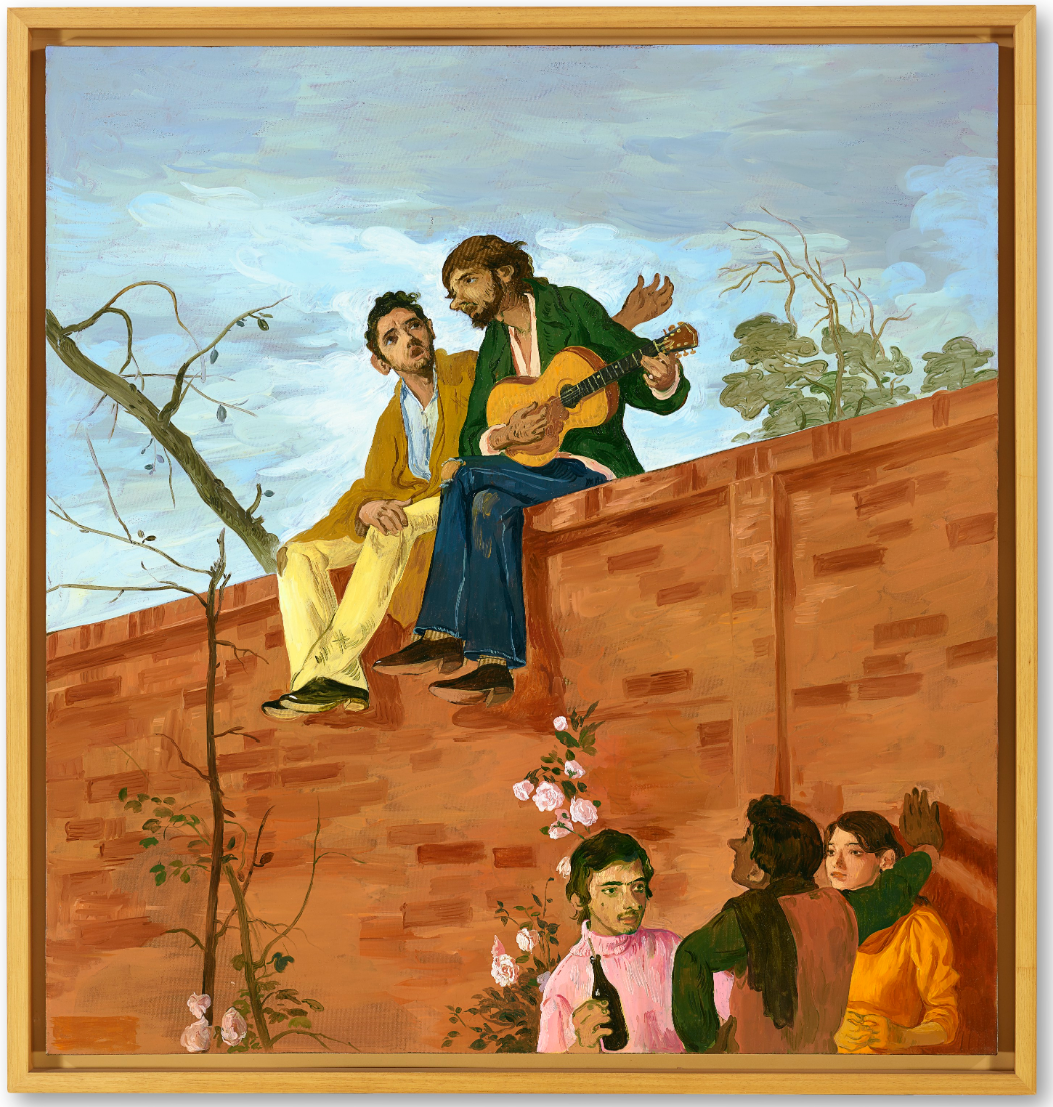
Salman Toor (b. 1983)
The Singers, 2019
Oil on canvas
88.9 x 83.8 cm (35×33 inches)
Signed and dated ‘Salman Toor 2019’ (on the reverse)
#6. East Village Iqbal Bano, 2018
Phillips Hong-Kong: 30 November 2021
Estimated: HKD 1,800,000 – 2,800,000
HKD 4,536,000 / USD 581,769
Salman Toor – 20th Century & Contemp… Lot 2 November 2021 | Phillips
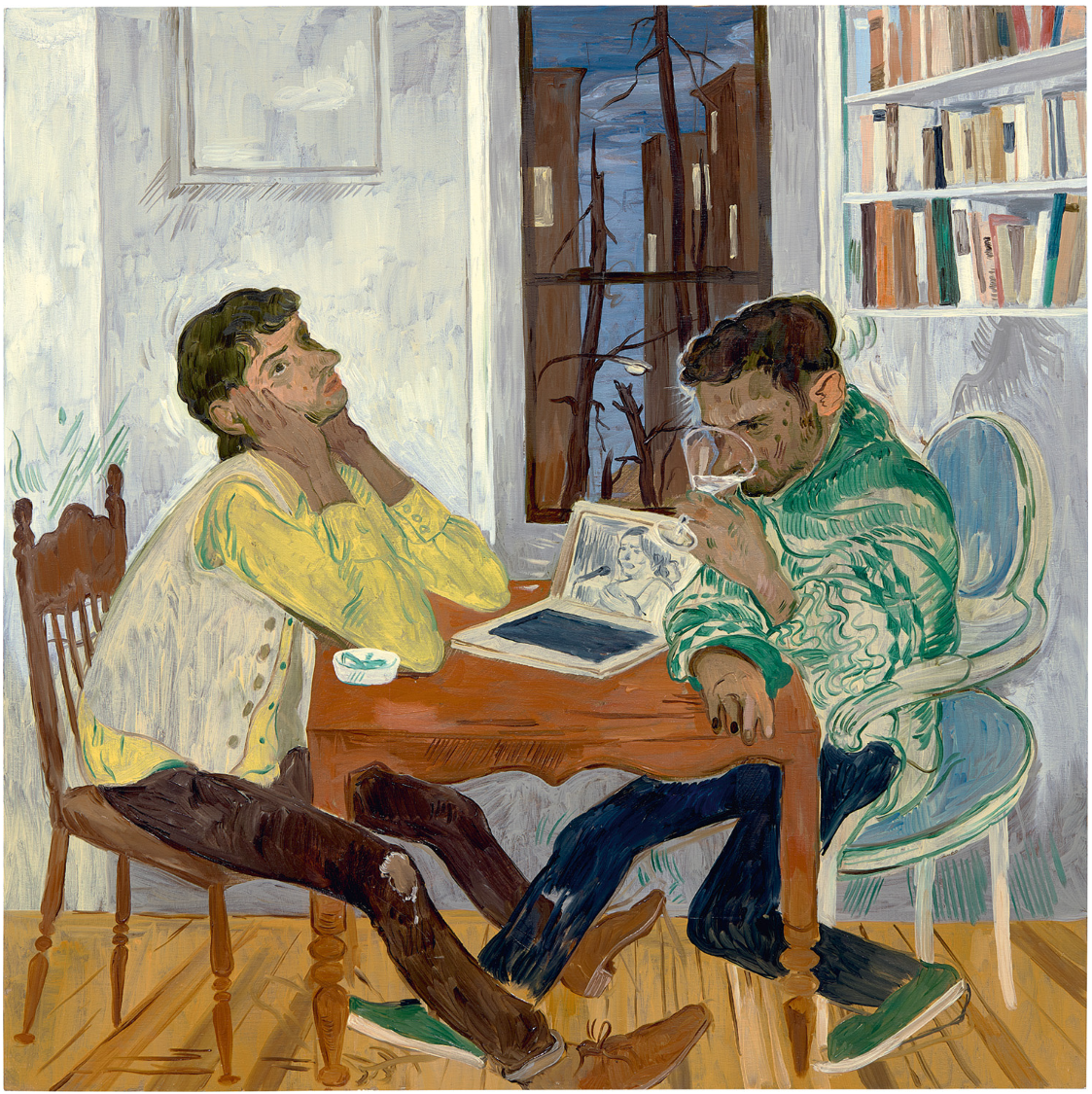
SALMAN TOOR
East Village Iqbal Bano, 2018
Oil on panel
61×61 cm (24×24 inches)
#7. The Burden, 2015
Christie’s Hong-Kong: 24 May 2021
Estimated: HKD 800,000 – 1,200,000
HKD 4,375,00 / USD 563,418
SALMAN TOOR (B. 1983), The Burden | Christie’s (christies.com)
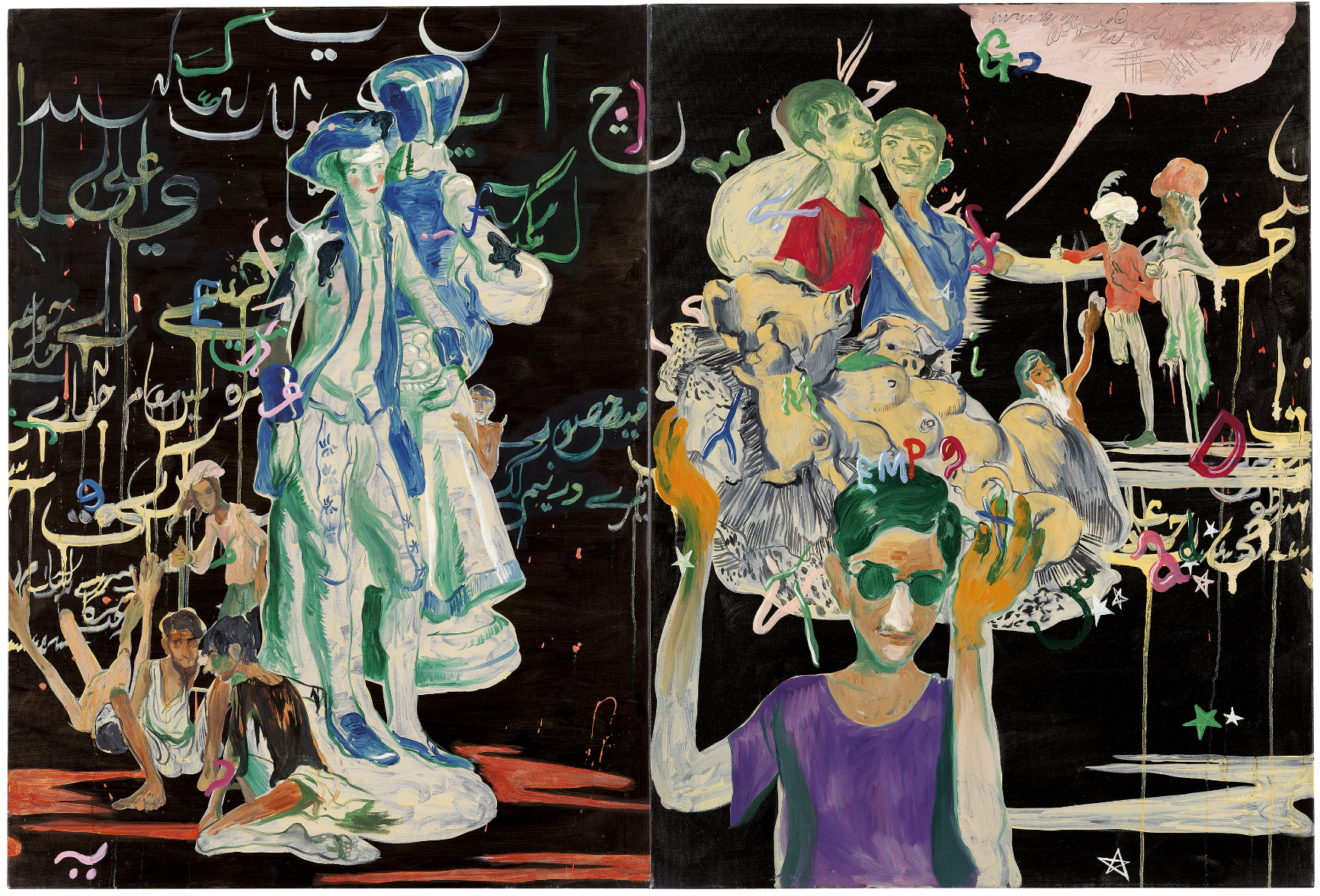
SALMAN TOOR (B. 1983)
The Burden, 2015
Oil on canvas (diptych)
Each: 101.6 x 76 cm (40×30 inches)
Overall: 101.6 x 152 cm (40×60 inches)
USD 500,000
#8. Fort Greene, 2018
Phillips New-York: 23 June 2021
Estimated: USD 100,000 – 150,000
USD 478,800
Salman Toor – 20th Century & Contemporar… Lot 3 June 2021 | Phillips
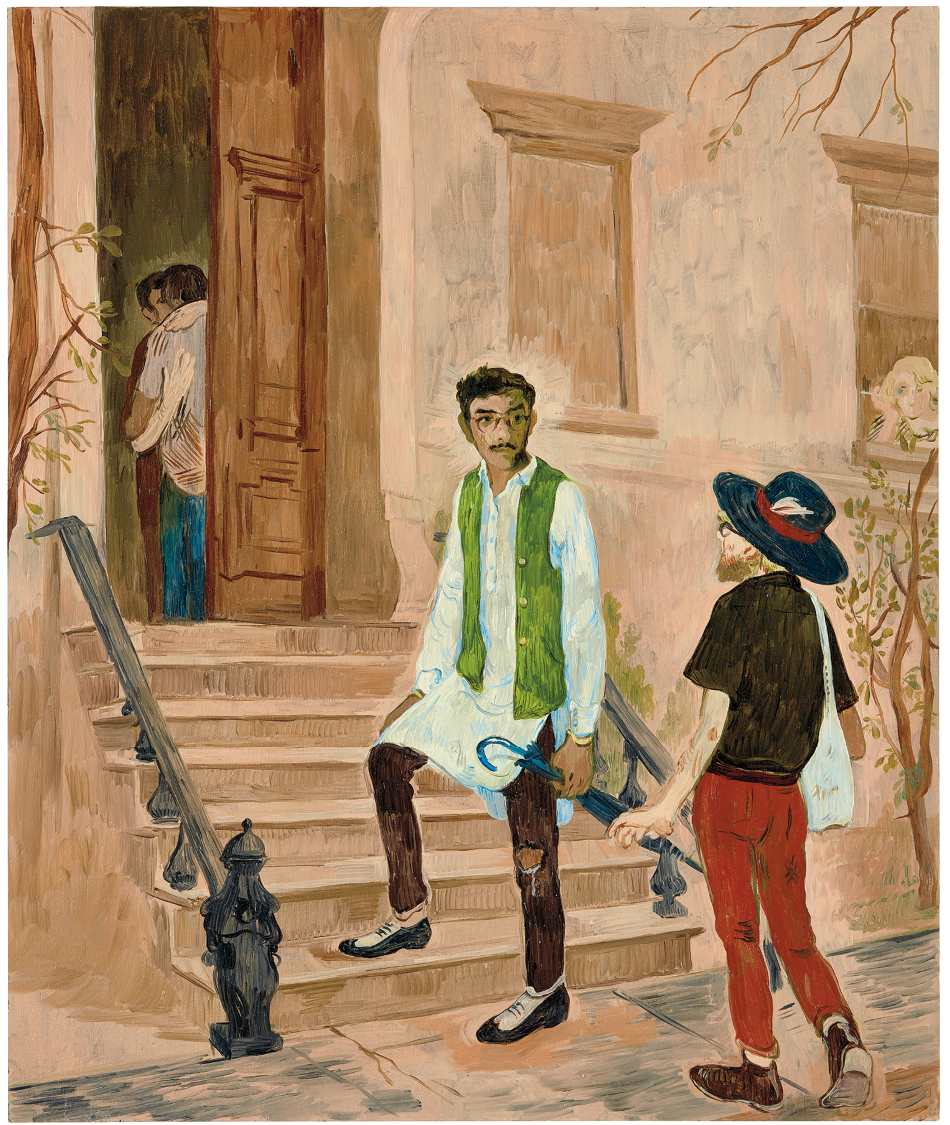
SALMAN TOOR
Fort Greene, 2018
Oil on panel
24 x 19 7/8 inches (61 x 50.5 cm)
#9. Best Friends, 2019
Christie’s New-York: 11 May 2021
Estimated: USD 100,000 – 150,000
USD 475,000
SALMAN TOOR (B. 1983), Best Friends | Christie’s
SALMAN TOOR (B. 1983)
Best Friends, 2019
Oil on canvas
61 x 50.8 cm (24×20 inches)
Signed and dated ‘Salman Toor 2019’ (on the reverse)
#10. The Palm Reader III, 2019
Christie’s London: 30 June 2021
Estimated: GBP 150,000 – 250,000
GBP 337,500 / USD 465,967
SALMAN TOOR (B. 1983), The Palm Reader III | Christie’s (christies.com)
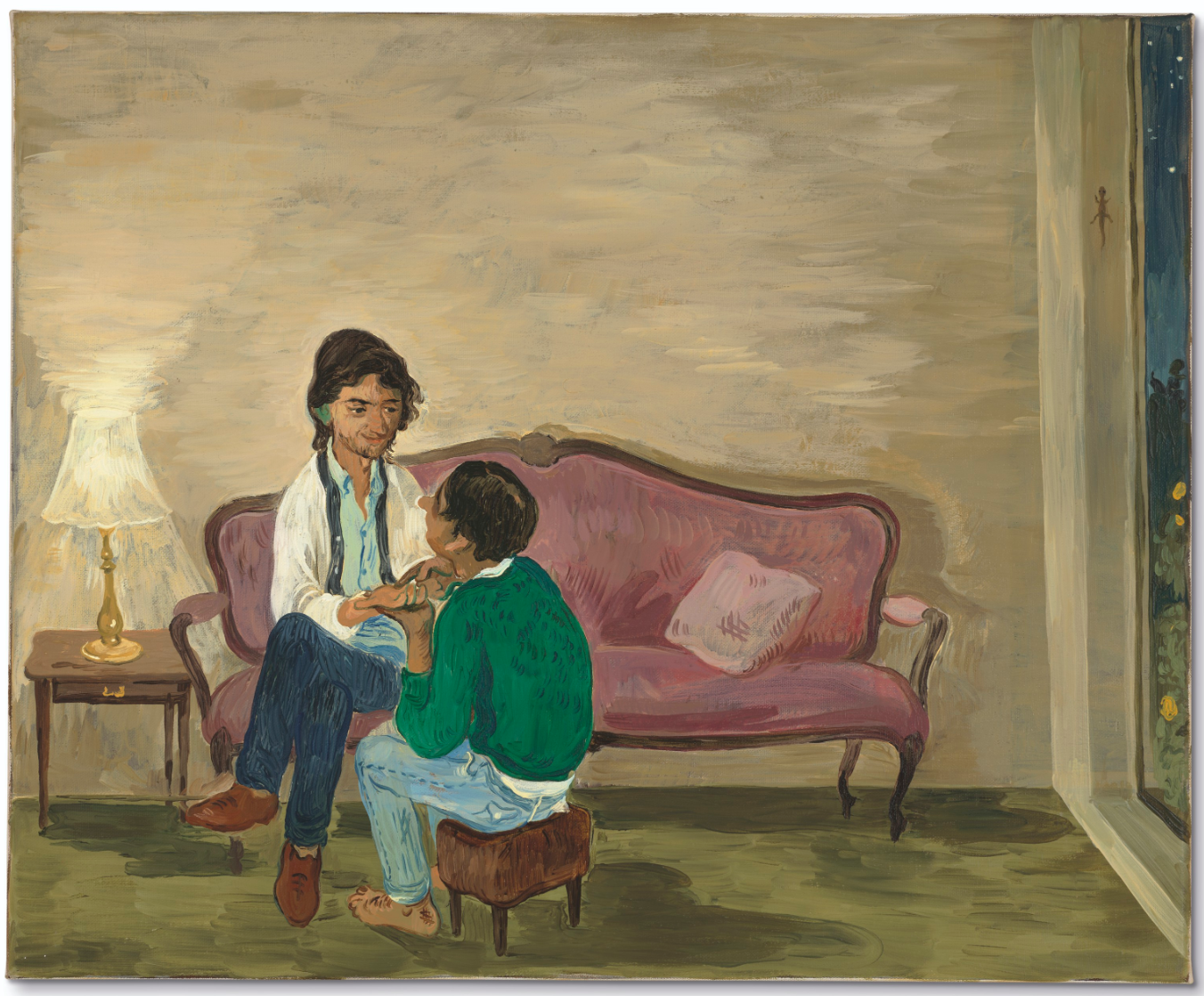
SALMAN TOOR (B. 1983)
The Palm Reader III, 2019
Oil on canvas
45.7 x 55.9 cm (18×22 inches)
Signed and dated ‘Salman Toor 2019’ (on the reverse)
#11. Recipe, 2011
Christie’s London: 25 March 2021
Estimated: GBP 50,000 – 70,000
GBP 325,000 / USD 445,875
SALMAN TOOR (B. 1983), Recipe | Christie’s
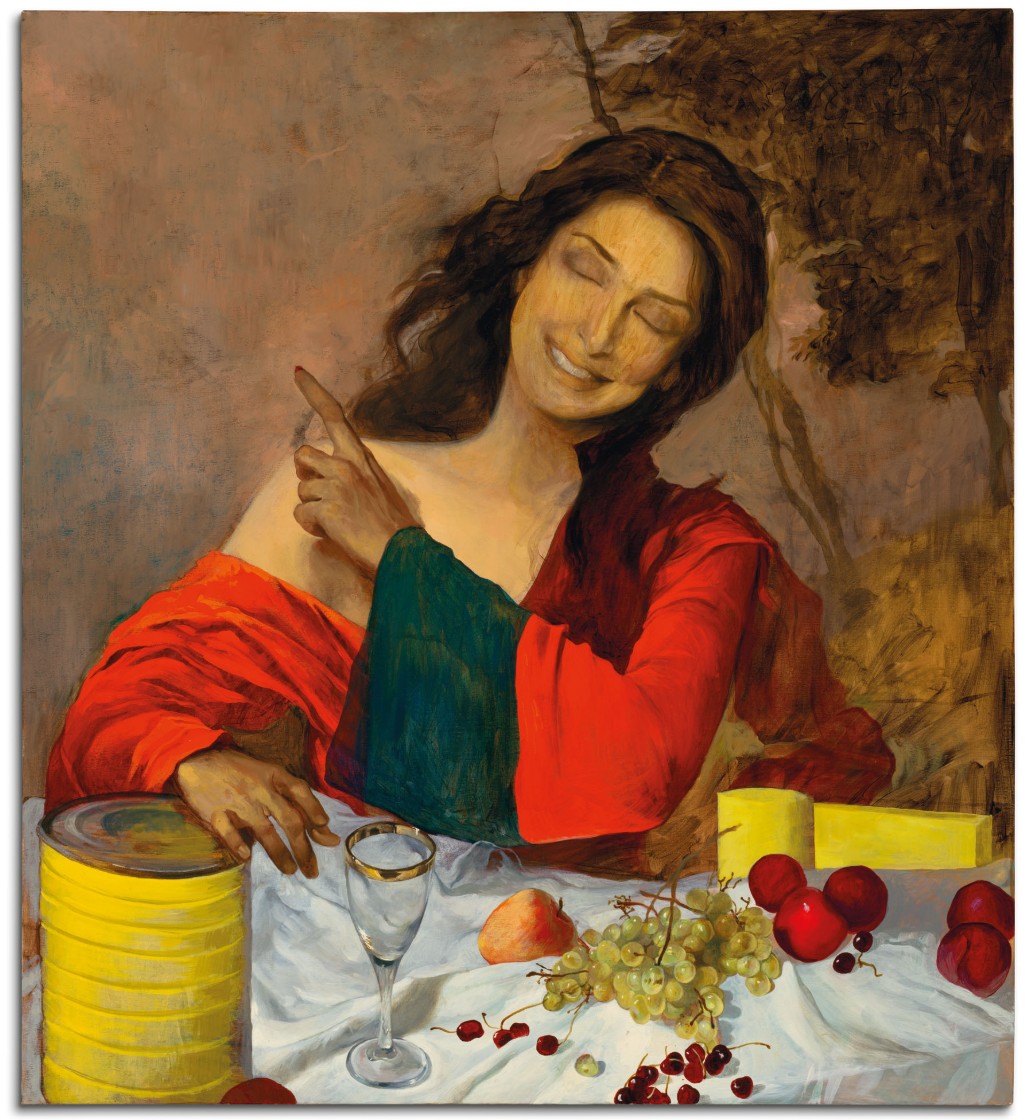
SALMAN TOOR (B. 1983)
Recipe, 2011
Oil on canvas
107 x 96.8 cm (42 1/2 x 38 1/8 inches)
Signed and dated ‘Salman Toor ’11’ (on the reverse)
#12. Untitled, 2017
Sotheby’s London: 29 June 2021
Estimated: GBP 100,000 – 150,000
GBP 315,000 / USD 436,106
Untitled | 《無題》 | Modern & Contemporary Art Evening Sale | 2021 | Sotheby’s (sothebys.com)
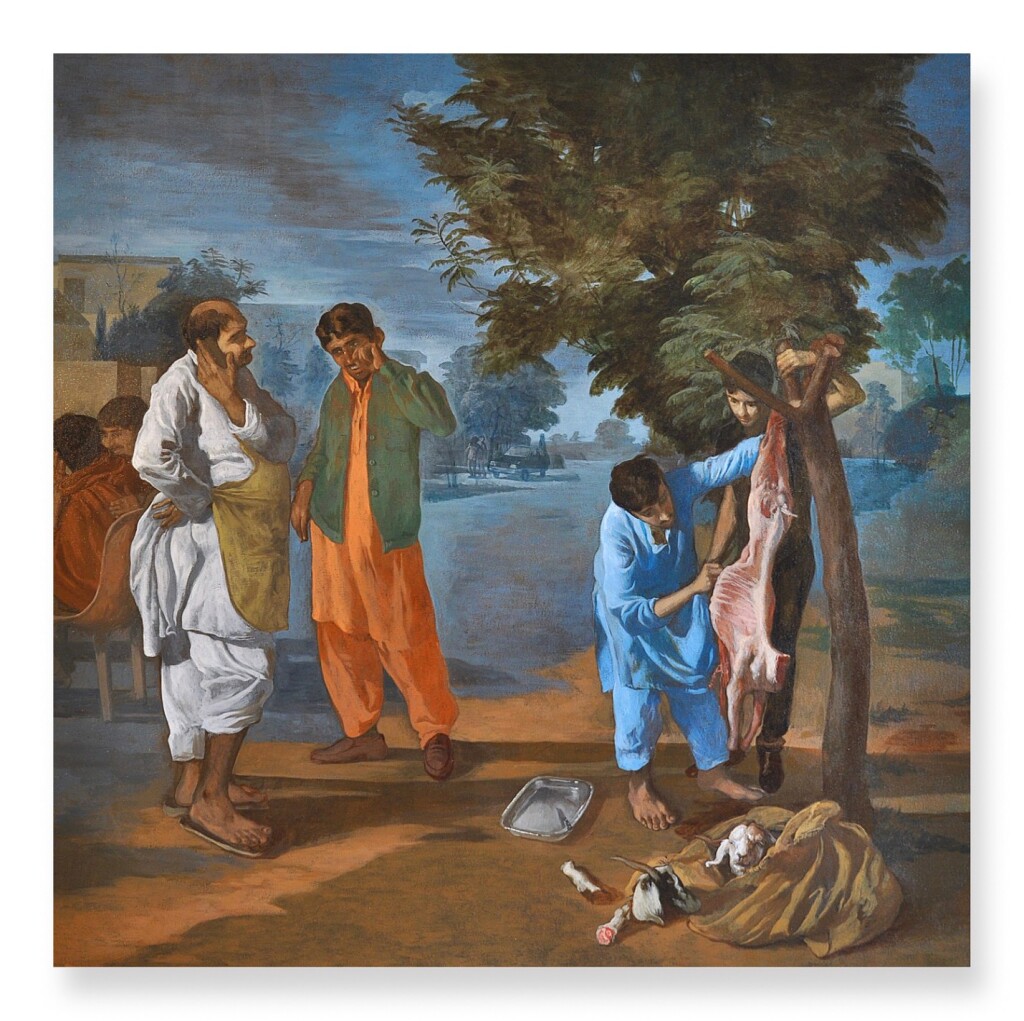
SALMAN TOOR (b. 1983)
Untitled, 2017
Oil on canvas
101.6 x 101.6 cm (40×40 inches)
#13. The Toast, 2015
Christie’s New-York: 14 May 2021
Estimated: USD 80,000 – 120,000
USD 412,500
SALMAN TOOR (B. 1983), The Toast | Christie’s
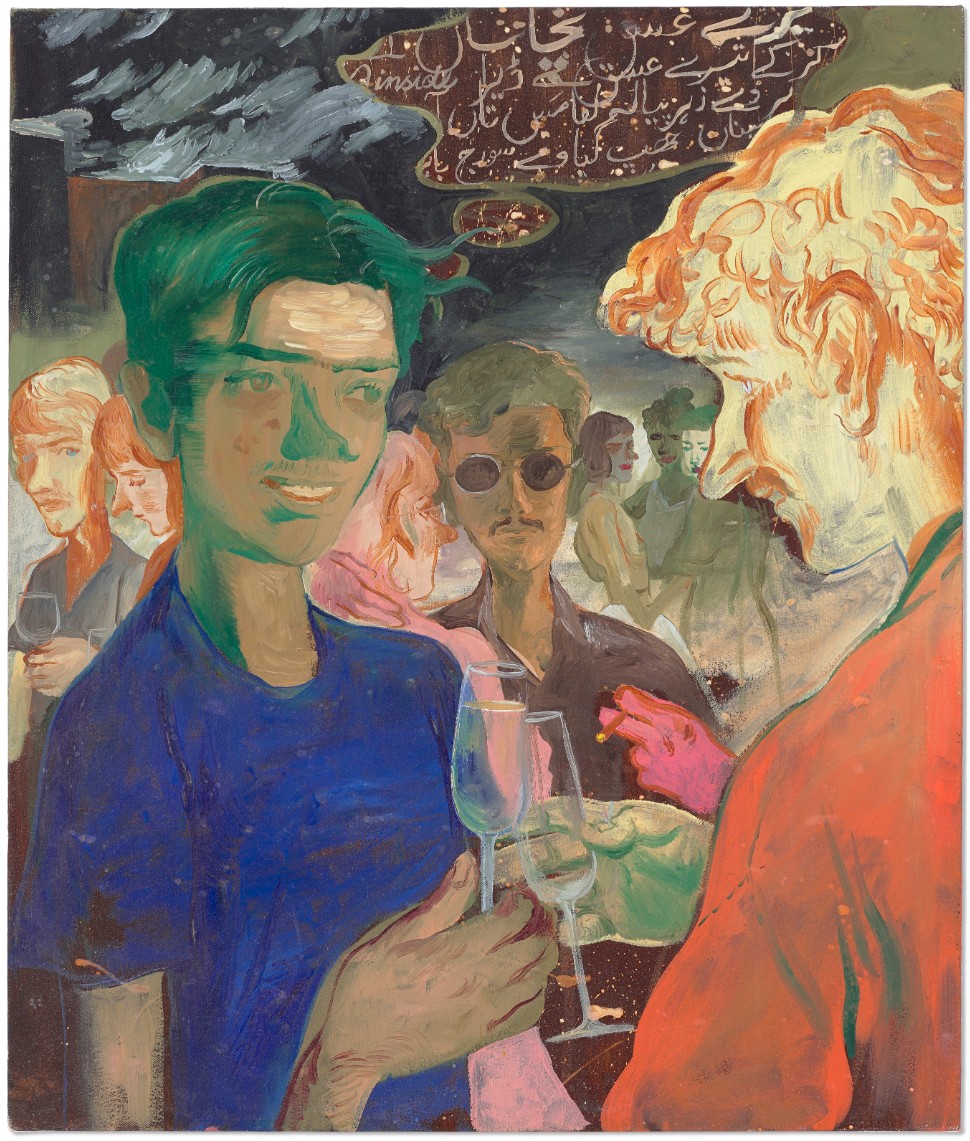
SALMAN TOOR (B. 1983)
The Toast, 2015
Oil on canvas
68.6 x 58.4 cm (27×23 inches)
#14. Nina Q and Nina X with Pearls, 2011
Christie’s London: 16 October 2021
Estimated: GBP 50,000 – 70,000
GBP 300,000 / USD 411,520
SALMAN TOOR (B. 1983), Nina Q and Nina X with Pearls | Christie’s
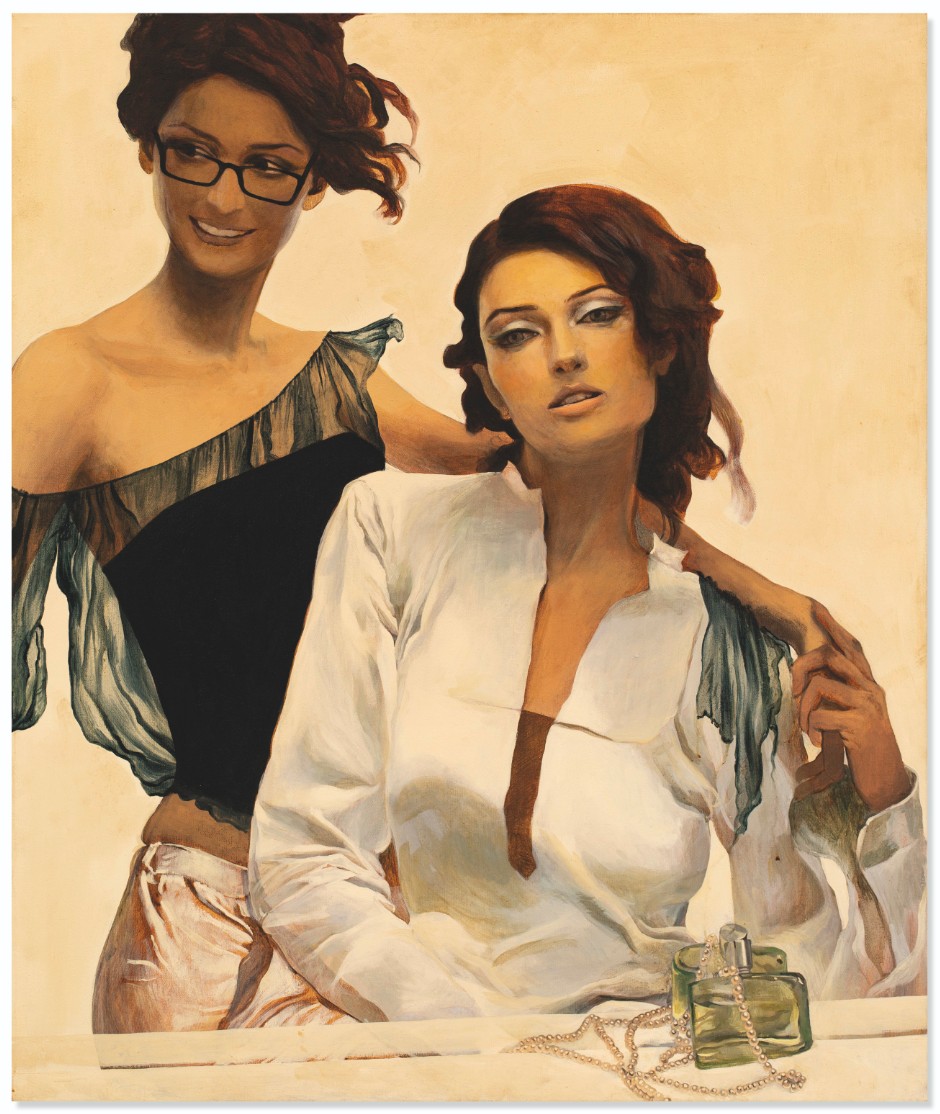
SALMAN TOOR (B. 1983)
Nina Q and Nina X with Pearls, 2011
Oil on canvas
99.1 x 83.8 cm (39×33 inches)
Signed and dated ‘Salman Toor ’11’ (on the reverse)
#15. Garden Party, 2018
Estimated: GBP 100,000 – 150,000
GBP 289,800 / USD 396,605
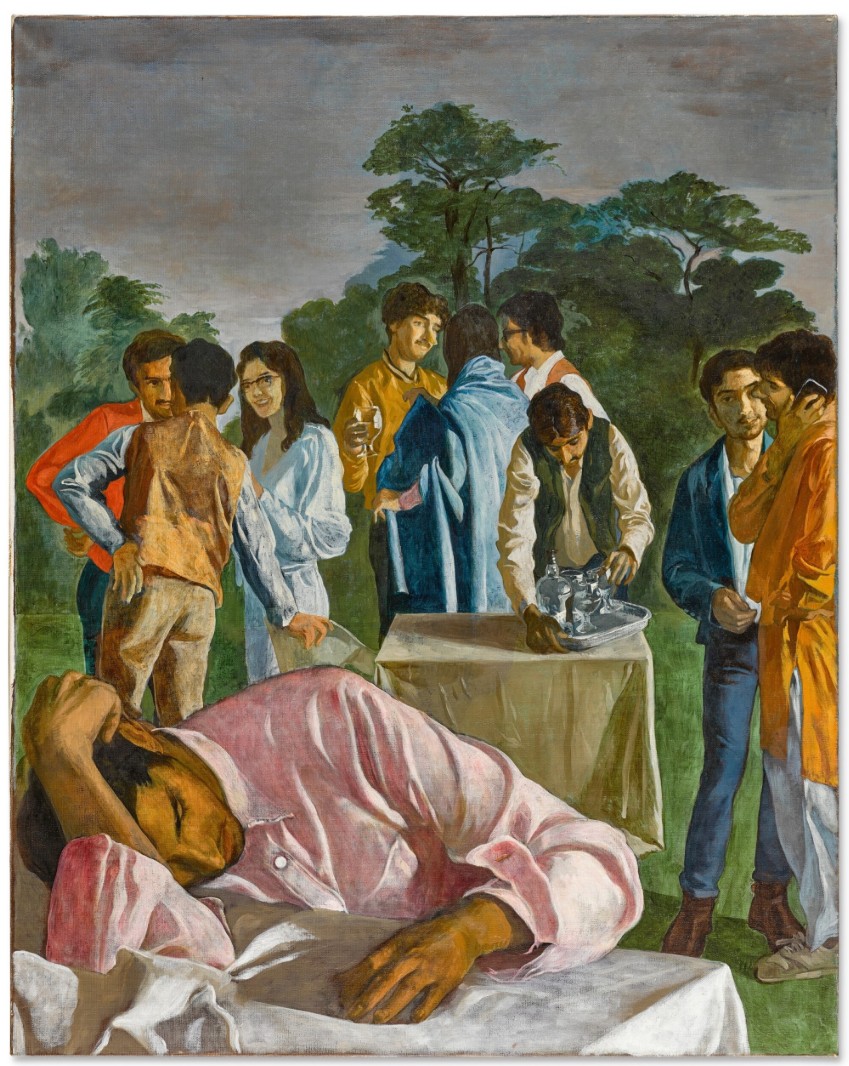
SALMAN TOOR (b. 1983)
Garden Party, 2018
Oil on canvas
99.5 x 80 cm (39 1/4 x 31 1/2 inches)
Signed, titled and dated 2018 on the reverse
#16. Barbie Bakri, 2011
Christie’s New-York: 14 May 2021
Estimated: USD 60,000 – 80,000
USD 375,000
SALMAN TOOR (B. 1983), Barbie Bakri | Christie’s
SALMAN TOOR (B. 1983)
Barbie Bakri, 2011
Oil on canvas
116.8 x 127 cm (46×50 inches)
Signed and dated ‘Salman Toor ’11’ (on the reverse)
#17. Dancing to Whitney, 2018
Phillips London: 16 April 2021
Estimated: GBP 40,000 – 60,000
GBP 252,000 / USD 348,405
Salman Toor – 20th Century & Contempo… Lot 201 April 2021 | Phillips
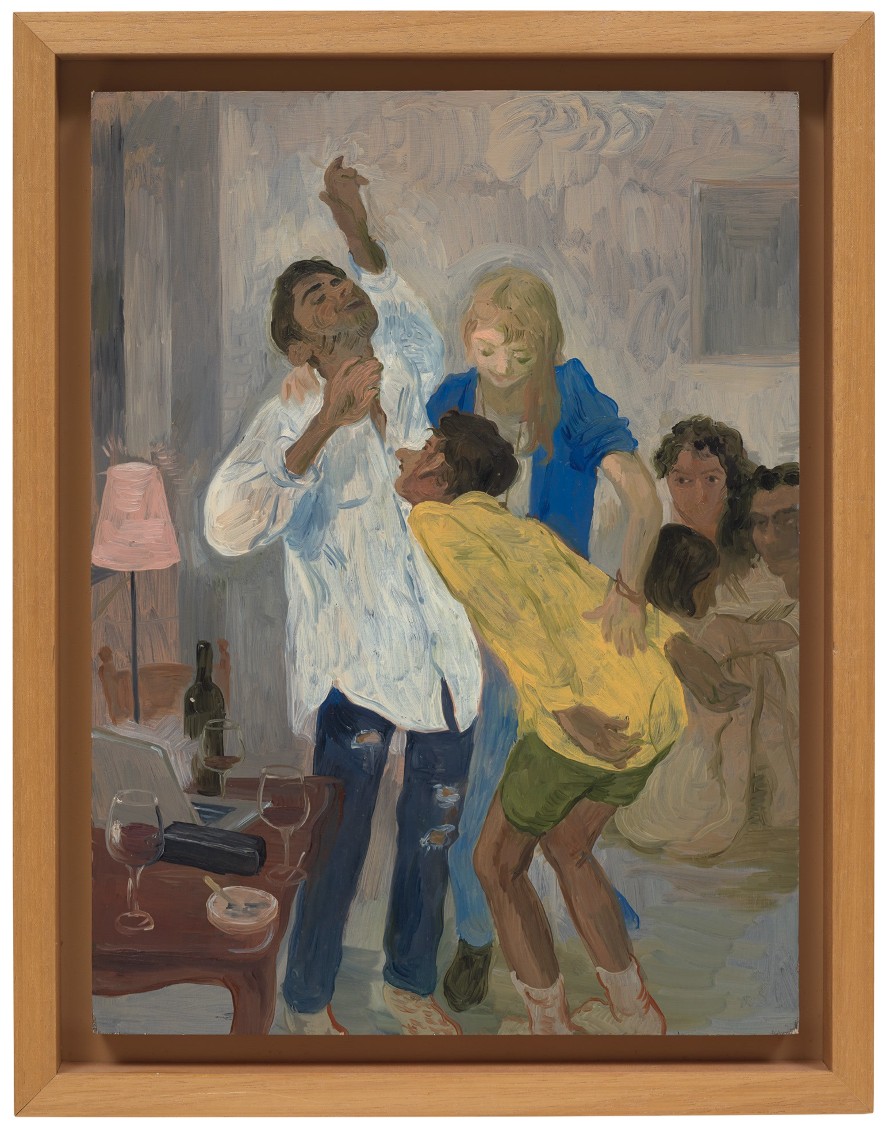
SALMAN TOOR
Dancing to Whitney, 2018
Oil on panel
40.9 x 30.7 cm (16 1/8 x 12 1/8 inches)
Signed and dated ‘SalmanToor ’18’ on the reverse
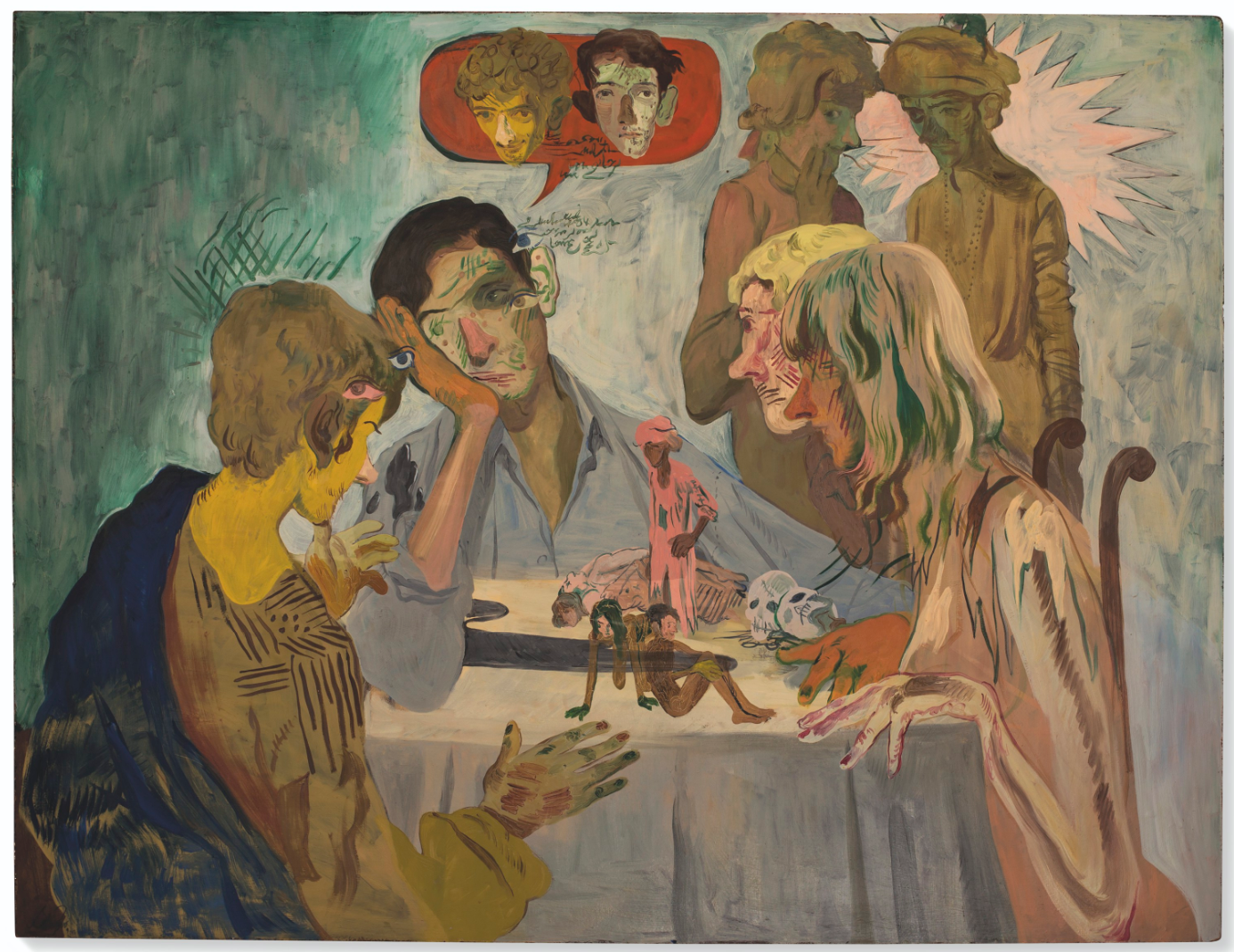
#18. Untitled, 2010
Sotheby’s London: 15 October 2021
Estimated: GBP 60,000 – 80,000
GBP 252,000 / USD 346,675
Untitled | Contemporary Art Day Auction | 2021 | Sotheby’s
SALMAN TOOR (b. 1983)
Untitled, 2010
Oil on canvas
112 x 144.5 cm (44 x 57 7/8 inches)
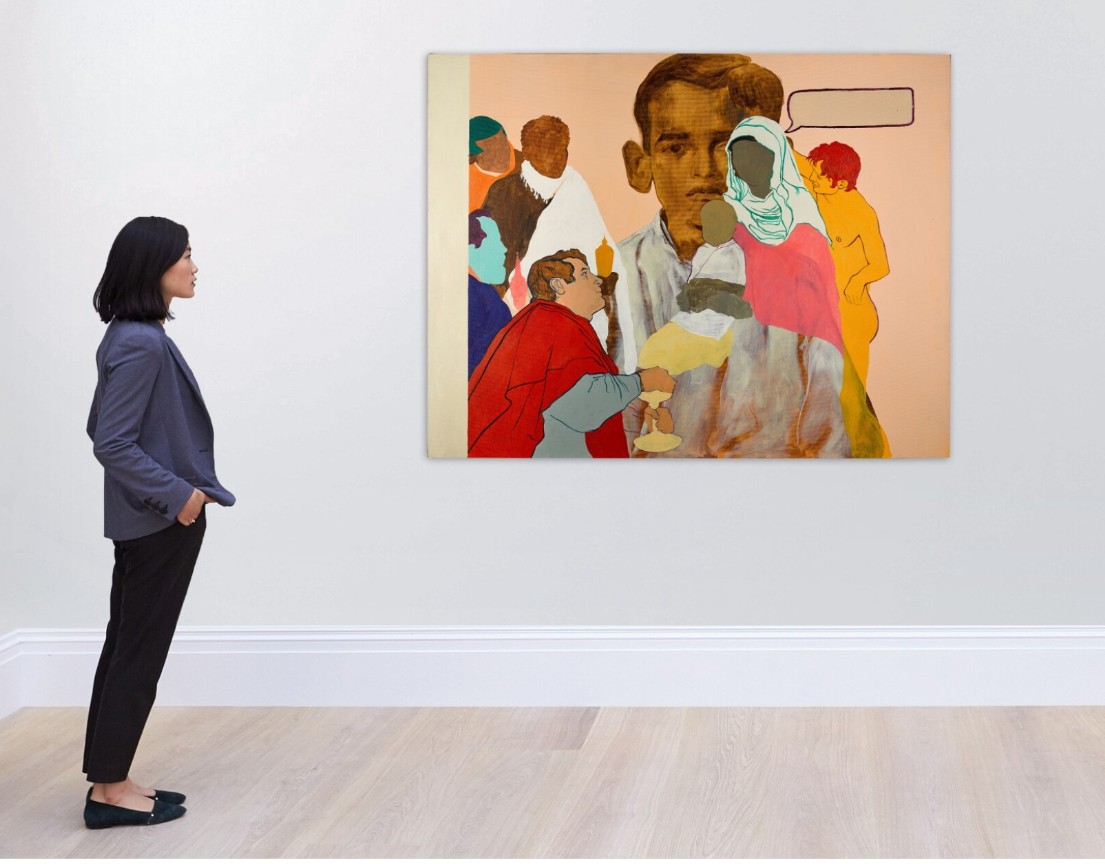
#19. Visitation, 2016
Christie’s London: 2 July 2021
Estimated: GBP 120,000 – 180,000
GBP 250,000 / USD 344,875
SALMAN TOOR (B. 1983), Visitation | Christie’s (christies.com)
SALMAN TOOR (B. 1983)
Visitation, 2016
Oil on board
91.4 x 121.9 cm (36×48 inches)
Signed and dated ‘Salman Toor ’16’ (lower left)
#20. Untitled (Woman), 2009
Christie’s London: 16 October 2021
Estimated: GBP 30,000 – 50,000
GBP 237,500 / USD 325,790
SALMAN TOOR (B. 1983), Untitled (Woman) | Christie’s
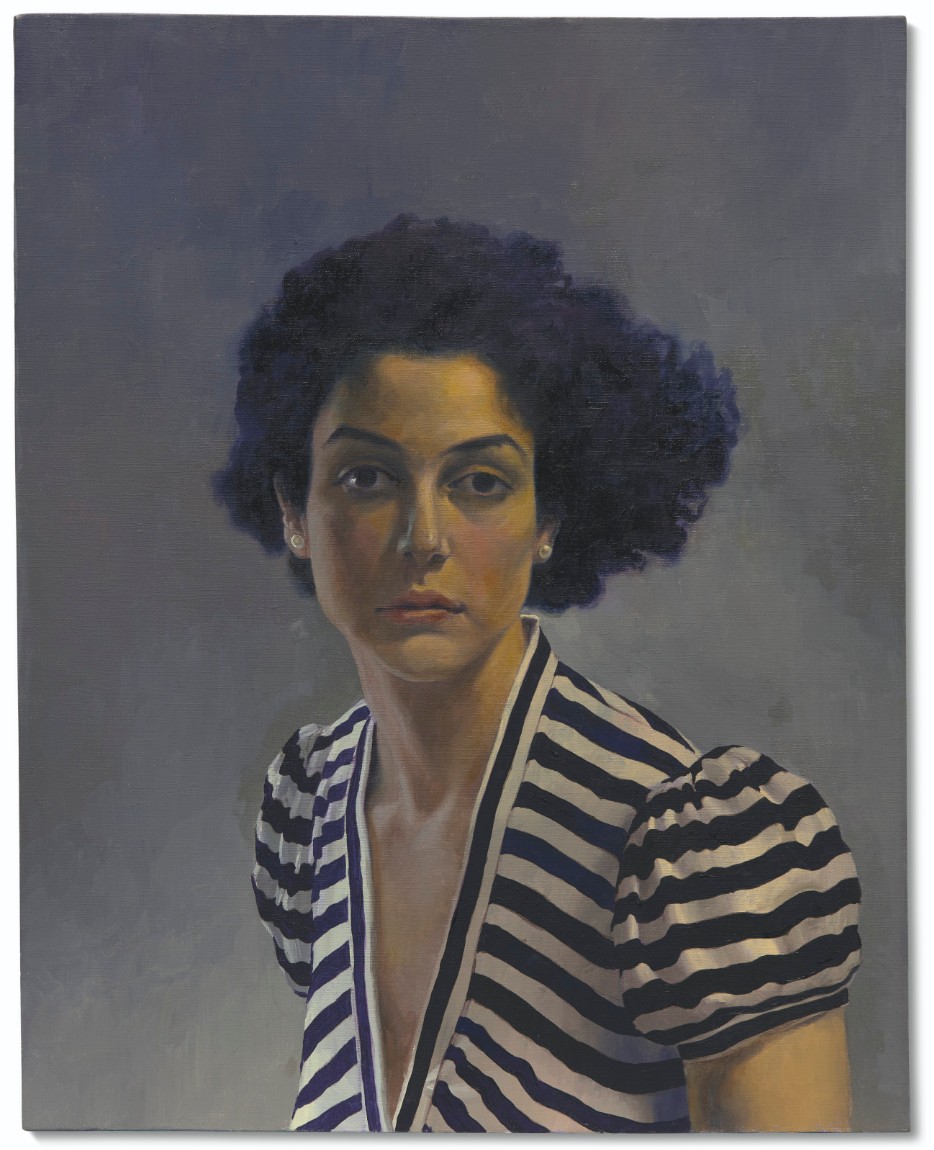
SALMAN TOOR (B. 1983)
Untitled (Woman), 2009
Oil on canvas
74.9 x 62.2 cm (29 1/2 x 24 1/2 inches)
#21. Girl with Beggar, 2013
Phillips New-York: 28 September 2021
Estimated: USD 70,000 – 100,000
USD 302,400
Salman Toor – New Now New York Lot 4 September 2021 | Phillips
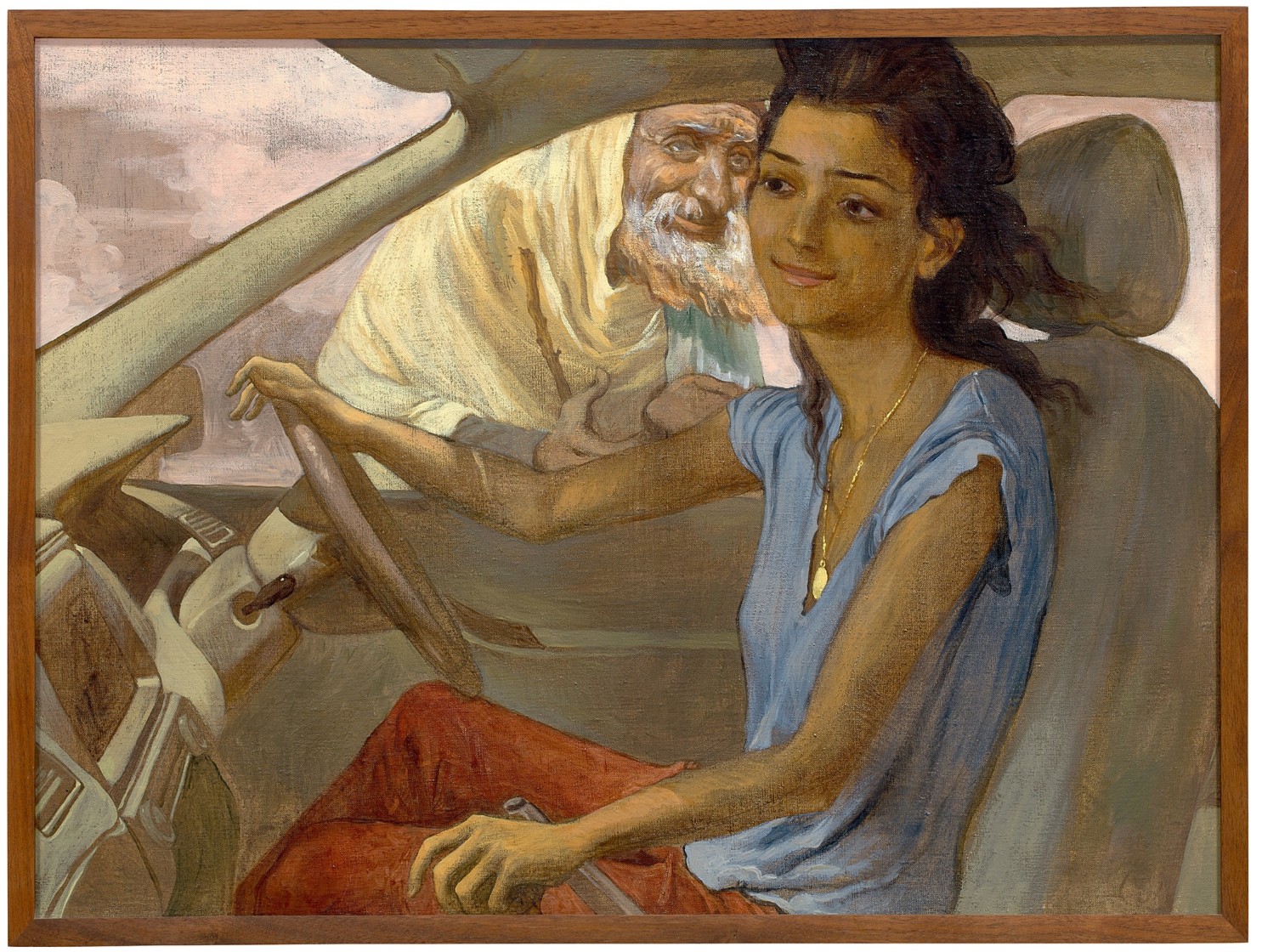
SALMAN TOOR
Girl with Beggar, 2013
Oil on canvas
45.7 x 61 cm (18×24 inches)
#22. Untitled, 2010
Christie’s London: 2 July 2021
Estimated: GBP 20,000 – 30,000
GBP 187,500 / USD 258,655
SALMAN TOOR (B. 1983), Untitled | Christie’s
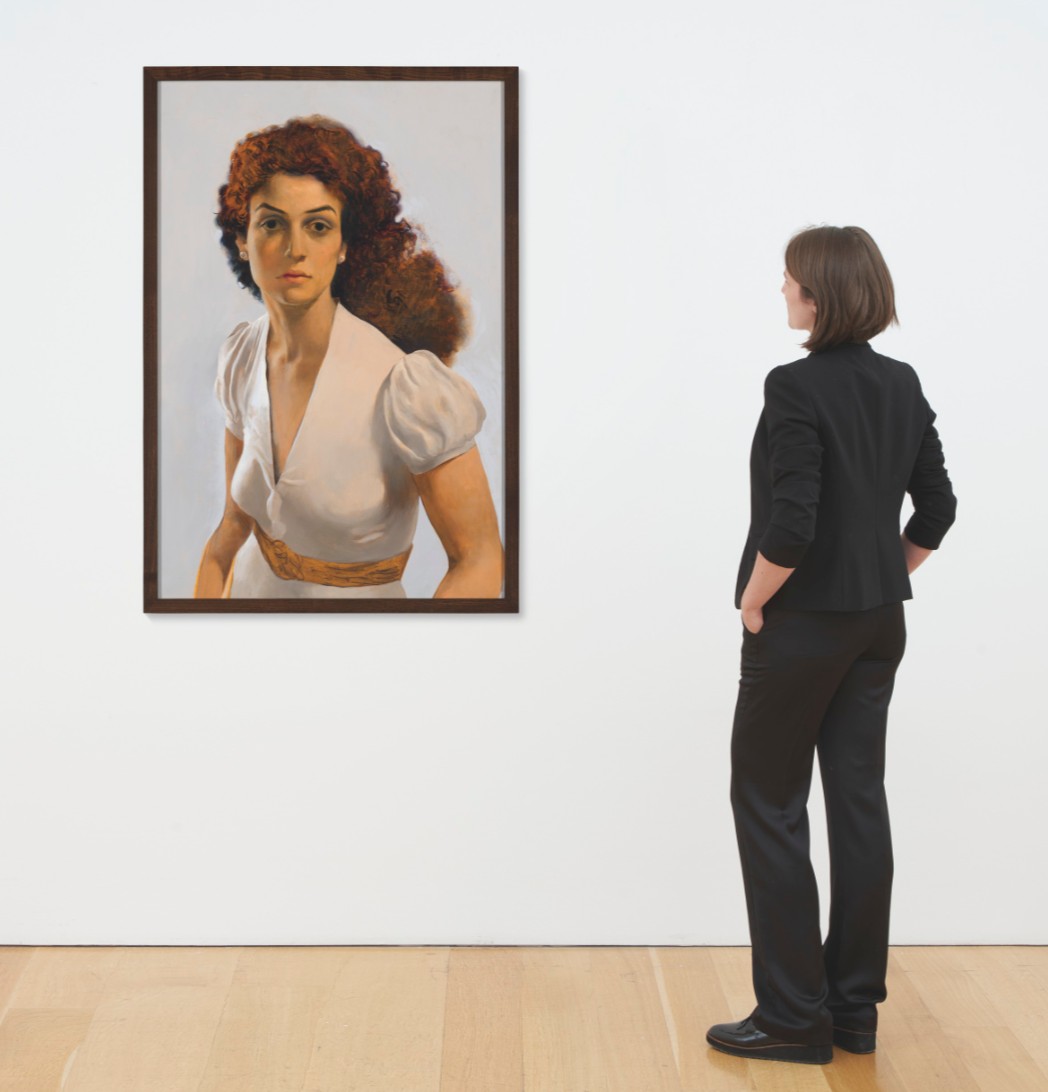
SALMAN TOOR (B. 1983)
Untitled, 2010
Oil on canvas
90.7 x 61 cm (35 3/4 x 24 inches)
Signed and dated ‘Salman Toor ’10’ (on the reverse)
#24. Untitled, 2009
Christie’s New-York: 1 October 2021
Estimated: USD 50,000 – 70,000
USD 137,500
SALMAN TOOR (B. 1983), Untitled | Christie’s
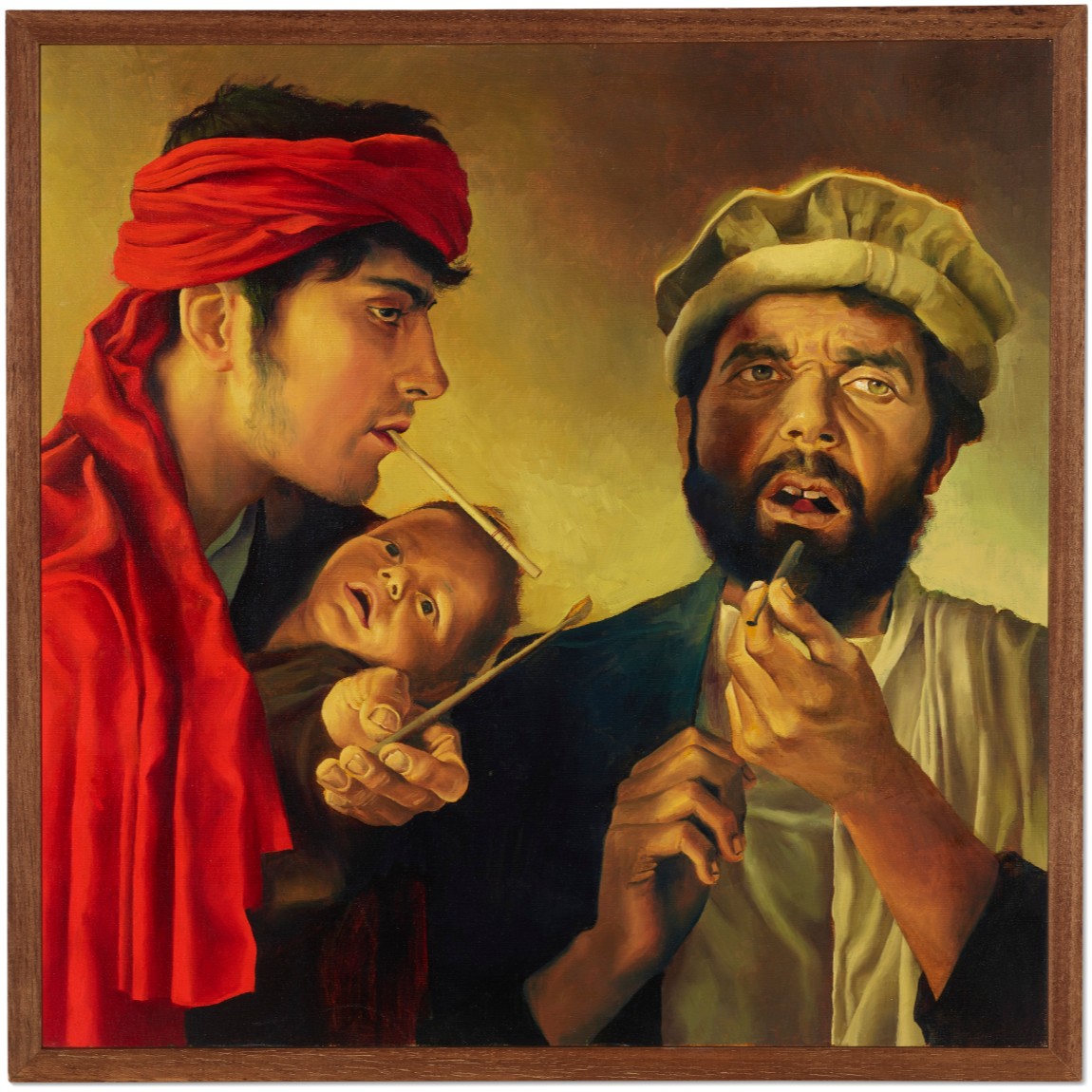
SALMAN TOOR (B. 1983)
Untitled, 2009
Oil on canvas
61×61 cm (24×24 inches)
Signed in Urdu and dated ”09′ (on the reverse)
#26. Holy Goat, 2010
Phillips London: 13 July 2021
Estimated: GBP 70,000 – 100,000
GBP 81,900 / USD 113,405
Salman Toor – New Now London Lot 5 July 2021 | Phillips
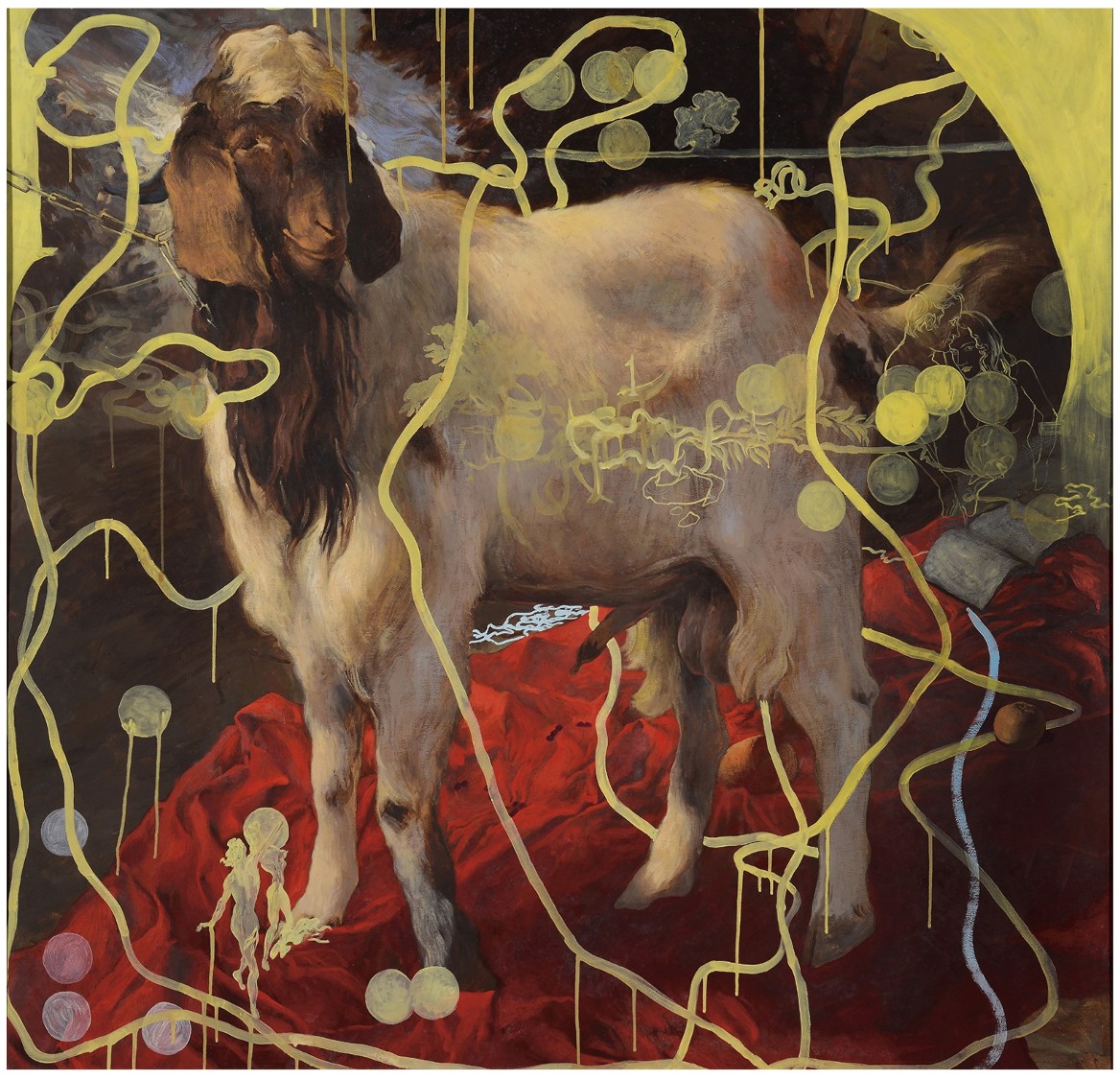
SALMAN TOOR
Holy Goat, 2010
Oil on canvas
137×137 cm (53 7/8 x 53 7/8 inches)
Signed with the artist’s initials and dated ‘ST10’ on the reverse
#27. Untitled, 2009
Christie’s New-York: 1 October 2021
Estimated: USD 30,000 – 50,000
USD 83,750
SALMAN TOOR (B. 1983), Untitled | Christie’s
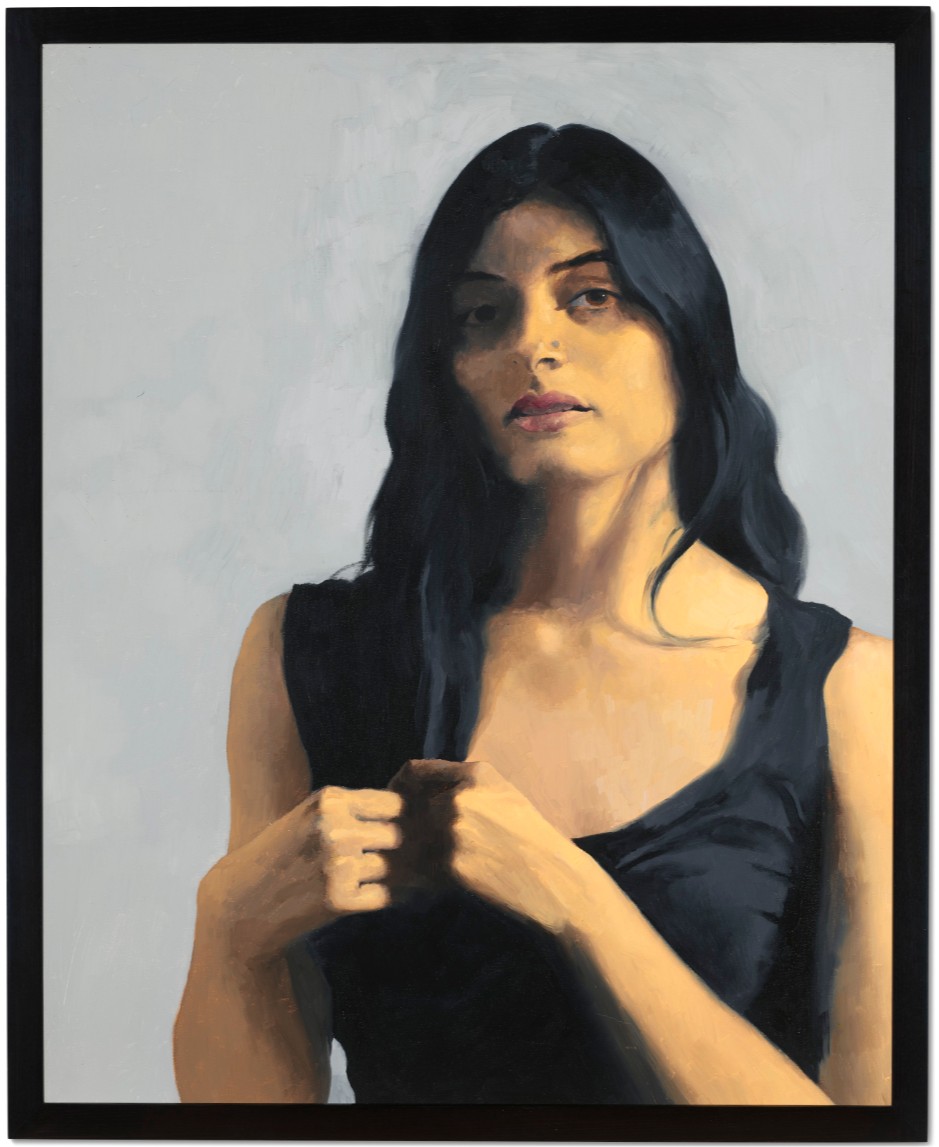
SALMAN TOOR (B. 1983)
Untitled, 2009
Oil on canvas
75.2 x 60.3 cm (29 5/8 x 23 3/4 inches)
Signed in Urdu and dated ”09′ (on the reverse)
PART III: FOCUS
Record Breakers
Four Friends, 2019
Sotheby’s New-York: 16 November 2022
Estimated: USD 300,000 – 400,000
USD 1,562,500
Four Friends | The Now Evening Auction | 2022 | Sotheby’s (sothebys.com)
SALMAN TOOR (B. 1983)
Four Friends, 2019
Oil on panel
40×40 inches (101.6 x 101.6 cm)
Signed Salman Toor and dated ’19 (on the reverse)
Enticing, glamorous, and yet somehow intensely quotidian, Four Friends from 2019 stands as one of Salmon Toor’s most celebrated and powerful paintings. As with all the best of Toor’s works, the painting highlights intimate, vulnerable moments in the lives of fictional and fashionable young queer Brown men ensconced in a utopic contemporary urban life. Rendered in Toor’s signature emerald green and painterly, tactile, glossy brushstrokes, the nocturnal fantasy of Toor’s imagined subjects invites the viewer to participate in the motion and rhythm of the painting. While the present work is not autobiographical, it draws from Toor’s lived experiences between New York City and South Asia, combining his cultural background and sexual identity to create an intimate portrait. Four Friends features two men entranced, candidly and openly swaying to the beat, free of any impositions placed upon them by the outside world. We simultaneously see two other men mesmerized by a phone, simultaneously engaged with the present, in touch as they are with a vast digital audience, and divorced from it, living outside the scene in which they find themselves. Four Friends thus perfectly embodies the idea of opposition, juxtaposition, and contradiction that is vital to Toor’s oeuvre.
Girl with Driver, 2013
Phillips Hong-Kong: 21 June 2021
Estimated: HKD 1,200,000 – 2,200,000
HKD 6,905,000 / USD 889,831
Salman Toor – 20th Century & Contemporar… Lot 1 June 2021 | Phillips
SALMAN TOOR
Girl with Driver, 2013
Oil on canvas
142×200 cm (55 7/8 x 78 3/4 inches)
Filling the frame of Girl with Driver sits a salmon-coloured Honda Civic, set against a backdrop of foliage and pale sky. Whilst the driver looks straight ahead, his passenger gazes dreamily out of the open backseat window, her fingers clasped around a blush-coloured flower she has plucked from the tall stem outside. Though their relationship remains unclear, both the title of the work and the 2013 show it exhibited at, The Happy Servant, suggest that the male figure is employed as the woman’s driver, and invite a dialogue concerning the class chasm, a theme Toor has consistently returned to throughout his oeuvre. At the same time, the scene evokes a sense of familiarity that harkens back to Toor’s upbringing in Pakistan, heightened by parallels between the composition and the idealised lifestyle imagery that dominates contemporary South-Asian mass-media, Bollywood and advertising.
Despite its contemporary connotations, Girl with Driver is cloaked by a whimsical painterly style that very much aligns the work to that of the Old Masters, perfectly exemplifying Toor’s astonishing technical virtuosity. This juxtaposition is attributed to his studies at Ohio Wesleyan University followed by his MFA at Pratt Institute from 2006 to 2009, where the artist copied seventeenth and eighteenth-century Old Masters. Through the metaphysical qualities of oil paint, the mundane is transformed to idealized motifs as Toor uniquely blends the consumerist fantasies perpetuated by mass-media along with the Renaissance-era spirit of technical perfection, aspiration, and light. As such, in drawing from both his Pakistani origins and Western art education, Toor succeeds in refreshing figurative painting, particularly as a means to explore identity and social constructs.
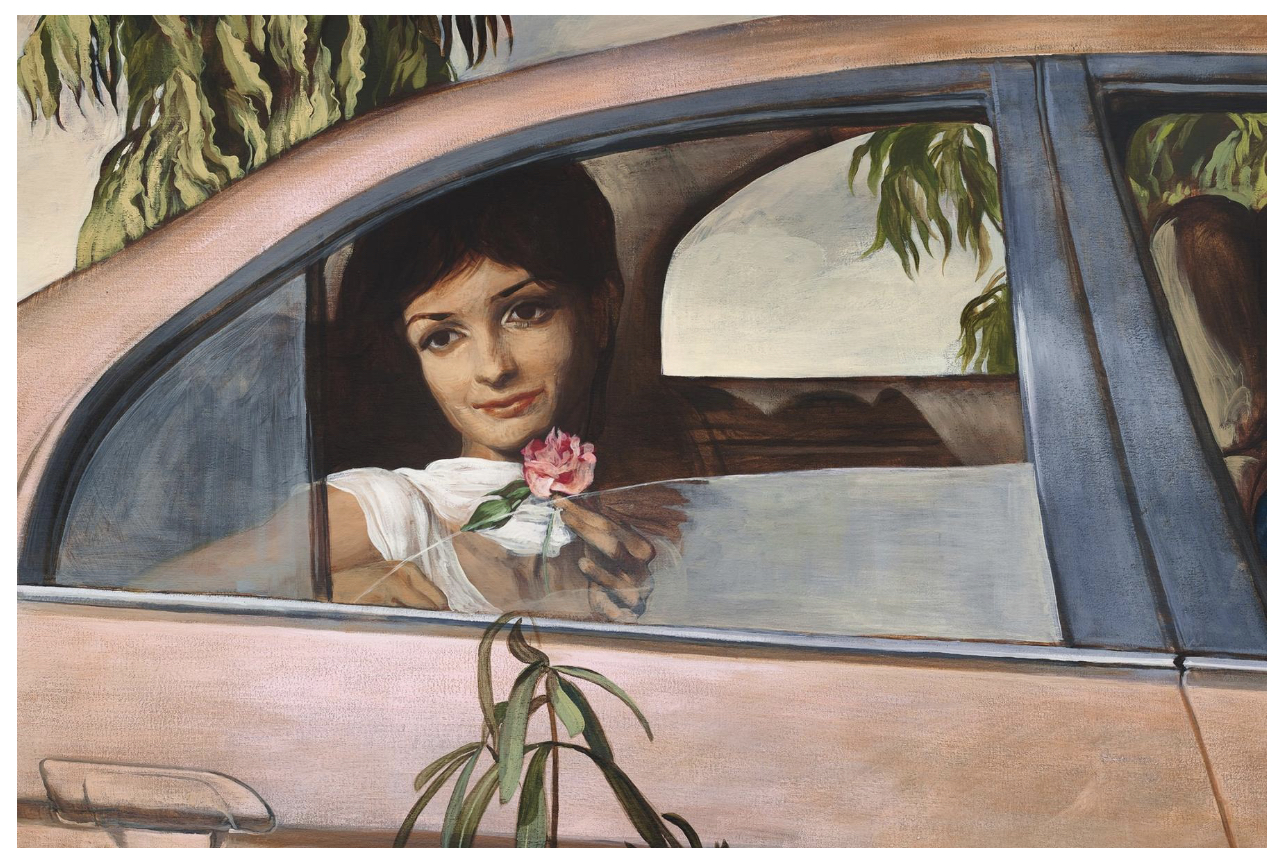
Painting from memory and imagination, Eastern and Western references bustle and interact at the core of Toor’s work to weave narrative-driven interpretation into the ambiguous visual structure. As such, it is important to also consider the artist’s early influences, as well as from the period in which the work was created. Having cited Amrita Sher-Gil as one of his first sources of inspiration, a feminist artist whom too sought to share the lives of those often overlooked, a link is made between the female character’s intriguing expression in Girl with Driver and the melancholic portraits of Indian women created by Sher-Gil in the 1930s. Giving voice and validity to their experiences through her paintbrush, her empowered art challenged without overt confrontation, paving the way for modernism in Indian art.
Girl and Boy with Driver, 2013
Estimated: USD 150,000 – 200,000
USD 882,000
Girl and Boy with Driver, 2013
Oil on canvas
134.3 x 199 cm (52 7⁄8 x 78 3⁄8 inches)
Part of the exhibition The Happy Servant, the present work and others in the series are Toor’s illustrations of the class divide in many parts of Pakistani and Indian culture. He combines a commentary on the contemporary disparity between patron and servant with the unmistakable renderings of historical Western painting. This juxtaposition causes a tension in the viewer’s mind and creates an almost interstitial space in our reality. By embracing a confluence of cultures and styles, Toor presents a composition that is both charged with personal reverie and also more accessible to a global audience.
The Arrival, 2019
Sotheby’s New-York: 12 May 2021
Estimated: USD 60,000 – 80,000
USD 867,000
The Arrival | Contemporary Art Evening Auction | 2021 | Sotheby’s (sothebys.com)
SALMAN TOOR (b. 1983)
The Arrival, 2019
Oil on panel
45.7 x 35.2 cm (18 x 13 ⅞ inches)
Signed and dated ’19 on the reverse
Exquisitely painted and carefully composed, The Arrival is a paradigm of Toor’s revolutionary oeuvre. The work depicts a liminal space that is equal parts anticipation and apprehension; with his back to the viewer, face visible only in profile, one figure opens his door to reveal his visitor, who, head titled downward as if in deference, looks up to meet the eye of his host. Arms hanging by his sides, the visitor exudes an aura of vulnerability and shyness—an air made only more pronounced by the stark contrast with the open body language of the other figure. There is no context provided for the scene, either by the work’s title or its composition. Perhaps these are two friends, one arriving forlorn in the wake of a troubling day, the other seeking to comfort him. Or, is this a romantic liaison, perhaps a first-time meeting, and the expression on the visitor’s face is reflective of his sense of trepidation and nervousness? Irrespective of the context, the painting depicts a moment on the precipice of action, a moment of uncertainty before the cards fall.
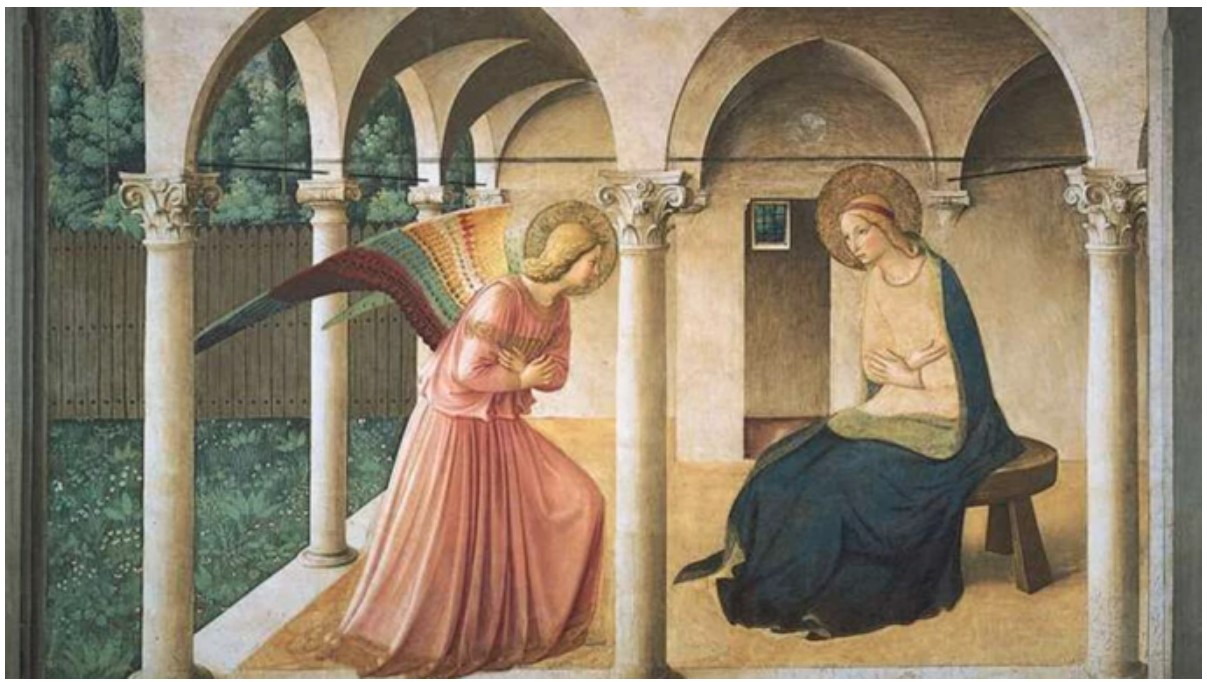
FRA ANGELICO, THE ANNUNCIATION, C. 1438-47, FRESCO, 230 X 321 CM (CONVENT OF SAN MARCO, FLORENCE)
The sense of familiarity and relatability in Toor’s work is partly attributable to his constant allusion to the Old Master paintings which he spent years studying and copying, painstakingly adopting and incorporating their styles into his original compositions. In the present work, there can be no mistaking the similarity between the visitor and Rembrandt’s seventeenth century Head of Christ (Philadelphia Museum of Art); here, as in so many of Toor’s highly lauded recent paintings, the coalescence of light around the head of the figure is subtly reminiscent of a halo. There are elements of Toor’s style and compositional awareness that also demonstrate his rigorous study of the French Rococo, and the Baroque movement as a whole. Curator Ambika Trasi aptly notes that more contemporaneously, Toor is replicating Kerry James Marshall’s forceful insertion of colored bodies into the predominantly white canon of Western painting, and also drawing on the work of Nicole Eisenman, “who melds everyday contemporary life with art history in her uncanny figurative works that question power dynamics and hierarchies.” (Ambika Trasi, “The Self as Cipher: Salman Toor’s Narrative Paintings,” The Journal of Wild Culture, 29 November 2020 (online)) Like Eisenman, Toor grounds his otherwise timeless paintings in the present day through the inclusion of modern objects, such as smartphones, laptops and cars; in the present work, the subjects’ jeans ensure that despite the Old Master references, this is a resolutely contemporary painting.
4 Guests, 2019
Christie’s New-York: 16 November 2022
Estimated: USD 120,000 – 180,000
USD 856,800
SALMAN TOOR (B. 1983) (christies.com)
4 Guests, 2019
Oil on canvas
39 1/8 x 43 1/8 inches (99.4 x 109.5 cm)
Signed and dated ‘Salman Toor 2019’ (on the overlap)
Happy Servants
Three Men with Trays, 2018
Sotheby’s New-York: 21 November 2024
Estimated: USD 200,000 – 300,000
USD 180,000
Three Men with Trays | Contemporary Day Auction | 2024 | Sotheby’s
REPEAT SALE
Phillips London: 30 June 2022
Estimated: GBP 250,000 – 350,000
GBP 315,000 / USD 383,025
Salman Toor – 20th Century & Contempora… Lot 30 June 2022 | Phillips
SALMAN TOOR (b. 1983)
Three Men with Trays, 2018
Oil on panel
60.6 x 50.5 cm (23 7/8 x 19 7/8 inches)
Masterfully evoking a poetic tenderness and melancholic solitude, Three Men with Trays exemplifies Salman Toor’s singular ability to imbue the lived experiences of queer, South Asian men with art historical gravitas and potency. Executed in 2018, the present work belongs to a body of narrative paintings by the artist in which he ruminated on the scrutiny imposed on Brown men in both public and private spaces. Inspired by the paintings of Rubens, Caravaggio and Manet, Toor’s work adopts and reimagines the art historical canon to depict sorrowful and isolated men, as well as intimate moments of tenderness and joy. Having captured the attention of the art world as one of the most exciting figurative painters to emerge in recent years, Toor is prominently featured in the 60th Venice Biennale, Stranieri Ovunque – Foreigners Everywhere, through November 24, 2024 and was recently honored by a major solo exhibition, Salman Toor: No Ordinary Love, organized by the Baltimore Museum of Art (May 2022 – February 2024).
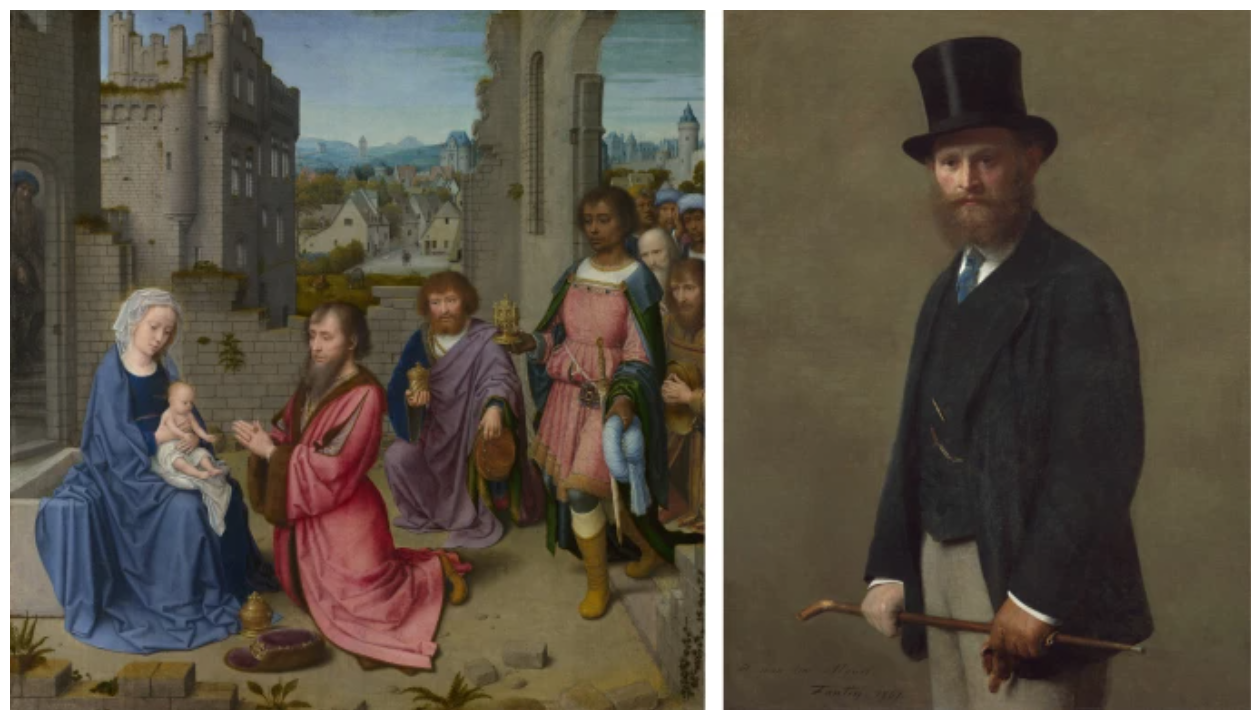
Left: Gerard David, Adoration of the Kings, c. 1515. Image © London, The National Gallery
Right: Henri Fantin-Latour, Édouard Manet, 1867. Image © Art Institute of Chicago
Deftly rendered in soft taupe, deep brown, and rich ochre, Three Men with Trays evokes a “nocturnal” quality – a twilight of uncertainties with conflicting and precarious associations – as the present composition alternates between quietude and anxiety, isolation and belonging. Grouped together, the three central figures of the present work exude a solemn vulnerability, bearing trays that evoke routine security checks or cafeteria lines; their gazes are focused beyond the bounds of the canvas as if in anticipation of an approaching event or figure.
The sense of familiarity and relatability in Toor’s work is partly attributable to his constant allusion to the Old Master paintings which he spent years studying and copying, painstakingly adopting and incorporating their styles into his original compositions. In the present work, Toor imbues each of his subjects’ expressions with a dignity that calls to mind the iconography of the Adoration of the Magi. This strategy of painting Brown men into “the language of the humanities” parallels the work of other contemporary figurative painters, such as Kerry James Marshall, in order to upend the art historical canon to include individuals who have been ignored for centuries.
“Art history has formed my imaginary map of the world, conquests, migrations, ideas of civilization, foreignness, and fashion. I like seeing the thread of the past in the present.”
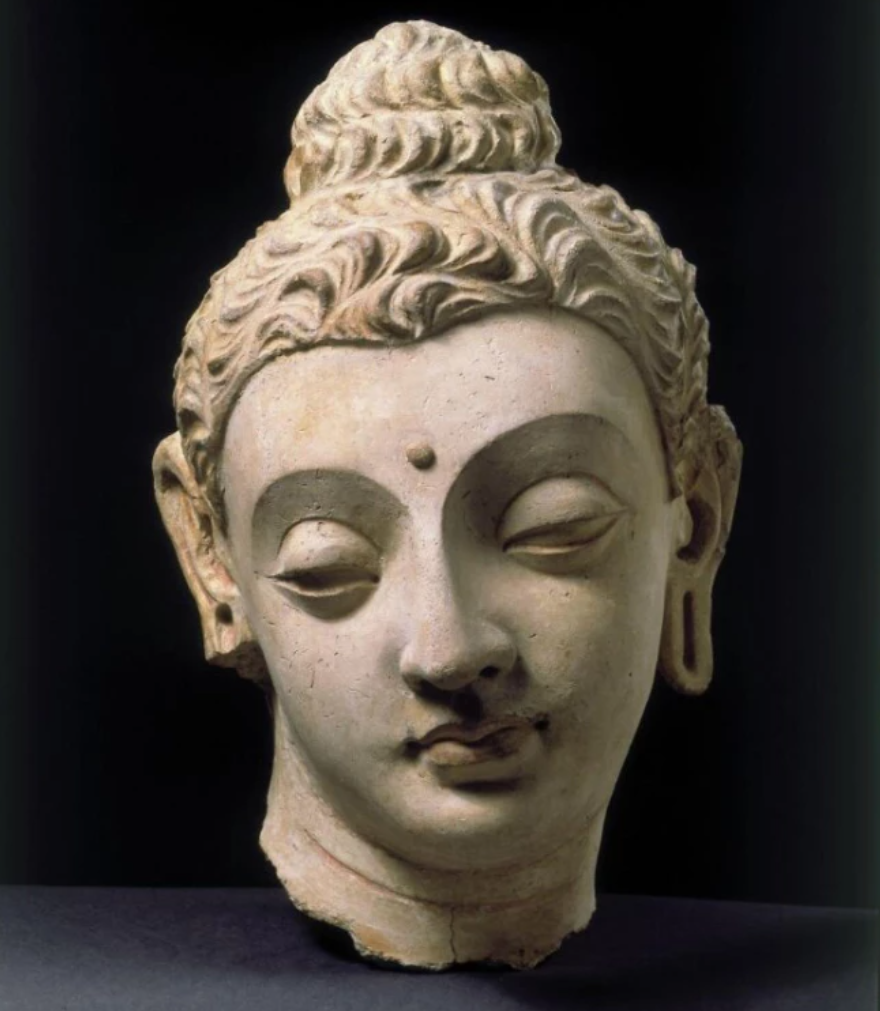
Head of the Buddha, 4th c. – 5th c.. Image © London, Victoria & Albert Museum.
Three Men with Trays is an exquisite example of Toor’s otherworldly ability to elicit intimacy and emotion through his uniquely figurative style, all whilst challenging the notions of race, immigration, and foreignness that permeate contemporary society. At the poetic threshold between fiction and autobiography, the unique visual lexicon of Toor’s native Pakistan and his education in Western academic painting merges to explore cultural identity and convey narrative through color, composition and form – ultimately establishing him as one of the most prescient voices in contemporary painting today.
Three Men with Trays, 2018
Phillips London: 30 June 2022
Estimated: GBP 250,000 – 350,000
GBP 315,000 / USD 383,025
Salman Toor – 20th Century & Contempora… Lot 30 June 2022 | Phillips
SALMAN TOOR
Three Men with Trays, 2018
oil on panel
60.6 x 50.5 cm (24×20 inches)
Well-known for his remarkable ability to blend the present with the art historical past, Pakistani-born Salman Toor paints scenes of intimacy, camaraderie, and community, imaginatively drawing on his personal experiences as a queer Pakistani man living in New York to create tender works with incredible narrative charge. Featuring three, downcast looking men wrapped in loose fitting clothes and shawls set against a denuded background, Three Men With Trays evokes Renaissance icons and Biblical scenes as much as carrying more contemporary connotations. Painted in 2018, Three Men With Trays Toor uses his own experiences as an émigré living between worlds as a vantage point from which to interrogate the relationship between the two, observing points of divergence, tension, and similarity. Building on an earlier series of works that illustrated the rigid class divide defining social relations in Pakistan and across much of India from the point of view of an outside observer, Three Men with Trays blends commentary on the persistent divides between the affluent and the needy through the lens of a Western pictorial tradition.
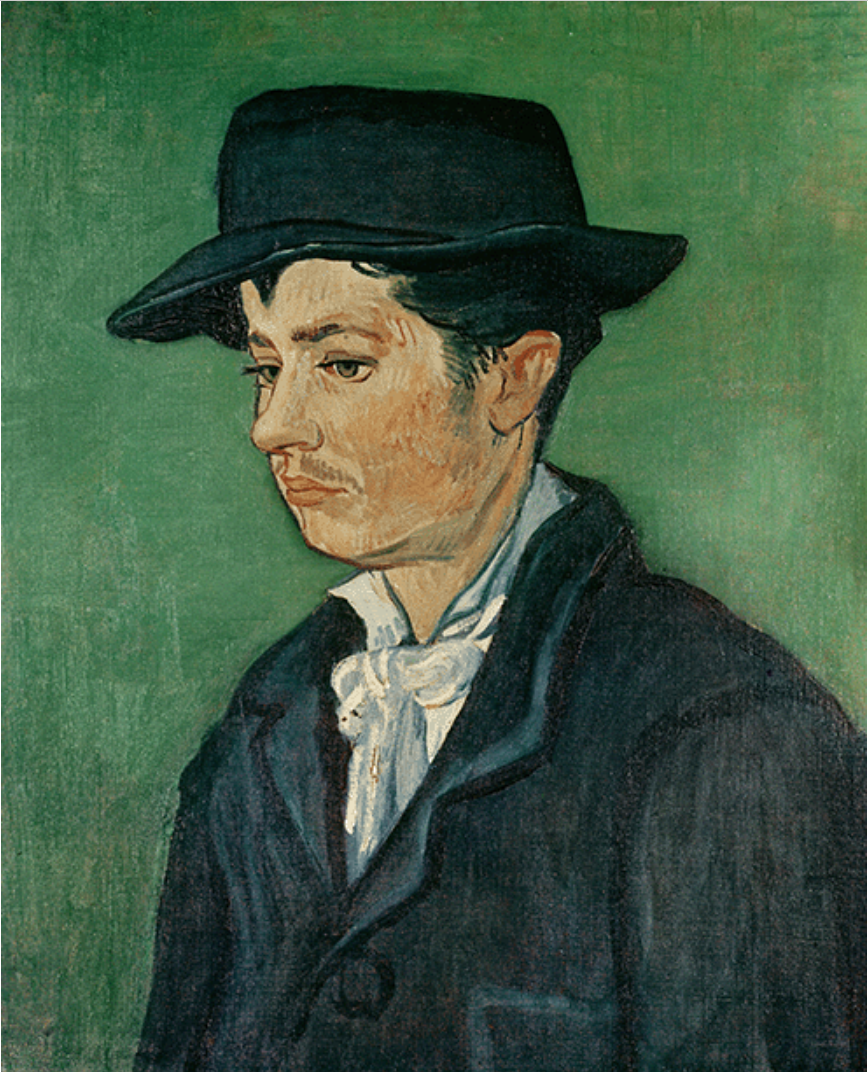
Vincent van Gogh, Portrait of Armand Roulin, 1888 Museum Boijmans Van Beuningen, Rotterdam, Netherlands. Image: Bridgeman Images
Showcasing Toor’s remarkable strength as a storyteller as much as his technical virtuosity as a painter, the scene takes on a serene stillness; a moment of quiet anticipation that is loaded with questions related to these three men – who are they, where are they, and what are their empty trays waiting for? While one man tilts his head to one side in a gesture of gentle appeal and deference, the figure to his left takes on a more defiant stance, catching our eye as he stare out of the canvas towards us, the tray gripped tightly between his hands. Standing, closely grouped together in loosely rendered, non-descriptive space, Toor plays with the idea of liminality, the allegorical ‘ in-between spaces’ that ‘can take on the feeling of an inner psychic space of some of the characters. Rooted in the diasporic experience of belonging everywhere and no-where at once, a sensation keenly communicated in the present work. Removing any visual or narrative clues that we might use to anchor the dramatic tension of the scene from the environment around them, our attention is focused squarely on the three figures. In this – as in his lithe treatment of the figure and strong sense for expressive color – Toor draws close to the evocative portraits of Vincent van Gogh, whose portraits generated a similar dramatic intensity.
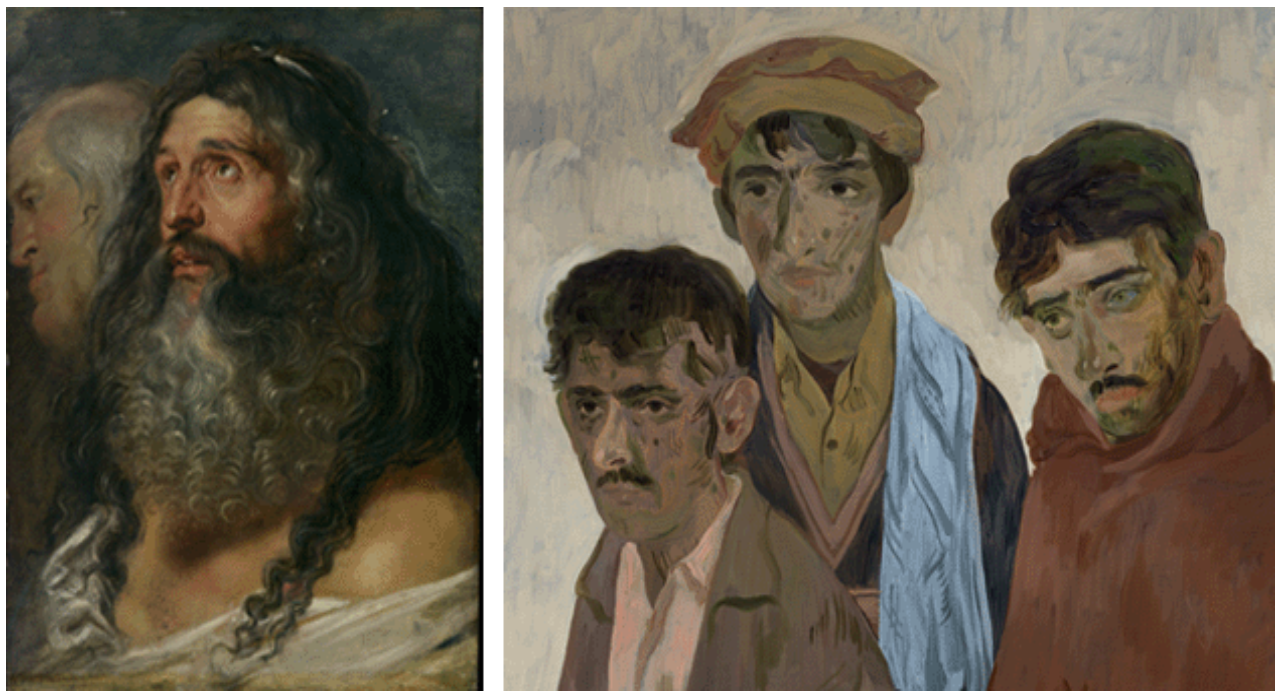
[Left] Peter Paul Rubens, Study of Two Heads, c.1609, The Metropolitan Museum of Art, New York. Image: © The Metropolitan Museum of Art, New York, Bequest of Miss Adelaide Milton de Groot (1876-1967), 1967
[Right] Detail of the present work
While we might bring to mind the ruddy palette and sense of quiet sufferance that characterizes van Gogh’s Potato Eaters, the art historical roots of Toor’s approach to figuration go considerably deeper, referencing Dutch Old Masters, Baroque, and Neo-Classical traditions that he absorbed so eagerly when he first embarked on his art studies in the United States. Scenes of peasant life and la vie Bohème in particular preoccupied the artist, explaining how he ‘learned about the grimy peasants in David Teniers and Bruegel, the dark-skinned servants in Dutch genre paintings, the steely refinement of an Anthony van Dyck subject, the sordid nightlife of Impressionist Paris’, finding within this rich subject matter compelling ways of approaching at ‘the relationship between the rich and the poor, ways of portraying forgiveness, race, power, dignity, exoticism, difference.’ Executed in earthy tones accented by touches of soft violet and blue on board, Three Men With Trays draws fruitfully on this art historical legacy, recalling the high contrasts of light and shadow, sense of movement, and dramatic sensuality of Paul Peter Reubens’ portraits. Reflecting on his time as a student and his immersion into a European art historical tradition, Toor explains ‘Instead of moving with the times, I wanted an academic education in painting […] I wanted to be as good as the White Old Masters. In fact, I was only happy when I could pretend that I was a 17th century or 18th century painter living in Madrid, Venice, or Holland.’
The Servant, 2013
Christie’s New-York: 14 May 2021
Estimated: USD 80,000 – 120,000
USD 687,500
SALMAN TOOR (B. 1983) (christies.com)
SALMAN TOOR (B. 1983)
The Servant, 2013
Oil on canvas
109.2 x 76.2 cm (43×30 inches)
An early triumph of Salman Toor’s burgeoning career, the present lot pays a sophisticated homage to artists and centuries past while artfully exploring the alienating chasm of affluence and poverty. The Servant is a prime example of the artist’s tantalizing series of portrayals of the relationship between servant and master that Toor completed in 2013. Here, the artist alludes to early iterations of his boisterous soirees and lyrical bodies that have since landed his works front and center in a highly celebrated solo exhibition at the Whitney Museum of American Art in New York.
Girl with Beggar, 2013
Phillips New-York: 28 September 2021
Estimated: USD 70,000 – 100,000
USD 302,400
Salman Toor – New Now New York Lot 4 September 2021 | Phillips
SALMAN TOOR
Girl with Beggar, 2013
Oil on canvas
45.7 x 61 cm (18×24 inches)
Girl with Beggar is an outstanding example of the virtuosic narrative ability that has catapulted Salman Toor to a status as one of the leading figurative painters of the 21st century. Showcasing Toor’s signature fusion of Old Master technique with scenarios borrowed from South Asian popular culture, Girl with Beggar presents the complicated dynamics of social stratification with strikingly fresh eyes. Painted in 2013, the present work belongs to an acclaimed early series of eleven paintings that the artist exhibited that year at his solo show The Happy Servant at Aicon Gallery in New York. Born and raised in Lahore, Pakistan, Salman Toor creates scenes, executed with loving attentiveness, that borrow from both lived reality and whimsical fantasy. His compositions often draw from his experiences and South Asian mass media alike. The series The Happy Servant, to which the present work belongs, explores both ends of the socioeconomic class spectrum and is informed by South Asian fiction and literature. Toor elucidates that by casting fictional source material as lifelike representations of contemporary life, he considers “the resulting paintings to be fantasies, ideas, not related to the real objective world.”
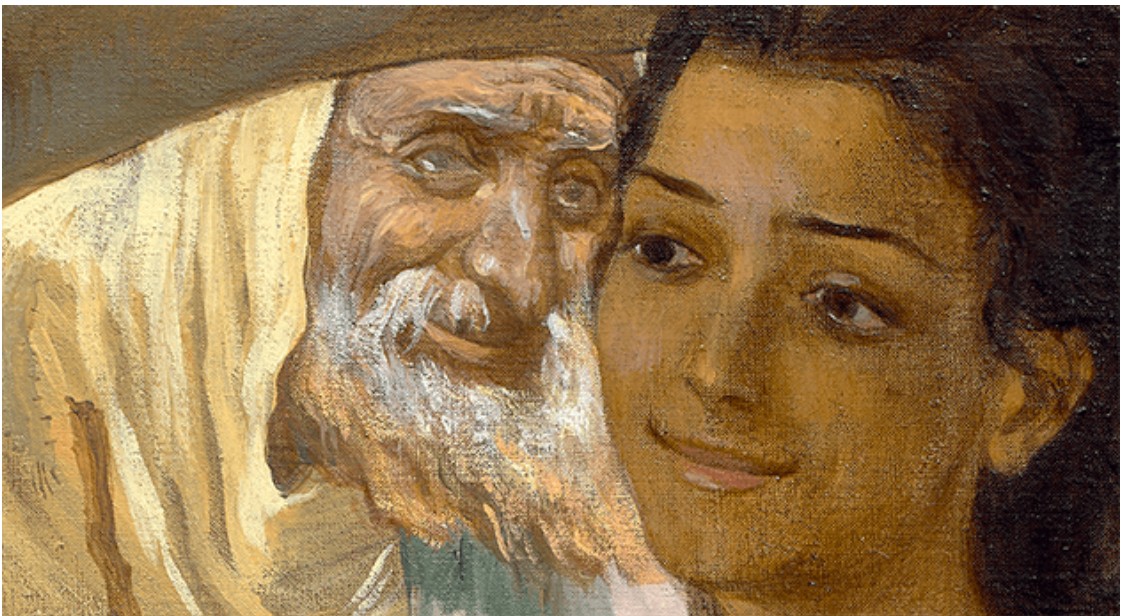
The invented origins of Toor’s narratives, however, belie uncomfortable truths of the real world. The Happy Servant explores the complex and often discomfiting relationships between masters and servants. Toor appropriates the visual idiom of commercial advertising and transforms figures of poverty and prosperity into epitomized archetypes as he highlights the unhappy relationship between those with and without. In the present work, Toor situates a female driver—pretty, starry-eyed, and attenuated—in the driver’s seat of a modest but comfortable sedan. In the background, immediately behind her but visually distanced by the frame of the window, is a beggar who, hands extended and eyes entreating, asks the driver for alms as she contentedly—and unaffectedly—continues on her way. By reducing each figure to an imagined, elemental version of itself, Toor heightens the socioeconomic disparity at play and highlights the driver’s carefree disregard of the beggar. Toor’s infusion of art historical references into scenes of everyday contemporary life is defined by its engagement with the formal vocabulary of the Old Masters. His works are marked by their academic compositions, allegorical import, and frequent references to painterly predecessors like Jean-Auguste-Dominique Ingres, Édouard Manet, Parmigianino.
“I think that was the result of me, as someone from the Third World, arriving in a museum of the First World, which was filled with an unfathomable number of gorgeous pictures. I was overwhelmed by this experience and felt something akin to rapture, totally inspired by the largely Christian pictures, which made me want to compete with the hundreds of dead aesthetes.”
Resulting from this competition are works like Girl with Beggar, genre paintings for the present day. Toor’s engagement with history and his laconic ability to render moralizing scenarios also situate him within a lineage of contemporary figurative painters. The drawn-out decadence of the present work draws comparison to that of John Currin, whose leering and sickly scenes of an imagined Rockwellian America are distinguished for their dismaying depictions of the excesses and iniquities of contemporary life. In the present work, Toor, like Currin, pursues a strategy of exaggeration as he offers the viewer a vignette of everyday immorality: the driver’s blithe Mannerist glamour is juxtaposed with the cartoonish stereotype of the beggar as each figure is reduced to a grotesque cliché of itself. By rendering the driver and the beggar as simple archetypal figures, Toor heightens the narrative punch of the work and implores the viewer to directly confront the quotidian wickedness depicted in the scene. A quietly moralizing example of the artist’s celebrated early work, Girl with Beggar masterfully demonstrates the incisive immediacy and keen narrative ability that have cemented Toor’s status as a leading figurative painter today.
Boys
Undressing Boy, 2024
Sotheby’s New-York: 27 September 2024
Estimated: USD 80,000 – 120,000
USD 240,000
Undressing Boy | Contemporary Curated | 2024 | Sotheby’s
SALMAN TOOR (b. 1983)
Undressing Boy, 2024
Oil on linen
50.8 x 40.6 cm (20×16 inches)
Signed and dated ’24 (on the reverse)
Salman Toor’s (b. 1983 Lahore, Pakistan) sumptuous and insightful figurative paintings depict intimate, quotidian moments in the lives of imagined young, brown, queer men ensconced in contemporary cosmopolitan culture. His work oscillates between heartening and harrowing, seductive and poignant, inviting and eerie. In many of his paintings, he creates subtly disarming depictions of familiar domestic environments in which often-marginalized bodies flourish in safety and comfort. Central to his work are the anxieties and the comedies of identity. In creating his figures, he employs and destabilizes specific tropes in order to reflect on the way difference is perceived by the self and by others. Furthermore, in depicting the mundane and the memorable moments of his characters’ lives, Toor reveals a deeply relatable existence, ultimately creating an opportunity for empathy through the language of painting.
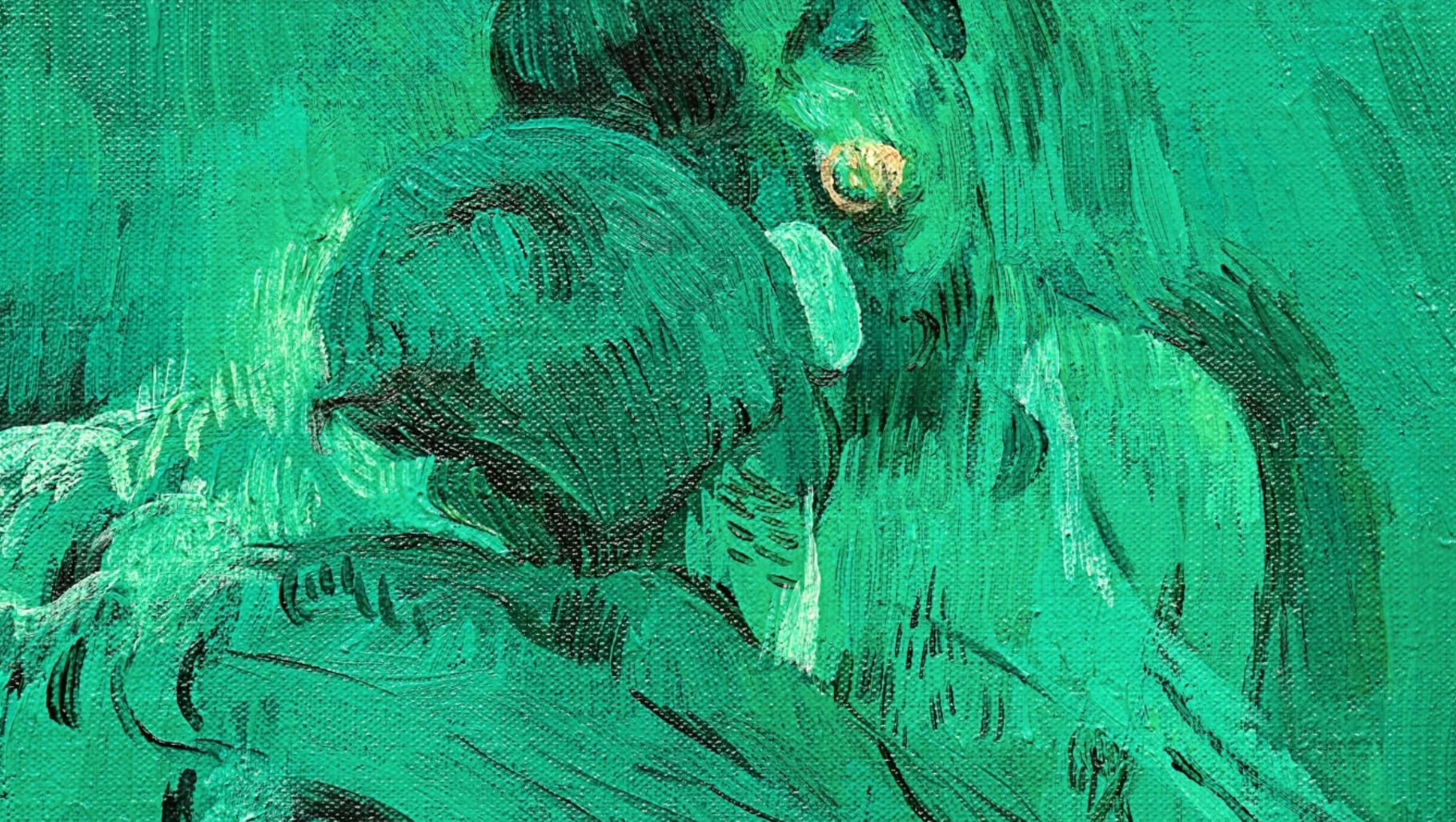
Toor’s work is currently on view in the 60th International Art Exhibition of La Biennale di Venezia, Stranieri Ovunque – Foreigners Everywhere, curated by Adriano Pedrosa, through November 24, 2024. Salman Toor: No Ordinary Love, a solo exhibition of the artist’s work organized by and originally presented at the Baltimore Museum of Art, MD in 2022, and accompanied by a catalog, later traveled to the Tampa Museum of Art, the Honolulu Museum of Art, and the Rose Art Museum at Brandeis University, Waltham, MA (2023-2024).
Pre-Drinks, 2018
Bonhams London: 12 October 2023
Estimated: GBP 150,000 – 200,000
GBP 216,300 / USD 266,379
Bonhams : SALMAN TOOR (B. 1983) Pre-Drinks 2018
oil on panel
18×18 inches (45.7 x 45.7 cm)
Toor’s style of painting is easily discernible; his paintings employ a palette of bold color applied in a painterly Mannerist style, layering the canvases with fluid brushstrokes. Toor incorporates his signature palette of emerald, green in the clothing of his male figure; the artist once commented that the glamorous tones of emerald, green evoked the nocturnal allure and fantasy of a freely queer life. There is a sense of ease between these two men, they are not actively engaging yet are present and content in one another’s company, and as the title suggests this is perhaps just the beginning of their evening together. Toor has often described his figures as undernourished and hairy bodies of color occupying familiar bourgeois urban spaces. He envisions them as educated and creative individuals perhaps navigating the artist’s life in New York City amidst shifting ideas about race, immigration, foreignness, and American identity. These figures sometimes resemble lifestyle images, representing fantasies about himself and his community, he seeks to create imagined scenes in which he and his friends are totally free to be themselves. Throughout his current oeuvre, his compositions of the mundane and the memorable moments of his characters’ lives, reveals a deeply relatable existence, ultimately creating an opportunity for empathy and private vulnerability through the language of painting which is beautifully evident in this present work.
Takeout, 2020
Christie’s London: 29 June 2023
Estimated: GBP 200,000 – 300,000
GBP 352,800 / USD 446,009
SALMAN TOOR (b. 1983) (christies.com)
SALMAN TOOR (b. 1983)
Takeout, 2020
Oil on canvas
25×25 inches (63.5 x 63.5 cm)
Signed, titled and dated ‘Salman Toor ’20 TAKEOUT’ (on the overlap)
Painted in 2020, the same year as Salman Toor’s first major institutional solo show at the Whitney Museum of American Art, New York, Takeout is a magnificent example of his intimate and fleeting painterly narratives. Rendered in rich, tactile brushstrokes, the work depicts a male couple sitting on a living room sofa, legs crossed as they eat Chinese takeout off their laps. They appear relaxed and content, one absently reaching for a round of noodles whilst the other holds his chopsticks up to his lips. Meanwhile, a period drama streams on the television behind them, two Victorian maids broadcast in high resolution across their screen. Clad in casual and contemporary clothing—ripped jeans, neon yellow sports socks, a black shaggy jacket—the sitters establish a dialogue with their 19th-century companions, the rugged beanie of the figure on the left complementing their white flounced bonnets. A glorious pastiche of past and present, and populated with objects inspired by his everyday surroundings—a Buddhist bust, a houseplant, a bottle of hot sauce—Takeout is a wonderful example of Toor’s unique and masterful chronicling of contemporary life.
Boy With Neck Chain and Plant, 2021
Sotheby’s New-York: 9 March 2023
Home Coming: Queer Artists Support the Ali Forney Center
Estimated: USD 80,000 – 120,000
USD 222,250
Boy With Neck Chain and Plant | Contemporary Curated | 2023 | Sotheby’s (sothebys.com)
SALMAN TOOR (b. 1983)
Boy With Neck Chain and Plant, 2021
Oil on canvas
74.9 x 68.6 cm (29 1/2 x 27 inches)
Signed Salman Toor and dated ’21 (on the reverse)
The present painting is one of six works comprising Home Coming: Queer Artists Support the Ali Forney Center, benefiting New York’s Ali Forney Center (AFC), an organization committed to helping LGBTQ+ homeless youth.
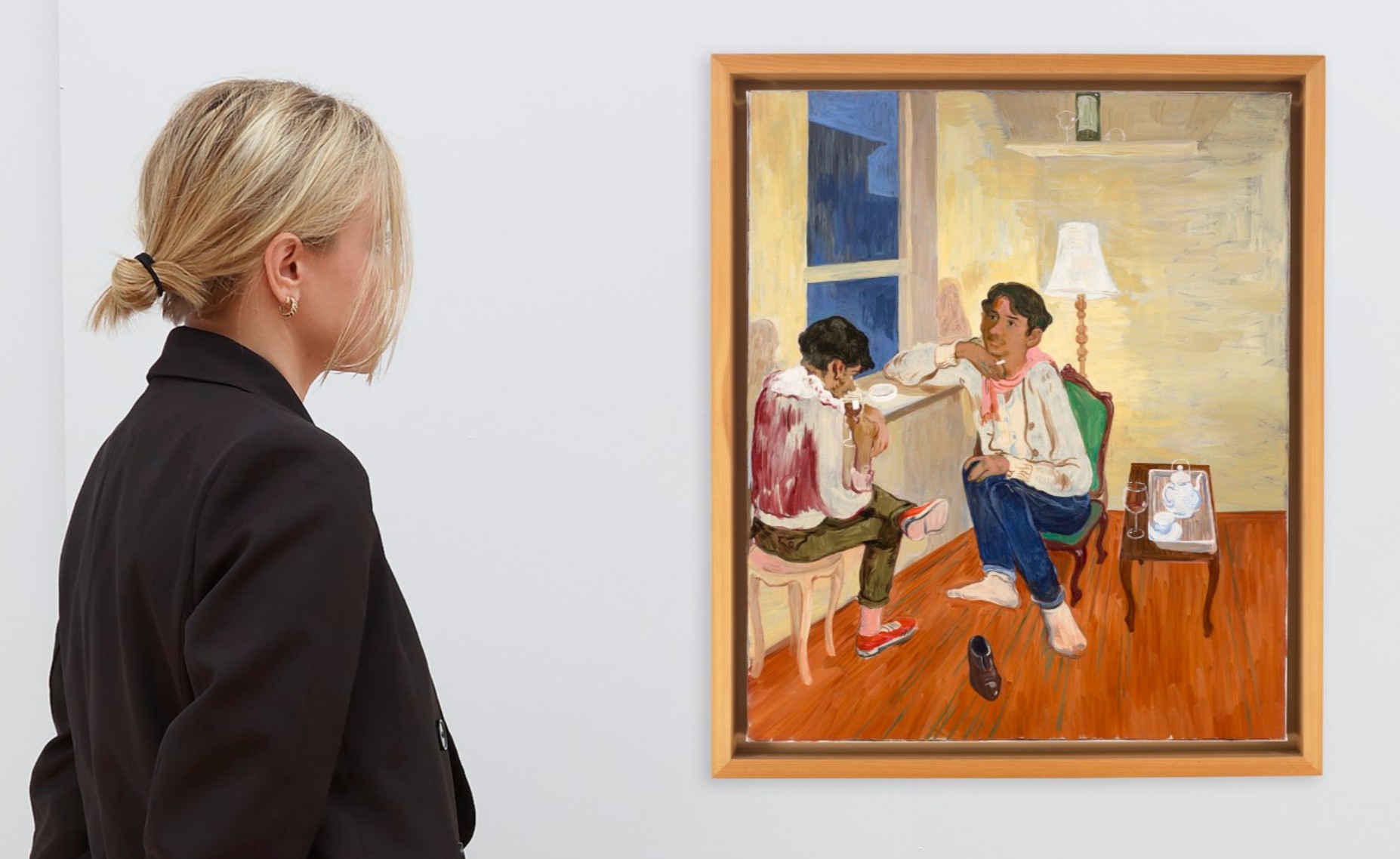
A masterful example of Salman Toor’s celebrated painterly figuration, Boy with Neck Chain and Plant invites the viewer into a warm, alluring scene of queer domesticity. As with the best of Toor’s work, this painting highlights intimate, vulnerable moments in the life of a fictional and fashionable young queer Brown man ensconced in a utopic contemporary urban life. A central nude figure, adorned only with a single glimmering neck chain, brazenly posing with self-possessed confidence is illuminated as hints of Toor’s signature emerald, green rest in the shadows, which dances across the contours of the man and onto the wall in front of him. Rendered in Toor’s painterly, tactile and glossy brushstrokes, the dynamic texture of the surface is reminiscent of the emotional force evoked by Van Gogh’s similarly specific application of paint. Standing before an arched mirror, the figure’s interior space is reflected out to the viewer with the hint of a bed and crumpled carpet extending into the room behind him. This optical technique, reminiscent of Northern Renaissance masterworks, situates the figure and viewer both within a boundless domestic space. At the poetic threshold between fiction and autobiography, the unique visual lexicon of Toor’s native Pakistan and his education in Western academic painting merges to explore cultural identity and convey narrative through color, composition and form.
Christie’s New-York: 11 May 2021
Estimated: USD 100,000 – 150,000
USD 475,000
SALMAN TOOR (B. 1983), Best Friends | Christie’s
SALMAN TOOR (B. 1983)
Best Friends, 2019
Oil on canvas
61 x 50.8 cm (24×20 inches)
Signed and dated ‘Salman Toor 2019’ (on the reverse)
Best Friends is a superlative example of the artist’s ability to create atmospheric and enigmatic narratives from a careful blend of real-world experience and personal introspection. Drawing upon his own life, Toor comments on his background as a Queer man growing up in Lahore, Pakistan, and his eventual move to New York City. The protagonists populating his richly painted canvases are often lithe, brown-skinned men who inhabit a contemporary world rendered with the brushes of the past. Speaking about his influences and his intense study of the white Western artists strewn about the canon, Toor notes,
“The floridness and vividness of their styles appeals to me. The overcrowded Baroque compositions of Rubens, the dignity of the subjects in Van Dyck, the lushness of romance and sensuality in Watteau, the decorative brilliance of Veronese. It is a pre-industrial way of looking, a foreign language of picture making”
If not for the occasional laptop or smartphone held by one of the characters throughout his oeuvre, one might be forgiven for thinking Toor was living in another century. However, the way his steady strokes coax out a painterly nostalgia while also speaking to today’s issues is truly noteworthy.
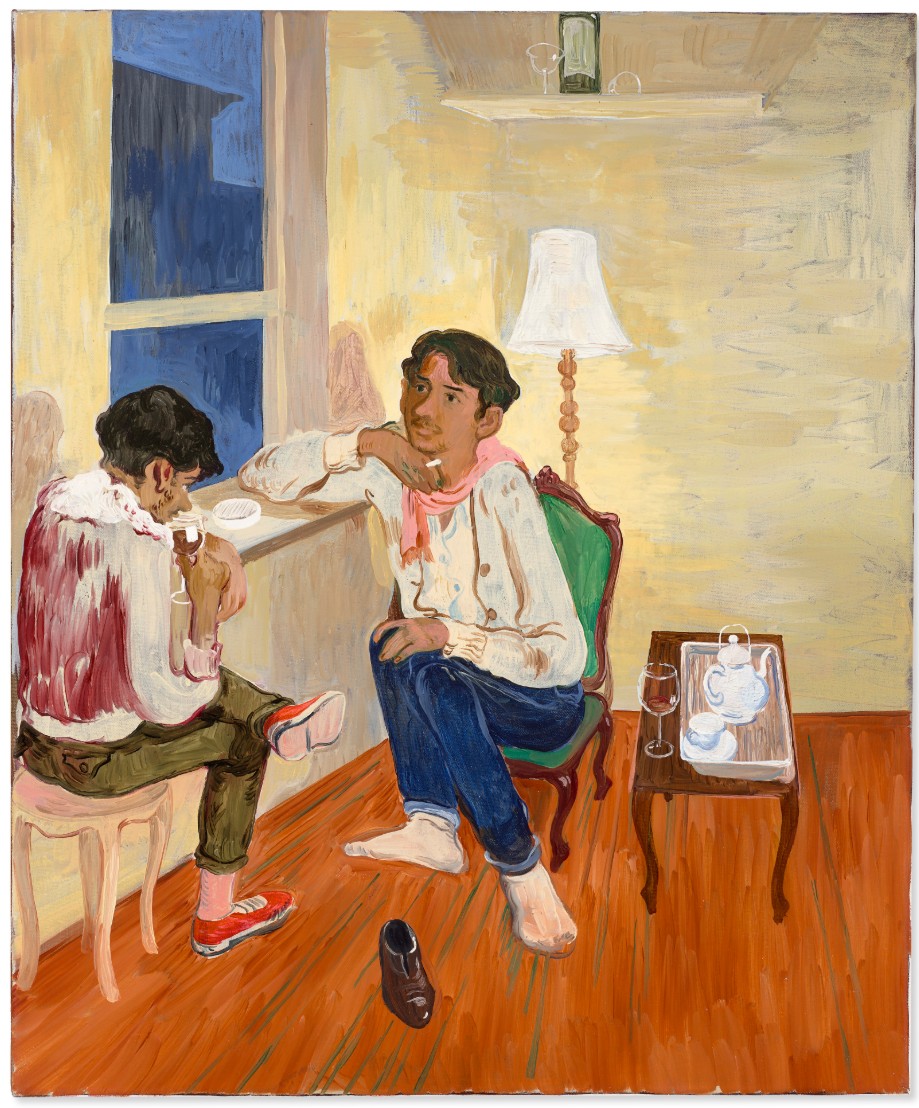
Set in a warm interior that exudes comfort and solace as much as Van Gogh’s bedroom exudes unease and anxiety, Best Friends is a quiet scene. Two figures sit at a window in a moment of reverie. Both individuals are lanky, with coifs of dark, wavy hair and a week’s worth of stubble. They wear light tops and dark pants, and the man on the left wears red shoes. The central figure, his elbow in the windowsill and his hand holding a small white cigarette, seems to stare out into the darkening night with an air of contemplation. His companion sits cross-legged on a stool and faces him, bringing a glass of red wine up to his lips. The room itself is spare, with only the two chairs, a small table with a tea set and empty glass, and a high shelf in the back with more glassware and a bottle. A shaded lamp behind the duo casts a buttery yellow hue over the goings-on. Toor’s ability to render such scenes with a mixture of detailed precision and nostalgia-inducing stylization is on full display here. The faces capture human emotion perfectly and each button and shoelace is visible, but the brushwork is visible and various elements threaten to slide toward us on the dramatically raked floor.
Toor’s unmistakable style blends a personal narrative with a brush well-studied in the art historical canon.
Central to Toor’s practice is the evolution of his surroundings and the cross-cultural inspirations he has found along the way. Moving from Pakistan to the American Midwest for college, and then to New York, the artist infuses his work with myriad subjects and nuances gleaned from his journey. His concerted study of the Western canon and mastery of past methods has gradually given way to his own personal style and canvases filled with people with whom he can empathize.
“I like for the characters in my painting to move between vulnerability and empowerment. I like foolish, marionette-like figures that evoke empathy as immigrants crossing borders, but they also have agency and dignity: things that have not been traditionally associated with our faces and bodies in painting.”
Looking through art history’s lens, Toor paints scenes of Queer contemporary life populated by figures that have been traditionally overlooked. The subjects run the gamut from nervous bar scenes to boisterous parties and solitary figures to intimate moments like Best Friends. In all these tableaux, a focus on creating meaningful connections is key. Toor is adept at pulling the viewer in with his illustrative finesse and keeping us there with subjects rife with emotional depth.
Three Boys, 2019
Sotheby’s Hong-Kong: 19 April 2021
Estimated: HKD 250,000 – 450,000
HKD 5,620,000 / USD 723,648
SALMAN TOOR (b. 1983)
Three Boys, 2019
Oil on panel
76.1 x 50.8 cm (30×20 inches)
Signed and dated ’19 on the reverse
Three Boys is exemplary of Salman Toor’s sensitive, powerfully poignant paintings that depict scenes of the South Asian queer community in New York and Lahore. Suffused with Toor’s signature emerald hue, the scene at once intimate and theatrical: a kneeling figure, his back dramatically arched, raises both arms to take a smartphone photo of his friends. With their dreamily inebriated faces lit aglow by the light of the phone screen, the standing figures swoon gently into each other, the central figure’s posture reminiscent of Michelangelo’s Dying Slave. As with the very best of Toor’s work, Three Boys combines academic technique and a deep knowledge of art history with a unique fantastical contemporary vision drawn from imagination and lived experience, chronicling narratives of public and private life in the context of queer diasporic identity. Painting gay life and gay subjects loosely inspired by his own experiences, Toor’s process operates between fiction and autobiography, resulting in deeply empathetic, evocative vignettes that “by turns imply vulnerability, intimacy, and the celebration of hard-won liberties” (Deeksha Nath, “I Know a Place: Salman Toor”, Art Asia Pacific).
Groups
The Palm Reader, 2018
Sotheby’s New-York: 9 March 2023
Estimated: USD 200,000 – 300,000
USD 558,800
The Palm Reader | Contemporary Curated | 2023 | Sotheby’s (sothebys.com)
SALMAN TOOR (b. 1983)
The Palm Reader, 2018
Oil on panel
20×16 inches (50.8 x 40.6 cm)
Executed in 2018, The Palm Reader is an exquisite and intimately scaled example of Salman Toor’s celebrated figurative practice. Rendered in the artist’s signature painterly, tactile and glossy brushstrokes in delicate shades of pink and dusty ochre, the present work instantly draws the viewer into the nocturnal fantasy of the artist’s imagined subjects. While the present work is not autobiographical, it draws from Toor’s lived experiences between New York City and South Asia, combining his cultural background and sexual identity to create an intimate portrait charged with a latent homoeroticism and a distinct feeling of mystical sensuality. The two central figures are locked in a profound exchange, one that seems to transcend time and place as the figures seem to fade into the background.
Immigrant Gathering, 2016
Phillips London: 13 October 2022
Estimated: GBP 150,000 – 200,000
GBP 214,200 / USD 242,967
Salman Toor – 20th Century & Contem… Lot 118 October 2022 | Phillips
SALMAN TOOR
Immigrant Gathering, 2016
Oil on canvas
122 x 81.5 cm (48 x 32 1/8 inches)
Signed and dated ‘Salman Toor ’16’ on the reverse
Painted in 2016, Immigrant Gatherings provides an exceptional example of Salman Toor’s deeply rooted interest in Old Master paintings, as well as his experiences growing up in Pakistan. The present work depicts an amalgamation of figures, taken from different and entirely unrelated settings, which are masterfully layered and meticulously positioned to tell a new narrative. The figures before us are a haphazard group of characters reminiscent not only of Old Master’s, but also featuring elements of contemporary life. Toor’s figures, most of which are grouped in the upper left of the composition, are depicted contrastingly engaging with the viewer, or communicating amongst themselves. The background has been left bare; an off-white greyish tone chosen as the base, on the surface of which scattered Arabic text is depicted in an emerald, green color. This physical space has been created for the viewer to participate in the composition, a space to contemplate not only the interesting grouping of characters but also their combined and individual symbolism.
Bendiyan Farm, 2016
Estimated: GBP 120,000 – 180,000
GBP 478,800 / USD 577,006
Bendiyan Farm, 2016
Oil on canvas
145 x 96.8 cm (57 1⁄8 x 38 1⁄8 inches)
signed and dated ‘Salman Toor ’16’ (on the reverse)
Garden Party, 2018
Estimated: GBP 100,000 – 150,000
GBP 289,800 / USD 396,605
SALMAN TOOR (b. 1983)
Garden Party, 2018
Oil on canvas
99.5 x 80 cm (39 1/4 x 31 1/2 inches)
Signed, titled and dated 2018 on the reverse
Delicately painted in luscious oils and carefully composed with tender brushstrokes, Salman Toor’s Garden Party is a vignette of quotidian life, sensitively exposing the introspective nuances of the mundane. At the poetic threshold between fiction and autobiography, the unique visual lexicon of Toor’s native Pakistan and education in Western academic painting is merged to explore cultural identity and convey narrative through color, composition and form. Recently the subject of a widely acclaimed solo exhibition at the Whitney Museum of American Art, and with works housed in the collections of the Tate in London, the Museum of Contemporary Art Chicago and M Woods in Beijing, Toor is one of the most sought-after figurative painters of his generation.
Nicolas Poussin, The Finding of Moses, 1638
Louvre Museum, Paris
Image: © Bridgeman Images
Set against a backdrop of a non-descript Pakistani townscape, a verdant tree line and a pale sky, a group of young men and women enjoy a plein air get-together. In the foreground a man clad in a pink shirt sits leaning on a table, his right arm a makeshift pillow, given over to deep sleep. Animated conversations unfold behind the sleeping man, while in the midst of the convivial atmosphere, an unassuming waiter clears some glasses away.
Raphael, Parnassus, 1510-11
Stanza della Segnatura, Vatican Museums and Galleries, Vatican City
Image: © Bridgeman Images
Reminiscent of the earthly pleasures explored in Baroque genre painting, Toor renders a deeply empathetic scene, both intimate and theatrical, presenting a frank, dignified and attentive portrayal of his subjects. Although thematically removed from his life and experiences in the United States, the depicted scene of everyday life in Lahore feels deeply relatable, destabilising the tropes of perceived otherness. Toor’s construction of the image is complex and visually compelling, his arrangement of figures is tightly formed, without seeming contrived, while his compositional awareness offers an astonishing atmospheric perspective that is at once deceptively realistic and indisputably lyrical, echoing the pivotal Renaissance landscapes of Leonardo Da Vinci, Raphael’s intricate figural compositions and Nicolas Poussin’s Arcadian landscape paintings of the Seventeenth Century. Chronicling narratives at the intersection of public and private life, Roberta Smith observes that Toor “places his protagonists squarely in a real world that’s not always welcoming. This gives his paintings a reportorial edge, quashing any inclination to see them as sentimental or nostalgic” (Roberta Smith, ‘Salman Toor, a Painter at Home in Two Worlds’, The New York Times, 23 December 2020).
Visitation, 2016
Christie’s London: 2 July 2021
Estimated: GBP 120,000 – 180,000
GBP 250,000 / USD 344,875
SALMAN TOOR (B. 1983), Visitation | Christie’s (christies.com)
SALMAN TOOR (B. 1983)
Visitation, 2016
Oil on board
91.4 x 121.9 cm (36×48 inches)
Signed and dated ‘Salman Toor ’16’ (lower left)
In Salman Toor’s Visitation (2016), figures gather round a small table covered with statuary and skulls. A man, head in hand, gazes wistfully out of the frame as if remembering a lost relationship, or perhaps just a face in a bar. The late-night, crepuscular coloring of the green walls is enveloping, while short, staccato brushwork adds depth to a snapshot scene that appears cleaved from a longer story.
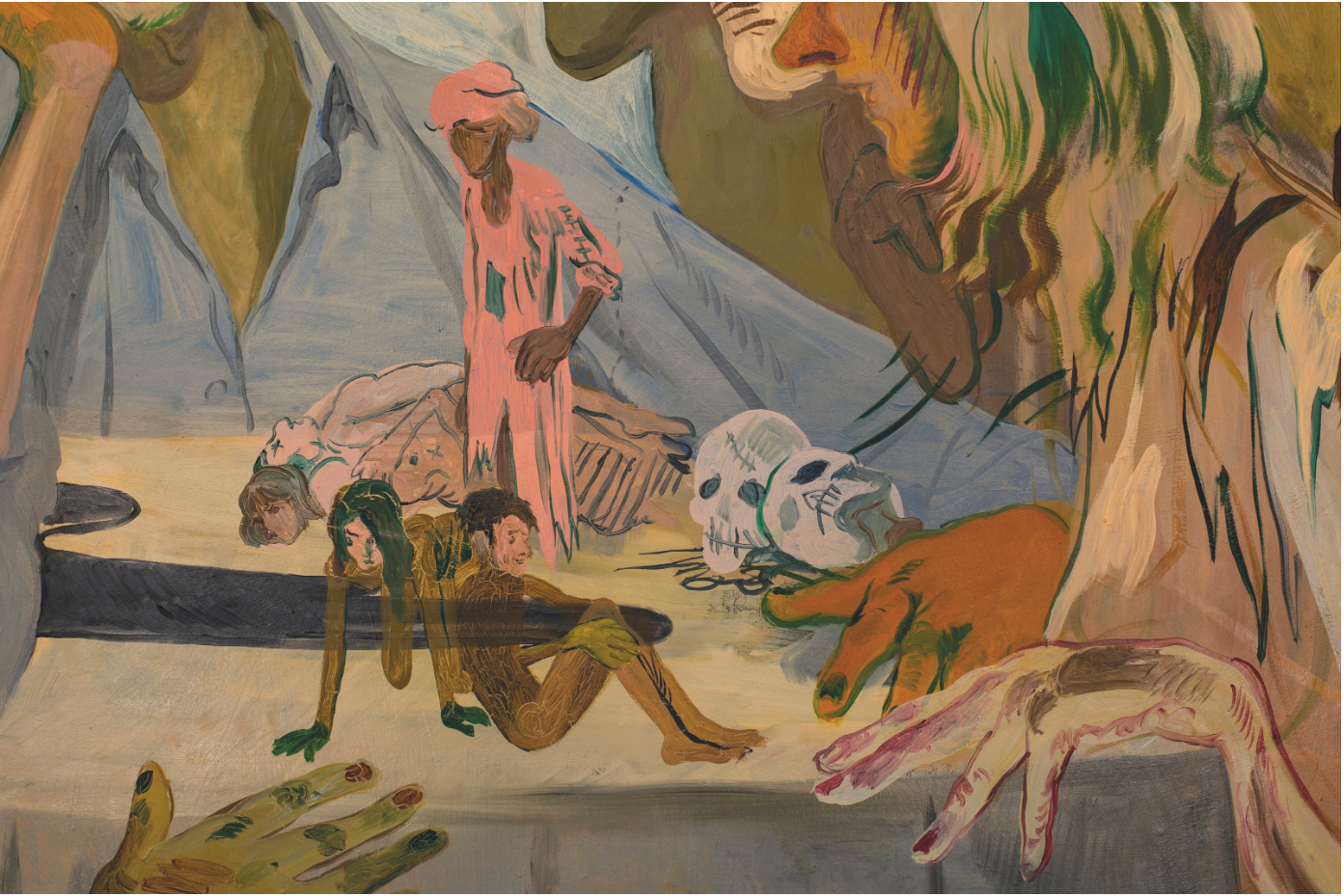
Such fleeting, intimate moments are refracted through an art-historical lens in Toor’s work, and he ingeniously mixes motifs and gestures from both contemporary and bygone sources. With its halo-like astral forms, the present painting moves expertly between allusions to Biblical scenes—specifically the titular Visitation—as well Renaissance sculpture, Paul Cézanne’s The Card Players and vanitas still-lifes. It is a dreamlike space, rendering magical realism in lush, fantastical colors.
Untitled, 2017
Sotheby’s London: 29 June 2021
Estimated: GBP 100,000 – 150,000
GBP 315,000 / USD 436,106
Untitled | 《無題》 | Modern & Contemporary Art Evening Sale | 2021 | Sotheby’s (sothebys.com)
SALMAN TOOR (b. 1983)
Untitled, 2017
Oil on canvas
101.6 x 101.6 cm (40×40 inches)
Delicately painted in luscious oils and carefully composed with tender brushstrokes, Salman Toor’s Untitled is a vignette of quotidian life, sensitively exposing the introspective nuances of the mundane. At the poetic threshold between fiction and autobiography, the unique visual lexicon of Toor’s native Pakistan and education in Western academic painting is merged to explore cultural identity and convey narrative through colour, composition and form.
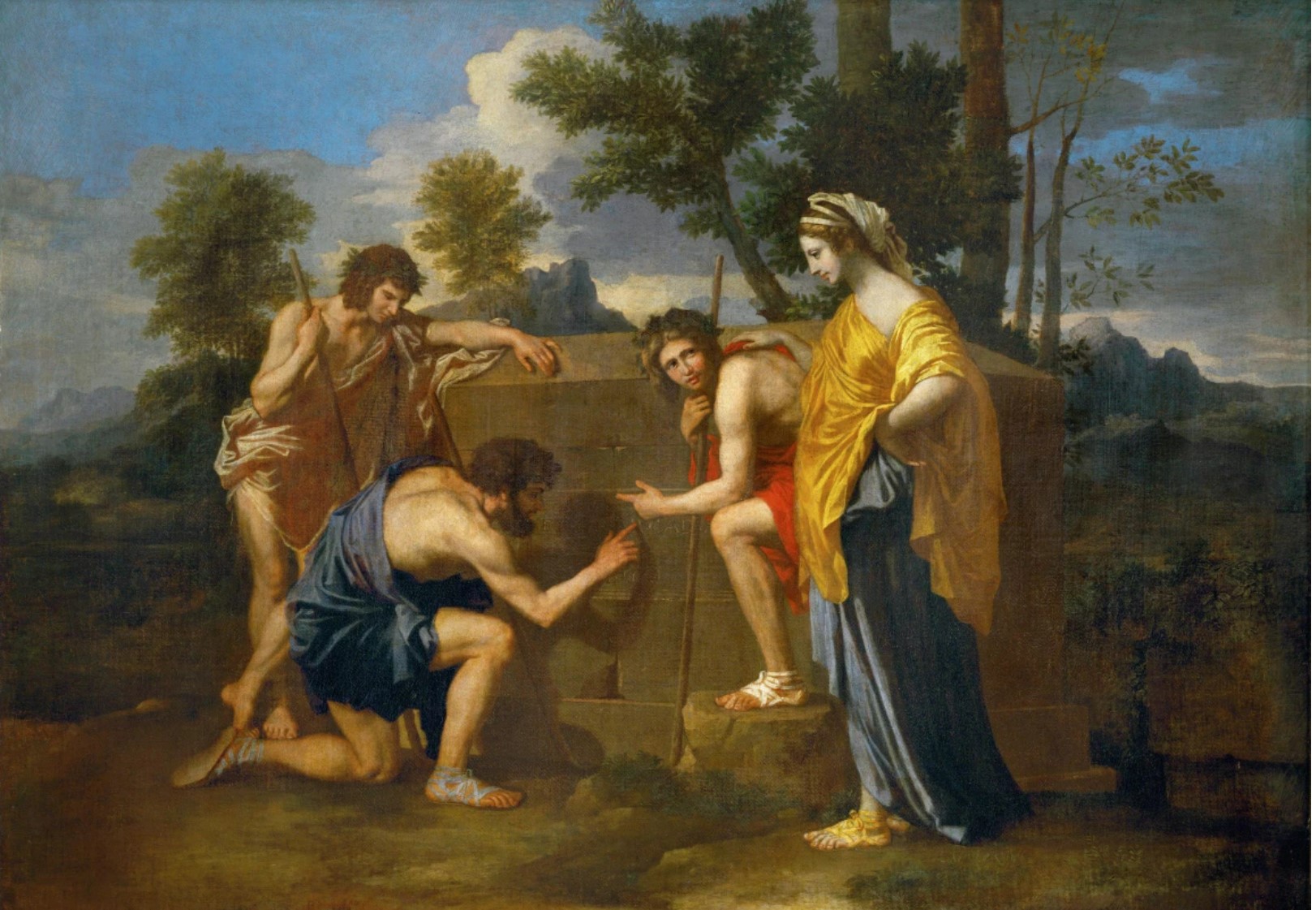
NICOLAS POUSSIN, THE ARCADIAN SHEPHERDS (ET IN ARCADIA EGO), 1637-38
MUSÉE DU LOUVRE, PARIS
Set against a backdrop of a non-descript Pakistani townscape, a few trees and a pale sky, two men wearing traditional kurtas stand talking, while two young boys butcher a goat in front of them. Reminiscent of the Mannerist market scenes and still lifes by Pieter Aertsen, Toor renders a deeply empathetic scene, both intimate and theatrical, presenting a frank, dignified and attentive portrayal of his subjects. Although thematically far removed from his life and experiences in the United States, the depicted scene of everyday life in Lahore feels deeply relatable, destabilizing the tropes of perceived otherness. Toor’s construction of the image is complex and visually compelling, his arrangement of figures is tightly formed, without seeming contrived, while his compositional awareness offers an astonishing atmospheric perspective that is at once deceptively realistic and indisputably lyrical, echoing the pivotal Renaissance landscapes of Leonardo Da Vinci and Nicolas Poussin’s Arcadian landscape paintings of the Seventeenth Century. Chronicling narratives at the intersection of public and private life, Roberta Smith observes that Toor “places his protagonists squarely in a real world that’s not always welcoming. This gives his paintings a reportorial edge, quashing any inclination to see them as sentimental or nostalgic” (Roberta Smith, ‘Salman Toor, a Painter at Home in Two Worlds’, The New York Times, 23 December 2020).
Dancing to Whitney, 2018
Phillips London: 16 April 2021
Estimated: GBP 40,000 – 60,000
GBP 252,000 / USD 348,405
Salman Toor – 20th Century & Contempo… Lot 201 April 2021 | Phillips
SALMAN TOOR
Dancing to Whitney, 2018
Oil on panel
40.9 x 30.7 cm (16 1/8 x 12 1/8 inches)
Signed and dated ‘SalmanToor ’18’ on the reverse
“I had done a painting called ‘Dancing to Whitney’ about two years ago. I was imagining that the characters in the painting were dancing to this song, ‘How Will I Know?’ When we decided to do this show, we took this title because, not only was it a song that I really like dancing to, but it also had a deeper resonance, thinking about the future.”
Dancing to Whitney is part of the body of work recently celebrated at Salman Toor’s first solo show at The Whitney Museum of American Art, Salman Toor: How Will I Know. Inspired by the present example, the curators from the Whitney chose the lyrics from a Whitney Houston song as the exhibition’s title. This institutional recognition is a testimony to the importance of Toor’s oeuvre on the international scene and as an ambassador for the artistic community in Pakistan. Dancing to Whitney exemplifies Toor’s perfected painterly fluidity and layering technique, depicting multiple unfolding narratives within a single space.
“I need every part of the surface to be interesting to me and so I have to reinvent everything so that it becomes interesting, there is a lot of rubbing away and reworking on top…the material is so alive on the surface and I want it to be animated, maximum animation.”
This approach harks back to the artist’s studying of the Old Masters in both technique and subject matter:
“I have trained myself in academic painting, when I graduated Pratt in 2009 I still wanted to be like Rubens and Van Dyck and I wanted to have 17th Century costumes and candlelight around me and have that faux gravitas.”
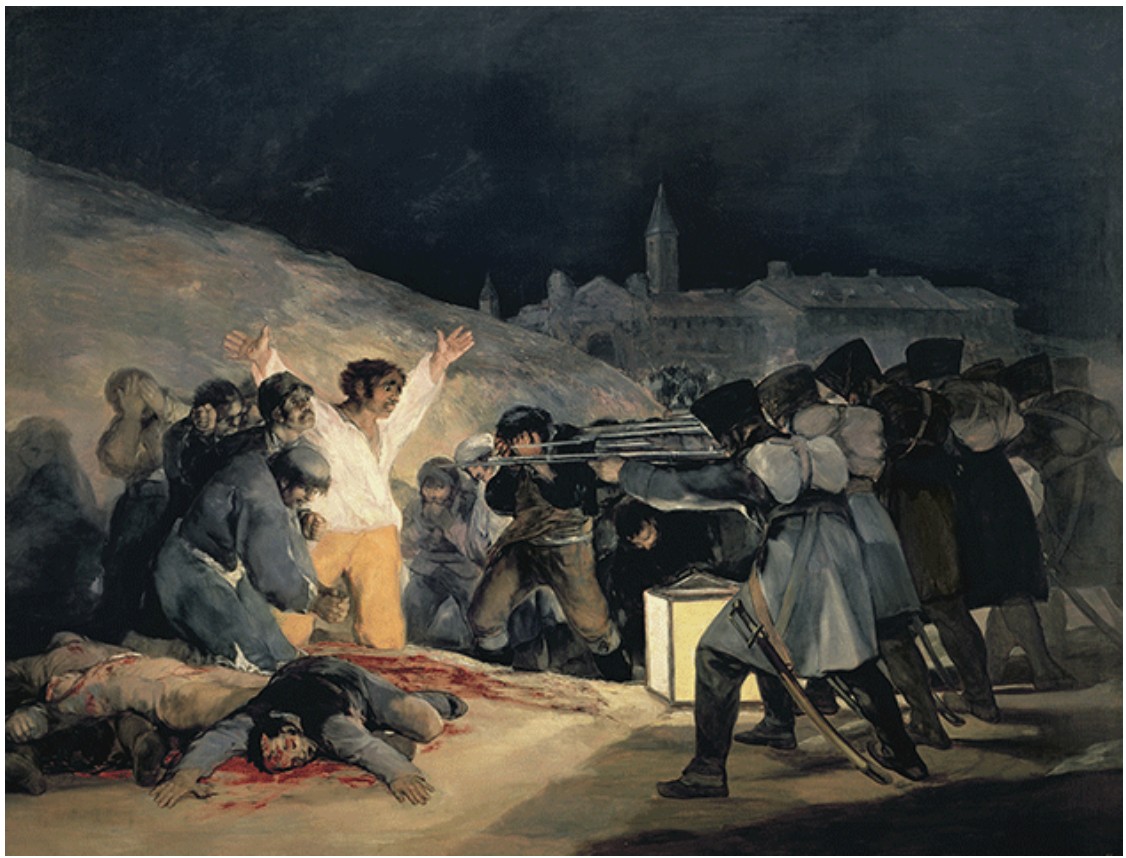
Francisco Goya, The Third of May 1808, c. 1810-1814, oil on canvas, Prado, Madrid. Image: Bridgeman Images.
In Dancing to Whitney the three characters to the forefront, eyes closed, are engrossed in complete bliss, dancing in their alcohol fueled haze. In the background, Toor includes a contrasting scene in a muted tonal palette of seated figures talking in quiet union, reminiscent of Gaugin’s Tahitian paintings. Through the juxtaposition of these scenes Toor shares with the viewer a glimpse into his own parallel worlds. Born and raised in Lahore, Pakistan and now living in New York, Toor depicts a narrative which could be considered autobiographical, portraying the lives of young, queer brown men living in New York whilst echoing the artist’s conservative Pakistani roots. Beautifully illustrated in these opposing scenes is Toor’s interest in painting ‘little domestic spaces’. Talking about the works of Old Masters that he so admires, Toor noted
“There is a feeling safety and domesticity in the paintings, that I like to work with, I also think of the paintings they have so many little domestic spaces in them like the ones that I have and my friends have in east village, they are safe spaces… I grew up in a culture that was relatively conservative, so I am still attached to the safe spaces… spaces in which expression is completely safe to express everything. I like the combination of flouncy, frilly, feminine domesticity coupled with hairy brown bodies and an idea of the glamour of effeminate men. Together, happy in groups, circles of friendships… that is one of the things that really drives me, as well as the idea of ecstasy in the paintings is the idea of queer friendships and communities of support that are really valuable because growing up my friendships were the most valuable thing to me…”
In Dancing to Whitney, the safety of these little domestic spaces is poignantly echoed in the intimate scale of the work. A pure, joyful celebration of friendship, Dancing to Whitney illustrates the unselfconscious freedom to both let loose and quietly gather in Toor’s imaginary intimate safe space. Like in all Toor’s best works, there is an edge. The protagonist is squarely in a world that is not always welcoming, his pose, clothing and stance seem to distressingly echo Goya’s martyr in The Third of May 1808. Even in this moment of captured happiness there is an emotional charged undercurrent of the struggles of being a brown gay man, and how, in the confines of this small private room that there is the safety and confidence to be free.
Other Paintings
Eleventh Street, 2018
Sotheby’s New-York: 16 May 2025
Estimated: USD 400,000 – 600,000
USD 698,500
Eleventh Street | Contemporary Day Auction | 2025 | Sotheby’s
SALMAN TOOR (b. 1983)
Eleventh Street, 2018
Oil on canvas
129.5 x 170.2 cm (51×67 inches)
Enticing and introspective, Eleventh Street captures the nuances of urban relationships through Salman Toor’s signature lens of intimate reflection. Set in a fictionalized version of New York’s 11th Street and 1st Avenue, the present painting exemplifies Toor’s ability to portray ordinary moments with dignity and complexity, transforming them into richly layered narratives. Eleventh Street is a testament to Toor’s enduring commitment to highlighting the intersections of identity, place, and connection.
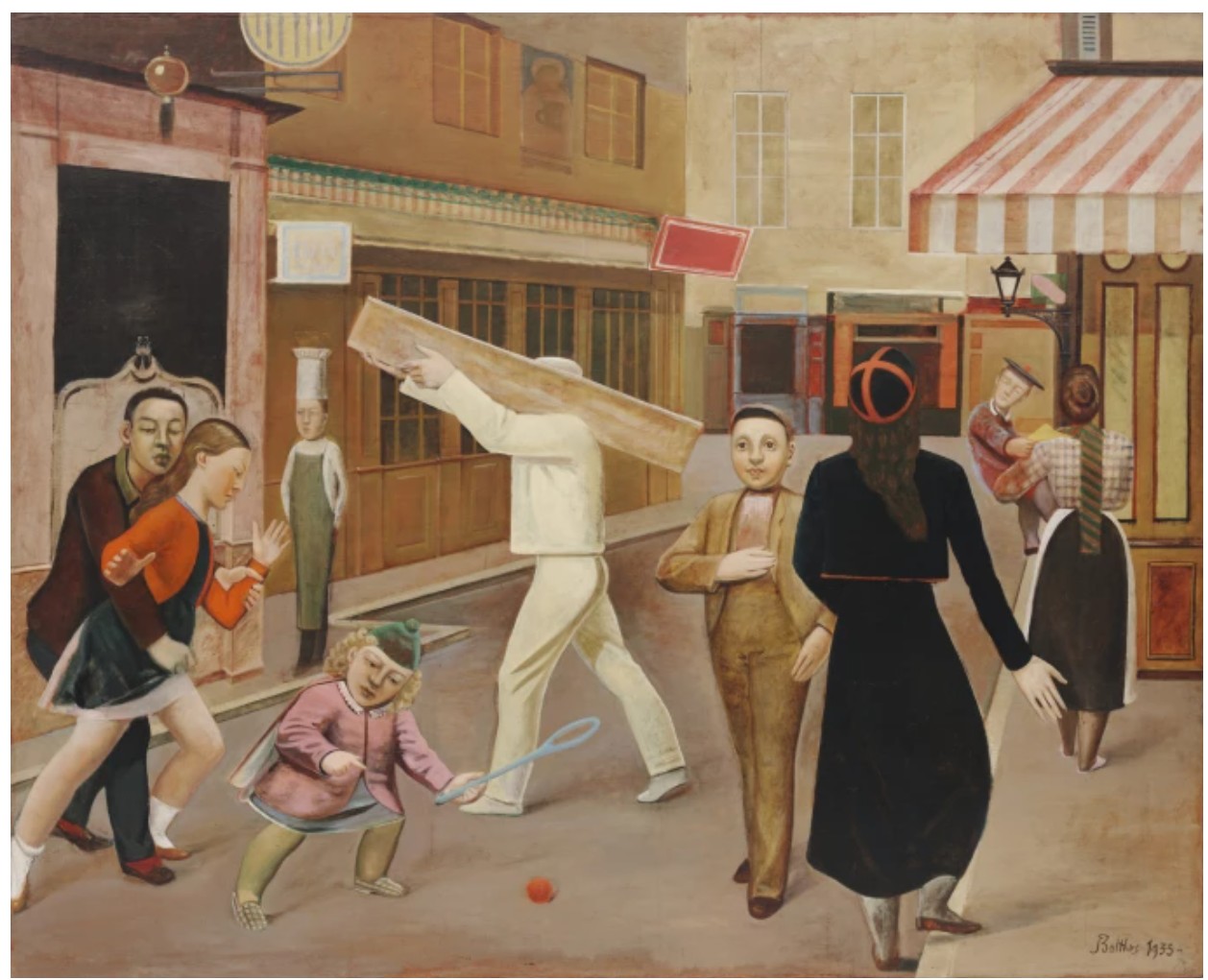
Balthus (Baltusz Klossowski de Rola), The Street, 1933. The Museum of Modern Art, New York. Art © 2025 Artists Rights Society (ARS), New York / ADAGP, Paris
In this expansive and intricately composed work, Toor channels the grandeur of Baroque and Rococo masters, infusing their refined techniques with the energy of a contemporary urban environment. At the heart of the painting, a fleeting glance between potential lovers creates a moment of warmth and subtle intimacy, their unspoken connection exuding both vulnerability and immediacy. Behind them, the quiet solemnity of Friday prayer unfolds in an urban mosque, its spiritual weight contrasting with the vibrant dynamism of the surrounding scene. Acting as a bridge between these seemingly disparate worlds of religion and sexual freedom is a lively, colorful array of literature and music. Nearby, two men dressed for prayer turn to steal a glance at a young woman absorbed in a book, capturing an instance of human curiosity and quiet engagement that speaks to the layered complexity of the painting’s narrative. These vignettes—fleeting yet deeply human—capture the rhythms of everyday life, blending public and private worlds into a single harmonious composition.
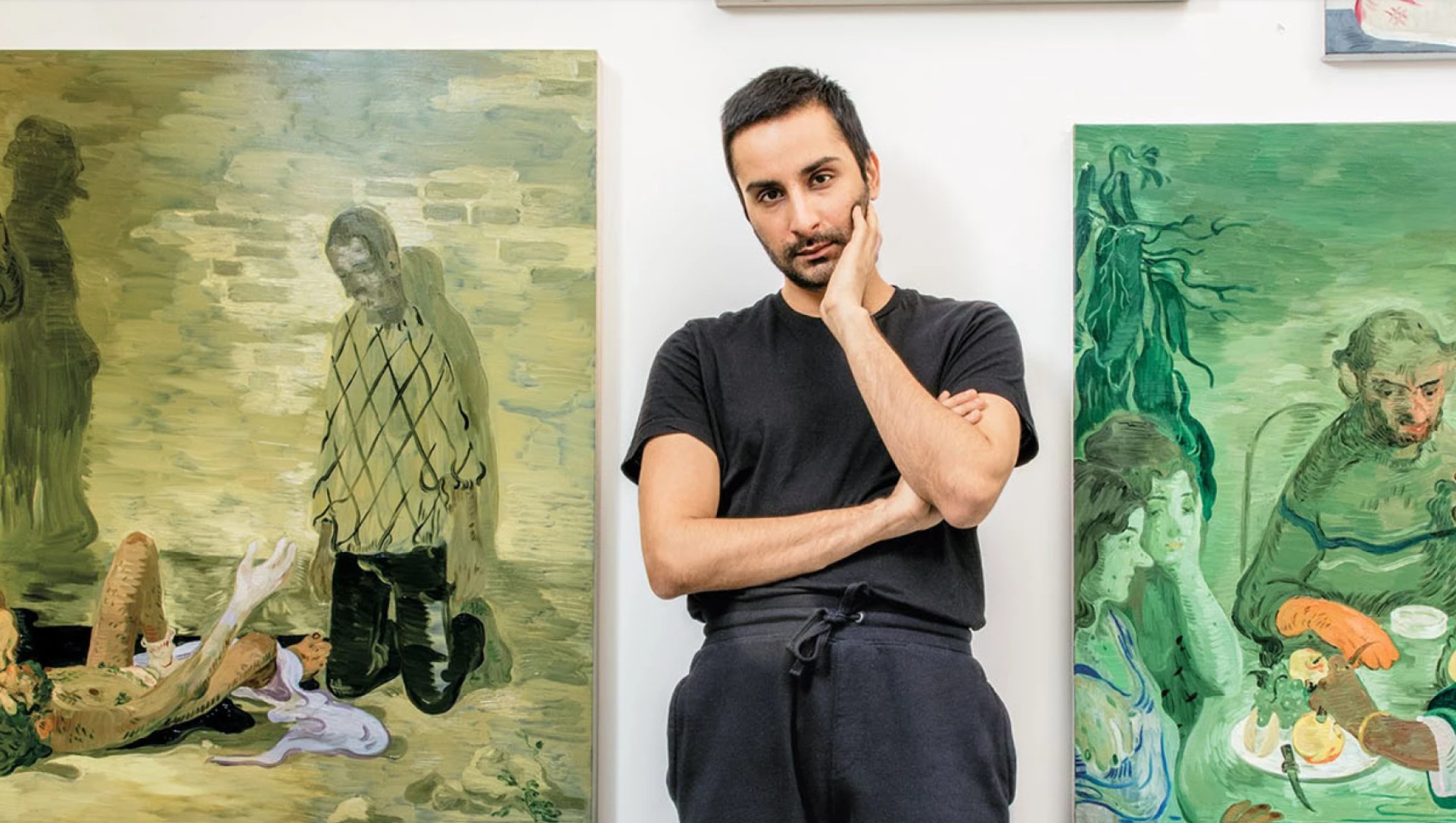
Salman Toor in his studio, photographed by Stefan Ruiz. PHOTO © STEFAN RUIZ. ART © SALMAN TOOR
While the present work is not autobiographical, it draws from Toor’s lived experiences between New York City and South Asia, weaving together his cultural background to create an intimate portrait. This interplay of cultural references and personal themes imbues the painting with a quiet yet profound sense of belonging. Through Eleventh Street, Toor navigates the complexities of his adopted American culture and his native Pakistani heritage, crafting a progressive commentary on identity, community, and cultural exchange.
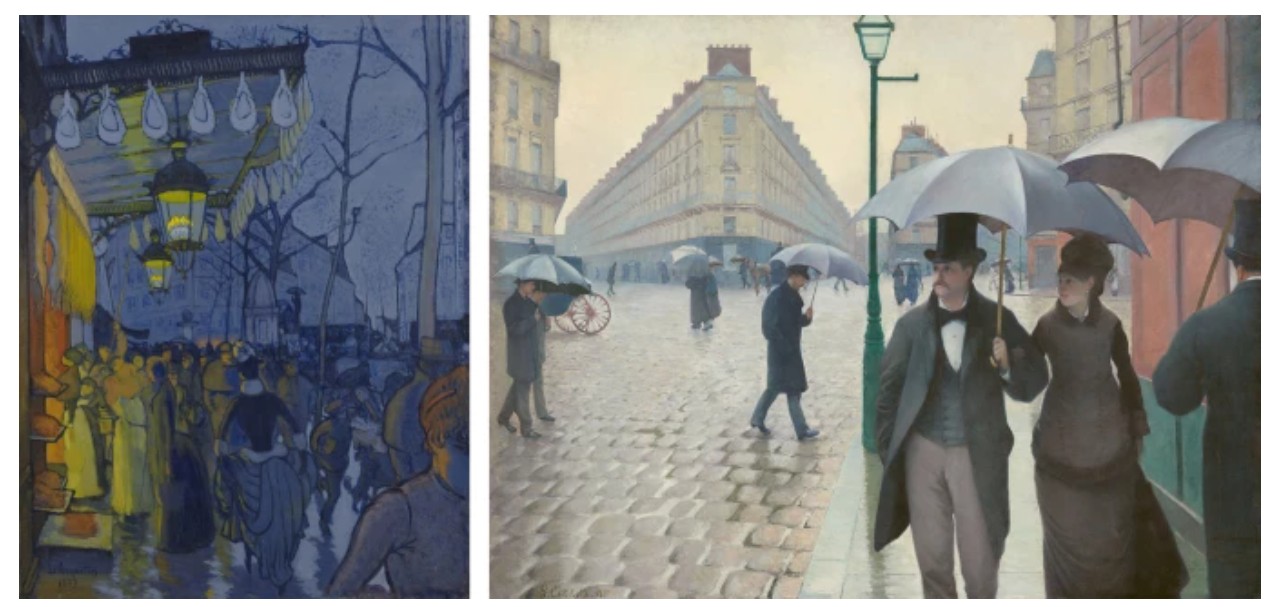
LEFT: Louis Anquetin, Avenue de Clichy (Five O’clock in the Evening), late 1887. Wadsworth Atheneum Museum of Art, Hartford
RIGHT: Gustave Caillebotte, Rue de Paris, temps de pluie, 1877. Art Institute of Chicago
Toor’s technique, characterized by tender, gestural brushstrokes and a muted yet evocative palette, imbues the painting with a sense of timelessness. His approach recalls the intimacy and depth of Old Master paintings, particularly in the use of soft light and carefully rendered details. At the same time, Toor’s work remains firmly contemporary, with subtle urban elements like graffitied walls, scattered trash, and an orange traffic cone grounding the scene in the present. This balance between historical inspiration and modern subject matter allows Toor to craft a visual language that is both rooted in tradition and reflective of the complexities of contemporary life.
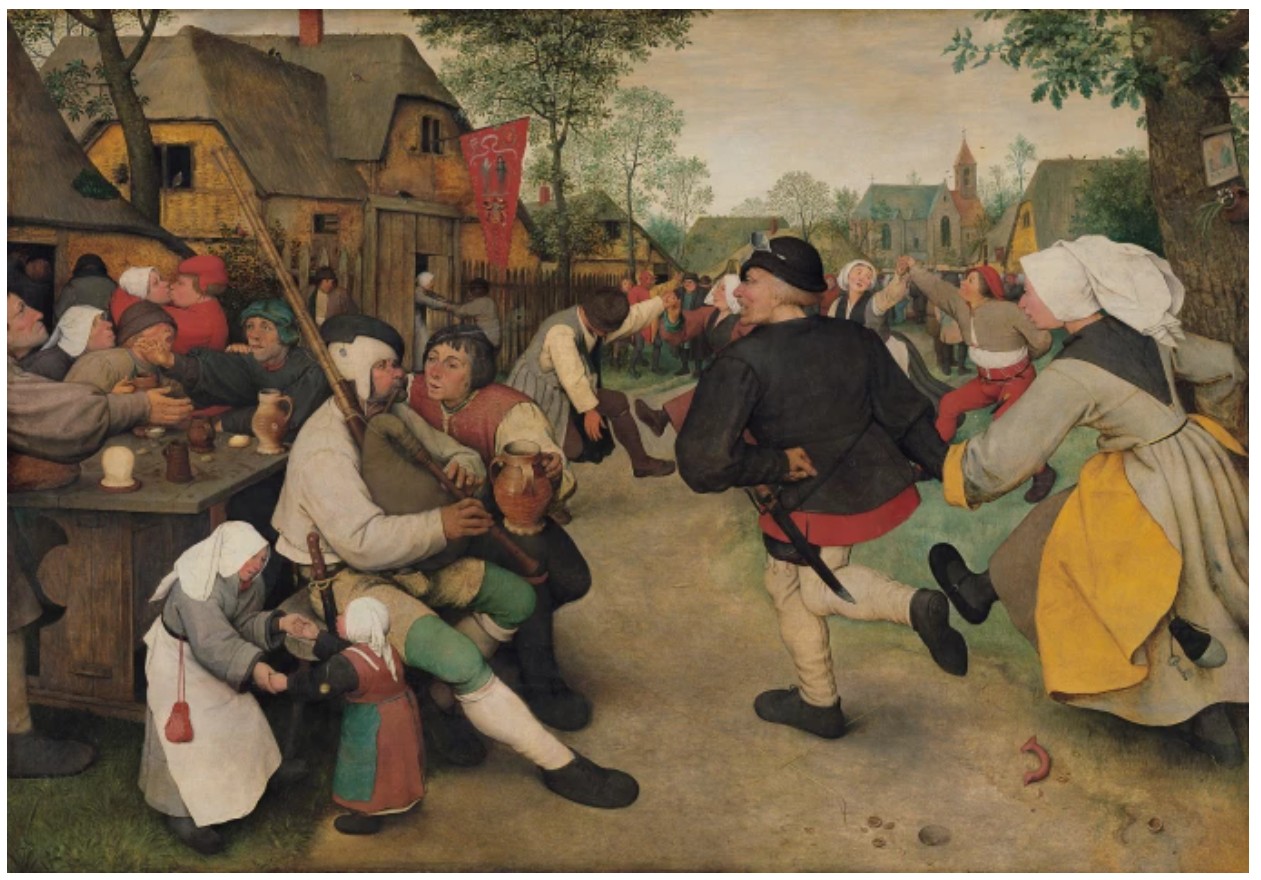
Pieter Bruegel the Elder, Pieter Bruegel the Elder, 1567. Kunsthistorisches Museum, Vienna
By juxtaposing disparate elements—a mosque, urban booksellers, a subtle romantic moment—Toor creates a layered narrative that celebrates both cultural intersectionality and individual humanity. The painting’s contrasts—light and shadow, intimacy and anonymity, religion and liberation—reflect the dualities inherent in urban life. Each figure is rendered with care, their gestures and expressions hinting at untold stories. Toor invites viewers to linger on these moments, to trace the interplay of relationships and environments that make up the painting’s world. Ultimately, Eleventh Street is more than a snapshot of urban life; it is a meditation on the beauty of connection, the dignity of ordinary moments, and the power of art to assert presence and humanity. Through the present work, Toor continues his project of rewriting the canon, centering marginalized figures and their stories with tenderness and care. In doing so, he creates a space where everyday lives are not only seen but celebrated.
Man with Tote Bag and Laptop, 2018
Sotheby’s Hong-Kong: 7 October 2022
Estimated: HKD 2,000,000 – 2,800,000
HKD 2,772,000 / USD 353,098
SALMAN TOOR (b. 1983)
Man with Tote Bag and Laptop, 2018
Oil on panel
91.4 x 60.9 cm (36×24 inches)
Listed among TIME magazine’s 2021 list of 100 emerging leaders shaping the future, Salman Toor has captured the attention of the art world as one of the most exciting figurative painters to emerge in recent years. Born in Lahore, Pakistan in 1983, Toor’s work depicts the imagined lives of young, queer men of South Asian descent. Living and working in New York City, Toor’s subjects are displayed in fantasized South Asian/American contexts, implying a certain foreignness and uncertainty that has come to characterize much of his oeuvre. Man with Tote Bag and Laptop, exhibited in Toor’s third New York solo exhibition, Time After Time, at Aicon Contemporary in 2018, hints at the changing ideas around race, immigration, and foreignness in an anxious, post 9/11 world in which ethnic and religious identity supersedes a culturally diverse one.
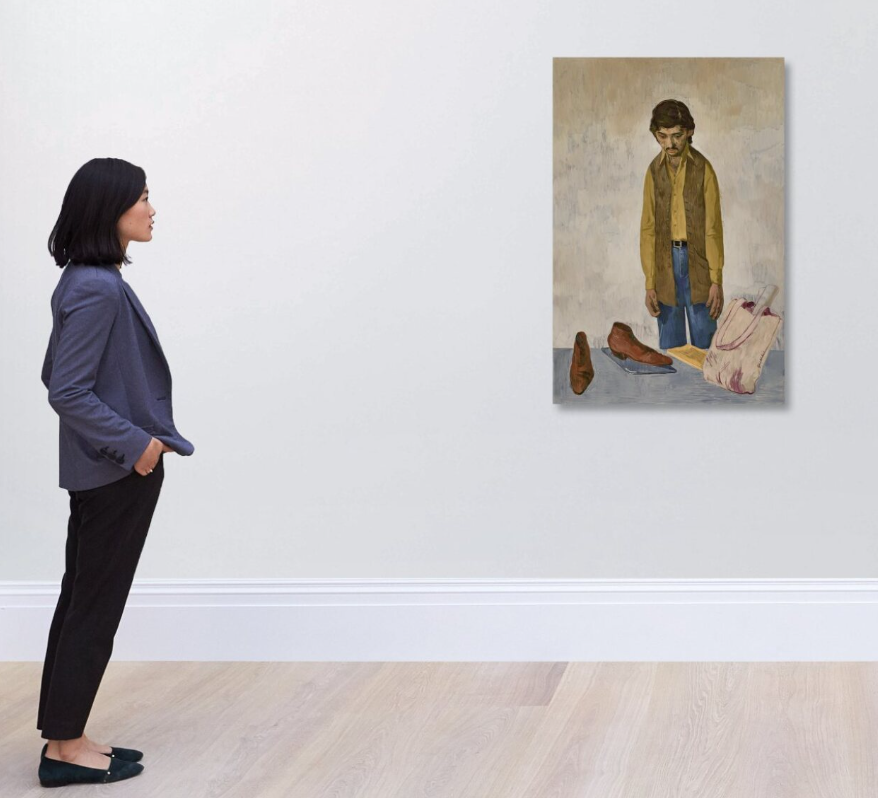
Toor has described that his work is concerned with a variety of themes, such as the treatment of brown men, young people in public and private spaces, and the role of technology in daily life. Drawing on his imagination to create works that, whilst intensely familiar, reflect his highly personal experience as a queer brown man living between New York City and South Asia. Inspired by the paintings of Rubens, Caravaggio and Manet, Toor’s work adopts and reimagines the art historical canon to depict sorrowful and isolated men, as well as private moments of tenderness and joy.
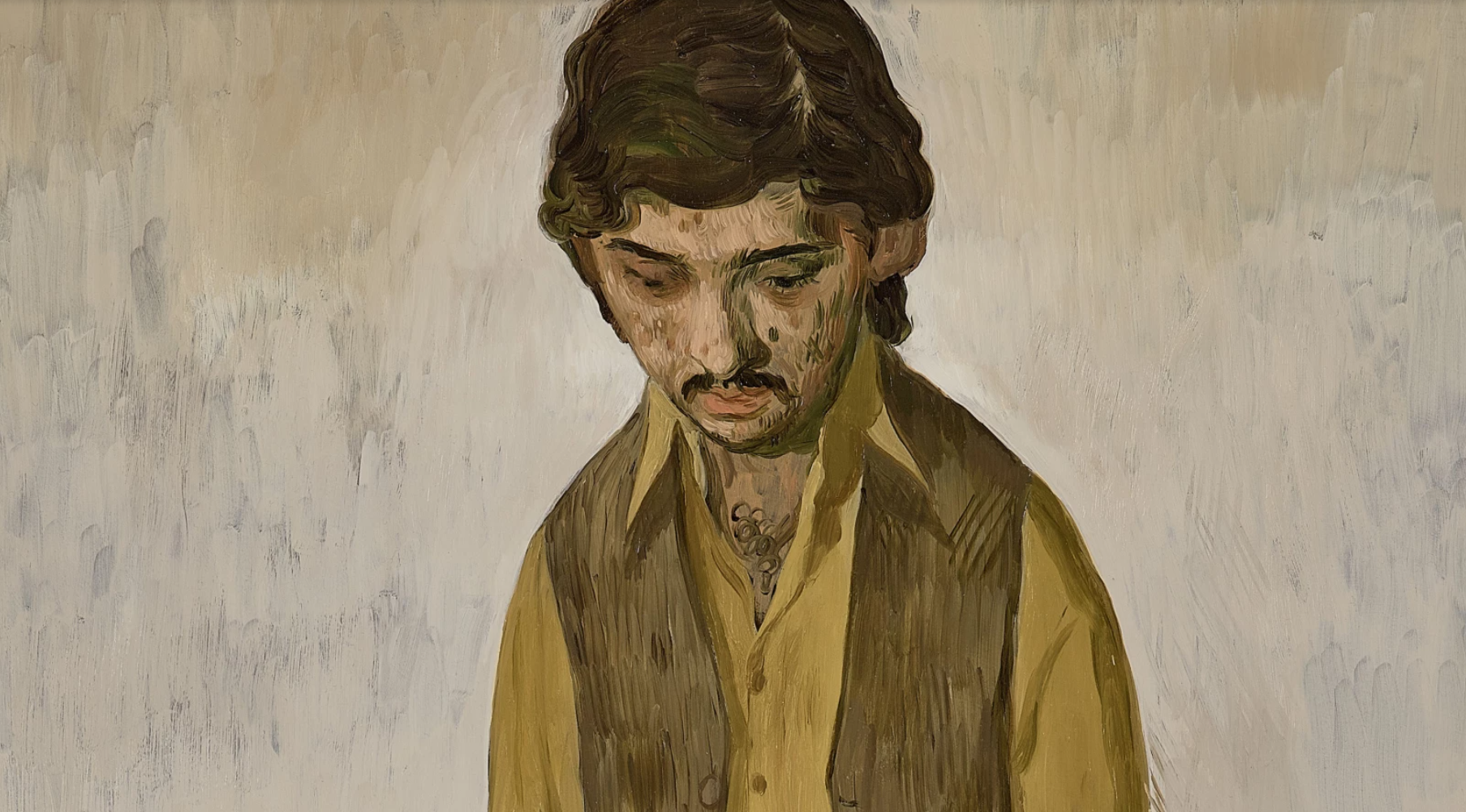
“I like these seemingly undernourished and hairy bodies of color inhabiting familiar, bourgeois, urban, interior spaces. I see these boys or men as well-educated, creative types discovering what it means to live an artist’s life in New York City and in the thick of changing ideas about race, immigration, and foreignness, and also what it means to be American. Sometimes they can look like lifestyle images. They are also fantasies about myself and my community.”
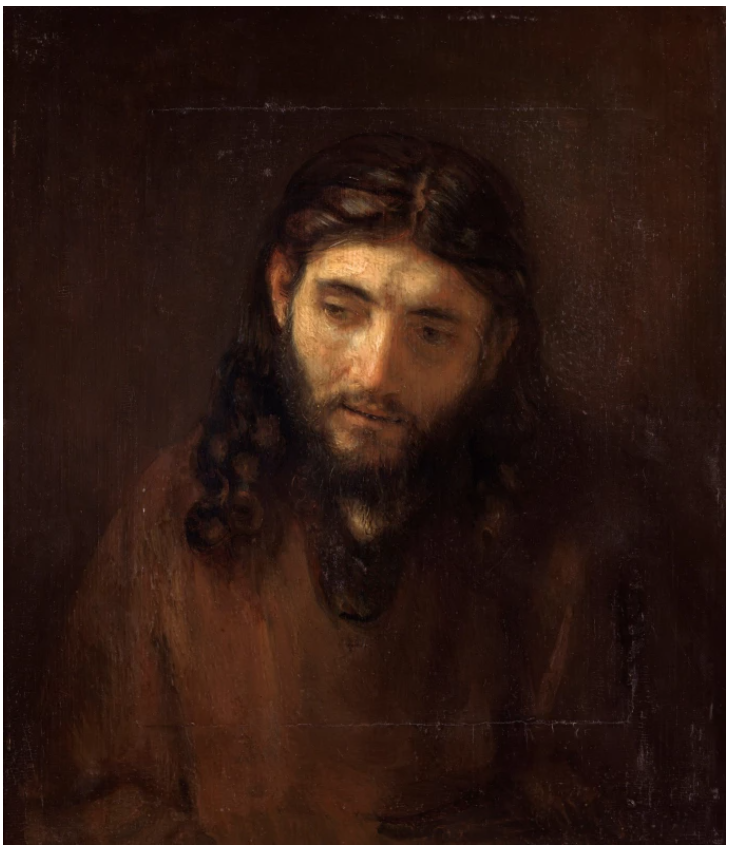
REMBRANDT VAN RIJN, HEAD OF CHRIST, 17TH CENTURY
COLLECTION OF THE PHILADELPHIA MUSEUM OF ART, PHILADEPHIA © 2022. PHOTO THE PHILADELPHIA MUSEUM OF ART/ART RESOURCE/SCALA, FLORENCE
Man with Tote Bag and Laptop, the still-life in the foreground showcases Toor’s deft handling of oil paint, his expressive brushwork masterfully evoking a tenderness and melancholic solitude. Making use of saturated yellows, blues and pale browns, Toor’s adept use of color evokes a “nocturnal” quality, a twilight of uncertainties with conflicting and precarious associations, his compositions alternating between exuberance and threat, isolation and belonging.
Cloudy Day, 2017
Estimated: GBP 150,000 – 200,000
GBP 504,000 / USD 612,170
SALMAN TOOR
Cloudy Day, 2017
Oil on canvas
101.3 x 101.3 cm (39 7/8 x 39 7/8 in.)
Signed and dated ‘Salman Toor ’17’ on the reverse
Painted in 2017, Cloudy Day is an exceptional example of Salman Toor’s amalgamation of his studies of the Old Masters with his life in New York. The work is built from an essential push and pull between the old and established and the contemporary and modern everyday. In 2006, Toor moved from Lahore to Ohio to study painting at the Ohio Wesleyan University. It was here that he learnt about oil painting for the first time and his fascination with the Old Master’s took hold. The narratives told in Toor’s works are fictional. In Cloudy Day, Toor depicts an everyday scene, pulling together stylistic references to the Old Masters, whilst also addressing those figures, settings and subjects that are missing from the art historical canon. In the present example, Toor renders his scene in the deep jewel colour palette associated with artists from the 17th Century. The rich golds and warm reds seemingly glimmer with a soft warmth, exquisitely offset by the natural light that pours in from the windows. A beautifully depicted still-life of a rose is set in the foreground; a meticulously observed glass sits on the edge of the table; and the carefully handled painting and serene quality of the man’s face harks to the work of Michelangelo. In the background we see figures perhaps drawn from Toor’s Pakistani routes: the group of three men standing under the trees outside are dressed in traditional Pakistani clothing. In contrast to the historic style, Toor’s narrative is placed in the 21st Century. The figures in the foreground wear western contemporary clothing; the male figure contemplating, mid-thought, holds a mobile phone. Smartphones and laptops are as ubiquitous in Toor’s paintings as they are in real life, alongside Toor’s instinctive references to art history. Through his deft handling of oil paint, Toor melds everyday contemporary life with art history in his figurative works that tell a modern narrative. Softly highlighting questions around alternative narratives left out of history and art, Toor explores representations of sexuality and friendship.
The Rooftop Singer, 2017
Estimated: HKD 1,200,000 – 2,200,000
HKD 4,788,000 / USD 610,185
SALMAN TOR (B. 1983)
The Rooftop Singer, 2017
Oil on canvas
109.3 x 165.3 cm (43 x 65 1/8 inches)
Signed, titled and dated 2017 on the reverse
A masterful example of Salman Toor’s luscious depictions of the imagined lives of the South Asian queer community in New York and Lahore, The Rooftop Singer (2017) is exemplary of the artist’s powerfully poignant paintings, brimming with enthralling details. In The Rooftop Singer, multiple narratives unfold in front of the viewer, with Toor constructing concurrent pockets of action for the viewer to consume and decipher. On the left of the image, a man sits strumming his guitar, captivating the attention of the young man by his side. Staring intently with his forehead almost pressing into the singer’s fluffy hair, the man in a familiar white shirt and orange jacket appears wholly engrossed in the musician and his music. As the woman in front of the pair gazes off to an unseen subject beyond the confines of the canvas, Toor establishes the viewer’s position as an onlooker to this intimate scene. This is a signature example of Toor’s ability to express vulnerability and both the private and public lives of his figures, creating a sense of ease and candidness amongst his characters. Further, to the right of the image, two men are caught in a moment of grief, the tall figure in glasses consoling the other in the light of the open doorway. The tenderness and apparent melancholy of the pair intrigues the viewer, desperate to understand the reason behind this poignant exchange—a lover’s tiff or the consoling of a friend after receiving bad news, it is unknown. In The Rooftop Singer, Toor portrays both a fleeting, mundane moment and a memorable event in which time seems suspended, capturing a snapshot of a rooftop gathering and its many simultaneous dramas and intrigues.
Floating Bookshelf II, 2018
Sotheby’s London: 2 March 2022
Estimated: GBP 80,000 – 120,000
GBP 239,400 / USD 320,010
Floating Bookshelf II | The Now Evening Auction | 2022 | Sotheby’s (sothebys.com)
SALMAN TOOR (b. 1983)
Floating Bookshelf II, 2018
Oil on panel
91.2 x 61 cm (36×24 inches)
Executed in 2018, Floating Shelf II is a nuanced example of Salman Toor’s sensitive investigation into everyday life. Set at the precipice between fiction and autobiography, Toor’s visual lexicon amalgamates his education in Western academic painting with an exploration of Pakistani cultural identity. On the surface of the present work, the warm glow of the lamp gently invites the viewer to examine shelves lined with personal belongings. There is an array of rich sources– literature spanning centuries and continents, loaded with meaning, in addition to framed photographs, a charging iPhone and the artist’s own painting brushes and stationery. The titles on display are a window into Toor’s own attempt at shaping his identity as a queer Pakastani artist, absorbing the philosophy and culture of the west. Placed next to great modern thinkers such as Susan Sontag and Guy de Maupassant are giants of South Asian modern painting like Zahur al Akhlaq. On the lower shelf, a book on Goya rests atop of one on Islamic Art, with its title fading on the spine. In the artist’s own words: “Art history has formed my imaginary map of the world, conquests, migrations, ideas of civilization, foreignness, and fashion. I like seeing the thread of the past in the present. I grew up looking at a mix of images from Indian and European art history… These images became part of my nostalgia for my childhood, but also a space of escape and fantasy during my years growing up” (Cassie Packard, “Blurring the Lines between Public and Private: Salman Toor Interviewed by Cassie Packard, Bomb Magazine, 12 February 2021 (online).
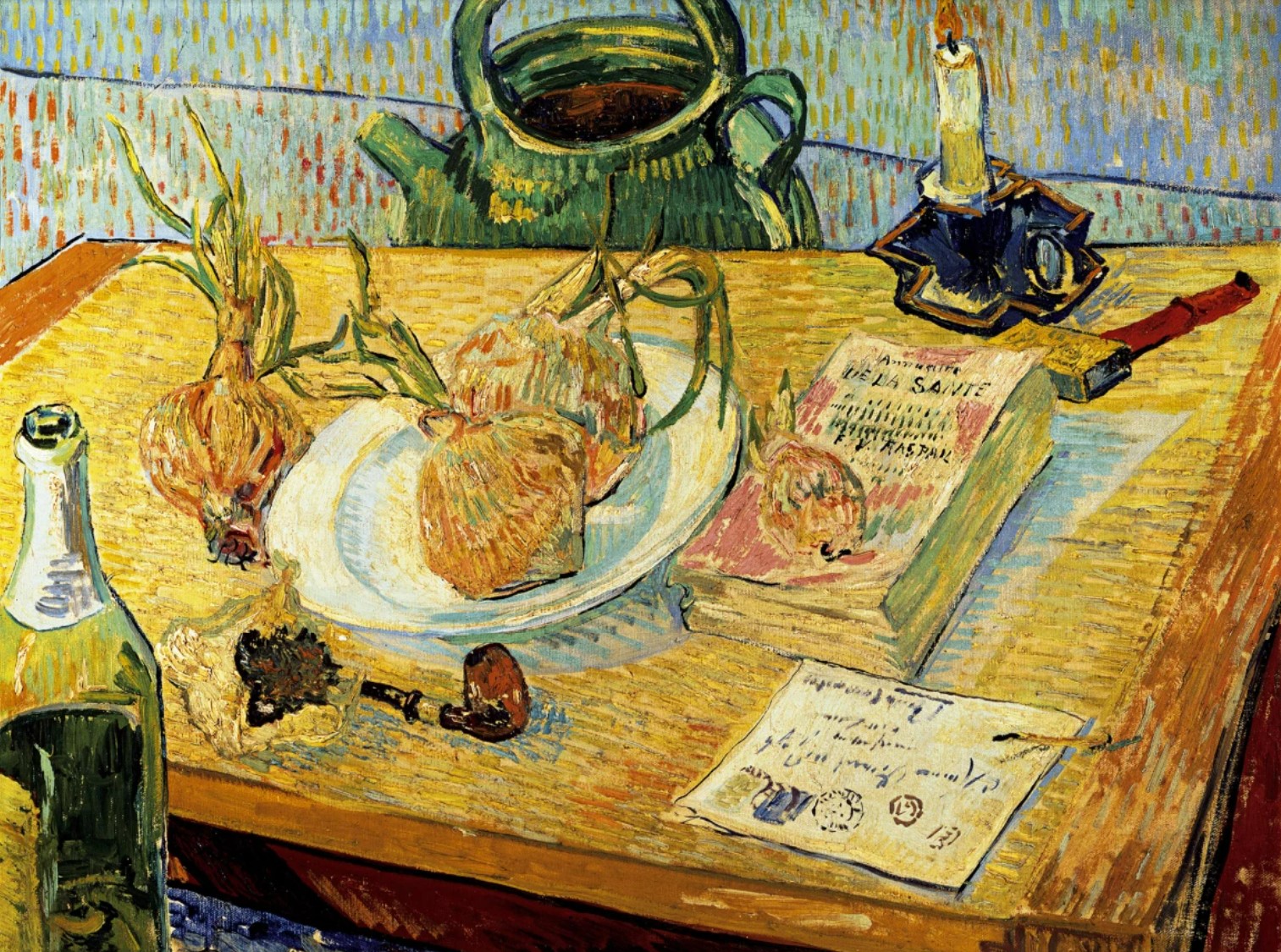
VINCENT VAN GOGH, STILL LIFE WITH ONIONS AND BOOKS, 1889
RIJKSMUSEUM KROLLER-MULLER, OTTERLO
IMAGE: © ELECTA / BRIDGEMAN IMAGES
The iPhone and charger—motifs recurrent throughout Toor’s oeuvre— could be understood as a portal connecting the old and the new. Blurring the line between the private and the public, the phone can pack everything present on the shelf in the palm of one’s hand. The phone is a particularly important object in Toor’s 2019 work Man with Face Creams and Phone Plug now in the collection of The Whitney Museum of American Art, in which a young man gazes down towards a slapdash pile of everyday items, among them an iPhone and charger, scissors, and bottles of lotion and cosmetics. Toor’s ability to capture the intimacy and mundanity of everyday life is exquisitely reflected in both The Whitney example and Floating Shelf II. Toor’s construction of the image is always complex and visually compelling, and the present work offers an astonishing atmospheric perspective that is at once deceptively realistic and indisputably lyrical. Echoing the pivotal Renaissance nature-morte of North European masters such as Pieter Claesz, Willem Claesz Heda and Rachel Ruysch, Floating Shelf II evokes the lofty art historical tradition of the still life genre, yet Toor effortlessly refreshes it for the modern, digital age.
The Palm Reader III, 2019
Christie’s London: 30 June 2021
Estimated: GBP 150,000 – 250,000
GBP 337,500 / USD 465,967
SALMAN TOOR (B. 1983), The Palm Reader III | Christie’s (christies.com)
SALMAN TOOR (B. 1983)
The Palm Reader III, 2019
Oil on canvas
45.7 x 55.9 cm (18×22 inches)
Signed and dated ‘Salman Toor 2019’ (on the reverse)
Painted in 2019, The Palm Reader III is an intimately-observed example of Salman Toor’s celebrated figurative practice. From rich, tactile brushstrokes, rendered in a muted palette of ochre and dusky pink, two figures emerge, subtly illuminated by the rays of a lamp. Stars and flowers flicker outside the window to the right, while a tiny gecko scales the wall. In the dim, quiet glow of the room, an unheard fortune is told. One of several works on the subject, the painting takes its place within Toor’s growing pantheon of painterly chronicles, whose characters inhabit twilit, enigmatic worlds. Recently the subject of a major exhibition at the Whitney Museum of American Art—his first solo museum show—the artist draws heavily upon his own experience, depicting imaginary stories of queer Asian and American men. Influences from the art of his native Pakistan mingle with nods to the Old Masters, the Impressionists and other elements of the Western canon. Here, faint echoes of Caravaggio’s The Fortune Teller (circa 1596-97) dissolve into a scene of intimacy and suspense: like the artist himself, the palm reader delves into the past, and looks towards the future.
Holy Goat, 2010
Phillips London: 13 July 2021
Estimated: GBP 70,000 – 100,000
GBP 81,900 / USD 113,405
Salman Toor – New Now London Lot 5 July 2021 | Phillips
SALMAN TOOR
Holy Goat, 2010
Oil on canvas
137×137 cm (53 7/8 x 53 7/8 inches)
Signed with the artist’s initials and dated ‘ST10’ on the reverse
Taking on special significance within multiple cultural and religious contexts, the goat is an animal with particularly strong symbolic connections to ideas around sacrifice and superstition. Foundational to the idea of the ‘scapegoat,’ in Leviticus twin goats are brought into a village and while one is sacrificed, the other’s horns are wrapped in red cloth before being sent back out into the wilderness, carrying the sins of the community with it. Appearing in both the Old Testament and the Qur’an, the story of a father asked by God to sacrifice his son as a test of his faith is also powerfully resonant, the sacrificial goat still forming a central part of the Muslim festival of Eid al-Adha as a symbol of this willingness towards self-abnegation. Visibly tethered and standing on a rich, red fabric with an open book laid out behind it, Toor’s goat carries this sense of the ceremonial and symbolic, but also carries with it personal questions around tradition and identity.
“I see myself as a traveller wandering between boundaries and working within the fruitful dissonance, understanding and confusion that comes with leaving my community of origin. The culture of that community is at a crossroads, with a shifting sense of belonging and an intense debate about its identity. There [is] a physical and intellectual war between monolithic idea of religion and a flexible humanistic one. Those issues are part of my work.”
Toor’s intensive study of Old Master paintings is in evidence here, his attention to form and bold naturalistic rendering of the goat reminiscent of the Baroque, animal-filled landscapes of Peter Paul Roos, or Antione Watteau’s Arcadian visions. There is perhaps also a nod to Marc Chagall’s visionary compositions, where goats regularly appear as a bridge between the displaced artist and the Belarusian villages of his childhood. Pulsing with a sinuous, muscular neon green line worked over this almost neo-classically smooth surface, Holy Goat captures a sense of tension and rupture, expressive of the sense of confusion that Toor has eloquently described as a result leaving one’s community of origin. The passionate sense of color frequently identified by reviewers of Toor’s recent and much celebrated first solo exhibition at the Whitney Museum of American Art is also confidently expressed here, further intensified in the energetic neon whorls and eddies that run across the canvas. Moving seamlessly between abstraction and representation, this robust line energizes the entire composition, breaking spontaneously into knotted clusters of figuration before dissolving once again. Visually recalling musical notation or the street graffiti around Lahore, a series of connected orb shapes animate the canvas. As in Toor’s finest canvases, Holy Goat records a ‘combination of seriousness and playfulness, material richness and implied narrative.’