Reverie
From 11 Pop Artists, Volume II
Medium: Screenprint in colors on smooth wove paper
Year: 1965
Image: 27×23 inches (68.6 x 58.3 cm)
Sheet: 30 1/8 x 24 inches (76.7 x 61 cm)
Edition: 200
Other Impressions: 50 numbered in Roman numerals
Artist’s Proofs: 5
Publisher: Original Editions
Literature: Corlett 38
Roy Lichtenstein Catalogue Raisonne: RLCR 1132
Reverie, 1965 (RLCR 1132) | Catalogue entry | Roy Lichtenstein: A Catalogue Raisonné
Signed and numbered in pencil
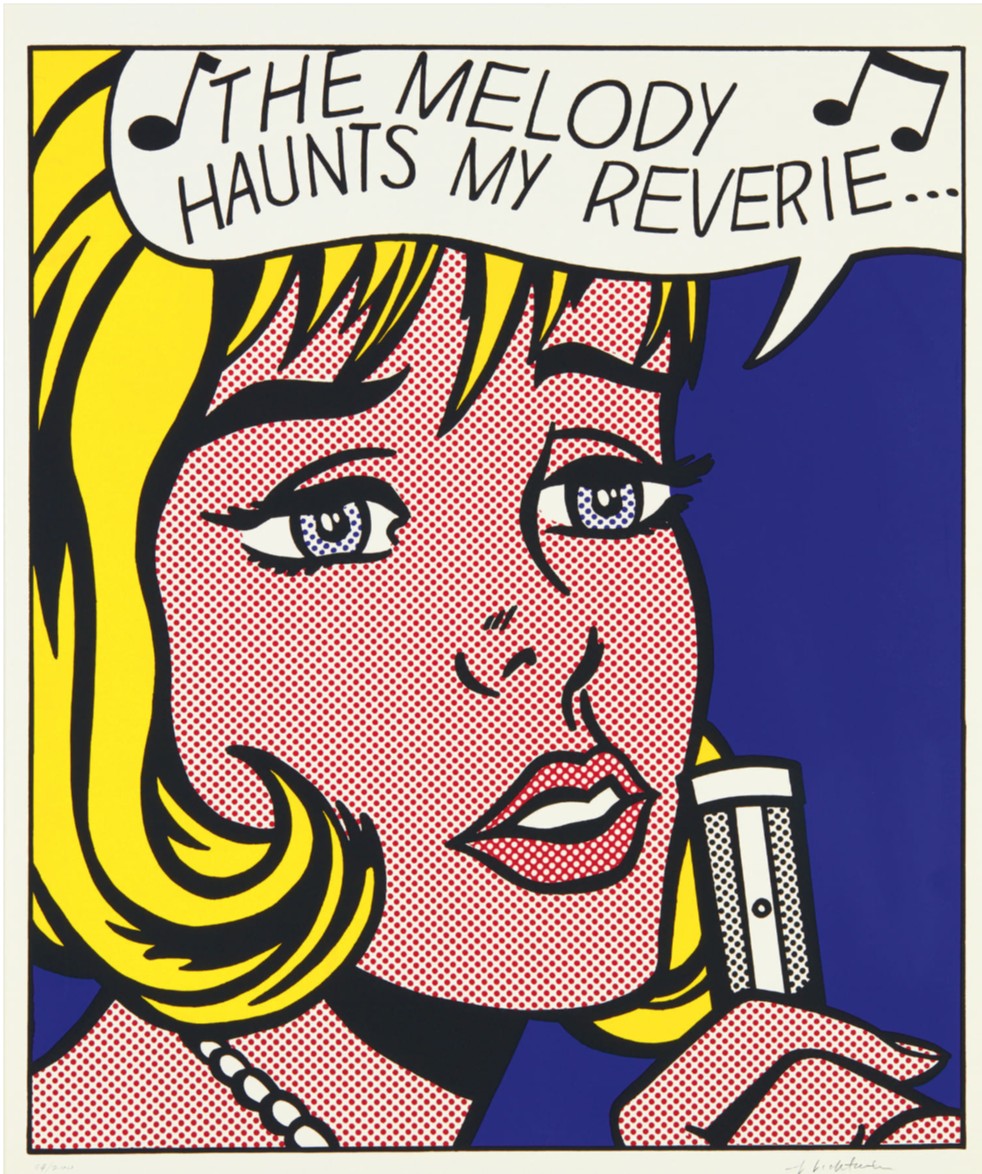
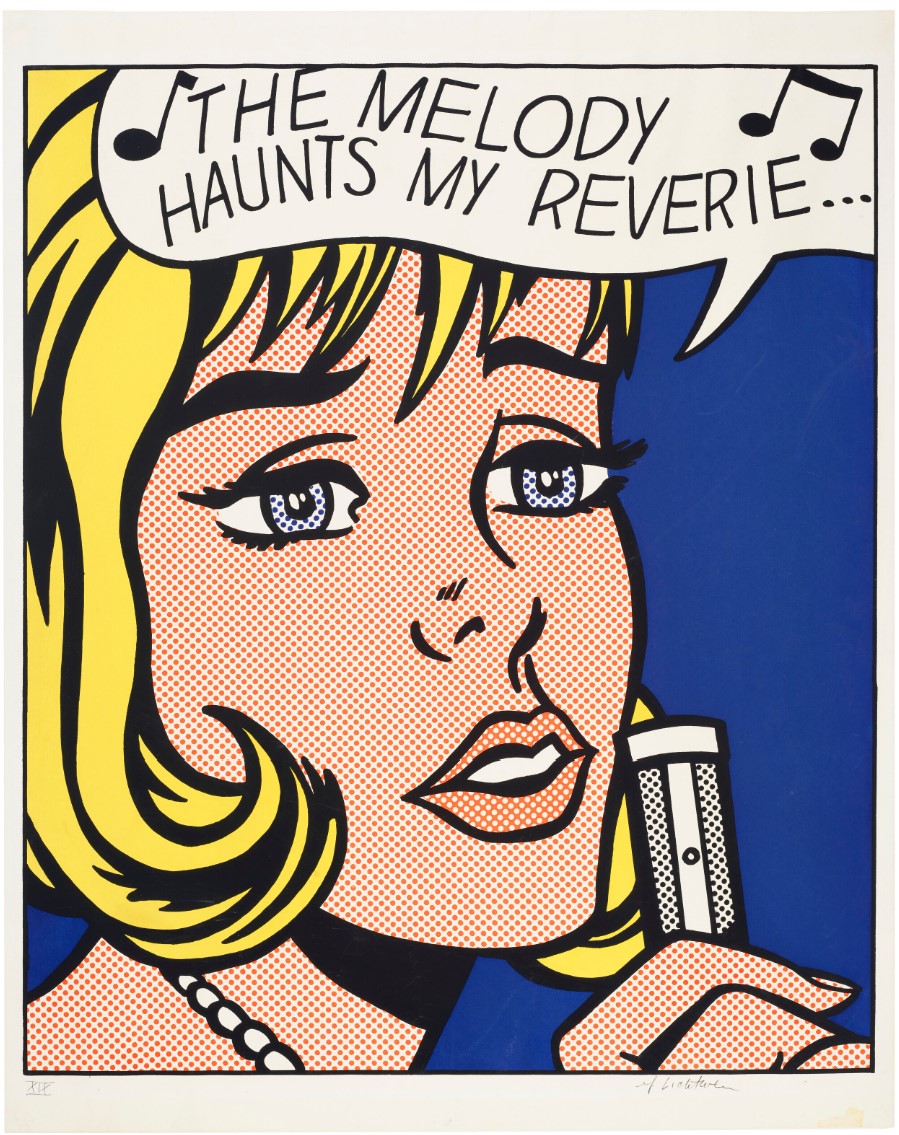
Reverie is a close-up portrait of a woman, a classic archetype in Lichtenstein’s comic-inspired works. A blonde woman, with characteristic yellow hair and long, melancholy eyelashes, is shown holding a microphone up to her face, as if singing. A speech bubble floats above her, containing the text: “The melody haunts my reverie.” The image is executed using Lichtenstein’s core visual language: bold black outlines, flat fields of primary color (yellow hair, blue background, red on the microphone), and meticulously applied Ben-Day dots (used for shading on her face and neck).
The image is believed to have been appropriated from a panel in a “girls’ comic” or romance comic strip, a common source for Lichtenstein’s works from the mid-1960s. The text “The melody haunts my reverie” is a direct lyric from the famous 1927 American song, “Stardust,” with music by Hoagy Carmichael and lyrics by Mitchell Parish Lichtenstein, an avid jazz and music fan, uses this well-known, slightly sentimental lyric to introduce an element of nostalgia and melodrama. Reverie sets up a tension: the deeply personal, romantic emotion of the song is juxtaposed with the impersonal, mechanical, and mass-produced appearance of the artwork.
This print belongs to Lichtenstein’s series of distressed or passionate comic book women (Drowning Girl, Crying Girl). The artist takes a fleeting moment of high emotion from low-brow media and elevates it to a monumental, iconic symbol of generalized female longing and romance. By isolating the image, he removes the narrative context, forcing the viewer to focus on the graphic style and the cliché of the emotion itself.
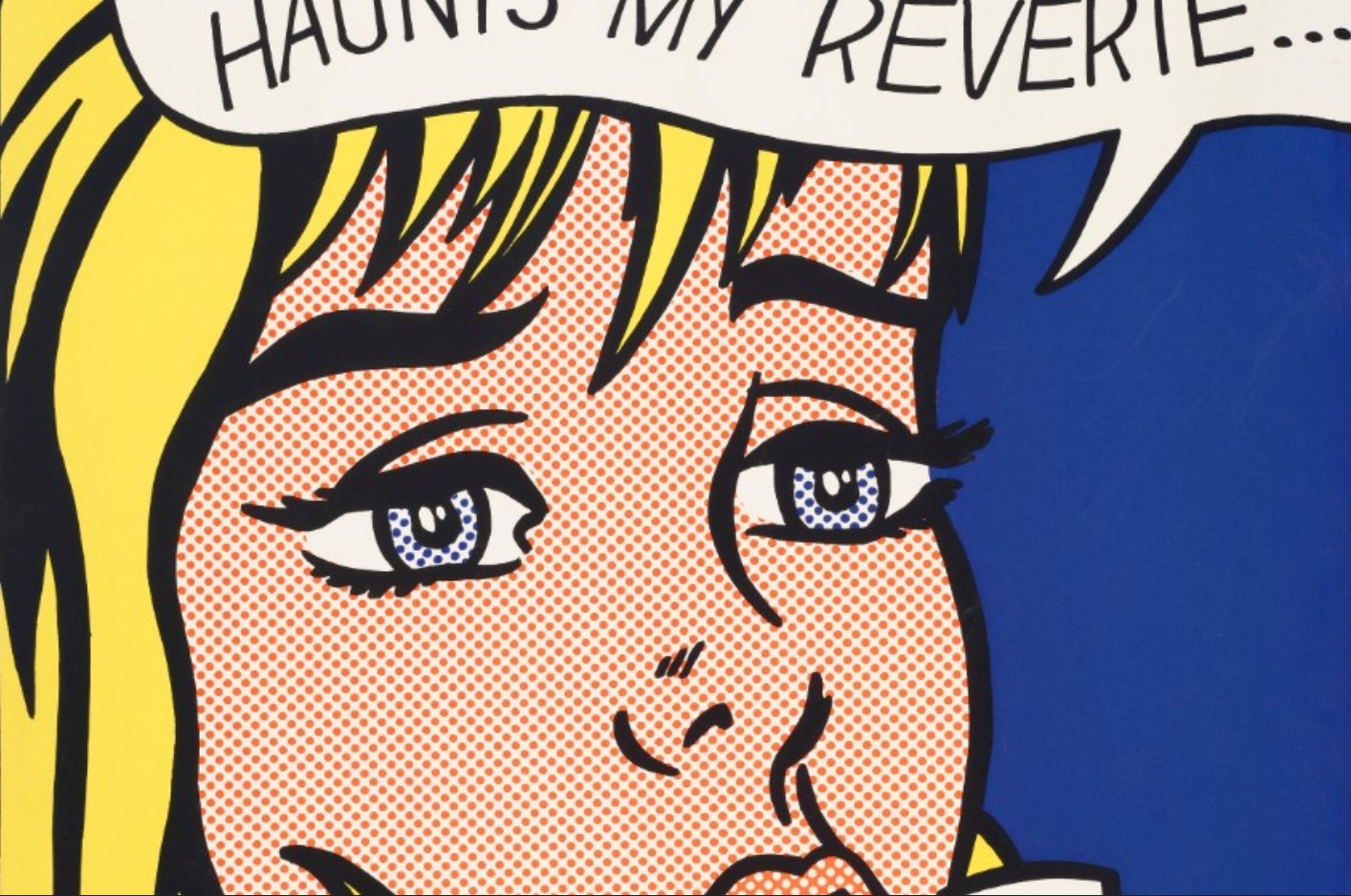
The meticulous use of the Ben-Day dots, a technique used in commercial printing to simulate shading, forces the viewer to recognize the print as a reproduction of a reproduction. Lichtenstein is, as he said, drawing a “depiction of the object, a kind of crystallized symbol of it,” rather than the object itself.
Reverie was a key inclusion in the portfolio “11 Pop Artists, Volume II” (1965), one volume in a three-part collection. The portfolio was published by Original Editions, New York, with the collaboration of various printing shops, including Knickerbocker Machine & Foundry Inc. This portfolio was crucial for the Pop Art movement, as it was commissioned by Philip Morris and used to launch exhibitions across Europe. This strategy helped broaden the international recognition of Pop Art, moving it beyond New York and cementing the leading status of artists like Lichtenstein and Andy Warhol. Lichtenstein himself reportedly considered his contributions to the three “11 Pop Artists” portfolios to be among his first true fine art prints, representing the culmination of years spent mastering printmaking techniques to achieve his signature “mechanical” aesthetic.
Reverie remains one of the most recognizable examples of Lichtenstein’s “damsel in distress” subjects. It set a standard for the appropriation and magnification of comic imagery, proving that art could be emotionally resonant while appearing completely mechanical and detached. The precision and scale of Reverie showcased the technical prowess available in American print studios in the 1960s, a period often called the “print renaissance.” Along with Sweet Dreams, Baby!, it confirmed the screenprint’s place as an equal to traditional methods like lithography and etching.
The 11 Pop Artists portfolios were a new center of gravity in America’s art history. These edgy compilations of fresh prints from then-emerging artists like Roy Lichtenstein, Andy Warhol and Tom Wesselmann, among others, launched new dialogues as artists engaged printmaking as a way to broadcast novel ideas more broadly. Mature and masterful, these images belied any notion that contributions to the 11 Pop Artists portfolios were Lichtenstein’s experimental forays into printmaking. Reverie and Sweet Dreams Baby! demonstrated that years of experimentation preceded such ingenious screenprints. In 1948 a seminal exhibition of prints arrived in Cleveland and that same year Lichtenstein took up printmaking while a student at Ohio State University. Making more than 30 editions between 1948 and 1959 that he printed, Lichtenstein learned the techniques of etching, aquatint, lithography, drypoint, screenprint and woodcut. He participated in the whole life cycle of Reverie and Sweet Dreams Baby!, working from preparatory drawings to printing and proofing. A long history with prints notwithstanding, Lichtenstein regarded his contributions to the 11 Pop Artists portfolios as his very first fine art prints, the culmination of years spent preparing.
“There is a relationship between cartooning and people like Miró and Picasso. I want my subjects to come through with the immediate impact of the comics.”
Reverie is the pinnacle of a movement that ushered in a democratic visual vocabulary to American art history. The heroine’s face would have been familiar to contemporaries who would knew it from the 1964 comic Secret Heart, and this central female figure became an avatar for new collectors who were backed by rapid economic expansion in Post-War America. Reproductive techniques and regularized colors more typical of commercial printing delivered a recognizable and conventionally pretty picture that launched a largely ignored language of cartoon imagery into the realm of fine art. Lichtenstein’s musings on popular imagery offered reconsideration of ongoing notions that art should remain cloistered with obfuscated meaning.
Auction Results
Works from the Collection of Dorothy and Roy Lichtenstein
Sotheby’s New-York: 26 September 2025
Estimated: USD 100,000 – 150,000
USD 355,600
AUCTION RECORD FOR REVERIE
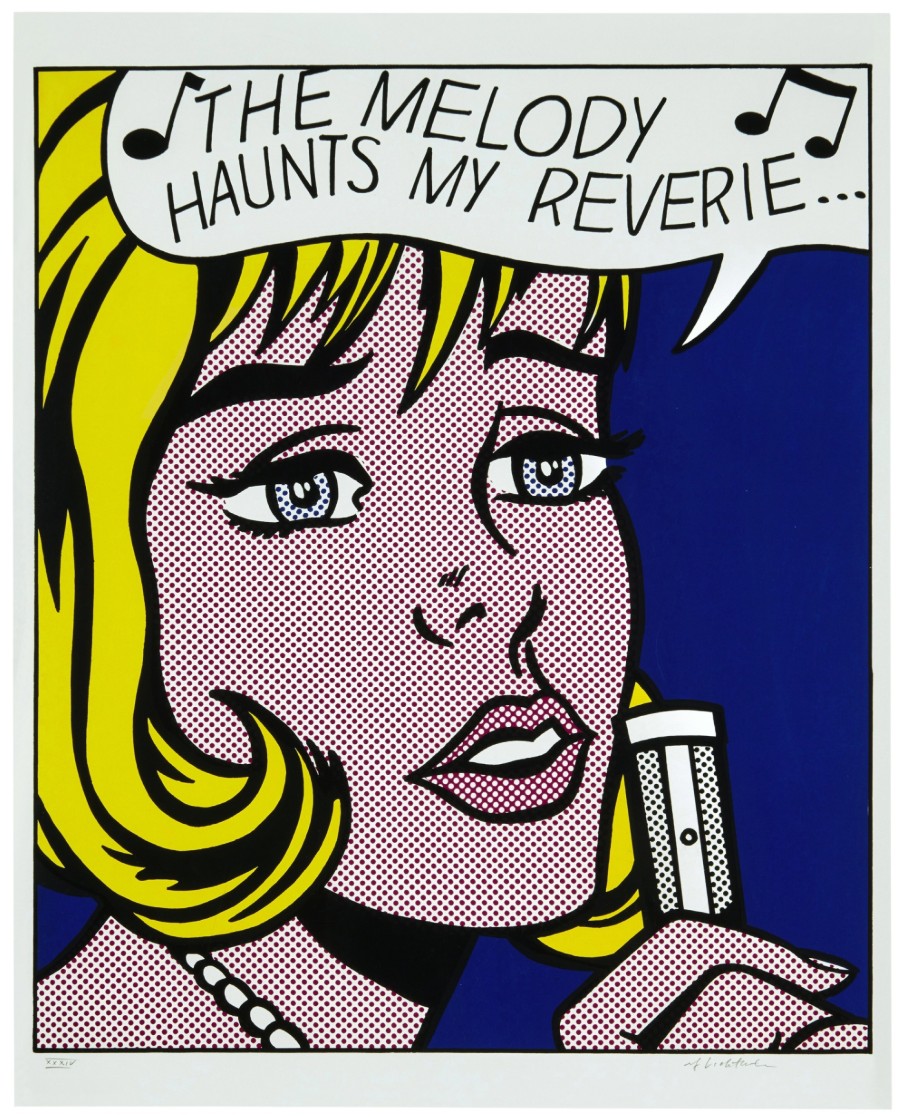
ROY LICHTENSTEIN (1923 – 1997)
Reverie, from the 11 Pop Artists, Volume II portfolio (Corlett 38), 1965
Screenprint in colors on smooth wove paper
Signed (lower right); numbered XXXIV (lower left)
One of 50 artist’s proofs in Roman numerals aside from the numbered edition of 200 in Arabic numerals
Christie’s New-York: 16 April 2024
Estimated: USD 100,000 – 150,000
USD 138,600
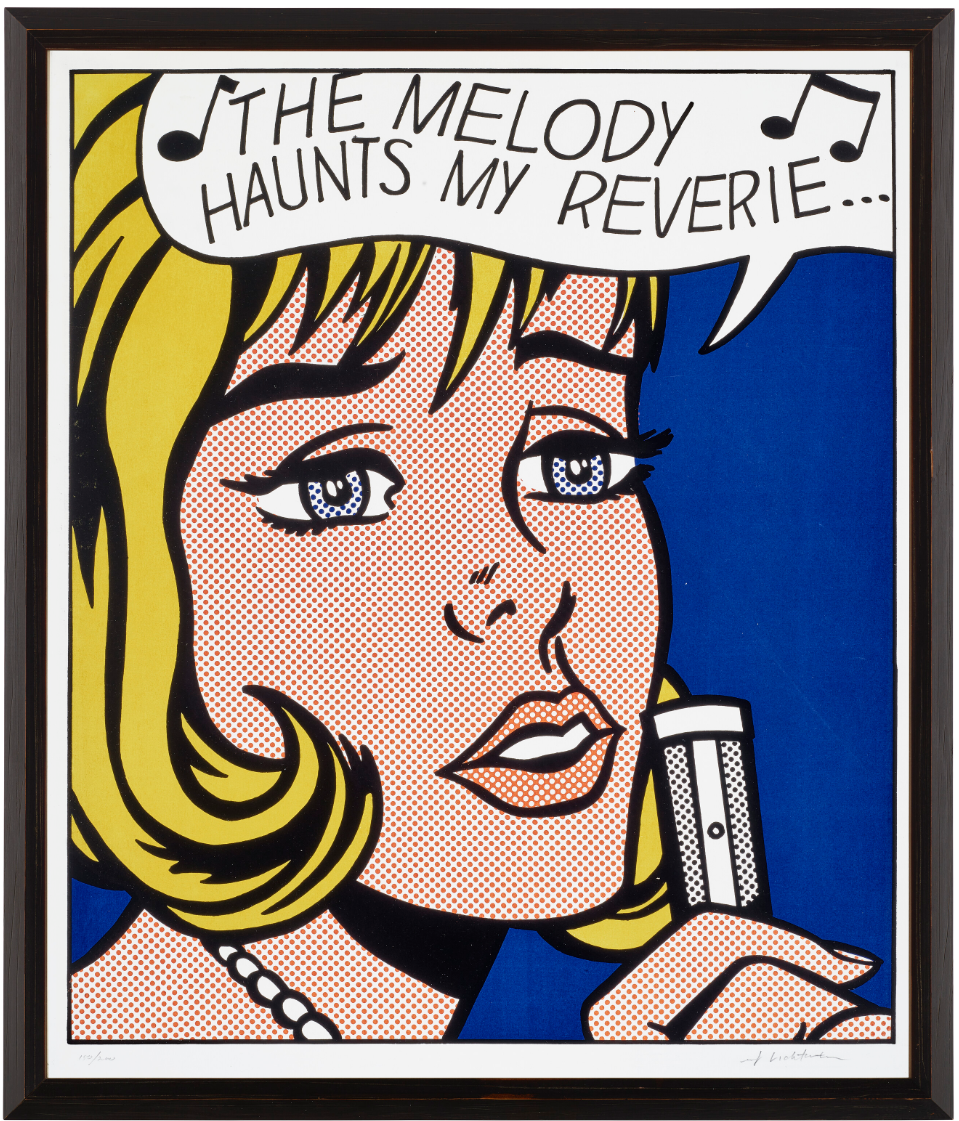
ROY LICHTENSTEIN (1923-1997)
Reverie, from 11 Pop Artists, Volume II, 1965
Screenprint in colors on smooth wove paper
Signed in pencil, numbered 150⁄200 (there were also 50 proofs in Roman numerals)
Phillips New-York: 26 October 2023
Estimated: USD 100,000 – 150,000
USD 158,750
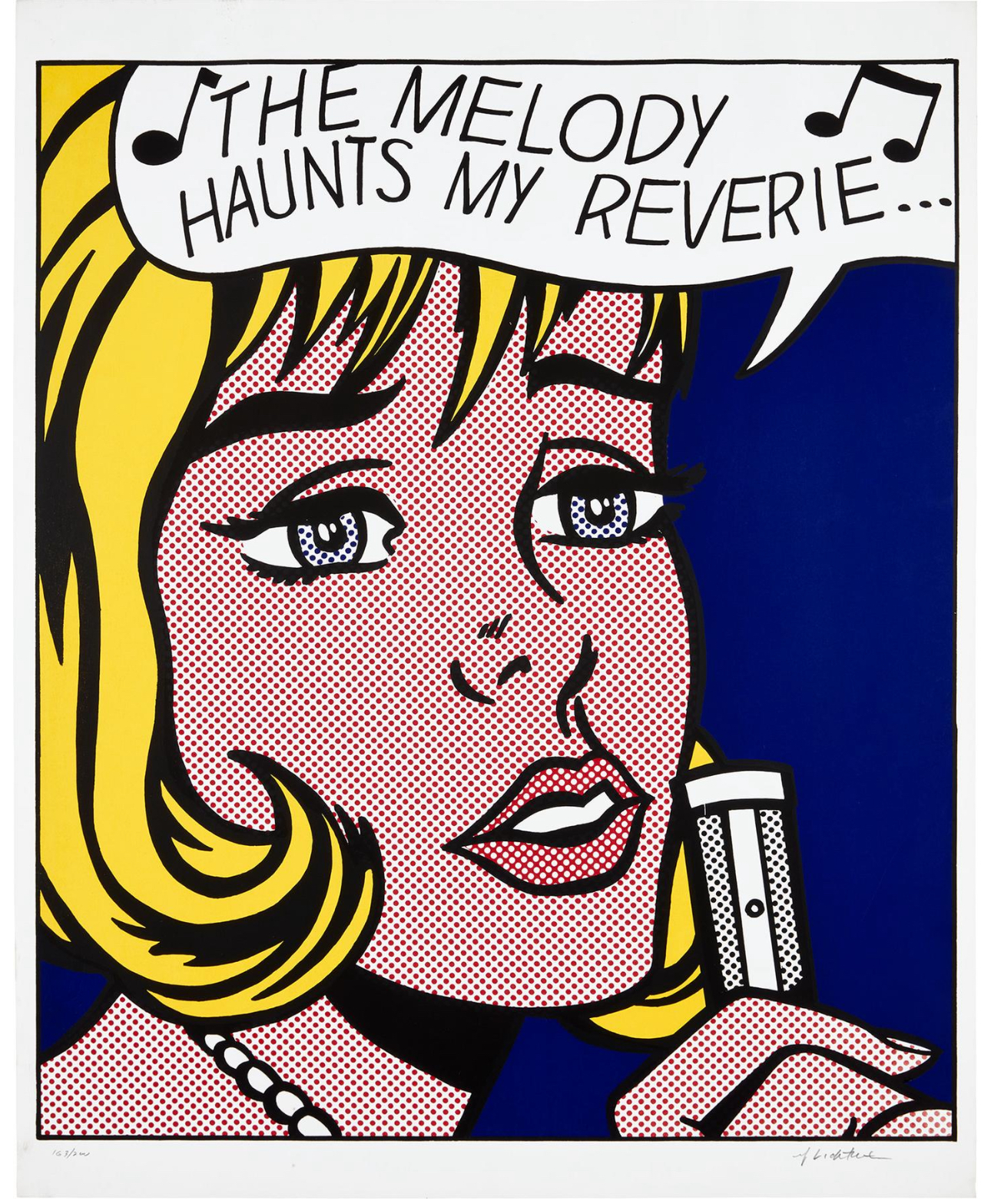
ROY LICHTENSTEIN
Reverie, from 11 Pop Artists, Volume II (C. 38), 1965
Screen-print in colors on smooth wove paper
Signed and numbered 163/200 in pencil
Christie’s New-York: 27 October 2022
Estimated: USD 120,000 – 180,000
USD 163,800
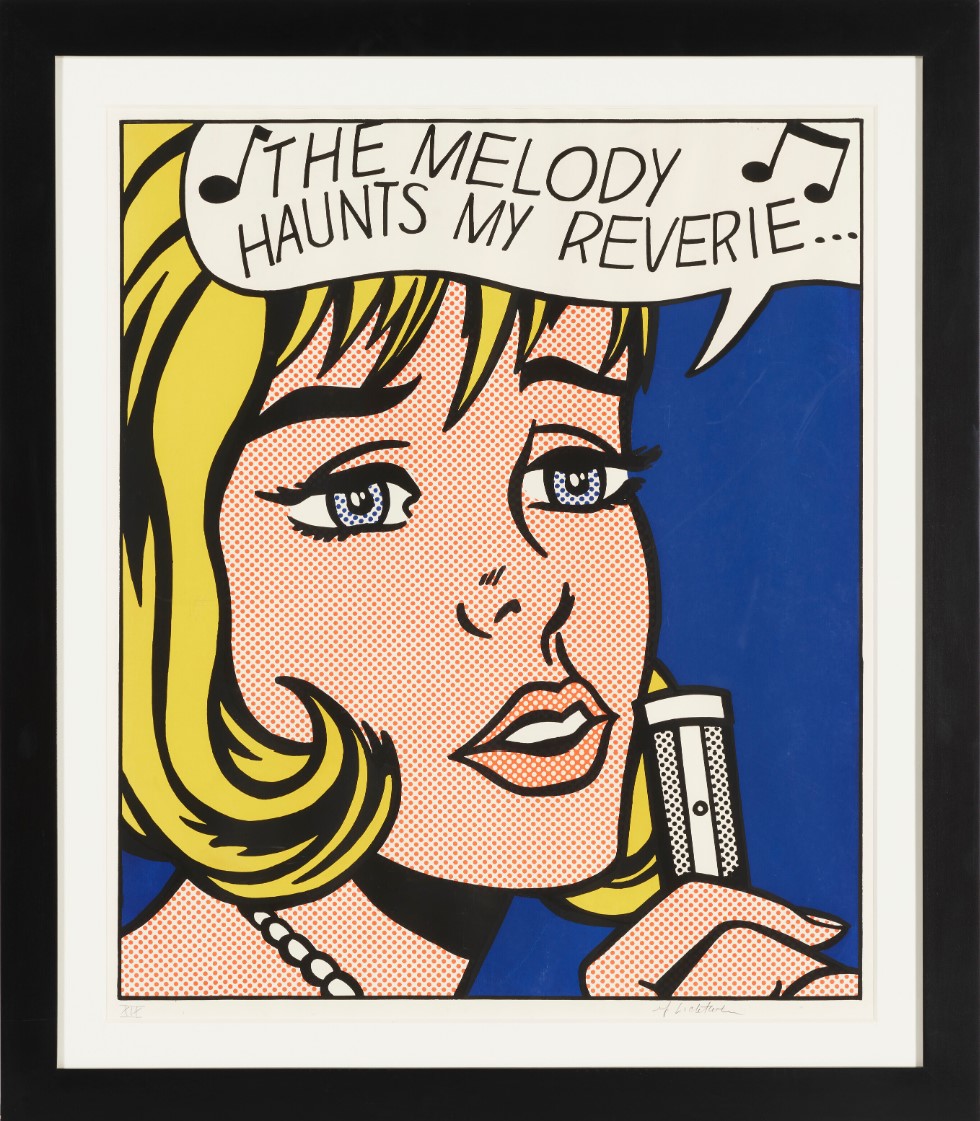
ROY LICHTENSTEIN (1923-1997)
Reverie, from 11 Pop Artists, Volume II, 1965
Screen-print in colors
Signed in pencil, numbered ‘XIX’
An artist’s proof, the edition was 200
Christie’s New-York: 21 April 2022
Estimated: USD 120,000 – 180,000
USD 189,000
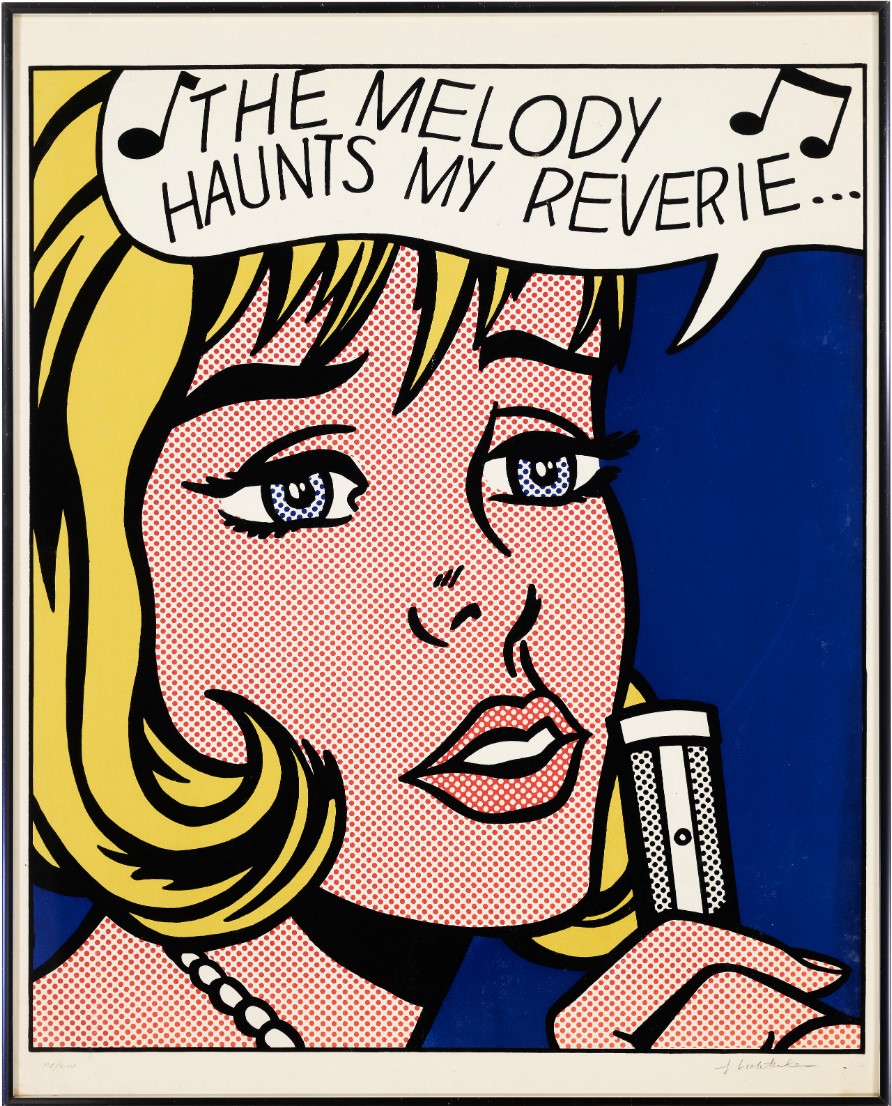
ROY LICHTENSTEIN (1923-1997)
Reverie, from 11 Pop Artists, Volume II, 1965
Screen-print in colors, on smooth wove paper
Signed in pencil, numbered 116⁄200
Phillips New-York: 21 October 2021
Estimated: USD 120,000 – 180,000
USD 201,600
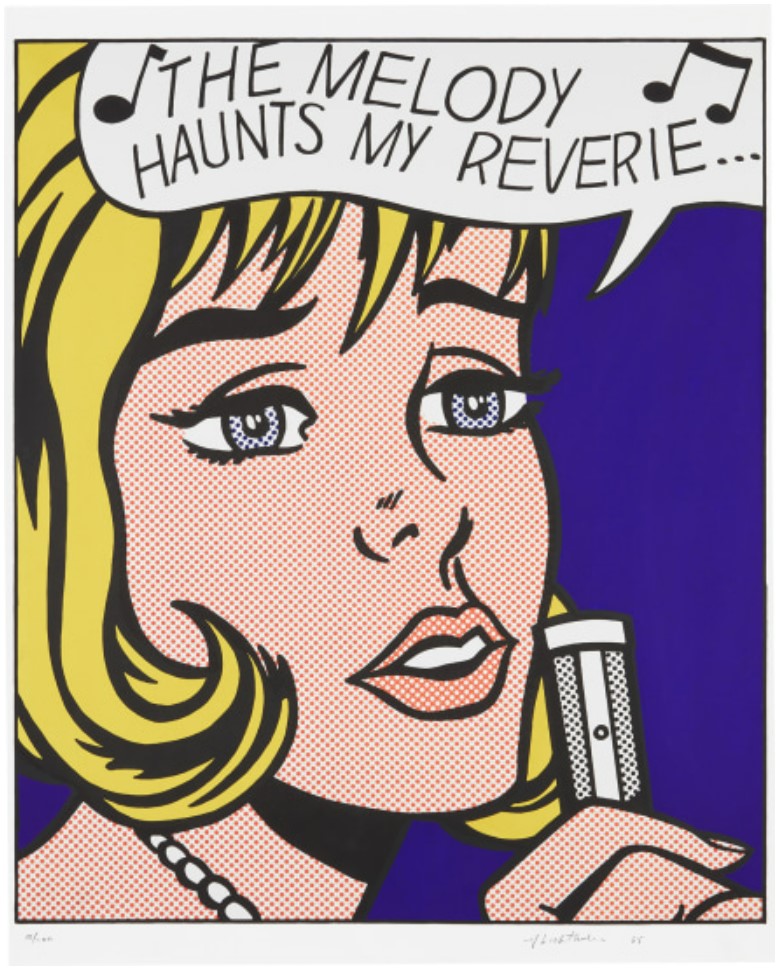
ROY LICHTENSTEIN
Reverie, from 11 Pop Artists, Volume II (C. 38), 1965
Screen-print in colors, on smooth wove paper
Signed and numbered 10/200 in pencil
(there were also 50 copies in Roman numerals and approximately 5 artist’s proofs)
With the ‘Sammlung Lauffs’ inkstamp and annotated ‘L 51/1968’ in pencil on the reverse
Bonhams New-York: 26 May 2021
Estimated: USD 80,000 – 120,000
USD 212,812
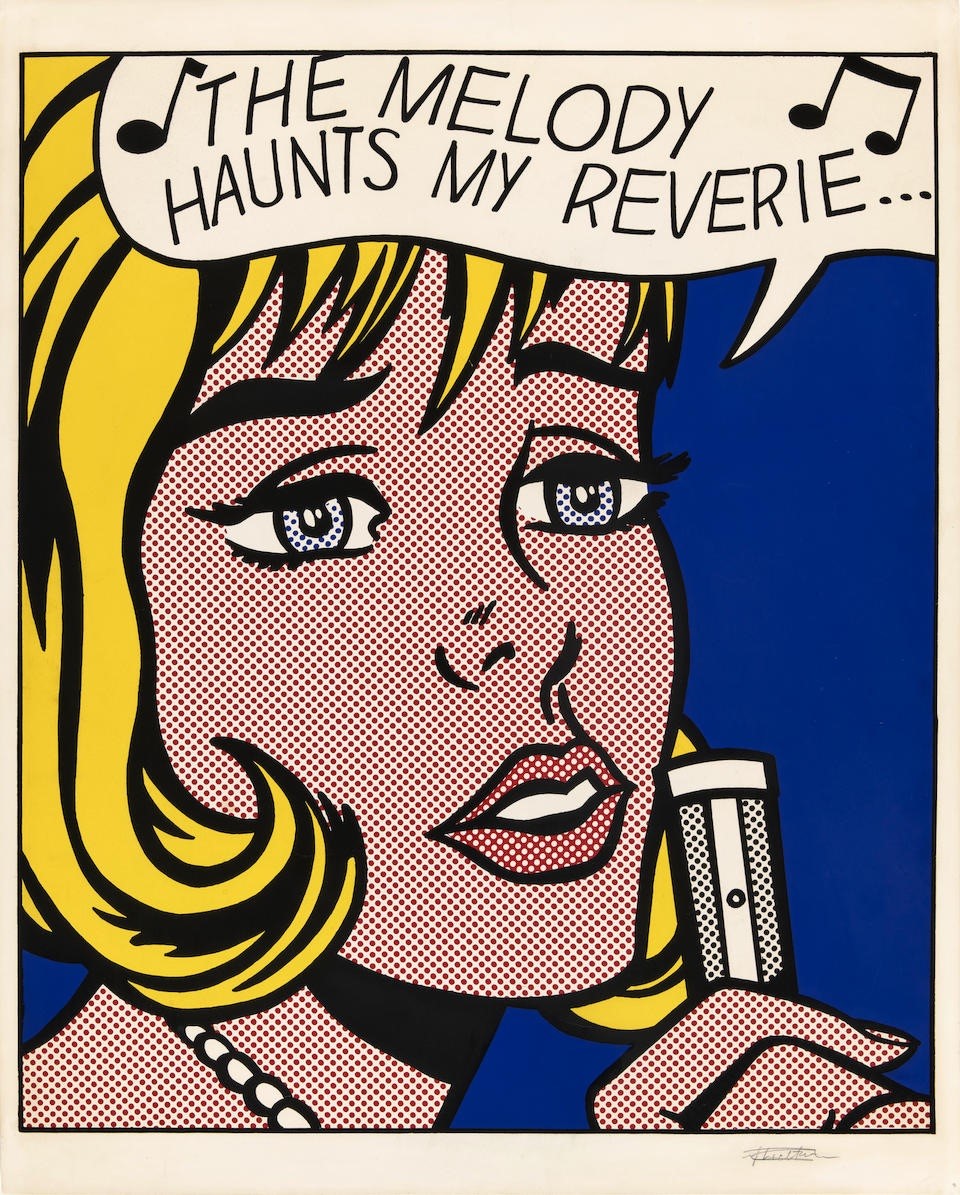
Screen-print in colors on white wove paper
Signed in pencil, with an additional line through the signature
A variant proof (aside from the edition of 200 plus 50 Roman numeral proofs)
Estimated: GBP 80,000 – 120,000
GBP 126,000 / USD 172,850
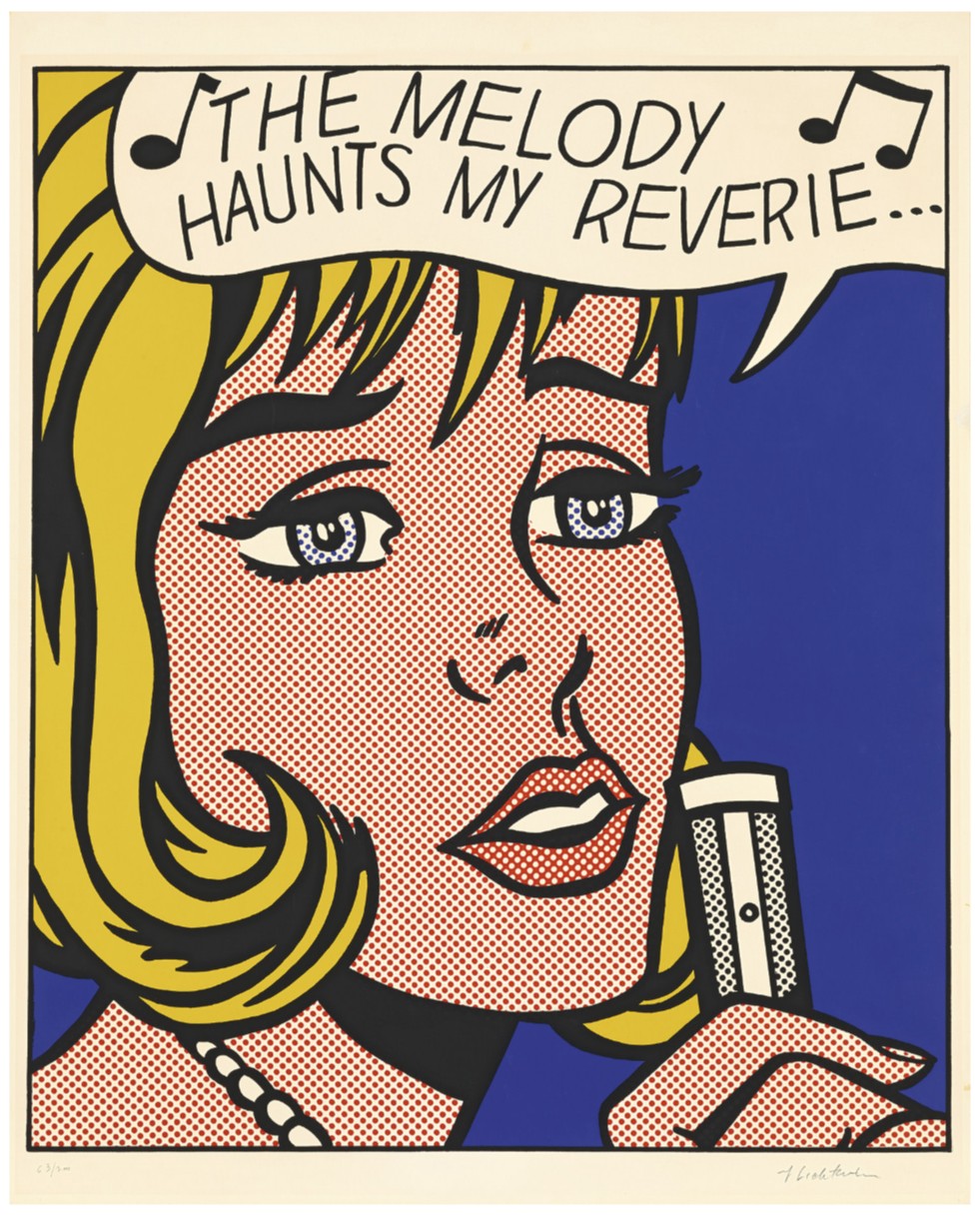
Estimated: USD 100,000 – 150,000
USD 275,000