WORK IN PROGRESS
Based in Brooklyn, María Berrío grew up in Colombia. Her large-scale works, which are meticulously crafted from layers of Japanese paper, reflect on cross-cultural connections and global migration seen through the prism of her own history.
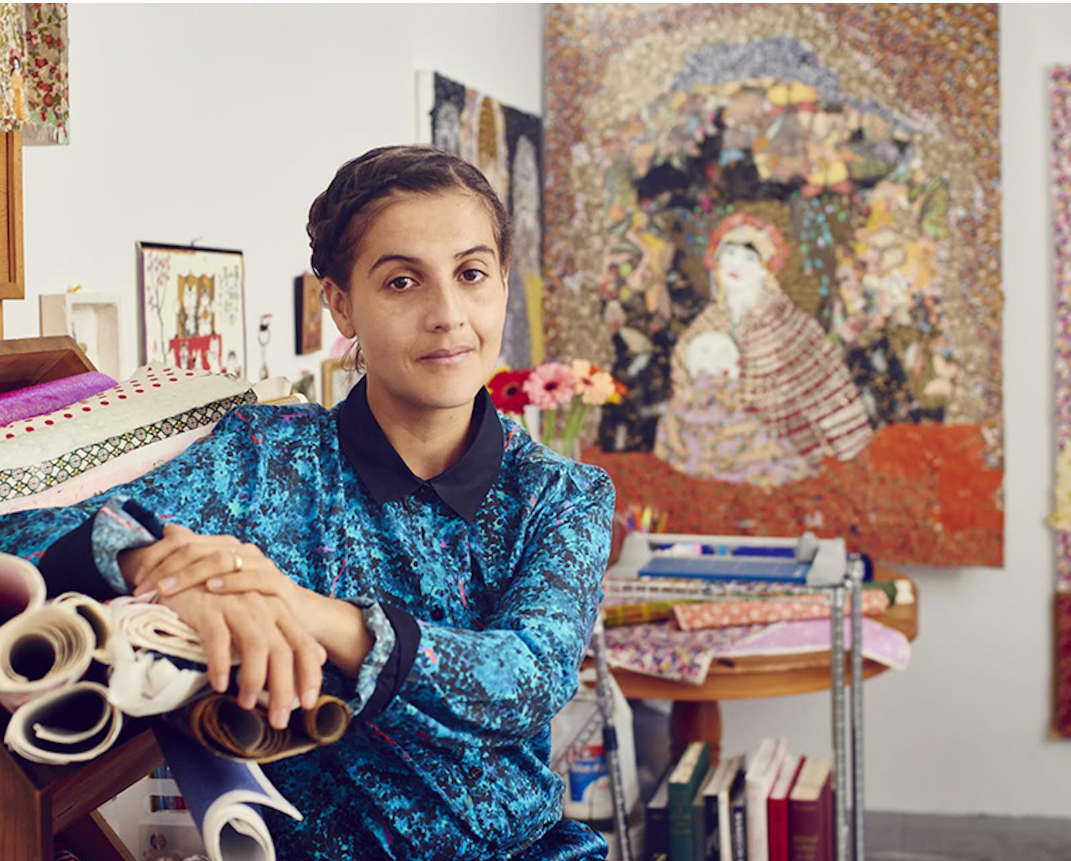
Populated predominantly by women, Berrío’s art often appears to propose spaces of refuge or safety, kaleidoscopic utopias which in the past have been inspired in part by South American folklore, where humans and nature coexist in harmony. To these apparently idealised scenes, however, Berrío brings to light the hard realities of present-day politics. For example, Oda a la Esperanza (Ode to Hope), 2019, in which girls appear captive within an institution-like environment, refers to the Trump administration’s family separation policy. Wildflowers, 2017, which depicts numerous women, children and animals has at its centre a railway carriage that might equally refer to the New York City subway or the train known as La Bestia, which transports migrants across Mexico to the US border. Writing in the catalogue for the New Orleans Triennial Prospect. 4: The Lotus in Spite of the Swamp, where the work was shown in 2017–2018, Alexandra Giniger comments that ‘In her canvases, animals, though plentiful, take a secondary role to women, who dominate en masse. The message may be that we, as humans, must task ourselves ever more staunchly with protecting one another through these swampy times.’
Practical Information
Regarded as one of the most promising and innovative artists of today, she has been the subject of major solo exhibitions across the country, including her most recent 2023 show at the ICA Boston entitled Maria Berrío: The Children’s Crusade. Berrío’s work is also held in highly regarded permanent collections, including that of the Metropolitan Museum of Art, the Los Angeles County Museum of Art (LACMA), the Hirshhorn Museum, and the Whitney Museum of American Art.
Berrío currently has a solo exhibition at the Museum of Fine Arts, Boston, titled The Children’s Crusade, on view through Aug. 6, 2023. Significant recent group exhibitions include Nasher Museum of Art, Duke University, Durham, Spirit in the Land, through Jul 9. 2023, and The Modern, Fort Worth, Women Painting Women, 2022.
Her work is in numerous distinguished museum collections, including The Whitney Museum of American Art, New York; The Los Angeles County Museum of Art; The Philadelphia Museum of Art; and The Institute of Contemporary Art, Miami. Her work is on permanent, public display in a series of fourteen mosaics at the N subway stop at Fort Hamilton, Brooklyn.
PART I: SUMMARY
Auction Market Overview
Top Lots
#1. He Loves Me, He Loves Me Not, 2015
Phillips New-York: 15 November 2022
Estimated: USD 500,000 – 700,000
USD 1,603,000
https://www.phillips.com/detail/maria-berrio/NY010722/19
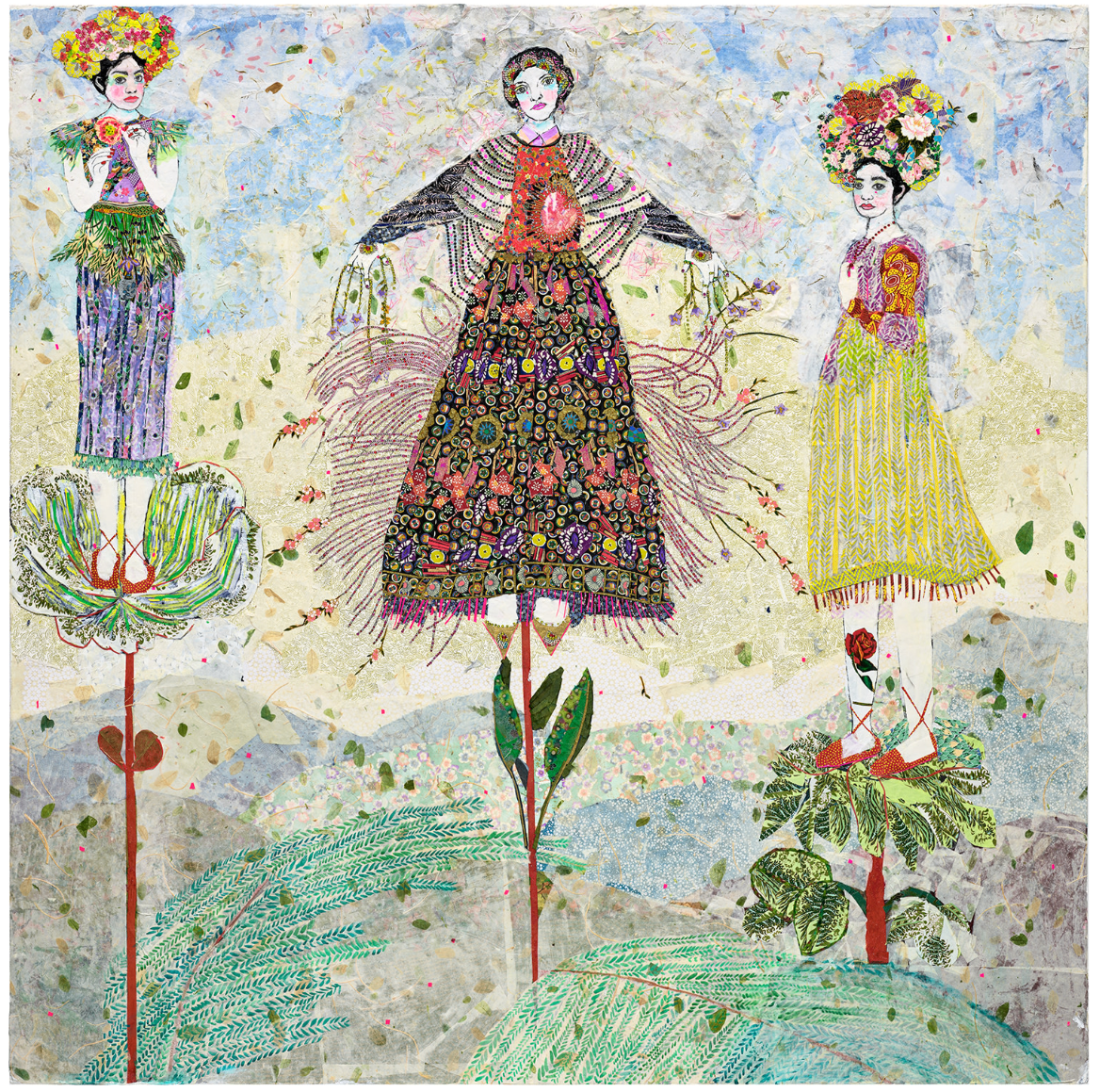
MARIA BERRIO
He Loves Me, He Loves Me Not, 2015
Mixed media collage on canvas
72 1/8 x 72 1/8 inches (183.3 x 183.3 cm)
Signed, titled and dated “”he loves me, he loves me not” Enero 4.2015. Maria Berrio” on the reverse
#2. La Cena, 2012
Sotheby’s New-York: 11 March 2022
Estimated: USD 350,000 – 450,000
USD 1,562,500
https://www.sothebys.com/en/buy/auction/2022/contemporary-curated-5/la-cena-2

MARÍA BERRÍO (B. 1982)
La Cena, 2012
Wax crayon, graphite, fabric collage and Japanese rice paper collage on canvas
48×58 inches (121.9 x 147.3 cm)
Signed, titled and dated ‘”La Cena” Maria Berrio 2012’ (on the reverse)
#3. The Lovers 3, 2015
Sotheby’s Hong-Kong: 7 October 2022
Estimated: HKD 2,500,000 – 4,500,000
HKD 11,870,000 / USD 1,512,125
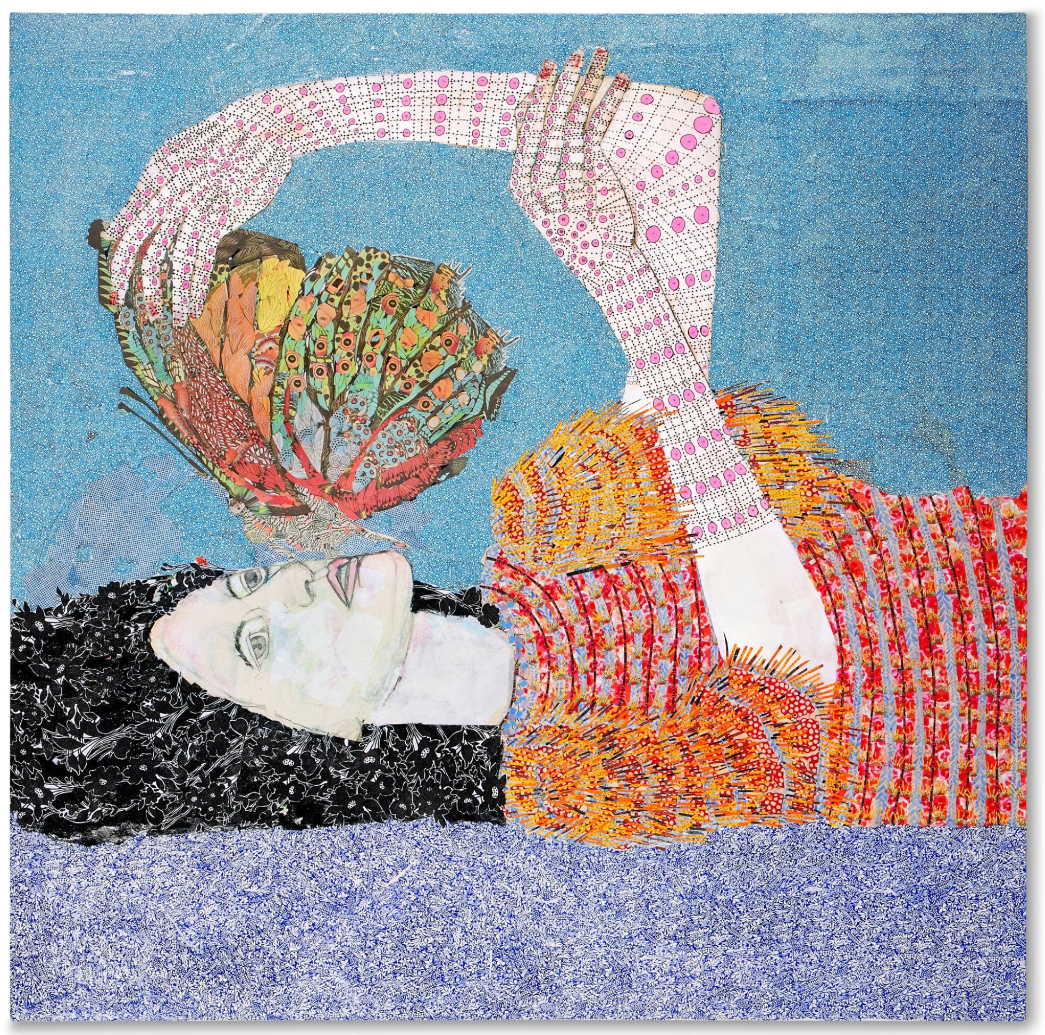
MARIA BERRIO (b. 1982)
The Lovers 3, 2015
Watercolor and Japanese paper collage on canvas
72×72 inches (182.9 x 182.9 cm)
Signed, titled and dated 2015 on the reverse
#4. The Harbingers, 2015
Sotheby’s New-York: 16 November 2022
Estimated: USD 300,000 – 500,000
USD 1,159,200
https://www.sothebys.com/en/buy/auction/2022/the-now-evening-auction-5/the-harbingers
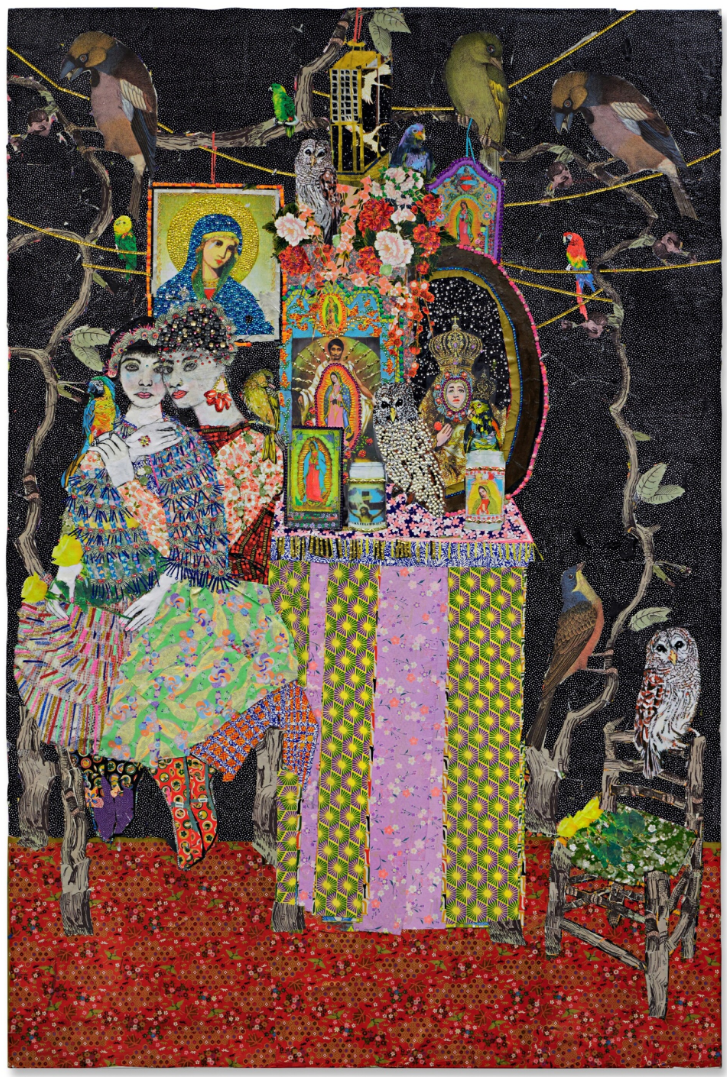
MARIA BERRIO (b. 1982)
The Harbingers, 2015
Watercolor, rhinestones and Japanese paper collage on canvas
72×48 inches (182.9 x 121.9 cm)
Signed Maria Berrio, titled The Harbingers and dated 2015 (on the reverse)
#5. The Lovers 4, 2016
Sotheby’s New-York: 19 May 2022
Estimated: USD 300,000 – 500,000
USD 1,008,000
https://www.sothebys.com/en/buy/auction/2022/the-now-evening-auction-2/the-lovers-4-2
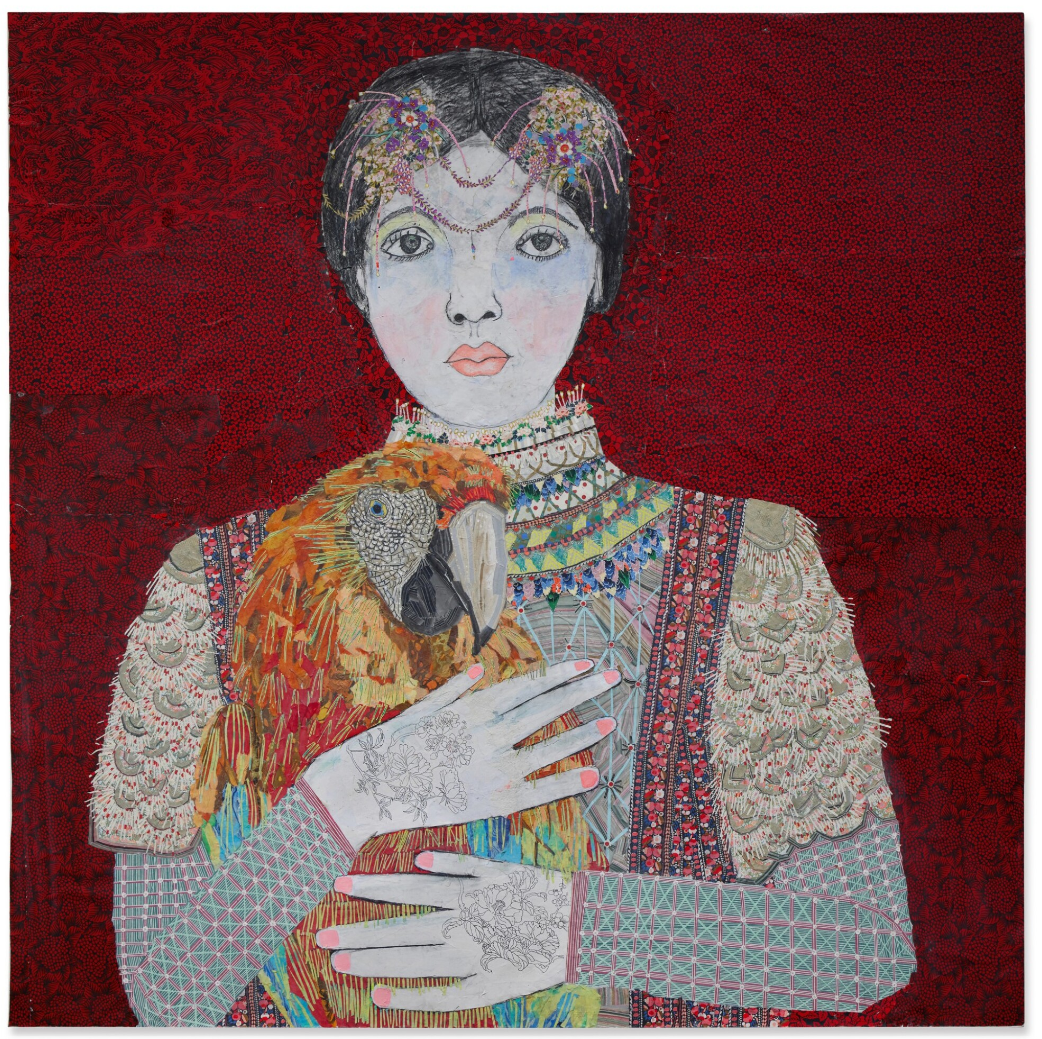
MARIA BERRIO (b. 1982)
The Lovers 4, 2016
Watercolor and Japanese paper collage on canvas
72×72 inches (182.9 x 182.9 cm)
Signed Maria Berrio and dated 2016 (on the reverse)
PART II: AUCTION RESULTS
2024 Auction Results
As of 1 July 2024
3 lots sold at auction for a total turnover of USD 733,819 .
With no lot failing to sell, the sell-through rate is 100%. 1 lot was withdrawn from Sotheby’s Hong-Kong on 5 April 2024.
#1. La Cena, 2012
Christie’s New-York: 17 May 2024
Estimated: USD 350,000 – 450,000
USD 441,000
https://www.christies.com/en/lot/lot-6482478
REPEAT SALE
Sotheby’s New-York: 11 March 2022
Estimated: USD 350,000 – 450,000
USD 1,562,500
https://www.sothebys.com/en/buy/auction/2022/contemporary-curated-5/la-cena-2
MARÍA BERRÍO (B. 1982)
La Cena, 2012
Wax crayon, graphite, fabric collage and Japanese rice paper collage on canvas
48×58 inches (121.9 x 147.3 cm)
Signed, titled and dated ‘”La Cena” Maria Berrio 2012’ (on the reverse)
#2. The Lovers 2, 2015
Phillips New-York: 14 May 2024
Estimated: USD 250,000 – 350,000
USD 274,999
María Berrío – Modern & Contemporary Art… Lot 24 May 2024 | Phillips

MARIA BERRIO
The Lovers 2, 2015
Watercolor, Swarovski rhinestones and Japanese rice paper collage on canvas
72 x 71 7/8 inches (182.9 x 182.6 cm)
Signed, titled and dated ““The lovers 2” María Berrío 2015” on the reverse
#3. Untitled, 2023
Christie’s London: 9 March 2024
Estimated: GBP 10,000 – 15,000
GBP 13,860 / USD 17,820
https://www.christies.com/en/lot/lot-6470242
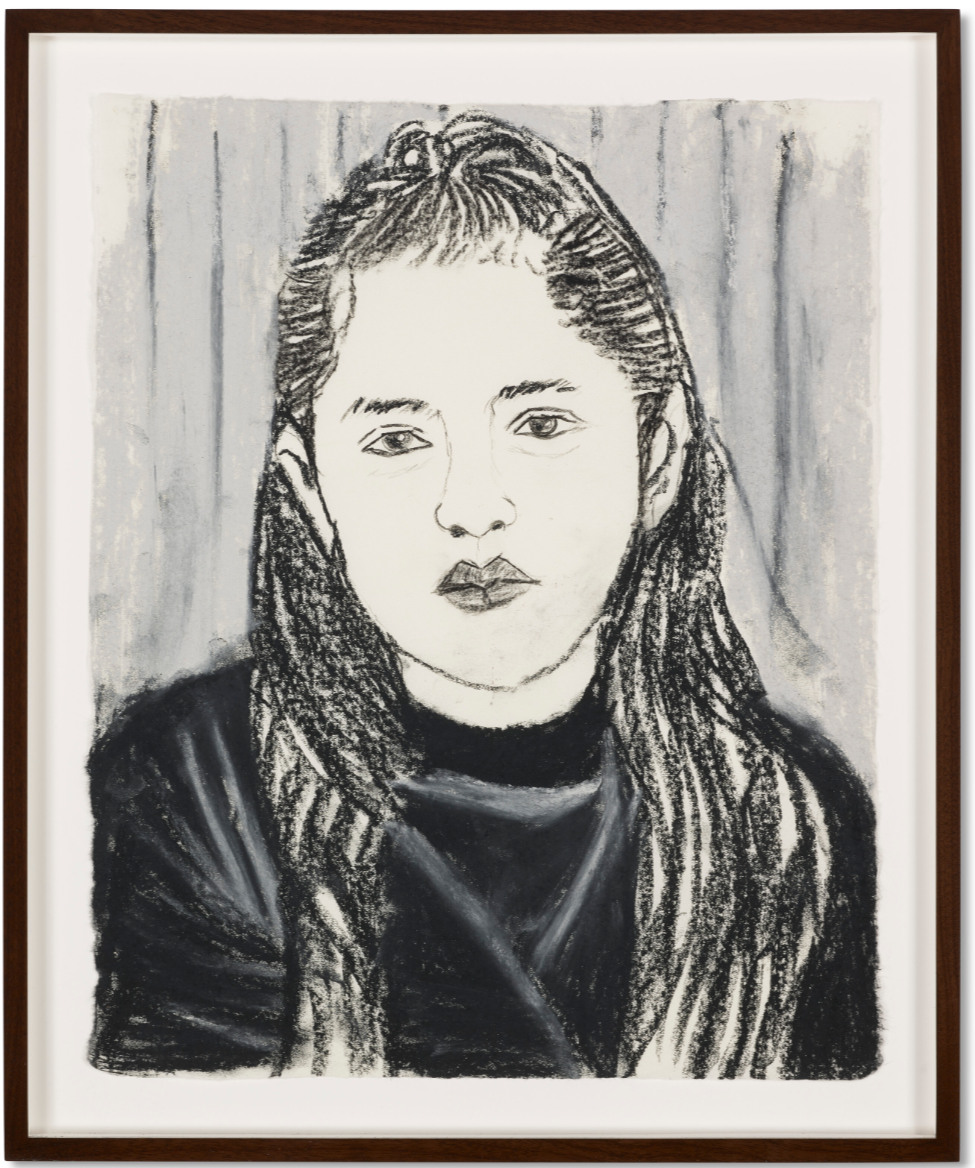
MARÍA BERRÍO (B. 1982)
Untitled, 2023
From the Ashes pastel on paper
16 3/4 x 13 3/8 inches (42.5 x 34 cm)
Lots Withdrawn
Between the Orchids and the Wheat, 2020
Sotheby’s Hong-Kong: 5 April 2024
Estimated: HKD 4,500,000 – 6,500,000
WITHDRAWN

MARIA BERRIO (b. 1982)
Between the Orchids and the Wheat, 2020
Collage with Japanese paper and watercolor paint on canvas
213×267 cm (83 7/8 x 105 1/8 inches)
Signed and dated 2020 on the reverse
2023 Auction Results
4 lots sold at auction in 2023 for a total turnover of USD 1,581,320.
With 2 lots failing to sell, the sell-through rate is 67%. The highest price has been achieved at Phillips in New-York, on 17 May 2023, when No One Can Hear You, Only the Wind, a painting dated 2012, sold for USD 635,000.
#1. No One Can Hear You, Only the Wind, 2012
Phillips New-York: 17 May 2023
Estimated: USD 1,000,000 – 1,500,000
USD 635,000
https://www.phillips.com/detail/maria-berrio/NY010323/24?fromSearch=maria%20berrio&searchPage=1
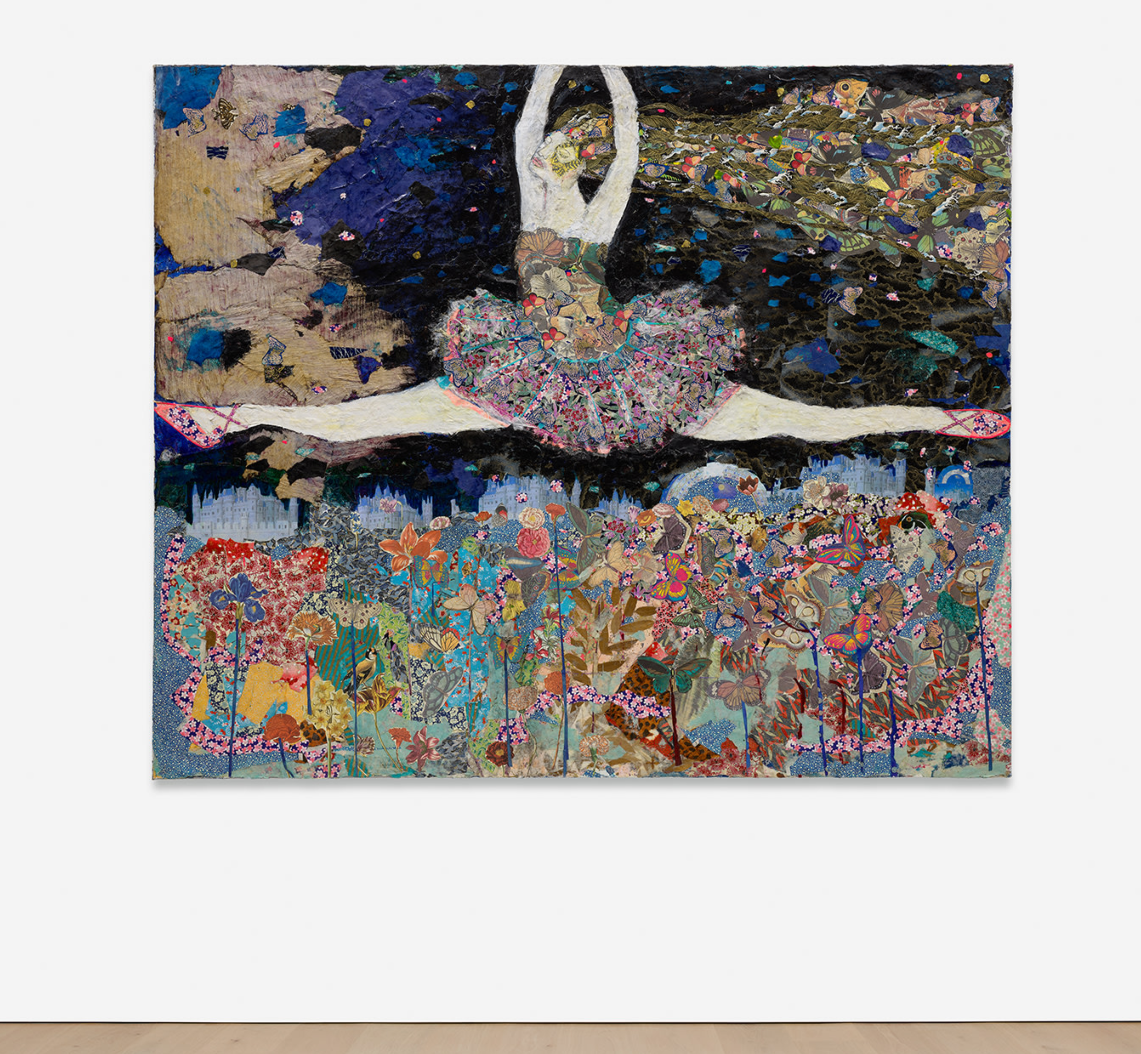
MARIA BERRIO
No One Can Hear You, Only the Wind, 2012
Japanese paper collage, dried leaves, watercolor and pencil on canvas
60×72 inches (152.4 x 182.9 cm)
#2. The Dream of Flight, 2019
Christie’s Shanghai: 23 September 2023
Estimated: CNY 1,800,000 – 2,800,000
CNY 3,528,000 / USD 483,420
https://www.christies.com/en/lot/lot-6440854
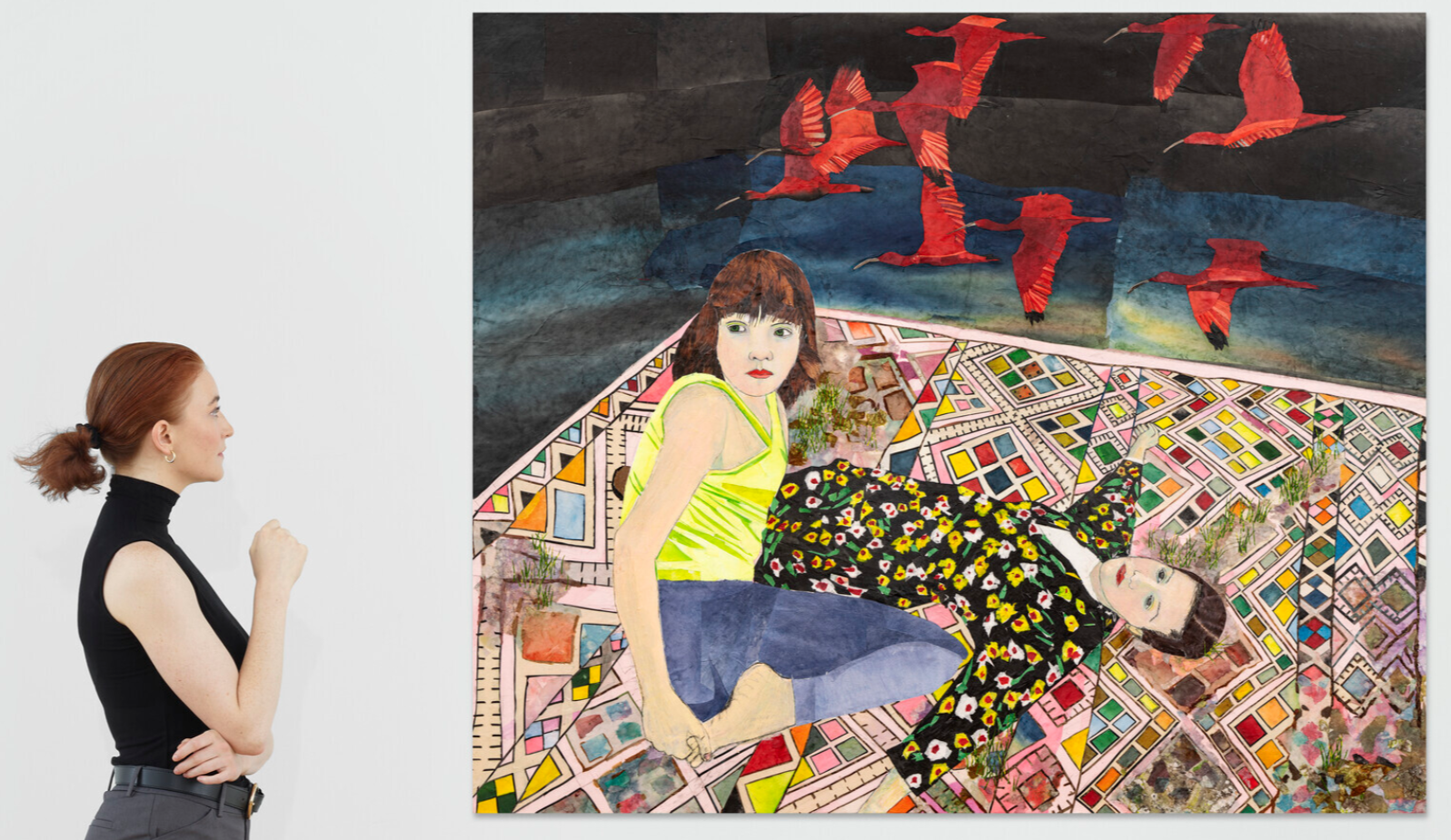
MARÍA BERRÍO (B.1982)
The Dream of Flight, 2019
Watercolor and Japanese paper collages on canvas
60×72 inches (152.4 x 182.9 cm)
Signed and titled ‘María Berrío 2019’ (on the reverse)
#3. Untitled, 2015
Sotheby’s New-York: 18 May 2023
Estimated: USD 200,000 – 300,000
USD 381,000
https://www.sothebys.com/en/buy/auction/2023/the-now-evening-auction-2/untitled-2
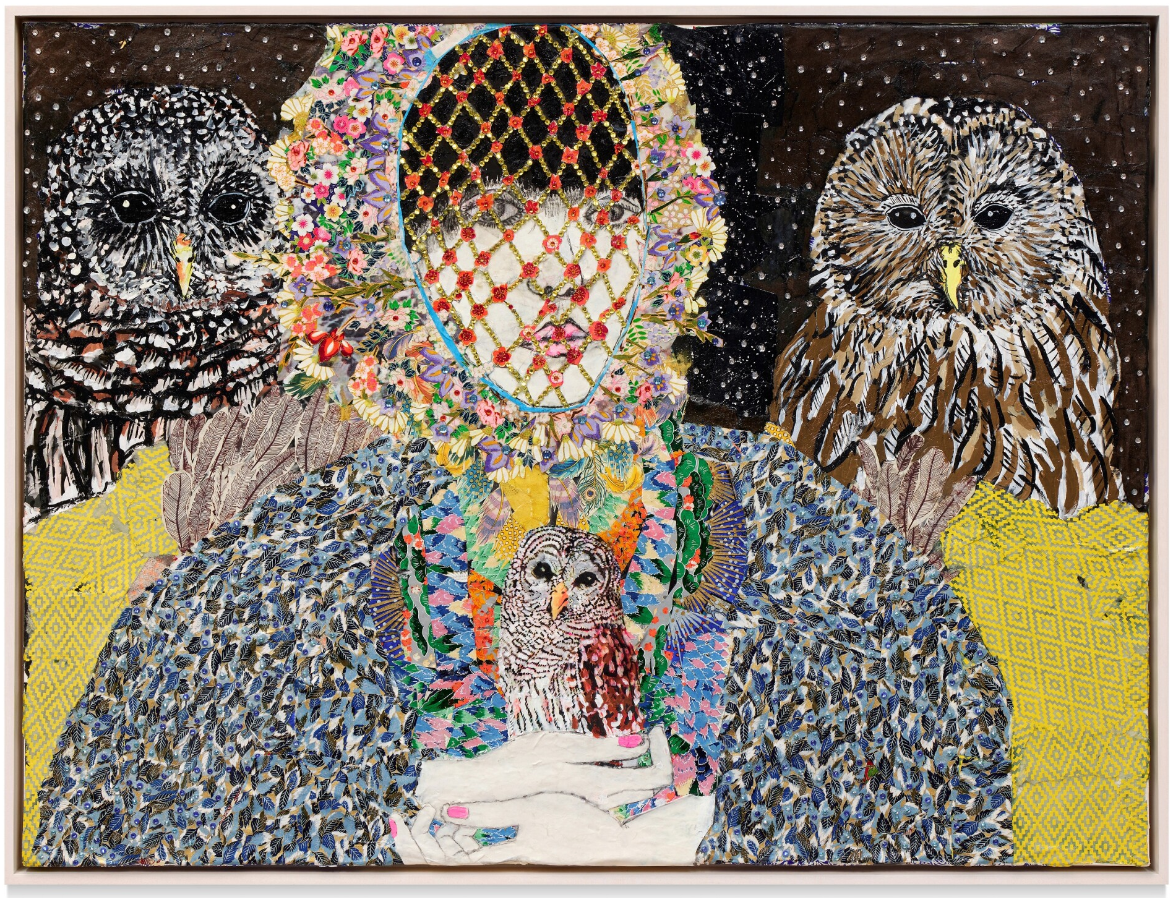
MARIA BERRIO (b. 1982)
Untitled, 2015
Watercolor, rhinestones and Japanese paper collage on canvas
30×40 inches (76.2 x 101.6 cm)
Signed and dated 2015 (on the reverse)
#4. Dany & Laura, 2015
Christie’s New-York: 12 May 2023
Estimated: USD 50,000 – 70,000
USD 81,900
https://www.christies.com/en/lot/lot-6424936
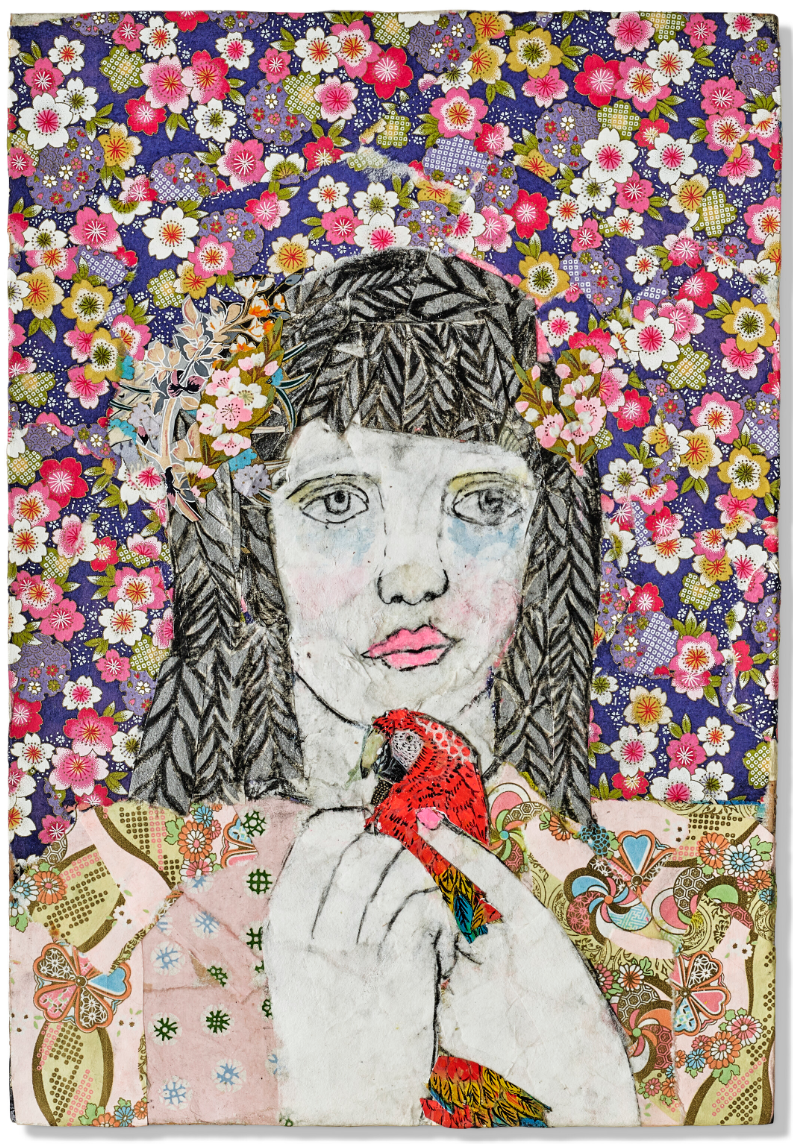
MARÍA BERRÍO (B. 1982)
Dany & Laura, 2015
Acrylic, watercolor, wax crayon and Japanese rice paper collage on wood
16 x 11 1/8 inches (40.6 x 28.3 cm)
Signed, inscribed variously, titled and dated ‘María Berrío 2015 “Dany & Laura”‘ (on the reverse)
2022 Auction Results
12 lots sold at auction in 2022 for a total turnover of USD 11,941,890.
With no lot failing to sell, the sell-through rate is 100%. The highest price has been achieved at Phillips in New-York, on 15 November 2022, when He Loves Me, He Loves me Not, a painting dated 2015, sold for USD 1,603,000, a new auction record for the artist.
#1. He Loves Me, He Loves Me Not, 2015
Phillips New-York: 15 November 2022
Estimated: USD 500,000 – 700,000
USD 1,603,000
https://www.phillips.com/detail/maria-berrio/NY010722/19
MARIA BERRIO
He Loves Me, He Loves Me Not, 2015
Mixed media collage on canvas
72 1/8 x 72 1/8 inches (183.3 x 183.3 cm)
Signed, titled and dated “”he loves me, he loves me not” Enero 4.2015. Maria Berrio” on the reverse
#2. La Cena, 2012
Sotheby’s New-York: 11 March 2022
Estimated: USD 350,000 – 450,000
USD 1,562,500
https://www.sothebys.com/en/buy/auction/2022/contemporary-curated-5/la-cena-2
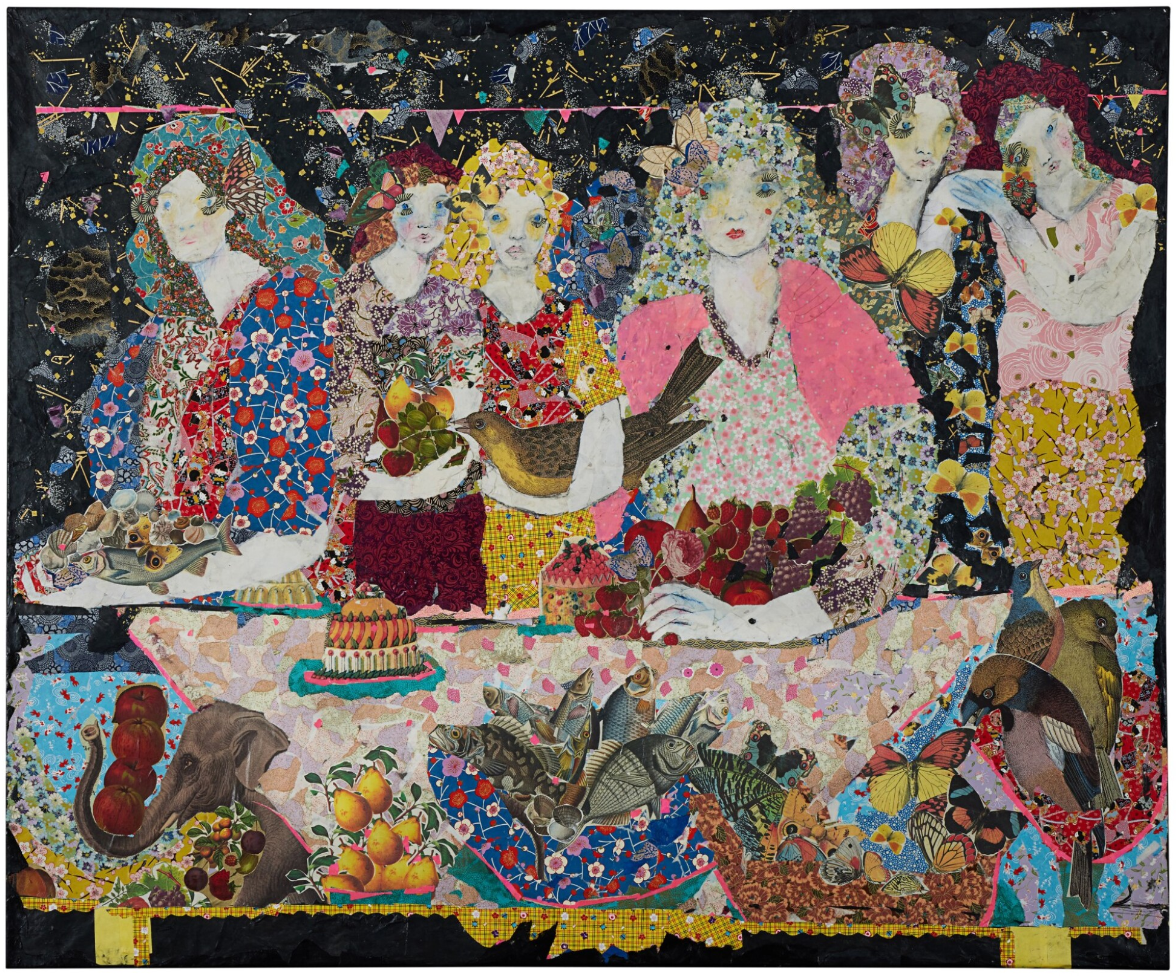
MARIA BERRIO (b. 1982)
La Cena, 2012
Mixed media collage on canvas
48 x 57 3/4 inches (121.9 x 146.7 cm)
Signed María Berrío, dated 2012 and illustrated (on the verso)
#3. The Lovers 3, 2015
Sotheby’s Hong-Kong: 7 October 2022
Estimated: HKD 2,500,000 – 4,500,000
HKD 11,870,000 / USD 1,512,125
MARIA BERRIO (b. 1982)
The Lovers 3, 2015
Watercolor and Japanese paper collage on canvas
72×72 inches (182.9 x 182.9 cm)
Signed, titled and dated 2015 on the reverse
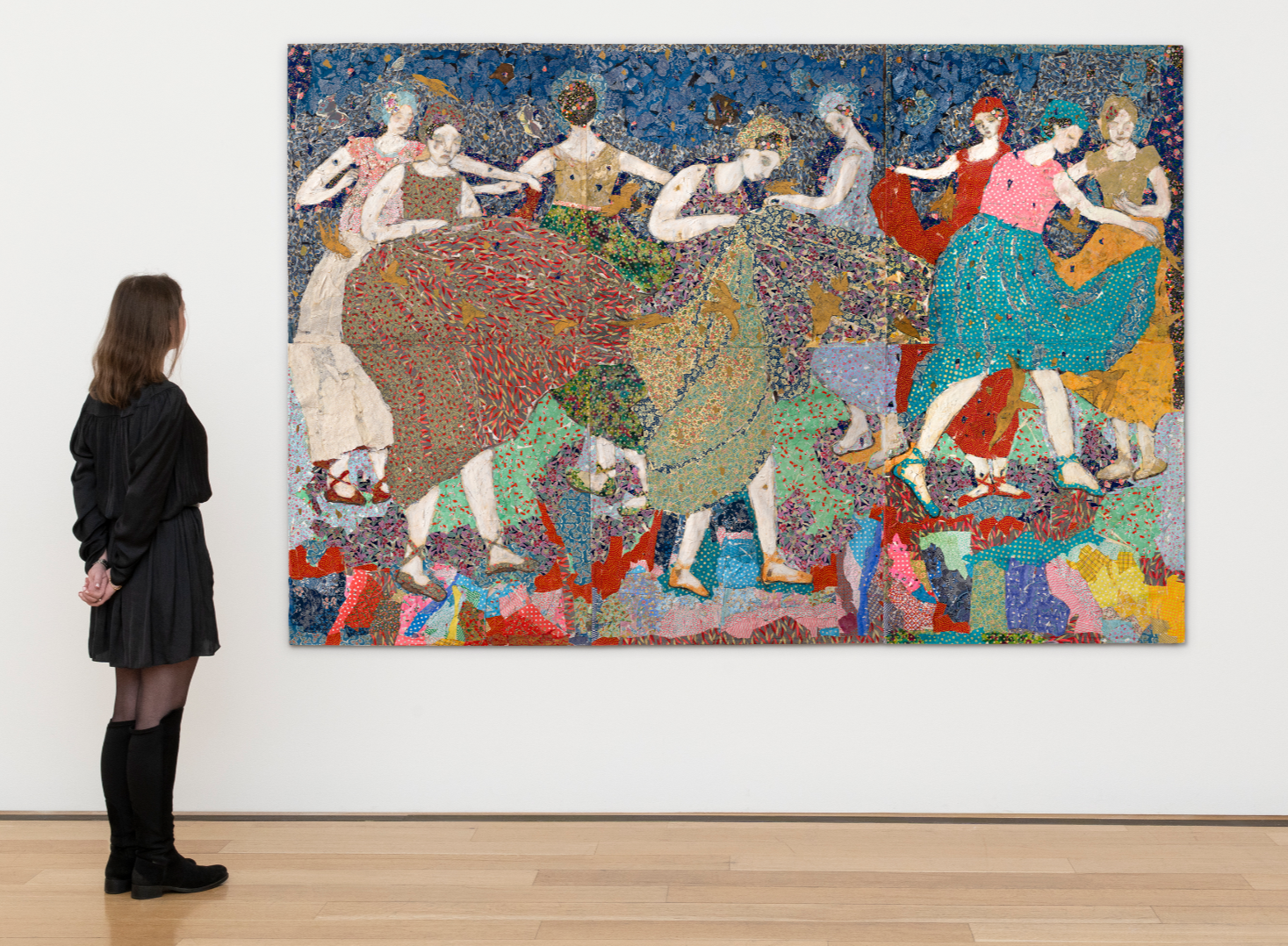
#4. The Celebration, 2011
Christie’s New-York: 10 May 2022
Estimated: USD 500,000 – 700,000
USD 1,320,000
https://www.christies.com/en/lot/lot-6369455
MARÍA BERRÍO (B. 1982)
The Celebration, 2011
Watercolor, gold leaf, graphite, and Japanese rice paper collage on canvas, in six parts
Overall: 72×108 inches (182.9 x 274.3 cm)
Signed and dated ‘The Celebration” Maria Berrio 2012 (on the reverse of the lower center canvas)
#5. Our Children on the Battlefield, 2015
Sotheby’s Hong-Kong: 27 April 2022
Estimated: HKD 2,500,000 – 3,500,000
HKD 9,450,000 / USD 1,204,505
MARIA BERRIO (b. 1982)
Our Children on the Battlefield, 2015
Collage with Japanese paper, watercolor, acrylic and pencil on canvas
48 x 59 7/8 inches (121.9 x 152.2 cm)
Signed, titled and dated 2015 on the reverse
#6. The Harbingers, 2015
Sotheby’s New-York: 16 November 2022
Estimated: USD 300,000 – 500,000
USD 1,159,200
https://www.sothebys.com/en/buy/auction/2022/the-now-evening-auction-5/the-harbingers
MARIA BERRIO (b. 1982)
The Harbingers, 2015
Watercolor, rhinestones and Japanese paper collage on canvas
72×48 inches (182.9 x 121.9 cm)
Signed Maria Berrio, titled The Harbingers and dated 2015 (on the reverse)
#7. The Lovers 4, 2016
Sotheby’s New-York: 19 May 2022
Estimated: USD 300,000 – 500,000
USD 1,008,000
https://www.sothebys.com/en/buy/auction/2022/the-now-evening-auction-2/the-lovers-4-2
MARIA BERRIO (b. 1982)
The Lovers 4, 2016
Watercolor and Japanese paper collage on canvas
72×72 inches (182.9 x 182.9 cm)
Signed Maria Berrio and dated 2016 (on the reverse)
#8. Burrow of the Yellow, 2013
Phillips New-York: 18 May 2022
Estimated: USD 400,000 – 600,000
USD 998,000
https://www.phillips.com/detail/maria-berrio/NY010322/3
MARIA BERRIO
Burrow of the Yellow, 2013
Mixed media collage on canvas
60×72 inches (152.4 x 182.9 cm)
#9. The Riders II, 2012
Phillips London: 30 June 2022
Estimated: GBP 150,000 – 200,000
GBP 809,000 / USD 981,240
https://www.phillips.com/detail/maria-berrio/UK010422/6
MARIA BERRIO
The Riders II, 2012
Mixed media collage on canvas
47 7/8 x 60 inches (121.9 x 152.4 cm)
Signed, titled and dated ‘the Riders II. 02/12 Maria Berrio.’ on the reverse
PART III: FOCUS
Focus: Record Breakers
The Harbingers, 2015
Sotheby’s New-York: 16 November 2022
Estimated: USD 300,000 – 500,000
USD 1,159,200
https://www.sothebys.com/en/buy/auction/2022/the-now-evening-auction-5/the-harbingers
MARIA BERRIO (b. 1982)
The Harbingers, 2015
Watercolor, rhinestones and Japanese paper collage on canvas
72×48 inches (182.9 x 121.9 cm)
Signed Maria Berrio, titled The Harbingers and dated 2015 (on the reverse)
A kaleidoscopic utopia of mythology and devotion, The Harbingers synthesizes the most iconic motifs of María Berrío’s cross-cultural practice into an intimate scene of two women united in prayer. Executed in 2015 in the artist’s celebrated collage technique that layers innumerable pieces of Japanese rice paper, the present work subsumes the viewer in a fantastical realm that resembles a monumental woven tapestry or stained-glass window. Specifically, Berrío affixes our gaze to the stares of the female protagonists, who pose gracefully besides a domestic Catholic altarpiece and beneath a forest of birds. Inspired by South American folkloric tradition, Berrío’s large-scale works offer an allegorical prism through which she explores her childhood memories in Colombia and experiences with global diaspora and migration. Awarded the prestigious Joan Mitchell Fellowship in 2021 and set to star in an major upcoming solo exhibition at ICA Boston in February 2023, María Berrío has powerfully captivated audiences with her illustrious tableaux of collages that are uniquely rife with cross-cultural nuance.
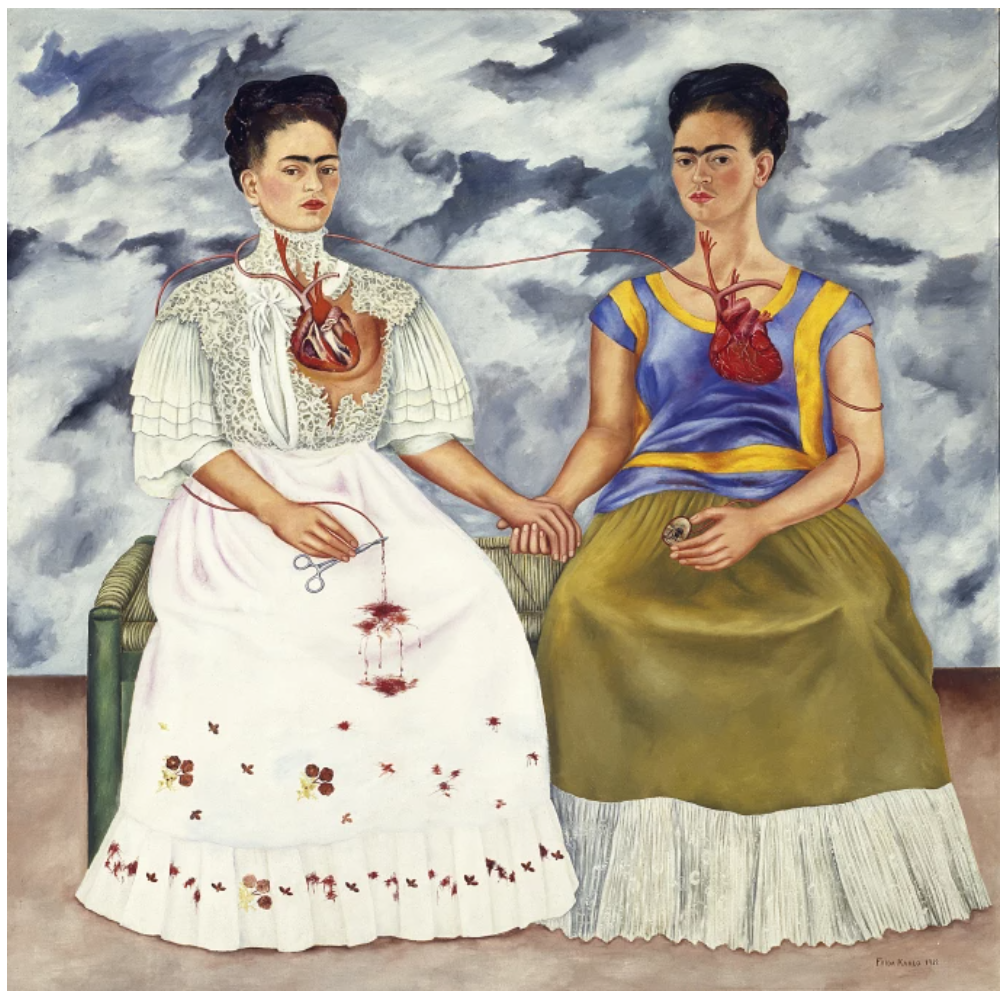
FRIDA KAHLO, THE TWO FRIDAS, 1939. MUSEO DE ARTE MODERNO, MEXICO CITY. IMAGE © LUISA RICCIARINI / BRIDGEMAN IMAGES. ART © 2022 BANCO DE MÉXICO DIEGO RIVERA FRIDA KAHLO MUSEUMS TRUST, MEXICO, D.F. / ARTISTS RIGHTS SOCIETY (ARS), NEW YORK
In the delicate and lush surface of The Harbingers, Berrío visually weaves together multiple histories, alluding to anecdotes both personal and universal, timely and timeless. Though illustrative of a distinctly contemporary magical realism, Berrío’s oeuvre draws from artistic and literary influences alike, from the Surrealism of Remedios Varos and Frida Kahlo to Viennese Successionist works by Gustav Klimt and the writings of Pablo Neruda and Gabriel García Márquez. In her reverently stylistic invocation of diverse Latin American cultural and artistic traditions, Berrío arrives at a fantastical figuration. The Harbingers revitalizes Berrío’s trove of artistic inspiration, the spiritual mysticism and chromatic exuberance of her protagonists harkening to the fantastical realms of her eclectic influences.
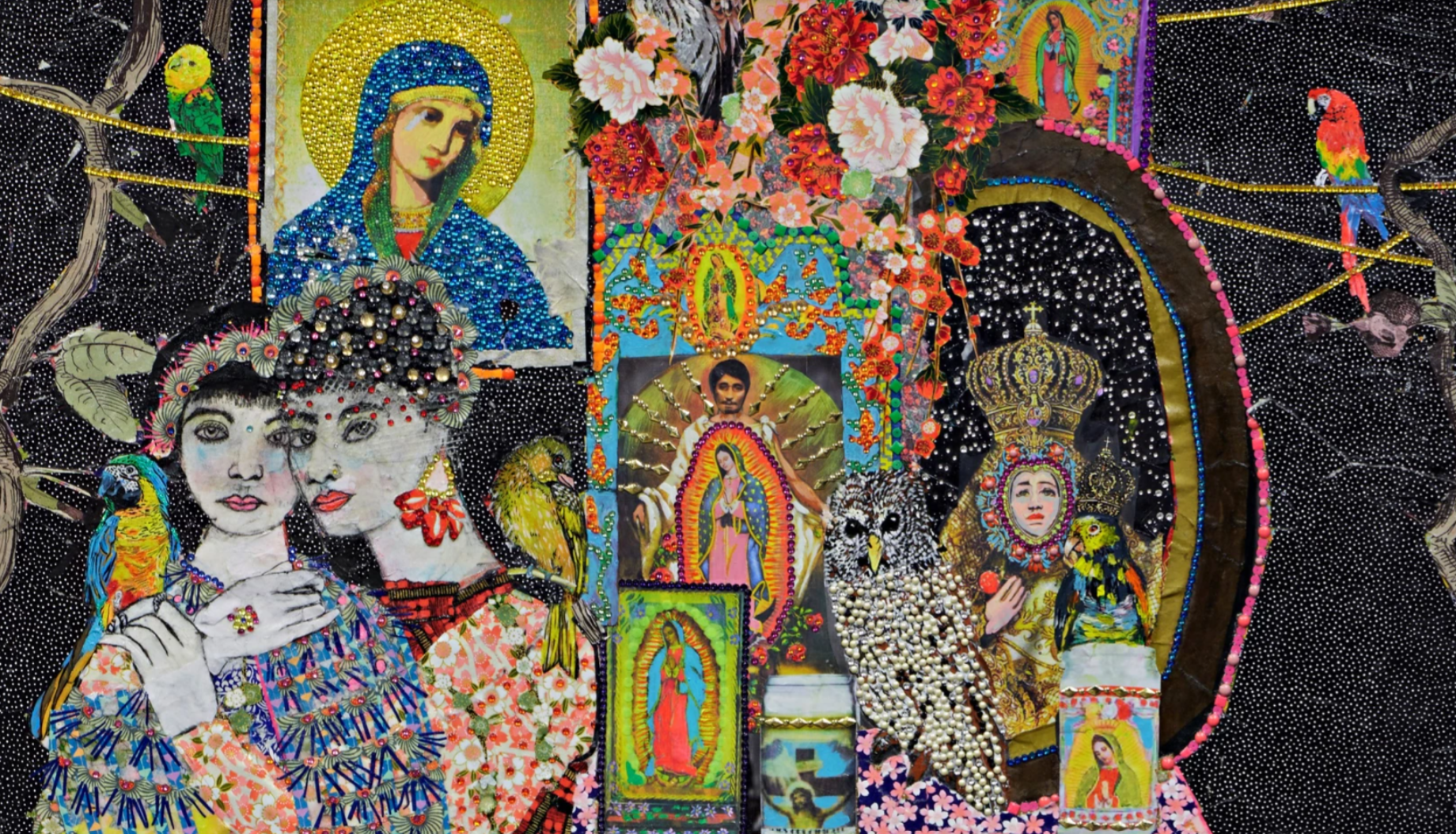
In the layered scene of the present work, two young women intertwine not only figuratively, but also by way of the textured patterns of ornate fabric and floral decor. The ethereal paleness of the women’s fair skin is contrasted by the elaborate patterning of the dresses and headscarves that adorn them, variegated and prismatic textiles that both float and lumber in the domestic scene. In Berrío’s words, these women “are embodied ideals of femininity. The ghostly pallor of their skin suggests an otherworldliness; they appear to be more spirit than flesh. These are the women I want to be: strong, vulnerable, compassionate, courageous, and in harmony with themselves and nature.” (Ibid.) The Harbingers invokes these venerable qualities not only in the feminine duo, but also in the iconographic relics of the Madonna scattered around the altar at the center of the composition. Drawing upon Biblical portraits that recall aesthetic conventions of the Italian Renaissance, Berrío powerfully devotes the canvas to an intimate worship of divine femininity.
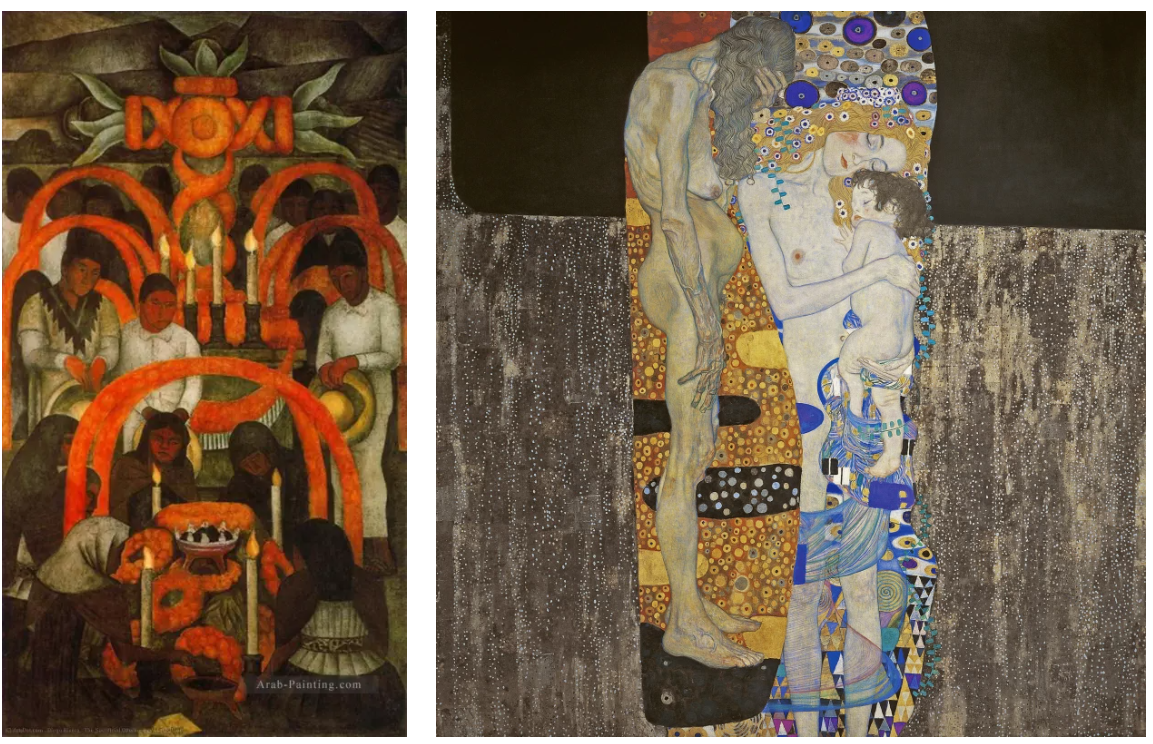
LEFT: DIEGO RIVERA, THE SACRIFICIAL OFFERING, DAY OF THE DEAD, 1924. SECRETARIAT OF PUBLIC EDUCATION, MEXICO CITY. © 2022 BANCO DE MÉXICO DIEGO RIVERA FRIDA KAHLO MUSEUMS TRUST, MEXICO, D.F. / ARTISTS RIGHTS SOCIETY (ARS), NEW YORK. RIGHT: GUSTAV KLIMT, THE THREE AGES OF LIFE, 1905. GALLERIA NAZIONALE D’ARTE MODERNA, ROME. IMAGE © SCALA/MINISTERO PER I BENI E LE ATTIVITÀ CULTURALI / ART RESOURCE, NY
As in the most celebrated of Berrío’s works, the characters’ harmonious coexistence with animals in The Harbingers present a visual symbol for the artist’s ideals of humanity’s existence in the natural world. In The Harbingers, twelve birds perch around the canvas, framing the domestic scene with a surreal serenity. The moment of vulnerable communion shared between the women occurs in divine connection with nature, as a parrot sits on a woman’s shoulder and an owl balances on the backrest of an artisanal chair. The symbolism of animals alludes to a divine sense of freedom, suggesting the possible transcendence of the human soul into other early incarnations and embodying the artist’s core belief of unity within one cosmos.
“Birds have been a source of inspiration to people across the world for centuries. To me, birds symbolize freedom of the soul and transcendence of the earthly human form…The dove is a sign of peace in Judeo-Christianity; the hummingbird is a sign of good luck in Latin America…. In my collage, all of these beautiful traditions come together to provide a global portrait of hope.”
Enlisting the narrative dimensions of poetry, folklore, and personal experience to a delicately paper-collaged canvas of mystical domesticity, Berrío’s The Harbingers resounds as a portrait of feminine empowerment and spirituality. Capturing a beguiling interplay of fantasy and reality, the present work unravels as a scene from an otherworldly tale that welcomes the viewer’s curious spectatorship. Drawn in by the soft and vulnerable intimacy of the two female protagonists, we are invited into the prismatic and embellished world that Berrío has lovingly crafted with precious scraps of paper, torn and reassembled into a devotional portrait of sensuous beauty.
He Loves Me, He Loves Me Not, 2015
Phillips New-York: 15 November 2022
Estimated: USD 500,000 – 700,000
USD 1,603,000
https://www.phillips.com/detail/maria-berrio/NY010722/19
MARIA BERRIO
He Loves Me, He Loves Me Not, 2015
Mixed media collage on canvas
72 1/8 x 72 1/8 inches (183.3 x 183.3 cm)
Signed, titled and dated “”he loves me, he loves me not” Enero 4.2015. Maria Berrio” on the reverse
Titled after the childhood game “He Loves Me, He Loves Me Not,” María Berrío’s eponymous collage brims with the magical realism and visual dynamism which have come to define the Colombia-born artist’s celebrated oeuvre. Executed in 2015, the present work features three women seemingly floating atop flower stems, set in a richly layered utopian vista. Confronting the viewer directly with their gazes, Berrío’s women are imbued with an indisputable power and poise, reclaiming strength through their femininity.
“The women who inhabit my paintings are embodied ideals of femininity. The ghostly pallor of their skin suggests an otherworldliness; they appear to be more spirit than flesh. These are the women I want to be: strong, vulnerable, compassionate, courageous, and in harmony with themselves and nature.”
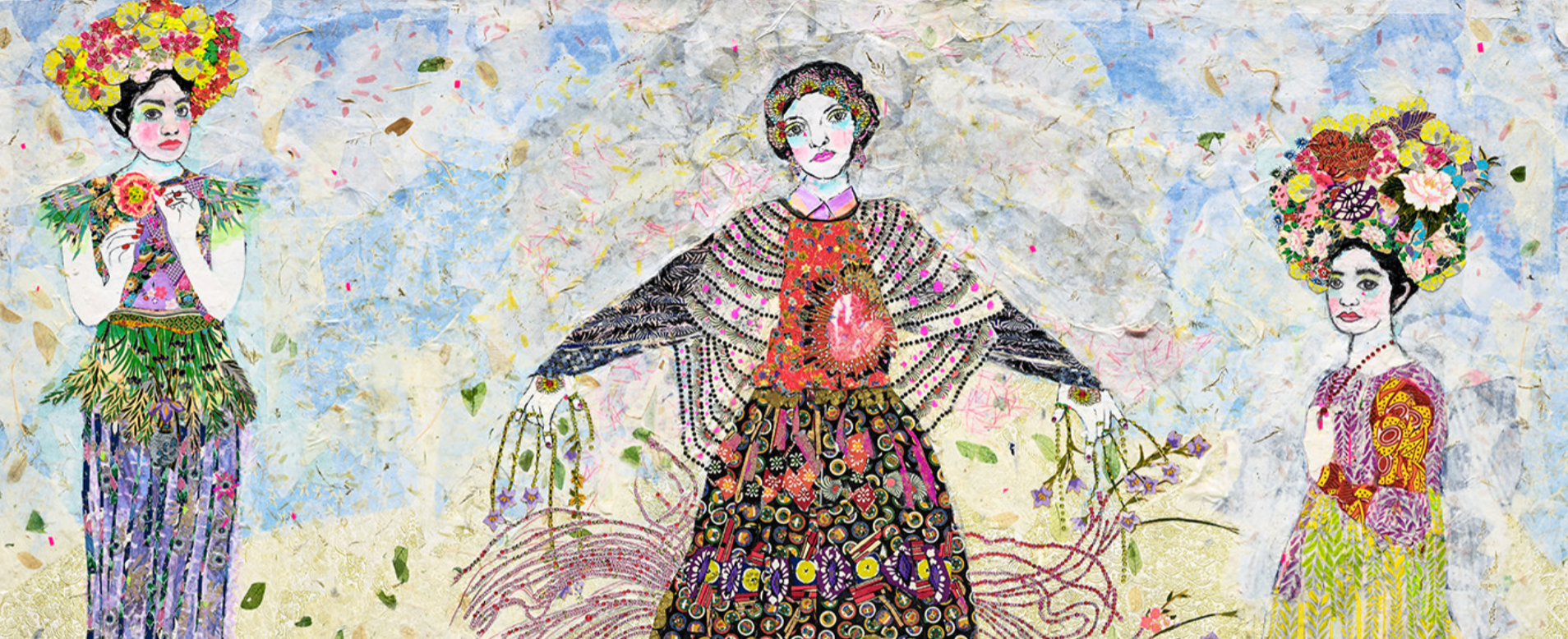
In He Loves Me, He Loves Me Not, Berrío’s women are clad in richly patterned dresses, flowery headpieces and opulent jewelry. Berrío physically adorns her figures with rhinestones which abundantly flow from the central figure’s hands and dress, perhaps a reference to the jewelry worn by women from different Indigenous societies to protect against evil spirits. Their Frida Kahlo-like headpieces are halo-esque, further elevating the figures to an otherworldly status. Rather than a symbol of fragility vis-à-vis femininity, her women are ultimately made stronger through their attire, which serves both as armor and as a reason to celebrate beauty and womanhood.
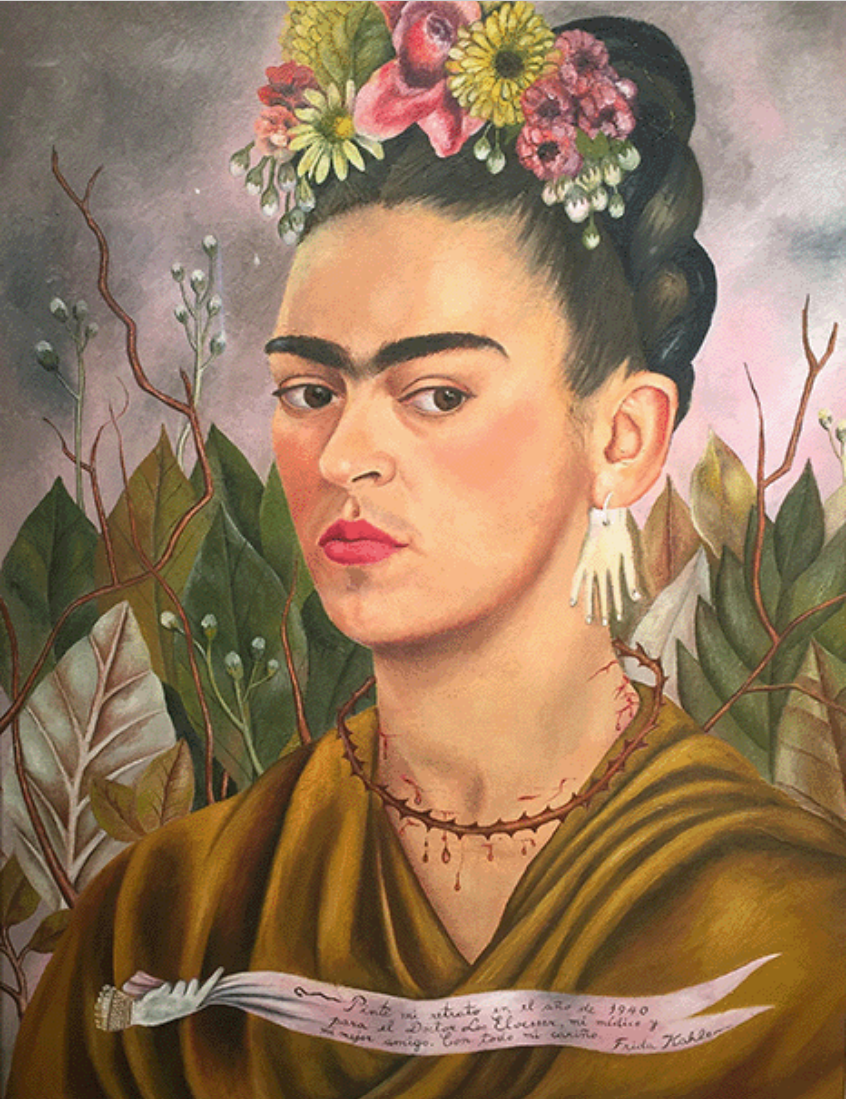
Frida Kahlo, Self Portrait, Dedicated to Dr Eloesser, 1940, Private Collection. Image: © Fine Art Images / Bridgeman Images, Artwork: © 2022 Banco de México Diego Rivera Frida Kahlo Museums Trust, Mexico, D.F. / Artists Rights Society (ARS), New York
Berrío’s idyllic landscapes are informed by her upbringing in Colombia. While she grew up during a time of political and social unrest in Bogotá, her family would often escape the city on the weekends to their country farm. She explains, “Out in nature, I was able to play freely and let my imagination roam. The nature scenes in my collages are inspired by those experiences.” In the present work, the deity-like figures occupy rolling hills set against a mountain range and blue sky. The foreground is rich with foliage, and the women are both decorated with and physically floating atop flowers. It is in this paradisical depiction of nature that we witness the artist’s escape from the political tumult that permeated her native country.
He Loves Me, He Loves Me Not is titled for the folkloric game little girls play to find out if the object of their affection returns the sentiment. As the game goes, one player utters the words “He loves me; He loves me not,” while picking one petal off a flower for each phrase. The phrase they speak upon picking off the final petal supposedly represents the truth as to whether their beloved loves them or not. In the present work, the figure at left holds a flower in her hands, ready to pluck a petal. Perhaps yearning for requited love, her vulnerability is on display. Yet Berrío does not consider this a weakness—rather, vulnerability and strength co-exist for her women.
“It is the artist’s job to take humble materials and make the whole greater than the sum of its parts. I do this, not by hiding the physical properties of the materials, but by reveling in them as I transform them. The paintings are a fusion of fantasy, memory, dream, and reality.”
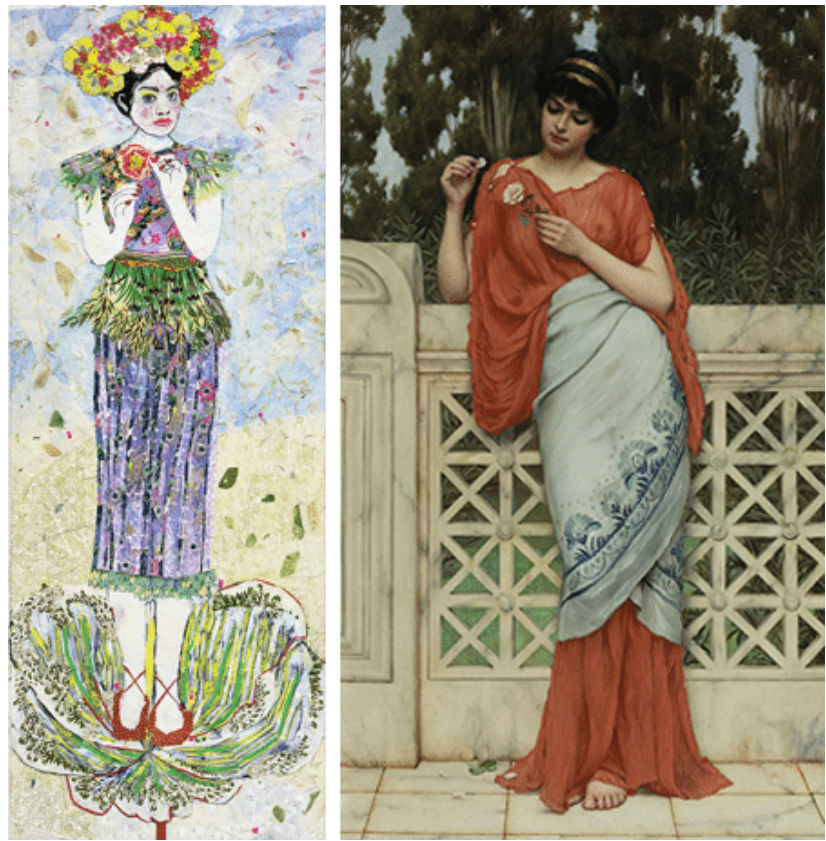
[left] Detail of the present work
[right] John William Godward, He Loves Me, He Loves Me Not, 1896, Private Collection. Image: Artefact / Alamy Stock Photo
In each of her collages, Berrío painstakingly sources papers from across the globe—Nepal, India, Korea, Japan, Thailand, Mexico, and Brazil—to weave together the rich history of these diverse nations. As in He Loves Me, He Loves Me Not, her collages are a physical fusion of materials, traditions, and cultures, which she then overlays with watercolors, acrylic, and in the case of the present work, hundreds of rhinestones. The result a richly layered surface that leans on the materiality of its very creation to amplify the narrative, history, and story at play.
The Celebration, 2011
Christie’s New-York: 10 May 2022
Estimated: USD 500,000 – 700,000
USD 1,320,000
https://www.christies.com/en/lot/lot-6369455
MARÍA BERRÍO (B. 1982)
The Celebration, 2011
Watercolor, gold leaf, graphite, and Japanese rice paper collage on canvas, in six parts
Overall: 72×108 inches (182.9 x 274.3 cm)
Signed and dated ‘The Celebration” Maria Berrio 2012 (on the reverse of the lower center canvas)
María Berrío’s The Celebration is a monumental example of the artist’s unparalleled studies of skill, detail, color, narrative, and form. At nine feet by six feet, this canvas of collaged handmade Japanese rice paper is a testament to the artist’s painstaking labor. It is like a beautiful mural, tapestry, or stained-glass window that subsumes the viewer into a fantastical world of movement and light, like the panoramic utopias of Pierre Puvis de Chavannes or Diego Rivera. Born in Colombia and based in New York, Berrío thinks globally and interweaves references to South American art and culture. She often focuses on women, and gives them a resounding voice and a timeless complexity. In 2021, Berrío was awarded the prestigious Joan Mitchell Fellowship, and her work is held in public collections globally like the Pérez Art Museum, Miami, the Yuz Museum, Shanghai, the National Gallery of Art, Washington, D.C., and the Whitney Museum of American Art. Her first survey show María Berrío: Esperando mientras la noche florece (Waiting for the Night to Bloom) was mounted at the Norton Museum of Art in West Palm Beach in 2021.
The Celebration lives up to its name with its kaleidoscopic array of colors and movements, which are meticulously created with handmade Japanese paper that Berrío sources from a trusted fabricator in Japan.
“By using this material, I feel the love of the families who have been making it for so many years…When I receive my paper, I treat it as a gift. It is something very valuable”
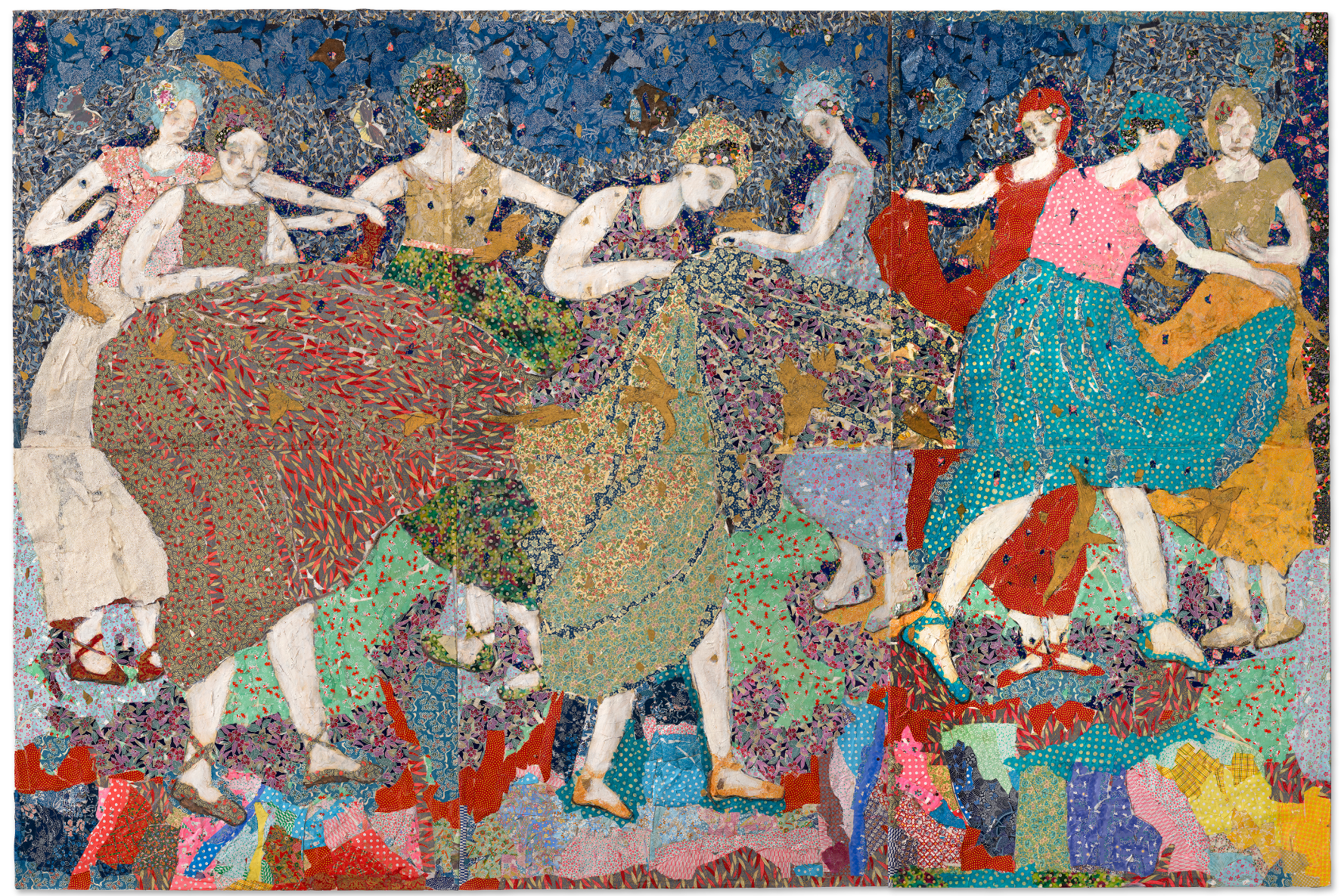
Her work is thus an instance of care for materials, people, and cultures alike, which we can see in the optimism of The Celebration. A group of women, garbed in rainbow textiles reminiscent of Gustav Klimt or the life-size dance scenes of Pierre-Auguste Renoir, dance together without a care in the world as the moonlit dusk gathers around them. Each frame of the larger narrative is a patchwork brought together by Berrío’s skillful hand, giving life to the swaying dresses and balletic movements of the women. Reds and blues lead the orchestra and score the fabulous late summer colors that swirl about in a wind of joyful hues. The folds and creases of the rice paper are reminiscent of skin, which recalls all it has touched and loved. The Celebration has a surreal presence in its heightened naturalism, like a painting by Henri Rousseau. Berrío engages this line between realism and something beyond reality as a means of escape,
“There’s plenty of magical realism and the works are very big, so I hope people can relate physically to the environment and experience something different, before returning to the madness of the real world.”
The women of The Celebration invite us to join them in their revelry as they too forget the madness of the real world. Each of Berrío’s collages seek to empower the viewer and build communities. In The Celebration, each dancer is both autonomous and united like gleaming constellations. As with the interconnectedness of Berrío’s collaged pieces of paper, lovingly torn and reassembled, so too does her work evince our human interconnectedness in a time of separation ushered in by the pandemic. While her work offers an escape, it is not escapist. Instead, it shows us the world as it could be. Using her beloved scraps of paper as precious as paint, marble, or photographic emulsion, she envisions a world of gentleness and responsibility to each other.
Our Children on the Battlefield, 2015
Sotheby’s Hong-Kong: 27 April 2022
Estimated: HKD 2,500,000 – 3,500,000
HKD 9,450,000 / USD 1,204,505
MARIA BERRIO (b. 1982)
Our Children on the Battlefield, 2015
Collage with Japanese paper, watercolor, acrylic and pencil on canvas
48 x 59 7/8 inches (121.9 x 152.2 cm)
Signed, titled and dated 2015 on the reverse
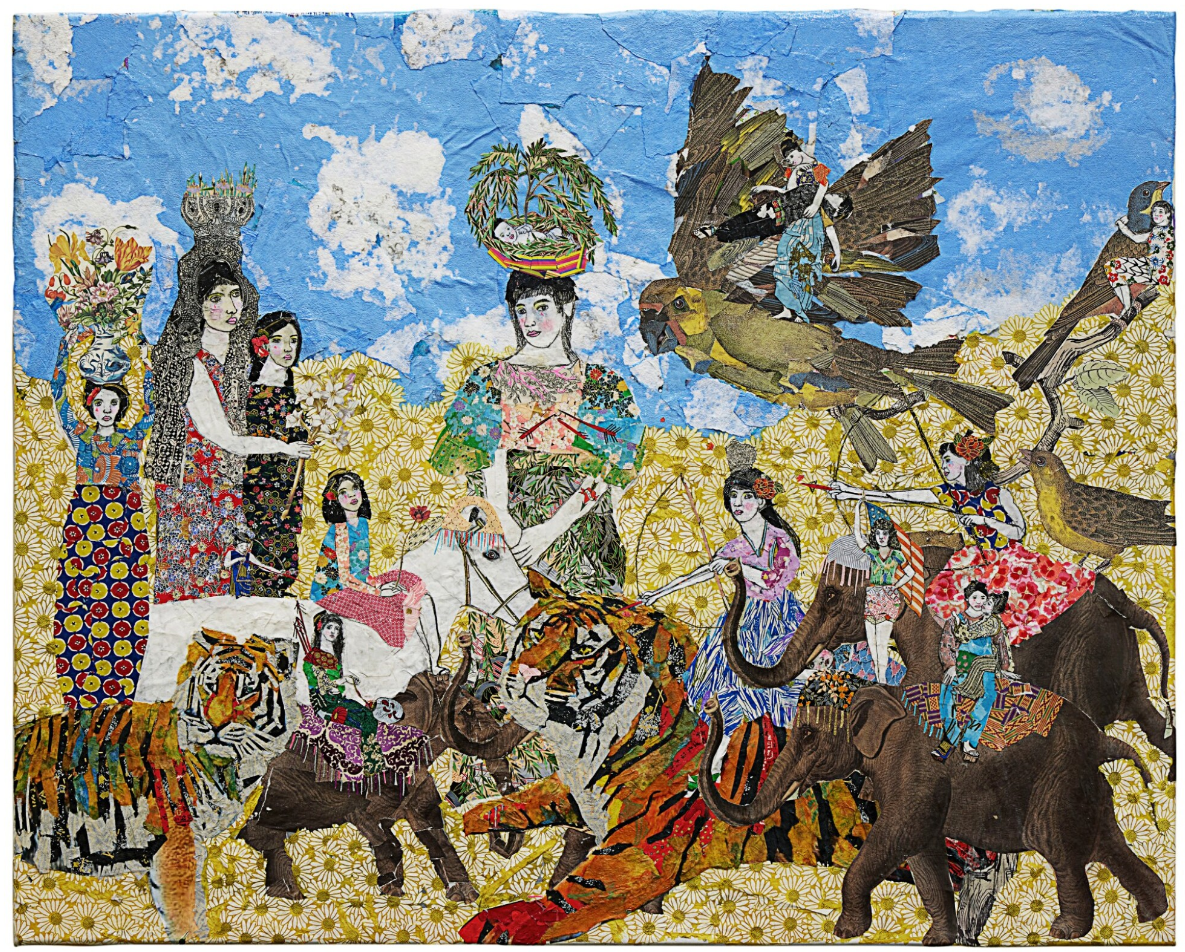
Our children on the Battlefield by Maria Berrío is an enchanting, visually rich example from the artist’s unique and instantly recognizable practice of surreal large-scale collages. The present work is the result of the artist’s painstaking lengthy process, whereby she builds up innumerable pieces and layers of wafer–thin Japanese print paper and washes of watercolor, acrylic and pencil. Berrío’s work sees her filter memories of her childhood spent on a farm in Colombia through the frantic lens of her studio practice in New York City.
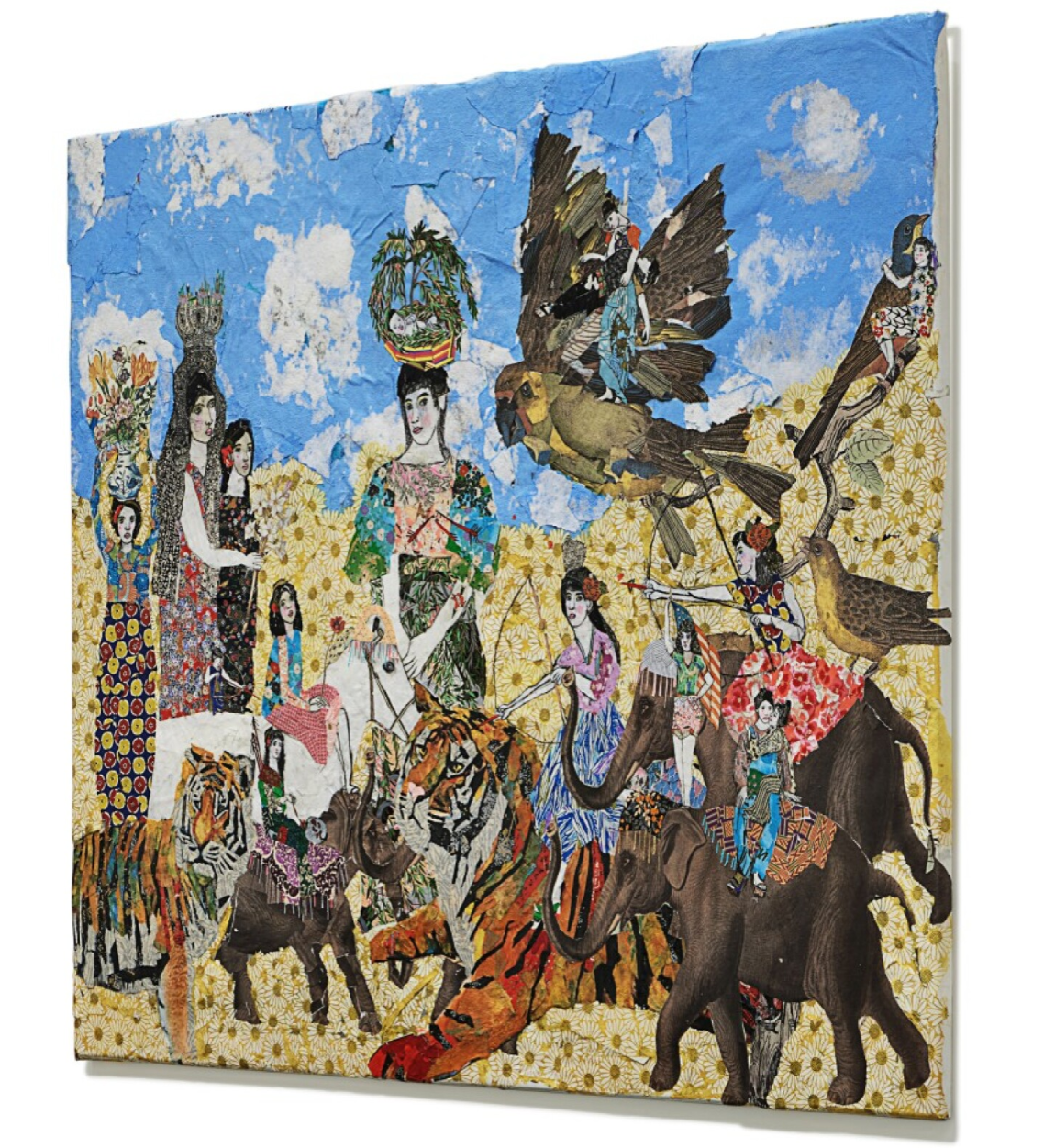
In her group portraits, Berrío routinely includes at least one of her figures—typically a woman—staring directly out at the viewer. Here, despite the tilt of her head, the central woman maintains direct eye contact with the viewer, engaging them in a silent dialogue. Surrounding this dominant central figure with a baby balanced comfortably on her head, the forms of powerful female warriors and women swarm the field of yellow daisies. While some carry vases of flowers on their heads or in their hands, others ride fantastic beasts— from giant birds to elephants and tigers.There is a great movement particularly in the right-hand side of the work, adding to the overall sense of dynamism and vivacity of Our children on the Battlefield. In Berrío’s words, her women “are embodied ideals of femininity. The ghostly pallor of their skin suggests an otherworldliness; they appear to be more spirit that flesh. These are the women I want to be: strong, vulnerable, compassionate, courageous, and in harmony with themselves and nature.” (María Berrío in conversation with C.J Bartunek, “As Complicated and Elusive as Reality,” The Georgia Review, Spring 2019, online). Drawing upon the influence of the South American Magical Realist authors such as Jorge Luis Borges, Pablo Neruda and Gabriel García Márquez, Berrío sees her work as a way of celebrating the vast diversity of peoples and traditions that comprise the Latin American world, not directly but rather through fantasy, “in an attempt to create a narrative that is as complicated and elusive as reality. (Ibid.). Overall, this is a spectacular image of strength, power and beauty, wonderfully representative of Maria Berrío’s singular artistic vision.
Focus: The Lovers
The Lovers 3, 2015
Sotheby’s Hong-Kong: 7 October 2022
Estimated: HKD 2,500,000 – 4,500,000
HKD 11,870,000 / USD 1,512,125
MARIA BERRIO (b. 1982)
The Lovers 3, 2015
Watercolor and Japanese paper collage on canvas
72×72 inches (182.9 x 182.9 cm)
Signed, titled and dated 2015 on the reverse
Known for her large-scale works meticulously crafted with layers of Japanese paper, María Berrío’s work is a mediation on the impact of migration as seen through the prism of her own experience. Growing up in Bogotá with her two brothers, Berrío spent much of her childhood on a family farm in a landscape of mountains, animals and flowers, early memories and childhood impressions which have gone on to inform much of her work: “It becomes a little bit like magical realism,” Berrío describes, as Colombia is “filtered through my memory, it’s filtered through my childhood. I think if I lived there, I would see things as they are and maybe it would be a little bit more raw.” Blending biography with a sense of the imagined, Berrío’s art often proposes spaces of safety, chromatic wonderlands in which humans and nature live in harmony.
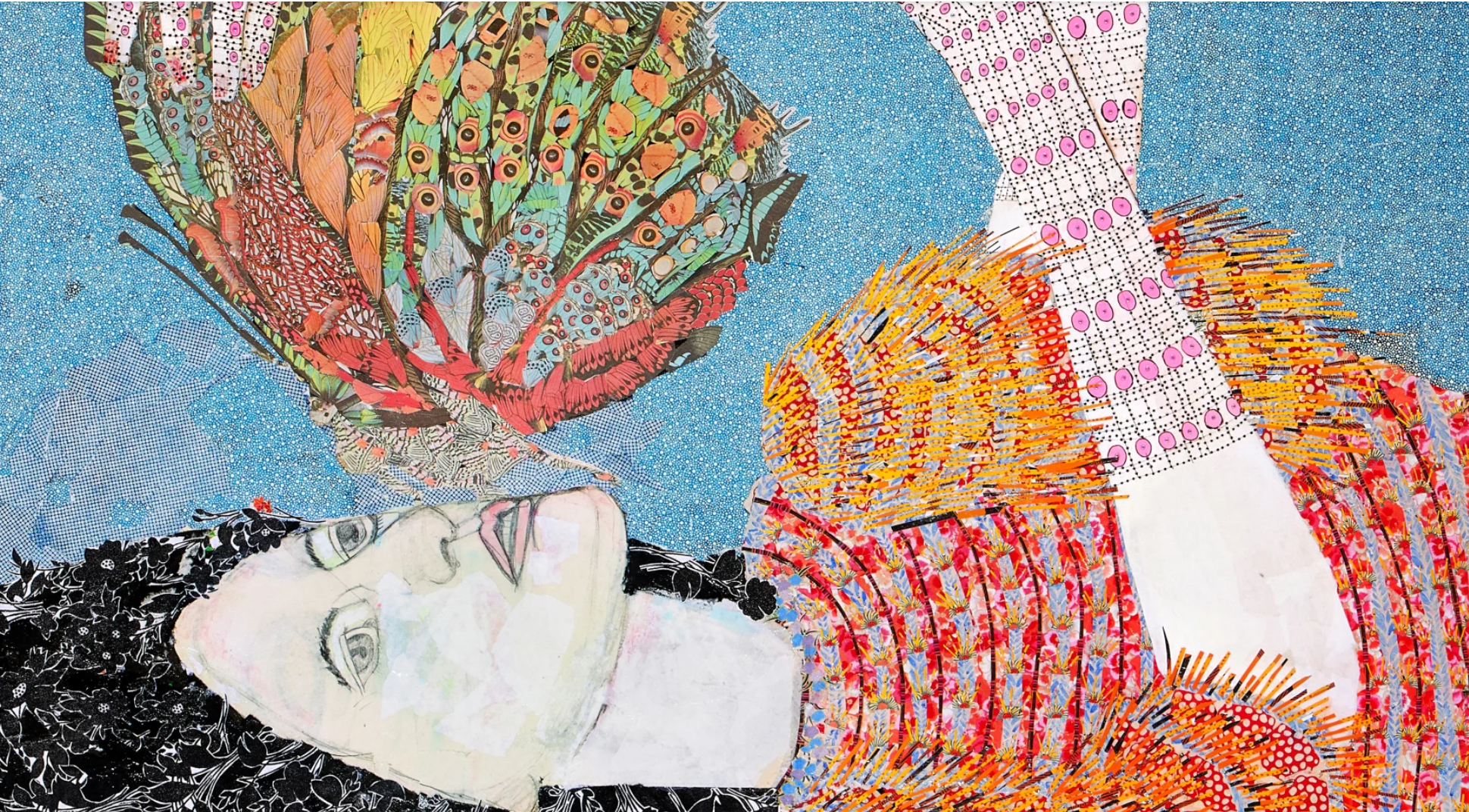
Predominantly populated by women, however, Berrío’s mythical idyll brings to light the harsh political realities of contemporary culture. Speaking about the women that feature in her work, the artist says “They are embodied ideals of femininity. The ghostly pallor of their skin suggests an otherworldliness; they appear to be more spirit that flesh. These are the women I want to be: strong, vulnerable, compassionate, courageous, and in harmony with themselves and nature.” (Georgia Review, Spring 2019).
Dazzling with intricate patterns, The Lovers 3 is the result of the artist’s lengthy process in which the surface of the composition is built up with torn layers of delicate Japanese paper (and sometimes with sequence and other found materials) and refined with washes of watercolor. The present work is part of Berrio’s esteemed “Lovers” series, which was exhibited at Praxis Gallery’s ‘The Harmony of the Spheres’ show in 2015. Centering on the celebration of women and nature, this exhibition invoked tremendous demand for Berrio’s works from international collectors. Whilst Berrío’s work bears aesthetic and spiritual parallels with Gustav Klimt, Frida Kahlo, Egon Schiele, and Hilma Af Klint, who make discreet appearances in her work, these exchanges do not overwhelm Berrio’s distinctive style and clear mission to uplift the women who populate her deeply layered mythological world.
The Lovers 4, 2016
Sotheby’s New-York: 19 May 2022
Estimated: USD 300,000 – 500,000
USD 1,008,000
https://www.sothebys.com/en/buy/auction/2022/the-now-evening-auction-2/the-lovers-4-2
MARIA BERRIO (b. 1982)
The Lovers 4, 2016
Watercolor and Japanese paper collage on canvas
72×72 inches (182.9 x 182.9 cm)
Signed Maria Berrio and dated 2016 (on the reverse)
Maria Berrio’s commanding The Lovers 4 emblematizes the artist’s groundbreaking oeuvre through a synthesis of her most iconic motifs. Featuring a shamanic female figure, kaleidoscopic parrot, ornate fabric and floral patterning, the present work is a highly embellished, individualized portrait of reflection and reclamation. Rooted in childhood memories of Colombia and the artist’s experience of migration, as well as a fascination with the relationship between humans and their environment, The Lovers 4 is charged with a history that is as personal as it is universal, and as timely as it is timeless. Executed in Berrio’s idiosyncratic paper collage style, The Lovers 4 is a lush, delicate and intimately conceptualized and crafted portrait of power and of unity. A testament to its dazzling communicativity, The Lovers 4 bears striking resemblance to Berrio’s 2015 painting of the same series entitled The Lovers, which served as a poster image for Praxis Gallery’s The Harmony of the Spheres exhibition in 2015.
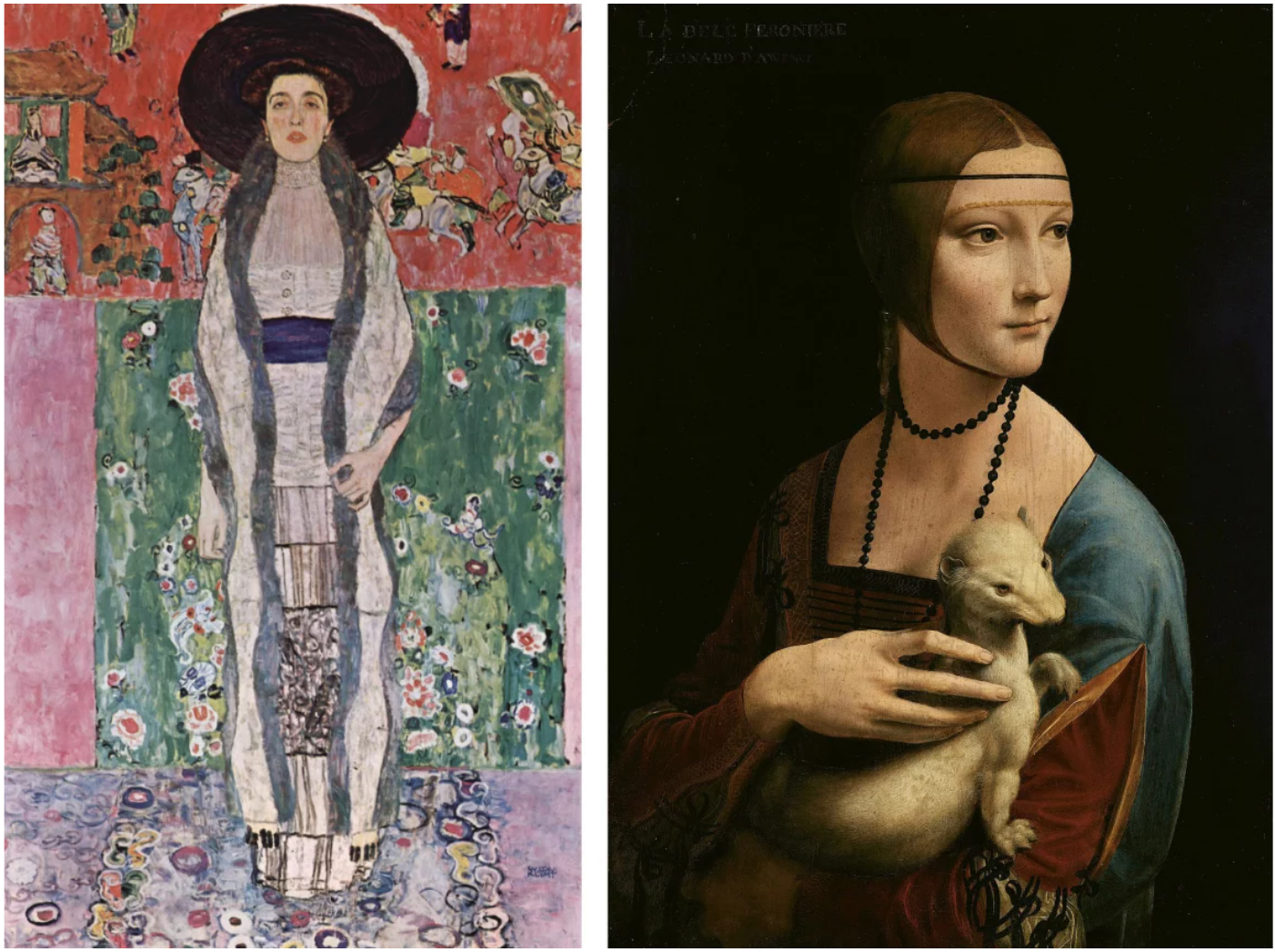
GUSTAV KLIMT, PORTRAIT OF ADELE BLOCH-BAUER II, 1912. PRIVATE COLLECTION. IMAGE © BRIDGEMAN IMAGES. LEONARDO DA VINCI,THE LADY WITH THE ERMINE (CECILIA GALLERANI), 1496. IMAGE © CZARTORYSKI MUSEUM, KRAKÓW, BRIDGEMAN IMAGES.
Featuring a celestial young woman grasping a large, prismatic parrot to her chest, The Lovers 4 intertwines its two subjects by way of intricate pattern, bright pigment and rich texture. While her skin is otherworldly in its near translucence, the young woman’s body is in contrast adorned with a brightly ornamented dress and glamorous headpiece. Hair pulled back, framed with a cascade of draped beads and fine florals, the subject is draped in sand colored lace and powder blue latticework which meet rouge embroidery in her laboriously crafted dress. Her hands, the backs of which are each adorned with floral tattoos, hold the parrot, whose feathers are a spectral array of alloy, peach, burgundy, turquoise and lemon. Textured merlot and berry red compose the deep background, the ambiguity of which enhances the floating ethereality of the painting’s subject. Though illustrative of a distinctly contemporary magical realism, The Lovers 4 embodies many influences, from the Surrealism of Remedios Varos and Frida Kahlo to Viennese Successionist works by the likes of Gustav Klimt and the contemporary contributions of Kiki Smith and Toyin Ojih Odutola. These artists sit alongside South American writers and oral histories in Berrio’s trove of artistic inspiration. Visually weaving together multiple histories, The Lovers 4 revitalizes its source material through the form of a shamanic young woman and her bird, who together exquisitely encapsulate triumph, freedom and transcendence.
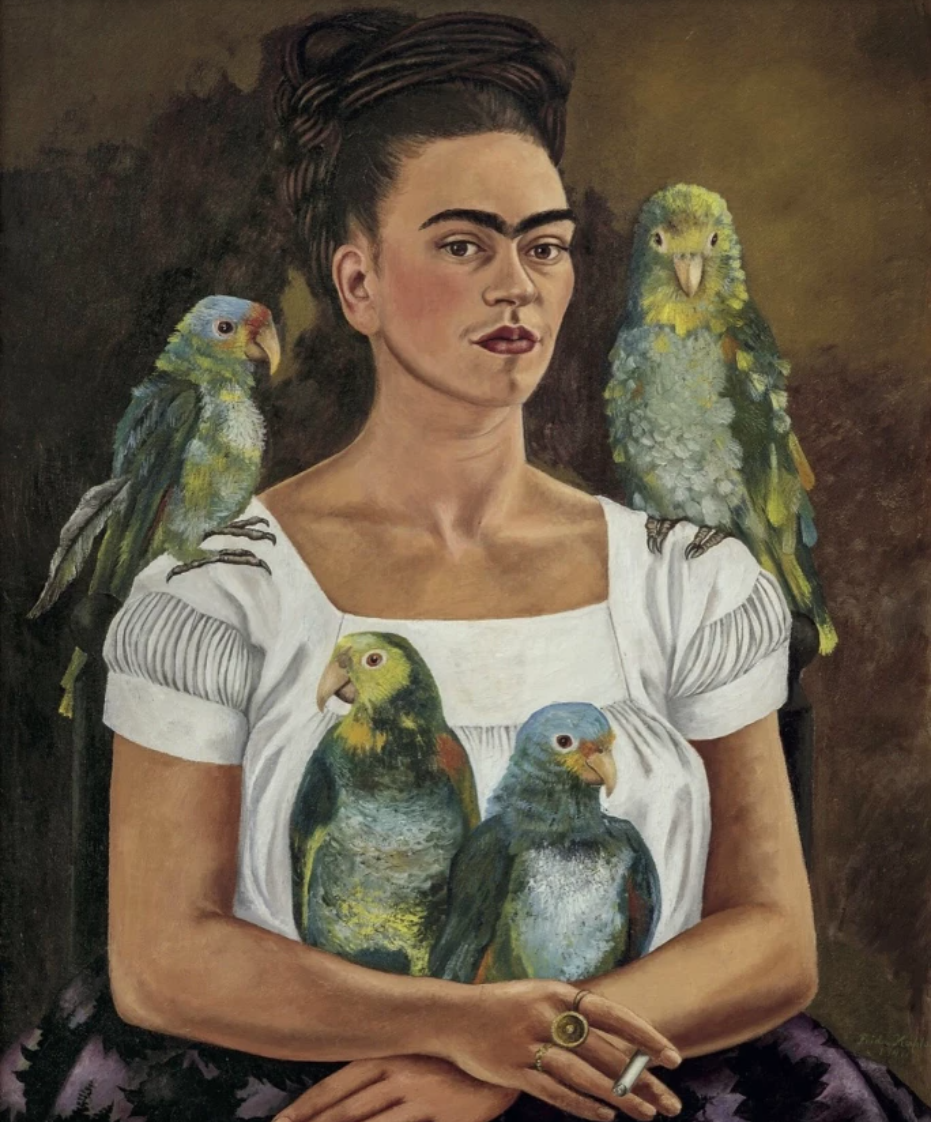
FRIDA KAHLO, ME AND MY PARROT, 1941. PRIVATE COLLECTION. IMAGE © ART RESOURCE, NY. ART © 2022 BANCO DE MÉXICO DIEGO RIVERA FRIDA KAHLO MUSEUMS TRUST, MEXICO, D.F. / ARTISTS RIGHTS SOCIETY (ARS), NEW YORK
The floral detailing and feathered subject together speak to the present work’s encapsulation of what lies at the core of Berrio’s practice: the wisdom that humans and nature may not only live in harmony, but that they are fundamentally intertwined. The parrot specifically is an extremely significant influence for Berrio.
“Birds have been a source of inspiration to people across the world for centuries. To me, birds symbolize freedom of the soul and transcendence of the earthly human form. Parrots in particular are special to me because my grandfather had a pet parrot who was his lifetime companion.”
The Lovers 2, 2015
Phillips New-York: 14 May 2024
Estimated: USD 250,000 – 350,000
PASSED
María Berrío – Modern & Contemporary Art… Lot 24 May 2024 | Phillips
MARIA BERRIO
The Lovers 2, 2015
Watercolor, Swarovski rhinestones and Japanese rice paper collage on canvas
72 x 71 7/8 inches (182.9 x 182.6 cm)
Signed, titled and dated ““The lovers 2” María Berrío 2015” on the reverse
Colombian artist María Berrío is a storyteller whose intricate and large-scale collage paintings unfold layers of narrative through lush, fantastical landscapes populated by enigmatic female figures. Executed in 2015, The Lovers 2 encapsulates this distinctive style, melding influences from magical realism and her own lived experience into a deeply introspective artwork that engages on multiple sensory and emotional levels. A patchwork of diversely sourced decorative papers, rhinestone elements and a delicate veneer of watercolor, The Lovers 2 interprets a Surrealist dreamscape that blurs Berrío’s biographical memory with South American mythology. Here, she explores themes spanning from beauty and the divine feminine, to intercultural connectivity and humankind’s relationship to nature. Berrío, originally from Colombia and now based in New York, crafts a vibrant and tactile tapestry of cross-cultural history in her work, offering a personal perspective. Berrío utilizes a variety of materials, primarily Japanese print paper, which she collages across the surface of the canvas, forming textured, dimensional portraits that confuse and delight the eye. This technique not only encourages close looking but also enriches the narrative, imbuing each constructed image with a tangible sense of time and place. The works become self-contained vessels that reflect not only the stories they tell, but the stories of their creation.

Anne Boleyn, by Unknown English artist, late 16th century, based on a work of circa 1533-1536. National Portrait Gallery, London.
Image: Shawshots / Alamy Stock Photo
In The Lovers 2, this synthesis is evident in the intricate materiality of the expansive canvas. Berrío initiates each collage with a sketch, a blueprint that she says “inevitably changes” while making the piece. This fluidity allows her to weave together a narrative that transcends borders and cultures, echoing the diverse origins of materials sourced from a wide range of craft traditions.
“I use handmade and machine-made paper produced almost exclusively in countries of the global south: Nepal, India, Korea, Japan, Thailand, Mexico, and Brazil. I gravitate toward paper with natural motifs such as floral, plant, and animal patterns, as well as solid colors that evoke [nature].”
On top of this she adds areas of watercolor and, in the present work, individually applied Swarovski rhinestones which add touches of fluorescence, amplifying an otherworldliness and creating a picture of varying depths and frequencies. Berrío describes the process of working with collage as one filled with sensory delights—”Working with collage there is such a marvelous diversity of textures,” she enthuses. “Different sounds made as they are torn… I love the spreading of glue with sticky fingers, the stretching, the cutting. These collages are built layer by layer forming the topographical features upon the canvas.” These physical sensations manifest in the pictorial and emotional attributes of her work, as The Lovers 2 beckons not just a visual but also a tactile experience of viewing.

Gustav Klimt, Portrait of Adele Bloch-Bauer I, 1907. Neue Galerie, New York. Image: Luisa Ricciarini / Bridgeman Images
Discussing the women in her pictures, the artist says, “They are embodied ideals of femininity. The ghostly pallor of their skin suggests an otherworldliness; they appear to be more spirit that flesh. These are the women I want to be: strong, vulnerable, compassionate, courageous, and in harmony with themselves and nature.” In The Lovers 2, Berrío’s heroine is at once central and elusive. She transcends traditional space, enshrined in a protective tableau of flowers that evokes a sense of suspended time. The indeterminate setting and the figure’s interaction with symbolic elements like the bird and veil underscore a timeless narrative rooted in the feminine experience, one that floats between reality and myth. Berrío’s collage portraits are characterized both by the enigmatic women who inhabit them and the colorful, richly decorated clothing they wear. In The Lovers 2, this costuming is taken to new heights. Berrío’s subject is clothed in a multi-textured shawl and ornate, bejeweled headpiece, complete with a transparent veil. In the figure’s finery and positioning against a lush crimson backdrop, there is an evocation of the aesthetic and symbolic richness of Tudor and Elizabethan portraits from the late fifteenth to early seventeenth centuries. Both styles utilize elaborate regalia and intricate details to convey power and status, yet Berrío modernizes this concept by infusing her work with contemporary cultural and fantastical elements. Like the jewel-encrusted sitters of royal portraits past, Berrío’s figure is similarly crowned and pallid. Her powdery complexion recalls the lead-whitened skin fashionable among high-ranking women of the period and even the presence of a bird motif is reminiscent of the pelican broach that Queen Elizabeth I was known to wear as a symbol of Christian sacrifice.
Berrío’s collage paintings are steeped in magical realism. They sit at a crossroads of visual and literary traditions, highlighting a continuum of artists who blur the boundaries between reality and fantasy. The present work, with its contrast of traditional modes of portraiture executed in an incongruous and highly non-traditional manner, interlaces the familiar and the bizarre in a manner reminiscent of Latin American Surrealist pioneer Frida Kahlo’s deeply personal and symbolic portraits that blend elements of her Mexican heritage with surreal and mythic motifs. Similarly, Berrío’s use of embellishment and elaborate floral dreamscapes draws parallels to Austrian Secession leader Gustav Klimt’s luxurious, gilt accents, jewel-toned flower fields, and intricate patterns imbued with symbolism and psychological resonance. In the literary realm, Berrío’s narrative approach reflects the complex, labyrinthine universes of Jorge Luis Borges and the poignant, interwoven realities characterized by Gabriel García Márquez’s magical realism.

Leonora Carrington, Self-Portrait, c. 1937-1938. The Metropolitan Museum of Art, New York. Image: © The Metropolitan Museum of Art. Image source: Art Resource, NY, Artwork: © 2024 Estate of Leonora Carrington / Artists Rights Society (ARS), New York
Berrío draws on South American folklore and personal memories, such as those from her childhood in rural Colombia and urban Bogotá. The Lovers 2 features a towering woman, her presence and that of the flamingo alongside her, invoking figures like Madremonte, or “Mother Mountain,” the mythical protector of forests from Colombian lore.v These elements symbolize the integration of Berrío’s cultural heritage with her artistic expression, using animals to represent the deeper aspects of the human spirit, a theme originating from her childhood connection to the natural world. Birds specifically recur throughout her oeuvre, including in her 2023 solo presentation, The Spirit in the Land, staged at the Nasher Museum at Duke University in North Carolina, which focused entirely on a series of hummingbird-themed works inspired by the Mojave peoples’ belief that the birds were pathfinders who lead the way from darkness into the light. In the context of The Lovers 2, the flamingo is not just a companion but a part of the woman’s identity. The pastel-pink feathers of the bird blend seamlessly with her pale, tattooed arms and shimmering veil, creating a visual continuity that makes it difficult to discern where the woman ends, and the flamingo begins. This blending is further emphasized by the bird’s neck contorting behind the woman’s head, its feathers merging into the fabric of her dress. Such imagery suggests a symbiotic relationship between the two, highlighting themes of unity and the merging of separate entities into a single, harmonious whole. Through this interplay of human and animal elements, Berrío not only explores the aesthetic dimensions of her subjects but also delves into deeper themes of identity, coexistence, and the intrinsic ties that bind us to the natural world.
Focus: Other Paintings
Between the Orchids and the Wheat, 2020
Sotheby’s Hong-Kong: 5 April 2024
Estimated: HKD 4,500,000 – 6,500,000
WITHDRAWN
MARIA BERRIO (b. 1982)
Between the Orchids and the Wheat, 2020
Collage with Japanese paper and watercolor paint on canvas
213×267 cm (83 7/8 x 105 1/8 inches)
Signed and dated 2020 on the reverse
“This painting is one of the most recent pieces that I created for the exhibition and it was inspired by the flower markets that I used to visit when I was a kid but at the same time it talks a little bit about at this moment in history and this idea of the simple moments we are kind of not able to share because of the pandemic.”
Across the delicate, lush surface of Between the Orchids and the Wheat, María Berrío weaves a complex tapestry of multiple histories, alluding to anecdotes both personal and universal, timely and timeless. Making its debut at the Norton Museum of Art exhibition María Berrío: Esperando mientras la noche florece (Waiting for the Night to Bloom) in 2021, Between the Orchids and the Wheat is the largest work by the artist to come to auction and a testament to Berrío’s celebrated collage technique. Berrío’s large-scale works such as the present offer an allegorical prism through which she explores her childhood memories in Colombia and experiences with global diaspora and migration. Inspired by the artist’s memories of the flower markets in Bogota she saw as a child, Between the Orchids and the Wheats blends biography with a sense of the imagined.

The chromatic wonderlands of Berrío’s compositions often imagine spaces of safety in which humans and nature live in harmony, infusing everyday realities with a magical, emotional surrealism. Resembling a monumental woven tapestry or stained-glass window, the heightened attention to detail and multifaceted surface of Between the Orchids and the Wheat creates an overall impression of flatness, with the artist moving between representation and ornamental abstraction. Recalling Byzantine and Japanese motifs, as well as the pale splendour of Gustav Klimt, the present work is mesmerising, pertinent work by the artist.

Before beginning her compositions, Berrío has a theme and an outline before choosing the scale of her canvas. Sketching first with charcoal, Berrío applies innumerable layers of Japanese paper to achieve a final, delicate opacity of colour and texture. The casual interactions of the work, the familiarity of gesture and setting, are a composite of many details and moments filtered through the artist’s memories. Berrío’s work is a mediation on the impact of migration as seen through the prism of her own experience. Growing up in Bogotá with her two brothers, Berrío spent much of her childhood on a family farm in a landscape of mountains, animals and flowers, early memories and childhood impressions which have gone on to inform much of her work: “It becomes a little bit like magical realism,” Berrío describes, as Colombia is “filtered through my memory, it’s filtered through my childhood. I think if I lived there, I would see things as they are and maybe it would be a little bit more raw” (María Berrío, quoted in Adrian Horton, “Like magical realism’: María Berrío on her surreal collages”, The Guardian, 20 June 2020). Taking its title from the beautiful orchids the artist saw at the flower markets of Bogota, and wheat, a more functional, less ostentatious plant, Berrío situates her scene of three women sharing a moment of quiet together as demonstrating the beauty of everyday life – the orchid, and the wheat. Surrounded by beautiful flowers, these women are brought into communion by Berrío’s intricate patterning, the result of the artist’s lengthy process in which the surface of the composition is built up with torn layers of delicate Japanese paper and refined with washes of watercolour.

GUSTAV KLIMT, THE VIRGIN, 1913. / NATIONAL GALLERY (NARODNI GALERI), PRAGUE, CZECH REPUBLIC
PHOTO AUSTRIAN ARCHIVES/SCALA FLORENCE
Enlisting the narrative dimensions of poetry, folklore, and personal experience to a delicately paper-collaged canvas of mystical domesticity, Berrío’s Between the Orchids and the Wheat resounds as a portrait of feminine empowerment and spirituality. Capturing a beguiling interplay of fantasy and reality, the present work unravels as a scene from an otherworldly tale that welcomes the viewer’s curious spectatorship. Drawn in by the soft and vulnerable intimacy of the three female figures, we are invited into the prismatic and embellished world that Berrío has lovingly crafted with precious scraps of paper, torn and reassembled into a devotional portrait of sensuous beauty.
La Cena, 2012
Christie’s New-York: 17 May 2024
Estimated: USD 350,000 – 450,000
USD 441,000
MARÍA BERRÍO (B. 1982)
La Cena, 2012
Wax crayon, graphite, fabric collage and Japanese rice paper collage on canvas
48×58 inches (121.9 x 147.3 cm)
Signed, titled and dated ‘”La Cena” Maria Berrio 2012’ (on the reverse)
Executed in 2012, La Cena emerges as one of the most successful examples of María Berrío’s surrealist visions, epitomizing her distinct and widely celebrated artistic style. Inspired by the infamous Italian Renaissance narrative of Leonardo’s The Last Supper, this work reflects the artist’s meticulous craftsmanship and unwavering dedication to her practice. With painstaking precision, Berrío intricately layers ethereal Japanese rice paper and fabric in a multitude of equally dynamic patterns and vibrant colors. Through this alchemical process, she produces a mesmerizing canvas, in which the sublime forms of femininity converge with allegorical themes. La Cena transcends mere representation, offering a sanctuary where the feminine spirit finds solace amidst the tumult of existence.

Leonardo da Vinci, The Last Supper, 1452-1519. Santa Maria delle Grazie, Milan.
The present lot encapsulates Berrío’s career-defining capability to reimagine the boundaries of contemporary art. Inspired by surrealism, folklore, and classical painting, her dreamlike compositions synthesize exacting history and mythological imagination. Raised on a farm in Colombia, the artist’s earliest inspirations were animals and plant life, a theme which still characterizes her work today. In the present lot, birds, elephants, owls, and fish dance across the canvas, conjuring the magical realism which defines many of the most celebrated Latin American literary works. The harmonization of humanity and nature pays homage to the surrealist compositions of Leonora Carrington, which depict women in dialogue with animals and mythological creatures. Berrío is particularly interested in the interconnectedness of the universe, especially the relationship between women and animals. In La Cena, one of the central figures clutches a bird, a motif used in her work to suggest the promise of redemption.

Leonora Carrington, And Then We Saw the Daughter of the Minotaur, 1953. Museum of Modern Art, New York. © 2024 Leonora Carrington / Artists Rights Society (ARS), New York.
The multilayered and tactile nature of the composition alludes to Byzantine mosaics, while the intense amalgamation of patterns allude to Gustav Klimt’s ornamental paintings. Regarding the blend of many different inspirations in her work, the artist remarked, “Myths, folklore and legends, historical events, poetry, contemporary events: I see no reason to separate these if I’m making a painting. All of these things influence me, so why box them into separate categories? Why not include them all? They may confuse or cancel or contradict each other, but what of it?” (María Berrío quoted in “María Berrío Infuses the Ordinary with the Mythic, A. Huff, Whitewall, September 2023)

Left: Byzantine mosaic of the Court of Empress Theodora, 547 CE (detail). S. Vitale, Ravenna. Photo: Alfredo Dagli Orti / Art Resource, NY.
Right: Gustav Klimt, Lady with a Fan, 1917.
A blend of biographical memory and contemporary influences, La Cena captures the overwhelming sense of femininity and womanhood that has captivated Berrío since she first moved to New York at the age of eighteen. The artist once described the ethereal women that populate her compositions as “the embodied ideals of femininity.” In La Cena, the pale and fragile skin of the women are placed into the charged biblical theme of The Last Supper, suggesting that the delicacy of femininity does not bar women from assuming positions of power and strength. Speaking on the strong women in her work, Berrío remarked, “They combine the elements of women who are typically thought of as powerful—the captains of industry, resolute politicians, fiery activists—with the traits of those who are not usually thought of as such, thereby underlining the common force found in all women. The female soldier fighting on the front lines is of interest, but so too is the mother who finds a way to feed her children and sing them to sleep amid bombing campaigns and in the ruins of cities. To truly ennoble womanhood, we must discover and appreciate the beauty in every action, big or small.” (María Berrío quoted in “As Complicated and Elusive as Reality: María Berrio’s Many-Layered Collages (with an interview by C. J. Bartunek),” The Georgia Review, Spring 2019. In a harmonious fusion of mythology, masterful artistry, and cultural richness, La Cena serves as a testament to Berrío’s pioneering methodology. Within its loaded composition, the artist unveils an imaginative realm where charged themes and subjects are colored by heavenly interpretations.
The Dream of Flight, 2019
Christie’s Shanghai: 23 September 2023
Estimated: CNY 1,800,000 – 2,800,000
CNY 3,528,000 / USD 483,420
https://www.christies.com/en/lot/lot-6440854
MARÍA BERRÍO (B.1982)
The Dream of Flight, 2019
Watercolor and Japanese paper collages on canvas
60×72 inches (152.4 x 182.9 cm)
Signed and titled ‘María Berrío 2019’ (on the reverse)
“In ‘The Dream of Flight,’ a reclining figure stretches her arms out like a bird, imagining what it would be like to take flight. It is a rare piece that’s a bit more autobiographical—the reclining figure looks like me and the patterns of the carpet and her dress come from my life. I have a similar carpet and a similar dress. The red birds in the distance are the scarlet ibis, native to South America. The figures dream of freedom and look to the birds flying overhead for hope, only to realize that freedom is impossible.“
No One Can Hear You, Only the Wind, 2012
Phillips New-York: 17 May 2023
Estimated: USD 1,000,000 – 1,500,000
USD 635,000
https://www.phillips.com/detail/maria-berrio/NY010323/24?fromSearch=maria%20berrio&searchPage=1
MARIA BERRIO
No One Can Hear You, Only the Wind, 2012
Japanese paper collage, dried leaves, watercolor and pencil on canvas
60×72 inches (152.4 x 182.9 cm)
No One Can Hear You, Only the Wind, 2012, is a richly detailed example of María Berrío’s signature collage and watercolor technique. The composition of a graceful ballerina leaping across a deep night sky and a kaleidoscopic field of flowers, comes together through an assemblage of decorative papers primarily produced in the Global South—in addition to Berrío’s cherished, handmade Japanese paper—as well as botanical drawings of birds and flowers, a sheaf of dried leaves, and a reproduction of a calendar page from the Limbourg Brothers’ 15th century illuminated manuscript, Les très riches heures du Duc de Berry. The seamless integration of such disparate materials speaks to the constant interplay of the global and local, the mythical and deeply, politically relevant, in each of Berrío’s works.
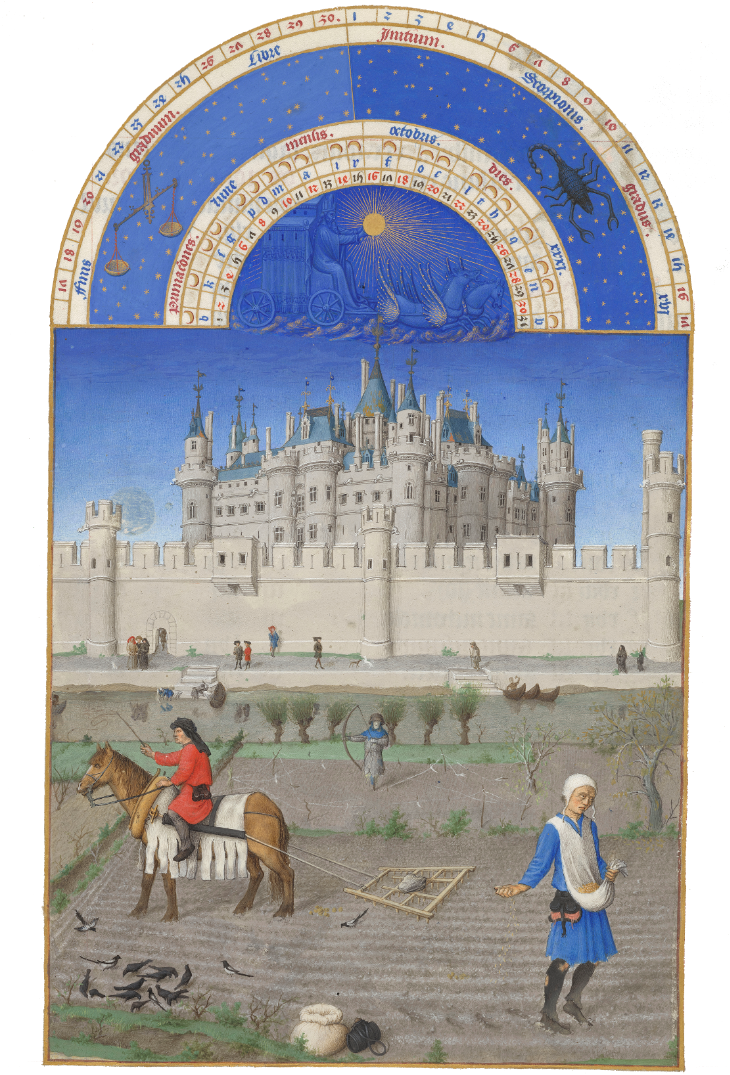
Calendar page from Limbourg Brothers, Les très riches heures du Duc de Berry, 1413-1416.
Musée Condé, Chantilly, MS 65 fol. 10v. Image: © RMN-Grand Palais / Art Resource, NY
“This process of fusing cultural production from a wide range of places is inherent to the form and, more importantly, to the meaning.”
Berrío is adamant that her work is “informed by every bit of material layered into it, and by every place the materials hail from.” The papers, both patterned and plain, are cleverly arranged so that their physical values add depth to the composition; for instance, a paper with a golden wave motif becomes the rich, floating plait of the ballerina’s hair. With each work, Berrío says, she wants “to push the technique [of collage] to its limits,” a goal evident in No One Can Hear You, Only the Wind. In the verdant undergrowth below the ballerina, butterflies figure as cut-out creatures, and also as patterns, with strips of wings formed into flower petals. The torn edges of red and purple papers become flower stems, reminiscent of those in Henrí Rousseau’s The Dream, 1910, The Museum of Modern Art, New York.
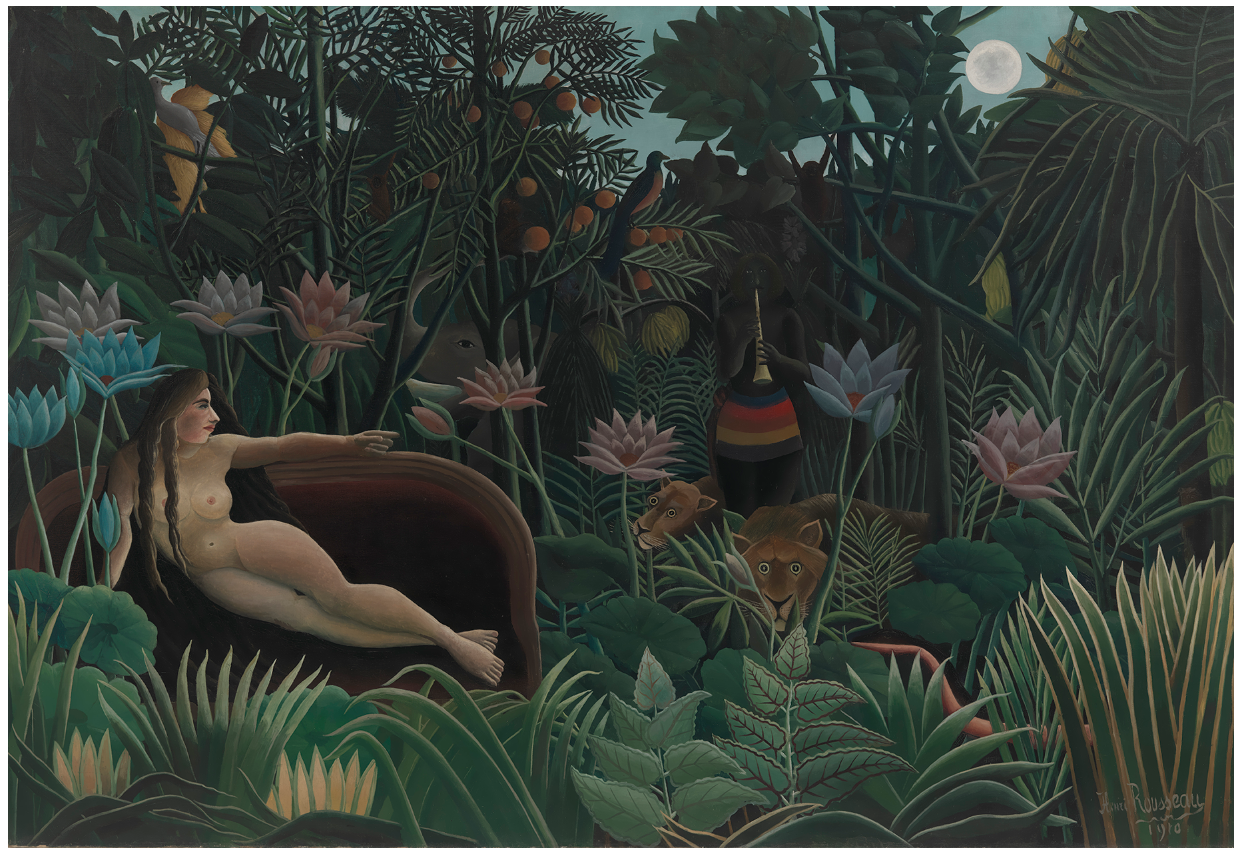
Henrí Rousseau, The Dream, 1910. The Museum of Modern Art, New York.
Image: © The Museum of Modern Art/Licensed by SCALA / Art Resource, NY
Dried leaves stand alongside collaged ones, fusing the real and unreal in a surreal, even magical world of collage and watercolor. This infusion recalls the deep artistic and literary roots of Surrealism and magical realism in Latin America, from the work of Surrealists such as Frida Kahlo and Dorothea Tanning in Mexico, to some of Berrío’s favorite authors, including Pablo Neruda and Gabriel García Márquez, and the oral folklore traditions of indigenous peoples. Like these artists and storytellers, Berrío creates a dream world in No One Can Hear You, Only the Wind, and as a native of Colombia who has spent her professional career in New York, she is deeply attuned to the artistic richness of hybrid experience and cultural exchange.
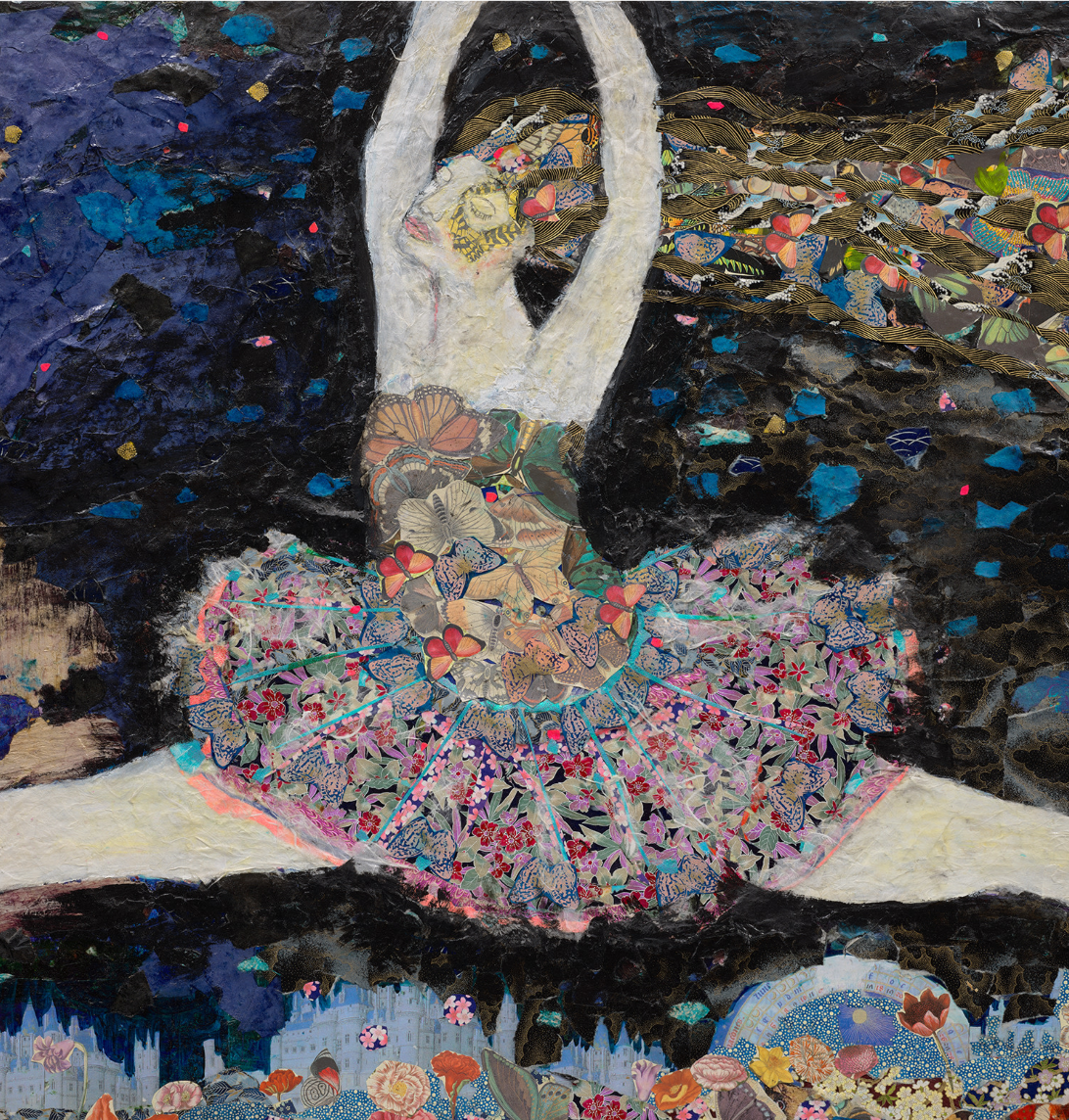
Beyond ensuring a textural richness, the physicality of paper holds symbolic meaning for Berrío as well, especially in regard to her archetypal female figures. Berrío’s figures are from her imagination: never inspired by just one model, it’s “a collage of parts,” she says. “I draw my eyes, but maybe somebody else’s nose, and then somebody else’s hands.” By unmooring her figures from a particular likeness, she is able to create women who “are embodied ideals of femininity,” relatable to all.vi The ballerina is one such figure for Berrío; not only are ballet costumes a visual inspiration for the artist, but the profession embodies the dual delicacy and strength of women that Berrío constantly seeks to represent in her work.
“These are the women I want to be: strong, vulnerable, compassionate, courageous, and in harmony with themselves and nature.”
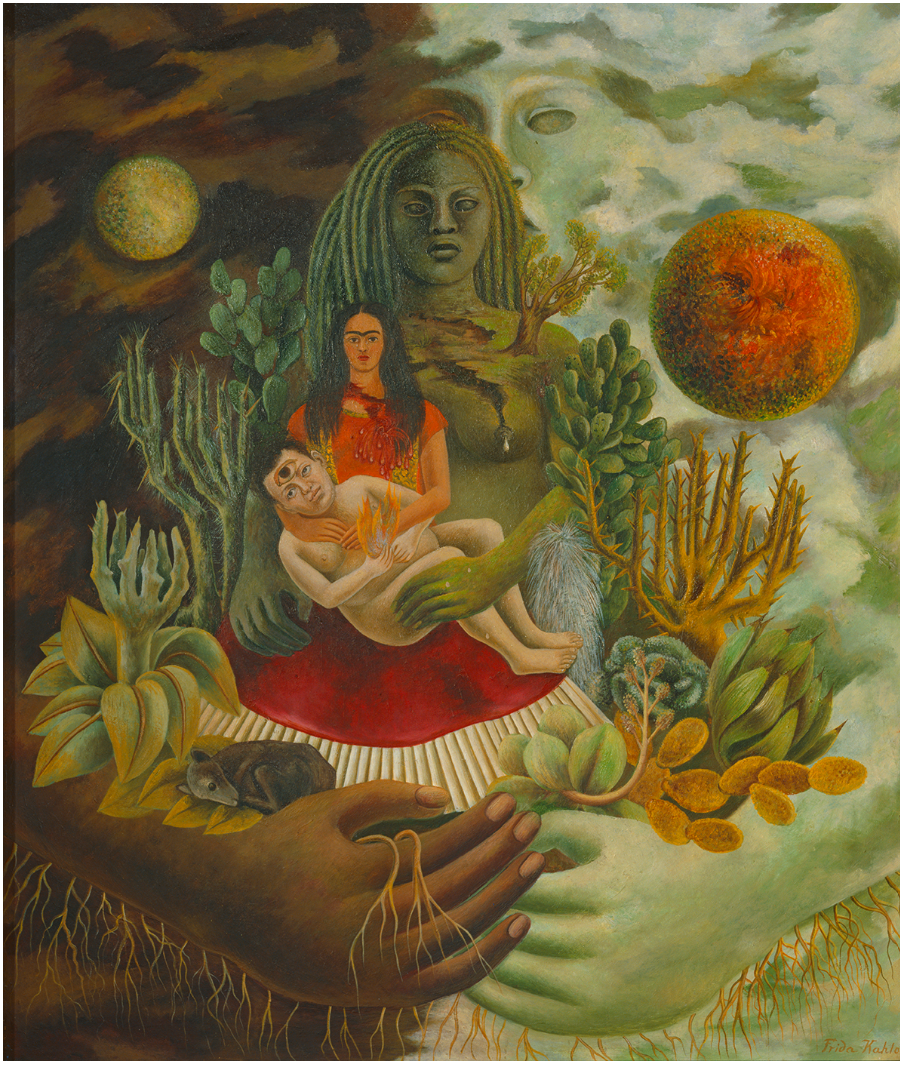
Frida Kahlo, The Love Embrace of the Universe, the Earth (Mexico), Myself, Diego, and Señor Xolotl, 1949. Collection of Jacques & Natasha Gelman, Mexico City. Image: Erich Lessing / Art Resource, NY, Artwork: © 2023 Banco de México Diego Rivera Frida Kahlo Museums Trust, Mexico, D.F. / Artists Rights Society (ARS), New York
The pale, luminous texture of a semi-transparent handmade paper gives the ballerina’s skin in No One Can Hear You, Only the Wind, “a ghostly pallor” and “otherworldliness” that appears to be “more spirit than flesh,” a material quality the artist sees as central to the presentation of her figures as embodiments of feminine ideals. These women are more idea than reality, and this incorporeality frees them to become relatable to all women. The ballerina is transcendent, leaping through a spirit world created from an international web of materials and cultural references. She represents every woman, every person, as a participant in a feminist, ecologically harmonious future.
Untitled, 2015
Sotheby’s New-York: 18 May 2023
Estimated: USD 200,000 – 300,000
USD 381,000
https://www.sothebys.com/en/buy/auction/2023/the-now-evening-auction-2/untitled-2
MARIA BERRIO (b. 1982)
Untitled, 2015
Watercolor, rhinestones and Japanese paper collage on canvas
30×40 inches (76.2 x 101.6 cm)
Signed and dated 2015 (on the reverse)
Studded with colorful rhinestones and brimming with elaborate layers of Japanese paper, María Berrío’s Untitled is a mythological wonderland rooted in the artist’s experience of migration and her dedication to chronicling the stories of the women of Colombia and greater Latinx community. Executed in 2015 preceding Berrío’s groundbreaking The Harmony of the Spheres series, Untitled features a poised female guide immersed in the natural world, surrounded by owls, lush greenery, and a dark starry sky with dazzling watercolor detail. Partly inspired by her childhood memories growing up in Bogotá, the work calls upon South American folklore to expand narratives of present-day politics using cultural symbols, such as the owls, to represent freedom. As seen in Untitled, many of Berrío’s subjects are depicted as if in preparation for an arduous journey, adorned with lavish cloaked garments reminiscent of Inca tunics and wearing expressions of unwavering determination. Awarded the prestigious Joan Mitchell Fellowship in 2021 and the current subject of a major solo exhibition at ICA Boston which opened in February 2023, Berrío’s work is also included in the permanent collections of multiple institutions, including Crystal Bridges Museum of American Art, Bentonville; National Gallery of Art; Washington D.C.; Philadelphia Museum of Art; and Whitney Museum of American Art, New York. A harmonious depiction of man and nature, Untitled presents a kaleidoscopic narrative of independent women treading a path towards freedom.
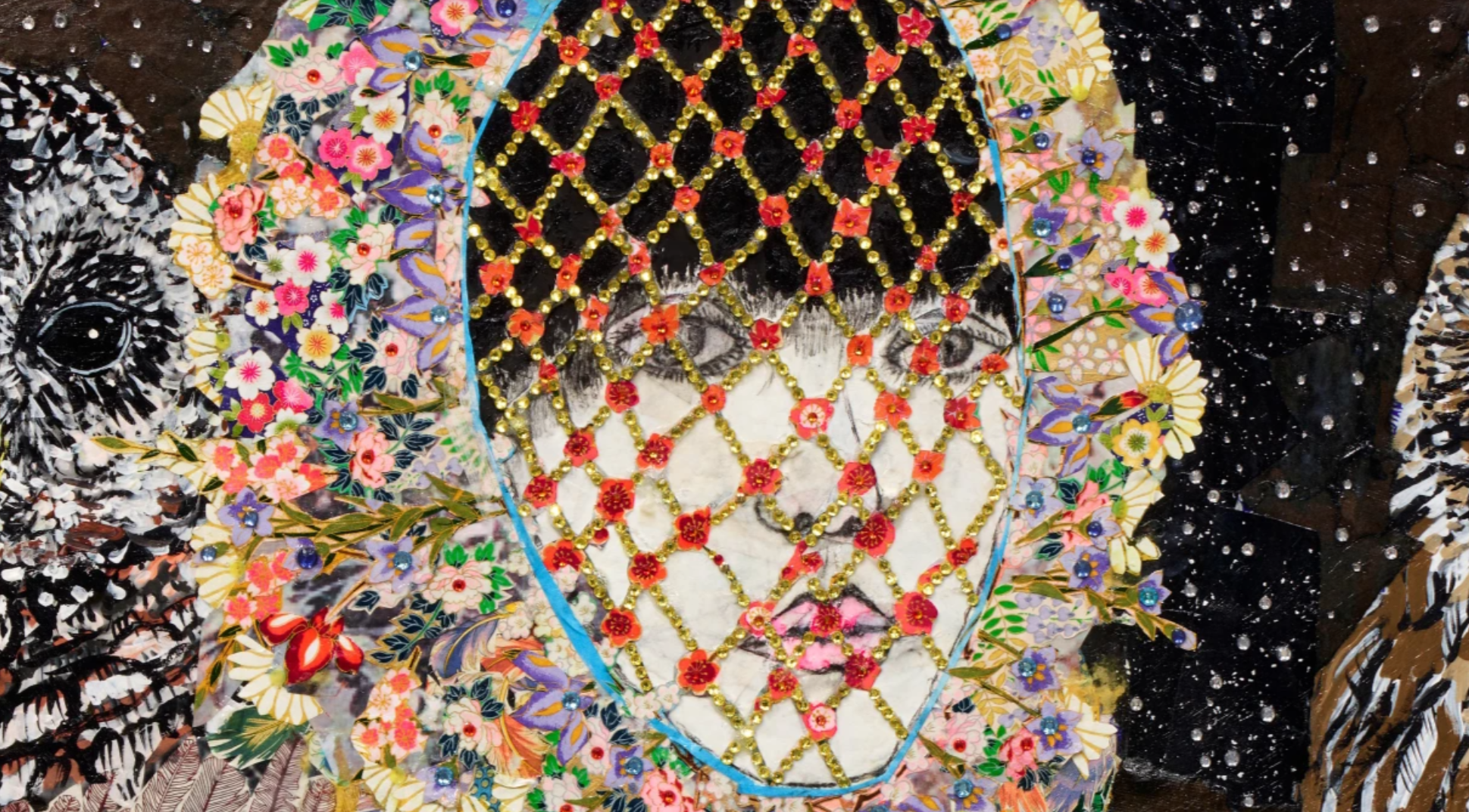
In both style and substance Berrío is inspired by the rich, fantastical narratives of the Surrealists and luminously embellished Viennese Secessionist works of Gustav Klimt. Berrío’s practice aligns with the Surrealists’ instinctive style and unconscious motivation, using unique details and intricate materials to elaborate upon personal anecdotes. Similar to Berrío’s compositions, Frida Kahlo’s intimate, self-mythologizing scenes rich with symbolism provide a dreamlike escape from reality. Klimt is also a significant influence, with his depictions of female figures exquisitely adorned with floral motifs and surrounded by meditative, ornate landscapes. Writing about Berrío’s impressive oeuvre in a fashion reminiscent of Klimt, Sharon Mizota notes, “The surfaces look faceted, almost jewel-like… The pictures are literally patchworks, assembled from bits and pieces. They feel of this world but also improbable, as if held together by magic.” (Sharon Mizota, “Review: María Berrío’s dream-like collages deploy paper like paint,” Los Angeles Times, June 17, 2019 (online))
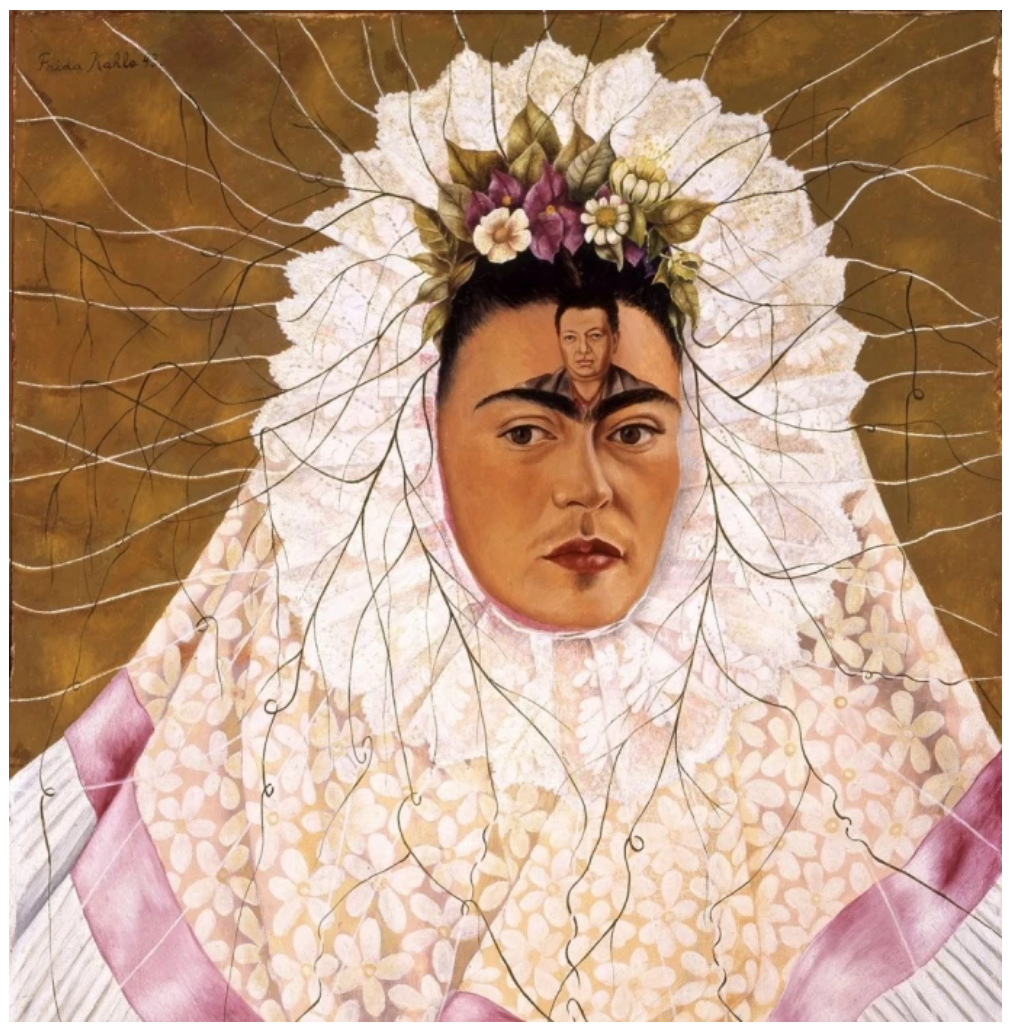
FRIDA KAHLO, DIEGO ON MY MIND (SELF PORTRAIT AS TEHUANA), 1943. THE NORTH CAROLINA MUSEUM OF ART, RALEIGH. IMAGE © ERICH LESSING / ART RESOURCE, NY. ART. © 2023 BANCO DE MÉXICO DIEGO RIVERA FRIDA KAHLO MUSEUMS TRUST, MEXICO, D.F. / ARTISTS RIGHTS SOCIETY (ARS), NEW YORK
Berrío centers women in her compositions, positioning them in a manner akin to Mother Nature and with an otherworldliness that personifies the vulnerable, compassionate, and courageous aspects of womanhood. Critical to Berrío’s practice is her reflection on cross-cultural connections and perilous artificial borders which divide beautiful landscapes. Berrío’s narratives have inextricable links to her upbringing yet exemplify universal qualities of defiance and hope; “There was a lot of political and social upheaval in Bogotá when I was growing up,” Berrío explains. “For our safety we lived very small and sheltered lives and escaped to our country farm on the weekends. Out in nature, I was able to play freely and let my imagination roam.” (Maria Berrío interviewed by Amanda Quinn Olivar, Curator, 25 July 2019 (online)) Untitled is permeated by the influence of folklore, with the landscape slowly seeping into the woman’s garments and bundles of painterly owl feathers poking out from her shoulders. Despite the daunting course in her way, Berrío’s female subject gracefully commands the surrounding natural environment.
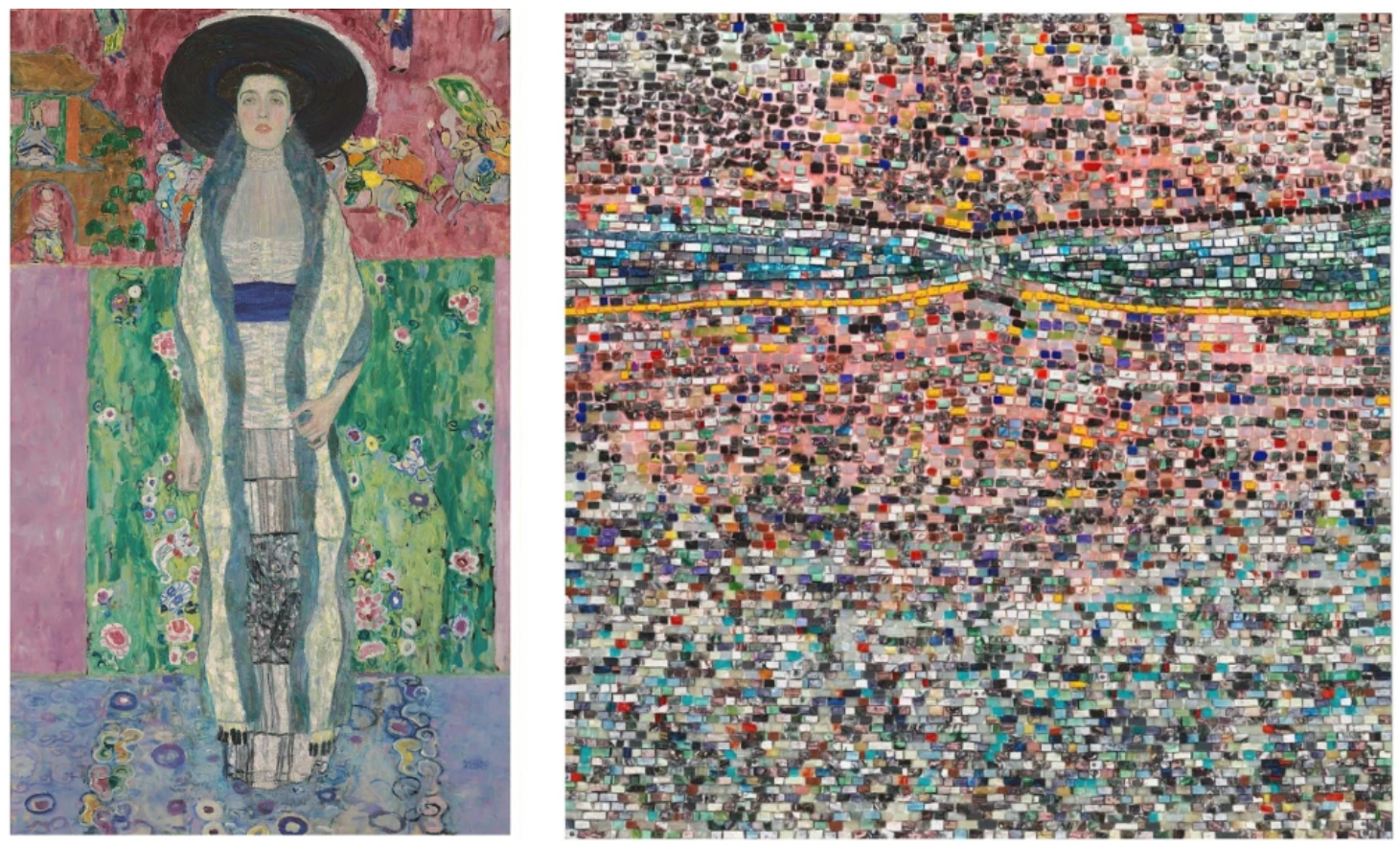
LEFT: GUSTAV KLIMT, PORTRAIT OF ADELE BLOCH-BAUER II, 1912. PRIVATE COLLECTION. IMAGE. © HIP / ART RESOURCE, NY. RIGHT: JACK WHITTEN, QUANTUM WALL, VIII (FOR ARSHILE GORKY, MY FIRST LOVE IN PAINTING), 2017. PRIVATE COLLECTION. ART © JACK WHITTEN ESTATE. COURTESY THE ESTATE AND HAUSER & WIRTH
Created using the artist’s signature paper-collage technique, Untitled is a contemporary testament to the enduring effect of global craft traditions. Beginning with a sketch, Berrío layers unique segments of paper, often hundreds of layers thick and sourced from countries of the Global South, into an imaginative utopia of vibrant colors and complex patterns. Untitled is a remarkable example of this technique, with overlapping florals of handmade Japanese paper richly adorning the female figure. Birds are characteristic inclusions in Berrío’s practice which signify freedom; three owls are rendered here with deep brown and black tones of paint layered over stark white, emphasizing a lush, quill-like texture.
“My philosophy is to create beauty and show that out of chaos, hope can rise. Beauty can make challenging ideas not only more pleasing to behold, but also more easily understood and accepted. My work grapples with the ambiguous and unknowable aspects of life. I hope that the beauty in the work allows you to see the beauty in the difficult and gives you a reason to try, a reason to live.”
Berrío’s alluring Untitled recalls South American folklore to exhibit a nuanced narrative of the Latinx experience, not just one of migration, but one of cultural and ecological difference which improve and enrich humanity. Untitled is a remarkable example from Berrío’s oeuvre, radiating with feminine energy, hope, and the transcendence of the human soul from its earthly form.
The Riders II, 2012
Phillips London: 30 June 2022
Estimated: GBP 150,000 – 200,000
GBP 809,000 / USD 981,240
https://www.phillips.com/detail/maria-berrio/UK010422/6
MARIA BERRIO
The Riders II, 2012
Mixed media collage on canvas
47 7/8 x 60 inches (121.9 x 152.4 cm)
Signed, titled and dated ‘the Riders II. 02/12 Maria Berrio.’ on the reverse
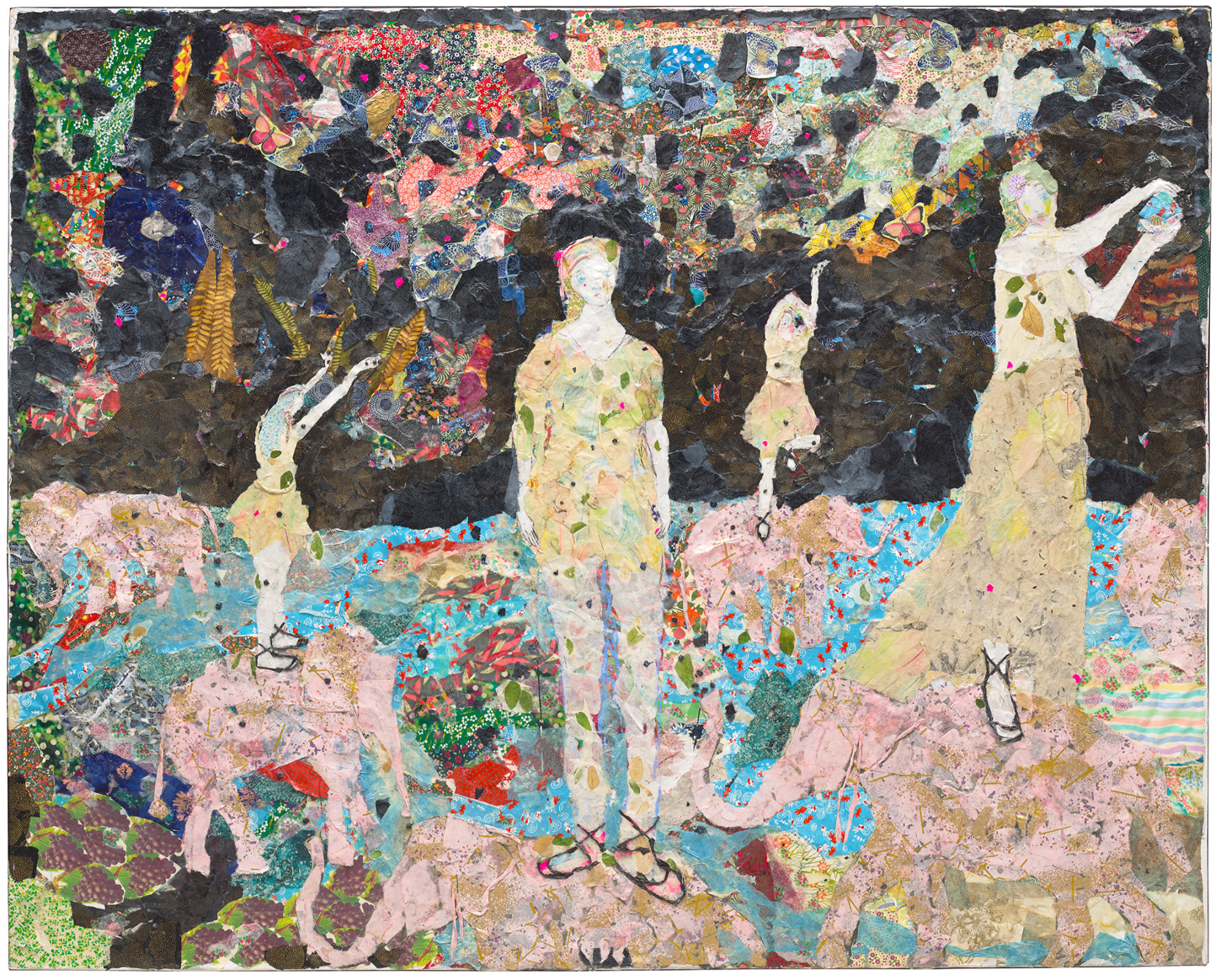
Based in Brooklyn, Colombian artist María Berrío’s large-scale collaged canvases offer compellingly beautiful scenes suffused with a sense of magic and musicality, lending them a dream-like quality as ephemeral and delicate as the materials used in their execution. Highly typical of her artistic process, the variegated surface of The Riders II is built up in layers of carefully cut pieces of delicate handmade and brightly colored Japanese paper to which the artist has added touches of acrylic, watercolor, and gold leaf, creating a sense of movement and harmony especially well-suited to the subject here. Fantastical and whimsical in equal measure, The Riders II depicts an idyllic scene of prelapsarian bliss, the titular riders perfectly at one with the abundant natural world and the marvelous creatures they share it with. Set against the shifting blue band of the river behind them, four statuesque figures balance elegantly on the backs of playful pink elephants, stretching to reach the abundant flora and fauna from the canopy above them. Blending the real and the imaginary, Berrío synthesizes a range of art historical influences, touching especially on a legacy of Latin American Surrealism pioneered by the likes of Frida Kahlo and Leonora Carrington, who demonstrated a similar interest in the rich interconnectedness of women to abundant natural and animal worlds, and myth.
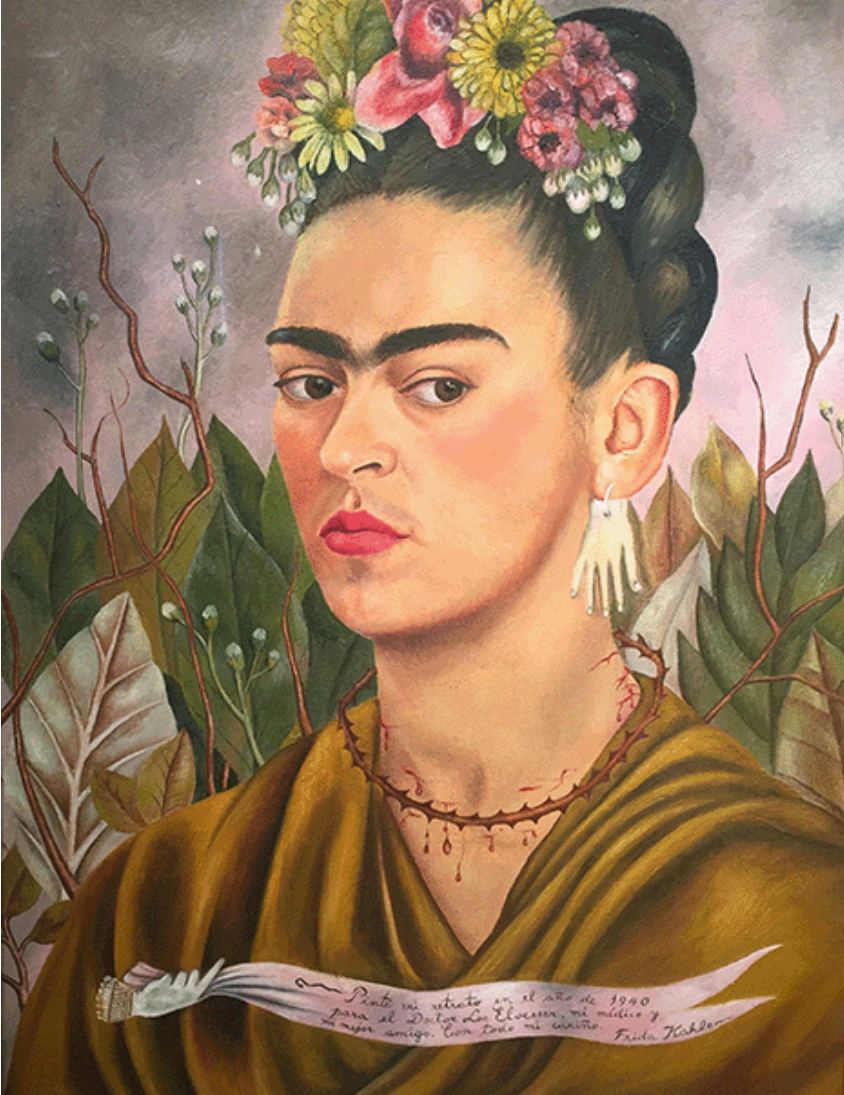
Frida Kahlo, Self-Portrait Dedicated to Dr Eloesser, 1940, Private Collection. Image: Album / Alamy Stock Photo, Artwork: Banco de México Diego Rivera Frida Kahlo Museums Trust, Mexico, DF/DACS 2022
Drawing on memories of the luscious mountain world rich with plants and animals of her native Bogotá alongside memories of the stories that her grandparents told her, Berrío’s work takes on compelling narrative dimensions that seamlessly weave the fantastic into the everyday, filtered through layers of time and memory in a manner that critics and the artist herself have likened to the workings of Magical Realism and the writings of Gabriel García Márquez and Isabel Allende. Just as the artist must filter her own experiences through a layers of time and memory, she finds herself similarly drawn to ‘South American folktales and symbolism because they are created by people seeking order, meaning, and hope […] to understand life and create meaning.’ An accomplished storyteller herself, Berrío draws on Latin American literary history as much as the global craft traditions developed historically by communities of women in these staggeringly complex paper assemblages. As with the processes involved with traditional quilt-making, Berrío’s use of multiple textures and fragments speaks eloquently to ideas around memory, dream, and narrative, and the peculiar way in which her works seem capable of ‘cutting through time and the unconscious’ in a manner that recalls the languid scenes of Henri Rousseau’s exotic canvases.
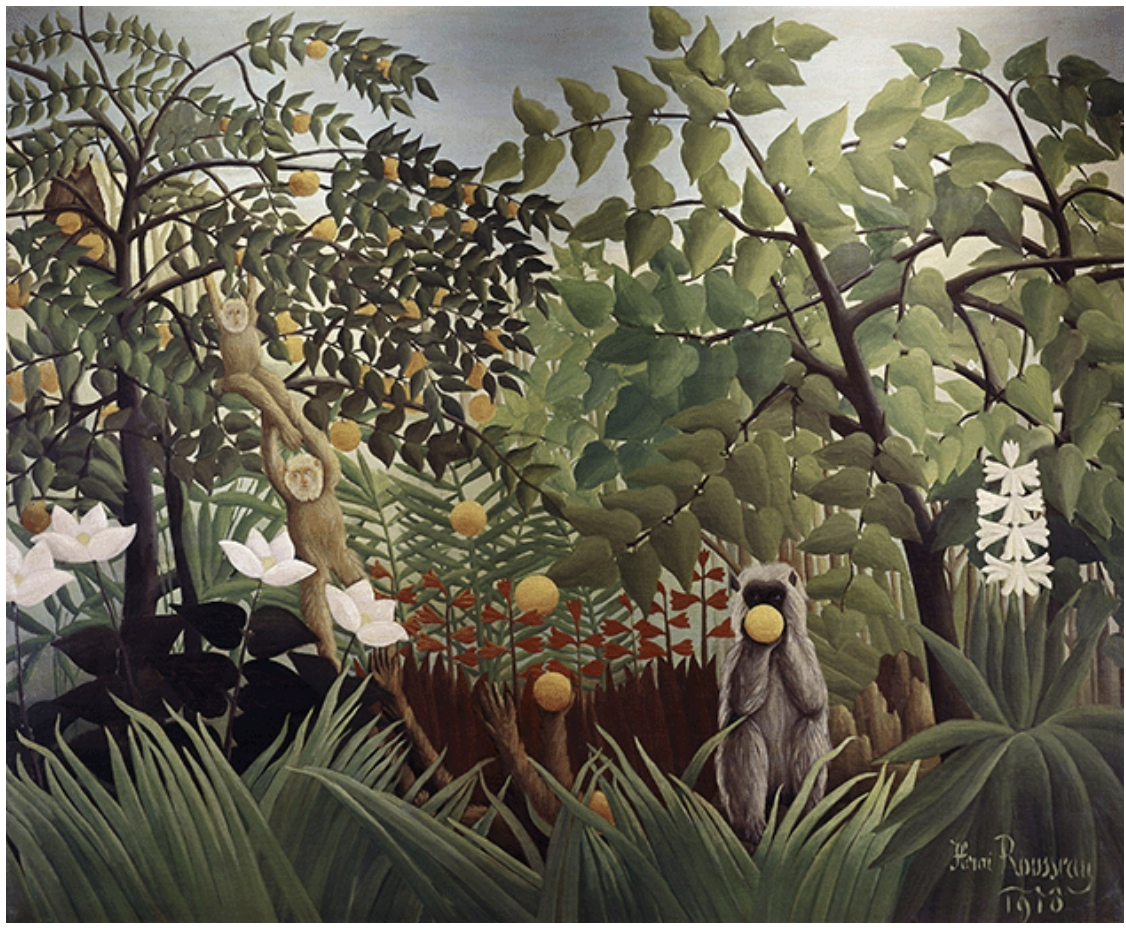
Included in Berrío’s exhibition Of Dreams and Hurricanes presented at Praxis International Gallery in New York in 2012, The Riders II shares in the kaleidoscopic richness that has become so characteristic of the artist’s work. Gently breaking down distinctions between figure and ground, a sense of intricately fractured pattern moves fluidly through the composition, recalling the complex details, heightened palette, and undulating forms of Gustav Klimt’s most absorbing and immersive works. Advocating a kind of magical thinking, Berrío’s fusion of narrative, fantasy, and allegory in here is consistent with the artist’s distinctive mode of worldbuilding, and her creation of utopian spaces populated primarily by female figures who ‘are imaginary but intimately felt’, at once closely connected to nature and capable of transcending this material realm.
‘The women who inhabit my paintings are embodied ideals of femininity […] These are the women I want to be: strong, vulnerable, compassionate, courageous, and in harmony with themselves and nature.”
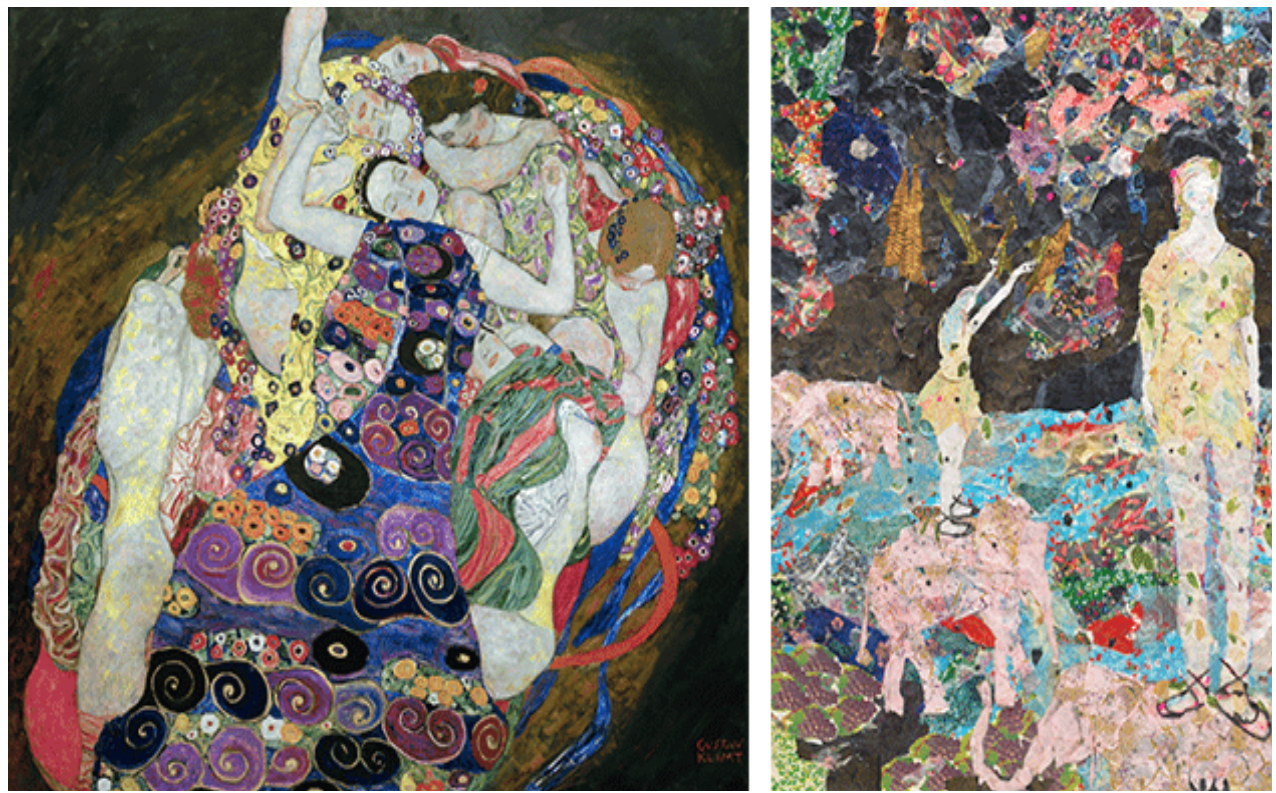
[LEFT] Gustav Klimt, Die Mädchen (The Girls), 1913, Narodni Galerie, Prague, Czech Republic. Image: akg-images
[RIGHT] Detail of the present work
As well as Klimt’s stunningly detailed and dream-like compositions, Berrío’s intricate, paper-based works also recall the individuated dots of pure color used to such powerful optical effect in Pointillism, the Neo-Impressionist movement spearheaded by Georges Seurat and Paul Signac in the late 1880s. Balanced lightly on the backs of the elephants here, the figures in The Riders II nod playfully to Seurat’s 1891 La Cirque, moving the action from the closely contained and artificial space of the ring to a more expansive, natural environment that recall the intense chromatic juxtapositions of Henri Cross’ Arcadian scenes. Visually recalling Cross’s own mosaic of brushstrokes, Berrío’s intricate paper patchworks have more recently taken this allusion a step further, her designs reimagined in the fourteen glass, ceramic, and enamel mosaic installations now permanently installed at Fort Hamilton Subway Station, Brooklyn. Layered with colorful patterns and folkloric imagery, in these mosaics Berrío wanted to focus on the idea of the journey itself as a space of infinite possibility, beauty, and magical potential.
Burrow of the Yellow, 2013
Phillips New-York: 18 May 2022
Estimated: USD 400,000 – 600,000
USD 998,000
https://www.phillips.com/detail/maria-berrio/NY010322/3
MARIA BERRIO
Burrow of the Yellow, 2013
Mixed media collage on canvas
60×72 inches (152.4 x 182.9 cm)
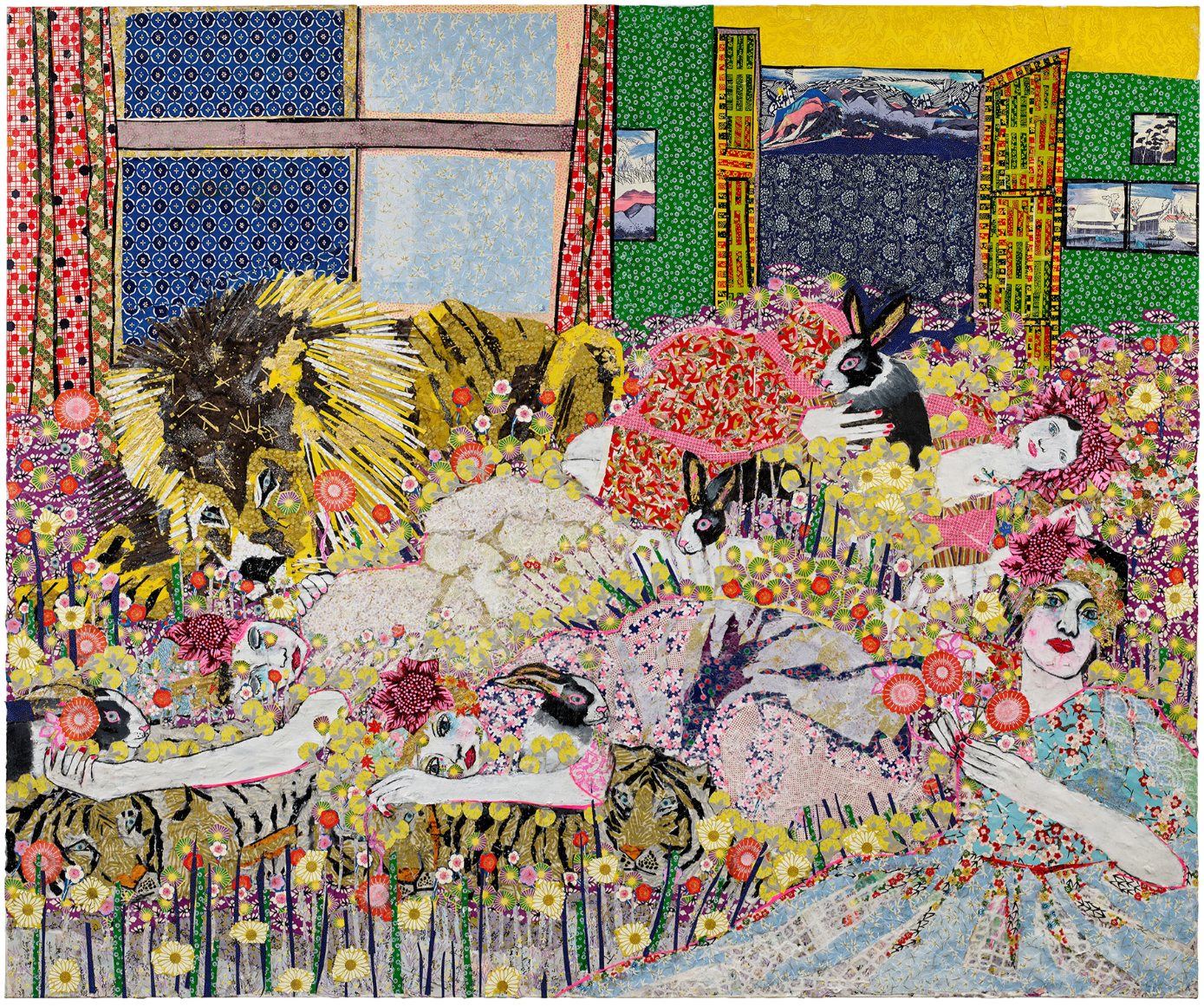
Fusing mythology and biography, Burrow of the Yellow, 2013, is a paragon of María Berrío’s fantastical large-scale collages that teem with chromatic exuberance. Set in a kaleidoscopic room, four women recline with big cats and rabbits in a field of flowers. Here, the figures amalgamate with the surrounding flora and fauna as much as the flowers meld into the patterned wallpaper that extends past the window into the outer world. Blurring interior and exterior, Burrow of the Yellow showcases Berrío’s practice of entwining material and conceptual layers that capture the “magical realism” of her acclaimed oeuvre.
“In my work, motherhood has produced a protective element…It’s such a deep connection, so when you’re doing something from your unconscious, it’s obviously going to come up.”
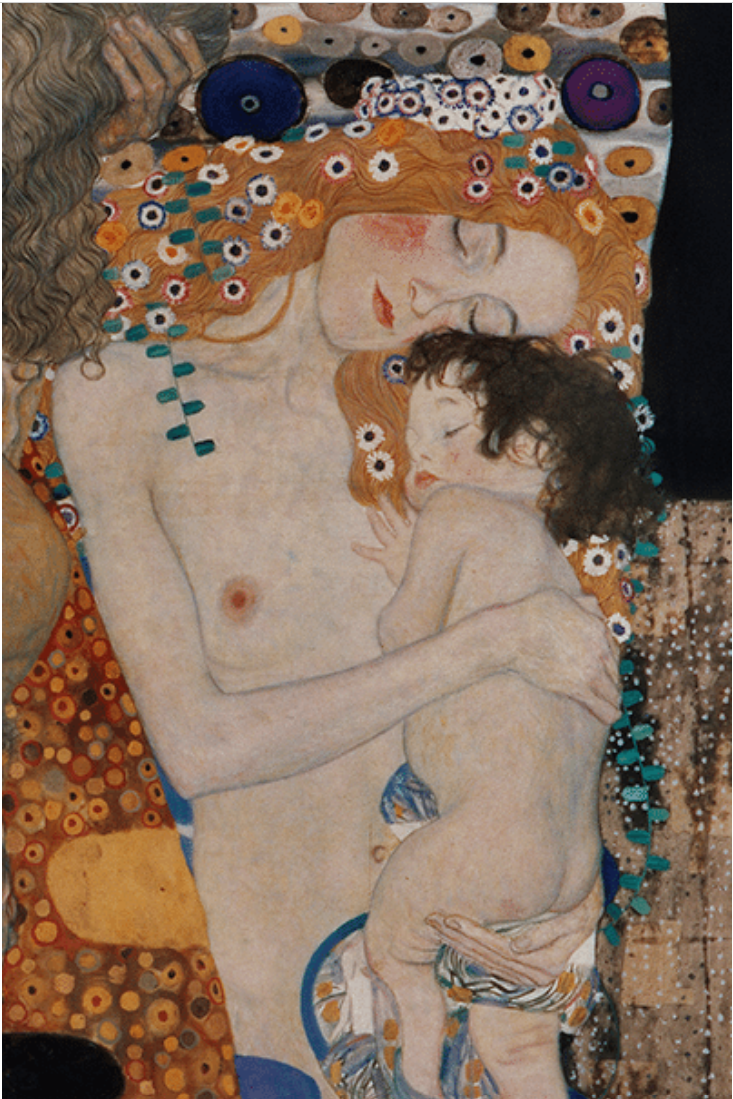
Gustav Klimt, The Three Ages of Woman (detail), 1905. Galleria Nazionale d’Arte Moderna, Rome. Image: Scala / Art Resource, NY
Based in New York, the Colombia-born artist is known for her ornate depictions of mythical utopias presenting women at one with nature, finding inspiration in South American folklore and her personal life. Based on a dream Berrío had as an expectant mother, Burrow of the Yellow is a highly autobiographical work that manifests how being a mother has influenced her work.
“When I was pregnant with my son, I had a dream where I gave birth to a rabbit, which my mother then put into a cage. Then, we all waited for it to turn into a human…it led to me making a painting of women laying on the floor surrounded by rabbits.”
The female figure cradling the rabbit and the tigers that lay with the women materialize her expression on the protective element of motherhood through her unique visual language, inviting us into the unconscious depths of her mind to “unveil the mysteries and beauty of our world, to explore and touch the unseen.” The floral abundance subsuming the women in Burrow of the Yellow signals to the theme of fecundity from Berrío’s dream while recalling the artist’s oft-cited connection with Gustav Klimt, whose flower-imbedded figures often symbolized the evolution of womanhood. Here, the artist epitomizes the evocation of her predecessor by adorning the canvas with gold leaf and oil paint. Berrío, however, refuses the sensual objectification of her figures through the ghostly pigmentation of their skin to suggest “an otherworldliness [so] they appear to be more spirit than flesh,” in her words. By outlining the body of the present figures in bright pink, Berrío further highlights this notion as if to suggest a halo around their bodies through divine femininity.
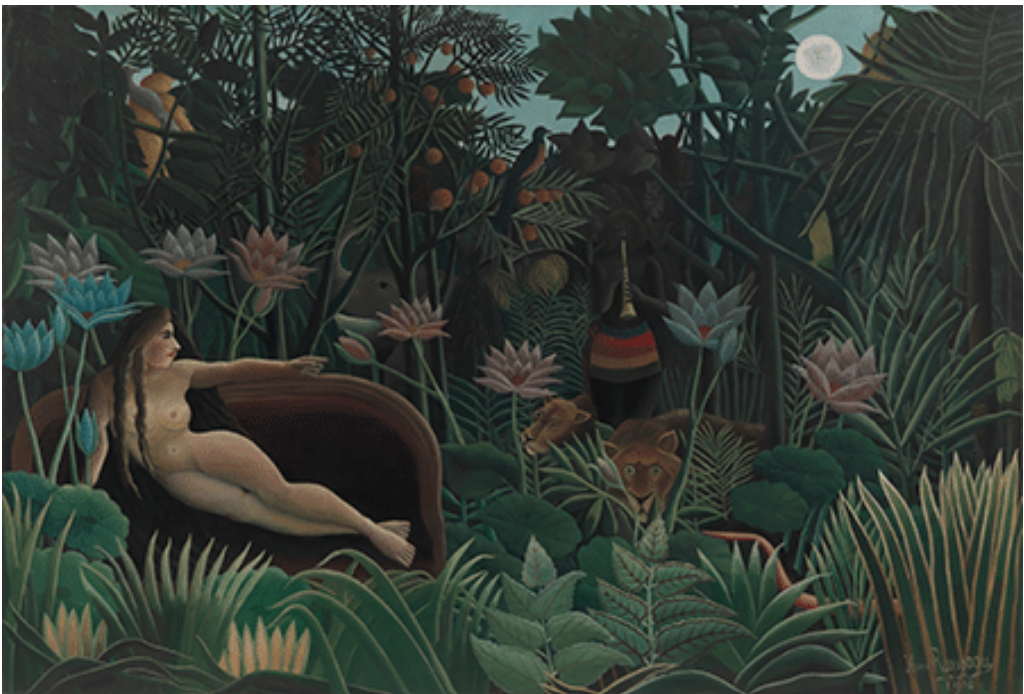
Henri Rousseau, The Dream, 1910. Museum of Modern Art, New York. Image: © The Museum of Modern Art/Licensed by SCALA / Art Resource, NY
The present work features tigers which look to the mythic tales and traditions of the Kogi tribe in Colombia—“people of the Tiger”— which further appear in her monumental 2017 canvas Aluna, Ford Foundation, New York, as well as her major 2019 mosaic project for the Fort Hamilton Parkway station in Brooklyn. From birds to monkeys, horses to tigers, animals play a key role in Berrío’s oeuvre, which in part look to her upbringing in Colombia where her imagination was stimulated by the natural life around her. Here, Berrío ultimately captures the influence of Hispanic surrealists on her work including Frida Kahlo, Leonora Carrington, and Remedios Varos, who also tapped into mythology and psychology. As Burrow of the Yellow demonstrates, Berrío’s signature collage technique of sourcing culturally diverse materials is deeply symbolic. Crafting the composition with myriad layers of Japanese papers which she paints over with washes of watercolor, Berrío establishes a striking dialogue with the very origin of her paper by directly incorporating the imagery of Japanese ukiyo-e artist Utagawa Hiroshige in the background—the landscape pictures on the walls and the distant mountains outdoors deriving from his famous series The Fifty-Three Stations of the Tōkaidō, 1833-1834. In the present work, Berrío thus materializes the heart of her artistic program. “My work,” as she explained, is “informed by every bit of material layered in it, and by every place the materials hail from. This process of fusing cultural production from a wide range of places is inherent to the form and, more importantly, to the meaning.”
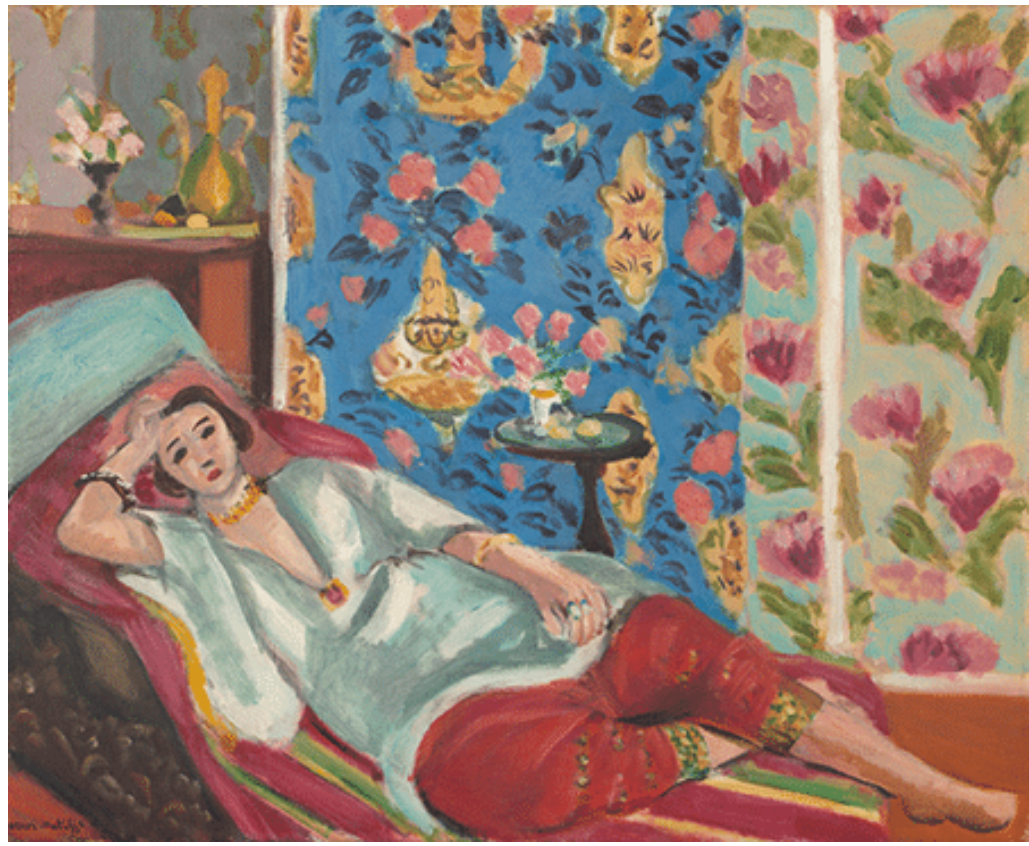 Henri Matisse, Odalisque in Red Culottes, 1921. Musée de l’Orangerie, Paris. Image: © Michel Urtado / Benoit Touchard / RMN-Grand Palais / Art Resource, NY, Artwork: © 2022 Succession H. Matisse / Artists Rights Society (ARS), New York
A notable nod to the work of Henri Matisse, Berrío’s technical process springs from her earlier practice of drawing patterns inspired by wallpaper and fabric samples. Through her mature practice of collage, Berrío brings the French master’s decorative interiors to life in Burrow of the Yellow, evoking his motifs of the open window and floral-patterned walls whilst employing actual paper with botanical designs. Here, one recalls Matisse’s Odalisque in Red Culottes, 1921, in the bottom right figure’s pose and the flowers that blend into décor. By placing this Eden-like scene in a room, Berrío invites the theme of nature indoors in both subject and technique, collapsing the space between the interior and exterior of minds and worlds that define her trailblazing practice.