
Born in 1987 and raised by artist parents, Singer grew up in lower Manhattan and was around art and museums from a young age. She went on to study sculpture at the esteemed Cooper Union, and later developed her interests in architectural computer modelling before settling on the medium of painting, making her a painter with sculptor’s eyes. Like Kasia Redzisz suggested, ‘her 3D models serve as sketches for 2D artworks and for still lifes that seem to be in constant motion. Singer assembles a hybrid of past, present and future, which she then translates into paintings, approached as sculptures staged for performances frozen in time.’ (K. Redzisz, ‘In Focus: Avery Singer’, Frieze, Issue 164, May 2014).

“I want to make work that explores something that I haven’t seen in painting before. I guess it’s really a question of being generational – making art that belongs to your generation in some way.”
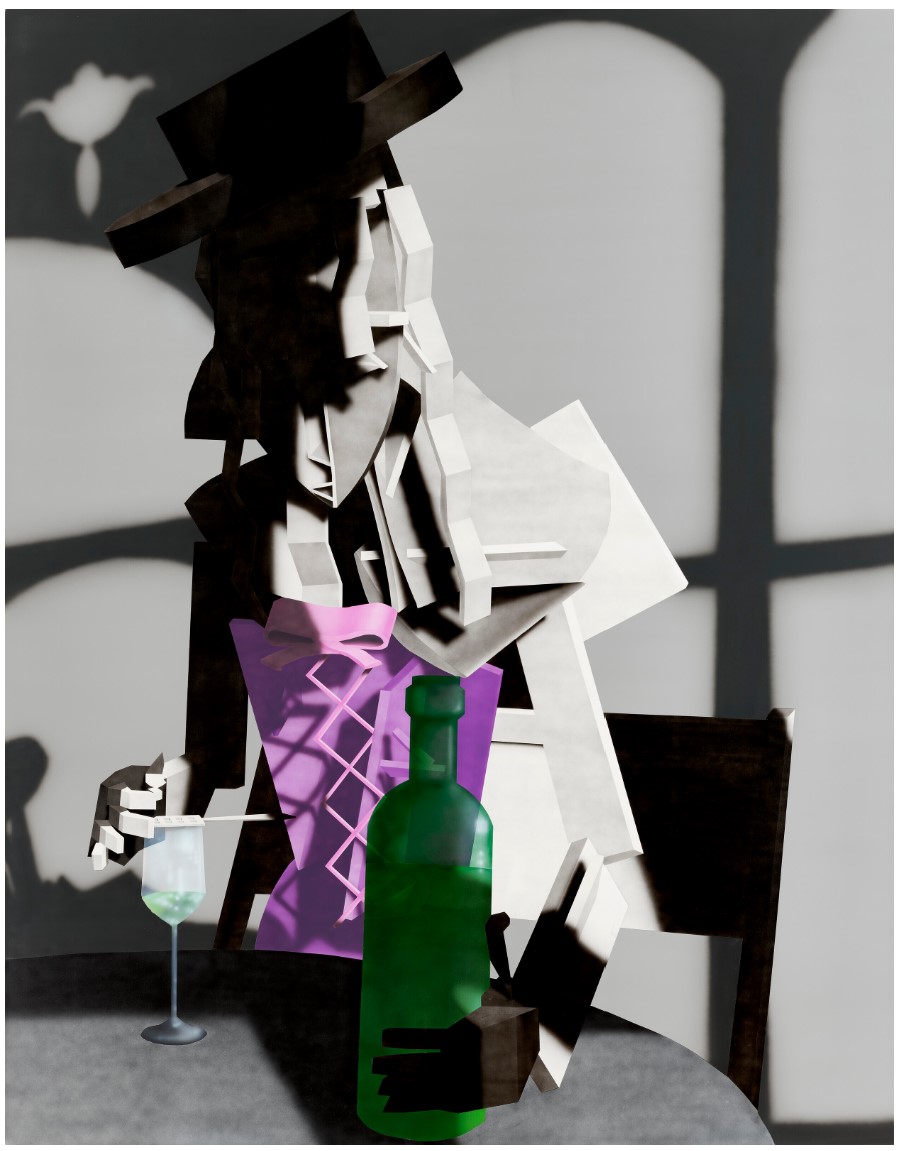
Often depicting figures operating within the romanticized rituals that surround the production of art, Singer’s practice both mines and pokes fun at the sanctioned structures of art history. Invoking the geometric forms of Constructivism, Futurism, and Cubism, Singer’s paintings extend the painterly language of abstraction to self-referential compositions of robot-like figures that mock the artist as a social being. As curator Beatriz Ruf notes, “The insignias of ‘fine arts’ collide with avant-garde tropes, and parodic autobiographical motifs constantly allude to cliches of the art world. Adopting a humorous tone, Avery Singer demonstrates rituals and social patterns and presents stereotypes of the artist, collector, and writer. In this context, she adopts the historical loci of artistic production…where the myth of the artist and cult of genius are fostered. How are artists made?” (Beatriz Ruf cited in: Exh. Cat., Kunsthalle Zürich (and travelling), Avery Singer: Pictures and Punish Words, 2015, p. 5)
New-York based painter Avery Singer is the new sensation that has captivated the American contemporary art scene. As the youngest artist represented by Hauser & Wirth, Singer’s recent New York solo exhibition with the gallery unveils her newest series — Reality Ender that blurs the boundary between reality and perception. Executed in ground-breaking and bold technical mastery, her paintings are conflation of diametrically opposing concepts that portrays historical narratives with a contemporary attitude.
Using SketchUp, a 3D modelling software, Singer virtually concocts composition for the underdrawing and projects them onto the canvas, to which she completes the work with intricate layers of airbrushed paint. Her unique artistic process transposes the 3D scene onto a 2D space, leaving behind an enthralling sight that skilfully marries analogue techniques with digital technology that traverses between realms of fiction and reality. Stripped from the artist’s touch, the flat graphic-like paintwork challenges viewer’s attachment to the materiality of painting. Singer’s subversive approach challenges the artist’s relationship to the canvas and prompts the audience to reevaluate their experience with the medium.
Practical Information
Avery Singer
American (Born 1987)
Category: Ultra-Contemporary
Public Collections
Avery Singer’s paintings currently reside in the public collections of the Museum Ludwig, Stedelijk Museum, MoMA, The Whitney Museum and the Hammer Museum.
Museum Exhibitions
At just 35 years old, Singer has been the subject of significant international attention, with solo exhibitions at the Hammer Museum in Los Angeles, Vienna’s Secession and the Museum Ludwig in Cologne.
HAMMER MUSEUM
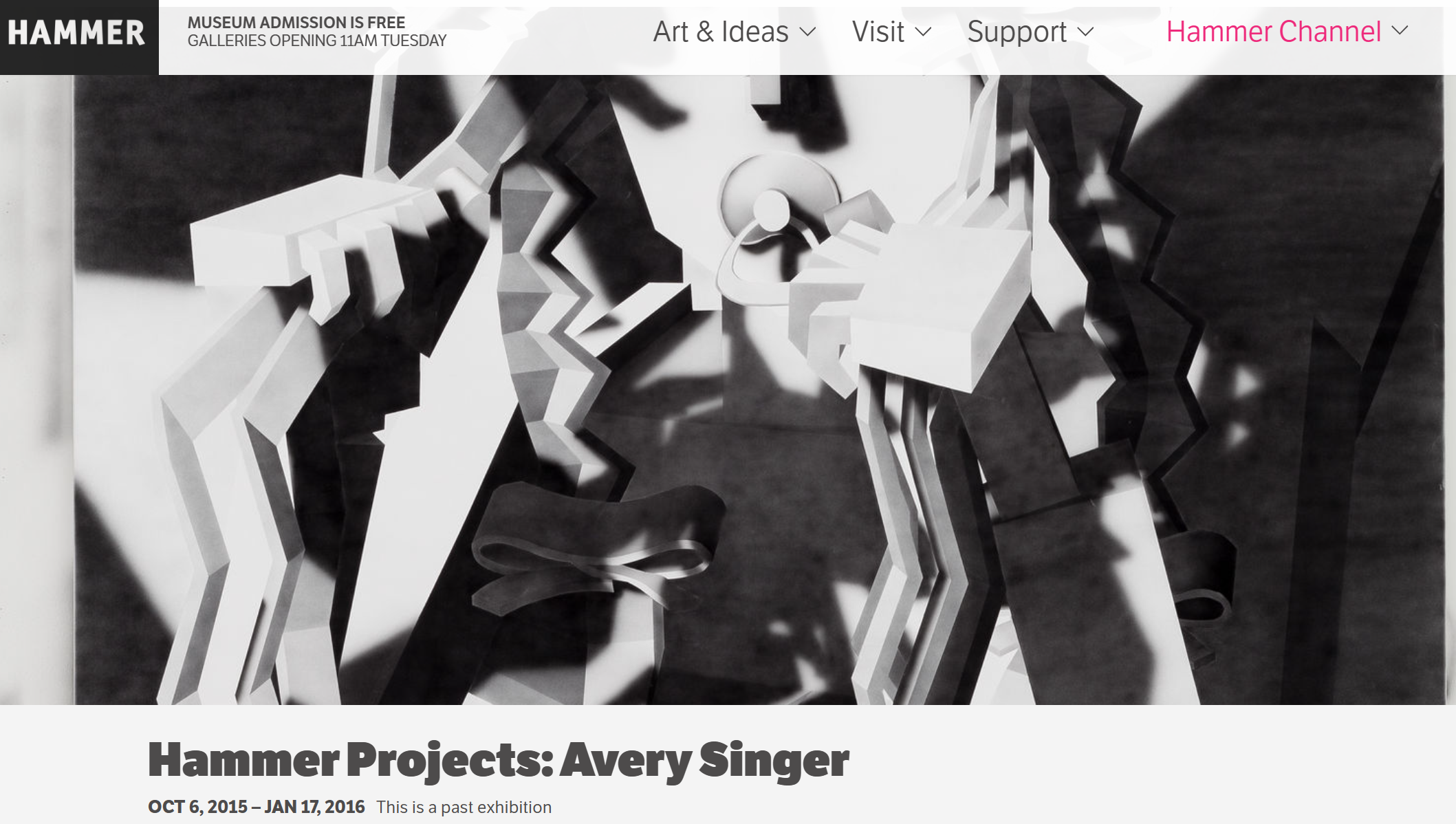
Hammer Projects: Avery Singer | Hammer Museum (ucla.edu)
Gallery Representation
After joining Hauser & Wirth at the end of 2019, in September 2021 the artist opened her first major show ‘Reality Ender’ at the gallery’s New York location.
HAUSER & WIRTH
Avery Singer – Hauser & Wirth (hauserwirth.com)
PART I: SUMMARY
Market Overview
2024 AUCTION STATISTICS
Turnover: USD 4,335,535
# Lots sold: 5
Sell-Through Rate: 56%
5 lots sold at auction in 2024 for a total turnover of USD 4,335,535.
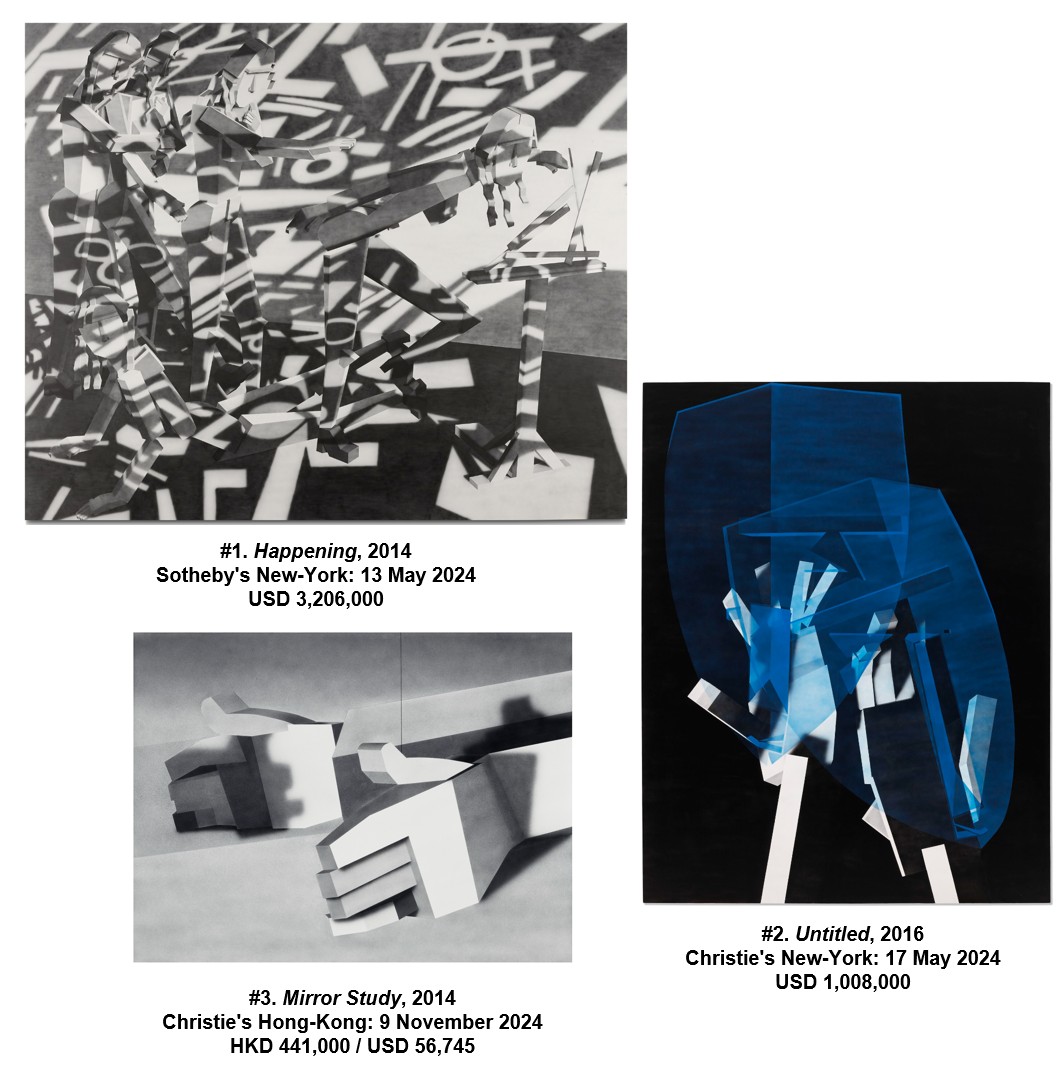
With 4 lots failing to sell (of which 3 works on paper), the sell-through rate is 56%. The highest price for 2024 was achieved at Sotheby’s in New-York on 13 May 2024, when Happening, a painting dated 2014, sold for USD 3,206,000. 2 lots sold for more than USD 1 million, generating a cumulative turnover of USD 4,214,000, representing 97.2% of the total turnover for 2024.
2024 Top 3 Lots
4 lots sold at auction in 2023 for a total turnover of USD 6,008,746.
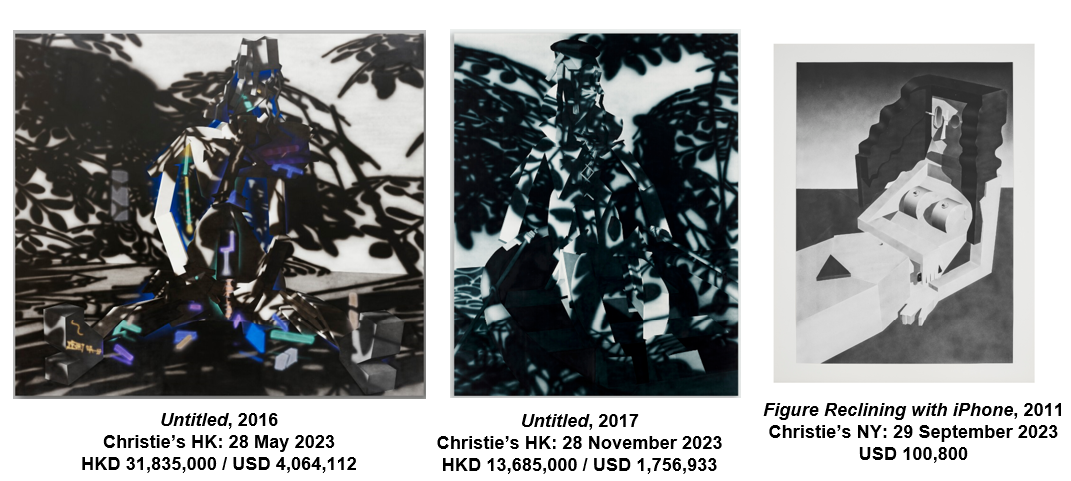
With 3 lots failing to sell, the sell-through rate is 57%. The highest price has been achieved at Christie’s in Hong-Kong on 28 May 2023, when Untitled, dated 2016 sold for HKD 31,835,000 (USD 4,064,112). 2 lots sold for more than USD 1 million.
2023 Top 3 Lots
11 lots sold at auction in 2022 for a total turnover of USD 16,101,489.
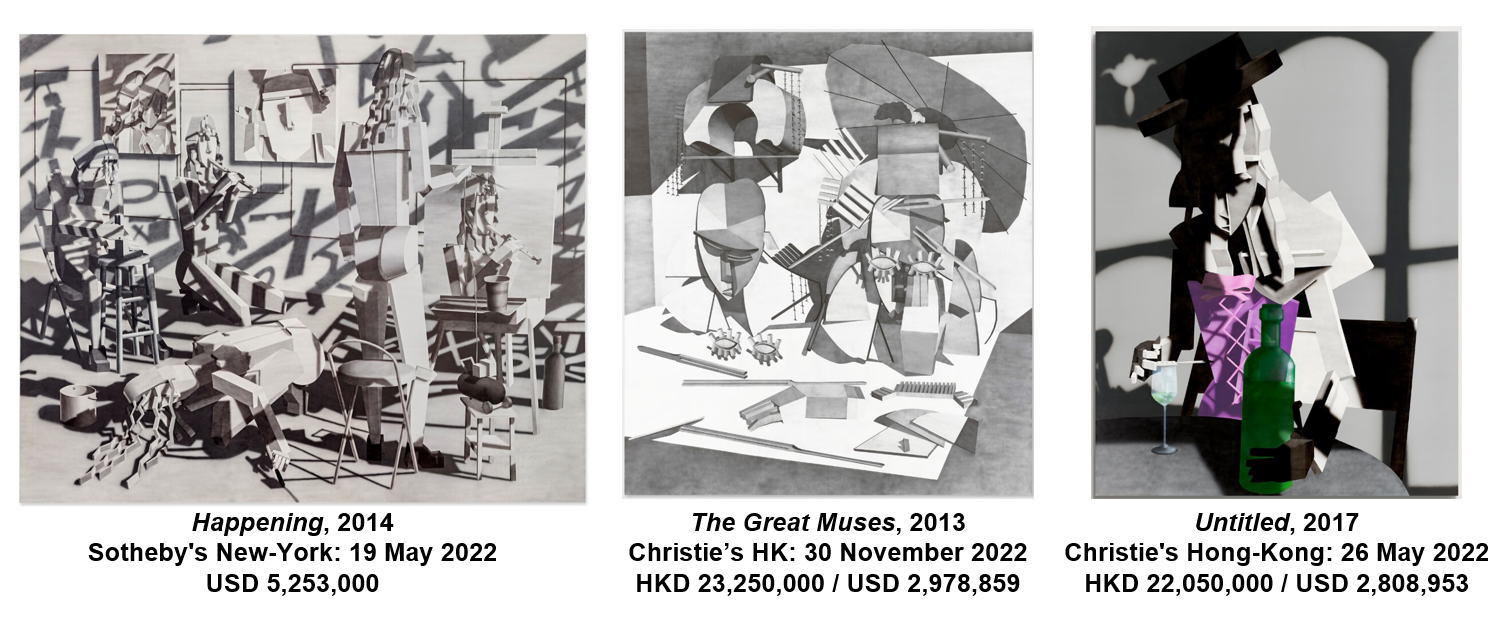
With 2 lots failing to sell, the sell-through rate is 85%. The highest price was achieved at Sotheby’s in New-York, on 19 May 2022, when Happening, dated 2014, sold for USD 5,253,000, the new auction record for the artist. 5 lots sold for more than USD 1 million, generating a cumulative turnover of USD 14,871,812, representing 92.4% of the total turnover for 2022.
2022 Top 3 Lots
Top Lots
#1. Happening, 2014
Sotheby’s New-York: 19 May 2022
Estimated: USD 2,500,000 – 3,500,000
USD 5,253,000
Happening | The Now Evening Auction | 2022 | Sotheby’s (sothebys.com)
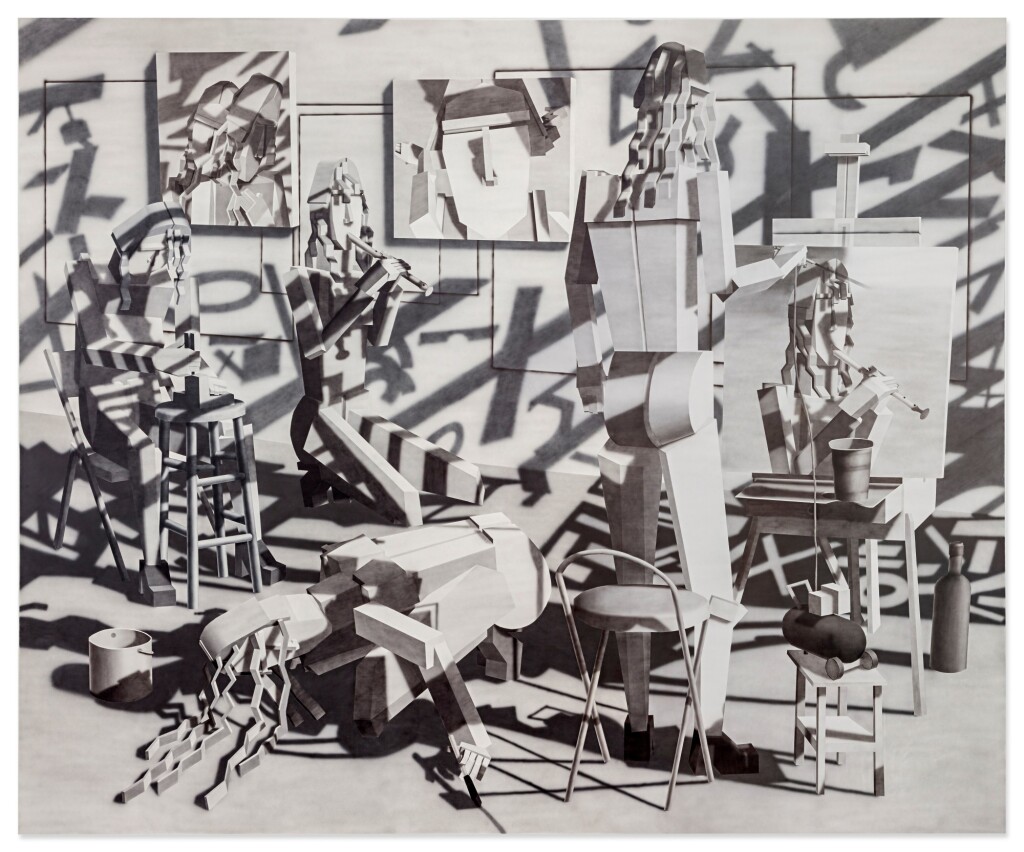
AVERY SINGER (B. 1987)
Happening, 2014
Acrylic on canvas
100×120 inches (254 x 304.8 cm)
Signed Avery Singer and dated 2014 (on the stretcher)
#2. Untitled (Tuesday), 2017
Christie’s Hong-Kong: 1 December 2021
Estimated: HKD 16,000,000 – 26,000,000
HKD 35,050,000 / USD 4,497,250
AVERY SINGER (B. 1987) (christies.com)
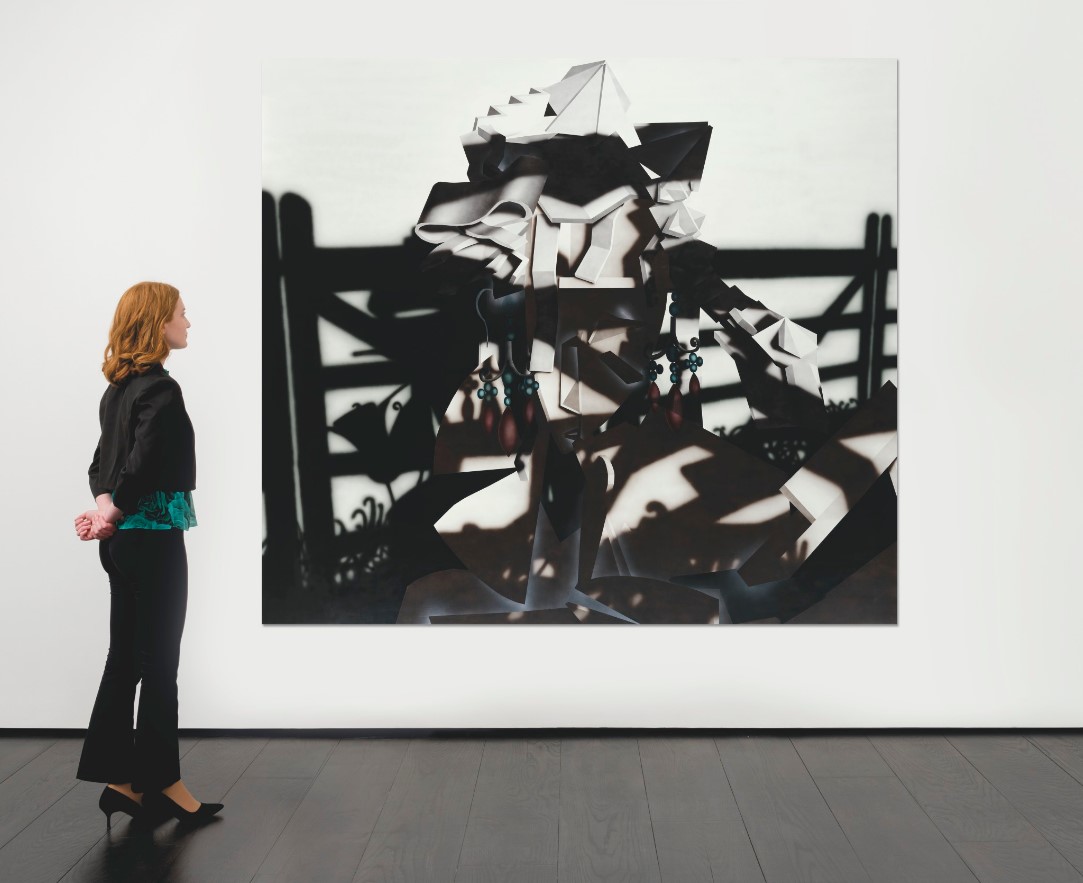
AVERY SINGER (B. 1987)
Untitled (Tuesday), 2017
Acrylic on canvas laid on wood panel
85 x 95 1/4 inches (215.9 x 241.9 cm)
Signed and dated ‘AVERY SINGER 2017’ (on the overlap)
#3. Untitled, 2018
Phillips New-York: 23 June 2021
Estimated: USD 1,200,000 – 1,800,000
USD 4,144,000
Avery Singer – 20th Century & Contempora… Lot 4 June 2021 | Phillips
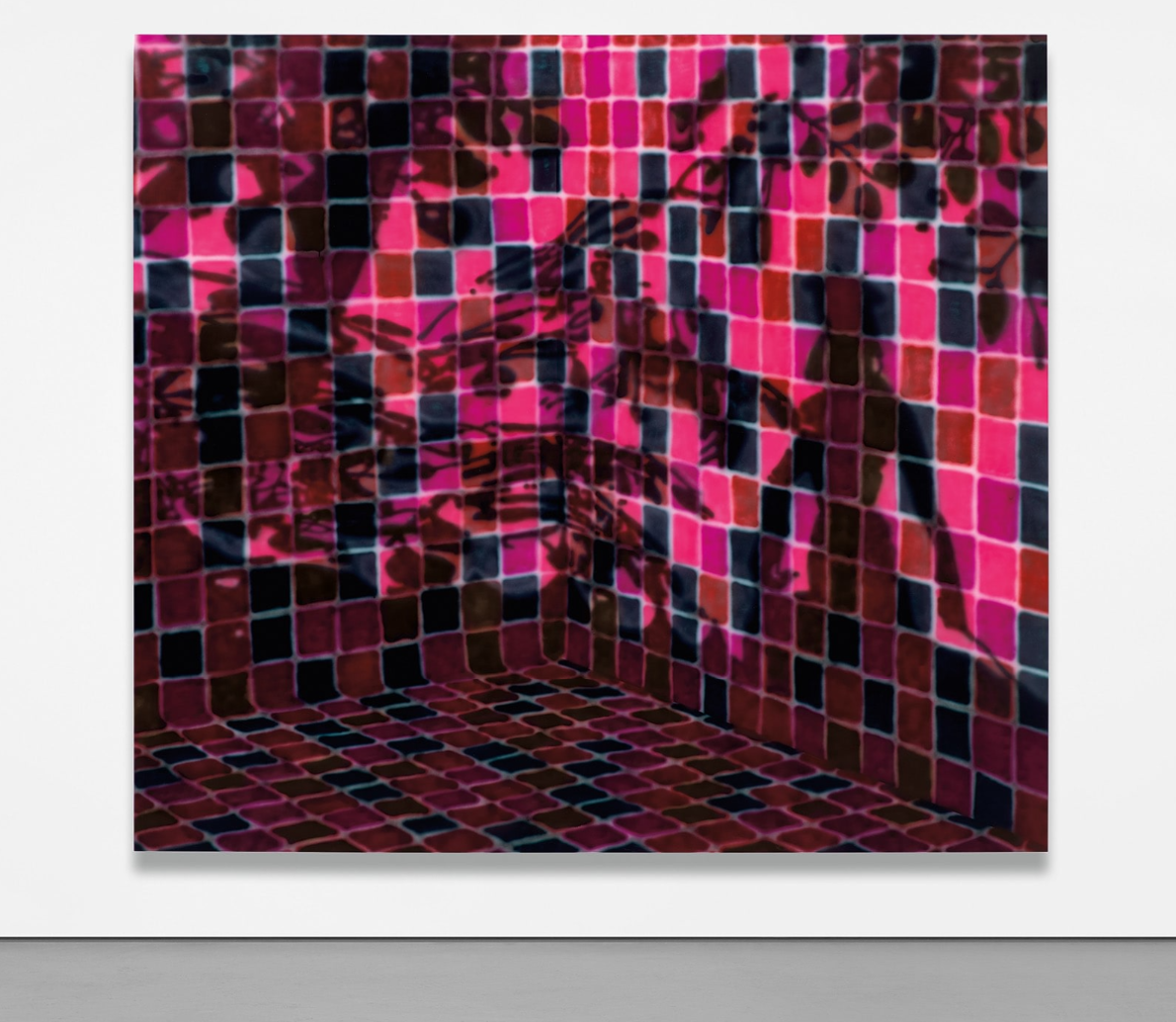
AVERY SINGER
Untitled, 2018
Acrylic on canvas stretched over wood panel
85 1/8 x 95 inches (216.2 x 241.3 cm)
Signed and dated “Avery Singer 2018” on the overlap
#4. Untitled, 2016
Christie’s Hong-Kong: 28 May 2023
Estimated: HKD 15,000,000 – 20,000,000
HKD 31,835,000 / USD 4,064,112
AVERY SINGER (B. 1987) (christies.com)
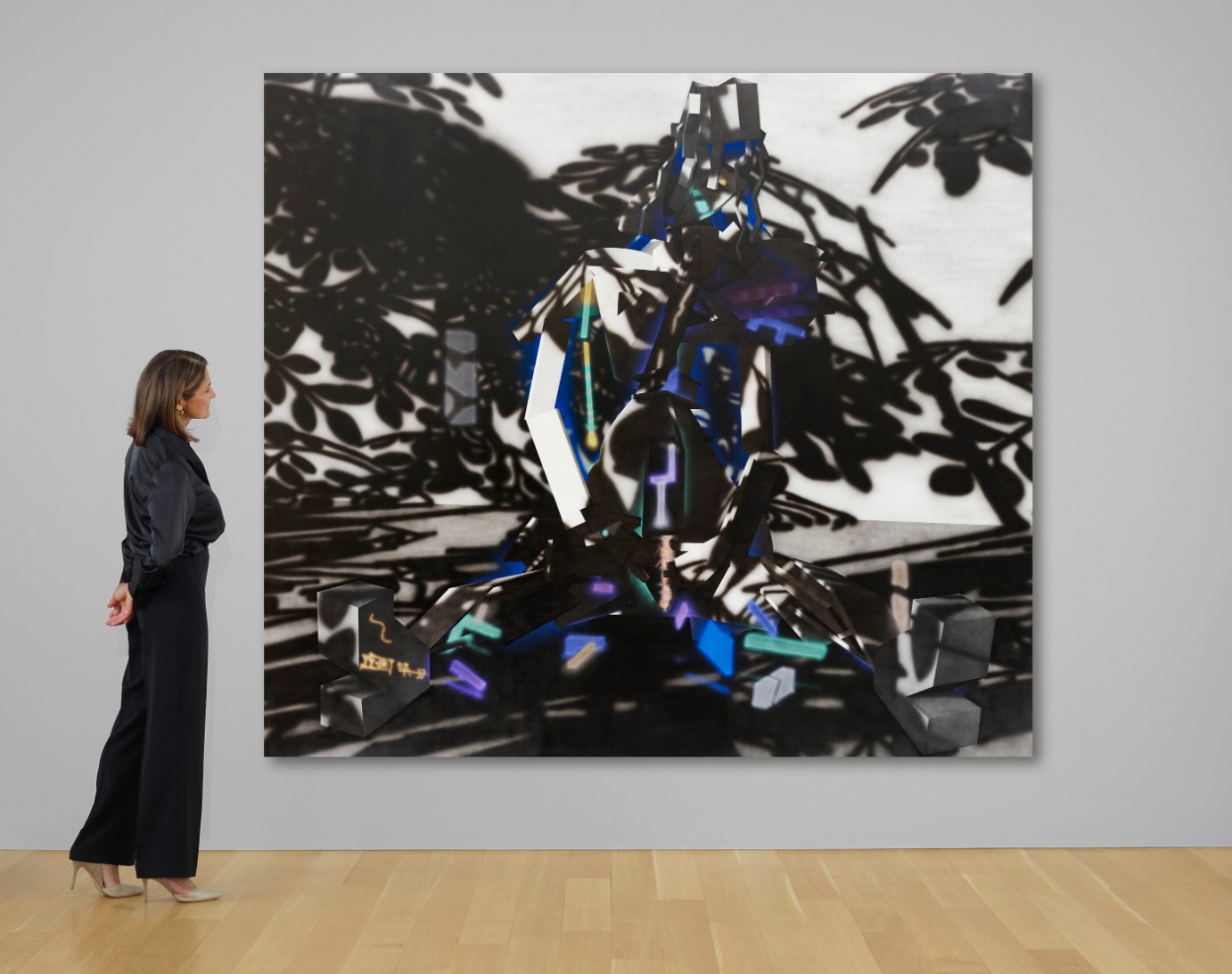
AVERY SINGER (B. 1987)
Untitled, 2016
Acrylic on canvas
80×90 inches (203.2 x 228.6 cm)
#5. European Ego Ideal, 2014
Phillips New-York: 17 November 2021
Estimated: USD 1,500,000 – 2,500,000
USD 4,023,000
Avery Singer – 20th Century & Conte… Lot 21 November 2021 | Phillips
AVERY FISHER
European Ego Ideal, 2014
Acrylic on canvas
100×120 inches (254 x 304.8 cm)
PART II: AUCTION RESULTS
2025 Auction Results
PRELIMINARY AUCTION RESULTS
As of 21 November 2025
4 lots sold at auction so far in 2025 for a total turnover of USD 1,186,290.
With 1 lot failing to sell, the sell-through rate is 80%. 2 lots have been withdrawn from auction so far: Kundry, a painting dated 2018, from Sotheby’s in New-York, on 15 May 2025, and Larry Poons, a painting dated 2016, from Sotheby’s in Hong-Kong, on 29 March 2025. The highest price so far has been achieved by The Great Muses, a painting dated 2013, that sold at Christie’s in New-York on 20 November 2025, for USD 1,047,750.
#1. The Great Muses, 2013
Christie’s New-York: 20 November 2025
Estimated: USD 600,000 – 800,000
USD 1,047,750
AVERY SINGER (B. 1987), The Great Muses | Christie’s
AVERY SINGER (B. 1987)
The Great Muses, 2013
Acrylic on canvas
86 5/8 x 77 1/8 inches (220×196 cm)
Signed and dated ‘Avery Singer 2013’ (on the stretcher)
USD 1 million
#2. Untitled, 2018
Sotheby’s New-York: 28 February 2025
Estimated: USD 100,000 – 150,000
USD 101,600
Untitled | Contemporary Discoveries | 2025 | Sotheby’s
AVERY SINGER (b. 1987)
Untitled, 2018
Acrylic on canvas stretched over wood panel
40×45 inches (101.6 x 114.3 cm)
Signed and dated 2018 (on the overlap)
#3. Untitled, 2016
Property from an Important Private Asian Collection
Sotheby’s Hong-Kong: 29 September 2025
Estimated: HKD 250,000 – 350,000
HKD 190,500 / USD 24,485
WORK ON PAPER
Avery Singer 艾芙瑞 · 辛格 | Untitled 無題 | Modern & Contemporary Day Auction | 2025 | Sotheby’s
AVERY SINGER (b. 1987)
Untitled, 2016
Acrylic on paper
19×24 inches (48.2 x 61 cm)
Signed and dated 2016 (on the reverse)
#4. Untitled (Study), 2016
Sotheby’s London: 17 October 2025
Estimated: 10,000 – 15,000
GBP 9,525 / USD 12,805
Untitled (Study) | Contemporary Day Auction | 2025 | Sotheby’s
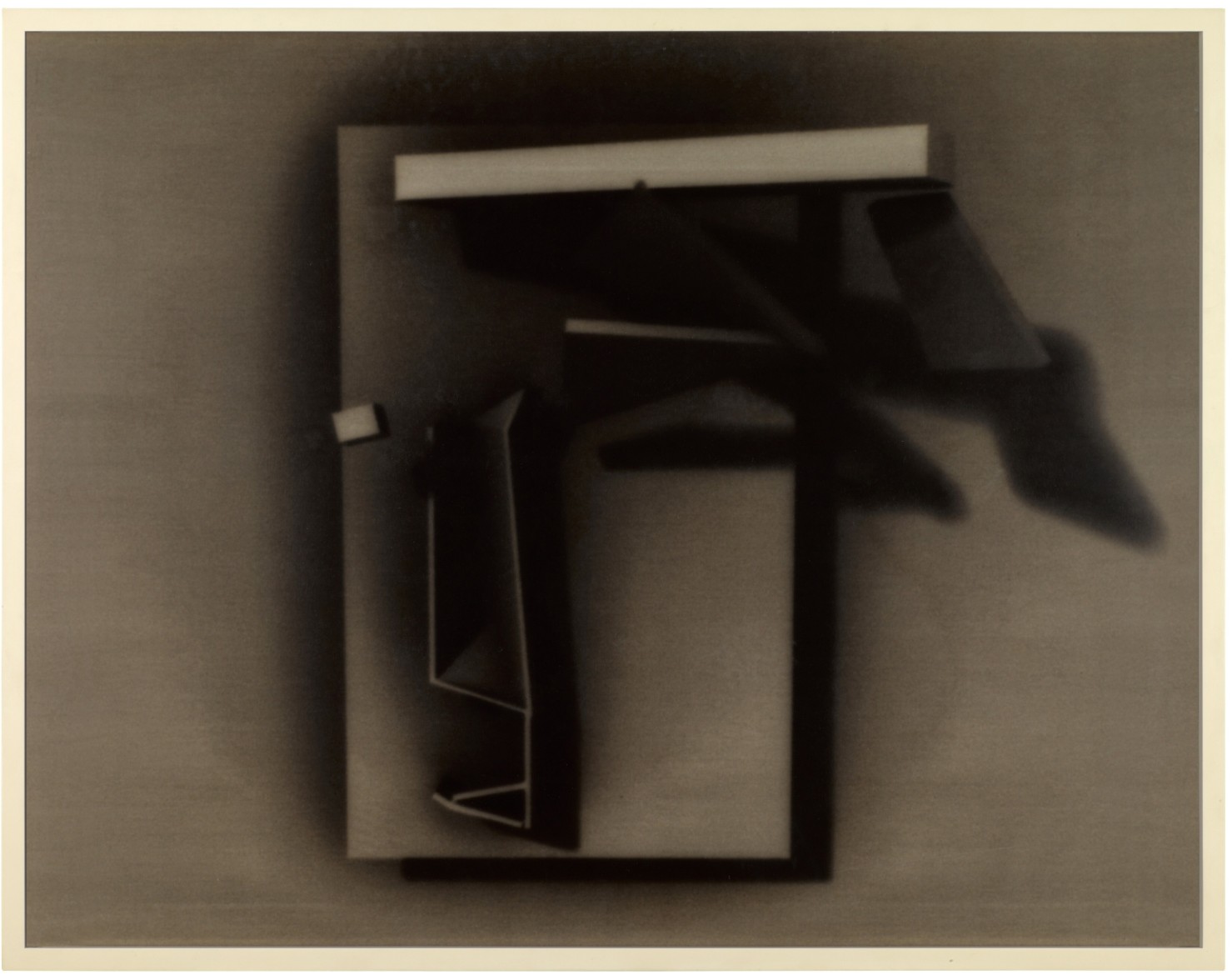
AVERY SINGER (b. 1987)
Untitled (Study), 2016
Acrylic on gessoed board
30 x 38 5/8 inches (76.2 x 98.5 cm)
Signed and dated 2016 (on the reverse)
Lots Passed
Untitled, 2017
Phillips New-York: 14 May 2025
Estimated: USD 300,000 – 500,000
PASSED
Avery Singer Modern & Contemporary Art Day Sale, Afternoon Session
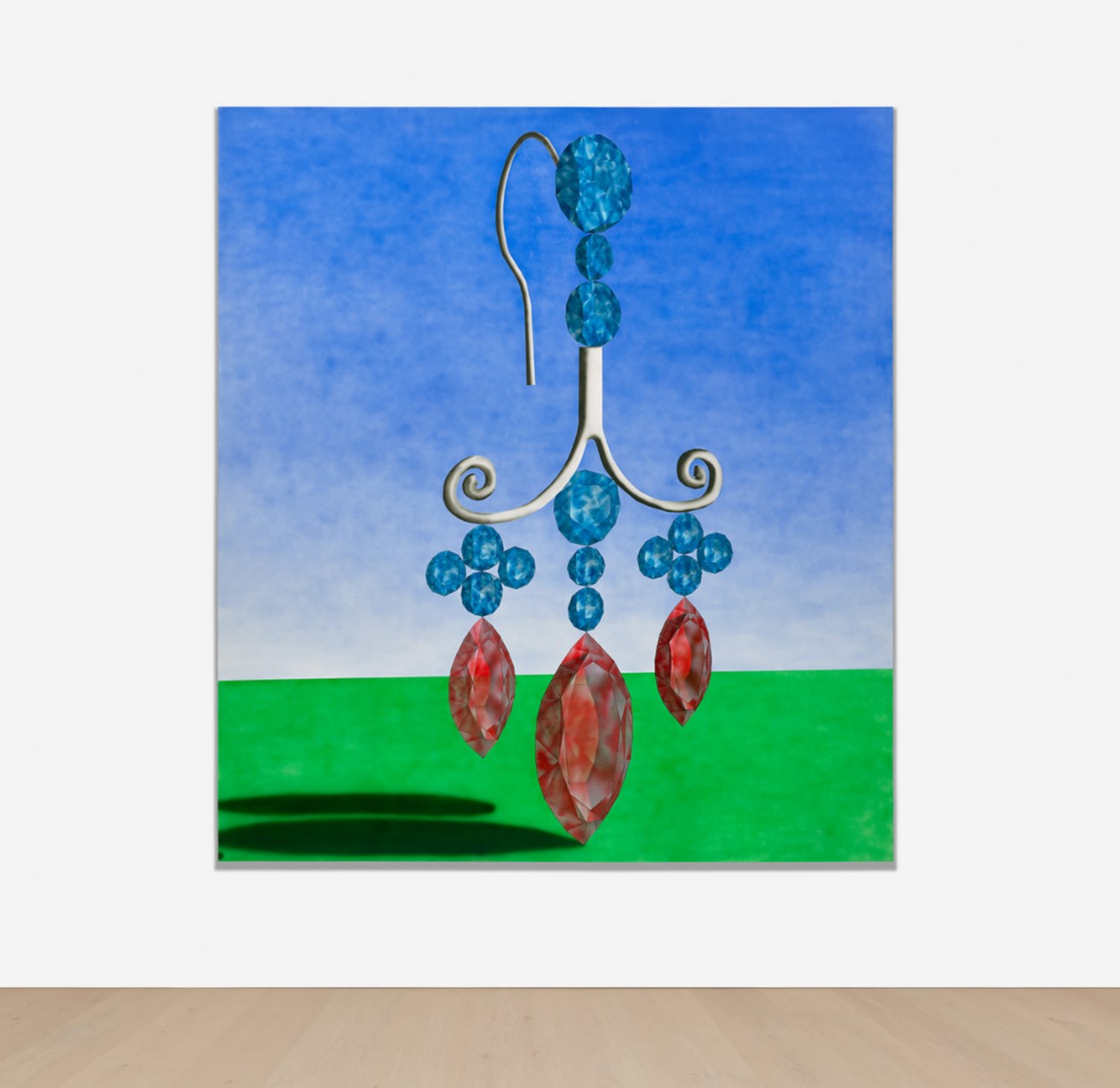
AVERY SINGER
Untitled, 2017
Acrylic on canvas over panel
95 1/4 x 85 inches (241.9 x 215.9 cm)
Signed and dated “Avery Singer 2017” on the overlap
2024 Auction Results
5 lots sold at auction in 2024 for a total turnover of USD 4,335,535.
With 4 lots failing to sell (of which 3 works on paper), the sell-through rate is 56%. The highest price for 2024 was achieved at Sotheby’s in New-York on 13 May 2024, when Happening, a painting dated 2014, sold for USD 3,206,000. 2 lots sold for more than USD 1 million, generating a cumulative turnover of USD 4,214,000, representing 97.2% of the total turnover for 2024.
2024 Top 3 Lots
#1. Happening, 2014
Sotheby’s New-York: 13 May 2024
Estimated: USD 2,500,000 – 3,500,000
USD 3,206,000
Happening | The Now Evening Auction | 2024 | Sotheby’s (sothebys.com)

AVERY SINGER (b. 1987)
Happening, 2014
Acrylic on canvas
100×120 inches (254 x 304.8 cm)
Signed and incorrectly dated 2013 (on the stretcher)
#2. Untitled, 2016
Estimated: USD 800,000 – 1,200,000
USD 1,008,000

Untitled, 2016
Acrylic on canvas mounted on panel
77 7/8 x 61 1/4 inches (198 x 155.6 cm)
Signed and dated ‘Avery Singer 2016’ (on the overlap)
USD 1 million
#3. Mirror Study, 2014
Estimated: HKD 300,000 – 500,000
HKD 441,000 / USD 56,745
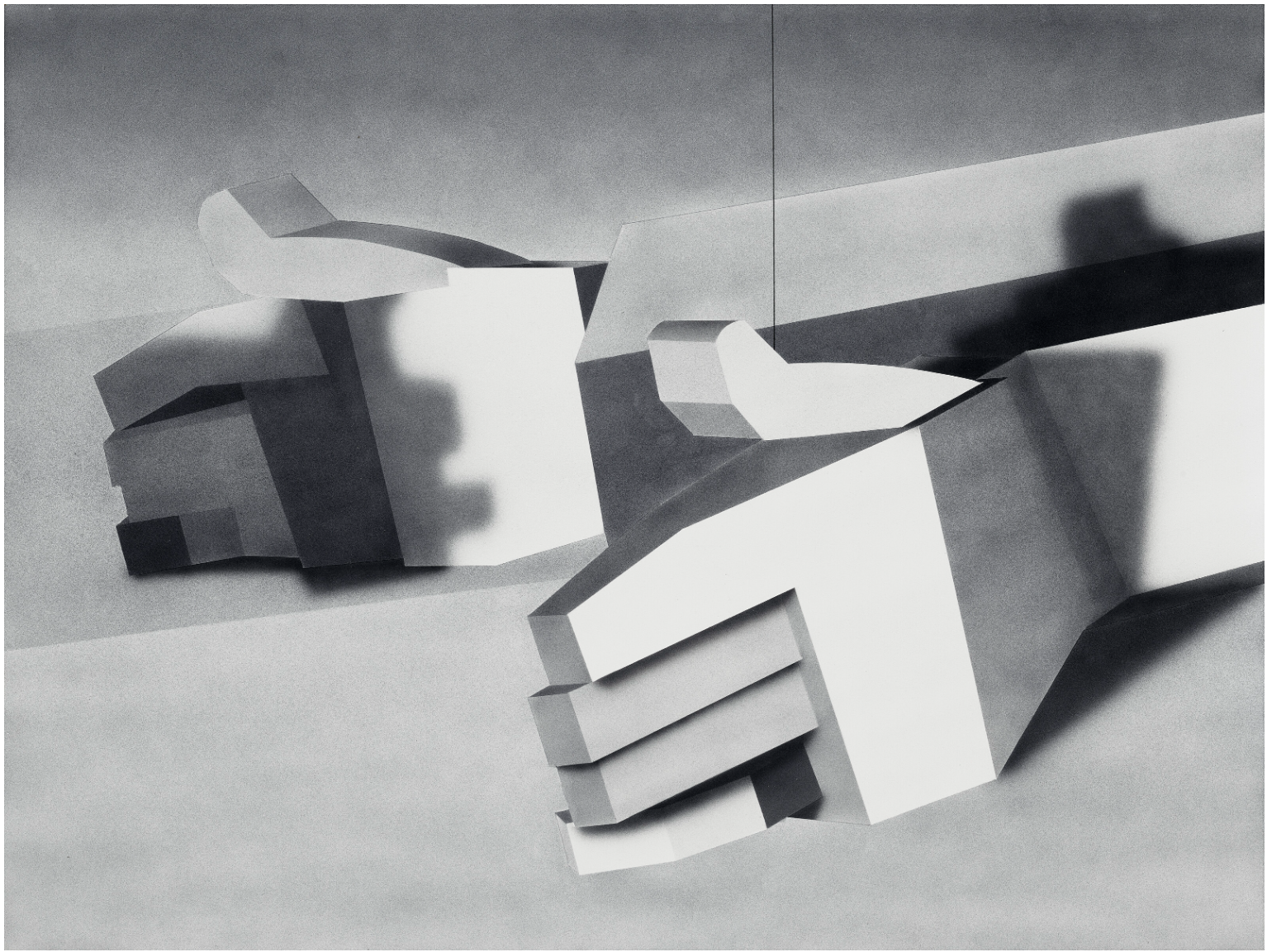
Mirror Study, 2014
Acrylic on wooden panel
18×24 inches (46×61 cm)
Signed and dated ‘AVERY SIGNER 2014’ (on the stretcher)
#4. Untitled, 2016
Estimated: USD 30,000 – 50,000
USD 40,640
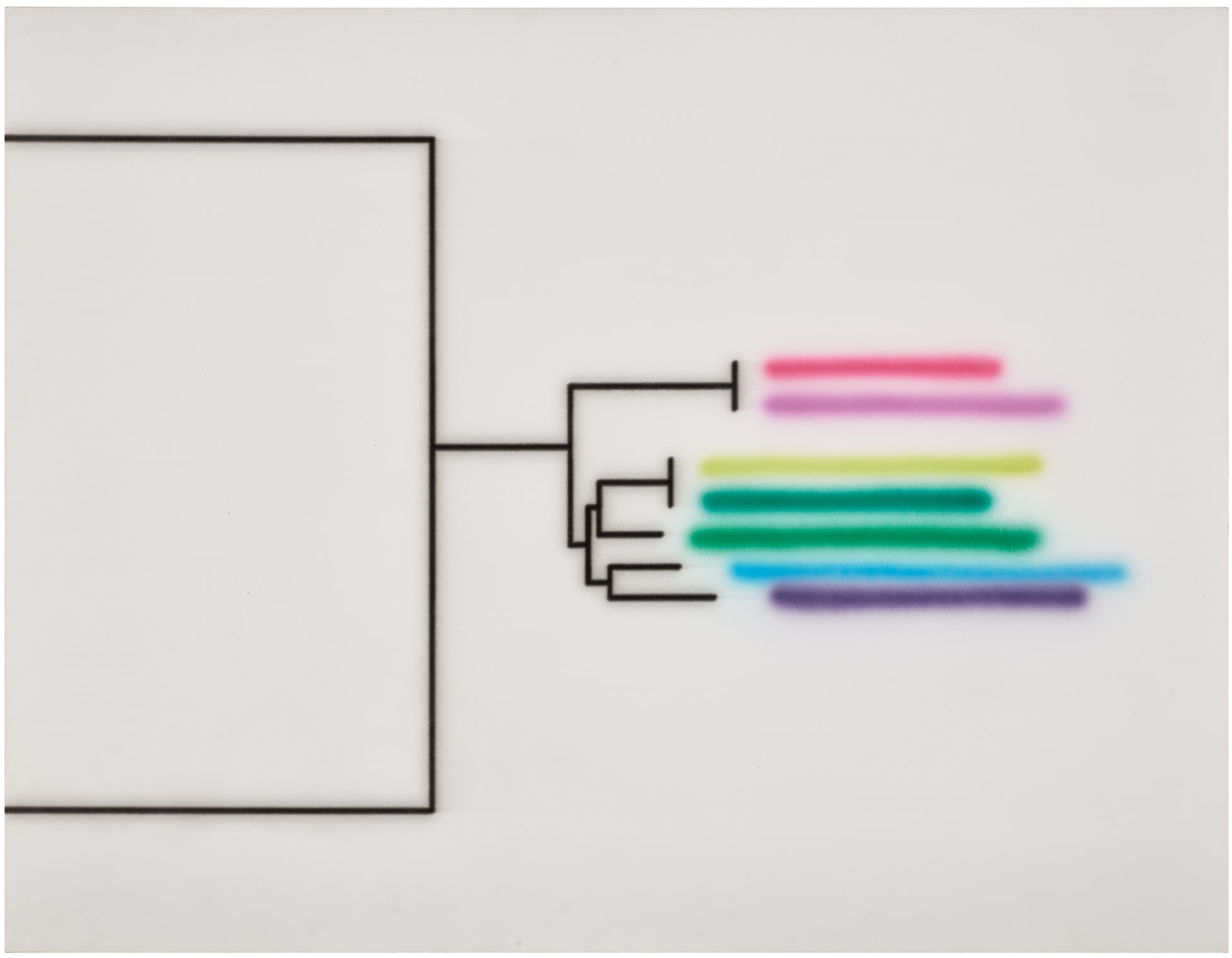
AVERY SINGER
Untitled, 2016
Acrylic on Masonite
30 x 38 3/4 inches (76.2 x 98.4 cm)
Signed and dated “AVERY SINGER 2016” on the reverse
#5. Untitled, 2016
Christie’s Hong-Kong: 2 April 2024
Estimated: HKD 180,000 – 280,000
HKD 189,000 / USD 24,150
WORK ON PAPER
AVERY SINGER (B. 1987), Untitled | Christie’s
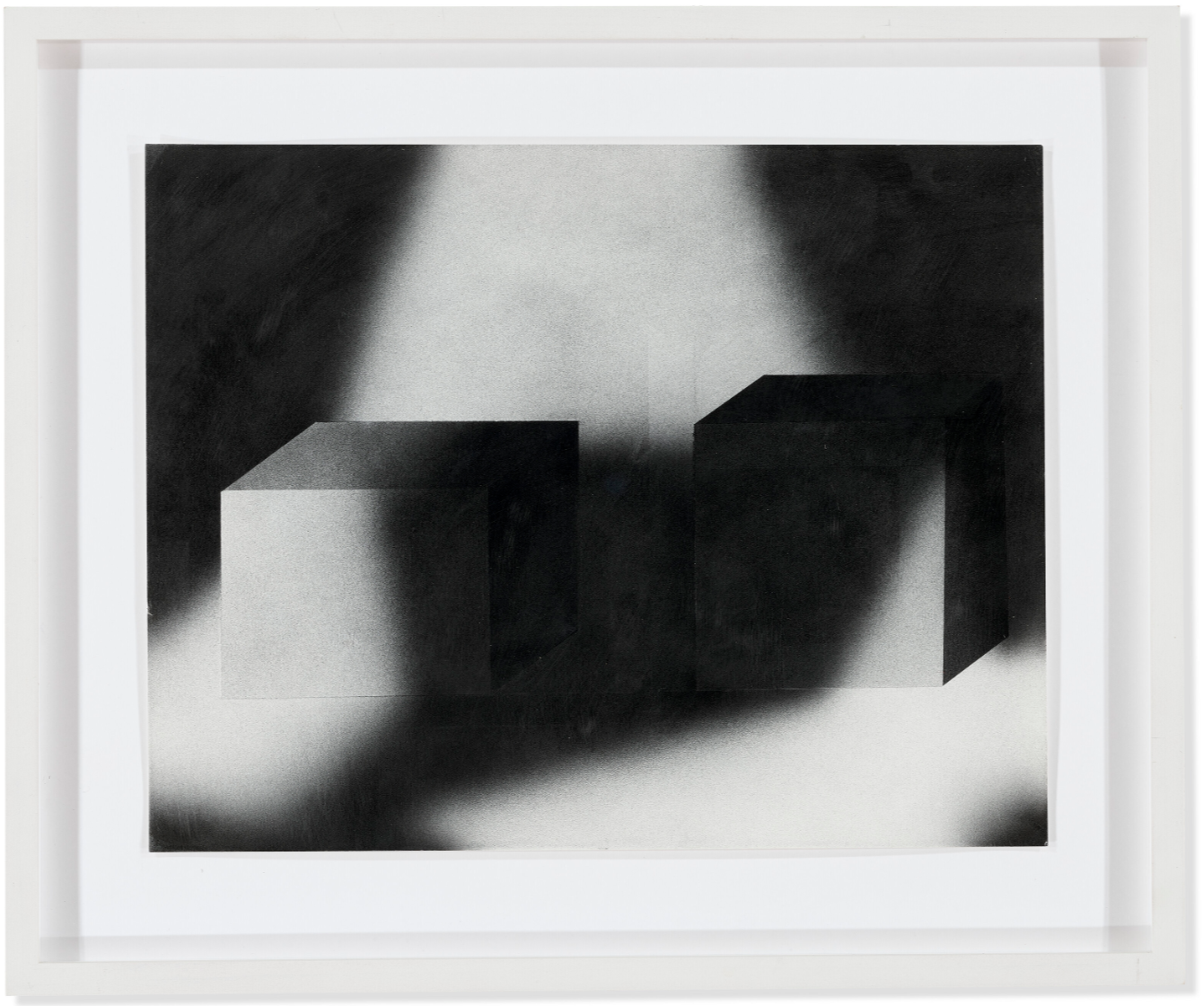
AVERY SINGER (B. 1987)
Untitled, 2016
Acrylic on smooth plate paper
10 3/4 x 23 3/4 inches (27.1 x 35 cm)
2023 Auction Results
4 lots sold at auction in 2023 for a total turnover of USD 6,008,746.
With 3 lots failing to sell, the sell-through rate is 57%. The highest price has been achieved at Christie’s in Hong-Kong on 28 May 2023, when Untitled, dated 2016 sold for HKD 31,835,000 (USD 4,064,112). 2 lots sold for more than USD 1 million.
2023 Top 3 Lots
2023 Auction Results
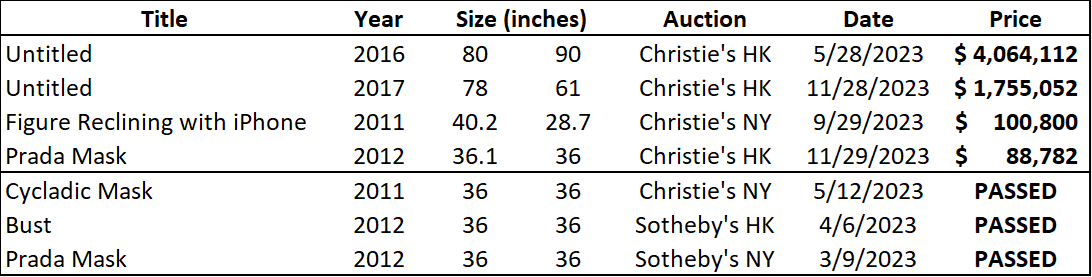
#1. Untitled, 2016
Christie’s Hong-Kong: 28 May 2023
Estimated: HKD 15,000,000 – 20,000,000
HKD 31,835,000 / USD 4,064,112
AVERY SINGER (B. 1987) (christies.com)
AVERY SINGER (B. 1987)
Untitled, 2016
Acrylic on canvas
80×90 inches (203.2 x 228.6 cm)
#2. Untitled, 2017
Christie’s Hong-Kong: 28 November 2023
Estimated: HKD 11,000,000 – 18,000,000
HKD 13,685,000 / USD 1,756,933
AVERY SINGER (B. 1987) (christies.com)
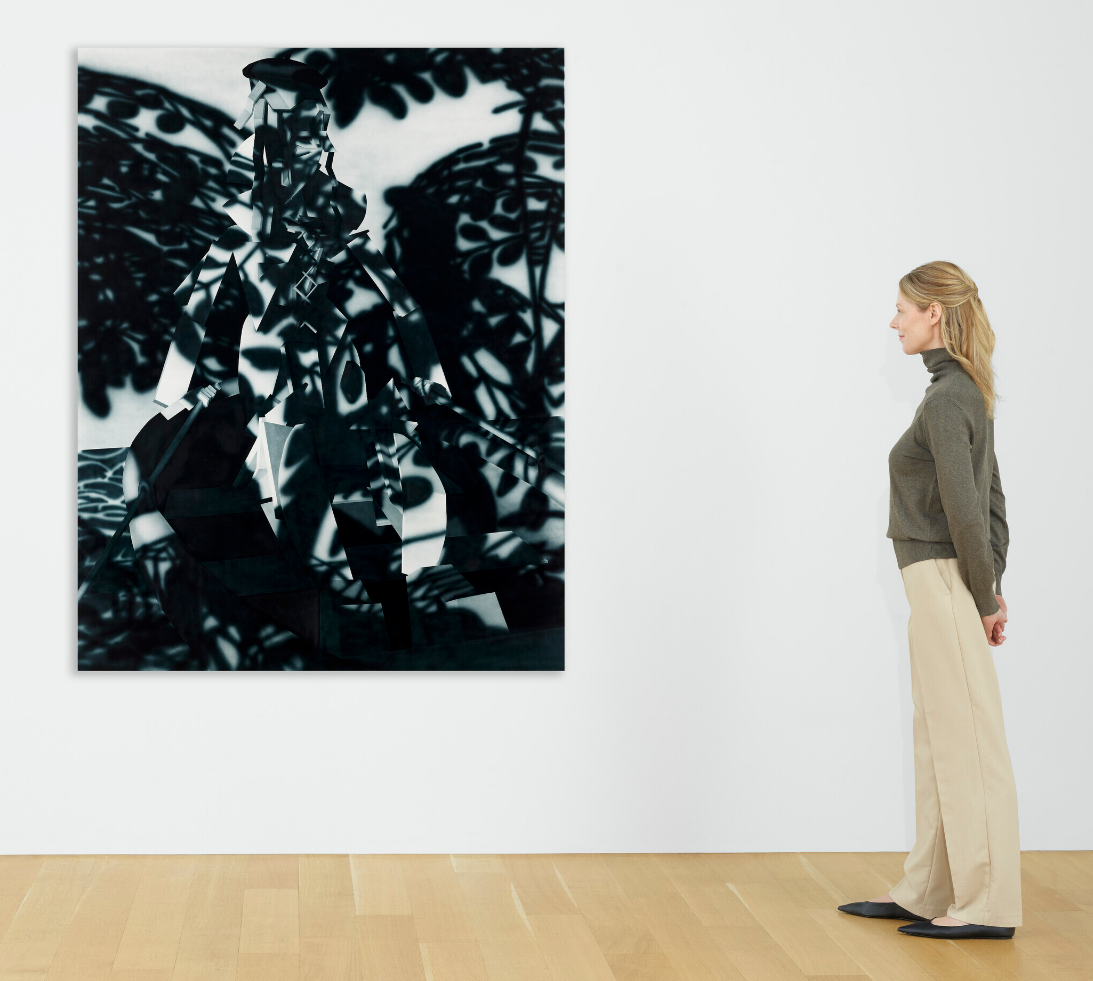
AVERY SINGER (B. 1987)
Untitled, 2017
Acrylic on canvas
78×61 inches (198.1 x 154.9 cm)
Signed and dated ‘AVERY SINGER 2017’ (on the side)
#3. Figure Reclining with iPhone, 2011
Christie’s New-York: 29 September 2023
Estimated: USD 100,000 – 150,000
USD 100,800
AVERY SINGER (B. 1987), Figure Reclining with iPhone | Christie’s (christies.com)
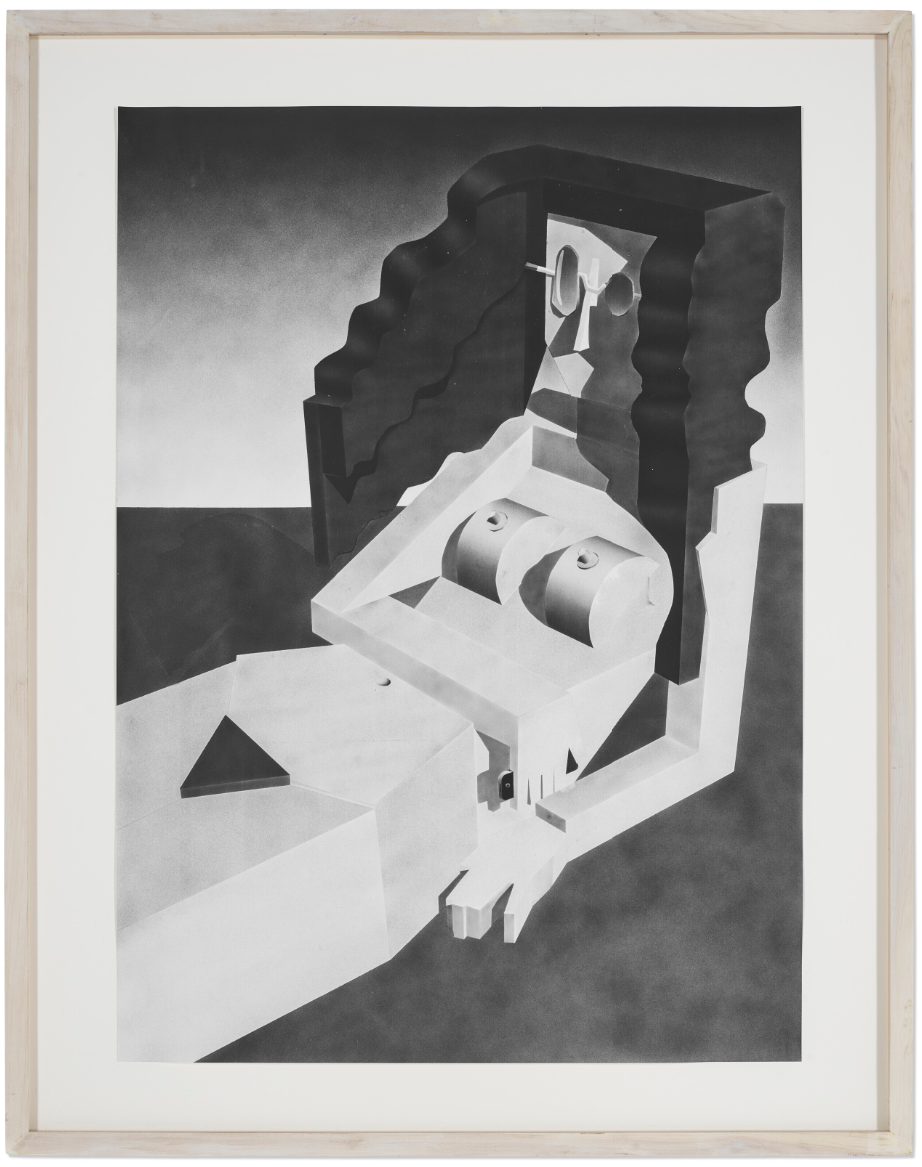
AVERY SINGER (B. 1987)
Figure Reclining with iPhone, 2011
Acrylic on paper
40 1/8 x 28 3/4 inches (102×73 cm)
#4. Prada Mask, 2012
Christie’s Hong-Kong: 29 November 2023
Estimated: HKD 250,000 – 350,000
HKD 693,000 / USD 88,970
AVERY SINGER (B. 1987) (christies.com)
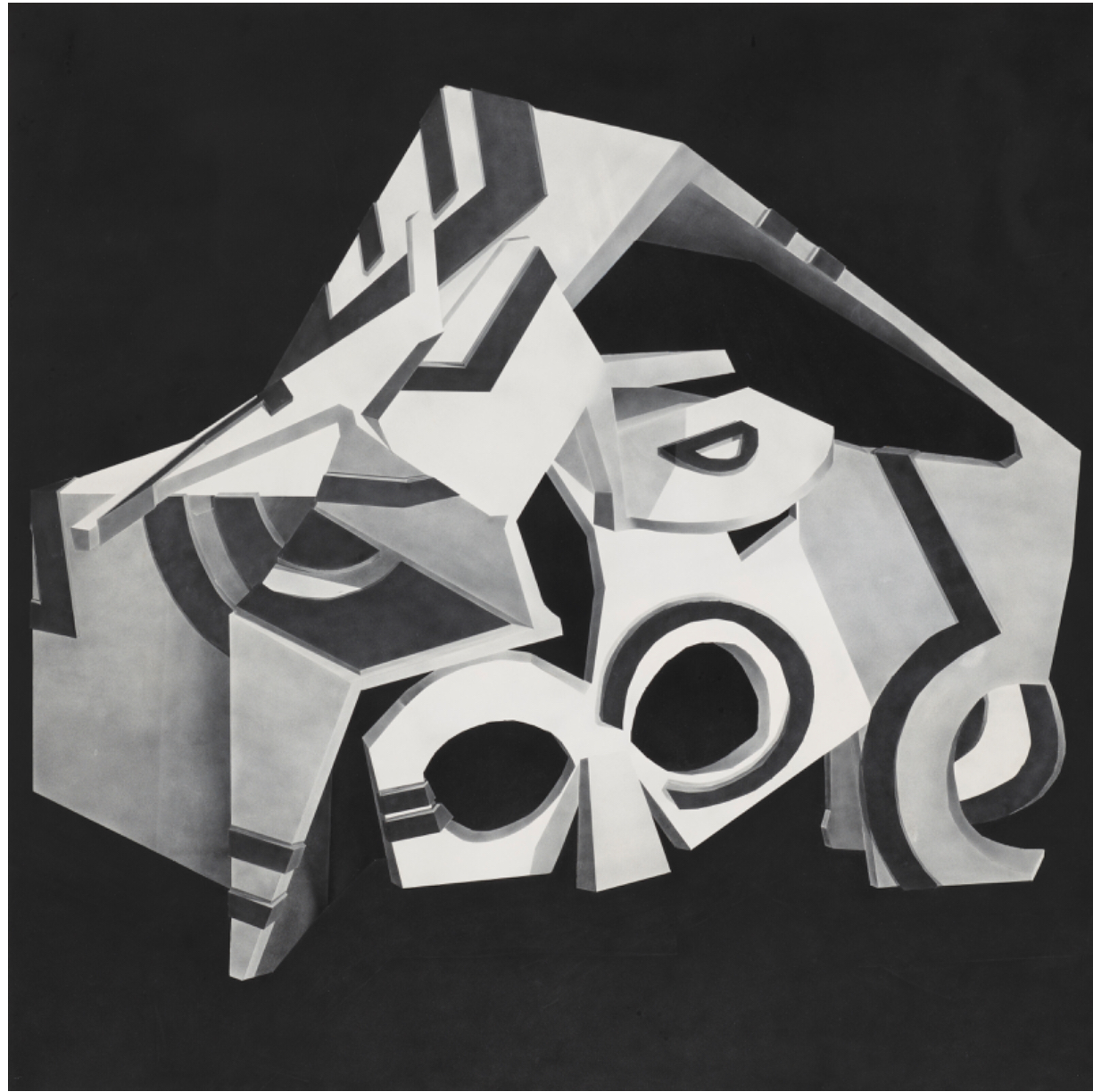
AVERY SINGER (B. 1987)
Prada Mask, 2012
Acrylic on canvas stretched over wood panel
36 1/8 x 36 1/8 inches (91.7 x 91.6 cm)
Signed and dated ‘AVERY SINGER 2012’ (on the stretcher)
2022 Auction Results
11 lots sold at auction in 2022 for a total turnover of USD 16,101,489.
With 2 lots failing to sell, the sell-through rate is 85%. The highest price was achieved at Sotheby’s in New-York, on 19 May 2022, when Happening, dated 2014, sold for USD 5,253,000, the new auction record for the artist. 5 lots sold for more than USD 1 million, generating a cumulative turnover of USD 14,871,812, representing 92.4% of the total turnover for 2022.
2022 Top 3 Lots
#1. Happening, 2014
Sotheby’s New-York: 19 May 2022
Estimated: USD 2,500,000 – 3,500,000
USD 5,253,000
Happening | The Now Evening Auction | 2022 | Sotheby’s (sothebys.com)
AVERY SINGER (B. 1987)
Happening, 2014
Acrylic on canvas
100×120 inches (254 x 304.8 cm)
Signed Avery Singer and dated 2014 (on the stretcher)
#2. The Great Muses, 2013
Christie’s Hong-Kong: 30 November 2022
Estimated: HKD 20,000,000 – 30,000,000
HKD 23,250,000 / USD 2,978,859
AVERY SINGER (B. 1987) (christies.com)
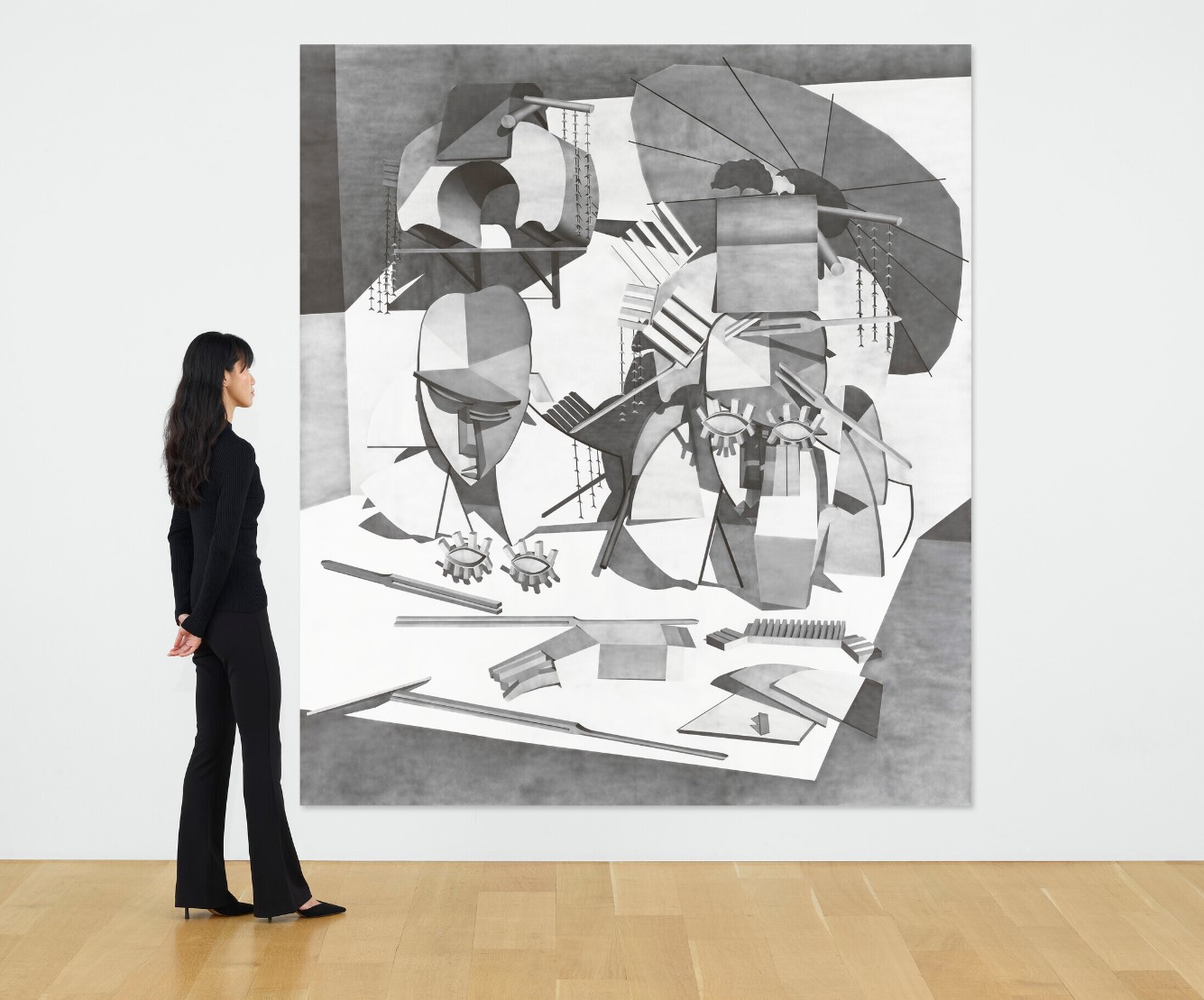
AVERY SINGER (B. 1987)
The Great Muses, 2013
Acrylic on canvas
220×196 cm (86 5/8 x 77 1/8 inches)
Signed and titled ‘Avery Singer 2013’ (on the stretcher)
#3. Untitled, 2017
Christie’s Hong-Kong: 26 May 2022
Estimated: HKD 10,000,000 – 15,000,000
HKD 22,050,000
AVERY SINGER (B. 1987) (christies.com)
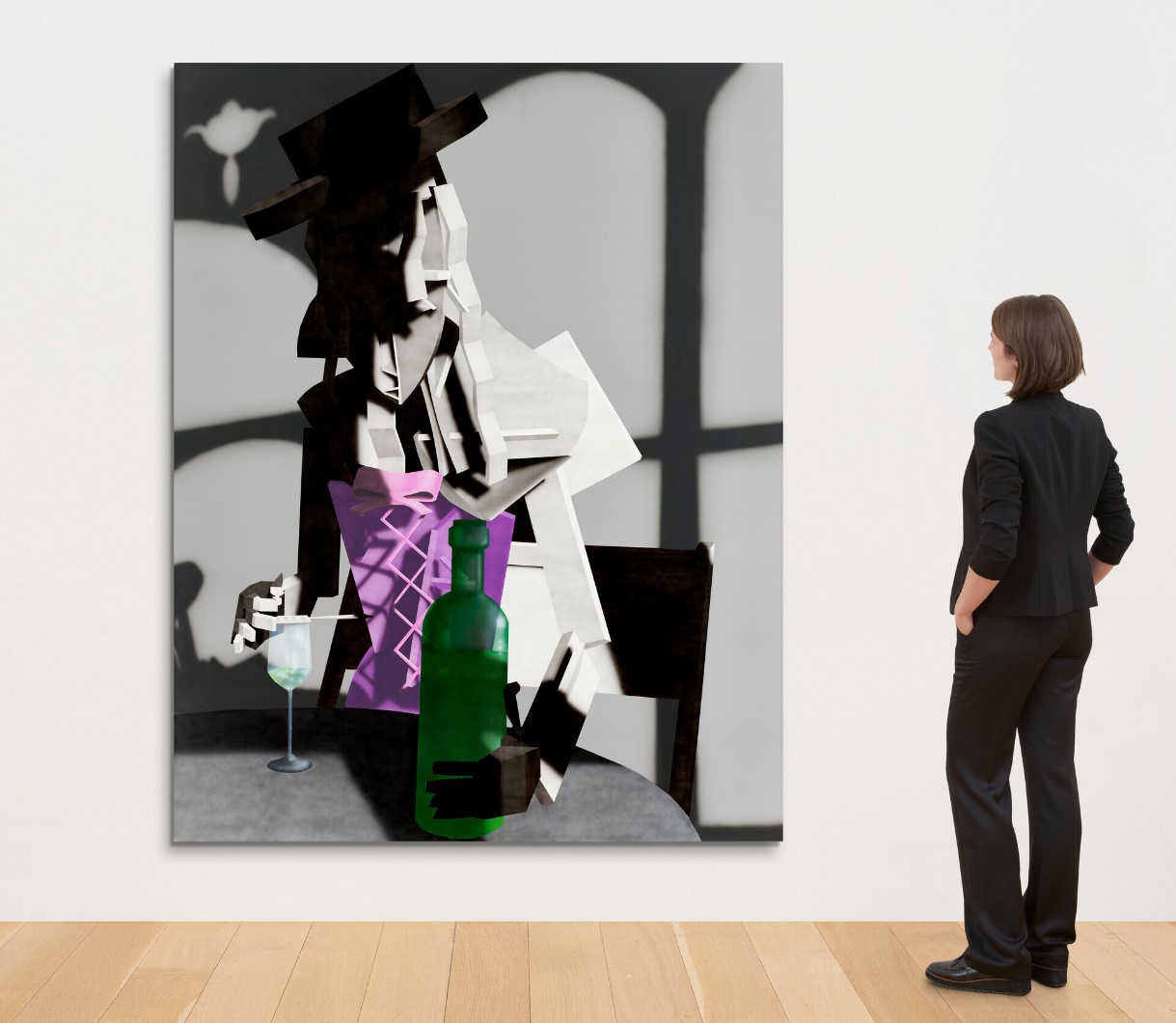
AVERY SINGER (B. 1987)
Untitled, 2017
Acrylic on canvas laid on wood panel
78 3/8 x 61 3/8 inches (199×156 cm)
Signed and dated ‘AVERY SINGER 2017’ (on the overlap)
#4. Kundry, 2018
Sotheby’s New-York: 16 November 2022
Estimated: USD 1,800,000 – 2,500,000
USD 2,107,000
Kundry | The Now Evening Auction | 2022 | Sotheby’s (sothebys.com)
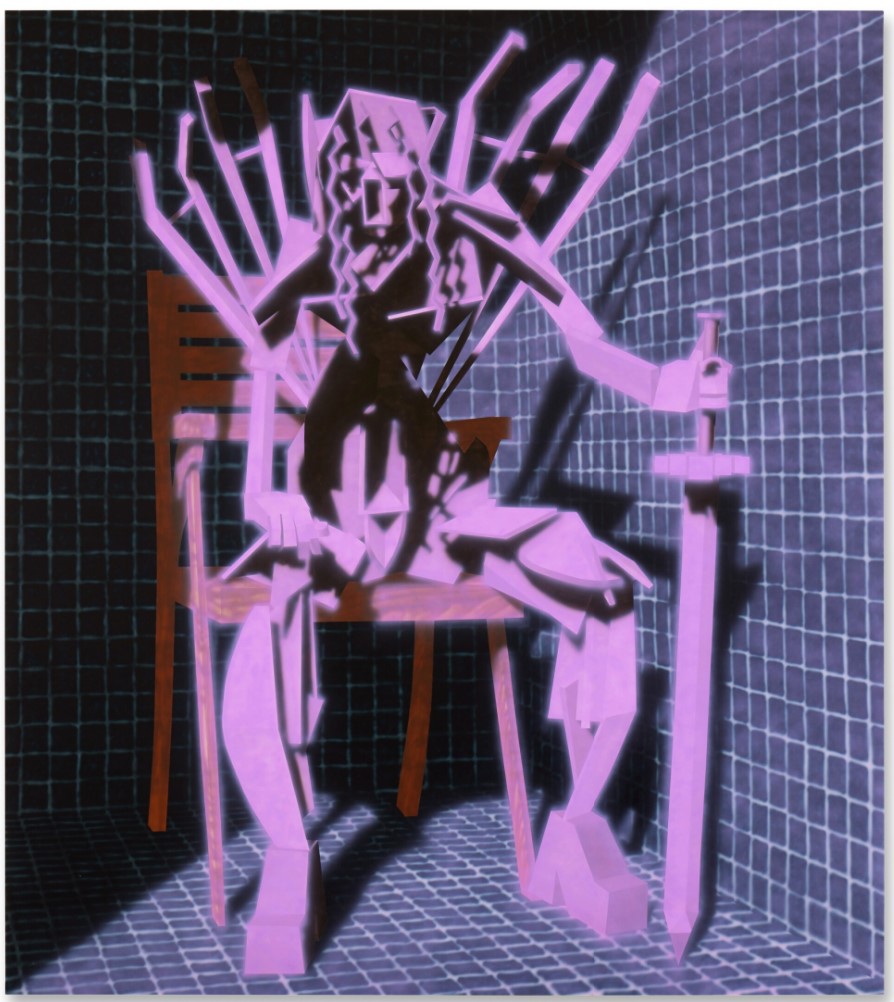
AVERY SINGER (b. 1987)
Kundry, 2018
Acrylic on canvas
95×85 inches (241.3 x 215.9 cm)
Signed Avery Singer and dated 2018 (on the overlap)
#5. Untitled, 2015
Phillips New-York: 15 November 2022
Estimated: USD 1,500,000 – 2,000,000
USD 1,724,000
Avery Singer – 20th Century & Contem… Lot 4 November 2022 | Phillips
AVERY SINGER
Untitled, 2015
Acrylic on canvas
77 1/8 x 61 1/4 inches (195.9 x 155.6 cm)
Signed “Avery Singer 2015” on the overlap
#6. Prada Mask, 2012
Phillips London: 4 March 2022
Estimated: GBP 150,000 – 200,000
GBP 252,000 / USD 332,936
Avery Singer – 20th Century & Contemp… Lot 114 March 2022 | Phillips
AVERY SINGER
Prada Mask, 2012
Acrylic on board
36 1/8 x 36 1/8 inches (91.6 x 91.6 cm)
Signed and dated ‘AVERY SINGER 2012’ on the stretcher
#7. Untitled, 2017
Christie’s Hong-Kong: 27 May 2022
Estimated: HKD 700,000 – 1,500,000
HKD 2,016,000 / USD 256,831
AVERY SINGER (B. 1987), Untitled | Christie’s (christies.com)
AVERY SINGER (B. 1987)
Untitled, 2017
Acrylic on canvas
39 3/4 x 29 7/8 inches (101×76 cm)
Signed and dated ‘Avery Singer 2017’ (on the reverse)
#8. Bust, 2012
Sotheby’s New-York: 20 May 2022
Estimated: USD 180,000 – 250,000
USD 252,000
Bust | Contemporary Day Auction | 2022 | Sotheby’s (sothebys.com)
AVERY SINGER (b. 1987)
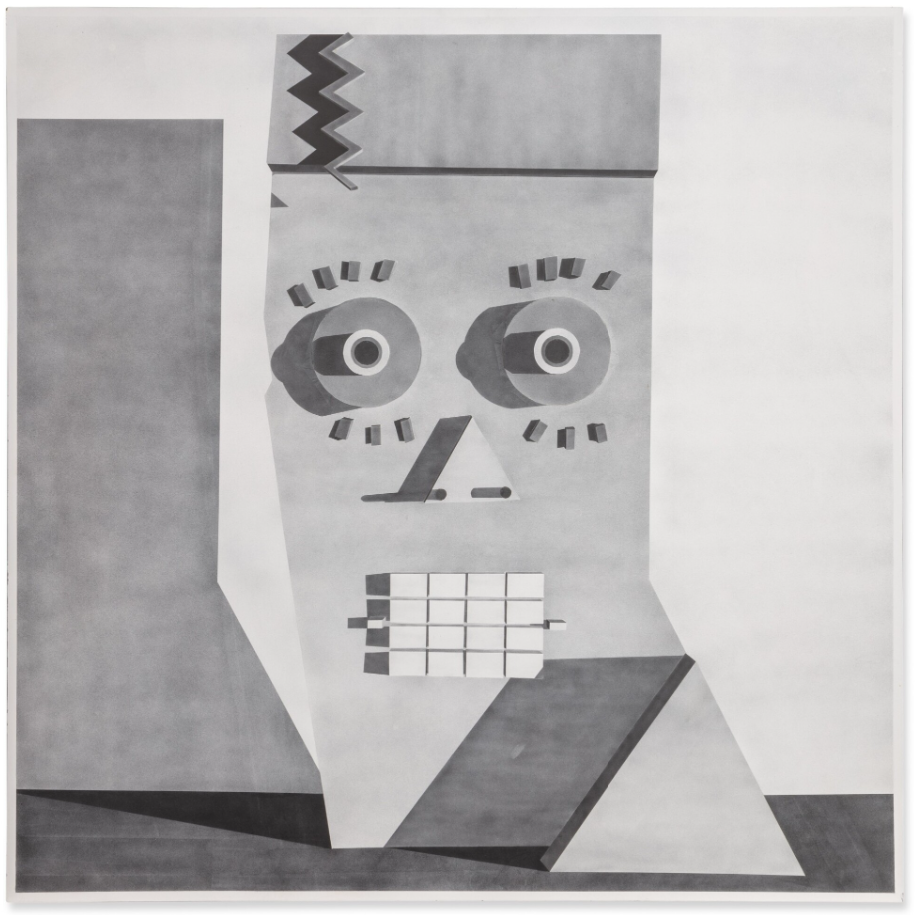
Bust, 2012
Acrylic on wood
36×36 inches (91.5 x 91.5 cm)
Signed AVERY SINGER and dated 2012 (on the reverse)
#10. Untitled, 2016
Christie’s Hong-Kong: 1 December 2022
Estimated: HKD 700,000 – 900,000
HKD 945,000 / USD 121,499
AVERY SINGER (B. 1987), Untitled | Christie’s (christies.com)
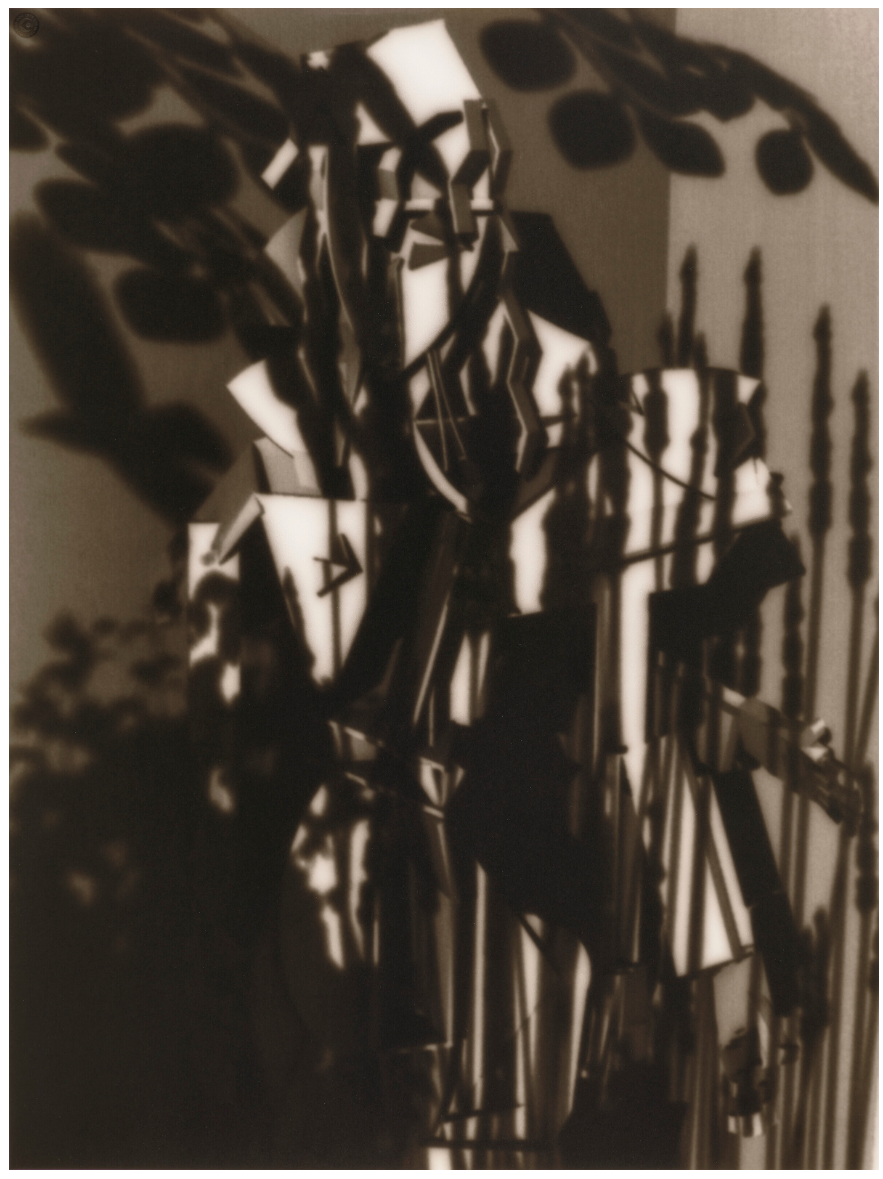
AVERY SINGER (B. 1987)
Untitled, 2016
Acrylic on plate paper
40×30 inches (101.5 x 76 cm)
2021 Auction Results
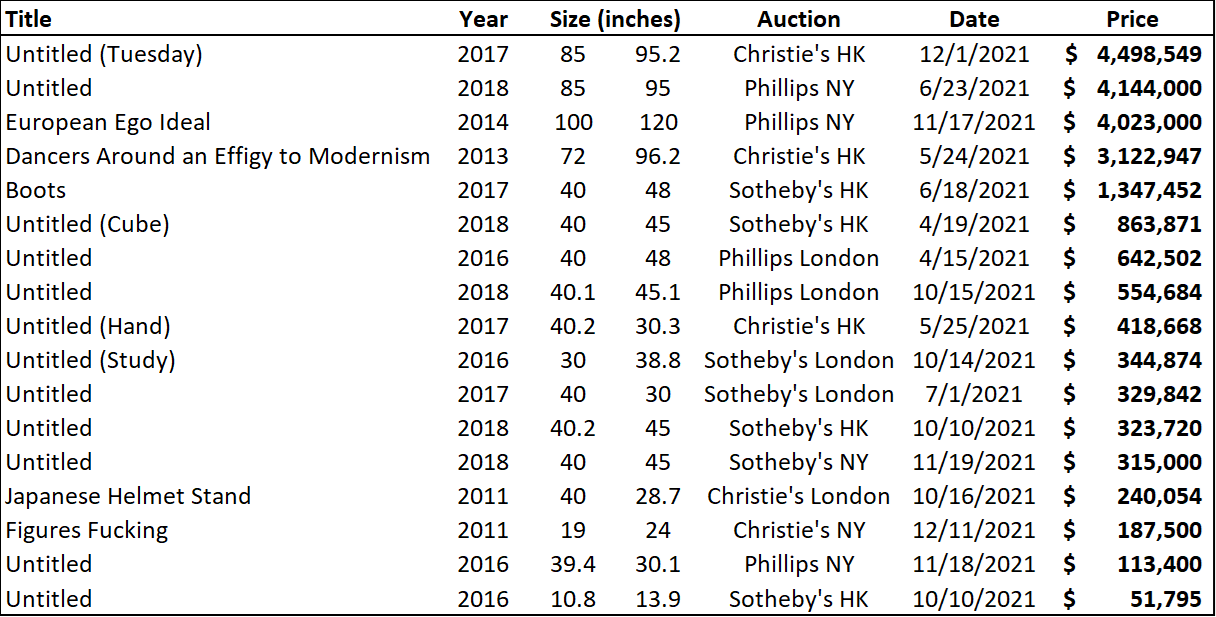
17 lots sold at auction in 2021 for a total turnover of USD 21,521,858.
With no lot failing to sell, the sell-through rate is 100%. The highest price was achieved at Christie’s in Hong-Kong on 1 December 2021, when Untitled (Tuesday), dated 2017 sold for HKD 35,050,000 (USD 4,498,549).
2021 Auction Results
#1. Untitled (Tuesday), 2017
Christie’s Hong-Kong: 1 December 2021
Estimated: HKD 16,000,000 – 26,000,000
HKD 35,050,000 / USD 4,497,250
AVERY SINGER (B. 1987) (christies.com)
AVERY SINGER (B. 1987)
Untitled (Tuesday), 2017
Acrylic on canvas laid on wood panel
85 x 95 1/4 inches (215.9 x 241.9 cm)
Signed and dated ‘AVERY SINGER 2017’ (on the overlap)
#2. Untitled, 2018
Phillips New-York: 23 June 2021
Estimated: USD 1,200,000 – 1,800,000
USD 4,144,000
Avery Singer – 20th Century & Contempora… Lot 4 June 2021 | Phillips
AVERY SINGER
Untitled, 2018
Acrylic on canvas stretched over wood panel
85 1/8 x 95 inches (216.2 x 241.3 cm)
Signed and dated “Avery Singer 2018” on the overlap
#3. European Ego Ideal, 2014
Phillips New-York: 17 November 2021
Estimated: USD 1,500,000 – 2,500,000
USD 4,023,000
Avery Singer – 20th Century & Conte… Lot 21 November 2021 | Phillips
AVERY FISHER
European Ego Ideal, 2014
Acrylic on canvas
100×120 inches (254 x 304.8 cm)
#4. Dancers Around An Effigy To Modernism, 2013
Christie’s Hong-Kong: 24 May 2021
Estimated: HKD 7,800,000 – 12,000,000
HKD 24,250,000 / USD 3,123,258
AVERY SINGER (B. 1987) (christies.com)
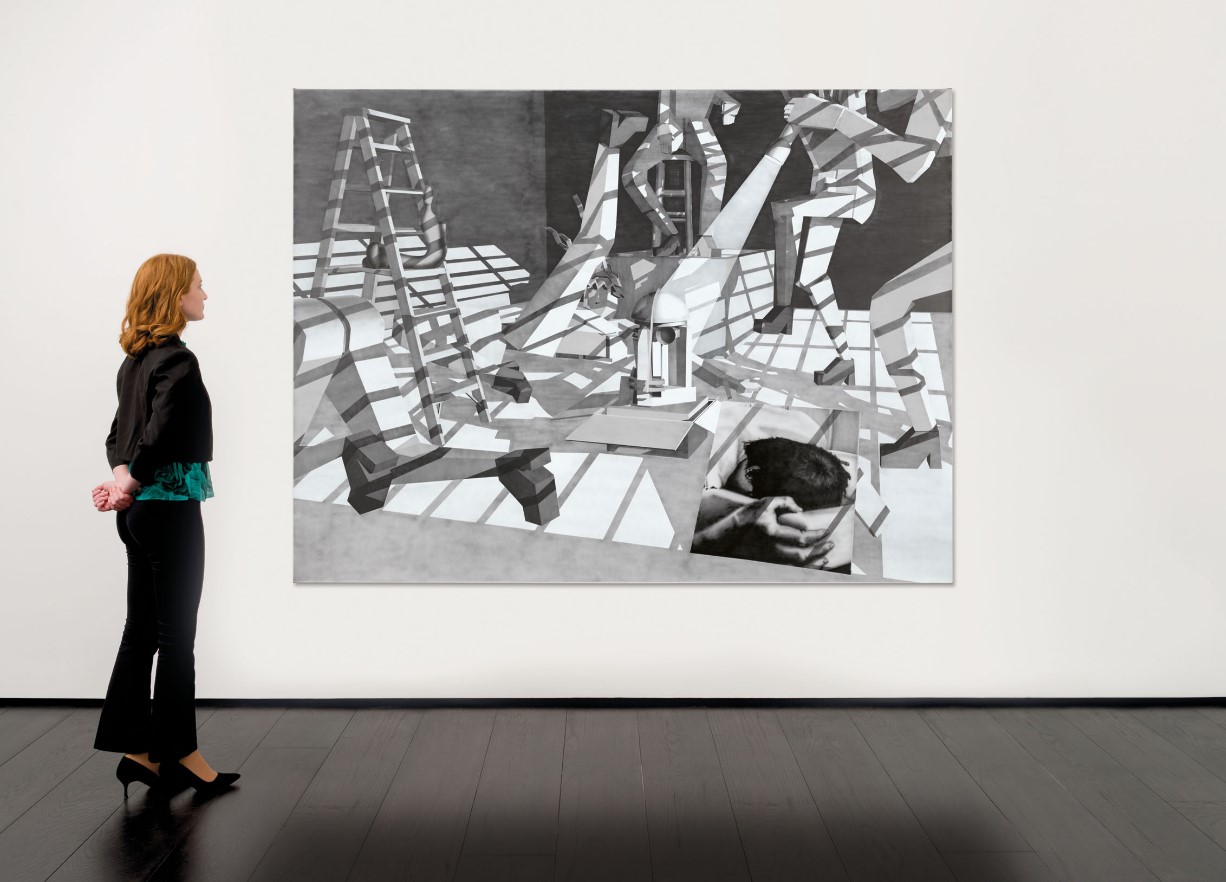
AVERY SINGER (B. 1987)
Dancers Around An Effigy To Modernism, 2013
Acrylic on canvas
72×96 inches (183 x 244.3 cm)
#5. Boots, 2017
Sotheby’s Hong-Kong: 18 June 2021
Estimated: HKD 3,800,000 – 5,800,000
HKD 10,460,000 / USD 1,347,505
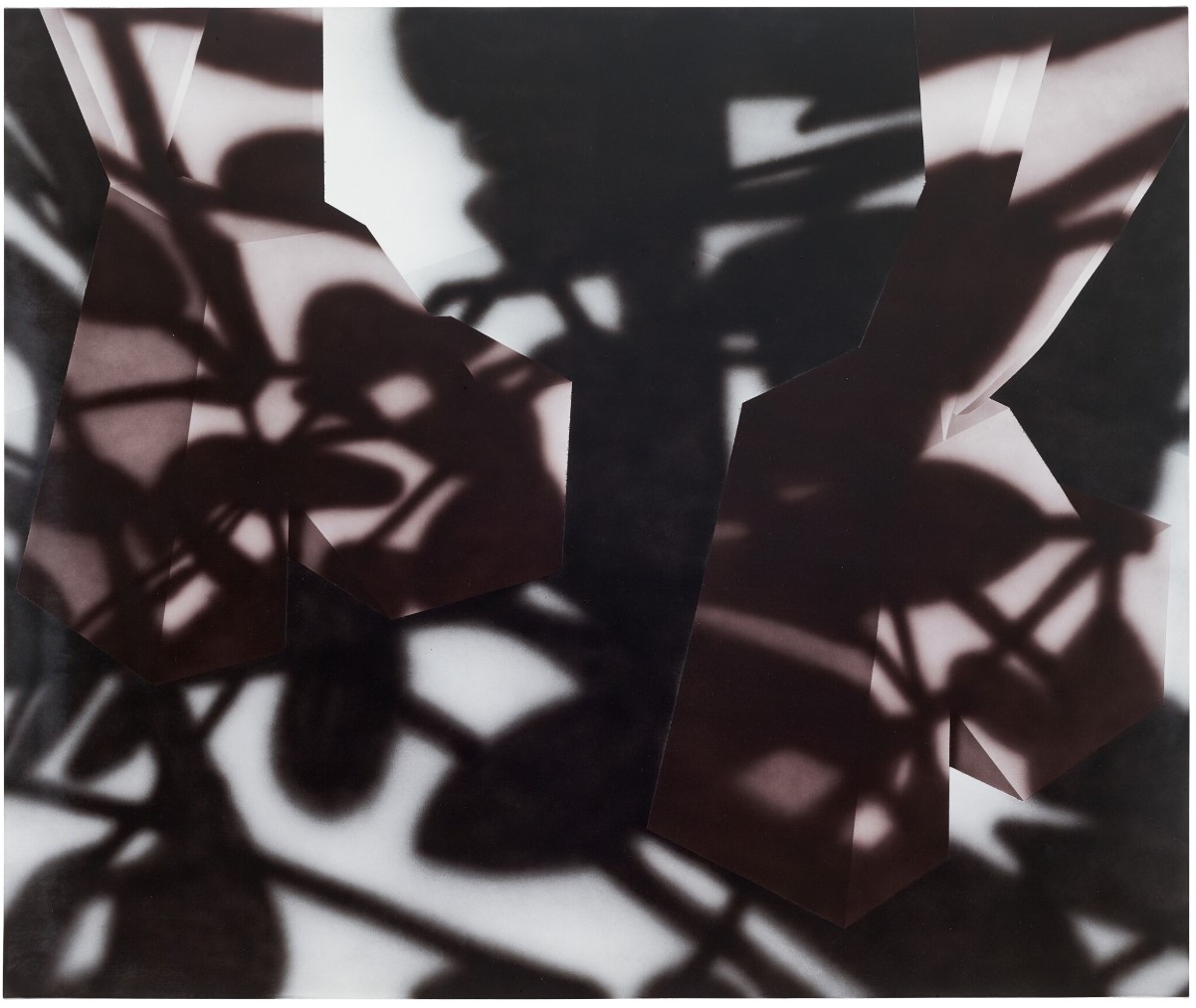
AVERY SINGER (b. 1987)
Boots, 2017
Acrylic on canvas stretched over wood panel
40×48 inches (101.6 x 121.9 cm)
Signed and dated 2017 on the overlap
#6. Untitled (Cube), 2018
Sotheby’s Hong-Kong: 19 April 2021
Estimated: HKD 1,200,000 – 2,200,000
HKD 6,709,000 / USD 863,871
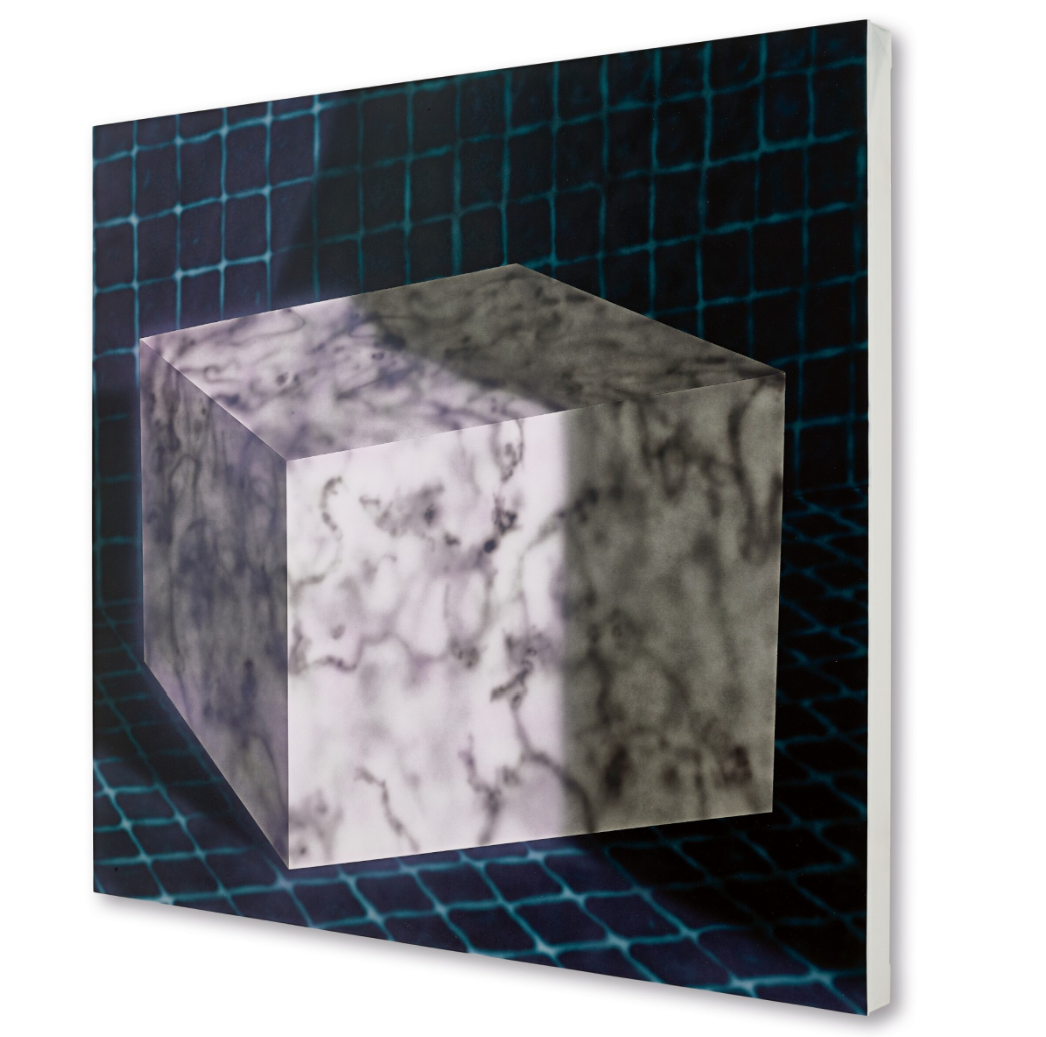
AVERY SINGER (b. 1987)
Untitled (Cube), 2018
Acrylic on gessoed board on canvas
40×45 inches (101.6 x 114.3 cm)
Signed and dated 2018 on the overlap
#7. Untitled, 2016
Phillips London: 15 April 2021
Estimated: GBP 150,000 – 200,000
GBP 466,200 / USD 642,502
Avery Singer – 20th Century & Contempor… Lot 4 April 2021 | Phillips
AVERY SINGER
Untitled, 2016
Acrylic on canvas
40×48 inches (101.6 x 121.9 cm)
Signed and dated ‘AVERY SINGER 2016’ on the overlap
#8. Untitled, 2018
Phillips London: 15 October 2021
Estimated: GBP 150,000 – 200,000
GBP 403,200 / USD 554,684
Avery Singer – 20th Century & Contem… Lot 21 October 2021 | Phillips
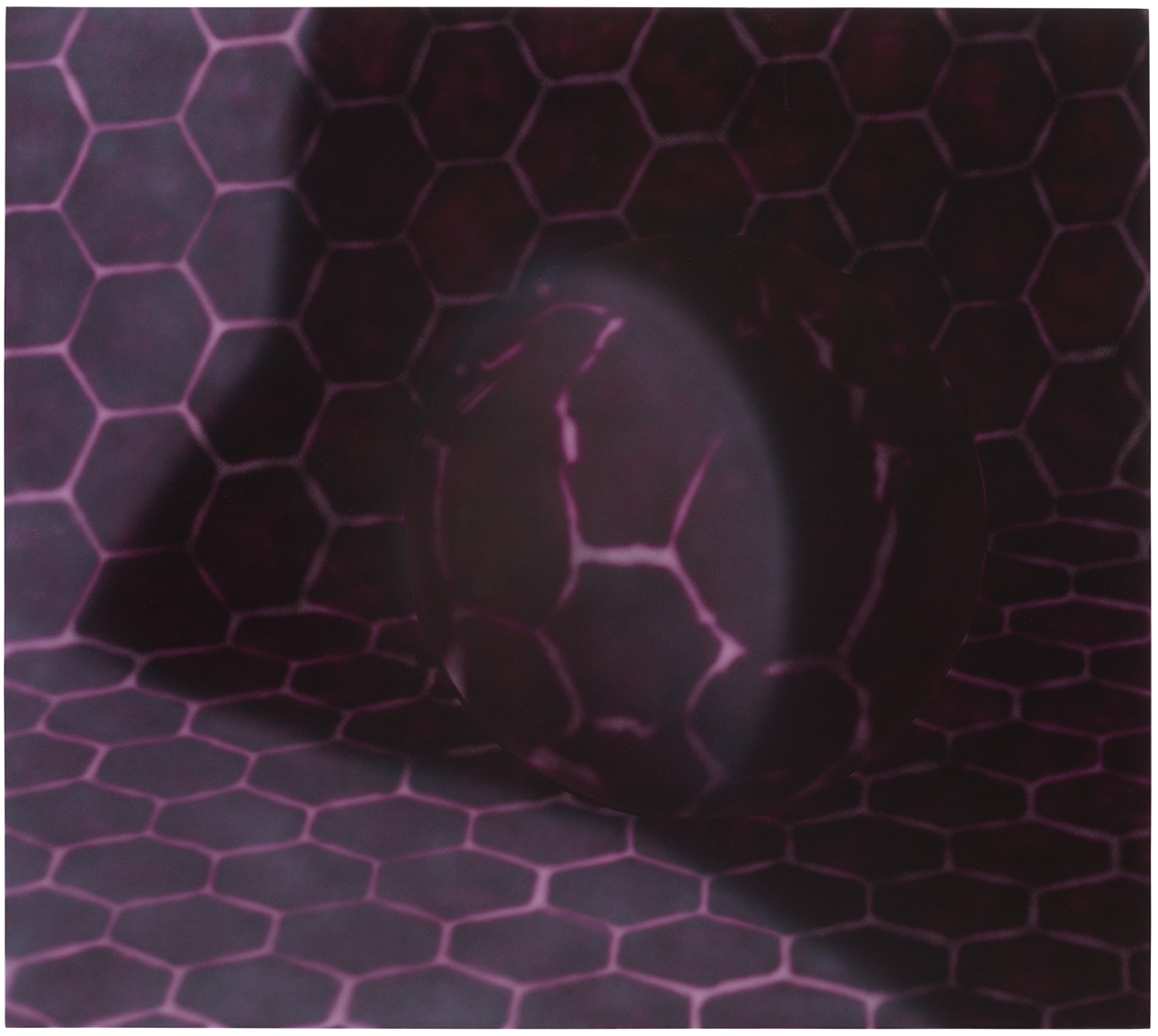
AVERY SINGER
Untitled, 2018
Acrylic on canvas stretched over wood panel
40 1/8 x 45 1/8 inches (101.9 x 114.5 cm)
Signed and dated ‘AVERY SINGER 2018’ on the overlap
#9. Untitled (Hand), 2017
Christie’s Hong-Kong: 25 May 2021
Estimated: HKD 400,000 – 600,000
HKD 3,250,000 / USD 418,668
AVERY SINGER (B. 1987), Untitled (Hand) | Christie’s (christies.com)
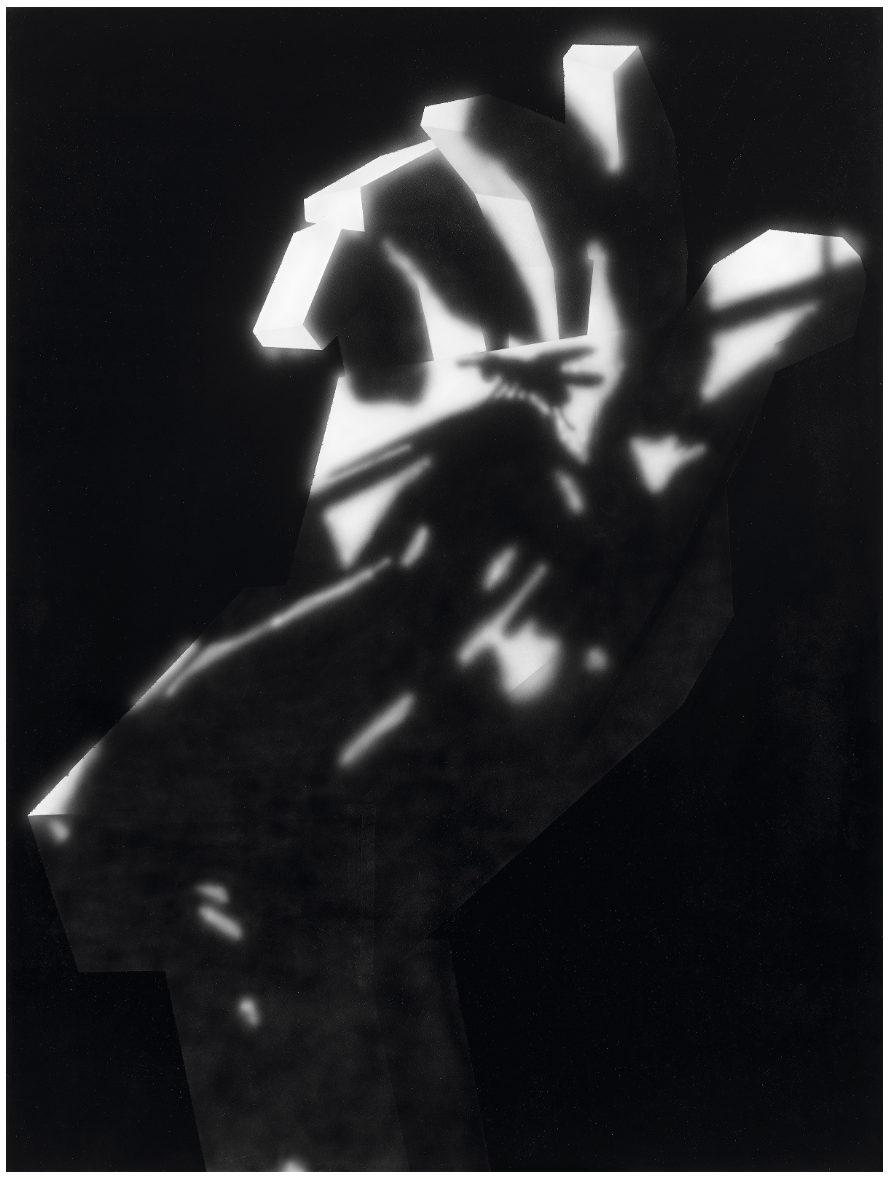
AVERY SINGER (B. 1987)
Untitled (Hand), 2017
Acrylic on canvas
40 1/8 x 30 3/8 inches (102×77 cm)
Signed and dated ‘Avery Singer 2017’ (on the overlap)
#10. Untitled (Study), 2016
Sotheby’s London: 14 October 2021
Estimated: GBP 150,000 – 200,000
GBP 252,000 / USD 344,874
Untitled (Study) | Contemporary Art Evening Auction | 2021 | Sotheby’s (sothebys.com)
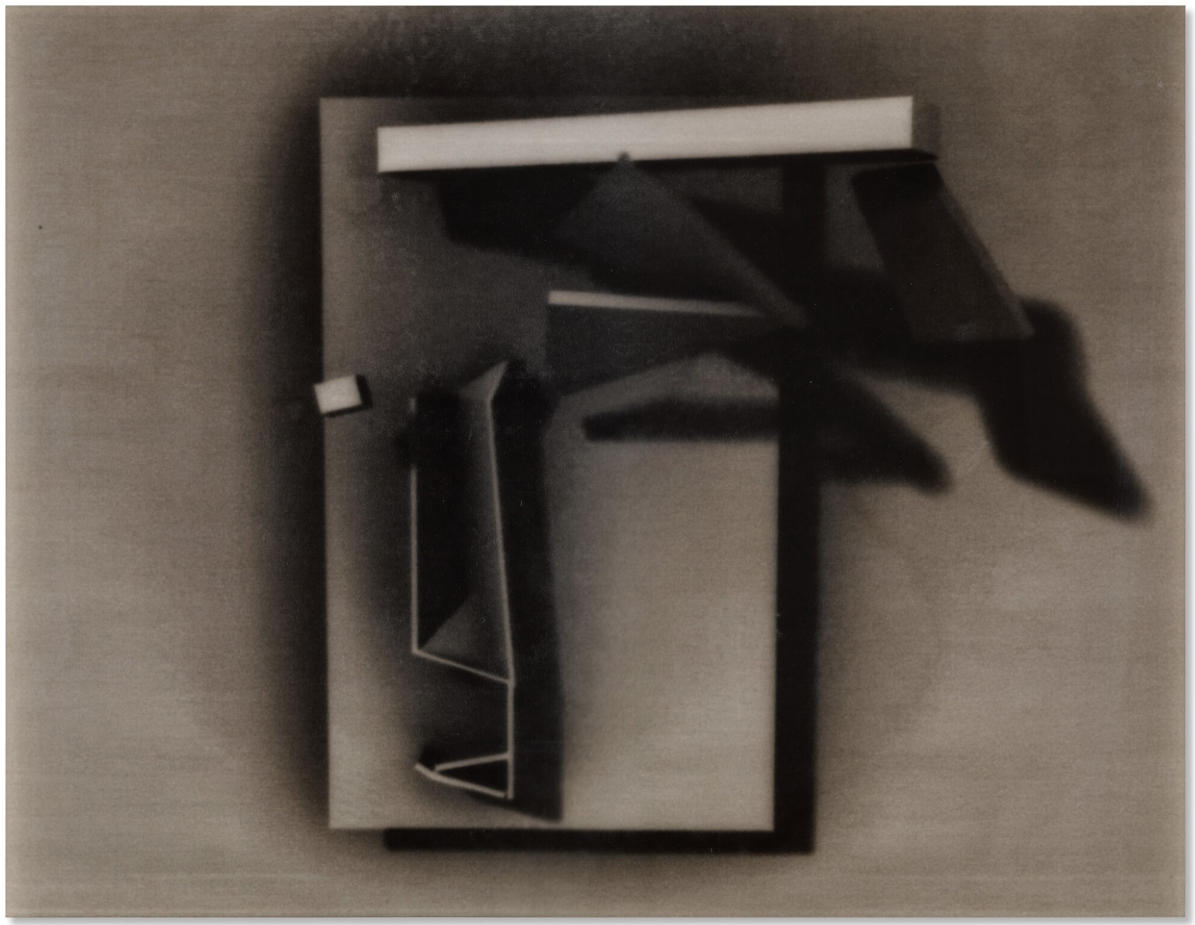
AVERY SINGER (b. 1987)
Untitled (Study), 2016
Acrylic on gessoed board
30 x 38 5/8 inches (76.2 x 98.5 cm)
Signed and dated 2016 on the reverse
#11. Untitled, 2017
Sotheby’s London: 1 July 2021
Estimated: GBP 120,000 – 180,000
GBP 239,400 / USD 329,842
Untitled | Contemporary Art Day Auction | 2021 | Sotheby’s (sothebys.com)
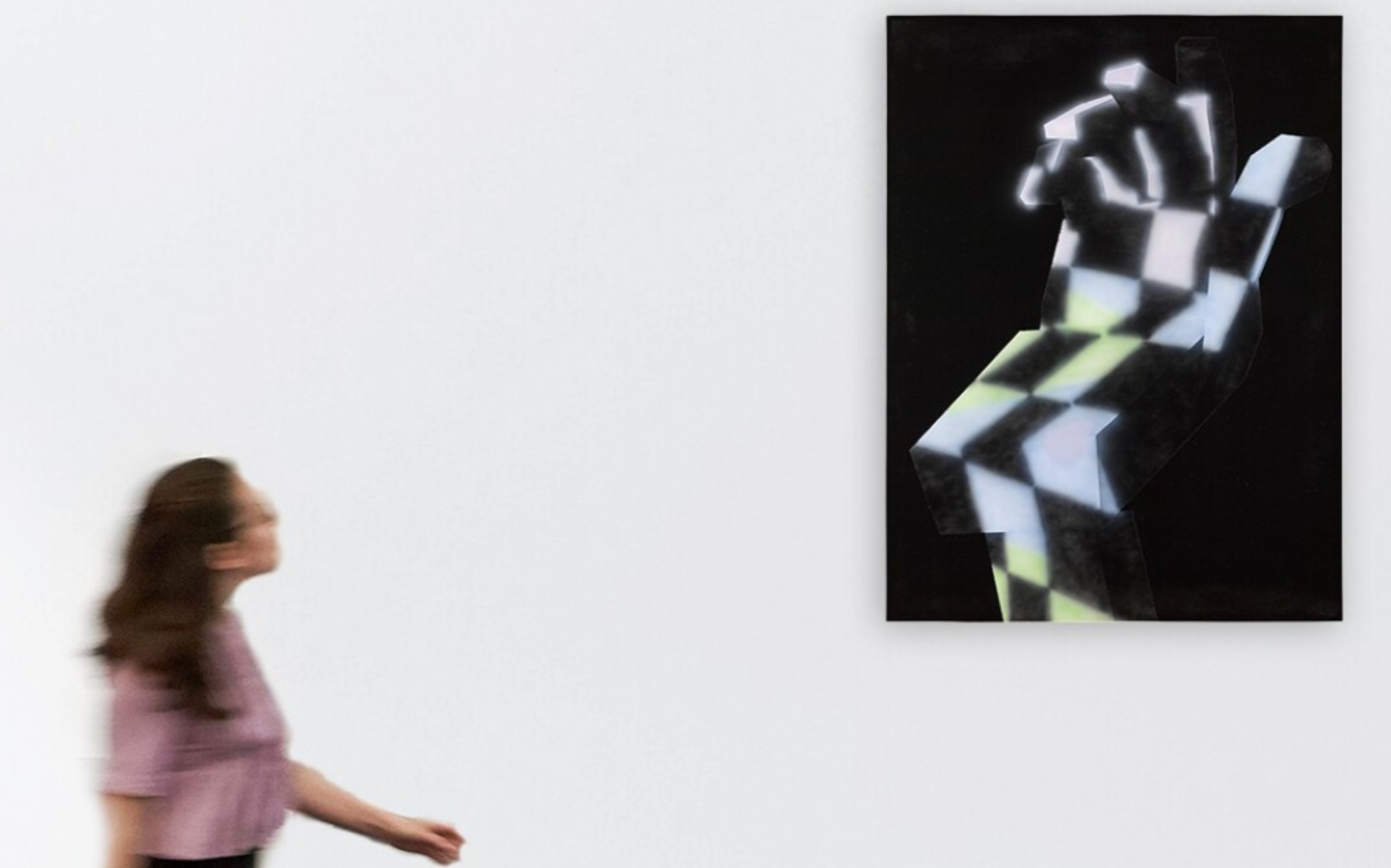
AVERY SINGER (b. 1987)
Untitled, 2017
Acrylic on foamboard laid down on canvas
40×30 inches (101.6 x 76.2 cm)
Signed and dated 2017 on the overlap
#12. Untitled, 2016
Sotheby’s Hong-Kong: 10 October 2021
Estimated: HKD 200,000 – 400,000
HKD 403,200 / USD 403,200
Avery Singer 艾芙瑞・辛格 | Untitled 無題 | Contemporary Art Day Sale | 2021 | Sotheby’s (sothebys.com)
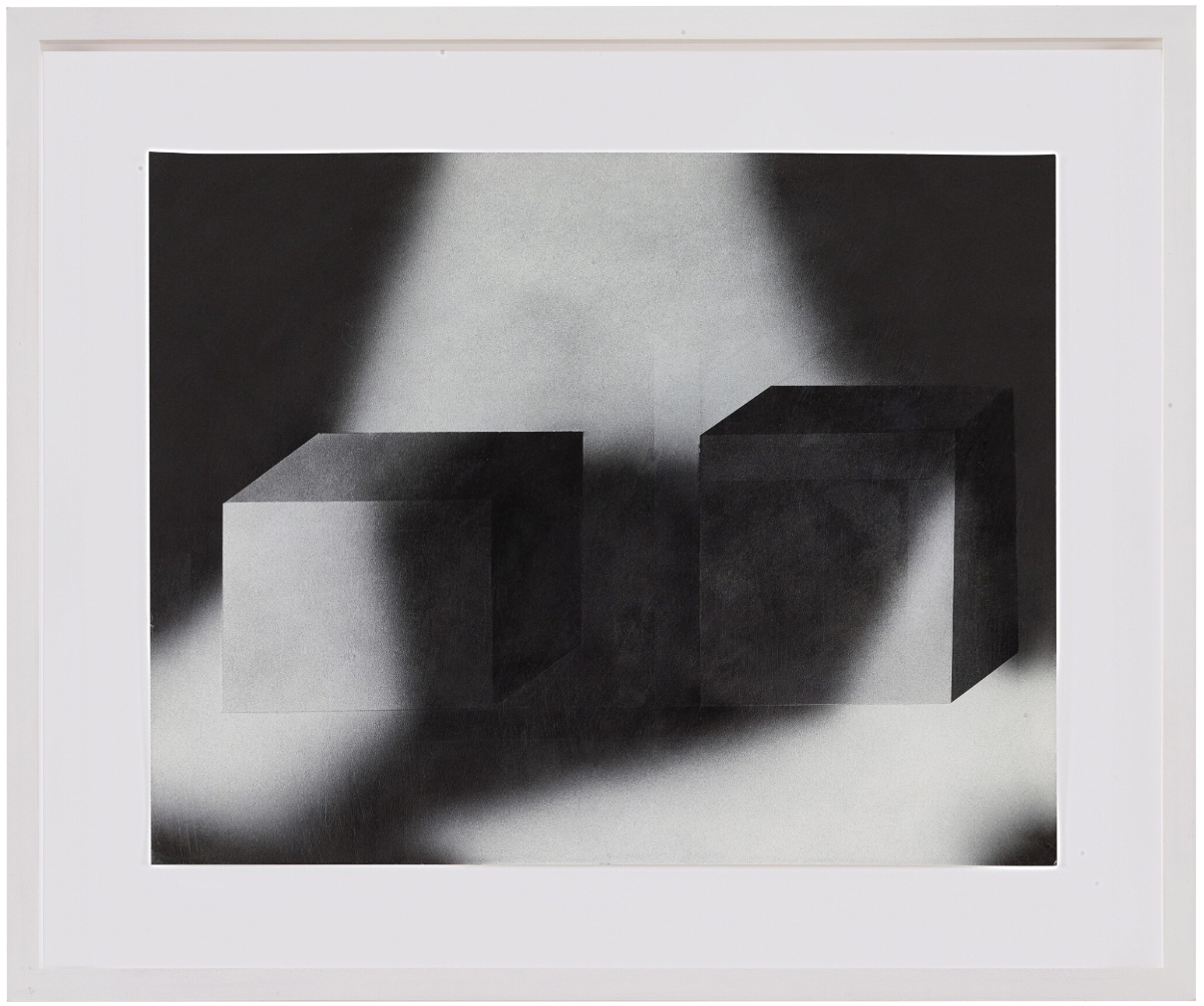
AVERY SINGER (b. 1987)
Untitled, 2016
Acrylic on smooth plate paper
10 7/8 x 13 7/8 inches (27.5 x 35.2 cm)
PART III: FOCUS
Record Breakers
The Great Muses, 2013
Christie’s Hong-Kong: 30 November 2022
Estimated: HKD 20,000,000 – 30,000,000
HKD 23,250,000 / USD 2,978,859
AVERY SINGER (B. 1987) (christies.com)
AVERY SINGER (B. 1987)
The Great Muses, 2013
Acrylic on canvas
220×196 cm (86 5/8 x 77 1/8 inches)
Signed and titled ‘Avery Singer 2013’ (on the stretcher)
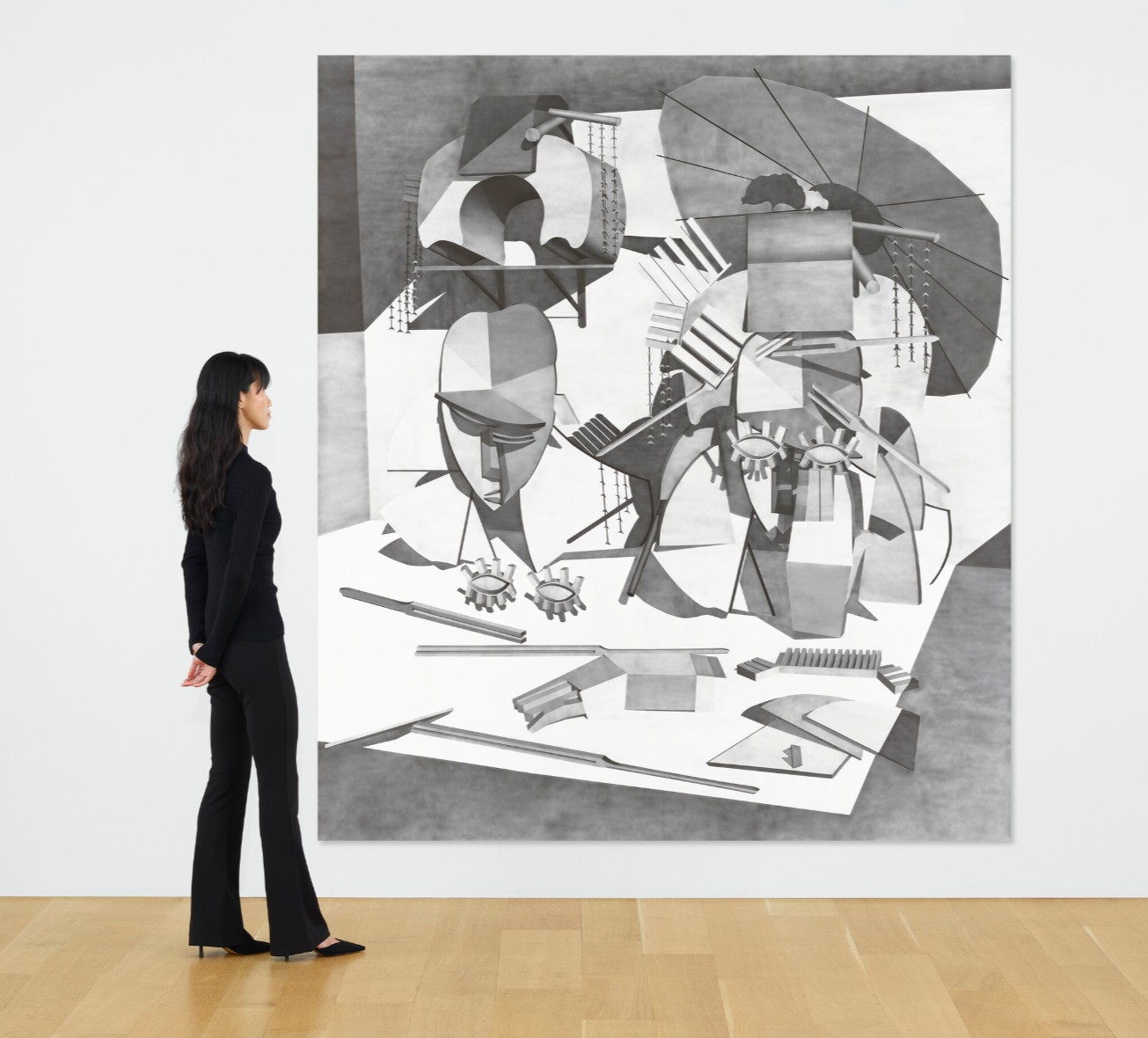
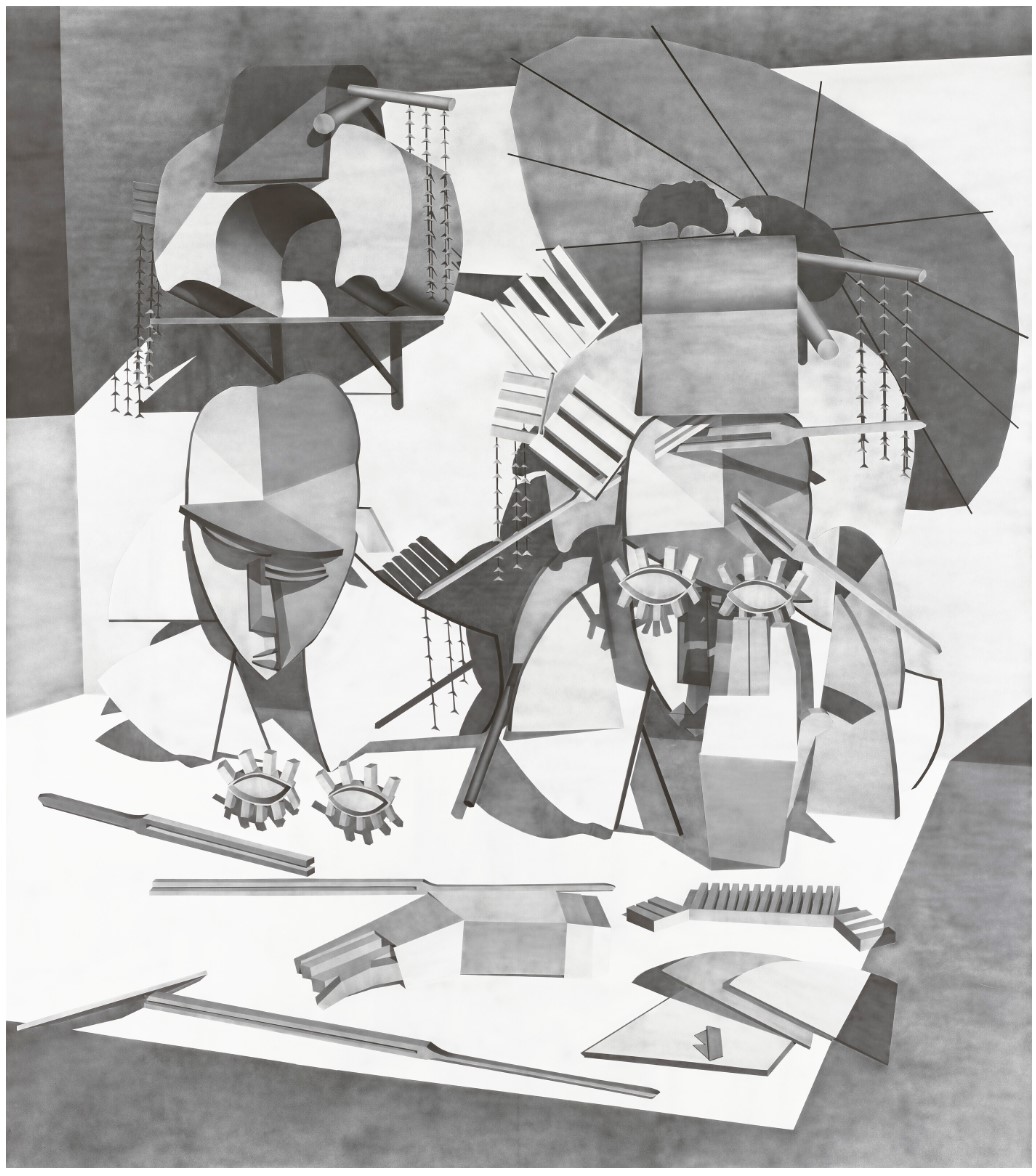
Presented at Avery Singer’s first acclaimed solo exhibition Pictures Punish Words at Kunsthalle Zürich between 2014-15, The Great Muses is one of the earliest pivotal works that launched Singer’s career. Painted in 2013, it was created alongside her early series of monochrome paintings that revolve around the stereotypical topic of the ‘artist’s life’ and made headlines for their reference to the formal aesthetics of Cubism, Constructivism, and Futurism. Fusing the clichés that cast onto contemporary artist’s life with historic avant-gardistic idioms, this two-metre tall, digital assisted black-and-white tableaux exemplifies Singer’s trailblazing visual vernacular that bridges virtual and reality, technology and literature, past and present.
What The Great Muses has encapsulated reveals Singer’s fundamental interest in the sculpture realm and her reading towards the avant-garde vision broached by her precursors. Carrying a relatively conventional title, the work depicts a typical workshop setting with tongs, papers, and a garage shelf, where a Naum Gabo’s A Head of a Woman (ca.1917-20) relief is staged next to an assemblage that recalls Julio Gonzalez’s comb-shaped forms with Isa Genzken’s stacked sculpture of found objects. This mystified artist’s workshop scene was cast with light from an unknown source beyond the canvas, dramatizing its staged layers of illusion, artifice, and manifold realities. Gabo (1890-1977) and Genzken (b.1948), though born at different times, have shared the same vision of breaking the norms of sculpture-making while keeping the traditions of modernist in mind. Likewise, Singer pioneers her new method of painting—by employing 3D modelling software SketchUp to conceive her complex spatial composition and digital motifs before projecting them onto canvas. She then transfers the geometric, computer-generated hybrid images onto the canvas using the airbrush, a tool widely applied in advertising, architecture, and graphic design instead of Fine Arts.
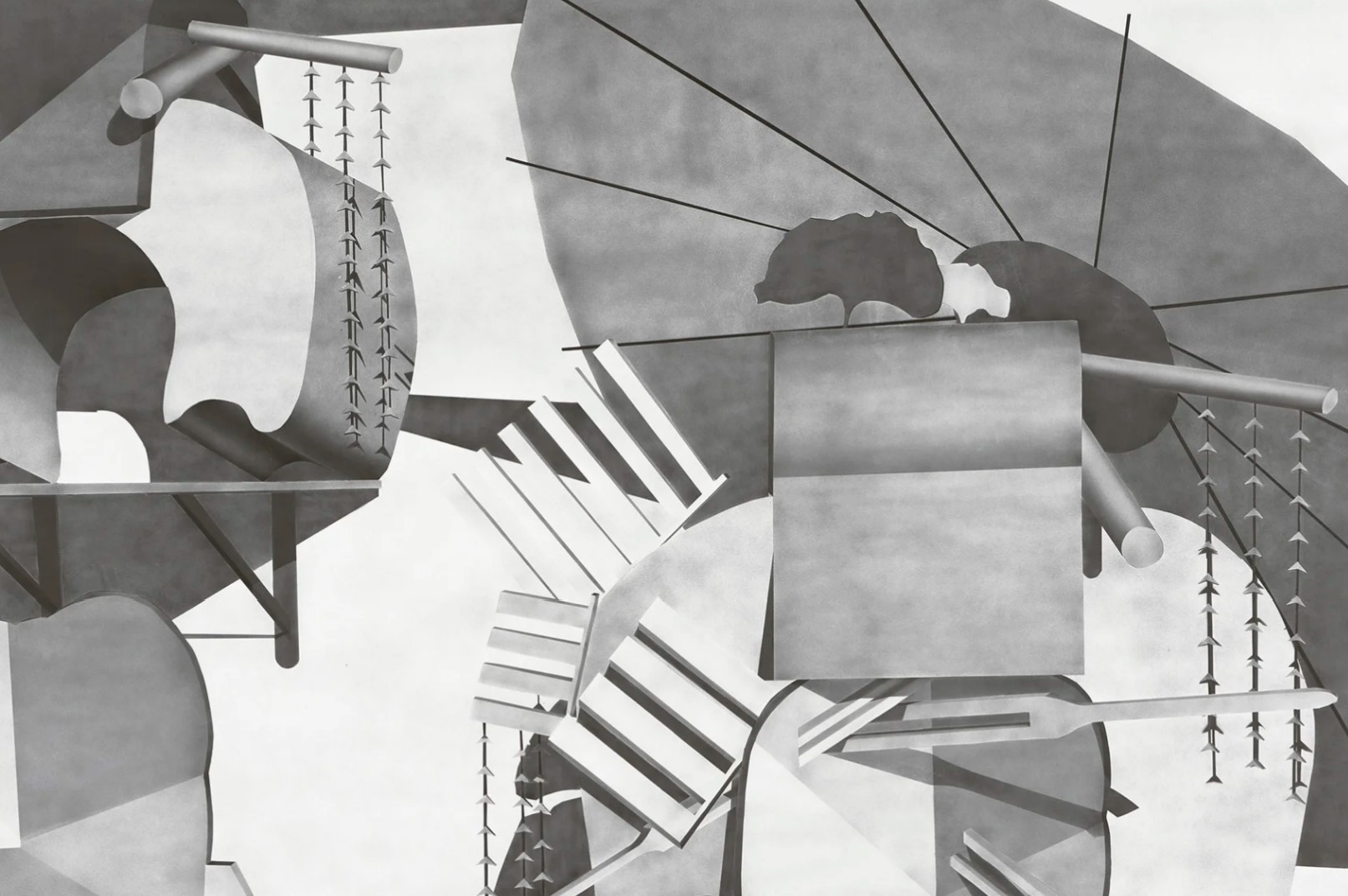
Rendering her enigmatic composition in grisaille—a technique that is traditionally known for imitations of relief sculptures while also being used by 20th-century painters whenever they referred to historic political subjects like Picasso’s Guernica (1937)—this present work entails a peculiar graphic appeal and results in a pristine finish that omits traces of artist’s hand. By reminiscing the details of the so-called artist’s life in their stiff and phantasmic quality, the scene captured in The Great Muses is sealed and detached from a reality dominated by materialism. In recent years, Singer’s practice has taken a turn where she began to work with the Michelangelo Art/Robo, a commercial airbrush printer machine that allows her paintings to grow more complex in composition and palette, making these nostalgia-tinged visual tropes of outmoded computer graphics featured in the present work even rarer. Championed by prestigious museums like MoMA and the Whitney Museum of American Art, these early grisaille paintings are the seminal works of Singer and have potently charted the artist’s new records in the market.
Happening, 2014
Sotheby’s New-York: 19 May 2022
Estimated: USD 2,500,000 – 3,500,000
USD 5,253,000
Happening | The Now Evening Auction | 2022 | Sotheby’s (sothebys.com)
AVERY SINGER (B. 1987)
Happening, 2014
Acrylic on canvas
100×120 inches (254 x 304.8 cm)
Signed Avery Singer and dated 2014 (on the stretcher)
A beguiling scene of four artistic figures in the simplified geometry of nascent computer graphics, Avery Singer’s Happening is an exemplary testament to the contemporary artist’s avant-garde practice, evincing her inimitable airbrush technique and humorous explorations of absurd virtuality. Executed in 2014, the present work belongs to a seminal series of greyscale paintings that introduced Singer’s radically inventive visual vernacular, prominently featuring in Avery Singer: Pictures Punish Words, the artist’s 2014-2015 solo exhibition held at Kunsthalle Zürich. A virtuoso of the airbrush, Singer combines computer technologies with her painterly hand to painstakingly render a monochromatic composition of half-cyborg, half-human artists. Following her debut exhibition Reality Ender at Hauser & Wirth in 2021. Reality Ender, where she is the youngest represented artist, Singer is celebrated today a creative visionary who expands the boundaries of painting through her innovative explorations of Internet-based imaging processes. Happening articulates Avery Singer’s highly original visual mode – a zeitgeist-defining contemporary sensibility that blurs the boundaries between painting and technology; digital and analog; reality and perception.
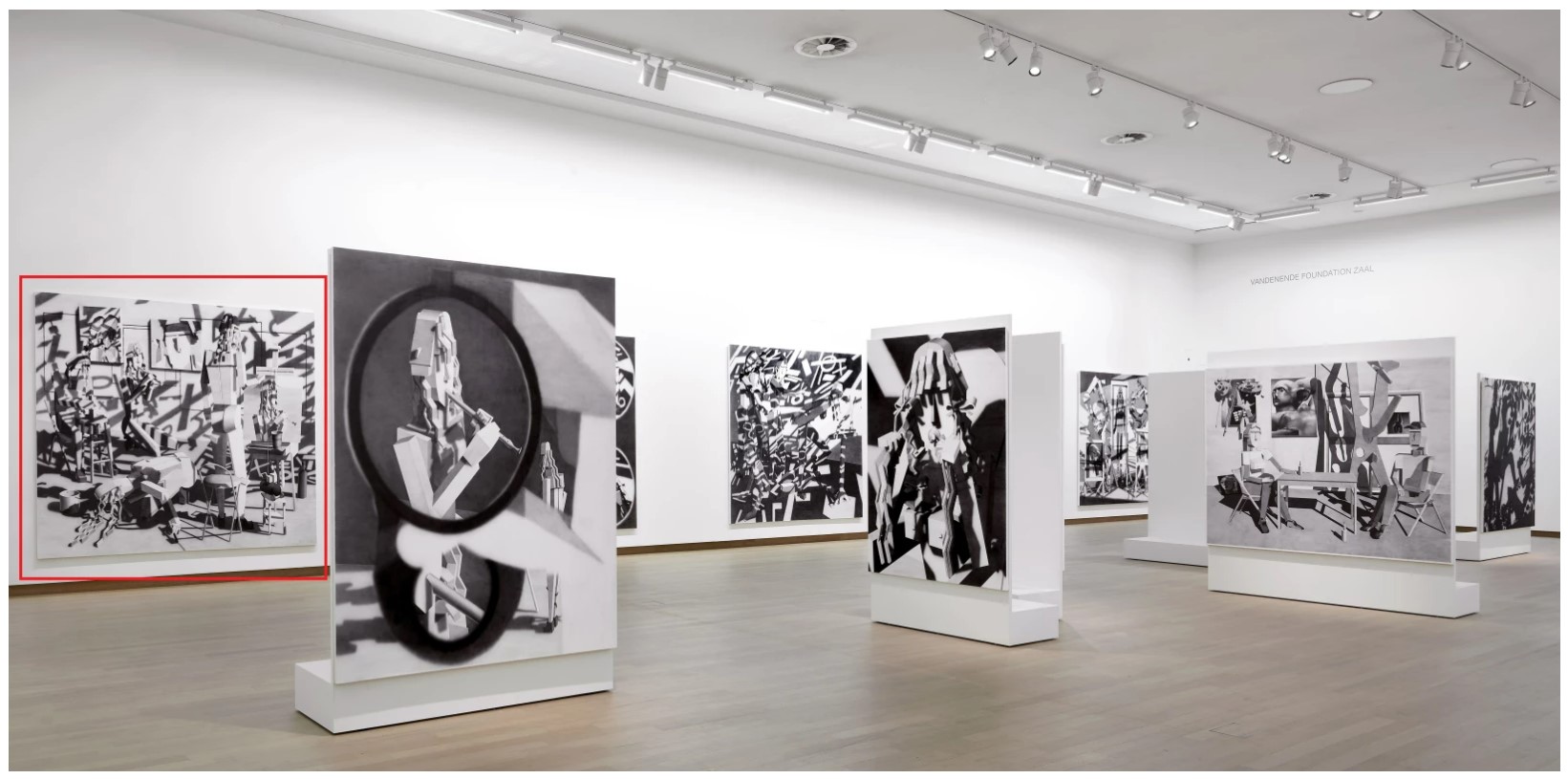
THE PRESENT WORK INSTALLED IN AVERY SINGER: SCENES AT THE STEDELIJK MUSEUM, AMSTERDAM IN 2016. PHOTO © COURTESY OF STEDELIJK MUSEUM, AMSTERDAM. ART © 2022 AVERY SINGER
Seamlessly synthesizing automated technologies and traditional painting techniques with a solemn grisaille palette, Singer has invented a unique avant-garde visual vernacular that defies visual expectations and redefines contemporary painting. First drafting images using Google SketchUp, a 3D rendering architectural software that Singer began using while still an undergraduate New York’s Cooper Union, the artist then projects preliminary underdrawings onto her canvas before painting them with geometric precision using masking tape and airbrush. Singer’s airbrush technique extremifies the flat planarity of the painted surface, contrasting the illusionistic spatial perspective that she constructs within the image. Through this dimensional tension, paintings such as Happening open fictional realms that exist at the surreal interstice between the digital and material worlds, offering both an uncanny escape from contemporary quotidian reality and a humorous parody of it.
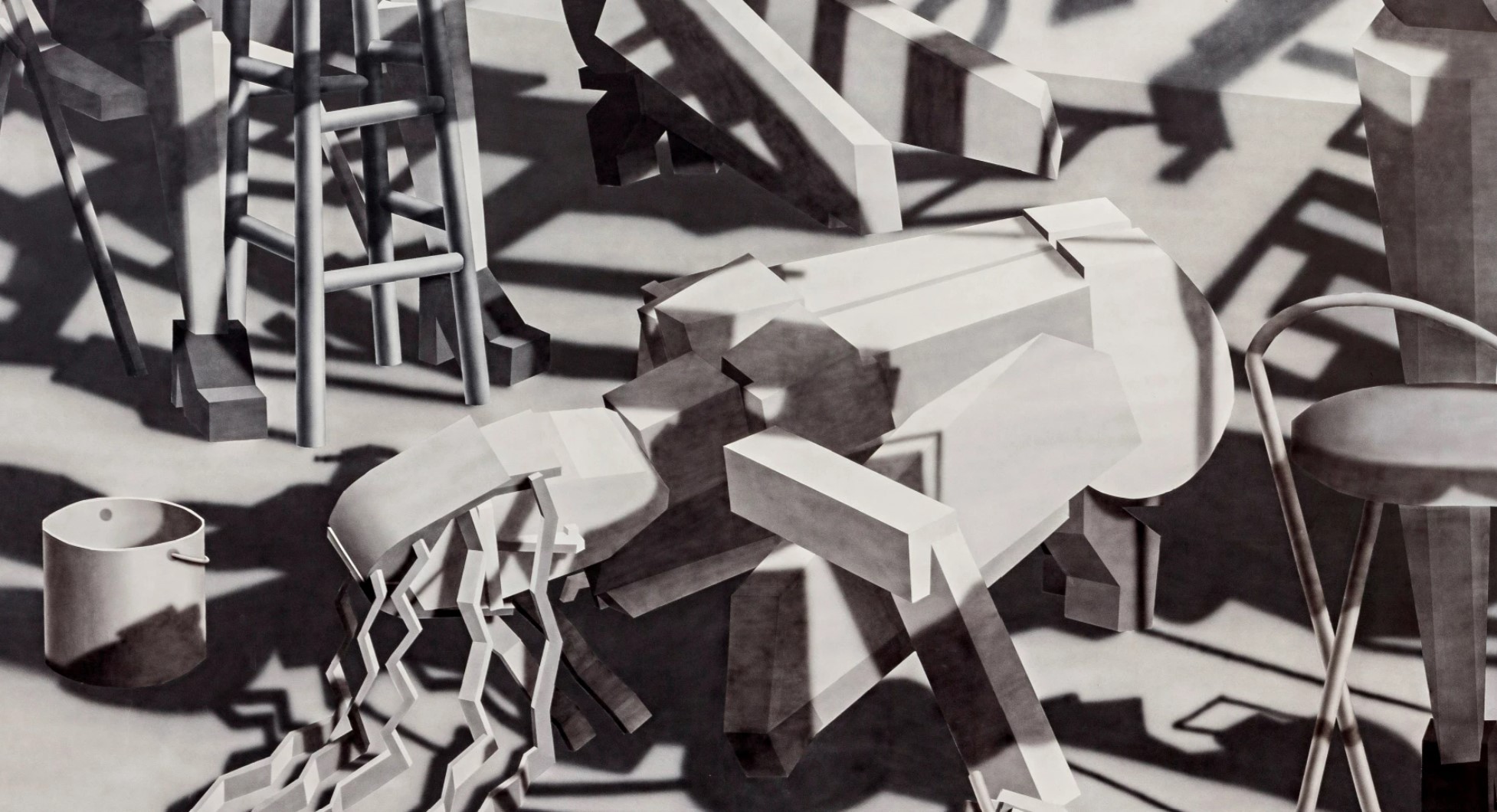
In Happening, Singer delivers a tongue-in-cheek answer to this timeless and profound question, which continues to haunt introspective art students and fascinated art historians alike. A group of blocky figures gathers around a room to perform rudimentary creative activities together, such as painting at an easel or playing the recorder, all of which unfold in complex layers of dimensionality. One figure paints a portrait of their musician peer, creating a mirror image of them playing an instrument as if to present Singer’s nod to the Lacanian Symbolic; another bends over with their hair tousled out so they can draw the shadows cast by the legs of the easel onto the ground, a dramatic gesture of artistic bravado that evokes the spirit of the Abstract Expressionists.
Untitled, 2018
Phillips New-York: 23 June 2021
Estimated: USD 1,200,000 – 1,800,000
USD 4,144,000
Avery Singer – 20th Century & Contempora… Lot 4 June 2021 | Phillips
AVERY SINGER
Untitled, 2018
Acrylic on canvas stretched over wood panel
85 1/8 x 95 inches (216.2 x 241.3 cm)
Signed and dated “Avery Singer 2018” on the overlap
Teetering between art and technology, absence and presence, reality and perception, Avery Singer’s Untitled is a striking example from her trailblazing practice. By combining computerized and analogue techniques to “creat[e] new possibilities for portraying naturalism,” Singer explores the notion of perception in today’s digital world. Identified by curator Isabelle Graw as a “self-portrait in disguise,” the present work depicts the shadow of a figure in a vegetal environment, projected against a colorful tiled space. Painted in 2018, the present work was exhibited in The Vitalist Economy of Painting at Galerie Neu, Berlin, alongside works by Frank Stella, René Magritte, Christopher Wool, Sarah Morris, and Amy Sillman, among others.
Oscillating between abstraction and figuration, the cast shadows highlight the work’s illusionistic depth, while calling attention to a haunting absence of their representational source. The dark silhouettes “reference life by way of its negation, [as] representation, conversely, is revealed to be marked by retraction.” This dialectal relationship in Untitled encompasses the material and philosophical investigations core to Singer’s practice, reverberating manifold realities of life. In the artist’s words, “Painting is a site onto which we (artists and viewers alike) project and interpret the abstract nature of our own thoughts and experiences within the framework of a cultural outlet. We take the things we see in nature, and reflect upon them, the site of which has now expanded to include virtual reality space.”
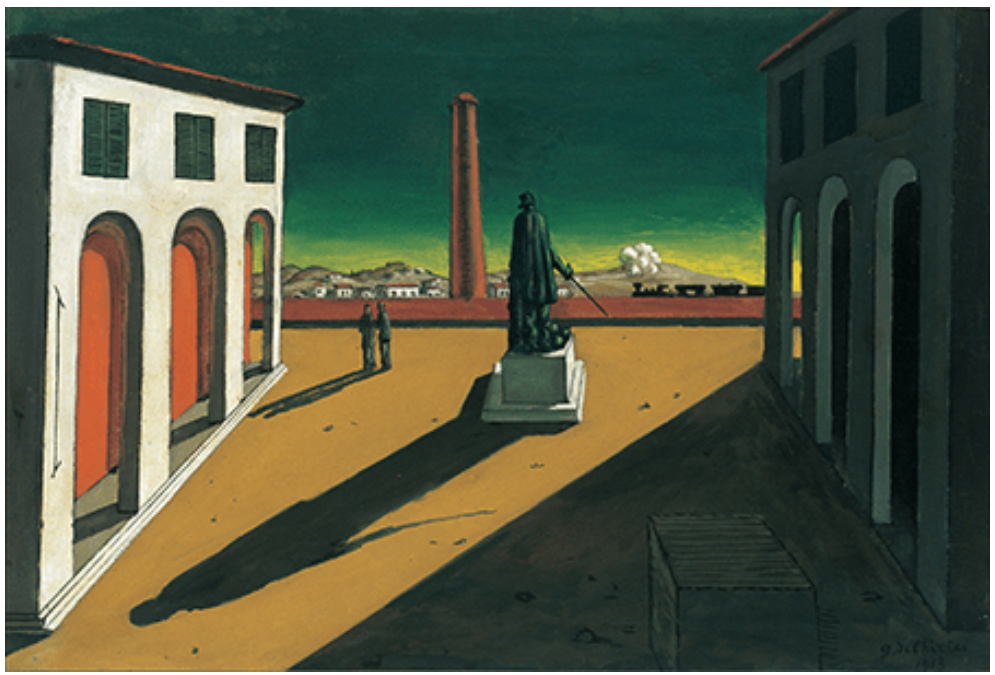
Giorgio de Chirico, Plaza (Piazza), 1913. Museo Nacional de Bellas Artes, Buenos Aires
Singer’s concern with removing the artist’s hand reflects her broader investigations with the issue of representation and meaning. Blurring the lines between artistic media, the grid at once evokes a shower stall—a theme she has addressed in various works, including a self-portrait made in the same year—and the interior of a digitally modeled cube or digital pixilation. Graw observed of the present work, “As Singer demonstrates, even a rather blurred grid can actually accommodate narrative elements and traces of real life…the mere suggestion that it extends beyond the edges of the picture breaks the frame that seeks to contain it.” Notably, the structure of a three-dimensional space is rendered purely by the vibrant color blocks themselves, epitomizing Singer’s endeavor to project a Cartesian world onto a two-dimensional canvas.
Throughout her oeuvre, Singer has engaged with the modernist credo of distinguishing art from nature through a contemporary lens by utilizing technology as the mode of intervention. Having developed a unique technical process, she employs three-dimensional modeling software to produce an underdrawing and paints the image onto the canvas with an airbrush.
“In painting, we have become used to seeing process, to seeing how paintings are made…being able to tie your own subjective experience of perceiving the first to the last stroke of the brush. I actually want to remove that connection; I think it’s way more interesting that you would not be able to have that relationship to it.”
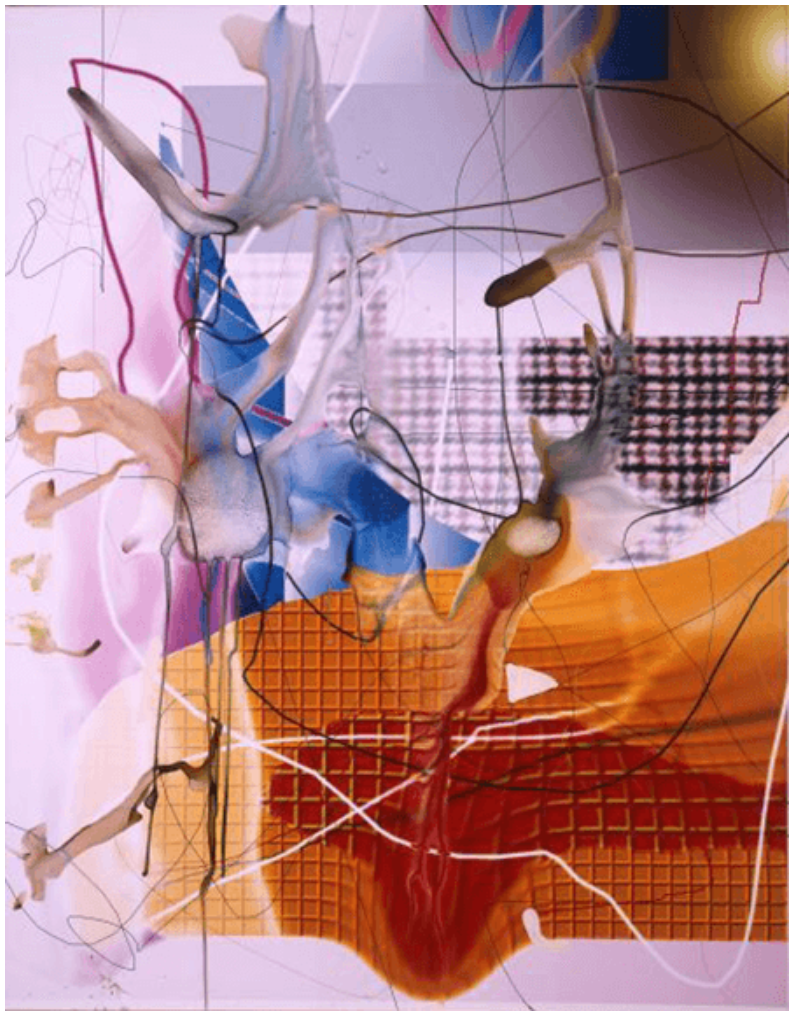
Albert Oehlen, U.D.O. 11 Inyección de tinta y óleo sobre tela, 2001-2005. Galería Juana de Aizpuru, Madrid, Image: Album / Art Resource, NY, Artwork: © 2021 Albert Oehlen
Untitled also reflects the artist’s broader shift towards color. Departing from the monochromatic palette of her earlier work, which deconstructed the pictorial space to manifest “graphic surfaces that look more dead than alive,” Singer began using color to imbue the painting with its own life.
“I simply stopped thinking about color, which strangely resulted in my beginning to use it….I like that it was an unconscious decision on my part. You let the painting itself dictate its own direction, instead of pre-planning and executing an idea like a conceptual artist.”
Denoting the full removal of the artist’s hand, the colors in the present work ultimately reflect art’s self-sufficient power in engaging with its own history: “the grid motif in shades of pink, purple, orange, and blue quotes the emblematic articulation of the modernist ambition to sever painting’s connection to life and obliterate all narrative in visual art.”
European Ego Ideal, 2014
Phillips New-York: 17 November 2021
Estimated: USD 1,500,000 – 2,500,000
USD 4,023,000
Avery Singer – 20th Century & Conte… Lot 21 November 2021 | Phillips
AVERY FISHER
European Ego Ideal, 2014
Acrylic on canvas
100×120 inches (254 x 304.8 cm)
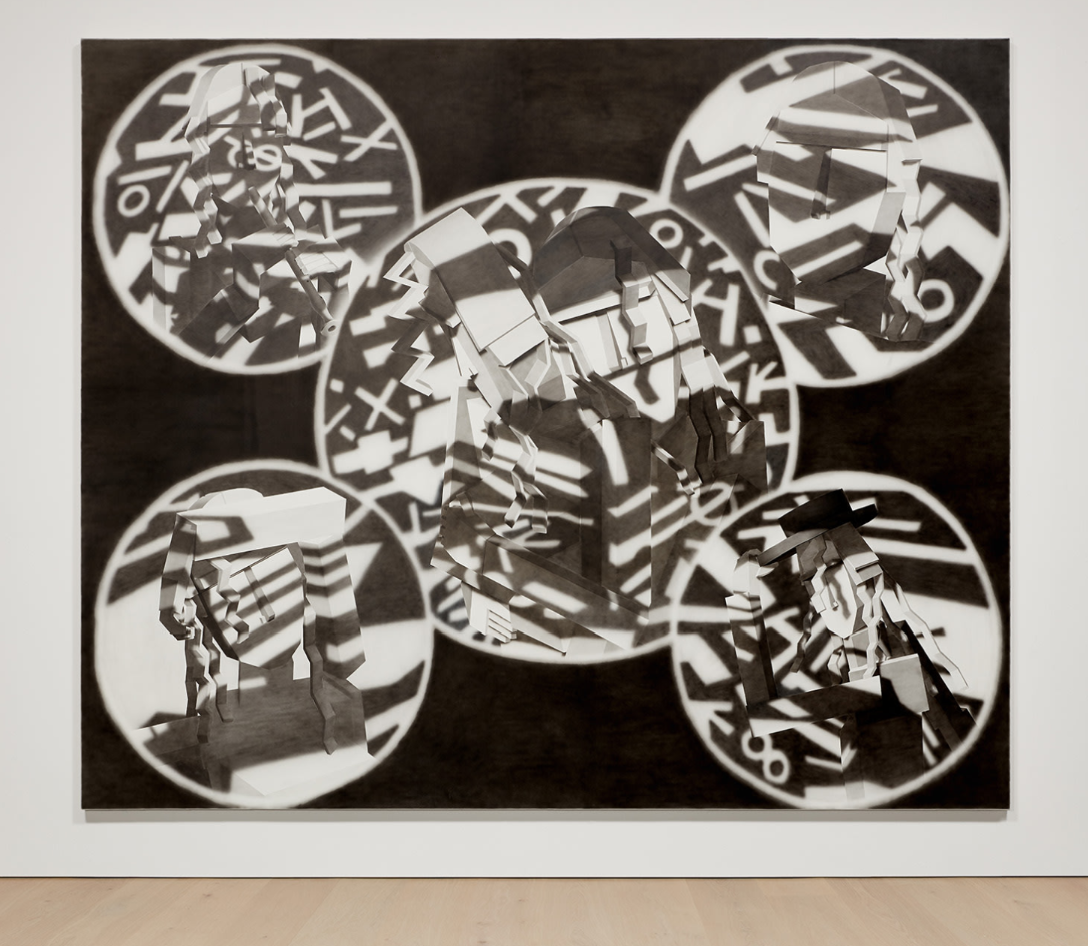
Spanning a monumental 10 feet in length, European Ego Ideal is an extraordinary example of Avery Singer’s singular pictorial vernacular that straddles the digital and the painterly, past and present, representation and reality. One of the pioneering artists of her generation, Singer fuses the aesthetics of Cubism, Surrealism, and Constructivism with her cutting-edge sensibility of referencing the digital age, resulting in enigmatic compositions that are at once richly influenced by her artistic predecessors and forward-thinking with futuristic drive. Painted in 2014, the present work belongs to the early pivotal works that launched her career: black-and-white, filmic scenes from the life of an artist, the figures rendered as blocky computer graphic characters. Here, the present work depicts five alluring vignettes of individual figures emerging from a pitch-black background with cinematic theatricality. After featuring in the artist’s acclaimed solo show at the Kunsthalle Zürich from 2014-2015, European Ego Ideal was presented at the 13th Lyon Biennial and subsequently at Singer’s first major institutional exhibition in Europe, Avery Singer: Scenes, at the Stedelijk Museum, Amsterdam in 2016.
European Ego Ideal showcases the artist’s engagement with Picasso that recurs through this earlier period of her oeuvre, as seen in her The Studio Visit and Performance Artists of 2012, as well as Happening and Director of 2014. Here, she conjures some of the Cubist master’s most famous subjects—his musicians, embodied in the flutist at the top right and guitarist at center, as well as his nudes in the figure at the bottom left. Transforming them into robot-like figures bordering on futurist manga characters and staging them in dramatic light, Singer combines the power of hyperbole and illusionism that engenders the seductive quality of her work. As Sven Loven observes, “We welcome hyperbole as an affront to darkness. Power in hyperbole. Power in histrionics. Power in theater, on a stage where the actors are unreal, but the vision is clear; where the effect is fantastical, but the tableau convincingly lucid. Like a maquette given life, like a step into the uncanny valley, into a world of deceit not yet made wholly deceptive…Through the lies of illusionism, the deceit of simulacra (depth of field, picture-in-picture, soft focus), [Avery’s] images seek to assure us of the validity of our own confusion in the face of cacophony. It is in this assurance that we can find comfort and peace, a ground to stand on. And perhaps this feeling may prove to be the height of seduction.”
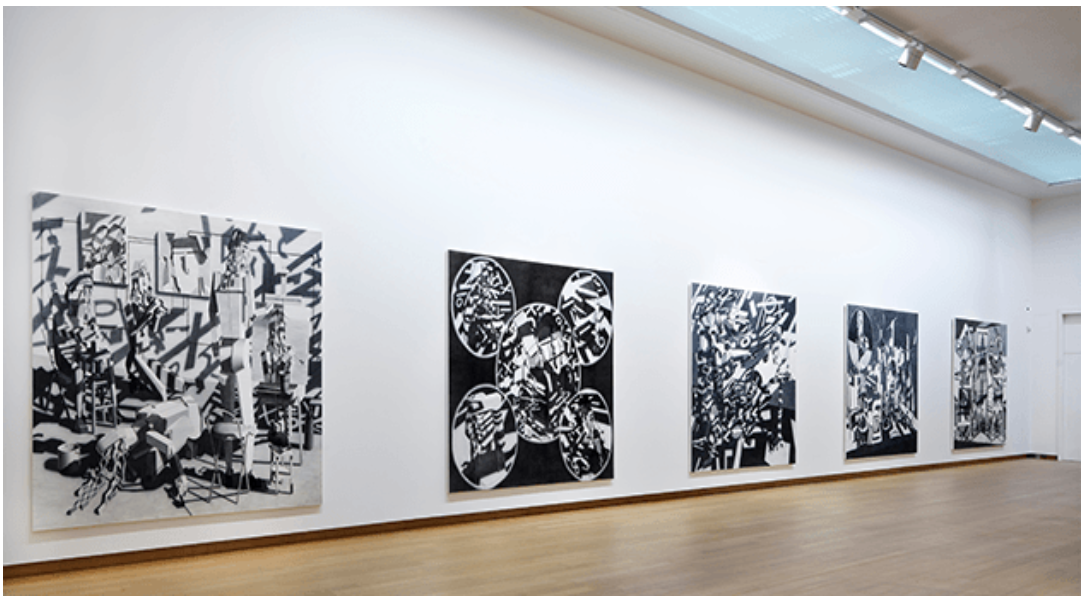
Teetering between abstraction and figuration, the present work epitomizes Singer’s commitment to the modernist credo of distinguishing art from nature through a contemporary lens by utilizing technology as the mode of intervention. Having developed a unique technical process, she employs three-dimensional modeling software to produce an underdrawing and paints the image onto the canvas with an airbrush. The signature use of black and white in her earlier works stems both from her childhood experiences and reinvigorated inspiration. During her youth, her father was a projectionist at the Museum of Modern Art, New York, where she would frequently join him as he screened black-and-white films in the museum basement. “As a kid I would visit him there on weekends so I would have more time with him. I spent a huge part of my childhood in the basement of MoMA in the projection booth,” the artist recalled. However, it was upon Singer’s visit to Albert Oehlen’s black-and-white Computer Paintings show at Skarstedt, New York as an art student in 2009 that this sensibility materialized in her painterly practice. “I had not been interested in contemporary painting until I saw that show. And I realized, oh, this medium is actually really powerful, if you use it right.”
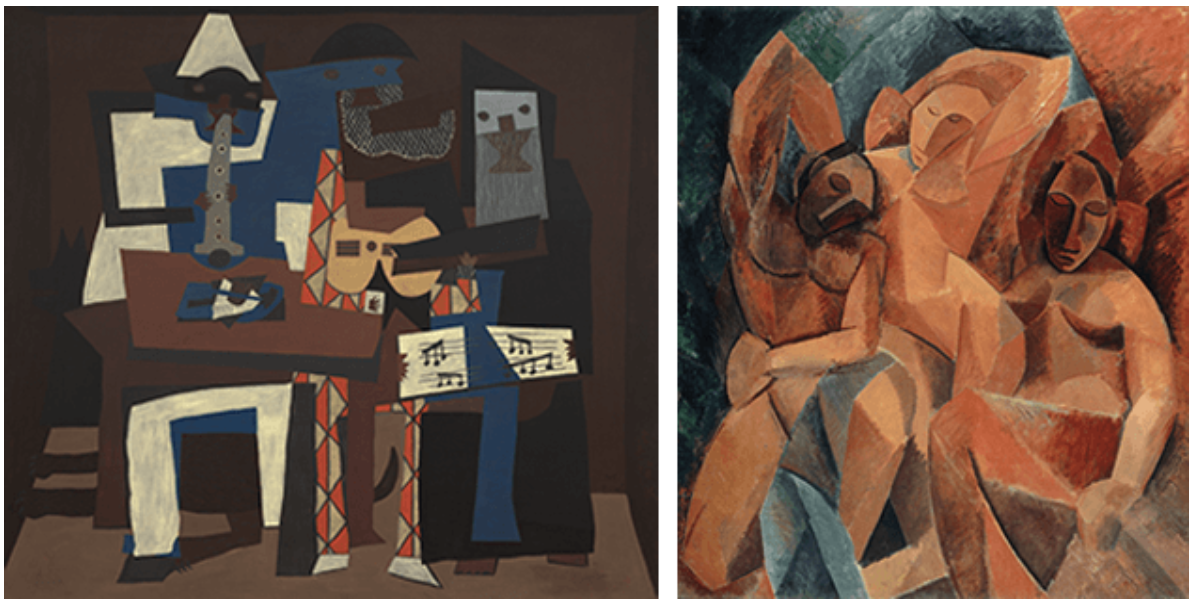
[left] Pablo Picasso, Three Musicians, 1921. Museum of Modern Art, New York, Image: © The Museum of Modern Art/Licensed by SCALA / Art Resource, NY, Artwork: © 2021 Estate of Pablo Picasso/Artists Rights Society (ARS), New York [right] Pablo Picasso, Three Women, 1907-1908. Hermitage, St. Petersburg, Image: Scala / Art Resource, NY, Artwork: © 2021 Estate of Pablo Picasso/Artists Rights Society (ARS), New York
In European Ego Ideal, Avery presents a masterful orchestration of light and shadow through her well-known technique of using masking tape for the linear highlights and employing rubber to render the curves of the circular outlines. “Avery watched the black and white pictures go by and perhaps more important was imprinted by their large frames, false depth, fragmentary narratives, intentional and often heavy-handed staging, lighting, and blocking. The beam of light—her father’s head—the scenes and the shadows of those scenes onto the wall,” Carmen Winant explained. “The films Avery watched growing up were surrounded above and below by modernist painting and sculpture (her namesake is one such American modern artist). The resulting paintings, however much influenced by the properties of projection in all of its forms, cannot be separated from their own intense, frustrated, and sometimes even masturbatory history. They subject, in both image and title, the rituals that surround and produce art: visual studies, studio classrooms, art patrons, performances, and party scenes appear in various incarnations. With its reference to Picasso and its title, the present work wonderfully encapsulates Singer’s words: “My art practice is like a vacant hotel for all the ghosts of modernism to occupy.”
Other Works
Untitled, 2018
Sotheby’s New-York: 28 February 2025
Estimated: USD 100,000 – 150,000
USD 101,600
Untitled | Contemporary Discoveries | 2025 | Sotheby’s
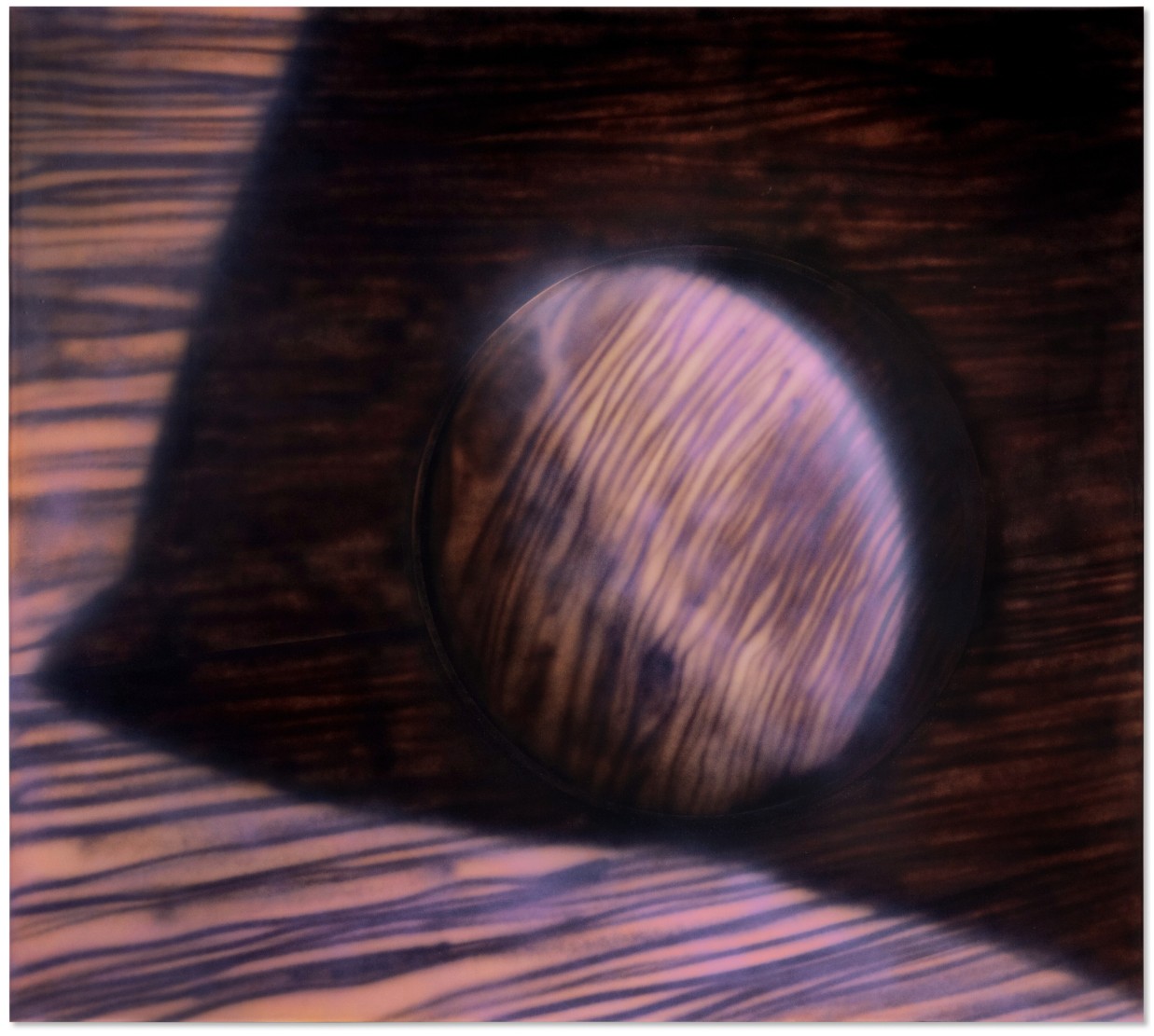
AVERY SINGER (b. 1987)
Untitled, 2018
Acrylic on canvas stretched over wood panel
40×45 inches (101.6 x 114.3 cm)
Signed and dated 2018 (on the overlap)
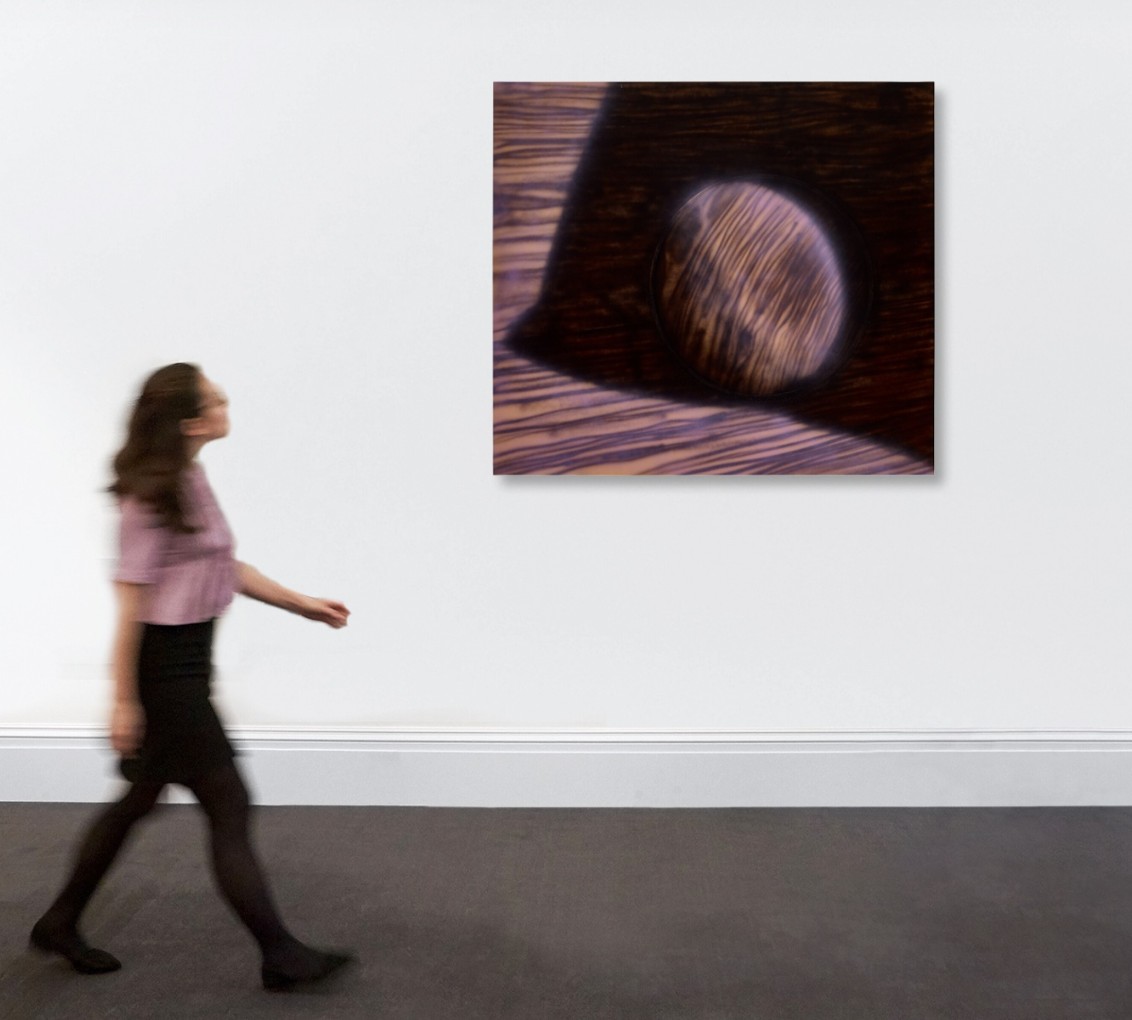
Untitled, 2018 by Avery Singer demonstrates Singer’s career-long exploration of the intersection of technology and art, incorporating advances in the tech space into her practice. The elusive subject of the canvas hovers somewhere between a digitally rendered image and an abstract painting. Unlike many of Singer’s more figurative works, the present work is unique for its abstraction, yet, is well situated in the artist’s oeuvre for its stylistic technique and space-age wonder. In her unique visual aesthetic, Singer explores the contemporary interest in technology, often representing humanoid-robots or other images that feel both of and beyond the human world.
“Art is not logical, it’s abstract and critical. You see your ideas instead of verbalizing them, and you solve riddles of philosophical thinking visually.”
Singer’s artwork straddles a line between technical realism, abstraction, and surrealism, dreaming up paintings that are impossible to find in our world and, yet, executed and presented as though they have always existed before us. The exactness of her line is unquestionable, the clarity of image undeniable. Her computer-age visual language renders images that have never been seen before, at least in paint anyways – an overarching goal of the artist’s practice. Singer’s method is unique. Many of her works begin as mock-ups on Google SketchUp, a 3D-modeling software that allows her to imagine the world of her paintings. She then projects the underdrawing onto her canvas and subsequently applies acrylic paint to the canvas via an airbrush. Translating the 3D-model onto the canvas through a process of pencil drawing and then painting with airbrush, she has crafted an experimental painting style, which has cultivated a cult following for her tech-aesthetic.
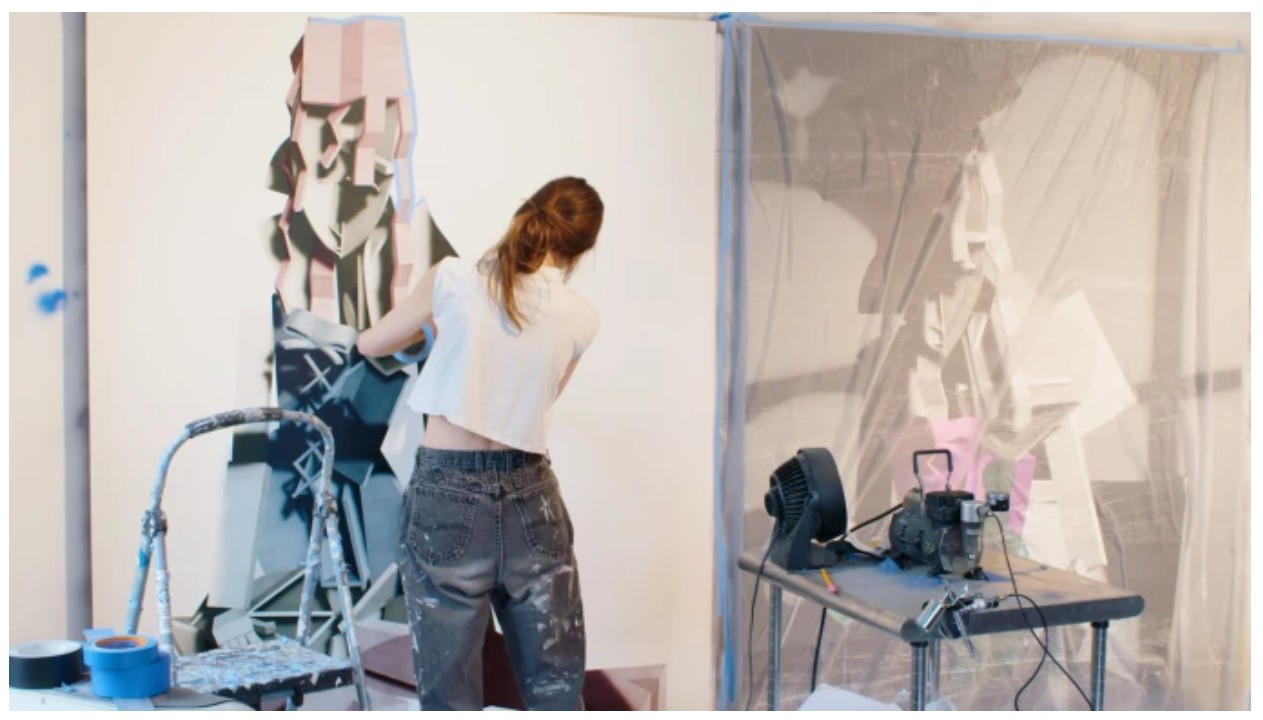
The artist in her studio, 2017. Production still from the Art21 “New York Close Up” film, “Avery Singer’s Next Painting.”
Image © Art21, Inc. 2022. Art © 2022 Avery Singer.
Blending analog and digital technology, Singer’s technique of applying layer after layer of airbrush over the tech-based draft work, which are made up of semi-figurative people and objects, onto the canvas, has lent her work an ultra smooth, almost digital quality. Transforming historical methods and tools, such as gesso and painting, and bringing them into the modern day by pairing them with modern technological innovations, including SketchUp and air brushes, Singer realized how to make all parts of her practice truly contemporary. The result, a zeitgeist-defining visual aesthetic that presents a strong advocate for where painting is going in the 21st century. Singer’s unique synthesis of computer technologies and traditional painting techniques has allowed her to create a distinctive artistic vocabulary, which challenges visual norms and expands the possibilities of contemporary painting.
Happening, 2014
Sotheby’s New-York: 13 May 2024
Estimated: USD 2,500,000 – 3,500,000
USD 3,206,000
Happening | The Now Evening Auction | 2024 | Sotheby’s (sothebys.com)
AVERY SINGER (b. 1987)
Happening, 2014
Acrylic on canvas
100×120 inches (254 x 304.8 cm)
Signed and incorrectly dated 2013 (on the stretcher)
Suffused with fabricated romanticism, the heightened tableau of Happening by Avery Singer is an exemplary testament to the artist’s tongue-in-cheek digital idiom, which takes cues from both past and future to achieve a sense of monumentality and an acute psychological presence. Executed in 2014, the present work belongs to a seminal series of grisaille paintings that introduced Singer’s radically inventive visual vernacular, featuring prominently in Avery Singer: Pictures Punish Words, the artist’s 2014-2015 solo exhibition held at Kunsthalle Zürich. Singer combines computer technologies with modernist legacies to generate ersatz compositions of half-cyborg, half-human figures enacting enduring art world clichés. Standing at an immense scale, Happening echoes the larger-than-life bravado of the art historical tropes that it quotes, hinting at the unrealized narratives that lie just beyond the canvas’s frame and inviting the viewer to step into the surreal worlds Singer creates. With humorous vitality and technical virtuosity, Happening articulates Avery Singer’s highly original, avant-garde mode – a zeitgeist-defining contemporary sensibility that blurs the boundaries between painting and technology; digital and analog; reality and perception.

PABLO PICASSO, LAS MENINAS, NO.1, 1957. MUSEO PICASSO, BARCELONA. IMAGE © SUCCESSION PICASSO/DACS, LONDON 2024 / BRIDGEMAN IMAGES. ART © 2024 ESTATE OF PABLO PICASSO / ARTISTS RIGHTS SOCIETY (ARS), NEW YORK
Produced following her training at the Städelschule in Frankfurt am Main, Singer’s Happening in part mocks the process of critiquing and creating art in all its earnestness. In Happening, four nude women – wearing only high heels and rendered in a blocky, simplistic style – peer at an empty easel, while a fifth lies on the studio floor beneath them. Satirizing the esoteric pomp and circumstance of creative expression, Happening exists in the same fictional realm as art historical mythologies of the Old Master’s studio or the Renaissance workshop. This impulse of Singer’s is not without art historical context of its own, as the title Happening itself shares a name with the antinarrative performance pieces staged by the avant-garde artists of the Fluxus movement, such as Jim Dine, Allan Kaprow, and Yoko Ono. These Happenings, which took cues from Surrealism and Dada, explored the objectification of mundane movements and play-related activities, and the depersonalization of their participants. Here, the dynamic and gestural nature of the figures’ posturing injects an absurdly theatrical playfulness into the atemporal mise-en-scène, belying Singer’s sophisticated conceptual considerations. As curator Beatriz Ruf notes, “The insignias of ‘fine arts’ collide with avant-garde tropes, and parodic autobiographical motifs constantly allude to cliches of the art world. Adopting a humorous tone, Avery Singer demonstrates rituals and social patterns and presents stereotypes of the artist, collector, and writer. In this context, she adopts the historical loci of artistic production…where the myth of the artist and cult of genius are fostered. How are artists made?” (Beatriz Ruf cited in: Exh. Cat., Kunsthalle Zürich (and travelling), Avery Singer: Pictures Punish Words, 2015, p. 5)

AVERY SINGER PHOTOGRAPHED IN HER NEW YORK STUDIO, 2021. IMAGE © SUSAN MEISELAS/MAGNUM PHOTOS
Invoking the geometric forms of Constructivism, Futurism, and Cubism, Happening extends Avery Singer’s abstract and figurative sensibilities with its painterly mimicry of Internet-based aesthetics and digital imaging processes. Initial drafts of Singer’s scenes are conceived using SketchUp, a 3D modeling program, then projected onto a canvas and painstakingly rendered using masking tape and an airbrush in a meticulous process that serves to remove all traces of the artist’s hand. The fantastical composition of Happening is rendered in grisaille, and is further abstracted by the projected shadows that rake over every plane in order to emphasize the staged layers of illusion and reality that Singer constructs in her self-conscious parody of artistic production. Through this dimensional tension, paintings such as Happening open fictional realms that exist at the surreal interstice between the digital and material worlds, offering both an uncanny escape from contemporary quotidian reality and a humorous parody of it. Within the illusionistic precariousness of her paintings, Singer suggests the fallibility of not only the assumed and glorified power that art holds, but also the nature of metaphysical reality itself. Her prescient exploration of computer-generated realities collapses analog understandings of figuration, while expanding on modernist and surrealist notions of spatial logic. In artist Sven Loven’s exegesis on Singer’s beguiling visual vocabulary, he observes, “Through the lies of illusionism, the deceit of simulacra (depth of field, picture-in-picture, soft focus), [Singer’s images] seek to assure us of the validity of our own confusion in the face of cacophony. It is in this assurance that we can find comfort and peace, ground to stand on.” (Sven Loven, “The Cold Standard of Drifting Worlds” in: Exh. Cat., Zurich, Kunstalle Zurich (and travelling), Avery Singer: Pictures Punish Words, 2015, p. 5)

LEFT: FRANCIS PICABIA, PARADE AMOUREUSE, 1917. PRIVATE COLLECTION. IMAGE © BRIDGEMAN IMAGES. ART © 2024 ARTISTS RIGHTS SOCIETY (ARS), NEW YORK / ADAGP, PARIS. RIGHT: FERNAND LÉGER, THE BUILDERS, 1920. METROPOLITAN MUSEUM OF ART, NY. ART © 2024 ARTISTS RIGHTS SOCIETY (ARS), NEW YORK / ADAGP, PARIS
The earnest grandeur of artistic parade performed by Singer’s computer-age figures is undercut by the blatant surrealism of Singer’s abstract visual language, which conjures mimetic falsities while cutting to a cynical societal truth. By seamlessly synthesizing automated technologies and traditional painting techniques, Happening extends Singer’s singular aesthetic lexicon and subverts visual affectations to reinvent the enshrined genre of the painter’s studio scene. The fantastical atmosphere in Happening captures this absurdism within Avery Singer’s oeuvre and evinces the very best of her conceptual painterly practice, which posits a new place for the traditional medium with a technological dexterity and satirical wit, tailored for the Internet age.
Untitled, 2016
Estimated: USD 800,000 – 1,200,000
USD 1,008,000
Untitled, 2016
Acrylic on canvas mounted on panel
77 7/8 x 61 1/4 inches (198 x 155.6 cm)
Signed and dated ‘Avery Singer 2016’ (on the overlap)
“Singer’s large paintings are densely crowded with quotations from avant-garde art history: Naum Gabo’s ‘Heads’ (1915–67), Marcel Duchamp’s Nude Descending a Staircase (No.2) (1912), various constructivist works. Singer combines references with the frivolity of a dada collagist. There are cubo-futurist echoes in her attempts to represent multiple perspectives, while a cold, elegant art deco aesthetic lends her paintings a seductive charm.”
Kundry, 2018
Sotheby’s New-York: 16 November 2022
Estimated: USD 1,800,000 – 2,500,000
USD 2,107,000
Kundry | The Now Evening Auction | 2022 | Sotheby’s (sothebys.com)
AVERY SINGER (b. 1987)
Kundry, 2018
Acrylic on canvas
95×85 inches (241.3 x 215.9 cm)
Signed Avery Singer and dated 2018 (on the overlap)
Wielding a sword as she sits triumphantly in the gridded, 3D-modelled metaverse, the monumental and luminously pink warrioress of Avery Singer’s Kundry testifies to the artist’s revolutionary material intervention into unbound narrative and virtual realms. A virtuoso of the airbrush, Singer combines computer technologies with her own painterly hand in Kundry to painstakingly depict and reinterpret the eponymous mythical character from Richard Wagner’s late nineteenth-century opera Parsifal, as if she were here rendered in a high-fidelity print from digital modelling software. Executed in 2017-2018, Kundry is a brilliant articulation of Avery Singer’s highly original and contemporary visual mode – a zeitgeist-defining contemporary sensibility that blurs the boundaries between painting and technology; digital and analog; reality and perception. A testament to the present work’s significance in Singer’s career, Kundry prominently featured in Days of the Week (Computer Pain), her seminal 2018 solo exhibition at Gavin Brown’s Enterprise in New York, and belongs to a critically acclaimed series that extends her radically inventive visual vernacular with its painterly mimicry of Internet-based aesthetics and digital imaging processes.
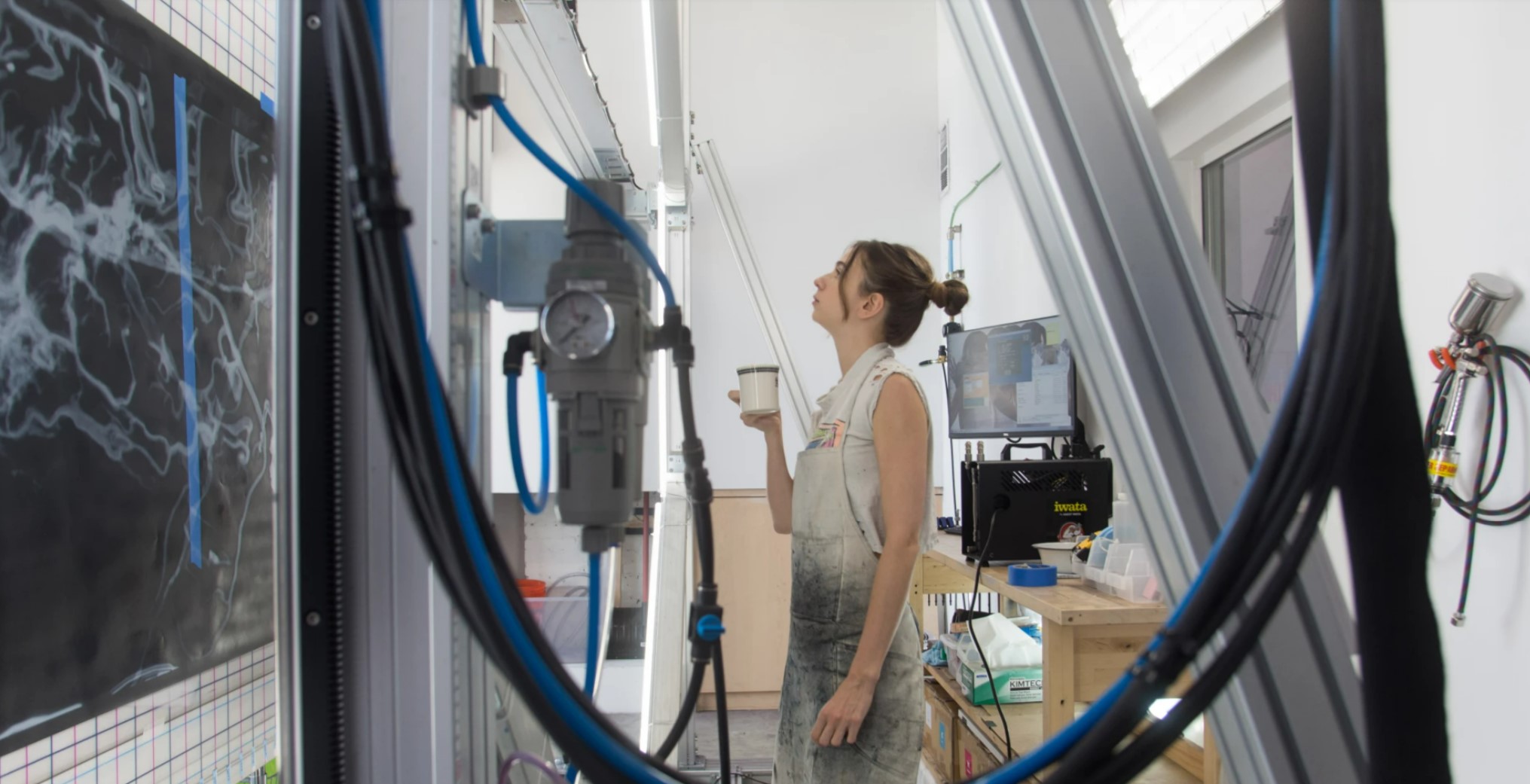
AVERY SINGER PHOTOGRAPHED IN HER NEW YORK STUDIO, 2021. IMAGE © SUSAN MEISELAS/MAGNUM PHOTOS
By seamlessly synthesizing automated technologies and traditional painting techniques, Singer has invented a singular aesthetic lexicon that defies visual expectations and pushes the boundaries of contemporary painting. First drafting images using Google SketchUp, a 3D rendering architectural software, the artist then projects preliminary underdrawings onto her canvas before painting them with geometric precision using masking tape and airbrush. As seen in the gridded confines that constructs the background of Kundry, Singer also recreates the illusionistic and infinite space that can be rendered by 3D computer modelling software in the flat planarity of the canvas surface. Speaking about the motif of a grid that structures her work, Singer reflects on her process: “[I] utilize the architectural idea of scaling up a grid and relating it to another grid, because anyone can understand what a grid is. It’s a Cartesian idea of space that we’ve all grown up with. We executed the painting from background to foreground, painting the shadows first, then I hand brushed the shadows of the brushstrokes, wherever color was occurring.” (Avery Singer quoted in Orit Gat, “Venice Biennale artist, Avery Singer talks processes, robots, and post-human painting,” Art Basel, 5 June 2022 (online))
The title of Avery Singer’s Kundry recalls a mythological woman invented by German composer Richard Wagner for his epic 1882 opera Parsifal, where she is neither a warrior nor a royal, but instead a mysterious and wild woman who is ultimately cursed to live forever after laughing at Christ on the cross. A composite of timeless Western female archetypes like the Loathly Damsel and Wicked Maiden from which Wagner drew literary influence, Kundry represents a polarized operatic woman, struggling between sin and redemption, good and evil, and deception and truth. In the present work, however, Singer represents this mythic character from one of the oldest forms of art with contemporary painterly reinterpretation, dramatically reincarnating her as an armored and regal swordswoman who reigns victorious in an impossible, computerized environment. Glowing with a pink halo of victory as if a heroine in a video game, the tragically cursed Kundry of Wagner’s classical libretto is now an undefeated champion of Avery Singer’s painterly universe, bespeaking the artist’s incisive commentary about the possibilities of reinterpretation and rebirth that lie in the infinite expanse of digital terrain.

In the illusionistic and mythological allure of Kundry, Singer embraces technologies of spatial rendering and imaging, and, more broadly, the fictional and allegorical nature of such virtual reality itself. Indeed, in artist Sven Loven’s exegesis on Singer’s visual vocabulary, he observes, “Through the lies of illusionism, the deceit of simulacra (depth of field, picture-in-picture, soft focus), [Singer’s images] seek to assure us of the validity of our own confusion in the face of cacophony. It is in this assurance that we can find comfort and peace, ground to stand on.” (Sven Loven, “The Cold Standard of Drifting Worlds,” Kunsthalle Zurich, Exh. Cat., Avery Singer: Pictures Punish Words, 2015, p. 5) The fantastical portrait of Wagner’s operatic Kundry in the present work captures the radical poeisis of Avery Singer’s oeuvre, evincing her technological dexterity and witty imagination as it posits a new place for painting that befits the Internet era.
Untitled, 2015
Phillips New-York: 15 November 2022
Estimated: USD 1,500,000 – 2,000,000
USD 1,724,000
Avery Singer – 20th Century & Contem… Lot 4 November 2022 | Phillips
AVERY SINGER
Untitled, 2015
Acrylic on canvas
77 1/8 x 61 1/4 inches (195.9 x 155.6 cm)
Signed “Avery Singer 2015” on the overlap
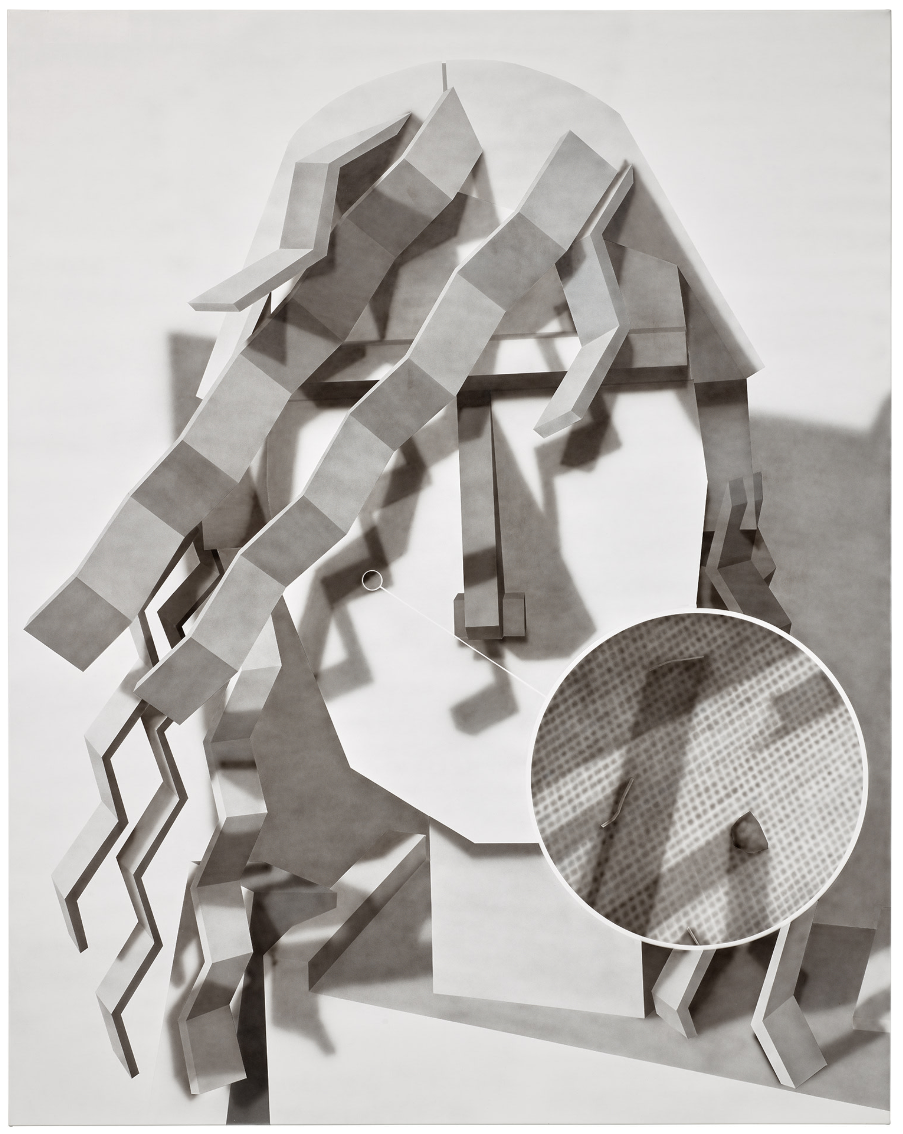
Untitled, 2015, quasi-satirically engages themes of digitization, projection, and reproduction as an avatar-portrait of Avery Singer’s autobiographical artist archetype. The work, which featured in the artist’s first European solo show at The Stedelijk Museum, Amsterdam, in 2016, originates from the pivotal body of work that launched the artist’s career, exploring the concept of the self as an archetypical artist through depictions of blocky, computer-generated characters.
“I’m trying to look forward from my own vantage point, because that seems like the most challenging and complex thing to do.”
Untitled features a human bust in Singer’s signature greyscale; its flat hair, folded like confetti paper, casts shadows on the face in lieu of eyes or mouth. A detail is drawn out in a magnification loupe from the right cheek, seeking an invisible blemish in a gesture that any frequent user of social media will be all too familiar with. The hyper-zoom reveals textures unseen: a perforated dermis, microscopic particles that cast long shadows, like fingers, reaching out to touch the viewer and confront them with the work’s un/reality.
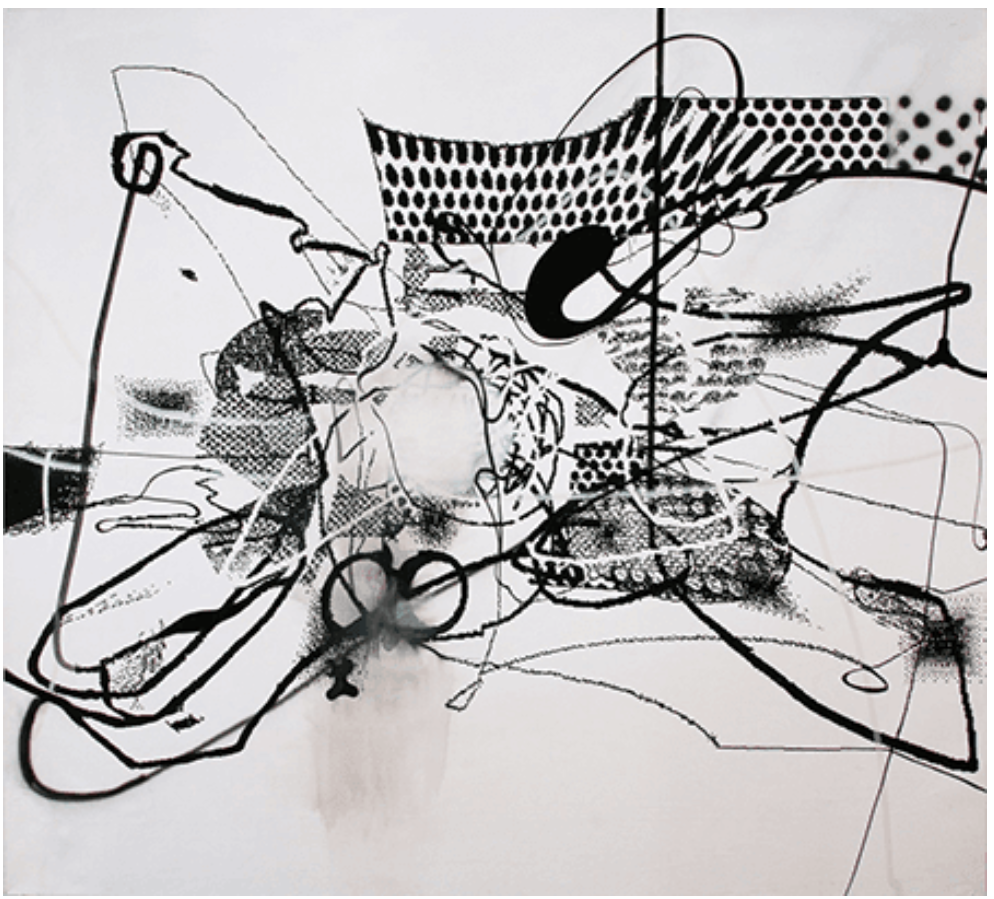
Albert Oehlen, Untitled, 2004, Private Collection. Artwork: © Albert Oehlen / 2022 Artists Rights Society, New York
Singer’s use of black and white in this body of work stems from a combination of childhood experiences and rekindled inspiration. The daughter of two film projectionists (her father worked at the Museum of Modern Art), Singer spent her childhood weekends watching art films in black and white in the museum’s basement viewing room. However, it took until 2009, when Singer, as an art student, saw an exhibition of Albert Oehlen’s Computer Paintings at Skarstedt, New York, for the artist to connect film and technology to her painting practice.
“I had not been interested in contemporary painting until I saw that show. And I realized, oh, this medium is actually really powerful, if you use it right.”
Singer’s works from this period, Untitled included, ask, what is the role of art (or artist?) when images can be mass-produced by computers? Reflecting on the start of her career, Singer notes, “I had not seen paintings that employ 3-D modeling software as a means for image production, so I began to experiment with that.” She uses such software—the architectural mock-up tool called SketchUp was an early favorite—to build her blocky, greyscale compositions of mute, female-coded figures who “romantically inhabit” the “mystical corners” of early 20th century art history. The figures’ abject blankness satirizes nostalgia for an art world gone by, and her clunky computer renderings recall canonical art-historical tropes, such as the flowing hair of Sandro Botticelli’s Birth of Venus, 1485-1486, Uffizi Gallery, or the corkscrew curls of Gian Lorenzo Bernini’s 17th century sculptures. More contemporary references abound, too, as Singer draws from Modernist portraiture conventions, and classic theoretical concepts of image and reproduction.
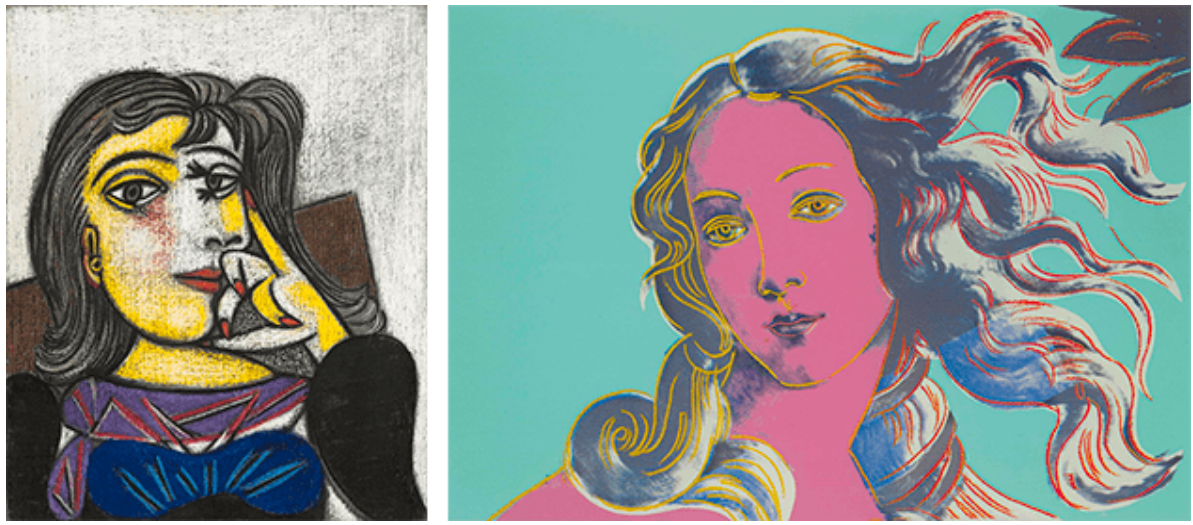
[left] Pablo Picasso, Portrait of Dora Maar, 1937. Musée Picasso, Paris. Image: © RMN-Grand Palais / Art Resource, NY, Artwork: © 2022 Estate of Pablo Picasso / Artists Rights Society (ARS), New York
[right] Andy Warhol, Birth of Venus (After Botticelli), 1984. Artwork: © 2022 The Andy Warhol Foundation for the Visual Arts, Inc. / Licensed by Artists Rights Society (ARS), New York
When building compositions like Untitled, Singer works backwards from Internet image sources, which she then runs through her digital modeling tools, and finally translates into acrylic on canvas. In a way, her process is the inverse of the average person’s experience of using the Internet, where one’s online persona is built up, over time, from “real life” sources. For Singer, the “real life” thing, the physical painting, is the last object to come into being. Untitled exists in a digitally mediated space in which one can zoom into the surface of the skin, yet the basic features of the face remain stubbornly undefined. The contrast of micro-knowledge and macro-frustration in Untitled perhaps reflects the “process of banalization” that Singer cites as a product of modern society, specifically, in terms of hyper-monetized and hyper-online spaces, such as social media, which is the natural habitat of the 21st century artist building their career. Singer engages this digital landscape in both personal and universalized terms with Untitled. Her computer aesthetic creates the artistic space to explore the self as archetypical artist, both intimately tied to, and completely divorced from, the self as an individualized human being.
Untitled, 2017
Christie’s Hong-Kong: 26 May 2022
Estimated: HKD 10,000,000 – 15,000,000
HKD 22,050,000 / USD 2,808,953
AVERY SINGER (B. 1987) (christies.com)
AVERY SINGER (B. 1987)
Untitled, 2017
Acrylic on canvas laid on wood panel
78 3/8 x 61 3/8 inches (199×156 cm)
Signed and dated ‘AVERY SINGER 2017’ (on the overlap)
Prada Mask, 2012
Phillips London: 4 March 2022
Estimated: GBP 150,000 – 200,000
GBP 252,000 / USD 332,936
Avery Singer – 20th Century & Contemp… Lot 114 March 2022 | Phillips
AVERY SINGER
Prada Mask, 2012
Acrylic on board
36 1/8 x 36 1/8 inches (91.6 x 91.6 cm)
Signed and dated ‘AVERY SINGER 2012’ on the stretcher
At the outset, Singer experimented with Photoshop to create flattened digital images that would then be sketched by hand. She then progressed to designing architecture and exhibition spaces. Singer projects her intricate designs onto a conventionally gesso-primed canvases, marking out the forms with masking tape before applying paint through an airbrush. The digital qualities of the computer programme are balanced alongside the perfected surface achieved through airbrushing, a technique that removes the trace of the artist’s hand. The resulting mix of techniques and styles references painting’s modern history, from Surrealism to Cubism to Russian constructivists such as Gobo. Singer effectively balances modern design capabilities whilst still engaging in the tradition of painting and legacy of Modernism.
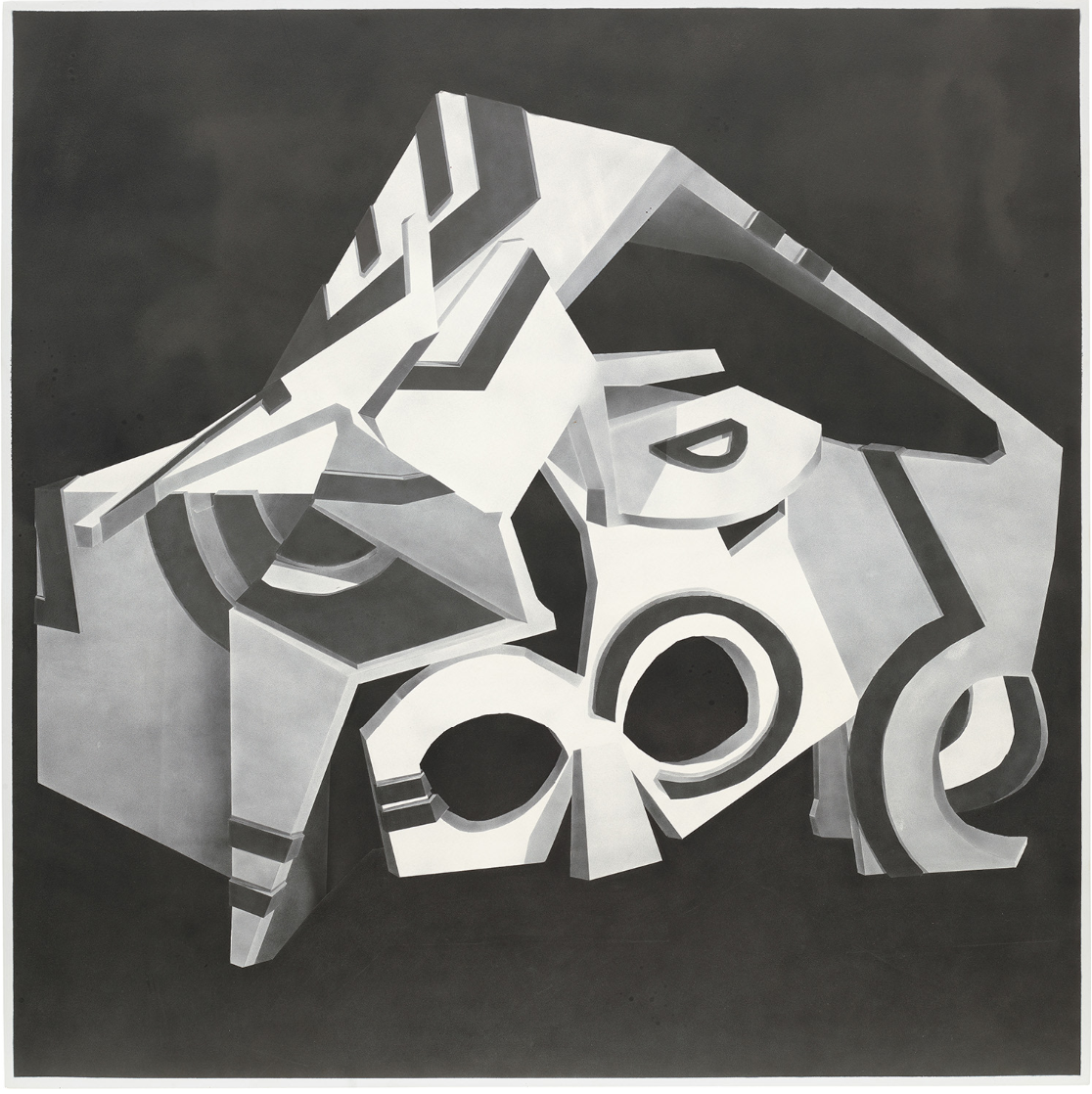
Prada Mask showcases the Cubist influence of Picasso, a recurring theme in this early body of Avery Singer’s work. The viewer is presented with a variety of optical impossibilities. The altering surfaces of the object are abstracted and flattened, brought into sharp focus enabled and enhanced by the architectural design modelling software. Reminiscent of Picasso’s paintings of African masks, the present example is executed in a melee of stylised forms, almost entirely in black and white tones. Characteristically for the artist it treads the line between abstraction and figuration.
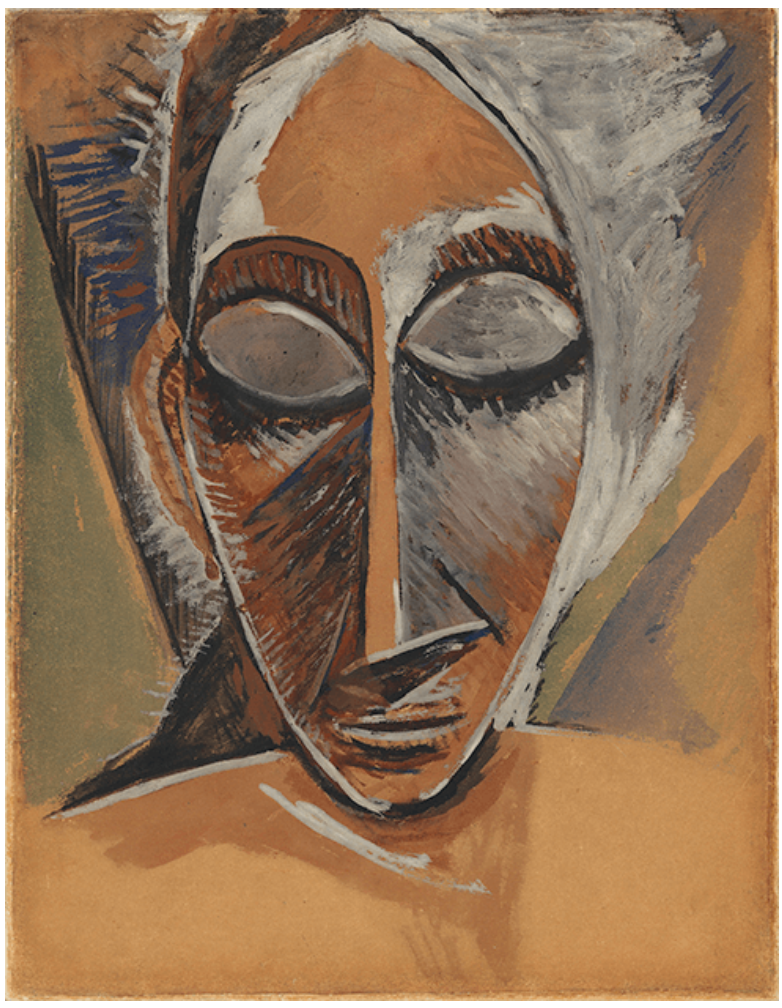
Pablo Picasso, Head of a Woman (Study for Nude with Drapery), 1907, The Metropolican Museum of Modern Art, New York. Image: © The Metropolitan Museum of Art/Art Resource/Scala, Florence, Artwork: © Succession Picasso / DACS, London 2022
Manipulating new technologies to illustrate historical artistic references, the present work is an elegant and power expression of the artist’s engagement with Modernism that lies at the very heart of Avery Singers practice. Pushing the limitation of painting, Singer successfully reimagines the mediums future. She has discovered its uncharted potential by concurrently studying the past and investigating the possibilities of the future. Singer creates her own way of seeing and introduces the viewer to a new world of possibility.
Untitled (Tuesday), 2017
Christie’s Hong-Kong: 1 December 2021
Estimated: HKD 16,000,000 – 26,000,000
HKD 35,050,000 / USD 4,497,250
AVERY SINGER (B. 1987) (christies.com)
AVERY SINGER (B. 1987)
Untitled (Tuesday), 2017
Acrylic on canvas laid on wood panel
85 x 95 1/4 inches (215.9 x 241.9 cm)
Signed and dated ‘AVERY SINGER 2017’ (on the overlap)
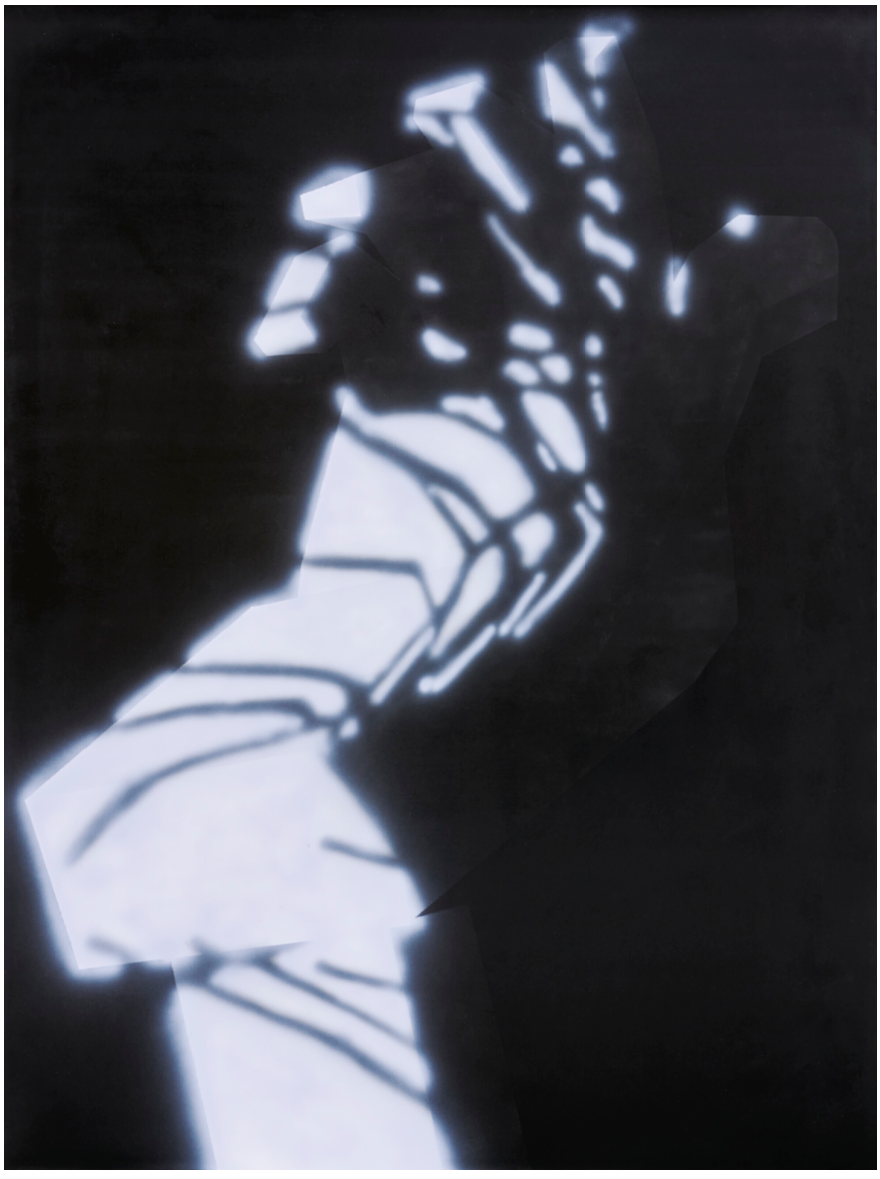
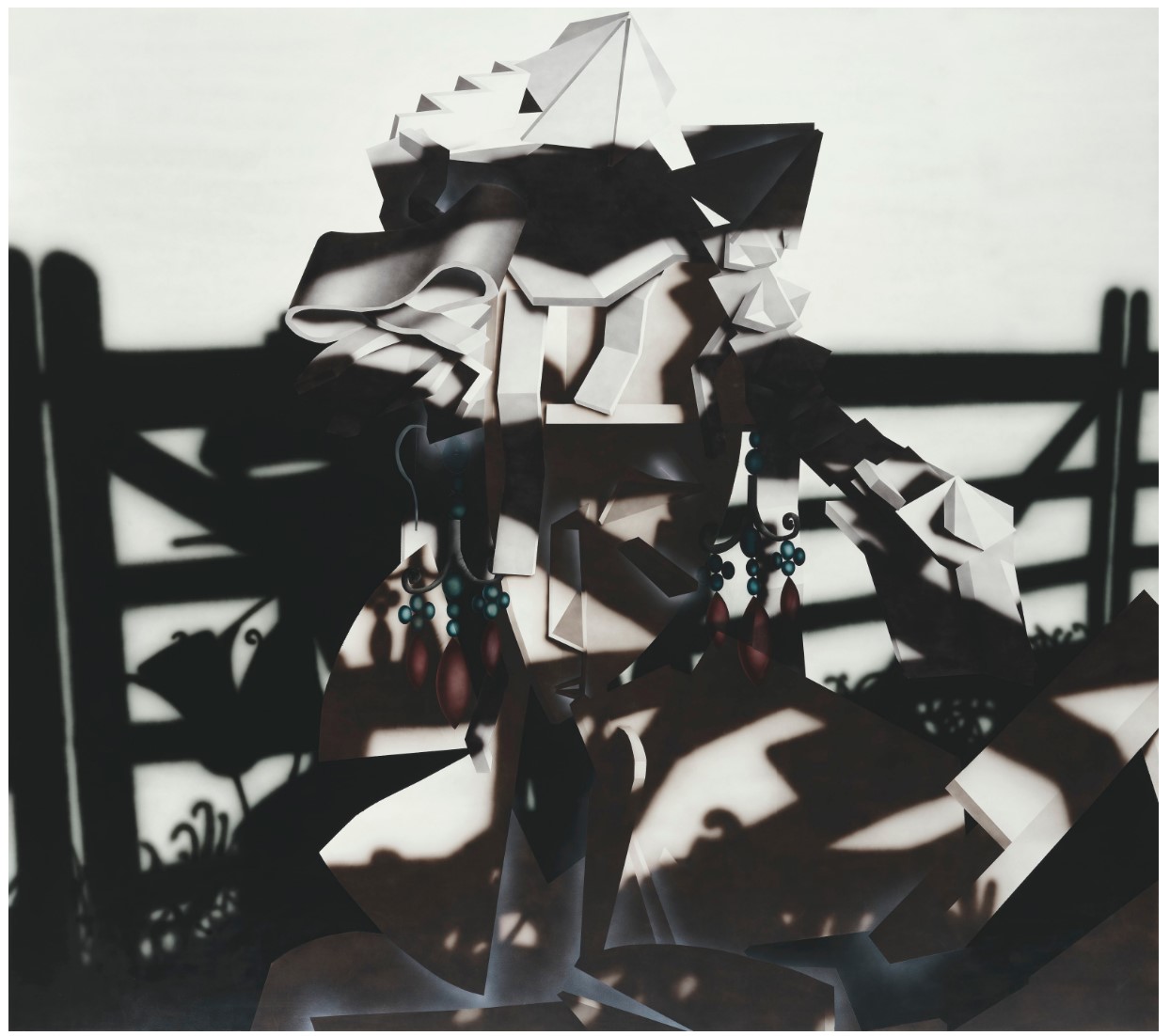
Untitled (Tuesday) exemplifies Singer’s critically acclaimed approach; from her unique practice to conjuring visual narrative, she converges the past and present in this emblematic piece. Executed in monochromatic grisaille, the work depicts Singer’s signature schematic figure composed of rudimentary computer-generated shapes. Reduced to pure geometric forms, the ambiguous figure is overlaid with shadows that cast beyond the picture plane, adding to the mysterious allure of the semi-figurative scene. The dramatic interplay between lights and shadows alludes to a bigger picture beyond the canvas. Contrary to the cold fictional humanoid figure, the shadows reveal a livelier landscape — adding a different dimension to the piece. The background is filled with scenic elements, from the garden fence to the greenery, flowing with organic lines juxtaposing against the figure composed with sharp geometric precision. The soft silhouette brushes against the firm structural figure, adding an invigorating ambiance to the otherwise lifeless grisaille. This contrasting composition builds onto the exciting dynamic of fiction versus reality while intensifying the interaction between digital and analogue mediums deployed in the piece. Moreover, the silhouette discloses a third layer to the picture: a layer in-between the figure and the fence. The cryptic object engages the viewer into the scene and invites them to examine the piece through multiple perspectives, pushing beyond the frames of the canvas.
The lighting illuminates this scenic background and highlights the dangling earthy-shades earrings that are reminiscent of the Bohemian style — a signature motif in Singer’s oeuvre inspired by her peculiar upbringing. With both parents as artists, Singer grew up in a creative community that shaped the bohemian lifestyle that inspired the settings for her idiosyncratic paintings. Her father worked as a projectionist for New York’s Museum of Modern Art, and she draws on from this intellectual heritage by not only implementing the digital medium into her practice but also composing a picture as if it were a scene from a film. The composition highlights Singer’s masterful translation of her digital creation to analogue materials and emphasizes the interweaving relationship between contemporary and traditional techniques.
Untitled (Study), 2016
Sotheby’s London: 14 October 2021
Estimated: GBP 150,000 – 200,000
GBP 252,000 / USD 344,874
Untitled (Study) | Contemporary Art Evening Auction | 2021 | Sotheby’s (sothebys.com)
AVERY SINGER (b. 1987)
Untitled (Study), 2016
Acrylic on gessoed board
30 x 38 5/8 inches (76.2 x 98.5 cm)
Signed and dated 2016 on the reverse
Executed in 2016, Untitled (Study) is a superb example of Avery Singer’s unique pictorial syntax in which the language of computer programming and digital illustration intersects with the weighty tradition of modernist painting. Fusing Surrealist, Cubist and Constructivist aesthetics with imagery inherent to the Internet Age, Singer creates enigmatic spatial compositions that are testament to her status as one of the most influential artists of her generation. The present work was executed at an early, pivotal moment in Singer’s career. In 2016 she was just 29 years old, with solo exhibitions opening at the Stedelijk Museum, Amsterdam (Avery Singer: Scenes, April – October 2016) and The Secession, Vienna (Sailor, November 2016 – January 2017). Five years on, Singer is one of the most exciting young artists working today and her paintings reside in prestigious museum collections such as The Whitney Museum of American Art, New York and Museum Ludwig, Cologne.

Untitled (Study) illuminates Singer’s abstracted approach to portraiture, and her commitment to the airbrush as a singular means to move acrylic pigment across the surface of her paintings. The use of the airbrush breaks with painterly convention and marks a total erasure of the artist’s hand. Singer’s highly developed visual process begins with gesso-primed canvas or board; she then employs masking tape and an airbrush to render fractured and flattened designs created using the 3D modelling program SketchUp. The resulting images are at once digital and analog, androgynous and abstracted.
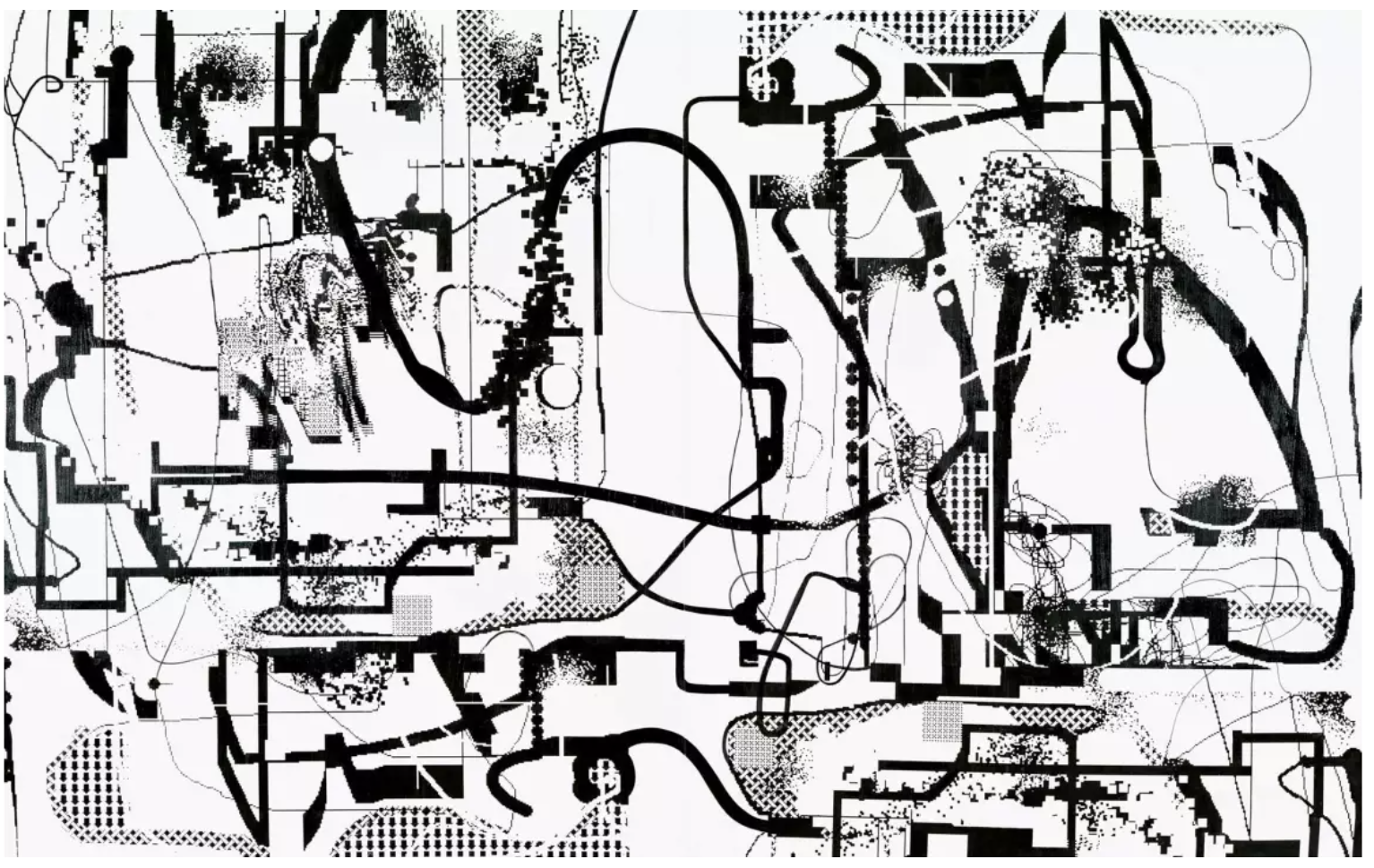
ALBERT OEHLEN, OHNE TITEL, 1993 / IMAGE: © COURTESY GALERIE MAX HETZLER, BERLIN | PARIS | LONDON
ARTWORK: © ALBERT OEHLEN. ALL RIGHTS RESERVED, DACS 2021.
Singer’s practice often rejects art historical influences in favor of more contemporary sources. A native New Yorker with a studio in Bushwick, Brooklyn, she draws upon the graffiti culture of downtown Manhattan – her use of the airbrush is a harbinger of this – and the viewer is reminded of Christopher Wool’s grisaille abstractions that are, like Singer’s own work, an homage to the intensity and energy of New York City. Yet Singer’s vectorized and boxy abstractions created using digital technology are also reminiscent of Wade Guyton’s canvases that exploit the erratic qualities of digital inkjet printers, or Albert Oehlen’s innovative black and white computer paintings of the late 1990s. While Singer’s aesthetic language draws upon a number of radical artistic practices, her amalgamation of digital and painterly media remains entirely unique.
“Painting can suffer from nostalgia about art history – I don’t think like that. I would rather do something that is representative of the time we are in. If that challenges the idea of what a painting will be, then I consider it a success”
Exploring the underpinnings of digital media and Internet culture via an innate amalgamation of abstraction and figuration, Untitled (Study) is a hallmark of Singer’s highly inventive oeuvre.
Boots, 2017
Sotheby’s Hong-Kong: 18 June 2021
Estimated: HKD 3,800,000 – 5,800,000
HKD 10,460,000 / USD 1,347,505
AVERY SINGER (b. 1987)
Boots, 2017
Acrylic on canvas stretched over wood panel
40×48 inches (101.6 x 121.9 cm)
Signed and dated 2017 on the overlap
Boots by Avery Singer articulates the artist’s highly original visual mode – a zeitgeist-defining contemporary sensibility that blurs the lines between painting and technology, digital and analog, genre and media. In Singer’s dexterously high-tech process, she employs sophisticated automation modelling software to create underdrawings and backdrops, and then airbrushes layers of images using a computer-controlled printer. The resulting works evoke singular atmospheric spaces conjuring the digital realm; often with a matte or glossy finish, Singer’s paintings contrast the classical and the new, past and future, and geometric precision and organic forms.
Dancers Around An Effigy To Modernism, 2013
Christie’s Hong-Kong: 24 May 2021
Estimated: HKD 7,800,000 – 12,000,000
HKD 24,250,000 / USD 3,123,258
AVERY SINGER (B. 1987) (christies.com)
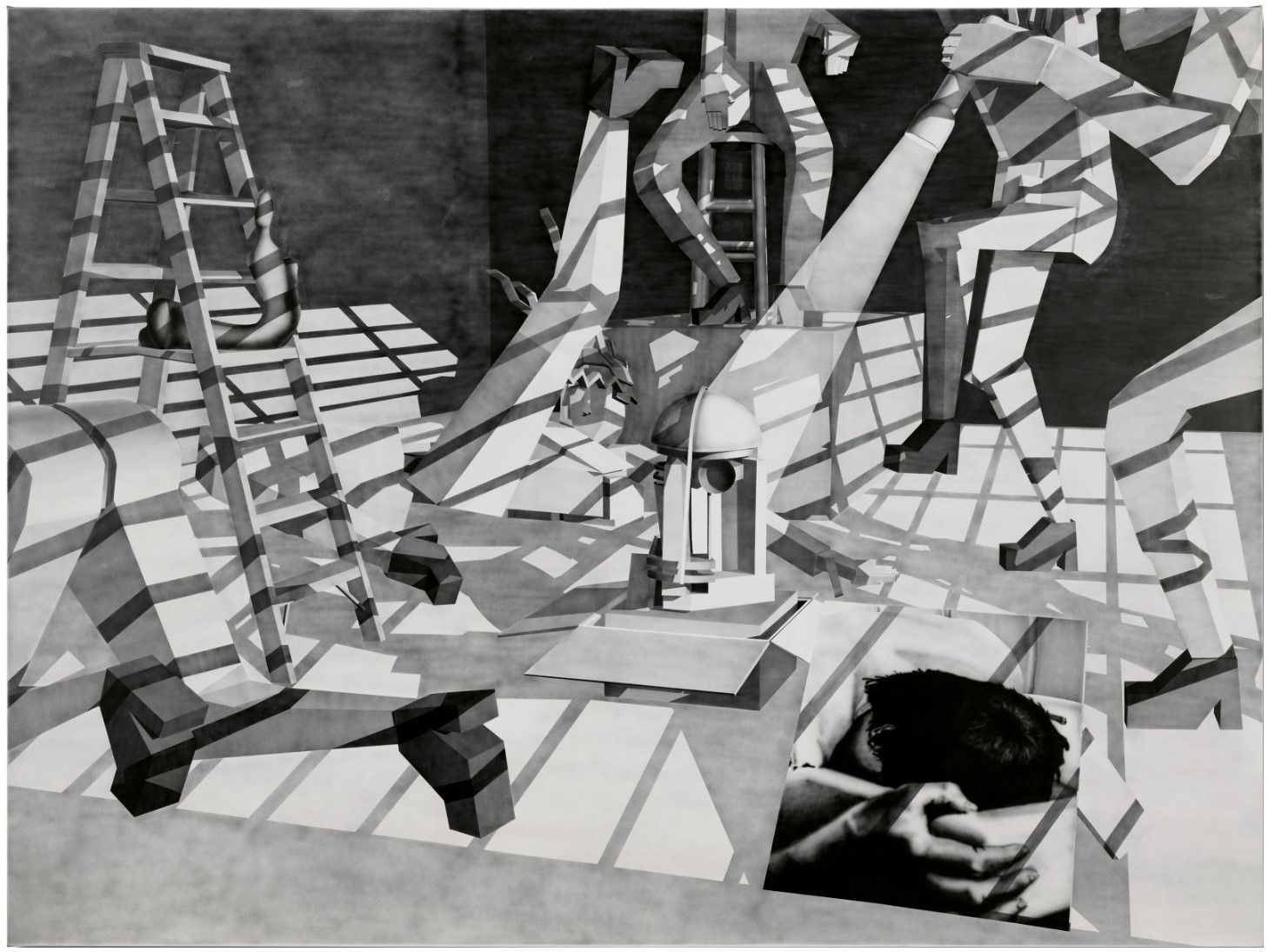
AVERY SINGER (B. 1987)
Dancers Around An Effigy To Modernism, 2013
Acrylic on canvas
72×96 inches (183 x 244.3 cm)
An immersive tableau almost 2.5 metres across, Dancers Around an Effigy to Modernism (2013) exemplifies the unique approach of Avery Singer, who collides art-historical references in compelling, playful and gently comedic scenes. Executed in grisaille—a monochrome technique traditionally used for trompe-l’oeil portrayals of sculptural relief—the work depicts a group of high-heeled dancers cavorting round the robot-like Modernist bronze Skulptur 23 (1923) by Rudolf Belling. One figure shines a torch at the sculpture, as if placing it under interrogation. To the left is an artwork by contemporary sculptor Rachel Harrison, featuring an amorphous shape resting on a found stepladder. In the foreground is an image from performance artist Chris Burden’s infamous 1974 work Velvet Water , in which Burden repeatedly plunged his head in a basin and attempted to breathe underwater. Singer’s overall scenario itself looks something like a piece of performance art: a seated figure observes from a raised platform in the background, and the action is lit from what seem to be high studio windows, raking the scene with dramatic shadows that emphasise its staged layers of illusion, artifice and multiple realities.
Typical of the style that first brought Singer to acclaim, the composition for Dancers Around an Effigy to Modernism was made in the computer programme SketchUp, widely used for 3D modelling by architects and interior designers. Singer then projected this digital scene onto canvas and painted, with crisp precision, using an airbrush and masking tape. While the resulting pristine finish seems to elide any trace of the artist’s hand, Singer’s work has an intriguing life that is distinctively hers. Through its traversing of realms—from three-dimensional reality to virtual, digital space and thence to the flat painted surface—it takes on a richness of overlaid perspectives that complements Singer’s critical eye on art history. The present painting’s festive dancers poke fun at the collective reverence of historical avant-gardes, with Belling’s sculpture at the centre like a fallen object of worship; rather than perched on a pedestal, it is in an open box on the floor, as if newly unpacked. With the inclusion of Rachel Harrison’s surreal ladder assemblage, Singer invokes an artist who shares her self-conscious interest in the structures and conventions of art’s display. Chris Burden’s performances, meanwhile, tested the limits of art, morality and power, challenging audiences and often putting the artist in extreme danger. Conjuring these different ideas and eras into the same grey mise-en-scène, Singer brings the viewer into a space which—like sculpture—invites examination from multiple angles.
Untitled, 2016
Phillips London: 15 April 2021
Estimated: GBP 150,000 – 200,000
GBP 466,200 / USD 642,502
Avery Singer – 20th Century & Contempor… Lot 4 April 2021 | Phillips
AVERY SINGER
Untitled, 2016
Acrylic on canvas
40×48 inches (101.6 x 121.9 cm)
Signed and dated ‘AVERY SINGER 2016’ on the overlap
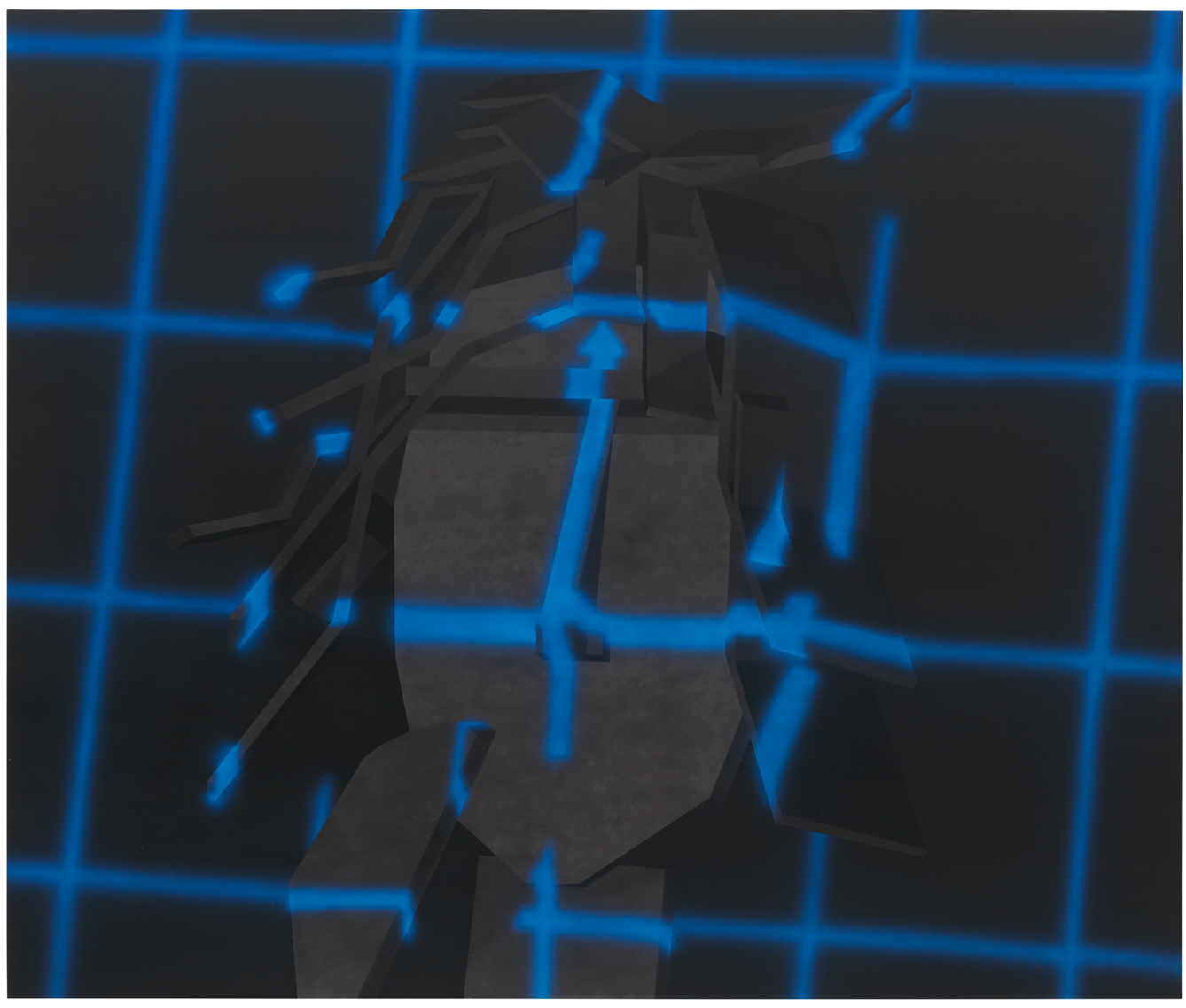
Avery Singer is a painter for the digital age. Carrying out the artistic act without a paintbrush, she instead refers to a nifty repertoire of computerized tools, including software programmes designed for video games and architecture, to generate unique, abstract images.
“I am not really interested in using paint brushes, and never have been. So I guess I am trying to figure out how to make a painting without that methodology.”
Devising a landscape of blue, laser-like lines crossing over an entirely black ground, Untitled is a mesmerizing example of her practice. At the composition’s center, an amorphous shape emerges, what appears like strands of hair towards the upper extremity elucidating it as a human or animalistic form. Singer concocted this robot-like portrait through her idiosyncratic digital process, before airbrushing the resulting image onto canvas. In this way, she melds tradition with nowness, infusing an age-old medium with freshness and relevance. In 2020, Singer completed a large, panoramic fresco for the Ludwig Museum in Cologne, and signed with Hauser & Wirth, making her the youngest painter to be represented by the supergallery. This consolidated success came naturally, after a string of other exceptionally precocious feats: Singer’s solo exhibitions at various prestigious institutions, including the Hammer Museum, Los Angeles, the Stedelijk Museum, Amsterdam, Vienna’s Secession and the Kölnischer Kunstverein, Cologne in 2015, 2016 and 2017.
Speaking of her move to colour, evolving from the idiosyncratic use of grisaille that had defined her earlier work, Singer said, ‘I simply stopped thinking about colour, which strangely resulted in my beginning to use it. I got into it and after a while became aware of it. I like that it was an unconscious decision on my part. You let the painting itself dictate its own direction, instead of pre-planning and executing an idea like a conceptual artist’. With its black and blue meanderings, Untitled evokes Peter Schuyff’s vibrant compositions, similarly suggesting flows of movement. At the same time, one is reminded of Albert Oehlen’s Computer Paintings, which set the foundation for future attempts at digitizing the painterly medium.