
Adrian Ghenie creates sumptuous, large-scale paintings that examine the brutality of recent history’s darkest moments. Using unconventional tools and methods, Ghenie blurs his imagery with knives and pencils. He often turns to infamous figures of the 20th century, from within his home region as well as from around the world, who have engaged in or committed genocide, torture, mass murder and caused widespread suffering. His blurred, scorched, and obscured depictions of Stalin, Hitler, Mengele and Ceausescu seem to synthesize these sinister figures within art historical, political and personal memory.
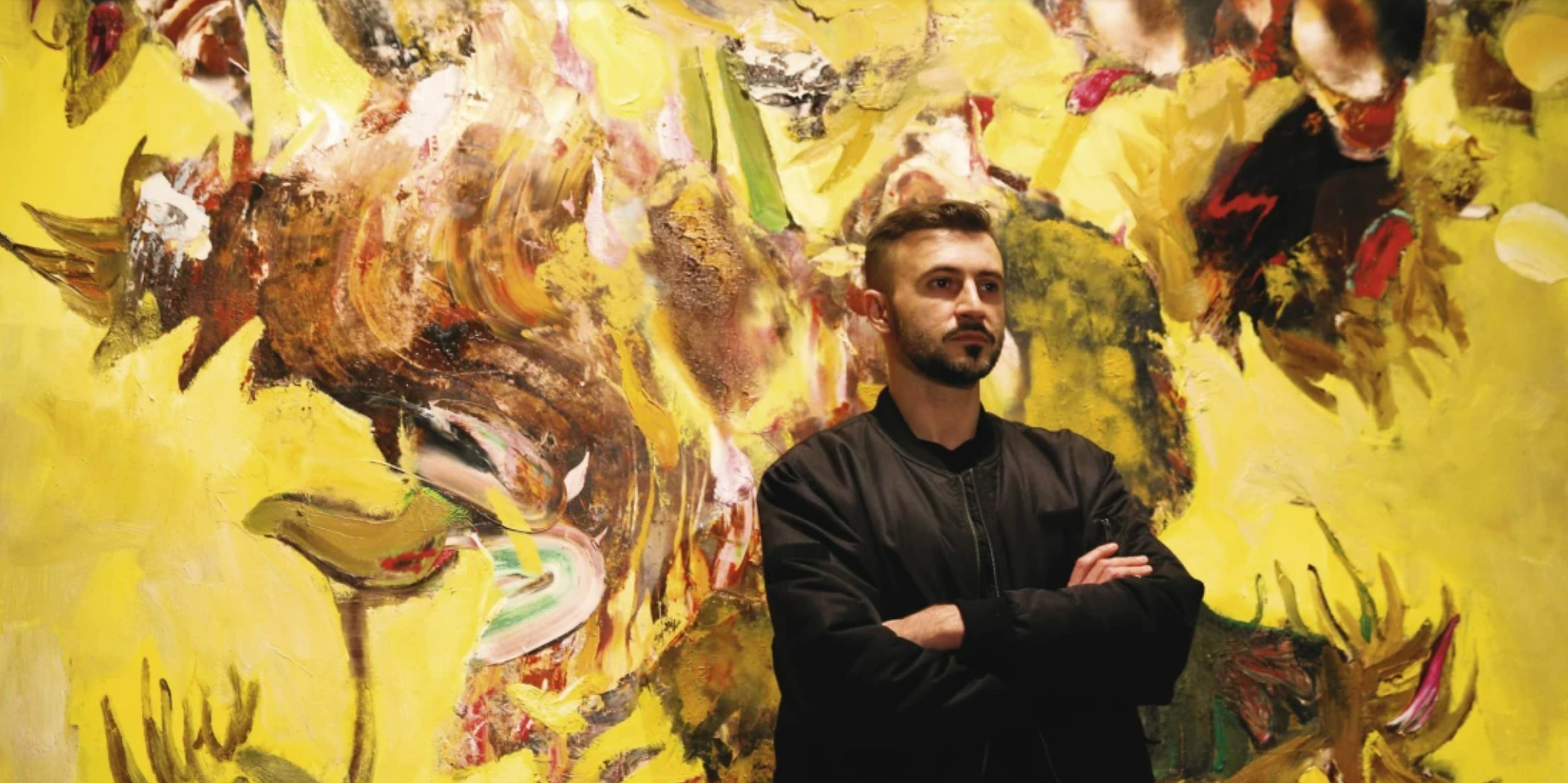
Adrian Ghenie spent his formative years living under the regime of Romanian dictator Ceaușescu, eventually witnessing the revolution which would culminate in the political leader’s execution, consequently inspiring the visual allusions to historical events that saturates the artist’s oeuvre. Somber and gritty, his canvases bear gestural, abstract brushstrokes that are exhaustive in their historical references. Demand for his paintings has skyrocketed in recent years. His work continues to engage the same rigor and seriousness, and the top collectors have sustained the record prices for his paintings.
Introduction
Adrian Ghenie is widely regarded as one of the most important painters to emerge from Eastern Europe in the 21st century. Born in 1977 in Baia Mare, Romania, he studied at the University of Art and Design of Cluj-Napoca, a school that helped give rise to what critics often describe as the “Cluj School” of contemporary painting.
Ghenie gained international recognition in the late 2000s for his powerful, psychologically charged paintings that revisit the traumas, ideologies, and historical figures of the twentieth century. His work blends figuration and abstraction, often dissolving recognizable subjects into dense fields of paint. Through this approach, he explores themes of memory, history, propaganda, and the fragile construction of identity. Today, Ghenie is considered one of the leading figures in the global revival of large-scale figurative painting, alongside artists who have reintroduced narrative and historical reflection into contemporary painting.
Technique and Visual Language
Ghenie’s paintings are characterized by a highly physical and experimental approach to paint. Working primarily in oil on canvas, he often builds surfaces through thick layers of pigment, scraping, smearing, and applying paint with unconventional tools such as palette knives or even stencils. This process produces surfaces that appear simultaneously constructed and eroded. Figures emerge from the paint only to dissolve again into abstraction, creating images that feel unstable and psychologically intense. His visual language often recalls elements of twentieth-century European painting—from the existential figuration of Francis Bacon to the expressive distortions of Willem de Kooning. Yet Ghenie’s work is unmistakably contemporary in its treatment of photographic sources, historical references, and fragmented narratives.
Ghenie has long been captivated by the darker forces that shaped the twentieth century and continue to impact our present. He often works from black-and-white photographs he finds online, zoning in on powerful figures and pivotal moments that have left indelible marks on history. His subjects have included scientists, artists and dictators, with a particular emphasis on the legacy of the Second World War, and on the looming specter of fascism in all its forms. In tandem with his dialogue with historical events, Ghenie’s work is animated by a deep love for the history of art. He hybridizes, mutates and cross-pollinates ideas and techniques from a range of sources, creating his own unique species of painting. As a young painter, he sought to emulate artists like Rembrandt, to whom he had been drawn since he was a child: he concealed this interest from his teachers at the art academy in Cluj, who advocated an Abstract Expressionist style of painting. As his practice deepened, he began to enfold a kaleidoscopic array of allusion into his works, drawing on centuries of painterly achievement.
Texture and color are critical to Ghenie’s work, and his paintings are dominated by rich, visceral layers of paint, gathered in a collage-like accumulation of brushstrokes that feature ridges, lumps and bumps. Ghenie has spoken about the significance that textures and tactility play in his work, as an evocation of the time and place in which he grew up. In an interview, he described his childhood in terms of its texture:
“Romania of the 1980s was a hard-to-clean world of textures, it gathered dust. […] In a way, Romania back then was much more humane, texture-wise, it had its imperfections, it had its mistakes.”
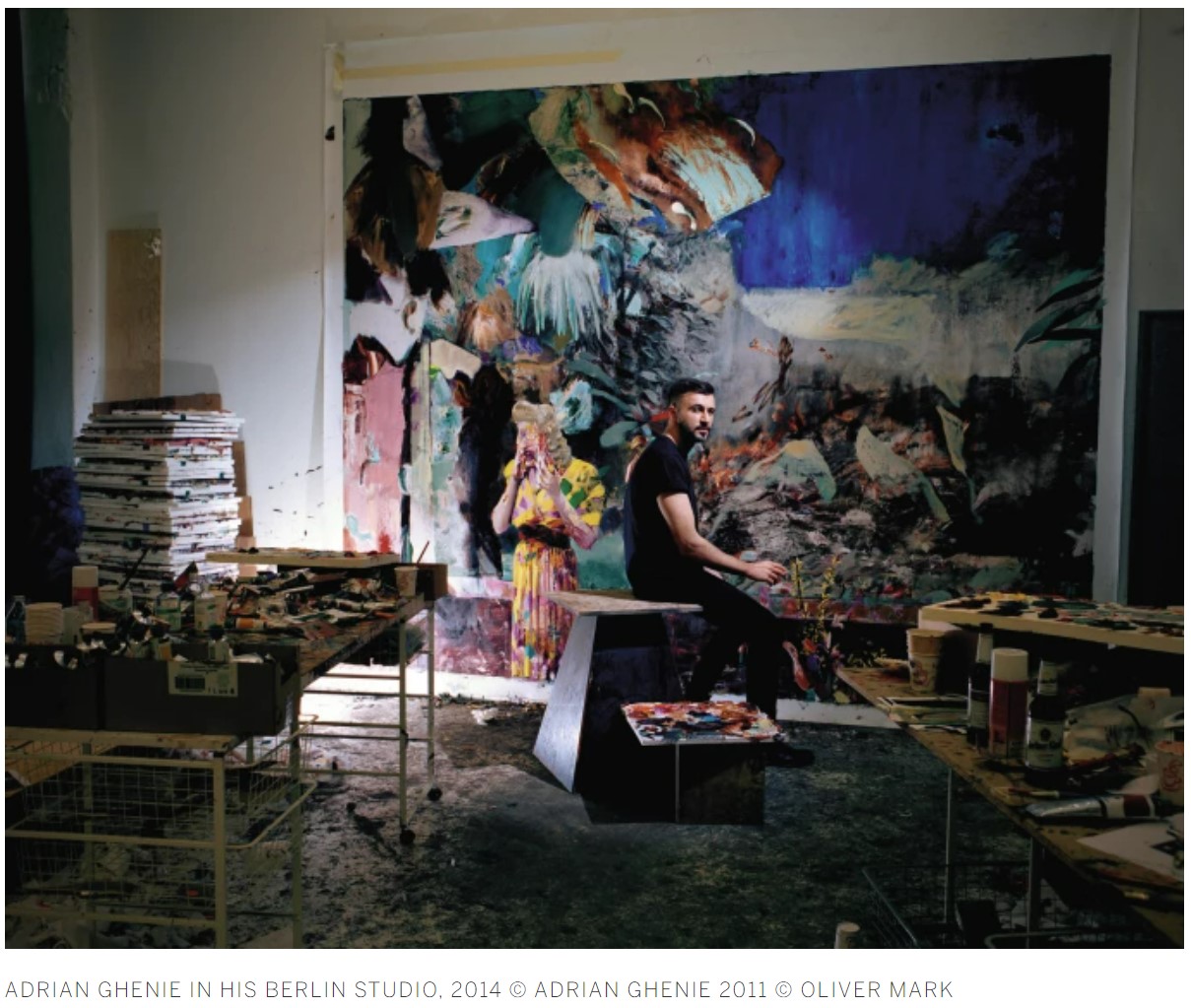
Ghenie’s paintings embrace a sense of tactility, reminiscent of the squeegeed paintings by Gerhard Richter, resulting in a painting that carries physical dimension in addition to the illusory space created. Over the last 10 years, Ghenie has risen to international stardom, as his works appear in major exhibitions and museums with ever-increasing frequency.
Main Series and Iconic Bodies of Work
Throughout his career, Ghenie has developed several important series that examine history, power, and the psychology of individuals within turbulent political contexts.
One of his most recognized groups of works centers on portraits of controversial twentieth-century figures, including his well-known Hitler paintings. Rather than presenting straightforward likenesses, Ghenie distorts these historical characters, transforming them into unstable apparitions that reflect the haunting presence of authoritarian ideologies.
Another significant body of work is The Pie Fight Series (2008–2010). Inspired by slapstick comedy scenes from early cinema, these paintings reinterpret the chaotic pie-throwing moments from silent films as metaphors for the collapse of political systems and ideological battles.
Amongst the most iconic paintings of his widely renowned oeuvre are those in which he engages with Charles Darwin and his ambiguous legacy, as seen in his first exhibition with Pace in New York in 2013, New Paintings, and again in 2015, when the artist dedicated the Romanian Pavilion at the 56th Venice Biennale to the impact of Darwin’s revolutionary discoveries and European post-war identity. Adrian Ghenie’s Darwin’s Room at the Venice Biennale, curated by Mihai Pop, consisted of 17 paintings and three works on paper presenting the artist’s exploration of twentieth-century history and his series of portraits and self-portraits as significant historical figures, including Charles Darwin.
In the Self-Portrait series, Ghenie turns inward, depicting himself through distorted reflections and fragmented identities. These works explore the idea that personal identity is constantly reshaped by memory, culture, and historical context.
More recently, his Degenerate Art paintings reference the infamous Nazi exhibition of 1937 that condemned modern art. In these works, Ghenie reexamines the cultural repression of avant-garde art movements and reflects on the fragile relationship between artistic freedom and political power.
Institutional Recognition and Exhibitions
Ghenie’s rise within the international art world has been remarkably rapid. His work has been exhibited in major museums and institutions worldwide, including the Centre Pompidou, the Palazzo Strozzi, and the S.M.A.K..
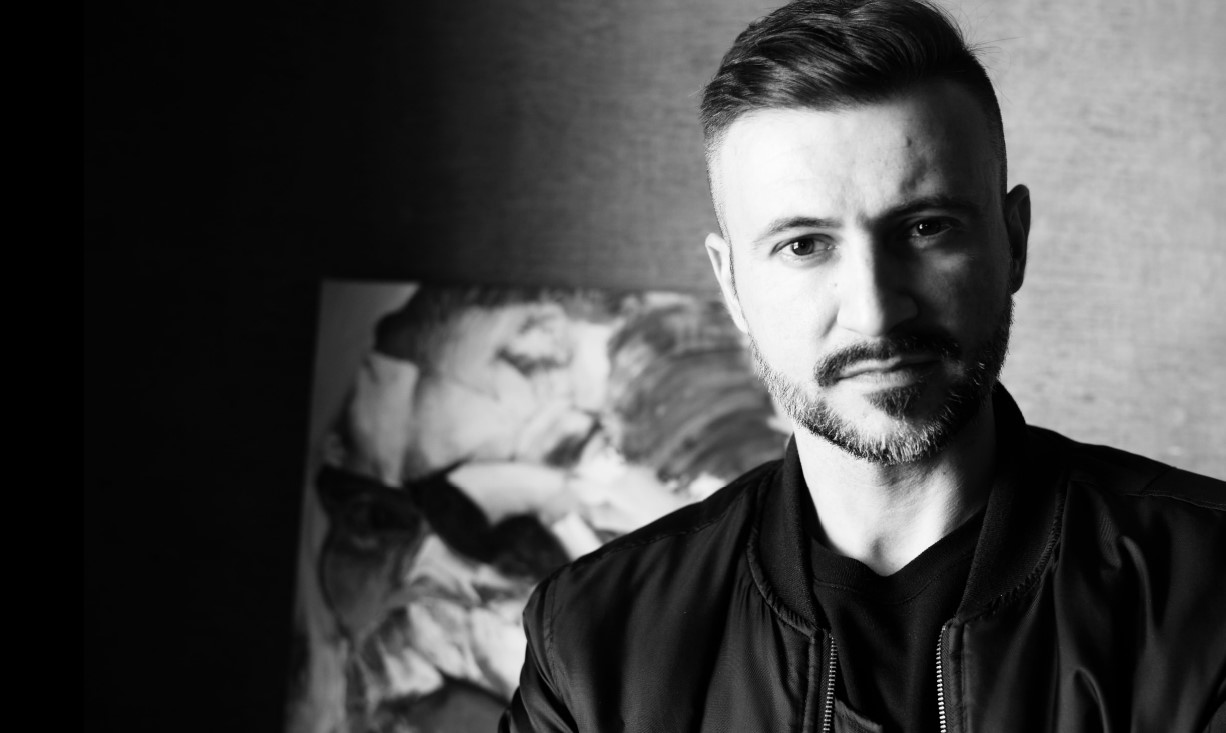
One of the most important moments in his career came when he represented Romania at the Venice Biennale in 2015, further cementing his reputation as a major figure in contemporary painting. Adrian Ghenie’s paintings are included in the collections of the Centre Pompidou, the Museum of Contemporary Art in Los Angeles, the Museums of Modern Art in New York and Antwerp, and many other institutions around the world.
Gallery Representation
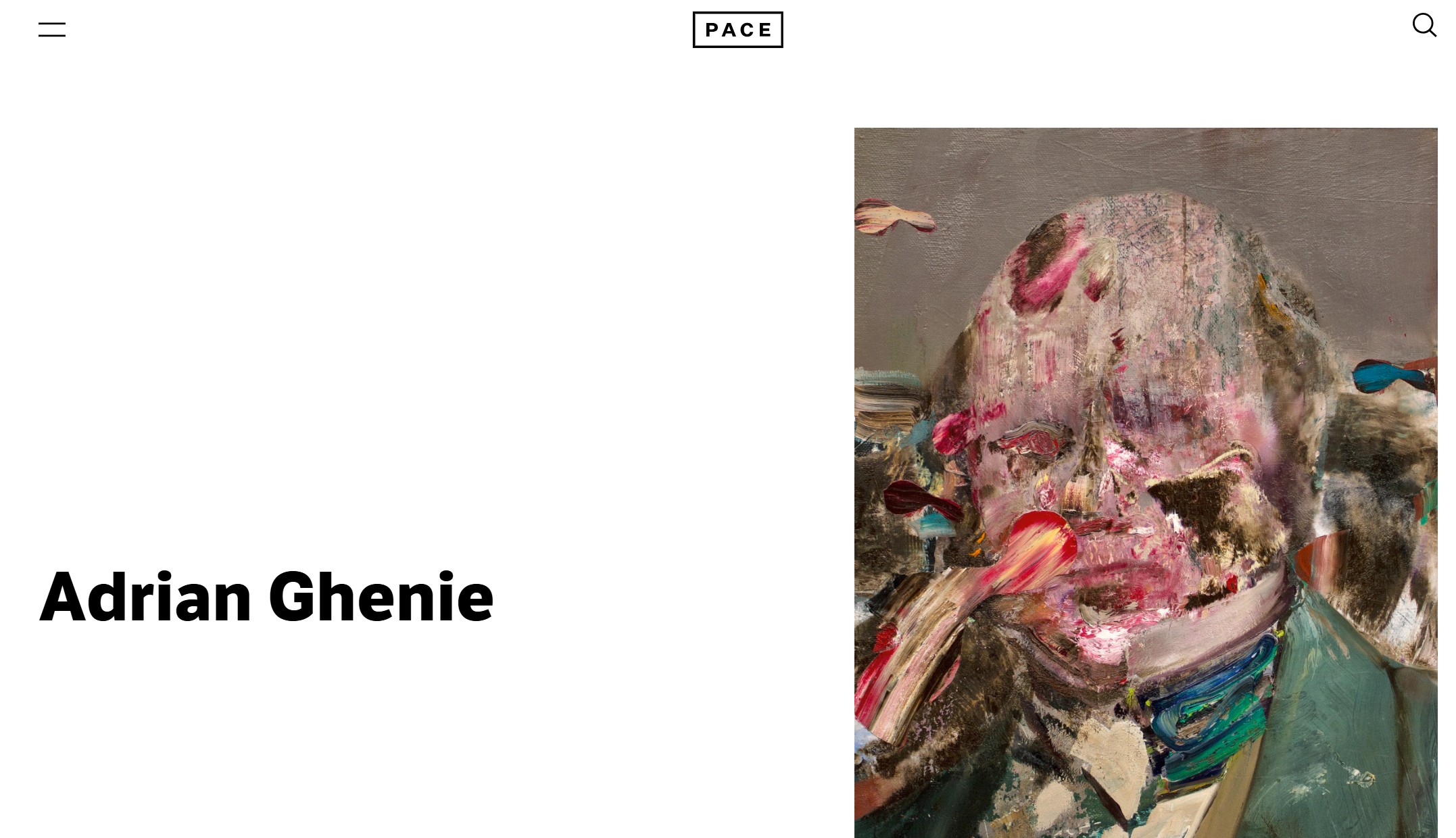
Adrian Ghenie is represented internationally by several major galleries that have played a key role in promoting his work and expanding his global presence. Among the most important is Pace Gallery, which represents Ghenie in the United States and Asia and has organized several major exhibitions of his paintings.
He is also represented by Thaddaeus Ropac, which operates spaces in London, Paris, Salzburg, and Seoul and regularly presents new bodies of work by the artist.
Another important relationship is with Galerie Judin, which supported Ghenie early in his career and remains closely associated with his rise within the European art scene.
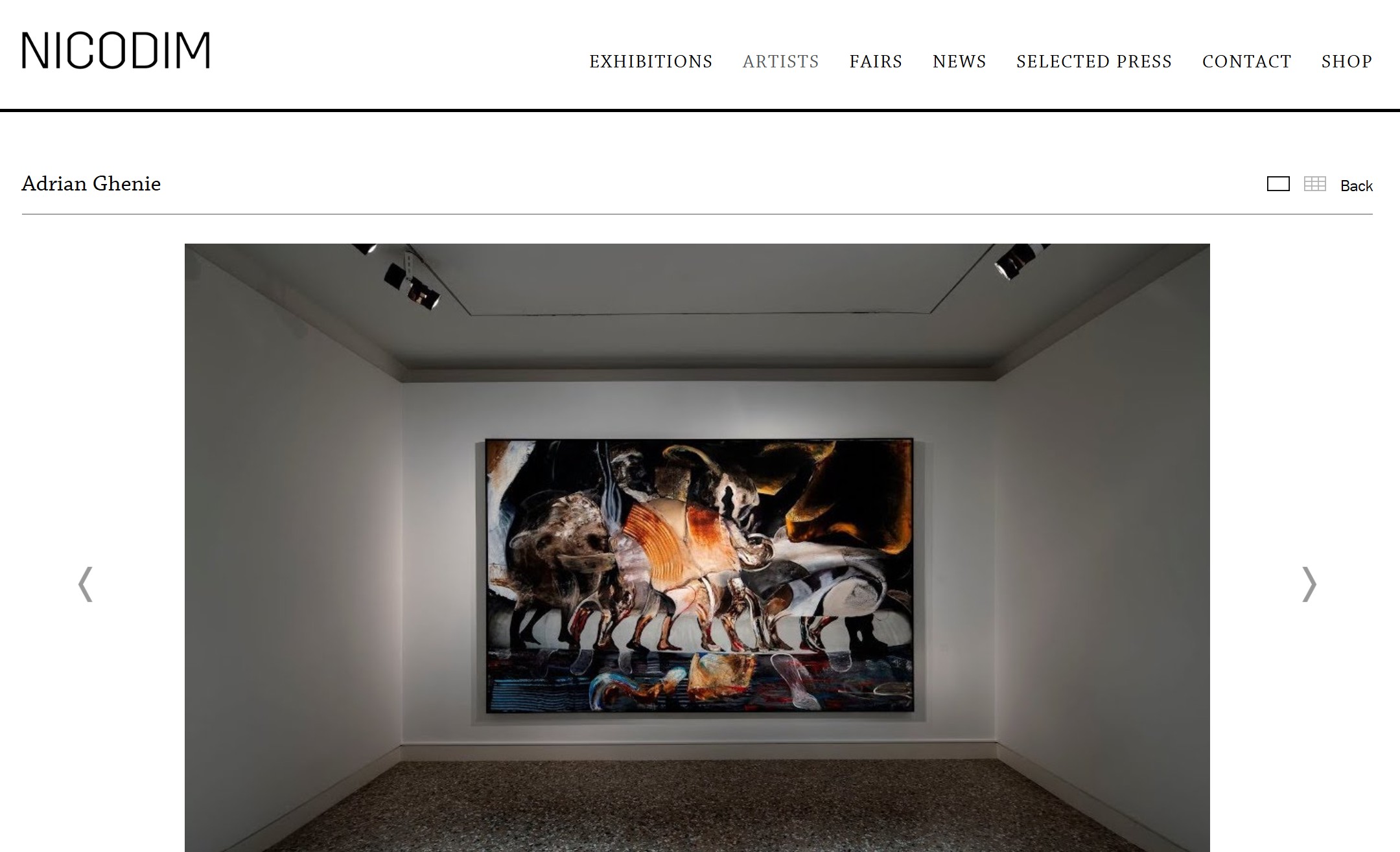
Adrian Ghenie’s paintings stand as powerful meditations on the complexities of the twentieth century and the lingering psychological traces of its political upheavals. By merging abstraction and figuration, he constructs images that feel both familiar and unsettling—mirroring the unstable nature of historical memory itself. In an era increasingly shaped by digital imagery and rapid information flows, Ghenie’s work reaffirms the enduring capacity of painting to confront history, challenge narratives, and evoke the emotional weight of collective memory.
PART I: SUMMARY
Auction Market Overview
2025 AUCTION STATISTICS
Turnover: USD 10,211,932
+33.9% vs. 2024
# Lots sold: 6
Sell-Through Rate: 86%
MARKET SEGMENTATION
New-York (58.6%) / Hong-Kong (31.8%) / London (9.6%)
Highest Price achieved at Auction:
Pie Fight Interior 12, 2014
Christie’s Hong-Kong: 25 May 2022
HKD 81,060,000 / USD 10,326,475
Ghenie’s paintings have become highly sought after by collectors, with auction prices rising dramatically over the past decade. His works have achieved major results at leading auction houses such as Christie’s and Sotheby’s, placing him among the most valuable contemporary painters of his generation. Collectors are particularly drawn to the combination of technical mastery, historical depth, and emotional intensity that characterizes his work. The paintings operate simultaneously as visual experiences and philosophical reflections on history, memory, and power.
Auction Summary
2025 Auction Highlights
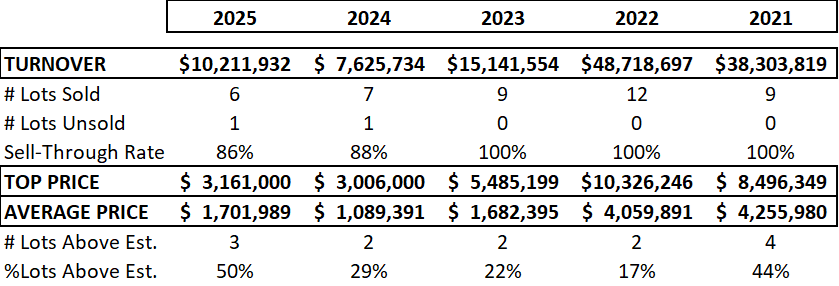
6 lots sold at auction in 2025 for a total turnover of USD 10,211,932. With 1 lot failing to sell, the sell-through rate is 86%. The highest price was achieved by Alpine Retreat 2, a painting dated 2017, that sold at Sotheby’s in New-York on 15 May 2025 for USD 3,161,000.
2025 Top 3 Lots
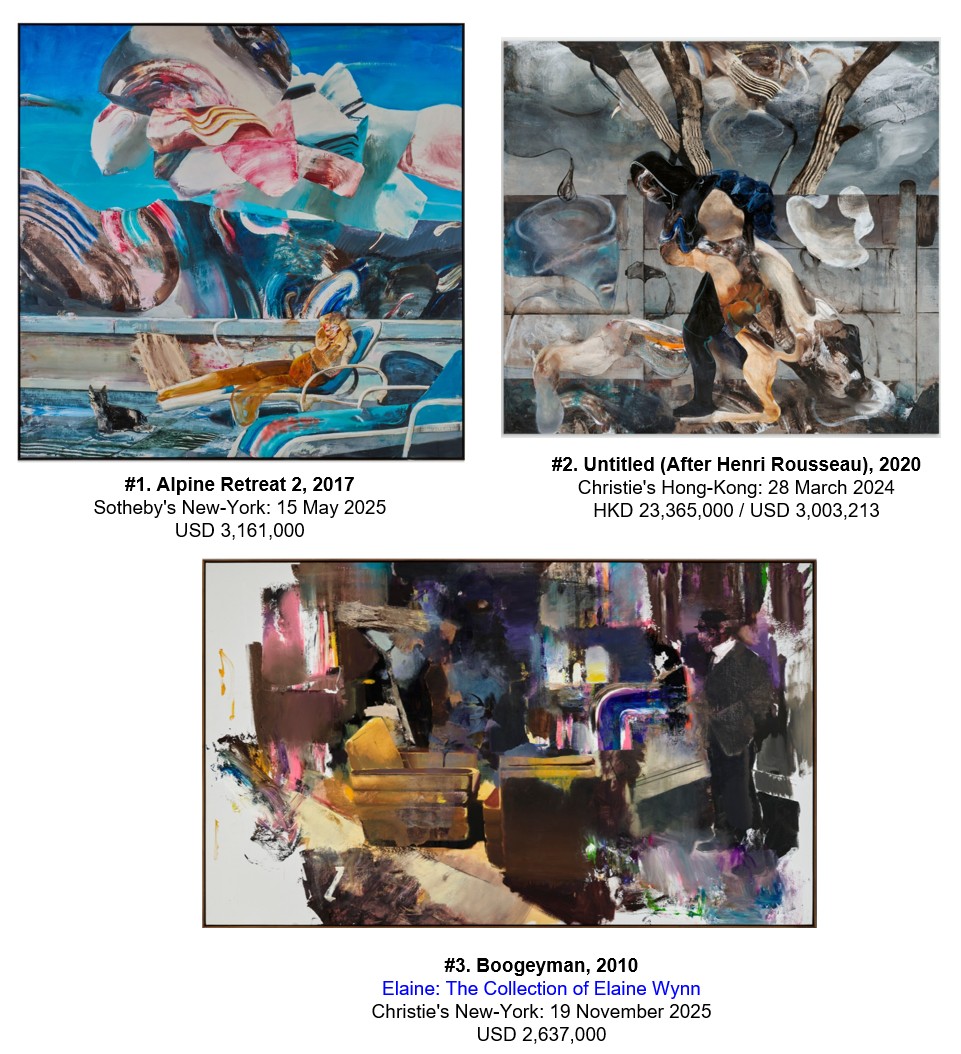
3 lots sold for more than USD 1 million, generating a cumulative turnover of USD 8,801,213, representing 86.2% of the total turnover for 2025.
2024 Auction Highlights
7 lots sold at auction for a total turnover of USD 7,625,734. With 1 lot failing to sell (Self-Portrait as a Monkey, 2010, at Phillips in London on 7 March 2024), the sell-through rate is 88%. Two lots were withdrawn, Elvis, from Sotheby’s in Hong-Kong on 5 April 2024, and The Philanthropist, at Phillips in New-York on 15 May 2024.
2024 Top 3 Lots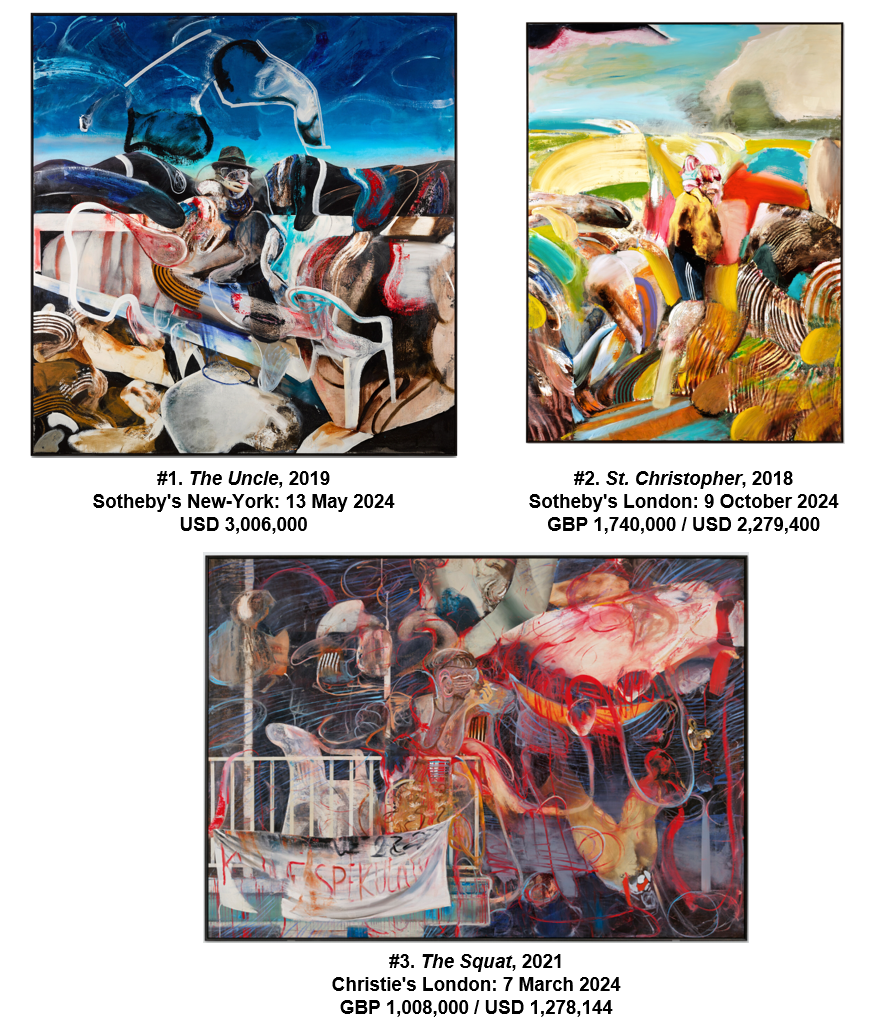
The highest price has been achieved at Sotheby’s in New-York on 13 May 2024 when The Uncle, a painting dated 2019 sold for USD 3,006,000. 3 lots sold for more than USD 1 million, generating a cumulative turnover of USD 6,563,544, representing 86% of the total turnover for 2024.
2023 Auction Highlights
9 paintings sold at auction in 2023, for a total turnover of USD 15,141,554. Sell-Through rate is 100%. The top price was achieved by Lidless Eye sold at Christie’s in Hong-Kong on 28 November 2023 for HKD 42,725,000 (USD 5,485,199).
2023 Top 3 Lots
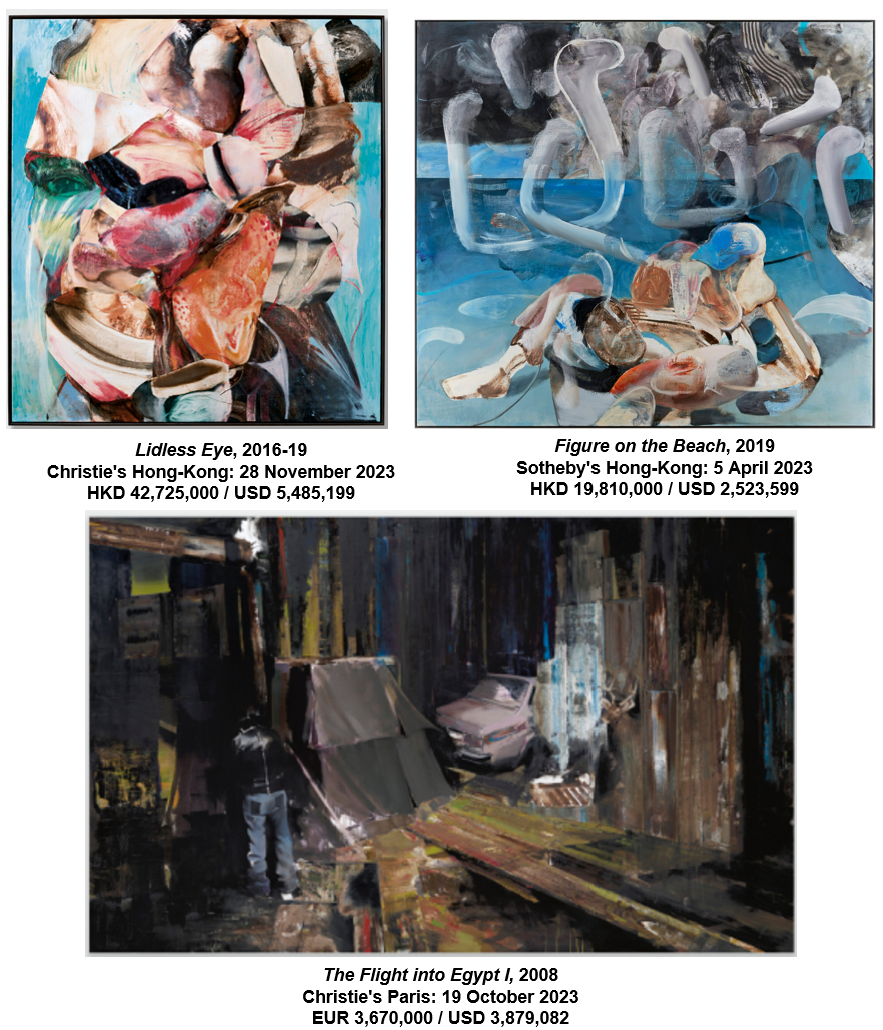
This is the only lot that sold above USD 5 million. 4 lots sold above USD 1 million, generating a cumulative turnover of USD 13,483,932, representing 89,1% of the total turnover for 2023.
2022 Auction Highlights
12 paintings sold at auction in 2022 for a total turnover of USD 48,718,697. 2022 was a record year for Adrian Ghenie at auction. 12 paintings sold for a total turnover of USD 48,718,697.
2022 Top 3 Lots
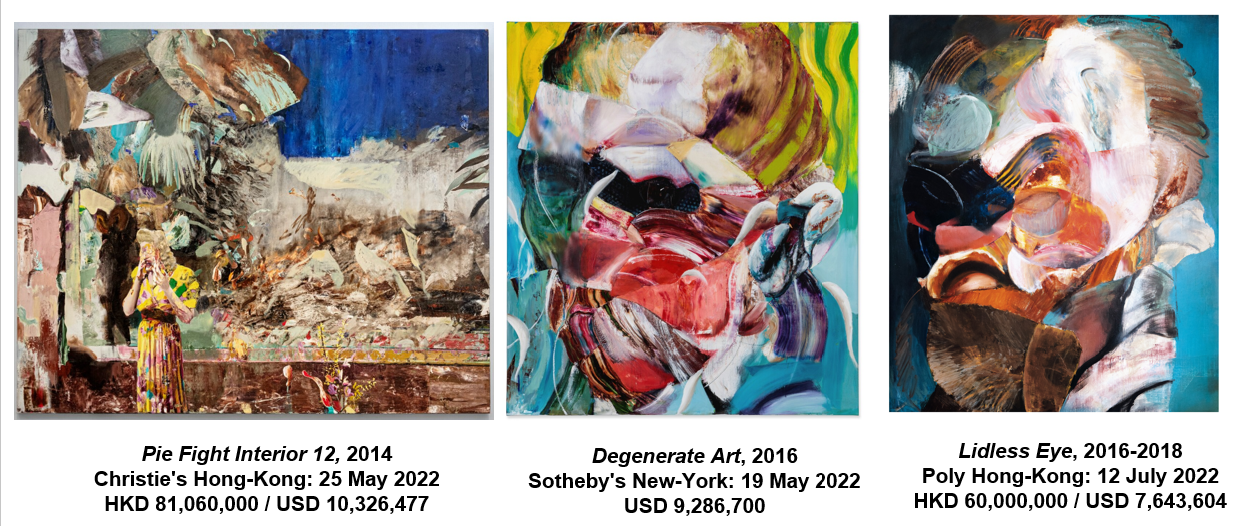
4 paintings sold for over USD 5 million and the new auction record was set for the artist at a price above USD 10 million at Christie’s in Hong-Kong on 26 May 2022. Sell-Through rate is 100%. 4 paintings sold in Hong-Kong, 3 of them above USD 7 million.
2021 Auction Highlights
9 lots sold at auction in 2021 for a total turnover of USD 38,303,819. The highest price was achieved at Christie’s in Hong-Kong on 24 May 2021, when Collector I sold for HKD 65,975,000 (USD 8,496,349).
2021 Top 3 Lots
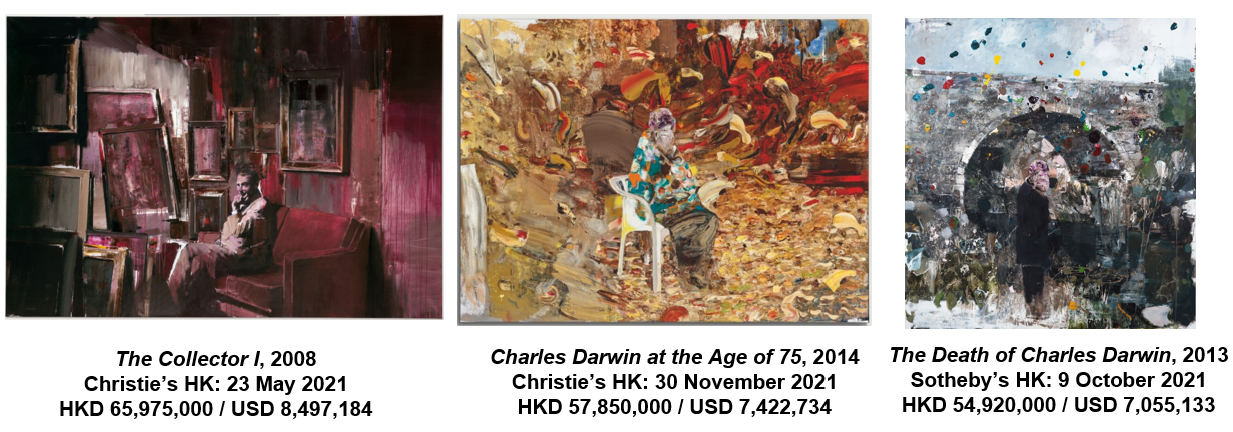
4 lots sold above USD 5 million, generating a cumulative turnover of USD 29,160,042, representing 76.1% of the total turnover for 2021.
Top Lots
#1. Pie Fight Interior 12, 2014
Christie’s Hong-Kong: 25 May 2022
Estimated: HKD 68,000,000 – 98,00,000
HKD 81,060,000 / USD 10,326,477
ADRIAN GHENIE (B.1977) (christies.com)
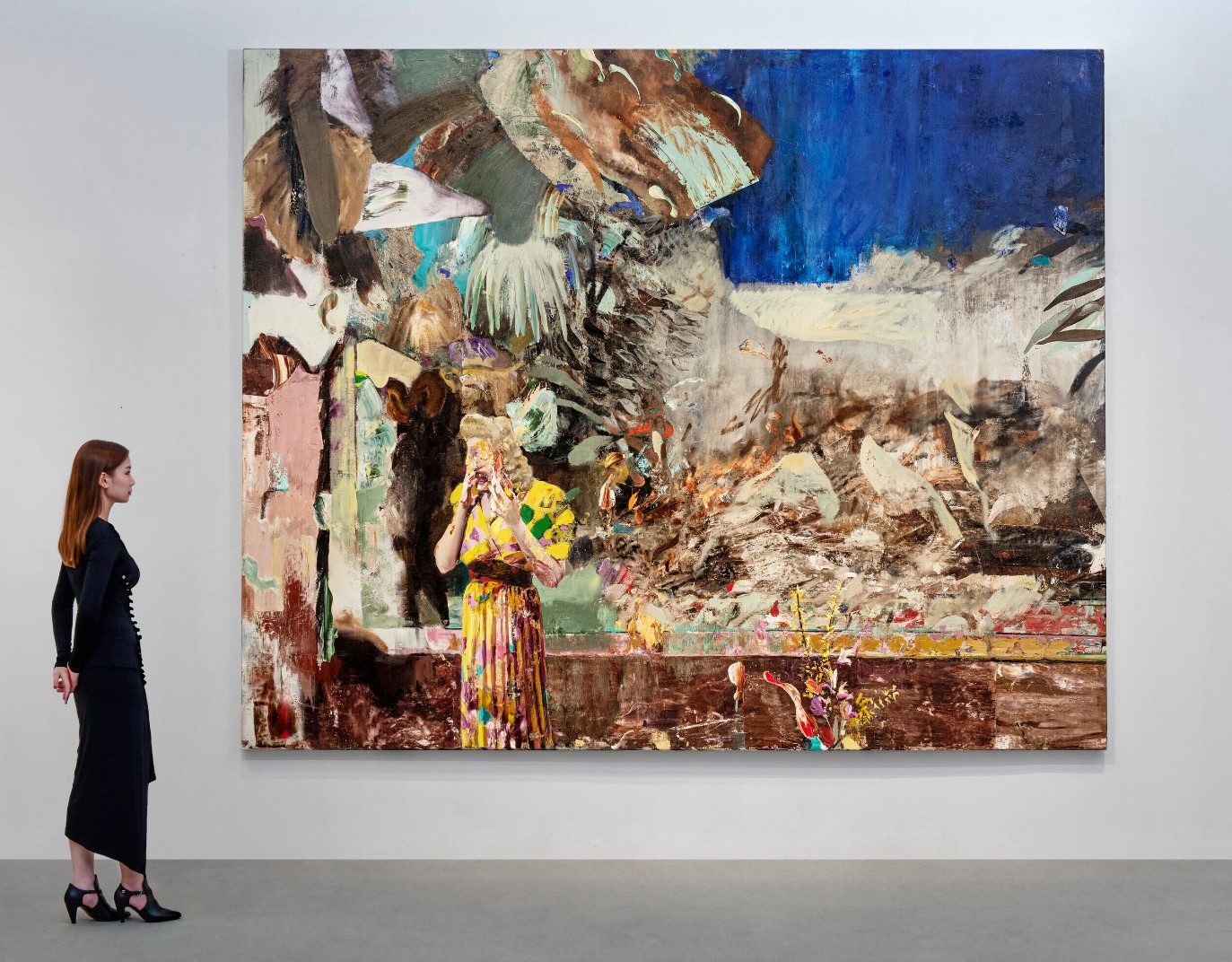
ADRIAN GHENIE
Pie Fight Interior 12, 2014
Oil on canvas
284×350 cm (111.7 x 137.7 inches)
USD 10 million
#2. Degenerate Art, 2016
Sotheby’s New-York: 19 May 2022
Estimated: USD 7,000,000 – 10,000,000
USD 9,286,700
Degenerate Art | The Now Evening Auction | 2022 | Sotheby’s (sothebys.com)
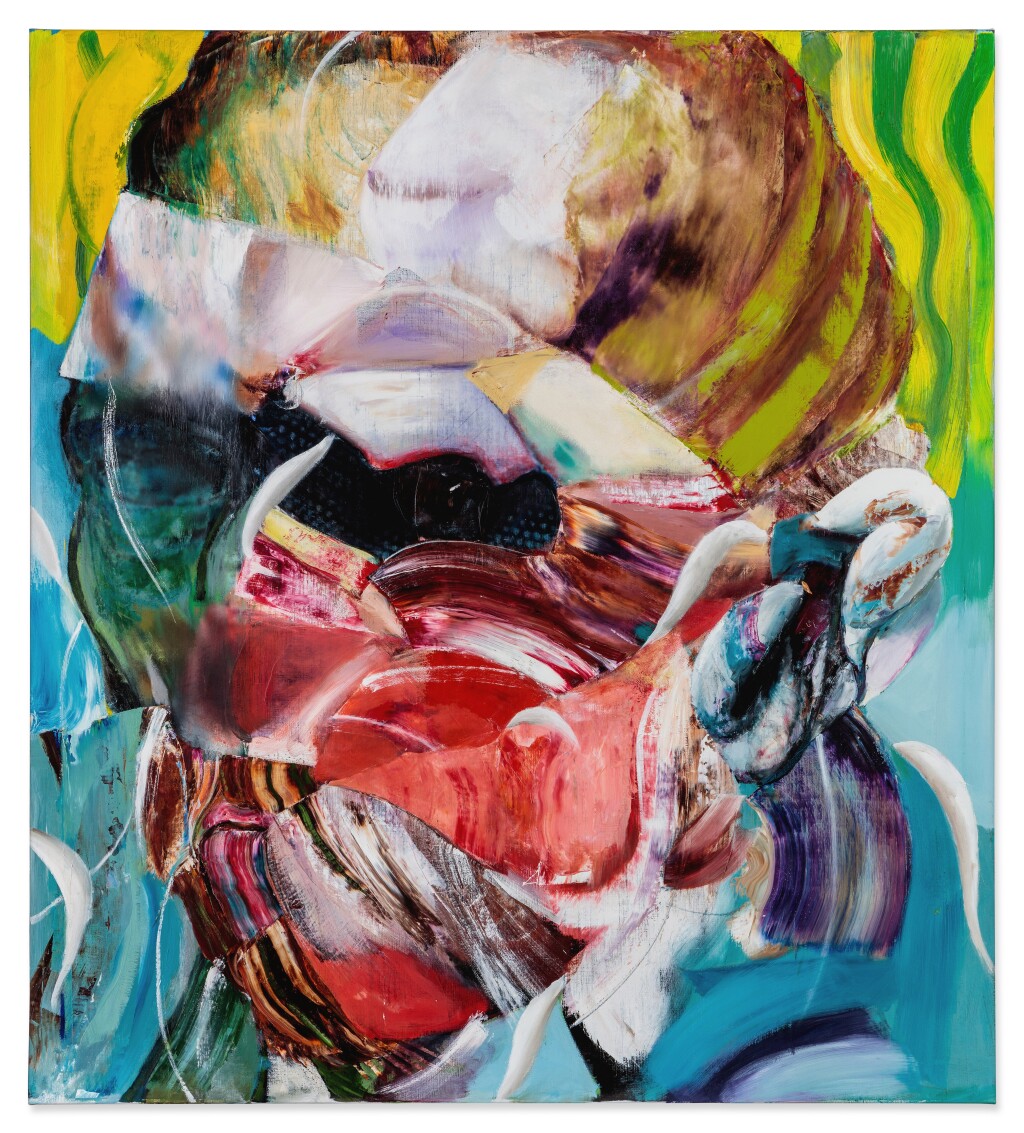
ADRIAN GHENIE
Degenerate Art, 2016
Oil on canvas
79×71 inches (200.7 x 180.3 cm)
#3. Nickelodeon, 2008
Christie’s London: 6 October 2016
Estimated: GBP 1,000,000 – 1,500,000
GBP 7,109,000 / USD 8,764,986
Adrian Ghenie (b. 1977), Nickelodeon | Christie’s (christies.com)
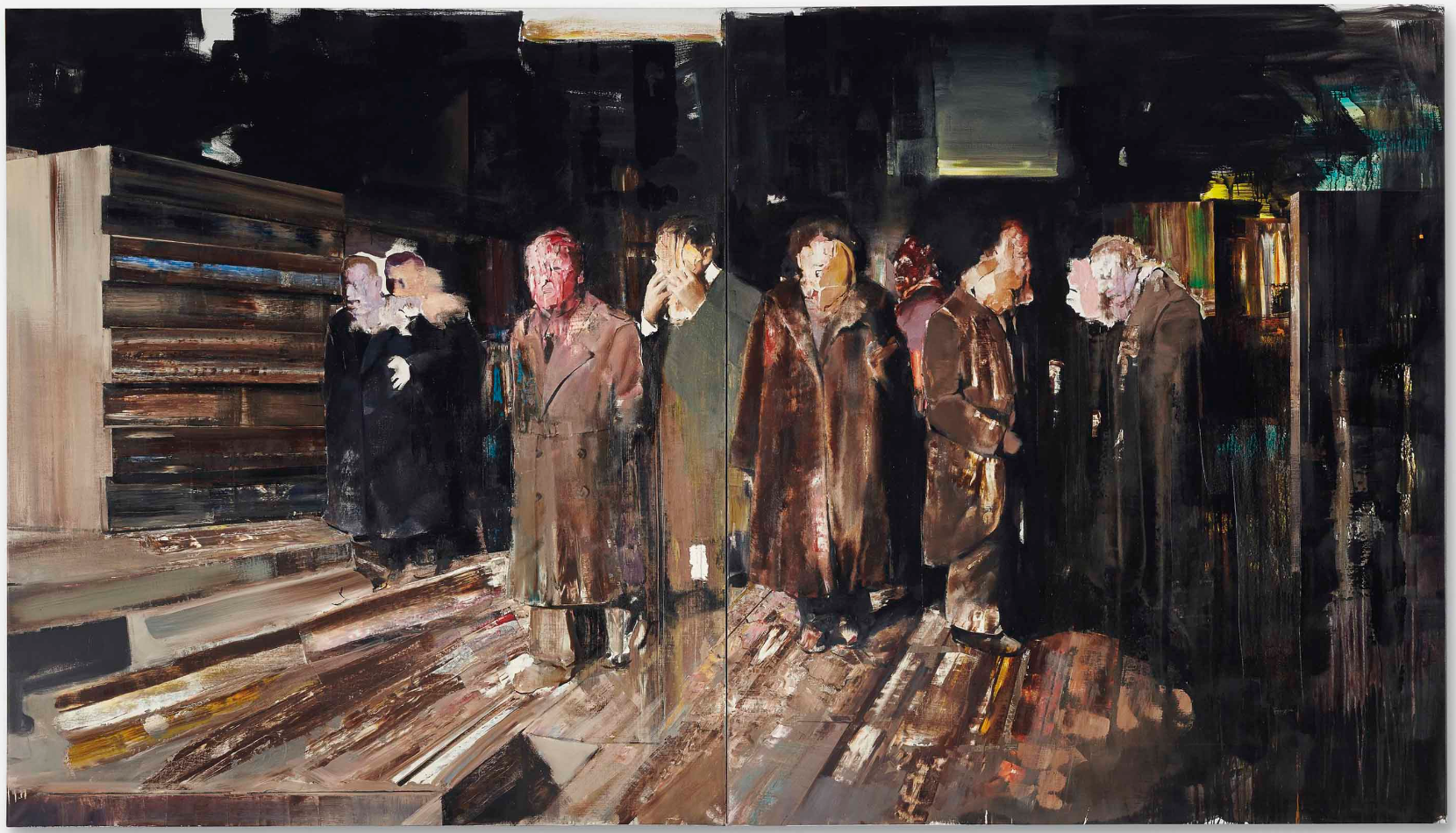
ADRIAN GHENIE (b. 1977)
Nickelodeon, 2008
Oil, acrylic and tape on canvas (in two parts)
Each: 238×207 cm (93 3/4 x 81 1/2 inches
Overall: 238×414 cm (93 3/4 x 162 7/8 inches)
Signed and dated ‘Ghenie 2008’ (on the reverse)
#4. The Collector I, 2008
Christie’s Hong-Kong: 23 May 2021
Estimated: HKD 45,000,000 – 65,000,000
HKD 65,975,000 / USD 8,497,184
ADRIAN GHENIE (B.1977) (christies.com)
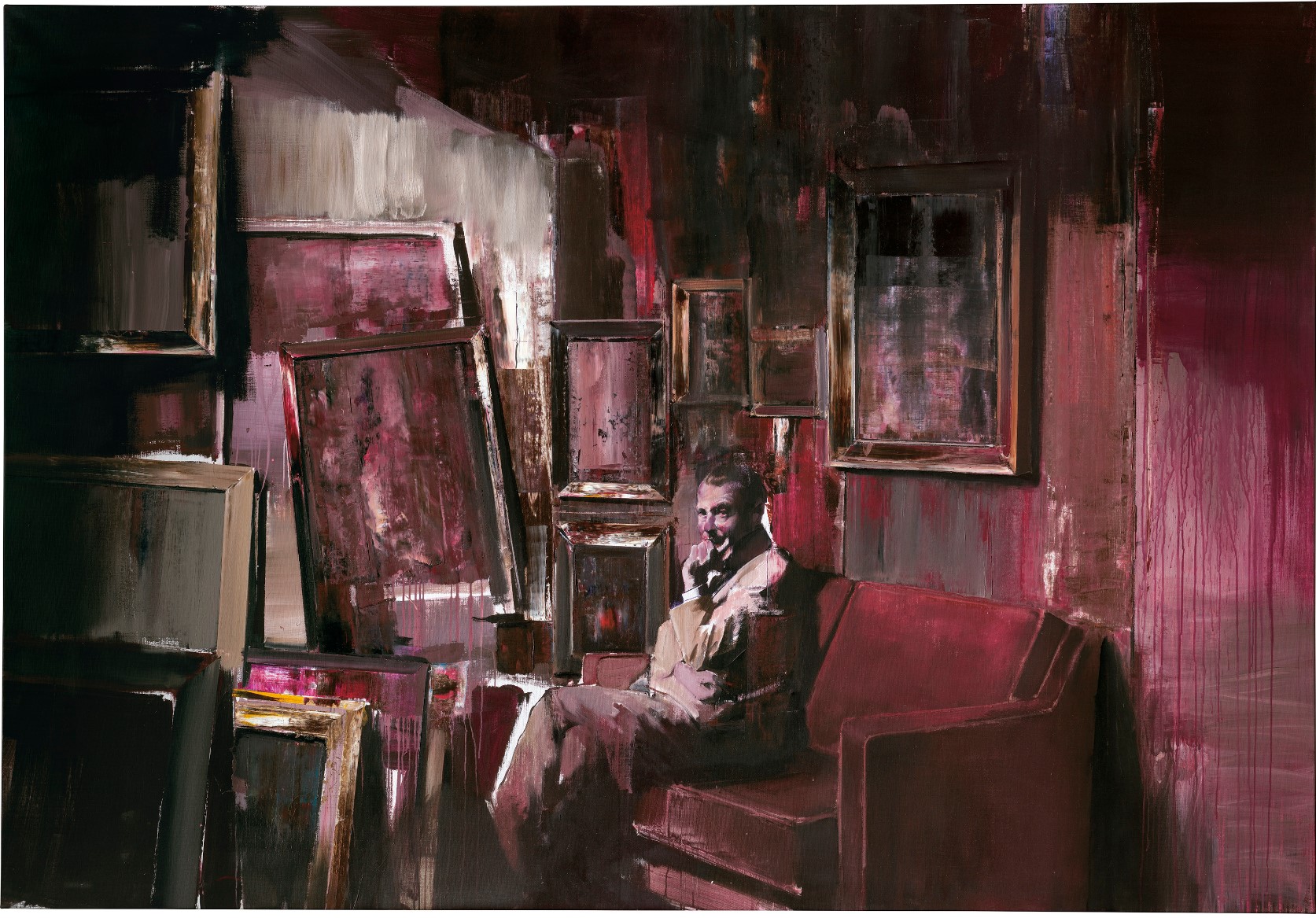
ADRIAN GHENIE
The Collector I, 2008
Oil on canvas
200×290 cm (78.7 x 114.1 inches)
#5. Lidless Eye, 2016-2018
Poly Hong-Kong: 12 July 2022
Estimated: HKD 50,000,000 – 75,000,000
HKD 60,000,000 / USD 7,643,604
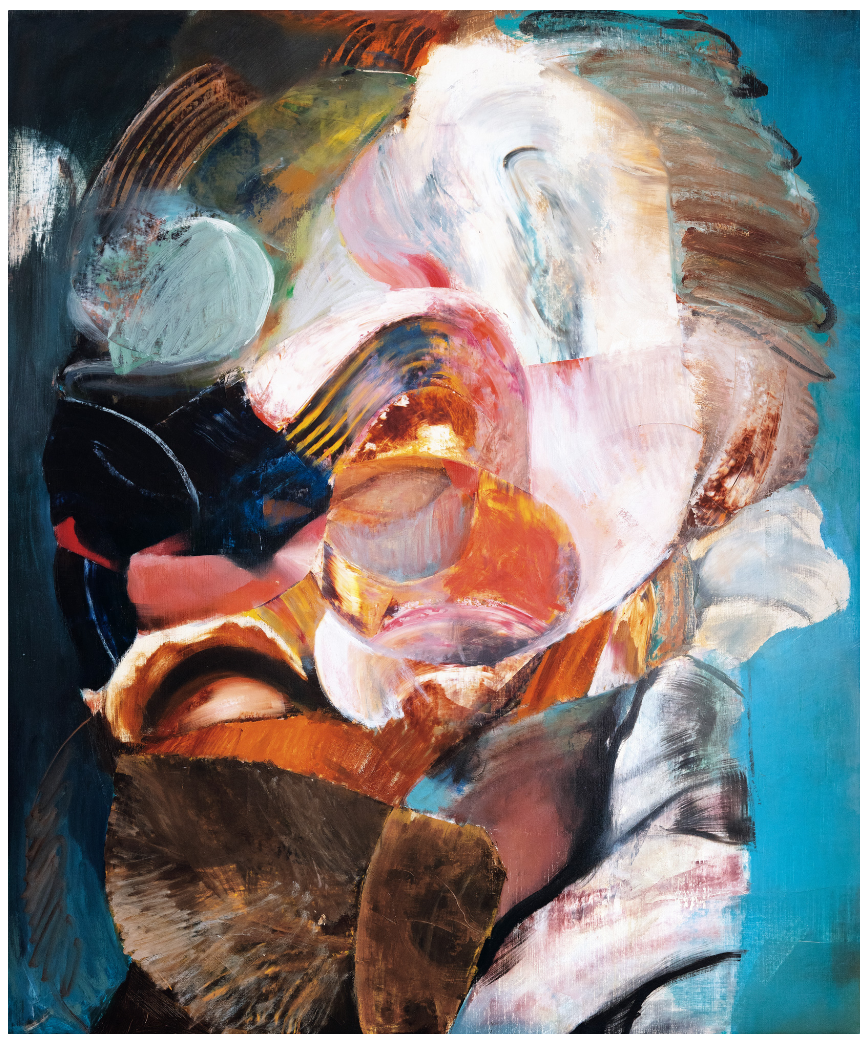
ADRIAN GHENIE
Lidless Eye, 2016-2018
Oil on canvas
180.4 x 149.8 cm (71×59 inches)
Signed and dated ‘Ghenie 2016-2018’ (on the reverse)
#6. Charles Darwin at the Age of 75, 2014
Christie’s Hong-Kong: 30 November 2021
Estimated: HKD 32,000,000 – 48,000,000
HKD 57,850,000 / USD 7,422,734
ADRIAN GHENIE (B. 1977) (christies.com)
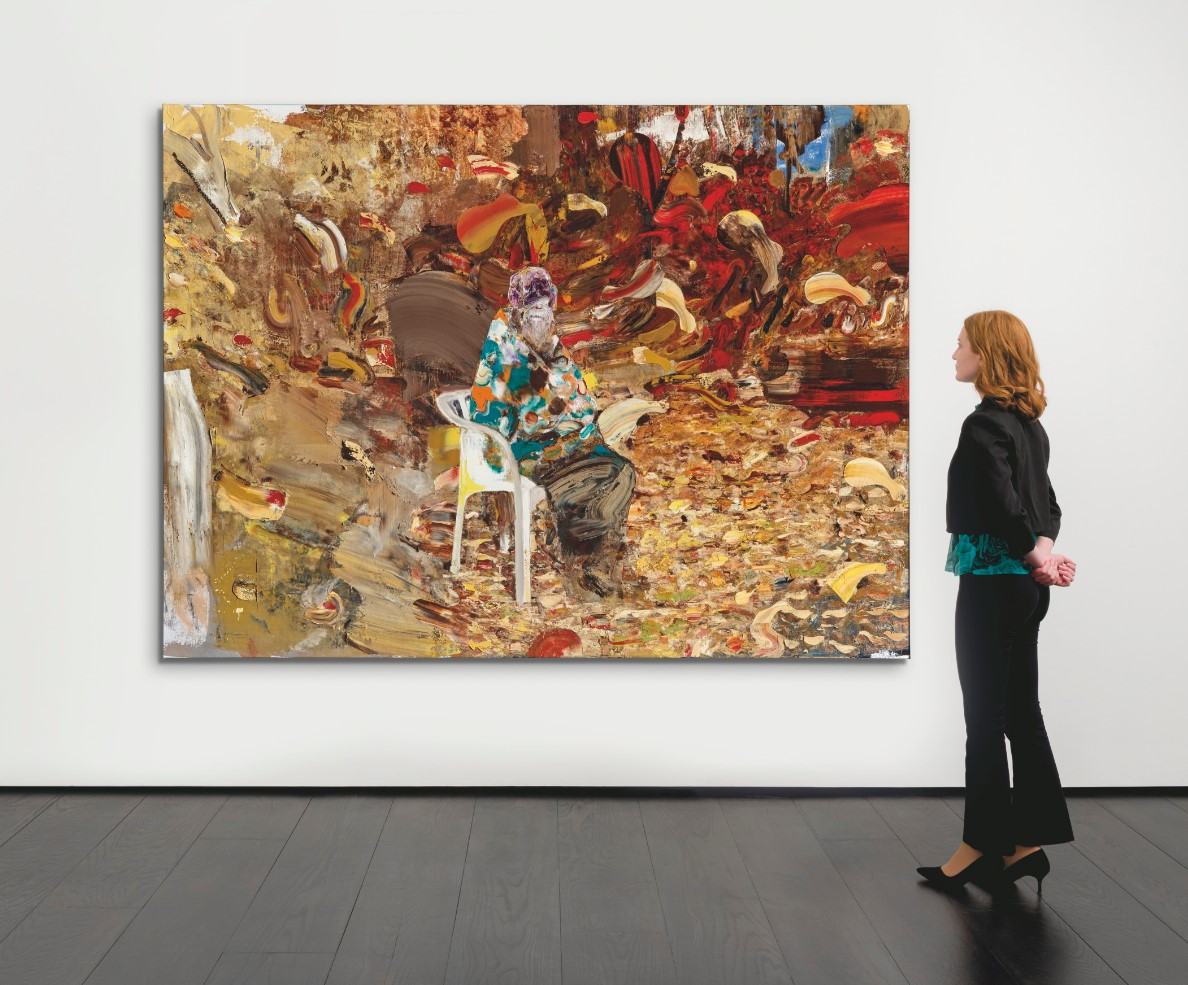
ADRIAN GHENIE
Charles Darwin at the Age of 75, 2014
Oil on canvas
200×270 cm (78.7 x 106.2 inches)
PART II: AUCTION RESULTS
2026 Auction Results
PRELIMINARY AUCTION RESULTS
As of 15 June 2026
#1. The Blue Rain, 2009
Sotheby’s New-York: 15 May 2026
Estimated: USD 600,000 – 800,000
USD 896,000
Adrian Ghenie | The Blue Rain | Contemporary Day Auction | 2026 |
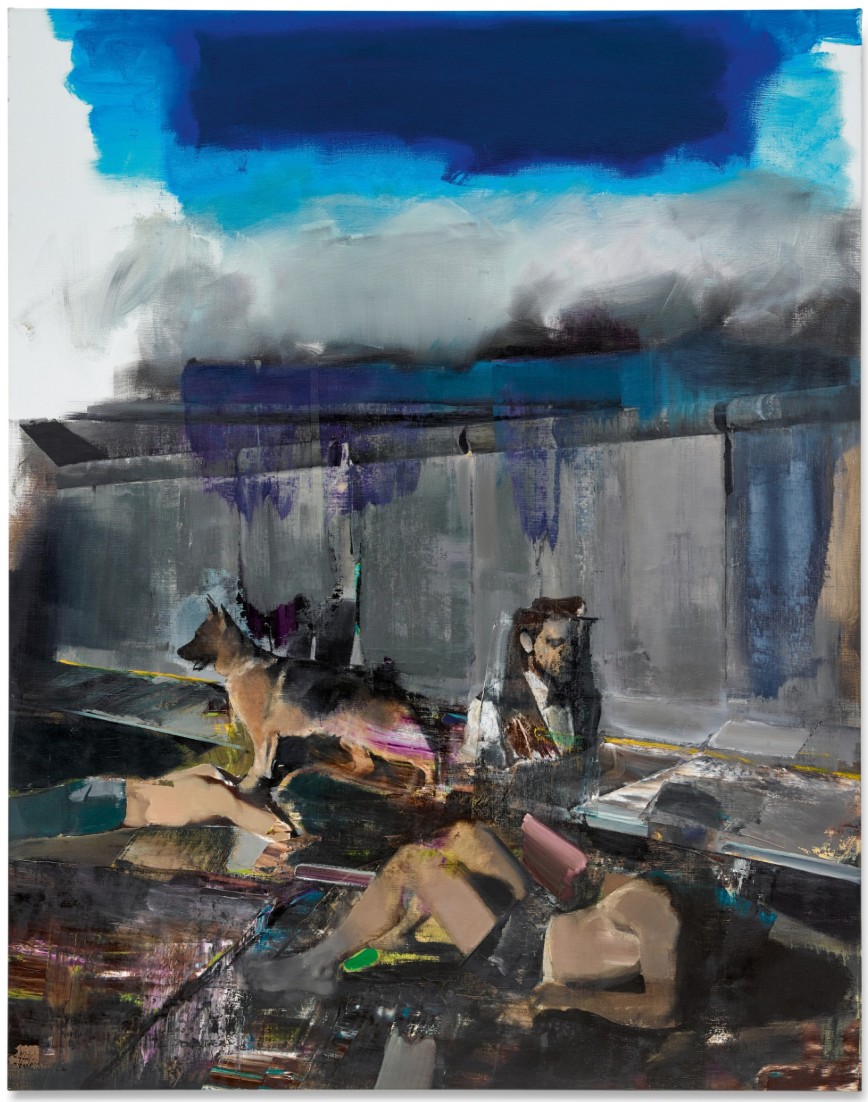
ADRIAN GHENIE (b. 1977)
The Blue Rain, 2009
Oil on canvas
240×190 cm (94-1/2 x 74-3/4 inches)
Signed and dated 2009 (on the reverse)
#2. Elvis, 2009
Christie’s New-York: 21 May 2026
Estimated: USD 250,000 – 350,000
USD 304,800
ADRIAN GHENIE (B. 1977), Elvis | Christie’s
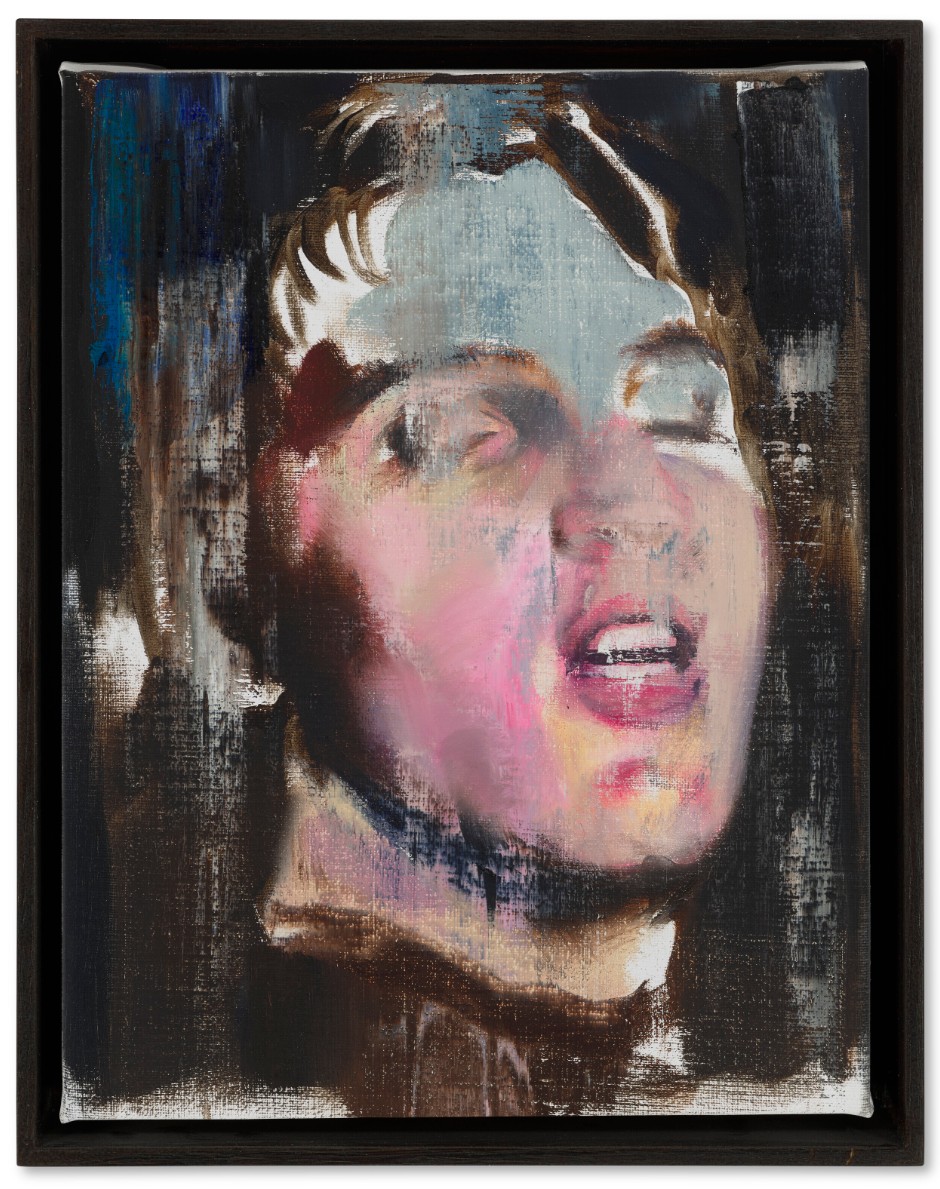
ADRIAN GHENIE (B. 1977)
Elvis, 2009
Oil on canvas
16×12 inches (40.6 x 30.5 cm)
Signed and dated ‘Ghenie 2009’ (on the reverse)
#3. On the Road to Tarascon 2 (with Navid Nuur), 2013
Christie’s London: 7 March 2026
Estimated: GBP 200,000 – 300,000
GBP 190,500 / USD 254,490
ADRIAN GHENIE (B. 1977), On the Road to Tarascon 2 (with Navid Nuur) | Christie’s
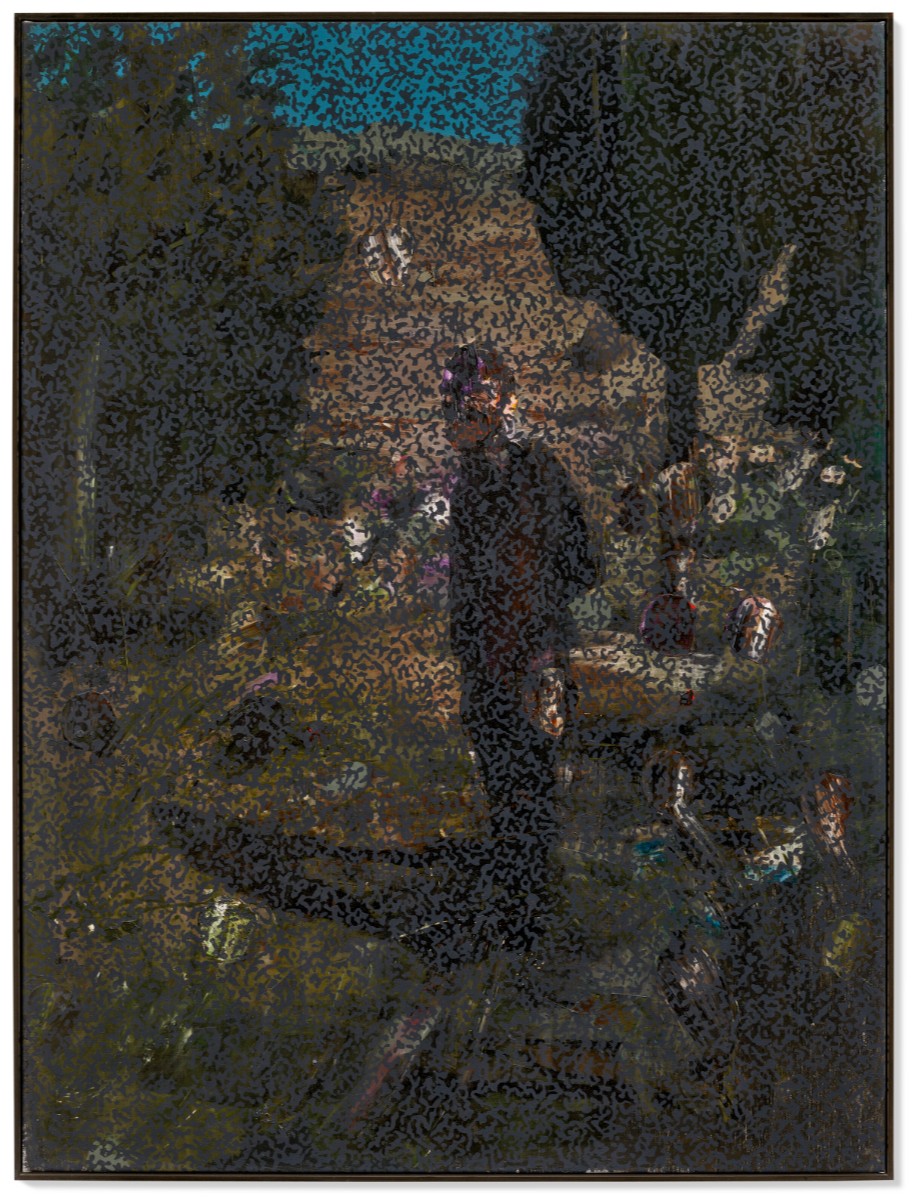
ADRIAN GHENIE (B. 1977)
On the Road to Tarascon 2 (with Navid Nuur), 2013
Oil on canvas
200×150 cm (78-3/4 x 59 inches)
Signed and dated ‘Ghenie 2013’ (on the reverse)
#4. The Duel, 2014
Christie’s London: 7 March 2026
Estimated: GBP 20,000 – 30,000
GBP 25,400 / USD 33,930
WORK ON PAPER
ADRIAN GHENIE (B. 1977), The Duel | Christie’s
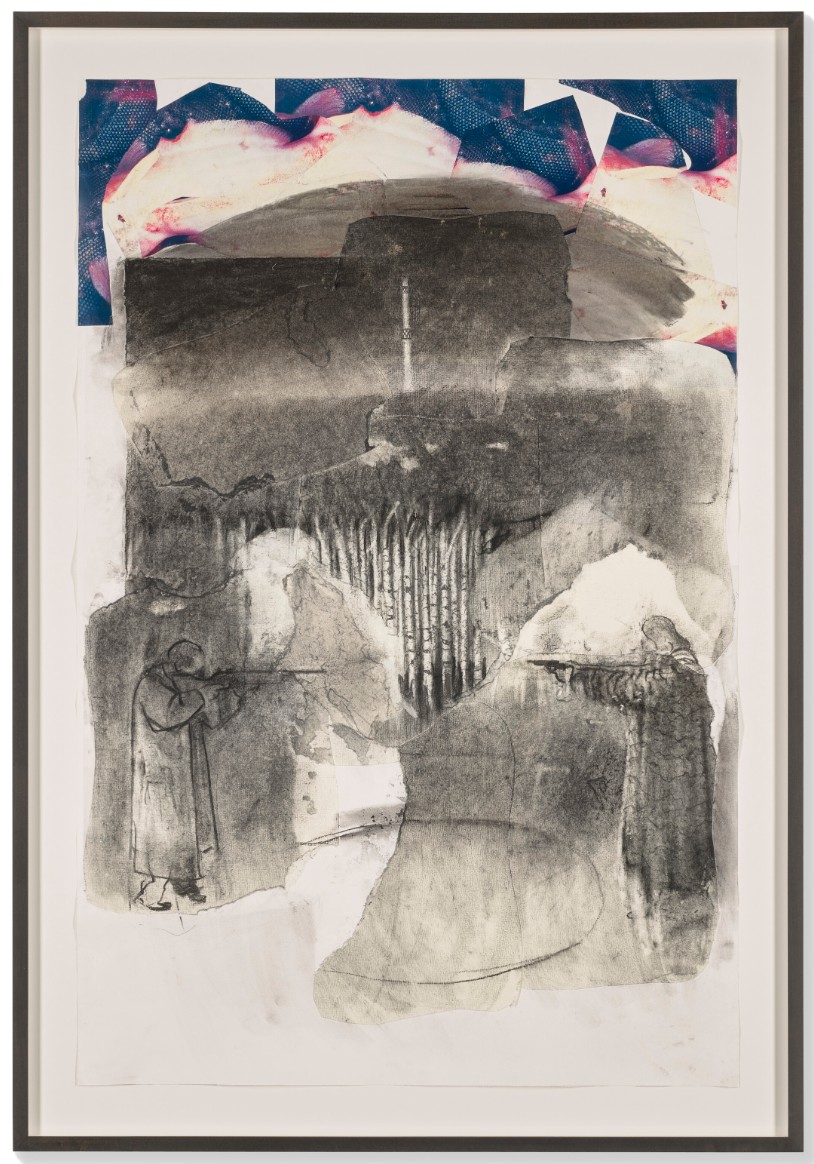
ADRIAN GHENIE (B. 1977)
The Duel, 2014
Charcoal, graphite, paper and printed paper collage on paper
117×76 cm (46 x 29-7/8 inches)
Signed and dated ‘Ghenie 2014’ (on the reverse)
#5. Study Pie Fight, 2012
Property from a Fine Belgian Collection
Phillips London: 7 March 2026
Estimated: GBP 10,000 – 15,000
GBP 12,900 / USD 17,295
Adrian Ghenie Modern & Contemporary Art
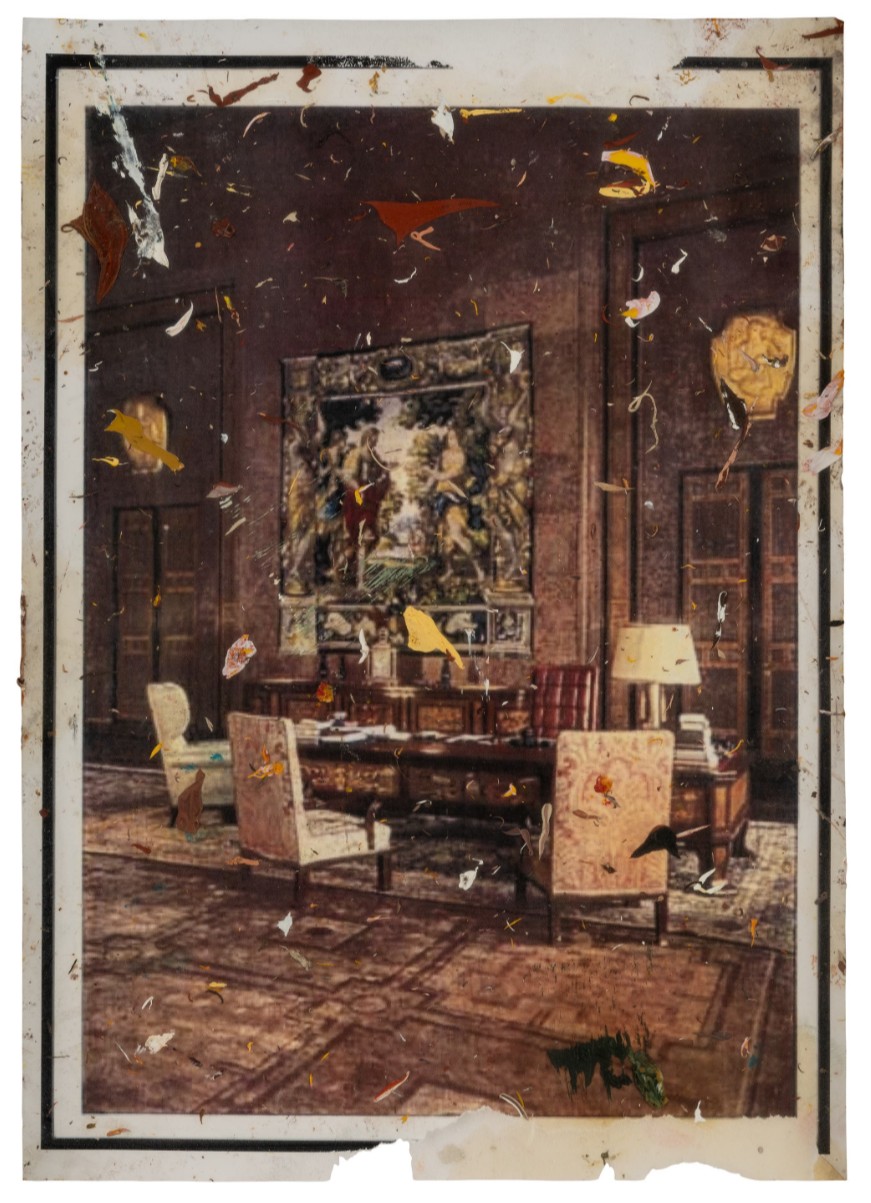
ADRIAN GHENIE
Study Pie Fight, 2012
Oil and paper collage on paper
29 x 20.5 cm (11-3/8 x 8-1/8 inches)
Signed and dated ‘Ghenie 2012’ on the reverse
#6. The Philanthropist, 2019
Phillips New-York: 28 February 2026
Estimated: USD 20,000 – 30,000
USD 15,480
WORK ON PAPER
Adrian Ghenie Modern & Contemporary Art
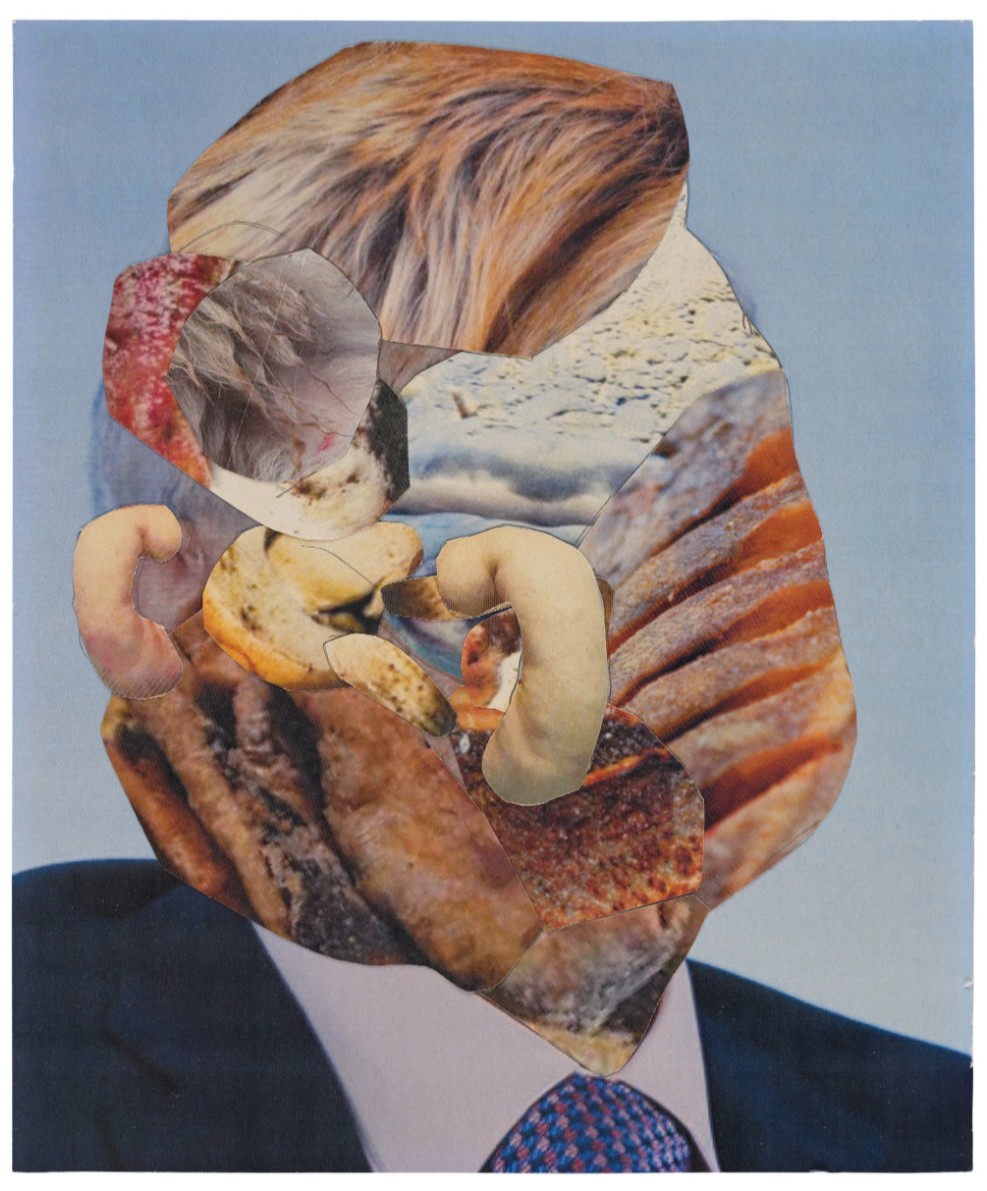
ADRIAN GHENIE
The Philanthropist, 2019
Collage on paper
23.8 x 20 cm (9 3/8 x 7 7/8 inches)
Signed and dated “Ghenie 2019” on the reverse
Lots Passed
Study for The Morgue, 2007
Property from a Fine Belgian Collection
Phillips London: 7 March 2026
Estimated: GBP 20,000 – 30,000
PASSED
Adrian Ghenie Modern & Contemporary Art
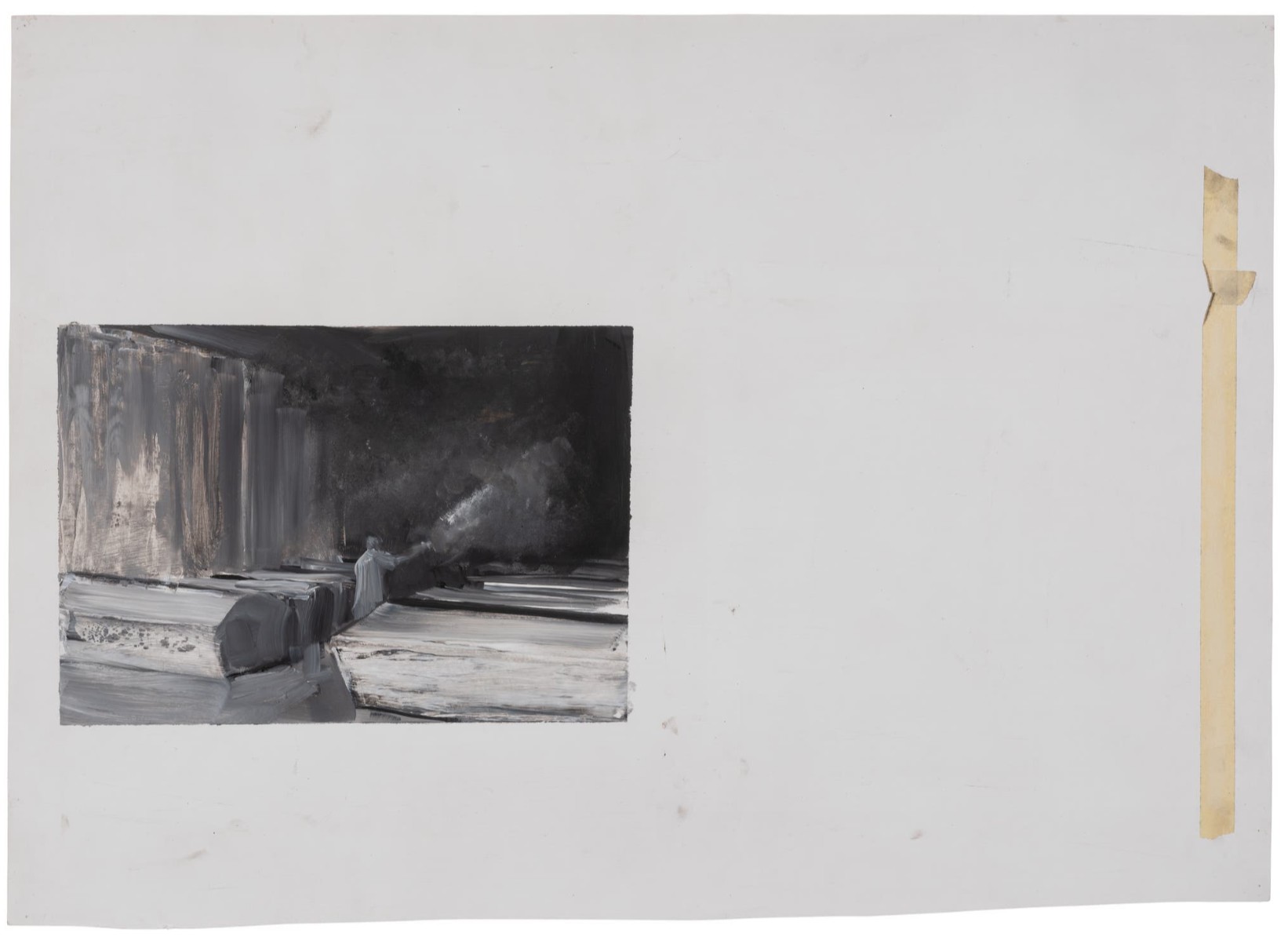
ADRIAN GHENIE
Study for The Morgue, 2007
Oil on paper
49.5 x 70 cm (19-1/2 x 27-1/2 inches)
Signed and dated ‘Ghenie 2007’ on the reverse
2025 Auction Results
6 lots sold at auction in 2025 for a total turnover of USD 10,211,932. With 1 lot failing to sell, the sell-through rate is 86%. The highest price was achieved by Alpine Retreat 2, a painting dated 2017, that sold at Sotheby’s in New-York on 15 May 2025 for USD 3,161,000.
2025 Top 3 Lots
3 lots sold for more than USD 1 million, generating a cumulative turnover of USD 8,801,213, representing 86.2% of the total turnover for 2025.
#1. Alpine Retreat 2, 2017
Sotheby’s New-York: 15 May 2025
Estimated: USD 2,500,000 – 3,500,000
USD 3,161,000
Alpine Retreat 2 | The Now and Contemporary Evening Auction | 2025 | Sotheby’s
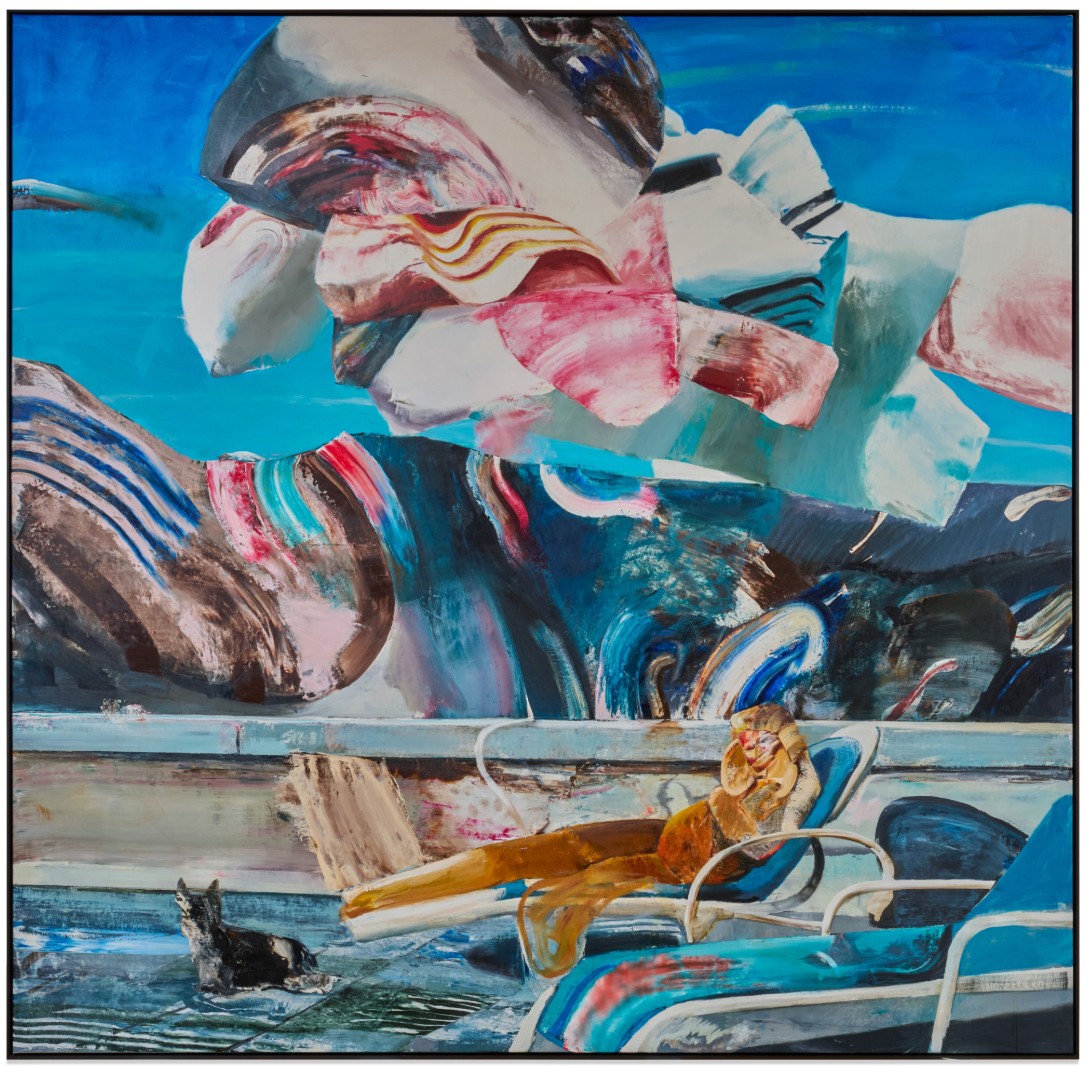
ADRIAN GHENIE (b. 1977)
Alpine Retreat 2, 2017
Oil on canvas
290×300 cm (114 1/8 x 118 1/8 inches)
Signed and dated 2017 (on the reverse)
#2. Untitled (After Henri Rousseau), 2020
Christie’s Hong-Kong: 28 March 2024
Estimated: HKD 10,000,000 – 15,000,000
HKD 23,365,000 / USD 3,003,213
Untitled (After Henri Rousseau)
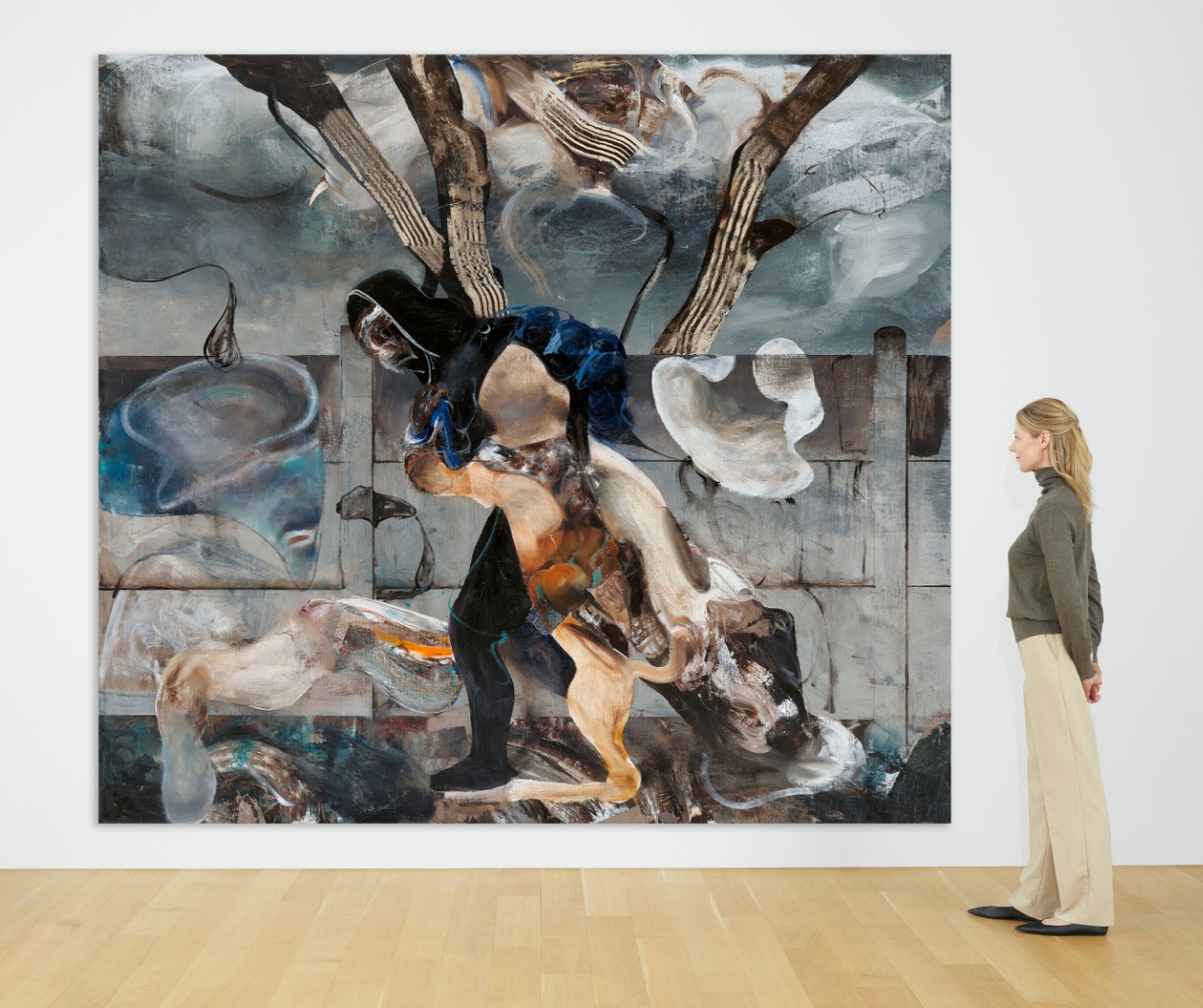
ADRIAN GHENIE (B. 1977)
Untitled (After Henri Rousseau), 2020
Oil on canvas
270×300 cm (106 1/4 x 118 1/8 inches)
Signed and dated ‘Ghenie 2020’ (on the reverse)
#3. Boogeyman, 2010
Elaine: The Collection of Elaine Wynn
Christie’s New-York: 19 November 2025
Estimated: USD 2,500,000 – 3,500,000
USD 2,637,000
ADRIAN GHENIE (B. 1977), Boogeyman | Christie’s
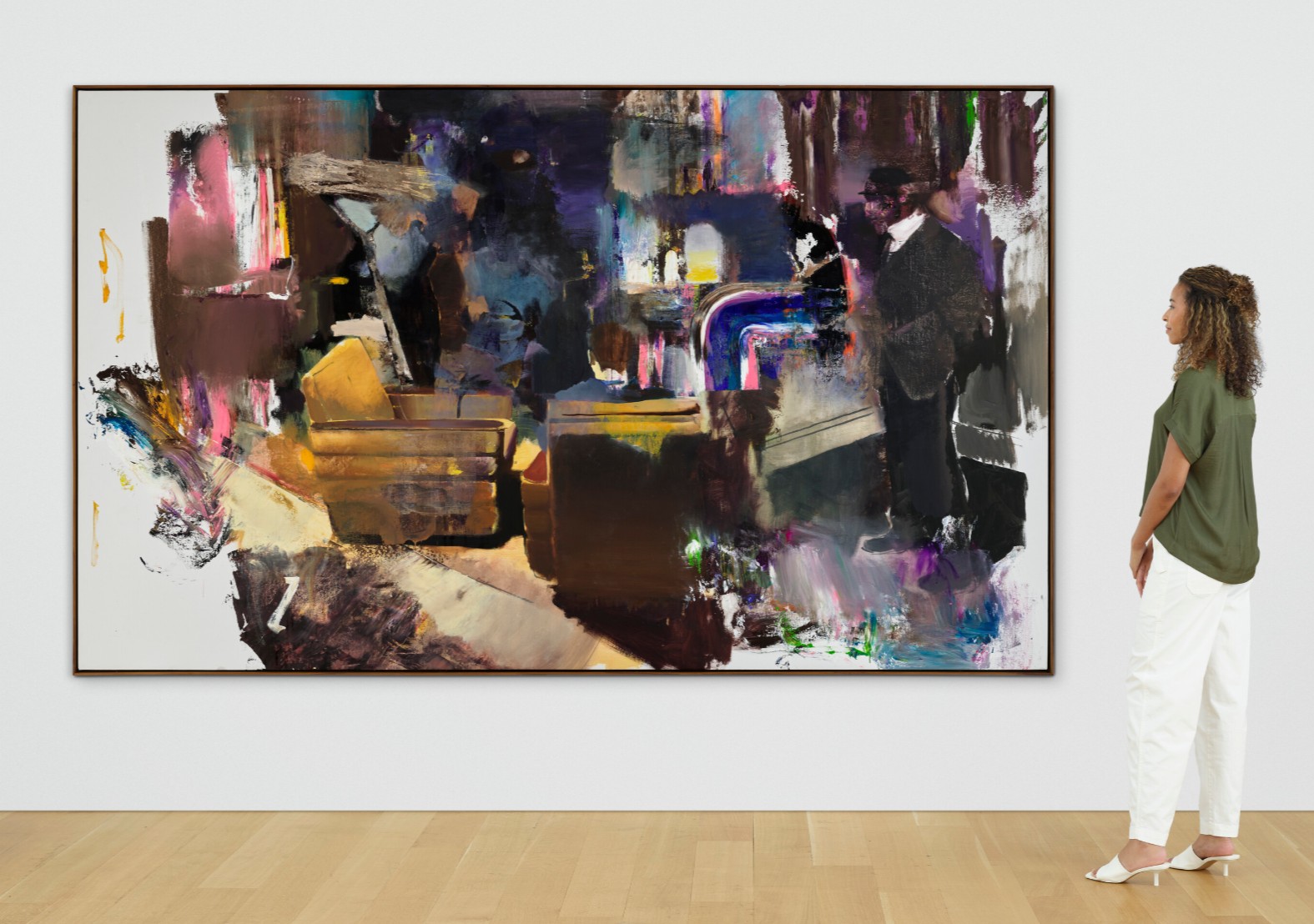
ADRIAN GHENIE (B. 1977)
Boogeyman, 2010
Oil on canvas
200×335 cm (79 3/4 x 131 7/8 inches)
Signed and dated ‘Ghenie 2010’ (on the reverse)
USD 1 million
#4. Lidless Eye, 2016
Sotheby’s London: 4 March 2025
Estimated: GBP 500,000 – 700,000
GBP 762,000 / USD 975,360
Lidless Eye | Modern & Contemporary Evening Auction | 2025 | Sotheby’s
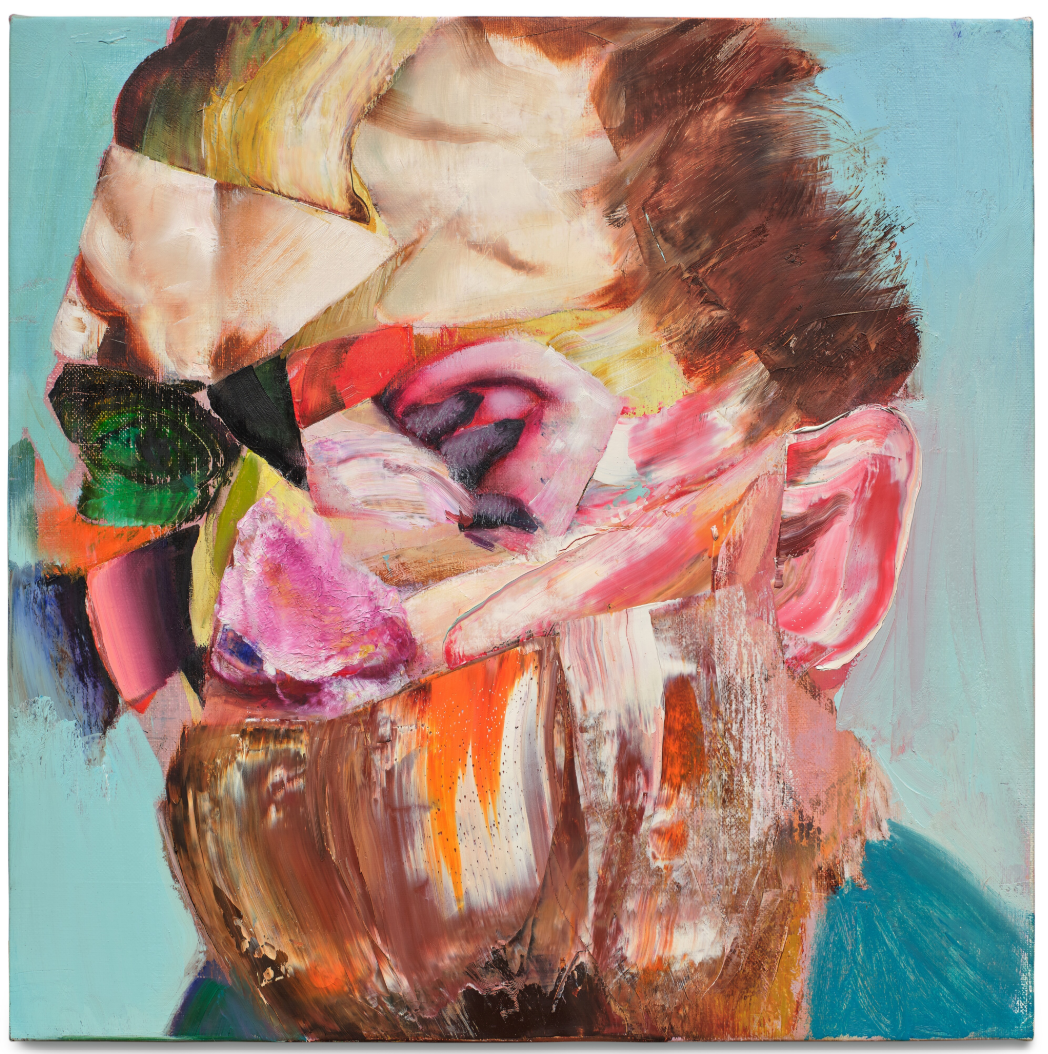
ADRIAN GHENIE (b. 1977)
Lidless Eye, 2016
Oil on canvas on board
41.3 x 41 cm (16 1/4 x 16 1/8 inches)
Signed and dated 2016 (on the reverse)
#5. The Bath, 2007
Sotheby’s Hong-Kong: 29 September 2025
Estimated: HKD 1,500,000 – 2,000,000
HKD 1,905,000 / USD 244,860
Adrian Ghenie 亞德里安 · 格尼 | The Bath 洗澡 | Modern & Contemporary Day Auction | 2025 | Sotheby’s
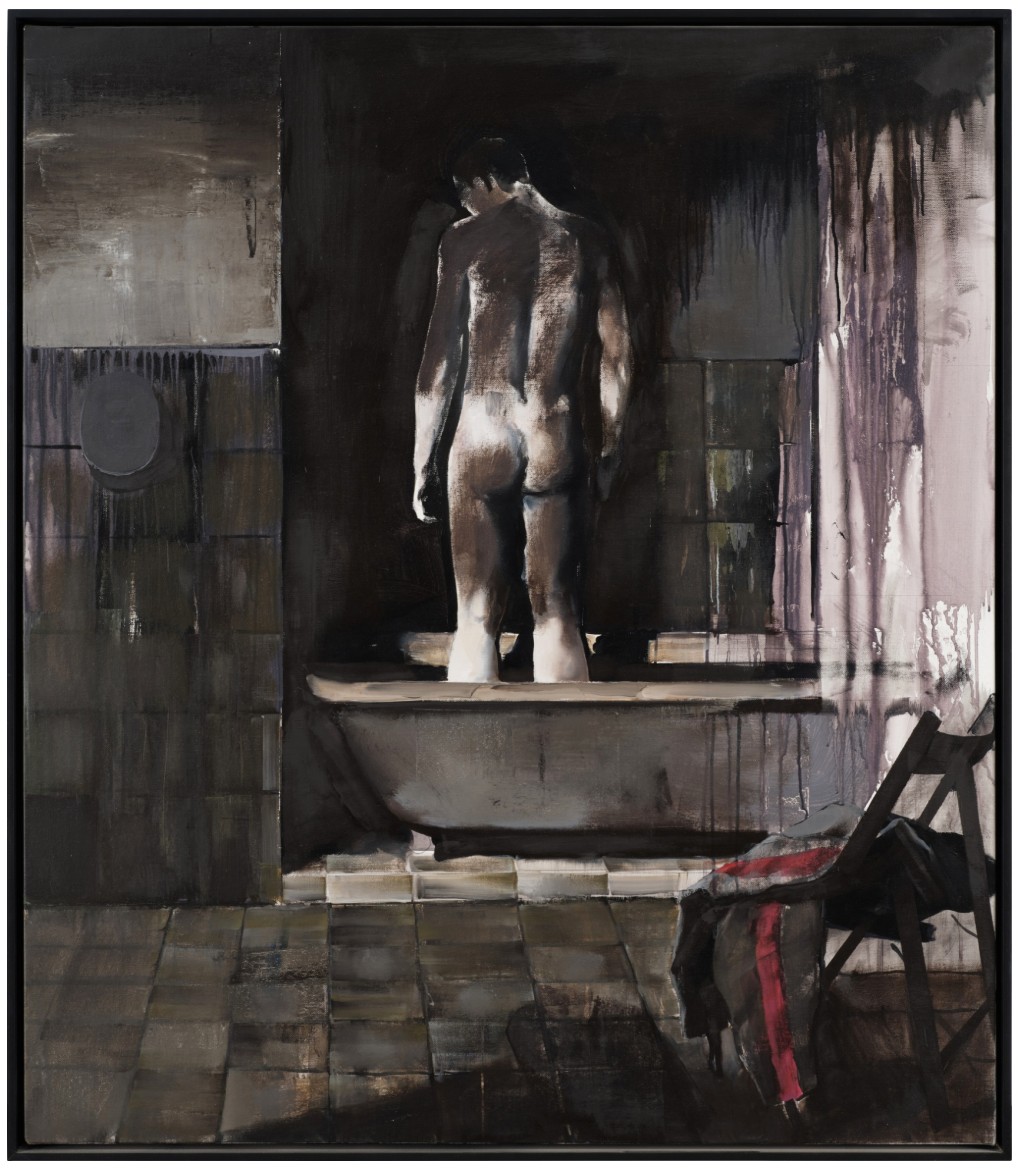
ADRIAN GHENIE (b. 1977)
The Bath, 2007
Acrylic on canvas
120×100 cm (47 1/4 x 39 3/8 inches)
Signed and dated 2007 (on the reverse)
#6. Pie Fight (Child), 2012
Phillips New-York: 14 May 2025
Estimated: USD 60,000 – 80,000
USD 190,500
Adrian Ghenie Modern & Contemporary Art Day Sale, Afternoon Session
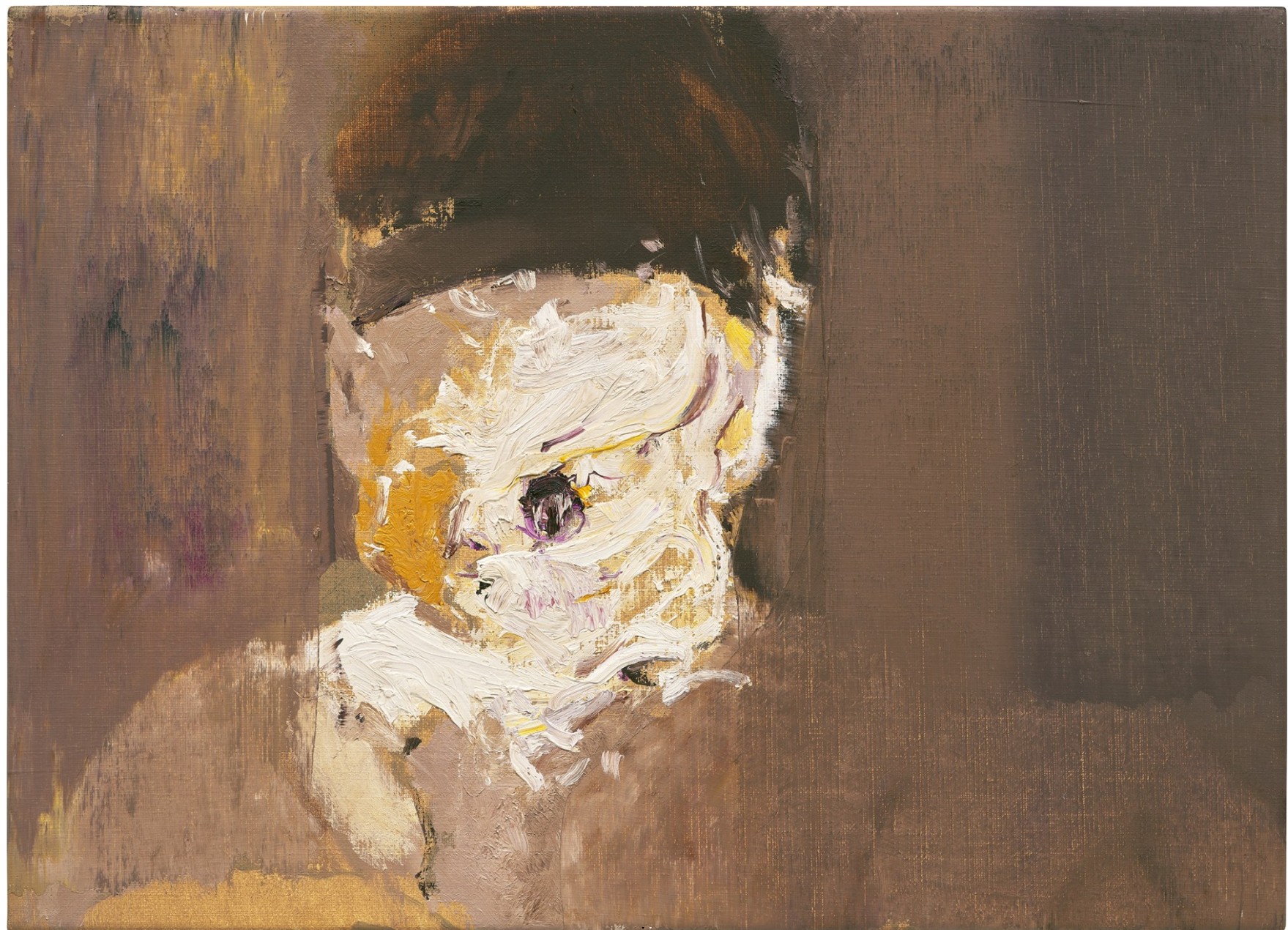 ADRIAN GHENIE
Pie Fight (Child), 2012
Oil on canvas
41.3 x 56.8 cm (16 1/4 x 22 3/8 inches)
Signed and dated “Ghenie 2012” on the reverse
Lots Passed
Self-Portrait in Villa Borghese, 2023
Christie’s Hong-Kong: 26 September 2025
Estimated: HKD 7,500,000 – 11,500,000
PASSED
ADRIAN GHENIE (B. 1977), Self-Portrait in Villa Borghese | Christie’s
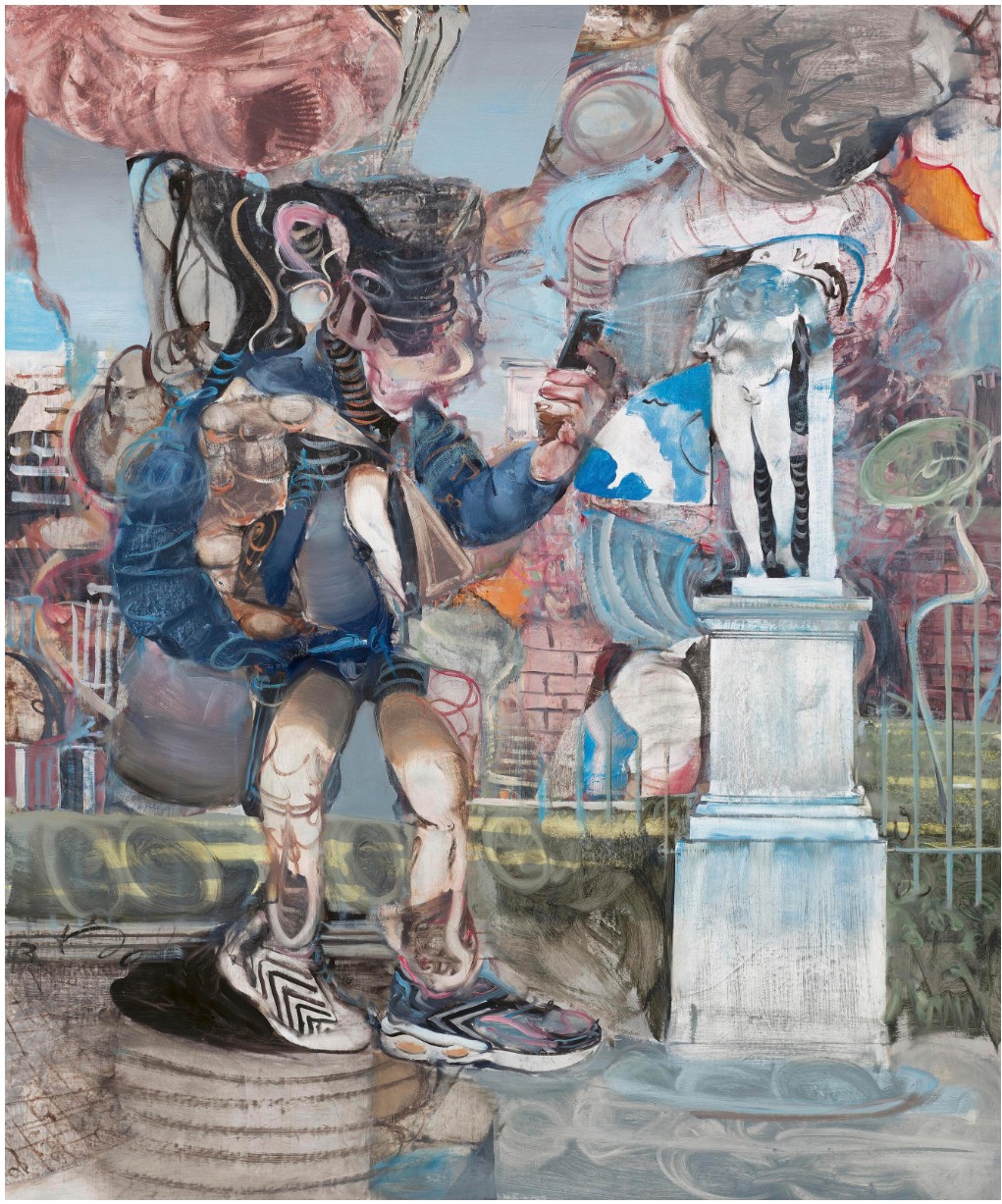
ADRIAN GHENIE (B. 1977)
Self-Portrait in Villa Borghese, 2023
Oil on canvas
240×200 cm (94 1/2 x 78 3/4 inches)
Signed and dated ‘Ghenie 2023’ (on the reverse)
2024 Auction Results
7 lots sold at auction for a total turnover of USD 7,625,734. With 1 lot failing to sell (Self-Portrait as a Monkey, 2010, at Phillips in London on 7 March 2024), the sell-through rate is 88%. Two lots were withdrawn, Elvis, from Sotheby’s in Hong-Kong on 5 April 2024, and The Philanthropist, at Phillips in New-York on 15 May 2024.
2024 Top 3 Lots
The highest price has been achieved at Sotheby’s in New-York on 13 May 2024 when The Uncle, a painting dated 2019 sold for USD 3,006,000. 3 lots sold for more than USD 1 million, generating a cumulative turnover of USD 6,563,544, representing 86% of the total turnover for 2024.
#1. The Uncle, 2019
Sotheby’s New-York: 13 May 2024
Estimated: USD 2,000,000 – 3,000,000
USD 3,006,000
The Uncle | The Now Evening Auction | 2024 | Sotheby’s (sothebys.com)

ADRIAN GHENIE (b. 1977)
The Uncle, 2019
Oil on canvas
260.1 x 253.3 cm (102 3/8 x 99 3/4 inches)
Signed and dated 2019 (on the reverse)
#2. St. Christopher, 2018
Sotheby’s London: 9 October 2024
Estimated: GBP 1,500,000 – 2,000,000
GBP 1,740,000 / USD 2,279,400
St. Christopher | Contemporary Evening Auction | 2024 | Sotheby’s (sothebys.com)
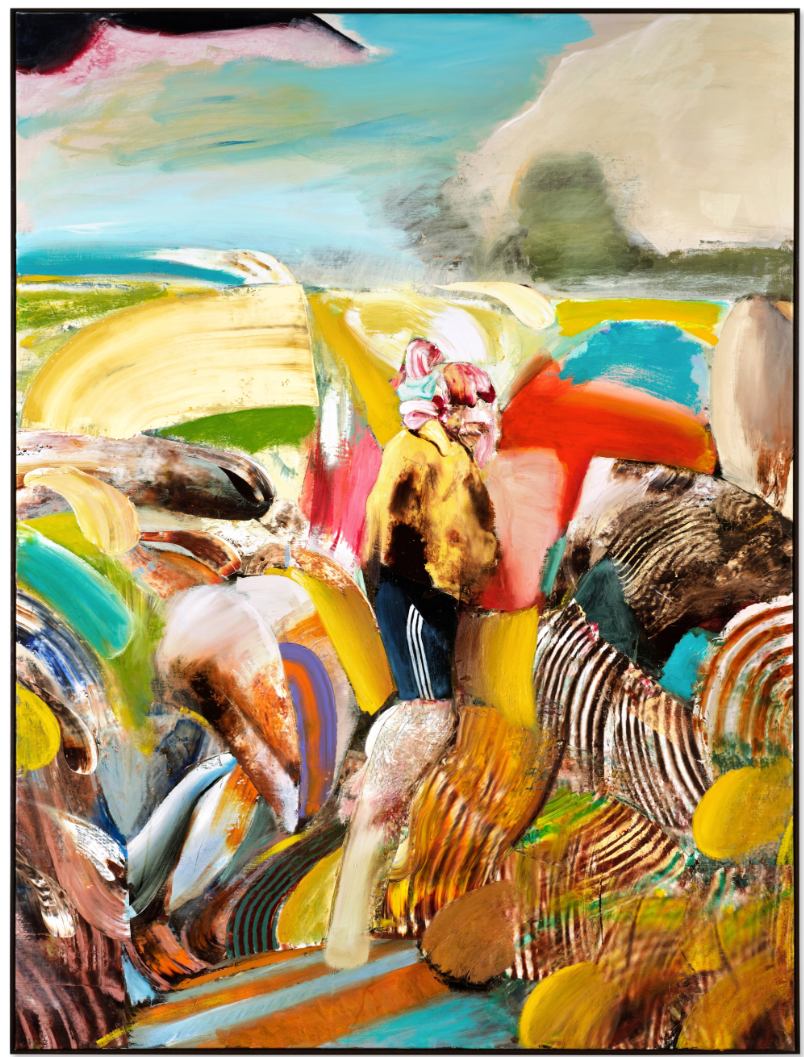
ADRIAN GHENIE (b. 1977)
St. Christopher, 2018
Oil on canvas
240.7 x 180 cm (94 3/4 x 70 7/8 inches)
Signed and dated 2018 (on the reverse)
#3. The Squat, 2021
Christie’s London: 7 March 2024
Estimated: GBP 1,200,000 – 2,000,000
GBP 1,008,000 / USD 1,278,144
ADRIAN GHENIE (B. 1977), The Squat | Christie’s (christies.com)
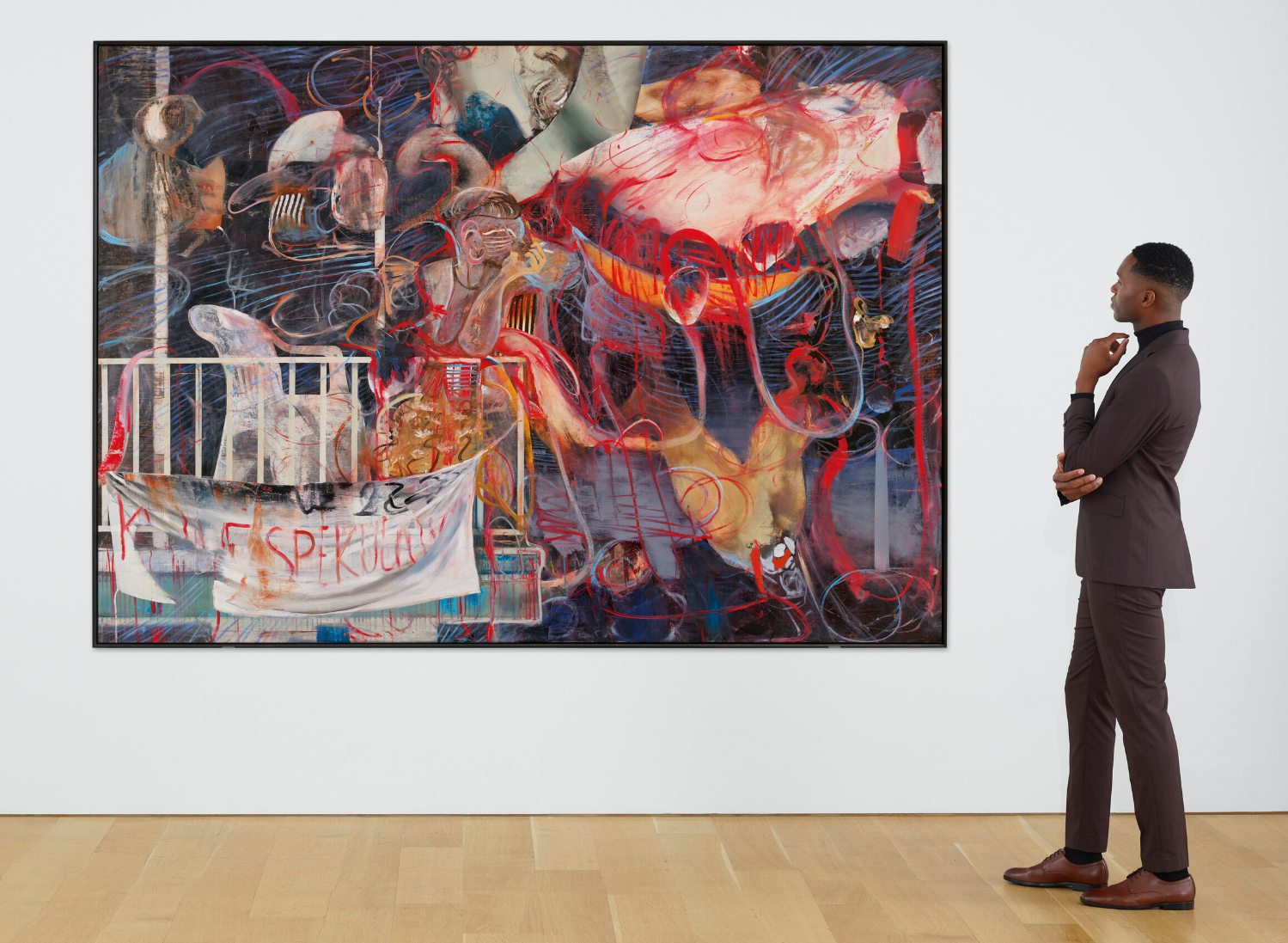
ADRIAN GHENIE (B. 1977)
The Squat, 2021
Oil on canvas
210.2 x 297 cm (82 3/4 x 116 7/8 inches)
Signed and dated ‘Ghenie 2021’ (on the reverse)
USD 1 million
#4. Untitled, 2009
Sotheby’s New-York: 14 May 2024
Estimated: USD 300,000 – 400,000
USD 558,800
Untitled | Contemporary Day Auction | 2024 | Sotheby’s (sothebys.com)

ADRIAN GHENIE (b. 1977)
Untitled, 2009
Acrylic on canvas
50 x 59.9 cm (19 5/8 x 23 5/8 inches)
Signed and dated 2009 (on the reverse)
#5. Charles Darwin as a Young Man, 2014
Sotheby’s London: 7 March 2024
Estimated: GBP 250,000 – 300,000
GBP 317,500 / USD 402,090
Charles Darwin as a Young Man | Modern & Contemporary Day Auction | 2024 | Sotheby’s (sothebys.com)
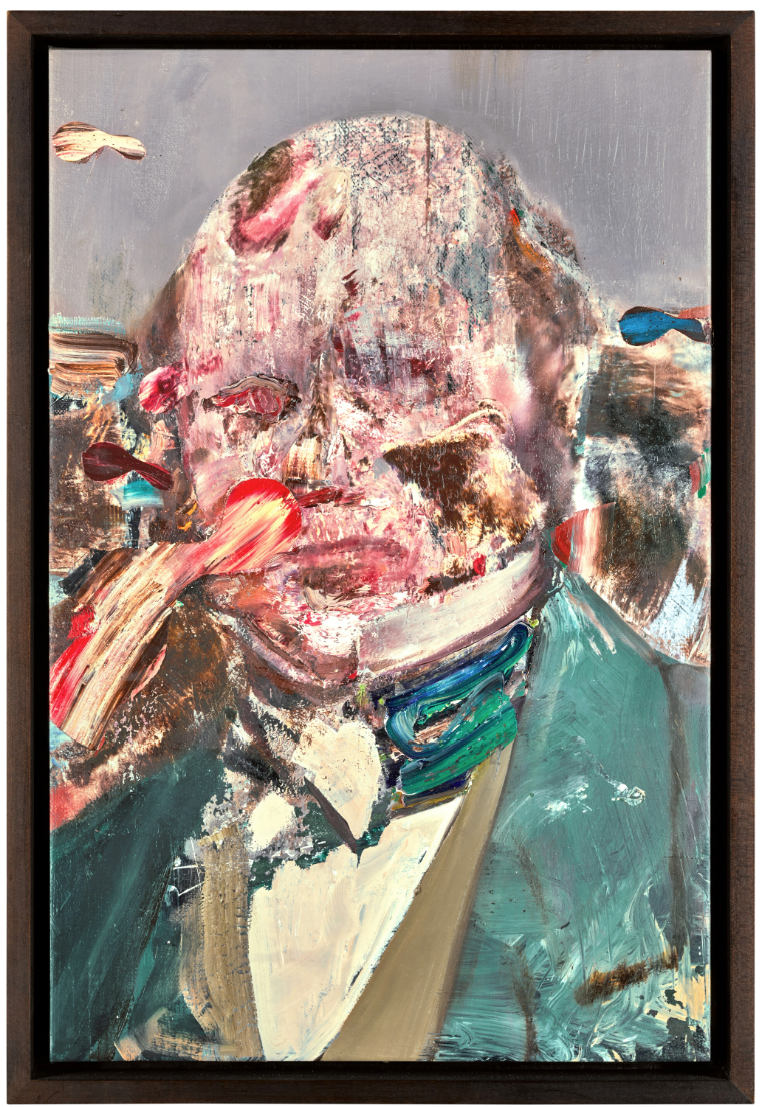
ADRIAN GHENIE (b. 1977)
Charles Darwin as a Young Man, 2014
Oil on canvas
48.8 x 32.1 cm (19 1/4 x 12 5/8 inches)
Signed and dated 2014 (on the reverse)
#6. Unbound, 2006
Christie’s New-York: 17 May 2024
Estimated: USD 60,000 – 80,000
USD 63,000
ADRIAN GHENIE (B. 1977), Unbound | Christie’s (christies.com)
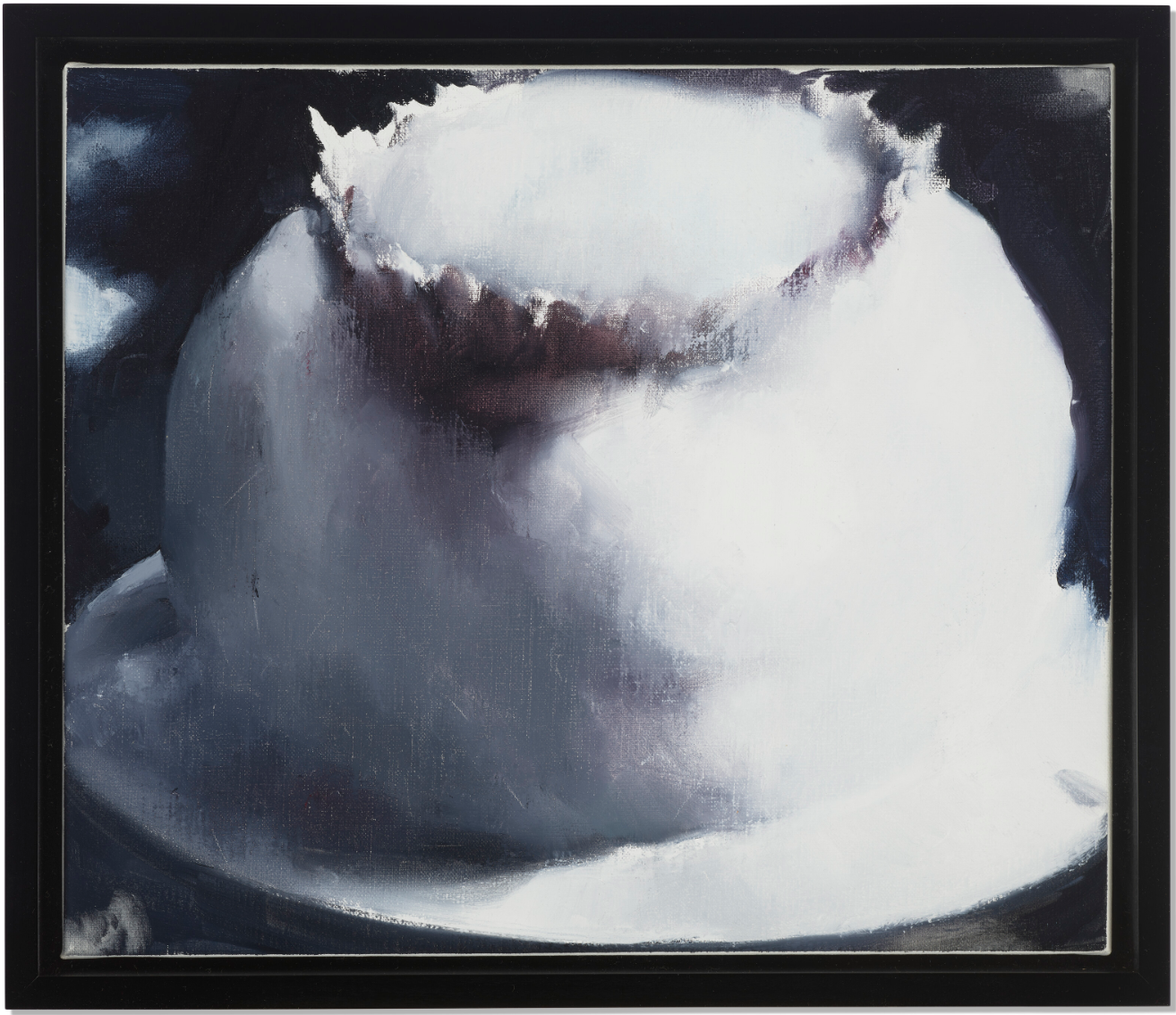
ADRIAN GHENIE (B. 1977)
Unbound, 2006
Oil on canvas
39.1 x 46.4 cm (15 3/8 x 18 1/4 inches)
Signed and dated ‘Ghenie 2006’ (on the reverse)
#7. Untitled (Wvz Nr. Ag 07/01), 2007
Christie’s New-York: 17 May 2024
Estimated: USD 40,000 – 60,000
USD 37,800
ADRIAN GHENIE (B. 1977), Untitled (Wvz Nr. Ag 07/01) | Christie’s (christies.com)
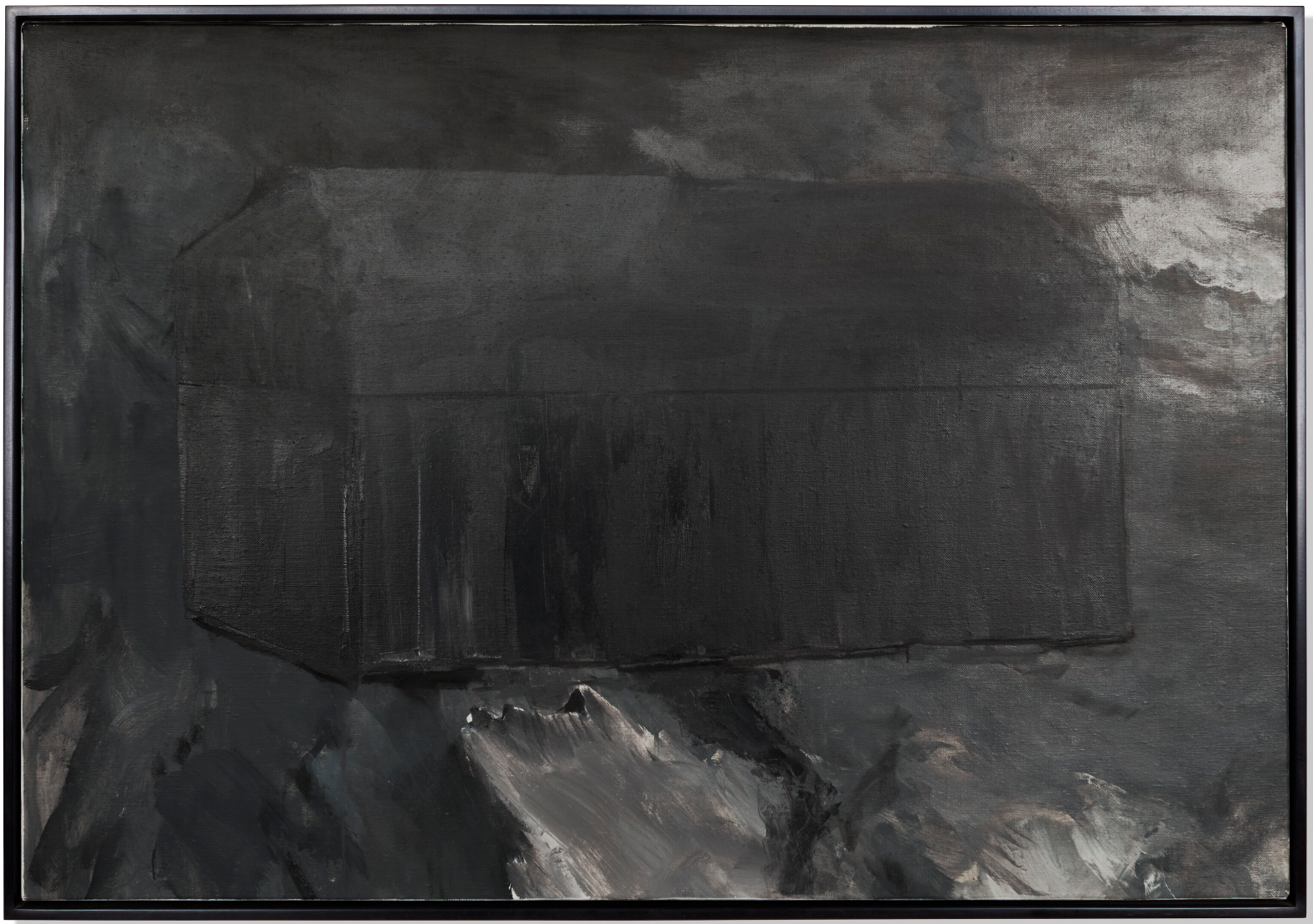
ADRIAN GHENIE (B. 1977)
Untitled (Wvz Nr. Ag 07/01), 2007
Oil on canvas
69.8 x 102.3 cm (27 5/8 x 40 1/4 inches)
Signed and dated ‘Ghenie 2007’ (on the reverse)
2023 Auction Results
9 paintings sold at auction in 2023 for a total turnover of USD 15,141,554. Sell-Through rate is 100%. The top price was achieved by Lidless Eye sold at Christie’s in Hong-Kong on 28 November 2023 for HKD 42,725,000 (USD 5,485,199). This is the only lot that sold above USD 5 million.
2023 Top 3 Lots
4 lots sold above USD 1 million, generating a cumulative turnover of USD 13,483,932, representing 89.1% of the total turnover for 2023.
#1. Lidless Eye, 2016-19
Christie’s Hong-Kong: 28 November 2023
Estimated: HKD 38,000,000 – 58,000,000
HKD 42,725,000 / USD 5,485,199
22849-ghenie-lidless-eye (christies.com)
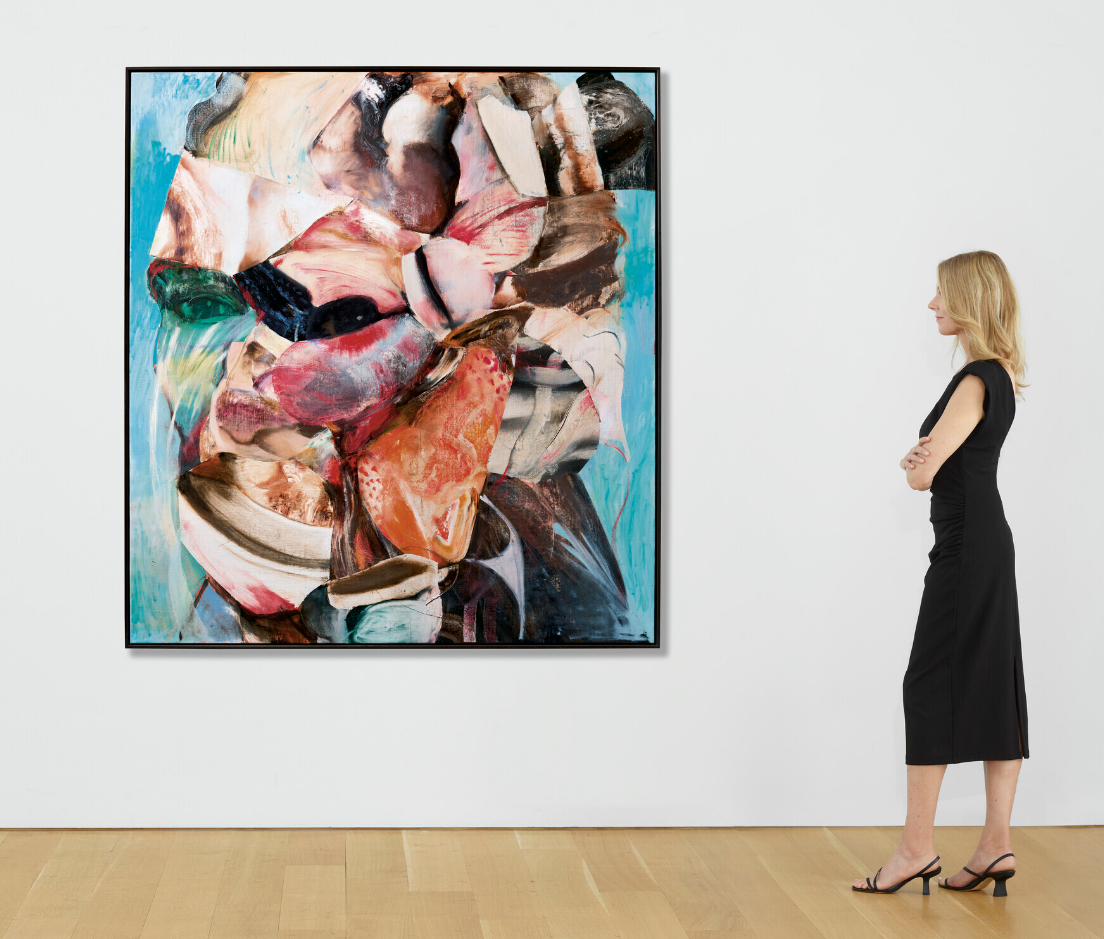
ADRIAN GHENIE (B. 1977)
Lidless Eye, 2016-19
Oil on canvas
185×170 cm (72 7/8 x 66 7/8 inches)
Signed and dated ‘Ghenie 2016-2019′ (on the reverse)
#2. The Flight into Egypt I, 2008
Christie’s Paris: 19 October 2023
Estimated: EUR 2,000,000 – 3,000,000
EUR 3,670,000 / USD 3,879,082
Adrian Ghenie (né en 1977) (christies.com)
ADRIAN GHENIE (Born 1977)
The Flight into Egypt I, 2008
Oil and acrylic on canvas
200 x 320.5 cm (76 3/4 x 126 1/8 inches)
Signed and dated ‘Ghenie 2008’ (on the reverse)
#3. Figure on the Beach, 2019
Sotheby’s Hong-Kong: 5 April 2023
Estimated: HKD 20,000,000 – 30,000,000
HKD 19,810,000 / USD 2,523,599
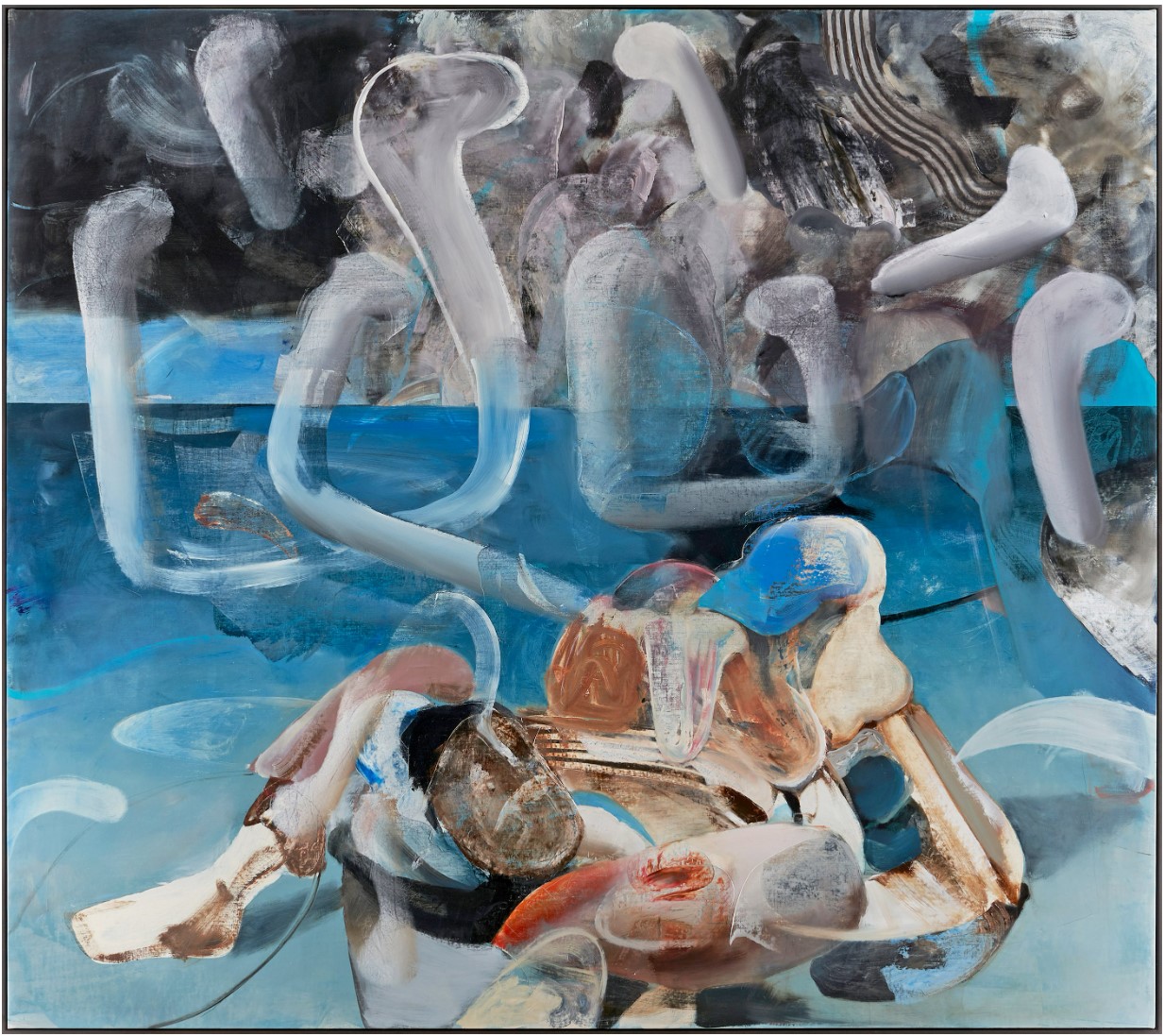
ADRIAN GHENIE (b. 1977)
Figure on the Beach, 2019
Oil on canvas
230×260 cm (90 1/2 x 102 3/8 inches)
#4. Untitled, 2019
Sotheby’s London: 27 June 2023
Estimated: GBP 1,000,000 – 1,500,000
GBP 1,253,624 / USD 1,596,117
Untitled | The Now Evening Auction | 2023 | Sotheby’s (sothebys.com)
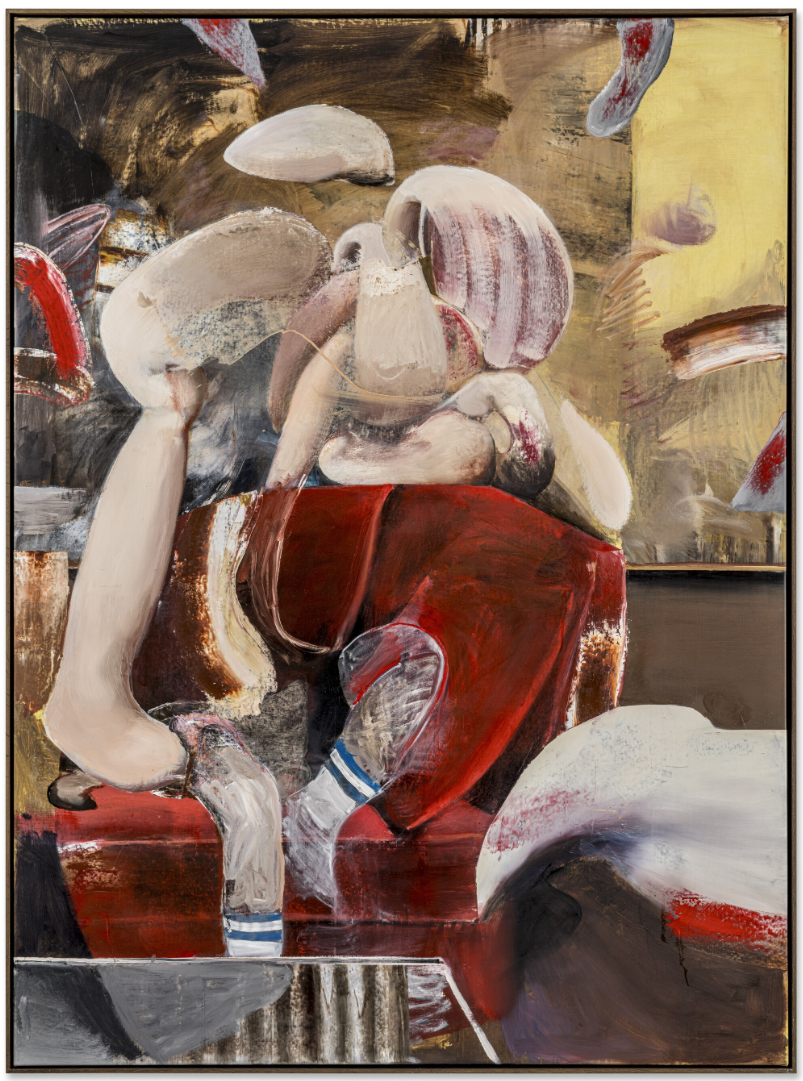
ADRIAN GHENIE (b. 1977)
Untitled, 2019
Oil on canvas
230×170 cm (92×68 inches)
USD 1 million
#5. Pie Fight Study, 2012
Christie’s London: 28 February 2023
Estimated: GBP 300,000 – 500,000
GBP 352,800 / USD 426,705
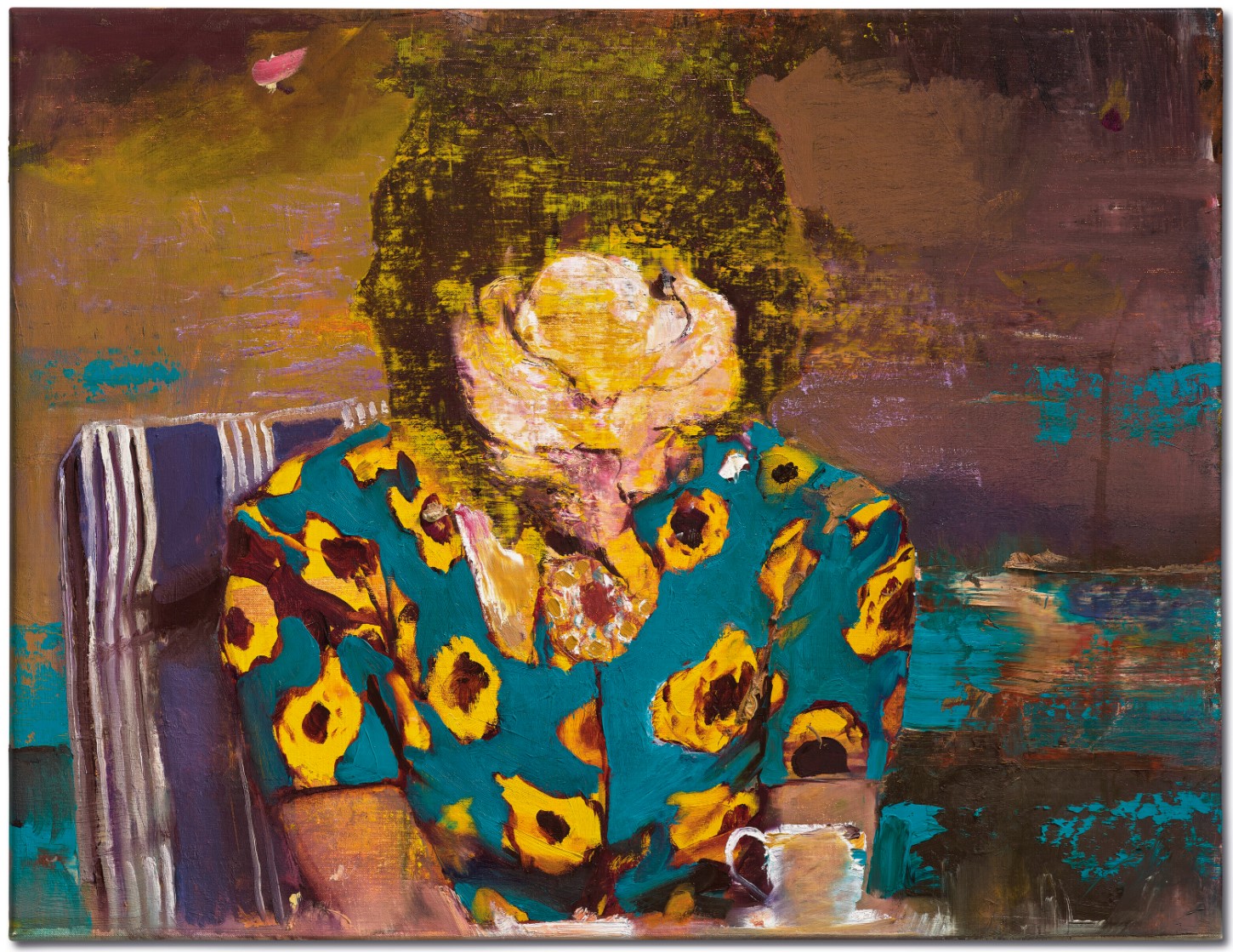
ADRIAN GHENIE (B. 1977)
Pie Fight Study, 2012
Oil on canvas
22 1/4 x 28 7/8 inches (56.4 x 73.2 cm)
Signed and dated ‘Ghenie 2012’ (on the reverse)
#6. Charles Darwin as a Young Man, 2013
Christie’s Paris: 19 October 2023
Estimated: EUR 250,000 – 350,000
EUR 403,200 / USD 426,170
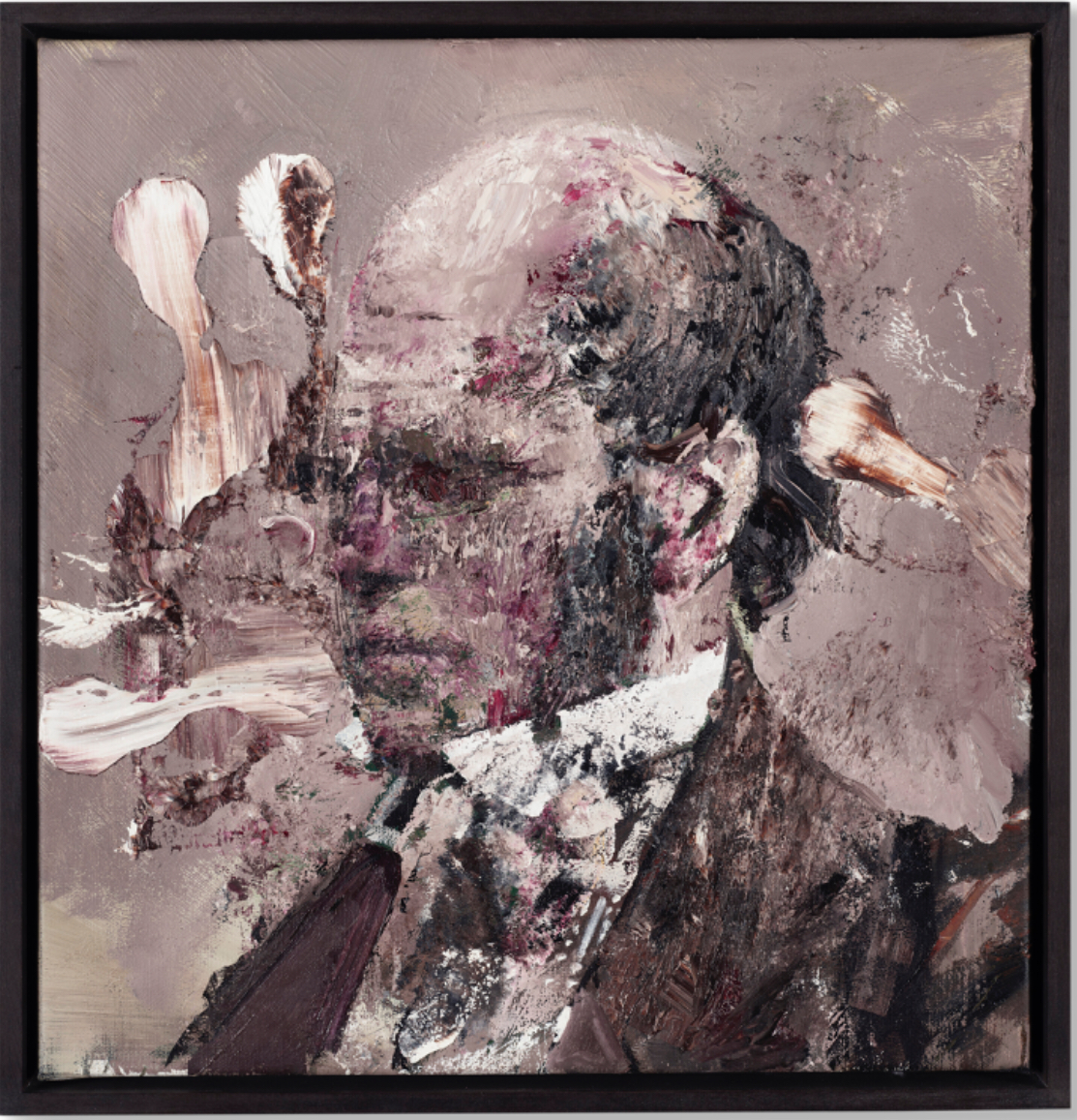
ADRIAN GHENIE (Born 1977)
Charles Darwin as a Young Man, 2013
Oil on canvas
45 x 43 cm (16 7/8 x 17 inches)
Signed and dated ‘Ghenie 2013’ (on the reverse)
#7. Self-Portrait as Charles Darwin, 2012
Sotheby’s London: 12 October 2023
Estimated: GBP 300,000 – 400,000
GBP 317,500 / USD 387,715
Self-Portrait as Charles Darwin | The Now Evening Auction | 2023 | Sotheby’s (sothebys.com)
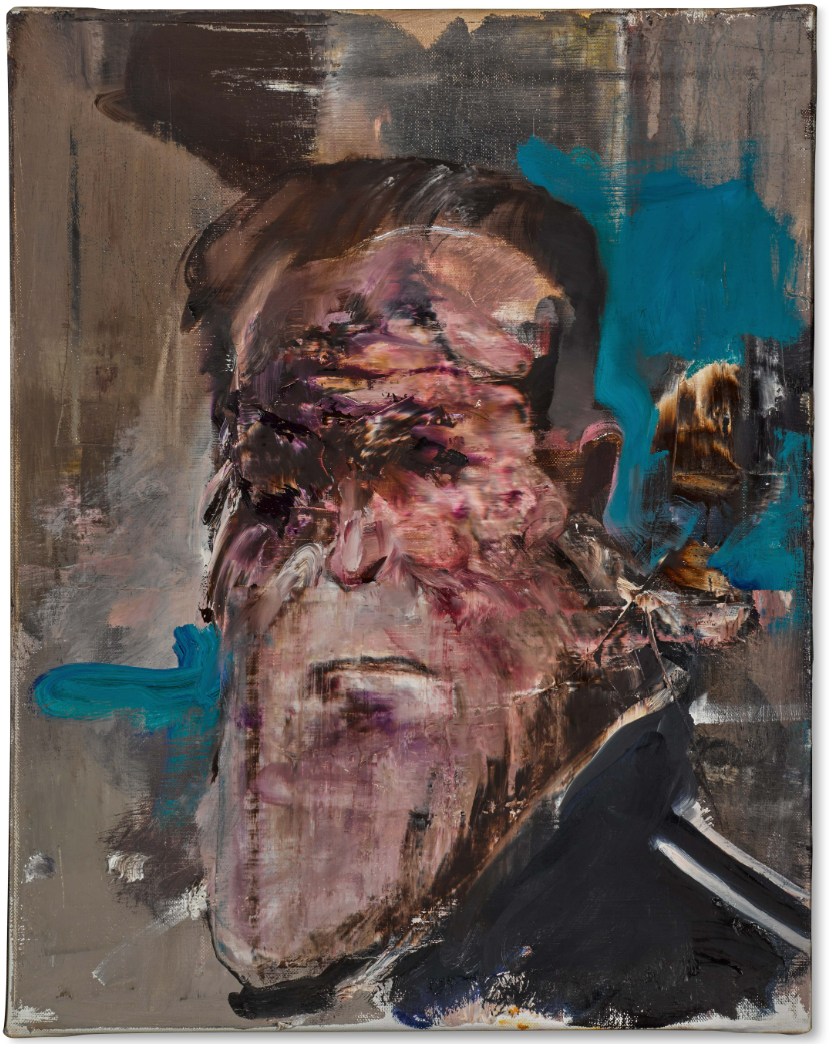
ADRIAN GHENIE (b. 1977)
Self-Portrait as Charles Darwin, 2012
Oil on canvas
50.3 x 40 cm (19 3/4 by 15 3/4 inches)
Signed and dated 2012 (on the reverse)
#8. Pie Fight (Study), 2012
Sotheby’s Hong-Kong: 6 April 2023
Estimated: HKD 2,200,000 – 3,200,000
HKD 2,794,000 / USD 355,919
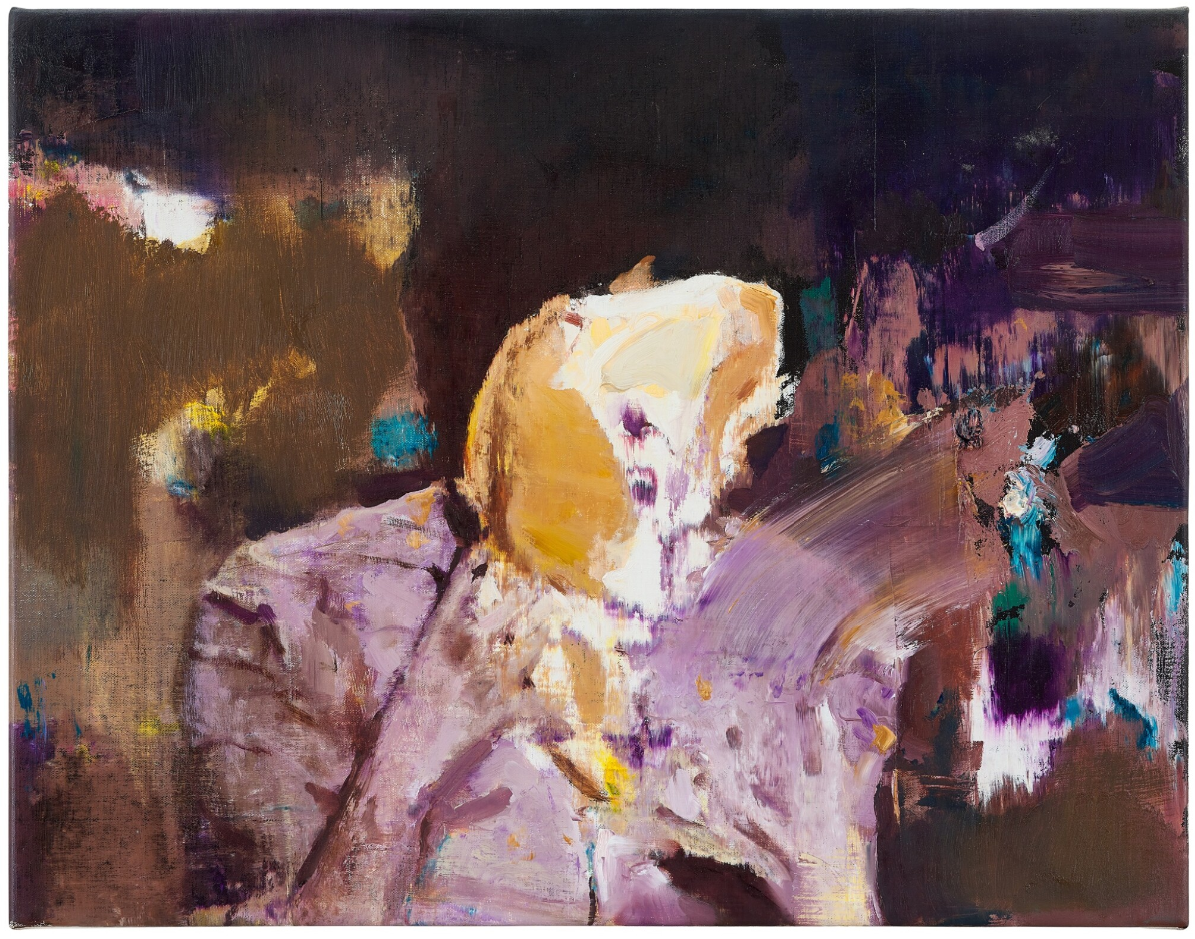
ADRIAN GHENIE (b. 1977)
Pie Fight (Study), 2012
Oil on canvas
19 x 24 1/2 inches (48.3 x 62.2 cm)
Signed and dated 2012 on the reverse
#9. Lenin’s Eyes, 2010
Christie’s London: 14 October 2023
Estimated: GBP 60,000 – 80,000
GBP 50,400 / USD 61,113
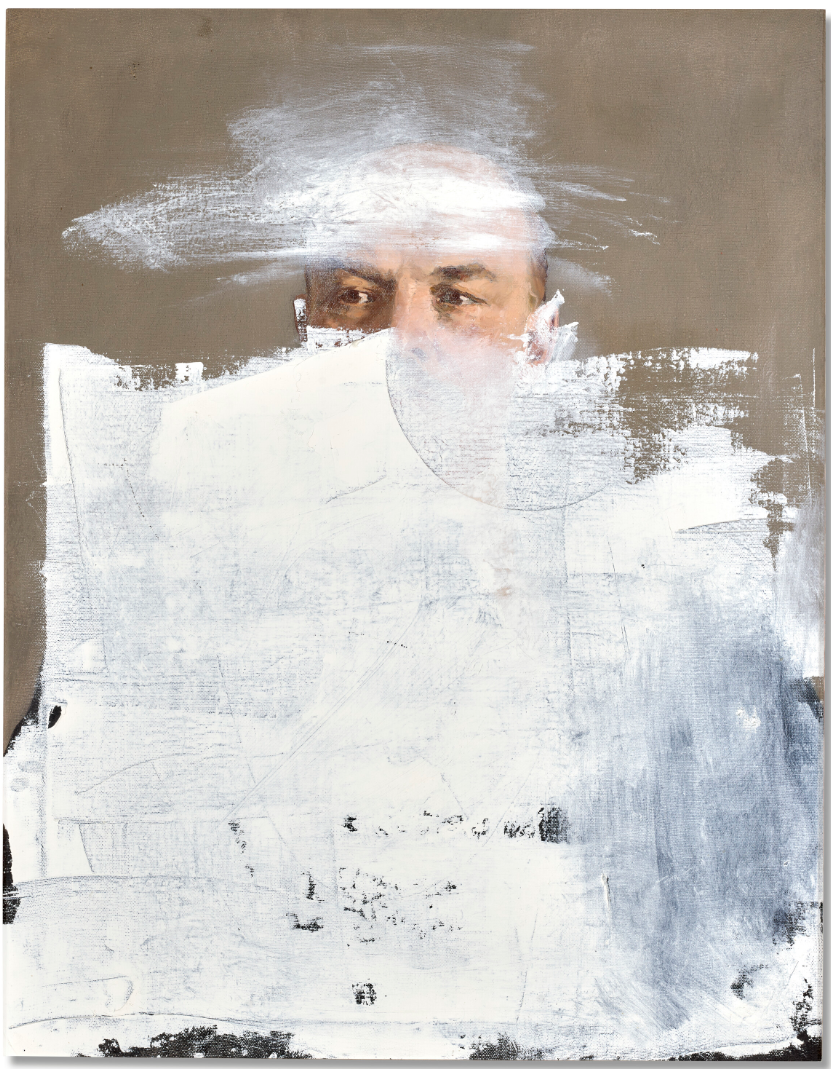
ADRIAN GHENIE (B. 1977) (christies.com)
ADRIAN GHENIE (B. 1977)
Lenin’s Eyes, 2010
Oil on found painting
90 x 70.2 cm (35 3/8 x 27 5/8 inches)
Signed and inscribed ‘for Tatzio, my favorite comrade Ghenie’ (on the reverse)
2022 Auction Results
12 lots sold at auction in 2022 for a total turnover of USD 48,718,697. 2022 was a record year for Adrian Ghenie at auction. 12 paintings sold for a total turnover of USD 48,718,697.
2022 Top 3 Lots
4 paintings sold for over USD 5 million and the new auction record was set for the artist at a price above USD 10 million at Christie’s in Hong-Kong on 26 May 2022. Sell-Through rate is 100%. 4 paintings sold in Hong-Kong, 3 of them above USD 7 million.
#1. Pie Fight Interior 12, 2014
Christie’s Hong-Kong: 25 May 2022
Estimated: HKD 68,000,000 – 98,00,000
HKD 81,060,000 / USD 10,326,477
ADRIAN GHENIE (B.1977) (christies.com)
ADRIAN GHENIE
Pie Fight Interior 12, 2014
Oil on canvas
284×350 cm (111.7 x 137.7 inches)
#2. Degenerate Art, 2016
Sotheby’s New-York: 19 May 2022
Estimated: USD 7,000,000 – 10,000,000
USD 9,286,700
Degenerate Art | The Now Evening Auction | 2022 | Sotheby’s (sothebys.com)
ADRIAN GHENIE
Degenerate Art, 2016
Oil on canvas
79×71 inches (200.7 x 180.3 cm)
#3. Lidless Eye, 2016-2018
Poly Hong-Kong: 12 July 2022
Estimated: HKD 50,000,000 – 75,000,000
HKD 60,000,000 / USD 7,643,604
ADRIAN GHENIE
Lidless Eye, 2016-2018
Oil on canvas
180.4 x 149.8 cm (71×59 inches)
Signed and dated ‘Ghenie 2016-2018’ (on the reverse)
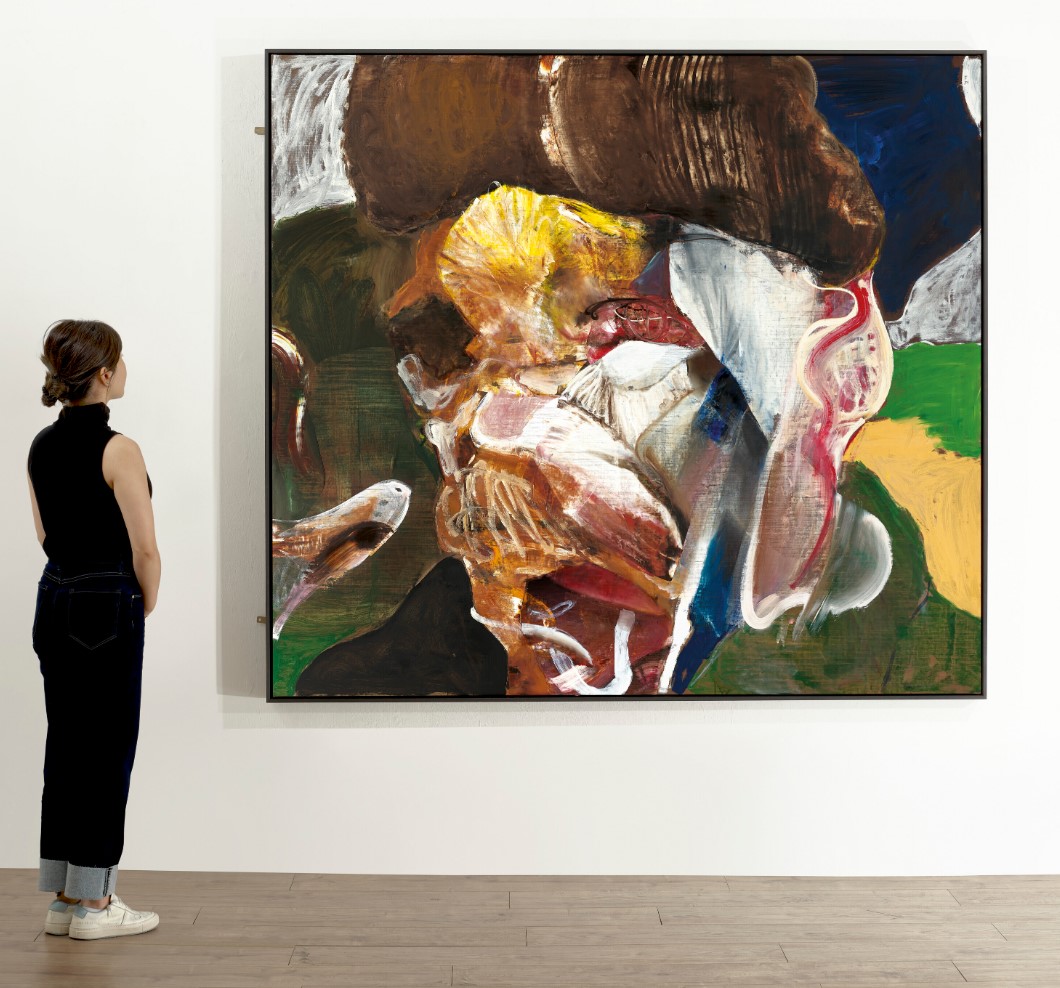
#4. Degenerate Art, 2018
Christie’s Hong-Kong: 30 November 2022
Estimated: HKD 48,000,000 – 68,000,000
HKD 56,850,000 / USD 7,283,792
ADRIAN GHENIE (B. 1977)
Degenerate Art, 2018
Oil on canvas
180×200 cm (70 7/8 x 78 3/4 inches)
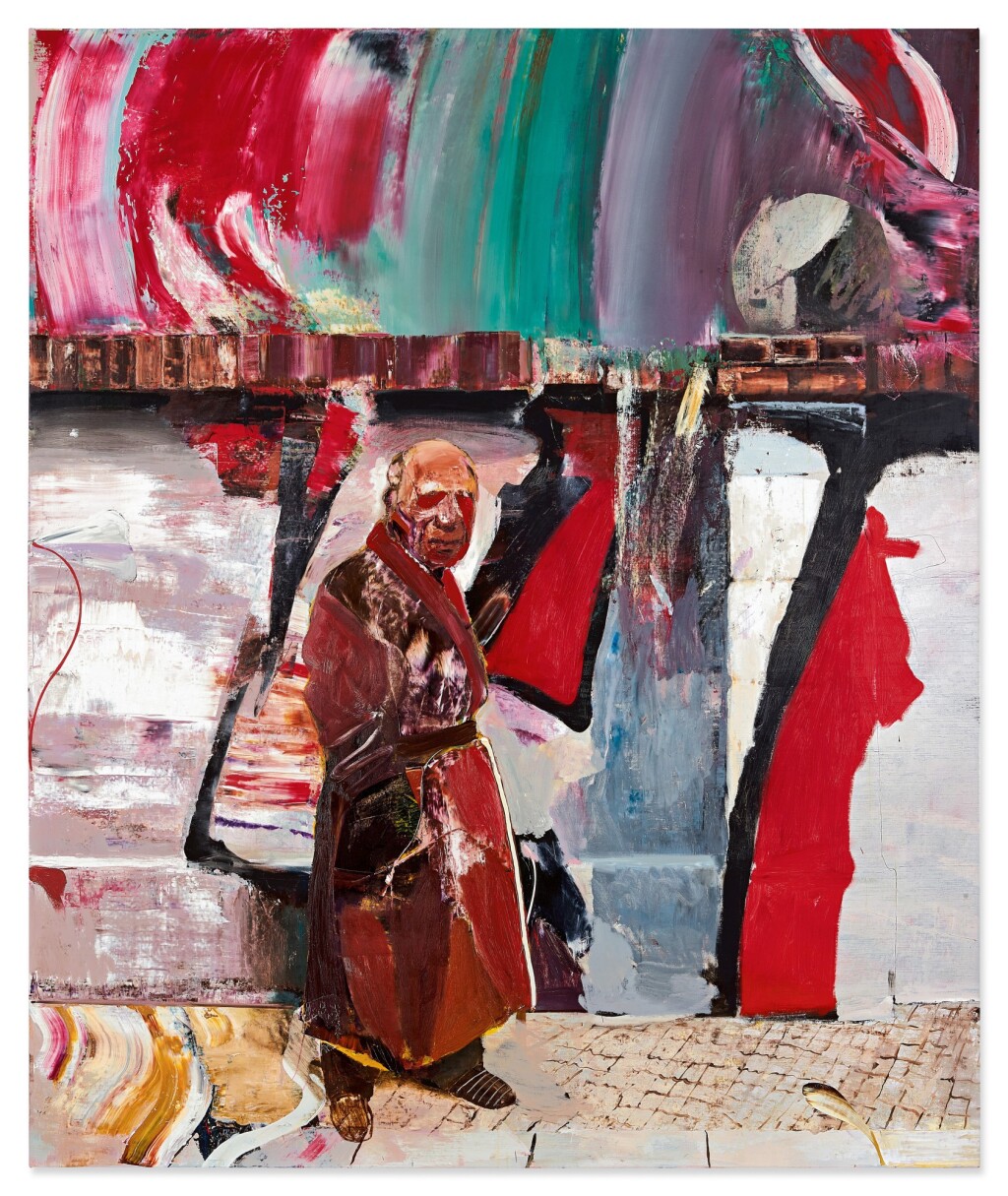
#5. The Trip, 2016
Sotheby’s New-York: 19 May 2022
Estimated: USD 4,000,000 – 6,000,000
USD 4,500,000
The Trip | The Now Evening Auction | 2022 | Sotheby’s (sothebys.com)
Sotheby’s Hong-Kong: 19 April 2021
Estimated: HKD 22,000,000 – 38,000,000
HKD 26,795,000 / USD 6,183,976
ADRIAN GHENIE
The Trip, 2016
Oil on canvas
240 x 199.8 cm (94.5 x 78.6 inches)
#6. Turning Point 1, 2009
Christie’s London: 13 October 2022
Estimated: GBP 2,200,000 – 2,800,000
GBP 2,682,000 / USD 3,042,196
ADRIAN GHENIE (B. 1977)
Turning Point 1, 2009
Oil on canvas
150.5 x 300.5 cm (59 1/4 x 118 1/4 inches)
Painted in 2009
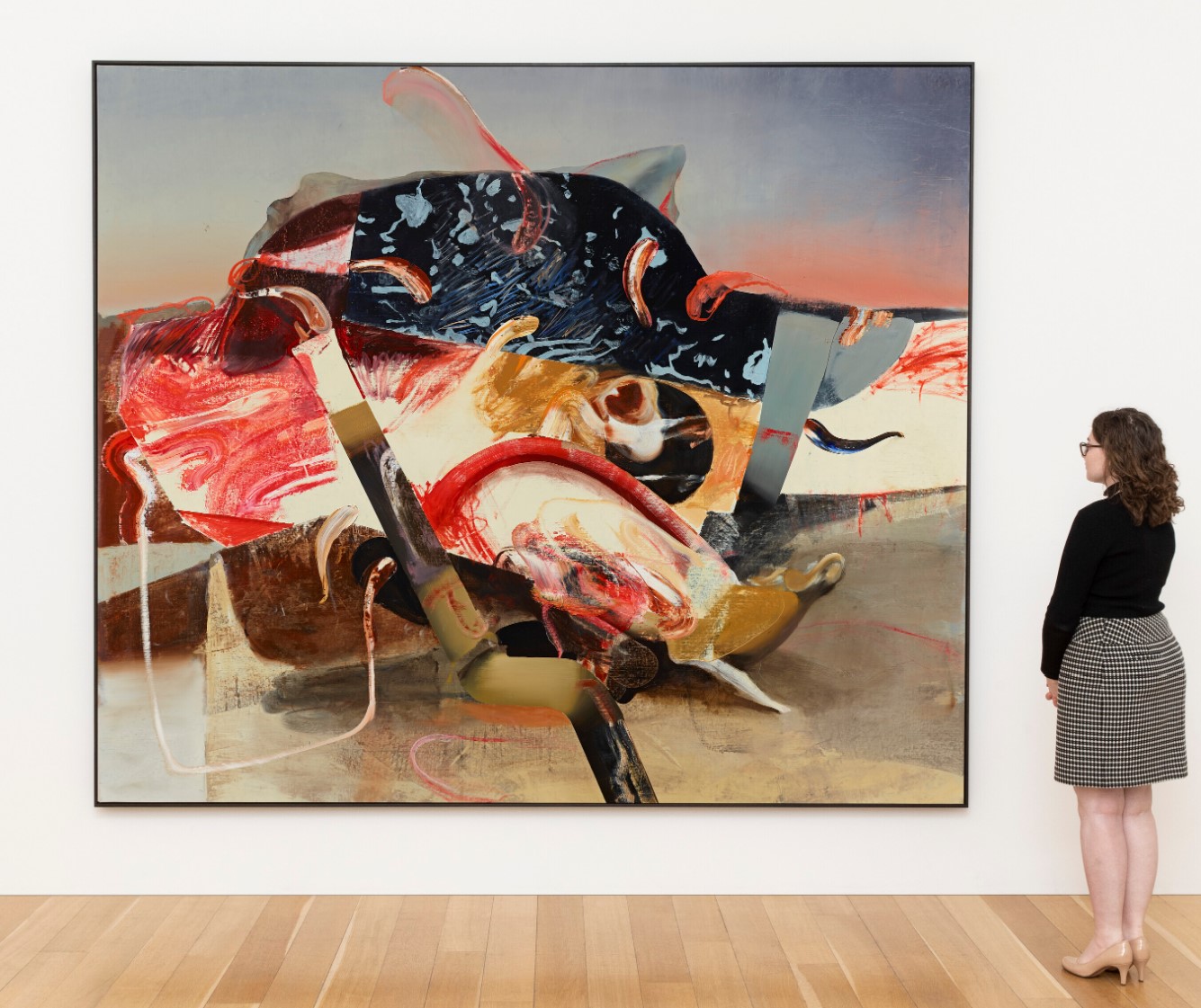
#7. Antelope Attacked near Gas Pipe 2, 2019
Christie’s New-York: 9 May 2022
Estimated: USD 2,500,000 – 3,500,000
USD 2,220,000
ADRIAN GHENIE
Antelope Attacked near Gas Pipe 2, 2019
Oil on canvas
250×295 cm (98.4 x 116.1 inches)
#8. Self-Portrait with Animal Mask, 2018
Christie’s London: 28 February 2022
GBP 600,000 – 800,000
GBP 1,050,000 / USD 1,407,145
ADRIAN GHENIE (B. 1977) (christies.com)
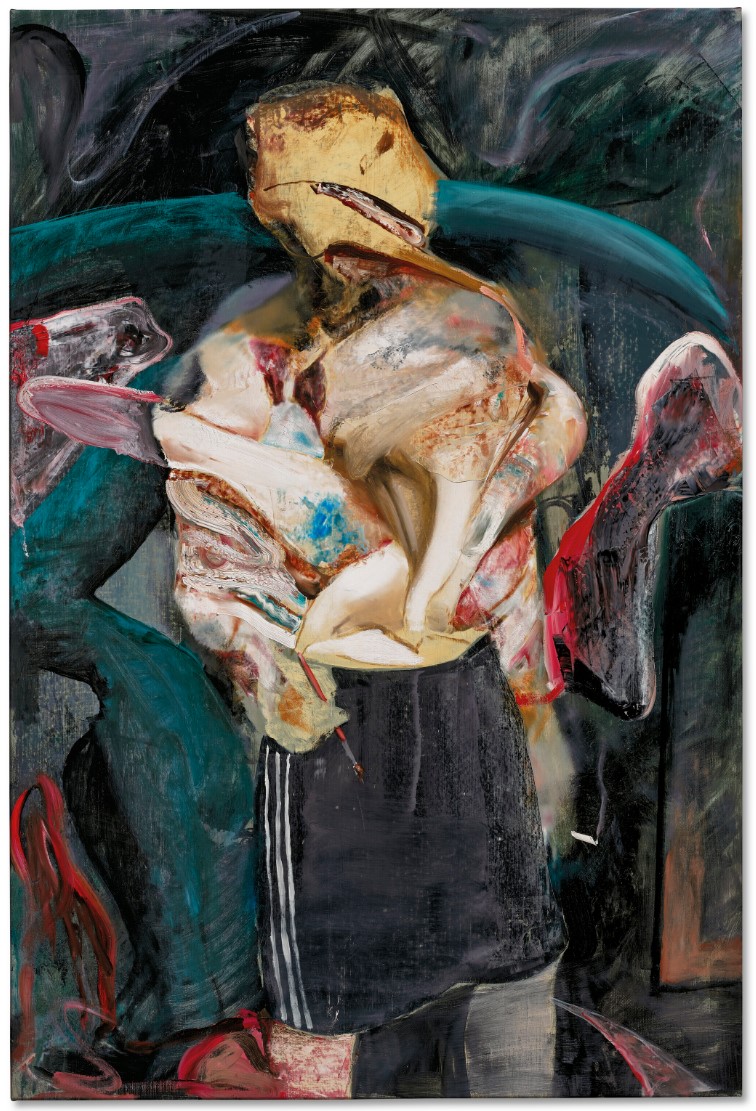
ADRIAN GHENIE
Self-Portrait with Animal Mask, 2018
Oil on canvas
150.2 x 100.4 cm (58.1 x 39.5 inches)
#9. Self Portrait in 1945, 2014
Christie’s Hong-Kong: 25 May 2022
Estimated: HKD 11,000,000 – 18,000,000
HKD 10,650,000 / USD 1,356,735
ADRIAN GHENIE (B. 1977) (christies.com)
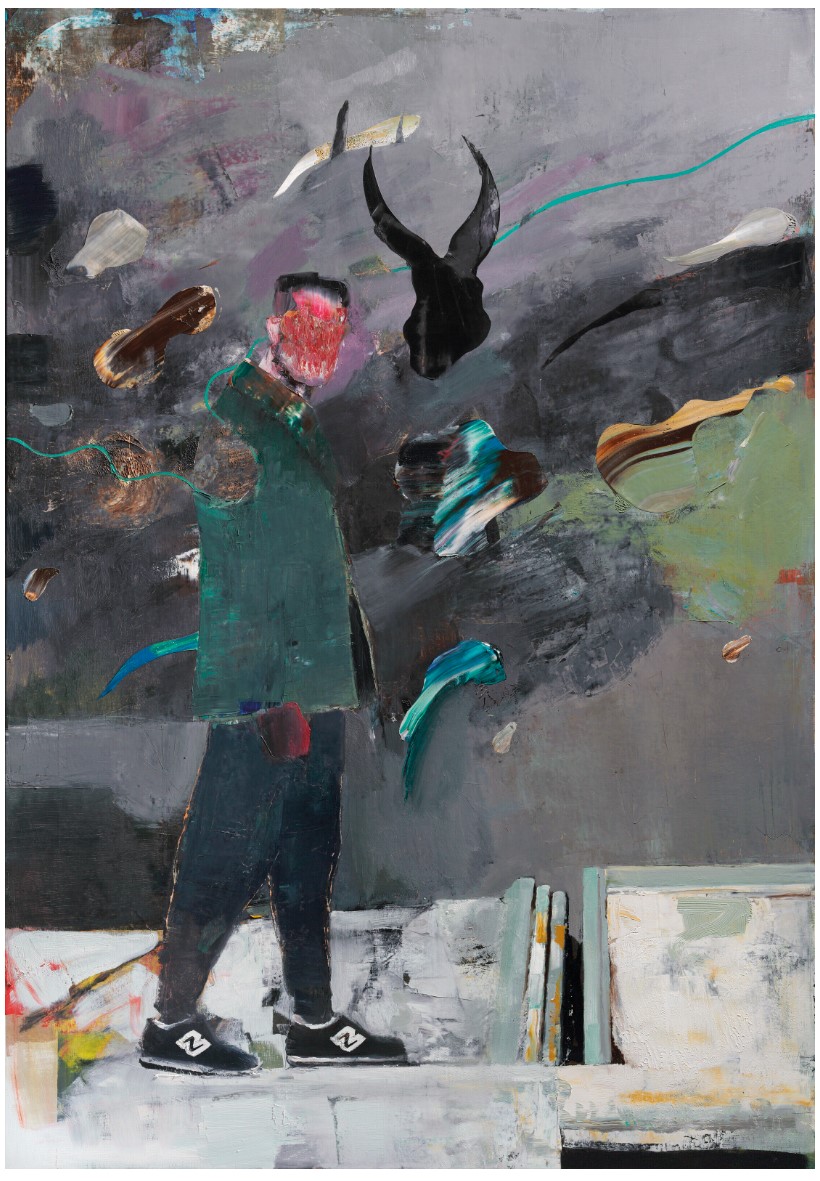
ADRIAN GHENIE
Self Portrait in 1945, 2014
Oil on canvas
199.5 x 140.1 cm (78.5 x 55.1 inches)
#10. The Butcher, 2009
Sotheby’s London: 30 June 2022
Estimated: GBP 400,000 – 600,000
GBP 529,200 / USD 643,482
The Butcher | Modern & Contemporary Day Auction | 2022 | Sotheby’s (sothebys.com)
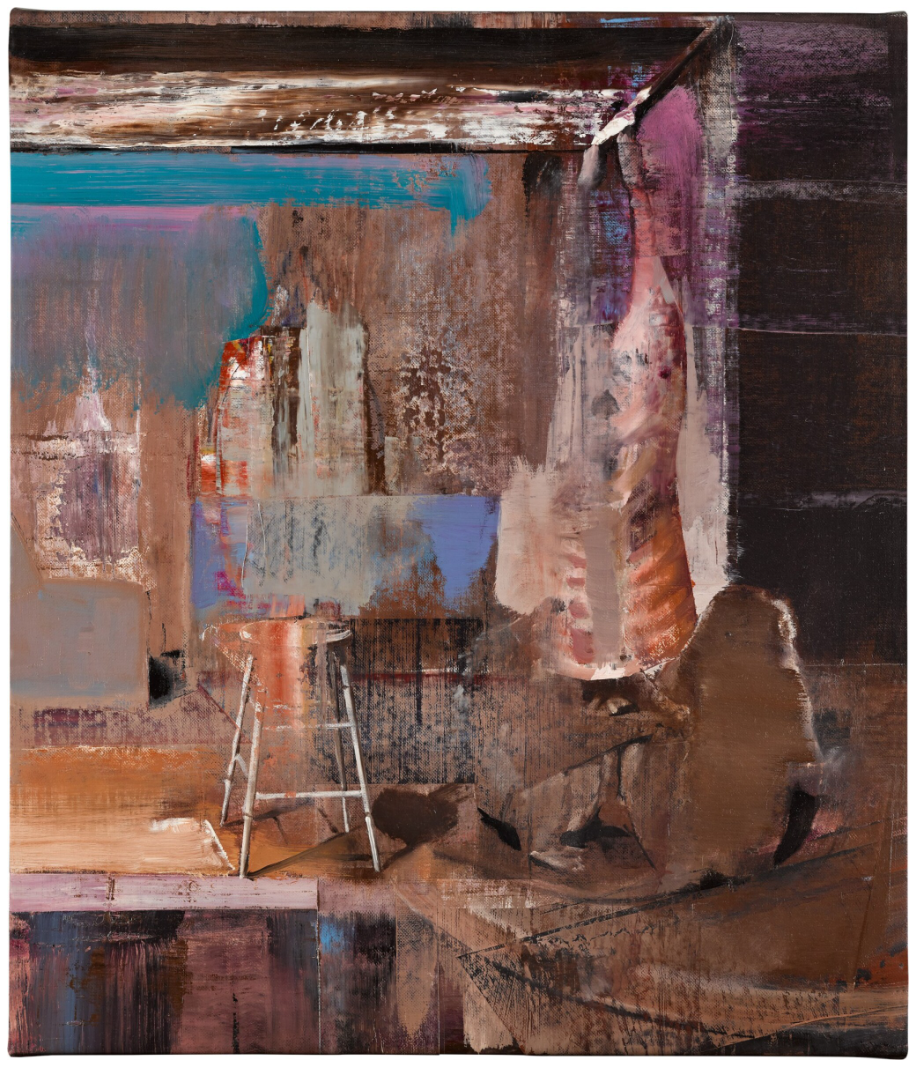
ADRIAN GHENIE (b. 1977)
The Butcher, 2009
Oil on canvas
70.3 x 60.4 cm (27 5/8 x 23 3/4 inches)
Signed and dated 2009 on the reverse
#11. Pie Fight Study 4, 2008
Phillips Hong-Kong: 21 June 2022
Estimated: HKD 3,500,000 – 4,500,000
HKD 4,032,000 / USD 513,632
Adrian Ghenie – 20th Century & Contempo… Lot 22 June 2022 | Phillips
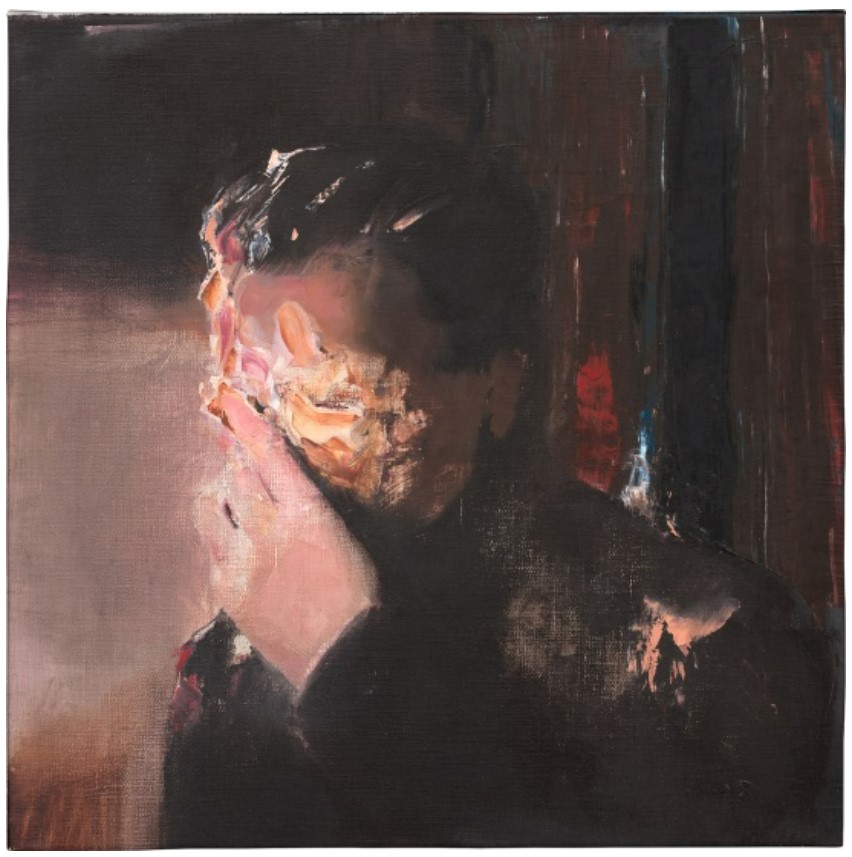
ADRIAN GHENIE
Pie Fight Study 4, 2008
Oil on canvas
52×52 cm (20.5 x 20.5 inches)
#12. Pie Fight Study 3, 2008
Sotheby’s New-York: 19 May 2022
Estimated: USD 350,000 – 450,000
USD 504,000
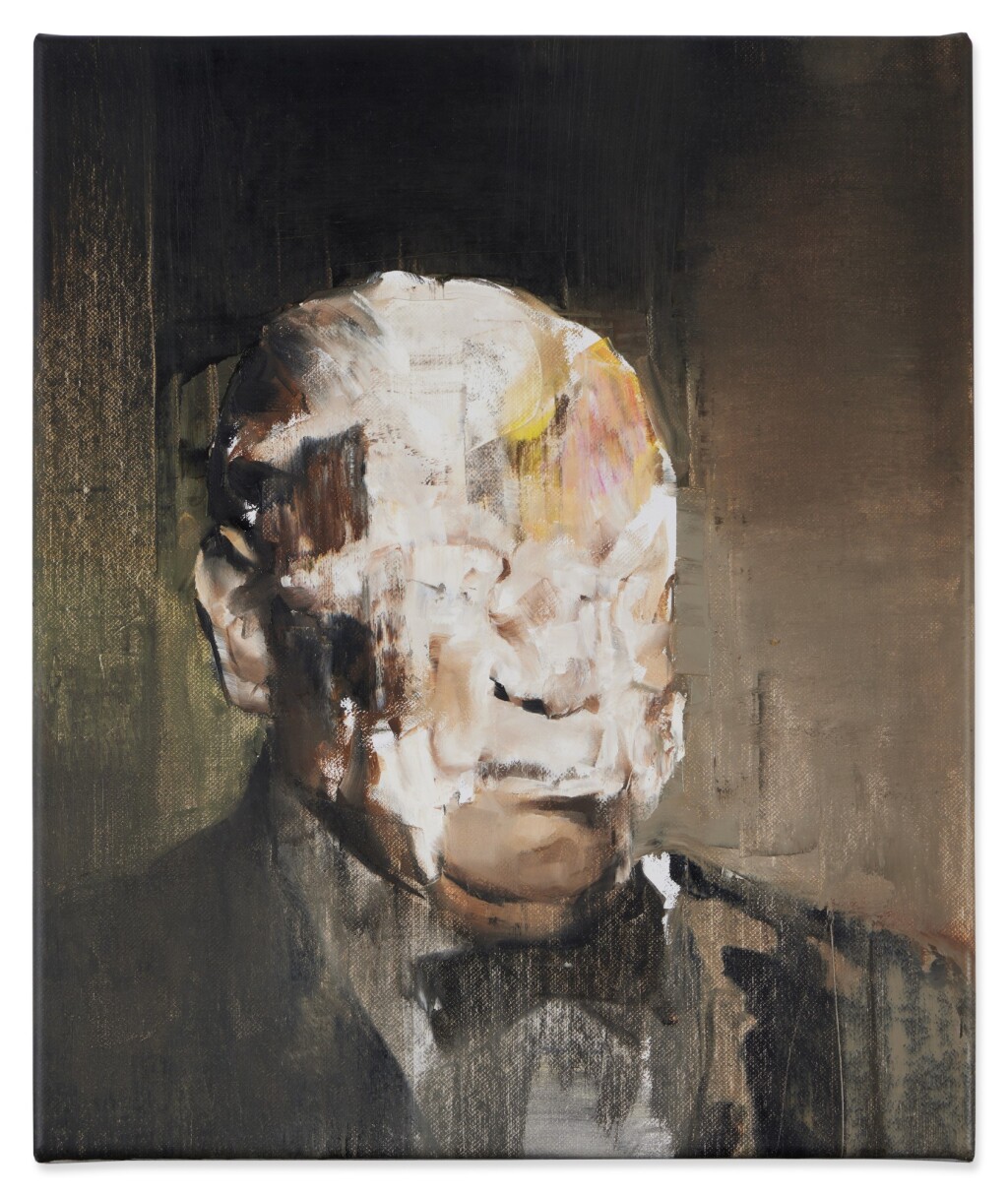
ADRIAN GHENIE
Pie Fight Study 3, 2008
Oil and acrylic on canvas
48.9 x 40.6 cm (19.2 x 16 inches)
2021 Auction Results
9 lots sold at auction in 2021 for a total turnover of USD 38,303,819. The highest price was achieved at Christie’s in Hong-Kong on 24 May 2021, when Collector I sold for HKD 65,975,000 (USD 8,496,349).
2021 Top 3 Lots
4 lots sold above USD 5 million, generating a cumulative turnover of USD 29,160,042, representing 76.1% of the total turnover for 2021.
#1. The Collector I, 2008
Christie’s Hong-Kong: 23 May 2021
Estimated: HKD 45,000,000 – 65,000,000
HKD 65,975,000 / USD 8,497,184
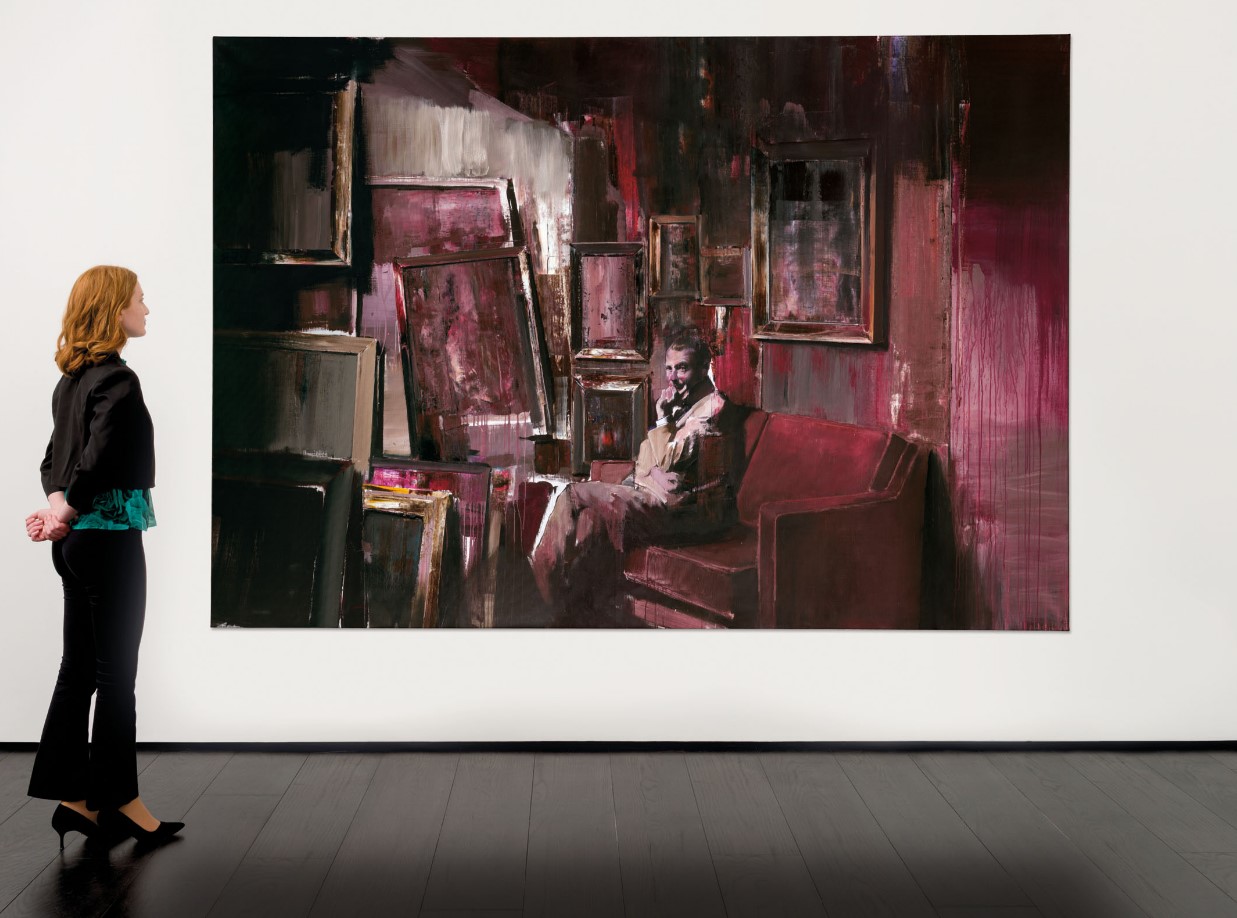
ADRIAN GHENIE
The Collector I, 2008
Oil on canvas
200×290 cm (78.7 x 114.1 inches)
#2. Charles Darwin at the Age of 75, 2014
Christie’s Hong-Kong: 30 November 2021
Estimated: HKD 32,000,000 – 48,000,000
HKD 57,850,000 / USD 7,422,734
ADRIAN GHENIE (B. 1977) (christies.com)
ADRIAN GHENIE
Charles Darwin at the Age of 75, 2014
Oil on canvas
200×270 cm (78.7 x 106.2 inches)
#3. The Death of Charles Darwin, 2013
Sotheby’s Hong-Kong: 9 October 2021
Estimated: HKD 50,000,000 – 60,000,000
HKD 54,920,000 / USD 7,055,133
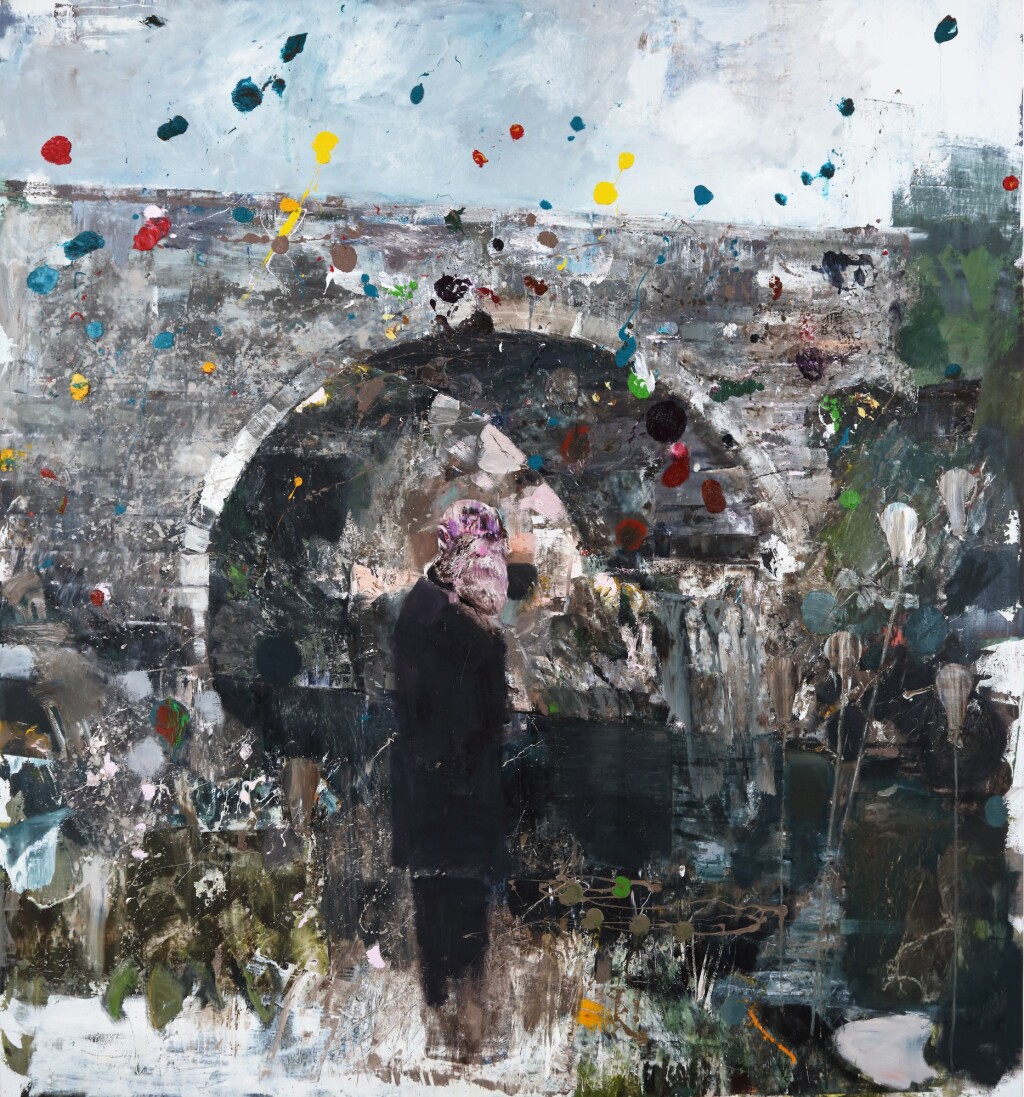
ADRIAN GHENIE
The Death of Charles Darwin, 2013
Oil on canvas
280×260 cm (110.2 x 102.4 inches)
#4. The Trip, 2016
Sotheby’s Hong-Kong: 19 April 2021
Estimated: HKD 22,000,000 – 38,000,000
HKD 26,795,000 / USD 6,183,976
ADRIAN GHENIE
The Trip, 2016
Oil on canvas
240 x 199.8 cm (94.5 x 78.6 inches)
#5. Pie Fight Interior 9, 2013
Sotheby’s Hong-Kong: 7 June 2021
Estimated: HKD 22,000,000 – 38,000,000
HKD 26,795,000 / USD 3,451,866
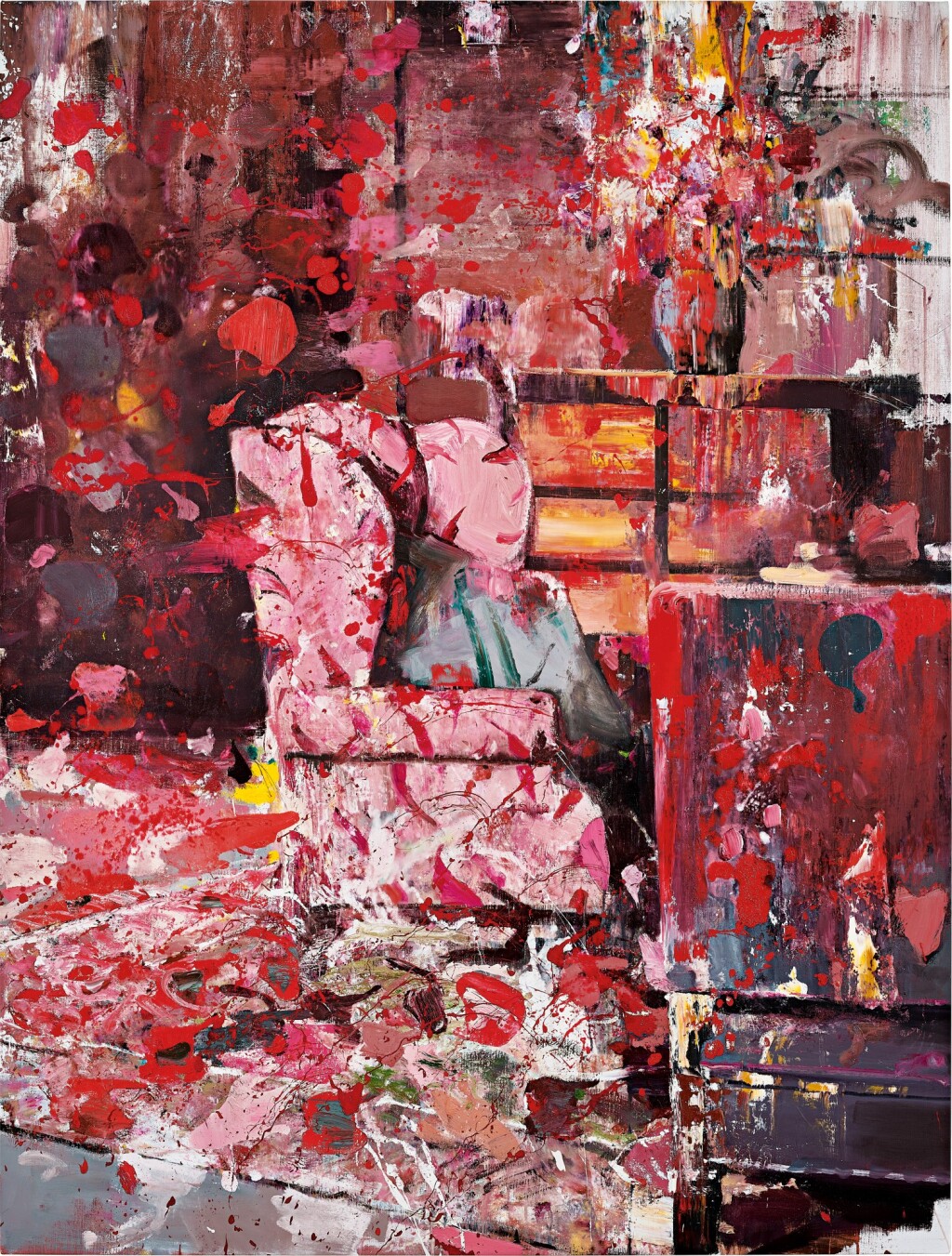
ADRIAN GHENIE
Pie Fight Interior 9, 2013
Oil on canvas
198.6 x 150.5 cm (78.2 x 59.2 inches)
#6. Burning Books, 2014
Christie’s New-York: 10 May 2021
Estimated: USD 2,500,000 – 4,500,000
USD 2,730,000
ADRIAN GHENIE (B. 1977) (christies.com)
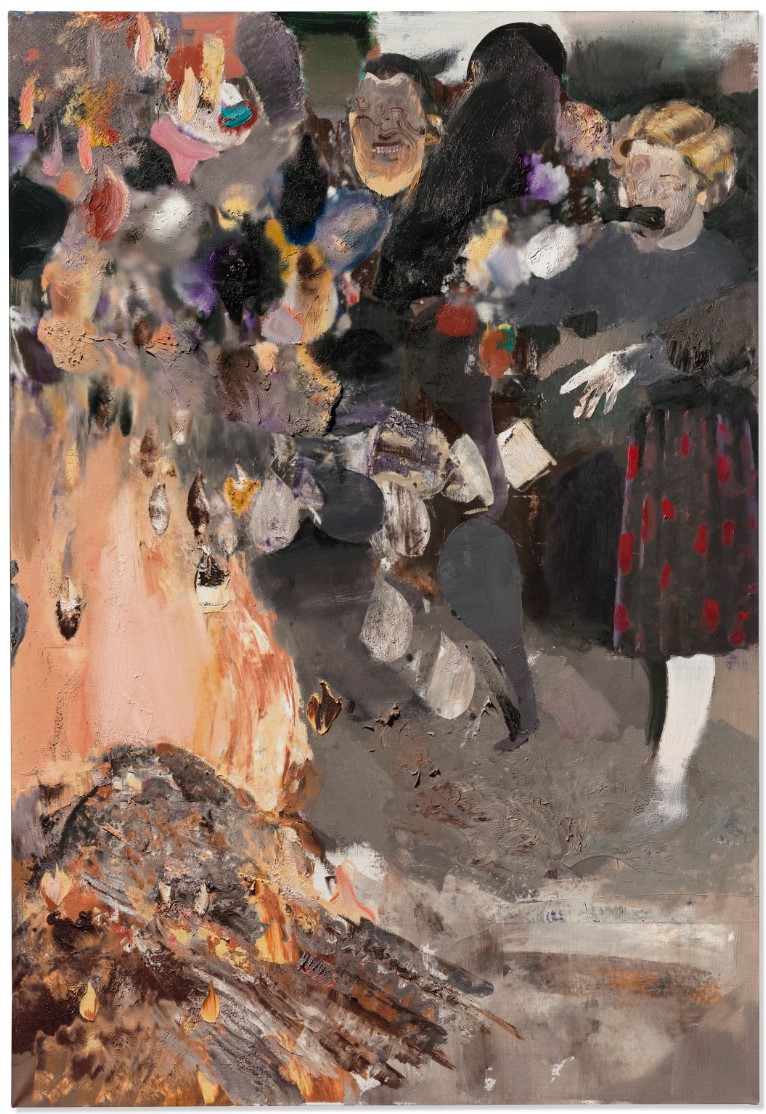
ADRIAN GHENIE
Burning Books, 2014
Oil and acrylic on canvas
190×130 cm (74.6 x 51.2 inches)
#7. Self-Portrait in 1945, 2015
Sotheby’s Hong-Kong: 19 April 2021
Estimated: HKD 3,000,000 – 5,000,000
HKD 10,823,000 / USD 1,393,634
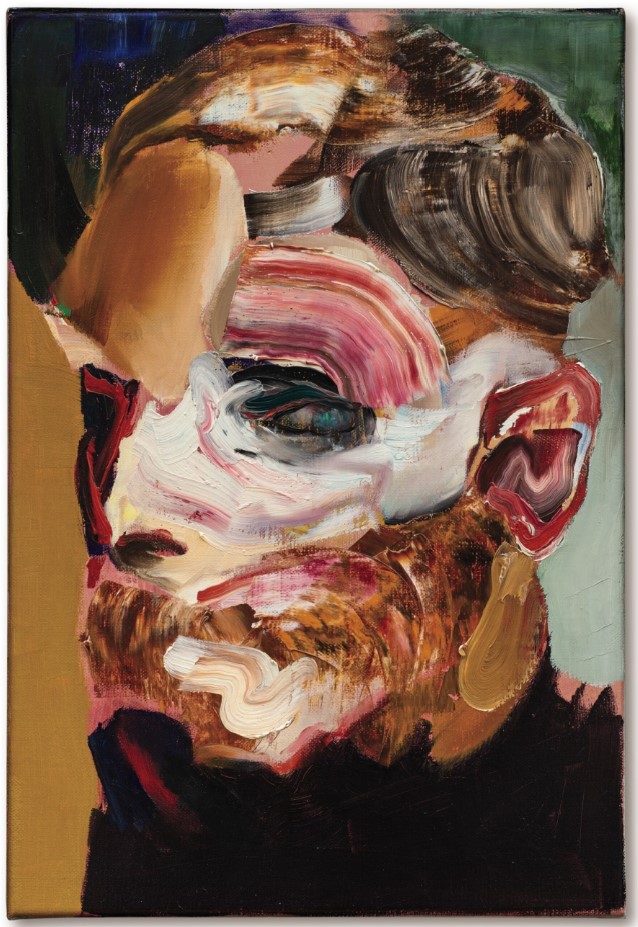
ADRIAN GHENIE
Self-Portrait in 1945, 2015
Oil on canvas
40 x 27.1 cm (15.7 x 10.6 inches)
#8. Self-Portrait, 2016
Christie’s Hong-Kong: 23 May 2021
Estimated: HKD 4,000,000 – 6,000,000
HKD 9,250,000 / USD 1,191,345
ADRIAN GHENIE (B. 1977) (christies.com)
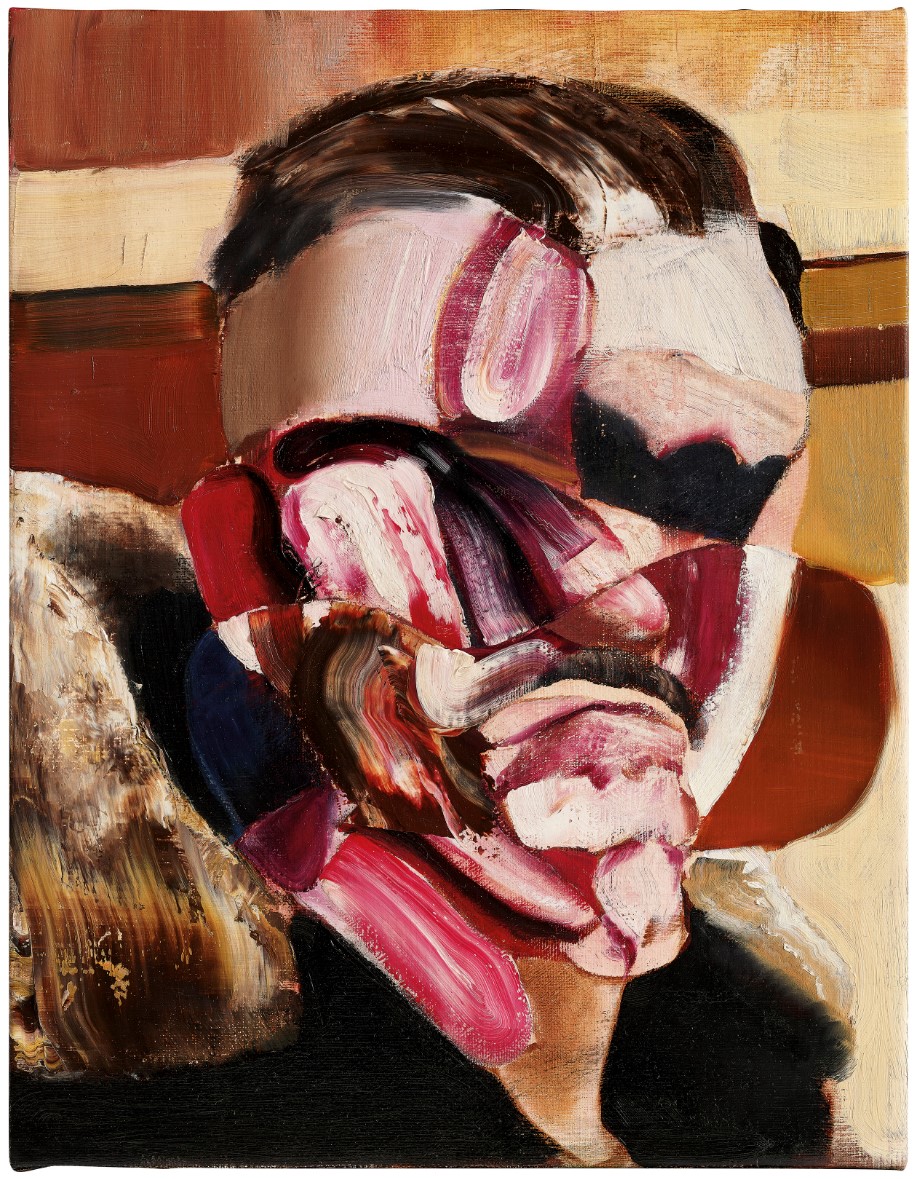
ADRIAN GHENIE
Self-Portrait, 2016
Oil on canvas
44.2 x 34.2 cm (17.4 x 13.4 inches)
#9. Nevada Landscape, 2009
Christie’s London: 16 October 2021
Estimated: GBP 200,000 – 300,000
GBP 275,000 / USD 377,229
ADRIAN GHENIE (B. 1977), Nevada Landscape | Christie’s (christies.com)
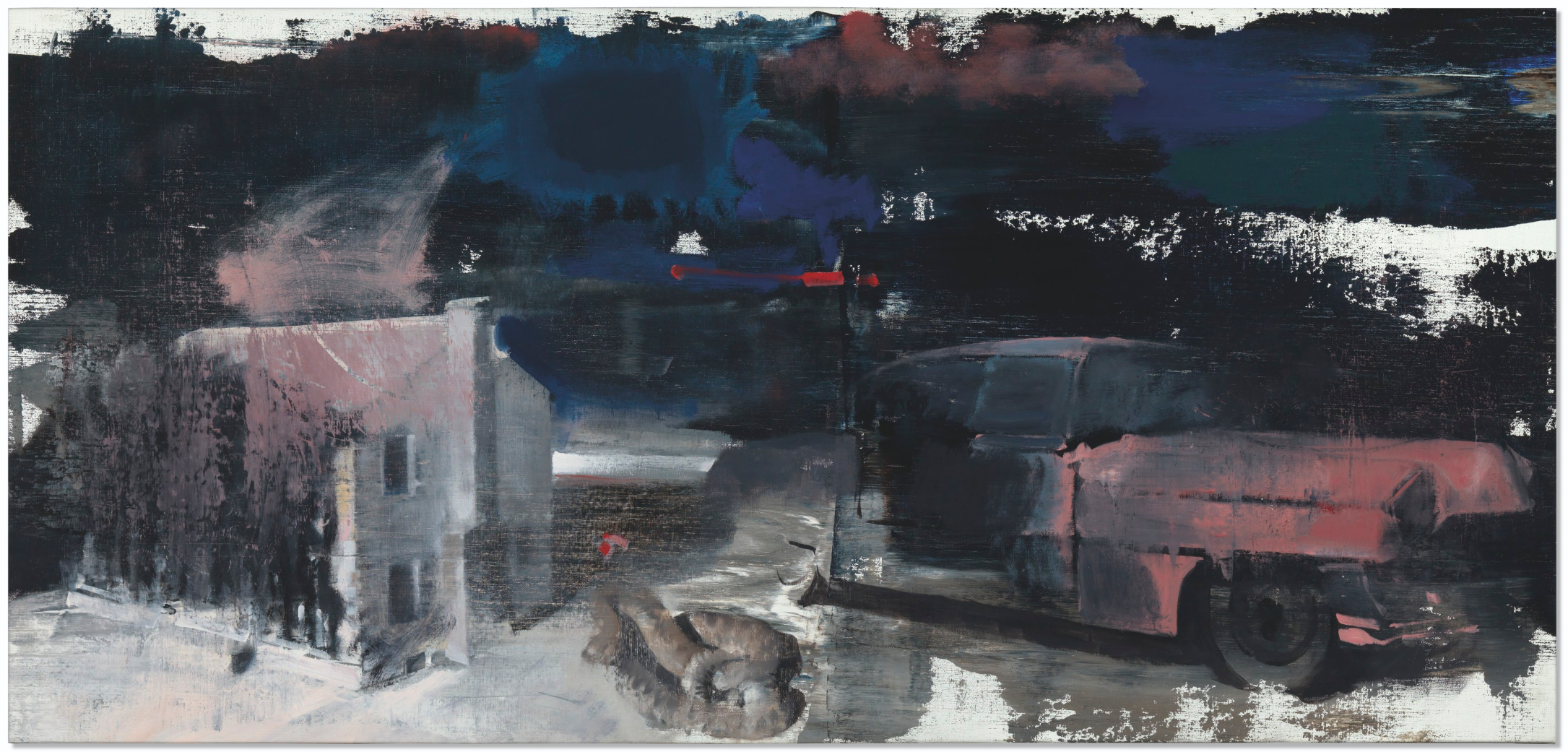
ADRIAN GHENIE (B. 1977)
Nevada Landscape, 2009
Oil on canvas
95.2 x 200 cm (37 1/2 x 78 3/4 inches)
Signed and dated ‘Ghenie 2009’ (on the reverse)
PART III: FOCUS
Pie Fight
Pie Fight (Child), 2012
Phillips New-York: 14 May 2025
Estimated: USD 60,000 – 80,000
USD 190,500
Adrian Ghenie Modern & Contemporary Art Day Sale, Afternoon Session
ADRIAN GHENIE
Pie Fight (Child), 2012
Oil on canvas
41.3 x 56.8 cm (16 1/4 x 22 3/8 inches)
Signed and dated “Ghenie 2012” on the reverse
“I want a deconstruction of the portrait. In the 20th century, the people who did it really radically were Picasso and Bacon. They took elements of the face and rearranged it. There is no nose, there is no mouth, there is no eye—no sense of anatomy. The portrait was a landscape, basically.”
Untitled, 2009
Sotheby’s New-York: 14 May 2024
Estimated: USD 300,000 – 400,000
USD 558,800
Untitled | Contemporary Day Auction | 2024 | Sotheby’s (sothebys.com)
ADRIAN GHENIE (b. 1977)
Untitled, 2009
Acrylic on canvas
50 x 59.9 cm (19 5/8 x 23 5/8 inches)
Signed and dated 2009 (on the reverse)
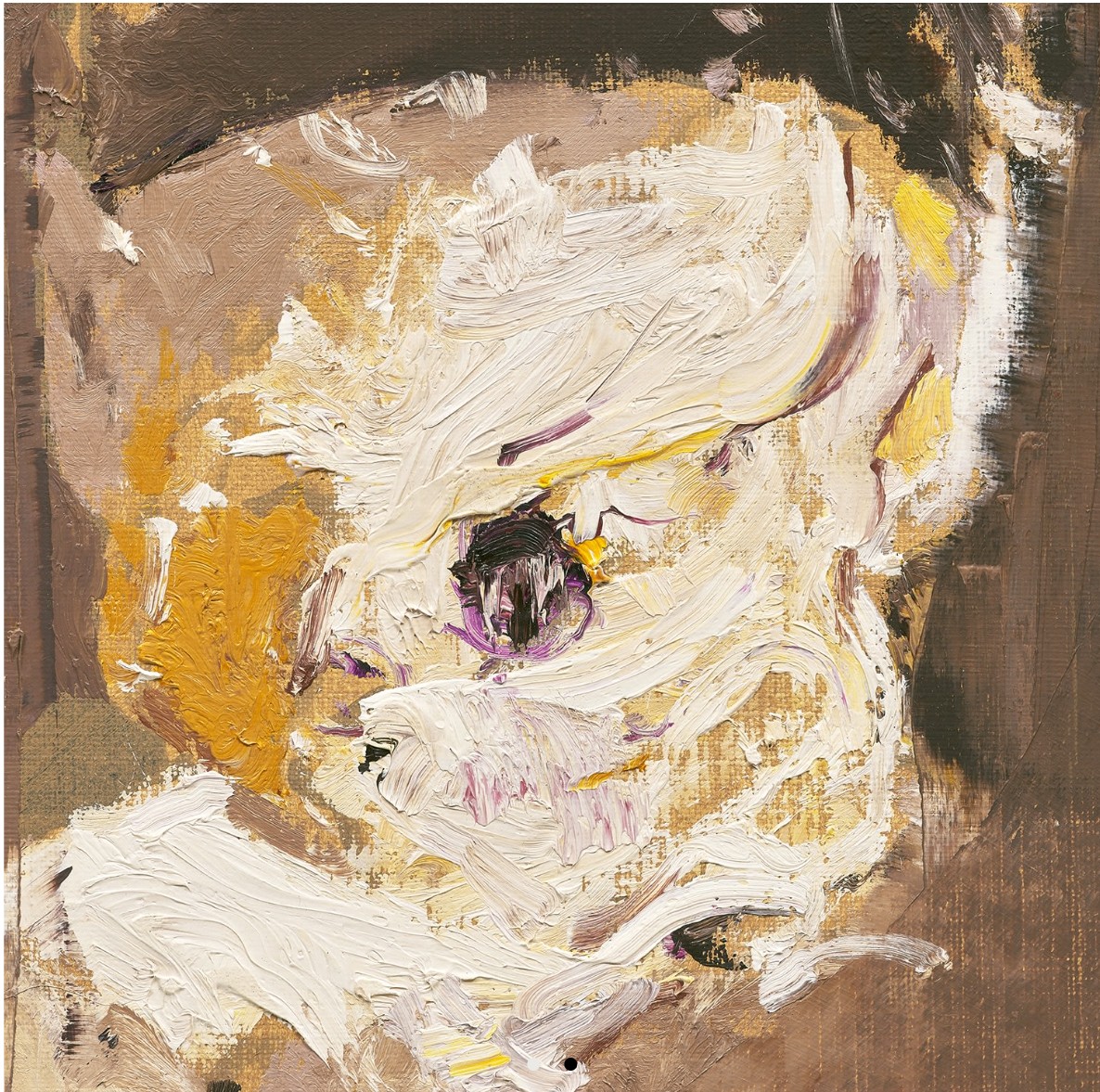
Thick swaths of pink, mauve and burgundy coalesce with accents of yellow and orange to form an enigmatic protagonist in Adrian Ghenie’s Untitled. Executed in 2009, the work embodies the balance between abstraction and representation, history and myth, atrocity and humor that characterizes Ghenie’s Pie Fight painting series. From 2008 to 2009, he sought to convey the “darker currents of modern history,” while exploring the psychology of the immediate postwar era – “the trauma and the complexity of select sensitive moments” – and the nature of image-construction in a media-saturated society, (Exh. Cat., Adrian Ghenie: New Paintings, Pace, 2013, p. 5). Ghenie loosely depicts infamous figures of twentieth-century history, but obfuscates their faces in the remnants of a custard pie that call to mind the slapstick comedy of Charlie Chaplin, the Three Stooges and Laurel & Hardy from that same era. The cinematographic quality of these paintings, however, is heavily influenced by filmmaker David Lynch. It is this conflation of codes that marks the Pie Fight series as one of Ghenie’s most important bodies of painting. Untitled from the series showcases Ghenie’s technical prowess as he manipulates the rich impasto with a dynamic sense of energy to a subject that is at once comical and oddly disquieting.

Ghenie mined archival materials for source materials, and by using historical figures omnipresent in the media and heavily associated with a time of war. He then complicates the reading and adds psychological complexity by rendering the subject anonymous under congealed peaks of whipped cream impasto. Ghenie looks to his artistic forefathers to imitate this technique, “in the 20th century, the people who did really radically were Picasso and Bacon. They took elements of the face and rearranged it,” in order to access a deeper, more complex emotional portrait. In emulating this technique of identity erasure, Untitled and other works from the series capture a sense of physiological Cubism, conveying a multitude of layered emotions in one frame, some of which are the artist’s own projection.
 PABLO PICASSO, WEEPING WOMAN, 1937 / TATE MUSEUM, LONDON © SUCCESSION PICASSO/DACS 2024
FRANCIS BACON, SELF‐PORTRAIT, 1969 / PRIVATE COLLECTION © 2022 ESTATE OF FRANCIS BACON/ARTISTS RIGHTS SOCIETY (ARS), NEW YORK/DACS, LONDON
Ghenie’s association with dictatorship spans beyond the historic facts of the Second World War and to the personal horrors of his own country’s totalitarian regime under Nicolae Ceausescu from 1967 to 1989. Born in 1977, Ghenie experienced first hand the debasement of a population under repression. He projects his own feelings in Untitled and in doing so, masterfully captures the nature of collective memory. Like Gerhard Richter whose formative years were spent under the Nazi regime, Ghenie smears, scrapes, and blurs the photographic evidence to create paintings that conceptually and physically confront the “texture” of history. Through erasure, effacing and overpainting, Ghenie’s work indicates subtle slippages between comedy and tragedy, reminding us that the profound trauma and humiliation of recent history lingers in the space between reality and personal memory, fact and fiction.
Pie Fight Study, 2012
Christie’s London: 28 February 2023
Estimated: GBP 300,000 – 500,000
GBP 352,800 / USD 426,705
ADRIAN GHENIE (B. 1977)
Pie Fight Study, 2012
Oil on canvas
22 1/4 x 28 7/8 inches (56.4 x 73.2 cm)
Signed and dated ‘Ghenie 2012’ (on the reverse)
Alive with texture, color and visceral allusion, the present work stems from Adrian Ghenie’s celebrated early series of Pie Fight Studies. Closely related to his large-scale Pie Fight Interiors, these extraordinary creations were among the works that launched his career, forming the subject of his first solo institutional exhibition Pie Fights and Pathos at the Museum of Contemporary Art, Denver in 2012. Executed that year, the present work is based on a still from The Three Stooges’ 1941 film In the Sweet Pie and Pie. Ghenie transposes the image into electrifying color, replacing the woman’s dress with a blue and yellow flowery shirt, and adding a striped deckchair and coffee cup to the scene. Thick, sculptural impasto mimics the custard that obscures her features, while the background dissolves into a near-cinematic blur, marbled with skeins of blue, yellow and purple. For Ghenie, the vaudeville slapstick of the pie fight would ultimately become a gateway for exploring what he describes as ‘the texture of history’. The abstract accruals of paint, thrown, scraped and dripped across the surface, dramatize the way in which images become fossilized and excavated over time, inviting the viewer to question what really lies beneath.
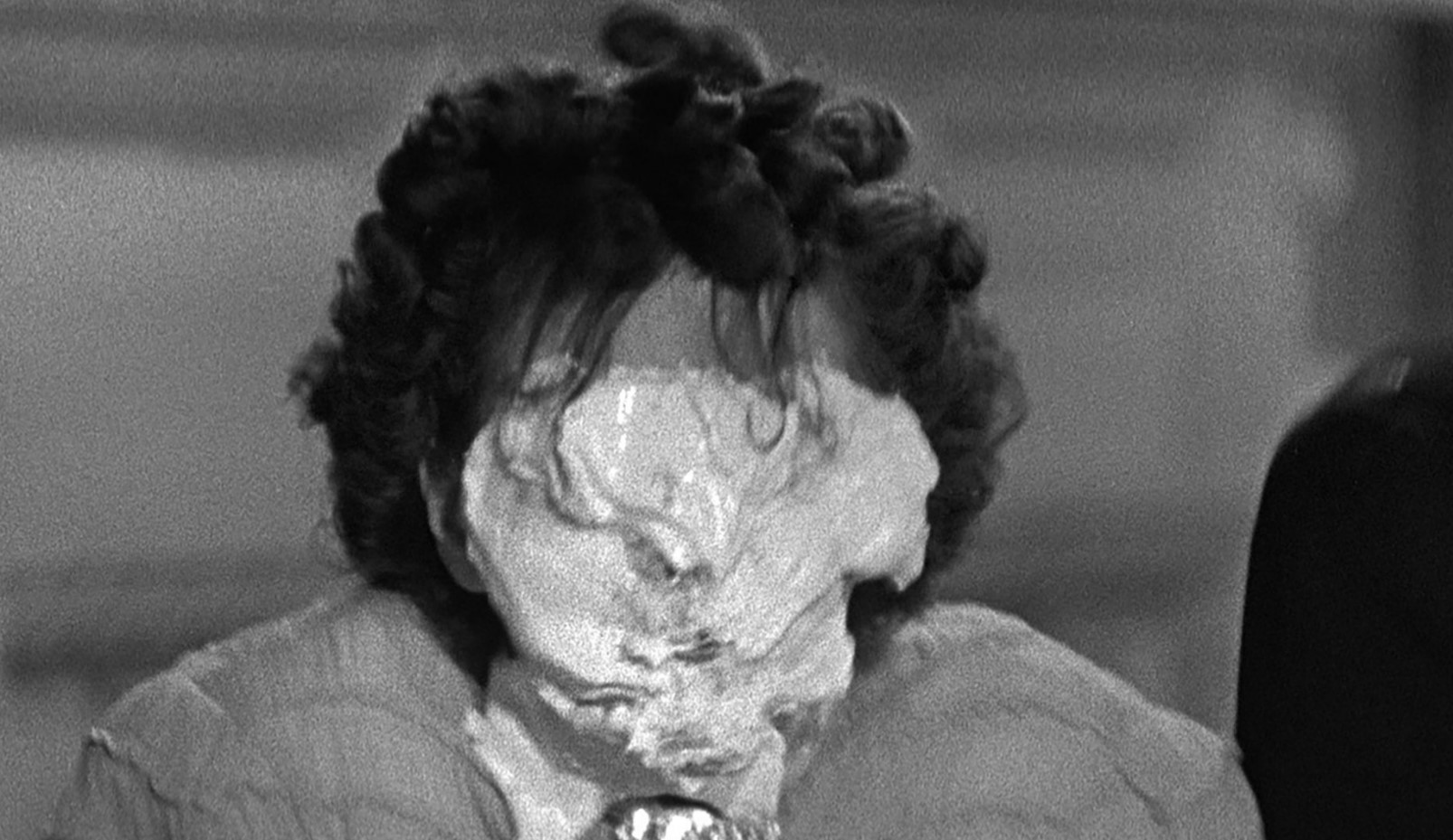
Source image for the present lot from IN THE SWEET PIE AND PIE © 1941, renewed 1969 Columbia Pictures Industries, Inc. All Rights Reserved.
With examples held in the Centre Georges Pompidou, Paris and the San Francisco Museum of Modern Art, Ghenie’s Pie Fights were begun in 2008. Evoking the films of Laurel and Hardy as well as The Three Stooges, the genre embodied a particular kind of debasement that—for Ghenie—spoke to our relationship with the past. In many of the paintings, the artist substituted the settings and characters of his filmic sources with elusive echoes of scenes from European history. Having grown up in Romania under the regime of Nicolae Ceaușescu, and watched the public broadcast of his execution in 1989, Ghenie was all too aware that some of humanity’s darkest epochs had been progressively flattened by their reproduction through lenses and screens. Operating in the age of the internet, he proposed that paint could help to ‘re-materialize’ some of the sensory reality that our re-telling of history had lost over time. In the Pie Fights, the act of humiliation—a strategy wielded by dictators, the press and other instruments of power—is given tactile, viscous, painterly form.
Pie Fight Study 4, 2008
Phillips Hong-Kong: 21 June 2022
Estimated: HKD 3,500,000 – 4,500,000
HKD 4,032,000 / USD 513,632
Adrian Ghenie – 20th Century & Contempo… Lot 22 June 2022 | Phillips
ADRIAN GHENIE
Pie Fight Study 4, 2008
Oil on canvas
52×52 cm (20.5 x 20.5 inches)
Commingling comedy and tragedy, dream and reality, Pie Fight Study 4 powerfully embodies the tantalizing theatricality that underpins the core of Ghenie’s oeuvre. Hues of auburn, ochre, deep mauve and soft pink are smeared across the canvas, creating gentle contours that are deftly modelled through light and shadow, lending a fleshy plasticity to his work. Capturing the mixture of shock, confusion and surprise at the split‐second when the cream pie hits the man’s concealed and congealed face, the present work showcases Ghenie’s technical prowess as he manipulates the rich impasto with a dynamic sense of energy. Juxtaposing a classically smooth background, the unnamed protagonist’s face is rendered with brisk and abstract strokes, creating a dreamlike aura that is heightened by a ray of gentle flooding light on the left.
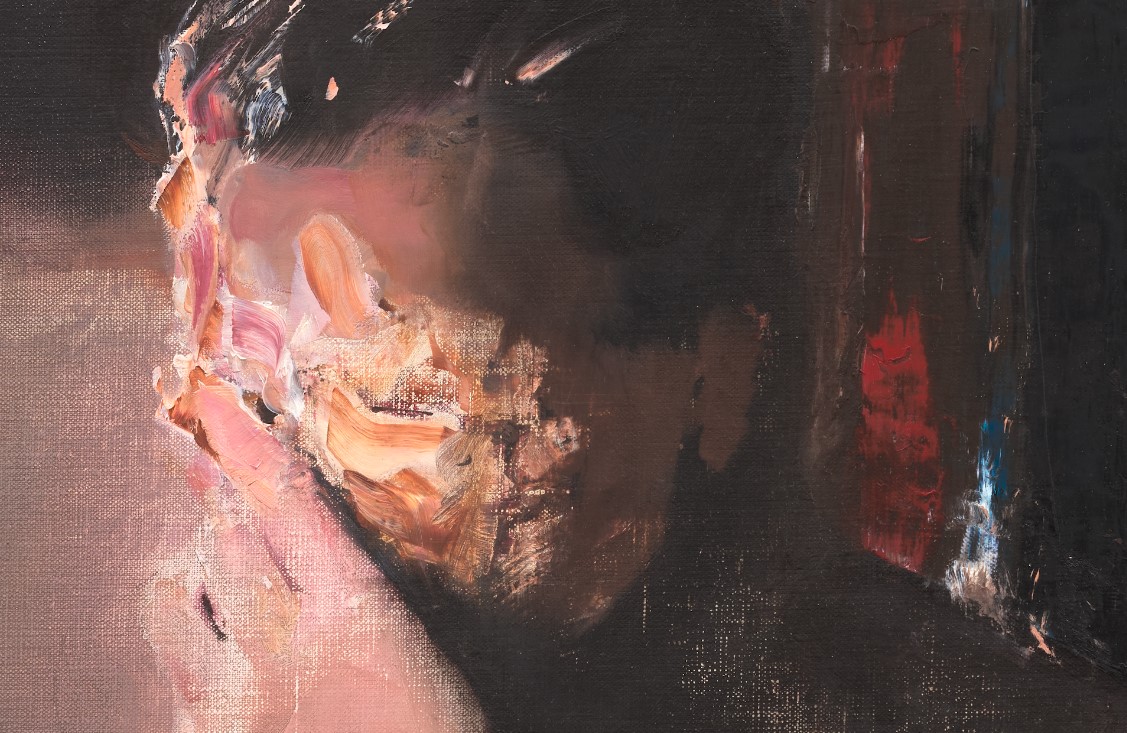
Conjuring distortions of memories that resemble cinematic vignettes, Ghenie’s portraits are visceral and vulnerable, saturated with historical references that unearth feelings of frustration or desire. Often drawing on human experience and ideas of the collective unconscious, the artist provides a wry and satirical portrait of humanity as a whole, and the dark folds it occasionally reveals.
Pie Fight Study 3, 2008
Sotheby’s New-York: 19 May 2022
Estimated: USD 350,000 – 450,000
USD 504,000
Pie Fight Study 3 | Contemporary Day Auction | 2022 | Sotheby’s (sothebys.com)
ADRIAN GHENIE
Pie Fight Study 3, 2008
Oil and acrylic on canvas
48.9 x 40.6 cm (19.2 x 16 inches)
Pie Fight Study #3 embodies the celebrated artist’s brilliant melding of the past and present, imagined and real, identifiable and anonymous, to convey the tragedy of history through a theatrical lens. Created in 2008, Pie Fight Study #3 belongs to the very first and prized series of paintings that address the atrocities central to twentieth-century European history. Rich swathes of pigment obfuscate the portrait, which not only showcases the artist’s technical mastery of blending abstraction and figuration, it renders the identity of the subject indiscernible, creating a subject that is a universal archetype for addressing collective memory. Complex and multilayered, Pie Fight Study #3 illuminates the artist’s vigorous style of painting, as dazzling layers of ochre and black and swirl and around the luscious yellow, flashes of pink and white dually highlight and obscure the subject’s face. The velvety, sumptuous and heavily impastoed surface displays a baroque-chiaroscuro aesthetic effect, in combination with the scraping technique along the left edge, reminiscent of Gerhard Richter, creates an utterly theatrical presentation. Deeply fascinated by the filmic source of the pie fight and its iconic comedic figures such as Charlie Chaplin, Ghenie propels the motif central to American slapstick comedy in Pie Fight Study #3 by transforming the goofy act into one of great pathos. Completely drenched and suspended in the moment after the throne pie, the subject morphs from comedic performer to pathic victim, with the lingering sting of humiliation and degradation. The interactive and relational use of photography and film is significant in the present work, as Ghenie showcases his pure mastery over materials by manipulating the sequential order of the original film stills via overpainting and erasure of the subject, thus creating a radical pictorial strategy.
Pie Fight Interior 9, 2013
Sotheby’s Hong-Kong: 7 June 2021
Estimated: HKD 22,000,000 – 38,000,000
HKD 26,795,000 / USD 3,451,866
ADRIAN GHENIE
Pie Fight Interior 9, 2013
Oil on canvas
198.6 x 150.5 cm (78.2 x 59.2 inches)
At once blazingly resplendent and deeply, viscerally haunting, Adrian Ghenie’s Pie Fight Interior 9 amalgamates past and present, reality and imagination, catastrophe and comedy, culminating in a monumental treatise in the spectacle and tragedy of history. The work belongs to the artist’s esteemed Pie Fight series, which he began in 2008 and returned to again in 2012. Suffused with wit, gestural bravura and psychological intensity, the Pie Fight series masterfully negotiates the atrocities central to twentieth-century European history and confronts issues of collective memory. The series takes its name from the 1941 Three Stooges film In the Sweet Pie and Pie, in which the wily protagonists, Curly, Larry and Moe, plot a pie fight. The trope of the pie fight is central to American slapstick comedy, and first appeared in silent films such as Behind the Screen (1916), starring Charlie Chaplin, and Laurel and Hardy’s The Battle of the Century (1927).
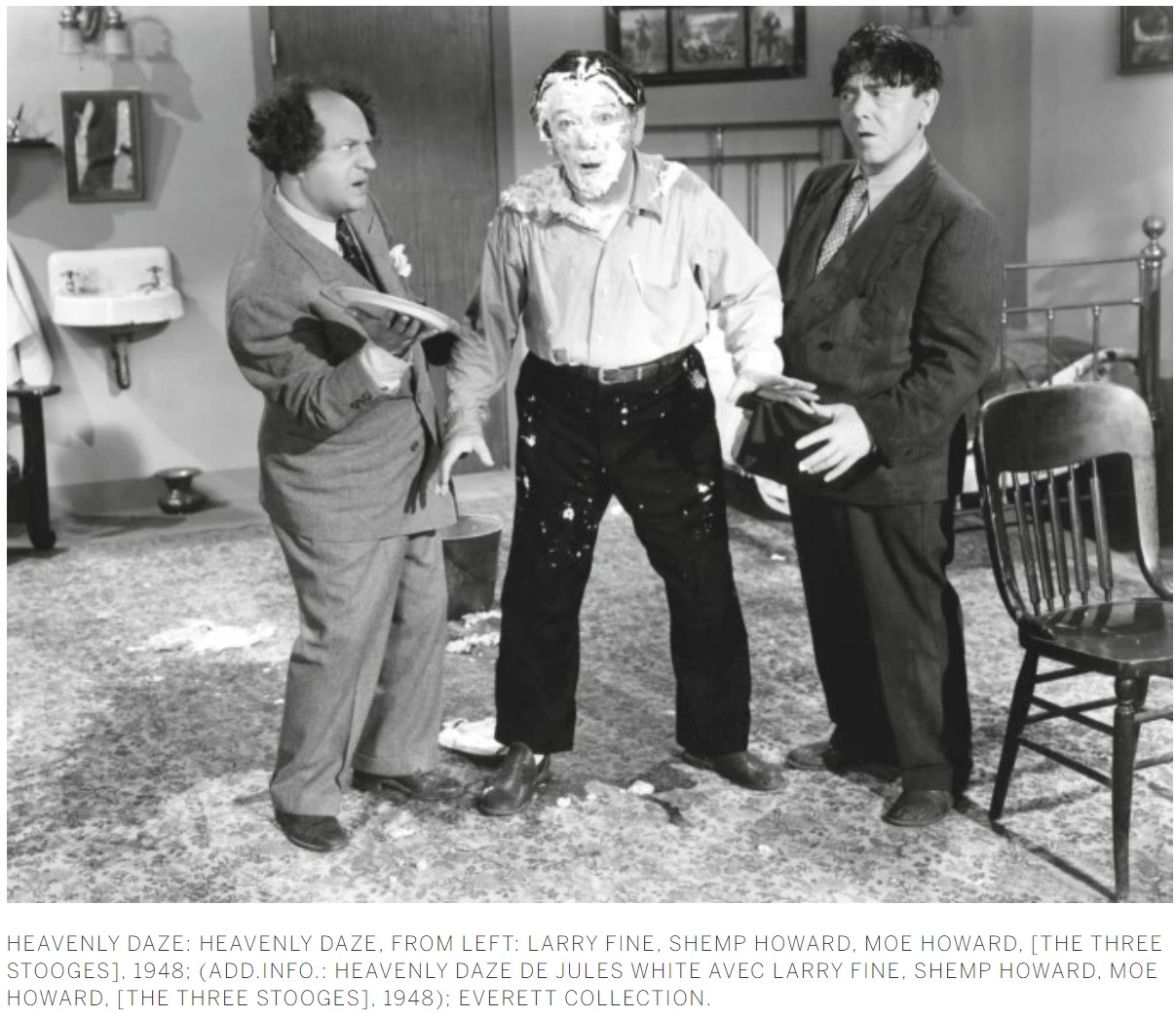
Ghenie discovered the films’ pie fight scenes on YouTube and found their underlying themes of shame and abasement powerfully distressing. Conflating images of slapstick comedy with iconic images from Nazi history, Ghenie smears, scrapes, and blurs scenes and faces from key historical Nazi moments mined from archival imagery, forcing viewers to bear witness to the profound trauma and humiliation of recent history. In variegated sweeps and scrapes of crimson, maroon and hot pink, the sumptuous surface of Pie Fight Interior 9 writhes and pulsates, illuminating the artist’s virtuosic handling of paint and brush. Obfuscating the scene to a calibrated degree of ambiguity, Ghenie masterfully orchestrates the continuous appearance and disappearance of the spectre-like tableau amidst the overlapping strata of pigment. The viewer can surmise a lush carpet, a chest of drawers, a window, and a stately upholstered armchair in bubblegum pink, within which a ghostly figure in green resides. Here the human form is haunting and largely abstract, yet when unpacking the imagery of the present work, Ghenie’s plush room begins to transform into the ceremonial interiors of the Nazi regime, an architectural space that recurs throughout the Pie Fight series, and which he visualized with the aid of historical photographic documentation. To obfuscate such imagery is to usurp and degrade the potency of the image, turning the power dynamics of dictatorship on its head.
Pie Fight Interior, 2012
Sotheby’s London: 21 October 2020
Estimated: GBP 2,400,000 – 3,400,000
GBP 2,979,500 / USD 3,739,592
ADRIAN GHENIE
Pie Fight Interior, 2012
Oil on canvas
210×160 cm (82.5 x 63 inches)
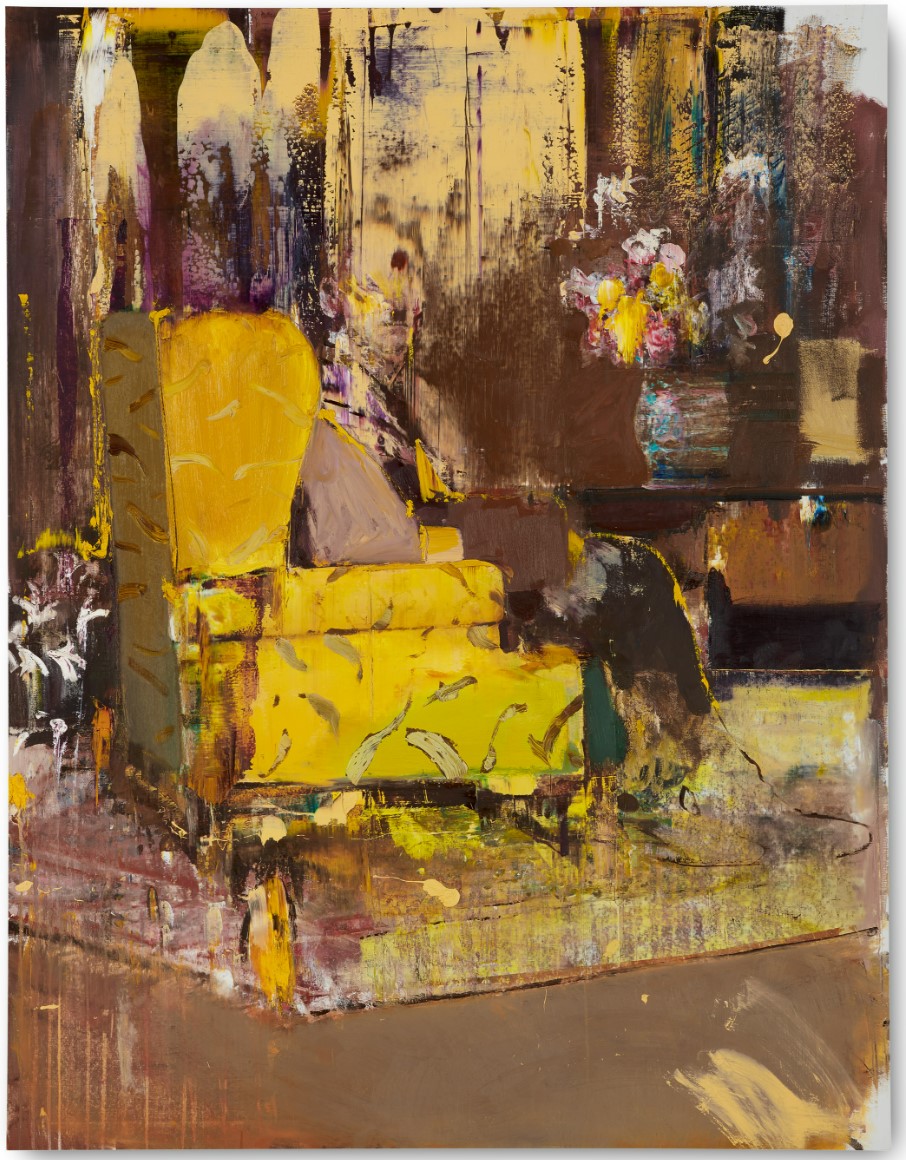
In sweeps of ochre, violet, amber and bronze, the surface of Pie Fight Interior swirls and pulsates, illuminating the artist’s energetic handing of paint. Using the brush liberally, Ghenie obfuscates the scene to a degree of ambiguity, the spectre-like figure alternately appearing and disappearing amidst overlapping strata of pigment. Ghenie’s interior is sumptuous. The viewer can surmise the outline of a lush oriental carpet, delineated by loose brushstrokes of aubergine, magenta and cobalt; a blooming bouquet sits atop a table, the flowers and vase melting into the work’s impastoed ground. A stately, yellow upholstered armchair interrupts Ghenie’s abstraction; the throne-like form positioned away from the viewer, provides an eerie resting place for the ghostly figure. Here the human form is haunting and largely abstract, yet its most identifiable feature is a short, dark mustache – an undisguised allusion to Adolf Hitler, and indeed to the history of dictatorship in the Twentieth Century. When unpacking the imagery of the present work, Ghenie’s plush room begins to transform into the ceremonial interiors of the Nazi regime, an architectural space that recurs throughout the Pie Fight series, and which he visualized with the aid of historical photographic documentation.
Degenerate Art / Lidless Eye
Lidless Eye, 2016
Sotheby’s London: 4 March 2025
Estimated: GBP 500,000 – 700,000
GBP 762,000 / USD 975,360
Lidless Eye | Modern & Contemporary Evening Auction | 2025 | Sotheby’s
ADRIAN GHENIE (b. 1977)
Lidless Eye, 2016
Oil on canvas on board
41.3 x 41 cm (16 1/4 x 16 1/8 inches)
Signed and dated 2016 (on the reverse)
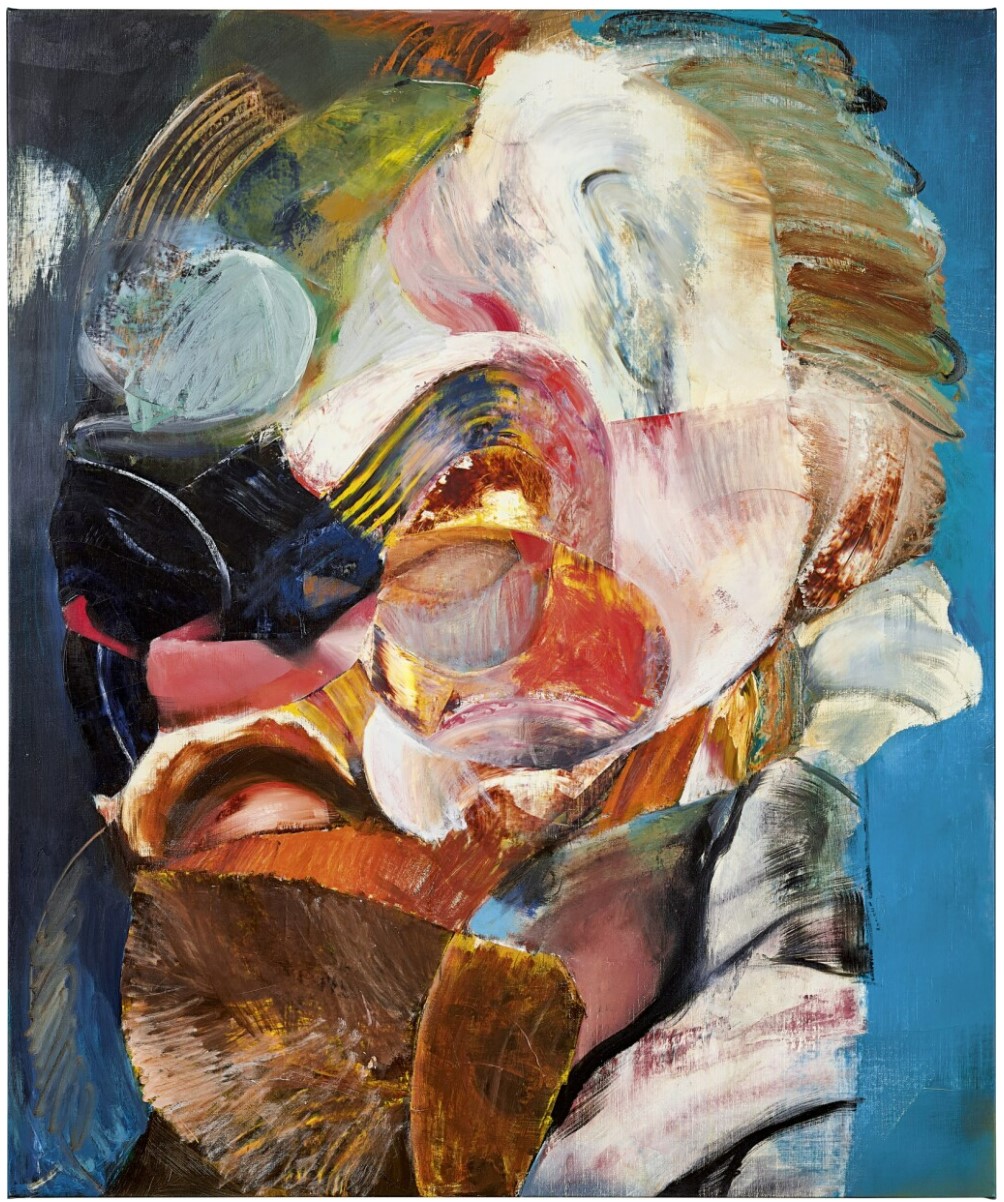
Executed in 2016, Lidless Eye stands as a masterful and superlative work, imbued with a commanding gestural bravura and a profound psychological intensity that typifies Adrian Ghenie’s acclaimed self-portrait series centred on the image of Vincent van Gogh. Throughout his career, Ghenie has traversed the spectrum of art history – engaging with figures as influential as Charles Darwin, Vincent van Gogh, and Marcel Duchamp, as well as those whose notoriety has defined tumultuous epochs, including Hitler, Lenin, and Stalin, alongside popular cultural icons such as Elvis, Stan Laurel, and Oliver Hardy. Among these varied subjects, his self-portraits invoking the effigy of Van Gogh hold a particularly personal resonance, forming a crucial structural pillar in his rigorous dialogue with both historical and contemporary global narratives. Indeed, while the title Lidless Eye recurs across many of Ghenie’s pictures evoking the piercing stare of a Modern master, the phrase itself has a fantastical origin: it is a name used to refer to Sauron, the Dark Lord and title character of J. R. R. Tolkien’s iconic novels The Lord of the Rings. In this vivid tableau of blazing color and palpable texture, Ghenie both pays homage to Van Gogh and intimates a subtle self-portrait, with his own dark, penetrating eye through history, both imaginary or otherwise, staring resolutely from the very heart of the composition.
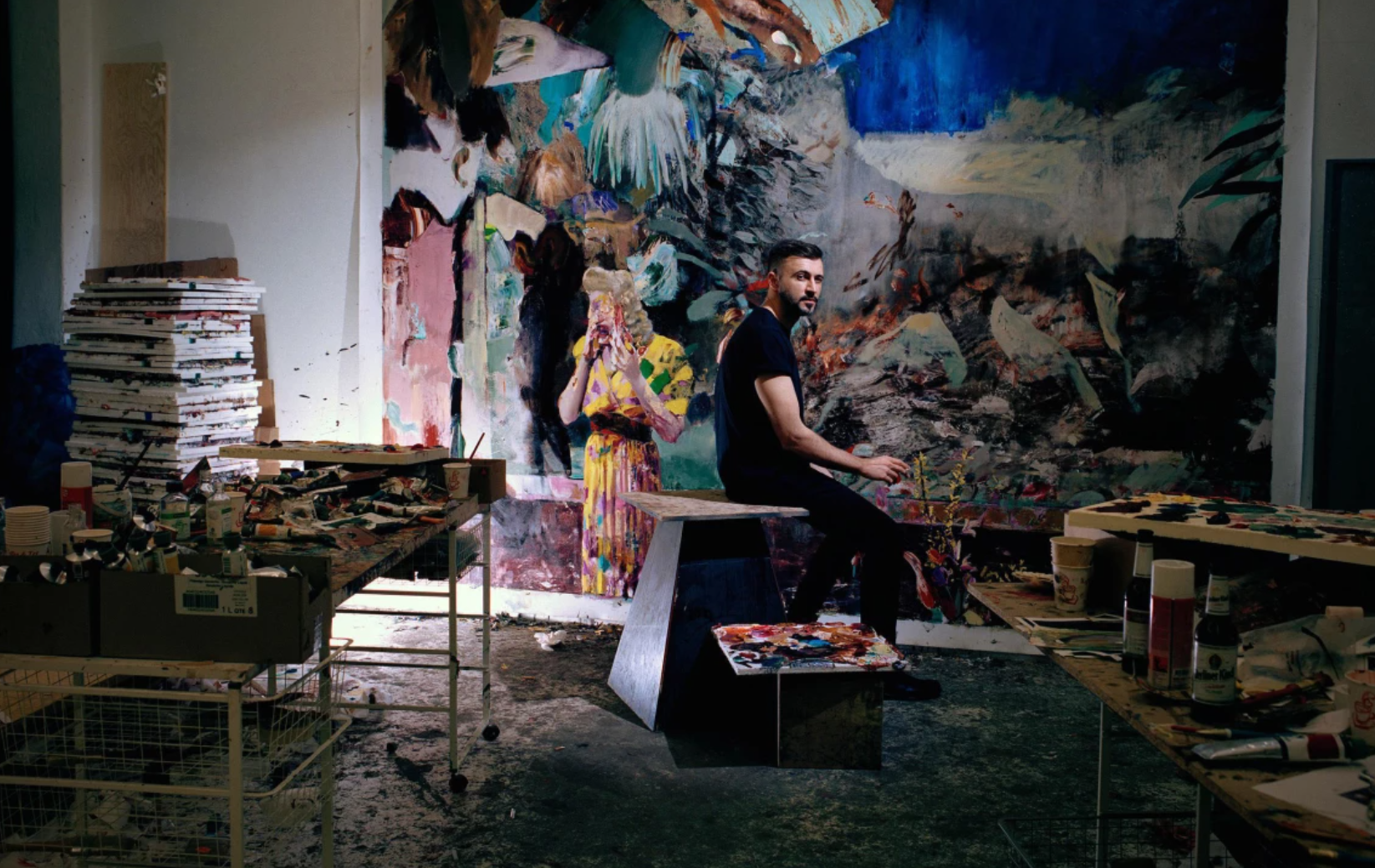
ADRIAN GHENIE IN HIS STUDIO. IMAGE © MARK OLIVER. ART © 2022 ADRIAN GHENIE
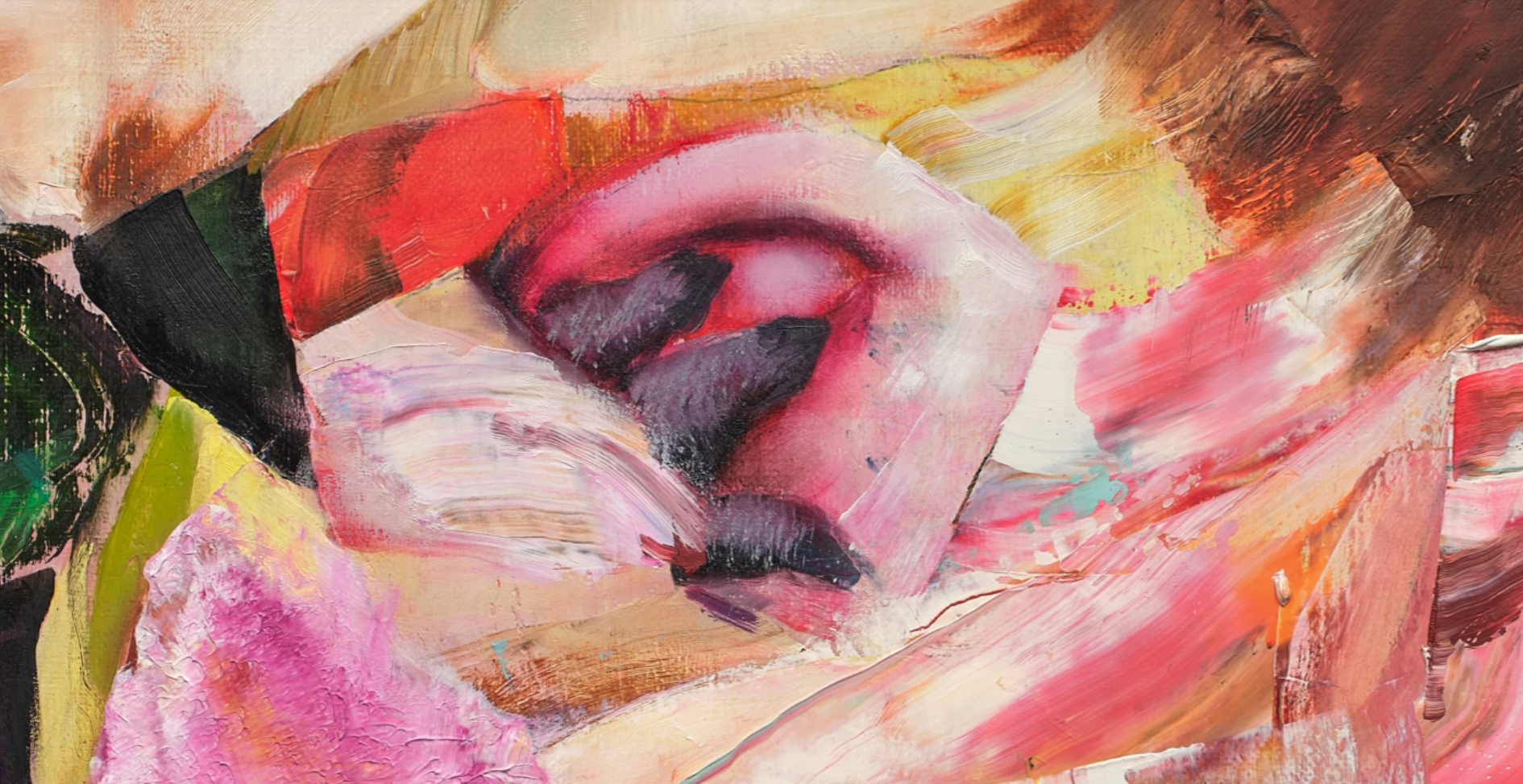
The close-cropped visage, rendered in sweeping, marbled facets of crimson, pink, orange, and umber, dominates the canvas, commanding attention with a powerful presence. The background, imbued with blue-green hues reminiscent of Van Gogh’s palette, provides a dynamic counterpoint, while one eye contrasts sharply with the other. Ghenie’s mark-making is exceptionally varied, spanning from soft, vaporous blooms to sculptural, palette-knifed sweeps of thick impasto; dry-brushed skeins of upward motion evoke Van Gogh’s swirling arabesques, while whiplash scribbles cut through sharply defined, red-rimmed planes of masked-off paint, producing an almost collage-like effect. Delicate freckles and blushes converge with more visceral tones of bleeding and bruising, as if to lay the subject bare from within. Indeed, if the present work exalts the vital life-force of painting, it simultaneously manifests a state of distortion and flux, with latent danger simmering beneath its surface; a potent reflection of both artistic and historical tumult.
As a youth Ghenie was famously captivated by Van Gogh’s iconic Sunflowers and fascinated by the story of a great artist and his affliction with mental illness. His own relationship with the present work’s source dates back to childhood memories of a magazine article entitled “The Tragic Life of Vincent van Gogh.” The lack of art books in the Ghenie household meant that this magazine would stay with the artist for years; on the front was an off-colour image of Van Gogh’s Sunflowers, while the article itself illustrated a black and white image of the 1889 Van Gogh self-portrait in the Musée d’Orsay in Paris. In 1998, when visiting this museum for the first time, Ghenie’s encounter with Van Gogh’s self-portrait affected him deeply. Finding himself unexpectedly under the scrutiny of Van Gogh’s penetrating stare, Ghenie’s uneasiness descended into a violent fit of nausea. In his subsequent explorations of one of the most recognizable faces in art history, Ghenie draws from a multitude of historical genres.
“You can’t invent a painting from scratch; you are working with an entire tradition… The pictorial language of the 20th century, from Kurt Schwitters’s collages to Jackson Pollock’s drip paintings, makes up a range of possibilities that I utilize in order to create a transhistorical figurative painting–a painting of the image as such, of representation.”
Lidless Eye is a landmark work that not only pays tribute to Van Gogh but also engages with an expansive array of artistic influences. It evokes the consummate chiaroscuro of Renaissance painting, the raw psychological power of Francis Bacon’s portraiture, and the sophisticated surface manipulations characteristic of Gerhard Richter, which together create and dissolve the boundaries of illusory space. Bacon’s reinterpretation of Van Gogh’s self-portrait – embodied in his 1960 work Homage to Van Gogh (Gothenburg Museum of Art, Sweden) – stands as a pivotal moment in the recontextualisation of art history. In the late 1950s, Bacon also produced a series inspired by Van Gogh’s The Painter on the Road to Tarascon (1888), a work whose original is now lost; destroyed or possibly looted during the 1945 Allied bombings of Magdeburg when it was held in the Kaiser-Friedrich Museum. Consequently, the vanished original is known solely through reproductions and its transformative afterlife in the works of both Bacon and Ghenie. These spectral histories, haunted by what might have been, underpin Ghenie’s enduring preoccupation with Van Gogh.
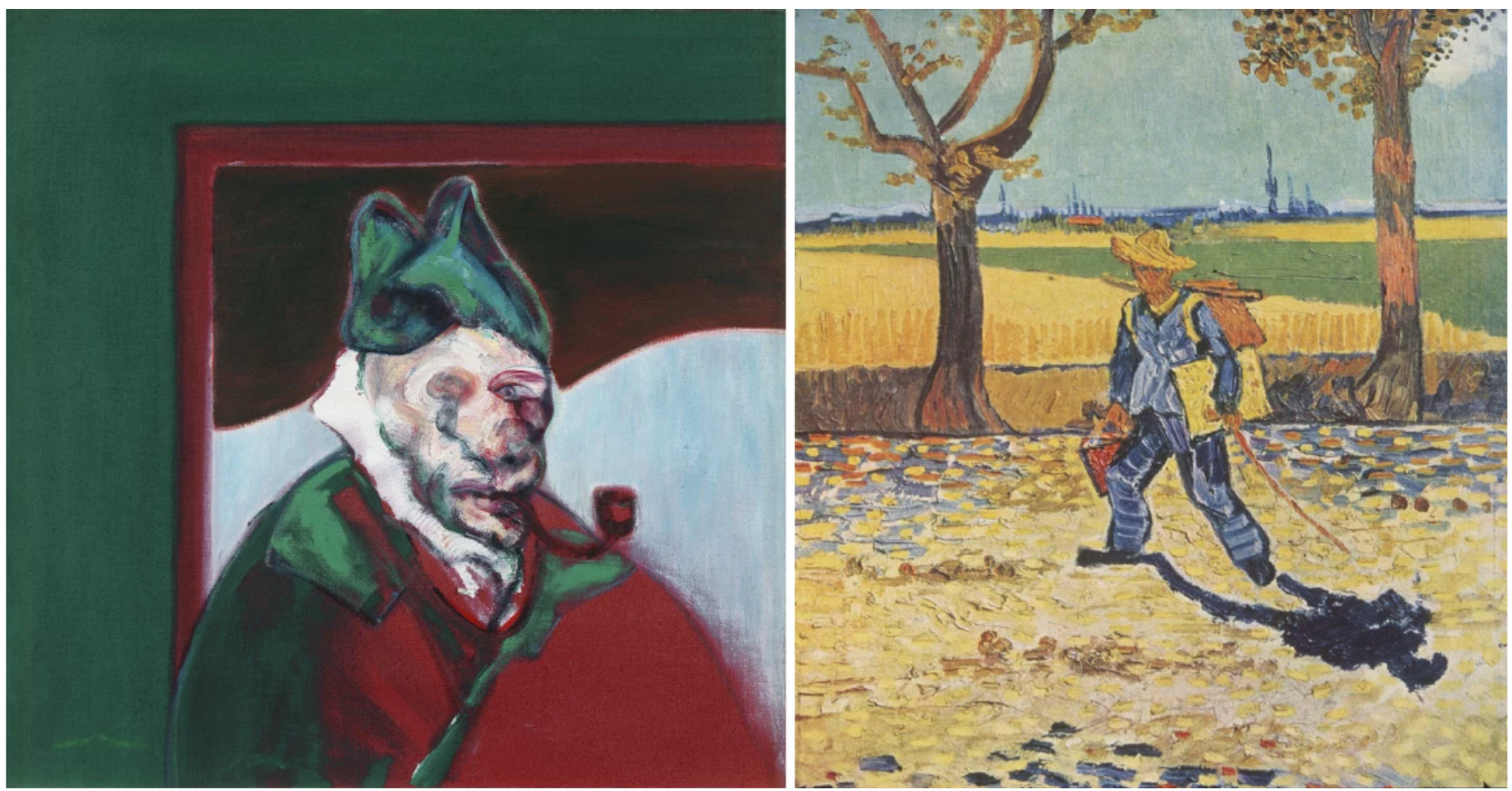
Left: Francis Bacon, Homage to Van Gogh, 1960. Private Collection. Photo: Prudence Cuming Associates Ltd 2025 © The Estate of Francis Bacon. All rights reserved. DACS 2025
Right: Vincent van Gogh, The Painter on the Road to Tarascon, 1888.
Painted one year after Ghenie represented his native Romania in the 56th Venice Biennale, Ghenie’s Lidless Eyes testifies to his fluency over the medium of painting as a revelatory expression of the artist’s own mind. In the radical distortion and effacement of the artist’s imagery lies a prevailing theme of the collective unconscious.
“I am particularly interested in the state of exceptionality that characterizes everyday life in totalitarian regimes, not just Communism. In such circumstances, everything is being distorted.”
Rendered in richly layered, pastose strokes, the present work emerges as a painterly palimpsest – a composite of masked identities and fragmented self-representation that alludes to the darker chapters of twentieth-century history and their lingering ramifications. In this extraordinary synthesis of the historical and the personal, Ghenie channels his lifelong adulation for Van Gogh and his preoccupation with the epoch’s most troubling events, manifesting Lidless Eye as an emblematic testament to his challenging revival of both history painting and the self-portrait.
Lidless Eye, 2016-19
Christie’s Hong-Kong: 28 November 2023
Estimated: HKD 38,000,000 – 58,000,000
HKD 42,725,000 / USD 5,485,199
22849-ghenie-lidless-eye (christies.com)
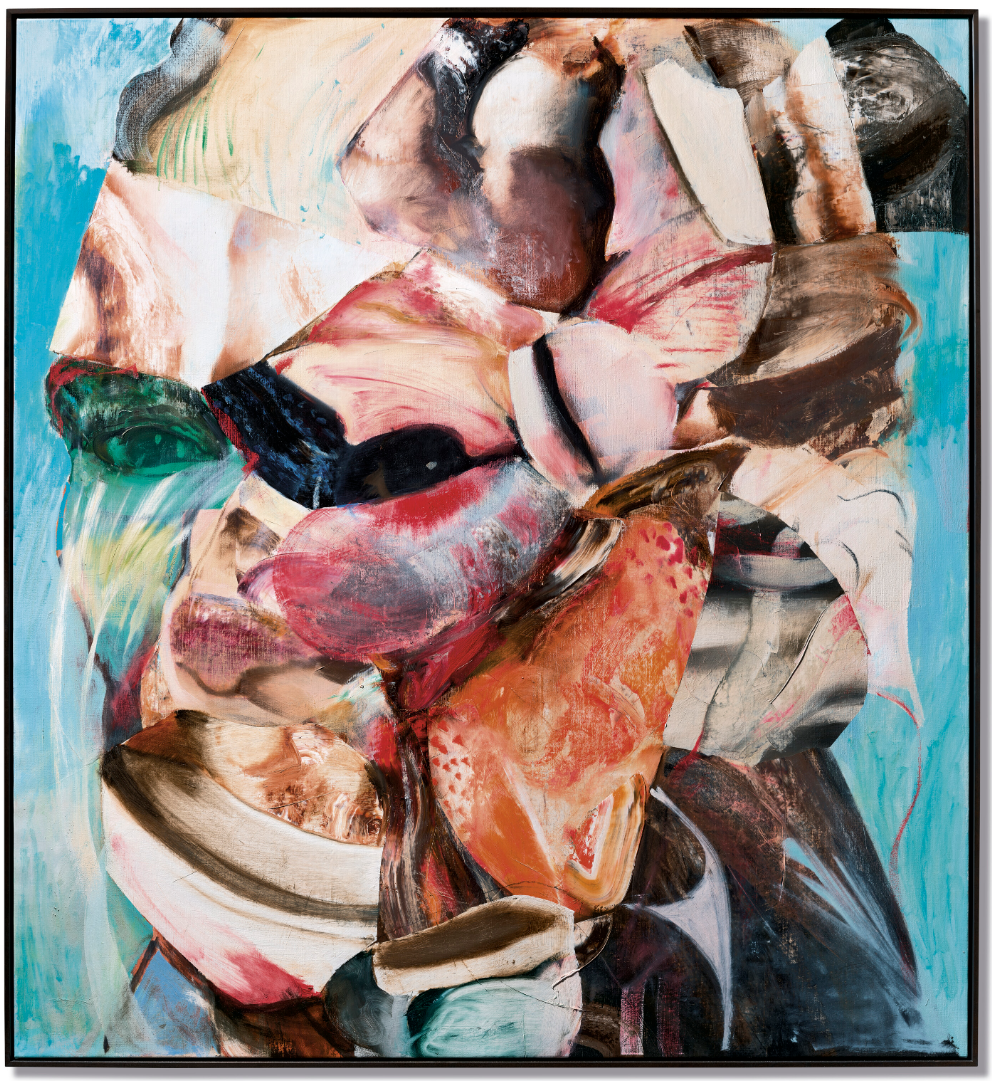
ADRIAN GHENIE (B. 1977)
Lidless Eye, 2016-19
Oil on canvas
185×170 cm (72 7/8 x 66 7/8 inches)
Signed and dated ‘Ghenie 2016-2019′ (on the reverse)
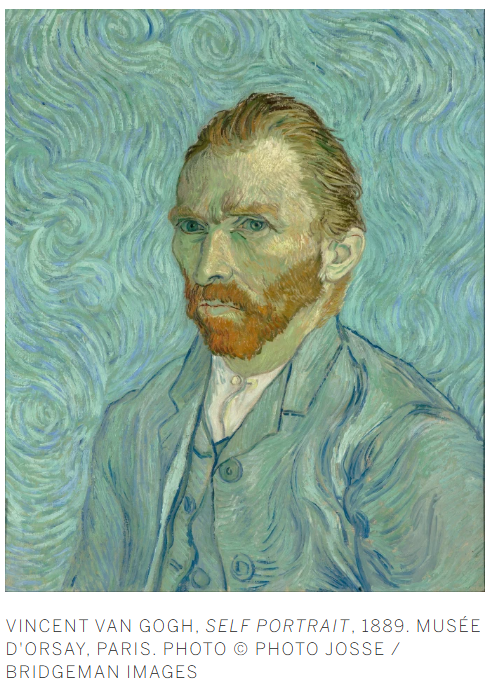
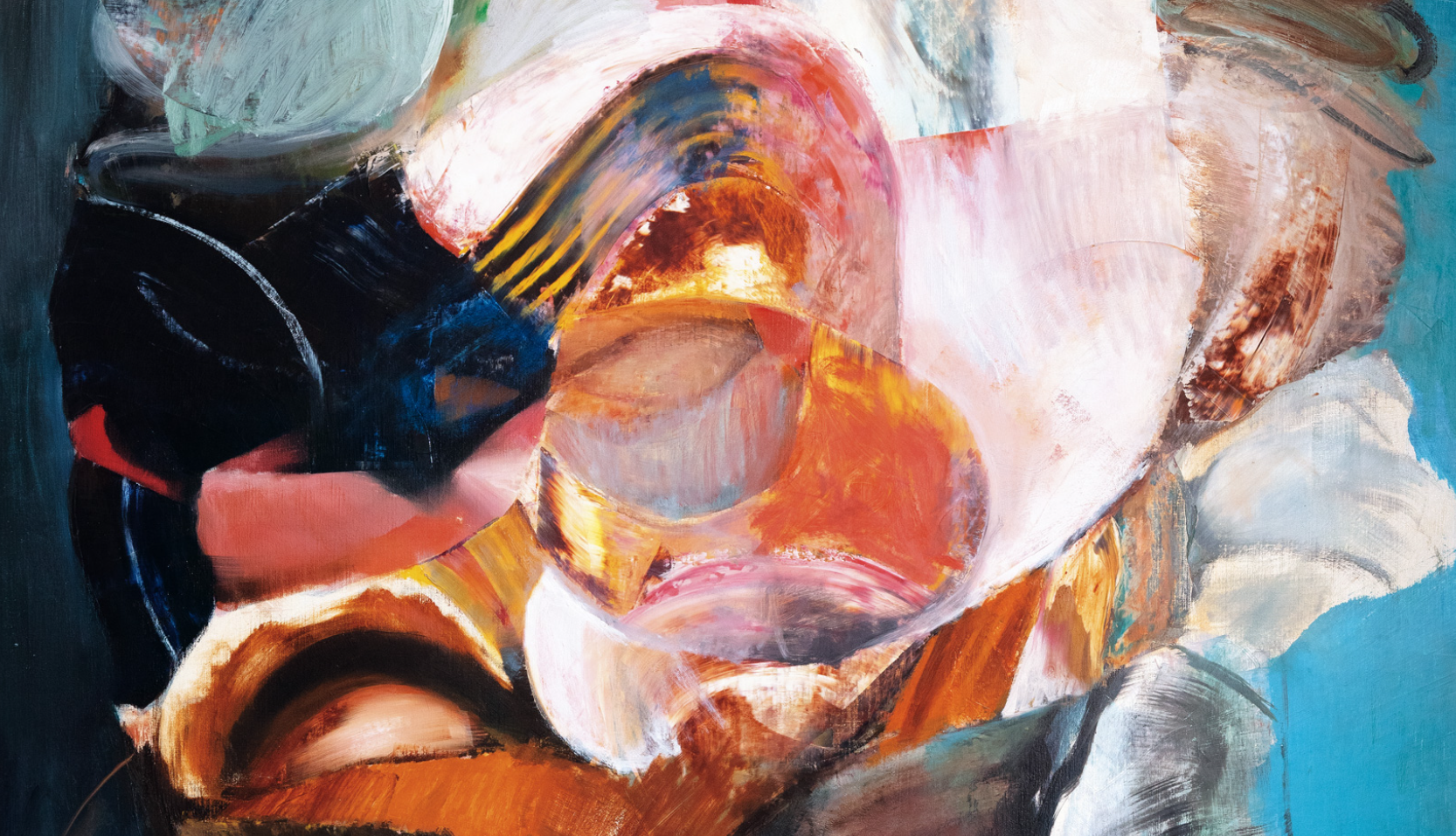
A brilliant, tempestuous fusion of art history, visionary feeling and pure painterly splendor, Lidless Eye (2016-2019) is perhaps Adrian Ghenie’s greatest tribute to his hero, Vincent van Gogh. One of a series of monumental works based on different self-images by the great Post-Impressionist, it sees Ghenie reach new heights of technique and emotion. Here, he reimagines the most foundational painting in his artistic life: van Gogh’s famous late Self-Portrait (1889, Musée d’Orsay, Paris).
The close-cropped face, modelled in sweeping, marbled facets of crimson, pink, orange and umber, fills a canvas almost two meters in height. The background takes up the blue-green hues of van Gogh’s painting. One eye is glazed in turquoise, as if seen underwater: the other is a glinting black abyss, nestled among pleats of blood-flushed magenta and midnight blue. Ghenie’s mark-making ranges from soft, vaporous blooms to sculptural, palette-knifed sweeps of thick impasto. Dry-brushed skeins of upward motion recall van Gogh’s distinctive swirling arabesques; whiplash scribbles cut through sharp, red-rimmed planes of masked-off paint, which almost appear like collage. Delicate freckles and blushes meet more visceral tones of bleeding and bruising, as if laying bare the subject from inside and out. In this scape of blazing color and dynamic texture, Ghenie both celebrates van Gogh and stages something of a self-portrait. His own dark eye through history stares out from the heart of the picture.
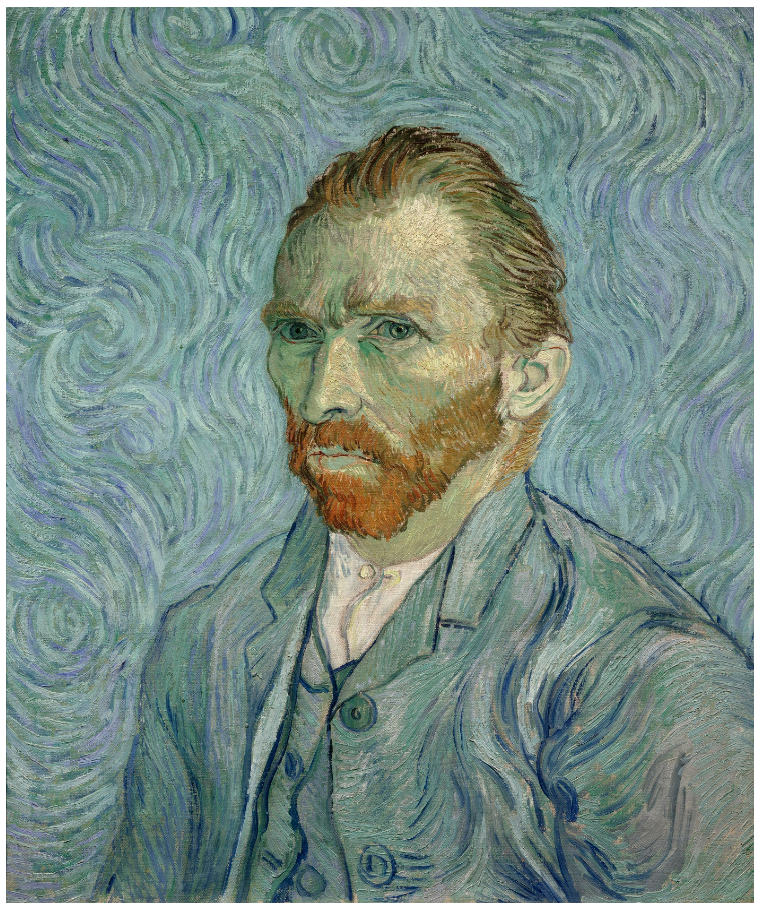
Vincent van Gogh, Self-portrait, 1889. Musee d’Orsay, Paris. Photo: Josse / Scala, Florence
Vincent van Gogh has been an inspiration to Ghenie since his childhood. With little exposure to art at home in Baia Mare, Romania, he was captivated as a boy by the story of ‘The Tragic Life of Vincent van Gogh’ in a local art magazine, which included a black-and-white image of one of the artist’s self-portraits. He kept the magazine cover, depicting one of van Gogh’s Sunflowers, under his pillow like a talisman. It was much later, on a visit to Paris during his first trip to the West in 1998, that he saw in person the Musée d’Orsay self-portrait—one of the last van Gogh painted before his death. This face-to-face encounter had an intense impact on Ghenie’s body and soul.
“It was the only time in my life I was truly physically sick.”
Van Gogh’s countenance, wrought with internal tumult, went on to become a touchstone for the intertwined expression of art history, European conflict and personal biography that defines Ghenie’s practice. Between 2012 and 2014, he painted a number of small-scale versions of his own portrait as van Gogh. Later, larger works such as the present see him revisit the theme with greater ambition and painterly freedom than ever before, plunging the viewer into a visage as vast as a landscape. The eye remains at the painting’s core, a vortex compelling in its emptiness.
“That eye for me is one of the coldest places in art history. In most of my van Gogh heads, the eye is removed and it is a black hole.”
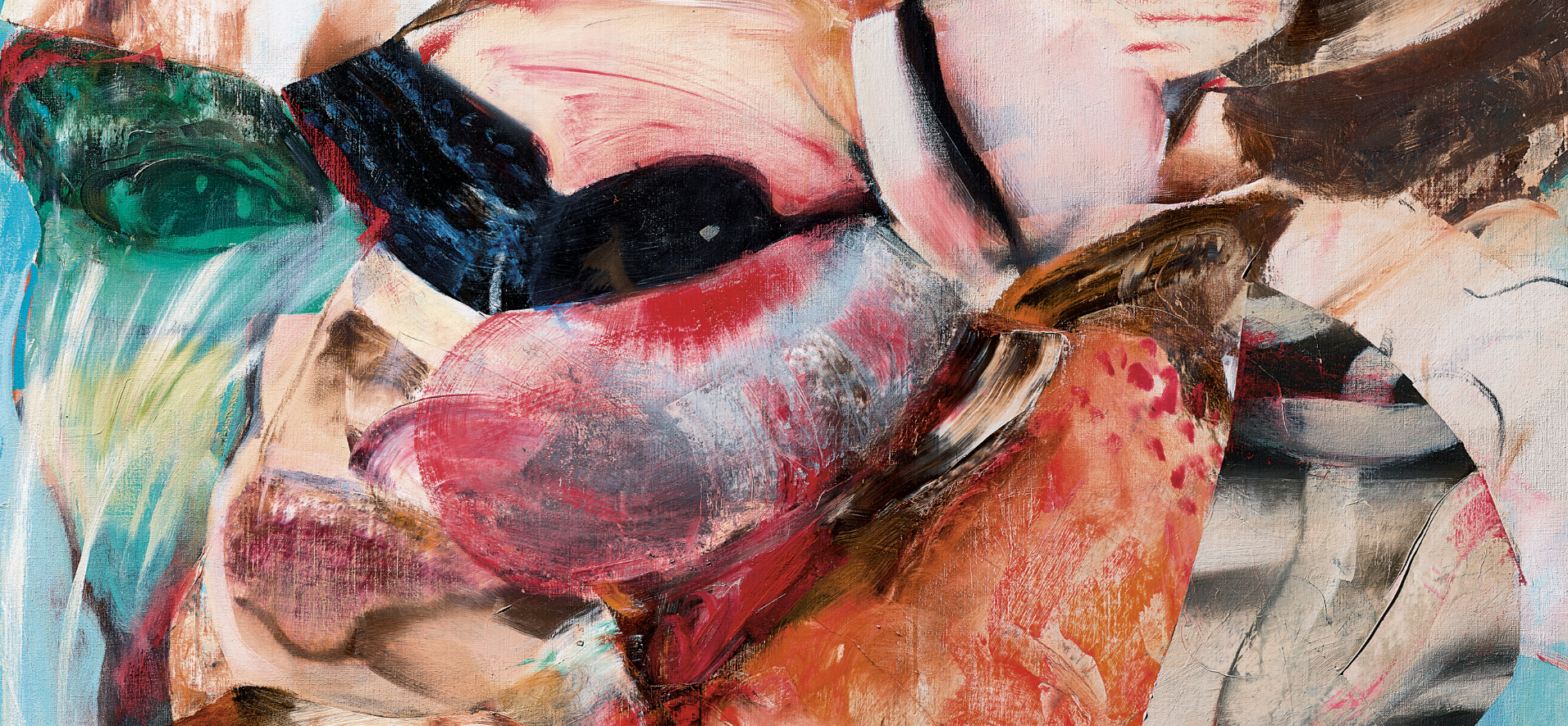
Ghenie’s discussion of his favorite paintings as ‘cold’ or ‘hot’ frames them in terms of somatic, sensual experience. While much of his practice is fuelled by pictures seen in reproduction—printed out, found in the pages of books, or viewed through a screen online—his meeting with van Gogh in the Musée d’Orsay reaffirmed for him this physical aspect of painting’s power. Lidless Eye restages the gut-punch of that moment: an instant of self-realization for Ghenie as he witnessed van Gogh’s own cold look in the mirror. The grand scale and energy of its execution, meanwhile, imbues Ghenie’s painting with a bodily life of its own. He is an admirer of Baroque painters like Tintoretto, whose vast works display a magisterial command of billowing movement, drama and figures in space. While working from a preparatory collage—and also welcoming the ‘Russian roulette’ of accident and impulse—Ghenie here performs a similar choreography.
“At one moment you get into a kind of trance, as if you’re dancing, like a dervish … I prefer getting into this whirling motion and then I don’t come out of it for about two months. I don’t paint with a brush, I paint with a whole load of tools.”
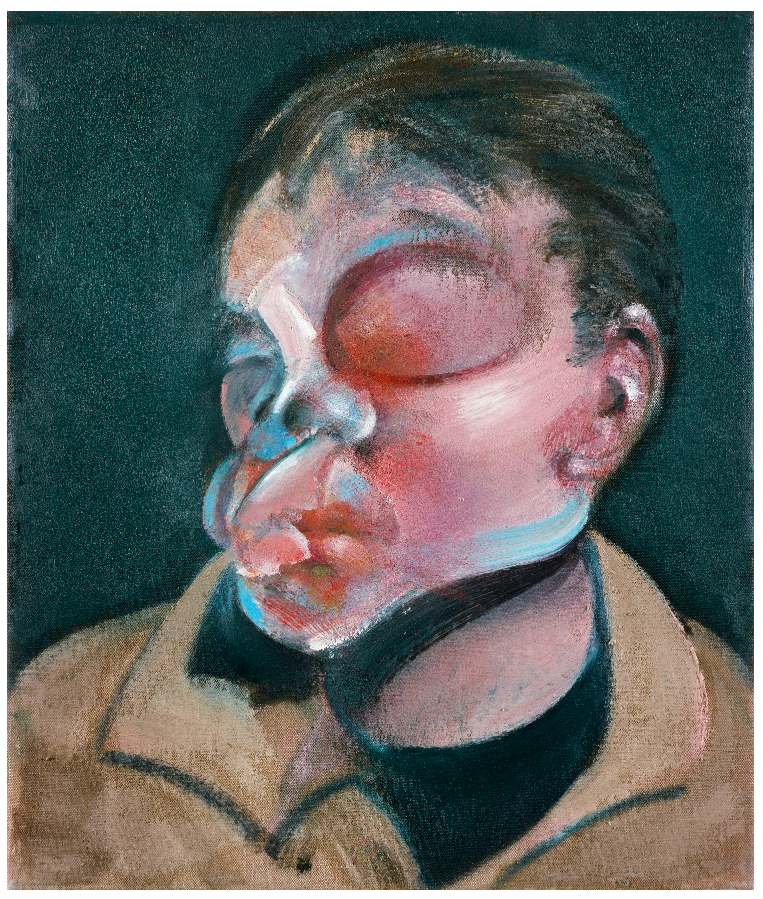
Francis Bacon, Self-Portrait with Injured Eye, 1972. © The Estate of Francis Bacon. All rights reserved. DACS / Artimage 2023. Photo: Prudence Cuming Associates Ltd
Ghenie’s homage to van Gogh also enfolds a tribute to his other great artistic hero: the post-war British master Francis Bacon. Both renowned for their vivid, gestural and contorted brushwork, Ghenie and Bacon are similarly inspired by figures who have shaped the light and darkness of history, from the Popes of old to notorious 20th century war criminals. They share a distinct interest in the photographic image, and in how pictures structure our lived experience. Both, too, are captivated by art history, from Old Masters such as Rembrandt and Velázquez to the Abstract Expressionists. In a 2016-2017 edition of collages related to the present work, Ghenie overlaid a cropped print of van Gogh’s image with cut-out swatches of monkey fur, fish-scales, surgical mesh and human hair and skin, like a head by Arcimboldo: his process bears close comparison with Bacon’s renowned use of photographic source imagery, which included medical textbooks, as well as volumes on primates and African wildlife.
Degenerate Art, 2018
Christie’s Hong-Kong: 30 November 2022
Estimated: HKD 48,000,000 – 68,000,000
HKD 56,850,000 / USD 7,283,792
ADRIAN GHENIE (B. 1977) (christies.com)
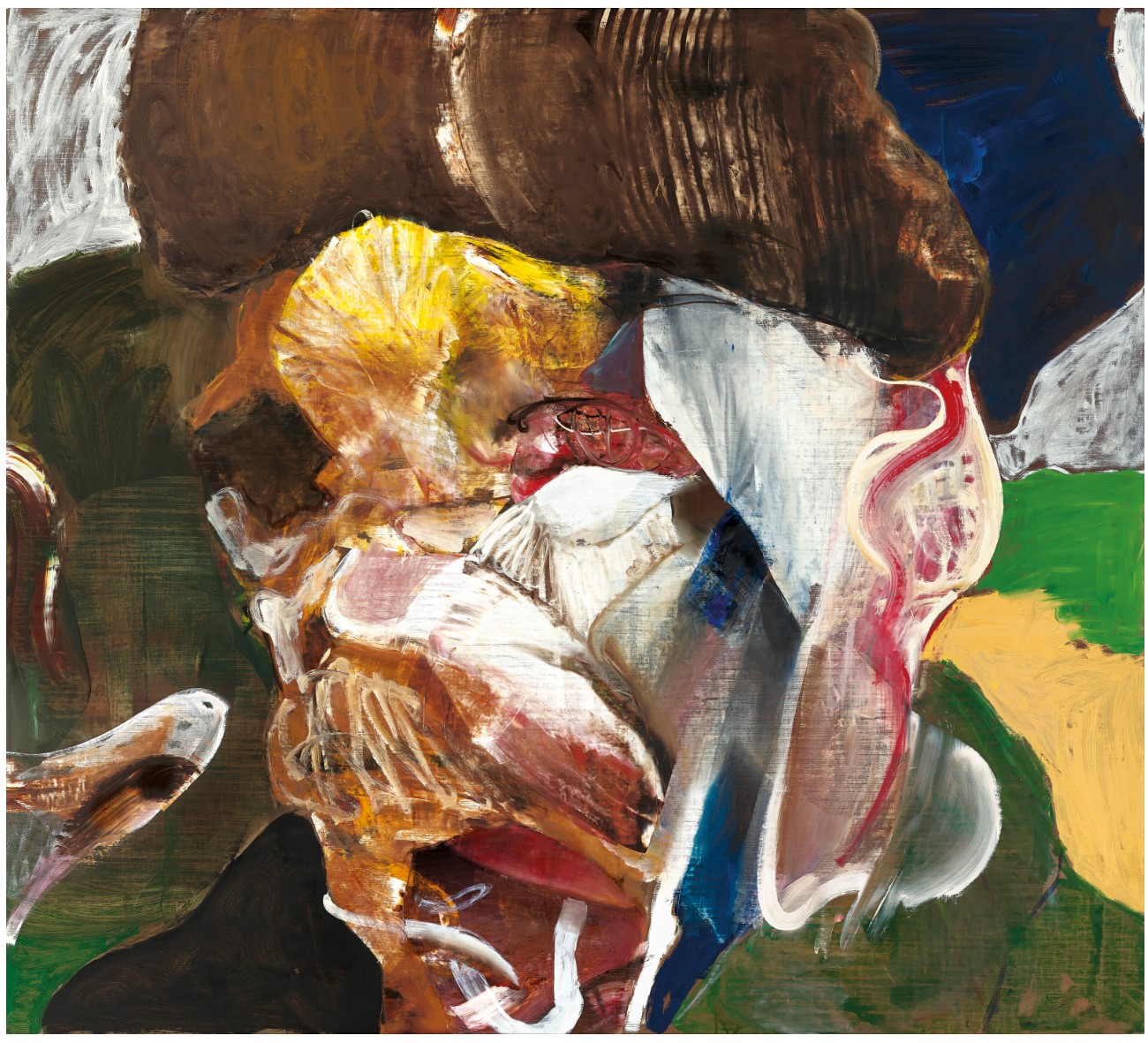
ADRIAN GHENIE (B. 1977)
Degenerate Art, 2018
Oil on canvas
180×200 cm (70 7/8 x 78 3/4 inches)
A vast, incandescent vision almost two meters high, Degenerate Art (Self Portrait as Vincent Van Gogh with Bandaged Ear) (2018) is a virtuoso fusion of self-scrutiny, art-historical inquiry and intense, bravura brushwork by Adrian Ghenie. One of a series of five monumental works that meld Ghenie’s own likeness with that of Vincent van Gogh, it is the sole example based on what is perhaps the great Post-Impressionist’s most iconic self-image: his Self-Portrait with Bandaged Ear (1889, The Courtauld, London), and the related Self-Portrait with Bandaged Ear and Pipe (1889, Niarchos Collection, on long-term loan to Kunsthaus Zürich, Switzerland). Ghenie transforms van Gogh’s intimate self-portrait into an explosion of billowing, dynamic form and colour. Its scale and energy match the grandest canvases of Willem de Kooning or Gerhard Richter. The face is modelled in sweeping facets of gold, white, magenta and blue: the ghost of one eye stares from a visceral socket, its contours scrawled through wet pigment. The bandage appears in diaphanous, marbled off-white, veined with a ribbon of blood red. Dilute washes convey the painter’s famous dark green coat, while textural striations score through the rich impasto of his fur hat. Jutting from a patchwork mouth, coils of white paint describe his tobacco pipe and a wisp of smoke. The backdrop’s notes of verdant green, wheatfield yellow and midnight blue echo the distinctive palette of van Gogh’s landscape paintings, as if transposing him from an interior setting into the vivid, dreamlike outdoor world of his artistic vision. By forging this ‘self-portrait’ through the image of his hero, Ghenie interrogates his own position in the painterly canon, and in the turbulent pageant of history at large.
Vincent van Gogh is a talismanic figure for Ghenie. As a young boy growing up in Romania, he kept a print of the Dutch artist’s Sunflowers (1888), from the cover of a local art magazine, under his pillow. Much later, on his first face-to-face encounter with van Gogh’s 1889 self-portrait at the Musée d’Orsay in Paris, Ghenie was stopped in his tracks by the painter’s haunting stare. Van Gogh’s internal tumult, so powerfully wrought on his countenance, went on to provide a focal point for the interwoven expression of art history, European conflict and personal biography that defines Ghenie’s practice. Between 2012 and 2014, Ghenie painted a number of small-scale versions of his own portrait as van Gogh. Later, larger works such as the present see him revisit the theme with greater ambition and painterly freedom than ever before, plunging the viewer into a visage as vast as a landscape. Van Gogh’s eye remains at the core of the picture, a vortex compelling and fearsome in its emptiness.
Lidless Eye, 2016-2018
Poly Hong-Kong: 12 July 2022
Estimated: HKD 50,000,000 – 75,000,000
HKD 60,000,000 / USD 7,643,604
Lidless Eye|Poly Auction Hong Kong
ADRIAN GHENIE
Lidless Eye, 2016-2018
Oil on canvas
180.4 x 149.8 cm (71×59 inches)
Signed and dated ‘Ghenie 2016-2018’ (on the reverse)
Lidless Eye is a self-portrait of Ghenie and is one of the largest self-portraits by the artist to appear on the market to date. The work is a clear tribute to and also influenced by Vincent van Gogh, the master of Post-Impressionism. Van Gogh inspired many of his successors, and of whom Ghenie was undoubtedly one of the artists who was greatly influenced by van Gogh. Ghenie started a series of portraits around 2009. He explored the collective memory of people through the study of influential artists from various periods and fields, including artists like van Gogh and Duchamp, the scientist Darwin, the singer Elvis Presley and the comedy duo Laurel and Hardy, as well as controversial political figures such as Lenin, Hitler and Stalin, of whom van Gogh is the only painter and the person that casted great influence on Ghenie.
The Sunflowers in 1937 created by Ghenie in 2014 is obviously a tribute to van Gogh’s Sunflowers. It was on auction at Sotheby’s London in February 2016 with an estimated price of GBP 400,000 and went on to hammer at £2.65 million, a record for the artist’s work at the time, making Ghenie a well-known name in the collector’s market ever since. The artist created the present work in 2016, which was the year he rose to fame. He had just turned forty and was still unmoved with both accolades and doubts directed at him. He still paints van Gogh with the aim to carry on the spirit of him. He continued to work on this work for two years, making Lidless Eye one of the highlights of this period. To Ghenie, van Gogh was a spiritual mentor whom he studied religiously. He was touched by his sensitive and delicate yet wild brushstrokes. Ghenie is from Romania, which is not a country known for art. His creative career has been marked by bankruptcy and poor business practices but with perseverance he managed to gain global fame. His early career echoes that of van Gogh’s life, enabling him to relate to the inner world of van Gogh. His understanding of art and observations of the contemporary world are reflected in his many paintings centered on van Gogh.
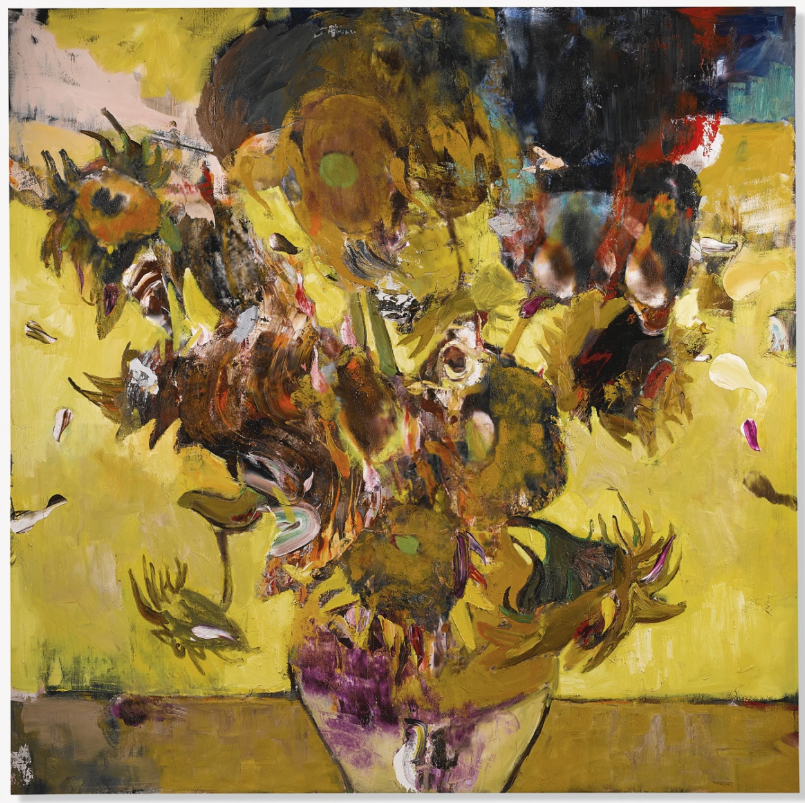
ADRIAN GHENIE, Sunflowers in 1937
In this painting, we can see the image of Ghenie in van Gogh. The face of the artist is covered in thick layers of paint, with the swirling technique of Bacon and scraper strokes of Richter, creating a Ghenie style. The face seems to be formed from fragments, each dash of colour is like a piece of memory, which is gathered to form the unique philosophy of Ghenie. Although the face is hard to recognize, the way Ghenie’s hair is always combed and the way he wears his moustache on his chin are hints for the viewer to identify him as the subject matter. The blurry face depicted in this painting reveals the path of artistic maturity of the artist. Van Gogh is the spiritual mentor, while Bacon and Richter undoubtedly influenced Ghenie’s techniques. It is as if these masters of different times were in dialogue with each other on his canvas. By learning from them, Ghenie creates his own unique artistic language. The artist’s self-portrait, taking van Gogh’s self-portrait in the late years as the prototype, is a masterpiece showcasing Ghenie’s dialogue with art history and projection of himself into the contemporary world. Begun in 2016 and completed in 2018, this self-portrait is undoubtedly the perfect expression to his spiritual accord with van Gogh: a self-portrait of Ghenie and a portrait of van Gogh.
Degenerate Art, 2016
Sotheby’s New-York: 19 May 2022
Estimated: USD 7,000,000 – 10,000,000
USD 9,286,700
Degenerate Art | The Now Evening Auction | 2022 | Sotheby’s (sothebys.com)
ADRIAN GHENIE
Degenerate Art, 2016
Oil on canvas
79×71 inches (200.7 x 180.3 cm)
A quintessential example of the gestural bravura and psychological intensity that distinguish Adrian Ghenie’s revolutionary oeuvre, Degenerate Art sees the artist reimagine Vincent van Gogh’s final self-portrait from 1889 as a prism through which to examine the haunting chapters of twentieth-century history. Executed in 2016, the present work marks the decisive and monumental finale of the artist’s beguiling series of self-portraits in the guise of van Gogh, an artist who figures as one of Ghenie’s chief inspirations. Extending the Romanian artist’s core preoccupation with historical traumas that afflicted the twentieth century, the title of Ghenie’s Degenerate Art references the pejorative term adopted in the 1920s by the Nazi Party in Germany as a denouncement of Modern Art, thus conjuring the Third Reich’s vicious campaign for cultural cleansing under the dictatorship of Adolph Hitler. In the present work, the hallucinatory arabesques of van Gogh’s original self-portrait are fiercely cut through by fiery reds, neon yellows, and deep blues applied by palette-knife to distort the artist’s effigy, delivering a brightly metamorphic vision of his face that ultimately hones in the blackened recesses of his left eye. Within this dynamic amalgamation of richly variegated layers, Degenerate Art embodies a palimpsest of spliced identity to express the thrilling amalgam of painterly technique and historical narrative that defines Ghenie’s practice.
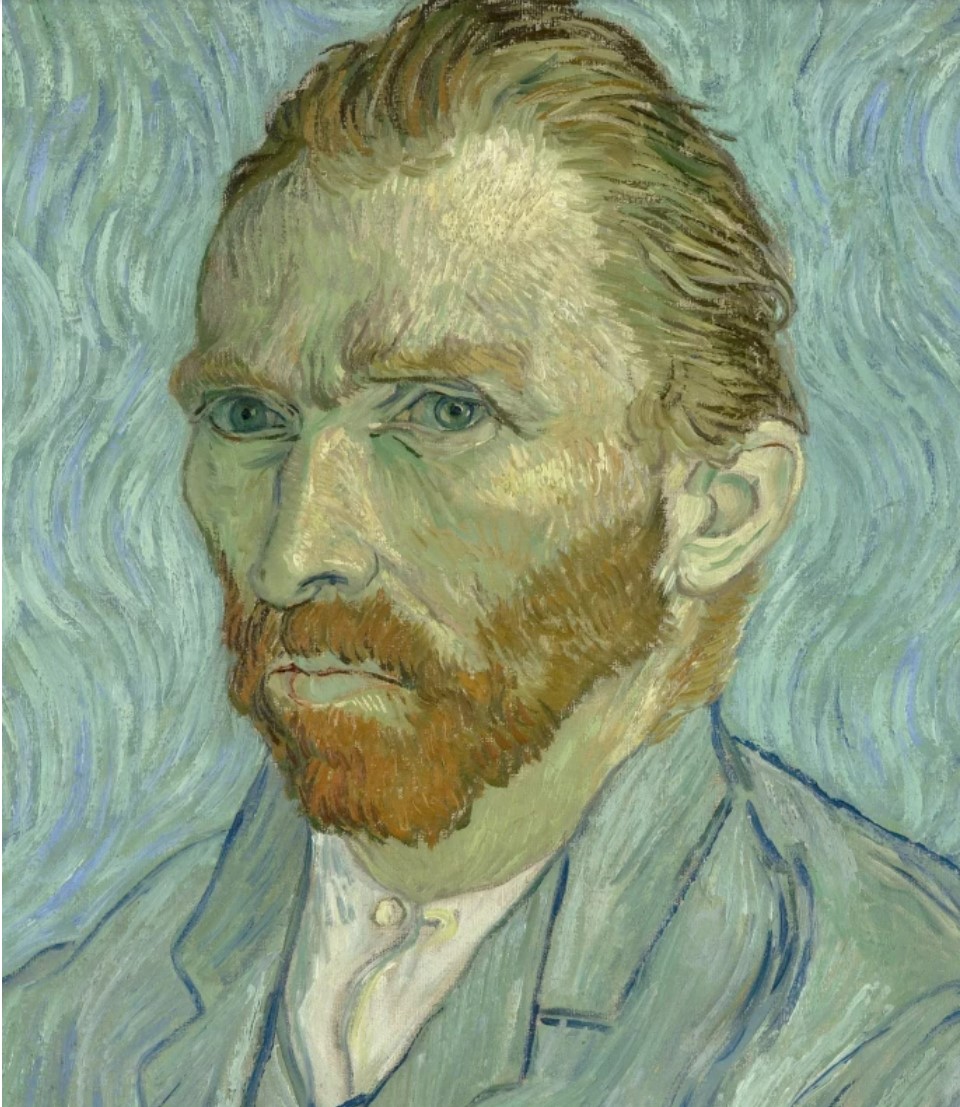
DETAIL OF VINCENT VAN GOGH, SELF PORTRAIT, 1889. MUSÉE D’ORSAY, PARIS. IMAGE © ERICH LESSING / ART RESOURCE, NY.
One of the most acclaimed painters of his generation, Adrian Ghenie manipulates traditions of painting to engage critically with history, often returning to the atrocities of European dictatorship. In the present work, Ghenie recalls Nazi Regime’s infamous 1937 exhibition of “Degenerate Art” at the Institute of Archaeology in Munich, which sought to educate the German public against the evils of Modern Art. This project of “cultural cleansing” pressured many countries under Nazi occupation to remove works by van Gogh, Munch, Picasso, Kandinsky, and other blacklisted artists from display. Triumphantly synthesizing the raw gestures of Francis Bacon; the visceral textures of Gerhard Richter and the Abstract Expressionists; and the abstract prismatic vernacular of Color Field painting, with the present work Ghenie delivers an ode to the lineages of art history that, in the richness of their aesthetic complexity, pose a fundamental cultural threat to the totalitarian regime. Based on one of Vincent van Gogh’s final self-portraits from 1889 entitled Self-Portrait, Degenerate Art sees Ghenie pay homage the Post-Impressionist master and the tradition of modern painting he radically transformed. Ghenie evinces his deft and strategic manipulation of paint by maintaining the complementary colors of van Gogh’s fiery orange hair and pale-turquoise background but distorting it to new extremities. Smudged, blurred, and disfigured with flamboyant gusto, the figure is rendered nearly unrecognizable save the loose contours of his face and the darkened shadows of van Gogh’s famously self-critical eye, siloed here against the impasto depths of bright paint to reveal the bleak undertones that modern art history has seen.
Lidless Eye, 2016-2018
Sotheby’s Hong-Kong: 6 October 2020
Estimated: HKD 42,000,000 – 62,000,000
HKD 54,920,000 / USD 7,026,702
ADRIAN GHENIE
Lidless Eye, 2016-2018
Oil on canvas
180.3 x 150 cm (71×59 inches)
Executed from 2016-2018, Lidless Eye is a masterful and breathtakingly superlative work, suffused with the commanding gestural bravura and powerful psychological intensity that mark the decisive finale of Adrian Ghenie’s celebrated self-portrait as Vincent van Gogh series. From the influential (Charles Darwin, Vincent van Gogh and Marcel Duchamp) through to the notorious (Hitler, Lenin and Stalin), and the popular (Elvis, Stan Laurel and Oliver Hardy), Ghenie has painted both the famous and infamous. Among these, his self-portraits centered on the effigy of Van Gogh are closest to his heart, forming a crucial structural pillar of his rigorous dialogue with both art history and contemporary global history. Based on one of the very last self-portraits by the Post-Impressionist (Musée d’Orsay, Paris), Lidless Eye is a landmark work that refers not only to Van Gogh but also to an array of artistic sources ranging from the consummate chiaroscuro of Renaissance painting to the raw psychological intensity of Francis Bacon’s portraiture, to the deft manipulations of the painted surface in Gerhard Richter’s practice that simultaneously create, and shatter, illusory space. In layers that are pastose and wonderfully variegated, this painting embodies a painterly palimpsest of masked and spliced identity and identification, alluding to troubling chapters in the twentieth century and their continuing ramifications. An extraordinary composite of the historical and the personal, into this work Ghenie poured his childhood adulation for Van Gogh as well as his core preoccupations regarding contemporary history’s darkest chapters, manifesting as an emblematic piece within his challenging revival of both history painting and self-portraiture.
Self-Portraits
Self Portrait in 1945, 2014
Christie’s Hong-Kong: 25 May 2022
Estimated: HKD 11,000,000 – 18,000,000
HKD 10,650,000 / USD 1,356,735
ADRIAN GHENIE (B. 1977) (christies.com)
ADRIAN GHENIE
Self Portrait in 1945, 2014
Oil on canvas
199.5 x 140.1 cm (78.5 x 55.1 inches)
Self-Portrait with Animal Mask, 2018
Christie’s London: 28 February 2022
GBP 600,000 – 800,000
GBP 1,050,000 / USD 1,407,145
ADRIAN GHENIE (B. 1977) (christies.com)
ADRIAN GHENIE
Self-Portrait with Animal Mask, 2018
Oil on canvas
150.2 x 100.4 cm (58.1 x 39.5 inches)
Included in Adrian Ghenie’s celebrated exhibition The Battle Between Carnival and Feast at the Palazzo Cini, Venice, in 2019, Self-Portrait with Animal Mask offers a swirling vision of metamorphosis. Man becomes beast in the electrifying alchemy of paint, colour and gesture, with human legs and striped shorts still visible beneath a writhing serpentine torso and head. Painted in 2018, the work takes its place within Ghenie’s rich body of self-portraits: a central strand of his oeuvre. Over the course of his practice he has depicted himself in the guise of Vincent Van Gogh, Charles Darwin and Elvis Presley; he has painted himself as a monkey, and travelled back in time to the end of the Second World War. Here, he casts himself as a shaman, caught between human and animal forms. Ghenie weaves together layers of art-historical reference: from ancient mythologies of shape-shifting and zoomorphism, to the metamorphic language of Surrealism, the torrid abstraction of Willem de Kooning and the animalistic gestures of Francis Bacon. In his hand, Ghenie holds a brush, as if mutating through the sheer force of his own artistry.
Self-Portrait, 2016
Christie’s Hong-Kong: 23 May 2021
Estimated: HKD 4,000,000 – 6,000,000
HKD 9,250,000 / USD 1,191,345
ADRIAN GHENIE (B. 1977) (christies.com)
ADRIAN GHENIE
Self-Portrait, 2016
Oil on canvas
44.2 x 34.2 cm (17.4 x 13.4 inches)
The self-portrait is a subject of enduring fascination for Adrian Ghenie, and is one of his most celebrated bodies of work. In his various explorations of the self, Ghenie presents his own visage in a variety of guises, twisting and transforming his facial features with gestural, abstract strokes of color. Self-portrait thus captures the image of an artist during a moment of great change, projecting an image that chooses to obscure as much as it reveals. Ghenie has previously painted himself in the guise of historical figures ranging from Van Gogh to Charles Darwin to Elvis Presley, figuratively embodying the famous people that he paints. Yet here, in the present painting, Ghenie paints only himself, unadorned and undiluted by another identity. When compared to a photograph of the artist, the sweep of dark coiffed hair and pointed chin are unmistakable. Yet the painting also seems to balance on the cusp of anonymity, with the face entirely composed of rich swathes of paint, there is only the faintest suggestion of facial feature. Strong contrasts between light and dark suggest a brow, a moustache, a jawline – features that dissolve into abstraction when examined closely.
Self-Portrait in 1945, 2015
Sotheby’s Hong-Kong: 19 April 2021
Estimated: HKD 3,000,000 – 5,000,000
HKD 10,823,000 / USD 1,393,634
ADRIAN GHENIE
Self-Portrait in 1945, 2015
Oil on canvas
40 x 27.1 cm (15.7 x 10.6 inches)
Charles Darwin
Charles Darwin as a Young Man, 2014
Sotheby’s London: 7 March 2024
Estimated: GBP 250,000 – 300,000
GBP 317,500 / USD 402,090
Charles Darwin as a Young Man | Modern & Contemporary Day Auction | 2024 | Sotheby’s (sothebys.com)
ADRIAN GHENIE (b. 1977)
Charles Darwin as a Young Man, 2014
Oil on canvas
48.8 x 32.1 cm (19 1/4 x 12 5/8 inches)
Signed and dated 2014 (on the reverse)
Adrian Ghenie’s masterful and exquisitely rendered Charles Darwin as a Young Man serves as a pivotal juncture in the artist’s celebrated career. Executed in 2014, the present work belongs to a series characterized by the controversies of the protagonist; here Ghenie portrays the renowned biologist Charles Darwin at the height of his career; a thematic exploration that delves into the intricacies of identity within the shadowy contours of Twentieth Century history. The voluptuous surface, replete with heavily worked and beautifully disrupted pigment upon the picture plane, reveals the biologist’s signature silhouette adorned in formal attire, delineated by brazen brushstrokes. Indeed, Darwin’s iconic heavy brow and timeworn features undergo near-complete abstraction through a flurry of dynamic and energised brushstrokes, typical of Ghenie’s most distinguished works.
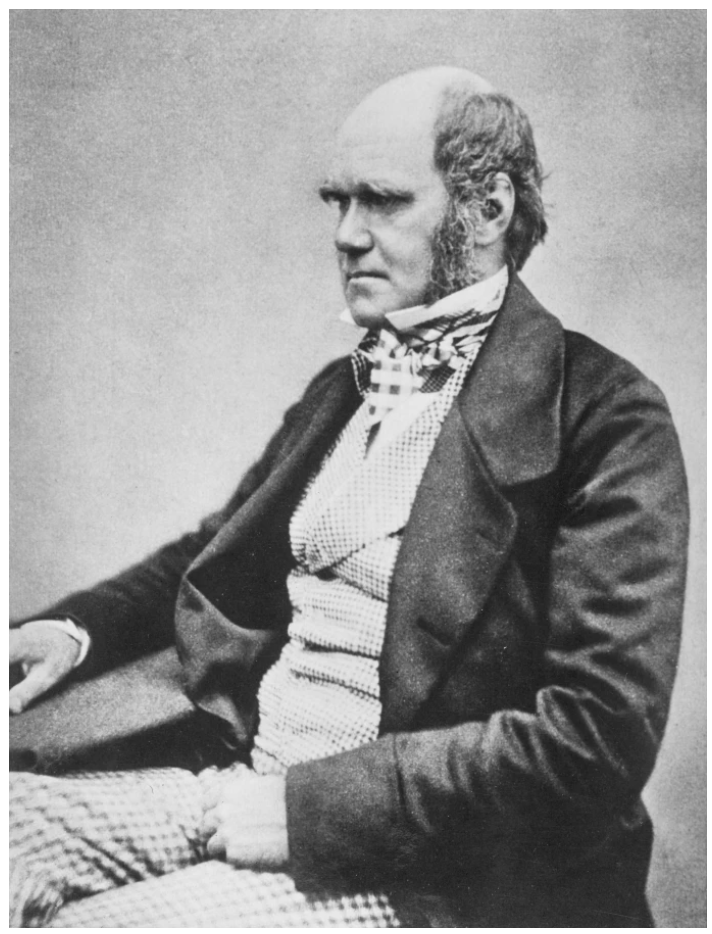
In Ghenie’s artistic repertoire, the present work stands as a testament to his post-modern fluency, blending heavily labored medium, fluid brushwork, and exuberant tracts of dragged paint. Drawing parallels to Francis Bacon’s methodology of blending his likeness with various sources, Ghenie employs a similar editorial painterly process, resulting in a layered visual and metaphorical palimpsest. This stratified composition harbors myriad allusions to art, history, science, and subjectivity. The painting seamlessly merges the squeegee scrape reminiscent of Gerhard Richter’s post-photographic abstraction with the psychological intensity and corporeal manipulation seen in a Bacon self-portrait, establishing Charles Darwin as a Young Man as a remarkable and unparalleled achievement.
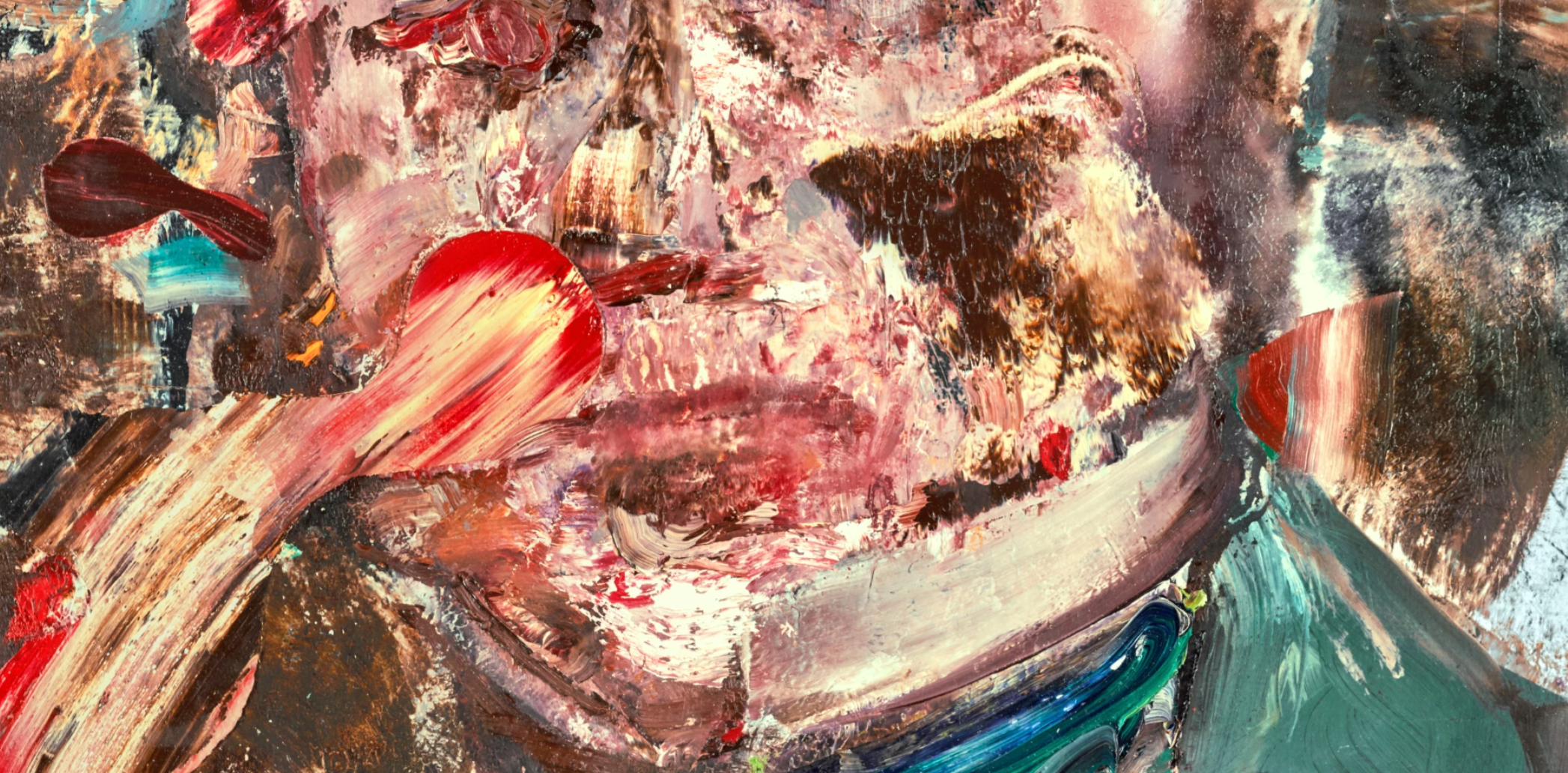
The subject matter is a cornerstone in Ghenie’s career, with Darwin serving as a focal point around which the artist explores the troubling historical figures of the Twentieth Century. Ghenie delves into Darwin’s ambiguous legacy, connecting it to the exploitative forces of political and social gain, embodied by figures such as Hitler, Dr. Josef Mengele, Stalin, and Nicolae Ceaușescu. The dialogue around Darwin is persistent in Ghenie’s work, evident in exhibitions such as his 2013 show with Pace in New York and his 2015 presentation at the 56th Venice Biennale titled Darwin’s Room. The latter, set in the Romanian Pavilion as it would have appeared in 1938, delves into the consequences of Darwin’s revolutionary discoveries and extends the implications of “survival of the fittest” to disquieting conclusions. By depicting the biologist as his younger self, Ghenie inadvertently situates himself within the painting; perhaps a reflection and refraction on the passing of time, initiating a perplexing yet profound dialogue, bridging the perceived gap between scientist and artist. Through this melding, Ghenie positions himself as a philosopher, contemplating the controversies stirred by humanity’s promethean progress. Darwin’s legacy, while triumphant as a figurehead of human advancement, is also complex. Like Einstein, to whom he is often compared, Darwin’s theories have been subverted for corrupt ends, notably providing the rational basis for eugenics. Ghenie explores these dark corners of history, intertwining Darwin’s own struggles with genetic disorders, casting him as a victim of his own intellectual achievements within the context of Nazi eugenics.
Charles Darwin as a Young Man, 2013
Christie’s Paris: 19 October 2023
Estimated: EUR 250,000 – 350,000
EUR 403,200 / USD 426,170
Adrian Ghenie (né en 1977) (christies.com)
ADRIAN GHENIE (Born 1977)
Charles Darwin as a Young Man, 2013
Oil on canvas
45 x 43 cm (16 7/8 x 17 inches)
Signed and dated ‘Ghenie 2013’ (on the reverse)
Charles Darwin as a Young Man (2013) was included in Adrian Ghenie’s landmark exhibition at the Venice Biennale in 2015. It was this show, entitled ‘’Darwin’s Room’’, that brought the young Romanian painter to international acclaim. Darwin, the father of evolutionary biology, would become one of Ghenie’s most celebrated subjects. His vivid portraits of him reveal much about the artist’s understanding of history. Ghenie depicts figures who, for better or worse, changed humankind. Vincent van Gogh altered the course of art history. Elvis Presley transformed music. The dictatorships of the twentieth century—from the Third Reich to the Ceaușescu regime—changed the very fabric of society. Darwin’s theories were a turning point in science, but were also exploited by the Nazi regime. Many of the paintings in ‘’Darwin’s Room’’ addressed this conflict.
Painted in 2013, Charles Darwin as a Young Man demonstrates many of Ghenie’s early influences. It recalls Francis Bacon’s animated portraits and Gerhard Richter’s marbled surfaces, as well as van Gogh’s expressive brushwork. Ghenie delights in painterly accidents, and deliberately encourages them in his studio. He is also inspired by cinema: from the films of David Lynch to the slapstick “pie fight” sketches of The Three Stooges. The thick abstract gestures of the present work echo those of Ghenie’s seminal ‘’Pie Fight Studies’’, exhibited the previous year. The work’s source is a photo of Darwin, believed to have been taken in 1854. At that time, he would actually have been 45, and preparing his ground-breaking publication On the Origin of the Species (1859). Ghenie notes that Darwin suffered from a range of physical dysfunctions, including a skin condition that often required him to be fully bandaged.
Self-Portrait as Charles Darwin, 2012
Sotheby’s London: 12 October 2023
Estimated: GBP 300,000 – 400,000
GBP 317,500 / USD 387,715
Self-Portrait as Charles Darwin | The Now Evening Auction | 2023 | Sotheby’s (sothebys.com)
ADRIAN GHENIE (b. 1977)
Self-Portrait as Charles Darwin, 2012
Oil on canvas
50.3 x 40 cm (19 3/4 by 15 3/4 inches)
Signed and dated 2012 (on the reverse)
Self-Portrait as Charles Darwin pinpoints a milestone in Adrian Ghenie’s oeuvre. Created in 2012, the present work belongs to a series of works of Ghenie depicting himself as the renowned biologist, a thematic focus that has fueled his scrutiny of identity as subject to the darker vicissitudes of twentieth-century history. On the surface of the present work, the painter’s idiosyncratic haircut and black zip-up can be seen peeking through in rough strokes, as Darwin’s heavy brow and timeworn features are brought to near complete abstraction through flurried brushstrokes. Possessing a coalition of heavily labored medium, fluid brushwork, and exuberant tracts of dragged paint, this work exhibits Ghenie’s post-modern fluency as a painter. Much in the same way that Francis Bacon would blend his own likeness with friends and lovers, or with images culled from books, newspapers and films, Ghenie employs a similarly editorial painterly process. The result is a stratified visual and metaphorical palimpsest that harbors myriad allusions to art, history, science, and subjectivity. At once melding the squeegee scrape of Gerhard Richter’s post-photographic abstraction with the psychological intensity and corporeal manipulation of a Bacon self-portrait, Self-Portrait as Charles Darwin is one of Adrian Ghenie’s greatest achievements.
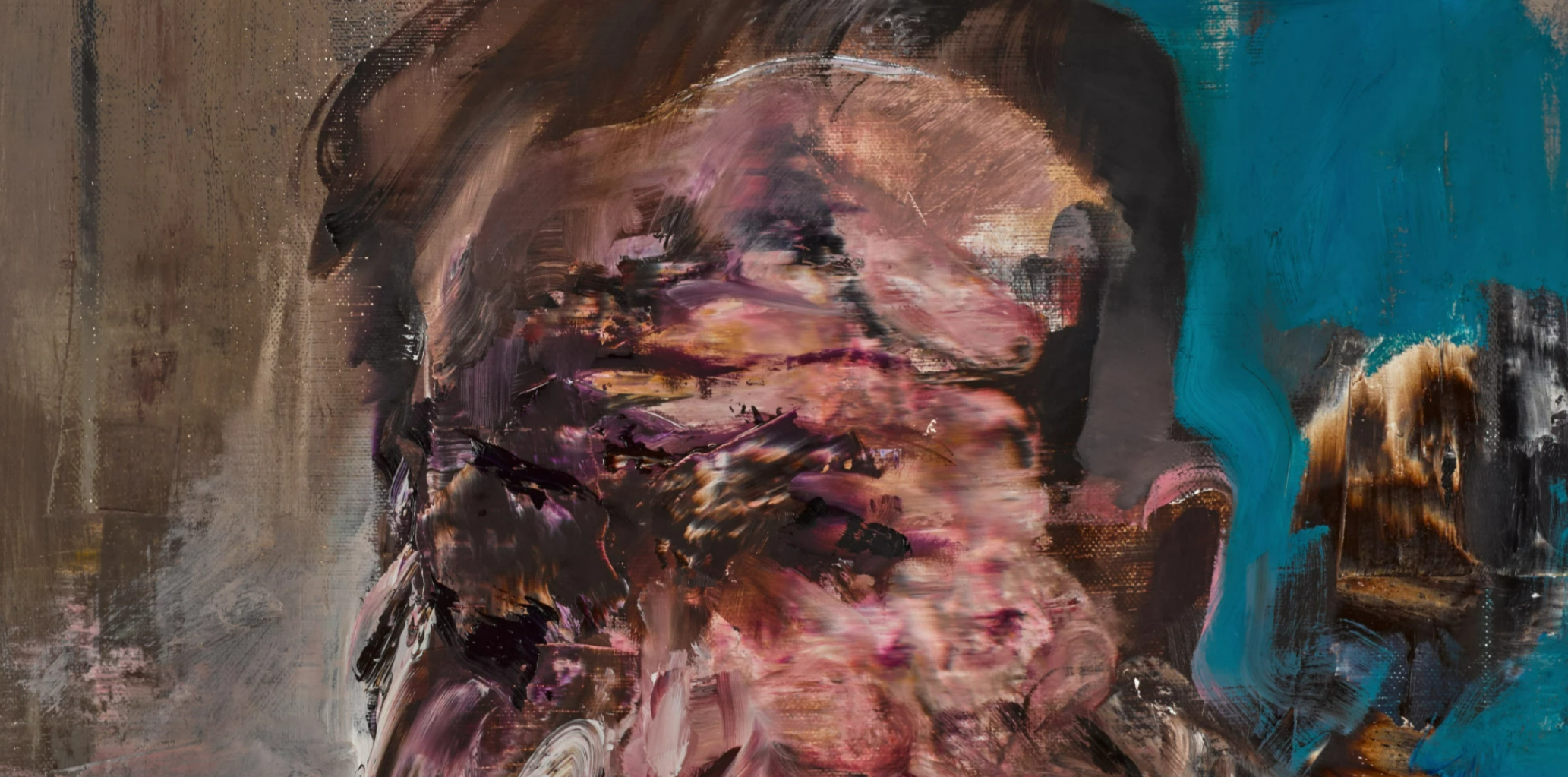
In many ways, the subject of this painting is the preeminent focus of Ghenie’s career: Darwin is the figure around which the artist’s incessant evocation of the Twentieth Century’s most troubling historical individuals triangulates. For Ghenie, Darwin’s ambiguous legacy finds disturbing repercussions through the exploitative services of political and social gain as embodied by the cast of political despots frequently pulled into focus: from Hitler and Dr Josef Mengele through to Stalin and Nicolae Ceaușescu. In 2013, Adrian Ghenie’s first exhibition with Pace in New York focused principally on this Darwinian dialogue, while in 2015, Ghenie would once again reprise the enquiry for his celebrated exhibition at the 56th Venice Biennale. Entitled Darwin’s Room and shown in the Romanian Pavilion as it would have appeared in 1938, this show explored the impact of Darwin’s revolutionary discoveries and followed the implications of ‘survival of the fittest’ through to some disquieting conclusions. Among the paintings of Darwin and portraits of Hitler, evocations of the infamous Nazi book burnings and Degenerate Art Exhibition of 1937 were shown alongside a host of self-portraits fused with Darwin’s likeness. As inaugurated by the present work in 2011, the artist’s merging of himself with Darwin is initially perplexing, given the perceived polarity between scientist and artist. Yet by filtering his appearance through this wizened visage – a countenance that utterly fulfils the classical epitome of European intellectualism as defined by Renaissance and Baroque painters – Ghenie positions himself in the mode of philosopher, meditating the controversies roused by man’s promethean progress.
Charles Darwin at the Age of 75, 2014
Christie’s Hong-Kong: 30 November 2021
Estimated: HKD 32,000,000 – 48,000,000
HKD 57,850,000 / USD 7,422,734
ADRIAN GHENIE (B. 1977) (christies.com)
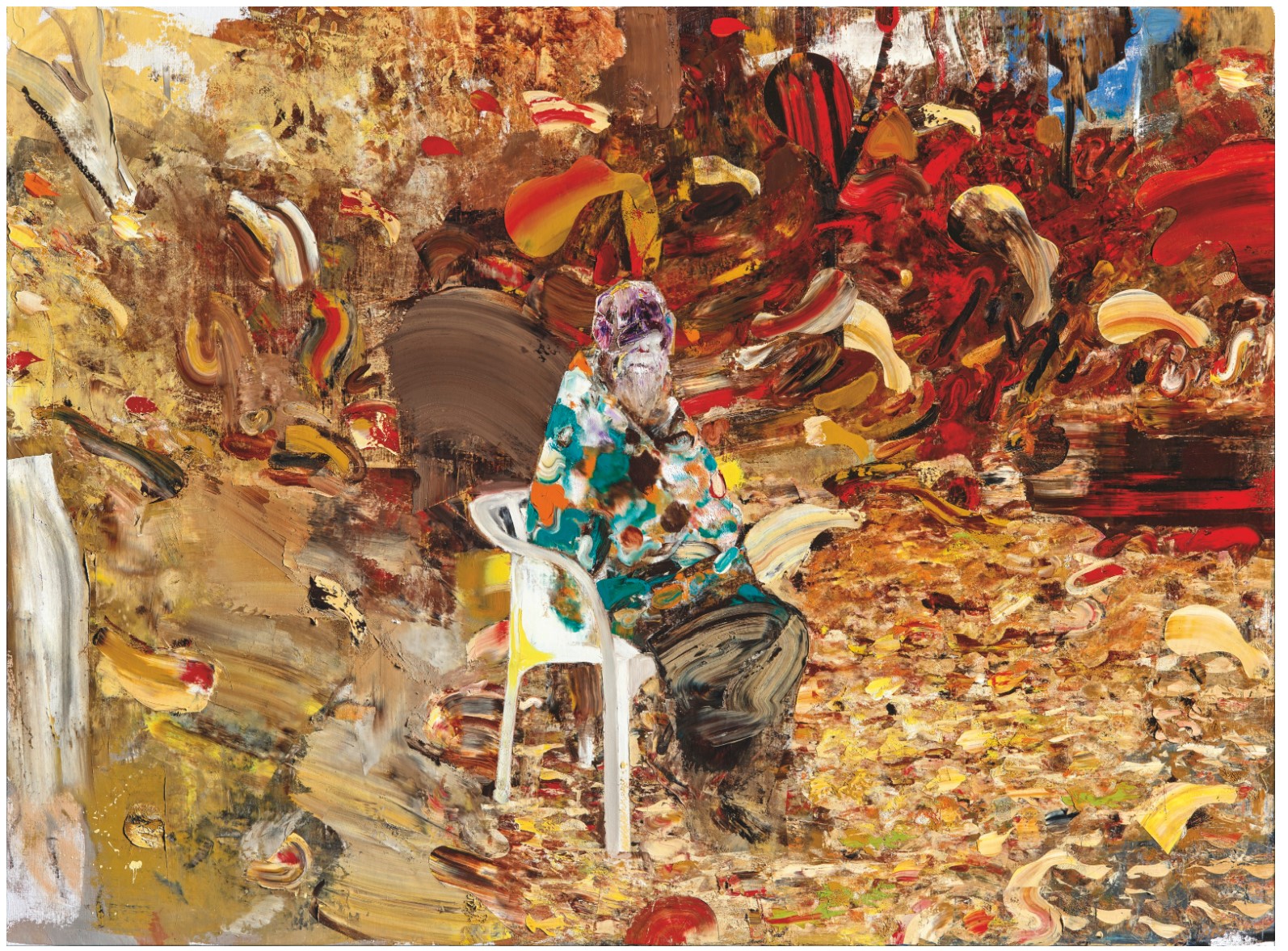
ADRIAN GHENIE
Charles Darwin at the Age of 75, 2014
Oil on canvas
200×270 cm (78.7 x 106.2 inches)
Spanning almost three meters across, Charles Darwin at the Age of 75 (2014) is a monumental vision of one of Adrian Ghenie’s most important subjects. Ghenie depicts the iconic scientist seated amid a blazing autumnal landscape. He is swaddled in a polychrome blanket of blue and orange, with his face partly masked by Baconesque smears of violet. Every inch of the painting is alive with texture. Bright yellows, rich golds and deep reds ripple, melt, buckle and blur together in shimmering symphony. In some areas, Ghenie has created vaporous, smoky blooms of color by pressing flat the stillwet surface or scraping through it in the manner of Gerhard Richter; elsewhere, bright licks of impasto build the pigment into near sculptural presence. Masked-off flashes of marbled paint—evoking autumn leaves and tongues of flame alike—hover like collage, sitting proud of the canvas in crisp, three-dimensional focus. A touch of Titian-blue sky breaks through at the upper right. Flickering between abstraction and figuration, Charles Darwin at the Age of 75 pictures a moment that Darwin did not in fact live to see: he passed away at the age of 73, in 1882. Ghenie’s painting—as with many of his works— is less a portrait of the man himself than an inquiry into his complex legacy. Ghenie first showed Charles Darwin at the Age of 75 as part of a 2014 show in Pace Gallery’s space at 6 Burlington Gardens: an imposing Italianate building which stands behind the very room where Darwin and Alfred Russel Wallace presented the theory on the origin of species to the Linnean Society in July 1858. There, it was shown alongside Ghenie’s installation Darwin’s Room and eight other paintings, including two in which the artist merged his own selfportrait with Darwin’s image.
Darwin, whose theories of evolution and natural selection have been mendaciously seized and twisted by a number of racist, eugenicist and genocidal regimes, provides a fascinating fulcrum for these issues. The rich surface of Charles Darwin at the Age of 75 seems to enact the warping to which Darwin’s ideas have been subjected. The scientist’s face has even taken on an ape-like cast, perhaps reflecting the caricatures that mocked his ideas during his lifetime. Darwin is no longer in control of his image, and the picture churns in metamorphosis. Rather than offering any fixed viewpoint, Ghenie’s extraordinary paintwork asserts history— and Darwin’s place within it—as layered, mutable, and complex; the autumnal hues capture a scene of uncertainty and flux, as one season shifts into another. In Charles Darwin at the Age of 75, the setting whirls with Baroque, chiaroscuro grandeur; Darwin’s face echoes the turbulent, ghostly visages of Francis Bacon; abstract passages invoke Richter’s scraping technique and the gestural vigor of de Kooning alike.
The Death of Charles Darwin, 2013
Sotheby’s Hong-Kong: 9 October 2021
Estimated: HKD 50,000,000 – 60,000,000
HKD 54,920,000 / USD 7,055,133
ADRIAN GHENIE
The Death of Charles Darwin, 2013
Oil on canvas
280×260 cm (110.2 x 102.4 inches)
An extraordinary example of Romanian painter Adrian Ghenie’s interrogation of personal identity and collective trauma, The Death of Charles Darwin (2013) is amongst the artist’s most sophisticated portraits of the British evolutionary scientist, Charles Darwin, winning the artist both critical and popular acclaim. Scrutinizing Darwin’s theory of evolution by natural selection as the trigger of a paradigm shift in history, Ghenie is particularly interested in Darwin’s legacy. Specifically, Ghenie is interested in the misconceptions of Social Darwinism, and the notion of “survival of the fittest” that evolved from his ideas of evolutionary theory, used to corroborate gross abuses in the fields of eugenics, degeneracy, and heredity theories.
Other Series
The Blue Rain, 2009
Sotheby’s New-York: 15 May 2026
Estimated: USD 600,000 – 800,000
USD 896,000
Adrian Ghenie | The Blue Rain | Contemporary Day Auction | 2026 |
ADRIAN GHENIE (b. 1977)
The Blue Rain, 2009
Oil on canvas
240×190 cm (94-1/2 x 74-3/4 inches)
Signed and dated 2009 (on the reverse)
Blurring the boundaries between fact and fiction, past and present, figuration and abstraction into a dreamlike haze, The Blue Rain from 2009 is a stellar embodiment of the gestural bravura and psychological intensity that distinguish Adrian Ghenie’s revolutionary oeuvre. Drawing together incongruous narratives and motifs as diverse as Elvis Presley and the Berlin Wall, The Blue Rain evokes a disorienting sensation that invokes an allusion to the sociopolitical turmoil of European history. Within the dynamic amalgamation of richly variegated layers in the present work is the thrilling amalgam of painterly technique and historical narrative that defines Ghenie’s singular artistic practice.
“What interests me is the texture of history”
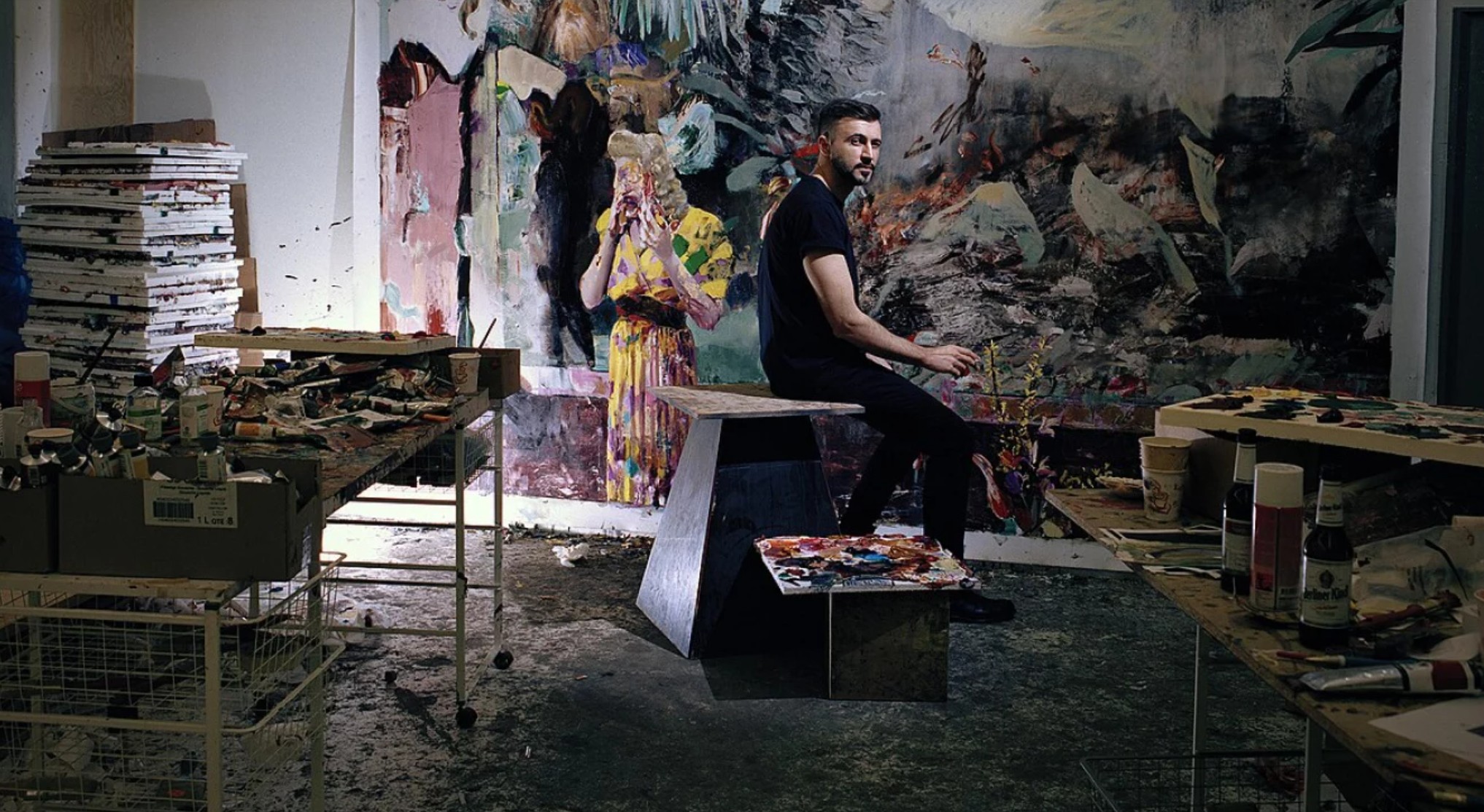
Oliver Mark – Adrian Ghenie, Berlin 2014. By © Oliver Mark, CC BY-SA 4.0
Applying oil paint with a palette knife, Ghenie builds up a sumptuously textured surface. The forms in The Blue Rain slips in and out of focus like the half-remembered fragments of a fading dream. The lower portion of the canvas melds the squeegee scrape of Gerhard Richter’s post-photographic abstraction with the psychological intensity of Francis Bacon portraits, while the atmospheric color fields of the top recall the work of Mark Rothko.
“There is a nice anecdote about Francis Bacon looking at Rothko. He didn’t look at Rothko in awe – he wanted to figure out whether it would fit as background for his silhouettes. Rothko for him was a background provider.”
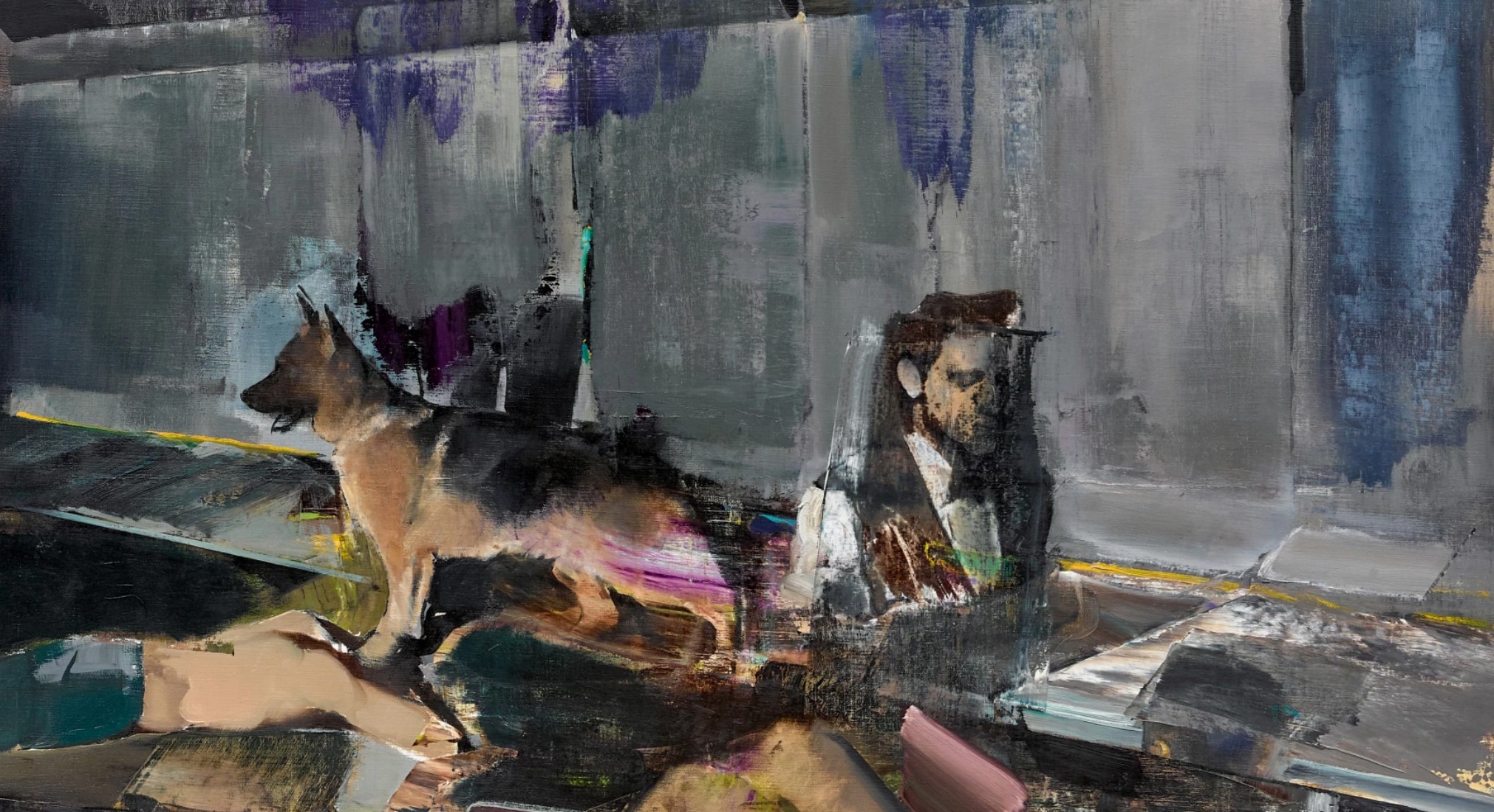
The superbly rendered surrealistic amalgamation of color and form evince Ghenie’s post-modern fluency as a painter.
“On one hand…I work on an image in an almost classical vein: composition, figuration, use of light. On the other hand, I do not refrain from resorting to all kinds of idioms, such as the surrealist principle of association or the abstract experiments which foreground texture and surface.”
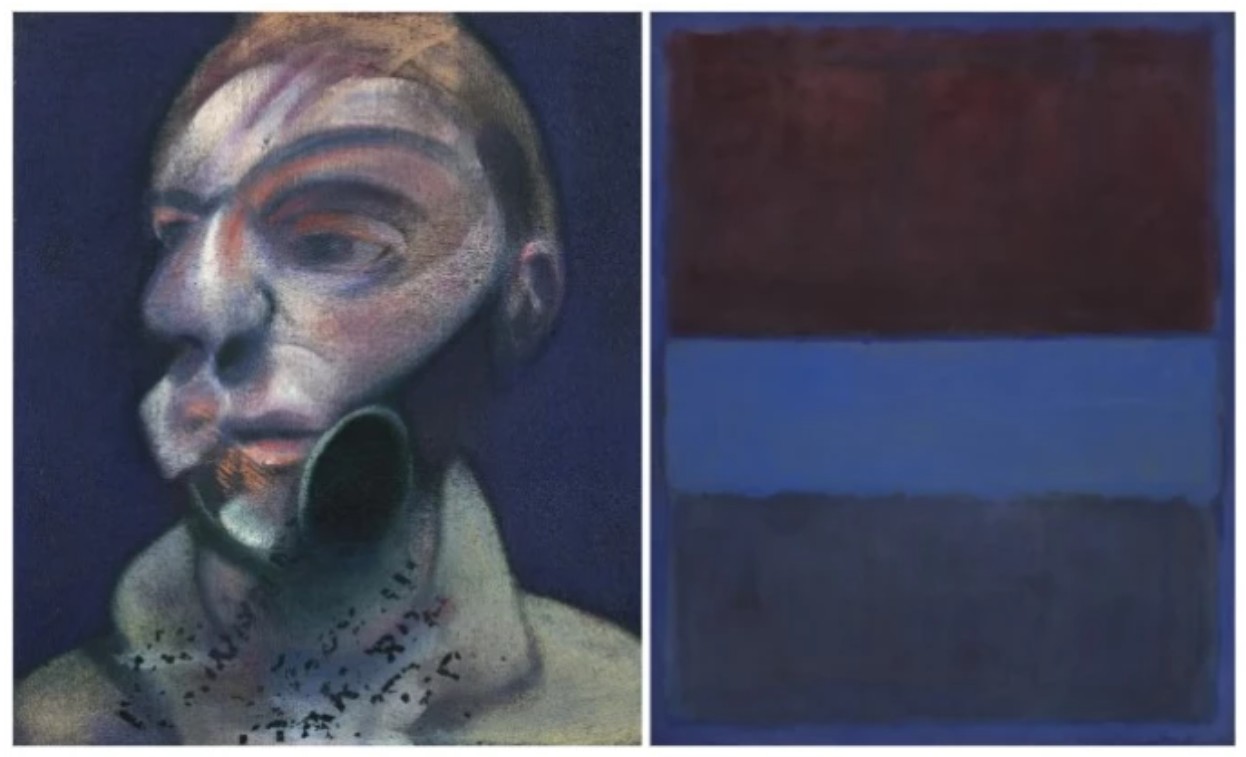
LEFT: Francis Bacon, Self-Portrait, 1975. Private Collection. Sold at Sotheby’s London in 2019 for $21 million. Art © The Estate of Francis Bacon. All rights reserved. / DACS, London / ARS, NY 2022
RIGHT: MARK ROTHKO, NO. 61 (RUST AND BLUE) [BROWN BLUE, BROWN ON BLUE], 1953. MUSEUM OF CONTEMPORARY ART, LOS ANGELES. ©1998 KATE ROTHKO PRIZEL & CHRISTOPHER ROTHKO / ARTISTS RIGHTS
Emerging from layered curtains of painting and sharp fragments that form reclining figures and chromatic rubble, Ghenie paints the iconic figure of Elvis Presley. The motif of Elvis, and its accompanying visual cliches, are of particular interest to the artist and were the focus of the exhibition at Tim Van Laere Gallery in Antwerp in which the present work debuted. Arguably the first truly global icon, Elvis serves as a means of interrogating the history of the entertainment industry and its attendant iconography, a myth so pervasive that it managed to cross the iron curtain and create imitative phenomena. Here Ghenie positions his Hollywood simulacrum at the company of a German shepherd that evokes the charged symbolism of power and surveillance, constructing a visual and thematic tension that permeates throughout the painting. Further, the looming, architectonic form that cuts through the composition immediately draws an association with the Berlin Wall which for decades divided the city that would become Ghenie’s second home.
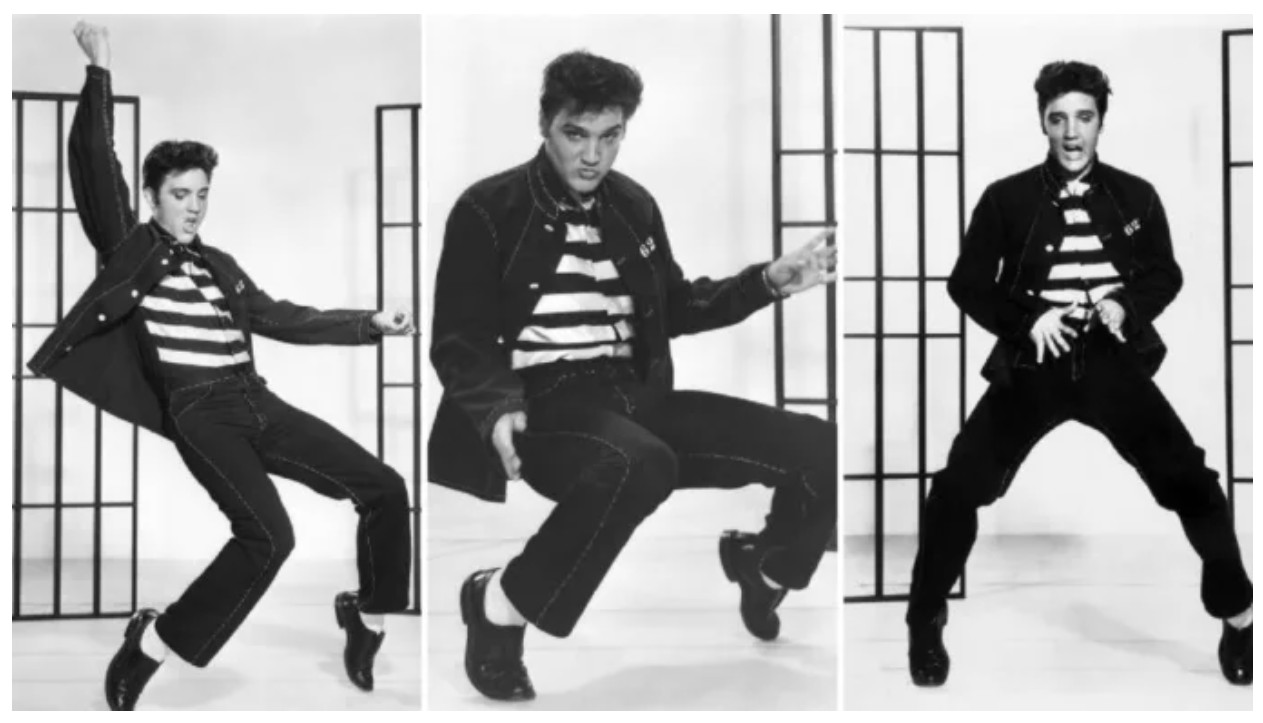
Elvis Presley on the set of Jailhouse Rock, directed by Richard Thorpe.
Photo by Metro-Goldwyn-Mayer/Sunset Boulevard/Corbis via Getty Images.
Born in Romania in 1977 and raised under Nicolae Ceausescu’s repressive communist regime, Adrian Ghenie developed a visceral pictorial language that addresses some of contemporary history’s darkest chapters. His psychologically charged subjects, which have included portraits of the likes of Hitler, Lenin and Josef Mengele, interrogate themes of malevolence, totalitarianism, dictatorship, and the very fallibility of human nature. In The Blue Rain, Ghenie visualizes the intricate space of personal and collective memory after the fall of the Berlin wall, a complex subject explored through the interweaving of complicated personal and historical narratives, motifs, and idioms.
“What happened in Romania after ’89 – the fall of the Berlin Wall – was very interesting. When you realize a whole country can be manipulated and made to believe one thing about itself, and then the regime falls and you find out that no, it was the other way around. “I saw how it is possible to manipulate a whole country. What is the truth? What is trauma?”
It is precisely this instability of collective memory, the gap between lived experience and its official narrative, that drives Ghenie’s work.
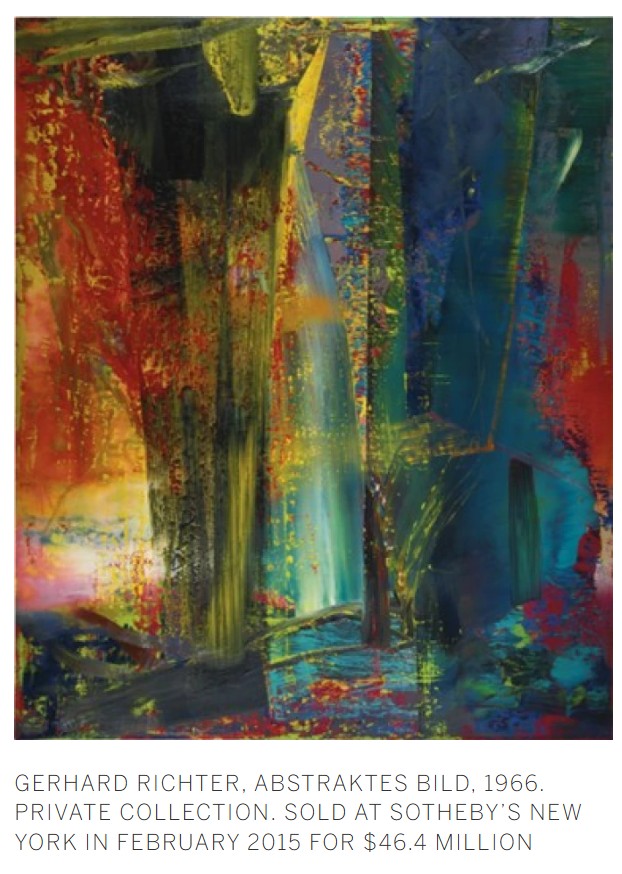
The Blue Rain is a stratified visual and metaphorical palimpsest. Cast in an atmospheric aura of cold blue light, The Blue Rain can be likened to the silver screen, which conjures fiction in the guise of reality. The Blue Rain speaks to a realization “that the world is changing its texture, is changing its skin…The world is beginning to have the texture of easy-to-clean surfaces. It no longer has pores. All the objects around us are beginning to be shinier and shinier” (the artist in quote in: Adrian Ghenie: Darwin’s Room, Exh. Cat., Romanian Pavilion, Biennale de Venezia, Venice, 2015, p. 31) Working from source images on his laptop screen, Ghenie champions the act of giving corporeal form to imagery in an increasingly cerebral, digitized, social landscape, redressing the relationship between source and reference in contemporary acts of recording. The Blue Rain employs a broad reach of the medium of painting to subsume the historical development of the image-making technologies, ultimately forming a trans-historical mode of visualizing the world.
On the Road to Tarascon 2 (with Navid Nuur), 2013
Christie’s London: 7 March 2026
Estimated: GBP 200,000 – 300,000
GBP 190,500 / USD 254,490
ADRIAN GHENIE (B. 1977), On the Road to Tarascon 2 (with Navid Nuur) | Christie’s
ADRIAN GHENIE (B. 1977)
On the Road to Tarascon 2 (with Navid Nuur), 2013
Oil on canvas
200×150 cm (78-3/4 x 59 inches)
Signed and dated ‘Ghenie 2013’ (on the reverse)
Adrian Ghenie’s fascination with Vincent Van Gogh’s The Painter on the Road to Tarascon (1888) has given rise to some of his most important paintings. The original is known only in reproduction: it was destroyed, or possibly looted, during the 1945 Allied bombings of Magdeburg, where it was held in the Kaiser-Friedrich Museum. Following in the footsteps of Francis Bacon, who paid homage to the work in his own series of the mid-1950s, Ghenie has repeatedly grappled with Van Gogh’s lost vision.
“What intrigued me about Van Gogh is this difference between the reality of his actual existence … and Van Gogh the cliché, which is a beautiful fantasy.”
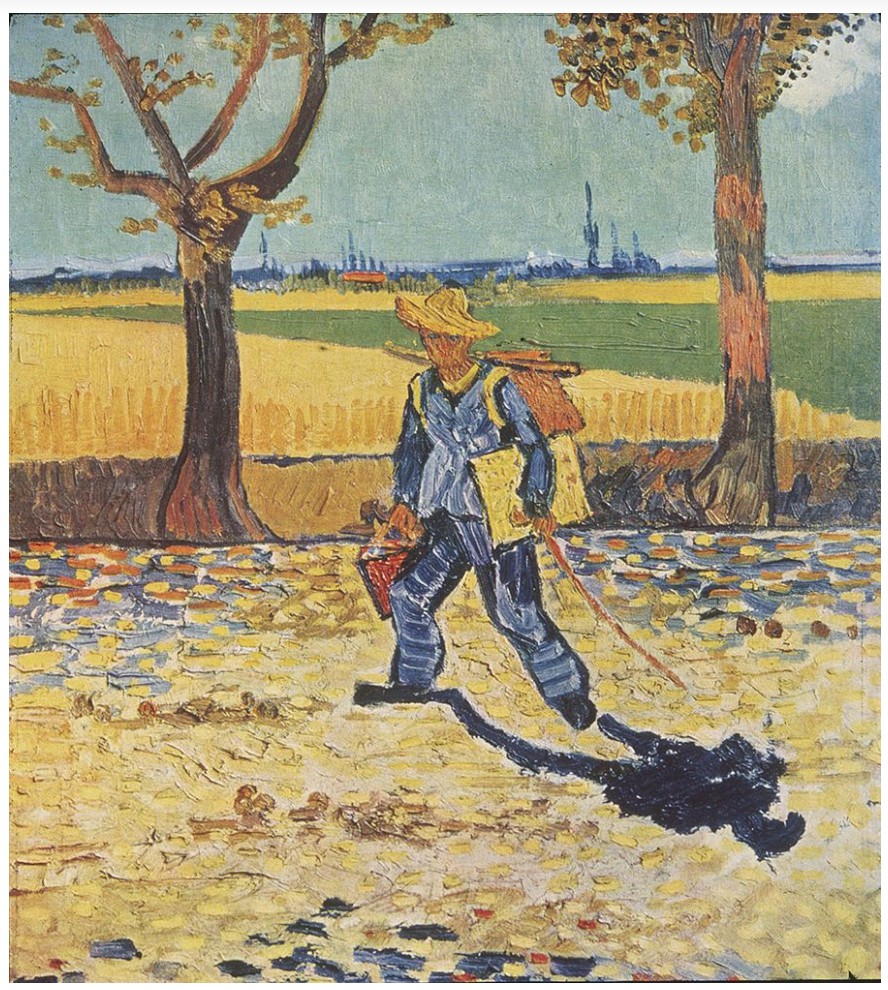
Vincent Van Gogh, The Painter on the Way to Tarascon, 1888. Formerly in the Kaiser Friedrich Museum, Stassfurt.
Within a practice dedicated to exploring the way that the past lives within our collective consciousness, the concept of a self-portrait lost to the ravages of time holds particular fascination. Throughout his oeuvre, Ghenie has sought to rescue key historical moments and figures from the flat, glossy world of print and screen, re-materialising them in paint as living, breathing entities. His vivid responses to The Painter on the Road to Tarascon seek to strip away not only the romanticized fantasies associated with Van Gogh himself, but also to inject the original painting with a sense of its own lived history.
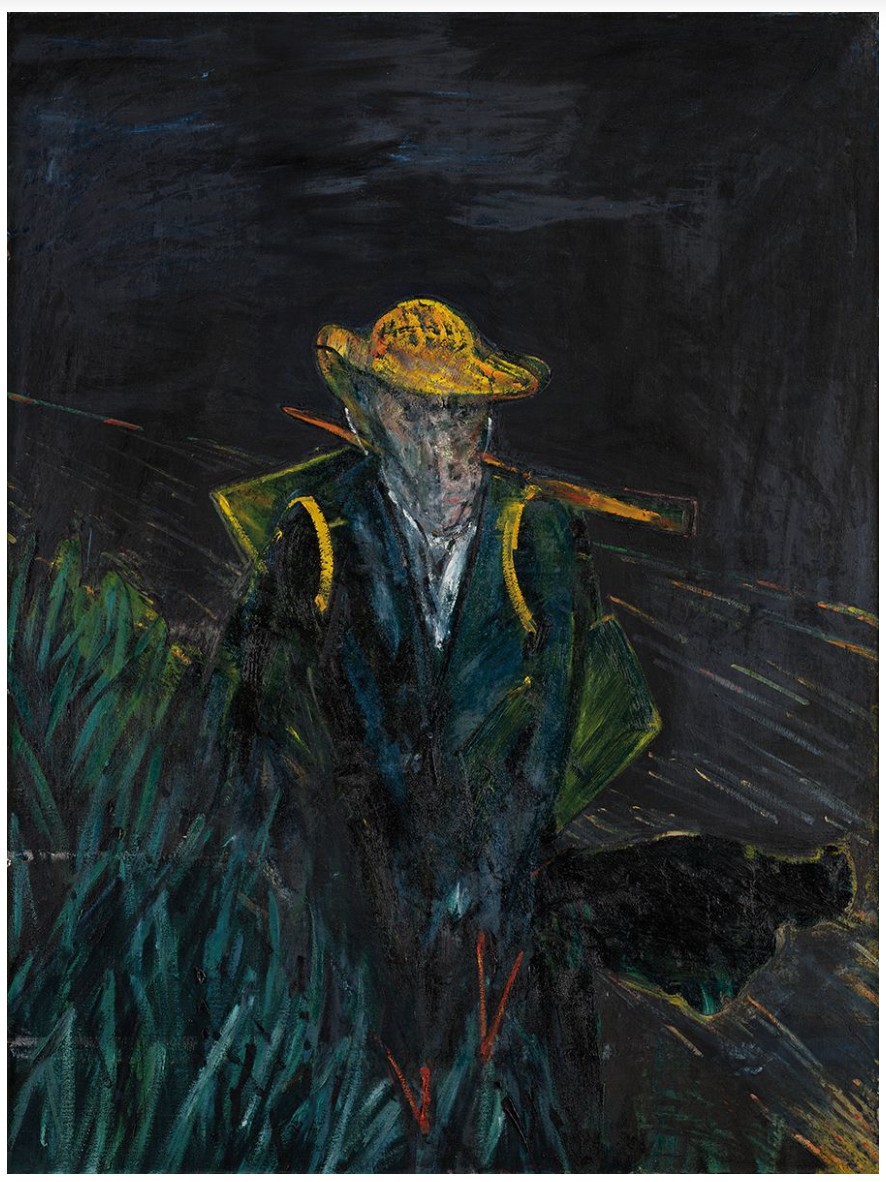
Francis Bacon, Study for Portrait of Van Gogh I, 1956. Sainsbury Centre for Visual Arts, Norwich. Artwork: © 2026 The Estate of Francis Bacon. All rights reserved. DACS. Photo: Prudence Cuming Associates Ltd. Digital image: © The Estate of Francis Bacon. All rights reserved, DACS Images.
Van Gogh is one of a number of recurring subjects—from Charles Darwin to Elvis Presley—whom Ghenie believes to have changed the course of humanity. As a six-year-old, the artist kept a print of Sunflowers (1888) under his pillow. Later, he recalls being overwhelmed by the artist’s 1889 self-portrait in the Musee d’Orsay in Paris, and would go on to paint himself multiple times in the image of his hero. Ghenie—who grew up in Romania under Nicolae Ceaușescu’s Communist regime—was also particularly intrigued by the intersection of Van Gogh’s art with the stories of modern European history. In the 1930s, many of his paintings were seized as ‘degenerate art’ under the Nazi’s campaign to purge modern art from Germany. Ghenie explicitly evoked these events in his large-scale 2014 painting The Sunflowers in 1937, which reimagines the work burnt, warped and ruined by the ideological violence of the 1937 exhibition Entartete Kunst (Degenerate Art). The Painter on the Road to Tarascon, too, found itself wrenched into the machinations of the Second World War, the artist’s haunting self-image consigned once and for all to the pages of history.
“I’m interested in history that’s linked to the human figure. A certain type of deconstruction interests me, the same way it interested Picasso and Bacon.”
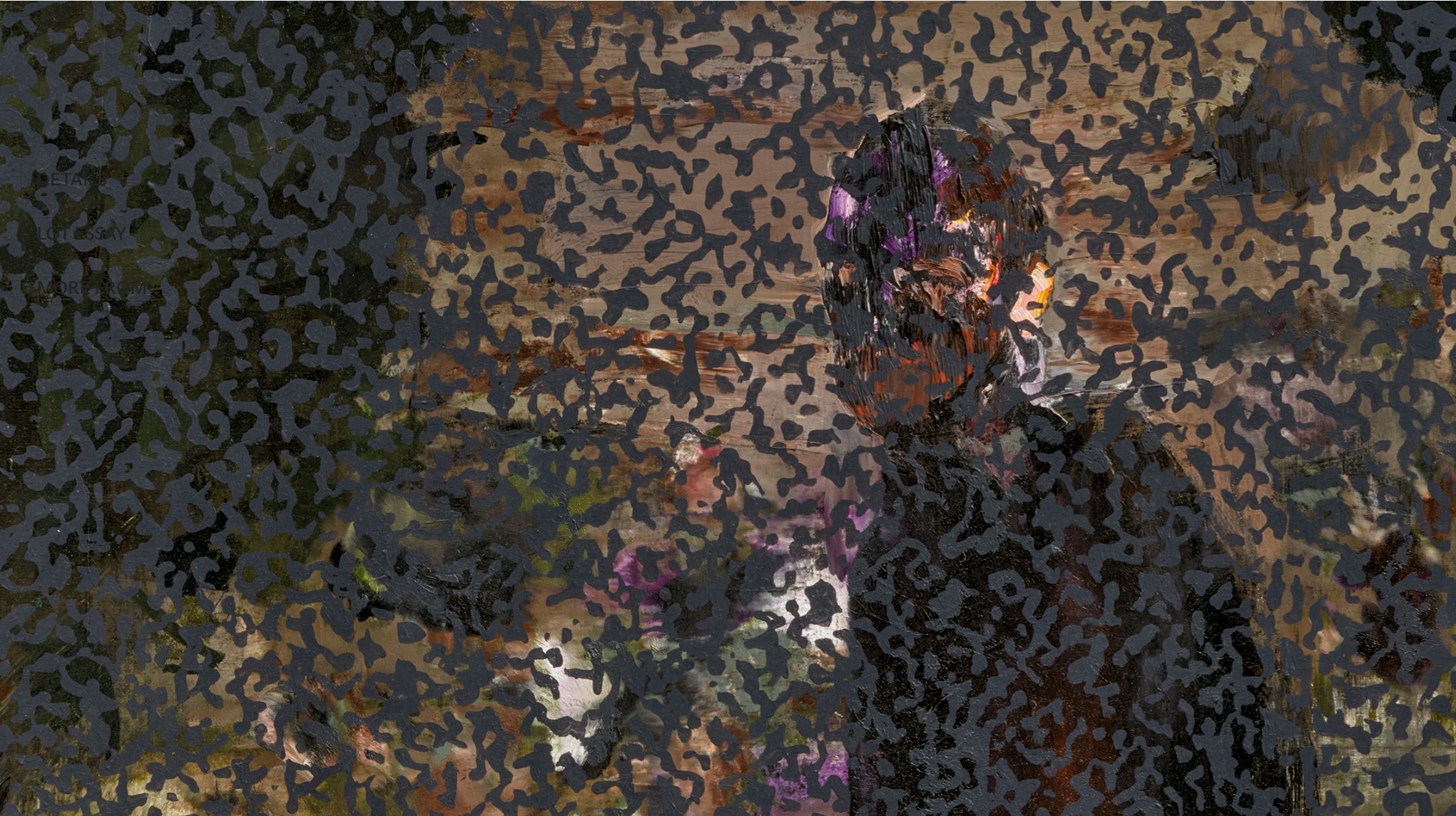
Painted in 2013, and included in Ghenie’s solo exhibition at the Centro de Arte Contemporáneo de Málaga the following year, the present work brings these narratives to life. The sunny yellows of Van Gogh’s original are replaced by visceral swathes of black and piercing blue, marbled with jewel-like tones of purple and green. Paint drips and stutters down the length of the picture plane, every inch of its surface alive with tactile impasto. If Ghenie’s understanding of the painting was filtered through Bacon, here he adds another layer of remove by collaborating with the Iranian-born Dutch artist Navid Nuur. The two met through their mutual involvement with the Romanian gallery Plan B, and together produced a series of works that built upon Ghenie’s engagement with Van Gogh. In the present example, Nuur has added veils of brushwork inspired by the Dutch master over the top of Ghenie’s painting. The results evoke the build-up of distortion and interference that characterizes our relationship with the past. In a powerful meditation on the workings of collective memory, Van Gogh becomes a shadowy, unreachable figure, his identity subsumed by history’s visual noise.
Boogeyman, 2010
Elaine: The Collection of Elaine Wynn
Christie’s New-York: 19 November 2025
Estimated: USD 2,500,000 – 3,500,000
USD 2,637,000
ADRIAN GHENIE (B. 1977), Boogeyman | Christie’s
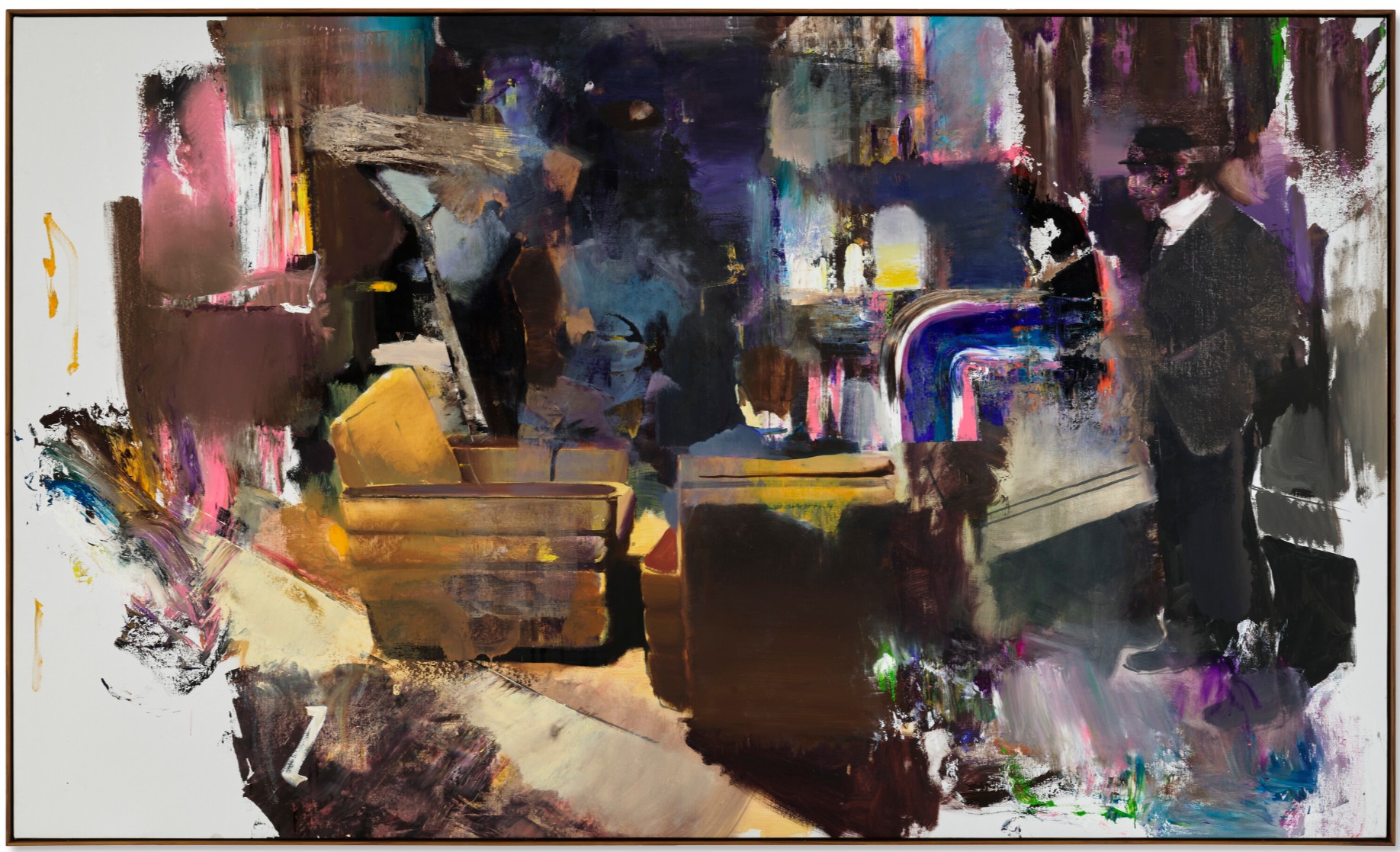
ADRIAN GHENIE (B. 1977)
Boogeyman, 2010
Oil on canvas
200×335 cm (79 3/4 x 131 7/8 inches)
Signed and dated ‘Ghenie 2010’ (on the reverse)
The protagonist of Adrian Ghenie’s Boogeyman (2010) hovers ominously at the edge of a monumental canvas more than three meters in width. From folklore to modern horror, the elusive, eldritch Boogeyman—muse of Goya’s Los Caprichos, villain of Stephen King’s short story and Ulli Lommel’s classic 1980 film—has long haunted art, literature and film. Ghenie transposes the mythical, spectral monster who preys on disobedient children into a Magritte-esque Everyman. His gaze is directed towards a second figure—a cipher for the artist—who sits in a large yellow armchair with his back to the viewer. The room emerges like a fragment of memory, as solid walls give way to abstract swathes and flicks of paint which don’t quite reach the edges of the vast canvas. Ghenie was born in Romania in 1977 and grew up under the regime of Nicolae Ceaușescu: an echo of that repression is felt in the sense of surveillance which shrouds the uncanny scene. Part of a cycle of works first exhibited collectively and titled The Visitation, the present work draws on both historical events and the history of art to evoke a rich intertextual tableau. Boogeyman dates to a seminal period in Ghenie’s career, executed the year following his first solo museum exhibition at the National Museum of Contemporary Art, Bucharest.
Ghenie painted The Visitation cycle shortly following his completion of The Dada Room, the first of his celebrated ‘room within a room’ installations, now held in the collection of Stedelijk Museum voor Actuele Kunst, Ghent. Mining the eerie annals of art history, The Dada Room looked to images of the First International Dada Fair, held in 1920 in the Berlin gallery of Dr. Otto Burchard. Ghenie, who lives and works in Berlin, conflated the exhibition space with that of the artist’s studio, sketching and daubing paint directly onto the walls in an effect reminiscent of Francis Bacon’s fabled, paint-encrusted studio. Like an artistic palimpsest, Boogeyman appears in conversation with The Dada Room, the latter’s hovering, uniformed mannequin—itself a reprisal of John Heartfield and Rudolf Schlichter’s Prussian Archangel, similarly suspended in the 1920 exhibition—transposed into the Boogeyman’s lurking, suited figure. Likewise, the two armchairs which furnished The Dada Room have been replaced by two matching yellow models, copied from a 1980s German furniture catalogue ordered by Ghenie’s mother. Layering found images and his own pictorial archive, in Boogeyman Ghenie engages with the history of representation to present a vital new visual idiom.
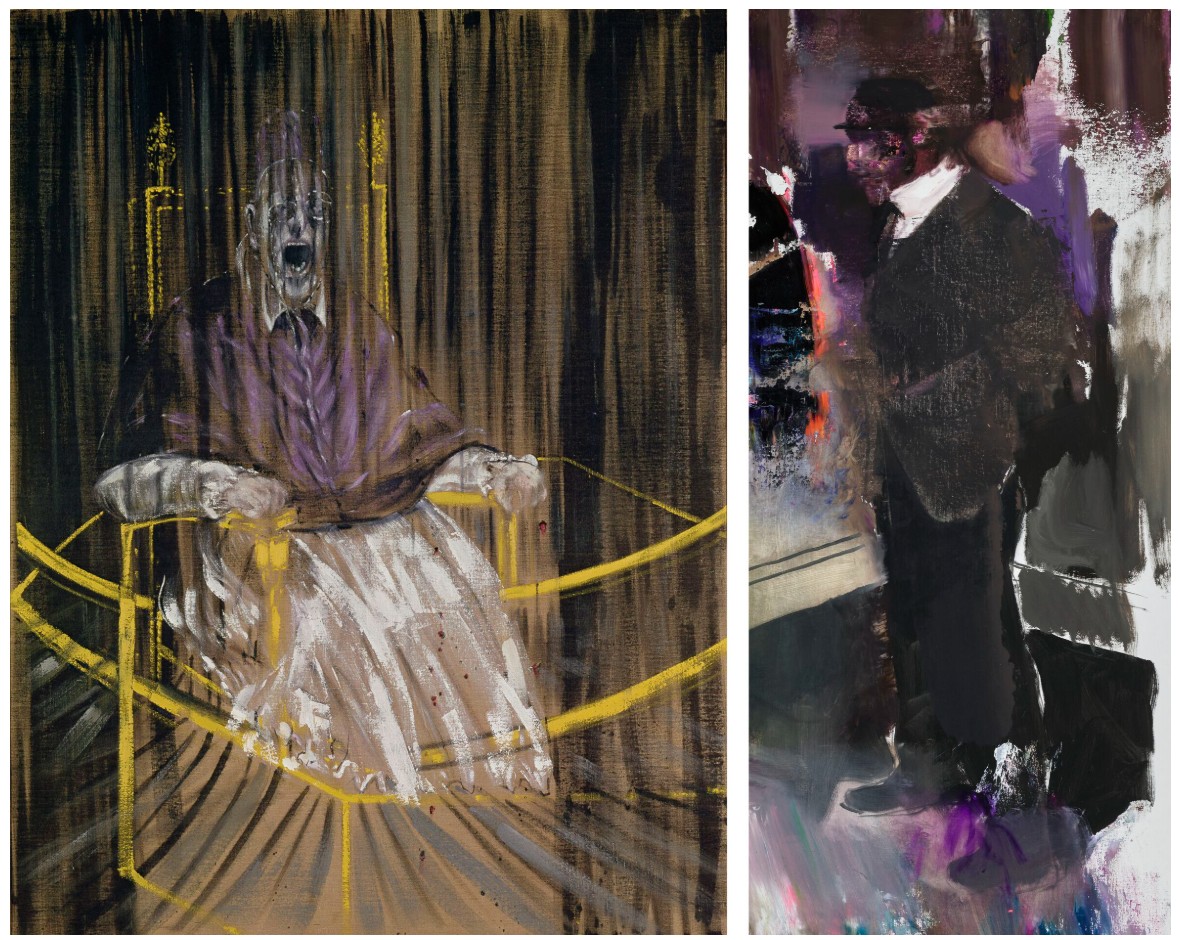
Left: Francis Bacon, Study after Velazquez’s Portrait of Pope Innocent X, 1953. Des Moines Art Center. © The Estate of Francis Bacon. All rights reserved / DACS, London / ARS, NY 2025.
Right: Present lot illustrated (detail).
The quivering surfaces of Ghenie’s paintings reveal his concern with the construction of images, and the aesthetic language of many of his works from this time is indebted to the use of preparatory collages. Boogeyman’s collage study both clarifies and distorts the details of the scene, revealing a nebulous figure who stands cloaked in darkness in front of the artist, the sheen of his suit emerging from the half-light. This is not the biblical visitation of good news but its shadowy opposite. In the painting, Ghenie maintained a collage-like sensibility, carefully layering form, color and texture to create a dynamic, mesmeric surface. In places, masking tape was used to layer paint on paint, later pulled back to reveal crisp edges, like those of cut paper. Like Gerhard Richter, Ghenie scraped paint across the canvas to create blurred distortions, interrupting and semi-veiling the surface of the image. These abstract passages flicker like the glitching, fragmented warp of a weak television signal, bursting across the canvas in electric, neon hues.
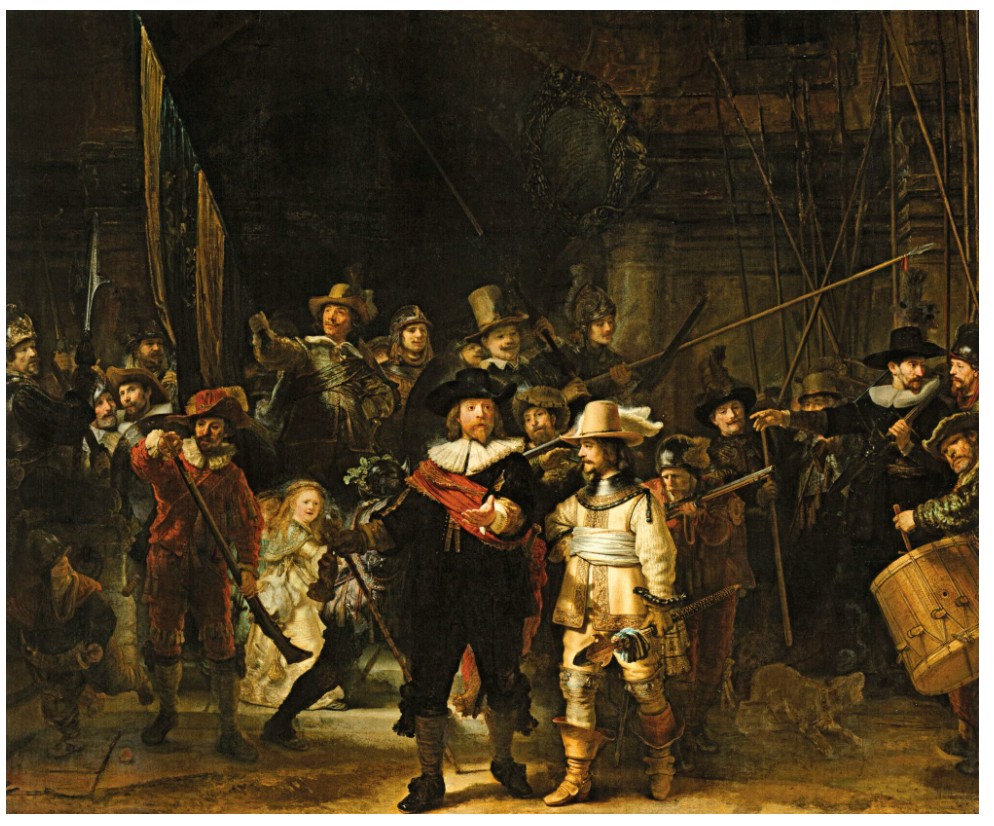
Rembrandt van Rijn, De Nachtwacht, 1642. Rijksmuseum, Amsterdam.
As a student at the art academy in his native Cluj, Ghenie’s teachers were abstract painters enamored with the gestural canvases of American Abstract Expressionism. Privately, Ghenie was drawn to a more traditional academic lineage, and worked from textbooks to make copies of paintings by Rembrandt and Titian. He was inspired by the latter’s building up of the picture plane through thin, semi-transparent layers, conscious of how an underlayer of one pigment could act like a lightbox, altering the color of the upper layer. Ghenie employed a similar technique in Boogeyman, whose shifting, layered images emerge and dissolve into abstraction as the eye roams the vast canvas. It bursts into numinous, Rothko-like pools of color, with deep, twilight tones of blue and purple giving way to brilliant flashes of pink, orange, and teal. Paint comes alive, spreading gesturally towards the edges of the canvas—which it cannot quite reach—and threatening to subsume the very illusion it has revealed.
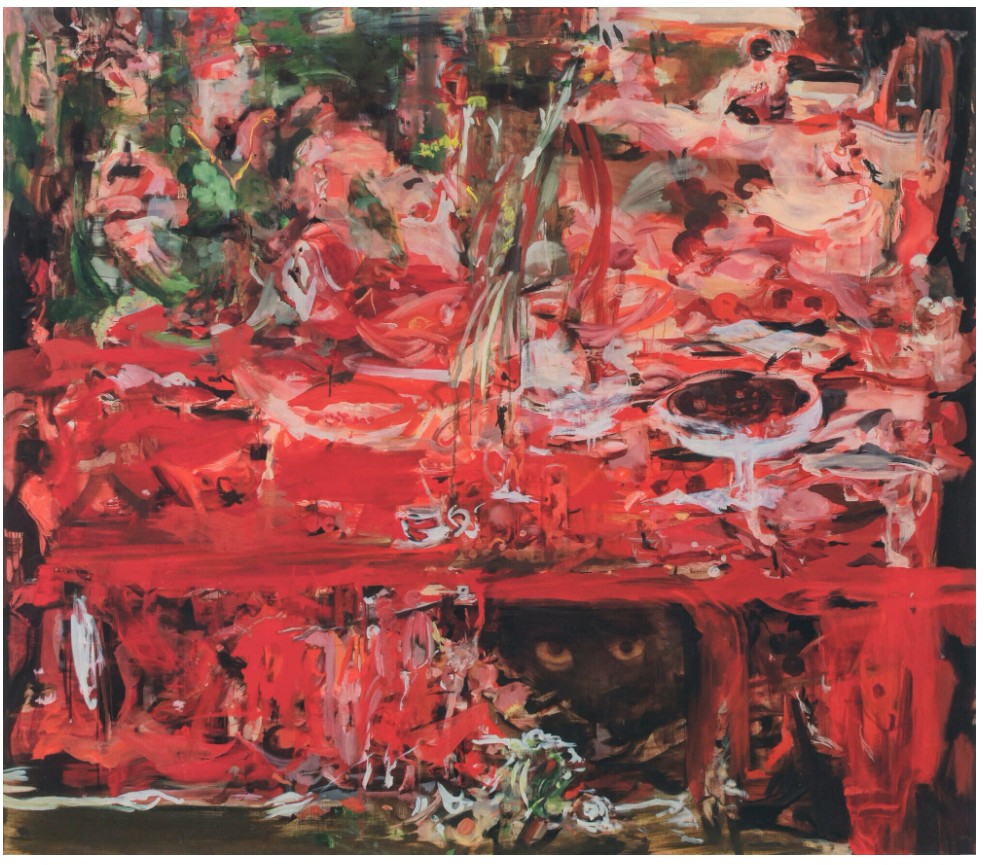
Cecily Brown, Lobsters, Oysters, Cherries, and Pearls, 2020. Private Collection. © Cecily Brown
In Ghenie’s painting, the extra wide format, dramatic play of light and shadow, and immersive, film-like perspective imparts a distinctly cinematic quality. Ghenie is particularly inspired by David Lynch, whose series Twin Peaks aired on Romanian television in the early 1990s and was formative for Ghenie’s later practice.
“I think consciously and unconsciously I want to master in painting what Lynch has done in cinema. It was with Lynch that I started to build the visual language of my paintings.”
Along with the scene itself, the head of the suited Boogeyman in Ghenie’s painting threatens to dissolve into abstraction, like the nightmarish, screaming heads of Francis Bacon. Drawing the viewer into a visual reverie, with Boogeyman the artist delights in the history and artifice of painting. Concerned above all with the “texture of history,” it was visceral works such as this which established Ghenie as one of the leading painters of his generation, revealing the dark currents which pulse through collective memory.
Alpine Retreat 2, 2017
Sotheby’s New-York: 15 May 2025
Estimated: USD 2,500,000 – 3,500,000
USD 3,161,000
Alpine Retreat 2 | The Now and Contemporary Evening Auction | 2025 | Sotheby’s
ADRIAN GHENIE (b. 1977)
Alpine Retreat 2, 2017
Oil on canvas
290×300 cm (114 1/8 x 118 1/8 inches)
Signed and dated 2017 (on the reverse)
Haunted by the surreal presence of a monumental head lurking above, the protagonist of Adrian Ghenie’s Alpine Retreat 2 lies in repose, only to be obliterated by his signature pastose, magmic drags of cerulean, white, and scarlet paint. Executed in 2017, the present work is the sister painting to The Alpine Retreat, which dates to the year prior and today resides in the collection of The Metropolitan Museum of Art, New York. Together, these works see the artist’s facture, psychological inquiry, and revisionist reconsiderations reach their apogee, representing the apex of Ghenie’s uncompromising subversions of twentieth-century history painting, a subject which served as the focus of the artist’s critically acclaimed presentation at the 56th Venice Biennale in 2015. The present work depicts a pregnant Eva Braun, Adolf Hitler’s mistress, at their Bavarian mountain chalet. Her anachronistic depiction—the pair never conceived a child—proffers an ideological birth more than a literal one: reflecting on a legacy of global extremism, the proliferation of hate speech, and discourse regarding the health of democracy around the world, Alpine Retreat 2 becomes more resonant and relevant with each passing year. Marrying formal gesture and historical heft, Ghenie reconciles allegory and abstraction in one of the most arresting and irrefutably important paintings of his career.
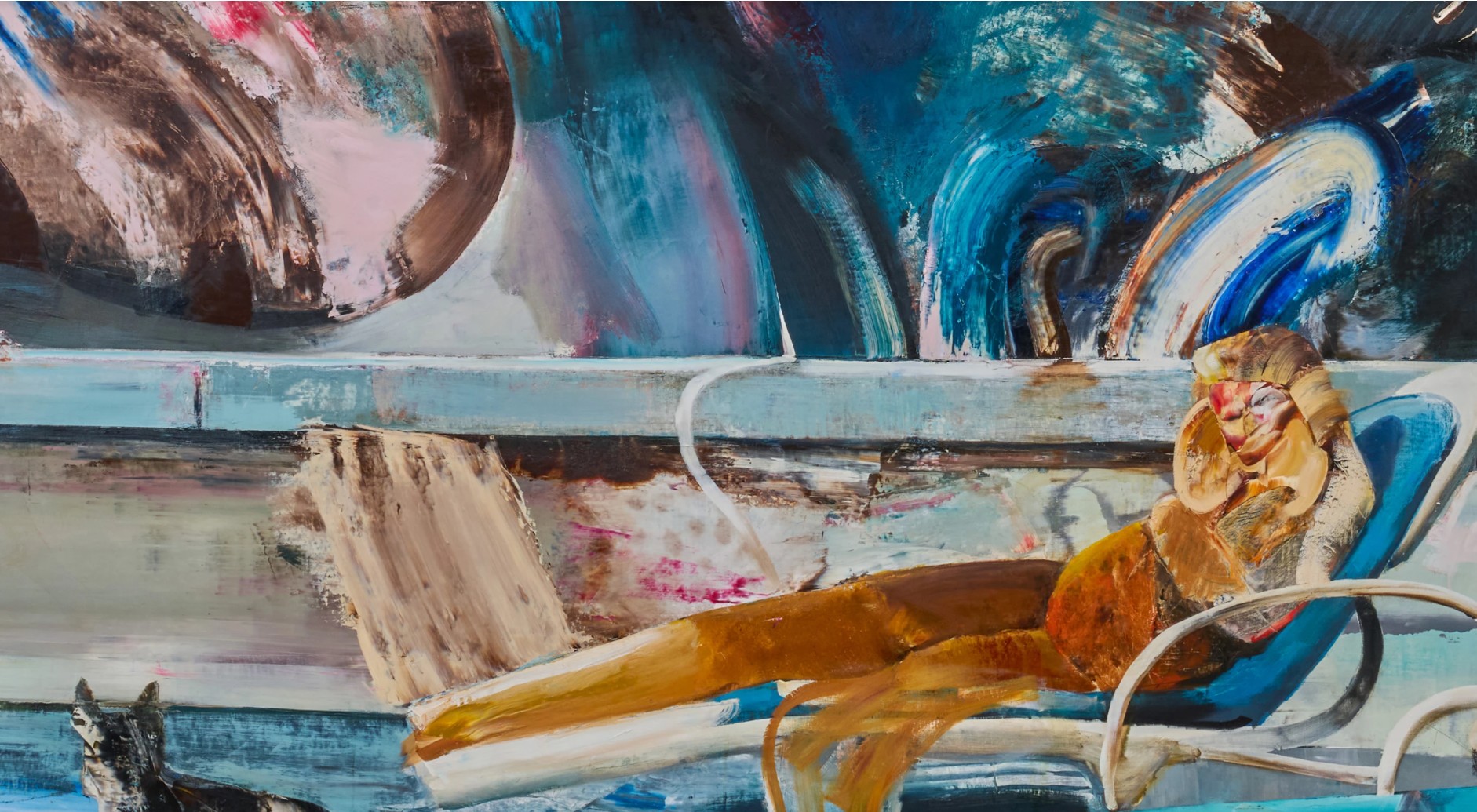
Her visage distorted and obscured by Ghenie’s operatic, indulgent brushstrokes, Eva Braun locks eyes with her viewer as she reclines on the terrace of Berghof, Hitler’s holiday residence in the Alps. A psychedelic, personified cloud swells in the sky above her, reminiscent both of Salvadore Dalí’s mercurial beings and Paul Nash’s nodose cloudscapes; the sky dispenses clear light and cruel shadows on the mountain range stretched across the canvas. Fashioned at the command of his palette knife, Ghenie mars Braun’s face and body, churning out a swirling vortex of unadulterated pigment. Braun as a subject marks an interesting departure for the artist, as the horror of her presentation lies not in her own actions—as it does in Ghenie’s portrayals of Nicolae Ceaușescu or Josef Mengele—but in her proximity and complicity to the crimes of her partner.
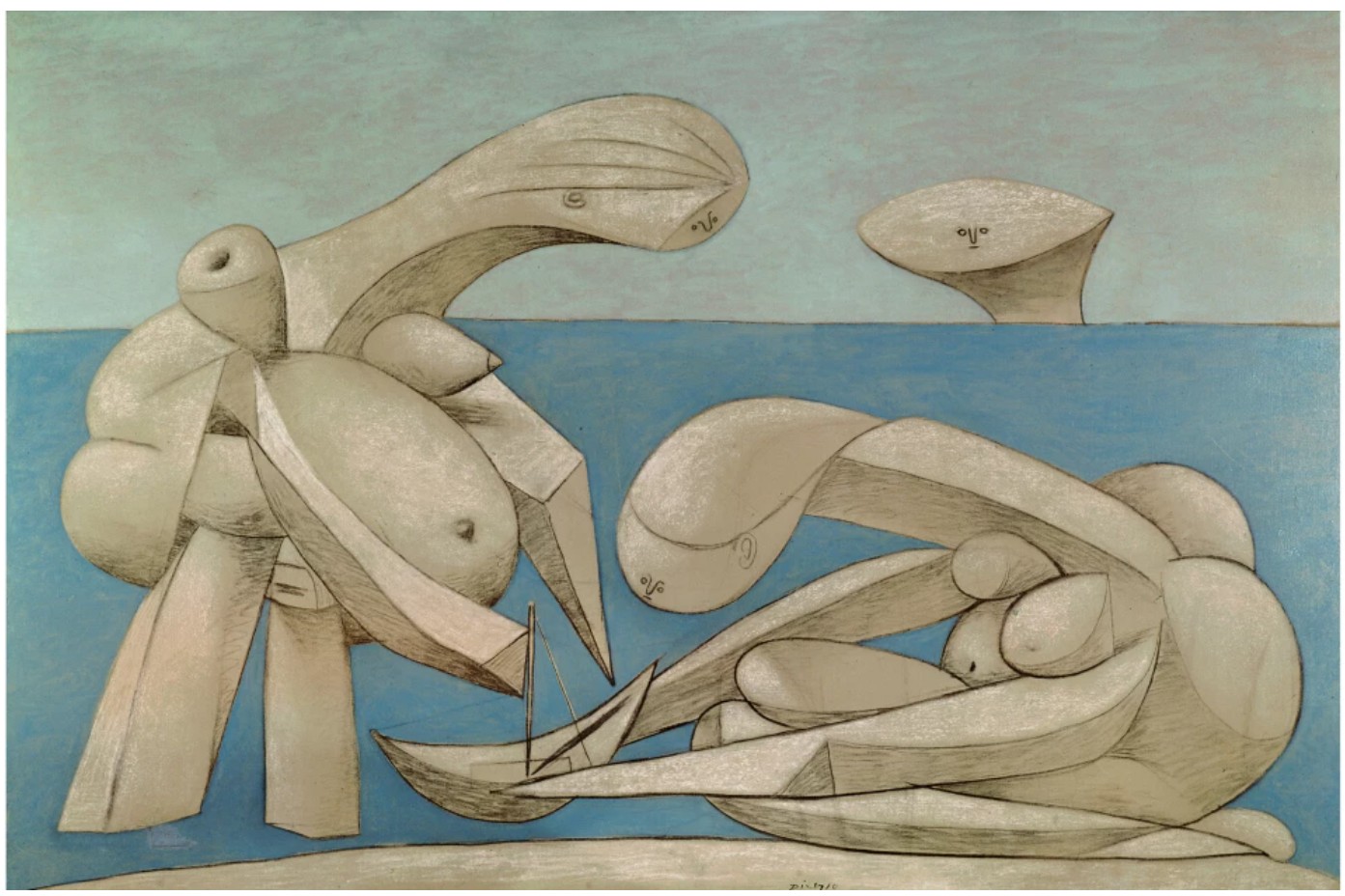
Pablo Picasso, On the Beach (La Baignade), 1937. Peggy Guggenheim Foundation, Venice. Image © Succession Picasso/DACS, London 2025 / Bridgeman Images. Art © 2025 Estate of Pablo Picasso / Artists Rights Society (ARS), New York
Here, the trope of the reclining female figure is completely void of its art historical associations, subjected instead to larger historiographic interrogations: sex and desire is eviscerated in the face of confrontation and atonement, as if translating the docility or submission of the work’s art historical antecedents into a disturbing submission to Hitler’s ideals and actions. Each brushstroke explicitly cites a historic moment yet simultaneously collapses into a kaleidoscopic abstraction: the resulting painting is undercut by both the unnerving calm and the apocalyptic potency portending the downfall of the Nazi regime. Revisited by Ghenie during the politically charged months surrounding the 2016 presidential election, he first resurrects the image of Eva Braun in The Alpine Retreat and revisits her in the present work, impregnating her with the evil that pollutes the history of the last century.
“I’m not a history painter but I am fascinated by what happened in the twentieth century and how it continues to shape today. I don’t feel any obligation to tell this to the world, but for me the twentieth century was a century of humiliation—and through my painting, I’m still trying to understand this.”
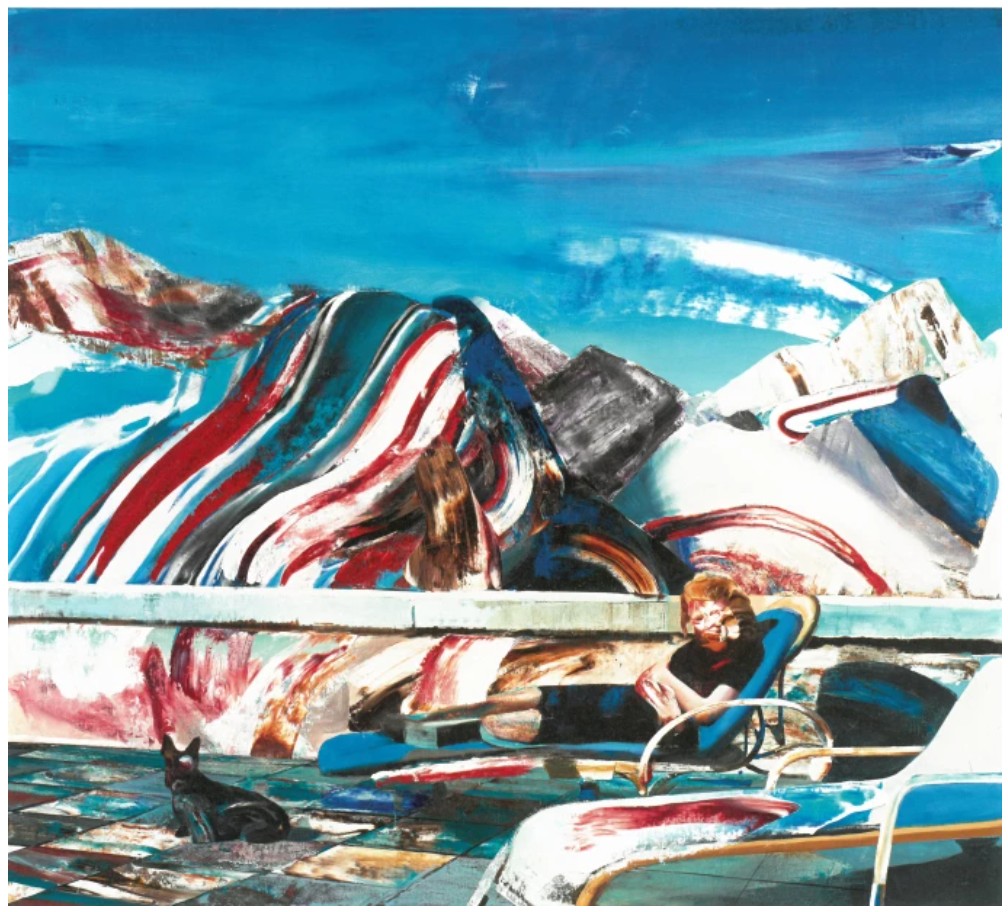
Adrian Ghenie, The Alpine Retreat, 2016. The Metropolitan Museum of Art, New York. Art © 2025 Adrian Ghenie
Born in Romania under Nicolae Ceaușescu’s dictatorial Communist regime, Ghenie’s enterprise finds its basis in his acute understanding of the myriad manifestations of totalitarianism and political oppression. Coming of age under a government marked by human rights violations and repression of freedoms of press and assembly, Ghenie and his family in his childhood relocated to Berlin, another city that bears the scars of a turbulent and divided past. Rooted in these formative experiences, the artist interrogates how the traumas of the past continue to trouble, infiltrate, direct, and complicate the present and future. His corporeal manipulations push the limits of portraiture so much so that his figures teeter on the verge of illegibility, a device which invokes the virtuosity of both Pablo Picasso’s Cubist reconstructions and Francis Bacon’s bruised and deformed treatment of flesh. The artist’s acute knowledge of art history, however, goes far beyond these self evident predecessors and reaches across time and space: the sloping hills of the Alps recall the atmospheric perspective of the hills of Golgotha in Andrea Mantegna’s The Crucifixion, whilst Ghenie’s phantasmagoric smears of pigment echo the squeegee scrapes of Gerhard Richter’s post-photographic abstraction. Through Alpine Retreat 2, Ghenie pays homage to Old, Modern, and Contemporary icons while reveling in the formal and emotive possibilities of the medium, rebelling against the exterminatory cultural policies of strongman administrations throughout history.
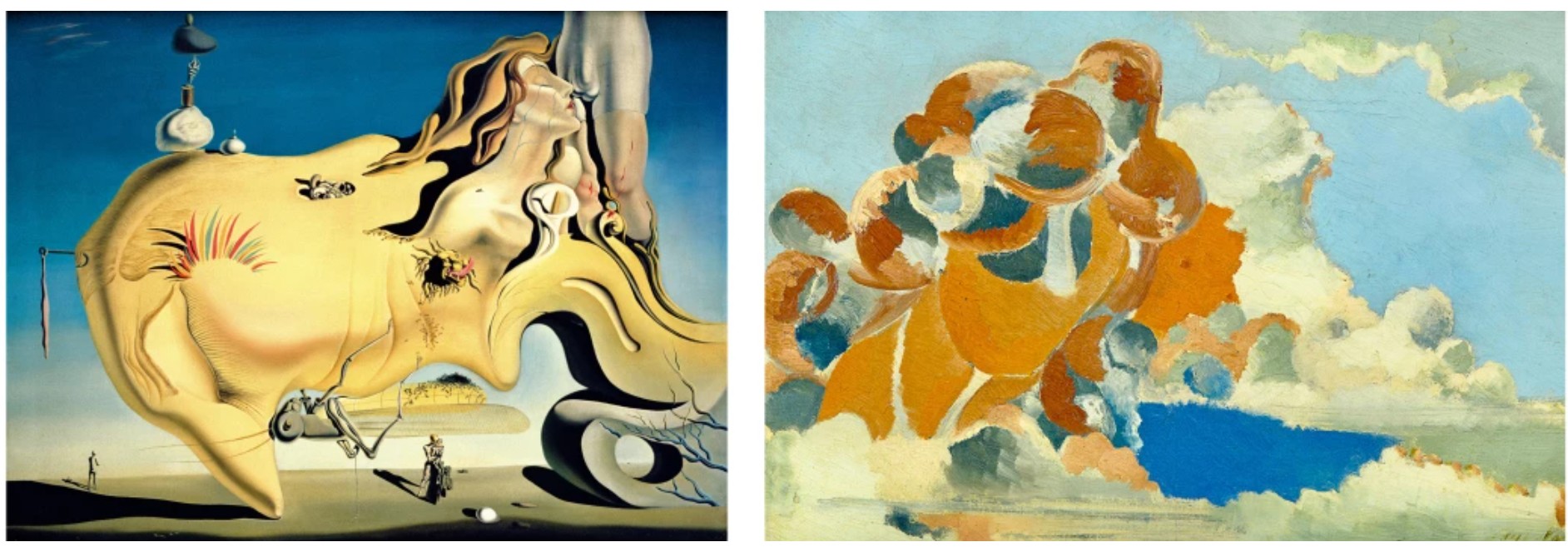
Left: Salvador Dali, The Great Masturbator, 1929. Museo Nacional Centro de Arte Reina Sofia, Madrid. Image © Index Fototeca / Bridgeman Images. Art © 2025 Salvador Dalí, Gala-Salvador Dalí Foundation / Artists Rights Society (ARS), New York. Right: Paul Nash, Cumulus Head, 1944. Private Collection. Art © 2025 Paul Nash
Adrian Ghenie’s celebrated practice can be divided into three discrete phases, each honored with a major Hatje Cantz monograph published in 2009, 2014 and 2019 respectively. The covers of each represent cardinal moments in the artist’s career, with each cover image representing Ghenie’s most famous painting of the period. The first publication features Ghenie’s iconic The Collector I of 2008, widely recognized as one of the most significant paintings from the artist’s early career that portrayed Hermann Göring in an tempestuous drama of mauve and violet. The following catalogue featuring works between 2009 and 2013 centered the painting The Death of Charles Darwin from 2013; this middle chapter of his career found Ghenie heavily featuring significant historical figures such as Darwin or Vincent van Gogh to scrutinize their legacies and the shifting paradigms brought about by their influence. Adrian Ghenie: Paintings 2014-19’s cover is graced by The Alpine Retreat, the present work’s sister painting at the Metropolitan Museum of Art. The Alpine Retreat paintings hold an incomparably important position in Ghenie’s oeuvre, representative of the most recent critical chapter of the artist’s celebrated practice and recognized amongst the most iconic images in his entire body of work. Following the throughline that traces the artist’s meteoric rise, Alpine Retreat 2’s hallucinatory interrogation of historical individuals and imagery is utterly emblematic of Ghenie’s position as one of the most pioneering and daring voices of our generation.
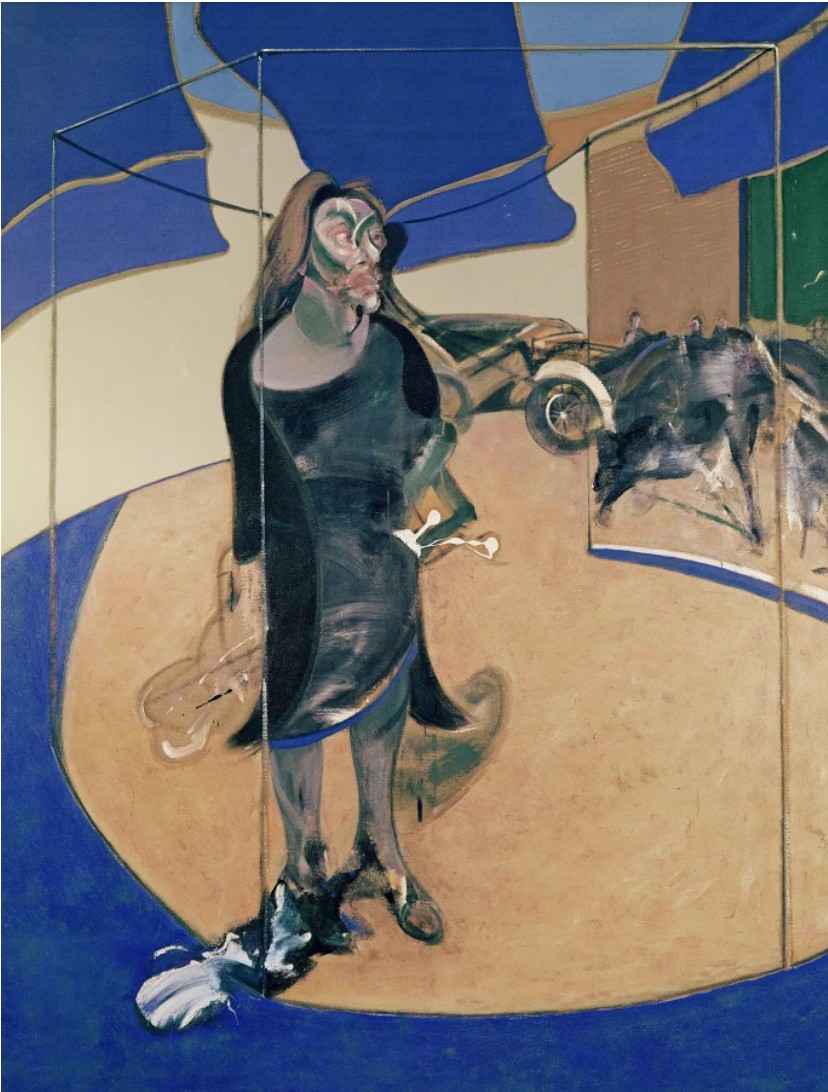
Francis Bacon, Isabel Rawsthorne Standing in a Street in Soho, 1967. Nationalgalerie, Berlin.
Image © Bridgeman Images. Art © 2025 Estate of Francis Bacon / Artists Rights Society (ARS), New York / DACS, London
A bravura demonstration of his technical virtuosity and intellectual heft, Alpine Retreat 2 sees Ghenie meld past and present, reality and surreality, figuration and abstraction at an arresting, monumental scale. Nightmarish yet cathartic, Alpine Retreat 2 reaches its viewers at a physiological, quasi-visceral level, underscoring the profundity of Ghenie’s searing interventions into our shared histories:
“I’m not a history painter but I am fascinated by what happened in the twentieth century and how it continues to shape today. I don’t feel any obligation to tell this to the world, but for me the twentieth century was a century of humiliation—and through my painting, I’m still trying to understand this.”
Untitled (After Henri Rousseau), 2020
Christie’s Hong-Kong: 28 March 2024
Estimated: HKD 10,000,000 – 15,000,000
HKD 23,365,000 / USD 3,003,213
Untitled (After Henri Rousseau)
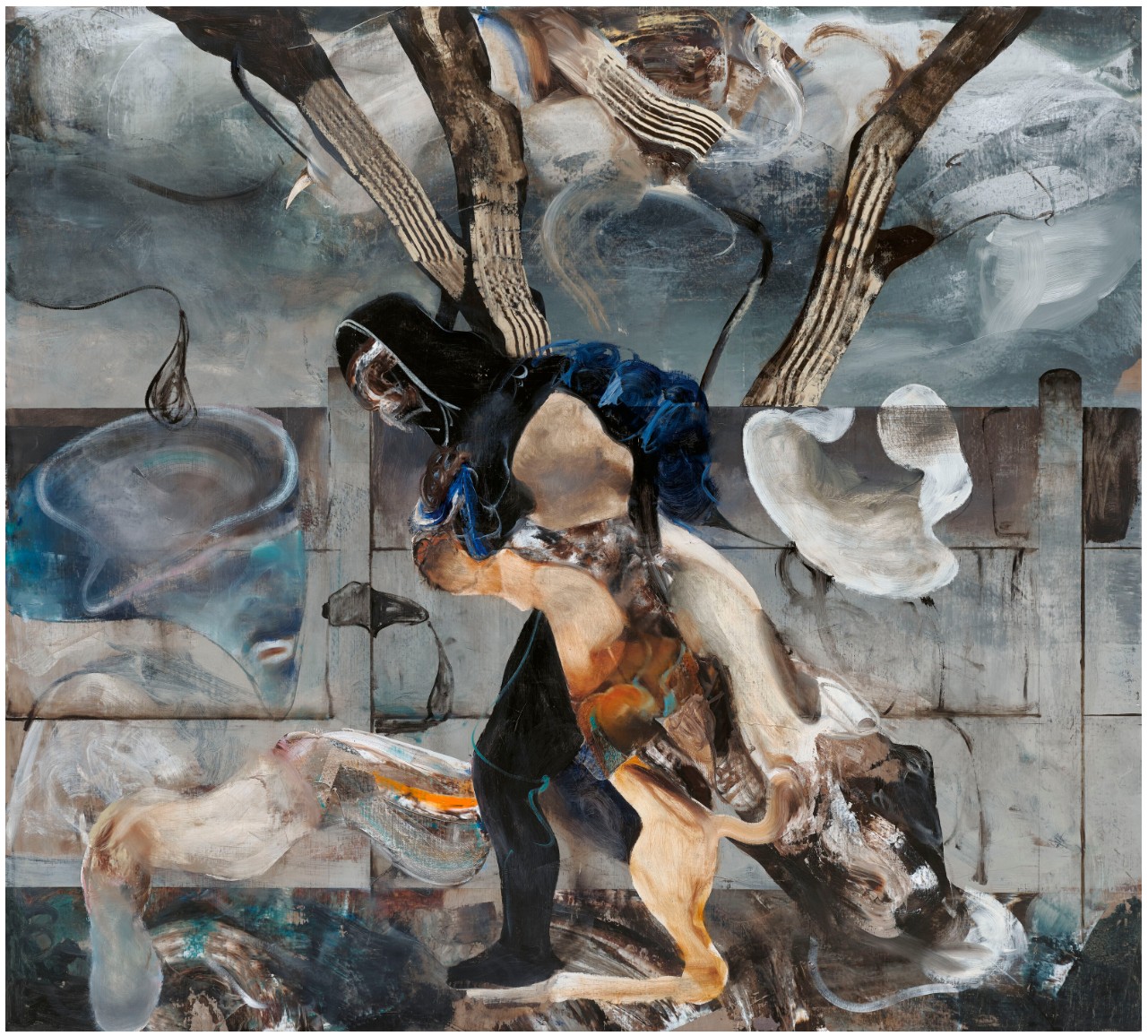
ADRIAN GHENIE (B. 1977)
Untitled (After Henri Rousseau), 2020
Oil on canvas
270×300 cm (106 1/4 x 118 1/8 inches)
Signed and dated ‘Ghenie 2020’ (on the reverse)
A vista of turbulent, vital color and form spanning three metres across, Untitled (After Henri Rousseau) (2020) sees Adrian Ghenie’s renowned painterly eloquence reach incandescent new heights. At its heart is a powerful encounter between man and beast. The figures derive from Henri Rousseau’s iconic jungle scene Nègre attaqué par un jaguar (1910, Kunstmuseum Basel), which depicts a man attacked by a jaguar. In Ghenie’s vision, the action takes place before a concrete wall and a roiling, gunmetal sky, with vaporous blooms of pigment and dark, palette-knifed umber streaks that carve through space. The man’s dark silhouette leans forward, with billowing, inky-blue brushstrokes licking up his body like flames. The wild cat is conveyed in a swirling melee of ochre, orange and turquoise, variously marbled and masked off to create sharp, dynamic outlines. If the motif emerged from Rousseau, the work’s array of textures and techniques evokes artists from Francis Bacon to Willem de Kooning and Gerhard Richter. The drama of tangled limbs, meanwhile, displays Ghenie’s close affinity with Baroque painting, conjuring muscular depictions of Classical and Biblical lion-wrestlers such as Hercules and Samson.
Ghenie rose to prominence in the 2010s for powerful, layered and cinematic paintings that were concerned with the dark moments and pivotal figures of European history. Filtered through collations of found photographic imagery, they included reflections on the Second World War and life under communism in his native Romania, and featured the distorted countenances of Charles Darwin and Vincent van Gogh. In recent years, Ghenie has evolved his style in new directions, turning his gaze towards contemporary life and imagining the future. He has also widened his palette of art-historical references, engaging in open dialogue with Andrea Mantegna, Théodore Géricault and—as in the present work—Henri Rousseau. As well as working with collage studies, he develops his ideas in large-scale charcoal drawings, whose sweeping elegance can be felt in the present painting.
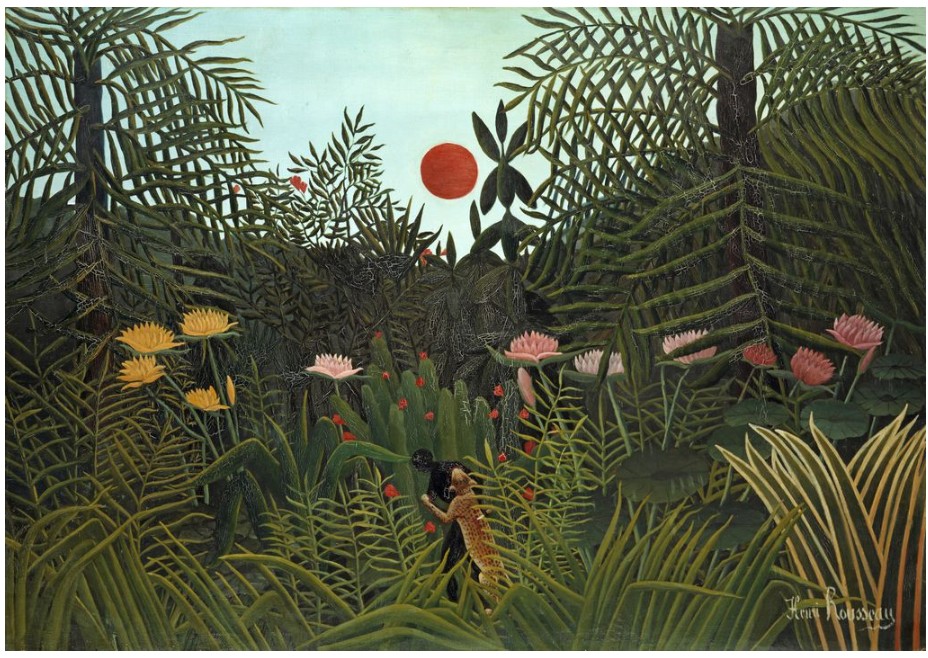
Henri Rousseau, Negro Attacked by a Jaguar, 1910, Kunstmuseum, Basel. © Bridgeman Images
Rousseau has long fascinated Ghenie. The self-taught artist, who died in 1910, is famed for his visionary and highly distinctive jungle paintings. They were admired during his lifetime by avant-garde figures including Pablo Picasso, Constantin Brâncuși and Robert Delaunay, and later by the Surrealists, who were drawn to their dreamlike moods and unusual juxtapositions. Their carefully delineated surfaces of flat, overlapping planes also foreshadowed aspects of Modernism, and Ghenie has described Rousseau as the first abstract painter. Figurative and abstract paintings, he believes, are engaged with the same fundamental problems: ‘Deep inside every painting exists a deep abstract challenge’ (A. Ghenie in conversation with M. Gnyp, Zoo Magazine, No. 57, 2017). The present work, with its combination of spontaneous Abstract Expressionist gestures, grid-like backdrop and energetic bodily form, exemplifies Ghenie’s own synthesis of different formal languages.
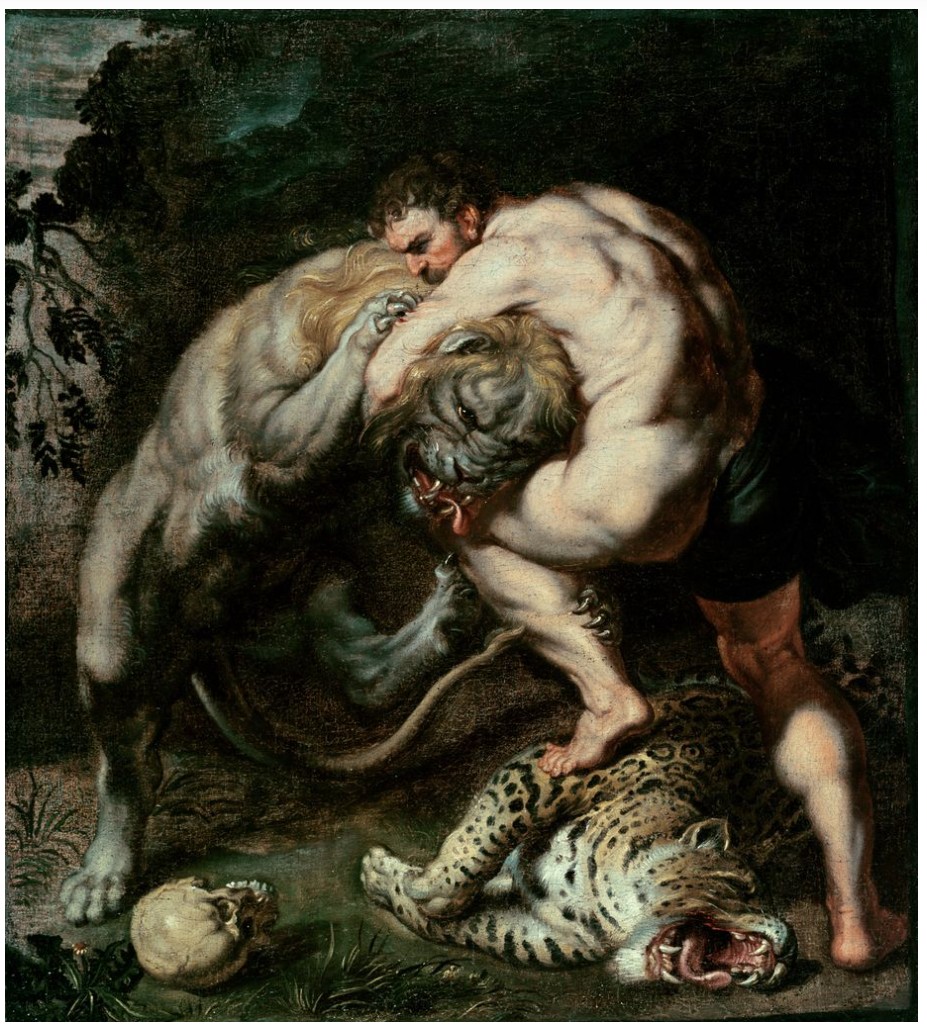
Peter Paul Rubens, Heracles and the Nemea Lion, 17th century. Private collection. © Bridgeman Images.
St. Christopher, 2018
Sotheby’s London: 9 October 2024
Estimated: GBP 1,500,000 – 2,000,000
GBP 1,740,000 / USD 2,279,400
St. Christopher | Contemporary Evening Auction | 2024 | Sotheby’s (sothebys.com)
ADRIAN GHENIE (b. 1977)
St. Christopher, 2018
Oil on canvas
240.7 x 180 cm (94 3/4 x 70 7/8 inches)
Signed and dated 2018 (on the reverse)
A sumptuous melee of abstraction and figuration suggestive of a reverie half-remembered, Adrian Ghenie’s St. Christopher from 2018 is a monumental masterpiece that exemplifies the artist’s unique ability to meld past and present with historical iconography into a brooding dreamlike haze. Drawing upon a wide array of influences within the canon of twentieth-century art history, St. Christopher is demonstrative of Ghenie’s unmistakable virtuosic handling of paint and brush to explore the contradictions and paradoxes of a contemporary world. Utilizing the artist’s honed technique of paint application via palette knife and scraping back thick layers of the medium, such a method instils the surface of St. Christopher with a teasingly tangible dynamic surface, one that appears spontaneous and in a constant variegated state of flux.
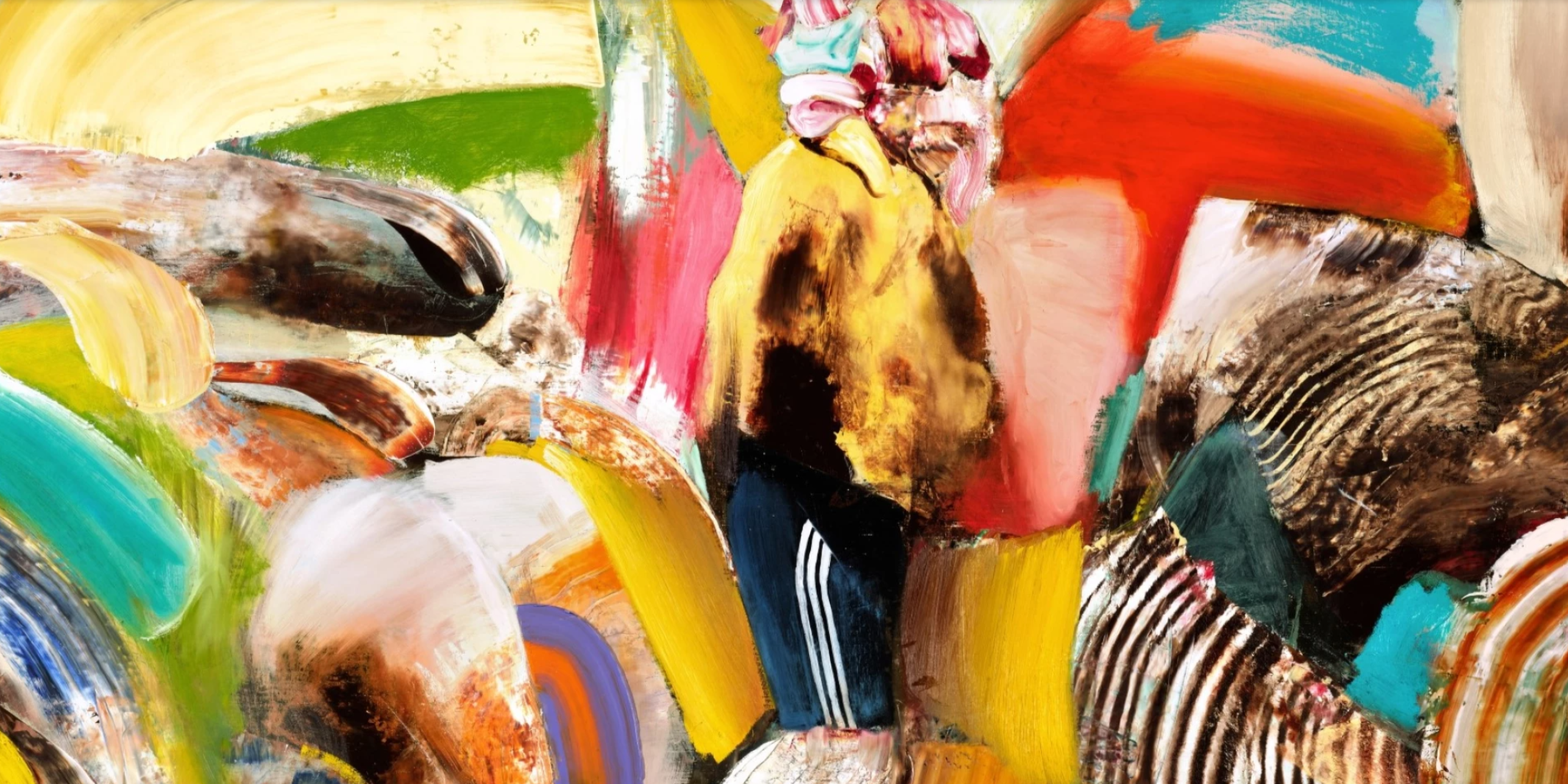
Woven into Ghenie’s oeuvre is a profound engagement with the intertwined histories of art and cinema. The influence of Francis Bacon is unmistakable in the painterly violence he inflicts upon his subjects, while the abstract textures recall Gerhard Richter’s squeegeed surfaces, creating a visceral interplay of form and distortion. Ghenie’s compositions are further steeped in cinematic tension, drawing inspiration from the dark atmospheres of David Lynch and Alfred Hitchcock. Indeed, an eerie, suspenseful energy permeates his fluid, expressionistic command of pigment; underscored by the spectre of Vincent van Gogh – whose 1889 self-portrait famously made Ghenie physically ill when he first encountered it in the Musée d’Orsay. Inviting comparison with Edvard Munch’s Self-Portrait in Hell (1903), as well as the self-portraits of Egon Schiele and Ernst Ludwig Kirchner, who depicted themselves as soldiers and martyrs in order to confront the anxieties of their times, Ghenie’s thoughtful invocations of art history’s titans are not merely acts of homage, but radical reinterpretations that push the emotive and formal boundaries of painting, a testament to his status as one of the greatest painters of a generation.
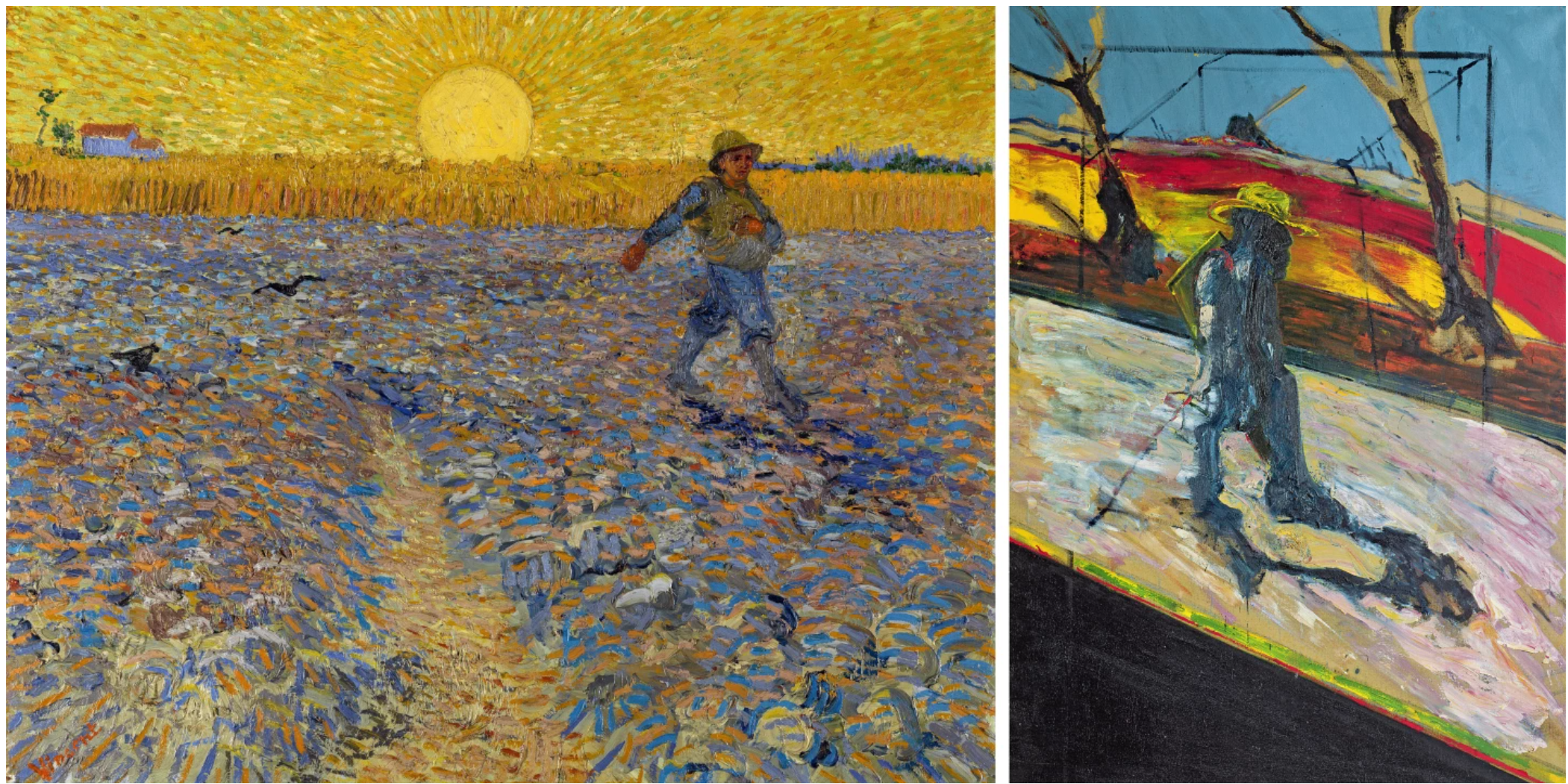
Left: Vincent van Gogh, The Sower, 1888 Kröller-Müller Museum, Otterlo, Image: © Bridegman images
Right: Francis Bacon, Study for a Portrait of Van Gogh II, 1957, Tate Gallery, London, Image: © The Estate of Francis Bacon. All rights reserved. DACS 2024
Reflecting Ghenie’s technical virtuosity, aesthetic complexity, and the historic gravity of his subject matter, St. Christopher appears to drift in and out of focus reflecting the artist’s ongoing exploration of history, identity, and collective memory. Situating his protagonist within a psychedelic quais-landscape, Ghenie’s vague insinuations of figuration and reality give way to a swirling vortex of pure unadulterated pigment, in which sky and cloud turn to land and sea, and rolling hills and pathways reject categorisation, collapsing into a kaleidoscopic dreamscape. Standing out as a steadfast guardian within Catholic tradition, Saint Christopher is revered as the patron saint of pilgrims. His iconic image, carrying the infant Christ across a treacherous river, has become synonymous with protection and guidance for centuries. Recognised by Christian denominations as the patron saint of travelers, as well as martyr who was killed by the Roman emperor in the third century, Saint. Christopher has historically been depicted opposite the south door of churches and in various religious illustrations as a giant with a child on his shoulder and a staff in one hand, often leaning forward into the journey ahead. Catapulting the Patron Saint to the present day, one painted element is conspicuous in Saint Christopher’s leg: three parallel bands most commonly associated with athleticwear; similar to the discrete Adidas symbol on a figure’s shoe in Ghenie’s Rest on the Flight into Egypt from 2016, housed in the collection of the Los Angeles Museum of Contemporary Art. Both fragments of materiality ground the present work in the reality of present day voyagers, or often those immigrating or seeking refuge. The theme of migration is a central pillar of Ghenie’s oeuvre, deeply influencing his exploration of historical trauma, displacement, and the shifting identities of individuals and societies in the face of political and cultural upheavals.
“Migration was used by artists in the Renaissance and the Baroque era as an excuse to paint landscapes. The church would never pay for just a landscape, so the landscape had to be a background for a biblical scene in front.”
Reflecting his own experiences of displacement, St. Christopher can be viewed as a self-portrait. Born in Romania under the Communist regime of Nicolae Ceaușescu, Ghenie’s early life was marked by the repression, surveillance, and censorship characteristic of a totalitarian state. This oppressive environment ultimately forced Ghenie and his family to relocate to Berlin, a city that itself bears the scars of a turbulent and divided past. The impact of these formative experiences is deeply embedded in Ghenie’s work, as he continuously interrogates how the traumas of the past – particularly those of the troubled 20th Century – continue to infiltrate, impact and shape the present.
“I’m not a history painter, but I am fascinated by what happened in the twentieth century and how it continues to shape today. I don’t feel any obligation to tell this to the world, but for me the twentieth century was a century of humiliation – and through my painting, I’m still trying to understand this.”
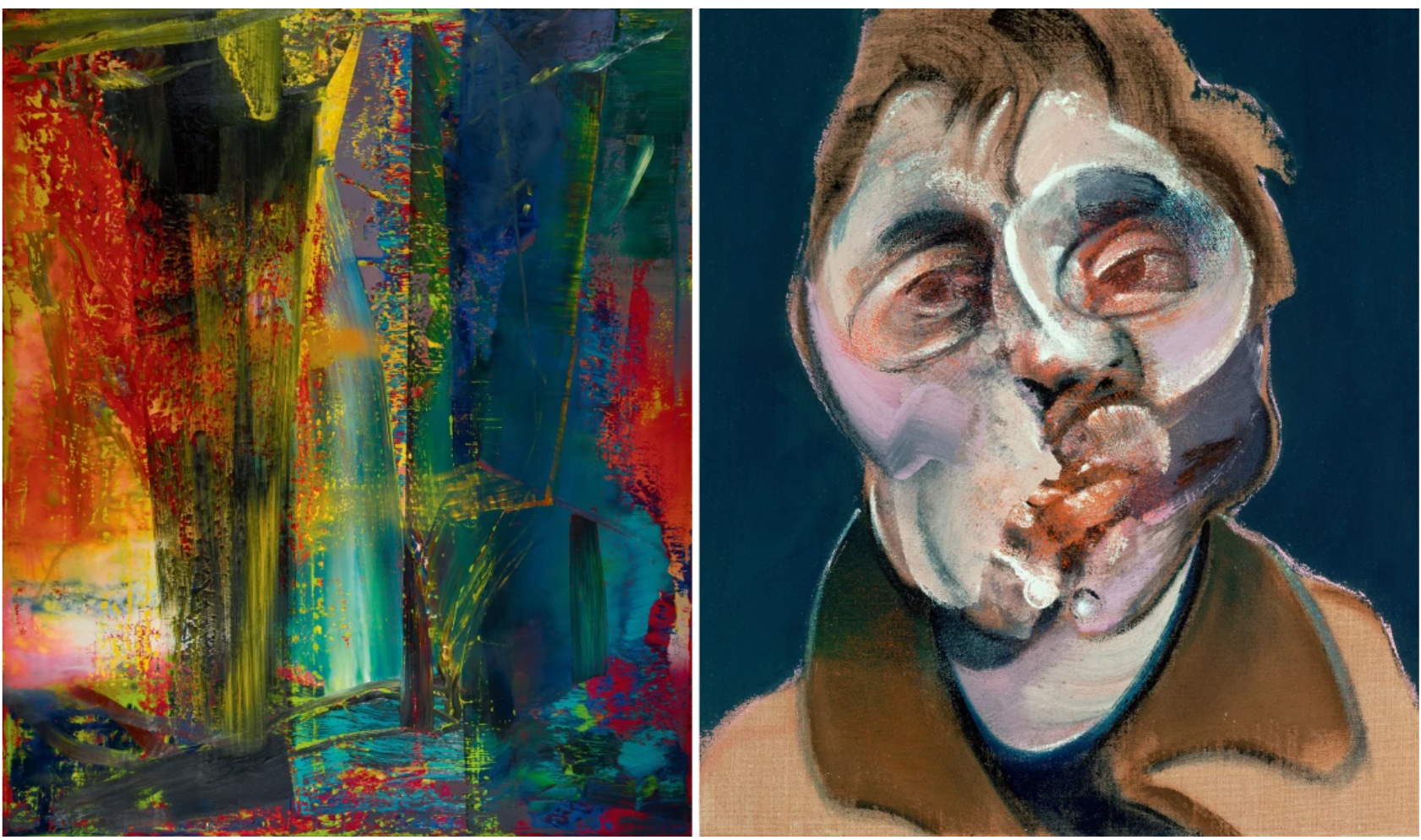
LEFT: Gerhard Richter, Abstraktes Bild, 1986, Image © 2024 Gerhard Richter
RIGHT: Francis Bacon, Self-Portrait,1969 Private Collection, Image: © Bridgeman Images
Ghenie’s reinterpretation of Saint Christopher thus becomes a powerful symbol of hope and resilience in the face of overwhelming adversity. There is a poignant, powerful catharsis achieved in his brand of hallucinatory portraiture, and from Ghenie’s deconstruction of the image emerges a rebuilt understanding: his paintings narrate his personal grapplings with tyrannical horror, and today stand as historiographic interventions.
The Uncle, 2019
Sotheby’s New-York: 13 May 2024
Estimated: USD 2,000,000 – 3,000,000
USD 3,006,000
The Uncle | The Now Evening Auction | 2024 | Sotheby’s (sothebys.com)
ADRIAN GHENIE (b. 1977)
The Uncle, 2019
Oil on canvas
260.1 x 253.3 cm (102 3/8 x 99 3/4 inches)
Signed and dated 2019 (on the reverse)
Phantasmagoric smears of ultramarine, crimson, and white obliterate the visage of a fugitive Nazi officer in Adrian Ghenie’s The Uncle of 2019, which sees Ghenie’s deft facture and psychological intensity at their very best. At once melding the squeegee scrape of Gerhard Richter’s post-photographic abstraction with the corporeal deformity of a Francis Bacon portrait, The Uncle extends Ghenie’s career-long interrogation of the twentieth century’s most deplorable characters, many of whom were the focus of the artist’s lauded exhibition at the 56th Venice Biennale in 2015. As figure and environment implode into one another, this nightmarish vignette of European dictatorship and its atrocities uncovers palimpsestic allusions to an artistic and historical past in Ghenie’s decisive synthesis of personal and collective memory.

Here, Ghenie surrounds the officer with the detritus of a fallen world: a plastic chair and waste caked in dirt litter the ground, the sky simmers behind him with apocalyptic potency, and behind him lies a fallen structure, perhaps a monument or commemorative statue. Ghenie casts the scene in cold, cruel light, and magmic drags of paint, fashioned at the command of his palette knife, close in on the canvas as if suffocating its subject. The Uncle showcases Ghenie’s technical virtuosity and compositional ingenuity at their irrefutable height, bearing striking chromatic and narrative resemblances to his operatic The Alpine Retreat at the Metropolitan Museum of Art, New York. Depicting Eva Braun, Adolf Hitler’s wife, at their residence in the Bavarian mountains, The Alpine Retreat similarly mars Braun’s face and body with decadent brushwork, blinding them in glaring, accusatory light. Ghenie’s marriage of gesture and journalistic material create a composite of remarkable pictorial cogency: toggling between the representational and the abstract, the tempest of gesture and figuration evince Ghenie’s compositional process, in which he collages sources from photography to silent comedy films before obscuring any immediate legibility of the contents with his pastose brushwork.

SALVADOR DALÍ, SWANS REFLECTING ELEPHANTS, 1937. PRIVATE COLLECTION. PHOTO © BRIDGEMAN IMAGES. ART © 2024 SALVADOR DALÍ, GALA-SALVADOR DALÍ FOUNDATION / ARTISTS RIGHTS SOCIETY (ARS), NEW YORK
Reflecting Ghenie’s technical virtuosity, aesthetic complexity, and the historic gravity of his subject matter, The Uncle conjures the achievements of his vanguard predecessors and poses a fundamental threat to the kind of dictatorships under which the artist was raised. There is a poignant, powerful catharsis achieved in his brand of hallucinatory portraiture, and from Ghenie’s deconstruction of the image emerges a rebuilt understanding: his paintings narrate his personal grapplings with tyrannical horror, and today stand as historiographic interventions.
The Squat, 2021
Christie’s London: 7 March 2024
Estimated: GBP 1,200,000 – 2,000,000
GBP 1,008,000 / USD 1,278,144
ADRIAN GHENIE (B. 1977), The Squat | Christie’s (christies.com)
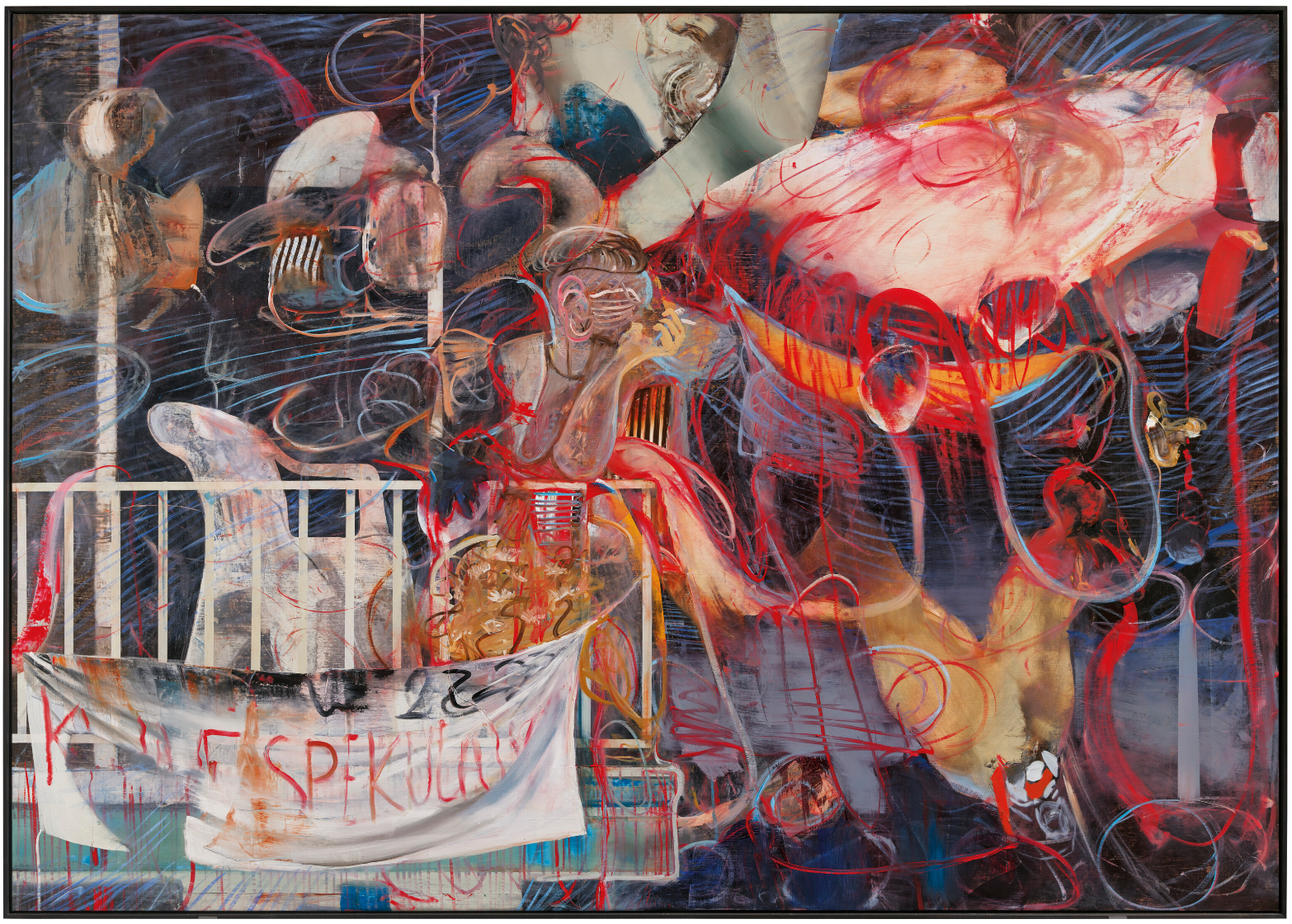
ADRIAN GHENIE (B. 1977)
The Squat, 2021
Oil on canvas
210.2 x 297 cm (82 3/4 x 116 7/8 inches)
Signed and dated ‘Ghenie 2021’ (on the reverse)
Spanning three meters in width, Adrian Ghenie’s The Squat (2021) is a vibrant, magisterial painting that pulsates with chromatic and textural life. It is one of a group of recent works inspired by the artist’s second hometown of Berlin. A woman smokes on a balcony, hung with a torn, illegible banner that recalls the many such hangings seen on squatted buildings in the German city. Conveyed in billowing ribbons of umber and pink, she looks out on a turbulent scene. Flurries of cyan and scarlet line electrify the dark sky, looping and flashing like some alien weather system. Zones of thick impasto are clawed with striations. Elsewhere, smooth, gleaming swathes of pink, orange and earthy color are masked off, recalling sections of collage. The balcony railings are crisp as a cut-out, and the plastic chair behind them is marbled with a horizontal blur worthy of Gerhard Richter. Conveyed in a dazzling panoply of techniques, the picture sees Ghenie’s renowned painterly eloquence reach innovative, exuberant new heights.
Ghenie rose to prominence in the 2010s for powerful, layered and cinematic paintings that were concerned with the dark moments and pivotal figures of European history. Filtered through collations of found photographic imagery, they included reflections on the Second World War and life under communism in his native Romania and featured the distorted countenances of Charles Darwin and Vincent van Gogh. In recent years Ghenie has evolved his style in new directions, turning his gaze towards contemporary life and imagining the future. These works often picture our interactions with smartphones, selfies and computer screens. Leaning less on photographic sources and collage studies, he develops his ideas in large-scale charcoal drawings. His figures have become more fleshy, emotive and labile, merging with the abstract bravura of their settings.
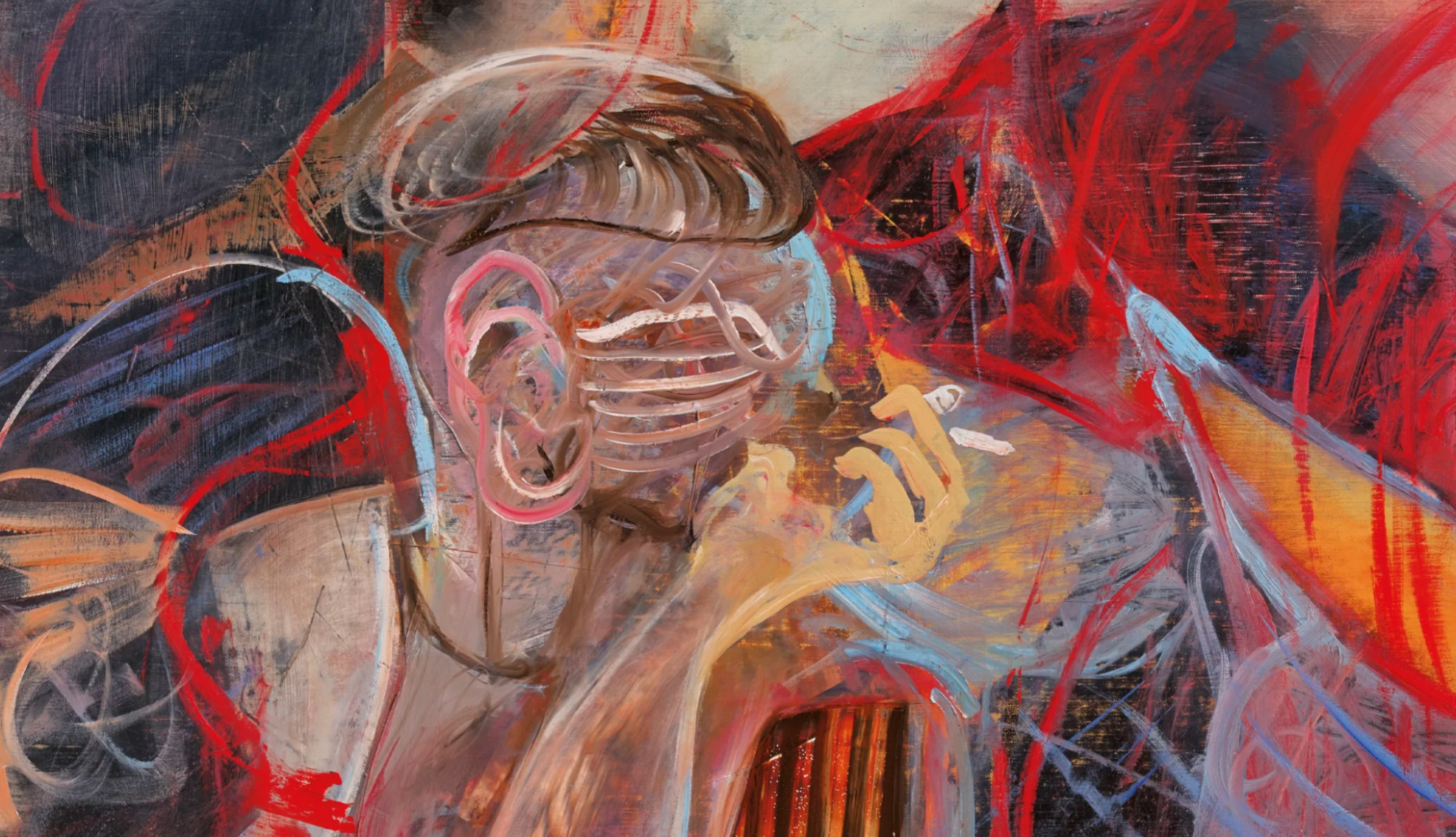
While Ghenie takes a sceptic’s view of modern technology, the information age has created an ever-more more urgent role, he believes, for the physical presence of painting. ‘Somehow,’ he says, ‘the more we go online, the more we go digital, the more we need to have this mark on the canvas made with the hand’ (A. Ghenie quoted in ‘Line and Figure: Adrian Ghenie in Conversation with Nicholas Cullinan’, in Adrian Ghenie: The Fear of Now, exh. cat. Thaddaeus Ropac, London 2022, p. 7). Ghenie’s paintings of Berlin—a cosmopolitan place of fluid borders and flourishing subcultures—see him at his most celebratory, depicting scenes of togetherness and gentle humor. They include portrayals of a long nightclub queue, a couple lounging in front of a MacBook, and a flirtatious street encounter next to one of the city’s distinctive orange trashcans.
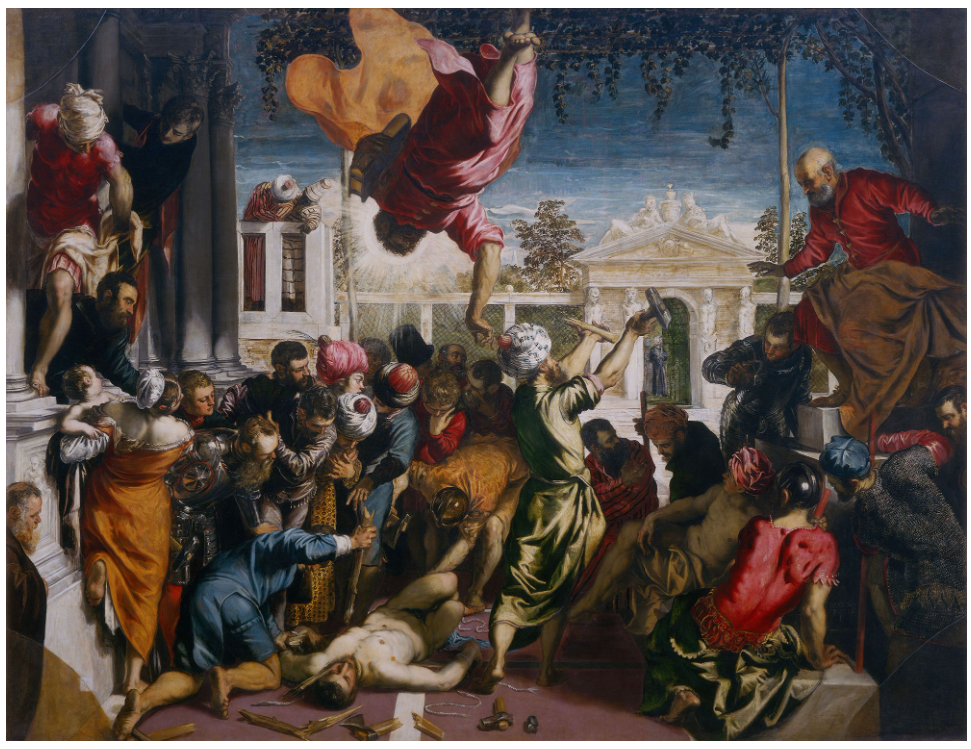
Tintoretto, The Miracle of the Slave, 1547-1548. Accademia, Venice. Photo: Scala, Florence.
Ghenie’s painterly ambitions increased together with this freedom in his subject matter. The Squat exemplifies the vivid sense of momentum that characterizes his recent works, which are brighter, vaster and more dynamic than ever before. With a deep, photographic knowledge of art history, he draws freely upon the technical toolkits of Abstract Expressionism and Francis Bacon, while also paying homage to the Old Masters. Baroque painting is a particularly important touchstone. Ghenie admires Tintoretto for the same drama, vigor and grandeur he values in Willem de Kooning.
“I think I’m that kind of Baroque species… A type of painting which turns the energy and the movement of the body into the image.”
Just such an image is realized in The Squat. Poised with her cigarette amid a melee of gesture and form, the woman watches over a brave new world, the winds of change rushing through the air.
The Flight into Egypt I, 2008
Christie’s Paris: 19 October 2023
Estimated: EUR 2,000,000 – 3,000,000
EUR 3,670,000 / USD 3,879,082
Adrian Ghenie (né en 1977) (christies.com)
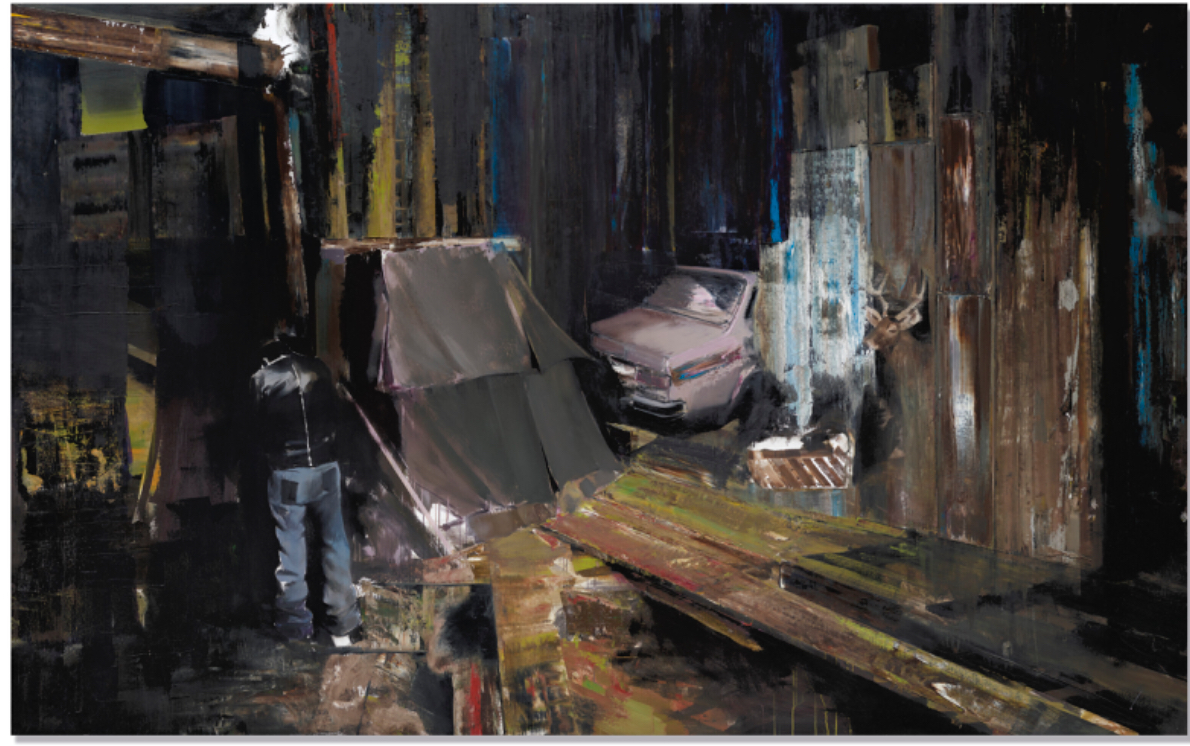
ADRIAN GHENIE (Born 1977)
The Flight into Egypt I, 2008
Oil and acrylic on canvas
200 x 320.5 cm (76 3/4 x 126 1/8 inches)
Signed and dated ‘Ghenie 2008’ (on the reverse)
Over three meters across, The Flight into Egypt I (2008) is an important early painting by Adrian Ghenie. The Romanian artist, who grew up under the Ceaușescu regime, is fascinated by the darkness of recent European history. He works from second-hand images, including photographs and film-stills, and builds layers of art history into his paintings. The Flight into Egypt I refers to the New Testament story in which Joseph and Mary flee Bethlehem after an angel warns them of Herod’s massacre of the innocents. Ghenie transforms the biblical narrative into a scene depicting a shadowy encampment, suggesting escape, displacement or exile.
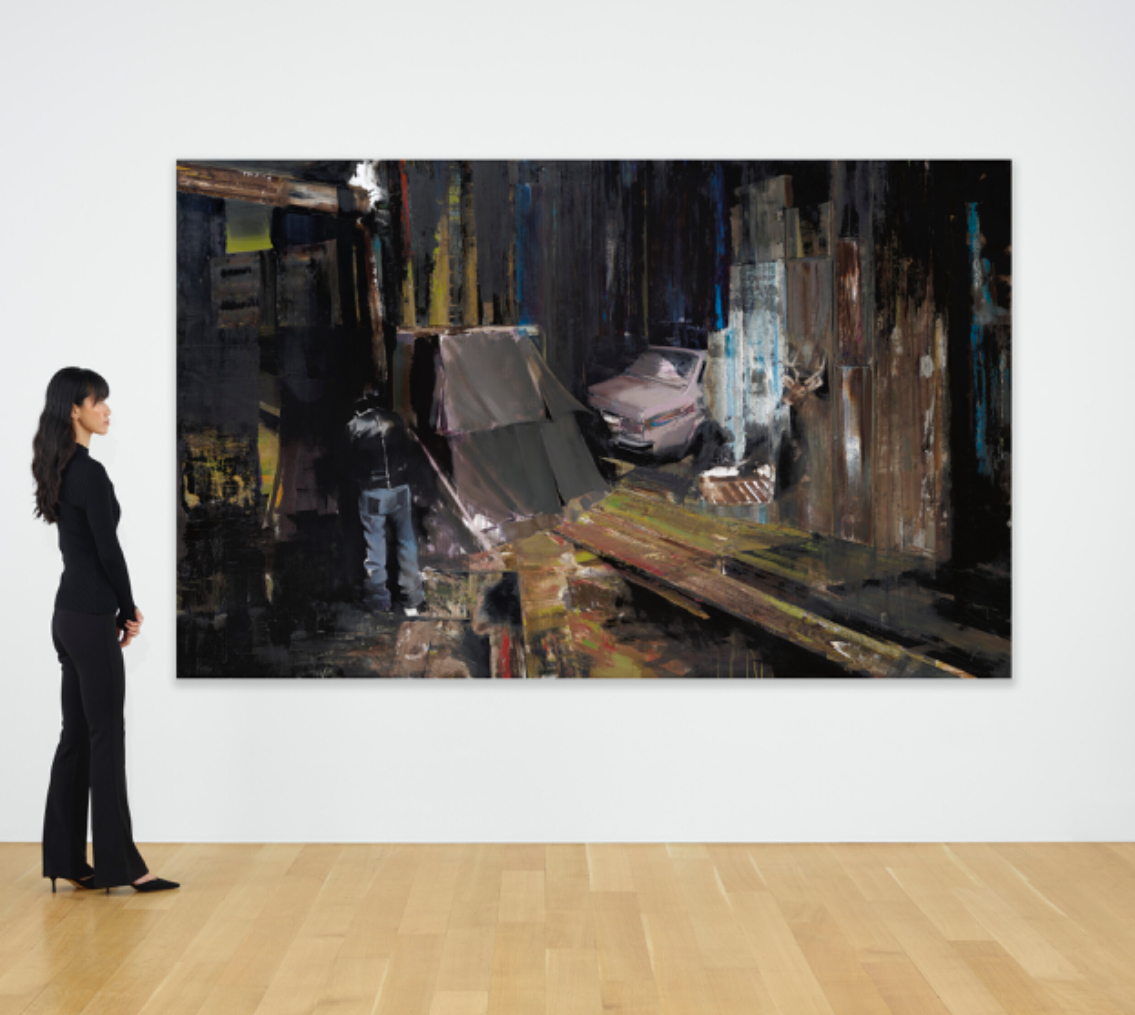
The flight into Egypt was a common subject in Renaissance art. It appears in works by Poussin, Caravaggio and Tintoretto. The latter is a particular inspiration for Ghenie. The present work’s dramatic scale and chiaroscuro echo the work of these Old Masters. But Ghenie does not depict the Holy Family. Instead we see a makeshift tent, the rear end of a car, and a man—in leather jacket and jeans—with his back turned. A stag’s head evokes the decor of an old-fashioned room. Ghenie often designs his compositions with a collage of found and printed imagery. The objects are like props in a stage-set.
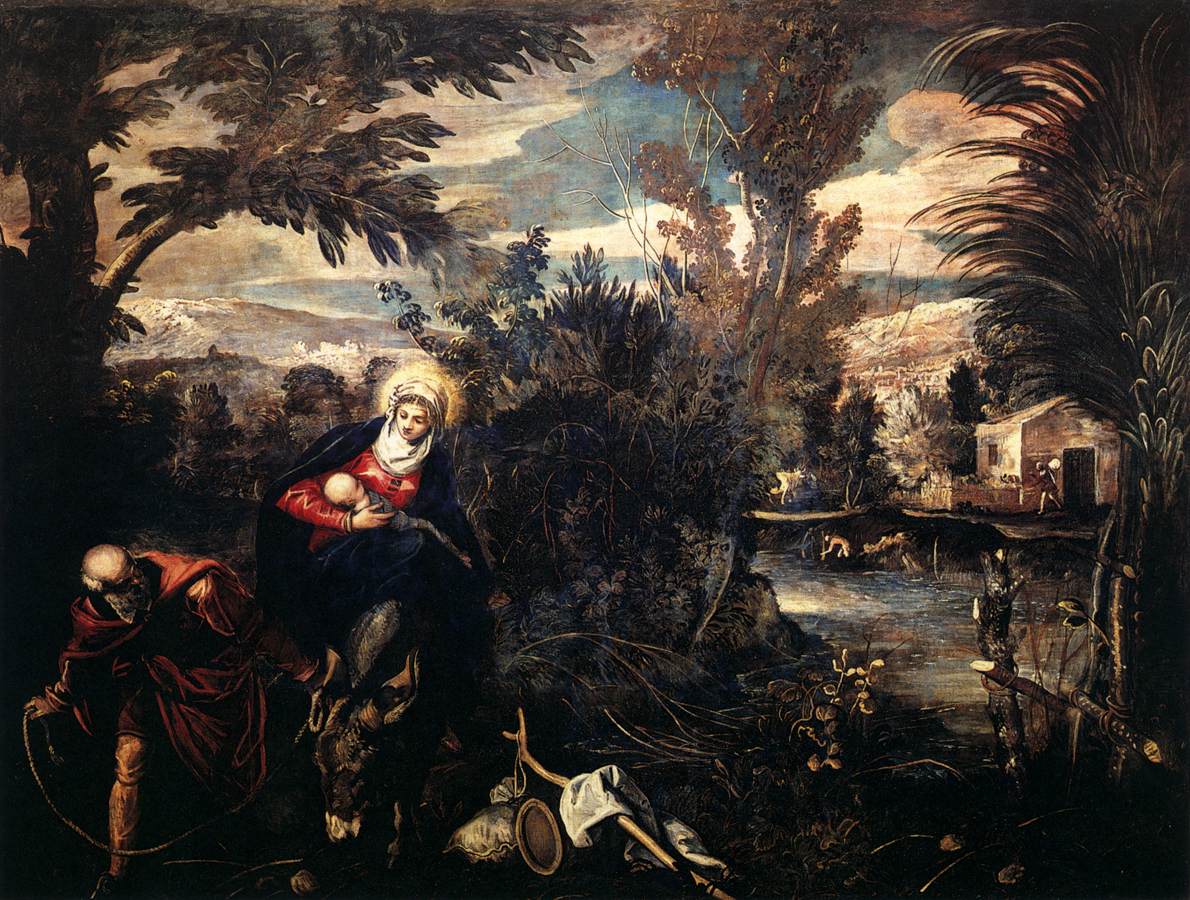
Ghenie also uses abstract techniques. By dragging paint across the surface with a palette knife, he creates marbled blurs of gold and turquoise that recall the scraping method of Gerhard Richter. He masks off some areas to form sharp edges of pigment. Elsewhere, liquid paint drips down the canvas. Together with the jarring pictorial elements, these gestures make the setting ominous and unstable. Another influence for Ghenie is Francis Bacon. He admires Bacon’s vivid, fleshy brushwork, and shares his interest in the photograph. Like cinema and television, photographic images are part of twentieth-century experience. Ghenie explores them from a cultural and autobiographical viewpoint, painting what he calls “the texture of history.” The Flight into Egypt I dates from a pivotal year in Ghenie’s practice. The exhibition space Galeria Plan B, which he had co-founded in Cluj, Romania, in 2005, expanded to a second location in Berlin. Ghenie began to divide his time between the two cities. His paintings grew in scale, complexity and depth. Alongside The Flight into Egypt I, that year he made his landmark ‘‘Collector’’ quartet, which depicts the Nazi official Hermann Göring, and his first ‘’Pie Fight’’ works, which draw on the slapstick of silent cinema. Ghenie returned to the present work’s theme with the major painting Rest During the The Flight into Egypt (2016), which is now in the collection of the Los Angeles County Museum of Art.
Untitled, 2019
Sotheby’s London: 27 June 2023
Estimated: GBP 1,000,000 – 1,500,000
GBP 1,253,624 / USD 1,596,117
Untitled | The Now Evening Auction | 2023 | Sotheby’s (sothebys.com)
ADRIAN GHENIE (b. 1977)
Untitled, 2019
Oil on canvas
230×170 cm (92×68 inches)
Adrian Ghenie’s Untitled from 2019 is an important example demonstrating the artist’s ability to capture psychological intensity. Ghenie’s meteoric rise to fame has seen the artist become one of the leading painters of his generation, his work marked by a combination of blurred, rough textures and chiaroscuro tones which are at times shapeless, but elsewhere sharply outlined with the artist’s almost photograph definition. Depicting a mass of vulnerable limbs ambiguously placed on the vivid red couch, Untitled is painted in sweeps of crimson, canary yellow and amber, swirling and pulsating to illuminate the artist’s energetic handing of paint. Aiming at a sensual, intuitive perception of figuration, Ghenie’s combining of chaos and order affects the viewer on a physiological and visceral level.
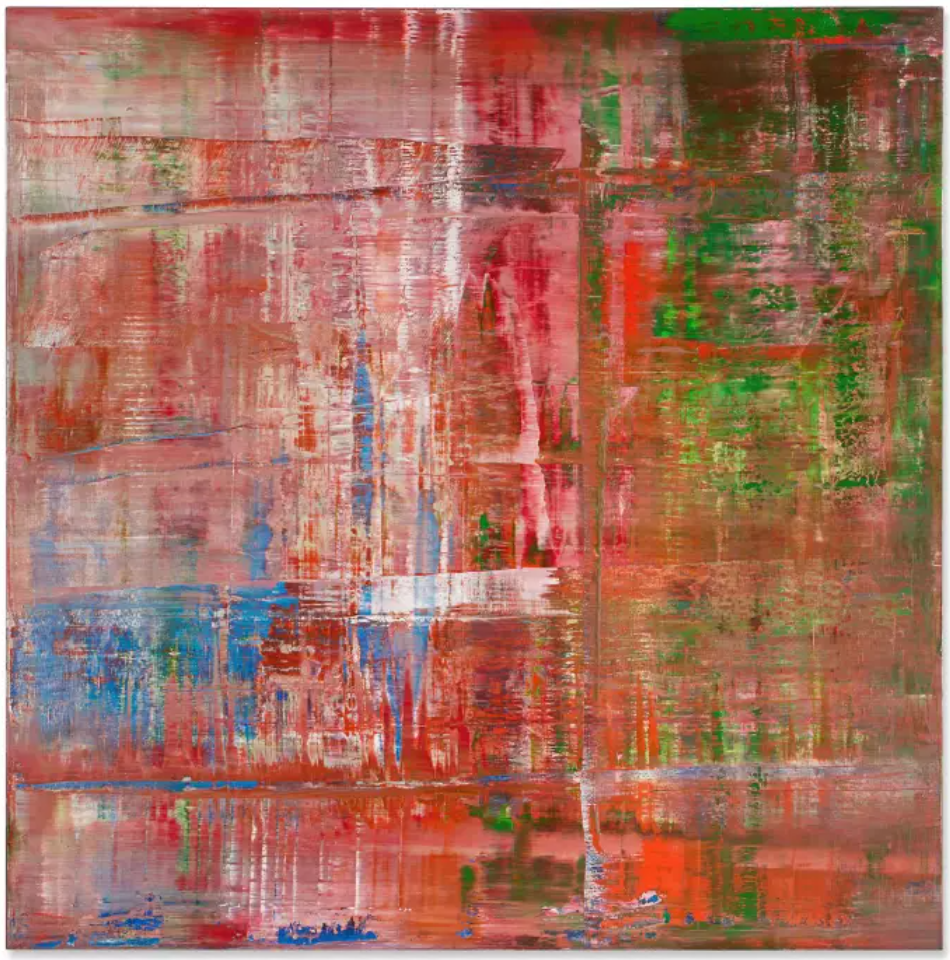
GERHARD RICHTER, ABSTRAKTES BILD, 1993
PRIVATE COLLECTION / ARTWORK: ©GERHARD RICHTER 2023
Exploiting the tension between abstraction and figuration, Ghenie’s paintings recall the contemporary abstractions of Gerhard Richter’s Abstraktes Bild, as well the Old Masters in terms of both composition and colour. Revelling in painting’s theatricality, Ghenie particularly admires the work of David Lynch, whose gently disquieting, dreamlike films bare a distinctly dark and mysterious undercurrent. Composed with a virtuoso sense of performance and suspense, Ghenie’s treatment of light and shadow in the present work reveals a composition constructed like a stage-set. The central action of the distorted figure lying atop the couch is lit against an ambiguous domestic space, with a warm light reflecting on the wall from the invisible space beyond the canvas. Depicted in vivid red hues and fleshy browns, the figurative dance between revelation and concealment is Rembrandt-eque in its treatment of the portraiture form, the artist expertly balancing moments of shadow with those of luminosity.
“I want a deconstruction of the portrait. In the 20th century, the people who did it really radically were Picasso and Bacon. They took elements of the face and rearranged it…The portrait was a landscape, basically”
Ghenie came across a catalogue of Dutch paintings from The State Hermitage Museum, St Petersburg, which had a profound effect on him, forming the basis for his encyclopedic knowledge of art history. Recalling his first visit to the museum in 2017:
“I remember there was a window open and a curtain blowing in the wind; this detail and the memory of it gave me a lot of peace. To me the museum felt like a home for art, not like a temple to art.”
Continuing Ghenie’s sustained engagement with the history of painting, Untitled shows the artist deconstructing the image more than ever before, inviting the viewer to decipher the shifting forms in his sensuously painted canvas.
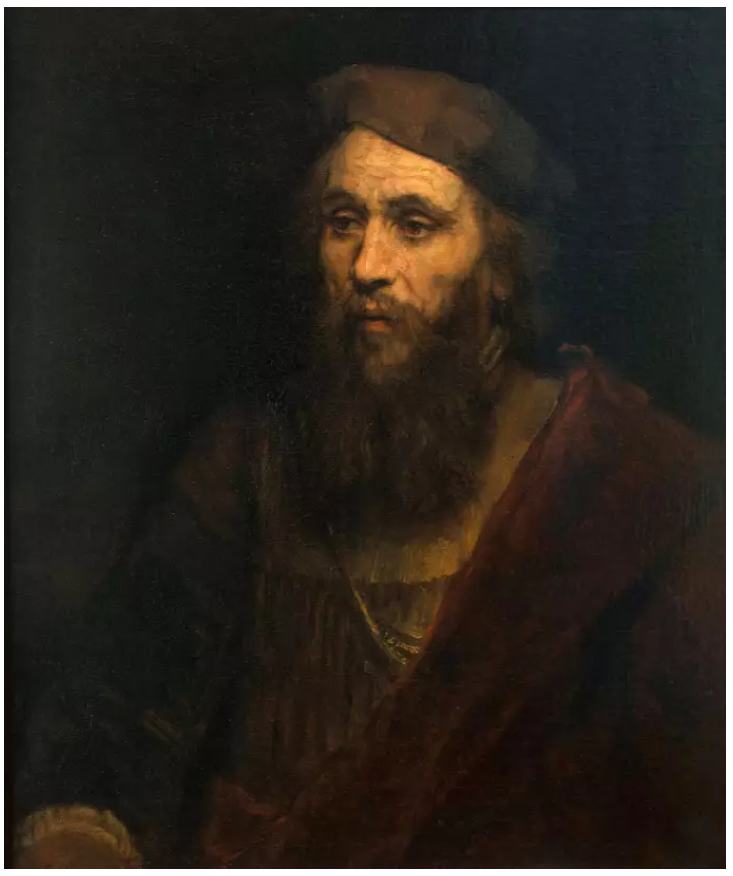
REMBRANDT VAN RIJN, PORTRAIT OF A MAN, 1661
IMAGE: © STATE HERMITAGE MUSEUM, ST PETERSBURG, PHOTO FINE ART IMAGES/HERITAGE IMAGES/SCALA, FLORENCE
Ghenie’s rich surface of pigment is layered, mutable and ambiguous; the distinction between figure and environment is blurred despite tangible glimpses of a pair of white, blue-striped socks and the vibrant red of a couch. Working in visceral, highly textured passages of paint, Ghenie scrapes at pigment on both the figure’s bulbous form and the shadowy interior, invoking a strong sense of psychological interiority reflected in the surrounding vista. Threatening to melt away as if a mirage, Untitled is a celebration and deeply-felt love of art history and the potentiality of paint to convey alternative realities. Ghenie’s meticulous build-up of pigment forms a compelling allegory for the layers of temporality, perception and reality that accumulate over time.
Figure on the Beach, 2019
Sotheby’s Hong-Kong: 5 April 2023
Estimated: HKD 20,000,000 – 30,000,000
HKD 19,810,000 / USD 2,523,599
ADRIAN GHENIE (b. 1977)
Figure on the Beach, 2019
Oil on canvas
230×260 cm (90 1/2 x 102 3/8 inches)
Monumental in scale and cinematic in scope, Adrian Ghenie’s Figure on the Beach (2019) is a masterpiece of painterly and psychological intensity. A self-portrait of the artist in a vibrant blue baseball hat, Figure on the Beach presents an enigmatic tableau that blurs the boundary between the real and the imagined, Ghenie’s handling of paint creates a broody, dreamlike haze across the composition. Ghenie’s meteoric rise to fame has seen the artist become one of the leading painters of his generation, his work marked by a combination of blurred, rough textures and chiaroscuro tones which are at times shapeless, but elsewhere sharply outlined with the artist’s almost photograph definition. Depicting a mass of vulnerable limbs against a tempestuous blue sea and sky, Figure on the Beach shares the turbulent existential vision of the likes of Rembrandt, Picasso and Bacon in both texture and spirit. Taking inspiration from Picasso’s seminal On the Beach (La baignade) from 1937, Ghenie similarly appropriates the subject matter of beaches and bathers to unite individual experience with traditional figuration to create this revelational work. Aiming at a sensual, intuitive perception of figuration, Ghenie’s combining of chaos and order affects the viewer on a physiological and visceral level.
Turning Point 1, 2009
Christie’s London: 13 October 2022
Estimated: GBP 2,200,000 – 2,800,000
GBP 2,682,000 / USD 3,042,196
ADRIAN GHENIE (B. 1977) (christies.com)
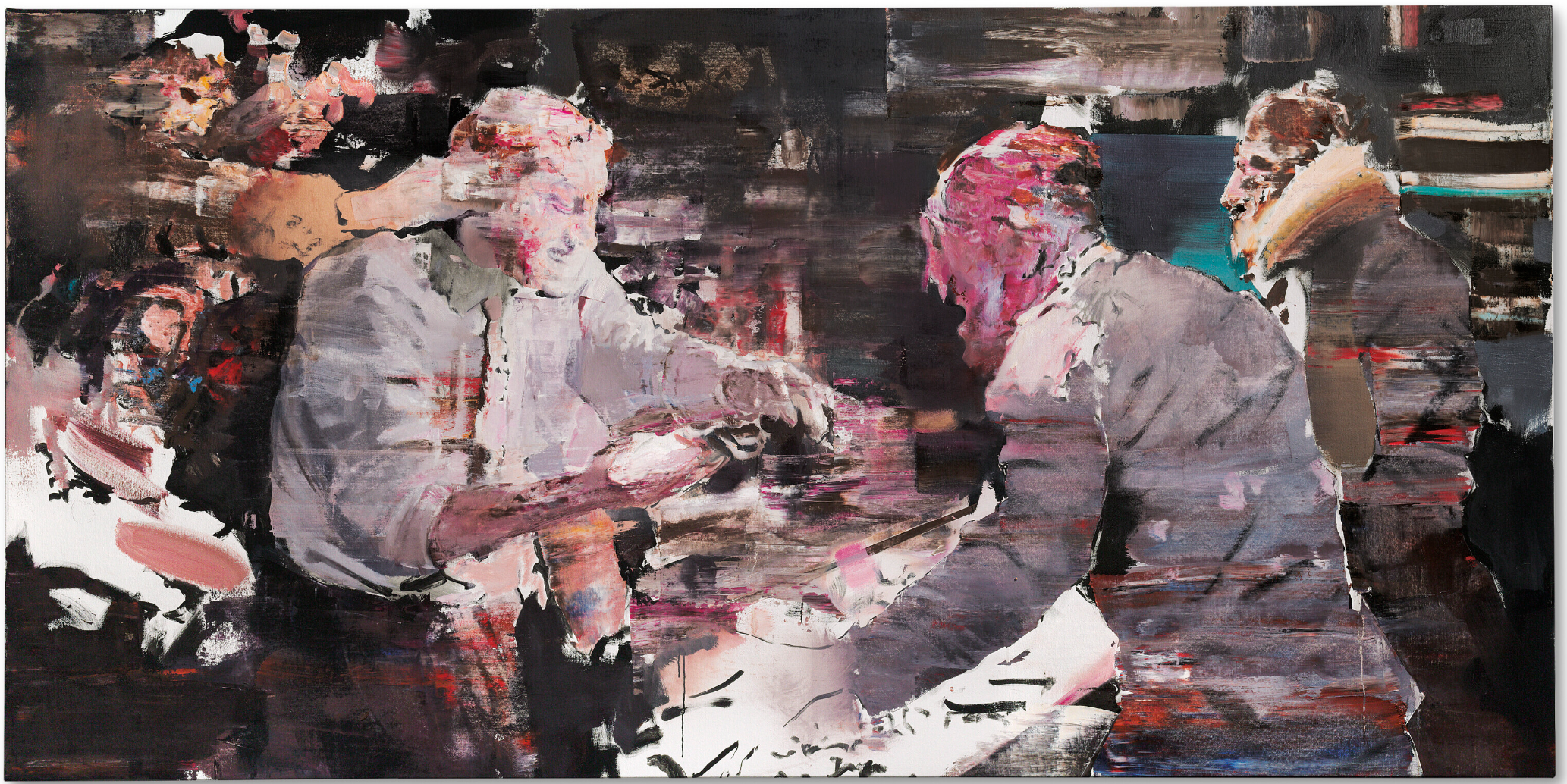
ADRIAN GHENIE (B. 1977)
Turning Point 1, 2009
Oil on canvas
150.5 x 300.5 cm (59 1/4 x 118 1/4 inches)
Painted in 2009
A panoramic vision spanning three meters across, Turning Point 1 (2009) is a masterpiece of painterly and cinematic drama by Adrian Ghenie. Amid a maelstrom of marbled paint—red, turquoise and magenta flash through the chiaroscuro darkness—three figures face one another. The nature of their activity is lost amid the stuttering veils of pigment: they could be diplomats, gamblers at a table, or drinkers at a bar. The man in shirt-sleeves to the left wears a delirious grin, while the face and shoulders of the central figure are encrusted with florid paint. His obscured profile seems to echo one of Ghenie’s artist-heroes, Vincent van Gogh; the silhouette to the right recalls that of the Dadaist genius Marcel Duchamp. Relating closely to Ghenie’s iconic ‘Pie Fight’ works, which retool the slapstick of silent film to explore dark historical themes, the painting is based on a deleted scene from Stanley Kubrick’s 1963 movie Dr. Strangelove.
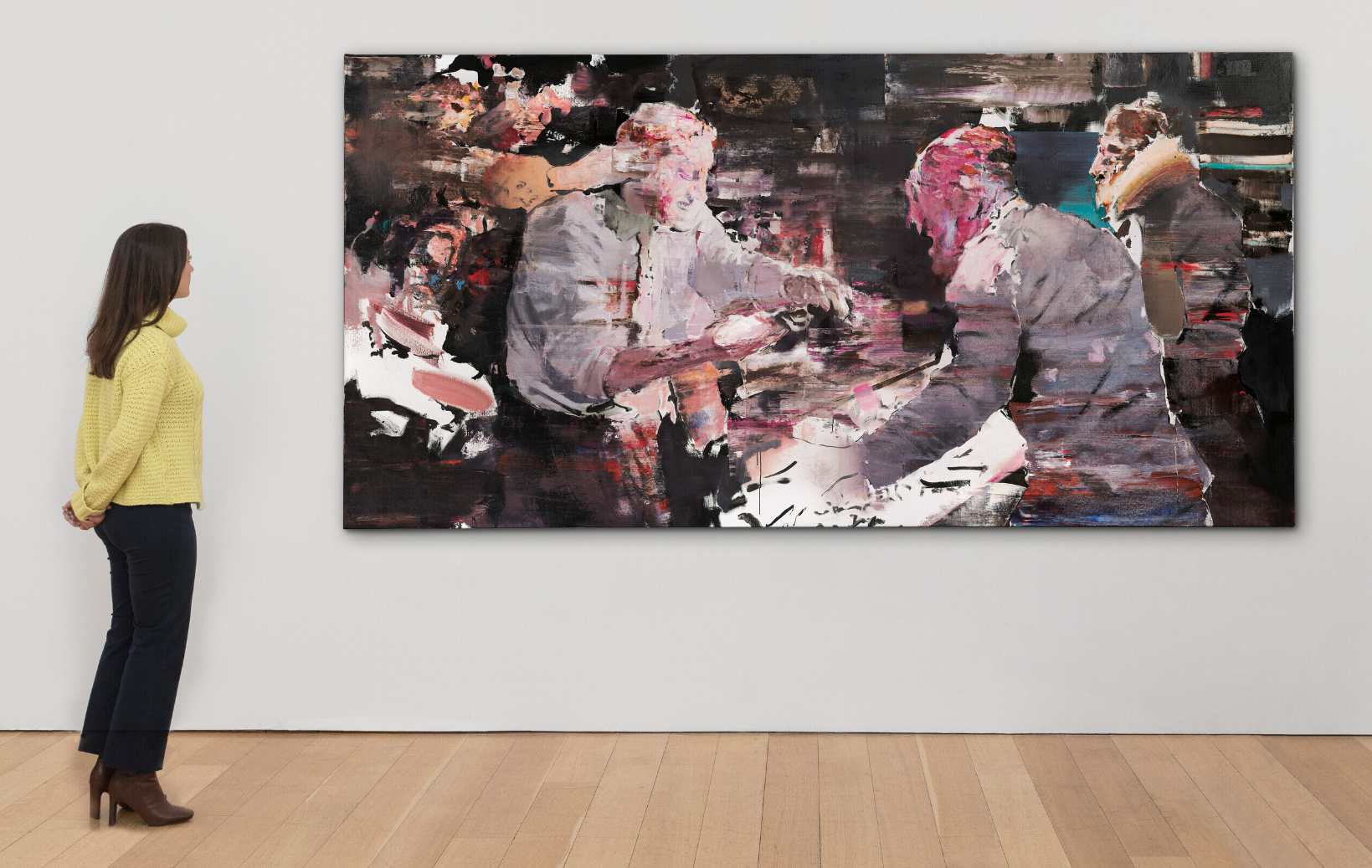
Kubrick’s black satire, made at the height of the Cold War, was originally to have featured a climactic custard-pie fight in the Pentagon’s War Room before the world ends in nuclear catastrophe. The director cut the scene after it was filmed, declaring its farcical tone inconsistent with the rest of the picture. Staging his protagonists in an ambiguous, flickering space, Ghenie conjures his own scene of momentous tension—a ‘turning point’ fraught with possibility, where tragedy and comedy intermingle, and decisions and their unknowable consequences proliferate through the liquid, mutable painterly surface. In glorious Technicolor, the painting is saturated with what Ghenie has called “the texture of history”. In his focus on Dr. Strangelove, Ghenie foregrounds a special interest in cinema. Like the silver screen, the picture plane is a surface for projecting stories through color and form. It is no accident that his paintings are composed with a virtuoso sense of light, performance and suspense. The present work’s play with the medium is particularly complex, riffing on Kubrick’s deleted scene itself as a historical document of what might have been. While the movie engaged imaginatively with the nuclear brinkmanship of the Cold War, it may also have been shaped by another cataclysm. Some accounts state the pie-fight scene was cut not because of its absurdist quality, but due to a line in which one character shouts ‘Gentlemen! Our gallant young president has been struck down in his prime!’: the first test screening took place 22 November 1963, the day of John F. Kennedy’s assassination.
In tandem with his dialogue with cinema and historical events, Ghenie’s work is animated by a deep love for the history of art. He hybridizes ideas and techniques from a range of sources, drawing on the past’s lessons to forge his own unique language. As a young painter, he sought to emulate artists like Rembrandt, to whom he had been drawn since he was a child: he concealed this interest from his teachers at the art academy in Cluj, who advocated an Abstract Expressionist style of painting. As his practice deepened, he began to enfold a kaleidoscopic array of allusion into his works, drawing on centuries of painterly achievement. Turning Point 1 churns with atmospheric shadow and motion, its dynamic grandeur matching the most dramatic canvases of the Renaissance. Other passages conjure the dragged squeegee technique of Gerhard Richter, while also evoking a filmic display beset by gaps and glitches.
The Butcher, 2009
Sotheby’s London: 30 June 2022
Estimated: GBP 400,000 – 600,000
GBP 529,200 / USD 643,482
The Butcher | Modern & Contemporary Day Auction | 2022 | Sotheby’s (sothebys.com)
ADRIAN GHENIE (b. 1977)
The Butcher, 2009
Oil on canvas
70.3 x 60.4 cm (27 5/8 x 23 3/4 inches)
Signed and dated 2009 on the reverse
Rendered in the hallmark style of Adrian Ghenie’s masterful visual practice, The Butcher from 2009 is a sumptuously surreal amalgamation of color, texture and form. Oscillating between figurative and abstract, the composition demonstrates Ghenie’s preference for what he has called ‘staged accidents’, resulting in a series of unique textures and pictorial elements. In the present work, a hanging carcass floats through the layers of brushwork on the right, obscured partially by exuberant tracts of dragged paint. To the left, a stool balances at the edge of the floorboards, a reference to Marcel Duchamp’s iconic Bicycle Wheel work. Figurative imagery is buried within drips and pours of paint, scraped and weathered surfaces, representing contrasting states of clarity, fluidity and erosion.
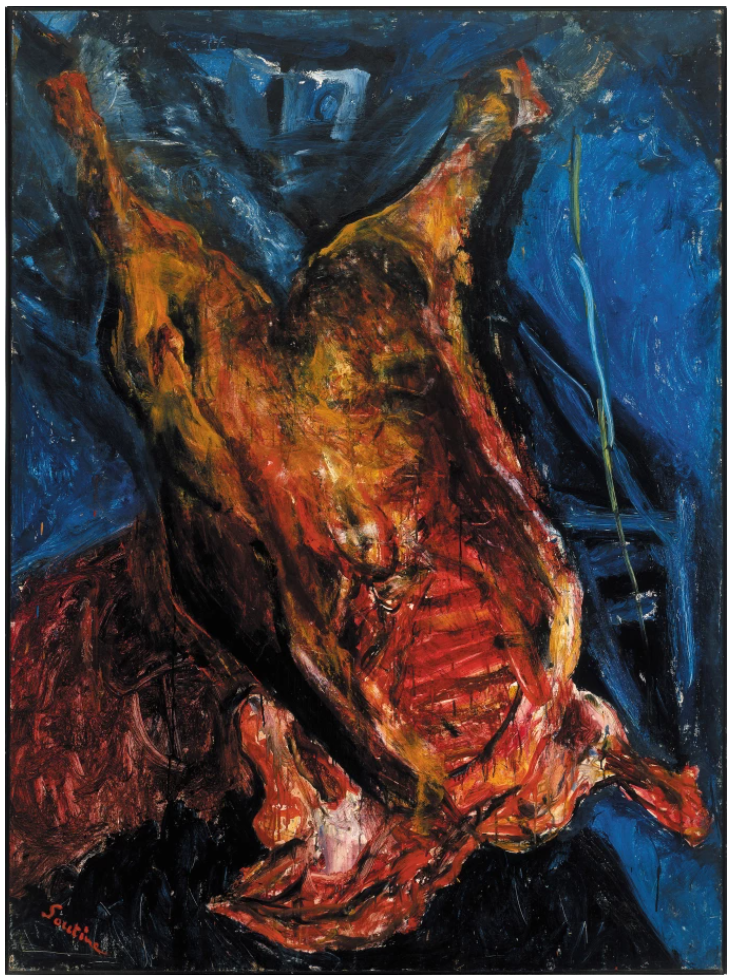
CHAIM SOUTINE, CARCASS OF BEEF, CIRCA 1925 / ALBRIGHT-KNOX ART GALLERY, BUFFALO
IMAGE: © ALBRIGHT KNOX ART GALLERY/ART RESOURCE, NY/SCALA, FLORENCE
The sources for Ghenie’s images are derived from a combination of his own memories and from historical books, archives and films. The Butcher exhibits Ghenie’s post-modern fluency as a painter: the centre of the composition melds the squeegee scrape of Gerhard Richter’s post-photographic abstraction with the visceral nature of the animal carcass favoured by Rembrandt and Chaïm Soutine. The works of Dada artists like Duchamp – who emphatically declared the end of painting – also heavily inform Ghenie’s practice, particularly in his earlier paintings. Ghenie’s choice of painting as his preferred media is a purposeful exploration into definitiveness of the Dada rejection of traditional forms of artistic production, with the artist stating, “Although I recognise the liberating effects produced by the outburst of the avant-garde movements (of which I am also a beneficiary), I can’t help but notice the extent to which some of their ideas – exposed in time to manifold appropriations – have imposed themselves with such forcefulness as to become canonical. I simply want to question this state of affairs without making accusations. But I feel I have the right to see idols like Duchamp or Dada in a different light” (Adrian Ghenie quoted in: Ibid.).
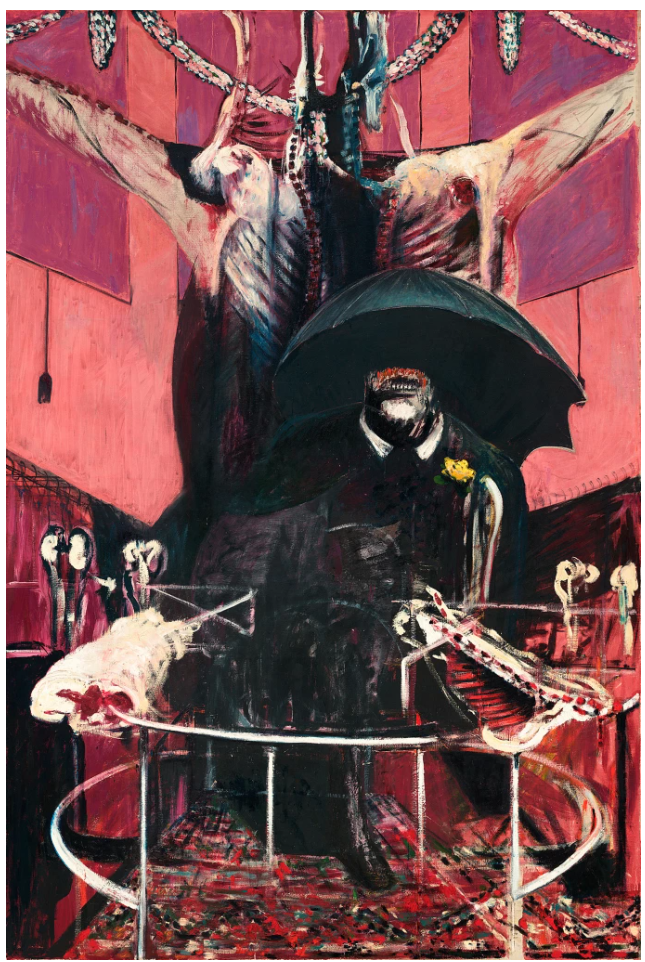
FRANCIS BACON, PAINTING 1946, 1946 / THE MUSEUM OF MODERN ART, NEW YORK
IMAGE: © THE MUSEUM OF MODERN ART, NEW YORK/SCALA, FLORENCE
ARTWORK: © THE ESTATE OF FRANCIS BACON. ALL RIGHTS RESERVED. DACS 2022
Sweeps of bright purples, blues and reds pulsate across the surface of the artwork, illuminating the blackened space in a swirl of sumptuous colour. Ghenie’s paintings, whilst firmly rooted in the abstract, carry historical and iconographic references that can be easily accessed and immediately recognised. Behind Ghenie’s expressive and energetic strokes of paint lies an empty space of solitude, which speaks to the frailty of recollection, and the transience and inadequacies of mortal existence. The boundaries between fact and fiction, memory and myth, figuration and abstraction blend and blur into a dreamlike haze. Born in Romania in 1977, Ghenie grew up under Nicolae Ceaușescu’s repressive communist regime and lives and works in Berlin today. As exemplified by the present work, the artist’s internationally acclaimed visceral pictorial language and psychologically charged paintings addresses some of contemporary history’s darkest chapters to metaphorically explore themes of malevolence, totalitarianism, dictatorship and the very fallibility of human nature. Both Bacon and Ghenie explore the framework of dictatorship, its brutal ugliness, and the associated post-war fear of destruction and death to haunting effect. Much of Bacon’s work from the 1950s also examines the notion that man is an animal, including heavy, corporeal imagery of quasi-animalistic bodies, carcasses and alien manipulated forms within his oeuvre. Ghenie’s darkened room becomes a kind of torture chamber for the art of painting itself, testing the limitations of the medium.
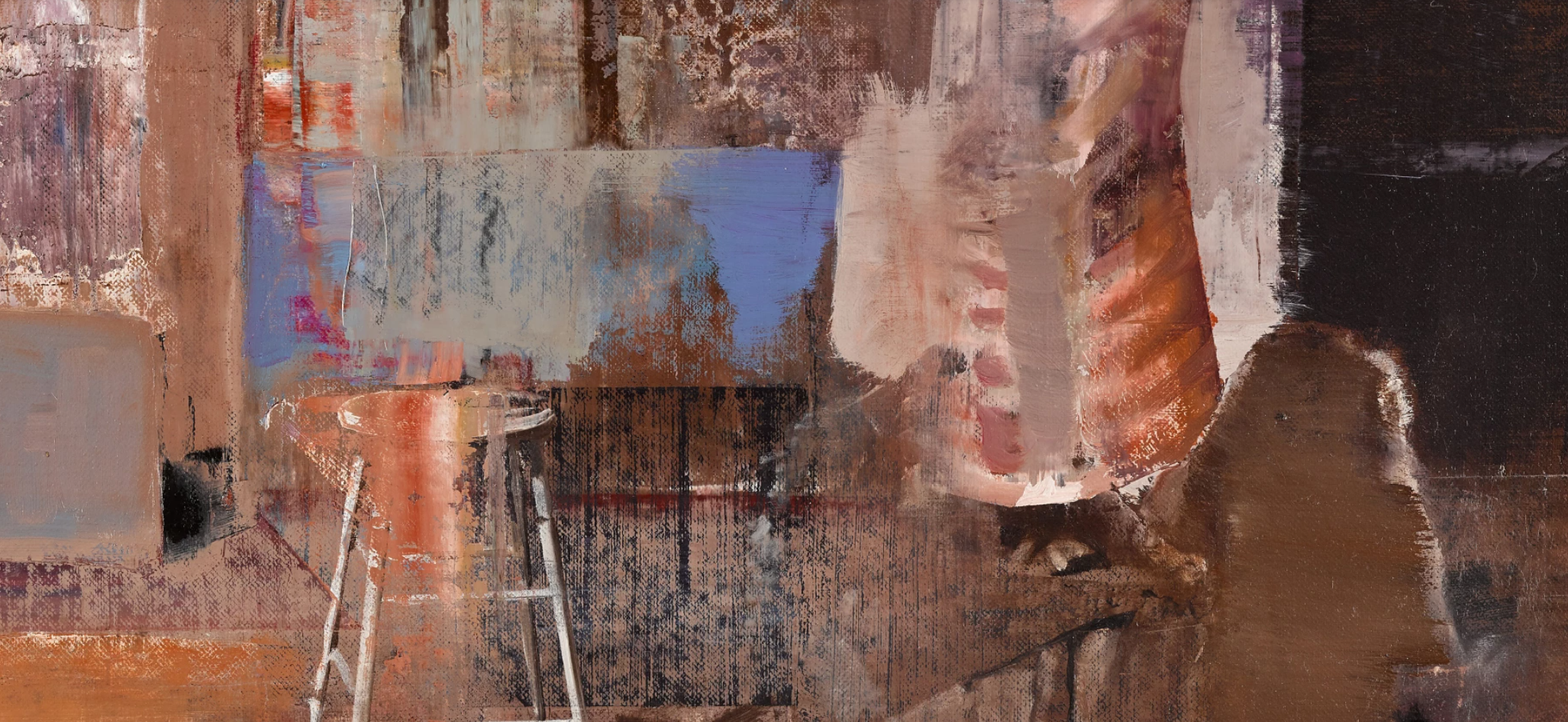
“I’m not a history painter, but I am fascinated by what happened in the twentieth century and how it continues to shape today. I don’t feel any obligation to tell this to the world, but for me the twentieth century was a century of humiliation – and through my painting, I’m still trying to understand this.”
An extraordinary composite of the historical and the personal, the real and the imagined, the ancient and the contemporary, The Butcher is a psychologically intense and fantastical amalgamation of identity and historical reflection.
The Trip, 2016
Sotheby’s New-York: 19 May 2022
Estimated: USD 4,000,000 – 6,000,000
USD 4,500,000
The Trip | The Now Evening Auction | 2022 | Sotheby’s (sothebys.com)
ADRIAN GHENIE
The Trip, 2016
Oil on canvas
94.5 x 78.6 inches (240 x 199.8 cm)
A sumptuous melee of abstraction and figuration, The Trip blazes with psychological intensity. Illustrating an imagined post-war visit to Guernica by Picasso, the site of the modern master’s acclaimed 1937 canvas, the present tableau blends and blurs past and present, reality and imagination, into a brooding, dreamlike haze. Rich in evocation and metaphor, The Trip, executed in 2016, illustrates Adrian Ghenie’s virtuosic handling of paint and brush to explore the contradictions and paradoxes of a contemporary world both shaped and informed by the atrocities of the past.
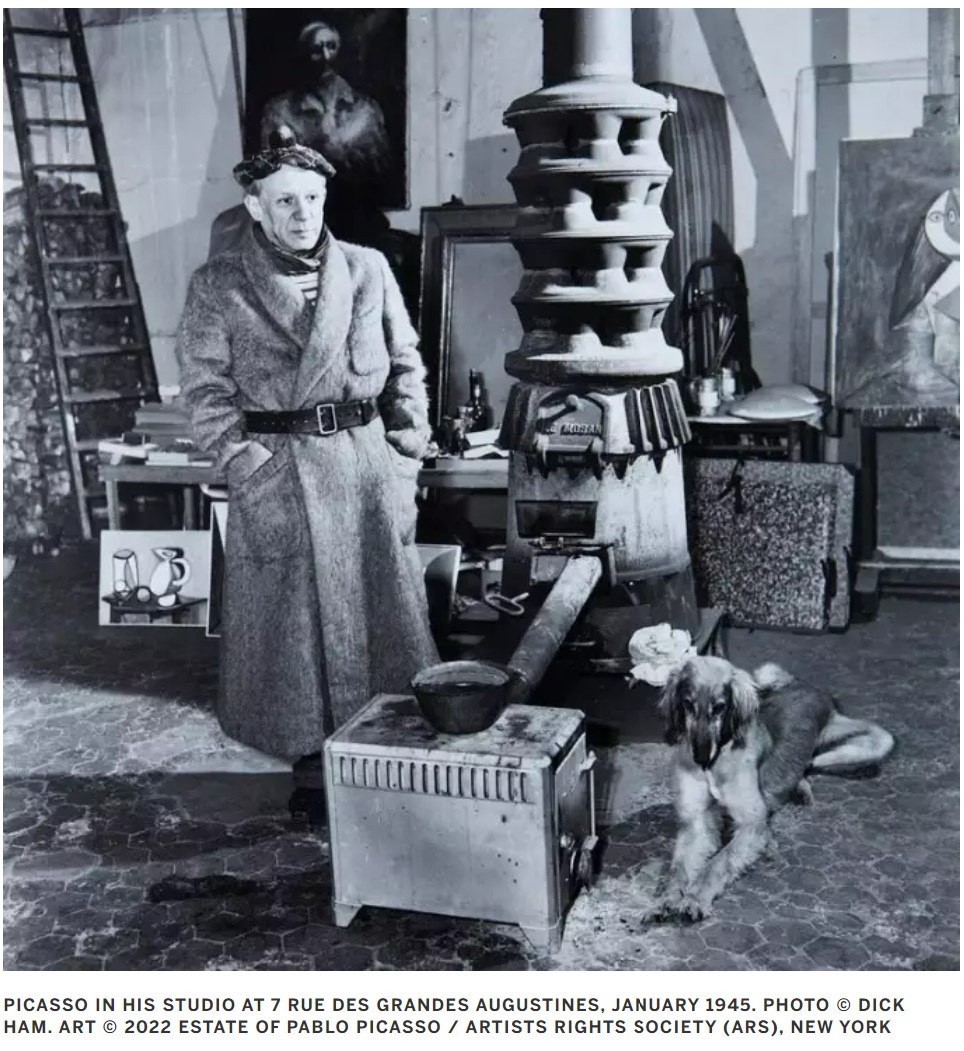
The present work, depicting Pablo Picasso garbed in a thickly belted coat with hands in his pockets, reworks the well-known photo of the Spanish artist taken in his Parisian studio in 1944. Surrounded both by a wood stove that was inoperable during wartime and canvases illustrating his distinct visual vernacular, the image attests to the persistence of artistic genius. Although Picasso’s 1937 canvas Guernica is hailed as the greatest and most powerful anti-war painting in history for its wrenching rumination on Nazi Germany and Fascist Italy’s bombing of the Basque town and its innocent civilians during the Spanish Civil War, the artist’s final visit to Spain took place three years prior to its creation.
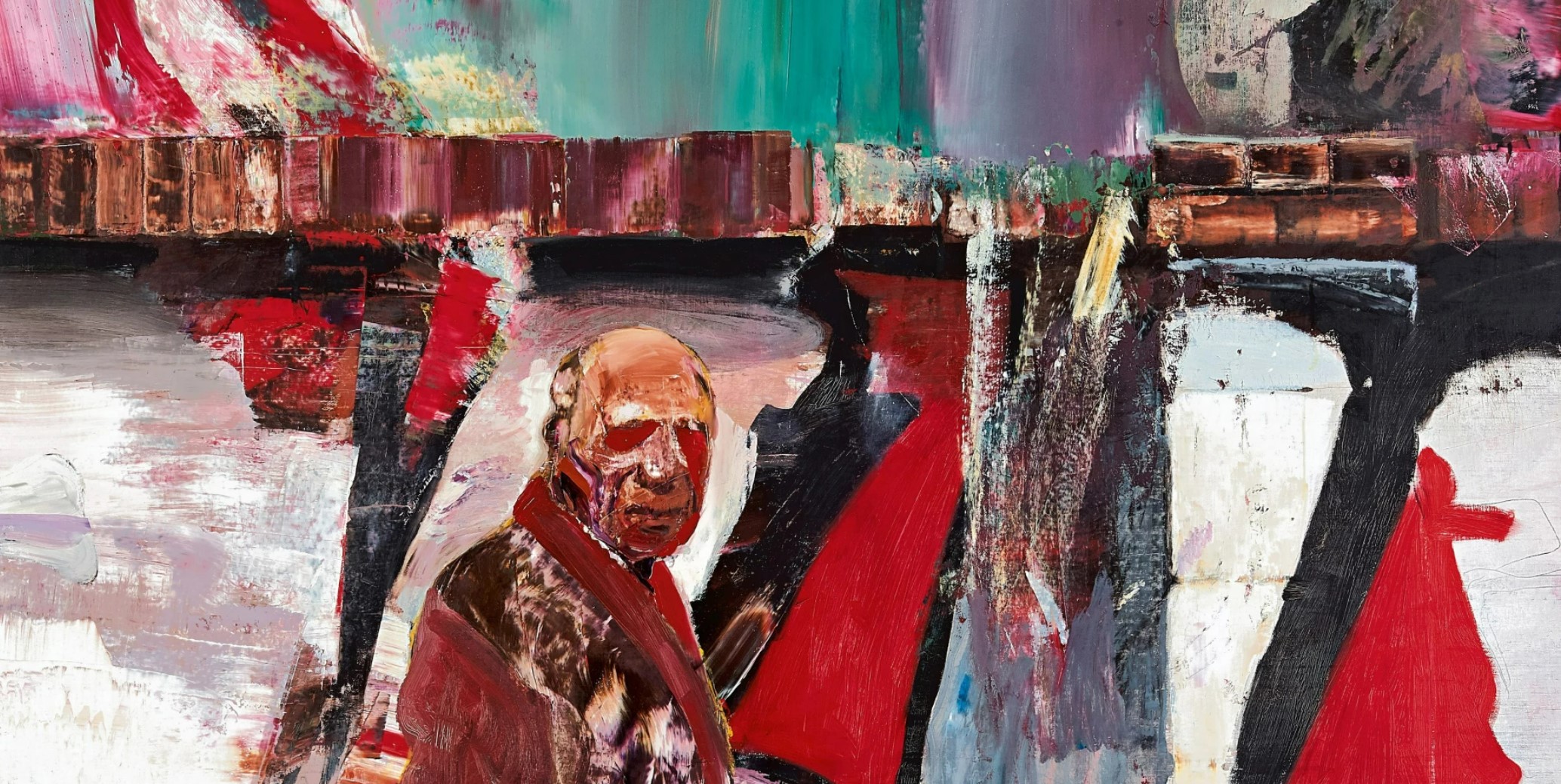
The Trip visualizes a fantastical scene in which an aged Picasso finally journeys to Guernica, obliged to fully reckon with the wholly traumatic and horrific impact of the atrocity he depicted decades prior. As Picasso, rendered in deft strokes of oil paint, poses before a visceral wall split asunder by a devastatingly brilliant deluge of periwinkle and gray, the sidewalk disintegrates into fluid churns of ochre and magenta beside his feet. The subject’s eyes, deep-set in a face articulated with heady swathes of paint, comprise ovals of spilling, bloody crimson. Ablaze in visceral hues of crimson, turquoise and lavender tones, the flaming pearlescent sky of The Trip evidences the rich textural nature of Ghenie’s uniquely integrated material approach to picture making. Demonstrating his post-modern fluency as a painter, the dense and complex surface of The Trip alludes to an array of sources ranging from the chiaroscuro of Renaissance painting to the raw psychological intensity of Francis Bacon’s portraiture to the deft chromatic squeegeed manipulations of the painted surface in Gerhard Richter’s practice that simultaneously create and shatter illusory space.
Antelope Attacked near Gas Pipe 2, 2019
Christie’s New-York: 9 May 2022
Estimated: USD 2,500,000 – 3,500,000
USD 2,220,000
ADRIAN GHENIE (B. 1977) (christies.com)
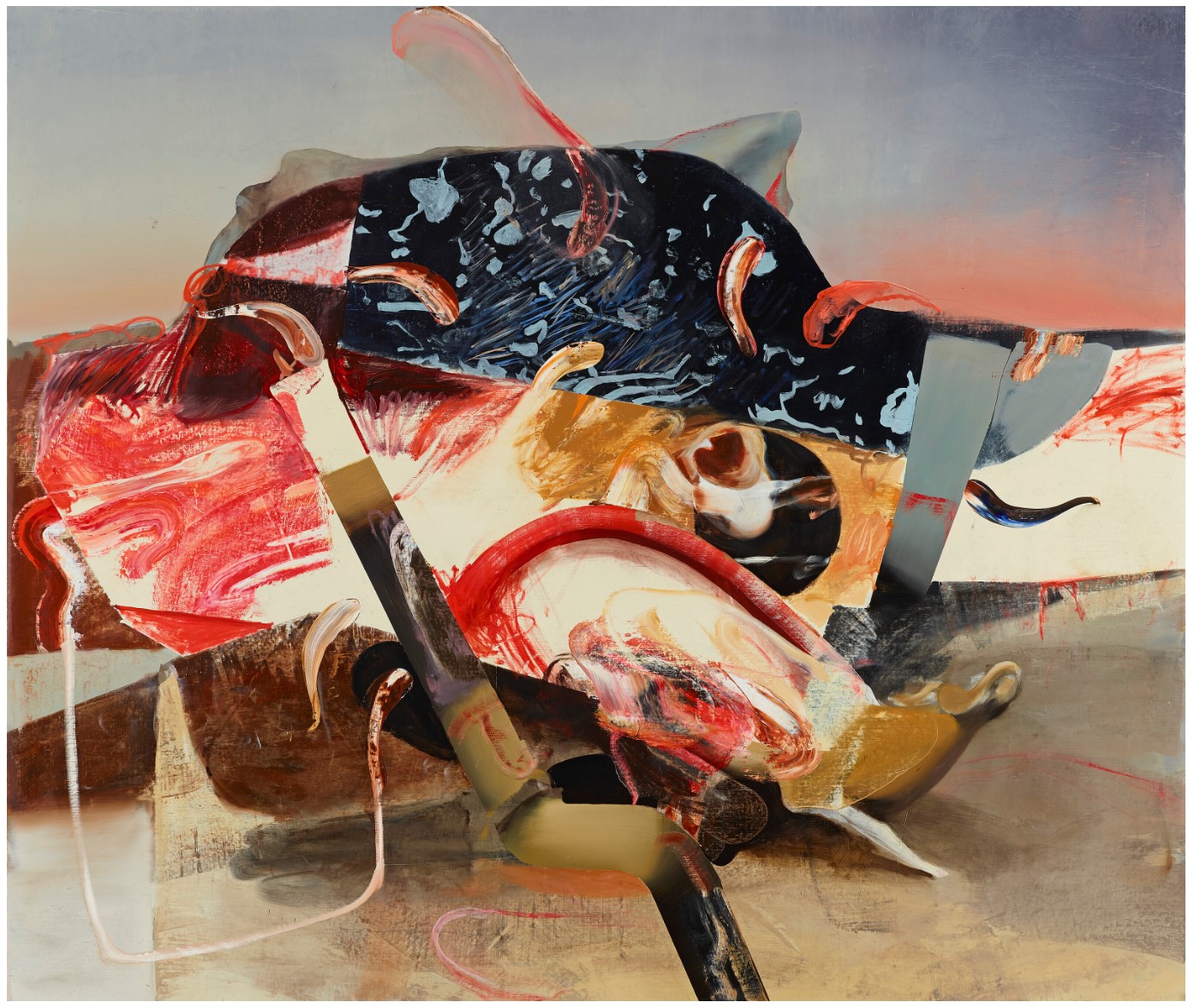
ADRIAN GHENIE
Antelope Attacked near Gas Pipe 2, 2019
Oil on canvas
250×295 cm (98.4 x 116.1 inches)
Antelope Attacked Near Gas Pipe 2 is a brilliant example of the artist’s ability to meld painterly abstraction with a pointed analysis of tradition, formal tropes, and the history of art. It was featured in the artist’s landmark 2019 solo exhibition I Have Turned My Only Face… at the Hermitage Museum in St. Petersburg and emphasizes the fervor with which Ghenie is constantly evolving and developing as an artist. Its roiling surface is difficult to pierce upon first viewing, but an extended study reveals a densely populated composition that continually offers up new vantages. Ghenie’s practice is one of exploration and investigation. Grappling with the prevailing axiom of the late twentieth-century that painting had died, the artist continuously mines visual culture in order to tease out new ideas and create work that counters the artform’s death knell.
A monumental configuration of twisting shapes, contrasting styles, and radiating colors, Antelope Attacked Near Gas Pipe 2 pulls the viewer in by the sheer nature of its veracity. Though heavily abstracted, Ghenie uses the horizon line to separate a tumultuous foreground from the soft sky in the back that fades from pink to blue as if portraying a calm sunrise or sunset. A large, mottled passage of blue-black paint rises up like a mountain or the back of some great beast, only to smash into the angular areas of brown, cream, and bloody red below. The force of the impact results in a chaotic explosion of paint and form that ripples through the entire picture plane. In the near ground, extending off of the canvas at the bottom edge, a sharp element shaped like a lightning bolt gives form to the titular gas pipe. It is shaded in places to give it some cylindrical form, but in others it seems to meld back into the rest of the work. But where is this antelope? And why does Ghenie mention the animal’s demise?
The Collector I, 2008
Christie’s Hong-Kong: 23 May 2021
Estimated: HKD 45,000,000 – 65,000,000
HKD 65,975,000 / USD 8,497,184
ADRIAN GHENIE (B.1977) (christies.com)
ADRIAN GHENIE
The Collector I, 2008
Oil on canvas
200×290 cm (78.7 x 114.1 inches)
Monumental in scale and cinematic in scope, The Collector I is a masterpiece of painterly and psychological drama. In a dimly-lit room, a man sits upon a sofa, surrounded by artworks: countless picture-frames fill the walls, and are stacked against one another on the floor. Working in visceral tones of crimson and mauve, Ghenie scrapes and marbles the pigment into sharp planes of color that echo the works of Gerhard Richter. The frames flash with glints of gold. The man’s face is lit with chiaroscuro clarity; elsewhere, liquid pigment drips down the walls in shifting, iridescent layers. Painted in 2008, in the same year as the world record Nickelodeon, this is the first and most spectacular work in Ghenie’s landmark series of four canvases on the subject of ‘the collector’. Drawing together political and art-historical narratives, these works are virtuosic essays on themes of power and desire. The protagonist is Göring and his position allowed him to assemble a collection of thousands of artworks. Within an oeuvre that asks how we process images of historic figures, Ghenie’s portraits stand among his most psychologically charged. In the present work, he is depicted surveying his spoils, spotlit at the heart of a tableau of collecting mania.
The present work is constructed like a stage-set. Light breaks through from the upper left, spotlighting the collector in dramatic focus. The picture-frames pile up into unstable profusion, as if ready to engulf the painting and its subject entirely. As pictures within a picture, they play a self-referential game with the painting as a gateway to alternative worlds. While he revels in painting’s theatricality, Ghenie—who typically first views his source images on a laptop—also sees the medium as a way of restoring material reality to the contemporary gaze. By splicing, remixing and deconstructing different modes of representation, Ghenie’s paintings examine the various artificial lenses through which we see our present, as well as those which overlay our past. The Collector I shimmers like a mirage, on the verge of melting away. Yet to encounter it is also to feel painting as a visceral, physical and vital presence. While Ghenie explores the dark places where obsession can lead, he also celebrates paint’s power to help us see the world more clearly and thus, perhaps, to imagine better ways into the future.
Burning Books, 2014
Christie’s New-York: 10 May 2021
Estimated: USD 2,500,000 – 4,500,000
USD 2,730,000
ADRIAN GHENIE (B. 1977) (christies.com)
ADRIAN GHENIE
Burning Books, 2014
Oil and acrylic on canvas
190×130 cm (74.6 x 51.2 inches)
More than six feet high, Adrian Ghenie’s Burning Books is a blistering inferno of paint. Ghenie depicts a group of people—including a man with a smeared grimace worthy of Francis Bacon, and a faceless woman sporting distinctly mid-century blond curls—throwing books onto a bonfire in the foreground. Every inch of the painting crackles with heat. The flames erupt in incandescent orange, melting upward into a rippling haze of ochre, violet, pink and inky blue. Thick pigment buckles and blurs as if physically singed. In some areas, Ghenie has created vaporous, smoky blooms of color by pressing flat the still-wet surface. Elsewhere, bright licks of impasto build the blaze into near-sculptural presence. Masked-off flashes of marbled paint—evoking ashen pages and tongues of flame alike—hover like collage, sitting proud of the canvas in crisp, three-dimensional focus. Flickering between abstraction and figuration, Burning Books conjures a hauntingly beautiful vision of a moment of historical darkness. At a time when issues of censorship, fake news and cultural vandalism dominate the headlines, its scorching intensity feels vividly urgent.
On the Road to Tarascon 2, 2013
Christie’s Hong-Kong: 9 July 2020
Estimated: HKD 27,000,000 – 37,000,000
USD 33,725,000 / USD 4,351,276
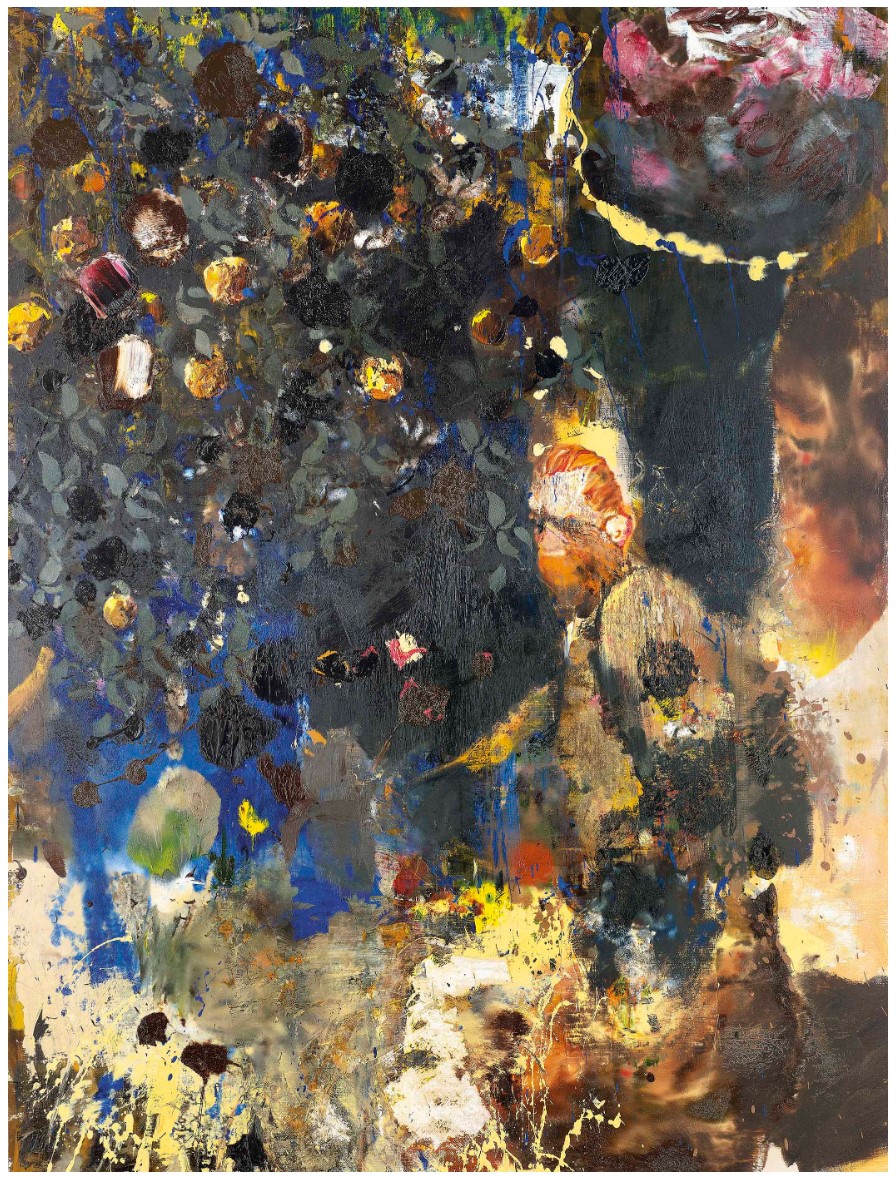
ADRIAN GHENIE
On the Road to Tarascon 2, 2013
Oil on canvas
210×160 cm (82.6 x 63 inches)
Painted in 2013, On the Road to Tarascon 2 is a powerful tribute to his admiration for Vincent van Gogh: an artist who haunts his practice. Stretching over two meters in height, it takes its place within Ghenie’s series of the same name, which is based on the Dutch master’s lost self-portrait The Painter on the Road to Tarascon (1888). Following in the footsteps of Francis Bacon, who paid homage to work in his own series of the mid-1950s, the artist filters the original through his unique painterly language, transforming the surface into a shifting, illusory veil of color, pattern and texture. The figure, defined only by his shock of red hair, is pushed to the brink of abstraction, his body blurred as if photographed in motion. Fascinated by what he describes as ‘the texture of history’, Ghenie seeks to visualize the way in which we process the past. Rescuing key moments and figures from the flat, glossy world of internet archives, cinema screens and printed reproductions, he re-materializes them through the vivid, visceral substance of paint. In the present work, Ghenie dramatizes the way in which time transforms our perception of art history, adding layers of obfuscation and artifice to objects buried deep in collective consciousness.
The Arrival, 2014
Sotheby’s London: 11 February 2020
Estimated: GBP 2,500,000 – 3,500,000
GBP 4,184,500 / USD 5,415,426
(#5) ADRIAN GHENIE | The Arrival (sothebys.com)
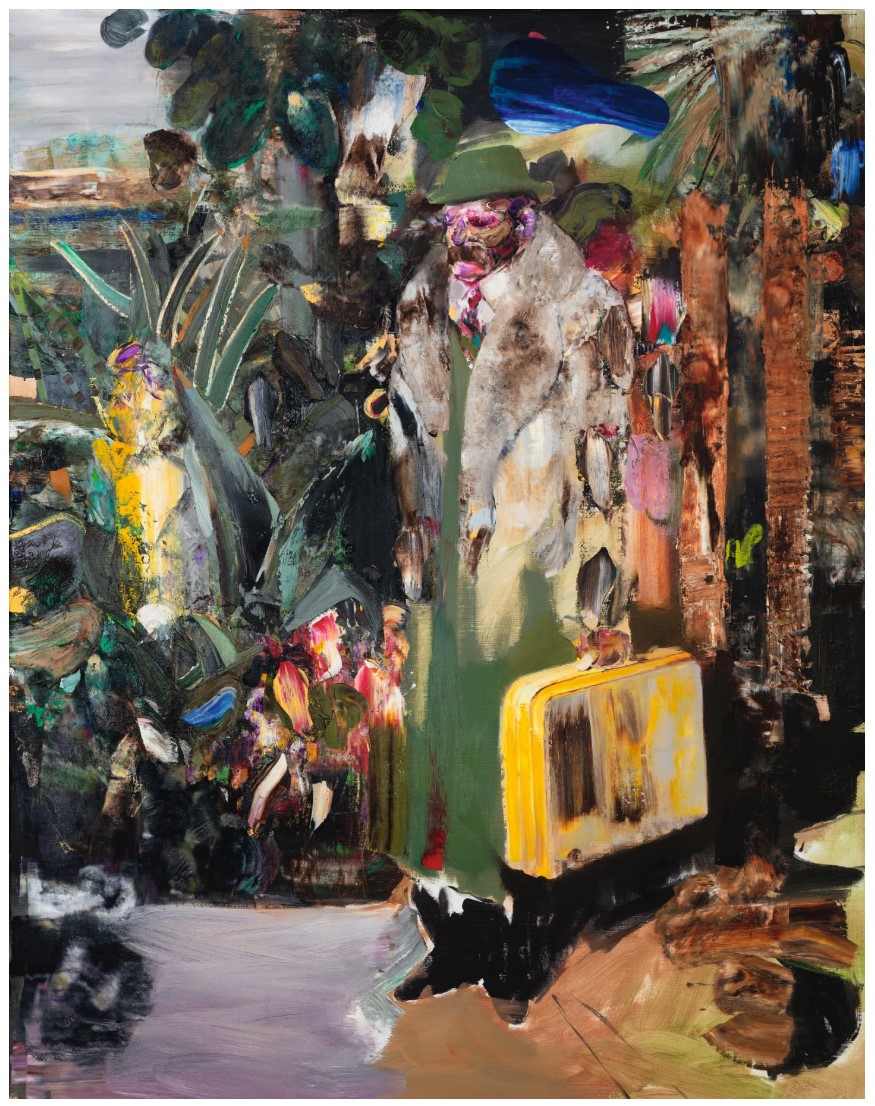
ADRIAN GHENIE
The Arrival, 2014
Oil on canvas
210×165 cm (82.6 x 65 inches)
In Adrian Ghenie’s monumental painting The Arrival (2014), the boundaries between fact and fiction, memory and myth, figuration and abstraction blend and blur in a dreamlike haze. Rendered in Ghenie’s emblematic painterly style, the work draws together different aesthetic elements into a surrealistic amalgamation of colour, form and subject matter that slips in and out of focus like a half-remembered dream. Standing six and a half feet tall, the painting depicts a jungle scene filled with tropical plants. Amongst the exotic foliage stands an enigmatic figure in a suit, heavy fur coat and bowler hat, a vibrant yellow suitcase clasped in his hand. Disconcerting and disquieting, his presence seems strangely at odds with his surroundings. One of the great hallmarks of Ghenie’s practice, this sense of incongruity provides a powerful lens through which the artist explores the contradictions and paradoxes of a contemporary world both shaped and informed by the atrocities of the past. Indeed, Ghenie’s practice frequently contends with the darkest chapters of human history – “I’m fascinated by Nazi Germany” he has proclaimed – and the present work is no exception (Adrian Ghenie in conversation with Michael Peppiatt in: Juerg Judin, Ed., Adrian Ghenie Paintings 2014-19, Ostfildern 2020, p. 122). Its protagonist is based on one of the most notorious figures of Nazi Germany: Joseph Mengele. The camp doctor in Auschwitz, known also as the Angel of Death, Mengele has recurred in a number of Ghenie’s paintings: his presence offers a means of probing the extremities of human nature and evil incarnate.