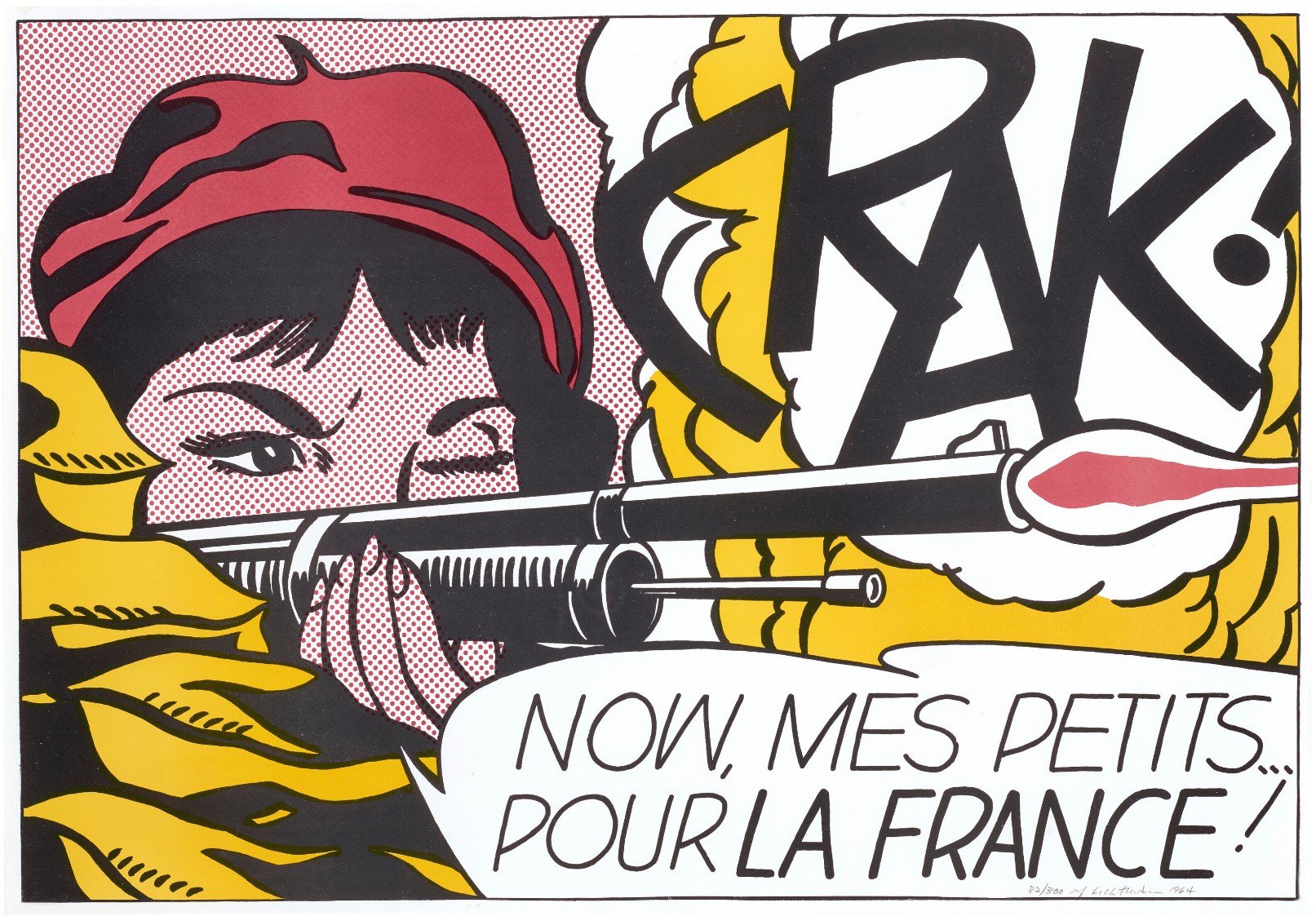
Crak!
Medium: Offset lithograph in colors on lightweight wove paper
Year: 1963-1964
Image: 18 5/8 x 26 7/8 inches (47.5 x 68.3 cm)
Sheet: 19 1/4 x 27 1/2 inches (48.9 x 69.9 cm)
Edition: 300
Publisher: Leo Castelli Gallery, New-York
Literature: Corlett II.2a, RLCR 812
CRAK!, 1963/1964 (RLCR 812) | Catalogue entry | Roy Lichtenstein: A Catalogue Raisonné
Signed, dated and numbered in pencil
This print and several versions of a poster of the same motif (RLCR 4802, CRAK! Poster) were published to announce Lichtenstein’s second solo exhibition at Leo Castelli Gallery, September 28–October 24, 1963 (1963c New York Castelli). The numbered impressions are inscribed 1964. CRAK! and RLCR 759, Crying Girl were produced for the same Leo Castelli Gallery exhibition.
Named after its sharp onomatopoeic burst, Crak! was originally conceived as a marketing poster announcing Roy Lichtenstein’s exhibition at the Leo Castelli Gallery in September 1963, one of the most decisive moments in his early career. While commonly associated with that date, certain numbered impressions bear the inscription 1964, reflecting the fluid boundary between promotional material and editioned print in Lichtenstein’s early practice.
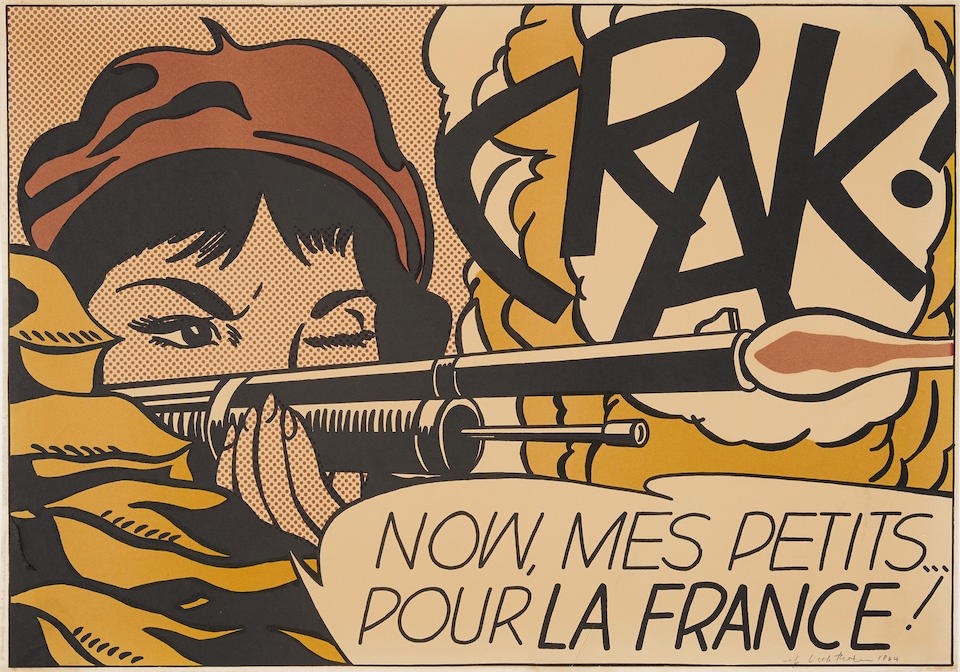
The composition centers on a beret-clad woman aiming a rifle across the picture plane. Her face, rendered in a dense field of Benday dots, is both calm and concentrated, one eye closed in the act of aiming while the other remains open. The rifle cuts horizontally through the image, culminating in a stylized discharge marked by the emphatic “CRAK!” at the right. Below, a speech bubble delivers a striking line in French: “NOW, MES PETITS… POUR LA FRANCE!”, a theatrical invocation of patriotism that immediately complicates the reading of the scene.
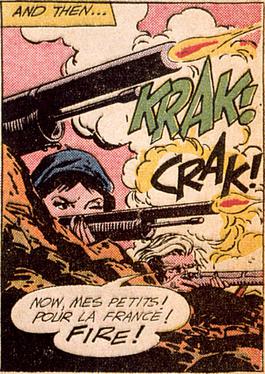
The image is derived from a panel in Star Spangled War Stories #102 (April/May 1962), yet Lichtenstein’s intervention is far from passive appropriation. He systematically recomposes the scene: the original mound of sand is replaced with a more structured formation resembling stacked sandbags, while both foreground and background elements are cropped to isolate the figure with surgical precision. This act of reduction is essential. By stripping away narrative context, Lichtenstein transforms a moment within a story into a self-contained image. The result is no longer illustrative: it becomes emblematic. The woman is no longer a character; she is a sign.
Monocular Vision and Perception
Executed as a screenprint, Crak! extends Lichtenstein’s investigation into the aesthetics of mechanical reproduction. The visual language is deliberately industrial: flat primary colors, bold black contours, and the disciplined application of Benday dots. The dots are not incidental, they function as both shading and structure, particularly in the rendering of the face and background. Their mechanical regularity contrasts with the apparent immediacy of the subject matter, reinforcing the central paradox of Lichtenstein’s work: an image of action produced through a system of restraint and repetition. The composition is tightly balanced. The red of the beret echoes the dot field, the yellow zones frame the figure, and the rifle acts as a stabilizing axis. Everything is controlled, even the moment of firing.
A crucial element in Crak! is the figure’s gaze. As noted by art historian Michael Lobel, Lichtenstein repeatedly employs what he defines as “monocular vision”: a frontal depiction in which both eyes are presented, yet one is closed or obscured. Here, the woman’s act of aiming naturally produces this condition, one eye shut, the other fixed on its target. Yet within Lichtenstein’s broader practice, this is not merely functional. It becomes a motif. The viewer is confronted with a face that is both fully visible and partially withdrawn, creating a subtle tension between openness and restriction. This device reinforces the conceptual framework of the work. Vision itself is mediated. Just as the image is filtered through the language of comics, perception is filtered through a single, controlled viewpoint.
Meaning: Between Patriotism and Simulation
The French text introduces a layer of ambiguity that is both deliberate and destabilizing. “Pour la France!” evokes nationalist rhetoric, yet its placement within a stylized comic framework renders it ambiguous, almost performative. The phrase reads less as a sincere declaration than as a constructed slogan: something learned, repeated, and disseminated. Lichtenstein is not depicting war as lived experience. He is presenting war as image: flattened, aestheticized, and detached from consequence. The act of firing becomes graphic; the sound becomes typography; emotion becomes surface. The result is a quiet but incisive critique. Violence, patriotism, and identity are shown not as realities, but as visual codes: assembled, reproduced, and consumed.
Crak! occupies a critical position within Lichtenstein’s early output. As both a promotional poster and an editioned print, it sits at the intersection of art and communication: perfectly aligned with the artist’s interest in blurring those boundaries. It is not the loudest image in Lichtenstein’s oeuvre, but it is among the most precise. And in that precision lies its strength: a distilled statement on how images, of war, of identity, of belief, are constructed, framed, and ultimately believed.
Auction Market Overview
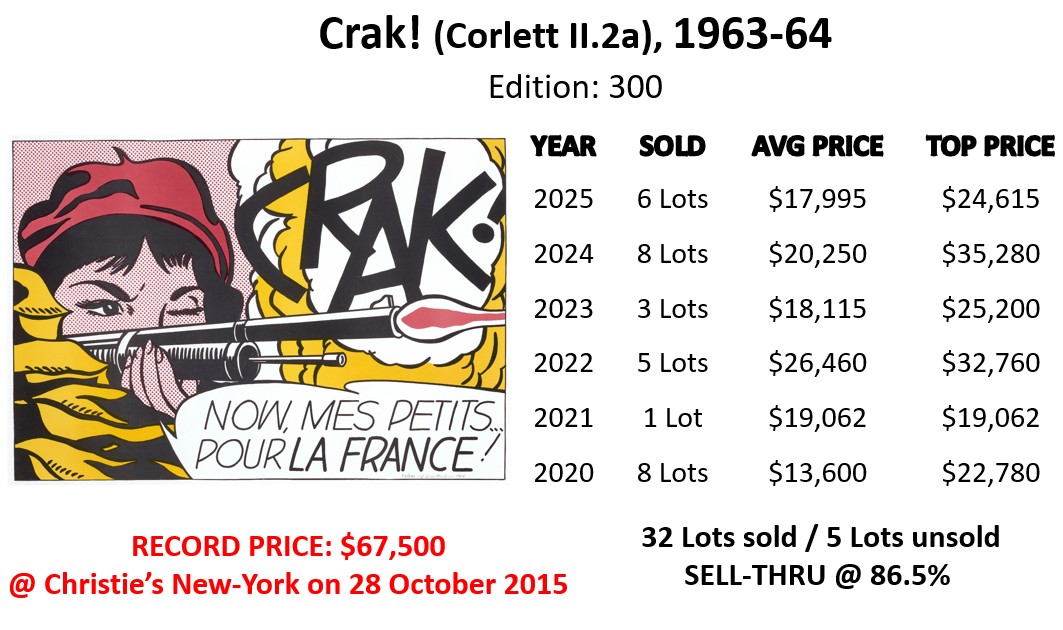
THE COLLECTION OF ILEANA SONNABEND AND THE ESTATE OF NINA CASTELLI SUNDELL
Christie’s New-York: 28 October 2015
Estimated: USD 20,000 – 30,000
USD 67,500
AUCTION RECORD FOR CRAK!
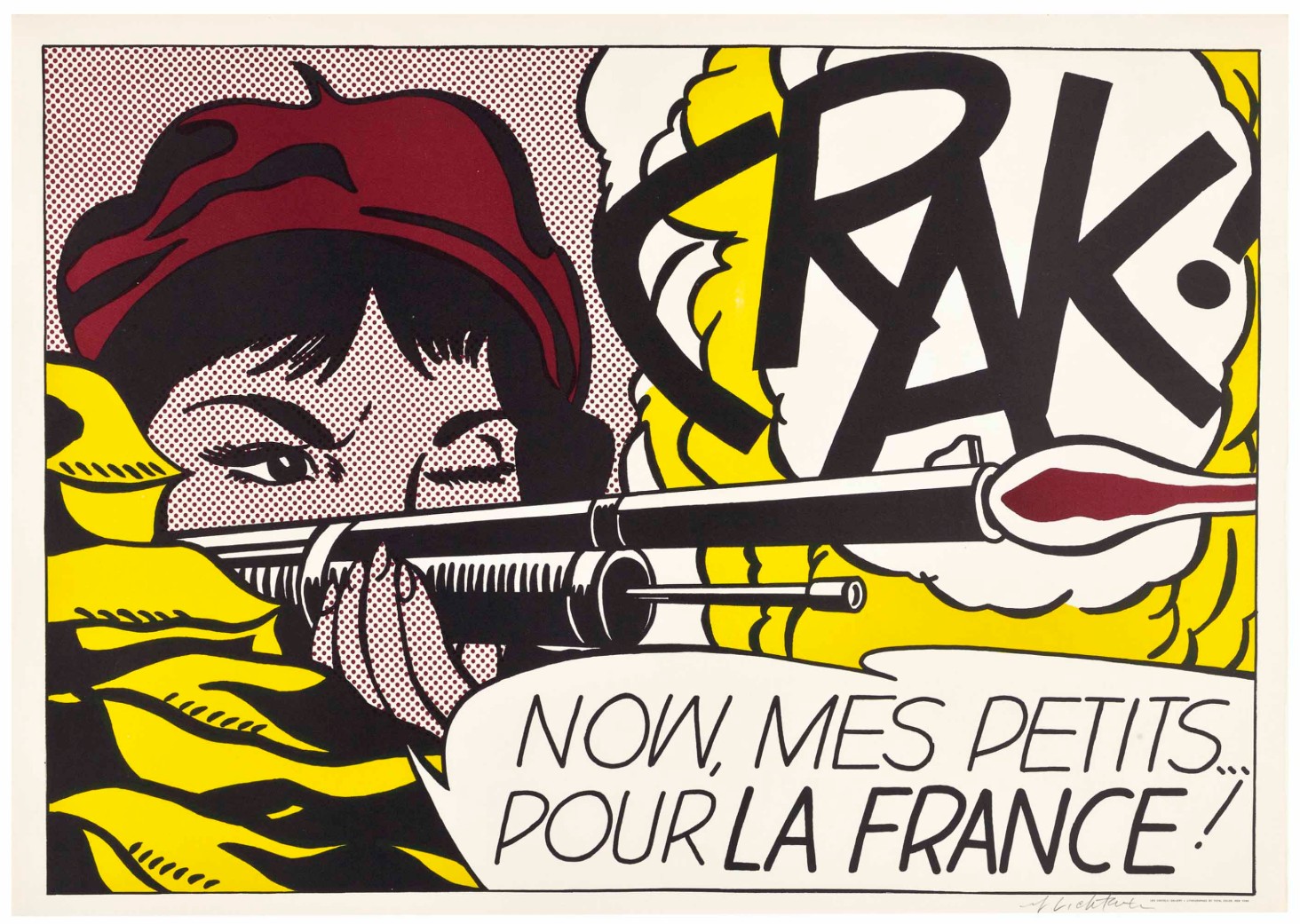
ROY LICHTENSTEIN (1923-1997)
Crak!, 1964
Offset lithograph in colors on wove paper
The colors fresh, signed in pencil
From the edition of unknown size
Published by Leo Castelli Gallery, New York
2026 Auction Results
Freeman’s: 24 April 2026
Estimated: USD 10,000 – 15,000
USD 21,760
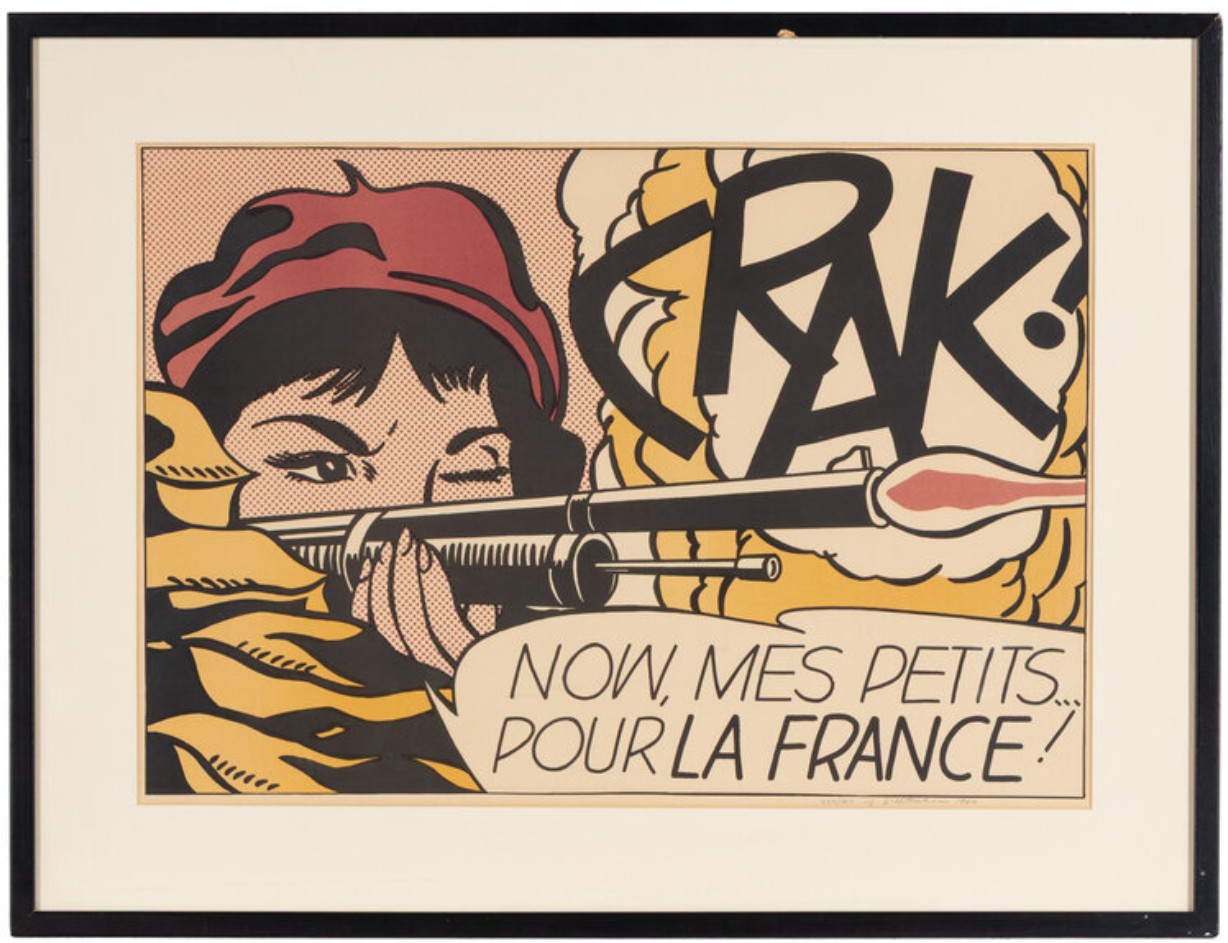
ROY LICHTENSTEIN (American, 1923-1997)
CRAK! (Corlett II.2), 1963-64
Offset lithograph in colors
Signed, dated, and numbered 227/300 in pencil
Published by Leo Castelli Gallery, New York
Printed by Colorcraft, New York
Pop Impressions: Prints from the Collection of Dorothy and Roy Lichtenstein
Sotheby’s New-York: 14 April 2026
Estimated: USD 15,000 – 25,000
USD 48,640
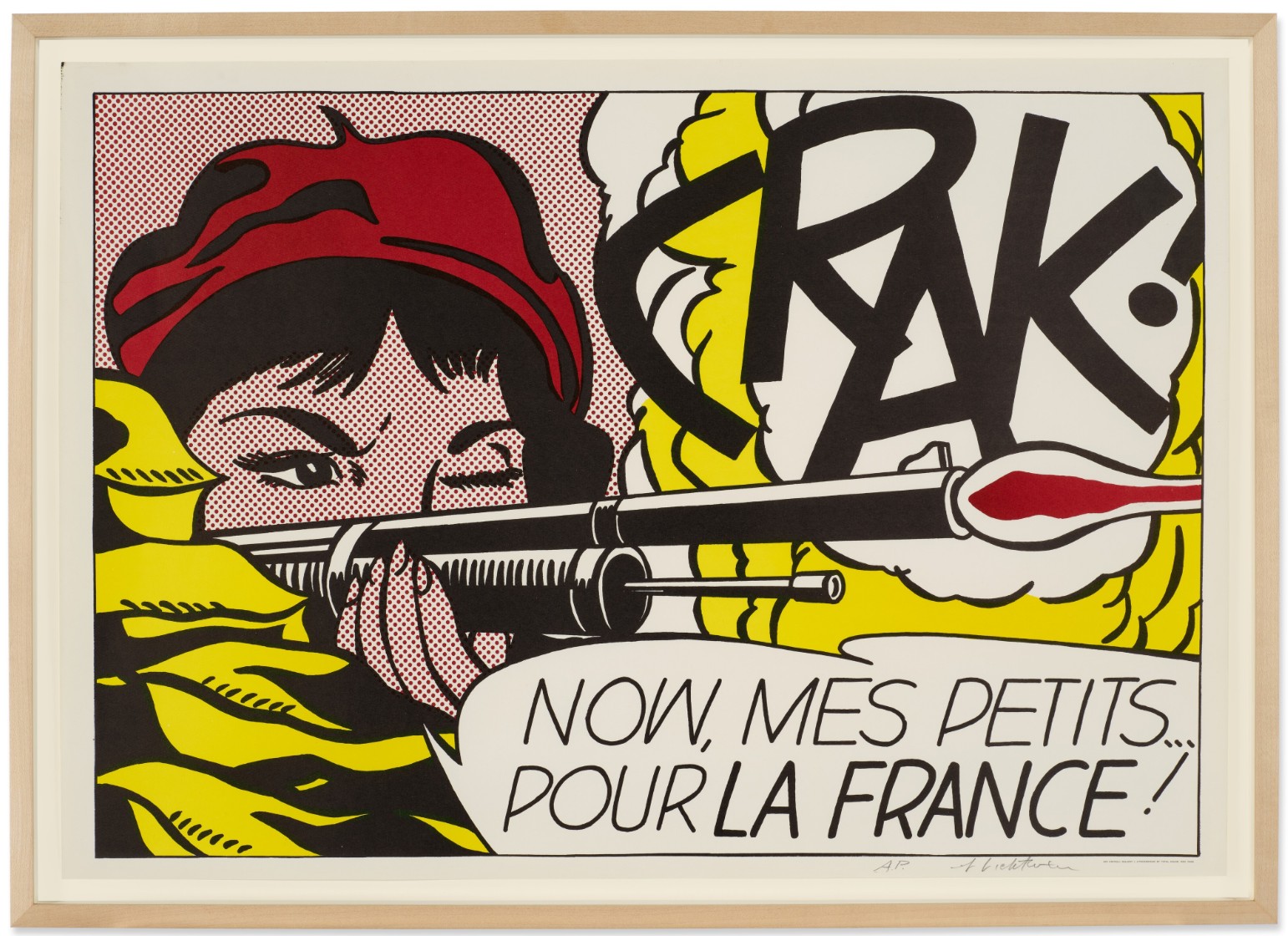
ROY LICHTENSTEIN (1923 – 1997)
CRAK! (Corlett II.2.b; RLCR 4802), 1963-64
Offset lithograph printed in colors on lightweight wove paper
Signed in pencil and inscribed A.P.
This impression is from the poster edition of unknown size with the small typesetting
‘Leo Castelli Gallery • Lithographed by Total Color, New York’
Without the exhibition text in the lower margin
(there is also a numbered edition of 300)
Published by Leo Castelli Gallery
2025 Auction Results
Mainichi Auction Tokyo: 5 September 2025
Estimated: JPY 1,800,000 – 2,500,000
JPY 2,127,500 / USD 14,315
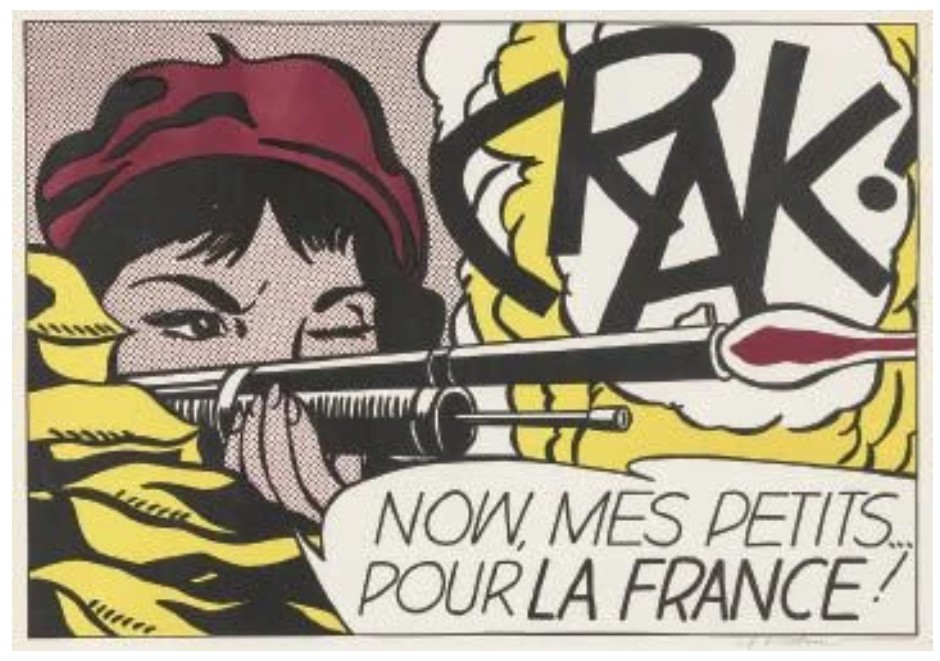
ROY LICHTENSTEIN
CRAK!, 1964
Offset lithograph
Signed
Abell: 27 August 2025
Estimated: USD 1,000 – 2,000
USD 10,625
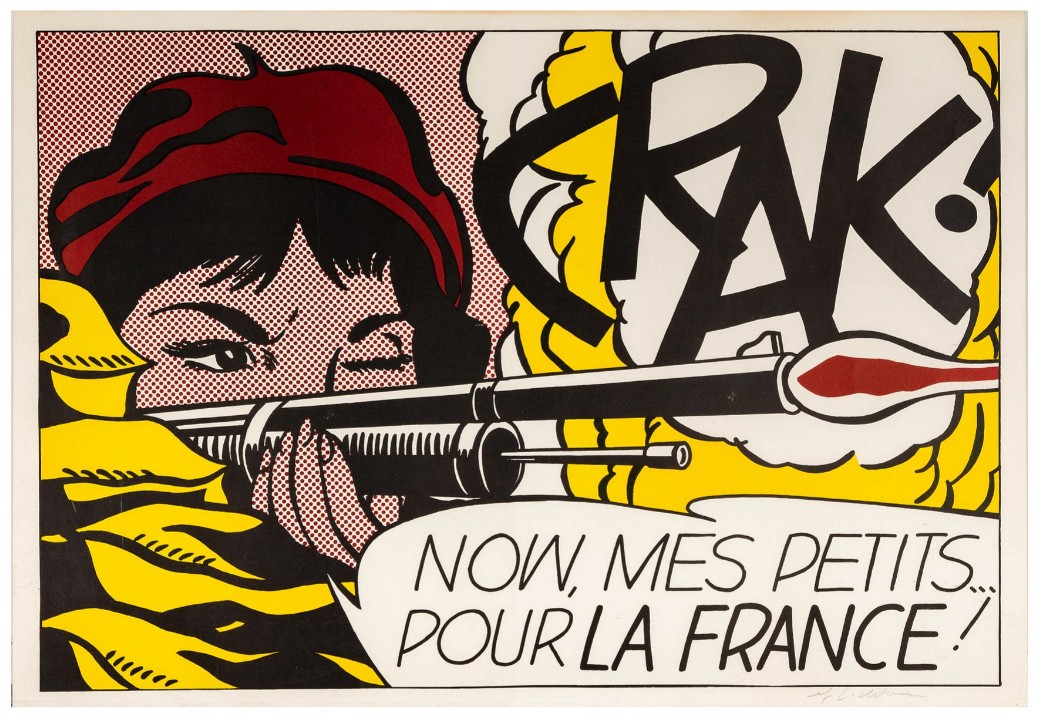
ROY LICHTENSTEIN (American 1923-1997)
Crak!, 1963-64
Offset lithograph in colors on wove paper
Outside the edition of 300
Signed in pencil lower right
Karl & Faber: 6 June 2025
Estimated: EUR 10,000 – 15,000
EUR 13,335 / USD 15,200
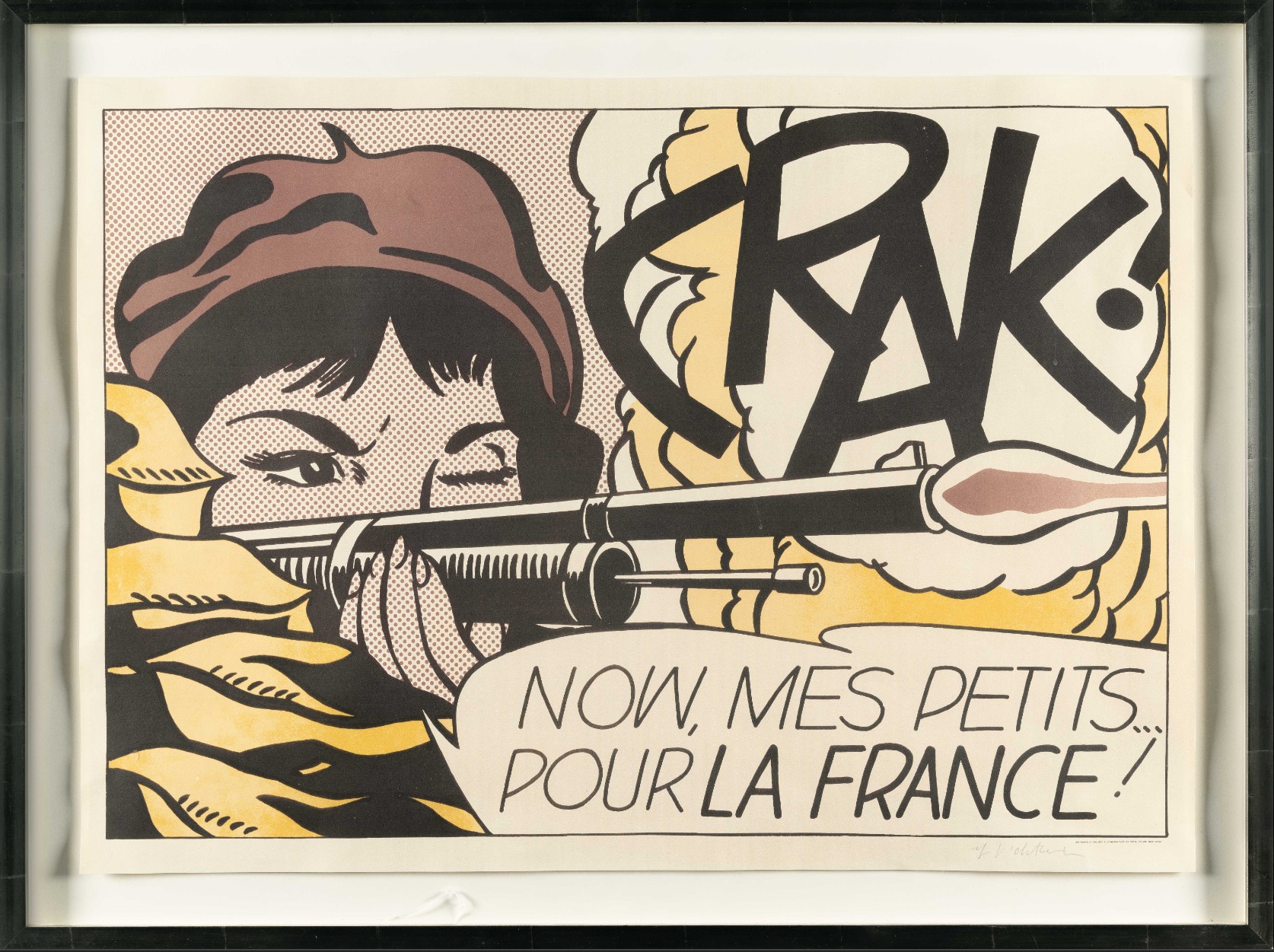
ROY LICHTENSTEIN
CRAK! (Corlett II.2.2), 1963-64
Color offset lithograph on wove paper
Unknown number of copies
Signed lower right
Karl & Faber: 5 June 2025
Estimated: EUR 12,000 – 15,000
EUR 21,590 / USD 24,615
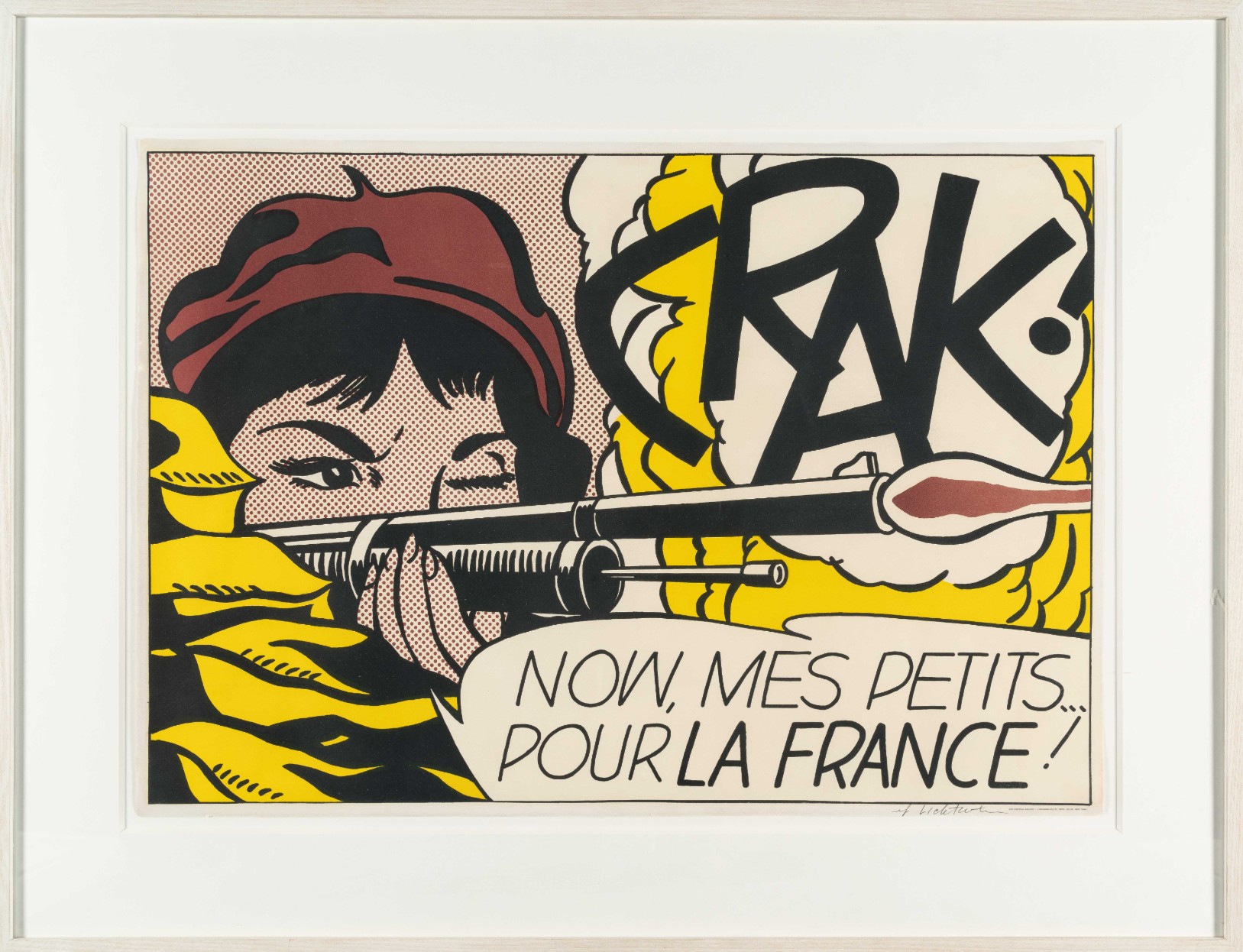
ANDY WARHOL
CRAK! (Corlett II.2.2), 1963-64
Color offset lithograph on wove paper
From an unknown number of copies
Signed lower right
Mainichi Auction Tokyo: 21 February 2025
Estimated: JPY 1,800,000 – 2,500,000
JPY 3,450,000 / USD 23,075
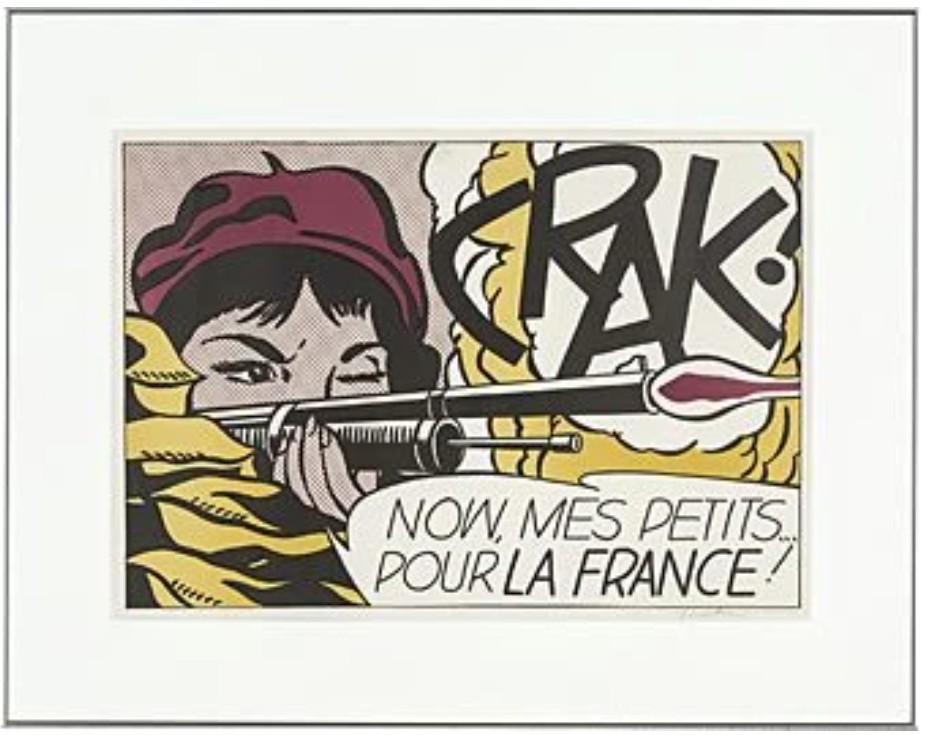
ROY LICHTENSTEIN
CRAK!, 1964
Offset lithograph
Signed
Clars Auction Gallery: 20 February 2025
Estimated: USD 15,000 – 20,000
USD 16,000 (Hammer)
USD 20,160
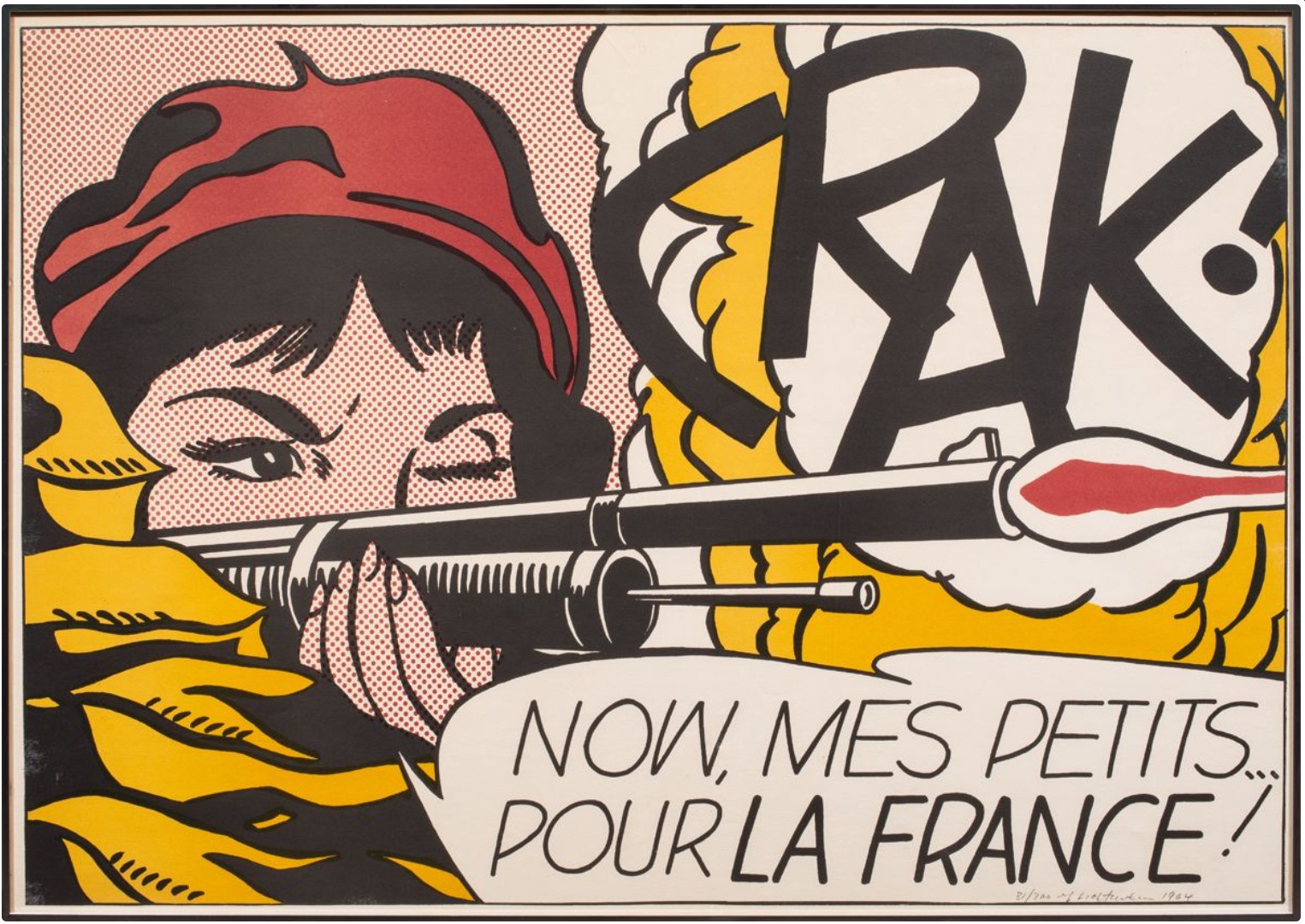
ROY LICHTENSTEIN (American, 1923-1997)
“Crak!,” 1964
Offset lithograph in colors
Pencil signed and dated lower right
Edition: 81/300
Printed by Colorcraft, New York, NY
Published by Leo Castelli Gallery, New York
2024 Auction Results
Van Ham: 27 November 2024
Estimated: EUR 18,000 – 24,000
EUR 21,780 / USD 23,000
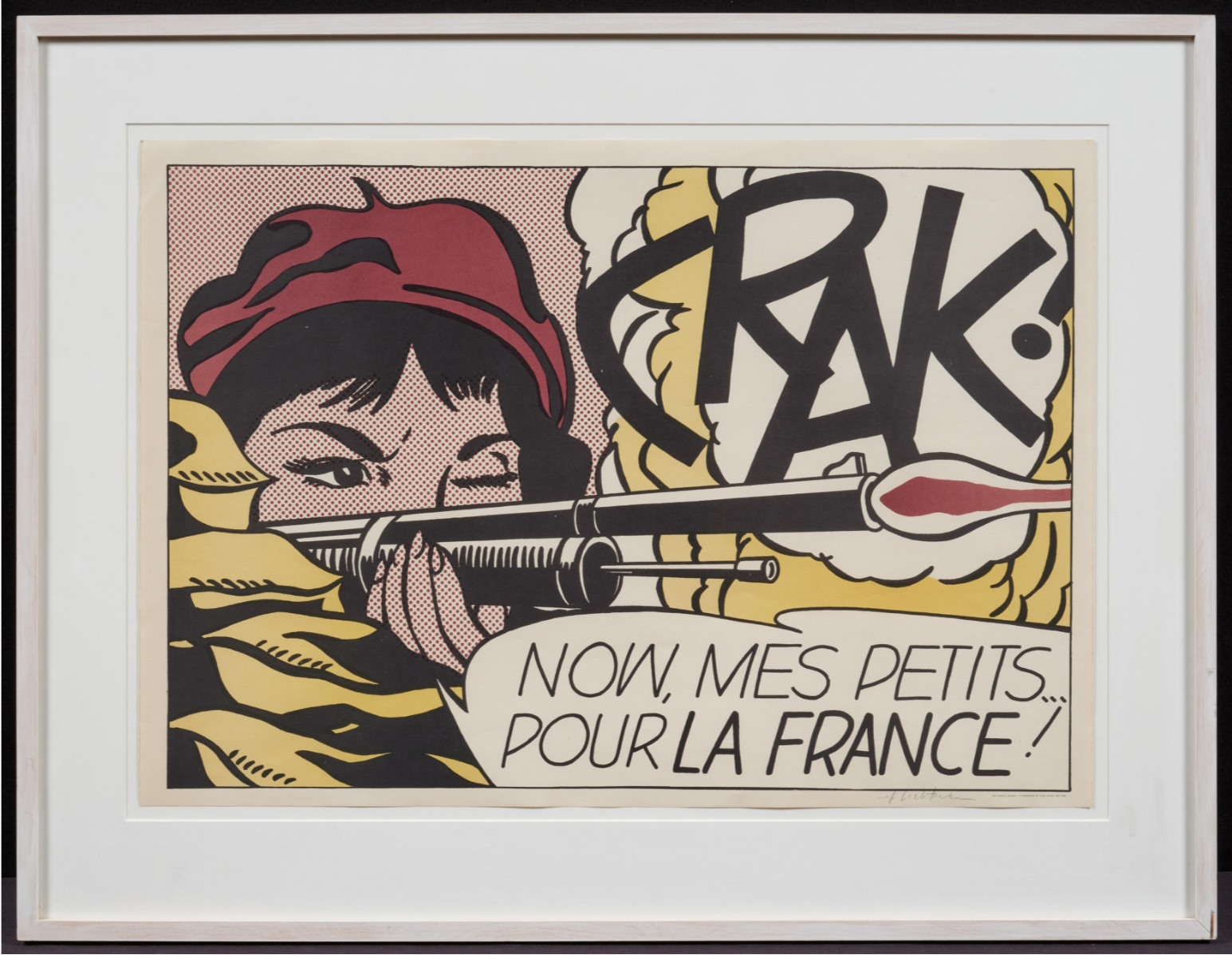
ROY LICHTENSTEIN (New York 1923 – 1997)
Crak! (Corlett II.2), 1963/64
Color offset lithograph on vellum
Signed
In addition to the edition of 300 numbered copies,
Five different unnumbered editions of an unknown size were published
Rago: 4 June 2024
Estimated: USD 25,000 – 35,000
USD 25,200
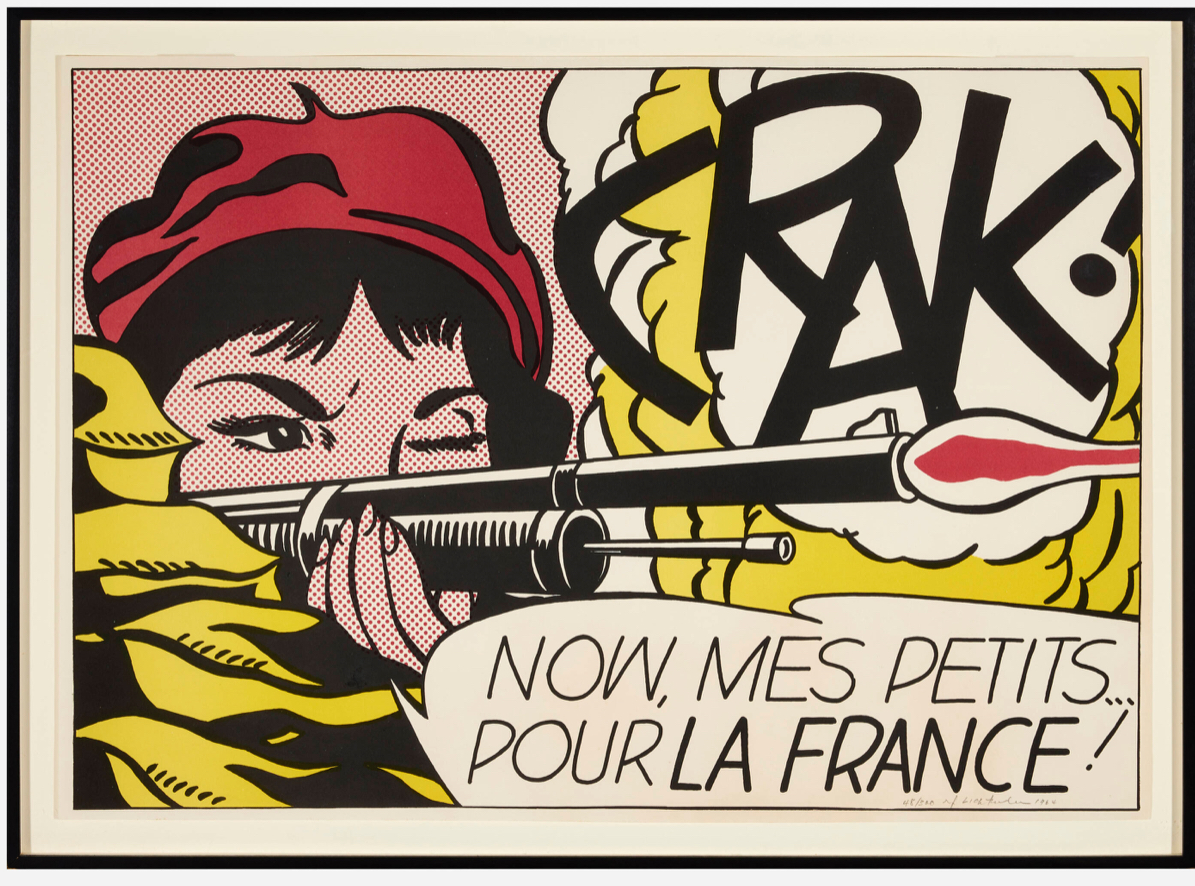
ROY LICHTENSTEIN (1923–1997)
CRAK!, 1964
offset lithograph in colors
Signed, dated and numbered to lower right ‘48/300 rf Lichtenstein 1964’
John Moran: 26 March 2024
Estimated: USD 15,000 – 20,000
USD 24,130
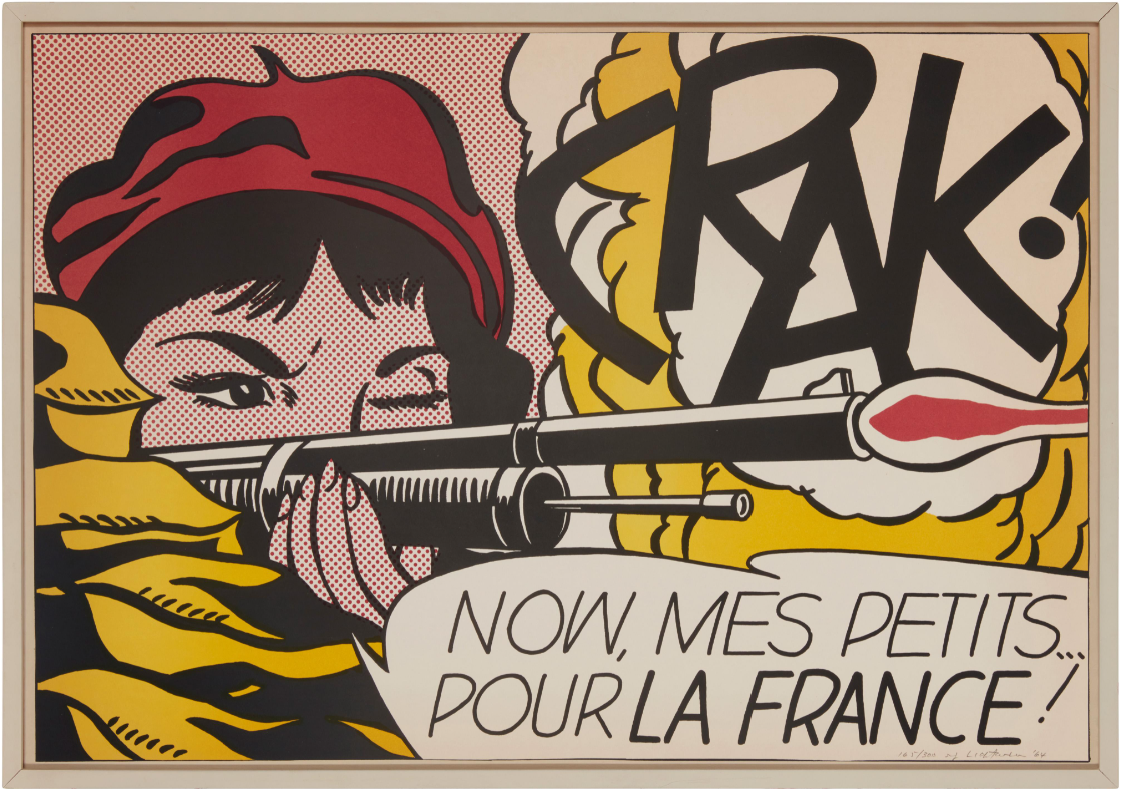
ROY LICHTENSTEIN (1923-1997)
CRAK!, 1964
Offset lithograph in colors on lightweight wove paper
Edition: 165/300
Signed, dated, and numbered in pencil just inside the black border of the image, at lower right: Roy Lichtenstein
Christie’s New-York: 14 March 2024
Estimated: USD 18,000 – 25,000
USD 35,280
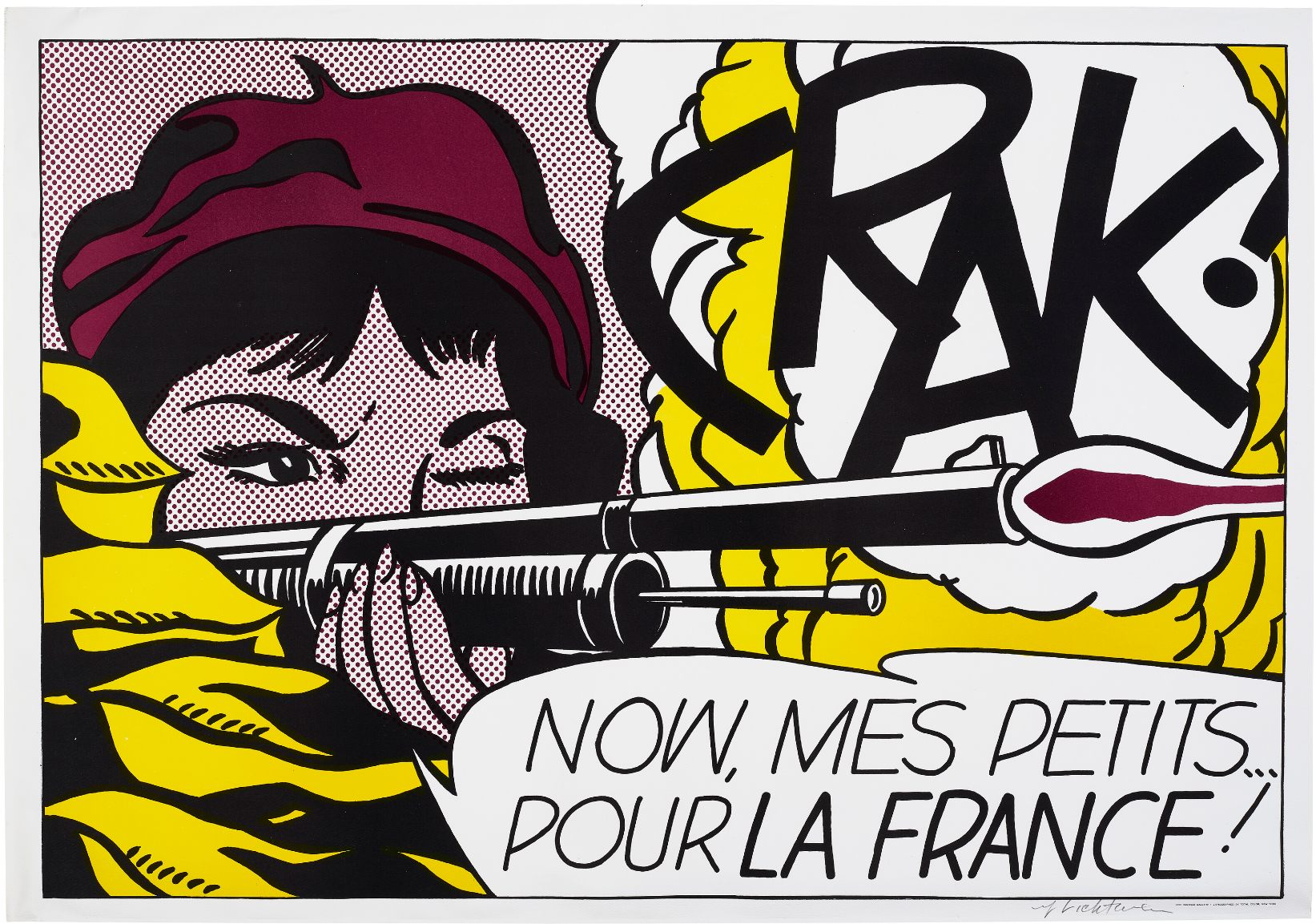
ROY LICHTENSTEIN (1923-1997)
CRAK!, 1963-1964
Offset lithograph in colors on lightweight wove paper
Signed in pencil
From the edition of unknown size with the small typesetting ‘Leo Castelli Gallery Lithographed by Total Color, New York’
at the lower right, without the exhibition text in the lower margin
2023 Auction Results
Phillips online: 13 September 2023
Estimated: USD 10,000 – 15,000
USD 20,320
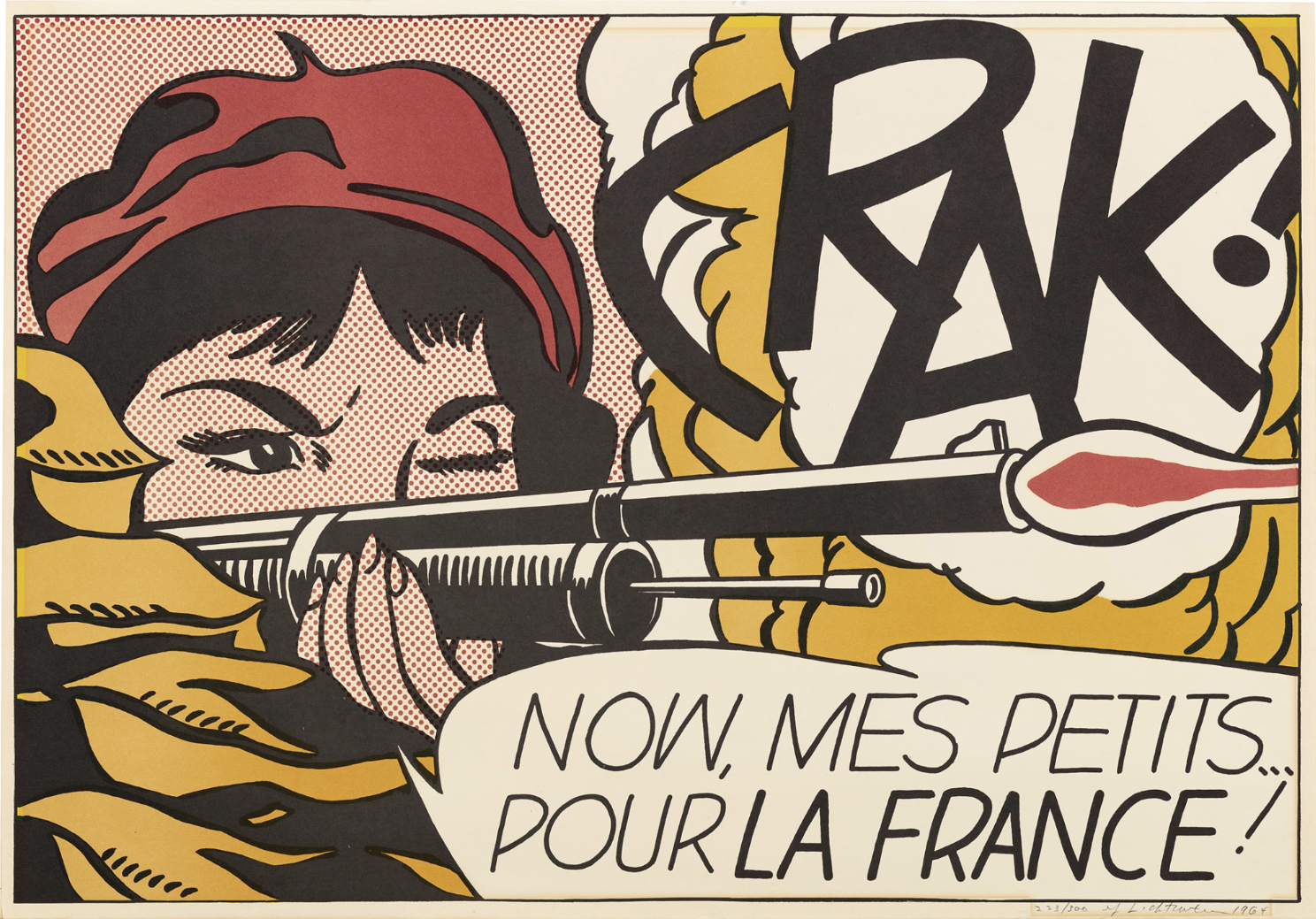
ROY LICHTENSTEIN
Crak! (C. II.2), 1964
Offset lithograph in colors on thin wove paper
Signed, dated and numbered 223/300 in pencil
LA Modern: 7 September 2023
Estimated: USD 25,000 – 35,000
USD 25,200
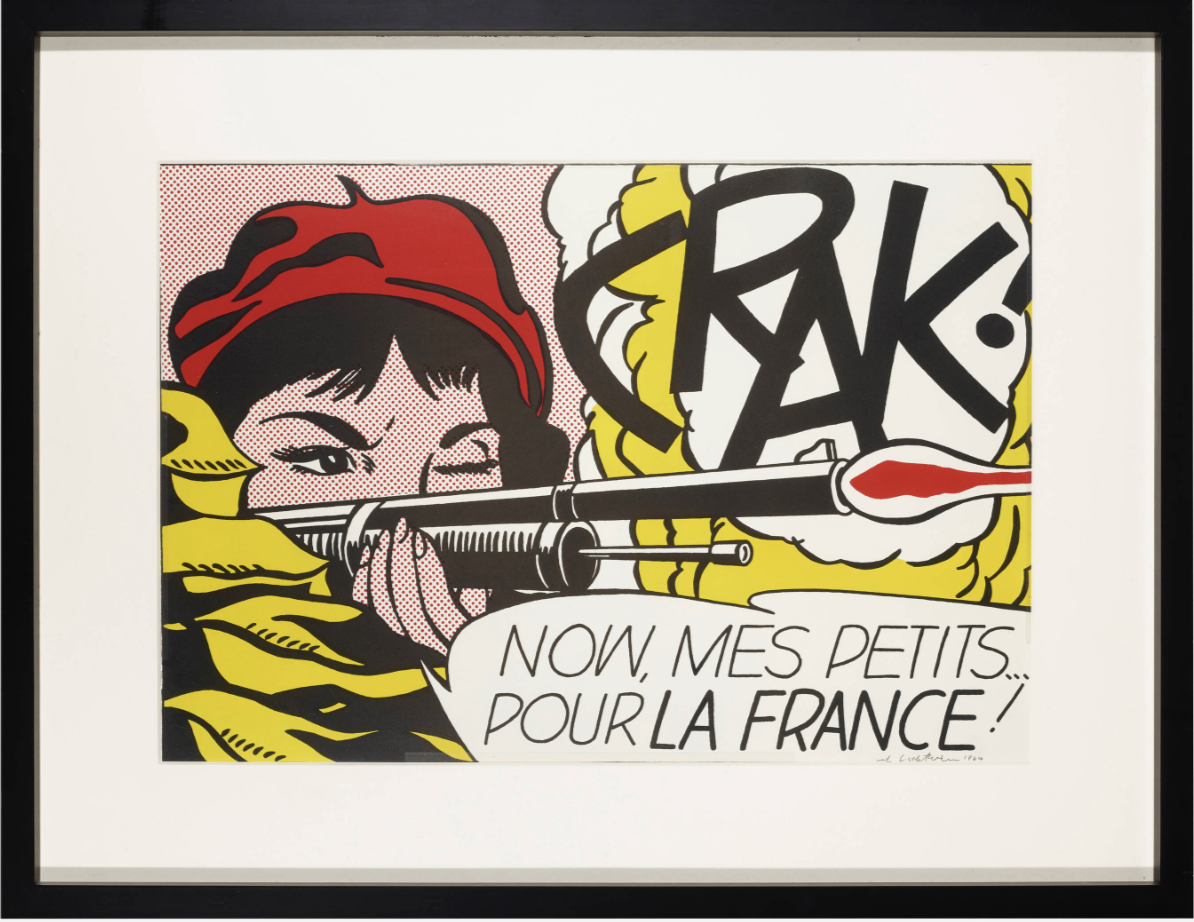
ROY LICHTENSTEIN (1923–1997)
CRAK!, 1963-64
Offset lithograph in colors on wove paper
Signed and dated to lower right ‘rf Lichtenstein 1964’
This work is from the edition of unknown size apart from the edition of 300
2022 Auction Results
Christie’s New-York: 22 November 2022
Estimated: USD 10,000 – 15,000
USD 32,760
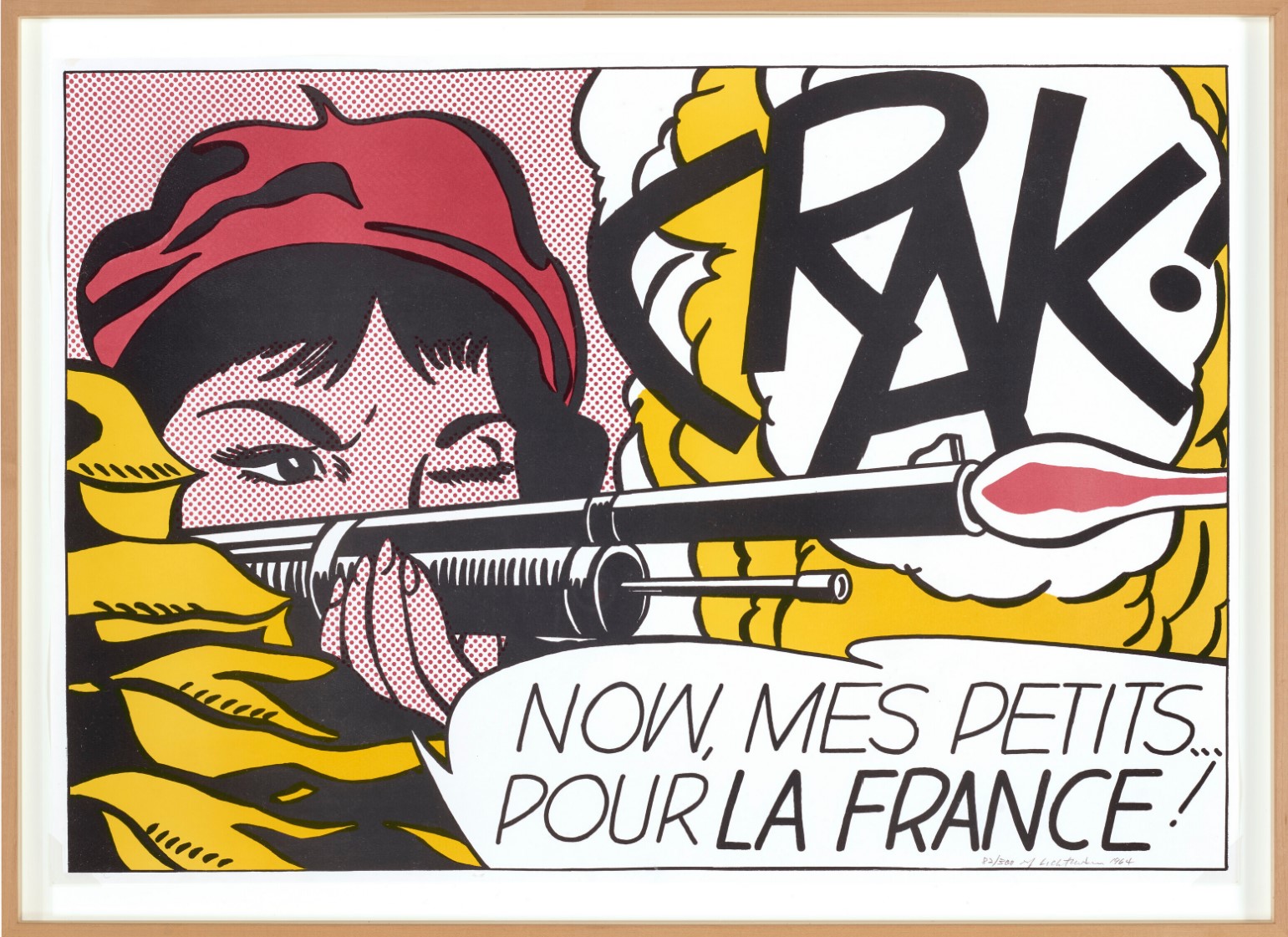
ROY LICHTENSTEIN (1923-1997)
Crak!, 1963-1964
Offset lithograph in colors, on wove paper
Signed and dated ‘1964’ in pencil, numbered 83/300
Swann Auction Galleries: 22 May 2022
Estimated: USD 15,000 – 20,000
USD 30,000
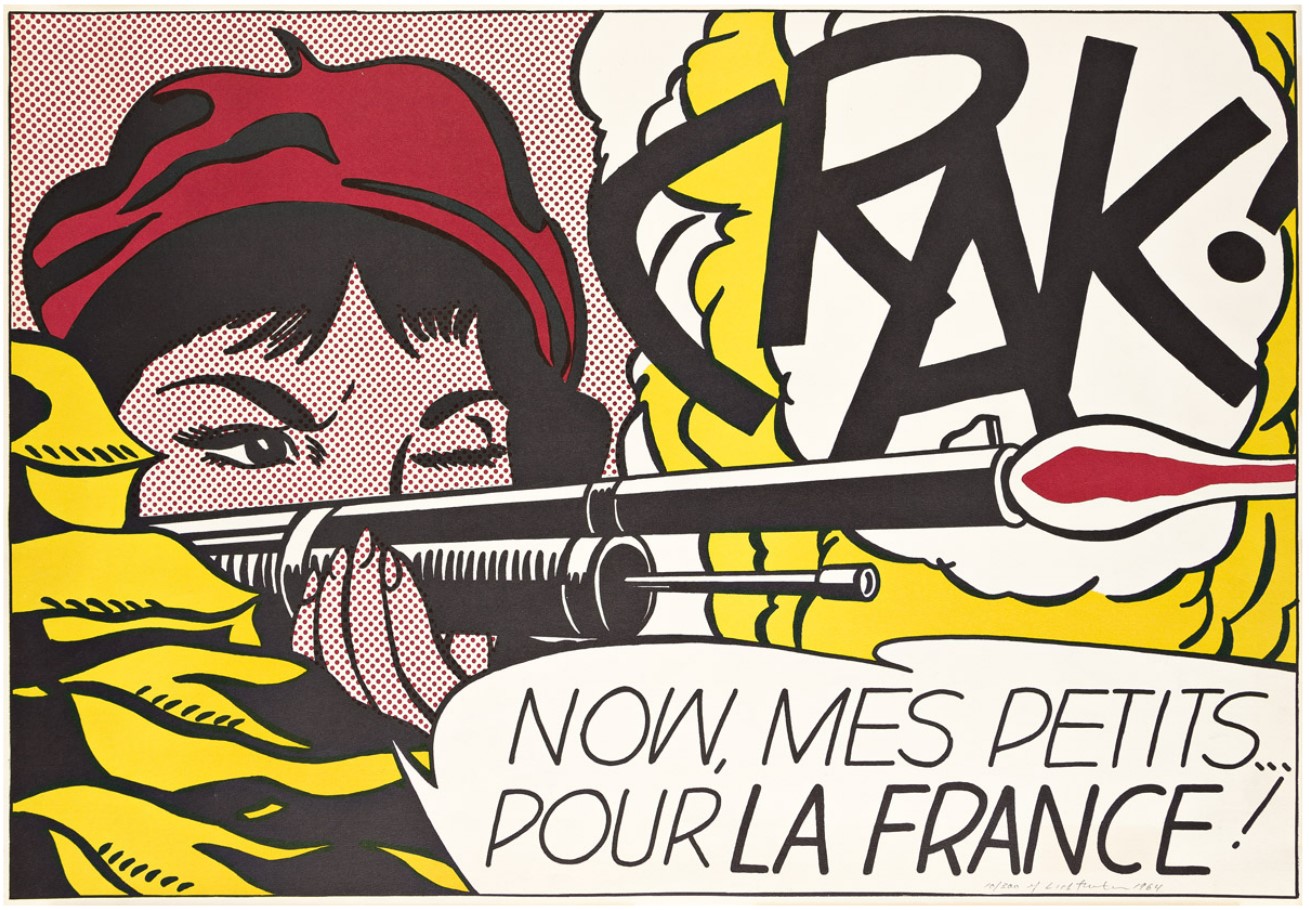
ROY LICHTENSTEIN (1923-1997)
Crak!, 1963-1964
Offset lithograph in colors on lightweight wove paper
Signed, dated “1964” and numbered 10/300 in pencil, lower right
2021 Auction Results
Bonhams Los Angeles: 28 September 2021
Estimated: USD 12,000 – 18,000
USD 19,062
Offset lithograph in colors on wove paper, laid down to foam core
Signed in pencil and dated (aside from the numbered edition of 300)