
Yoshitomo Nara is one of the most influential contemporary artists to emerge from Japan in the late twentieth century. Known worldwide for his striking images of solitary children with oversized heads, penetrating eyes, and ambiguous expressions, Nara has developed a visual language that is both deceptively simple and psychologically complex. Beneath the apparent innocence of his characters lies a deeper exploration of identity, rebellion, loneliness, and emotional vulnerability.
“I paint, making whatever I want, however I want. Maybe it’s just twists and turns of the ego, and lots of dead time, but action easily banishes worry. To be able to transform the thoughts of the heart into work in the outside world is a lucky gift. It hardly matters if what takes shape is a mix of good and bad.”
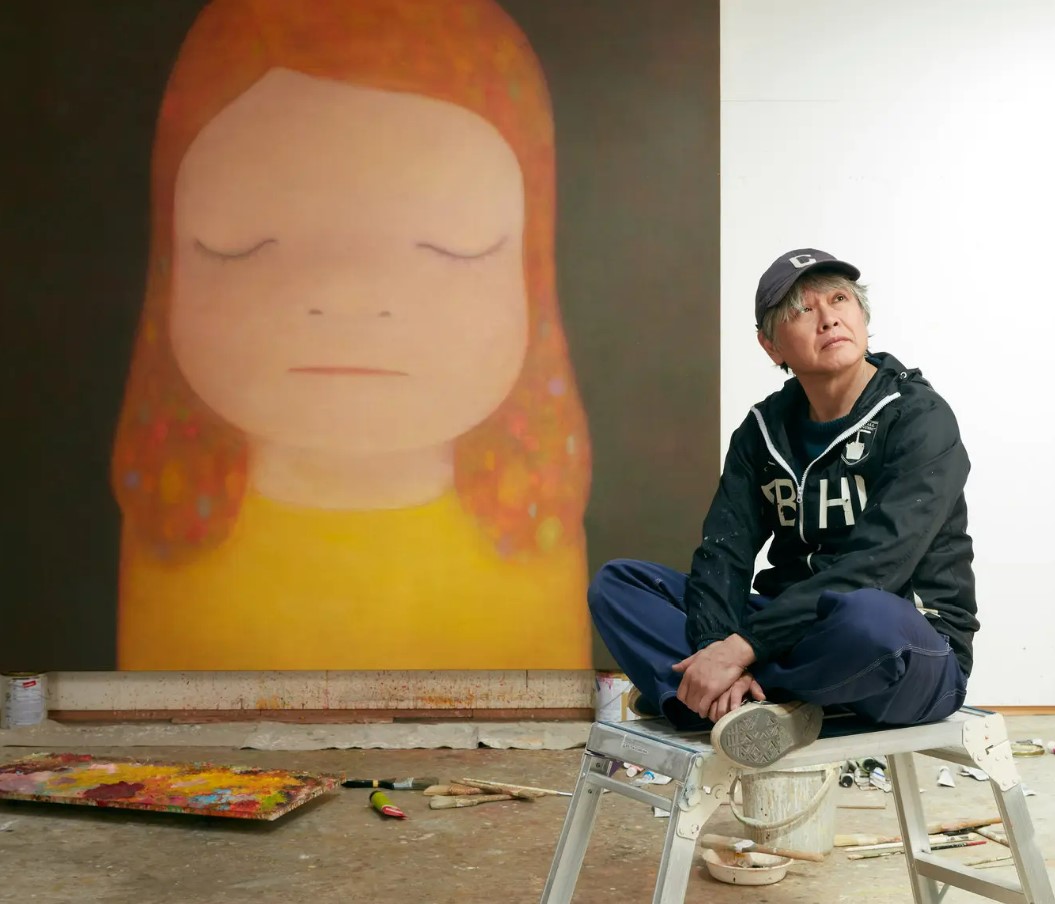
Since the 1990s Nara has become one of the most recognizable figures in contemporary art, combining elements of Japanese popular culture, punk music, European modernism, and illustration into a style that resonates across cultures. His work spans painting, drawing, sculpture, installation, ceramics, and prints, yet maintains a remarkable coherence. Whether in intimate drawings or monumental sculptures, Nara’s characters convey a sense of emotional intensity that has become central to his artistic identity. With his finger on the pulse of late twentieth-century international culture, the artist has encapsulated a generational dissatisfaction in an oeuvre filled with dynamic characters that walk the line between devilish and dainty. Channeling a punk ethos mixed with a love of Western rock and roll and illustrated children’s books, Nara has established a solid visual language upon which he has built a far-reaching career.
Today Nara occupies a unique position in the global art world. His work bridges the worlds of fine art and popular culture while remaining firmly grounded in serious artistic inquiry. Major museums around the world collect and exhibit his work, and his exhibitions consistently attract large international audiences.
Introduction
Yoshitomo Nara was born in 1959 in Hirosaki, a small city in northern Japan. Growing up in a rural environment where both of his parents worked long hours, he often spent long periods alone. This childhood solitude has frequently been cited as an important influence on his work, particularly in the recurring themes of isolation and introspection that appear in his characters. Nara studied art at Aichi Prefectural University of Fine Arts and Music before moving to Germany in the late 1980s to continue his education at the prestigious Kunstakademie Düsseldorf. There he studied under the German artist A. R. Penck and completed his graduate studies in 1993.
His years in Germany proved decisive. Immersed in the European art scene, Nara developed a distinctive style that combined the graphic clarity of illustration with the emotional intensity of expressionist painting. At the same time he absorbed influences from Western art history, including artists such as Paul Klee and the German Expressionists. During the 1990s Nara’s work gained increasing international attention. After returning to Japan in 2000, he continued to expand his practice and quickly became one of the most prominent figures of contemporary Asian art.
Artistic Language and Themes
At first glance Nara’s work appears disarmingly simple. Many of his paintings depict children or animals rendered with bold outlines and flat areas of color. However, this apparent simplicity masks a complex psychological depth. The characters that populate Nara’s world often display expressions that are difficult to interpret. They may appear angry, melancholic, defiant, or contemplative. Some stare directly at the viewer with an unsettling intensity, while others seem lost in their own thoughts. This ambiguity is central to Nara’s work. His figures exist in a space between innocence and rebellion, vulnerability and resistance. The children he paints are not sentimental or decorative; rather, they embody emotional states that reflect broader themes of alienation, independence, and quiet defiance.
Music has also played a major role in shaping Nara’s artistic identity. Deeply influenced by punk rock and underground music culture, he has often described his paintings as visual equivalents of songs—direct, emotional, and immediate. This connection to music reinforces the sense of rebellion and authenticity that permeates his work.
Towards the late 1990s, Nara gradually developed and refined his painterly technique: his surface work became increasingly fine, emanating gentle depth and luminosity. Inspired by a range of artists ranging from early Renaissance painter Giotto to Balthus, Nara softened his palette to pastel hues and dissolved the harsh outlines of his previous work to create a progressively sensuous effect. Most importantly, Nara accomplishes these painterly feats while still keeping with his masterful deployment of minimal narrative, minimal composition, and minimal pictorial framework to convey incisively perceptive emotive effects. During this time, the extended solitude of Nara’s residence in Germany contributed to a heightened introspection. The loneliness of living abroad not only catapulted the artist back to the days of acute loneliness in his childhood.
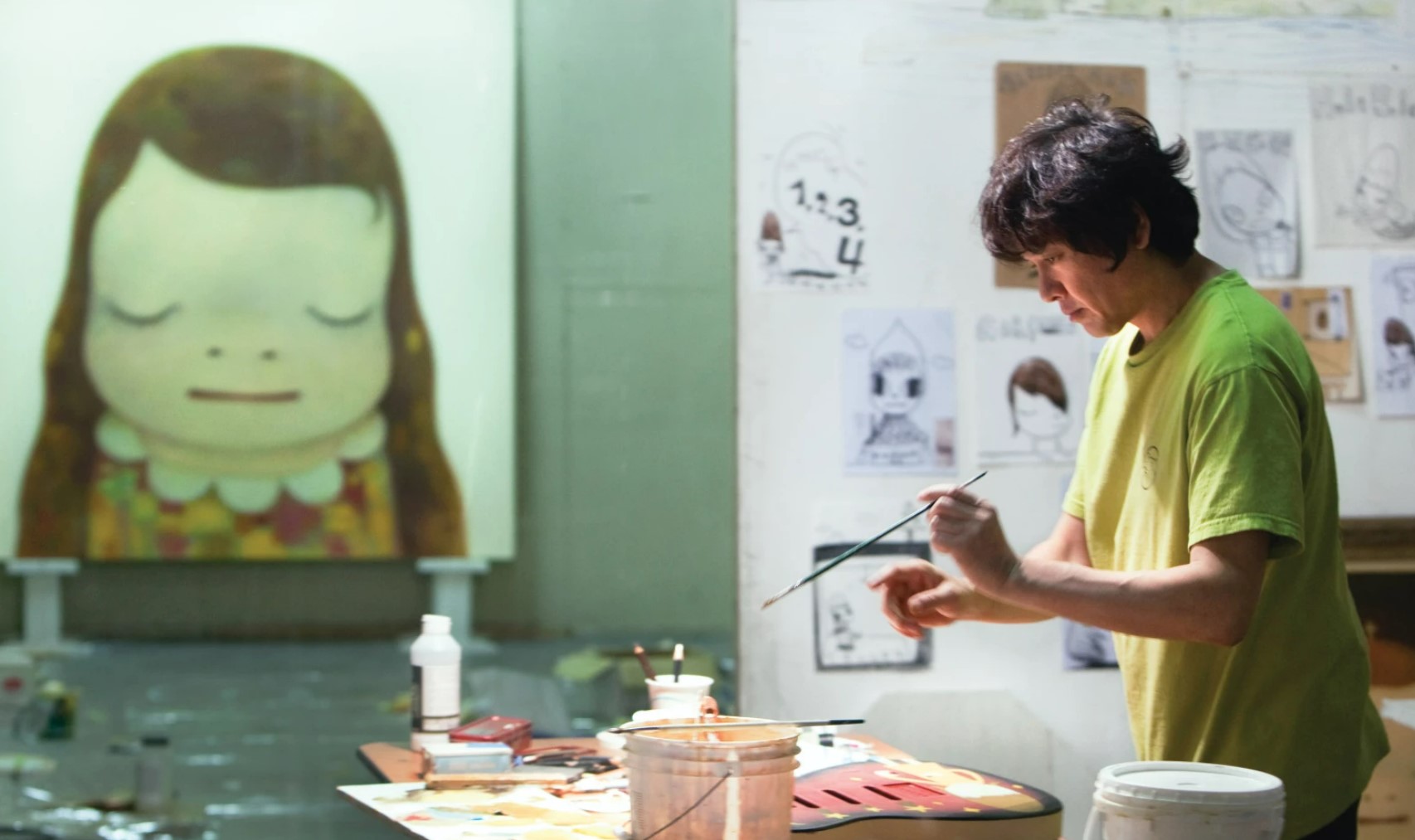
Further pronounced shifts occurred in Nara’s works from 2000 onwards, coinciding with the artist’s return to his native land. First, employing large format canvases, Nara commenced full body portraits of little girls set against luminous pearly grounds that have since become highly distinctive for the artist. Achieved through advanced brushwork and repeated layering, the tenebrous hue conveys a complex ambiguous vacuity when juxtaposed against the solid substantiality of the figure – a metaphor for a little self as situated within a vast, indifferent and alienating world. Secondly, when compared to the grossly exaggerated heads and fragmented body parts from the early 1990s, Nara’s girls now demonstrate “visible signs of humanization: their heads grew smaller, their expressions gentler, their body proportions approaching that of a real child, and their attitudes reflecting that of a thoughtful adolescent. Rendered with virtuosic brushwork with carefully sculpted outlines, the painterly quality of these 2000s girls recall the bewitching portraits of Balthus. Thirdly and finally is the most distinct development: gone are the prominent knives, chainsaws, pistols, and clubs of the 1990s. From 2000 onwards, Nara saves the brandishing of weaponry for his works on paper, leaving his canvases pristine and calm. The overall effect is that of a newly serene atmosphere combined with paradoxical theatricality and suspense: bathed in subtly glowing light, these paintings from 2000 onwards achieve a consummate spectacle of psychological complexity enshrouded in enchanting visual aura.
Major Motifs and Series
The Solitary Child
The most recognizable motif in Nara’s work is the solitary child. These figures often appear alone against minimal backgrounds, emphasizing their psychological presence rather than narrative context. Although inspired partly by Japanese manga and animation, Nara’s children differ significantly from commercial cartoon imagery. Their expressions convey emotional complexity rather than narrative action. Some hold small objects—a knife, a saw, or a cigarette—introducing subtle elements of tension and defiance that contrast with their youthful appearance. These characters have become among the most iconic images in contemporary art, symbolizing a generation caught between vulnerability and resistance.
“I was not deliberately painting any particular girl. Through painting representational features such as eyes, noses, and mouths, I wanted to express something deeper. This deeper thing cannot be described with language. Yet, people will understand.”
Animals and Hybrid Creatures
Animals frequently appear alongside Nara’s children. Dogs, cats, and hybrid creatures populate his paintings and drawings, often sharing the same wide-eyed intensity as the human figures. These animals function as companions or alter egos for the children, reinforcing themes of loneliness and emotional introspection. At times they appear protective, while in other works they contribute to the slightly surreal atmosphere that characterizes Nara’s imagery.
Sculptures
Beginning in the late 1990s, Nara expanded his practice into sculpture, translating his painted characters into three-dimensional form. These sculptures range from small ceramic figures to monumental fiberglass installations. Despite the change in medium, the sculptures retain the emotional immediacy of the paintings. Their simplified forms and expressive faces allow them to occupy space in a way that feels both playful and introspective. Large sculptures such as Miss Forest demonstrate how Nara’s characters can become immersive presences within architectural space, inviting viewers to encounter them physically rather than simply visually.
Drawings and Works on Paper
Drawing has always been central to Nara’s artistic process. His works on paper often serve as the most direct expression of his ideas, capturing the spontaneity and immediacy that define his visual language. These drawings frequently incorporate handwritten text, rough lines, and experimental compositions. Compared to the polished surfaces of the paintings, they reveal a more intimate and improvisational side of the artist’s practice. Many of Nara’s most expressive images originate in this medium, making works on paper an essential component of his oeuvre.
Technique and Working Method
Nara’s technique reflects his interest in simplicity and emotional clarity. His paintings often feature smooth surfaces, carefully balanced compositions, and bold outlines that emphasize the expressive power of the figures. Although his style may appear illustrative, the paintings are executed with great precision. Subtle variations in color and surface texture contribute to the psychological depth of the images.
His sculptures are typically produced using fiberglass, resin, bronze, or ceramic, materials that allow the characters to retain the smooth, simplified forms characteristic of his paintings. Across all media, Nara’s approach remains consistent: a focus on emotional immediacy combined with a disciplined attention to form.
Museum Collections and Institutional Presence
Yoshitomo Nara’s work is held in the collections of major museums worldwide, including: The Museum of Modern Art, New York; The Los Angeles County Museum of Art; The Museum of Contemporary Art, Los Angeles; The National Museum of Modern Art, Tokyo; The Mori Art Museum, Tokyo
Large-scale exhibitions dedicated to Nara’s work have toured internationally, reinforcing his position as one of the most significant contemporary artists of his generation. Among the most important exhibitions was the major retrospective Yoshitomo Nara organized by the Los Angeles County Museum of Art and the Yokohama Museum of Art, which traveled internationally and provided a comprehensive overview of his career.
These institutional presentations highlight the depth of Nara’s practice and situate his work within the broader history of contemporary art. Nara has had solo exhibitions at Museum of Contemporary Art in Chicago, IL; the Asia Society Museum in New York, NY; the Yokohama Museum of Art, Kanagawa; Toyota Municipal Museum of Art, Aichi; and the Los Angeles County Museum of Art in Los Angeles, CA, among many other institutions.
Gallery Representation
Yoshitomo Nara is represented internationally by Pace Gallery, one of the leading galleries in the global contemporary art market. Pace has played an important role in presenting his work through major exhibitions in New York, Hong Kong, London, and other international art centers.
In Japan, Nara has also worked closely with Tomio Koyama Gallery, which has supported his career since the early stages of his international recognition.
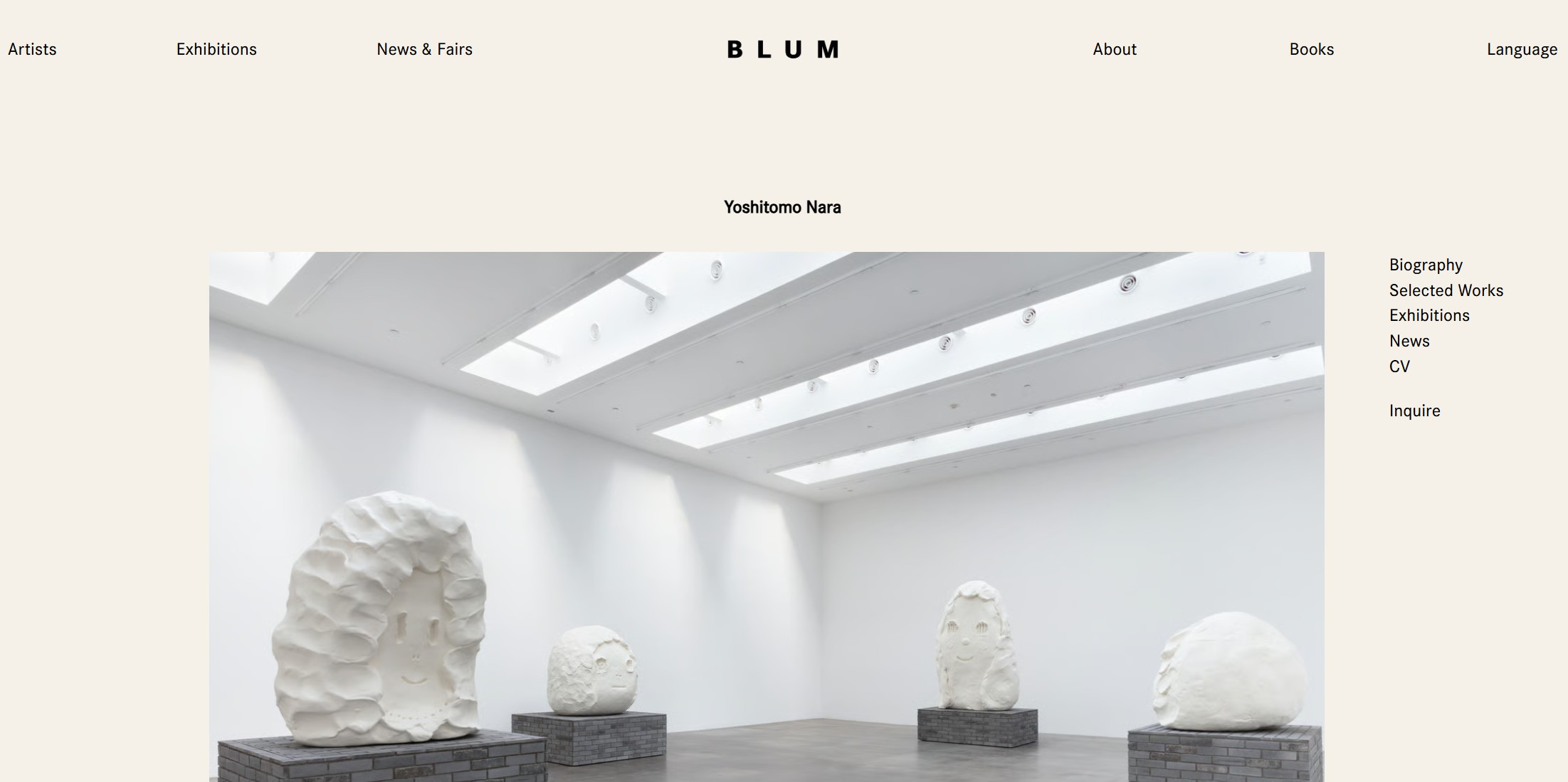
This network of influential galleries ensures the continued visibility of his work across both Western and Asian art markets.
Yoshitomo Nara Catalogue Raisonne
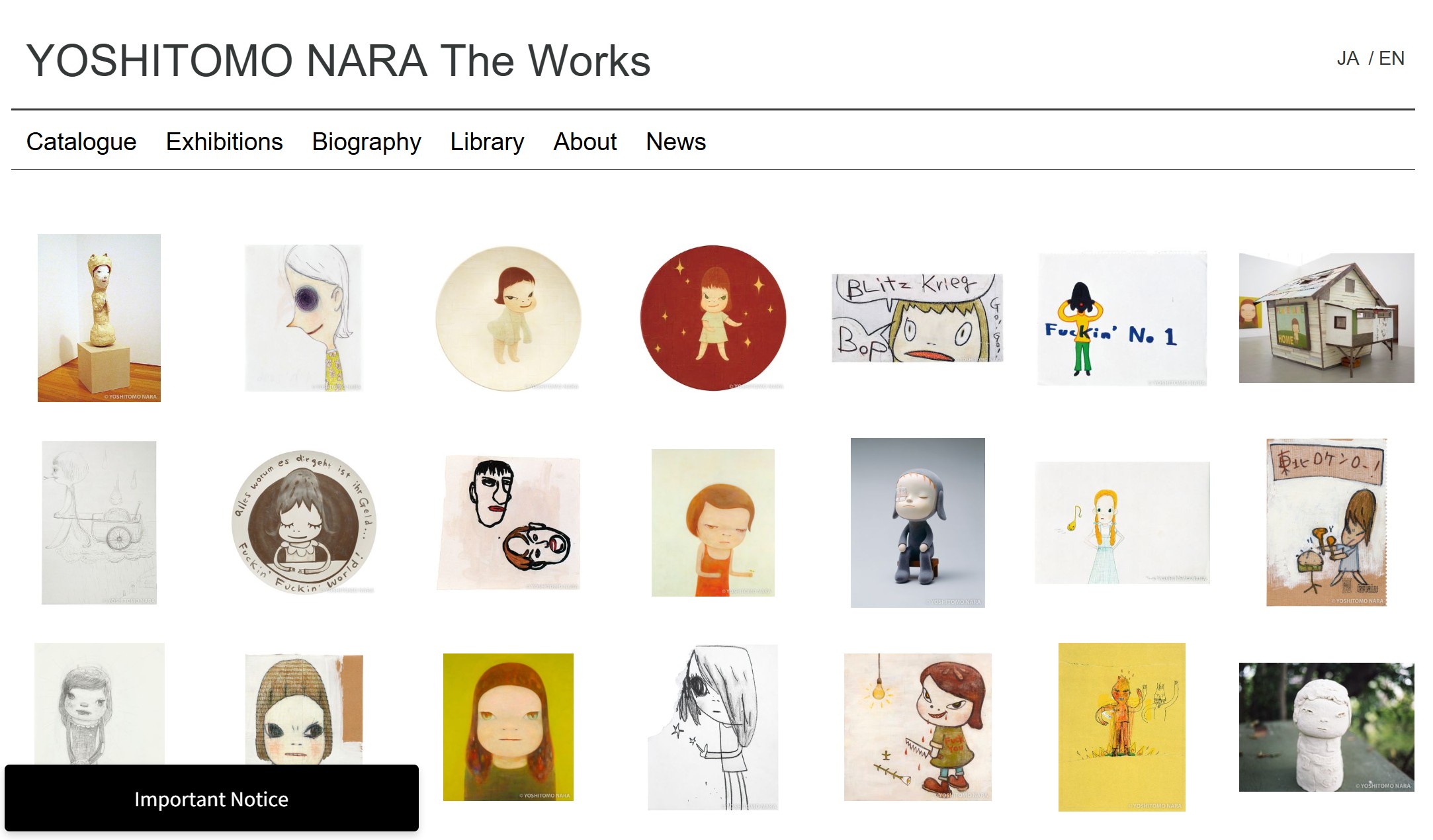
Yoshitomo Nara has created one of the most distinctive visual languages in contemporary art. By combining elements of illustration, pop culture, and expressionist painting, he has produced images that resonate with audiences far beyond the traditional boundaries of the art world. Yet beneath the apparent simplicity of his style lies a sophisticated exploration of emotional states and human psychology. His characters embody a delicate balance between innocence and rebellion, vulnerability and strength.
Through painting, sculpture, and drawing, Nara has constructed a universe populated by figures that are at once personal and universal. Their quiet intensity continues to captivate viewers around the world, securing his place as one of the most important contemporary artists of the past three decades.
PART I: SUMMARY
Auction Market Overview
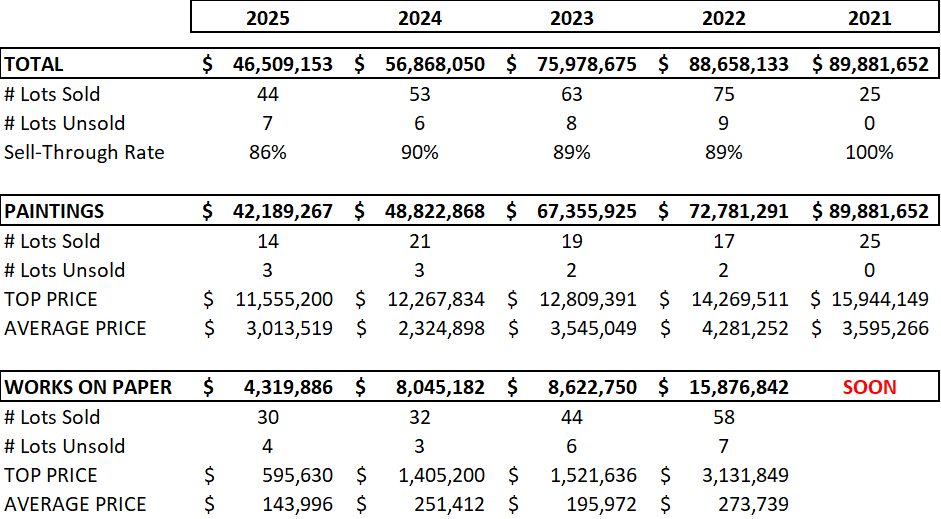
2025 AUCTION STATISTICS
Turnover: USD 46,509,153
-18.2% vs. 2024
# Lots sold: 44
Sell-Through Rate: 86%
MARKET SEGMENTATION
COMING SOON
Top Lot Sold at Auction:
USD 24,954,958
Auction Summary
1. Paintings
2025 Auction Highlights
14 lots sold at auction in 2025 for a total turnover of USD 42,189,267. With 3 lots failing to sell, the sell-through rate is 82%. The highest price was achieved by Cosmic Eyes (in the Milky Lake), a painting dated 2005, that sold at Sotheby’s, in London, on 5 March 2025, for GBP 9,027,500 (USD 11,555,200).
2025 Top 3 Lots
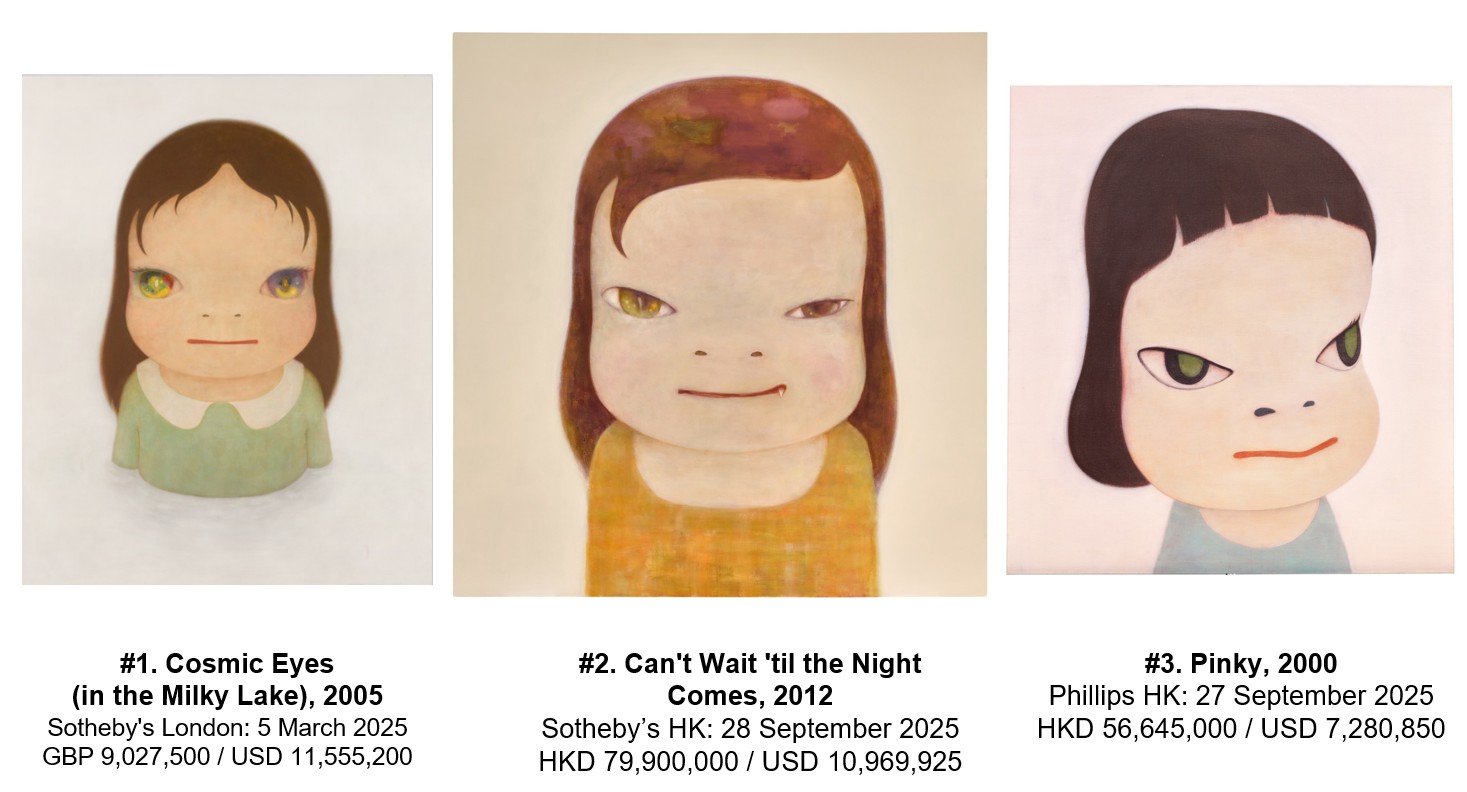
2 lots sold for more than USD 10 million, generating a cumulative turnover of USD 21,825,123, representing 51.7% of the total turnover for 2025. 8 lots sold for more than USD 1 million, generating a cumulative turnover of USD 39,707,426, representing 94.1% of the total turnover for 2025.
2024 Auction Highlights
21 lots sold at auction in 2024 for a total turnover of USD 48,822,868. With 3 lots failing to sell, the sell-through rate is 88%. The highest price has been achieved by a painting dated 2017, I Want to See The Bright Lights Tonight, that sold at Sotheby’s Hong-Kong, on 5 April 2024 for HKD 95,959,000 (USD 12,267,834).
2024 Top 3 Lots
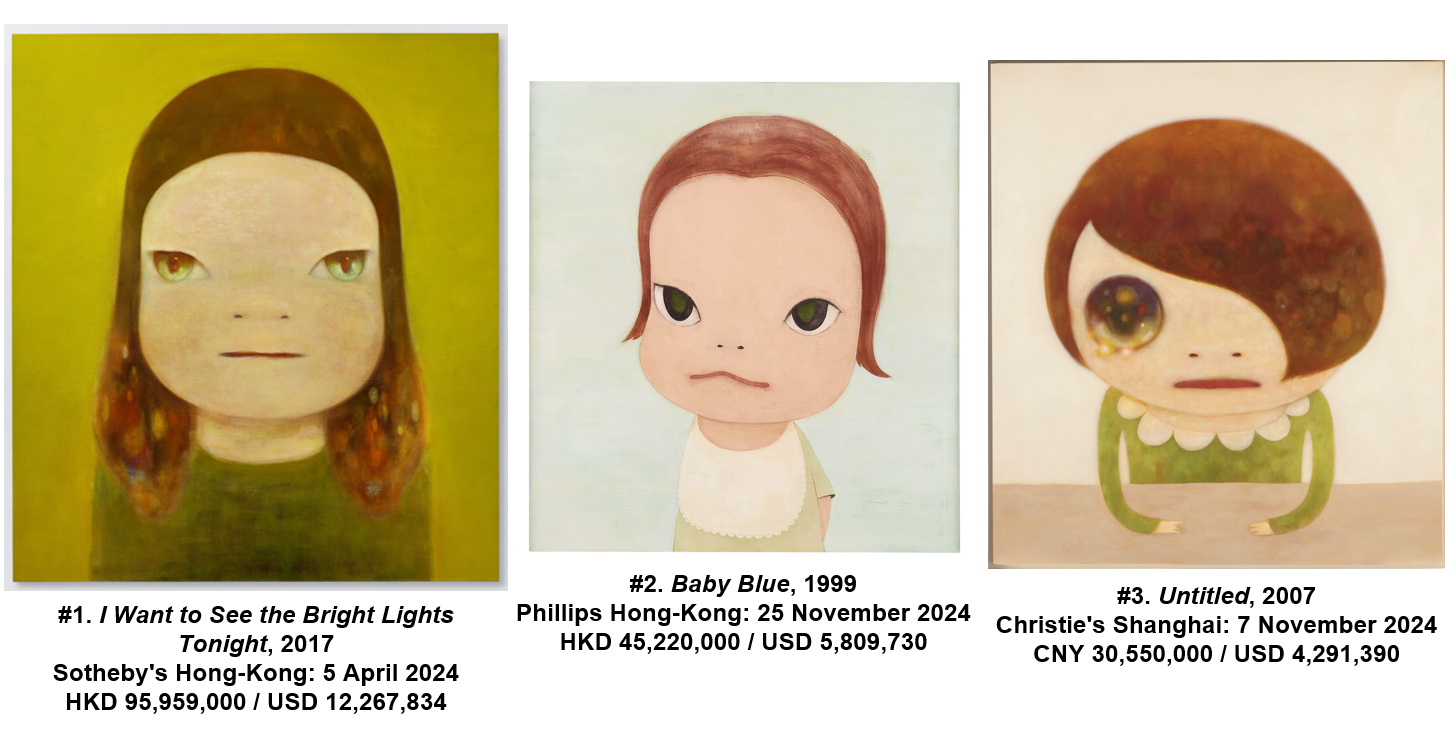
This is the only lot that sold for more than USD 10 million. 12 lots sold for more than USD 1 million, generating a cumulative turnover of USD 43,426,884, representing 88.9% of the total turnover for 2024.
2023 Auction Highlights
19 lots sold at auction in 2023 for a turnover of USD 67,355,925. With 2 lots unsold, the sell-through rate is a solid 90%. Of note, one lot was withdrawn at Christie’s in Hong-Kong on 28 November 2023.
2023 Top 3 Lots
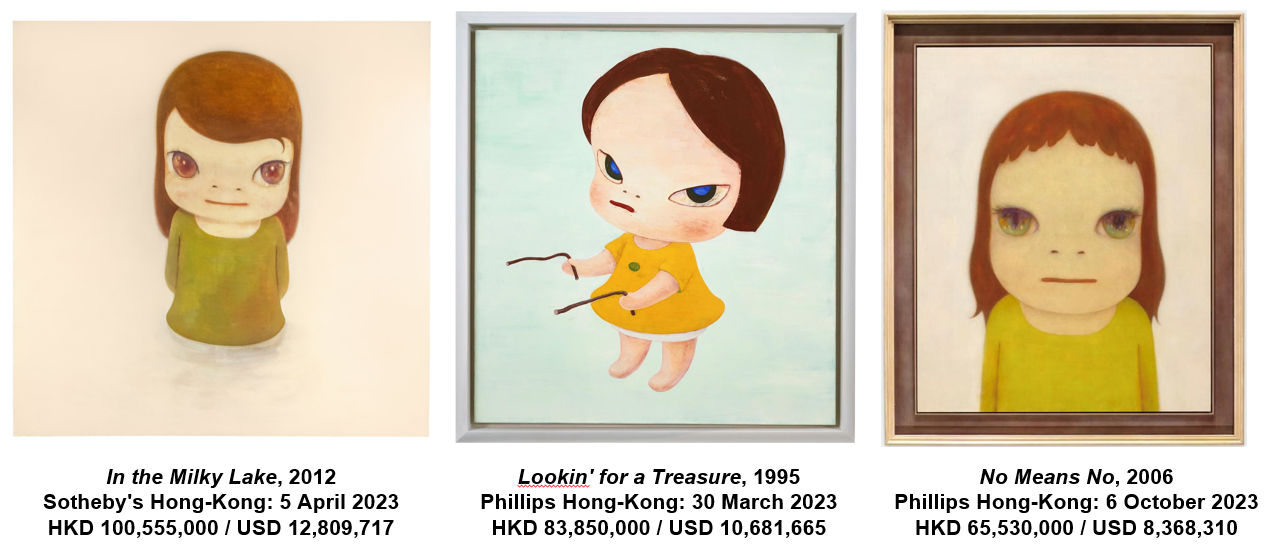
2 lots sold over USD 10 million, 5 lots sold over USD 5 million, generating a turnover of USD 43,628,442 (64.8% of the total turnover in 2023). 14 lots sold over USD 1 million, generating a turnover of USD 65,538,851 (97.3% of total).
2022 Auction Highlights
17 lots sold at auction in 2022 for a turnover of USD 72,781,291. With 2 lots unsold, the sell-through rate is 89%.
2022 Top 3 Lots
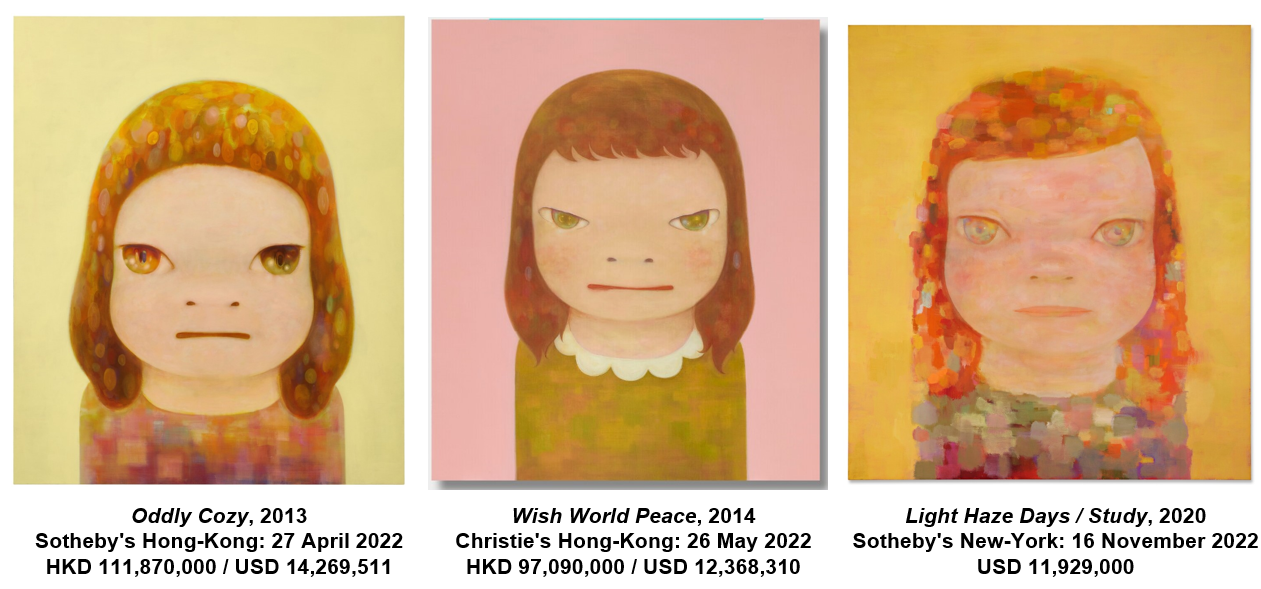
3 lots sold over USD 10 million generating a turnover of USD 38,567,221 (53% of the total turnover in 2022). 11 lots sold over USD 1 million, generating a turnover of USD 68,874,627 (94.6% of total).
2021 Auction Highlights
25 lots sold at auction in 2021 for a turnover of USD 89,881,652. The sell-through rate is 100% as no lots went unsold.
2021 Top 3 Lots
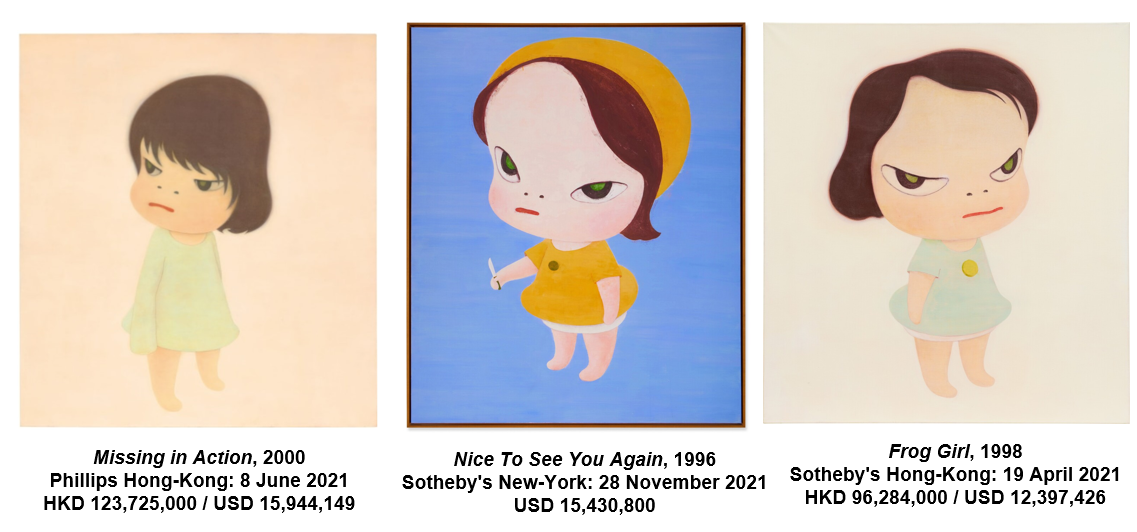
3 lots sold over USD 10 million generating a turnover of USD 43,772,775 (48.7% of the total turnover in 2021). 15 lots sold over USD 1 million, generating a turnover of USD 85,287,583 (94.9% of total).
2. Works on Paper (W0P)
2025 Auction Highlights
30 lots sold at auction in 2025 for a total turnover of USD 4,319,886. With 4 lots failing to sell, the sell-through rate is 88%. The top lot is Frog, a drawing dated 1998, that sold at Christie’s in London, on 16 October 2025, for GBP 444,500 (USD 595,630).
2025 Top 6 Lots
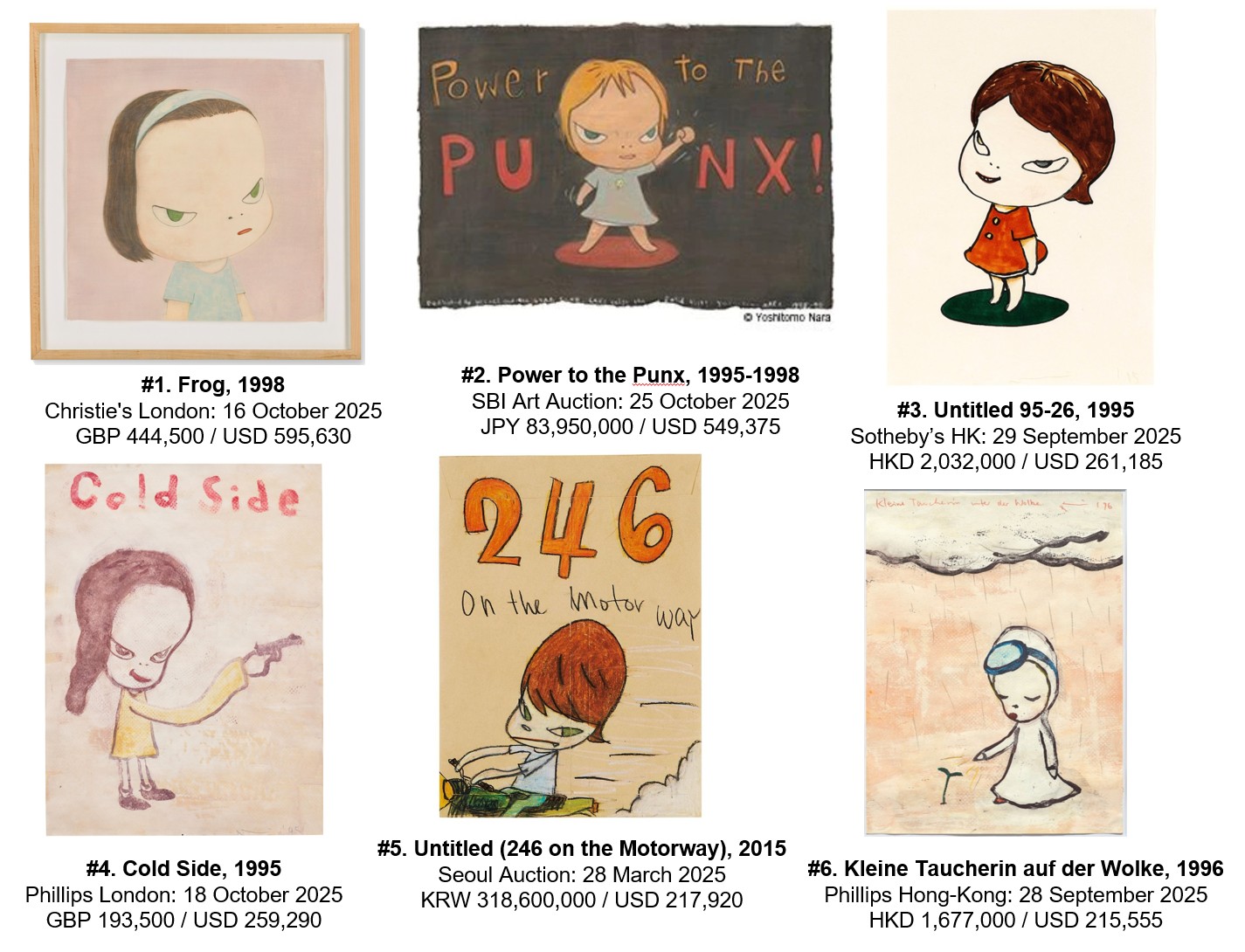
2 lot sold for more than USD 500,000, generating a cumulative turnover of USD 1,145,005, representing 26.5% of the total turnover for 2025. 15 lots sold for more than USD 100,000, generating a cumulative turnover of USD 3,569,022, representing 82.6% of the total turnover for 2025.
2023 Auction Highlights
42 WoP sold at auction in 2023 for a total turnover of USD 8,364,450. With 6 lots unsold, the sell-through rate is 88%. The highest price was achieved by Rock You sold at Sotheby’s Hong-Kong on 6 April 2023 for HKD 11,945,000 (USD 1,521,636).
2023 WoP Top 6 Lots
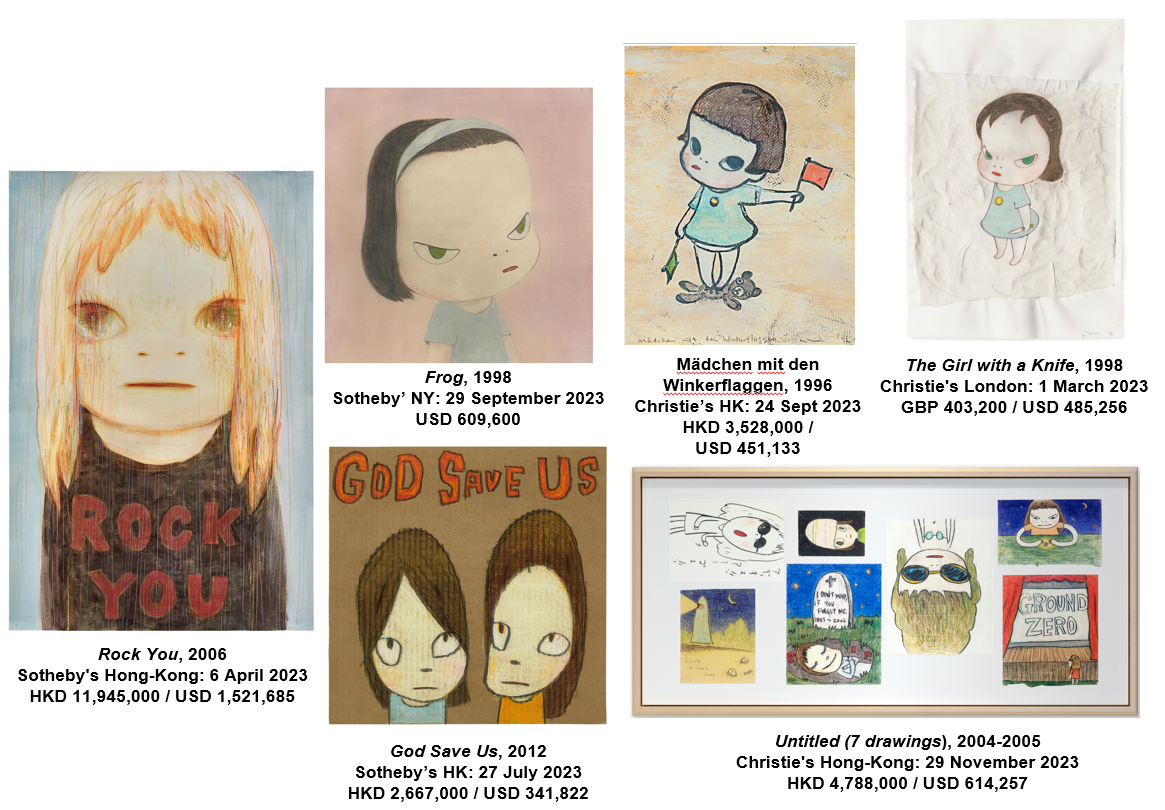
24 lots sold over USD 100,000 for a total turnover of USD 7,659,078, amounting to 91.6% of the total turnover.
2022 Auction Highlights
58 WoP sold at auction in 2022 for a total turnover of USD 15,876,842. With 7 lots failing to sell, the sell-through rate is 89%. The highest price of 2022 was achieved at Sotheby’s in Hong-Kong on 27 April 2022, when Only Faces Appear in My Mind, a giant work on paper created in 2000 sold at a record HKD 24,575,000 (USD 3,131,849).
2022 Top 6 Lots
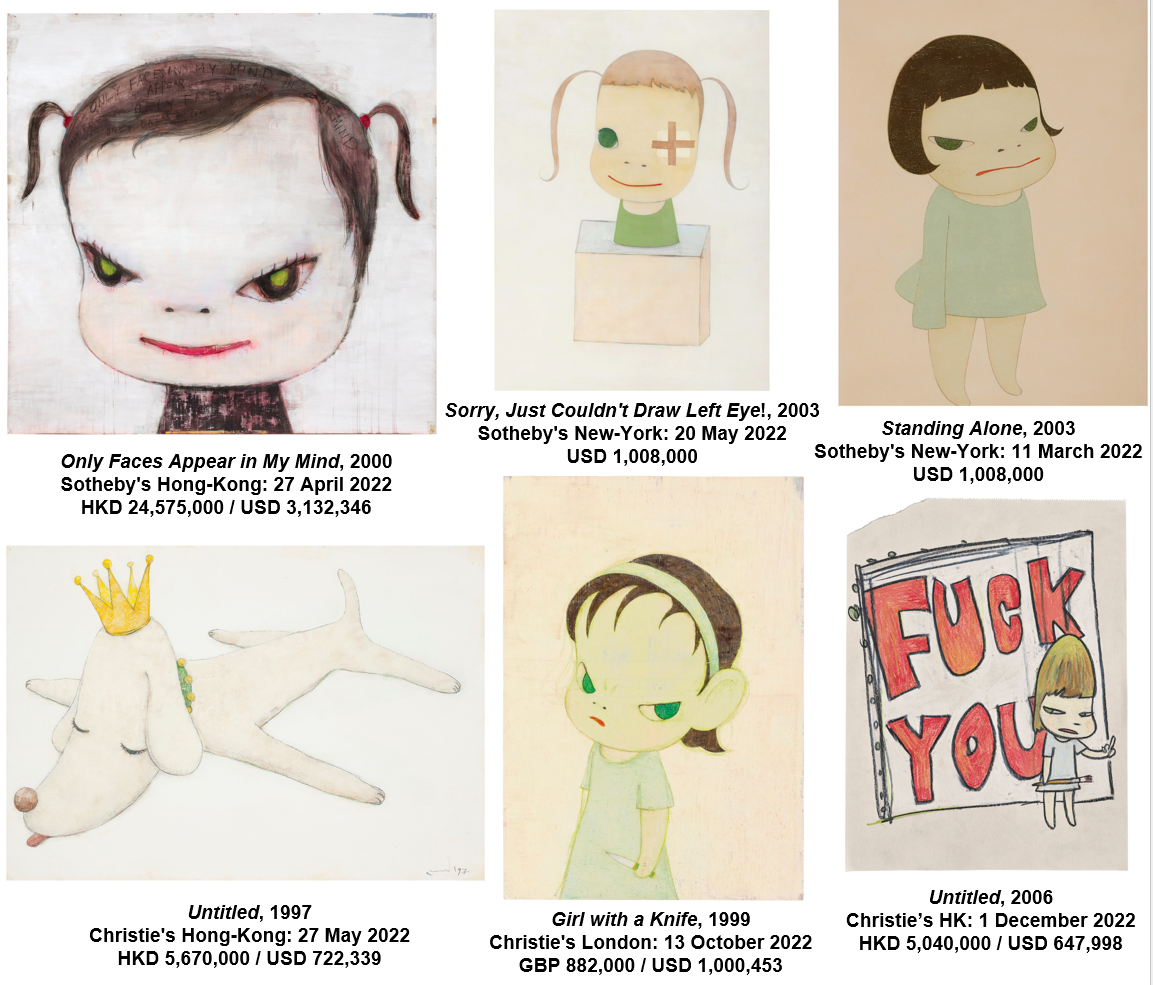
4 lots sold over USD 1 million, generating a cumulative turnover of USD 6,148,302, representing 38.7% of the total turnover for 2022.
PLEASE CLICK BELOW TO FIND AUCTION RESULTS FOR WORKS ON PAPER
Top Lots
#1. Knife Behind Back, 2000
Sotheby’s Hong-Kong: 6 October 2019
Estimate on Request
HKD 195,696,000 / USD 24,954,958
(#1142) YOSHITOMO NARA | Knife Behind Back (sothebys.com)
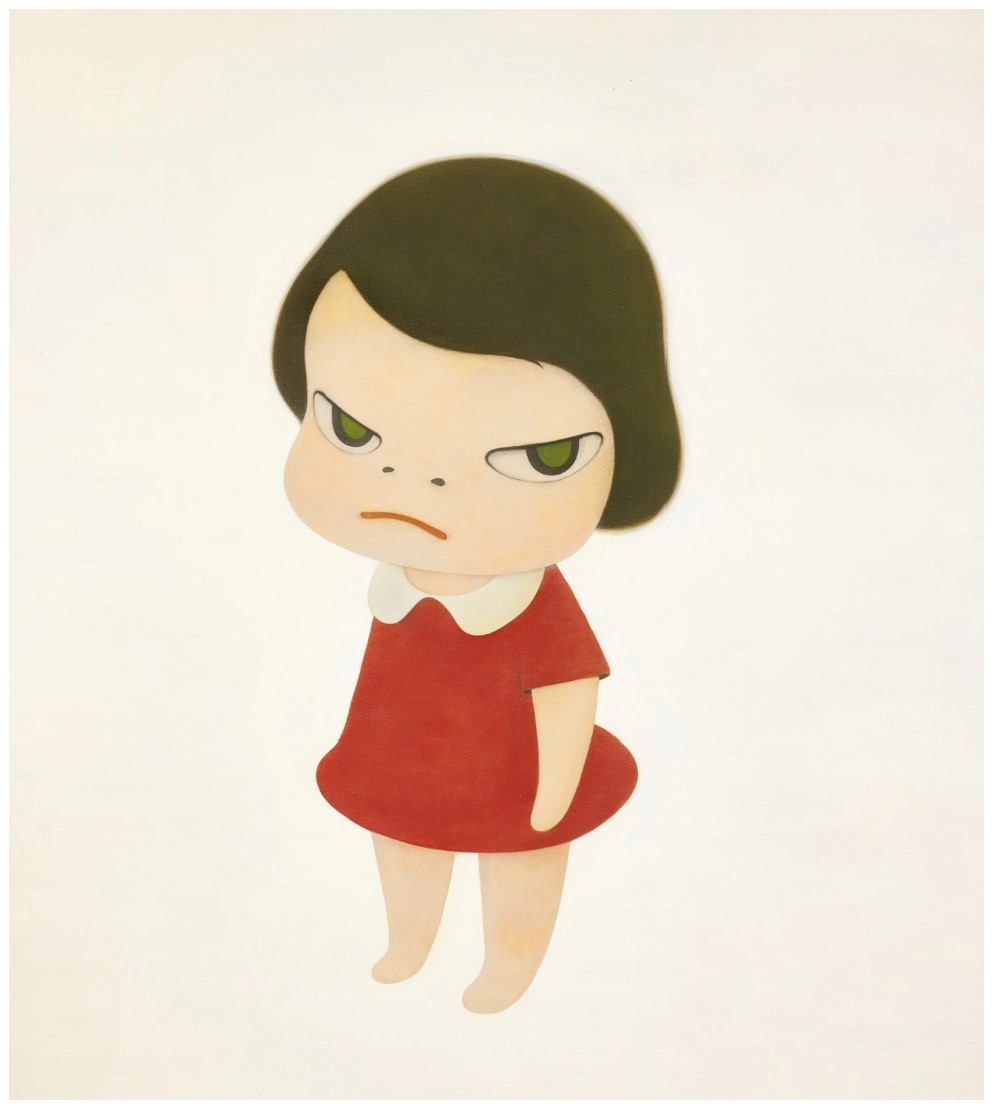
YOSHITOMO NARA
Knife Behind Back, 2000
Acrylic on canvas
234×208 cm (92 ⅛ x 81 ⅞ inches)
Signed, titled and dated 2000 on the reverse
#2. Missing in Action, 2000
Phillips Hong-Kong: 8 June 2021
Estimate on Request
HKD 123,725,000 / USD 15,944,149
Yoshitomo Nara – 20th Century & Contemp… Lot 17 June 2021 | Phillips
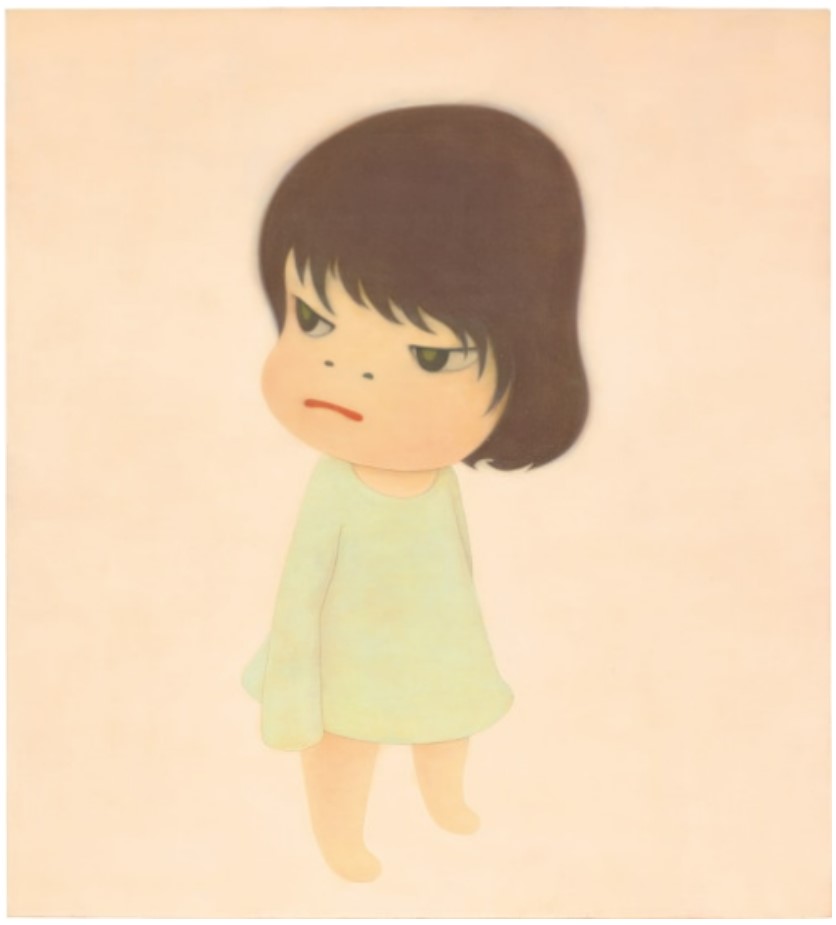
YOSHITOMO NARA
Missing in Action, 2000
Acrylic on canvas
165×150 cm (64 7/8 x 59 inches)
Signed, titled, inscribed and dated on the reverse
#3. Nice To See You Again, 1996
Sotheby’s New-York: 28 November 2021
Estimated: USD 8,000,000 – 12,000,000
USD 15,430,800
Nice to See You Again | The Now Evening Auction | 2021 | Sotheby’s (sothebys.com)
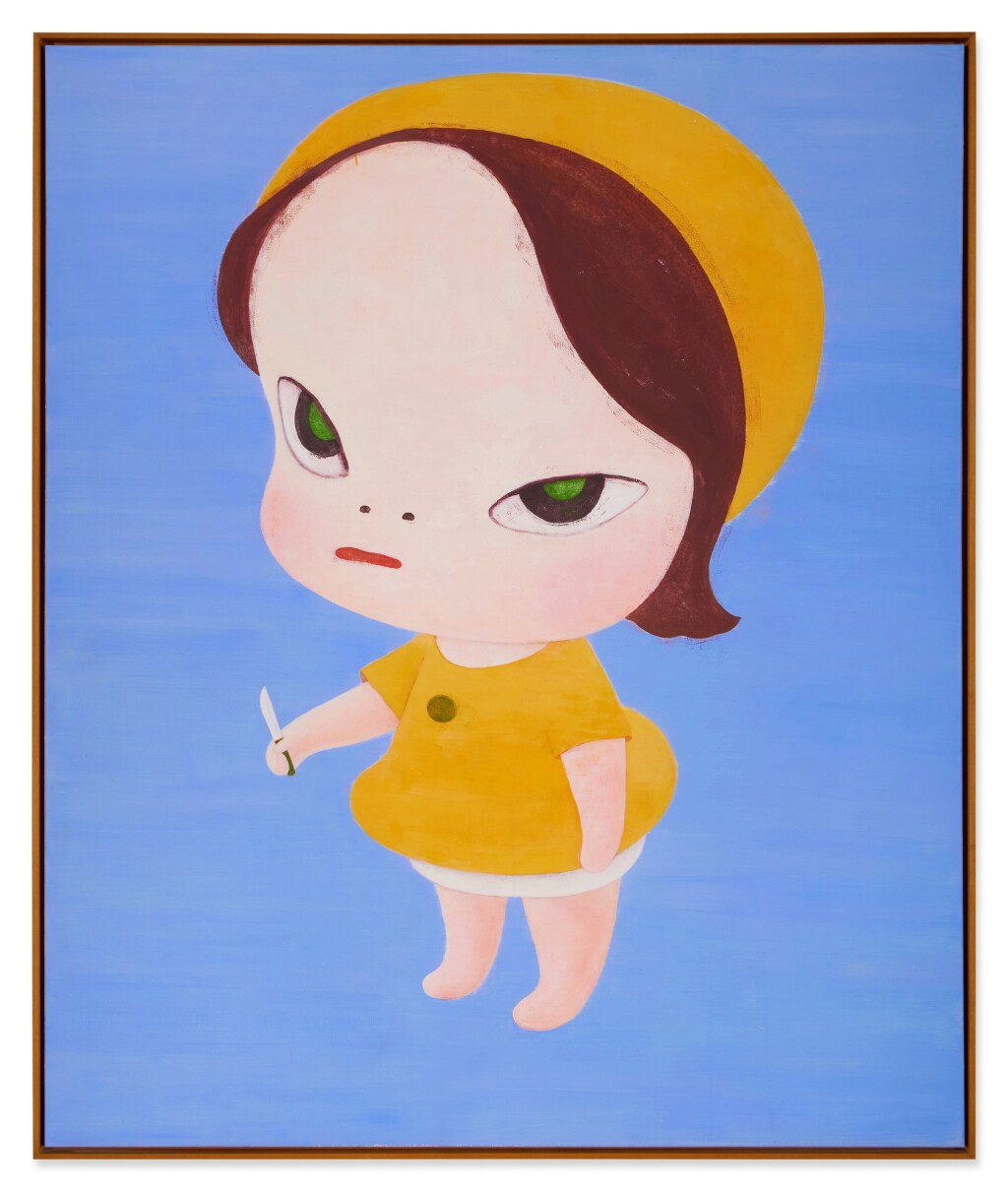
YOSHITOMO NARA (B. 1959)
Nice to See You Again, 1996
Acrylic on canvas
180×150 cm (70 ¾ x 59 inches)
Signed Y Nara, titled and dated ’96 (on the reverse)
#4. Oddly Cozy, 2013
Sotheby’s Hong-Kong: 27 April 2022
Estimated: HKD 80,000,000 – 120,000,000
HKD 111,870,000 / USD 14,269,511
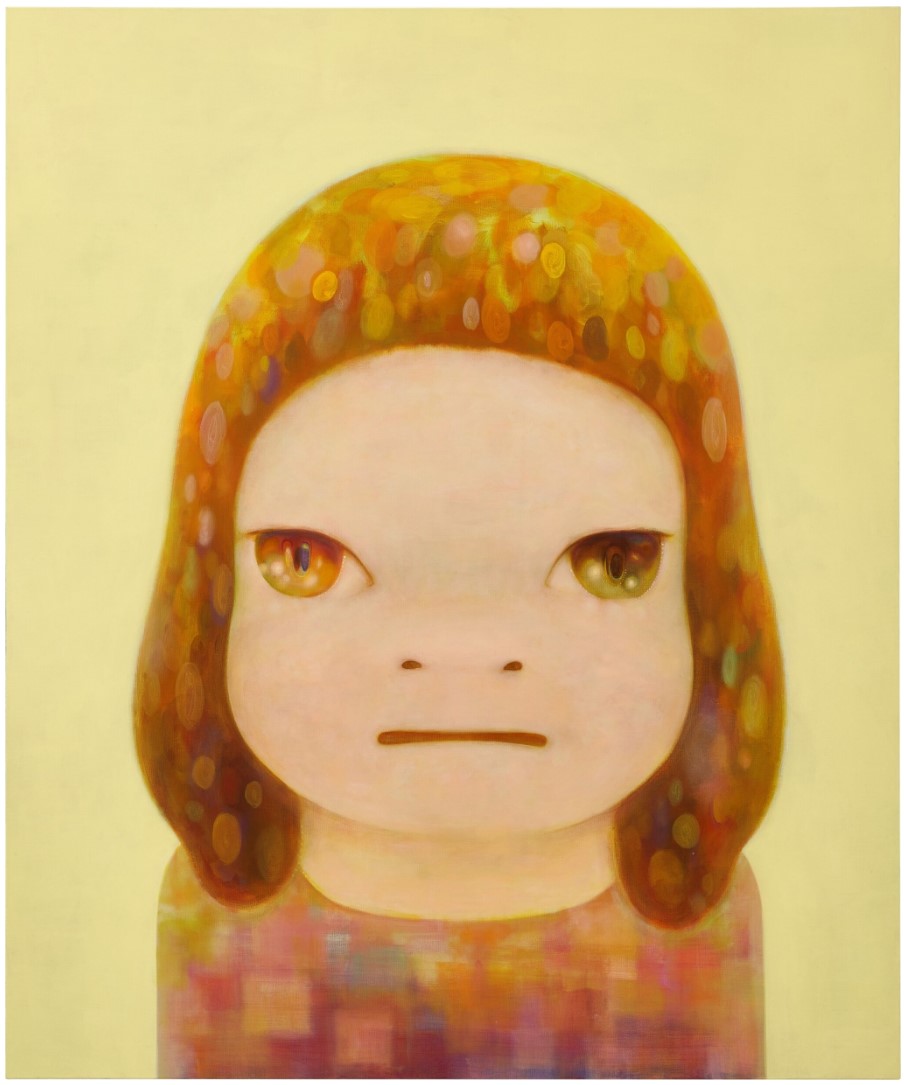
YOSHITOMO NARA (b. 1959)
Oddly Cozy, 2013
Acrylic on canvas
194×162 cm (76 3/8 x 63 3/4 inches)
Signed and dated 2013 on the reverse
#5. Hothouse Doll, 1995
Phillips Hong-Kong: 3 December 2020
Estimated: HKD 50,000,000 – 70,000,000
HKD 103,115,000 / USD 13, 302,653
Yoshitomo Nara – 20th Century & Cont… Lot 5 December 2020 | Phillips
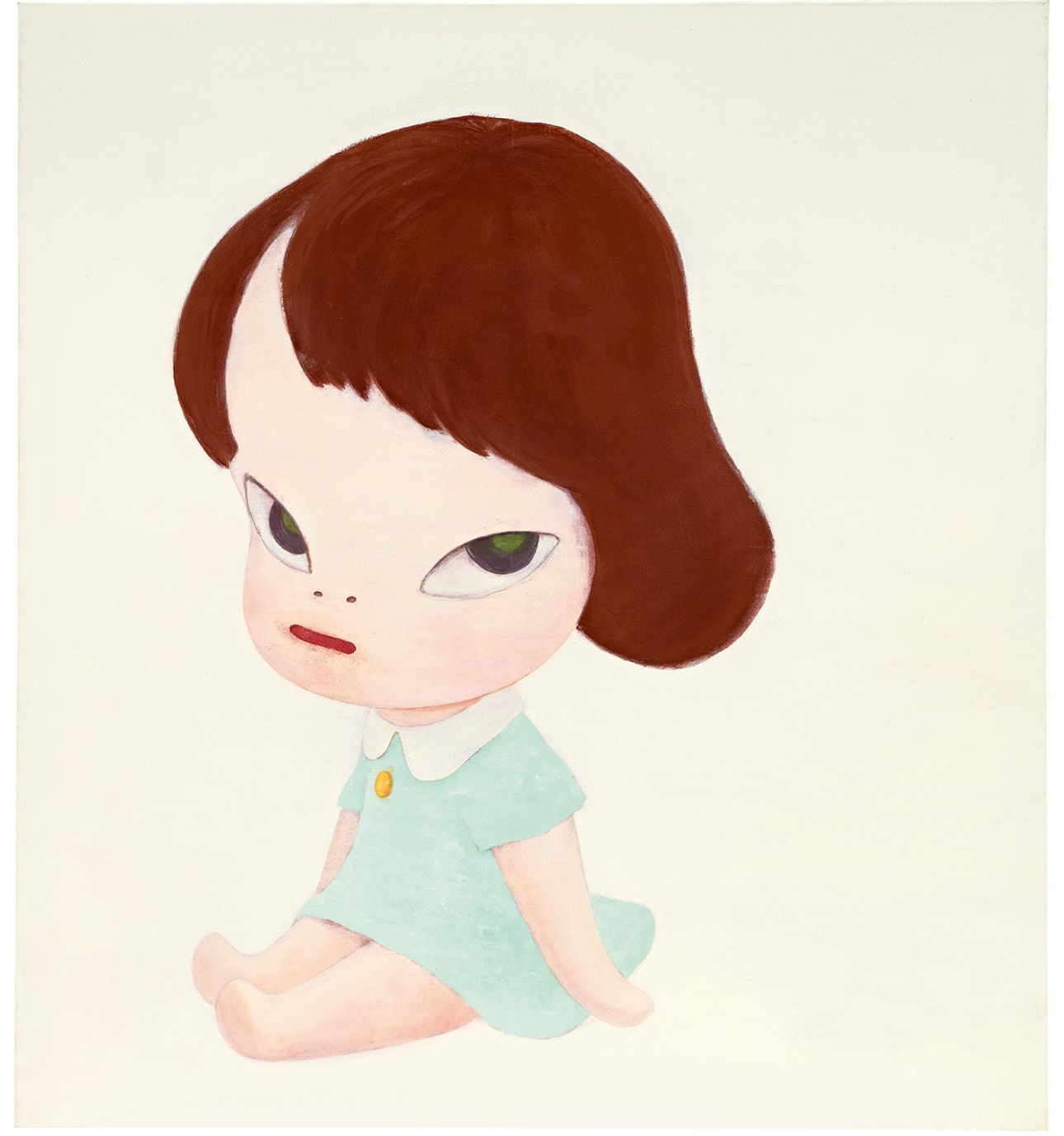
YOSHITOMO NARA
Hothouse Doll, 1995
Acrylic on canvas
119.8 x 109.9 cm. (47 1/8 x 43 1/4 inches)
Titled “Hot House Doll. (in the white room – III)” on the reverse
#6. In the Milky Lake, 2012
Sotheby’s Hong-Kong: 5 April 2023
Estimated: HKD 80,000,000 – 120,000,000
HKD 100,555,000 / USD 12,809,717
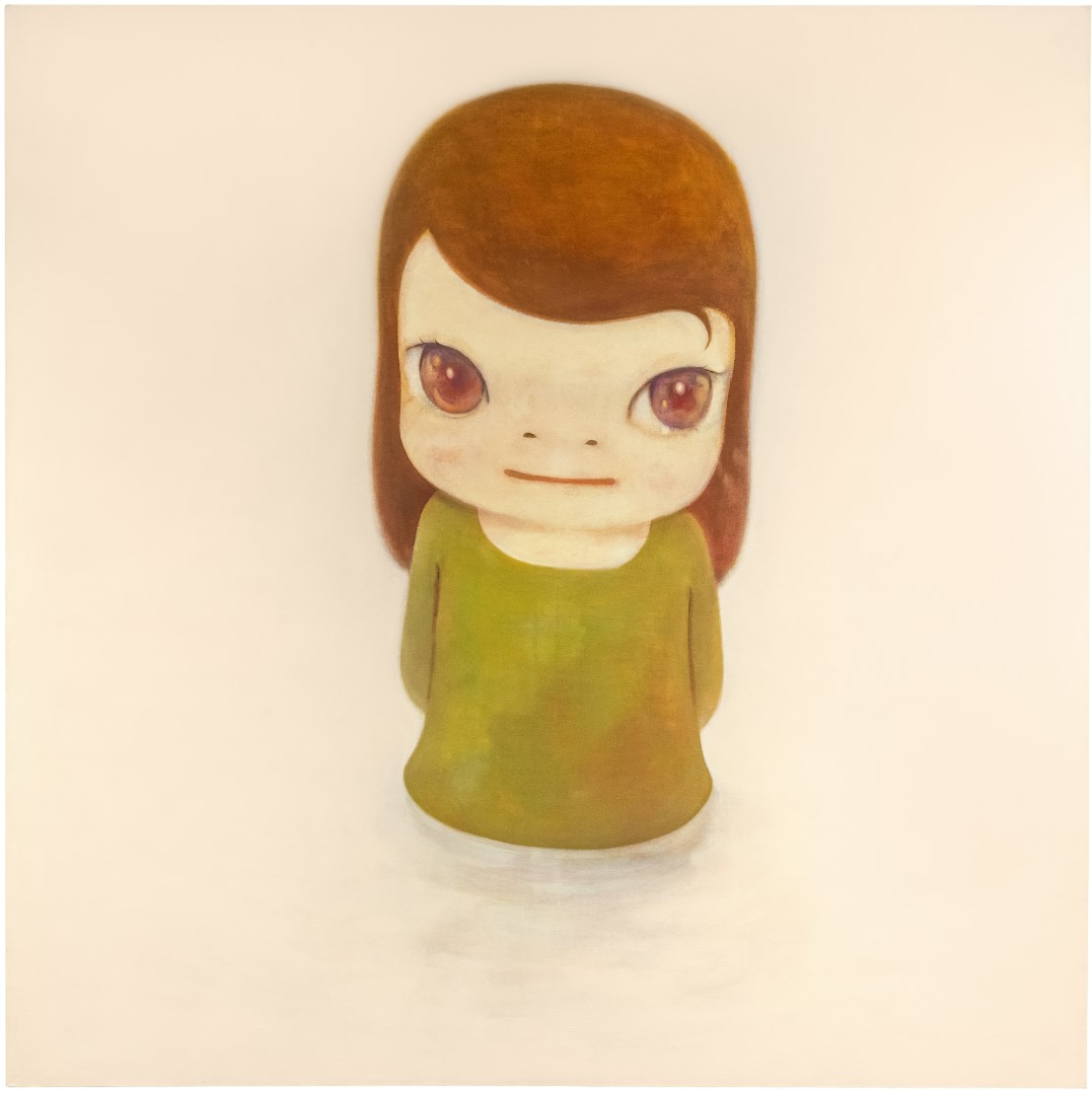
YOSHITOMO NARA (b. 1959)
In the Milky Lake, 2012
Acrylic on canvas
197×194 cm (77 1/2 x 76 3/8 inches)
Signed, titled and dated 2012 on the stretcher and signed and dated 2012 on the reverse
#7. Wish World Peace, 2014
Christie’s Hong-Kong: 26 May 2022
Estimated: HKD 88,000,000 – 128,000,000
HKD 97,090,000 / USD 12,368,310
YOSHITOMO NARA (B. 1959) (christies.com)
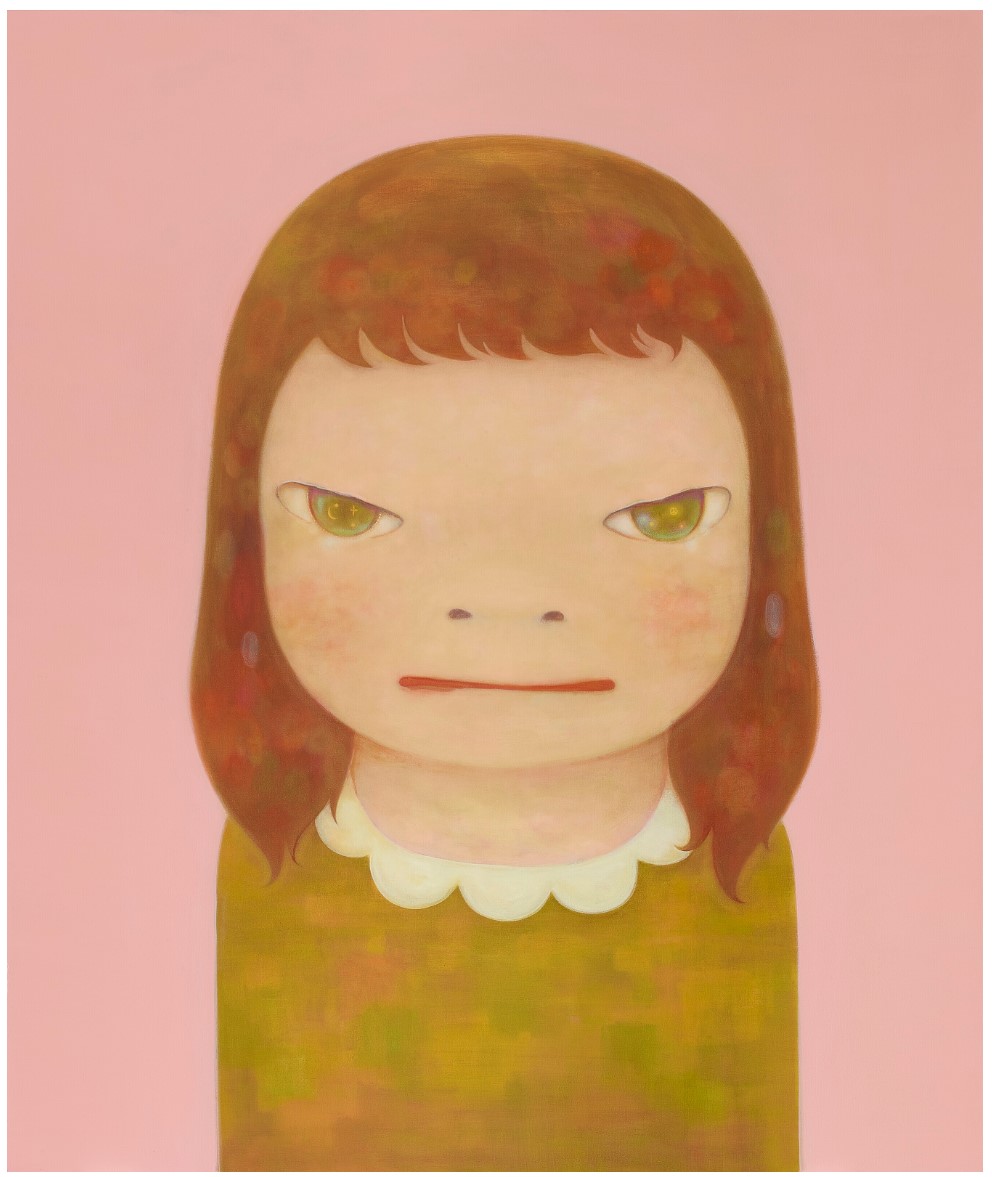
YOSHITOMO NARA (B. 1959)
Wish World Peace, 2014
Acrylic on canvas
194 x 162.2 cm (76 3⁄8 x 63 7⁄8 inches)
Signed with artist’s signature, titled and dated ‘2014 wish world peace’ (on the reverse)
#8. Frog Girl, 1998
Sotheby’s Hong-Kong: 19 April 2021
Estimated: HKD 40,000,000 – 80,000,000
HKD 96,284,000 / USD 12,397,426
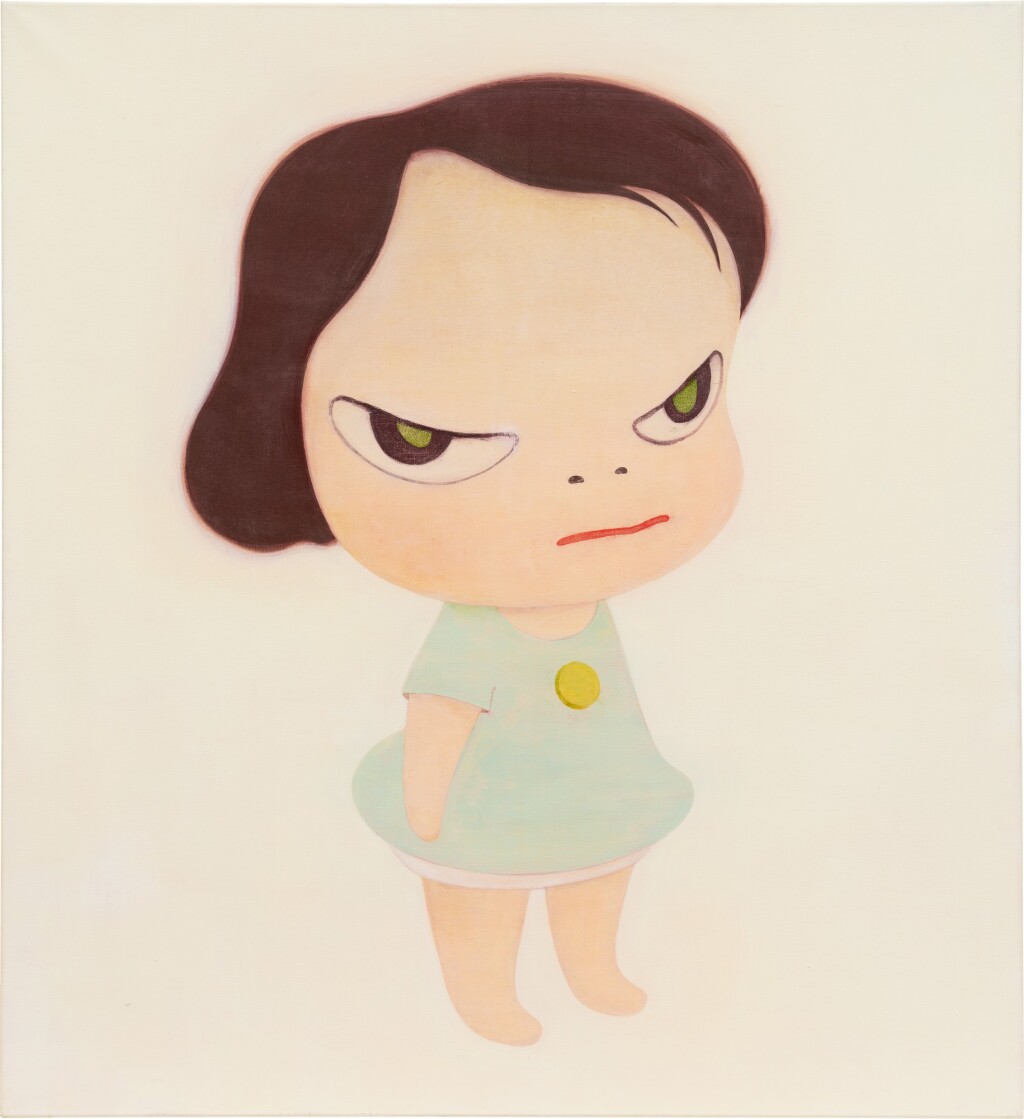
YOSHITOMO NARA (B. 1960)
Frog Girl, 1998
Acrylic on canvas
120×111 cm (43 ¼ x 47 ¼ inches)
Signed, titled and dated 98 on the reverse
#9. Light Haze Days / Study, 2020
Sotheby’s New-York: 16 November 2022
Estimated: USD 9,000,000 – 12,000,000
USD 11,929,000
Light Haze Days / Study | The Now Evening Auction | 2022 | Sotheby’s (sothebys.com)
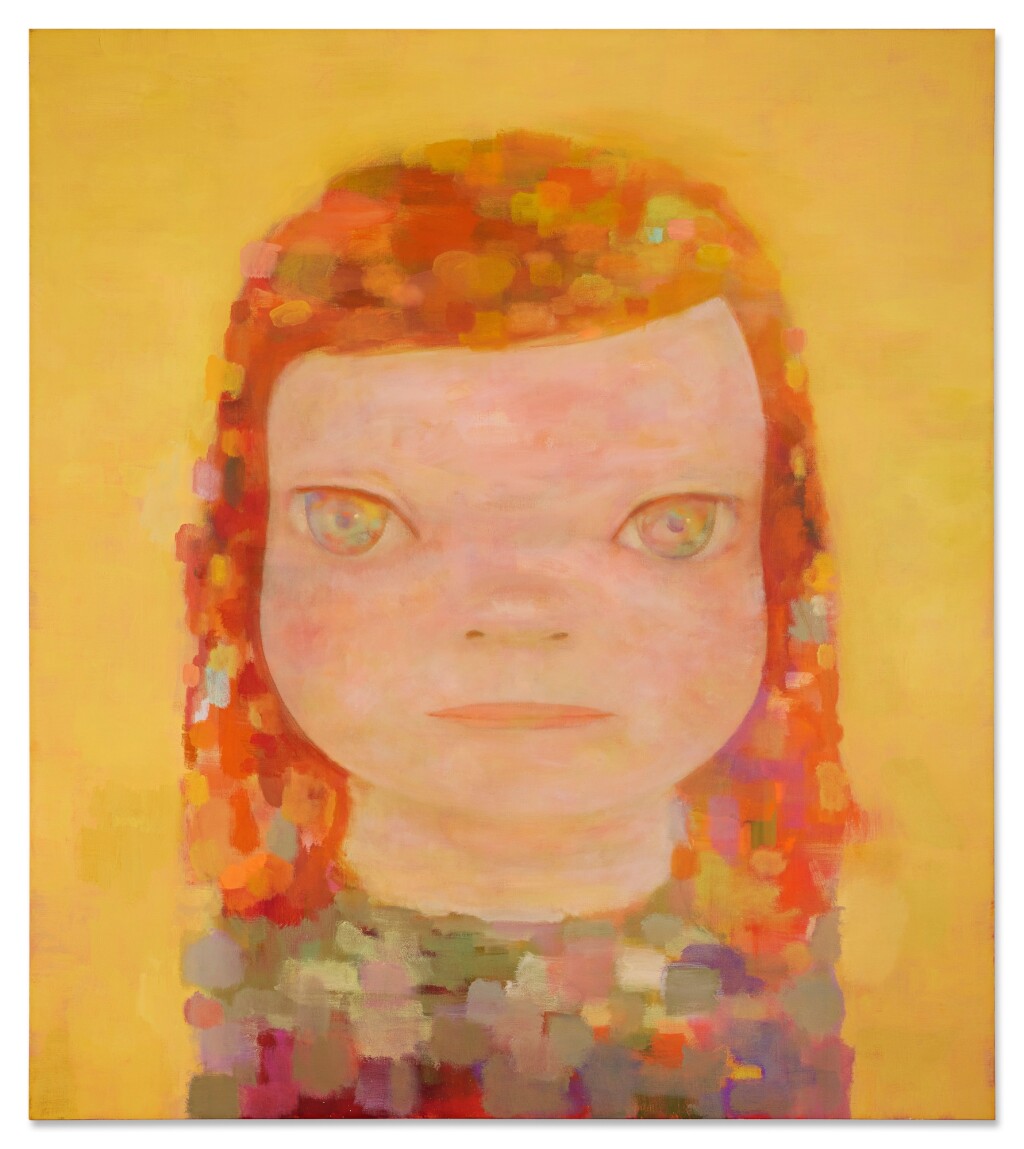
YOSHITOMO NARA (B. 1959)
Light Haze Days / Study, 2020
Acrylic on canvas
220×195 cm (86 ⅝ x 76 ¾ inches)
Signed and dated 2020 (on the reverse)
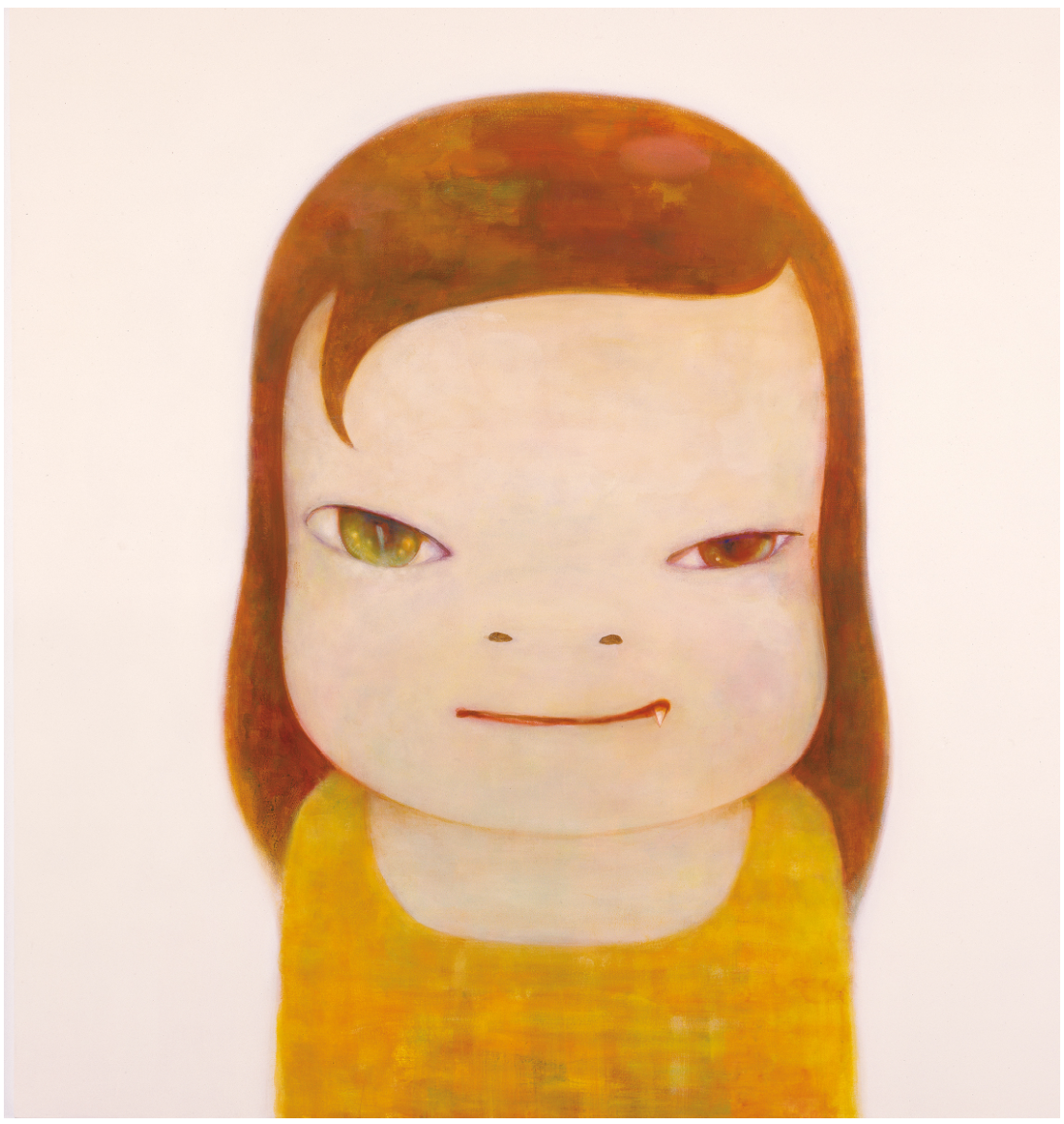
#10. Can’t Wait ’til the Night Comes, 2012
Christie’s Hong-Kong: 23 November 2019
Estimate on Request
HKD 92,875,000 / USD 11,868,122
YOSHITOMO NARA (B. 1959) (christies.com)
YOSHITOMO NARA (B. 1959)
Can’t Wait ’til the Night Comes, 2012
Acrylic on canvas
193.2 x 183.2 cm (76 1/8 x 72 1/8 inches)
Signed with artist’s signature and dated ‘2012’ (on the reverse)
Signed with artist’s signature, titled in Japanese and dated ‘2012’ (on the stretcher)
PART II: AUCTION RESULTS
2026 Upcoming Lots
MORE LOTS COMING SOON
2026 Auction Results
FOR PAINTINGS AND SCULPTURES ONLY
PRELIMINARY AUCTION RESULTS
As of 15 June 2026
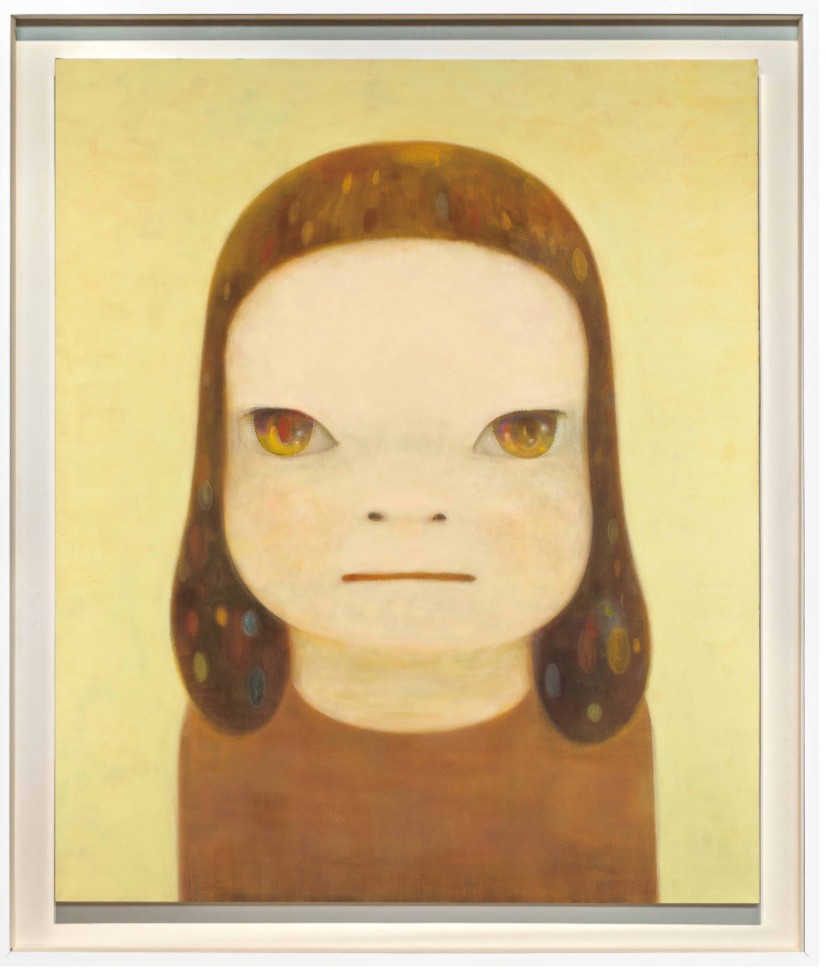
#1. Nothing about It, 2016
Seoul Auction: 30 March 2026
Estimated: KRW 14,700,000,000 – 22,000,000,000
KRW 15,000,000,000 (Hammer)
KRW 17,700,000,000 / USD 11,618,575
YOSHITOMO NARA (b.1959 | Japanese)
Nothing about It, 2016
Acrylic on canvas
194×162 cm (76 3/8 x 63 7/8 inches)
Signed and dated on the reverse
Gallery label affixed to the canvas stretcher bars
USD 10 million
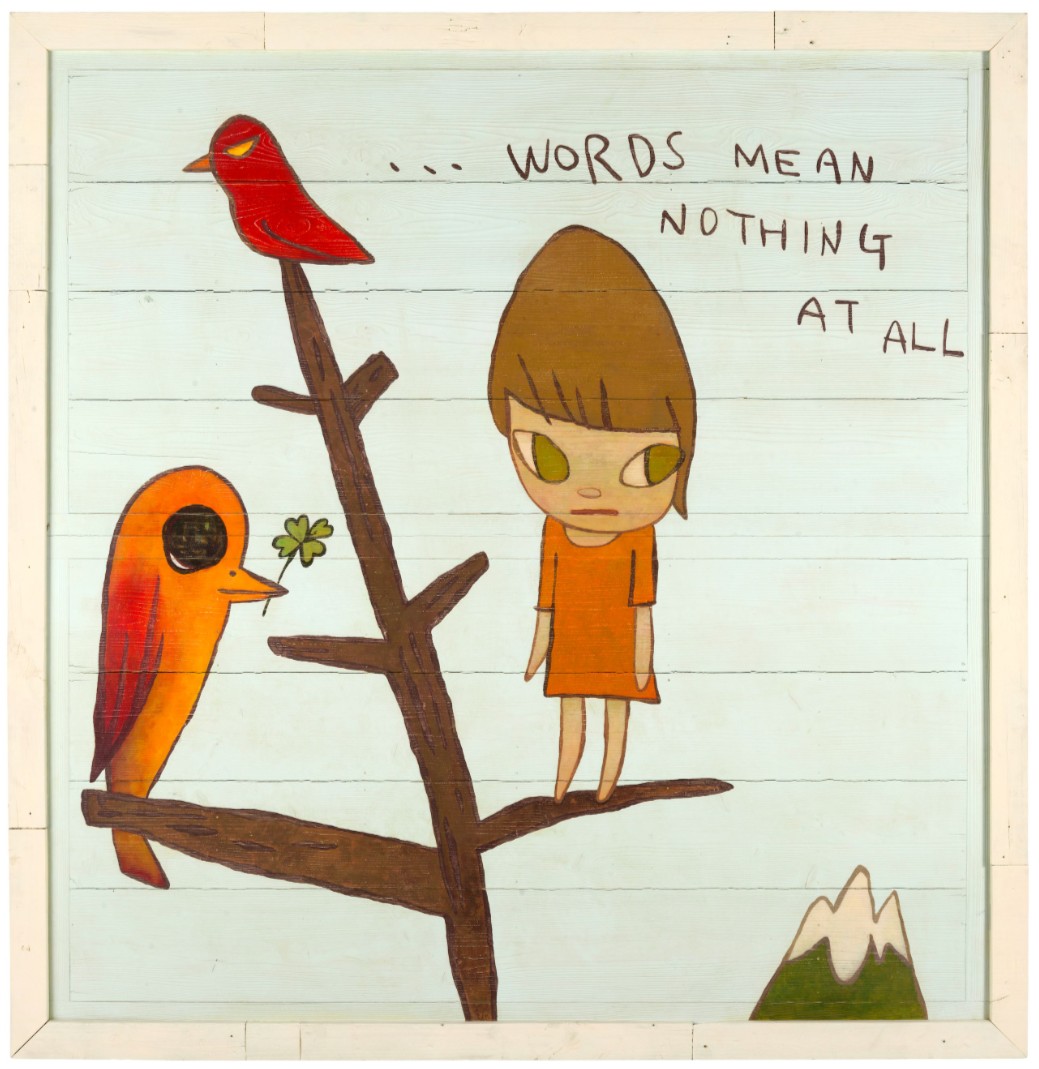
#2. …Words Mean Nothing at All, 2012
Bonhams New-York: 20 May 2026
Estimated: USD 4,000,000 – 6,000,000
USD 5,021,500
YOSHITOMO NARA (B. 1959)
…Words Mean Nothing at All, 2012
Acrylic on wood, in artist’s frame
194.3 x 189.2 x 8.9 cm (76 1/2 x 74 1/2 x 3 1/2 inches)
Signed and inscribed ‘Words mean nothing at all… Nara’ (on the reverse)
#3. Over the Topper, 1995
Sotheby’s New-York: 15 May 2026
Estimated: USD 800,000 – 1,200,000
USD 1,216,000
Yoshitomo Nara | Over the Topper | Contemporary Day Auction | 2026 |
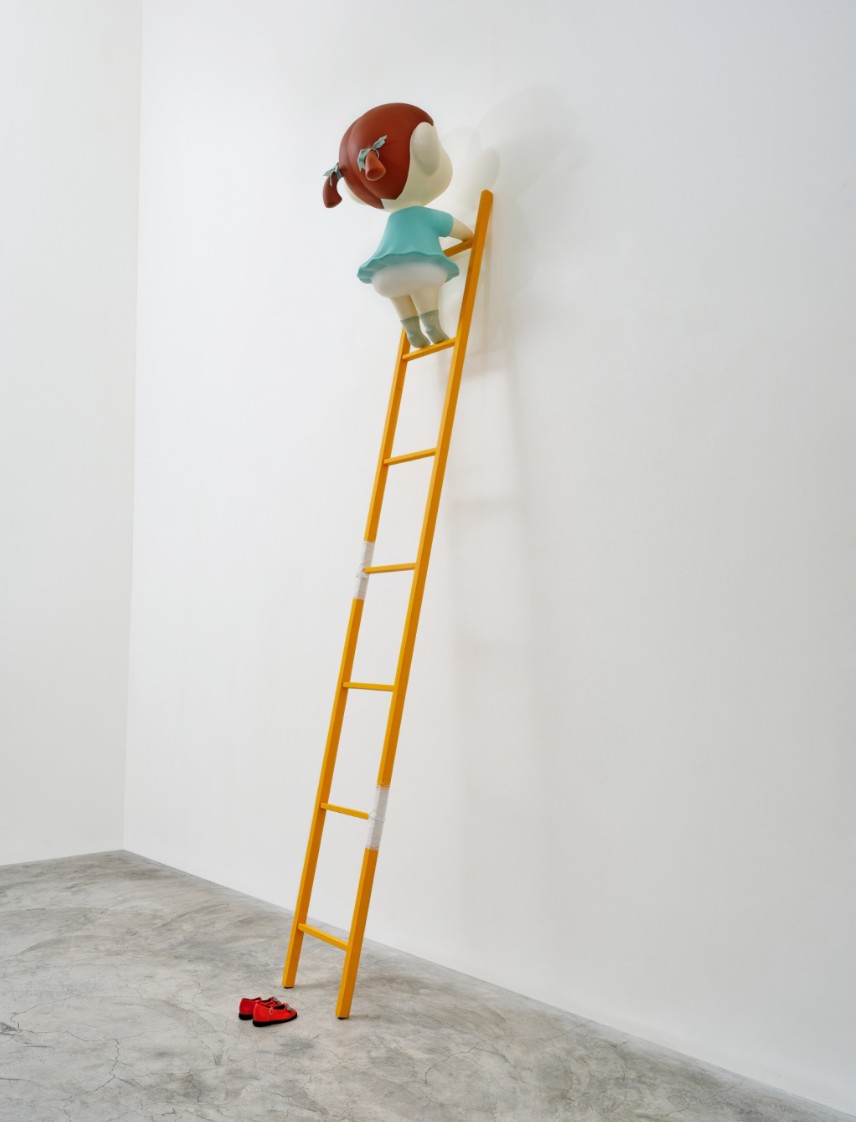
YOSHITOMO NARA (b. 1959)
Over the Topper, 1995
Acrylic on FRP sculpture with painted wooden ladder, gauze, ribbon, socks and shoes
Installation dimensions variable
USD 1 million
#4. Bunny in blue, 1997
Lempertz Cologne: 5 June 2026
Estimated: EUR 350,000 – 450,000
EUR 584,200 / USD 673,725
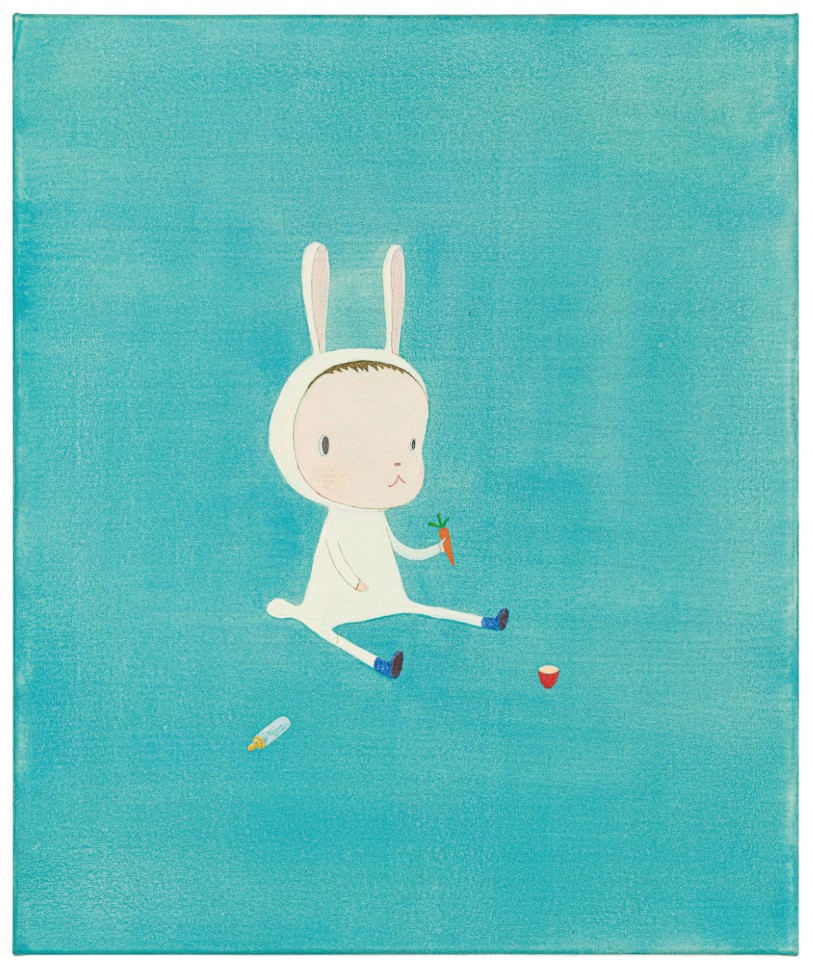
YOSHITOMO NARA
Bunny in blue, 1997
Acrylic on canvas
60×50 cm (23-5/8 x 19-5/8 inches)
Signed, dated and inscribed ‘nara ’97 -in the blue room’ on canvas overlap
Also with direction arrow and directional information
#5. Untitled, 1989
Sotheby’s New-York: 25 February 2026
Estimated: USD 300,000 – 500,000
USD 384,000
Untitled | Contemporary Curated | 2026 | Sotheby’s
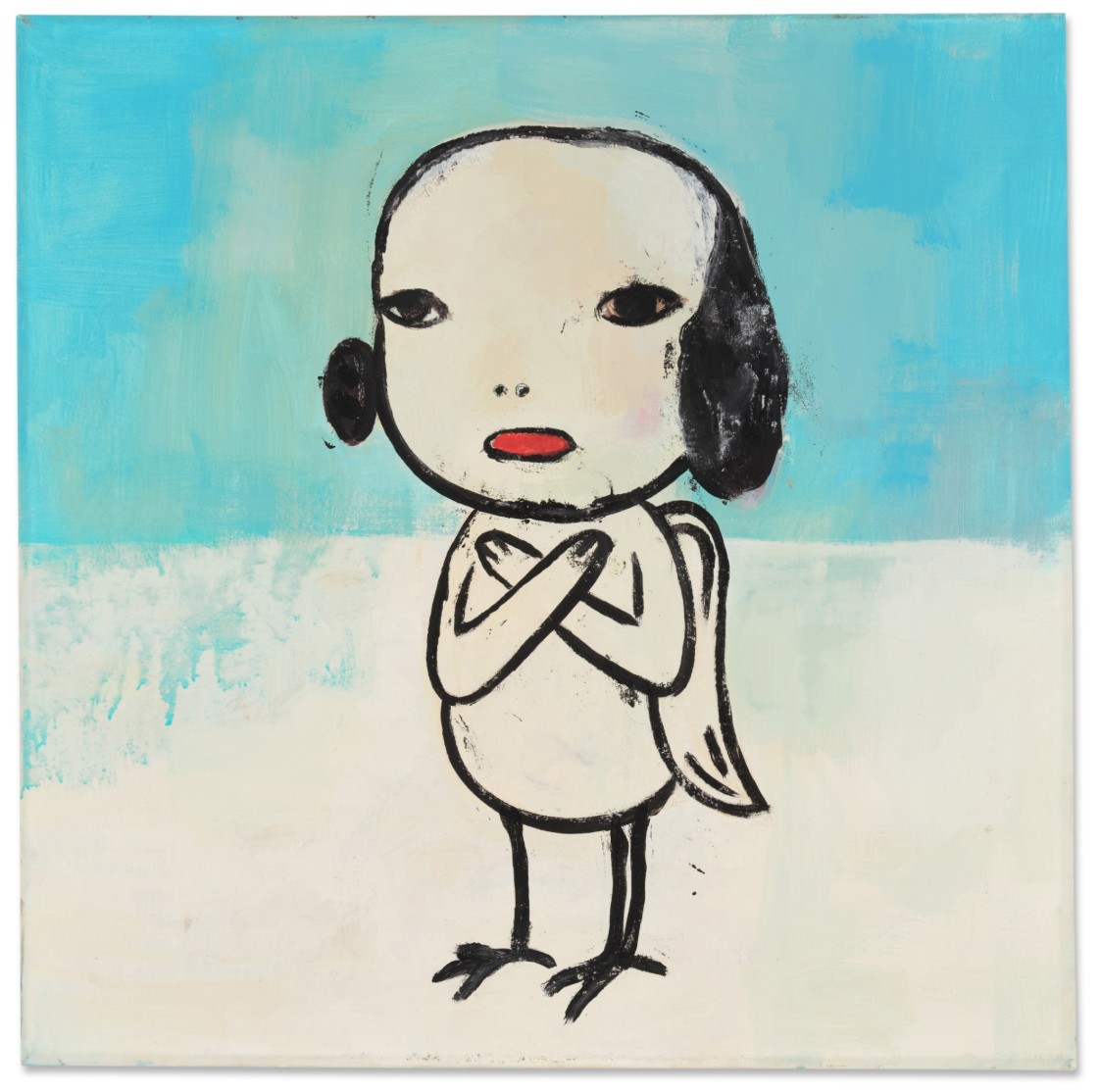
YOSHITOMO NARA (b. 1959)
Untitled, 1989
Acrylic on canvas
65×65 cm (25-5/8 x 25-5/8 inches)
Inscribed Michi and dated Nov. 1989 (on the reverse)
Inscribed MI CHI (on the overlap)
Executed in November 1989
#6. I’m Starved (No. YNF2930), 2001
SBI Art Auction: 24 January 2026
Estimated: JPY 30,000,000 – 50,000,000
JPY 52,900,000 / USD 339,715
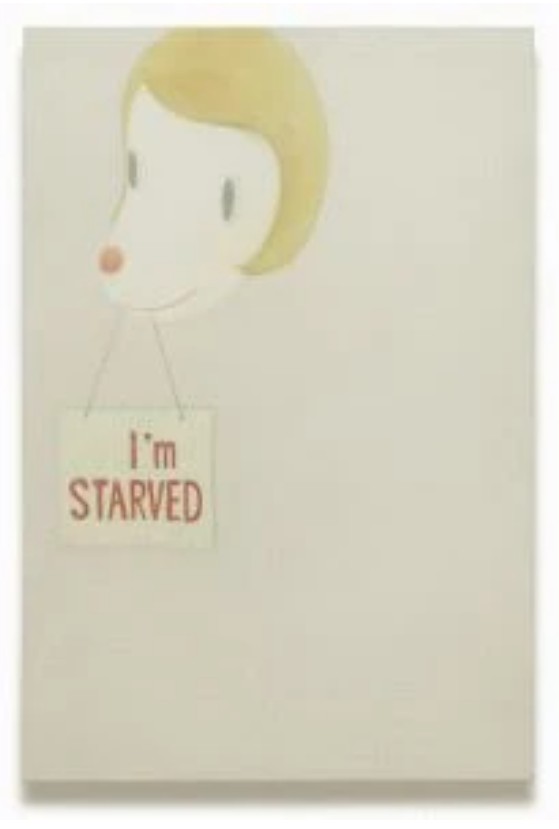
YOSHITOMO NARA
I’m Starved (No. YNF2930), 2001
Studio No. P-2001-011
Acrylic on cotton mounted on plywood
60.2 × 41 cm (23-3/4 x 16-1/8 inches)
Signed, titled and dated on the reverse
#7. Informal Autograph, 2009
Phillips Hong-Kong: 29 March 2026
Estimated: HKD 800,000 – 1,200,000
HKD 2,064,000 / USD 263,495
Yoshitomo Nara Modern & Contemporary Art
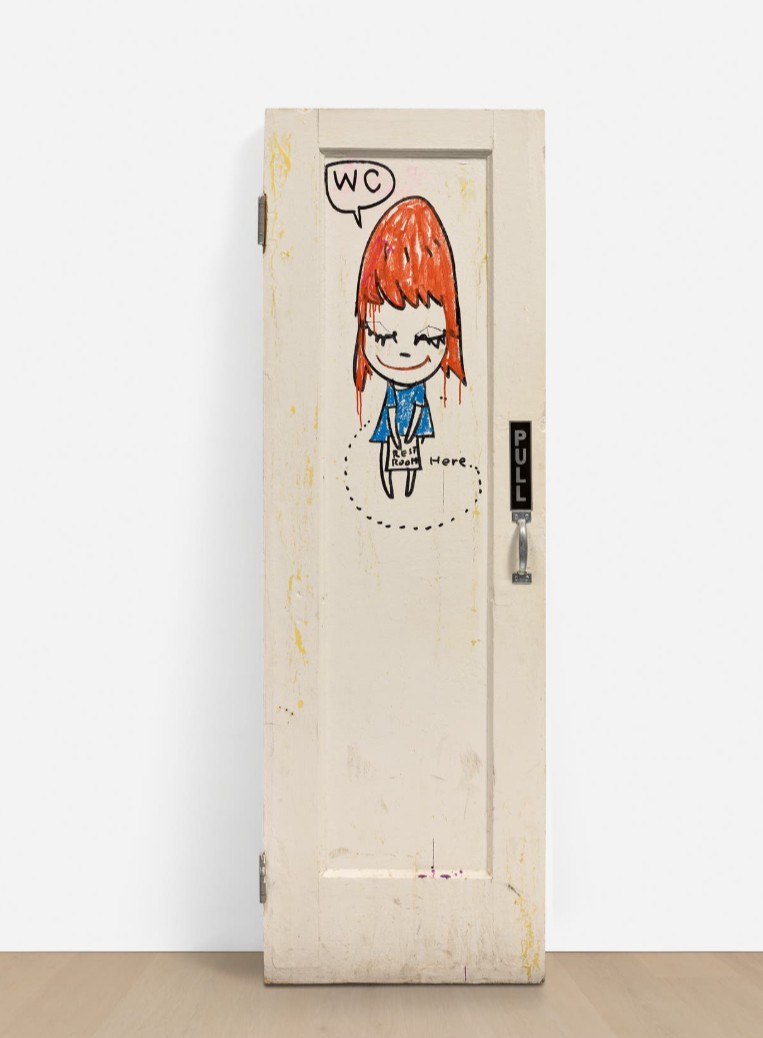
YOSHITOMO NARA
Informal Autograph, 2009
Acrylic on door, hardware
197.8 x 64.1 cm (77-7/8 x 25-1/4 inches)
#8. I Think, Therefore I Am…A Dog, 2003
Sotheby’s London: 7 March 2026
Estimated: GBP 70,000 – 100,000
GBP 89,600 / USD 119,695
I Think, Therefore I Am…A Dog | Contemporary Day Auction | 2026 | Sotheby’s
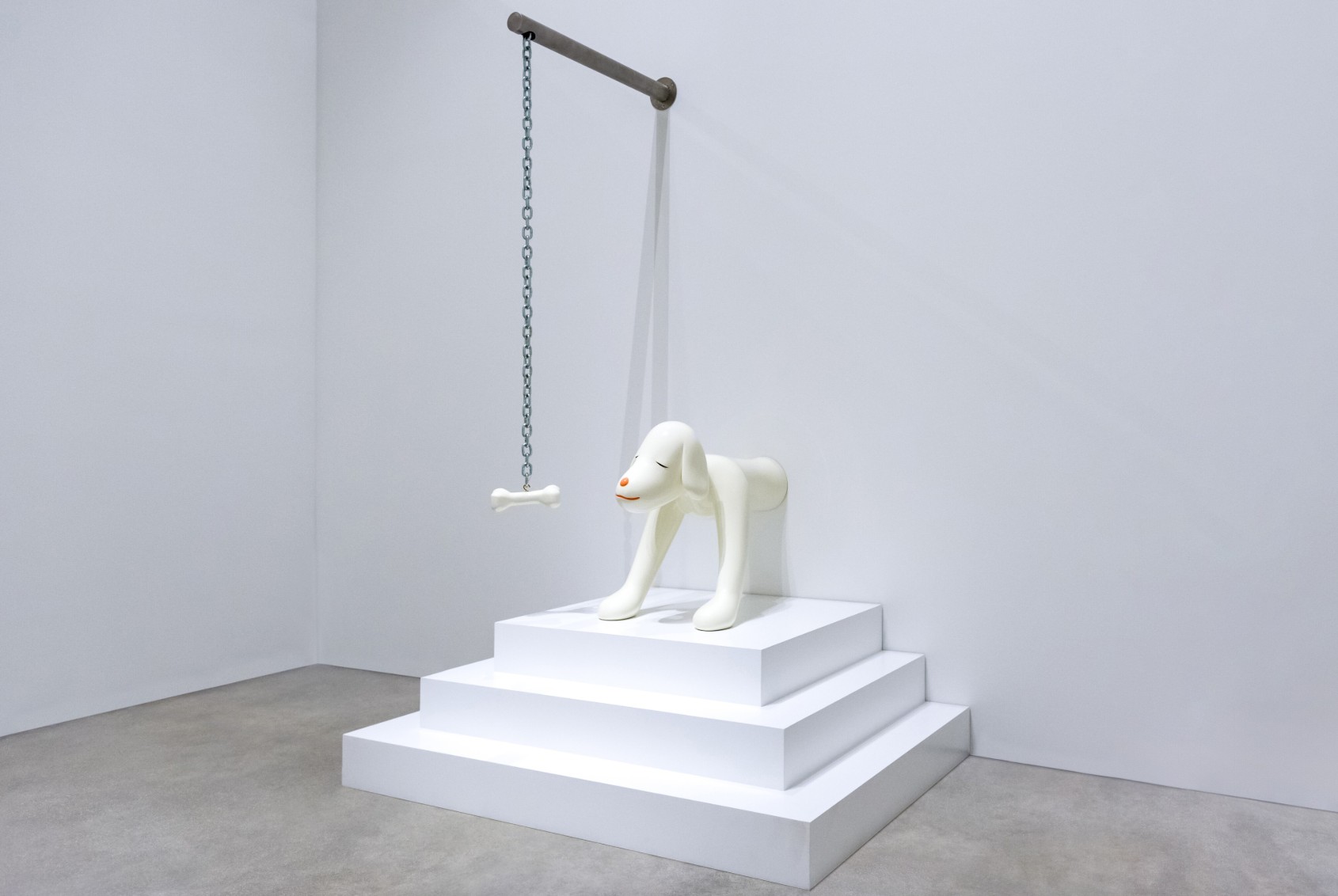
YOSHITOMO NARA (b. 1959)
I Think, Therefore I Am…A Dog, 2003
Acrylic and lacquer on fiberglass, wood and steel
210.8 x 134.6 x 94 cm (83x53x37 inches)
This work is from an edition of 6, plus 2 artist’s proofs
USD 100,000
#9. Girl with Skulls, 2002
Sotheby’s New-York: 25 February 2026
Estimated: USD 60,000 – 80,000
USD 64,000
Girl with Skulls | Contemporary Curated | 2026 | Sotheby’s
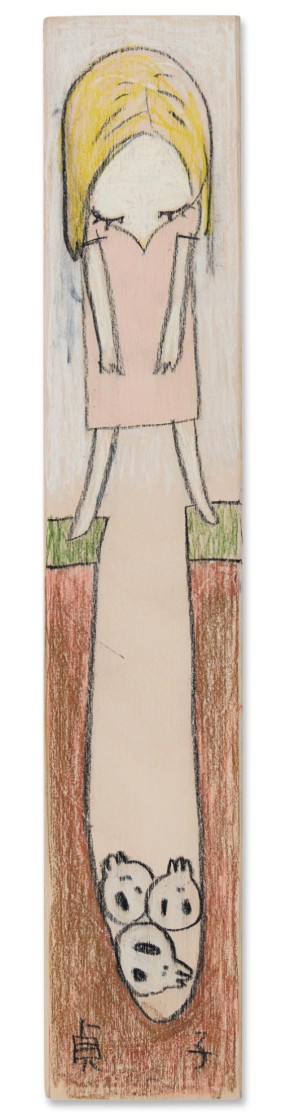
YOSHITOMO NARA (b. 1959)
Girl with Skulls, 2002
Colored pencil on wood
33.3 x 6.4 cm (13-1/8 x 2-1/2 inches)
Dated 2002 (on the reverse)
2025 Auction Results
FOR PAINTINGS AND SCULPTURES ONLY
14 lots sold at auction in 2025 for a total turnover of USD 42,189,267. With 3 lots failing to sell, the sell-through rate is 82%. The highest price was achieved by Cosmic Eyes (in the Milky Lake), a painting dated 2005, that sold at Sotheby’s, in London, on 5 March 2025, for GBP 9,027,500 (USD 11,555,200).
2025 Top 3 Lots
2 lots sold for more than USD 10 million, generating a cumulative turnover of USD 21,825,123, representing 51.7% of the total turnover for 2025. 8 lots sold for more than USD 1 million, generating a cumulative turnover of USD 39,707,426, representing 94.1% of the total turnover for 2025.
XXXXXXXXXX
#1. Cosmic Eyes (in the Milky Lake), 2005
Sotheby’s London: 5 March 2025
Estimated: GBP 6,000,000 – 8,000,000
GBP 9,027,500 / USD 11,555,200
READ MORE IN FOCUS SECTION
Cosmic Eyes (in the Milky Lake) | Modern & Contemporary Evening Auction | 2025 | Sotheby’s
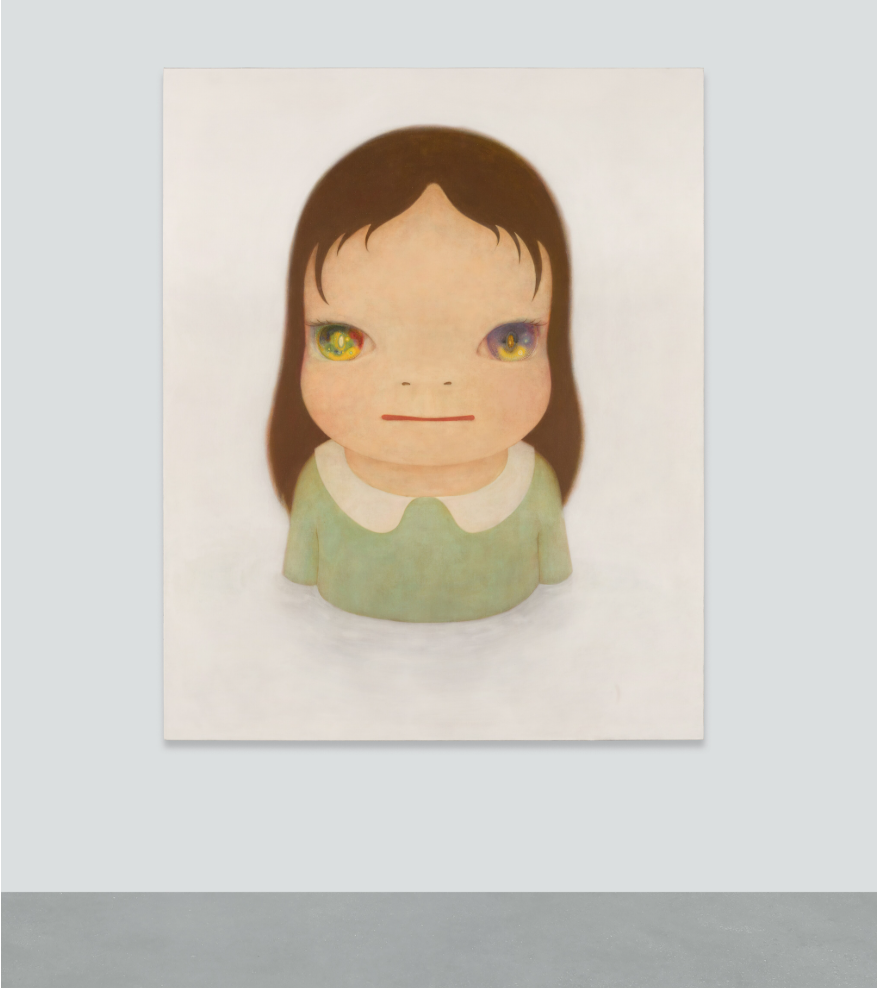
YOSHITOMO NARA (b. 1959)
Cosmic Eyes (in the Milky Lake), 2005
Acrylic and glitter on canvas
162 x 130.2 cm (64 3/4 x 51 1/4 inches)
Signed, partially titled and dated 2005 (on the reverse)
#2. Can’t Wait ’til the Night Comes, 2012
Sotheby’s Hong-Kong: 28 September 2025
Estimated: HKD 65,000,000 – 85,000,000
HKD 79,900,000 / USD 10,969,925
READ MORE IN FOCUS SECTION
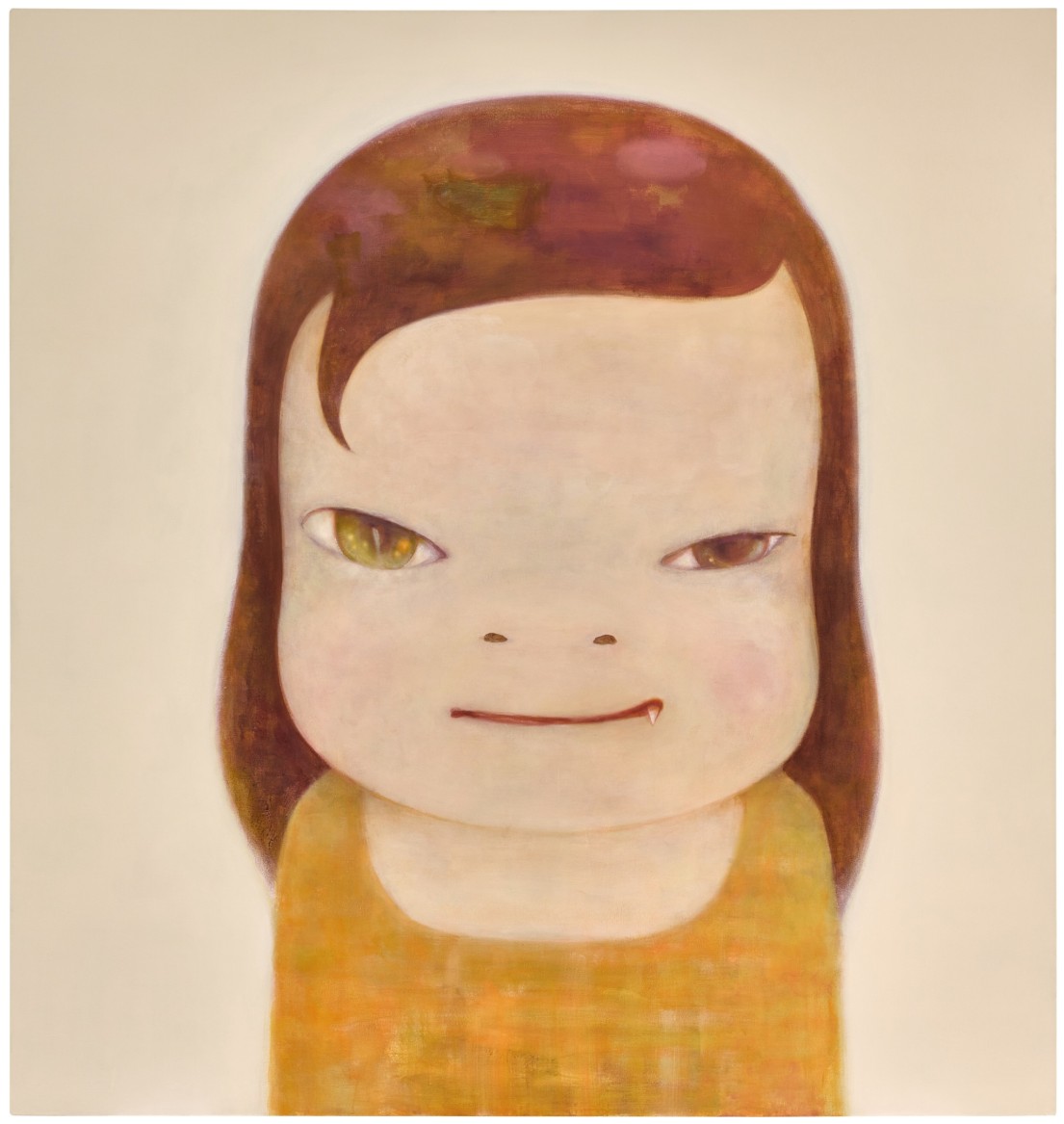
YOSHITOMO NARA (b. 1959)
Can’t Wait ’til the Night Comes, 2012
Acrylic on canvas
193.6 x 183 cm (76 1/4 x 72 inches)
Signed and dated 2012 (on the reverse)
Signed, titled in Japanese and dated 2012 (on the stretcher)
USD 10 million
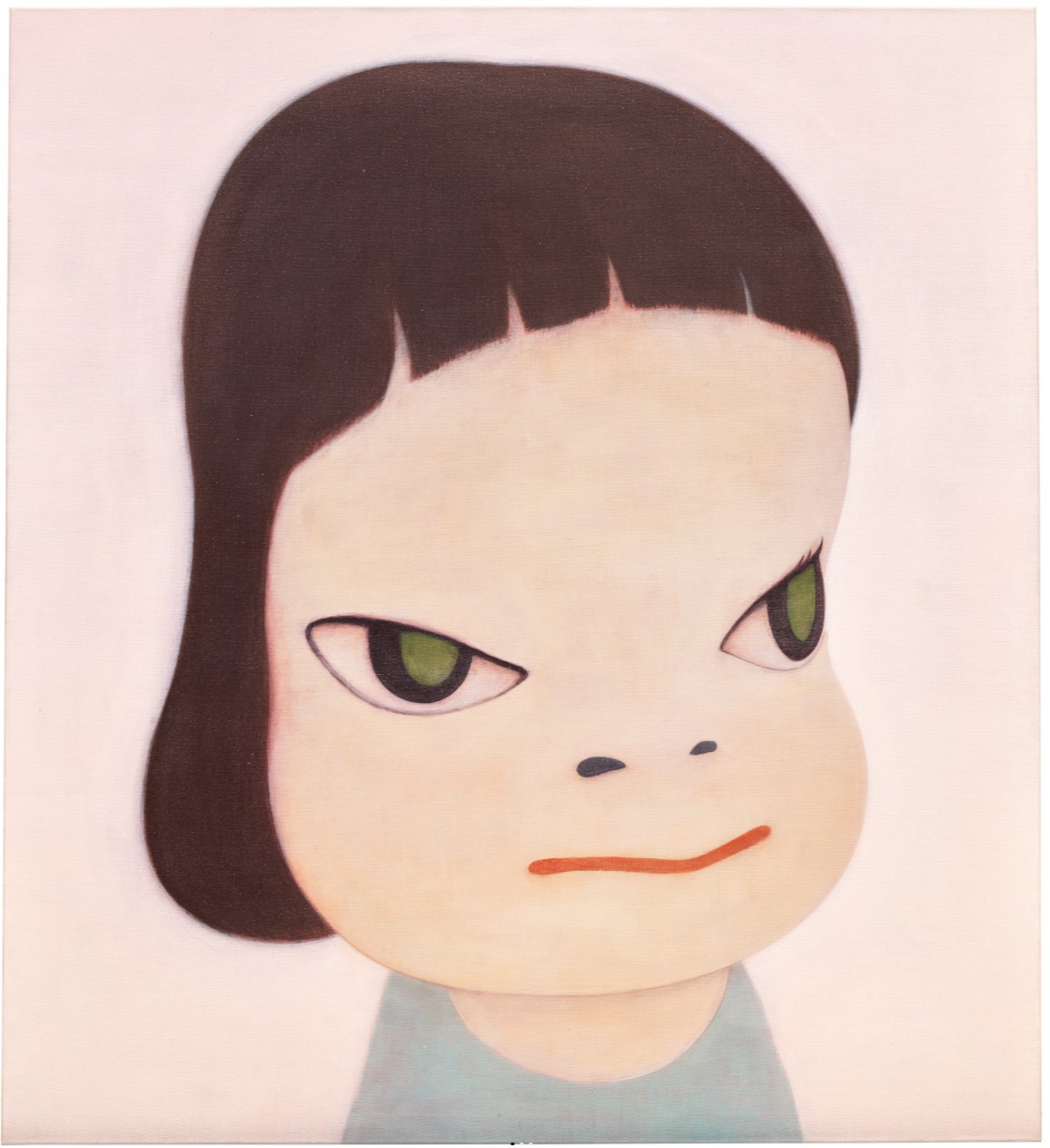
#3. Pinky, 2000
Phillips Hong-Kong: 27 September 2025
Estimated: HKD 60,000,000 – 80,000,000
HKD 56,645,000 / USD 7,280,850
Yoshitomo Nara Modern & Contemporary Art Evening Sale
#4. Mine Detector, 1993
Christie’s Hong-Kong: 29 March 2024
Estimated: HKD 15,000,000 – 20,000,000
HKD 23,970,000 / USD 3,080,977
YOSHITOMO NARA (B. 1959), Mine Detector | Christie’s
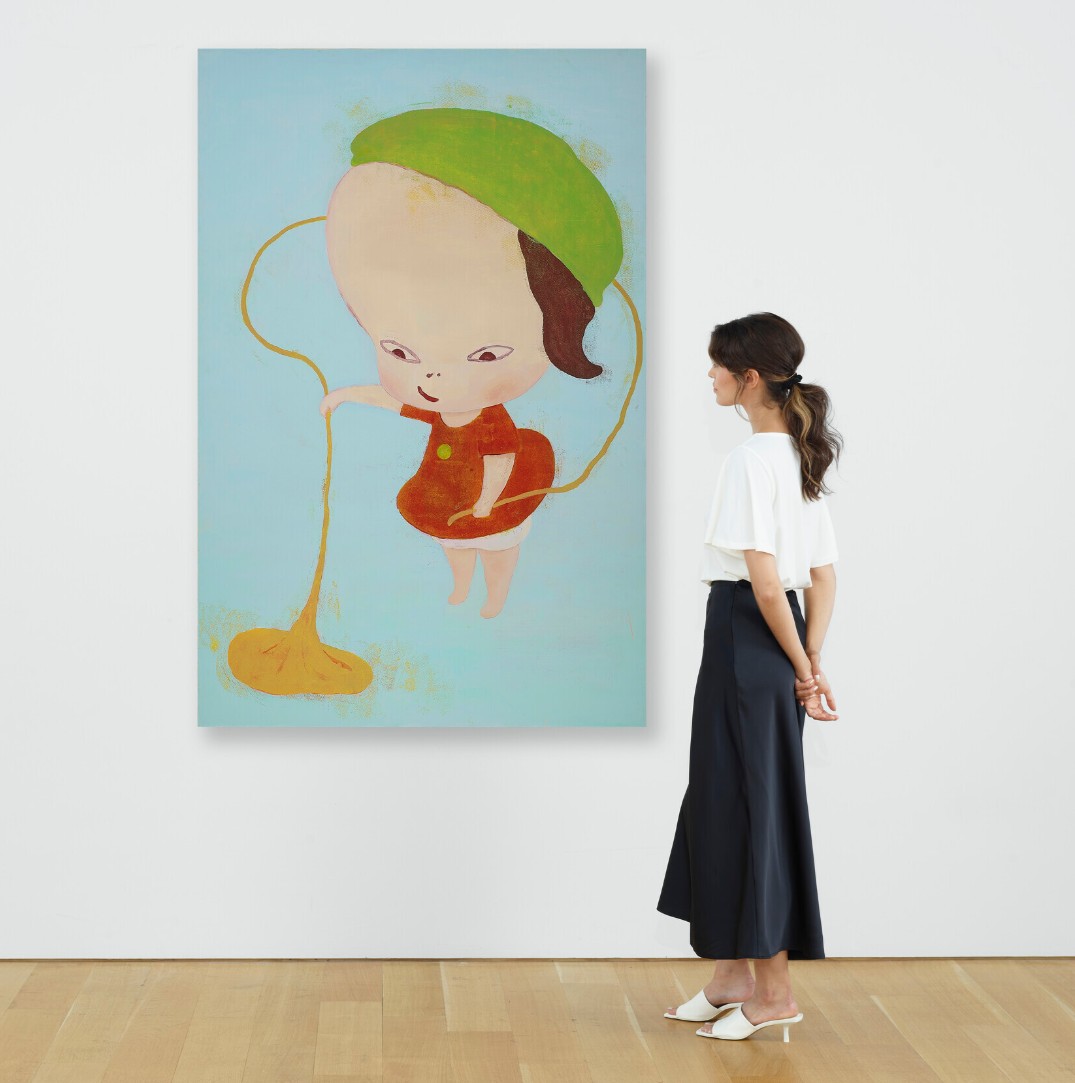
YOSHITOMO NARA (B. 1959)
Mine Detector, 1993
Acrylic on canvas
150×100 cm (59 x 39 3/8 inches)
Signed and dated ‘YOSHITOMO NARA ’93’ (on the overlap)
#5. Sprout the Ambassador, 2001
Sotheby’s Hong-Kong: 28 September 2025
Estimated: HKD 9,000,000 – 15,000,000
HKD 18,431,000 / USD 2,369,025
READ MORE IN FOCUS SECTION
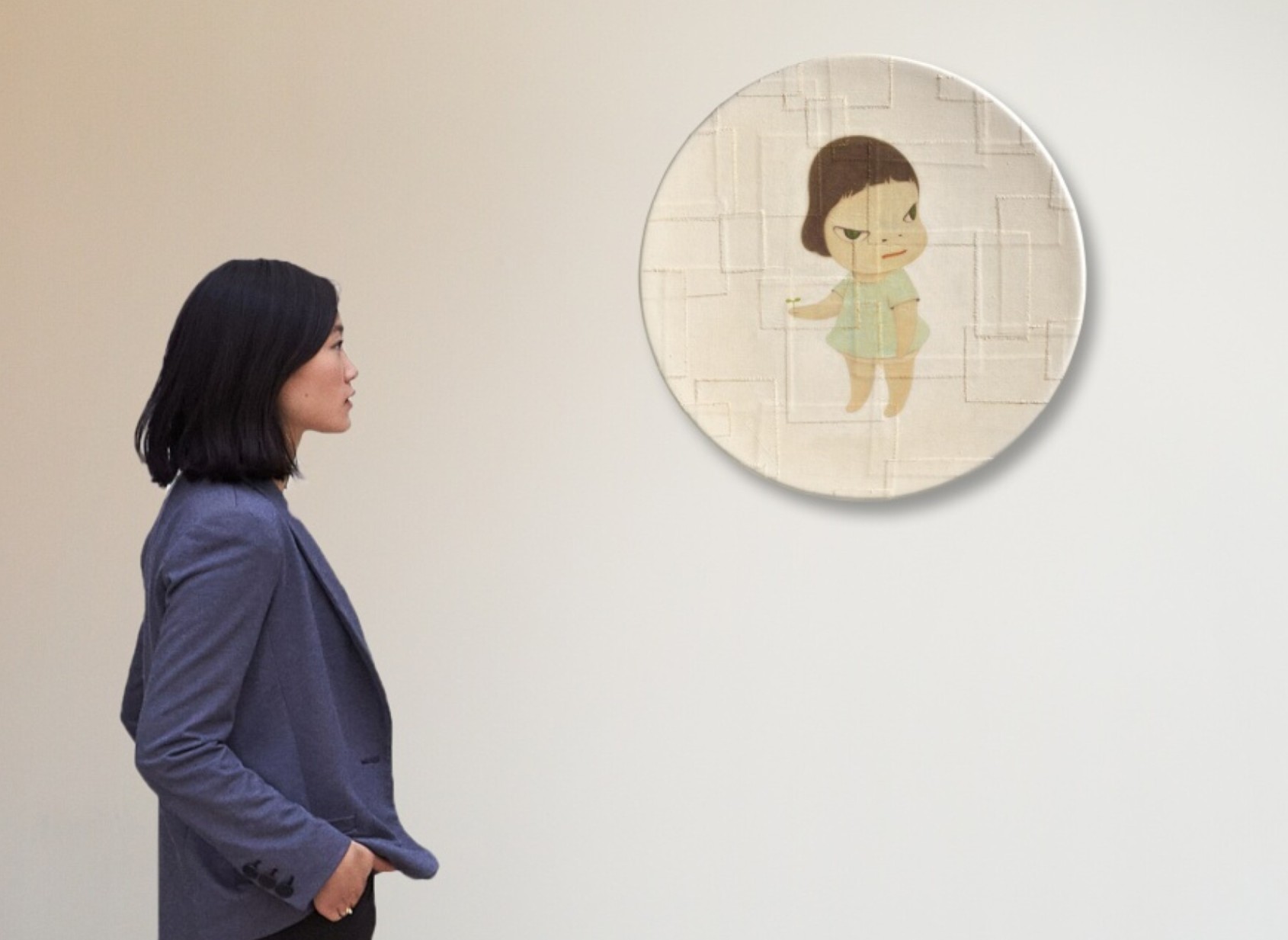
YOSHITOMO NARA (b. 1959)
Sprout the Ambassador, 2001
Acrylic on cotton mounted on FRP
55 x 55 x 9.5 cm (21 5/8 x 21 5/8 x 3 3/4 inches)
Signed, titled and dated 01 (on the reverse)
#6. Dulcimer (For Jean Ritchie), 2010
Poly Hong-Kong: 30 April 2025
Estimated: HKD 15,000,000 – 25,000,000
HKD 18,360,000 / USD 2,366,750
Dulcimer (For Jean Ritchie)|Poly Auction Hong Kong
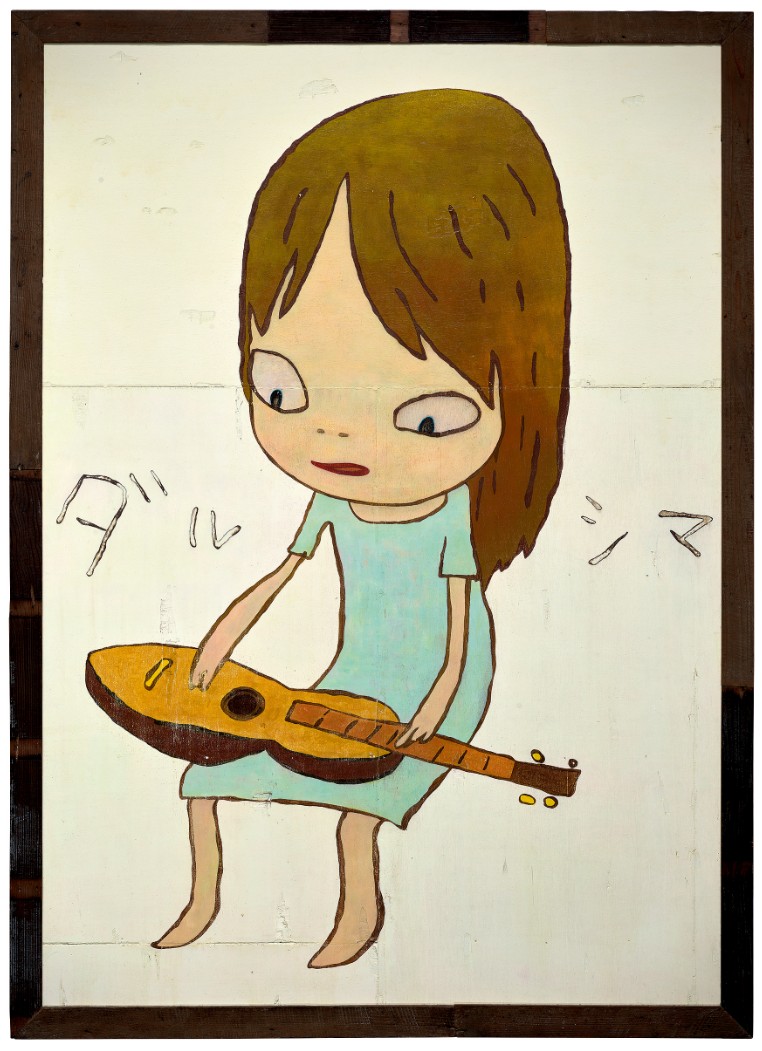
Acrylic on wood, in artist’s frame
Work: 237×167 cm (93 1/4 x 65 3/4 inches)
Frame: 252.5 x 182.5 cm (99 1/2 x 71 3/4 inches)
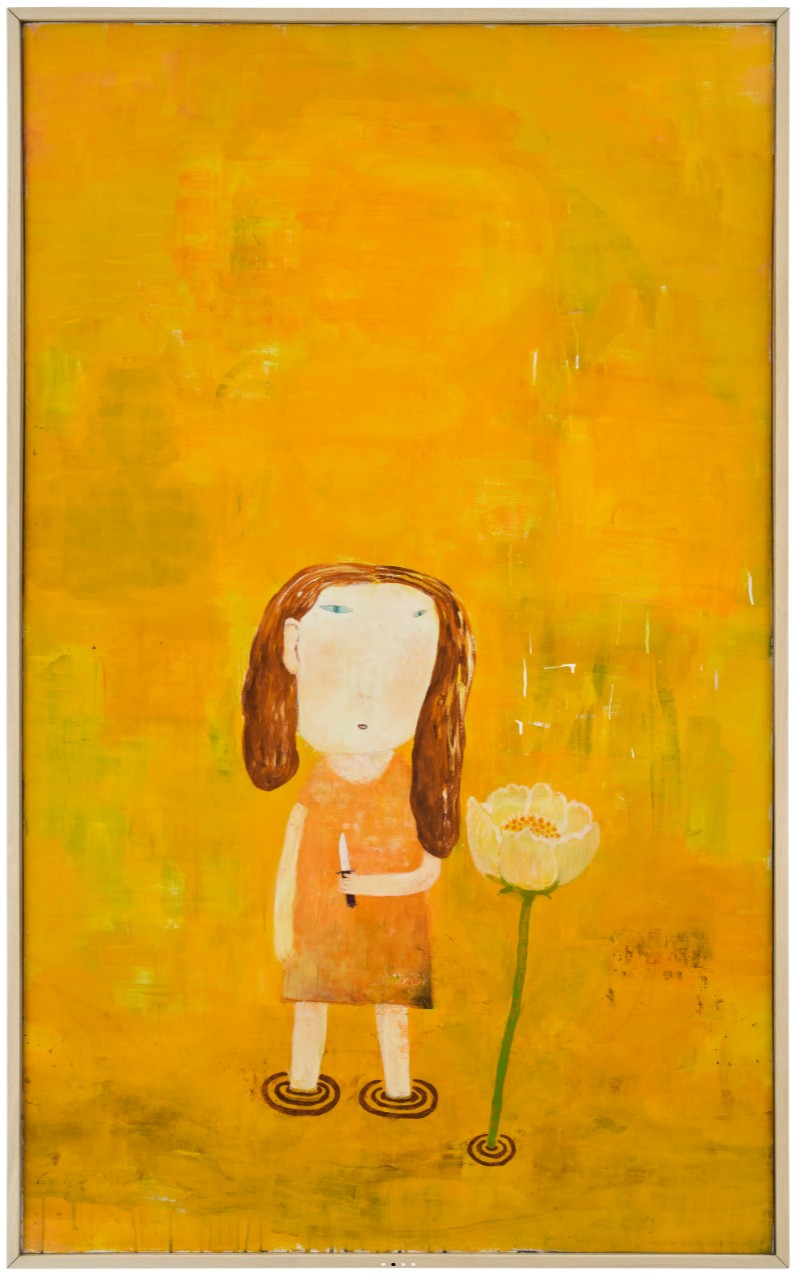
#7. Untitled, 1990
Estimated: HKD 10,000,000 – 15,000,000
HKD 11,505,000 / USD 1,478,790
#8. Mumps, 1993
Christie’s Hong-Kong: 26 September 2025
Estimated: HKD 8,000,000 – 12,000,000
HKD 10,160,000 / USD 1,305,915
YOSHITOMO NARA (B. 1959), Mumps | Christie’s
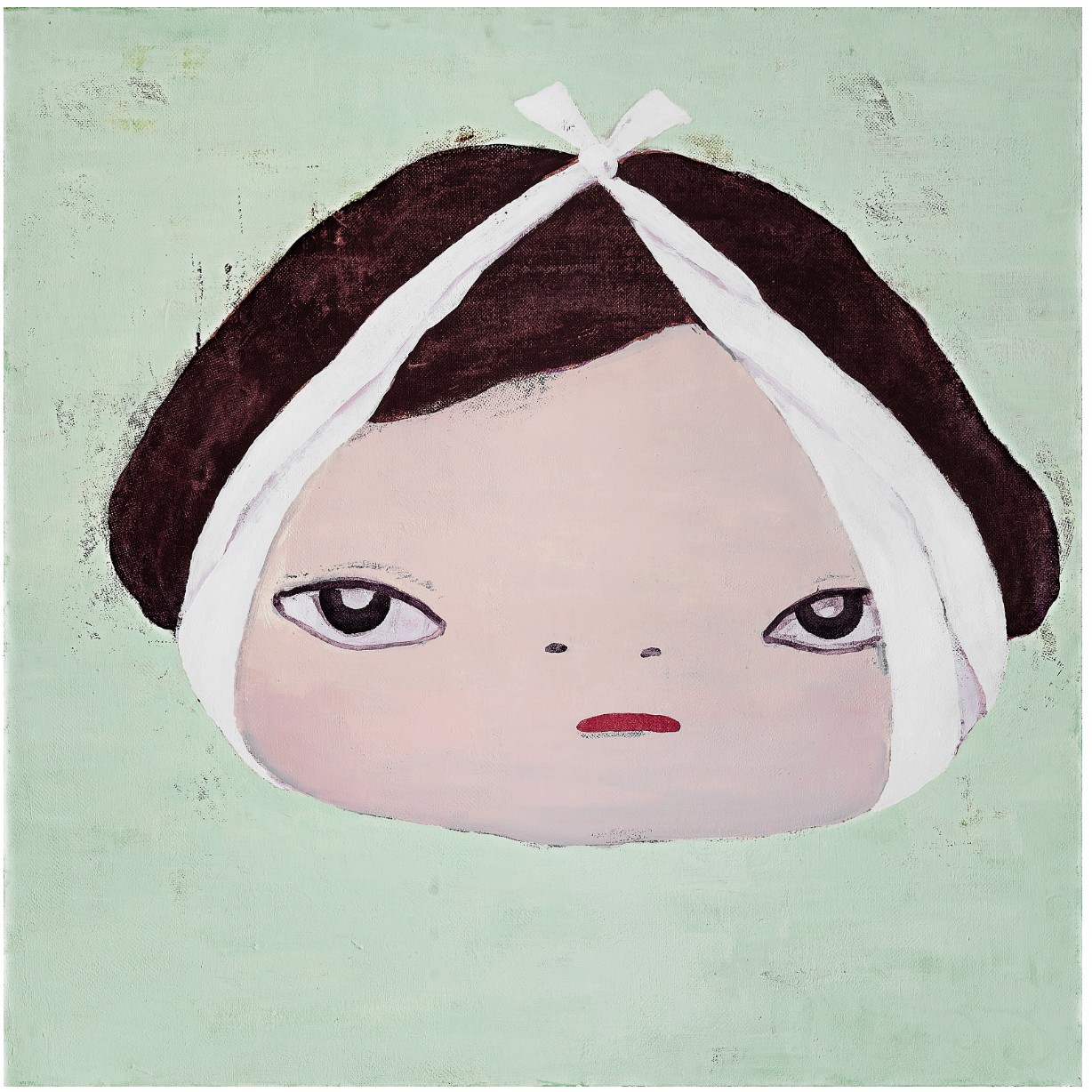
YOSHITOMO NARA (B. 1959)
Mumps, 1993
Acrylic on canvas
110×110 cm (43 1/4 x 43 2/4 inches)
Signed, signed again with artist’s signature, titled, inscribed and dated
‘Yoshitomo Nara ’93 110 x 110 cm “Mumps”’
(on the reverse)
USD 1 million
#9. Strange Girl, 1991
Sotheby’s Hong-Kong: 29 September 2025
Estimated: HKD 2,500,000 – 3,500,000
HKD 5,334,000 / USD 685,605
Yoshitomo Nara 奈良美智 | Strange Girl 奇特的女孩 | Modern & Contemporary Day Auction | 2025 | Sotheby’s
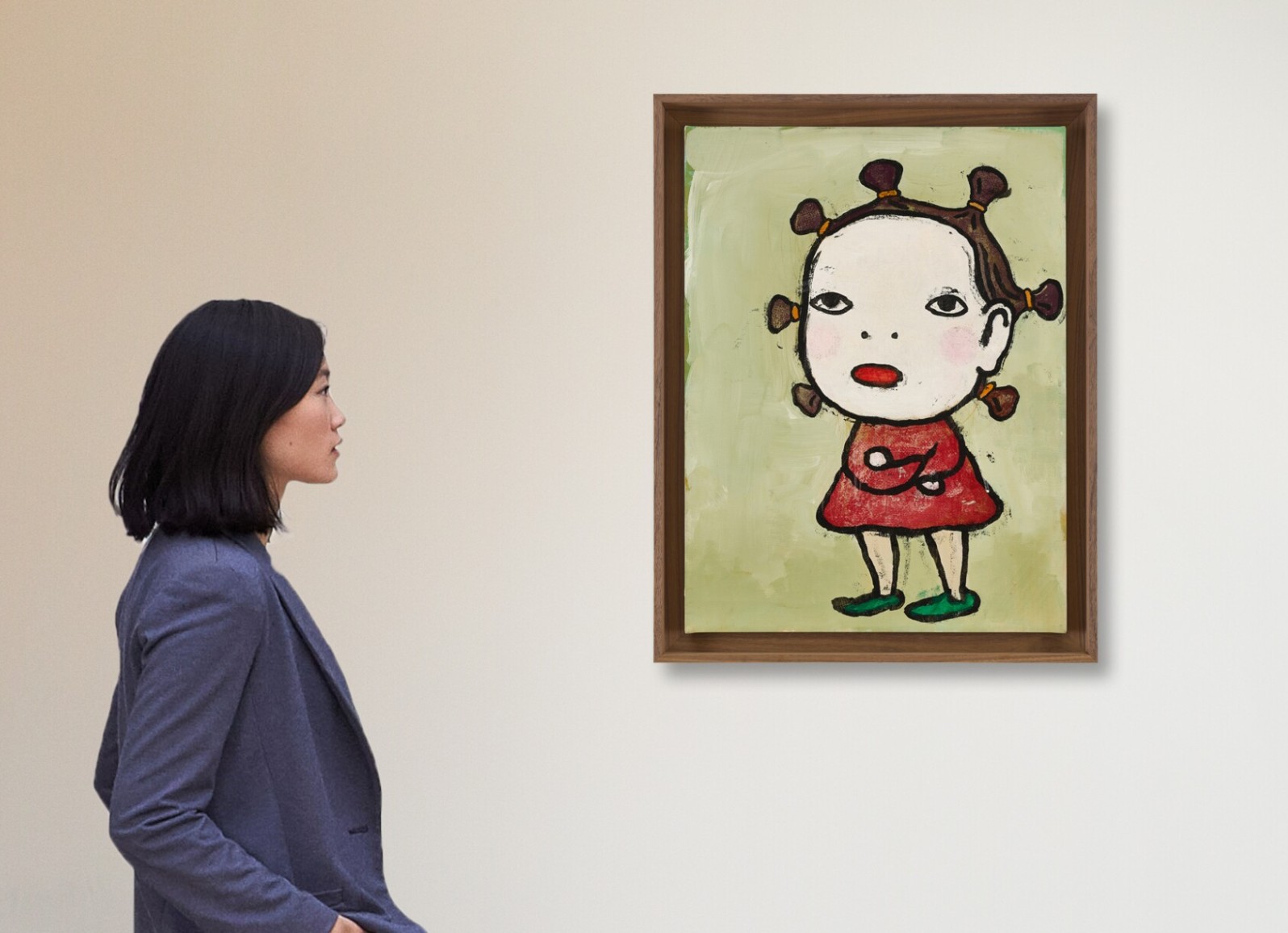
YOSHITOMO NARA (b. 1959)
Strange Girl, 1991
Acrylic on canvas
60.1 x 45.1 cm (23 5/8 x 17 3/4 inches)
Signed, titled and dated ’91 (on the reverse)
#10. Untitled, 1996
Christie’s Hong-Kong: 29 March 2024
Estimated: HKD 4,500,000 – 6,500,000
HKD 5,040,000 / USD 647,815
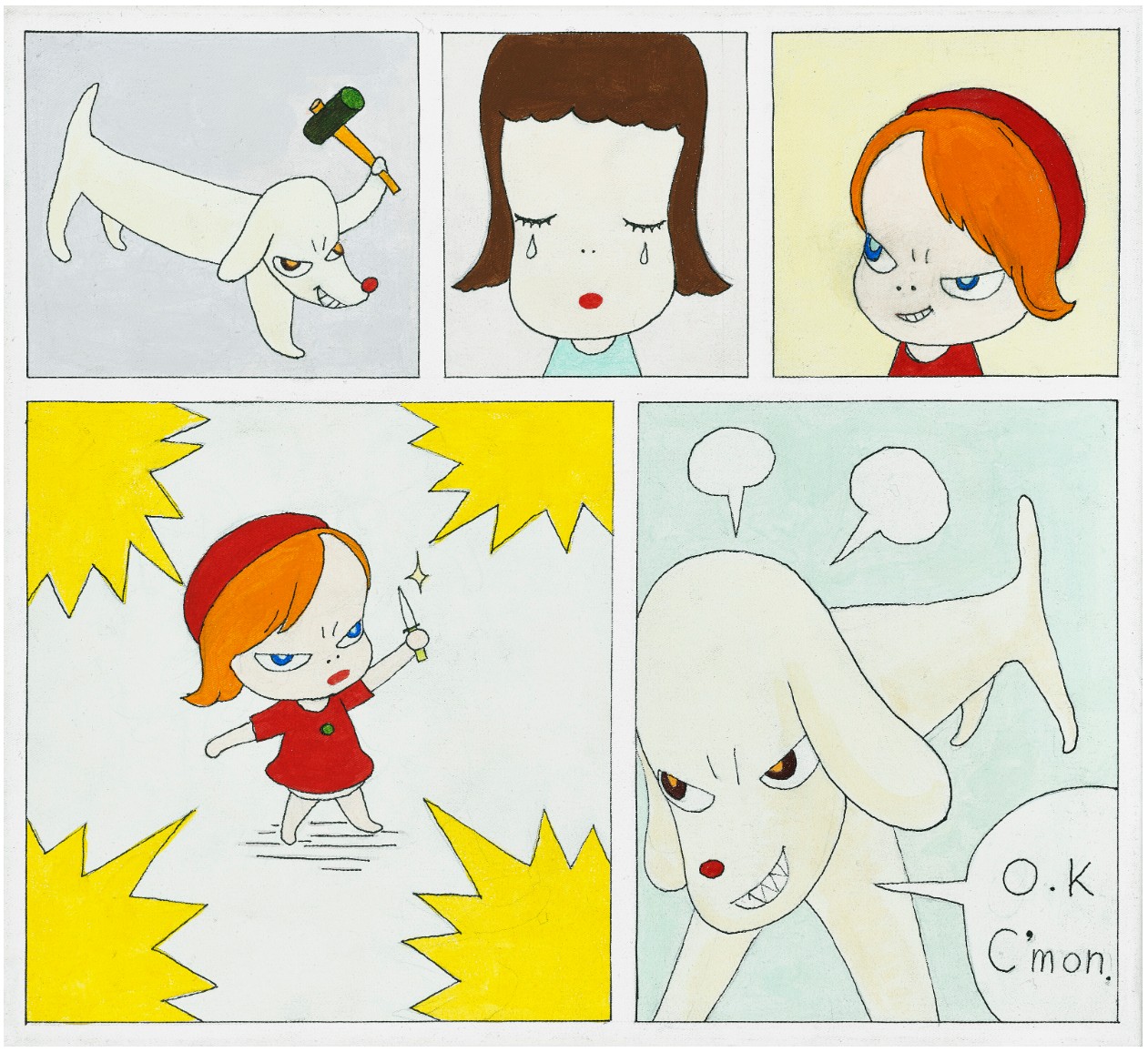
Untitled, 1996
Acrylic, pen, and pencil on canvas
42×46 cm (16 1/2 x 18 1/8 inches)
Signed, inscribed, and dated ”96 Say Good-Bye to stuffed dog, No1 artist’s stamp’ (on the reverse)
#11. Midnight Pilgrim, 2012
Sotheby’s New-York: 19 November 2025
Estimated: USD 500,000 – 700,000
USD 635,000
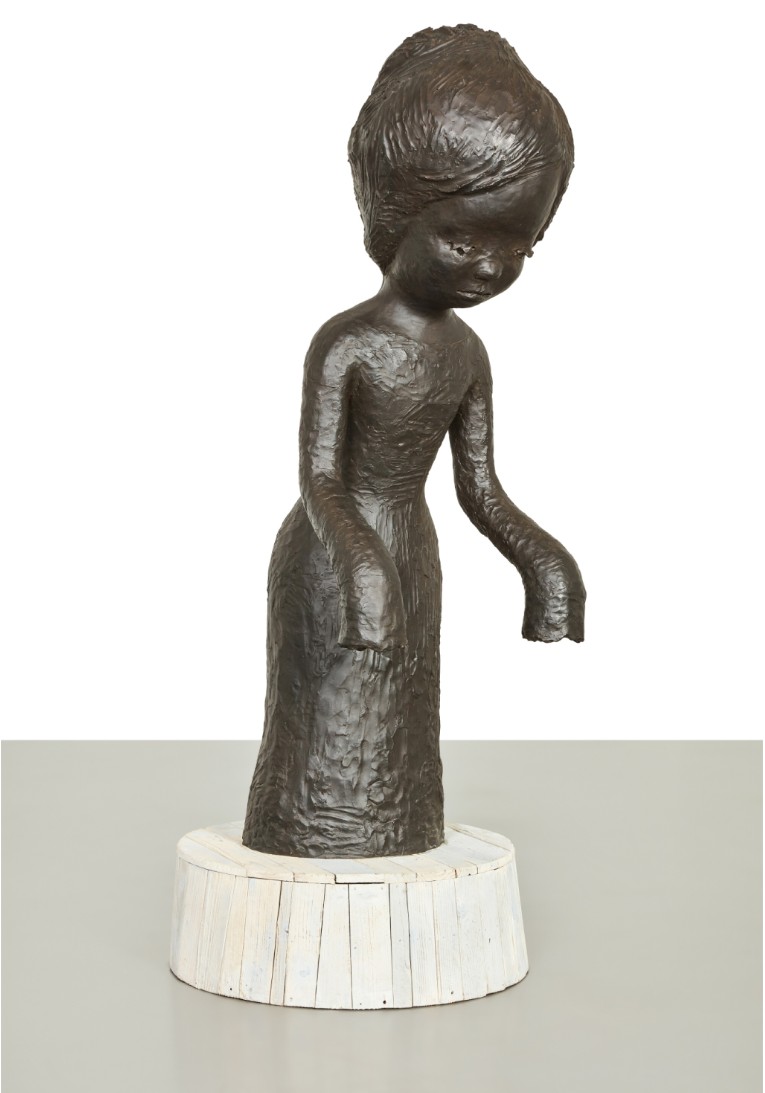
YOSHITOMO NARA (b. 1959)
Midnight Pilgrim, 2012
Bronze with black patina on artist’s wooden base
158x58x64 cm (62 1/4 x 22 7/8 x 25 1/4 inches)
This work is number 2 from an edition of 3 plus 2 artist proofs
#12. The Earth Cat, 1992
Sotheby’s Hong-Kong: 29 September 2025
Estimated: HKD 1,500,000 – 2,500,000
HKD 2,032,000 / USD 261,185
Yoshitomo Nara 奈良美智 | The Earth Cat 地球貓 | Modern & Contemporary Day Auction | 2025 | Sotheby’s
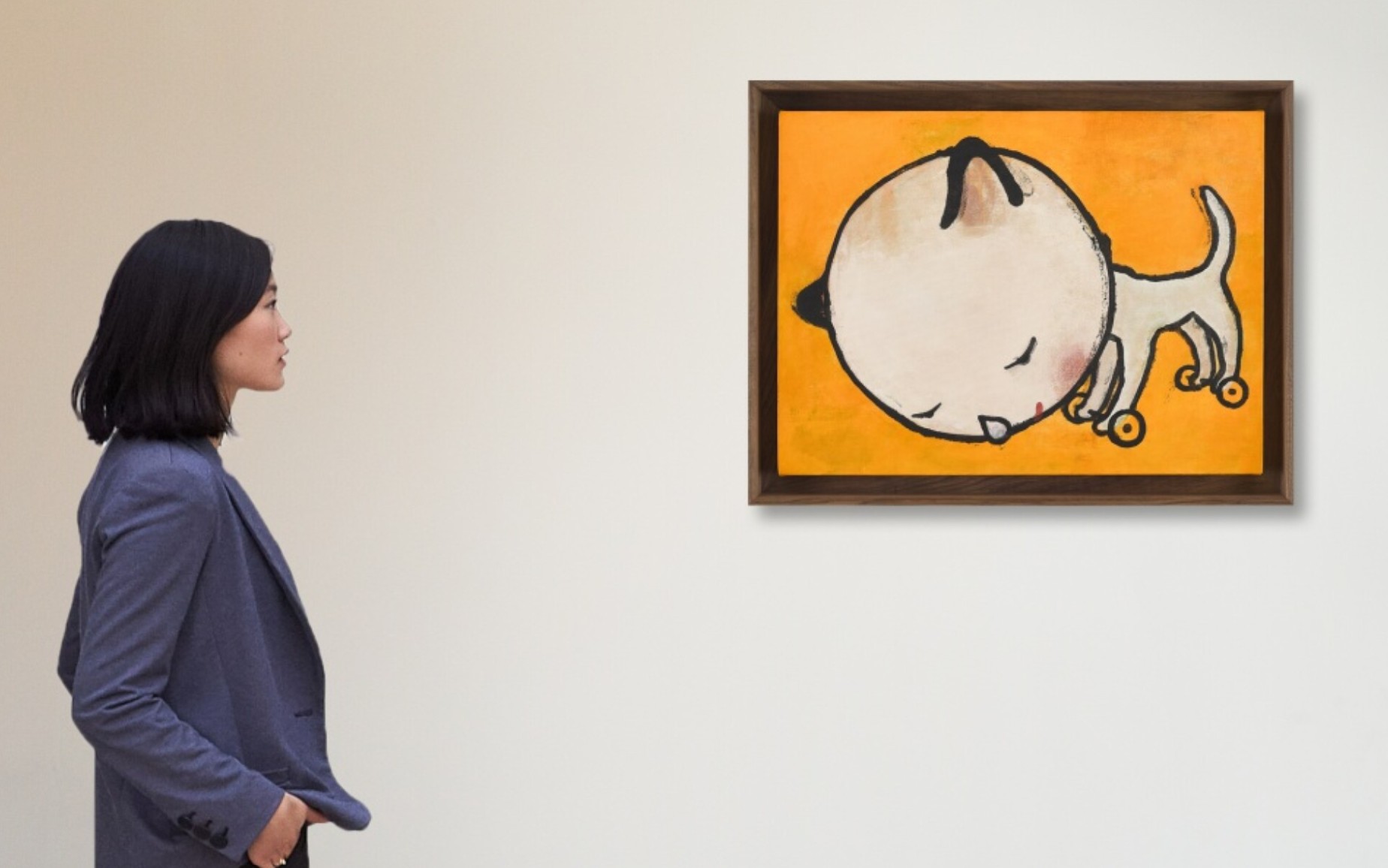
YOSHITOMO NARA (b. 1959)
The Earth Cat, 1992
Acrylic on canvas laid on board
45.7 x 60.4 cm (18 x 23 3/4 inches)
Signed, titled and dated ’92 (on the reverse)
#13. I Think, Therefore I Am…A Dog, 2003
Sotheby’s New-York: 16 May 2025
Estimated: USD 100,000 – 150,000
USD 177,800
I Think, Therefore I Am… A Dog | Contemporary Day Auction | 2025 | Sotheby’s
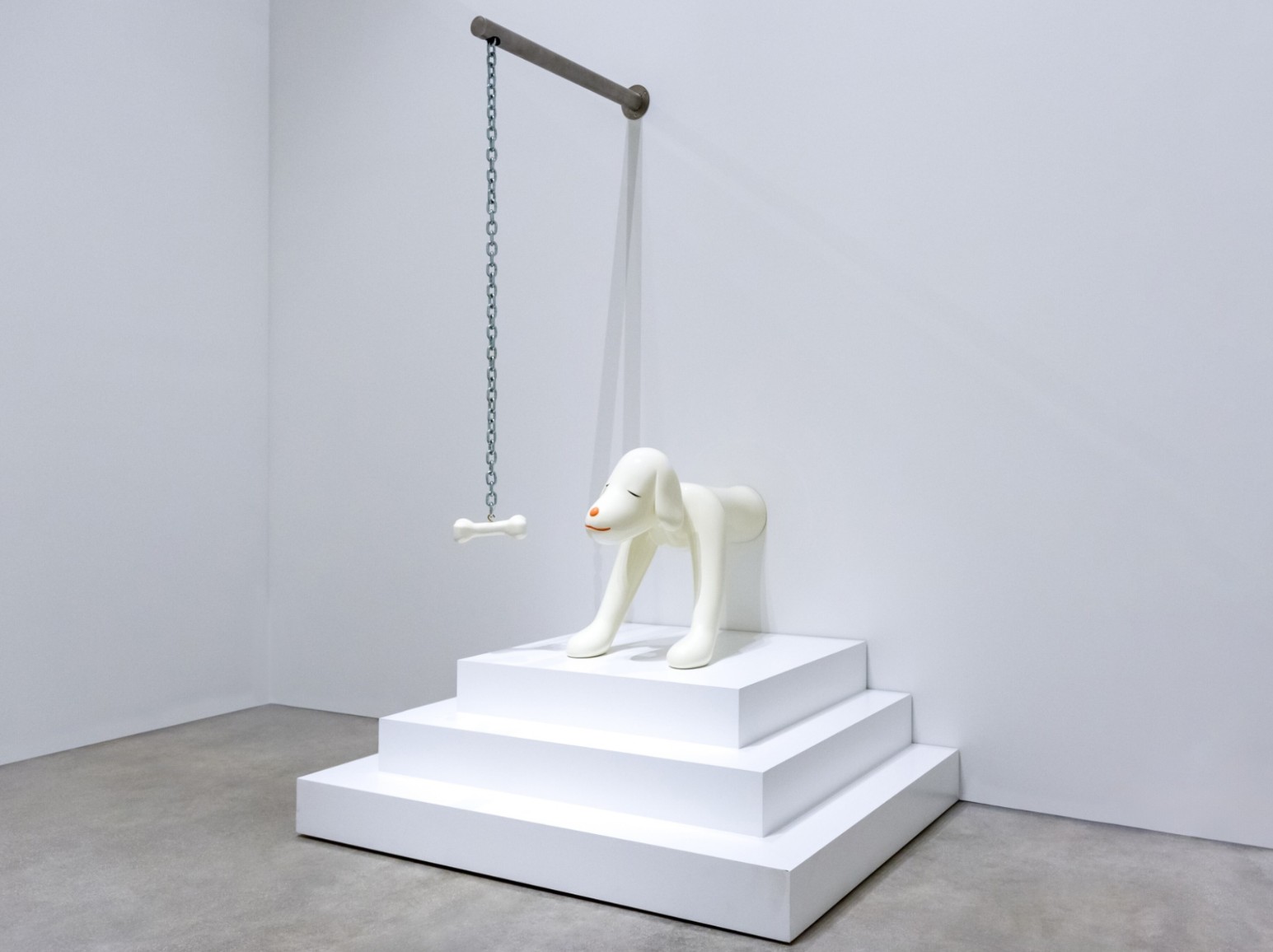
YOSHITOMO NARA (b. 1959)
I Think, Therefore I Am…A Dog, 2003
Acrylic and lacquer on fiberglass, wood and steel
Overall: 210.8 x 134.6 x 94 cm (83x53x37 inches)
This work is number 5 from an edition of 6 plus 2 artist proofs
USD 100,000
#14. Untitled, 1989
Mainichi Auction Tokyo: 26 April 2025
Estimated: JPY 4,000,000 – 5,000,000
JPY 10,695,000 / USD 74,440
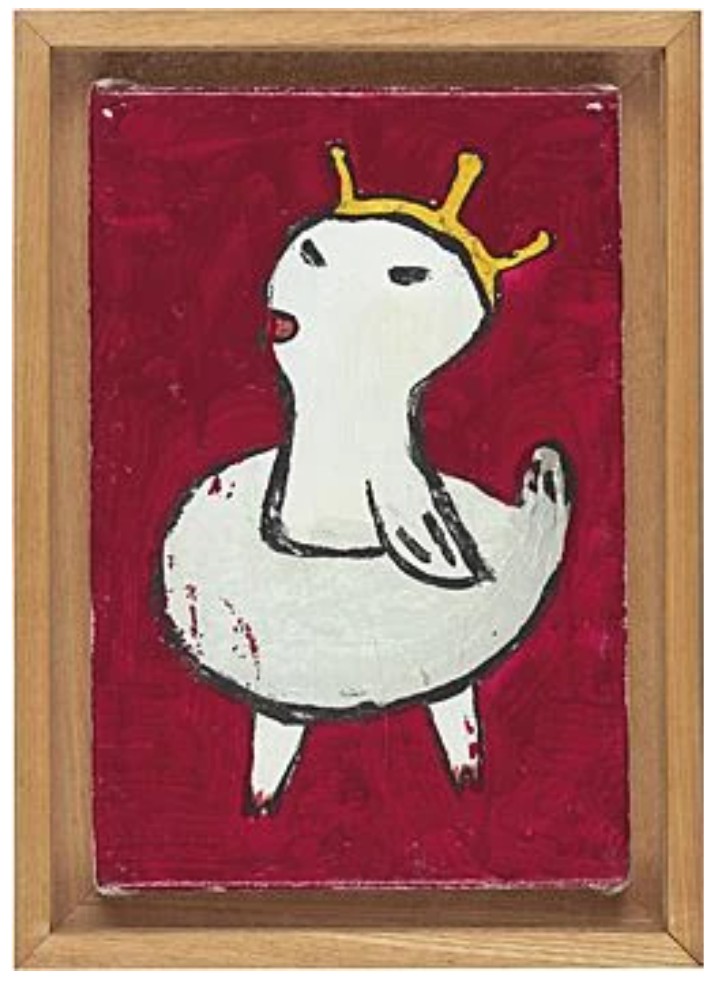
YOSHITOMO NARA
Untitled, 1989
Acrylic on canvas
30×20 cm (11.8 x 7.9 inches)
Signed
Lots Passed
My New Friend from Cosmos, 1991
Sotheby’s Hong-Kong: 26 November 2025
Estimated: HKD 600,000 – 800,000
PASSED
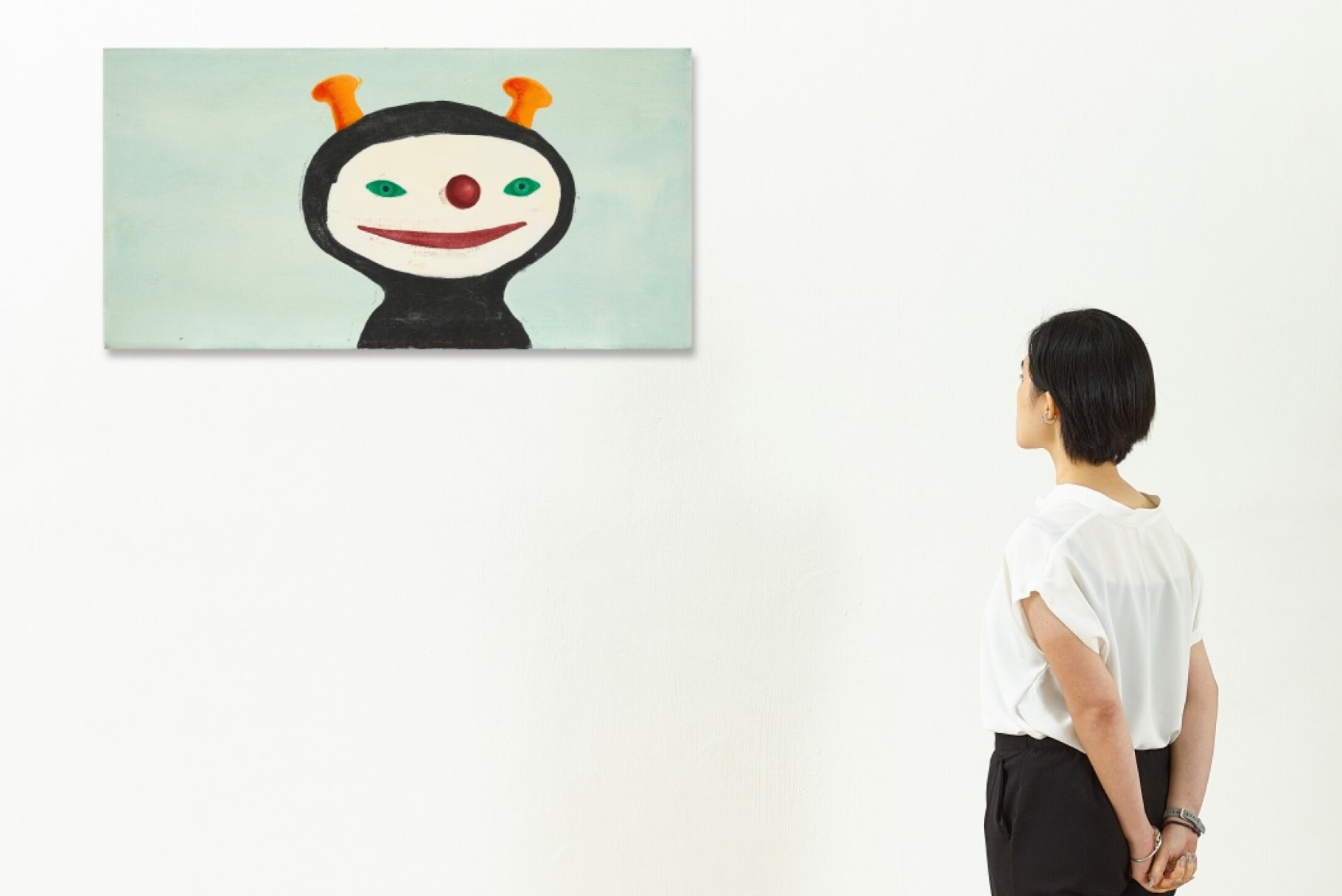
YOSHITOMO NARA (b. 1959)
My New Friend from Cosmos, 1991
Acrylic on linen
44×79 cm (17 3/8 x 31 1/8 inches)
Signed (lower center)
Signed, titled and dated 91 (on the reverse)
Haze Days, 1998
Christie’s London: 15 October 2025
Estimated: GBP 6,500,000 – 8,500,000
PASSED
YOSHITOMO NARA (B. 1959), Haze Days | Christie’s
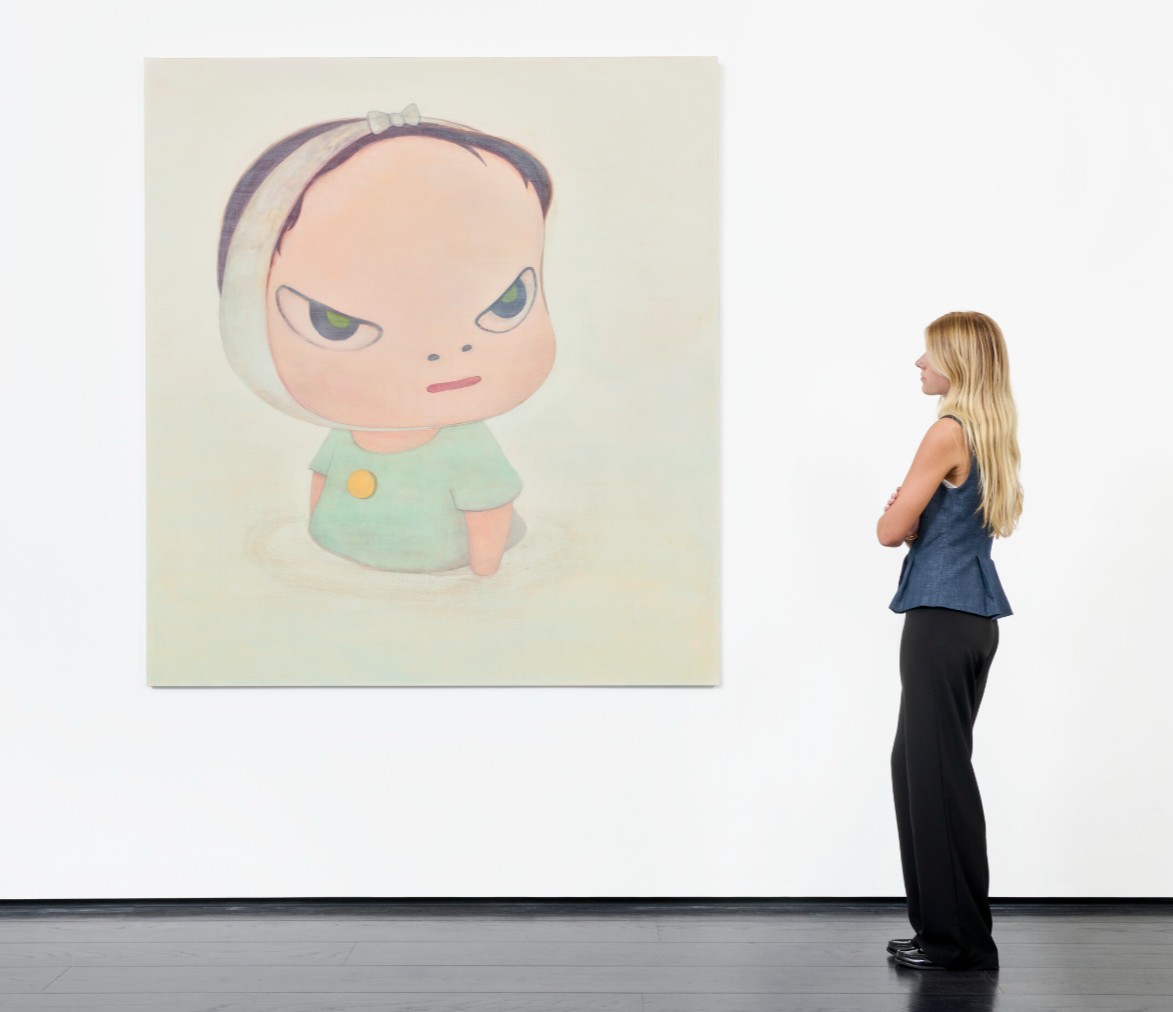
YOSHITOMO NARA (B. 1959)
Haze Days, 1998
Acrylic on canvas
180.3 x 164.5 cm (71 x 64 3/4 inches)
Signed in Japanese, titled and dated ‘’98 HAZE DAYS’ (on the reverse)
No Place Like…, 1999
Sotheby’s London: 25 June 2025
Estimated: GBP 150,000 – 200,000
PASSED
No Place Like… | Contemporary Day Auction | 2025 | Sotheby’s
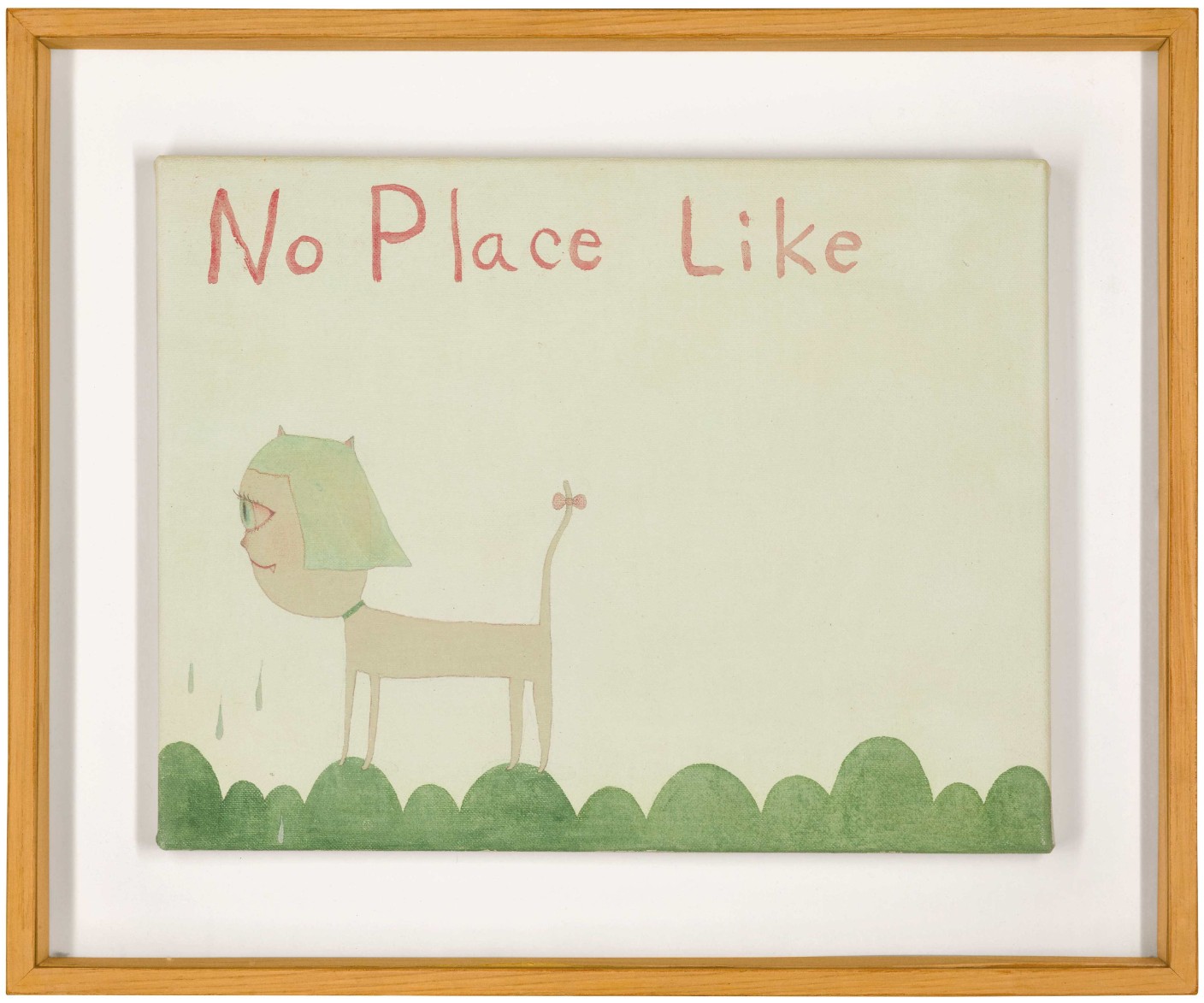
YOSHITOMO NARA (b. 1959)
No Place Like…, 1999
Acrylic on canvas
30.8 x 39.9 cm (12 1/8 x 15 3/4 inches)
Titled (upper edge)
Signed with the artist’s initials, titled and dated 99 (on the reverse)
2024 Auction Results
FOR PAINTINGS AND SCULPTURES ONLY
21 lots sold at auction in 2024 for a total turnover of USD 48,822,868. With 3 lots failing to sell, the sell-through rate is 88%. The highest price has been achieved by a painting dated 2017, I Want to See The Bright Lights Tonight, that sold at Sotheby’s Hong-Kong, on 5 April 2024 for HKD 95,959,000 (USD 12,267,834).
2024 Top 3 Lots
This is the only lot that sold for more than USD 10 million. 12 lots sold for more than USD 1 million, generating a cumulative turnover of USD 43,426,884, representing 88.9% of the total turnover for 2024.
XXXXXXXXXX
#1. I Want to See the Bright Lights Tonight, 2017
Sotheby’s Hong-Kong: 5 April 2024
Estimated: HKD 80,000,000 – 120,000,000
HKD 95,959,000 / USD 12,267,834

YOSHITOMO NARA (b. 1959)
I Want to See the Bright Lights Tonight, 2017
Acrylic on canvas
220.2 x 195.3 cm (86 3/4 x 76 7/8 inches)
USD 10 million
#2. Baby Blue, 1999
Phillips Hong-Kong: 25 November 2024
Estimated: HKD 42,000,000 – 62,000,000
HKD 45,220,000 / USD 5,809,730
Yoshitomo Nara – Modern & Contempora… Lot 7 November 2024 | Phillips
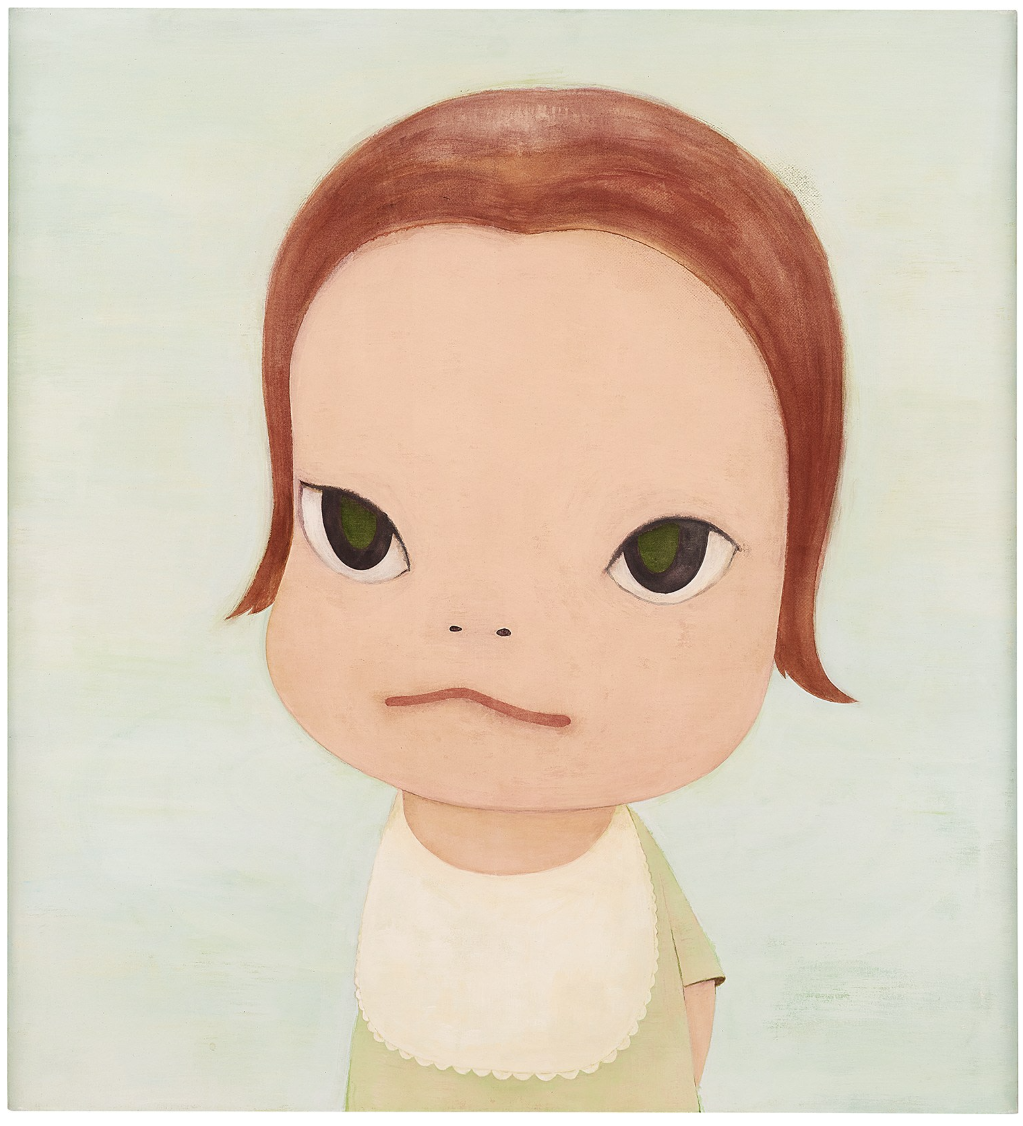
YOSHITOMO NARA
Baby Blue, 1999
Acrylic on canvas
120×110 cm (47 1/4 x 43 1/4 inches)
Signed, titled and dated ‘”Baby Blue” Yoshitomo Nara ’99’ on the stretcher
USD 5 million
#3. Untitled, 2007
Christie’s Shanghai: 7 November 2024
Estimated: CNY 30,000,000 – 50,000,000
CNY 30,550,000 / USD 4,291,390
REPEAT SALE
Christie’s Hong-Kong: 24 May 2021
Estimated: HKD 45,000,000 – 65,000,000
HKD 54,250,000 / USD 6,986,388
Yoshitomo Nara (b. 1959), Untitled | Christie’s
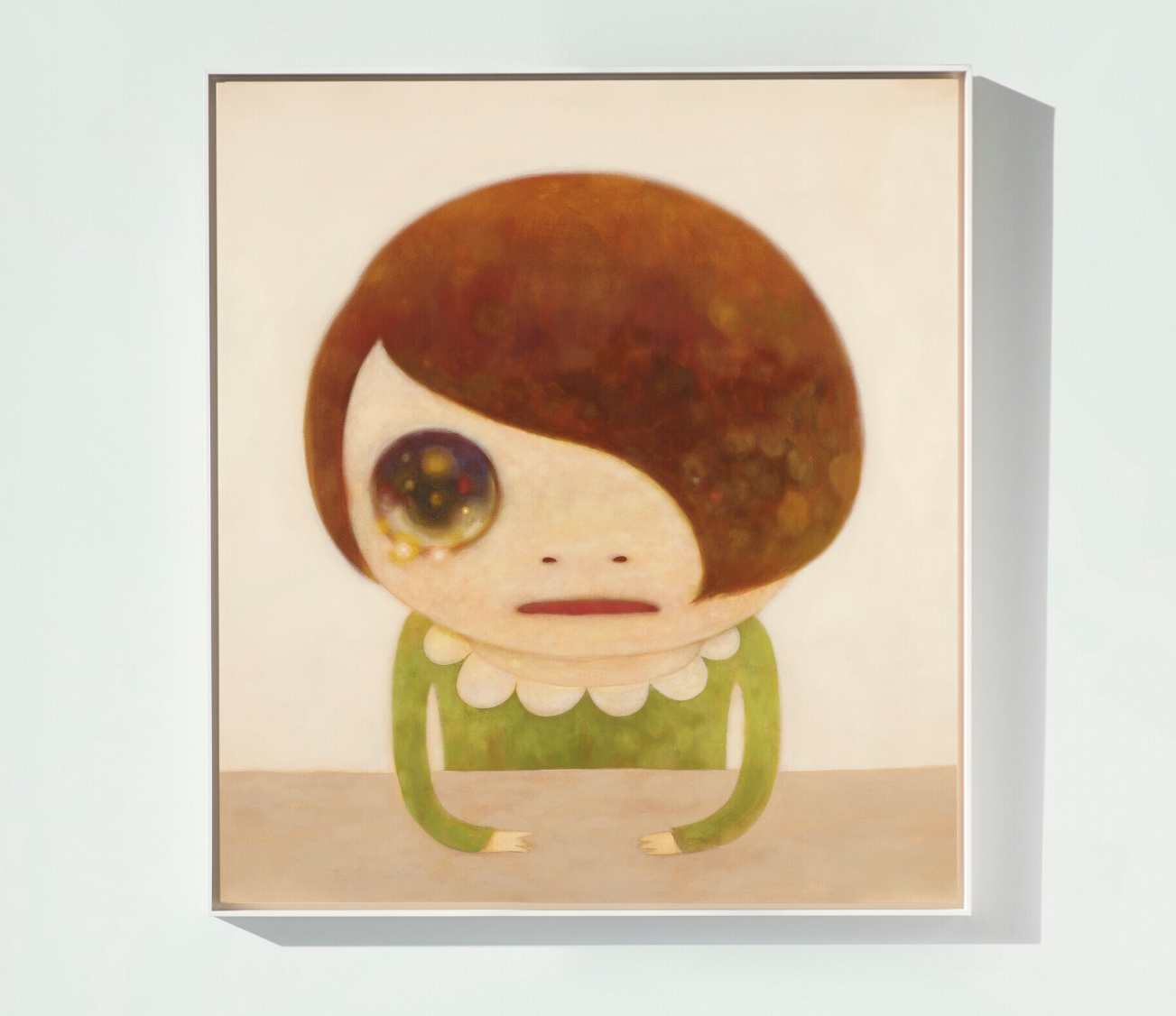
YOSHITOMO NARA (B.1959)
Untitled, 2007
Acrylic on canvas
162 x 145.5 cm (63 3/4 x 57 1/4 inches)
#4. Untitled, 2008
Sotheby’s Hong-Kong: 5 April 2024
Estimated: HKD 28,000,000 – 35,000,000
HKD 33,120,000 / USD 4,234,211
YOSHITOMO NARA (b. 1959)
Untitled, 2008
Acrylic on board
231.1 x 186.7 x 12.7 cm (91 x 73 1/2 x 5 inches)
Signed and dated 2008 on the reverse
#5. Portrait of AE, 2009
Christie’s Hong-Kong: 28 May 2024
Estimated: HKD 28,000,000 – 38,000,000
HKD 29,415,000 / USD 3,765,843
Portrait of AE (christies.com)
YOSHITOMO NARA (B.1959)
Portrait of AE, 2009
Acrylic on canvas in artist’s chosen frame
Image: 80.5 x 65 cm (31 3/4 x 25 5/8 inches)
Framed: 101 x 86.3 cm (39 3/4 x 34 inches)
Signed, titled, inscribed and dated ‘Portrait of AE 09 Amelia Earhart’ (on the reverse)
#6. Rock You!, 2006
Christie’s Hong-Kong: 28 May 2024
Estimated: HKD 20,000,000 – 30,000,000
HKD 24,575,000 / USD 3,146,204

YOSHITOMO NARA (B.1959)
Rock You!, 2006
Acrylic on wood board
162×162 cm (63 3/4 x 63 3/4 inches)
Signed and dated ‘2006’ (on the reverse)
#7. Guitar Girl on the Ice, 1994
Sotheby’s Hong-Kong: 6 April 2024
Estimated: HKD 15,000,000 – 20,000,000
HKD 18,600,000 / USD 2,377,908

YOSHITOMO NARA (b. 1959)
Guitar Girl on the Ice, 1994
Acrylic on canvas
100.5 x 100.5 cm (39 5/8 x 39 5/8 inches)
Signed, titled and dated 94 on the reverse
#8. ABC, 1998
Christie’s Hong-Kong: 26 September 2024
Estimated: HKD 7,000,000 – 10,000,000
HKD 16,710,000 / USD 2,147,953
YOSHITOMO NARA (B. 1959), ABC | Christie’s (christies.com)
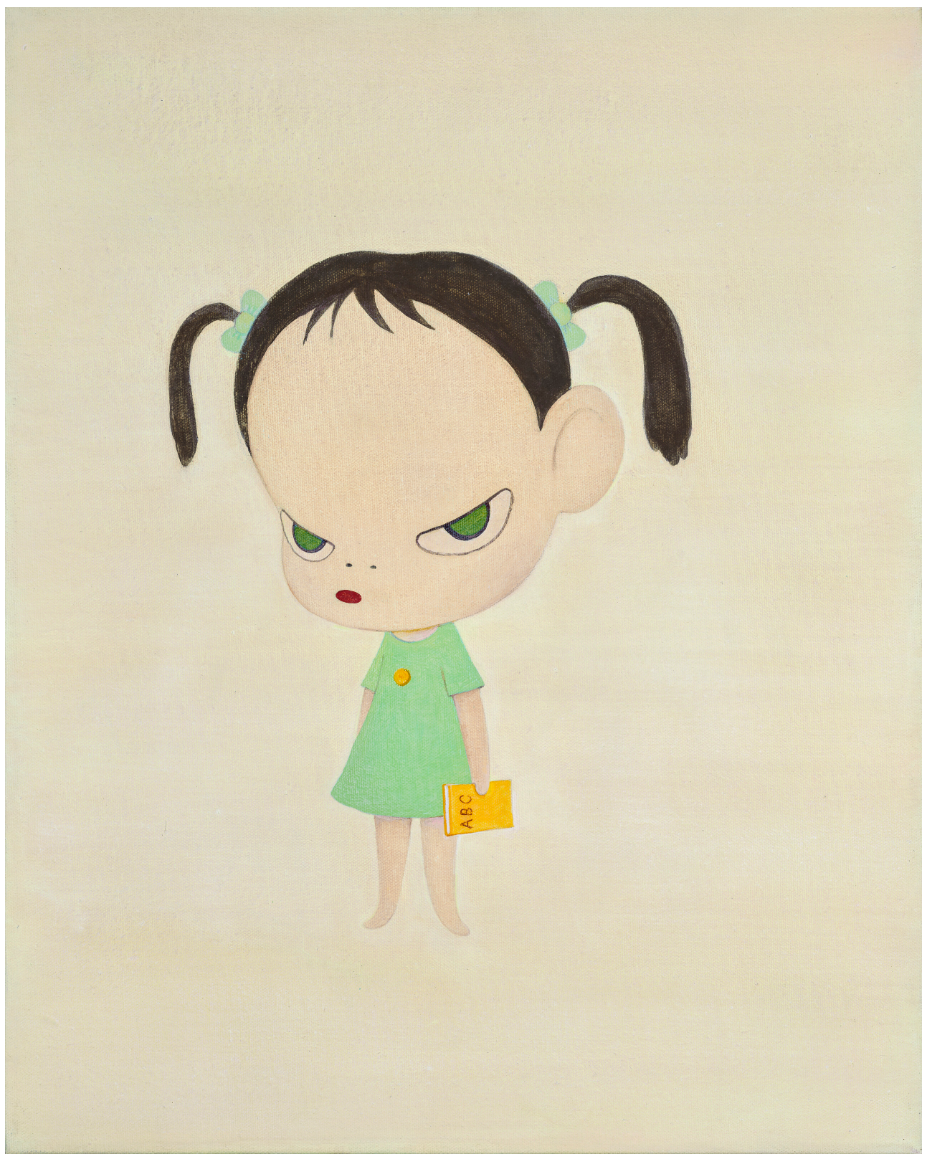
YOSHITOMO NARA (B. 1959)
ABC, 1998
Acrylic and graphite on canvas
50.8 x 40.6 cm (20×16 inches)
#9. Ships in Girl, 1992
Sotheby’s New-York: 14 May 2024
Estimated: USD 1,500,000 – 2,000,000
USD 1,512,000
Ships in Girl | Contemporary Day Auction | 2024 | Sotheby’s (sothebys.com)

YOSHITOMO NARA (b. 1959)
Ships in Girl, 1992
Acrylic on canvas
139.7 x 139.7 cm (55×55 inches)
Signed, titled and dated ’92 (on the reverse)
#10. Little Bunny in the Box, 1996
Sotheby’s Hong-Kong: 11 November 2024
Estimated: HKD 10,000,000 – 15,000,000
HKD 10,800,000 / USD 1,389,710
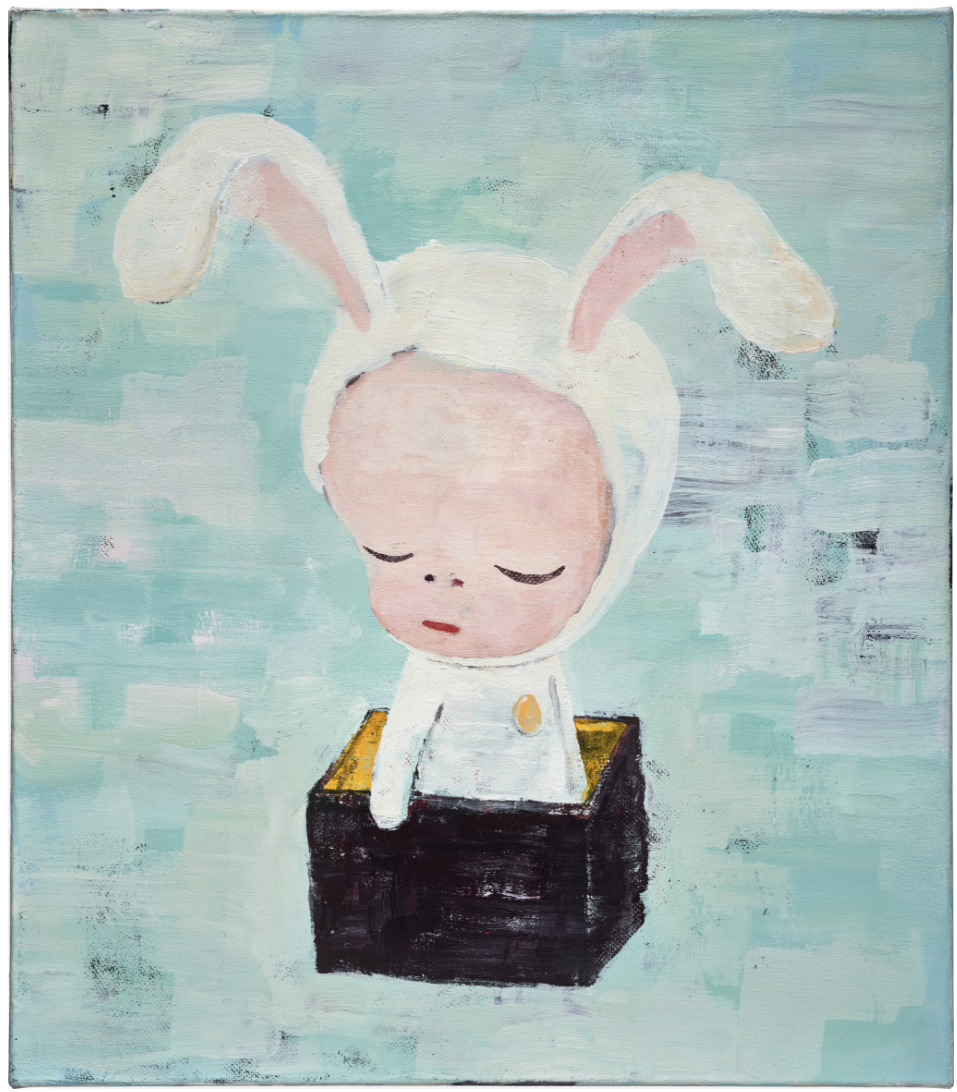
YOSHITOMO NARA (1959 – )
Little Bunny in the Box, 1996
Acrylic on canvas
80.5 x 70.2 cm (31 5/8 x 27 5/8 inches)
Signed, dated ’96 and inscribed Abandoned (on the reverse)
#11. Fountain of Life, 2001/2014
Phillips Hong-Kong: 25 November 2024
Estimated: HKD 8,000,000 – 15,000,000
HKD 10,130,000 / USD 1,301,470
Yoshitomo Nara – Modern & Contempora… Lot 6 November 2024 | Phillips
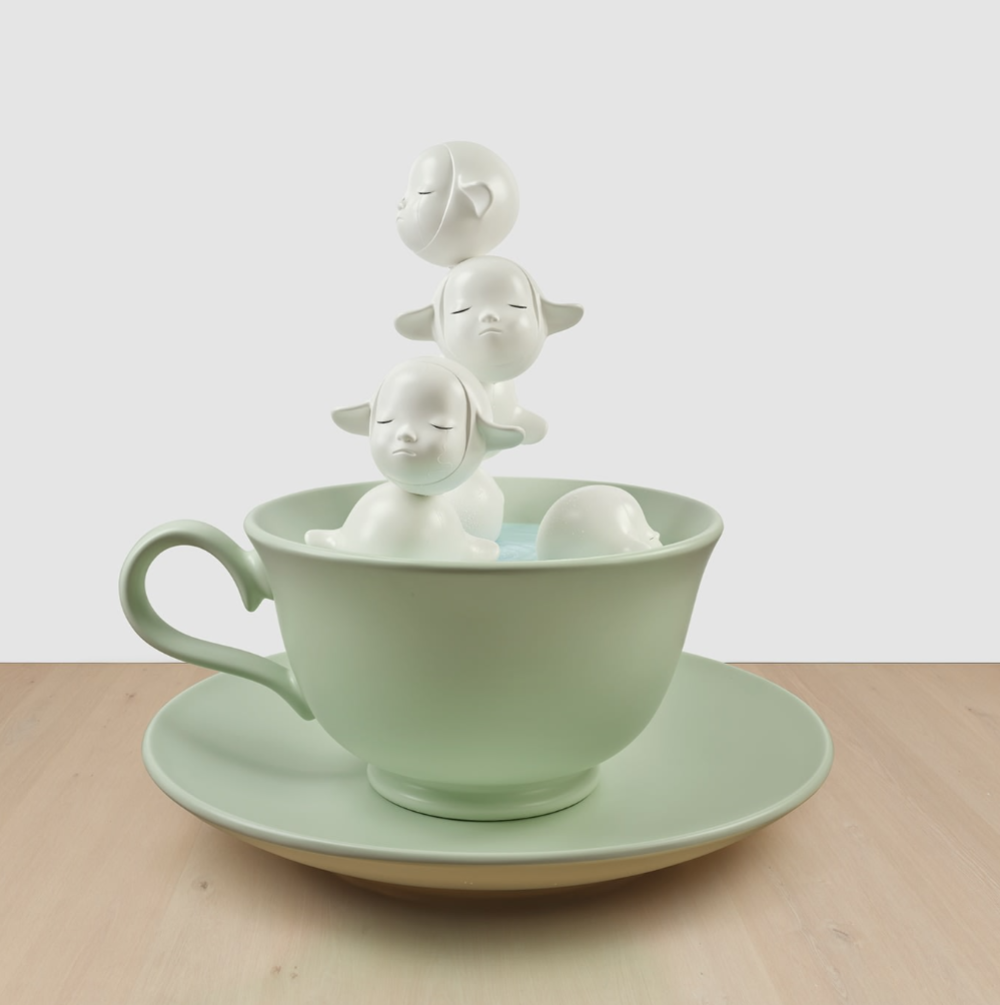
YOSHITOMO NARA
Fountain of Life, 2001/2014
Lacquer and urethane on FRP, motor and water
175x180x180 cm (68 7/8 x 70 7/8 x 70 7/8 inches)
This work is edition 2 of 3 plus 2 artist proofs
#12. Untitled, 1987
Ravenel Taipei: 1 December 2024
Estimated: TWD 28,000,000 – 46,000,000
TWD 38,400,000 / USD 1,182,630
Ravenel | Yoshitomo NARA《Untitled》 Ravenel Autumn Auction 2024 Taipei Lot 052
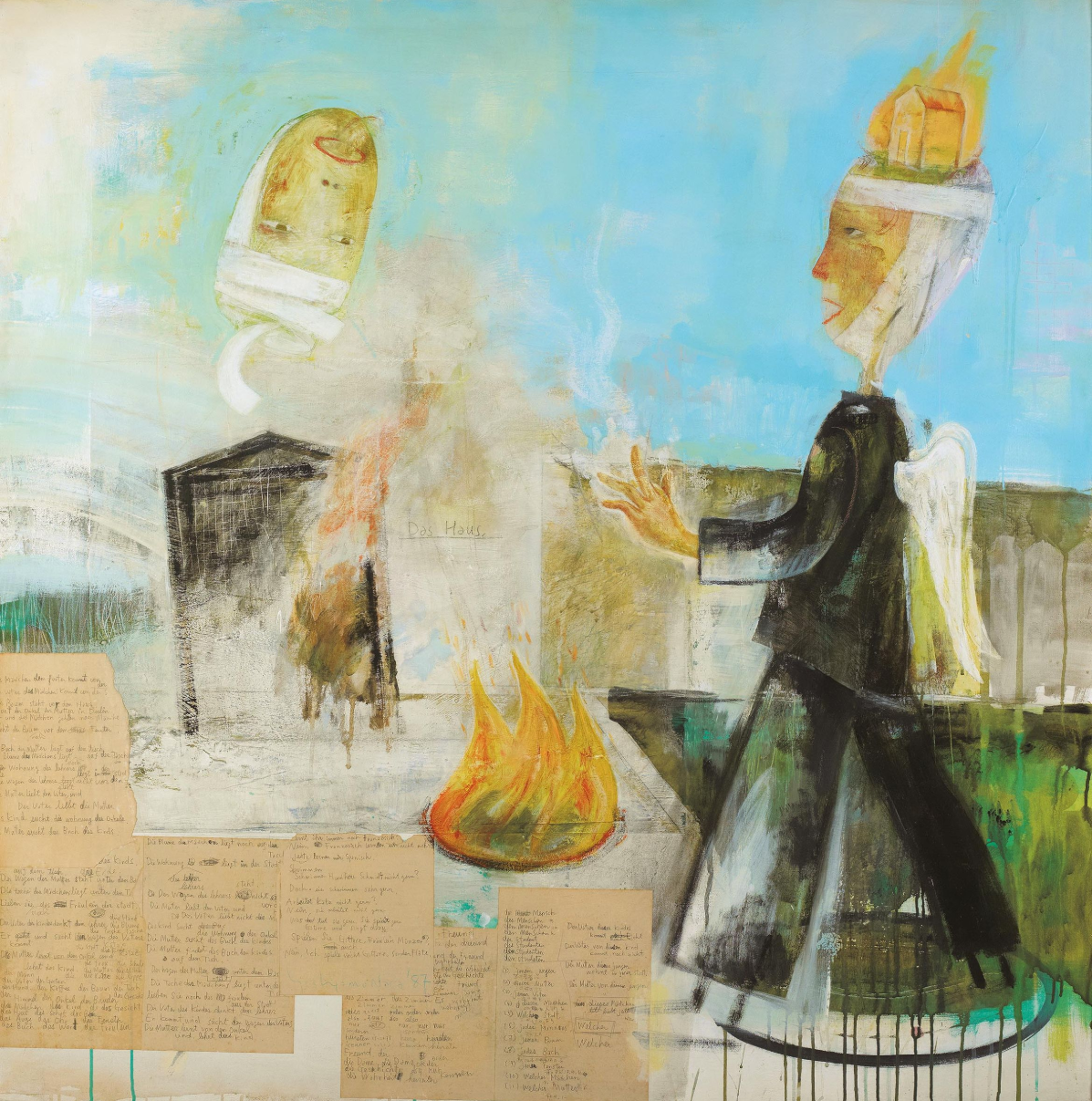
YOSHITOMO NARA (Japanese, 1959)
Untitled, 1987
Acrylic, colored pencil, and pencil on canvas
130.3×130.3 cm
Signed reverse Yoshitomo Nara
USD 1 million
#13. Cup Kids, 1995
Poly Hong-Kong: 4 April 2024
Estimated: HKD 6,000,000 – 8,000,000
HKD 7,080,000 / USD 905,140
Cup Kids|Poly Auction Hong Kong
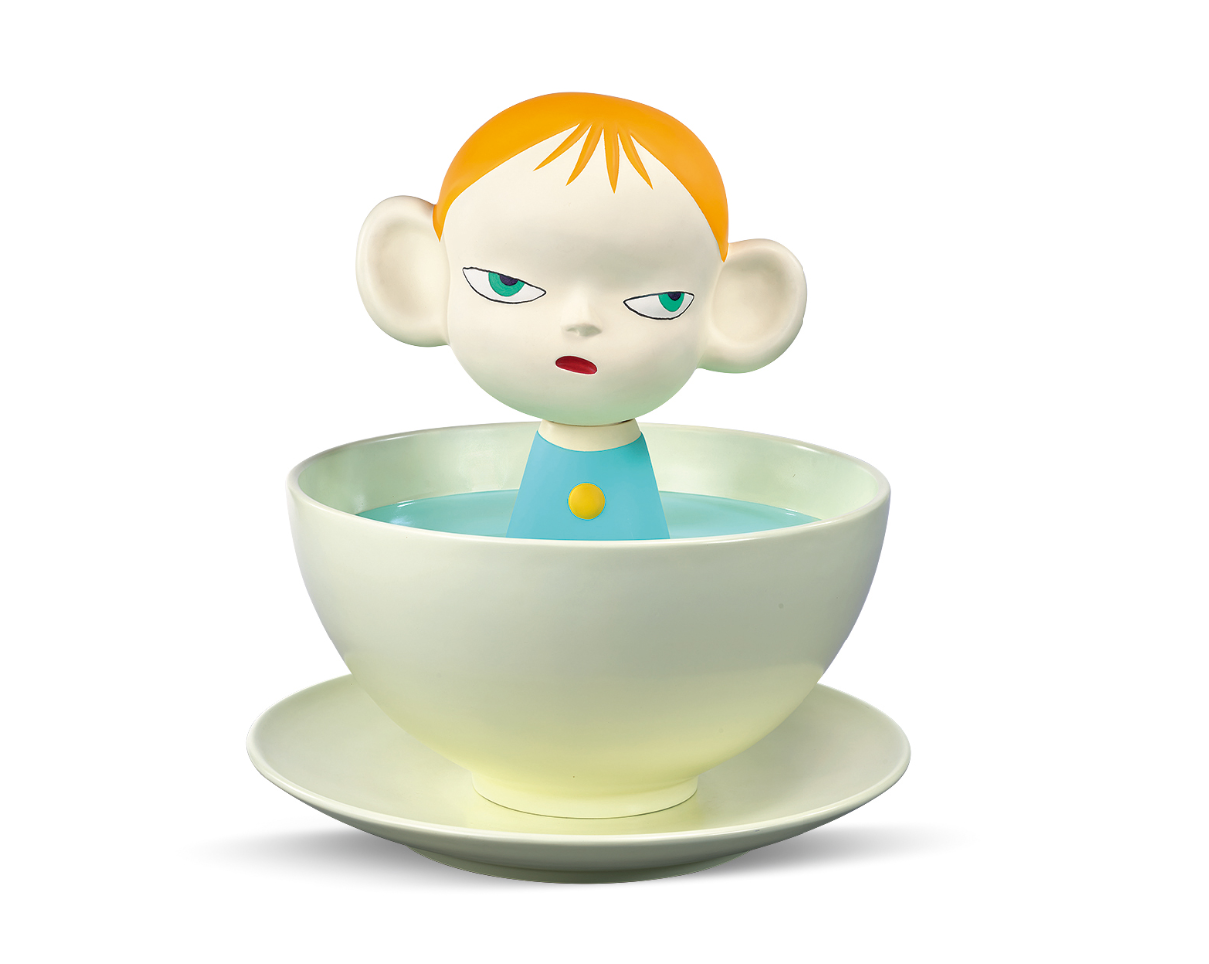
YOSHITOMO NARA
Cup Kids, 1995
Acrylic and lacquer on FRP sculpture
95 x 95 x 105 cm (37 1/2 x 37 1/2 x 41 1/4 inches)
#14. Long Long Way from Your Home, 2007
Christie’s Hong-Kong: 26 September 2024
Estimated: HKD 2,000,000 – 4,000,000
HKD 6,300,000 / USD 809,921
YOSHITOMO NARA (B. 1959), Long Long Way from Your Home | Christie’s
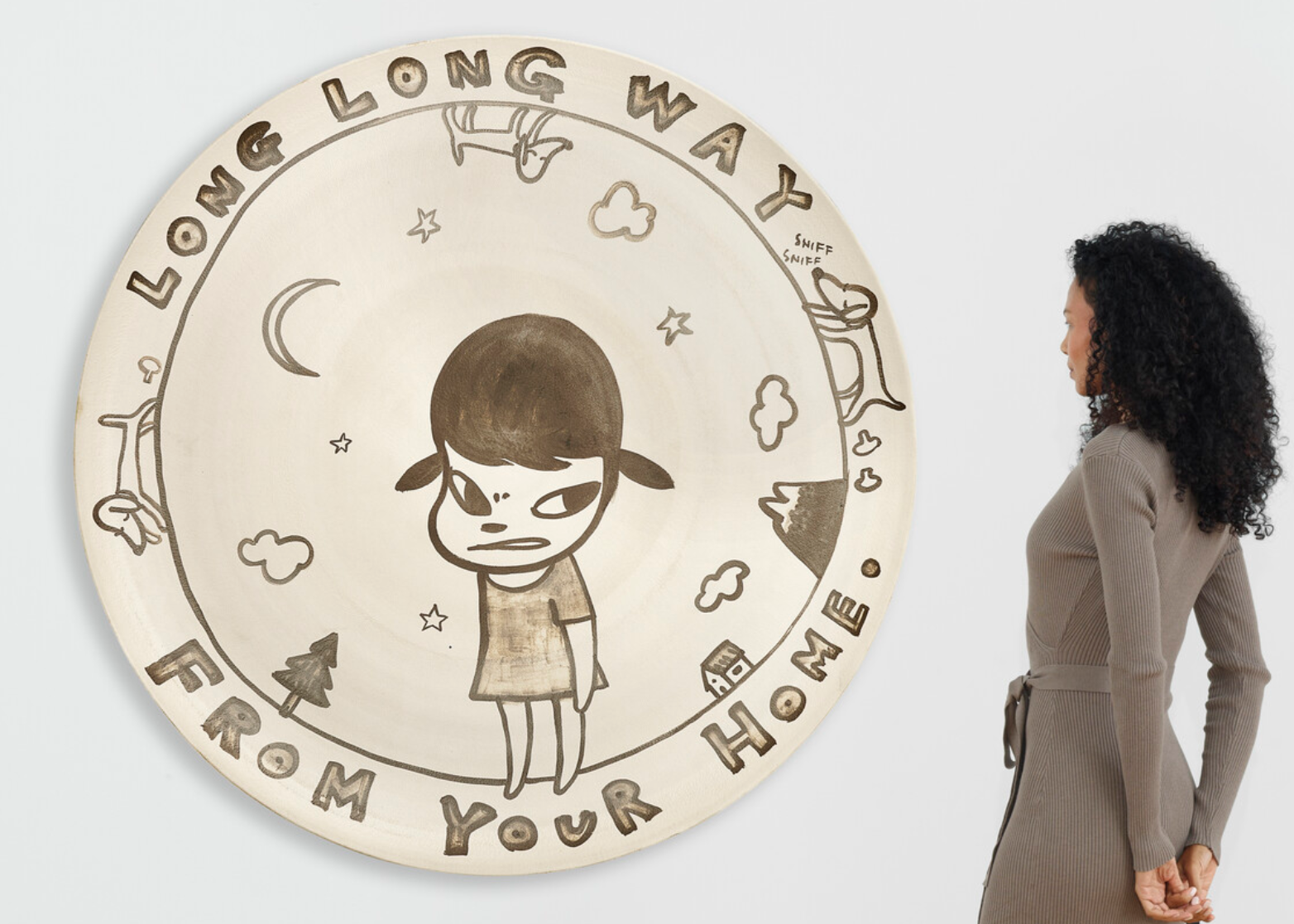
YOSHITOMO NARA (B. 1959)
Long Long Way from Your Home, 2007
Hand-painted ceramic plate
124 (H) x 124 x 9 cm (48 7/8 x 48 7/8 x 3 1/2 inches)
#15. Anymore for Anymore, 2018
Sotheby’s Hong-Kong: 5 April 2024
Estimated: HKD 4,800,000 – 6,800,000
HKD 5,080,000 / USD 649,450
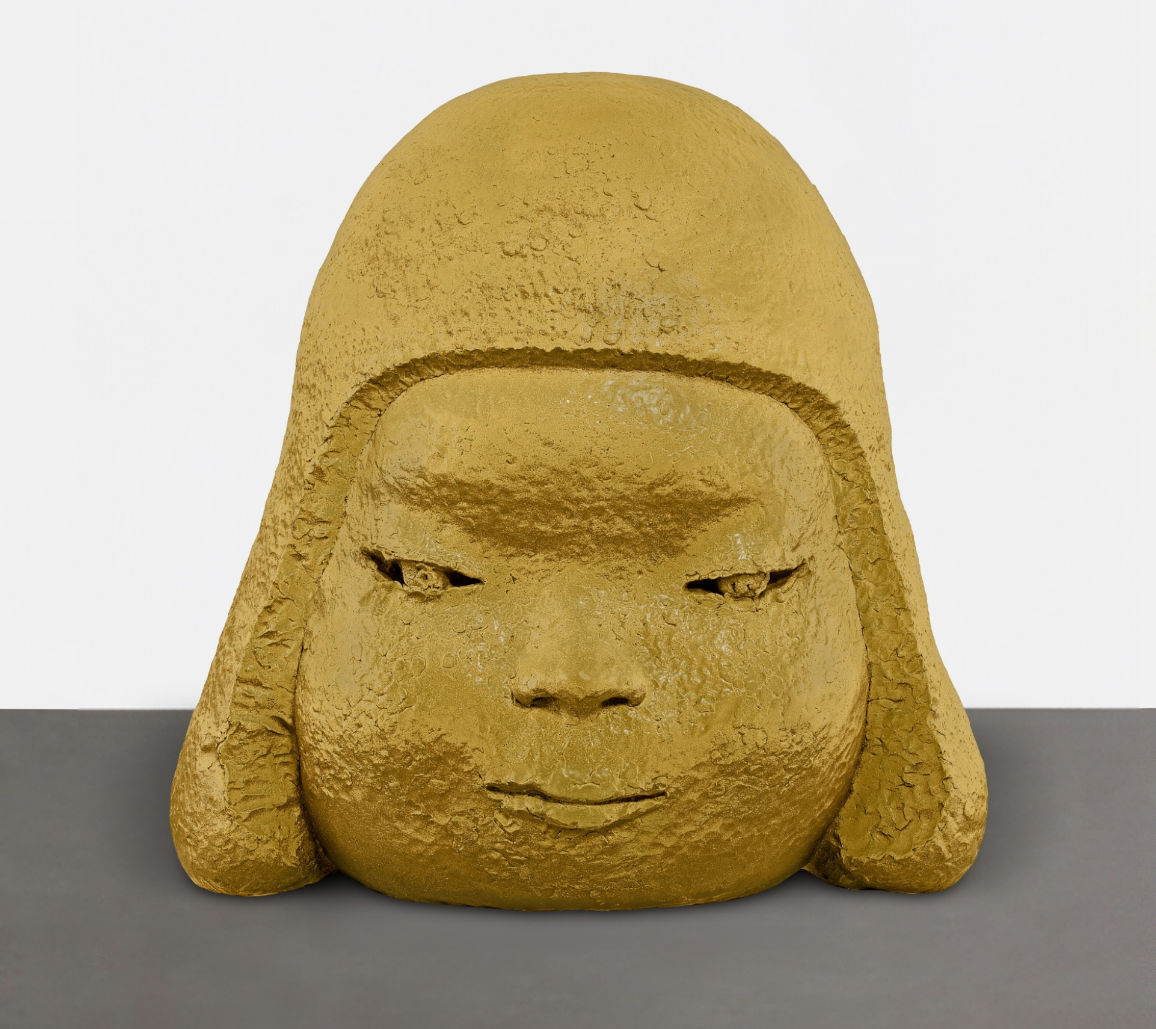
YOSHITOMO NARA (b. 1960)
Anymore for Anymore, 2018
Ceramic
125.5 x 121.2 x 118.5 cm (49 3/8 x 47 3/4 x 46 5/8 inches)
#16. No Reason Why, 1995
Phillips Hong-Kong: 1 June 2024
Estimated: HKD 4,000,000 – 6,000,000
HKD 4,826,000 / USD 617,847
https://www.phillips.com/detail/yoshitomo-nara/HK010224/136
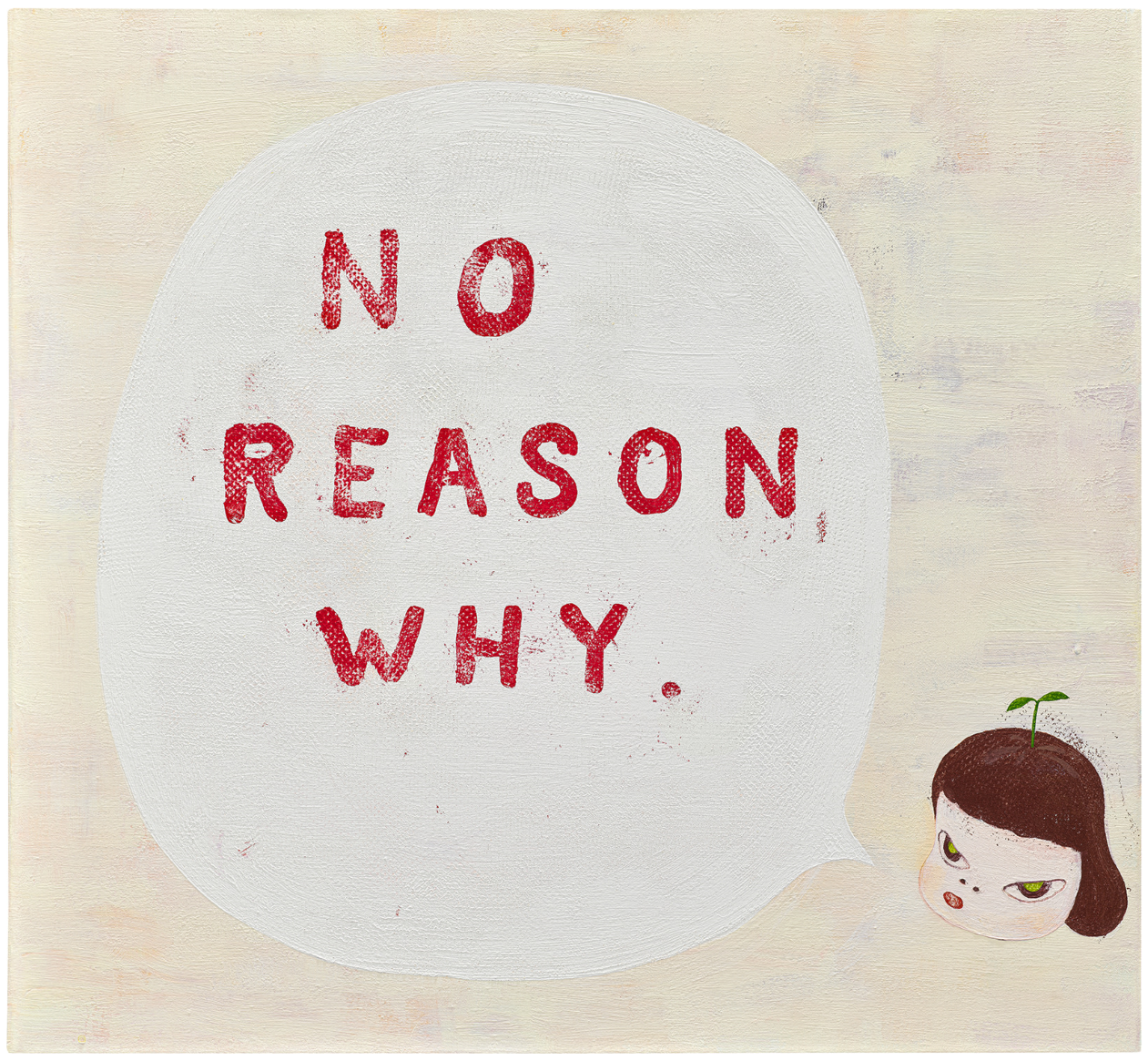
YOSHITOMO NARA
No Reason Why, 1995
Acrylic on canvas
65×70 cm (25 5/8 x 27 1/2 inches)
Signed, inscribed and dated ‘she doesn’t know what’s wrong with Mum. Yoshitomo Nara ’95’ on the reverse
Registered in the Yoshitomo Nara Online Catalogue Raisonné under registration number YNF1276
#17. The Pond Girl, 1995
Christie’s Hong-Kong: 29 May 2024
Estimated: HKD 2,500,000 – 4,500,000
HKD 4,410,000 / USD 564,588
YOSHITOMO NARA (B. 1959), The Pond Girl | Christie’s (christies.com)

YOSHITOMO NARA (B. 1959)
The Pond Girl, 1995
Oil on canvas
72.7 x 60.6 cm (28 5/8 x 23 7/8 inches)
Signed with the artist’s signature, titled, and dated ‘the Pond Girl ’95’ (on the reverse)
#18. Untitled, 1992
Phillips Hong-Kong: 26 November 2024
Estimated: HKD 4,800,000 – 6,800,000
HKD 4,318,000 / USD 554,810
Yoshitomo Nara – Modern & Contempo… Lot 125 November 2024 | Phillips
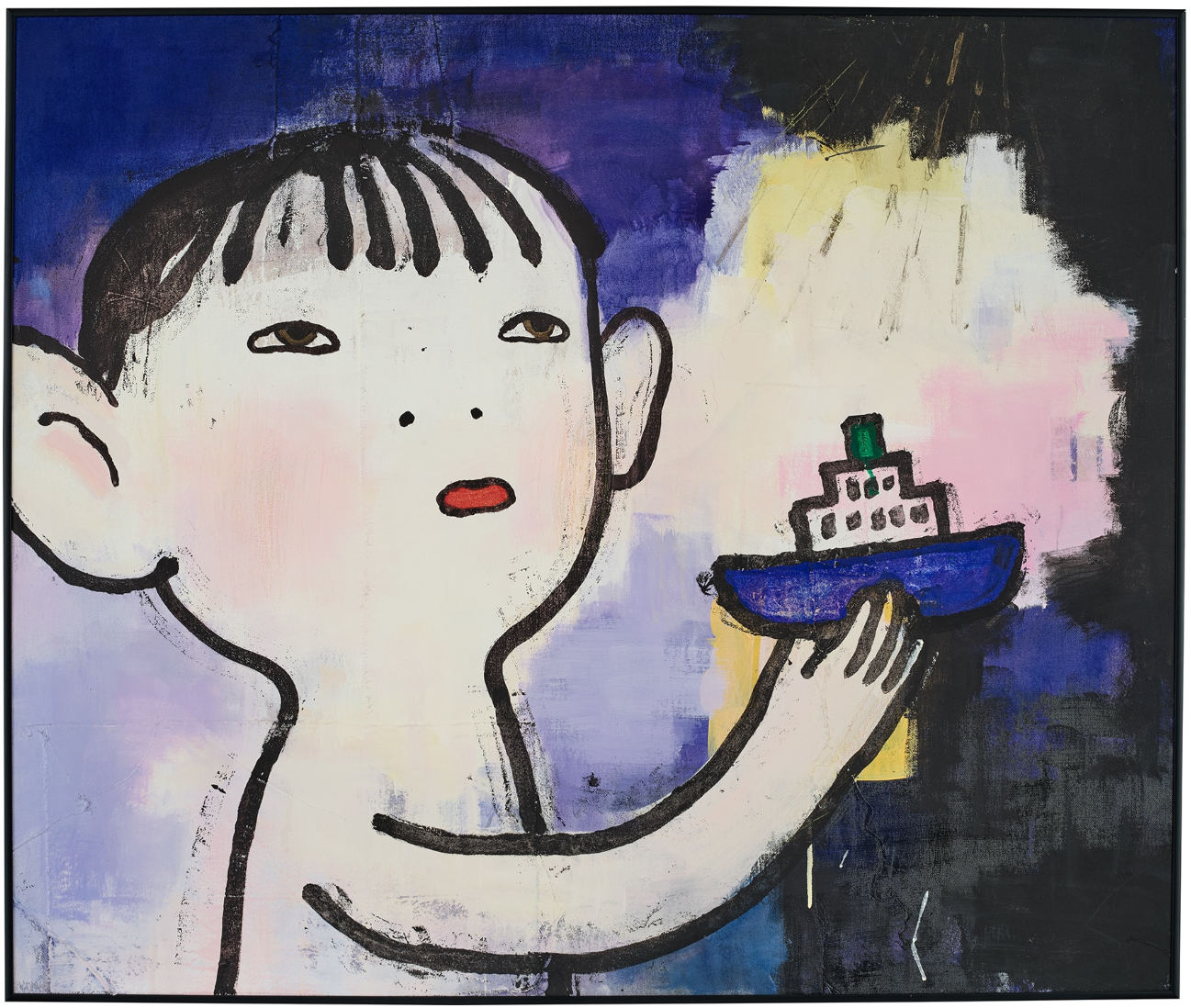
YOSHITOMO NARA
Untitled, 1992
Acrylic on canvas
84×100 cm (33 1/8 x 39 3/8 inches)
Signed, inscribed and dated ‘Yoshitomo Nara ’92’ on the reverse
USD 500,000
#19. O.T (N.G), 1993
Phillips Hong-Kong: 1 June 2024
Estimated: HKD 2,500,000 – 3,500,000
HKD 3,810,000 / USD 487,774
https://www.phillips.com/detail/yoshitomo-nara/HK010224/135
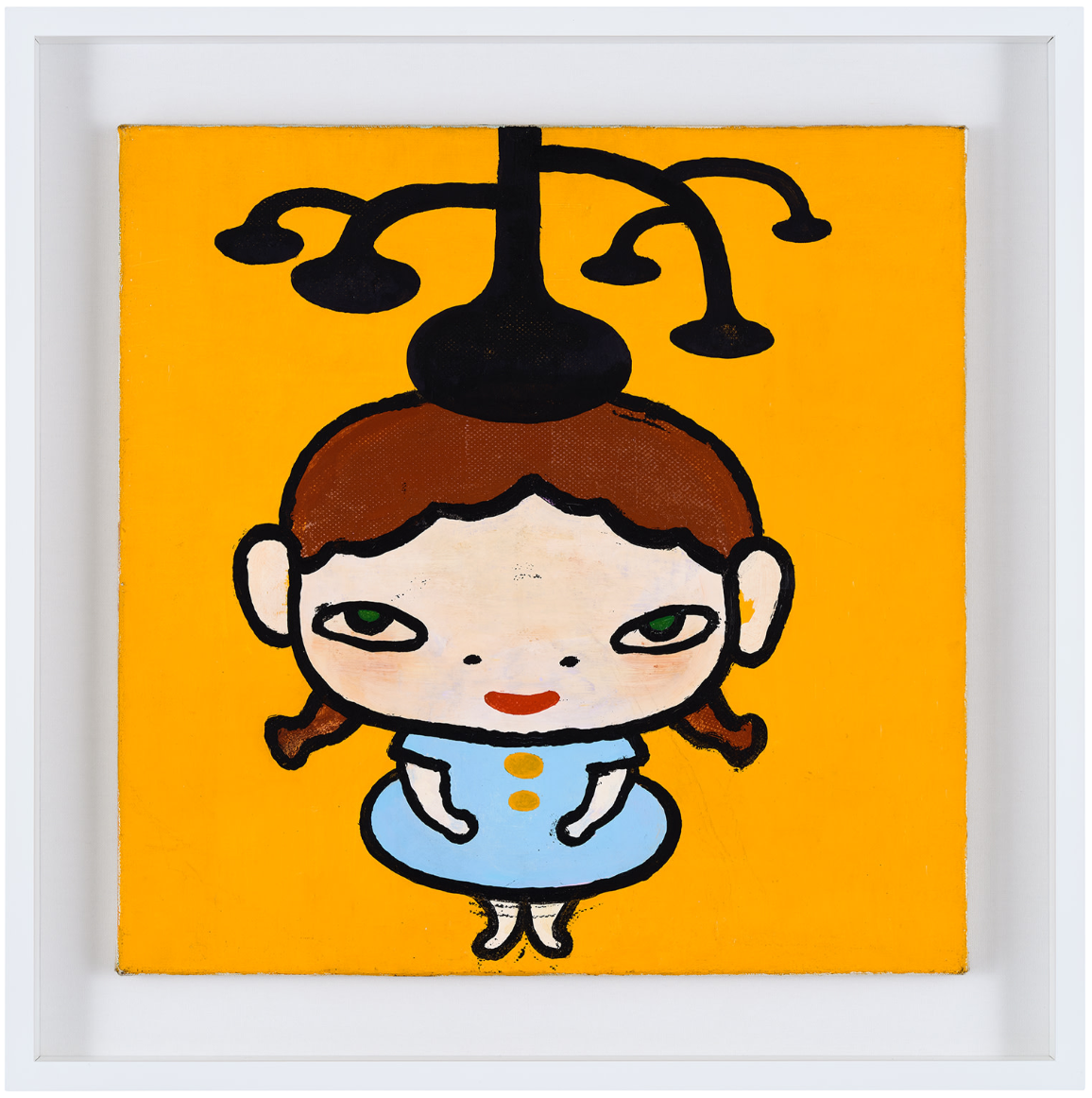
YOSHITOMO NARA
O.T (N.G), 1993
Acrylic on canvas
42 x 52.2 cm (16 1/2 x 20 1/2 inches)
Signed, titled and dated ‘”O.T (N.G)” Yoshitomo Nara [in Japanese] ’93’ on the reverse
#20. Red in Blue, 1999
Christie’s Hong-Kong: 29 May 2024
Estimated: HKD 1,200,000 – 1,800,000
HKD 3,780,000 / USD 483,933
YOSHITOMO NARA (B. 1959), Red in Blue | Christie’s (christies.com)

YOSHITOMO NARA (B. 1959)
Red in Blue, 1999
Acrylic on cotton mounted on canvas
30×25 cm (11 3/4 x 9 7/8 inches)
Titled ‘Red in blue’ (on the overlap)
#21. Cat, 1993
Christie’s Hong-Kong: 29 May 2024
Estimated: HKD 1,500,000 – 2,500,000
HKD 2,520,000 / USD 322,622
YOSHITOMO NARA (B. 1959), Cat | Christie’s (christies.com)

YOSHITOMO NARA (B. 1959)
Cat, 1993
Acrylic on canvas
40×40 cm (15 3/4 x 15 3/4 inches)
Signed with the artist’s signature, titled, and dated ‘cat ’93’ (on the reverse)
Lots Passed
Broken Heart Bench, 2006-07
Sotheby’s London: 9 October 2024
Estimated: GBP 2,500,000 – 3,500,000
PASSED
Broken Heart Bench | Contemporary Evening Auction | 2024 | Sotheby’s (sothebys.com)
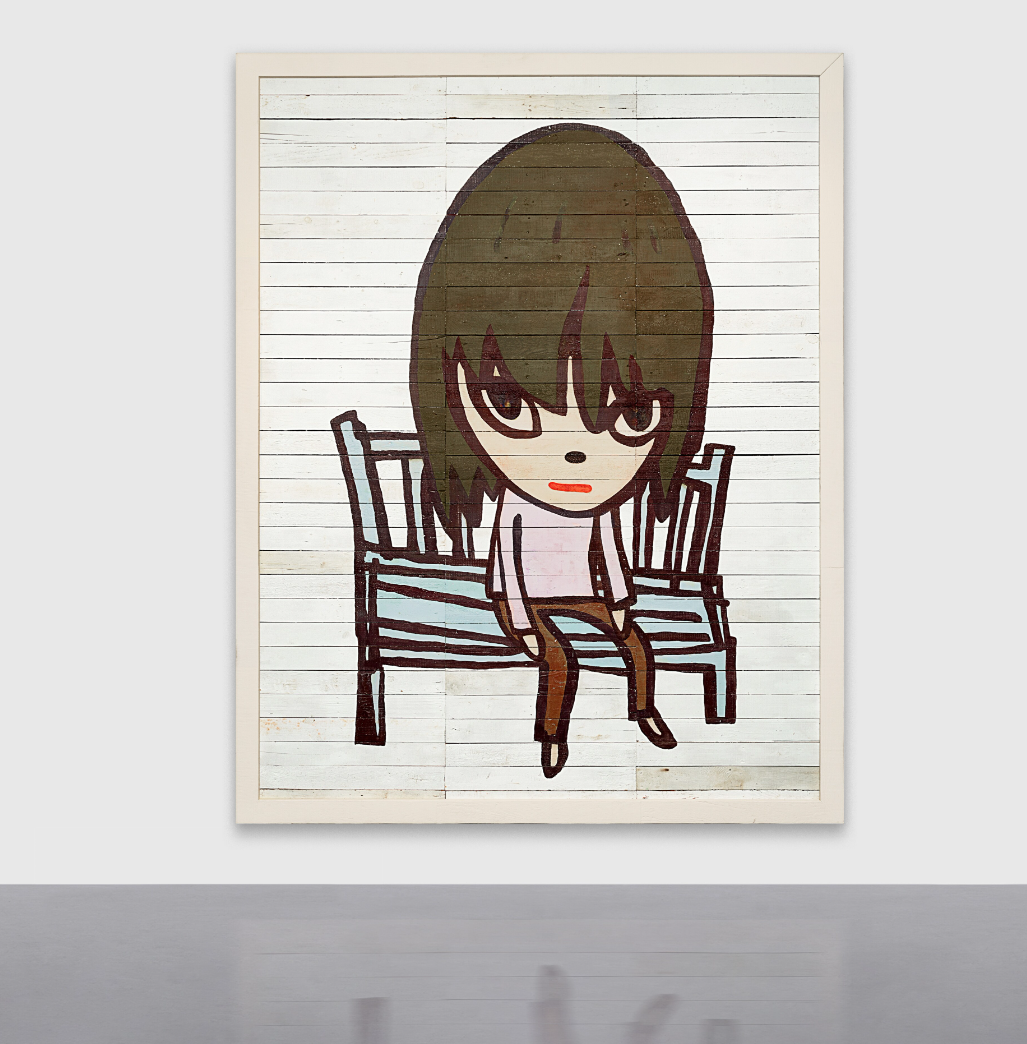
YOSHITOMO NARA (b. 1959)
Broken Heart Bench, 2006-07
Acrylic on wood, in artist’s frame
287 x 227.3 cm (113 x 89 1/2 inches)
Signed twice and dated 2006 and 2007 (on the reverse)
2023 Auction Results
FOR PAINTINGS AND SCULPTURES ONLY
19 lots sold at auction in 2023 for a turnover of USD 67,355,925. With 2 lots unsold, the sell-through rate is a solid 90%. Of note, one lot was withdrawn at Christie’s in Hong-Kong on 28 November 2023. 2 lots sold over USD 10 million, 5 lots sold over USD 5 million, generating a turnover of USD 43,628,442 (64.8% of the total turnover in 2023). 14 lots sold over USD 1 million, generating a turnover of USD 65,538,851 (97.3% of total).
2023 Top 3 Lots
XXXXXXXXXX
#1. In the Milky Lake, 2012
Sotheby’s Hong-Kong: 5 April 2023
Estimated: HKD 80,000,000 – 120,000,000
HKD 100,555,000 / USD 12,809,717
YOSHITOMO NARA (b. 1959)
In the Milky Lake, 2012
Acrylic on canvas
197×194 cm (77 1/2 x 76 3/8 inches)
Signed, titled and dated 2012 on the stretcher and signed and dated 2012 on the reverse
#2. Lookin’ for a Treasure, 1995
Phillips Hong-Kong: 30 March 2023
Estimates On Request
HKD 83,850,000 / USD 10,681,665
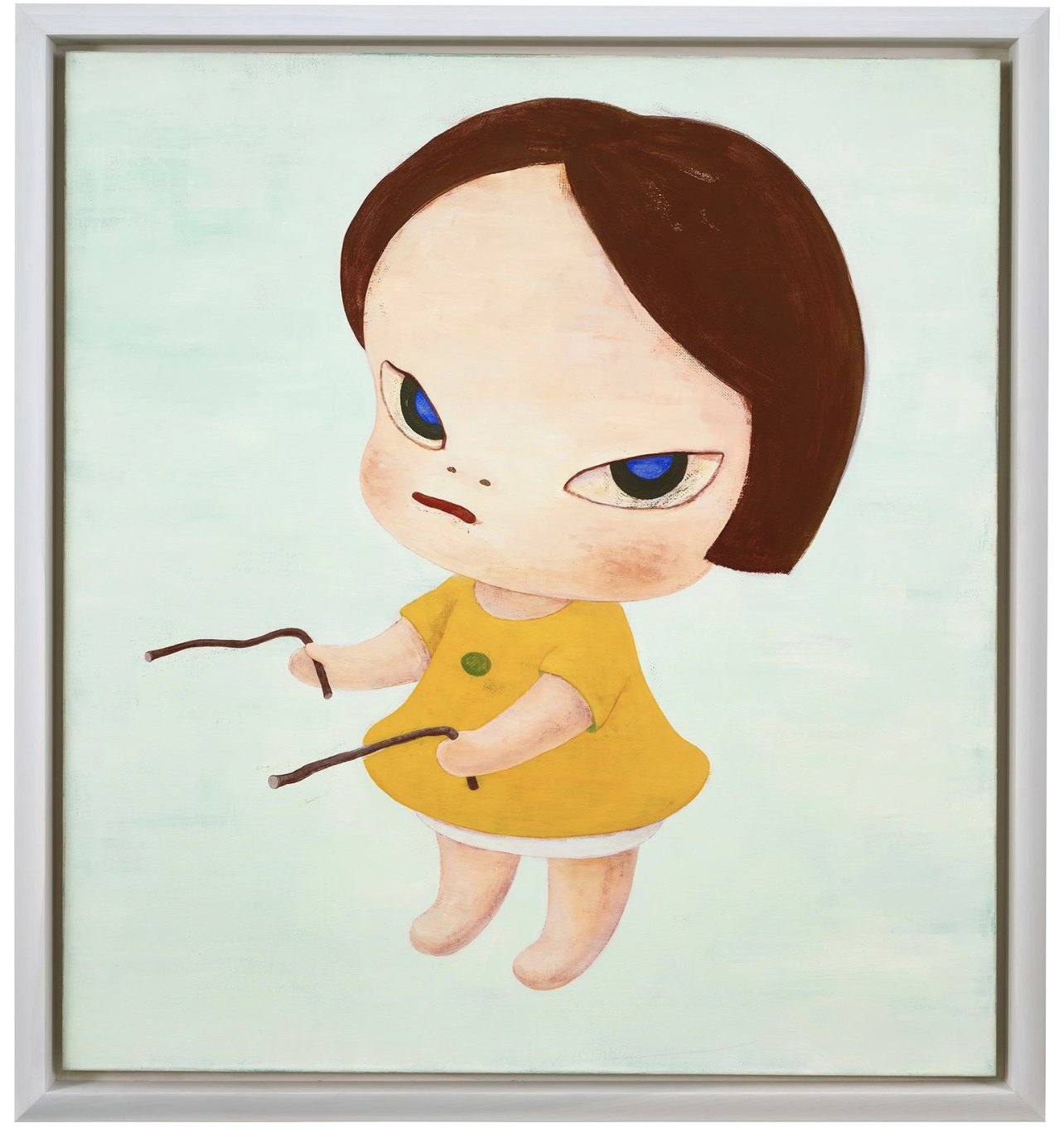
YOSHITOMO NARA
Lookin’ for a Treasure, 1995
Acrylic on canvas
120×110 cm (47 1/4 x 43 1/4 inches)
Signed, titled and dated ‘Nara [in Japanese] 95 “Lookin’ for a Treasure”‘ on the reverse
#3. No Means No, 2006
Phillips Hong-Kong: 6 October 2023
Estimated: HKD 52,000,000 – 72,000,000
HKD 65,530,000 / USD 8,368,310
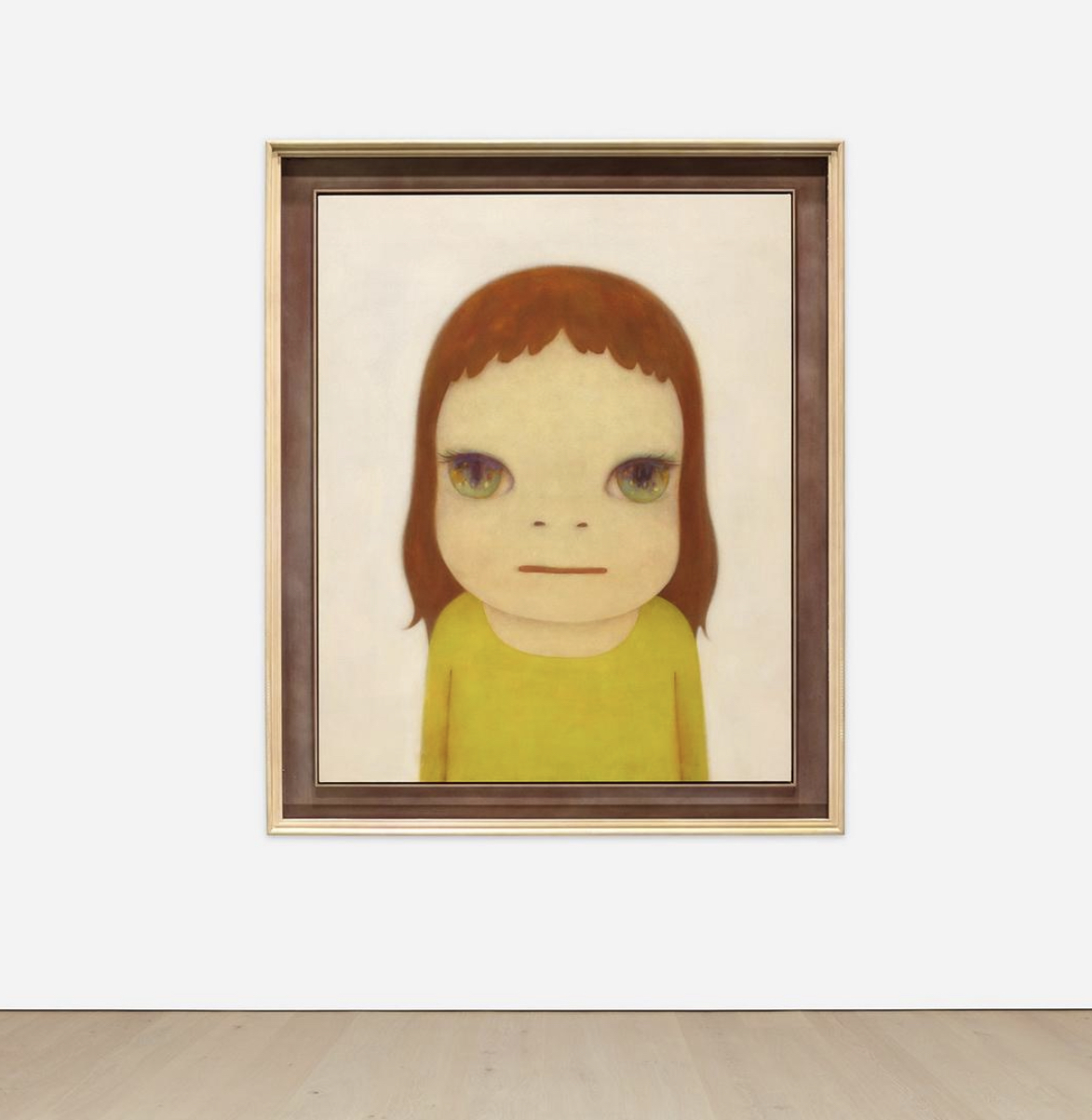
YOSHITOMO NARA
No Means No, 2006
Acrylic on canvas
162.5 x 130.8 cm (63 7/8 x 51 1/2 inches)
Signed, titled and dated ‘”No Means No” Nara [in Japanese] 06’ on the reverse
#4. Bad Barber, 2000
Christie’s Hong-Kong: 28 November 2023
Estimated: HKD 55,00,000 – 85,00,000
HKD 51,195,000 / USD 6,572,611
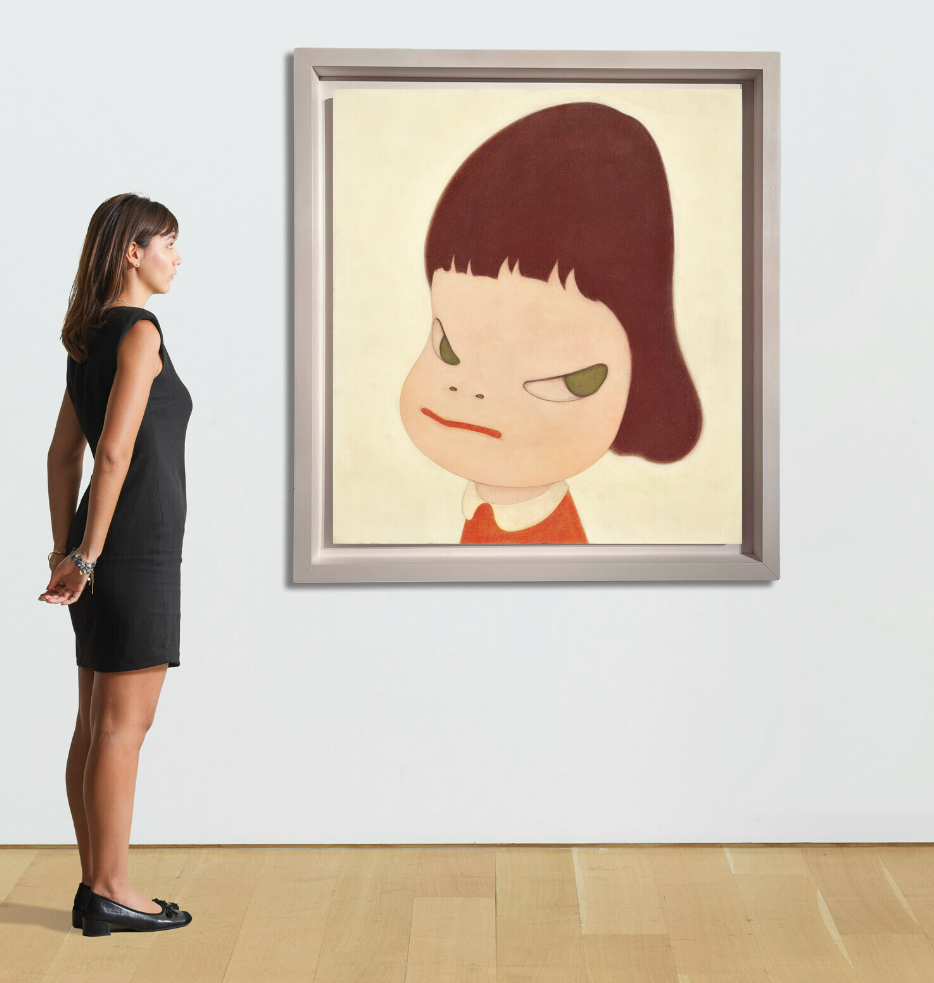
YOSHITOMO NARA (B.1959)
Bad Barber, 2000
Acrylic on canvas
100 x 90 cm. (39 3⁄8 x 35 3⁄8 in.)
signed with artist’s signature, titled and dated ‘Bad Barber 2000’ (on the reverse)
#5. Acid M.J., 2009
Poly HK: 6 April 2023
Estimated: HKD 34,000,000 – 44,000,000
HKD 40,800,000 / USD 5,197,386
Acid M. J.|Poly Auction Hong Kong
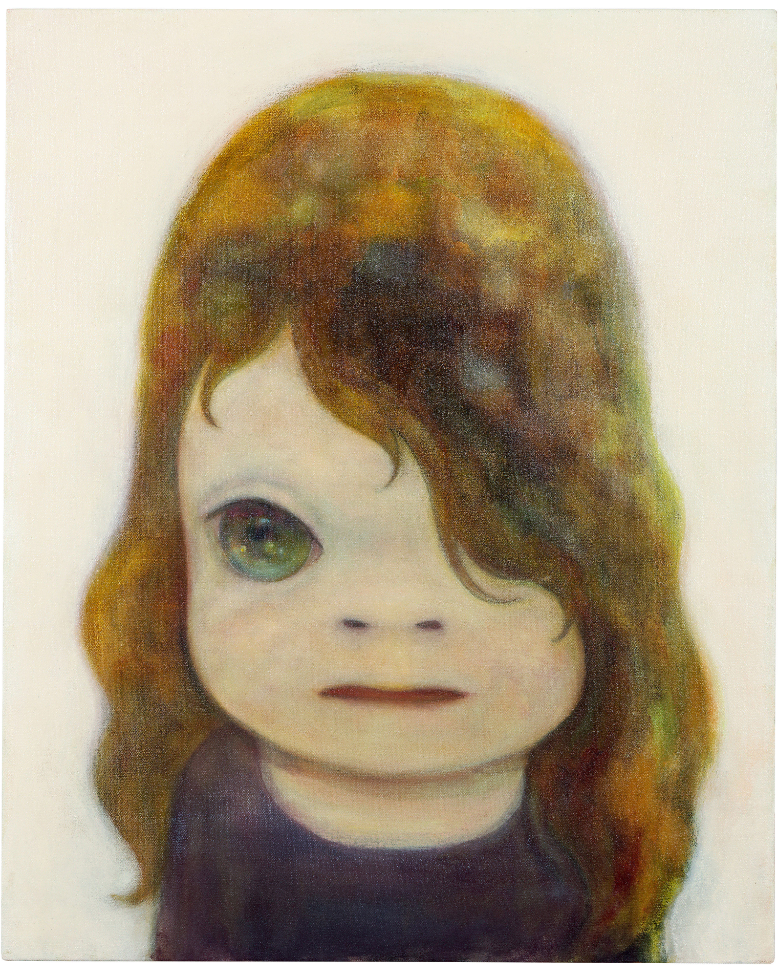
YOSHITOMO NARA
Acid M.J., 2009
Acrylic on canvas
80.4 x 65.2 cm (31 1/2 x 25 1/2 inches)
Signed and dated ‘Nara ’09’ (on the reverse); titled ‘Acid’ (on the stretcher)
#6. Three Stars, 2014
Bonhams Hong-Kong: 25 November 2023
Estimated: HKD 30,000,000 – 50,000,000
HKD 36,754,000 / USD 4,714,362
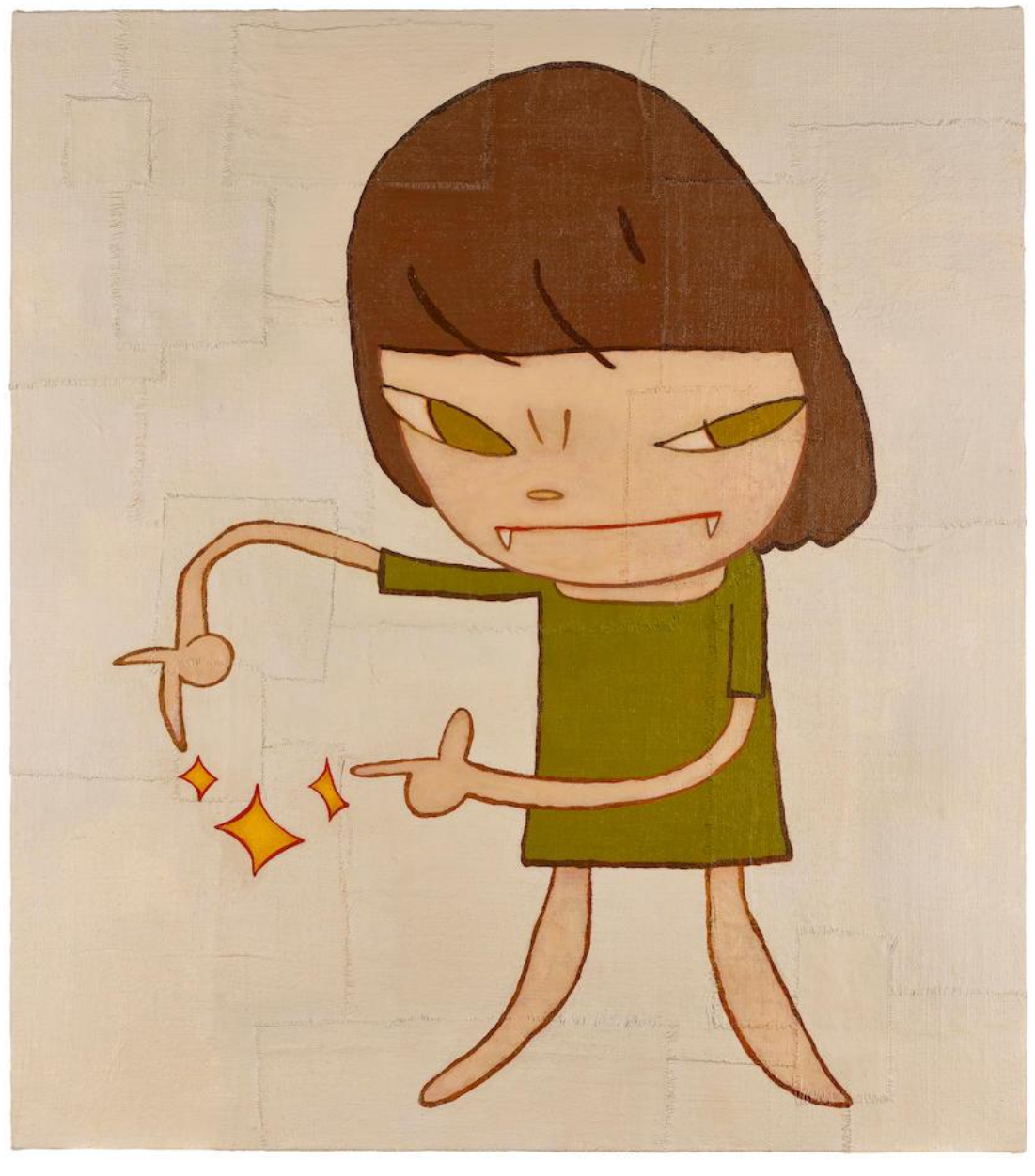
Acrylic on jute mounted on board
180.5 x 158.5 cm (71 1/16 x 62 3/8 inches)
#7. Nothing Gets Me Down, 1993
No Estimates Recieved
CNY 23,805,000 / USD 3,282,904
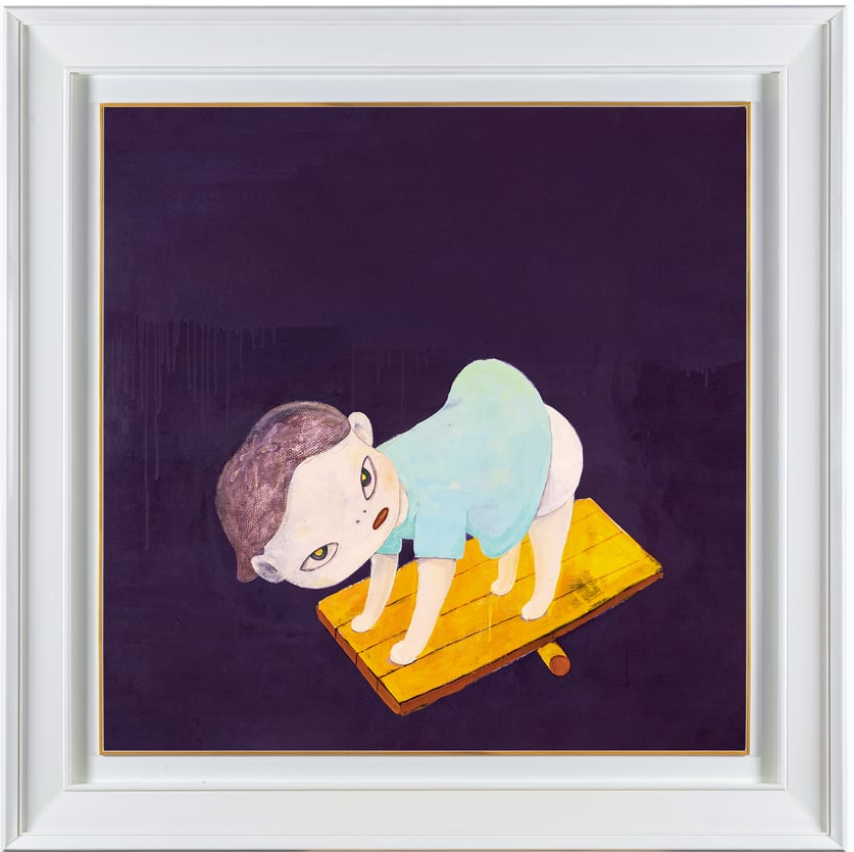
YOSHITOMO NARA
Nothing Gets Me Down, 1993
Acrylic on canvas
109.9 x 109.9 cm (43 1/4 x 43 1/4 inches)
#8. Night Fishing, 1995
Christie’s Hong-Kong: 28 May 2023
Estimated: HKD 18,000,000 – 28,000,000
HKD 22,155,000 / USD 2,828,348
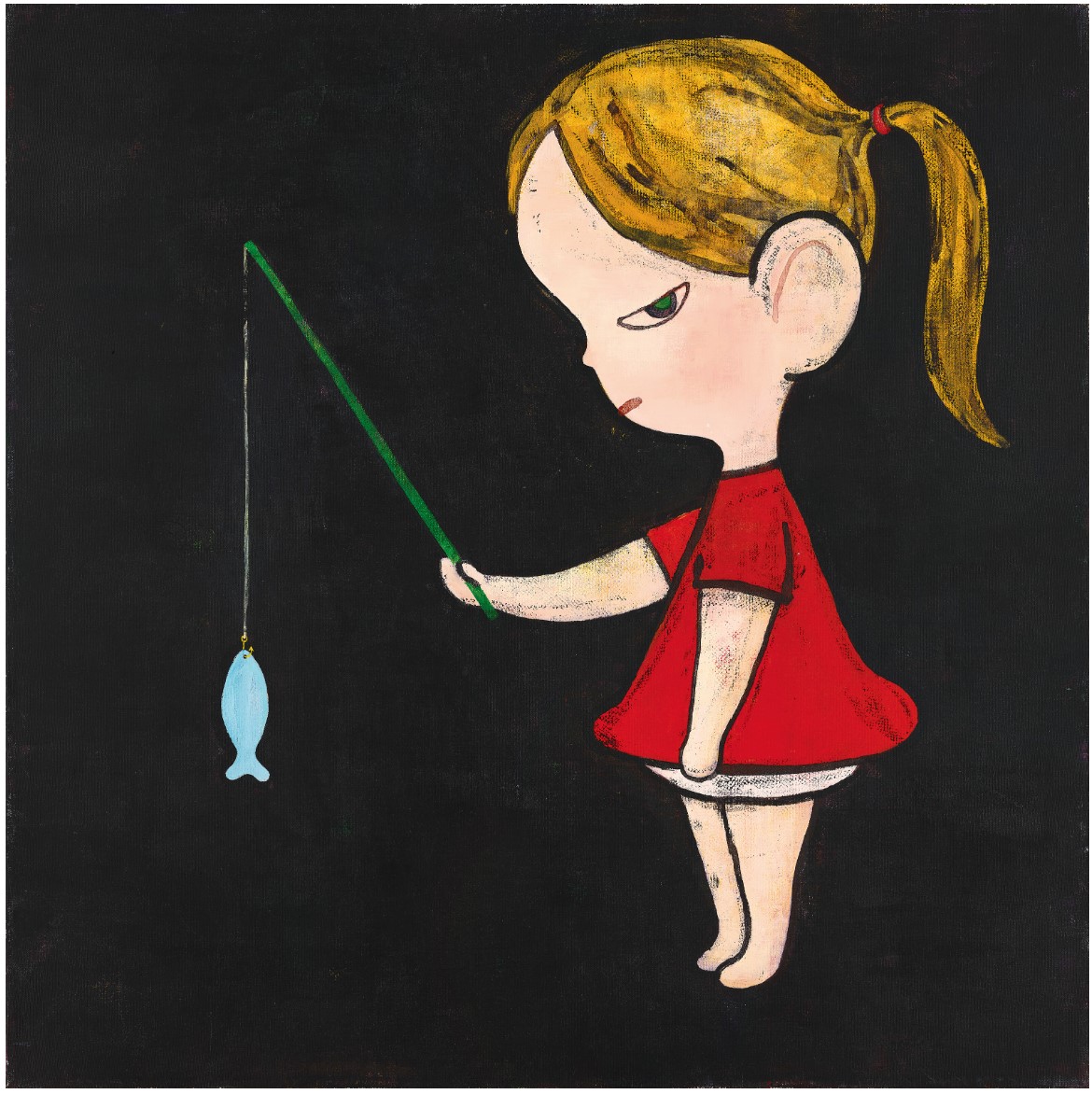
YOSHITOMO NARA (B.1959)
Night Fishing, 1995
Acrylic on canvas
100×100 cm (39 3/8 x 39 3/8 inches)
Signed, titled and dated ‘Night Fishing ’95’ (on the reverse)
#9. Guitar Girl, 2019
Phillips New-York: 17 May 2023
Estimated: USD 2,000,000 – 3,000,000
USD 2,480,000
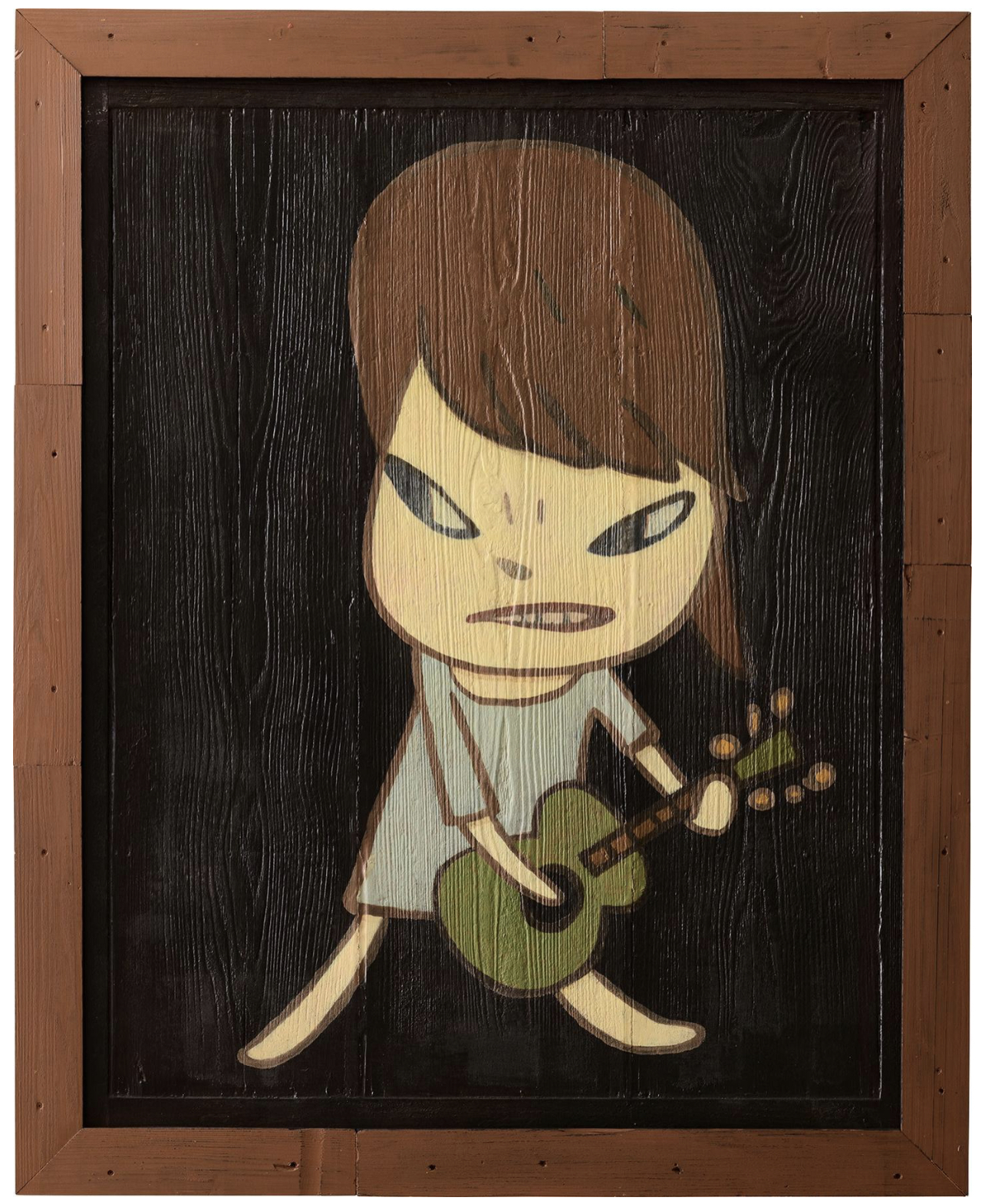
YOSHITOMO NARA
Guitar Girl, 2019
Acrylic on wood, in artist’s frame
118.1 x 94.9 x 7.9 cm (46 1/2 x 37 3/8 x 3 1/8 inches)
Signed and dated “2019 Nara” on the reverse
#10. Nowhere Bunny in Somewhere, 1998
Christie’s Hong-Kong: 28 May 2023
Estimated: HKD 5,000,000 – 8,000,000
HKD 19,130,000 / USD 2,442,169
YOSHITOMO NARA (B. 1959) (christies.com)
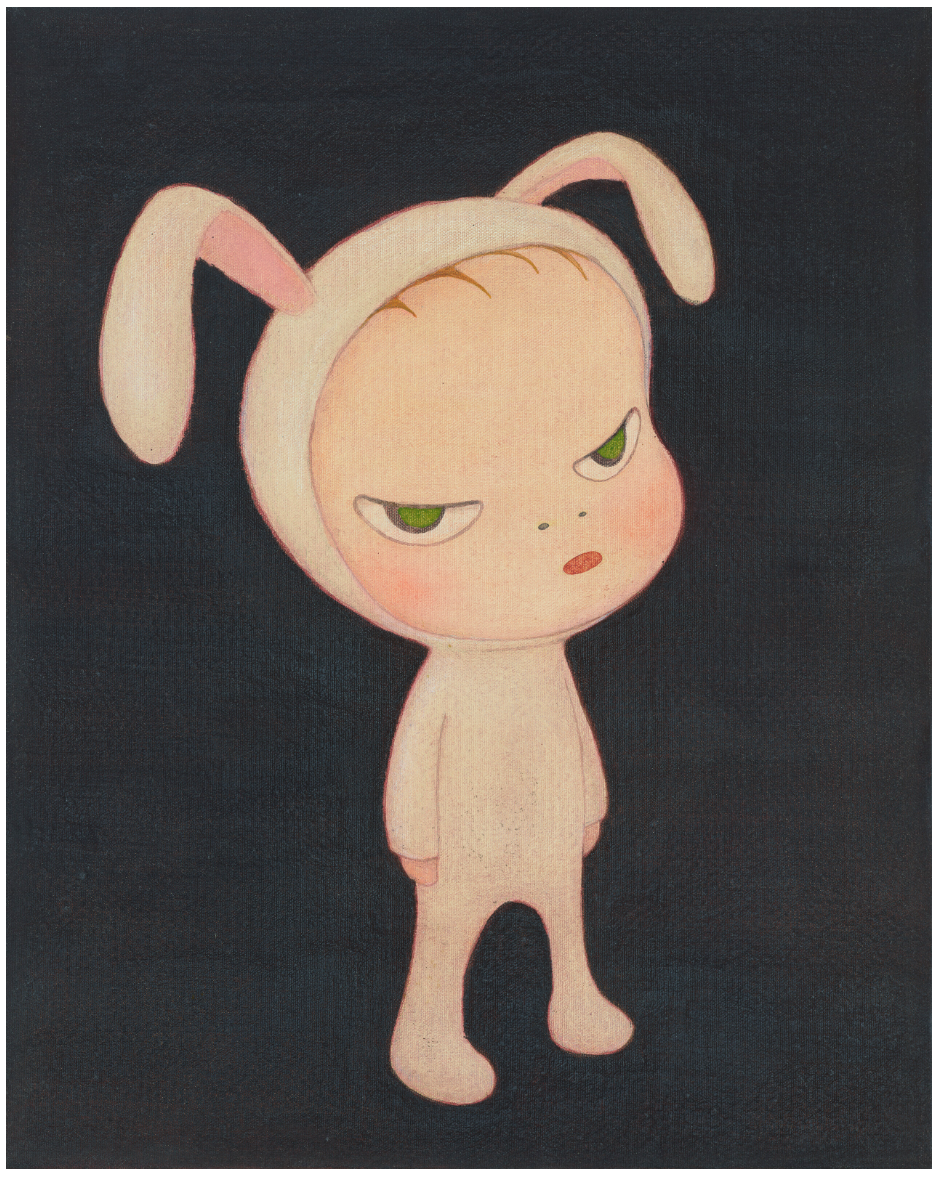
YOSHITOMO NARA (B. 1959)
Nowhere Bunny in Somewhere, 1998
Acrylic and graphite on canvas
19×16 inches (48 x 40.6 cm)
Signed with artist’s signature and dated ’98’ (on the reverse)
Titled ‘Nowhere Bunny in Somewhere’ (on the stretcher)
#11. Sprout in Hands, 2011
Sotheby’s Hong-Kong: 5 April 2023
Estimated: HKD 14,000,000 – 20,000,000
HKD 18,116,000 / USD 2,307,800
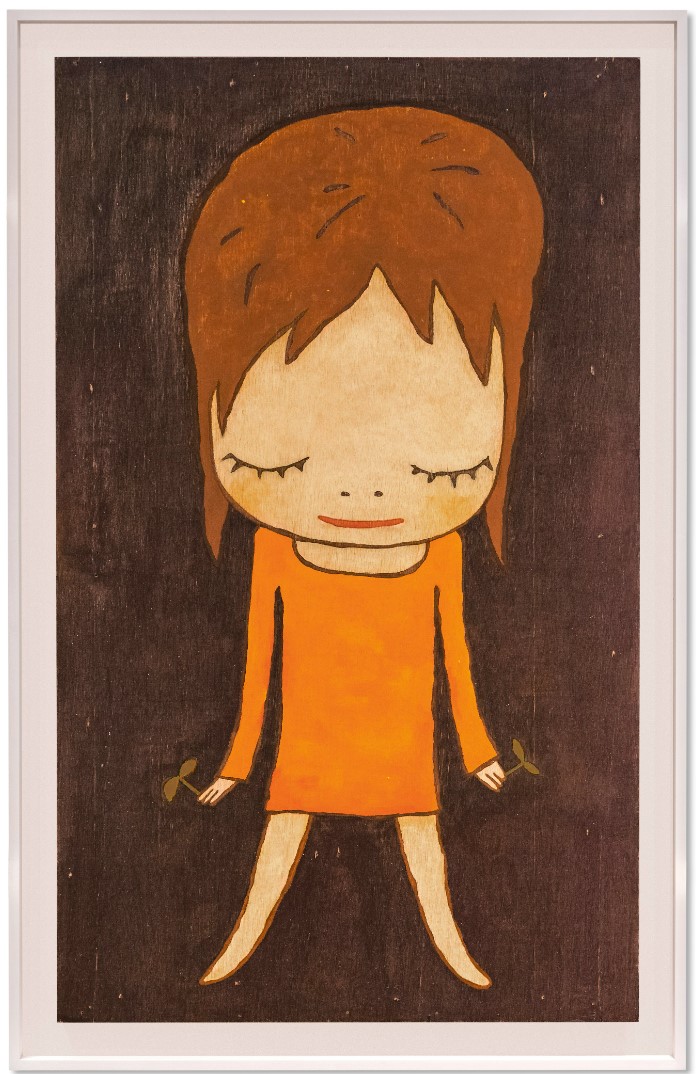
YOSHITOMO NARA (b. 1959)
Sprout in Hands, 2011
Acrylic on wood
135.5 x 82 x 2.8 cm (53 3/8 x 32 1/4 x 1 1/8 inches)
Signed, titled in Japanese and dated 2011 on the reverse
#12. 1,2,3…, 2006
Sotheby’s Hong-Kong: 5 April 2023
Estimated: HKD 9,000,000 – 12,000,000
HKD 11,340,000 / USD 1,444,567
REPEAT SALE
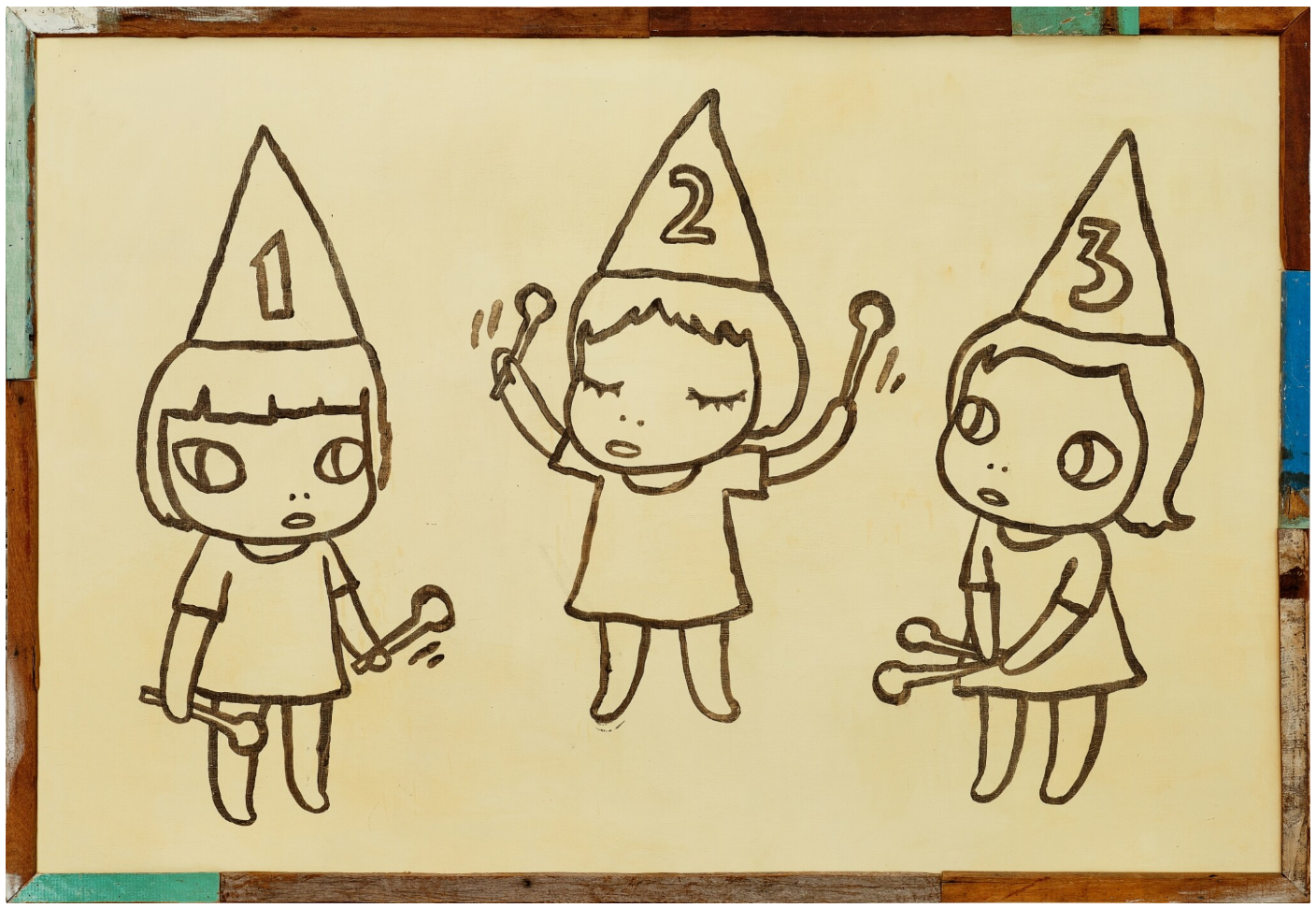
YOSHITOMO NARA (b. 1959)
1,2,3…, 2006
Acrylic on wood board
115×172 cm (45 1/4 x 67 3/4 inches)
Signed and dated 2006 on the reverse
#13. Sanchan with Shark “In the Room”, 1984
Christie’s Hong-Kong: 28 May 2023
Estimated: HKD 9,000,000 – 15,000,000
HKD 10,055,000 / USD 1,283,638
YOSHITOMO NARA (B. 1959) (christies.com)
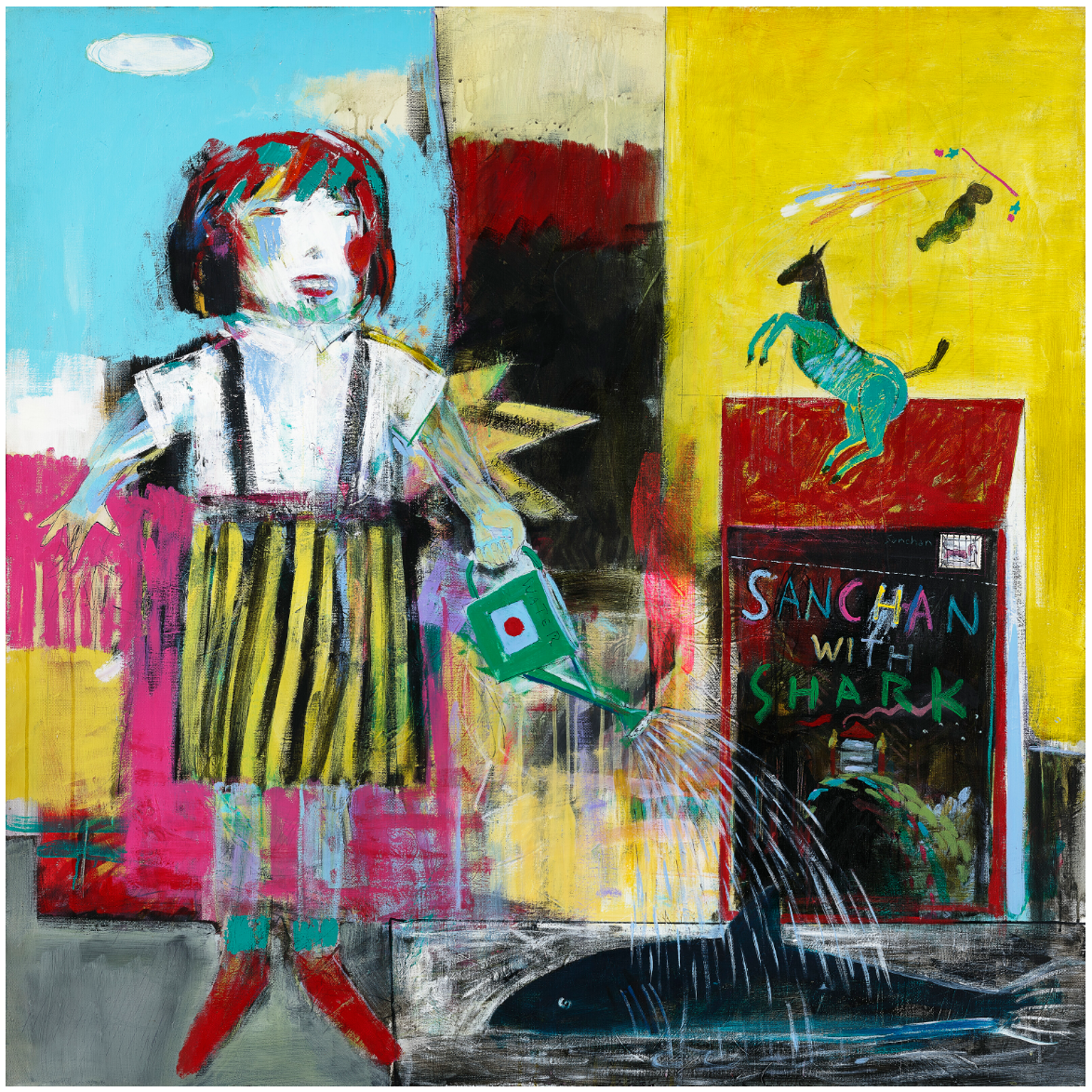
YOSHITOMO NARA (B. 1959)
Sanchan with Shark “In the Room”, 1984
Acrylic on canvas
130×130 cm (51 1/8 x 51 1/8 inches)
Signed, titled and dated ‘Yoshitomo Nara 1984 SANCHAN WITH SHARK “IN THE ROOM”‘ (on the reverse)
#14. KAMEHAME – HA, 2004
Christie’s Hong-Kong: 29 May 2023
Estimated: HKD 6,800,000 – 9,800,000
HKD 8,820,000 / USD 1,126,681
YOSHITOMO NARA (B.1959) (christies.com)
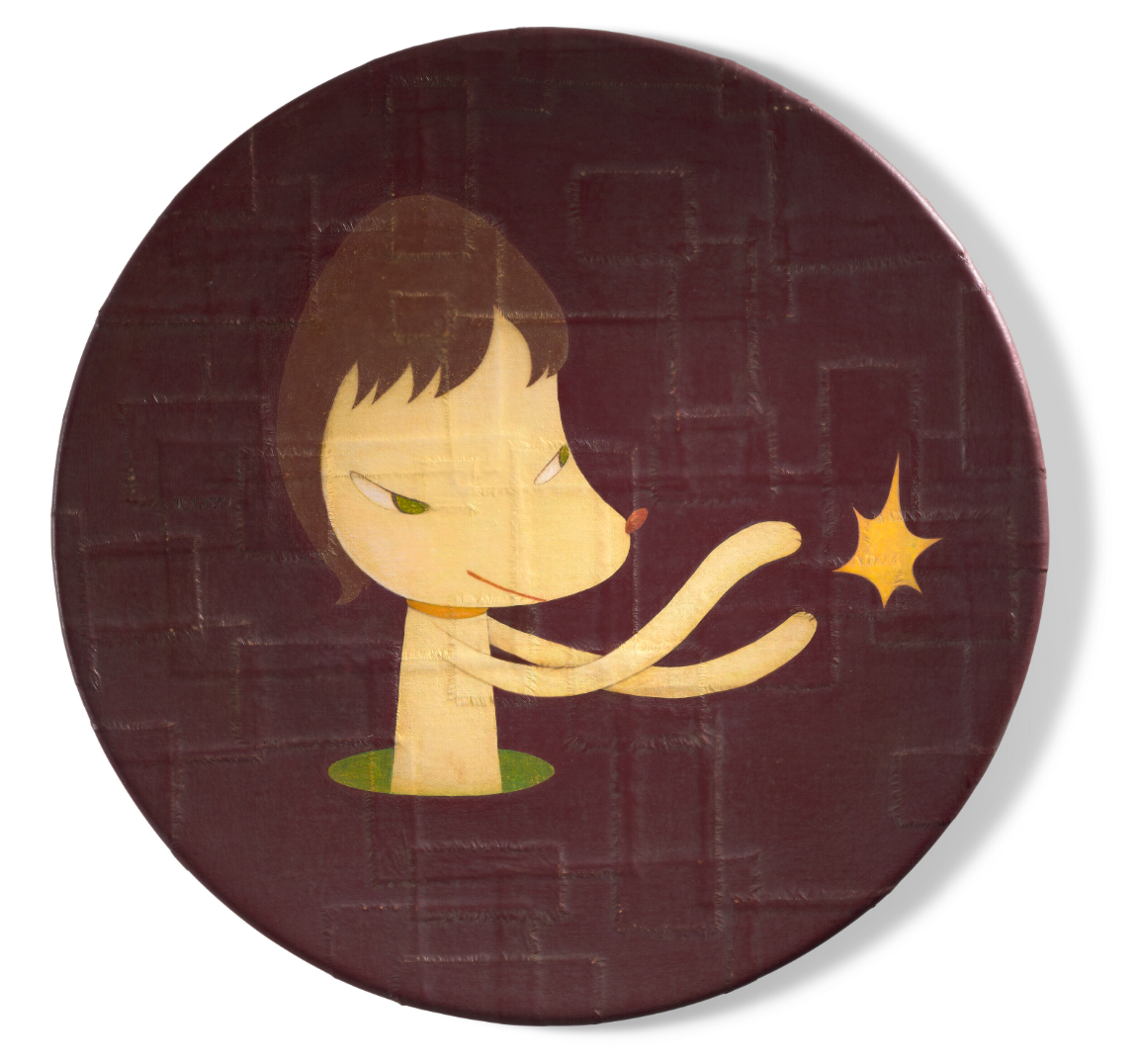
YOSHITOMO NARA (B.1959)
KAMEHAME – HA, 2004
Acrylic on cotton mounted on FRP
Diameter: 55.2 cm (21 3/4 inches)
Signed in Japanese, titled and dated ‘KAMEHAME – HA 2004’ (on the reverse)
#15. Wheels Go Round, 1994
Christie’s Hong-Kong: 29 November 2023
Estimated: HKD 4,000,000 – 6,000,000
HKD 5,040,000 / USD 647,055
YOSHITOMO NARA (B. 1959) (christies.com)
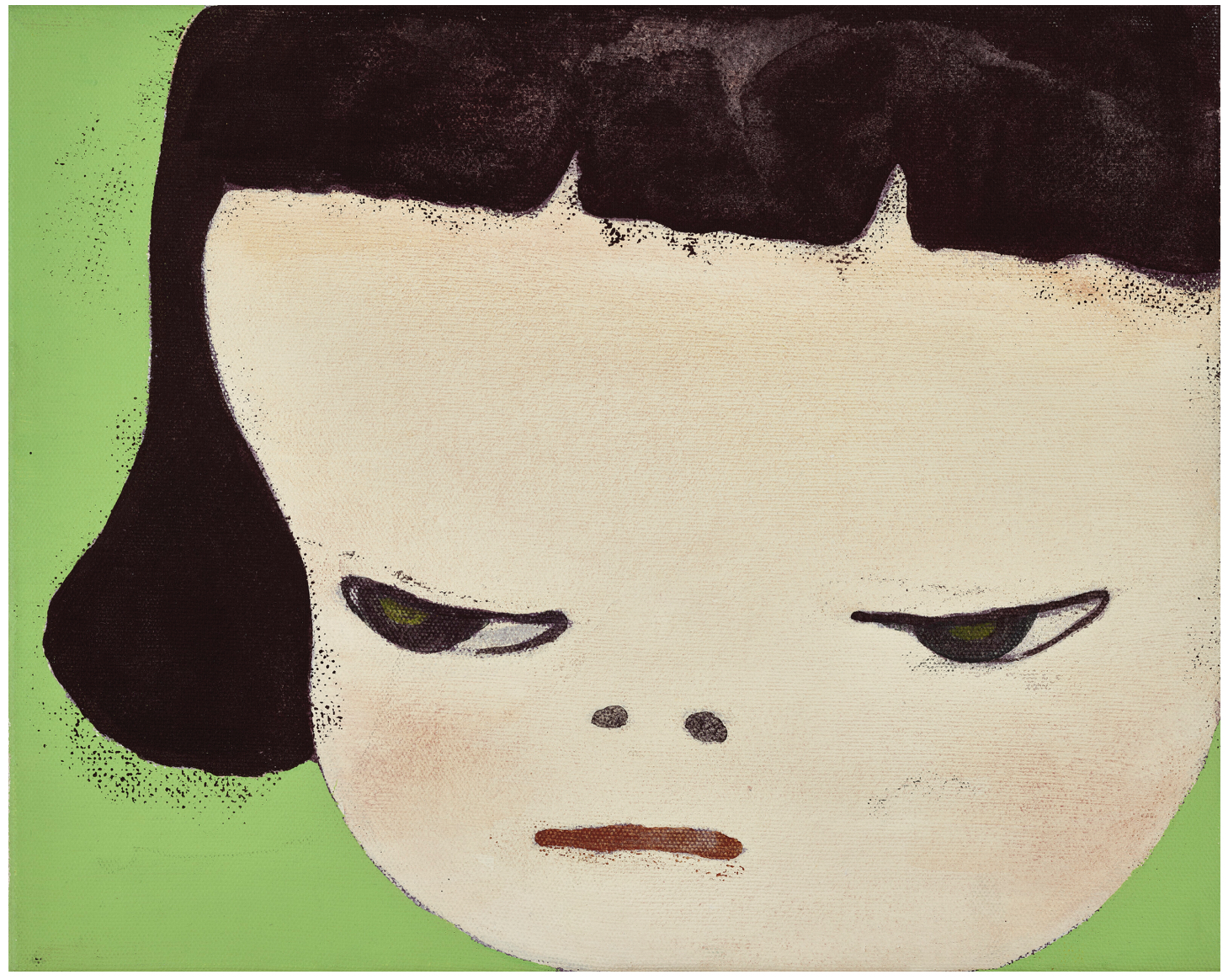
YOSHITOMO NARA (B. 1959)
Wheels Go Round, 1994
Acrylic on canvas
32 x 40.5 cm (12 5/8 x 16 inches)
Signed, titled, inscribed and dated ‘For Alistair Wheels go round ’94’ (on the reverse)
#16. Dog in Yellow, 1989
Christie’s Shanghai: 23 September 2023
Estimated: CNY 300,000 – 500,000
CNY 3,780,000 / USD 519,195
YOSHITOMO NARA (B. 1959) (christies.com)
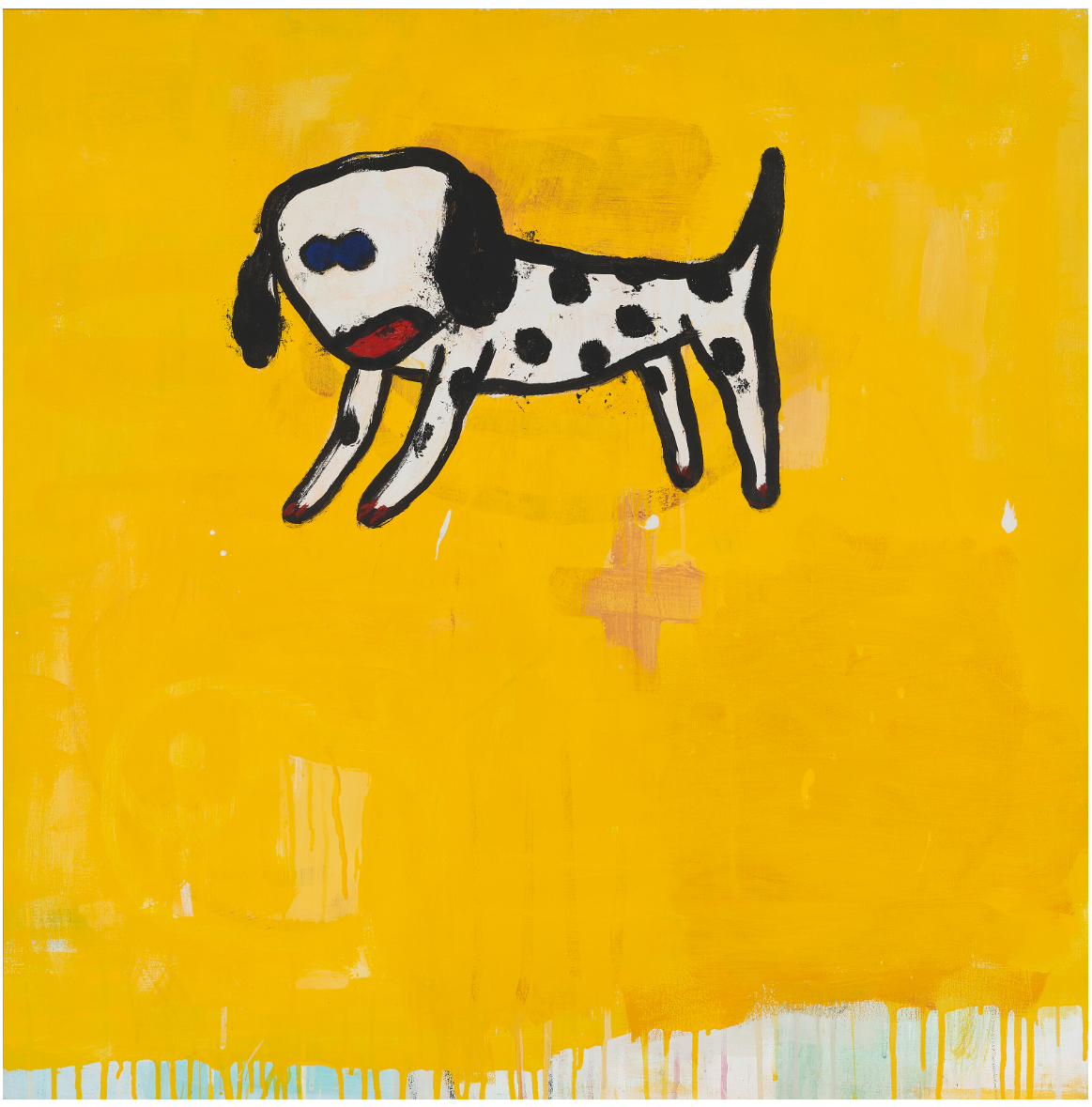
YOSHITOMO NARA (B. 1959)
Dog in Yellow, 1989
Acrylic on canvas
83×83 cm (32 5/8 x 32 5/8 inches)
Signed, titled, inscribed and dated, titled again in Japanese (on the reverse)
#17. Untitled, 1996
Christie’s Shanghai: 23 September 2023
Estimated: CNY 1,800,000 – 2,800,000
CNY 2,520,000 / USD 346,130
YOSHITOMO NARA (B. 1959) (christies.com)
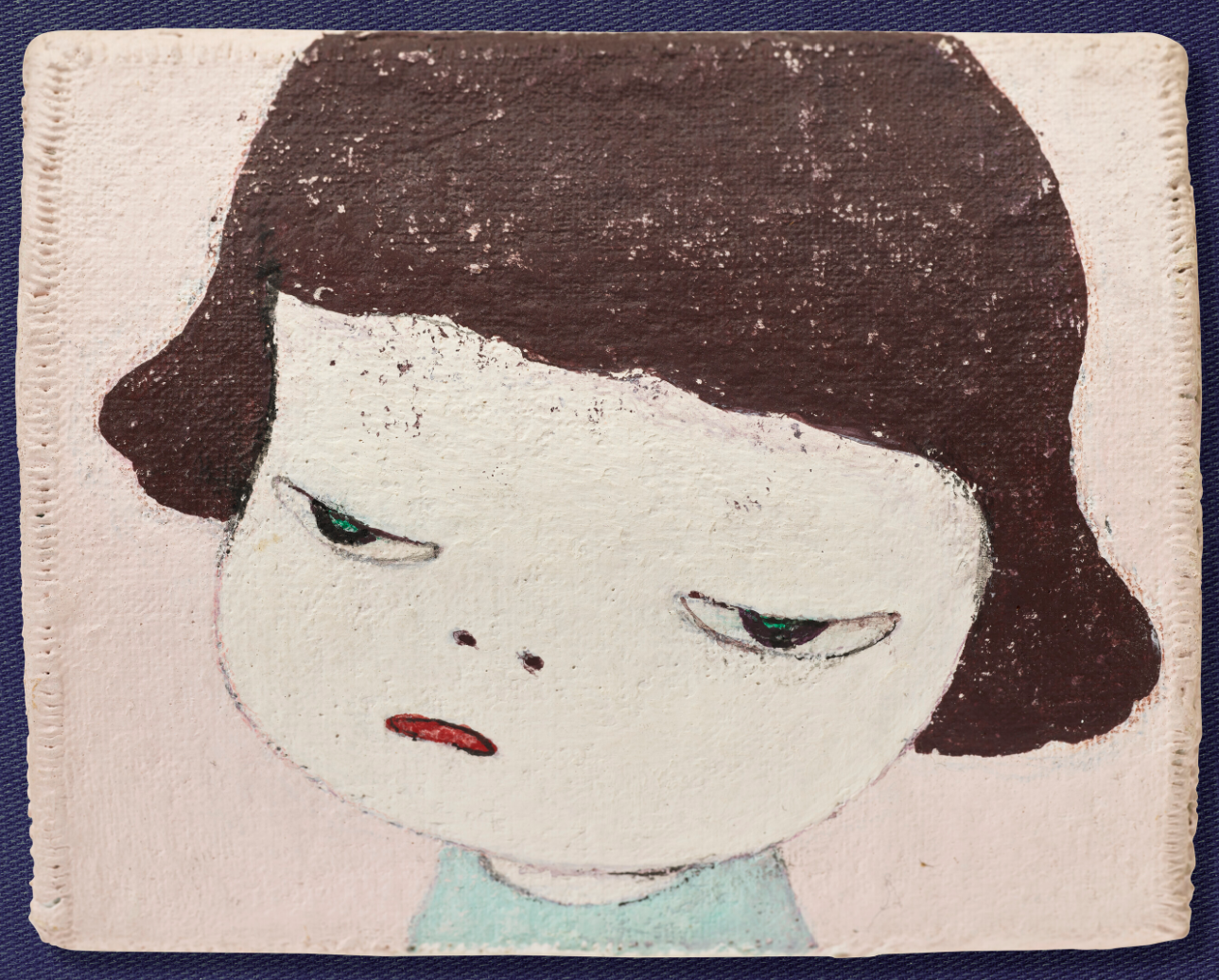
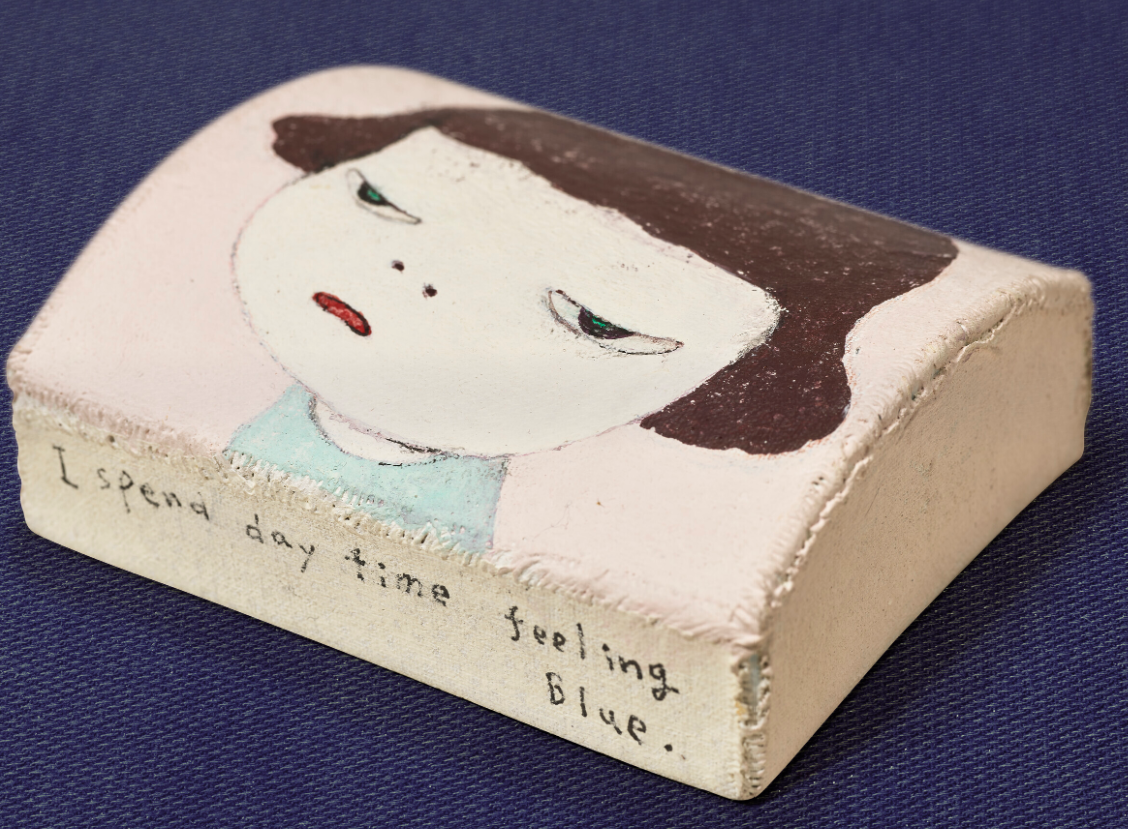
YOSHITOMO NARA (B. 1959)
Untitled, 1996
Acrylic on cotton mounted on box
3.2 (H) x 7.4 x 9.5 cm (1 1/4 x 2 7/8 x 3 3/4 inches)
Inscribed ‘I spend day time feeling Blue.’ (on the turning edge)
Signed with artist’s signature and dated ‘’96’, stamped ‘Y.N’ (on the reverse)
#18. Abandoned Mouse, 1996
Christie’s Hong-Kong: 29 May 2023
Estimated: HKD 800,000 – 1,200,000
HKD 1,638,000 / USD 209,240
YOSHITOMO NARA (B. 1959) (christies.com)
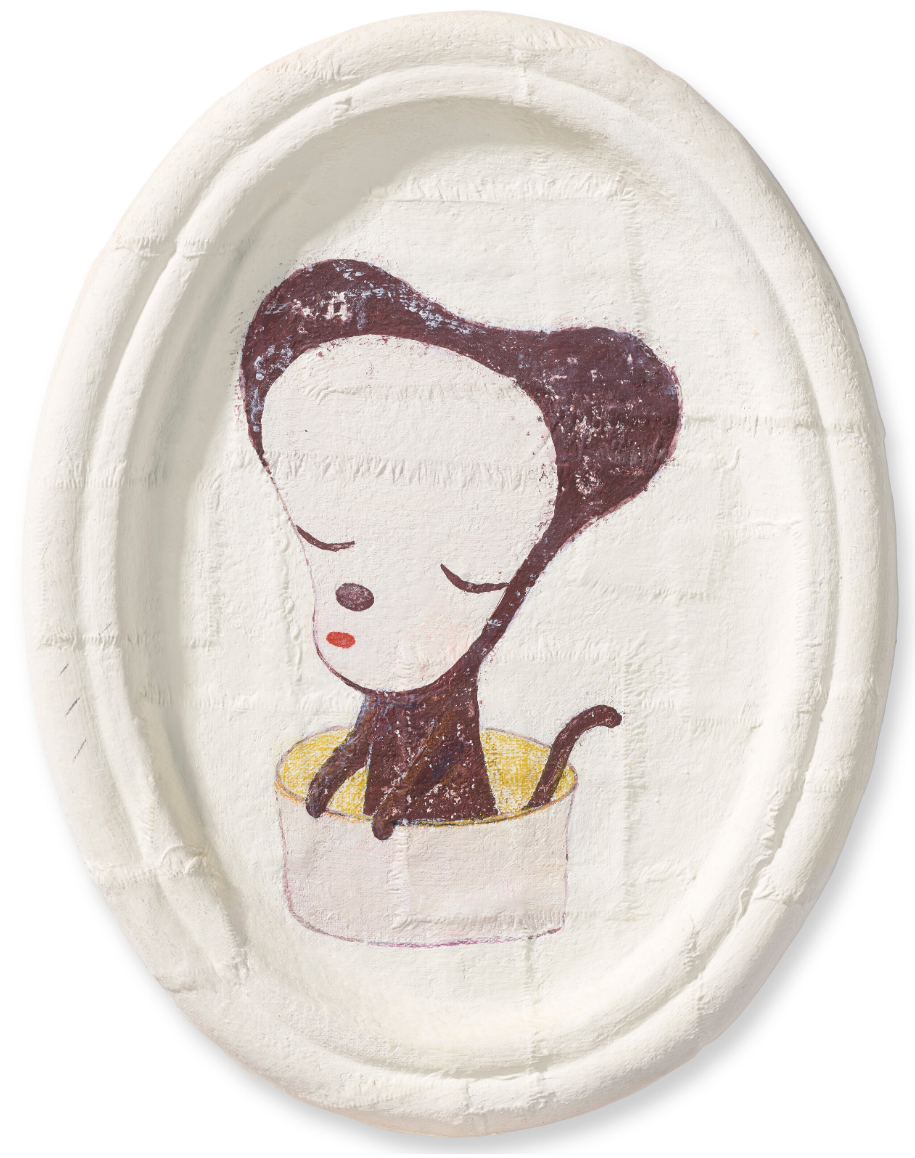
YOSHITOMO NARA (B. 1959)
Abandoned Mouse, 1996
Acrylic on cotton mounted on FRP
24.1 x 18.7 cm (9 1/2 x 7 3/8 inches)
Signed with artist’s signature, titled, and dated ‘Abandoned Mouse ’96’ (on the reverse)
#19. F for Fang, 1999
Sotheby’s Paris: 7 December 2023
Estimated: EUR 70,000 – 100,000
EUR 88,900 / USD 95,923
F for Fang | Art Moderne et Contemporain Day Auction | 2023 | Sotheby’s (sothebys.com)
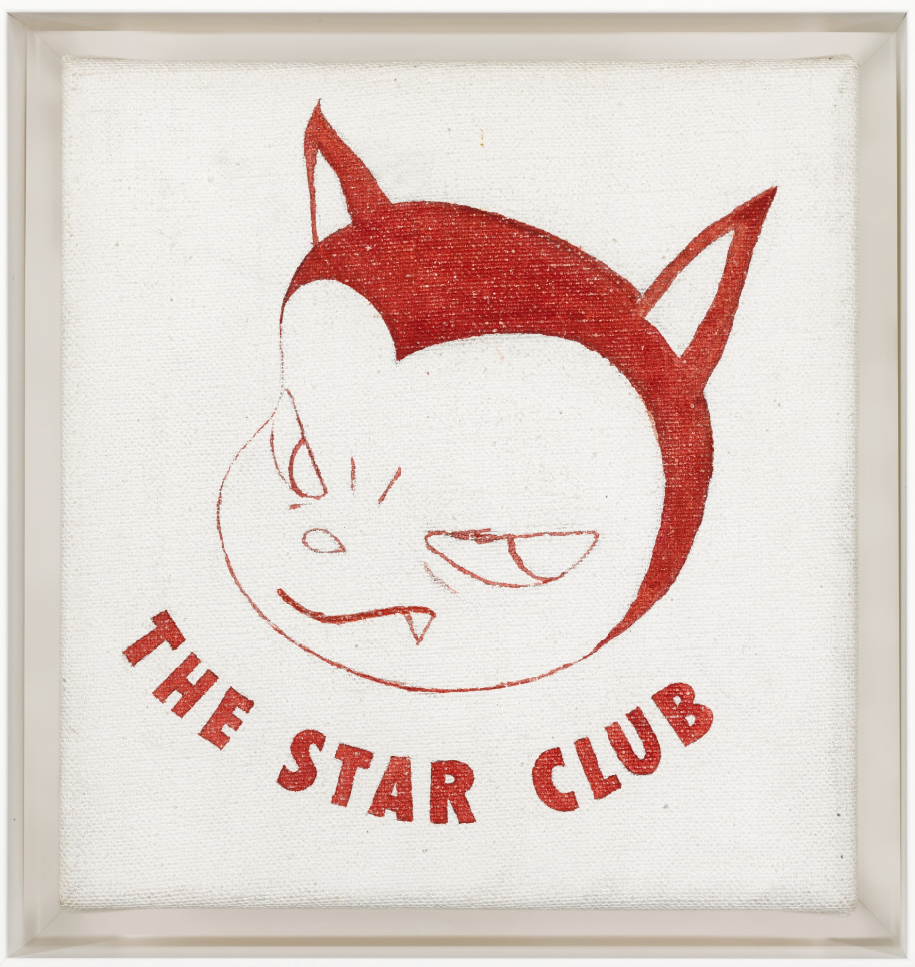
YOSHITOMO NARA (b. 1959)
F for Fang, 1999
Acrylic on canvas
19×18 cm (7 1/2 x 7 1/8 inches)
Signed, titled and dated 99 on the overlap
2022 Auction Results
FOR PAINTINGS AND SCULPTURES ONLY
17 lots sold at auction in 2022 for a turnover of USD 72,781,291. With 2 lots unsold, the sell-through rate is 89%. 3 lots sold over USD 10 million generating a turnover of USD 38,567,221 (53% of the total turnover in 2022). 11 lots sold over USD 1 million, generating a turnover of USD 68,874,627 (94.6% of total).
2022 Top 3 Lots
XXXXXXXXXXX
#1. Oddly Cozy, 2013
Sotheby’s Hong-Kong: 27 April 2022
Estimated: HKD 80,000,000 – 120,000,000
HKD 111,870,000 / USD 14,269,511
YOSHITOMO NARA (b. 1959)
Oddly Cozy, 2013
Acrylic on canvas
194×162 cm (76 3/8 x 63 3/4 inches)
Signed and dated 2013 on the reverse
#2. Wish World Peace, 2014
Christie’s Hong-Kong: 26 May 2022
Estimated: HKD 88,000,000 – 128,000,000
HKD 97,090,000 / USD 12,368,310
YOSHITOMO NARA (B. 1959) (christies.com)
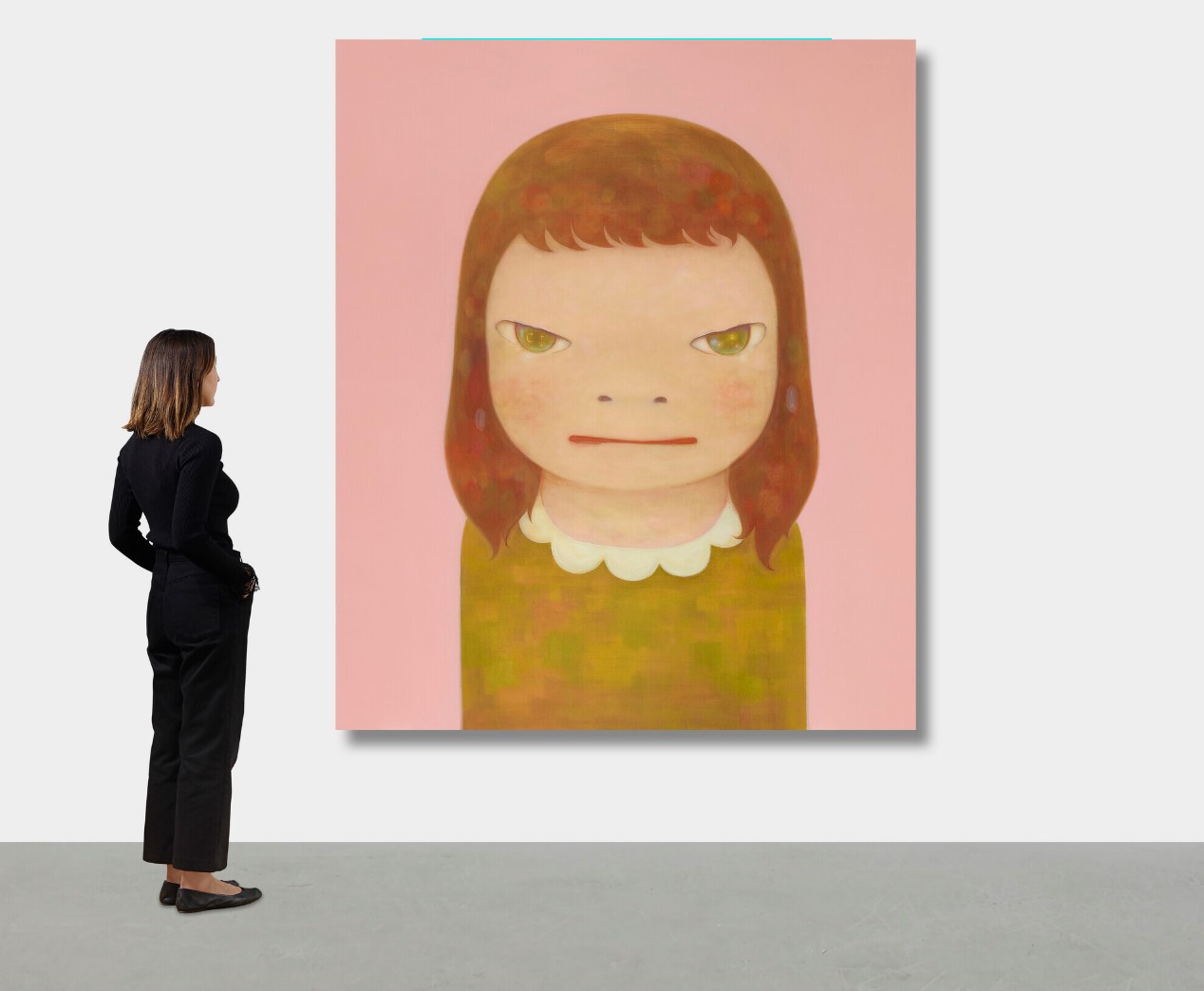
YOSHITOMO NARA (B. 1959)
Wish World Peace, 2014
Acrylic on canvas
194 x 162.2 cm (76 3⁄8 x 63 7⁄8 inches)
Signed with artist’s signature, titled and dated ‘2014 wish world peace’ (on the reverse)
#3. Light Haze Days / Study, 2020
Sotheby’s New-York: 16 November 2022
Estimated: USD 9,000,000 – 12,000,000
USD 11,929,000
Light Haze Days / Study | The Now Evening Auction | 2022 | Sotheby’s (sothebys.com)
YOSHITOMO NARA (B. 1959)
Light Haze Days / Study, 2020
Acrylic on canvas
220×195 cm (86 ⅝ x 76 ¾ inches)
Signed and dated 2020 (on the reverse)
#4. Present, 1994
Christie’s Hong-Kong: 1 December 2022
Estimated: HKD 65,000,000 – 95,000,000
HKD 71,900,000 / USD 9,212,044
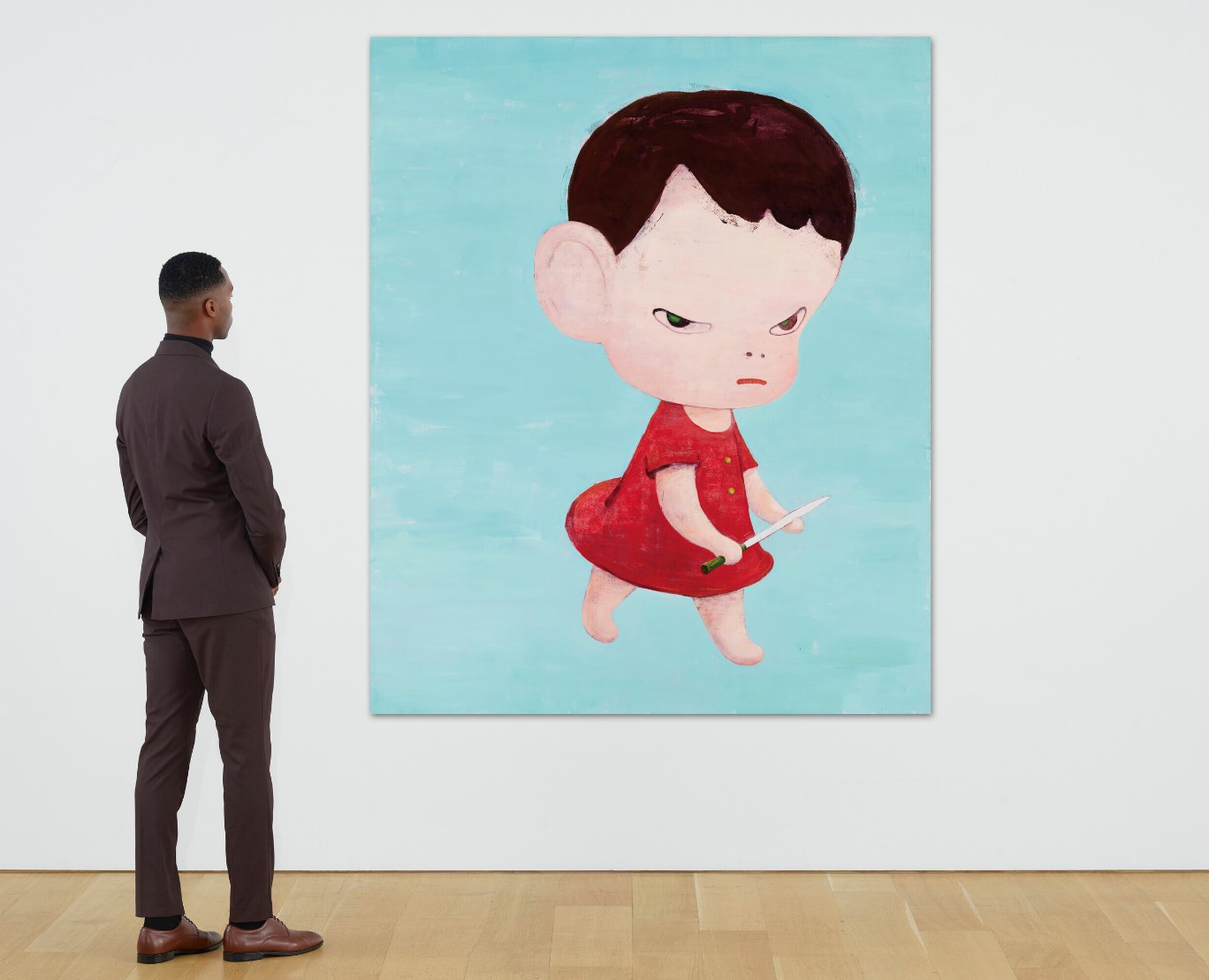
YOSHITOMO NARA (B. 1959)
Present, 1994
Acrylic on canvas
180.3 x 149.9 cm (71×59 inches)
Signed with artist’s signature, titled and dated ‘Present ’94’ (on the reverse)
#5. Be Happy, 1995
Christie’s New-York: 9 May 2022
Estimated: USD 5,500,000 – 7,500,000
USD 6,420,000
YOSHITOMO NARA (B. 1959) (christies.com)
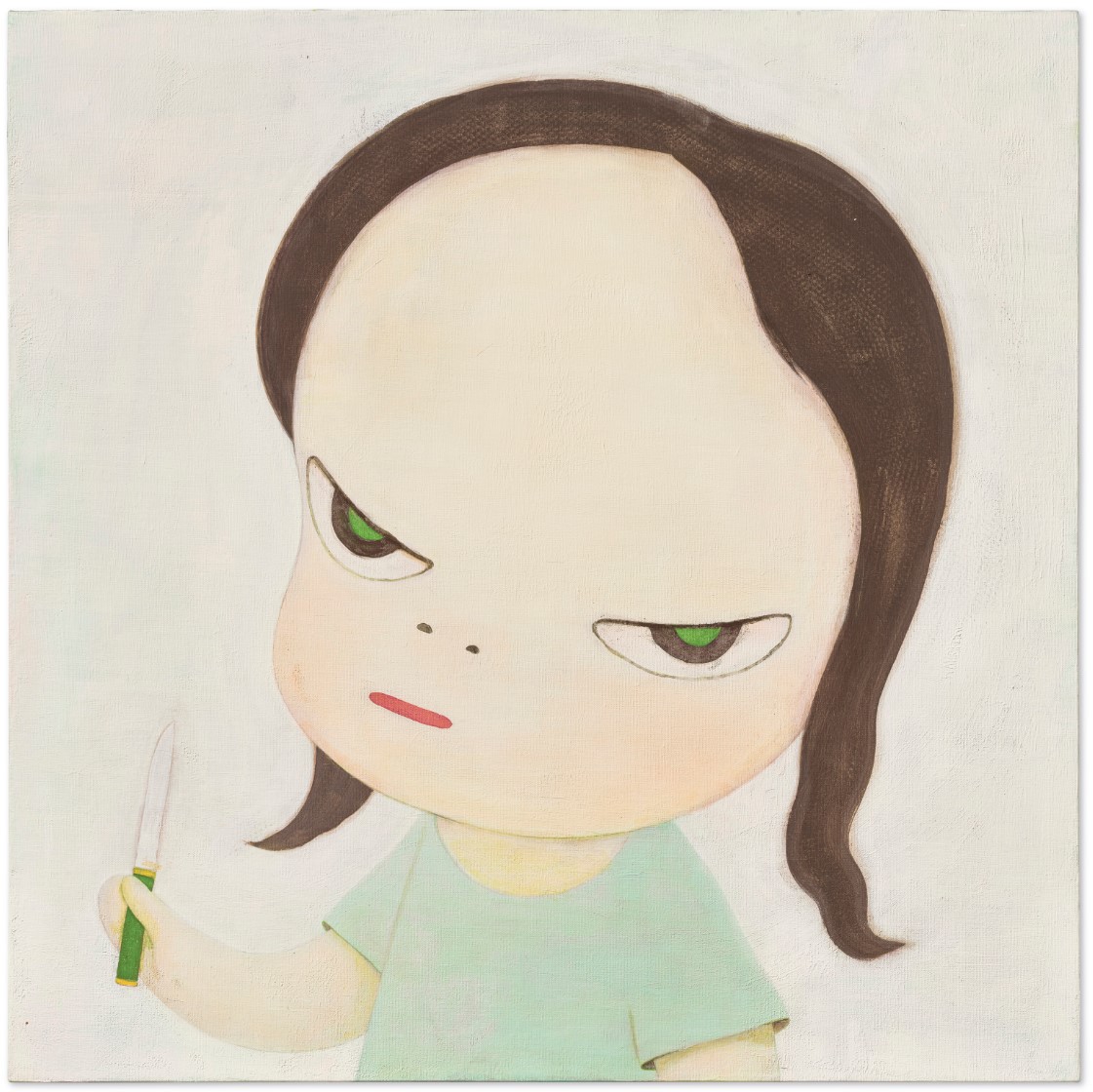
YOSHITOMO NARA (B. 1959)
Be Happy, 1995
Acrylic on canvas
76×76 cm (30×30 inches)
Signed in Japanese, titled, inscribed and dated ‘Be Happy ’95 in L.A.’ (on the reverse)
#6. Angry Blue Boy, 2008
Sotheby’s Hong-Kong: 27 April 2022
Estimated: HKD 20,000,000 – 30,000,000
HKD 28,205,000 / USD 3,594,359
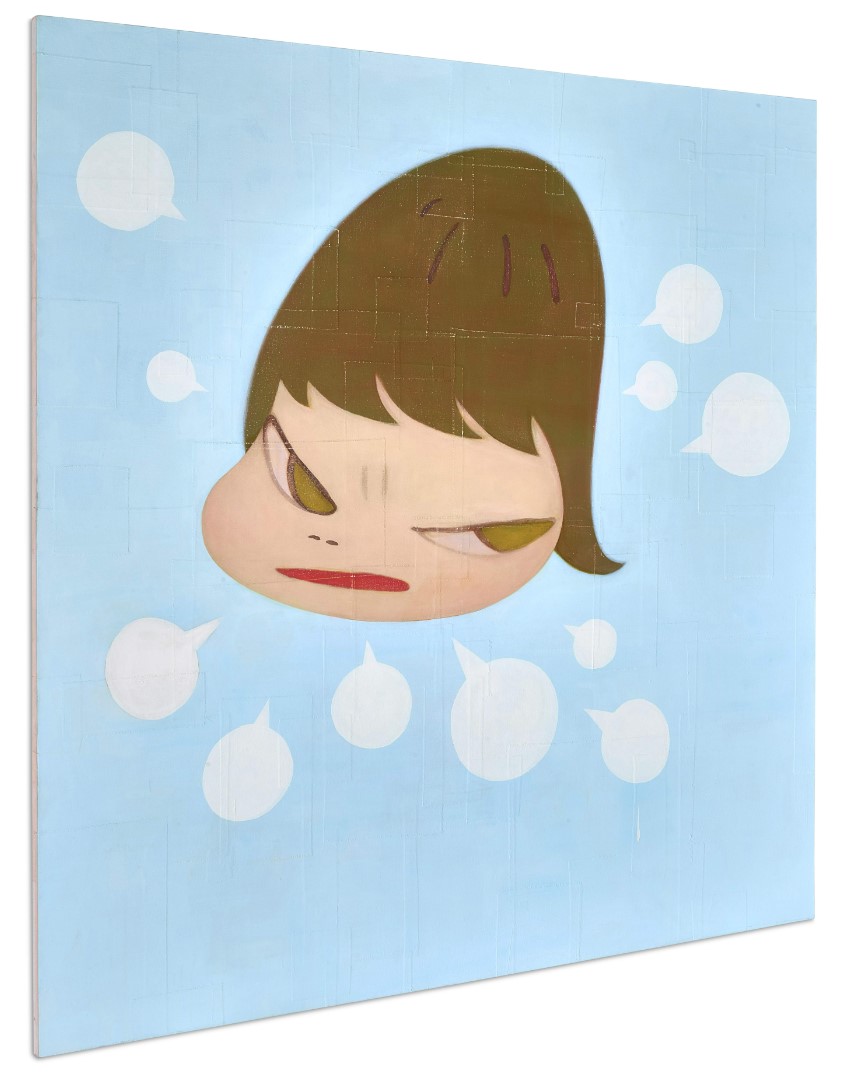
YOSHITOMO NARA (b. 1959)
Angry Blue Boy, 2008
Acrylic on cotton mounted on canvas
198×193 cm (78×76 inches)
Signed, titled and dated 2008 on the reverse
#7. O.T (untitled), 1993
China Guardian HK: 9 October 2022
Estimated: HKD 23,000,000 – 25,000,000
HKD 26,970,000 / USD 3,435,800
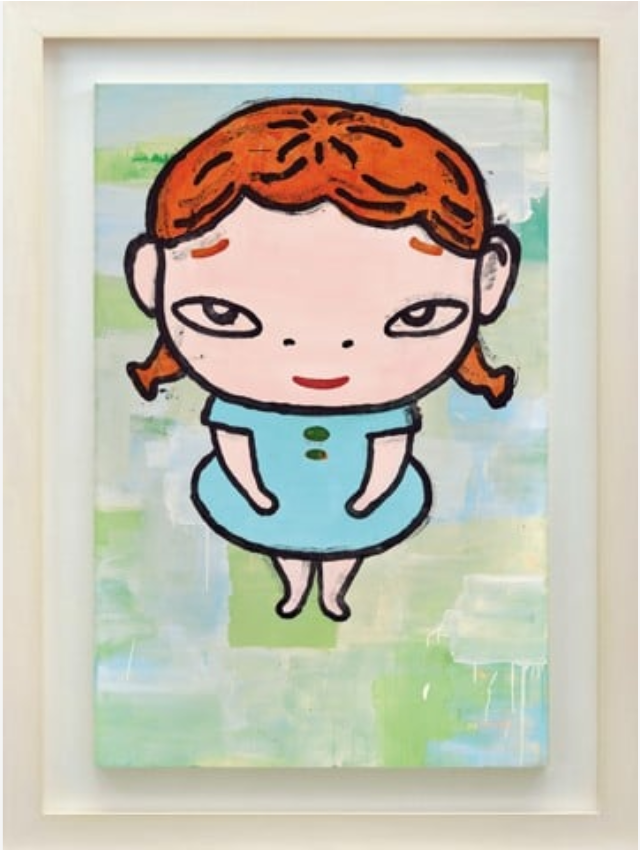
YOSHITOMO NARA
O.T (untitled), 1993
Acrylic on canvas
150×100 cm (59 x 39 3/8 inches)
#8. Nachtwandern, 1994
Phillip Hong-Kong: 1 December 2022
Estimated: HKD 16,000,000 – 25,000,000
HKD 19,005,000 / USD 2,443,393
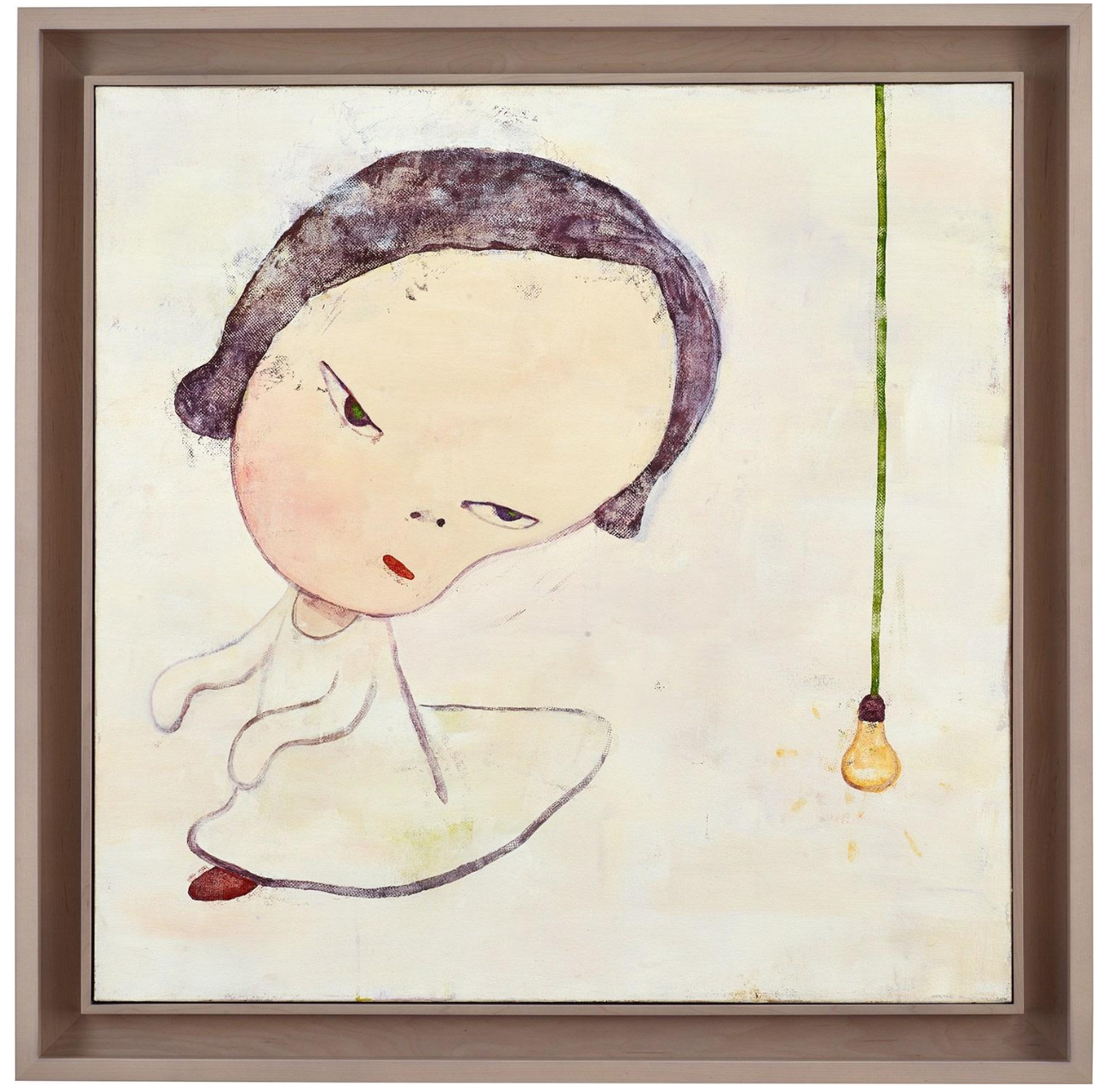
YOSHITOMO NARA
Nachtwandern, 1994
Acrylic on canvas
100×100 cm (39 3/8 x 39 3/8 inches)
Signed, titled, dated and inscribed ‘”Nachtwandern” -2 Nara [in Japanese] 94’ on the reverse
#9. Hey! Ho! Let’s Go!, 2011
Sotheby’s Hong-Kong: 15 December 2022
Estimated: HKD 15,000,000 – 20,000,000
HKD 18,525,000 / USD 2,382,728
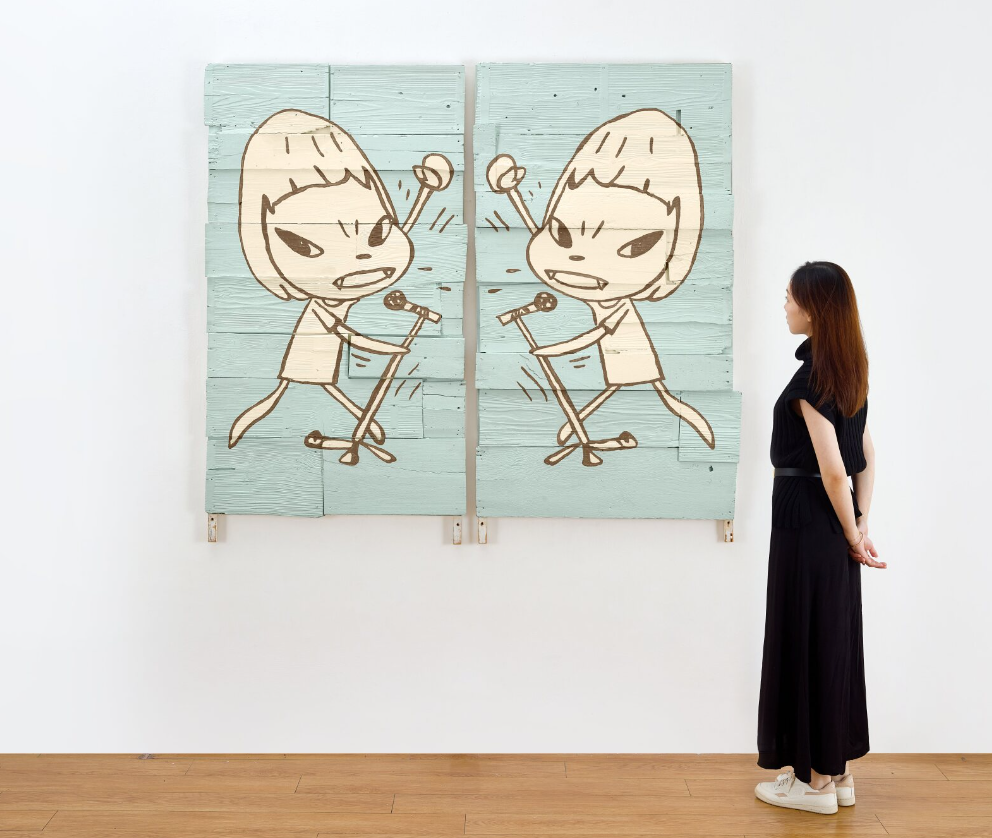
YOSHITOMO NARA (b. 1959)
Hey! Ho! Let’s Go!, 2011
Acrylic on found signboard (diptych)
Each: 160 x 85.5 x 4 cm (63 x 33 5/8 x 1 5/8 inches)
Overall: 160x171x4 cm (63 x 67 3/8 x 1 5/8 inches)
#11. Stars, 2012
Poly HK: 12 July 2022
Estimated: HKD 5,500,000 – 8,500,000
HKD 8,400,000 / USD 1,070,104
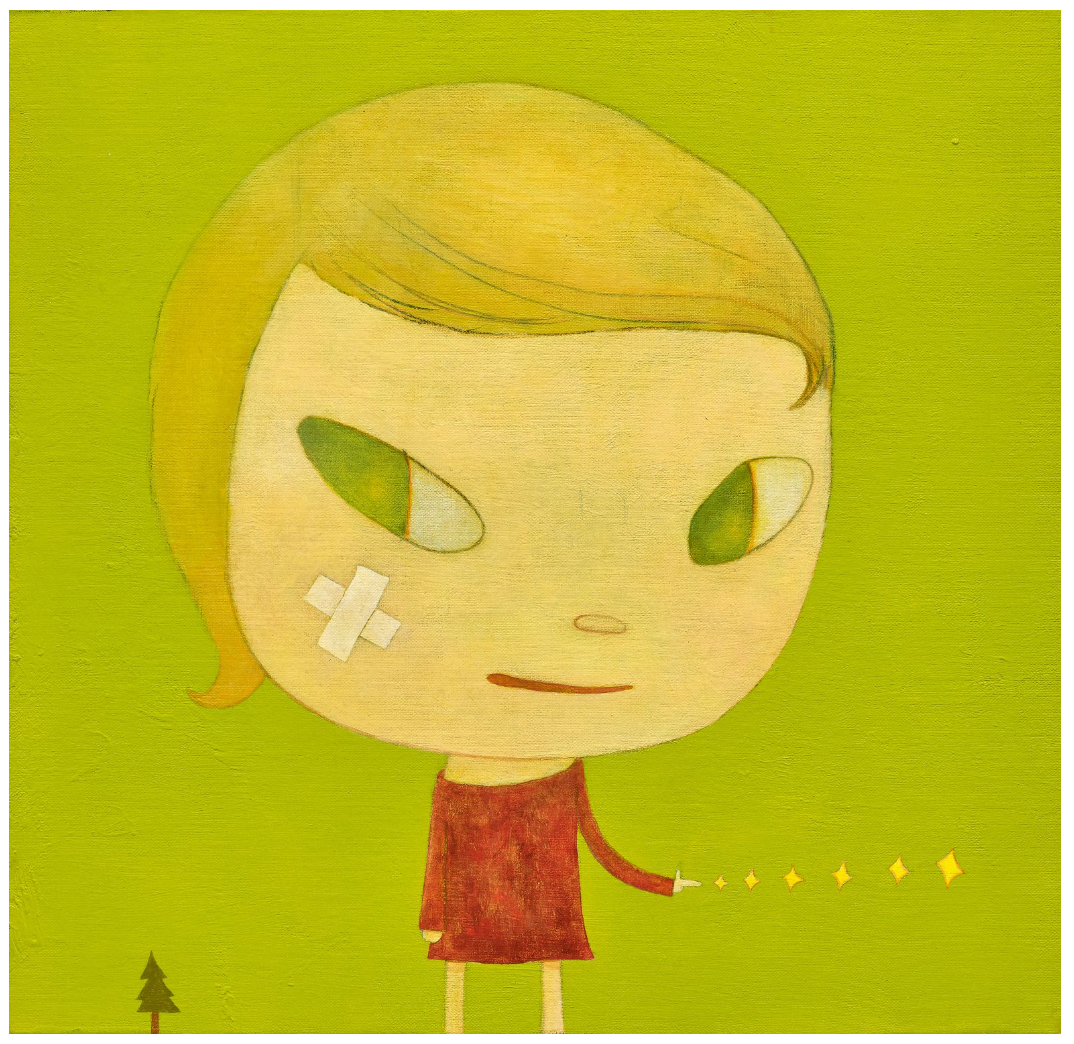
YOSHITOMO NARA
Stars, 2012
Acrylic on canvas
44×45 cm (17 3/8 x 17 7/8 inches)
Signed in Japanese; dated ‘2012’ (on the reverse)
USD 1 million
#12. Untitled, 1991
Phillips Hong-Kong: 22 June 2022
Estimated: HKD 6,000,000 – 8,000,000
HKD 7,510,000 / USD 956,724
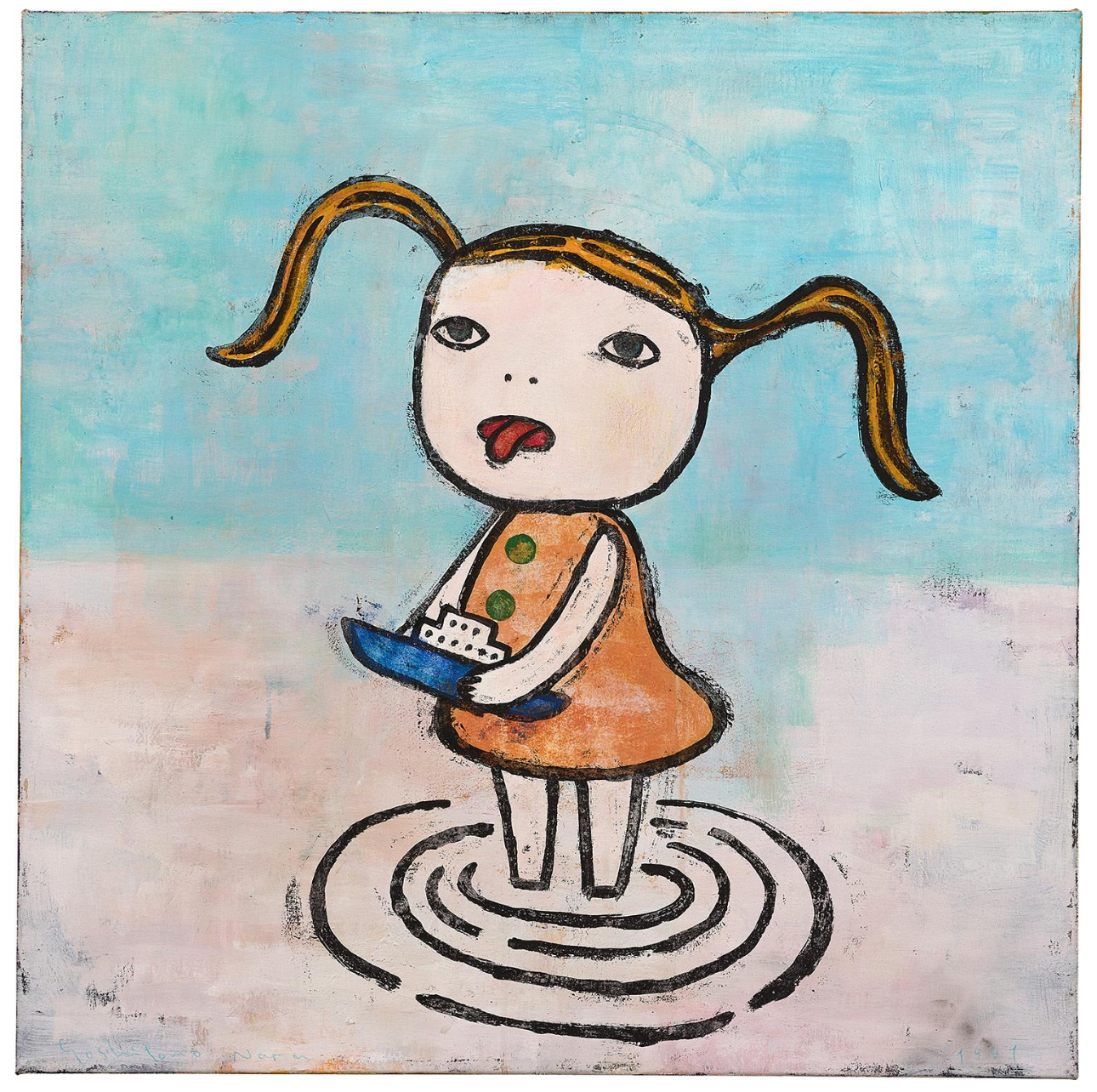
YOSHITOMO NARA
Untitled, 1991
Acrylic on canvas
70×70 cm (27 1/2 x 27 1/2 inches)
Signed ‘Yoshitomo Nara’ lower left and dated ‘1991’ lower right; further signed ‘NARA’ on the reverse
#14. Dream, 1994
Bonhams Hong-Kong: 2 December 2022
Estimated: HKD 2,500,000 – 3,500,000
HKD 5,295,000 / USD 679,752
60×56 cm (23 5/8 x 22 1/16 inches)
#15. Mumps, 1998
Christie’s Hong-Kong: 1 December 2022
Estimated: HKD 4,000,000 – 6,000,000
HKD 5,040,000 / USD 647,998
YOSHITOMO NARA (B. 1959) (christies.com)
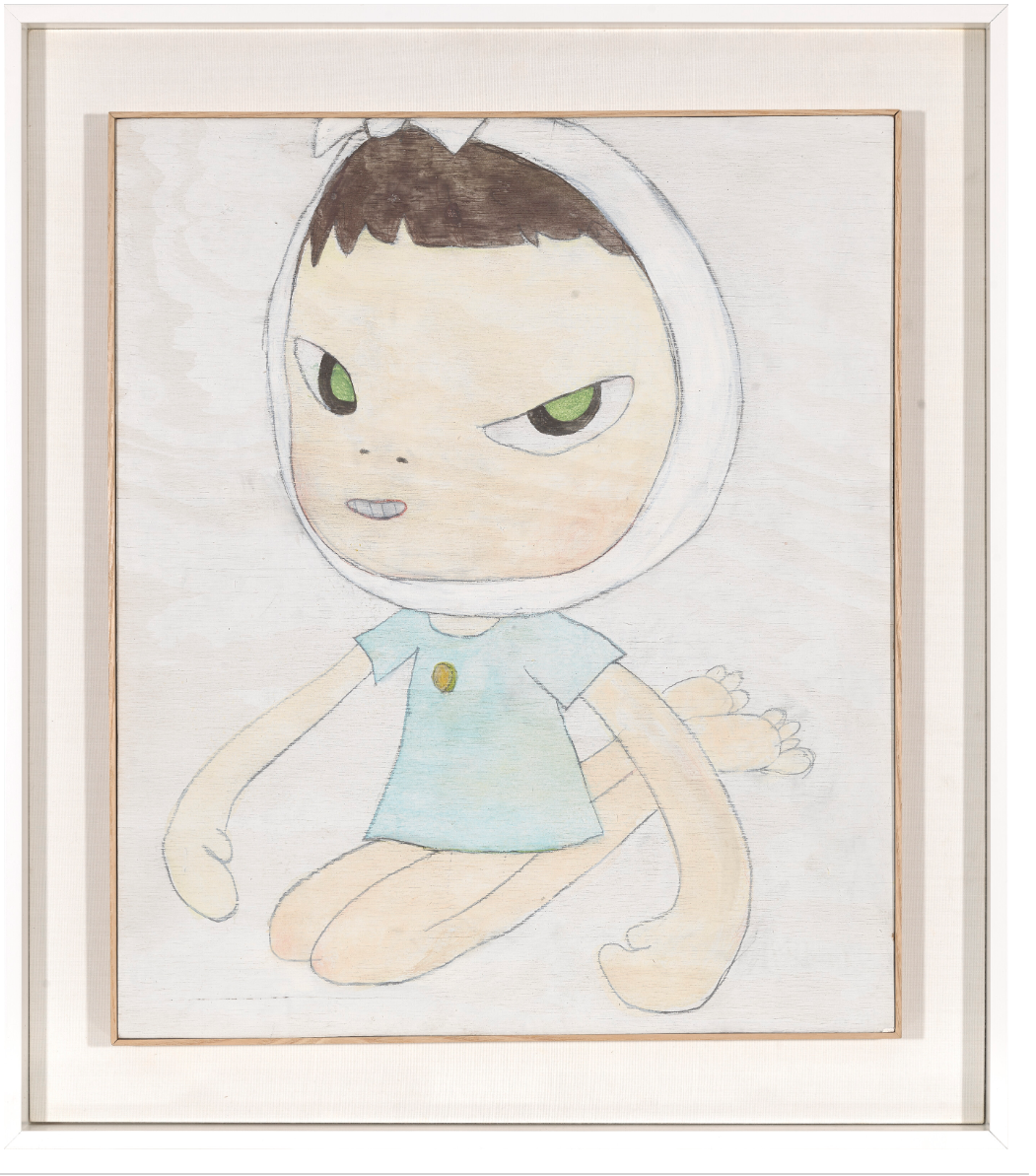
YOSHITOMO NARA (B. 1959)
Mumps, 1998
Acrylic and pencil on wood board
48.3 x 40.6 cm (19×16 in)
Signed with artist’s signature, dated, titled and inscribed ‘mumps ’98 In L.A’ (on the reverse)
#16. Lamp flower, 1994
Christie’s Paris: 1 December 2022
Estimated: EUR 100,000 – 120,000
EUR 214,200 / USD 224,858
Yoshitomo Nara (né en 1959) (christies.com)
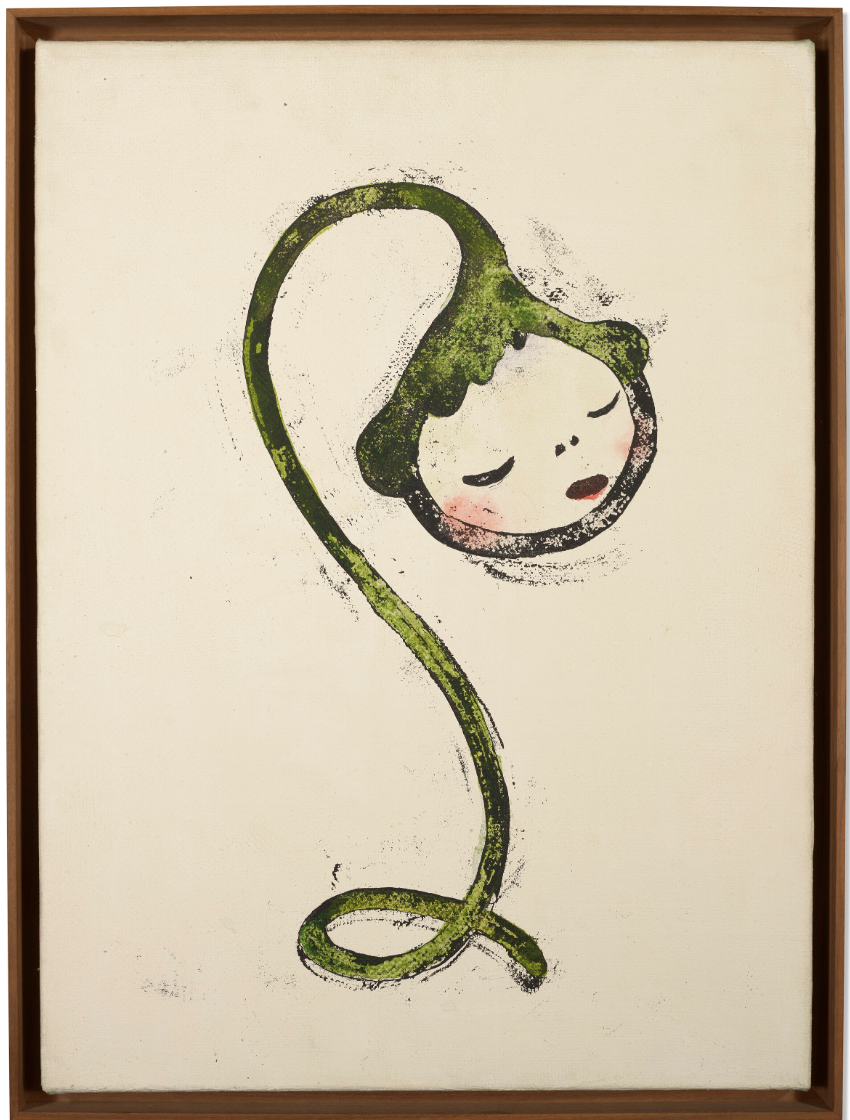
YOSHITOMO NARA
Lamp Flower, 1994
Acrylic on canvas
55×40 cm (21 5/8 x 16 1/2 inches)
Signed with the artist’s monogram, titled and dated ‘’’Lamp flower’’ 94′ (on the reverse)
2021 Auction Results
FOR PAINTINGS AND SCULPTURES ONLY
25 paintings sold at auction in 2021 for a turnover of USD 89,881,652. The sell-through rate is 100% as no lots went unsold. 3 lots sold over USD 10 million generating a turnover of USD 43,772,775 (48.7% of the total turnover in 2021). 15 lots sold over USD 1 million, generating a turnover of USD 85,287,583 (94.9% of total).
2021 Top 3 Lots
XXXXXXXXXXX
#1. Missing in Action, 2000
Phillips Hong-Kong: 8 June 2021
Estimate on Request
HKD 123,725,000 / USD 15,944,150
Yoshitomo Nara – 20th Century & Contemp… Lot 17 June 2021 | Phillips
YOSHITOMO NARA
Missing in Action, 2000
Acrylic on canvas
165×150 cm (64 7/8 x 59 inches)
Signed, titled, inscribed and dated on the reverse
#2. Nice To See You Again, 1996
Sotheby’s New-York: 28 November 2021
Estimated: USD 8,000,000 – 12,000,000
USD 15,430,800
Nice to See You Again | The Now Evening Auction | 2021 | Sotheby’s (sothebys.com)
YOSHITOMO NARA (B. 1959)
Nice to See You Again, 1996
Acrylic on canvas
180×150 cm (70 ¾ x 59 inches)
Signed Y Nara, titled and dated ’96 (on the reverse)
#3. Frog Girl, 1998
Sotheby’s Hong-Kong: 19 April 2021
Estimated: HKD 40,000,000 – 80,000,000
HKD 96,284,000 / USD 12,397,425
YOSHITOMO NARA (B. 1960)
Frog Girl, 1998
Acrylic on canvas
120×111 cm (43 ¼ x 47 ¼ inches)
Signed, titled and dated 98 on the reverse
USD 10 million
#4. Under the Hazy Sky, 2012
Sotheby’s Hong-Kong: 9 October 2021
Estimated: HKD 55,000,000 – 75,000,000
HKD 68,708,000 / USD 8,826,030
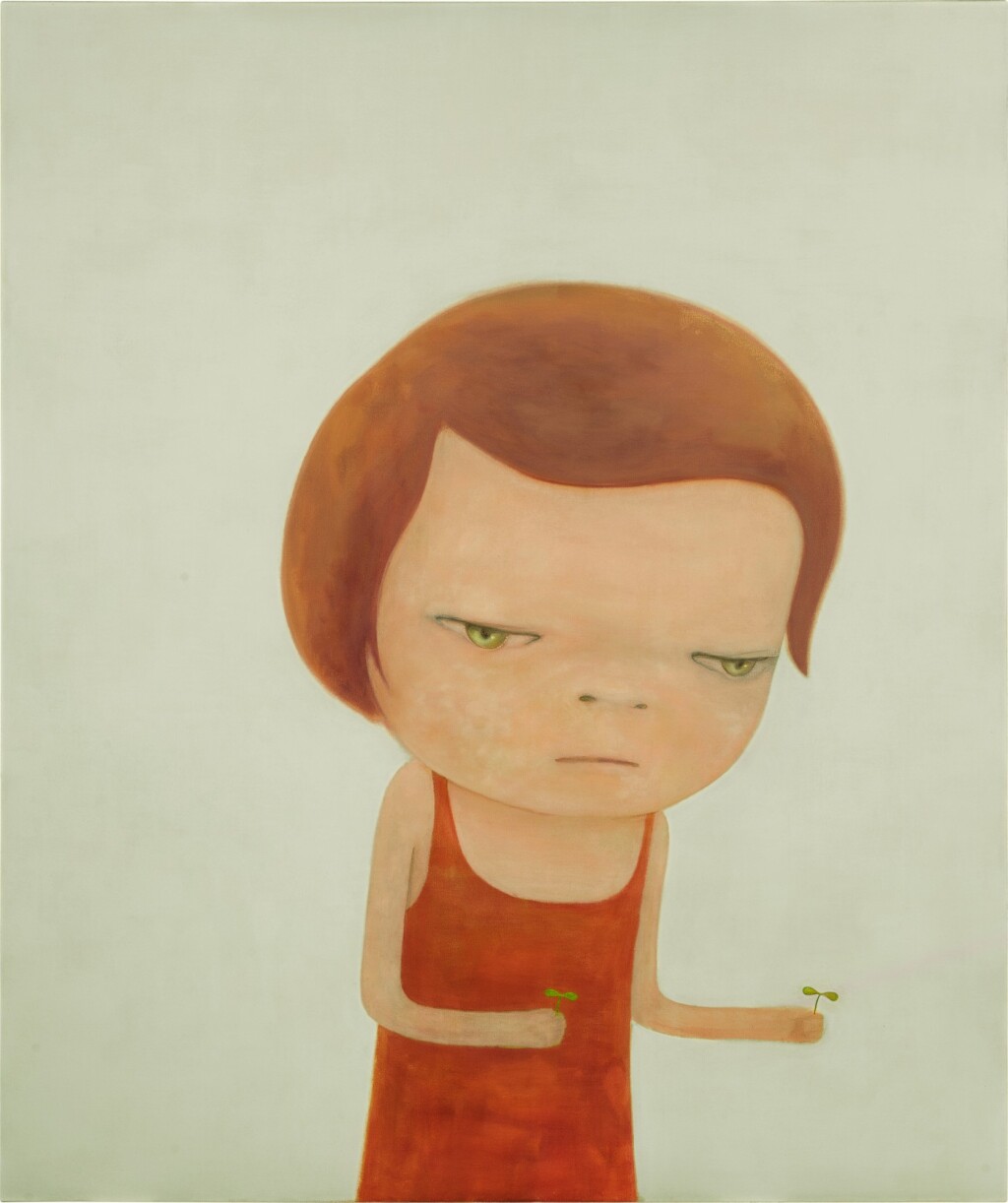
YOSHITOMO NARA (B. 1959)
Under the Hazy Sky, 2012
Acrylic on canvas
194.8 x 162 cm (76 ¾ x 63 ¾ inches)
Signed, titled and dated 2012 on the reverse
#5. Untitled, 2007
Christie’s Hong-Kong: 24 May 2021
Estimated: HKD 45,000,000 – 65,000,000
HKD 54,250,000 / USD 6,986,388
Yoshitomo Nara (b. 1959), Untitled | Christie’s
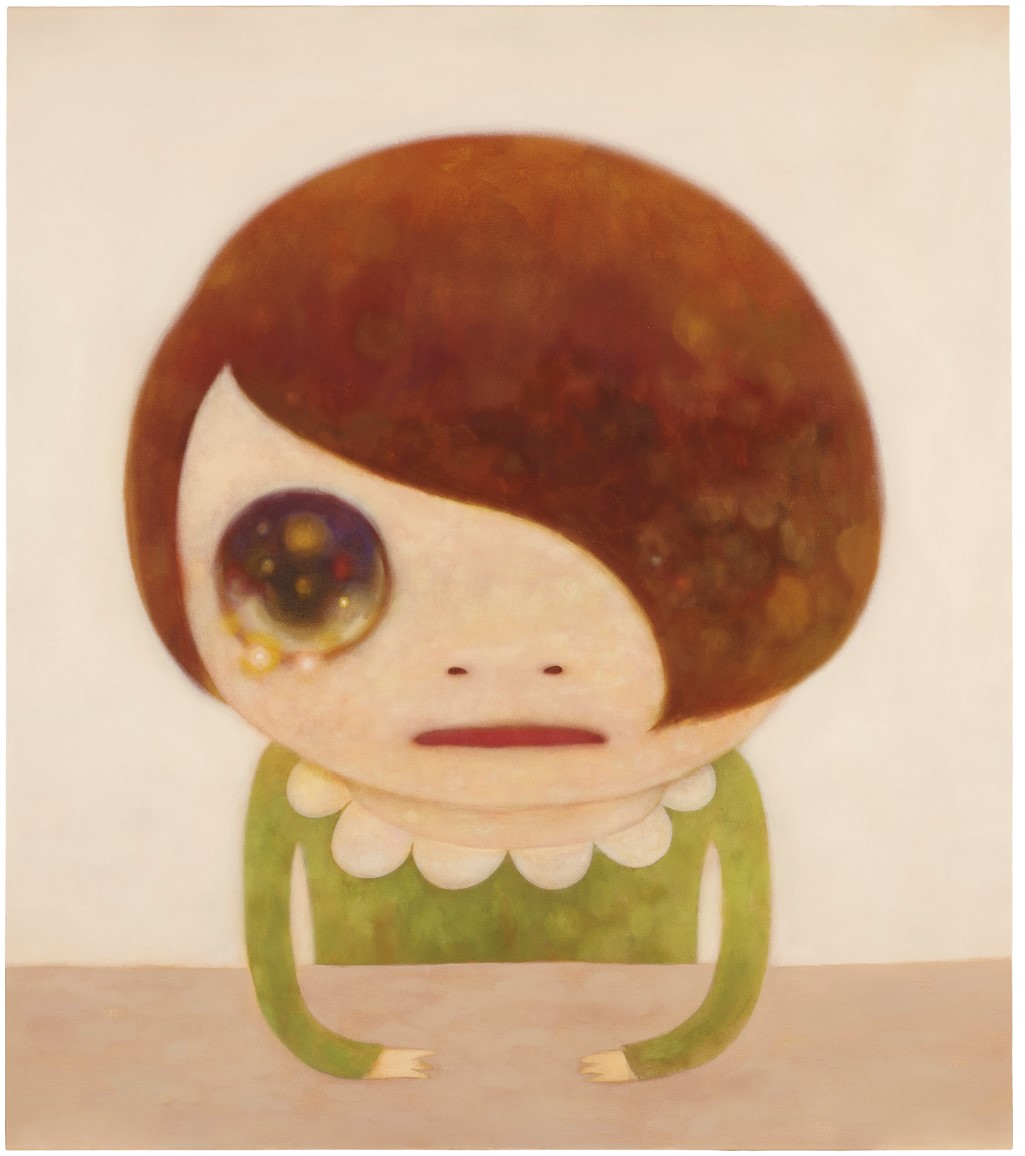
YOSHITOMO NARA (B. 1959)
Untitled, 2007
Acrylic on canvas
162 x 145.5 cm (42 3/4 x 30 1/8 inches)
Signed in Japanese and dated ‘2007’ (on the reverse)
#6. Ten Stars, 2014
Sotheby’s Hong-Kong: 19 April 2021
Estimated: HKD 18,000,000 – 28,000,000
HKD 36,475,000 / USD 4,696,635
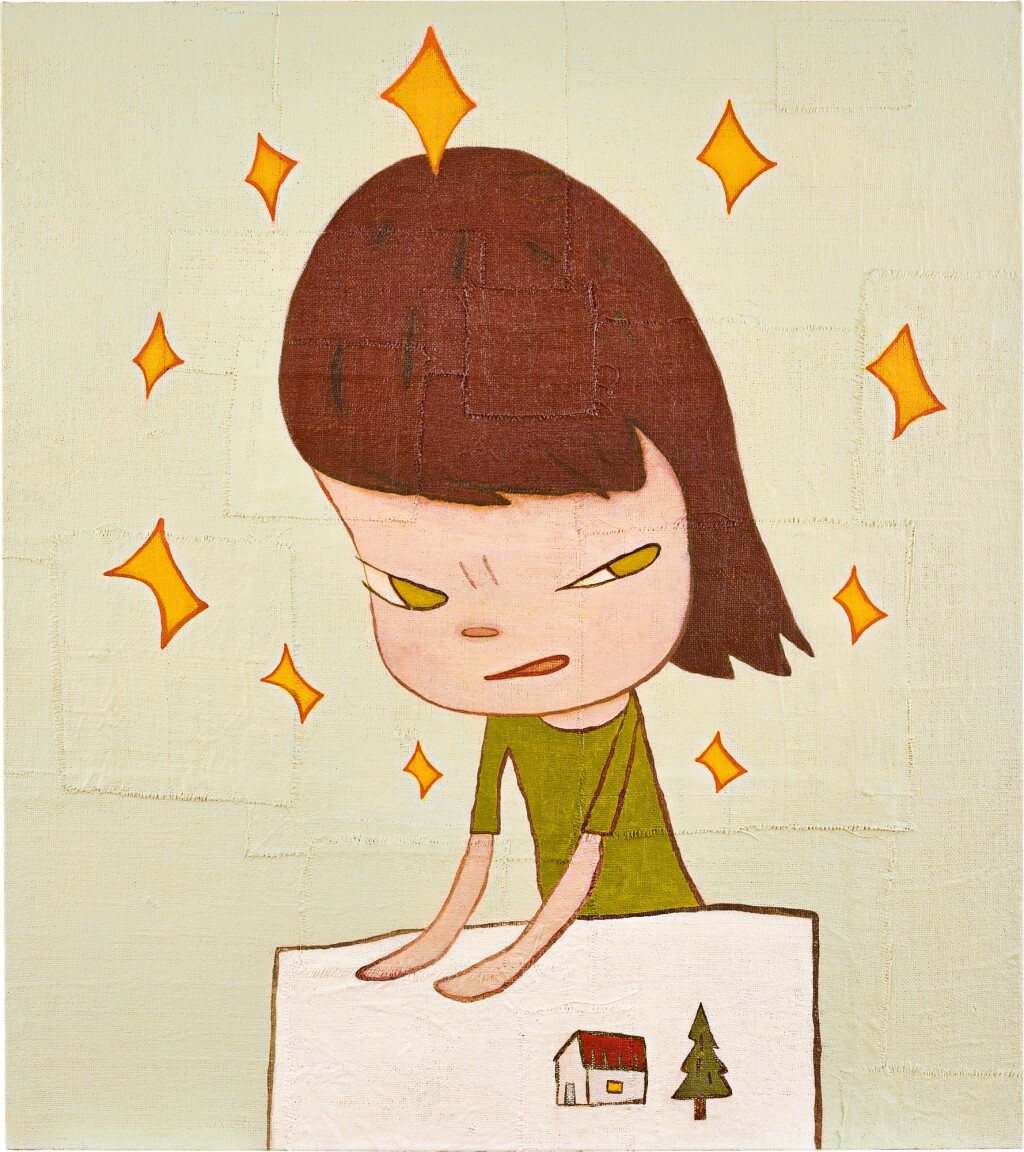
YOSHITOMO NARA (B. 1960)
Ten Stars, 2014
Acrylic on jute mounted on board
180.5 x 160 cm (71×63 inches)
Signed, titled and dated 2014 on the reverse
#7. Lampflower Girl, 1993
Christie’s Hong-Kong: 30 November 2021
Estimated: HKD 22,000,000 – 32,000,000
HKD 27,850,000 / USD 3,574,455
YOSHITOMO NARA (B. 1959) (christies.com)
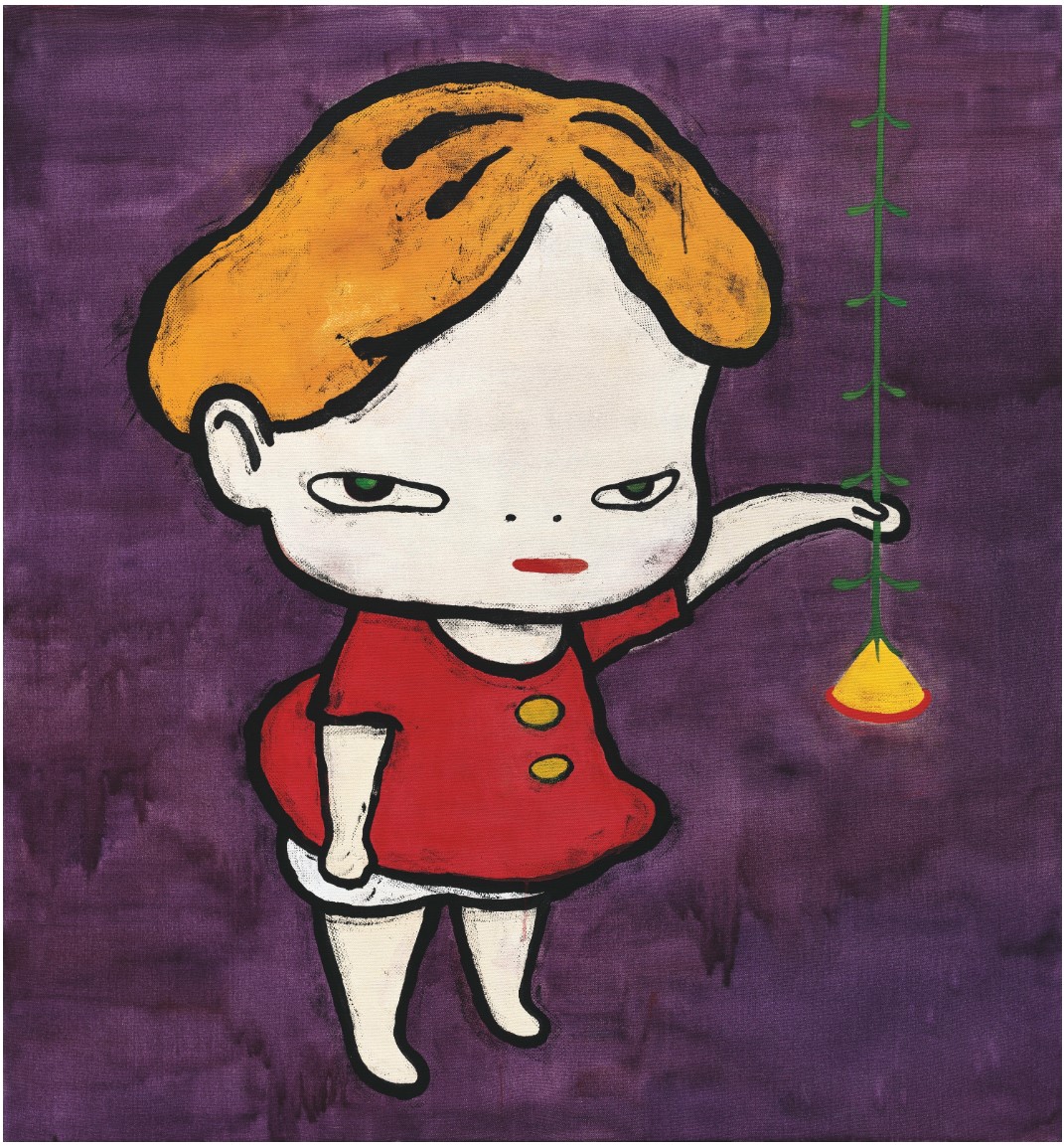
YOSHITOMO NARA (B. 1959)
Lampflower Girl, 1993
Acrylic on canvas
150.3 x 140 cm (59 1⁄8 x 55 1⁄8 inches)
Signed and titled in Japanese, dated ‘93’ (on the reverse)
#8. Untitled, 2003
Sotheby’s Hong-Kong: 18 June 2021
Estimated: HKD 18,000,000 – 28,000,000
HKD 27,400,000 / USD 3,529,655
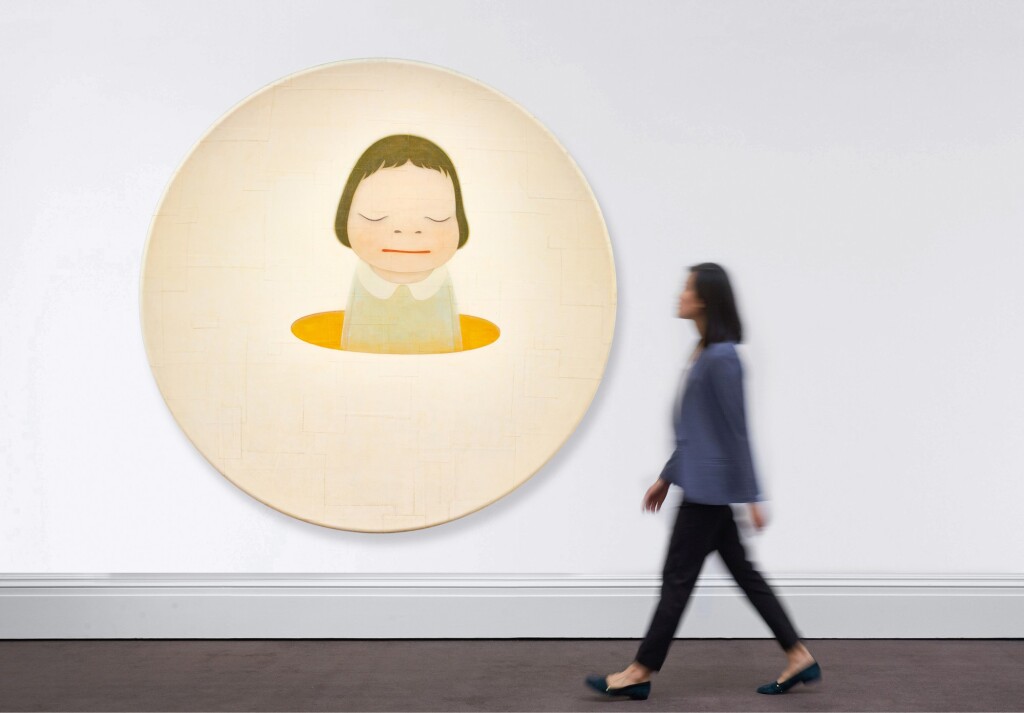
YOSHITOMO NARA (B. 1959)
Untitled, 2003
Acrylic on cotton mounted on FRP
180×26 cm (70 ½ x 10 ¼ inches)
Signed and dated 2003 on the reverse
#9. Sprout, 2011
China Guardian: 23 April 2021
Estimated: HKD 12,000,000 – 22,000,000
HKD 19,700,000 / USD 2,538,398
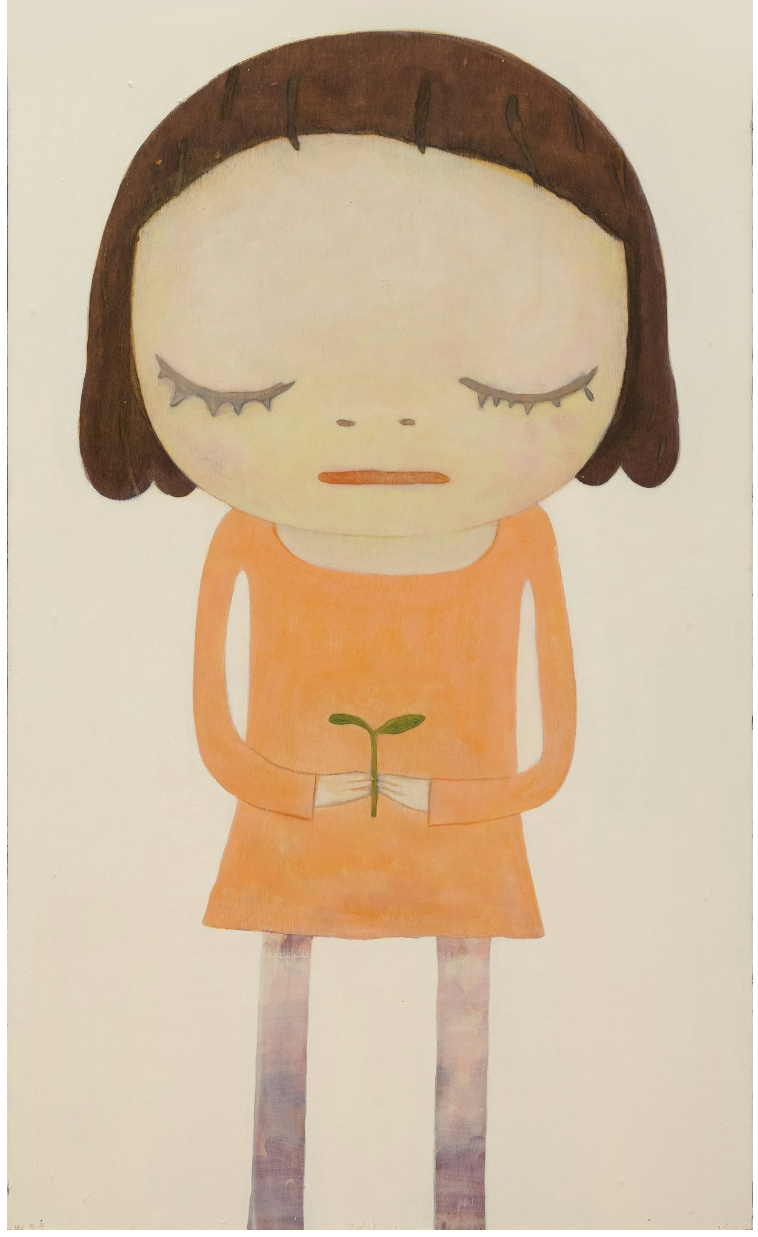
YOSHITOMO NARA
Sprout, 2011
Acrylic on wooden panel
135.5 x 82.5 cm (53 3/8 x 32 3/8 inches)
#10. Life is Only One!, 2008
Sotheby’s Hong-Kong: 19 April 2021
Estimated: HKD 15,000,000 – 20,000,000
HKD 19,535,000 / USD 2,515,387
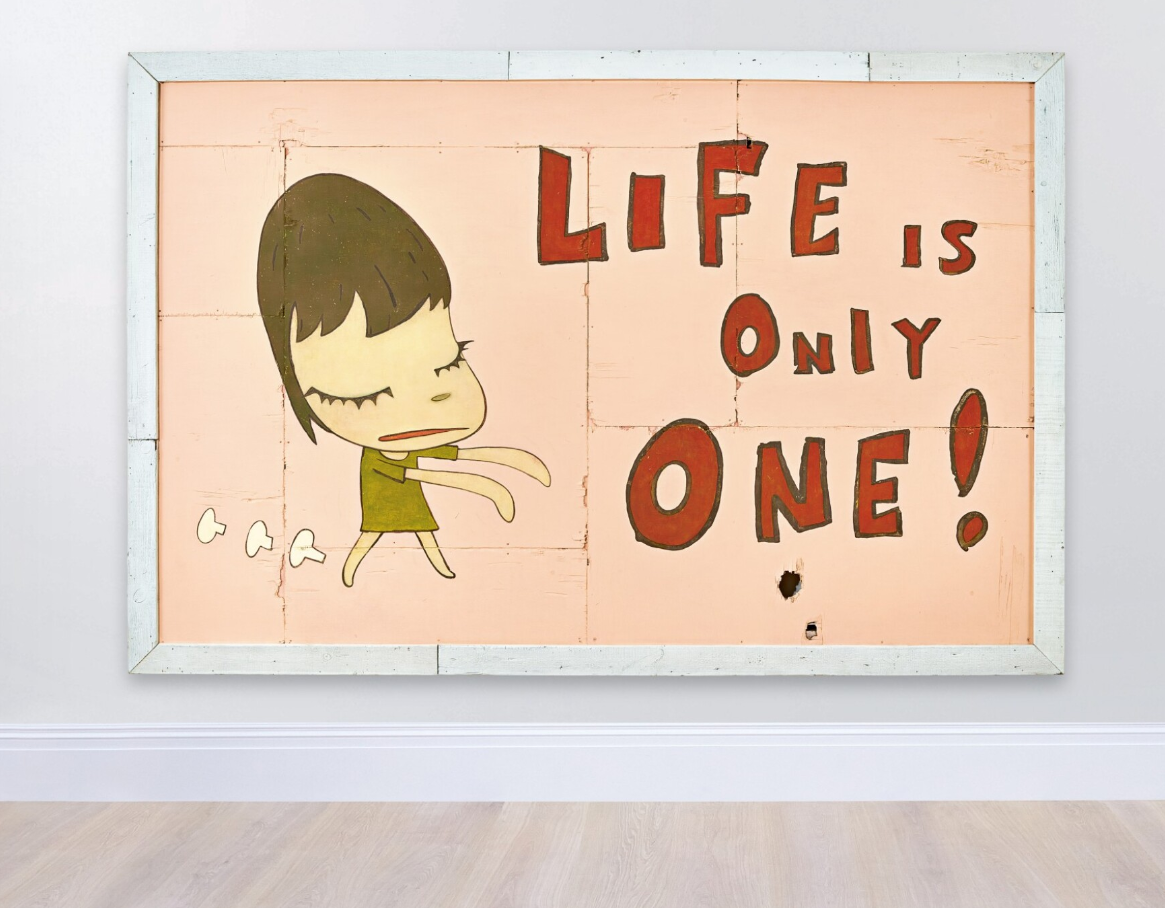
YOSHITOMO NARA (b. 1959)
Life is Only One!, 2008
Acrylic on wood, in artist’s original frame
169×254 cm (66 1/2 x 100 inches)
#11. 1, 2, 3…, 2006
Christie’s New-York: 1 October 2021
Estimated: USD 550,000 – 750,000
USD 2,070,000
YOSHITOMO NARA (B. 1959) (christies.com)
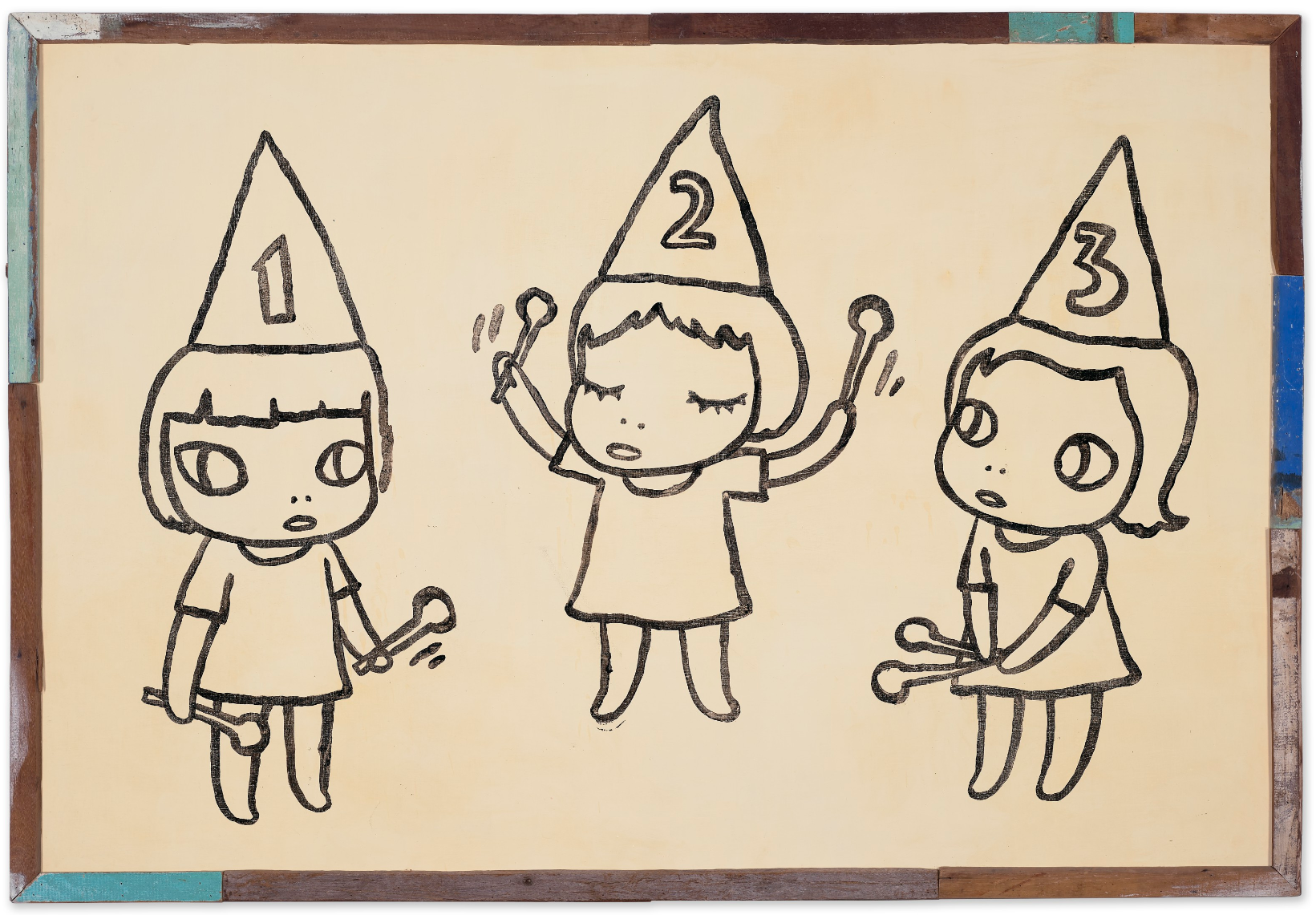
YOSHITOMO NARA (B. 1959)
1, 2, 3…, 2006
Acrylic on panel, in artist’s wooden frame
123.8 x 180.3 x 6.4 cm (48 3/4 x 71 x 2 1/2 inches)
Signed in Japanese and dated ‘2006’ (on the reverse)
#12. Mathematical Cliché, 2001
Christie’s New-York: 14 May 2021
Estimated: USD 1,000,000 – 1,500,000
USD 1,920,000
YOSHITOMO NARA (B. 1959)
Mathematical Cliché, 2001
Acrylic on cotton mounted on shaped fiber-reinforced plastic
180x284x26 cm (70 7/8 x 111 7/8 x 10 1/4 inches)
Signed in Japanese; titled and dated twice ‘Mathematical cliche [sic] 01 27.Jun ‘01’ (on the reverse)
#14. Pandora’s Box, 1990
Phillips Hong-Kong: 30 November 2021
Estimated: HKD 7,500,000 – 10,000,000
HKD 13,560,000 / USD 1,739,152
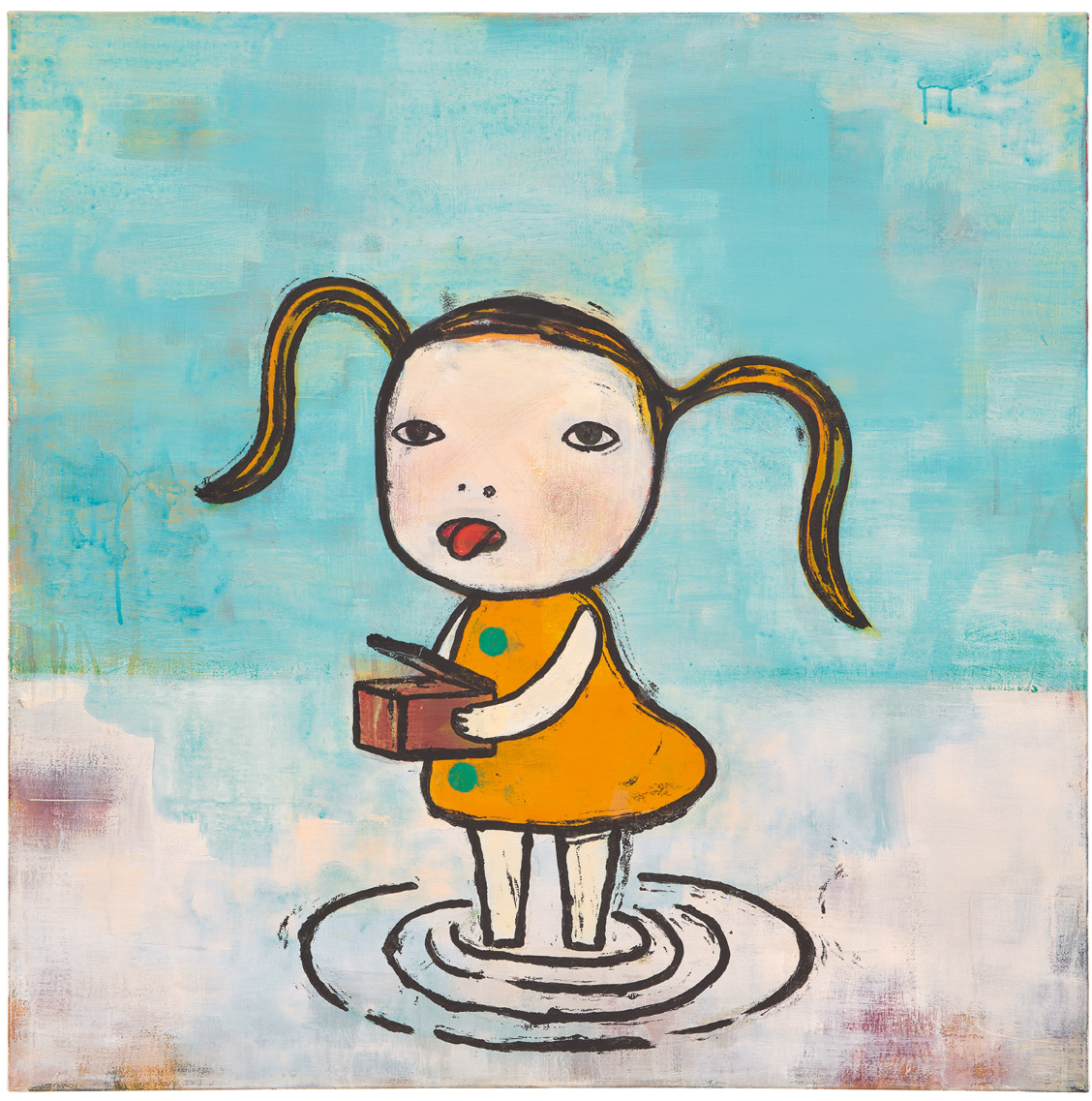
YOSHITOMO NARA
Pandora’s Box, 1990
Acrylic on canvas
90×90 cm (35 3/8 x 35 3/8 inches)
Signed, inscribed and dated ’22. Nov ’90 Yoshitomo Nara “For The Birdy Num Nums” – MITTEN OVER ThE WORLD – NARA MICHI ’90’ on the reverse
#15. Shallow Puddles Part 2, 2006
Phillips Hong-Kong: 8 June 2021
Estimated: HKD 4,800,000 – 6,500,000
HKD 9,325,000 / USD 1,201,690
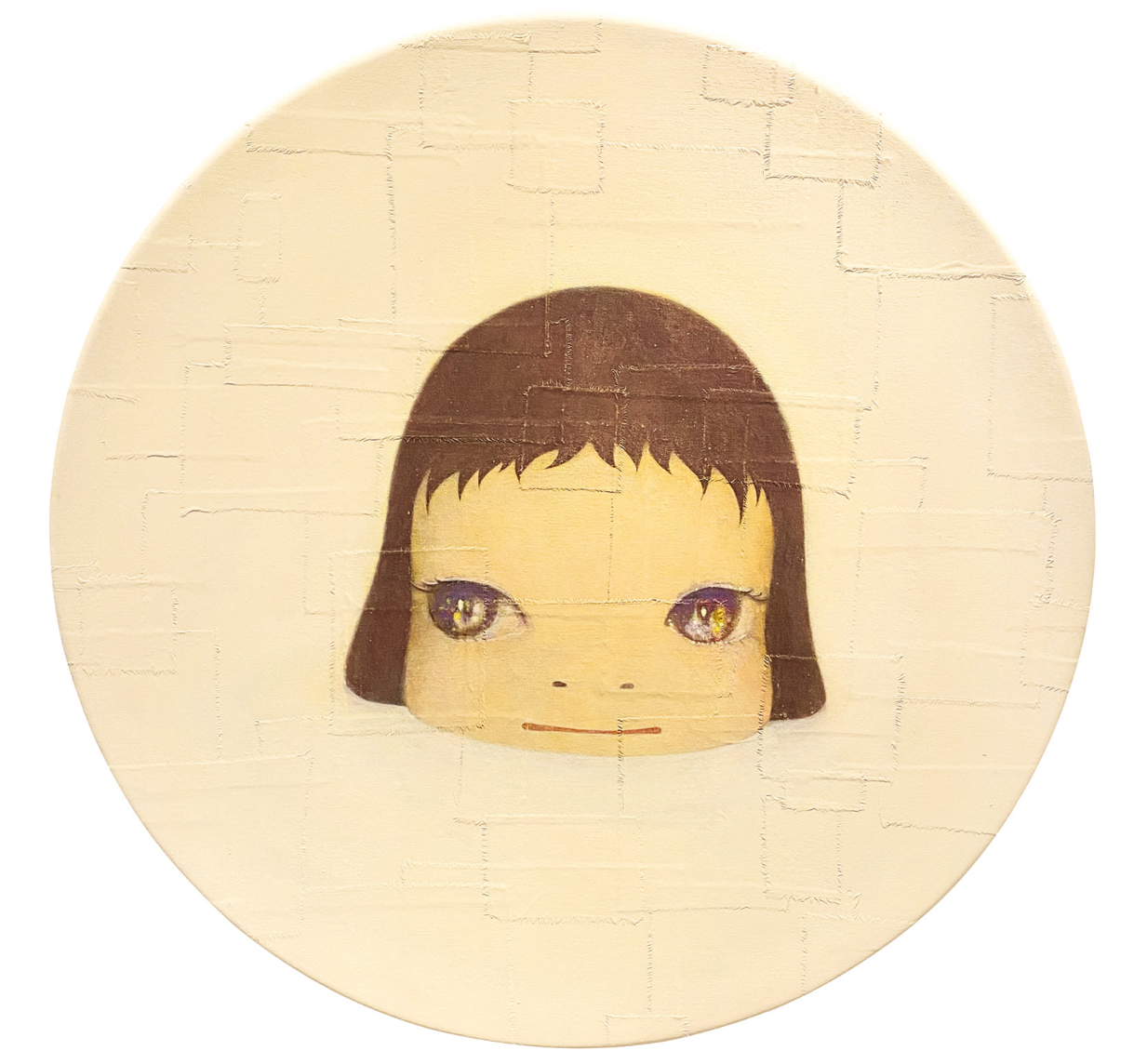
YOSHITOMO NARA
Shallow Puddles Part 2, 2006
Acrylic on cotton mounted on FRP
95x95x15 cm (37 3/8 x 37 3/8 x 5 7/8 inches)
USD 1 million
#16. Green Mountain, 2004
Christie’s Hong-Kong: 25 May 2021
Estimated: HKD 1,000,000 – 2,000,000
HKD 6,850,000 / USD 882,424
YOSHITOMO NARA (B. 1959) (christies.com)
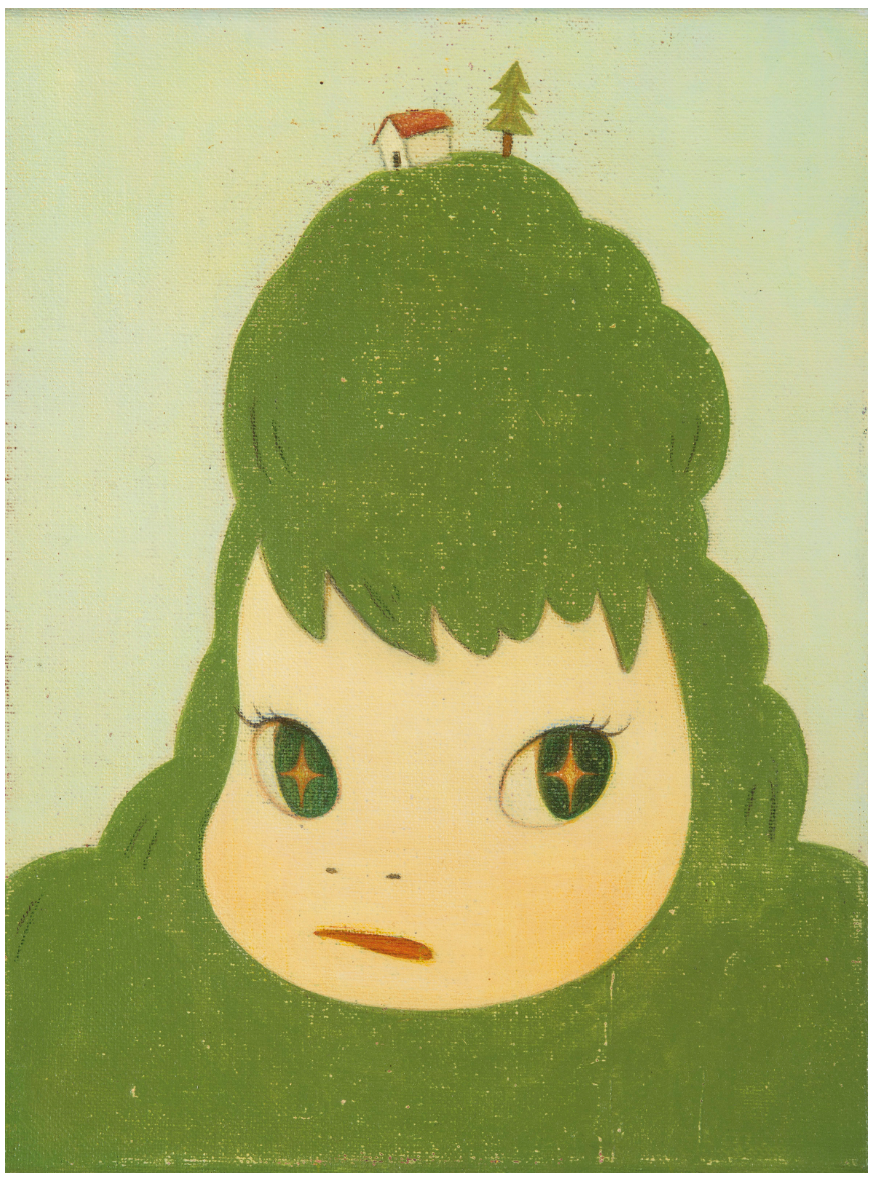
YOSHITOMO NARA (B. 1959)
Green Mountain, 2004
Acrylic on canvas
29×22 cm (11 3/8 x 8 5/8 inches)
Signed with artist’s signature and dated ‘2004’ (on the reverse)
#17. Dog in Boy, 1995
Christie’s Hong-Kong: 2 December 2021
Estimated: HKD 2,000,000 – 3,000,000
HKD 6,250,000 / USD 801,960
YOSHITOMO NARA (B. 1959) (christies.com)
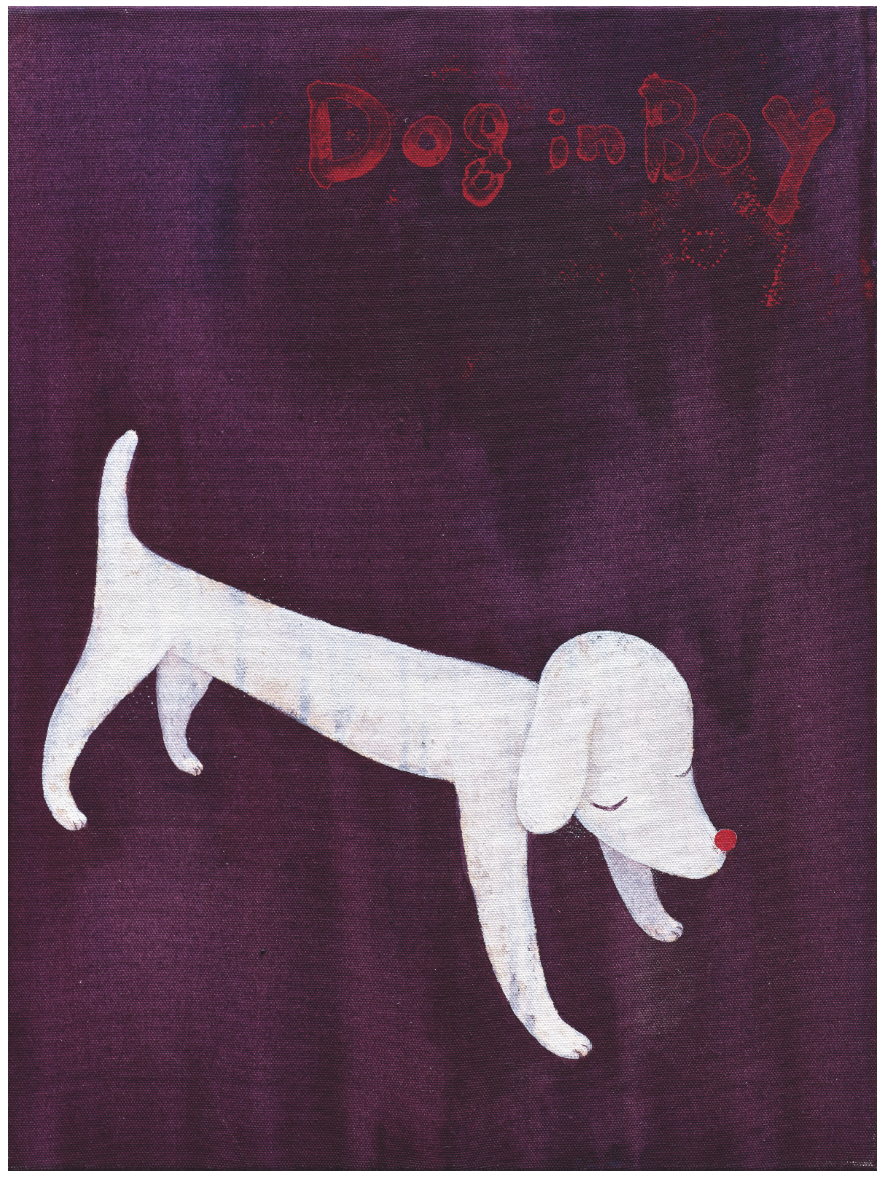
YOSHITOMO NARA (B. 1959)
Dog in Boy, 1995
Acrylic on canvas
59.8 x 44.6 cm (23 1/2 x 17 1/2 inches)
Signed with artist’s signature; titled and dated ‘Dog in Boy 95’ (on the reverse)
#18. The Girl with the Black Eye, 1999
Sotheby’s Hong-Kong: 10 October 2021
Estimated: HKD 3,500,000 – 5,500,000
HKD 4,373,000 / USD 613,141
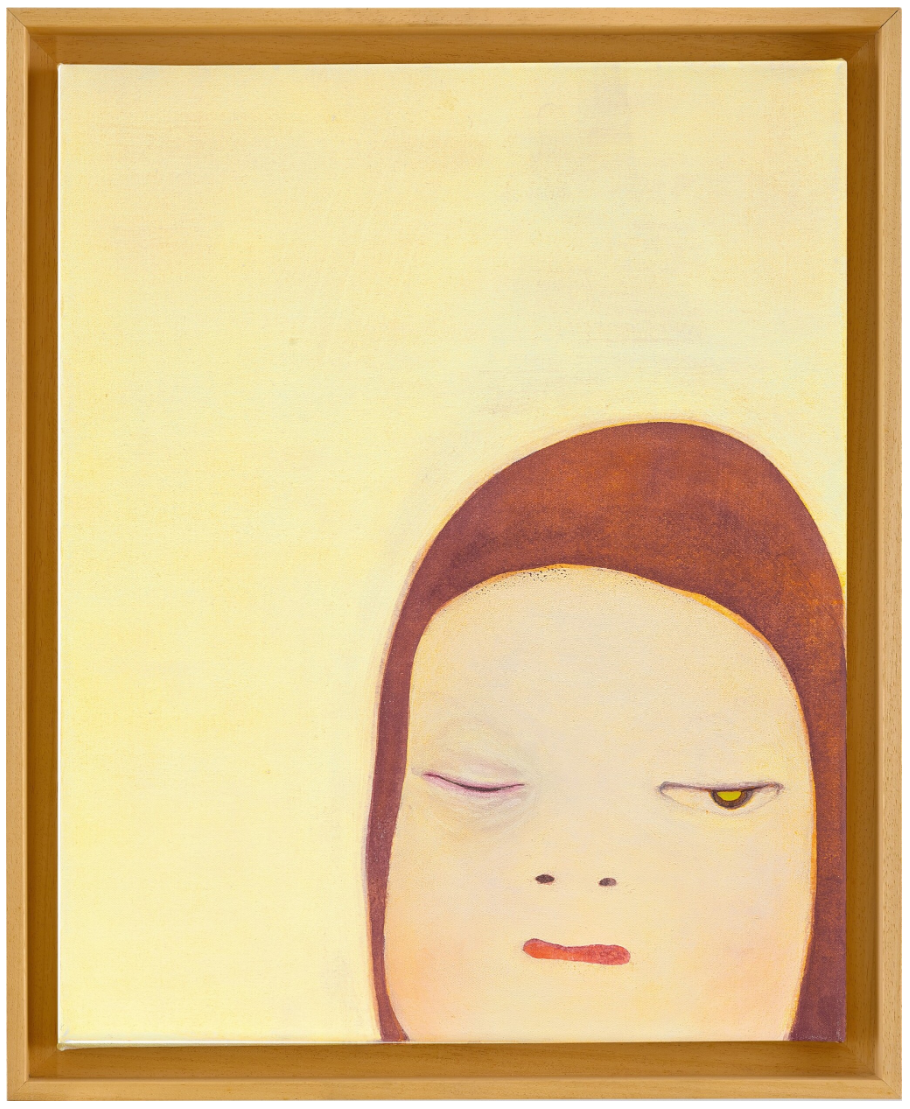
YOSHITOMO NARA (b. 1959)
The Girl with the Black Eye, 1999
Acrylic on canvas
50×40 cm (19 3/4 x 15 3/4 inches)
Signed, titled and dated 99 on the reverse
#19. Hula Hula Baby, 2001
Sotheby’s Hong-Kong: 20 April 2021
Estimated: HKD 3,000,000 – 5,000,000
HKD 4,410,000 / USD 568,218
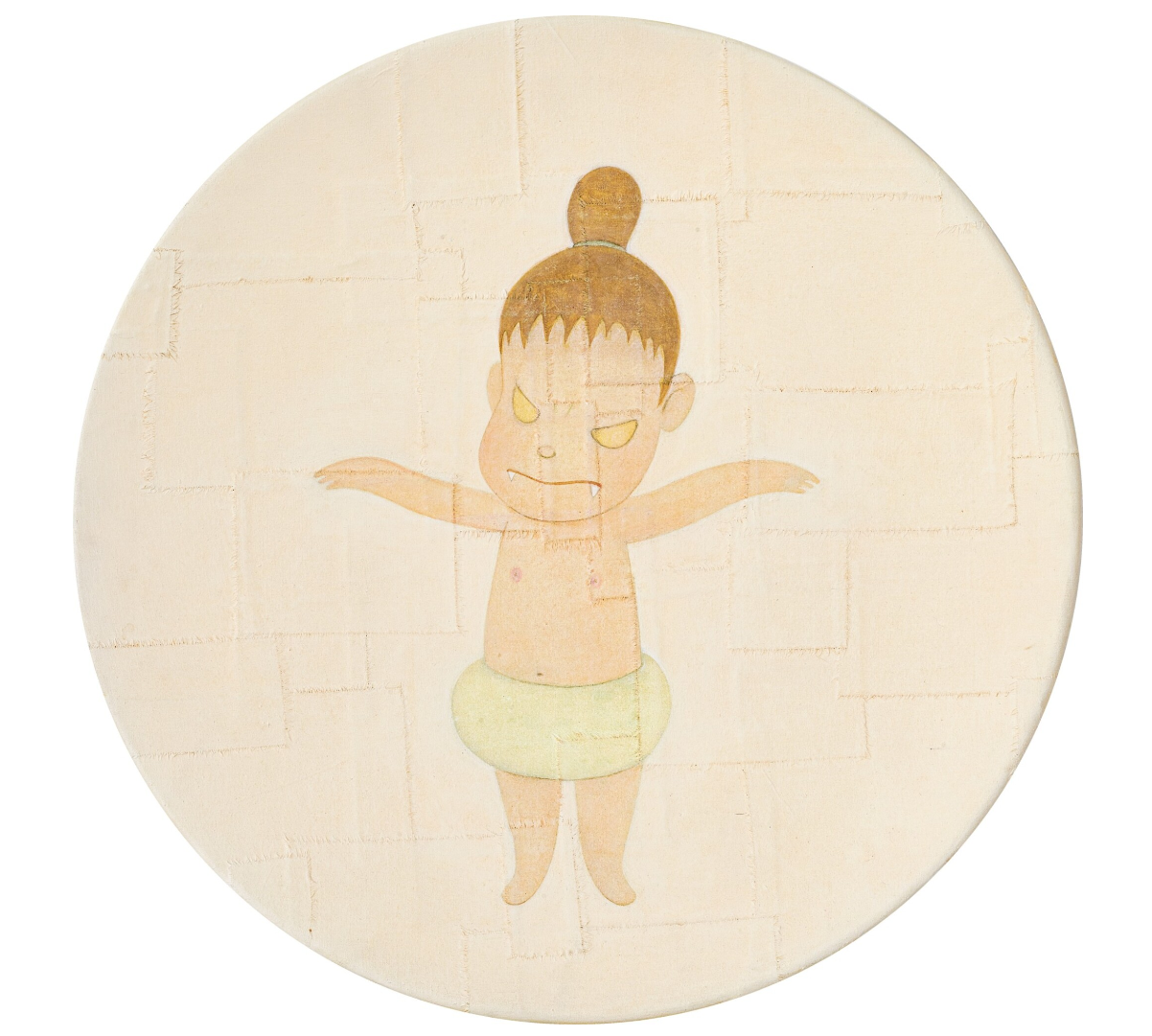
YOSHITOMO NARA (b.1959)
Hula Hula Baby, 2001
Acrylic on cotton mounted on fiber reinforced plastic
Diameter: 54.5 cm (21 1/2 inches)
signed, titled and dated 01 on the reverse
#23. Kodoku Neko (Lonely Cat), 1995
Christie’s New-York: 12 November 2021
Estimated: USD 100,000 – 150,000
USD 300,000
YOSHITOMO NARA (B. 1959) (christies.com)
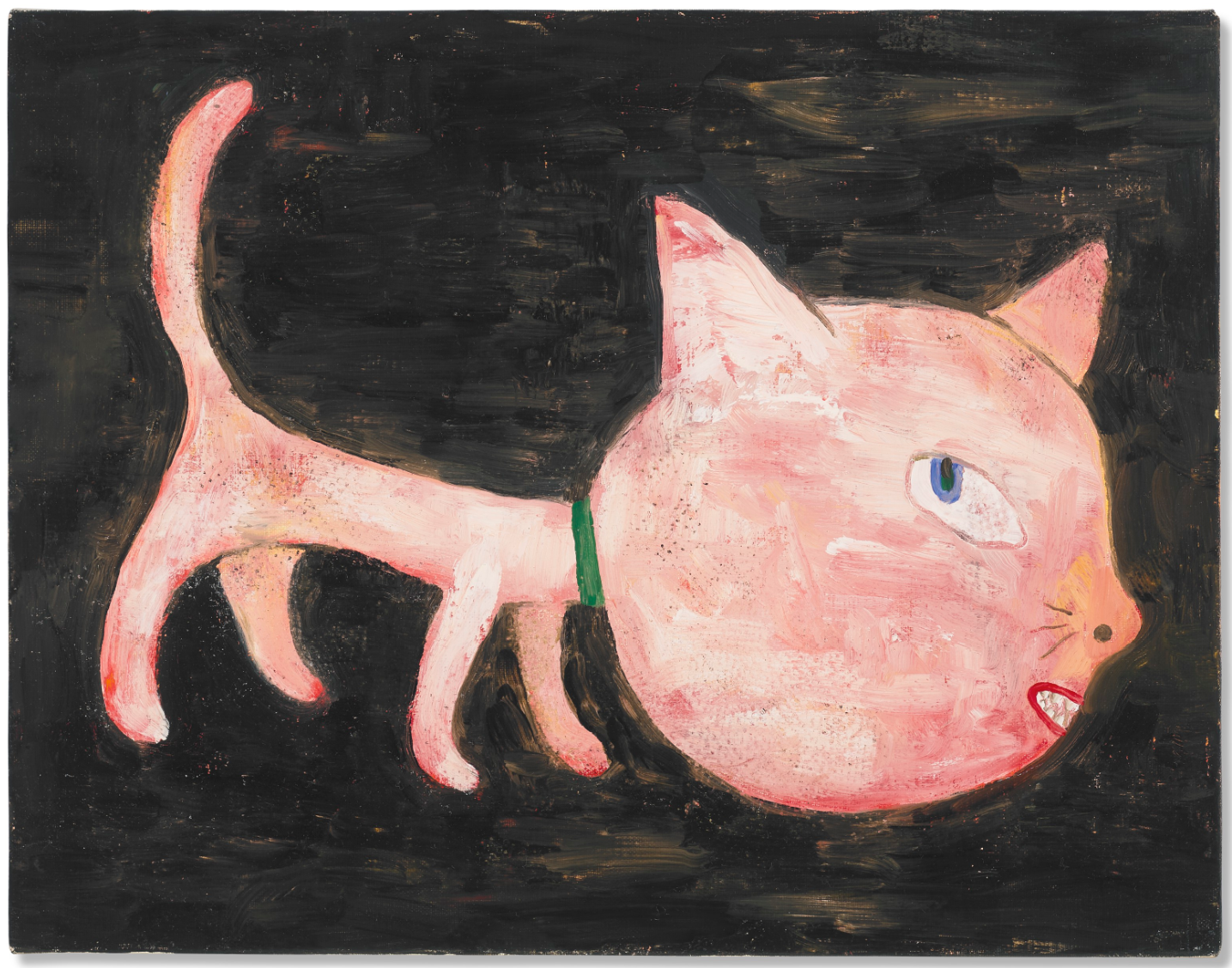
YOSHITOMO NARA (B. 1959)
Kodoku Neko (Lonely Cat), 1995
Oil on canvas
31.8 x 41.3 cm (12 1/2 x 16 1/4 inches)
Signed, titled and dated in Japanese ”95′ (on the reverse)
PART III: FOCUS
Large Iconic Paintings
Can’t Wait ’til the Night Comes, 2012
Sotheby’s Hong-Kong: 28 September 2025
Estimated: HKD 65,000,000 – 85,000,000
HKD 79,900,000 / USD 10,969,925
YOSHITOMO NARA (b. 1959)
Can’t Wait ’til the Night Comes, 2012
Acrylic on canvas
193.6 x 183 cm (76 1/4 x 72 inches)
Signed and dated 2012 (on the reverse)
Signed, titled in Japanese and dated 2012 (on the stretcher)
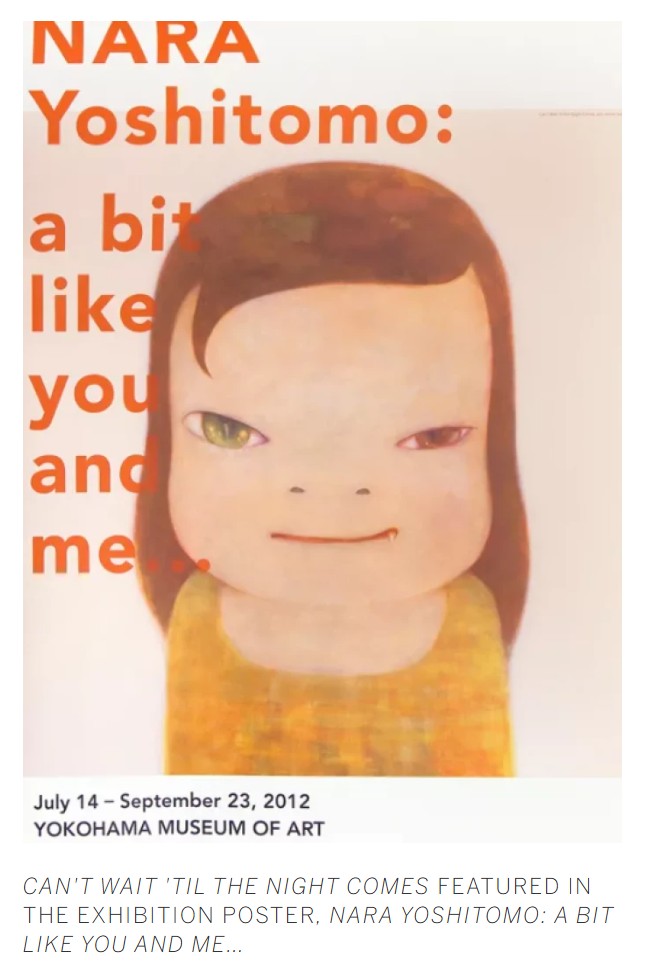
Impressive in size and arresting in its visual power, Can’t Wait ’til the Night Comes is the largest work known on canvas featuring Nara’s ‘children of the night’. Dazzling and beguiling, the painting is a superlative example from the artist’s pivotal point in his career, whereby his works undergo a stylistic shift. Larger than life, the protagonist with a mischievous smirk engulfs one’s peripheral vision. It is significantly larger than any other vampire motif that has been at auction. Nara’s nocturne child emerges from a luminous cream background, absorbing the viewer into her sparkling eyes of different colours. Executed in 2012, the painting belongs to the most coveted of Nara’s works, with four out of the top ten auction records of the artist being of his works from 2012 and beyond. The epitome of Nara’s later works, this painting was exhibited at Nara’s first major museum solo show in the same year, “NARA Yoshitomo: a bit like you and me…” at Yokohama Museum of Art in Yokohama, Japan, after a period during which the artist had lost his desire to paint following the 2011 earthquake. It was also used as a poster image for the exhibition. The exhibition later travelled to the Aomori Museum of Art, Aomori, Japan, and the Contemporary Art Museum, Kumamoto, Japan.
In 1994, Yoshitomo Nara, with the help of gallerist Jörg Johnen, relocated to Cologne following his graduation from the esteemed Staatliche Kunstakademie in Düsseldorf. This move allowed the artist to begin working on large-scale canvases. Considered a highlight of the artist’s early career, it was living and working on the outskirts of Cologne that Nara’s highly solitary practice began to emerge. Stripping away superfluous detail from the background, Nara began to focus instead on the emotive potential of the lonely central figure and “the allegorical ability to express narrative through singular image endowed with powerful emotional appeal and enigmatic fragment that evoked associations’ (M. Matsui, ‘A Child in the White Field: Yoshitomo Nara as a Great “Minor Artist”’, Yoshitomo Nara: The Complete Works, Paintings, Sculptures, Editions, Photographs, Vol. 1, Tokyo 2011, p. 334).
Nara’s interests in creatures of the nocturnal, such as cats and vampires, began as early as his Cologne days (1993-1999). These characteristics are often depicted with fangs and/or eyes of entrancing design, evoking living beings with enhanced night vision. Nara revisits this theme repeatedly throughout his career. An intimate part of his creative process, Nara would work “alone in his studio, usually late at night, with punk rock screaming from speakers”, and rising only well into the mature hours of the day. Parallels are undoubtedly evident between the Artist and the vampire protagonist of Can’t Wait ’til the Night Comes; a lonesome nocturnal existence characterizes this mythical yet fearsome figure. Executed in 2012, Can’t Wait ’til the Night Comes is a quintessential example from a distinctive body of work that Nara began in the same year, after his return to the studio in April following the Great East Japan Earthquake on 11 March 2011. 2012 was a significant year for the artist, coming to terms with the sheer devastation of the earthquake and resulting tsunami that left more than 450,000 people homeless and caused more than 18,000 people to lose their lives.
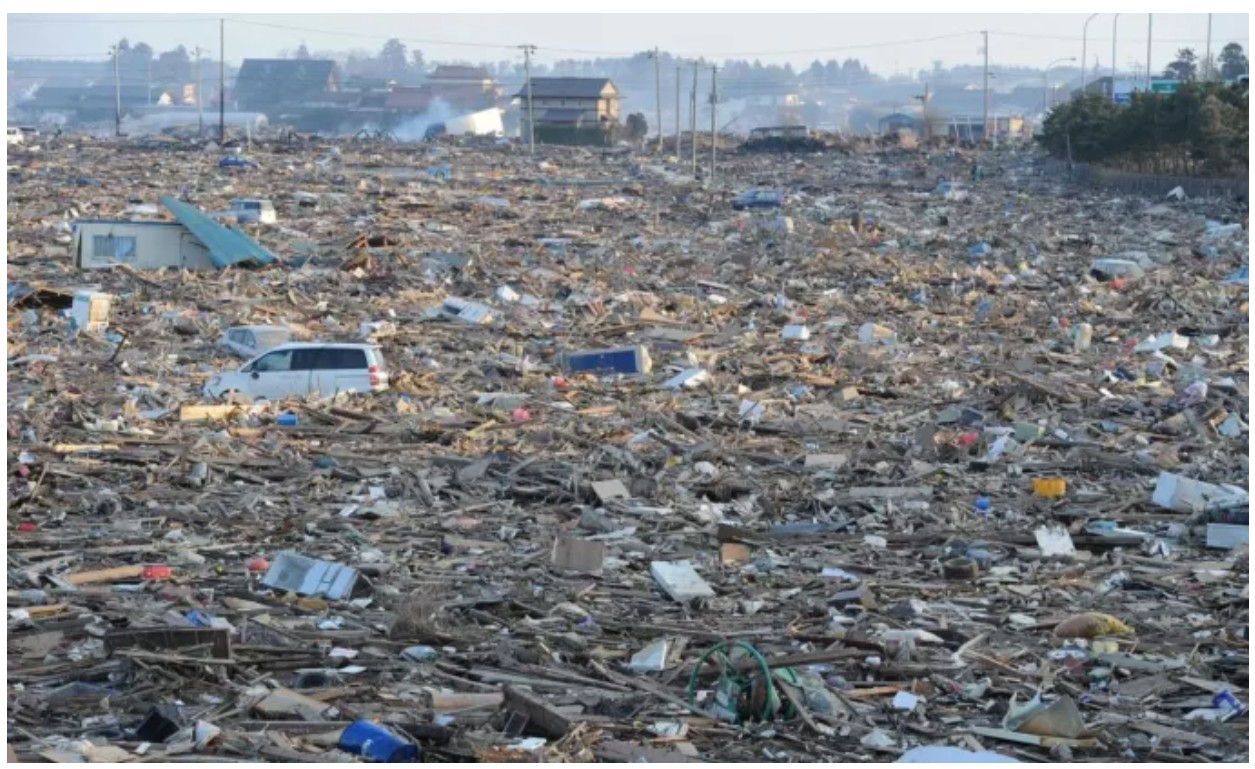
Image of the destruction of Natori City in Miyagi prefecture on 14 March 2011, three days after the Great East Japan Earthquake
MIKE CLARKE/AFP/Getty Images, 2011
Deeply connected to the northeastern part of Japan, which was hit worst by the earthquake, the natural disaster triggered a significant change in his artistic practice and a shift in his aesthetic, as seen in Can’t Wait ’til the Night Comes. Executed the year after his return to the studio, Can’t Wait ’til the Night Comes is demonstrative of this shift in the artist’s visual language, softening the once menacing expressions of his little girls, depicting his figures from the bust upwards, expanding his color palette and experimenting with a shimmering translucency through more meditative layering. Nara’s treatment of his subject’s eyes changed around 2005, becoming more realistic through the deft interplay of light and shadow.
“They say human eyes are the mirror of the soul, and I used to draw them too carelessly. Say, to express the anger, I just drew some triangular eyes. I drew obviously-angry eyes, projected my anger there, and somehow released my pent-up emotions. [Afterwards] I became more interested in expressing complex feelings in a more complex way.”
While each eye is rendered in a different variety of tonal hues—one a biscuit-fired red, the other an olive green—together, they hint at the twilight transformation of our nocturne protagonist as the night approaches.
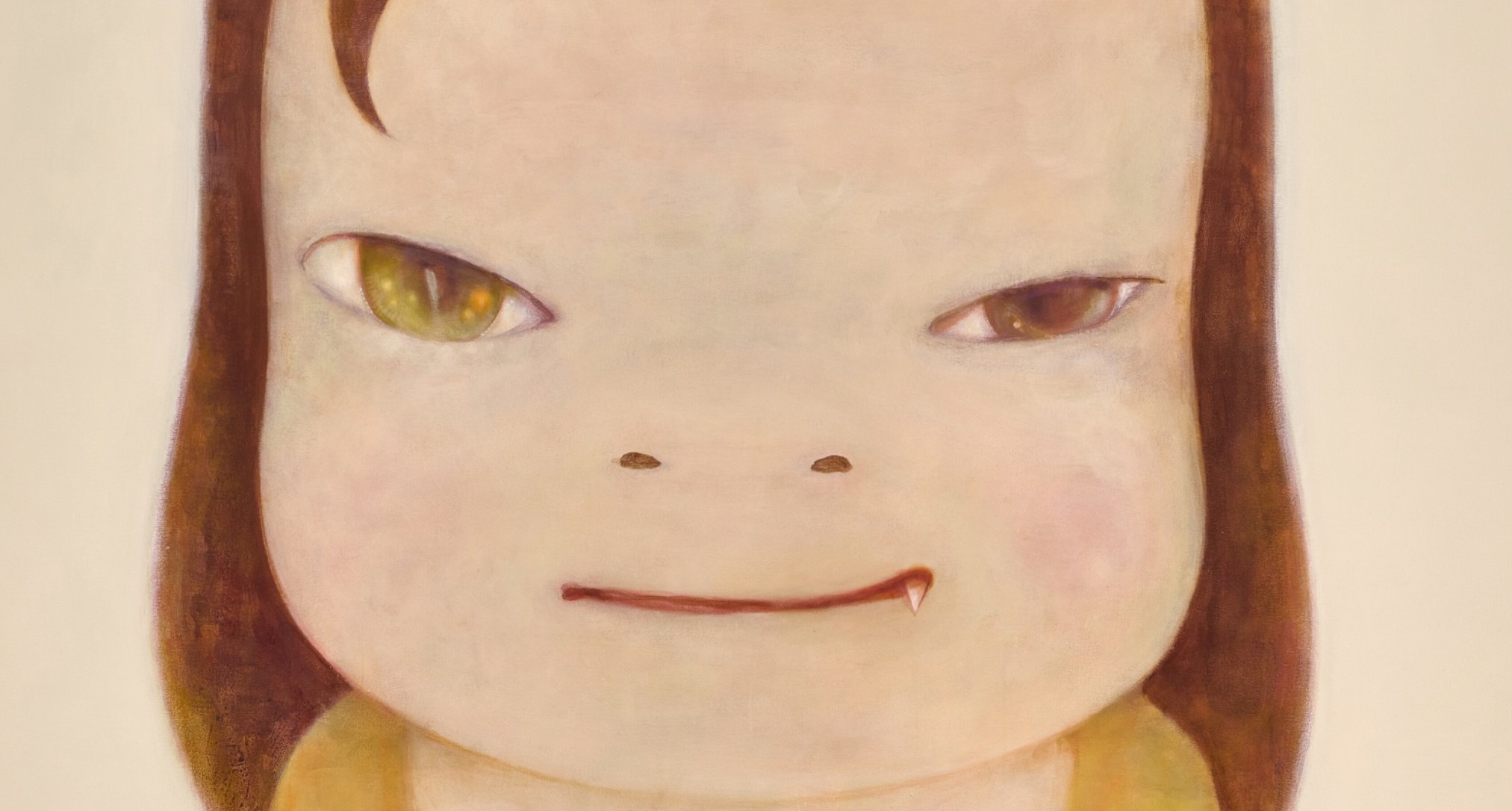
Nara, in the foreword of the exhibition “NARA Yoshitomo: a bit like you and me…” in which the present work was featured, elaborates explicitly on the transition of the nature of his works. They are no longer his self-portraits but portraits through which the viewer can experience introspective self-projection. The exhibition marks a pivotal transition in the artist’s painterly style, where his subjects assume the form of large-scale bust portraiture set against a minimalist, monochromatic background. The brushworks and colours soften, while the enhanced focus on the subject’s expression puts greater emphasis on the human psyche, as exemplified by the present work. Nara’s process is discernibly more meditative and introspective in “Can’t Wait ’til the Night Comes” than in his earlier works. It took him nearly a year to complete this painting, achieving a shimmering translucency through his deft layering of acrylic paint.
Another reason behind the lengthy painterly process was the presence of an original composition underneath, which the Artist decided to paint over. The original composition depicted a smirking child holding a two-leafed sprout, a motif recurrent in Nara’s oeuvre and one that has been revisited frequently after the devastating Great Eastern Japan Earthquake in 2011. By then, the sprout meant a lot more than just a symbol of peace.
“How many children have I depicted holding a futaba sprout…? I don’t think many people have noticed that the nuclear plant in Fukushima is located in a place called Futaba.”
The drastic change in subject matter, urging Nara to paint over incomplete work, suggests a profound shift in the Artist’s thought process. Arguably Japan’s most internationally acclaimed painter working today with a global collector base, Yoshitomo Nara has captivated the imaginations of collectors and critics around the world, achieving institutional recognition. Testament to the importance of the artist, Nara has recently been honored with the most extensive retrospective in Europe, held at the Hayward Gallery in London, preceded by the critically acclaimed retrospective at the Los Angeles County Museum of Art, which later travelled to the Yuz Museum in Shanghai.
Cosmic Eyes (in the Milky Lake), 2005
Sotheby’s London: 5 March 2025
Estimated: GBP 6,000,000 – 8,000,000
GBP 9,027,500 / USD 11,555,200
Cosmic Eyes (in the Milky Lake) | Modern & Contemporary Evening Auction | 2025 | Sotheby’s
YOSHITOMO NARA (b. 1959)
Cosmic Eyes (in the Milky Lake), 2005
Acrylic and glitter on canvas
162 x 130.2 cm (64 3/4 x 51 1/4 inches)
Signed, partially titled and dated 2005 (on the reverse)
A serene example of Yoshitomo Nara’s mature practice, Cosmic Eyes (in the Milky Lake) emerges from a pivotal moment in 2005 that marks Nara’s transition beyond the flat, manga-inspired characters of his early works towards depictions of more soulful and human subjects. The young female protagonist, depicted wading in a rippling white expanse, gazes at the viewer with vast, shimmering eyes that not only stare out but draw the audience in. Her glittering irises evoke an expansive galaxy, as suggested by the work’s title. Cosmic Eyes (in the Milky Lake) belongs to a suite of twelve large-scale portraits Nara painted between 2004 and 2005 and is one of only four in this group to introduce his cosmic-eye motif, signifying a crucial milestone in Nara’s artistic journey. Befitting the artist’s critical importance, Nara will be the subject of a landmark retrospective at the Hayward Gallery in London, opening in June 2025. Never before offered at auction and not seen in public for 20 years, the present work is a rare exemplar of the singular visual language that has cemented Nara’s position as a titan of the twenty-first century.
“Rather than merely offering the work for the viewers to see face-on, I want to trigger their imaginations… an experimental place where visitors find an opportunity to see themselves reflected as though my work were a mirror or a window. For people who cannot, or will not, really look, there will be nothing.”
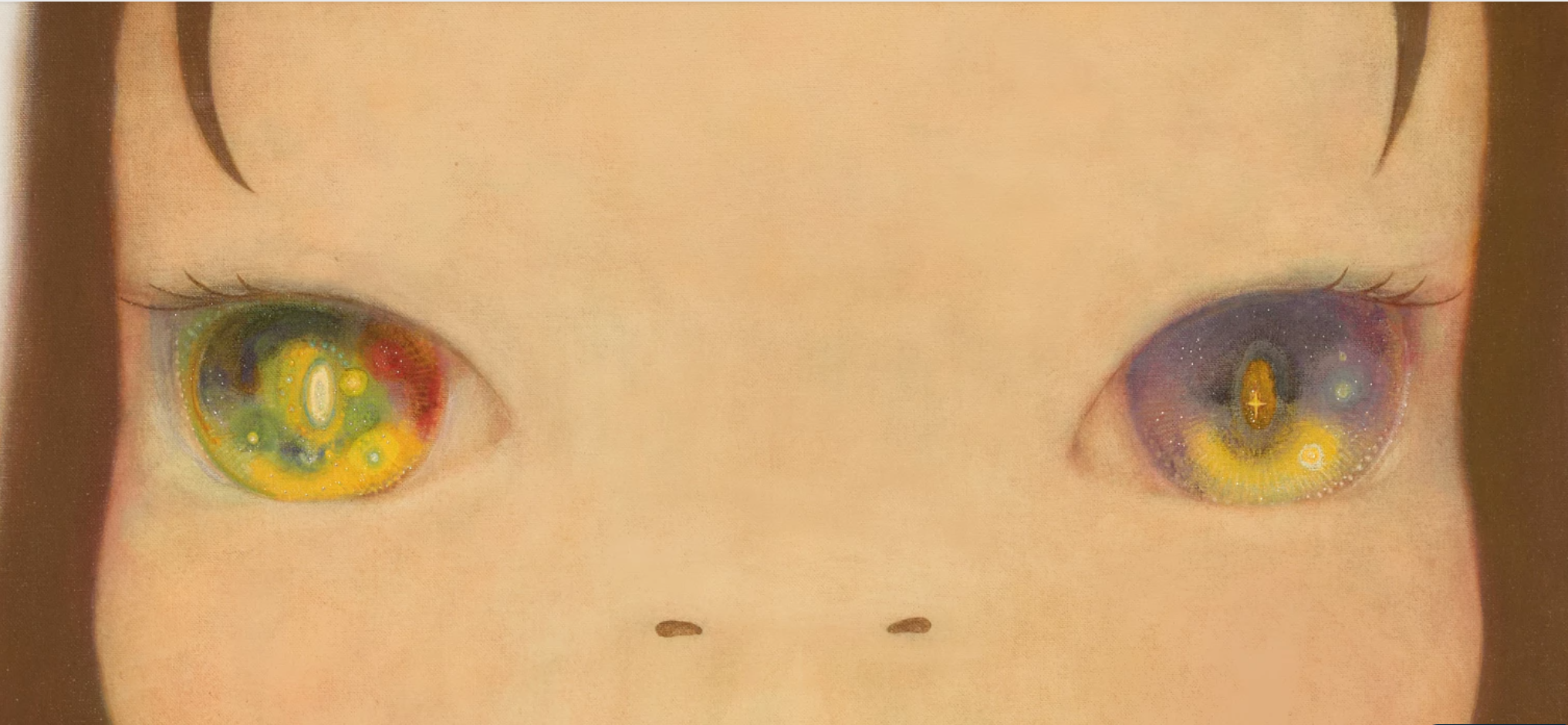
Nara’s masterful focus on the eyes offers a profound glimpse into his subject’s inner world. The girl’s entrancing gaze invites viewers to contemplate not only her psychological state but also Nara’s own emotions as he paints late into the night, reminiscent of Van Gogh’s introspective nocturnal gaze in Starry Night over the Rhone (1888). Nara recognises eyes as a bridge between subject and viewer – a gateway to one’s soul. By rendering the irises with uncanny depth and kaleidoscopic glittering detail, he transforms the painting from a mere image to an emotional landscape, transcending visual representation. Nara’s treatment of flesh in this work further showcases remarkable nuance, with delicate hints of green, pink, and blue subtly emerging through the soft peach surface. The painting’s texture evokes a modernist sensibility, reminiscent of the rosy-cheeked women in Modigliani’s and Klimt’s portraits, as well as the tenderly painted surfaces of Impressionist works.
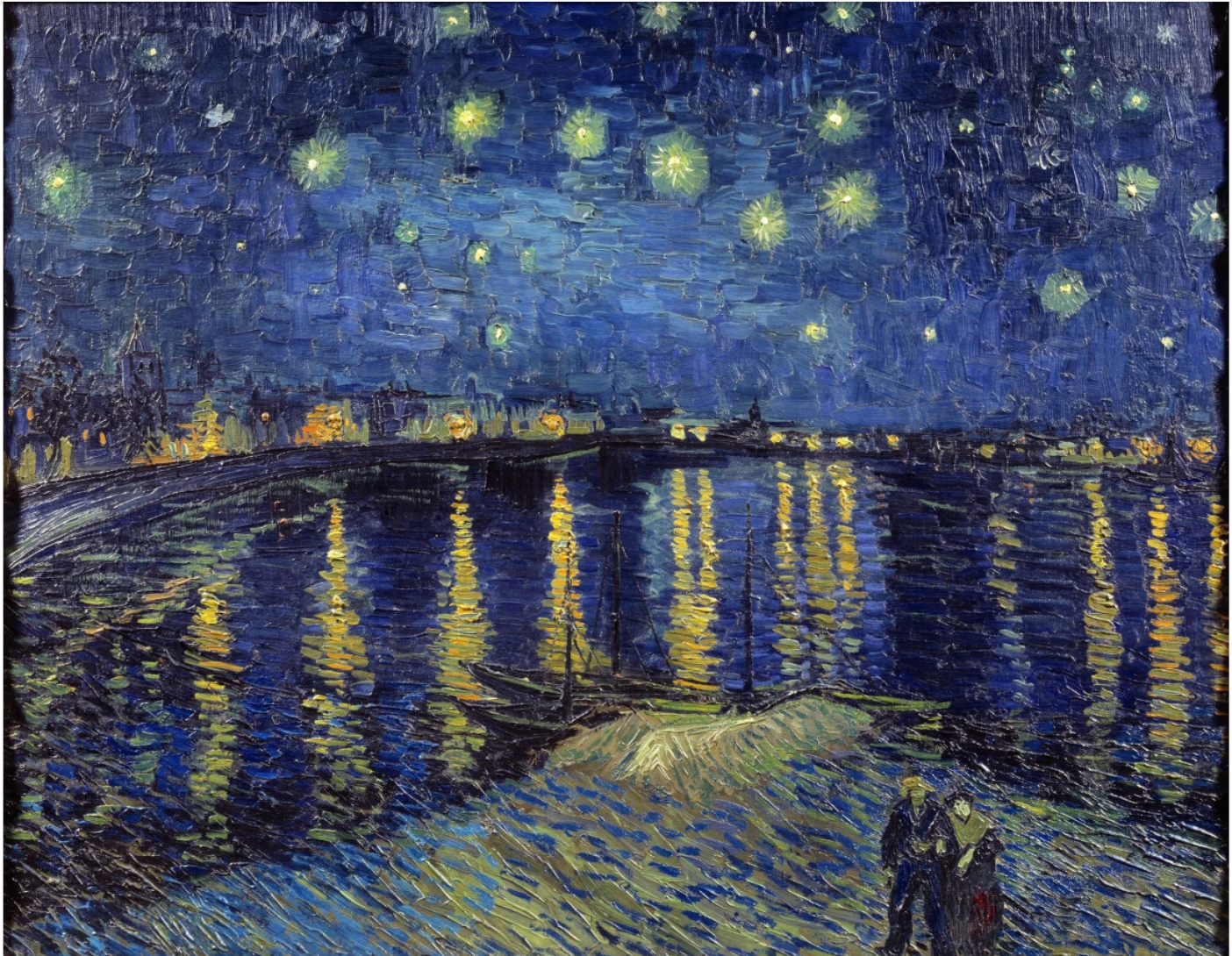
Vincent van Gogh, Starry Night Over the Rhône, 1888. Musee d’Orsay, Paris. Image: Bridgeman Images © Photo Josse
During this experimental period, characterized by softer palettes and dissolved harsh outlines, Nara transitioned from his earlier method of “drawing a line like in a drawing” towards a more painterly technique. He aimed to create works by “pressing like the French modernists,” reflecting his growing interest in texture and depth, as well as his engagement with Western art traditions following his time in Europe (Los Angeles County Museum of Art, Virtual Conversation with Yoshitomo Nara and Mika Yoshitake, 11 October 2020 (video)). This shift in Nara’s approach toward a more tender and impressionistic handling of paint results in subjects that exhibit a profound transformation.
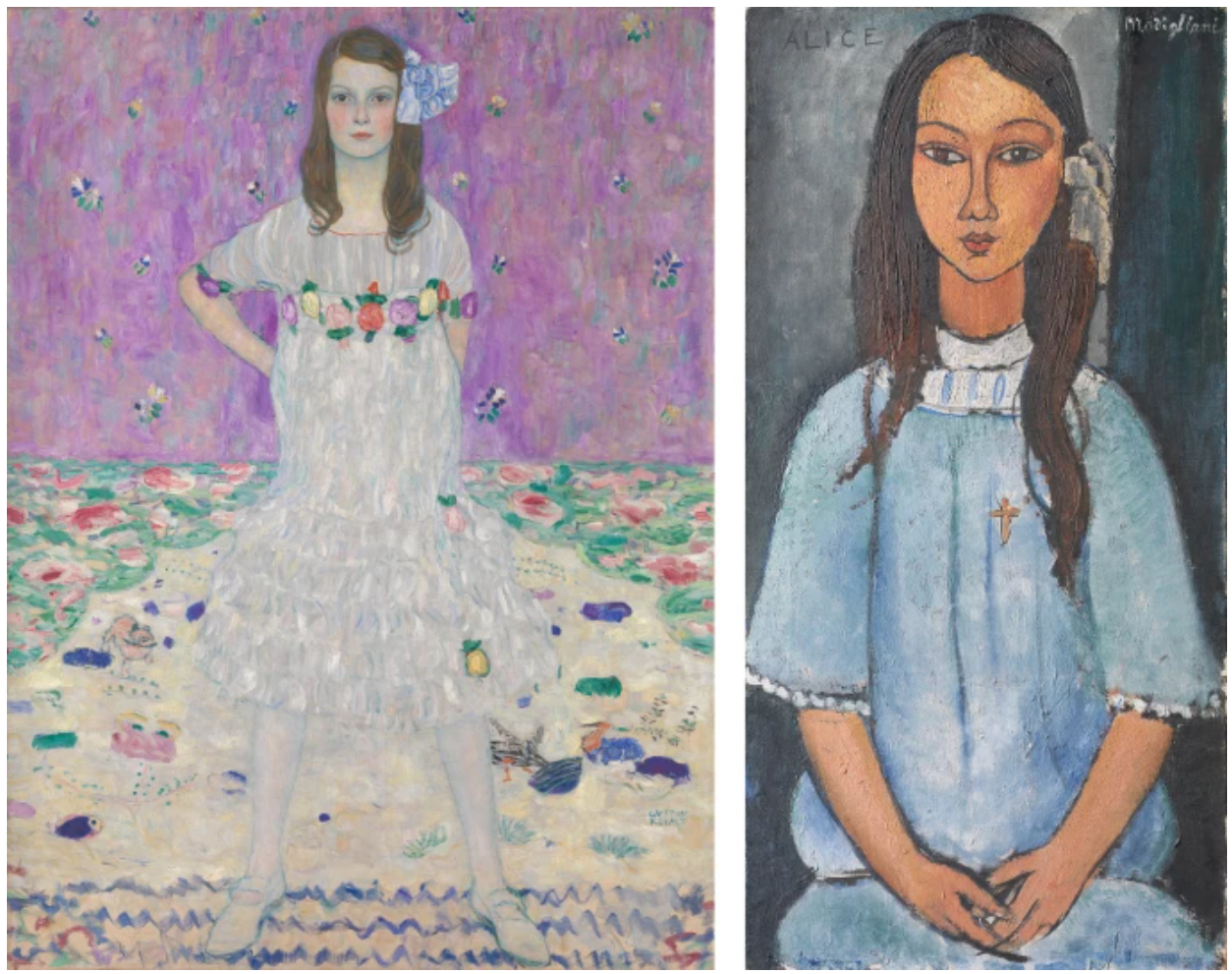
LEFT: Gustav Klimt, Mada Primavesi, 1912-13. Metropolitan Museum of Art, New York. Image: Bridgeman Images.
RIGHT: Amedeo Modigliani, Alice, circa 1918. Statens Museum for Kunst, Copenhagen. Image: Bridgeman Images.
As noted by Midori Matsui, these figures now display “visible signs of humanization: their heads grew smaller, their expressions gentler, their body proportions approaching that of a real child, and their attitudes reflecting that of a thoughtful adolescent” (Midori Matsui, “A Child in the White Field: Yoshitomo Nara as a Great ‘Minor’ Artist”, in Yoshitomo Nara: The Complete Works, Paintings, Sculptures, Editions, Photographs, Vol. 1, Tokyo 2011, p. 344). Cosmic Eyes (in the Milky Lake) exemplifies this humanization with its more worldly proportions and subtle flesh tones. The subject’s tousled fringe imparts a childlike quality and innocence, further humanizing Nara’s subject. These elements showcase Nara’s transition from stylized representations to more nuanced, emotionally resonant depictions of young children.
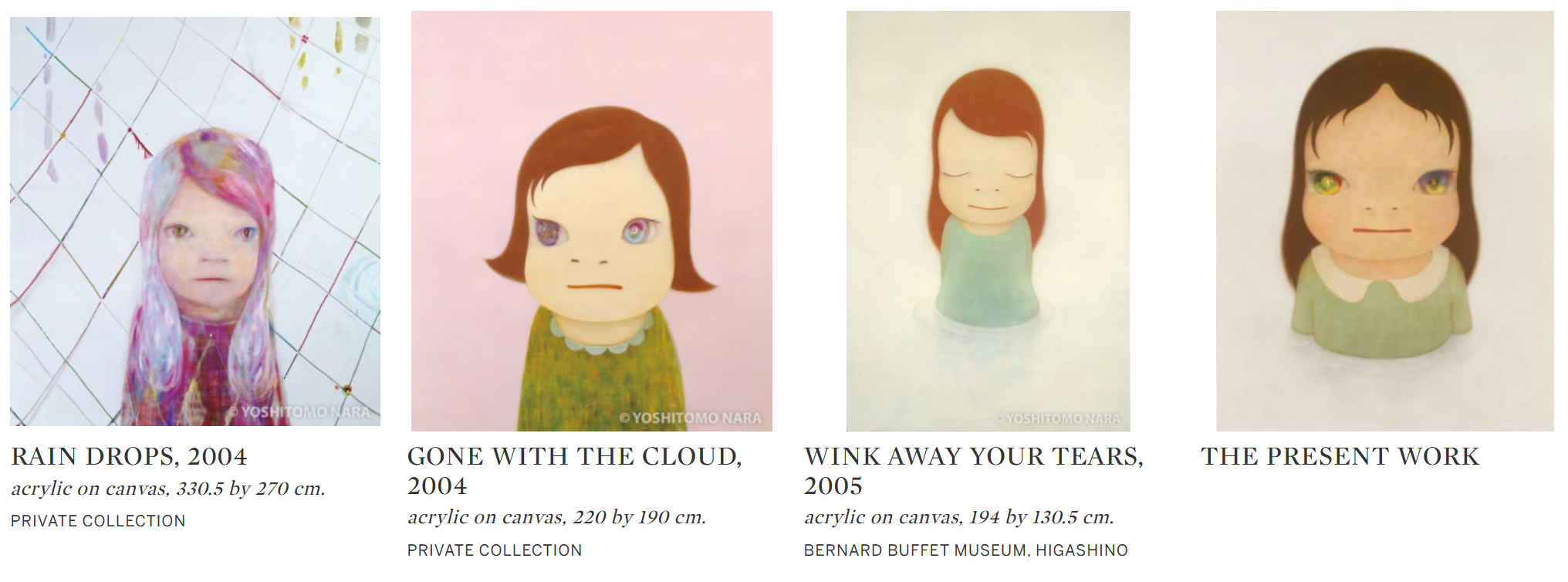
Nara’s “rainbow” or “starry” eyes first appear in his practice in 2004, making the present work one of the very first examples. Of the 7 large-scale “big-headed girl” paintings created between 2004 and 2005, half are already held in museum collections, further underscoring the rarity of Cosmic Eyes (in the Milky Lake).
Art © 2025 Yoshitomo Nara
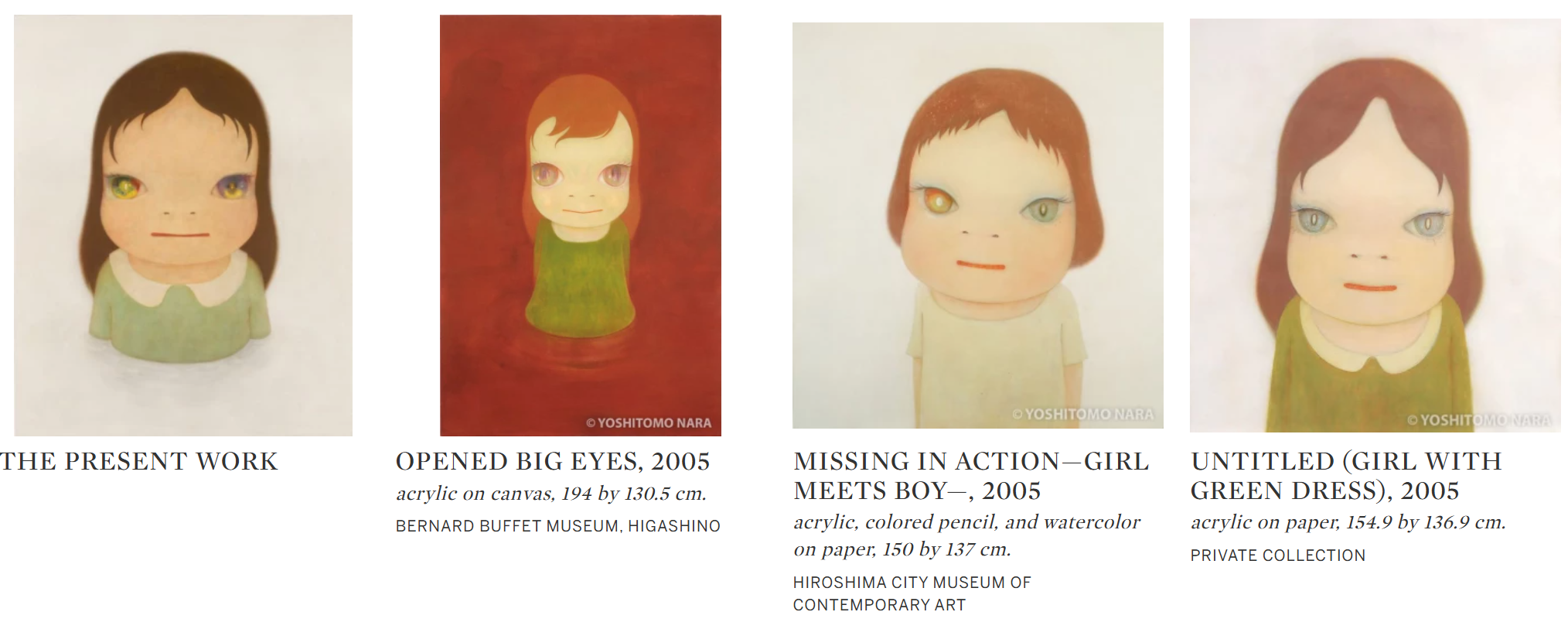
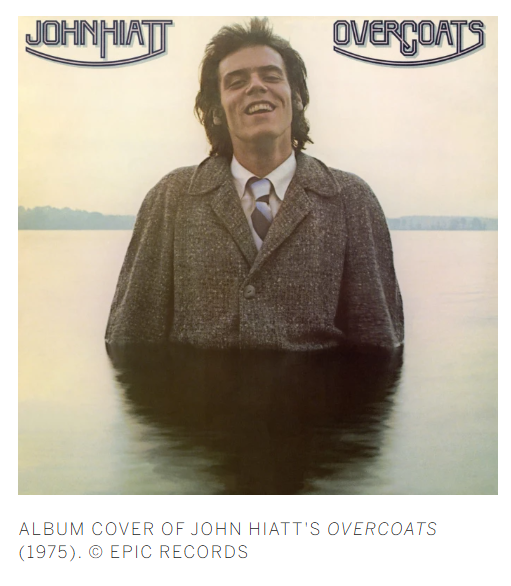
Cosmic Eyes (in the Milky Lake) showcases yet another recurring motif in Nara’s oeuvre – the subject wading in water. This imagery places Nara within an art historical and religious lineage while subtly referencing his passion for music. The puddle motif, appearing in Nara’s works since the 1980s, draws inspiration from the cover of singer John Hiatt’s 1975 album Overcoats, which depicts the musician half-submerged in water. Water holds profound symbolism across cultures, from the Christian rite of baptism to the Buddhist ritual of pudu. In Nara’s work, the milky lake carries a universal resonance, embodying healing, deliverance, and rebirth. For Nara, this imagery also serves as a metaphor for the relationship between an individual’s inner world and external reality, with the subject suspended in an ethereal space, seemingly floating in and out of dream-like trance. In this painting, the lake stretches infinitely beyond the confines of the canvas as an allegory for a world of boundless expanse, mirrored in the seemingly endless space of the subject’s cosmic eyes, which transport the viewer into a realm beyond the physical.
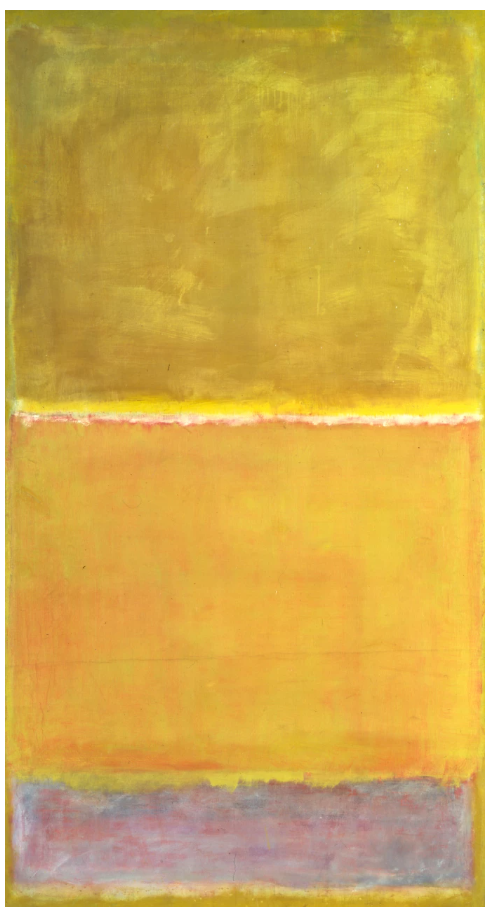
Mark Rothko, Untitled, circa 1950-52. Tate, London.
ART © 1998 KATE ROTHKO PRIZEL & CHRISTOPHER ROTHKO / DACS, London / ARS, NEW YORK
Standing up close, one experiences an almost spiritual engagement with the shimmering surface of her eyes and immaculately rendered skin. This effect recalls Rothko’s color fields or Monet’s Nymphéas, creating a dynamic interplay between viewer and painting where the surface continually evolves. As Nara has described in direct reference to his connection with Rothko:
“It’s not about it being an image of a young girl, it’s about the many levels of paint that have built up. Those layers draw out the sensibility of each person who looks at it. I think it provokes you to have a conversation with yourself. That’s what makes the color paintings very different from the black-and-white line drawings.”
Cosmic Eyes (in the Milky Lake) represents a pivotal moment in Nara’s artistic journey, harmoniously combining his signature motifs into a complex yet serene visual experience. The work bridges diverse artistic elements, connecting “high, low and kitsch; East and West,” as described by New York Times critic Roberta Smith. By integrating Western modernist techniques with his distinctive manga-inspired aesthetic, Nara creates a painting that invites deeper contemplation of both the subject’s psyche and our own emotional responses.
I Want to See the Bright Lights Tonight, 2017
Sotheby’s Hong-Kong: 5 April 2024
Estimated: HKD 80,000,000 – 120,000,000
HKD 95,959,000 / USD 12,267,834

YOSHITOMO NARA (b. 1959)
I Want to See the Bright Lights Tonight, 2017
Acrylic on canvas
220.2 x 195.3 cm (86 3/4 x 76 7/8 inches)
A personal favorite of the artist that was chosen as the cover image of the definitive 2020 monograph, Yoshitomo Nara’s I Want to See the Bright Lights Tonight presents a monumental, arresting and tender vision – a paradigm of the artist’s mature painterly practice. Painted in 2017, the present work was selected as the principle image of two of the artist’s most recent surveys; the first being Nara’s first international retrospective – held at the Los Angeles County Museum of Art, before travelling to the YUZ Museum in Shanghai, the Guggenheim Bilbao and the Kunsthall Rotterdam – and the second held at the Aomori Museum of Art in Nara’s hometown. Ranking amongst the most important works by the artist to have ever appeared at auction, I Want to See the Bright Lights Tonight is a defining masterpiece, encapsulating the artist’s career-long examination of the self and signature ability to capture the sentiment of each generation.
Enigmatic and ethereal, the present work returns to Nara’s iconic portraits of doe-eyed girls with a singular tenderness, evincing a sentiment which ultimately led to the work becoming a centerpiece of the artist’s most recent Museum retrospectives. Larger than life, Nara’s heroine emerges from a background bearing the singular shade of chartreuse, while her hair and clothes reveal softly iridescent kaleidoscopes of autumnal hues. The chromatic complexity of the painting exudes an absorbing golden glow reminiscent of the shimmering surfaces of Gustav Klimt, the layers of prismatic color appearing to both reveal and mirror the complexity of the deeply enthralling, seemingly luminous, figure and, most particularly, her eyes. Impeccably rendered and capturing the complexities of the artist’s signature protagonists, I Want to See the Bright Lights Tonight is a museum quality work, with two 2017 works of comparable gravity now residing within the collections of The National Gallery of Art, Washington DC, and the Los Angeles County Museum of Art.
Returning to his most recognizable motif with a more meditative and introspective aesthetic, the present work exemplifies Nara’s mature painterly practice. It was in 2012 that Nara began to soften the mischievous and hostile expression of his figures following the Great East Japan Earthquake on 11 March 2011. The utter devastation of the Earthquake and subsequent Fukushima Disaster brought Nara a closer spiritual connection to his home in the North of Japan, bringing the artist back to some of the seminal influences in his life. The childlike figure of the present work draws attention to the act of memory and its impact on present emotional states in that she embodies something of the artist’s own formative memories. The influence of music on the artist is well-established, being a vital component of both his working practice and the emotive spirit behind his art. Albums, and the memories associated with them, frequently inspire the tone, theme or mood of a particular work, with the present work taking its name from the formative 1974 album I WANT TO SEE THE BRIGHT LIGHTS TONIGHT by Richard and Linda Thompson. As the curator of Nara’s retrospective at the Los Angeles County Museum of Art describes, “Some works draw on the mood of an album, such as Richard and Linda Thompson’s I WANT TO SEE THE BRIGHT LIGHTS TONIGHT (1974). The album cover’s yellow-green palette with fiery red title letters spelled out on wet glass translates into Nara’s serene 2017 wide-eyed portrait, which clearly nods to the album with the same title.” (Mika Yoshitake, quoted in Arthur Nguyen, “Yoshitomo Nara: A Conversation with Curator Mika Yoshitake”, LACMA Unframed, 10 March 2021). Radiating with childlike wonder, the celestial gaze of the present work pierces the viewer with a sense of intimacy that belies its expansive scale, conveying an emotional naivety informed by the artist’s own formative memories.

Exemplifying Nara’s mature painterly accomplishments, I Want to See the Bright Lights Tonight reveals a patience in its making that belies the emotional complexity behind its creation. Exhibiting a formal harmony and sensitivity of colour and brushwork, the figure’s face takes on an almost aqueous quality as it is made and unmade by the traces of Nara’s brush. The delicate presence of the figure, her extremities made permeable under Nara’s intricate brushwork, communicates the artist’s own vulnerability. This emotional evolution which occurred in Nara’s work following the 2011 Earthquake was accompanied by a maturation of the artist’s formal techniques; where rounded edges and childlike colors, seen in such works as The Girl with the Knife in Her Hand (1991), once defined his portraits of big-headed girls, he now plays with their contours by diluting his signature bold outlines.

THE PRESENT WORK, INSTALLATION VIEW, AOMORI, AOMORI MUSEUM OF ART, YOSHITOMO NARA: THE BEGINNING PLACE, OCTOBER 2023 – FEBRUARY 2024 / ARTWORK ©YOSHITOMO NARA
Retaining the material traces of its creation, we are able to glimpse traces of orbs, freckles, and swathes hidden beneath many layers of paint on the surface of the present work, a tonal richness which is only visible when one intimately engages with the work. The surface of the canvas makes up only a part of what comprises the work as a whole, there being a stark contrast between the final composition and the innumerable layer that comprise it. Behind the pastel colors of the figure’s skin and the rich, autumnal shades of her clothing and hair, there are layers of electric magenta and green which Nara then paints over with softer colors. Sharing a image of the present work in the artist’s studio on his Instagram, this richness of color is on full display: a field of bright magentas, blues, burnt umber and warm yellows are later altered with pale pinks, olive greens, and velvety browns that he applies with greater movement until a final coherent version appears. In its final form, these shades are only seen in shimmering traces that delicately emerge on the work’s surface in between the soothing yellows, greens and auburns. A masterful work and a high point of this mature series that explores the effects of color, Nara’s overpainting achieves a tonal depth which belies the flatness of the oil paint itself, producing complex values of tones, hues, highlights, and saturations.

From his earliest works influenced by German Neo- Expressionism, to the bold rebel girls of the early 1990s with their strong contour lines and sparse backgrounds, to the ethereal, sentimental gazes of his most recent series, we are now able to see the full arc of Nara’s big-headed girls. These figures, variously shy, aggressive, pensive, fragile and strong, have become amongst the most beloved imagery of the last thirty years, displaying a range of emotions that defy their ostensible kawaii countenance. A culmination of Nara’s career to date, I Want to See the Bright Lights Tonight is an enchanting and joyous testament to Nara’s idiosyncratic artistic vernacular. A beguiling masterwork, Nara’s protagonist illuminates something universally relatable with her tender and transfixing gaze, epitomizing the unparalleled emotionality and captivating sincerity that situates Nara as Japan’s most internationally acclaimed living painter.
In the Milky Lake, 2012
Sotheby’s Hong-Kong: 5 April 2023
Estimated: HKD 80,000,000 – 120,000,000
HKD 100,555,000 / USD 12,809,717
YOSHITOMO NARA (b. 1959)
In the Milky Lake, 2012
Acrylic on canvas
197×194 cm (77 1/2 x 76 3/8 inches)
Signed, titled and dated 2012 on the stretcher and signed and dated 2012 on the reverse
Immediately captivating and sumptuous in scale, In the Milky Lake is a monumental example of Yoshitomo Nara’s mature artistic output. Featuring the most recognizable Nara heroine rendered in meticulous detail, the little girl in a green dress emerges from a pearlescent neutral background, her feet submerged in a rippling puddle. A major motif in the artist’s work and after which Nara named his first major solo exhibition in 1995, In the Deepest Puddle, In the Milky Lake traces an overarching thread in the artist’s practise. Using sensitive brushwork and delicate palette, Nara paints his protagonist with orange hair standing serenely in the middle of a milky lake, arms behind her back and a knowing look written on her face. Beautifully detailed through meticulous layering of pigment, the eyes of this work are the soul of the painting and articulate the artist’s move away from the early mischievous stare of his figures to his later ethereal dreamy gaze. Impressive in size and beguiling in its visual power, it is the first time that the enigmatic In the Milky Lake has been offered at auction.
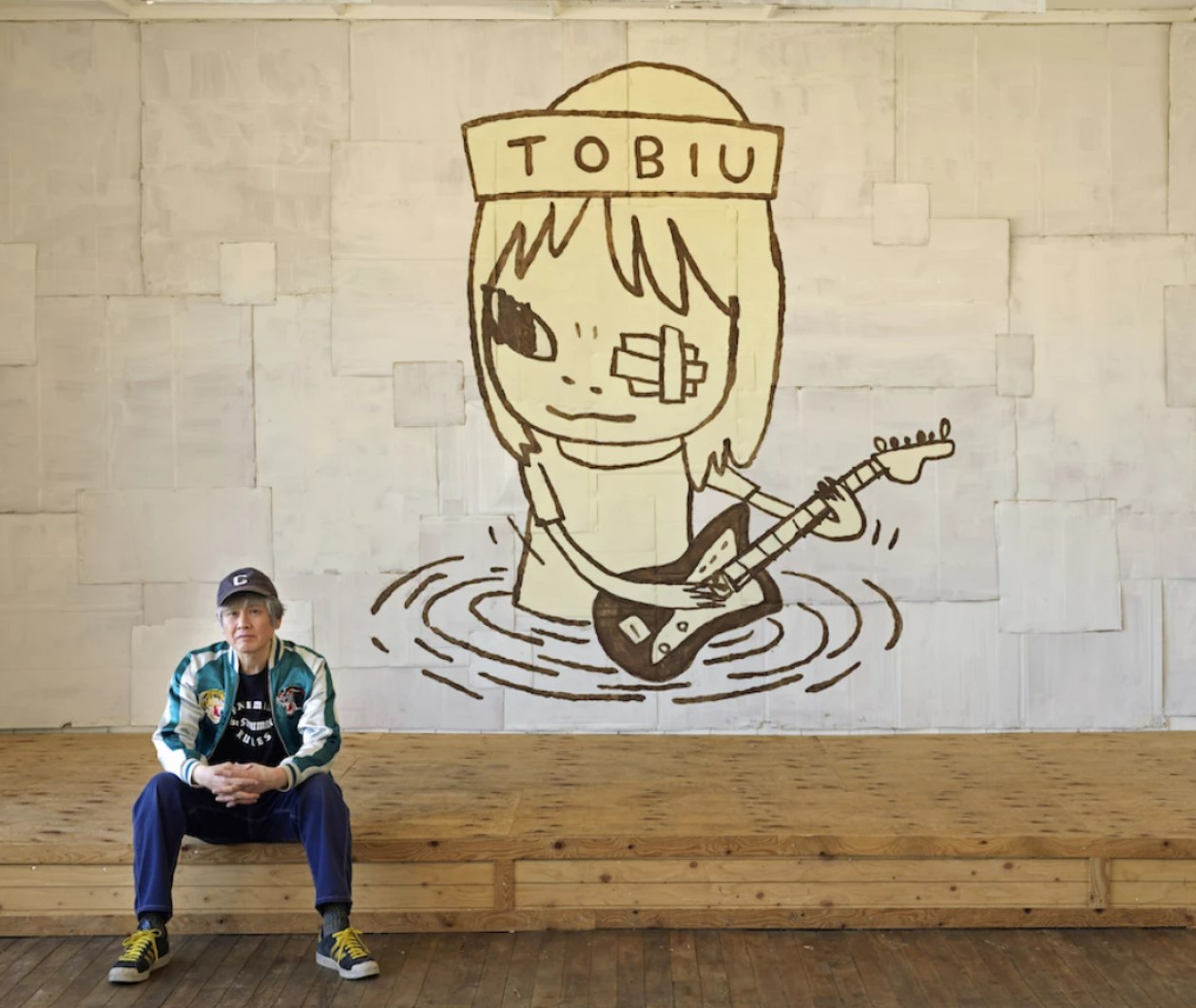
YOSHITOMO NARA, TOBIU, 2019, © YOSHITOMO NARA, PHOTO: RYOICHI KAWAJIRI © YOSHITOMO NARA
Speaking to the artist’s love of music, Nara’s puddle is partially inspired by the cover image of folk singer John Hiatt’s album Overcoats (1975), which shows the singer half-submerged in water wearing his overcoat. Found in some of Nara’s earliest work, the feet of the angel in Fallen Angels (1986) and the girl in Pandora’s Box (1990) are surrounded by concentric circles, with 1995’s In the Deepest Puddle II depicting a girl submerged against a milk-white background. From ancient times, humans have understood a deep reverence toward the transformational power of water as the source of life on earth. Baring a universality in ideology across different cultures, the milky water of Nara’s composition articulates the dialectic relationship between the interior and exterior worlds. Analogous for healing, rebirth and peace, the critic Midori Matsui finds “a mysterious evocation of a boundary” between natural and supernatural worlds in Nara’s paintings, suggesting that Nara’s girls “gaze back at this world from another world beyond it” (Midori Matsui, quoted in Shigemi Takahashi and Michael Lacoy Eds., Yoshitomo Nara: Shallow Puddles, Tokyo 2015, p. 13). It was puddles that began to appear in the first large scale canvases Nara began painting after the Great East Japan Earthquake in 2011, their milky white water absorbing innumerable tears after the devastating events of that year, conveying a universal emotional depth.
Lookin’ for a Treasure, 1995
Phillips Hong-Kong: 30 March 2023
Estimates On Request
HKD 83,850,000 / USD 10,681,665
Yoshitomo Nara – 20th Century & Contem… Lot 13 March 2023 | Phillips
YOSHITOMO NARA
Lookin’ for a Treasure, 1995
Acrylic on canvas
120×110 cm (47 1/4 x 43 1/4 inches)
Signed, titled and dated ‘Nara [in Japanese] 95 “Lookin’ for a Treasure”‘ on the reverse
Exceptionally rare in composition and arresting in its visual power, Lookin’ for a Treasure is a singularly special painting by art world phenomenon, Yoshitomo Nara, whose ‘Nara girls’ have captivated audiences around the world. The protagonist embodies a unique combination of traits that are most highly sought after in the Japanese painter’s oeuvre and are characteristic of his work from this period, as she is depicted full-length with a large, chickpea shaped head and pudgy cheeks, fixatedly piercing jellybean eyes, and with small, cherry-red lips which here, form the expression of a mischievous, confident smirk that quietly confronts the viewer.
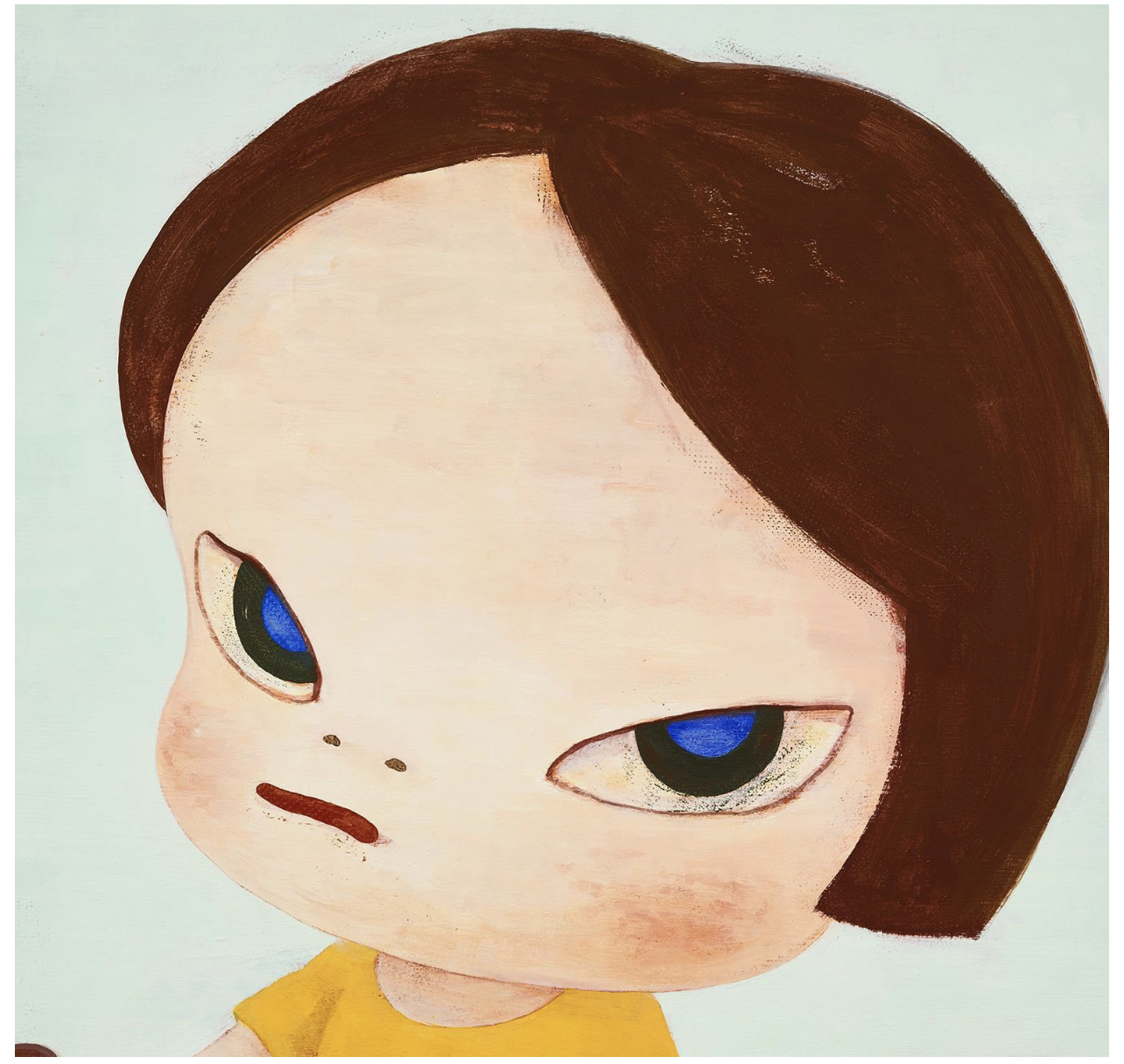
In stark contrast to the pastel blue, pristine background of seemingly infinite depth built through thin layers of repainting, the protagonist in Lookin’ for a Treasure wears a golden dress that is as vibrant as her sapphire-toned eyes. The subject’s canary dress, along with their bob haircut, brings to mind the iconic appearance of Madeline, the Parisian orphan schoolgirl who is the titular character of a media franchise that originated from children’s books by Ludwig Bemelmans in 1939. Madeline is renowned for her courageous and outgoing nature, which was brought to life through animated adaptations starting in 1993. Interestingly, Lookin’ for a Treasure, which similarly portrays a child whose mature confidence contradicts their youthful innocence, was created just two years after the animated series premiered.
Present, 1994
Christie’s Hong-Kong: 1 December 2022
Estimated: HKD 65,000,000 – 95,000,000
HKD 71,900,000 / USD 9,212,044
YOSHITOMO NARA (B. 1959) (christies.com)
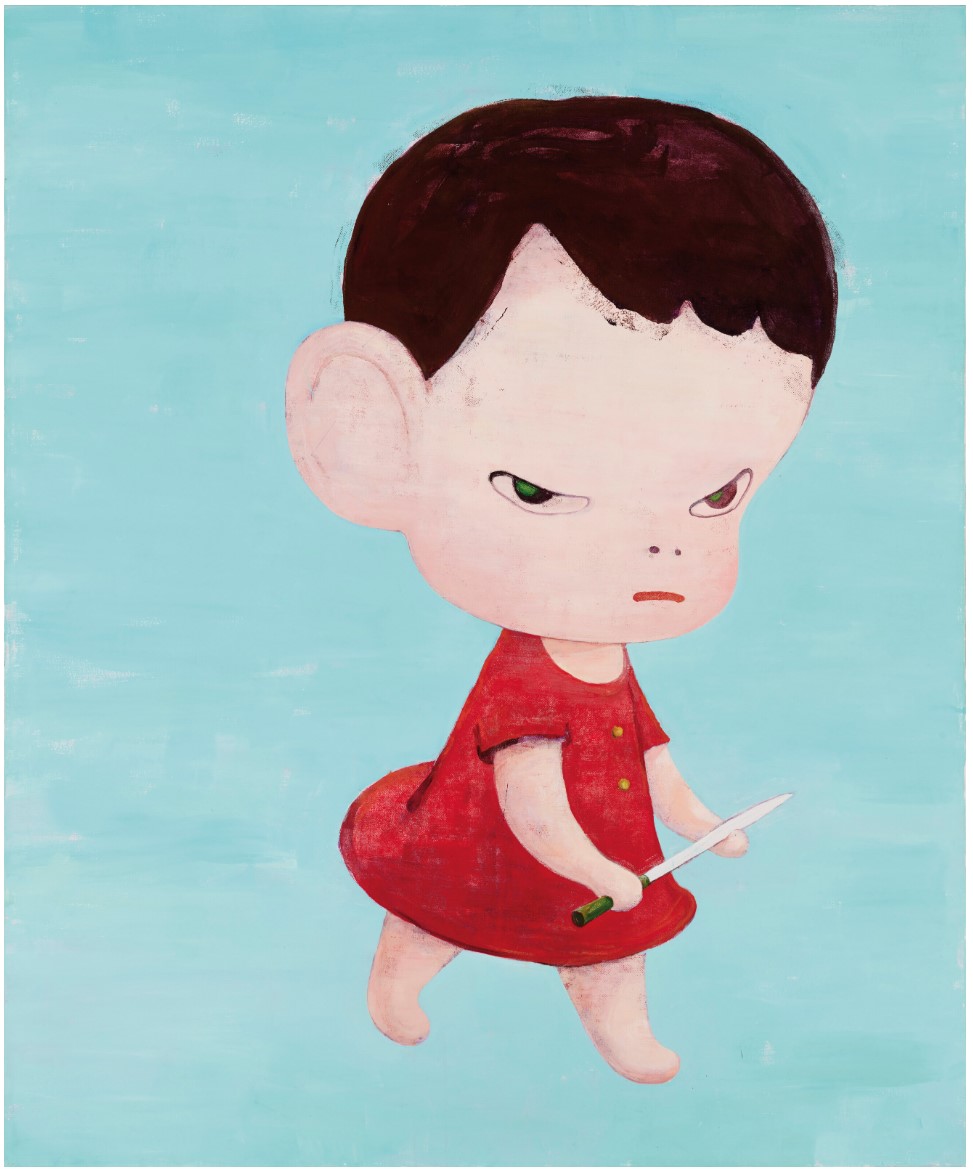
YOSHITOMO NARA (B. 1959)
Present, 1994
Acrylic on canvas
180.3 x 149.9 cm (71×59 inches)
Signed with artist’s signature, titled and dated ‘Present ’94’ (on the reverse)
Immediately captivated by its sumptuous scale, Present embodies Yoshitomo Nara’s most salient motif: an androgynous child with angled eyes, rosy-cheeks, and a chubby fist clutching a sword—an infantile figure that is at once vulnerable and forceful, demanding full attention with its subversive move against the pristine turquoise background. Captured in an asymmetric composition characteristic of Nara’s early career, this little figure in vermillion dress is ostensibly advancing to the viewer. Its motion is animated by the coarse contour lines built through layers of repainting, creating a sense of virtual movement and constant change that resonates with the subject—a child or an adolescence—a being that epitomises the notion of change and metamorphosis; an ever-evolving entity that constantly approaches the world with new lens.
Painted in 1994, Present is one of the seven portraits featuring a child with a knife Nara created in the first half of the 1990s, a limited group which also included The Girl with the Knife in Her Hand (1991) collected by San Francisco of Modern Art. As a prologue to his breakout solo exhibition at SCAI the Bathhouse in Tokyo the following year, Present was executed during a radical year when Yoshitomo Nara, with the help of the Cologne-based gallerist Jörg Johnen, relocated to Cologne and had a more spacious studio to work on larger canvases after his graduation from the esteemed Staatliche Kunstakademie, Dusseldorf. Began to live and work in a former factory building on the outskirts of Cologne, it was considered the early career highlight for Nara—his name was for the first time listed alongside an impressive list of artists like Thomas Ruff, Dan Graham, Katharina Fritsch, and he had a cavernous space to crystallize his intimate, psychological state of solitude and nostalgia into his works. It is in this context the archetypal child that embodies pride, independence and the power to defeat was created, like the one in Present. A complete opposite to his peer Takashi Murakami’s factory-like atelier and many of his contemporaries, Nara’s studio practice is highly solitary with no aid of assistants.
Light Haze Days / Study, 2020
Sotheby’s New-York: 16 November 2022
Estimated: USD 9,000,000 – 12,000,000
USD 11,929,000
Light Haze Days / Study | The Now Evening Auction | 2022 | Sotheby’s (sothebys.com)
YOSHITOMO NARA (B. 1959)
Light Haze Days / Study, 2020
Acrylic on canvas
220×195 cm (86 ⅝ x 76 ¾ inches)
Signed and dated 2020 (on the reverse)
Monumental in scale and significance, Light Haze Days / Study stands as a major punctuation point in Yoshitomo Nara’s oeuvre, encapsulating the artist’s career-long examination of the self and signature ability to capture the zeitgeist of each generation. Ranking amongst the most important works by the artist to have ever appeared at auction, Light Haze Days / Study is a defining masterpiece and embodies a stylistically transcendent period within Nara’s career. When explaining the immense importance of this painting within his artistic practice, Nara describes, “the reason why the title included the word ‘study’ is because it signals something new that is about to begin.” (Los Angeles County Museum of Art, Virtual Conversation with Yoshitomo Nara and Mika Yoshitake, 11 October 2020 (video)) When the installation of Nara’s highly anticipated retrospective at the Los Angeles County Museum of Art, the most expansive in scope and scale of his career to date, was interrupted in 2020 by the coronavirus, the artist returned to his home in Japan. Amid a profound period of universal unrest and self-reflection, Nara produced Light Haze Days/ Study. Enigmatic and ethereal, the painting returns to the artist’s iconic, ostensibly innocuous, singular portraits of doe-eyed girls – a vision as iconic and pervasive in the contemporary visual lexicon as Warhol’s Marilyn’s and Lichtenstein’s blonde bombshells – with a singular tenderness. Though Nara did not originally intend to produce this painting for the retrospective, it inevitably became a centerpiece of the final gallery upon the reopening of the show, included amongst “a compilation of [his] best work to date.” (Ibid.) Further attesting to its caliber, Light Haze Days / Study was included in a second major survey of Yoshitomo Nara’s work at Yuz Museum earlier this year.
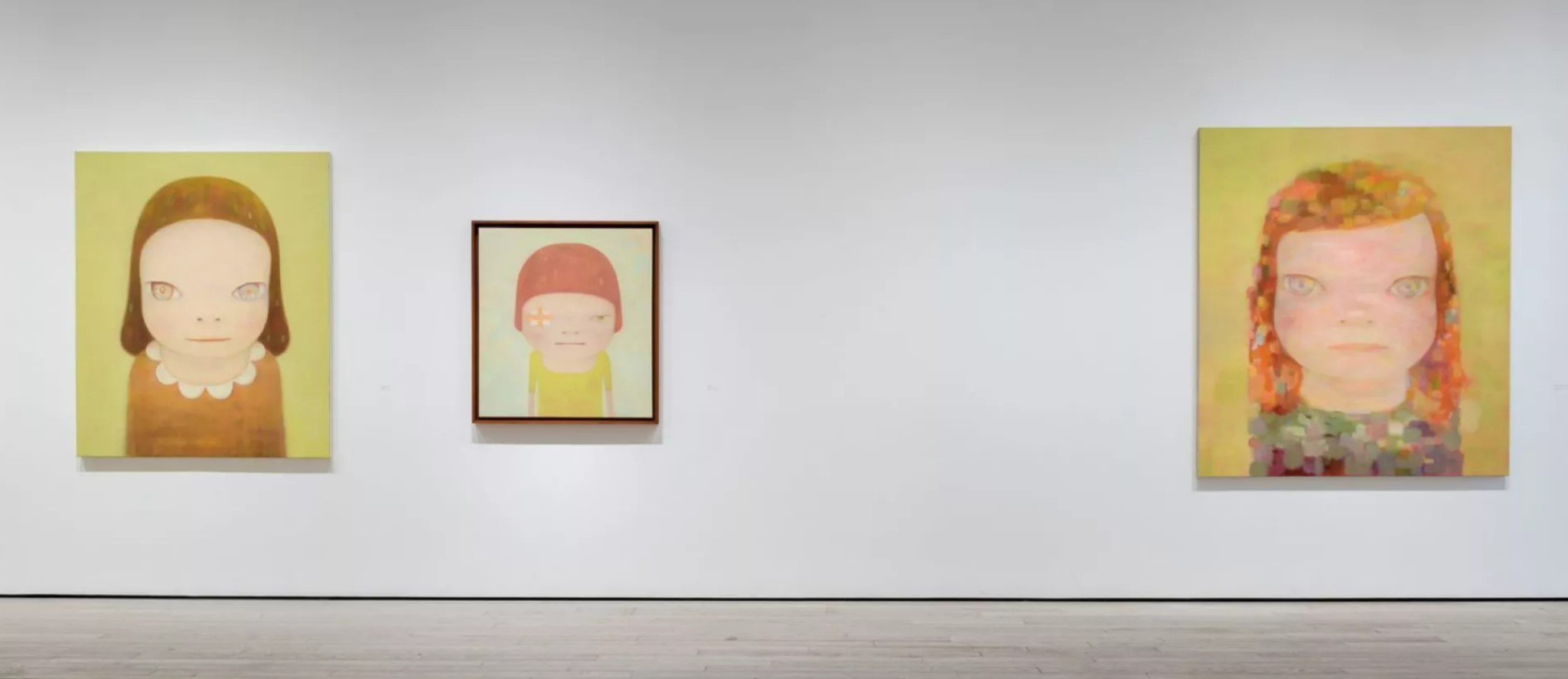
THE PRESENT WORK INSTALLED IN YOSHITOMO NARA AT THE LOS ANGELES COUNTY MUSEUM OF ART, 2021-2022. ART © 2022 YOSHITOMO NARA
Yoshitomo Nara’s spellbinding Light Haze Days / Study evinces the earnest sensitivity and captivating complexities of the artist’s signature protagonists. Impeccably rendered against a background of saturated yellows, the rosy-cheeked girl gazes at the viewer with startling intensity, dichotomously vulnerable and defiant, relatable and inscrutable. In Light Haze Days/ Study, the layers of prismatic hues appear to both reveal and mirror the complexity of the deeply enthralling, seemingly luminous, figure. Here for the first time, Nara returns to his most recognizable motif with a new stylistic direction, one that is routed in his fundamental appreciation for art history. Coded with autobiographical and historical references, Light Haze Days / Study transcends audiences and defies categorization, forcing the viewer to examine their individual perception of encountering the work. During a period of global despair and uncertainty, through Light Haze Days / Study, Nara radically responds with a painting imbued with radiant positivity and a joyful palette, a defiant response to his surroundings. The galactic eyes and large scale imbue Nara’s protagonist with a sense of intimacy, her celestial gaze piercing the viewer’s soul. Refusing a singular referential understanding, the figure becomes a universally relatable representation of the present generation, tenderly illustrated with an emotional honesty unique to Yoshitomo Nara.
Be Happy, 1995
Christie’s New-York: 9 May 2022
Estimated: USD 5,500,000 – 7,500,000
USD 6,420,000
YOSHITOMO NARA (B. 1959) (christies.com)
YOSHITOMO NARA (B. 1959)
Be Happy, 1995
Acrylic on canvas
76×76 cm (30×30 inches)
Signed in Japanese, titled, inscribed and dated ‘Be Happy ’95 in L.A.’ (on the reverse)
Rendered on a square pale background, Be Happy depicts a bust-length portrait of a surly young girl. Wearing a light blue t-shirt, she grips a small knife in her fingerless hand. The head is lentoid and oversized, as is usual with Nara’s subjects, and lends the figure a cartoony, cherubic air. Any sweetness, however, is countered by the large, narrowed green eyes that stare menacingly from under a small shock of brown hair. The mouth is pursed tightly, entirely painted in one red stripe beneath almost snakelike nostrils that seem to be set directly into the face, devoid of any real nose. Using these characters as stand-ins for a generation of young people at the dawn of the twenty-first century, Nara creates an iconic presence that resonates with a vast audience in Japan and beyond. The girl is neither inherently good nor evil, but her countenance suggests a pointed outlook on the future, and the knife she clutches seems intended for something less milquetoast than cutting her vegetables.
Oddly Cozy, 2013
Sotheby’s Hong-Kong: 27 April 2022
Estimated: HKD 80,000,000 – 120,000,000
HKD 111,870,000 / USD 14,269,511
YOSHITOMO NARA (b. 1959)
Oddly Cozy, 2013
Acrylic on canvas
194×162 cm (76 3/8 x 63 3/4 inches)
Signed and dated 2013 on the reverse
Impressive in size and arresting in its visual power, Oddly Cozy is a dazzling, beguiling painting by the revered Yoshitomo Nara, a superlative example from the artist’s mature works that has never before been offered at auction. Larger than life, the tenderly depicted protagonist of Oddly Cozy emerges from a luminous chartreuse background, absorbing the viewer into her sparkling eyes of different colors, windows to distant galaxies or cosmic worlds. Beautifully detailed through meticulous layering of pigment, the eyes of this work are the soul of the painting, demonstrative of the artist’s move away from the early mischievous stare of his figures to his later ethereal dreamy gaze. The epitome of Nara’s later works, this painting was exhibited at the artist’s solo show at Pace Gallery in New York in 2013, signaling Nara’s mature, more meditative and introspective aesthetic underscored by deeper contemplations on the self and the world.
Nice To See You Again, 1996
Sotheby’s New-York: 28 November 2021
Estimated: USD 8,000,000 – 12,000,000
USD 15,430,800
Nice to See You Again | The Now Evening Auction | 2021 | Sotheby’s (sothebys.com)
YOSHITOMO NARA (B. 1959)
Nice to See You Again, 1996
Acrylic on canvas
180×150 cm (70 ¾ x 59 inches)
Signed Y Nara, titled and dated ’96 (on the reverse)
A monumental work that epitomizes the artist’s career-long exploration of themes of innocence, adolescence, and universal angst, Yoshitomo Nara’s Nice to See You Again stands as one of the strongest and most striking paintings of the artist’s thirty-year career. Ostensibly innocuous, the rosy-cheeked, wide-eyed, kawaii girl peers toward the viewer with startling intensity; as one notices her chubby fist brandishing a knife however, any assumptions of vulnerability are undermined. Set against a vibrant periwinkle background and rendered with characteristic virtuosity, Nara’s archetypal child is concurrently innocent and violent, docile and unruly, illustrating the radical potential of subversive and anarchic youth. One of only six portraits by Nara from the 1990s featuring the iconic little girl with knife, a limited group which also includes Knife Behind Back, the current auction record for the artist, Nice to See You Again is a masterpiece that epitomizes the very best of Nara’s oeuvre, at a moment where institutional recognition of his work is at an all-time high.
Executed in 1996, the present work sees Nara depart from the thick, Neo-Expressionistic outlines of his early work to his most recognizable and mature aesthetic, with his subject delicately rendered and set against a monochromatic background. Wisps of baby hairs frame the protagonist’s face and hairline, the yellow of her beret producing a halo-like effect against the periwinkle background, a cherub deviously defiant of any presumed innocence. Diminutive even in its holder’s tiny fist, the knife appears useless.
“Look at them, (the weapons) are so small, like toys. Do you think they could fight with those? I don’t think so, rather, I kind of see the children among other bigger, bad people all around them, who are holding bigger knives.”
Determinedly thrusting the knife at the viewer, Nara’s heroine stands as a symbol of infantilized innocence raging against an oppressive and more powerful world, undermining and subverting notions of childhood naivety.
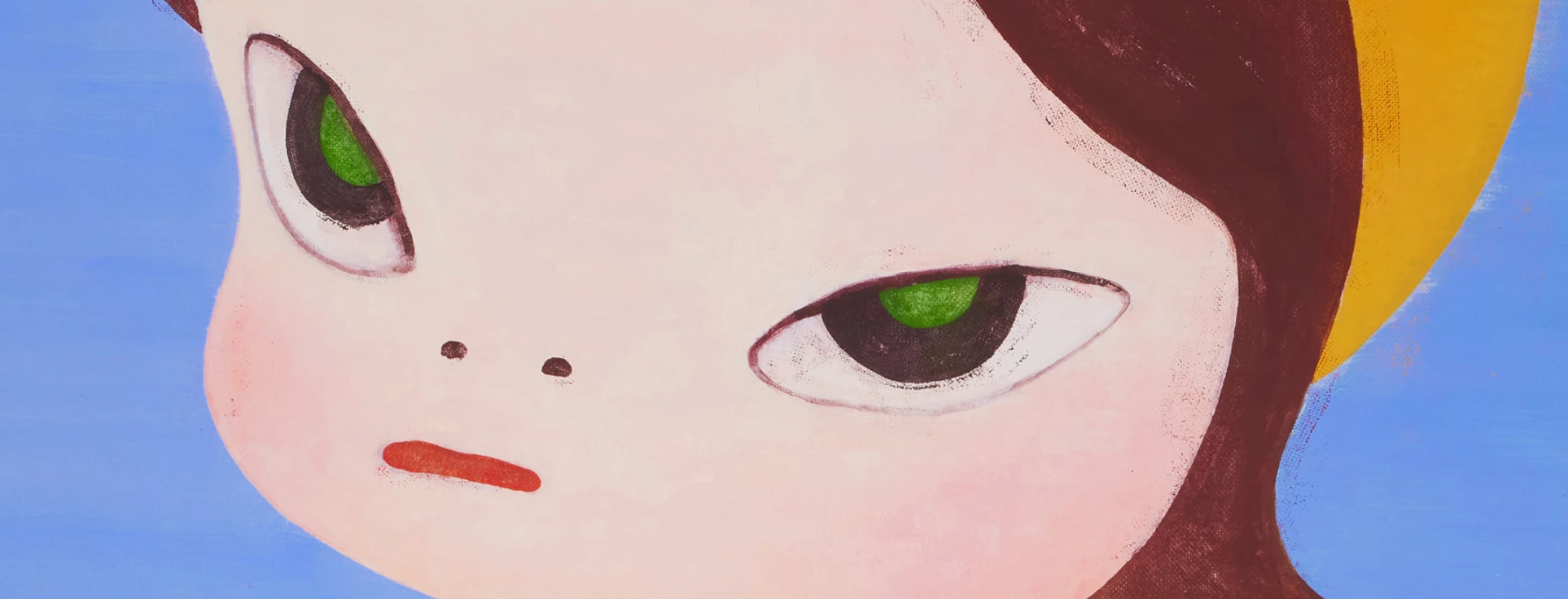
The title Nice to See You Again illuminates the mischievous dichotomies within the composition and figure herself, suggesting revolt or possibly revenge. The vast expanse of periwinkle juxtaposed against the flawless execution of Nara’s beguiling and recognizable protagonist reveals his idiosyncratic artistic vernacular grounding the figure in something universally relatable, a collective and globalized culture. Nara’s heroine meets our eyes with a penetrating gaze, confronting imperceptible adversaries and revealing our rebellious nature within. Tender and transfixing, the present work is a stunning testament to the unparalleled emotional resonance and unbridled angst that situates Nara as Japan’s most internationally acclaimed living painter.
Under the Hazy Sky, 2012
Sotheby’s Hong-Kong: 9 October 2021
Estimated: HKD 55,000,000 – 75,000,000
HKD 68,708,000 / USD 8,826,030
YOSHITOMO NARA (B. 1959)
Under the Hazy Sky, 2012
Acrylic on canvas
194.8 x 162 cm (76 ¾ x 63 ¾ inches)
Signed, titled and dated 2012 on the reverse
Under the Hazy Sky (2012) is a sensitive, thought-provoking work by Yoshitomo Nara, presenting two of Nara’s most famous motifs—the figure of the large-headed little girl, and the two-leaf sprout. Created after the devastating Great East Japan Earthquake on 11 March 2011, this painting is a poignant image of hope, a vision of the artist’s desire for peace and prosperity. Executed in the luminous, tonal aesthetic definitive of his later works, Under the Hazy Sky features the figure of a little girl in a red dress, elements of blazing orange shining through Nara’s delicate layers of semi-translucent paint. Standing out against the warmth of her dress, the girl clutches two fastidiously executed green sprouts in her hands, staring down at them with an air of sadness and contemplation. Significantly, the work was exhibited at Nara’s acclaimed A bit like you and me… exhibition, inspired by the Beatles song of the same name, at the Yokohama Museum of Art between 14 July and 23 September 2012. This marked his first show back at the Yokohama Museum of Art since his seminal solo exhibition there in 2001, I DON’T MIND, IF YOU FORGET ME, signaling his return to Japan from Germany and catapulting his career to dizzying new heights. Testament to its success, A bit like you and me… travelled to the Aomori Museum of Art where it was on display between 6 October 2012 and 14 January 2013, before finishing in Kumamoto at the Contemporary Art Museum from Kindchenschema 26 January to 14 April 2013.
Missing in Action, 2000
Phillips Hong-Kong: 8 June 2021
Estimate on Request
HKD 123,725,000 / USD 15,944,150
Yoshitomo Nara – 20th Century & Contemp… Lot 17 June 2021 | Phillips
YOSHITOMO NARA
Missing in Action, 2000
Acrylic on canvas
165×150 cm (64 7/8 x 59 inches)
Signed, titled, inscribed and dated on the reverse
Immediately commanding in its larger-than-life scale, Missing in Action is at once tender, delicate, and transfixing: a true masterpiece of technique and manner that beautifully exemplifies Yoshitomo Nara’s inimitable artistic practice at its finest. Painted in the watershed year of 2000, the same year as Nara’s auction record work of which Missing in Action directly succeeds in Volume I of his most extensive catalogue raisonne, the present painting is amongst the rarest works on canvas by Nara to come to auction. Indeed, of these treasured canvases painted in 2000, only six present the favored full-body depiction of his iconic Nara girl against a pearlescent background, as perfectly showcased before us in Missing in Action.
As a singularly exquisite example of his most iconic motif—the endearing yet mischievous child whose story is shared in repeated iterations throughout his extensive oeuvre—the central figure exudes a quiet defiance that belies her age. She dominates the center of the composition standing confident and tall, yet her large, rounded head is turned as she avoids our gaze. She’s aware of our presence but chooses not to confront us directly; instead, with narrowed jelly bean eyes and a downturned line of ruby-red smirk, she glares away with an almost silent accusation that triggers a universal protective instinct, leaving us to wonder what it is that we did so wrong.
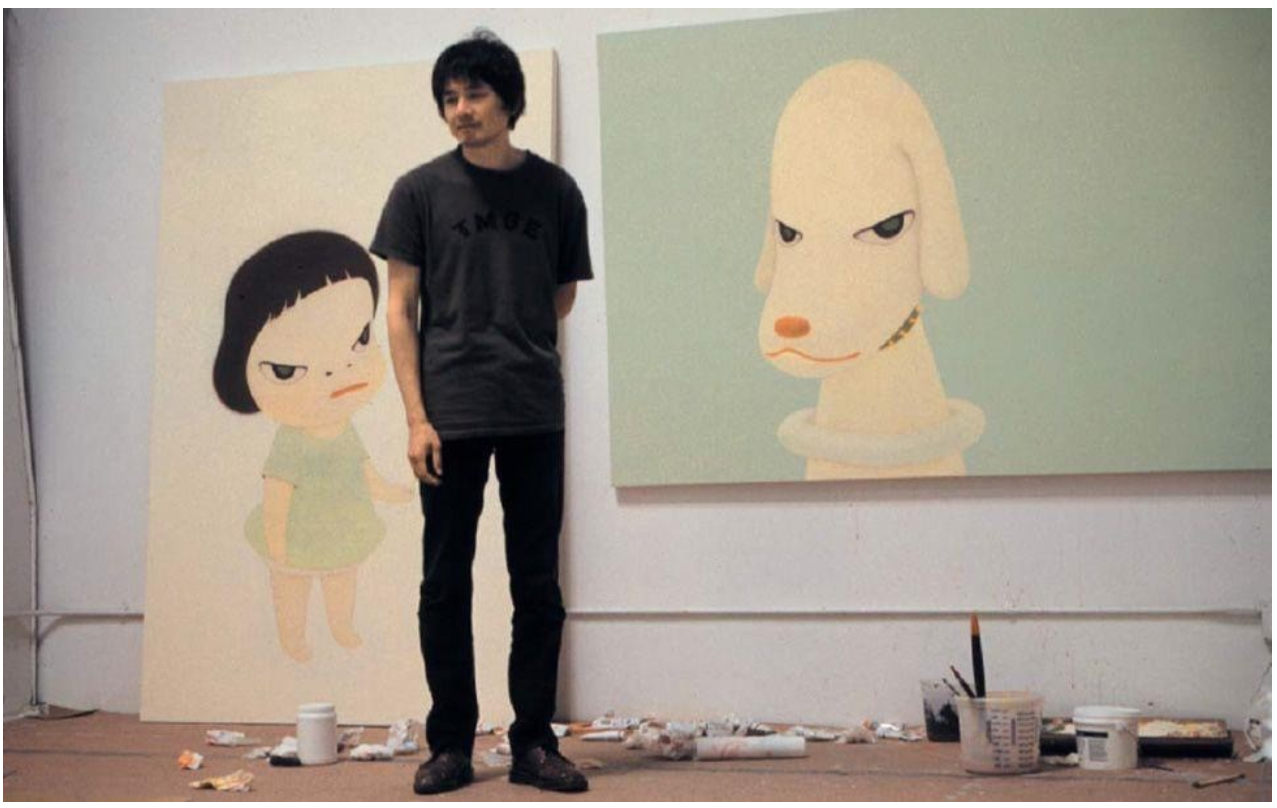
The artist in his studio, 2000
Although Nara has made different claims in the past as to who his heroine is, stating she is an embodiment of his childhood reflections, a portrayal born of the emotions of his unborn sister who did not survive childbirth, but also not based on any particular individual alone – here, with her tousled curls that draw a distinct similarity to the artist’s own long fringe, in many ways we can view the subject of Missing in Action as a self-portrait of Nara himself. But with there being no single correct answer in deciphering the identity of the iconic Nara girl, perhaps the better question to ask is not who she is, but rather what is it that she wants of us? And that answer, to a large degree, can be found by tracing back through each defining stage that has shaped his entire legendary oeuvre. Missing in Action is an instantly compelling image that ranks among the rarest works by Nara to come to auction, heralding from his watershed year of 2000. Importantly, it is one of only six treasured canvases from this defining point in Nara’s oeuvre to depict the favored full-body rendering of his prized heroine set against an iridescent backdrop. This series has since come to be recognized as among the artist’s most desired, recognized for uniquely boasting the perfect amalgamation of traits that are most iconic to Nara.
Frog Girl, 1998
Sotheby’s Hong-Kong: 19 April 2021
Estimated: HKD 40,000,000 – 80,000,000
HKD 96,284,000 / USD 12,397,425
YOSHITOMO NARA (B. 1960)
Frog Girl, 1998
Acrylic on canvas
120×111 cm (43 ¼ x 47 ¼ inches)
Signed, titled and dated 98 on the reverse
A tender and transfixing image that beautifully exemplifies Yoshitomo Nara’s late 1990s signature portraiture, Yoshitomo Nara’s Frog Girl evinces a vision as iconic, pervasive, and paradigmatic of the contemporary visual lexicon as Warhol’s Marilyns and Lichtenstein’s blonde bombshells. Executed in 1998, the painting situates at the precise point when the artist reached his mature aesthetic and features the most recognizable Yoshitomo Nara heroine: the girl in a green dress set against a pearlescent neutral background. Rendered in flawless execution, the exquisite facial features of our radiant protagonist ranks amongst the most accomplished within Nara’s subjects, bearing an astonishingly high resemblance to (almost a direct mirror image of) the image in Knife Behind Back, 2000, which achieved Nara’s world auction record of US$ 25 million in 2019. The present work’s title, “Frog Girl”, is unique within Nara’s oeuvre, likely attributable to the resemblance between the girl’s features and that of a frog: wide round face, flat nose, and sharp protruding eyes. Nara is currently subject of a large-scale travelling retrospective that began at the Los Angeles County Museum of Art, while his universally resonant oeuvre is subject to an expanding field of scholarship, which delves beyond his deceptively simple surface aesthetic to explore the ideology and subversive driving force behind the epochal iconography of sullen, disgruntled yet endearing youth.
Knife Behind Back, 2000
Sotheby’s Hong-Kong: 6 October 2019
Estimate on Request
HKD 195,696,000 / USD 24,954,958
(#1142) YOSHITOMO NARA | Knife Behind Back (sothebys.com)
YOSHITOMO NARA
Knife Behind Back, 2000
Acrylic on canvas
234×208 cm (92 ⅛ x 81 ⅞ inches)
Signed, titled and dated 2000 on the reverse
Monumental in scale, Yoshitomo Nara’s Knife Behind Back evinces a vision as utterly iconic, pervasive, and paradigmatic of the contemporary visual lexicon as Warhol’s Marilyns and Lichtenstein’s blonde bombshells. Ranking amongst the largest works on canvas by the artist to appear at auction, Knife Behind Back announces a double-edged warning: the painting’s title broadcasts the presence of a weapon, whose absence in the image is made more marked and more menacing. Not only is there a knife, but it is hidden with intent, primed for attack. Absence thus takes on not only a presence of its own but an amplified one – the knife’s threat made infinitely more ominous in its deliberate concealment – a strategy that underscores the unexpected insurgent power of children and the associated radical potentiality of the insignificant, the innocent, the fictionary, and the imagined. It is in this way that – like no other painting by Nara – the unparalleled Knife Behind Back superlatively condenses the grounding ideology and subversive driving force behind Nara’s epochal iconography of sullen, disgruntled, yet endearing and captivating youth. Rendered in exquisitely flawless execution, and towering at larger-than-life dimensions, our radiant petite heroine extends to the twenty-first century an art historical lineage of knife-wielding female protagonists from Judith to Lucretia to Charlotte Corday with a remarkable twist – by not showing her knife, she might be the most astute, the most elegant, and the most empowered, of all.
Haze Days, 1998
Christie’s London: 15 October 2025
Estimated: GBP 6,500,000 – 8,500,000
PASSED
YOSHITOMO NARA (B. 1959), Haze Days | Christie’s
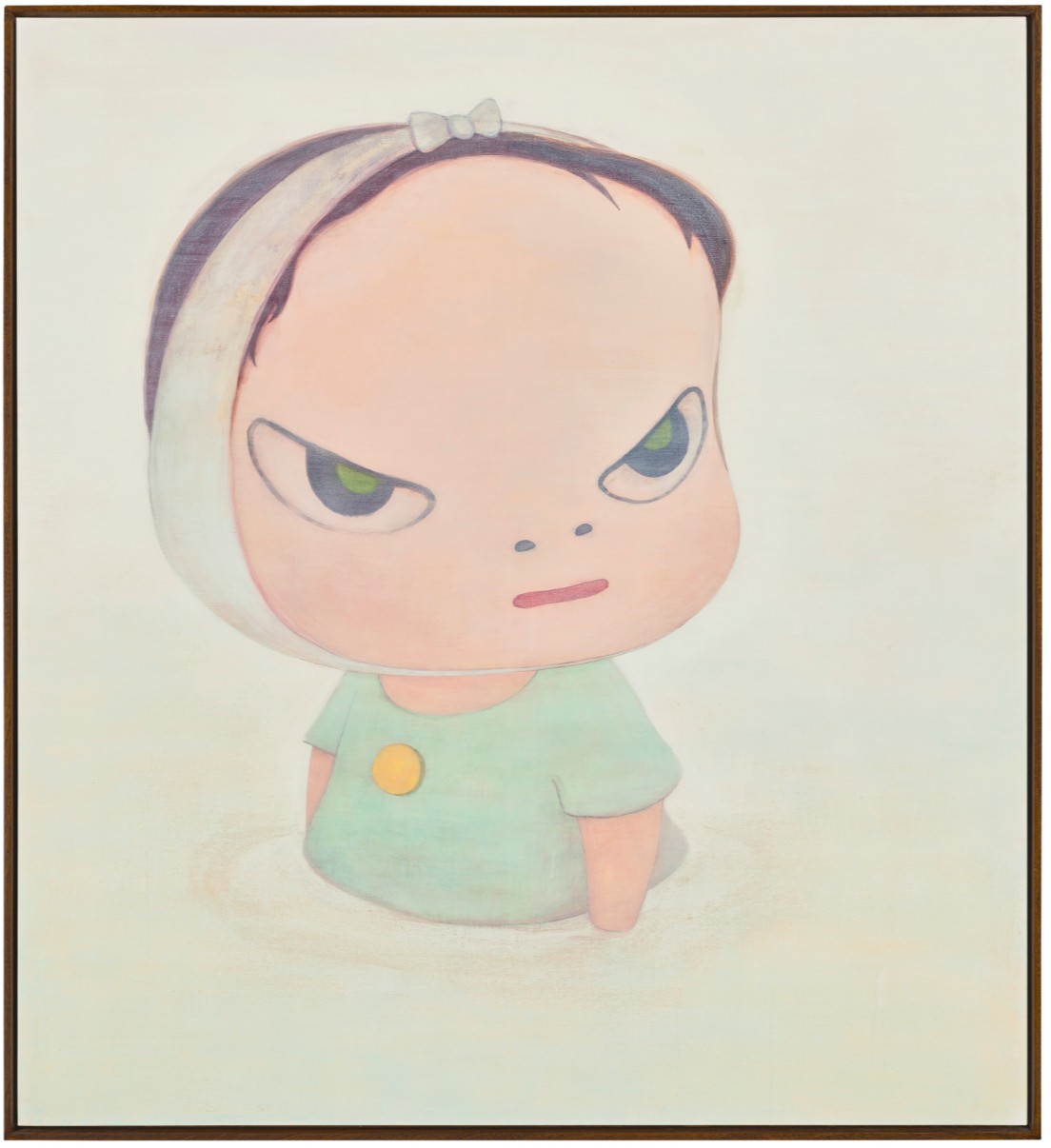
YOSHITOMO NARA (B. 1959)
Haze Days, 1998
Acrylic on canvas
180.3 x 164.5 cm (71 x 64 3/4 inches)
Signed in Japanese, titled and dated ‘’98 HAZE DAYS’ (on the reverse)
Almost two meters in height, Haze Days (1998) is a luminous and unmistakable painting by Yoshitomo Nara. One of the artist’s iconic girls stands waist-deep in a pool, a bandage tied in a neat bow around her head. She wears a mint-green top with a single gold button. Narrowing her large, otherworldly eyes—irises black and pupils green—she meets our gaze with grumpy defiance. Foreground and background merge in a misty space of pale, pearlescent color: subtle washes drift across the girl’s features, placing her amid the haze of the title. Impressed traces of pigment soften her eyes and mouth. The work exemplifies the unique presence of Nara’s solitary figure paintings, which radiate potent, enigmatic emotion through the most economical of means. It reveals the newly delicate palette and technique that the artist began to explore in the late 1990s, departing from the bolder, more graphic lines of his previous paintings. Nara was recently celebrated in a landmark retrospective that toured the Guggenheim Museum Bilbao, the Frieder Burda Museum, Baden-Baden and the Hayward Gallery, London from 2024 to 2025.
Haze Days dates from a watershed year for Nara. After graduating in 1993 from the Kunstakademie Düsseldorf—where his teachers included the artist A. R. Penck—he had moved to Cologne. He was able to work on a larger scale than ever before and painted prolifically, refining his visual language towards the standalone figures for which he is best known today. 1998 saw his first solo museum show at the Institute of Visual Arts at the University of Wisconsin, Milwaukee: alongside his friend and contemporary Takashi Murakami, he was also invited by the artist Paul McCarthy to the University of California, Los Angeles as a visiting professor. That same year, 124 of Nara’s works were acquired by the preparatory committee for the Aomori Museum of Art, which would open near his Japanese hometown in 2006. These included the important painting Mumps (1996), whose bandage motif anticipates the present work. Nara lived in Cologne until 2000, when he returned to Japan to prepare for a major exhibition at the Yokohama Museum of Art.
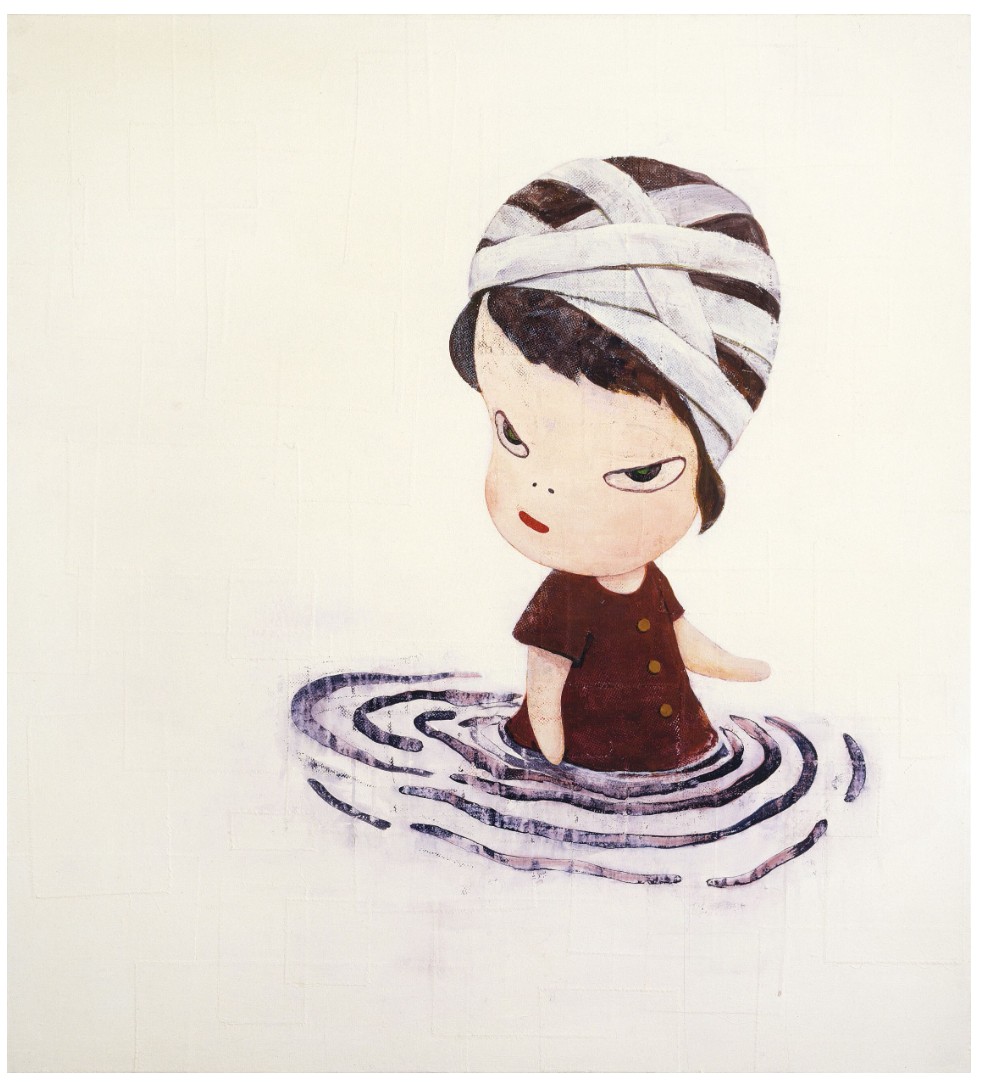
Yoshitomo Nara, In the Deepest Puddle II, 1995. Takahashi Collection, Tokyo. Artwork: © 2025 Yoshitomo Nara.
Born in 1959 in Hirosaki, a traditional castle town in Japan’s rural Aomori Prefecture, Nara was awakened to art through music. He purchased his first single when he was only eight years old, and built his own radio, which allowed him to pick up broadcasts from a nearby US Air Force base. As he grew up, these record covers and foreign sounds—Janis Joplin, The Beatles, The Ramones—allowed him to imagine another world. He was also an avid reader, fascinated by Takeshi Motai’s dreamlike illustrations for the poems and fairytales of Kenji Miyazawa. Nara enrolled at Musashino Art University in Tokyo in 1979, and a few months later embarked on a formative backpacking trip through Europe, where he experienced musical subcultures and saw masterpieces of European art first hand. After graduating from Aichi University of the Arts in 1987, he moved to Düsseldorf to further his studies. It was in Germany—informed by his outsider’s perspective on Western traditions, his training in Japanese Modernism, the Pop-adjacent work of contemporaries such as Murakami and the vigor of German Neo-Expressionism—that his distinctive style took shape.
Roy Lichtenstein, Look Mickey, 1961. National Gallery of Art, Washington, D.C.
Artwork: © Board of Trustees, National Gallery of Art. Digital image: Courtesy of National Gallery of Art, Washington, D.C.
“I think I was looking for a new form of expression through my own history: one that couldn’t be categorized as Japanese, Asian, or Western. When a painting emerged that became a symbol of Nara, I was very excited: This is an original!”
Nara’s 1993 graduation show in Düsseldorf included the seminal painting The Girl with the Knife in Her Hand (1991, San Francisco Museum of Art), which set out the emotive immediacy and playful menace that would come to characterize his famous ‘big-headed girls.’ These figures developed significantly during the Cologne years that followed. As he shed the narrative complication and heavy lines of his earlier work, Nara’s protagonists approached the distilled, enigmatic clarity of the girl in Haze Days, inhabiting spaces whose pastel tones conjured the early Renaissance frescoes he had admired in Italy.
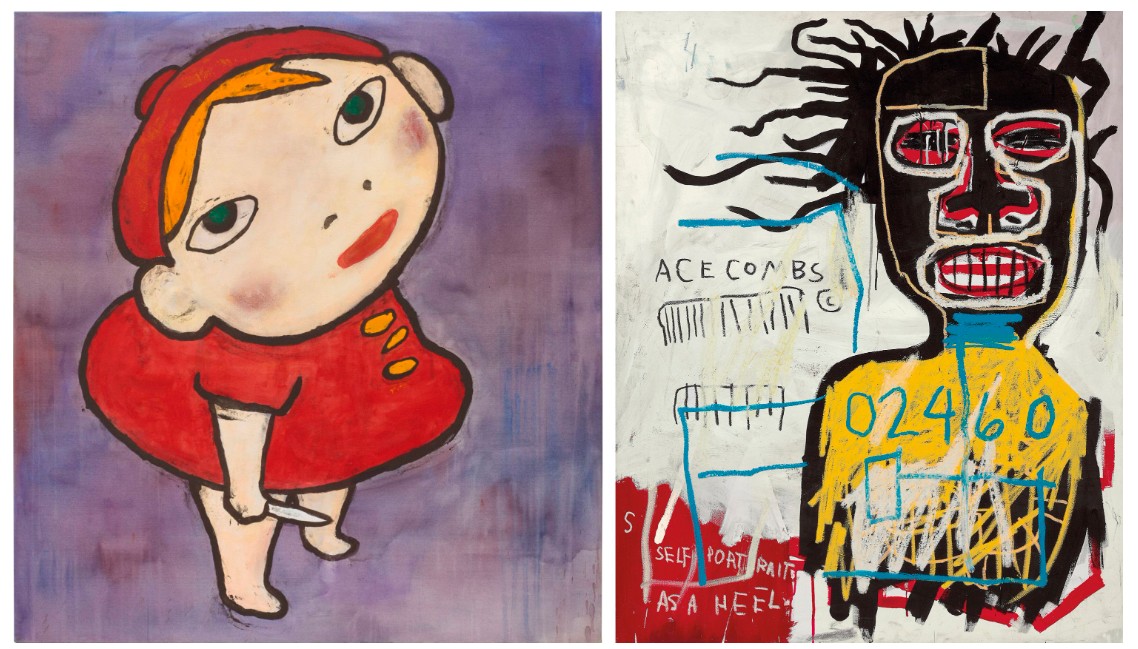
Left: Yoshitomo Nara, The Girl with the Knife in Her Hand, 1991. San Francisco Museum of Modern Art. Collection of Vicki and Kent Logan, fractional and promised gift to the San Francisco Museum of Modern Art. Artwork: © Yoshitomo Nara.
Right: Jean-Michel Basquiat, Self Portrait as a Heel, 1982. Private collection. Artwork: © Estate of Jean-Michel Basquiat. Licensed by Artestar, New York.
Nara sees these characters as a form of self-portraiture, representing aspects of his mood, memories and experience. They emerge to the beat of a constant studio soundtrack that helps to stir his emotions.
‘When I paint, I always think that the canvas is like a mirror, and that I am reflected in it. By tracing myself, I create a picture. It just happens to take the form of a girl, or a dog, or an animal, and almost ninety percent of the time I think I’m drawing a self-portrait, and I’m interacting with it.”
The bandage seen in the present work recurs frequently in Nara’s paintings and drawings of this period, and refers to the compress worn by children with mumps—a common illness during the artist’s childhood. The girl’s frown implies she is in no need of our sympathy.
Utagawa Kuniyoshi, Picture of the Miyato River, 1831-1832. Digital image: Molteni & Motta/UIG / Bridgeman Images.
The figure in a puddle in is another leitmotif, appearing in key works such as In the Deepest Puddle II (1995, Takahashi Collection, Tokyo).
“It’s a state of thinking. Not frozen in thought, but rather thinking about the next action … maybe.”
Unusually, he has identified a direct inspiration for the image in the cover for John Hiatt’s 1975 album Overcoats, which shows the musician partly submerged in a body of water. This record was included in a wall of vinyl LPs from Nara’s vast personal collection that was shown in his recent retrospective. In Haze Days, the pool heightens the painting’s liminal quality: the girl stands poised between one realm and another. She becomes an apt avatar for Nara’s practice as a whole, which merges outlooks drawn from different traditions, and whose forms—irresistibly relatable, and with a universal visual appeal—are ultimately born from a private and complex inner world.
Music
Broken Heart Bench, 2006-07
Sotheby’s London: 9 October 2024
Estimated: GBP 2,500,000 – 3,500,000
PASSED
Broken Heart Bench | Contemporary Evening Auction | 2024 | Sotheby’s (sothebys.com)
YOSHITOMO NARA (b. 1959)
Broken Heart Bench, 2006-07
Acrylic on wood, in artist’s frame
287 x 227.3 cm (113 x 89 1/2 inches)
Signed twice and dated 2006 and 2007 (on the reverse)
Yoshitomo Nara’s Broken Heart Bench from 2006-07 captures the artist’s signature visual power that harnesses and juxtaposes tropes of innocence and sedition. Simultaneously rebellious and reflective, the young girl’s olive eyes narrow into a menacing glare, her lips taught with tension in a singular red line in angst or anger. Boldly rendered upon a ground of painted wooden panels almost 10 feet in height, Nara’s archetypal child is concurrently innocent and violent, docile and unruly; traits that illustrate the radical potential of subversive and anarchic youth. Youthful naiveté is undercut by defiance, write large on a monumental scale.
Jean-Michel Basquiat, Flexible, 1984. Private Collection. Art © Estate of Jean-Michel Basquiat, licensed by Artestar
Imbued with a graphic and material immediacy that echoes Jean-Michel Basquiat’s iconic painting Flexible from 1984, Nara’s Broken Heart Bench belongs to the artist’s celebrated Billboard Paintings. With it’s emblematic motif, it is the first and original major work from an iconic small series of five iterations, of which there are three additional monochromatic paintings on wood, including Broken Heart Bench (New Castle Version) and Broken Heart Bench (Aomori Version), both from 2008. A testament to its calibre as a major work by the artist, Broken Heart Bench was a focal point of lin Baracke (+graf/YNG) in 2007 and exhibited at the GEM Museum of Contemporary Art, The Hague the following year.
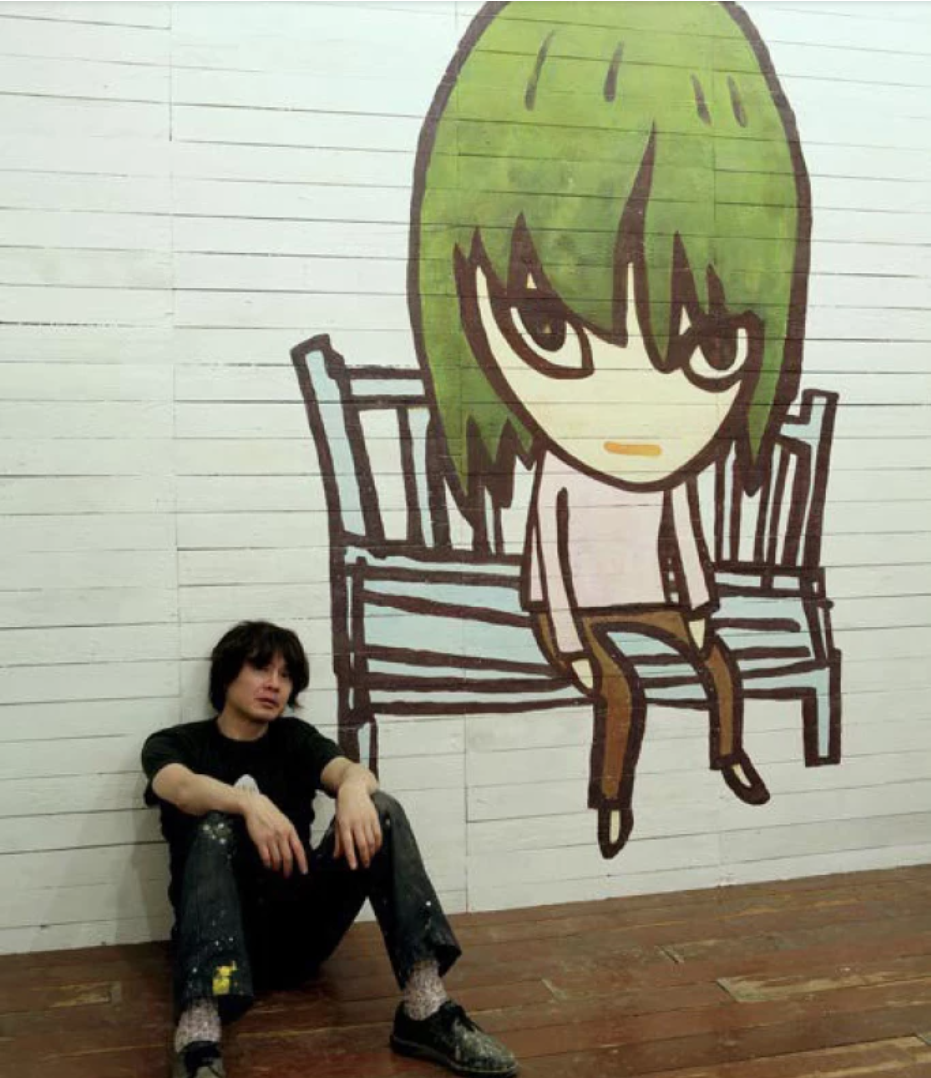
The artist with the present work, installed in Yoshitomo Nara + graf: Berlin Baracke, Galerie Zink, Berlin, 2007. Art © Yoshitomo Nara
Representing a career-long fascination for the artist, the small girl is the utter embodiment of Nara’s pursuit and exploration of themes of solitude, rebellion and innocence: characteristics that define the very essence of childhood. The present figure’s assertive expression disarms the viewer, asking Nara’s audience to wonder what caused this child such melancholy or sorrow. The combination of youthful features with complex emotional expression culminates in a sense of unease: Nara’s young girl harbours a self-possession and knowing-ness beyond her ostensible years. Art historian Kristin Chambers observes that, through his portraits of children, “Nara captures the tension between innocence and experience, physical isolation and mental freedom, containment and independence” (Kristin Chambers,ed., Yoshitomo Nara: Nothing Ever Happens, Cleveland 2008, p. 10). By embracing seemingly paradoxical elements, Nara captures the nuance of human experience in the many faceted expressions of his subject.
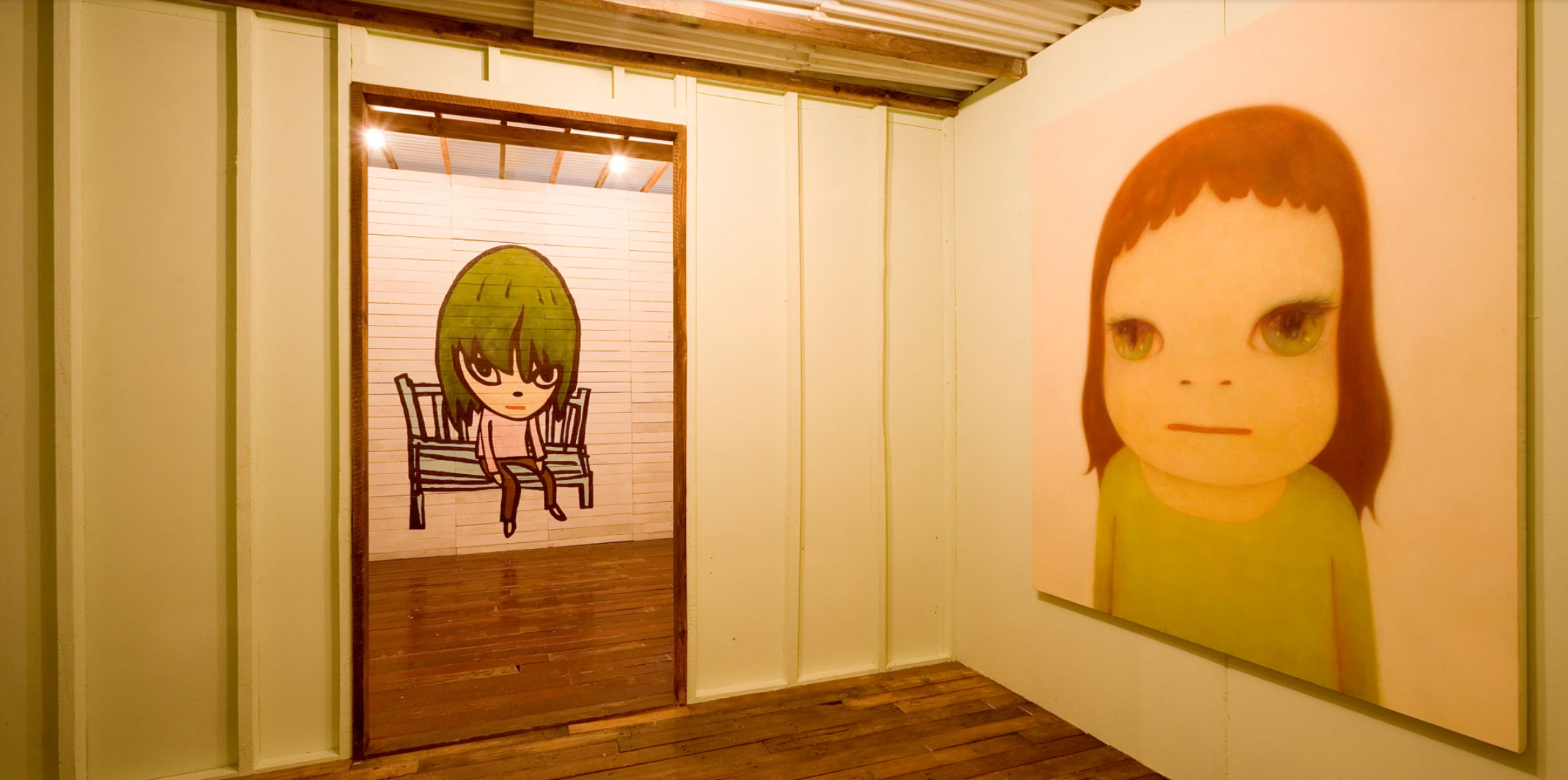
The present work installed in Yoshitomo Nara + Graf: Into the Luminous Halo Around Us, GEM museum of contemporary art, The Hague, 2007. Art © Yoshitomo Nara
Representing a career-long fascination for the artist, the small girl is the utter embodiment of Nara’s pursuit and exploration of themes of solitude, rebellion and innocence: characteristics that define the very essence of childhood. The present figure’s assertive expression disarms the viewer, asking Nara’s audience to wonder what caused this child such melancholy or sorrow. The combination of youthful features with complex emotional expression culminates in a sense of unease: Nara’s young girl harbors a self-possession and knowing-ness beyond her ostensible years. By embracing seemingly paradoxical elements, Nara captures the nuance of human experience in the many faceted expressions of his subject. Melded with the influence of Japanese historical and youth culture, the canon of Western Modern masters can be detected as an important stimulus for Nara. Broken Heart Bench and Nara’s flattened and rounded aesthetic bears a resemblance in atmosphere and simplicity of line to Amedeo Modigliani’s later paintings of young girls. Nara has often declared his life-long admiration of Modigliani’s portraits, and images of Nara’s studio reveal that postcards of Modigliani’s work are often displayed as an inspiration for the artist. Known for his development of the modernist style, Modigliani’s oeuvre featured characters with exaggerated elongated features, which many have come to understand as the artist’s meditations on the illnesses in humanity drawn from his own ailment-laden life. In many ways, the girl’s plainness and somberness are precisely the characteristics that make her relatable to viewers, constituting a ubiquitous representation of youth – albeit one instilled with sadness, itself an underlying and dissident emotion that is perpetuated in Nara’s cartoon-like portraits.
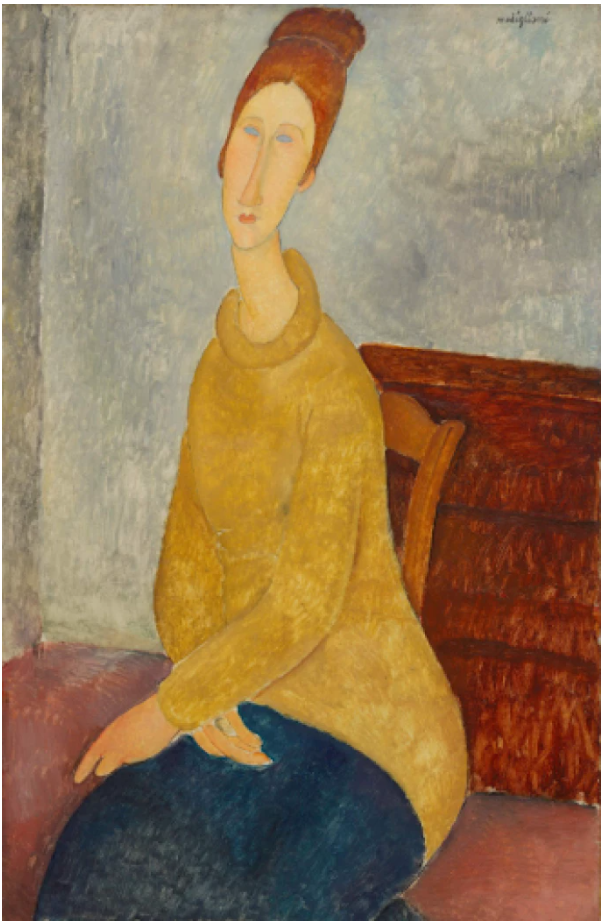
Amedeo Modigliani, Jeanne Hébuterne with Yellow Sweater, 1918-19. Solomon R. Guggenheim Museum, New York.
Image: Art Resource, NY/ Scala, Florence
Coded with an array of autobiographical and historical references, Nara’s heroine meets our eyes with a penetrating gaze, confronting the self and revealing a rebellious nature within. The artist’s subject serves as a confrontational talisman for disenchanted youth; his little girls are not doing as they ought, and that dissonance exposes a collective expectation on culturally acceptable behavior – that is, in a demure, innocent, childlike, and pliable fashion. Nara’s fiercely expressive character leaves the viewer a feeling haunted and considering how innocence can be exploited as an illusion. In his depictions of girls, Nara captures a universal revolutionary spirit that resonates on a truly global scale. Tender and transfixing, the present work is a stunning testament to the unparalleled emotionality and captivating sincerity that situates Nara as Japan’s most internationally acclaimed living painter.
Rock You!, 2006
Christie’s Hong-Kong: 28 May 2024
Estimated: HKD 20,000,000 – 30,000,000
HKD 24,575,000 / USD 3,146,204

YOSHITOMO NARA (B.1959)
Rock You!, 2006
Acrylic on wood board
162×162 cm (63 3/4 x 63 3/4 inches)
Signed and dated ‘2006’ (on the reverse)
As the composition brimming with bright orange paint meets the rock and roll slogan ‘ROCK YOU!’, Yoshitomo Nara’s Rock You! delivers a rhythmic visual impact that is direct and striking for the viewer. One of the few large-scale billboard paintings from the artist’s oeuvre, Rock You! depicts Nara’s iconic slant-eyed girl, who is wearing bandage on her forehead and an emerald green dress. Her resolute face emanates a mix of rebellion and innocence that is instantly captivating. Created in 2006, Rock You! marks an important milestone in Nara’s post-millennium work—the use of ready-made materials in his paintings. In the same year, the work debuted in the legendary exhibition Yoshitomo Nara + Graf: A-Z held in Aomori, the artist’s hometown. It was organized by Nara and the architectural and design group graf, in collaboration with the Yoshii Shuzō Brick Warehouse. It remains Nara’s largest culture jamming to date, and it signified the convergence between Nara’s art and the local community and the fan frenzy that followed (more than 13,000 volunteers were mobilized for the planning and production of the exhibition).
Rock You! exemplifies Nara’s painting style of creating emotional resonance with simple and direct imagery and text, and it showcases the artist’s command of ready-made materials such as the billboard and wood. The large areas of single-color paints highlight the texture of raw wood, while the artist’s subtle layering of different color blocks lends richness to the composition, instilling a sense of depth into what looks like a super flat composition. In addition, the layout of text and images reveals the artist’s ingenious perception of depth in graphic design. For Nara, the interplay between image and text is central to his visual vocabulary, and handwritten-style text often appears in his paintings. The neatly arranged, almost typographic characters in Rock You! are rarely seen among his works. It brings to mind American artist Ed Ruscha’s painting series that combines typography inspired by comic strips with iconic imagery. Yet, unlike Ruscha, Nara largely draws his inspiration from the aesthetics of the album covers that he encountered growing up. Raised in a rural village in Japan near a U.S. military base, he listened to a wide array of Western music on broadcast. The artist once said, ‘The song playing on the radio stunned me… My whole precocious self was shaken to core!’(Y. Nara, quoted in Yoshitomo Nara: Nobody’s Fool, exh. cat., Asia Society Museum, New York, 2010, p.258)During his formative years, Nara was obsessed with music and collecting albums. Album covers were an opening for him to become immersed in visual aesthetics, and they formed an important foundation for his artistic language in the future. The artist named his monthly feature for Japanese art magazine Bijutsu Techō ‘In My Teens, I Studied Art through Record Jackets’. In 2020, the Los Angeles County Museum of Art held a retrospective exhibition for Nara, which featured a special wall mounted with 350 vinyl records from the artist’s private collection that resembled a large collage . It demonstrates the deep connection between Nara’s artistic language and the spirit of popular culture.

Ed Ruscha, OOF, 1962. Museum of Modern Art, New York © Ed Ruscha
The composition of this painting not only embodies the precision of graphic design aesthetics, but it also encapsulates some fundamental ideals that the artistic pursues through his art. Since the 1970s, Nara has been an avid lover of non-mainstream music. Compared to The Beatles and The Rolling Stones which were immensely popular at the time, he was more fascinated by punk music and its anti-commercial, anti-establishment ideologies.
“That song lit a fire in my raw teenage emotions. It was the Ramones! And then the Sex Pistols, and The Clash, and Bob Marley… They gave me an answer to how I’d live my life from then on.”
Apart from punk music from the West, Nara also loved the work of Japanese musician Kiyoshiro Imawano. The zeitgeist embodied in the music became essential nourishment for Nara’s artistic creation. The rebellious little girl in Rock You! may be a reflection of Nara himself, and she is also ‘a symbolic representation of the dominant feelings of Japanese youth in the late 1990s and early 2000s, characterized by a sense of uncertainty about the future, vulnerability and a yearning for innocence preserved in the inner child.’ (M. Matsui, quoted in Yoshitomo Nara: Nobody’s Fool, exh. cat., Asia Society Museum, New York, 2010, p.13.)

Poster of Ramones and Meyce show at Seattle’s Olympia Hotel, March 6, 1977. Photo: Bill Waterson / Alamy Stock Photo
For the artist, ‘punk’ is not only a subculture but also a complete rejection of conformity. As one of the leading artists of Japan’s Neo Pop movement that celebrates subculture, Nara’s art resonates more deeply with the inner emotions of people than Pop Art which emerged in Europe and the United States in the 1950s. Art historian Miwako Tezuka explained, ‘While Nara’s images are intentionally devoid of symbolic meaning, the words fill in the gaps in the minds of his audience with poetry, sounds, and even the exalted feeling during live performances. They are mnemonic devices surrounding a single image and can be woven together selectively by each individual…’ (M. Tezuka, quoted in Yoshitomo Nara: Nobody’s Fool, exh. cat., Asia Society Museum, New York, 2010, p.95.) Rock You! is a perfect illumination of this empathetic power—the girl’s closed lips are rendered as a thin red line, and it meets the impassioned phrase in front of her that resounds like lyrics from a punk rock song, expressing the unspoken thoughts and unvoiced feelings of young listeners. Nara’s art focuses on the viewer rather than the artist, and the emotions and empathy that it evokes are a manifestation of art for the people. Rock You! is a seminal work from Nara’s artistic exploration, as it is a beacon of hope for the young, lost rebels that live within many of us.
Untitled, 2008
Sotheby’s Hong-Kong: 5 April 2024
Estimated: HKD 28,000,000 – 35,000,000
HKD 33,120,000 / USD 4,234,211

YOSHITOMO NARA (b. 1959)
Untitled, 2008
Acrylic on board
231.1 x 186.7 x 12.7 cm (91 x 73 1/2 x 5 inches)
Signed and dated 2008 on the reverse
Whimsical, rebellious and exuding a defiant naivety, Untitled from 2008 is an instantly arresting example of Yoshitomo Nara’s celebrated billboard paintings. Returning to auction for the first time in over a decade, the boldly rendered figure of the artist’s quintessential large-headed protagonist grips a guitar, her strikingly cherubic face snarling as she plays. Despite the guitar being an indispensable visual component of Nara’s oeuvre, only eight works from the acclaimed series of billboard paintings feature the artist’s heroine holding a guitar, with the present work’s twin composition, 1, 2, 3, 4! It’s Everything! (Aomori Version), belonging to the artist’s own collection entrusted to the Aomori Museum of Art. Epitomizing the very best of Nara’s oeuvre at a moment where institutional recognition of his work is at an all-time high, there being two museum retrospectives being held this year alone, the transfixing Untitled is testament to the unparalleled emotional resonance and unbridled angst that situates Nara as Japan’s most internationally acclaimed living painter.

Making its debut at the artist’s solo show at Blum and Poe Los Angeles in 2008, Untitled is a quintessential example of the artist’s beloved Ramona girl. Named in homage to the New York Punk band the Ramones, the Ramona epitomizes Nara’s use of the ‘minor’ child as a vehicle for oppositional and subversive allegory, be it the potential of music to influence and interrupt the world of a child, or the insight that such a child’s naivety can provide in a corrupted world. Confronted by the glowering scrutiny of the little punk rocker in her saccharinely sweet green dress, the little Ramona’s penetrating gaze speaks to our own discontents and aggressions against an imperfect world. The lonesome performer of the present work is concurrently innocent and violent, docile and unruly, illustrating the radical potential of subversive and anarchic youth, with Nara subverting the meaning of a familiar image, creating a dichotomy between visual expectation and reality. As Nara describes, “these works were born not from confronting the other, but from confronting [his] own self.” (Yoshitomo Nara quoted in, Yoshitomo Nara, Los Angeles 2020 (online)).

For Nara, music is a vital component of both his working practice and the emotive spirit behind his art. As a young artist in the 1980s, Nara gravitated toward the anti-establishment ethos of punk music, with lyrics from bands like The Clash and the Sex Pistols appearing throughout his artwork. A major theme explored in the historic retrospective being held in the artist’s home town at the Aomori Museum of Art this year is the nascent influence of music on the young artist’s career. Recreating the “Rock Cafe” opened in 1977 in Hirosaki that was frequented by Nara as a teenager to drink coffee and listen to rock music, this exhibition traces the lineage of what would become some of the artist’s most prolific painterly motifs. Growing up in rural Japan, it was album covers that provided Nara with an introduction to visual art that would go on to inform much of his work. In 2020, an entire room was dedicated to Nara’s expansive collection of over 350 vinyl records at the artist’s retrospective held at Los Angeles County Museum of Art.

YOSHITOMO NARA (RIGHT) AND FRIENDS IN FRONT OF ROCK CAFE 33 1/3 (HIROSAKI), 1977 © YOSHITOMO NARA
Visual elements such as guitars, microphones, and speakers are indispensable components of Nara’s oeuvre, with the incorporation of these elements allowing his work to resonate with other music fans, as well as sharing his own impulse for creation. An intimate part of his creative process, Nara would work “alone in his studio, usually late at night, with punk rock screaming from speakers. He chain-smokes as he concentrates on channeling all of his past ghosts and present emotions into the deceptively simple face of his current subject” (Kristin Chambers, Nothing Ever Happens, Cleveland 2004. p.26). Set against a wash of white, Nara creates an intimate state of solitude in Untitled, the archetypal child emerging, proud and independent, with her guitar as a symbol of individuality and silently expressed emotion. Characteristic of Nara’s unique artistic vernacular, these distinctly reduced backgrounds reveal an infinite space for self-reflection, with Nara’s universally recognisable figures representing the inner child and associated angst. In this content, the guitar becomes a symbol of creativity, a deeply personal and allegorical representation of the artist himself.

When Untitled first debuted in 2008, it appeared alongside an Americana, prairie-style wagon made of wood, representing a key stage within Nara’s creative career after the millennium. Beginning to collaborate with architecture and design collective graf on creating a series of small huts within exhibition spaces during the 2000s, Nara also began to work on a series of large size billboard paintings, which are essentially acrylic on wooden panels that can be shown outside of a gallery wall setting. According to the artist, this format of stepping away from typical white cube gallery spaces is fundamentally a challenge to the viewer’s experience. Favoring such objects as wood, signboard and cardboard during this period, the present work exemplifies Nara’s skill in conquering a vast surface of readymade materials whilst maintaining his own signatory aesthetics. Against the blush of the child’s cheeks the visible grain of the large wood panels surface, with almond-shaped kernels in the material reflecting the sharply delineated slope of her eyes. Flawlessly executed and instantly beguiling, Untitled is a testament to Yoshitomo Nara’s idiosyncratic artistic vernacular and universally relatable imagery. Nara’s heroine, with her snarling expression and defiant playing of her guitar, confronts imperceptible adversaries to reveal our own rebellious nature within. With Nara’s institutional recognition at an all-time high, the last three years have see major museum retrospectives at the Los Angeles Contemporary Art Museum, Aomori Museum of Art in Japan, as well as the travelling exhibition at Guggenheim Museum Bilbao, Frieder Burda Museum, Baden-Baden, and Hayward Gallery-Southbank Centre, London.
Guitar Girl on the Ice, 1994
Sotheby’s Hong-Kong: 6 April 2024
Estimated: HKD 15,000,000 – 20,000,000
HKD 18,600,000 / USD 2,377,908

YOSHITOMO NARA (b. 1959)
Guitar Girl on the Ice, 1994
Acrylic on canvas
100.5 x 100.5 cm (39 5/8 x 39 5/8 inches)
Signed, titled and dated 94 on the reverse
Executed in 1994, Guitar Girl on the Ice is an exquisite example of Yoshitomo Nara’s seminal subject matter: the captivating, lone, childlike figure. Open-eyed and beckoning, this rosy-cheeked, infantile figure clutches a guitar atop a block of pristine blue ice – at once vulnerable and forceful, subversive and comforting, the present work captures the enchanting emotional appeal of Nara’s enigmatic oeuvre. Amongst the earliest works by the artist depicting a solitary figure holding a guitar, the present work marks a critical shift in Nara’s technique from the rough-hewn neo-expressionist style of his early works, towards the refined contour lines and delicate layering of pigment of the artist’s later works. Emerging to auction for the first time, the virtually unseen and exceedingly rare Guitar Girl on the Ice has remained in the same family collection for over twenty years.
Acting as a prologue to Nara’s landmark solo exhibition at SCAI the Bathhouse in Tokyo the following year, paintings from 1994 now reside in significant public institutions, including The National Museum of Modern Art, Tokyo, the Toyota Municipal Museum of Art (as entrusted from a Private Collection) and the Aomori Museum of Art. It was in 1994 that Nara, with the help of gallerist Jörg Johnen, relocated to Cologne following his graduation from the esteemed Staatliche Kunstakademie in Dusseldorf. This move allowed the artist to begin working on large-scale canvases. A major theme of the artist’s historic retrospective being held at the Aomori Museum of Art this year is the artist’s love of music. This monumental exhibition held in the artist’s hometown includes a recreation of Jail House 33, a significant place in Nara’s early years. Opened in 1977, this “Rock Cafe” was frequented by Nara as a teenager to drink coffee and listen to rock music, influencing not only what would become some of the artist’s most prolific painterly motifs, but also his decision to perform as part of his own band. For Nara, music is a vital component of both his working practice and the emotive spirit behind his art, a relationship that was similarly explored as part of the artist’s retrospective held at Los Angeles County Museum of Art in 2020, in which an entire room was dedicated to his collection of over 350 vinyl records.

YOSHITOMO NARA, 2020. PHOTO CREDIT: RYOICHI KAWAJIRI.
Gazing out at the viewer atop a pedestal of ice, the central figure of the present work holds an acoustic guitar at her side, perhaps waiting for the right time to begin playing. Visual elements such as guitars, microphones, and speakers are indispensable components of Nara’s oeuvre, with the incorporation of these elements allowing his work to resonate with other music fans, as well as sharing his own impulse for creation. An intimate part of his creative process, Nara would work “alone in his studio, usually late at night, with punk rock screaming from speakers. He chain-smokes as he concentrates on channelling all of his past ghosts and present emotions into the deceptively simple face of his current subject” (Kristin Chambers, Nothing Ever Happens, Cleveland 2004. p.26). Growing up in rural Japan, album covers provided Nara with an introduction to visual art that would go on to inform much of his work. Set against a cavernous space of pearlescent luminosity, Nara creates an intimate state of solitude in Guitar Girl on the Ice, the archetypal child emerging, proud and independent, with her guitar as a symbol of individuality and silently expressed emotion. The setting of his young, solitary children against simple bare backgrounds would come to dominate Nara’s distinctive oeuvre, building a universally resonant visual lexicon that quickly gained a worldwide following.
F for Fang, 1999
Sotheby’s Paris: 7 December 2023
Estimated: EUR 70,000 – 100,000
EUR 88,900 / USD 95,923
F for Fang | Art Moderne et Contemporain Day Auction | 2023 | Sotheby’s (sothebys.com)
YOSHITOMO NARA (b. 1959)
F for Fang, 1999
Acrylic on canvas
19×18 cm (7 1/2 x 7 1/8 inches)
Signed, titled and dated 99 on the overlap
Yoshitimo Nara’s mischievous yet endearing portrait of a child in cat costume encapsulates the essence of Nara’s instantly recognisable oeuvre. Emblazoned with the name of the Japanese punk band ‘The Star Club’, F is for Fang is strikingly rendered with a red, graphic outline on white canvas, the wide eyes and rounded face arranged in an expression of fierce determination – one fang bared. The cartoonish proportions appear to be derived from both American twee and Japanese kawaii, yet this portrait is far from just sweet. The painting is imbued with a rebellious, anarchic spirit characteristic to Nara’s work at this time, certainly inspired by the ethos of punk music. F is for Fang was painted in 1999, during Nara’s final year in Cologne before his return to Japan, having spent some six years in the city and over a decade in Europe. These were, in Nara’s words, “golden days” where the artist developed his now-iconic style of painting. A breakthrough arrived with his 1995 show, In the Deepest Puddle, at Scai the Bathhouse gallery in Tokyo, and by the late 1990s Nara was attracting considerable critical and popular attention. Over subsequent years, Nara has developed something of a cult-like following, becoming one of the most beloved contemporary Japanese artists working today.
While related works show a child clearly wearing a cat costume, the present work appears to blend the two. There is a resemblance to Disney or storybook characters, emphasized in the wide-eyes and button nose, while carrying a subversive edge. Indeed, the repeated use of the cat costume is a reflection of a childhood memory for the artist. The first work of art he ever created was an illustrated kamishibai story about his cat and himself traveling together from the North to the South Pole. Nara designed the artwork for The Star Club’s 1999 album Pyromaniac the same year the present work was painted. To date, Nara has made artwork for 35 albums and references to music appear throughout his oeuvre. For Nara, music is a vital component of both his working practice and the emotive spirit behind his art. Growing up in rural Japan, album covers provided Nara with an introduction to visual art that would go on to inform much of his work. Later, as a young artist in the 1980s, Nara gravitated toward the anti-establishment ethos of punk music, with lyrics from punk and rock bands appearing throughout his artwork and the artist often imbuing his figures with a sense of riotous intensity. As a tribute to The Star Club, F for Fang exemplifies the importance Nara places on music, and in particular punk rock, which has formed an integral part of the artist’s illustrious oeuvre.
Guitar Girl, 2019
Phillips New-York: 17 May 2023
Estimated: USD 2,000,000 – 3,000,000
USD 2,480,000
Yoshitomo Nara – 20th Century & Contempo… Lot 12 May 2023 | Phillips
YOSHITOMO NARA
Guitar Girl, 2019
Acrylic on wood, in artist’s frame
118.1 x 94.9 x 7.9 cm (46 1/2 x 37 3/8 x 3 1/8 inches)
Signed and dated “2019 Nara” on the reverse
A young girl in a blue dress snarls and shreds her guitar in Yoshitomo Nara’s Guitar Girl, 2019. The determined, yet strikingly cherubic figure epitomizes Nara’s classic type, the “Ramona” (named for the Ramones, a punk rock band, and sporting the group’s signature, shaggy hairstyle), a feisty character who embodies youthful rebellion and ferocious self-determination. As a child, Nara’s first exposure to art came through the album covers of his favorite records.
“There was no museum where I grew up. As a teenager a song that played from the radio blew my mind… my whole precocious self was blown away! That song lit a fire in my raw teenage emotion. It was the Ramones! And then the Sex Pistols, and The Clash, and Bob Marley… They gave me an answer to how I’d live my life from then on.”
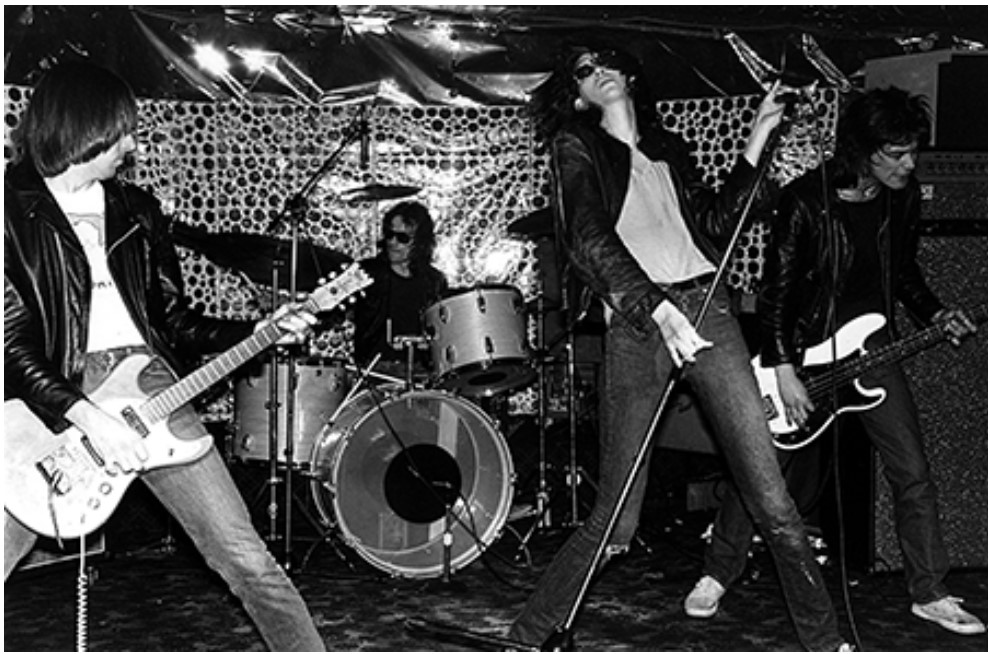
The Ramones playing the Phase V club in New Jersey, 1976. Image: Everett Collection Inc / Alamy Stock Photo
One can imagine Guitar Girl as a female avatar of Nara’s own teenaged self, listening to the Ramones’ guitar-heavy music on the radio, and practicing the riffs on her own. Nara’s simplified, expressive characters, reminiscent of children’s book illustrations and cartoons, reveal how deeply the visuals from Nara’s childhood influence his work. However, the artist is quick to reject manga, anime, and kawaii culture as visual referents; the influence of music and illustration is much more meaningful. That is not to say, of course, that Nara’s work is not without Japanese visual antecedents. The rounded facial features of Guitar Girl harken back to traditional otafuku (or okame) theatrical masks. The otafuku mask, worn in Noh theater performances, represents the Goddess of Mirth, an ever-smiling, rosy cheeked woman, who brings good luck to the man she marries (the word otafuku literally meaning “much good fortune”). Nara applies otafuku facial features—round cheeks, upturned eyes, and small lips—to his Guitar Girl, but crucially, he transforms the Goddess of Mirth’s eternal grin into a ferocious snarl. Guitar Girl seems to bite her lip as she bares her teeth, an aggressive gesture that speaks to the counter-cultural edge of Nara’s work. This punk rock ethos is reflected in the Tokyo street style fashion photography of Nara’s contemporary, Shoichi Aoki, for FRUiTS magazine. Nara’s Guitar Girl, like Aoki’s teenage models, captures the stylish dissatisfaction and malaise of a generation of young Japanese people navigating the lasting effects of Western culture on Japan after World War II.
1,2,3…, 2006
Sotheby’s Hong-Kong: 5 April 2023
Estimated: HKD 9,000,000 – 12,000,000
HKD 11,340,000 / USD 1,444,567
Yoshitomo Nara 奈良美智 | 1,2,3… | Contemporary Day Auction | 2023 | Sotheby’s (sothebys.com)
YOSHITOMO NARA (b. 1959)
1,2,3…, 2006
Acrylic on wood board
115×172 cm (45 1/4 x 67 3/4 inches)
Signed and dated 2006 on the reverse
To talk about Yoshitomo Nara, one cannot dismiss his passion for rock music. Since his youth in the late 1970s, Nara has been tremendously influenced by the essence of punk culture and underground rock music; they have not only contributed to his particular frame of mind growing up, but also seeped deeply into the backbones of his distinctive artistic practice. Beneath the adorable presence of children and animals is a rebellious attitude that sets him apart from the group of Neo Pop artists from the 1990s in Japan, making him one of the most popular Japanese contemporary artists of all time. Extensively exhibited, the large scale 1,2,3… (2006) is an exceptional example of Yoshitomo Nara’s celebrated billboard paintings and marks the first instance of what has become one of the artist’s most recognisable motifs; the little drummer girl. The work is not only the perfect testament to Nara’s love for rock music, but more importantly, it also represents a key stage within the artist’s creative career after the millennium, when he began to collaborate with architecture and design collective graf on creating a series of small huts within exhibition spaces, exploring beyond both the surface of canvas and small-scale drawings.
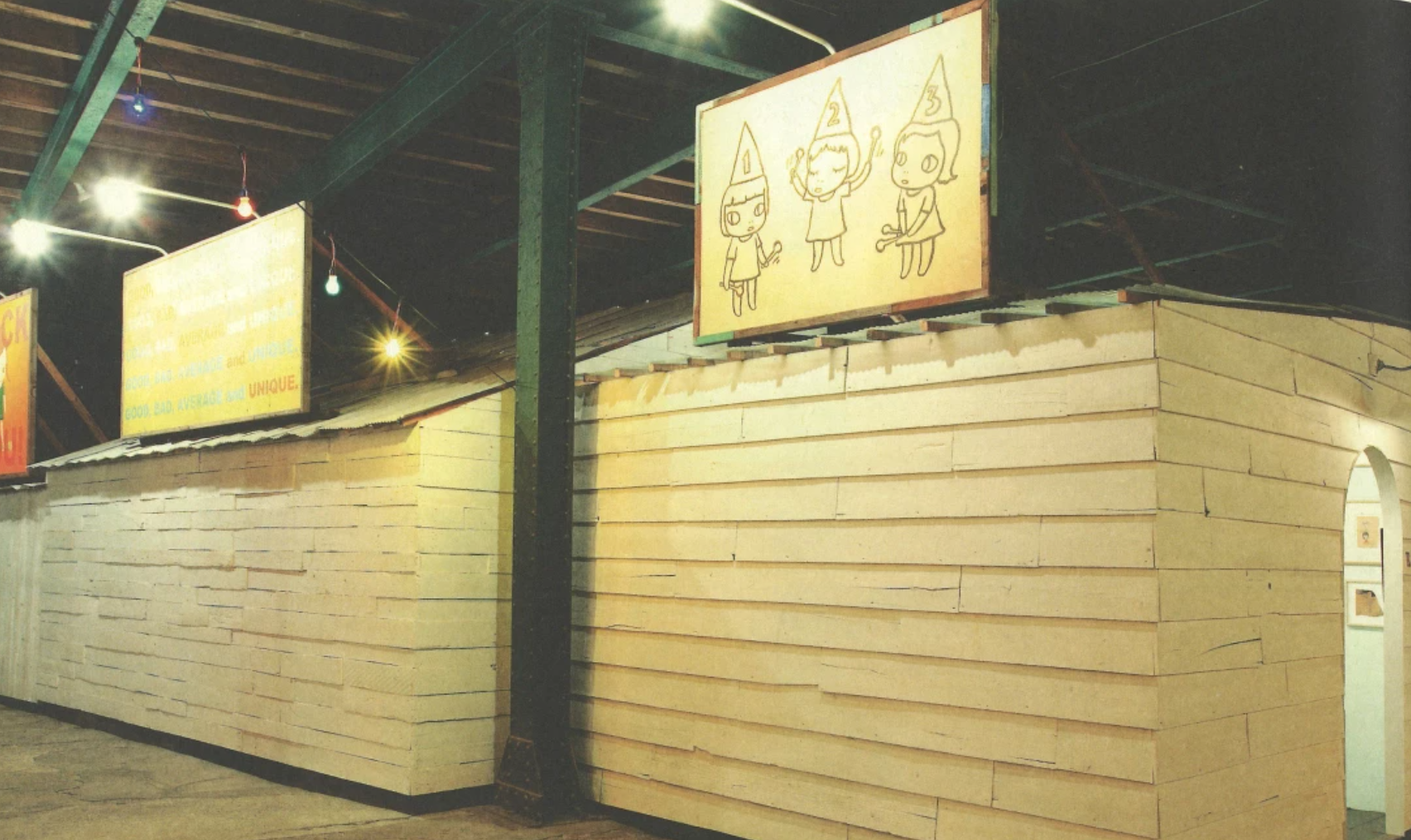
THE PRESENT WORK EXHIBITED ON THE ROOF OF SAN GEN NAGAYA HOUSE AT THE YOKOHAMA TRIENNALE, 2005
1,2,3… was featured as part of the extensive and critically acclaimed set of exhibitions between Nara and the design group graf. Beginning in 2003, this collaboration built massive installations of wooden houses with ready-made materials like driftwood and found objects as part of the project Yoshitomo Nara + graf, A to Z. As their most ambitious project, A to Z saw a series of 26 house installed, each responding to the physical space of the exhibition venue or the local culture and representing a letter from A to Z. The present work was completed in 2005, and dated 2006, as result of this collaborative series of exhibitions which culminated the retrospective at Yoshii Brick Brewhouse, held in Nara’s hometown in 2006. Featuring recognisable motifs found throughout Nara’s oeuvre, from the large-eyed girls and the crying dog, the current drumming triplet was installed on the roof of the San Gen Nagaya house, along with other important painted billboards, and was shown at the at the Yokohama Triennial in 2005, and in the 2006 retrospective. As the first example of the drumming girl series, of which only three on billboards were ever created, 1,2,3… is an exceedingly rare and exceptional example of one of Yoshitomo Nara’s most fertile subjects.
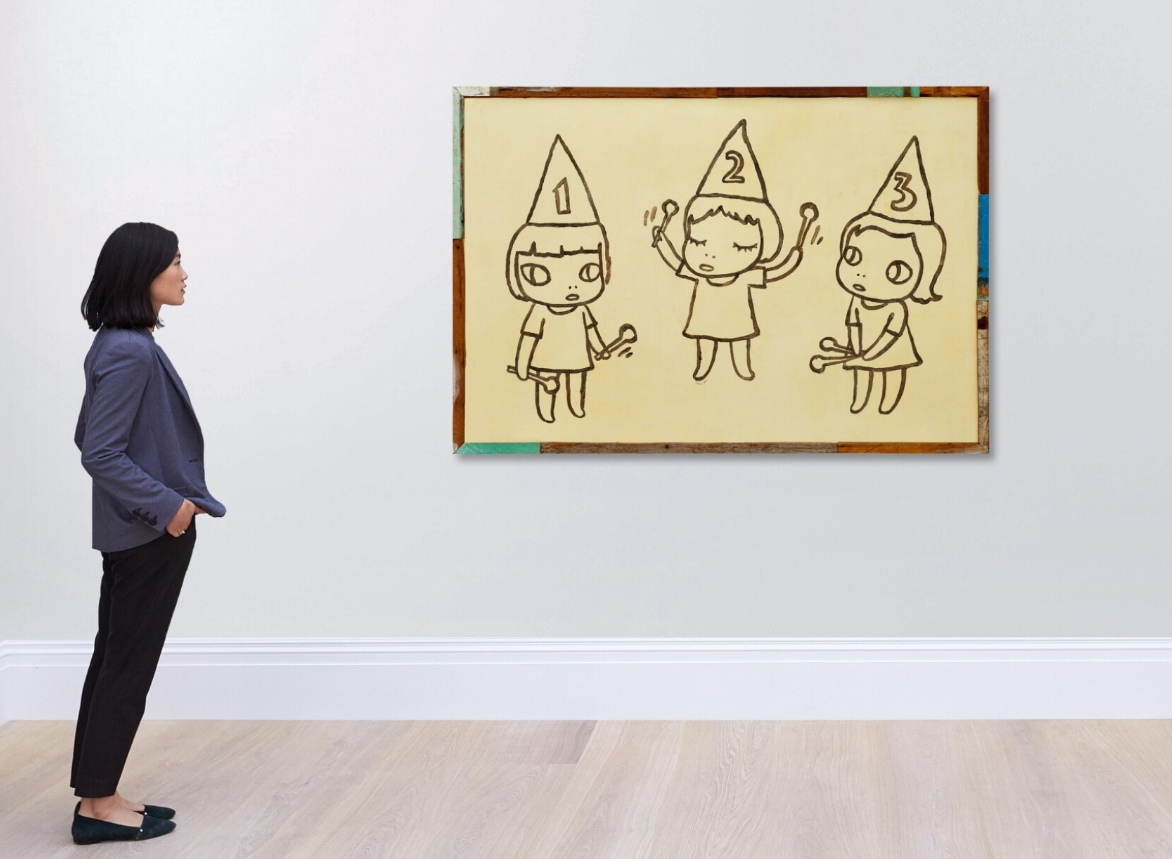
While Nara’s characters and style often recall that of manga and animation, a link that naturally forms when considering the artist’s Japanese roots, the artist’s degree in Fine Arts and Music, along with his exposure to music especially in the 1980s punk rock scene, play a significant role in the artist’s creative practice and principal. 1,2,3… features Nara’s iconic Ramona Girl named after the New York City band The Ramones. With hairstyles resembling the young rebels, the Ramona girls are crude, unapologetic and defiant, subverting and criticizing the blithe and innocuous depictions of childhood that is often extremely idealized in Japanese societal culture. With its titular reference to The Ramones, specifically the fact Dee Dee Ramone always counts off each song’s tempo with his signature rapid-fire shout of “1-2-3-4,” the present work is expressive of Nara’s punk music influences. As a young artist in the 1980s, Nara gravitated toward the anti-establishment ethos of punk music, with lyrics from bands like The Clash and the Sex Pistols appearing throughout his artwork, the artist often imbuing his figures with a sense of riotous intensity. Growing up in rural Japan, album covers provided Nara with an introduction to visual art that would go on to inform much of his work. 1,2,3… demonstrates Nara’s artistic skills in translating his unique aesthetic language on multi-surface of ready-made materials, which salutes and aligns with the concept of punk in the core of his creative identity. Nara also commented how the medium catalyzed his creative spontaneity, as he could treat them as street billboards and paint as expressive as he wished. The graphic aesthetics of the present work with its thick black outlines and vibrant palette is also reminiscent of Neo-Expressionism elements, effectively magnifying the vividness and fervent spirit in the artist’s visual narrative.
Hey! Ho! Let’s Go!, 2011
Sotheby’s Hong-Kong: 15 December 2022
Estimated: HKD 15,000,000 – 20,000,000
HKD 18,525,000 / USD 2,382,728
Hey! Ho! Let’s Go! | 嘿! 吼! 我們走吧! | Modern and Contemporary Auction | 2022 | Sotheby’s (sothebys.com)
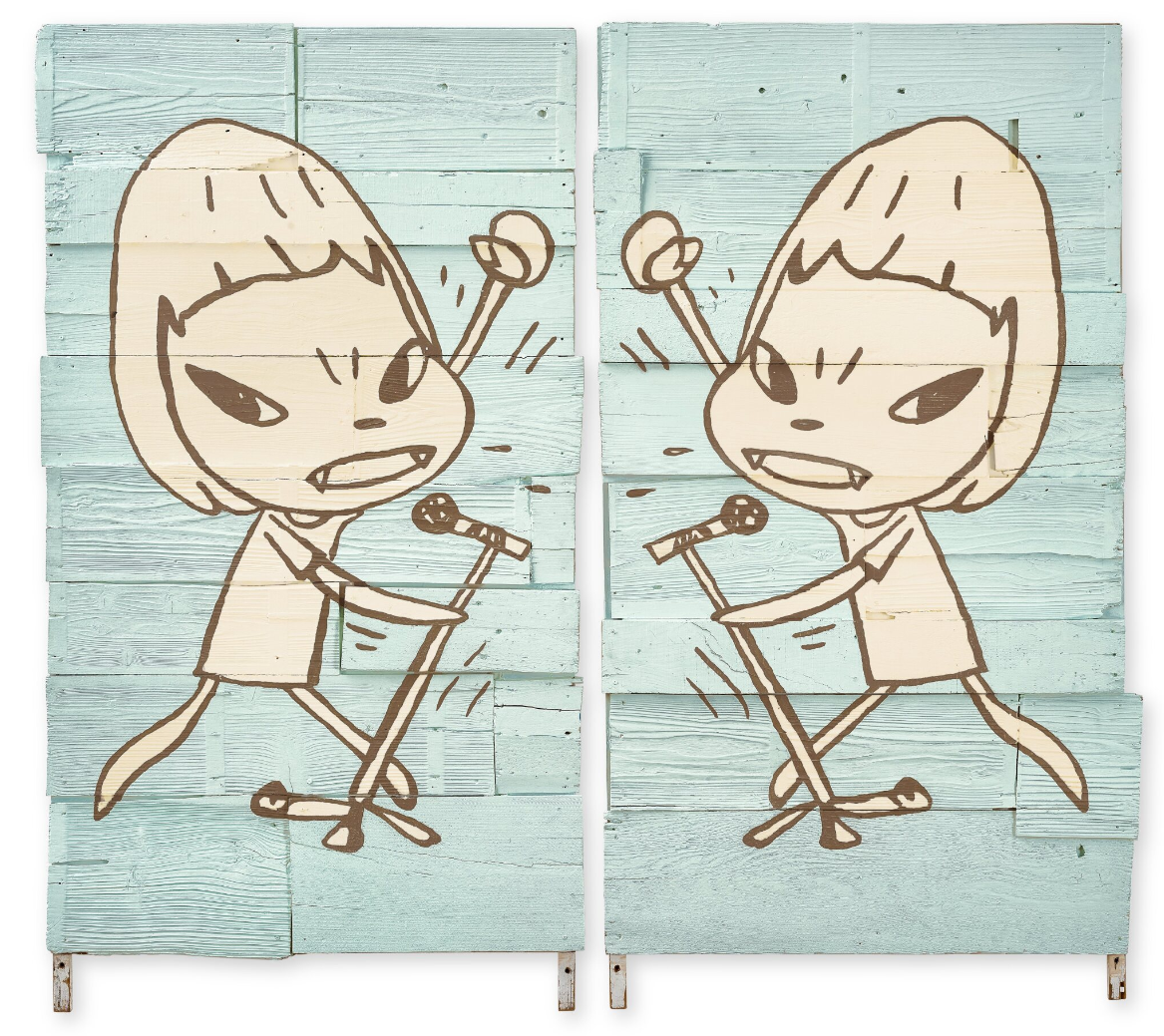
YOSHITOMO NARA (b. 1959)
Hey! Ho! Let’s Go!, 2011
Acrylic on found signboard (diptych)
Each: 160 x 85.5 x 4 cm (63 x 33 5/8 x 1 5/8 inches)
Overall: 160x171x4 cm (63 x 67 3/8 x 1 5/8 inches)
An exceptional example of Yoshitomo Nara’s celebrated billboard paintings, Hey! Ho! Let’s Go!, 2011, is the only painted diptych on found materials ever made by the artist and represents a key stage within the artist’s oeuvre. Favoring such objects as wood, signboard and cardboard during this period, the present work exemplifies Nara’s skill in conquering a vast surface of readymade materials whilst maintaining his own signatory aesthetics. Widely recognized as one of the most beloved Japanese artists of our time, Yoshitomo Nara’s portraits of sweet yet menacing solitary figures are instantly recognizable.
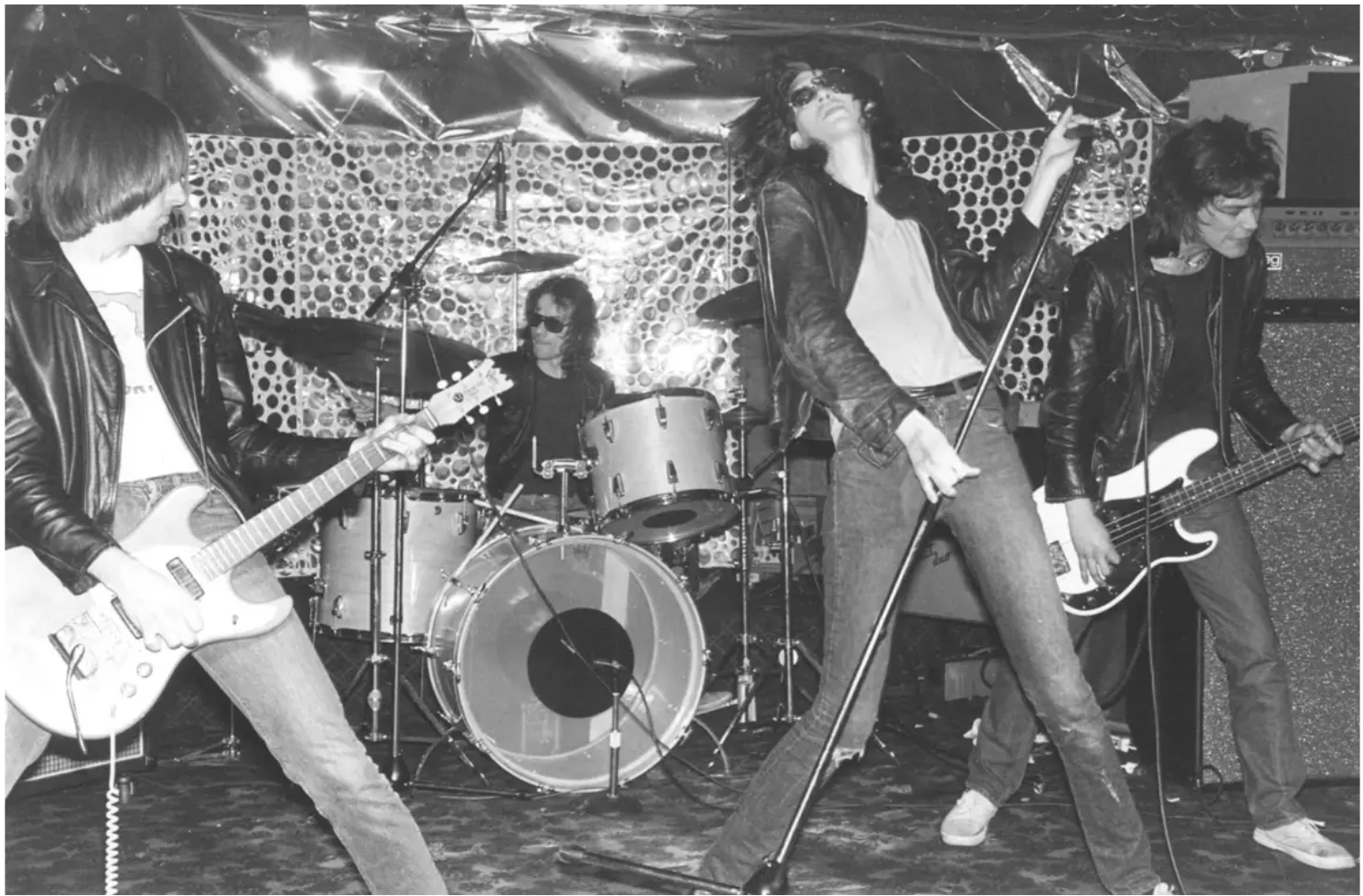
THE RAMONES, IMAGE FROM THE FILM END OF THE CENTURY: THE STORY OF THE RAMONES, DIRECTED BY JIM FIELDS AND MICHAEL GRAMAGLIA, 2003. 2022 © ALBUM/SCALA, FLORENCE
Featuring Nara’s beloved Ramona girl, performing onstage with her arm raised in defiance and the other throttling a microphone, Hey! Ho! Let’s Go! plays tribute to the popular Ramones song, “Blitzkrieg Bop” which has appeared throughout Nara’s work beginning in 2005’s Hey Ho Let’s Go, YNG!. As a young artist in the 1980s, Nara gravitated toward the anti-establishment ethos of punk music, with lyrics from bands like The Clash and the Sex Pistols appearing throughout his artwork, the artist often imbuing his figures with a sense of riotous intensity. Growing up in rural Japan, album covers provided Nara with an introduction to visual art that would go on to inform much of his work.
“The influence of music on me is far more significant than that of manga and other things that people often talk about.”
An intimate part of his creative process, Nara would work alone in his studio, usually late at night, with punk rock screaming from speakers. Evidenced in the frequent appearance of fragments of punk and rock lyrics in his work and their titles since the 1980s, Nara identified with the emotional intensity and anti-establishment spirit of punk and New Wave. Phrases like “I don’t give a fuck about everything” and “1.2.3.4 Blitzkrieg Bop” invoke this sensibility despite Nara’s putatively cute subjects. The wide-eyed and potty-mouthed subject of Hey! Ho! Let’s Go! are two of Nara’s “Ramonas”, a recurring character in Nara’s work and heir to the New York punk band’s lawless attitude.
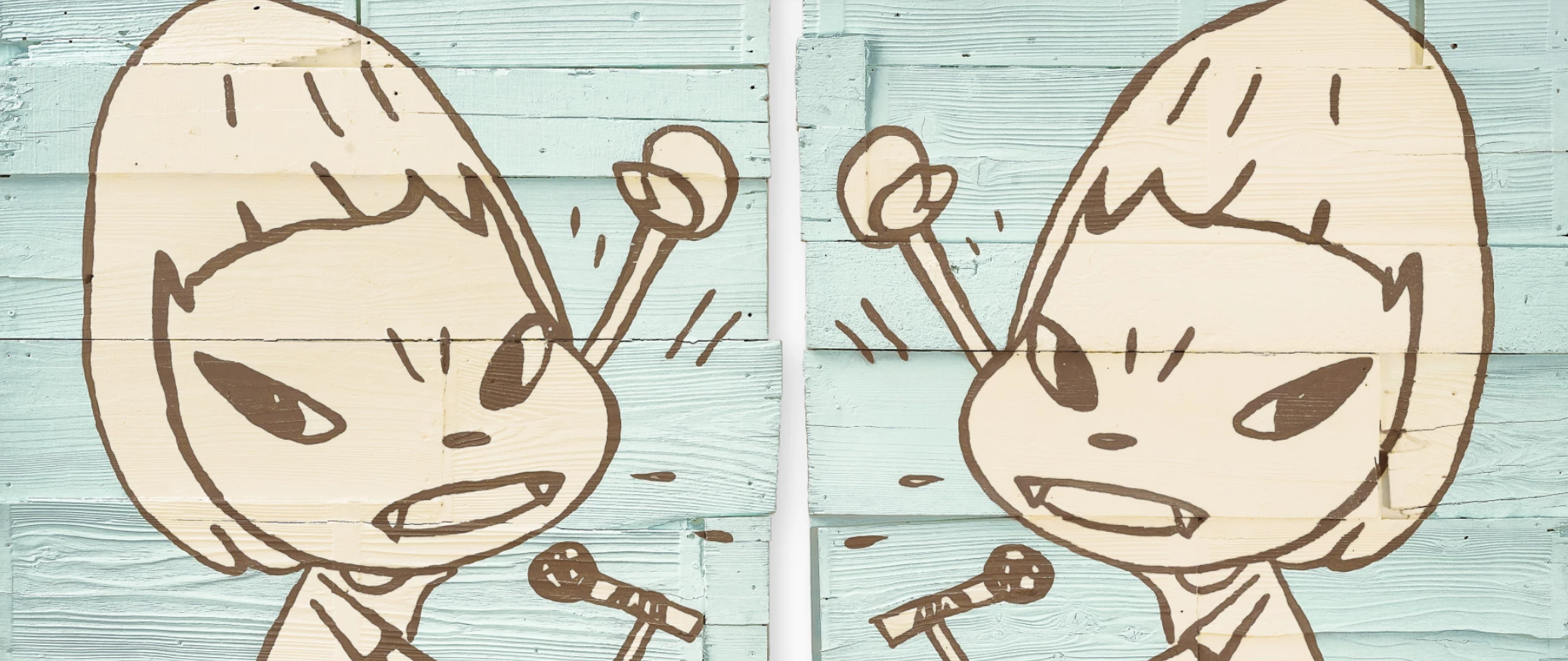
Rendered in acrylic with cartoonish proportion, the two childlike figures appear to be derived from both American twee and Japanese kawaii, yet the two singing Romonas are far from sweet. The two figures’ mouths, slightly opened and singing into their microphones, show small fangs, their outstretched fists a call to action to their audience. Subverting depictions of childhood as simple and carefree, Nara’s depiction of youth, within the context of Japanese culture, can be seen as a critique of the extreme idealization of childhood exemplified in characters like Hello Kitty and Pokémon.
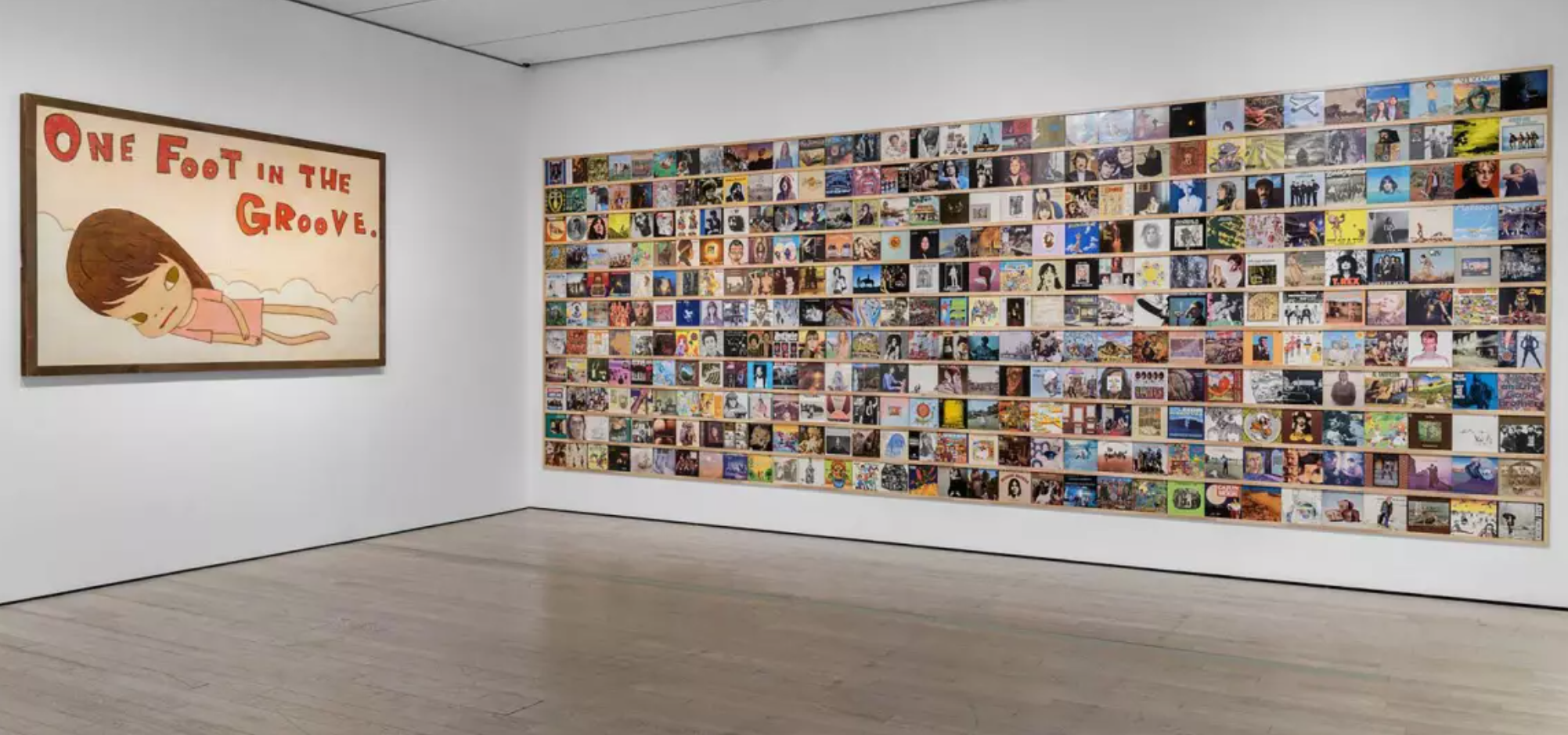
INSTALLATION VIEW SHOWING THE COLLECTION OF 350 RECORDS OF YOSHITOMO NARA AT THE LOS ANGELES COUNTY MUSEUM OF ART, 2020 © YOSHITOMO NARA
In Hey! Ho! Let’s Go!, Nara’s deft and unexpected use of found signboard recalls the iconoclastic and expressive nature of Nara’s punk influences. Whilst maintaining the unique texture of the wood, Nara’s masterful use of colour and bold, expressive lines create a striking graphic aesthetic that is entirely distinct from the artist’s previous work on wood. The overtly aged nature of the salvaged wood offers a further conceptual connection to Nara’s wider message around the do-it-yourself ethos of punk and the rejection of formal constraints around creative expression. Maintaining a rough and readymade aesthetic, the present work represents a mature example of Nara’s style. Painting in thick black outlines and vibrant palette reminiscent of Neo-Expressionism, Nara contours the figures’ heads, limbs and microphone stand with crisp lines in sharp contrast to the blue of the background. Through structured layering on the surface of the uneven material, an arresting architectural feel is created which blurs the boundary between painting and installation art. Rich in detail, Hey! Ho! Let’s Go!, sees the artist return to two-dimensionality after his extensive exploration of three-dimensional installation art, bridging these divergent practices between the two aspects of this diptych. A tribute to The Ramones, Hey! Ho! Let’s Go! is a powerful provocation of the punk spirit of unincumbered expression which has formed an integral part of Nara’s illustrious oeuvre. For Nara, music is a vital component of both his working practice and the emotive spirit behind his art, a relationship that can be felt in the artist’s major retrospective held at Los Angeles County Museum of Art in 2020, in which an entire room was dedicated to his collection of over 350 vinyl records.
Stars
Three Stars, 2014
Bonhams Hong-Kong: 25 November 2023
Estimated: HKD 30,000,000 – 50,000,000
HKD 36,754,000 / USD 4,714,362
Bonhams : Yoshitomo Nara (B. 1959) Three Stars
Acrylic on jute mounted on board
180.5 x 158.5 cm (71 1/16 x 62 3/8 inches)
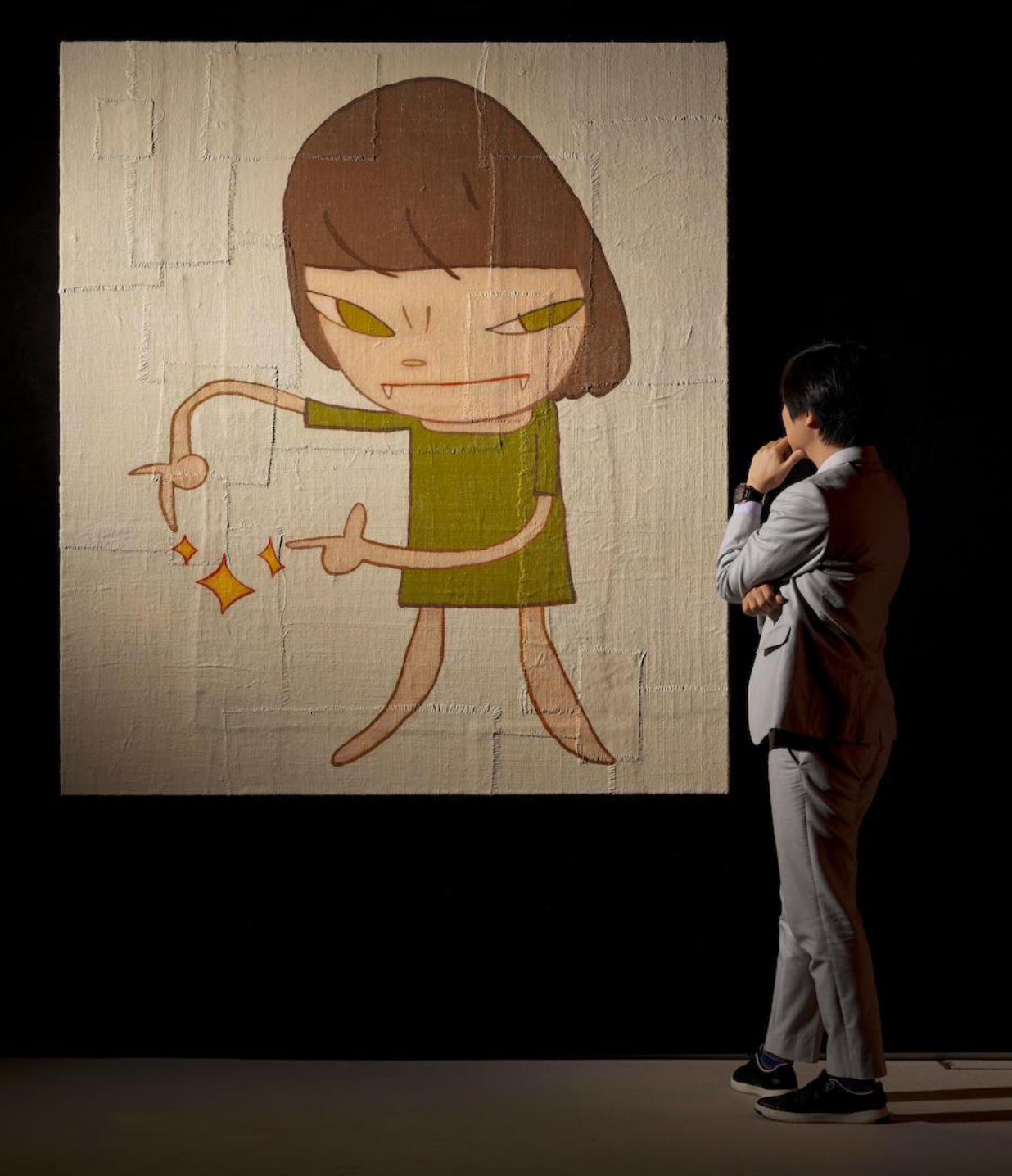
According to Yoshitomo Nara’s catalogue raisonné, the earliest works that are related to stars are a collection of canvas paintings entitled From the Cosmic Cradle from 1995. The tiny circular objects in the background are suggestive of meteors or planets. These five works describe the power dynamics between the universe and the characters. This is probably the earliest instance in which the protagonists encounter the universe. Another work that was completed in 1999, Sled and Stars, directly references stars as the subject matter, and a dog is featured as the protagonist. Yoshitomo Nara’s treatment of Three Stars is singular in the sense that the stars are not mere accompaniments in the background behind the figure. On the contrary, they take on an active role that interacts directly with the main character—such an arrangement is unprecedented. In three other large-scale Stars works that were completed in the same year, two of them feature figures gazing at the stars intently. But only in Three Stars and Nine Stars do we see the figures freely playing with the stars as something that they can manipulate. In this treatment, Nara’s protagonists are no longer simply stargazers. In a dramatic role-reversal, they are now masters of the stars. The constellation of stars in this work forms a continuous rectangular outline with the child’s arms. Compositionally, it evokes an otherworldly imagery that the figure is one with the celestial objects.The pictorial elements in Three Stars are extremely simple: it is composed of the girl and the stars. This is a prime example of Yoshitomo Nara’s classic expression. The background colour is between cream white and light yellow. This gentle hue is plain yet ethereal. Like a glowing aura or a fog, it engulfs the figure in world without a definitive horizon. In his autobiography In His Own Words, Yoshitomo Nara recalls how the landscape of his hometown subconsciously influences his creative output. Growing up in the Aomori prefecture in northern Japan, young Nara’s vision was surrounded by a barren landscape. Most notably, the endless whiteness of the snowfield left a profound impression in the artist’s psychological landscape, “The more places I visit, the more I want to return to the landscape that I have internalized in my heart. I cherish that world that is blanketed by whiteness. Seemingly, it is completely desolated, but something invisible to the eye is always present”. This explains why in order to thoroughly understand Nara’s works, one cannot solely rely on the limited imageries on the painting surface—it demands a greater sense of empathy and imagination. Even though Yoshitomo Nara employs the Western painting medium, the expressive power of his works is rooted in Eastern and Japanese traditional spirituality. In Three Stars, his emphasis on the importance of delineation is unmistakable—despite the fact that the figure is already distinctly defined by vibrant colour planes, the artist still insists on keeping every outline. As a result, his paintings often resemble large-scale drawings. Nara has always privileged the immediacy of drawing in expressing fleeting personal emotions. Lines have also held a paramount position in Eastern traditional works on paper art. In terms of the use of color, Yoshitomo Nara primarily utilizes flat color planes in Three Stars—this harks back to the characteristic emphasis on flatness in Ukiyo-e woodblock prints. This treatment infuses the painting with the clarity and briskness of the printing medium. Upon close inspection of the figure’s face, the rich layers of hues reveal themselves as if they permeate through the painting surface—a vivid sense of physical warmth can be felt. Nara’s nuanced rendering of the skin is a testament to his intimate knowledge and masterful application of the Western classical painting discipline.
Ten Stars, 2014
Sotheby’s Hong-Kong: 19 April 2021
Estimated: HKD 18,000,000 – 28,000,000
HKD 36,475,000 / USD 4,696,635
YOSHITOMO NARA (B. 1960)
Ten Stars, 2014
Acrylic on jute mounted on board
180.5 x 160 cm (71×63 inches)
Signed, titled and dated 2014 on the reverse
Iconic, endearing, exuding a whimsically enchantingly aura, Ten Stars from 2014 is one of four works from a special series by Yoshitomo Nara executed in burlap and foregrounding the motif of stars. Ten gold four-point stars swirl like a halo around our petite heroine, whose prickly piercing sideways glare dares us to question what magic or mischief she’s plotting. In the series of only 4 paintings, of which the present work features the most number of stars, Nara focuses for the first time specifically on stars imagery – a motif that is simple yet laden with associations, charged with instant resonance and appeal, and which concocts boundless room for imagination. The combination of Nara’s intricately constructed patchwork of jute and exquisitely applied brushwork typifies the artist’s deceptively simple aesthetic, which conceptualizes the sullen, insolent yet adorable young girl as a paradigm for the disaffection of Japanese youth: here, the titular ten stars represent the magically insurgent power of children and the radical, rebellious potentiality of the marginalized and the imagined. Meanwhile, the small toy house and tree on the bottom of the composition harken to childhood, solitude and innocence; as with the very best of Nara’s output, the present work combines the artist’s two most important archetypes – the rebel youth and the lonely child.
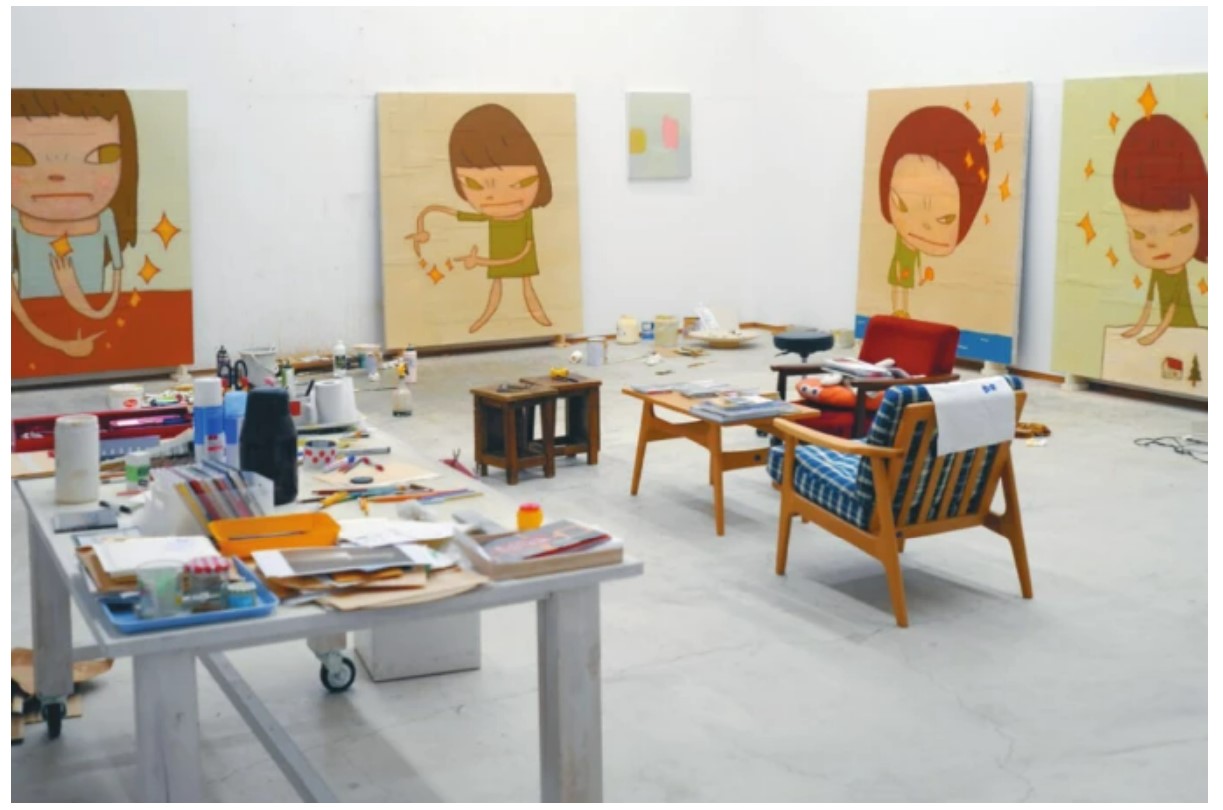
Executed on jute and mounted on board, and with the featuring of the sign-like motifs of the four-point stars, the present work in particular displays stylistic affinities with Japanese ukiyo-e woodcut. Ten Stars represents the culmination of decades of artistic developments, which encompassed forays into sculpture in different mediums, painting on cotton and linen, and in the late 2000s onwards, a more meticulous, meditative and introspective style of brushwork, communicating heightened expression with line and color. Elsewhere Nara observes how his methodology has become increasingly introspective.
Tondos
Sprout the Ambassador, 2001
Sotheby’s Hong-Kong: 28 September 2025
Estimated: HKD 9,000,000 – 15,000,000
HKD 18,431,000 / USD 2,369,025
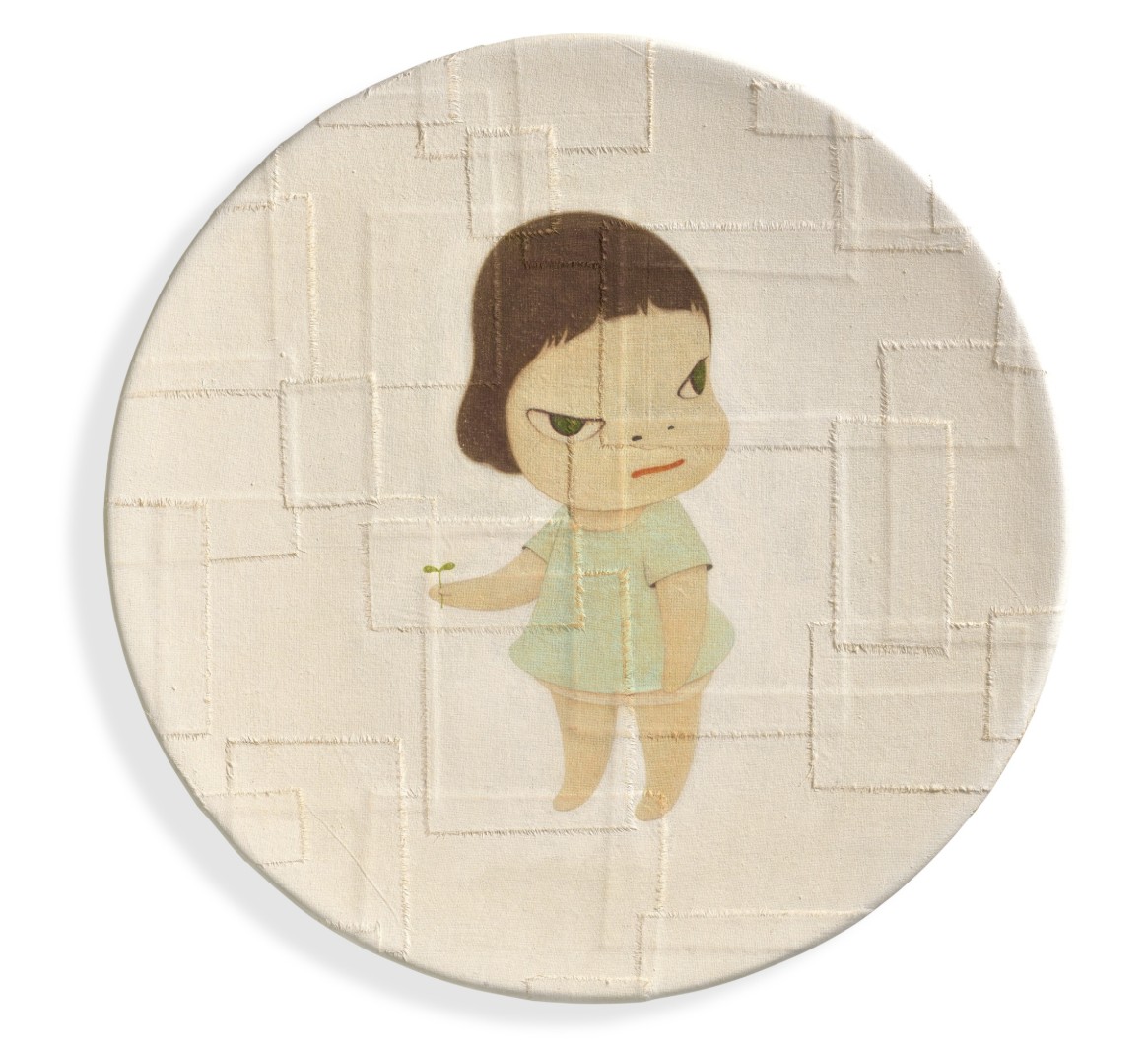
YOSHITOMO NARA (b. 1959)
Sprout the Ambassador, 2001
Acrylic on cotton mounted on FRP
55 x 55 x 9.5 cm (21 5/8 x 21 5/8 x 3 3/4 inches)
Signed, titled and dated 01 (on the reverse)
Sprout the Ambassador is an iconic, thought-provoking work by Yoshitomo Nara, featuring two of Nara’s most famous motifs—the large-headed little girl as an ambassador and the futaba (two-leafed sprout), rendered in a tondo-esque composition. Belonging to the very first batch of iconic Ambassador series that Nara created in the early 2000s, it is one of the only six circular acrylic on cotton mounted on FRP works featuring both motifs mentioned above. It is also the only one from the series that is household-friendly in scale, as the majority are over one meter in diameter.
“[Futaba] is just that, it’s hope. Hope that grows. A small feeling grows a stem, forms leaves, spreads its branches and becomes a large tree…it’s the beginning of this process. It exists, and there are people who plant it.”
Marking a turning point in Nara’s career, works from the series have been highly sought after. The first Ambassador painting on canvas, The Little Ambassador (2000), sold in 2016 was, at the time, the second-highest auction record for the artist. Under the Hazy Sky (2012), featuring Nara’s sprout-holding protagonist, was featured prominently in the Artist’s recently concluded retrospective at Hayward Gallery, London. Executed in 2001, this work stems from the concave disks that Nara began exploring extensively shortly after returning to his native Japan from twelve years in Germany, where he had been immersed in Western art history and surrounded by classical masterpieces. Delicate Renaissance-esque brushwork along the surface of the fibreglass typifies the artist’s mature 2000s aesthetic, culminating in a striking portrayal of a fearless little girl eager to explore, encounter, and challenge the unknown. With penetrating eyes, she glares defiantly out at the audience, raising the delicate yet resilient sprout in her hand, as if to commence her duty as an ambassador with a speech.
Sprout the Ambassador constitutes Nara’s peace-advocating oeuvre, and this is his painterly response to his visit to Auschwitz in the year before he painted the present work. The sprout is a favoured motif that can be found throughout Nara’s oeuvre, ranging from his large canvas paintings to his works on paper and cardboard. Having grown up in the small town of Hirosaki, located 400 miles from Tokyo and near a US Air Force base, Nara has long been engaged with Japan’s complex and painful history with war and nuclear weaponry. Not alone in his exploration of World War II’s enduring impact on society, many artists of his generation have sought to examine the war’s legacy through their work, exemplified by Takashi Murakami and his theory of “Superflat”, reflective of the consumer culture that arose after World War II.
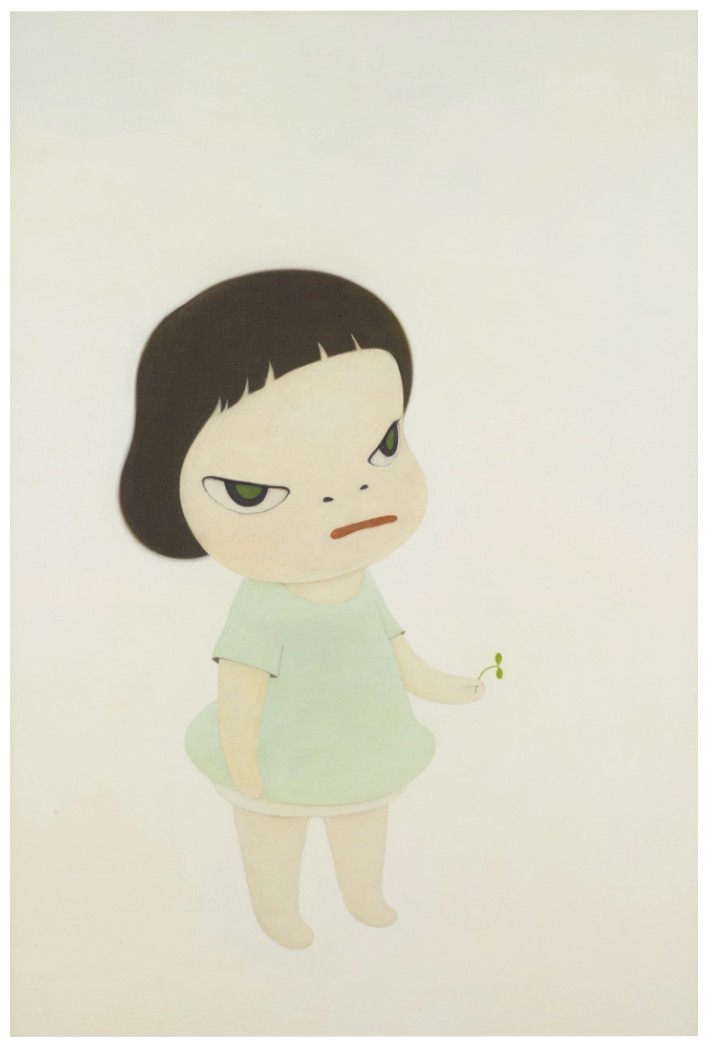 YOSHITOMO NARA
The Little Ambassador, 2000
Acrylic on canvas
Signed in Japanese, titled in English and dated 2000 on the reverse, framed
Sold at Sotheby’s Hong-Kong on 2 October 2016
Articulating deeply rooted sentiment against war and conflict, Nara’s works often express his sincere desire for peace. For Nara, the sprout, is a symbol of hope and peace. “It’s just that, it’s hope. Hope that grows. A small feeling grows a stem, forms leaves, spreads its branches and becomes a large tree…it’s the beginning of this process. It exists, and there are people who plant it.” (Nara quote in “In Conversation with Yoshitomo Nara”, Exh. Cat., London, Hayward Gallery, Yoshitomo Nara, p. 73) It is also worth noting that a decade after painting the present work, in the wake of the 2011 Fukushima disaster, Nara famously uploaded his “No Nukes” anti-nuclear painting to the internet, allowing people to print it out and take it to demonstrations. Since then, his sprout-holding heroines returned and propagated significantly across his artistic creations through a wide range of media. This time, the sprout meant a lot more, as he commented:
“How many children have I depicted holding a futaba sprout…? I don’t think many people have noticed that the nuclear plant in Fukushima is located in a place called Futaba.”
Upon Nara’s homecoming to Japan in 2000, one year prior to the creation of Sprout the Ambassador, the artist’s style evinced subtle technical maturations – a disintegration of sharp lines into nuanced, meticulous and poetic brushwork, and a warming of his palette with pastel colours. In the present work, the surface texture comprises multiple layers of translucent colours and a multitude of intricate tones, which imbue the otherwise flat composition with an enigmatic sense of depth. Nara explicitly cited the pre-Renaissance Italian painter Giotto as an influence to his stylistic shift in the 2000s, and parallels can be observed between the two artists through Nara’s extensive formal experimentation with patchwork composition. The patchwork method of painting is reminiscent of how Giotto painted his frescoes, finishing compositions patch by patch on freshly plastered areas of the wall, which were painted while the plaster was still wet. This enhances the refined painterly quality of color layering.
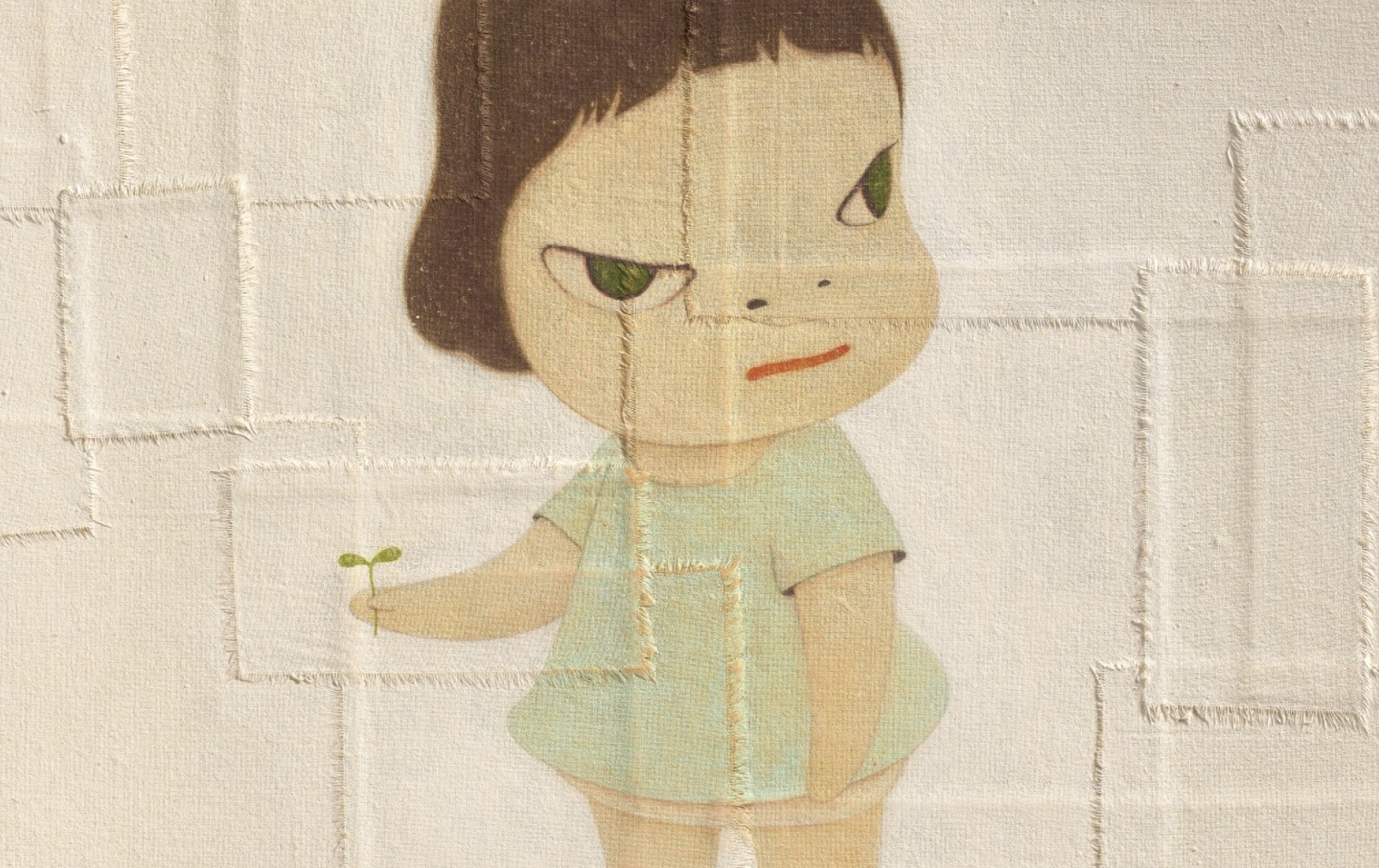
The rounded form of the present work, reminiscent of Renaissance tondo paintings, is also worth noting. Commenting on his round paintings, the artist once said, “There is no necessity of having corners.” A Renaissance term for a circular work of art, the word tondo derives from the Italian rotondo, or ‘round’; created since Greek antiquity, tondi (plural of tondo) was revived in the fifteenth and sixteenth centuries in Italy. Historically, tondi featured enclosed scenes, with the circular composition serving to focus the viewer’s attention on the central characters. The background scene in a tondo is either simplified or omitted altogether – a stylistic strategy that is echoed in Nara’s modus operandi. By synthesizing diverse sources from different traditions and different eras of art history, Nara’s oeuvre operates simultaneously as a universal emotional vehicle through which viewers excavate childhood memories, and a powerful entry point into a re-evaluation of the canon of figurative painting, representation, and storytelling through art.
Shallow Puddles Part 2, 2006
Phillips Hong-Kong: 8 June 2021
Estimated: HKD 4,800,000 – 6,500,000
HKD 9,325,000 / USD 1,201,690
Yoshitomo Nara – 20th Century & Contemp… Lot 19 June 2021 | Phillips
YOSHITOMO NARA
Shallow Puddles Part 2, 2006
Acrylic on cotton mounted on FRP
95x95x15 cm (37 3/8 x 37 3/8 x 5 7/8 inches)
Japanese artist Yoshitomo Nara is widely considered as among the most prolific creators of our contemporary times, having captured the attention of countless art lovers, critics, galleries, and institutions, who celebrate his globally cherished motifs that have come to be universally recognized. Executed in 2006, Shallow Puddles Part 2 is a captivating work showcasing the iconic ‘Nara girl’ submerged in a vast body of milky, pearlescent water. Situated at the center of a three-dimensional, concave plate that blurs the boundaries between painting and sculpture, she radiates serenity and a sense of wistfulness despite her solitude, exemplified by her twinkling, all-knowing eyes that gaze off to the side and sweet half-smile that is pronounced in cherry-red. With selections of earlier parts of the series previously exhibited in Osaka in 2004 and Aomori in 2006, Shallow Puddles Part 2 was presented at the artist’s Shallow Puddles solo exhibition hosted at the prestigious Blum & Poe, Tokyo in 2015, a space personally selected by the artist for the debut presentation of the small series as a whole.
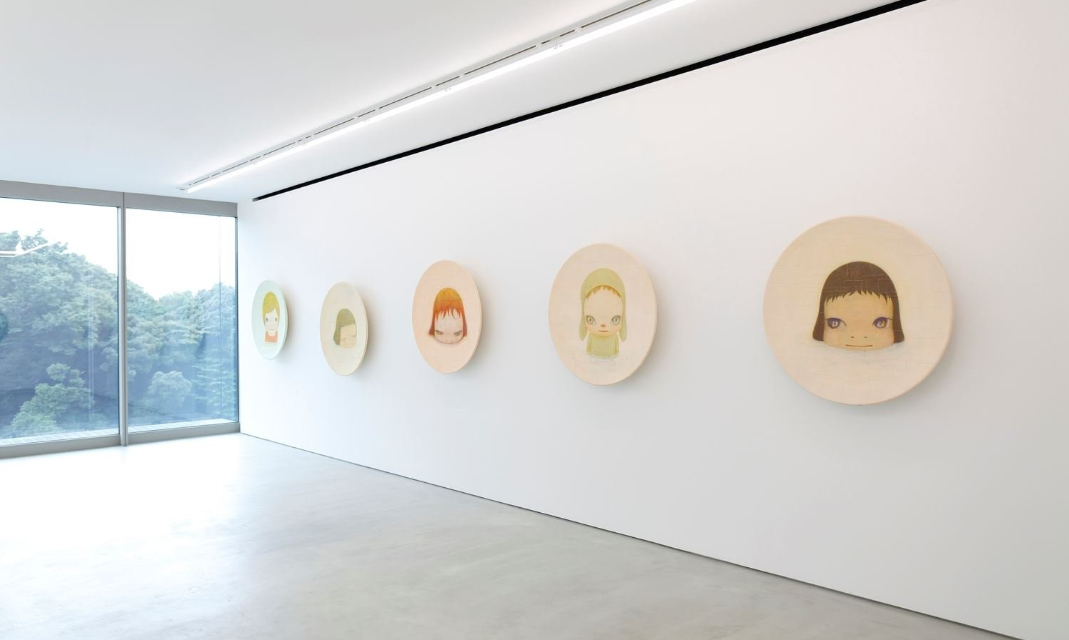
The present work exhibited at Tokyo, Blum & Poe, Yoshitomo Nara: Shallow Puddles, 2 October – 14 November 2015
Puddles are a prominent motif Nara has explored consistently throughout his oeuvre, tracing back to the ripples surrounding the feet of his protagonists in Fallen Angel (1986) and Pandora’s Box (1990). One of the most prominent examples of this is his 1995 work, In the Deepest Puddle II, which is now housed in the Los Angeles County Museum of Art collection. Portraying the Nara girl depicted from her waist up, submerged into a milky white background, she looks back over her shoulder with a relatively hostile expression that Midori Matsui suggests ‘gazes back at this world from another world behind it’.
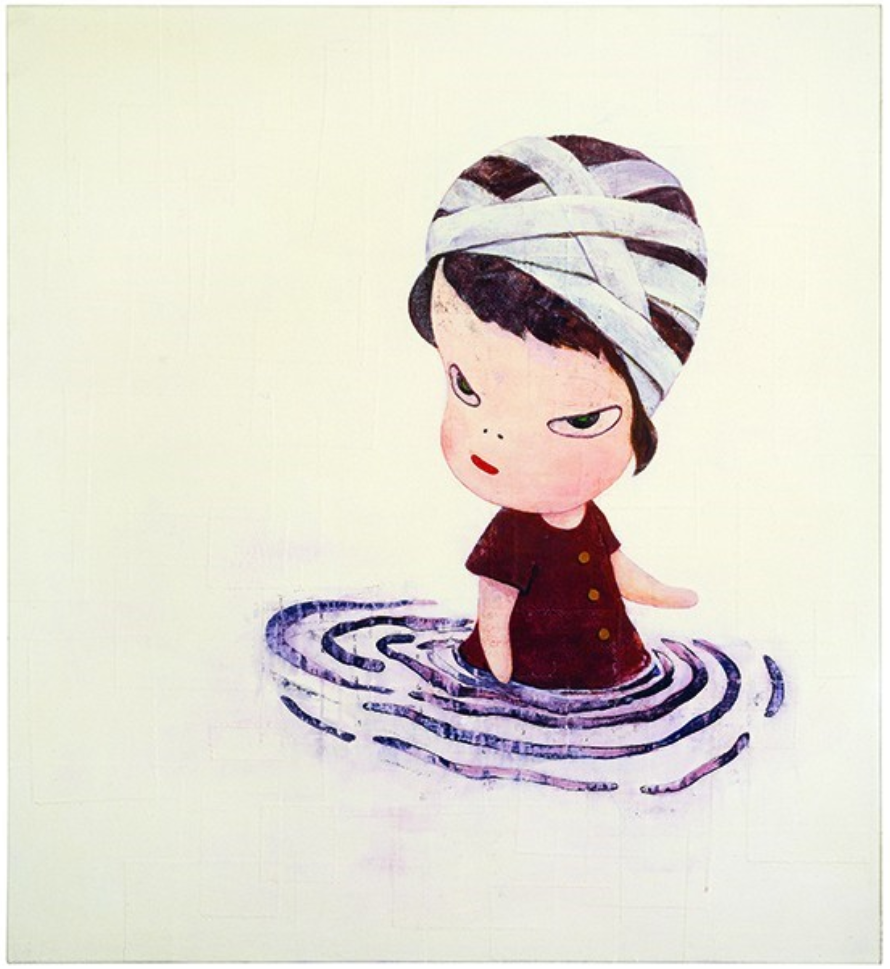
This archetypal work, In the Deepest Puddle II, was presented at Nara’s 1995 show at SCAI The Bathhouse in Tokyo of the same name – an exhibition that marked the beginning of wider recognition for the artist outside of Japan, which would soon propel to global acclaim. The included paintings featured the image of a child with a large head and piercing eyes, presented in various situations of solitude. Simultaneously psychologically complex and atmospherically magical, the exhibition showcased the fruits of Nara’s artistic apprenticeship at the Staatliche Kunstakademie in Dusseldorf, where he had trained under the tutelage of A.R. Penck between 1888 and 1993. It was here that Nara’s signature style came into its full effect, as he transitioned away from the thick black outlines and rough-hewn, vibrant backgrounds that had characterised his early works executed in Japan, and toward a softer, more delicate colour palette rendered with a refined touch that emboldened the personalities of the characters he was portraying. Executed in 2006, Shallow Puddles Part 2 continues the artist’s trademark motif of painting portraits of young girls with oversized heads, however her isolation within the composition, devoid of details such as fangs or knives, marks a departure from his earlier work and displays what has critically been recognised as a growing maturity. At the same time, the rippling water in Shallow Puddles Part 2 is more delicately composed with subtle changes in colour, in a style reminiscent of Claude Monet’s Water Lilies that signifies the subject’s content stillness, strongly contrasting the wading movement captured in In the Deepest Puddle II. Crucially, the subject of the present work’s depiction in the midst of a plate that looms off the wall also emphasizes Nara’s distance from the concepts of the Superflat espoused by fellow Japanese artist Takashi Murakami, while also adding a tactile, sensory quality to this imposing image.
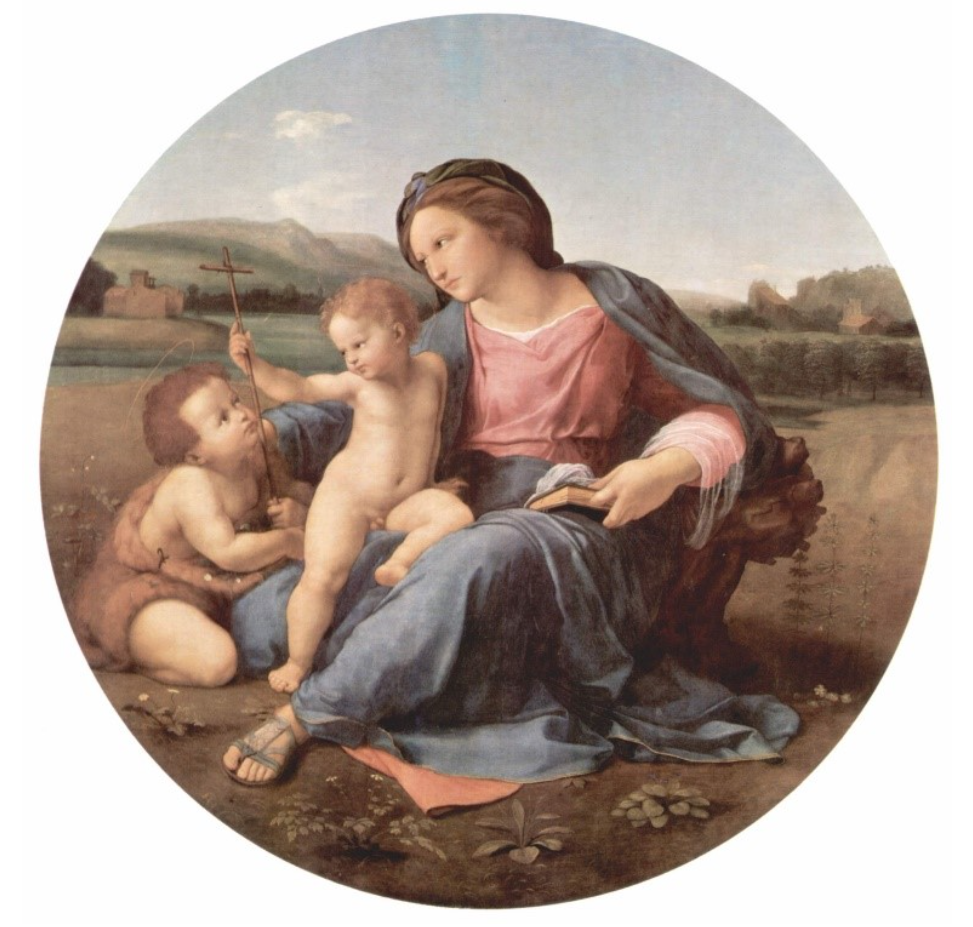
Raphael Sanzio, The Alba Madonna, circa 1510
Collection of Andrew W. Mellon, National Gallery of Art, Washington
Nara began to produce his fibre-reinforced plastic tondo works after returning to Japan and moving to his studio in the idyllic Nasushiobara, Tochigi Prefecture, where he now lives and works. Deriving from the Italian rotondo, or ‘round’, the Renaissance term ‘tondo’ refers to a circular work of art that historically allowed painters to emphasize the center of an image by containing a scene within a frame, thereby separating it from its environment. Nara subverts the traditional characteristics of tondo compositions in the present work, as his spherical structure contains a vast, ambiguous space that appears as if it could almost extend beyond the edges and into the room as the girl’s world blends into ours, or ours into hers.
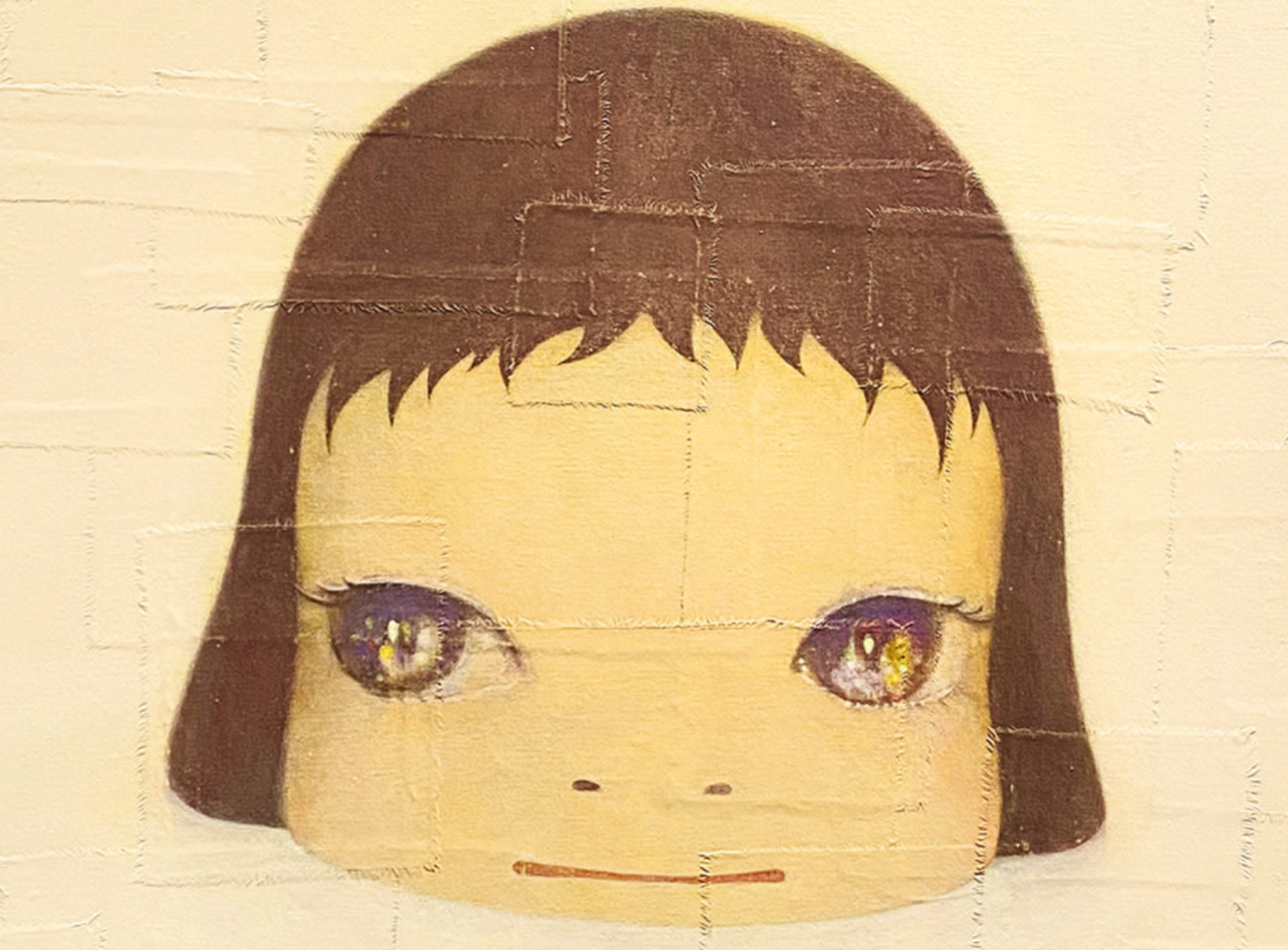
In these pieces of Nara’s, backgrounds which were previously rendered as limitless voids have been extended to a new format that suggests an illusionistic three-dimensional space within which his characters can dwell. And although the heroine of Shallow Puddles Part 2 possesses the same chickpea forehead that has become iconic of Nara, marking a clear link to the Nara girls that came before her, her proportions are notably less warped as she takes on a more humanised form. At the same time, in the present work we also see that Nara’s palette has expanded to a more distinctive treatment of colours that is strikingly harmonised. Indeed, in acknowledging the artist’s meticulous process when examining Shallow Puddles Part 2 from up close, minty green, cotton-candy pink and jewelled cerise details emerge, composed of small brushstrokes that add subtle texture and a sense of luminous light. This is most powerful in the child’s glimmering eyes, which turn into microcosms of themselves as they glisten with a constellation of tonally rich dots that recall the image of a shimmering constellation of stars.
Untitled, 2003
Sotheby’s Hong-Kong: 18 June 2021
Estimated: HKD 18,000,000 – 28,000,000
HKD 27,400,000 / USD 3,529,655
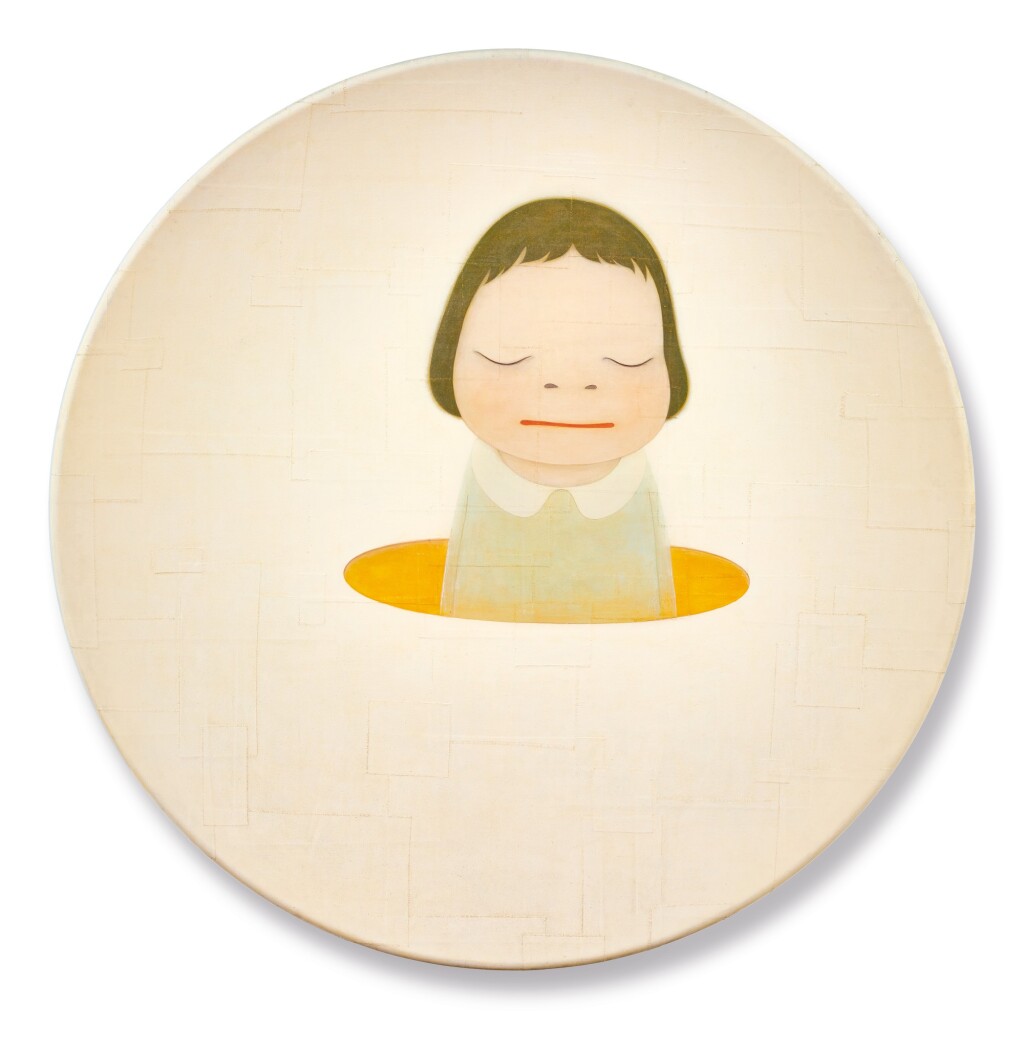
YOSHITOMO NARA (B. 1959)
Untitled, 2003
Acrylic on cotton mounted on FRP
180×26 cm (70 ½ x 10 ¼ inches)
Signed and dated 2003 on the reverse
Iconic, captivating and grand in scale, Yoshitomo Nara’s Untitled is an exemplary illustration of Nara’s universally resonant oeuvre rendered in a rounded tondo-esque composition. First conceived in the 1990s when the artist resided in Germany, Nara’s conceptualization of a disgruntled little girl set against a plain monochrome background became a perfected paradigm by the early 2000s, reflecting the disaffection of Japanese youth and capturing the imagination and adoration of viewers worldwide. In the present work, the combination of Nara’s intricately constructed patchwork and delicate Renaissance-esque brushwork along the surface of the fiberglass disk typifies the artist’s mature 2000s aesthetic, culminating in a tenderly, exquisitely executed paradigm of a subversive, defiant, yet ultimately wise young heroine that captures the fascinating tension between childhood and adolescence, innocence and mischievousness, whilst extending the lineages of Pop, figurative painting and classical portraiture into the 21st century.
The rounded form of the present work, which is reminiscent of Renaissance tondo paintings, is also worth noting; commenting on his round paintings, the artist once said: “There is no necessity of having corners”. A Renaissance term for a circular work of art, the word tondo derives from the Italian rotondo, or ‘round’; created since Greek antiquity, tondi (plural of tondo) was revived in the fifteenth and sixteenth centuries in Italy. Historically, tondi featured enclosed scenes, with the circular composition serving to focus the viewer’s attention on the central characters. The background scene in a tondo is either simplified or omitted altogether – a stylistic strategy that is echoed in Nara’s modus operandi. By synthesizing diverse sources from different traditions and different eras of art history, Nara’s oeuvre operates simultaneously as a universal emotional vehicle through which viewers excavate childhood memories, and a powerful entry point into a re-evaluation of the canon of figurative painting, representation, and storytelling through art.
Mathematical Cliché, 2001
Christie’s New-York: 14 May 2021
Estimated: USD 1,000,000 – 1,500,000
USD 1,920,000
YOSHITOMO NARA (B. 1959) (christies.com)
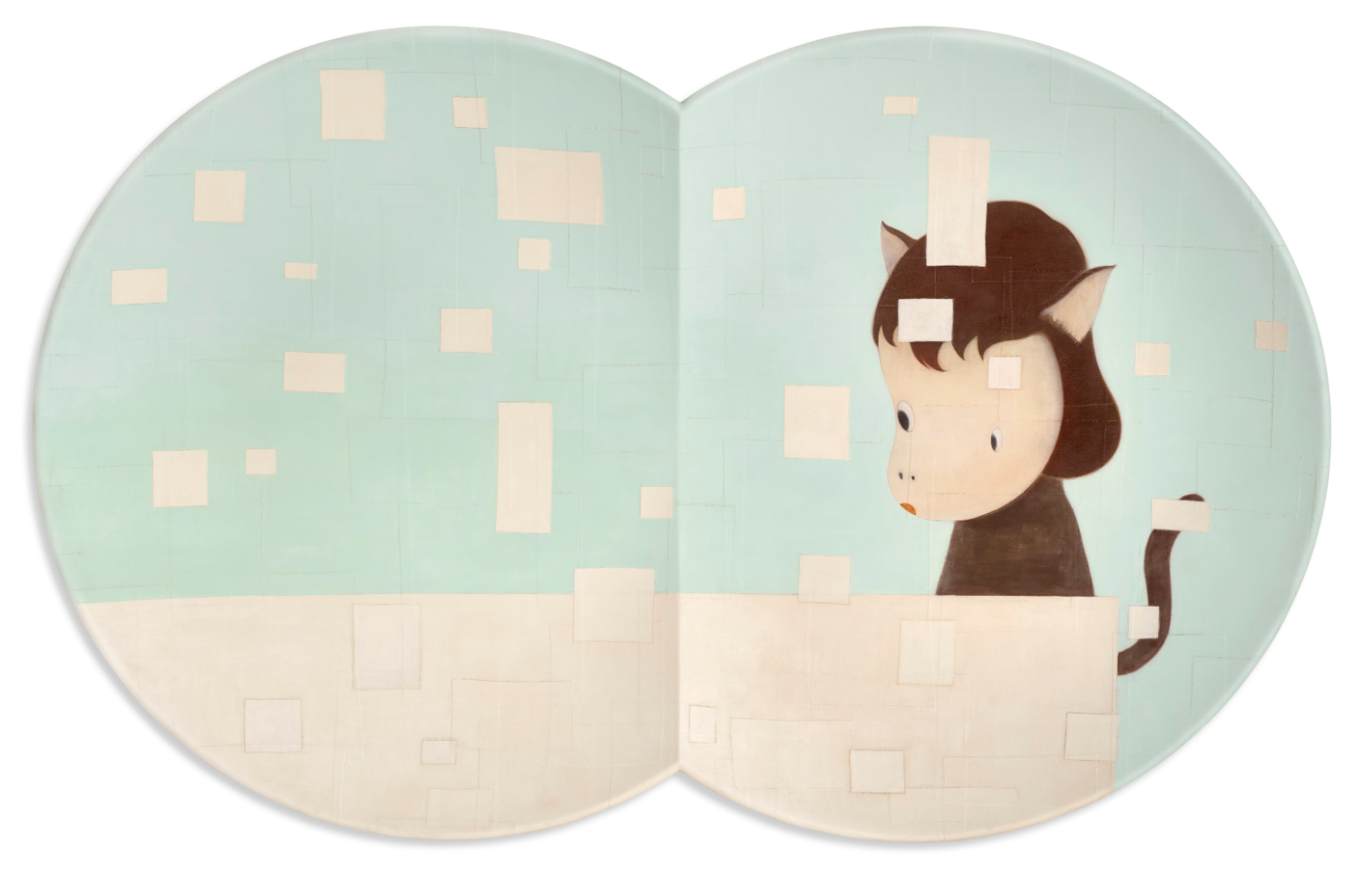
YOSHITOMO NARA (B. 1959)
Mathematical Cliché, 2001
Acrylic on cotton mounted on shaped fiber-reinforced plastic
180x284x26 cm (70 7/8 x 111 7/8 x 10 1/4 inches)
Signed in Japanese; titled and dated twice ‘Mathematical cliche [sic] 01 27.Jun ‘01’ (on the reverse)
In Yoshitomo Nara’s Mathematical Cliché, a lone anthropomorphic figure with human features, cat-like ears and sleek tail ponders a perspective-shattering geometrical atmosphere. The work, which with its dual curvilinear construction is the only double-dish painting ever to be produced by the Japanese artist, serves as an exceptional example of Nara’s move away from the rectangular supports he typically adopted during the 1990s and towards a circular format reminiscent of a Renaissance tondo. With this transition, Nara forges a dialogue between the gentle smoothness of the work’s physical perimeter and the flat, angular geometry depicted upon the surface of its picture plane—in this instance a scattering of supplanted rectilinear forms punctuating the two roundels and splicing the pale blue-green background, the burnished umber protagonist, and the enigmatic white box at the bottom of the composition.
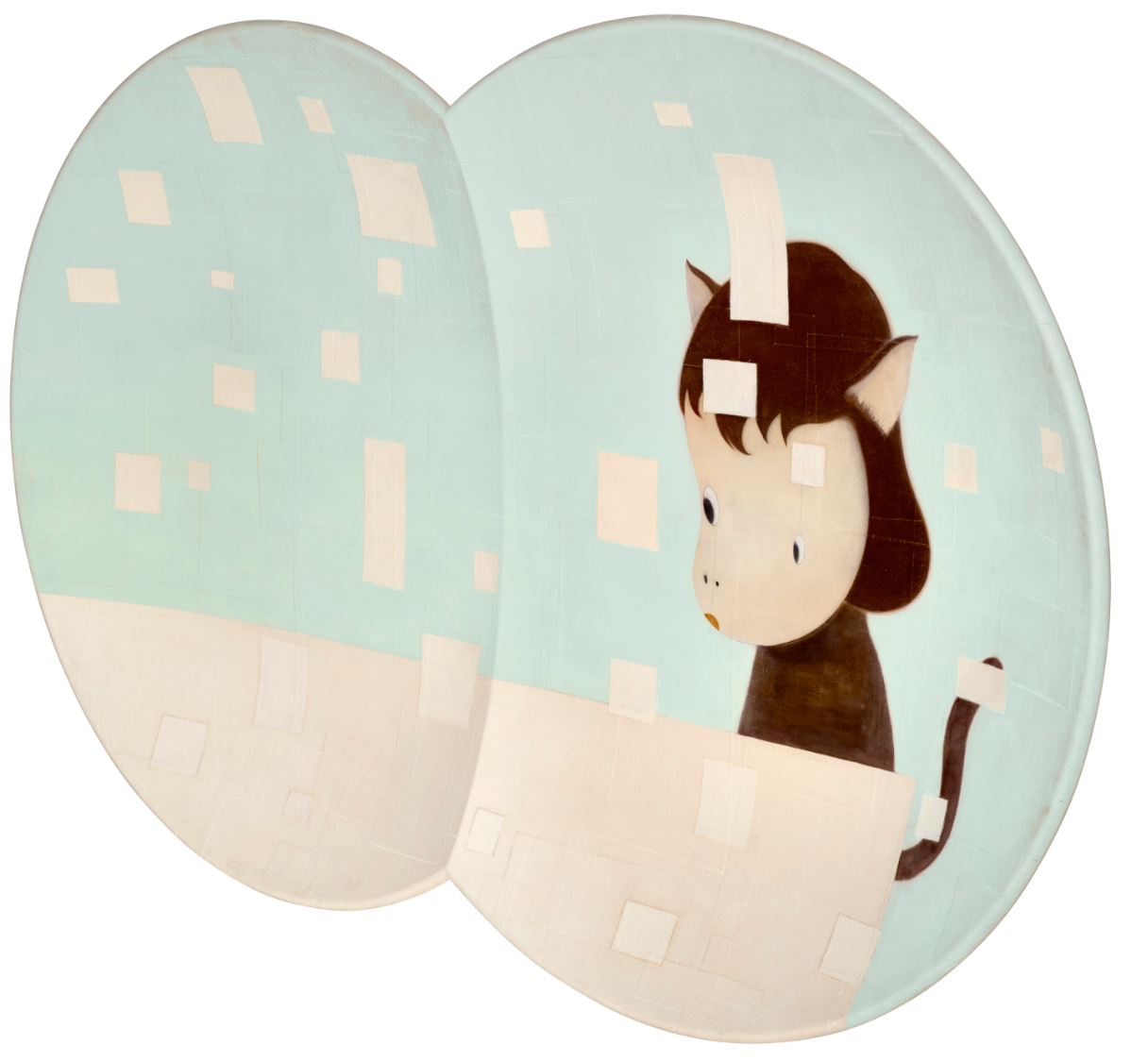
Nara’s characters—a roll call that includes children, dogs, cats and fantastical creatures stylistically influenced by the bygone ukiyo-e genre—are iconic within the canon of contemporary art; the artist is known for depicting young children (especially girls) with surly expressions, brandishing knives or crucifixes, smoking cigarettes or morphing into vampires. These sometimes-menacing creations allude to a counter-cultural spirit of rebellion encapsulated by the punk movement in the Western world during the 1970s, which Nara was captivated by, and to the disillusionment with a hyper-consumerism that Nara and many other artists of the Superflat movement felt was engulfing Japan. In Mathematical Cliché, the figure is noticeably more subdued, innocent and pensive, embodying kawaii (a type of cuteness synonymous with Japanese culture), and in an unusual move for Nara the protagonist is shifted to the side of the composition, as though to observe the rhythm of enveloping shapes. The character’s gaze is inquisitive, curious, perhaps a little skeptical, pondering the mysteries of a secret geometry or an atmospheric distortion anchored by the large mysterious rectangle at the bottom of the composition.
The tranquil melancholia captured in the figure’s physiognomy resonates with the sense of alienation and alterity experienced by Nara as a child in Japan, where during the postwar economic boom a cultural dislocation was triggered by the saturation of Western cultural components such as Disney animation, comic books and Western rock music. Listening to an American military radio station, the artist’s early exposure to Western folk music and punk rock became a formative solace; he would later go on to create album covers for American and Japanese bands such as R.E.M., Bloodthirsty Butchers and Shonen Knife. As envisioned in the relationship between the figure and their surroundings in Mathematical Cliché, Nara’s solitude was negated by his sense of curiosity and his ensuing discoveries. Like the musical sounds heard by Nara as a child and teenager, the distribution of shapes dancing around the picture plane in Mathematical Cliché, and the white box at its bottom, become the antidote to loneliness and isolation.
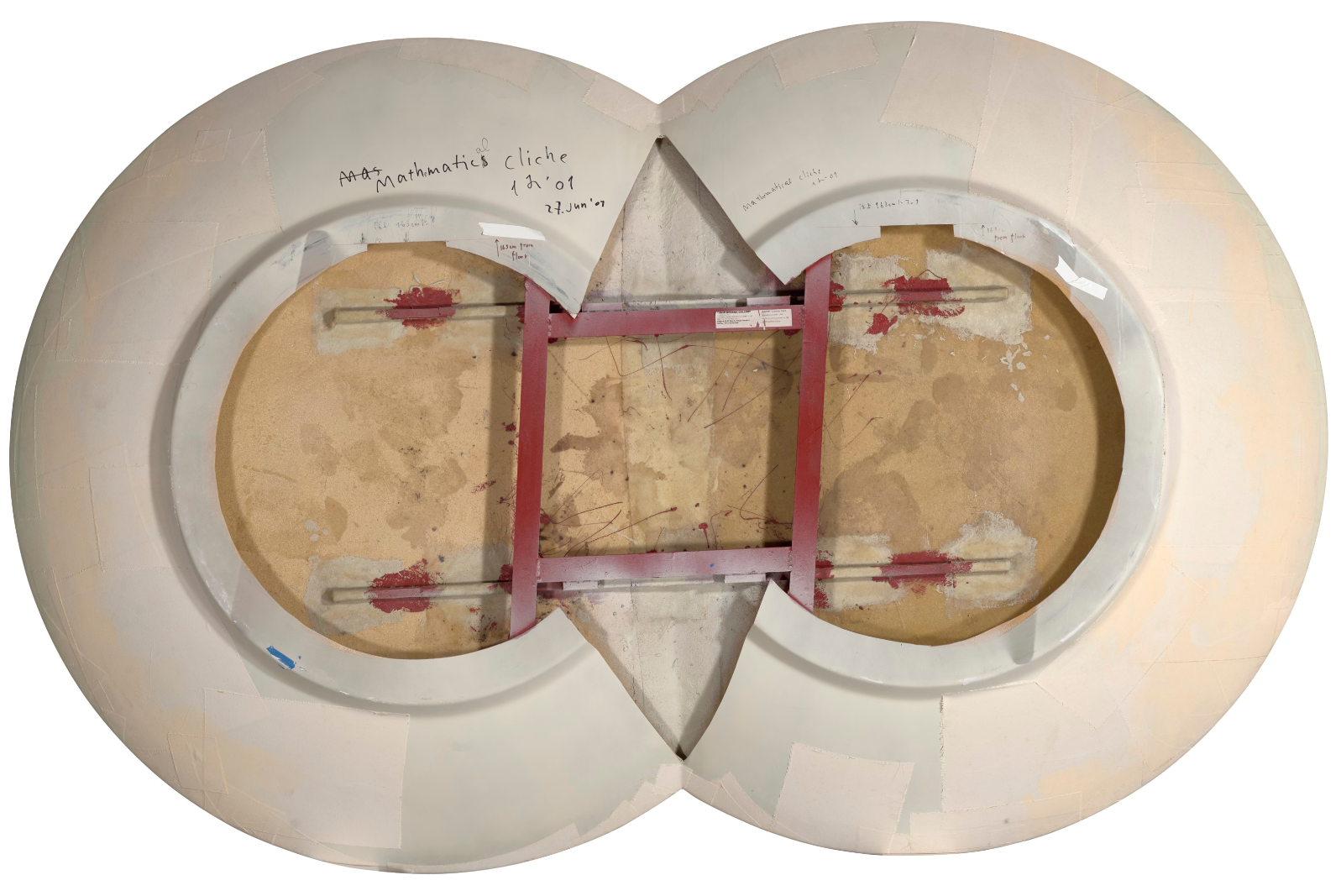
While Nara became infatuated with (and inspired by) American music, his approach towards perspective was distinctly and refreshingly non-Western. Nara joined the Superflat movement around 2001, the year of Mathematical Cliché’s creation, and sided with the group’s disruption of one-point perspective. In Mathematical Cliché, conventional perspective has been supplanted by this ‘multiplicity of points,’ demonstrated by the proliferation of rectangular forms which also hollow out the figurative elements, by the rounded shape of the cotton support and the visible vertical line intersecting its center, and by the ambiguous and unfocused gaze of the figure, who is decentralized and energizes the composition with an alluring lilt. Steeped in an almost dreamlike reverie, and with the work serving as an engrossing example of Nara’s tantalizing fusion of figuration and abstraction, a radical perspectival approach transfigures Mathematical Cliché into an enchanting meditation on the transformative power of inquisitiveness and the bliss of solitude.
Other Series
Bunny in blue, 1997
Lempertz Cologne: 5 June 2026
Estimated: EUR 350,000 – 450,000
EUR 584,200 / USD 673,725
YOSHITOMO NARA
Bunny in blue, 1997
Acrylic on canvas
60×50 cm (23-5/8 x 19-5/8 inches)
Signed, dated and inscribed ‘nara ’97 -in the blue room’ on canvas overlap
Also with direction arrow and directional information
In ‘Bunny in Blue’, Yoshitomo Nara presents one of his signature depictions of children: a child in a bunny costume, seated with legs stretched out, holds a carrot in its left hand. At its feet lie a baby bottle and a small bowl – props that, on the one hand, allude to childlike care, yet simultaneously create a subtle tension between innocence and existential isolation. The figure is surrounded by a homogeneous, intensely blue expanse of color reminiscent of the sky, yet one that allows for no spatial localization. This deliberate absence of a defined pictorial space strips the scene of any narrative clarity and intensifies the presence of the central figure, who seems to float almost weightlessly within the picture plane.
“These children or animals are ultimately also self-portraits, and the absence of explanatory backgrounds may stem from the fact that here, far from my familiar surroundings in Japan, I was freed from everything that had been weighing on my mind. These images are directed less at others and more at myself. They came into being because I was asking questions of my own self and no longer concerned myself with how I wanted to be perceived by others.”
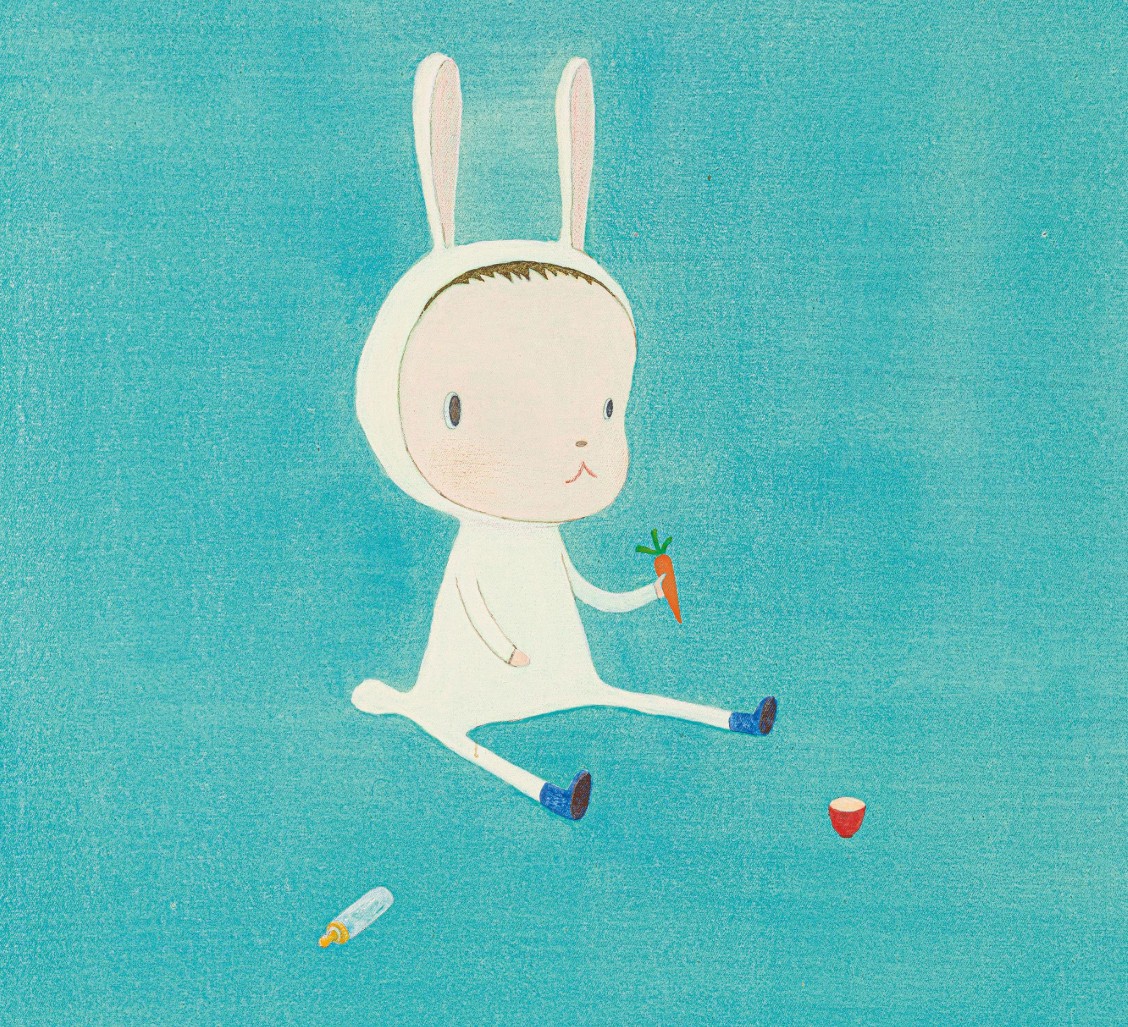
Created in 1997, this work marks a pivotal phase in Nara’s oeuvre: After studying painting in Japan – including at the Aichi Prefectural University of Fine Arts and Music – Nara moved to Dusseldorf in the late 1980s, where he studied under A. R. Penck at the Dusseldorf Art Academy. His several-year stay in Germany marked a turning point in his artistic development. Here, he increasingly distanced himself from narrative contexts and found the reduced, two-dimensional visual language that continues to characterize his work to this day. The iconic child and animal figures do not function merely as representations of childhood, but as psychological projections.
…Words Mean Nothing at All, 2012
Bonhams New-York: 20 May 2026
Estimated: USD 4,000,000 – 6,000,000
USD 5,021,500
YOSHITOMO NARA (B. 1959)
…Words Mean Nothing at All, 2012
Acrylic on wood, in artist’s frame
194.3 x 189.2 x 8.9 cm (76 1/2 x 74 1/2 x 3 1/2 inches)
Signed and inscribed ‘Words mean nothing at all… Nara’ (on the reverse)
Painted in 2012, Yoshitomo Nara’s …Words Mean Nothing at All belongs to a pivotal moment in the artist’s mature practice, when the psychological tension and overt rebellion that defined many of his earlier protagonists gave way to a quieter, more introspective emotional register. Executed just one year after the Great East Japan Earthquake of 2011, the present work reflects a period of profound personal and artistic reassessment, as Nara turned inward to reconsider memory, solitude, and the limitations of language itself. Fresh to market after remaining in the same private collection since 2013, following its inclusion in the artist’s New York exhibition that year, the painting stands as an exceptional example of this important transitional phase.
At the center of the composition, a young girl stands delicately balanced on the branch of a tree, accompanied by two birds beneath the handwritten phrase, “…WORDS MEAN NOTHING AT ALL.” Rendered in Nara’s unmistakable visual language—large eyes, flattened space, and deceptively childlike simplicity—the figure initially appears innocent and vulnerable. Yet, as throughout his oeuvre, emotional complexity lies beneath this surface. Nara’s children often occupy an ambiguous psychological space: they are at once sweet and unsettling, fragile yet quietly resistant (Stephan Trescher, “Lullaby Supermarket,” Verlag für moderne Kunst, 2001, p.10). Their tightly sealed mouths and watchful expressions suggest not passivity, but withheld emotion—an inner life that resists easy interpretation. In the present work, the child’s sideways glance feels less accusatory than in earlier paintings, carrying instead a sense of hesitation, introspection, and vulnerability.
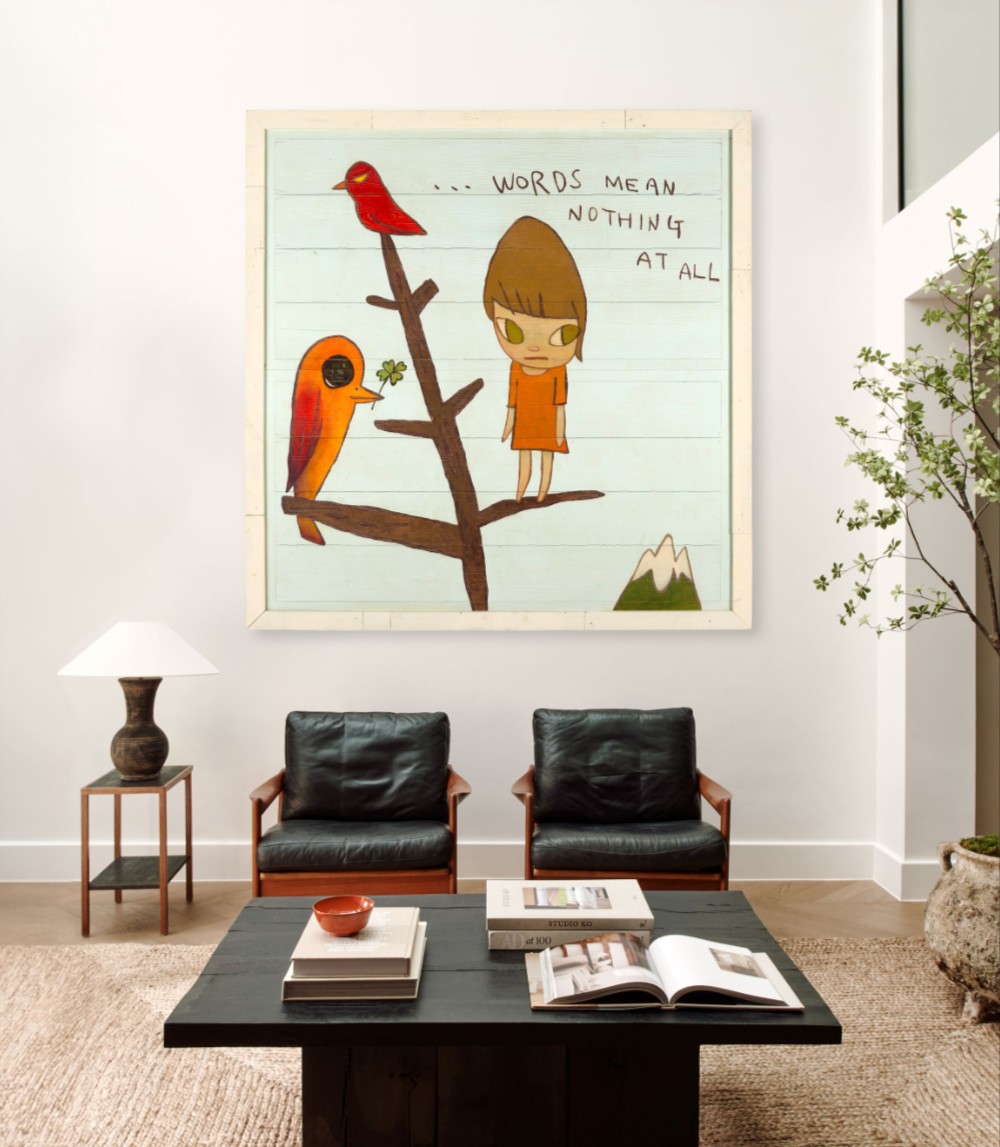
Solitude has always been central to Nara’s practice. Raised in rural postwar Japan as a latchkey child, often alone while his working-class parents were away, he has frequently described loneliness as a formative condition rather than simply an absence (‘Yoshimoto Nara on the importance of not growing up’, Dazed, June 12, 2025, Online). His figures, typically isolated against minimal or empty backgrounds, function less as fictional characters than as emotional doubles—what he has described as different facets of himself. Rather than conventional self-portraits, they operate as psychological stand-ins, carrying memory, vulnerability, and unresolved feelings. In this work, the unusually small scale of the child within the composition heightens that sense of fragility; unlike the confrontational close-ups of earlier “angry girls,” this figure feels exposed rather than defiant.
The title and inscribed text, …Words Mean Nothing at All, deepen the painting’s emotional resonance. Language in Nara’s work often functions less as direct communication than as atmosphere—fragmented phrases that resemble remembered lyrics, slogans, or passing thoughts. Growing up in northern Japan, he was deeply shaped by music broadcast from the American military radio station Far East Network, where English lyrics were often heard before they were fully understood. He has repeatedly emphasized that music came before art, and that album covers were his first experience of visual culture (‘There Was Music Before Art: Yoshitomo Nara’s New London Exhibition Reveals His First Love’, Esquire, June 18, 2025, Online). In this context, words become emotional triggers rather than fixed statements: they recall entire moods, songs, and memories without requiring literal explanation. The phrase “words mean nothing at all” therefore reads not as cynicism, but as an acknowledgment that feeling often exceeds language—that silence can hold more truth than speech.
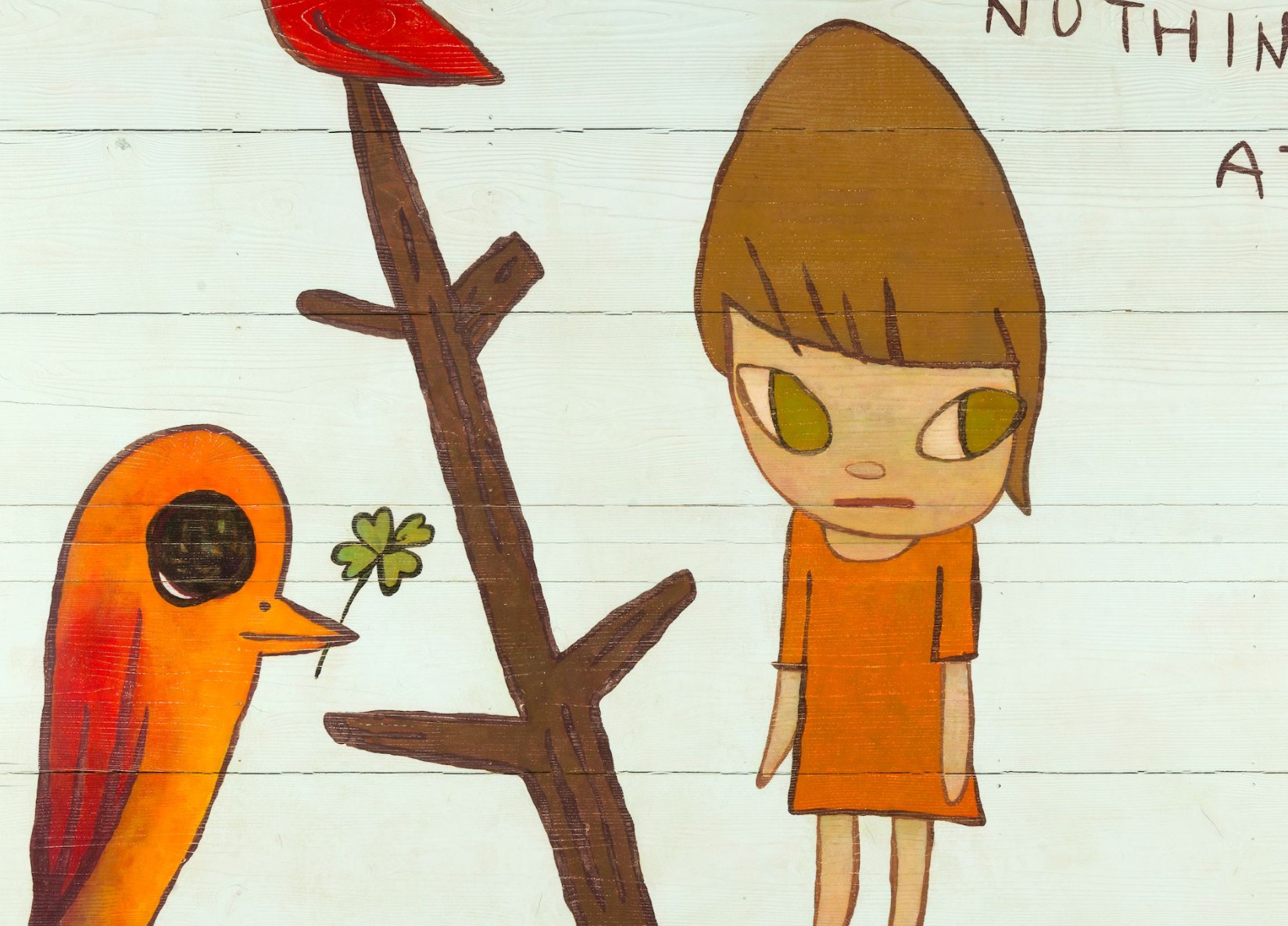
The tree itself carries particular symbolic weight. Nara has described the image of the tree trunk as a metaphor for growth and return: rather than moving linearly forward, life circles back repeatedly to the same emotional center, each time with greater depth and understanding (‘The Beginning Place: Long Interview with Yoshitomo Nara’, Tokyo Art Beat, February 24, 2024, Online). This idea is especially resonant in a work made after the 2011 earthquake, when questions of memory, home, and emotional grounding became newly urgent. Positioned high among the branches, the child appears suspended between vulnerability and resilience. The two birds introduce further emotional ambiguity: one, bright red and watchful above, recalls the sharper defiance of Nara’s earlier imagery, while the larger bird below carries a four-leaf clover, traditionally associated with luck and protection. Together, they suggest both witness and comfort, guardianship rather than threat.
Nara’s achievement lies in this delicate balance: innocence without naïveté, rebellion without spectacle, melancholy without despair. His figures remain psychologically open, allowing viewers to recognize both the adults they are and the children they once were. In …Words Mean Nothing at All, that emotional mirror feels especially tender. The work moves beyond the sharp confrontation of his earlier paintings toward something quieter and more enduring—a meditation on silence, memory, and the fragile hope that remains when language fails. Combining autobiography with universality, the present painting exemplifies Nara’s rare ability to transform the visual language of childhood into something profoundly adult. It is not simply a portrait of solitude, but of resilience: a deeply personal reflection that continues to speak precisely through its refusal to explain everything.
Strange Girl, 1991
Sotheby’s Hong-Kong: 29 September 2025
Estimated: HKD 2,500,000 – 3,500,000
HKD 5,334,000 / USD 685,605
Yoshitomo Nara 奈良美智 | Strange Girl 奇特的女孩 | Modern & Contemporary Day Auction | 2025 | Sotheby’s
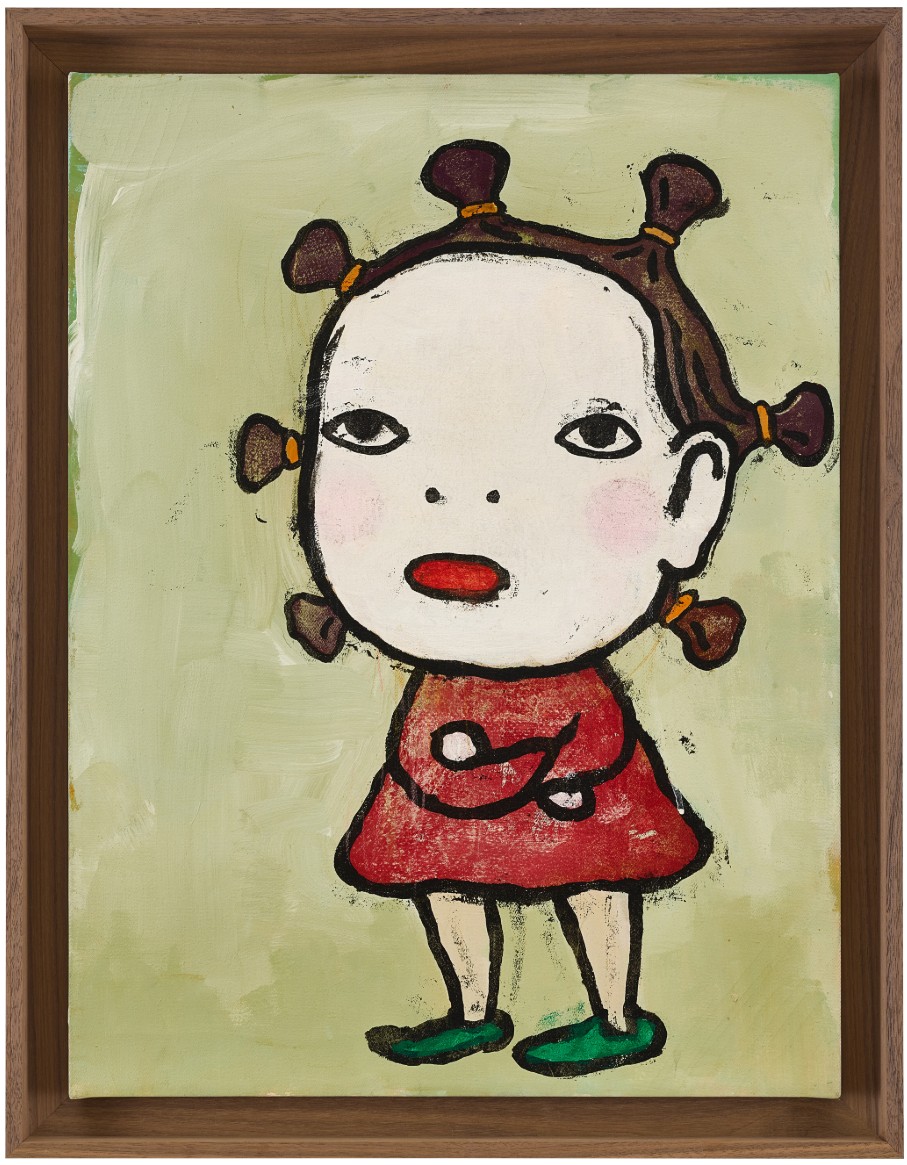
YOSHITOMO NARA (b. 1959)
Strange Girl, 1991
Acrylic on canvas
60.1 x 45.1 cm (23 5/8 x 17 3/4 inches)
Signed, titled and dated ’91 (on the reverse)
Emerging from the intersection of postwar Japanese culture and personal memory, Yoshitomo Nara’s early 1990s works mark a pivotal moment in his artistic development. Strange Girl (1991) and The Earth Cat (1992), created in close succession, encapsulate the emotional and visual language that would come to define his oeuvre; a duality of childlike innocence and emotional tension. These pieces showcase Nara’s signature artistic style while exploring deeper themes of resilience and the complexities of childhood. Both paintings are fresh to auction and have been in private hands for over three decades. Renowned for his ‘Angry Girls’, Nara captures the spirit of childhood with a unique twist. These subjects, with their large heads and captivating eyes, challenge conventional notions of cuteness, embodying a delightful mix of defiance, joy, and vulnerability. Inspired by his own experiences in post-war Japan and his love for punk rock, Nara expresses the complex emotions of youth, celebrating both the frustrations and the resilience of children.
Strange Girl (1991) becomes not just a portrayal of anger but an uplifting reminder of the strength and confidence that can emerge from the heart of childhood. The girl in a vibrant pink dress stands confidently against a pastel green backdrop. Her wide doe-like eyes and crossed arms convey a quaint yet assertive confidence. Nara often uses hairstyles to add emotional depth to his character. As seen in this painting, the distinctive hairdo with twisted buns and the girl’s crossed arms emphasize her playful demeanor. Each element further enhances the emotional undertone of the figure, aligning perfectly with Nara’s signature style.
The Earth Cat, 1992
Sotheby’s Hong-Kong: 29 September 2025
Estimated: HKD 1,500,000 – 2,500,000
HKD 2,032,000 / USD 261,185
Yoshitomo Nara 奈良美智 | The Earth Cat 地球貓 | Modern & Contemporary Day Auction | 2025 | Sotheby’s
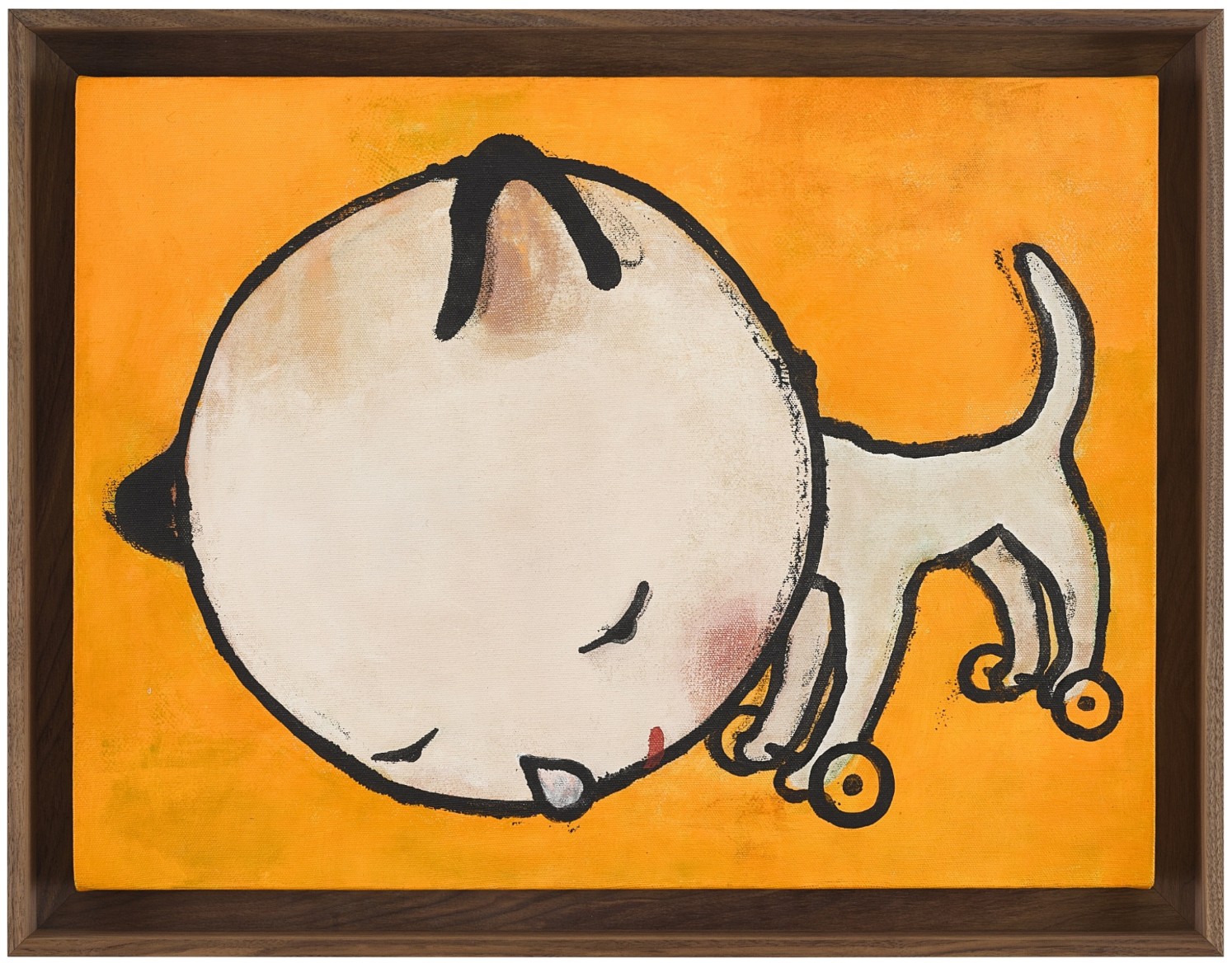
YOSHITOMO NARA (b. 1959)
The Earth Cat, 1992
Acrylic on canvas laid on board
45.7 x 60.4 cm (18 x 23 3/4 inches)
Signed, titled and dated ’92 (on the reverse)
In The Earth Cat, a blushing cat on wheels takes center stage against a brilliantly orange backdrop. This charming motif evokes memories of childhood pets and toys, while the wheels suggest mobility and a sense of rootlessness. This theme resonates deeply with Nara’s own life, as he spent twelve years in Germany, far from his native culture and language. During this time, he grappled with feelings of isolation and loneliness, mirroring the solitude of his youth in post-war Japan. Through his art, Nara reflects on childhood with a wistful fondness, channeling the emotions and memories that shape his identity. The expressions of his characters echo his introspective journey, capturing the bittersweet essence of growing up amidst uncertainty.
Together, Strange Girl and The Earth Cat convey a profound sense of emotional autonomy. Each piece offers a vision of selfhood, with child and animal serving as parallel avatars of introversion, instinct, and quiet resistance. Through his distinctive visual language, both paintings effectively articulate resonant themes in Nara’s oeuvre.
Untitled, 1987
Ravenel Taipei: 1 December 2024
Estimated: TWD 28,000,000 – 46,000,000
TWD 38,400,000 / USD 1,182,630
Ravenel | Yoshitomo NARA《Untitled》 Ravenel Autumn Auction 2024 Taipei Lot 052
YOSHITOMO NARA (Japanese, 1959)
Untitled, 1987
Acrylic, colored pencil, and pencil on canvas
130.3×130.3 cm
Signed reverse Yoshitomo Nara
“Untitled” was completed in 1987, the same year the artist finished his studies in Japan, graduating from the master’s program at Aichi Prefectural University of Arts and Music before traveling to Europe, the following year, Nara moved to Germany to attend the Kunstakademie Düsseldorf, a prestigious institution known for its liberal academic environment. Looking back at Yoshitomo Nara’s works from the1980s, the qualities that viewers are familiar with—his unique textural surfaces, layered color palettes, meticulous brushwork, and the repeated expression of specific objects and themes—were already evident during this time. It is not hard to see how the rich historical and cultural resources from abroad were a profound and valuable influence on this young Japanese artist. He traveled to Europe in 1980, 1983,and 1987, becoming enamored with the aesthetics of the Italian Renaissance and Christian art, which intuitively influenced his work during this period. Symbolic elements such as falling, crosses, angels, halos of saints, and houses create a strong narrative tone that guides viewers to ponder the stories the artist reflects upon. It also helps them understand how Yoshitomo Nara integrates the characteristics of Asian artists while internalizing the influences of Western classical art. “Untitled” reveals Yoshitomo Nara’s vibrant youthful spirit, reflecting his desire to embrace a broader and freer creative environment. Completed in 1987, this piece is a square painting measuring 1.3 meters, created using oil paint, colored pencils, graphite, and canvas. The panoramic scene features a light blue sky and dark green land, divided into two large background sections. In the left corner, a substantial amount of notebook paper with German language practice notes is affixed, creating an orderly, step-like distribution from top to bottom. The use of non-traditional materials indirectly echoes Nara’s belief that there is no distinction between art and life, while the foreign language writing can be intuitively viewed as an expression of abstract lines. Occupying the right side of the painting is the central figure: a young boy with his head wrapped in bandages, smoke curling from his fingertips. He steps out of a black circle, discarding a severed head that bears the same face. Dressed in a Japanese unifrom known as “Gakuran,” the figure symbolizes the “past,” much like the reference to Japanese fighter planes during Nara’s exploration of style between 1986 and 1987. The boy’s side profile features “white wings,” representing hopes for “freedom and new beginnings.” The “red flames” appear three times in the painting: in the black house, the central campfire, and the house above the figure’s head, all conveying a positive message of rebirth through fire.
Untitled, 1992
Phillips Hong-Kong: 26 November 2024
Estimated: HKD 4,800,000 – 6,800,000
HKD 4,318,000 / USD 554,810
Yoshitomo Nara – Modern & Contempo… Lot 125 November 2024 | Phillips
YOSHITOMO NARA
Untitled, 1992
Acrylic on canvas
84×100 cm (33 1/8 x 39 3/8 inches)
Signed, inscribed and dated ‘Yoshitomo Nara ’92’ on the reverse
In 1988, Yoshitomo Nara decided to depart from Japan for Germany. The then young artist found himself somehow disconnected within the local art world, which was shifting towards a more commercialized practice in the 1980s. Seeking to continue his lifestyle as a student away from society, Nara pursued further studies at the renowned Kunstakademie Düsseldorf. The following four years, until 1992, are among the most critical periods that saw the formation of what we recognize today as Nara’s signature mannerism—one imbued with a childlike simplicity, mixing rebellious rawness with touching sentiments, while juggling a light-hearted innocence and a profound emotional intensity.
“My student life in Germany taught me about much more than the small world that is art. It allowed me to learn about how to be a human being in a much larger sense.”
Coming from a Distinguished European Collection and fresh to auction, the current lot is a compelling exemplar created with the new artistic vocabulary Nara developed just before the turn of millennium. Here, one can observe some of the prototypical techniques that would later characterize the artist’s iconic works. A painting on canvas executed with oil, the work showcases a playful and sketch-like quality, made all the more captivating with its simplified narrative configuration and pared-down use of color, countered by the amplified presence of lines. The outline of a boy figure is drawn out with bold, unpolished black strokes, situated within an abstracted backdrop composed of uneven brushwork that injects the work with a mystical deep purple, interlaced with hints of yellow and pink.
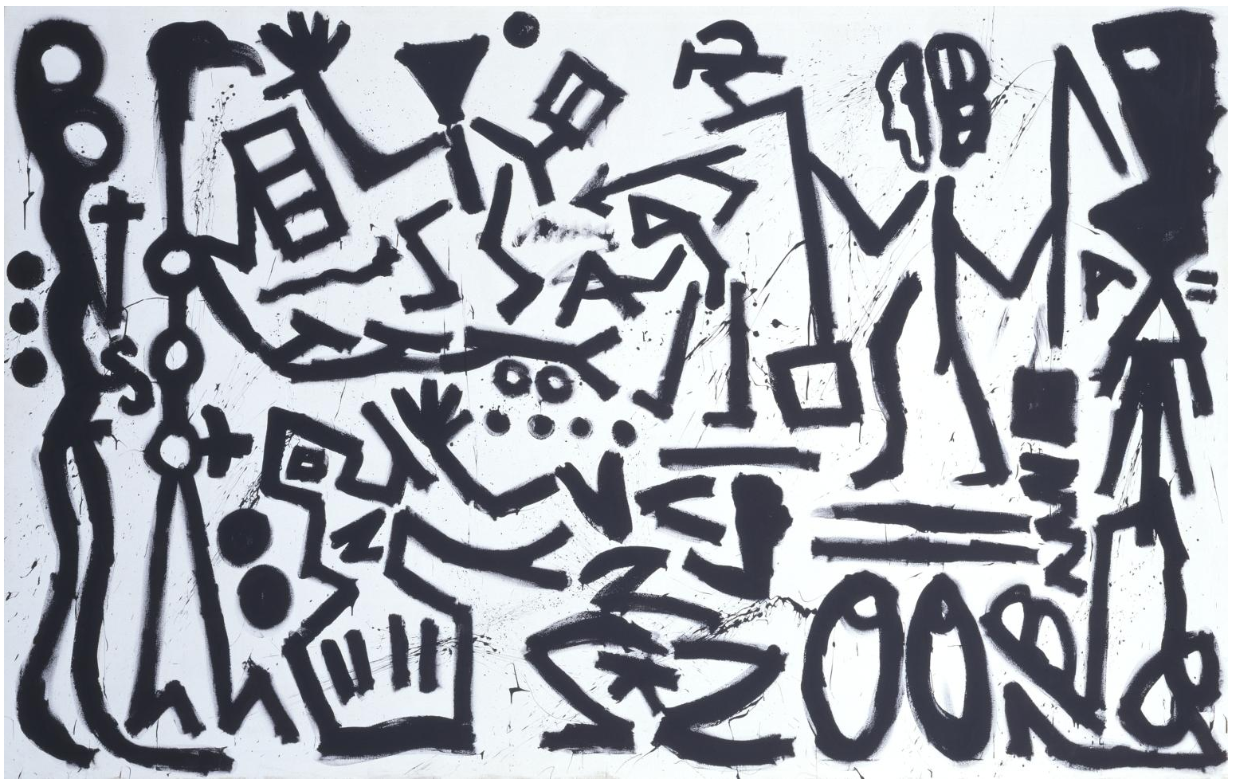
A.R. Penck, West, 1980
Artwork: © 2024 A. R. Penck / Artists Rights Society (ARS), New York / VG Bild-Kunst Bonn, Germany
In Düsseldorf, Nara studied under the mentorship of A.R. Penck. A representative artist of German Neo-Expressionism, Penck has been known for his stylistic compositions featuring simplified patterns and signs, executed in childlike bold lines, which yet encompassed an explosive energy responding to the aftermath of wars and the collapsing order of the post-war era. It was on the advice of Penck that Nara conceived the idea to incorporate in painting a more improvisational sensibility seen more often in his drawings, which are often humorous and spontaneous musings created on either random scraps from notebooks or found posters. Transplanting the approach of drawing onto the canvas, Nara was able to release this playful and rebellious facet within his artistic persona, through deliberate imperfection and incompleteness that disregarded expectations for technical refinedness and so-called maturity. Loneliness is another keyword that Nara frequently uses in his memories to refer to his German sojourn. As Nara reflects, ‘I ended up living in Germany for 12 years. I became literally “alone” there. It strongly reminded me of the memory of my lonely childhood. I felt the city’s (Düsseldorf) cold and darkness, just like my hometown, and the atmosphere there reinforced my tendency to seclude myself from the outer world.’ As a foreign student confronting various language and cultural barriers, Nara was compelled to turn further inward and explore deeply his solitary inner world. A result of this, as one would observe in his work, are the gradual elimination of rich details in the backgrounds seen in his earliest works, which narrowed to increasingly flat and neutral settings, composed of decontextualized color fields. These shifts in turn invite the viewer to concentrate more on Nara’s characters and their fluctuating emotional states.
“I don’t paint when I am happy. I only paint when I am angry, lonely, sad, when I am able to talk to the work. So there is a need for storytelling before I paint.”
Also foregrounded in the current lot is the motif of a little ship, which is held high in the hand of the boy. Unlike many other enigmatic symbols that imbue Nara’s work with a touch of ambiguity, the ship is a highly recognizable mark that registers intensely with the artist’s sensation, embodying a strong sense of nostalgia for his distant home in Japan. A more straightforward manifestation of this theme can be seen in an earlier painting from 1991, where Nara depicts a child holding a ship on his head, and which he directly titles Homesick with a ship. From 1991 to 1992, Nara repeatedly explored various expressions with the motif, rendering his characters as either holding, playing with or gazing silently at varying ships. Including the current lot, these fourteen works form a significant corpus, acting as the strongest and deepest emotional outlet of Nara at this moment in time.
Baby Blue, 1999
Phillips Hong-Kong: 25 November 2024
Estimated: HKD 42,000,000 – 62,000,000
HKD 45,220,000 / USD 5,809,730
Yoshitomo Nara – Modern & Contempora… Lot 7 November 2024 | Phillips
YOSHITOMO NARA
Baby Blue, 1999
Acrylic on canvas
120×110 cm (47 1/4 x 43 1/4 inches)
Signed, titled and dated ‘”Baby Blue” Yoshitomo Nara ’99’ on the stretcher
Yoshitomo Nara’s Baby Blue stands as a definitive masterpiece from one of Japan’s most celebrated contemporary artists, who has unequivocally achieved rock star status on the global art stage. At the heart of his practice lies the iconic, adored ‘Nara girl’, a protagonist whose narrative and worlds have evolved through Nara’s oeuvre in tandem with the artist’s personal and artistic growth. Instantly recognizable with their large, chickpea-shaped heads and intensely expressive eyes that convey deep emotion, these cherubic faces are often lit with a playful mischief that belies their age. This intriguing duality is a hallmark of Nara’s artistic expression, inviting viewers to delve into the tensions between innocence and experience. Through this interplay, Nara connects with his audience on a profoundly universal level, exploring themes of childhood, identity, and the intricate complexities of human emotion.
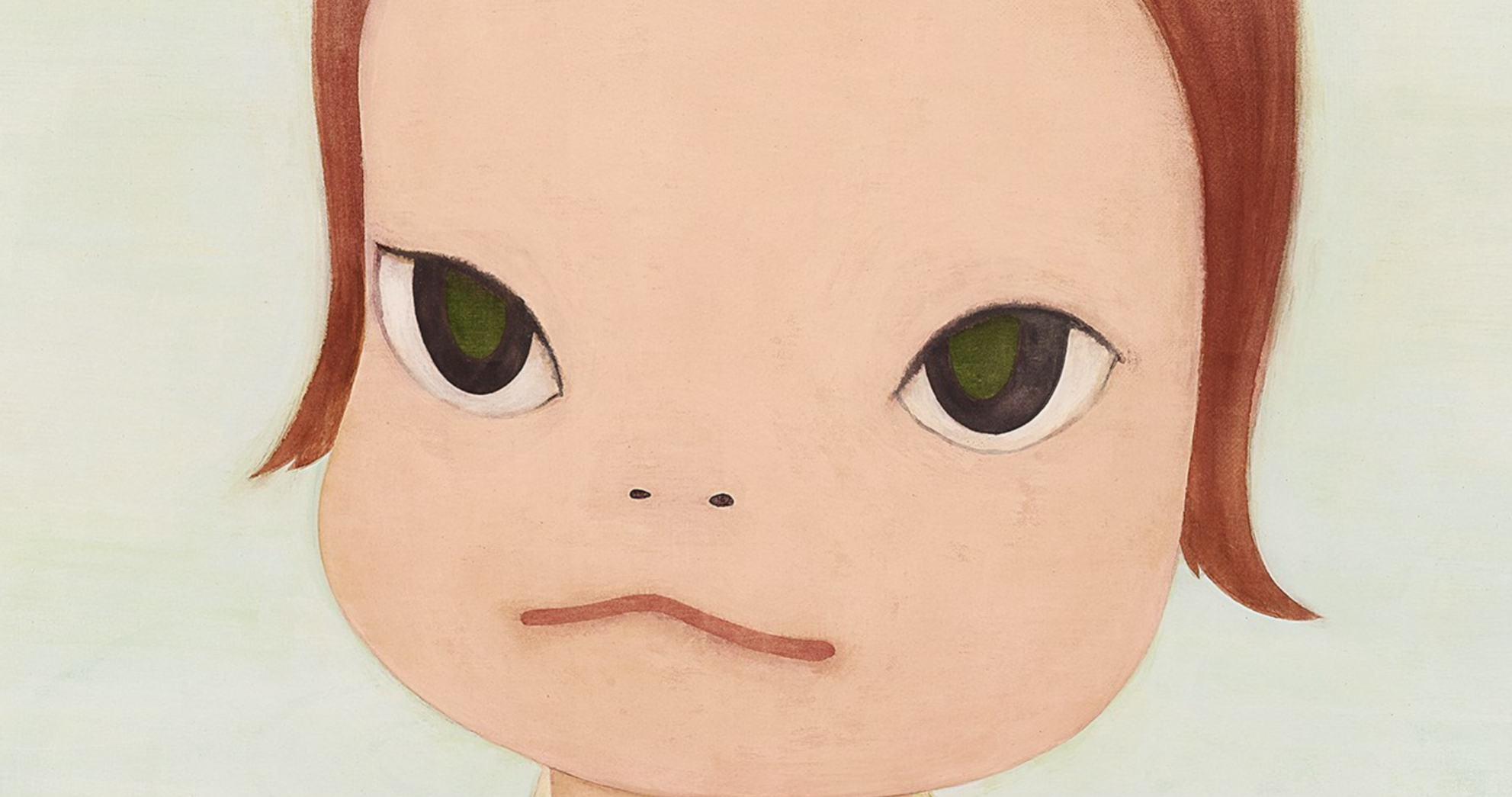
Painted at the turn of the millennium in 1999, Baby Blue emerged during a pivotal moment in Nara’s career, with artworks from this period being particularly coveted, as evidenced by Nara’s top two results at auction being canvases created just one year later. Baby Blue was first unveiled at an exhibition of Nara’s work hosted by the Marianne Boesky Gallery in New York that Autumn, marking his first solo show in the city. Nara’s debut received high praise, including that of the esteemed The New York Times critic Roberta Smith, who complimented Nara’s ‘cast of cute but demonic cartoon toddlers’who ‘pack a potent visual punch’. Smith articulates how this visual impact arises from the contrast of high abstraction with popular culture, with Nara’s angelic-devilish subjects ‘rendered in clear buoyant shapes, like toys. But their big beach-ball heads feature clamped, lozenge-shaped mouths and somewhat slanted green eyes that smoulder resentfully.’ The colors are ‘rich, odd, deliberate and slightly nostalgic: beautiful pastels against glowing browns that evoke illustrated children’s books from an earlier era’. And the figures are set against ‘unusually seductive [surfaces], dense and powdery like pastel but with the evenness of stain painting’. Indeed, Smith’s summary of the key characteristics of the most significant Nara girl paintings is beautifully exemplified in Baby Blue, which encapsulates these very qualities.
Little Bunny in the Box, 1996
Sotheby’s Hong-Kong: 11 November 2024
Estimated: HKD 10,000,000 – 15,000,000
HKD 10,800,000 / USD 1,389,710
YOSHITOMO NARA (1959 – )
Little Bunny in the Box, 1996
Acrylic on canvas
80.5 x 70.2 cm (31 5/8 x 27 5/8 inches)
Signed, dated ’96 and inscribed Abandoned (on the reverse)
Executed in the seminal year 1996, Yoshitomo Nara’s Little Bunny in the Box epitomizes the artist’s career-long exploration of innocence, adolescence and universal emotions. With softy downturned eyes, this rosy-cheeked, infantile figure dressed in a bunny suit sits nestled within a lone black box – at once vulnerable, captivating and enchanting, the present work captures the beguiling emotionality of Nara’s enigmatic oeuvre. One of the first canvases to feature Nara’s bunny motif and fresh to auction, Little Bunny in the Box is only the third example from this series on canvas to ever come to auction. As with Nara’s most celebrated works, images of children and animals act as representations of loneliness and solitude, as well as symbols of innocence and its fragility. Throughout his career, Nara has frequently depicted dogs, cats, bunnies and other animals, with the artist remarking that their submissive obedience reminds him of the naivety of children. The nascent figure of the bunny seen in the present work, with its playfully sloping ears, would go on to inspire the artist’s celebrated Sleepless Night painting and sculpture, universally admired by collectors and fans of the artist. As with many of Nara’s most widely treasured compositions, the present work is instantly recognizable, having been featured on a series of posters produced by the artist’s N’s Yard gallery.
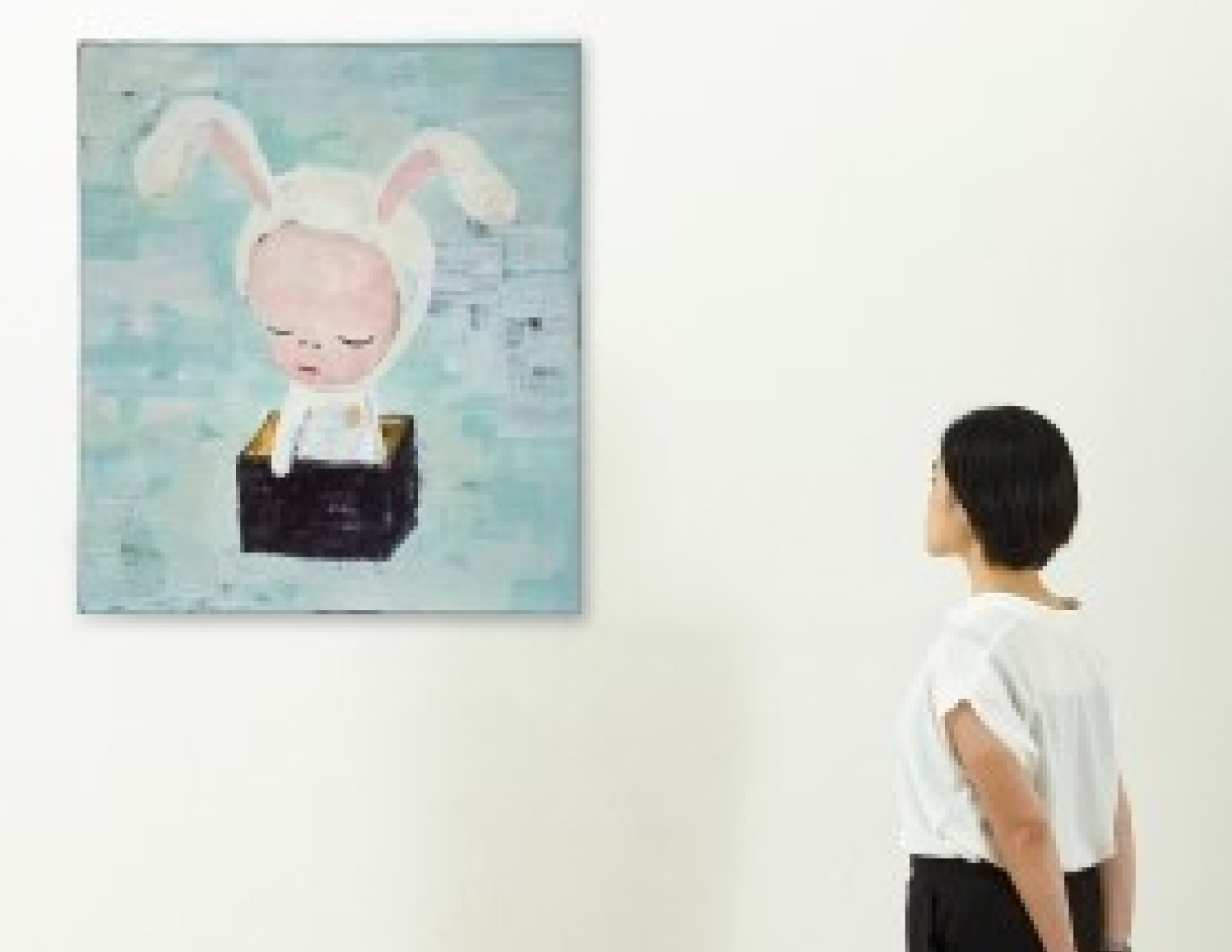
Born to a working-class family in the rural area of Hirosaki in Japan, Nara’s youth was spent in relative isolation. Growing up during a period of rapid economic growth, Nara’s parents would often spend long hours away from their home nestled in the Japanese countryside, leaving the young artist to spend much of his childhood alone without companionship. Drawing and making picture books inspired by his pet cat, it was this companion and other neighborhood animals that Nara took for company, as well as early inspiration. Nara is candid about his isolated early years in rural Japan, explaining;
“I was lonely, and music and animals were a comfort. “I could communicate better with animals, without words, than communicating verbally with humans.”
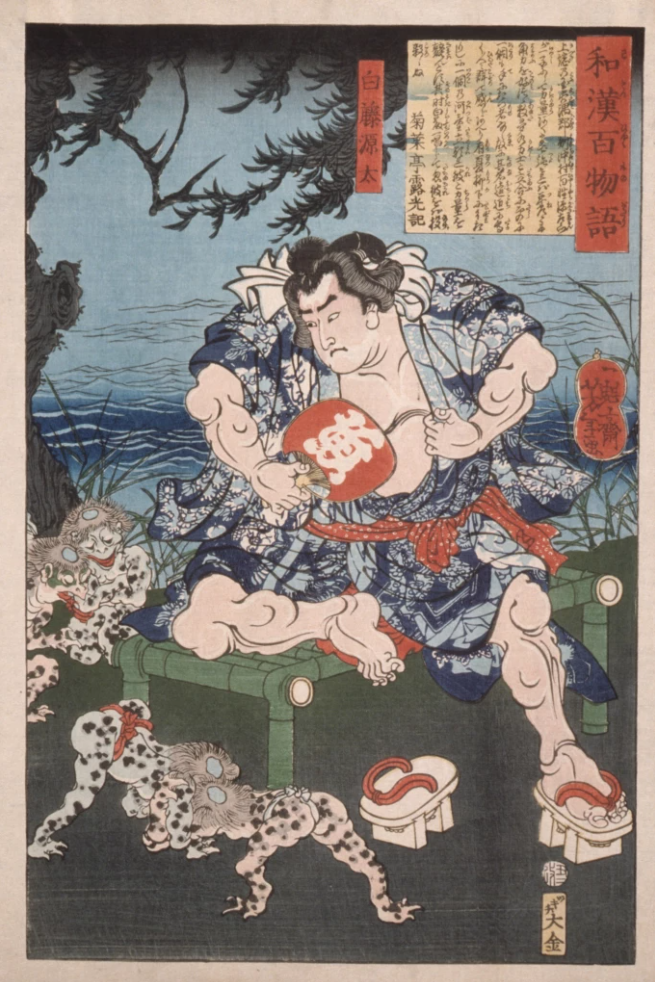
Tsukioka Yoshitoshi, Shirafuji Genta Watching Kappa Wrestle, 1865, 2nd month, Los Angeles County Museum of Art, Herbert R. Cole Collection, photo © Museum Associates/LACMA
Universally admired for these deeply felt depictions of innocence and angst across generations, Nara’s cast of characters are often described in terms of kawaii and the Japanese Superflat movement that arose from this context of rapid economic growth. However, Nara himself says that his imagery is derived from a more emotive and spiritual base stemming from his Japanese heritage; “[my] imagery that some people misinterpret as being manga—like, not a lot of people would see this spiritual side of my work. The fact is I have never once said that I’ve been influenced by Japanese manga. For a very long time I have created my art from a spiritual point of view. It is filled with religious and philosophical considerations” (Yoshitomo Nara, quoted in Robert Ayers, “‘I Was Really Unthinking Before’: Yoshitomo Nara on His Recent Work and His Show at Pace Gallery in New York”, ArtNews, April 14, 2017). As Kagawa Masanobu, Head curator of Hyōgo Prefectural History Museum, has articulated, Japanese folklore and spirituality is a rich tapestry of mischievous spirits, child-eating monsters, and shape-shifting animals, with Nara’s spectral half-human, half-animal characters recalling the Japanese Yokai. These spirits or creatures, equally beloved and feared in Japan, have played an integral part in Japanese culture for millenia. From the Edo period (1603–1868) scroll paintings such as Tsukioka Yoshitoshi, woodblock prints, and books, to today’s video games, movies, and manga, these mischievous supernatural spirits are prevalent in Japanese folkloric culture. As with Nara’s animal characters, these spirits are vessels for storytelling and the reimagining of personal experiences, the influence of which is most directly articulated by Nara through his Miss Forest sculpture series, which the artist has described as inspired by “forest spirits”.
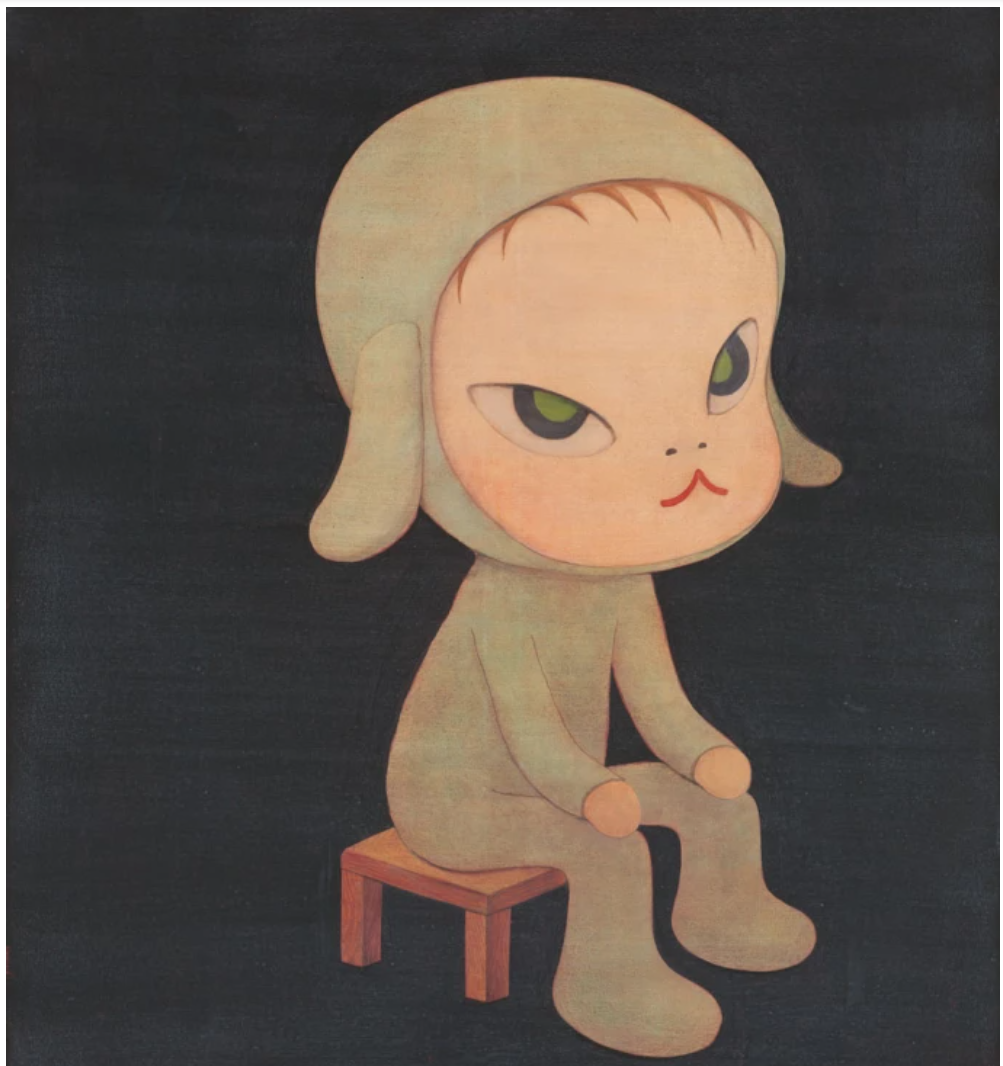
Yoshitomo Nara, Sleepless Night (Sitting), 1997, Rubell Museum © 1997 Yoshitomo Nara.
This bunny-child nymph, when placed within the ambiguous vacuity of the present work, is situated within a vast, alienating world, the self of memory and of times past now isolated to a box into which it has been abandoned. Executed in 1996, the present work sees Nara depart from the thick, Neo-Expressionistic outlines of his early work to his most recognizable and mature aesthetic, with his subject delicately rendered and set against a reductive and highly distinctive background. Upon graduating from the Aichi University of the Arts, Nara moved to Germany to study at Düsseldorf’s Staatliche Kunstakademie under the mentorship of A.R. Penck before setting up a studio in Köln. Language barriers and the unfamiliarity of German culture saw Nara facing a period of acute solitude akin to that experienced as a child in Japan. It was during this time that Nara began to explore the depths of his memory and emotions to confront this profound sense of isolation in his art, manifesting the motifs of sullen-children for which he is now renowned. Used variously as the packaging that carries the artist’s lonesome cast of characters, as replacement homes and as the stage for verbal declarations, the box motif within which the lone figure of the present work sits first began to appear in Nara’s work during this time. Whilst living abroad, Nara began to incorporate fragmentary and symbolic images to express the loneliness he experienced, with the box carrying symbolic resonance for the artist’s feelings of displacement and isolation. Whilst the bunny-figure of the present work is reminiscent of puppies and kittens found abandoned in cardboard boxes, this image also calls to mind how small children make dens in small enclosed spaces to create a contained feeling of safety and security from the outside world, a miniaturized house of their own. Nara captures a sense of transitory uncertainty through this image; a vulnerable subject standing in the vast emptiness sitting inside a box, between home and nowhere.
Conveying a universal emotional depth that has resonated with audiences worldwide, Little Bunny in the Box is a sentimental testament to Nara’s unique ability to capture universal emotions. Bearing a cross-generational message, the present work epitomizes the ways in which Nara is able to reconcile seemingly innocent imagery with the universal experience of hardship. Nara’s child-like figure in a bunny costume sat within a box are subtle, yet powerful motifs which masterfully establish a profound connection between the viewer and the central figure. In touch with something elemental, these figures possess an extensive breadth of expression that remind us of long-forgotten feelings, of our intuitive wisdom.
Untitled, 2007
Christie’s Shanghai: 7 November 2024
Estimated: CNY 30,000,000 – 50,000,000
CNY 30,550,000 / USD 4,291,390
REPEAT SALE
Christie’s Hong-Kong: 24 May 2021
Estimated: HKD 45,000,000 – 65,000,000
HKD 54,250,000 / USD 6,986,388
Yoshitomo Nara (b. 1959), Untitled | Christie’s
YOSHITOMO NARA (B.1959)
Untitled, 2007
Acrylic on canvas
162 x 145.5 cm (63 3/4 x 57 1/4 inches)
Executed in 2007, Untitled is one of the few largest canvases Yoshitomo Nara created at the point he rose to a game-changing art world phenomenon—it was a year after the artist debuted his legendary show Yoshitomo Nara + Graf: A-Z at his hometown Aomori that propelled his fan frenzy to the new height and cemented his global acclaim. It was taken place at a local brewery brickhouse and at the time recruited more than 13,000 volunteers to plan and produce the exhibition—the artist’s largest cultural jamming that testifies the synergies of Nara’s art and local community. The exhibition was later toured to multiple institutions, including KM21, The Hague (formerly the GEM Museum of Contemporary Art), and BALTIC Centre for Contemporary Art, Newcastle, where the present work was featured. Collaborating with the architectural and design group graf, Nara initiated an unorthodox way of displaying and viewing his art—creating temporary wooden shelters within an exhibition space where his personal collectibles are shown alongside his works. Being part of debuting this revolutionary concept in Europe, Untitled was hung in one of these wooden temporary structures, inviting the viewer to step into Nara’s inner world filled with personal memory and sentiment.
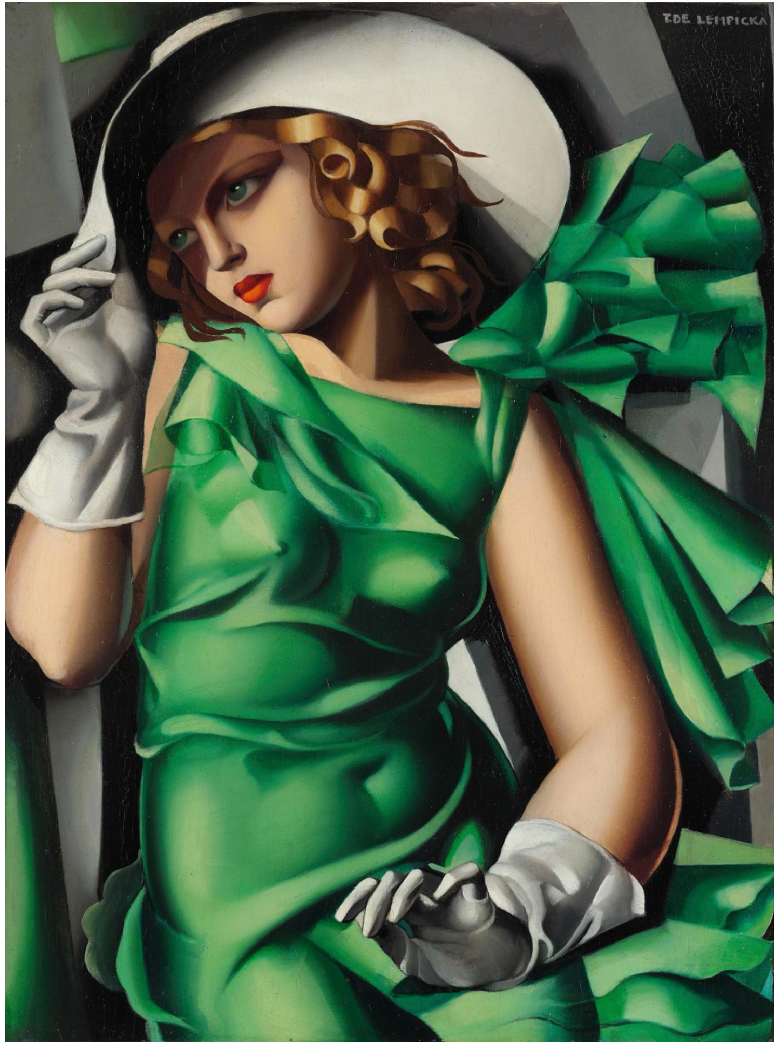
Tamara de Lempicka, Young Lady in Green, 1927-30. Centre Pompidou, Paris. © 2024 Tamara Art Heritage / ADAGP, Paris / ARS, New York. Localisation : Paris, Centre Pompidou – Musée national d’art moderne – Centre de création industrielle © Centre Pompidou, MNAM-CCI, Dist. GrandPalaisRmn / Bertrand Prévost
Out of the nearly eight hundreds of paintings Nara created since 1990s, the present work was chosen by the artist for his artist’s book NARA 48 GIRLS. Portraying the iconic Nara’s ‘big-headed girl’ with only one eye revealed and sitting serenely behind a tabletop, Untitled is extremely rare in composition among the artist’s oeuvre. The girl, with her petal-like, perhaps Murakami-inspired collar, once appeared in an earlier work Nara co-created with Murakami at the dawn of the legendary Superflat movement; while her emerald green dress invokes some of the most quintessential and transcendent portraitures since Renaissance: from van Eyck’s The Arnolfini Portrait (1434, The National Gallery, London) to Monet’s Woman in a Green Dress (1866, Kunsthalle Bremen) and Lempicka’s Young Lady in Green (1927-30, Centre Pompidou, Paris). It also appeared to be the colour worn by some of the most notable fictional characters invented by British playwright J.M. Barrie, such as Peter Pan and Tinker Bell. Never growing old, these fairies ring a bell with the good old memories of every grown-ups. Delving into fragments of childhood memories, Nara imbues the work with a fairy-tale milieu by reinventing a tender imagery that speaks simultaneously to himself as well as the whole generation.
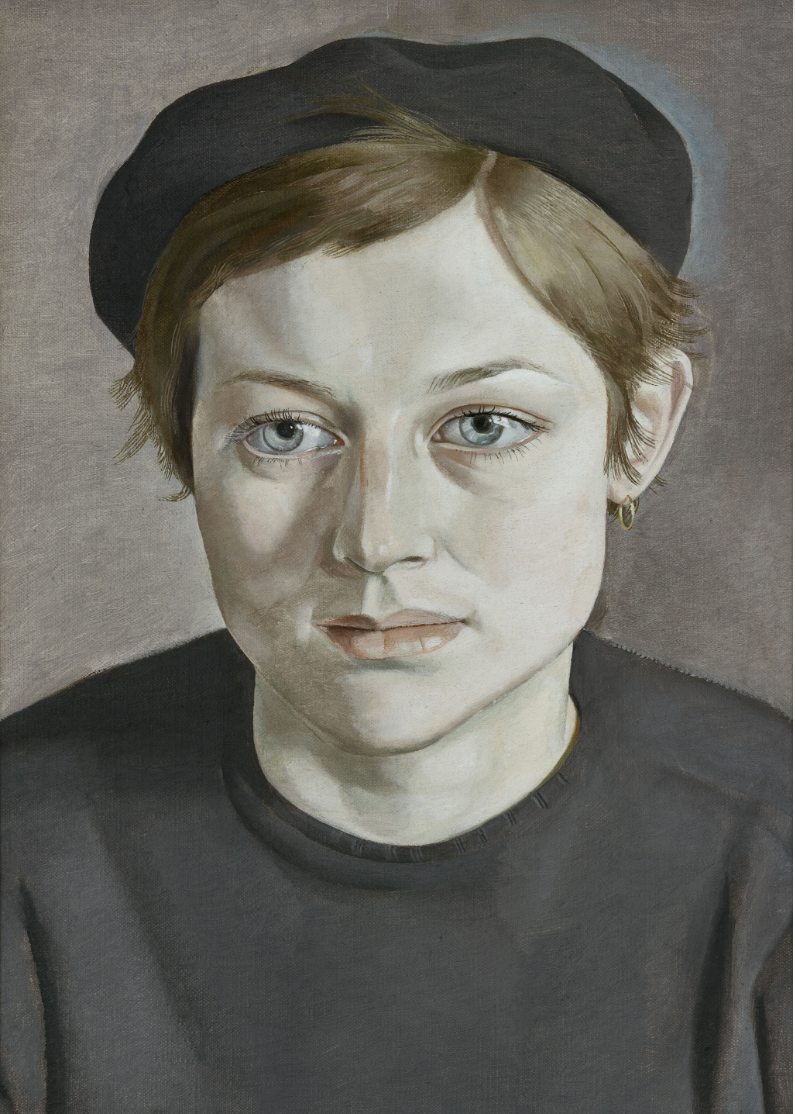
Lucian Freud, Girl with Beret, 1951. Manchester Art Gallery, Manchester. © Lucian Freud Archive / Bridgeman Images. Image credit: Manchester Art Gallery
Untitled also demonstrates a momentous transition of Nara’s visual lexicons—his changing course in depicting the eye from those piercingly slanted to lustrous star-studded, and his exhaustive and meticulous application of multi-layered pigments to create a luminous and enchanting emotional effect of portraiture. In Untitled, the enlarged pupil of the little star dweller almost engulfs the viewer with its mesmerizing, kaleidoscopic blobs and dashes. Nara once asserted, ‘I used to draw them too carelessly. Say, to express the anger, I just drew some triangular eyes. I drew obviously angry eyes, projected my anger there, and somehow released my pent-up emotions. About ten years ago, however, I became more interested in expressing complex feelings in a more complex way’ (Y. Nara, quoted in Hideo Furukawa, ‘An interview with Yoshitomo Nara’, Asymptote Journal, November 2013). Indeed, Nara’s shift of style in depicting the eye symbolises the new maturity of his painterly virtuosity in attaining what the art critic Midori Matsui described as ‘the allegorical ability to express narrative through singular image endowed with powerful emotional appeal and enigmatic fragment that evoked associations’ (M. Matsui, ‘A Child in the White Field: Yoshitomo Nara as a Great “Minor Artist”’, Yoshitomo Nara: The Complete Works, Paintings, Sculptures, Editions, Photographs, Vol. 1, Tokyo 2011, p. 334). In a similar vein as Lucian Freud’s early figurative paintings, Nara’s depiction of girl is nothing close to the ‘classical style’. Focusing on capturing the spirituality over the physicality of the character, both artists pay meticulous attention to the very details of eyes while softening other features of the face. This exceptional work, in particular, attests to his bravura in the medium and his meticulous attention to the minute difference in paint and brushwork, all of which highlight the clarity in the young girl’s deep yet lustrous—single eye. At once sparkling like stars in the night sky and inviting introspection like a window, it pulls the viewer into a spiritual realm that is timeless and constantly changing—a sacred temple of childhood that belongs to everyone. The key to this enthralling effect is repeated painting until the pigment becomes one with the canvas. This creates a stark contrast to the surface-bound quality in his earlier works. His Wish World Peace from 2014 (Christie’s Hong Kong, 26 May 2022, lot 51, sold for HKD 97,090,000), for example, demonstrates the persistent delicacy Nara holds towards his medium. In the past decade, Nara has slowed down and let the light and shadow come out in his work. These details turn his paintings into a meditative and reflexive whole that generates a profound feeling of immediacy. Earlier motifs such as cigarettes, knives, and torches are gone—instead, his paintings become pure poetic explorations of lines and colours charged with the most intense emotions. As Nara once expressed, ‘It allows me to draw out parts of myself that I’m not even aware are there’ (Y. Nara, quoted in ‘Japanese artist has a taste for Hong Kong’, South China Morning Post, 9 March 2015).
O.T (N.G), 1993
Phillips Hong-Kong: 1 June 2024
Estimated: HKD 2,500,000 – 3,500,000
HKD 3,810,000 / USD 487,774
https://www.phillips.com/detail/yoshitomo-nara/HK010224/135
YOSHITOMO NARA
O.T (N.G), 1993
Acrylic on canvas
42 x 52.2 cm (16 1/2 x 20 1/2 inches)
Signed, titled and dated ‘”O.T (N.G)” Yoshitomo Nara [in Japanese] ’93’ on the reverse
Visually striking and angelically sweet, O.T (N.G) is a quintessential archetype by the indomitable Japanese Contemporary artist, Yoshitomo Nara. A seemingly innocent child wearing red pigtails and a little blue dress is centrally positioned on the canvas, juxtaposed against a reduced and vivid tangerine background. At first glance, the figure’s reserved posture, tinted rosy cheeks and upward gaze indicate a sense of purity. However, despite its simplicity, the present work’s narrative is perhaps more sophisticated than it seems. The child’s demonic green eyes invite confrontation, prompting viewers to question the identity of the protagonist. As observed through Nara’s iconic portraits, his little girls are not portrayed without melancholy, wickedness, and mischief. These ominous young children who float in an empty atmosphere oscillate between innocent violence and violent innocence. Featured atop the little girl’s head is an organic form, which resembles a reverse lily pad with stems branching outwards. This particular motif was also featured in one of the artist’s earlier paintings, titled Chick the Ambassador. Recalling a specific species that is only found in Northern Japan, the motif not only references Nara’s upbringing but also plays an important compositional role. Depicted in reverse, the lily pad sucks onto the figure’s head, as if she is hovering in mid-air. Over the course of the past few decades, depictions of seemingly innocent little girls have become synonymous with Nara’s creative output. Transcending beyond aesthetic sensibilities, these signature figures are often tinged with deeper psychological meaning and have been interpreted as characters representing portraits of oneself or a reflection of Nara’s childhood experiences of rebellion and isolation. Growing up with working parents, Nara had spent most of his adolescent years alone. As a latchkey child, he was frequently left to preoccupy himself with nothing other than his imagination. Nara’s solitary childhood saw great challenges; however, it also cultivated his sharp creative awareness that nourished his later artworks.
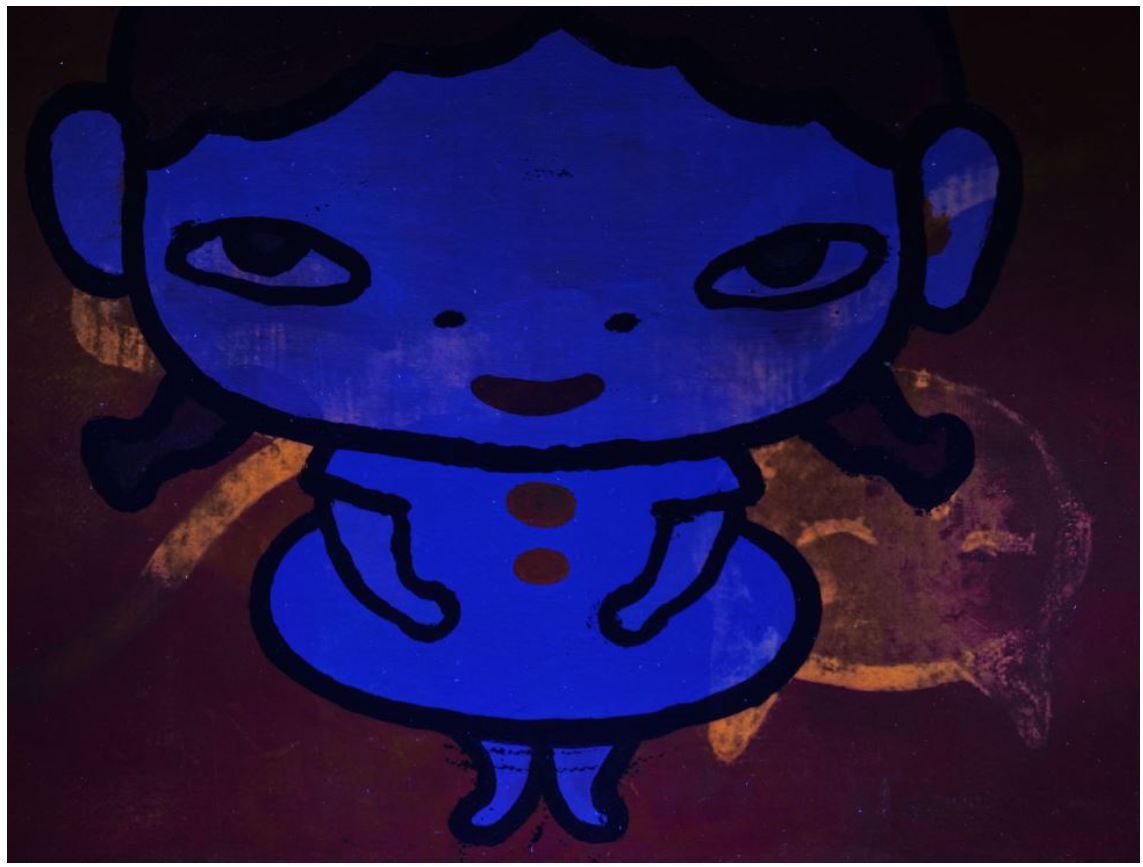
The present work photographed under Ultraviolet light revealing an image of a cat painted in reverse at the centre of the canvas
A rare and important aspect of O.T (N.G) is the revelatory discovery of Nara’s signature cat, depicted beneath the surface of the young girl. Examination under Ultraviolet light has revealed an imagery of a cat, which uncovers a previously unknown work by the artist. Nara’s association with cats harkens back to his earliest childhood memories, where he grew up in Aomori Prefecture. Whilst Nara was at home listening to English songs on the radio, he often drew and spent copious amounts of time with his beloved stray cat, Chako. Nara studied at the Kunstakademie in Düsseldorf from 1988 to 1993 and these enriching years played a pivotal role in the development of his artistic career. During his sojourn in Europe and under the tutelage of the Neo-Expressionist painter A.R. Penck, Nara sought to absorb inspiration from Western styles whilst integrating them into his own visual lexicon. With Penck’s advice, Nara pared down the simplicity of his paintings and in the early 1990s, the artist began to concentrate on the figures themselves – simultaneously simplifying and intensifying their gazes by experimenting with their slightly off-centre placement and bringing them into a bolder and fuller focus against monochromatic backgrounds. This reflects a significant change from his earlier works, whereby Nara removes patchwork scenes of mismatched motifs in favor of a bare monochromatic background, which we see in the present painting.
No Reason Why, 1995
Phillips Hong-Kong: 1 June 2024
Estimated: HKD 4,000,000 – 6,000,000
HKD 4,826,000 / USD 617,847
https://www.phillips.com/detail/yoshitomo-nara/HK010224/136
YOSHITOMO NARA
No Reason Why, 1995
Acrylic on canvas
65×70 cm (25 5/8 x 27 1/2 inches)
Signed, inscribed and dated ‘she doesn’t know what’s wrong with Mum. Yoshitomo Nara ’95’ on the reverse
Registered in the Yoshitomo Nara Online Catalogue Raisonné under registration number YNF1276
Painted in 1995—a pivotal year in Yoshitomo Nara’s career as he joined the prestigious Blum & Poe gallery’s roster of artists; was the subject of a breakthrough solo show at SCAI The Bathhouse in Tokyo which propelled him to international prominence; and had his first book published of his paintings—No Reason Why is an exquisite painting that combines a number of the Japanese artist’s most iconic motifs. The first of a small series of only 5 works created in 1995 that feature text within a comic book style speech bubble, with this particular iteration spelling out in bold, red letters, ‘NO REASON WHY’, this is the only painting of the group to feature Nara’s iconic large-headed girl with her most desirable traits.
“In a picture book you have a single image that can contain an entire narrative and I think this is a style of visual story telling that I have really learned a lot from and have been influenced by.”
Sharing the same sweeping fringe, chickpea-shaped head and narrowed, jellybean eyes as in his top 2 works at auction, the little girl in No Reason Why purses her lips into a rounded red pout. As if we, the viewers, have questioned a mischievous child on her actions, she avoids our gaze as she offers her inconclusive response. Atop her head grows a small, sprouting plant, which perhaps can be viewed as a metaphor for this Nara girl’s own growth, as she transgresses away from infant naivety and becomes not just more independent, but more defiant too.
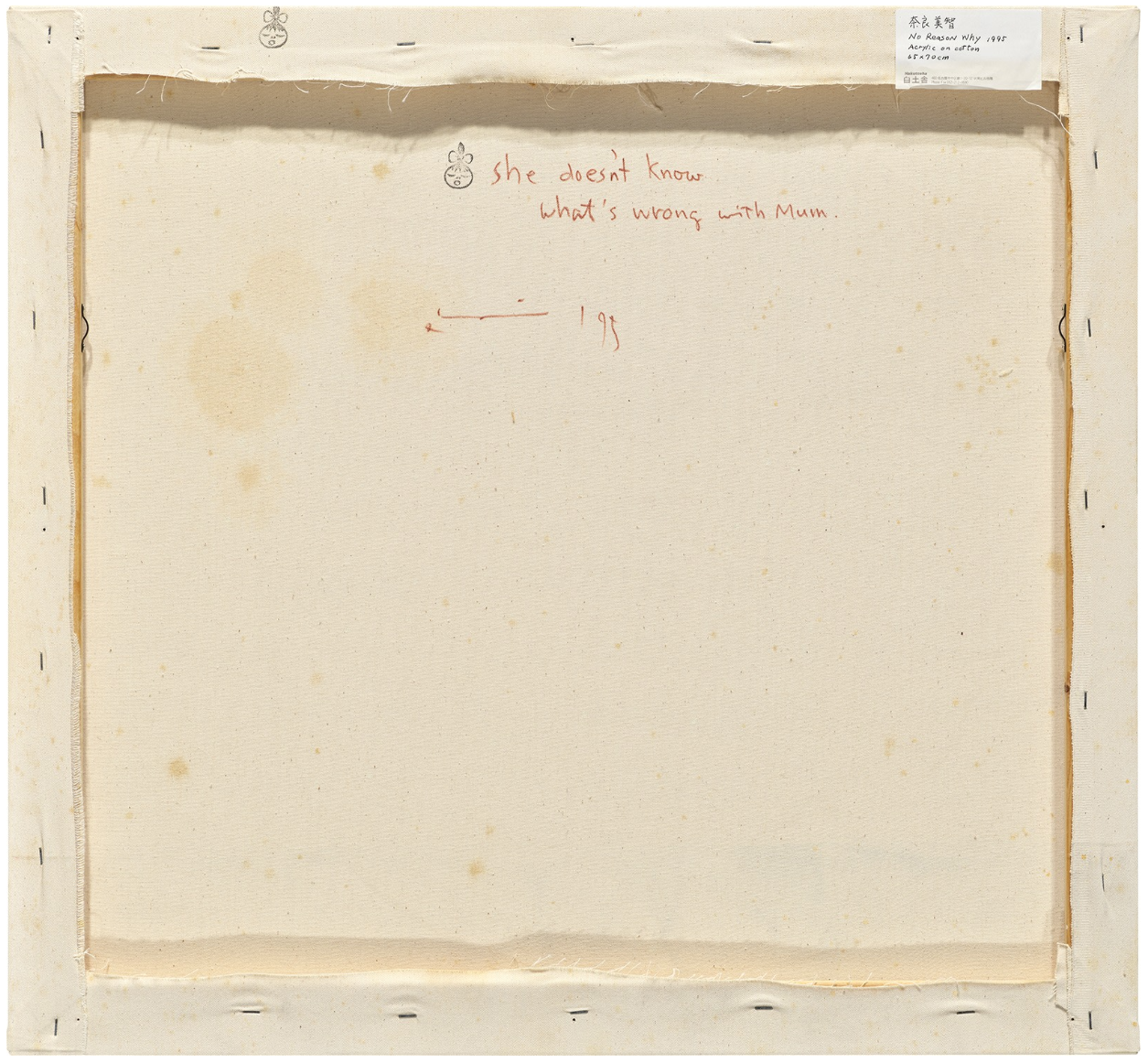
The minimalist structure of the painting owes greatly to the training Nara received during his advanced degree under German painter A.R. Penck at the prestigious Kunstakademie Düsseldorf, from where he graduated three years prior to the present work’s execution. It was during these transformative years that Nara softened his palette to pastel hues and began to omit any signifiers of setting from his compositions. In No Reason Why, the background is a pearlescent void that extends to the canvas perimeters with infinite depth, bringing the protagonist into fuller focus through the employment of a simplistic pictorial framework that nods to traditional Japanese ukiyo-e woodblock prints. Despite the background being, at first glance, a wash of cream-tones, it is actually formed of innumerable layers that Nara carefully builds up one by one. Hints of pinks and purples become more prominent upon a closer inspection, teasing the eye through nuances of texture in a technique reminiscent of the acclaimed painter Peter Doig (b. 1959), who later became an influential tutor at the Kunstakademie Dusseldorf.
Peter Doig, Ski Jacket, 1994 / Collection of Tate Britain, London
© 2024 Peter Doig/ Artists Rights Society (ARS), New York
Though ambiguous, it is plausible that the ruby-red phrase was inspired by Nara’s passion for music, as song titles and lyrics often feed their way into his work. At the age of eight, during his upbringing in post-world war II Hirosaki, Nara built himself a radio and would tune into the radio station of a nearby US Air Force base in Misawa, where he listened to music genres that ranged from the flower-child bliss of the mid-60s, to the rock n’ roll attitude of 70s punk. He began collecting albums at a young age, purchasing foreign import records and splitting the cost with his friends. With music always playing in his mind and in his studio, one cannot dismiss the influence this passion has on his work, as the references in his paintings intertwine the artist’s memories with what he had blasting on shuffle at the time. The title of the present work perhaps alludes to the 1991 song, No Reason Why, by Punk band Pennywise (click to listen on Spotify). Boasting impressive exhibition history, No Reason Why was first presented at an exhibition at Mitsubishi-Jisho Artium in Fukuoka, Japan, in 1996. Later that year, the work also featured as part of a show titled Hothouse Doll, hosted by Hakutosha Gallery in Nagoya, Japan.
Portrait of AE, 2009
Christie’s Hong-Kong: 28 May 2024
Estimated: HKD 28,000,000 – 38,000,000
HKD 29,415,000 / USD 3,765,843
Portrait of AE (christies.com)

YOSHITOMO NARA (B.1959)
Portrait of AE, 2009
Acrylic on canvas in artist’s chosen frame
Image: 80.5 x 65 cm (31 3/4 x 25 5/8 inches)
Framed: 101 x 86.3 cm (39 3/4 x 34 inches)
Signed, titled, inscribed and dated ‘Portrait of AE 09 Amelia Earhart’ (on the reverse)
Portrait of AE by Yoshitomo Nara glows in the dark like a piece of lustrous jade shrouded in mystery. Created in 2009, the painting presents the iconic ‘big-headed girl’, a symbol of the artist’s fully developed approach to portraiture since 2005. The eyes of the girl, sparkling like stars in the night sky, pull the viewer into a spiritual realm of the unknown. Never confined by space or time, this ever-changing world is where the sacred temple belonging to every child can be found. Here, one oscillates between two polarized emotions—joy and hope versus fragility and fear. The figure portrayed is Amelia Mary Earhart, the first female aviator to fly solo across the Atlantic Ocean. Later, during her attempt to become the first female pilot to circumnavigate the world, she disappeared over the Pacific Ocean. Since then, Earhart has become an icon in pop culture and mass media. As such, this painting stands as a rare example in which Nara portrays an identifiable individual. Earhart appears here as a young girl wearing a flight helmet. Her signature round face shows no signs of ageing and carries a Mona Lisa-like, mysterious smile. Her eyes gleam through the dark like stars as if telling a story not only about the legendary American heroine, but also about childhood that connects us all. Universal yet specific, this exceptional painting speaks to the heart of the viewers, transcending all cultural backgrounds and age groups.

Nara was born in Hirosaki, Aomori Prefecture in 1959. Not far from his hometown was a US military base during the postwar period. Thanks to the military broadcast radio, he grew up listening to American music. This early access to American pop culture and the ‘American dream’ deeply informed his later creation. His portraits since the beginning of the 1990s often have a distinctive, oxymoronic twist. In the words of Michael Darling, ‘[t]he beauty of Nara’s work lies in its very multiplicity and deft manipulation of our predisposition to distrust images. He sneaks into our midst under the guise of cuteness, only to ply us with much darker visions of the world.’ A household name in the United States, Earhart has captivated generations of people with her great accomplishment and subsequent disappearance. In this regard, her story resonates greatly with Nara’s approach to painting: a singular image that reverberates through the myriad layers of emotional tension. Indeed, Nara’s artistic world is characterised by parallel entities: light and darkness, fascination and fear. If Balthus’ depictions of young girls that merges the magical, the classical, and the serene can be described as typifying the so-called ‘strange figuration’, then Nara’s Portrait of AE, in the words of the Japanese critic Matsui Midori, is an attempt that ‘give[s] priority to the emotional truth of the dream-vision.’ (M. Midori, ‘Art for Myself and Others: Yoshitomo Nara’s Popular Imagination’, Yoshitomo Nara: Nobody’s Fool, Exh. Cat. Asia Society Museum, 2010, p. 13). Nara’s deceptively simple paintings may seem childish at first glance, but his unparalleled techniques in brushwork is substantiated by rich emotional texture, which in turn ‘enhances the style’s poetic concentration and its capacity to incur the viewer’s imaginative projection.’ (M. Midori, ‘A Gaze from Outside: Merits of the Minor in Yoshitomo Nara’s Painting’, in exh. cat. Nara Yoshitomo: I Don’t Mind, If You Forget Me, Japan, 2001, p. 168)

Balthus, Thérèse, 1938. Thyssen Bornemisza Museum, Madrid © 2024 Artists Rights Society (ARS), New York / ADAGP, Paris.
Photo: © The Metropolitan Museum of Art/Art Resource/Scala, Florence
As early as 1996, Nara began experimenting with sculptures. As a medium, it also honed his sensibility to the volumetric relationship between light and shadow in his figural painting. In Portrait of AE, Nara juxtaposes the young girl’s face against an emphatically dark background in order to bring out her radiance. The result is so powerful that her angelic face appears to be ‘coming out of the pastel background buoyed up by luminous shadows’ (M. Midori, Ibid.)—to the extent that his work may be likened to the highly dramatic portraits of the soul painted by Baroque masters. In around 2005, Nara abandoned his formulaic method to painting and turned to a more naturalistic approach. More details of colours, light, and shadow are injected to the eyes of his figures. When asked about this conceptual shift, the artist explained, ‘[t]hey say human eyes are the mirror of the soul, and I used to draw them too carelessly. Say, to express the anger, I just drew some triangular eyes. I drew obviously-angry eyes, projected my anger there, and somehow released my pent-up emotions. [Afterwards] I became more interested in expressing complex feelings in a more complex way.’ (Y. Nara, quoted in ‘An Interview with Yoshitomo Nara’, Asymptote Journal, Hideo Furukawa, moderated by Sayuri Okamoto, November 2013).

Sir Peter Paul Rubens, Portrait of Clara Serena Rubens, c.1616. Liechtenstein, The Princely Collections, Vaduz-Vienna.
Photo: © LIECHTENSTEIN, The Princely Collections, Vaduz-Vienna/SCALA, Florence.
Prior to Portrait of AE, Nara already mastered this kaleidoscopic approach to painting eyes. This exceptional work, in particular, attest to his bravura in the medium as well as his meticulous attention to the minute differences in paint and brushwork, all of which highlights the clarity in the young girl’s deep yet luminous eyes. The key to this mesmerising effect is repeated painting until the pigment becomes one with the canvas. This creates a stark contrast to the surface-bound quality in his earlier works. In the past decade, Nara has slowed down and let the light and shadow come out in his work. These details turn his paintings into a meditative and reflexive whole that generates a profound feeling of immediacy. Earlier motifs such as cigarettes, knifes, and torches are gone—instead, his paintings become pure poetic explorations of lines and colours charged with the most intense of emotions. ‘When I work this way there’s a lot more of a conversation that I have with the image, or with the person who’s depicted in the image. That’s really me having a conversation with myself. It allows me to draw out parts of myself that I’m not even aware are there’ (Y. Nara, quoted in ‘Japanese artist has a taste for Hong Kong’, South China Morning Post, 9 March 2015).

Looking at Portrait of AE, one gets lost in Earhart’s penetrating gaze. There seems to be no escape for us, as we are led straight to her vision of fairy tales and dreamscape. Yet such a vision remains unattainable, conveying a sense of lament rooted in reality. As the philosopher Takaaki Yoshimoto said, the gaze pertains to the ‘function of another unconscious eye’; it is an all-seeing eye that remains at a distance, ‘as if it were recollected vision’ (T. Yoshitomo quoted in Nara Yoshitomo: I Don’t Mind, If You Forget Me, Japan, 2001, p. 171). Be it a dreamy vision or the ‘function of another unconscious eye’, Earhart’s gaze in Portrait of AE, powerful like the universe, bespeaks a surrealist dream that belongs not only to children but also grown-ups. As the art historian Kristin Chambers said, ‘[t]hrough the faces of his subjects, Nara invites us to linger, to leave our rules at the door and enter the more fluid and uninhibited world of children’ (K. Chambers quoted in, Yoshitomo Nara; Nothing Ever Happens, exh. cat., Museum of Contemporary Art, Cleveland, 2004, p. 26).
Ships in Girl, 1992
Sotheby’s New-York: 14 May 2024
Estimated: USD 1,500,000 – 2,000,000
USD 1,512,000
Ships in Girl | Contemporary Day Auction | 2024 | Sotheby’s (sothebys.com)
YOSHITOMO NARA (b. 1959)
Ships in Girl, 1992
Acrylic on canvas
139.7 x 139.7 cm (55×55 inches)
Signed, titled and dated ’92 (on the reverse)
Vivid and charming, with a rebellious air, Ships in Girl is the epitome of the stylistic motifs and emotional resonance that have positioned Yoshitomo Nara as one of the most internationally acclaimed living artists of our time. Painted in 1992, Ships in GIrl emerges from the artist’s time at the Dusseldorf Kunstakademie in Germany, a seminal period during which Nara developed his most iconic visual and conceptual motifs. Demonstrating the classic vernacular of the so called “Nara Girl”, the lone, childlike figure whose demure exterior often gives way to intense emotion, Ships in Girl encapsulates the principal investigations of Yoshitmo Nara’s oeuvre– childhood, innocence, loneliness, rebellion, and the complexity of memory and emotion– all delivered with a graphic punch. Testament to the importance of the works from the early 1990s, paintings from this period reside in esteemed institutions including the San Francisco Museum of Art, The National Museum of Modern Art, Tokyo, and Museum of Fine Arts, Boston, while the sister work to this piece currently resides in the collection of the artist.

In Ships in Girl, a large, geometric head floats in a flat blue expanse. Her features are simplified and charming, outlined in dark black strokes. With the large exaggerated eyes and graphic outline, the present work bears clear stylistic affinities to both Pop Art and Japanese ukiyo-e woodcuts, illustrating the seamless unification of Eastern and Western themes and motifs that characterizes Nara’s revolutionary oeuvre. In lieu of a direct portrait, Nara uses Ships in Girl as a sort of character study, reflecting the viewer’s own perceptions back upon themselves. A masterful fusion of incorruptible youth and punk attitude, the present work combines mischief and innocence to convey a beguiling charm that gives way to a darker angst. At first glance, her expression seems slightly awed or surprised, but upon further inspection her gaze is concentrated and direct, her curved, open mouth almost pouty and the eyes set in a determined glare. Rather than outwardly violent or destructive, the set of the eyes and the burning flame feel almost critical, a rebellious defiance of the surrounding world.

YOSHITOMO NARA, SHIPS IN GIRL, 1992, ACRYLIC AND COLORED PENCIL ON PAPER 28 × 34 CM, COLLECTION OF THE ARTIST. © YOSHITOMO NARA, PHOTO: YOSHITOMO NARA
In the early 1990s, Nara’s compositions became more stark and forthright in their graphic sensibility, which allowed that artist to expand the cultural and psychological subtext in his work. From 1988 to 1994, Nara studied at the Dusseldorf Kunstakademie in Germany. Far from his native Japan, Nara reacted to the isolation and vulnerability imposed by the language barrier by way of the childlike characters that would become part of his signature artistic vocabulary .In the present work, the youthful figure is detached from any discernible setting. Adorning her hair are miniature ships on the verge of sailing off into the sprawling ocean of blue, relating to Nara’s own isolation and distance from his home. ”When I went to the school in Germany, I found myself again feeling alone, facing my canvas. Again, the inadequacy of the outer world enriched my inner world,” (Yoshitomo Nara in conversation with Aimee Lin, “How Yoshitomo Nara’s Manga-Inspired Paintings Tap Into Universal Feelings of Anxiety”, Art Review, 2015) Stripped of superfluous detail, Ships in Girl elucidates the emotive potential of the lone figure

TŌSHŪSAI SHARAKU, THE ACTOR OTANI ONIJI III AS EDOBEI IN THE KABUKI PLAY KOI NYOBO SOMEWAKE TAZUNA (THE BELOVED WIFE’S PARTICOLORED REINS), 1794, THE BRITISH MUSEUM, LONDON.
“The time when I was depicting children in a lot of my works was probably a period when I was trying to regain something childlike.” explains Nara, “… I still do depict children, but the images that people generally associate with me are from that time when I was trying to take back my childhood” (Yoshitomo Narat quoted in: Melissa Chiu, “A Conversation with the Artist”, Exh. Cat., Asia Society Yoshitomo Nara: Nobody’s Fool, 2010). In Ships in Girl, Nara toys with innocence and rebellion as childlike expressions simultaneously resonate with adult emotions. Nara’s solitary children are often lauded as “symbolic representation of the dominant feelings of Japanese youth in the late 1990s and early 2000s, characterised by a sense of uncertainty about the future, vulnerability, and a yearning for the innocence preserved in the inner child” (Matsui Midori. “Art for Myself and Others: Yoshitomo Nara’s Popular Imagination”, in Exh, Cat., Asia Society Museum, Yoshitomo Nara: Nobody’s Fool, 2010, p. 13).
Ships in Girl evinces Nara’s revolutionary painterly practice, creating a fusion of “high, low and kitsch; East and West; grown-up, adolescent and infantile; and so seamless as to render such distinctions almost moot” (Barbara Smith, “Cuddling With Little Girls, Dogs and Music”, The New York Times, 2010) “There is solitude and sadness, and sometimes a bit of rage” describes critic Marco Meneguzzo, “a small iniquity expressed perhaps to demonstrate one’s existence (Marco Meneguzzo, “Yoshitomo Nara”, Artforum (online)). Tapping directly into the emotional center of not only disaffection and anxiety but also the spiritual core at the foundation of hope and renewal, Ships in Girl is a powerful stand-in for a generation of young people at the dawn of the twenty-first century and beyond.
No Means No, 2006
Phillips Hong-Kong: 6 October 2023
Estimated: HKD 52,000,000 – 72,000,000
HKD 65,530,000 / USD 8,368,310
Yoshitomo Nara – 20th Century & Conte… Lot 8 October 2023 | Phillips
YOSHITOMO NARA
No Means No, 2006
Acrylic on canvas
162.5 x 130.8 cm (63 7/8 x 51 1/2 inches)
Signed, titled and dated ‘”No Means No” Nara [in Japanese] 06’ on the reverse
As Japanese artist Yoshitomo Nara jotted down his dreamlike vision in the summer of the new millennium, the sensational artist broods on reinventing his synonymous oeuvre of the little girl that would soon launch his meteoric rise onto the international stage. Executed around this pivotal period, No Means No carves a milestone in his exhaustive perfection of a complex visual lexicon, marked by a young child who traverses between trepidation and bravery. An icon that appeared initially in the artist’s output in 1991, the young heroine spans almost two meters in height and suspends mysteriously before a void of pearly white, staring directly into the audience to absorb us into the very celestial universe conceptualized in Nara’s diary.
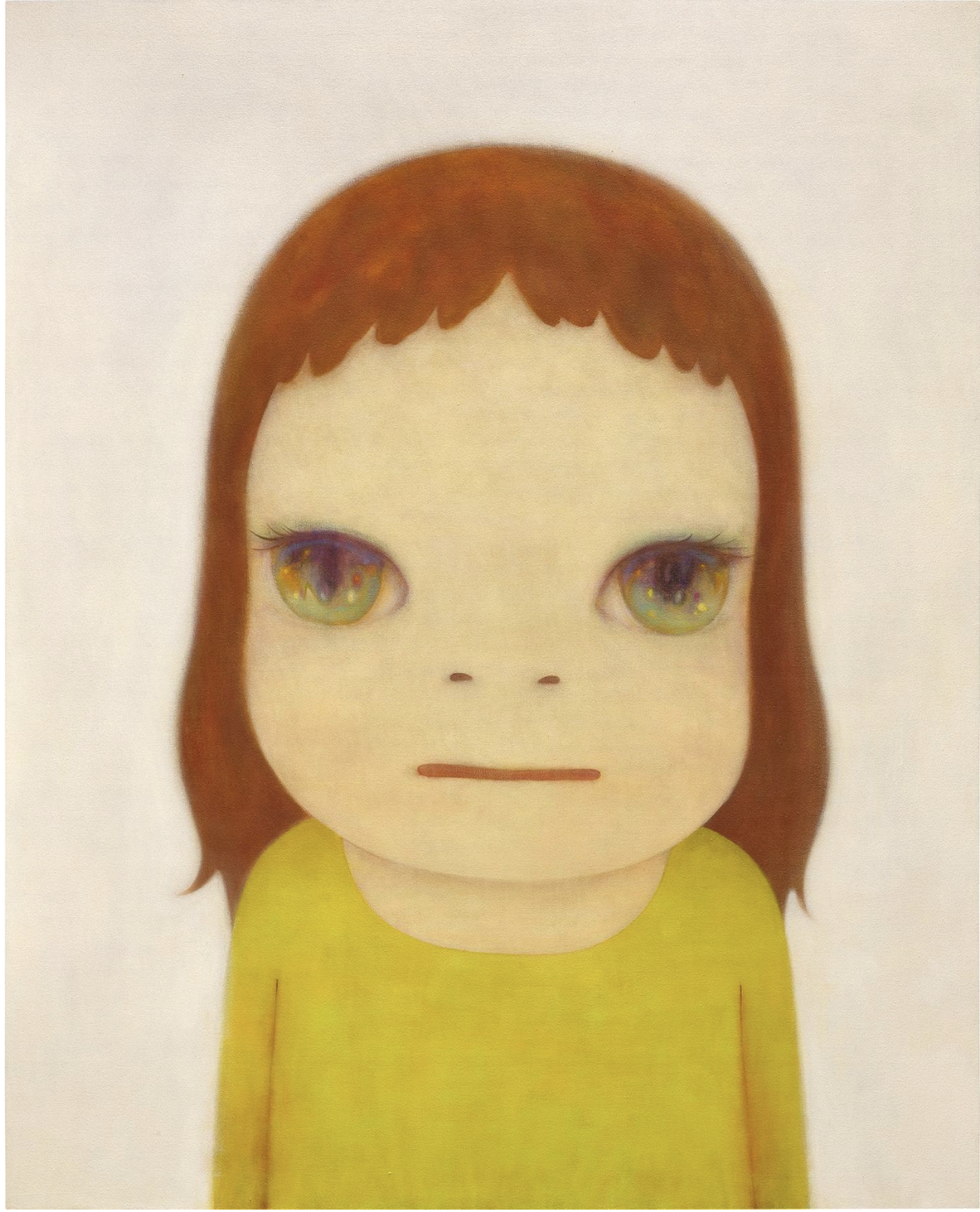
With a translucent opaqueness allegorically inviting introspection as windows do, the little star dweller’s intricately enlarged pupils consist of lustrously prismatic swathes, representing a sharp departure from the artist’s simple geometric execution of the eyes in the 1990s. An approach only realized a year prior to No Means No’s execution, the incandescent emerald irises are exclusively emphasized in contrast to the diminutive representation of her face. Citing the human eyes as ‘mirrors of the soul,’ Nara directs the viewer to encounter the girl’s gaze which has undertaken the purpose of a conduit. His little star dweller transports the audience into the milky way in his journal, away from the bad dreams and safely surrounded by the blinking stars inside the oculus. No Means No would launch Yoshitomo Nara’s most ambitious and career-defining project—a technical enquiry into how these very effervescent eyes arouse the most palpable universal emotions of tranquility, suspension, and connection, as manifested most recently in his Starry Eyes series of the 2010s.
Night Fishing, 1995
Christie’s Hong-Kong: 28 May 2023
Estimated: HKD 18,000,000 – 28,000,000
HKD 22,155,000 / USD 2,828,348
YOSHITOMO NARA (B.1959) (christies.com)
YOSHITOMO NARA (B.1959)
Night Fishing, 1995
Acrylic on canvas
100×100 cm (39 3/8 x 39 3/8 inches)
Signed, titled and dated ‘Night Fishing ’95’ (on the reverse)
Despite its pitch-black background, Night Fishing grasps viewers’ eyes with an inexplicable glow. It was painted in 1995, the first pinnacle in Yoshitomo Nara’s career marked by his first solo exhibition at SCAI the Bathhouse in Tokyo. His iconic motif of big-headed girls—entering his oeuvre just a few years ago by then—is present here with golden ponytails sporting a scarlet-red dress. Holding in her right hand a fish rod with a blue fish biting the bait at the end, she stands in the darkness calmly, as if a spotlight sheds on her, or she is luminous herself. Nara painted his first nocturnal painting with the iconic big-headed girl in 1993, and such stark treatment began to make regular appearances in the late 1990s. The density and darkness of the background in Night Fishing situates the girl in deep introspection and extended solitude that resonate with the artist’s own experience of living alone in Germany at that time. Meanwhile, it brings out the lustre and richness of the colors in a striking contrast, elevating the palette with a jewel-like radiance.
Sprout in Hands, 2011
Sotheby’s Hong-Kong: 5 April 2023
Estimated: HKD 14,000,000 – 20,000,000
HKD 18,116,000 / USD 2,307,800
YOSHITOMO NARA (b. 1959)
Sprout in Hands, 2011
Acrylic on wood
135.5 x 82 x 2.8 cm (53 3/8 x 32 1/4 x 1 1/8 inches)
Signed, titled in Japanese and dated 2011 on the reverse
Naive, precocious, sweet, wicked, complicated, and concerned, these are but a few of the words that can be used to describe the wide-eyes girls of Yoshitomo Nara’s compositions. In touch with something elemental, these figures possess an extensive breadth of expression that remind us of long-forgotten feelings, of our intuitive wisdom. A sensitive, thought-provoking work, Sprout in Hands by Yoshitomo Nara depicts two of the artist’s most famous motifs – the large-headed girl and the two-leaf sprout. A painterly response to the devastating Great East Japan Earthquake on 11 March 2011, Sprout in Hands presents the little child as a messenger of peace that encapsulates the spirit of Nara’s undeniable oeuvre. Symbolizing the possibility of reconstruction and transformation, the wood panel of the present work measures over a meter high, its physicality heightening the gravity of Nara’s poignant message of hope.
Dream, 1994
Bonhams Hong-Kong: 2 December 2022
Estimated: HKD 2,500,000 – 3,500,000
HKD 5,295,000 / USD 679,752
Bonhams : Yoshitomo Nara (B. 1959) Dream
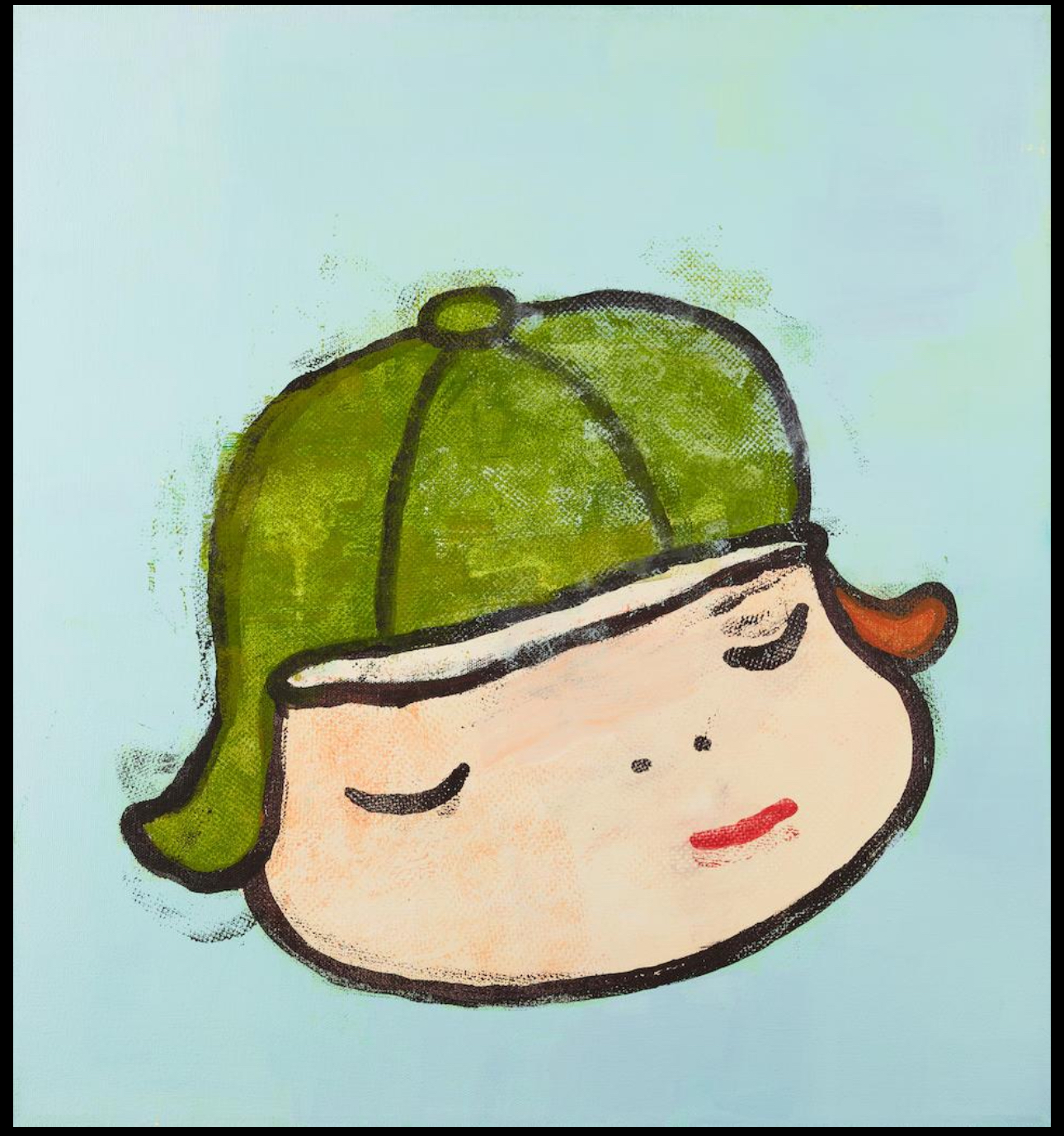
60×56 cm (23 5/8 x 22 1/16 inches)
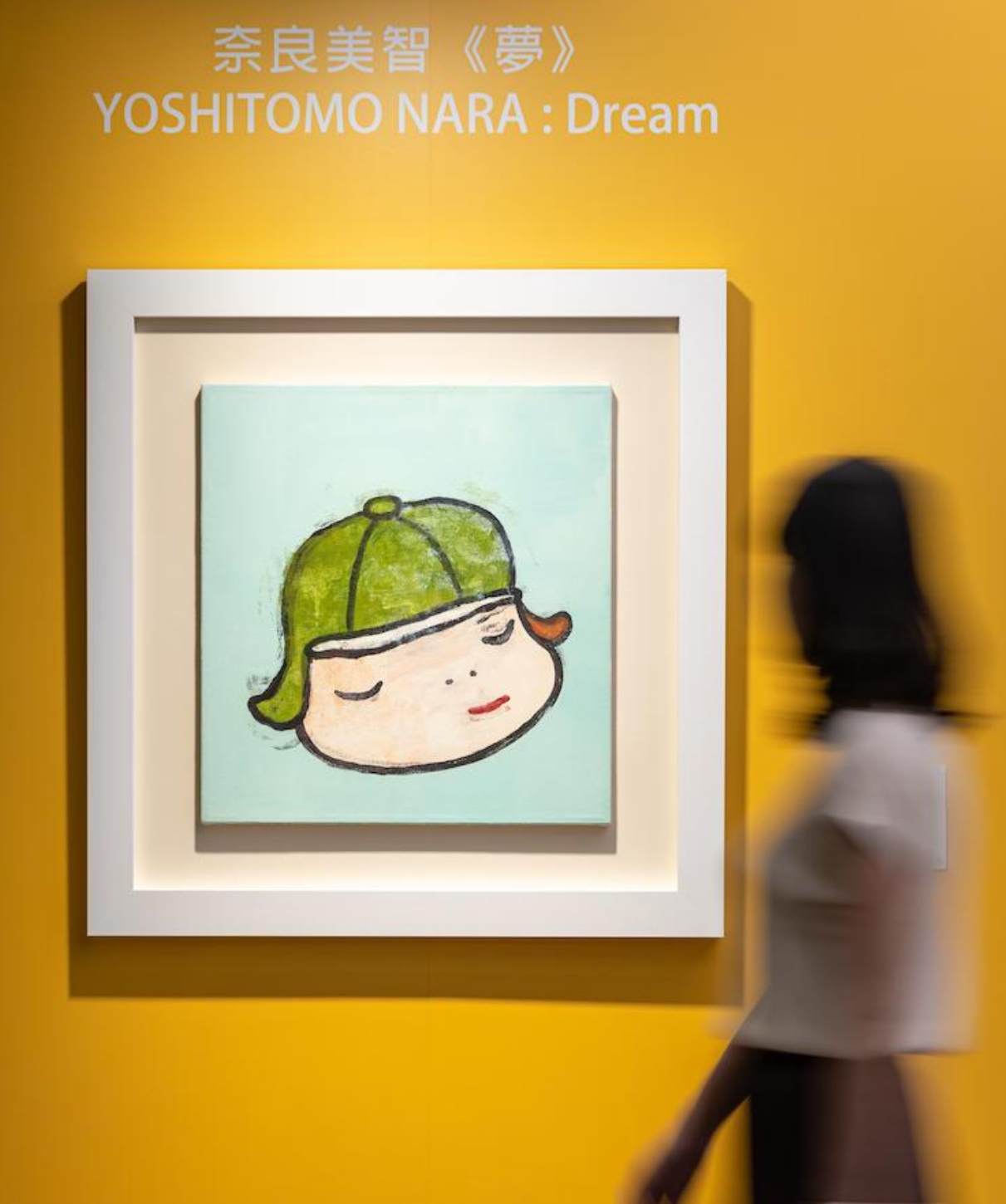
As a wandering traveler, Yoshitomo Nara draws widely from these experiences and distills them into inspirations — the myriad of sources includes his childhood memories, music, literature, the period he spent studying in Germany, the cultural connections he made between Japan, Sakhalin, and Asia, as well as the modern art of Europe and Japan. In the 1990s, Yoshitomo Nara began a series works featuring the “big-headed girl”. In the mid-1990s, his style changed as he turned his attention inward to the very nature of his characters. Very often, a lone character who looks simultaneously evil and innocent is featured in these works. These figures all have enlarged heads that share the quality of cartoon proportions. The backgrounds of paintings are simplified, and the figures are contoured with black lines— which draws our attention to the characters’ gaze more. However, in Dream, Nara adopts a more subtle approach. The subtext is meant to be understood without being explicitly stated. Gone are the piercing gazes that reflect the artist’s raw and direct feelings. This work is a return to eastern aesthetics: Nara’s expressions go beyond what is apparent in the imageries and reveal deeply buried emotions. There is no complex and textured impasto. Paints are gently applied to the surface, and the brushstrokes can only be faintly detected around the figure. It is an aesthetic that embodies the elusive beauty of imperfection. The thick outline creates a boundary between the subject and the background, which gives the illusion of the figure floating. This feeling of displaced spacetime is reminiscence of the Japanese aesthetic of wabi-sabi — it is simple, subtle, seemingly incongruous, yet the elements coexist in a harmonious manner.
Yoshitomo Nara studied abroad in Germany between 1988-2000. This period had a pivotal influence on his art — he began combining Japanese and western cultures to forge an artistic style that is uniquely his own. Nara studied under Neo-Expressionist painter A.R. Penck at the Kunstakademie Düsseldorf and obtained the Meisterschüler (master pupil) title. The imageries and brushworks in A.R. Penck’s work are often associated with primitive art. He believed that through simple and primitive imageries, the content expressed in his works could be more intimately felt by the viewers. During his stay in Germany, Nara was exposed to different new forms of Western Modern Art, such as Impressionism and Cubism. Concurrently, he also heavily referenced elements from non-western traditions such as Ukiyo-e. Nara masterfully combined Western and Japanese aesthetics and further synthesised an innovative visual language from these cultures. In Ukiyo-e woodblock prints, specifically the close-up facial portraits of Okubi-e, the subjects’ faces are delineated with decisive lines, and the spaces within are filled with a single hue – the nuanced and delicate expressions of the beauties in Okubi-e prints are thus sensitively rendered. Similarly, in Dream, like a close-up shot of photography, Nara directs all the attention to the face of the character. By doing this, all the subtle emotions and details are clearly shown, and the pictorial tension is thus heightened.
Tronie is a type of 17th century Dutch art that also focuses on the countenances of the subjects. Unlike traditional portraits where a specific person is depicted, Tronie served as studies of facial expressions, physiognomy, and eccentric characters. Dutch Golden Age painter Johannes Vermeer’s Girl with a Pearl Earring is an iconic work of this genre. At first glance, Nara’s Dream could be oversimplified and categorised as a portrait. However, Nara clarified that his characters have no specific identity or gender. Instead, they are imageries that he has in his mind representing himself in the process of contemplation and self-discovery. After living in Germany for 12 years, Yoshitomo Nara returned to Japan to pursue his career as a painter. He infused everything he learned from art history into his works to create an artistic style that is both rigorous and ludic. Nevertheless, on a spiritual level, they are very much introverted and somber, which is characteristic of Japanese culture. Dream thoroughly celebrates childhood innocence and whimsy by traversing between reality and imagination as well as materiality and spirituality. Its richness and complexity in emotional depth offer viewers a quiet and lovely refuge for contemplation.
Nachtwandern, 1994
Phillip Hong-Kong: 1 December 2022
Estimated: HKD 16,000,000 – 25,000,000
HKD 19,005,000 / USD 2,443,393
Yoshitomo Nara – 20th Century & Con… Lot 21 December 2022 | Phillips
YOSHITOMO NARA
Nachtwandern, 1994
Acrylic on canvas
100×100 cm (39 3/8 x 39 3/8 inches)
Signed, titled, dated and inscribed ‘”Nachtwandern” -2 Nara [in Japanese] 94’ on the reverse
A defining example capturing Nara’s signature powdery white backgrounds filled with multilayered clouds of soft pastels, Nachtwandern’s titular somnambulant infant floats with a curious backwards glance at a solitary lightbulb, suspended aglow to the right of the frame. Donning a soft white nightgown, the child—their nightie trailing behind them like that of a cartoonish ghost’s tail, or perhaps resembling the emergence from a puddle of water—has a disproportionately large forehead betraying their youth. Cheeks flushed as if braced against the snow, our protagonist’s bean-like eyes focus on the glowing light, and the hint of a peevish grin forms on their face. The immediate effect of the work is an overwhelming calmness amidst plunging solitude; a combination of lightness and darkness that has become synonymous with Nara’s creations, one which draws deeply from a lonely childhood.
Untitled, 1991
Phillips Hong-Kong: 22 June 2022
Estimated: HKD 6,000,000 – 8,000,000
HKD 7,510,000 / USD 956,724
Yoshitomo Nara – 20th Century & Contemp… Lot 20 June 2022 | Phillips
YOSHITOMO NARA
Untitled, 1991
Acrylic on canvas
70×70 cm (27 1/2 x 27 1/2 inches)
Signed ‘Yoshitomo Nara’ lower left and dated ‘1991’ lower right; further signed ‘NARA’ on the reverse
A Pioneering figure in the contemporary art scene today, Yoshitomo Nara’s portraits of young girls embody a plethora of emotional complexities — including grief, pain, loneliness and rebellion. A celebration of introspective freedom and child-like imagination, Untitled (1991) appears to be Kawaii (cute) at first glance, yet a closer look reveals a sense of quietude and contemplation, representative of the artist’s time living in Germany from 1988 to 2000 as a foreign student and artist. This pivotal time overseas had a profound impact on Nara’s creations, during which he began to create deeply existential and introspective works that engaged in dialogues with both traditional Japanese art and popular Western culture, as seen in the current work. Painted in 1991 and fresh to the market, the current work is an early example from Nara’s oeuvre, revealing the nascent stage of his young girl portraits and commanding canonical importance with the development of the artist’s signature motif. Featuring characteristically flat colours, bold black outlines, and an absence of traditional perspective, Untitled crystallises the psychological state of isolation and nostalgia. A lone girl stands upon a puddle within an empty void, reflecting emotions of estrangement felt by the artist in a foreign land that is universally relatable.
In the current work, Nara creates a blurred distinction between the sky and ground. Soft blue pigment is seen blending and fading into the horizon line behind the protagonist, further enacting a flat perspective. This effect is created through applying several layers of impasto in subtly varied subdued hues, allowing the protagonist to appear as if she is floating in space, existing outside the constraints of time. The little girl’s feet sink deep within the puddle below, unable to move away from her physical position, whilst simultaneously implying an inability to change one’s psychological state. She gently grasps onto a ship – a vehicle that can hopefully whisk her away towards the place of her heart’s desire.
Angry Blue Boy, 2008
Sotheby’s Hong-Kong: 27 April 2022
Estimated: HKD 20,000,000 – 30,000,000
HKD 28,205,000 / USD 3,594,359
YOSHITOMO NARA (b. 1959)
Angry Blue Boy, 2008
Acrylic on cotton mounted on canvas
198×193 cm (78×76 inches)
Signed, titled and dated 2008 on the reverse
A crucial figure in the international art world, Yoshitomo Nara is renowned for his signature young protagonists that express a fascinating mixture of vulnerability and rebellion. A dynamic, spirited image of the head of a brown-haired little boy, Angry Blue Boy is a trademark, large-scale example of Nara’s cartoon-like figures with jelly-bean shaped eyes. Squinting angrily to the right of the canvas, and muttering what we imagine to be muted expletives, the boy in Angry Blue Boy is evocative of Nara’s punk sensibility that has permeated his oeuvre. Indeed, the influence of music on Nara’s oeuvre is well-documented, having demonstrated a long-standing infatuation with anti-commercial and anti-establishment bands from a young age. Significantly, only the head of the boy in the present work is depicted, differentiating the work from many of the full-body drawings and chromatic bust paintings that the artist was producing at the time in 2008. Its unique composition places emphasis on the facial expressions of the child, and the many comic-inspired text bubbles that float around the figure’s face, adding not only a compositional element but also a narrative dimension to the work. Further, set against the vibrant baby-blue background, the speech bubbles appear as if clouds in the sky, adding a distinct feeling of weightlessness and levity to the work, juxtaposing with the forceful attitude of the child.
Lampflower Girl, 1993
Christie’s Hong-Kong: 30 November 2021
Estimated: HKD 22,000,000 – 32,000,000
HKD 27,850,000 / USD 3,574,455
YOSHITOMO NARA (B. 1959) (christies.com)
YOSHITOMO NARA (B. 1959)
Lampflower Girl, 1993
Acrylic on canvas
150.3 x 140 cm (59 1⁄8 x 55 1⁄8 inches)
Signed and titled in Japanese, dated ‘93’ (on the reverse)
Yoshitomo Nara’s Lamp Flower Girl represents an important stage in the artist’s career, which he spent roaming between the poles of Eastern and Western visual cultures. His career in a real sense began with his graduation from the world-renowned Dusseldorf Academy of Fine Arts in 1993. That was the year in which he created this Lamp Flower Girl— a large-scale work that brings together many of the tropes for which he would eventually become known: a full-length portrait of a girl in a red dress, her eyes squinting mischievously, and a mysterious background of mottled dark purple with pale lights that seem to glow softly in the darkness. To date, only five works have appeared from Nara with similar “Lamp Flower Girl” subjects, and this, one of the most fully developed, was once owned by Shun Kurokochi, an important collector of Nara’s work. It has also been shown in a number of important museum exhibitions, including Nara’s first solo exhibition in 2021, I Don’t Mind, If You Forget Me, held at the Yokohama Museum of Art upon his return to Japan after his 12-year sojourn in Germany. Its inclusion in that exhibition makes clear its pivotal position in the creative journey of this artist.
Pandora’s Box, 1990
Phillips Hong-Kong: 30 November 2021
Estimated: HKD 7,500,000 – 10,000,000
HKD 13,560,000 / USD 1,739,152
Yoshitomo Nara – 20th Century & Con… Lot 42 November 2021 | Phillips
YOSHITOMO NARA
Pandora’s Box, 1990
Acrylic on canvas
90×90 cm (35 3/8 x 35 3/8 inches)
Signed, inscribed and dated ’22. Nov ’90 Yoshitomo Nara “For The Birdy Num Nums” – MITTEN OVER ThE WORLD – NARA MICHI ’90’ on the reverse
Pandora’s Box was created in 1990, by which time Nara had already commenced his studies at the Kunstakademie Düsseldorf in Germany, where he stayed between 1988 and 1994. When he first arrived in Germany, Nara became deeply influenced by the German Neo-Expressionism he was becoming acquainted with, gradually coming to explore and incorporate its characteristics into his own practice. He began to combine this his own cultural background, as well as his interest in Japanese comics and children’s drawings – which he understood as containing profound layers of interpretation despite their relatively simple illustrations. In fact, it was the directness of this visual language that inspired the artist’s exploration of the iconic nature of symbols and stylisation, which he continued to evolve in subsequent work. This period of study and exploration marked the beginning of Nara’s signature aesthetic, profoundly impacting his future works.
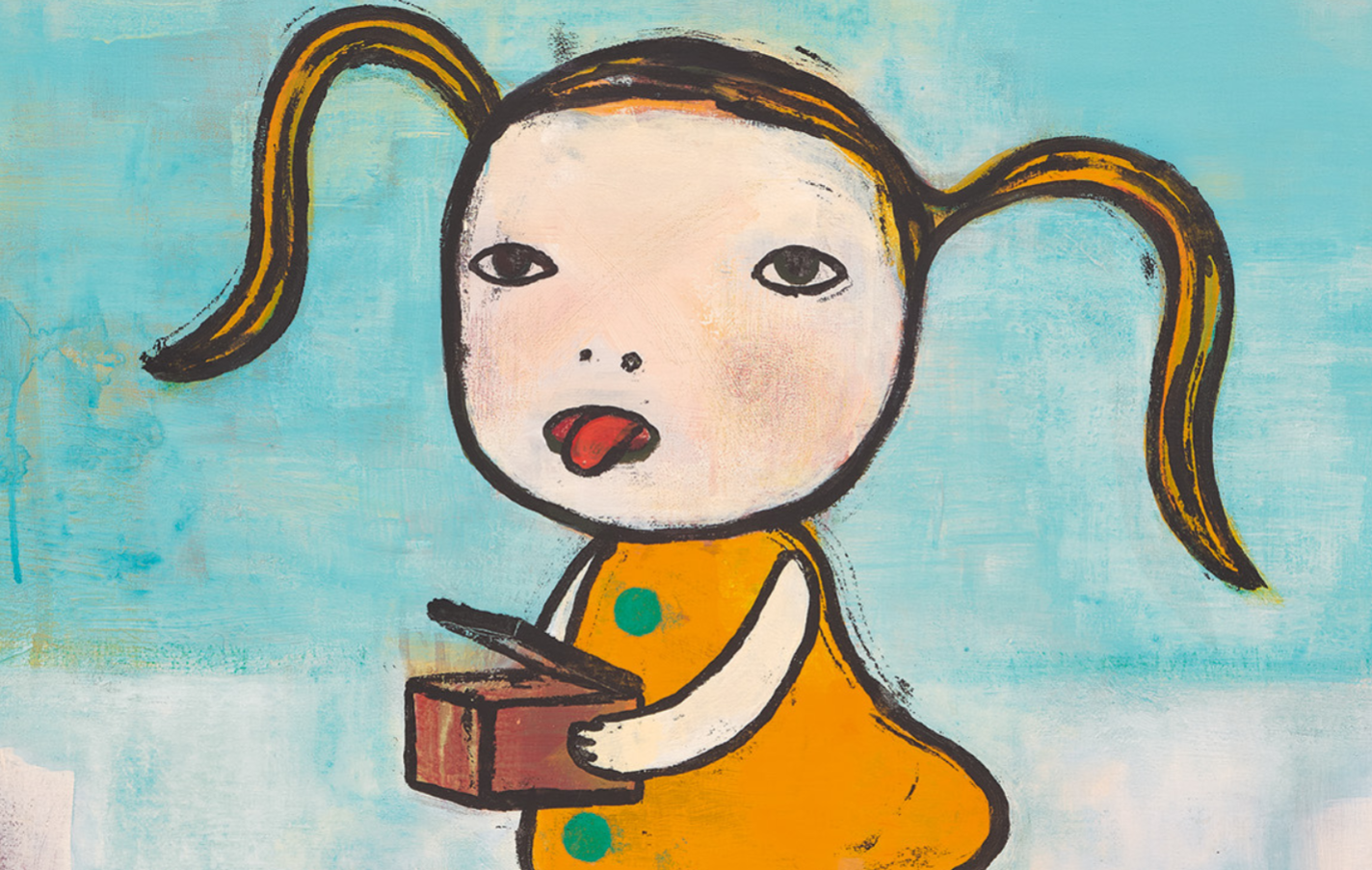
The little girl’s feet are submerged in a rippling puddle, making her tiny body appear like a floating island in the vast ocean. In his successive works, Nara has repeatedly used returned to this motif of the ‘puddle’, even naming his first major solo exhibition in 1995 ‘In the Deepest Puddle’, demonstrating that the artist considers the ‘puddle’ as one of the most representative symbols in his work. In Pandora’s Box, the figure is still a young girl with a rich heart and expressive face, grimacing humorously with stubborn eyes that look straight on. There is no audience around her, as if she is not willing to follow the current of the stream, evoking a profound sense of isolation. The slightly opened Pandora’s Box in the young girl’s hand is not only a symbol of the artist’s hope in the face of loneliness, but also a testimony of Nara’s courage and belief in never backing down from a difficult situation.
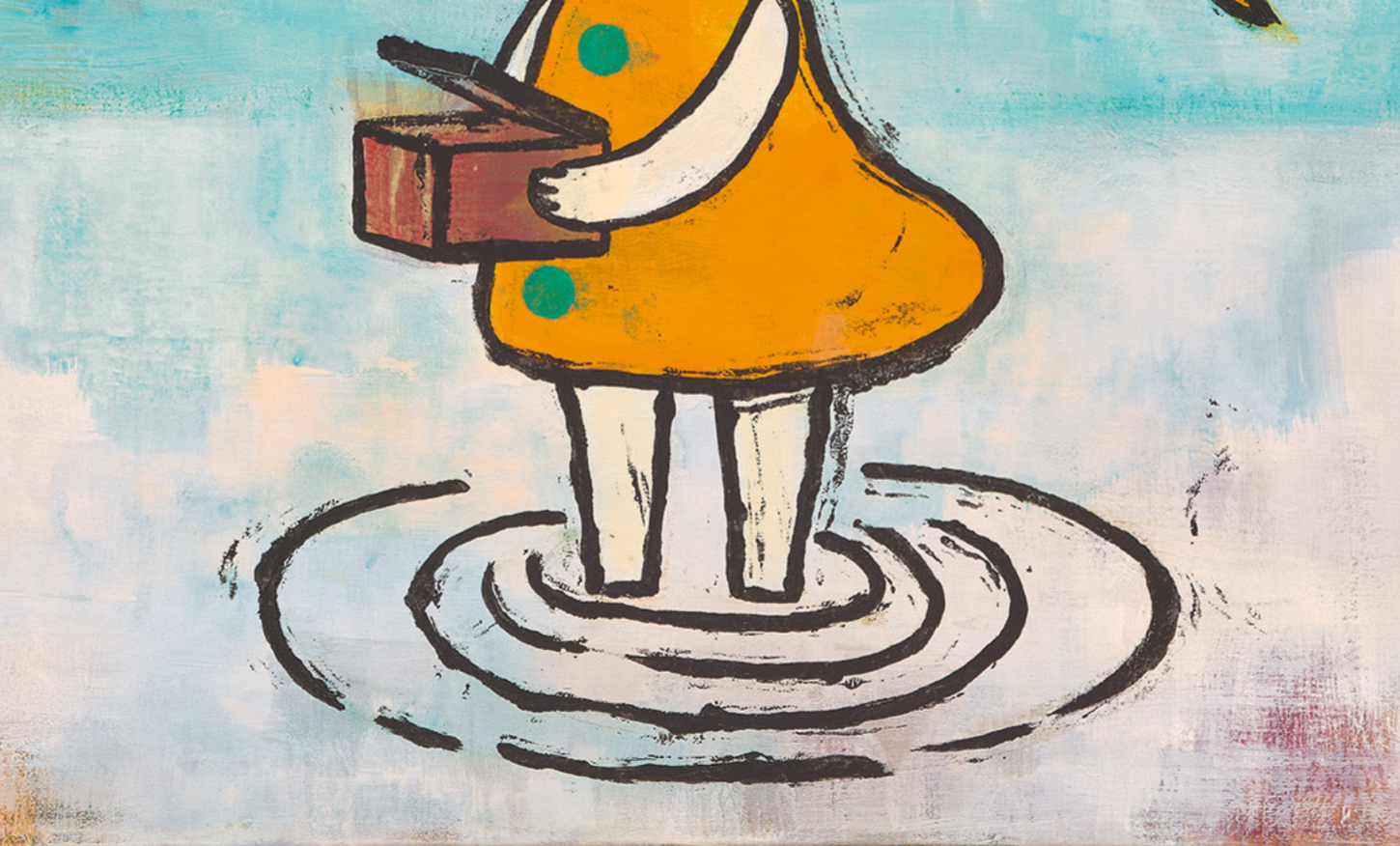
In Pandora’s Box, we can trace the artistic language and emotional symbols that the artist had already started to develop under the influence of German academic system. The whole painting is presented in flat coating, using minimalistic thick lines to outline the figures without any deliberate focus on perspective, showing Nara’s inheritance of traditional Japanese painting. However, he was also influenced by Expressionism, which can be seen in the use of bold colors, the artist’s use of extremely vivid colors and the natural dripping of paint on the background. Thanks to his exploration of collage, the use of clashing colors in this work divides the painting into contrasting blocks of hue, creating a striking visual effect that introduces a vibrant sense of dimension and expression to the painting. What is revealed, is that Nara was in the process of integrating his own Eastern cultural experiences with the avant-garde nature of the West, coming to form his own stylised visual language. As a projection of the artist’s self, Pandora’s Box not only strikes a harmonious balance between Eastern and Western visual languages and poetic subjectivity, it also resonates with the feelings, memories, and imaginations of viewers on a universal level – about the past, present and future. Transcending all geographical, age and cultural divisions, Nara’s art evokes vulnerability, courage, and faith – emotions shared by all human beings.
Life is Only One!, 2008
Sotheby’s Hong-Kong: 19 April 2021
Estimated: HKD 15,000,000 – 20,000,000
HKD 19,535,000 / USD 2,515,387
YOSHITOMO NARA (b. 1959)
Life is Only One!, 2008
Acrylic on wood, in artist’s original frame
169×254 cm (66 1/2 x 100 inches)
Instantly striking in motif, message and scale, Life is Only One! is emblazoned with one of Yoshitomo Nara’s most recognizable inscriptions – one that headlined the artist’s first major solo retrospective in Hong Kong, “Life is Only One: Yoshitomo Nara”, held at Asia Society Hong Kong Center in 2015. The iconic yet enigmatic phrase proclaims a personal and universal truth of childhood and life; Nara once explained that this expression:
“It isn’t about physical mortality, it is about the spirit that never dies.”
Rendered in massive, bold red lettering, we are instantaneously confronted with the raw immediacy of the slogan’s thought-provoking suggestion. Accompanying this vehement yet slightly elusive exclamation is one of the artist’s quintessential large-headed petite heroines: her eyes tightly shut, our long-lashed sweetheart holds her arms blindly outstretched in front of her as her feet scurries her along the journey towards adulthood. While reminiscent of earlier iconic works related to sleep, including Sleepless Night (Standing) from 1997, Sleepless Night from 1998 and finally The Nightwalker from 2001, Life is Only One! stands out in its fervent plea to viewers, urging an awakening towards the fleetingness of life: according to Nara, innocence can endure in the face of adulthood, as long as we allow it to prevail. Executed on reclaimed wood, Life is Only One! is part of a celebrated collaboration series between Nara and design group Graf throughout the 2000s, which involved massive installations of wooden houses built from driftwood. The collaborative works toured many countries in Asia, as well as New York and London, and participated in the Yokohama Triennial. Life is Only One! was part of the project that was exhibited at the BALTIC Centre for Contemporary Art in the United Kingdom, displayed as a giant billboard atop one of the wooden houses. Nara sourced salvaged weathered driftwood and assembled the planks in a staggered fashion, achieving a unique rustic texture and an aesthetic combining the architectural and the readymade. The overtly aged nature of the salvaged wood planks offer a further conceptual linkage to Nara’s central message in the present work, activating contemplation on the relentless passing of time and youth. Reductive in both style and motif, Life is Only One! is a classic archetype of Nara’ strategy that draws on Modernism’s sign-like shorthand language of images to leave endless space for resonance for both the child and adult viewer.
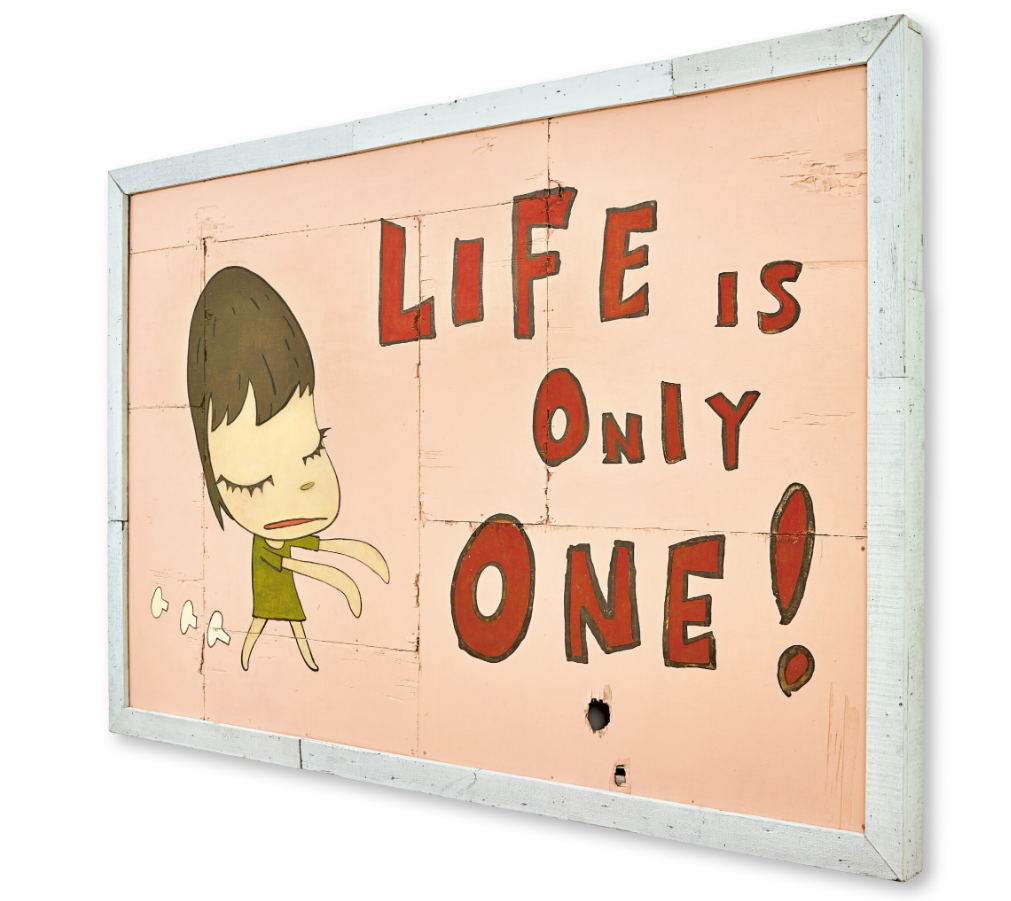
As early as the mid-1990s, when he undertook a six-year apprenticeship with A.R. Penck in Germany, Nara’s paintings featured thick black outlines, a richly vibrant palette reminiscent of Neo-Expressionism, and the flat, rough-hewn or ‘primitive’ aesthetic of sketches, drawings, and manga. The artist maintained this rough-hewn aesthetic in his later billboard paintings, continuously cultivating his unique language redolent of Pop, anime, cartoon, and manga – one whose extraordinary emotive power endorses “the paradoxical strength of ‘minor art’, including ‘kitsch’ imagery’s ability to express the emotions of contemporary people.”
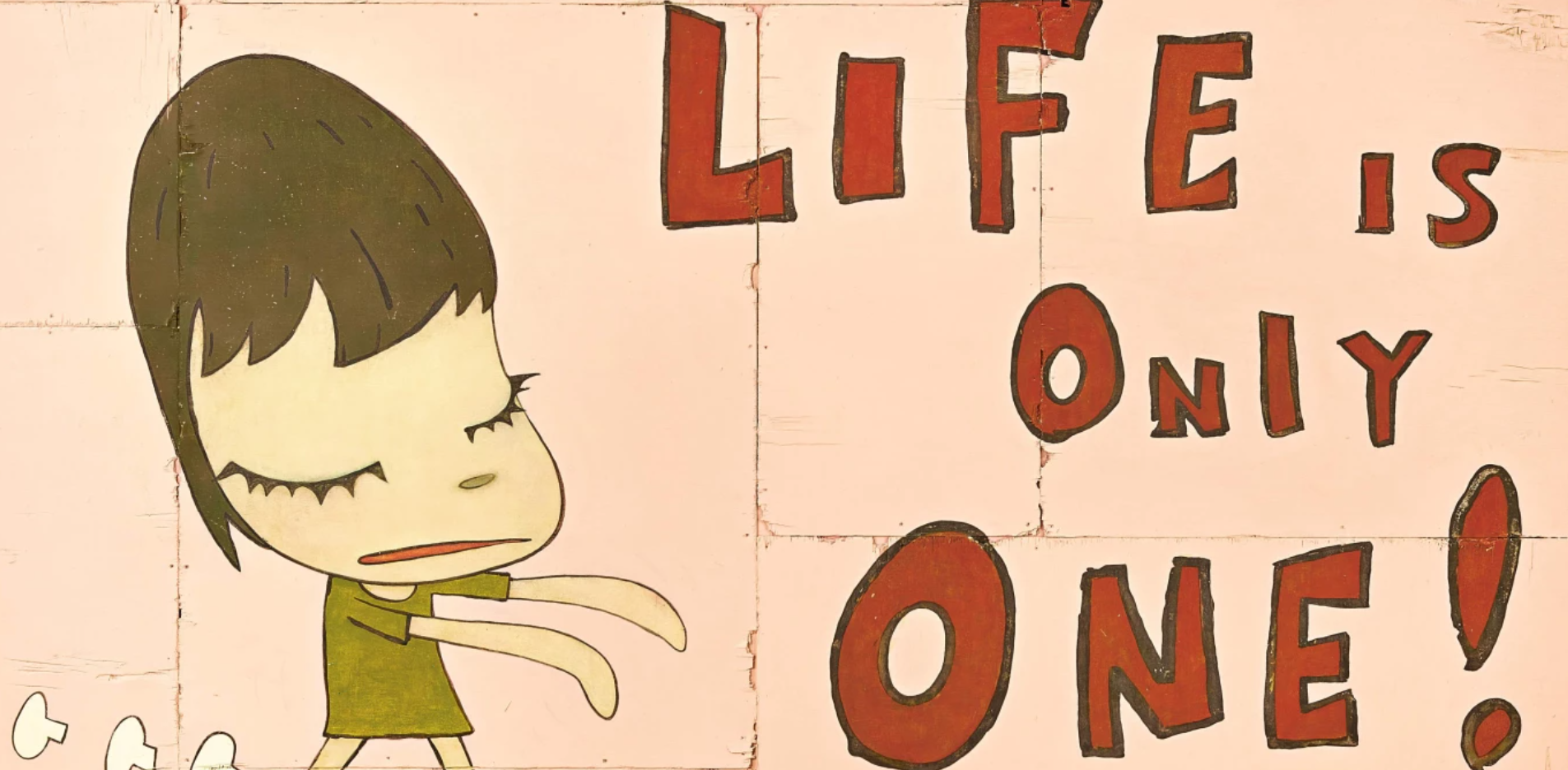
Generating an expansive discourse around themes of innocence, Nara’s prolific oeuvre harnesses a profound message that is highly personal, universally relatable, and heartfeltly sincere. Perfected over three decades of diligent reprisals, it is through the subject of the small girl that Nara has captivated the imaginations and gained the respect of museums and collectors worldwide. For this, he is indisputably recognized as one of the world’s most internationally acclaimed living painters.
Untitled, 2007
Christie’s Hong-Kong: 23 May 2021
Estimated: HKD 45,000,000 – 65,000,000
HKD 54,250,000 / USD 6,986,390
Yoshitomo Nara (b. 1959) (christies.com)
YOSHITOMO NARA (B. 1959)
Untitled, 2007
Acrylic on canvas
162 x 145.5 cm (42 3/4 x 30 1/8 inches)
Signed in Japanese and dated ‘2007’ (on the reverse)
Throughout the 1990s when establishing his signature children with the expressions of defiance and hubris on their faces, Nara primarily employed solid lines and simple color fields to depict his subject’s body and face including eyes. From the early 2000s, his palette and lines have been softened to express “complex feelings” and to elaborate delicate ethereal depth in his subject’s eyes “in a more complex way” as this work presents. In Untitled, a delicately painted, large-headed girl with one eye hidden by her hair evokes the mystery and questions: Why is she hiding one eye? Is she shy? Does she want to look eccentric? In this way, this magnificent painting becomes a bundle of intriguing paradoxes, from readily accessible yet enigmatic, to sweet yet menacing, and introspective yet superficial. Her mysterious atmosphere enchants viewers regardless their age or gender.
Works on Paper
PLEASE CLICK BELOW TO FIND AUCTION RESULTS FOR WORKS ON PAPER
Sculptures
WORK IN PROGRESS
Over the Topper, 1995
Sotheby’s New-York: 15 May 2026
Estimated: USD 800,000 – 1,200,000
USD 1,216,000
Yoshitomo Nara | Over the Topper | Contemporary Day Auction | 2026 |
YOSHITOMO NARA (b. 1959)
Over the Topper, 1995
Acrylic on FRP sculpture with painted wooden ladder, gauze, ribbon, socks and shoes
Installation dimensions variable
Among the most theatrically conceived and conceptually ambitious works of Yoshitomo Nara’s early career, Over the Topper from 1995 stands as a singular landmark in the artist’s celebrated practice. Here, Nara translated his iconic pictorial vocabulary into three-dimensional form, investigating childhood, innocence, loneliness, rebellion, and the complexity of memory and emotion with visual weight. A singular piece with the artist’s oeuvre, Over the Topper was conceived specifically for PROJECT FOR GUNMA’95 at the Gunma Prefectural Museum of Modern Art in Japan. The ambition of its nascency is commensurate with its form; a four-meter bandaged ladder ascends toward the gallery wall, placing the figure not within a container but in active, vertical ascent.
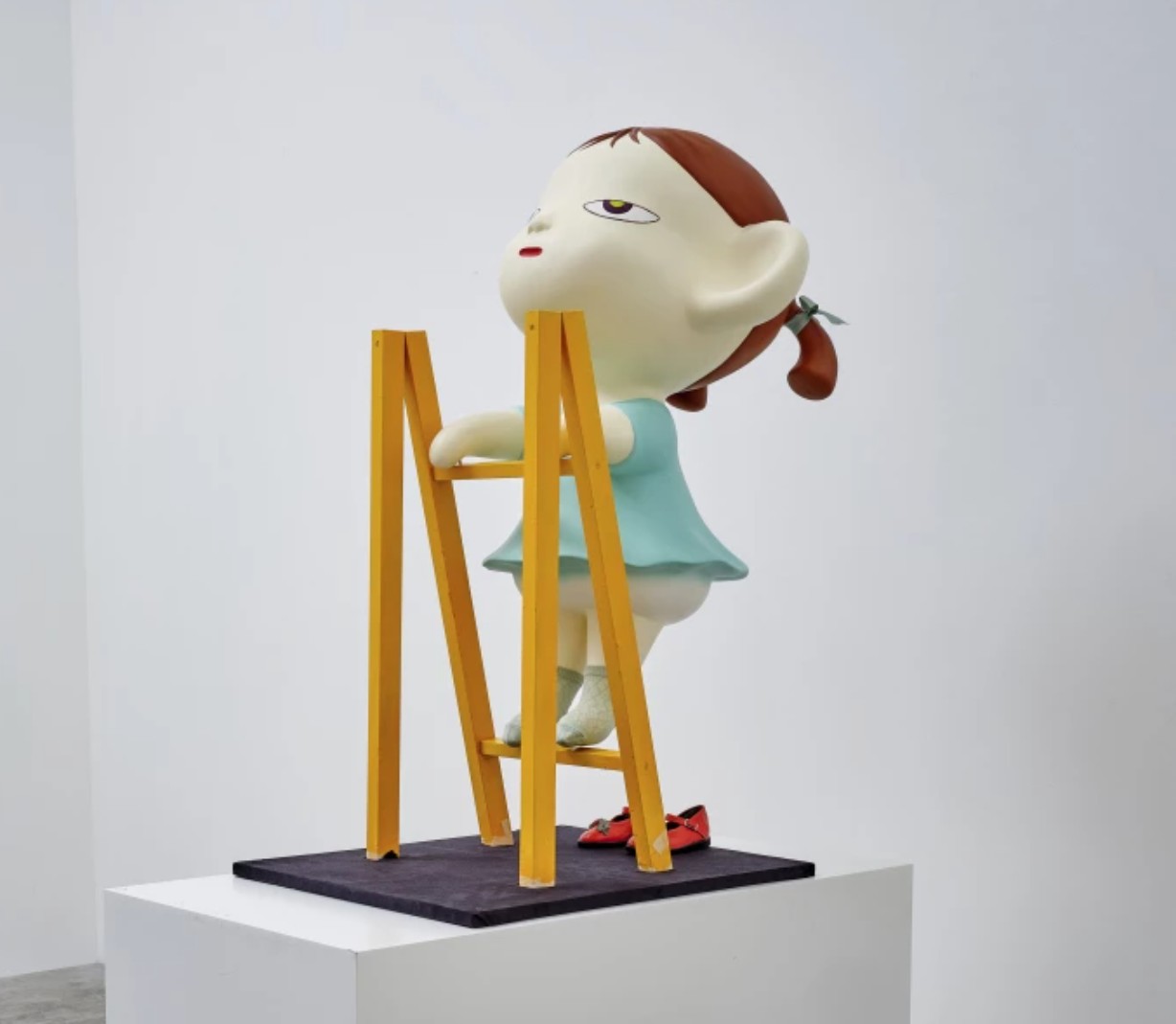
Executed in 1995, Over the Topper marks the pivotal year in which Nara first began working in fiber-reinforced plastic and developed the large-scale sculptural language that would define his subsequent decades. The sculpture embodies the spirit of formal invention characteristic of this time period. The protagonist literally ascends towards the sky. Poised between worlds, between the known and the unknown, she strives towards an unknown location beyond our sights. Dressed in blue with ribboned pigtails and red shoes, she recalls Dorothy in the Wizard of Oz. “Exploring Nara’s world and its inhabitants can be as disconcerting as taking one of Alice’s trips through Wonderland. His characters are devilish, fairy-tale strange, and not afraid to embrace the anxiety and intensity that define existence at any age. Nara challenges the world of grown-ups, full of unyielding expectations and entrenched codes of behaviour. He reminds us that we all grow up too fast, and he invites us to reclaim the qualities of youth” (Kristin Chamber : Exh. Cat., Museum of Contemporary Art Cleveland, Yoshitomo Nara: Nothing Ever Happens, 2003, p. 27) Over the Topper captures childlike imagination and the liminal spaces between dreams and reality.
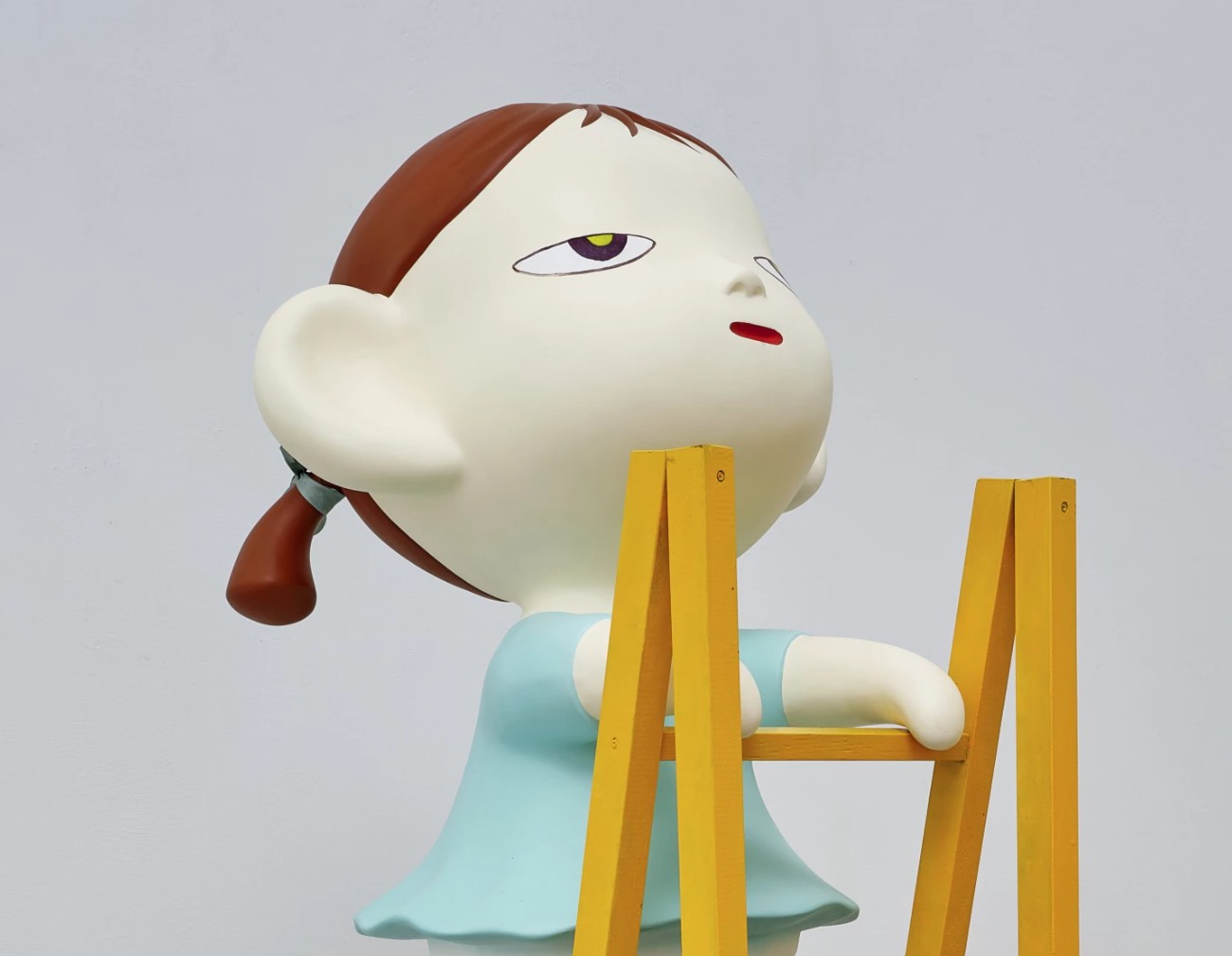
Nara’s girls are effortlessly recognizable icons across generations and cultural backgrounds, distinctive and iconic figures within a visual lexicon that is a fusion of “high, low and kitsch; East and West; grown-up, adolescent and infantile; and so seamless as to render such distinctions almost moot” (Barbara Smith, “Cuddling With Little Girls, Dogs and Music”, The New York Times, 2010) At once disarming and confrontational, the girls embody a psychological tension that resists easy resolution, serving as vessels for the quiet fury and profound solitude of interior life. In Over the Topper, Nara’s solitary figure climbs towards the infinite void with her back turned to the viewer, preventing any spiritual connection. Born to emotionally distant workaholic parents in post-war Japan and the youngest of three by a drastic age difference, Nara spent his childhood for the most part alone. This psychological state is sublimated into Nara’s pictures. “There is solitude and sadness, and sometimes a bit of rage [in Nara’s figures]”, describes critic Marco Meneguzzo, “a small iniquity expressed perhaps to demonstrate one’s existence (Marco Meneguzzo, “Yoshitomo Nara: Hiroshima City Museum of Contemporary Art”, Artforum, 2002, p. 216) Tapping directly into the emotional center of not only disaffection and anxiety but also the spiritual core at the foundation of hope and renewal, Over the Topper is a powerful stand-in for a generation of young people at the dawn of the twenty-first century and beyond.
Fountain of Life, 2001/2014
Phillips Hong-Kong: 25 November 2024
Estimated: HKD 8,000,000 – 15,000,000
HKD 10,130,000 / USD 1,301,470
Yoshitomo Nara – Modern & Contempora… Lot 6 November 2024 | Phillips
YOSHITOMO NARA
Fountain of Life, 2001/2014
Lacquer and urethane on FRP, motor and water
175x180x180 cm (68 7/8 x 70 7/8 x 70 7/8 inches)
This work is edition 2 of 3 plus 2 artist proofs
A profound embodiment of emotion and introspection, Fountain of Life exists as a seminal and monumental work within Yoshitomo Nara’s oeuvre. The present work is a celebration of the emotional complexities of everyday life, in which the artist has dedicated his prodigious career to exploring themes such as innocence, vulnerability, and defiance. In Fountain of Life, Yoshitomo Nara brilliantly evokes the purity of childhood while simultaneously acknowledging the inevitable loss of that innocence. This wistful juxtaposition brings to light the unspoken feelings of pain, grief, and loneliness that often accompany the transition into adulthood. Rendered in a captivating and delicate celadon green, with a sleek layer of lacquer on top, the present work evokes a sense of softness and empathy. It can be understood as a critique of contemporary society, where the pressures of adulthood often overshadow the simplicity of childhood pleasures, and it serves as a poignant reminder to reconnect with the innate curiosity and wonder of youth.
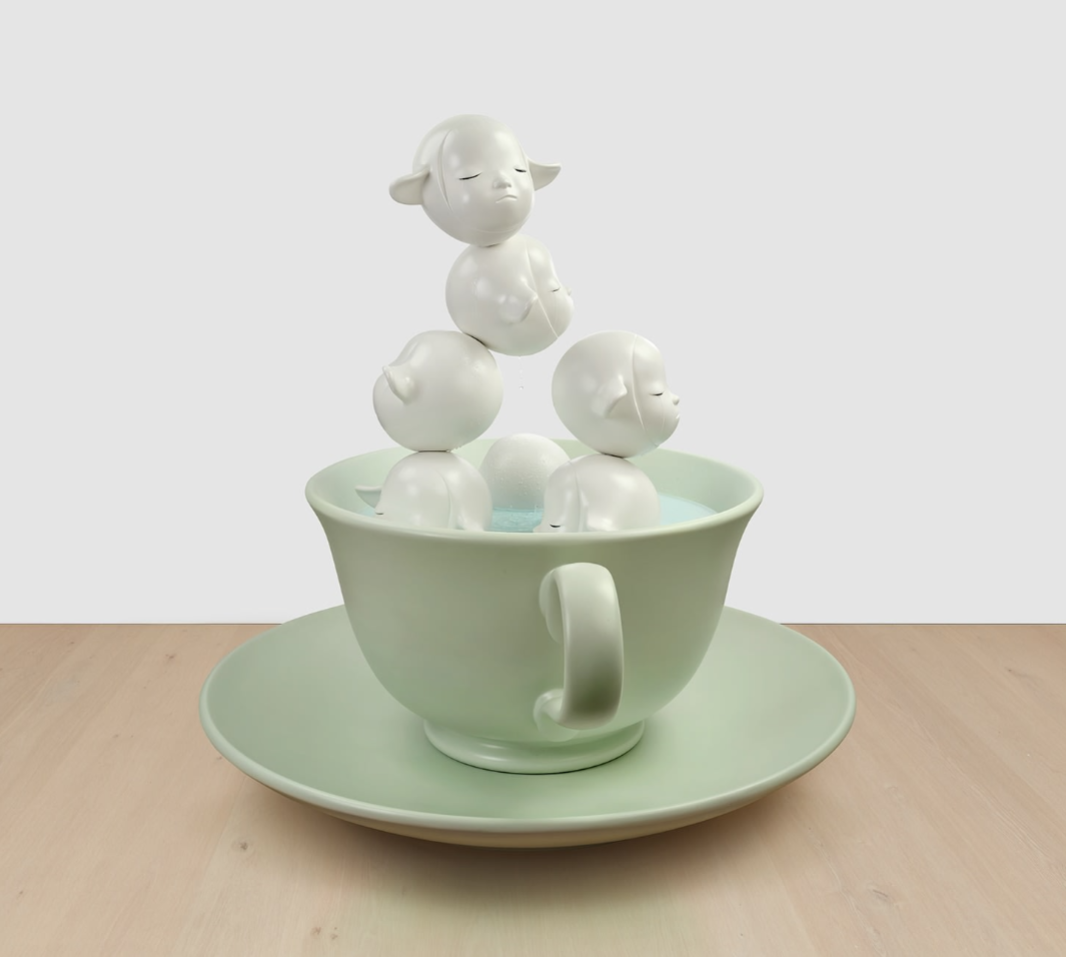
The characters in the present work appear to be both observers and participants in the space that it occupies. As such, Fountain of Life elicits a sense of wonder and confusion whereby Nara encourages the audience to contemplate their own experiences of childhood – moments of joy that are intertwined with feelings of fear. Presented at auction for the first time, this sculptural masterpiece stands as Nara’s only motorized work, marking a breakthrough and signifying a pivotal transition in the artist’s creative practice. The emergence of the teacup as a leitmotif first appeared in Nara’s 1995 sculpture Cup Kids. It was the artist’s first foray into experimenting with fibre-reinforced plastic to create his large-scale pieces. The style of the cup and the figure’s head was what propelled the artist’s series of popular FRP sculptures.
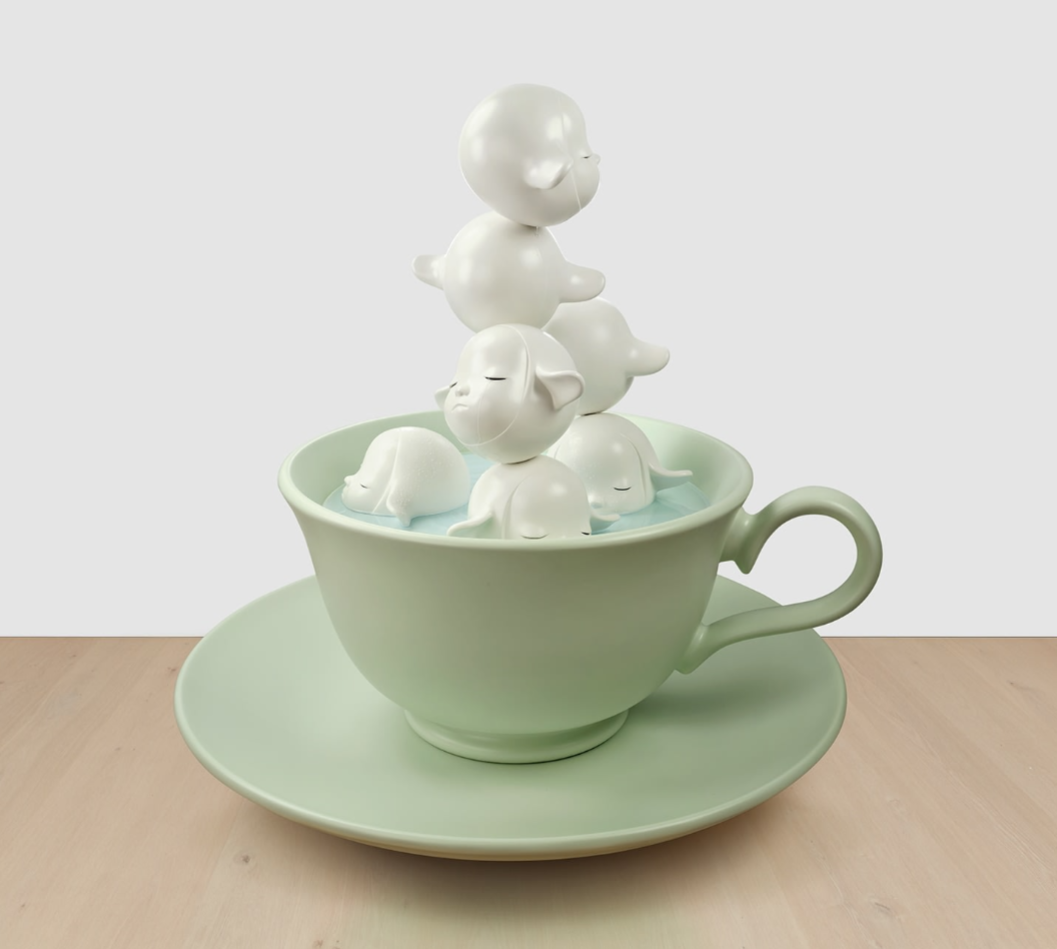
These whimsical and fantastical renderings of the teacup evoked a sense of nostalgia. Reminiscent of the tea party scenes from Alice in Wonderland, it also harkens back to childhood memories of fairground cup and saucer rides. With this concept in mind, Nara created Quiet, Quiet and The Little Pilgrims in 1999. This thus laid the foundation for what ensued. At the turn of the century, Nara’s creative practice took a major shift and progressed even further. Drawing inspiration from his earlier works, the artist had conceived the idea of applying advanced technology and movement to enhance the conceptual purpose as showcased in Fountain of Life. The present work is a compelling example of Nara’s artistic vision, prompting viewers to contemplate deeper emotional narratives through its seemingly simple yet profound imagery.
“It began as a small incident in my mind, when it rained nonstop and I seemed to be swimming around in this little world like a tadpole. As the rain kept falling, the puddle grew in size, eventually merging with the other puddles nearby. These puddles formed an expansive network, which made me happy, even though I had trouble keeping up with their speed of expansion at times.”
At once endearing and melancholic, Fountain of Life is deeply rooted within the artist’s emotionally-complex childhood – probing notions of renewal and vitality whilst also hinting at the transience of life. In the present work, Yoshitomo Nara’s ingenious use of the traditional teacup – a quotidian object – creates an encircling, safe space for the figures, which further provides shelter and protection. Instantly recognizable are seven disembodied sheep-headed children, a signature motif stemming from the artist’s earlier sculptural installation, The Little Pilgrims. Towering precariously atop one another yet standing sturdily on their own, the figures appear serene and expressionless from a distance. With their heads tilted slightly backwards and their downcast eyes ajar, these pensive characters exude a profound sense of sorrow and solitude which is almost palpable. Acting as windows into their subconsciousness, the figures’ eyes well up with tears before spilling out into streams of water that trickle down along their cheeks into a glistening puddle.
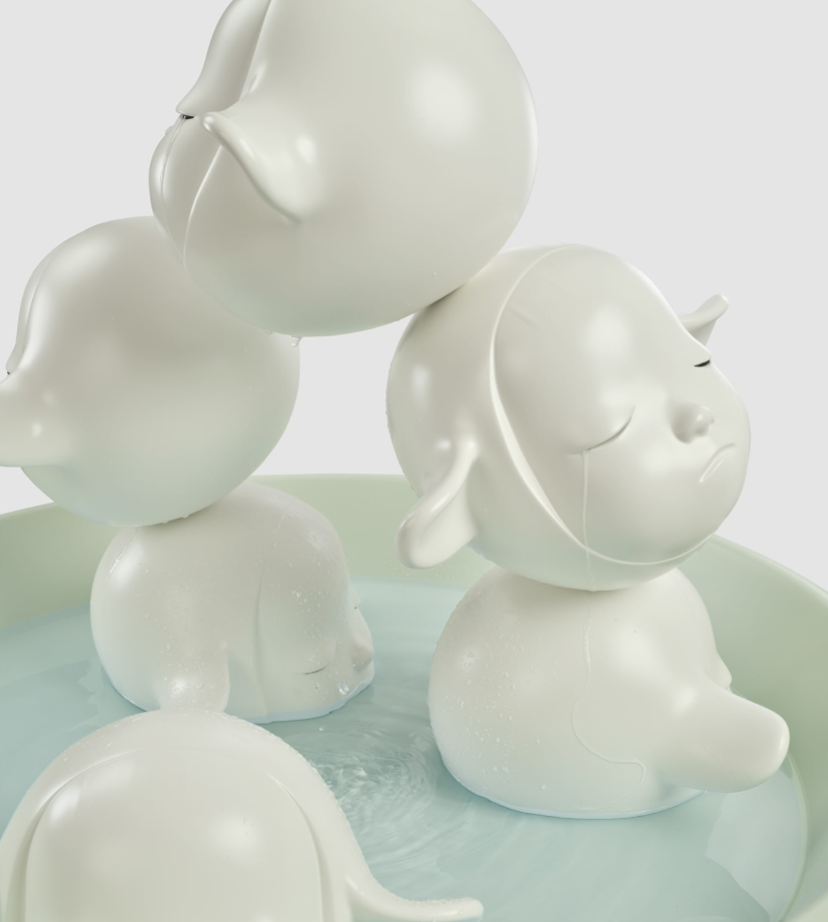
Designed to be viewed from different vantage points, Fountain of Life encourages viewers to circumambulate it and peer over the teacup into an almost reflective surface. With several heads that are partially submerged in the puddle, this recurring motif conjures an ambivalent in-between state, alluding to Nara’s own experience of alienation during his formative years in Germany. Through the process of implementing technology and dynamic movement into his work, Yoshitomo Nara transforms the way in which viewers engage with the installation from passive observation to active participation. The constant flow of water causes the work to remain in motion, evoking the idea of life-giving water as a symbol of regeneration. Fountain of Life transcends the boundaries of traditional static sculpture and is a true testament to Yoshitomo Nara’s depth of creativity.
Cup Kids, 1995
Poly Hong-Kong: 4 April 2024
Estimated: HKD 6,000,000 – 8,000,000
HKD 7,080,000 / USD 904,220
Cup Kids|Poly Auction Hong Kong
YOSHITOMO NARA
Cup Kids, 1995
Acrylic and lacquer on FRP sculpture
95 x 95 x 105 cm (37 1/2 x 37 1/2 x 41 1/4 inches)
The Portraits exhibition held at the Long Museum in Shanghai at the end of 2023 was undoubtedly one of the most focused collectors’ exhibitions in Asia. One piece of Yoshitomo Nara’s Cup Kids sculptures was displayed in the second-floor gallery, alongside a number of classic works of artists from Asia and the West and attracted countless visitors.
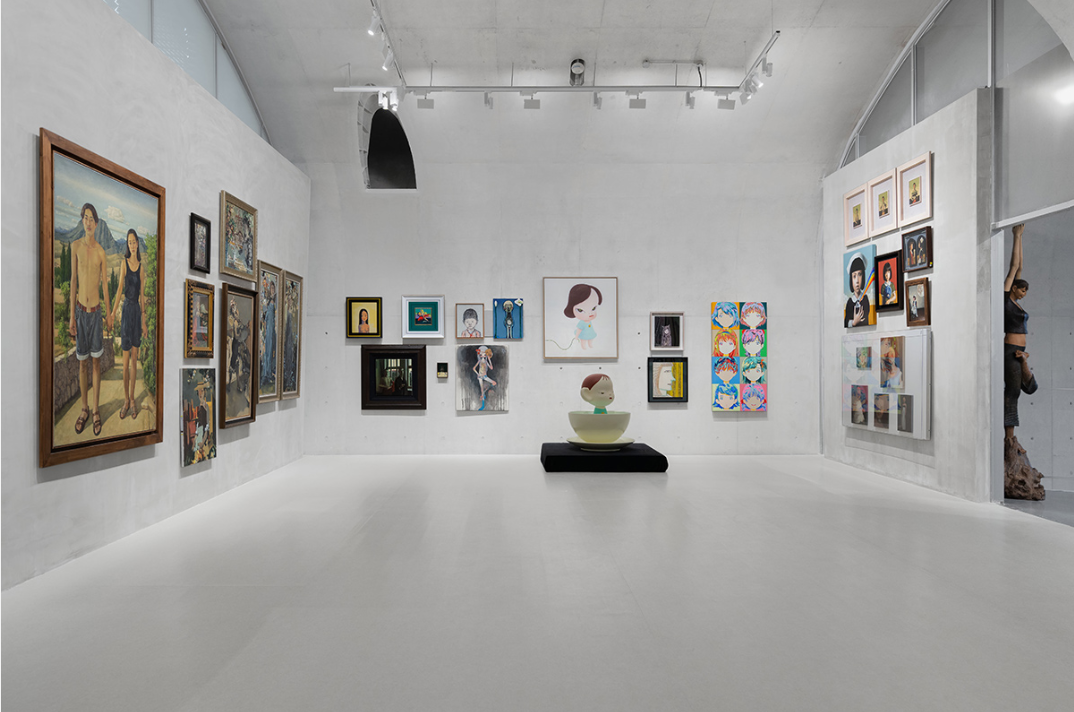
Cup Kids presented in the 10th Anniversary Exhibition Portraits at Long Museum in Shanghai. Together with the Girl with a Long Fuse (Painted in 1996) on the wall, they witnessed the birth of Yoshitomo Nara’s little girl in the 90’s, which is now highly popular around the world.
One of the most enviable things in art collection is to own the milestone works of top artists who are profoundly creative, and Yoshitomo Nara is undeniably a shining star in contemporary art. Cup Kids (Lot 116) created in 1995 is considered as a milestone works by Yoshitomo Nara, which marked the beginning of his head sculpture creation in the form of little girls using FRP as the medium. Following the successful conclusion of the Portraits exhibition in February 2024, The Beginning Place exhibition held at the Aomori Museum of Art in Nara’s hometown is a great opportunity to appreciate his latest creations over the years. Among the sculptures, ceramics and bronze replaced FRP as the main material, signaling a new direction of his sculpture creation in recent years, which in turn reflecting the rare value of FRP sculptures that were an important part of his works in the early years. Like the classic sculpture of Aomori Dog that standing in the Aomori Museum of Art, Cup Kids marked the totem of the artist’s creation of head sculpture of a little girl.
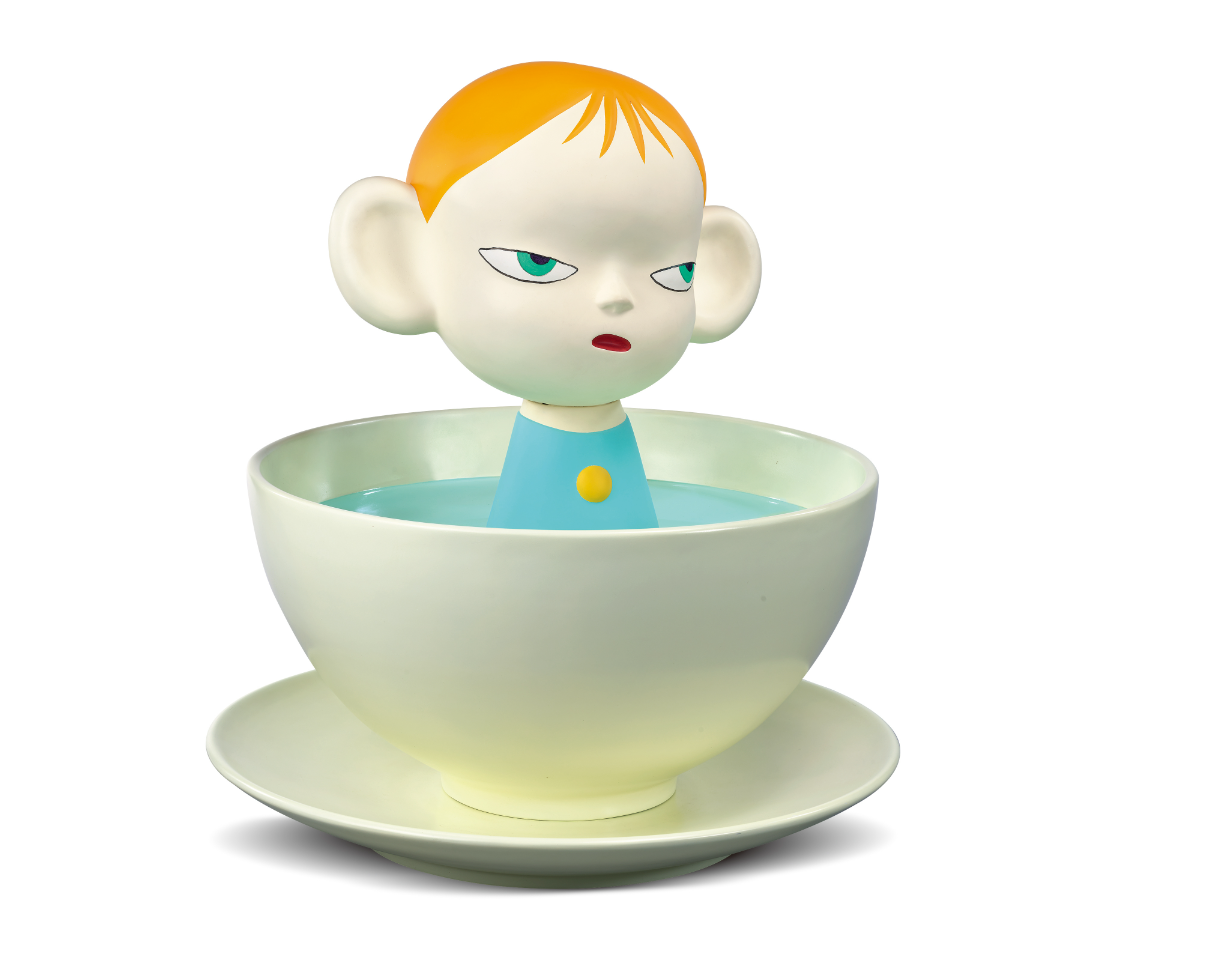
From 1988 to 2000, Nara first studied at the Duesseldorf Art Academy in Germany, and then went to Cologne for art creation. This was the period when Nara developed his iconic image of little girls, especially from the early 1990s onwards, when he gradually developed them into the well-known Big-Headed Girls that were highly sort after by his fans all over the world. For example, in Pandora’s Box created in 1990, with her tongue licking out, the little girl holds a half-open Pandora’s Box in hand and seems to be rising slowly from the ripples of a pool of water, is she going to destroy the world? Or playing some kind of joke? The girl with the big head is seemed as the embodiment of Yoshitomo Nara, through whom the artist connects with the world and communicates with the audience. We can sense the feelings and emotions of the little girls by looking at them and resonating with their feelings. It can be a sense of loneliness, sarcasm, joy, disdain, or anger. Varied emotions were expressed, presenting an intuitive and straight-to-the-heart power, which is the most fascinating magic of Nara’s works.
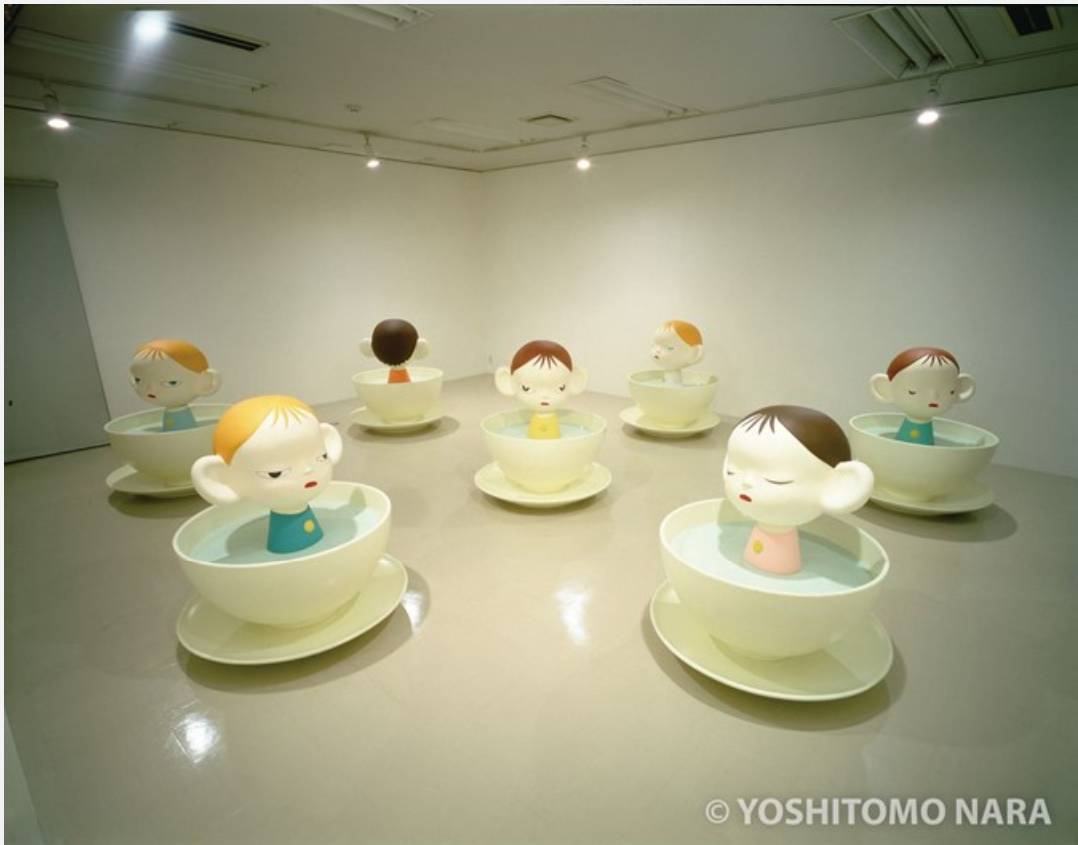
A favourite work of the artist, Cup Kids was mentioned in the book THE LITTLE STAR DWELLER by Yoshitomo Nara. The piece presented in this auction is the on the left in the back row.
There are a total of seven pieces in Cup Kids, which are made up of little girls with different facial expressions and cups. The girl presented this time has blonde hair, eyes opened showing her beautiful Tiffany-blue pupils and disdainful looks, which made her the most iconic Nara girl. She is dressed in dark aqua blue shirt, with big ears that look like the ear of fortune in the East, and also like the handle of a teacup. The girl seems to be born from the world of cups, a world of pools; but on the other hand, she also seems to be trying to break free, to escape from the world that adults has tied her up in. The long buried creative energies of Nara were bursting forth in 1995. In that year, SCAI invited him for an exhibition back in Japan, and the Blum & Poe Gallery in Los Angeles also began to collaborate with him, even though it was a just a small space of only five metres. But the collaboration signaled a young and dynamic alliance that fostered the creation of Cup Kids.
In the Chinese version of the book THE LITTLE STAR DWELLER, Cup Kids was presented on page 144. This work was presented at Poly Auction Hong Kong Spring Auction in 2023 and sold for HK$7.32 million.
The significance of Cup Kids lies not only on the fact that these seven girls are the Seven Fairies of Nara, which encompasses a collection of his creation of little girls, but from which he has derived important subsequent works that are also significant. An example of this is Fountain of Life created in 2001, which also featured seven little kids raising from cups all with closed eyes, while the cups can be filled with clear water. The Fountain of Life is also an important FRP sculpture by the artist and was presented in many international exhibitions. Since its birth in 1995, Cup Kids has also been exhibited in many occasions, including Nagoya City Art Museum in 1995 and Gallery Hakutosha in 1996, which can be regarded as the important debut of Nara in Japan, as his alma mater Aichi Prefectural University of Fine Arts and Music is located here. It also inspired the solo exhibition Lullaby Supermarket at the Santa Monica Museum of Art in 2000. Of the seven pieces in the Cup Kids, except the piece in the collection of Long Museum in Shanghai and the piece being offered at this auction, five pieces are in the hands of private collectors, and are not expected to be seen again in the near future, making this spring auction the best time to collect the work of Cup Kids.
Anymore for Anymore, 2018
Sotheby’s Hong-Kong: 5 April 2024
Estimated: HKD 4,800,000 – 6,800,000
HKD 5,080,000 / USD 649,450
YOSHITOMO NARA (b. 1960)
Anymore for Anymore, 2018
Ceramic
125.5 x 121.2 x 118.5 cm (49 3/8 x 47 3/4 x 46 5/8 inches)
A complex embodiment of emotion and introspection, the imposing Anymore for Anymore introduces a sculptural depth to Yoshitomo Nara’s signature childlike figures. Viewed from different vantage points, the present sculpture can be seen as two distinct heads; one bearing an open eyed expression, the other, eyes closed and peaceful. Transmitting a profound emotional message, the present work is a testament to the depth of Nara’s artistic expression. It was in 2011 that Nara first began to work with clay following the utter devastation of the Great East Japan Earthquake in 2011 and subsequent Fukushima Disaster. Struck by creative inertia, Nara turned to sculpture to express his pain and confusion at the devastation he saw in his hometown of Hirosaki. Seeking a medium he could be more physically engaged with, Nara began to produce monumental sculptures of his pensive, childlike faces. The materiality of this process is on full display in the present work, with the artist’s myriad fingerprints and expressionistic drags felt on the entirety of the ceramic vessel’s surface. At once a creative and physical process, the textural physicality of Anymore for Anymore recalls Giacometi, who similarly saw the process of modelling sculptures as serving a phenomenological purpose, embodying the expression of unspoken emotions.
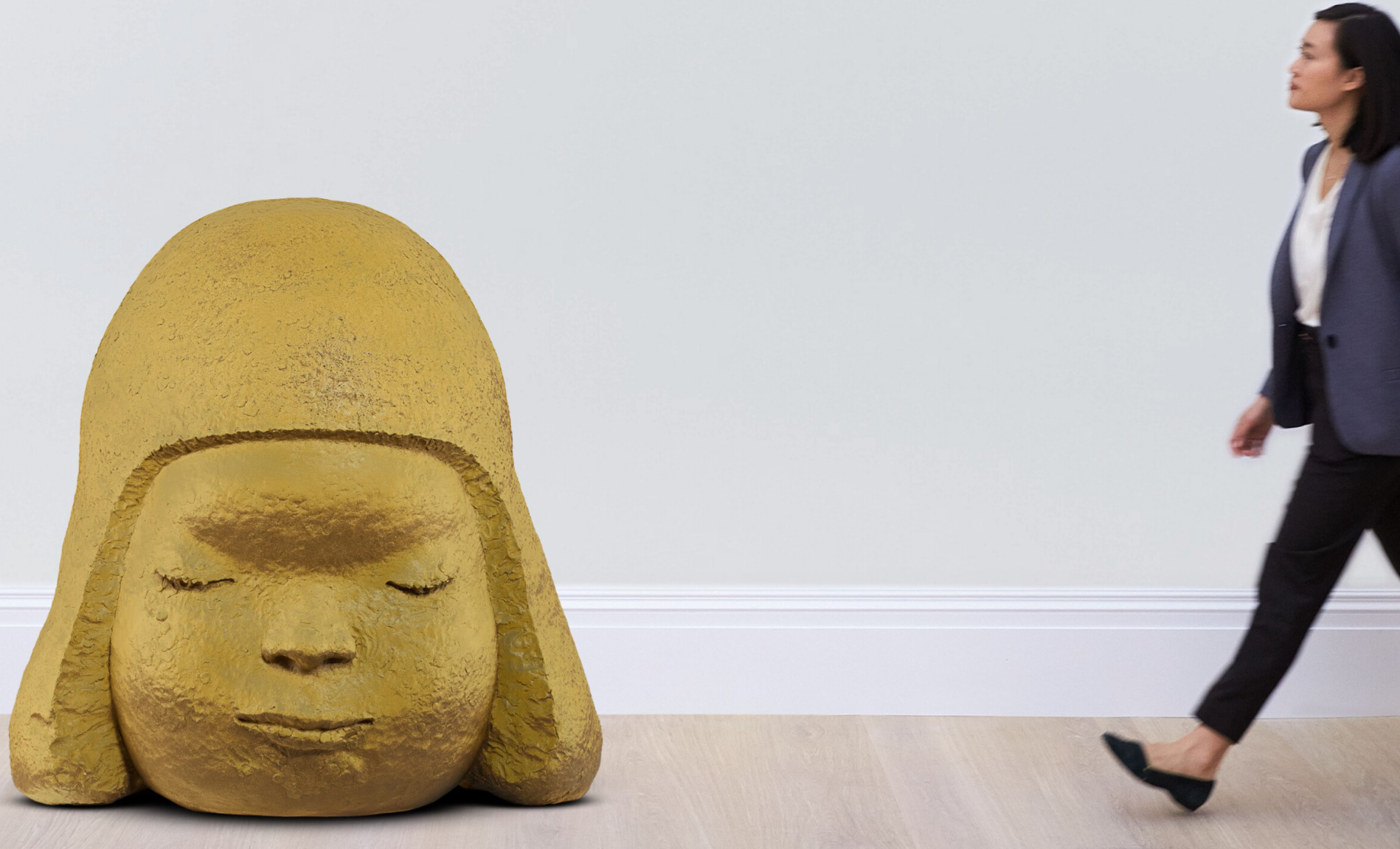
First exhibited at the artistic Yokohama Museum of Art in 2012, Nara’s large sculptural heads emerged after several months of restlessness. As the “I couldn’t make pictures on a blank canvas, but I found I could confront a mass of clay. I wouldn’t think about it with my mind. I would just attack it, like a sumo, with my body” (Yoshitomo Nara, quoted in Eden Corkill, “Yoshitomo nara Puts the Heart Back in Art”, Japan Times, 20 July 2012). Vessels of intense emotion shaped by distinctive plays of form and texture, the hand moulded features of Anymore for Anymore convey a profound emotional weight; each dab, drag and imprint leaving behind an impression on the surface, with Nara eventually coaxing the form of a child’s face. Nara’s expressive movements as he shaped curves and grooves can be retraced on the ceramic’s surface, as well as the pressure of his fingers as he formed the the figure’s eyelids
and lips. Representing the artist’s most ambitious experiment in representing his most recognisable and beloved protagonist, Anymore for Anymore is an enchanting and joyous testament to Nara’s idiosyncratic artistic vernacular. Tender, transfixing and epitomising the unparalleled emotionality and captivating sincerity of the artist, the present work illuminates something universally relatable with it’s alternately open and closed expression.
Prints & Multiples
WORK IN PROGRESS
In the Floating World (set of 16), 1999
Phillips Hong-Kong: 28 September 2025
Estimated: HKD 1,200,000 – 2,200,000
HKD 1,548,000 / USD 198,970
WORK ON PAPER
COMPLETE SET OF PRINTS
Yoshitomo Nara Modern & Contemporary Art Day Sale
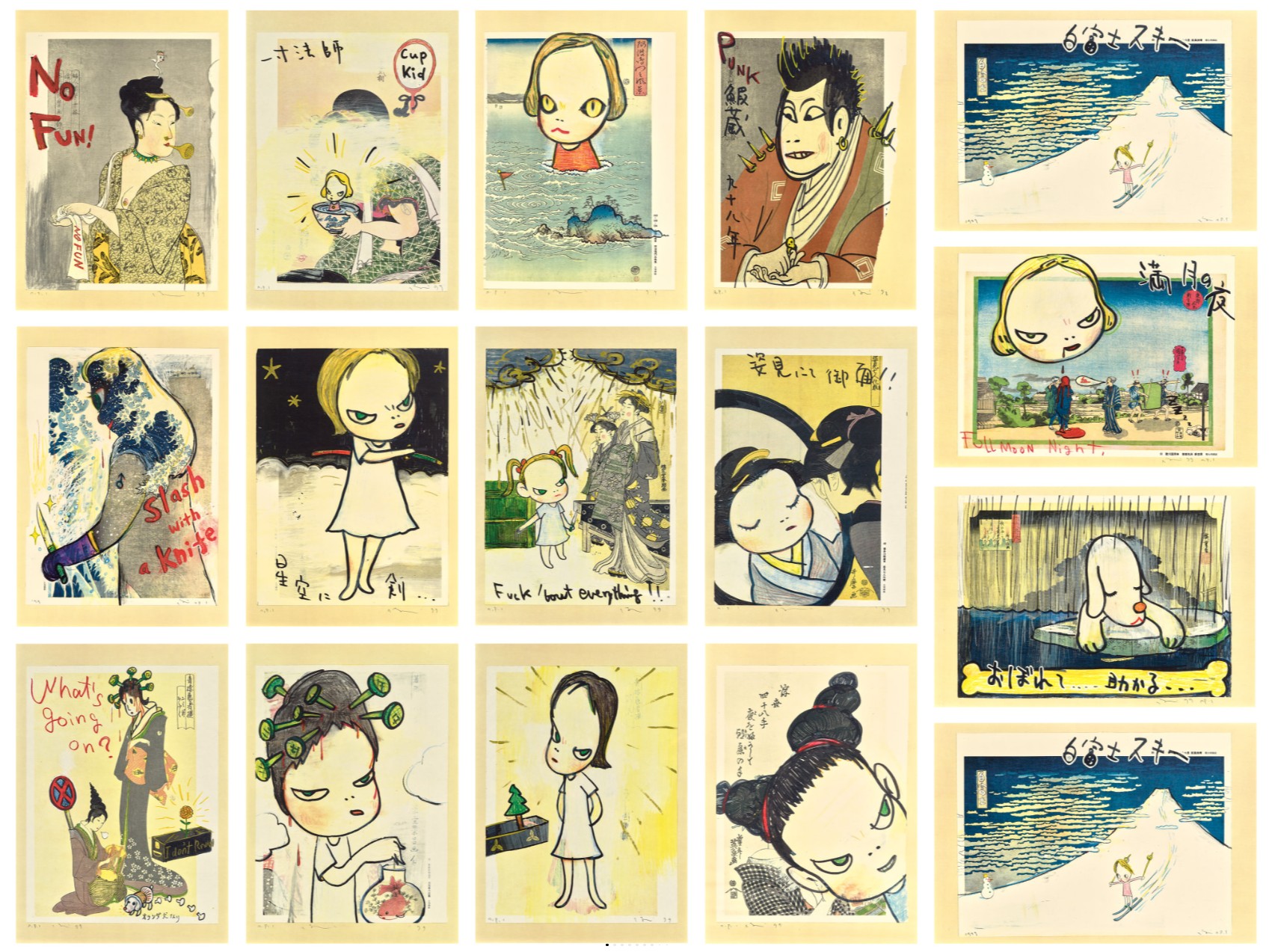
My Little Treasure, 2010
K Auction: 20 December 2023
Estimated: KRW 48,000,000 – 100,000,000
KRW 63,250,000 / USD 48,702
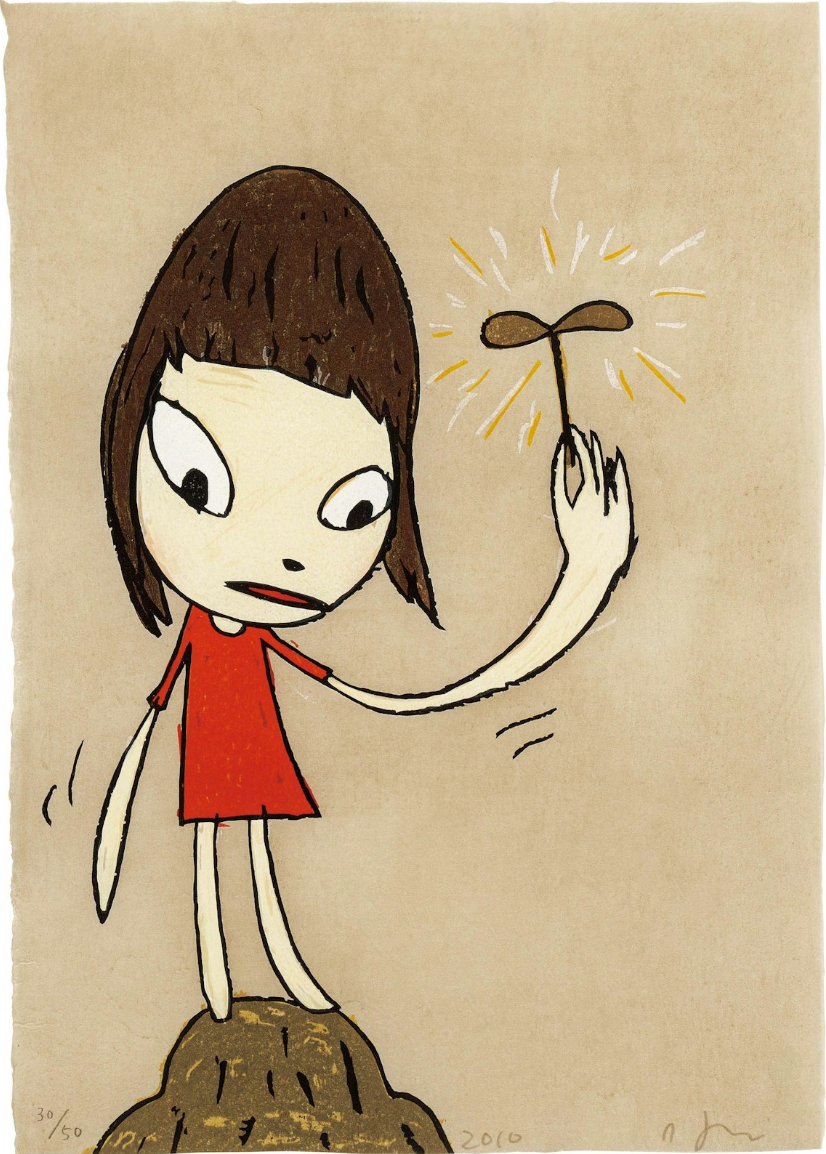
YOSHITOMO NARA
My Little Treasure, 2010
Ukiyo-e woodcut in colors, on Japanese paper
Signed, dated and numbered 30/50 in pencil
Phillips New-York: 26 October 2023
Estimated: USD 25,000 – 35,000
USD 30,480
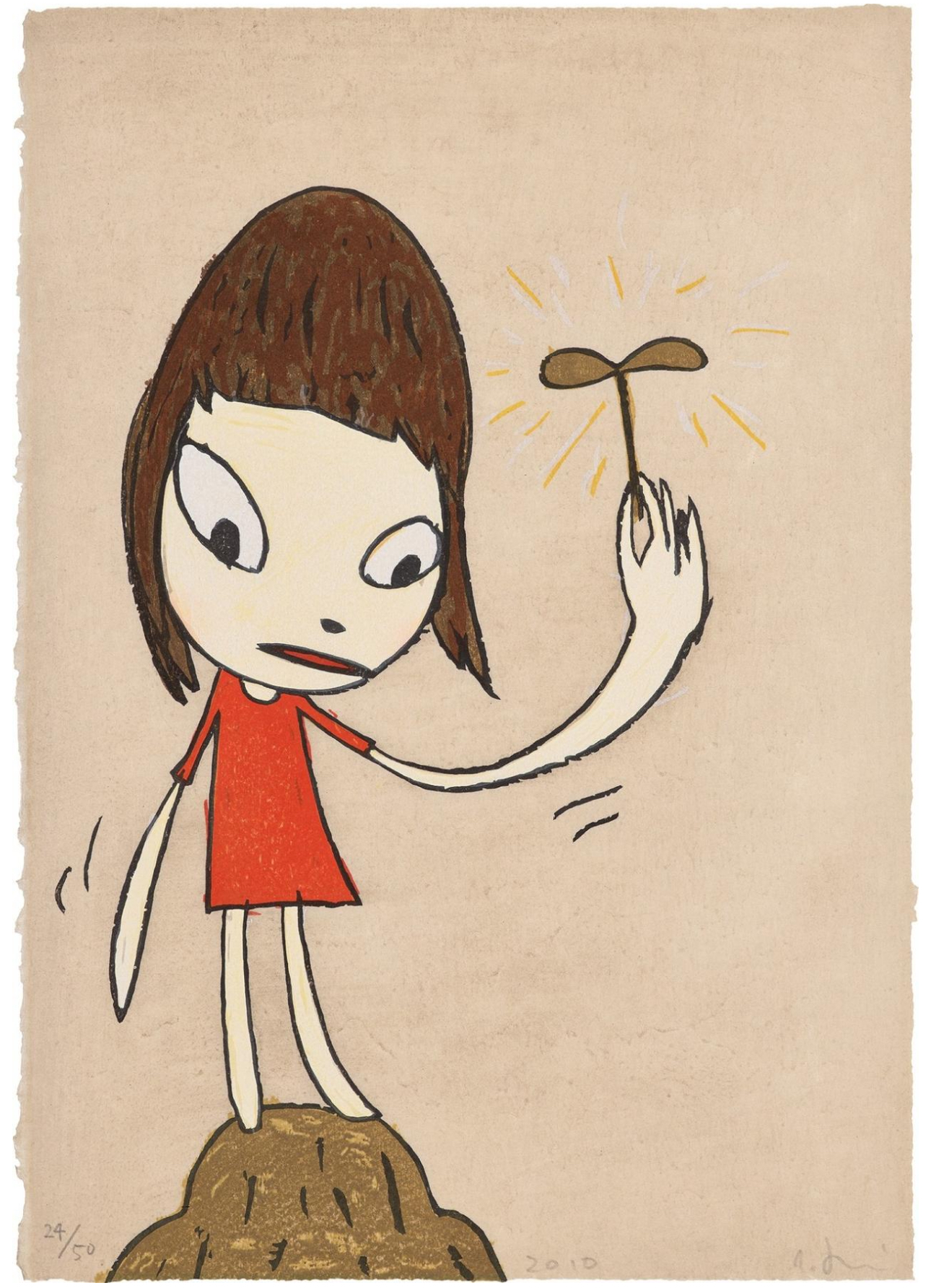
YOSHITOMO NARA
My Little Treasure (M. & S. E-2010-008), 2010
Ukiyo-e woodcut in colors on Japanese paper
Sheet: 42.2 x 29.8 cm (16 5/8 x 11 3/4 inches)
Signed, dated and numbered 24/50 in pencil
(there were also 12 artist’s proofs)
Published by Pace Prints, New York
Printed by master printer Yasu Shibata at the Pace Editions Workshop, this ukiyo-e woodcut effortlessly presents Nara’s signature imagery through a labor-intensive printmaking process familiar to Nara and Japanese heritage. Rendered with attitude, somewhere between melancholy and punk, Yoshitomo Nara’s famous ‘femme fatale’ draw us in, the formally uncomplicated character of My Little Treasure engaging the viewer with her playful stance, staring out with wide eyes as she delicately grasps her glowing, titular ‘treasure’ between two figures. Referencing his nimble drawings, often done on brown paper or cardboard, this woodcut embodies the same immediacy, but more refined, elevating his practice while imbuing the image with the same lively energy. Through My Little Treasure, Nara evokes forgotten memories or feelings of childhood, sparked anew by the childlike features and expressions of his figure, further creating his own unique style by centralizing the figure of a child as his subject; largely surrounded by empty space indicative of a void, Nara allows for child-like associations.
Untitled (Eye Patch), 2012
Christie’s Hong-Kong: 20 October 2023
Estimated: HKD 300,000 – 500,000
HKD 604,800
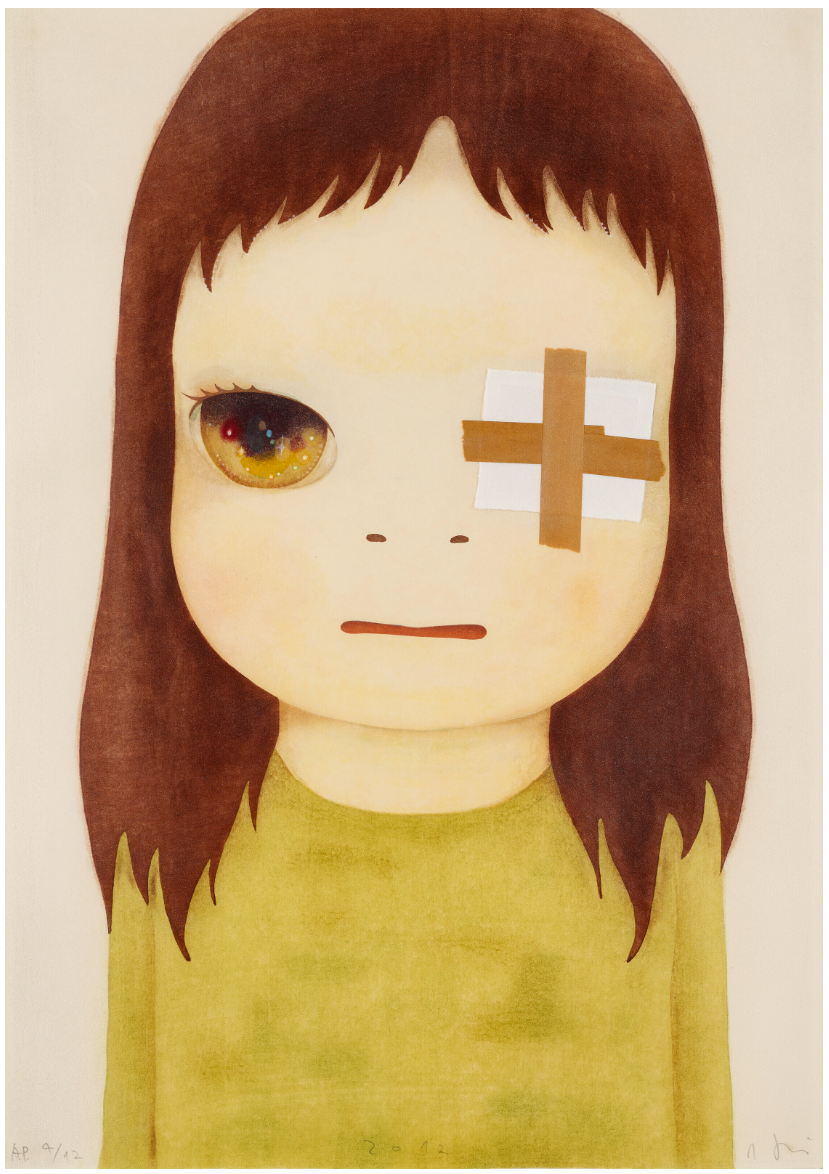
YOSHITOMO NARA (B. 1959)
Untitled, 2012
Woodcut print with collage
68.5 x 48.2 cm. (27×19 inches)
Signed with artist’s signature, numbered and dated ‘A.P. 4/12 2012’ (lower edge)
An artist’s Proof aside from the edition of 50
Christie’s Hong-Kong: 20 April 2023
Estimated: HKD 300,000 – 500,000
HKD 882,000 / USD 112,368
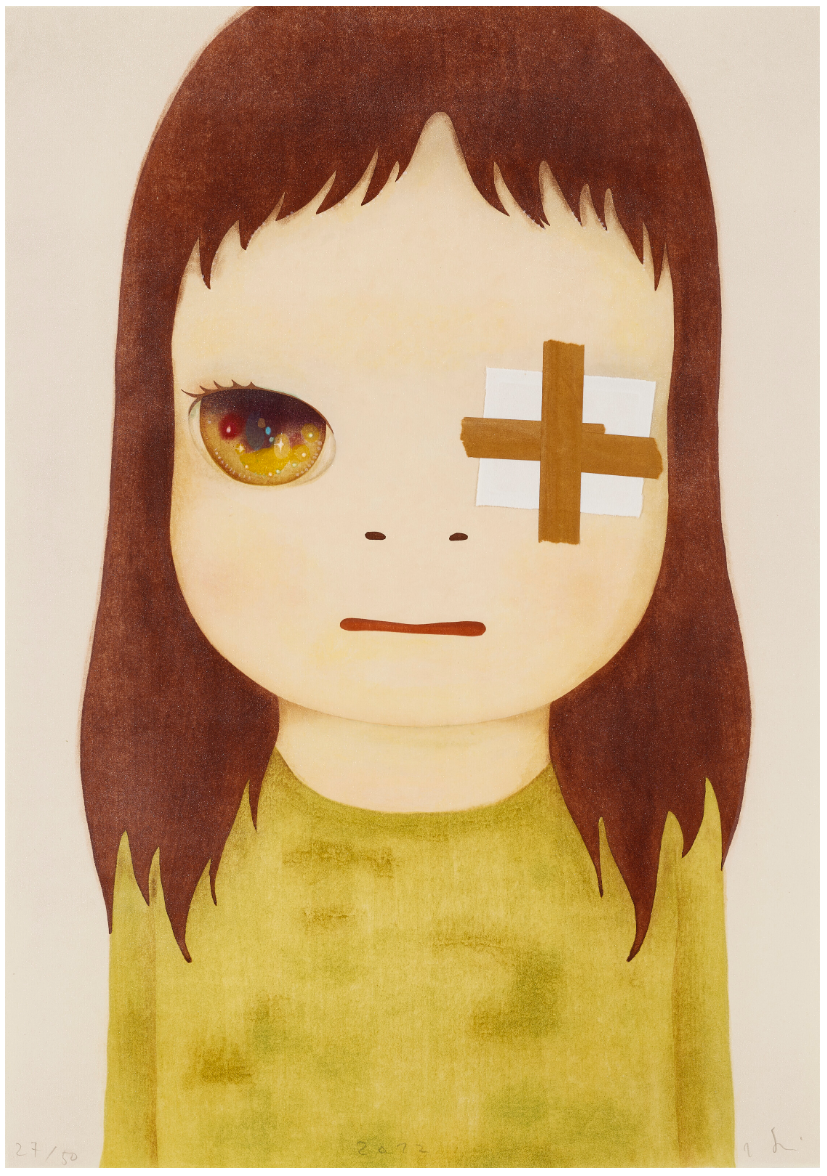
YOSHITOMO NARA (B. 1959)
Untitled (Eye Patch), 2012
Ukiyo-e woodcut with collage
68.5 x 48.2 cm. (27×19 inches)
Signed with artist’s signature, numbered and dated ‘27/50 2012’ (lower edge)