Sean Scully occupies a unique position between European sensibility and American abstraction. His work rejects both decorative abstraction and conceptual detachment, insisting instead on material presence, emotional resonance, and structural clarity. Over more than five decades, he has expanded the language of abstraction into a form capable of carrying memory, weight, and human experience. For collectors, curators, and institutions, Scully’s oeuvre offers a coherent yet evolving body of work, structured by identifiable periods, consistent formal language, and sustained critical recognition.
Introduction
Sean Scully (born 1945, Dublin, Ireland) is an Irish-born American artist whose work occupies a central position in the history of post-war abstraction. Working across painting, sculpture, works on paper, printmaking, and photography, Scully is widely recognized for reintroducing emotion, materiality, and human presence into a language of abstraction that had, by the late 1960s, become increasingly impersonal. Scully grew up in South London after his family emigrated from Ireland in 1949. His early life in a working-class environment, marked by post-war urban architecture and physical labor, would later inform the structural and emotional foundations of his art.
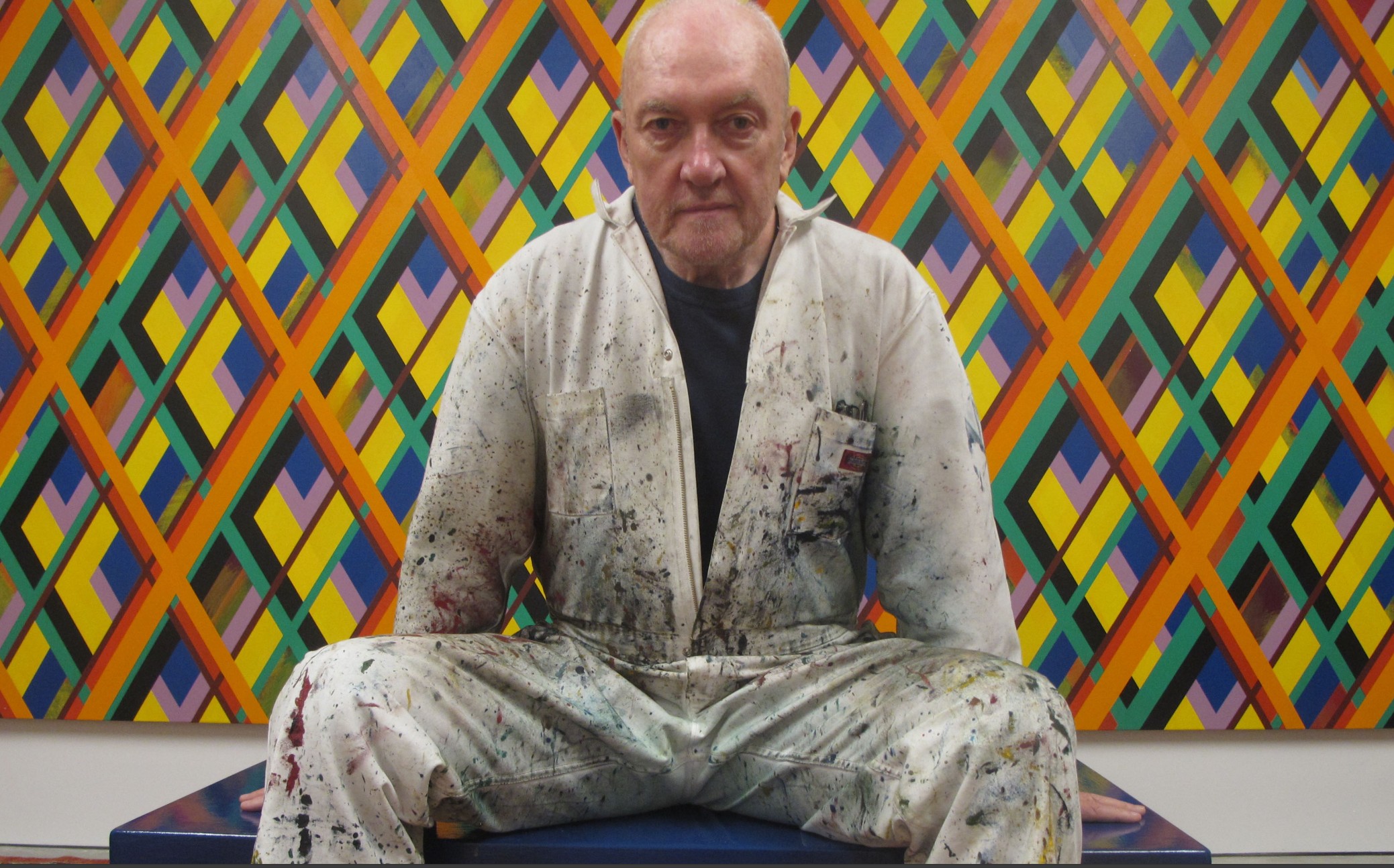
He studied at the Central School of Art in London, followed by Croydon College of Art, and later earned a BA from Newcastle University in 1972. That same year, he was awarded a Frank Knox Fellowship to Harvard University, a pivotal moment that brought him to the United States and exposed him directly to American Minimalism and Color Field painting.
In 1975, Scully settled permanently in New York. While his early work aligned formally with Minimalist systems and grid structures, he soon distanced himself from their ideological detachment. By the late 1970s and early 1980s, he developed a highly personal abstraction characterized by visible brushwork, layered color, and compositional irregularity. This shift marked his definitive break from strict Minimalism and established the foundation of his mature style. Over the following decades, Scully produced an extensive body of work centered on stripes, blocks, and architectural rhythms. His paintings convey a sense of weight, memory, and human presence, positioning him as a key figure in redefining abstraction as an expressive, rather than purely formal, practice.
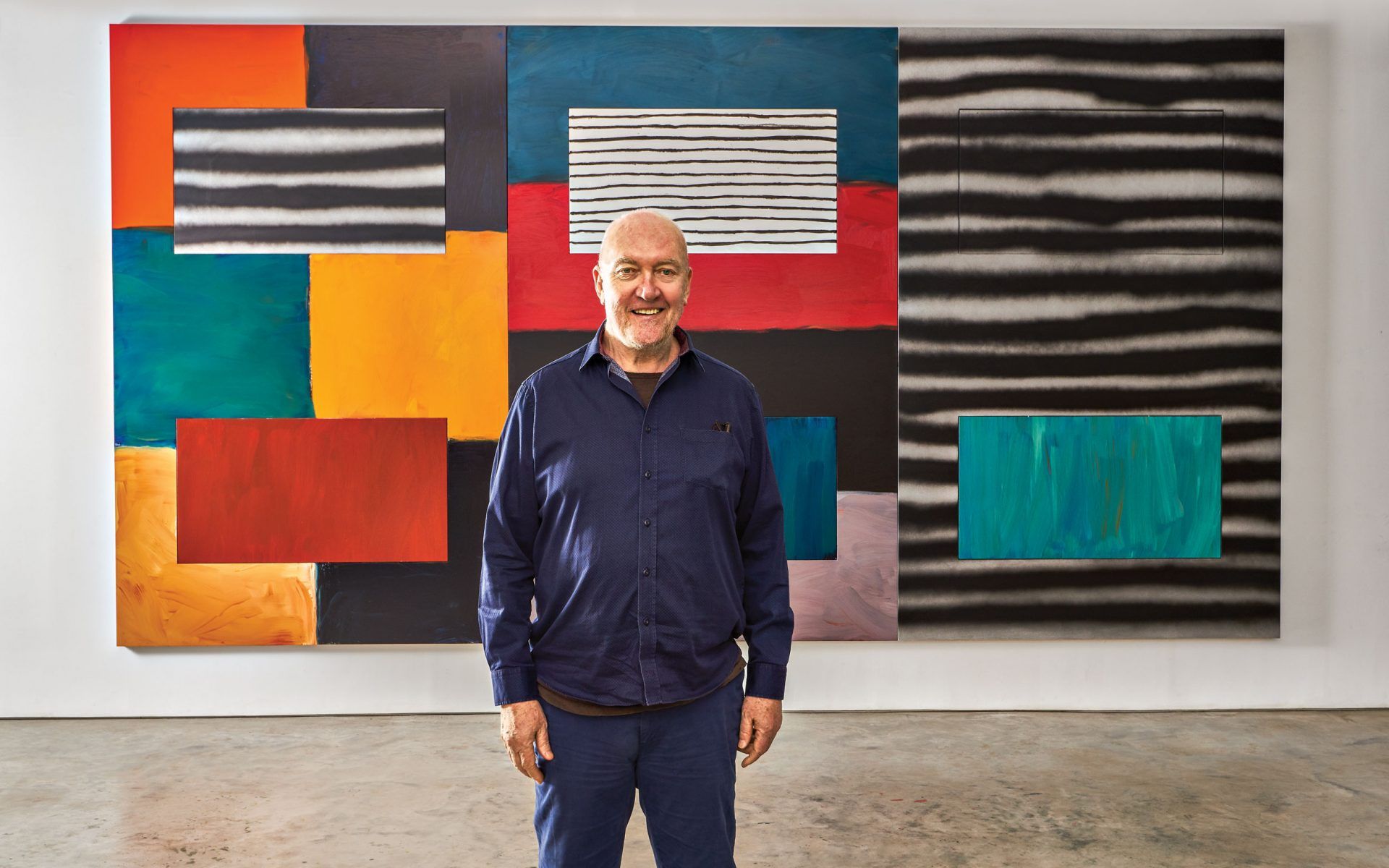
A nomadic artist who maintains studios in New York, London, Munich and Barcelona, Scully’s paintings are often connected by their titles to particular experiences, individuals and places. The different psyches and lights of each city he inhabits directly influences his works; for example, during a 1969 voyage to Morocco, the artist became fascinated by the richly-dyed wools and opulent carpets that were uncommon in his home city of Dublin. Subsequently, during a trip to Mexico in the early 1980s, Scully became captivated by the stacked stones of ancient Mayan walls in the Yucatan region and by the effect of the light reflecting off of their surfaces. The artist began to produce quilt-like structures of horizontal and vertical lines, over-painted with free use of impasto to create a luxurious paint surface.
Gallery Representation
Sean Scully has long been represented by major international galleries. His primary and most enduring representation is with Lisson Gallery, which has presented numerous museum-scale exhibitions of his work in London, New York, and other international locations.

In parallel, Scully has been associated with Galerie Thaddaeus Ropac, particularly in Europe, where his work has been exhibited in Salzburg, Paris, and London. Earlier in his career, his work was also shown by prominent New York galleries such as Cheim & Read.
In Ireland, Scully has maintained strong ties through long-standing relationships with leading galleries, reinforcing his position as one of the most internationally significant Irish artists of his generation.
Museum Exhibitions and Institutional Presence
Scully’s work has been the subject of major museum exhibitions worldwide, including large-scale retrospectives and thematic surveys. His paintings, sculptures, and works on paper have been exhibited in institutions across Europe and the United States, often in exhibitions that emphasize the emotional and architectural dimensions of his abstraction.
The Modern Art Museum of Fort Worth presented the substantial survey exhibition Sean Scully: The Shape of Ideas , which travelled to the Philadelphia Museum of Art.
In recent years, museums have continued to reassess and contextualize his practice, highlighting the sustained relevance of his work within contemporary abstraction. These exhibitions frequently focus on his mature and late periods, underscoring his influence on subsequent generations of painters.
Museum Collections
Sean Scully’s work is held in many of the most important public collections worldwide, reflecting both the breadth and institutional recognition of his career. His works are included in the permanent collections of major museums in the United States, Europe, and Ireland, where they are often displayed as key examples of post-war and contemporary abstraction.
Sean Scully’s work is in the permanent collections of numerous important institutions including the Hirshhorn Museum and Sculpture Garden, Washington, D.C.; The Metropolitan Museum of Art, New York; the Museum of Modern Art, New York; The National Gallery of Art, Washington, D.C.; Solomon R. Guggenheim Museum, New York; Walker Art Center, Minneapolis; Whitney Museum of American Art, New York; Art Gallery of Ontario, Canada; Tate Modern, London; Centre Pompidou, Paris; Irish Museum of Modern Art, Dublin; De Pont Museum of Contemporary Art, Tilburg; Kunstsammlung Nordrhein-Westfalen, Düsseldorf; Museo Nacional Centro de Arte Reina Sofia, Madrid; Modern Art Museum of Fort Worth, Fort Worth; Albertina, Vienna; and Guangdong Museum of Art, Guangzhou, China, among many others.
From Abstraction to Emotion
Sean Scully’s work is often described as abstract, but this designation alone is insufficient. His art is not concerned with pure form or optical effect; it is grounded in lived experience, memory, architecture, and emotional weight. Analyzing Scully requires looking simultaneously at period, structure, and surface, rather than treating his paintings as autonomous formal exercises.
Artistic Periods: Evolution Rather Than Rupture
Scully’s career unfolds through clearly identifiable phases, each marked by a distinct relationship between order and expression.
His early works from the late 1960s and 1970s are systematic and restrained. Influenced by Minimalism and Conceptual art, these paintings often employ grids, straight edges, and reduced palettes. Emotion is deliberately held at bay. These works reflect discipline, repetition, and intellectual rigor rather than personal expression.
In the late 1970s and early 1980s, a decisive shift occurs. Scully begins to abandon hard edges in favor of visible brushwork and irregular bands. The grid remains present, but it loosens. Color becomes layered and imperfect. This transition marks the emergence of his mature language: abstraction that accepts instability and human presence.
From the mid-1980s through the early 2000s, Scully develops his most recognizable body of work. Large-scale paintings composed of horizontal or vertical stripes, stacked blocks, and architectural rhythms dominate this period. Series such as Wall of Light and Landline exemplify this phase. These works combine formal clarity with emotional density and are widely considered central to his legacy.
His later works, from the 2010s onward, revisit earlier formats with increased scale and physical presence. Surfaces become heavier, colors deeper, and compositions more monumental. Rather than innovation for its own sake, these works feel cumulative, as if synthesizing decades of visual and emotional inquiry.
Types of Work: One Language Across Multiple Media
While painting remains the core of Scully’s practice, his artistic language extends across several media, each revealing a different dimension of his thinking.
Paintings are the primary site of his investigation. Their power lies in repetition with variation, irregular edges, and the tension between structure and gesture. These works are not decorative abstractions; they are slow, dense, and architectural in feeling.
Works on paper and prints tend to be more intimate and exploratory. They offer insight into compositional testing and emotional calibration, and are particularly valuable for understanding how his ideas evolve before reaching large-scale paintings.
Sculpture translates his painted structures into three dimensions. Often composed of stacked blocks or tower-like forms, these works emphasize gravity, balance, and physical presence. They reinforce the architectural dimension of his practice.
Photography, though less central, plays an important conceptual role. Images of walls, doors, and urban façades echo the rhythms and divisions of his paintings, confirming that his abstraction is rooted in observation rather than theory.
A Practical Method for Reading a Scully Work
When analyzing a work by Sean Scully, it is useful to proceed in a specific order.
First, consider the structure. Is the composition based on stripes, blocks, grids, or a hybrid form? Is it symmetrical, or intentionally imbalanced?
Second, observe the rhythm. Are the bands compressed or expansive? Calm or tense? Emotional charge in Scully’s work often resides in the spacing between elements rather than the elements themselves.
Third, examine the surface. The thickness of paint, visible revisions, and layered strokes are essential. The surface carries time, effort, and correction.
Finally, assess the color. In Scully’s work, color does not function decoratively. It has weight. Dark tones often anchor the composition, while lighter colors create breathing space. Color operates emotionally rather than harmonically.
Stopping at geometry misses the point. The work becomes fully legible only when structure and emotion are considered together.
Scully’s work stands apart from abstraction rooted in irony, optical play, or conceptual detachment. He rejects cool distance in favor of presence. Where Minimalism sought to erase the hand, Scully insists on it. His abstraction is ethical in tone, concerned with endurance, memory, and the persistence of human experience. Scully’s periods are not interchangeable. Early works emphasize intellectual rigor, mature works assert emotional authority, and later works speak to legacy and monumentality. Understanding when a work was made, and within which body of work it belongs, is essential for informed analysis, curatorial placement, and market evaluation. Ultimately, Sean Scully’s art is not abstraction about form alone. It is form carrying experience—measured, layered, and intentionally unresolved.
Auction Market Overview
2025 AUCTION STATISTICS
Turnover: USD 9,966,053
-4.1% vs. 2024
# Lots sold: 23 Lots
Sell-Through Rate: 95.8%
Highest Price Achieved at Auction:
Song, 1985
The Collection of Marcia and Stanley Gumberg
Sotheby’s New-York: 19 May 2022
USD 2,046,500
2025 Auction Highlights
15 paintings sold at auction in 2025 for a total turnover of USD 9,173,566. With no lot failing to sell, the sell-through rate is 100%. The highest price was achieved by Landline Dark Blue, a painting dated 2017, that sold at Phillips, in New-York, on 13 May 2025 for USD 1,512,000.
2025 Top 3 Lots
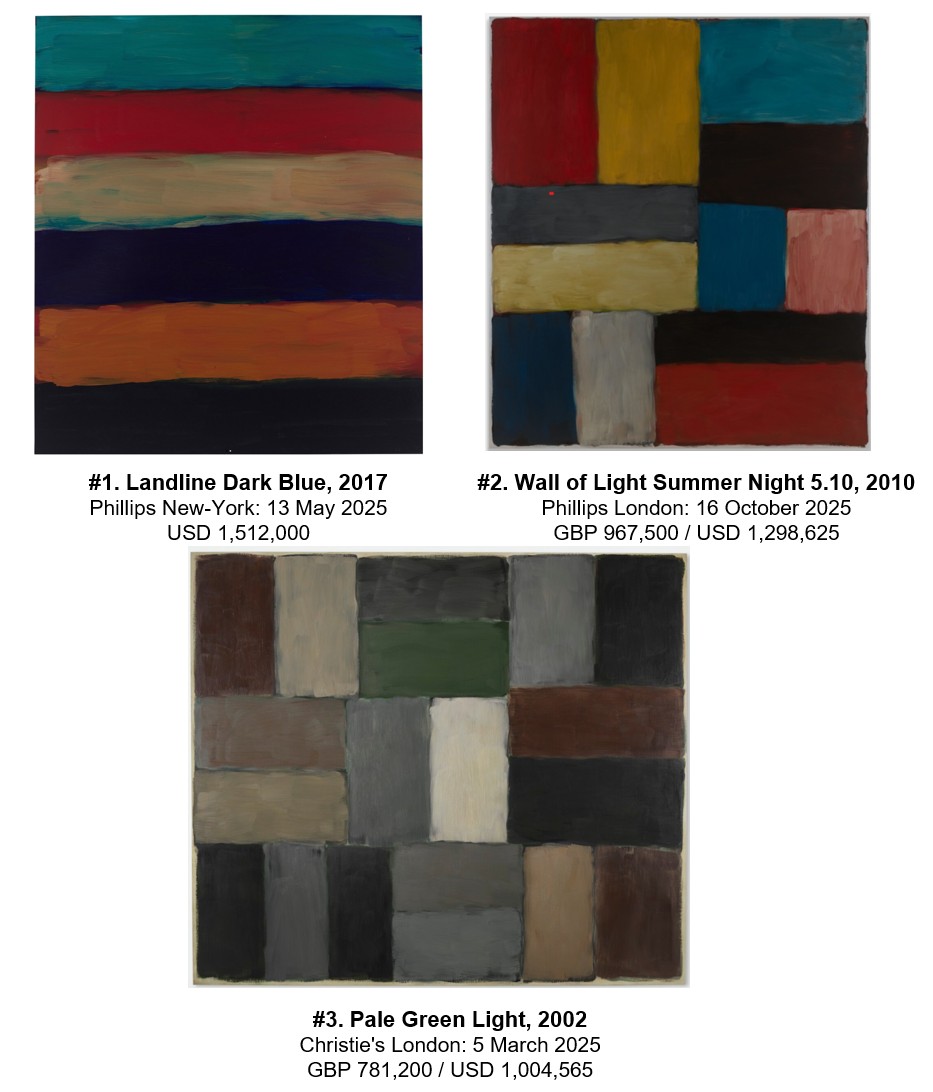
3 paintings sold for more than USD 1 million, generating a cumulative turnover of USD 3,815,190, representing 41.6% of the total for 2025.
Furthermore, 8 Works on Paper sold at auction in 2025, for a total turnover of USD 792,487, at an average price of USD 99,061. With 2 lots failing to sell, the sell-through rate is 80%. The highest price of 2025 was achieved by Landline 22.1.15, a Work on Paper dated 2015, that sold at Christie’s in London, on 6 March 2025 for GBP 226,800 (USD 292,460).
2025 Top 3 Lots
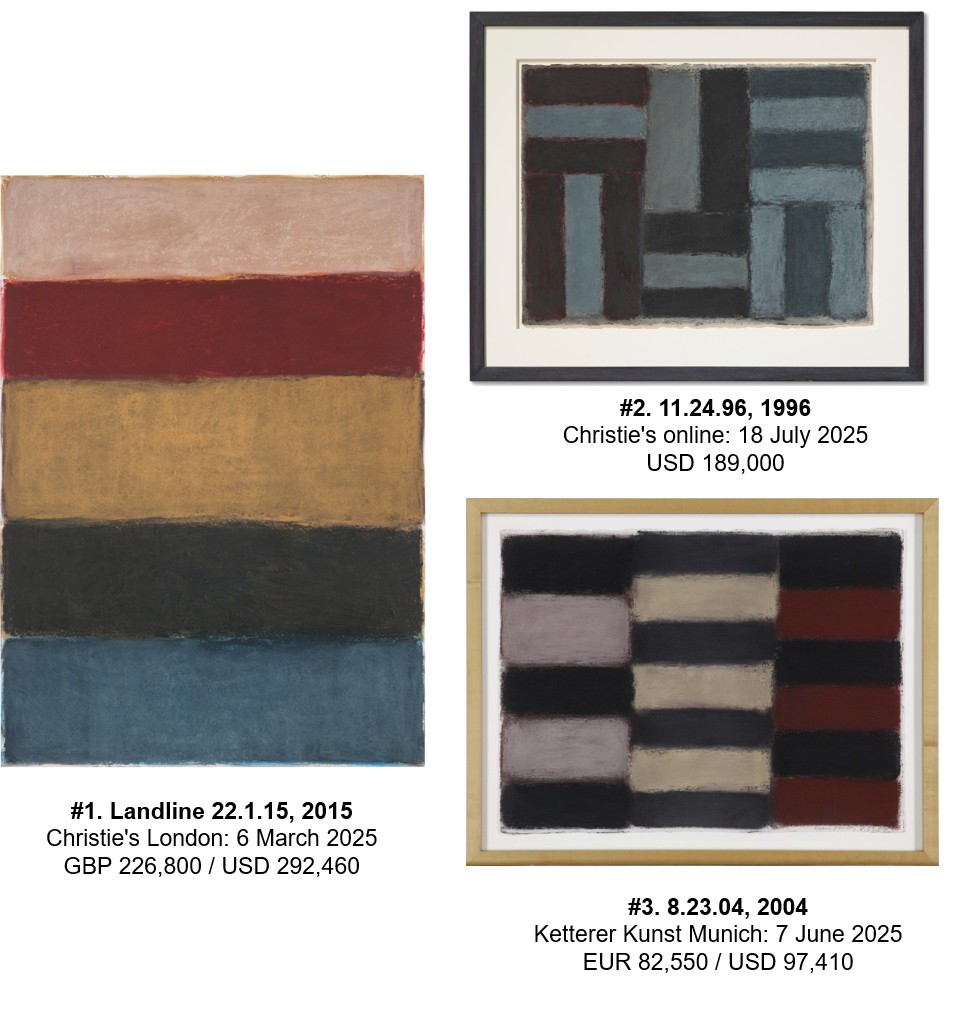
2 lots sold for more than USD 100,000, generating a cumulative turnover of USD 481,460, representing 60.8% of the total turnover for 2025.
2024 Auction Highlights
15 Paintings sold at auction in 2024 for a total turnover of USD 8,835,095. With 1 lot failing to sell, the sell-through rate is 94%. The highest price of 2024 was achieved by Cut Ground Orange, a painting dated 2009, that sold at Ketterer Kunst, in Munich, on 7 June 2024, for EUR 1,258,000 (USD 1,459,280).
2024 Top 3 Lots
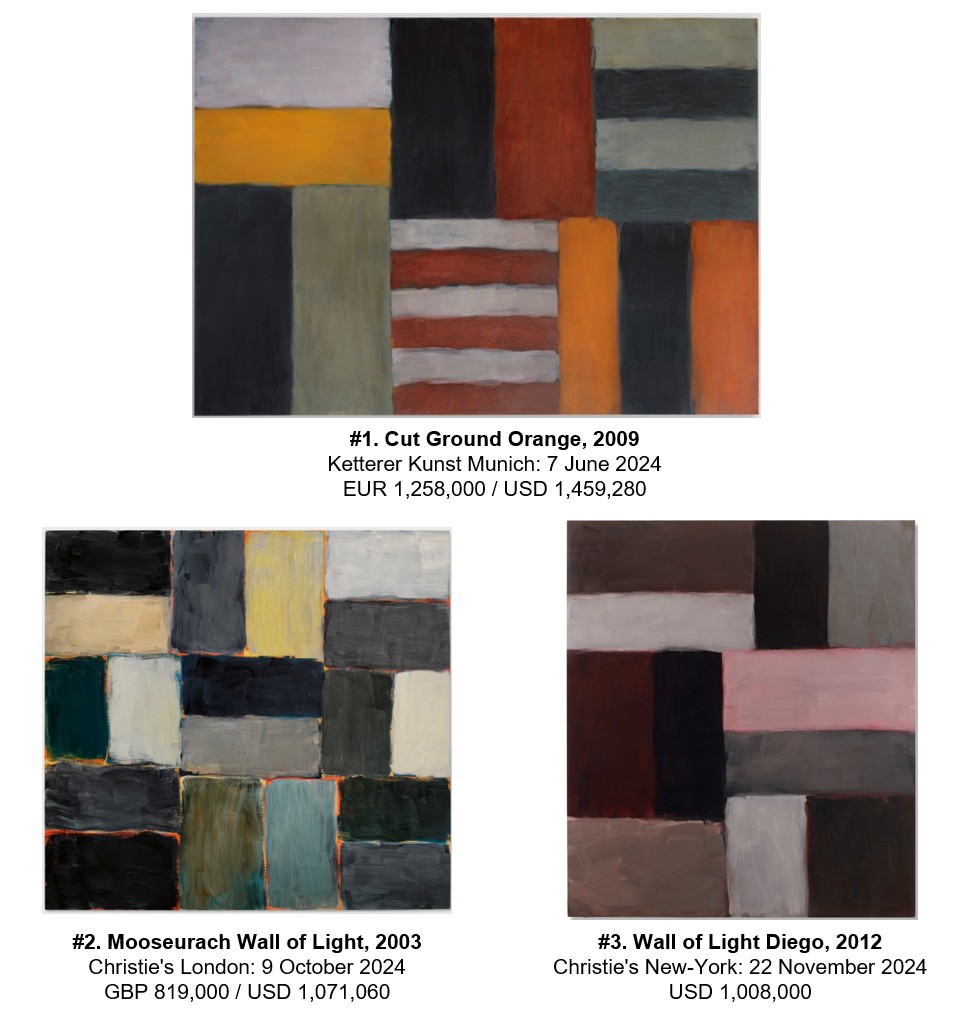
3 Paintings sold for more than USD 1 million, generating a cumulative turnover of USD 3,538,340, representing 40% of the total turnover for 2024.
Furthermore, 22 Works on Paper sold at auction in 2024, for a total turnover of USD 1,551,275, at an average price of USD 1,551,275, at an average price of USD 70,513. The highest price was achieved by Grey Red, a Work on Paper dated 2009, that sold for GBP 239,400 (USD 312,480).
2023 Auction Highlights
17 Paintings sold at auction in 2023 for a total turnover of USD 13,469,295. With 1 lot failing to sell, the sell-through rate is 94%. The highest price of 2023 was achieved by Wall of Light Red, a painting dated 1998, from The Mallin Collection, that sold at Sotheby’s in London, on 1 March 2023, for GBP 1,137,000 (USD 1,368,350).
2023 Top 3 Lots
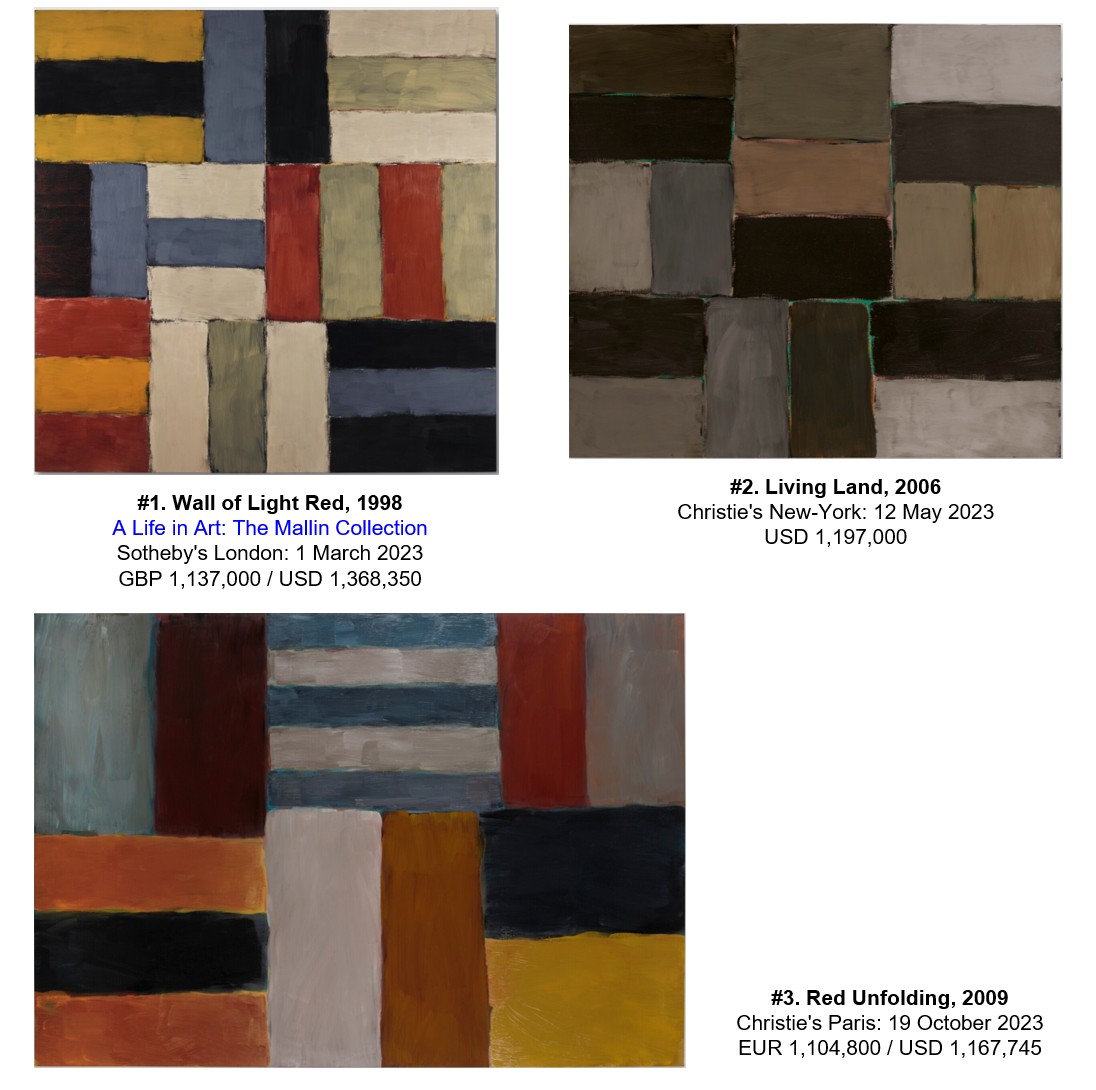
6 Paintings sold for more than USD 1 million, generating a cumulative turnover of USD 7,109,170, representing 52.8% of the total for 2023.
2022 Auction Highlights
9 Paintings sold at auction in 2022 for a total turnover of USD 5,078,420. With no lot failing to sell, the sell-through rate is 100%. The highest price of 2022 was achieved by Song, a painting dated 1985, from The Collection of Marcia and Stanley Gumberg, sold at Sotheby’s, in New-York, on 19 May 2022, for USD 2,046,500, setting a new auction record for the artist.
2022 Top 3 Lots
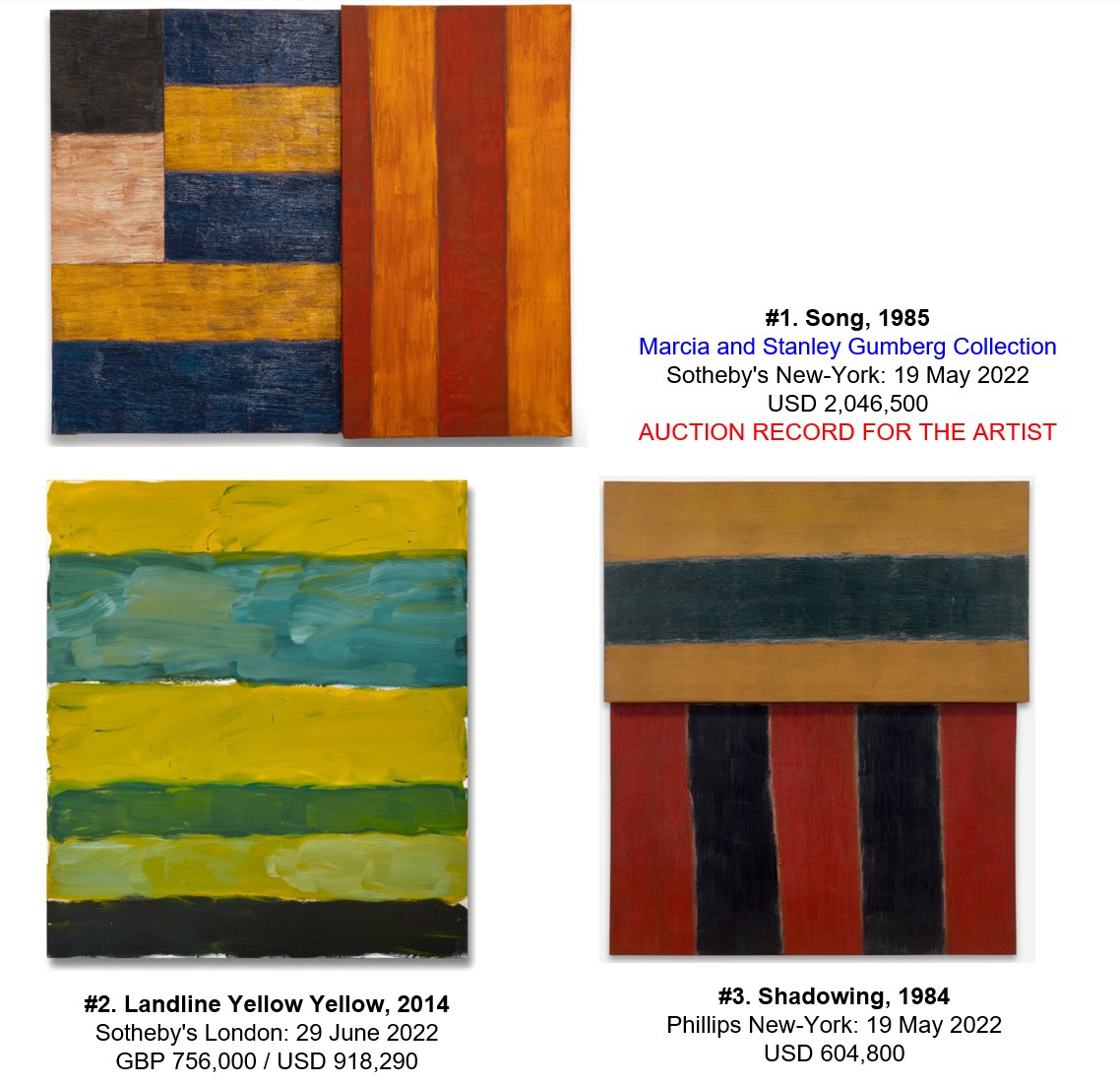
This is the only Painting that sold for more than USD 1 million in 2022.
Top Lots
#1. Song, 1985
Drawn Together: The Collection of Marcia and Stanley Gumberg
Sotheby’s New-York: 19 May 2022
Estimated: USD 800,000 – 1,200,000
USD 2,046,500
Song | Contemporary Evening Auction | 2022 | Sotheby’s
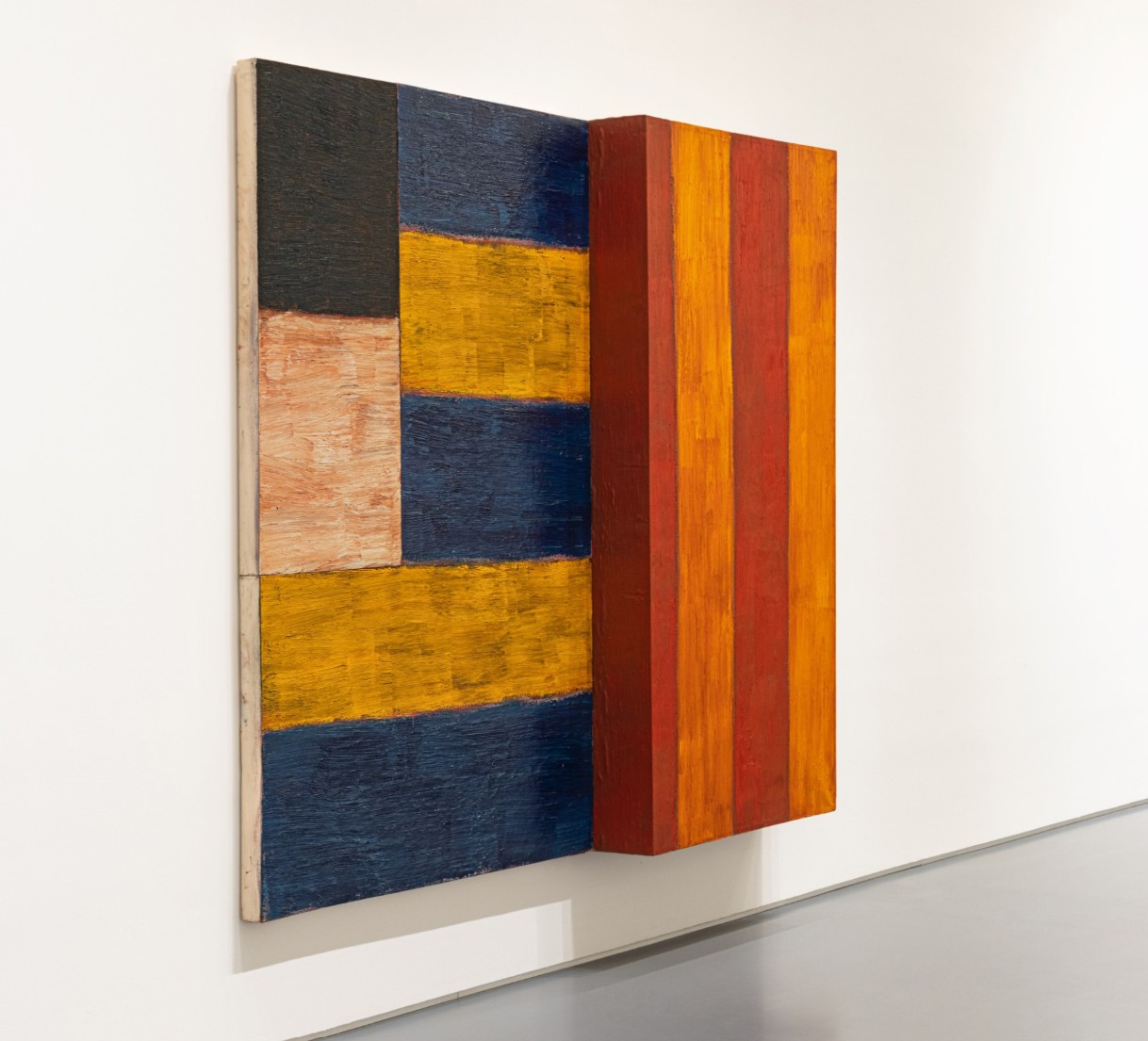
SEAN SCULLY (b. 1945)
Song, 1985
Oil on canvas, in three parts
90 x 110 x 11 1/4 inches (228.6 x 279.4 x 28.6 cm)
Signed Sean Scully
Titled Song and dated 7.85 (on the reverse)
Titled Song (on the stretcher)
#2. Red Bar, 2003-2004
Phillips New-York: 14 November 2019
Estimated: USD 900,000 – 1,200,000
USD 1,760,000
Sean Scully 20th C. & Contemporary Art Evening Sale
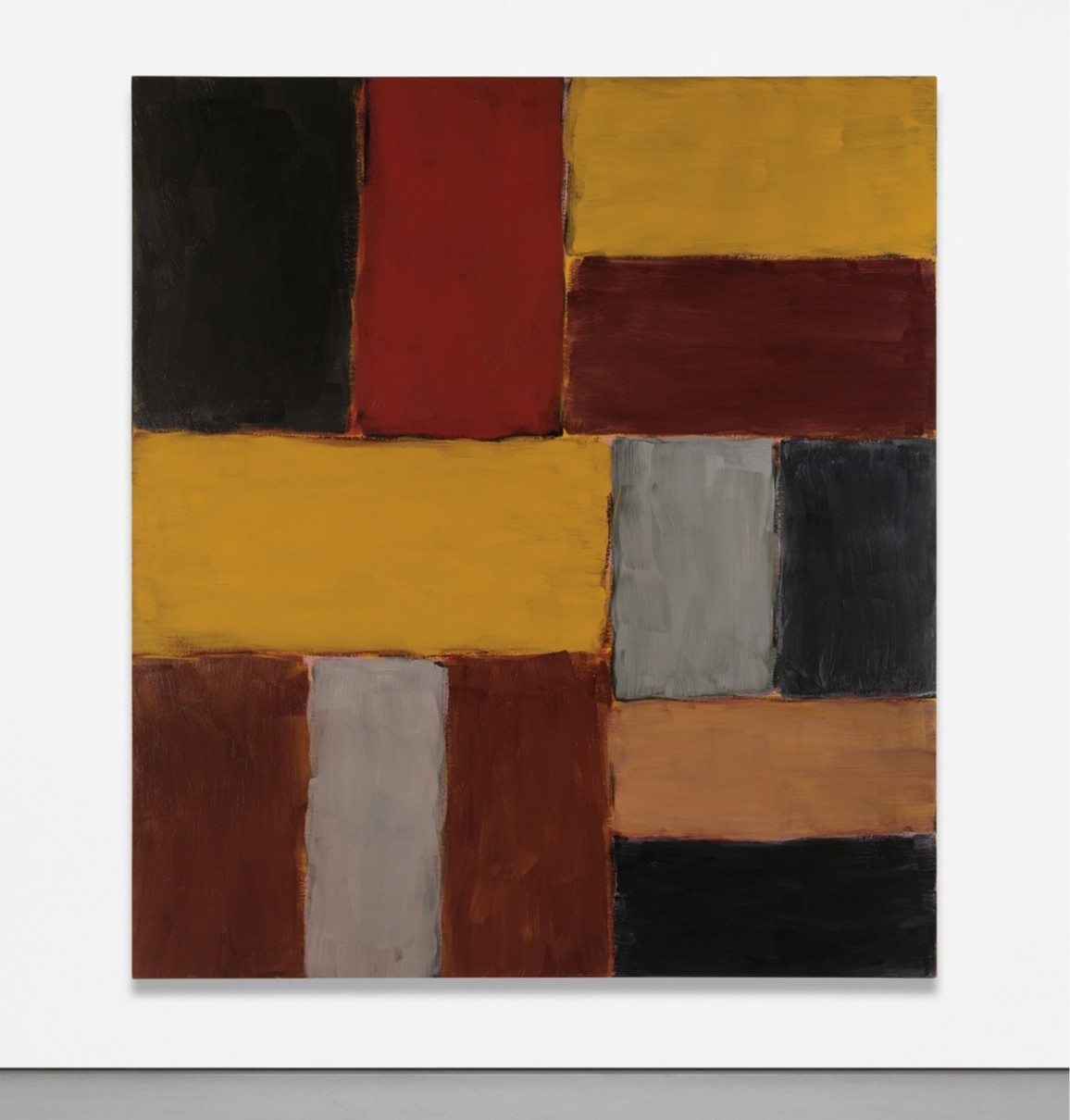
SEAN SCULLY
Red Bar, 2003-2004
Oil on canvas
85 x 75 1/8 inches (215.9 x 190.8 cm)
Signed, titled and dated “RED BAR Sean Scully 1.04” on the reverse
#3. Landline Fire, 2014
Sotheby’s Hong-Kong: 6 October 2019
Estimated: HKD 7,000,000 – 9,000,000
HKD 13,375,000 / USD 1,705,570
(#1157) SEAN SCULLY | Landline Fire
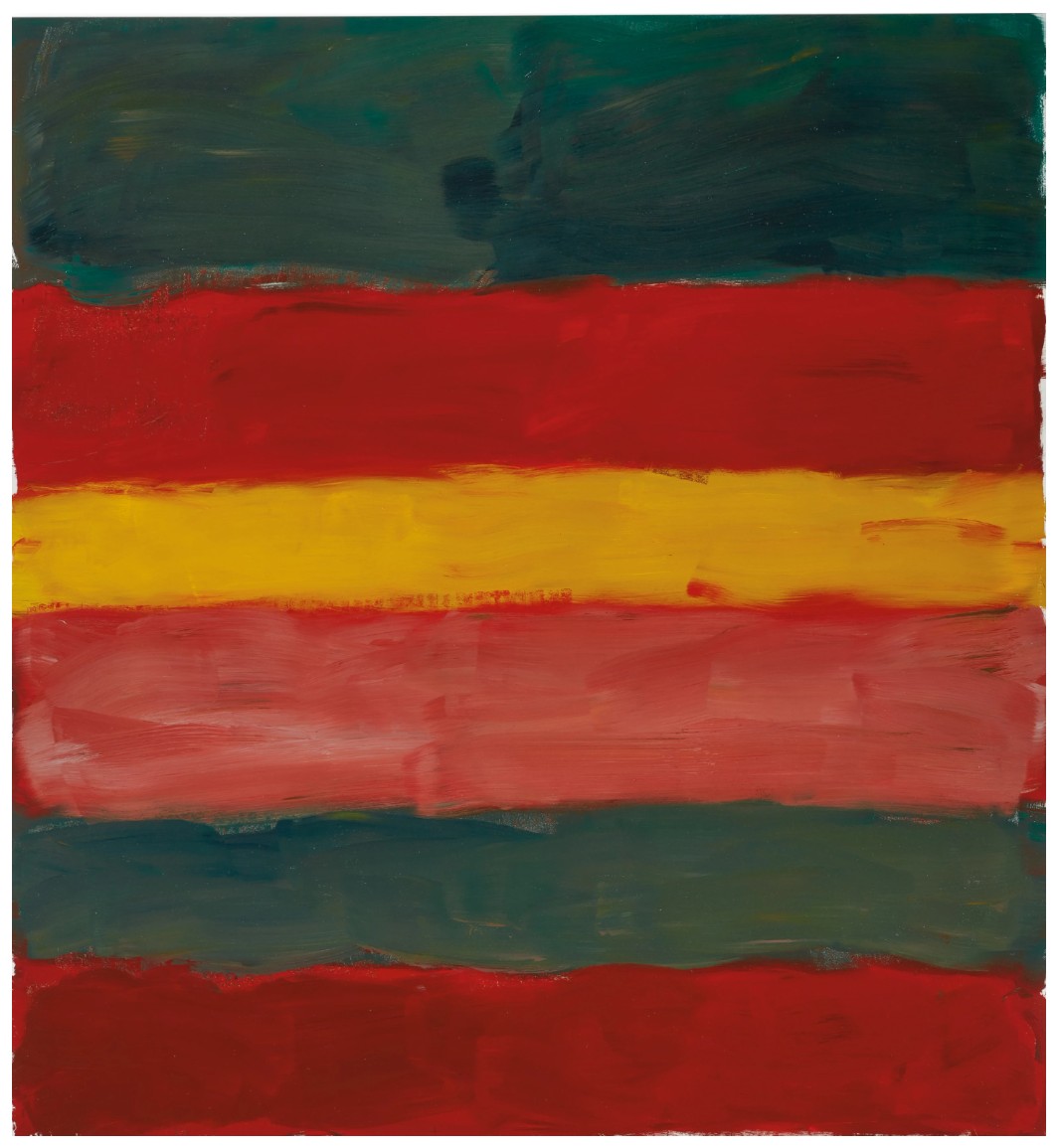
SEAN SCULLY
Landline Fire, 2014
Oil on aluminum
85×75 inches (215.9 x 190.5 cm)
Signed, titled and dated 2014 on the reverse
#4. Landline Sea, 2015
Sotheby’s New-York: 19 May 2017
Estimated: USD 600,000 – 800,000
USD 1,692,500
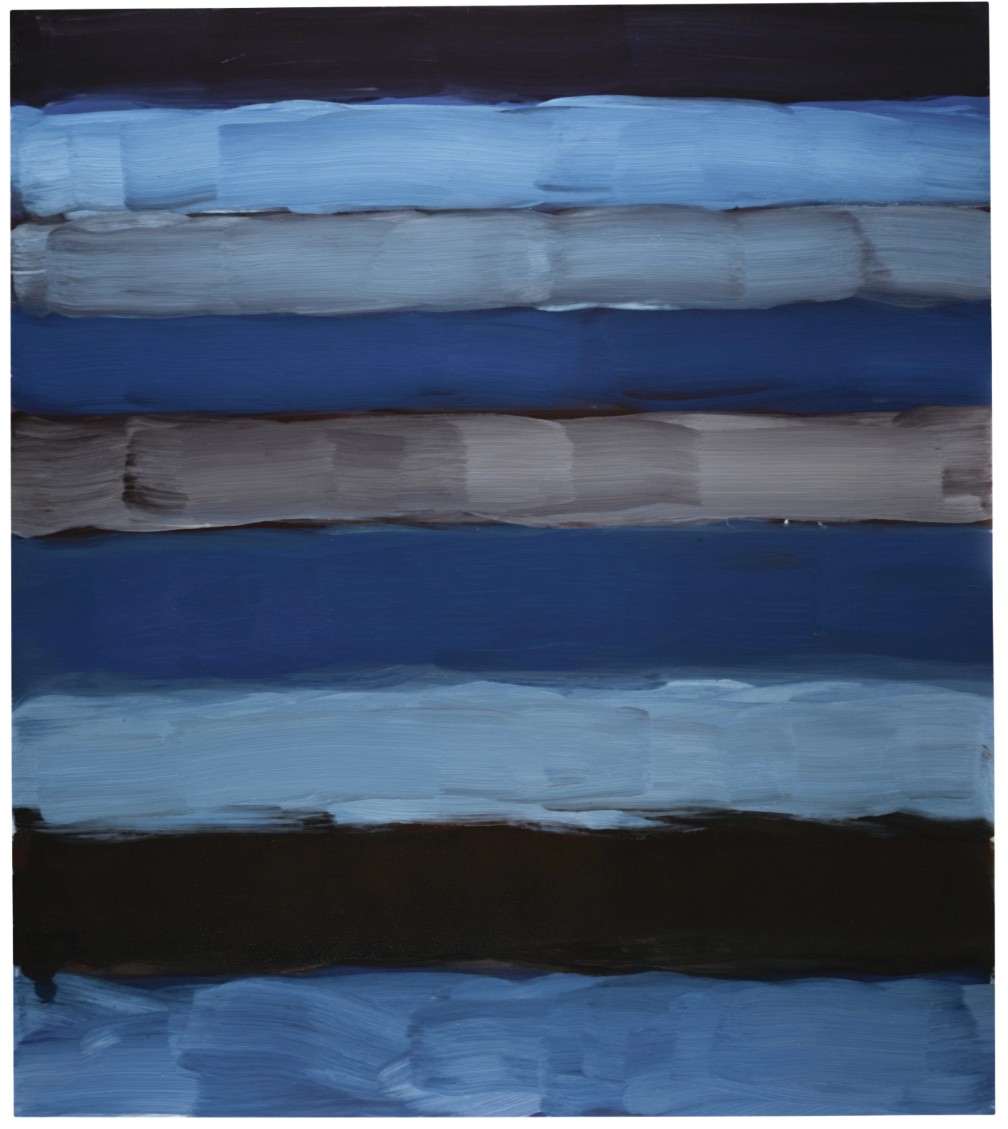
SEAN SCULLY
Landline Sea, 2015
Oil on aluminum
85×75 inches (215.6 x 190.5 cm)
Signed, titled and dated 2015 on the reverse
#5. Grey Red, 2012
Phillips London: 8 March 2018
Estimated: GBP 600,000 – 800,000
GBP 1,149,000 / USD 1,588,360
Sean Scully 20th Century & Contemporary Art Evening Sale
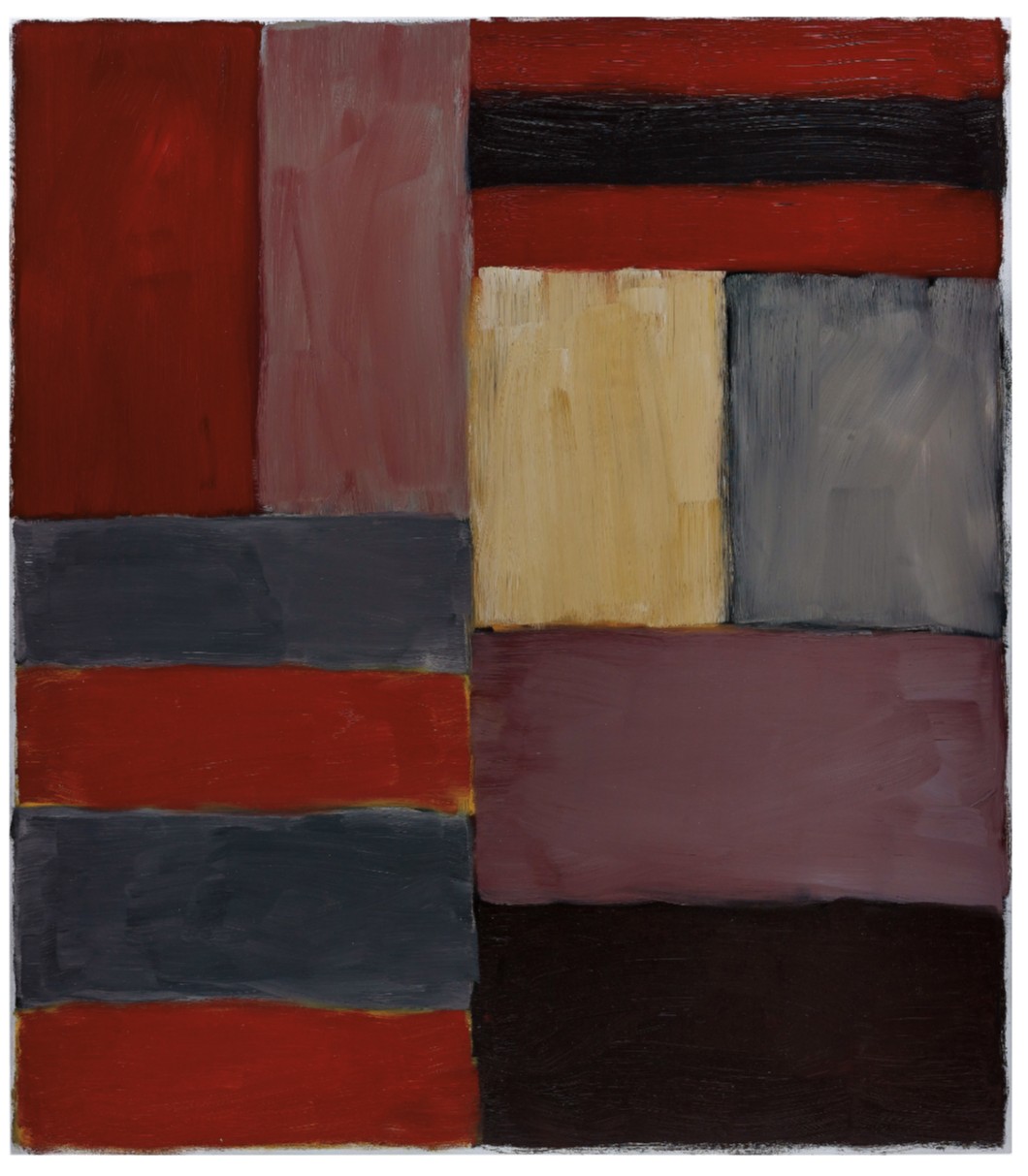
SEAN SCULLY
Grey Red, 2012
Oil on aluminum
85×75 inches (215.9 x 190.5 cm)
Signed, titled and dated ‘Sean Scully “Grey Red” ’12’ on the reverse
#6. Landline Green Sea, 2014
Phillips London: 27 June 2018
Estimated: GBP 600,000 – 800,000
GBP 1,209,000 / USD 1,588,225
Sean Scully 20th Century & Contemporary Art Evening Sale
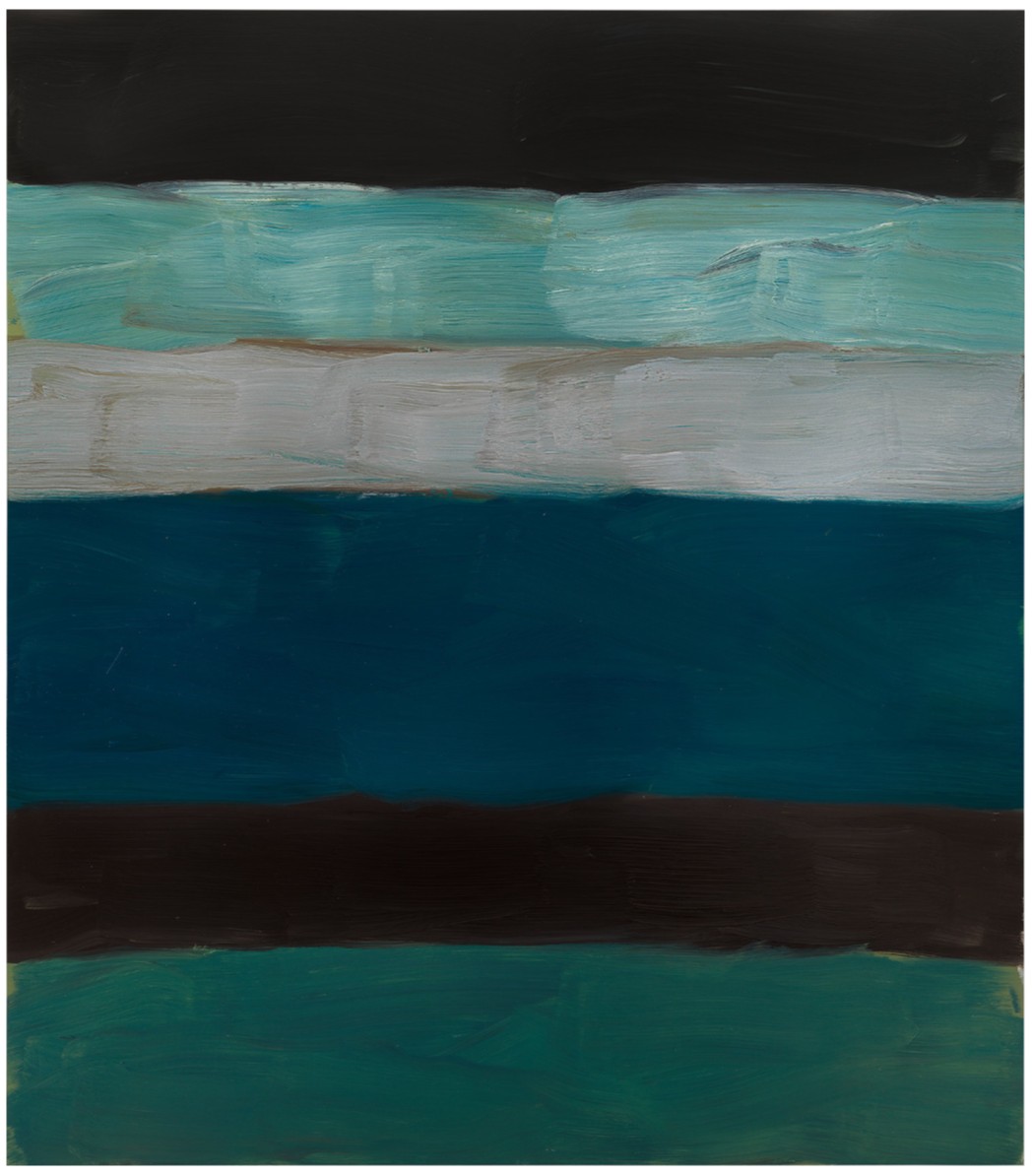
SEAN SCULLY
Landline Green Sea, 2014
Oil on aluminum
85×75 inches (216 x 190.5 cm)
Signed, titled and dated ‘Sean Scully “LANDLINE GREEN SEA” 2014’ on the reverse
2026 Auction Results
PRELIMINARY AUCTION RESULTS
As of 15 June 2026
#1. Tappan Deep Brown Blue, 2025
RA | Artists Supporting Artists
Sotheby’s London: 4 March 2026
Estimated: GBP 600,000 – 800,000
GBP 768,000 / USD 1,025,970
Tappan Deep Brown Blue | Modern & Contemporary Evening Auction | 2026 | Sotheby’s
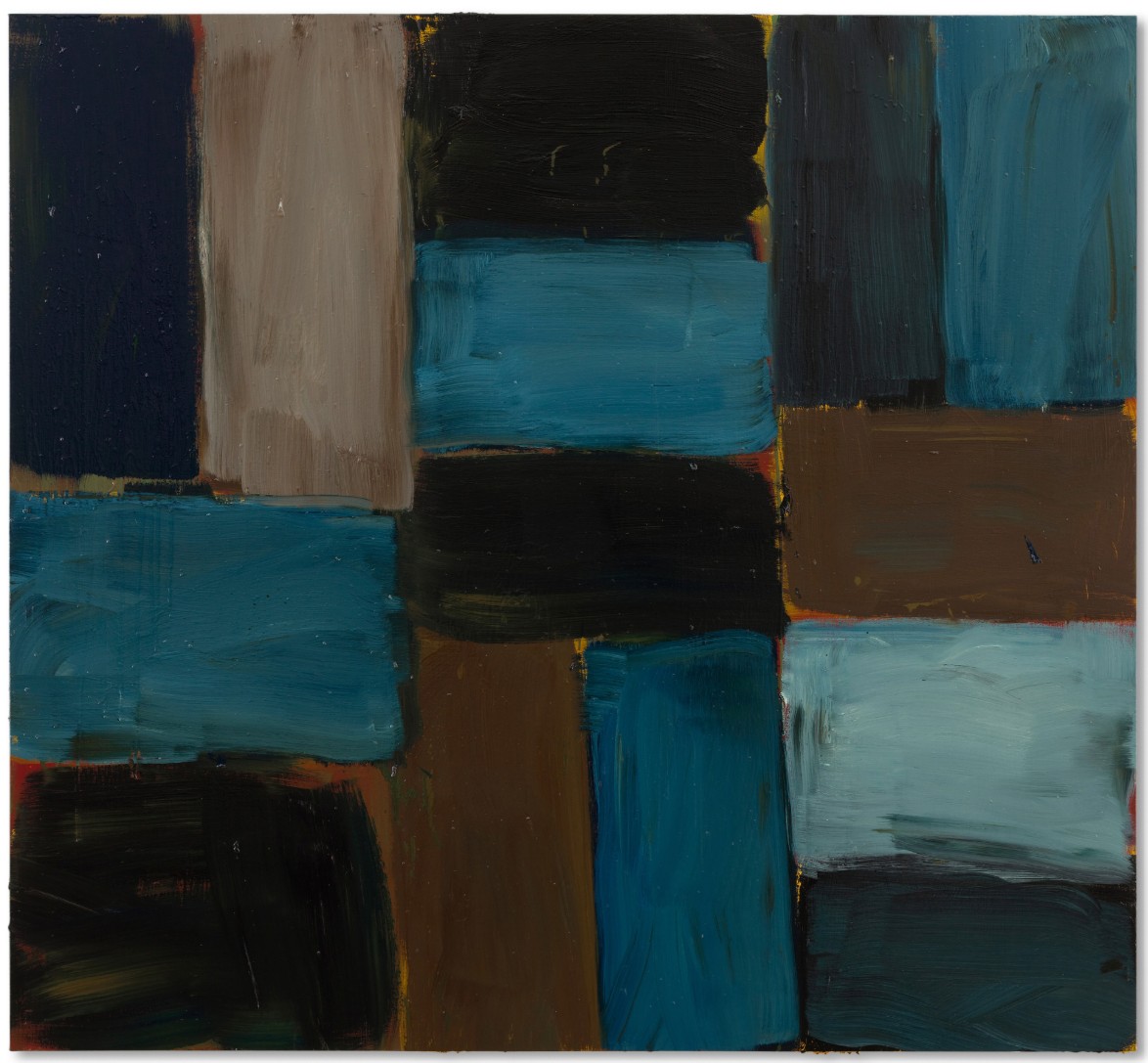
SEAN SCULLY (b. 1945)
Tappan Deep Brown Blue, 2025
Oil on linen
62-1/8 x 67-1/8 inches (157.9 x 172.6 cm)
Signed, titled and dated Aug 10, 2025 (on the reverse)
USD 1 million
#2. Untitled (Landline), 2014
Property from an Important New York Collection
Sotheby’s New-York: 15 May 2026
Estimated: USD 600,000 – 800,000
USD 877,600
Sean Scully | Untitled (Landline) | Contemporary Day Auction | 2026 |
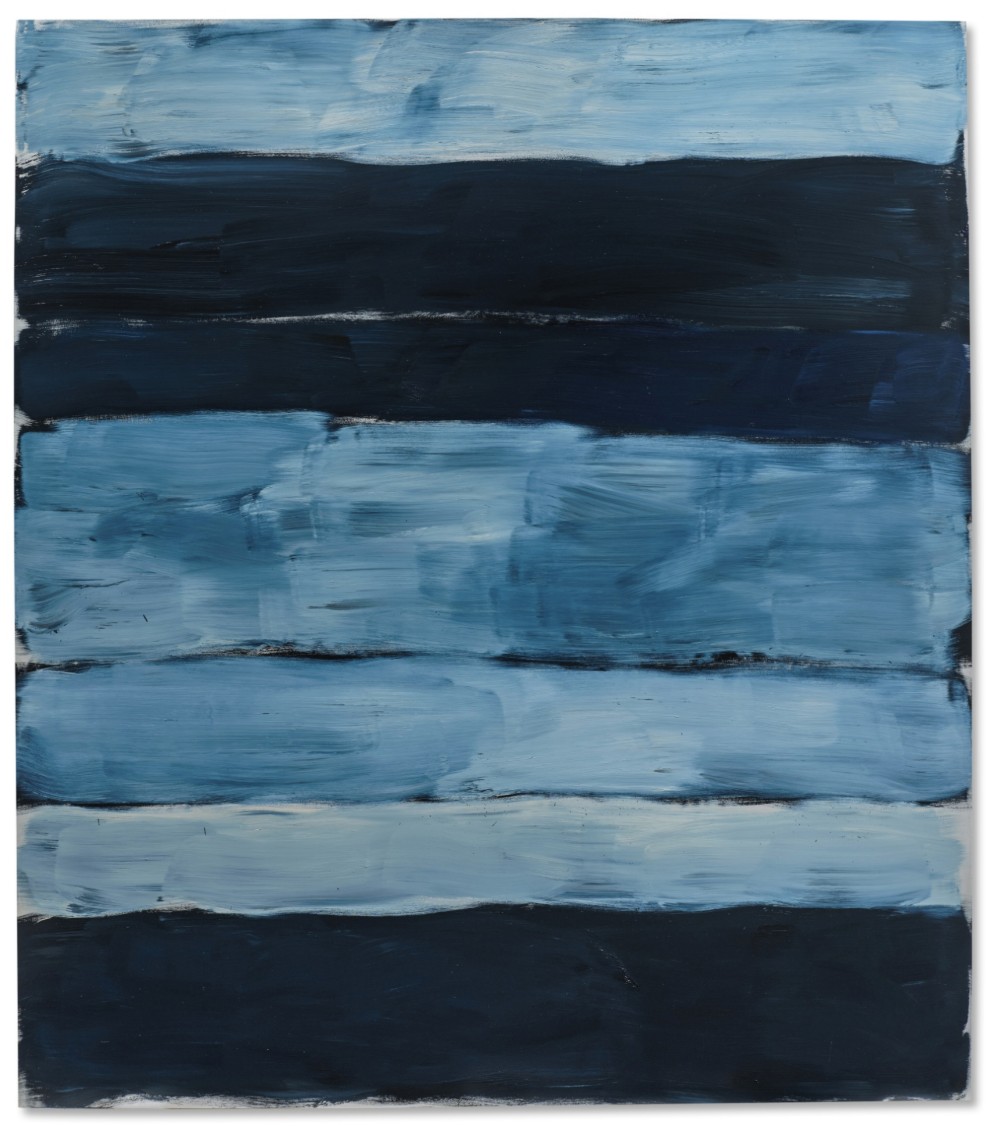
SEAN SCULLY (b. 1945)
Untitled (Landline), 2014
Oil on aluminum
85×75 inches (215.9 x 190.5 cm)
Signed, titled and dated 2014 (on the reverse)
#3. Wall of Light Pink Black, 2009
Sotheby’s New-York: 25 February 2026
Estimated: USD 600,000 – 800,000
USD 832,000
Wall of Light Pink Black | Contemporary Curated | 2026 | Sotheby’s
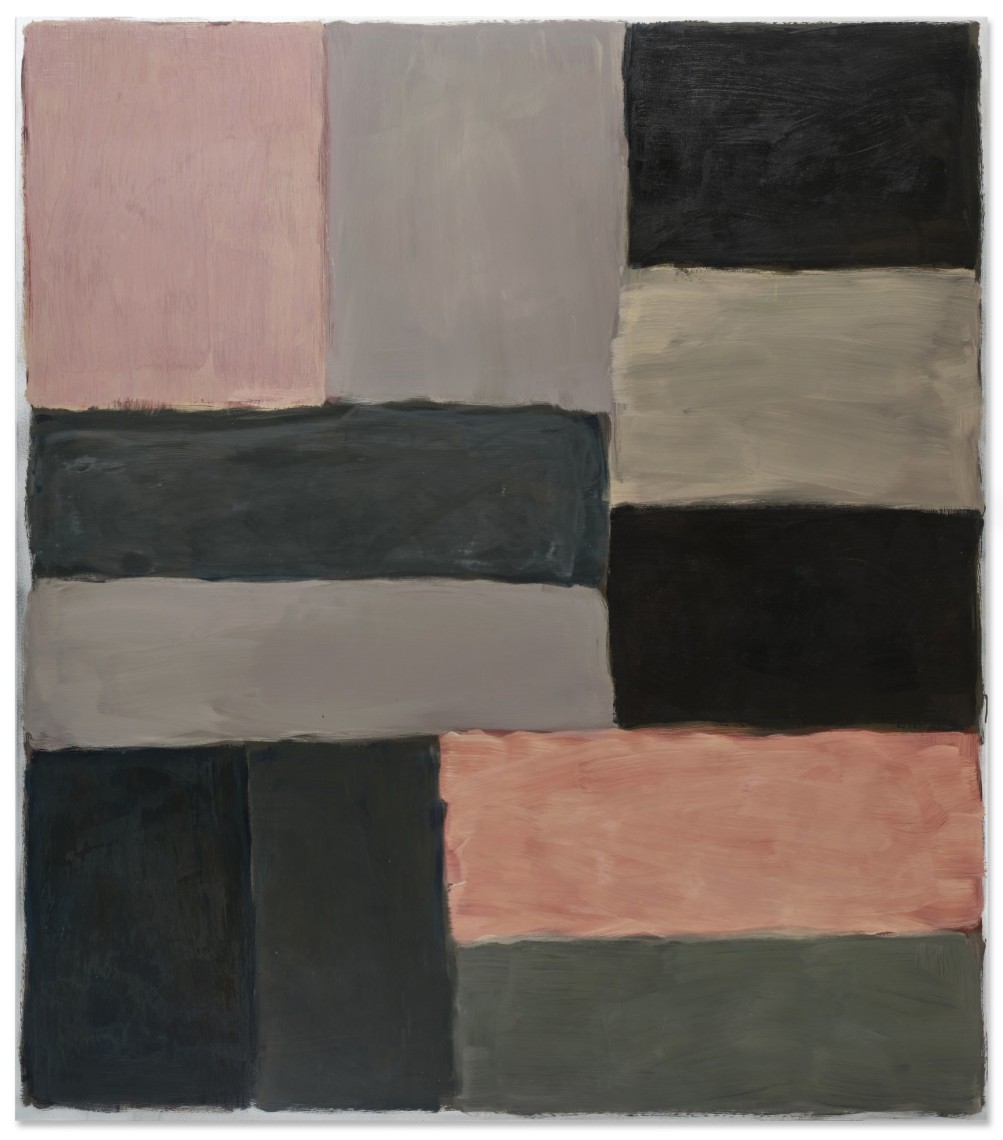
SEAN SCULLY (b. 1945)
Wall of Light Pink Black, 2009
Oil on aluminum
85 x 74-3/4 inches (215.9 x 189.9 cm)
Signed, titled and dated 2009 (on the reverse)
#4. Brown Mirror, 2022
Sotheby’s New-York: 25 February 2026
Estimated: USD 350,000 – 450,000
USD 460,800
Brown Mirror | Contemporary Curated | 2026 | Sotheby’s
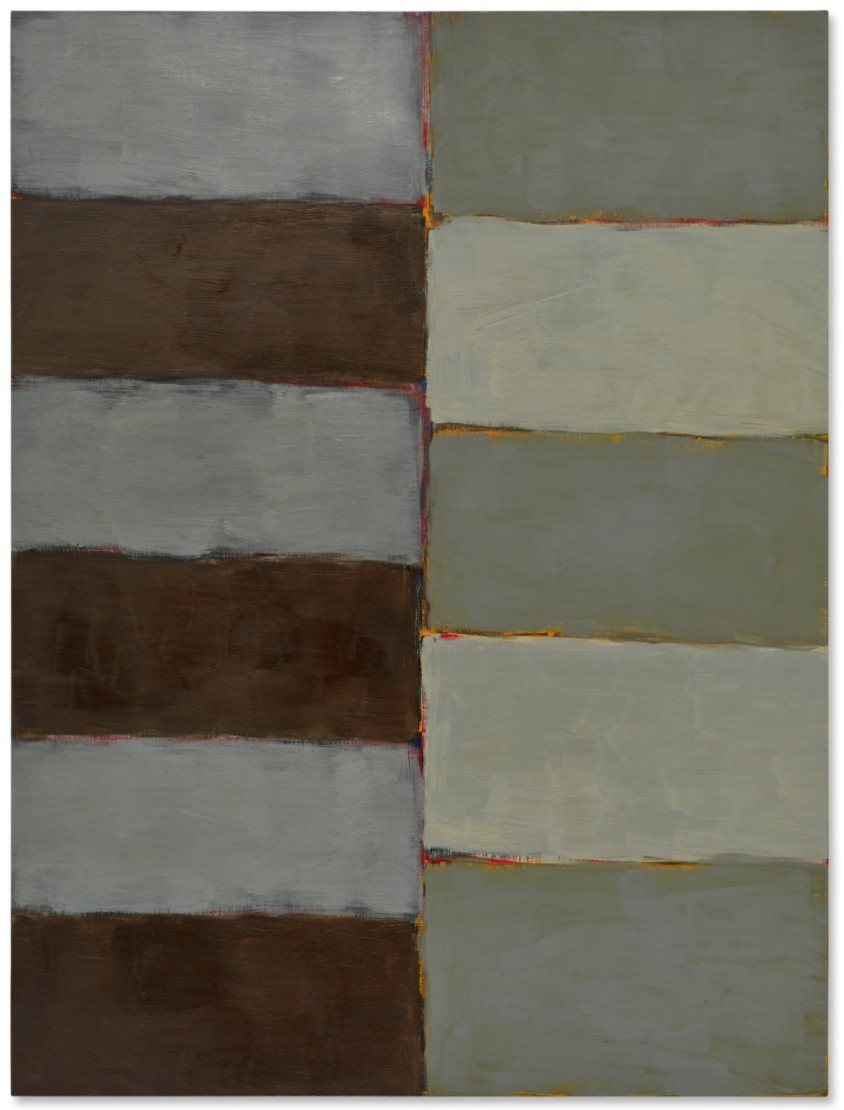
SEAN SCULLY (b. 1945)
Brown Mirror, 2022
Oil on linen
80 x 60-1/8 inches (203.2 x 152.7 cm)
2025 Auction Results
FOR PAINTINGS ONLY
15 paintings sold at auction in 2025 for a total turnover of USD 9,173,566. With no lot failing to sell, the sell-through rate is 100%. The highest price was achieved by Landline Dark Blue, a painting dated 2017, that sold at Phillips, in New-York, on 13 May 2025 for USD 1,512,000.
2025 Top 3 Lots
3 paintings sold for more than USD 1 million, generating a cumulative turnover of USD 3,815,190, representing 41.6% of the total for 2025.
XXXXXXXXXX
#1. Landline Dark Blue, 2017
Property of a Noteworthy Collector
Phillips New-York: 13 May 2025
Estimated: USD 800,000 – 1,200,000
USD 1,512,000
Sean Scully Modern & Contemporary Art Evening Sale
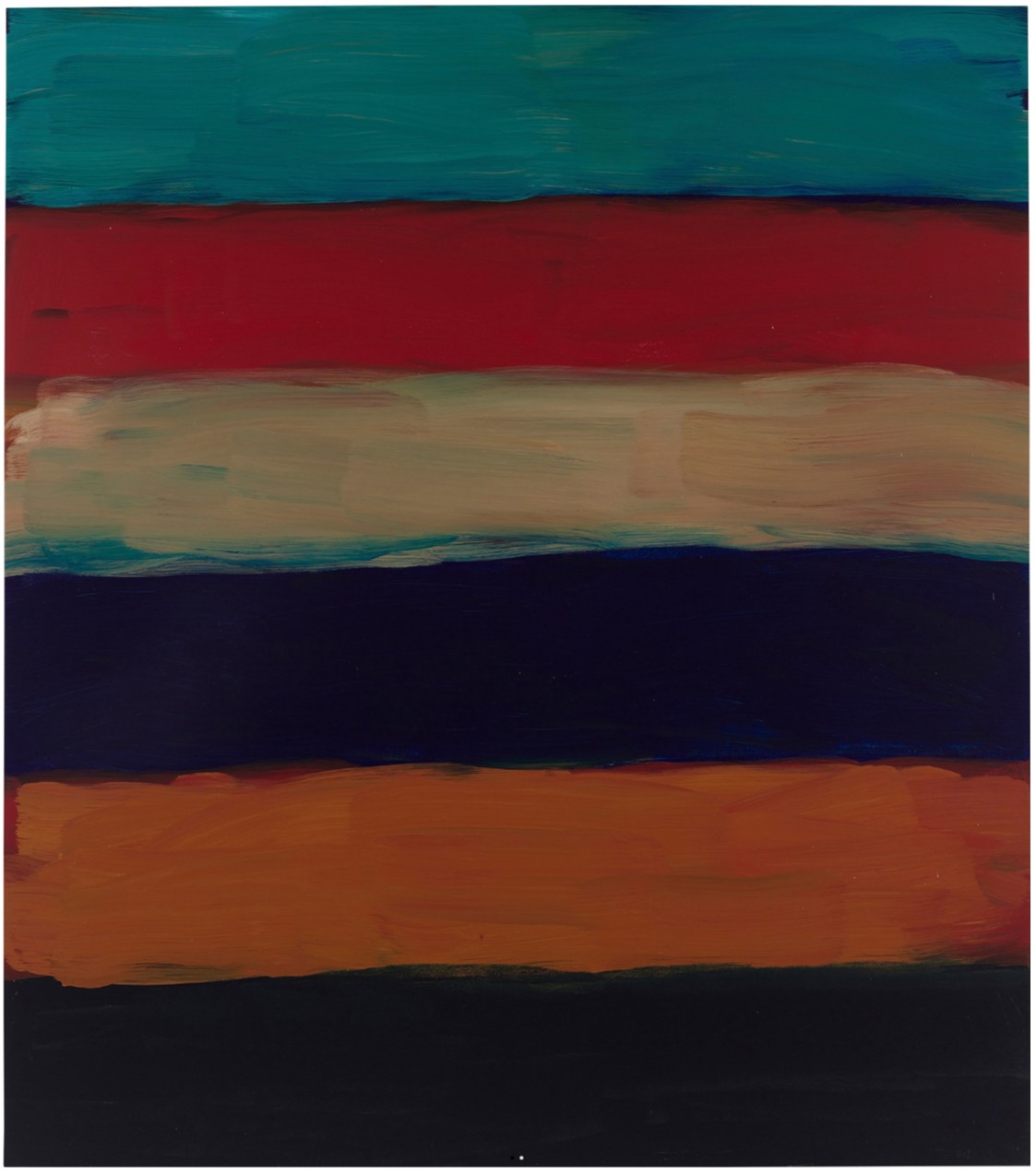
SEAN SCULLY
Landline Dark Blue, 2017
Oil on aluminum
85×75 inches (215.9 x 190.5 cm)
Signed, titled and dated “LANDLINE DARK BLUE Sean Scully 2017” on the reverse
#2. Wall of Light Summer Night 5.10, 2010
Property from an Important Swiss Collection
Phillips London: 16 October 2025
Estimated: GBP 600,000 – 800,000
GBP 967,500 / USD 1,298,625
Sean Scully Modern & Contemporary Art Evening Sale
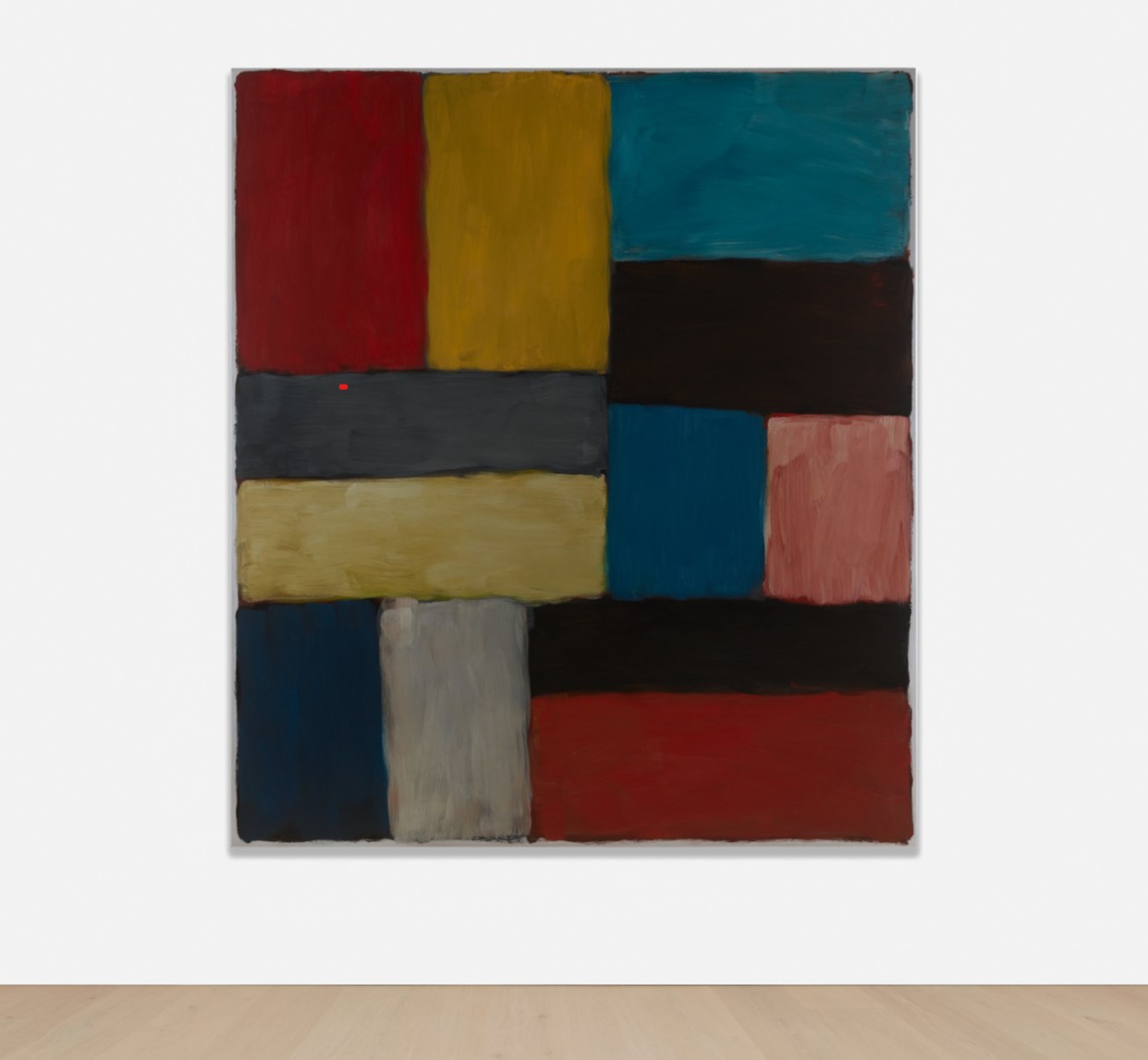
Oil on aluminum
85 1/8 x 74 3/4 inches (216.2 x 190 cm)
Signed, titled and dated ‘WALL OF LIGHT SUMMER NIGHT 5.10 Sean Scully’ on the reverse
#3. Pale Green Light, 2002
Christie’s London: 5 March 2025
Estimated: GBP 500,000 – 800,000
GBP 781,200 / USD 1,004,565
SEAN SCULLY (B. 1945), Pale Green Light | Christie’s
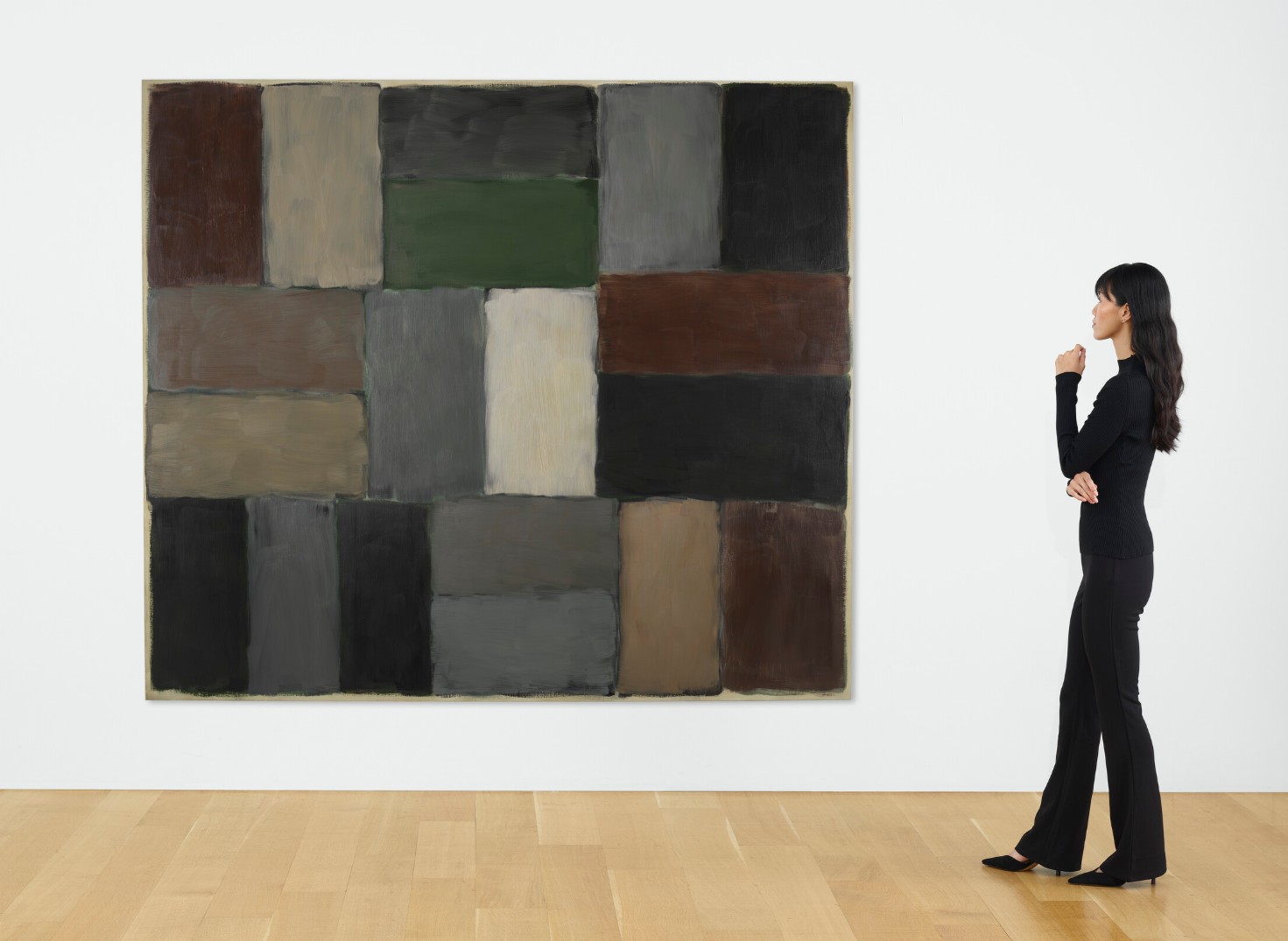
SEAN SCULLY (B. 1945)
Pale Green Light, 2002
Oil on linen
84 1/4 x 96 1/2 inches (214×245 cm)
Signed, titled and dated ‘PALE GREEN LIGHT Sean Scully 2002’ (on the reverse)
USD 1 million
#4. Landline Inward, 2015
Property from the Collection of John Rocha
Phillips London: 6 March 2025
Estimated: GBP 600,000 – 800,000
GBP 736,600 / USD 949,845
Sean Scully Modern & Contemporary Art Evening Sale
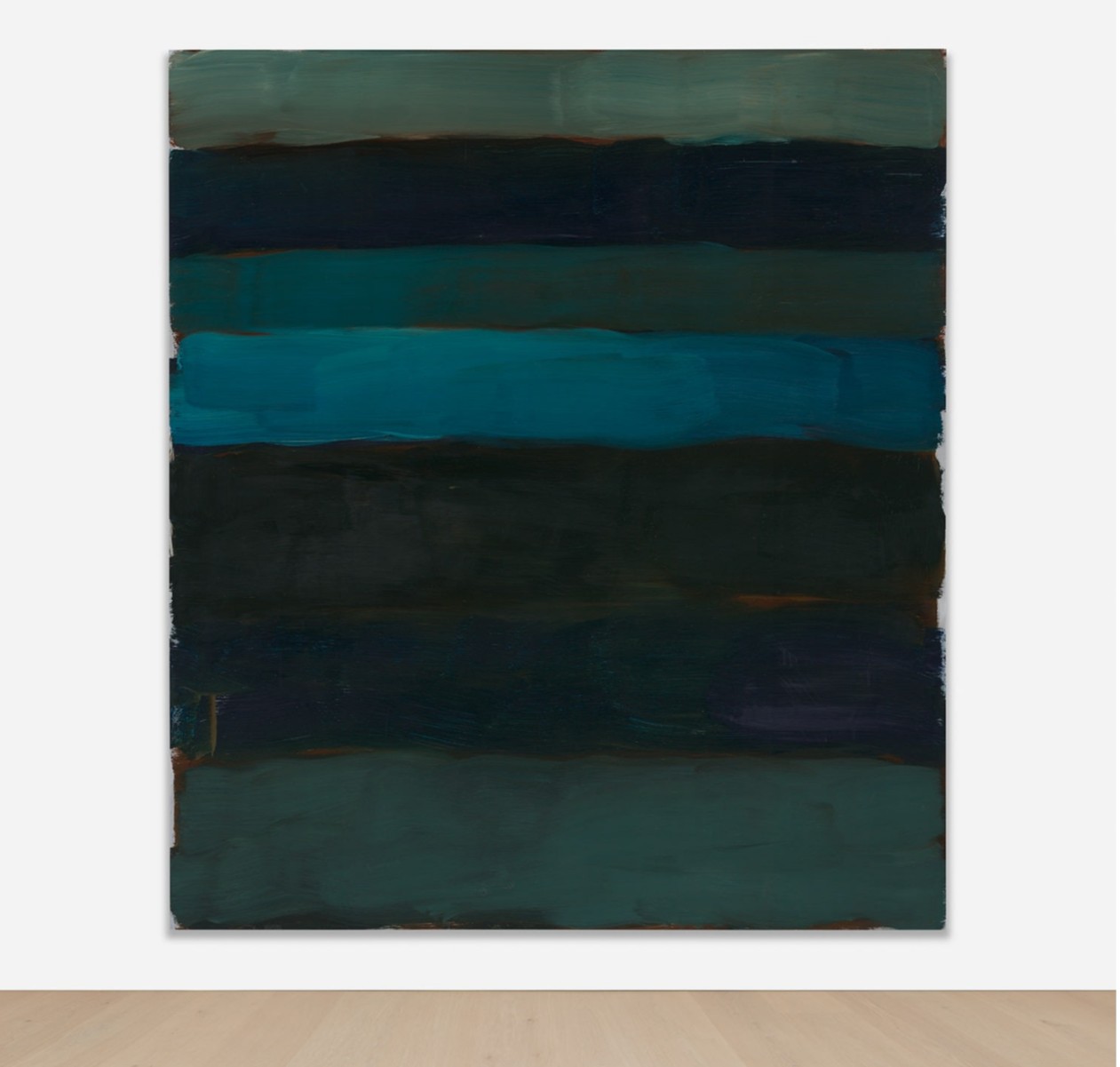
SEAN SCULLY
Landline Inward, 2015
Oil on aluminum
85×75 inches (215.9 x 190.6 cm)
#5. Wall of Light Pale Green, 2014
Phillips New-York: 19 November 2025
Estimated: USD 600,000 – 800,000
USD 838,500
Sean Scully Modern & Contemporary Art Evening Sale featuring Cera the Triceratops
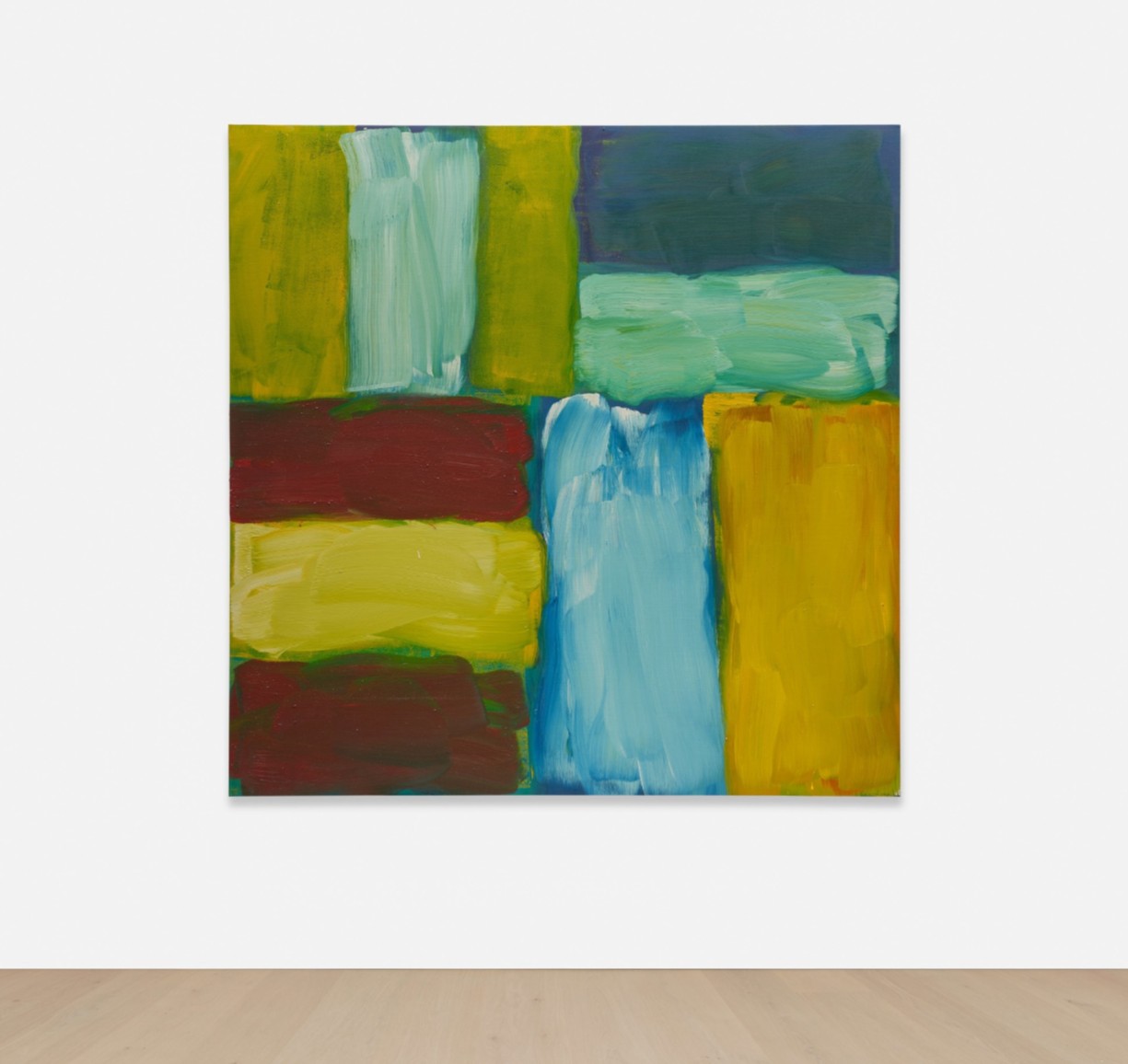
SEAN SCULLY
Wall of Light Pale Green, 2014
Oil on linen over board
63 1/4 x 62 7/8 inches (160.5 x 160 cm)
Signed, titled and dated “WALL OF LIGHT PALE GREEN Sean Scully 2014” on the reverse
#6. Music, 1986
Christie’s London: 15 October 2025
Estimated: GBP 500,000 – 700,000
GBP 571,500 / USD 765,415
SEAN SCULLY (B. 1945), Music | Christie’s
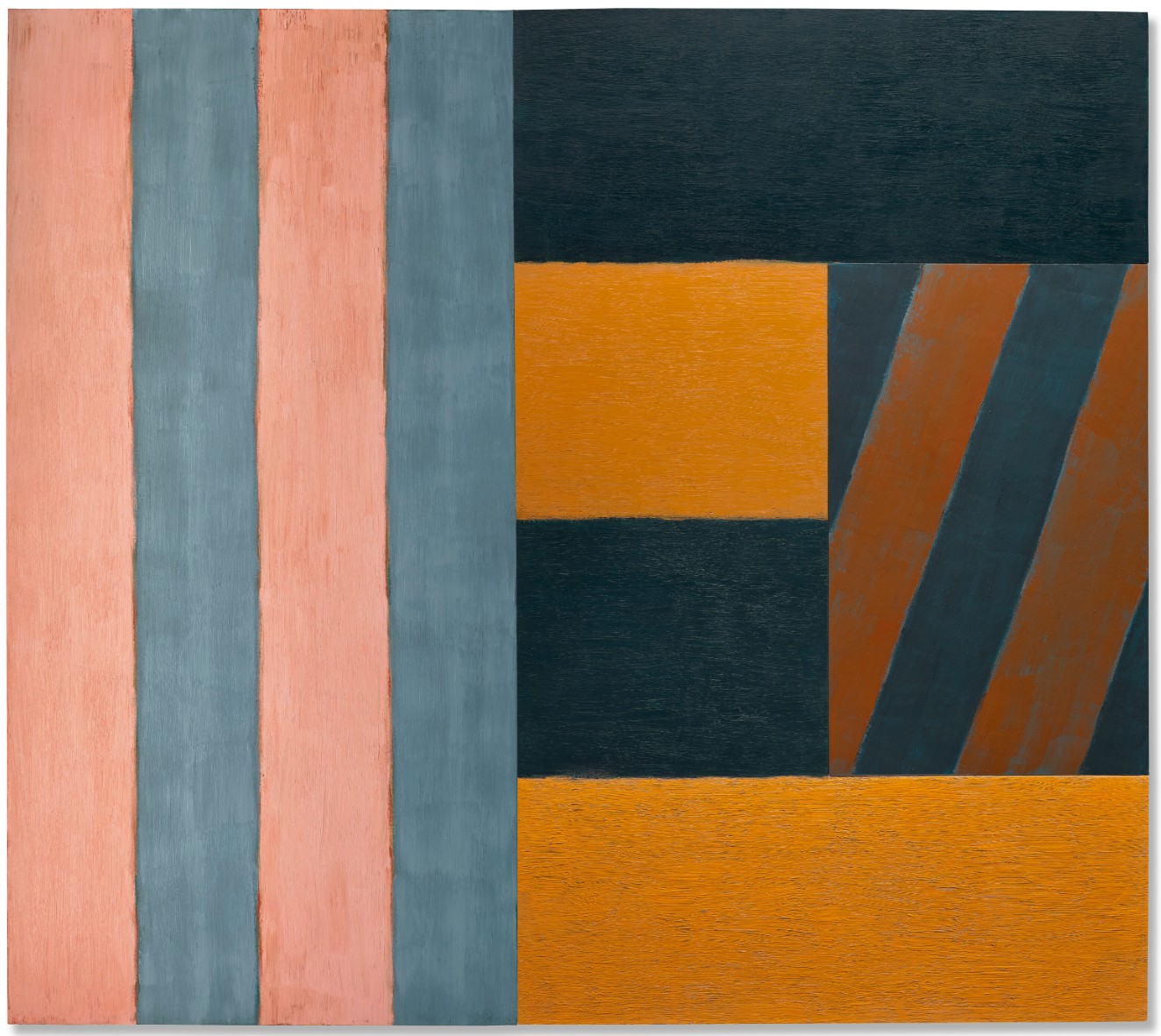
SEAN SCULLY (B. 1945)
Music, 1986
Oil on three attached canvases
86×108 inches (243.8 x 274.6 cm)
Signed, titled twice and dated ‘music Sean Scully 1986 MUSIC’ (on the reverse)
#7. Landline Green White, 2014
Christie’s London: 19 March 2025
Estimated: GBP 500,000 – 800,000
GBP 567,000 / USD 735,155
SEAN SCULLY, R.A. (B. 1945), Landline Green White | Christie’s
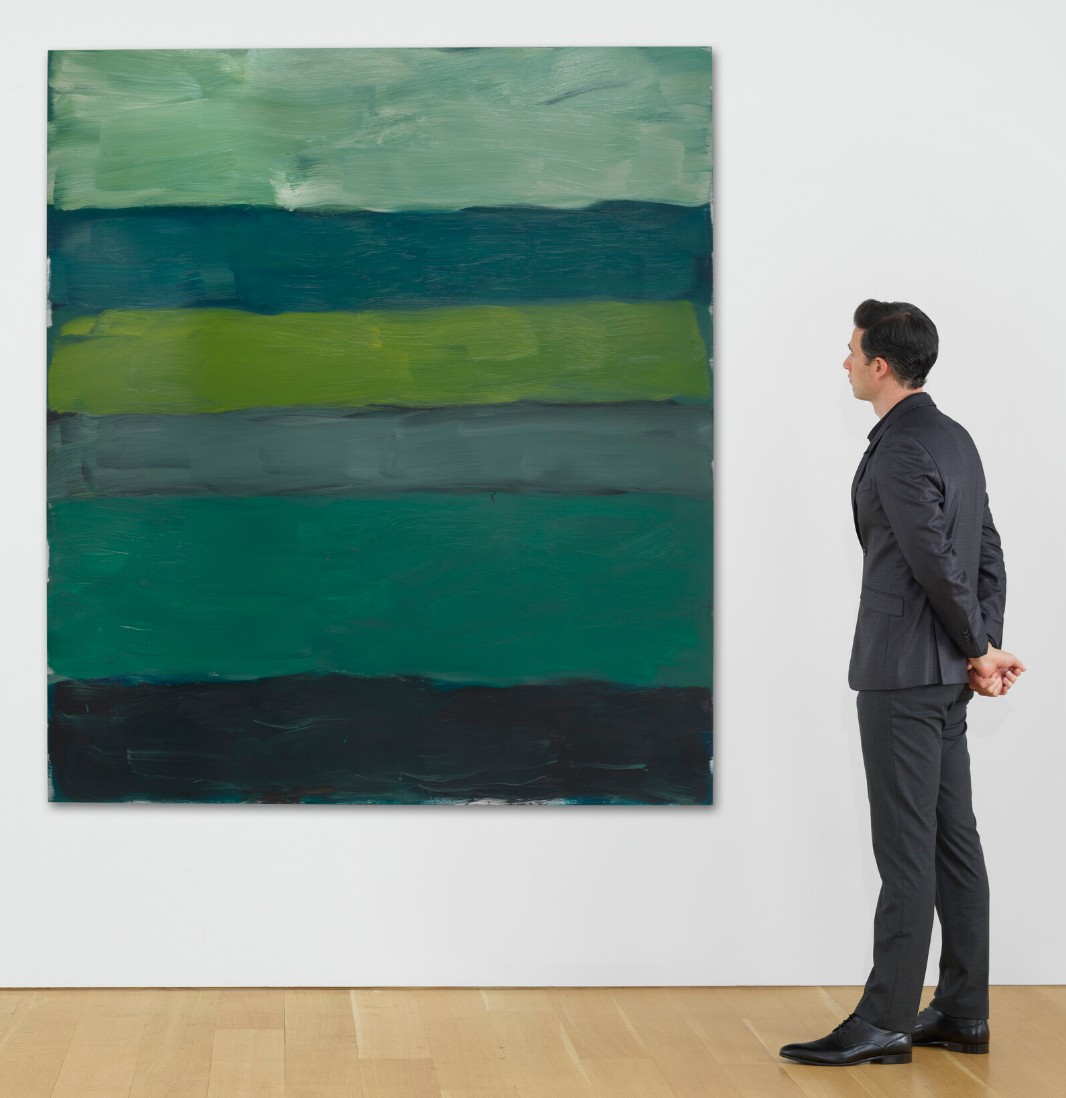
SEAN SCULLY, R.A. (B. 1945)
Landline Green White, 2014
Oil on aluminum
85×75 inches (216 x 190.4 cm)
Signed, inscribed and dated ‘LANDLINE/GREEN WHITE/Sean Scully/2014’ (on the reverse)
#8. Landline Falling, 2019
Sotheby’s New-York: 19 November 2025
Estimated: USD 500,000 – 700,000
USD 635,000
Landline Falling | Contemporary Day Auction | 2025 | Sotheby’s
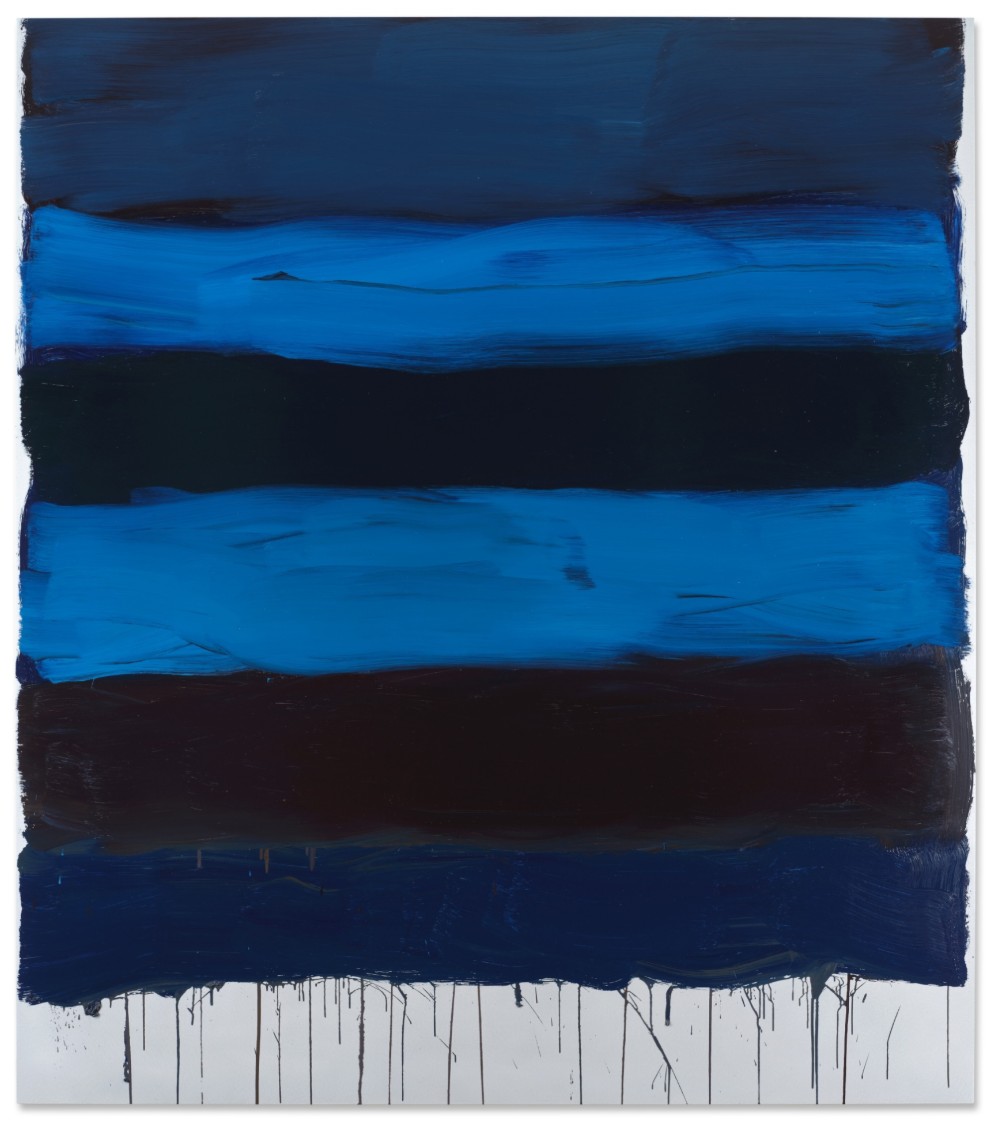
SEAN SCULLY (b. 1945)
Landline Falling, 2019
Oil on aluminum
85×75 inches (215.9 x 190.5 cm)
Signed, titled and dated 2019 (on the reverse)
#9. Passenger Black Black, 1999
Christie’s Paris: 9 April 2025
Estimated: EUR 350,000 – 550,000
EUR 504,000 / USD 556,440
Sean Scully (né en 1945), Passenger Black Black | Christie’s
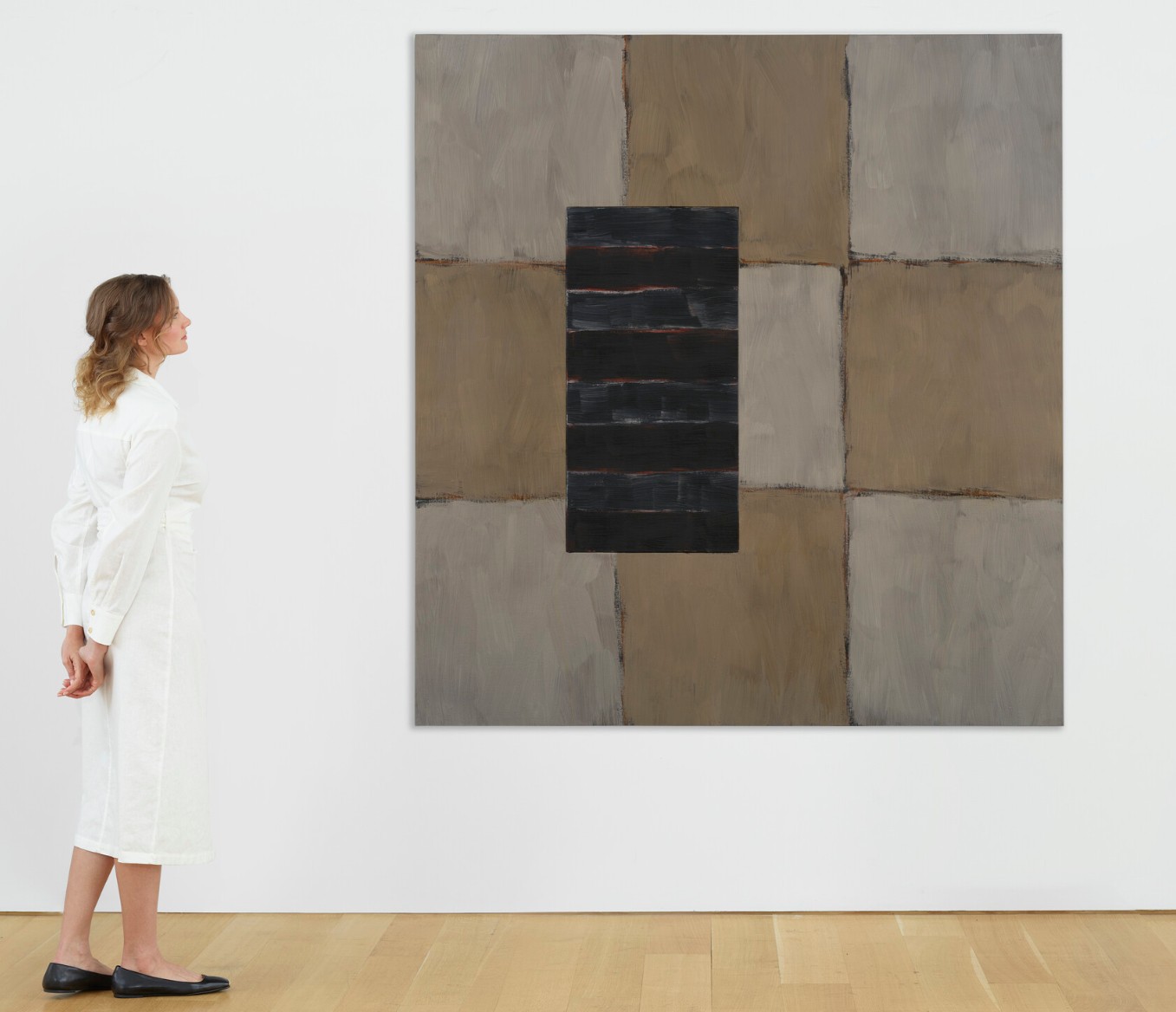
SEAN SCULLY (born 1945)
Passenger Black Black, 1999
Oil on sewn canvases
80 1/8 x 75 inches (203.5 x 190.5 cm)
Signed, titled and dated ”PASSENGER BLACK BLACK” Sean Scully 1999′ (on the reverse)
#10. Cut Ground Moon, 2011
Phillips New-York: 14 May 2025
Estimated: USD 200,000 – 300,000
USD 355,600
Sean Scully Modern & Contemporary Art Day Sale, Afternoon Session
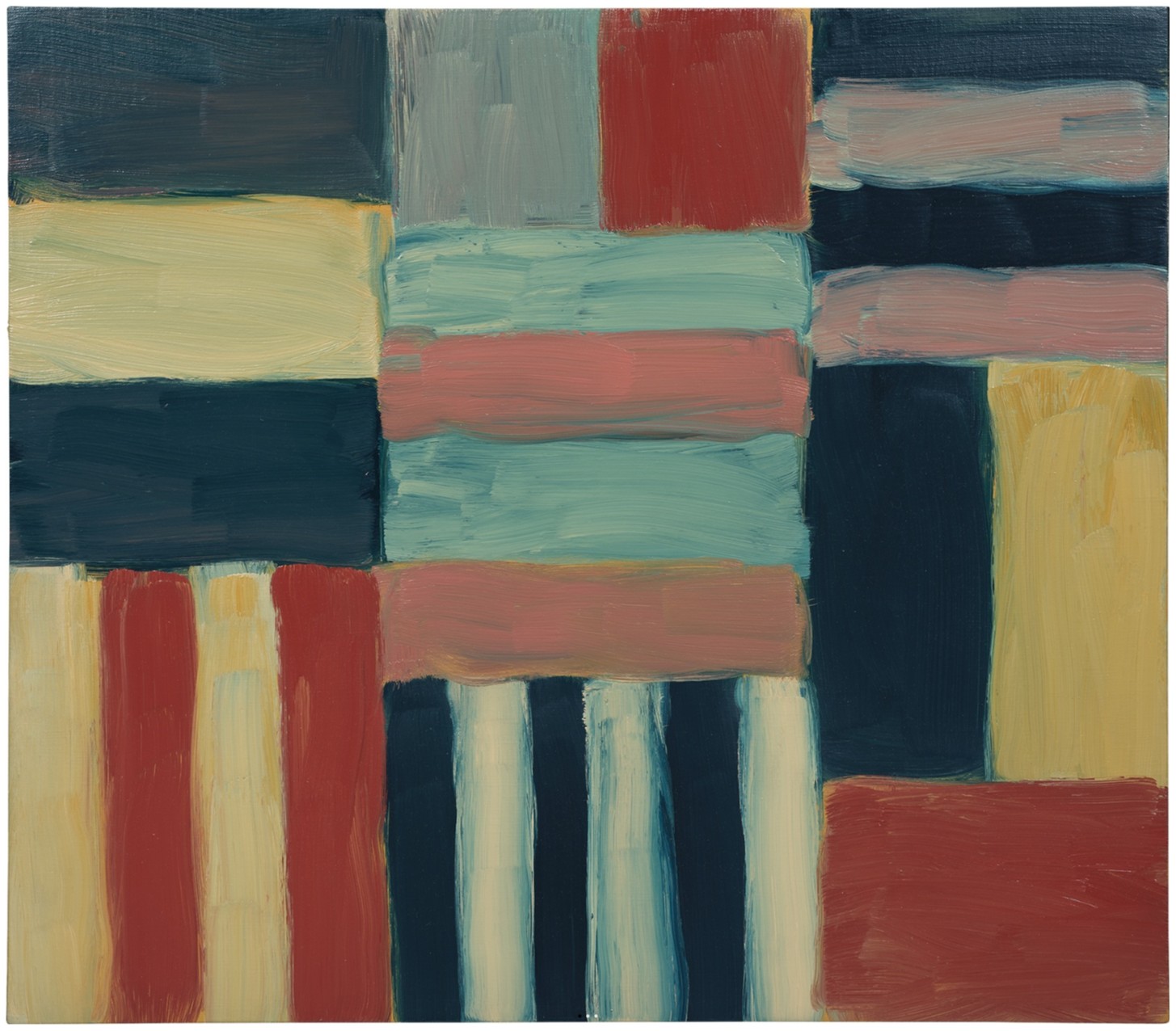
SEAN SCULLY
Cut Ground Moon, 2011
Oil on linen over board
28 1/8 x 32 inches (71.4 x 81.3 cm)
#11. STANDING BLUE, 1980
de Veres Dublin: 25 November 2025
Estimated: EUR 140,000 – 180,000
EUR 140,000 (Hammer)
EUR 175,000 / USD 202,155
Lot 33 – STANDING BLUE, 1980 by Sean Scully | deVeres Auctions, Ireland
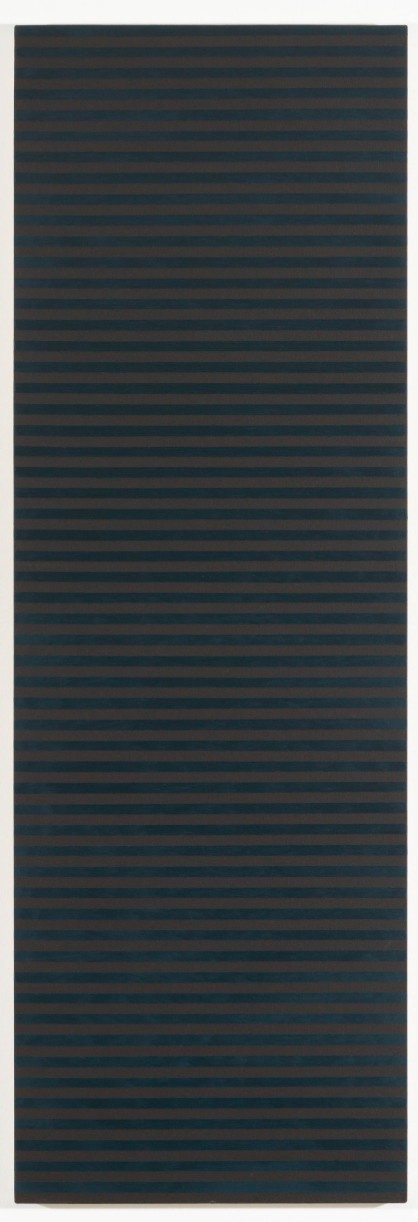
SEAN SCULLY (b.1945)
STANDING BLUE, 1980
Oil on canvas
84×28 inches (213.4 x 71.1 cm)
Signed, inscribed and dated 1980 verso
#12. Floating Painting #4, 1998
Dreweatts London: 29 October 2025
Estimated: GBP 100,000 – 150,000
GBP 85,000 (Hammer)
GBP 107,950 / USD 142,945
λ SEAN SCULLY (BRITISH B. 1945), FLOATING PAINTING #4
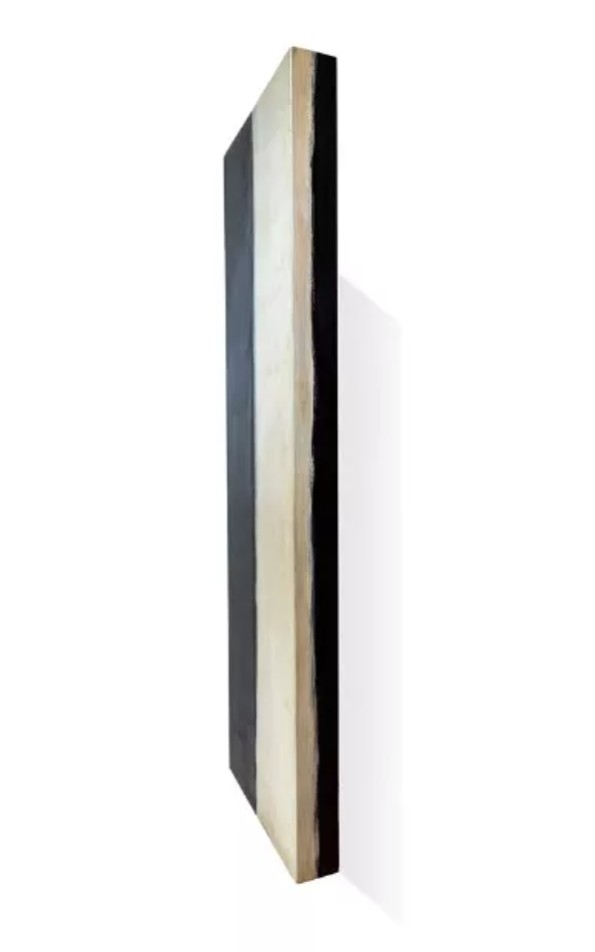
SEAN SCULLY (BRITISH B. 1945)
Floating Painting #4, 1998
Oil on metal
50 x 2-3/4 x 15 inches (127 x 7.5 x 38 cm)
#13. Floating Painting red blue, 1995
Collection Daniel Abadie, Une vie d’artistes
Christie’s Paris: 30 September 2025
Estimated: EUR 50,000 – 70,000
EUR 64,500 / USD 74,505
Sean Scully (né en 1945), Floating Painting red blue | Christie’s
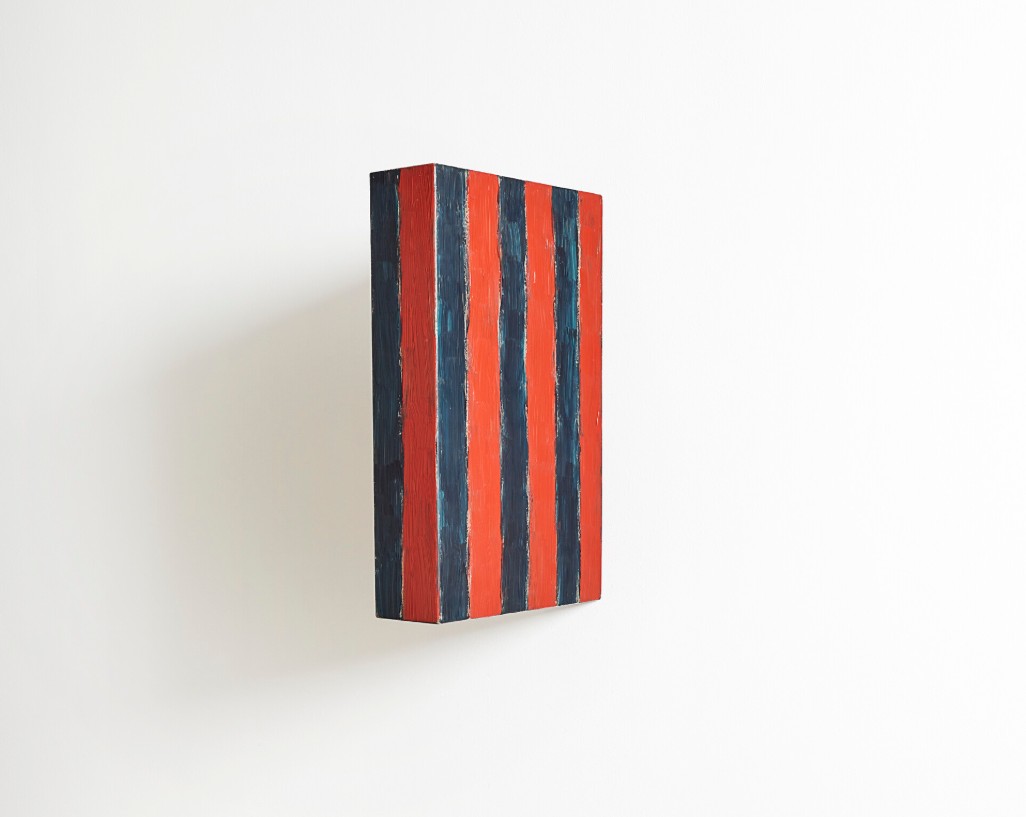
SEAN SCULLY (born 1945)
Floating Painting red blue, 1995
Oil on aluminum
20-1/8 x 3-7/8 x 12 inches (51 x 10 x 30.5 cm)
Signed, titled and dated ”’FLOATING PAINTING RED BLUE” Sean Scully 1995′
(on the reverse)
#14. Small Floating Deptford Painting, 1997-2001
Christie’s Paris: 24 October 2025
Estimated: EUR 30,000 – 50,000
EUR 44,450 / USD 51,675
Sean Scully (né en 1945), Small Floating Deptford Painting | Christie’s
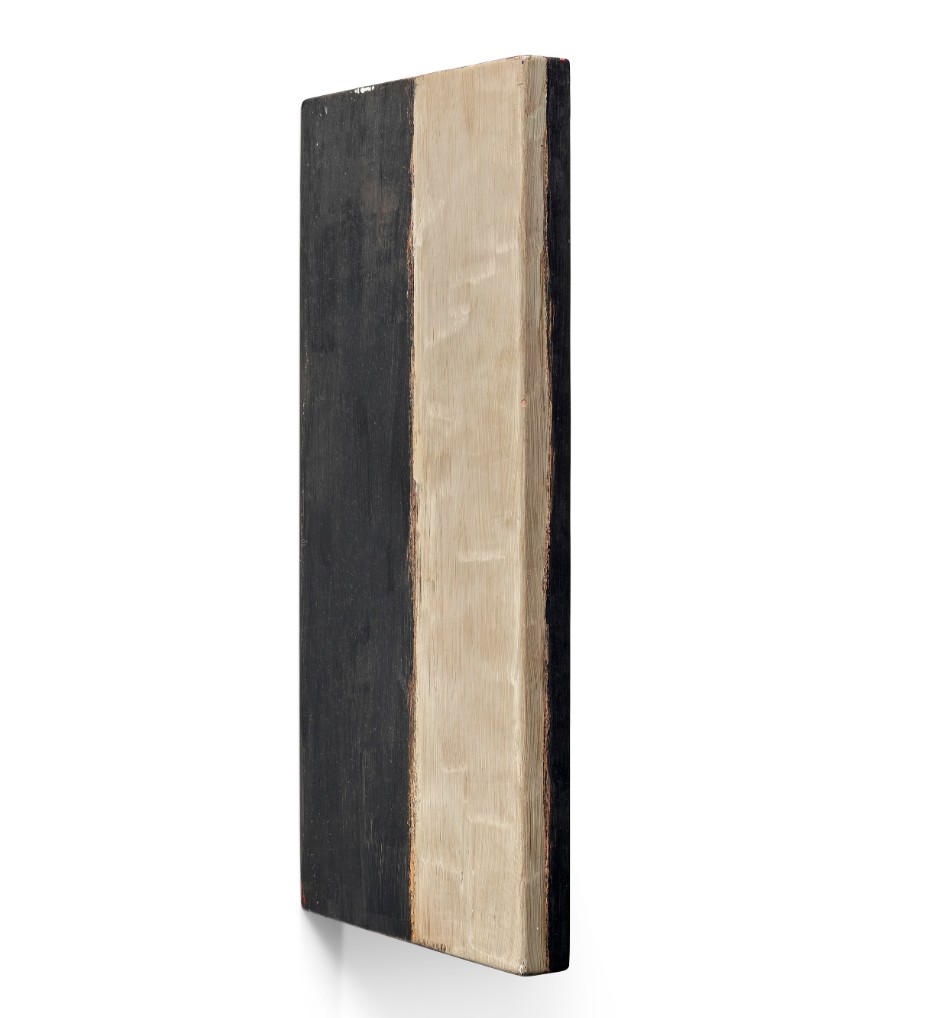
SEAN SCULLY (born 1945)
Small Floating Deptford Painting, 1997-2001
Oil on metal
29-7/8 x 14 x 2-1/8 inches (76 x 35.5 x 5.5 cm)
#15. Small Brown Painting, 1979
Christie’s London: 16 October 2025
Estimated: GBP 15,000 – 20,000
GBP 38,100 / USD 51,140
SEAN SCULLY (B. 1945), Small Brown Painting | Christie’s
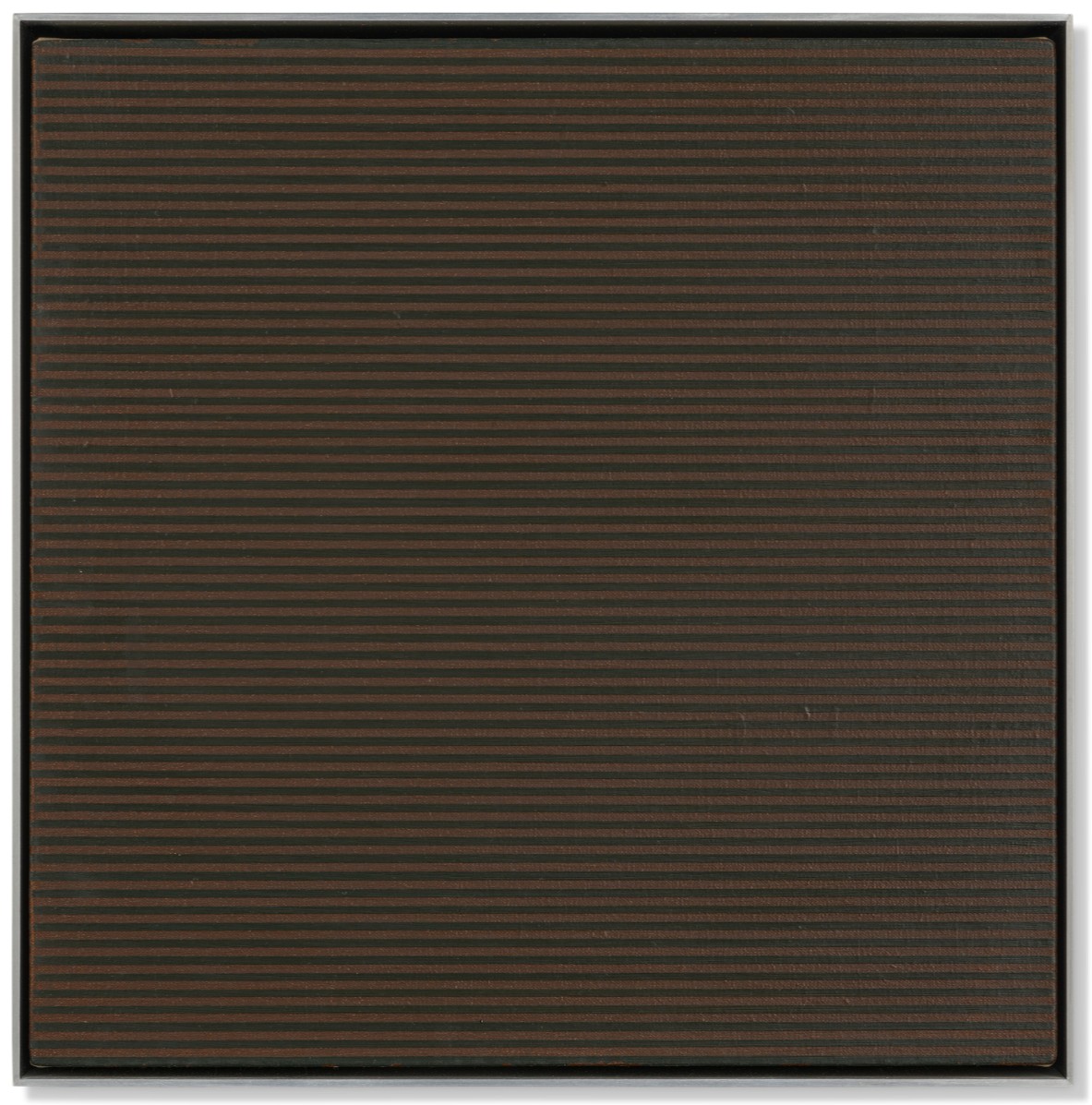
SEAN SCULLY (B. 1945)
Small Brown Painting, 1979
Oil on canvas
15 1/8 x 15-1/8 inches (38.5 x 38.5 cm)
Signed, titled and dated ‘SMALL BROWN PAINTING 1979 Sean Scully’ (on the reverse)
2024 Auction Results
FOR PAINTINGS ONLY
15 Paintings sold at auction in 2024 for a total turnover of USD 8,835,095. With 1 lot failing to sell, the sell-through rate is 94%. The highest price of 2024 was achieved by Cut Ground Orange, a painting dated 2009, that sold at Ketterer Kunst, in Munich, on 7 June 2024, for EUR 1,258,000 (USD 1,459,280).
2024 Top 3 Lots
3 Paintings sold for more than USD 1 million, generating a cumulative turnover of USD 3,538,340, representing 40% of the total turnover for 2024.
#1. Cut Ground Orange, 2009
Ketterer Kunst Munich: 7 June 2024
Estimated: EUR 800,000
EUR 1,258,000 / USD 1,459,280
Ketterer Kunst, Art auctions, Book auctions Munich, Hamburg & Berlin
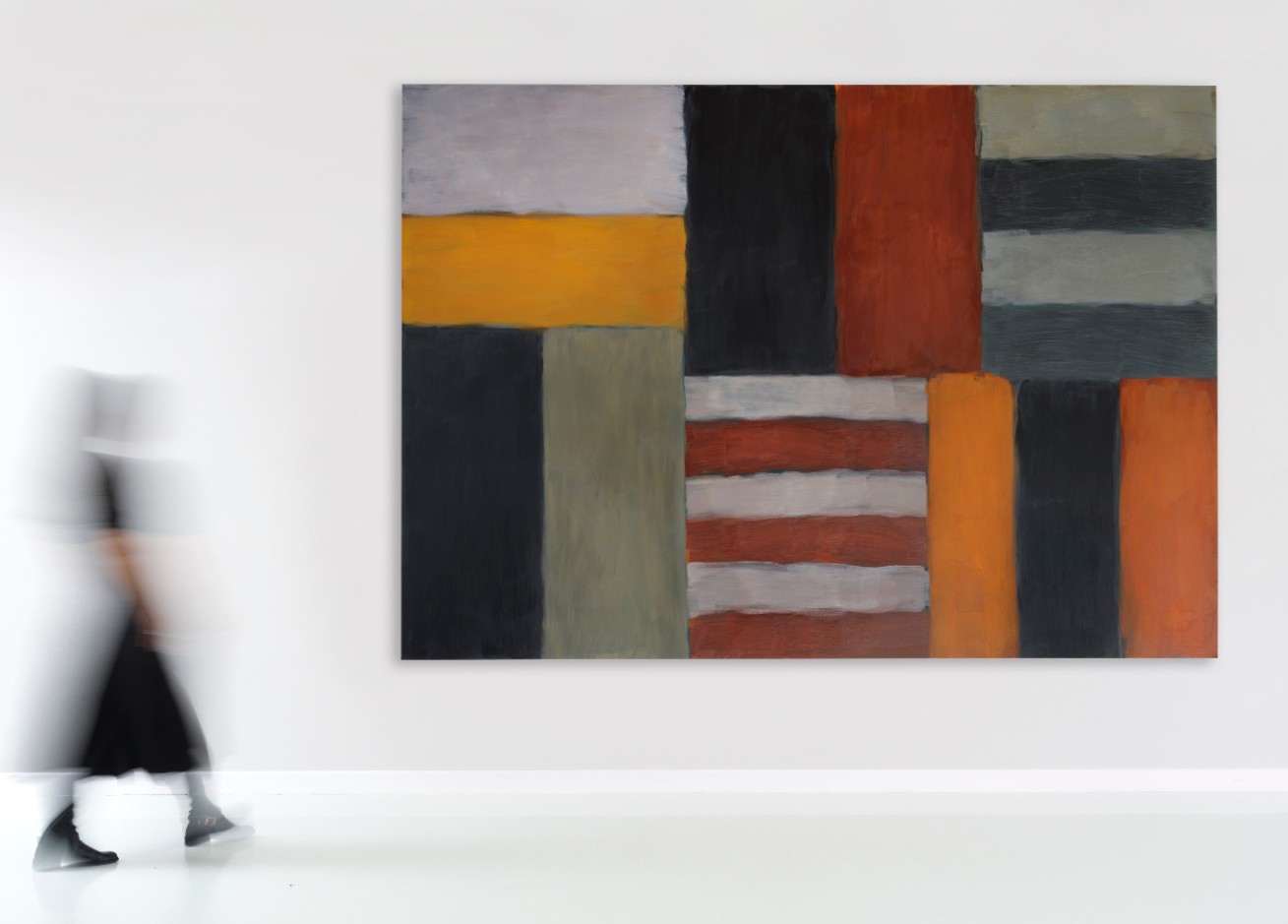
SEAN SCULLY
Cut Ground Orange, 2009
Oil on canvas
83.8 x 120 x 2.3 inches (213 x 305 x 6 cm)
Signed, dated and titled on the reverse
#2. Mooseurach Wall of Light, 2003
Christie’s London: 9 October 2024
Estimated: GBP 700,000 – 1,000,000
GBP 819,000 / USD 1,071,060
SEAN SCULLY (B. 1945), Mooseurach Wall of Light | Christie’s
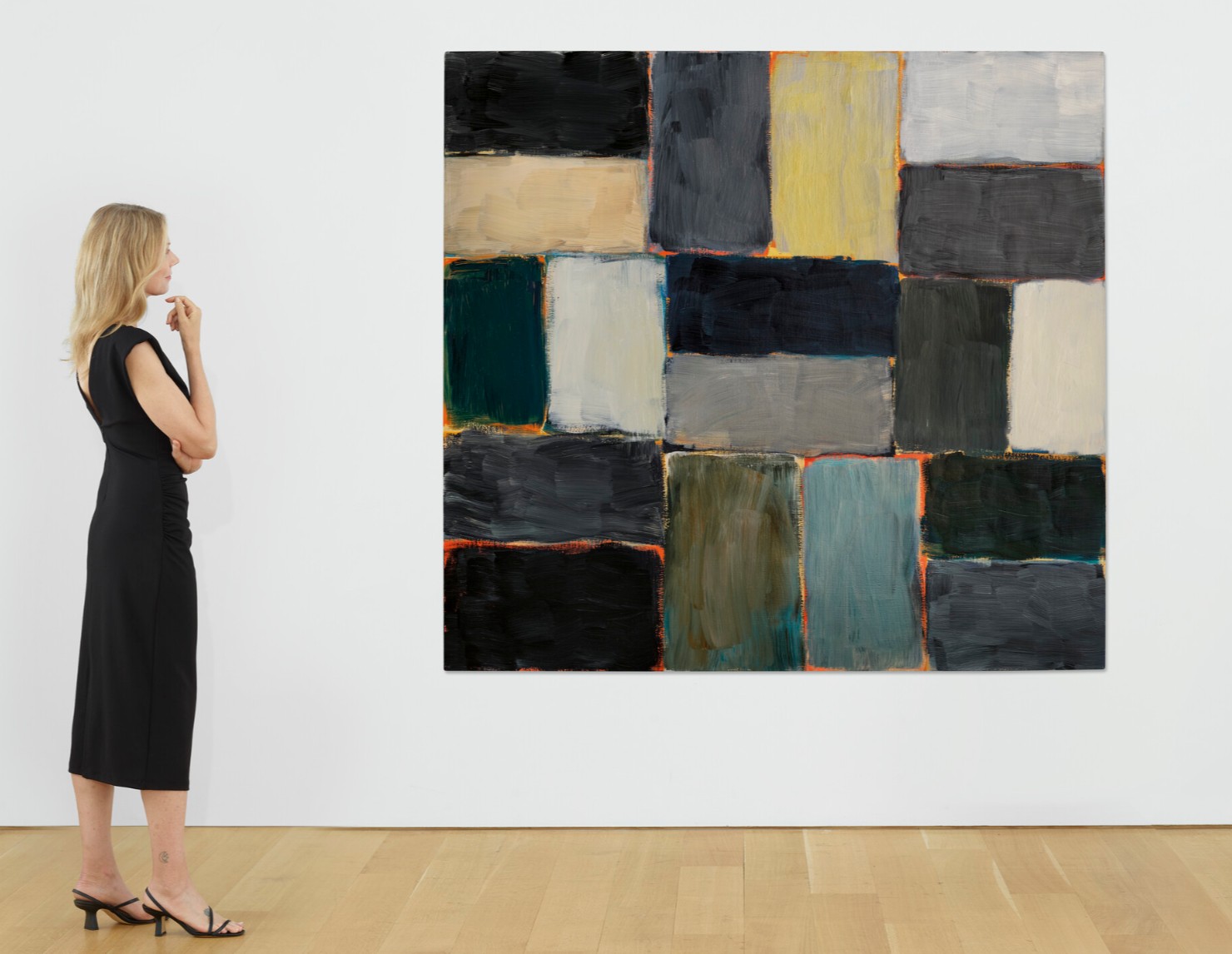
SEAN SCULLY (B. 1945)
Mooseurach Wall of Light, 2003
Oil on canvas
74 7/8 x 80 1/8 inches (190.4 x 203.5 cm)
Signed, titled and dated ‘MOOSEURACH WALL OF LIGHT Sean Scully 2003’ (on the reverse)
#3. Wall of Light Diego, 2012
Christie’s New-York: 22 November 2024
Estimated: USD 800,000 – 1,200,000
USD 1,008,000
SEAN SCULLY (B. 1945), Wall of Light Diego | Christie’s
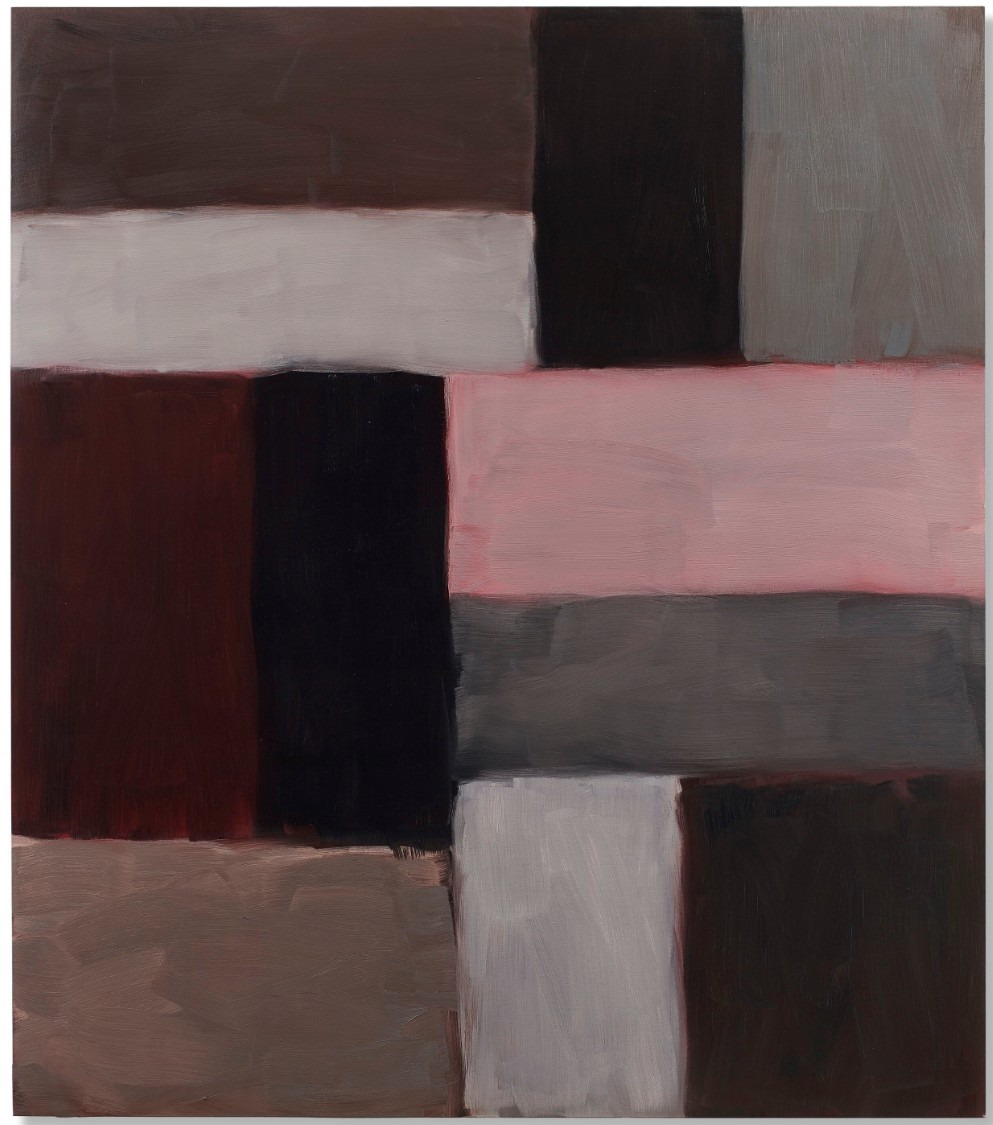
SEAN SCULLY (B. 1945)
Wall of Light Diego, 2012
Oil on canvas
85 1/4 x 75 inches (216.5 x 190.5 cm)
Signed, titled and dated twice ‘Sean Scully 11.12 WALL OF LIGHT DIEGO 11.12’ (on the reverse)
USD 1 million
#4. Wall of Light Green Grey, 2008
Ketterer Kunst Munich: 7 June 2024
Estimated: EUR 400,000
EUR 838,200 / USD 972,310
Ketterer Kunst, Art auctions, Book auctions Munich, Hamburg & Berlin
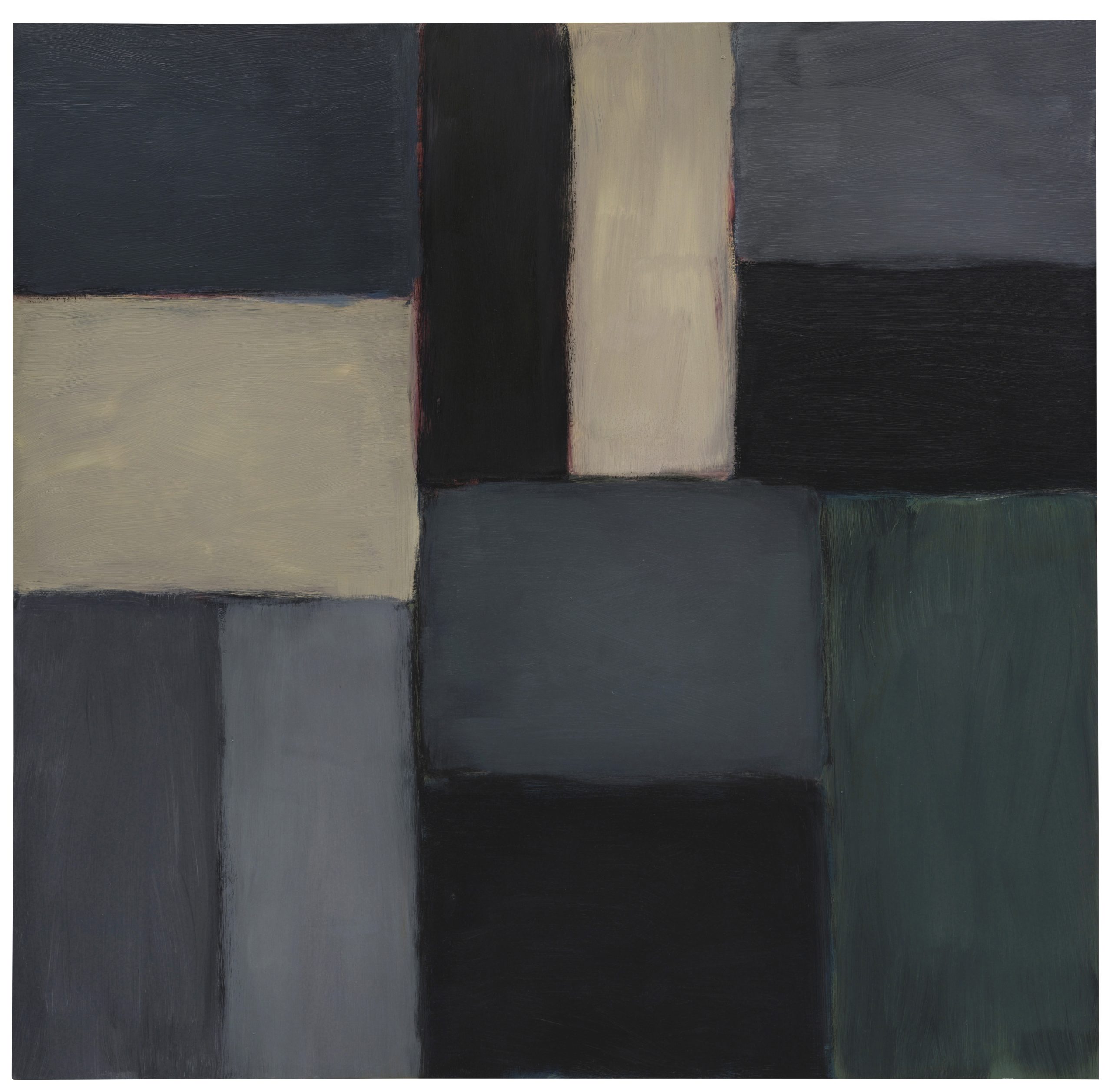
SEAN SCULLY
Wall of Light Green Grey, 2008
Oil on aluminum
60 x 60 x 2.1 inches (152.5 x 152.5 x 5.5 cm)
Signed, dated “10.08” and titled
As well as with a typographically inscribed artist’s label on the reverse
#5. Red Window, 1991
Christie’s New-York: 14 May 2024
Estimated: USD 600,000 – 800,000
USD 756,000
SEAN SCULLY (B. 1945), Red Window | Christie’s
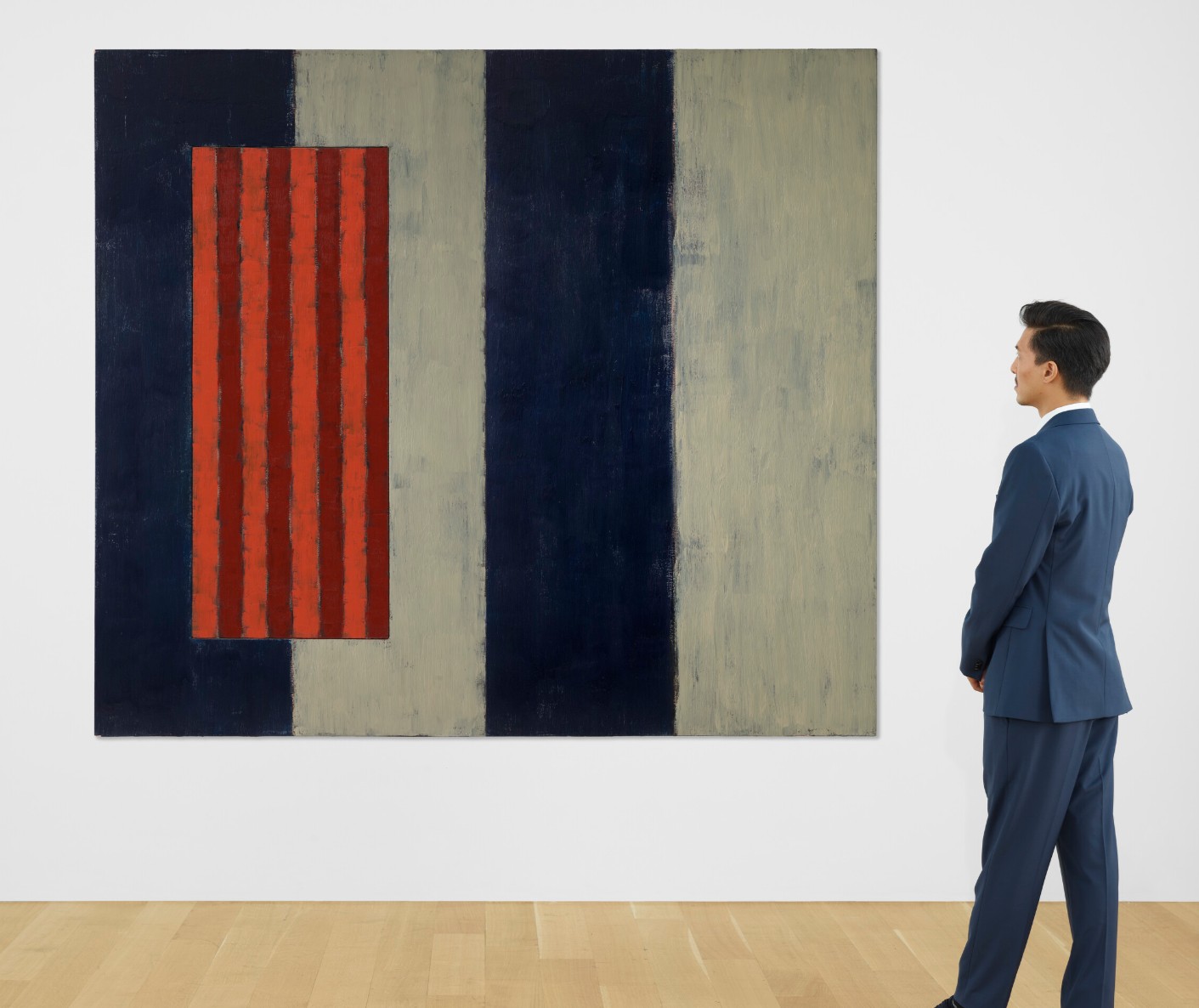
SEAN SCULLY (B. 1945)
Red Window, 1991
Oil on canvas
84×96 inches (213.4 x 243.8 cm)
Signed, titled twice and dated ‘RED WINDOW Sean Scully 1991 RED WINDOW’ (on the reverse)
#6. Fire, 2006
Christie’s London: 10 October 2024
Estimated: GBP 500,000 – 800,000
GBP 567,000 / USD 740,080
SEAN SCULLY (B. 1945), Fire | Christie’s
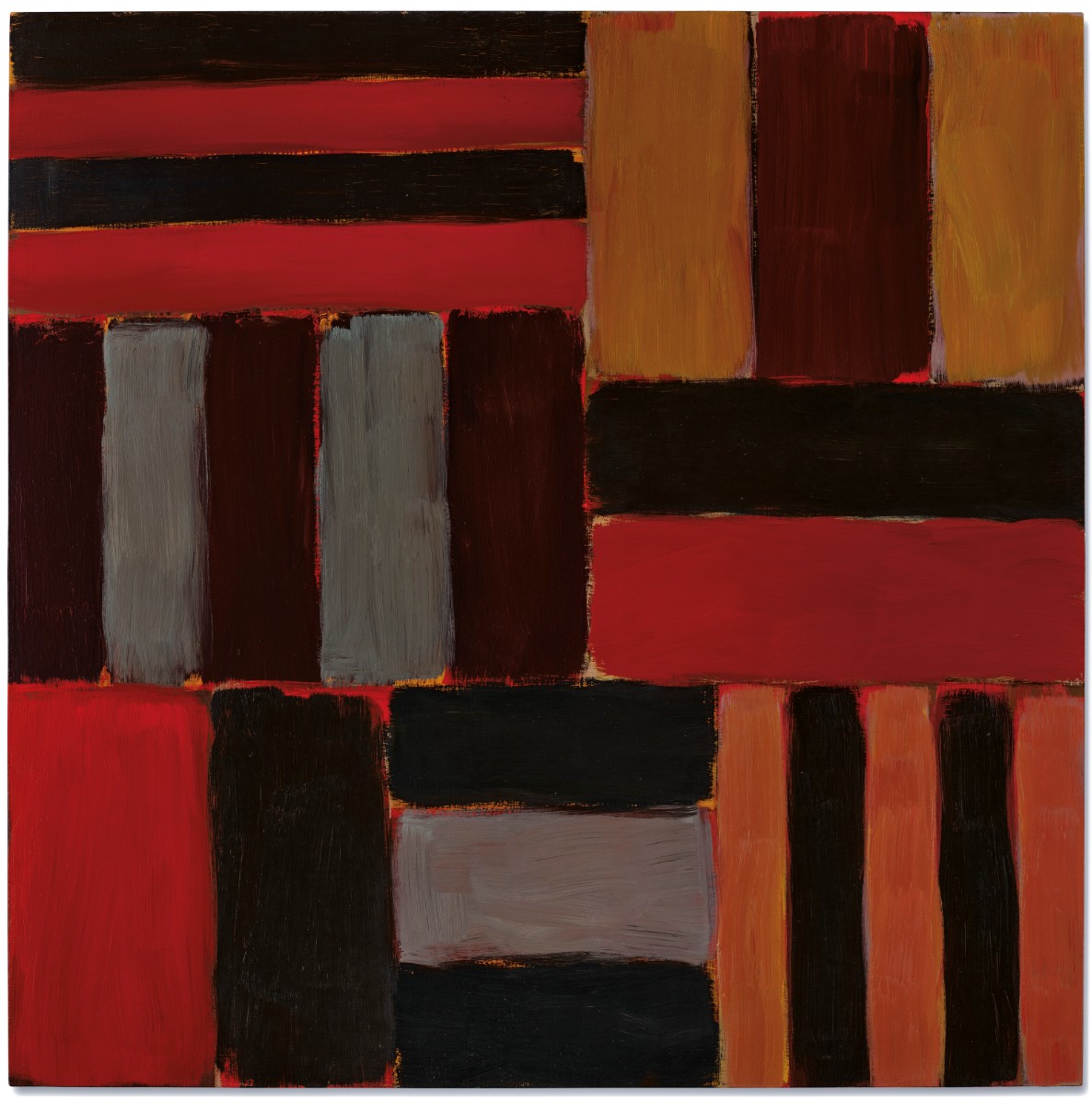
SEAN SCULLY (B. 1945)
Fire, 2006
Oil on linen
63×63 inches (160.2 x 160.2 cm)
Signed, titled and dated ‘Sean Scully 5.06 FIRE’ (on the reverse)
#7. Stone, 1987
Property from an Important Private Collection Sold to Benefit a Charitable Foundation
Sotheby’s New-York: 14 May 2024
Estimated: USD 400,000 – 600,000
USD 635,000
Stone | Contemporary Day Auction | 2024 | Sotheby’s
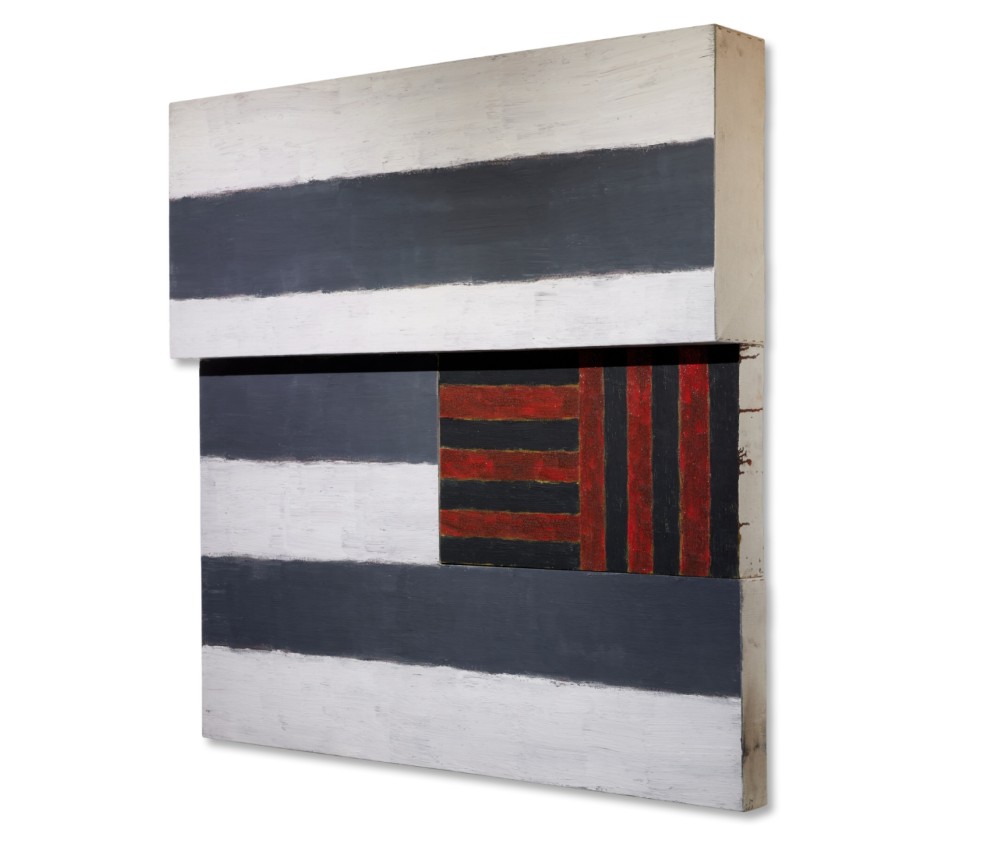
SEAN SCULLY (b. 1945)
Stone, 1987
Oil on 3 joined canvases
60×60 inches (152.4 x 152.4 cm)
Signed, titled and dated 87 (on the reverse)
#8. Pieta 2, 2022
Christie’s New-York: 22 November 2024
Estimated: USD 400,000 – 600,000
USD 529,200
SEAN SCULLY (B. 1945), Pieta 2 | Christie’s
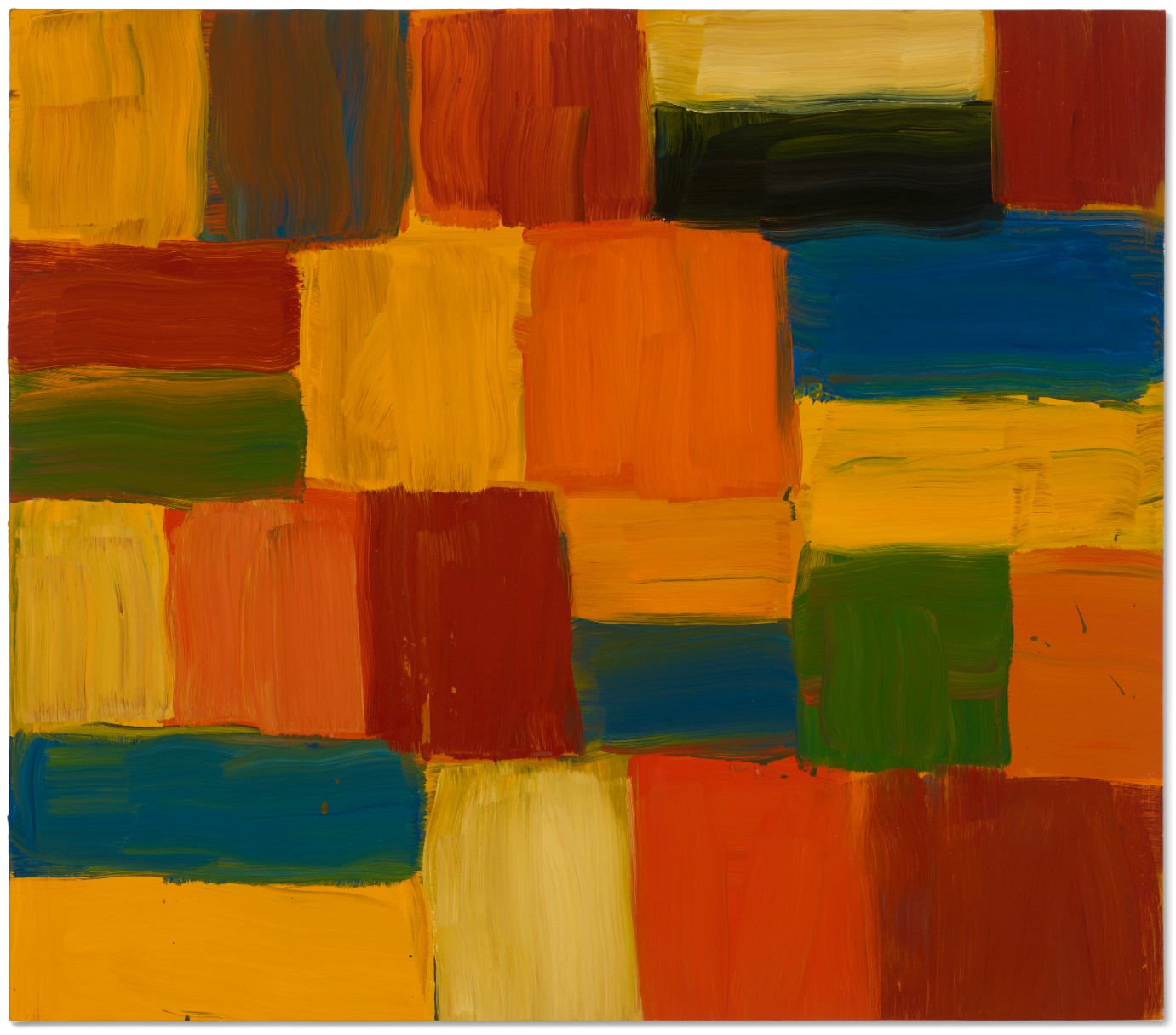
SEAN SCULLY (B. 1945)
Pieta 2, 2022
Oil on linen
42×48 inches (106.7 x 121.9 cm)
Signed, titled and dated ‘PIETA 2 Sean Scully 9.2022’ (on the reverse)
#9. Untitled, 1982
Christie’s New-York: 17 May 2024
Estimated: USD 400,000 – 600,000
USD 504,000
SEAN SCULLY (B. 1945), Untitled | Christie’s
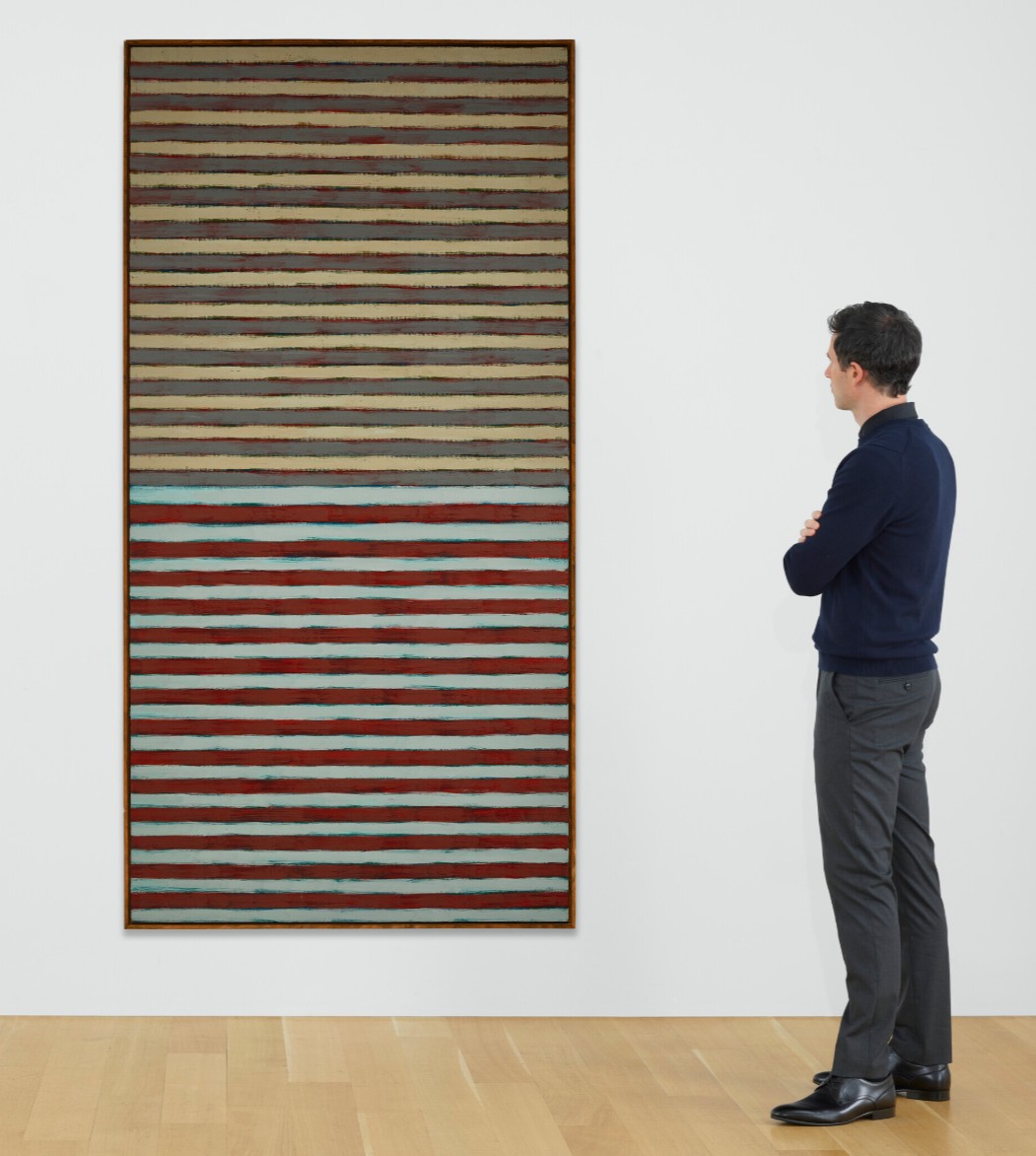
SEAN SCULLY (B. 1945)
Untitled, 1982
Oil on two joined canvases
96×48 inches (243.8 x 121.9 cm)
Signed and dated ‘Sean Scully 1982’ (on the reverse)
#10. Barcelona Red Black Wall, 2004
Property from a Private European Collection
Sotheby’s Paris: 23 April 2024
Estimated: EUR 200,000 – 300,000
EUR 393,700 / USD 420,975
Barcelona Red Black Wall | Art Moderne et Contemporain Evening Auction | 2024 | Sotheby’s
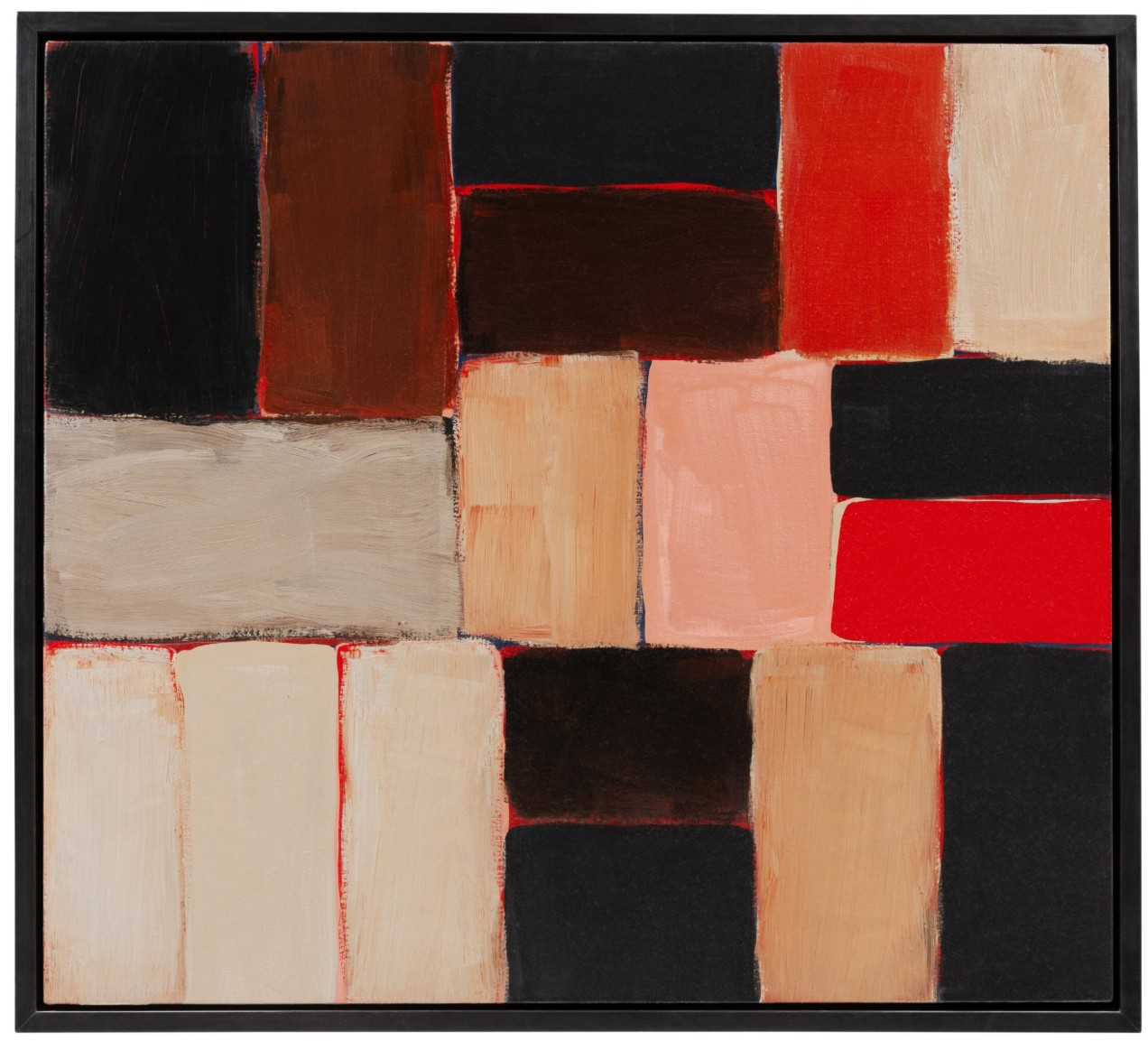
SEAN SCULLY (b. 1945)
Barcelona Red Black Wall, 2004
Oil on canvas mounted on board
36×40 inches (91.5 x 101.5 cm)
Signed, titled and dated 9.04 (on the reverse)
#11. Untitled, 2007
Ketterer Kunst Munich: 6 December 2024
Estimated: EUR 150,000
EUR 279,400 / USD 329,690
Ketterer Kunst, Art auctions, Book auctions Munich, Hamburg & Berlin
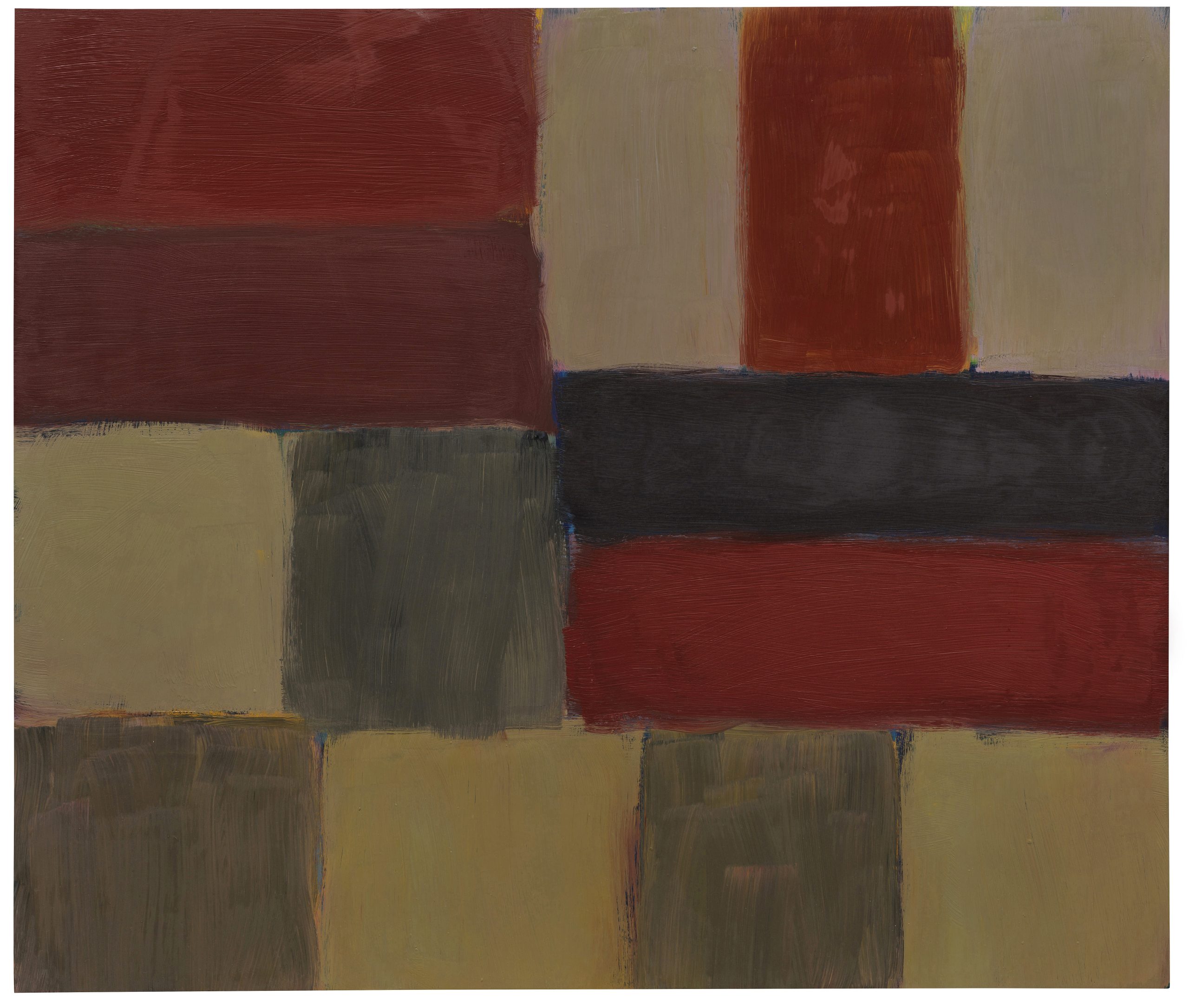
SEAN SCULLY
Untitled, 2007
Oil on aluminum
28×32 inches (71 x 81.5 cm)
Signed, dated “12.25.07”, and inscribed “Ingrid” on the reverse
#12. Black Grey Diptych, 1996
Memoria : Property from an Important Private European Collection
Sotheby’s Paris: 18 October 2024
Estimated: EUR 200,000 – 300,000
EUR 192,000 / USD 208,390
Black Grey Diptych | Modernités | 2024 | Sotheby’s
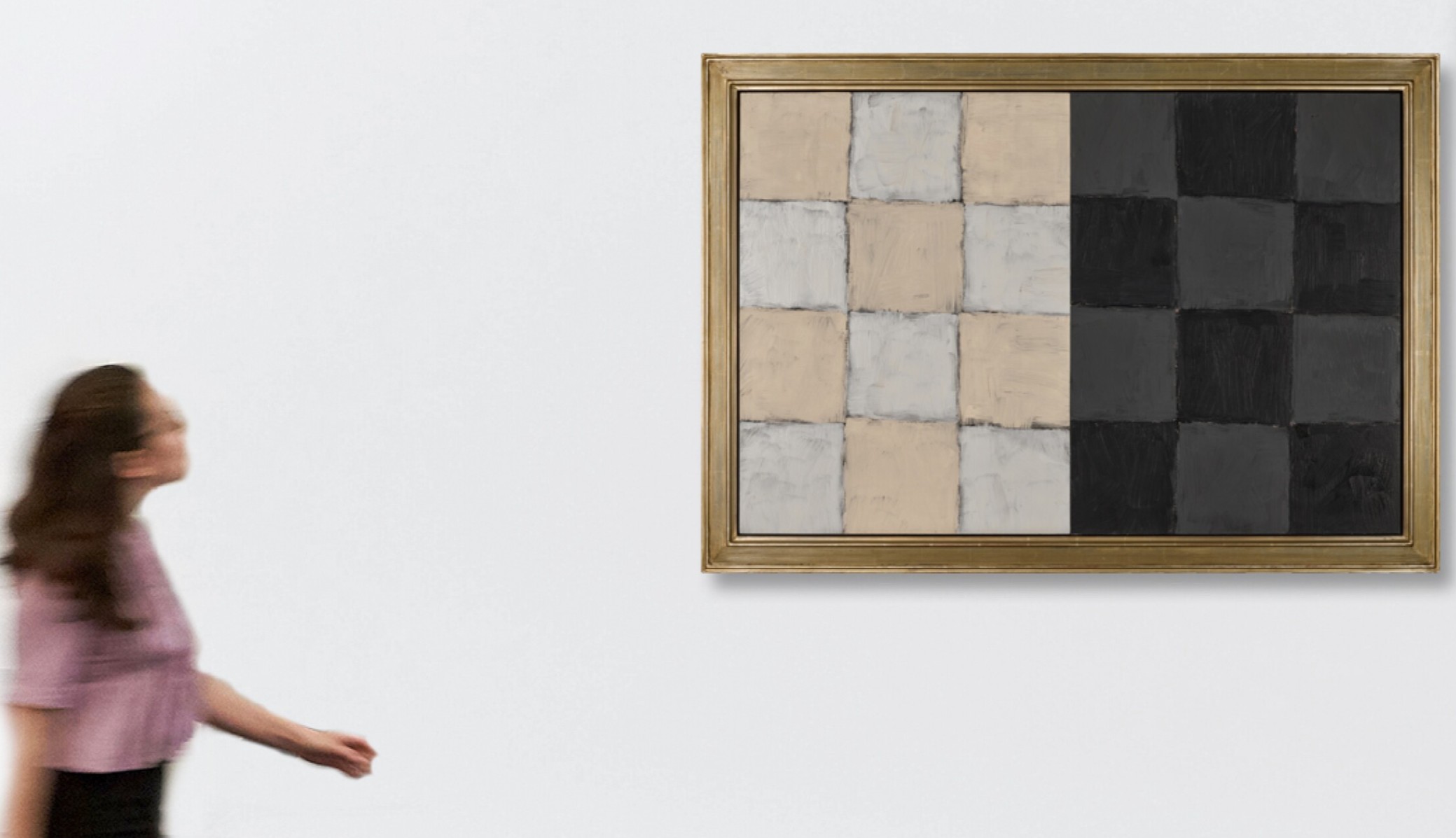
SEAN SCULLY (b. 1945)
Black Grey Diptych, 1996
Oil on panel
32×48 inches (81.3 x 121.9 cm)
Signed, titled and dated 1996 (on the reverse)
#13. Red Diptych, 1977
Sotheby’s New-York: 1 March 2024
Estimated: USD 100,000 – 150,000
USD 101,600
Red Diptych | Contemporary Curated | 2024 | Sotheby’s
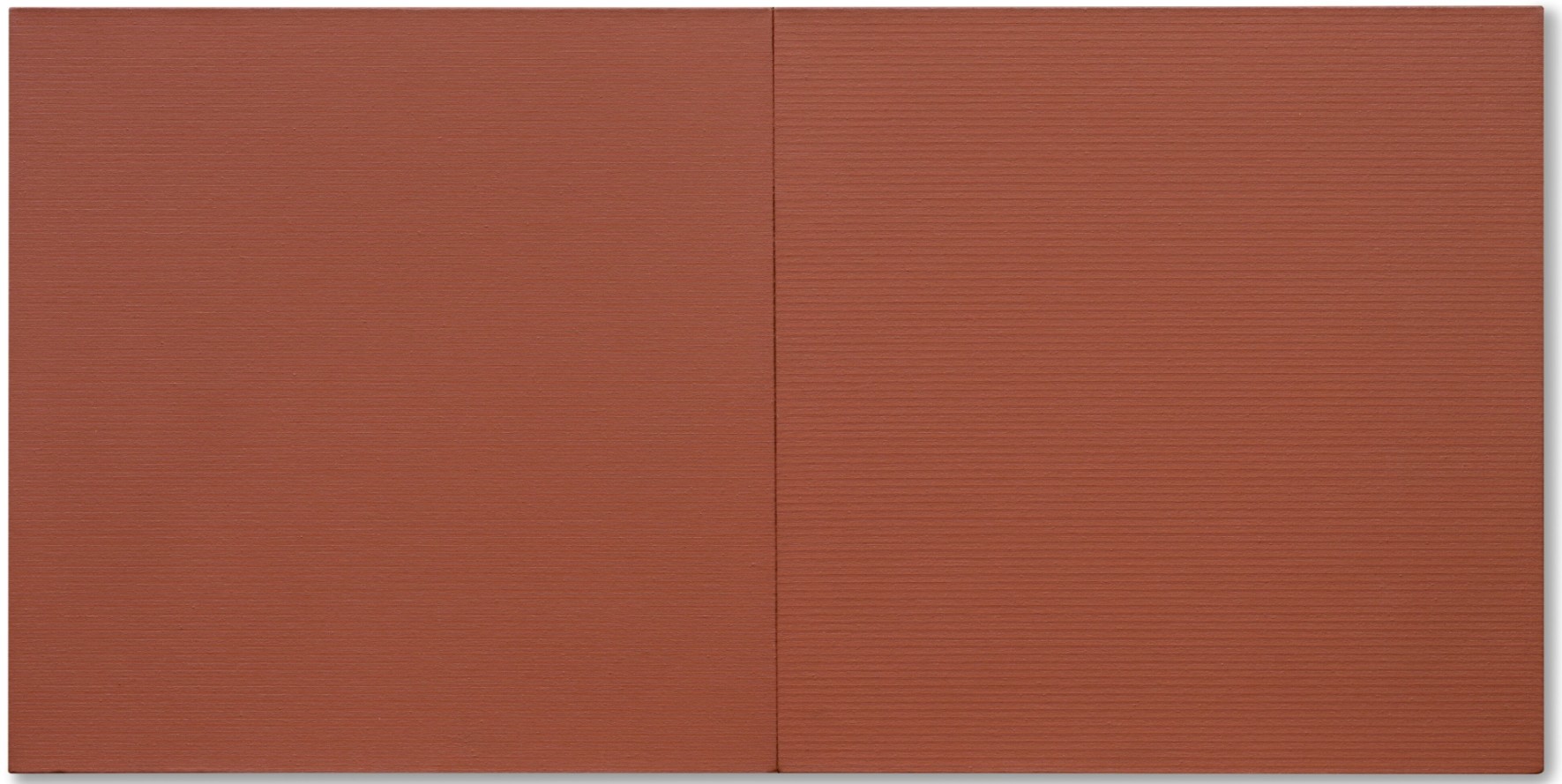
SEAN SCULLY (b. 1945)
Red Diptych, 1977
Acrylic on 2 joined canvases
24×48 inches (61×122 cm)
Signed, titled and dated 1977 (on the reverse)
#14. Solomon, 1982
Property from the Collection of Arthur C. Danto and Barbara Westman Danto
Sotheby’s New-York: 2 October 2024
Estimated: USD 40,000 – 60,000
USD 72,000
Solomon | Contemporary Discoveries | 2024 | Sotheby’s
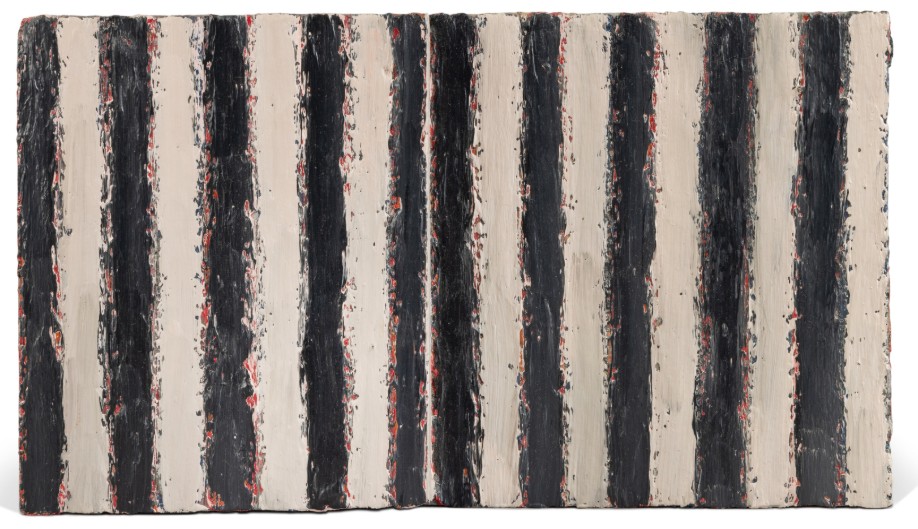
SEAN SCULLY (b. 1945)
Solomon, 1982
Oil on board
7 x 12-1/8 inches (17.8 x 30.8 cm)
Signed, titled and dated 1982 (on the reverse)
#15. Small Blue Painting #1/5, 1978
Bonhams online: 27 June 2024
Estimated: GBP 16,000 – 22,000
GBP 21,760 / USD 27,510
Bonhams : SEAN SCULLY (B. 1945) Small Blue Painting #1/5 1978
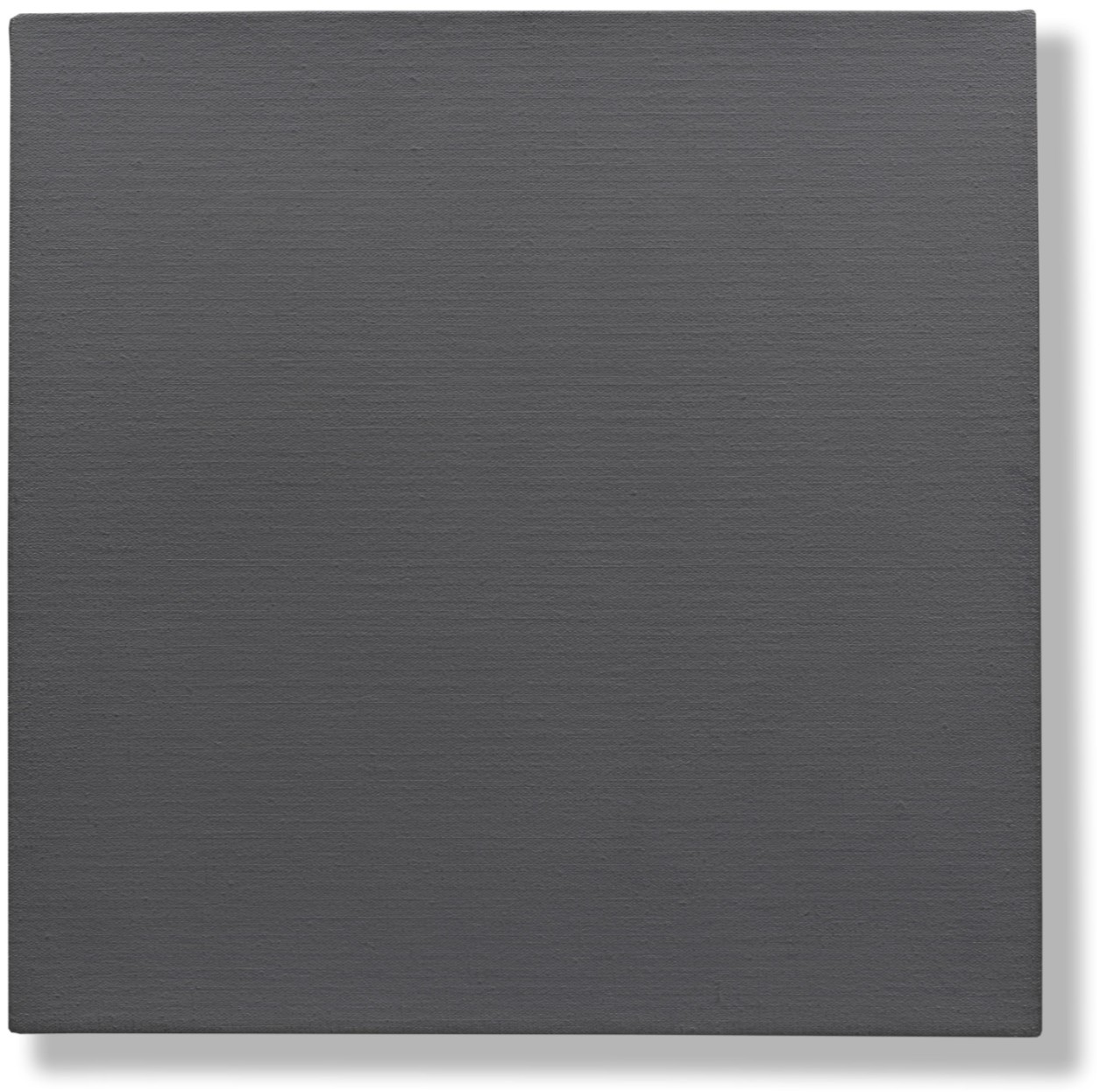
SEAN SCULLY (B. 1945)
Small Blue Painting #1/5, 1978
Oil on canvas
15-1/4 x 15-3/16 inches (38.7 x 38.6 cm)
Signed, titled and dated 1978 on the reverse
Lots Passed
Wall Dark Green, 2021
Morgan O’Driscoll: 22 October 2024
EUR 500,000 – 700,000
PASSED
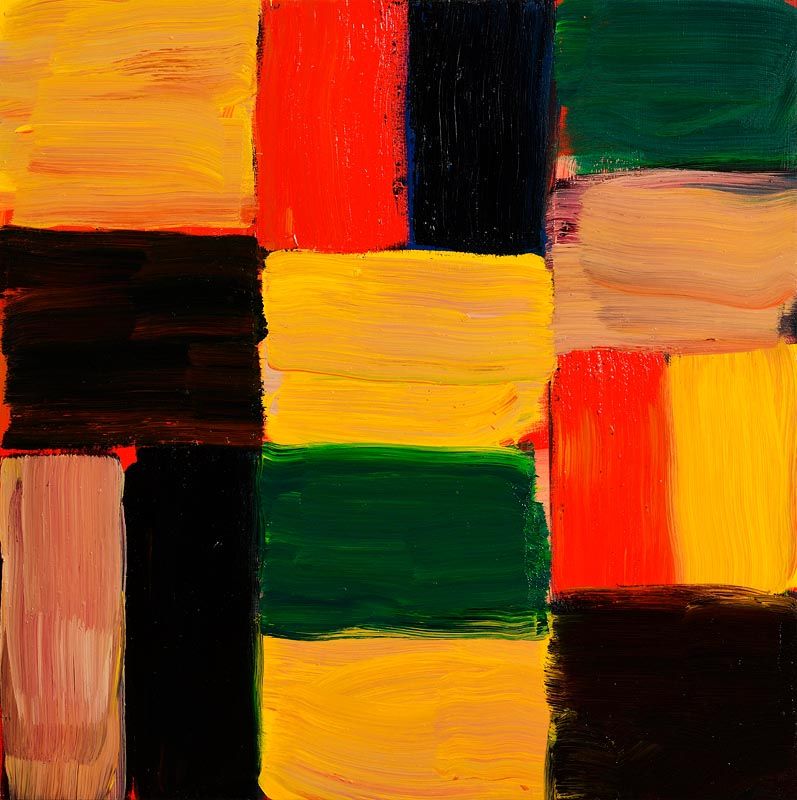
SEAN SCULLY (b.1945)
Wall Dark Green, 2021
Oil on linen
40×40 inches (101.6 x 101.6 cm)
Signed, titled and dated 2.2021 verso
2023 Auction Results
FOR PAINTINGS ONLY
17 Paintings sold at auction in 2023 for a total turnover of USD 13,469,295. With 1 lot failing to sell, the sell-through rate is 94%. The highest price of 2023 was achieved by Wall of Light Red, a painting dated 1998, from The Mallin Collection, that sold at Sotheby’s in London, on 1 March 2023, for GBP 1,137,000 (USD 1,368,350).
2023 Top 3 Lots
6 Paintings sold for more than USD 1 million, generating a cumulative turnover of USD 7,109,170, representing 52.8% of the total for 2023.
XXXXXXXXXX
#1. Wall of Light Red, 1998
A Life in Art: The Mallin Collection
Sotheby’s London: 1 March 2023
Estimated: GBP 800,000 – 1,200,000
GBP 1,137,000 / USD 1,368,350
Wall of Light Red | Modern & Contemporary Evening Auction | 2023 | Sotheby’s
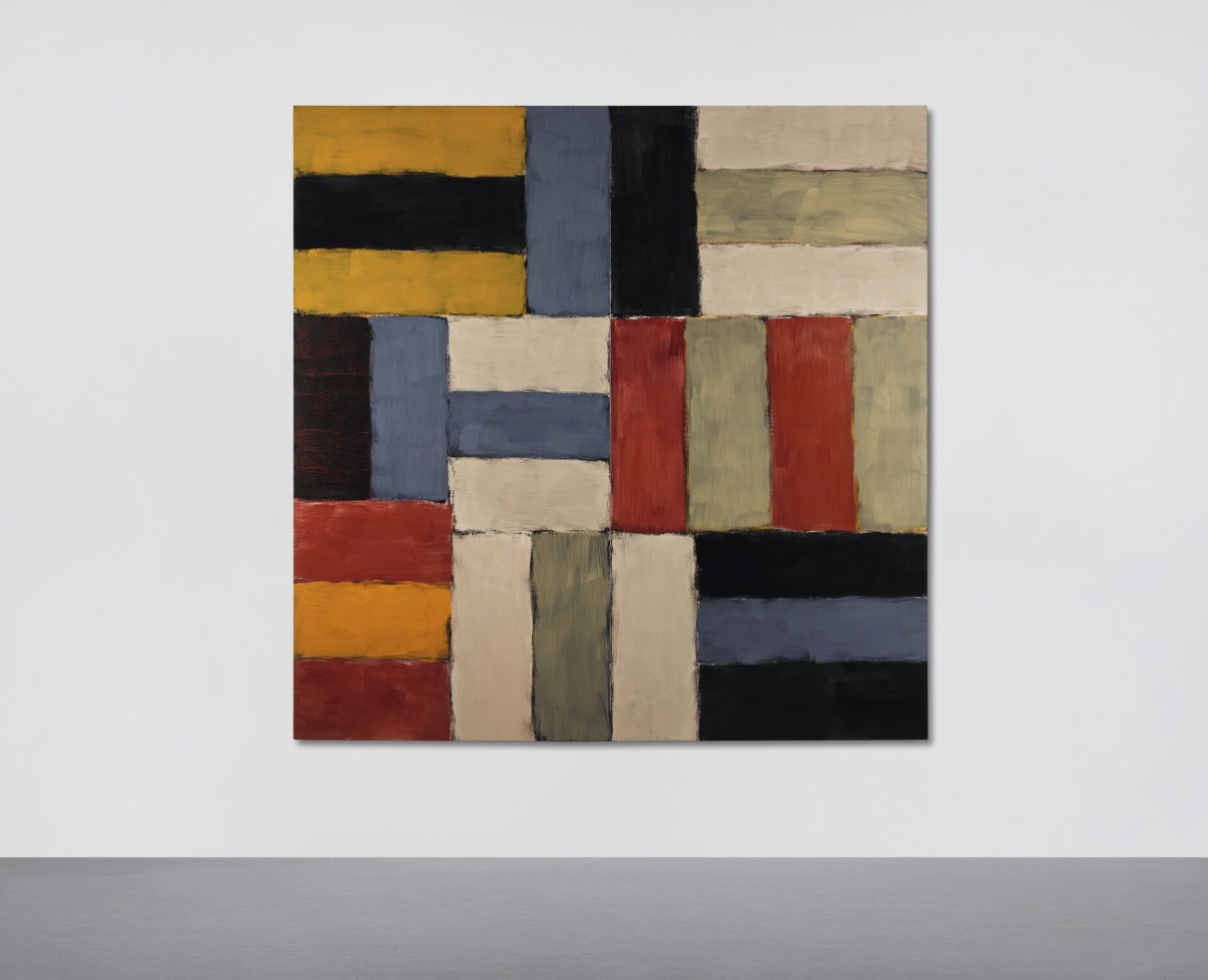
SEAN SCULLY (b. 1945)
Wall of Light Red, 1998
Oil on linen, in two adjoined canvases
96×96 inches (243.8 x 243.8 cm)
Signed Sean Scully, titled Wall of Light Red and dated 1998 (on the reverse)
#2. Living Land, 2006
Christie’s New-York: 12 May 2023
Estimated: USD 800,000 – 1,200,000
USD 1,197,000
SEAN SCULLY (B. 1945), Living Land | Christie’s
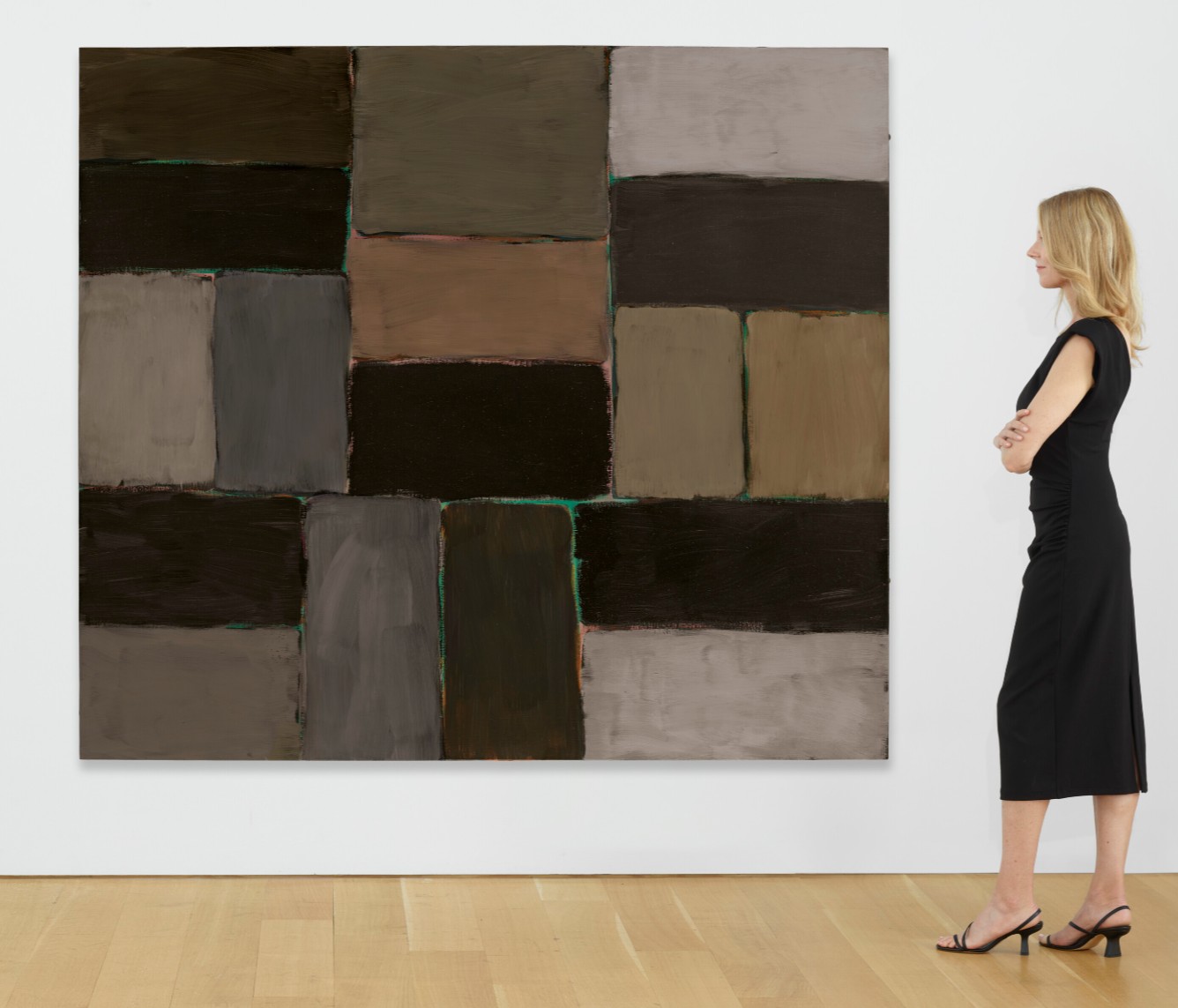
SEAN SCULLY (B. 1945)
Living Land, 2006
Oil on canvas
75×85 inches (190.5 x 215.9 cm)
Signed, titled and dated ‘LIVING LAND Sean Scully 11.06’ (on the reverse)
#3. Red Unfolding, 2009
Christie’s Paris: 19 October 2023
Estimated: EUR 750,000 – 1,200,000
EUR 1,104,800 / USD 1,167,745
Sean Scully (né en 1945), Red Unfolding | Christie’s
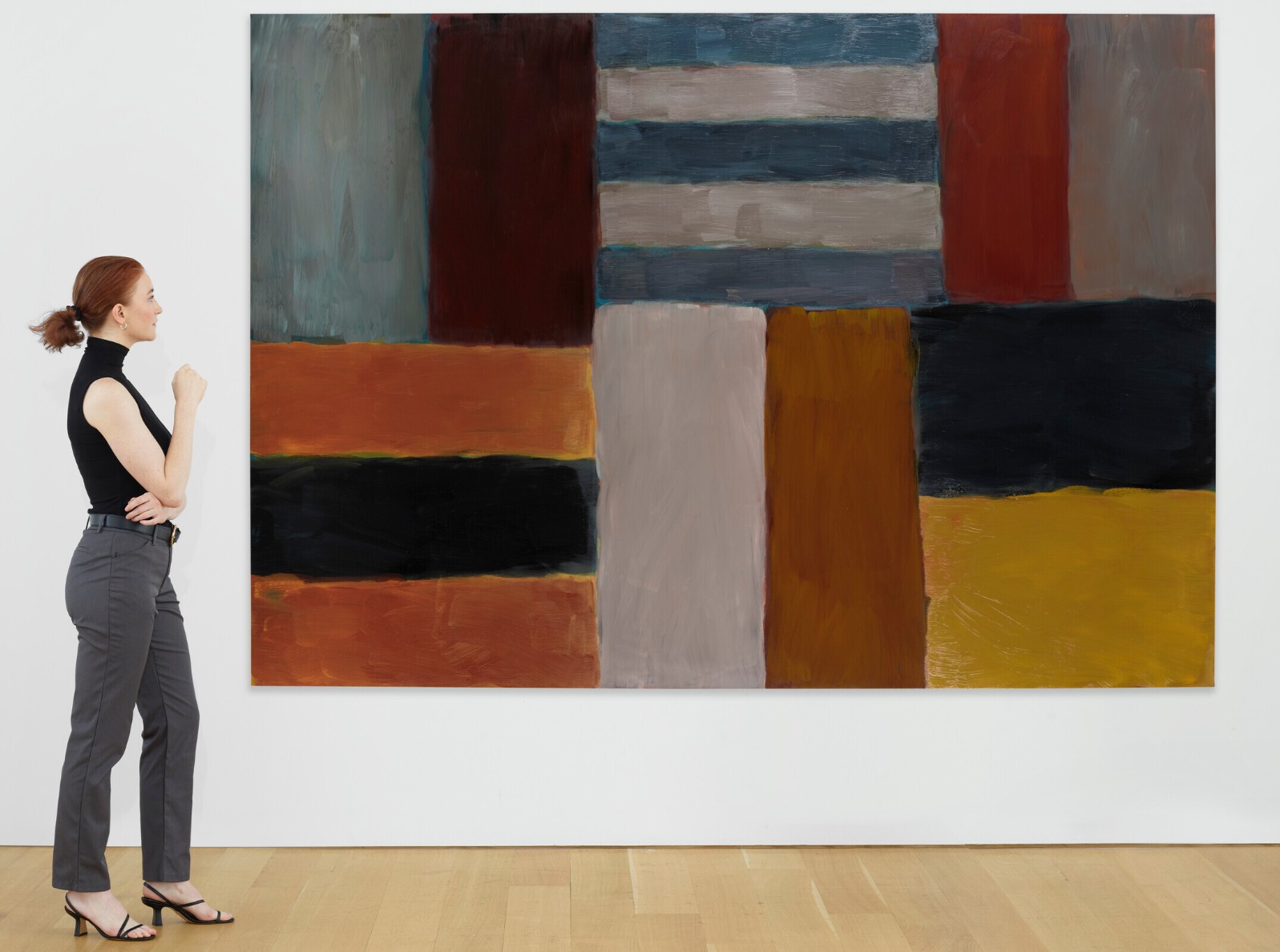
SEAN SCULLY (born 1945)
Red Unfolding, 2009
Oil on canvas
84 x 120 1/4 inches (213.3 x 305.5 cm)
Signed, titled and dated ”’RED UNFOLDING” Sean Scully 2009′ (on the reverse)
#4. Landline Darkest, 2018
Property of an Important Private Collector
Sotheby’s London: 12 October 2023
Estimated: GBP 600,000 – 800,000
GBP 952,500 / USD 1,163,175
Landline Darkest | Contemporary Evening Auction | 2023 | Sotheby’s
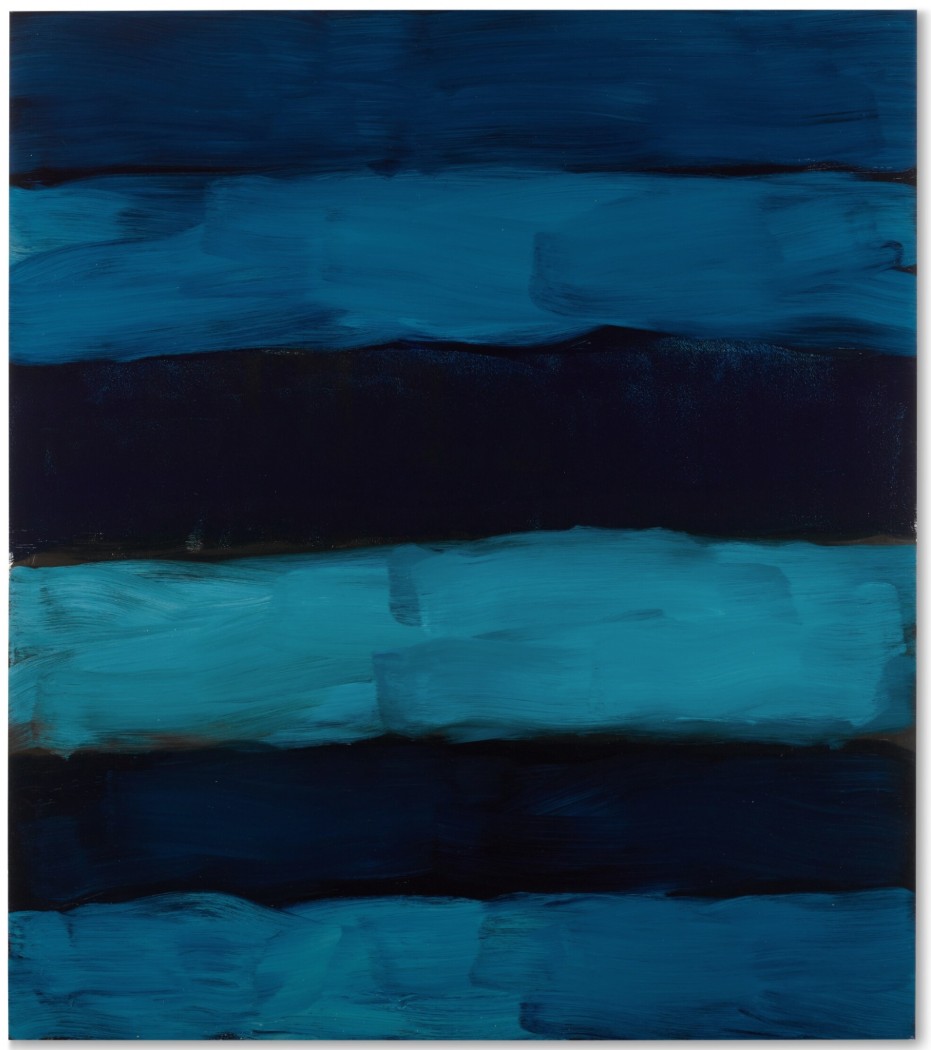
SEAN SCULLY (b. 1945)
Landline Darkest, 2018
Oil on aluminum
84 7/8 x 75 inches (215.5 x 190.5 cm)
Signed, titled and dated 2018 (on the reverse)
#5. Landline Magenta Green Sea, 2015
Christie’s New-York: 10 November 2023
Estimated: USD 800,000 – 1,200,000
USD 1,134,000
SEAN SCULLY (B. 1945), Landline Magenta Green Sea | Christie’s
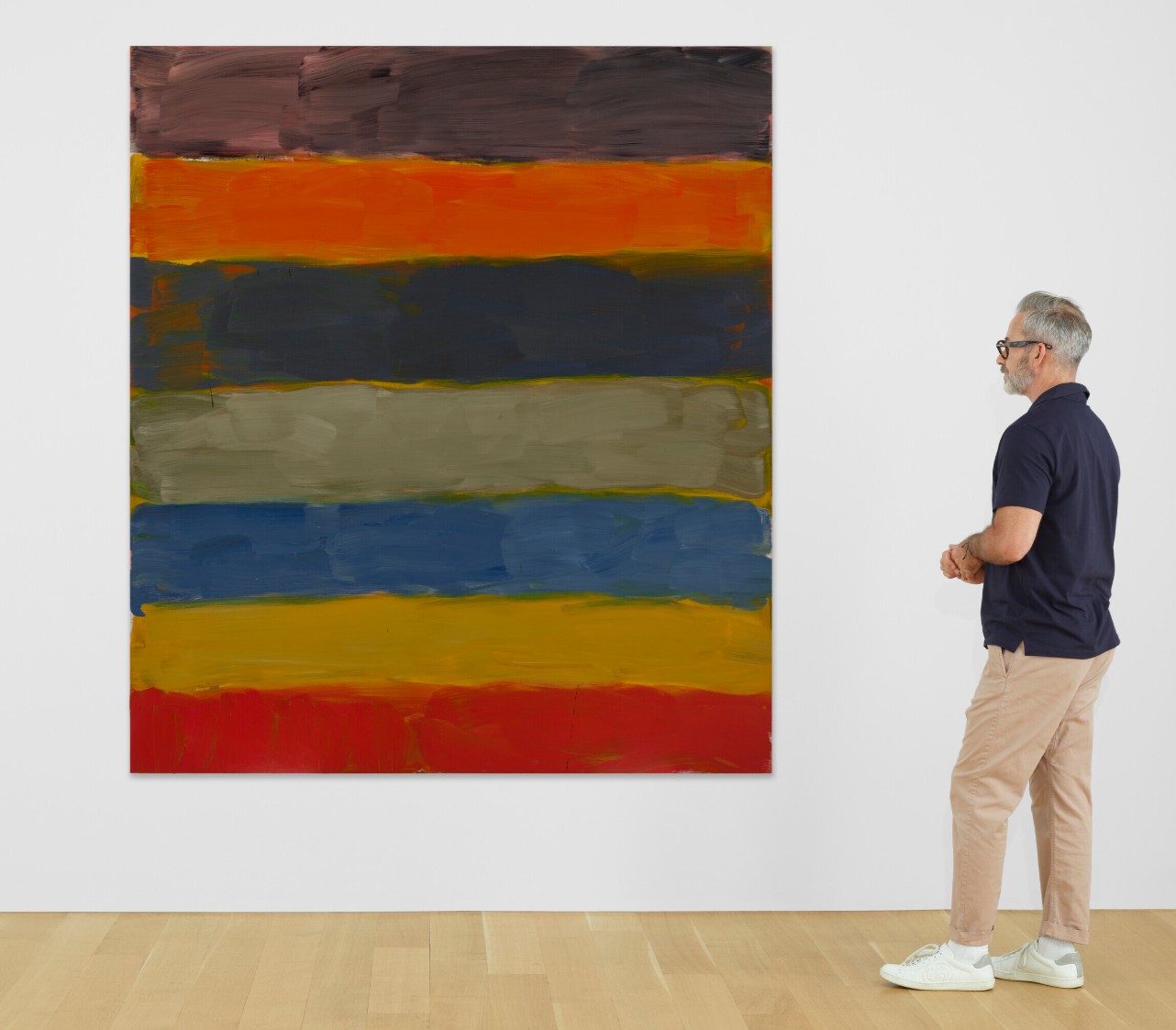
SEAN SCULLY (B. 1945)
Landline Magenta Green Sea, 2015
Oil on aluminum
85×75 inches (215.9 x 190.5 cm)
Signed, titled and dated ‘LANLINE [sic] MAGENTA GREEN SEA Sean Scully 2015’ (on the reverse)
#6. Red Light, 1999
Property from an Important European Collection
Sotheby’s New-York: 19 May 2023
Estimated: USD 900,000 – 1,200,000
USD 1,079,500
Red Light | Contemporary Day Auction | 2023 | Sotheby’s
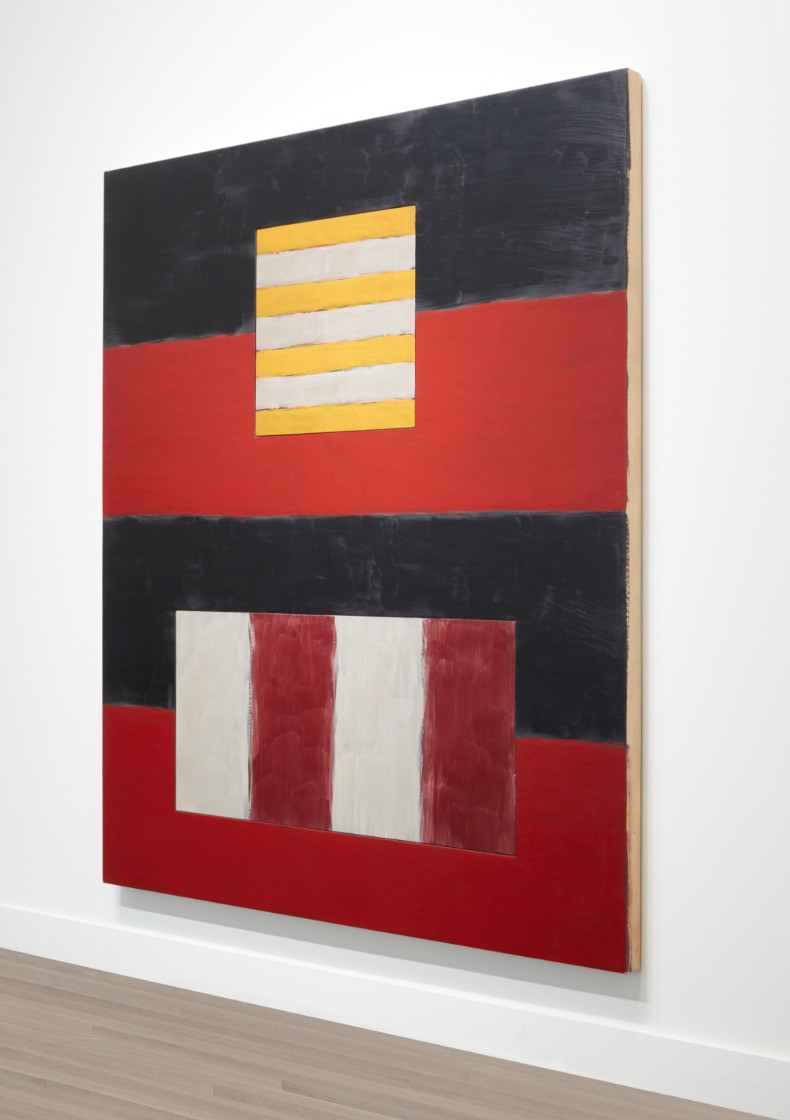
SEAN SCULLY (b. 1945)
Red Light, 1999
Oil on canvas mounted on board, in 3 joined parts
96 1/8 x 83 3/4 x 3 5/8 inches (244 x 212.7 x 9.2 cm)
USD 1 million
#7. Stare Red Yellow, 1997
Christie’s London: 28 February 2023
Estimated: GBP 600,000 – 800,000
GBP 819,000 / USD 990,545
SEAN SCULLY (B. 1945), Stare Red Yellow | Christie’s
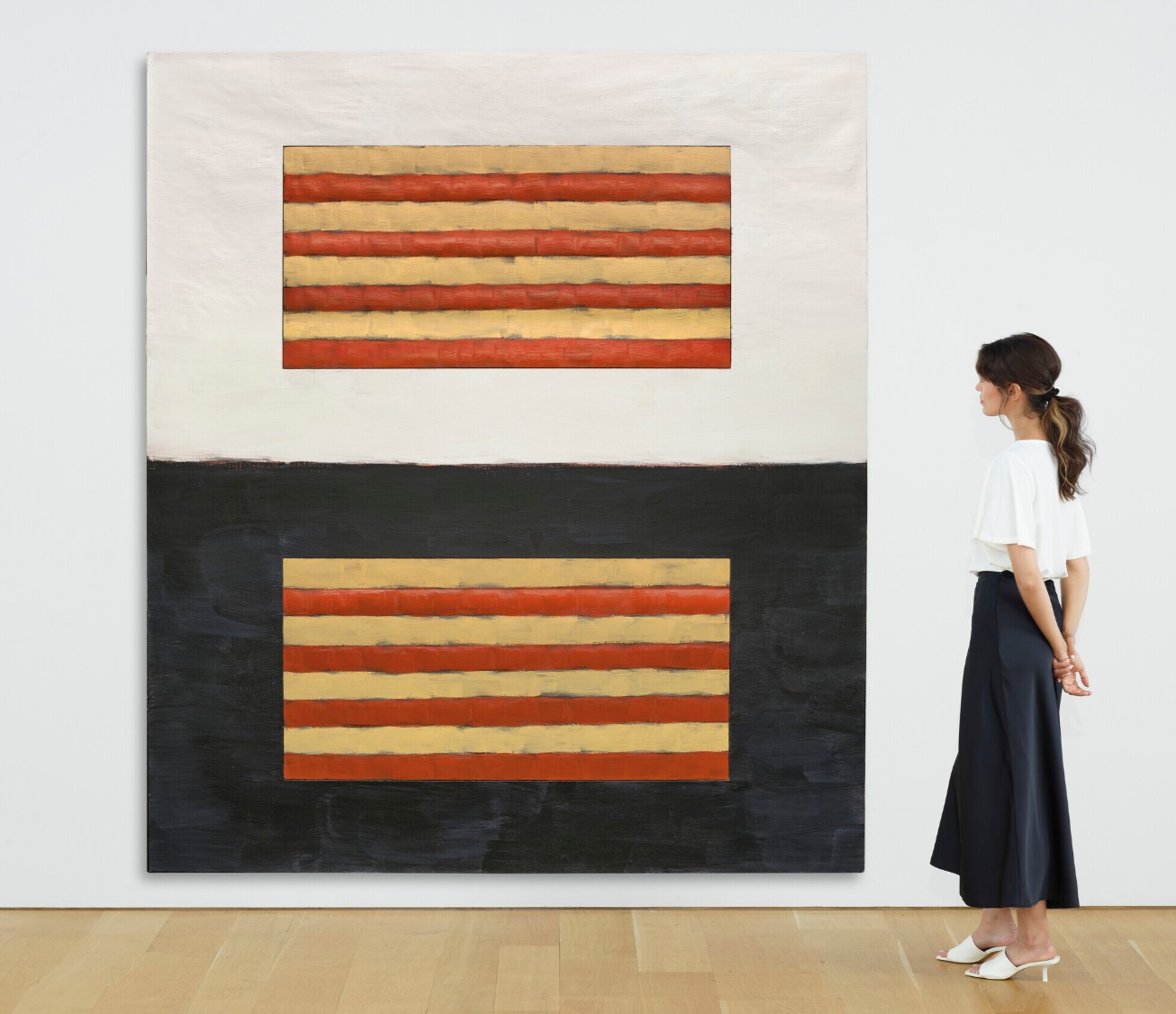
SEAN SCULLY (B. 1945)
Stare Red Yellow, 1997
Oil on three attached canvases
96×84 inches (243.7 x 213.4 cm)
Signed, titled and dated ‘STARE YELLOW RED Sean Scully 8/1997’ (on the reverse)
#8. Landline Beach, 2014
A Life of Beauty: The Collection of John Cheim
Sotheby’s New-York: 16 November 2023
Estimated: USD 700,000 – 1,000,000
USD 960,600
Landline Beach | Contemporary Day Auction | 2023 | Sotheby’s
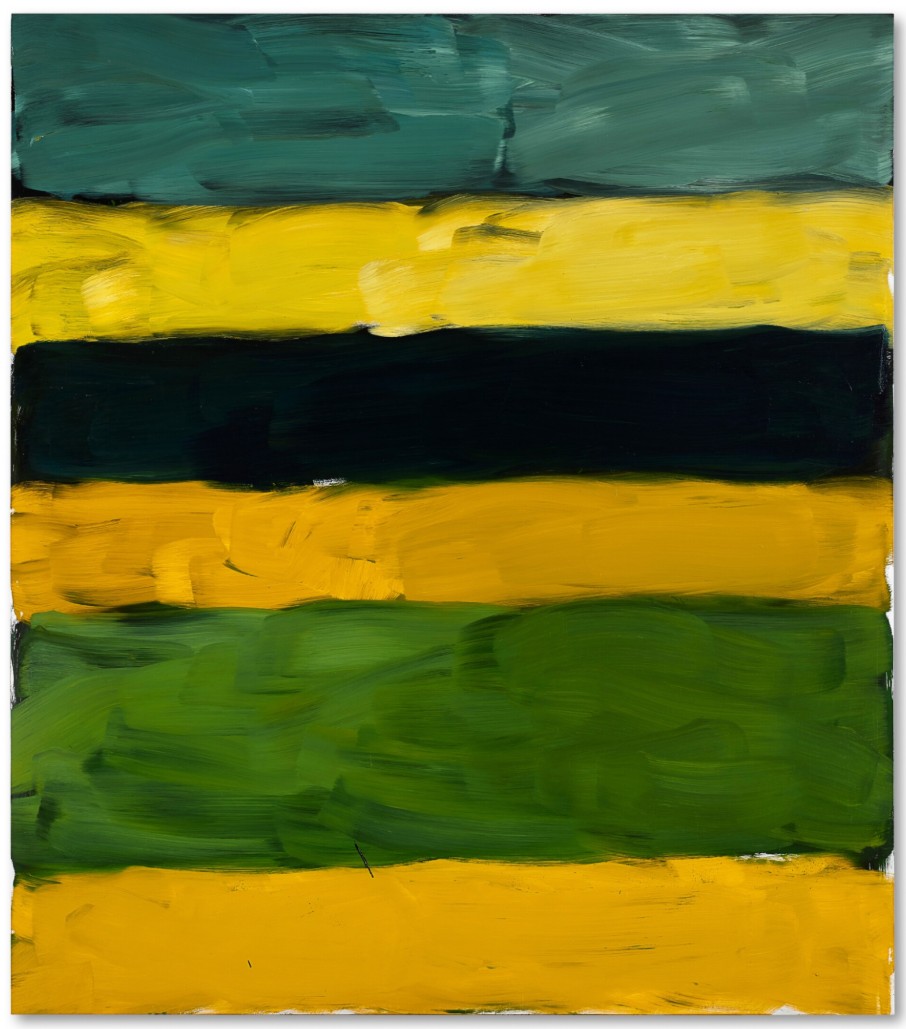
SEAN SCULLY (b. 1945)
Landline Beach, 2014
Oil on aluminum
85×75 inches (215.9 x 190.5 cm)
Signed, titled and dated 2014 (on the reverse)
#9. Barcelona Red Black Pink, 2013
The Collection of Phyllis & Jerome Lyle Rappaport
Sotheby’s London: 27 June 2023
Estimated: GBP 500,000 – 700,000
GBP 698,500 / USD 888,610
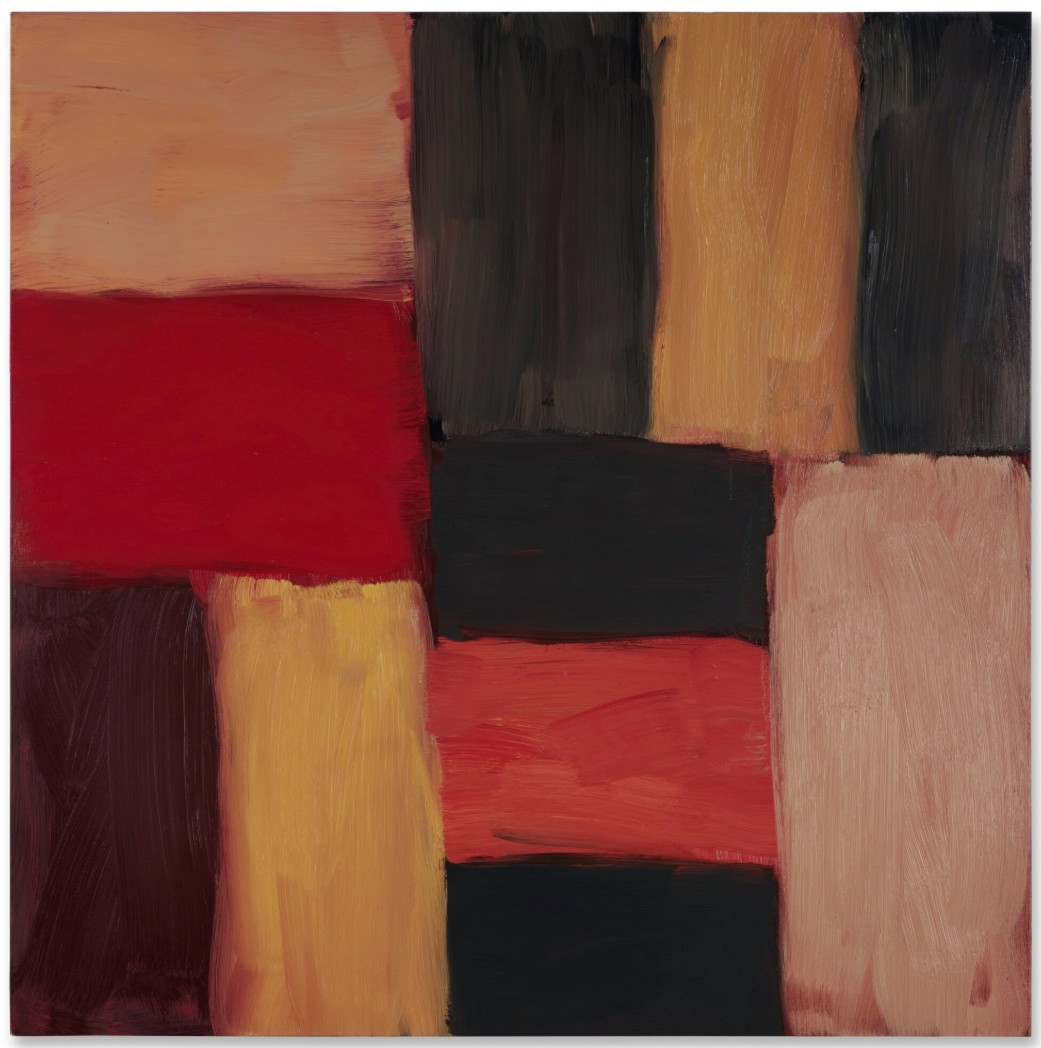
SEAN SCULLY (b. 1945)
Barcelona Red Black Pink, 2013
Oil on linen
60 1/8 x 60 1/8 inches (152.7 x 152.7 cm)
Signed and titled (on the reverse)
#10. Raval Rojo, 2004
Morgan O’Driscoll Dublin: 18 April 2023
Estimated: EUR 400,000 – 600,000
EUR 580,000 (Hammer)
EUR 696,000 / USD 755,640
Lot 31 – ‘Raval Rojo (2004)’ by Sean Scully | Morgan O’Driscoll
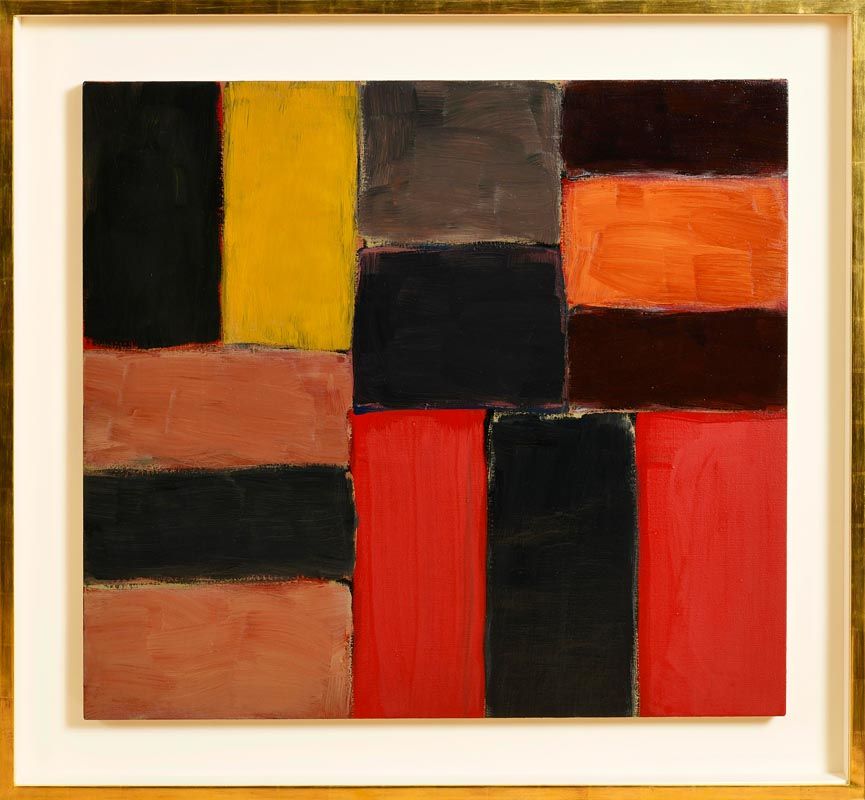
SEAN SCULLY (b.1945)
Raval Rojo, 2004
Oil on linen
36-1/8 x 40-1/8 inches (92×102 cm)
Signed, dated ‘Sean Scully 9.04’ and titled verso
#11. Barcelona Red Mirror, 2004
Sotheby’s London: 28 June 2023
Estimated: GBP 400,000 – 600,000
GBP 482,600 / USD 615,380
Barcelona Red Mirror | Modern & Contemporary Day Auction | 2023 | Sotheby’s
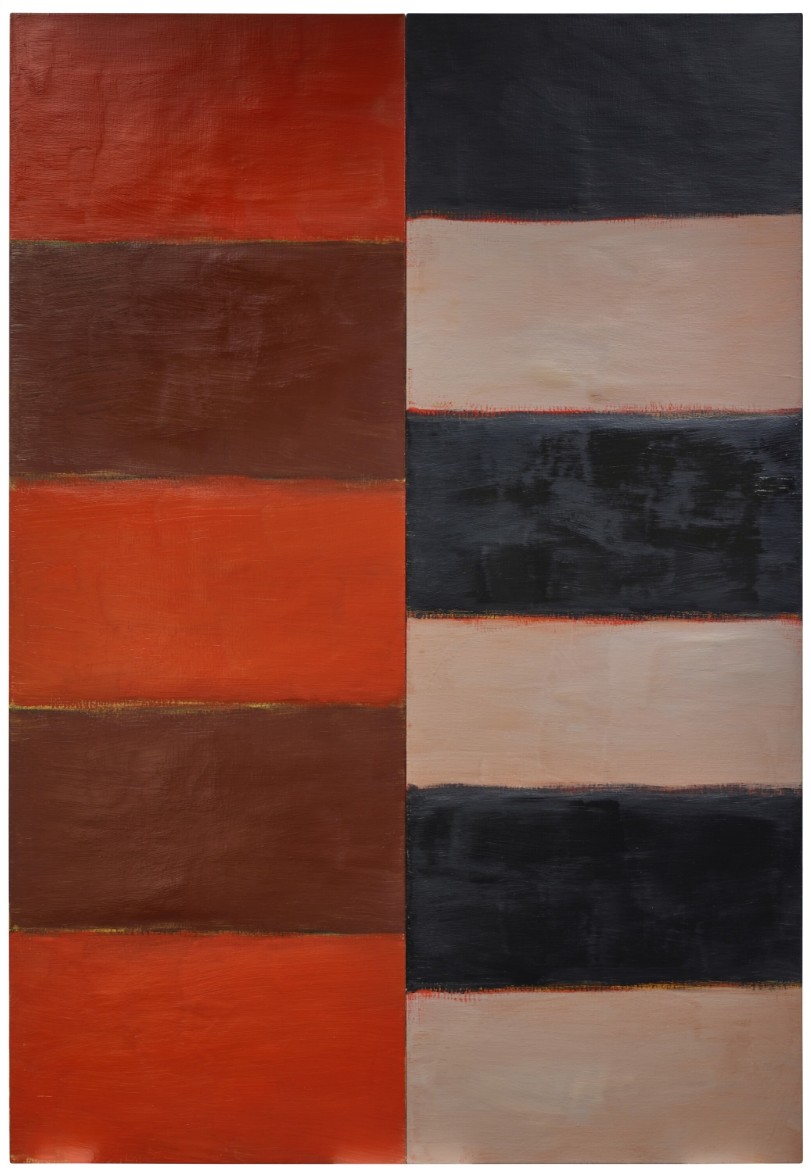
SEAN SCULLY (b. 1945)
Barcelona Red Mirror, 2004
Oil on linen, in two parts
Each: 90×31 inches (228.5 x 78.7 cm)
Overall: 90×62 inches (228.5 x 157.4 cm)
i. Signed and dated 04 on the reverse
ii. Titled on the reverse
#12. Samar, 1990
Ketterer Kunst Munich: 9 June 2023
Estimated: EUR 180,000
EUR 406,400 / USD 479,550
Ketterer Kunst, Art auctions, Book auctions Munich, Hamburg & Berlin
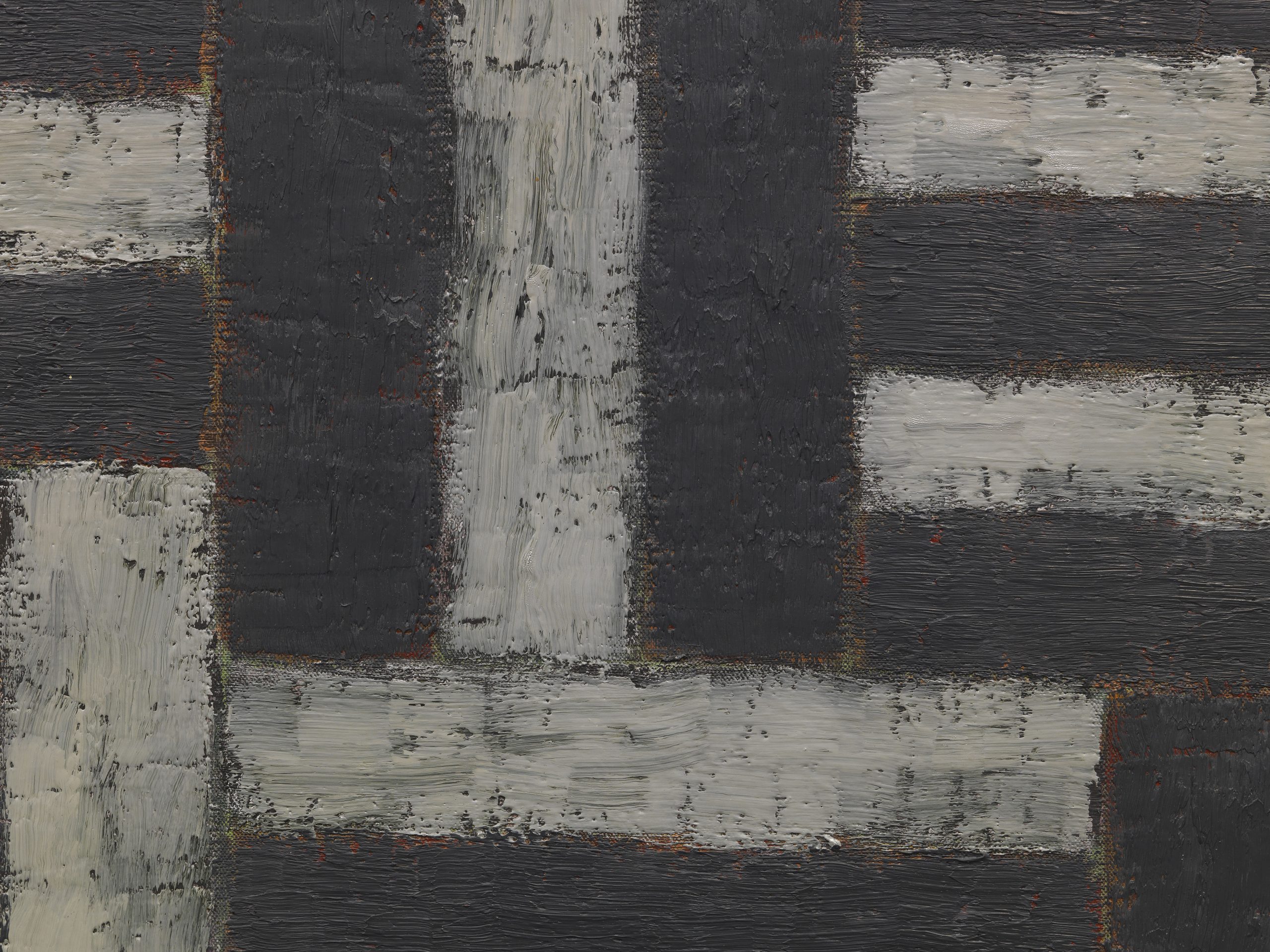
SEAN SCULLY
Samar, 1990
Oil on canvas
30-1/8 x 30-1/8 inches (76.5 x 76.5 cm)
Signed, dated, titled and inscribed with the dimensions on the reverse
Additionally signed, dated and titled on the stretcher
#13. Cut Ground Blue Grey, 2011
Ketterer Kunst Munich: 8 December 2023
Estimated: EUR 300,000
EUR 406,400 / USD 479,550
Ketterer Kunst, Art auctions, Book auctions Munich, Hamburg & Berlin
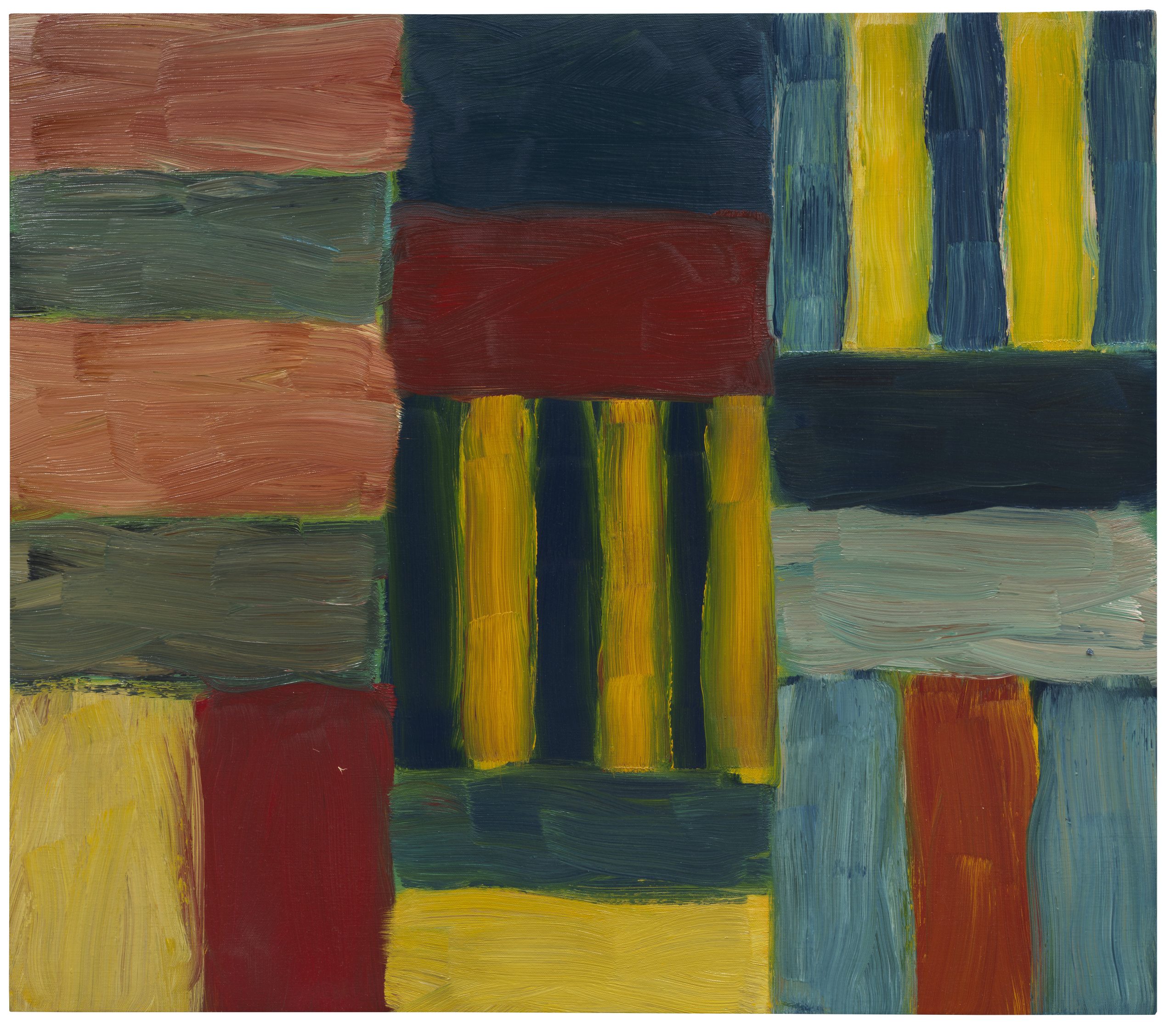
SEAN SCULLY
Cut Ground Blue Grey, 2011
Oil on canvas
28-1/8 x 32 inches (71.8 x 81.5 cm)
Signed, dated and titled on the reverse
#14. Wall Yellow Pale, 2016
Phillips London: 30 June 2023
Estimated: GBP 250,000 – 350,000
GBP 304,800 / USD 387,350
Sean Scully 20th Century to Now
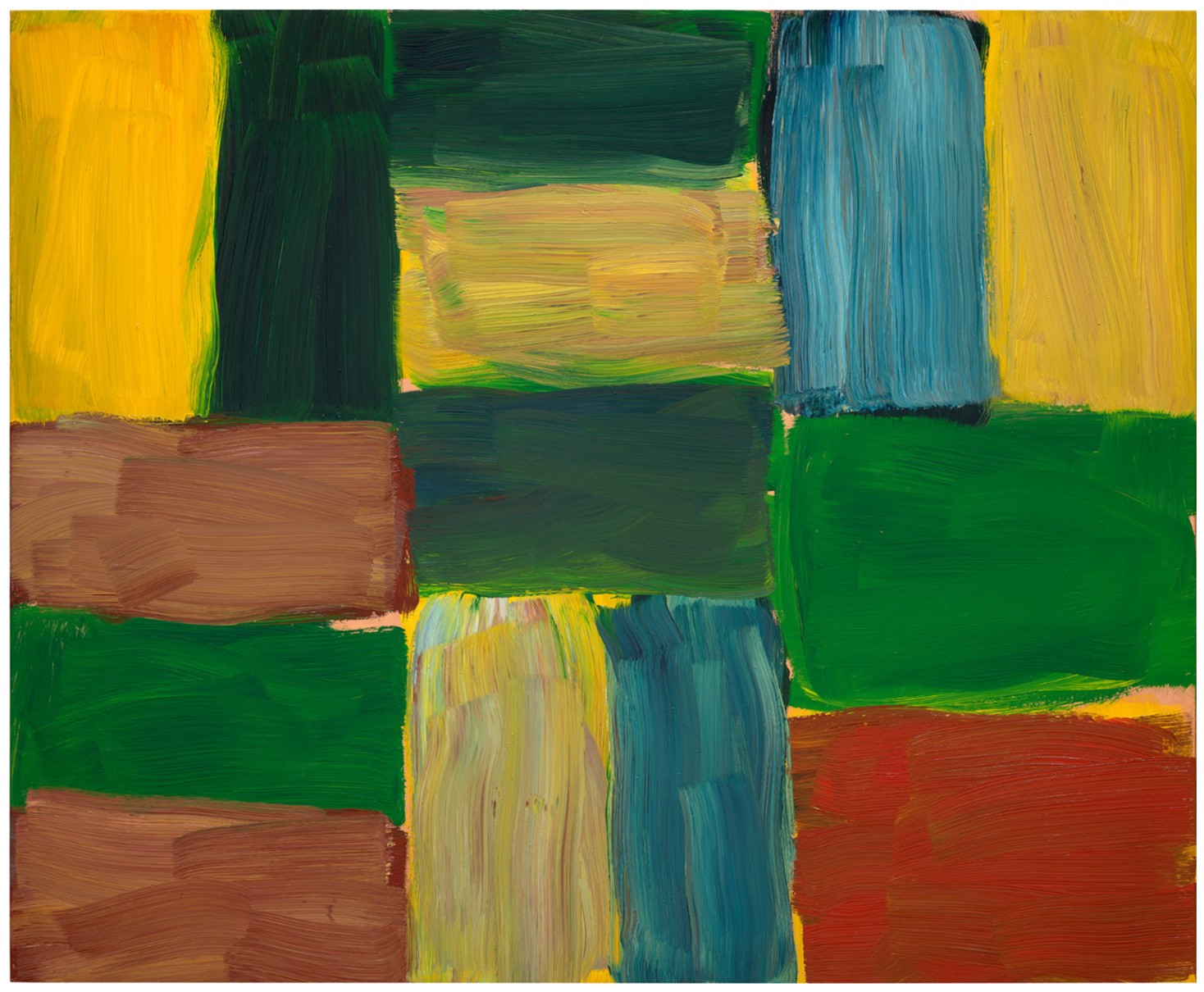
SEAN SCULLY
Wall Yellow Pale, 2016
Oil on copper
27 5/8 x 33 5/8 inches (70.3 x 85.3 cm)
Signed, titled and dated ‘WALL YELLOW PALE Sean Scully 2016 Sean Scully’ on the reverse
#15. Untitled, 1990
Phillips London: 12 October 2023
Estimated: GBP 180,000 – 200,000
GBP 292,100 / USD 356,705
Sean Scully 20th Century & Contemporary Art Day Sale
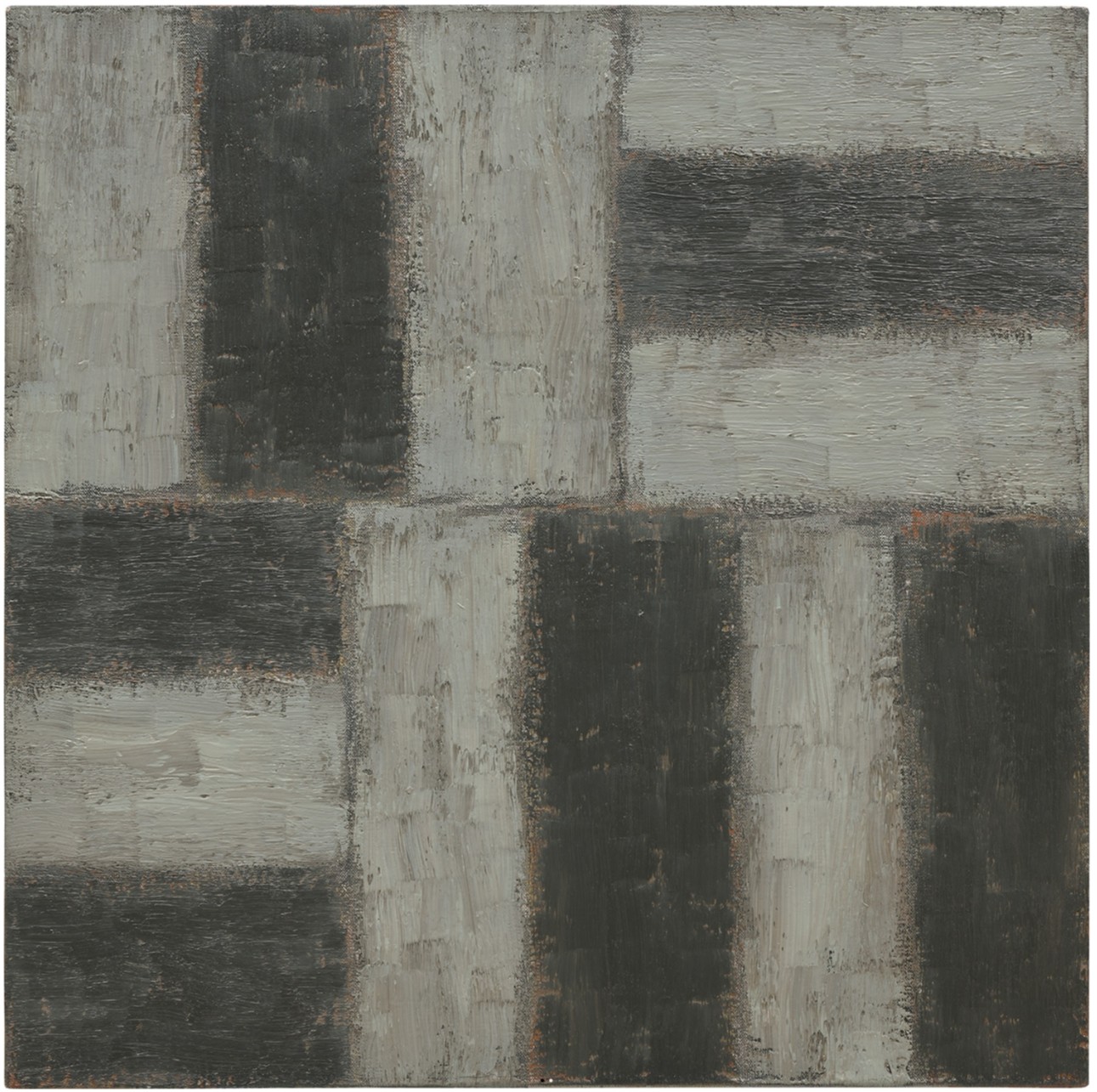
SEAN SCULLY
Untitled, 1990
Oil on linen
30 1/8 x 30 1/4 inches (76.6 x 76.9 cm)
Signed and dated ‘Sean Scully 1990’ on the reverse
#16. Floating Diptych Black White, 1990
A Life in Art: The Mallin Collection
Sotheby’s New-York: 23 February 2023
Estimated: USD 30,000 – 40,000
USD 279,400
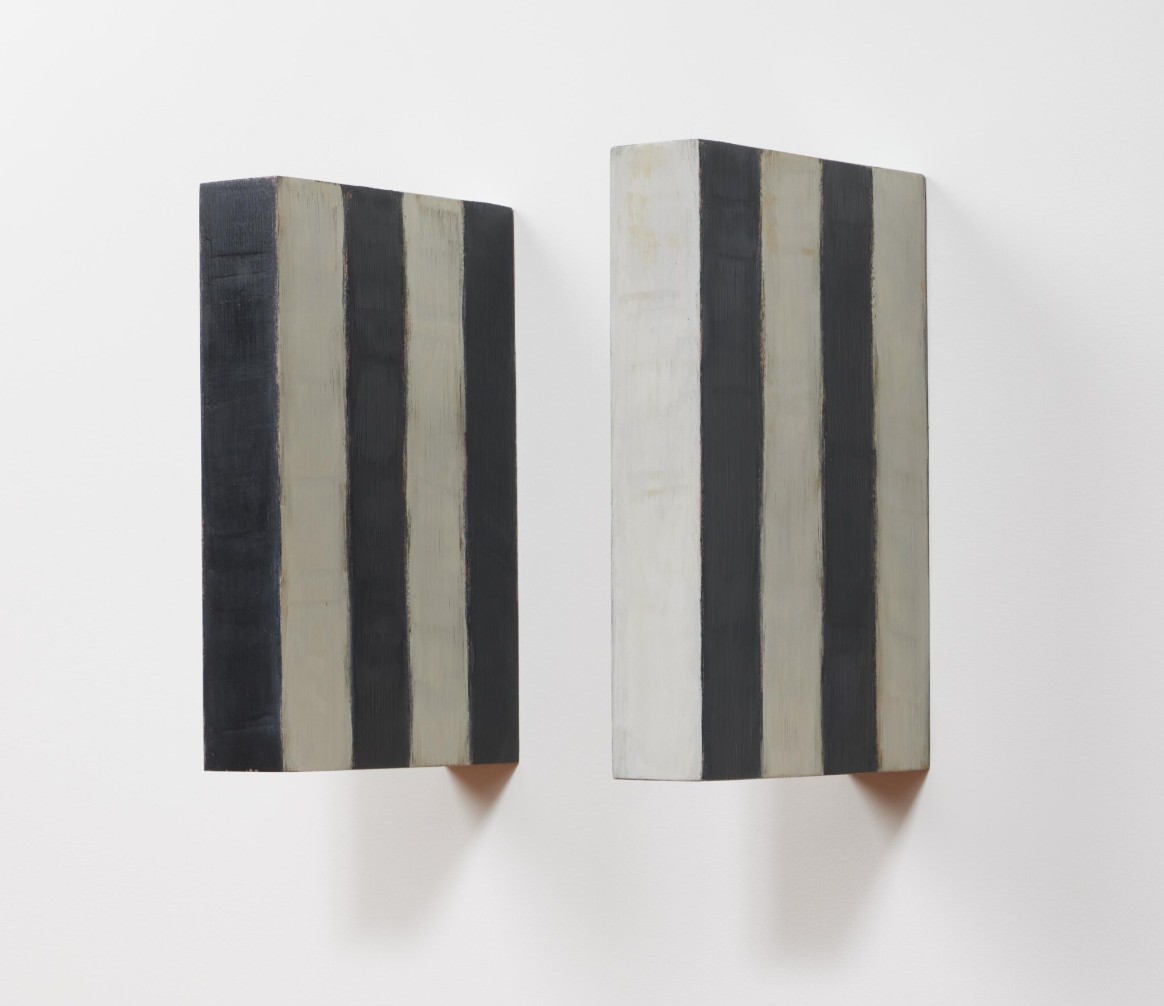
SEAN SCULLY (b. 1945)
Floating Diptych Black White, 1990
Oil on aluminum, in two parts
Each: 15 x 2-5/8 x 10 inches (38.1 x 6.7 x 25.4 cm)
#17. Yellow Line, 2005
Sotheby’s London: 2 March 2023
Estimated: GBP 100,000 – 150,000
GBP 139,700 / USD 166,795
Yellow Line | Modern & Contemporary Day Auction | 2023 | Sotheby’s
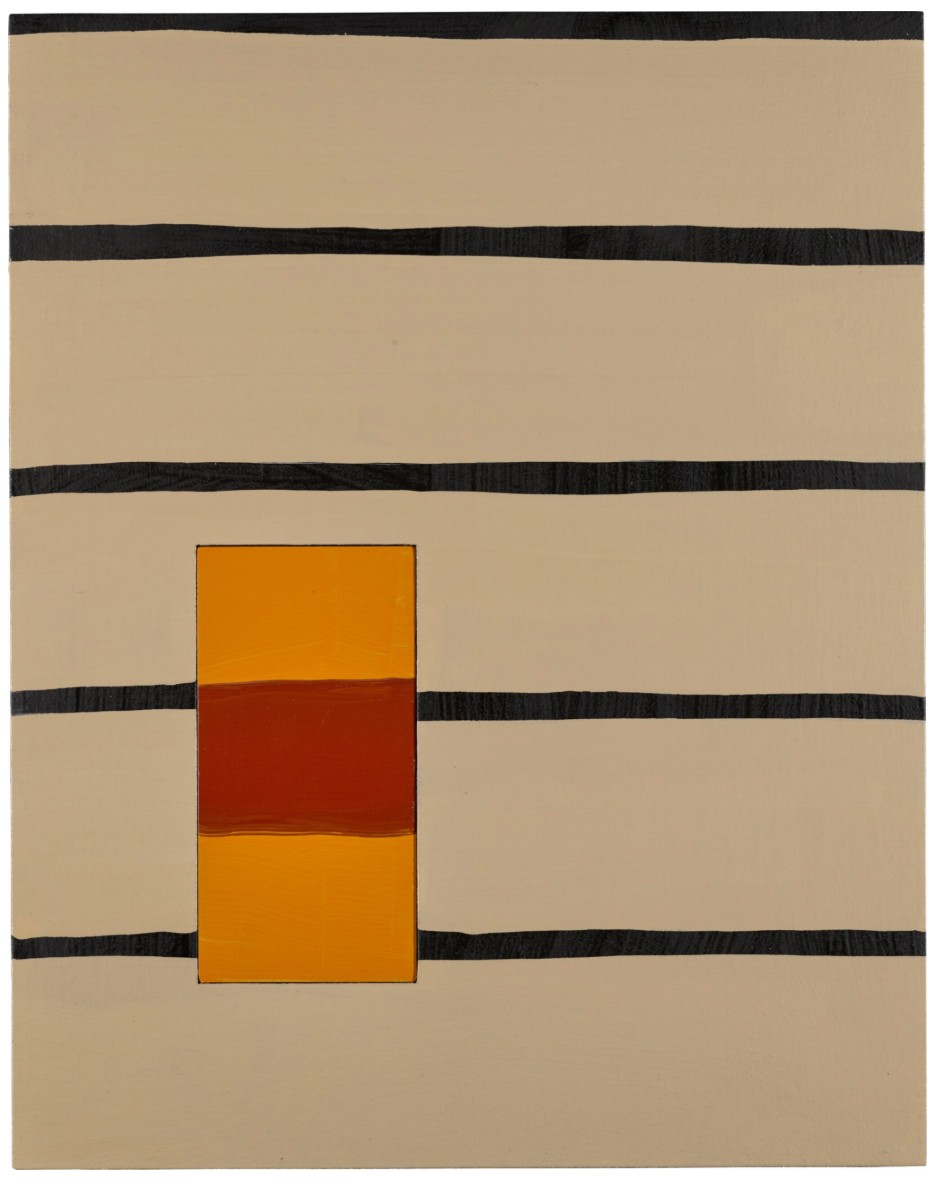
SEAN SCULLY (b. 1945)
Yellow Line, 2005
Oil on linen, on two adjoined panels
25 x 19-3/4 inches (63.5 x 50.2 cm)
Signed and dated 05 on a label affixed to the reverse
2022 Auction Results
FOR PAINTINGS ONLY
9 Paintings sold at auction in 2022 for a total turnover of USD 5,078,420. With no lot failing to sell, the sell-through rate is 100%. The highest price of 2022 was achieved by Song, a painting dated 1985, from The Collection of Marcia and Stanley Gumberg, sold at Sotheby’s, in New-York, on 19 May 2022, for USD 2,046,500, setting a new auction record for the artist.
2022 Top 3 Lots
This is the only Painting that sold for more than USD 1 million in 2022.
XXXXXXXXXX
#1. Song, 1985
Drawn Together: The Collection of Marcia and Stanley Gumberg
Sotheby’s New-York: 19 May 2022
Estimated: USD 800,000 – 1,200,000
USD 2,046,500
AUCTION RECORD FOR THE ARTIST
Song | Contemporary Evening Auction | 2022 | Sotheby’s
SEAN SCULLY (b. 1945)
Song, 1985
Oil on canvas, in three parts
90 x 110 x 11 1/4 inches (228.6 x 279.4 x 28.6 cm)
Signed Sean Scully
Titled Song and dated 7.85 (on the reverse)
Titled Song (on the stretcher)
USD 1 million
#2. Landline Yellow Yellow, 2014
Sotheby’s London: 29 June 2022
Estimated: GBP 600,000 – 800,000
GBP 756,000 / USD 918,290
Landline Yellow Yellow | British Art: The Jubilee Auction | 2022 | Sotheby’s
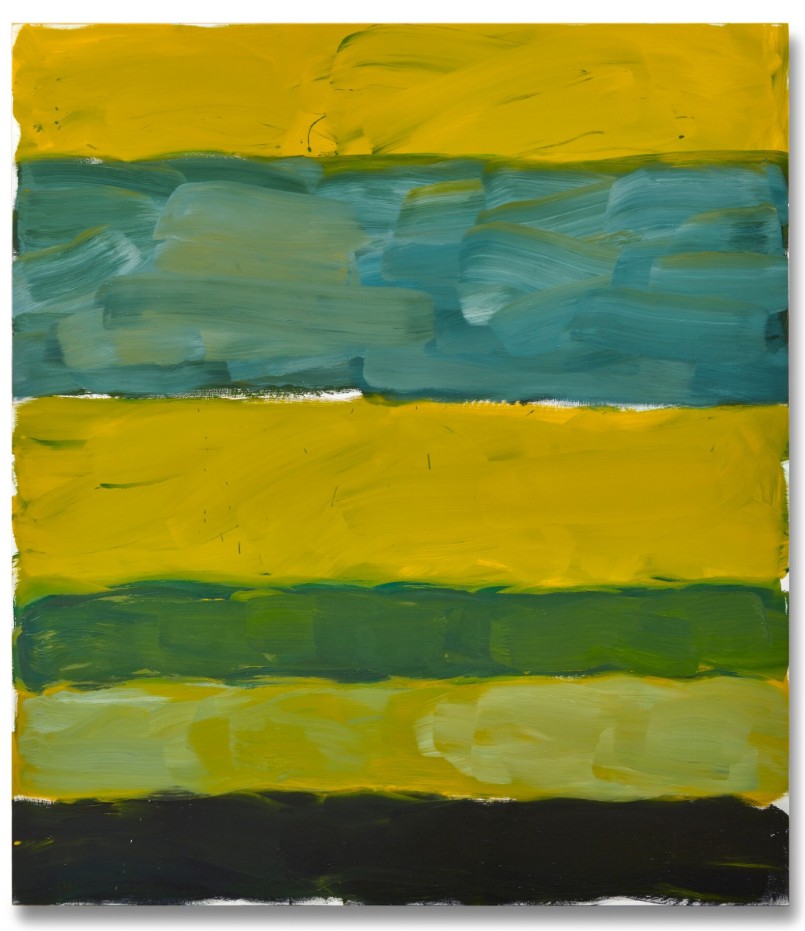
SEAN SCULLY (b. 1945)
Landline Yellow Yellow, 2014
Oil on aluminum
85 1/4 x 74 7/8 inches (216.5 x 190 cm)
Signed Sean Scully, titled Landline Yellow Yellow and dated 2014 (on the reverse)
#3. Shadowing, 1984
Phillips New-York: 19 May 2022
Estimated: USD 450,000 – 650,000
USD 604,800
Sean Scully 20th Century & Contemporary Art Day Sale, Afternoon Session
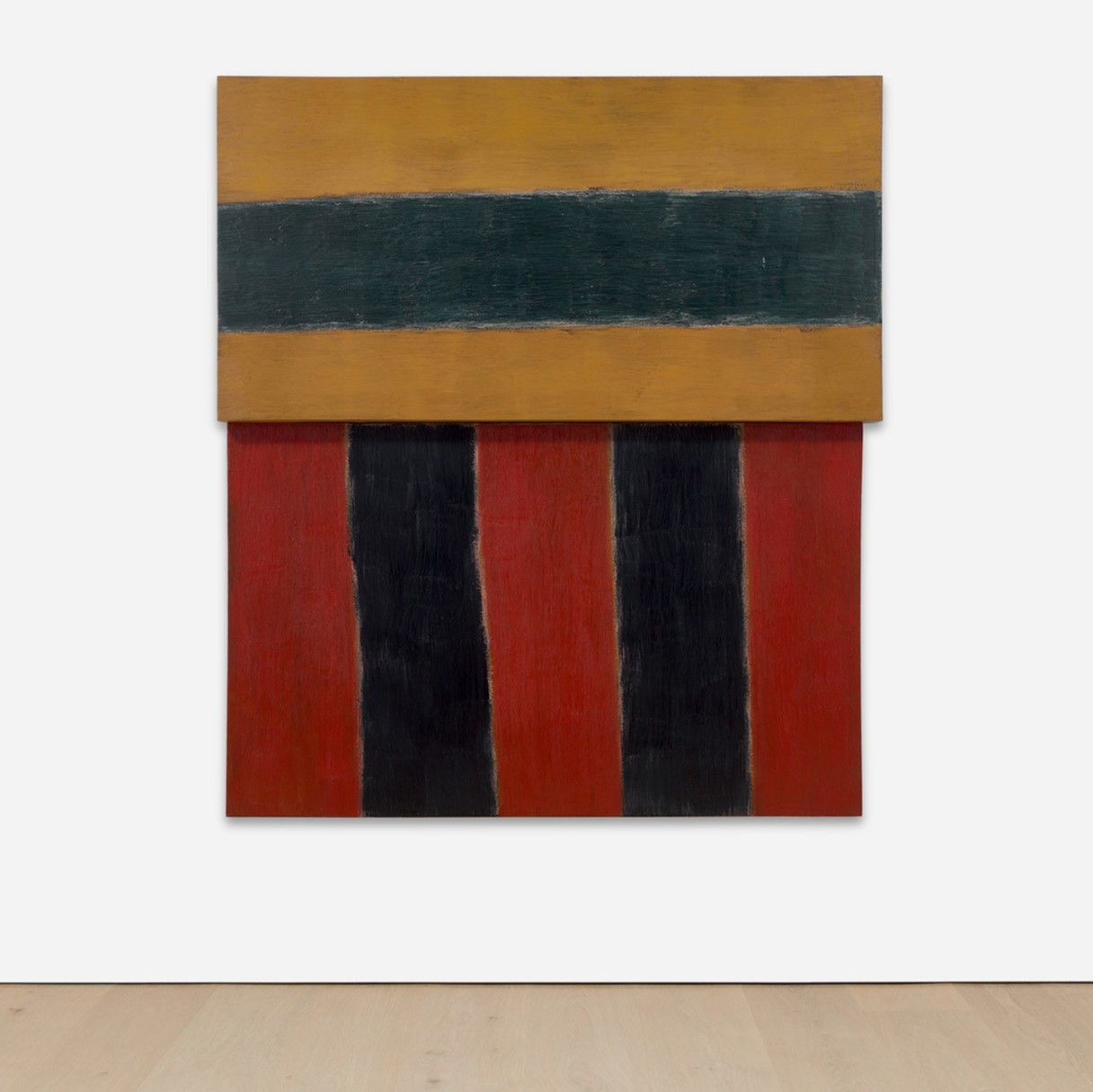
SEAN SCULLY
Shadowing, 1984
Oil on two attached canvases
80 3/4 x 72 1/4 inches (205.1 x 183.5 cm)
Signed, titled and dated “Sean Scully 84 SHADOWING” on the reverse
#4. Cut Ground Pale Green 7.11, 2011
Christie’s New-York: 18 November 2022
Estimated: USD 250,000 – 350,000
USD 504,000
SEAN SCULLY (B. 1945), Cut Ground Pale Green 7.11 | Christie’s
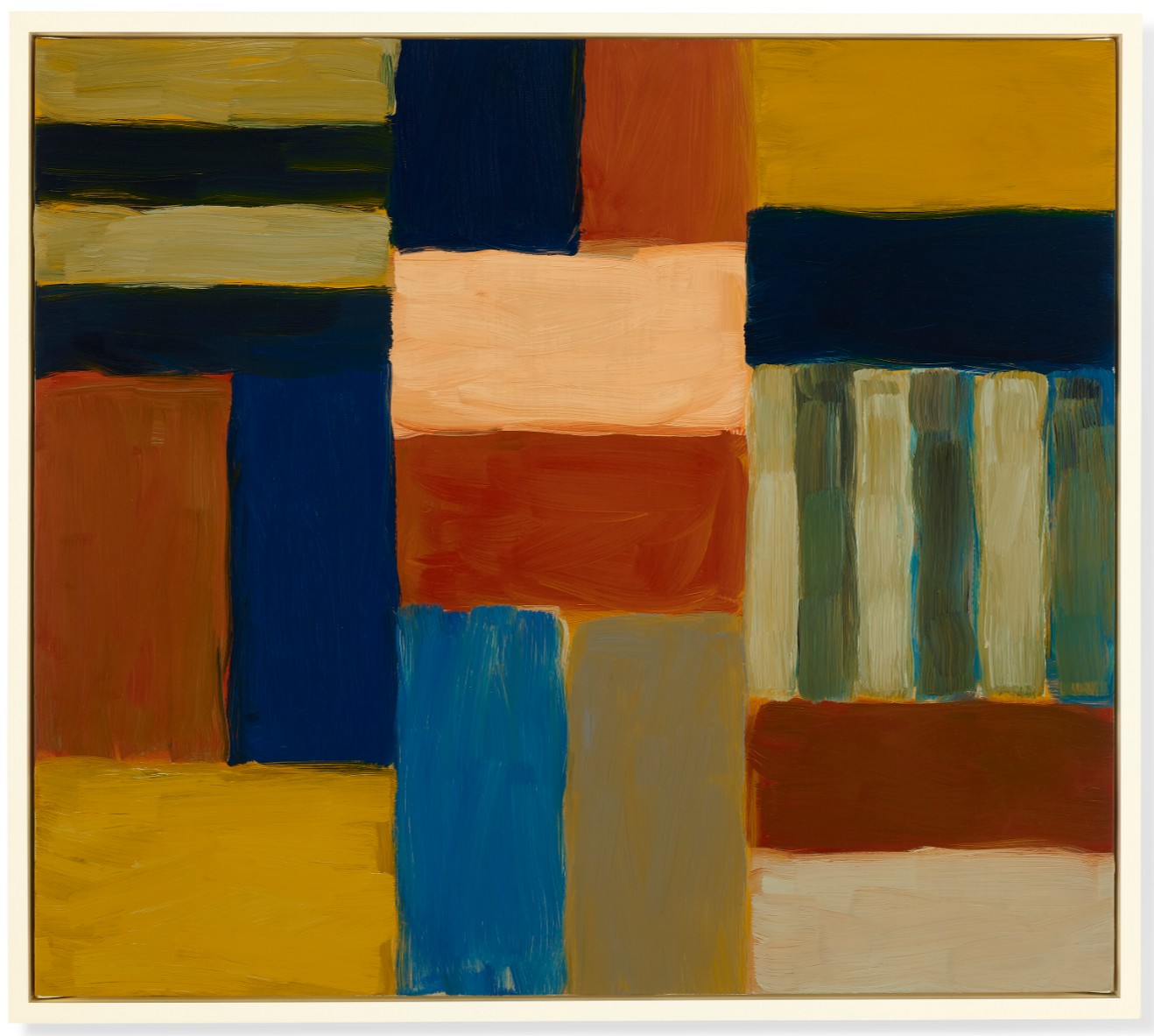
SEAN SCULLY (B. 1945)
Cut Ground Pale Green 7.11, 2011
Oil on canvas mounted on wood
28 x 31 7/8 inches (71.1 x 81 cm)
Signed, titled and dated ‘CUT GROUND PALE GREEN Sean Scully 7.11’ (on the reverse)
#5. Green Light, 1972-1973
Phillips New-York: 16 November 2022
Estimated: USD 250,000 – 350,000
USD 315,000
Sean Scully 20th Century & Contemporary Art Day Sale, Afternoon Session
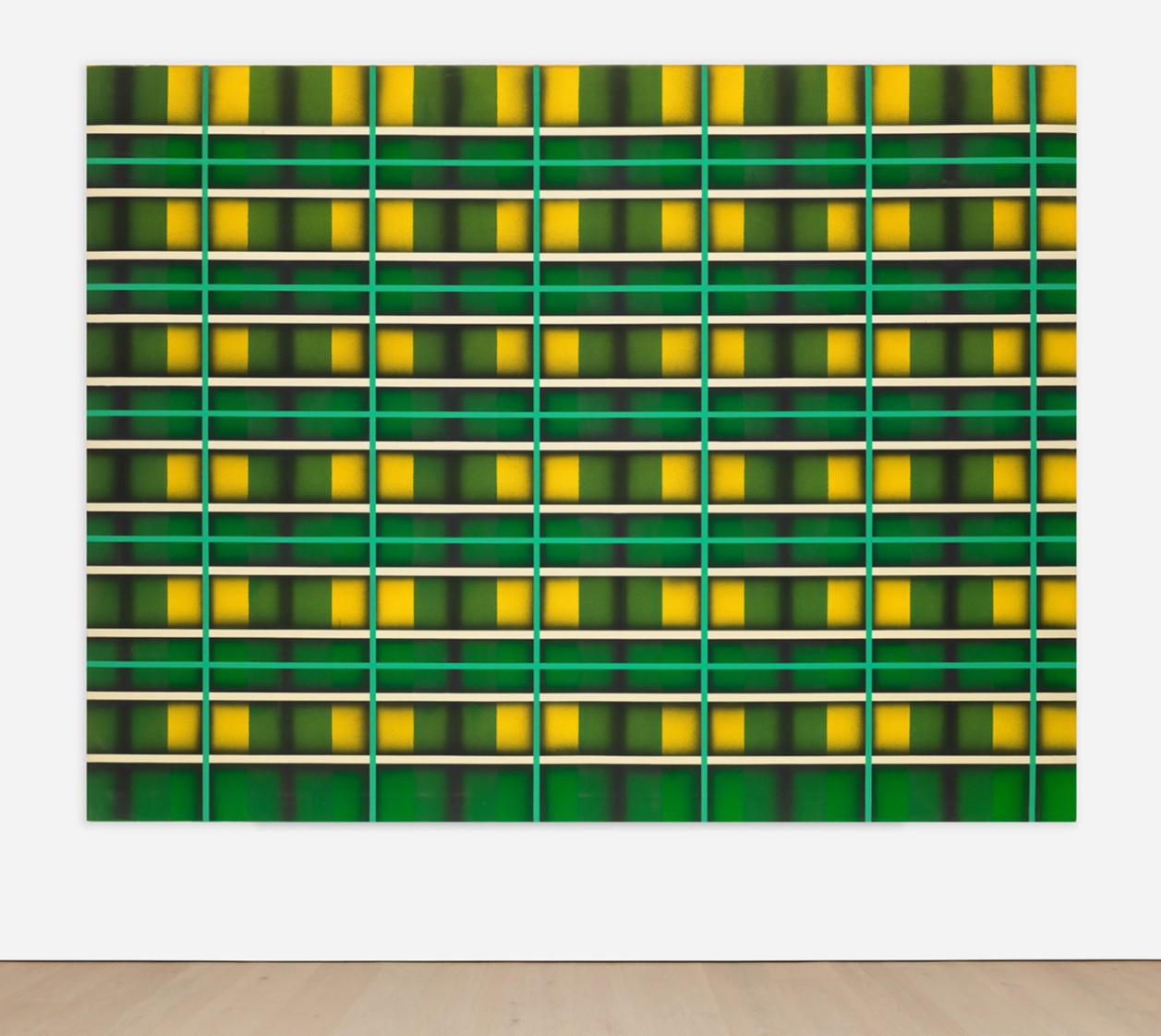
SEAN SCULLY
Green Light, 1972-1973
Acrylic on canvas
96×127 inches (243.8 x 322.6 cm)
Signed “Sean Scully” on the reverse
#6. Horizontals: Grey #2, 1976
Phillips London: 13 October 2022
Estimated: GBP 120,000 – 180,000
GBP 195,300 / USD 216,650
Sean Scully 20th Century & Contemporary Art Day Sale
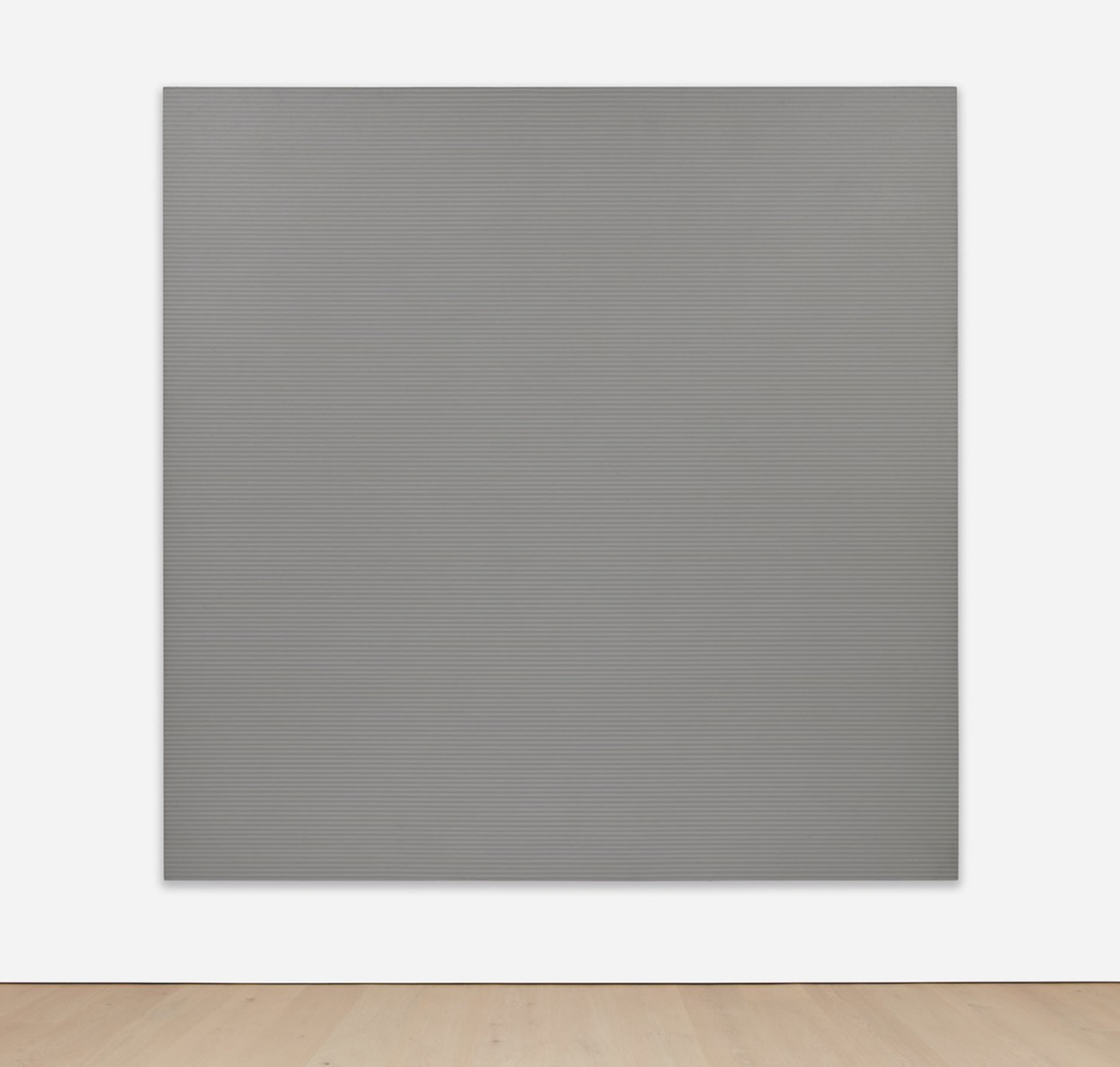
SEAN SCULLY
Horizontals: Grey #2, 1976
Acrylic on canvas
84×84 inches (213.4 x 213.4 cm)
Signed, titled and dated ‘Sean Scully HORIZONTALS: GREY #2 1976’ on the reverse
#7. Grey-Black Diptych, 1977
Sotheby’s London: 3 March 2023
Estimated: GBP 80,000 – 120,000
GBP 151,200 / USD 201,425
Grey-Black Diptych | Modern & Contemporary Day Auction | 2022 | Sotheby’s
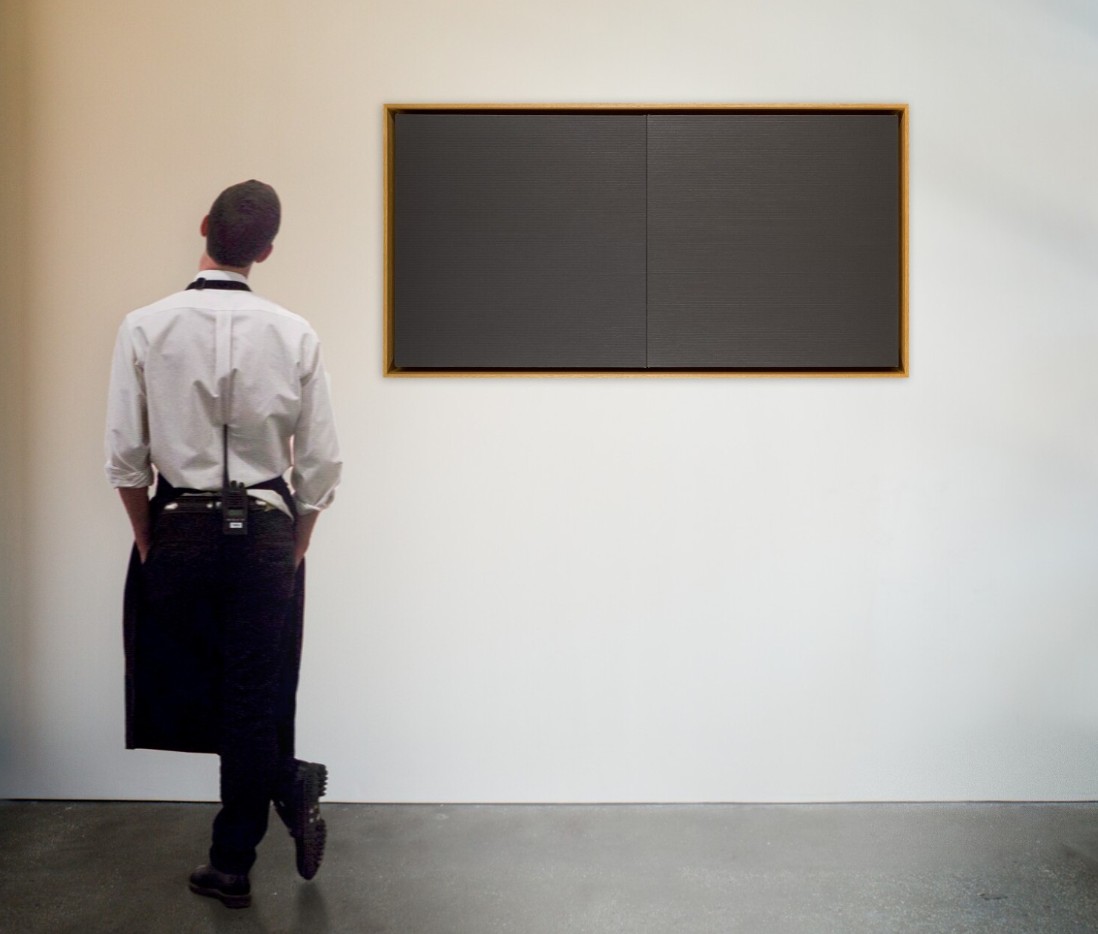
SEAN SCULLY (b. 1945)
Grey-Black Diptych, 1977
Acrylic on canvas, in two parts
Each: 24×24 inches (61.1 x 61.1 cm)
Signed, titled and dated 1977 on the reverse
#8. Line Deep Red, 2005
Ketterer Kunst Munich: 10 June 2022
Estimated: EUR 100,000
EUR 162,500 / USD 170,955
Ketterer Kunst, Art auctions, Book auctions Munich, Hamburg & Berlin
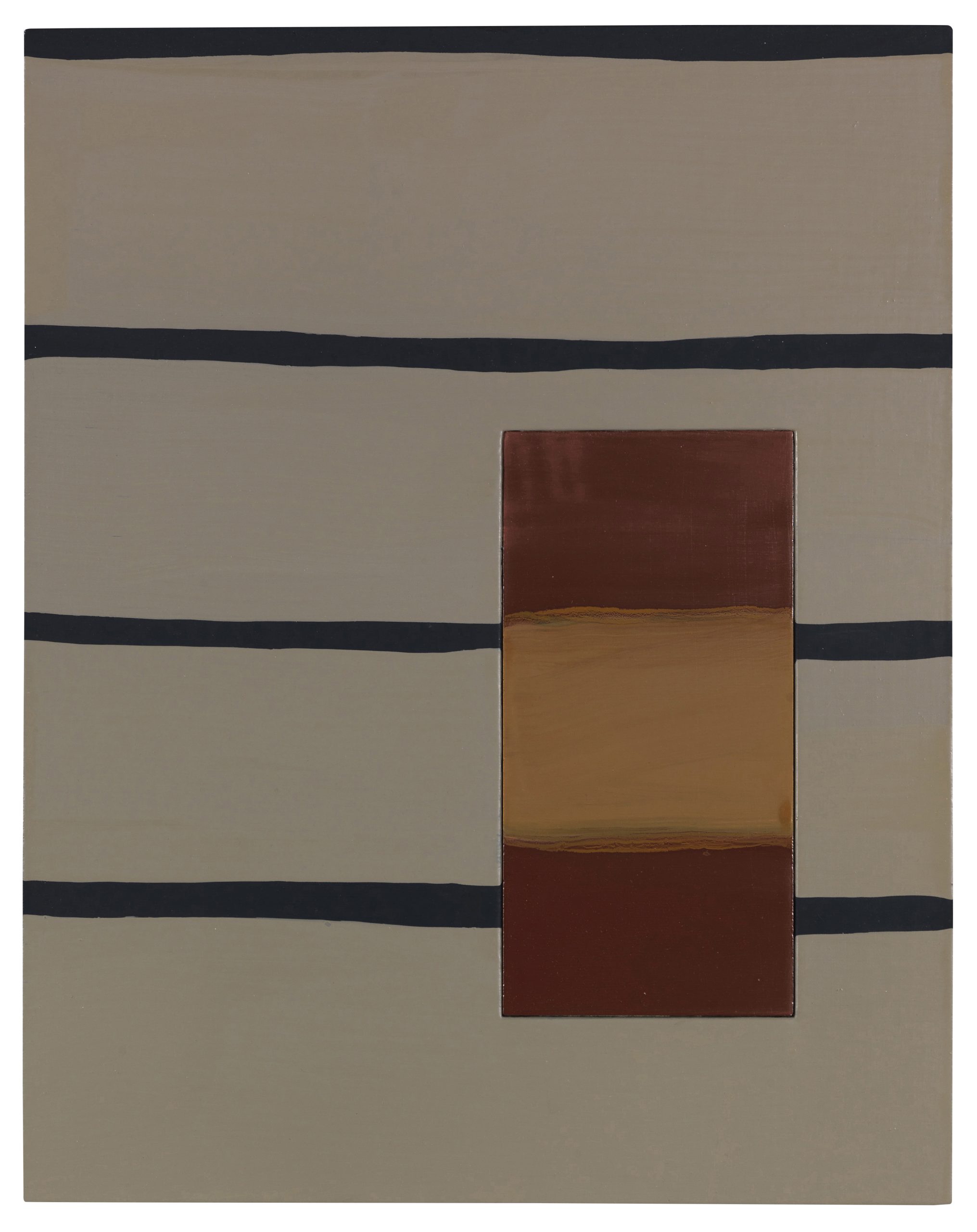
SEAN SCULLY
Line Deep Red, 2005
Oil on canvas
19×15 inches (48.3 x 38.1 cm)
Signed, dated, titled and inscribed with a direction arrow on the reverse
Also inscribed with a direction arrow on the ‘inset’ on the reverse
#9. Untitled, 1977
Phillips New-York: 16 November 2022
Estimated: USD 80,000 – 120,000
USD 100,800
Sean Scully 20th Century & Contemporary Art Day Sale, Afternoon Session
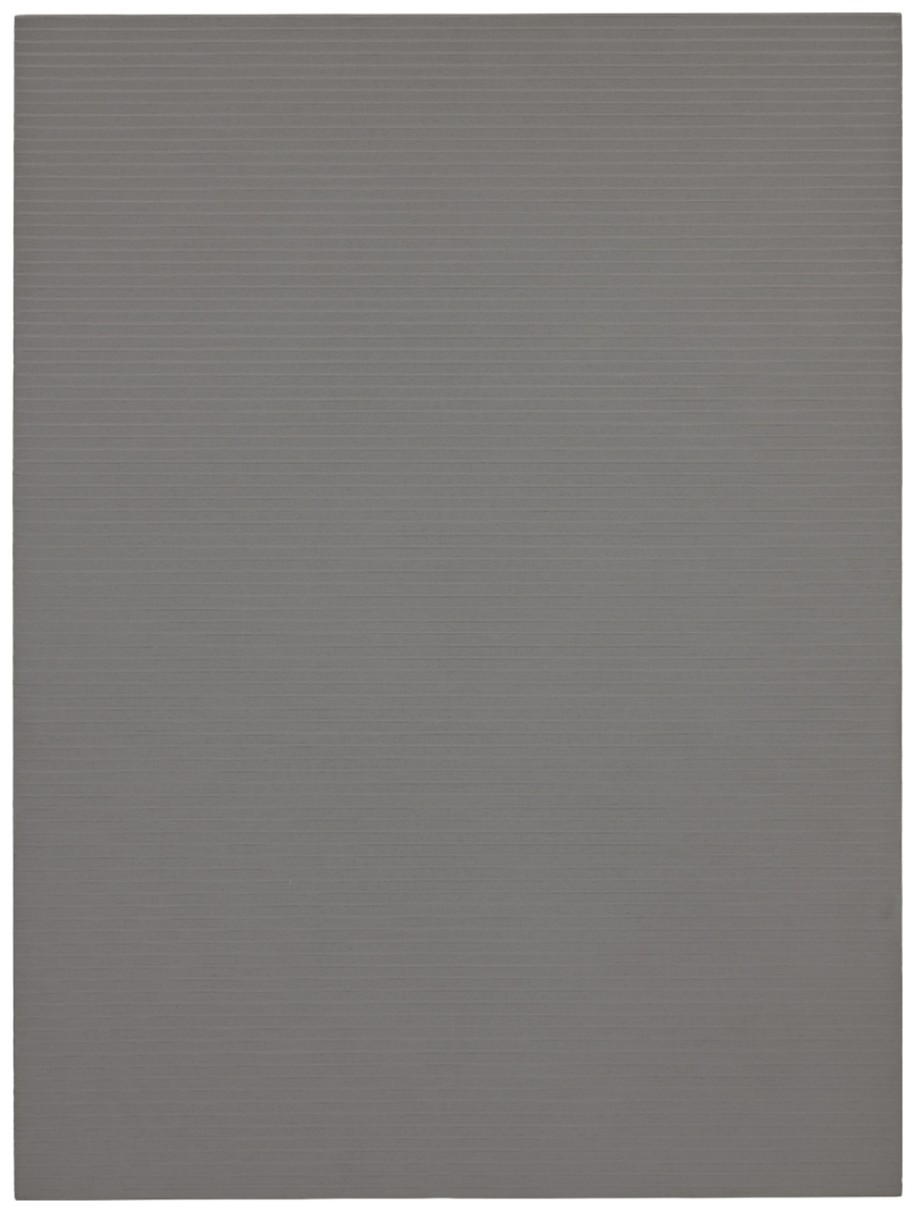
SEAN SCULLY
Untitled, 1977
Acrylic on canvas
48×36 inches (121.9 x 91.4 cm)
Signed and dated “Sean Scully 1977” on the reverse
Landline series
In Sean Scully’s celebrated Landline series, horizon-like bands of saturated color dissolve the boundaries between the physical and the spiritual. Since 1999, Scully has pursued this ongoing body of lyrical paintings as a means to “integrate all the parts” of the horizon—physical and philosophical, poetic and pastoral. Known for merging the geometry of European concrete art with the ethereality of American abstraction, Scully adopts thick, gestural brushstrokes that channel the energy and beauty of the natural world. These paintings mark a decisive evolution from the tightly gridded compositions of the late 1970s and 1980s—such as the Overlay and Backs and Fronts series—retaining their formal rigor while embracing a more atmospheric, tactile sensibility that reaffirms abstraction’s relevance in the 21st century. The Landlines gained widespread acclaim following the series’ debut at the 56th Venice Biennale in 2015, where a selection of paintings was installed at the Palazzo Falier. Works from the series have been the focus of major institutional exhibitions, including a 2018 presentation at the Hirshhorn Museum and Sculpture Garden in Washington, D.C., which traveled to the Wadsworth Atheneum in Hartford, and an exhibition at the Basilica of San Giorgio Maggiore in Venice in 2019.
“I think of land, sea, sky. And they always make a massive connection. I try to paint this, this sense of the elemental coming together of land and sea, sky and land…stacked in horizon lines endlessly beginning and ending….”
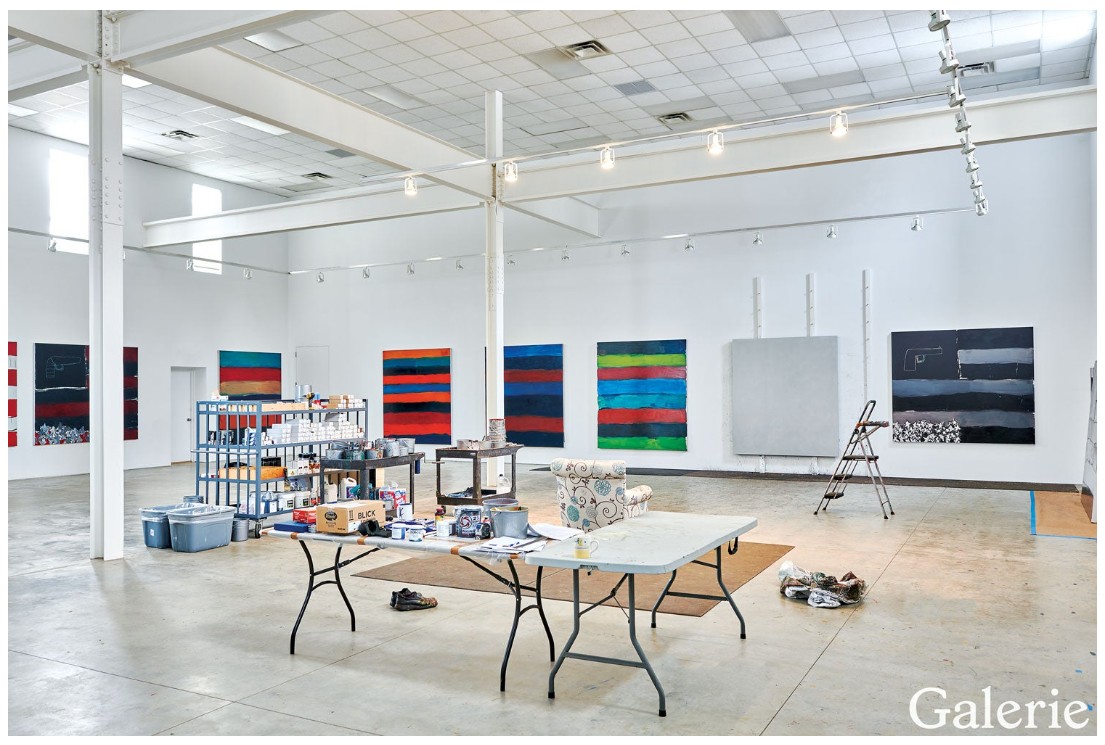
Scully’s Hudson River studio space. Image: Michael Mundy, Artwork: © Sean Scully
Emerging from the rigorous geometry of his earlier grids, Scully’s Landline series are a pivotal shift in both style and spirit. Influenced by a personal period of upheaval, including a significant back injury and the loss of his son, the artist abandoned the rigid urban energy of his earlier canvases in favor of broad, fluid vistas. These paintings are drawn from the artist’s natural surroundings of his Hudson River studio space but are equally infused with undercurrents of the emotional weather of life.
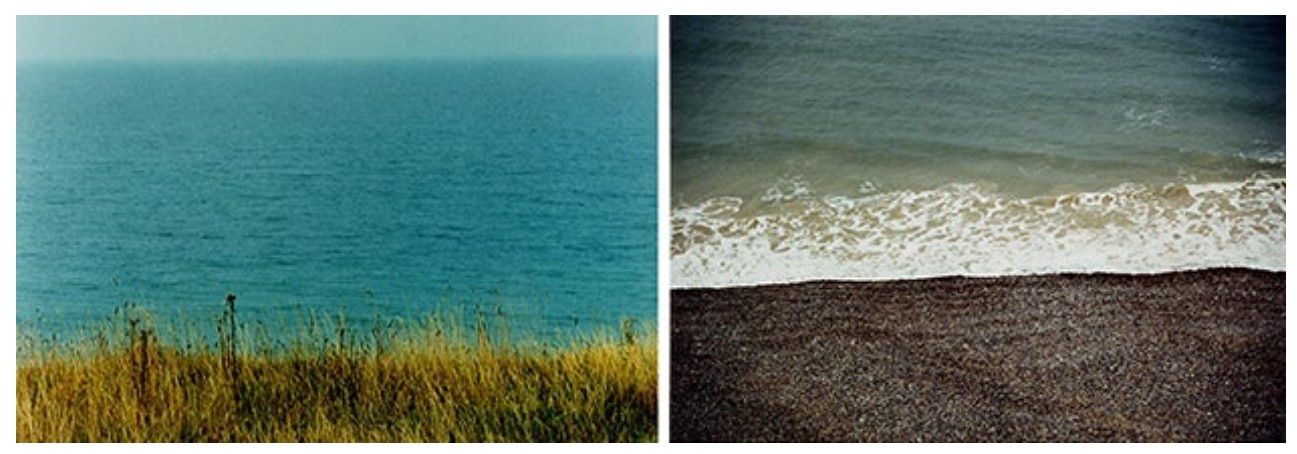
[Left] Sean Scully, Land Sea Sky, 1999. Private Collection. Artwork: © Sean Scully
[Right] Sean Scully, Landline, 1999. Private Collection. Artwork: © Sean Scully
The initial inspiration for the Landline series can be traced to a photograph Scully took while standing on a cliff edge in Norfolk, Ireland. Capturing the elemental divisions of grassy earth, the North Sea, and the leaden sky, the image distilled the natural world into horizontal bands — a compositional structure that would later evolve into the spiritual architecture of his Landlines. This encounter with the natural sublime first ignited Scully’s lifelong exploration of elemental borders — where land, sea, and sky coalesce.
Landline Dark Blue, 2017
Phillips New-York: 13 May 2025
Estimated: USD 800,000 – 1,200,000
USD 1,512,000
Sean Scully Modern & Contemporary Art Evening Sale
SEAN SCULLY
Landline Dark Blue, 2017
Oil on aluminum
85×75 inches (215.9 x 190.5 cm)
Signed, titled and dated “LANDLINE DARK BLUE Sean Scully 2017” on the reverse
Forged from the elemental forces of land, sea, and sky, Sean Scully’s Landline Dark Blue, 2017, stands as a testament to abstraction’s enduring emotional power. Nowhere is this more apparent than in Landline Dark Blue, where impasto strata of cerulean, rust, and midnight coalesce into a melancholic, meditative field.
Venice, with its shifting light and watery topography, seems to have left a lasting imprint on Scully’s painterly sensibility, subtly informing the distinctive visual language of his subsequent Landlines. In Landline Dark Blue, opulent bands of teal and what can only be described as Venetian red evoke the cyan shimmer of the lagoon and the scorched hues of sunlit brick. Scully distills the essence of the dappled canals and linear waterways that carve their way through the ancient city, translating the memory of gondolas gliding across water and soft waves against masonry into broad, horizontal gestures of paint. These wavering bands transport us to the Venetian landscape, conjuring visions of burning sunsets and blue-green light dissolving into stone.
“Vertical shapes will always convey the energy of action… Horizontal stripes are like the horizon—resting, in repose. They are tranquil.”
Sumptuous and austere, Landline Dark Blue capitalizes on the unlikely marriage of oil and aluminum. The smooth, non-porous surface forces the paint to float atop the metal, heightening the gestural urgency of Scully’s brushwork. “I used metal in the first place to set up a material contrast with the humid romance of the paint,” the artist recalled, “setting up something emotional against a material emphatically of our age.” The resulting surface captures both the luminosity of reflected light and the tactile density of pigment, creating an effect that oscillates between the physical and the transcendent.
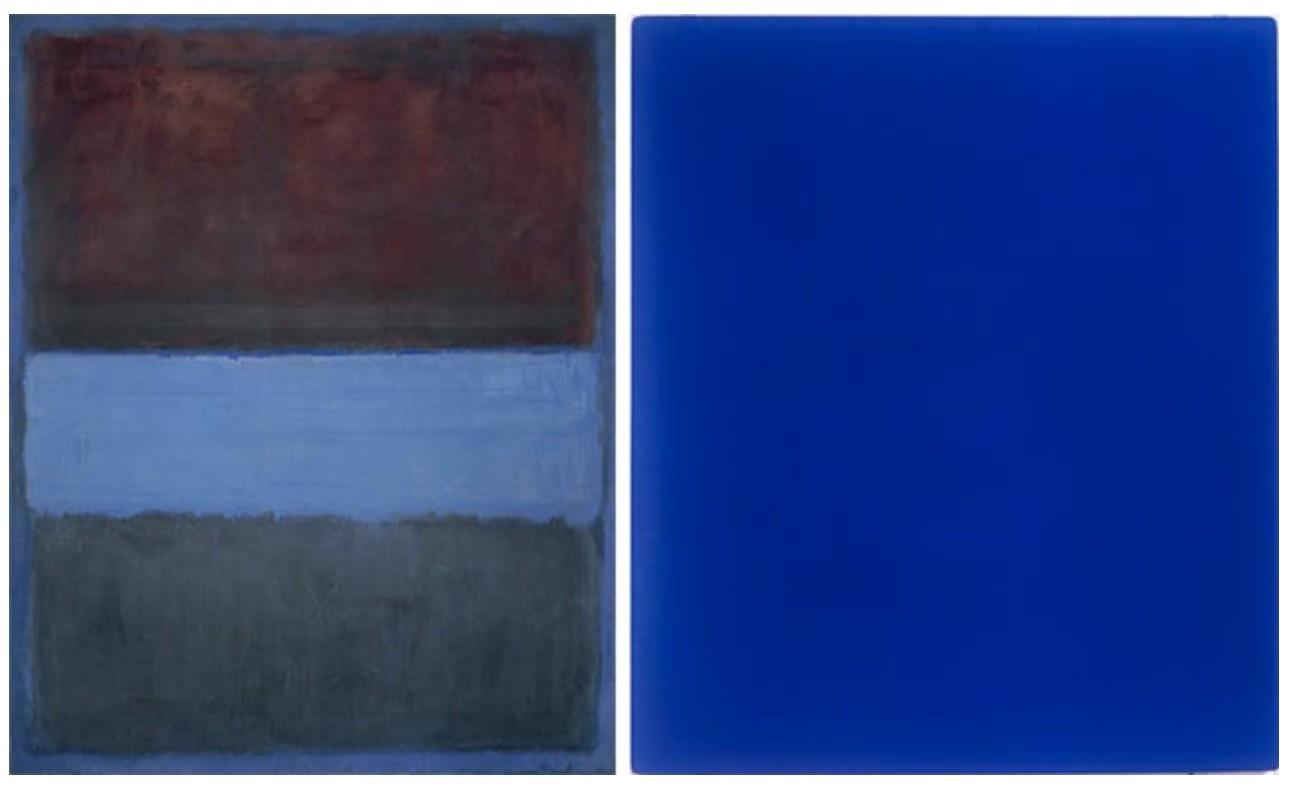
[Left] Mark Rothko, No. 61 (Rust and Blue), 1953. Museum of Contemporary Art, Los Angeles. Image: Art Resource, NY, Artwork: © 1998 Kate Rothko Prizel & Christopher Rothko / Artists Rights Society (ARS), New York
[Right] Yves Klein, IKB 79, 1959. Tate, London. Image: © Tate / Art Resource, NY, Artwork: © 2025 Artists Rights Society (ARS), New York / ADAGP, Paris
The elemental structure of Landline Dark Blue acts as both metaphor and memory. The stacked bands of color suggest not only literal horizons—the meeting points of earth, water, and air—but also the thresholds between past and present, grief and recovery. This work reflects the effects of Scully’s nomadic movements, from Ireland to England to the United States, his crossings and returns subtly encoded in the blending hues. As one stands before Landline Dark Blue, the eye travels laterally across the surface, echoing the soothing, side-to-side motion that Scully found both physically and emotionally healing after his injury and his loss. The emotional resonance of Landline Dark Blue situates it within a broader tradition of spiritual abstraction. Echoes of Mark Rothko’s color fields—with their soft transitions and concentrated emotive force—are palpable in Scully’s treatment of the painted surface. While Rothko’s vertical formats reach skyward in search of drama and transcendence, Scully’s horizontal expanses remain grounded, evoking the endless repose of the landscape and the steady, rhythmic pulse of nature.
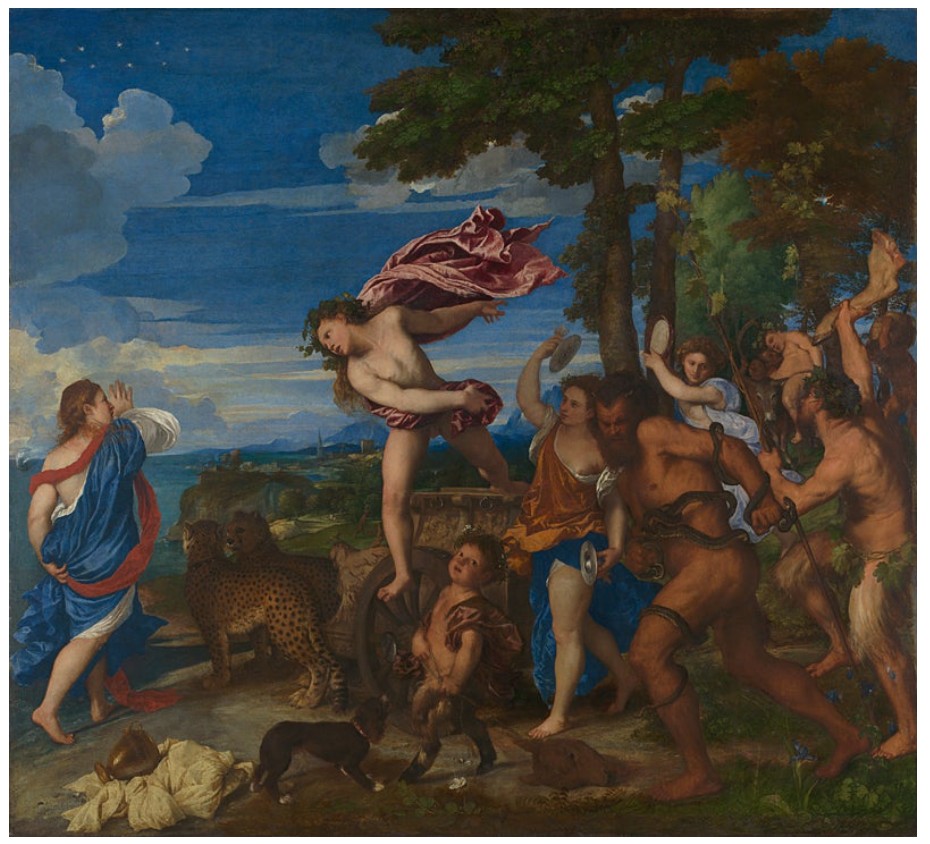
Titian, Bacchus and Ariadne, circa 1520–1523, National Gallery, London.
In this quest for the infinite, Scully finds an unlikely kinship with Yves Klein, whose explorations of his saturated International Klein Blue aimed to evoke the immaterial vastness of sky and sea. Scully’s midnight blues, layered with hints of teal and rust, seem to hover between substance and atmosphere, suggesting a similar embrace of the infinite — but one grounded in memory and earth rather than pure void. There is, too, a nod to Courbet’s earthen palettes and Titian’s richly layered glazes — artists Scully attests he has “looked at…adoringly for so many hours,” absorbing their lessons into the fleshy ochres and bloodied reds that emerge amid his cooler bands. Landline Dark Blue acts as both mirror and portal, reflecting the viewer’s own sensations while inviting passage into a dreamlike, borderless terrain. Reducing impressions, memories, and emotions to their most essential and resonant forms, his subject is, at its core, the fleeting emotion invoked by place—a singular yet universal experience that shapes how we move through the world. The painting offers a quiet space for contemplation, where the natural world and the emotional one meet in stillness, just beyond the edge of vision.
Landline Magenta Green Sea, 2015
Christie’s New-York: 10 November 2023
Estimated: USD 800,000 – 1,200,000
USD 1,134,000
SEAN SCULLY (B. 1945), Landline Magenta Green Sea | Christie’s
SEAN SCULLY (B. 1945)
Landline Magenta Green Sea, 2015
Oil on aluminum
85×75 inches (215.9 x 190.5 cm)
Signed, titled and dated ‘LANLINE [sic] MAGENTA GREEN SEA Sean Scully 2015’ (on the reverse)
Sea, sky, and land with all of their different hues blend together in Landline Magenta Green Sea, the exquisite work by the Irish-American artist Sean Scully. The present lot seems to encapsulate the vision of the artist, made of sublime abstraction, art-historical references, and pathos – the very elements which make Scully one of the most profoundly influential painters of our age.
“The Landlines…are closer to eternity, in the sense that they’re closer to Nature, or the eternal horizon line. This is all we’ve got, really, to measure ourselves against, if we are looking at the immensity of the ocean and ourselves as individuals.”
Painted on a large-format aluminum panel, seven colored bands characterize the work. While the red and the orange bands seem to evoke the warmth and brightness of the sun, the insertion of an opaque mustard horizontal band brings the painting an earthly dimension, likening it to the land and natural elements like sand or soil. Likewise, the presence of two varieties of blue, and a darker hue of mauve in the upper part of the painting, recall distant memories of summer nights, fresh marine breezes, and hours spent looking at the sea. Indeed, Landline Magenta Green Sea was directly inspired by Scully’s return to Ireland in 2013, when looking out at the sea he “saw the layers of the world pressed into the space before him, forming the strata that would become characteristic of this series.” (M. Chiu in Sean Scully: Landline, Washington D.C, 2018, p. 11). The sea has been a powerful source of inspiration for the artist since 1999, captured in the many photos he took while in Norfolk, England, which clearly synthetase the landscape as a homogenous amalgam of horizontal bands.
Scully’s abstract and meditative approach to landscape can be further elucidated when viewing the artist’s photographs of the Irish coastline, such as Land, Sea, Sky. Starting with an image such as this one, the artist fused “the natural landscape and the abstract in a new way” in creating Landline Magenta Green Sea ( P. Hickson, “Land Sea Sky” in Sean Scully: Landline, Washington D.C, 2018, p. 11). Moving away from the rigid minimalist-inspired compositions of his early paintings, as well as of the grid-structured geometries typical of the 1970s and clearly influenced by Piet Mondrian’s rigorous compositions, Scully’s work has developed with the Landline series to embrace some of the freedom of Pollock’s dripping while simultaneously reaching Mark Rothko’s spirituality. Therefore, the work reflects the artist’s primary issue of “reconciling Mondrian and Pollock” (M. Frehner, Sean Scully. Retrospektive, Bern, 2012, p. 22), but on the other hand it exemplifies Abstract Expressionism’s pure influence on Scully, who according to the influential critic Arthur Danto “has discovered a style of painting in which Abstract Expressionism continues to exist, but the architecture of his paintings belongs entirely to the present moment” (A. Danto, Danto on Scully, 2015, p. 62).
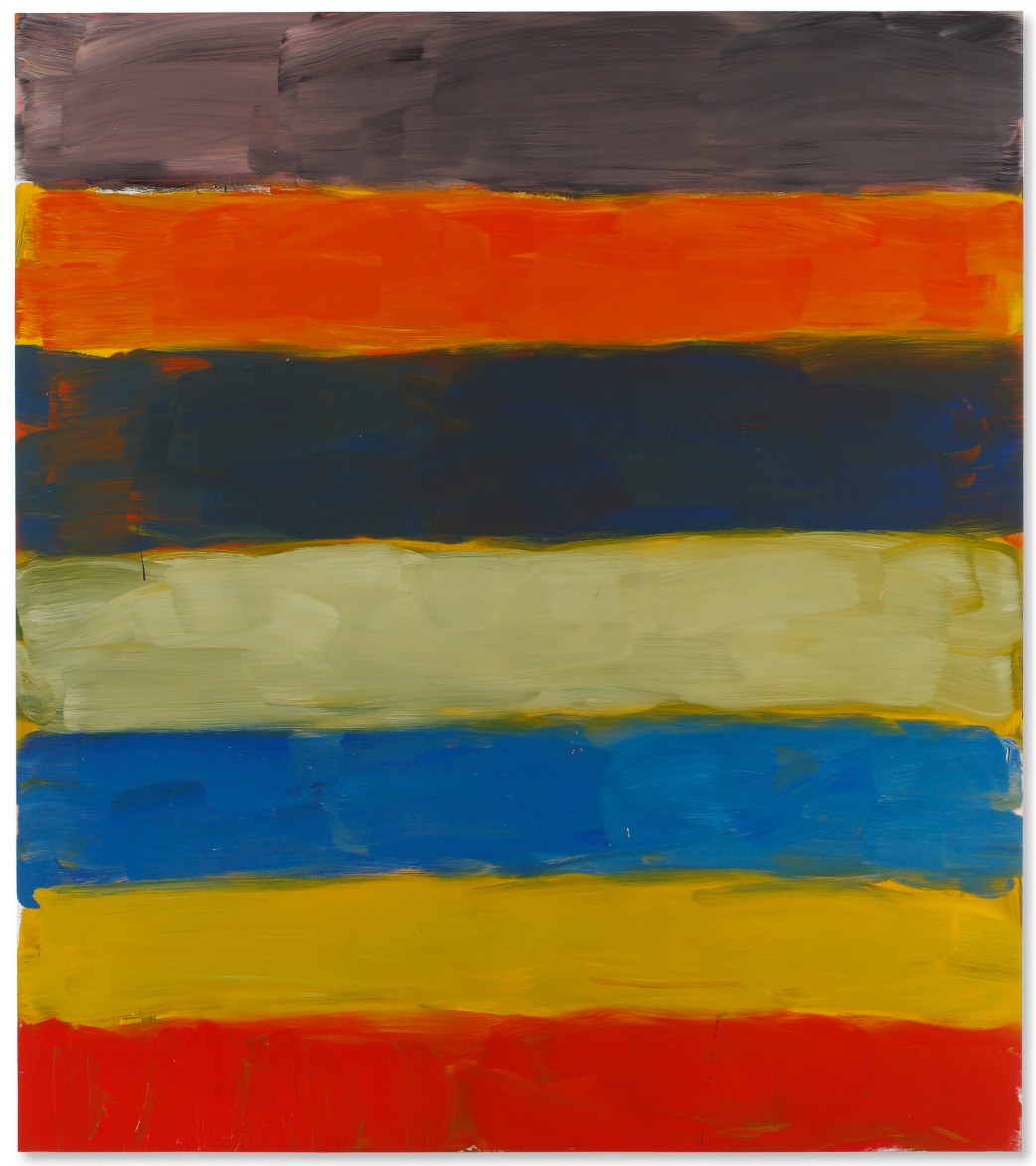
Scully’s characteristic overlapping of horizontal bands as a stand-in for colorful memories of an experienced landscape intensified on the occasion of the artist’s participation in the 56th International Art Exhibition of la Biennale di Venezia in 2015, when he witnessed the water flowing through the city of Venice. Moreover, direct references to the Italian Renaissance, and particularly to Venetian colorists like Titian and Veronese, were pinpointed by the artist himself: “I’ve looked at them adoringly for so many hours, and I’ve absorbed all their lessons” (S. Scully, quoted in R. Catlin, ‘Sean Scully’s Artworks are a Study in Color, Horizon and Life’s Sorrows’, Smithsonian Magazine, 20 September 2018). Landline Magenta Green Sea is a particularly exemplary work from the artist’s oeuvre; the composition comes together to reconcile the artist’s diverse influences, resulting in a painting that stands as mesmerizing proof of Scully’s artistic genius. With Landline Magenta Green Sea, we take a leap with the artist toward a more emotional, spiritual landscape – the landscape of our own individual minds.
Landline Fire, 2014
Sotheby’s Hong-Kong: 6 October 2019
Estimated: HKD 7,000,000 – 9,000,000
HKD 13,375,000 / USD 1,705,570
(#1157) SEAN SCULLY | Landline Fire
SEAN SCULLY
Landline Fire, 2014
Oil on aluminum
85×75 inches (215.9 x 190.5 cm)
Signed, titled and dated 2014 on the reverse
Exhibiting radiant swathes of rich amber and ocher against deep sage-green, Sean Scully’s Landline Fire presents a brooding yet resplendent vision that makes for an exceptional example of the artist’s ongoing investigation of striped forms. The work hails from the artist’s Landline series which was exhibited to great acclaim alongside the 56th Venice Biennale. Inspired by the intense beauty of sun-drenched Venice, Italy, the Landline works marked a transition from his earlier hard-edged forms to his current more gestural and expressive style. Emblazoning the aluminum surface with thick and fluid bands of colour, Scully enlivens the pictorial surface with a luminous dimensionality that evokes the brilliance of Mediterranean light. The series made its U.S. debut at the Hirschhorn Museum and Sculpture Garden in 2018, transforming the inner-circle galleries of the museum into currents of colour and energy. An ode to land, sea, and sky and the indistinct lines that separate them, the Landline works “navigate the elemental relationships that compose our world, and in doing so reveal the sublime character of those interactions” (Exh. Cat. Sean Scully: Landline, Hirshhorn Museum and Sculpture Garden, September 2018 – February 2019).
Painted in 2015, the present work hails from the artist’s Landline series (2013-2015), which was inspired by his time in Venice, Italy. As the artist remarked, “In making these paintings I was preoccupied with my memories of Venice […] From my studio south of Munich I often get in the car and drive a few hours down to Venice. It was the impressions from these trips that I brought back into the studio; I was painting the memories of Venice into the works” (the artist in the press release for Sean Scully: Land Sea, Palazzo Falier, 6 May 2015). Formally, the series marks a shift from his earlier work where vertical and horizontal bands are compact, layered and at times executed in extensive quilted patterns. Scully is known for building up his compositions piecemeal, applying multiple layers of paint to emphasize the presence of the artist’s hand. In the present work, the artist’s handling has become extremely free with large ribbons of fluid, unconstructed strokes stretching from edge to edge of the composition. Scully’s magisterial mastery of pigment is further demonstrated via his nuanced layering of oil over aluminum, which achieves the unique glimmering ‘wet’ effect of pigment over metal. The artist has expressed his fondness for metal support, which in contrast to canvas or paper does not absorb pigment. The slippery nature of metal forces Scully to move his brush faster, resulting in heightened gesturality and movement.
While simple in composition, Scully’s horizontal blocks of colour, cascading softly in one another, powerfully dictate the ambiance of the painting’s surroundings: while emanating the all-encompassing stillness and calm of natural phenomena, the gestural stripes embody the unceasing currents and internal movements of the cosmos. In the present work, Scully’s rich smoldering earth tones stem from the artist’s admiration of paintings by seventeenth-century Spanish artists such as Goya. The influence of the classics is also seen in the narrative aspect of the Landline series, which can be viewed as expressing human relationships – with each grouping of paint indicating a response to a question, an agreement or disparity. Scully states that his “paintings talk of relationships. How bodies come together. How they touch. How they separate. How they live together, in harmony and disharmony” (the artist quoted in Exh. Cat., Duisburg, Museum Küppersmühle für Moderne Kunst, Constantinople Or The Sensual Concealed The Imagery of Sean Scully, 2009, p. 8). More directly, Landline Fire is an elegy to the winding canals and sun-baked Palazzos of the Mediterranean. It was only appropriate that a selection of paintings from the Landline series was unveiled in Land Sea, a major exhibition mounted in Palazzo Falier that ran in conjunction with the 56th Venice Biennale in 2015.
More than any artist of his generation, Scully combines the formal traditions of European painting – the ominous tones of Velásquez and Manet and the remarkable colors and brushwork of van Gogh and Matisse – with a strikingly American abstract tradition, typified in particular by Mark Rothko. Considering the heroic paintings produced during the post-war era as his direct heritage, it is with Rothko in particular that Scully shares a special affinity. In Rothko’s work, light combines with darkness in a moody, melancholic drama – a singular effect that constitutes the cornerstone of Scully’s appreciation of his forefather. He says of his predecessor’s work: “The sky and the sea, as well as all the experiences the artist has lived and all the stories he would like to tell are distilled into rectangles that have the solemnity of Stonehenge” (the artist cited in Michael Auping, ‘No Longer a Wall’, in Exh. Cat., Washington, D.C., The Phillips Collection, Sean Scully: Wall of Light, 2005-06, p. 24). Condensing the splendor of the natural world into the simplest modes of color and composition, Landline Fire exhibits Scully’s mastery of moderating palette, light, and movement to its most basic forms without eliminating its energy, demonstrating not only the possibility of color in non-figurative form but also the singular fiery spirit of Scully’s artistic philosophy.
Landline Sea, 2015
Sotheby’s New-York: 19 May 2017
Estimated: USD 600,000 – 800,000
USD 1,692,500
SEAN SCULLY
Landline Sea, 2015
Oil on aluminum
85×75 inches (215.6 x 190.5 cm)
Signed, titled and dated 2015 on the reverse
“I’ve always wanted my art to be global rather than local. I want to make paintings that people everywhere can relate to.” Sean Scully
“You can do certain things with painting that are unique to painting that you cannot do with anything else. With a painting you can contain within borders a lot of experience, narrative, emotion, poetry, idea, thought, time, references and so on, all within a frame…Painting has a unique potential to stop time and compact feelings and experience.” Sean Scully
Comprised of large swathes of cerulean blues against black and maroon hues, Landline Sea pulsates with an ethereal dynamism that makes for an exceptional example of Sean Scully’s ongoing investigation of striped forms. Indeed, there is a glowing impression of shimmering color and light that enraptures the viewer with its stunning resplendency.
Scully’s paintings are often connected by their titles to particular experiences, individuals and places. A nomadic artist, Scully retains studios in New York, London, Munich and Barcelona; the different psyches and lights of those cities no doubt influence the paintings made there. The novel use of colors and materials observed during a 1969 voyage to Morocco ignited Scully’s imagination. He was fascinated by the richly-dyed wools and the opulent carpets, sights so uncommon in his home city of Dublin. Then, during a trip to Mexico in the early 1980s, Scully became captivated by the stacked stones of ancient Mayan walls in the Yucatan region and by the effect of the light reflecting off of their surfaces. The artist then began to produce quilt-like structures of horizontal and vertical lines, over-painted with free use of impasto to create a luxurious paint surface. The Wall of Light series was born out of this influential trip to Mexico, a group of paintings that include Valencia Wall (2006) which achieved the record price for the artist at auction in 2008.
Painted in 2015, the present work is from the artist’s Landline series (2013-2015), which is inspired by Scully’s time in Venice, Italy. As the artist remarked, “In making these paintings I was preoccupied with my memories of Venice, the movement of the water, how it heaves against the brick and stone of the city. From my studio south of Munich I often get in the car and drive a few hours down to Venice. It was the impressions from these trips that I brought back into the studio; I was painting the memories of Venice into the works” (the artist in the press release for Sean Scully: Land Sea, Palazzo Falier, 6 May 2015). Formally, Landline Sea marks a pivotal shift from his earlier work where vertical and horizontal bands are compact, layered and at times executed in extensive quilted patterns. Scully is known for building up his compositions piecemeal, applying multiple layers of paint to emphasize the presence of the artist’s hand. In the present work, the artist’s handling has become extremely free with large ribbons of fluid, unconstructed strokes stretching from edge to edge of the canvas. Within his succulently colored paintings, a key hue, which is magisterially depicted in the present work, is black. Scully’s fascination with black stems from the artist’s admiration of the rich black tones in the paintings of seventeenth-century Spanish artists such as Goya and is represented here as its own top band.
The narrative aspect of Landline Sea can be viewed as expressing human relationships, each grouping of paint indicating a response to a question, an agreement or disparity. Scully states that his “paintings talk of relationships. How bodies come together. How they touch. How they separate. How they live together, in harmony and disharmony” (the artist quoted in Exh. Cat., Duisburg, Museum Küppersmühle für Moderne Kunst, Constantinople Or The Sensual Concealed The Imagery of Sean Scully, 2009, p. 8). More specifically, Landline Sea is an ode to the Mediterranean light, winding canals, and sun baked Palazzos, and therefore, very different in tone from the paintings made in his studios in New York or in London. It was only appropriate that a selection of paintings from the Landline series were unveiled in Land Sea, a major exhibition mounted in Palazzo Falier that ran in conjunction with the 56th Venice Biennale in 2015.
More than any artist of his generation, Scully combines the formal traditions of European painting – the brooding tones of Velásquez and Manet and the remarkable colors and brushwork of van Gogh and Matisse – with a strikingly American abstract tradition, typified in particular by Mark Rothko. Considering the heroic paintings produced during the post-war era to be his direct heritage, it is with Rothko in particular that he shares a special affinity. In Rothko’s work, light combines with darkness in a moody, melancholic drama, that is the cornerstone of Scully’s appreciation of his forefather. He says of his predecessor’s work, “The sky and the sea, as well as all the experiences the artist has lived and all the stories he would like to tell are distilled into rectangles that have the solemnity of Stonehenge” (the artist cited in Michael Auping, ‘No Longer a Wall’ in Exh. Cat., Washington, D.C., The Phillips Collection, Sean Scully: Wall of Light, 2005-06, p. 24).
Landline Sea brilliantly demonstrates Scully’s inimitable mastery of moderating palette, light, and movement to its most basic forms without eliminating its energy. A unique ebb and flow unfolds upon the canvas, demonstrating not only the possibility of color in nonfigurative form but also revealing Scully’s spirited philosophy. The artist continues to demonstrate why he is one of the foremost abstract painters of his time. Beginning in September 2018, The Smithsonian’s Hirshhorn Museum and Sculpture Garden will present close to two dozen works from Scully’s Landline series.
Wall of Light series
Pale Green Light, 2002
Christie’s London: 5 March 2025
Estimated: GBP 500,000 – 800,000
GBP 781,200 / USD 1,004,565
SEAN SCULLY (B. 1945), Pale Green Light | Christie’s
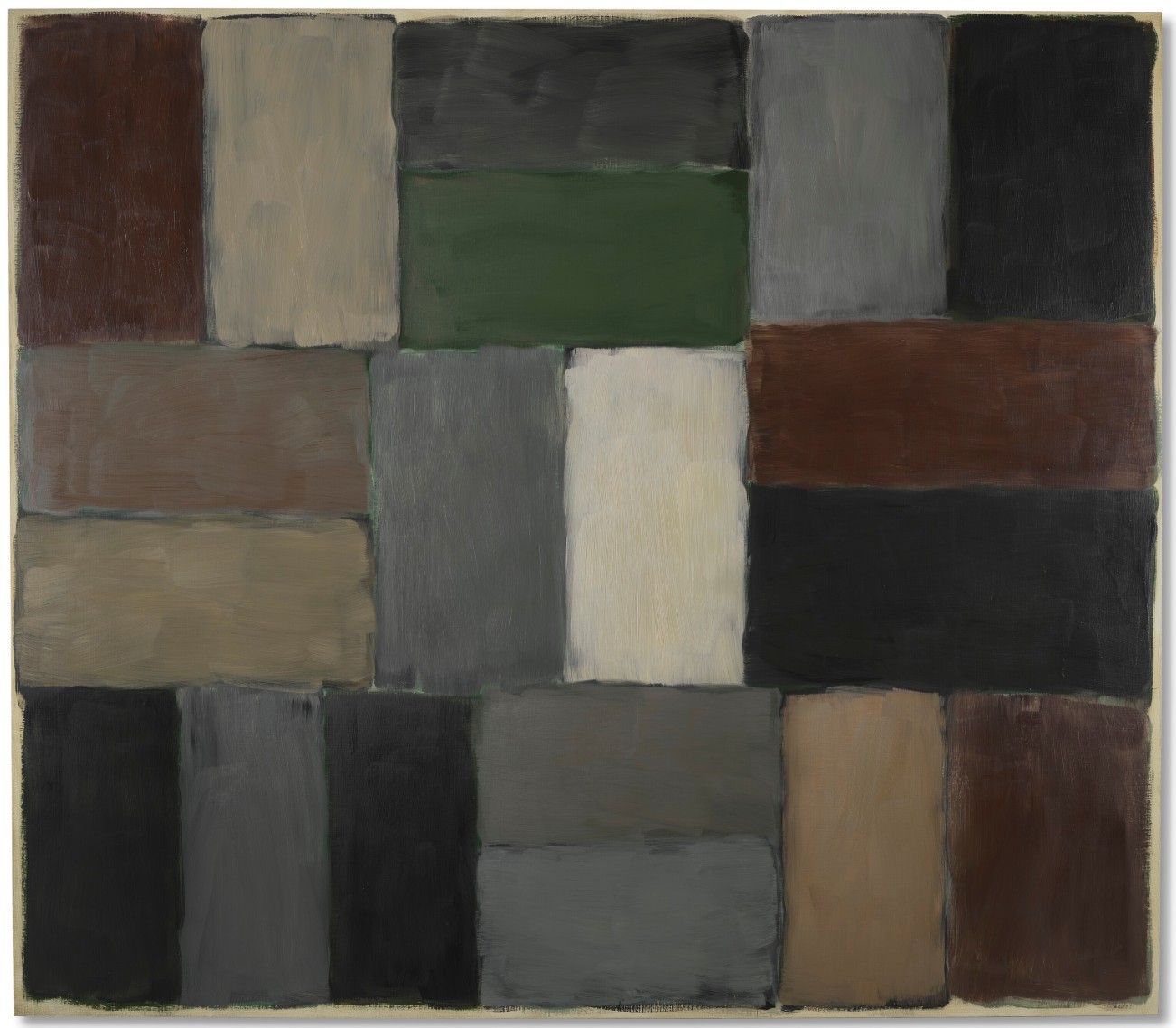
SEAN SCULLY (B. 1945)
Pale Green Light, 2002
Oil on linen
84 1/4 x 96 1/2 inches (214×245 cm)
Signed, titled and dated ‘PALE GREEN LIGHT Sean Scully 2002’ (on the reverse)
Pale Green Light (2002) is a luminous large-scale painting from Sean Scully’s celebrated ‘Wall of Light’ series: an extended study of light and form which has defined the artist’s practice for almost three decades. The earliest ‘Wall of Light’ paintings were inspired by Mexico’s sunbaked ruins and old stone walls, which Scully first visited in 1983. He identified in these ancient structures—their contours shaped and reshaped by the changing light—a compelling formal strength and emotional resonance. Over the ensuing years, across studios in London, New York, Barcelona, and rural Bavaria, Scully forged a body of work which responds palpably to the geographic and temporal specificity of its making, or to memories of other places and seasons. Each ‘Wall of Light’ painting captures the intangible, emotional quality of place. Diffusing an innate, efflorescent lustre, the present work combines tones of fawn, ochre, red, grey, and the painting’s titular green: it is a crepuscular palette, containing a quiet, late light. Across 2005-2007, Pale Green Light was included in the artist’s landmark survey Sean Scully: Wall of Light, at The Phillips Collection, Washington, D.C., the Modern Art Museum of Fort Worth, the Cincinnati Art Museum and The Metropolitan Museum of Art, New York.
Pale Green Light was amongst the first paintings Scully executed in Mooseurach, the small town in the foothills of the Bavarian Alps where he acquired a studio in 2002. While in London, New York and Barcelona Scully had worked in the city, in Mooseurach he could work in direct contact with nature. Moos translates from German as ‘moss’, and it was there that Scully embarked on his first sustained study of the colour green. His studio space is bright, and expansive. In addition to skylights in the studio’s high, sloped ceilings, large nine-foot windows span either end—facades once open to the elements in the building’s earlier life as a cow shed. In one direction agricultural plains run into forest, while from the other Scully can look out on the ever-shifting light as it falls across the Alps. Pale Green Light revels in the earth-tones which abound beyond the studio walls.
Scully was not the first to identify something transcendental and profound in the light of the Alps. His works inspired by Mooseurach recall those of the German Romantic movement, during which artists such as Caspar David Friedrich turned to nature as a site of acute spiritual encounter. Pale Green Light similarly evokes the emotional condition of landscape. Surpassing genre, it functions as a kind of totemic portrait of a place. Its central, dazzling white panel suggests an aperture or window, a heavy curtain pulled back each morning to welcome light into the darkness. Light reveals form, and colour. Scully’s tendency to layer feathery strokes of light paint over dark, dark over light, reflects his admiration for the mystical abstracts of Mark Rothko, who Scully suggested ‘extends into the twentieth century the great Romantic impulse’ (S. Scully, ‘Rothko: Bodies of Light’ in Inner: The Collective Writings and Selected Interviews of Sean Scully, Berlin 2016, p. 56). With paintings such as Pale Green Light, Scully extends it into the twenty-first.
Wall of Light Pale Green, 2014
Phillips New-York: 19 November 2025
Estimated: USD 600,000 – 800,000
USD 838,500
Sean Scully Modern & Contemporary Art Evening Sale featuring Cera the Triceratops
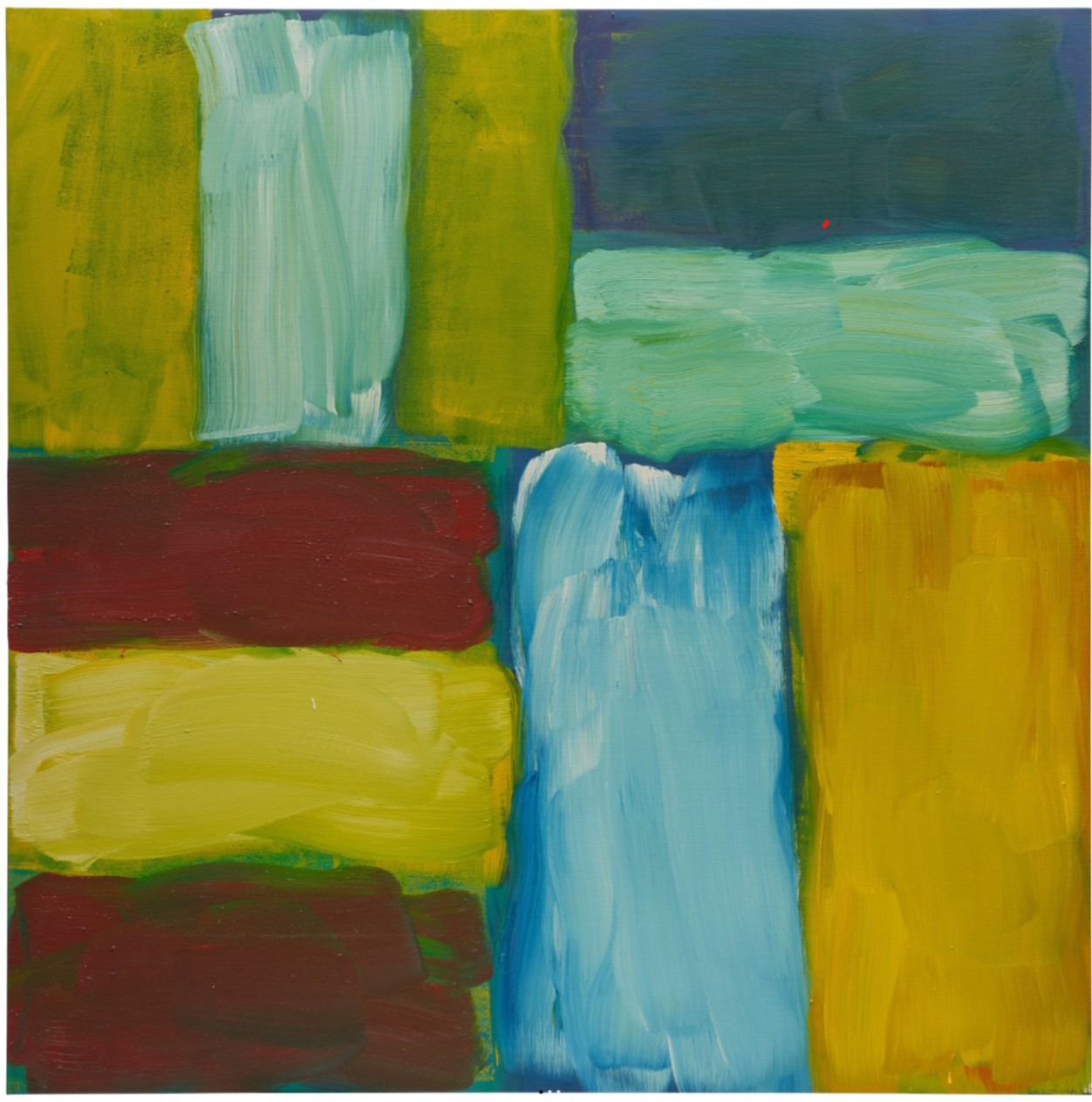
SEAN SCULLY
Wall of Light Pale Green, 2014
Oil on linen over board
63 1/4 x 62 7/8 inches (160.5 x 160 cm)
Signed, titled and dated “WALL OF LIGHT PALE GREEN Sean Scully 2014” on the reverse
Wall of Light Pale Green, 2014, stands as a luminous example of Sean Scully’s mature abstraction and sustained meditation on light’s emotive power. Belonging to the artist’s celebrated Wall of Light series, a three-decade exploration of the interplay of light and form, the large-scale work exemplifies Scully’s painterly dexterity and singular visual language. Comprised of four patches of stacked and adjacent rectangular bands, the composition evokes masonry while employing the artist’s signature gestural brushwork and shifting chromatic harmonies. Bands of vibrant teal, yellow, ochre, and the painting’s titular pale green interlock in a radiant mosaic which suggests the transient shimmer of shifting light. This careful balance between structure and feeling, order and luminosity, encapsulates Scully’s belief that even the most elemental shapes and colors can yield profound emotional and spatial complexity.
“I think my paintings have a pronounced, built in, sense of morality. The light in my paintings is almost always sad and melancholic, but the surfaces are vital and sensual. I want people to be moved by my paintings.”
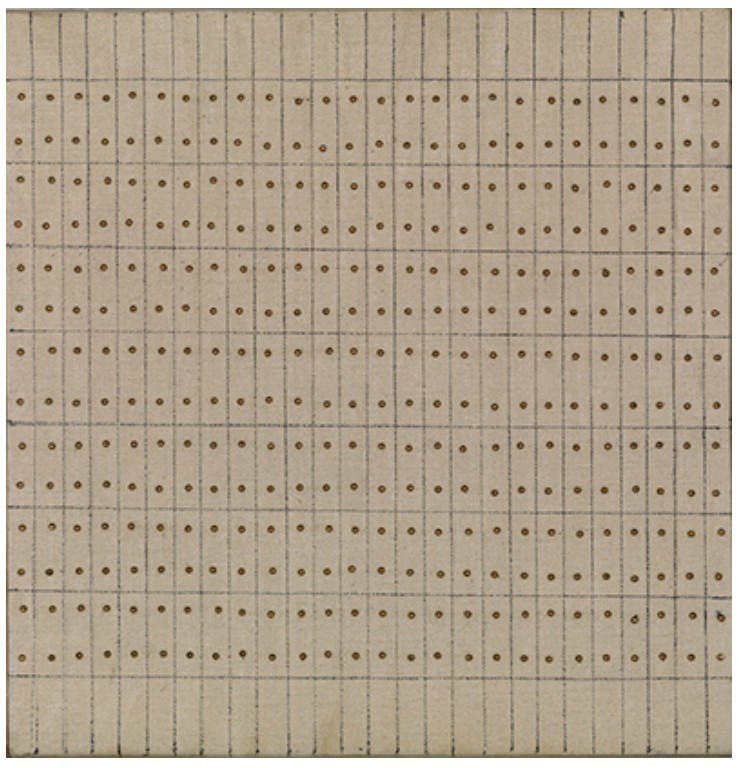
Agnes Martin, Little Sister, 1962. The Solomon R. Guggenheim Museum, New York. Image: The Solomon R. Guggenheim Foundation/Art Resource, NY/ Scala, Florence, Artwork: © 2025 Agnes Martin / Artists Rights Society (ARS), New York
The first of these Walls of Light emerged from Scully’s encounters with the sun-bleached architecture of Mexico, where, during a 1983 visit to the Yucatán, he became deeply moved by the aged surfaces of Mayan stone walls and their shifting interaction with light. “I’d been visiting the ruins and I was in a moment of repose, so I made a little watercolor that was a memory portrait of my impression of what I’d been doing,” the artist recalled. “After seeing how the light at different times of the day had affected the sacred temples that I was visiting, I wrote ‘Wall of Light’ under it.”i In the worn facades of these structures—altered continuously by light and shadow—Scully perceived a union of formal rhythm and emotional depth that would become central to his practice. Although the initial studies took the form of small watercolors, Scully returned to the motif on a large scale in 1998. Over the following decades, working in studios across Europe and the United States, he developed a series that responds not only to the architecture of place but also to the memory of looking, translating temporal and atmospheric experience into color and structure—a sensibility that finds vivid expression in Wall of Light Pale Green.
“My paintings talk of relationships: How bodies come together. How they touch. How they separate. How they live together, in harmony and disharmony…”
In the present work, Scully brings a distinctly human touch to the austere legacy of postwar abstraction, infusing Minimalism’s structural clarity with the gestural immediacy of Abstract Expressionism. Within this painting, the grid becomes less a system of order than a living framework through which color breathes and light circulates. The softly modulated transitions between teal, yellow, and pale green fields reveal the artist’s hand at work, tempering the precision of the grid with a sensitivity to atmosphere and emotion reminiscent of Giorgio Morandi’s still lifes, whose quiet harmonies Scully has long admired. The technique of layering veils of pigment, alternating light and dark tones, produces a radiant depth that recalls Mark Rothko’s luminous color fields while retaining Scully’s architectural sense of geometry. “I think what Scully does is restore poetry to geometrical abstraction,” Donald Kuspit wrote of the series. “He makes it unexpectedly romantic, in the good old-fashioned sense of Romanticism.”
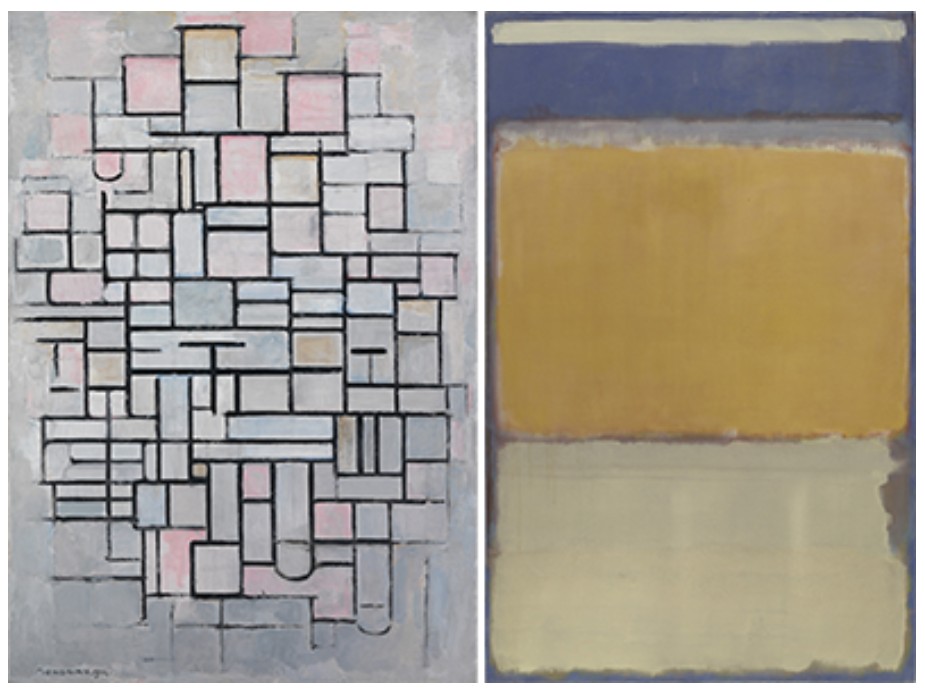
[Left] Piet Mondrian, Composition No. IV, Gemeentemuseum Den Haag, Netherlands.
[Right] Mark Rothko, No. 10, 1950. Museum of Modern Art, New York. Artwork: © 1998 Kate Rothko Prizel & Christopher Rothko / Artists Rights Society (ARS), New York
Widely exhibited and collected, the Wall of Light series stands as a cornerstone of Sean Scully’s career and one of the most enduring achievements of contemporary abstract painting. This body of work is represented in major museum collections worldwide, such as the Metropolitan Museum of Art, New York, the Centre Pompidou, Paris, and the Museo Reina Sofia, Madrid. In this example, Scully’s mastery of balance and rhythm takes the form of patches of three stacked bands on the left side counterbalancing two larger groupings to the right. This asymmetry recalls the irregular rhythm of the dry-stone walls found on the Aran Islands off the coast of Ireland, which captivated the artist and which he photographed. These humble structures—built without mortar yet held together through balance and weight— embody a harmony between human intention and the natural world. Translating that equilibrium into paint, Scully invests geometric abstraction with a profound sense of vitality and universal connection.
Wall of Light Diego, 2012
Christie’s New-York: 22 November 2024
Estimated: USD 800,000 – 1,200,000
USD 1,008,000
SEAN SCULLY (B. 1945), Wall of Light Diego | Christie’s
SEAN SCULLY (B. 1945)
Wall of Light Diego, 2012
Oil on canvas
85 1/4 x 75 inches (216.5 x 190.5 cm)
Signed, titled and dated twice ‘Sean Scully 11.12 WALL OF LIGHT DIEGO 11.12’ (on the reverse)
Sean Scully’s Wall of Light Diego exemplifies the artist’s signature synthesis of the bold color and brushwork of Abstract Expressionism with the formal geometric abstraction of 1960s Minimalism. This work is a refined example of Sean Scully’s career-defining Wall of Light series, showcasing a lyrical exploration of light, color, and form. The composition is dominated by large, rectangular blocks of subdued hues—rich browns, luminous grays, and blooming pinks—that create a dynamic visual rhythm. The interplay of these colors evokes a sense of warmth and depth, while the ordered rectangles suggest the influence of architecture and sculpture on Scully’s painting. Scully’s characteristically energetic brushwork adds a textural dimension, enhancing the tactile feel of the painting. The horizontal and vertical divisions create a playful sense of movement, bringing energy and personality to basic, elemental geometric forms. Pink and red hues glow like embers from beneath painterly swaths of earthy browns and blacks, alighting the composition from within and luring the viewer into a mode of quiet contemplation.
“I can’t exactly explain it, but seeing the Mexican ruins, the stacking of the stones, and the way the light hit those facades, had something to do with it, maybe everything to do with it.” Sean Scully
Stemming from a formative 1983 trip to Mexico, Scully’s Wall of Light series was inspired by his impressions of the ruins of precolonial Mayan architecture. Watching the play of light on the ancient stones, Scully first envisioned his series’ rich exploration of the geometry and pure color of rectangles. “I can’t exactly explain it, but seeing the Mexican ruins, the stacking of the stones, and the way the light hit those facades, had something to do with it, maybe everything to do with it” (S. Scully, quoted in M. Auping, No Longer a Wall, New York, 2005, p. 24). For Scully, the wall is the elemental home of all painting, and his Wall of Light paintings problematize the distinction between the flat and the three-dimensional, conflating the figure and the ground. The title of the series itself is contradictory; it describes a transparent, permeable boundary, or a concrete atmosphere. The canvas itself is vast; at over 7 feet tall and over 6 feet wide, the painting has a real physical presence in space. The scale of the painting causes it to embody many of the qualities of an architectural feature or wall, and its constituent rectangles take on the visual properties of the ancient brickwork that first inspired Scully. The nuanced, organic color palette of Wall of Light Diego evokes the soft play of light on monumental stonework at dusk, reminiscent of ancient, timeless evenings.
Scully has often cited early Abstract Expressionist and Color Field painters as major influences on his work. He draws on the work of artists like Barnett Newman and Mark Rothko, especially in his focus on elemental forms and layered hues. Writing on Rothko in Art in America in 1993, Scully drew a through-line between the influence of architecture and the influence of Rothko’s fields of atmospheric paint on his work: “The figure and the ground, the sky and the sea, as well as all the experiences the artist has lived and all the stories he would like to tell are distilled into rectangles that have the solemnity of Stonehenge” (S. Scully, “Bodies of Light,” Art in America, July 1999, pg. 17). In Scully’s Wall of Light Diego, rectangles and fields of pure color take on both the intangible quality of the artist’s interiority and the solidity of prehistoric stonework. His Wall of Light series simultaneously pays tribute to, and expands upon, Mark Rothko’s iconic blocks of layered paint.
Formative encounters with the work of Minimalist artists such as the English painter Bridget Riley likewise strongly influenced the young Scully, whose work from the 1970s onward has often been described as a romantic response to the strict geometries of the Minimalists—an attempt to reconcile their purity of form with the emotional lyricism of the Abstract Expressionist and Impressionist painters.
Notably, a number of eminent Minimalists were also inspired by the architecture of Mexico. Artists including Josef and Anni Albers, Donald Judd, and Robert Smithson all created bodies of work responding directly to the elemental forms of both Mexican ruins and contemporary vernacular Mexican building. Like Scully, both the Alberses and Smithson, in particular, responded strongly to the primeval landscapes of the Yucatan Peninsula, creating photo series that explored the relationship between Mexico’s topography and both pre-Columbian and contemporary architecture. Ancient Mexican architecture was especially influential for Josef Albers, whose iconic Homage to the Square and Variant / Adobe series were directly inspired by the dynamic geometry of pre-Columbian structures. This link between Mexican architectural forms and geometric abstraction likewise finds a powerful expression in Scully’s Wall of Light Diego.
Wall of Light Diego masterfully combines the bold, expressive color of Abstract Expressionism with the structured geometry of Minimalism. Blocks of warm, suggestive colors evoke both the solidity of stone and the depth of the artists’ lived experience. His painterly brushwork and the scale of the piece bring a tactile, almost architectural presence to Wall of Light Diego, blurring the line between structure and spirit in a profound tribute to the enduring visual language of human culture.
Barcelona Red Black Pink, 2013
The Collection of Phyllis & Jerome Lyle Rappaport
Sotheby’s London: 27 June 2023
Estimated: GBP 500,000 – 700,000
GBP 698,500 / USD 888,610
SEAN SCULLY (b. 1945)
Barcelona Red Black Pink, 2013
Oil on linen
60 1/8 x 60 1/8 inches (152.7 x 152.7 cm)
Signed and titled (on the reverse)
A striking example from Sean Scully’s seminal Wall of Light series begun in 1998, Barcelona Red Black Pink is emblematic of the artist’s career-long exploration of abstraction and his most celebrated cycle of paintings. Seamlessly blending architectural gravitas and chromatic vibration, this work captures the essence of the unparalleled synthesis of loose brushwork and intellectual proportioning, spatial severity and fiery compositional force that infuse the artist’s pictorial oeuvre. Bricks of scorched terracotta, carbon black and deep midnight blue are enlivened by the paint’s seductive and tactile texture. As each layer is applied, the feathered edges of these swathes of pigment and the spaces between them create fascinating, highly complex structures. Using a five-inch brush and oil paints thickened with varnish, Scully builds up his compositions gradually, applying multiple layers of paint to animate the surface with luxuriant and calligraphic strokes. As each layer is applied, the feathered edges of these swathes of pigment and the spaces between them create fascinating, highly complex structures. Compositionally, the work evokes the architectural structure of the series’ title, yet these solid structures are dematerialized by Scully’s use of color, so that in density there is light and in ethereality there is weight. Light seems to emanate from the edges of each segment within Barcelona Red Black Pink, the delicate brushwork delineating each color boundary, allowing for a subtle gradation between the differing areas of pigment.
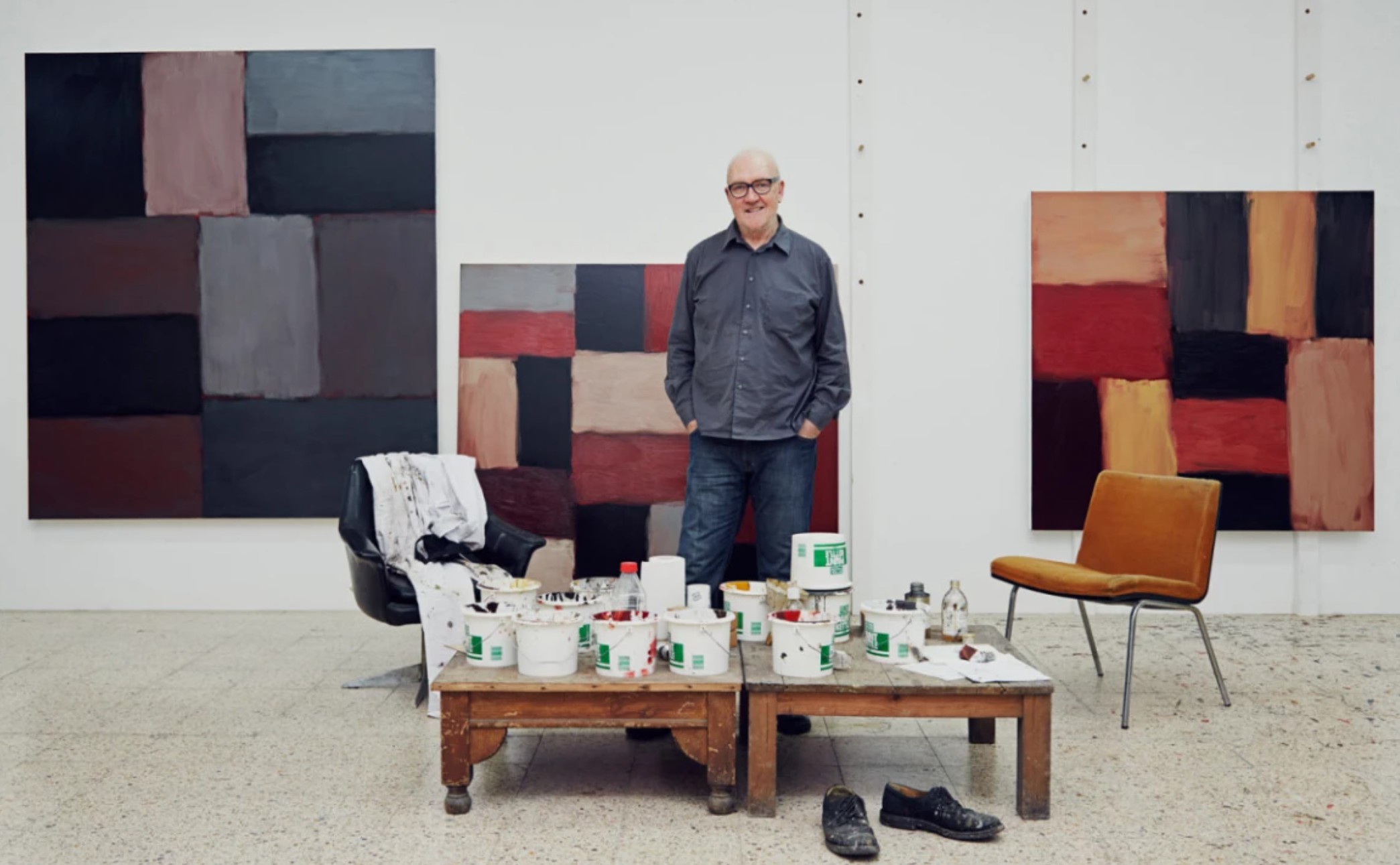
Sean Scully with the present work in his Barcelona studio. Image/Art: © Sean Scully 2023
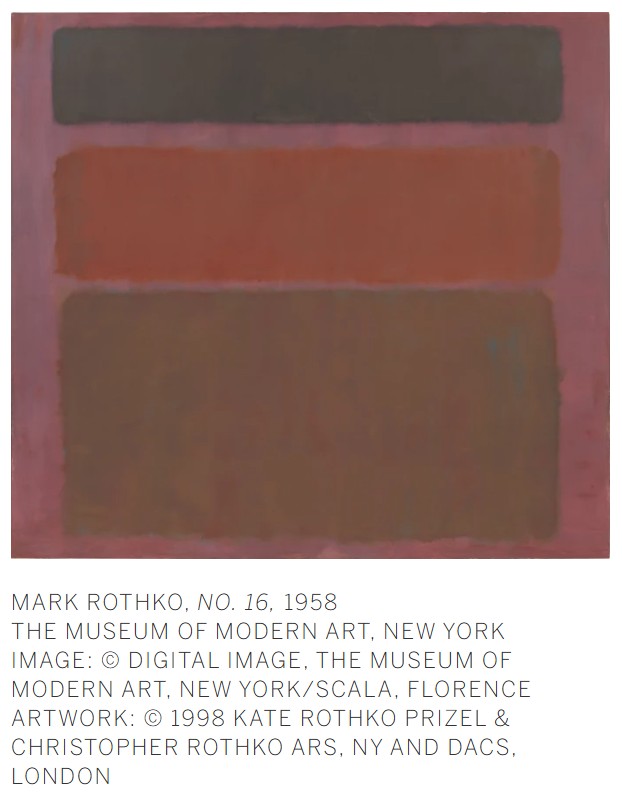
The inspiration for the early Wall of Light series came from a visit Scully made to Mexico in the early 1980s, where he was fascinated by the stones of ancient Mayan walls at Yucatan, which, when animated by light, seemed to reflect the passage of time. Recalling the extent this influence had on his art, Scully remarked, “I can’t exactly explain it, but seeing the Mexican ruins, the stacking of the stones, and the way light hit those facades, had something to do with it, maybe everything to do with it” (Sean Scully quoted in: Exh. Cat., New York, Metropolitan Museum of Art, Sean Scully: Wall of Light, 2005, p. 24). Indeed, the present work evokes not only the geometric framework of the walls at Yucatan, but also, as the title suggests, the creeping shadows of dusk from the environs of Scully’s Barcelona studio. A great admirer of traditional Spanish painting from Velasquez to Goya, Scully is heavily influenced by such masters’ dramatic palettes, and particularly their use of red and black which anchor many of the compositions throughout the Wall of Light series. Like his Spanish heroes, Scully is motivated by the brushstroke, and the individual gesture of the artist’s hand that reveals his presence and process. In this way Scully’s paintings, although resolutely abstract, are replete with emotive content and art historical weight.
“I can’t exactly explain it, but seeing the Mexican ruins, the stacking of the stones, and the way light hit those facades, had something to do with it, maybe everything to do with it.”
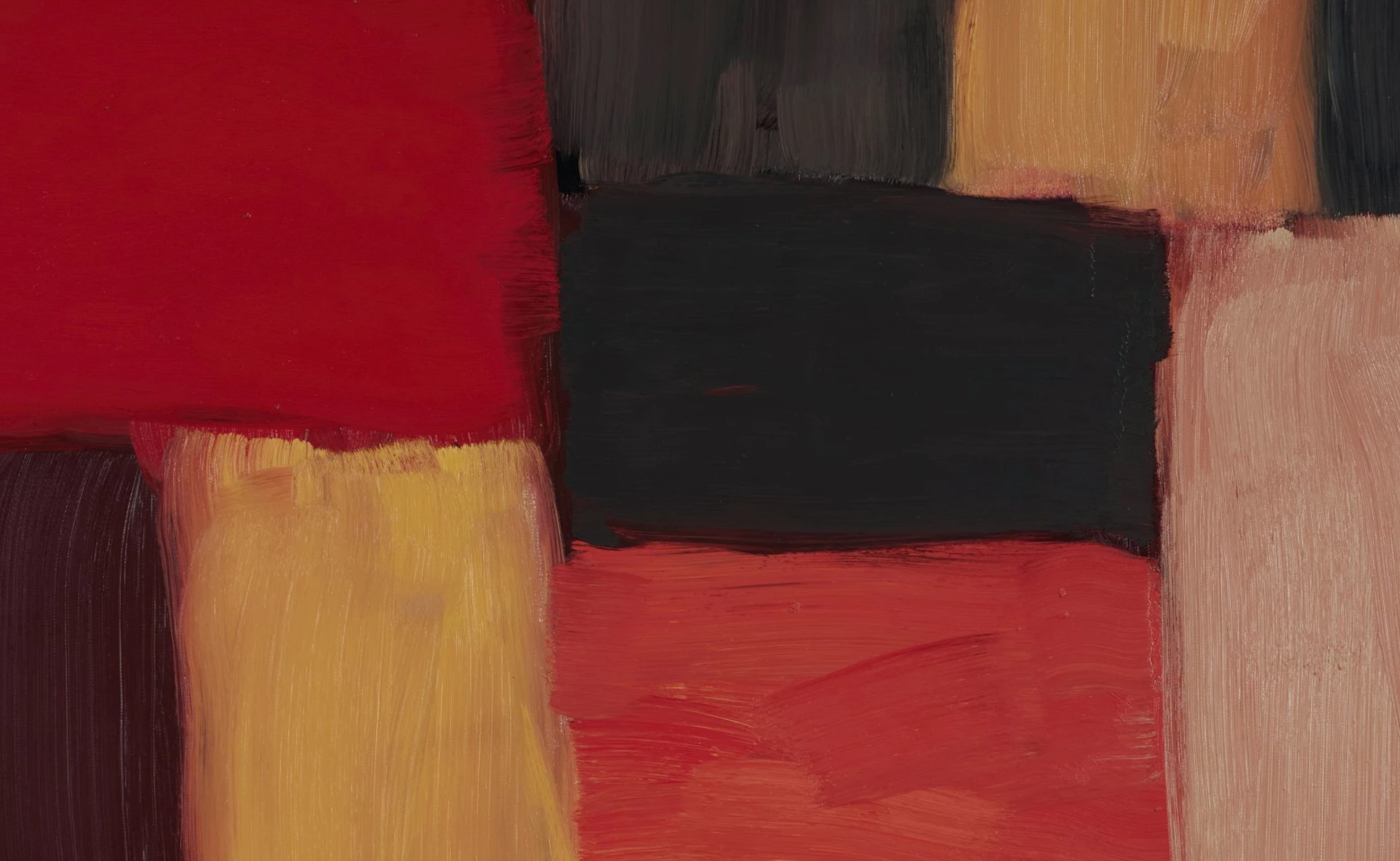
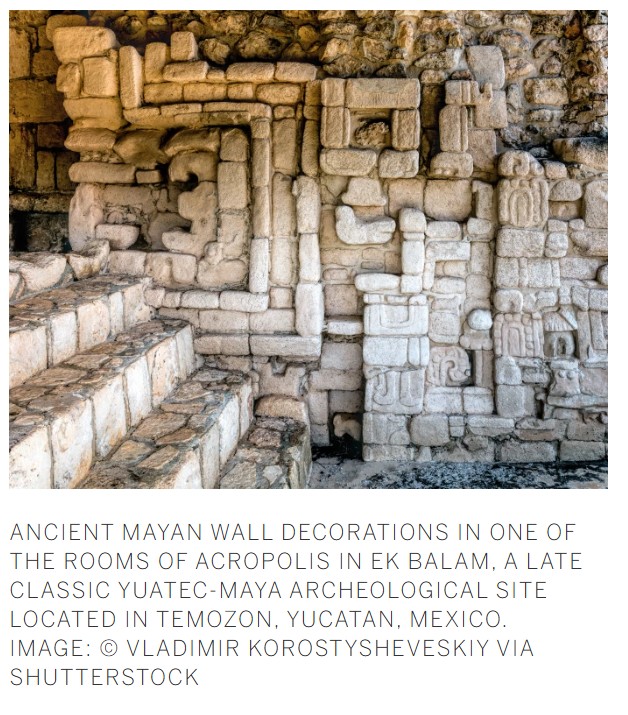
Each Wall of Light painting is appended by an emotionally resonant title which takes account of the conditions in which it was painted, the mood of the artist at the time or the place of creation. Barcelona Red Black Pink invites associations with the city Scully has periodically made his home since the early 2000s. The artist himself describes the importance of the city to his practice: “There’s something about the dark light of Barcelona and its gloomy interiors that provokes a relationship with dark colours when I paint here… I’m very comfortable with that, because I’m a kind of melancholy person. I love the end of the day” (Sam Phillips, “In the studio with Sean Scully RA,” Royal Academy of Arts, 4 September 2013 (online)). Barcelona Red Black Pink is a superb example of Scully’s profound investigation into the complex possibilities of abstract form and theory, a work in which emotion, ambient experience and sensibility combine to form a painting of immense power and impact.
Living Land, 2006
Christie’s New-York: 12 May 2023
Estimated: USD 800,000 – 1,200,000
USD 1,197,000
SEAN SCULLY (B. 1945), Living Land | Christie’s
SEAN SCULLY (B. 1945)
Living Land, 2006
Oil on canvas
75×85 inches (190.5 x 215.9 cm)
Signed, titled and dated ‘LIVING LAND Sean Scully 11.06’ (on the reverse)
“Seeing the Mexican ruins, the stacking of the stones, and the way the light hit those façades, had something to do with it, maybe everything to do with it.” Sean Scully
Painted in 2006, Sean Scully’s Living Land is a composition enriched by deep, earthen hues. Panels of buttery taupe and desert beige are stacked between dark peat-browns, soft ash and rough charcoal grey. Sparks of turquois, Saville orange, and blush pink shimmer in the gaps between these neutral moments that, in tandem with the energetic brushstrokes, create a gently simmering vibrancy. For each rectangular segment, the artist’s brush moves along its longest edge. Pieced together in various directions, the movement of his hand constantly changes such that the eye is drawn into an endless current around the composition. For how short these tiles can be, the artist’s hand does not feel rushed or stifled. Rather, the energy from one piece flows into the next, even as its course changes. The title then becomes especially apt, as this ambulatory quality creates a sense the canvas is almost breathing, the dry edges of paint around each panel like a quivering exhale and the smooth drag of the brush like a sustained sigh.
The work derives from Scully’s notable, decades long, ‘Wall of Light’ series. The mosaiced motif of these abstract paintings was born in the light of the Mayan ruins of the Yucatán in 1983. Captivated by the way the light danced against these ancient structures, Scully let go of his earlier multi-canvas constructions and visual hierarchies in favor of a more unified composition. In the earliest phase of this series the artist privileged brighter, chromatic palettes closer in tone to their compositional predecessors. In 1998, however, he took a turn toward the organic.
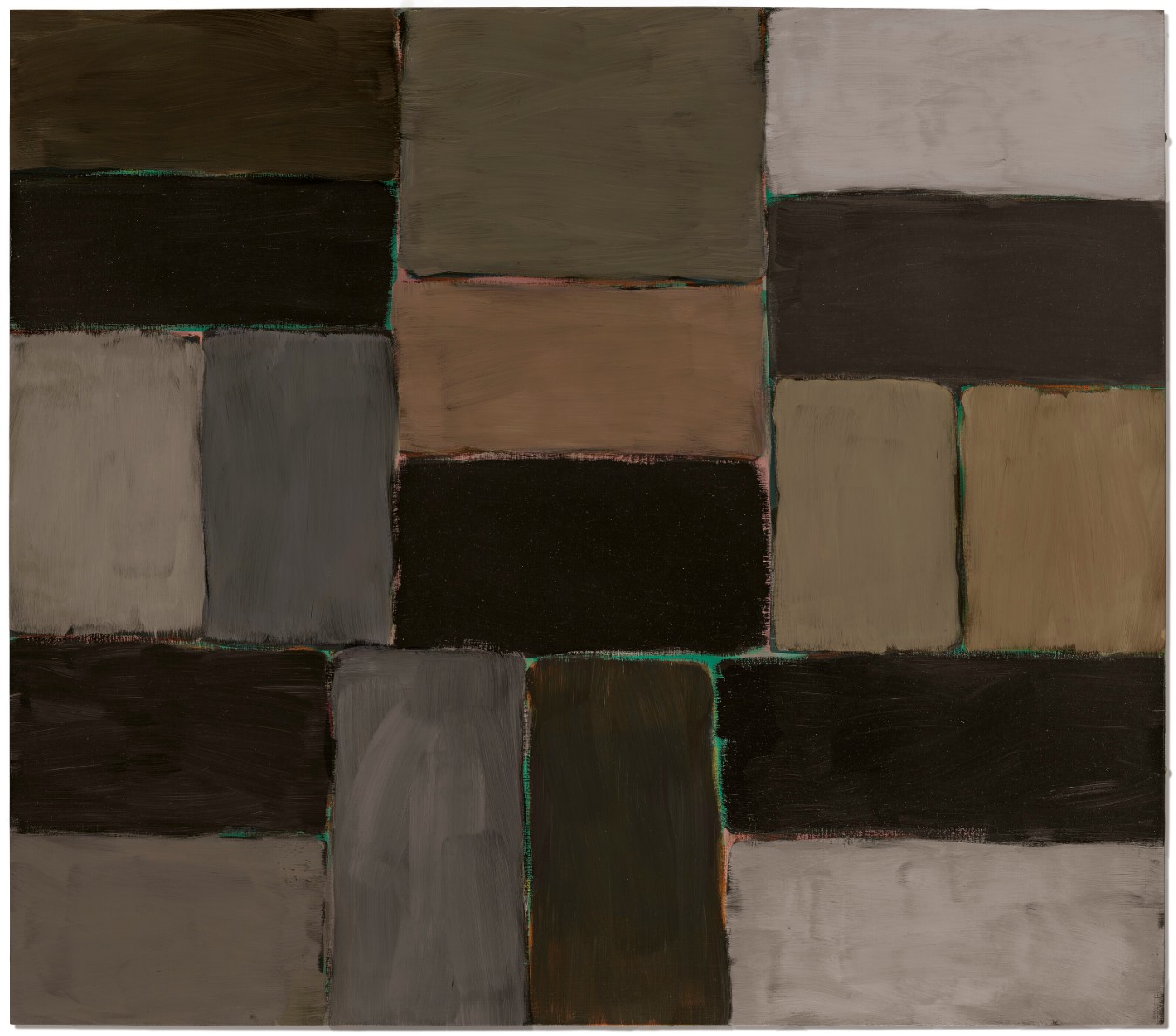
With a distance of fifteen years, Scully looked back on this momentous trip and sought to conjure the emotional memory of the ruins and the transfigurative property of the light. The aura of that place seemed to transport the artist to a time and space he’d never been, but could feel the very essence of. “Seeing the Mexican ruins, the stacking of the stones, and the way the light hit those façades, had something to do with it, maybe everything to do with it,” he explained (S. Scully, quoted in Sean Scully: Wall of Light, exh. cat., Phillips Collection, Washington D. C., 2005, p. 24).
Just as the ruins could project Scully into a past not his own, his walls of light are bids to recapture a moment of wonder and allow the viewer to be transported to his past, as if it were their own. In this effort, Scully’s artistic practice underwent a fundamental shift. Not only did the colors of his works change in tone, but the long stripes that had previously characterized them surrendered to loose blocks of color interlocked in arbitrary patterns, as exemplified by Living Land. As Danilo Eccher notes, “The result was a geometry that was less precise, less self-confident, less presumptuous, becoming instead more poetic, more mysterious, more intimate and more truthful” (D. Eccher, “Sean Scully” in Sean Scully: A Retrospective, London, 2007, p. 13). The subtler tones of nature are visually less insistent, yet they retain a dynamic presence. Like the ruins of their inception, they recall at once an architectural monumentality and a delicate frailty—something eternal and yet also destructible. ‘When light and wall meet, strength and fragility can become symbiotic, as well as symbolic,’ Michael Auping wrote of the series. ‘It is this unique effect that Scully increasingly has come to investigate in his paintings … one brushstroke at a time’ (M. Auping, ‘No Longer a Wall’ in S. Bennett Phillips, Sean Scully: Wall of Light, exh. cat., The Phillips Collection, New York 2005, p. 23).
Living Land perfectly encapsulates the mystique and transcendental properties of the ‘Wall of Light’ series. Fundamentally, a wall of light is a paradoxical image. Light is ephemeral, translucent, and enveloping. A wall is rigid, imposing, and unyielding. To merge the two in one’s mind is to create something defiant in its dialectics. When a viewer approaches Living Land, they first confront what appears as a dense expanse of dark color and shape. As they continue to look, the opacity reveals itself a mirage, and the layers of paint give way to one another. Brooding grey and brown tones concede to rinds of sparkling fluorescents. As the painting unfurls, what was once understood as solid yields into mutability. The glow becomes not that of the sun beating down on a passive wall, but a light coming from within. The darkness of the surface pushes against the glow seeping out of its seems, and the tidal nature of these two forces once again reminds of the current taking the eye around the composition, the swirl of energy that moves around the flat surface now pulsing into the third dimension, underscoring that, yes, this land is certainly alive.
Red Bar, 2003-2004
Phillips New-York: 14 November 2019
Estimated: USD 900,000 – 1,200,000
USD 1,760,000
Sean Scully 20th C. & Contemporary Art Evening Sale
SEAN SCULLY
Red Bar, 2003-2004
Oil on canvas
85 x 75 1/8 inches (215.9 x 190.8 cm)
Signed, titled and dated “RED BAR Sean Scully 1.04” on the reverse
Red Bar exemplifies Sean Scully’s mastery of the stripe, a geometric motif that has figured predominantly in his formal and structural vocabulary throughout his oeuvre. Painted in 2003-2004, the work is an arresting example from the artist’s acclaimed Wall of Light series, which he began in 1998 and continues to the present day. Inspired by visits to Mexico in the 1980s and 1990s, Scully began considering the effect of light on ancient stone ruins. Working first in watercolor, he explored the parameters of paint in depicting the visual experience of the interaction between rock and light, which resulted in his distinctive stripes assuming the form of rectangular blocks, or—as Scully refers to them—“bricks.” The bricks in Red Bar, which together compose a “wall” of paint, are executed in earth tones of rust, yellow, tawny, and black. Featuring a palette that visually anchors the work and a composition reminiscent of architectural structures, Red Bar recalls ancient monuments such as Stonehenge and Mayan stone walls. This abstract tangibility allows Scully to explore in Red Bar both the physical and ephemeral through the transition between light and dark.
Red Bar is a manifestation of Scully’s idiosyncratic painting process, during which he thickly builds upon layers of paint and blocks of color to create a dense structure. The contrasting tones and compactness of paint beget the appearance of solidity; Scully illuminated that “the way I’m painting directly affects the weight of the paint and thus the color. Everything is painted into its place, as the title ‘wall’ implies I’m building a surface, but I’m building out of feeling directly, and this feeling has rhythm” (Sean Scully, quoted in Kevin Power, “Questions for Sean Scully”, April 2003, online). The duality between the horizontal and vertical bricks charges Red Bar with rhythm and emotion and the uneven application of paint grants the slabs a sense of vitality. Moreover, the dichotomy of opaque and translucent bricks – paired with the emotive paint layers – imbues an aura of dynamism to the otherwise still abstraction. Lending support to one another, the bricks are still slightly spaced apart, allowing for an under-layer of paint to sneak into the visual comprehension of the work. The consequential perception of depth engenders an illusion of light, whose juxtaposition with the physicality of the dense brick suggests another world that is inaccessible, or literally walled off, to the viewer.
Scully’s employment of the stripe in Red Bar is redolent of both modernist objectivity and post-war abstraction’s meditative compositions, evoking Piet Mondrian’s geometric vocabulary, Mark Rothko’s color masses, and Barnett Newman’s zips. While his formal decisions are certainly informed by these artists, Red Bar also reflects Scully’s painterly – even expressionist – approach. “Artists who want to ‘get at something’ to represent a profound moment with intimacy have to work with the simple. So obviously, my work is relating to Mondrian and Newman, but my painting solution is very different,” Scully has elucidated. “Mine includes sensuality and the body and I pursue a kind of pathos that is ever-present in our attempts to capture these moments” (Sean Scully, quoted in Kevin Power, “Questions for Sean Scully”, April 2003, online). Scully has also cited Impressionist painting as a precursor to his Wall of Light series: the raw, blurred edges of the bricks are a reference to the optical sensitivity present in Édouard Vuillard’s works such as The Laden Table, circa 1908, Tate, London. Coalescing French modernism’s interest in human perception with the expressive gesture of Abstract Expressionism, Red Bar is the culmination of a century-long investigation of abstraction.
Red Bar demonstrates the raw power and storytelling capacity of Scully’s Wall of Light series that was celebrated in the exhibition “Sean Scully: Wall of Light” at the Metropolitan Museum of Art, New York in 2006-2007. Scully has a penchant for simultaneously using abstraction and physicality to contemplate universal, transcendental experiences: as the artist himself has stated, “I’m trying to turn stone into light” (Sean Scully, quoted in David Grosz, “The Miracle of Turning Stone into Light”, New York Sun, September 28, 2006, online). As in A Wall of Light White, 1988, Metropolitan Museum of Art and Wall of Light Brown, 2000, Solomon R. Guggenheim Museum, New York, Red Bar exhibits Scully’s ability to succinctly capture a sense of place while conveying vivid emotion through color, light, and solidity.
Cut Ground series
Cut Ground Moon, 2011
Phillips New-York: 14 May 2025
Estimated: USD 200,000 – 300,000
USD 355,600
Sean Scully Modern & Contemporary Art Day Sale, Afternoon Session
SEAN SCULLY
Cut Ground Moon, 2011
Oil on linen over board
28 1/8 x 32 inches (71.4 x 81.3 cm)
In the late 1990s the poet Seamus Heaney asked Sean Scully, a close friend, for a painting to use on the cover of his poetry collection, Opened Ground. This marked an inflection point in Scully’s practice, inspiring his Cut Ground series, with its reminiscent title similarly alluding to the topography of the worked landscape. There is a strong kinship between Scully and Heaney, the most important Irish poet of his generation. “I’m constantly referring to land, cutting into land. A lot of Seamus’ poetry is about cutting,” Scully has reflected.i While rooted firmly in the abstract, Cut Ground Moon, 2011, a luminous yet understated example from this important series, draws influence from cut peat bogs and divided farmland seen from an aerial perspective. “Cut ground,” the Dublin-born Scully describes, is a “very Irish thing: cutting into soil that has accumulated over thousands of years.”ii
A shift in Scully’s practice, the Cut Ground works differ from his earlier series, Wall of Light, in their move away from all-over compositions towards greater irregularity and unpredictability. The Wall of Light series was initially inspired by Scully’s travels to Mexico in the early 1980s, where the artist was struck by the patterns of light and shadow on the surface of Mayan stone walls. The Cut Ground works, meanwhile, are more densely packed with interweaving patches of color that convey a heightened dynamism and sense of energy. Examples from this celebrated series are held in the permanent collections of the Metropolitan Museum of Art, New York and Smithsonian American Art Museum, Washington, D.C.
Cut Ground Moon is composed of rectangles divided into horizontal and vertical stripes in shades of red, blue, black, white, pink and yellow. The geometric composition encourages the gaze to move across the canvas, lingering on areas of lightness that contrast with deeper indigo and cadmium hues. The work initially appears strictly geometric, but closer inspection reveals painterly brushstrokes and soft, fluid transitions between colors. There is a sensuality in the paint’s application and delicate layering—a warmth in the soft yellow halo surrounding the central pink stripe, for instance. The painting is solid and yet also transparent and organic, lending it a captivating vitality and rhythm.
Cut Ground Orange, 2009
Ketterer Kunst Munich: 7 June 2024
Estimated: EUR 800,000
EUR 1,258,000 / USD 1,459,280
Ketterer Kunst, Art auctions, Book auctions Munich, Hamburg & Berlin
SEAN SCULLY
Cut Ground Orange, 2009
Oil on canvas
83.8 x 120 x 2.3 inches (213 x 305 x 6 cm)
Signed, dated and titled on the reverse
“My paintings want to tell stories”
The strictly geometric abstraction and sensual opulence of “Cut Ground Orange” extends over a length of three meters and covers an area of more than six square meters. Ever since the beginning of his artistic career in the 1970s, the Irish-born artist Sean Scully, who emigrated to the USA in 1975, has fully committed himself to abstraction. His works testify to his fascination with geometrically structured surfaces, creating compositions that show a variety of vertical and horizontal stripes. Early pieces from the 1970s are made up of very precise, strictly geometric, and minimalist stripe patterns that would become wider throughout the 1980s, with freer transitions, while a more sensual painterly style can also be felt. From the 1990s onward, Scully finally refined the stripes into stacked color blocks of almost equal size, which he arranged in highly harmonious compositions. The present work from the “Cut Ground” series, which he began in 2006, is a more daring variation: In contrast to the mostly uniform compositional pattern of other work series, the “Cut Ground” works also feature narrower stripes that add dynamism to the composition and determine their energy flow. To Scully it is all about the relationship between colors and shapes, he explains: “My paintings are about relationships. How bodies come together. How they touch and how they part. How they live together, in harmony and disharmony. The bodies in my work are subject to a constant change that depends on the color [.]. The edges define the relationship to their neighbors and how they exist in context. My paintings want to tell stories that can be understood as abstract equivalents of how relationships in our world emerge and fade.” (Sean Scully in a discussion with W. Smerling, in: ex. cat. Konstantinopel oder das sinnlich Verborgene. Die Bilderwelt von Sean Scully, MKM Museum Küppersmühle für Moderne Kunst, Duisburg 2009, p. 8).
Harmony and disharmony
Hence the basic principle of these works is the order and arrangement of the color fields. Scully’s work starts with the organization of the canvas, it is divided into rectangular elements and stripes in oil pastel. For “Cut Ground Orange”, Scully chose a layout of 2 x 3 panels of almost equal size, which he in turn divided into stripes of different widths: narrow stripes (bottom center), slightly wider color bars (top right), and bold, much flatter blocks (top center). These areas are painted in overlapping layers of paint with a broad brush in gestural, free, and even rhythmic strokes. A process that runs counter to the apparent rigidity and simplicity of the well-thought-out arrangement: colors overlap, blur, and repeatedly allow the viewer to witness the artist’s manual work and thus the process of creation: “Of course, you can feel time in my work because it consists of layers. Repeatedly painted over, in different colors and with different pigment densities, always by my hand, until somehow everything [..] is in its right place where it can live.” (Sean Scully in a discussion with Kevin Power, quoted from: Kelly Grovier/Kirsten Voigt (eds.), Inner, Berlin 2018, p. 104).
A seemingly rational, almost architectural composition of geometric shapes and horizontal and vertical lines, quickly reveals its qualities as a masterpiece of a perfectly balanced spectacle of harmony and fascinating discord: The borders of the color fields are not razor-sharp, they have a painterly flow; their edges do not meet exactly, they are not accurately composed but stand on their own and have an asymmetrical relationship with the adjacent surfaces: each color block is designed both as an independent unit as well as a part of the whole composition.
Contrast comes from the cool and warm color areas that are so close to one another: Warm orange meets light gray, strong yellow meets deep black. Darker color panels help their lighter, strong yellow neighbors to achieve a surprising radiance, creating a stimulating “patchwork”.
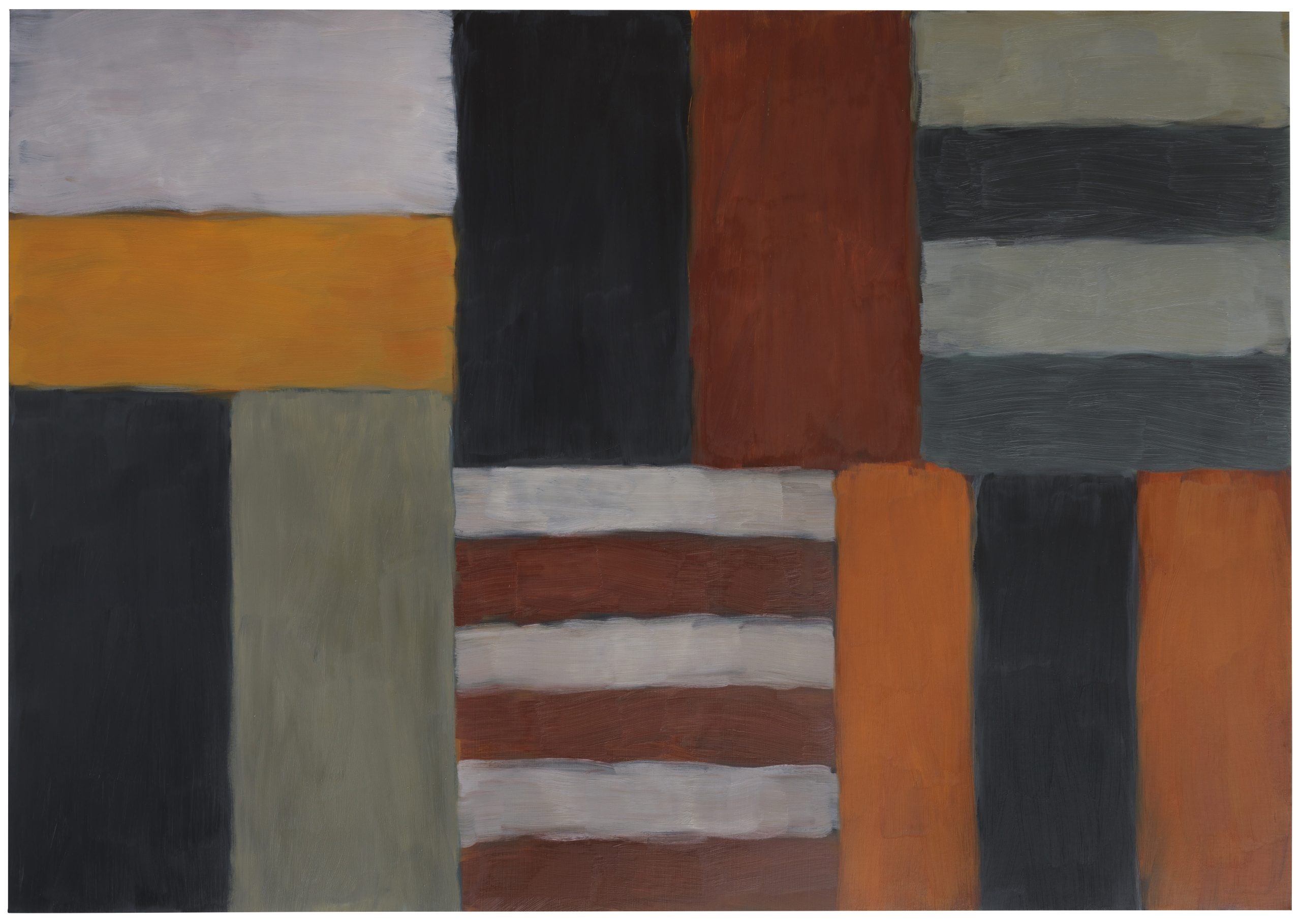
Moroccan Fabrics and Abstract Expressionism
Scully describes a trip to Morocco in 1969 as a key moment: “Then I saw the striped fabrics that the Moroccans dye and make them into galabeyas – their robes. I saw those stripes everywhere in Morocco and when I got back to work I was making grids from stripes of color.” (Sean Scully, quoted from: www.seanscullystudio.com) The typical garments of the Maghreb and the rich colors found everywhere, which are also evident in “Cut Ground Orange”, sparked a great fascination in Scully that helped him attain an independent style at the very beginning of his career. While early works still show a certain minimalism and a stricter structure, Scully would find his way to a more emotional form of abstract painting in which light, materiality, and haptics started to play a major role. The stylistic devices became softer, spaces between the bars and stripes more imperfect. He attributed this development to the influence of Abstract Expressionism, in particular to the vibrant color fields of Mark Rothko or Barnett Newman, which the artist studied intensively, especially after his relocation to New York in 1975. Like Rothko, Scully is also obsessed with the effect of colors and their relationships with one another, creating and conveying emotions and moods. “I am convinced that abstraction is and was there to embody deep emotion. I believe that is its role in art history.” (S. Scully, 2012, quoted from: Kelly Grovier/Kirsten Voigt (eds.), Inner, Berlin 2018, p. 280).
Scully applies an architectural structure, so to speak, to Rothko’s atmospheric use of color, lending structure and weight to Rothko’s sensual clouds of color. (Cf. S. B. Phillips, “Becoming Sean Scully”, in: ex. cat. Wall of Light, Phillips Collection, Washington, D.C. 2005, p. 19).
Sensuality and plasticity
The expressive power of Scully’s works, including “Cut Ground Orange”, emerges in the painting process, it comes about ‘geologically’, so to speak, like rock layers, slowly building up from the bottom layer of paint to the surface. The layering that can still be seen in the transitions between the color fields, the special materiality of the subtly shiny surface, and the broad brush strokes that remain visible lend the painting vibrancy and sensual opulence. In combination with the work’s monumentality, he achieves an expansive sculptural presence.
The impression of plasticity is also enhanced by the descriptive title of our painting, which is reminiscent of the laborious peat cutting that has been practiced in Scully’s native Ireland for centuries. Scully’s paintings reflect visual impressions from the past and present. Inspirations from nature, everyday life, and personal experiences are expressed in a particular form and different colors. The broad blocks of color in “Cut Ground Orange” – the warm, almost fiery orange, stone gray, sooty black and mustard yellow – evoke elements and aspects of nature, while the forms refer to, among others, the old walls of horizontally and vertically layered stones on the Irish Aran Islands, which the artist immortalized in his photographic series “Aran” from 2005 and which also inspired his sculptural works such as “Wall Dale Cubed” (2018, Yorkshire Sculpture Park).
“Cut Ground Orange” fascinates and confronts us with finely nuanced yet powerful colors and sheer monumentality.
Scully creates an assemblage of formal austerity and sensual opulence, architectural composition and asymmetry, gestural brushwork and repeated layering, associative richness and intuitive colorfulness, light and shadow, coarse blocks of color, and painterly stripes of color. The work offered here from the “Cut Ground” series thus embodies the essence of Scully’s art. The iconic body of juxtaposed and stacked, cold and warm-toned, lighter and darker color fields crystallize the best of Scully’s art, his dedication and unrelenting commitment to abstract painting.
At the pinnacle of his career
Scully’s oeuvre spans paintings, pastels, watercolors and drawings, prints, photographs, and sculptures and is part of the world’s most prestigious collections like the Museum of Modern Art, the Metropolitan Museum of Art, and the Solomon R. Guggenheim Museum in New York, the National Gallery of Art in Washington, D.C. and the Tate Gallery in London. Thanks to a success story that has lasted more than five decades, he is now one of the most important artists of his generation. In 2013, the artist became a member of the Royal Academy of Arts, and in 2014/15 he was the first Western artist ever to be honored with a comprehensive, retrospective exhibition in Shanghai and Beijing. In the last five years alone, his work has been shown in more than a dozen solo exhibitions in Europe and the United States, including a show at the Thorvaldsen Museum in Copenhagen (2023), the large-scale exhibition “Sean Scully. The Shape of Ideas” at the Philadelphia Museum of Art (2022), at the National Gallery in London and the Albertina in Vienna (2019) and the Hirshhorn Museum and Sculpture Garden in Washington, D.C. (2018/19). [CH]
Multi-panel Striped Paintings
Song, 1985
Drawn Together: The Collection of Marcia and Stanley Gumberg
Sotheby’s New-York: 19 May 2022
Estimated: USD 800,000 – 1,200,000
USD 2,046,500
Song | Contemporary Evening Auction | 2022 | Sotheby’s
SEAN SCULLY (b. 1945)
Song, 1985
Oil on canvas, in three parts
90 x 110 x 11 1/4 inches (228.6 x 279.4 x 28.6 cm)
Signed Sean Scully
Titled Song and dated 7.85 (on the reverse)
Titled Song (on the stretcher)
An ebullient configuration of striped forms, Song is an exceptional painting from Sean Scully’s early oeuvre of multi-panel works. Exemplifying the inimitable pictorial dialect of glossily painted horizontal and vertical bars that have become the artist’s hallmark, the present piece reveals not only the possibility of color in non-figurative form but also the artist’s spirited artistic philosophy. Executed in 1986, the present piece brilliantly exhibits Scully’s magisterial distillation of palette, light, and movement to their most basic forms to exude boundless melodic energy.
“The whole point of painting is that it has the potential to be so humanistic, so expressive…I want my brushstrokes to be full of feeling – material feeing manifested in form and color.”
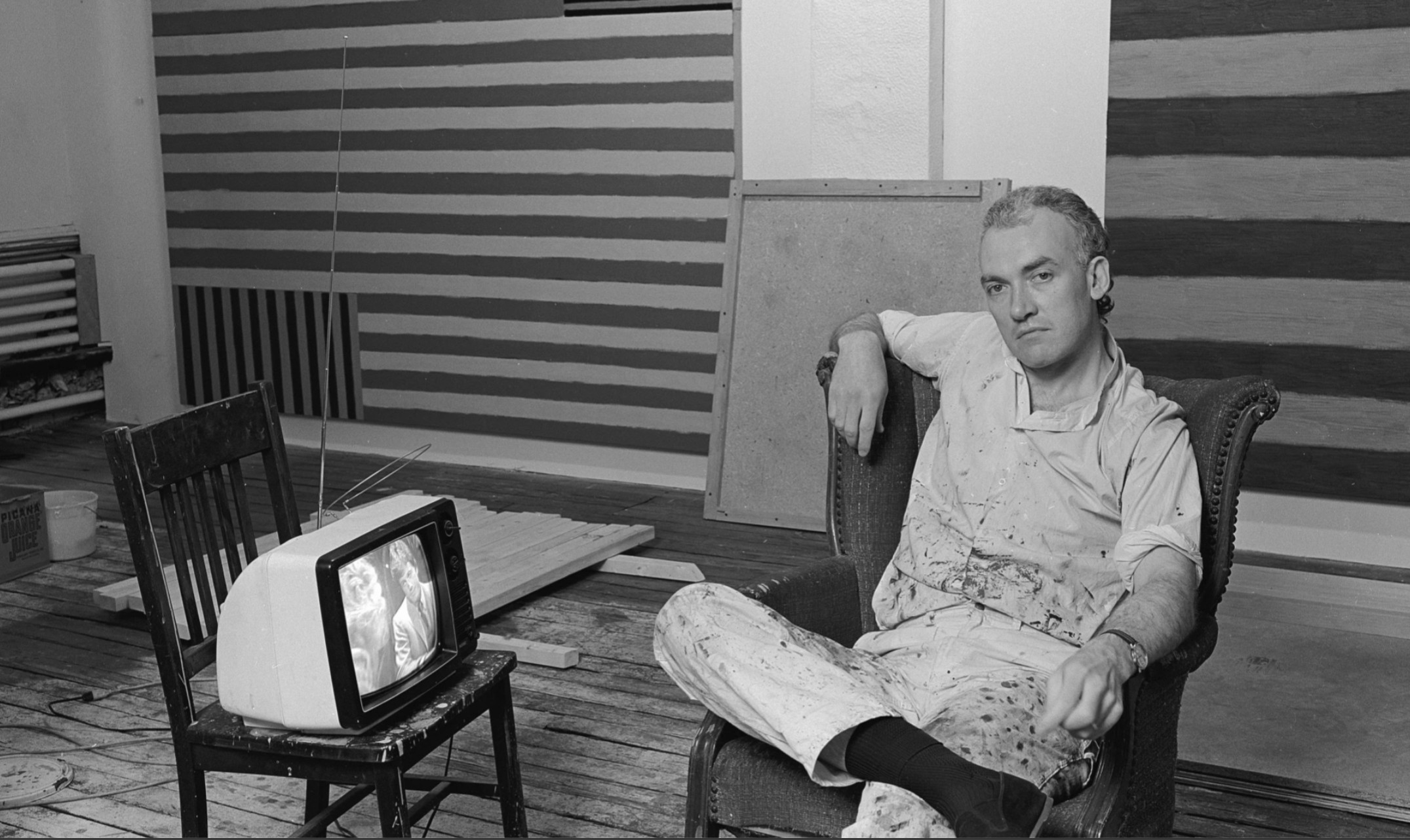
SEAN SCULLY, PHOTOGRAPHED IN HIS STUDIO IN 1983.
PHOTO © PETER BELLAMY. ART © 2022 Sean Scully / Artists Rights Society (ARS), New York
Lustrously pigmented by alternating stripes, the present work exquisitely juxtaposes two distinct panels. Through subtle bleeds of color and tactile brushstrokes, each stratified band of color marvelously bears the mark of its creator and suggests rhythmic movement within the picture plane. Upon the rightmost panel, stripes of varying widths alternate between carmine overlays and cascades of golden pigment awash with brushstrokes of the same deep red. Such verticals are contrasted by the left panel’s horizontals, wherein lush blue is both stacked between and blended into bright yellow impastos.
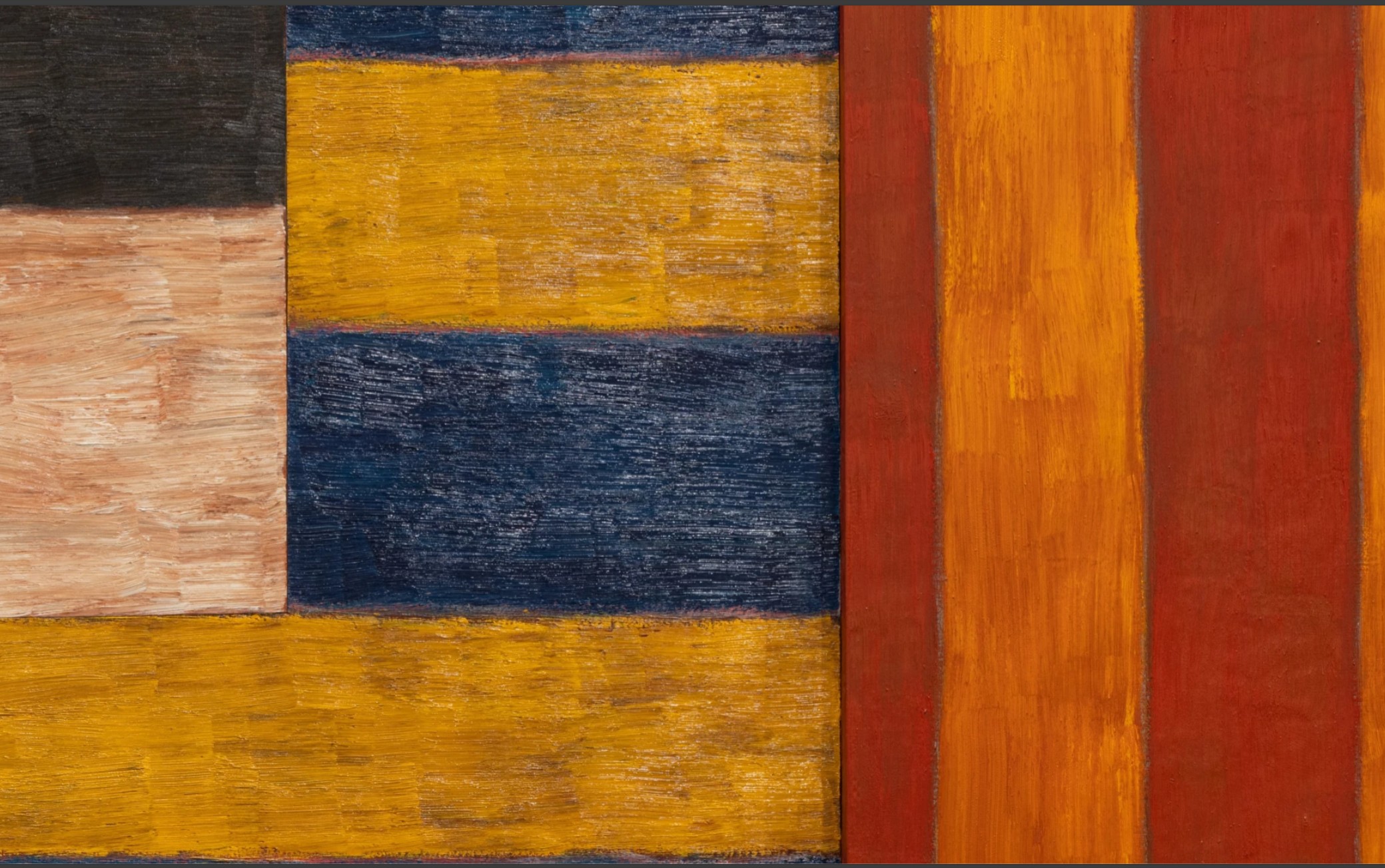
Marking the first appearance of such compositional experimentation in the artist’s oeuvre, two squares in the left uppermost corner, one of glossed black and one of white paint swathed over a terra cotta hue, subvert the rigorous geometry of Song. With this infusion of neutrality, Scully asserts a tension that underscores the vitality of the sumptuously hued stripes. Protruding outward, the right panel ruptures the two-dimensionality of the painted canvas and endows the composition with a sculptural presence that is superbly heightened by the textural swathes of paint which themselves suggest volume and dimensionality. As such, Song powerfully imbues the ambiance of its surroundings with the lyricism evoked in the painting’s title.
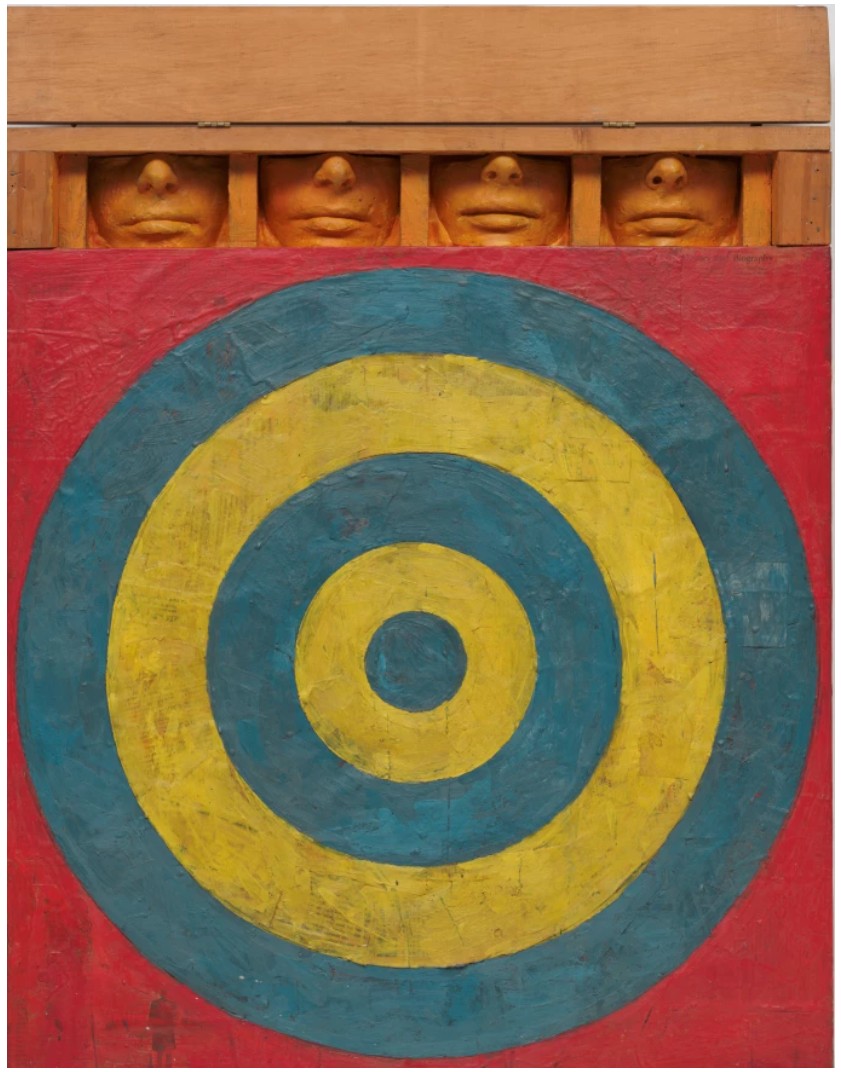
Jasper Johns, Target with Four Faces, 1955. Image © The Museum of Modern Art, New York / Licensed by SCALA / Art Resource, NY.
Art © 2022 Jasper Johns / Licensed by VAGA at Artists Rights Society (ARS), NY
The present work testifies to Scully’s masterful synthesis of the formal traditions of European masters with a distinctly American abstract tradition. His chromatic expression of color is bound to the post-Impressionist works of Pierre Bonnard and Paul Gauguin, whose preoccupation with ideas of opacity and translucency offer a poignant parallel to Scully’s own visual orchestration, while his abstract vernacular echoes the brooding tones and ethereal understanding of light perfected by Caravaggio and Velazquez. Scully’s fascination with black, as manifested in Song, stems from the artist’s admiration of the rich black tones in the paintings of seventeenth-century Spanish artists such as Goya. While the present work incorporates the polished minimalism of Donald Judd and Frank Stella that reigned throughout his early years as a painter, it makes especially present Scully’s affinity with Mark Rothko’s impassioned approach to color and rendering of the dramatic sublime.
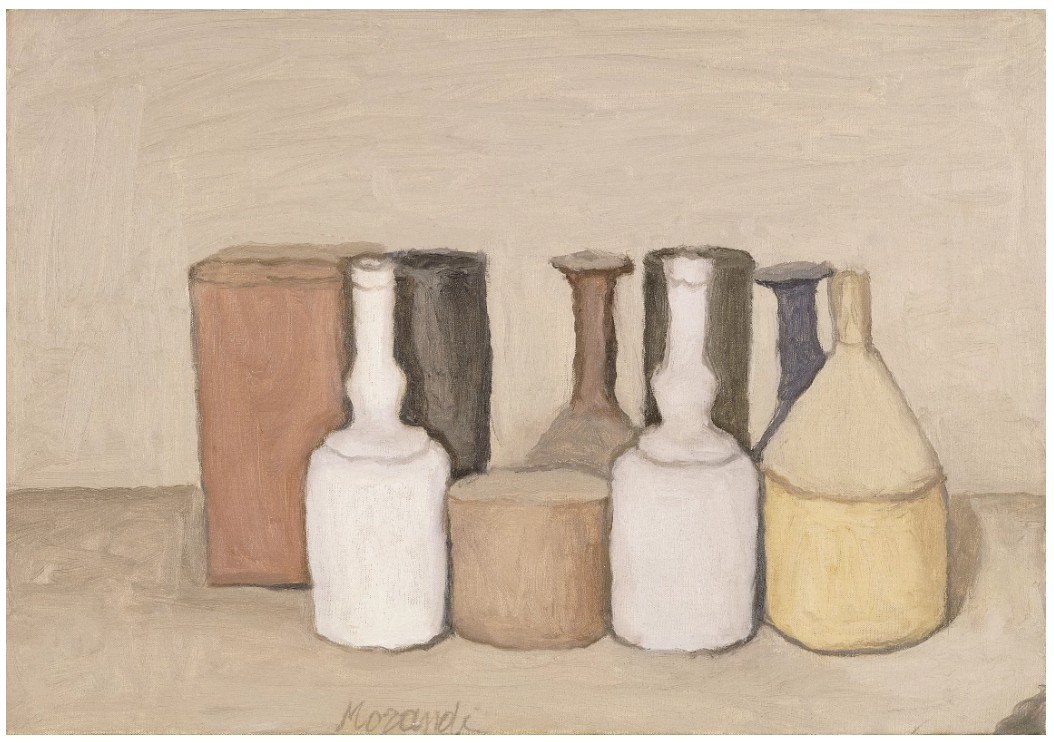
Giorgio Morandi, Natura Morta, 1953. Private Collection. Image © Bridgemann Images.
Paralleling Rothko’s canvases, Song evidences the evolution of Scully’s distinct abstract language of rectangular brick-like forms that fit closely together characterized by a tangible weaving of pigment to reveal the layers beneath the surface of the canvas. Scully analogously pares down his means to pure color and surface texture, to tease out feeling and contemplation from the depths of tone, gesture, and light manifested in feathered brushstrokes. As evidenced by the harmonious present work, Scully’s paintings are often connected by their titles to specific experiences, individuals and places.
“You can do certain things with painting that are unique to painting that you cannot do with anything else. With a painting you can contain within borders a lot of experience, narrative, emotion, poetry, idea, thought, time, references and so on, all within a frame…Painting has a unique potential to stop time and compact feelings and experience.”
Enrapturing viewers through its captivating resplendency, Song endures as an exceptional example of Sean Scully’s ongoing investigation of striped forms. The present work is an embrace of the gestural capacities of color and lyrical attributes of paint in order to stunningly emanate light and depth. A monumental affirmation of the artist’s spirited outlook towards life, Song fortifies Scully’s status among the foremost abstract painters of his time.
Shadowing, 1984
Phillips New-York: 19 May 2022
Estimated: USD 450,000 – 650,000
USD 604,800
Sean Scully 20th Century & Contemporary Art Day Sale, Afternoon Session
SEAN SCULLY
Shadowing, 1984
Oil on two attached canvases
80 3/4 x 72 1/4 inches (205.1 x 183.5 cm)
Signed, titled and dated “Sean Scully 84 SHADOWING” on the reverse
Shadowing is a paradigmatic example of Sean Scully’s transfiguration of hard geometry into an evocative spiritual experience. Painted in 1984, it belongs to Scully’s early series of multi-panel, striped paintings—a seminal body of work, of which examples reside in such collections as the Metropolitan Museum and the Museum of Modern Art, New York. Elegant in its compositional simplicity, Shadowing is built with alternating strata of primary hues, defined with glowing contours of light yellow. The work oscillates between density and looseness, contrasting geometric forms with an expressive painterly brushwork. The subtle translucency within dark swathes of black lends a sensuous tactility that distinguishes Scully’s accomplished work, which is currently being celebrated at the Philadelphia Museum of Art’s landmark exhibition Sean Scully: The Shape of Ideas.
“Abstract art has the possibility of being incredibly generous, really out there for everybody. It’s a nondenominational religious art.
I think it’s the spiritual art of our time”
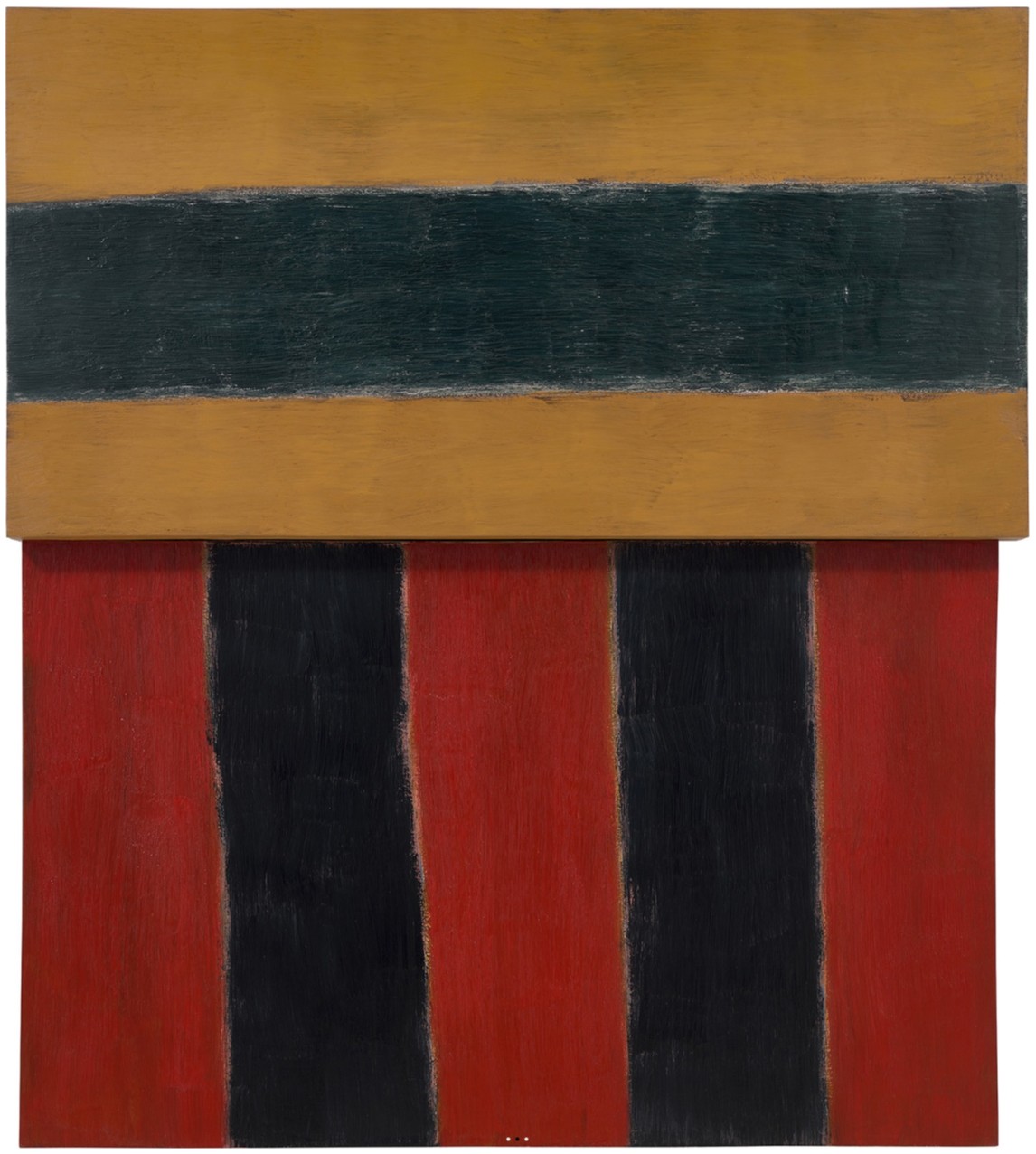
Shadowing also refers to the replication and alteration of forms, as stripes uniform in thickness are rotated and attached. Segmented across two canvases, the work comprises objects that are distinct yet linked. Elaborating on the spiritual significance of these forms, Scully has described: “My paintings talk of relationships, how bodies come together. How they touch. How they separate. How they live together, in harmony and disharmony… Its edge defines its relationship to its neighbor and how it exists in context. My paintings want to tell stories that are an abstracted equivalent of how the world of human relationships is made and unmade. How it is possible to evolve as a human being in this.”
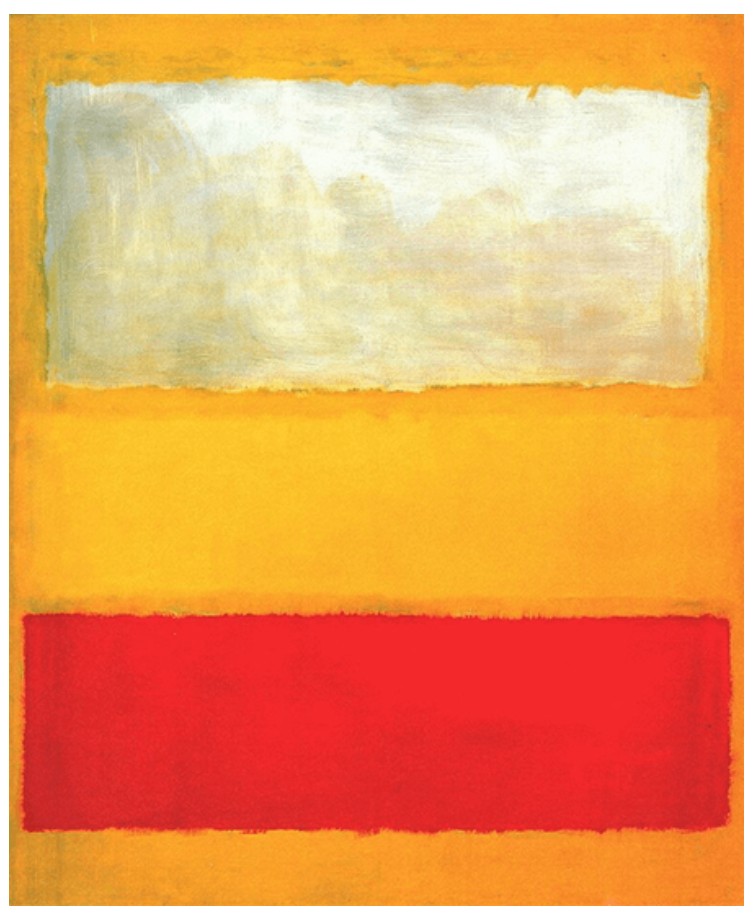
Mark Rothko, No. 13 (White, Red on Yellow), 1958. The Metropolitan Museum of Art, New York. Artwork: © 1998 Kate Rothko Prizel & Christopher Rothko / Artists Rights Society (ARS), New York
Painted in 1984, Shadowing was created during a high point in the artist’s output in the early-to-mid-eighties, distinguished by pivotal stylistic evolutions. In 1979 the artist abandoned acrylics in favor of oil paints, and by 1981 had ceased using the painter’s tape that shaped his earlier hard-edge works. Scully embraced the fluidity and flexibility of oil with virtuoso, further loosening his wide gestural strokes with a housepainter’s brush. When the artist painted Shadowing he had become fluent in his unique process of using two attached panels and was increasingly migrating towards ever larger works. While grand, Shadowing retains an intimacy derived from its delicate handling of paint and sincerity of expression. Spiritual and emotional, Scully’s soft-edge stripes progress styles previously mastered by the likes of Mark Rothko, as in his seminal No. 13 (White, Red on Yellow), 1958.
Earnest in his commitment to his signature style, Scully’s adherence to abstraction distanced himself from the mainstream painting of the decade. Notwithstanding trends, the brilliance of Scully’s work has consistently attracted recognition. The same year that Scully painted Shadowing, he notably gained significant recognition with his inclusion in An International Survey of Recent Painting and Sculpture at the Museum of Modern Art, New York. The following year saw Scully’s first solo institutional exhibition in America at the Museum of Art, Carnegie Institute, Pittsburgh, which later travelled to the Museum of Fine Arts, Boston. Shadowing was notably exhibited in the artist’s major solo exhibition at the Pinacoteca do Estado de São Paulo in 2015.
Early Works
Green Light, 1972-1973
Phillips New-York: 16 November 2022
Estimated: USD 250,000 – 350,000
USD 315,000
Sean Scully 20th Century & Contemporary Art Day Sale, Afternoon Session
SEAN SCULLY
Green Light, 1972-1973
Acrylic on canvas
96×127 inches (243.8 x 322.6 cm)
Signed “Sean Scully” on the reverse
Sean Scully’s Green Light, 1972–1973, is a seminal example from the artist’s early practice, exemplifying the artist’s signature geometric abstraction with the crisp lines and vibrant colors of his early professional work, referred to by the artist as “supergrids.” One of the few early paintings to come to auction, this painting was most recently seen in the artist’s retrospective Sean Scully: The Shape of Ideas, exhibited at the Philadelphia Museum of Art and the Modern Art Museum of Fort Worth in 2021–2022.
Green Light comes from the limited period in which Scully engaged with bright colors–by the mid- to late-1970s Scully had turned to monochromes and darker muted palettes–that saw the artist’s first critical acclaim. The virtuosity of Scully’s supergrids was quickly recognized by collectors and critics alike in his breakthrough, sold-out solo exhibition at Juda Rowan Gallery, held the year Green Light was completed. William Feaver, writing for Art International/The Lugano Review identified the young Scully as a major force in the rising generation, announcing, “comparison of his first show with the [Kenneth] Nolands at the Waddington during the summer led me to suspect that a torch may have been laid down and taken up;” he went on to further praise Scully’s adeptness at rendering shadow and distance to create an “a convincing illusory space.”
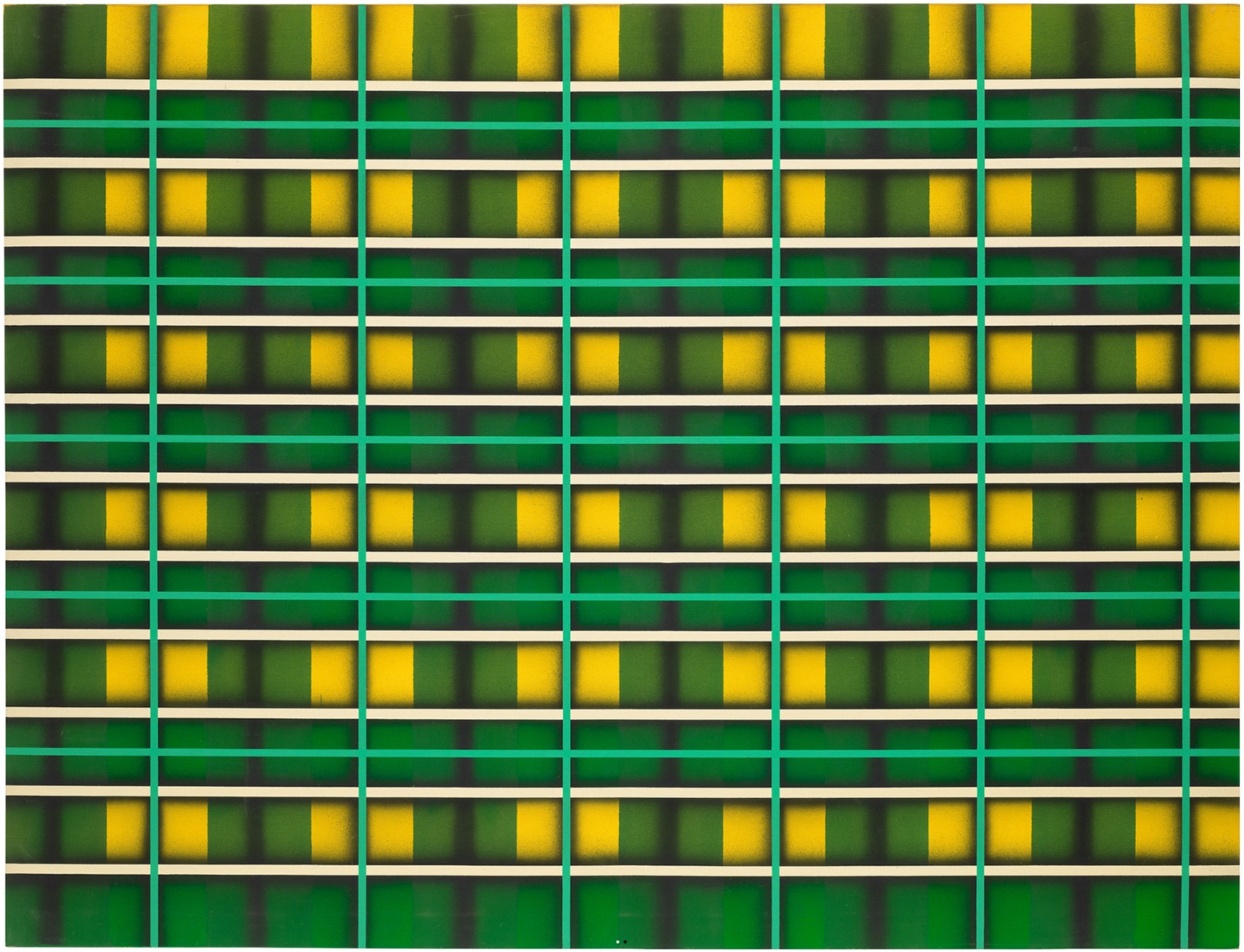
Emerging on the international scene in the early 1970s, Scully gained a celebrated reputation as a contrarian painter working in contrast to the prevailing conceptualist art of the era. Scully remained guided by his interest in the emotional potential of painting and abstraction, famously influenced by Mark Rothko’s work from the preceding two decades. The present example also exhibits a particular influence from contemporaneous movements like Op Art, resonating with the work of fellow British artist Bridget Riley, whose vibrant, structured paintings juxtapose color to illusory effect. Another crucial influence was Jesús Rafael Soto, whose work Scully first encountered at the Musée d’art moderne de la Ville de Paris in 1969 on his way home from his impactful and oft-discussed trip to Morocco as a young artist. The influence of Soto’s exploration of positive and negative space in his immersive Penetrables, interactive sculptures composed of rods and nylon ropes, is strongly felt in the development of space and depth in Green Light. Scully created Green Light during his year in residence at Harvard, having been awarded a Frank Knox Memorial Fellowship, from 1972-1973. In this year the artist travelled frequently to New York, where he found a stronger kinship with the artistic community there than in London. Encountering the emergent Minimalism movement, the young Scully met artists including Robert Ryman and Anne Truitt. Scully was inspired by the energy of the city’s art scene but remained guided by his personal foundational principles on art. Using Green Light as an example, Kelly Grovier has acutely pointed to Scully’s blend of the moment’s non-figurative artistic threads of Minimalism and Op Art. The present work also sees Scully’s influence from the rhythmic poetry and music of Phil Spector and the Velvet Underground in its lattice of bright green, yellow and black. Pulsating with energy, Green Light exemplifies Scully’s 1970s work at its best, combining the abstract, emotional qualities distinctive to the artist’s oeuvre with the complex influences from his early career.
Other Series
Music, 1986
Christie’s London: 15 October 2025
Estimated: GBP 500,000 – 700,000
GBP 571,500 / USD 765,415
SEAN SCULLY (B. 1945), Music | Christie’s
SEAN SCULLY (B. 1945)
Music, 1986
Oil on three attached canvases
86×108 inches (243.8 x 274.6 cm)
Signed, titled twice and dated ‘music Sean Scully 1986 MUSIC’ (on the reverse)
A euphony of line and colour, Music is a consummate early example of Sean Scully’s emotionally charged abstraction. Executed in New York in 1986, it dates to a breakthrough decade during which Scully redefined abstract painting against the prevailing strictures of hard-edged Minimalism. The work is comprised of three canvases, which interlock like harmonies in a score. Bands of sky blue and blush pink illuminate the left-most, rectangular panel, while thick horizontal bands of jet black and bright yellow umber extend across the larger C-shaped canvas that adjoins it. Inset into the latter is a small canvas bearing diagonal bands of navy and brick red. The latter part of the 1980s saw a steady rise in acclaim for Scully, culminating in his first major institutional solo exhibition in Europe, as well as the first of two Turner Prize nominations. An important work from this pivotal period, Music was originally part of the celebrated Oliver-Hoffmann Collection, where it remained for fourteen years. It was shown at the Museum of Contemporary Art, Chicago between 1988 and 1989, and has since been featured in a number of solo exhibitions including Scully’s retrospective at the Kunstmuseum Bern in 2012.
Music pays tribute to an early and important point of reference in Scully’s body of work. He locates the significance of music in his Irish heritage, and recollects a childhood with the musical accompaniment of his grandmother, father and mother: ‘when you play music in Ireland … you see the whole room start to move. The rhythm of that music is in the people’ (S. Scully quoted in B. Kennedy, Sean Scully: The Art of the Stripe, exh. cat. Hood Museum of Art, Hanover 2008, p. 41). Music was particularly on his mind across the 1980s, with his defining early masterwork Backs and Fronts (1981) originally titled Four Musicians, in homage to Picasso’s Three Musicians (1921). In the present work, paint moves in layered and syncopated rhythm across the surface of the canvas, the steady, metronome motion of horizontals and verticals contrasting with the inset’s diagonals. As Scully described it, ‘you’ve got this very feminine sky blue with pink that seems light and airy, big horizontals working up against that. Then there’s this very strangely painted diagonal. I find the painting to be constantly turning. It’s an uplifting painting … it’s not in any way loaded with melancholia, as so many of my paintings are’ (S. Scully quoted in ibid., p. 42).
Scully suggests that Music has ‘an open kind of beauty’ (S. Scully quoted in Sean Scully: Retrospective, exh. cat. Kunstmuseum Bern, Bern 2012, p. 76). Integral to this ‘openness’ is the inclusion of the diagonal line, a notable feature of Scully’s work across the 1980s. Scully has explained that he uses diagonals ‘as symbolic and psychological’ (S. Scully quoted in B. Kennedy, ibid., p. 76). He included a similar inset in For Charles Choset (1988), a painting dedicated to the composer and close friend of the artist shortly after his death from AIDS-related complications, in which the diagonal becomes elegiac and ascendant.
In the present work, preceded by the melody of the pink and blue verticals and the caesura-like twin black and yellow blocks, the diagonal inset infuses the canvas with an expressive moment of impact, like a dynamic shift in a musical score. Towards the end of the 1980s Scully visited Mexico and was entranced by its solid vernacular architecture. Much of his oeuvre from that point onward would refer closely to edges, to the rigour of architectural form and earthly horizons. In contrast, through soaring line which seems to extend ad infinitum beyond the canvas edge, Music reaches for the celestial and intangible.
Stare Red Yellow, 1997
Christie’s London: 28 February 2023
Estimated: GBP 600,000 – 800,000
GBP 819,000 / USD 990,545
SEAN SCULLY (B. 1945), Stare Red Yellow | Christie’s
SEAN SCULLY (B. 1945)
Stare Red Yellow, 1997
Oil on three attached canvases
96×84 inches (243.7 x 213.4 cm)
Signed, titled and dated ‘STARE YELLOW RED Sean Scully 8/1997’ (on the reverse)
Acquired by the present owner shortly after its creation, and later included in the artist’s 2012 retrospective at the Kunstmuseum Bern, Stare Red Yellow (1997) is a monumental example of Sean Scully’s celebrated ‘inset’ paintings. From shimmering fields of black and white, two panes of red and yellow stripes beam outwards at the viewer, like windows onto an unknown dimension. Their brushwork is loose and textured, imbuing the work’s geometric structure with light and motion. Begun during the 1970s, the inset paintings lie at the heart of Scully’s practice, capturing his desire to liberate abstraction from the dogmas of Minimalism, and to rehabilitate it as a vehicle for human drama and emotion. The present work embodies this ambition: the two inset panels, explains Scully, resemble eyes, which return the viewer’s gaze. The contrasting tonal fields behind, he writes, create a sense of ‘equivalent pressure. The fascinating thing for me about this painting is that it is a kind of pressure that never stops. The work is painted with energy in these colours, and these colours in the composition create an unrelenting stare that is also timeless’ (S. Scully, lecture at Institut Valencia d’Art Moderne, 4 May 2004).
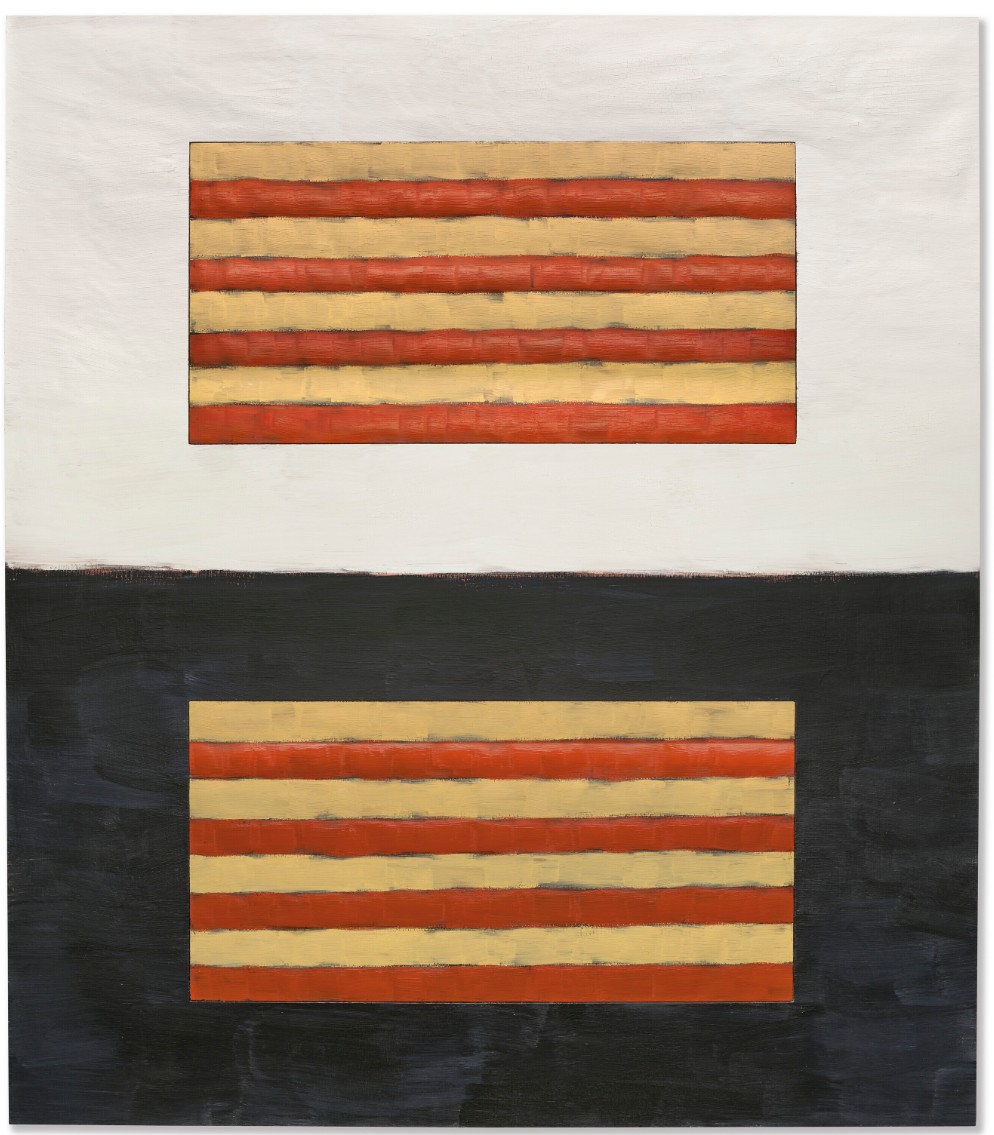
With examples held in institutions worldwide—including Tate, London, the BAWAG Foundation, Vienna and the Modern Art Museum of Fort Worth, Texas—Scully’s inset paintings stand among his most important creations. Resembling paintings within paintings, they dramatize the age-old notion of art as a window onto the world: the very condition that artists such as Robert Ryman and Donald Judd so vehemently railed against. Scully had initially immersed himself in this milieu during his early days in New York, yet would ultimately distance himself from Minimalism’s truth claims. Drawing inspiration from the works of Diego Velázquez and Henri Matisse, as well as the Abstract Expressionists, Scully conceived his insets as portals through which to draw the viewer into the realm of the painting. Part of his strategy, in this regard, was to organise the insets in such a way that they infused the work with an almost anthropomorphic presence. In some, they evoke ghostly standing figures; in others, such as the present, they seem to harbour their own sensorial power. ‘They function as metaphors for either hope or disturbance’, writes Scully. ‘… This is my way of making the paintings human’ (S. Scully, ‘Albuquerque Lecture’, 12 February 1989).
Stare Red Yellow also bears witness to Scully’s ongoing dialogue with Morocco: a country he had first visited as a young man during the 1960s, and to which he would return at various points during the 1990s. He was fascinated by its textures and colours—from the striped fabric tent coverings that adorned marketplaces, to decorative tiles and mosaics and the dilapidated facades of local buildings. Traces of all three, indeed, may be seen to inform the present work, whose luminous red and yellow strips seem to glow with the memory of warmer climes. The work’s structure, too, assumes something of an architectural quality, the inset panels reminiscent of life inside a building glimpsed through cracks in the wall. Alive with traces of human experience, the painting invites the viewer to project their own stories and feelings into its depths. In this, it ultimately reflects our gaze, its panes of color staring back into our soul.
Works on Paper
PLEASE CLICK BELOW TO FIND HISTORICAL AUCTION RESULTS FOR WORKS ON PAPER