
Richard Prince is one of the most provocative and influential figures in postwar and contemporary art. Emerging in the late 1970s and early 1980s as part of the Pictures Generation, he fundamentally challenged notions of authorship, originality, and image ownership. By rephotographing existing images and recontextualizing fragments of American visual culture, Prince constructed a body of work that is both seductive and unsettling—an anatomy of desire, identity, and myth in late 20th- and early 21st-century America.
His work moves fluidly across photography, painting, drawing, and publishing, but remains unified by a central strategy: appropriation as both critique and creation. Over the past four decades, Prince has built a practice that interrogates advertising, masculinity, sexuality, and mass media, producing some of the most iconic and debated images in contemporary art.
Introduction
Richard Prince was born in 1949 in the Panama Canal Zone and grew up in the United States. After studying at Nasson College in Maine, he moved to New York in the 1970s, where he worked in the tear-sheet department of Time Inc. This job—archiving and cutting images from magazines—proved foundational. It exposed him to the mechanics of image circulation and reproduction, shaping his understanding of how visual culture is constructed and disseminated.
By the late 1970s, Prince began rephotographing advertisements, removing text and reframing images to create new works. These early experiments positioned him at the forefront of a generation of artists, including Cindy Sherman and Sherrie Levine, who explored the instability of images in an age of mass reproduction.
Artistic Practice and Technique
Prince’s work is defined by appropriation, but his approach is far from mechanical. He isolates, edits, enlarges, and reframes existing images, often stripping them of their original context. This act transforms commercial imagery into ambiguous, autonomous artworks.
Technically, his practice spans gelatin silver photography, inkjet prints, acrylic and oil painting, collage, and drawing. In many cases, the “gesture” lies not in manual execution but in selection and recontextualization. Yet his later works—particularly the Joke Paintings and Nurse Paintings—demonstrate a highly developed painterly sensibility, combining text, layering, and expressive surfaces.
Prince’s work operates in a space between detachment and fascination. He neither fully critiques nor fully celebrates his source material. Instead, he exposes its psychological and cultural charge. Prince consistently explores the construction of identity through images. His subjects, cowboys, nurses, bikers, celebrities, are not individuals but archetypes shaped by media and collective imagination.
Recurring themes include masculinity, desire, fantasy, and the commodification of identity. His work operates in a space of ambiguity: it is neither purely critical nor purely celebratory. Instead, it reveals how deeply cultural myths are embedded in visual language.
Major Series and Bodies of Work
The Nurse Paintings are considered one of the most distinctive and highly prized series of Prince’s lauded career to date. While on the surface it is their sumptuous, fantastical, and seductive appearance that distinguishes them from the artist’s Joke paintings or Cowboy photographs, these three renowned series are in fact intimately connected through the equally firm roots they each take in the core ethos of Prince’s highly conceptual and pioneering practice. The pop appropriation that constitutes the essence of the Cowboy corpus is critical to the conception and execution of the Nurses; with his Joke paintings, these works share a dependence on borrowed text and kitsch humor. What is added here, to brilliant effect and with true bravado, is Prince’s riposte to Abstract Expressionism. Similarly enlivened with heady brushstrokes, drips and splatters, the Nurse Paintings pay homage to the techniques pioneered by the legendary group of Abstract Expressionist artists working to redefine the contemporary landscape in the exact same era the pulp novel was at the height of its popularity.
Cowboys (Rephotographs and Paintings)
Perhaps Prince’s most iconic body of work, the Cowboys series began in the late 1970s and continues into the 2000s. These works are rephotographs of Marlboro cigarette advertisements, depicting rugged, solitary cowboys in vast American landscapes.
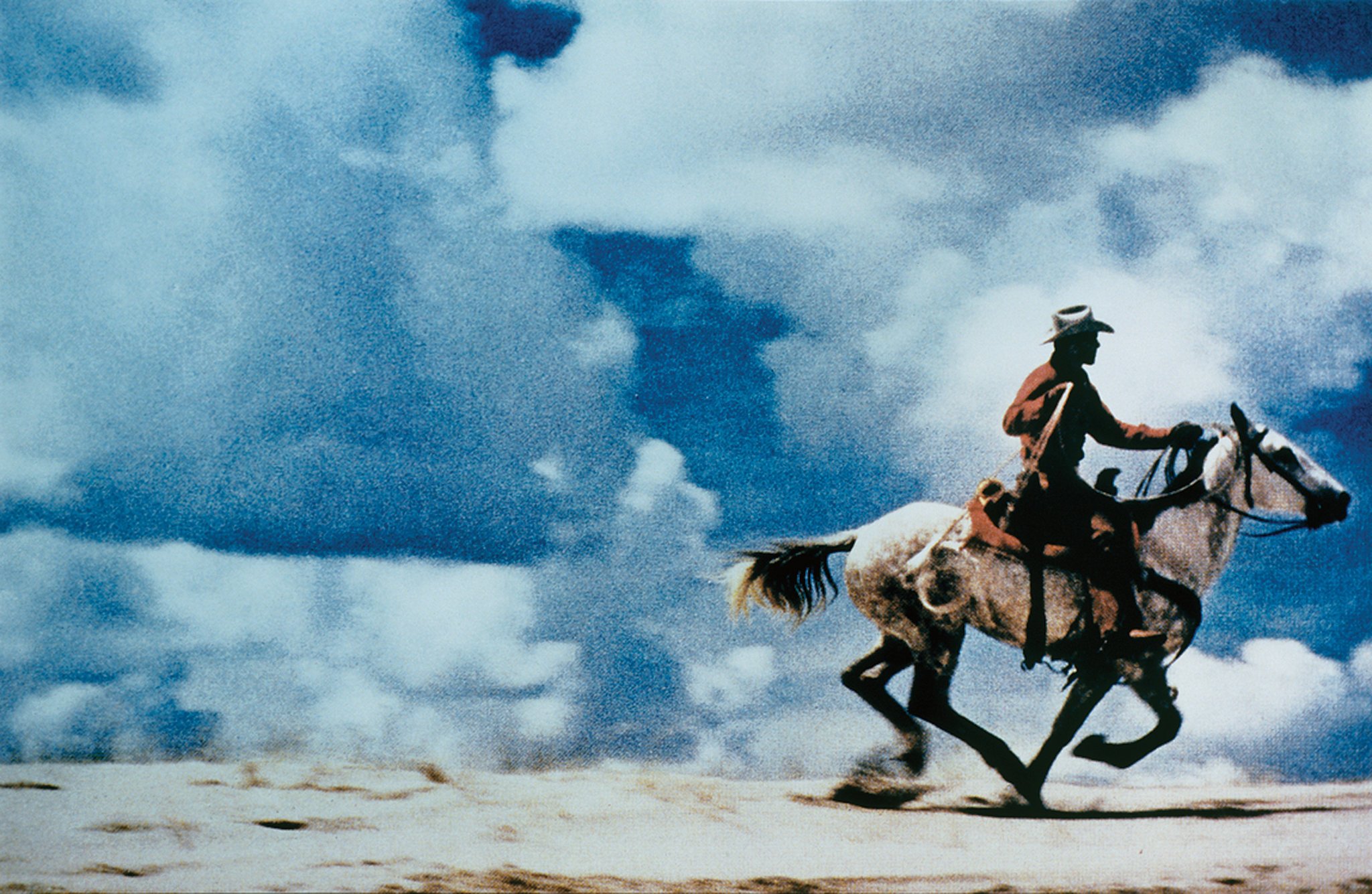
Key institutional presence includes works in the collections of the Museum of Modern Art, Whitney Museum of American Art, and Solomon R. Guggenheim Museum. These works were also prominently featured in Prince’s retrospective at the Solomon R. Guggenheim Museum in 2007. The Cowboys remain among his most valuable works on the market, with major examples achieving multi-million-dollar results.
Nurse Paintings
The Nurse Paintings, initiated in the early 2000s, represent one of Prince’s most celebrated painterly series. These works are based on pulp romance novel covers, which Prince enlarges, obscures, and reworks through expressive layers of paint.
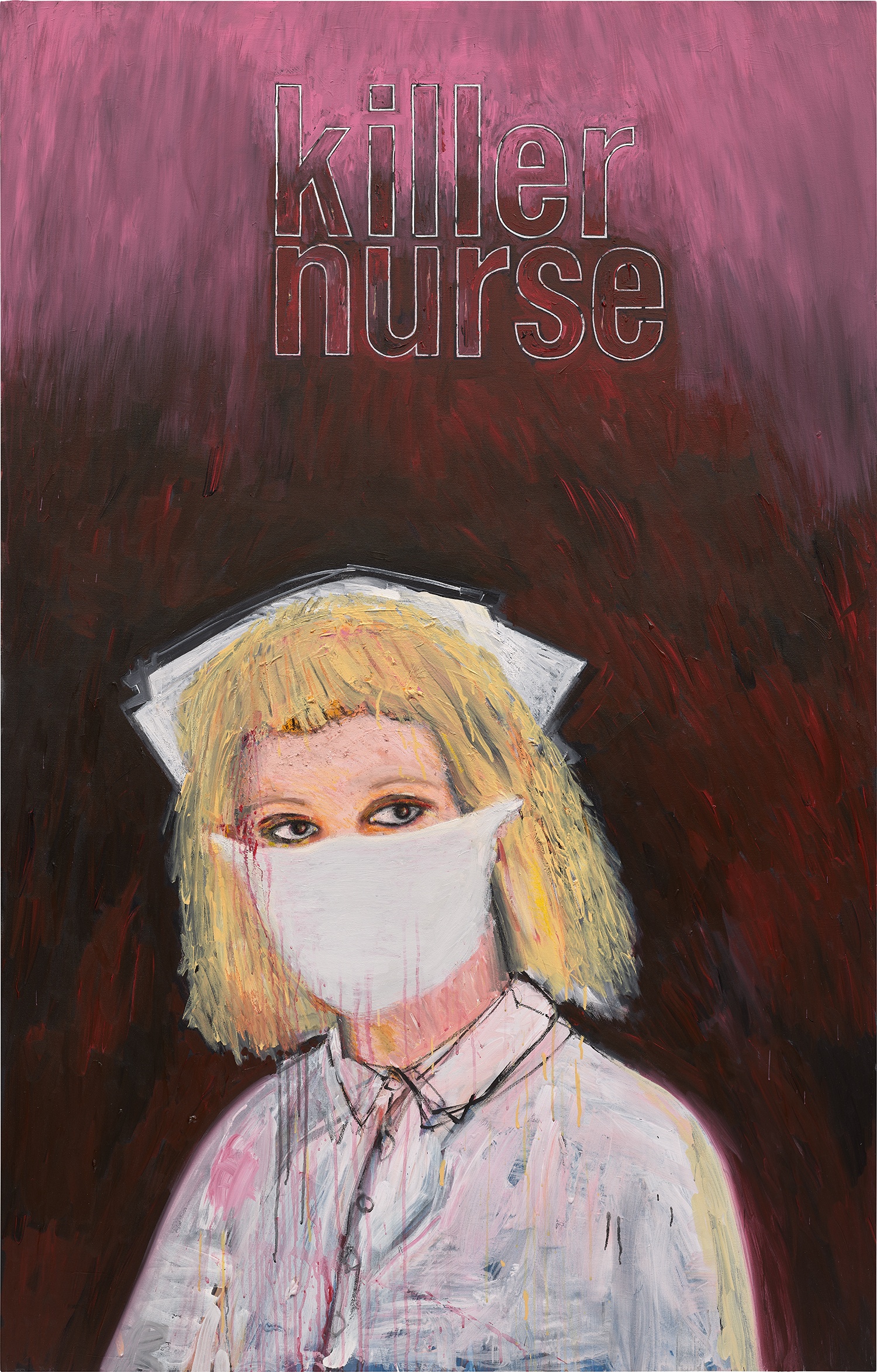
This series was extensively exhibited in major galleries and institutions, including shows with Gagosian and inclusion in museum collections such as the Tate and the Whitney Museum of American Art. On the market, Nurse paintings are among Prince’s most sought-after works, frequently reaching seven-figure prices.
Joke Paintings
The Joke Paintings, developed from the late 1980s onward, consist of jokes, often crude, dark, or absurd, rendered in text on monochrome or gestural painted surfaces.
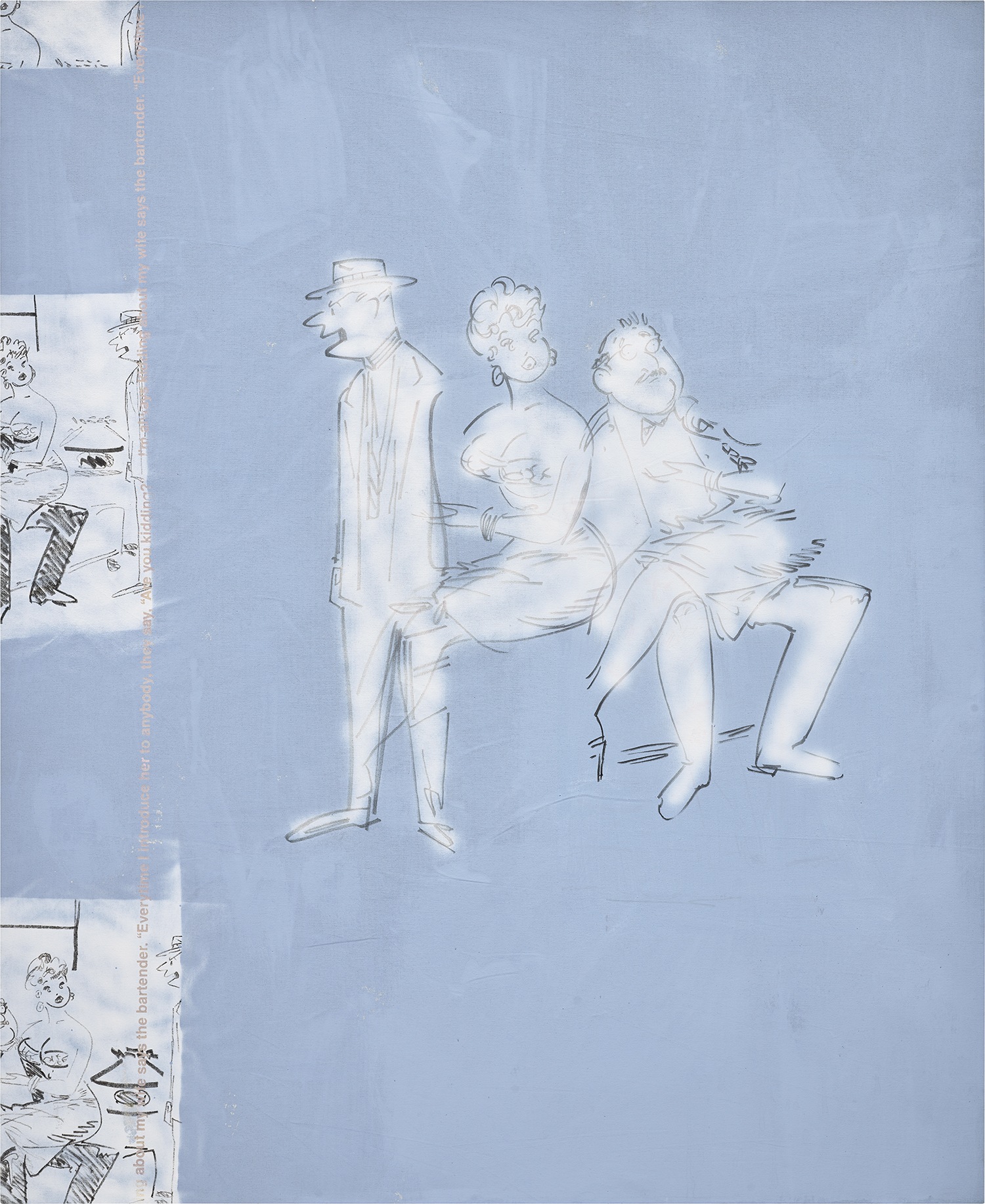
Joke Paintings have been widely exhibited, notably in major retrospectives and gallery exhibitions at Gagosian and Gladstone Gallery, and are held in important collections including the Museum of Modern Art.
Untitled (Girlfriends) and Biker Imagery
In the late 1980s and 1990s, Prince explored biker culture through appropriated photographs of motorcycles and their owners, often paired with erotic or suggestive imagery.
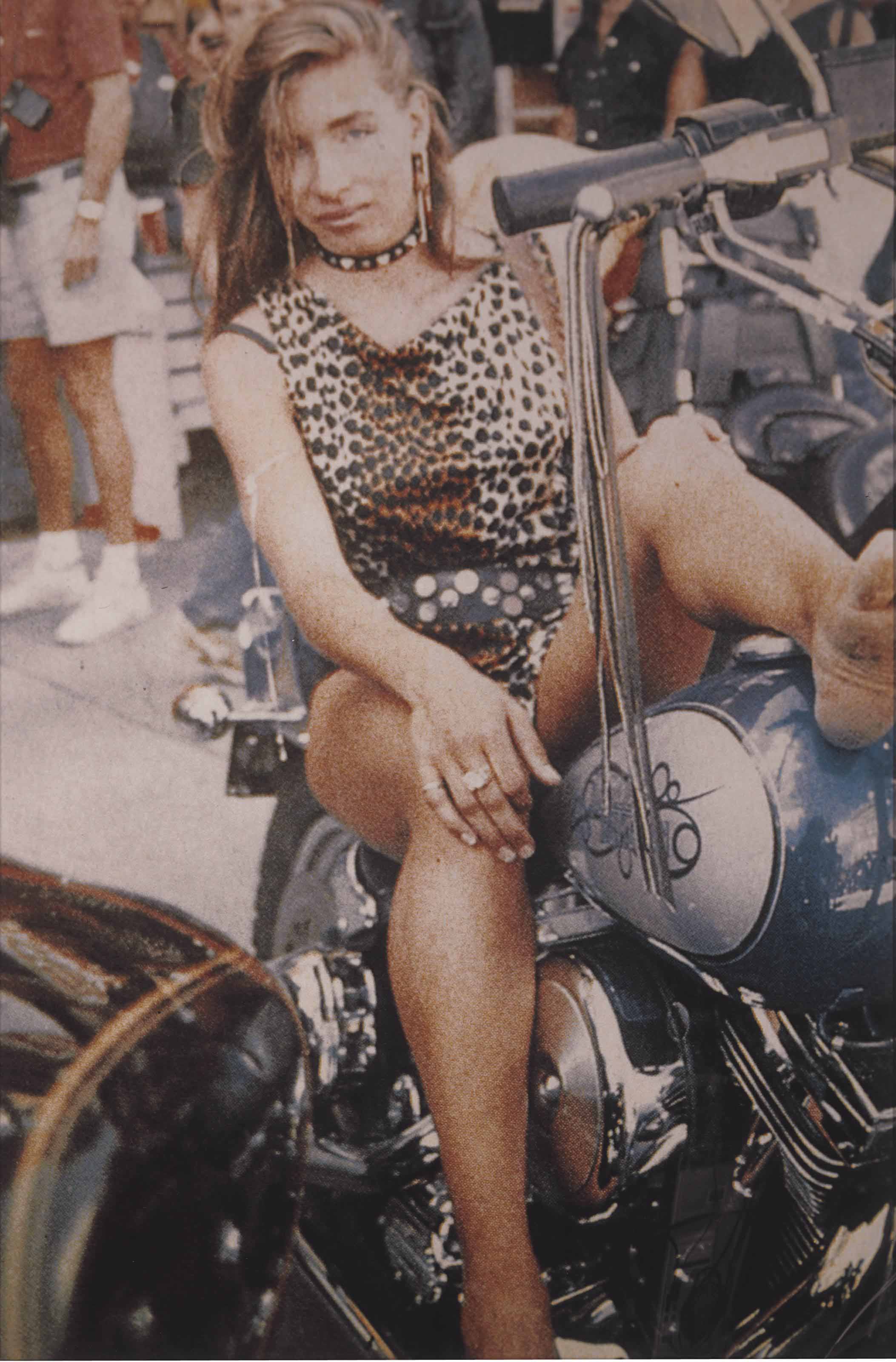
High Times and De Kooning Series
Prince’s High Times works incorporate references to cannabis culture, humor, and altered states, often combining text and imagery in a deliberately chaotic composition.

These later series demonstrate a shift toward more complex, layered compositions, where appropriation intersects with painterly invention.
Instagram and New Portraits
In the 2010s, Prince extended his practice into the digital realm with his New Portraits series, appropriating images from Instagram and printing them on canvas with added comments.

Institutional Recognition and Exhibitions
Prince’s institutional recognition is extensive. His major retrospective at the Solomon R. Guggenheim Museum in 2007 remains a defining moment, presenting a comprehensive overview of his career. His works are held in leading institutions worldwide, including the Museum of Modern Art, Whitney Museum of American Art, Tate Modern, and the Centre Pompidou.
Additional exhibitions across Europe, the United States, and Asia have reinforced his status as a central figure in contemporary art.
Gallery Representation
Richard Prince is primarily associated with Gagosian, one of the most influential galleries globally. He has also exhibited with Gladstone Gallery and other leading institutions throughout his career.
Richard Prince’s legacy is inseparable from the broader shift in contemporary art toward appropriation and image-based practices. He redefined what it means to create an artwork in a world saturated with images, demonstrating that selection, framing, and context can be as significant as traditional authorship.
His work continues to provoke debate, particularly around issues of copyright and originality, yet this tension is precisely what sustains its relevance. Prince does not offer resolution; he exposes the mechanisms through which images shape perception, identity, and desire.
In doing so, he has not only influenced a generation of artists but has also fundamentally altered the terms through which contemporary art engages with visual culture.
PART I: SUMMARY
Auction Market Overview
2025 AUCTION STATISTICS
Turnover: USD 31,922,410
+8.7% vs. 2024
# Lots sold: 43
Sell-Through Rate: 81.1%
MARKET SEGMENTATION
Highest Price Achieved at Auction:
HKD 93,986,000 / USD 12,107,712
(18 June 2021)
Auction Summary
2025 Auction Highlights
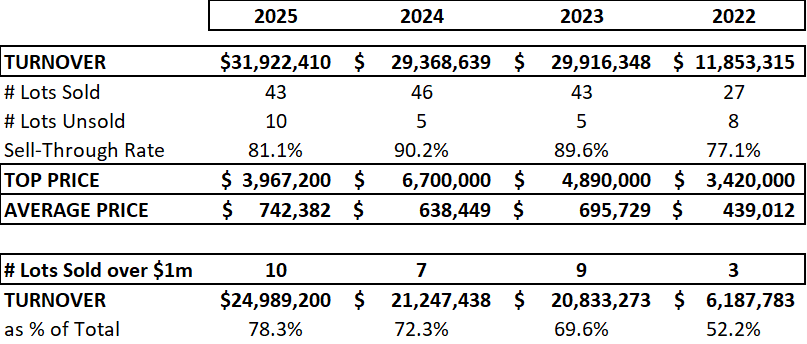
43 lots sold at auction in 2025 for a total turnover of USD 31,922,410. With 10 lots failing to sell, the sell-through rate is 81.1%. The highest price for 2025 was by Man Crazy Nurse, a Nurse painting dated 2002-3, from The Collection of Barbara Gladstone, sold at Sotheby’s in New-York, on 15 May 2025 for USD 3,967,200.
2025 Top 3 Lots
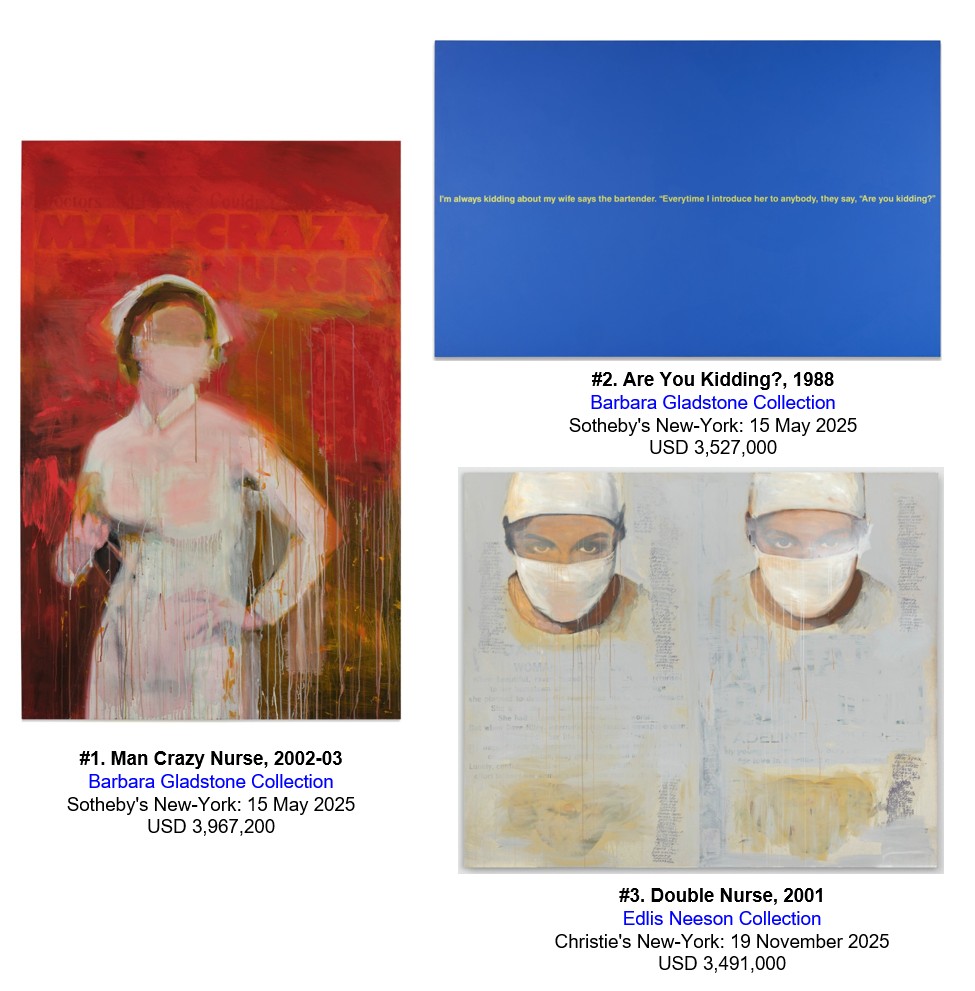
10 lots sold for more than USD 1 million, generating a cumulative turnover of USD 24,989,200, representing 78.3% of the total turnover for 2025.
2024 Auction Highlights
46 lots sold at auction in 2024 for a total turnover of USD 29,368,639. With 5 lots failing to sell, the sell-through rate is 90.2%. The highest price has been achieved at Sotheby’s in New-York on 21 November 2024, when Nurse on Trial, a painting dated 2005, sold for USD 6,700,000.
2024 Top 4 Lots
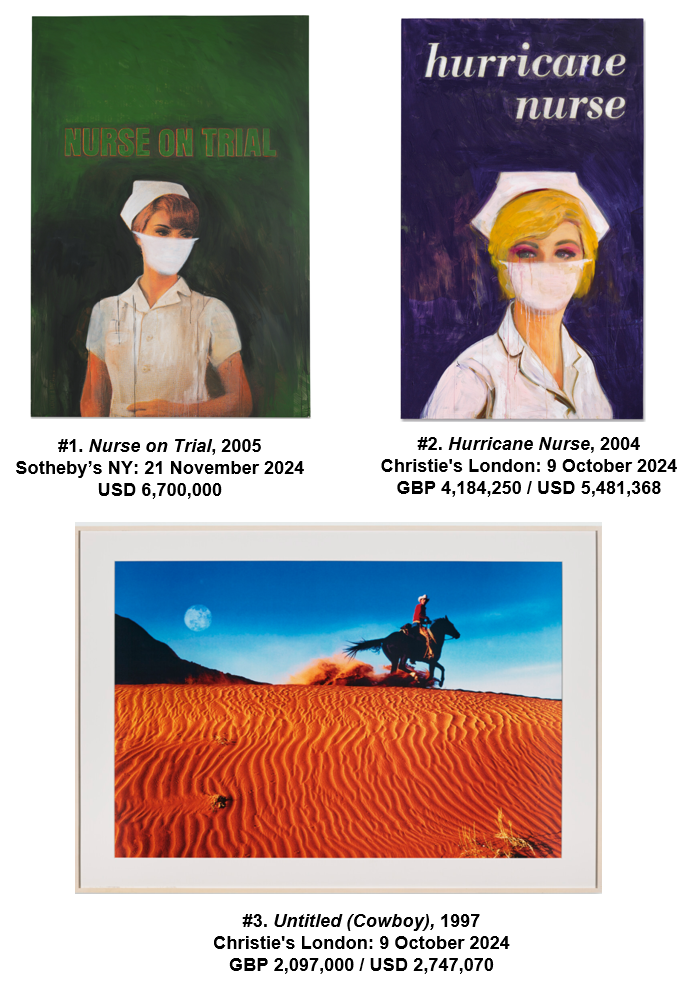
7 lots sold for more than USD 1 million, generating a cumulative turnover of USD 21,247,438, representing 72.3% of the total turnover for 2024.
2023 Auction Highlights
43 lots sold at auction in 2023 for a total turnover of USD 30,213,147. With 5 lots failing to sell, the sell-through rate is 90%. The highest price was achieved by Nurse Kathy, a painting from the iconic Nurses series, dated 2004, that sold at Christie’s in New-York for USD 4,890,000.
2023 Top 3 Lots
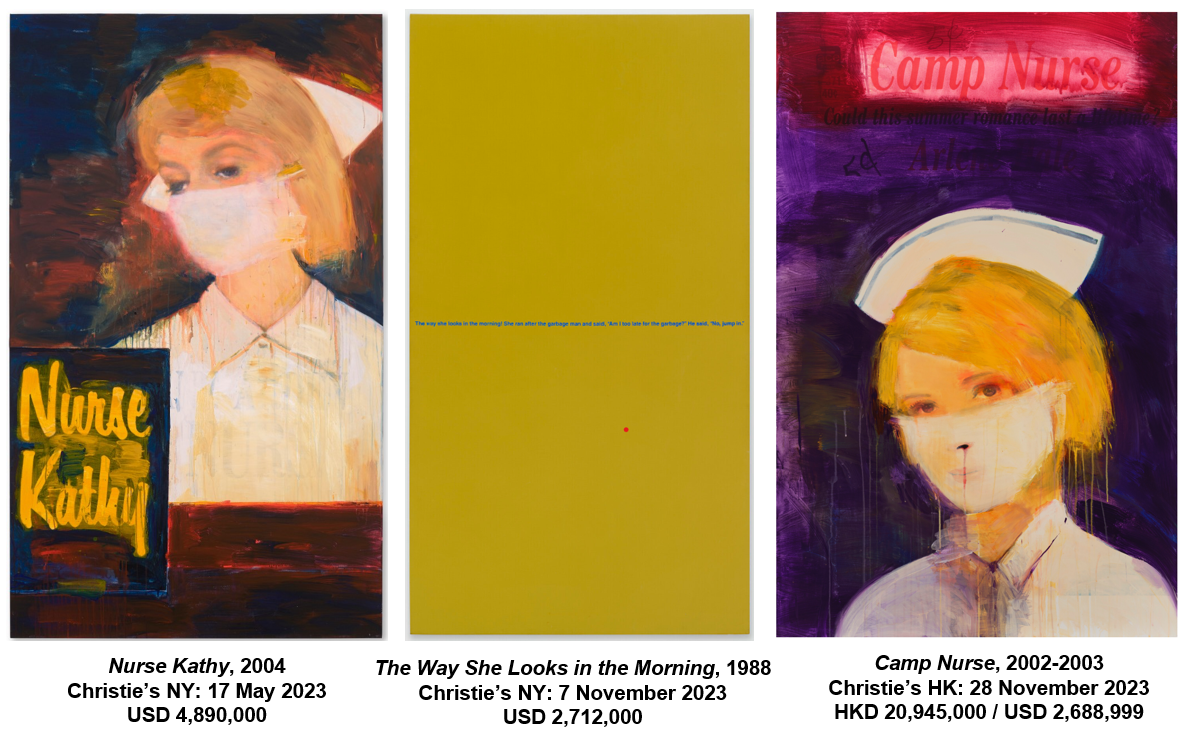
9 lots sold for more than USD 1 million generating a cumulative turnover of USD 20,833,273, representing 69% of the total turnover for 2023.
2022 Auction Highlights
27 lots sold in 2022 for a total turnover of USD 11,853,315. With 8 lots failing to sell, the sell-through rate is 77.1%. The highest price has been achieved at Christie’s in New-York, on 17 April 2022, when All I’ve Heard, a painting from the Jokes series dated 1989, sold for USD 3,420,000.
2022 Top 3 Lots
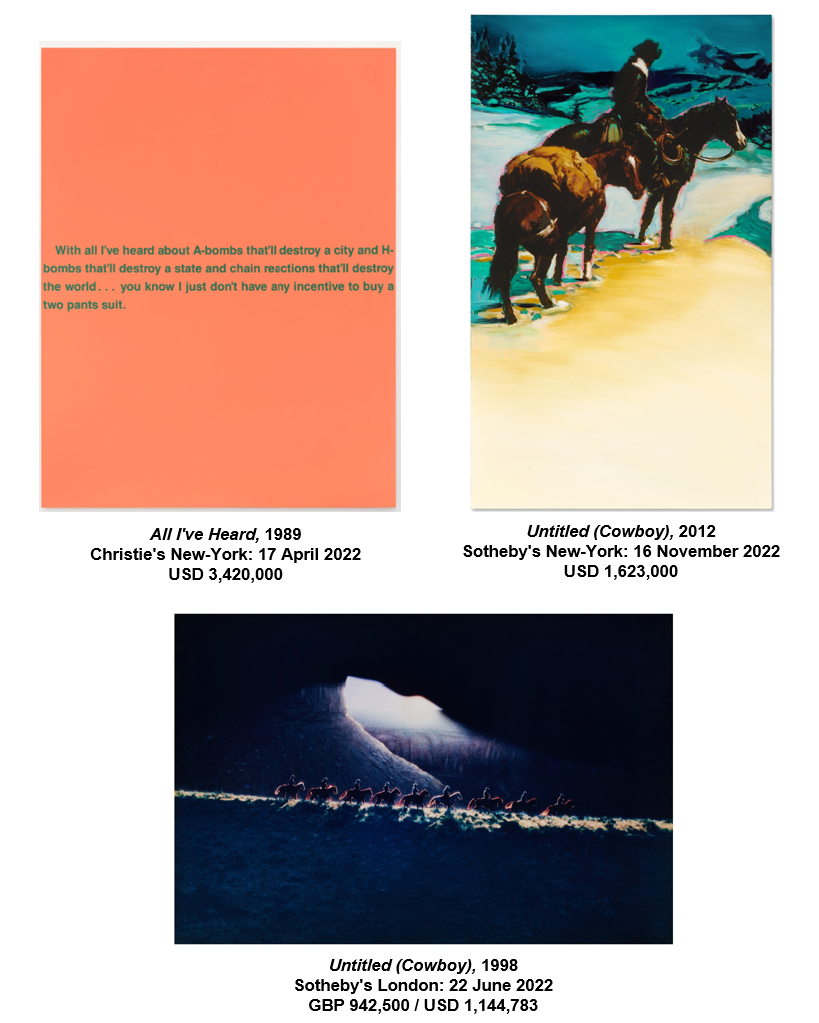
Only 3 lots sold for more than USD 1 million, generating a cumulative turnover of USD 6,187,783, representing 52.2% of the total turnover for 2022.
Top Lots
#1. Runaway Nurse, 2005-06
Sotheby’s Hong-Kong: 18 June 2021
Estimated: HKD 75,000,000 – 95,000,000
HKD 93,986,000 / USD 12,107,712
REPEAT SALE
Christie’s New-York: 10 May 2016
Estimated: USD 7,000,000 – 10,000,000
USD 9,685,000
Richard Prince (B. 1949), Runaway Nurse | Christie’s
REPEAT SALE
Phillips New-York: 7 November 2011
Estimated: USD 5,000,000 – 7,000,000
USD 6,802,500
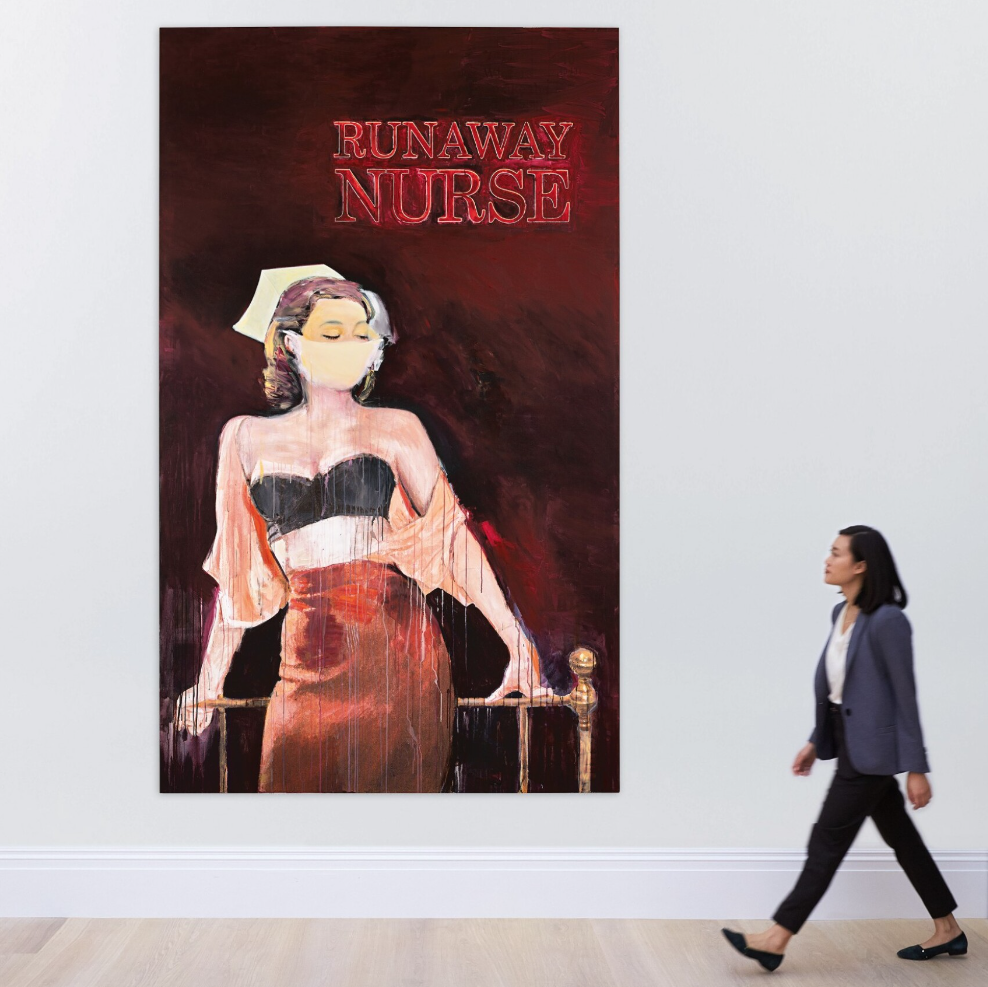
RICHARD PRINCE (b. 1949)
Runaway Nurse, 2005-06
Inkjet and acrylic on canvas
110 1/4 x 66 1/4 inches (280×168 cm)
Signed, titled and dated 2005-06 on the overlap
#2. Nurse of Greenmeadow, 2002
Christie’s New-York: 12 May 2014
Estimated: USD 7,000,000 – 9,000,000
USD 8,565,000
Richard Prince (b. 1949) , Nurse of Greenmeadow | Christie’s (christies.com)
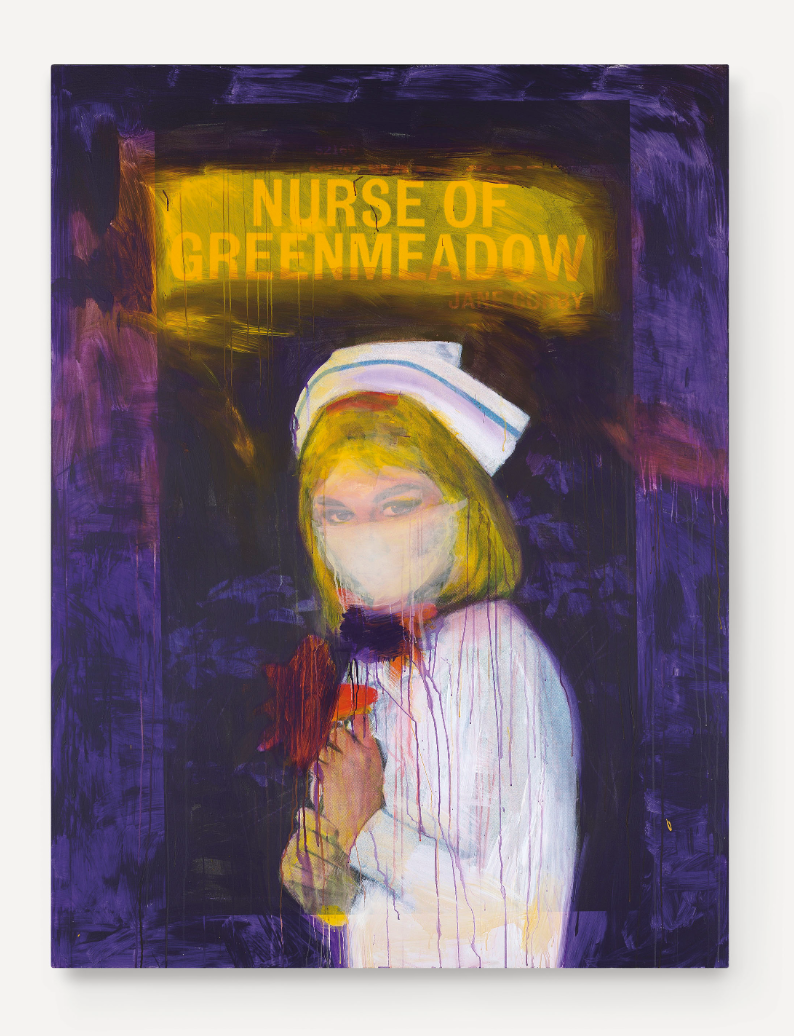
RICHARD PRINCE (b. 1949)
Nurse of Greenmeadow, 2002
Inkjet print and acrylic on canvas
78 x 58 1/4 inches (198.2 x 147.5 cm)
Signed, titled and dated ‘R Prince “NURSE OF Greenmeadows 2002’ (on the overlap)
#3. Overseas Nurse, 2002
Sotheby’s London: 1 July 2008
Estimated: GBP 4,000,000 – 6,000,000
GBP 4,241,250 / USD 8,459,439
(#22) Richard Prince (sothebys.com)
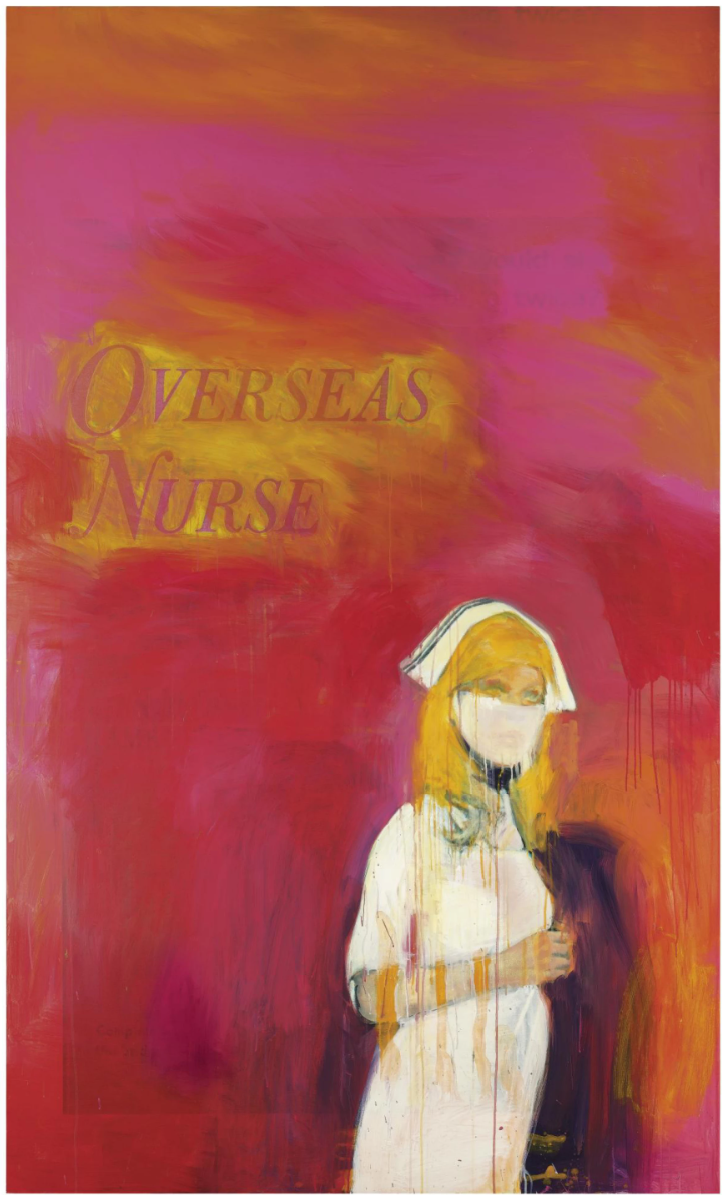
RICHARD PRINCE
Overseas Nurse, 2002
Inkjet print and acrylic on canvas
93×56 inches (236.2 x 142.2 cm)
Signed, titled and dated 2002 on the overlap
USD 8 million
#4. Nurse on Trial, 2005
Sotheby’s New-York: 21 November 2024
Estimated: USD 5,000,000 – 7,000,000
USD 6,700,000
Nurse on Trial | The Now and Contemporary Evening Auction | 2024 | Sotheby’s
REPEAT SALE
Christie’s New-York: 12 November 2014
Estimated: USD 5,000,000 – 7,000,000
USD 5,765,000
Richard Prince (b. 1949), Nurse on Trial | Christie’s
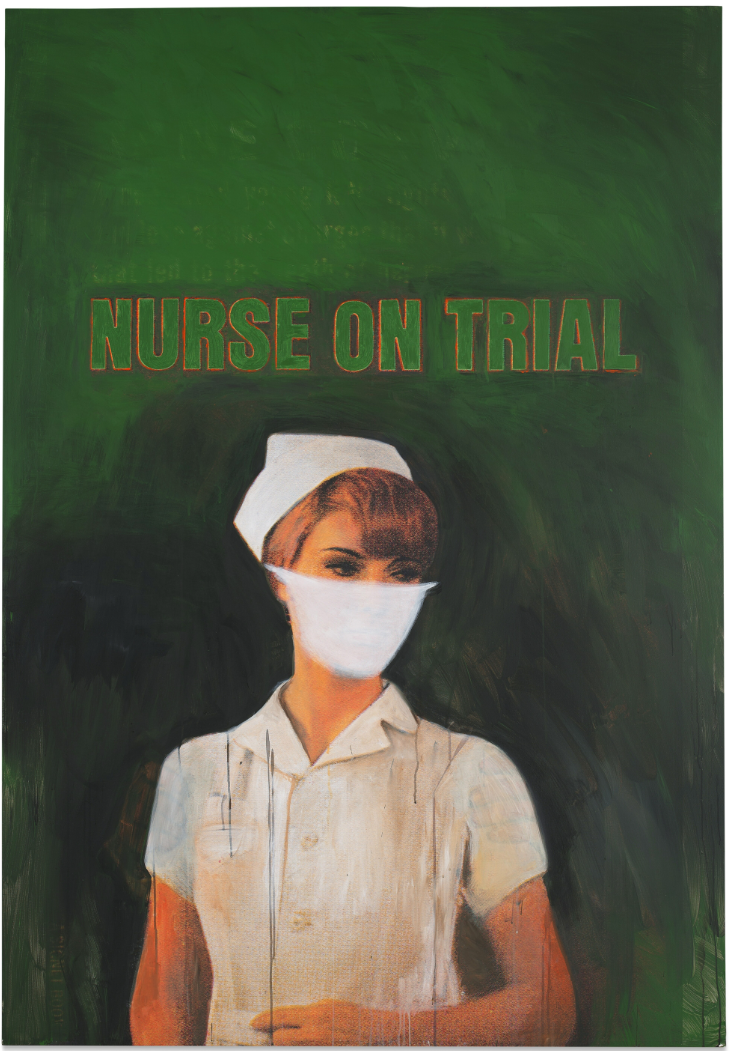
RICHARD PRINCE (b. 1949)
Nurse on Trial, 2005
Acrylic and inkjet on canvas
75×52 inches (190.5 x 132.1 cm)
Signed, titled and dated 2005 (on the overlap)
#5. Nurse in Hollywood #4, 2004
Phillips New-York: 13 May 2010
Estimated: USD 5,000,000 – 7,000,000
USD 6,466,500
Richard Prince – The Collection of Halsey… Lot 8 May 2010 | Phillips
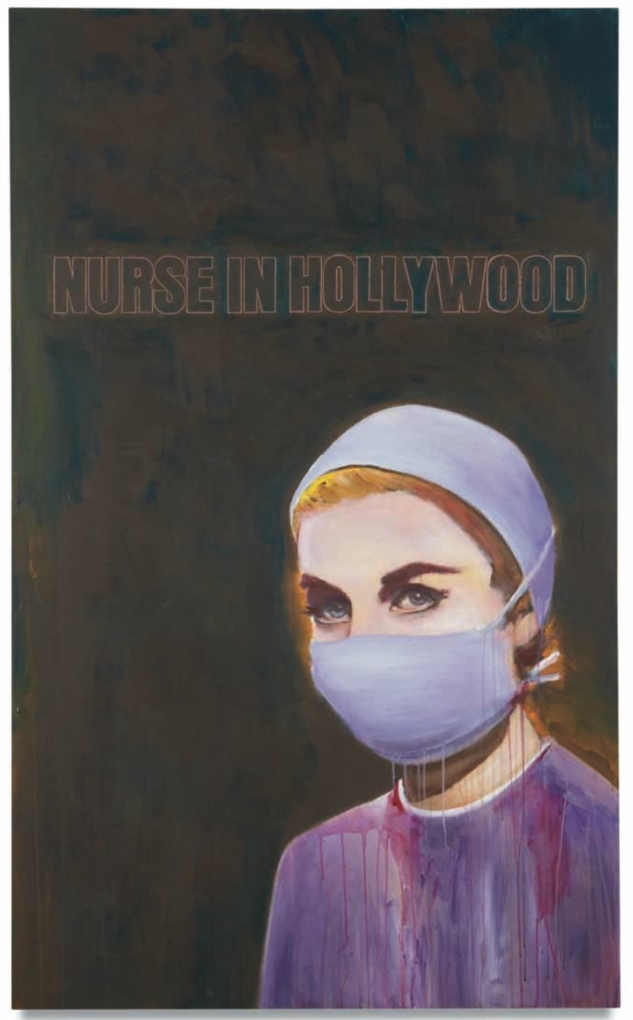
RICHARD PRINCE
Nurse in Hollywood #4, 2004
Acrylic and inkjet on canvas.
69×42 inches (175.3 x 106.7 cm)
Signed, titled and dated “2004 R. Prince Nurse in Hollywood #4” on the overlap
#6. Park Avenue Nurse, 2002
Sotheby’s New-York: 14 November 2019
Estimated: USD 5,000,000 – 7,000,000
USD 6,186,800
(#4) RICHARD PRINCE | Park Avenue Nurse
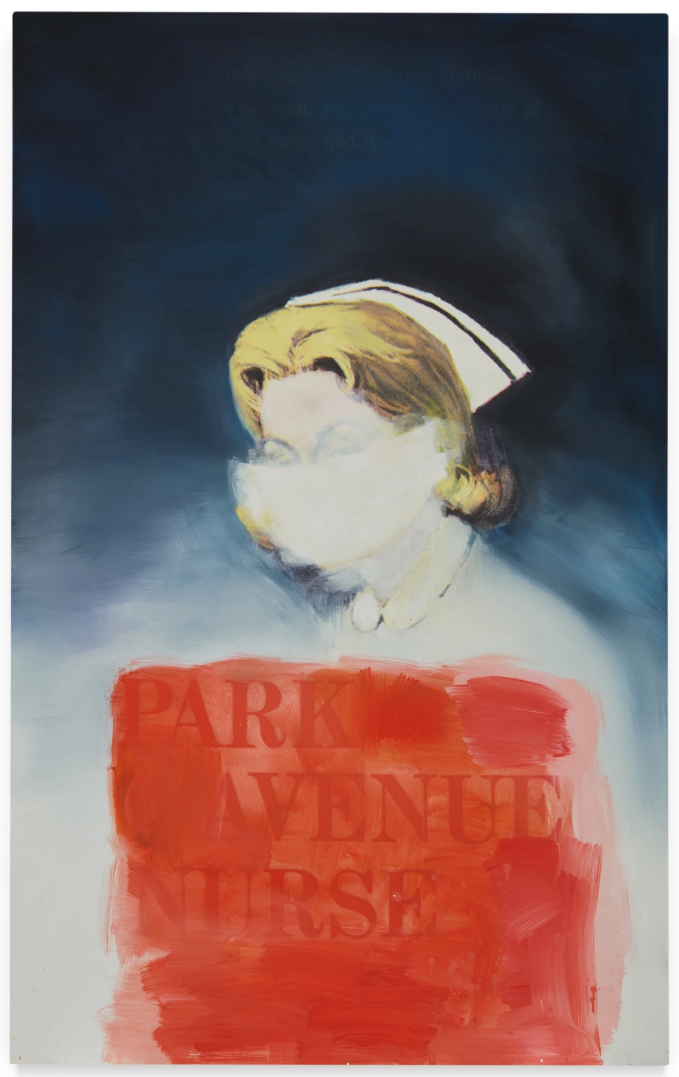
RICHARD PRINCE
Park Avenue Nurse, 2002
Inkjet print and acrylic on canvas
72×45 inches (182.9 x 114.3 cm)
Signed, titled, and dated 2002 on the overlap
#7. Piney Woods Nurse, 2002
Christie’s New-York: 13 November 2007
Estimated: USD 1,800,000 – 2,200,000
USD 6,089,000
Richard Prince (b. 1949) , Piney Woods Nurse | Christie’s (christies.com)
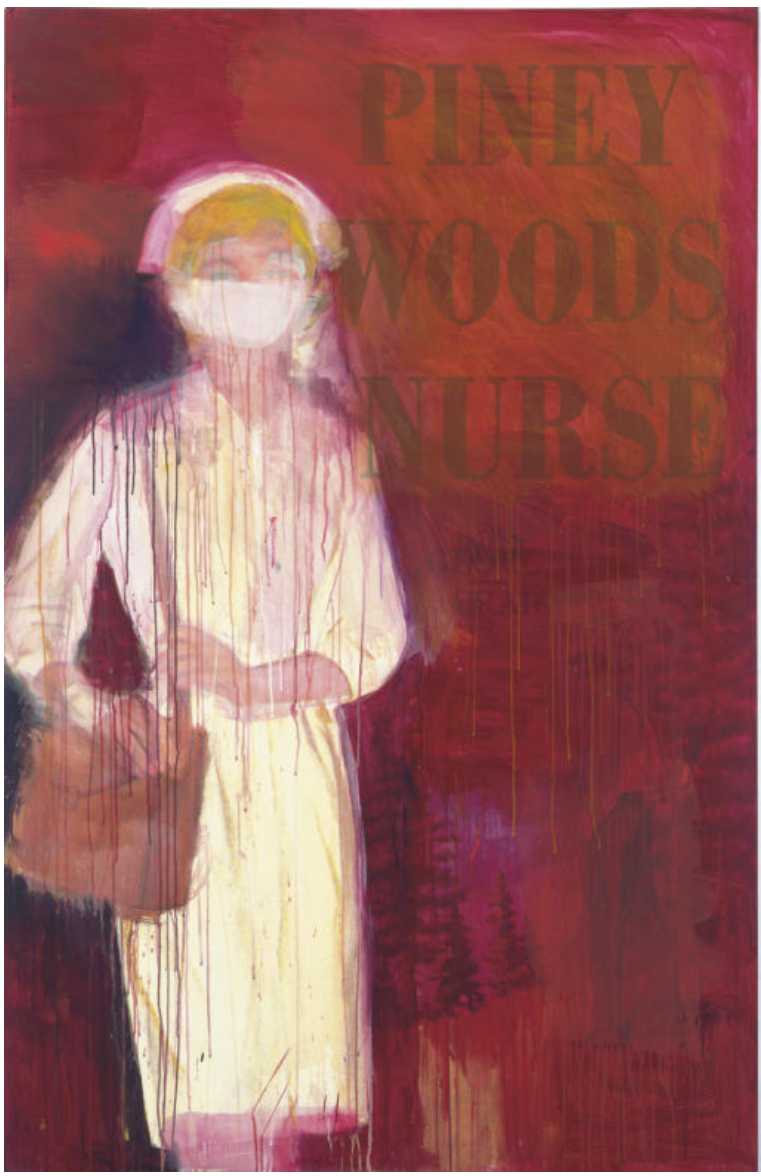
RICHARD PRINCE (b. 1949)
Piney Woods Nurse, 2002
Ink-jet print and acrylic on canvas
80×52 inches (203.2 x 132.1 cm)
Signed, titled and dated ‘R. Prince 2002 Piney Woods Nurse’ (on the overlap)
USD 6 million
#8. Nurse Elsa, 2002
Christie’s New-York: 15 November 2016
Estimated: USD 5,000,000 – 7,000,000
USD 5,847,500
Richard Prince (B. 1949), Nurse Elsa | Christie’s
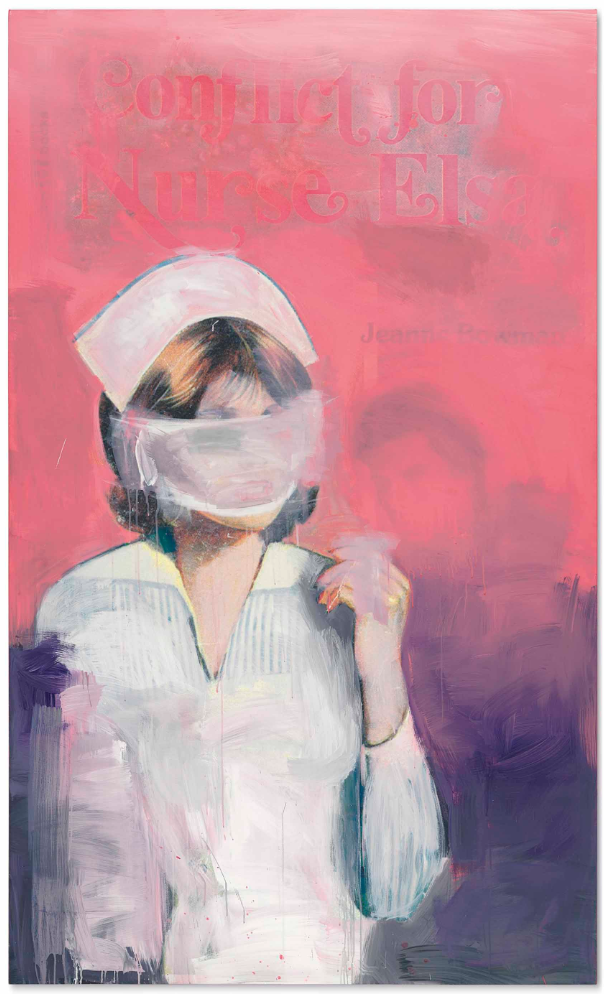
RICHARD PRINCE (B. 1949)
Nurse Elsa, 2002
Acrylic and inkjet on canvas
93×56 inches (236.2 x 142.2 cm)
Signed, titled and dated ‘R Prince 2002 Conflict for Nurse Elsa’ (on the overlap)
PART II: AUCTION RESULTS
2026 Upcoming Lots
2026 Auction Results
PRELIMINARY AUCTION RESULTS
As of 15 June 2o25
#1. Sexual Behavior of American Nurses, 2009-2011
Christie’s New-York: 20 May 2026
Estimated: USD 4,000,000 – 6,000,000
USD 4,589,000
RICHARD PRINCE (B. 1949), Sexual Behavior of American Nurses | Christie’s
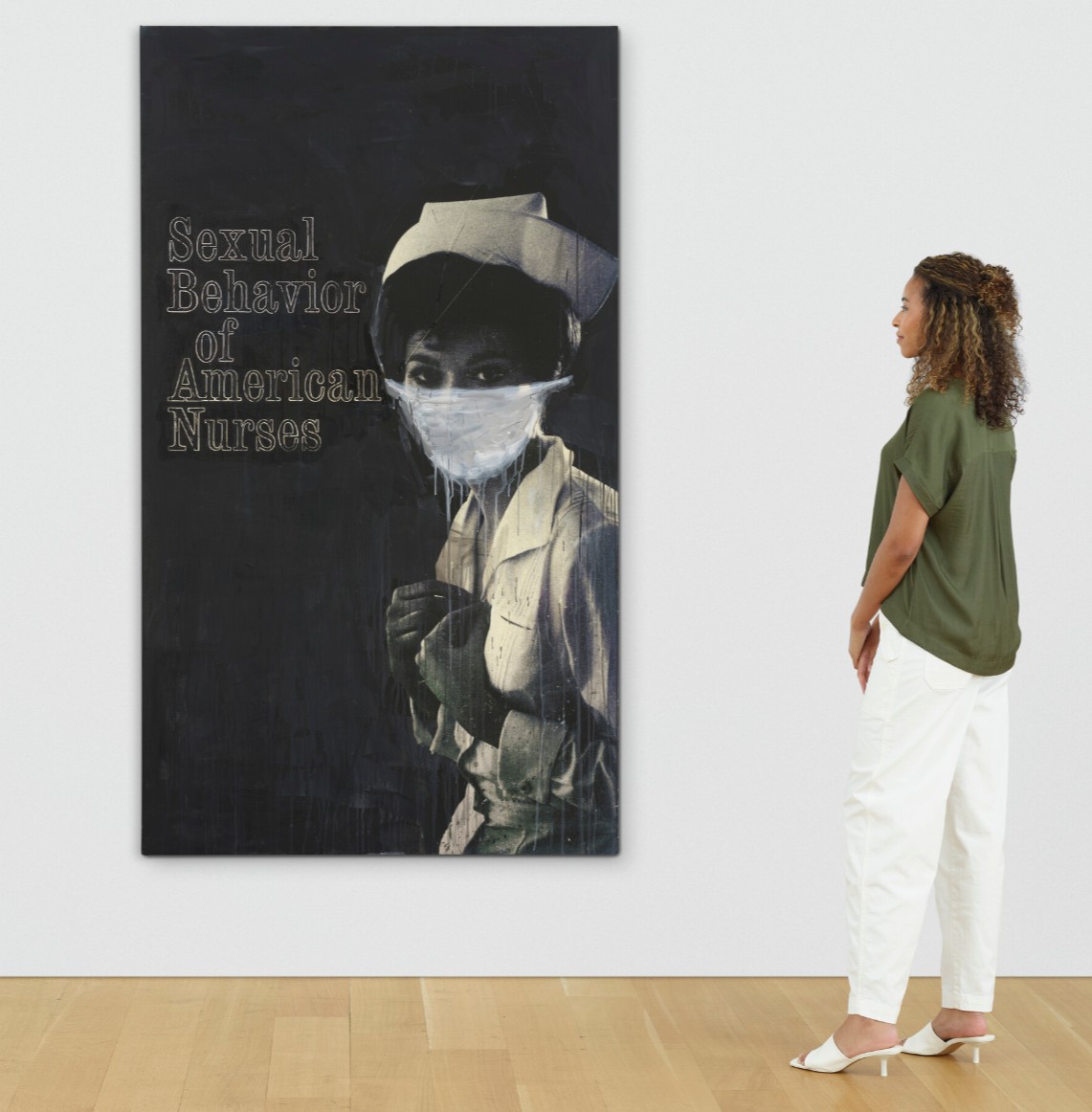
RICHARD PRINCE (B. 1949)
Sexual Behavior of American Nurses, 2009-2011
Acrylic and inkjet on canvas
83-1/4 x 48 inches (211.5 x 121.9 cm)
Signed and dated ‘R. Prince 2009-2011’ (on the overlap)
#2. Medusa, 2003
Art & Design from The Collection of Barbara Gladstone
Sotheby’s New-York: 9 June 2026
Estimated: USD 800,000 – 1,200,000
USD 1,024,000
Richard Prince | Medusa | Art & Design from The Collection of Barbara
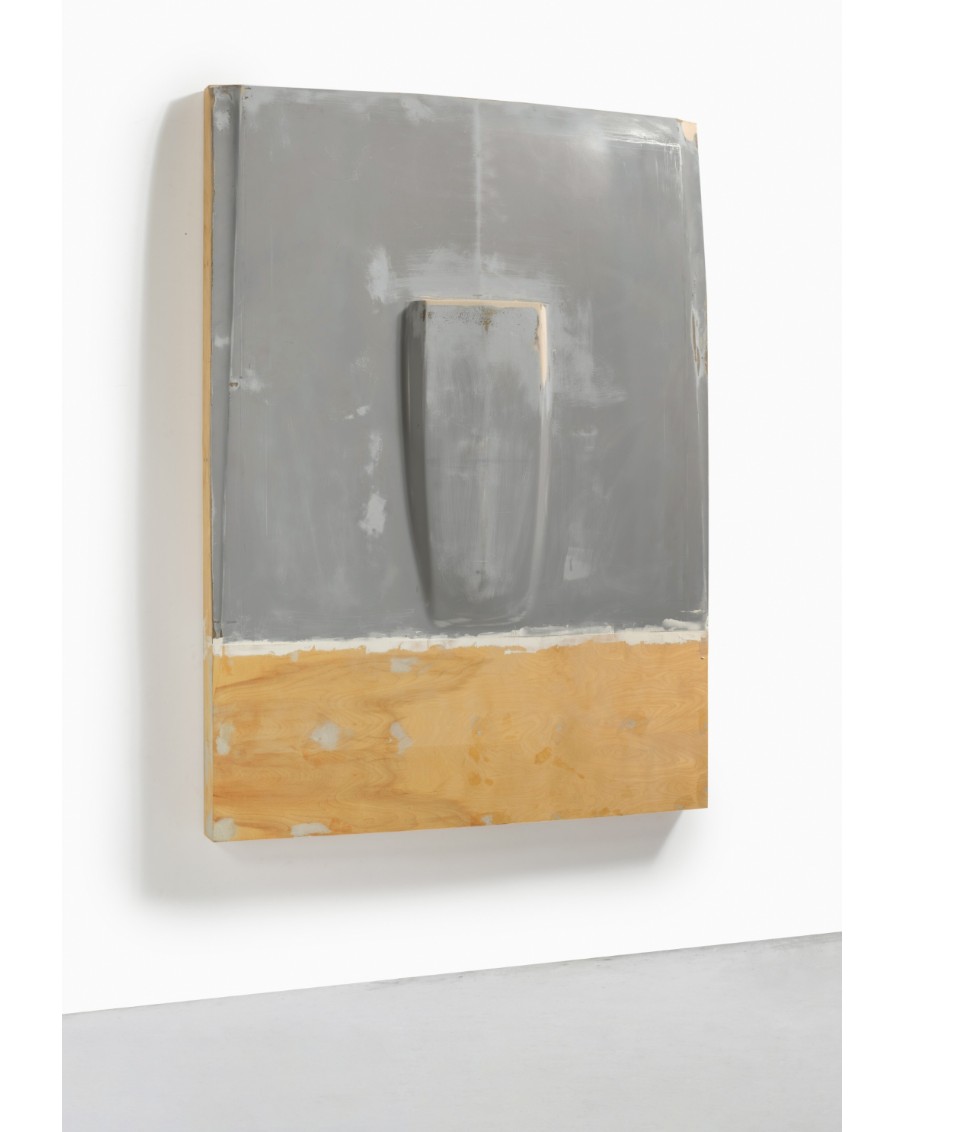
RICHARD PRINCE (b. 1949)
Medusa, 2003
Wood, fiberglass, paint and spackle
62-1/8 x 45 x 5-1/2 inches (157.8 x 114.3 x 14 cm)
Signed, titled and dated 2003 (on the reverse)
USD 1 million
#3. High Times, 2017
Property from an Important European Collection
Phillips New-York: 21 May 2026
Estimated: USD 600,000 – 800,000
USD 838,500
Richard Prince Modern & Contemporary Art: Afternoon Session
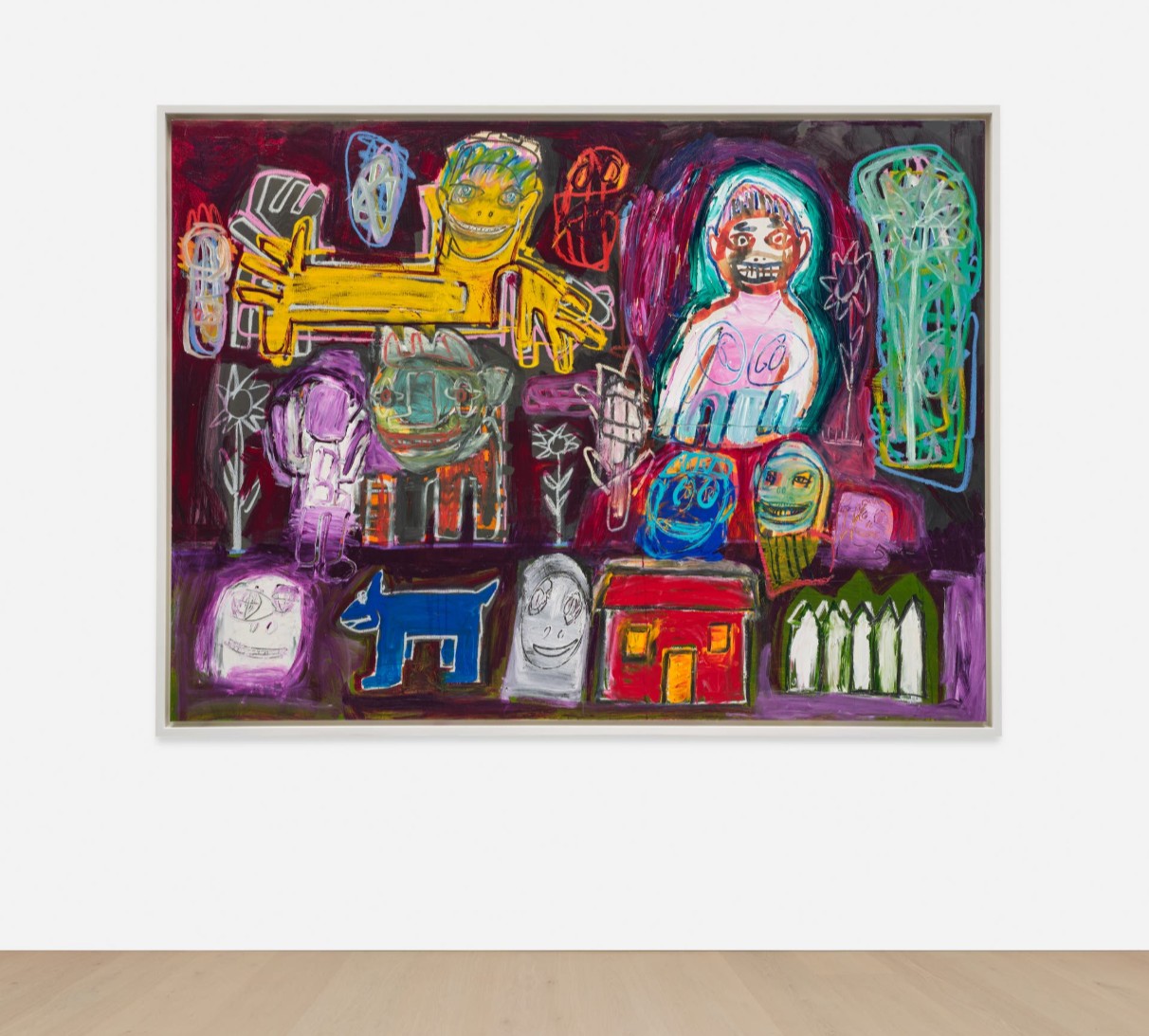
Acrylic, oilstick, inkjet and collage on canvas
55 x 74-1/4 inches (139.7 x 188.6 cm)
Signed, titled and dated “Richard Prince HIGH TIMES 2017” on the reverse
Stamped by the artist’s studio on the overlap
#4. I’m Not Linda, 1991-1992
Christie’s New-York: 21 May 2026
Estimated: USD 500,000 – 700,000
USD 762,000
RICHARD PRINCE (B. 1949), I’m Not Linda | Christie’s
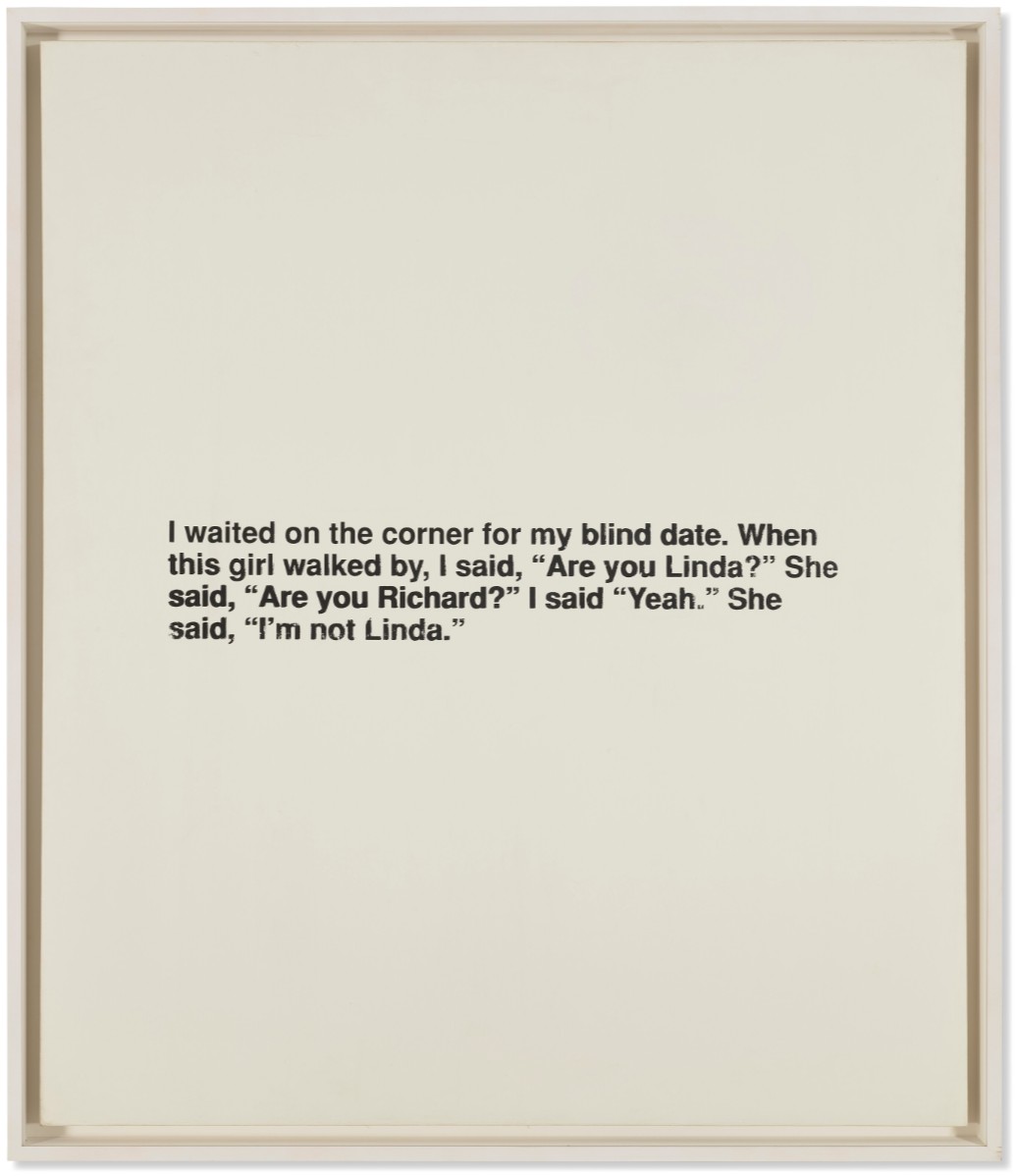
RICHARD PRINCE (B. 1949)
I’m Not Linda, 1991-1992
Silkscreen and acrylic on canvas
56-1/4 x 47-7/8 inches (142.9 x 121.6 cm)
Signed and dated ‘R Prince. 91-92’ (on the overlap)
#5. Eden Rock, 2005-06
Edlis Neeson Collection
Christie’s New-York: 26 February 2026
Estimated: USD 500,000 – 700,000
USD 635,000
RICHARD PRINCE (B. 1949), Eden Rock | Christie’s
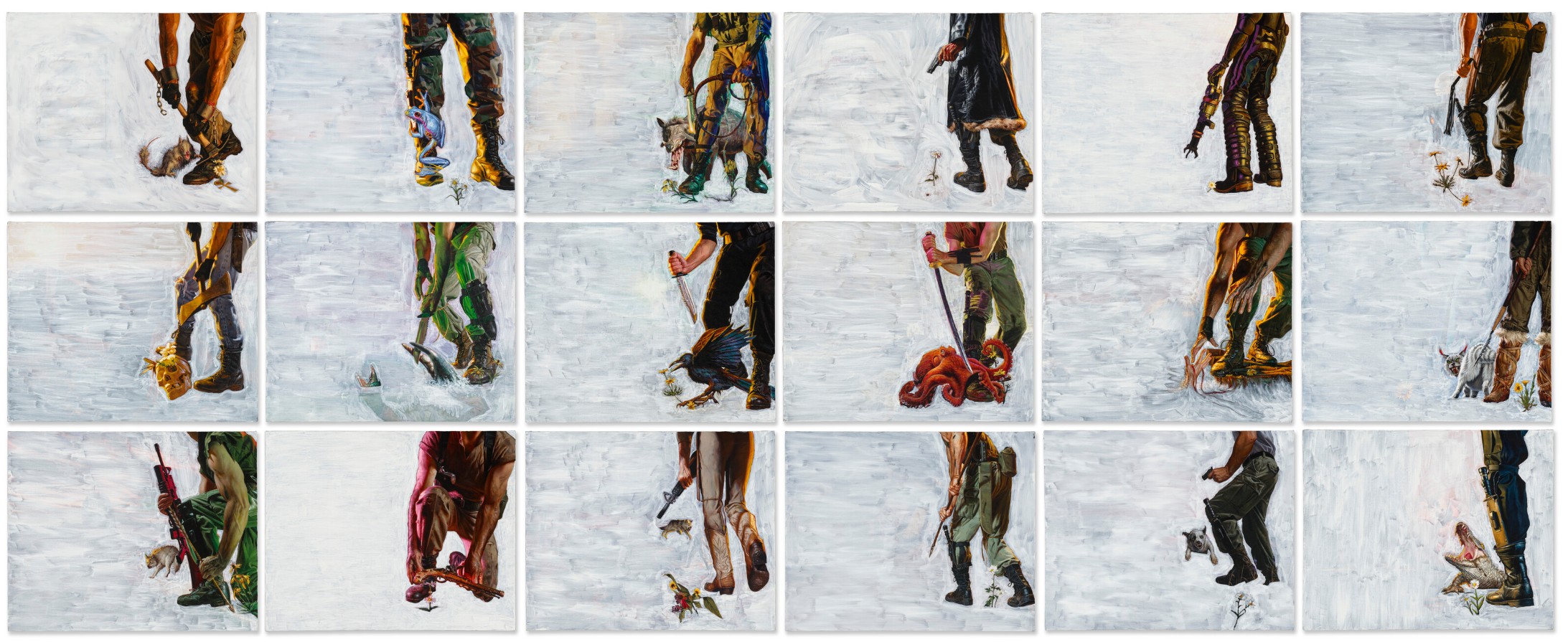
RICHARD PRINCE (B. 1949)
Eden Rock, 2005-06
Acrylic and paper collage on canvas, in eighteen parts
Installation dimensions variable
Each: 24×30 inches (61 x 76.2 cm)
Each signed and variously dated ‘R. Prince’ (on the reverse)
#6. Back to the Garden, 2008
Edlis Neeson Collection
Christie’s New-York: 20 May 2026
Estimated: USD 500,000 – 700,000
USD 533,400
RICHARD PRINCE (B. 1949), Back to the Garden | Christie’s
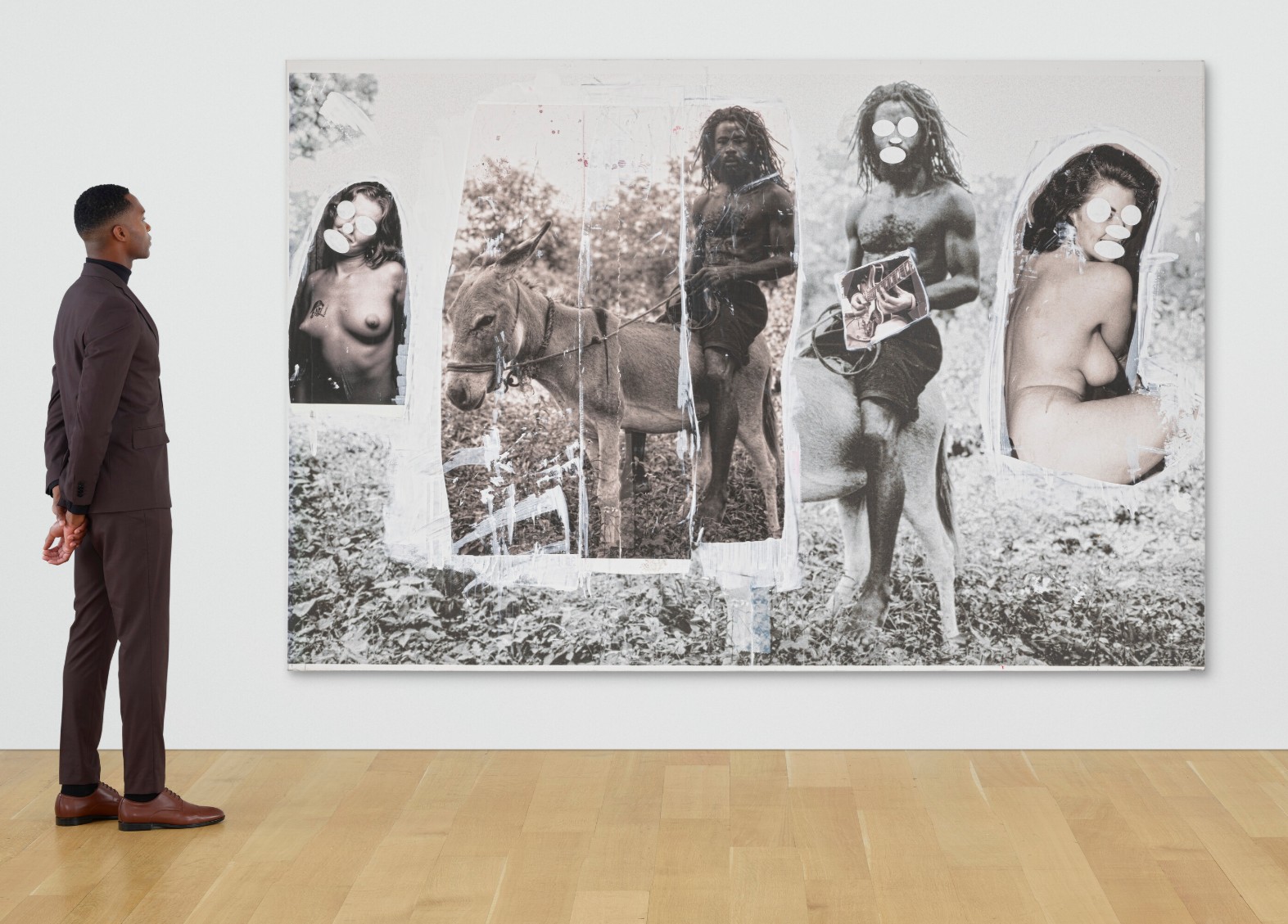
RICHARD PRINCE (B. 1949)
Back to the Garden, 2008
Acrylic, inkjet and canvas collage on canvas
80×120 inches (203.2 x 304.8 cm)
Signed, titled and dated ‘Richard Prince 2008 BACK TO THE GARDEN’ (on the overlap)
USD 500,000
#7. Spiritual America IV, 2005
Property Sold to Benefit the Yale School of Art
Sotheby’s New-York: 15 May 2026
Estimated: USD 500,000 – 700,000
USD 384,000
Richard Prince | Spiritual America IV | Contemporary Day Auction |
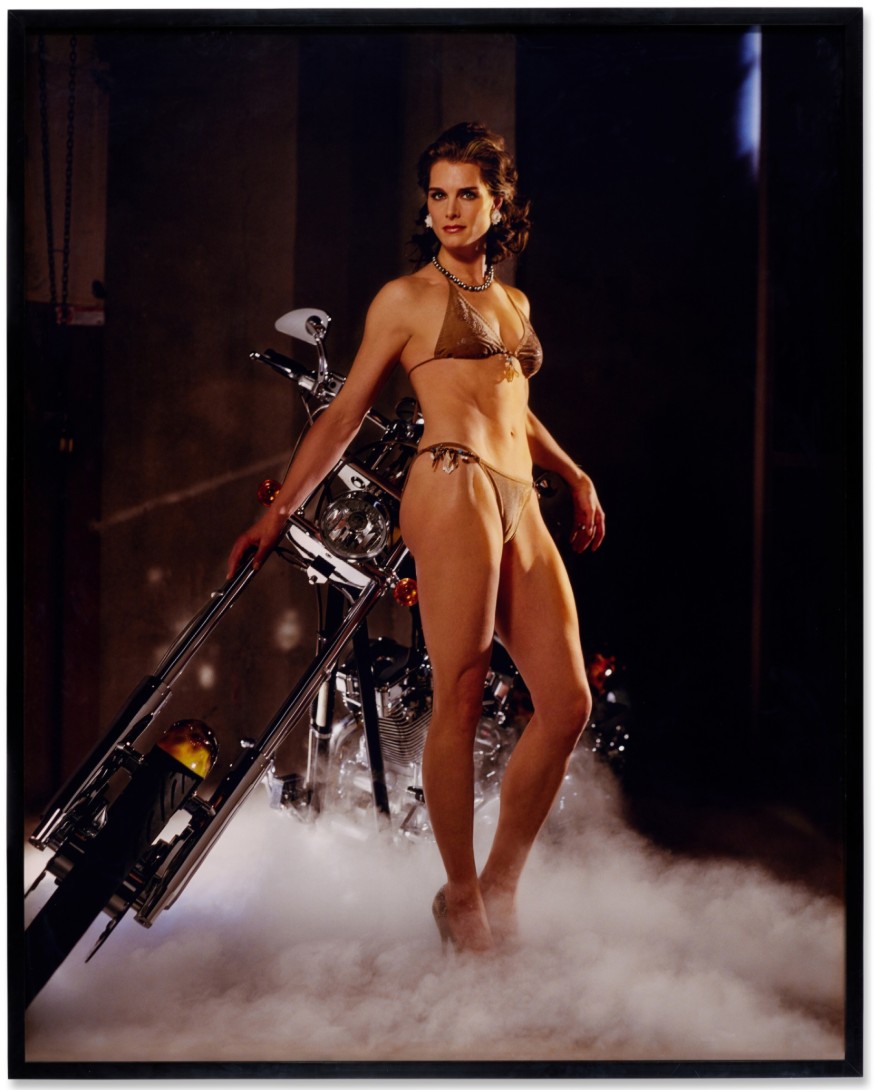
RICHARD PRINCE (b. 1949)
Spiritual America IV, 2005
Ektacolor print in artist’s chosen frame
90-1/2 x 72 inches (229.9 x 182.9 cm)
Signed, dated 2005 and numbered ap #2 (on the backing board)
This work is artist’s proof number 2 of 2 from an edition of 6 plus 2 artist’s proofs
#8. My Mother-In-Law, 2005
Christie’s New-York: 21 May 2026
Estimated: USD 120,000 – 180,000
USD 381,000
RICHARD PRINCE (B. 1949), My Mother-In-Law | Christie’s
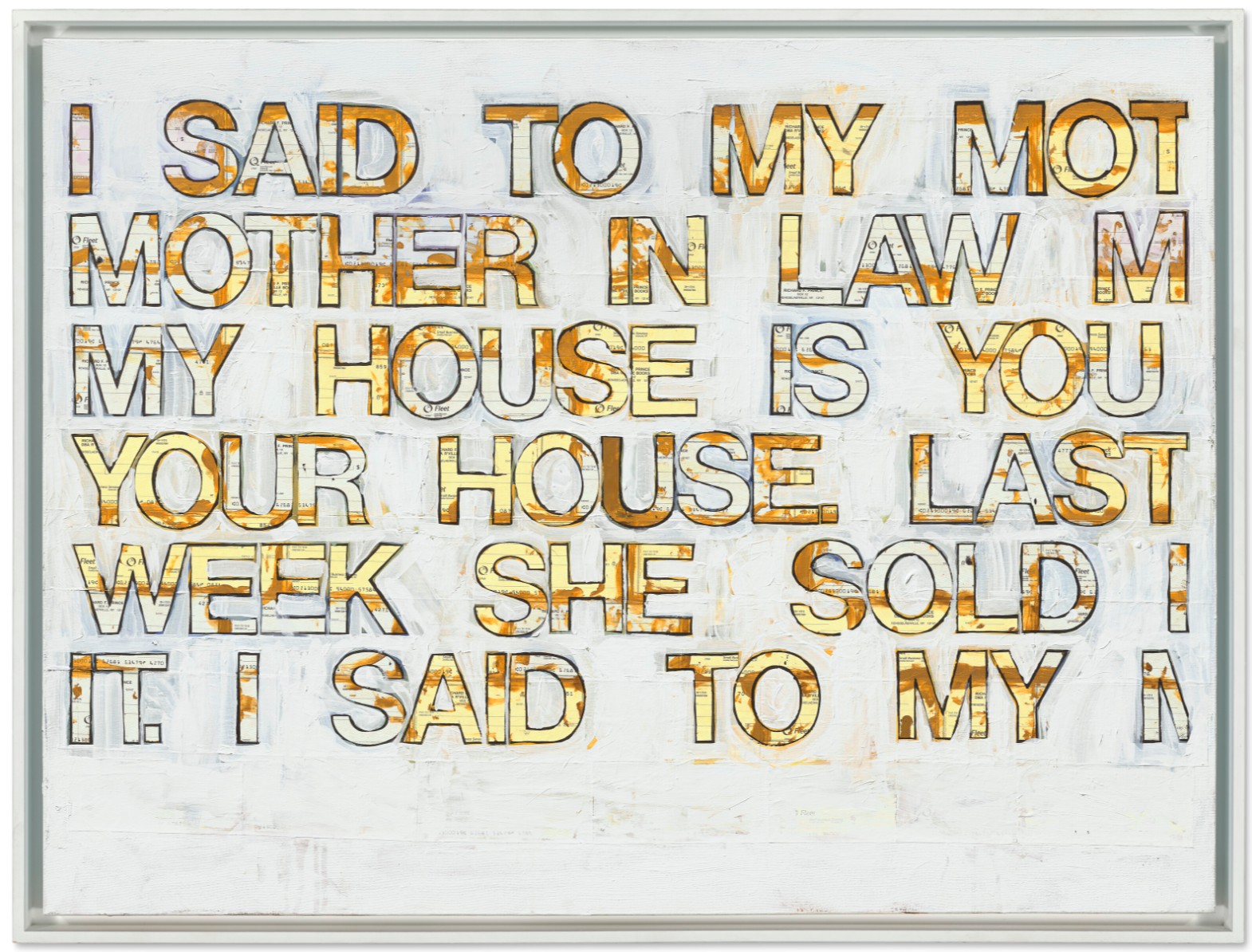
RICHARD PRINCE (B. 1949)
My Mother-In-Law, 2005
Acrylic and paper collage on canvas
30×40 inches (76.2 x 101.5 cm)
Signed, titled and dated ‘Richard Prince 2005 MY MOTHER-IN-LAW’ (on the reverse)
#9. Metal Saving Grace, 2008
Christie’s New-York: 26 February 2026
Estimated: USD 250,000 – 350,000
USD 355,600
RICHARD PRINCE (B. 1949), Metal Saving Grace | Christie’s
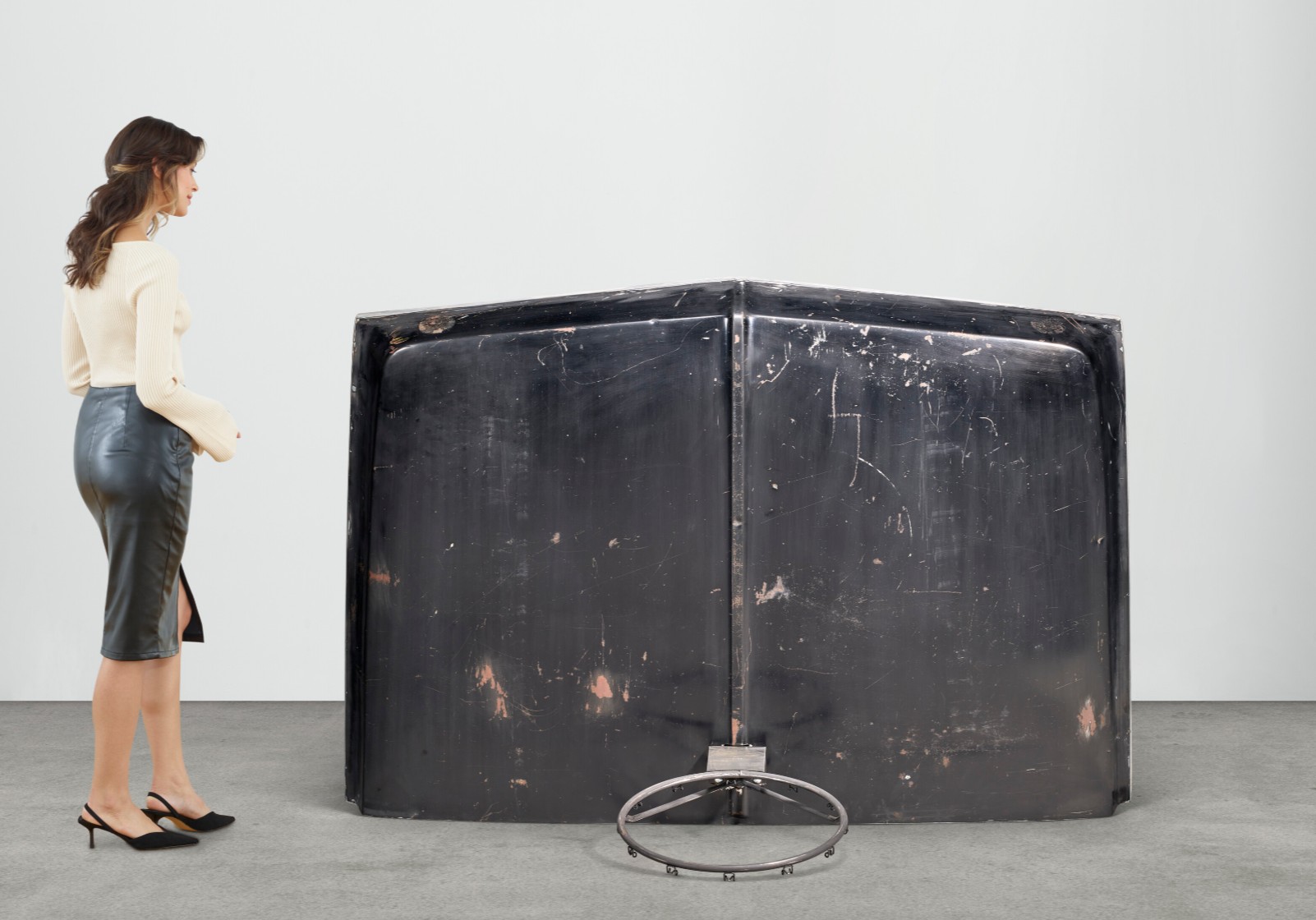
RICHARD PRINCE (B. 1949)
Metal Saving Grace, 2008
Car hood, basketball hoop, plywood and Bondo
50-1/2 x 69 x 33-3/4 inches (128.3 x 175.3 x 85.7 cm)
#10. Untitled (de Kooning), 2007
Christie’s New-York: 21 May 2026
Estimated: USD 250,000 – 350,000
USD 304,800
RICHARD PRINCE (B. 1949), Untitled (de Kooning) | Christie’s
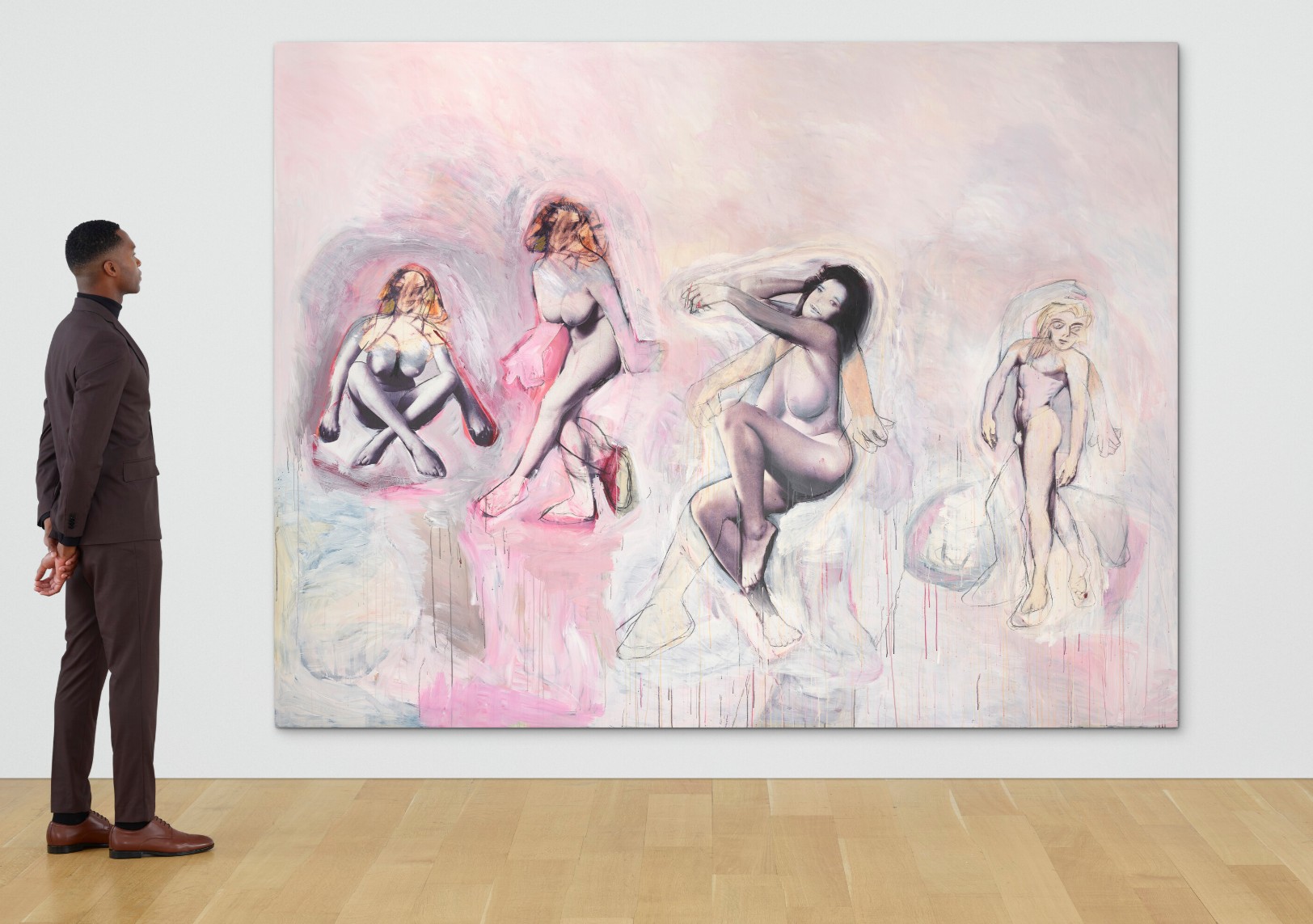
RICHARD PRINCE (B. 1949)
Untitled (de Kooning), 2007
Acrylic, inkjet, oil stick and canvas collage on canvas
100×132 inches (254 x 335.3 cm)
Signed, titled and dated ‘Richard Prince 2007 Untitled (de Kooning)’ (on the reverse)
#11. Which Side Are You On?, 2002
Art & Design from The Collection of Barbara Gladstone
Sotheby’s New-York: 9 June 2026
Estimated: USD 200,000 – 300,000
USD 256,000
Richard Prince | Which Side Are You On? | Art & Design from The
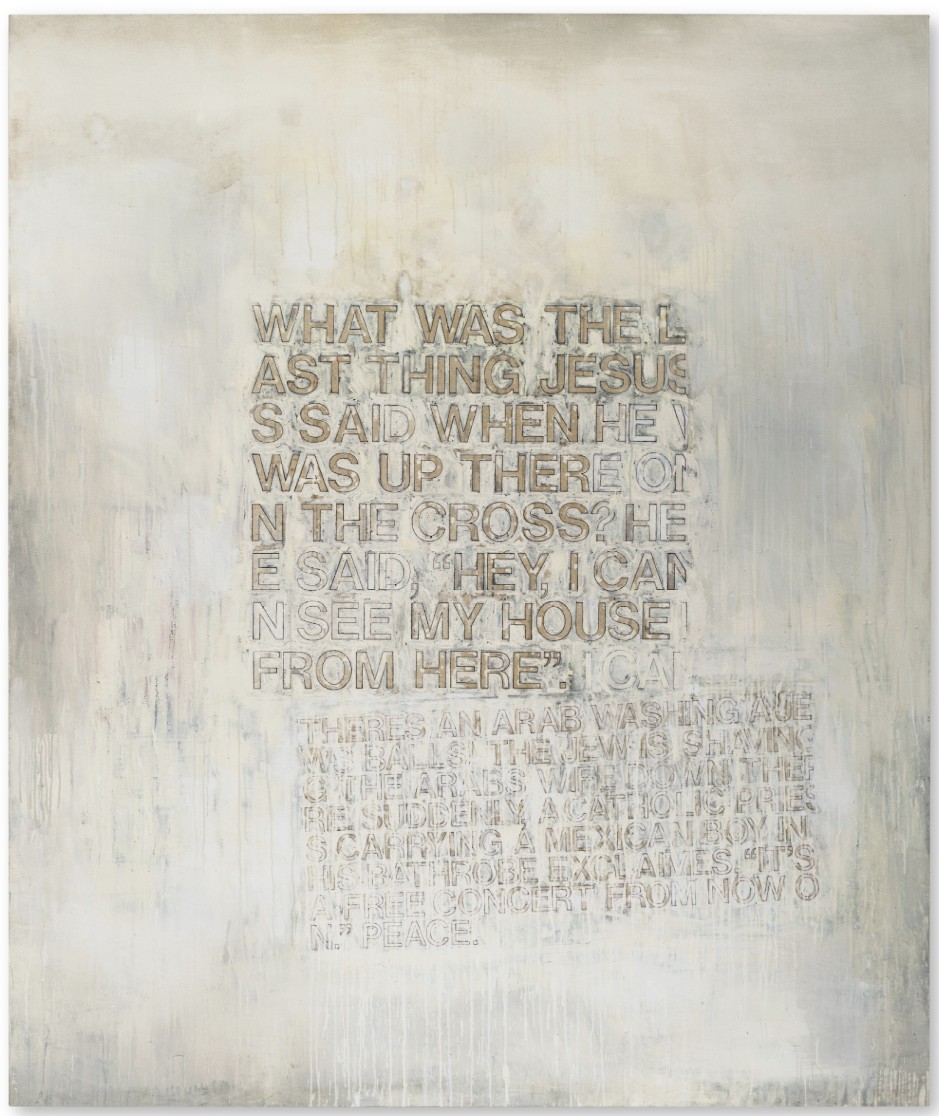
RICHARD PRINCE (b. 1949)
Which Side Are You On?, 2002
Acrylic on canvas
89×75 inches (226.1 x 190.5 cm)
Signed, titled and dated 2002 (on the overlap)
#12. My Neighbor’s Wife, 1992
Sotheby’s New-York: 27 February 2026
Estimated: USD 120,000 – 180,000
USD 243,200
Richard Prince | My Neighbor’s Wife | Contemporary Discoveries | 2026
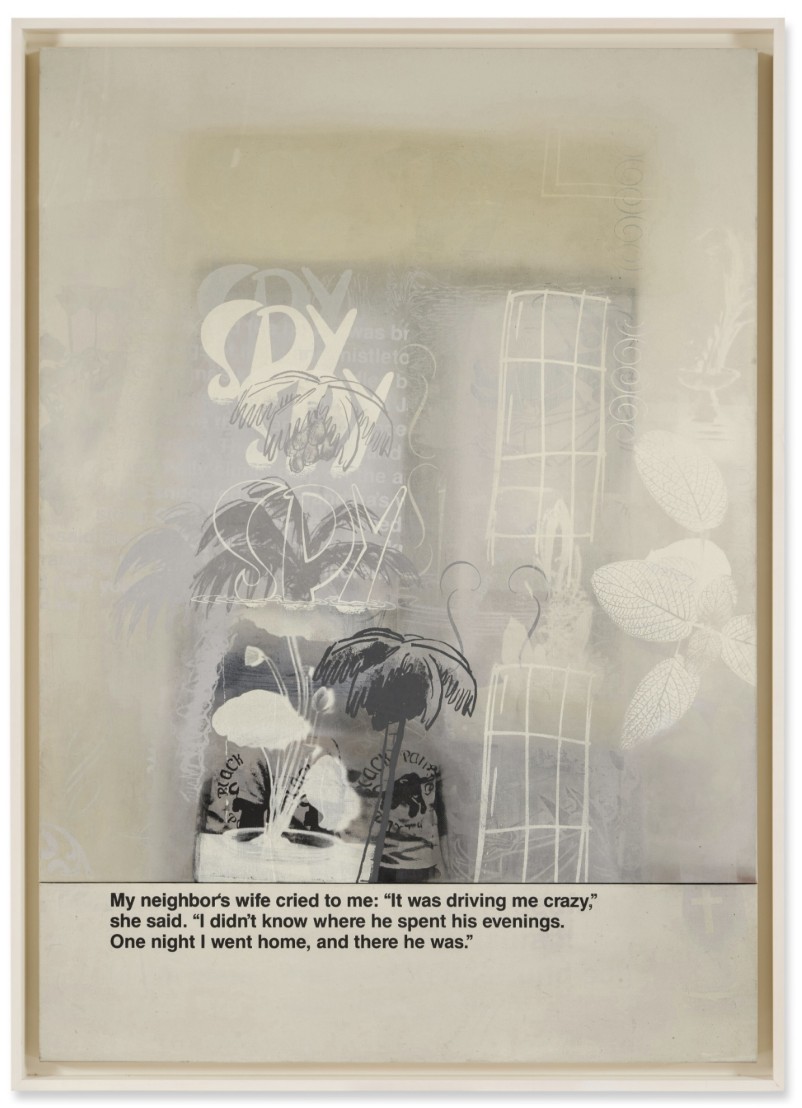
RICHARD PRINCE (b. 1949)
My Neighbor’s Wife, 1992
Acrylic and silkscreen on canvas
68×48 inches (172.7 x 121.9 cm)
#13. Untitled (Four Women with Hats), 1980
Sotheby’s New-York: 15 May 2026
Estimated: USD 150,000 – 200,000
USD 217,600
Richard Prince | Untitled (Four Women with Hats) | Contemporary Day

RICHARD PRINCE (b. 1949)
Untitled (Four Women with Hats), 1980
Ektacolor print, in 4 parts
Each: 20×24 inches (50.8 x 61 cm)
Signed, numbered 4/10 and dated 1980 (on the reverse of each)
This work is number 4 from an edition of 10 plus 2 artist’s proofs
#14. Untitled, 1990
Art & Design from The Collection of Barbara Gladstone
Sotheby’s New-York: 9 June 2026
Estimated: USD 80,000 – 120,000
USD 166,400
Richard Prince | Untitled | Art & Design from The Collection of
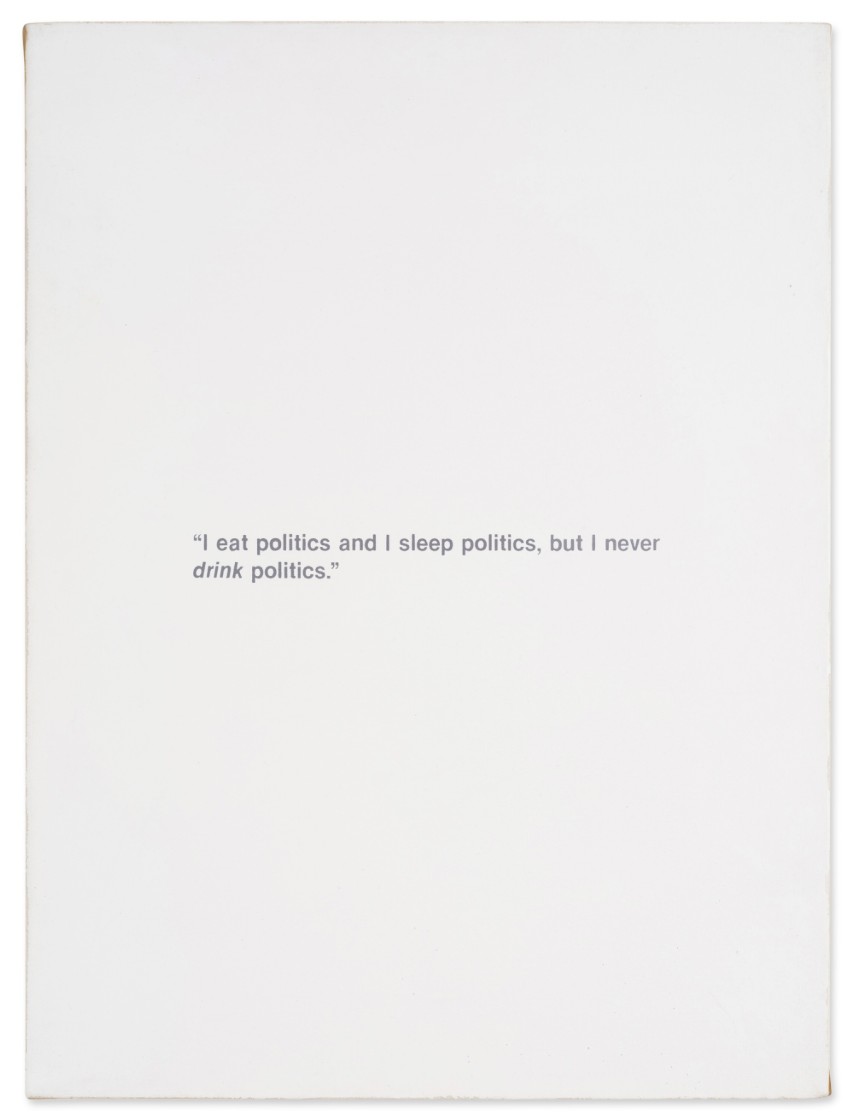
RICHARD PRINCE (b. 1949)
Untitled, 1990
Acrylic and silkscreen ink on canvas
24×18 inches (61 x 45.7 cm)
#15. Untitled (Oh), 2010
Wright: 14 May 2026
Estimated: USD 100,000 – 150,000
USD 121,600
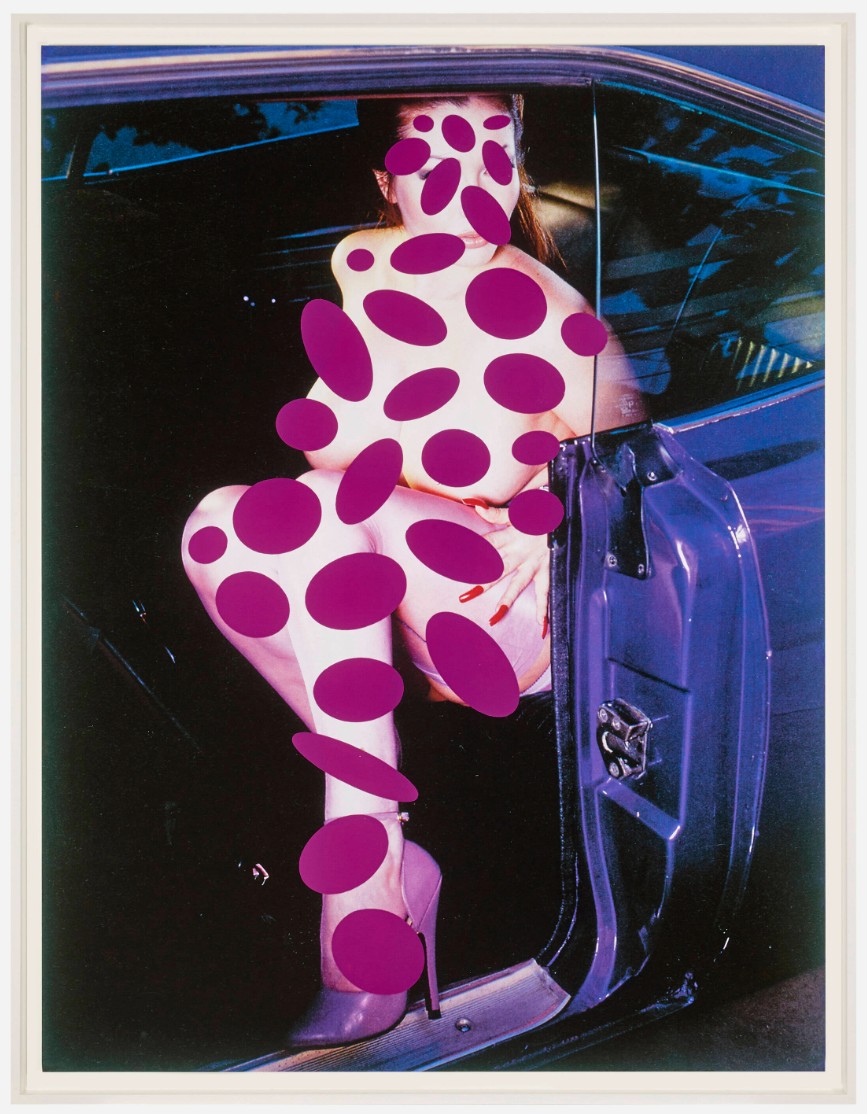
RICHARD PRINCE (b.1949)
Untitled (Oh), 2010
Inkjet and acrylic on canvas
76×58 inches (193×147 cm)
Signed, titled, and dated to verso ‘Richard Prince 2010 Untitled Oh Painting’ with artist’s stamp
USD 100,000
#16. Untitled (Cowboy), 1992
Christie’s New-York: 26 February 2026
Estimated: USD 12,000 – 18,000
USD 82,550
RICHARD PRINCE (B. 1949), Untitled (Cowboy) | Christie’s
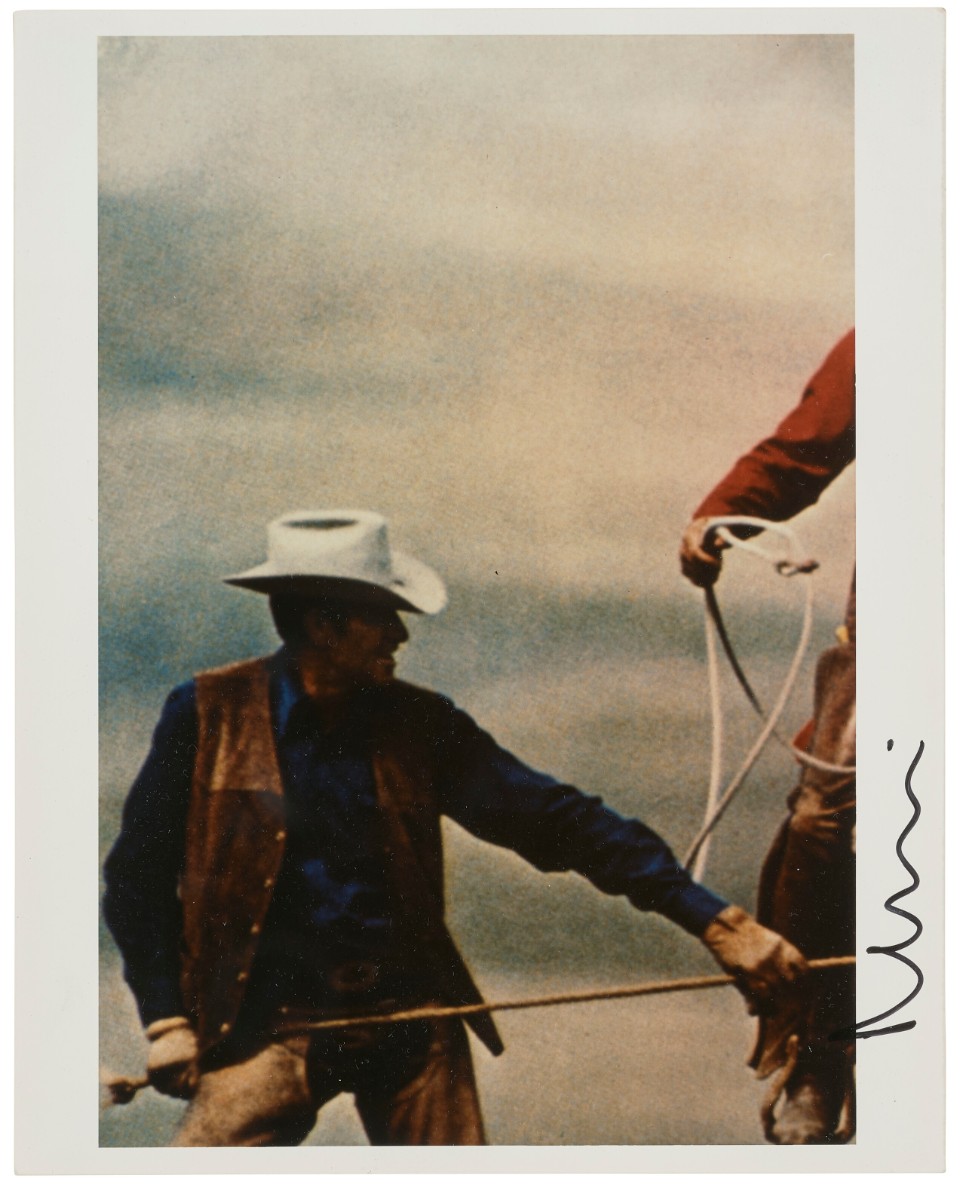
RICHARD PRINCE (B. 1949)
Untitled (Cowboy), 1992
Ektacolor print
10×8 inches (25.4 x 20.3 cm)
Signed ‘Richard Prince’ (lower right)
This work is a unique working proof
#17. Dead and Alive, 2006
Property from a Distinguished American Collection
Sotheby’s New-York: 25 February 2026
Estimated: USD 60,000 – 80,000
USD 76,800
Richard Prince | Dead and Alive | Contemporary Curated | 2026 |
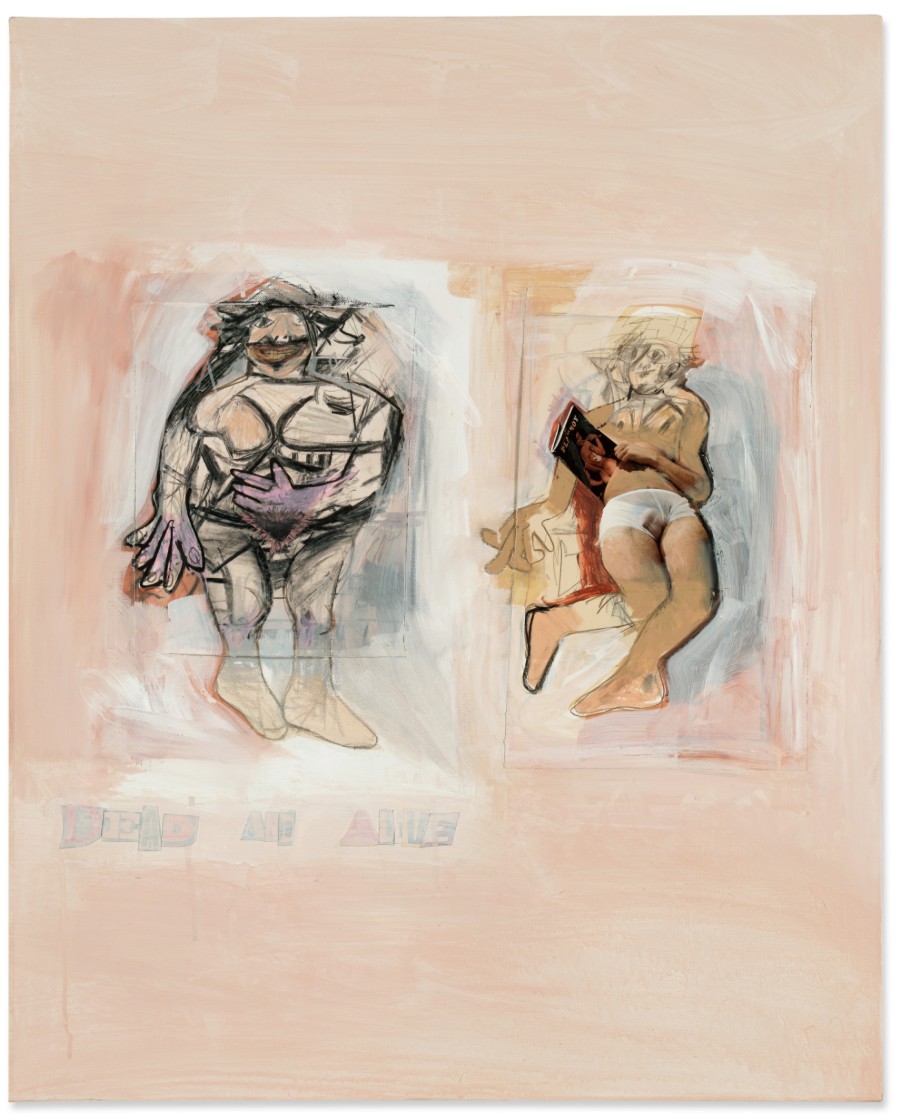
RICHARD PRINCE (b. 1949)
Dead and Alive, 2006
Acrylic, oil stick and paper collage on canvas
30×24 inches (76.2 x 61 cm)
Signed, titled and dated 2006 (on the reverse)
#18. Untitled (Protest Painting), 1989-91
Sotheby’s New-York: 27 February 2026
Estimated: USD 80,000 – 120,000
USD 70,400
Richard Prince | Untitled (Protest Painting) | Contemporary
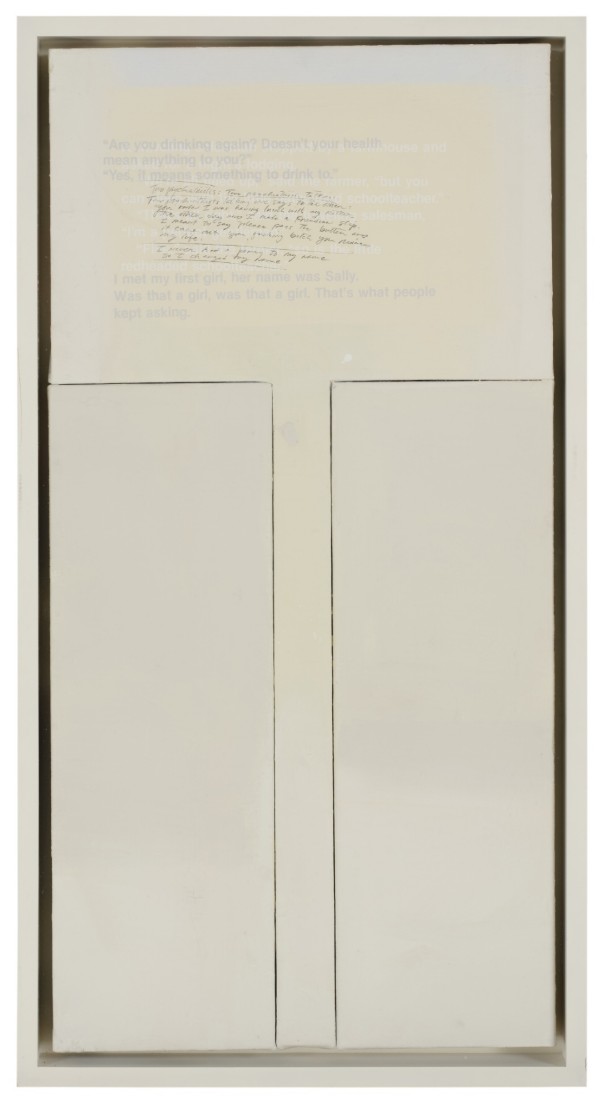
RICHARD PRINCE (b. 1949)
Untitled (Protest Painting), 1989-91
Acrylic, silkscreen ink, graphite and paper collage on canvas mounted on board, in 3 joined parts
36×18 inches (91.4 x 45.7 cm)
Signed, titled, dated 1989-91 and numbered RP736 (on the reverse)
“The idea of taking no responsibility is a very romantic view of the artist. It just allows you a certain amount of freedom. I see the artist as one of the few people who can get away with certain things. I guess I do associate it with a certain kind of outlaw behavior. It comes from how I grew up in the 50s, from my experiences. It just seems to be something I’m comfortable with. I can play with the other side, but I do tend to divide the world into the hip and the square.”
#19. Untitled (Protest Painting), 1992
Phillips London: 7 March 2026
Estimated: GBP 50,000 – 70,000
GBP 51,600 / USD 68,930
Richard Prince Modern & Contemporary Art
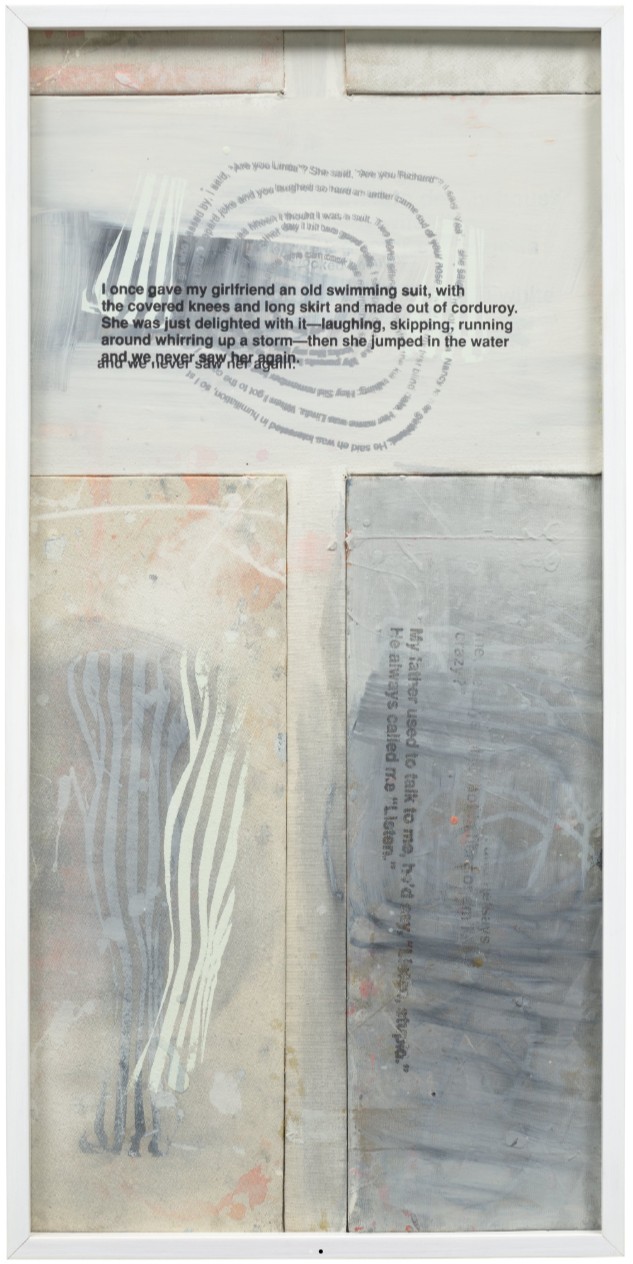
RICHARD PRINCE
Untitled (Protest Painting), 1992
Mixed media on canvas
38-1/8 x 18-1/4 inches (96.8 x 46.5 cm)
Lots Passed
Untitled, 1997
Property from a Distinguished American Collection
Sotheby’s New-York: 25 February 2026
Estimated: USD 70,000 – 90,000
PASSED
Richard Prince | Untitled | Contemporary Curated | 2026 | Sotheby’s
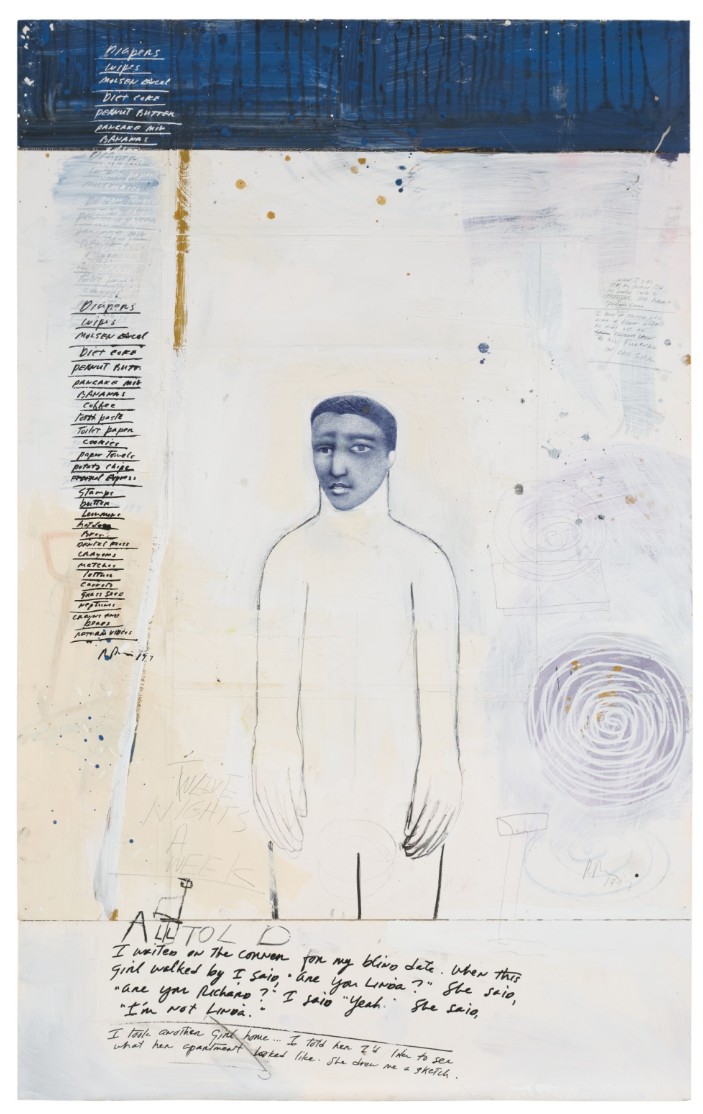
RICHARD PRINCE (b. 1949)
Untitled, 1997
Acrylic, silkscreen, ballpoint pen, conte crayon, paper collage and joint compound on foamcore
57 x 35-1/2 inches (144.8 x 90.2 cm)
Signed and dated 1997 (lower right)
Lots Withdrawn
Untitled (Cowboy), 2012
Sotheby’s New-York: 15 May 2026
Estimated: USD 700,000 – 1,000,000
WITHDRAWN
Richard Prince | Untitled (Cowboy) | Contemporary Day Auction | 2026
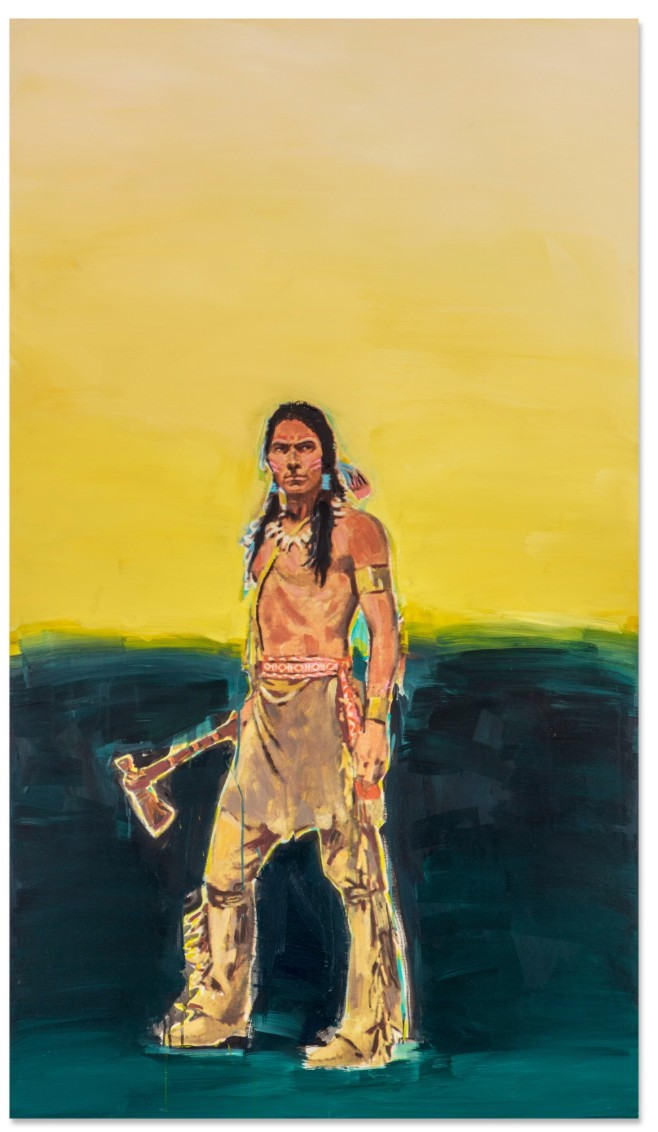
RICHARD PRINCE (b. 1949)
Untitled (Cowboy), 2012
Inkjet and acrylic on canvas
62-3/4 x 36 inches (159.4 x 91.4 cm)
Signed and dated 2012 (on the overlap)
Nurse Kathy, 2006-2008
Phillips New-York: 19 May 2026
Estimated: USD 2,000,000 – 3,000,000
WITHDRAWN
Richard Prince Modern & Contemporary Art Evening Sale
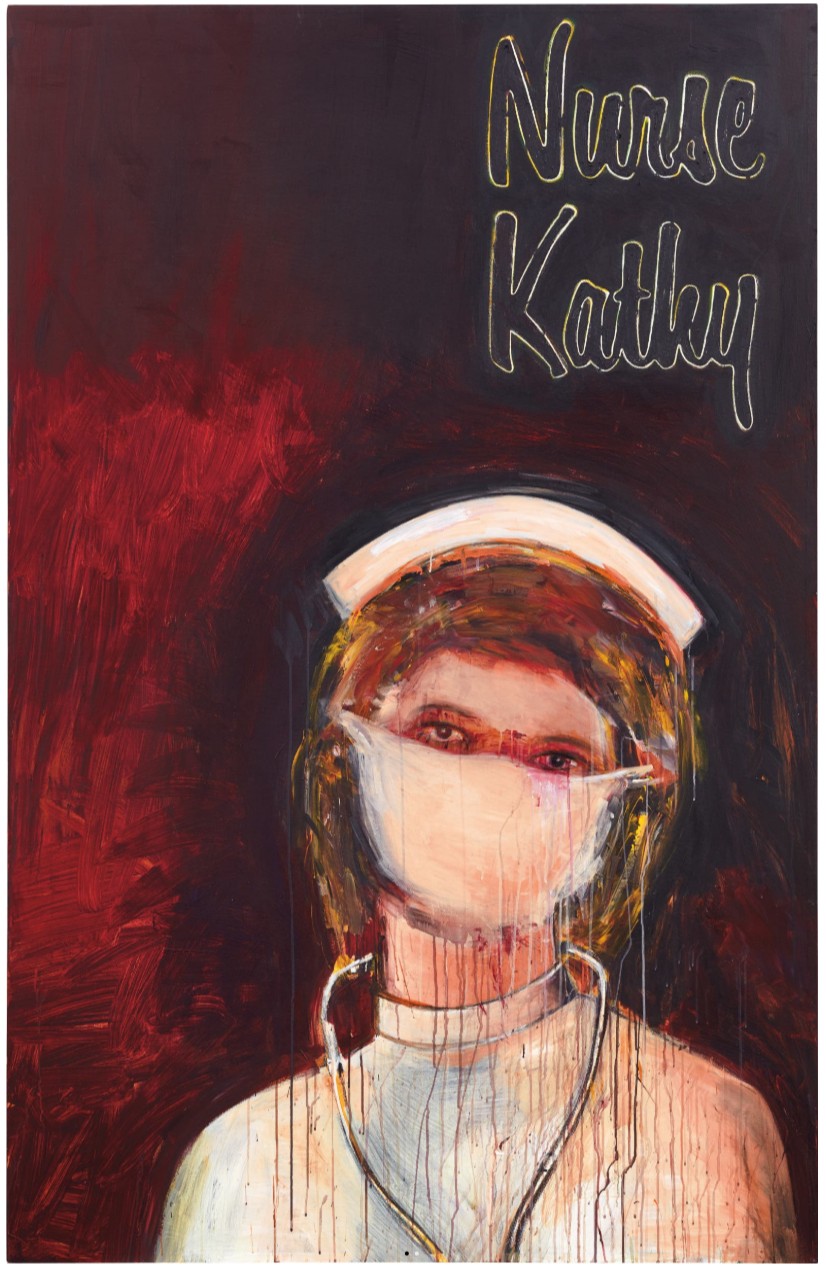
Inkjet and acrylic on canvas
84×54 inches (213.4 x 137.2 cm)
Signed, titled and dated “”Nurse Kathy” R Prince 2006-08″ on the reverse
2025 Auction Results
43 lots sold at auction in 2025 for a total turnover of USD 31,922,410. With 10 lots failing to sell, the sell-through rate is 81.1%. The highest price for 2025 was by Man Crazy Nurse, a Nurse painting dated 2002-3, from The Collection of Barbara Gladstone, sold at Sotheby’s in New-York, on 15 May 2025 for USD 3,967,200.
2025 Top 3 Lots
10 lots sold for more than USD 1 million, generating a cumulative turnover of USD 24,989,200, representing 78.3% of the total turnover for 2025.
XXXXXXXXXX
#1. Man Crazy Nurse, 2002-03
Selections from the Collection of Barbara Gladstone
Sotheby’s New-York: 15 May 2025
Estimated: USD 4,000,000 – 6,000,000
USD 3,967,200
NURSE PAINTING
Man Crazy Nurse | Selections from The Collection of Barbara Gladstone | Contemporary Art | Sotheby’s
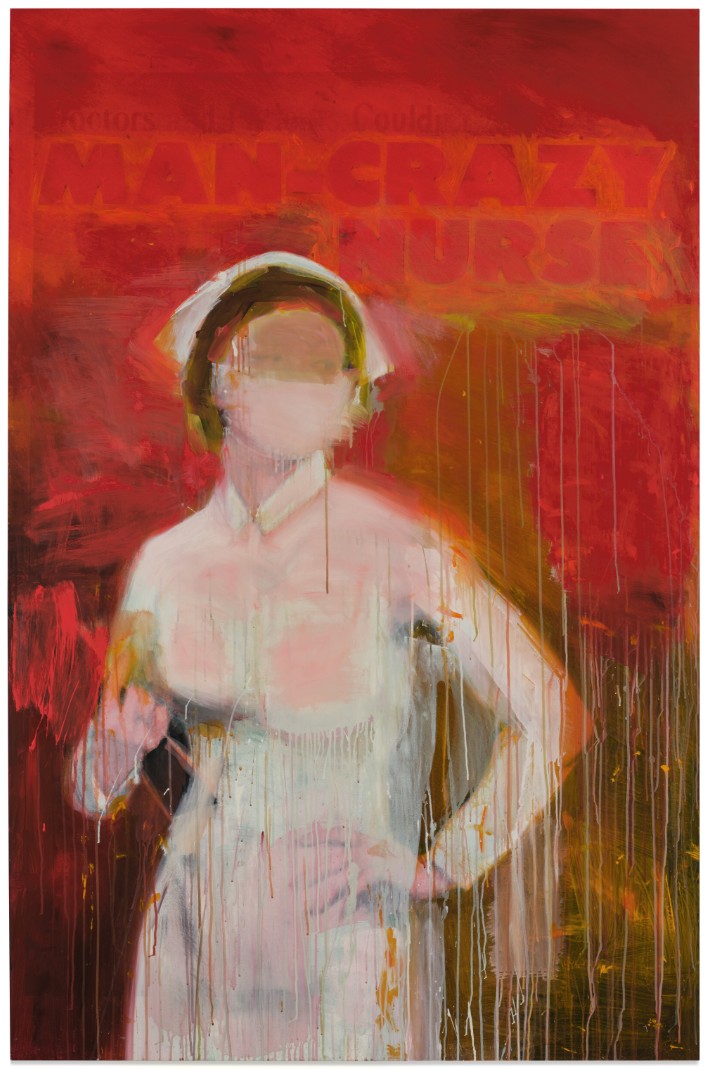
RICHARD PRINCE (b. 1949)
Man Crazy Nurse, 2002-03
Acrylic and inkjet on canvas
80×52 inches (203.2 x 132.1 cm)
Signed, titled and dated 2002-2003 (on the overlap)
#2. Are You Kidding?, 1988
Selections from the Collection of Barbara Gladstone
Sotheby’s New-York: 15 May 2025
Estimated: USD 2,500,000 – 3,500,000
USD 3,527,000
JOKE PAINTING
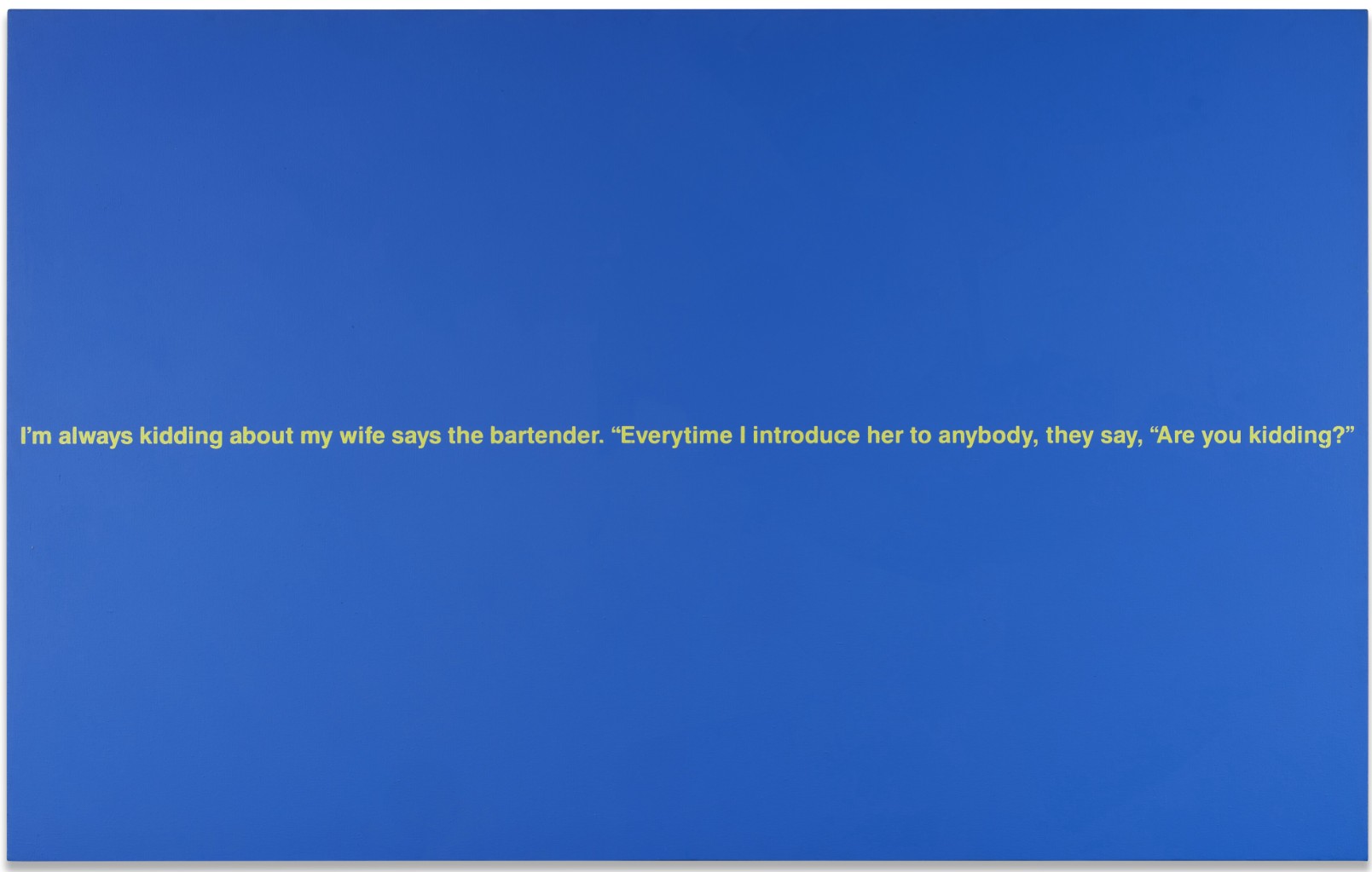
RICHARD PRINCE (b. 1949)
Are You Kidding?, 1988
Acrylic and silkscreen on canvas
56 x 89 1/2 inches (142.2 x 226.1 cm)
Signed, titled and dated 1988 (on the overlap)
#3. Double Nurse, 2001
Edlis Neeson Collection
Christie’s New-York: 19 November 2025
Estimated: USD 3,000,000 – 5,000,000
USD 3,491,000
NURSE PAINTING
RICHARD PRINCE (B. 1949), Double Nurse | Christie’s
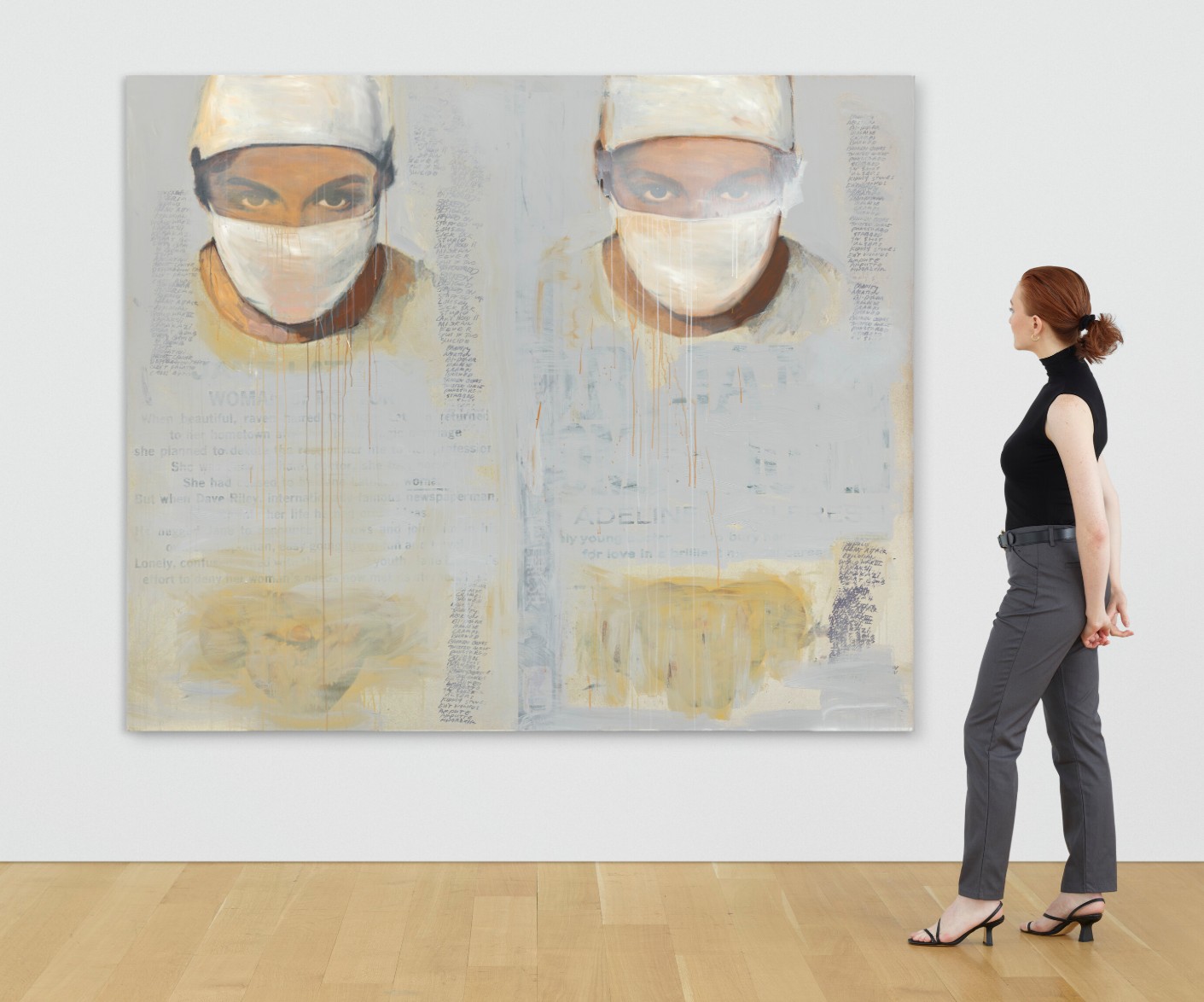
RICHARD PRINCE (B. 1949)
Double Nurse, 2001
Acrylic and inkjet on canvas
80×96 inches (203.2 x 243.8 cm)
Signed, titled and dated ‘Richard Prince, Double NURSE 2001’ (on the reverse)
#4. Untitled (Cowboy), 2011-13
Edlis Neeson Collection
Christie’s New-York: 19 November 2025
Estimated: USD 2,000,000 – 3,000,000
USD 3,369,000
RICHARD PRINCE (B. 1949), Untitled (Cowboy) | Christie’s
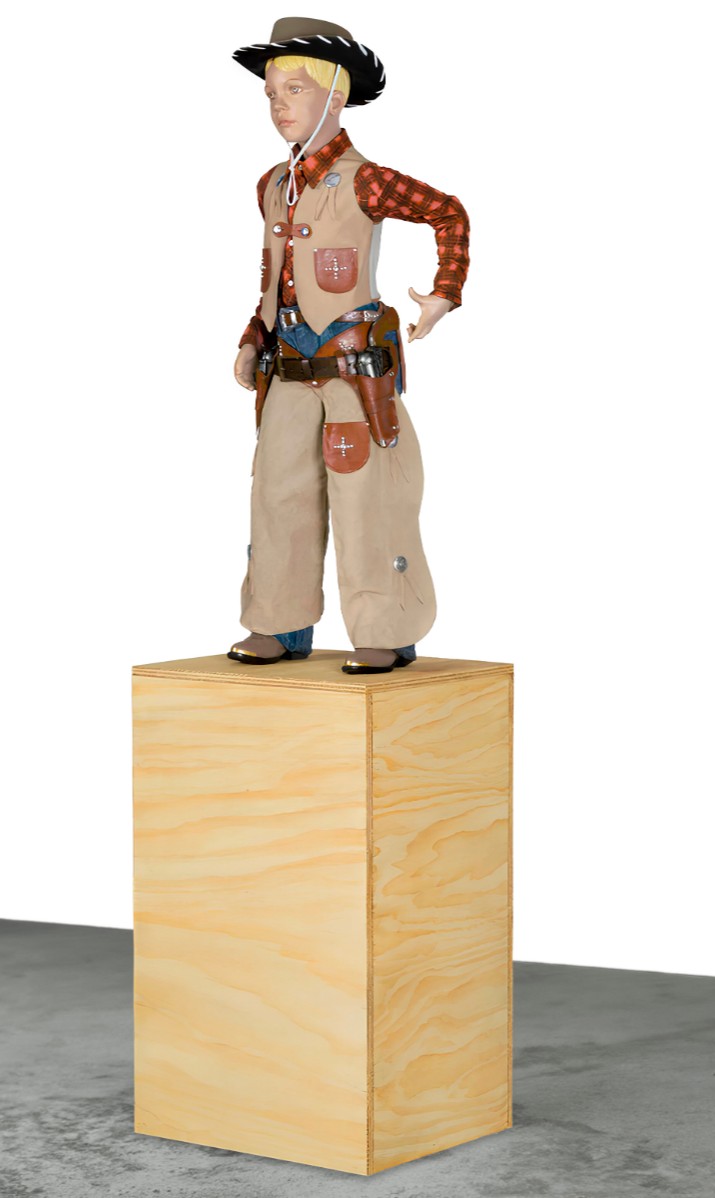
RICHARD PRINCE (B. 1949)
Untitled (Cowboy), 2011-13
Painted bronze
Figure: 47 1/2 x 19 x 11 1/4 inches (120.6 x 48.3 x 28.6 cm)
Overall: 83 1/2 x 22 x 19 inches (212.1 x 55.9 x 48.3 cm)
Incised with the artist’s signature, foundry mark, number and date ‘R Prince 2⁄3 2013’
(on the reverse of figure’s proper left leg)
This works is number two from an edition of three plus two artist’s proofs
Each a unique color variant
#5. Killer Nurse, 2009-2010
Phillips New-York: 13 May 2025
Estimated: USD 3,000,000 – 4,000,000
USD 3,206,000
NURSE PAINTING
Richard Prince Modern & Contemporary Art Evening Sale
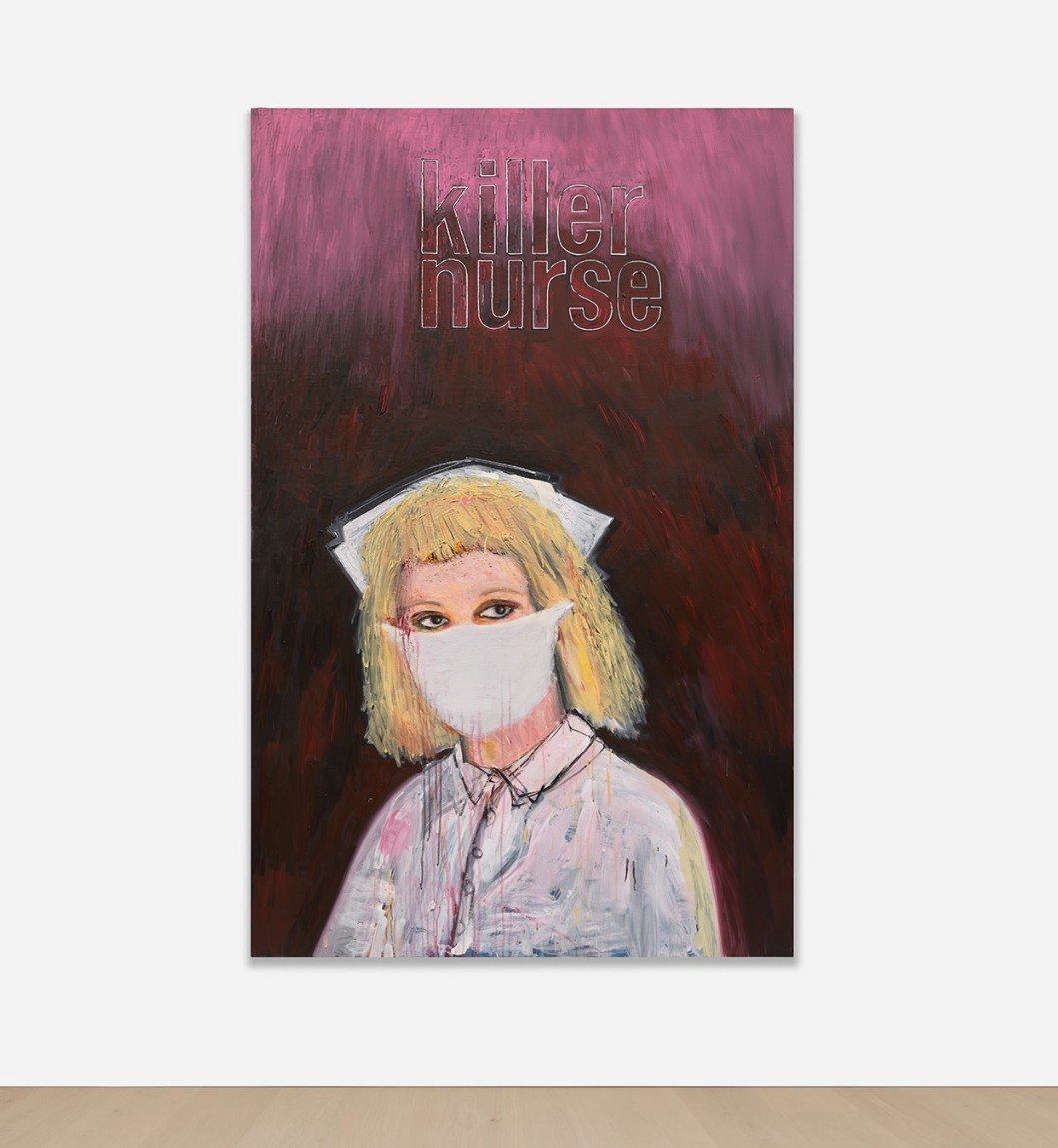
Killer Nurse, 2009-2010
Acrylic and inkjet on canvas
#6. Untitled (The housewife and the grocer), 1987
Christie’s New-York: 14 May 2025
Estimated: USD 1,800,000 – 2,500,000
USD 1,804,500
JOKE PAINTING
RICHARD PRINCE (B. 1949), Untitled (The housewife and the grocer) | Christie’s
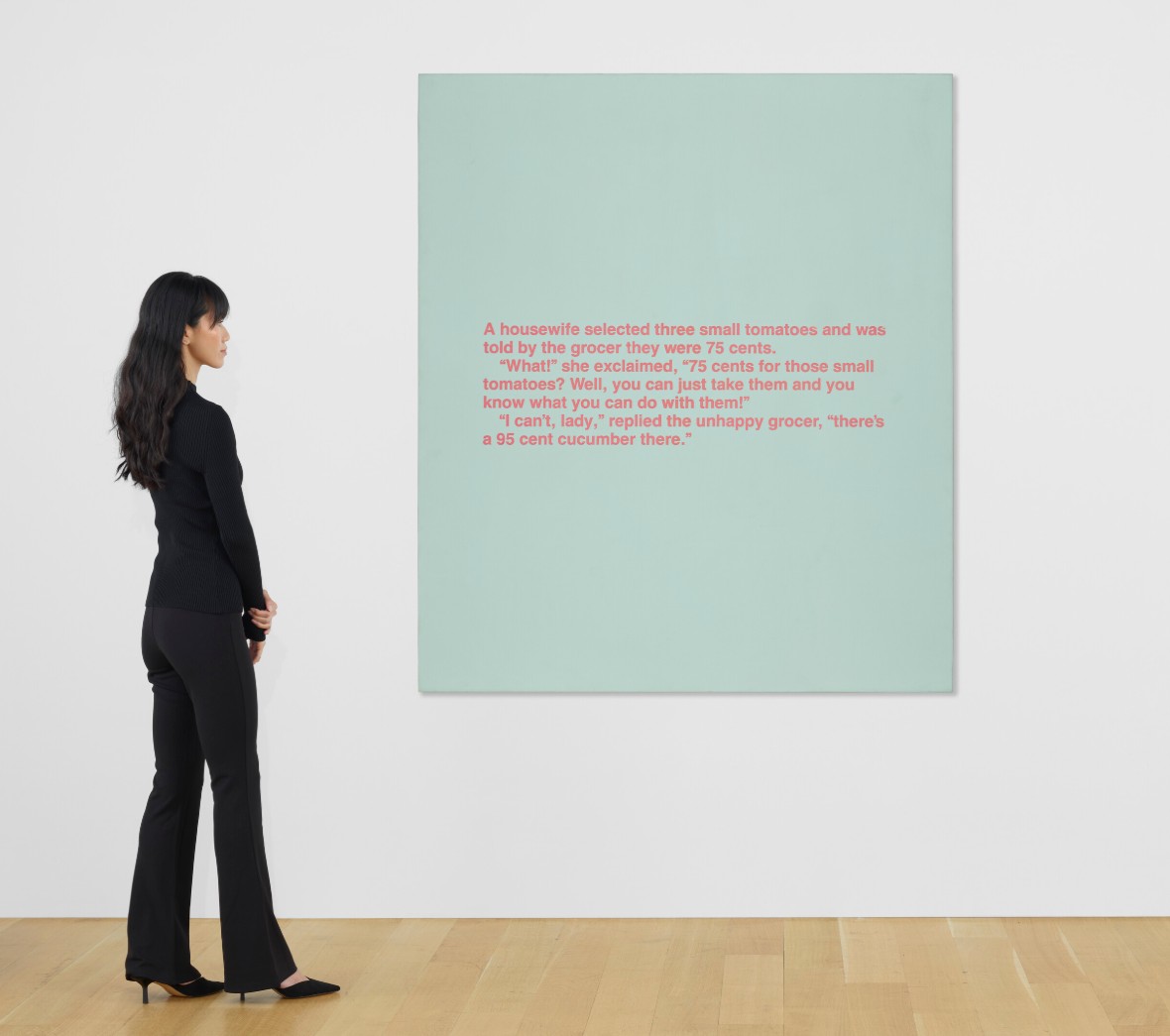
RICHARD PRINCE (B. 1949)
Untitled (The housewife and the grocer), 1987
Acrylic and silkscreen ink on canvas
56×48 inches (142.2 x 121.9 cm)
Signed and dated ‘R Prince 1987’ (on the overlap)
#7. The Wrong Joke, 1987
Christie’s New-York: 19 November 2025
Estimated: USD 1,500,000 – 2,000,000
USD 1,524,000
JOKE PAINTING
RICHARD PRINCE (B. 1949), The Wrong Joke | Christie’s
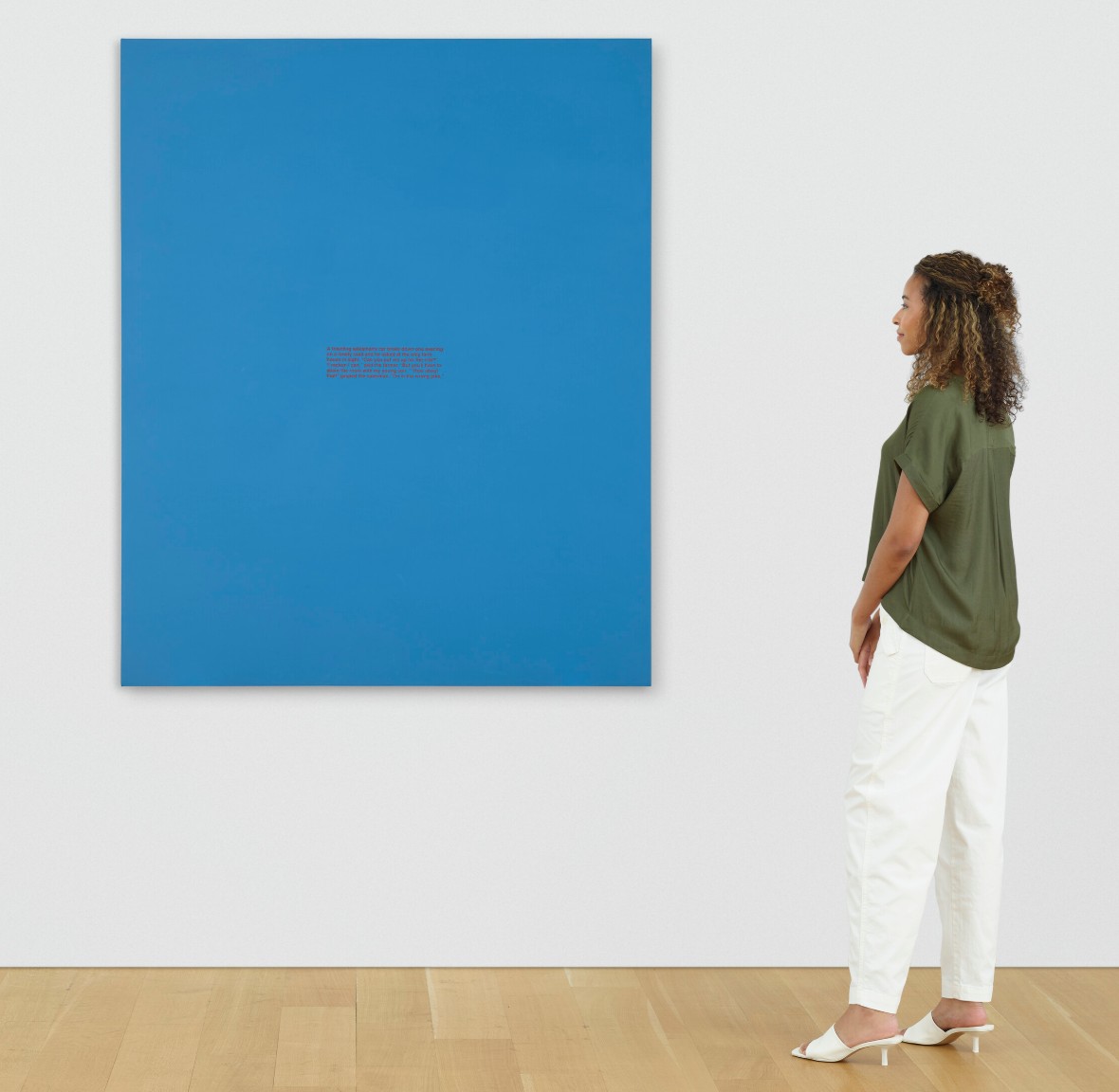
RICHARD PRINCE (B. 1949)
The Wrong Joke, 1987
Acrylic and silkscreen ink on canvas
66×54 inches (167.6 x 137.2 cm)
Signed and dated ‘R Prince 87’ (on the overlap)
#8. Untitled (cowboy), 2016
Christie’s New-York: 14 May 2025
Estimated: USD 700,000 – 1,000,000
USD 1,502,000
COWBOY PHOTOGRAPH
RICHARD PRINCE (B. 1949), Untitled (cowboy) | Christie’s
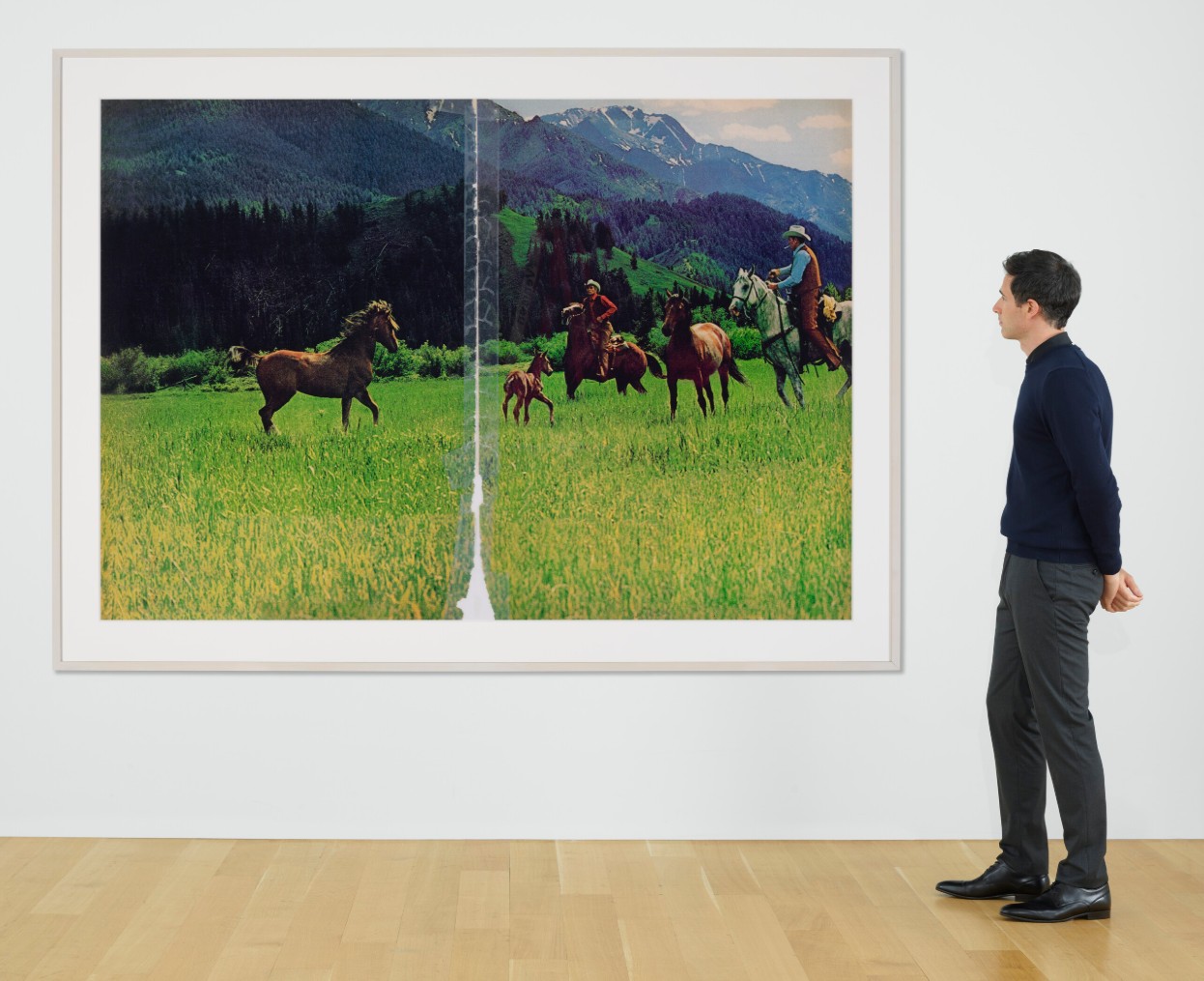
RICHARD PRINCE (B. 1949)
Untitled (cowboy), 2016
Chromogenic print
60×90 inches (152.4 x 228.6 cm)
Signed, numbered and dated ‘R Prince 2016 1⁄2’ (on a label affixed to the reverse)
This work is number one from an edition of two
#9. Untitled (Cowboy), 2000
Sotheby’s New-York: 15 May 2025
Estimated: USD 800,000 – 1,200,000
USD 1,392,000
COWBOY PHOTOGRAPH
Untitled (Cowboy) | The Now and Contemporary Evening Auction | 2025 | Sotheby’s
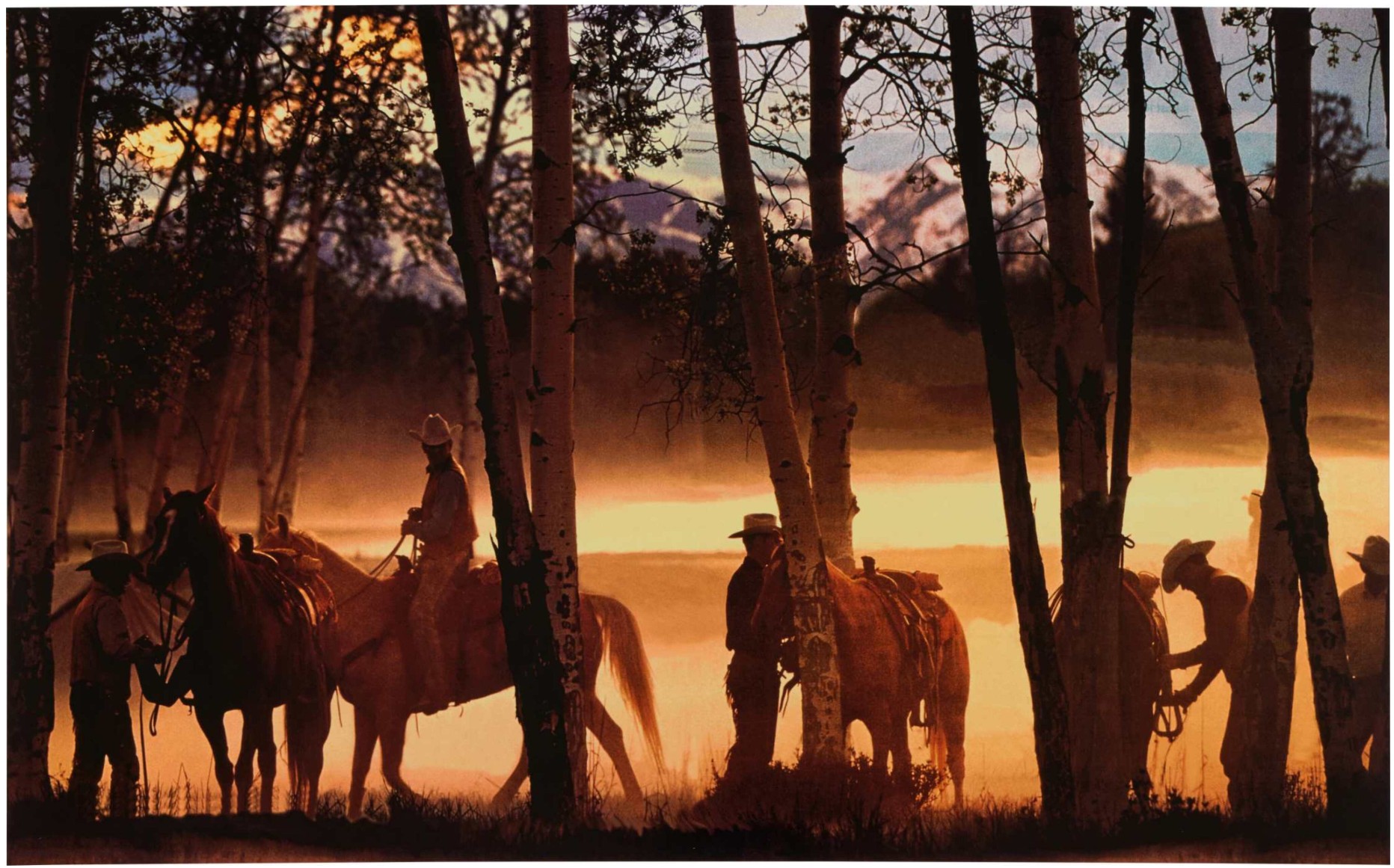
RICHARD PRINCE (b. 1949)
Untitled (Cowboy), 2000
Archival digital print
Image: 29 1/2 x 45 3/8 inches (74.9 x 115.3 cm)
Sheet: 32 1/2 x 48 3/8 inches (82.6 x 122.9 cm)
Signed, dated 2000 and numbered printer’s proof (on a label affixed to the reverse)
This work is a unique printer’s proof outside of the edition of 2 plus 1 artist’s proof
#10. What I Know, 2005
Phillips New-York: 13 May 2025
Estimated: USD 1,000,000 – 1,500,000
USD 1,206,500
HOOD
Richard Prince Modern & Contemporary Art Evening Sale
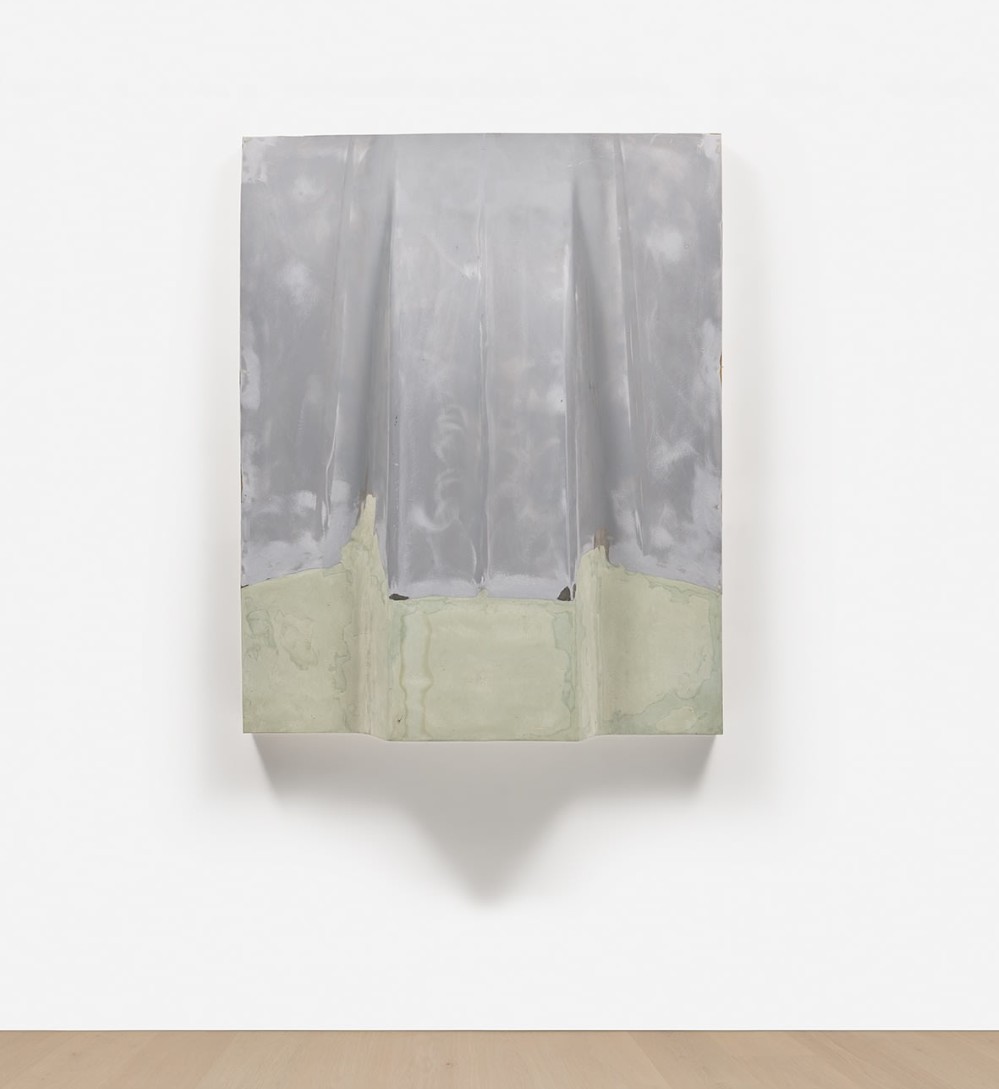
USD 1 million
#11. Untitled (Cowboy), 2001
Christie’s New-York: 20 November 2025
Estimated: USD 500,000 – 700,000
USD 889,000
COWBOY PHOTOGRAPH
RICHARD PRINCE (B. 1949), Untitled (Cowboy) | Christie’s
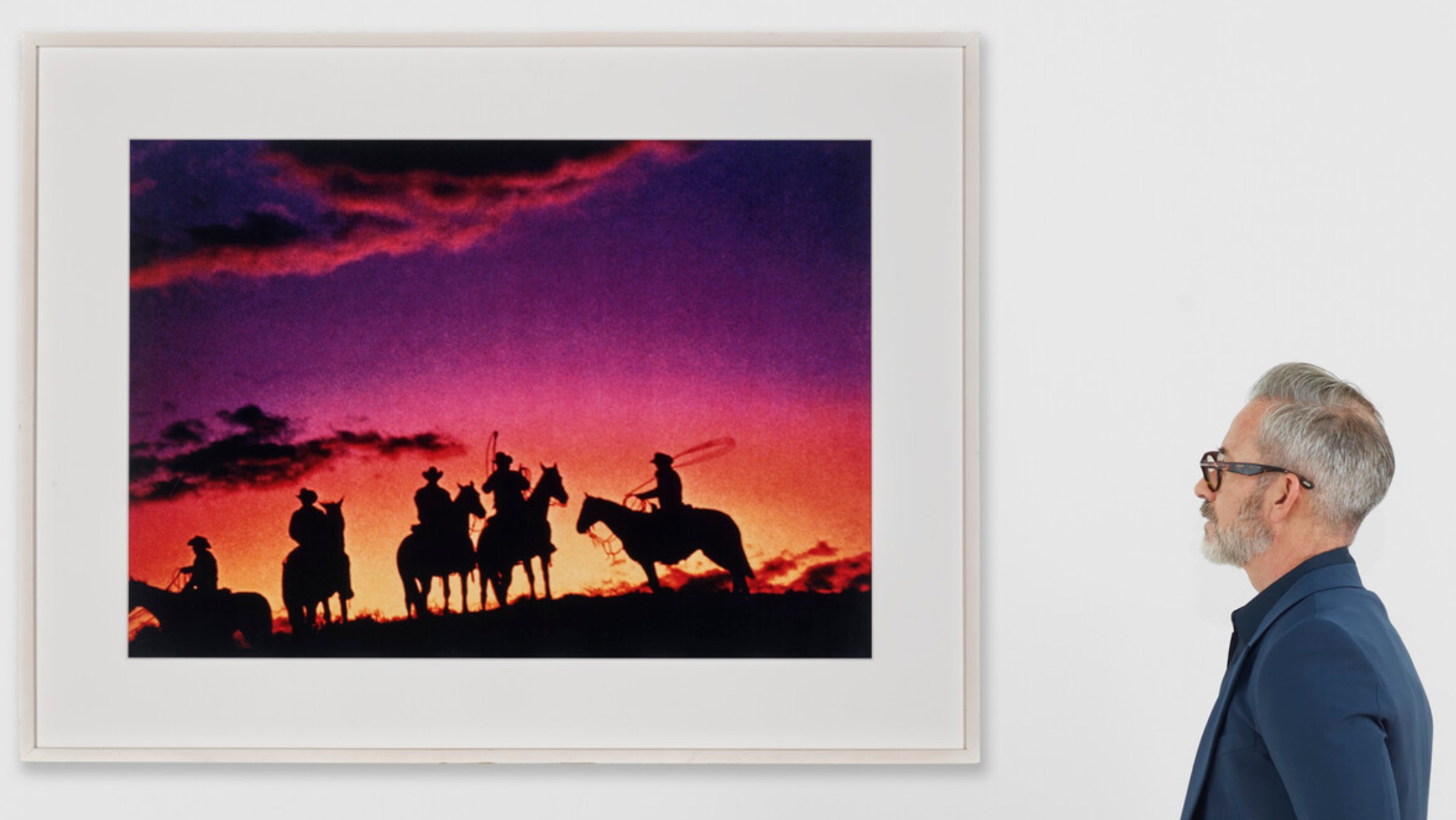
RICHARD PRINCE (B. 1949)
Untitled (Cowboy), 2001
Ektacolor print
28×40 inches (71.1 x 101.6 cm)
Signed, numbered and dated ‘R Prince 2000 1⁄2’ (lower right)
Signed again, numbered again and dated again ‘R Prince 2000 1⁄2’ (on the reverse)
This work is number one from an edition of two plus one artist’s proof
#12. Untitled, 2020
Sotheby’s New-York: 16 May 2025
Estimated: USD 600,000 – 800,000
USD 762,000
HIGH TIMES
Untitled | Contemporary Day Auction | 2025 | Sotheby’s
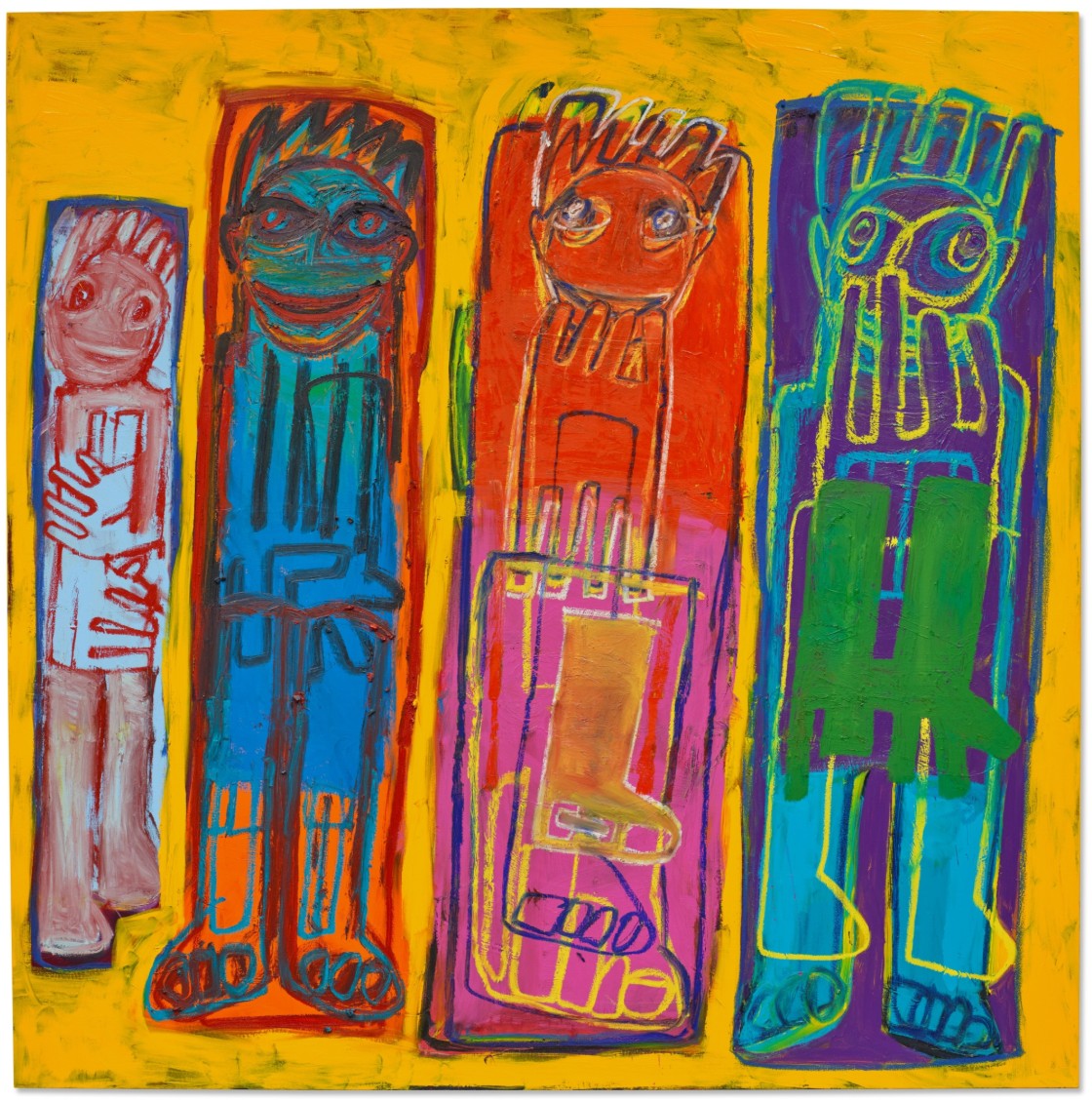
RICHARD PRINCE (b. 1949)
Untitled, 2020
Acrylic and oil stick on canvas
71 3/4 x 71 1/2 inches (182.2 x 181.6 cm)
Signed and dated 2020 (on the reverse)
#13. When I Called, 2000
Sotheby’s New-York: 16 May 2025
Estimated: USD 700,000 – 900,000
USD 571,500
JOKE PAINTING
When I Called | Contemporary Day Auction | 2025 | Sotheby’s
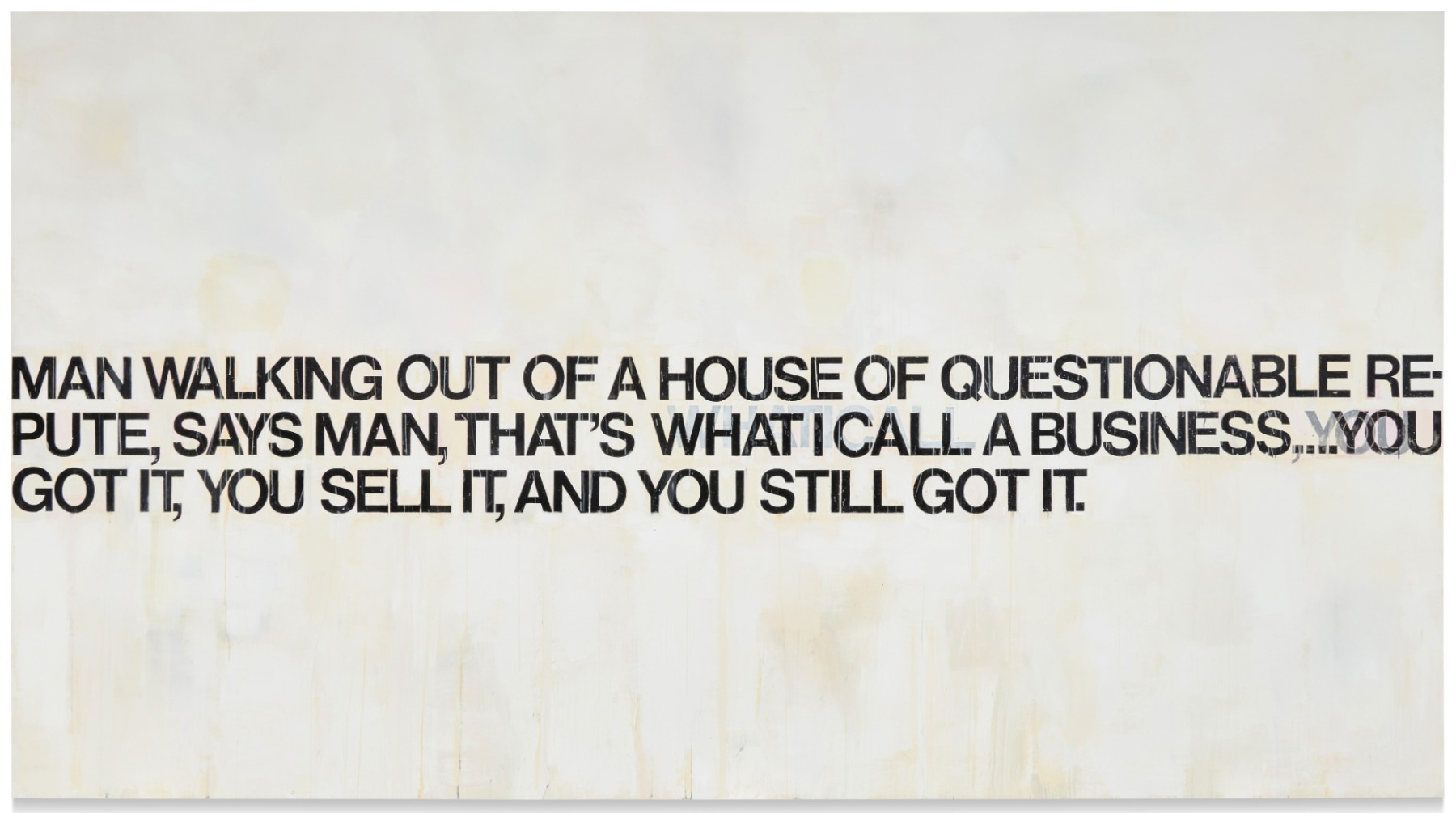
RICHARD PRINCE (b. 1949)
When I Called, 2000
Acrylic on canvas
112 x 203 1/2 inches (284.5 x 517.5 cm)
Signed and dated 2000 (on the overlap)
#14. Mustang Painting #3, 2014-16
Bonhams New-York: 19 November 2025
Estimated: USD 500,000 – 700,000
USD 533,900
Bonhams : RICHARD PRINCE (B. 1949) Mustang Painting
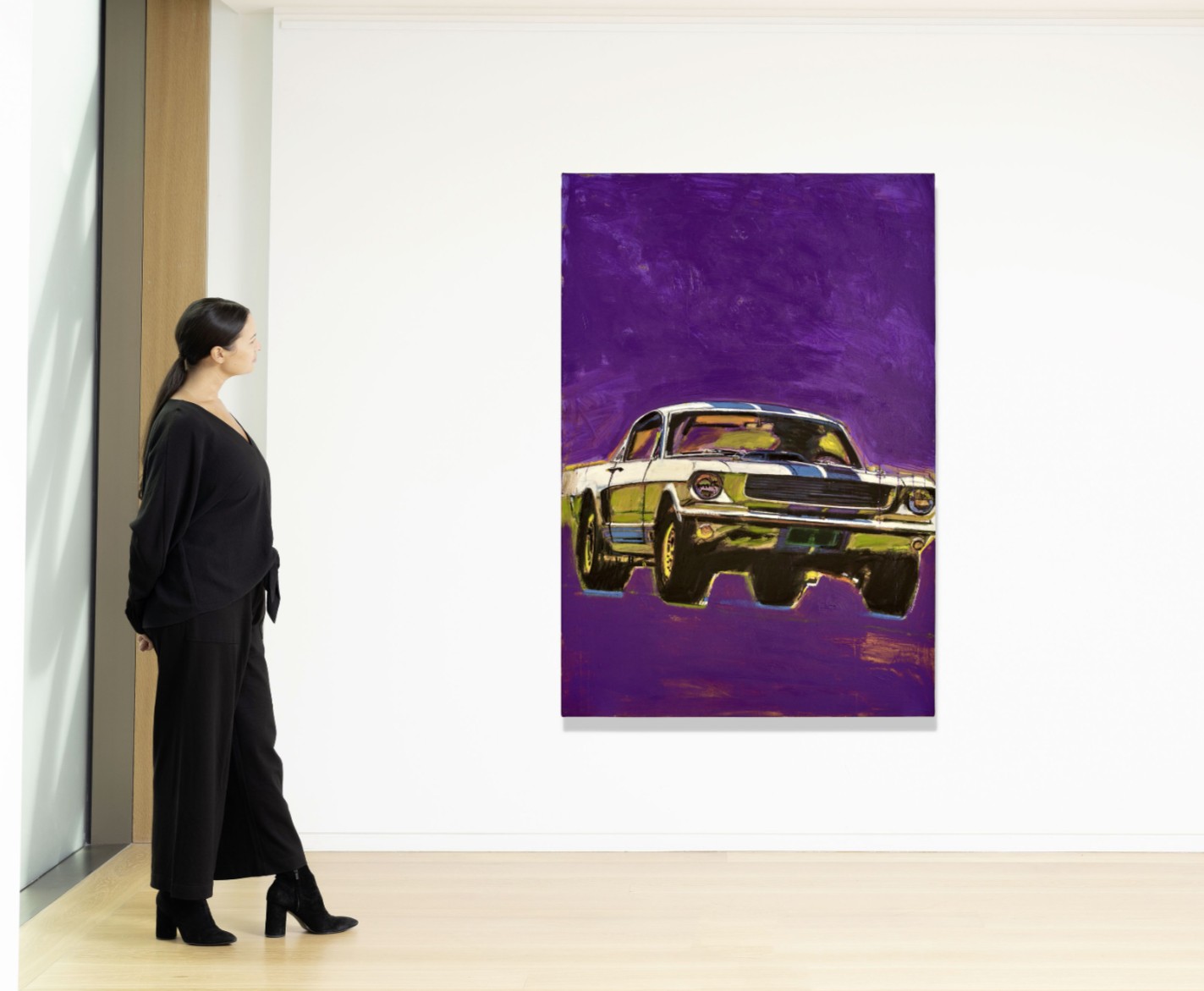
RICHARD PRINCE (B. 1949)
Mustang Painting #3, 2014-16
Inkjet and acrylic on canvas
69 5/8 x 47 7/8 inches (176.8 x 121.6 cm)
Signed, inscribed and dated ‘Prince 2014-2016 #3’ (on the reverse)
#15. Untitled, 2017
Christie’s New-York: 20 November 2025
Estimated: USD 400,000 – 600,000
USD 508,000
HIGH TIMES
RICHARD PRINCE (B. 1949), Untitled | Christie’s
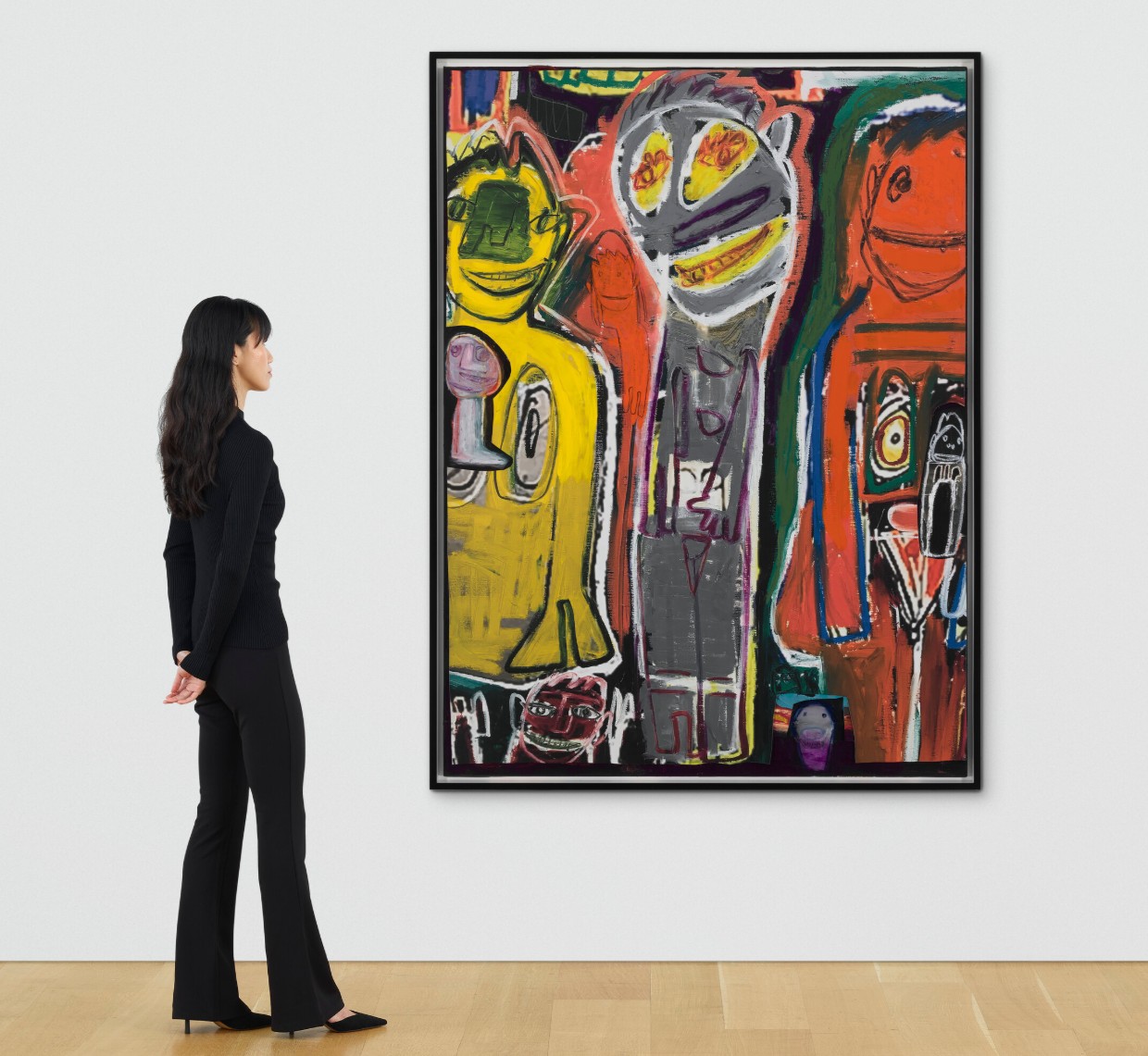
RICHARD PRINCE (B. 1949)
Untitled, 2017
Inkjet, acrylic, collage and oil stick on canvas
74 1/4 x 55 inches (188.6 x 139.7 cm)
USD 500,000
#16. Untitled (Fashion), 1982-84
Christie’s New-York: 27 February 2025
Estimated: USD 350,000 – 450,000
USD 441,000
RICHARD PRINCE (B. 1949), Untitled (Fashion) | Christie’s
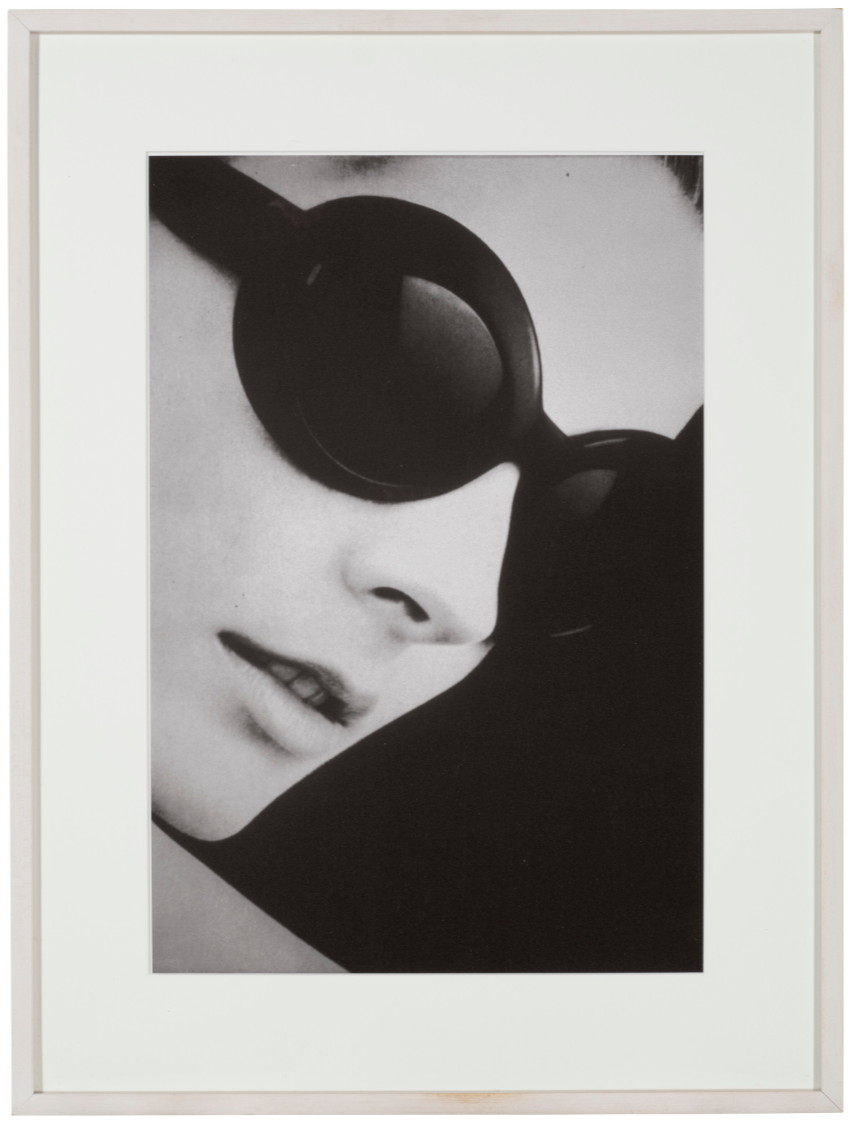
RICHARD PRINCE (B. 1949)
Untitled (Fashion), 1982-84
Archival pigment print
24×20 inches (61 x 50.8 cm)
This work is number one from an edition of two
#17. Untitled (Cowboys), 1997
Sotheby’s New-York: 19 November 2025
Estimated: USD 600,000 – 800,000
USD 381,000
COWBOY PHOTOGRAPH
Untitled (Cowboys) | Contemporary Day Auction | 2025 | Sotheby’s
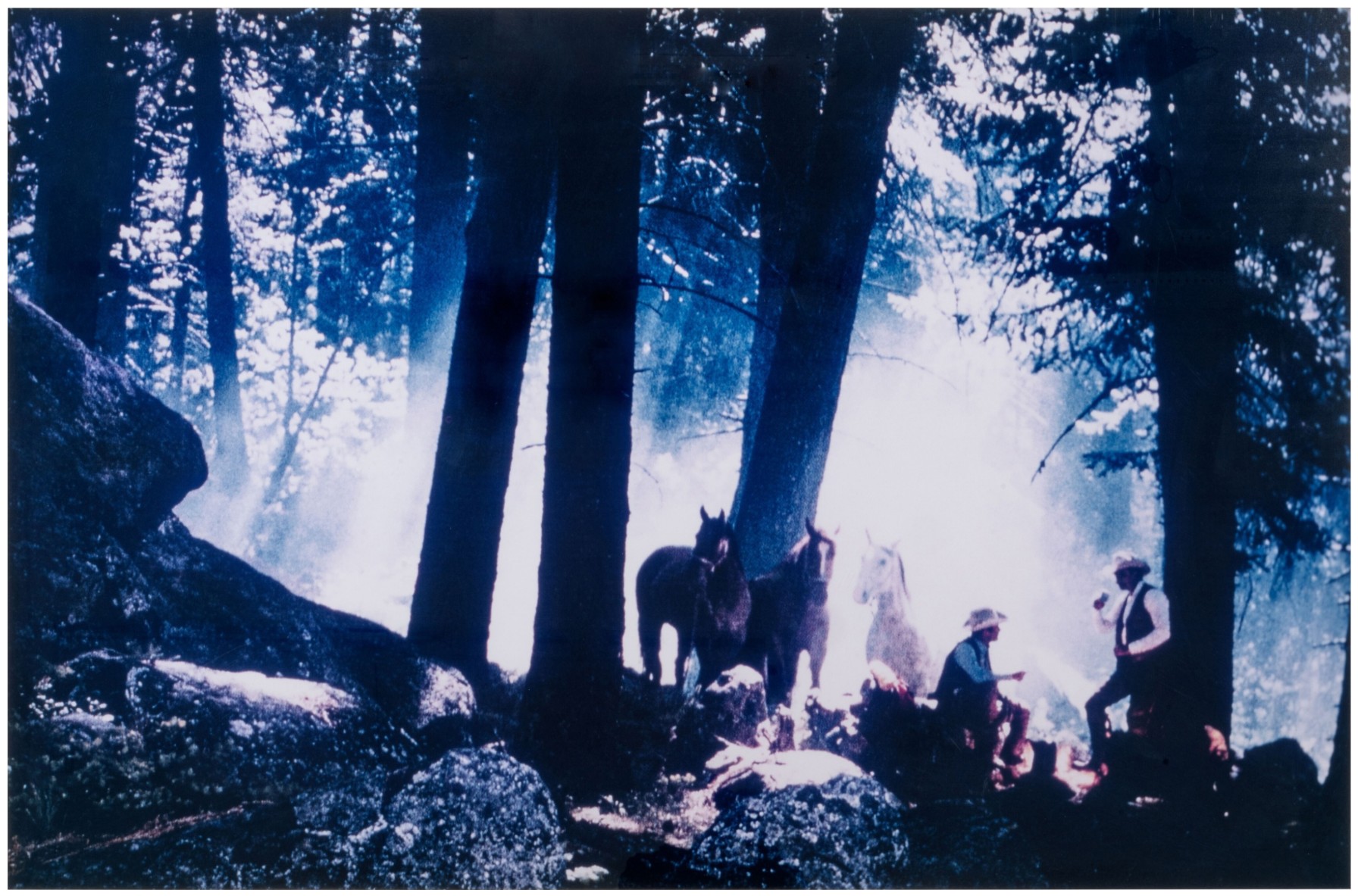
RICHARD PRINCE (b. 1949)
Untitled (Cowboys), 1997
Ektacolor print
48×72 inches (121.9 x 182.9 cm)
Signed, dated 1997 and numbered 2/2 (on a label affixed to the reverse of the frame)
This work is number 2 from an edition of 2
#18. Untitled, 2013
Sotheby’s London: 5 March 2025
Estimated: GBP 200,000 – 300,000
GBP 292,100 / USD 373,560
Untitled | Contemporary Day Auction | 2025 | Sotheby’s
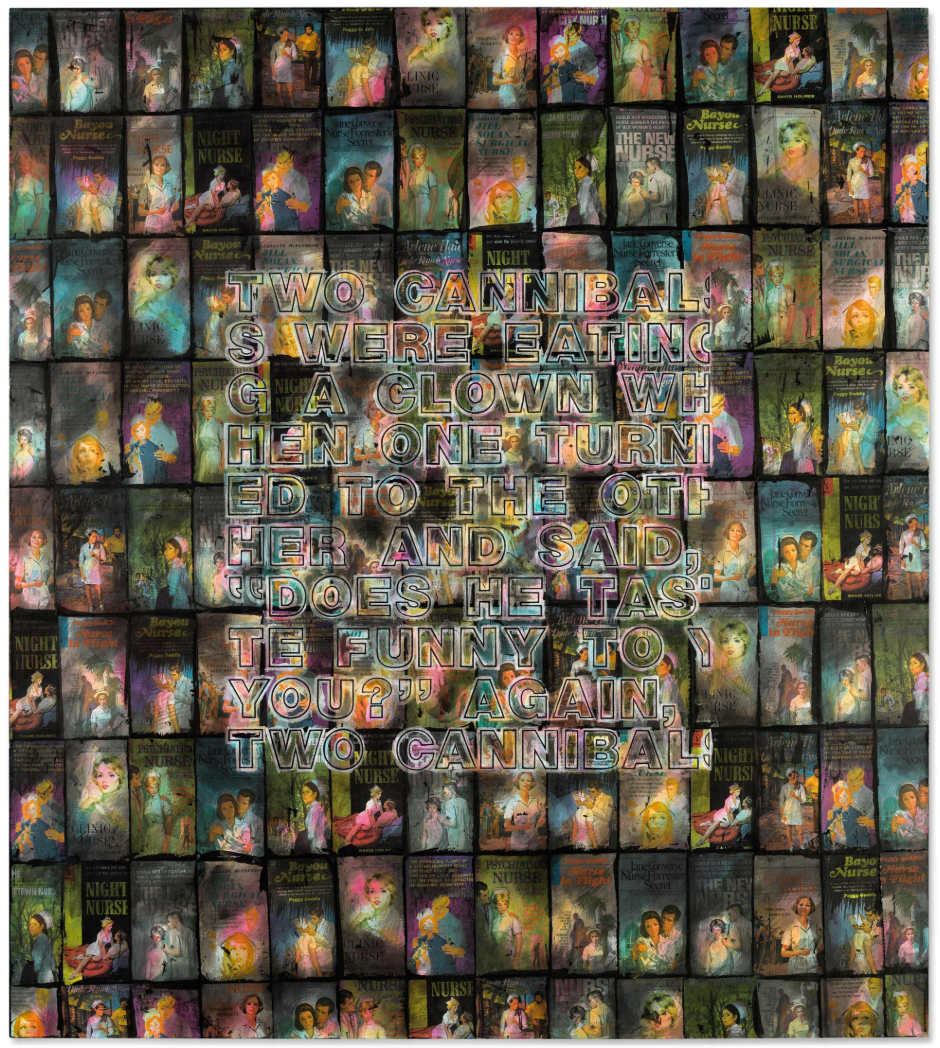
RICHARD PRINCE (b. 1949)
Untitled, 2013
Acrylic and collage on canvas
56×50 inches (142.4 x 127 cm)
Signed and dated 2013 (on the reverse)
#19. My Wife, 2006
Edlis Neeson Collection
Christie’s New-York: 20 November 2025
Estimated: USD 250,000 – 350,000
USD 317,500
JOKE PAINTING
RICHARD PRINCE (B. 1949), My Wife | Christie’s
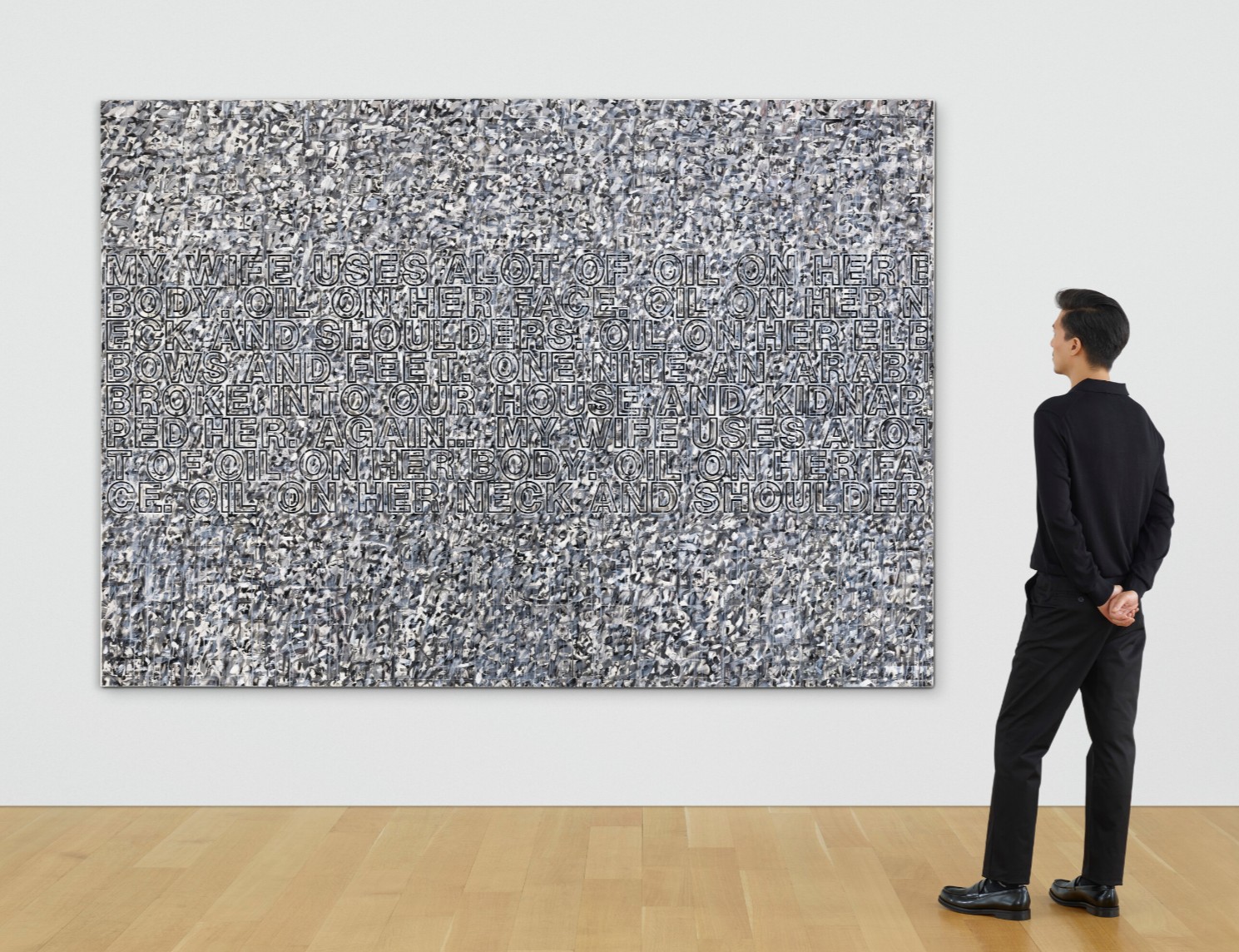
RICHARD PRINCE (B. 1949)
My Wife, 2006
Acrylic and printed paper collage on canvas
86×122 inches (218.5 x 310 cm)
Signed, titled and dated ‘Richard Prince 2006 “My Wife”‘ (on the reverse)
#20. Untitled (Protest Painting), 1994-95
Phillips New-York: 28 February 2025
Estimated: USD 70,000 – 100,000
USD 266,700
Richard Prince – New Now: Modern &… Lot 103 February 2025 | Phillips
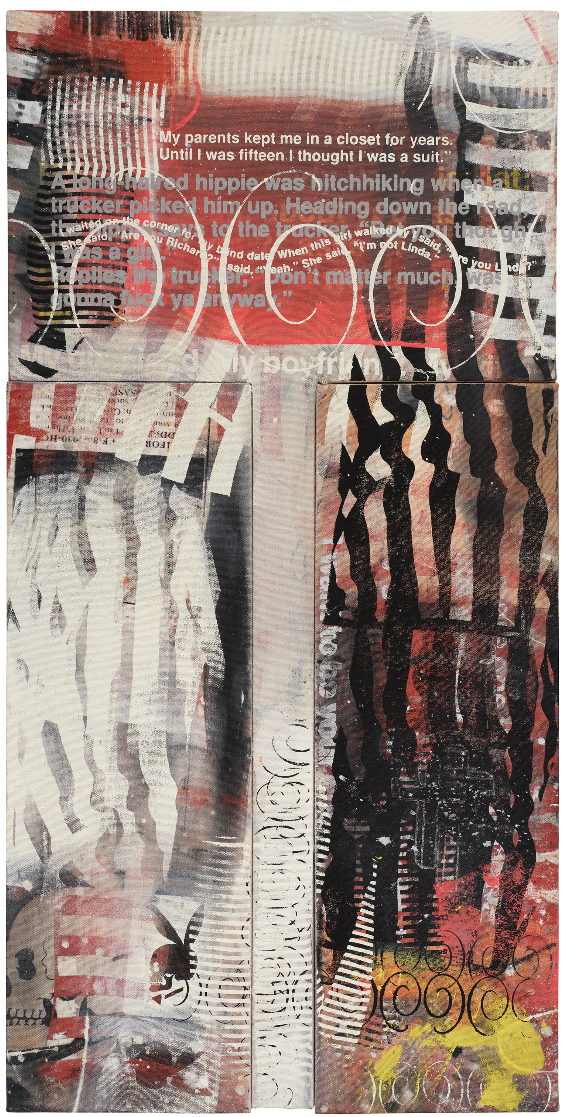
RICHARD PRINCE
Untitled (Protest Painting), 1994-95
Acrylic and silkscreen on canvas
36 x 18 1/8 inches (91.4 x 46 cm)
#21. Untitled, 1997-1998
Phillips New-York: 21 November 2025
Estimated: USD 250,000 – 350,000
USD 258,000
JOKE PAINTING
Richard Prince Modern & Contemporary Art Day Sale, Afternoon Session
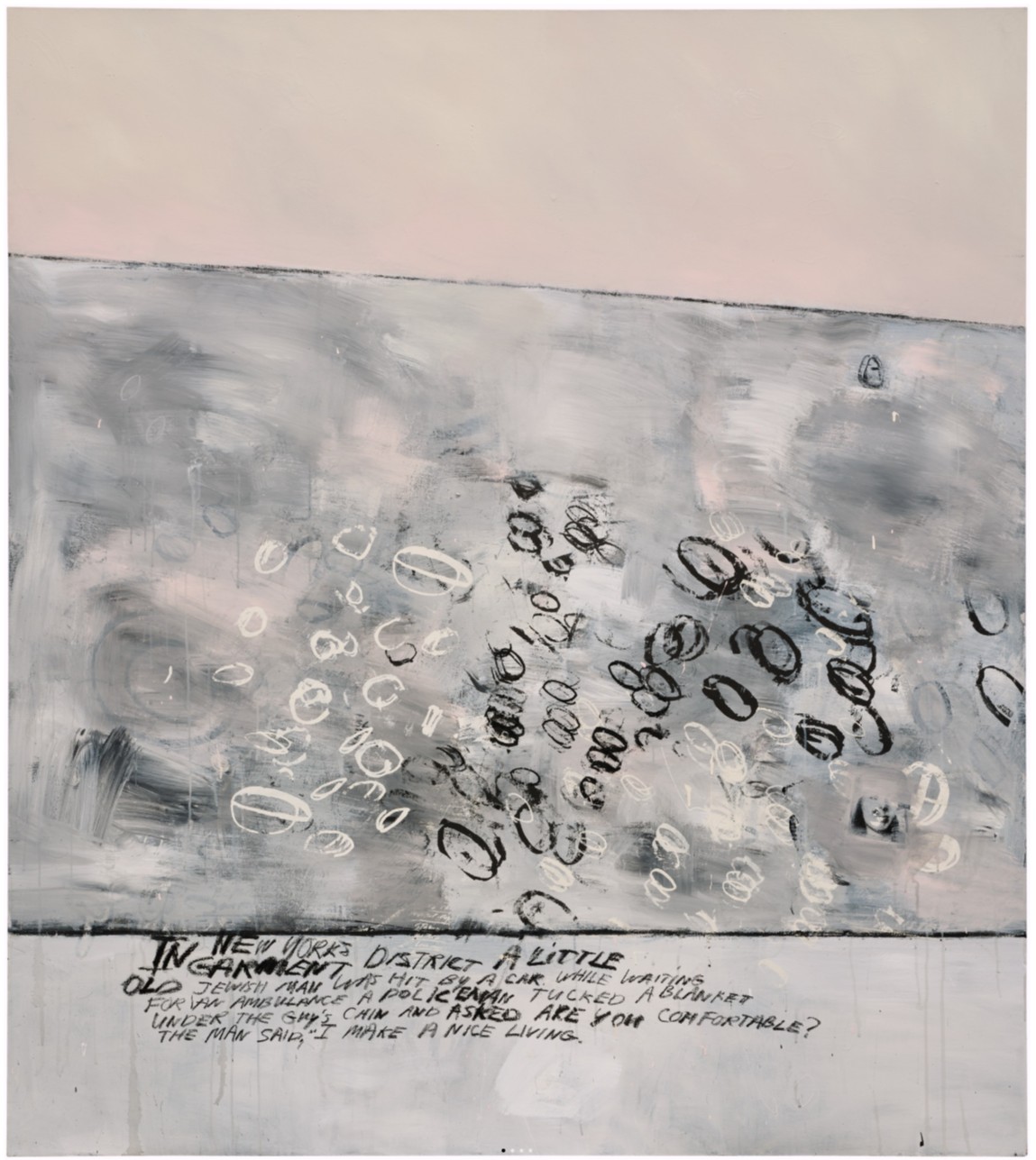
RICHARD PRINCE
Untitled, 1997-1998
Acrylic and silkscreen ink on canvas
72×64 inches (182.9 x 162.6 cm)
Signed and dated “R Prince 1997–98” on the reverse
#22. Untitled (Cowboys 4), 1986
Christie’s New-York: 15 May 2025
Estimated: USD 80,000 – 120,000
USD 226,800
RICHARD PRINCE (B. 1949), Untitled (Cowboys 4) | Christie’s
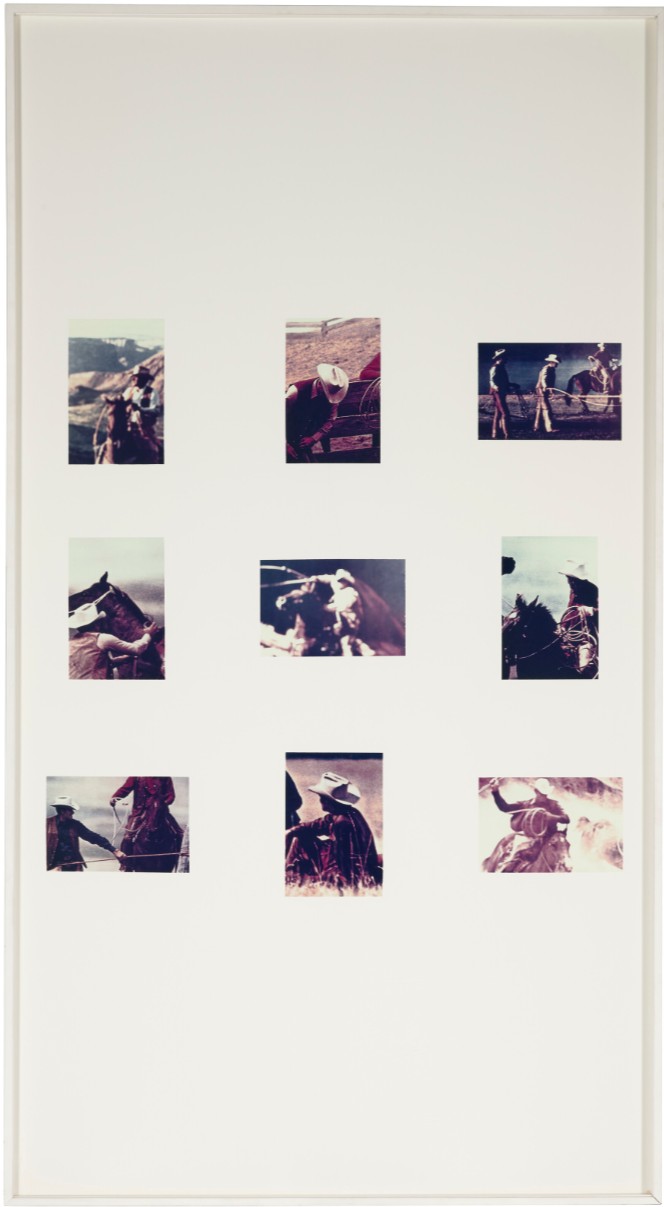
RICHARD PRINCE (B. 1949)
Untitled (Cowboys 4), 1986
Ektacolor print
86×47 inches (218.4 x 119.4 cm)
This work is the artist’s proof from an edition of two plus one artist’s proof
#23. The song 2120 South Michigan Ave., 1989
Phillips New-York: 16 July 2025
Estimated: USD 200,000 – 300,000
USD 215,900
Richard Prince Modern & Contemporary Art
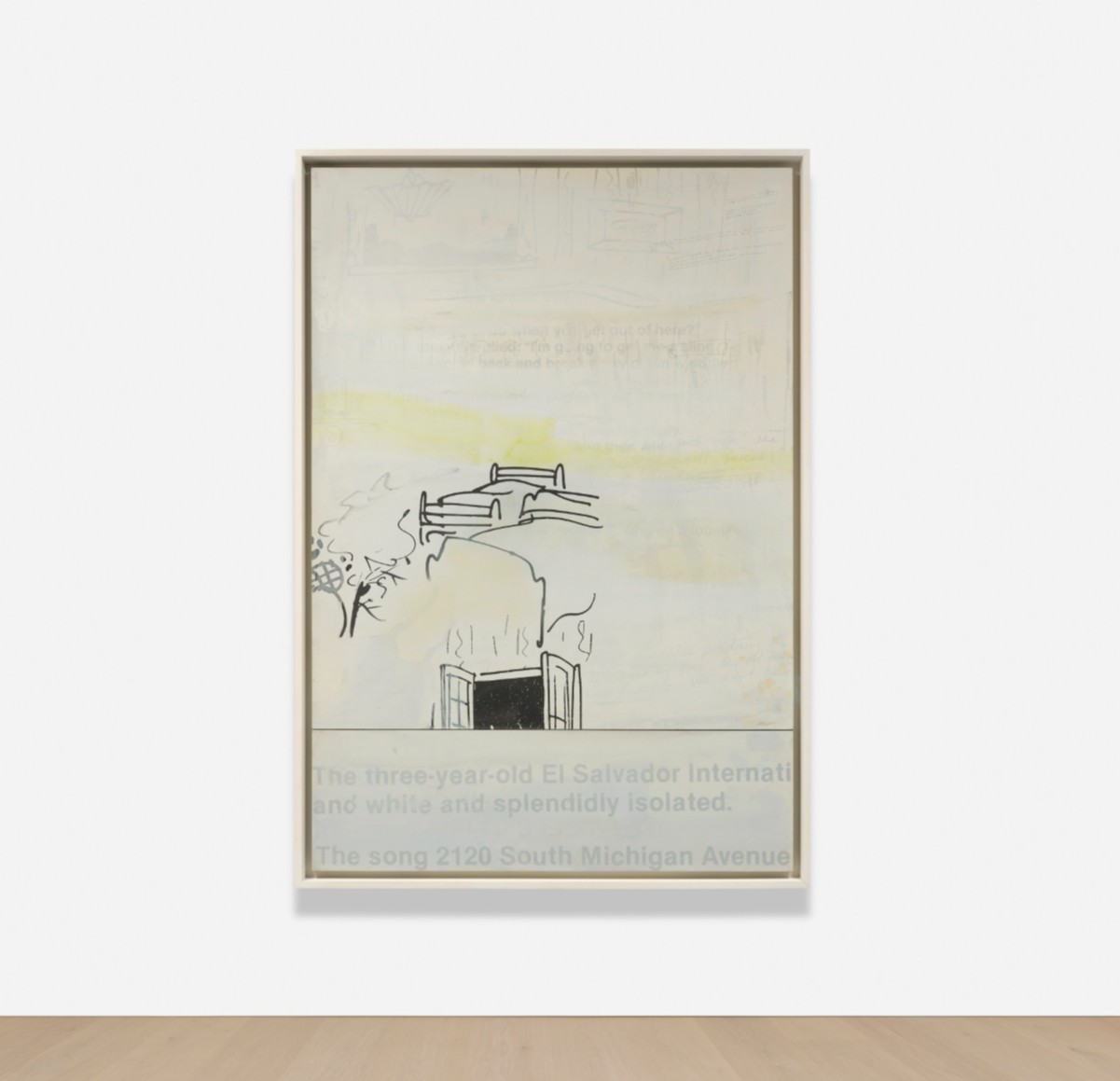
Acrylic, silkscreen ink and graphite on canvas, in 2 parts
#24. Untitled (The Same Man Looking in Different Directions), 1978
Christie’s New-York: 15 May 2025
Estimated: USD 150,000 – 200,000
USD 189,000
RICHARD PRINCE (B. 1949), Untitled (The Same Man Looking in Different Directions) | Christie’s
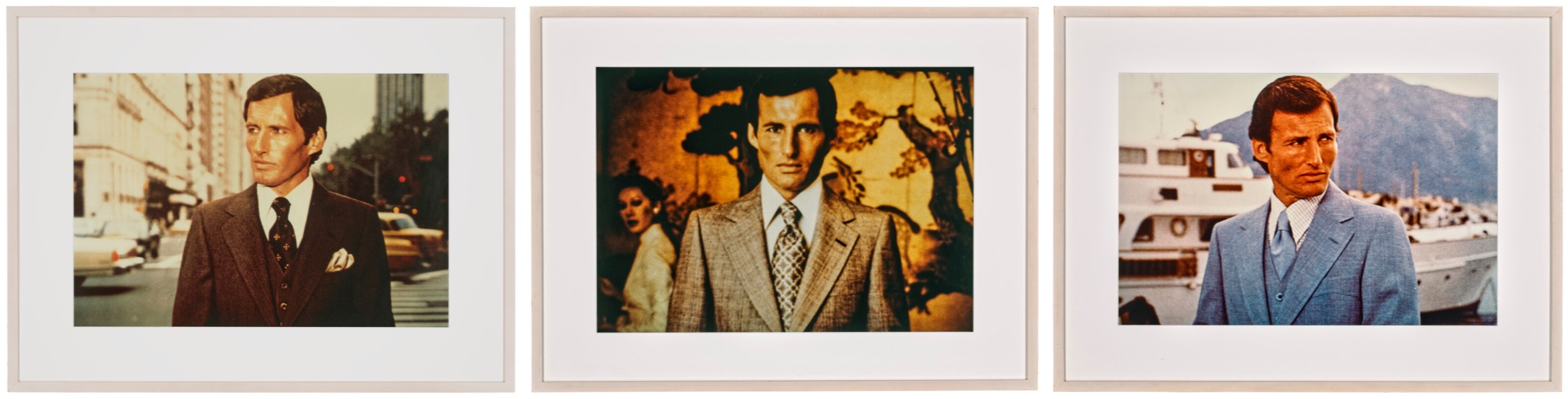
RICHARD PRINCE (B. 1949)
Untitled (The Same Man Looking in Different Directions), 1978
Ektacolor photographs, in three parts
Each: 20×24 inches (50.8 x 61 cm)
Signed, numbered and dated ‘Richard Prince 1978 6⁄10’ (on the reverse of the third element)
This work is number six from an edition of ten plus two artist’s proofs
#25. Adultery Joke Painting, 1988-1990
Phillips New-York: 14 May 2025
Estimated: USD 80,000 – 120,000
USD 127,000
Richard Prince Modern & Contemporary Art Day Sale, Afternoon Session
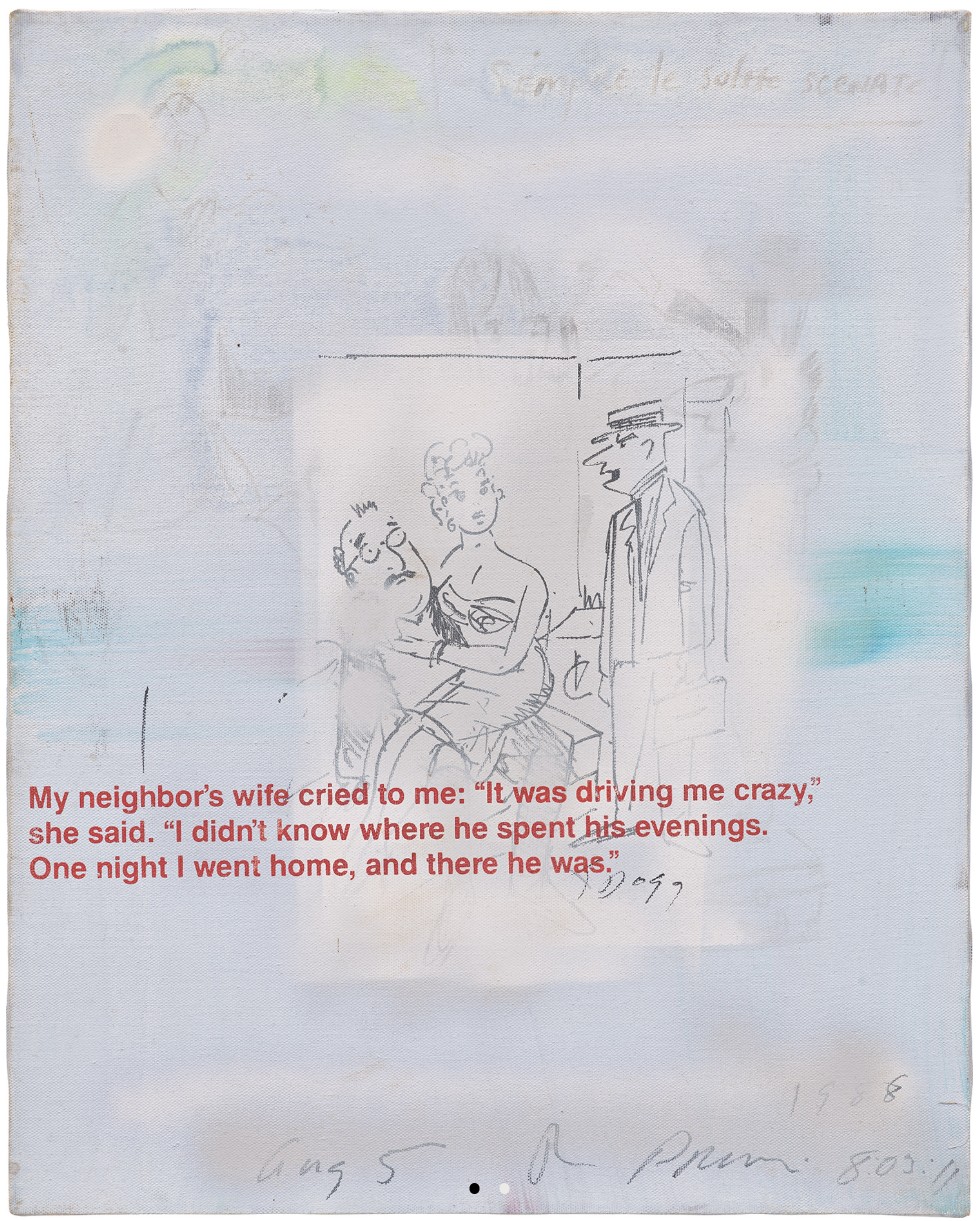
Signed and dated “R Prince 1990” on the reverse
#26. Are You Kidding?, 1988
Estimated: USD 150,000 – 200,000
USD 103,200
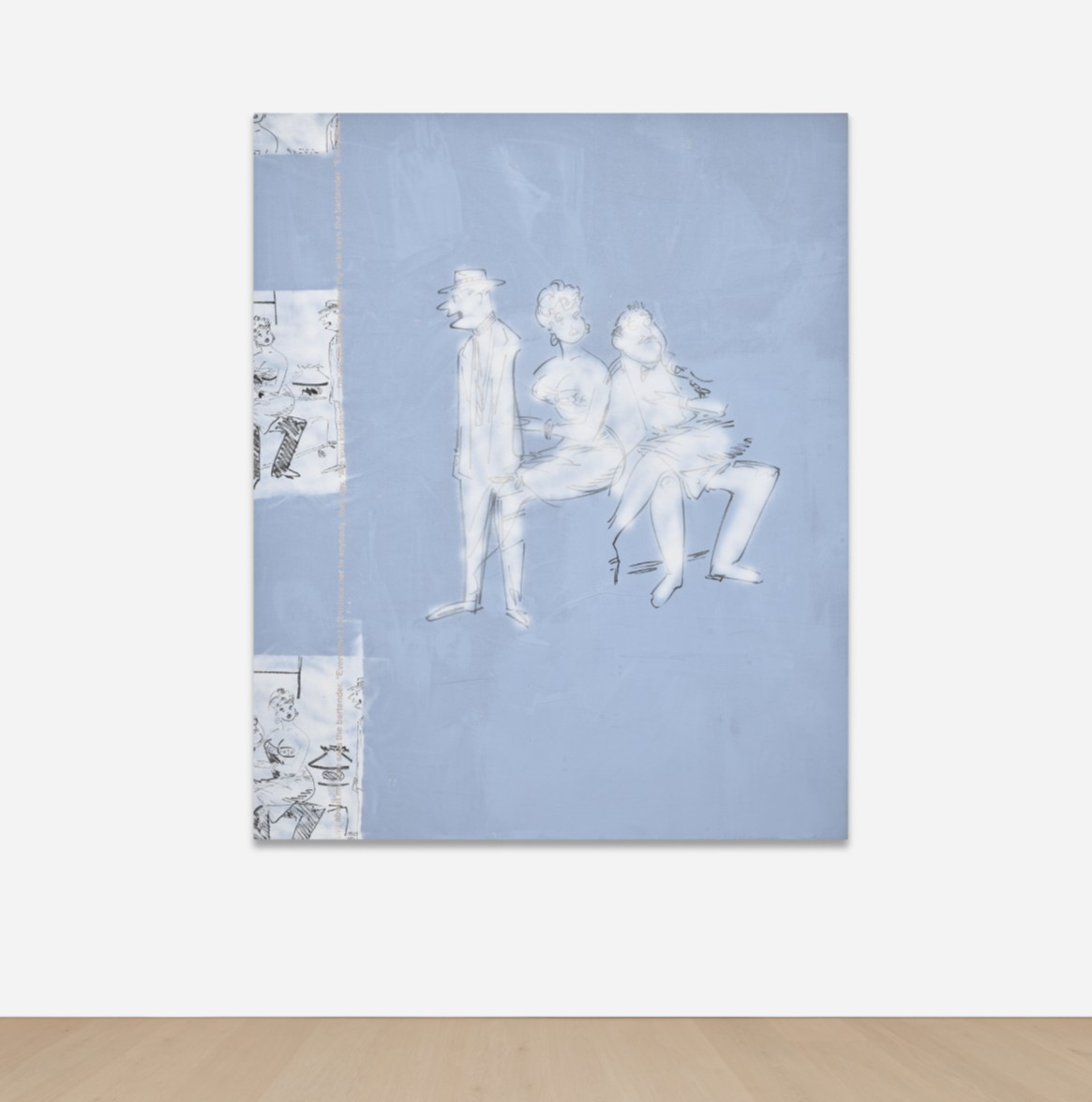
Are You Kidding?, 1988
Acrylic and silkscreen ink on canvas
“Jokes and cartoons are part of any mainstream magazine. Especially magazines like the New Yorker or Playboy. They’re right up there with the editorial and advertisements and table of contents and letters to the editors. They’re part of the layout, part of the “sights” and “gags.” Sometimes they’re political, sometimes they just make fun of everyday life. Once in a while they drive people to protest.”
#27. Untitled (Question), 2005
Property from a Distinguished American Collection
Sotheby’s New-York: 19 November 2025
Estimated: USD 100,000 – 150,000
USD 101,600
Untitled (Question) | Contemporary Day Auction | 2025 | Sotheby’s
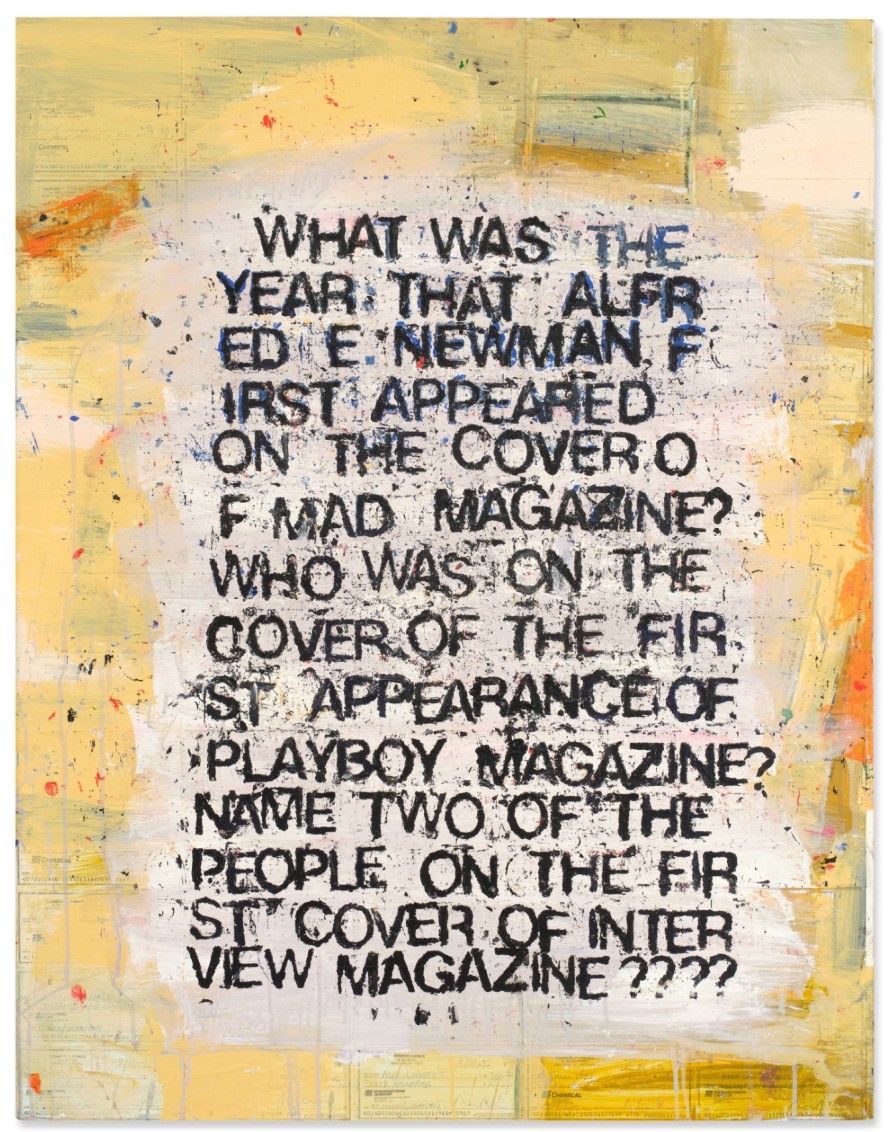
RICHARD PRINCE (b. 1949)
Untitled (Question), 2005
Acrylic and checks on Gatorboard
38 1/4 x 30 inches (97.2 x 76.2 cm)
Signed and dated 2005 (on the reverse)
USD 100,000
#28. Untitled (with de Kooning), 2006
Phillips New-York: 28 February 2025
Estimated: USD 70,000 – 100,000
USD 95,250
Richard Prince – New Now: Modern & … Lot 16 February 2025 | Phillips
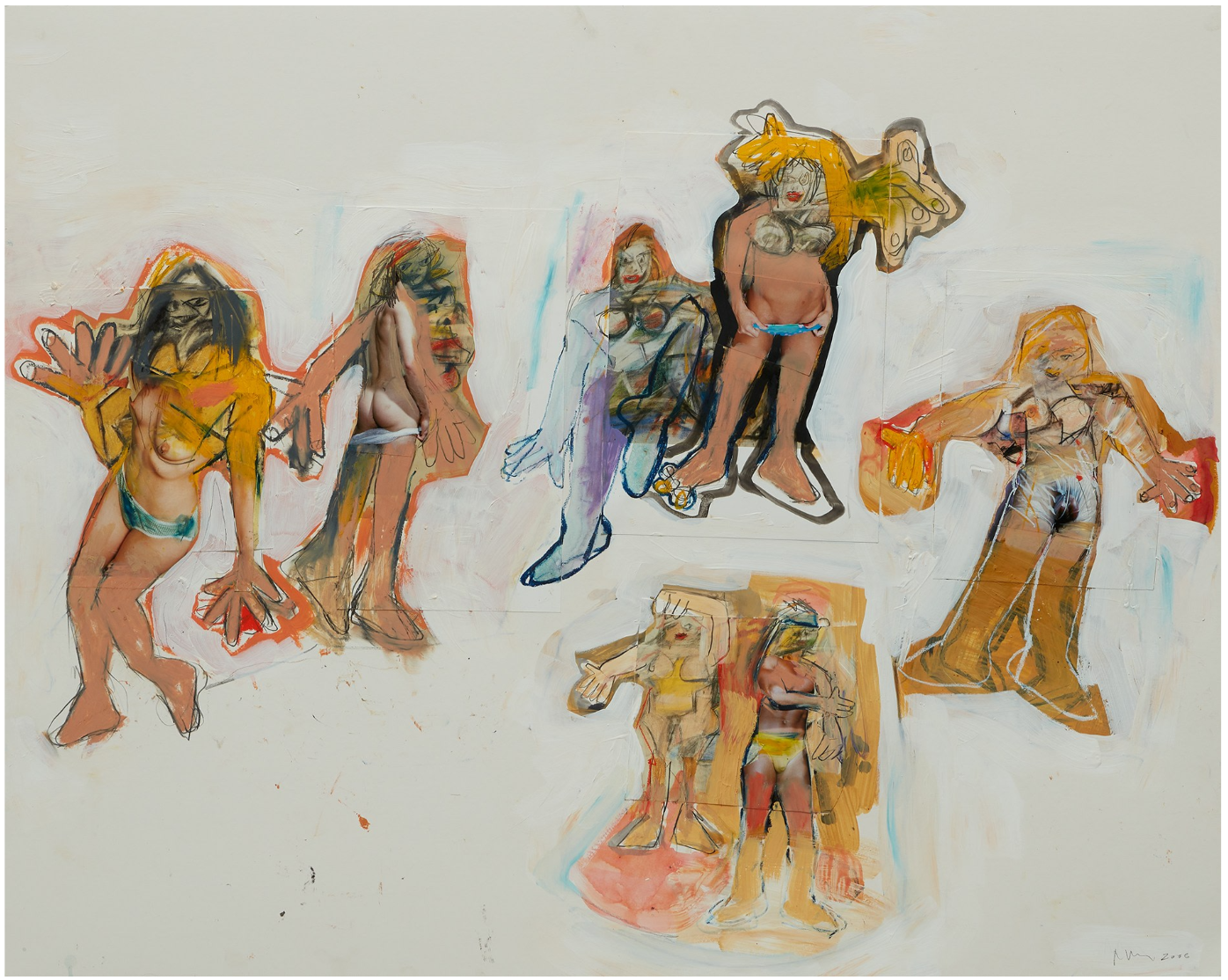
RICHARD PRINCE
Untitled (with de Kooning), 2006
Acrylic and crayon on Ektacolor photograph mounted to board
32 x 40 1/8 inches (81.3 x 101.9 cm)
Signed and dated “Richard Prince 2006” lower right
#29. What a Surprise, 1984
Edlis Neeson Collection
Christie’s online: 16 December 2025
Estimated: USD 8,000 – 12,000
USD 69,850
WORK ON PAPER
RICHARD PRINCE (B. 1949), What a Surprise | Christie’s
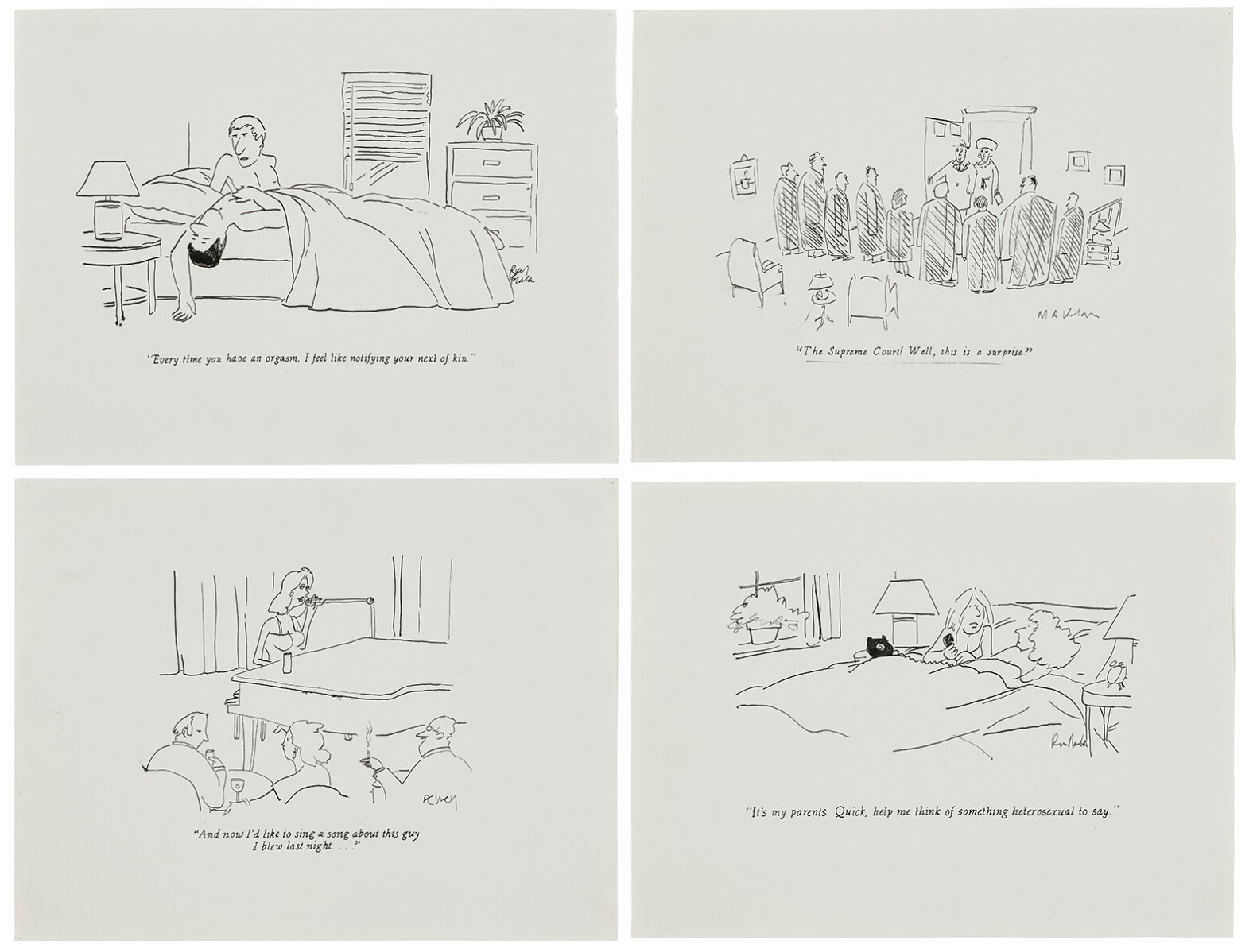
RICHARD PRINCE (B. 1949)
What a Surprise, 1984
Ink on paper, in four parts
Each: 12×16 inches (30.5 x 40.6 cm)
Signed ‘Richard Prince’ (center right of each)
#30. Untitled (Protest Painting), 1989-1992
Phillips London: 10 April 2025
Estimated: GBP 40,000 – 60,000
GBP 50,800 / USD 65,115
Richard Prince New Now: Modern & Contemporary Art
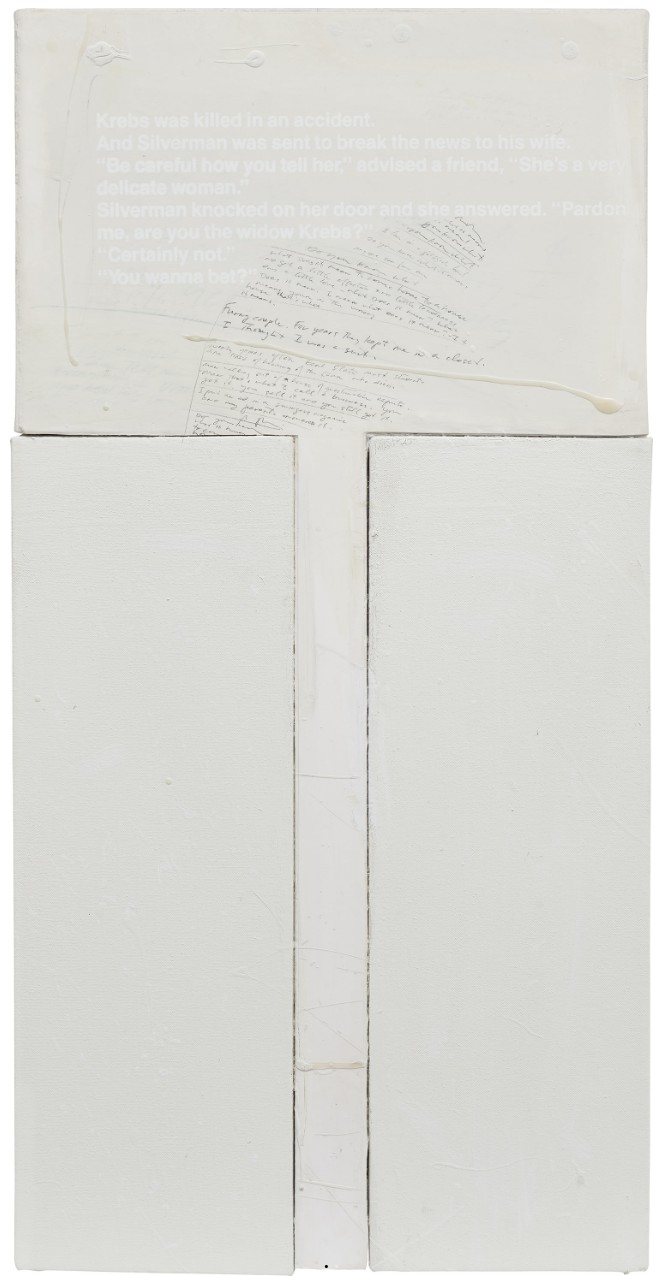
#31. Untitled (Check Painting #3), 2004
Sotheby’s New-York: 16 May 2025
Estimated: USD 60,000 – 80,000
USD 60,960
Untitled (Check Painting #3) | Contemporary Day Auction | 2025 | Sotheby’s
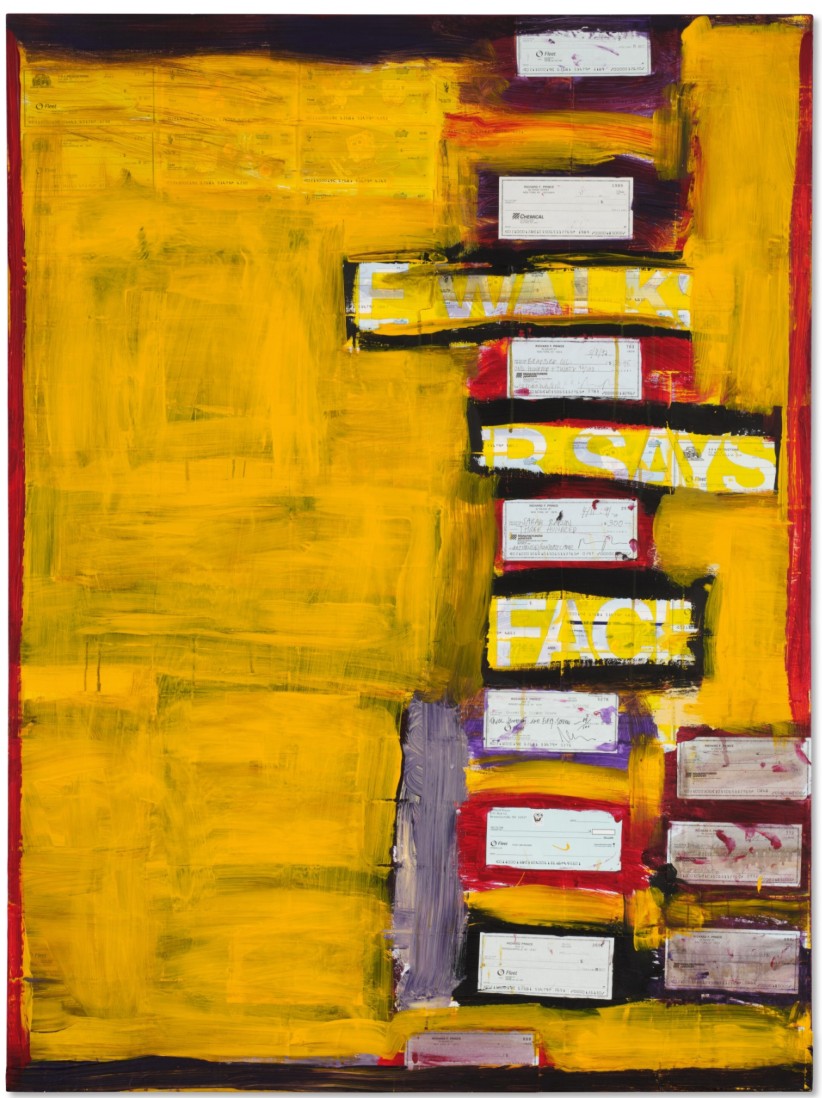
RICHARD PRINCE (b. 1949)
Untitled (Check Painting #3), 2004
Acrylic and paper collage on canvas
48×36 inches (121.9 x 91.4 cm)
Signed, titled and dated 2004 (on the reverse)
#32. Untitled (Joke), 1987
Christie’s New-York: 27 February 2025
Estimated: USD 20,000 – 30,000
USD 52,920
RICHARD PRINCE (B. 1949), Untitled (Joke) | Christie’s
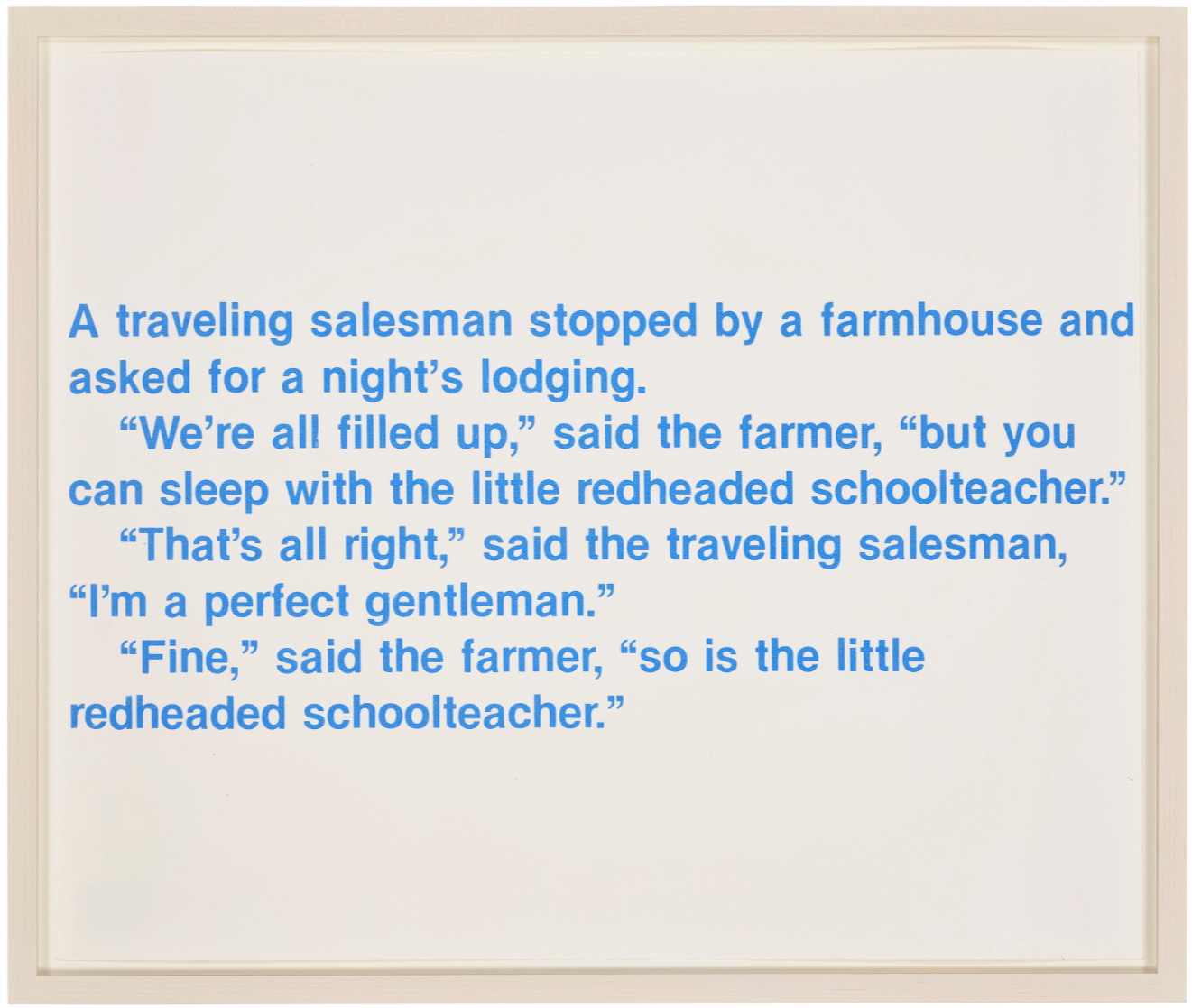
RICHARD PRINCE (B. 1949)
Untitled (Joke), 1987
Silkscreen ink on photographic paper
20×24 inches (50.8 x 61 cm)
Signed, numbered and dated ‘Richard Prince 1987 1⁄2’ (on the reverse)
This work is number one from an edition of two
#33. Untitled (check painting) #6, 2004
Sotheby’s New-York: 28 February 2025
Estimated: USD 40,000 – 60,000
USD 40,640
Untitled (check painting) #6 | Contemporary Discoveries | 2025 | Sotheby’s
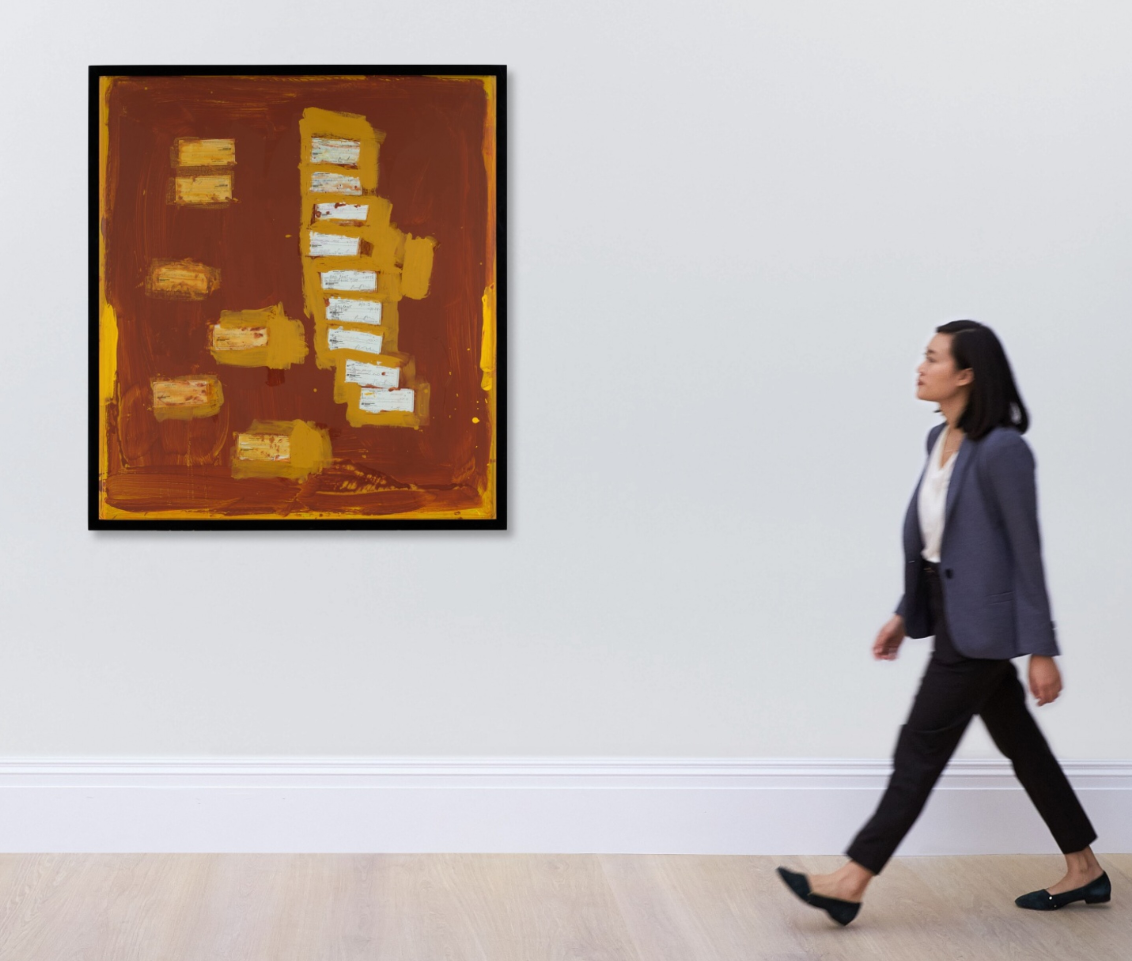
RICHARD PRINCE (b. 1949)
Untitled (check painting) #6, 2004
Acrylic and paper collage on screenprinting frame
49 7/8 x 44 7/8 inches (126.7 x 114 cm)
#34. Untitled (Portrait), 2015
Christie’s New-York: 15 May 2025
Estimated: USD 40,000 – 60,000
USD 40,320
RICHARD PRINCE (B. 1949), Untitled (Portrait) | Christie’s
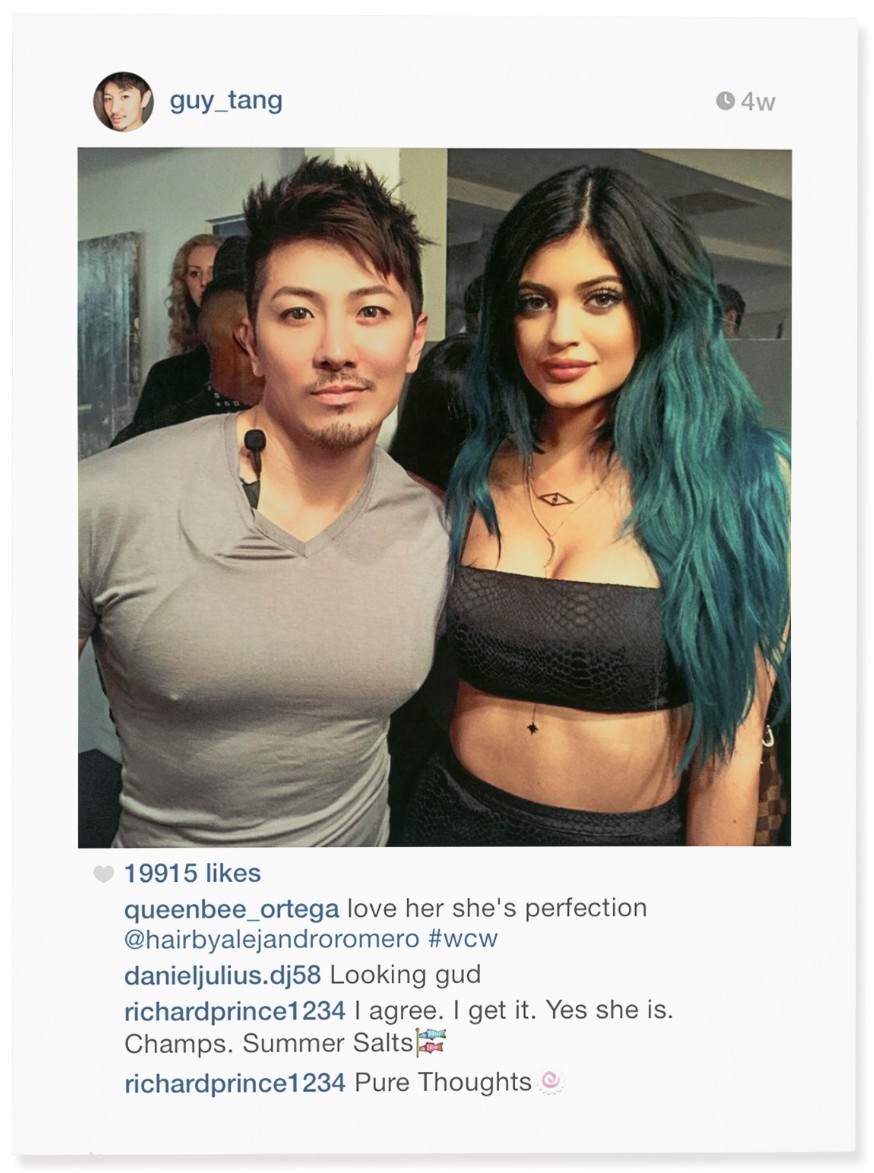
RICHARD PRINCE (B. 1949)
Untitled (Portrait), 2015
Inkjet on canvas
65 3/4 x 48 3/4 inches (167×123 cm)
Signed and dated ‘Richard Prince 2015’ (on the overlap)
#35. Untitled (can painting), 2011
Phillips New-York: 21 November 2025
Estimated: USD 20,000 – 30,000
USD 36,120
WORK ON PAPER
Richard Prince Modern & Contemporary Art Day Sale, Afternoon Session
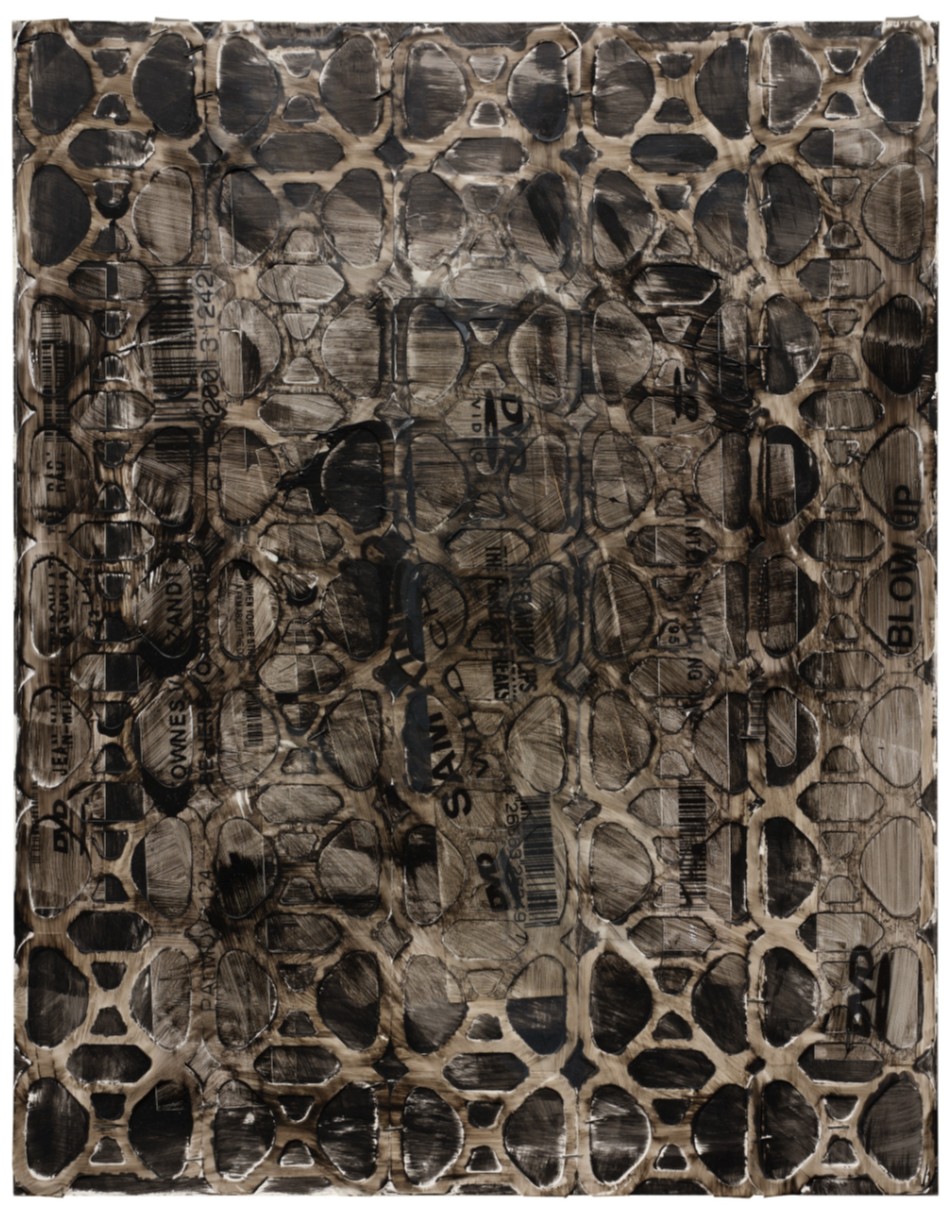
RICHARD PRINCE
Untitled (can painting), 2011
Stickers, plastic, staples, glue and acrylic on mounted paper
25 1/2 x 20 inches (64.8 x 50.8 cm)
Signed and dated “Richard Prince 2011” on the reverse of the backing board
#36. Untitled (Portrait), 2014
Phillips New-York: 11 March 2025
Estimated: USD 30,000 – 50,000
USD 35,560
Richard Prince – Modern & Contempor… Lot 20 February 2025 | Phillips
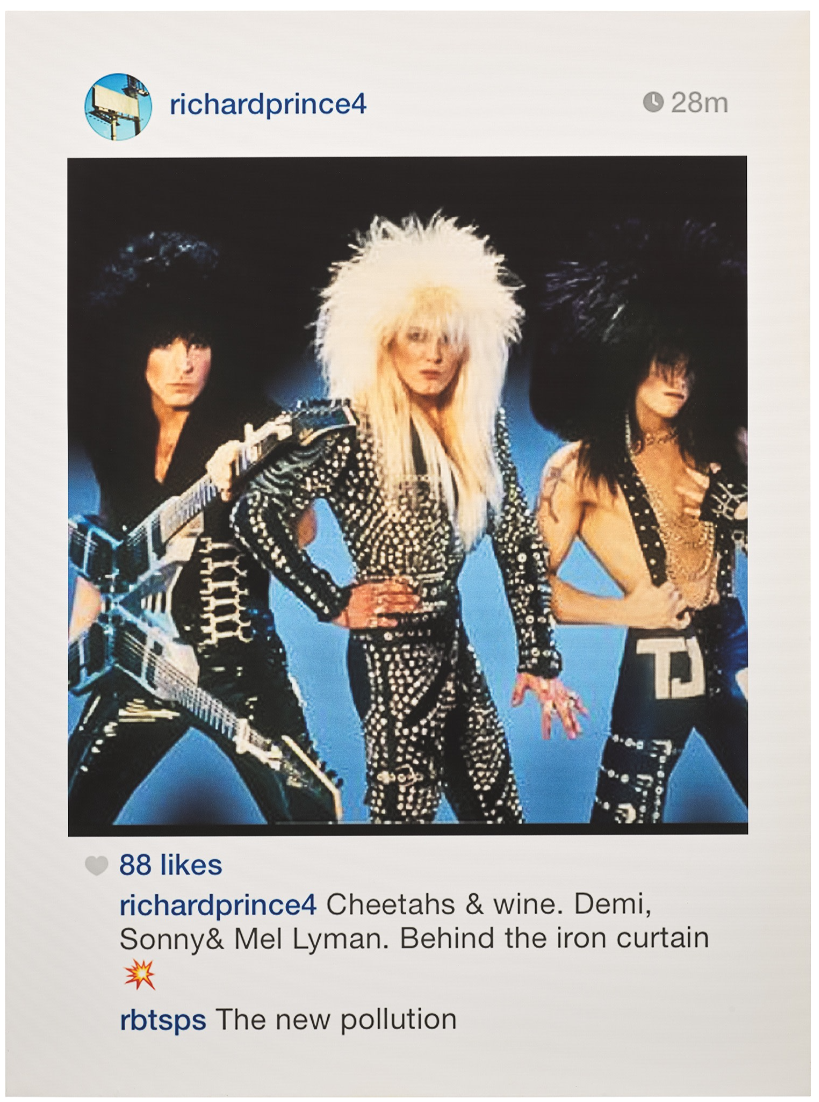
RICHARD PRINCE
Untitled (Portrait), 2014
Inkjet on canvas
65 7/8 x 48 3/4 inches (167.3 x 123.8 cm)
Signed and dated “R Prince 2014” and stamped by the studio on the overlap
#37. Untitled (Portrait RPS 5071), 2014
Christie’s online: 16 December 2025
Estimated: USD 30,000 – 50,000
USD 33,020
RICHARD PRINCE (B. 1949), Untitled (Portrait RPS 5071) | Christie’s
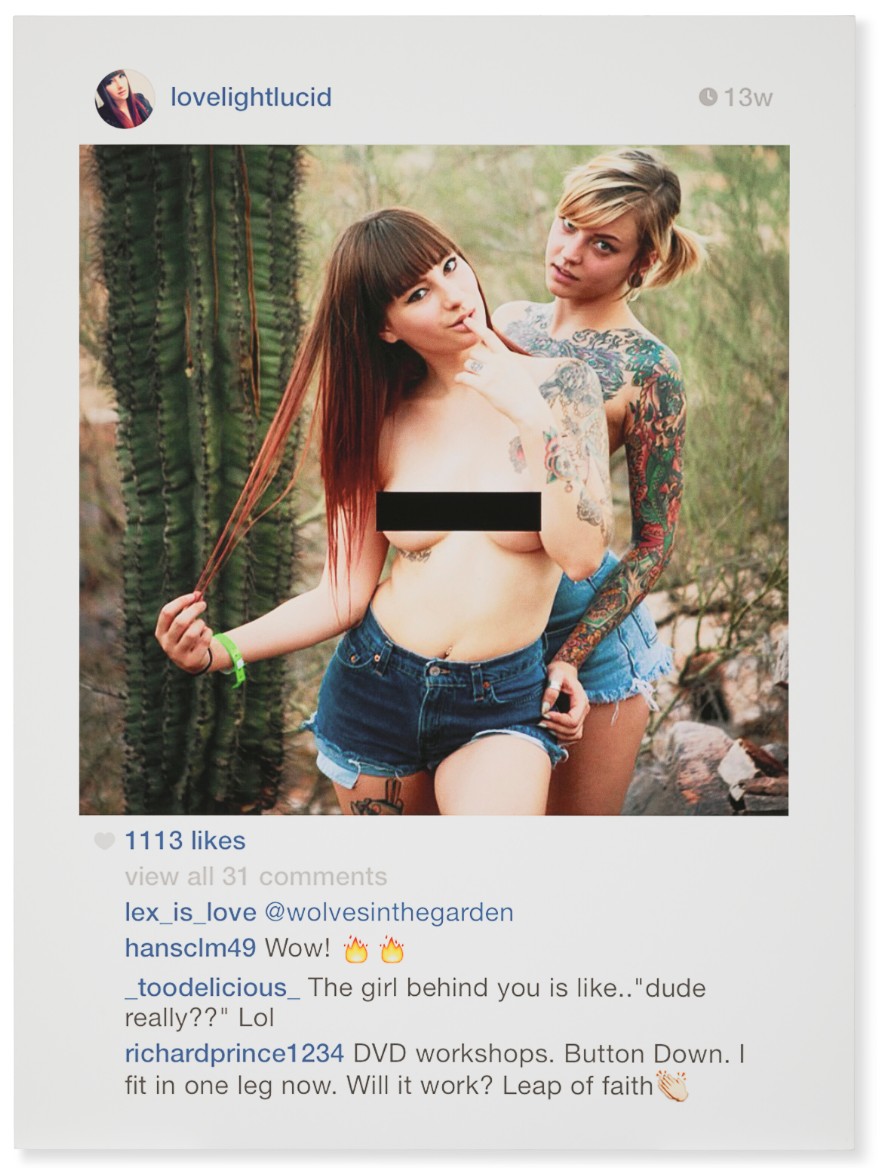
RICHARD PRINCE (B. 1949)
Untitled (Portrait RPS 5071), 2014
Inkjet on canvas
65 3/4 x 48 3/4 inches (167 x 123.8 cm)
Signed and dated ‘Richard Prince 2014’ (on the overlap)
#38. Untitled, 1998
Sotheby’s New-York: 1 October 2025
Estimated: USD 30,000 – 40,000
USD 27,940
Untitled | Contemporary Discoveries | 2025 | Sotheby’s
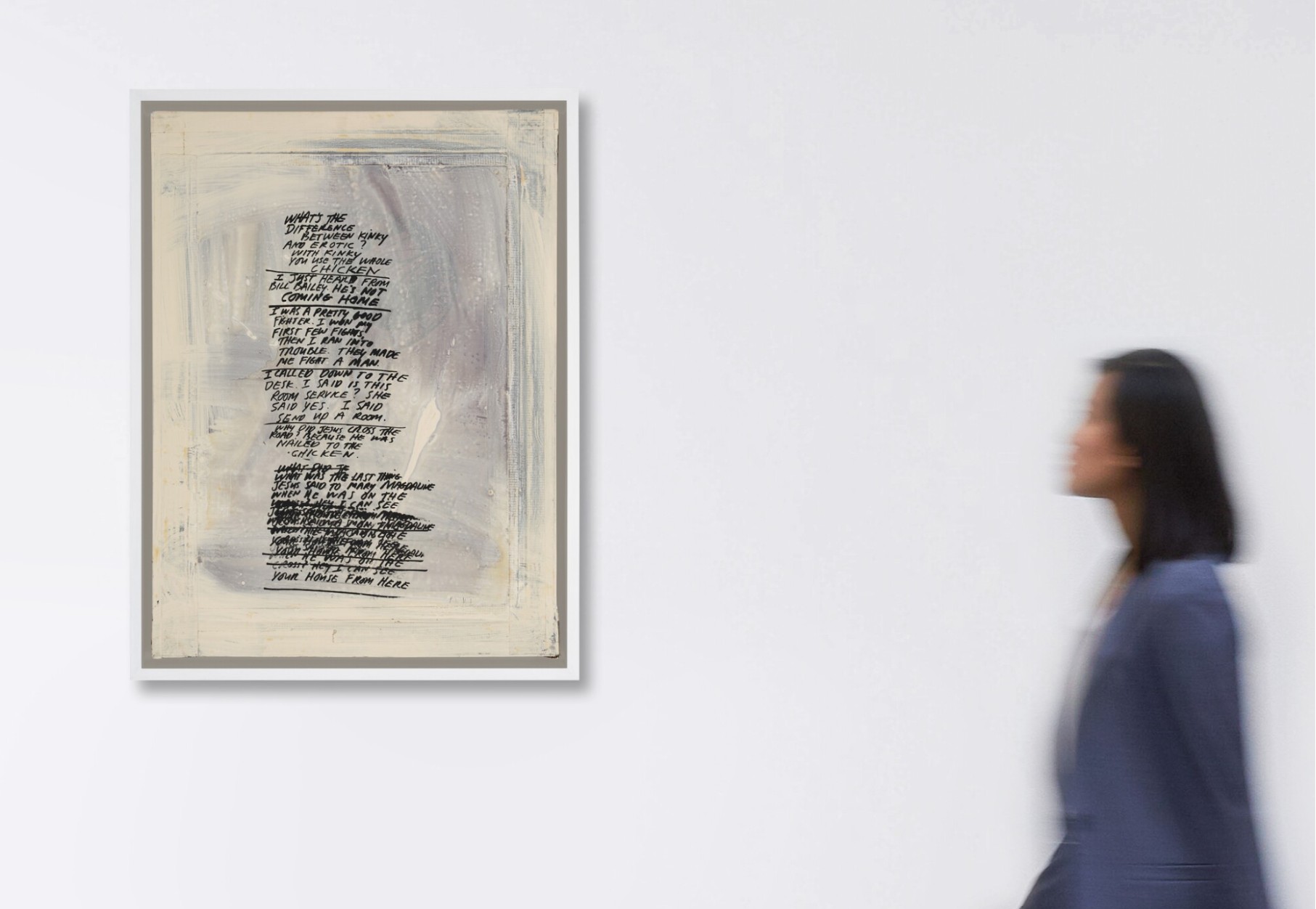
RICHARD PRINCE (b. 1949)
Untitled, 1998
Acrylic, duct tape and silkscreen on screen printing frame
31 1/8 x 23 1/4 inches (79×59 cm)
Signed (on the overlap)
#39. Untitled (Publicity, Bob Marley), 2012
Phillips New-York: 2 April 2025
Estimated: USD 25,000 – 35,000
USD 21,590
PHOTOGRAPH
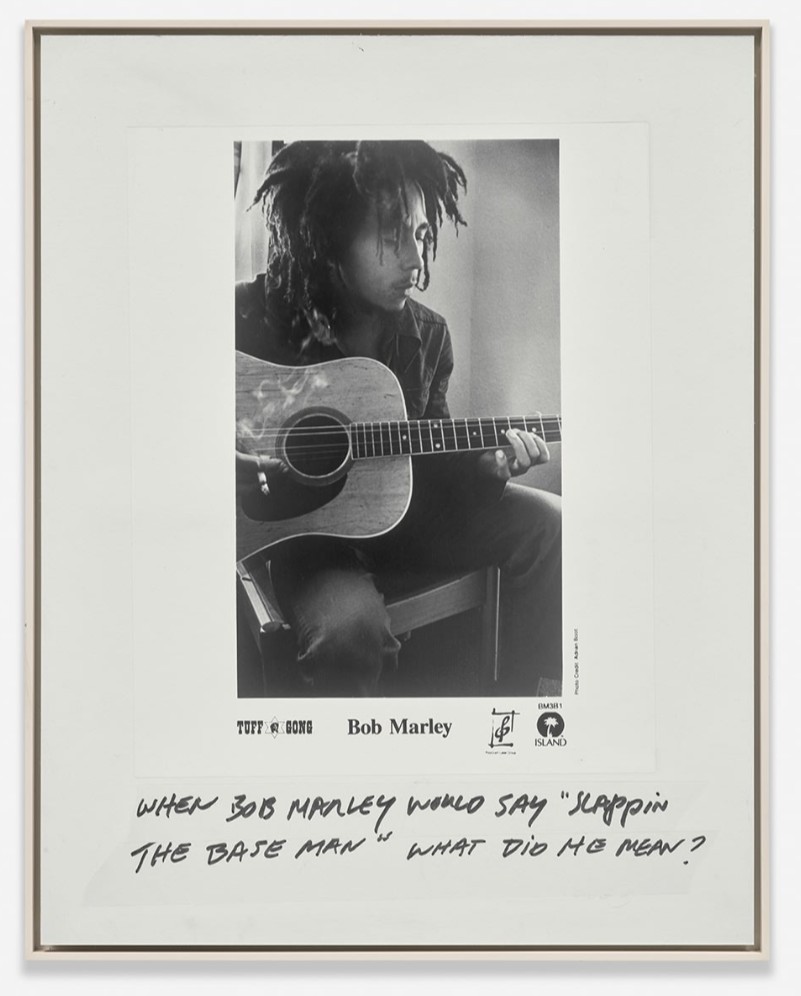
Inkjet print, flush-mounted and mounted again.
17 1/8 x 10 inches (43.5 x 25.4 cm)
Sheet: 27 7/8 x 21 7/8 inches (70.8 x 55.6 cm)
Signed in ink, printed title and date on a studio label affixed to the reverse of the secondary mount
#40. Untitled (Man’s Hand with Cigarette), 1980
Sotheby’s New-York: 1 October 2025
Estimated: USD 20,000 – 30,000
USD 21,590
PHOTOGRAPH
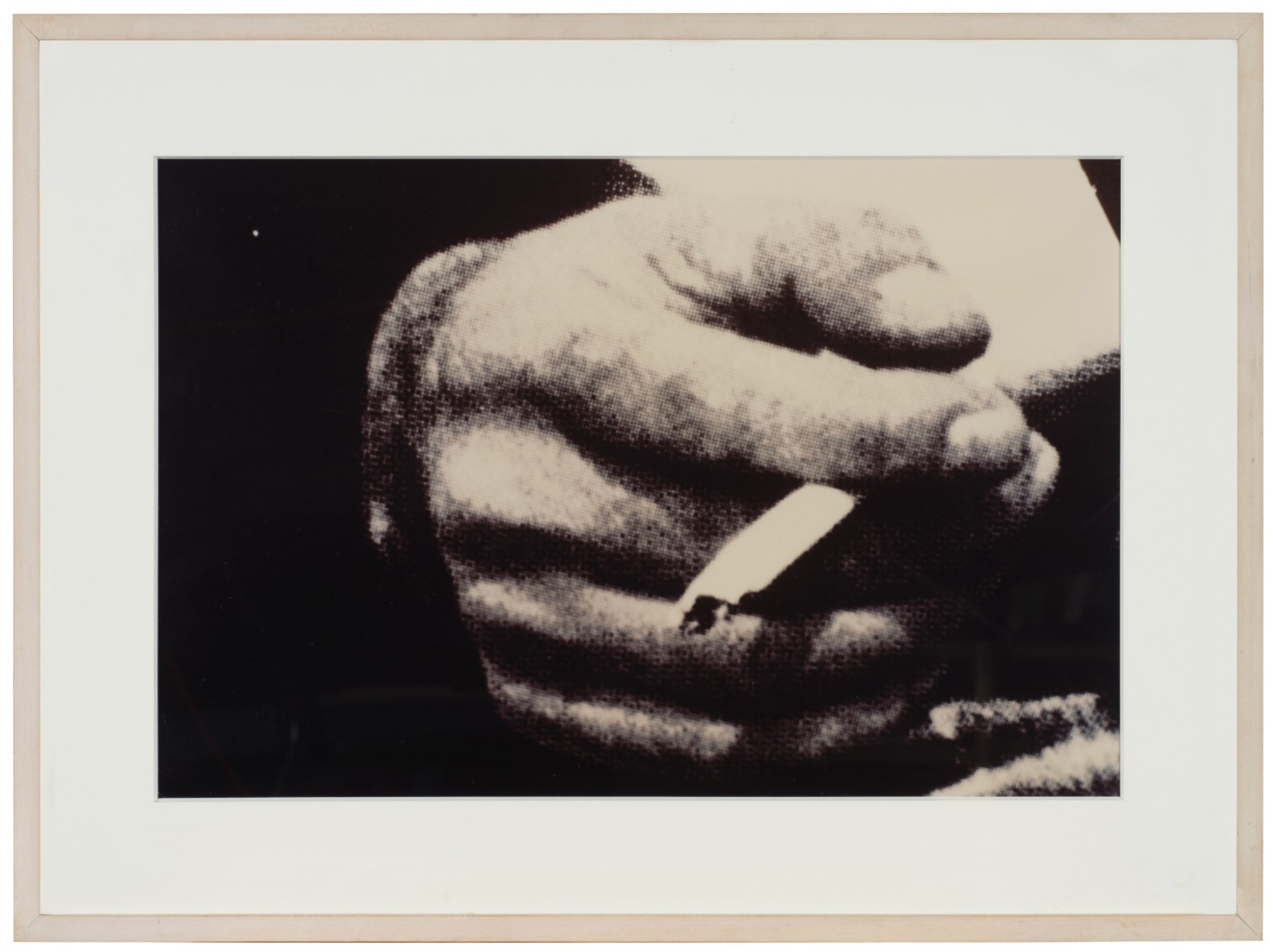
RICHARD PRINCE (b. 1949)
Untitled (Man’s Hand with Cigarette), 1980
Ektacolor print
15 3/8 x 23 1/4 inches (39.1 x 59.1 cm)
Signed, dated 1980 and numbered 4/10 in ink (on the reverse)
This print is number 4 from an edition of 10 plus 2 artist’s proofs
#41. Krystie, 1982
Estimated: USD 20,000 – 30,000
USD 19,050
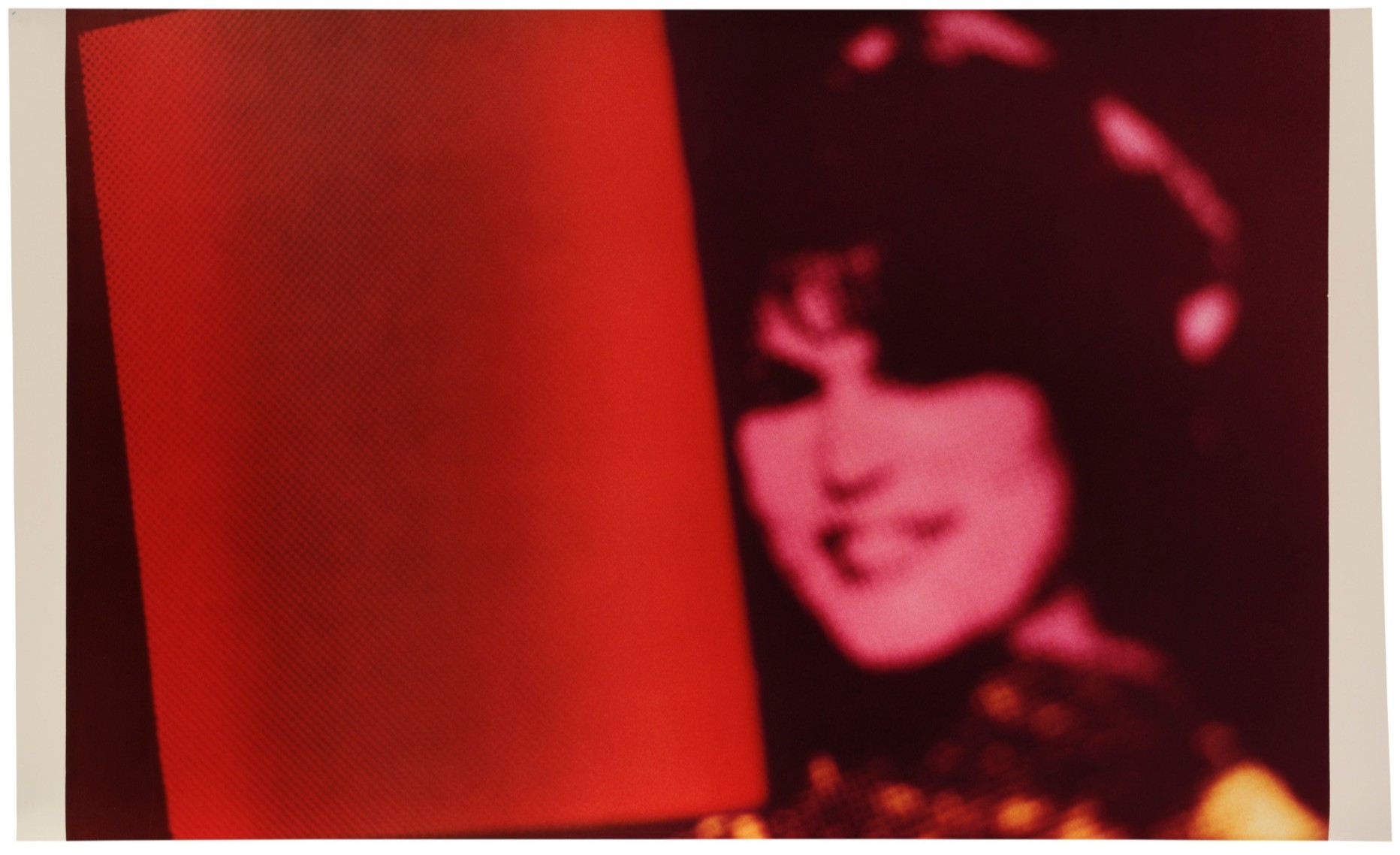
Ektachrome photograph
30 x 49 1/4 inches (76.2 x 125.1 cm)
This work is unique
#42. Untitled (Hippie Drawing), 1997
Estimated: USD 10,000 – 15,000
USD 12,065
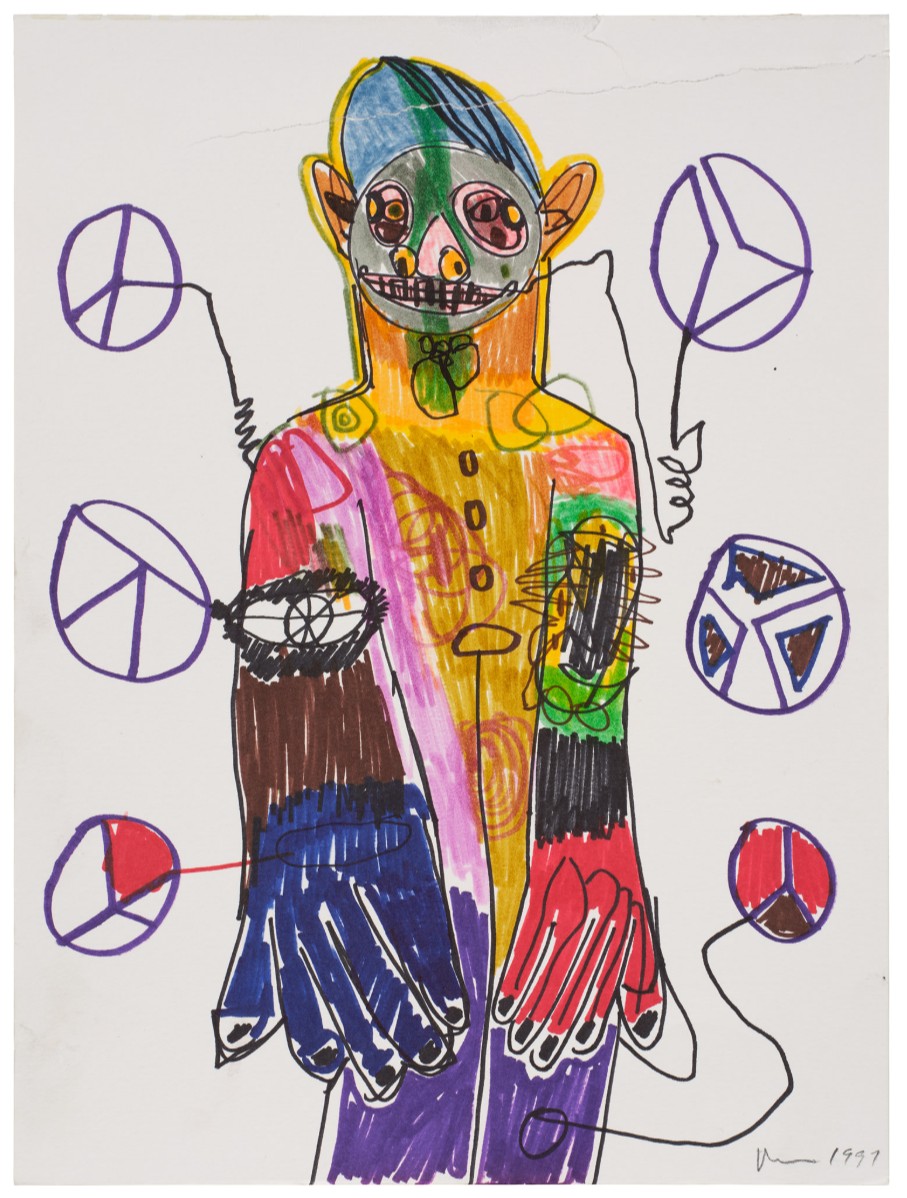
Untitled (Hippie Drawing), 1997
12 1/8 x 9 inches (30.8 x 22.9 cm)
Signed and dated “Prince 1997” lower right
Lots Passed
Untitled (Portrait), 2015
Christie’s New-York: 30 September 2025
Estimated: USD 30,000 – 50,000
PASSED
RICHARD PRINCE (B. 1949), Untitled (Portrait) | Christie’s
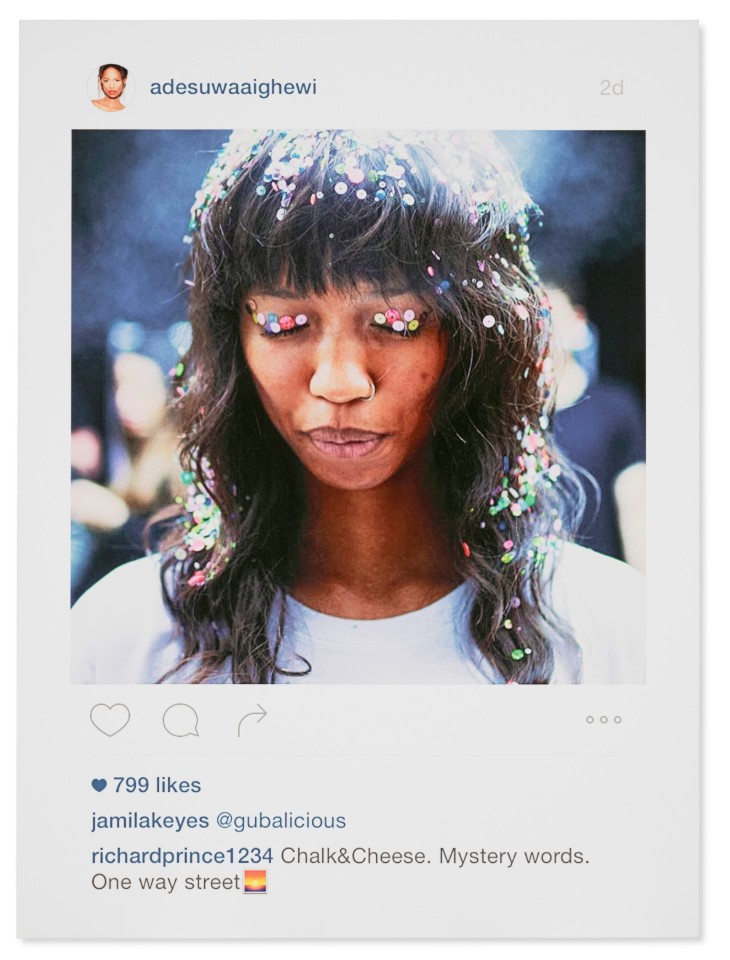
RICHARD PRINCE (B. 1949)
Untitled (Portrait), 2015
Inkjet on canvas
65 7/8 x 48 7/8 inches (167.3 x 124.2 cm)
Signed and dated ‘Richard Prince 2015’ (on the overlap)
Untitled, 1997
Phillips London: 26 June 2025
Estimated: GBP 60,000 – 80,000
PASSED
Richard Prince Modern & Contemporary Art: Evening & Day Sale
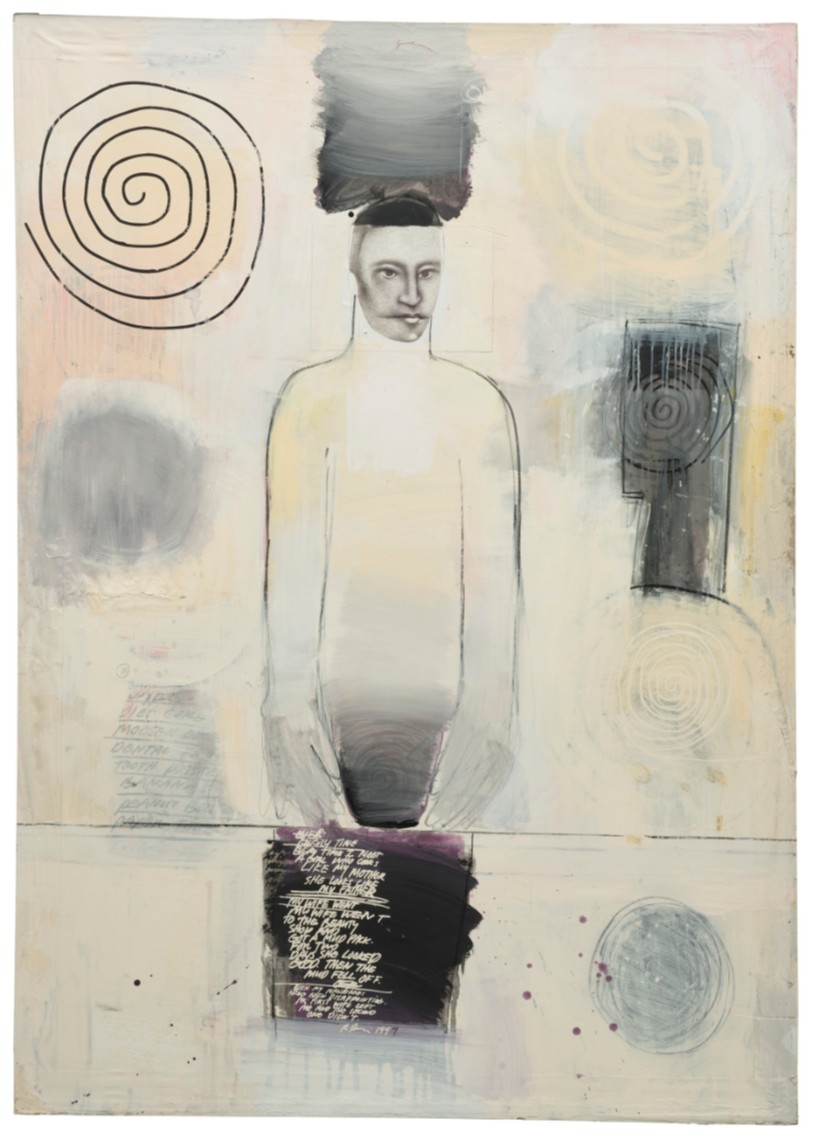
Untitled, 1997
Acrylic, ink, Conté crayon, paper collage, silkscreen ink and joint compound on screenprinting frame
Untitled, 2011
Phillips London: 6 March 2025
Estimated: GBP 300,000 – 500,000
PASSED
Richard Prince – Modern & Contemporary… Lot 29 March 2025 | Phillips
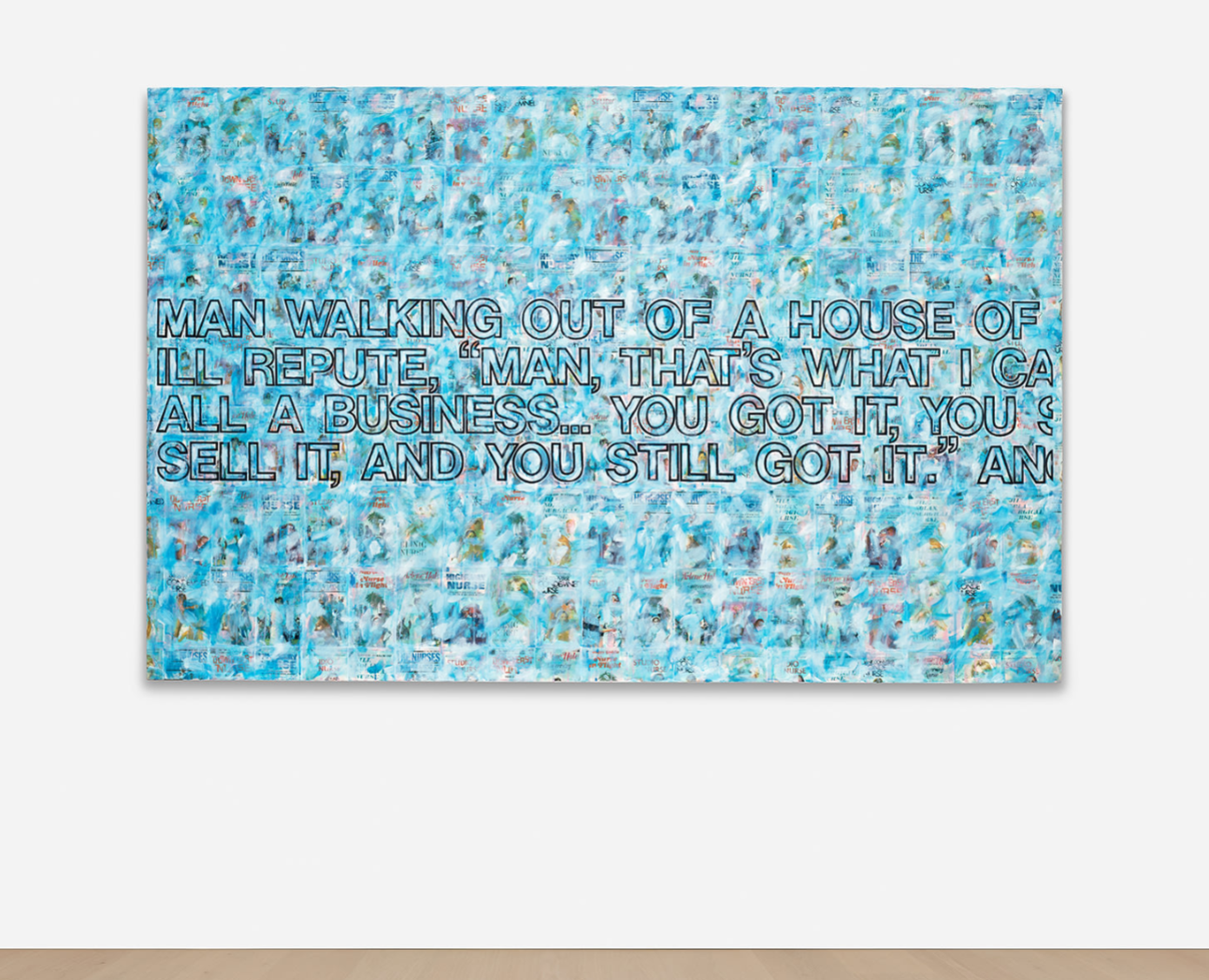
RICHARD PRINCE
Untitled, 2011
Collage and acrylic on canvas
50 1/8 x 77 inches (127.3 x 195.7 cm)
Lots Withdrawn
Untitled (Cowboy), 2013
Christie’s New-York: 15 May 2025
Estimated: USD 1,200,000 – 1,800,000
WITHDRAWN
RICHARD PRINCE (B. 1949), Untitled (Cowboy) | Christie’s
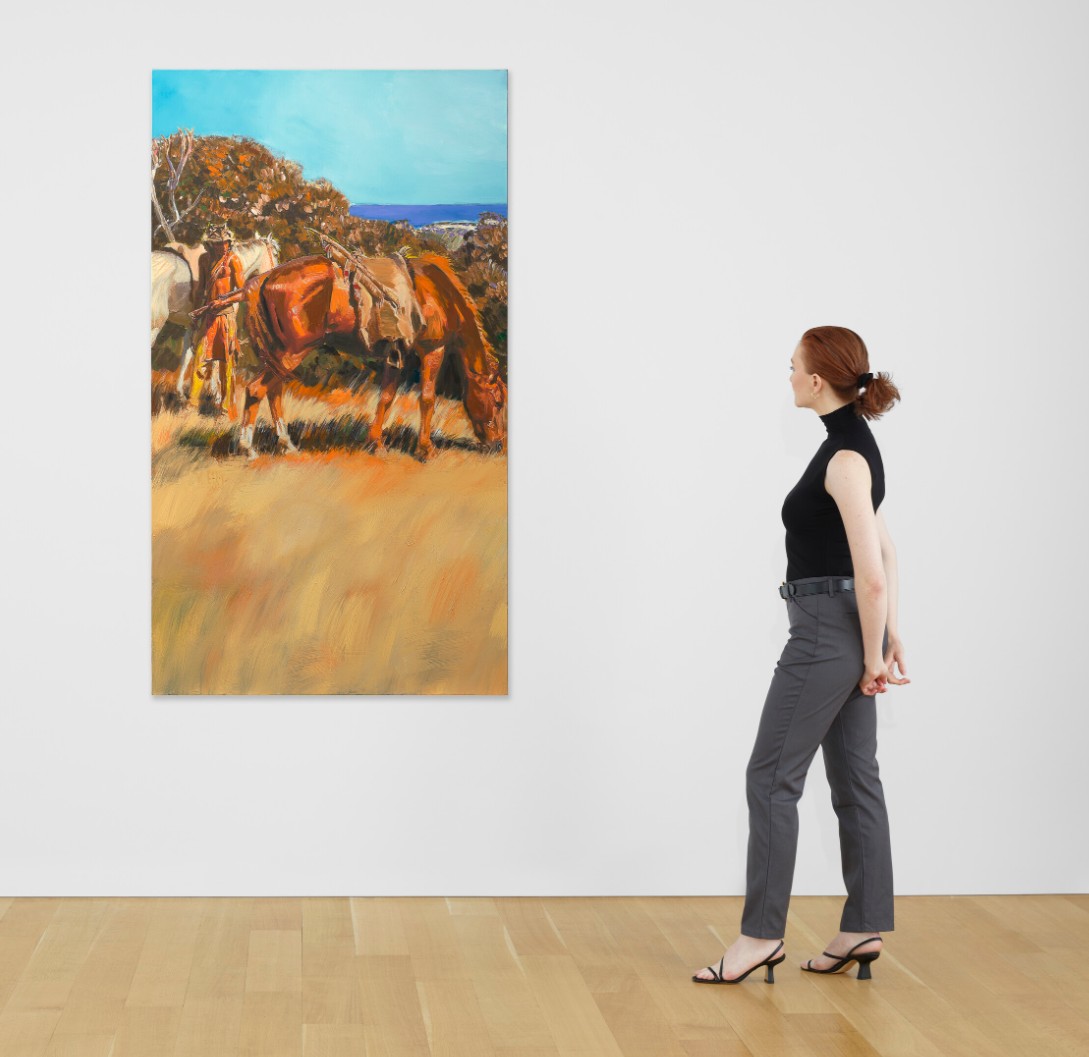
RICHARD PRINCE (B. 1949)
Untitled (Cowboy), 2013
Inkjet and acrylic on canvas
79 1/4 x 45 inches (201.3 x 114.3 cm)
Signed and dated ‘Richard Prince 2013’ (on the overlap)
2024 Auction Results
46 lots sold at auction in 2024 for a total turnover of USD 29,368,639. With 5 lots failing to sell, the sell-through rate is 90.2%. The highest price has been achieved at Sotheby’s in New-York on 21 November 2024, when Nurse on Trial, a painting dated 2005, sold for USD 6,700,000. 7 lots sold for more than USD 1 million, generating a cumulative turnover of USD 21,247,438, representing 72.3% of the total turnover for 2024.
2024 Top 4 Lots
#1. Nurse on Trial, 2005
Sotheby’s New-York: 21 November 2024
Estimated: USD 5,000,000 – 7,000,000
USD 6,700,000
Nurse on Trial | The Now and Contemporary Evening Auction | 2024 | Sotheby’s
REPEAT SALE
Christie’s New-York: 12 November 2014
Estimated: USD 5,000,000 – 7,000,000
USD 5,765,000
Richard Prince (b. 1949), Nurse on Trial | Christie’s
RICHARD PRINCE (b. 1949)
Nurse on Trial, 2005
Acrylic and inkjet on canvas
75×52 inches (190.5 x 132.1 cm)
Signed, titled and dated 2005 (on the overlap)
#2. Hurricane Nurse, 2004
Christie’s London: 9 October 2024
Estimated: GBP 3,500,000 – 5,500,000
GBP 4,184,250 / USD 5,481,368
RICHARD PRINCE (B. 1949), Hurricane Nurse | Christie’s (christies.com)
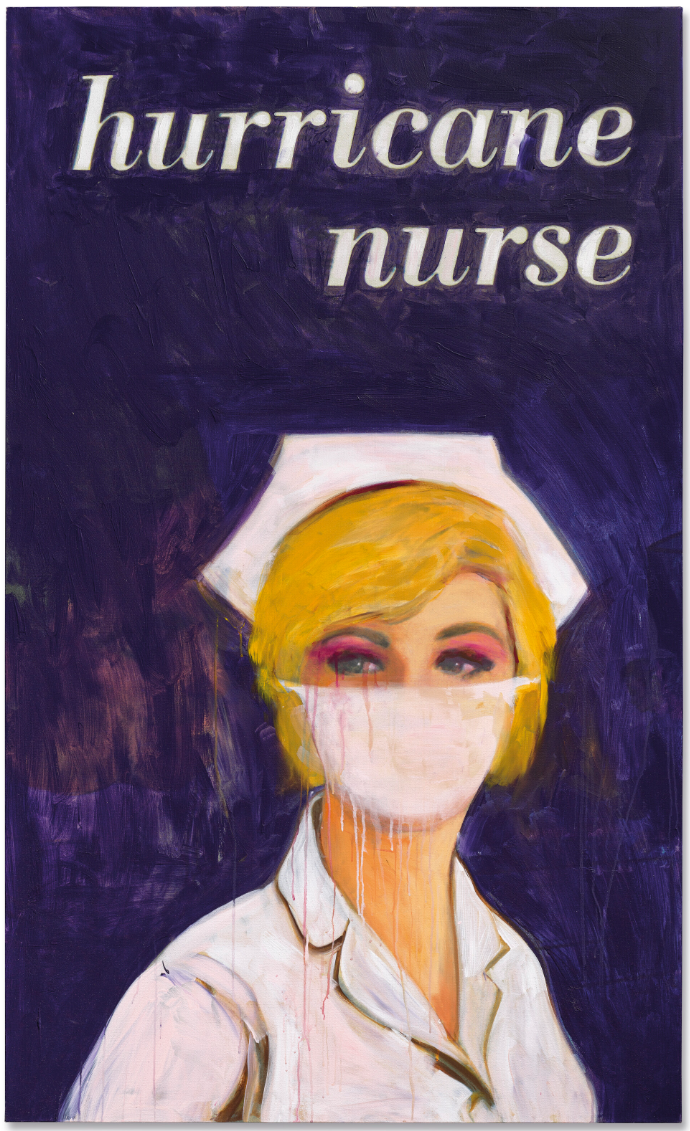
RICHARD PRINCE (B. 1949)
Hurricane Nurse, 2004
Acrylic and inkjet on canvas
69 1/8 x 42 inches (175.5 x 106.8 cm)
Signed, titled and dated ‘R Prince 2004 “Hurricane Nurse”’ (on the overlap)
USD 5 million
#3. Untitled (Cowboy), 1997
Christie’s London: 9 October 2024
Estimated: GBP 1,200,000 – 1,800,000
GBP 2,097,000 / USD 2,747,070
RICHARD PRINCE (B. 1949), Untitled (Cowboy) | Christie’s
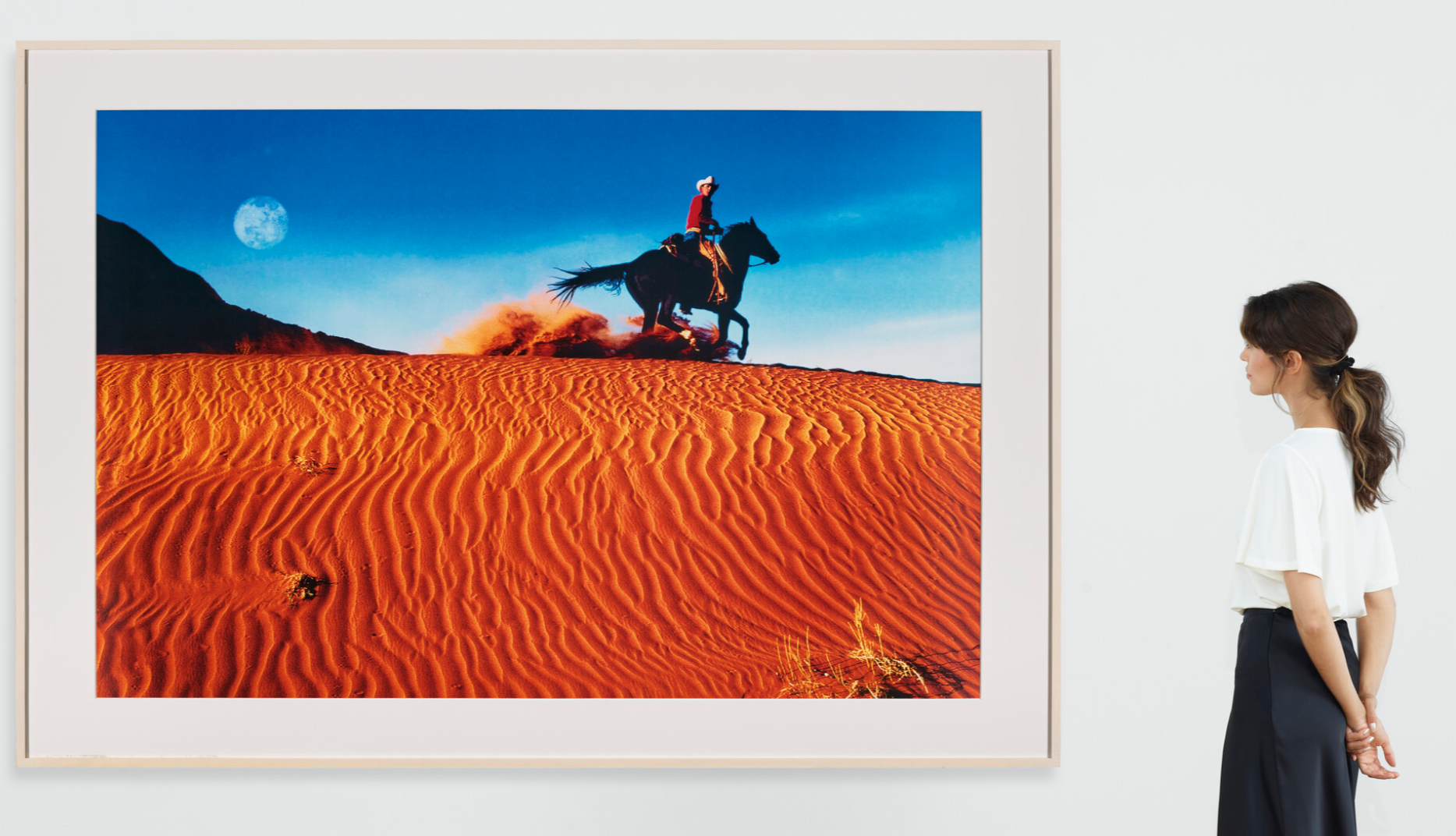
RICHARD PRINCE (B. 1949)
Untitled (Cowboy), 1997
Ektacolour print
Image: 50 x 75 3/8 inches (127 x 191.6 cm)
Signed, numbered and dated ‘RPrince 1⁄2 1997’ (upper right margin)
Signed, numbered and dated ‘RPrince 1⁄2 1997’ (on the reverse)
This work is number one from an edition of two plus one artist’s proof
#4. Untitled (Cowboy), 1999
Christie’s New-York: 21 November 2024
Estimated: USD 1,000,000 – 1,500,000
USD 1,865,000
RICHARD PRINCE (B. 1949), Untitled (Cowboy) | Christie’s
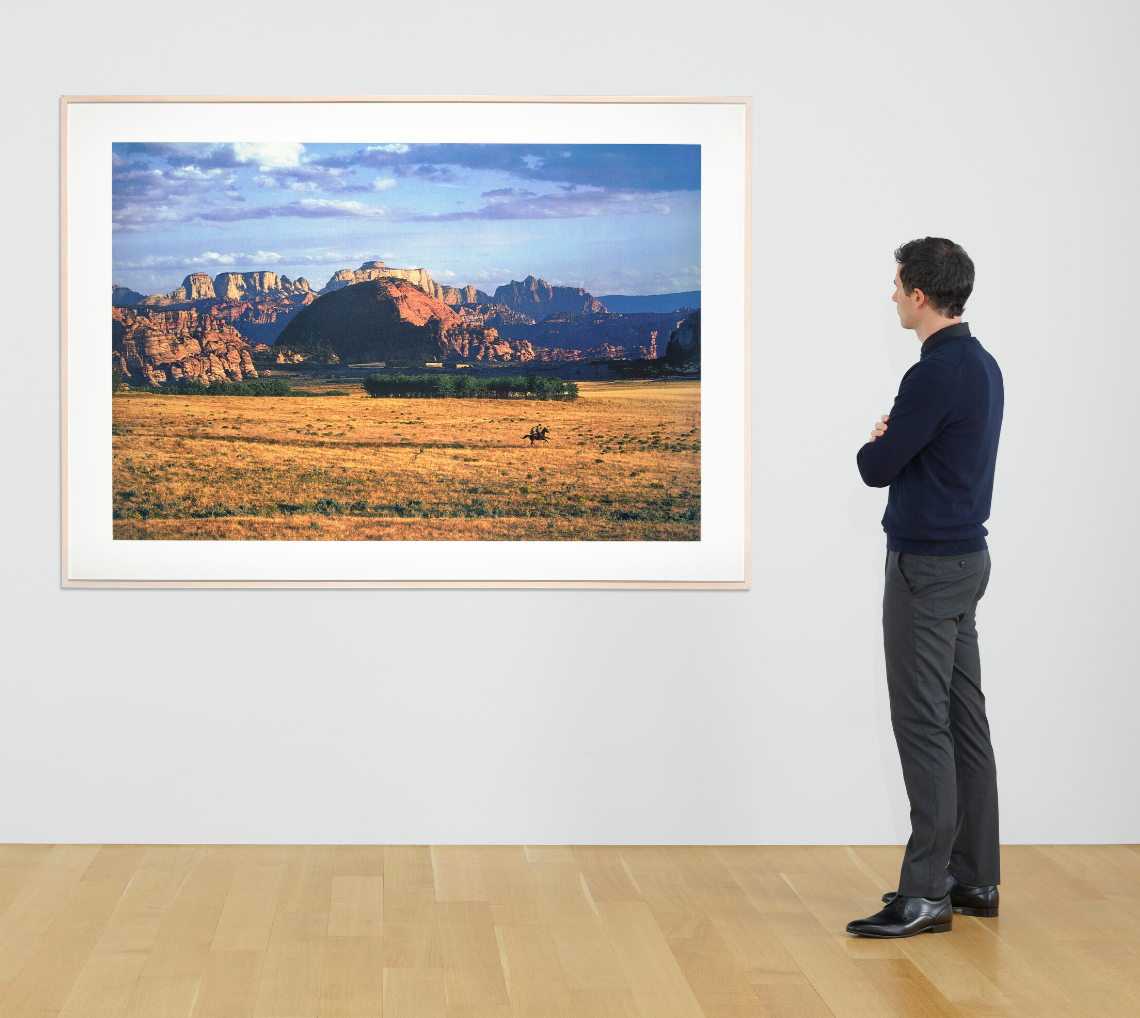
RICHARD PRINCE (B. 1949)
Untitled (Cowboy), 1999
Ektacolour photograph
49×73 inches (123.5 x 185.5 cm)
Signed, numbered and dated ‘R Prince 1999 1⁄2’ (on the reverse)
This work is number one from an edition of two plus one artist’s proof
#5. Silhouette Cowboy, 1998-1999
Christie’s New-York: 22 November 2024
Estimated: USD 600,000 – 800,000
USD 1,744,000
RICHARD PRINCE (B. 1949), Silhouette Cowboy | Christie’s
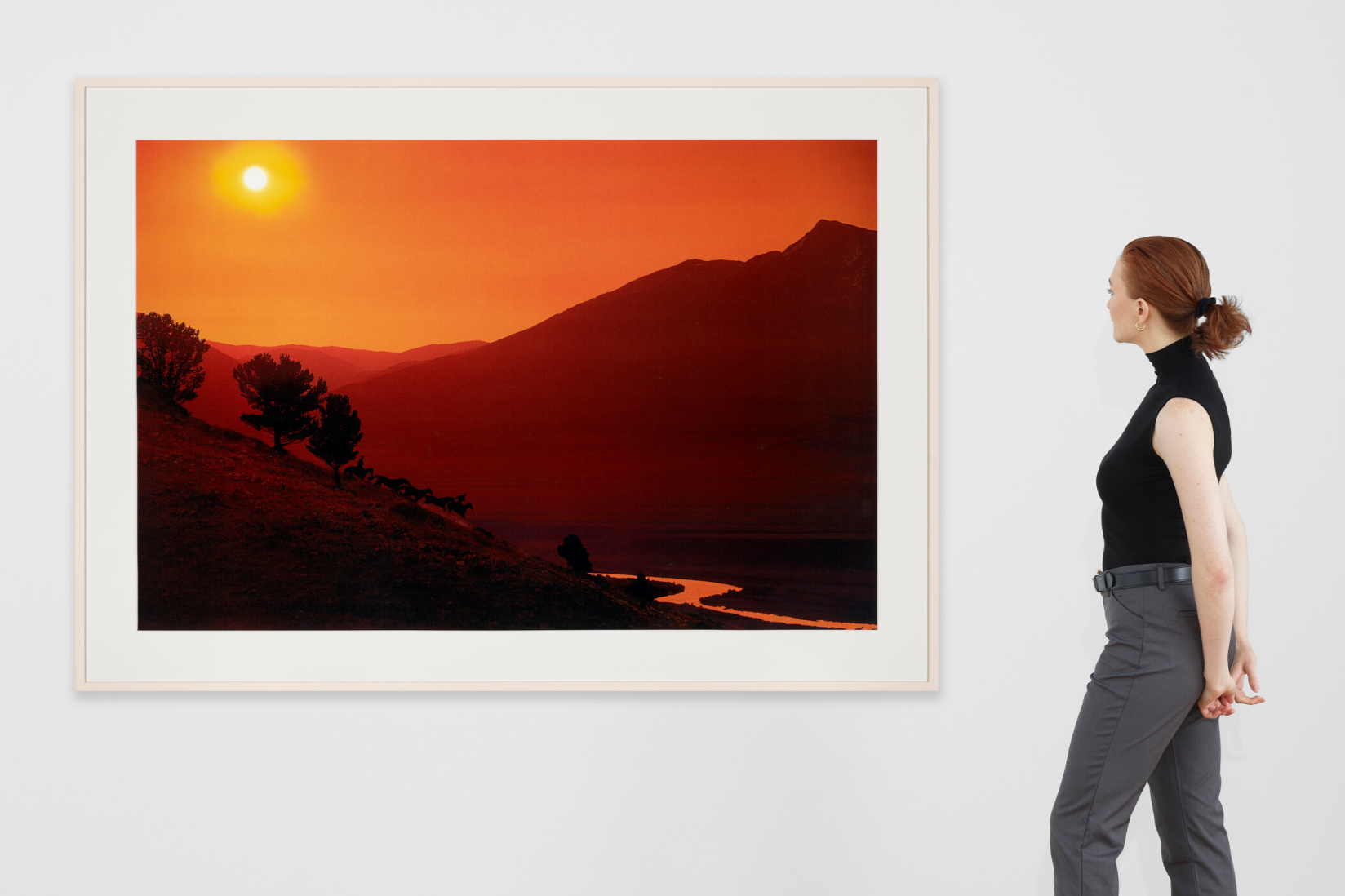
RICHARD PRINCE (B. 1949)
Silhouette Cowboy, 1998-1999
Ektacolor print
47 7/8 x 72 inches (121.6 x 182.8 cm)
Signed, inscribed, numbered and dated ‘Richard Prince 1998-99 Four Silouette [sic] Cowboys 1⁄2’
(on the backing board);
Signed again ‘Richard Prince’ (on a paper label affixed to the reverse)
This work is number one from an edition of two plus one artist’s proof
#6. Slingerlands, 2004
Sotheby’s New-York: 20 November 2024
Estimated: USD 1,000,000 – 1,500,000
USD 1,440,000
Slingerlands | The Now and Contemporary Evening Auction | 2024 | Sotheby’s
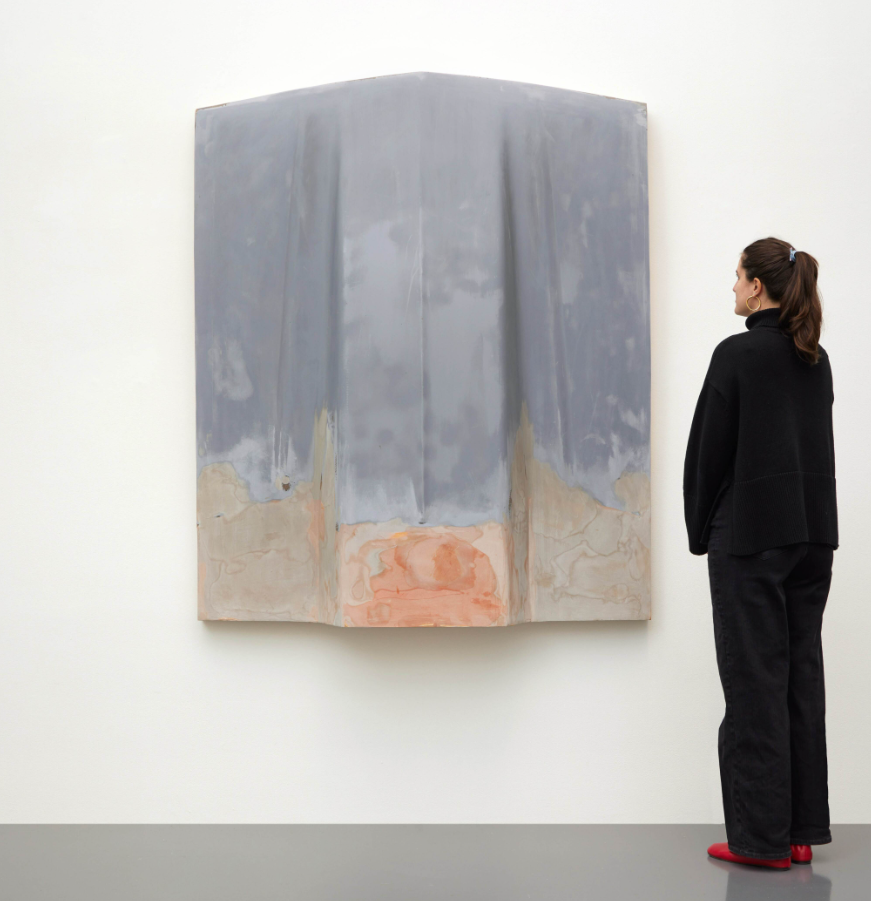
RICHARD PRINCE (b. 1949)
Slingerlands, 2004
Fiberglass, polyester resin, acrylic and wood
71 3/4 x 59 3/4 x 12 3/4 inches (182.2 x 151.8 x 32.4 cm)
#7. Untitled (Cowboy), 2012
Sotheby’s New-York: 14 May 2024
Estimated: USD 1,200,000 – 1,800,000
USD 1,270,000
Untitled (Cowboy) | Contemporary Day Auction | 2024 | Sotheby’s (sothebys.com)

RICHARD PRINCE (b. 1949)
Untitled (Cowboy), 2012
Acrylic and inkjet on canvas
66 3/4 x 40 inches (169.5 x 101.6 cm)
Signed and dated 2012 (on the overlap)
USD 1 million
#8. Untitled (Cowboy), 1999
Sotheby’s Hong-Kong: 5 April 2024
Estimated: HKD 5,000,000 – 7,000,000
HKD 7,493,000 / USD 957,939

RICHARD PRINCE (b. 1949)
Untitled (Cowboy), 1999
Ektacolor photograph, in artist’s chosen frame
59 1/4 x 83 1/2 inches (150.5 x 212.1 cm)
Signed, dated 1999 and numbered 2/2 (on a label affixed to the backing board)
This work is number 2 from an edition of 2 plus 1 artist’s proof
#9. Untitled (Palomino), 1982-86
Sotheby’s New-York: 21 November 2024
Estimated: USD 500,000 – 700,000
USD 540,000
Untitled (Palomino) | Contemporary Day Auction | 2024 | Sotheby’s
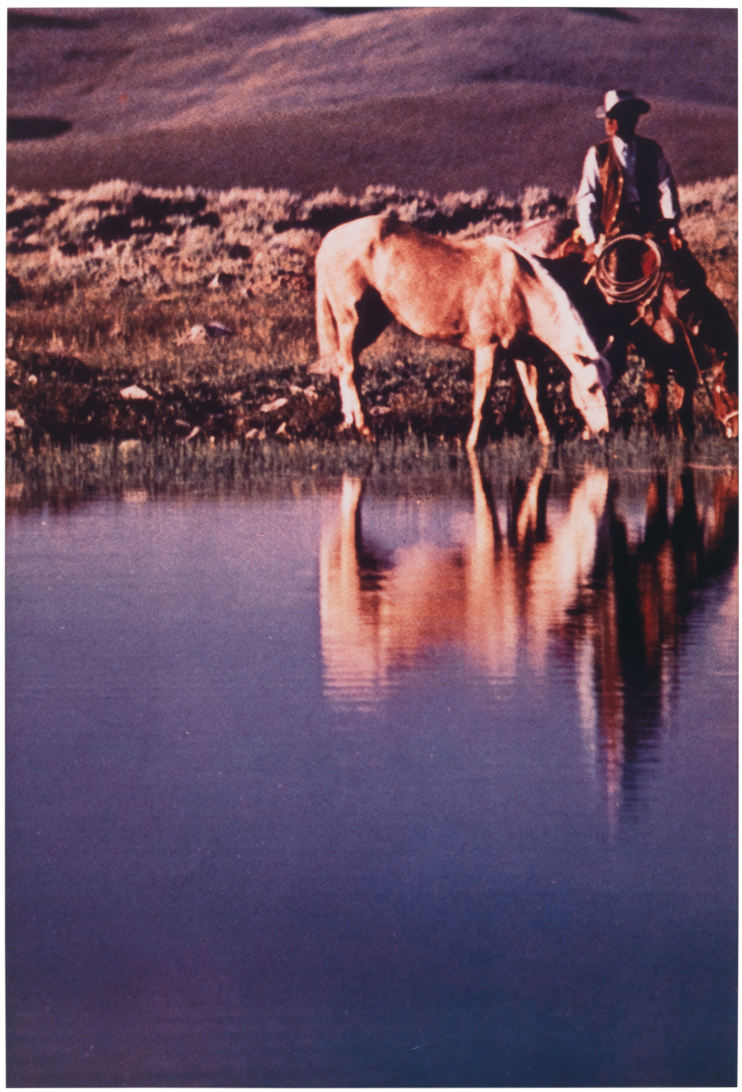
RICHARD PRINCE (b. 1949)
Untitled (Palomino), 1982-86
Ektacolor photograph flush mounted to foam board
40×27 inches (101.6 x 68.6 cm)
This work is number 2 from an edition of 2
#10. Most of the Time, 1991
Sotheby’s New-York: 1 March 2024
The Emily Fisher Landau Collection: An Era Defined
Estimated: USD 400,000 – 600,000
USD 508,000
Most of the Time | Contemporary Curated | 2024 | Sotheby’s (sothebys.com)
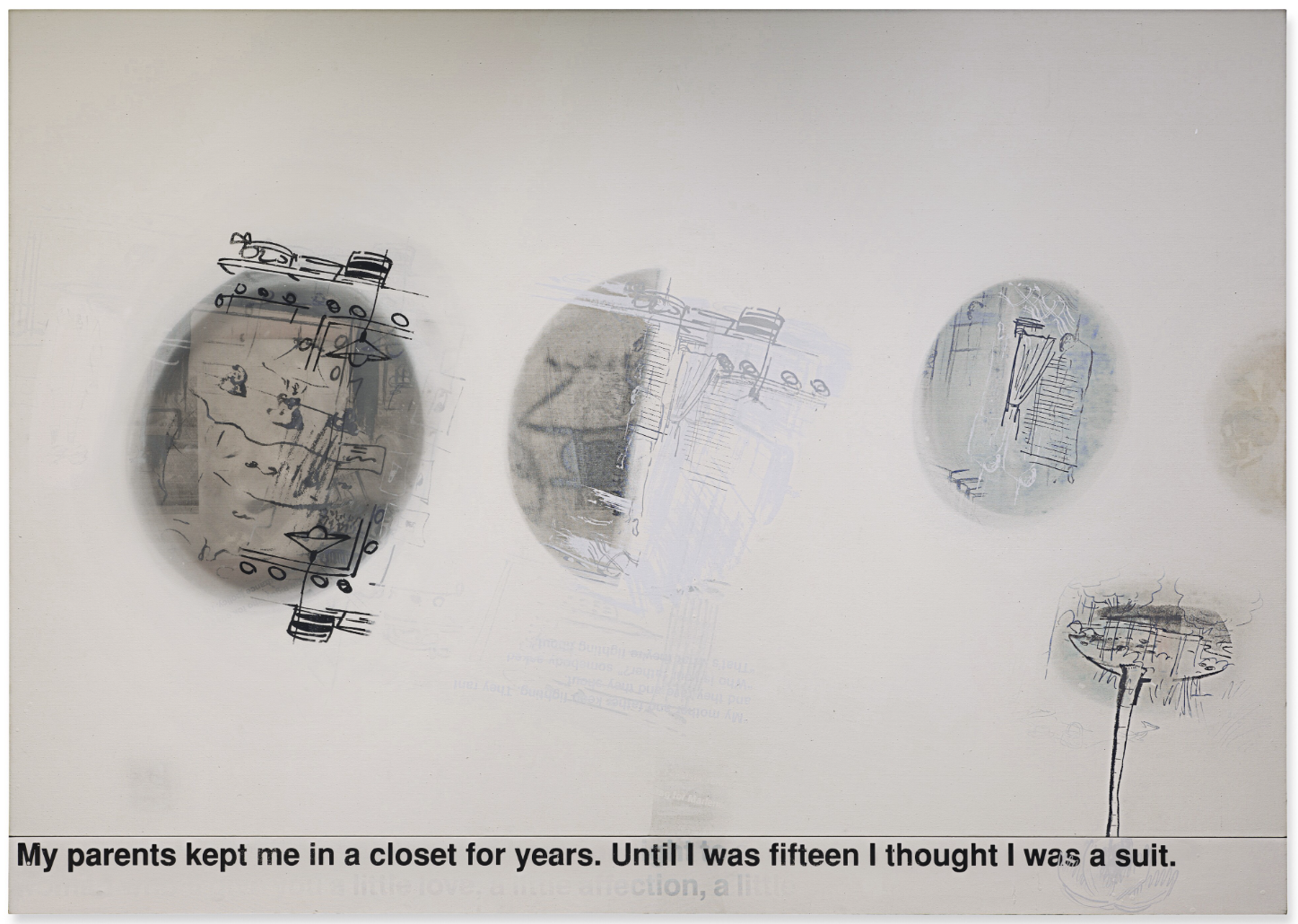
RICHARD PRINCE (b. 1949)
Most of the Time, 1991
Acrylic and silkscreen on 2 joined canvases
82×116 inches (208.3 x 294.6 cm)
Signed, titled and dated 1991 (on the overlap)
USD 500,000
#11. Next Door, 2010
Christie’s New-York: 17 May 2024
Estimated: USD 300,000 – 500,000
USD 415,800
https://www.christies.com/en/lot/lot-6482511
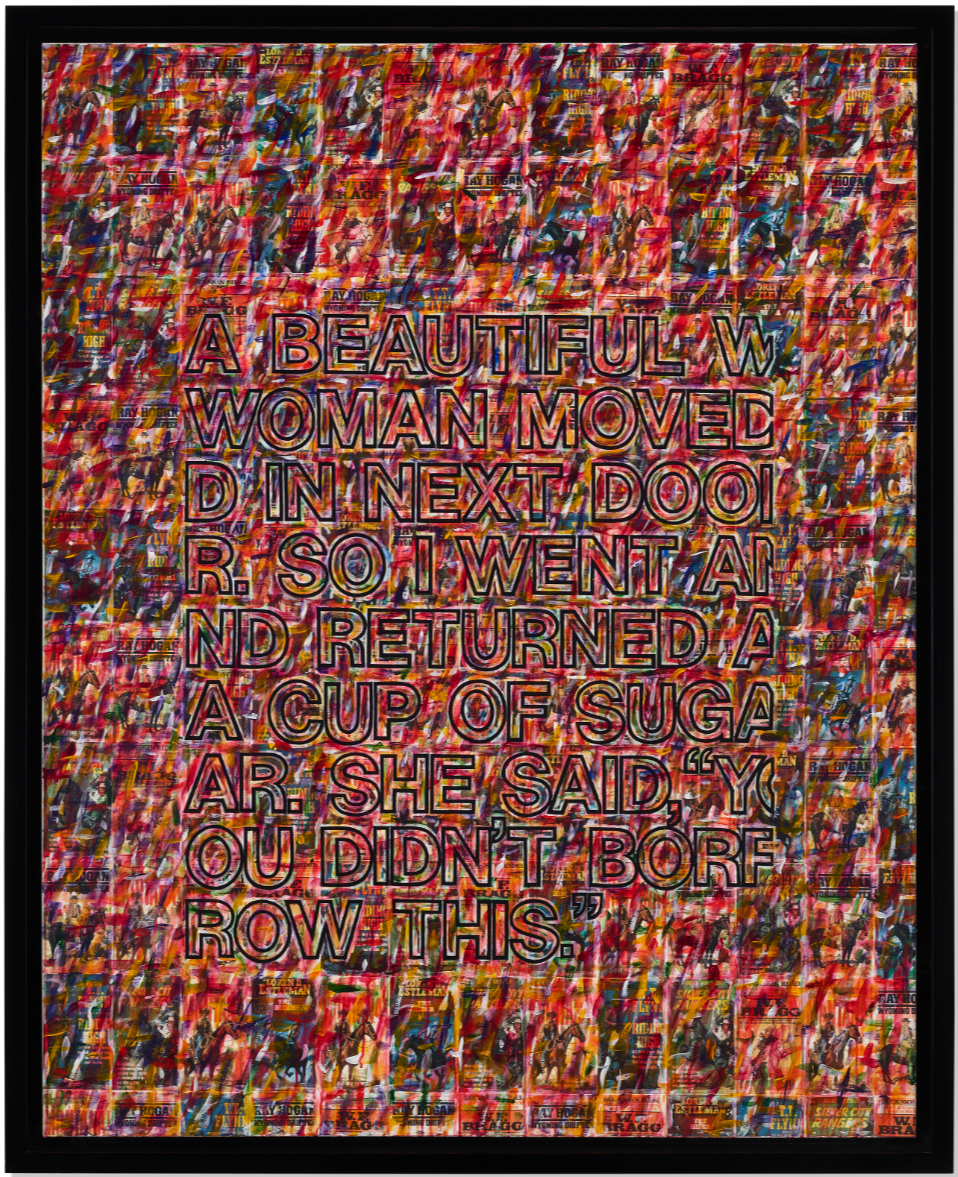
RICHARD PRINCE (B. 1949)
Next Door, 2010
Acrylic and printed paper collage on canvas
60 x 47 3/4 inches (152.4 x 121.3 cm)
Signed, titled and dated ‘”NEXT DOOR” R Prince 2010’ (on the overlap)
#12. Untitled (De Kooning), 2006-2007
Phillips New-York: 20 November 2024
Estimated: USD 300,000 – 400,000
USD 342,900
Richard Prince – Modern & Contempo… Lot 330 November 2024 | Phillips
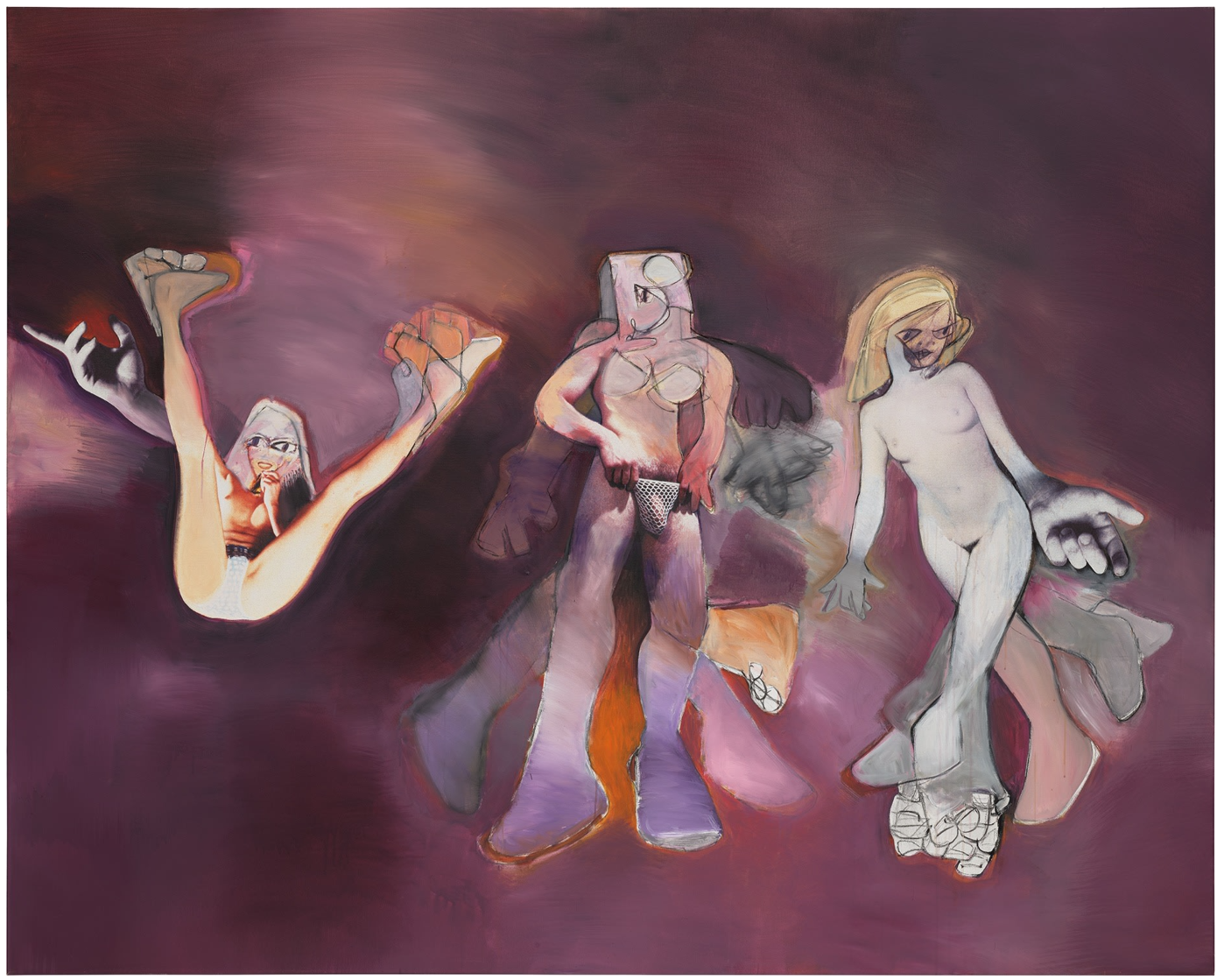
RICHARD PRINCE
Untitled (De Kooning), 2006-2007
Acrylic and inkjet on canvas
80×100 inches (203.2 x 254 cm)
Signed, titled and dated “Richard Prince UNTITLED (DE KOONING) 2006–07” on the reverse
#13. Trouble, 2007
Sotheby’s New-York: 21 November 2024
Estimated: USD 280,000 – 350,000
USD 336,000
Trouble | Contemporary Day Auction | 2024 | Sotheby’s
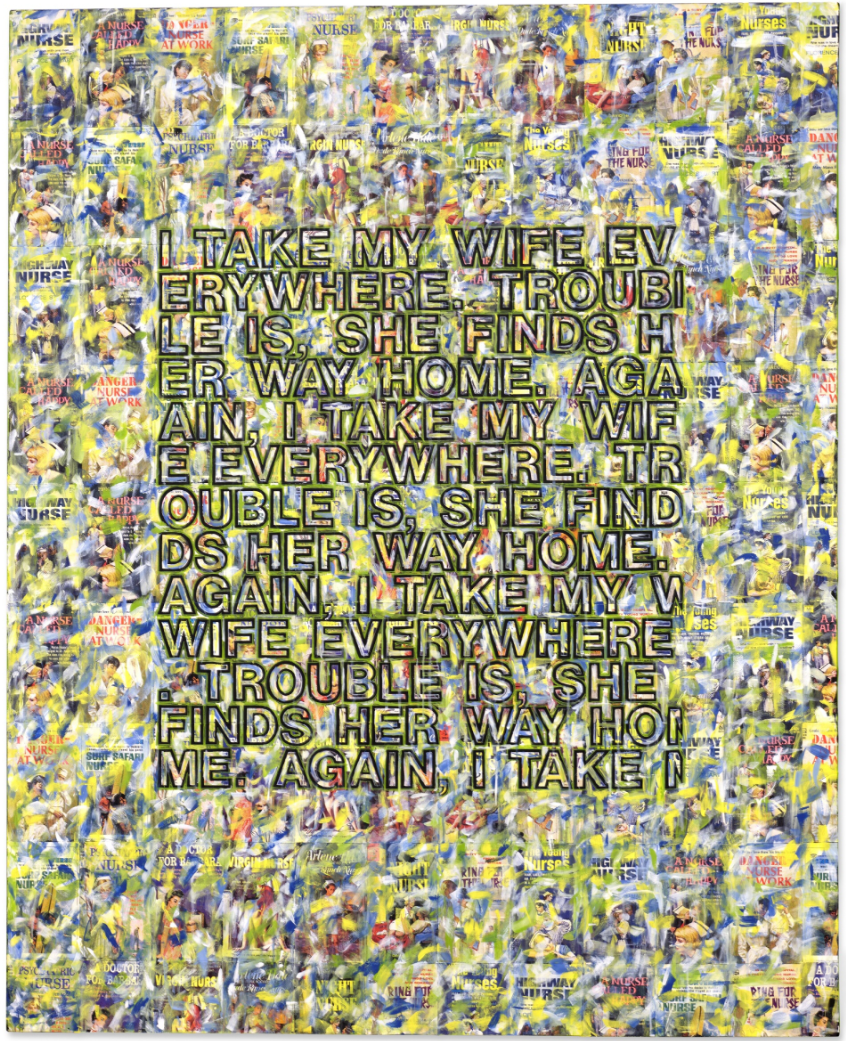
RICHARD PRINCE (b. 1949)
Trouble, 2007
Acrylic and printed paper collage on canvas
59 3/8 x 48 inches (150.8 x 121.9 cm)
Signed, titled and dated 2007 (on the reverse)
#14. Untitled (Original), 2007
Phillips New-York: 20 November 2024
Estimated: USD 150,000 – 200,000
USD 317,500
Richard Prince – Modern & Contempo… Lot 317 November 2024 | Phillips
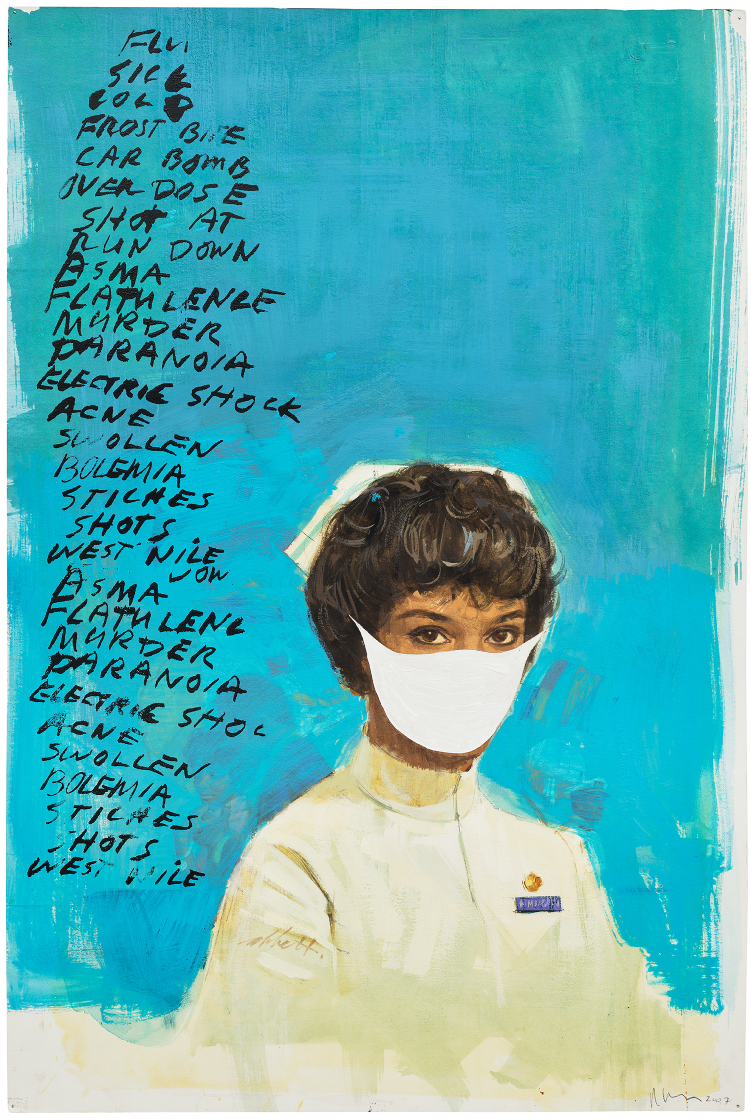
RICHARD PRINCE
Untitled (Original), 2007
Acrylic on original illustration, in artist’s frame
41×33 inches (104.1 x 83.8 cm)
Signed and dated “R Prince 2007” lower right
#15. Untitled (Cowboys), 1986
Phillips London: 11 October 2024
Estimated: GBP 120,000 – 180,000
GBP 241,300 / USD 316,103
Richard Prince – Modern & Contempor… Lot 121 October 2024 | Phillips
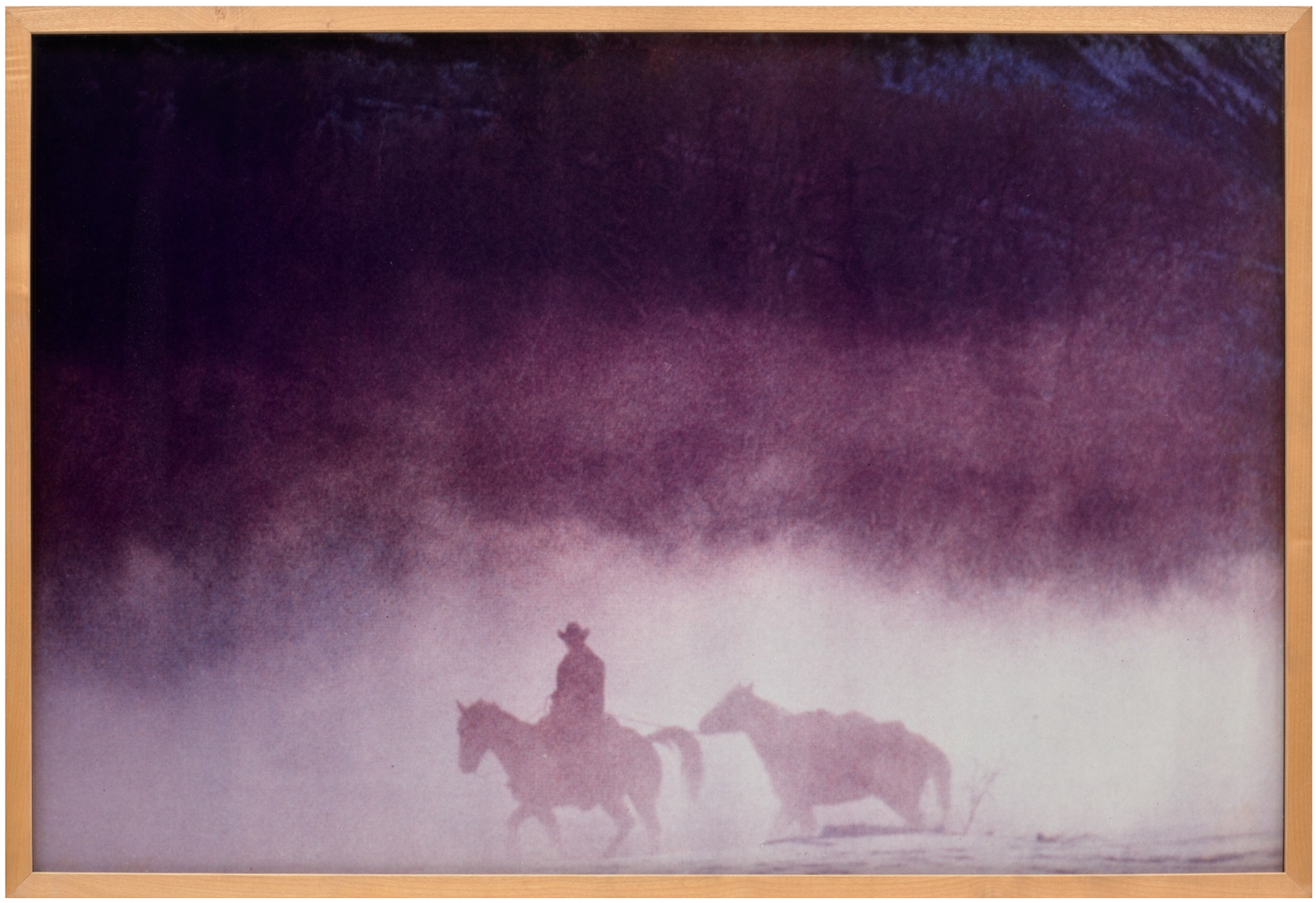
RICHARD PRINCE
Untitled (Cowboys), 1986
Ektacolor print mounted to foamcore
26 7/8 x 40 inches (68.5 x 101.6 cm)
Executed in 1986, this work is number 1 from an edition of 2
#16. Untitled (Cowboy), 1986
Christie’s New-York: 22 November 2024
Estimated: USD 150,000 – 200,000
USD 315,000
RICHARD PRINCE (B. 1949), Untitled (Cowboy) | Christie’s
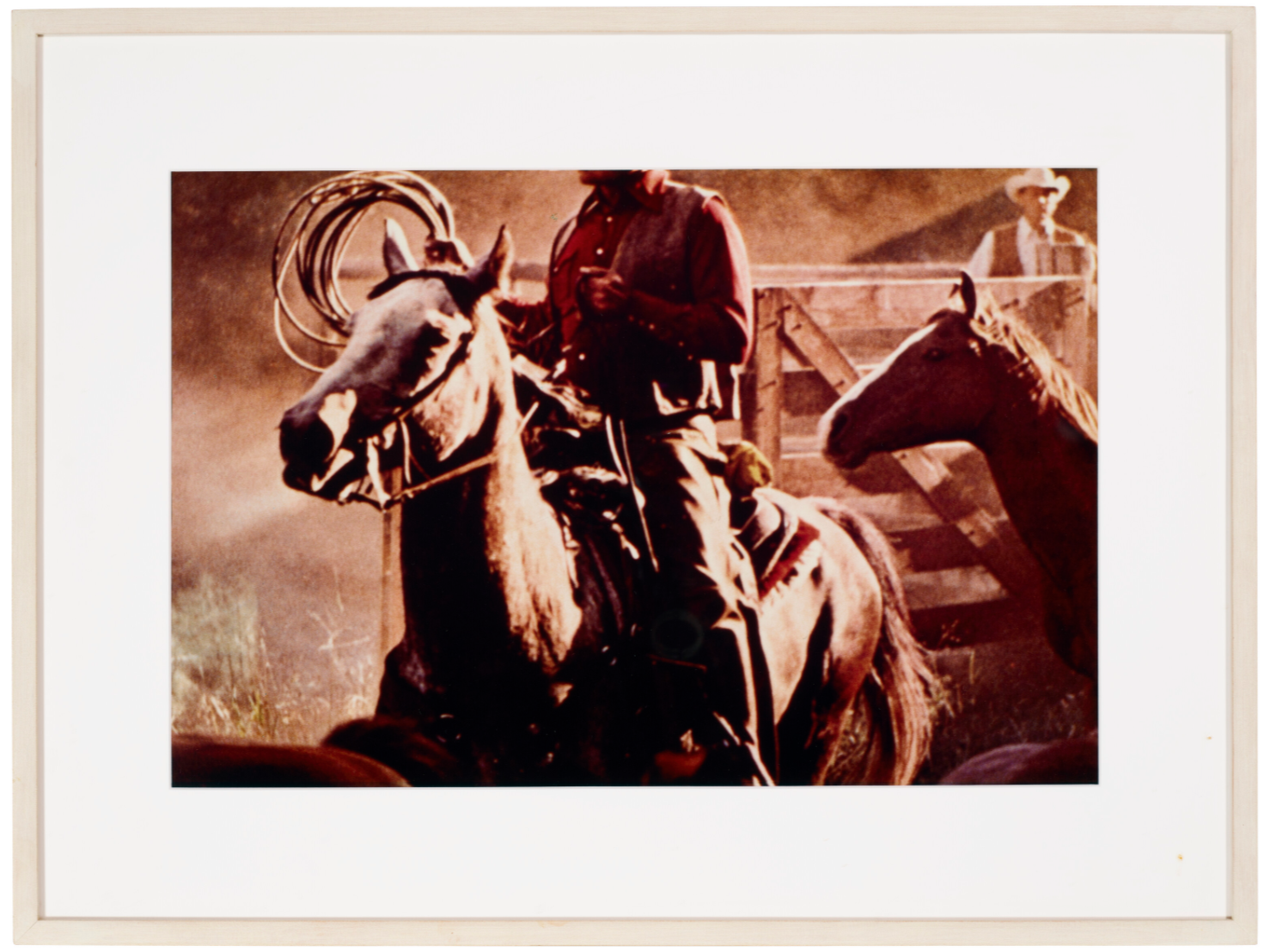
RICHARD PRINCE (B. 1949)
Untitled (Cowboy), 1986
Ektacolor print
Image: 15 3/4 x 23 1/4 inches (40 x 59.1 cm)
Sheet: 20×24 inches (50.8 x 61 cm)
Signed, numbered and dated ‘Richard Prince 2⁄2 1986’ (on the reverse)
This work is number two from an edition of two
#17. Untitled, 2010
Sotheby’s New-York: 27 September 2024
Estimated: USD 200,000 – 300,000
USD 312,000
Untitled | Contemporary Curated | 2024 | Sotheby’s
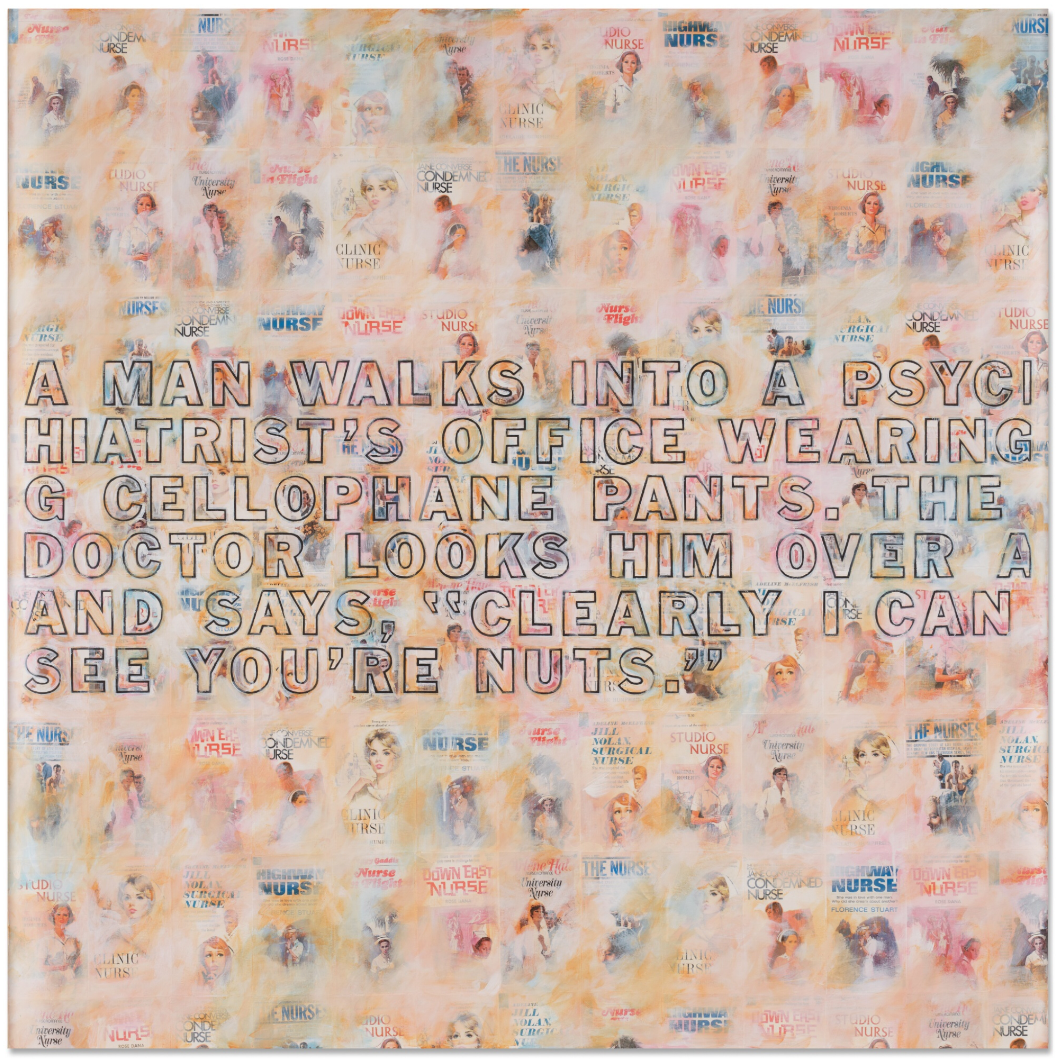
RICHARD PRINCE (b. 1949)
Untitled, 2010
Inkjet and acrylic on paper collage mounted on canvas
50×50 inches (127×127 cm)
Signed and dated 2010 (on the reverse)
#18. Untitled (Cowboy), 1980-86
Sotheby’s London: 26 June 2024
Estimated: GBP 200,000 – 300,000
GBP 240,000 / USD 304,390
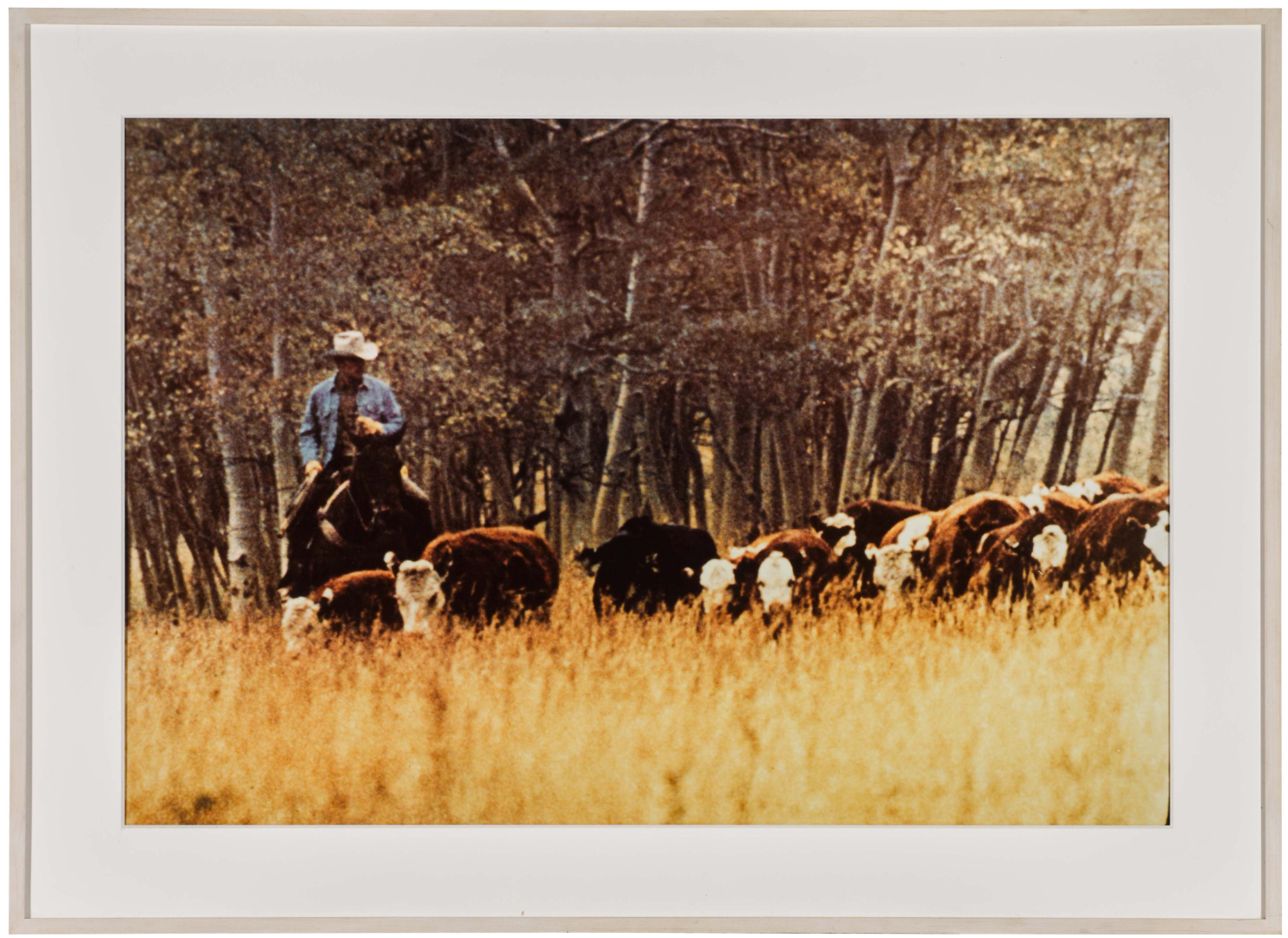
RICHARD PRINCE (b. 1949)
Untitled (Cowboy), 1980-86
Ektacolour print
Image: 30×40 inches (76 x 101.5 cm)
Signed, dated 1980-86 and numbered AP (in the margin)
This work is the artist’s proof from an edition of 2 plus 1 artist’s proof
#19. Untitled (Protest), 1994
Christie’s New-York: 22 November 2024
Estimated: USD 250,000 – 350,000
USD 302,400
RICHARD PRINCE (B. 1949), Untitled (Protest) | Christie’s
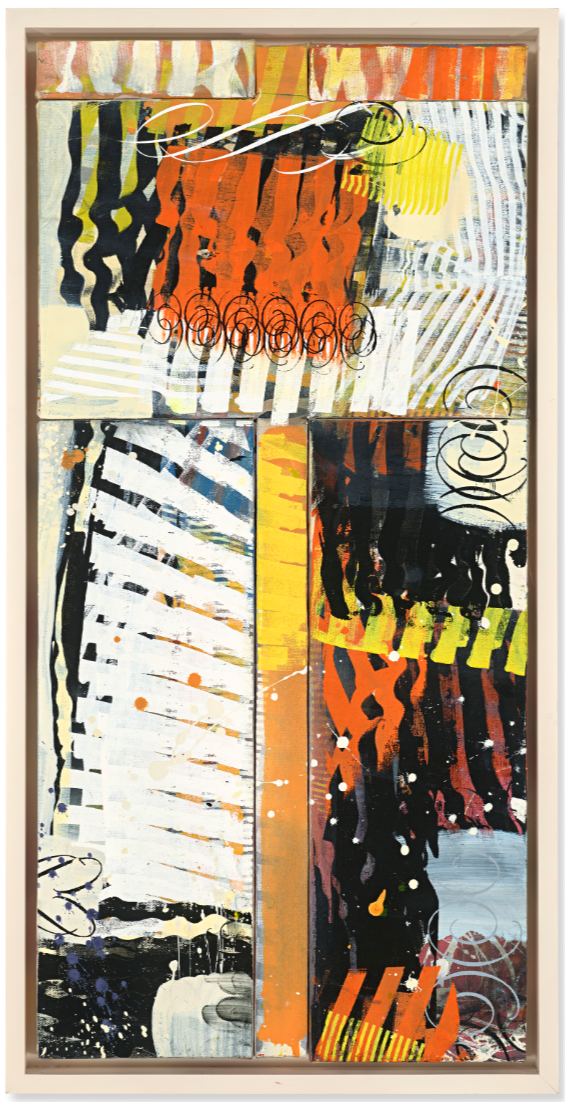
RICHARD PRINCE (B. 1949)
Untitled (Protest), 1994
Acrylic and silkscreen ink on five joined canvases
38 5/8 x 18 5/8 inches (97.2 x 47 cm)
Signed and dated ‘R. Prince 1994’ (on the reverse)
USD 300,000
#20. Untitled [Four Works], 1992-1993
Christie’s New-York: 13 March 2024
Estimated: USD 200,000 – 300,000
USD 296,500
RICHARD PRINCE (B. 1949), Untitled [Four Works] | Christie’s (christies.com)
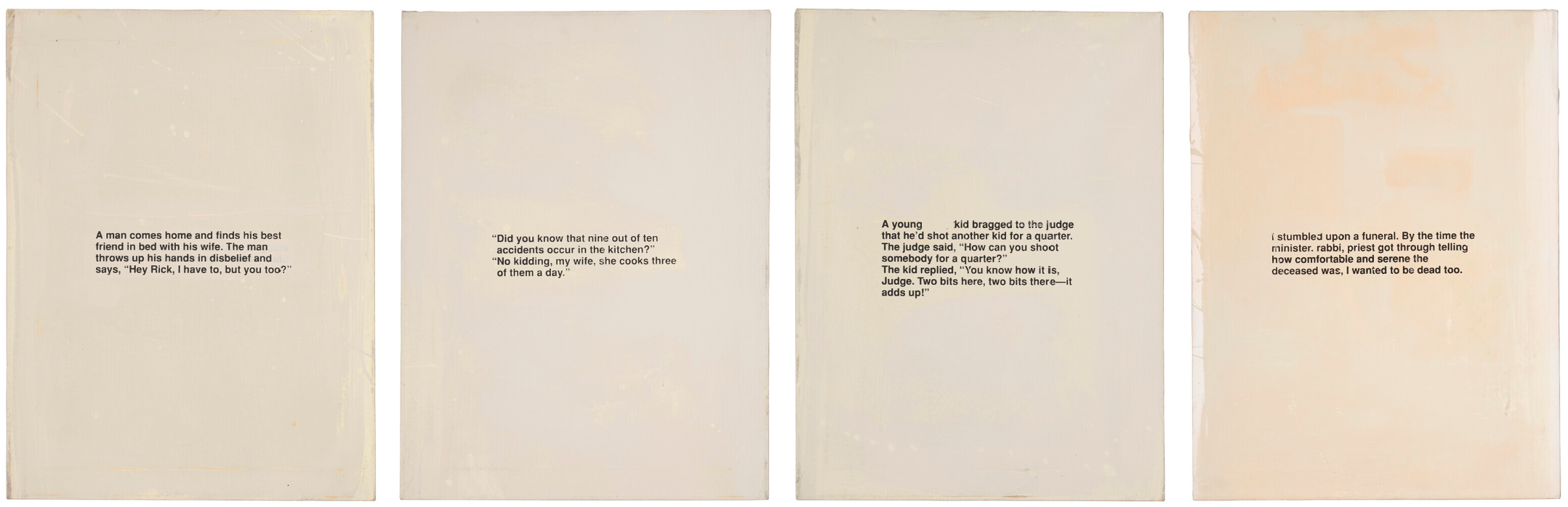
RICHARD PRINCE (B. 1949)
Untitled [Four Works], 1992-1993
Acrylic and silkscreen ink on canvas
Each: 24×18 inches (61 x 45.7 cm)
#21. Untitled, 1992
Christie’s New-York: 22 November 2024
Estimated: USD 100,000 – 150,000
USD 296,100
RICHARD PRINCE (B. 1949), Untitled | Christie’s
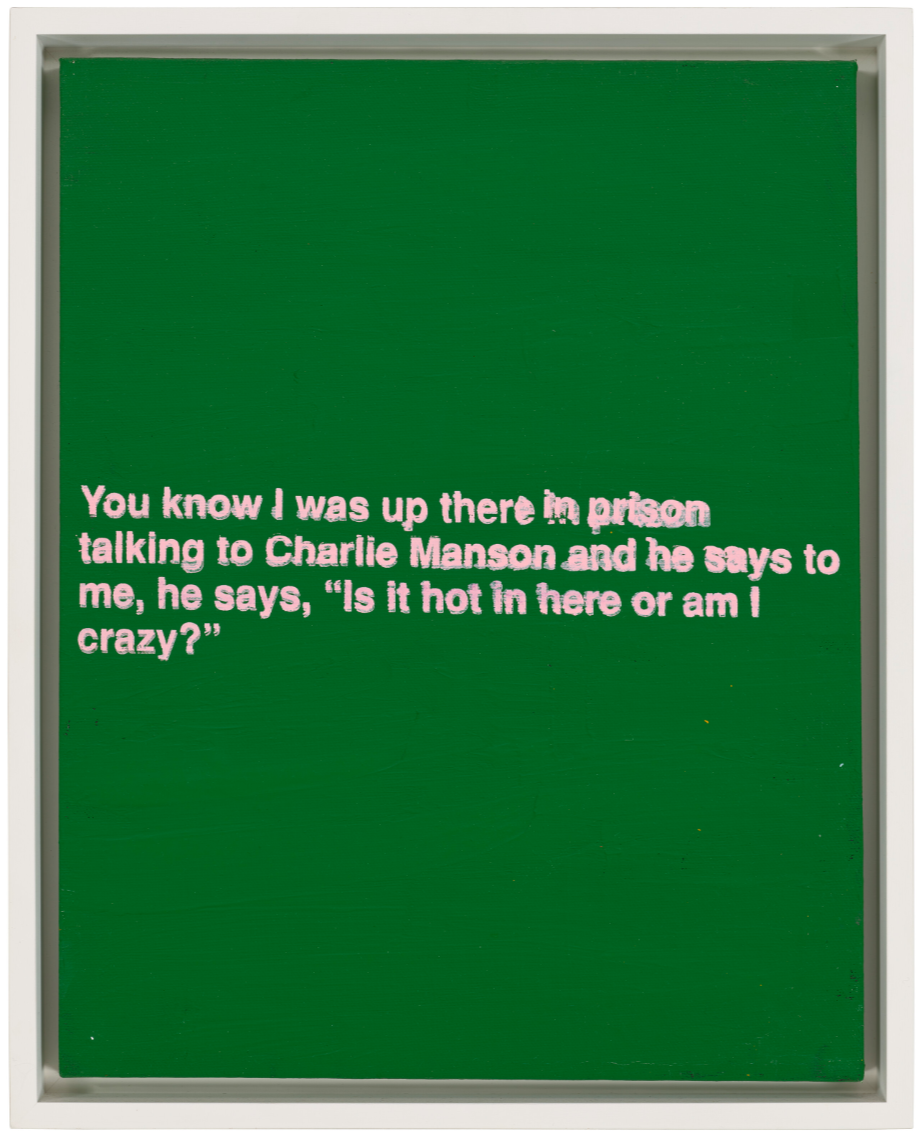
RICHARD PRINCE (B. 1949)
Untitled, 1992
Acrylic and silkscreen ink on canvas
14×11 inches (35.6 x 27.9 cm)
Signed and dated ‘Richard Prince 1992’ (on the reverse)
#22. Just My Luck, 2021
Phillips London: 8 March 2024
Estimated: GBP 100,000 – 150,000
GBP 228,600 / USD 293,754
Richard Prince – 20th Century & Conte… Lot 152 March 2024 | Phillips
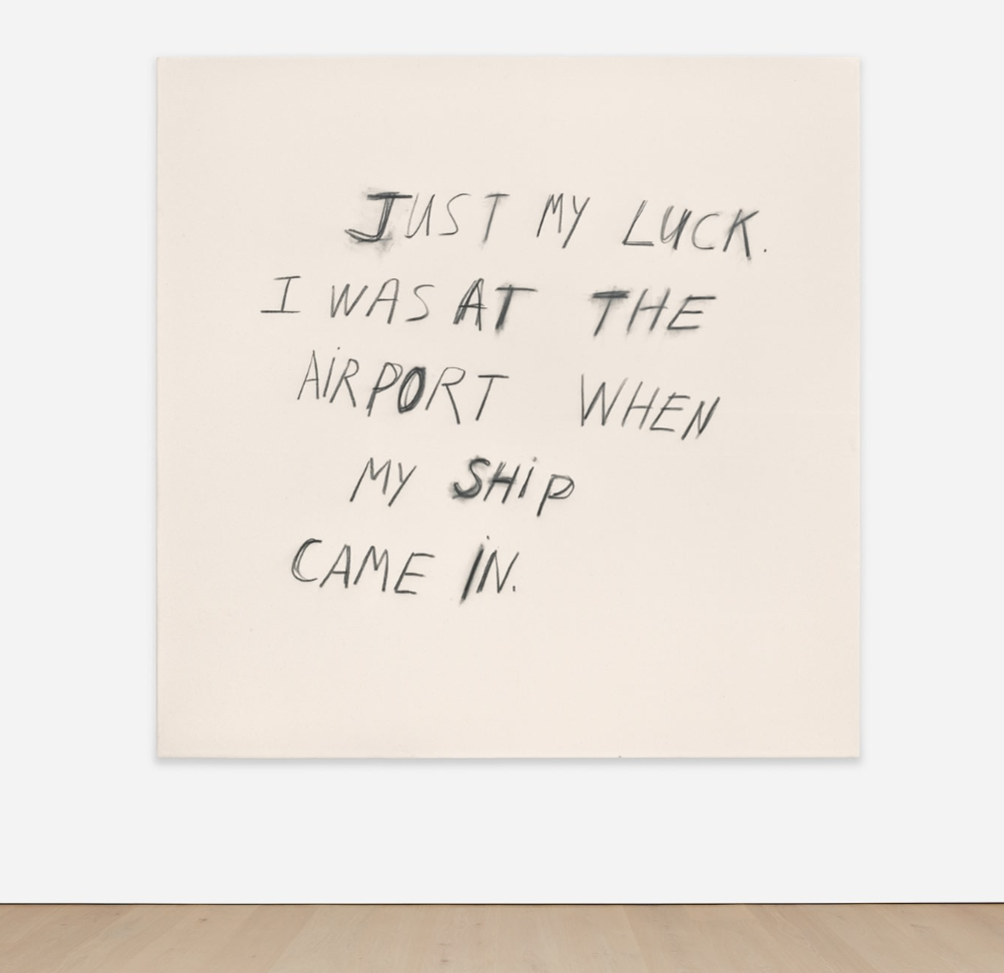
RICHARD PRINCE
Just My Luck, 2021
Charcoal on raw canvas
65 7/8 x 66 1/8 inches (167.6 x 167.8 cm)
Signed, titled and dated ‘Richard Prince 2021 JUST MY LUCK’ on the reverse
#23. Untitled (de Kooning), 2007
Phillips New-York: 25 September 2024
Estimated: USD 100,000 – 150,000
USD 279,400
Richard Prince – New Now: Modern &… Lot 22 September 2024 | Phillips
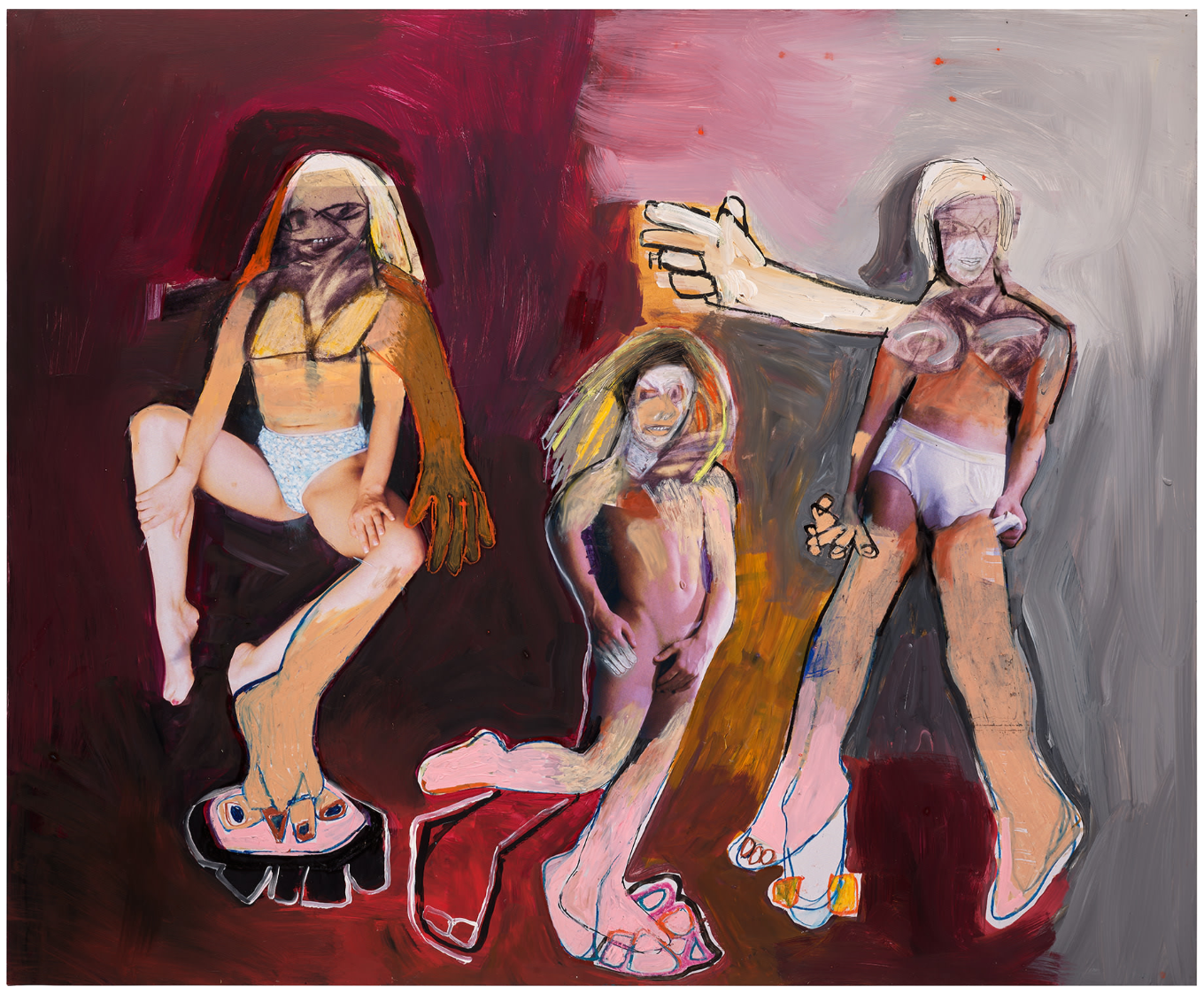
RICHARD PRINCE
Untitled (de Kooning), 2007
Acrylic on Ektacolor photograph mounted to board
48 x 58 1/2 inches (121.9 x 148.6 cm)
#24. Entertainers (Twins), 1983-2005
Christie’s New-York: 17 July 2024
Estimated: USD 80,000 – 120,000
USD 239,400
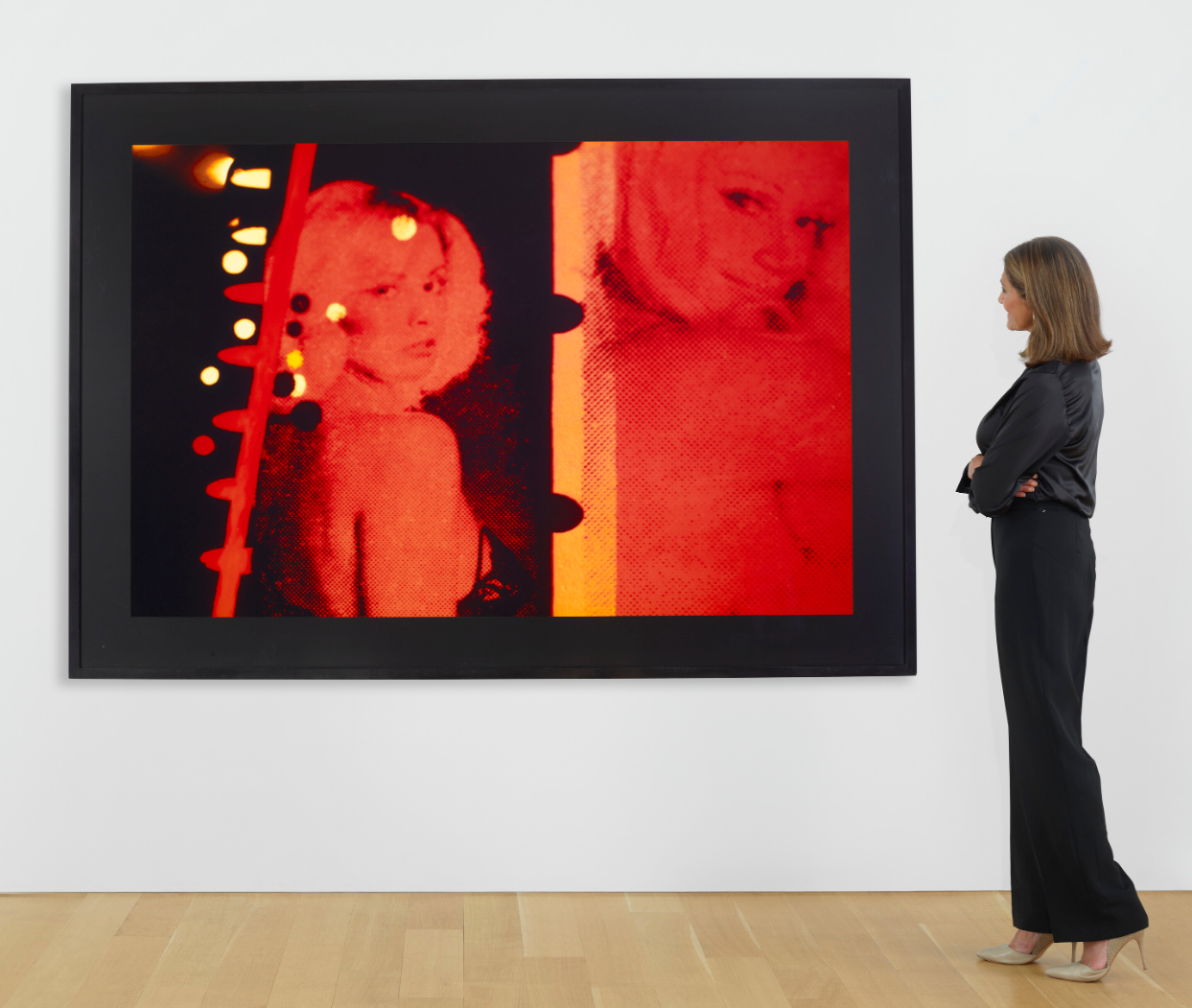
RICHARD PRINCE (b. 1949)
Entertainers (Twins), 1983-2005
Ektacolor photograph
Image: 48 1/2 x 73 inches (123.2 x 185.4 cm)
Sheet: 59 1/2 x 85 inches (151.1 x 216 cm)
Signed, numbered and dated ‘Richard Prince 1983 1/1’ (on the reverse)
This work is number one from an edition of one
#25. Untitled, 2009
Sotheby’s New-York: 14 May 2024
Estimated: USD 180,000 – 250,000
USD 215,900
Untitled | Contemporary Day Auction | 2024 | Sotheby’s (sothebys.com)
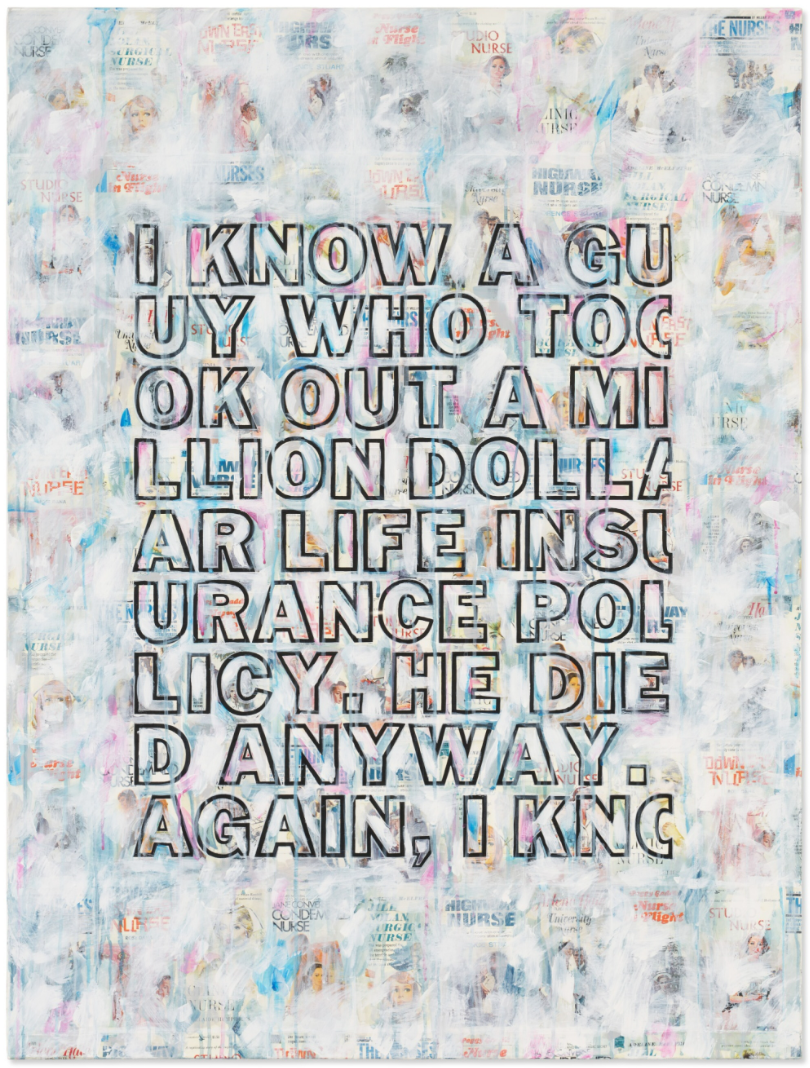
RICHARD PRINCE (b. 1949)
Untitled, 2009
Acrylic and printed paper collage on canvas
48×36 inches (121.9 x 91.4 cm)
Signed and dated 2009 (on the reverse)
#26. The Weeping One, 1988
Sotheby’s London: 26 June 2024
Estimated: GBP 150,000 – 200,000
GBP 162,000 / USD 205,465
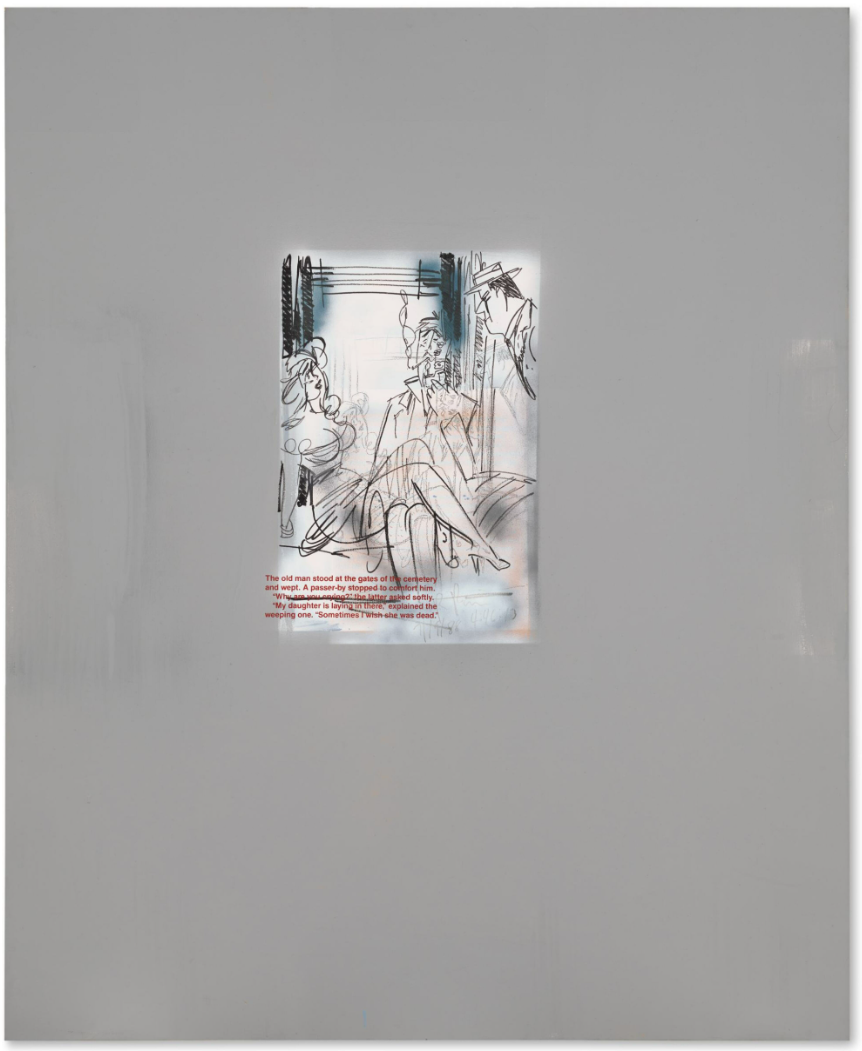
RICHARD PRINCE (b. 1949)
The Weeping One, 1988
Acrylic, silkscreen, enamel and marker on canvas
65 5/8 x 54 inches (166.7 x 137.2 cm)
Signed and dated 1/19/88 4:46:14 (centre)
Signed, titled and dated 1988 (on the overlap)
USD 200,000
#27. Untitled (Joke), 2013
Christie’s New-York: 1 October 2024
Estimated: USD 120,000 – 180,000
USD 189,000
RICHARD PRINCE (B. 1949), Untitled (Joke) | Christie’s
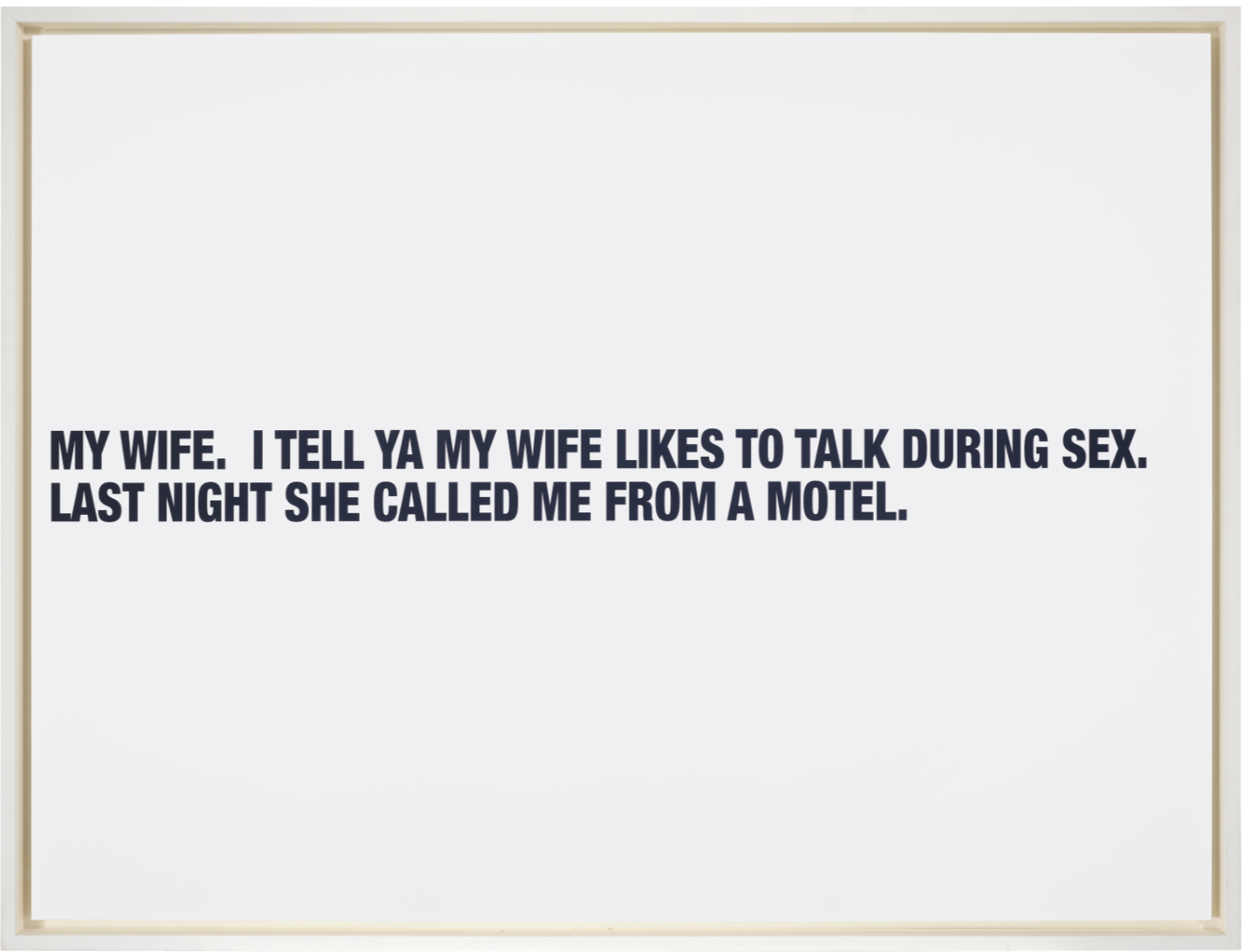
RICHARD PRINCE (B. 1949)
Untitled (Joke), 2013
Inkjet on canvas
57 1/2 x 77 1/4 inches (146.1 x 196.2 cm)
#28. The Wrong Joke (Again), 2001
Sotheby’s London: 10 October 2024
Estimated: GBP 120,000 – 180,000
GBP 144,000 / USD 188,640
The Wrong Joke (Again) | Contemporary Day Auction | 2024 | Sotheby’s
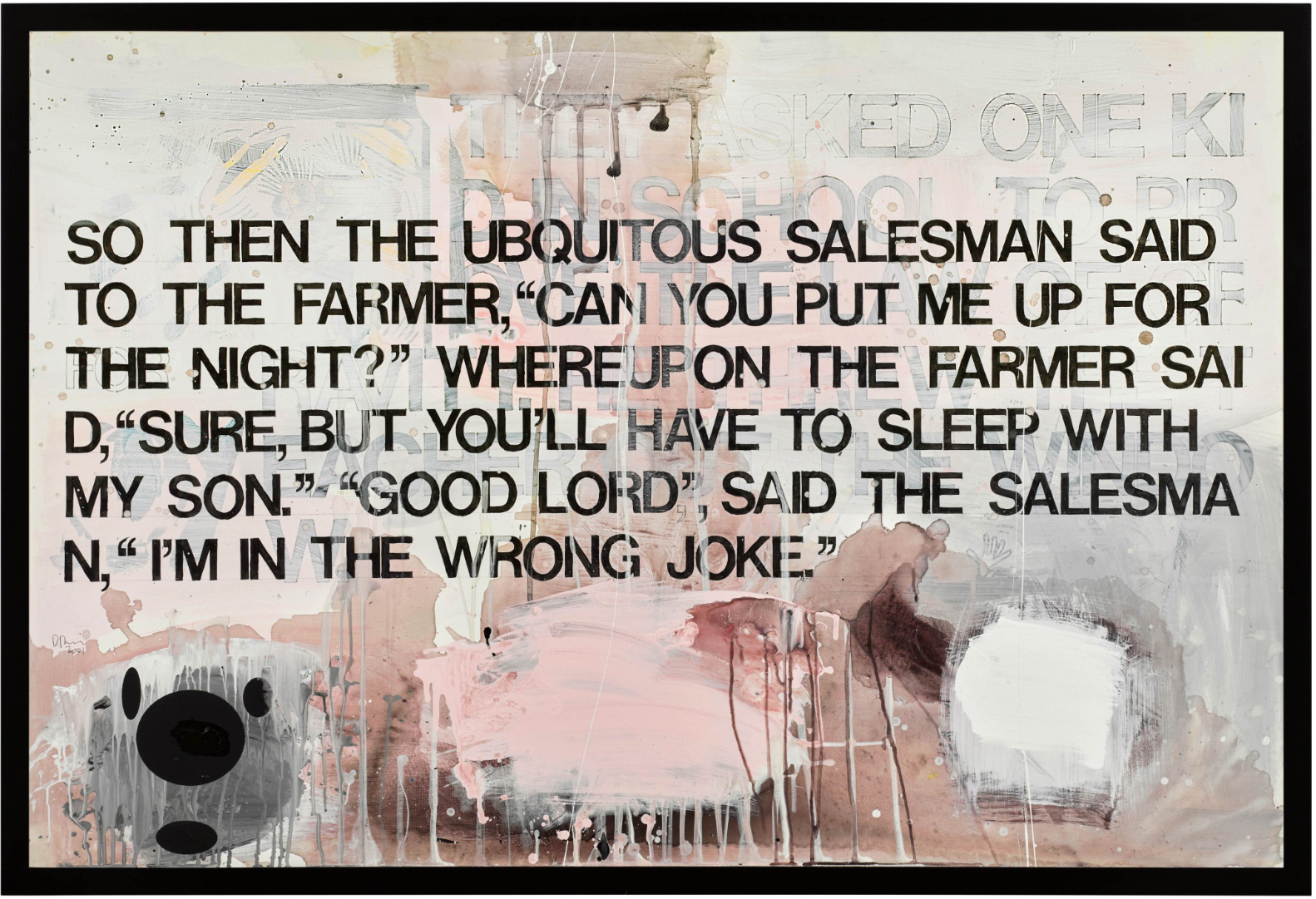
RICHARD PRINCE (b. 1949)
The Wrong Joke (Again), 2001
Acrylic and silkscreen on gator board
39 3/4 x 59 3/4 inches (101×152 cm)
Signed and dated 2001 (lower left)
#29. Untitled (Protest Painting), 1989-92
Phillips London: 11 October 2024
Estimated: GBP 60,000 – 80,000
GBP 114,300 / USD 149,290
Richard Prince – Modern & Contempor… Lot 152 October 2024 | Phillips
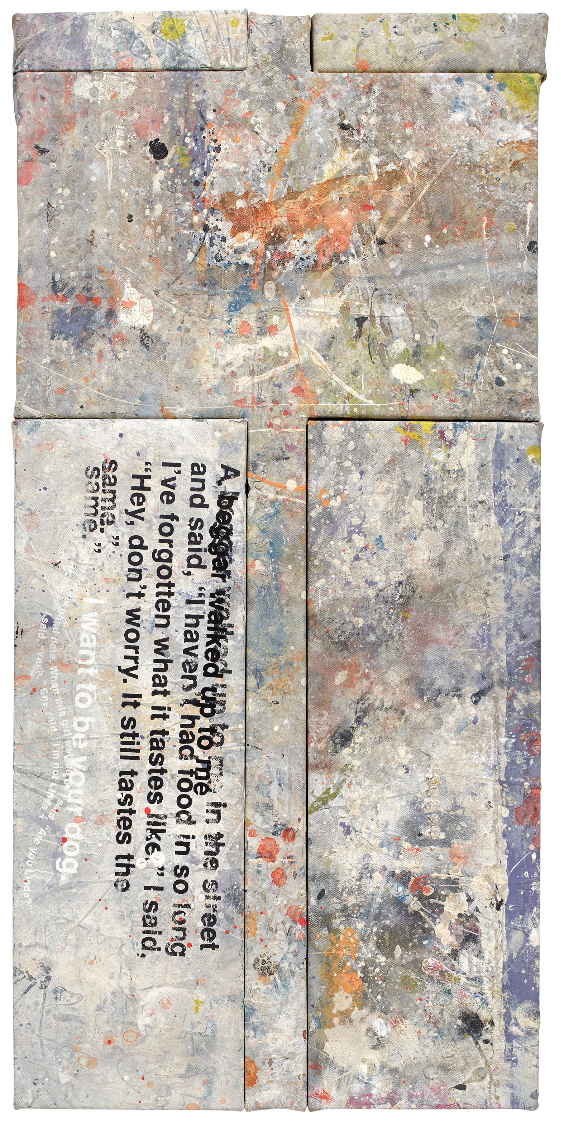
RICHARD PRINCE
Untitled (Protest Painting), 1989-92
Acrylic, silkscreen, graphite and paper on canvas
38 3/4 x 18 7/8 inches (98.5 x 47.8 cm)
#30. Untitled (Protest Painting), 1989-1992
Christie’s New-York: 13 March 2024
Estimated: USD 150,000 – 200,000
USD 138,600
RICHARD PRINCE (B. 1949), Untitled (Protest Painting) | Christie’s
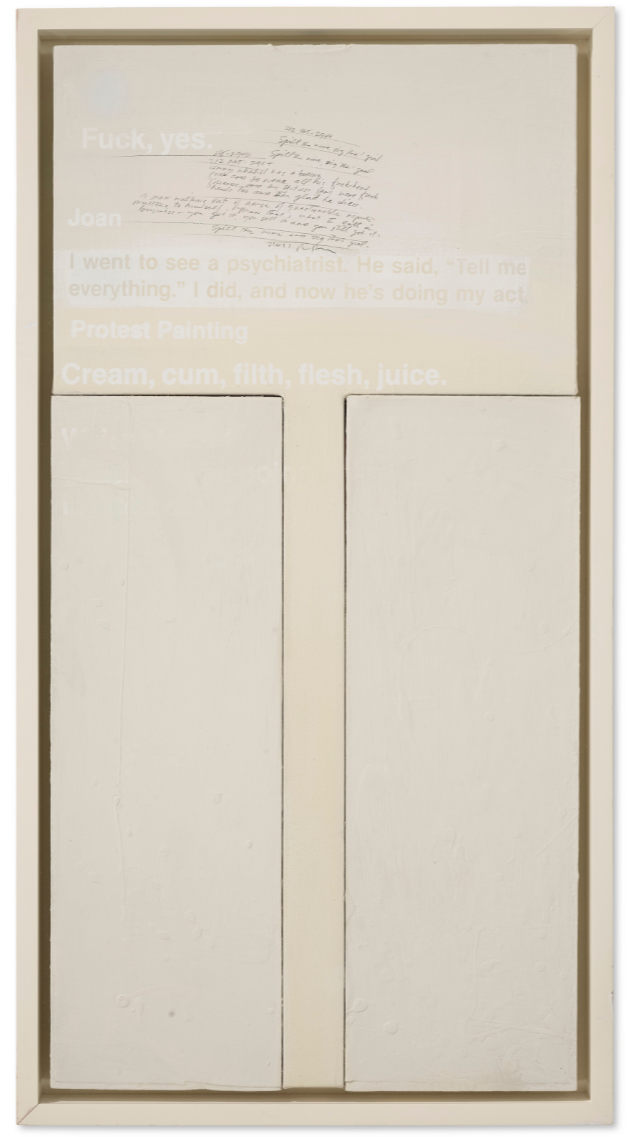
RICHARD PRINCE (B. 1949)
Untitled (Protest Painting), 1989-1992
Acrylic, silkscreen ink, graphite and paper collage on canvas mounted on board, in three joined parts
36 1/8 x 18 1/4 inches (91.8 x 46.4 cm)
#31. Untitled (Hippie Drawings) [Ten Works], 1997-1998
Christie’s New-York: 22 November 2024
Estimated: USD 80,000 – 120,000
USD 126,000
RICHARD PRINCE (B. 1949), Untitled (Hippie Drawings) [Ten Works] | Christie’s
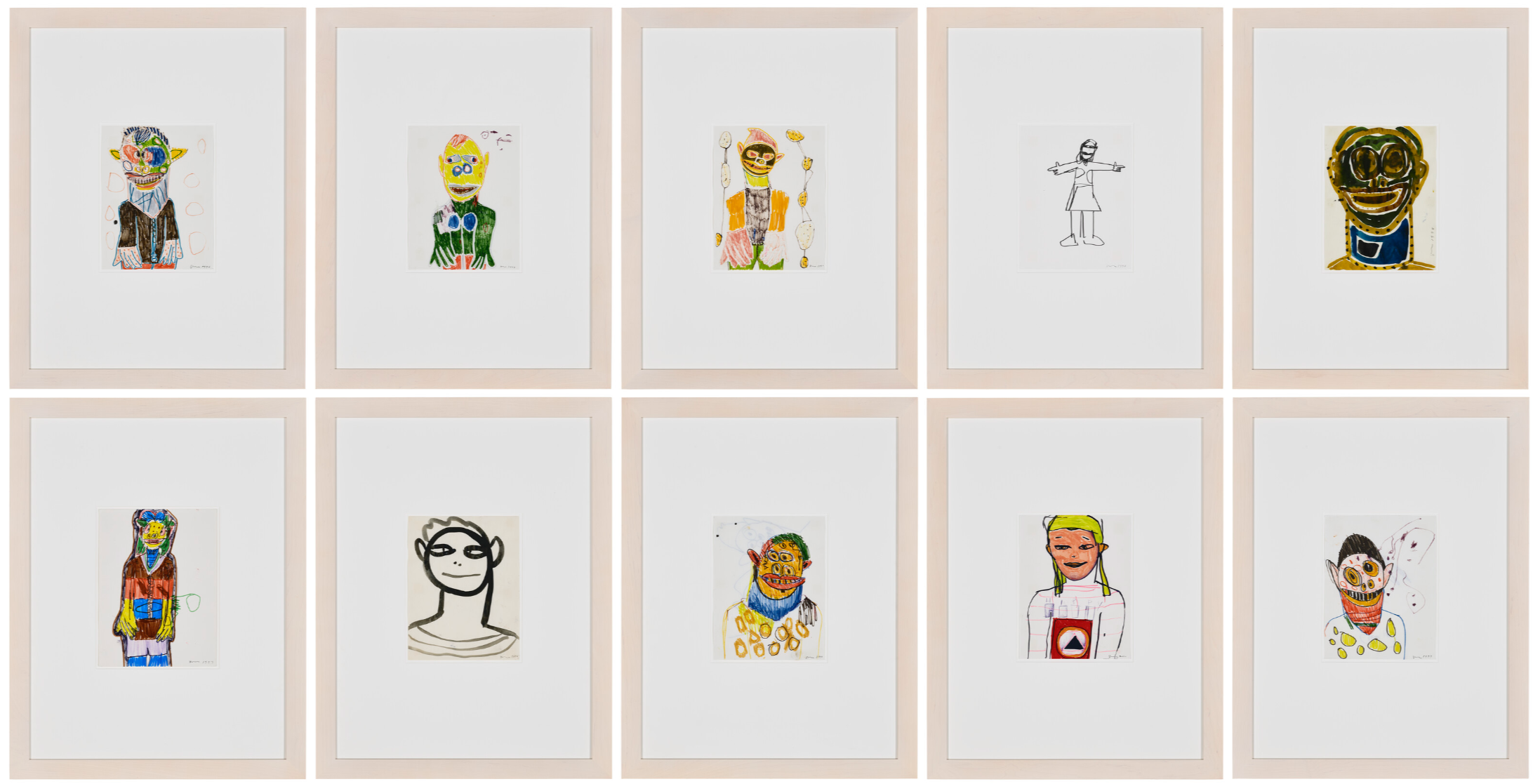
RICHARD PRINCE (B. 1949)
Untitled (Hippie Drawings) [Ten Works], 1997-1998
Marker, ink, acrylic and ball-point pen on paper
11 x 8 1/2 inches (27.9 x 21.6 cm)
Signed and dated (lower right)
#32. Untitled (#168), 2016-2017
Christie’s New-York: 17 May 2024
Estimated: USD 100,000 – 150,000
USD 126,000
RICHARD PRINCE (B. 1949), Untitled (#168) | Christie’s
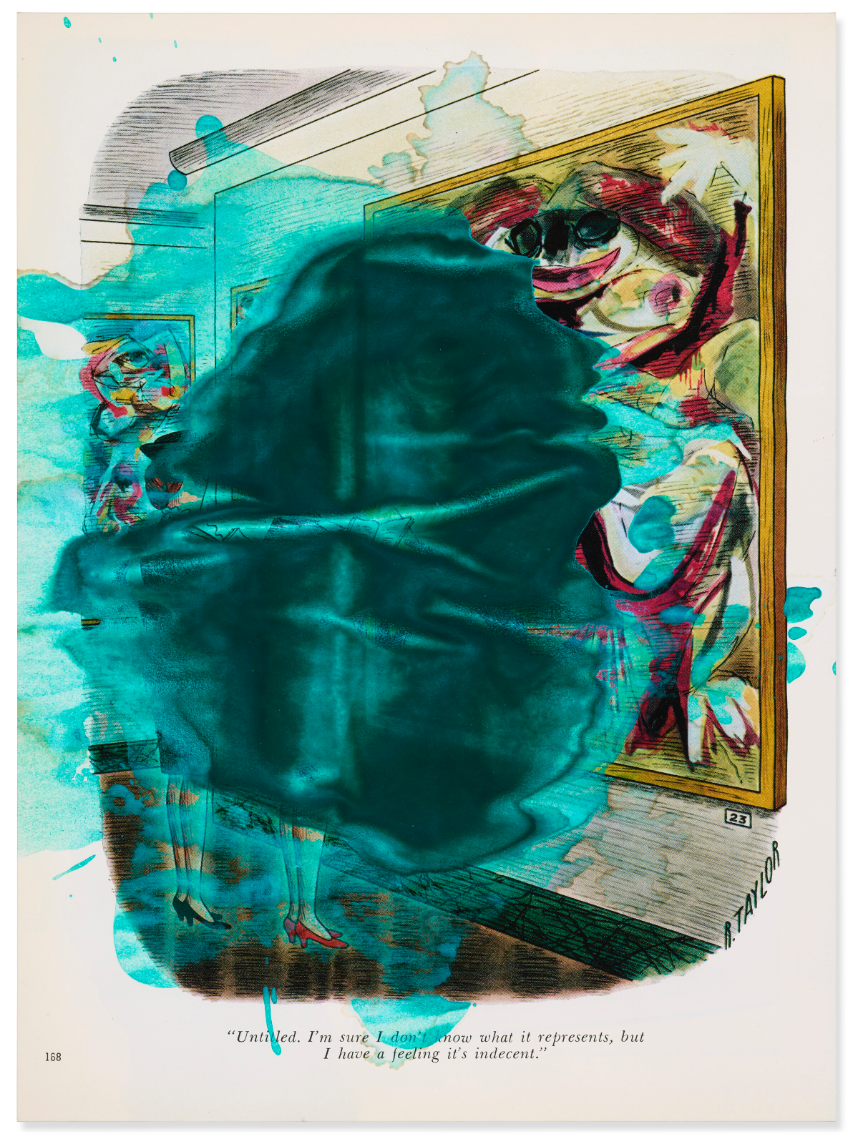
RICHARD PRINCE (B. 1949)
Untitled (#168), 2016-2017
Inkjet on canvas
74 1/4 x 54 3/4 inches (188.6 x 139.1 cm)
Signed and dated ‘Richard Prince 2016-17’ (on the overlap)
#33. Untitled (Protest Painting), 1992-1994
Phillips New-York: 20 November 2024
Estimated: USD 70,000 – 100,000
USD 95,250
Richard Prince – Modern & Contempo… Lot 387 November 2024 | Phillips
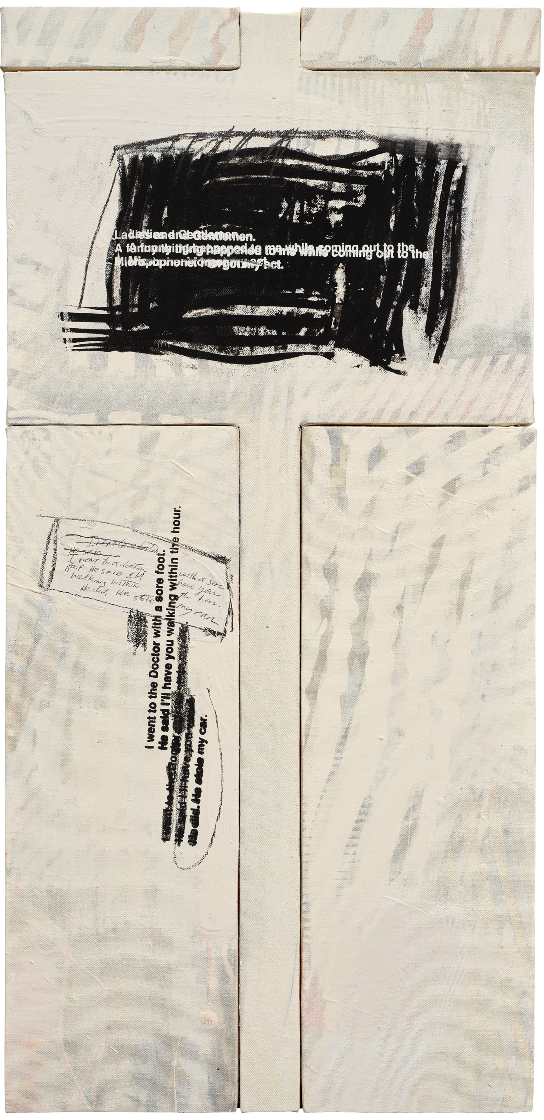
RICHARD PRINCE
Untitled (Protest Painting), 1992-1994
Acrylic, silkscreen and graphite on 5 attached canvases
38 1/4 x 18 5/8 inches (97.2 x 47.3 cm)
Signed and dated “R Prince 1992–94” on the reverse
#34. Untitled (Black Bra Terrorist), 1990
Christie’s New-York: 17 May 2024
Estimated: USD 40,000 – 60,000
USD 50,400
RICHARD PRINCE (B. 1949), Untitled (Black Bra Terrorist) | Christie’s
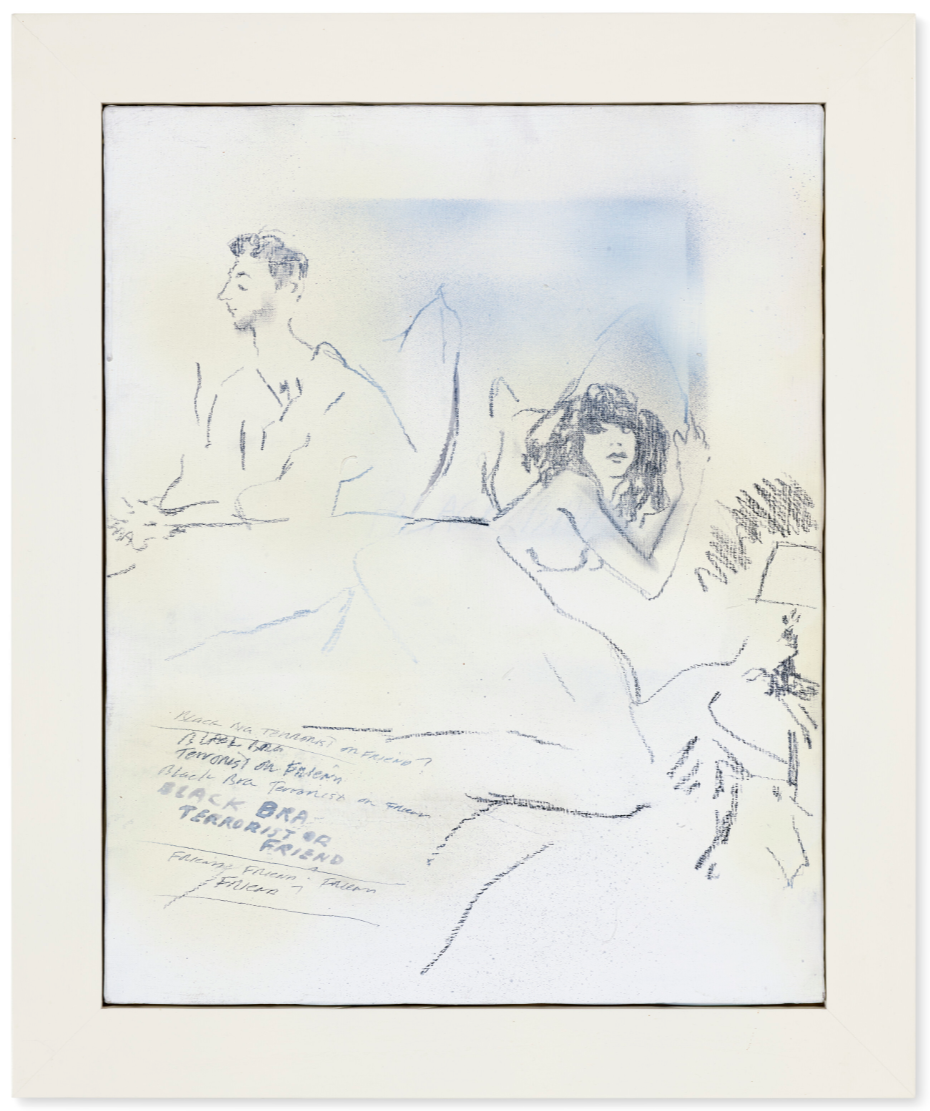
RICHARD PRINCE (B. 1949)
Untitled (Black Bra Terrorist), 1990
Acrylic, ink, graphite and charcoal on canvas
19 3/4 x 15 3/4 inches (50.2 x 40 cm)
Signed and dated ‘Richard Prince 1990’ (on the stretcher)
#35. Carole, from the Entertainer series, 1982
Phillips New-York: 25 September 2024
Estimated: USD 30,000 – 50,000
USD 48,260
Richard Prince – New Now: Modern … Lot 214 September 2024 | Phillips
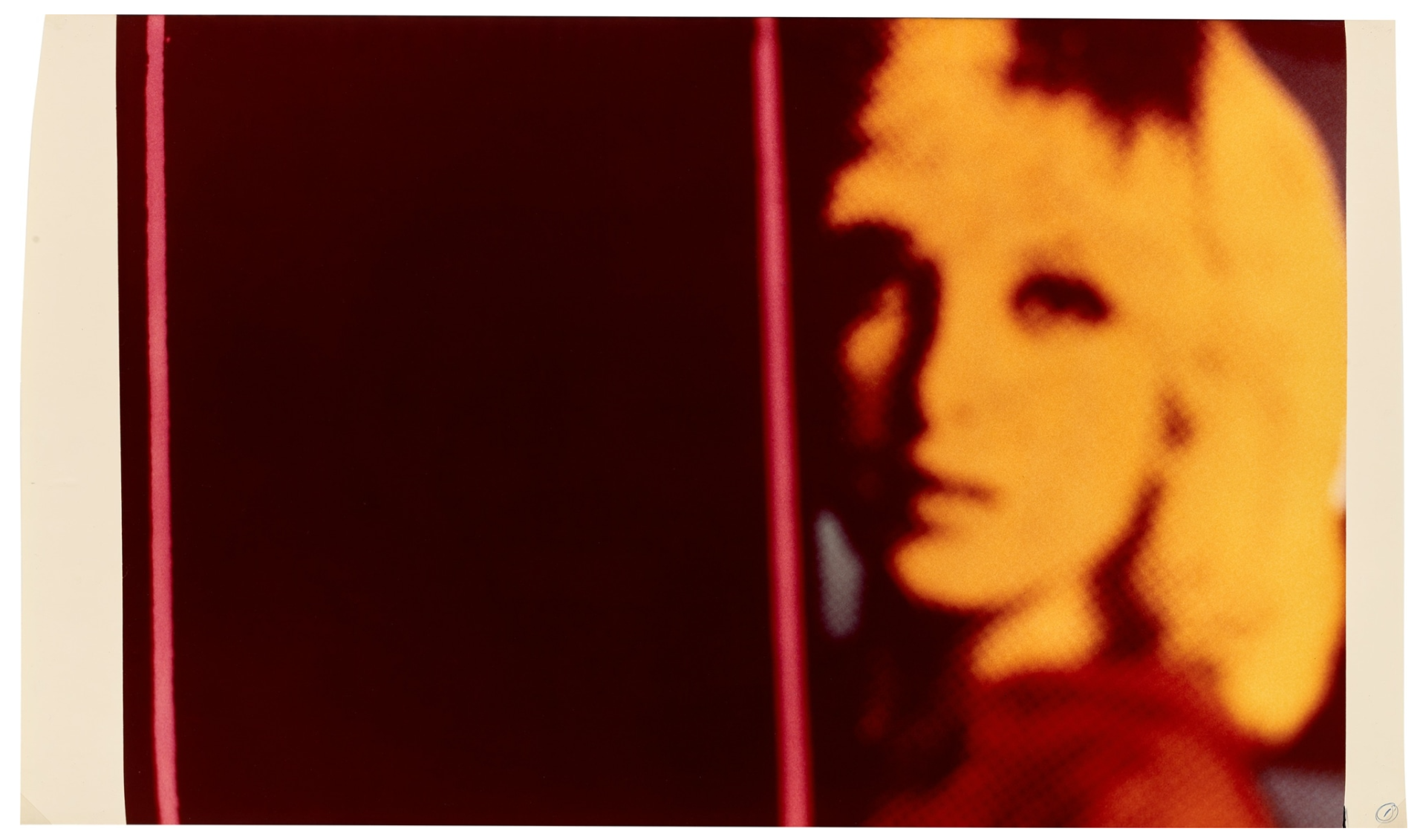
RICHARD PRINCE
Carole, from the Entertainer series, 1982
Ektachrome photograph on paper
29 7/8 x 51 1/4 inches (75.9 x 130.2 cm)
Executed in 1982, this work is unique
#36. Untitled (Portrait), 2014
Phillips New-York: 20 November 2024
Estimated: USD 18,000 – 25,000
USD 35,560
Richard Prince – Modern & Contempo… Lot 412 November 2024 | Phillips
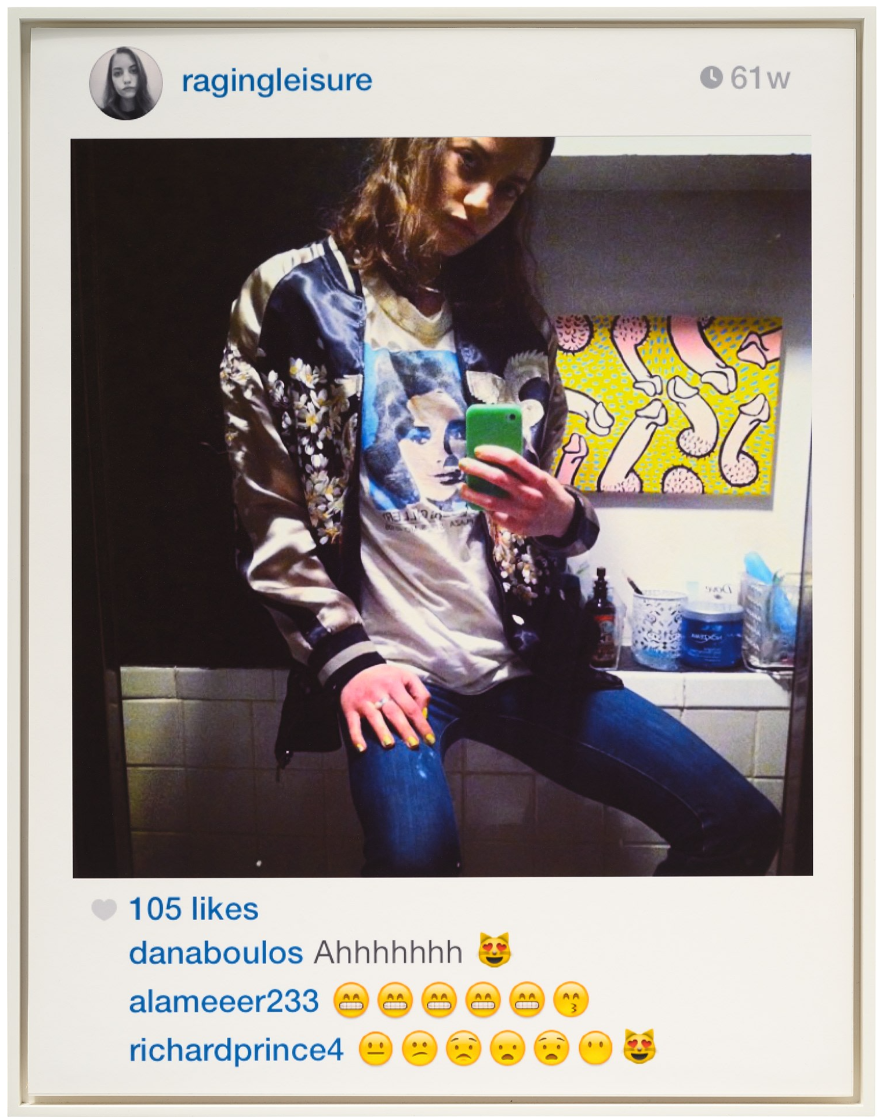
RICHARD PRINCE
Untitled (Portrait), 2014
Inkjet on paper
22×17 inches (55.9 x 43.2 cm)
#37. Untitled (portrait), 2014
Sotheby’s New-York: 16 July 2024
Estimated: USD 20,000 – 30,000
USD 31,200
Untitled (portrait) | Contemporary Discoveries | 2024 | Sotheby’s
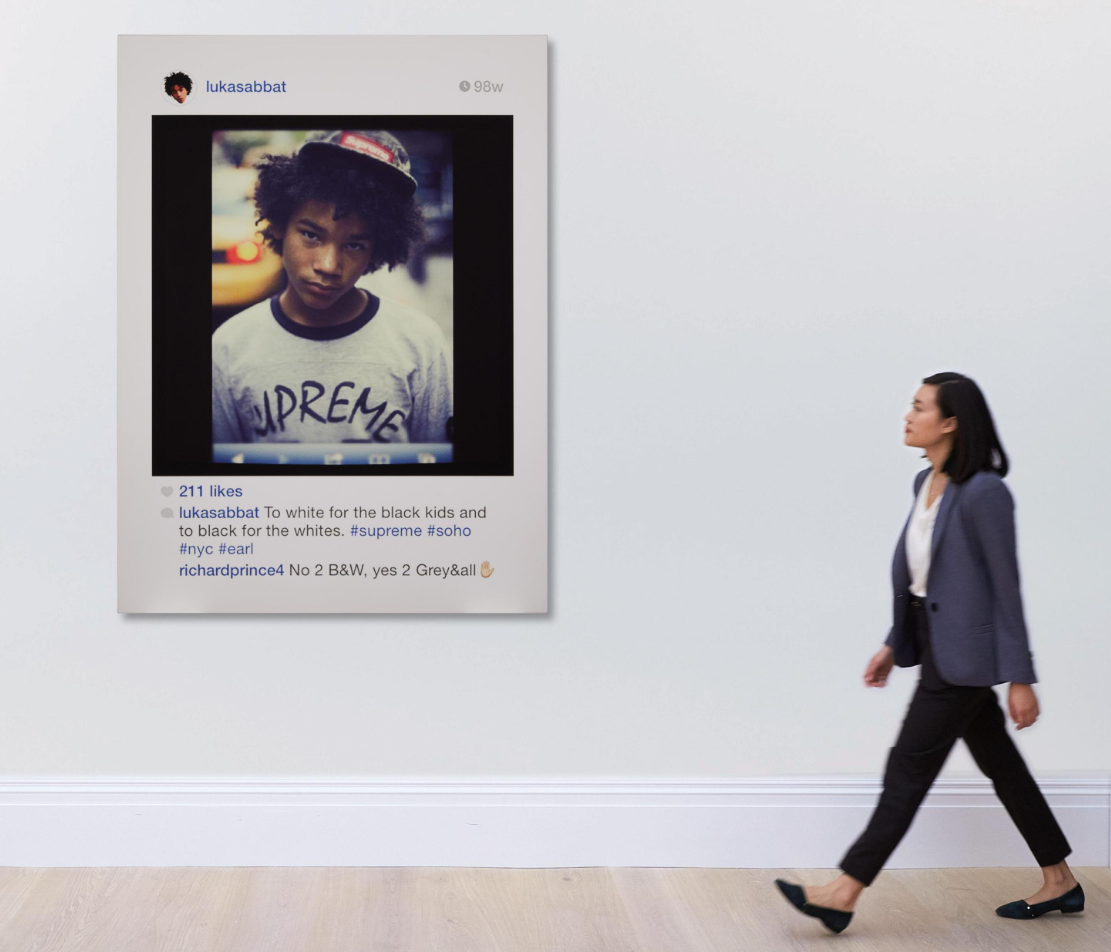
RICHARD PRINCE (b. 1949)
Untitled (portrait), 2014
Inkjet on canvas
66 x 48 7/8 inches (167.6 x 124.1 cm)
Signed and dated 2014 (on the overlap)
#38. Untitled, 1990
Christie’s New-York: 4 June 2024
Estimated: USD 15,000 – 20,000
USD 27,720
RICHARD PRINCE (b. 1949), Untitled | Christie’s
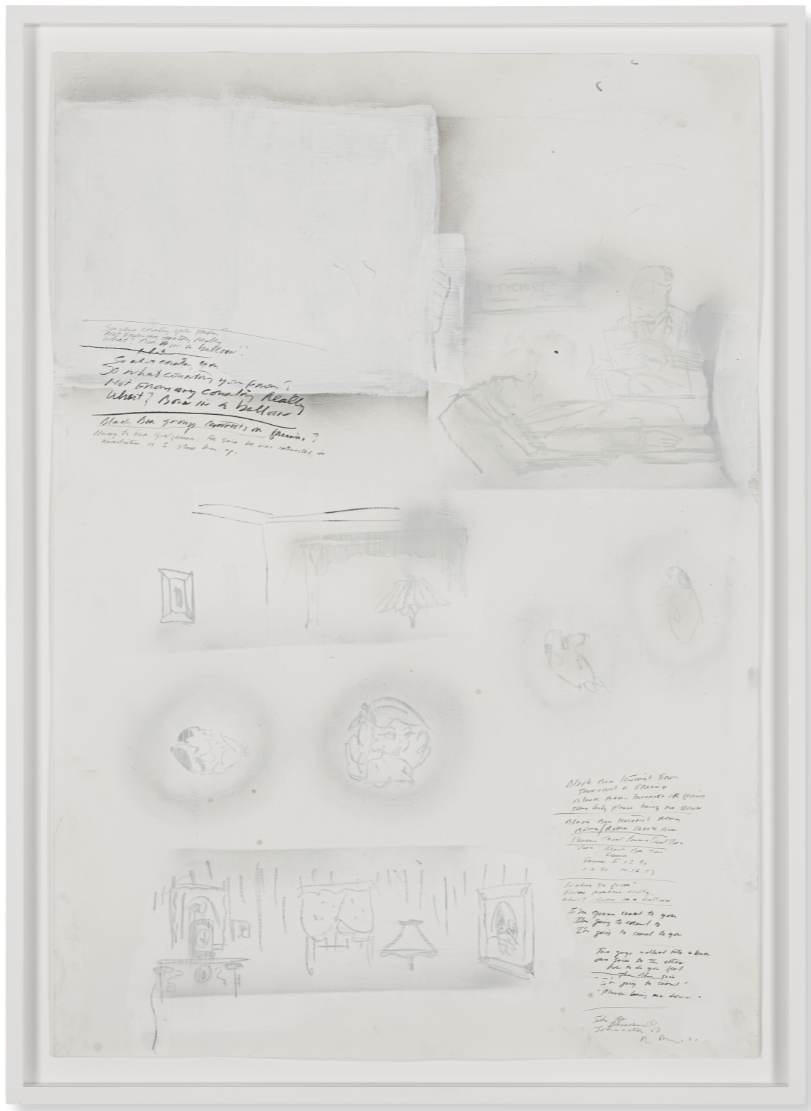
RICHARD PRINCE (b. 1949)
Untitled, 1990
Acrylic, spray paint, Conté crayon and graphite on paper
39 1/4 x 27 1/2 inches (99.7 x 69.9 cm)
Signed with the artist’s initials and dated ‘R P. 90’ (lower right)
#39. The Velvet Beach, 1984
Phillips New-York: 12 March 2024
Estimated: USD 25,000 – 35,000
USD 25,400
Richard Prince – New Now New York Lot 116 March 2024 | Phillips
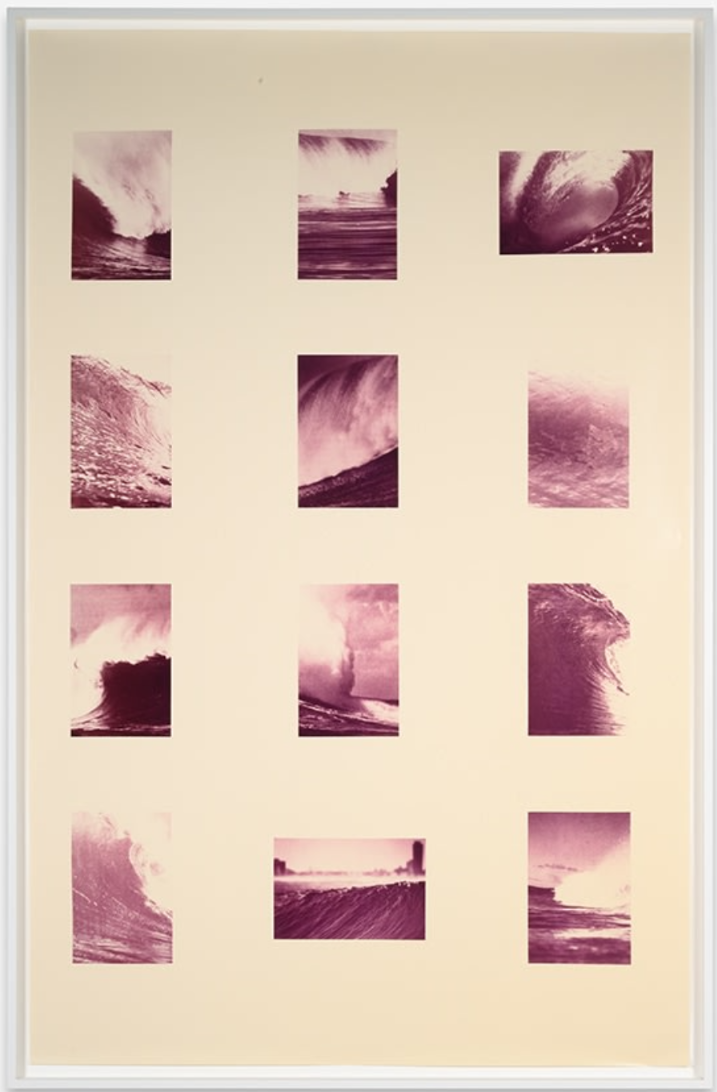
RICHARD PRINCE
The Velvet Beach, 1984
Chromogenic print
72×46 inches (182.9 x 116.8 cm)
Signed, titled and dated “The Velvet Beach 1984 R Prince” on the reverse
This work is number 1 from an edition of 2
Lots Passed
Untitled (Girlfriend), 1993
Christie’s New-York: 22 November 2024
Estimated: USD 500,000 – 700,000
PASSED
RICHARD PRINCE (B. 1949), Untitled (Girlfriend) | Christie’s
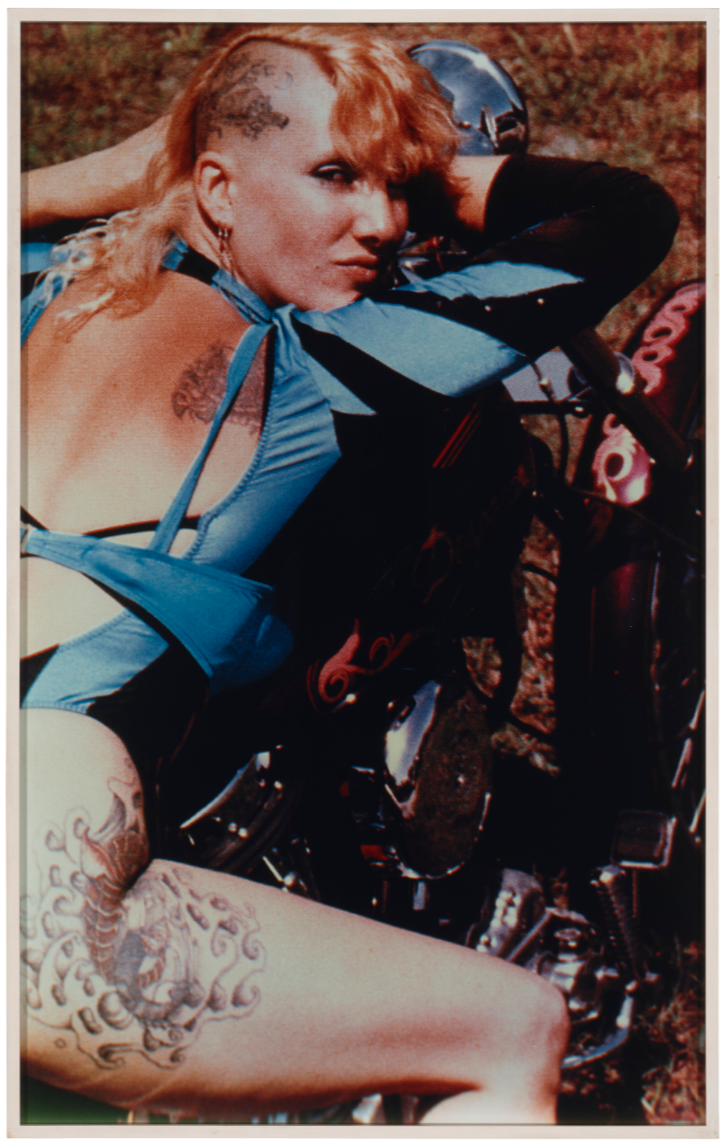
RICHARD PRINCE (B. 1949)
Untitled (Girlfriend), 1993
Ektacolor print
60×40 inches (152.4 x 101.6 cm)
Signed, numbered and dated ‘Richard Prince 1993 2⁄2’ (on the reverse)
This work is number two from an edition of two plus one artist’s proof
Are You Kidding?, 1988
Phillips New-York: 20 November 2024
Estimated: USD 250,000 – 350,000
PASSED
Richard Prince – Modern & Contempo… Lot 331 November 2024 | Phillips
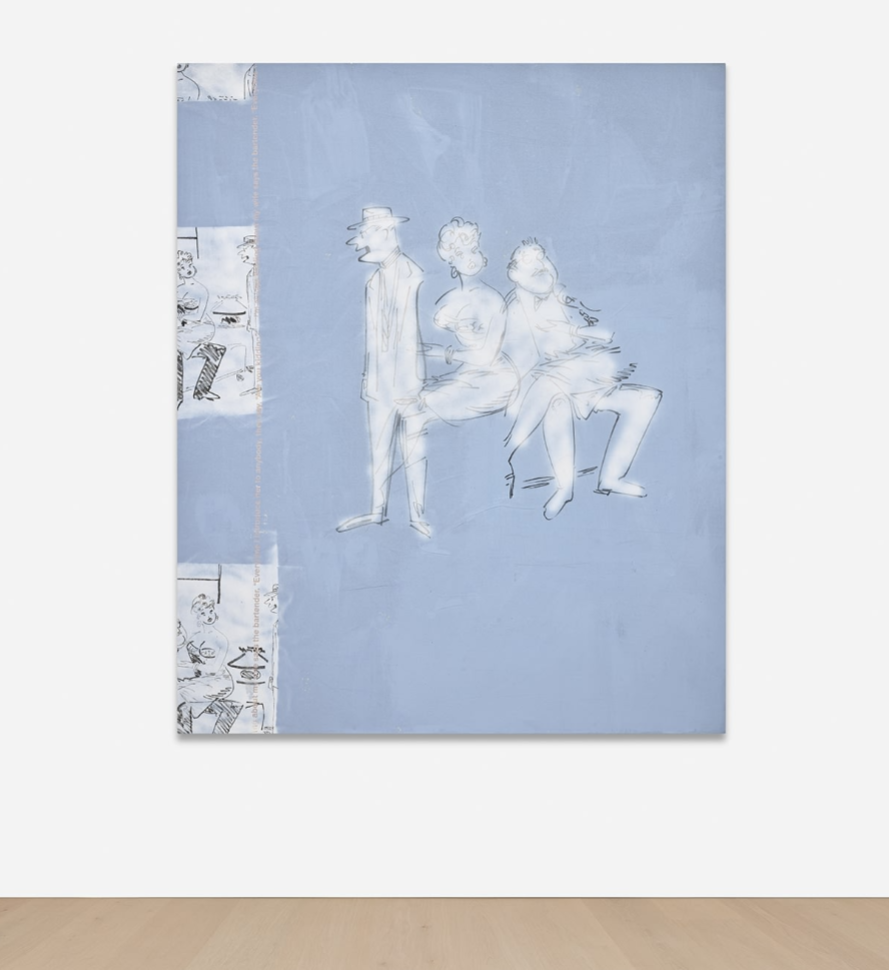
RICHARD PRINCE
Are You Kidding?, 1988
Acrylic and silkscreen ink on canvas
66×54 inches (167.6 x 137.2 cm)
Signed, titled and dated “R Prince 1988 “ARE YOU KIDDING”” on the overlap
Untitled, 2008
Christie’s New-York: 22 November 2024
Estimated: USD 200,000 – 300,000
PASSED
RICHARD PRINCE (B. 1949), Untitled | Christie’s
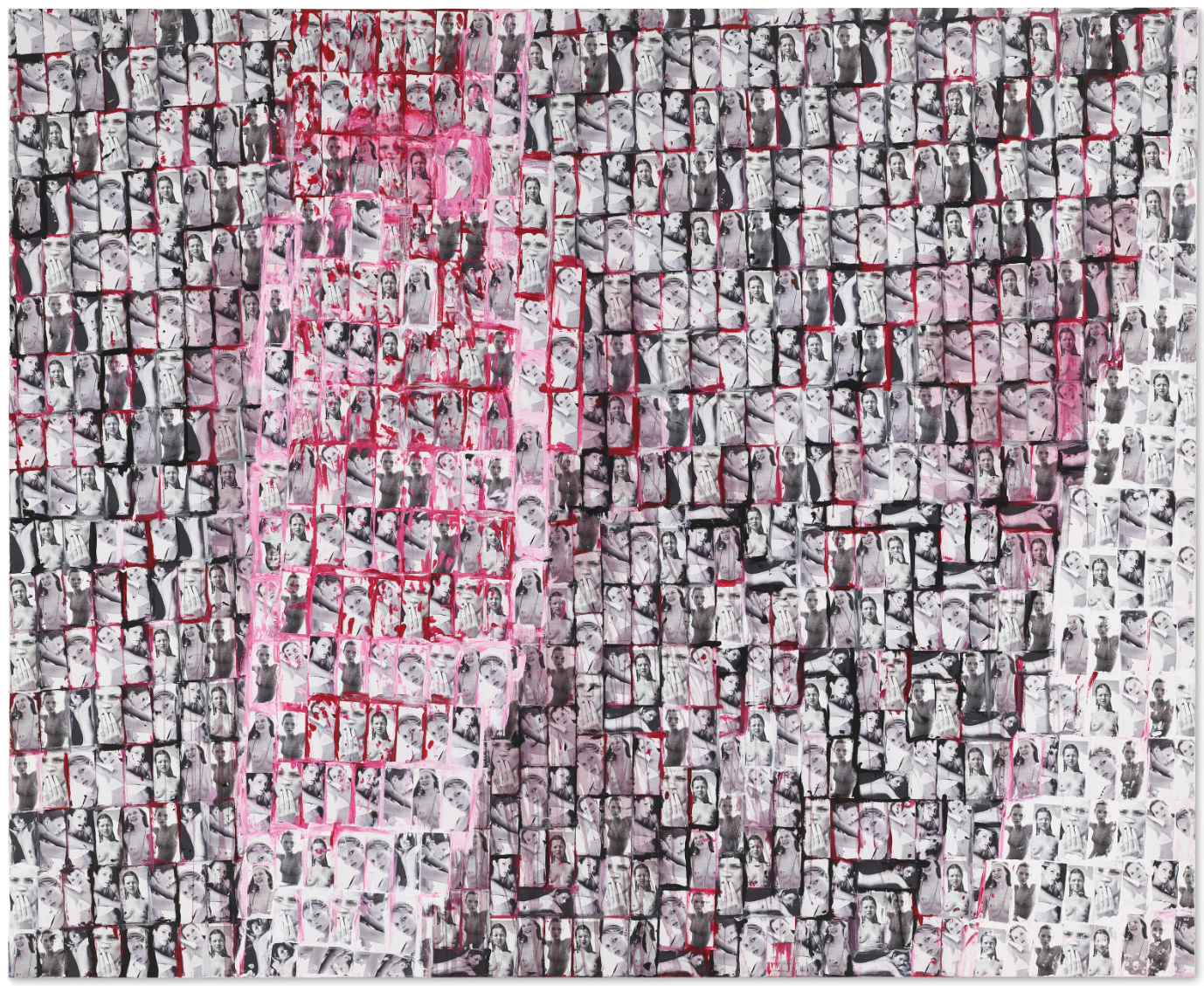
RICHARD PRINCE (B. 1949)
Untitled, 2008
Acrylic and printed paper collage on canvas
89×109 inches (226.2 x 276.9 cm)
2023 Auction Results
43 lots sold at auction in 2023 for a total turnover of USD 30,213,147. With 5 lots failing to sell, the sell-through rate is 90%. The highest price was achieved by Nurse Kathy, a painting from the iconic Nurses series, dated 2004, that sold at Christie’s in New-York for USD 4,890,000. 9 lots sold for more than USD 1 million generating a cumulative turnover of USD 20,833,273, representing 69% of the total turnover for 2023.
2023 Top 3 Lots
#1. Nurse Kathy, 2004
Christie’s New-York: 17 May 2023
Estimated: USD 4,000,000 – 6,000,000
USD 4,890,000
RICHARD PRINCE (b. 1949) (christies.com)
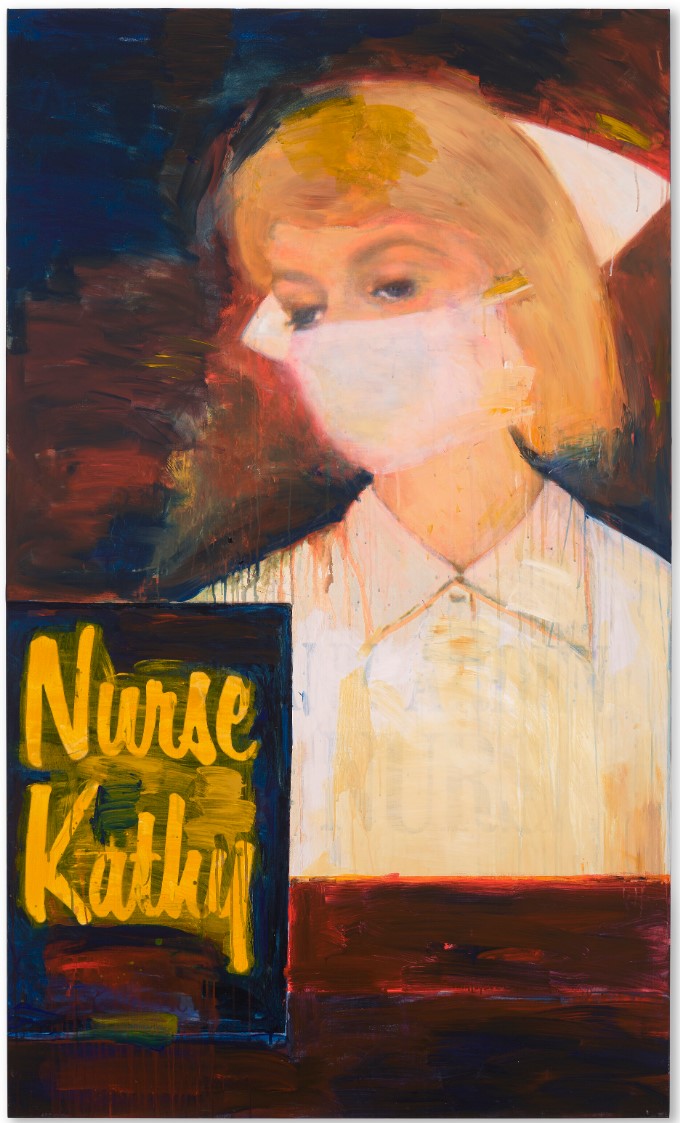
RICHARD PRINCE (b. 1949)
Nurse Kathy, 2004
Inkjet and acrylic on canvas
77×46 inches (195.6 x 116.8 cm)
Signed, titled and dated ‘Richard Prince 2004 NURSE KATHY’ (on the overlap)
#2. The Way She Looks in the Morning, 1988
Christie’s New-York: 7 November 2023
Estimated: USD 2,500,000 – 3,500,000
USD 2,712,000
RICHARD PRINCE (B. 1949), The Way She Looks in the Morning | Christie’s (christies.com)
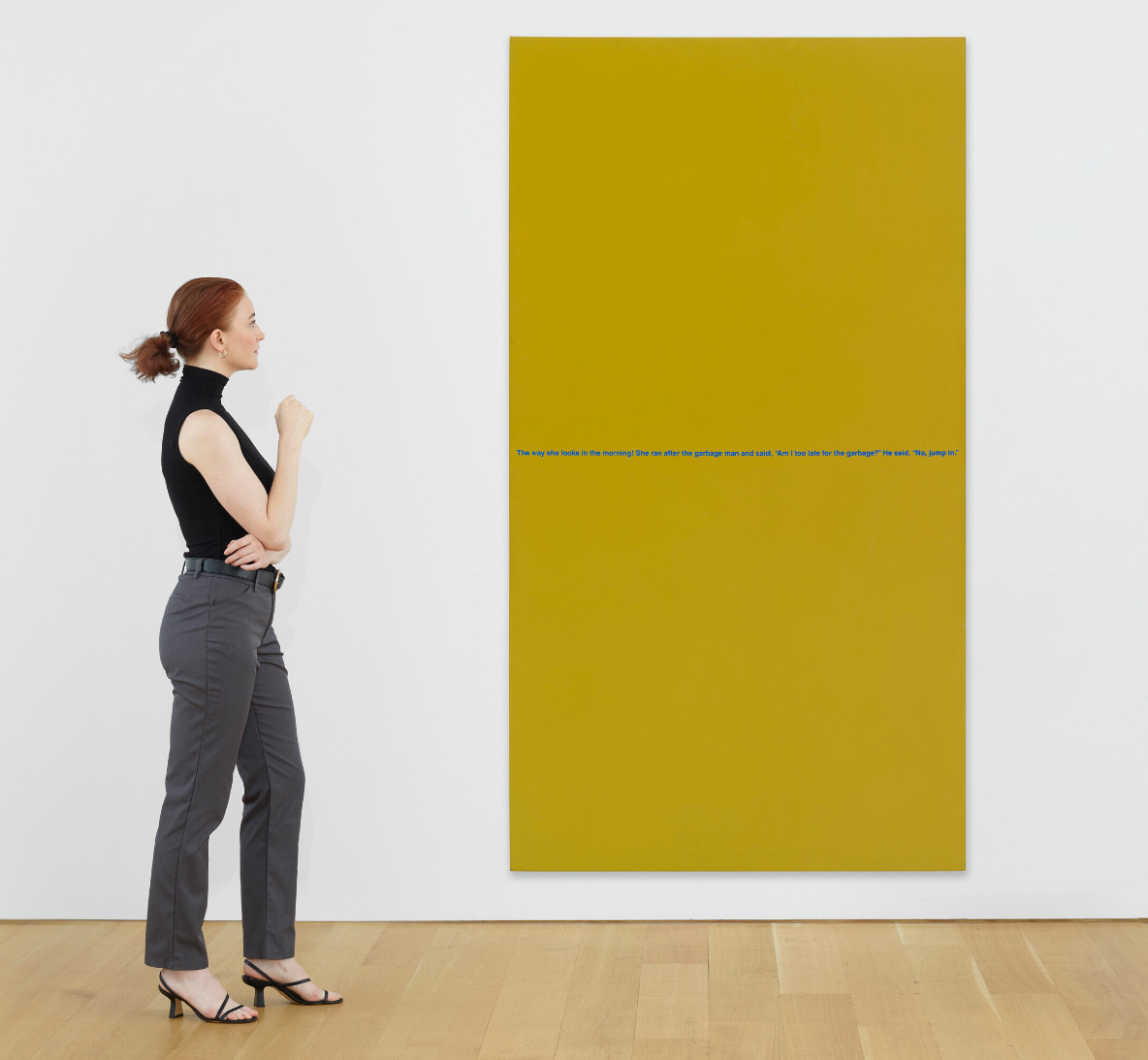
RICHARD PRINCE (B. 1949)
The Way She Looks in the Morning, 1988
Acrylic and silkscreen ink on canvas mounted on panel
86 1/4 x 47 1/8 inches (218.6 x 119.5 cm)
Signed and dated ‘R Prince 1988’ (on the overlap)
#3. Camp Nurse, 2002-2003
Christie’s Hong-Kong: 28 November 2023
Estimated: HKD 22,000,000 – 28,000,000
HKD 20,945,000 / USD 2,688,999
21391-richard-prince-nurse (christies.com)
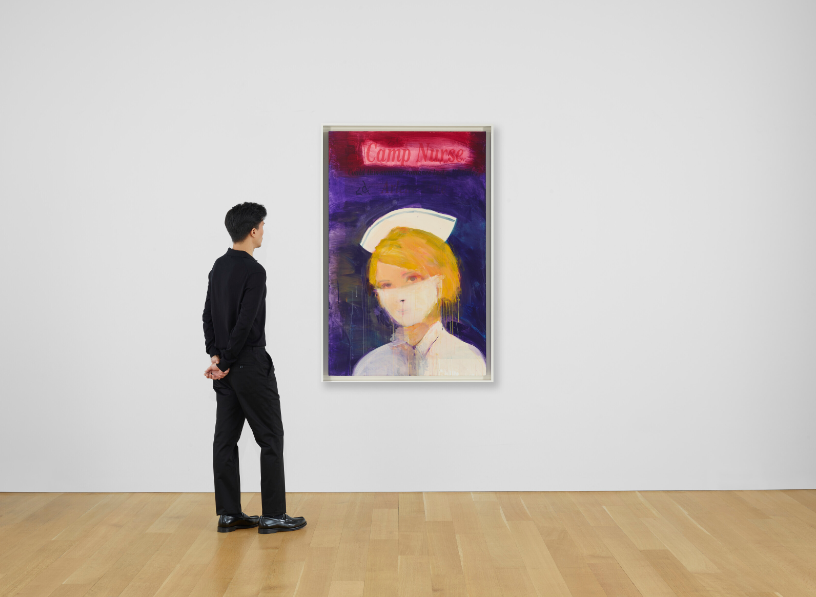
RICHARD PRINCE (B. 1949)
Camp Nurse, 2002-2003
Inkjet and acrylic on canvas
56×36 inches (142.2 x 91.4 cm)
Signed, titled and dated ‘Richard Prince CAMP NURSE 2002-03’ (on the overlap)
#4. Untitled, 1992
Sotheby’s London: 12 October 2023
Estimated: GBP 2,000,000 – 3,000,000
GBP 1,909,000 / USD 2,348,070
Untitled | Contemporary Evening Auction | 2023 | Sotheby’s (sothebys.com)
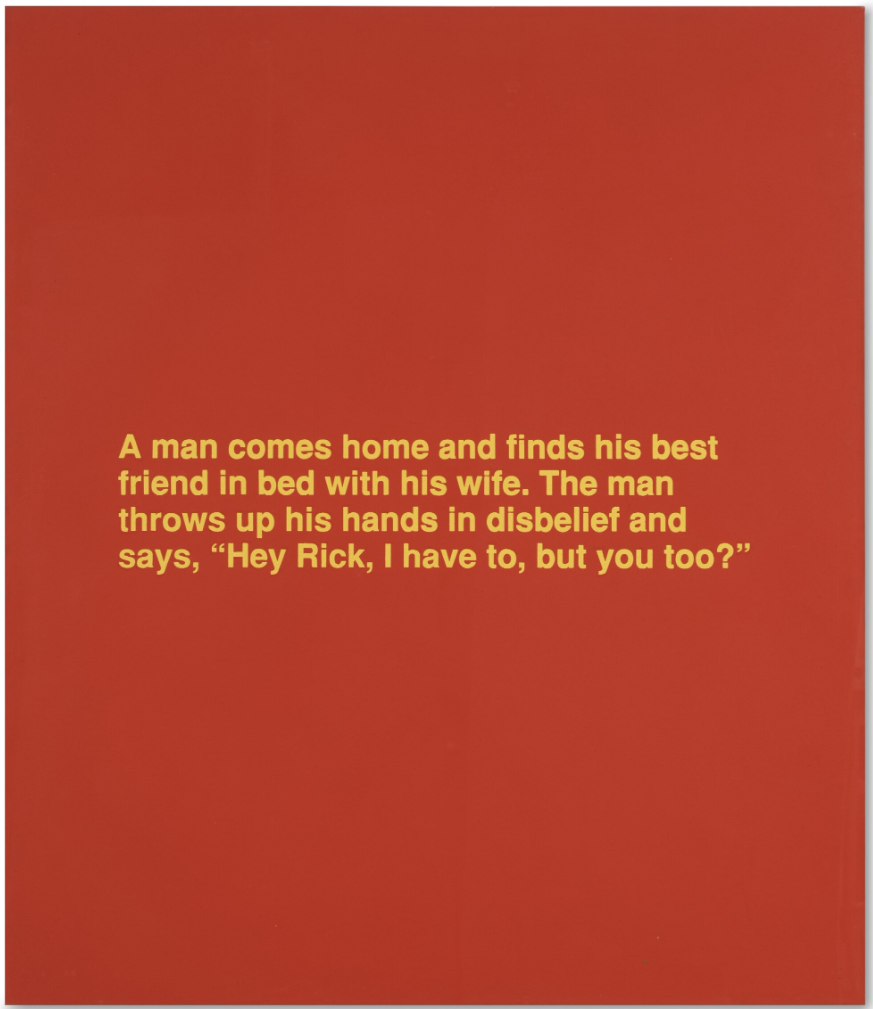
RICHARD PRINCE (b. 1949)
Untitled, 1992
Acrylic and silkscreen on canvas
56 x 48 1/4 inches (142.2 x 122.6 cm)
#5. My First Girl, 1989
Sotheby’s New-York: 8 November 2023
Estimated: USD 2,500,000 – 3,500,000
USD 2,000,000
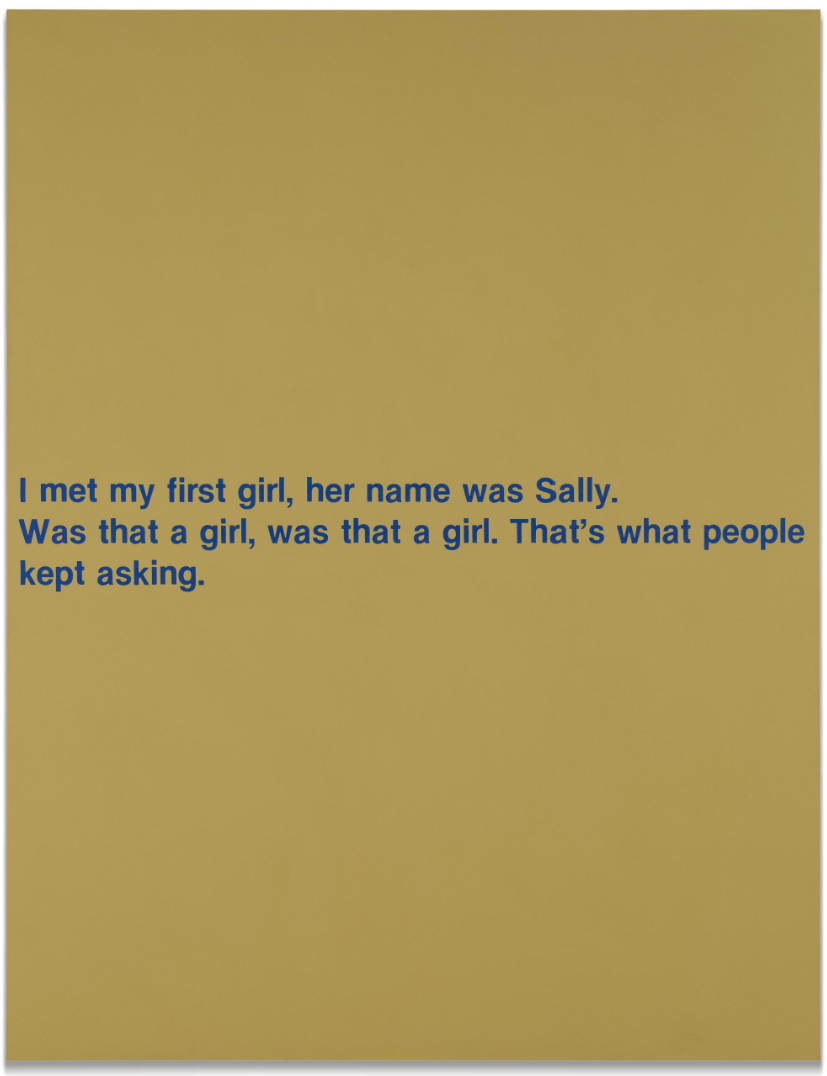
RICHARD PRINCE (b. 1949)
My First Girl, 1989
Acrylic and silkscreen on canvas
75 1/4 x 58 inches (191.1 x 147.3 cm)
Signed, titled and dated 1989 (on the overlap)
#6. Untitled, 1989-1990
Christie’s New-York: 9 March 2023
Estimated: USD 1,200,000 – 1,800,000
USD 1,860,000
RICHARD PRINCE (B. 1949), Untitled | Christie’s (christies.com)
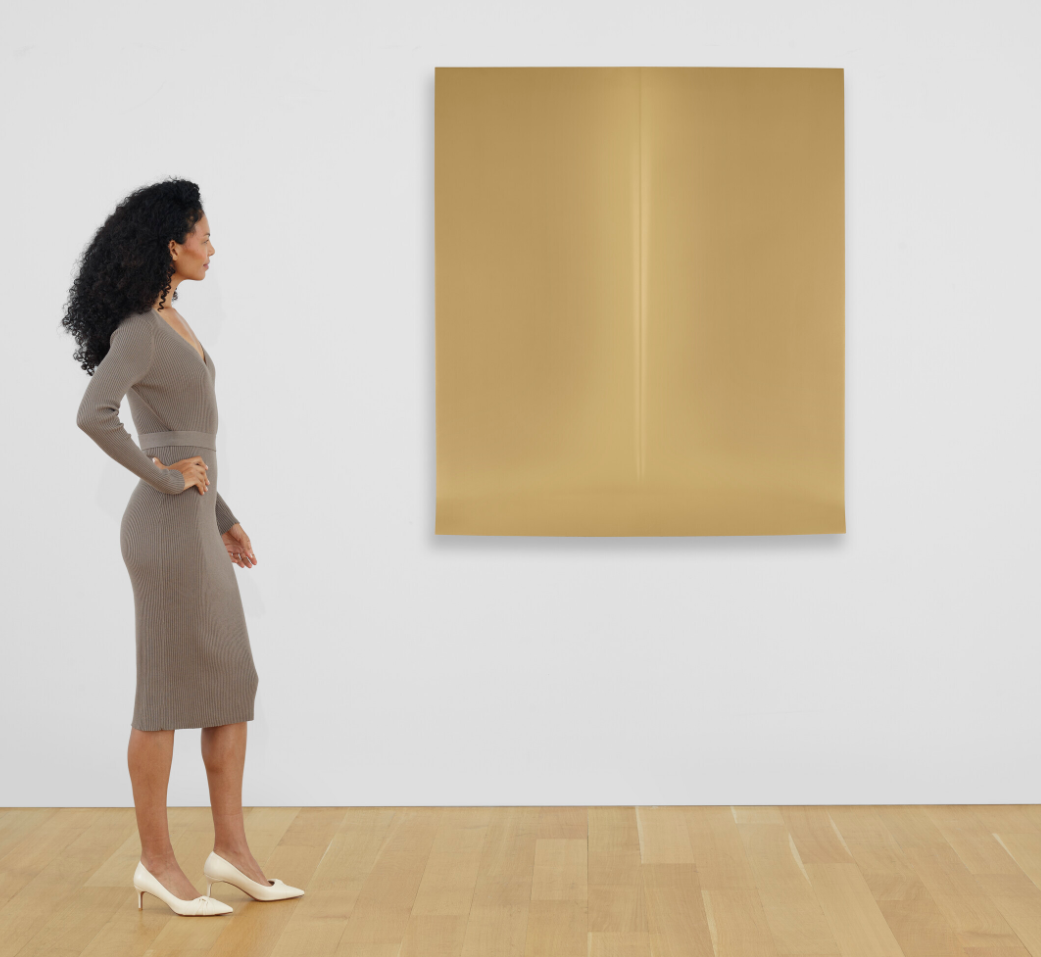
RICHARD PRINCE (B. 1949)
Untitled, 1989-1990
Fiberglass, wood, oil and enamel
59 x 52 x 4 5/8 inches (149.9 x 132.1 x 11.7 cm)
#7. Untitled (Cowboy), 1999
Christie’s New-York: 17 May 2023
Estimated: USD 1,500,000 – 2,000,000
USD 1,562,500
RICHARD PRINCE (b. 1949) (christies.com)
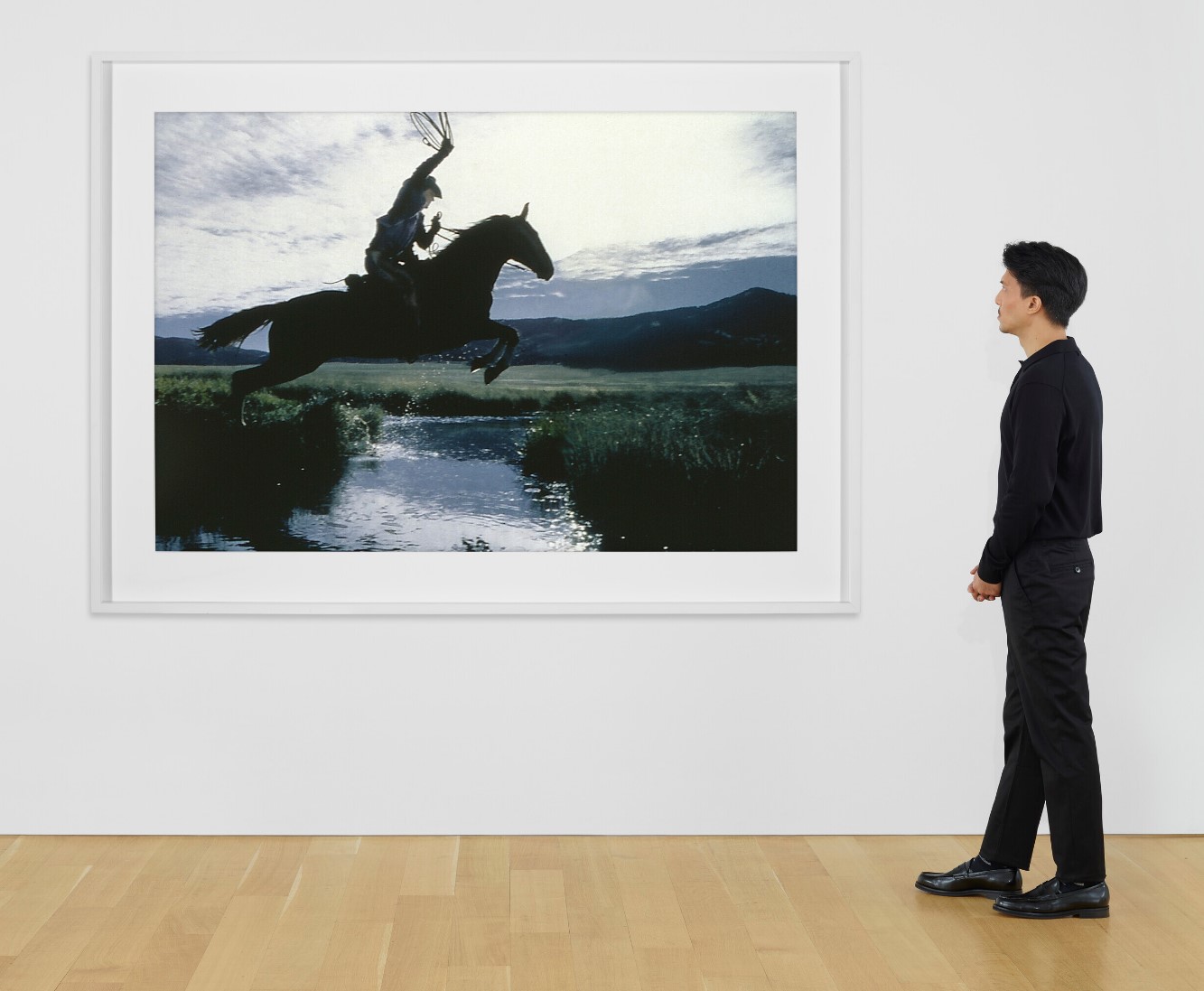
RICHARD PRINCE (b. 1949)
Untitled (Cowboy), 1999
Ektacolor print
60×80 inches (152.4 x 203.2 cm)
Signed, numbered and dated ‘Prince 1999 1/1’ (on a paper label affixed to the reverse)
This work is the artist’s proof from an edition of two plus one artist’s proof
#8. Untitled (Cowboy), 2013
Sotheby’s New-York: 16 November 2023
Estimated: USD 1,200,000 – 1,800,000
USD 1,451,500
Untitled (Cowboy) | Contemporary Day Auction | 2023 | Sotheby’s (sothebys.com)
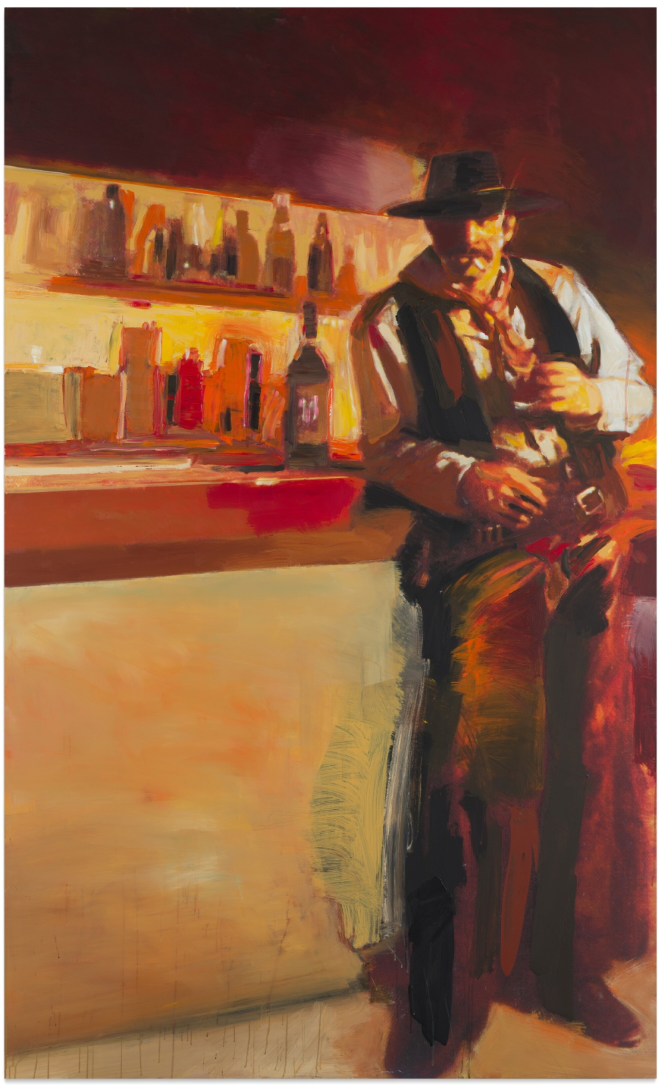
RICHARD PRINCE (b. 1949)
Untitled (Cowboy), 2013
Inkjet and acrylic on canvas
92×56 inches (233.7 x 142.2 cm)
#9. Untitled (Car Hood), 2008
Christie’s New-York: 10 November 2023
Estimated: USD 1,200,000 – 1,800,000
USD 1,320,500
RICHARD PRINCE (B. 1949), Untitled (Car Hood) | Christie’s (christies.com)
RICHARD PRINCE (B. 1949)
Untitled (Car Hood), 2008
Acrylic, wood, steel, fiberglass and Bondo
64 3/4 x 54 1/2 x 16 inches (164.5 x 138.4 x 40.6 cm)
USD 1 million
#10. Untitled, 2019
Sotheby’s New-York: 19 May 2023
Estimated: USD 500,000 – 700,000
USD 914,400
Untitled | Contemporary Day Auction | 2023 | Sotheby’s (sothebys.com)
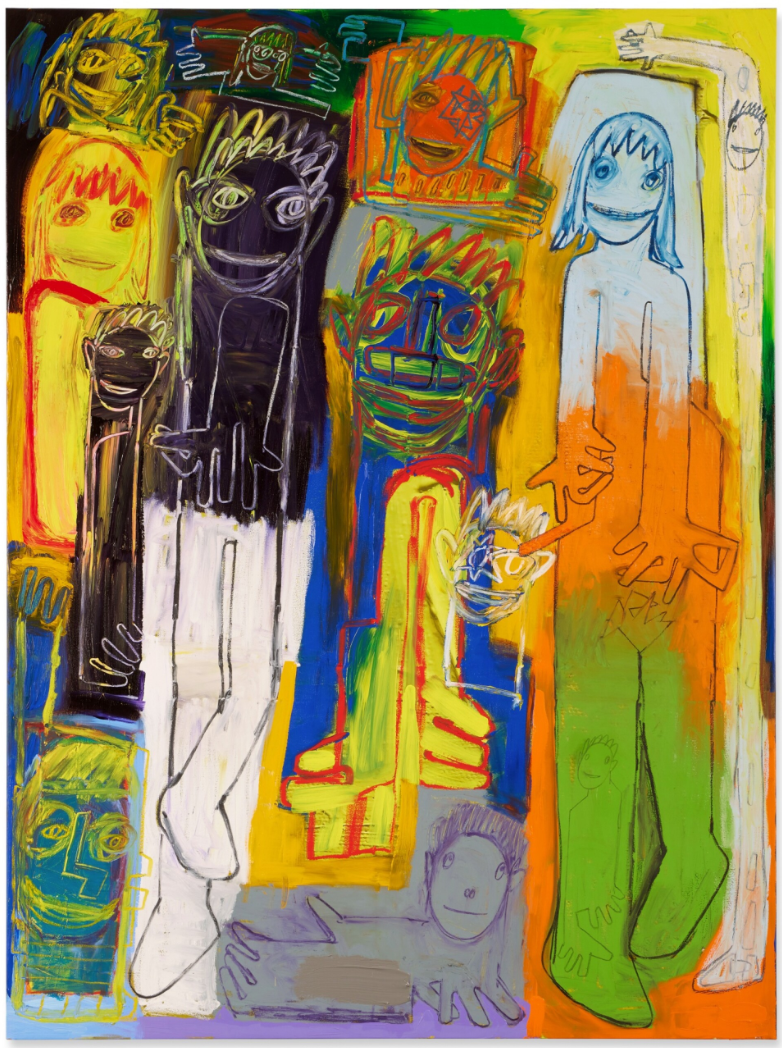
RICHARD PRINCE (b. 1949)
Untitled, 2019
Acrylic, oil stick, charcoal and Inkjet on canvas
80×60 inches (203.2 x 152.4 cm)
Signed, dated 2019 and inscribed HIGHTIME’S (on the reverse)
#11. Untitled (Fashion), 1982-84
Sotheby’s New-York: 16 November 2023
Estimated: USD 700,000 – 1,000,000
USD 762,000
Untitled (Fashion) | Contemporary Day Auction | 2023 | Sotheby’s (sothebys.com)
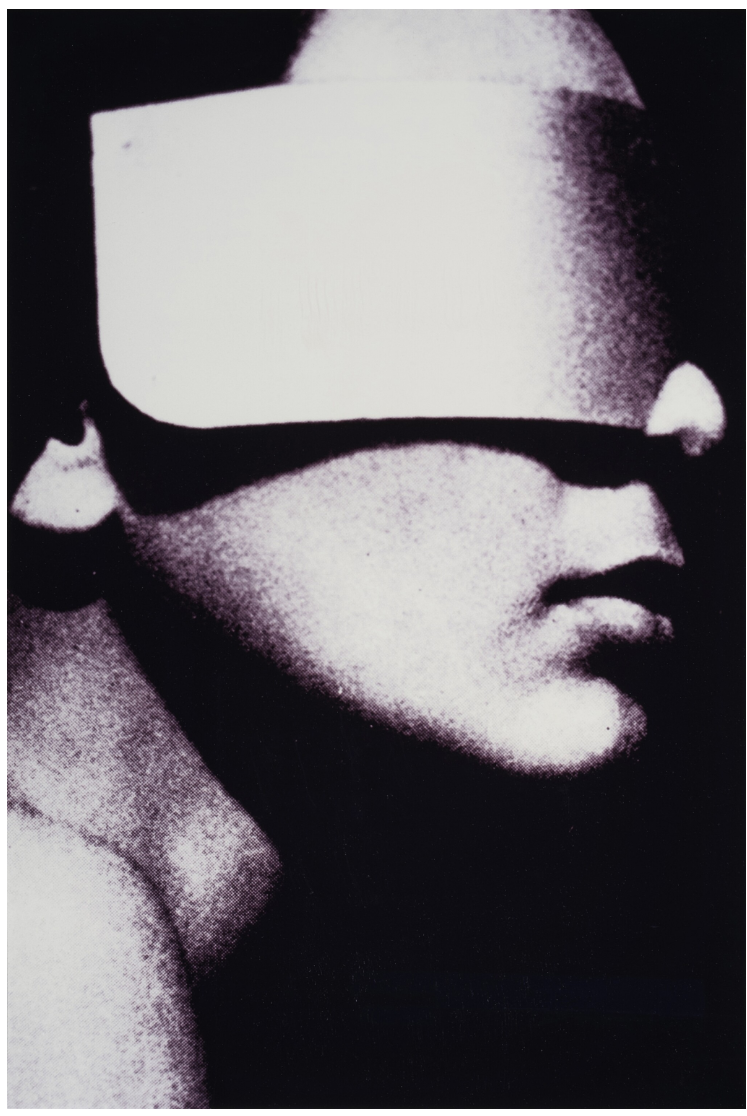
RICHARD PRINCE (b. 1949)
Untitled (Fashion), 1982-84
Ektacolor photograph
40×30 inches (101.6 x 76.2 cm)
This work is number 1 from an edition of 1
#12. Untitled, 2017
Christie’s New-York: 7 November 2023
Estimated: USD 800,000 – 1,200,000
USD 756,000
RICHARD PRINCE (B. 1949), Untitled | Christie’s (christies.com)
RICHARD PRINCE (B. 1949)
Untitled, 2017
Acrylic, oilstick, charcoal, matte medium and inkjet collage on canvas
86×61 inches (218×155 cm)
Signed, inscribed and dated ‘Richard Prince 2017 HIGH TIMES’ (on the reverse)
#13. Untitled (Cowboy), 2012
Sotheby’s London: 12 October 2023
Estimated: GBP 500,000 – 700,000
GBP 571,500 / USD 702,945
Untitled (Cowboy) | The Now Evening Auction | 2023 | Sotheby’s (sothebys.com)
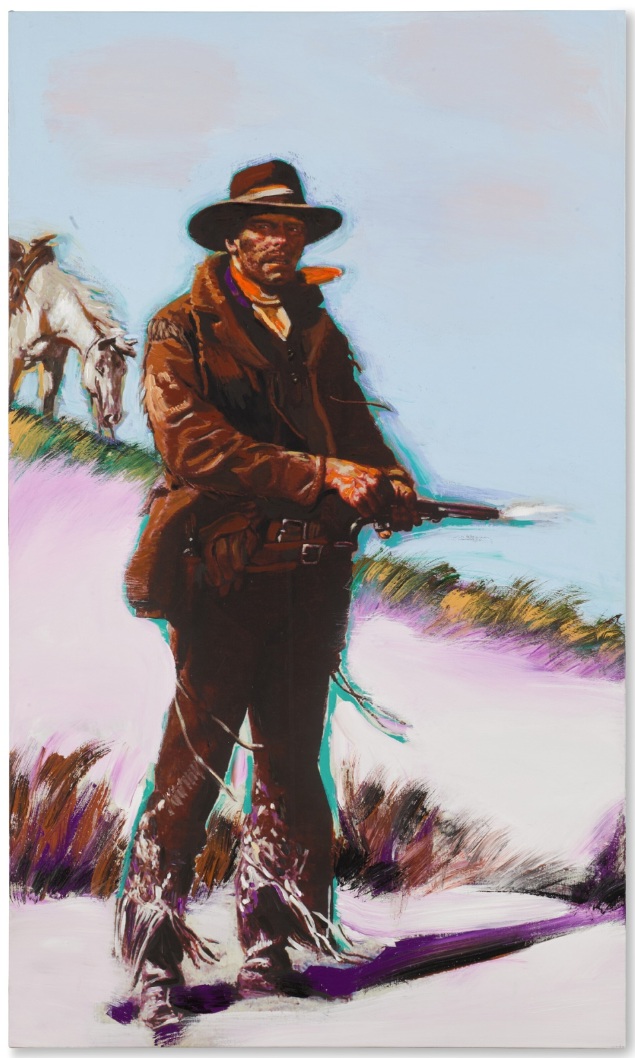
RICHARD PRINCE (b. 1949)
Untitled (Cowboy), 2012
Inkjet and acrylic on canvas
47 x 27 7/8 inches (119.5 x 70.9 cm)
Signed and dated Feb, 2013 (on the overlap)
#14. Untitled (Girlfriend), 1993
Sotheby’s New-York: 19 May 2023
Estimated: USD 600,000 – 800,000
USD 571,500
Untitled (Girlfriend) | Contemporary Day Auction | 2023 | Sotheby’s (sothebys.com)
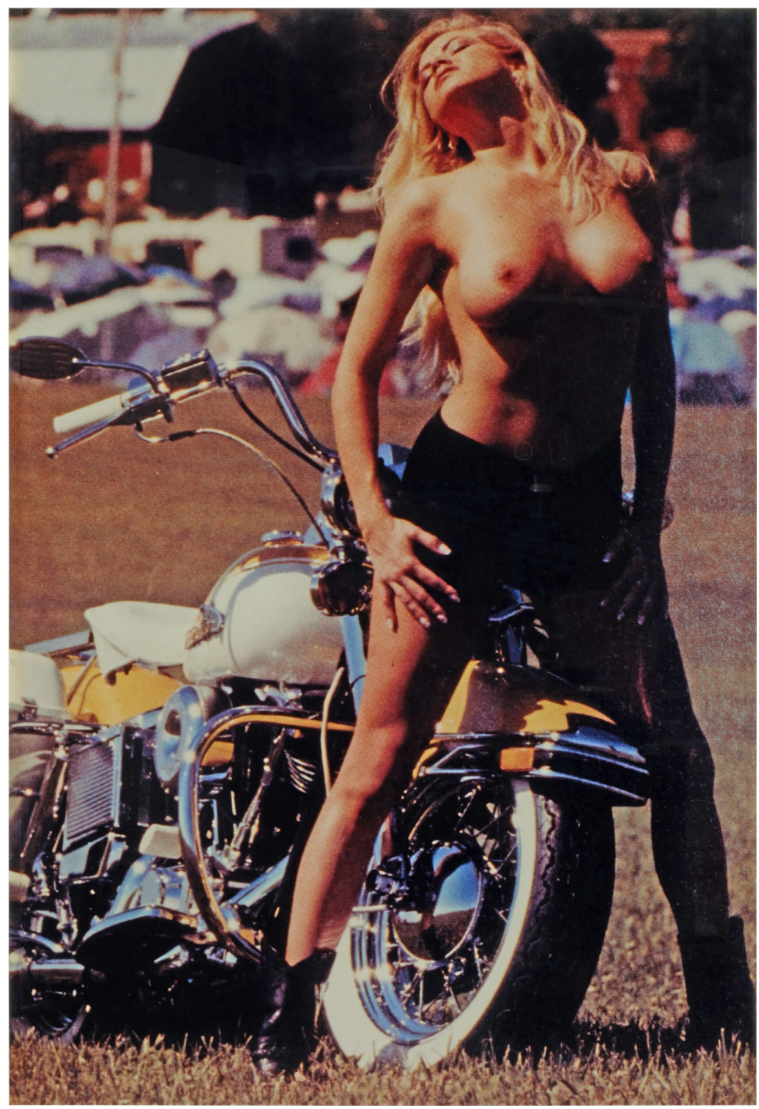
RICHARD PRINCE (b. 1949)
Untitled (Girlfriend), 1993
Ektacolor photograph
58 3/4 x 40 inches (149.2 x 101.6 cm)
Signed, dated 1993 and numbered 2/2 (on the verso)
This work is number 2 from an edition of 2 plus 1 artist’s proof
#15. Untitled, 2009
Christie’s New-York: 9 March 2023
Estimated: USD 400,000 – 600,000
USD 529,200
RICHARD PRINCE (B. 1949), Untitled | Christie’s (christies.com)
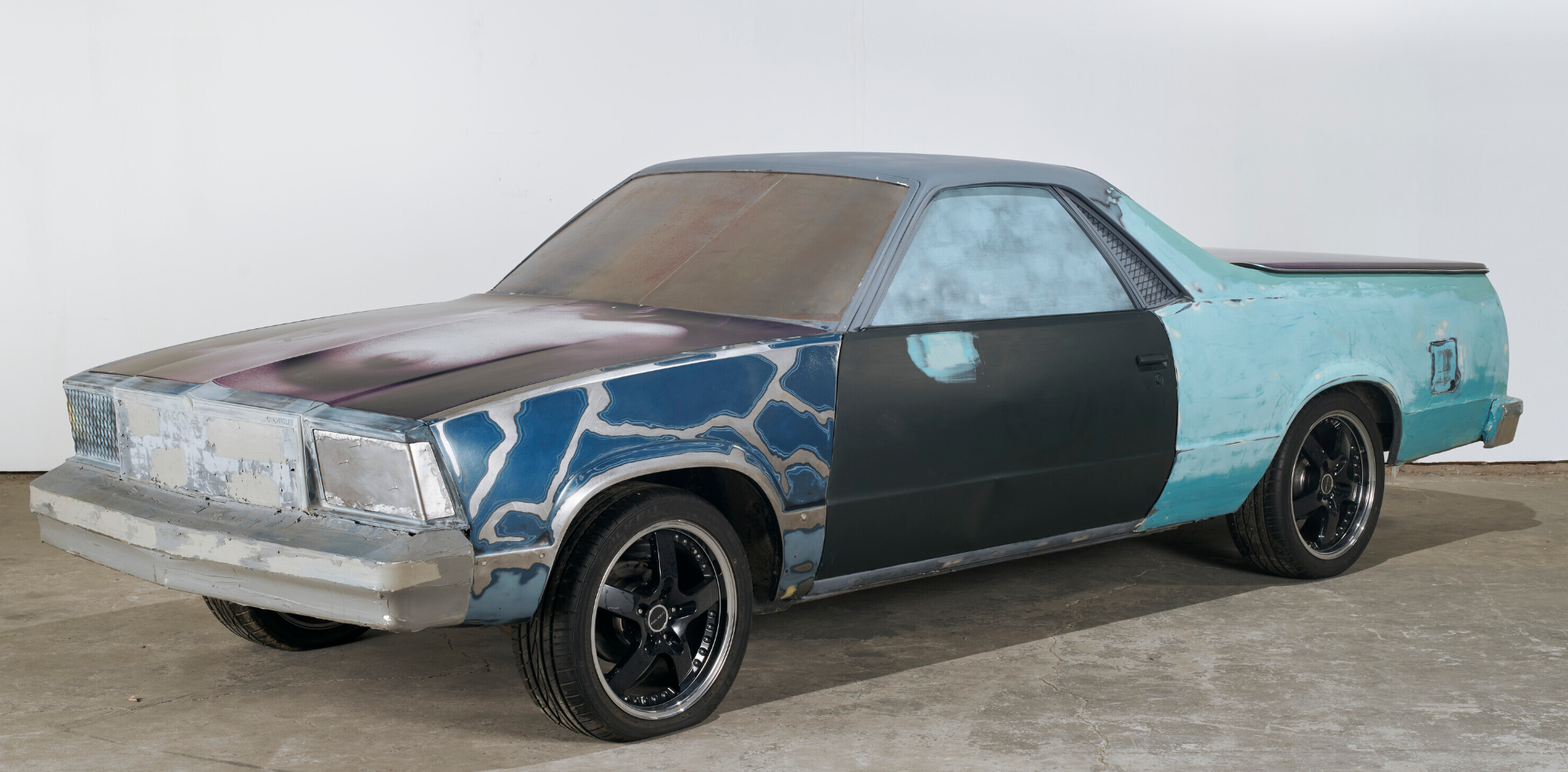
RICHARD PRINCE (B. 1949)
Untitled, 2009
1986 El Camino, vinyl wrapping, acrylic and bondo
55 1/2 x 201 1/2 x 72 inches (141 x 511.8 x 182.9 cm)
#16. Untitled (de Kooning), 2007
Sotheby’s New-York: 16 November 2023
Estimated: USD 250,000 – 350,000
USD 444,500
Untitled (de Kooning) | Contemporary Day Auction | 2023 | Sotheby’s (sothebys.com)
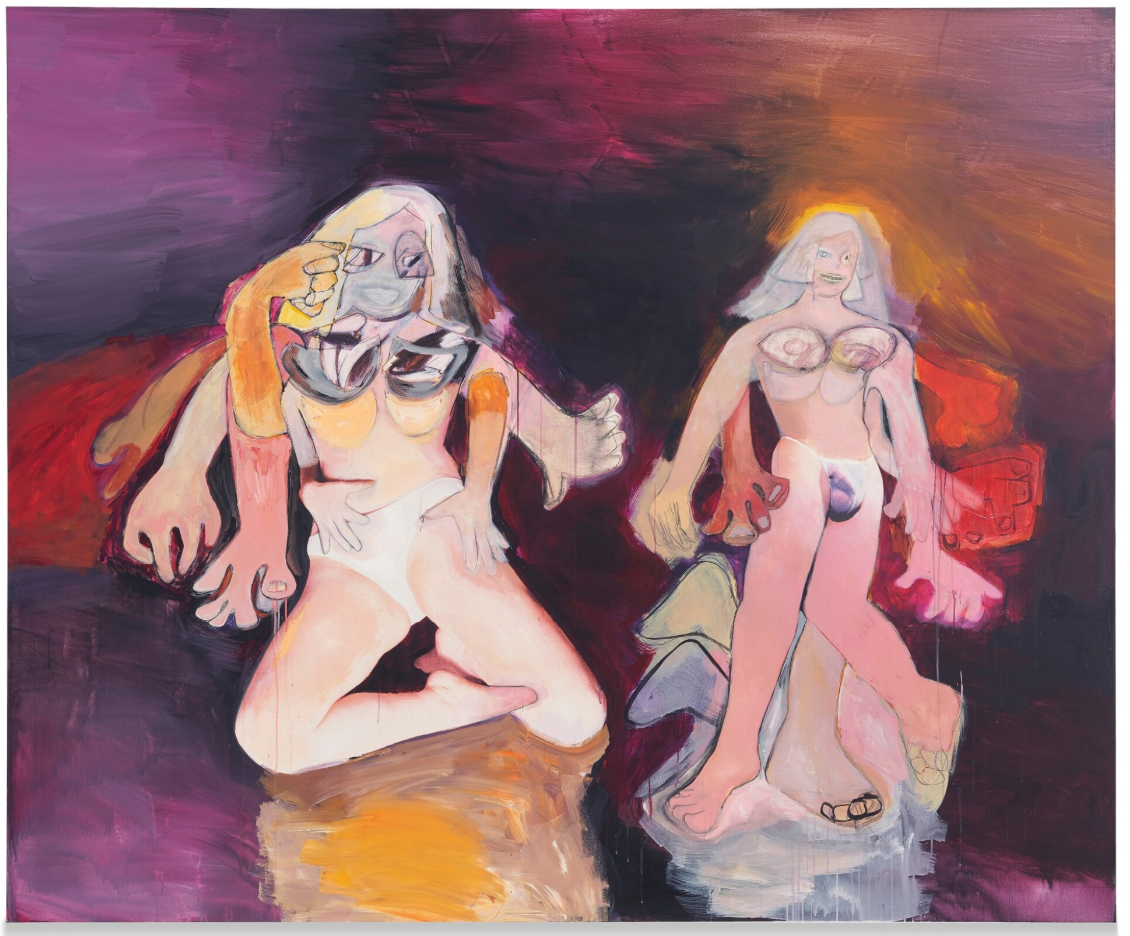
RICHARD PRINCE (b. 1949)
Untitled (de Kooning), 2007
Acrylic, inkjet and oil crayon on canvas
81×98 inches (205 x 238.9 cm)
Signed, titled and dated 2007 (on the reverse)
#17. I Had a Dream About You, 1988
Christie’s New-York: 18 May 2023
Estimated: USD 300,000 – 500,000
USD 378,000
RICHARD PRINCE (b. 1949), I Had a Dream About You | Christie’s (christies.com)
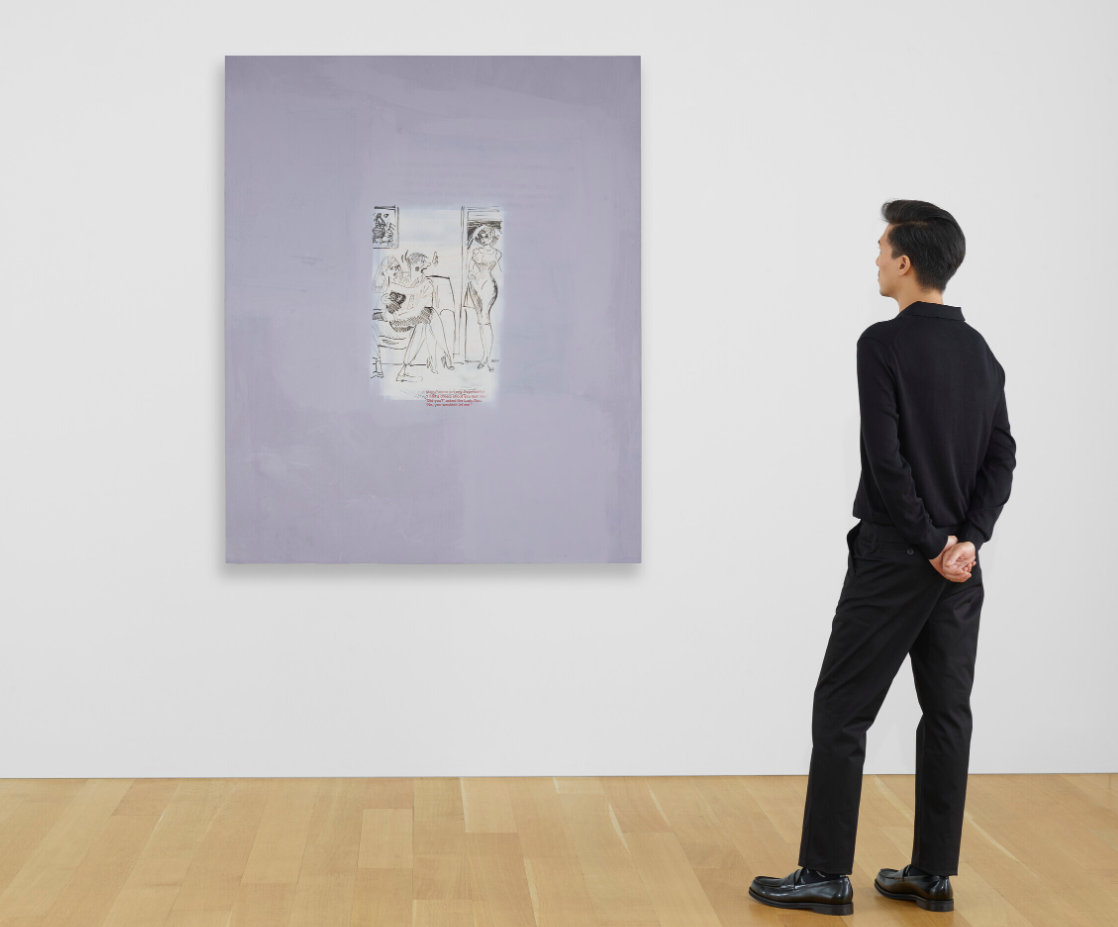
RICHARD PRINCE (b. 1949)
I Had a Dream About You, 1988
Silkscreen and acrylic on canvas
66×54 inches (167×137 cm)
Signed, titled and dated twice ‘7/20/88 3:45:21 R. Prince 1988 “I HAD A DREAM ABOUT YOU”‘ (on the overlap)
#18. Untitled, 2001
Sotheby’s New-York: 9 March 2023
Estimated: USD 350,000 – 450,000
USD 368,300
Untitled | Contemporary Curated | 2023 | Sotheby’s (sothebys.com)
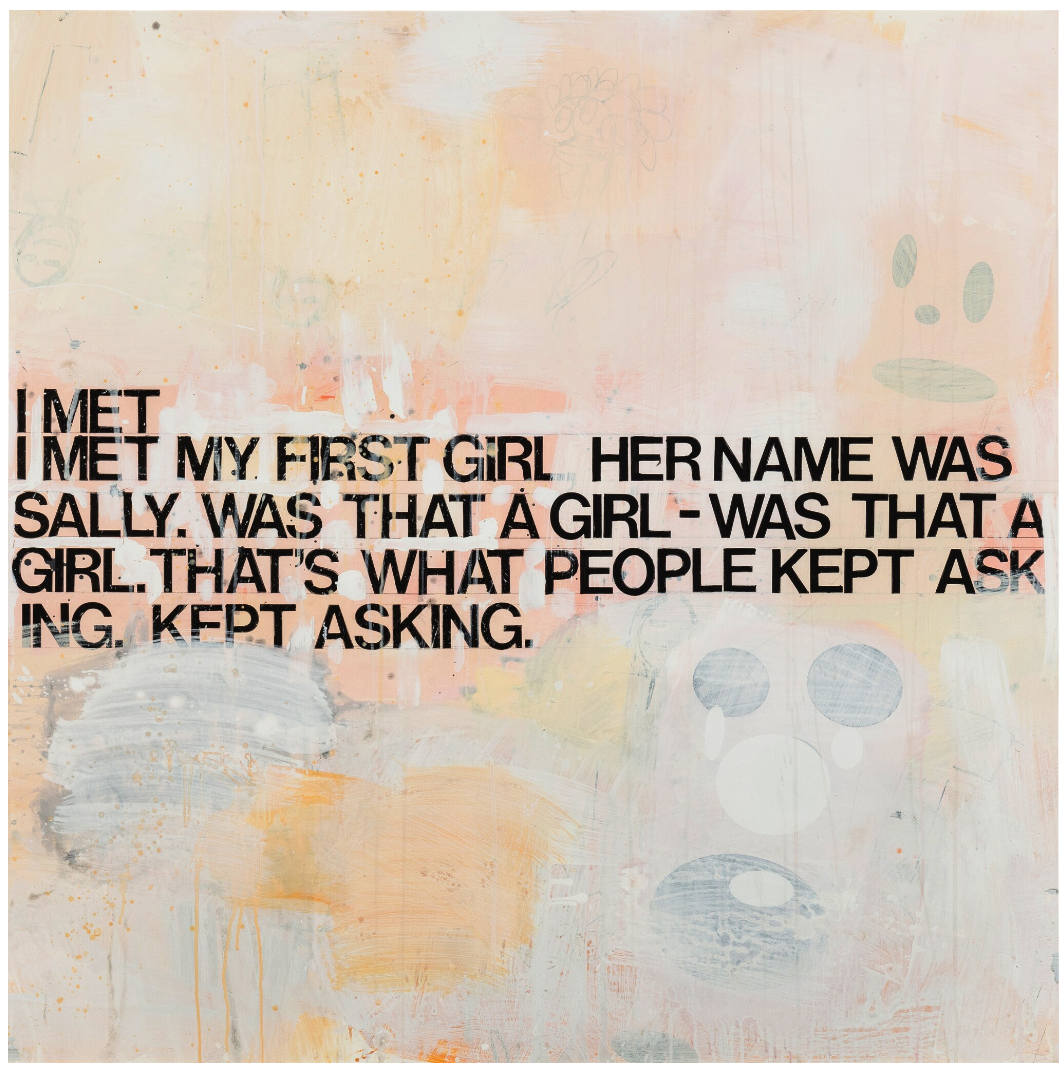
RICHARD PRINCE (b. 1949)
Untitled, 2001
Acrylic and silkscreen on gator board
47 5/8 x 47 5/8 inches (120.9 x 120.9 cm)
#19. Untitled, 2020
Phillips London: 3 March 2023
Estimated: GBP 250,000 – 350,000
GBP 285,750 / USD 351,473
Richard Prince – 20th Century & Conte… Lot 141 March 2023 | Phillips
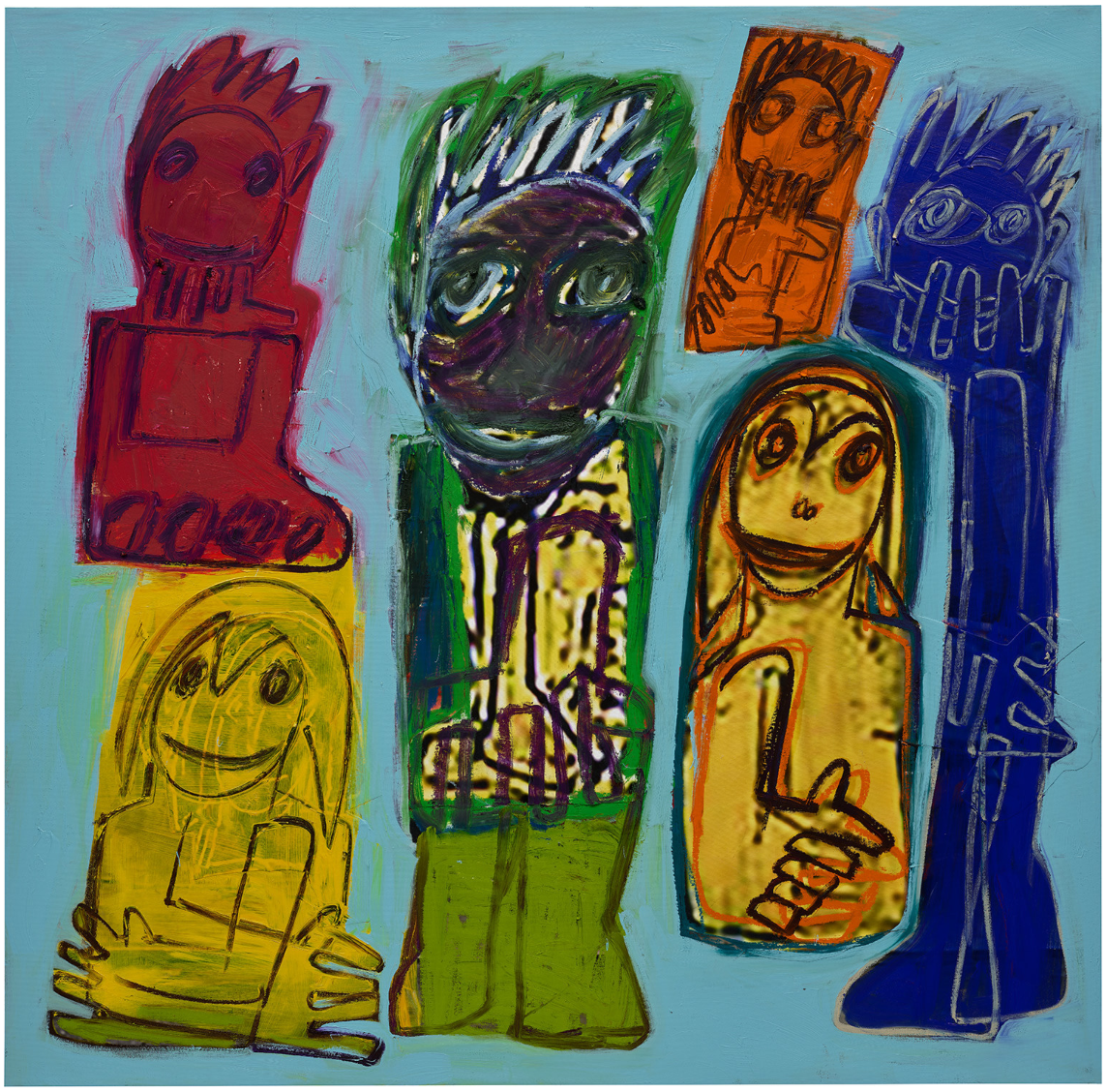
RICHARD PRINCE
Untitled, 2020
Oil stick, acrylic, charcoal, and ink jet on canvas
58 1/8 x 59 inches (147.6 x 149.9 cm)
Signed, inscribed and dated ‘Richard Prince 2020 HIGHTIMES’ on the reverse
#20. Untitled (Four Women Looking in the Same Direction), 1977
Sotheby’s New-York: 16 November 2023
Estimated: USD 250,000 – 350,000
USD 304,800
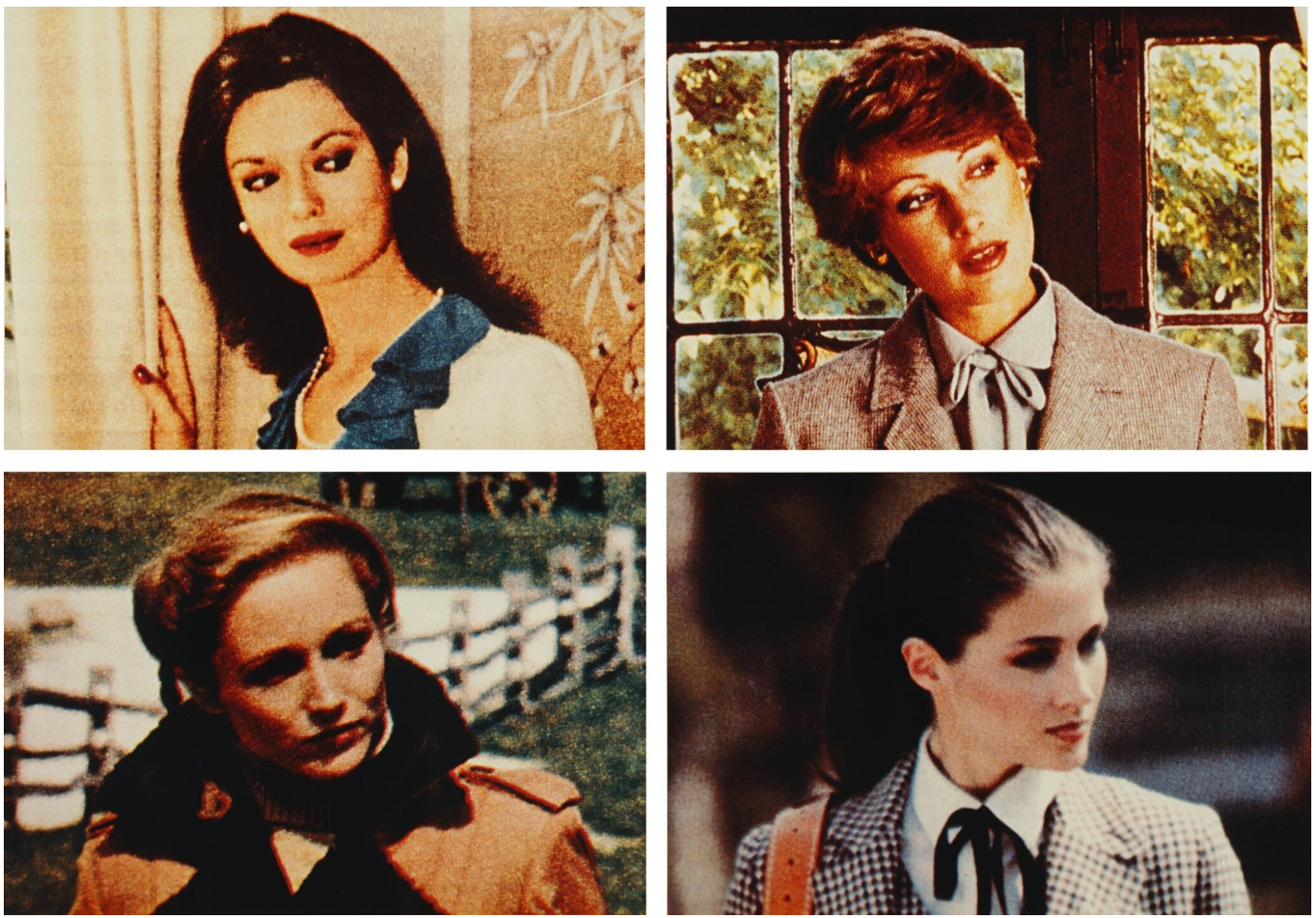
RICHARD PRINCE (b. 1949)
Untitled (Four Women Looking in the Same Direction), 1977
Ektacolor prints, in 4 parts
Each: 20×24 inches (50.8 x 61 cm)
Signed, dated 1977 and numbered 2/10 (on the reverse of each)
This work is number 2 from an edition of 10
#21. Untitled (De Kooning), 2006
Christie’s New-York: 18 May 2023
Estimated: USD 400,000 – 600,000
USD 289,800
RICHARD PRINCE (b. 1949), Untitled (De Kooning) | Christie’s (christies.com)
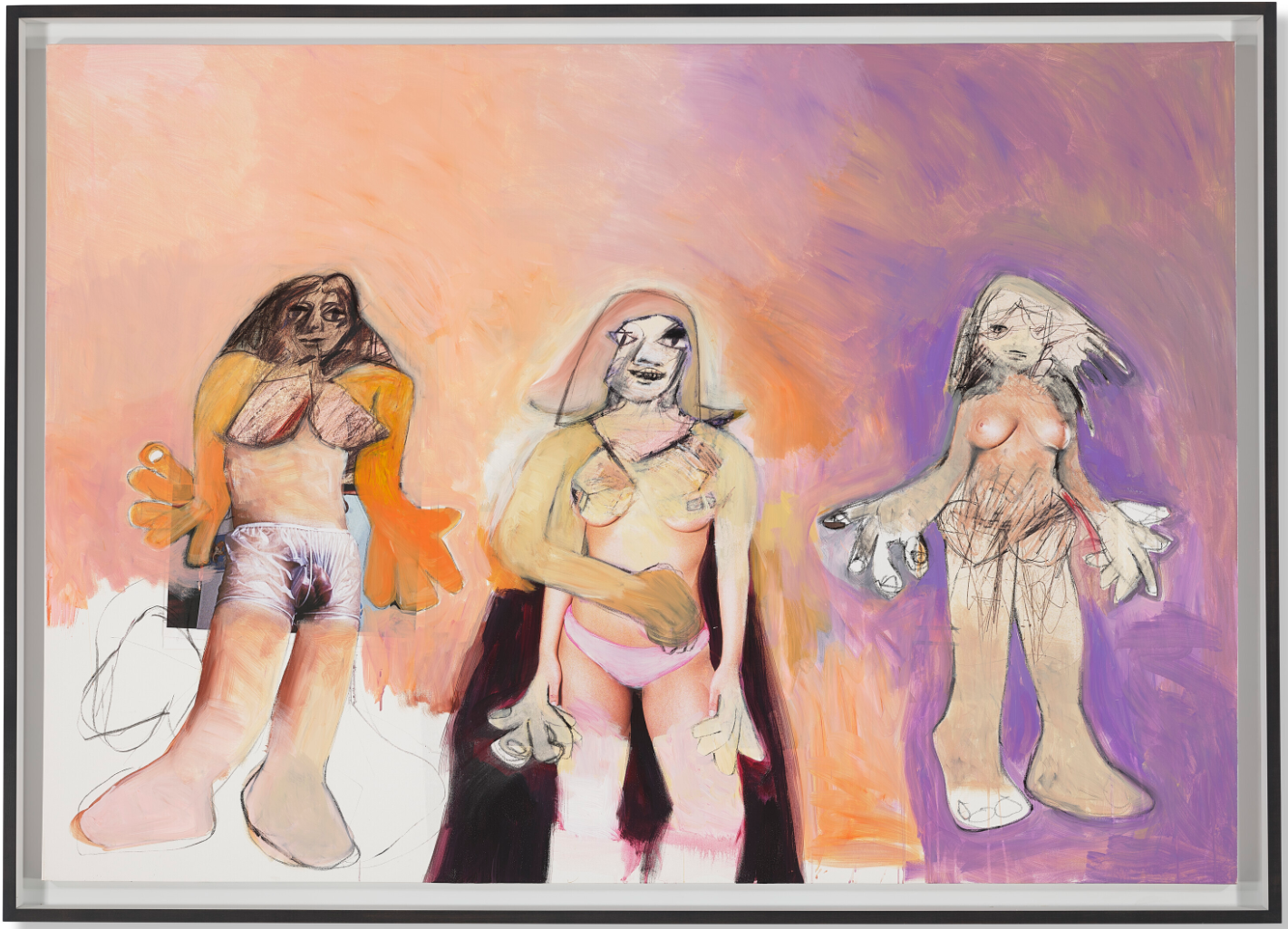
RICHARD PRINCE (b. 1949)
Untitled (De Kooning), 2006
Acrylic and inkjet on canvas
52 1/2 x 74 inches (133.4 x 187.9 cm)
Signed, titled and dated ‘2006 Richard Prince UNTITLED (DE KOONING)’ (on the overlap)
#22. Untitled (de Kooning), 2007
Christie’s New-York: 29 May 2023
Estimated: HKD 2,000,000 – 3,000,000
HKD 2,016,000 / USD 258,793
RICHARD PRINCE (B.1949), Untitled (de Kooning) | Christie’s (christies.com)
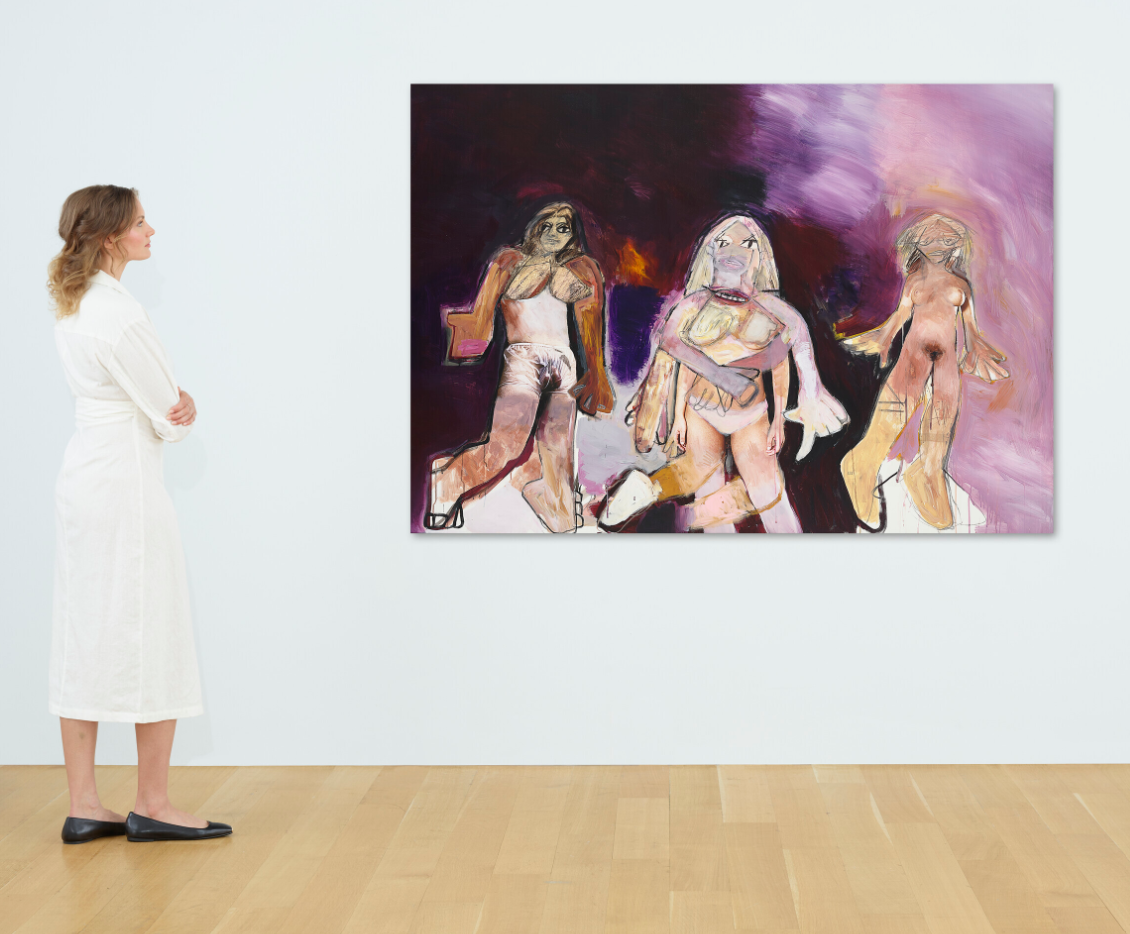
RICHARD PRINCE (B.1949)
Untitled (de Kooning), 2007
Acrylic, inkjet and oil crayon on canvas
52×74 inches (132.1 x 188 cm)
Signed, titled and dated ‘R Prince 2007 UNTITLED (DE KOONING)’ (on the reverse)
#23. My boyfriend married a girl, 1995
Sotheby’s New-York: 16 November 2023
Estimated: USD 250,000 – 350,000
USD 228,600
My boyfriend married a girl | Contemporary Day Auction | 2023 | Sotheby’s (sothebys.com)
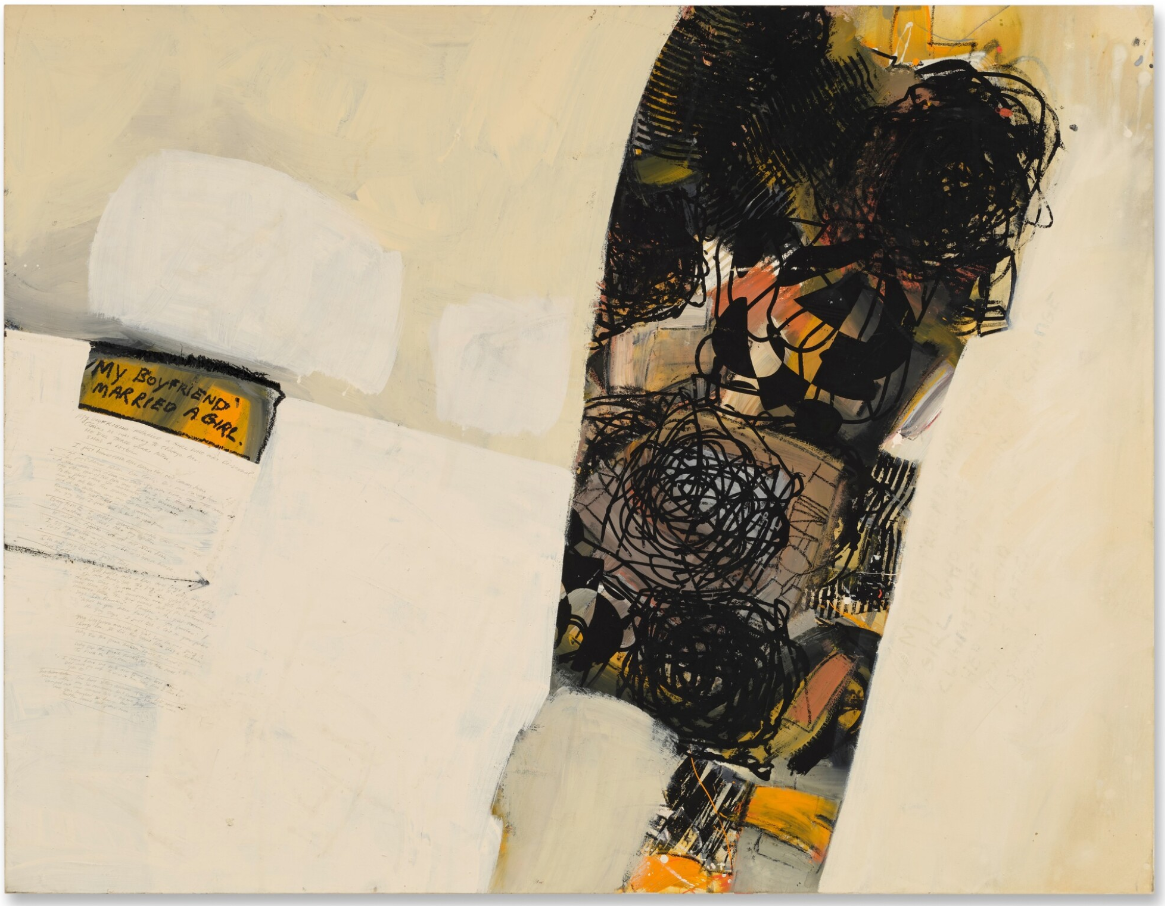
RICHARD PRINCE
My boyfriend married a girl, 1995
Acrylic, silkscreen and graphite on canvas
58×74 inches (147.3 by 188 cm)
Titled (center left); signed, titled and dated 1995 (on the overlap)
#24. Boyfriends, 1993
Christie’s New-York: 29 September 2023
Estimated: USD 300,000 – 500,000
USD 226,800
RICHARD PRINCE (B. 1949), Boyfriends | Christie’s (christies.com)
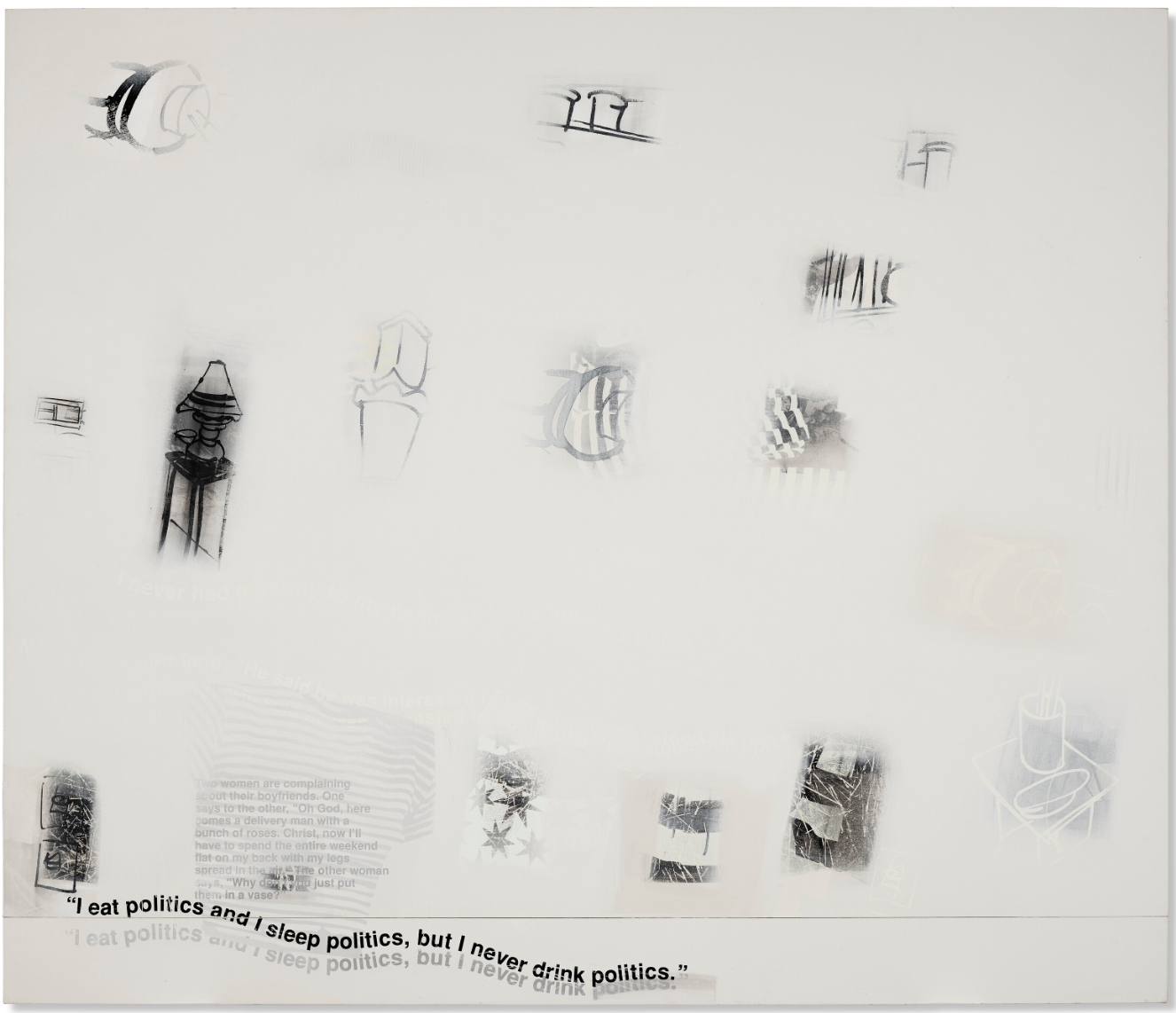
RICHARD PRINCE (B. 1949)
Boyfriends, 1993
Acrylic and silkscreen ink on canvas, in two joined parts
82×96 inches (208.3 x 243.8 cm)
Signed, titled and dated ‘R Prince 1993 “Boyfriends”‘ (on the overlap)
#25. Untitled, 2012
Sotheby’s London: 13 October 2023
Estimated: GBP 150,000 – 200,000
GBP 177,800 / USD 218,694
Untitled | Contemporary Day Auction | 2023 | Sotheby’s (sothebys.com)
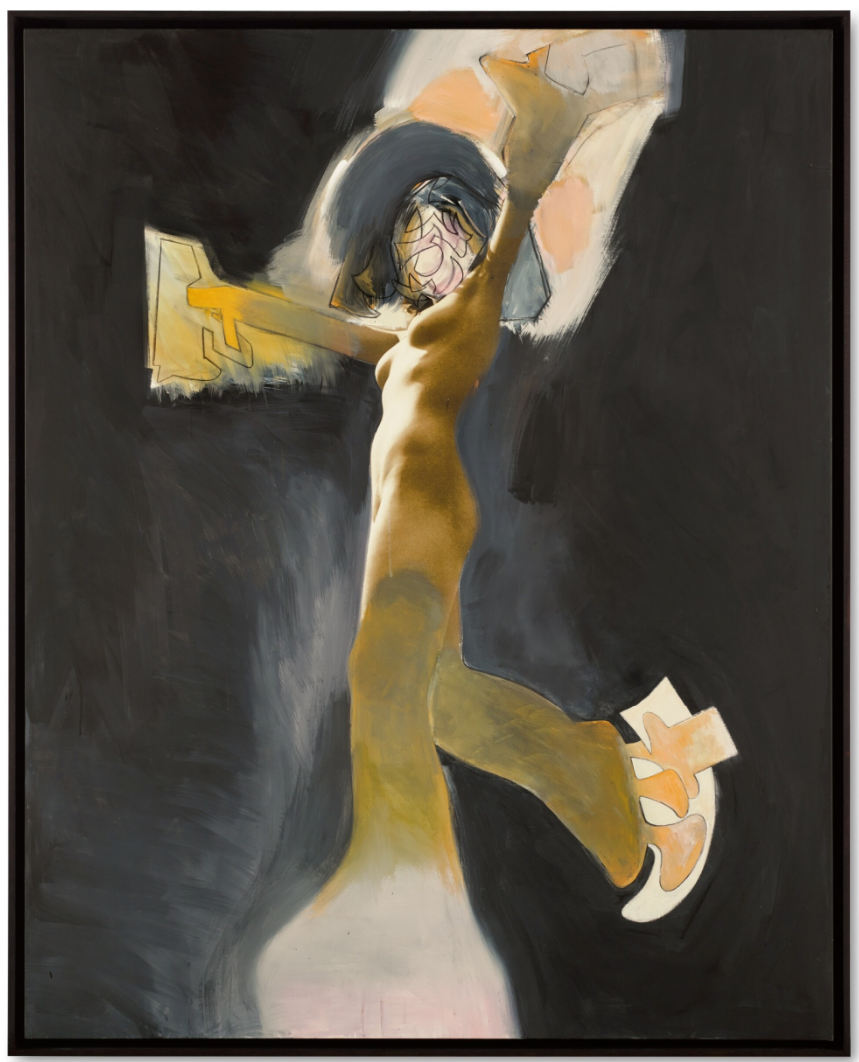
RICHARD PRINCE (b. 1949)
Untitled, 2012
inkjet, acrylic and oilstick on canvas
62 7/8 x 50 1/4 inches (159.6 x 127.6 cm)
Signed and dated 2012 (on the overlap)
Signed and dated 2012 (on the reverse)
#26. Untitled (with de Kooning), 2006
Sotheby’s New-York: 19 May 2023
Estimated: USD 180,000 – 250,000
USD 215,900
Untitled (with de Kooning) | Contemporary Day Auction | 2023 | Sotheby’s (sothebys.com)
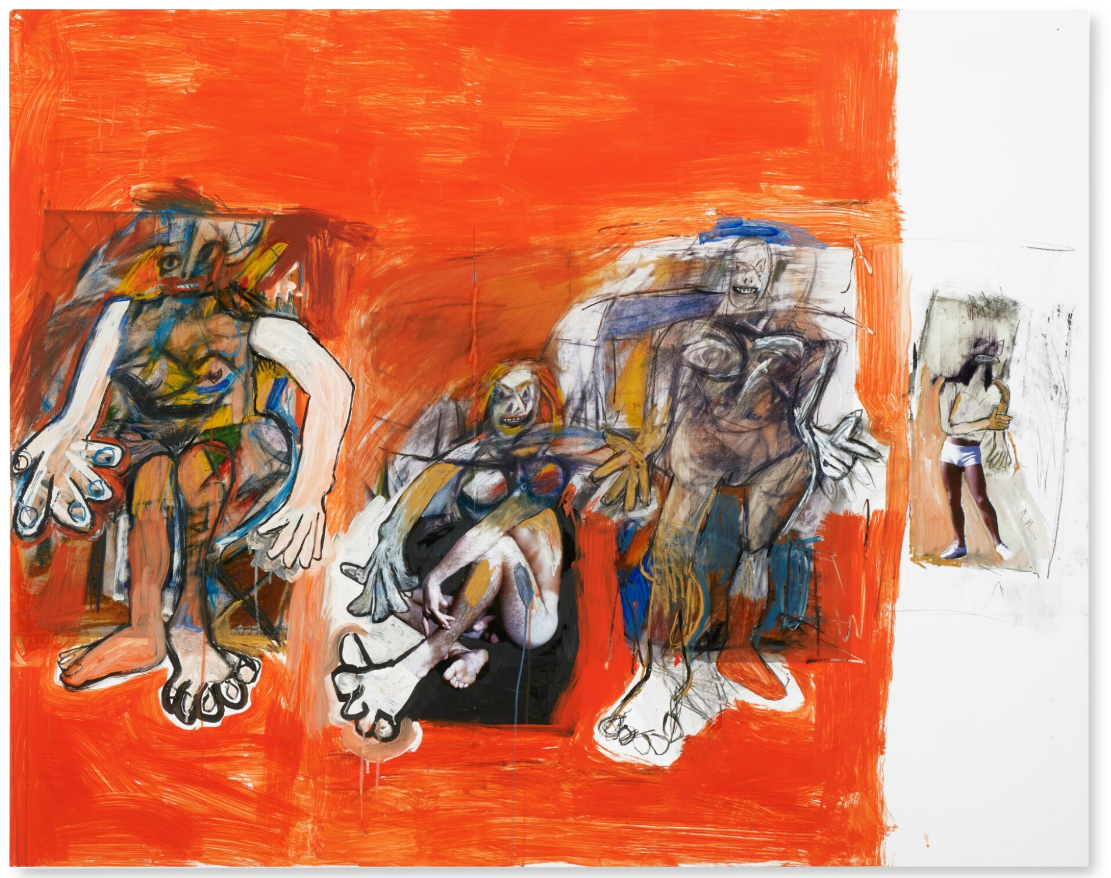
RICHARD PRINCE (b. 1949)
Untitled (with de Kooning), 2006
Acrylic and crayon on Ektacolor photograph mounted on board
46 x 57 7/8 inches (116.7 x 147 cm)
Signed and dated 2006 (on the reverse of the frame)
2022 Auction Results
27 lots sold in 2022 for a total turnover of USD 11,853,315. With 8 lots failing to sell, the sell-through rate is 77.1%. The highest price has been achieved at Christie’s in New-York, on 17 April 2022, when All I’ve Heard, a painting from the Jokes series dated 1989, sold for USD 3,420,000. Only 3 lots sold for more than USD 1 million, generating a cumulative turnover of USD 6,187,783, representing 52.2% of the total turnover for 2022.
2022 Top 3 Lots
#1. All I’ve Heard, 1989
Christie’s New-York: 17 April 2022
Estimated: USD 3,000,000 – 5,000,000
USD 3,420,000
RICHARD PRINCE (B. 1949), All I’ve Heard | Christie’s (christies.com)
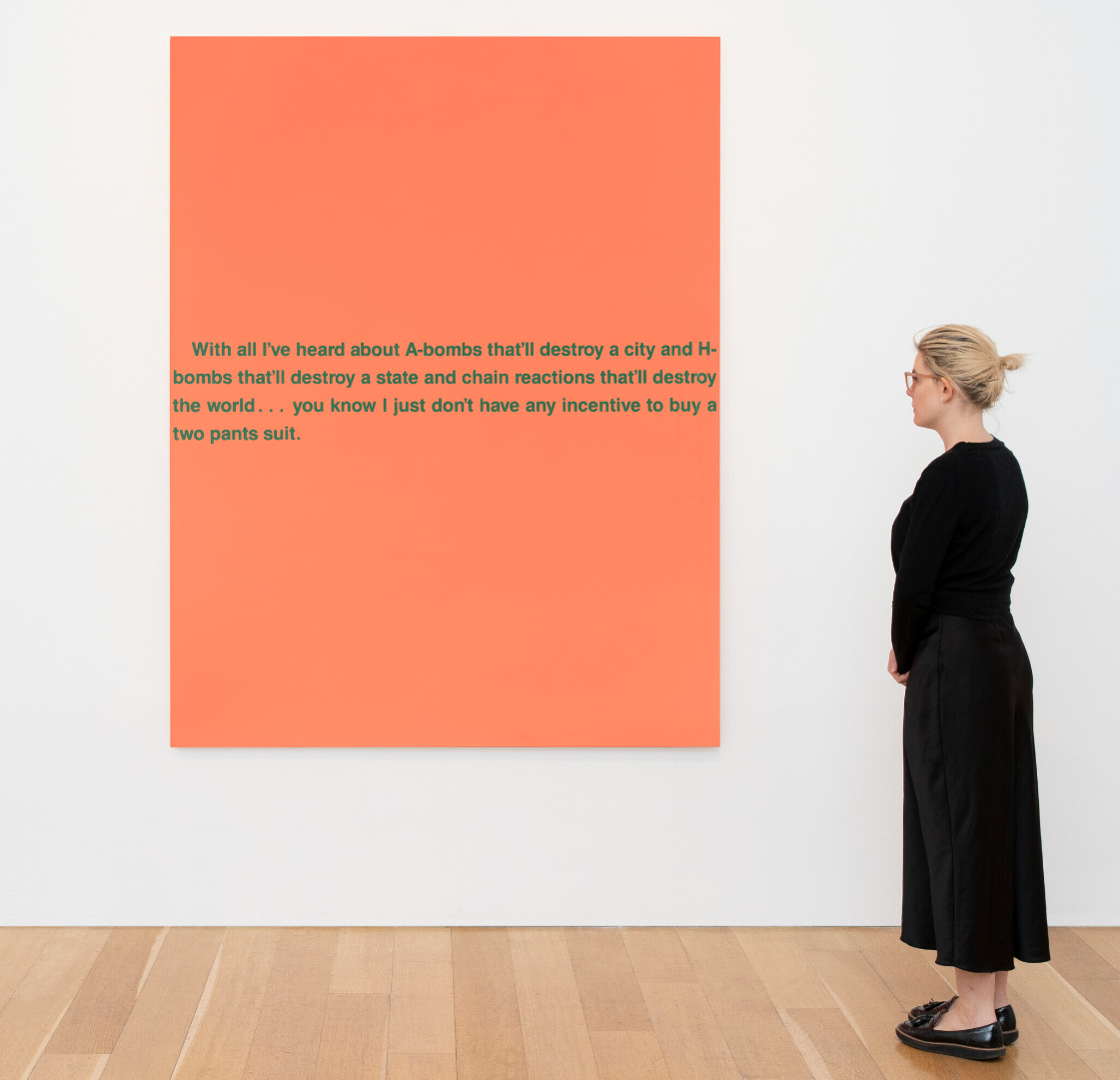
RICHARD PRINCE (B. 1949)
All I’ve Heard, 1989
Acrylic and silkscreen ink on canvas
75 1/4 x 58 inches (191.8 x 147.3 cm)
Signed, titled and dated ‘R. Prince 1989 “All I’ve Heard”‘ (on the overlap)
#2. Untitled (Cowboy), 2012
Estimated: USD 1,200,000 – 1,800,000
USD 1,623,000
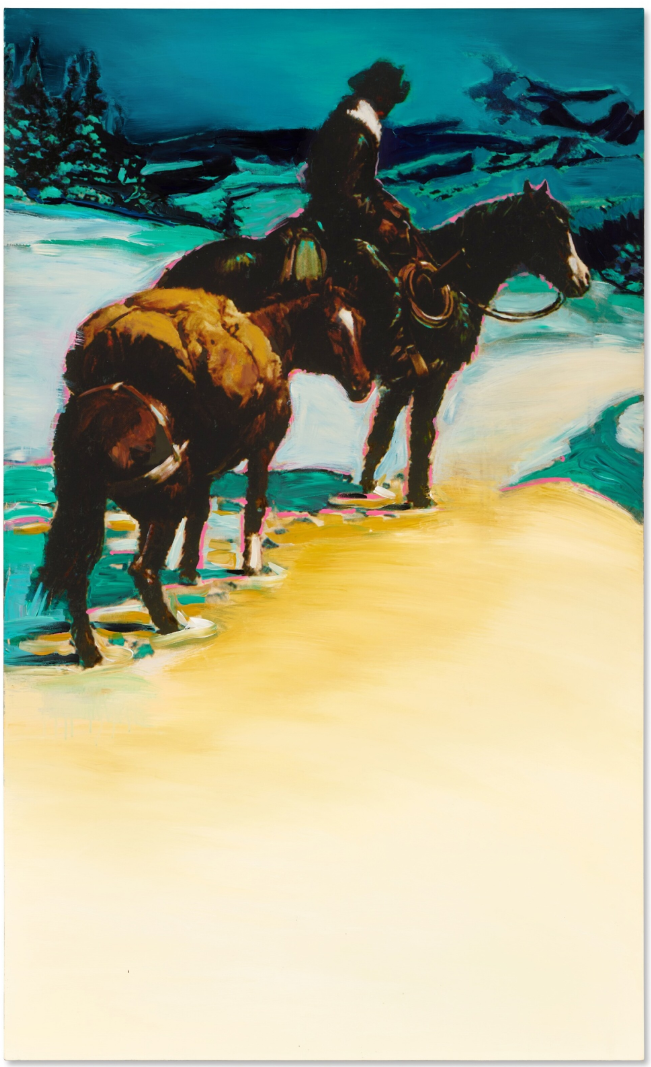
RICHARD PRINCE (b. 1949)
Untitled (Cowboy), 2012
Inkjet and acrylic on canvas
59 1/4 x 36 inches (150.5 x 91.4 cm)
Signed and dated 2012 (on the reverse)
#3. Untitled (Cowboy), 1998
Estimated: GBP 700,000 – 900,000
GBP 942,500 / USD 1,144,783
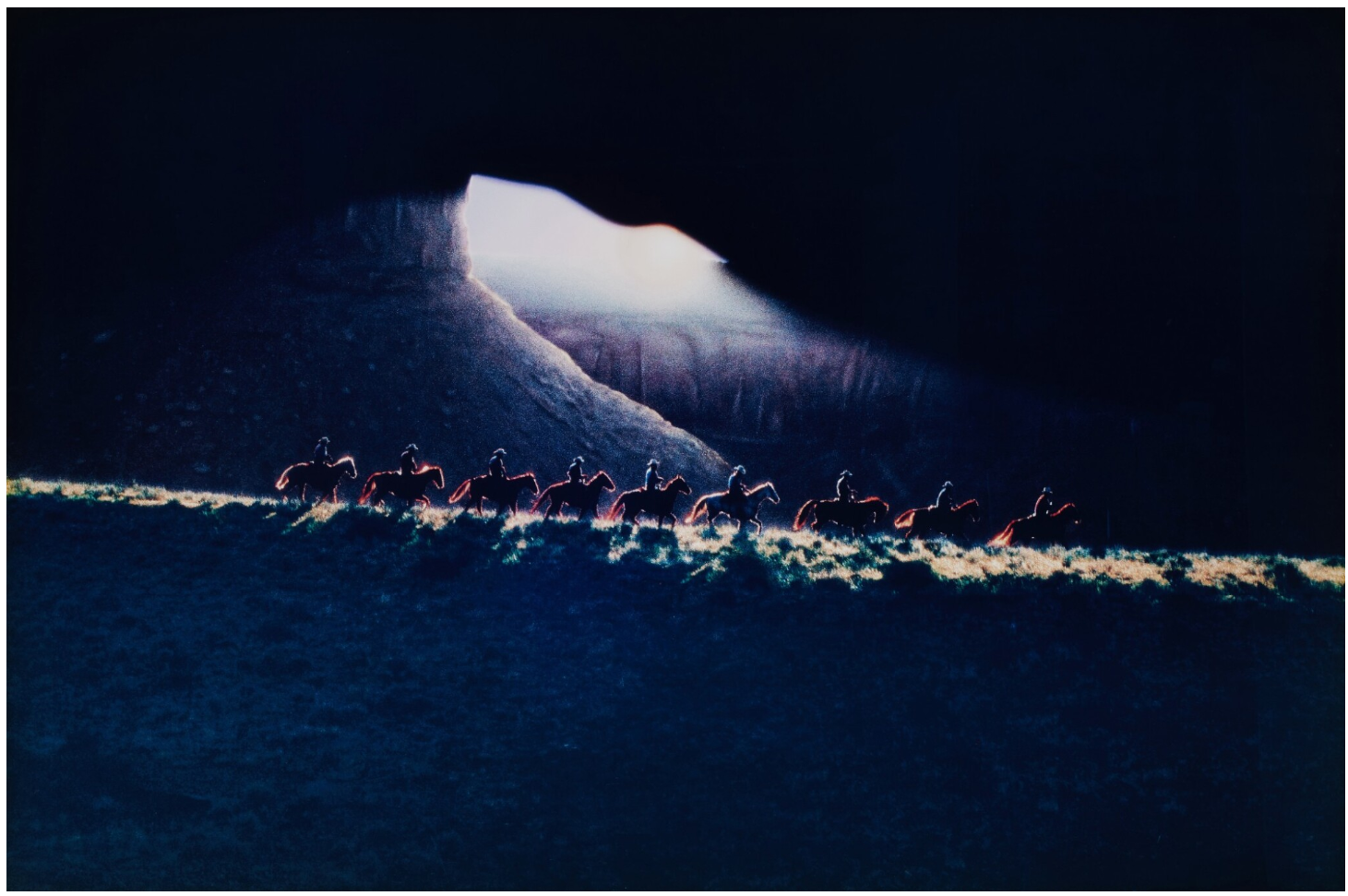
RICHARD PRINCE (b. 1949)
Untitled (Cowboy), 1998
Ektacolor photograph
50 x 75 1/2 inches (127 x 191.7 cm)
Signed Richard Prince, dated 1998 and numbered 1/2 (on the reverse)
This work is number 1 from an edition of 2, plus 1 artist’s proof
#4. Untitled (Cowboys), 1992
Sotheby’s New-York: 20 May 2022
Estimated: USD 600,000 – 800,000
USD 724,000
Untitled (Cowboys) | Contemporary Day Auction | 2022 | Sotheby’s (sothebys.com)
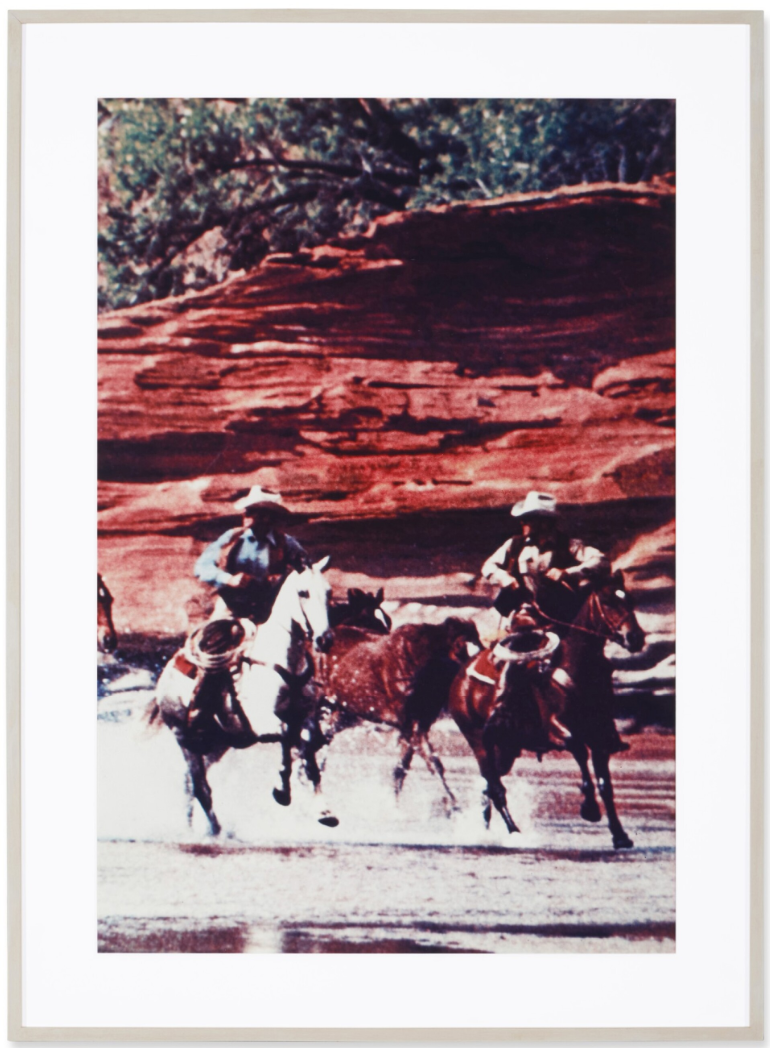
RICHARD PRINCE (b. 1949)
Untitled (Cowboys), 1992
Ektacolor print
40×30 inches (101.3 x 75.9 cm)
This work number 2 from an edition of 2
#5. Untitled, 2020
Sotheby’s London: 15 October 2022
Estimated: GBP 250,000 – 350,000
GBP 504,000 / USD 563,443
Untitled | Contemporary Day Auction | 2022 | Sotheby’s (sothebys.com)
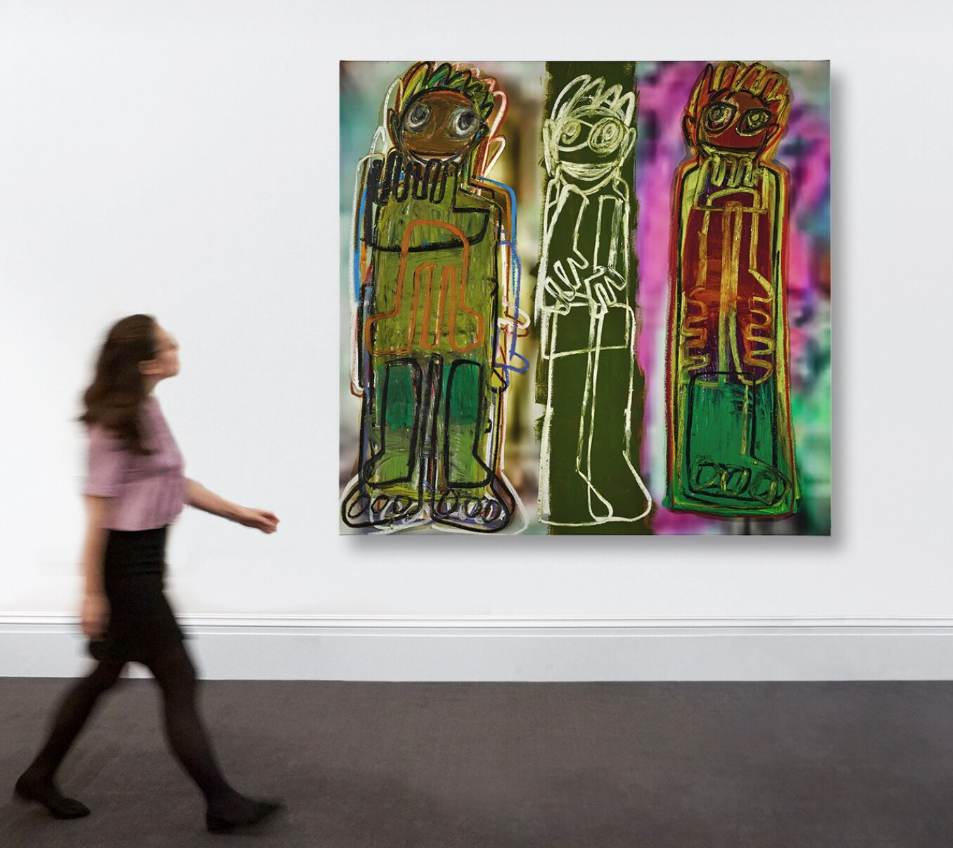
RICHARD PRINCE (b. 1949)
Untitled, 2020
Acrylic, oilstick and inkjet on canvas
58 1/8 x 60 inches (147.5 x 152.5 cm)
#6. Untitled (Kate Moss), 2008
Abell: 22 May 2022
Estimated: USD 400,000 – 600,000
USD 550,000
Lot – RICHARD PRINCE (B. 1949): UNTITLED (KATE MOSS) (abell.com)
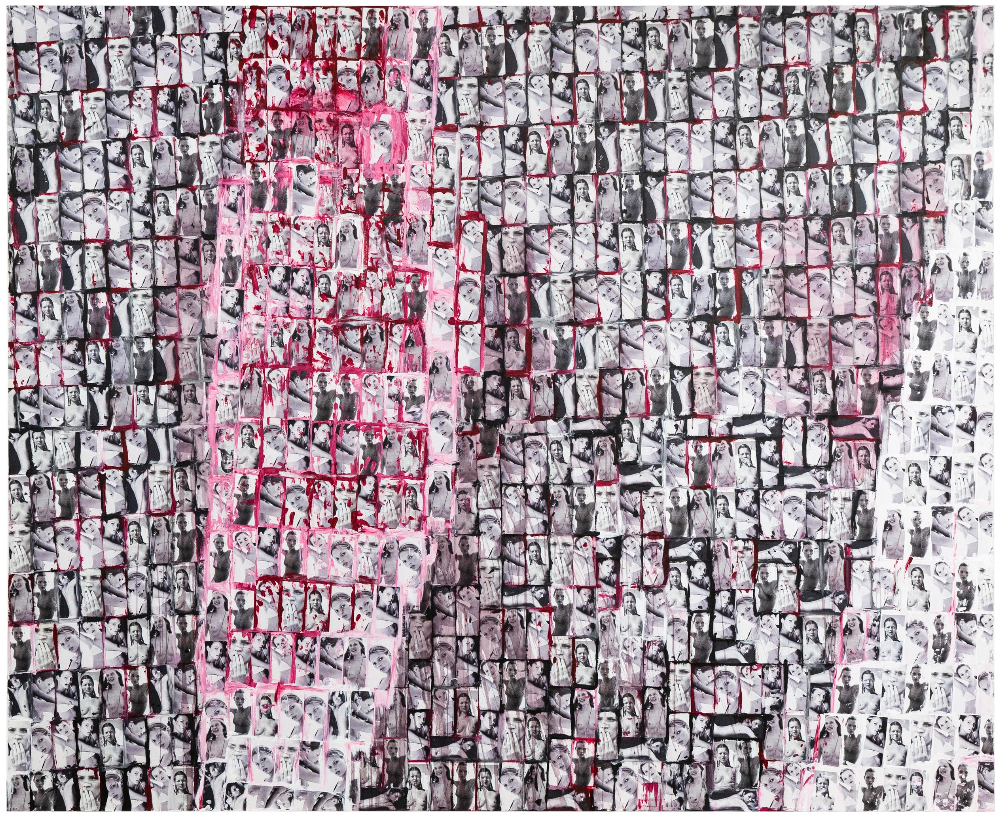
RICHARD PRINCE
Untitled (Kate Moss), 2008
Acrylic and printed paper collage on canvas
89×109 inches (226 x 276.9 cm)
#7. Untitled, 2012
Phillips London: 4 March 2022
Estimated: GBP 300,000 – 500,000
GBP 384,300 / USD 507,728
Richard Prince – 20th Century & Conte… Lot 150 March 2022 | Phillips
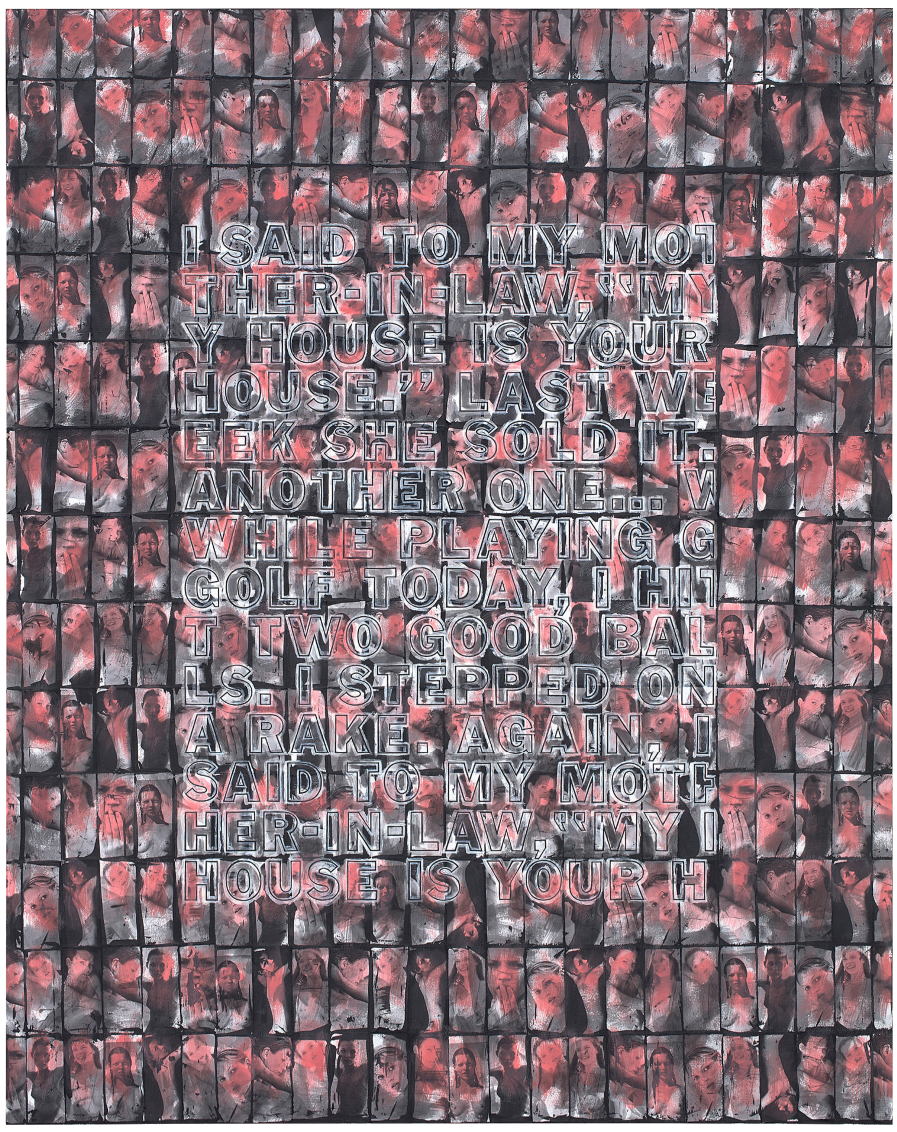
RICHARD PRINCE
Untitled, 2012
Collage and acrylic on canvas
74 1/4 x 59 inches (188.7 x 149.9 cm)
#8. Untitled, 2017
Phillips London: 13 October 2022
Estimated: GBP 350,000 – 550,000
GBP 403,200 / USD 457,350
Richard Prince – 20th Century & Con… Lot 132 October 2022 | Phillips
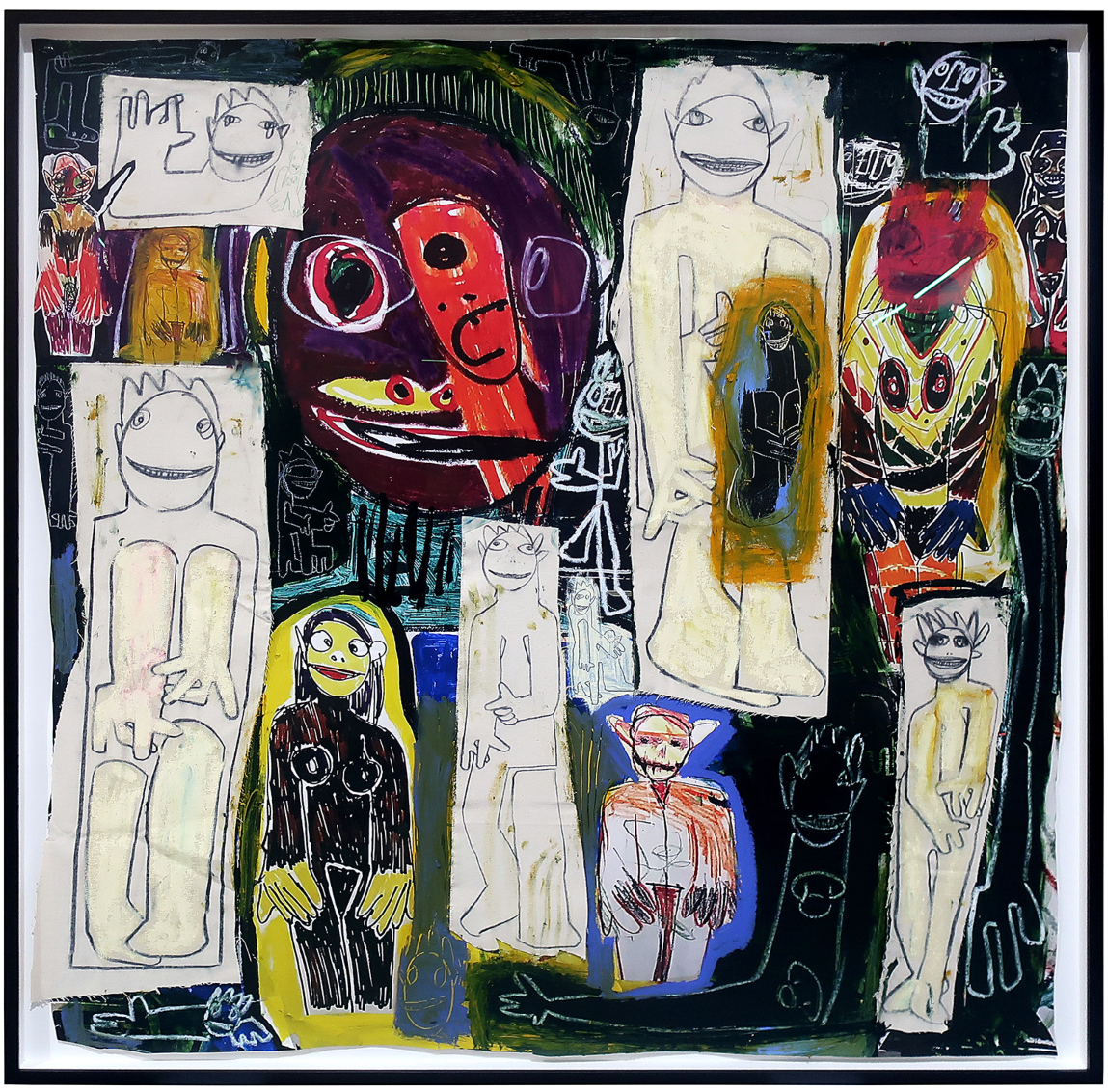
RICHARD PRINCE
Untitled, 2017
Collage, inkjet, oil crayon, pastel, charcoal and graphite on unstretched canvas
54 1/2 x 54 1/8 inches (138.5 x 137.5 cm)
Signed, inscribed and dated ‘Richard Prince HIGH TIMES 2017’ on the reverse
Untitled, Jokes, 2000
Sotheby’s New-York: 11 March 2022
Estimated: USD 350,000 – 500,000
USD 365,400
Untitled, Jokes | Contemporary Curated | 2022 | Sotheby’s (sothebys.com)
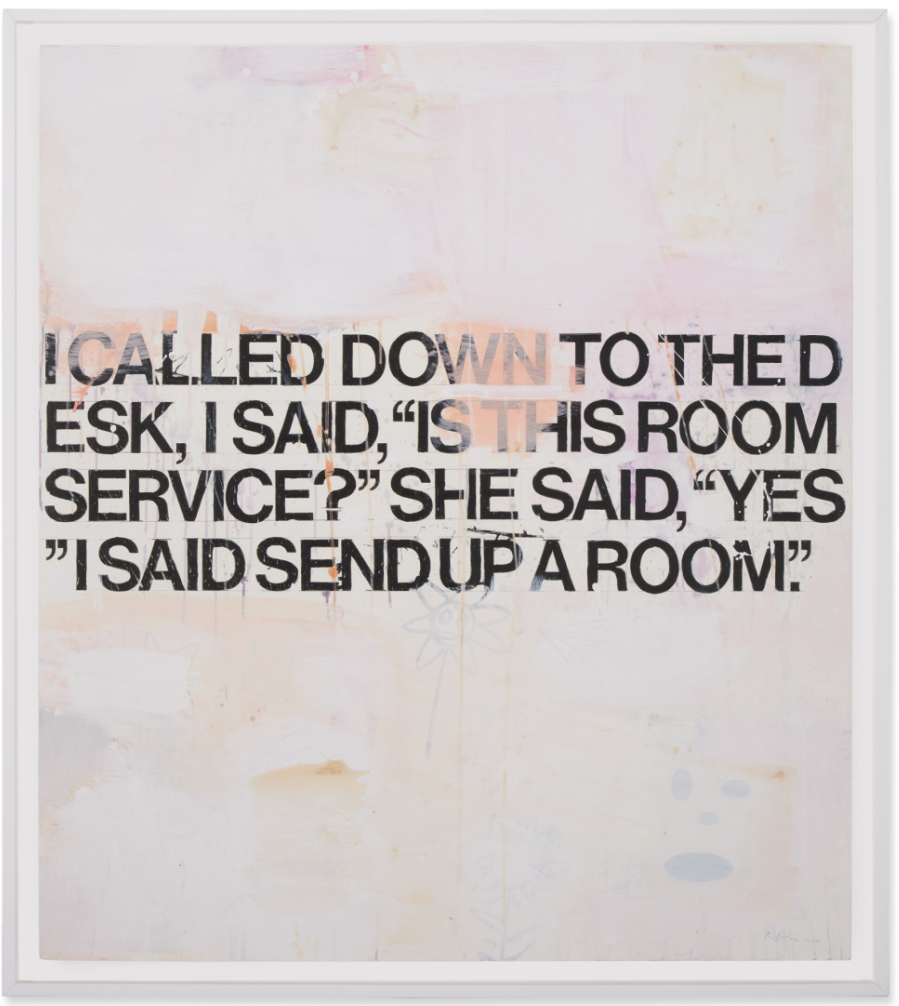
RICHARD PRINCE (b. 1949)
Untitled, Jokes, 2000
Acrylic on gatorboard
53 3/4 x 48 inches (136.5 x 121.9 cm)
Signed and dated 2000 (lower right)
2021 Auction Results
#1. Runaway Nurse, 2005-06
Sotheby’s Hong-Kong: 18 June 2021
Estimated: HKD 75,000,000 – 95,000,000
HKD 93,986,000 / USD 12,107,712
REPEAT SALE
RICHARD PRINCE (b. 1949)
Runaway Nurse, 2005-06
Inkjet and acrylic on canvas
110 1/4 x 66 1/4 inches (280×168 cm)
Signed, titled and dated 2005-06 on the overlap
#2. Lake Resort Nurse, 2002-2003
Christie’s New-York: 11 May 2021
Estimated: USD 4,000,000 – 6,000,000
USD 3,990,000
RICHARD PRINCE (B. 1949), Lake Resort Nurse | Christie’s (christies.com)
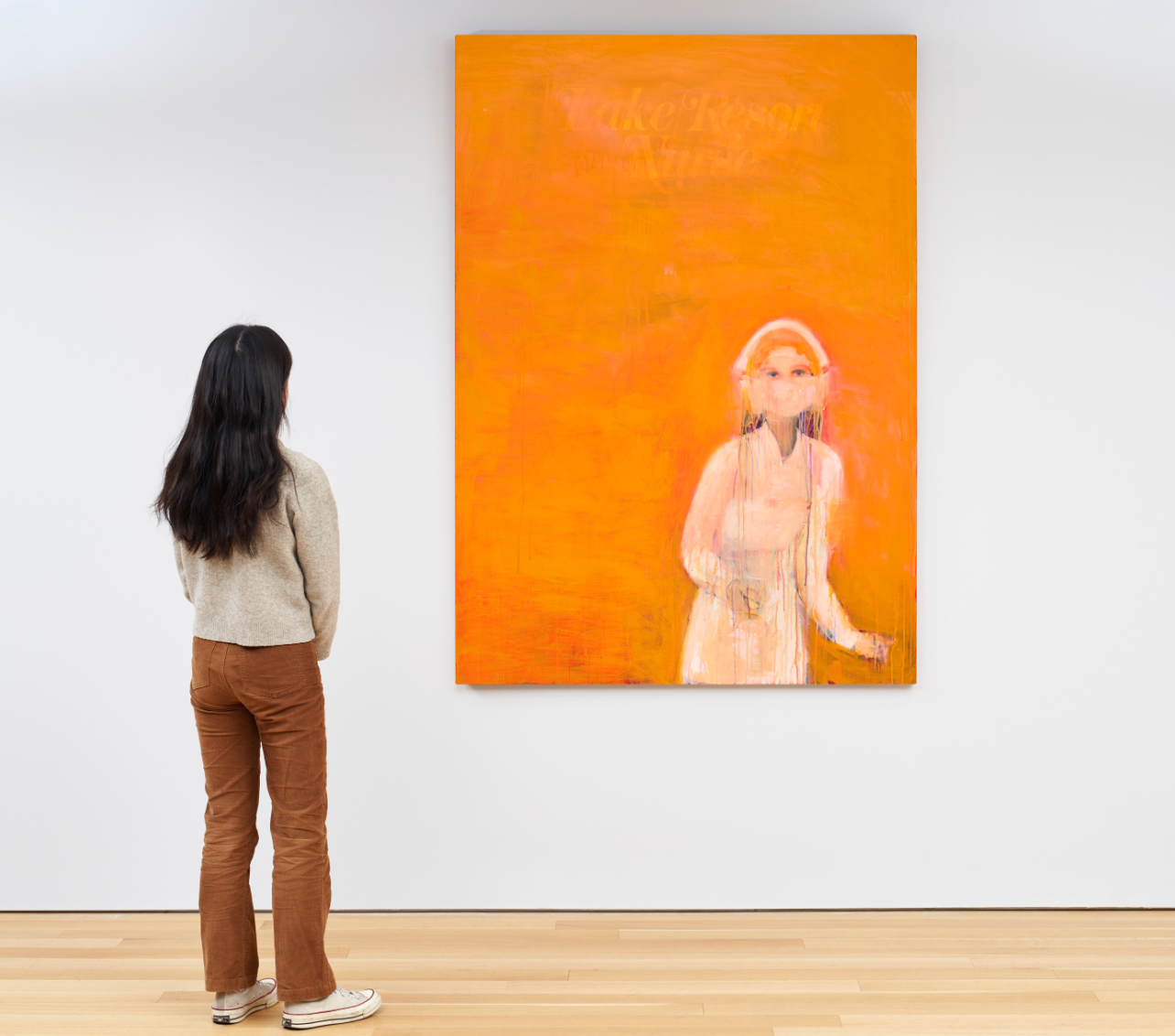
RICHARD PRINCE (B. 1949)
Lake Resort Nurse, 2002-2003
inkjet and acrylic on canvas
69 1/8 x 49 inches (175.6 x 124.5 cm)
Signed, titled and dated ‘R. Prince 2002-2003 LAKE RESORT NURSE #2’ (on the overlap)
Untitled, 2014-2018
Christies’ New-York: 9 November 2021
Estimated: USD 600,000 – 800,000
USD 1,170,000
RICHARD PRINCE (B. 1949), Untitled | Christie’s (christies.com)
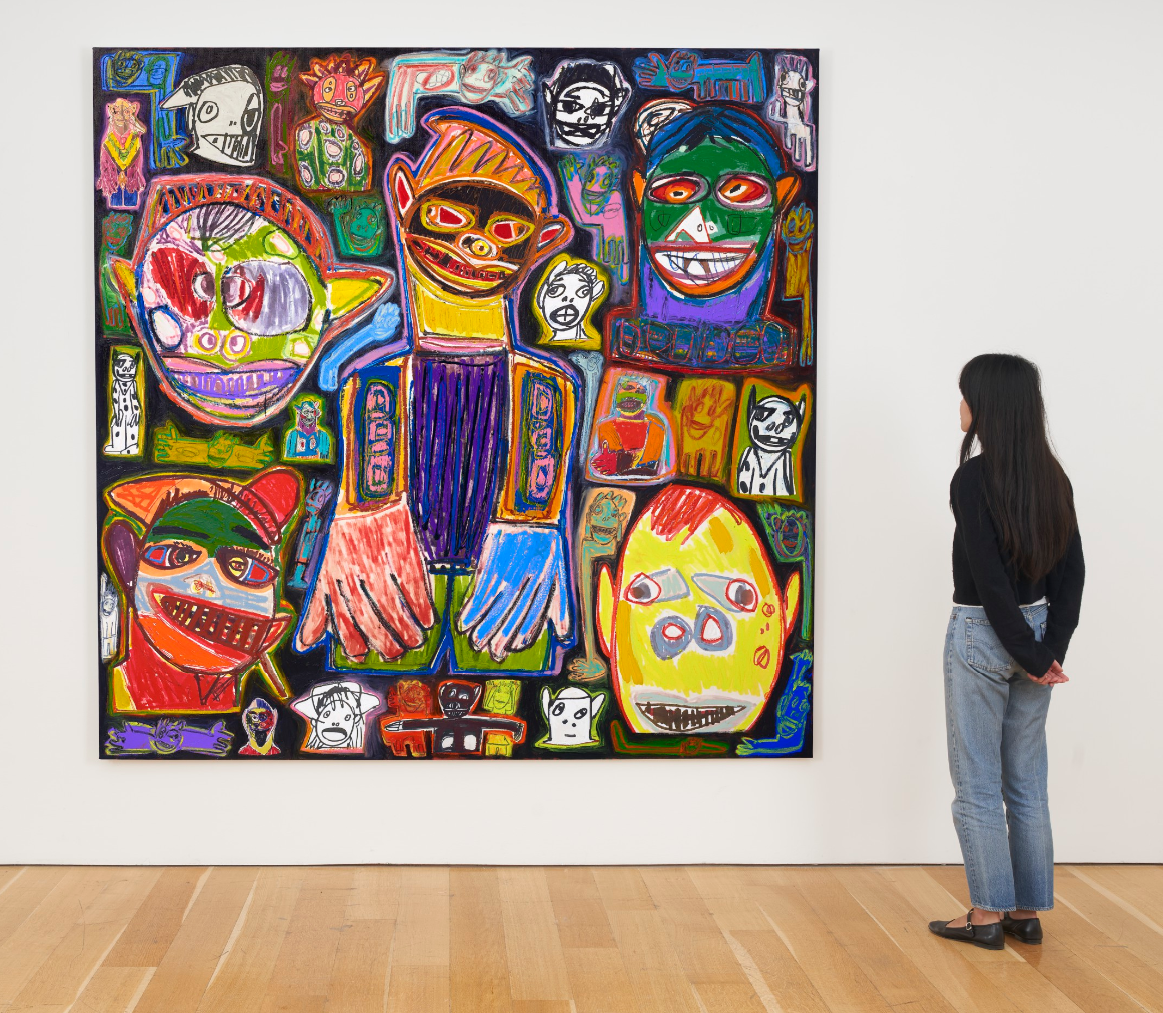
RICHARD PRINCE (B. 1949)
Untitled, 2014-2018
Acrylic, oil stick, canvas collage, gel medium and inkjet on canvas
88 1/2 x 89 3/4 inches (224.8 x 228 cm)
Signed twice, inscribed and dated four times ‘R Prince 2014 “OPEN DOOR” R Prince 2018 OPEN DOOR MORE 2014-2018 FRONT DOOR 2018 Aug 5’ (on the reverse)
PART III: FOCUS
Nurses
The Nurse is historically typecast as an icon of goodness, a benevolent caregiver and healer. However the 20th century has played with that role and eroticized it, casting her as a different character: a lustful and naughty object of sexual desire. It is this striking tension between the good and the wicked that Richard Prince so astutely captures in his Nurse series and what makes these works such intriguing and sought after paintings.
Cowboys
Richard Prince began his Cowboys series in 1980 by rephotographing cigarette advertisements, transforming them into profound cultural commentary. Described by Prince as ‘normalcy as special effect’ these images are devoid of text and typically focus on lone figures on horseback within expansive western landscapes. This series captures an unvarnished representation of the country’s self-image. The images are deeply ingrained in American culture, passing through it without causing friction, and thus become dismissable generic signifiers. By the time Prince chose them, these images had lost their original function as ubiquitous Marlboro cigarette ads and had settled into cultural obscurity, no longer actively shaping public perception.
Prince employs a variety of artistic techniques, including blurring, cropping, and enlarging, to challenge the perceived authenticity and spontaneity of these images. His manipulation reveals them as carefully crafted fictions that reflect American cultural ideals and societal desires. The cowboy, depicted as a solitary and self-reliant figure amidst an urban culture dominated by corporate independence, presents a striking paradox. Initially a modest ranch hand, the cowboy was transformed in the public imagination into an emblematic individualistic hero, epitomizing the ultimate icon of American manhood. The Marlboro men embody this archetype, supported by sweeping natural backdrops that draw from the tradition of American landscape painting and the cinematic spectacle of Hollywood Westerns. Prince was particularly interested in the cultural implications of the cowboy’s redundancy, driven by the necessity to control cigarette advertising for health reasons. This shift rendered the cowboy both obsolete and culturally taboo. By exploiting the alluring imagery that Marlboro was forced to abandon, Prince not only critiques but also reinvigorates the symbol of the lone cowboy. He evokes a sense of eschatological cultural termination, suggesting an end to the wilderness and the romanticized cowboy image that once symbolized American ruggedness and freedom. Prince’s work thus encapsulates a profound commentary on the shifting landscape of American cultural identity and the manufactured nature of its iconic symbols.
1. Photographs
Untitled (Cowboys), 1997
Sotheby’s New-York: 19 November 2025
Estimated: USD 600,000 – 800,000
USD 381,000
COWBOY PHOTOGRAPH
Untitled (Cowboys) | Contemporary Day Auction | 2025 | Sotheby’s
RICHARD PRINCE (b. 1949)
Untitled (Cowboys), 1997
Ektacolor print
48×72 inches (121.9 x 182.9 cm)
Signed, dated 1997 and numbered 2/2 (on a label affixed to the reverse of the frame)
This work is number 2 from an edition of 2
Richard Prince’s Untitled (Cowboys) from 1997 belongs to one of the most significant and enduring series in late twentieth-century American art – a body of work that transformed the language of appropriation into a profound meditation on identity, desire, and the construction of myth. With this image, Prince continues his deconstruction of the Marlboro advertising campaign that began in the late 1970s, isolating and enlarging its archetypal vision of the American West to expose the seductive fiction at its core. At once cinematic and elegiac, the present photograph captures the luminous spectacle of a smoke-filled clearing, where cowboys and horses appear suspended between light and shadow – a dream of freedom poised on the edge of disappearance.
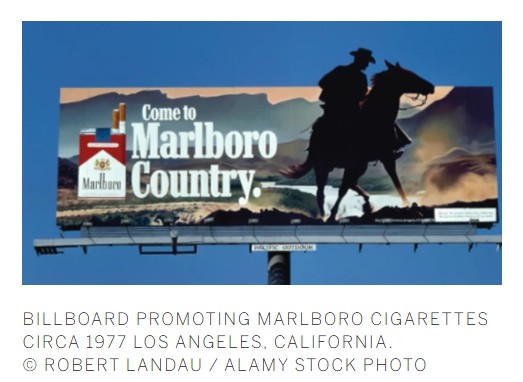
Prince first began rephotographing Marlboro advertisements in 1977 while working in the tear-sheet department at Time-Life, a setting that made him acutely aware of how images circulate and accrue meaning. By extracting these found photographs from their commercial context and re-presenting them as fine art, he pioneered a new mode of critique. The Cowboys series dismantles the romantic ideal of the American frontier – the rugged, solitary male as symbol of national virtue – and reveals it as a corporate construction of masculinity and power. Yet Prince’s engagement is never purely ironic. The aesthetic beauty of the images, suffused with atmosphere and longing, betrays a complex fascination with the myth they interrogate.
“You can’t just take the cowboy down; you have to love him first.”
The present Untitled (Cowboys) exemplifies the mature phase of this investigation. Executed in the late 1990s, it revisits and refines the earlier compositions of the 1980s through a heightened sense of cinematic scale and luminosity. The enlarged color print floods the viewer’s field of vision, transforming the advertisement into an immersive landscape of pure image. The haze of light filtering through the trees functions almost metaphysically – suggesting transcendence while simultaneously dematerializing the figures that embody it. The cowboys, dwarfed by the vast forest and haloed by smoke, seem to dissolve into their own mythology. The result is both intimate and monumental: a portrait not of a man, but of a cultural fantasy suspended in time.
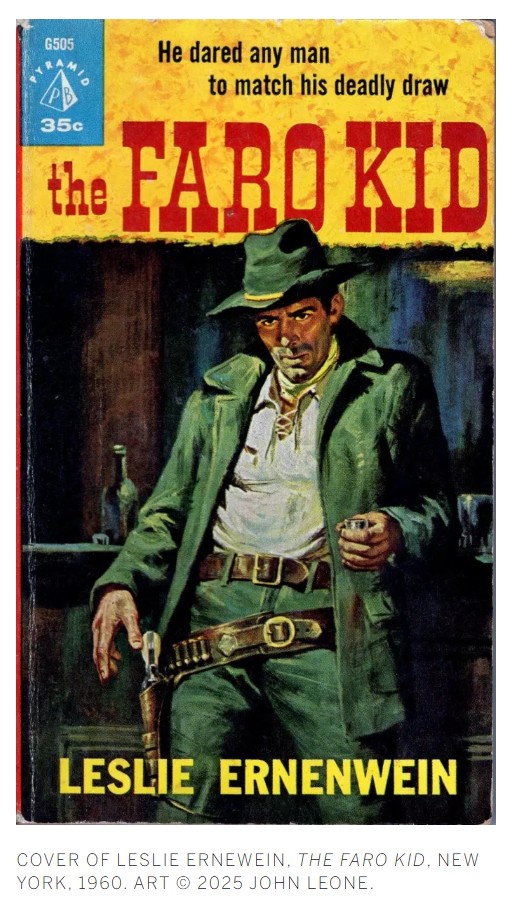
Prince’s Cowboys stand at the intersection of Conceptual Art and Pop, their lineage extending from the readymades of Marcel Duchamp and the serial appropriations of Andy Warhol to the image strategies of Cindy Sherman and Sherrie Levine. Like Warhol’s silkscreened icons of American glamour, Prince’s cowboys operate through repetition and removal, revealing the mechanics of myth-making through their own seductive surfaces. Yet where Warhol’s subjects – Marilyn, Liz, Elvis – celebrated celebrity itself, Prince’s cowboys embody a collective national fiction, one inseparable from the intertwined narratives of gender, race, and capitalism. The frontier he photographs is not geographical but psychological: the landscape of American imagination.
While rooted in appropriation, Untitled (Cowboys) is ultimately an elegy – a meditation on the death of both the mythic West and the age of innocence in which such myths could thrive. The figures’ anonymity, their faces turned from view, transforms them into silhouettes of longing, projections of the viewer’s own nostalgia for authenticity. In the haze of light and smoke, Prince captures not the hero, but the ghost of a vanished ideal. The image endures as a mirror of contemporary culture: where the fantasy of freedom persists, even as its artifice is laid bare.
Through its seductive surface and conceptual precision, Untitled (Cowboys) exemplifies Prince’s lifelong inquiry into the power and peril of images. It is a photograph about looking, about the impossibility of separating desire from illusion. In re-presenting America’s most iconic dream, Prince turns the image back on itself – revealing, in the shimmer of light across the forest clearing, both the allure and the emptiness at the heart of the American myth.
Untitled (Cowboy), 2000
Sotheby’s New-York: 15 May 2025
Estimated: USD 800,000 – 1,200,000
USD 1,392,000
Untitled (Cowboy) | The Now and Contemporary Evening Auction | 2025 | Sotheby’s
RICHARD PRINCE (b. 1949)
Untitled (Cowboy), 2000
Archival digital print
Image: 29 1/2 x 45 3/8 inches (74.9 x 115.3 cm)
Sheet: 32 1/2 x 48 3/8 inches (82.6 x 122.9 cm)
Signed, dated 2000 and numbered printer’s proof (on a label affixed to the reverse)
This work is a unique printer’s proof outside of the edition of 2 plus 1 artist’s proof
Emerging as silhouettes from the majestic haze of early morning light, as the sun just begins to crest the snowcapped mountains, a cluster of cowboys and their steeds begin to come into focus. The cinematic image is so visceral, one can imagine the cool morning mountain air, the soft sounds of birds and insects awakening in the woods, and the clip of the horses’ hooves as they slow to a stop. The present work represents the conceptual zenith of Richard Prince’s most celebrated and enduring iconography, which has captivated the artist for nearly five decades. Re-photographing the cinematic and seductive scenes of Marlboro cigarette advertisements, Prince probed the American symbol of the cowboy as the prototypical industry-fabricated cultural construct, detached from its historic origins. The archetypal American symbol, the cowboy symbolizes freedom, masculinity, and heroism through a mythical ideal born of a bygone era. Appropriating advertising images and omitting all brand references, Prince challenges notions of authorship and originality entering a postmodern interrogation and deconstructing the nostalgic symbolism of the quixotic cowboy in American cultural consciousness. The cover image of the 2013 Richard Prince monograph, the present work is a paradigm of Prince’s most revered body of work and the culmination of decades of investigation and inquiry.
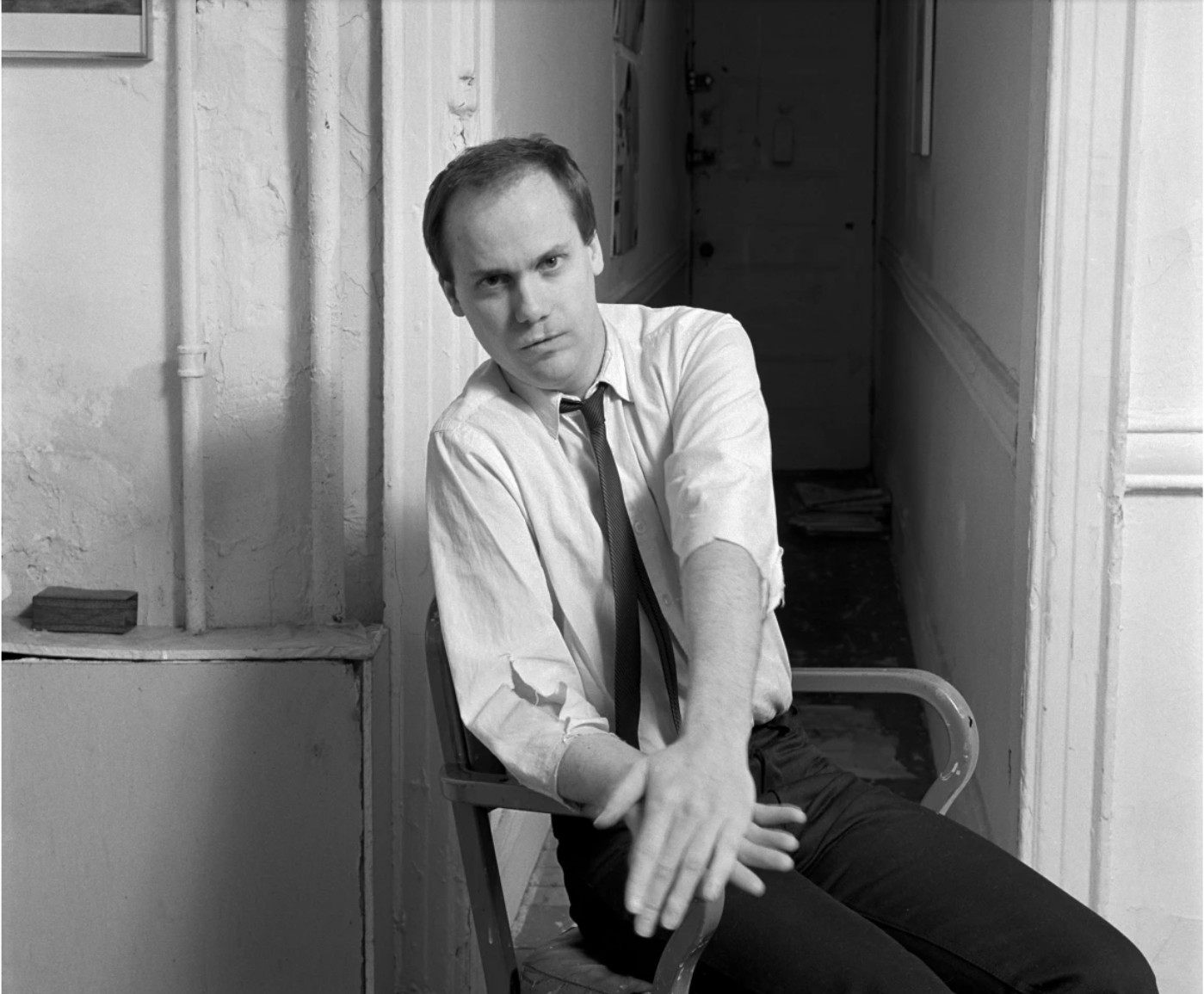
Richard Prince in his studio on the Lower East Side in 1982. Photo © Peter Bellamy
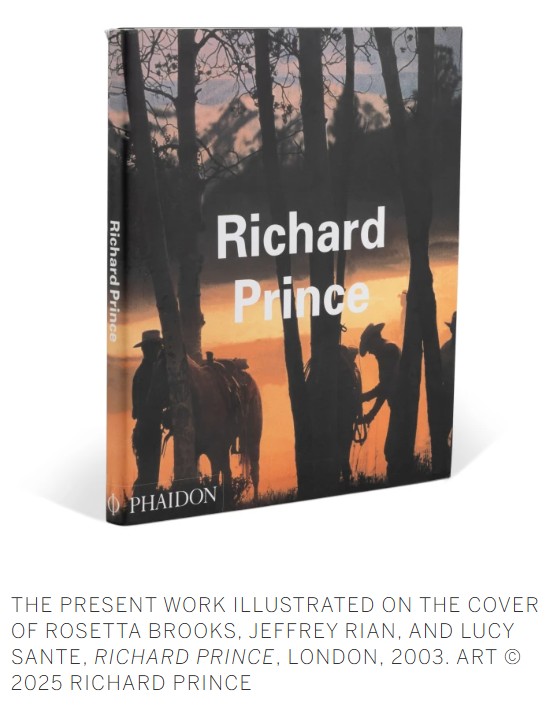
In the mid-1970s, Prince worked part-time clipping editorials for the staff writers at Time-Life magazine and found himself intrigued by the remarkable visual potency of the leftover advertisements scattered upon the newsroom floor. By 1980, Prince embarked on his emblematic series, re-photographing advertisements for Marlboro cigarettes which featured the cowboy as a cultural icon to their target consumer. Drawn to the ubiquity and symbolic power of the imagery on its own, Prince censored the insignias and tag lines of the brand name. Furthermore, accentuating the artifice of the photographs, Prince liberally blurred, cropped, or altered the images, situating his subjects in a conceptual imaginary. In the resulting images, akin to Marcel Duchamp’s readymades, Prince employs appropriation tactics to subvert conventions of authenticity and artistic production. Devoid of the Marlboro brand name, the cowboy caricature maintains its visual vigor as a universally familiar iconography of American consumerism. As observed by Nancy Spector, “Prince’s appropriations of existing photographs are never merely copies of the already available. Instead, they extract a kind of photographic unconscious from the image, bringing to the fore suppressed truths about its meaning and its making.” (Nancy Spector, “Nowhere Man,” in Exh. Cat., New York, Solomon R. Guggenheim Museum (and traveling), Richard Prince: Spiritual America, 2007-08, p. 26)
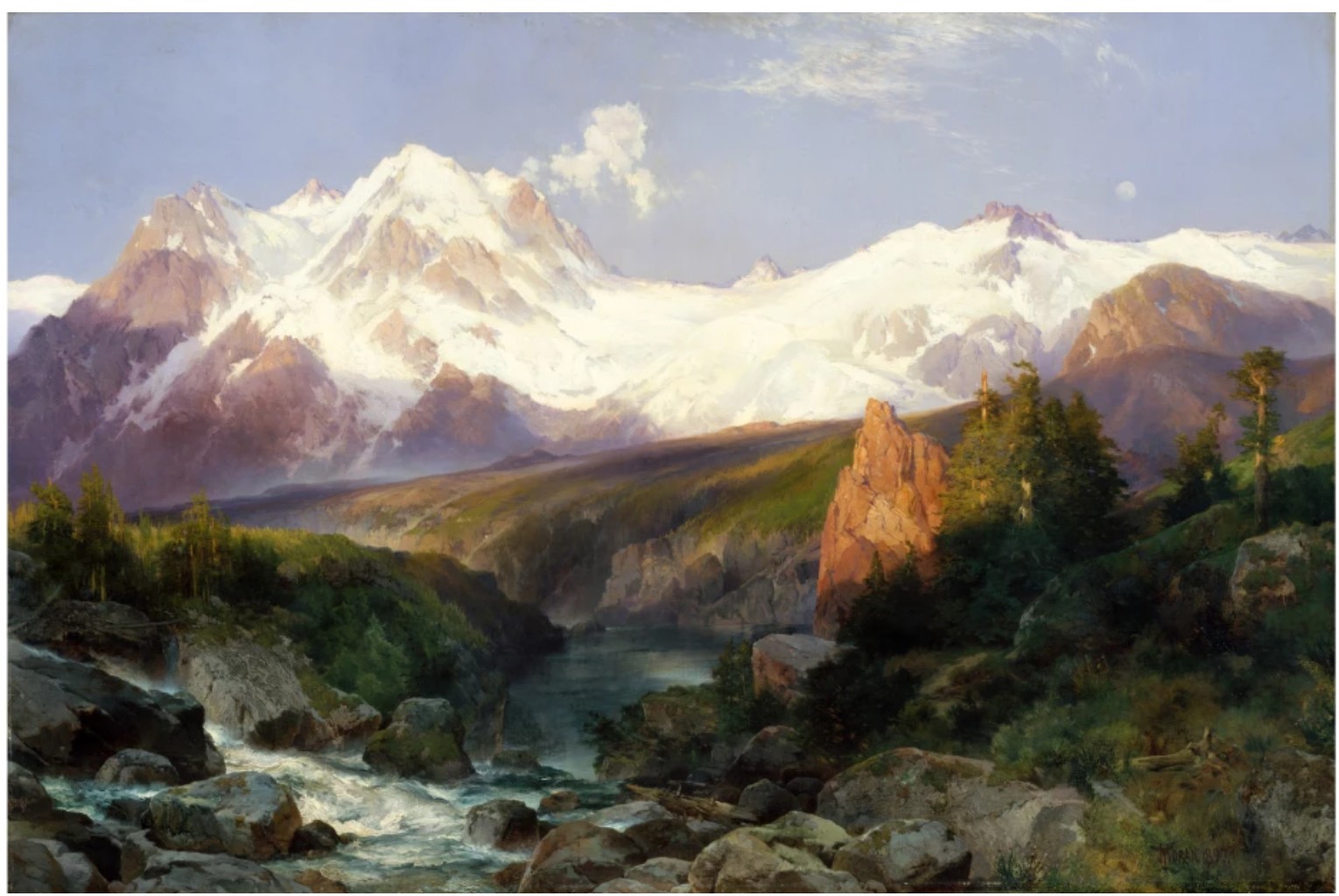
Thomas Moran, The Teton Range, 1897. Metropolitan Museum of Art, New York. Image © Bridgeman Images
Backlit by the radiant, heavenly glow of morning light, the coterie of cowboys and their horses appear to take leave at the edge of the woods. The silhouettes of the cowboys are dominated by the grandeur of the natural world behind them. An ecclesiastical light emanates from the waters behind them, reflected from the rising sun. In the distance, snowcapped mountains govern over the scene. The cinematic and majestic scene is emblematic of the notions of rugged individualism and unfettered adventure that the construct of the cowboy represents.
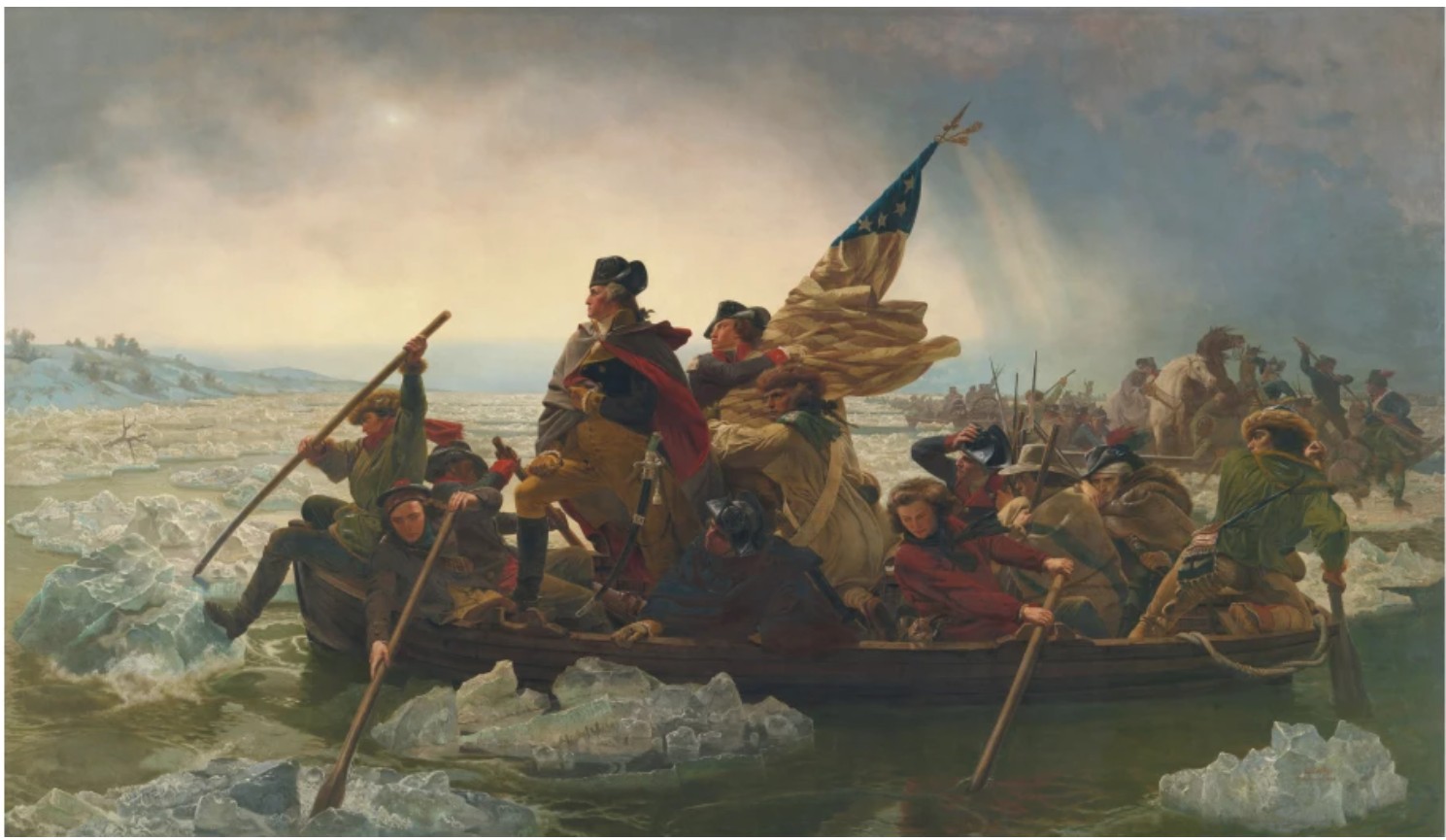
Emanuel Gottlieb Leutze, Washington Crossing the Delaware, 1851. Metropolitan Museum of Art, New York. Image © Bridgeman Images
Prince’s conceptual project challenges the very notion of originality and newness, offering a postmodern lens on appropriation. As the quintessential media fabricated construct, the cowboy embodies a rugged sexuality and performative heroism born for the cinematic drama and advertising campaigns. A stereotype for espoused American ideals of liberation, fervent independence, and chivalry, the glamourized performances of actors like Clint Eastwood and John Wayne cemented a sensationalized vision which would permeate the American psyche. The Marlboro man is a personification of the forlorn conception of the American Dream, a quest for freedom and independence symbolized with the horseback traveler riding through the American West. When Prince first began this series, the rapid development of the cattle industry helped foster a hyper-macho, cowboy identity bolstered in American pop culture and media, embodying the target consumer of Marlboro products.
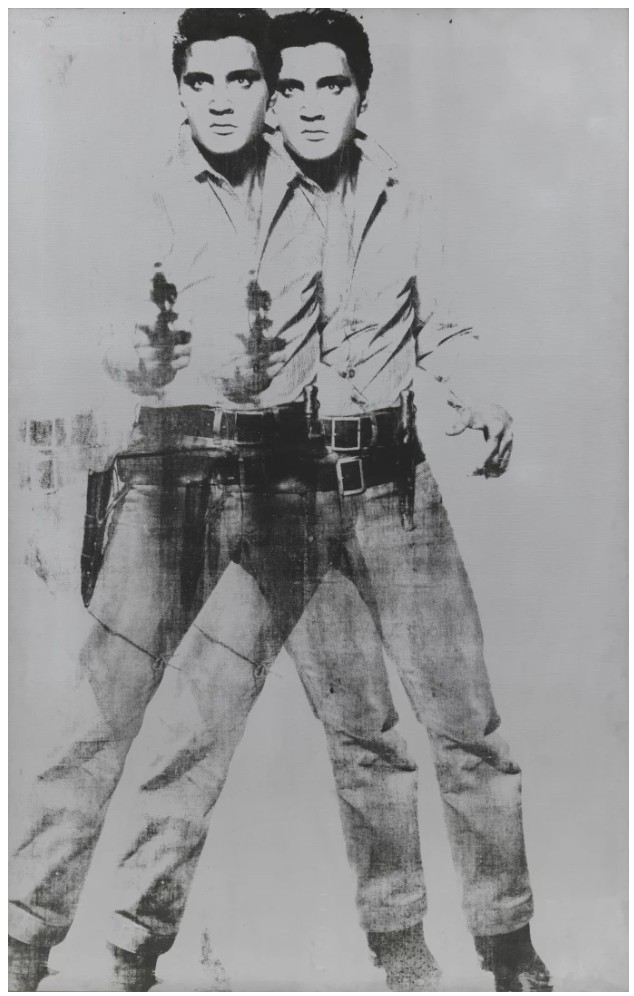
Andy Warhol, Double Elvis, 1963. Museum of Modern Art, New York. Image © The Museum of Modern Art/Licensed by SCALA / Art Resource, NY. Art © 2025 Andy Warhol Foundation for the Visual Arts / Artists Rights Society (ARS), New York
Working in the wake of the Pop movement, in which the iconography of American consumerism and pop culture became the subject matter of fine art, Prince’s investigation sits between a Warholian fascination with pop-culture and a post-modern contention with its inherent inauthenticity. In the present work, Prince’s reframing of the Marlboro campaign maintains an intoxicating, cinematic allure, entrancing the viewer in a scene which at once glorifies and dismantles the myth of the cowboy.
Untitled (cowboy), 2016
Christie’s New-York: 14 May 2025
Estimated: USD 700,000 – 1,000,000
USD 1,502,000
RICHARD PRINCE (B. 1949), Untitled (cowboy) | Christie’s
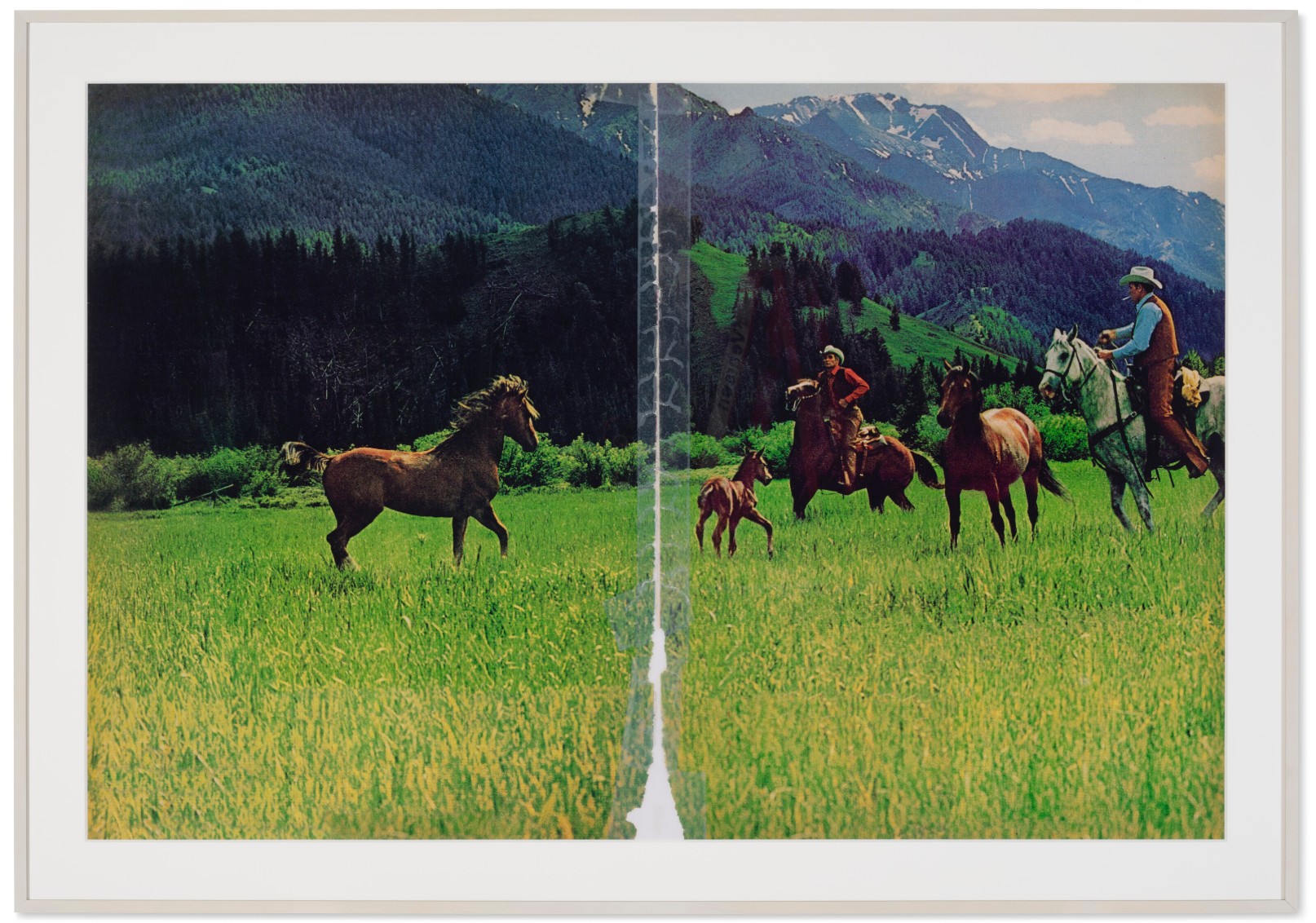
RICHARD PRINCE (B. 1949)
Untitled (cowboy), 2016
Chromogenic print
60×90 inches (152.4 x 228.6 cm)
Signed, numbered and dated ‘R Prince 2016 1⁄2’ (on a label affixed to the reverse)
This work is number one from an edition of two
One of the most enduring motifs of his career, the cowboy has proven to be an endless fascination for Richard Prince. Evoking the bucolic splendor of the mythic American West, the cowboy represents rugged masculinity and fierce individualism, a subject the artist has explored for over forty years. In Untitled (Cowboy), Prince returns again to 1980s and ‘90s magazine advertisements for Marlboro cigarettes, leaving their torn edges and tape to expose the original context. In the present work, golden fields of wildflowers are ablaze with the blossoms of early summer, set against a jagged mountain range, where two mounted cowboys confront a wild horse. The tape running the centerfold highlights the origin of the image as a magazine centerfold. Executed in 2016, this work belongs to the artist’s more recent series of Cowboys, debuted at the Los Angeles County Museum of Art (LACMA) in late 2017. From a small edition of two—with the other example from the edition now in LACMA’s permanent collection—the present work brings the awe-inspiring magnificence of the American West directly under the artist’s skillful gaze, triggering a new and exciting interpretation of this classic American archetype.
Richard Prince came of age in the 1970s in New York, where he was working in the tear-sheet department of Time and Life magazines. His job was to clip articles for staff journalists, and in doing so, Prince came to scrutinize the magazine ads in a new light. Fascinated by these luxurious consumer goods, beautiful landscapes and shiny commodities, Prince began to re-photograph the original ads with a 35mm camera, making subtle changes to the imagery by cropping and eliminating the text, and then drastically enlarging its scale. Seen in a new light, these “appropriated” photographs sent shock waves through the art world when they were first exhibited in the early 1980s. Alongside artists like Cindy Sherman and Barbara Kruger, Prince became known as part of the “Pictures Generation,” which essentially revealed that our concept of identity and gender was essentially a false construct invented by the media.
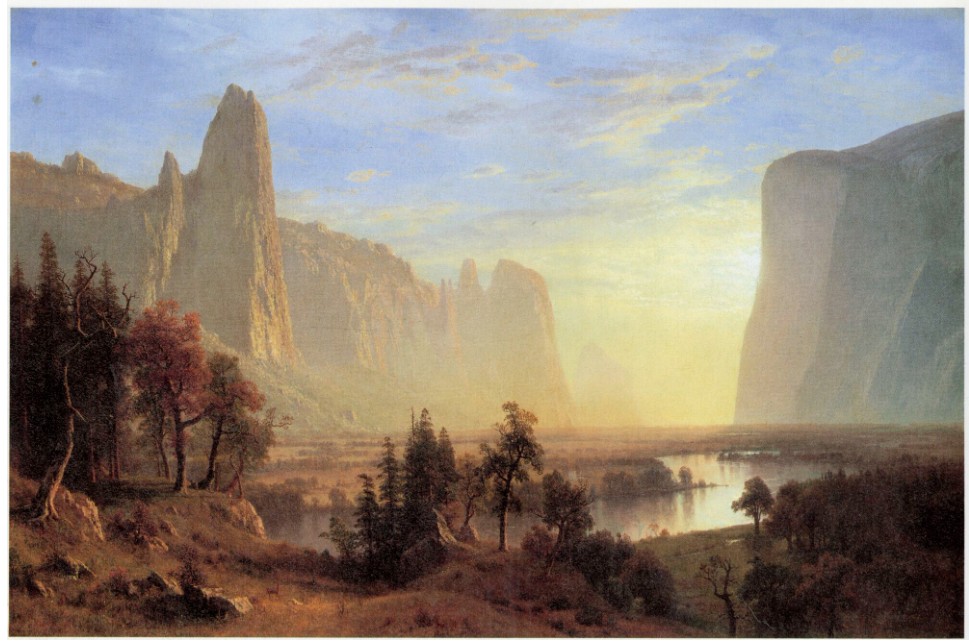
Albert Bierstadt, Yosemite Valley, 1868. Oakland Museum.
Between 1980 and 1992, Prince used this strategy to interrogate the motif of the cowboy, which he found in advertisements for Marlboro cigarettes. These early cowboy photographs essentially set the stage for Prince’s life-long investigation of the motif and everything it conjures in the collective imagination—ruggedness, determination and individualism. Now more than ever, the myth of the cowboy continues to resonate with its complicated yet enduring appeal.
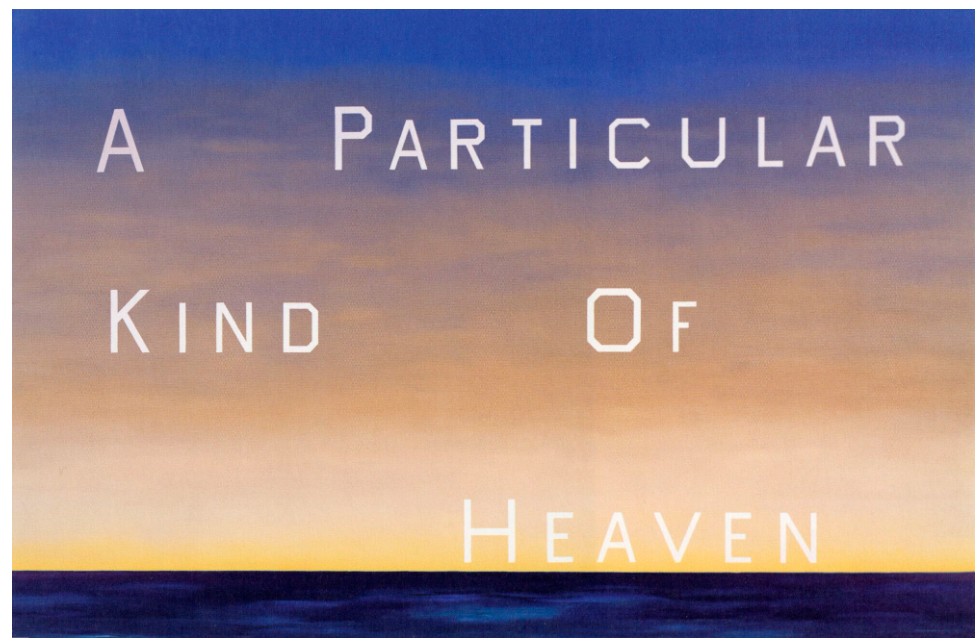
Ed Ruscha, A Particular Kind of Heaven, 1983. Collection Fine Arts Museums of San Francisco, San Francisco. © Ed Ruscha.
Over the years, Richard Prince has returned to the Cowboy motif several times. In 2013, he traveled to iconic landscapes in the West, including Monument Valley, to photograph the landscape himself, which resulted in a series he called Untitled (Original Cowboy). Prior to that, Prince had appropriated the original magazine ads and then altered the image by changing its size, zooming in on certain features that changed the nature of the original image. Around 2015-16, Prince again returned to the 1980s and ‘90s Marlboro ads, but instead of photoshopping out the seam down the middle of the centerfold, he allowed that feature to remain. In the present work, the two tear sheets from the magazine have been torn out, then taped back together. This strong vertical element has the effect of dividing the composition into two parts, with the cowboys on one side, and a single wild horse on the other, symbolizing the difference between the raw, unbridled aspect of nature itself and man’s attempt to contain it. The tape also reminds the viewer that this is still a ploy—an attempt to seduce its reader.
Untitled (Cowboy), 1999
Christie’s New-York: 21 November 2024
Estimated: USD 1,000,000 – 1,500,000
USD 1,865,000
RICHARD PRINCE (B. 1949), Untitled (Cowboy) | Christie’s
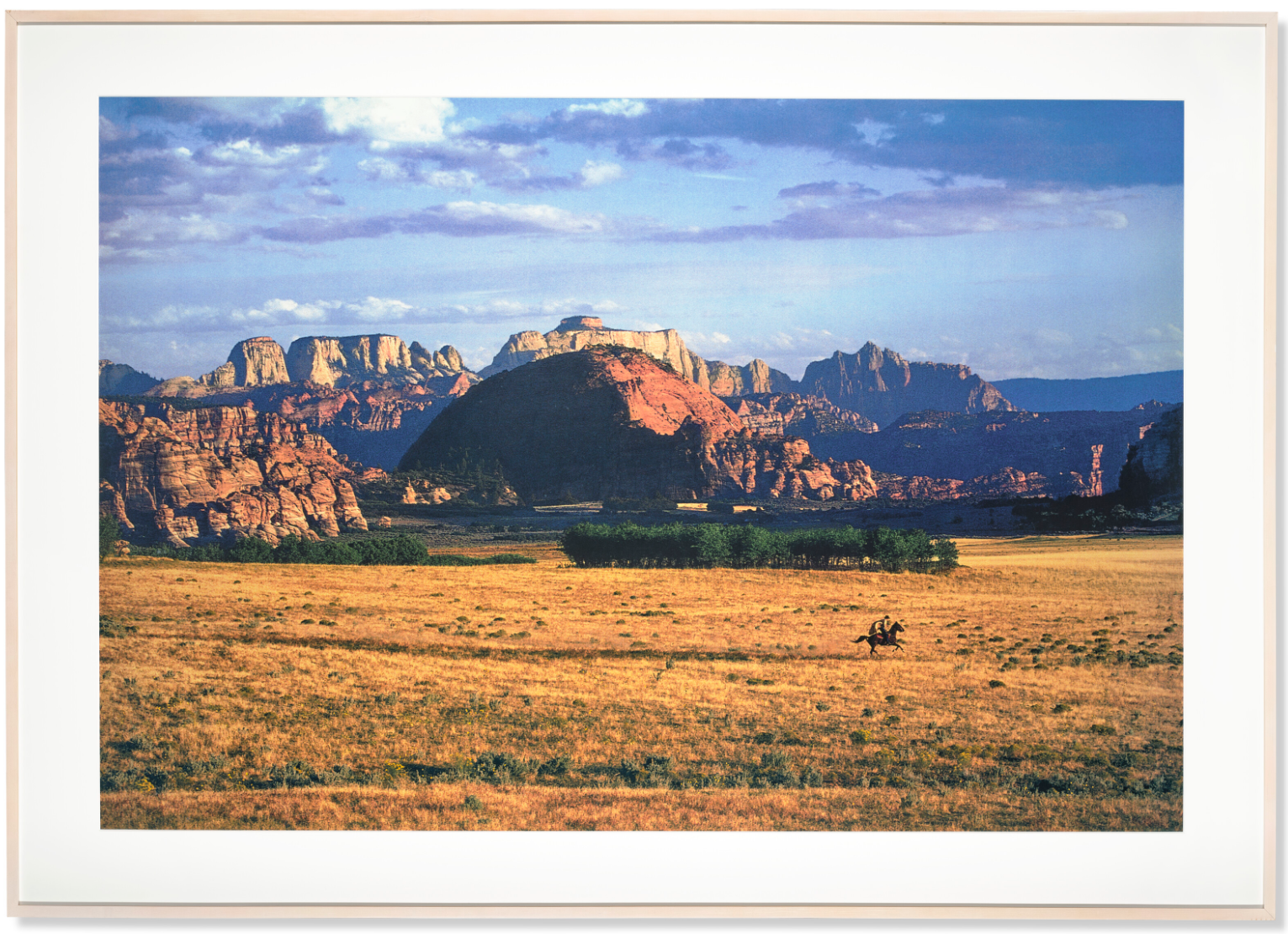
RICHARD PRINCE (B. 1949)
Untitled (Cowboy), 1999
Ektacolour photograph
49×73 inches (123.5 x 185.5 cm)
Signed, numbered and dated ‘R Prince 1999 1⁄2’ (on the reverse)
This work is number one from an edition of two plus one artist’s proof
For the past forty years, Richard Prince has pursued a strategy of appropriation to uncover some of the most highly-charged imagery in our shared culture. In this, a stunning photograph from his iconic Cowboys series, the artist continues his exploration of the mythic American West. Here, the large-scale cinematic presentation of the lone cowboy, dwarfed by the sheer beauty of the landscape, presents the idea of the rugged individual going at it alone despite insurmountable odds.
The Cowboys were one of Richard Prince’s first major projects, which had its inception in the mid-1970s while he was working at Time magazine. Part of his job required him to sort through stacks of tear sheets (copies of advertisements sent to advertisers as proof of printing), from which he cut out the text so that only the image remained. These glossy magazine ads were naturally seductive, and he became fascinated with the image of the Marlboro man in particular. Prince made subtle changes to the original ad, either cropping or enlarging the imagery, and then re-photographed the result. The earliest Cowboy series were exhibited in the 1980s, and helped to position the artist as one of the leading artists of appropriation art, which became a classic postmodern strategy.
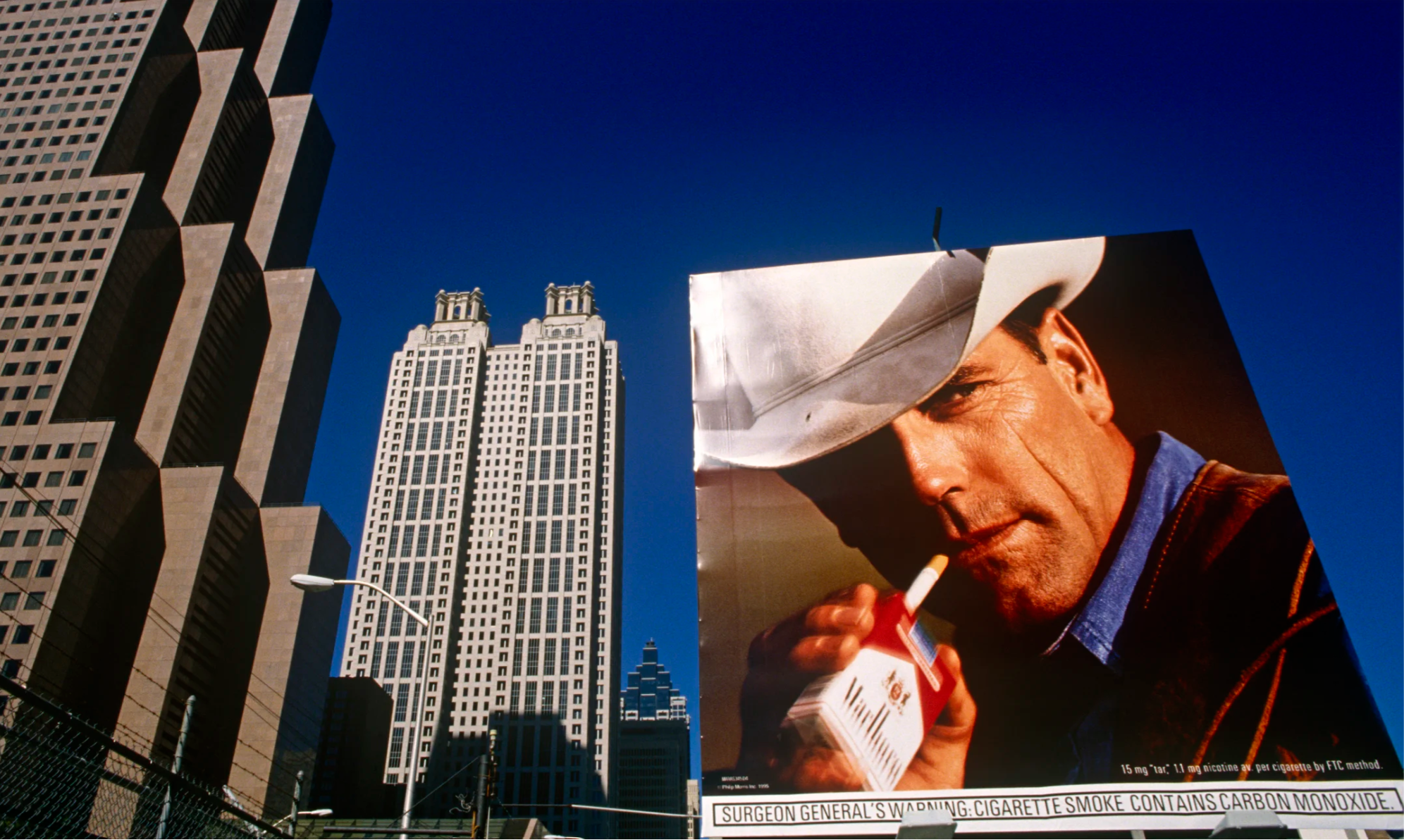
A Phillip Morris ad using the famous Marlboro Man cowboy character on a downtown Atlanta billboard, November 5, 1995
In the present work, the large-scale grandeur of the vast American West is yet another character in the unfolding drama of the artist’s popular Cowboys series. Recalling the great landscape paintings of Edwin Church, Thomas Cole and the Hudson River School, Prince lets the majesty of the rugged countryside speak for itself, which he renders on a panoramic scale stretching six feet in width. Riding his horse at full gallop, a solitary cowboy races across the valley, cutting a trail in his wake. The lone figure, set against such a dramatic landscape, evokes the nineteenth century concept of Manifest Destiny whilst also conveying—paradoxically— man’s insignificance in the midst of such overwhelming natural splendor. The Cowboys – along with the Nurse paintings, the Girlfriends and the Joke paintings – has become one of Richard Prince’s most iconic, long-running series. He reaches out into the unseen areas of American culture and comes back with off-color jokes and fetishes, which nevertheless ring true in all their crude veracity. With the Cowboys, Prince zeros in on the myths and symbols that define masculinity itself. His portrayal of the rugged, tough cowboy harkens back to a mythic American past, made famous in pulp fiction novels and Sergio Leone films.
Silhouette Cowboy, 1998-1999
Christie’s New-York: 22 November 2024
Estimated: USD 600,000 – 800,000
USD 1,744,000
RICHARD PRINCE (B. 1949), Silhouette Cowboy | Christie’s
RICHARD PRINCE (B. 1949)
Silhouette Cowboy, 1998-1999
Ektacolor print
47 7/8 x 72 inches (121.6 x 182.8 cm)
Signed, inscribed, numbered and dated ‘Richard Prince 1998-99 Four Silouette [sic] Cowboys 1⁄2’
(on the backing board);
Signed again ‘Richard Prince’ (on a paper label affixed to the reverse)
This work is number one from an edition of two plus one artist’s proof
Silhouette Cowboy celebrates the tradition of a mythical American hero, while at the same time questioning its meaning in contemporary society. Part of the artist’s iconic Cowboys series, this large-scale image is based on a well-known series of tobacco advertisements, but under Prince’s insightful manipulation, removes all references to the commercial brand and questions its true meaning in the process. A key member of the group of artists who became known as the Pictures Generation, Prince—along with the likes of Cindy Sherman and John Baldessari—became known for his critical analysis of American media culture, and his interrogation of the cowboy image became his most celebrated series, with many examples being held in major museum collections.
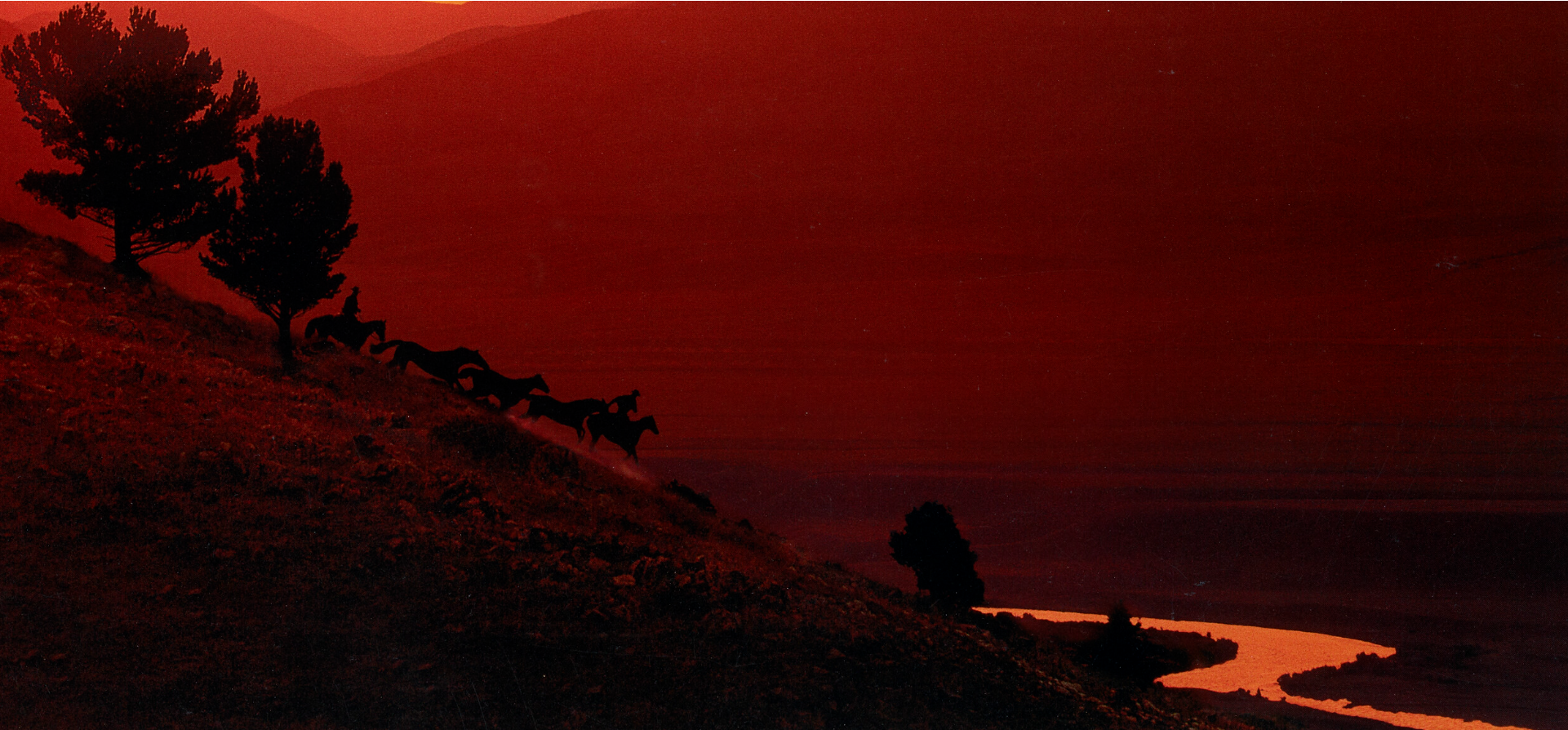
One of his most striking images, Silhouette Cowboy depicts the intense light cast by the setting sun as it silhouettes two cowboys corralling a group of horses down the mountain. While the outlines of the two men and their charges are distinguishable between the trees, they are almost completely overshadowed by the majestic beauty of the setting. The soaring peaks of the mountain range, the river that snakes across the valley floor, and the setting sun itself all dominate the composition, with the titular cowboys almost becoming subsumed by the landscape itself.
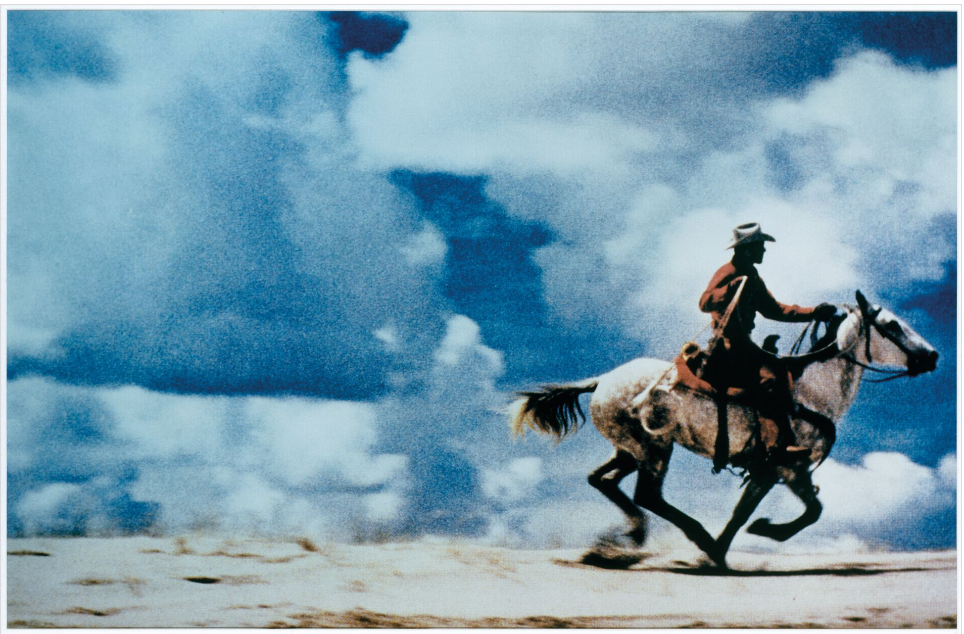
Richard Prince, Untitled (Cowboy), 1989. Metropolitan Museum of Art, New York.
Artwork: © Richard Prince. Photo: © The Metropolitan Museum of Art. Image source: Art Resource, New York.
In Silhouette Cowboy, Prince combines two views of America that have become ingrained in the nation’s conscious. In the nineteenth century, the painters of the Hudson River School such as Frederic Edwin Church and Thomas Cole, produced epic landscapes that espoused the manifest destiny that propelled many early pioneers to expand across North America taking democracy, Christianity, and capitalism with them. By the twentieth century, the cowboy had become a mythical all-American hero, a symbol of masculinity, triumph over adversity, and bravery perpetuated in both Hollywood movies and popular ‘Boys Own’ comic books. In the 1950s, this in turn was embraced by the Marlboro tobacco company as the epitome of rugged, individualistic hero, images which Prince would then appropriate in the present work. In contrast to the advertisements however, paintings such as Frederic Edwin Church’s Twilight “Short Arbiter ‘twixt Day and Night” (Sunset) (1850, Newark Museum) intimate the human control over the land as the illuminated settlers cottage on the brow of the hill in the foreground. In Prince’s iteration of the American West, the only human presence is subsumed by the majesty and beauty of the natural landscape itself. With a work such as this, Prince challenges the power of imagery in contemporary society. By appropriating a pre-existing image and then re-photographing it to produce his own image, the artist questions the notion of authenticity and authorship. In its iteration as an advertisement, the image was a false representation of a fantastical land led by implausibly healthy, virile cowboys who smoked, where the ‘promise’ being advertised was that of decadent, fashionable consumption without consequence in a perversion of the original concept. Without this context, the work rekindles the suppressed projections of desire towards the American West in its glorified beauty while demonstrating, without rancor or censure, the simulated reality of modern life, which is subjected to so much psychological manipulation driven by our image obsessed society.
Untitled (Palomino), 1982-86
Sotheby’s New-York: 21 November 2024
Estimated: USD 500,000 – 700,000
USD 540,000
Untitled (Palomino) | Contemporary Day Auction | 2024 | Sotheby’s
RICHARD PRINCE (b. 1949)
Untitled (Palomino), 1982-86
Ektacolor photograph flush mounted to foam board
40×27 inches (101.6 x 68.6 cm)
This work is number 2 from an edition of 2
Grandiose yet unrevealing, Richard Prince’s Untitled (Palomino), from the artist’s seminal series, unpacks the mythology of an American icon. The cowboy, once thought of as a lowly ranch hand, saw himself polished and ingrained into the public imagination by the spectacle of Hollywood Westerns. The tough, heroic trailblazer archetype, primed for commercial exploitation, was prominently seized upon by the American cigarette maker Marlboro. For nearly a half-century, images of ‘Marlboro Men’–rugged cowboys roaming picturesque terrain on horseback–saturated the global media market. Intrigued by its staying power in the American ethos, Richard Prince appropriated the Marlboro cowboy, rephotographing it and fortifying the cinematic spectacle into one of his most enduring motifs.
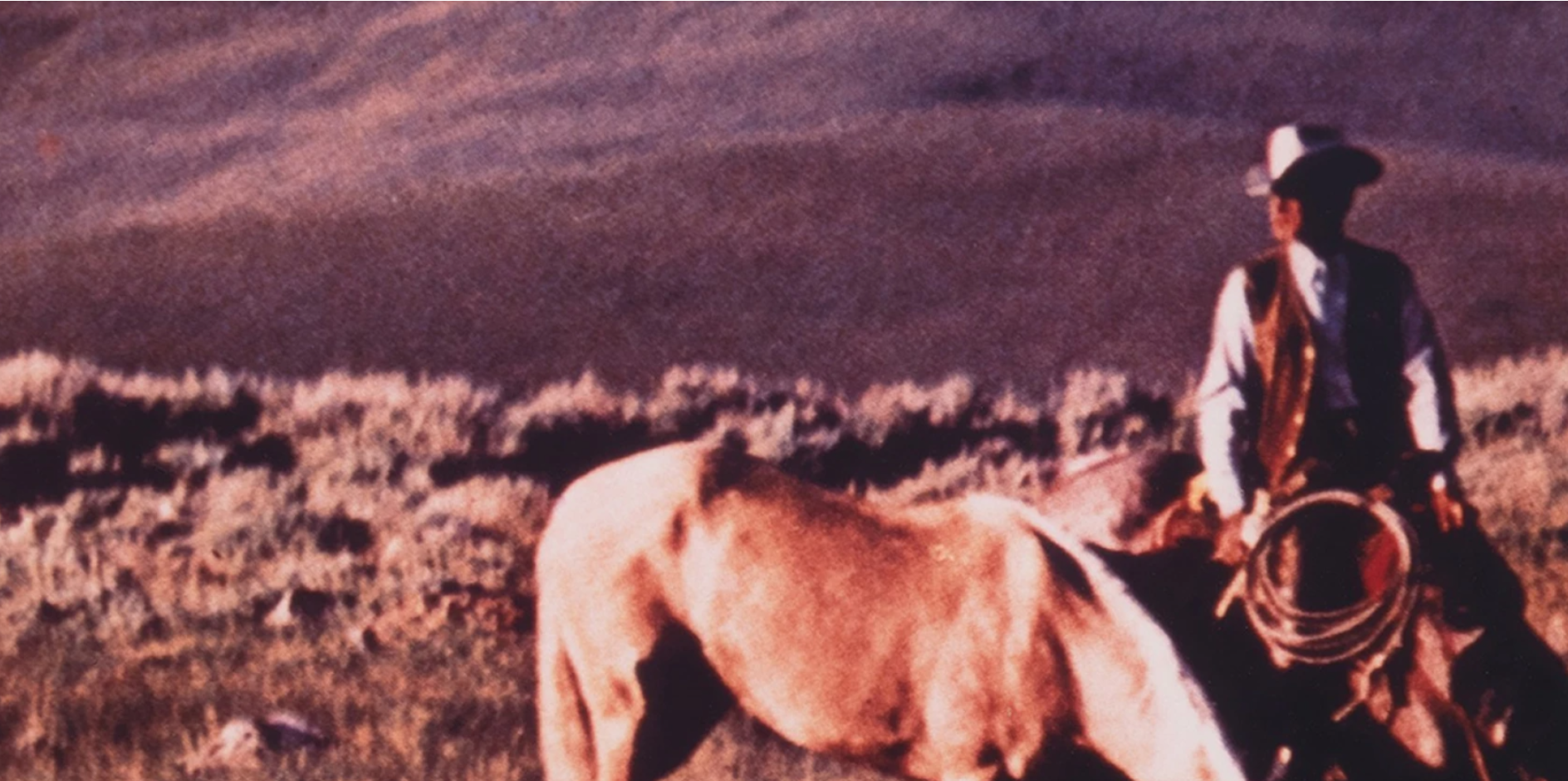
Prince’s role as artist-appropriator stems from his work in the Time-Life tear-sheets department during the 1970s. While clipping away articles for staff writers, Prince was left with scraps of popular advertisements. Fascinated yet repulsed by the ubiquity of the cowboy, Prince saw it as a ripe subject for artistic exploration.
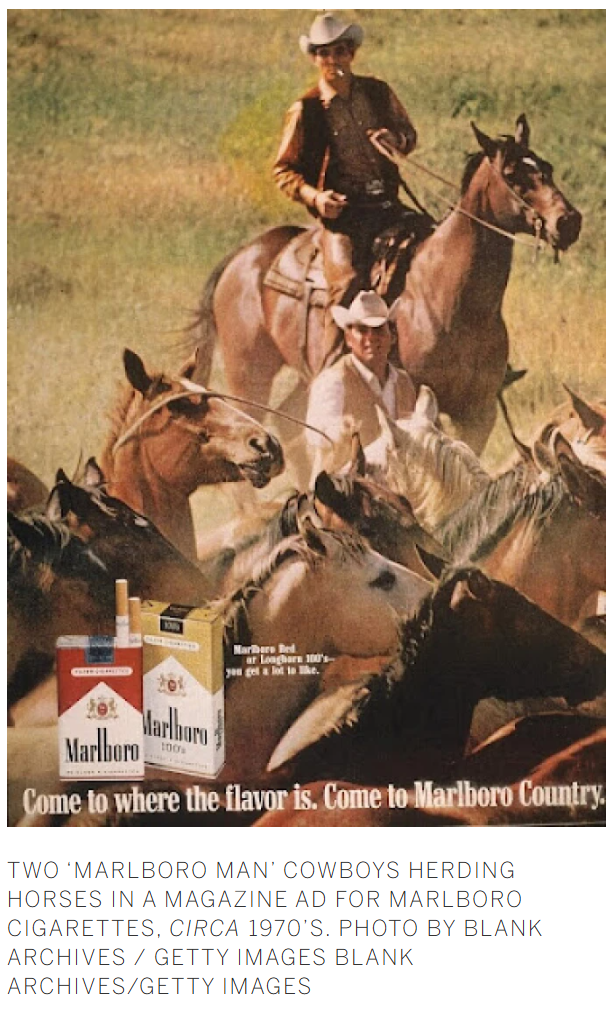
Prince was particularly interested in the cultural implications of the cowboy’s redundancy. In Untitled (Palomino), Prince intensifies the artifice of an exhausted icon by rephotographing alluring imagery that Marlboro was eventually forced to abandon. A figure, riding astride in the harsh sun of the open plains, gazes towards something outside of view. The cowboy and his horses, mirrored across the rippled water, fade into the blue sky. The space below seems primed for advertising copy, yet it’s devoid of its former textual indicators. The enticing ad is diminished in its replication–its tonality diluted, its details blurred, its framing cropped. In reducing the once seductive cowboy into something profoundly inauthentic, Prince calls for a re-examination of the icon without its commercial function.
Untitled (Palomino) exemplifies Prince’s ability to rationalize a cultural symbol in flux. Existing once as a myth in the American psyche, then copied into an advertisement. It exists now as a copy of an image forever altered–a man foraging on, toppling the very myth he once proliferated. Images from the series are among his most recognizable, held in museum collections such as The Metropolitan Museum of Art, New York, the Art Institute of Chicago, the San Francisco Museum of Modern Art, the Walker Art Center, Minneapolis, the Modern Art Museum of Fort Worth, Texas, and many more.
Untitled (Cowboy), 1999
Sotheby’s Hong-Kong: 5 April 2024
Estimated: HKD 5,000,000 – 7,000,000
HKD 7,493,000 / USD 957,939

RICHARD PRINCE (b. 1949)
Untitled (Cowboy), 1999
Ektacolor photograph, in artist’s chosen frame
150.5 x 212.1 cm (59 1/4 x 83 1/2 inches)
Signed, dated 1999 and numbered 2/2 (on a label affixed to the backing board)
This work is number 2 from an edition of 2 plus 1 artist’s proof
Utterly cinematic in both composition and scale, the present work belongs to Richard Prince’s Cowboy series, a body of work that today is perhaps the most well-known and critically acclaimed of the artist’s career. Executed in 1999, this monumentally scaled photograph presents in panoramic scale a extravagant scene of Americana: lit by the orange sunlight radiating through the cavernous space between two towering canyons, a group of cowboys are captured forging their way across a crystal-clear stream. Stunning in its quixotic vision of the American frontier, the dramatically defined silhouettes of the three lone figures are dwarfed by the grandeur of their environment—the light shines ecclesiastically through the gaping mountain gulfs, casting a sumptuously hazy amber glow on the vista that contrasts with the rich ochre ground. Appropriating and cropping images from advertisements for Marlboro cigarettes, it has been the image of the cowboy which has captured Prince’s attention so vividly for the entirety of his forty-year career. By re-appropriating images from Marlboro advertisements and presenting them unbranded, blown-up to spectacularly monumental scale, Prince not only challenges the nature of photography and its authorship but, more importantly, deconstructs and interrogates the romanticized images that shape American identity. Arresting, iconic and instantly recognizable, works from the series now reside in major public institutions including The Metropolitan Museum of Art, New York and Los Angeles County Museum of Art.
The image of a group of quintessential Marlboro men, astride their horses, lapping heroically across an icy blue stream, is unassailably Romantic, operating within a largely invented code of masculine idealism and pioneering Americanism that dates back to the Nineteenth Century. Indeed, where the American cowboy’s true historical origins are culturally marginal, rural, and predominantly Mexican, the western expansion of English-speaking traders and settlers gave way to a blurring of cultural traditions. Mythologized, glamorized and proliferated by Hollywood films and advertising campaigns, the stereotype of ideal masculinity in the form of the strong and lonesome cowboy became a carefully marketed icon readily available for consumption in the American collective imagination.

In 1974 Prince was working the nightshift for Time-Life magazines and clipping editorials to assist the staff writers’ research. He found himself drawn to the leftover advertisements and the familiarity of their imagery which we often take for granted. He began re-photographing the found advertisements through his own inquisitorial lens and removing taglines and slogans so only the aesthetic splendour of the images remained. Prince’s engagement with advertising and consumer culture was symptomatic of a larger art world trend, embodied by the ‘New Image’ movement of which he was a part. Emerging out of New York City in the late 1970s, New Image art embraced and cultivated a revitalized cultural unity between mass media and fine art. Among his contemporaries in what is now known as the Pictures Generation – Cindy Sherman, Richard Longo, Jack Goldstein and Sherrie Levine – Prince was and continues to be the most engaged with the power of advertisement.
The Marlboro cowboys have been the most persistent source of inspiration throughout Prince’s remarkably varied artistic output. The Marlboro Man campaign became one of the world’s most successful advertising ploys, running nationally from 1955 until 1999, the year that the present work was produced. Images of cowboys and the American wilderness helped Marlboro become the largest tobacco brand in the world in 1972, a position it’s retained ever since. As the quintessential American folk hero and the premier icon of American identity, the universality of the cowboy makes him the perfect vehicle for Prince’s oppositional photographic practice. In the present work, Prince has cropped the image to entirely isolate the protagonists in the expansive American plains. The artist re-photographed magazine ads featuring the Marlboro cowboy and stripped any particularizing elements that contextualized the image as an advertisement—logos, slogans, and cigarette packages were eliminated, leaving the image pure in its symbolic power. Re-envisioned by Prince, the cowboy is unveiled as both powerfully seductive and profoundly inauthentic. His relation to these image-readymades vacillates between Warholian fascination with pop-culture and criticism of the myths they propagate.
“I started taking pictures of the cowboys. You don’t see them out in public anymore — you can’t ride down a highway and see them on a billboard. But at ‘Time Life’, I was working with seven or eight magazines, and Marlboro had ads in almost all of them. Every week, I’d see one and be like, ‘Oh, that’s mine. Thank you.’ It’s sort of like beachcombing.”

RICHARD PRINCE, UNTITLED (COWBOY), 1989. THE METROPOLITAN MUSEUM OF ART, NEW YORK © RICHARD PRINCE. IMAGE: METROPOLITAN MUSEUM OF ART, NEW YORK/ART RESOURCE/SCALA, FLORENCE
Nestled beneath an expanse of crystal blue sky, arid, burnt orange ranges and snow-capped mountains, the lone rangers of the present work forge onward in an epic spectacle that both fetishizes the heroism of its protagonists while toppling the very mechanisms that proliferate the myth. Reveling in the magnificent grandeur of the image, the world of the gun-slinging lone-ranger, which came to be synonymous with the American Dream, was already disappearing when Prince first began working on the series; the allure of both cigarettes and the great American frontier was fading in popular imagination. Re-photographed and scrutinized by Prince’s incisive lens onto American culture in the very same year images of the Marlboro Man disappeared from production, the finely tuned construct of the cowboy as a nostalgic and rugged projection of American masculinity is dismantled, and yet remains extraordinarily powerful and utterly seductive.
Untitled (Cowboy), 1999
Christie’s New-York: 17 May 2023
Estimated: USD 1,500,000 – 2,000,000
USD 1,562,500
RICHARD PRINCE (b. 1949) (christies.com)
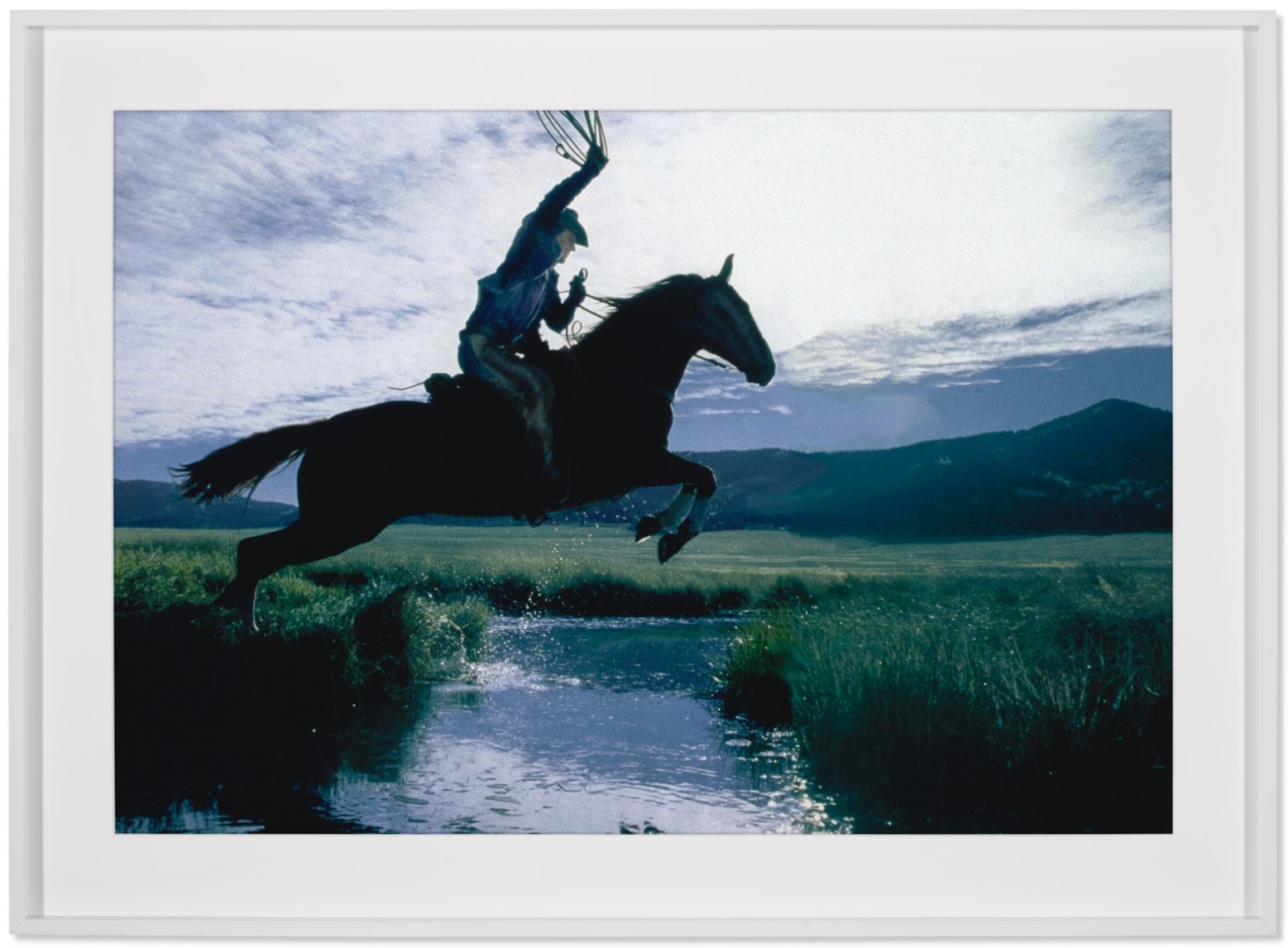
RICHARD PRINCE (b. 1949)
Untitled (Cowboy), 1999
Ektacolor print
60×80 inches (152.4 x 203.2 cm)
Signed, numbered and dated ‘Prince 1999 1/1’ (on a paper label affixed to the reverse)
This work is the artist’s proof from an edition of two plus one artist’s proof
Part of his breakthrough series of Western-themed appropriations, Untitled (Cowboy) pushes Richard Prince’s provocative use of cigarette advertisements into a more filmic realm. Begun in the 1980s, the artist’s cowboy photographs are a testament to the artist’s sharp wit and intense investigation of image culture and semiotics in American consumerism. The present example was created in a second wave of production that expanded on the original project and increased the use of the source material to epic proportions. Creating wholly absorptive vistas replete with dramatic lighting and wide open spaces, Prince remains staunchly anchored to his conceptual roots. Though he presents these subjects for our viewing, he has never trod the tundra with these icons of masculinity. Instead, working from extant photographs, he manipulates and reframes the scenes in order to problematize their making and use. Devoid of any direct link to a specific branding or the cigarettes they sell, Untitled (Cowboy) and its ilk question the role images play in selling lifestyles, ideas, and products, and how manufactured meaning can become intertwined in the reception of an image in various environments.
Untitled (Cowboy), 1998
Estimated: GBP 700,000 – 900,000
GBP 942,500 / USD 1,144,783
RICHARD PRINCE (b. 1949)
Untitled (Cowboy), 1998
Ektacolor photograph
50 x 75 1/2 inches (127 x 191.7 cm)
Signed Richard Prince, dated 1998 and numbered 1/2 (on the reverse)
This work is number 1 from an edition of 2, plus 1 artist’s proof
Untitled (Cowboy) is part of Richard Prince’s iconic Cowboy series, shot from the 1980s through the 1990s and is known as the artist’s most influential and conceptually attuned body of work. Executed in 1988, the present work depicts a procession of cowboys riding on horseback through a canyon, with golden amber light flowing between the cliffs and delineating stiff shadows and silhouette of the procession. One of the later iterations of the iconic series, Untitled (Cowboy) is notable for portraying its subject from a distance, rather than up-close, reveling in otherworldliness in an otherwise dim, arid landscape. The enigmatic depiction of cowboys—America’s quintessential ancestral figure, once associated with endurance, independence and chivalry—is achieved through the practice of re-photographing the images of the iconic and controversial Marlboro cigarettes advertisement campaign. Highlighting the entanglement of cowboy mythology with the promotion of deathly cigarette addiction, as well as with the machismo of Hollywood representations of the cowboy as the all-American male, Prince expresses an ambiguous Warholian fascination with Pop-culture, simultaneously critiquing its perverse inauthenticity and co-opting of the sacred. Similar to many of his contemporaries, such as Barbara Kruger, Jenny Holzer and Cindy Sherman, Prince appropriates the visual debris of American culture, in order to insert a moment of self-awareness into the American collective imagination in its attachment to secular consumerism.
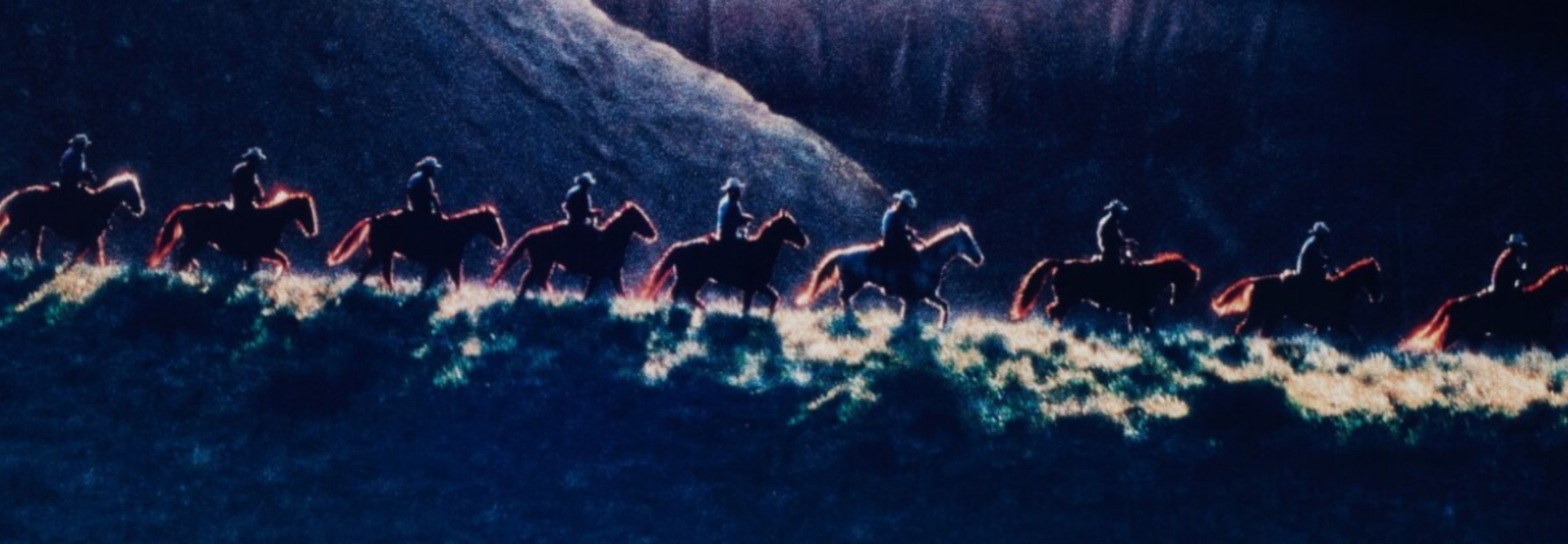
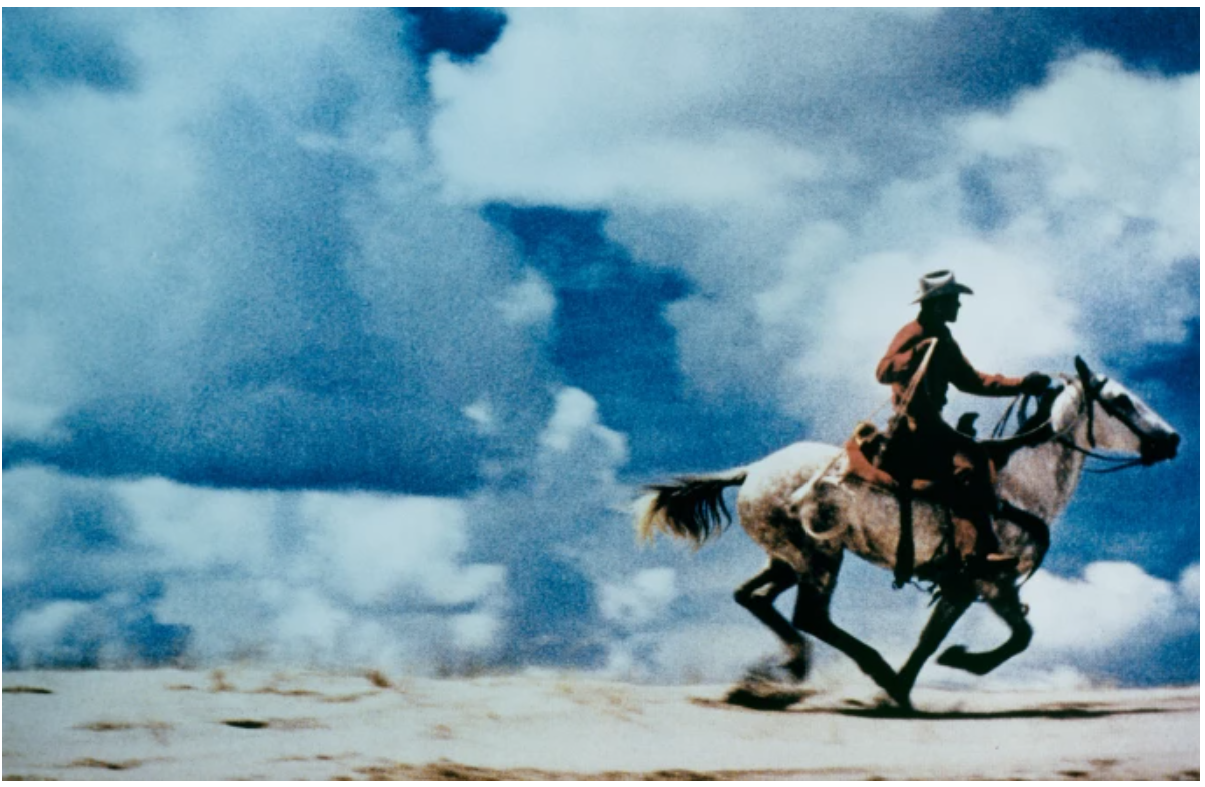
IMAGE/ ARTWORK: © RICHARD PRINCE
2. Paintings
Untitled (Cowboy), 2012
Sotheby’s New-York: 14 May 2024
Estimated: USD 1,200,000 – 1,800,000
USD 1,270,000
Untitled (Cowboy) | Contemporary Day Auction | 2024 | Sotheby’s (sothebys.com)
RICHARD PRINCE (b. 1949)
Untitled (Cowboy), 2012
Acrylic and inkjet on canvas
66 3/4 x 40 inches (169.5 x 101.6 cm)
Signed and dated 2012 (on the overlap)
Emerging from a dusty background, the eponymous protagonist of Richard Prince’s Untitled (Cowboy) proffers the resounding mythos of the American cowboy as one of persistent endurance, resolute control and heroic capability in the face of an expansive unknown. Executed in 2012, Prince’s Untitled (Cowboy) stands as the culmination of the artist’s contemplation on the aesthetic mythology surrounding cowboys—a testament to his ongoing exploration of this emblematic American figure, which initially thrust him into the spotlight during the seventies and eighties. With a vibrant palette and layers of thickly textured paint, Prince offers a contemporary reinterpretation of the portrayal of the stoic ranch hand, orienting the viewer in vertical alignment with the solitary cowboy. Charging forth with a gun in one hand and reins in the other, this cowboy is in control.

Few subjects have captivated Prince’s imagination as fervently as the cowboy, whose solitary existence amid harsh landscapes resonates with a collective longing for an American hero. Elevated from humble Southern origins and transformed into an emblem of rugged individualism by Hollywood’s imagination and the charismatic performances of icons like Clint Eastwood and John Wayne, the cowboy embodies a nostalgic yearning for a bygone era of American masculinity. Through his iconic Cowboy series, Prince innovatively dissects and reconstructs the underlying mechanisms that underpin the cowboy’s mythical stature, while simultaneously presenting his subject in compelling scenes of endurance and fortitude. In doing so, Prince has crafted some of the most recognizable and thought-provoking works of the late 20th and 21st centuries.

J. M. W. TURNER, RAIN, STEAM, AND SPEED – THE GREAT WESTERN RAILWAY, 1844. NATIONAL GALLERY, LONDON.
Prince’s own fascination with cowboy iconology began in the Time Life building, where he worked one night a week for the magazine by clipping editorials to support his artistic career. He found himself captivated by the authorless advertisements and the conversancy of their repetitive iconography, keeping various clippings for himself as he worked. He was particularly drawn to the image of the cowboy in Marlboro’s advertisements. Acknowledging the enduring symbolism of the cowboy as the archetype of masculine heroism, the cigarette company’s marketing executives launched a highly successful campaign for their filtered cigarettes, disseminating cinematic imagery of the cowboy’s stoic heroism across newspapers, billboards, and televised advertisements across the United States. Prince began repurposing these images by rephotographing them, removing all references to branding so that the standalone images might be scrutinized for their readily identifiable motifs that pervasively supplied themselves as the underpinnings for American culture. As he progressed in the rephotographing and recasting of the quixotic cowboy, his work unfolded in four distinct phases. In the earliest phase, Prince’s works were characterized for their grainy close-ups of ranchers printed in a standard format. By the second stage, improved laboratory techniques allowed him to substantially increase the scale and intensity of the final reproduction. In the third phase, he worked from high quality images, which imbued the photographs with a newfound crispness and clarity that surpassed even the original advertisement. And finally, in the fourth stage, Prince turned to painting as a means of infusing his photographic work not only with a vibrant refinement, but with a shrewd commentary that would undercut the propagation of machismo sensibility that had been widely disseminated in American mass media.

Unlike earlier iterations of the cowboy, Prince completely abandoned the Marlboro advertisement as his source material in the fourth phase. Instead, he sourced online for vintage Western paperbacks – often hundreds at a time – whose covers of cowboys would be scanned, enlarged, cropped, printed onto canvas, and then adorned with vivid, brilliant strokes of paint. He had found extensive inspiration from the covers of “dime-store” novellas when he embarked on his equally seminal series of Nurse Paintings, from which he drew upon the uniformly melodramatic, artificial female protagonists who were often tawdrily cast on troves of pulp fiction paperback covers. As with the Nurse Paintings series, Prince almost entirely effaces all traces of the paperback cover in the present work, employing bold swathes of vibrant yellows, blues, and greens that merely hint at the source material. Prince casts the lone star against a pulsating saffron backdrop evocative of the untamed expanses of the Wild West. This stark contrast to his surroundings accentuates the cowboy, depicted in richly textured strokes of walnut, scarlet, and white, who forges ahead, leaving behind any vestiges of his past in the dust-filled terrain. Positioned just above the horizon of the picture plane, he meets the gaze of the viewer head-on, cutting through the barrier of a fourth wall that permeates the work with a unique uncanniness characteristic of Prince’s approach.
Isolated under the expressionist layering of paint, the association with vintage Western novels and the Marlboro brand in Untitled (Cowboy) begins to fade as the pure image of a cowboy emerges; Prince invites the viewer to truly see and feel the power of the icon behind the image. His cowboy series is an undeniable practice of his acute awareness of the underpinnings of American mass culture that percolate in the subconscious. Splendidly manifested in Untitled (Cowboy), Prince’s reproduction of the familiar visual world brings to light the mechanisms that administer its proliferation as mythology. The result of this critical re-photographing practice is a conceptually innovative, breath-taking, enigmatic image that is endowed with a history of the artist’s continued practice and mastery.
Untitled (Cowboy), 2013
Sotheby’s New-York: 16 November 2023
Estimated: USD 1,200,000 – 1,800,000
USD 1,451,500
Untitled (Cowboy) | Contemporary Day Auction | 2023 | Sotheby’s (sothebys.com)
RICHARD PRINCE (b. 1949)
Untitled (Cowboy), 2013
Inkjet and acrylic on canvas
92×56 inches (233.7 x 142.2 cm)
Depicting the most enduring motif of Richard Prince’s career in saturated, sunset-like hues of deep orange, Untitled (Cowboy) from 2013 epitomizes the mythology of the American Frontier with a quintessential symbol of machismo. At once representing freedom, lonesome independence, and chivalry, this handsome and rugged ideal of masculinity embodies an utterly mythical construct which Prince brazenly represents in the present work. Recontextualizing the verité images produced for nostalgic cigarette advertisements and consumer goods, Prince’s Cowboys reveal the machination of this idealized American character with wry mimicry. Untitled (Cowboy) stands at the apex of the Prince’s pointed investigation of the cowboy, the latest chapter in his exploration of the constructed icon that catapulted the artist into prominence during the seventies and eighties when the series began and which remains as some of the most instantly recognizable and thought-provoking works of the late 20th and early 21st centuries.
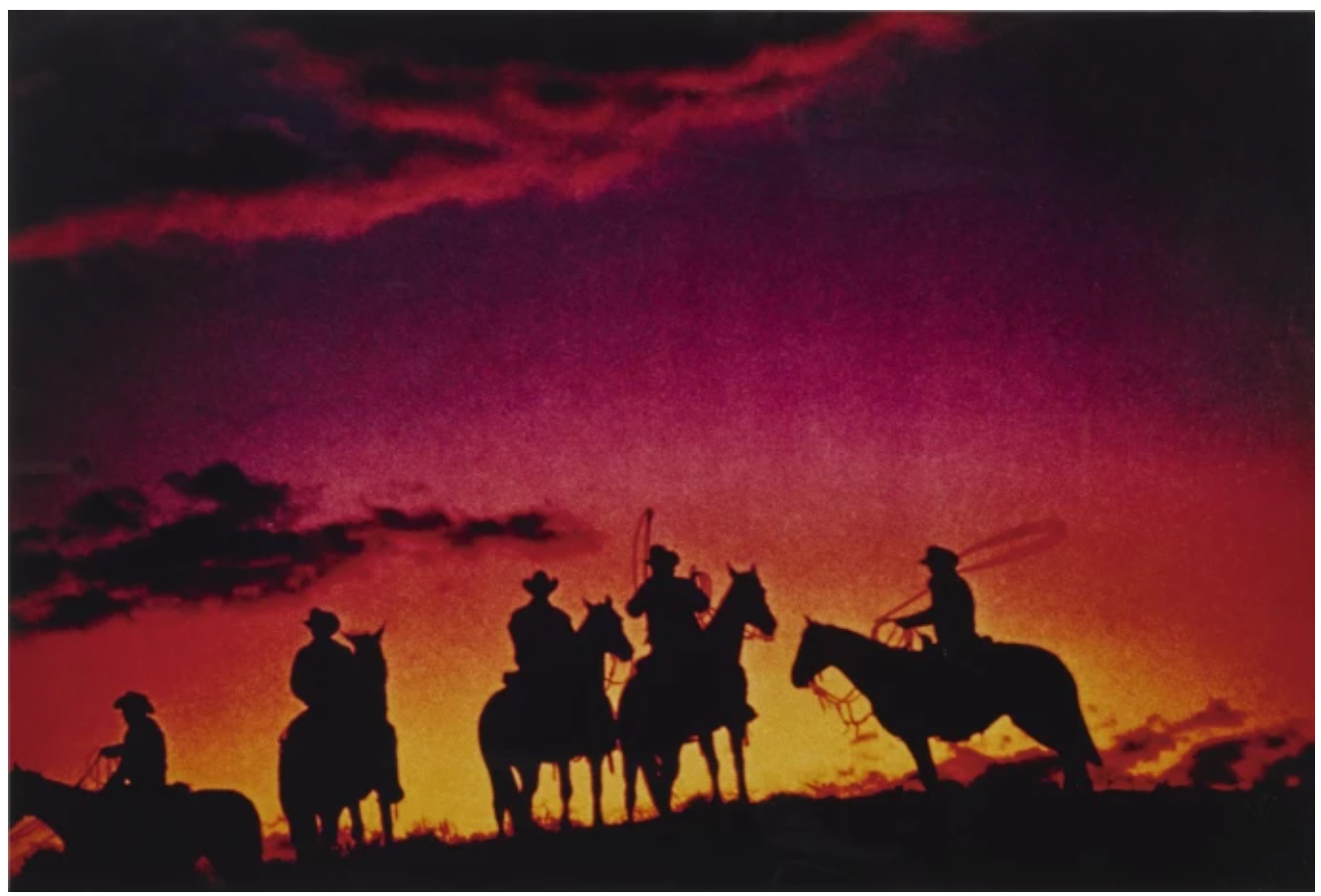
RICHARD PRINCE, UNTITLED (COWBOY), 2001. SOLD AT SOTHEBY’S NEW YORK IN 2017 FOR $1.8 MILLION. PRIVATE COLLECTION. ART © 2023 RICHARD PRINCE
Prince’s own fascination with cowboy iconography began in the Time-Life building, where he worked one night a week for the magazine by clipping editorials to support his artistic career. He found himself captivated by the authorless advertisements and the conservancy of their repetitive iconography, keeping various clippings for himself as he worked. He was especially compelled by the image of the cowboy that had been emblazoned across advertisements by Marlboro’s marketing executives; the cigarette maker, who recognized the enduring symbolism of the cowboy and distinguished him as the archetype for masculine heroism, launched an enormously successful campaign for the company’s filtered cigarettes by disseminating cinematic imagery of the cowboy’s stoic heroism across newspaper, billboard, and televised advertisements across the United States. Prince began repurposing these images by rephotographing them, removing all references to branding so that the standalone images might be scrutinized for their readily identifiable motifs that pervasively supplied themselves as the underpinnings for American culture. As he progressed in the rephotographing and recasting of the quixotic cowboy, his work unfolded in four distinct phases. In the earliest phase, Prince’s works were characterized for their grainy close-ups of ranchers printed in a standard format. By the second phase, improved laboratory techniques allowed him to substantially increase the scale and intensity of the final images. In the third phase, Prince was able to work from high quality images, which imbued the photographs with a newfound crispness and clarity that surpassed even the original advertisement. And finally, in the fourth phase, Prince turned to painting as a means of infusing his photographic work not only with a vibrant refinement, but with a shrewd commentary that would undercut the propagation of the extreme masculine sensibilities that had been widely disseminated in American mass media.
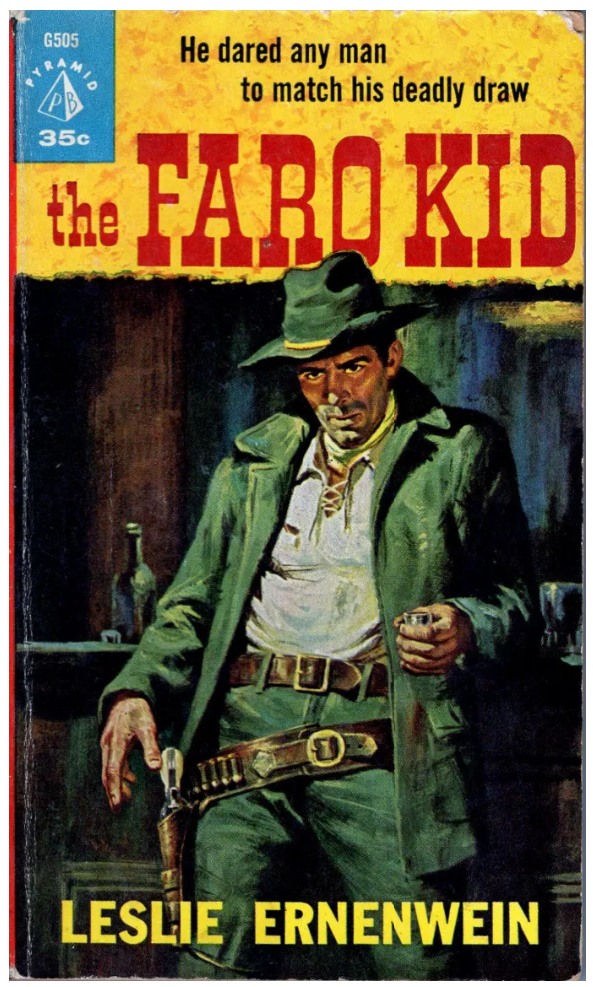
COVER OF LESLIE ERNEWEIN, THE FARO KID, NEW YORK, 1960. ART © 2023 JOHN LEONE.
Unlike earlier iterations of the cowboy, Prince completely abandoned the Marlboro advertisement as his source material in the fourth phase. Instead, he sourced vintage Western paperbacks – often hundreds at a time – whose covers of cowboys would be scanned, enlarged, cropped, printed onto canvas, and then adorned with vivid, brilliant strokes of paint. He had found extensive inspiration from the covers of “dime-store” novellas when he embarked on his equally seminal series of Nurse Paintings, from which he drew upon the uniformly melodramatic, artificial female protagonists who were often tawdrily cast on troves of pulp fiction paperback covers. As with the Nurse Paintings series, Prince almost entirely effaces all traces of the paperback cover in the present work with swathes of scarlet, umber, and golden yellow, leaving only a glimpse of the source material and casting the lone star in an archetypal, shadowy saloon scene. Extraordinarily painterly and textured, the illuminating vibrancy of the background compliments the sepia-tinged highlights scattered across the cowboy’s coarse face which meets the gaze of the viewer head-on, cutting through the barrier of a fourth wall that permeates the work with the unique uncanny characteristic of Prince’s approach.
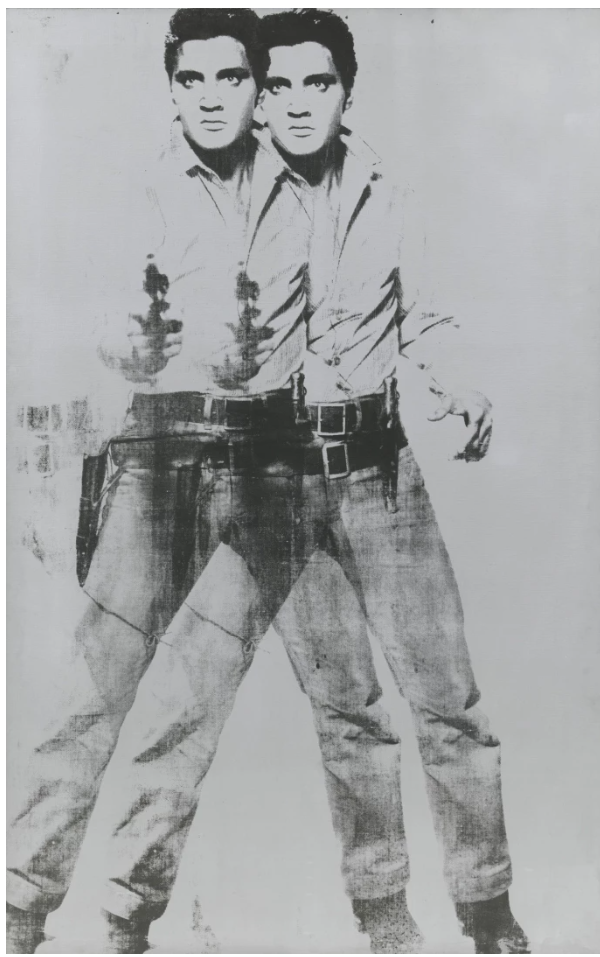
ANDY WARHOL, DOUBLE ELVIS, 1963. THE MUSEUM OF MODERN ART, NEW YORK. ART © 2023 ANDY WARHOL FOUNDATION FOR THE VISUAL ARTS / ARTISTS RIGHTS SOCIETY (ARS), NEW YORK
Isolated under the expressionist layering of paint, the association with vintage Western novels and the Marlboro brand in the present work begins to fade as the pure image of a cowboy emerges and is re-energized at a stunning, enlarged scale; Prince invites the viewer to truly see and feel the power of the icon behind the image. At a glance, the cowboy paintings are ironic appropriations intended to deconstruct both a regressive stereotype and the truth of uninhibited artistic gesture. But on closer scrutiny, one can marvel, in the manner of a guilty pleasure, at Prince’s masterfully casual renderings of figure and ground where the powerful male gunslingers are curious vehicles for free experimentation with paint. As such, both criticizes and relishes in the inauthentic nature of these images and their mythology, wherein the cowboy becomes an isolated marvel. Just as Prince’s early work appropriates advertisement stills to create an uncanny distance from the original brimming with nostalgia, Untitled (Cowboy) reproduces a familiar visual world with an exceptionally powerful aura, a picture of stereotype and uninhibited gesture with an undeniable complicit pleasure.
Untitled (Cowboy), 2012
Sotheby’s London: 12 October 2023
Estimated: GBP 500,000 – 700,000
GBP 571,500 / USD 702,945
Untitled (Cowboy) | The Now Evening Auction | 2023 | Sotheby’s (sothebys.com)
RICHARD PRINCE (b. 1949)
Untitled (Cowboy), 2012
Inkjet and acrylic on canvas
47 x 27 7/8 inches (119.5 x 70.9 cm)
Signed and dated Feb, 2013 (on the overlap)
Richard Prince’s re-constructed image of the cowboy from Marlboro advertisements and book covers presents a cinematic and theatrical scene that has allowed the artist to place himself between fine art and consumerist image, a middleman in the history of the image. As in his Jokes series and Nurse paintings, Prince has succeeded, like almost no other artist, in creating new work by repeatedly quoting himself. Starting his original Cowboy series in 1980, Untitled (Cowboy), executed in 2012, is a prime example of his self-referential impulse towards serialization.
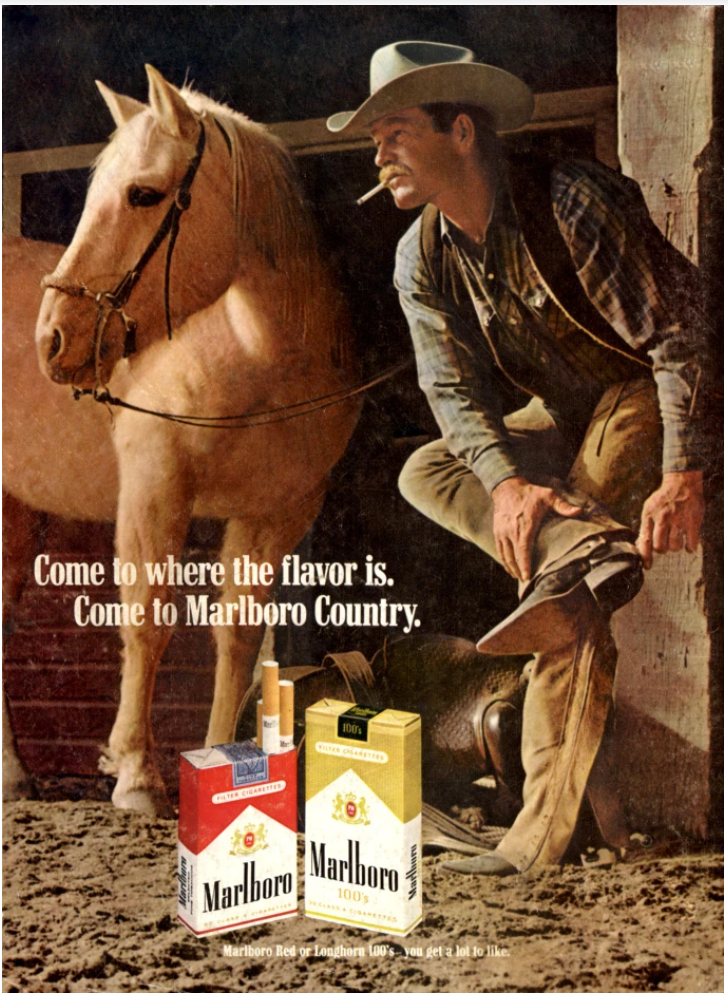
MARLBORO MAGAZINE, ADVERT, 1970S, USA © THE ADVERTISING ARCHIVES / BRIDGEMAN IMAGES
The cowboy in Untitled (Cowboy) dominates the image, standing atop a dusty prairie with his horse grazing in the background. While Prince’s earlier cowboy iterations relied solely on iconic Marlboro advertisements that featured in widespread campaigns across America, these later works would look to other sources. Looking to pulp Western paperback novels, Prince would order large quantities of these books from eBay. Filtering through his orders, the artist would eventually find a select few covers that suited his idea of the cowboy – that is, the superficial aura of attractive masculinity associated with ideas of exceptionalism and manifest destiny that were embedded in the American cultural imaginary; “Prince functions as a simulator, exposing the artifice that has invaded our sense of reality” (Rosetta Brooks, “Spiritual America: No Holds Barred,” in Exh. Cat., New York, Whitney Museum of American Art, Richard Prince, 1992, p. 95). Scanned, enlarged then printed onto canvas, Prince painted across these appropriated book covers to completely conceal the title text. While Prince’s Nurse paintings retained or even added titles, his Cowboy works rely solely on pictorial value, recalling the earlier cropping of Marlboro advertisements.
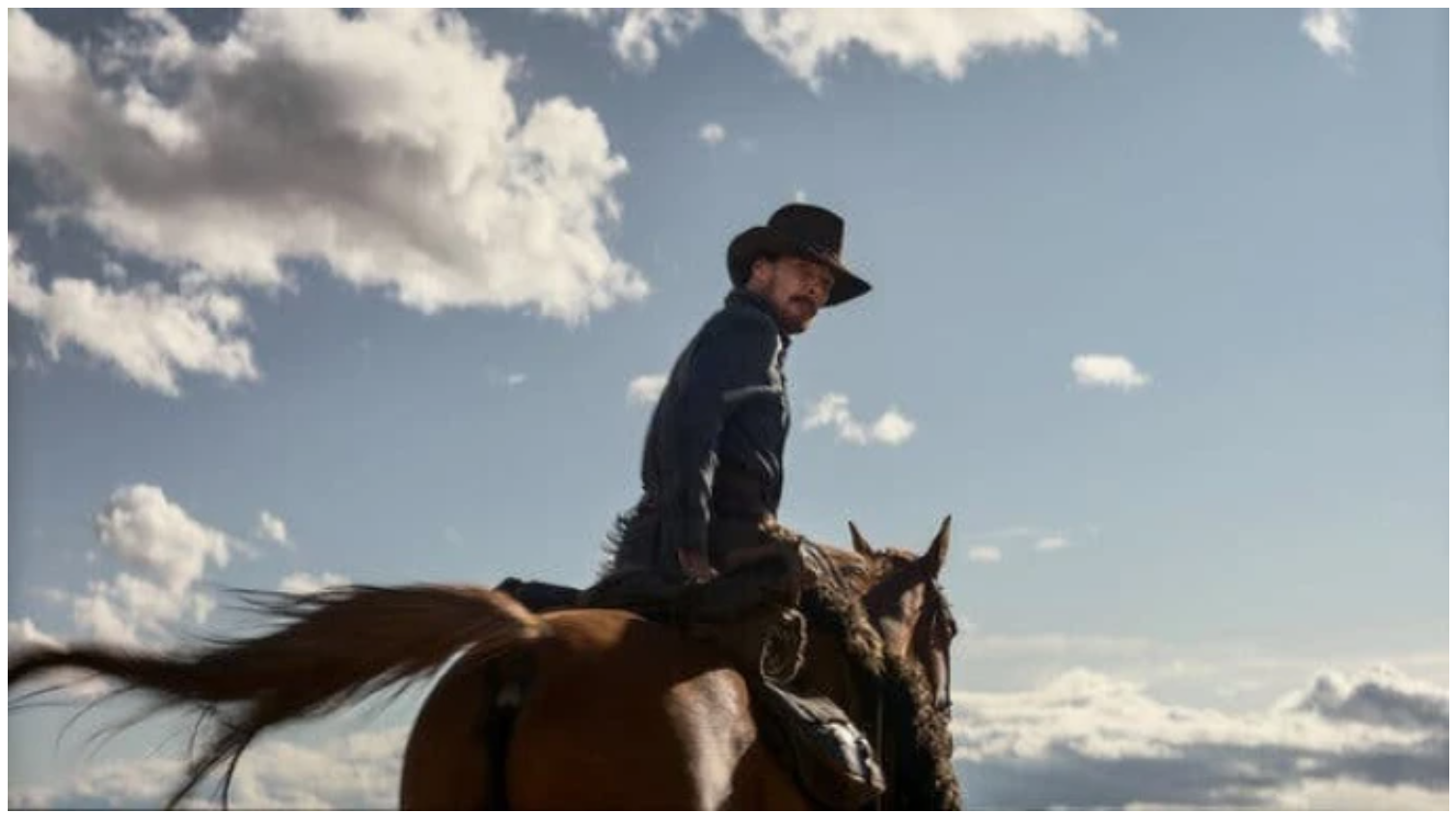
BENEDICT CUMBERBATCH AS PHIL BURBANK IN THE POWER OF THE DOG, 2021, DIRECTED BY JANE CAMPION © NETFLIX
In using material not originally his own, Prince rejects with rare determination the role of photographic authorship and, in this regard, links himself more broadly to artists like Sol LeWitt, who rigorously sought to exclude the artist’s performing hand from minimalist and conceptual practice. The term post-photography coined by W. J. T. Mitchell describes the photographic image that self-reflexively explores the process of photographic representation freed from the responsibility of indexing reality, as opposed to images that claim to picture the world (William J. Mitchell, “Wunderkammer to World Wide Web: Picturing Place in the Post-Photographic Era,” in Joan Schwartz and James Ryan, eds., Picturing Place, London 2003, p. 283). In the present work, he encourages us to question traditional hierarchies of original versus copy and consequently that of reality and simulacrum. A rural, mythic figure who symbolized solitude and self-reliance, the cowboy’s associations in contemporary culture have continually been exploited by Prince for his most well-known and conceptually attuned body of work.
Untitled (Cowboy), 2012
Estimated: USD 1,200,000 – 1,800,000
USD 1,623,000
RICHARD PRINCE (b. 1949)
Untitled (Cowboy), 2012
Inkjet and acrylic on canvas
59 1/4 x 36 inches (150.5 x 91.4 cm)
Signed and dated 2012 (on the reverse)
Vibrant hues of cobalt, aegean and cerulean blue frame the eponymous protagonist of Richard Prince’s Untitled (Cowboy), whose steely and darkened gaze proffers the resounding mythos of the American cowboy as one of persistent endurance, resolute control and heroic capability in the face of an expansive unknown. Prince’s 2012 Untitled (Cowboy) is the apex of the artist’s mediation on the aesthetic mythology of the cowboy, the latest chapter in his exploration of the American icon that had catapulted the artist into prominence during the seventies and eighties. Creating an effervescent work whose brilliant hues and thickly textured layers of paint cast a modern reimagination of and critical examination into the representation of the stoic ranch hand, Prince orients the viewer in vertical alignment with the lone cowboy who climbs the untraversed mountainous terrain covered in a fresh swath of powdery white snow. Few figures, landscapes or themes have captured Prince’s attention as much as the cowboy, whose independence and solitude against the backdrop of an unforgiving landscape harbors the relics of a yearning for an American hero. The cowboy, elevated from his original Southern roots and position as a lowly ranch-hand by the imagination of Hollywood executives and bravado-filled performances by stars Clint Eastwood and John Wayne, transformed into the ultimate heralder for a hero from “earlier times” who might embody the cultural ethos of American machismo. In his iconic Cowboy series, Prince seeks to innovatively interrogate and deconstruct the mechanisms that constitute the cowboy’s perceived mythical status while simultaneously casting his subject in vibrant, captivating and enduring scenes of fortitude. In doing so, Prince has created some of the most instantly recognizable and thought-provoking works of the late twentieth and twenty-first centuries.
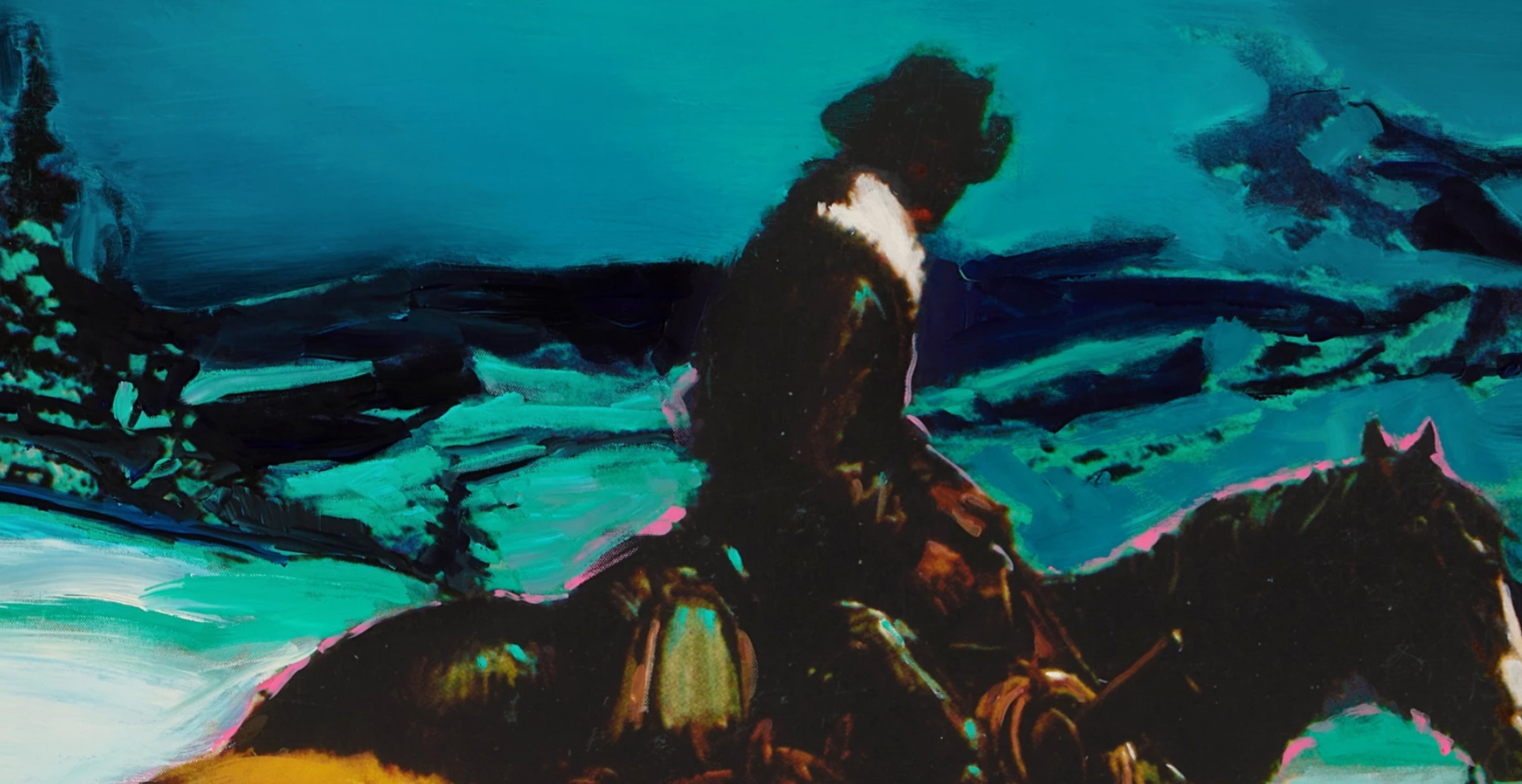
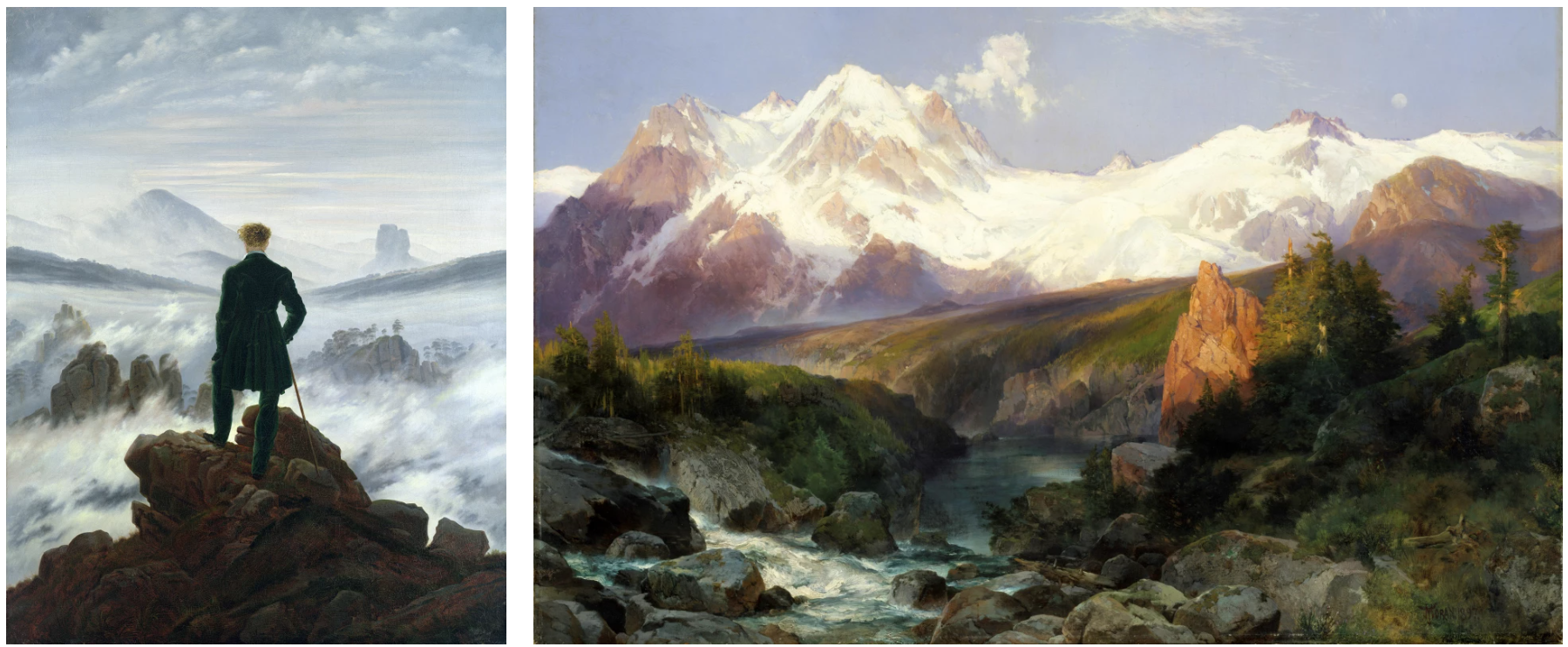
Untitled (Cowboy), 2013
Christie’s New-York: 15 May 2025
Estimated: USD 1,200,000 – 1,800,000
WITHDRAWN
RICHARD PRINCE (B. 1949), Untitled (Cowboy) | Christie’s
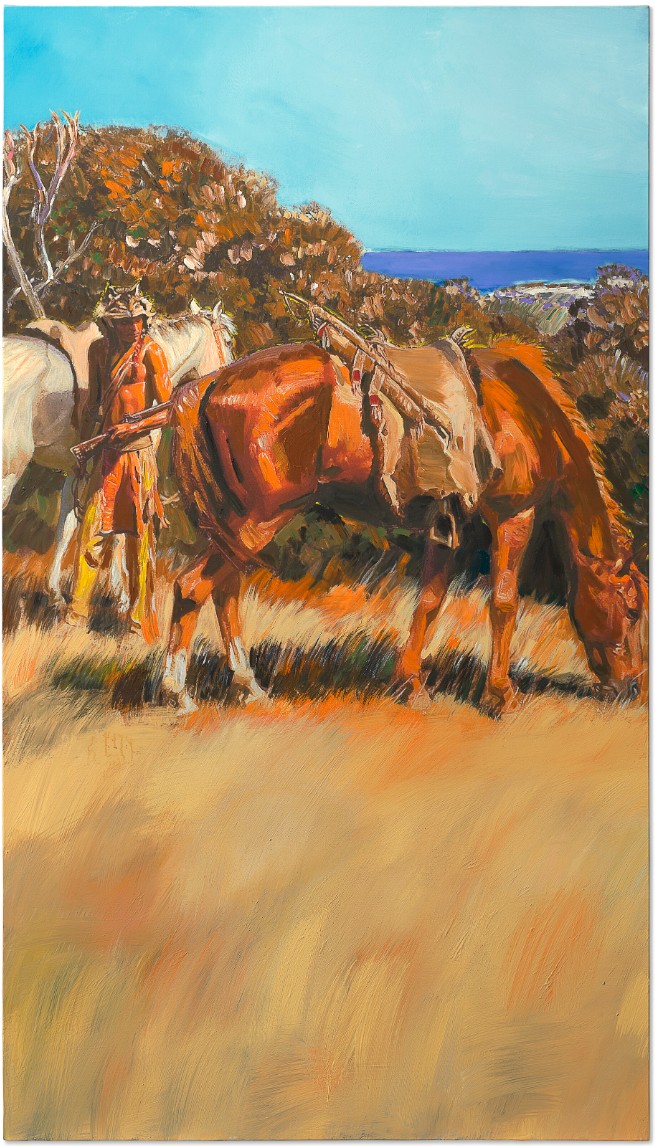
RICHARD PRINCE (B. 1949)
Untitled (Cowboy), 2013
Inkjet and acrylic on canvas
79 1/4 x 45 inches (201.3 x 114.3 cm)
Signed and dated ‘Richard Prince 2013’ (on the overlap)
Richard Prince’s Untitled (Cowboy) is a prominent example of the American artist’s most classic and important subject. A mature innovation on his first significant artistic project, the present work functions as an autobiographical homage, reflecting back across his groundbreaking career. Hijacking the cowboy motif from its circulation in American popular culture, Prince re-presents the image as his own, injecting the work with imaginative musings and gestural touches. In doing so, he destabilizes the original symbolic value of the image, forever altering its reception.
With the Cowboy series’ focus on an ordinary, vernacular symbol—repeated incessantly—Prince establishes a deliberate sense of redundancy that wreaks havoc on the viewer’s perception of reality. At once, he elevates the mundane to the realm of high art while encouraging audiences to reconsider their relationship to the American visual tradition. Wielding the power to appropriate and reformulate images into original works, Prince extends the artistic legacy of Andy Warhol, bridging the American vernacular with fine art in a poignant critique of national mythologies, politics, and masculinity.
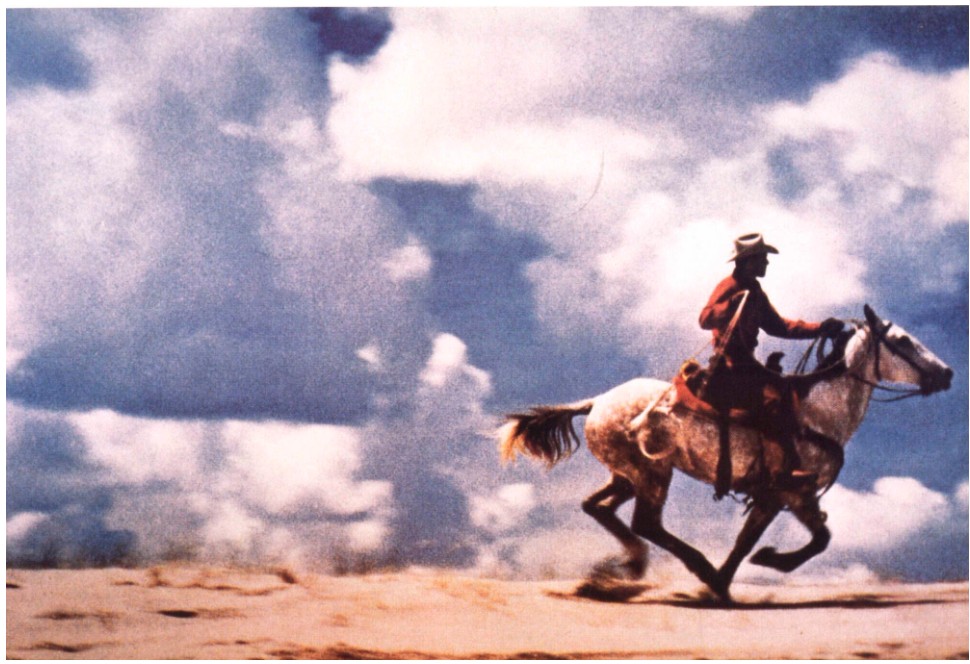
Richard Prince, Untitled (Cowboy), 1989. Metropolitan Museum of Art, New York. © Richard Prince.
Prince developed a novel artistic process to create Untitled (Cowboy), utilizing technological advances to evolve the original method he used to make his early cowboys. Beginning with a salvaged source image, he rephotographed it, then printed the captured image onto canvas using inkjet technology. He finished the composition with painterly swaths of acrylic paint, inserting his own artistic intent onto the tableau and recontextualizing the piece into a unique painting. His intervention thus reframes the source image to become, paradoxically, more itself than in its original form—a reproduction of a painted image—resurrecting the material from its protean origins to the exalted status of a painted masterpiece.
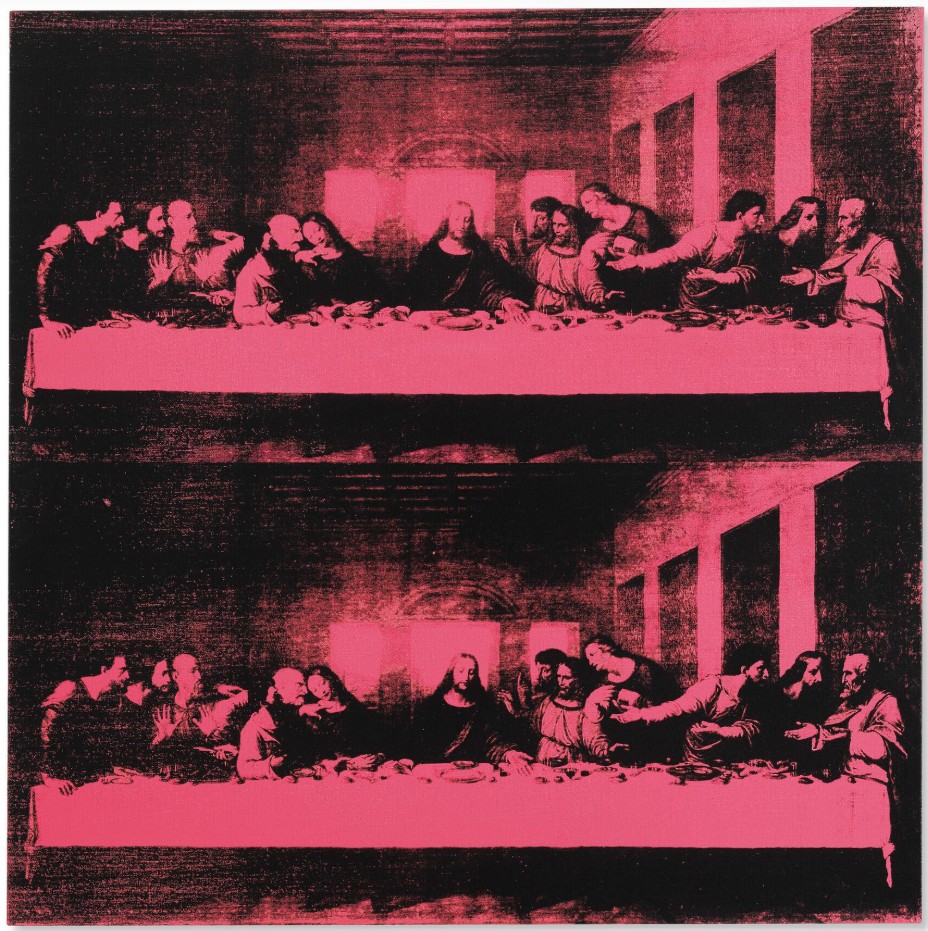
Andy Warhol, Last Supper, 1986. © 2025 Andy Warhol Foundation for the Visual Arts / Artists Rights Society (ARS), New York.
Prince’s vision here recalls Warhol’s appropriative silkscreens—particularly the Last Supper series—which similarly take a cheap reproduction of an original (Leonardo’s famed fresco) and reframe it into a form closer to its iconic origin. Prince’s method speaks directly to Walter Benjamin’s theory of the “aura,” as outlined in his essay The Work of Art in the Age of Mechanical Reproduction. Benjamin argues that mechanical reproductions strip artworks of their authenticity and potency. By revivifying a reproduced image in a painterly context, Prince reimbues Untitled (Cowboy) with a potent and all-too-relevant aura.
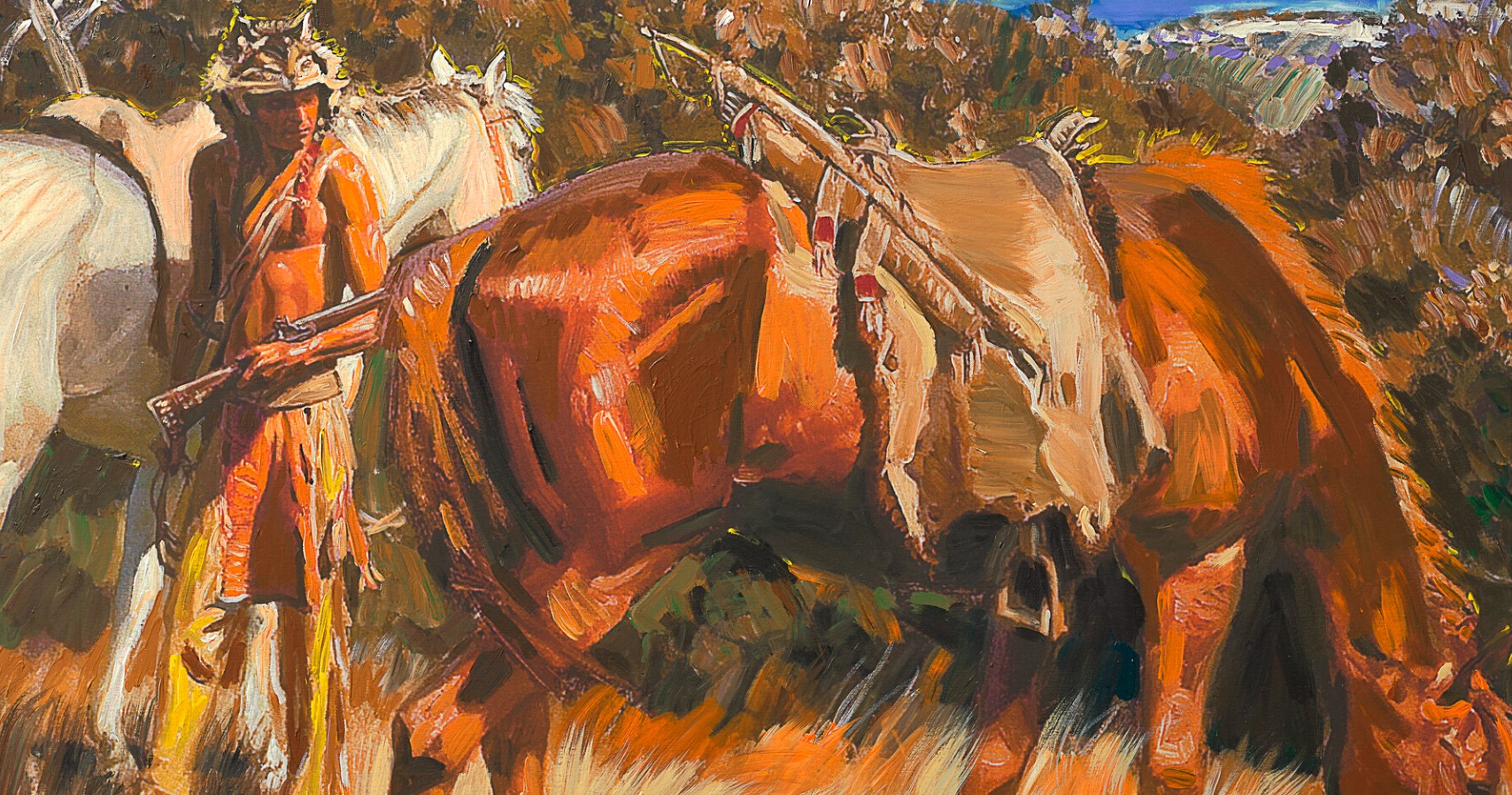
Prince first developed his appropriative method while working in the basement of Time Life magazine, where he tore out advertisements from magazine issues to send to advertisers as proof of publication. Immersed in the detritus of American consumerism—literally standing amid the visual vernacular—Prince began photographing the reproduced images in these ads. This practice coincided with the rise of the Marlboro Man: a 45-year campaign by Philip Morris to rebrand Marlboro filtered cigarettes, originally marketed to women, by injecting them with a rugged masculinity via associations with cowboys and the vast American West—despite growing awareness of smoking’s health risks. The campaign’s success ingrained a swaggering masculinity into popular images of the West. Prince’s ongoing appropriation of this imagery functions as both critique and self-reflection. He positions the cowboy as a surrogate self-portrait, emphasizing his own brand of artistic machismo.
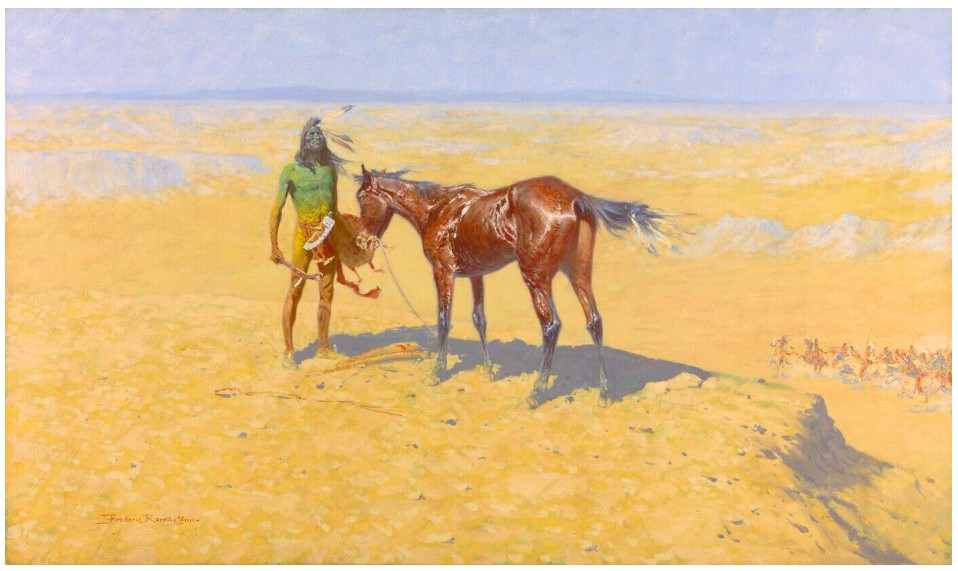
Frederic Remington, Ridden Down, 1905-1906. Amon Carter Museum of American Art, Fort Worth, Texas.
The source image for Untitled (Cowboy) evokes the mythic Western visions of artists like Frederic Remington and Charles M. Russell, whose paintings of lone horsemen amid sweeping landscapes helped define the stereotypical cowboy. Repackaged as a consumable commercial image by a book publisher, the source both mirrored and perpetuated the romanticized myth of the West as a vast wilderness populated by solitary, masculine figures. Prince’s gestural strokes of paint clash meaningfully with the source image’s flatness—his expressionist marks introducing emotion where the original image lacks it. Richard Prince’s continual revitalization of his iconic Cowboys has preserved the series’ relevance through shifting cultural landscapes since its inception in the 1980s. The works function simultaneously as palimpsests of America’s visual past and as critiques of its most enduring myths. Untitled (Cowboy) stands as a lasting flourish within this tradition, carrying Prince’s iconic subject into the discourses of the twenty-first century.
3. Sculptures
Untitled (Cowboy), 2011-13
Edlis Neeson Collection
Christie’s New-York: 19 November 2025
Estimated: USD 2,000,000 – 3,000,000
USD 3,369,000
RICHARD PRINCE (B. 1949), Untitled (Cowboy) | Christie’s
RICHARD PRINCE (B. 1949)
Untitled (Cowboy), 2011-13
Painted bronze
Figure: 47 1/2 x 19 x 11 1/4 inches (120.6 x 48.3 x 28.6 cm)
Overall: 83 1/2 x 22 x 19 inches (212.1 x 55.9 x 48.3 cm)
Incised with the artist’s signature, foundry mark, number and date ‘R Prince 2⁄3 2013’
(on the reverse of figure’s proper left leg)
This works is number two from an edition of three plus two artist’s proofs
Each a unique color variant
A solitary, singular taciturn figure stands in slight contrapposto against the immense, horizonless space of the white-walled gallery. Lone and independent, Untitled (Cowboy) is the first fully figurative sculpture to emerge out of Richard Prince’s celebrated practice, standing alone in the midst of Prince’s renowned body of work as the most complete version of the cowboy figures which pervade the artist’s oeuvre and have profoundly influenced our society’s view of itself. Presenting as the culmination of a certain American mythology, deeply integrated into Prince’s previous practice, Untitled (Cowboy) reverberates with multi-latitudinal referents, articulating one of the most recognizable symbols of American mythology while simultaneously traversing a classicizing art historical tradition originating in the bronze Kouros statues of Greek antiquity and running through to Renaissance notions of individuality and republican liberty. Most profoundly, Untitled (Cowboy) is an autobiographical self-portrait, a deeply personal metamorphosis turning the artist into a manifestation of his own most important symbol.
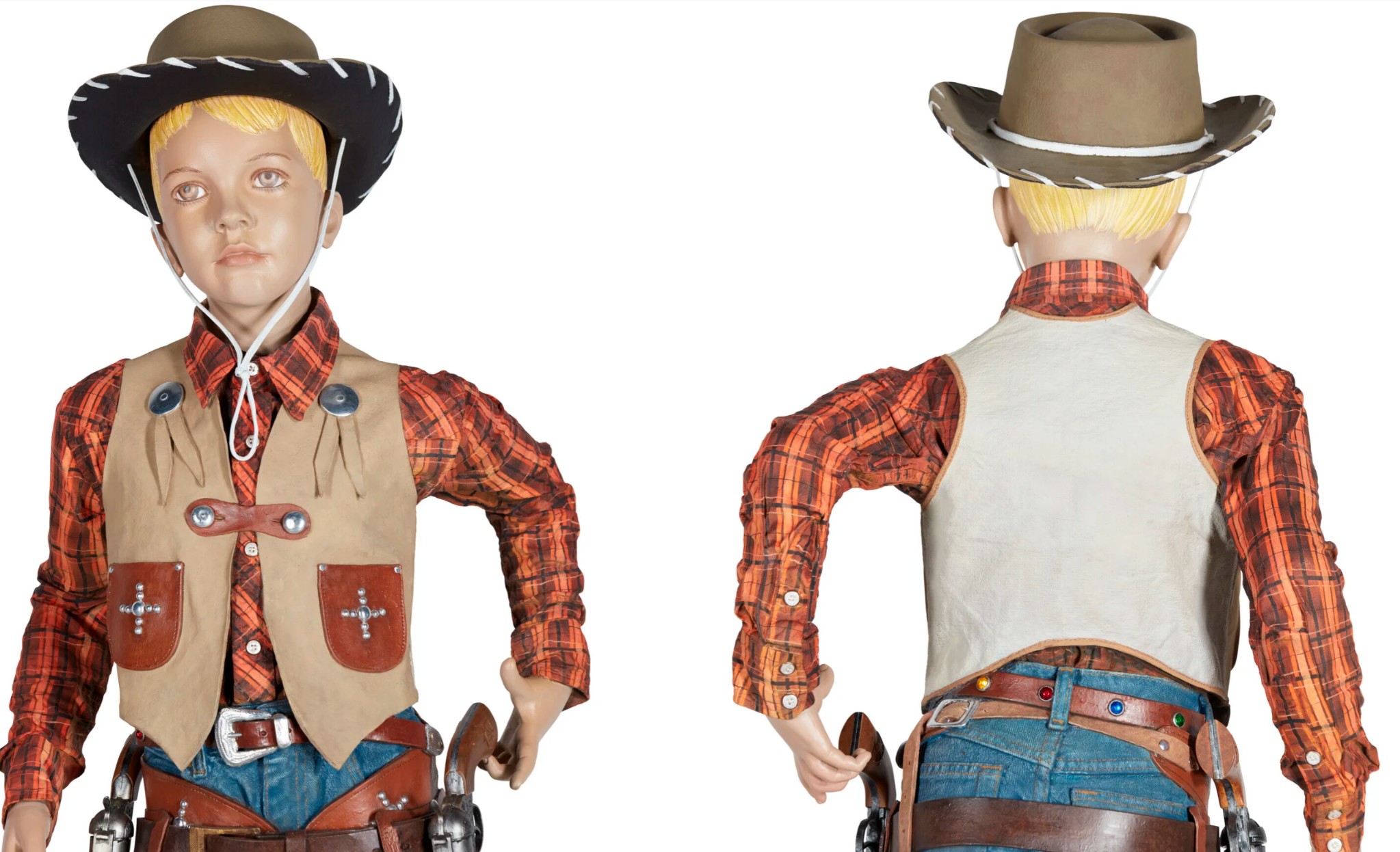
The story of Untitled (Cowboy)’s origin has a quasi-mythological tenor which matches the work’s sublime import. On the occasion of his sixty-second birthday, Noel Grunwaldt, Prince’s partner, gifted the artist a toy mannequin of a boy costumed in the guise of a cowboy.
“It surprised me at first,
made me physically move when I first walked in on it.”
The iconic symbolism deeply affected the artist, who spent the next two years making slight alterations to the mannequin. Slightly adjusting the boy’s posture and position, reshaping the placement of his arms, and replacing the little cowboy’s effects—a new hat, shining new boots, and a double holster with two guns—Prince slowly reworked this gift like Ovid’s Pygmalion into his ideal image.
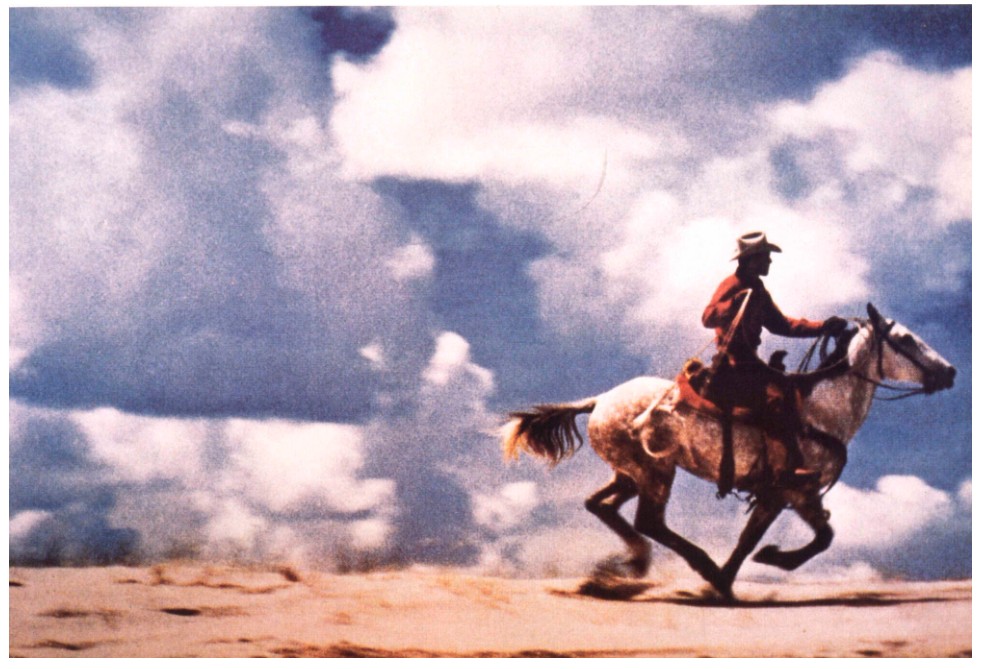
Richard Prince, Untitled (Cowboy), 1989. © Richard Prince.
Growing so attached to his new Galatea, Prince cast the mannequin in bronze in an edition of three with two artists proofs. Each of these five sculptures has a unique colorway expressed through the cowboy’s shirt – the present work being orange and the others blue, green, gray and red, the last of which one resides in Glenstone’s collection. Prince’s final intervention was the innovative construction of the work’s base. Prince first explored the possibilities of plywood in constructing the work’s pedestal.
“Plywood was the ticket. It took another second to think about casting the plywood and painting the cast to look like plywood. Bronze plywood. That did it.”
This final metamorphosis—of wood into bronze appropriating the image of wood—evokes the aesthetic of the Hollywood Western, appealing to the plywood set constructions built to render the desolate outposts of the Wild West. In the pedestal’s mimesis, appearing to be what it is not, the work even more fully ascribes to the conceptual conceit of a stage set as an appropriated vision of an ideal.
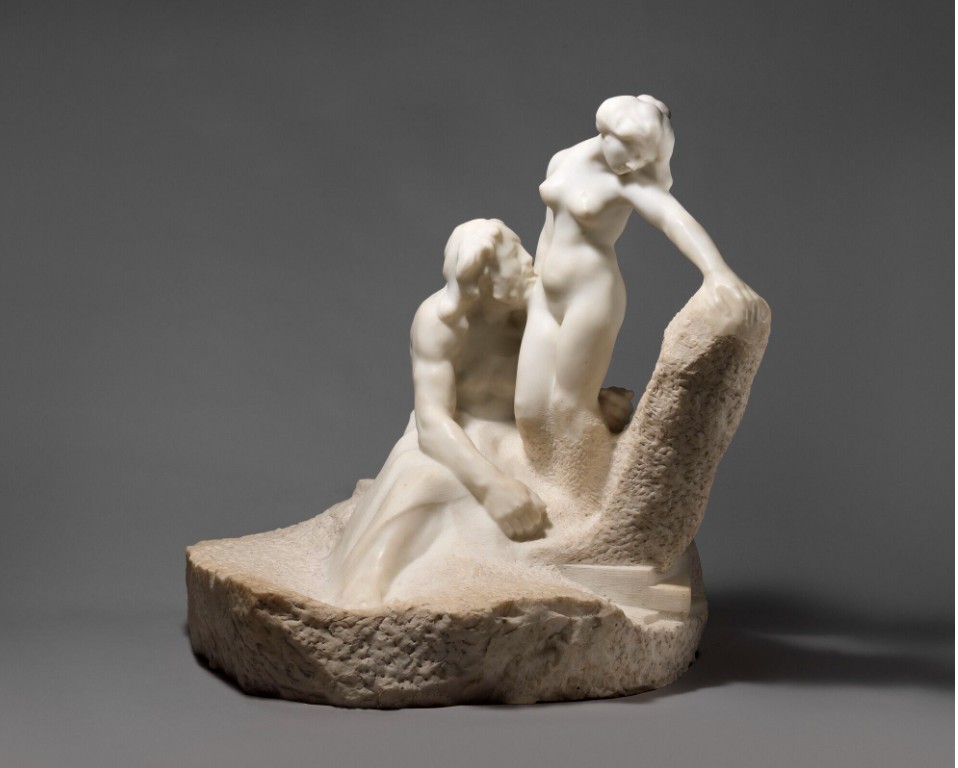
Auguste Rodin, Pygmalion and Galatea, modeled 1889, carved circa 1908-1909.
Metropolitan Museum of Art, New York.
While radically innovative in conceptual terms, Untitled (Cowboy) simultaneously evokes and emerges from the classical tradition of free-standing male sculptures. Michelangelo and Benvenuto Cellini revived the tradition of the heroic solitary male nude as a protective symbol of republican liberty. Untitled (Cowboy) stands at the precipice of action, immortally poised between potentiality and action as his left hand grazes the grip of his revolver while staring off with a determined yet detached look at whatever threat lies in his path. In this pose, the work recalls Michelangelo’s David, who is similarly engaged between action and inaction, his sling still slung over his shoulder. David, the patron saint of Florence and the symbol of its republican liberty, stands ready to protect that which he embodies. So too does Untitled (Cowboy) appear.
“Clad in the iconography of individualism, his claim to future adulthood is holstered but ready for the draw. He is America.”
Michelangelo, David, 1501-1504. Galleria dell’Accademia piazza della Signoria, Florence.
While he is America embodied, Untitled (Cowboy) is also Richard Prince. The cowboy was Prince’s earliest muse and first motif, encapsulating everything which his creative practice would come to achieve. Labeled by Time Magazine as one of the top 100 most influential images of all time, Prince’s cowboy represented an idealized figure of American masculinity, appropriated from the classic Marlboro Man advertisements. Prince’s return to this motif in three-dimensional form as a mature artist reenacts his initial self-exploration, rendering in bronze a portrait of both himself and American society. When the legendary gallerist Barbara Gladstone first laid eyes on Untitled (Cowboy), she was transfixed. She honored the work with a one-work exhibition at her gallery in 2015. The sculpture has become an integral fixture of Richard Prince in the public imagination, tying together in a compelling denouement all the strands of his previous practice to present a ravishing self-portrait which simultaneously reflects its American context.
Jokes
Richard Prince is renowned for his incisive exploration of American life through the appropriation of found imagery. His work challenges traditional notions of originality, questioning how repeated images and texts acquire new meanings in different contexts. The present work, belonging to his celebrated Joke paintings, marks a move away from the appropriation of photographs that had solidified the artist’s place in the public consciousness during the early 1980s, particularly with iconic series like Nurses and Cowboys. Reminiscent of his earlier engagement with advertisements, these authorless jokes were primed for repetition. His radical monochromatic Joke series established a new relationship with painting while positioning jokes as a central theme within his oeuvre. Initiated in 1985, Prince’s Joke paintings utilize humor not merely for amusement but as a means to critique and reflect on American culture. Initially, he employed bold, all-caps text against monochrome backgrounds, presenting absurd narratives that relied on repetition and the viewer’s innate understanding of humor to deliver their punchlines. This approach mirrored his earlier works, where humor and repetition served to interrogate the everyday realities of American life.
The Joke Paintings act both as a commentary and representation of fifties-style middle America, blue collar and Borscht-Belt humor that directly addressed issues of sexual identity, class and race and social acceptability. Often likened to the definition of humor proposed by Freud, Prince’s Joke Paintings create pleasure in spite, or perhaps because, of the painful effects that disturb it: the “liberating effect of humor.” While on the surface it is their fantastical and humors appearance that distinguishes them from the artist’s Nurse Paintings or Cowboy Paintings, these three renowned series are in fact intimately connected through the equally firm roots they each take in the core ethos of Prince’s highly conceptual and pioneer practice. The pop appropriation that constitutes the essence of the Cowboy corpus is critical to the conception and execution of the Nurses; with his Joke Paintings, these works share a dependence on borrowed text and kitsch humor.
I’m Not Linda, 1991-1992
Christie’s New-York: 21 May 2026
Estimated: USD 500,000 – 700,000
USD 762,000
RICHARD PRINCE (B. 1949), I’m Not Linda | Christie’s
RICHARD PRINCE (B. 1949)
I’m Not Linda, 1991-1992
Silkscreen and acrylic on canvas
56-1/4 x 47-7/8 inches (142.9 x 121.6 cm)
Signed and dated ‘R Prince. 91-92’ (on the overlap)
Richard Prince’s joke paintings are more than gags, they are in fact manifestations of artistic labor.
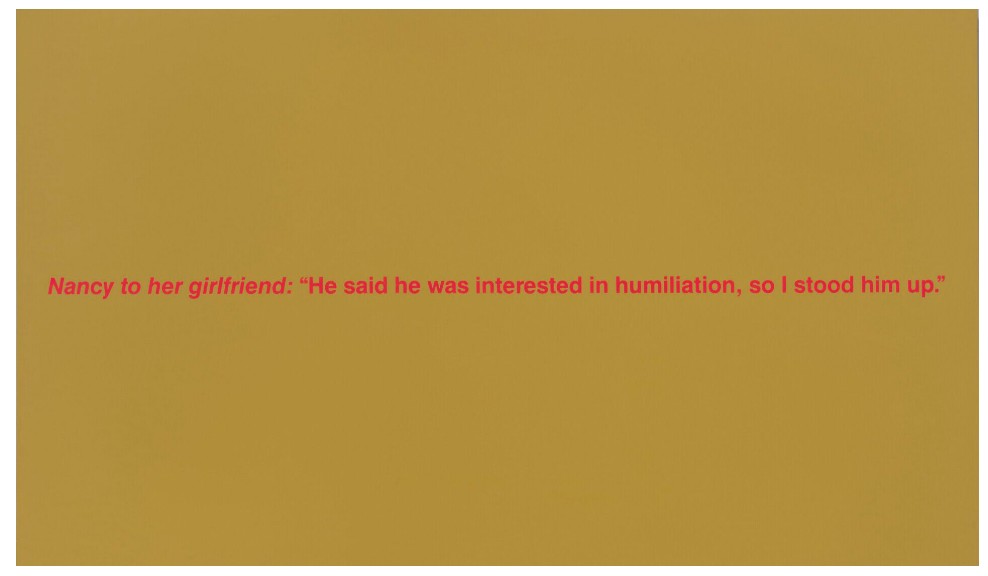
Richard Prince, Nancy to Her Girlfriend, (RP288), 1988. Whitney Museum of Art, New York.
© 2026 Richard Prince. Photo: © 2026 Whitney Museum of American Art / Licensed by Scala / Art Resource, NY.
New York Times co-chief art critic Roberta Smith has called the Joke paintings “portraits of the artist at work, sweating it out, honing his material and timing, egging himself on to come up with another one and then another one until he gets our full attention, cracks us up and, in stand-up parlance, kills.” (R. Smith, “Pilfering a Culture Out of Joint,” New York Times, September 28, 2007.)
The Wrong Joke, 1987
Christie’s New-York: 19 November 2025
Estimated: USD 1,500,000 – 2,000,000
USD 1,524,000
JOKE PAINTING
RICHARD PRINCE (B. 1949), The Wrong Joke | Christie’s
RICHARD PRINCE (B. 1949)
The Wrong Joke, 1987
Acrylic and silkscreen ink on canvas
66×54 inches (167.6 x 137.2 cm)
Signed and dated ‘R Prince 87’ (on the overlap)
Richard Prince’s The Wrong Joke is an important early example of his Joke Paintings, the series that heralded the artist’s first reckoning with critical and popular success. Appropriating the Minimalist painting style then current in the 1980s, Prince painted found jokes revolving around the popular traveling salesman motif favored by Borscht Belt comics. The Joke Paintings mark a radical point of departure for both Prince and American contemporary art writ large.
“I mean, can you imagine in 1986, when I made my first Joke painting, nobody had ever [painted a joke]—I mean jokes were something that you heard…
What I did was I changed the hearing of a generic Borscht Belt joke, jokes that I grew up with… and I painted them.
I painted jokes, and I believe the Jokes are right up there with Rothko.”
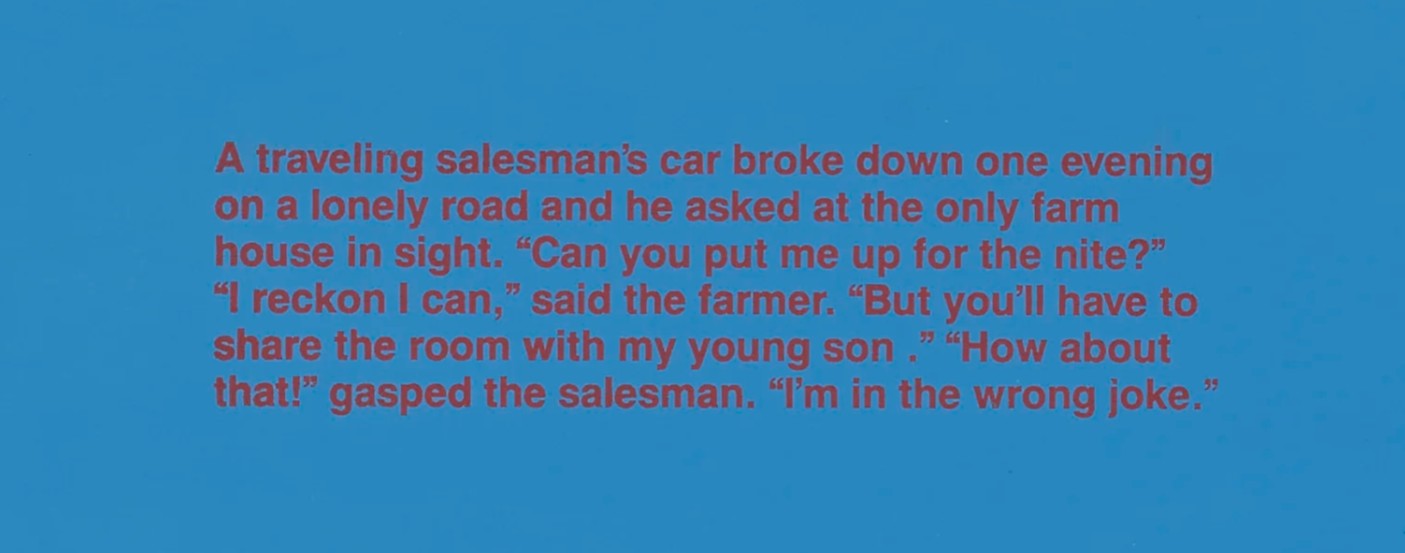
In The Wrong Joke, Prince silkscreens his red joke in six uniform lines at an intimate scale in the direct center of the blue-painted canvas. The discordant scale between text and support forces the viewer into close proximity with the painting in order for the work to be made legible. Prince first began experimenting with the joke format in 1984, when he started writing one-liners on paper with pen, selling them for $10 each. He explored copying cartoons with caption and image intact, as well as swapping images and texts, before finally landing on his monochrome painted format. This diametric change in practice away from the photographic method of the previous decade was critical to his formation as an artist, introducing a greater sense of the personal as well as a greater sense of the artist’s hand into his works, which had previously felt devoid of a creative presence.
“I’m not associated with the hand… beginning the jokes was like starting over.”
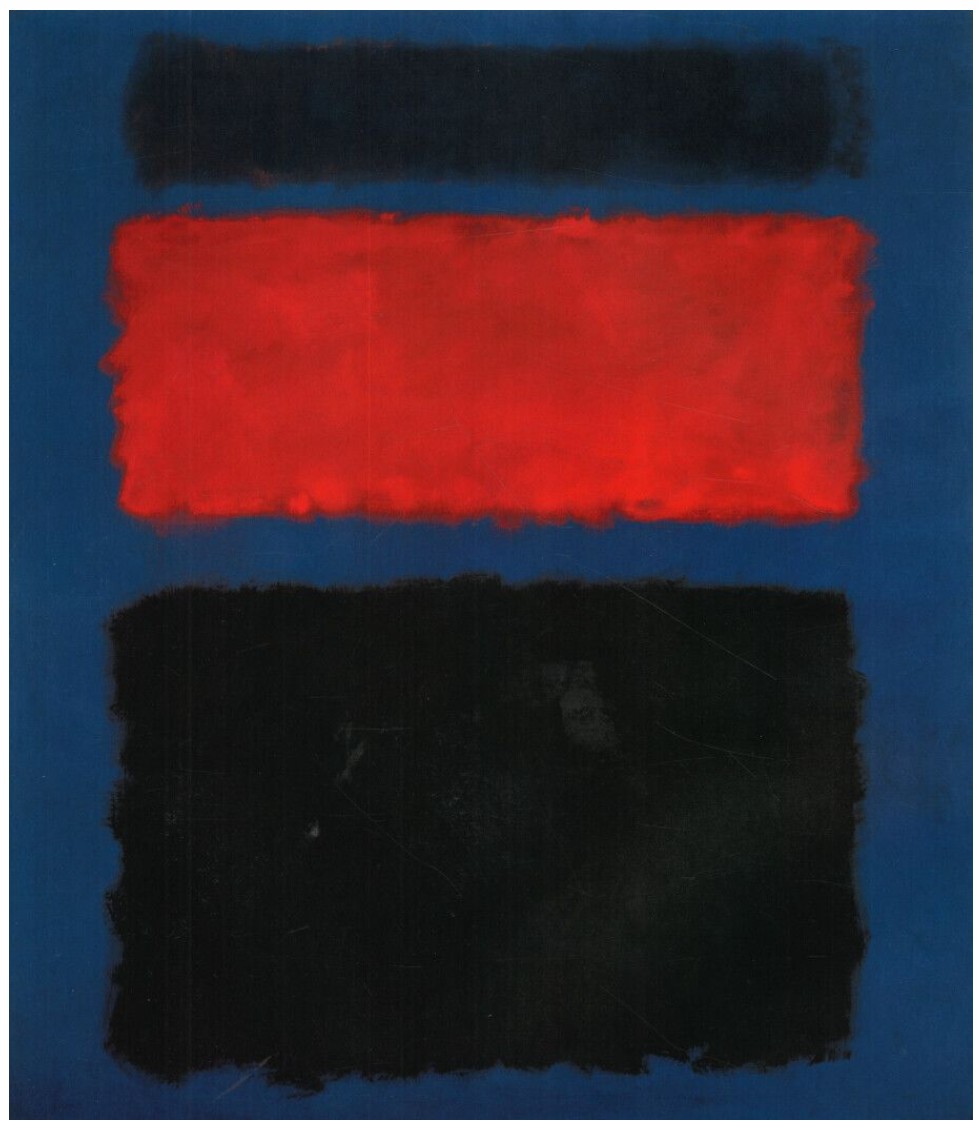
Mark Rothko, Untitled, 1960. Toledo Art Museum.
© 1998 Kate Rothko Prizel & Christopher Rothko / Artists Rights Society (ARS), New York.
The joke itself, culled from the thousands which Prince recorded for decades in a mental repertoire, is itself a metajoke, relying on the audience’s familiarity with archetypal traveling salesman jokes for its unexpected punchline, which operates on a surprising shift in gender dynamics. The salesman ends the line addressing not the farmer but the viewer, breaking the fourth wall with his announcement: “I’m in the wrong joke.” This ‘wrong joke’ appears to be among Prince’s favorite out of the dozens he has appropriated over his career. The joke appears in numerous other works, including several other monochromes, drawings, and The Salesman and the Farmer (1989, private collection). In December of 1987, the year the present work was made, Prince published the article “The Traveling Salesman” in Artforum, where he printed both the text of the present joke as well as a close variant. With the joke in The Wrong Joke, Prince leverages the subversion of his audience’s expectations, in tandem with his choice of an almost comical font size for his text, to expertly reach the intersection of the hysterical and the sublime.
“No one that I know had ever painted a joke in the art world. It was a very radical subject matter. And if you didn’t like the joke, maybe you liked the painting. And if you didn’t like the painting, maybe you liked the joke.”
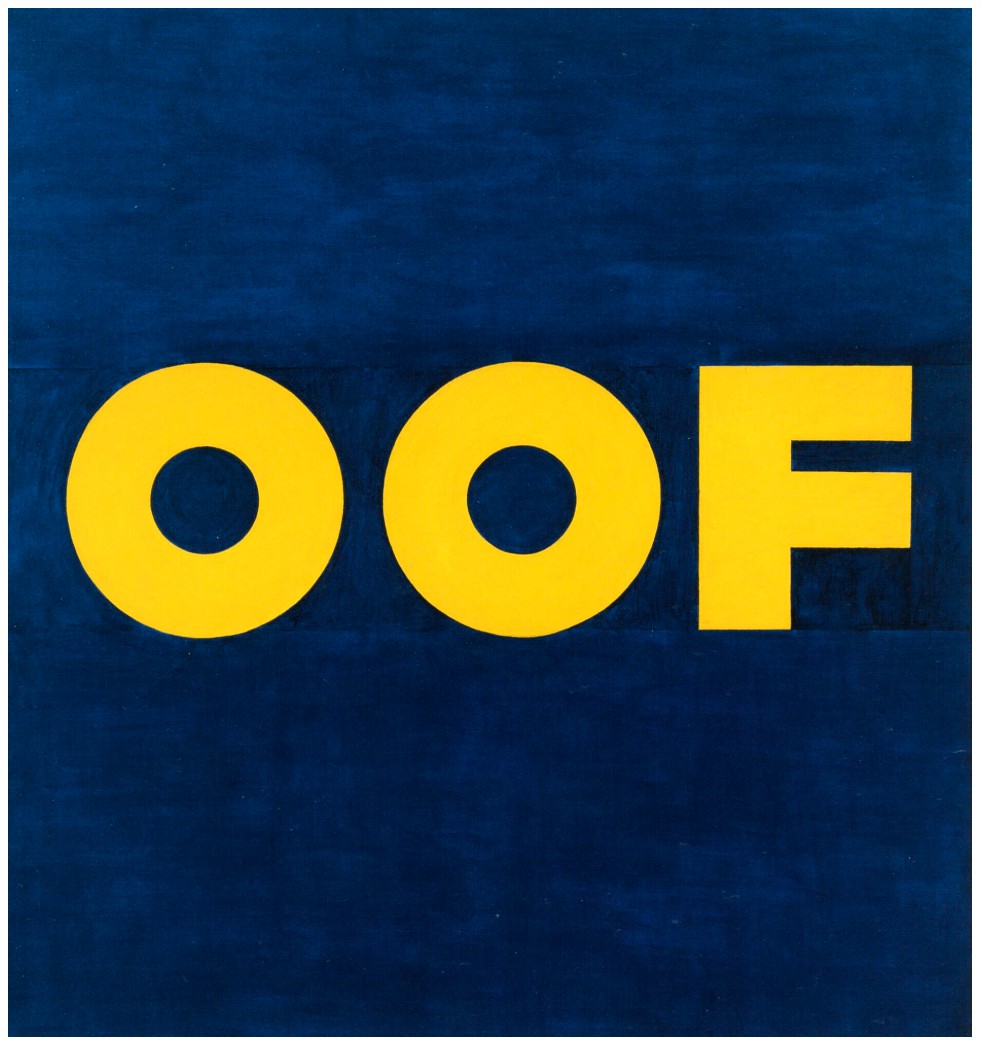
Ed Ruscha, OOF, 1962. Museum of Modern Art, New York. © Ed Ruscha.
1987 proved Prince’s pivotal year. In March, he was featured on the cover of Art in America, garnering the attention of Barbara Gladstone, who began representing him soon thereafter. This rapid rise allowed him to shift his attention to painting for the first time.
“Artists were casting sculptures in bronze, making huge paintings, talking about prices and clothes and cars and spending vast amounts of money.”
In contradiction to the prevailing atmosphere, Prince undertook a modest, mundane subject with his Joke series, simultaneously critiquing and overturning the dominance of Minimalist and Neo-Expressionist painting. Channeling the reductive aesthetic of Ellsworth Kelly or Brice Marden, The Wrong Joke adopts an antiheroic mentality observed throughout Prince’s practice. The work explores the darker side of existence by employing a sardonic form of humor until then unknown in the resolute, elaborate, and precipitous seriousness of the art world in the 1980s.
Untitled, 1997-1998
Phillips New-York: 21 November 2025
Estimated: USD 250,000 – 350,000
USD 258,000
JOKE PAINTING
Richard Prince Modern & Contemporary Art Day Sale, Afternoon Session
RICHARD PRINCE
Untitled, 1997-1998
Acrylic and silkscreen ink on canvas
72×64 inches (182.9 x 162.6 cm)
Signed and dated “R Prince 1997–98” on the reverse
Richard Prince’s Untitled, belongs to a small body of paintings made from 1997–1998, in which his once-legible cartoons dissolve into abstract, smudged fields of gray interspersed by undefined black and white scribbles. The figural illustrations of the artist’s earlier paintings give way to an expressive tangle of gestures, as if a chalk board was haphazardly erased and then written over. This sense of erasure and rewriting creates a visual palimpsest that nods to Prince’s use of appropriated material, his own recurrent use of the same jokes within his oeuvre, and the legacy of mid-century American painting. Begun in 1985, Richard Prince’s “joke” paintings marked a pivotal turn in the artist’s exploration of appropriation and authorship. Inspired by the deadpan one-liners of mid-century Borscht Belt comedy, Prince began isolating these jokes as text, rendering them with cool detachment in monochrome type. Over time, the format evolved from the stark, text-only compositions of the late 1980s to the cartoon illustrated silkscreens of the 1990s.
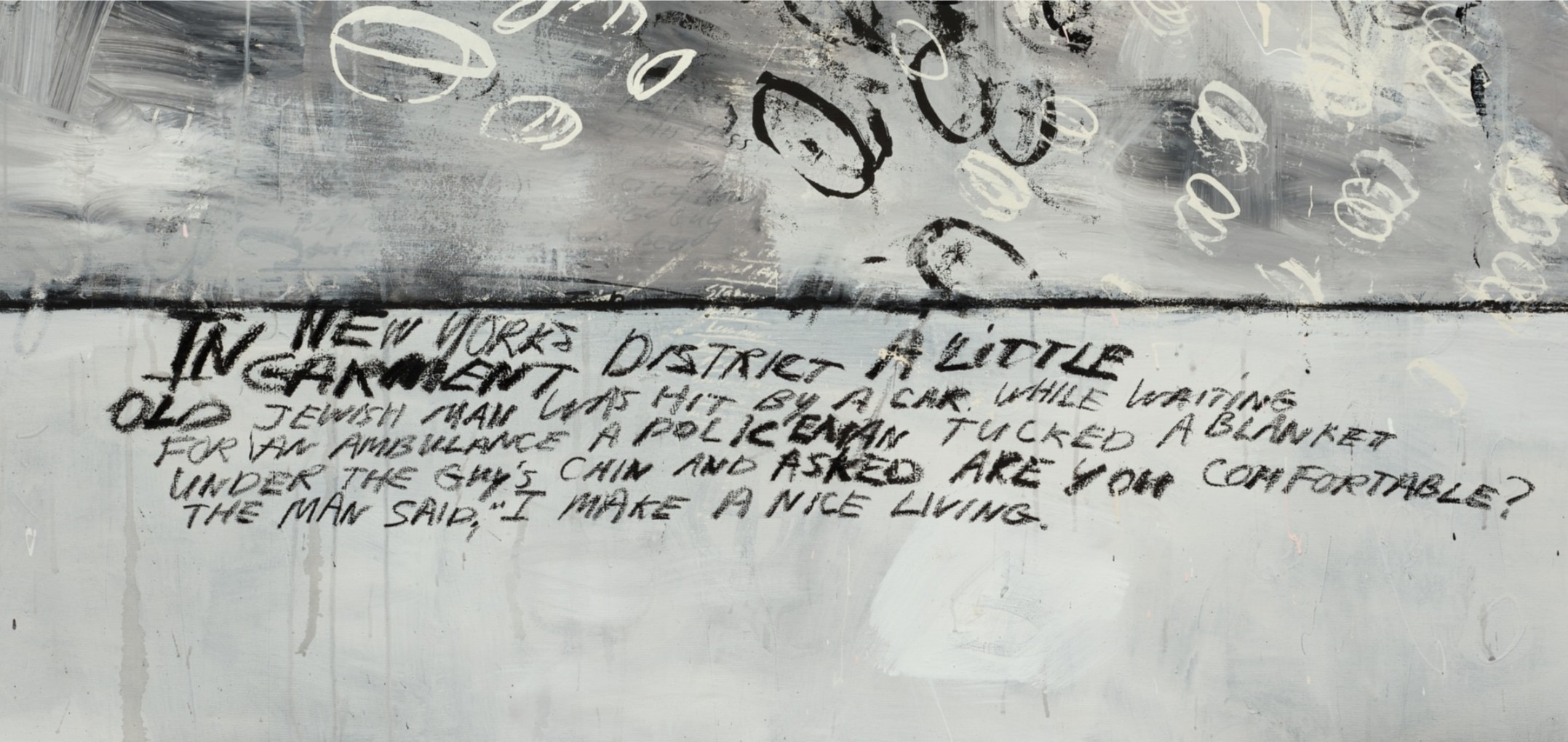
In New York’s Garment District a little old Jewish man was hit by a car. While waiting for an ambulance a policeman tucked a blanket under the guy’s chin and asked, “Are you comfortable?” The man said, “I make a nice living.”
Prince’s monochrome joke paintings offered a tongue-in-cheek response to the color field paintings of Mark Rothko and Barnett Newman. The silkscreen text, and, later, his cartoon figures allude to the Pop canvases of Andy Warhol and Roy Lichtenstein. In Untitled, the handwritten scrawl and gestural abstraction nods to Cy Twombly, particularly his Blackboards canvases from the 1960s. Remixing styles, Prince fuses references both high and low. Typical of Prince’s humor, the joke walks a fine line between irreverence and affection—its punchline hinging on linguistic slippage, timing, and stereotype. The foremost contemporary artist blending humor and painting, Prince holds a mirror to American art history, popular culture and comic sensibility.
Are You Kidding?, 1988
Selections from the Collection of Barbara Gladstone
Sotheby’s New-York: 15 May 2025
Estimated: USD 2,500,000 – 3,500,000
USD 3,527,000
RICHARD PRINCE (b. 1949)
Are You Kidding?, 1988
Acrylic and silkscreen on canvas
56 x 89 1/2 inches (142.2 x 226.1 cm)
Signed, titled and dated 1988 (on the overlap)
Are You Kidding? is a paradigmatic example of the deadpan, candid satire that defines Richard Prince’s iconic Monochromatic Joke series. Yellow sans serif text stretches edge to edge across the cobalt blue expanse of Are You Kidding?, situating the blunt joke in a monochrome expanse. The scale of the joke relative to the canvas implies an irreverent delivery style or Whitney Darrow cartoons that first inspired the artist in the mid-1980s. Prince began his Monochromatic Joke series in 1985 during a five-month stay in Los Angeles. The artist soon moved from handwritten reproductions of jokes to silkscreen paintings on canvas, wryly asserting ‘low’ culture’ into the ‘high’ art backdrop and expanding his exploration of the categorically quotidian subject on the proverbial canvas. Prince’s offbeat jokes unnerve the viewer, creating a simultaneous uncanny sensation of humor and wariness over the acknowledgment of humor. Prince’s Monochromatic Jokes are among the artist’s most acclaimed series within his diverse and expansive oeuvre, capturing the acerbic wit and renegade force that drives his practice.
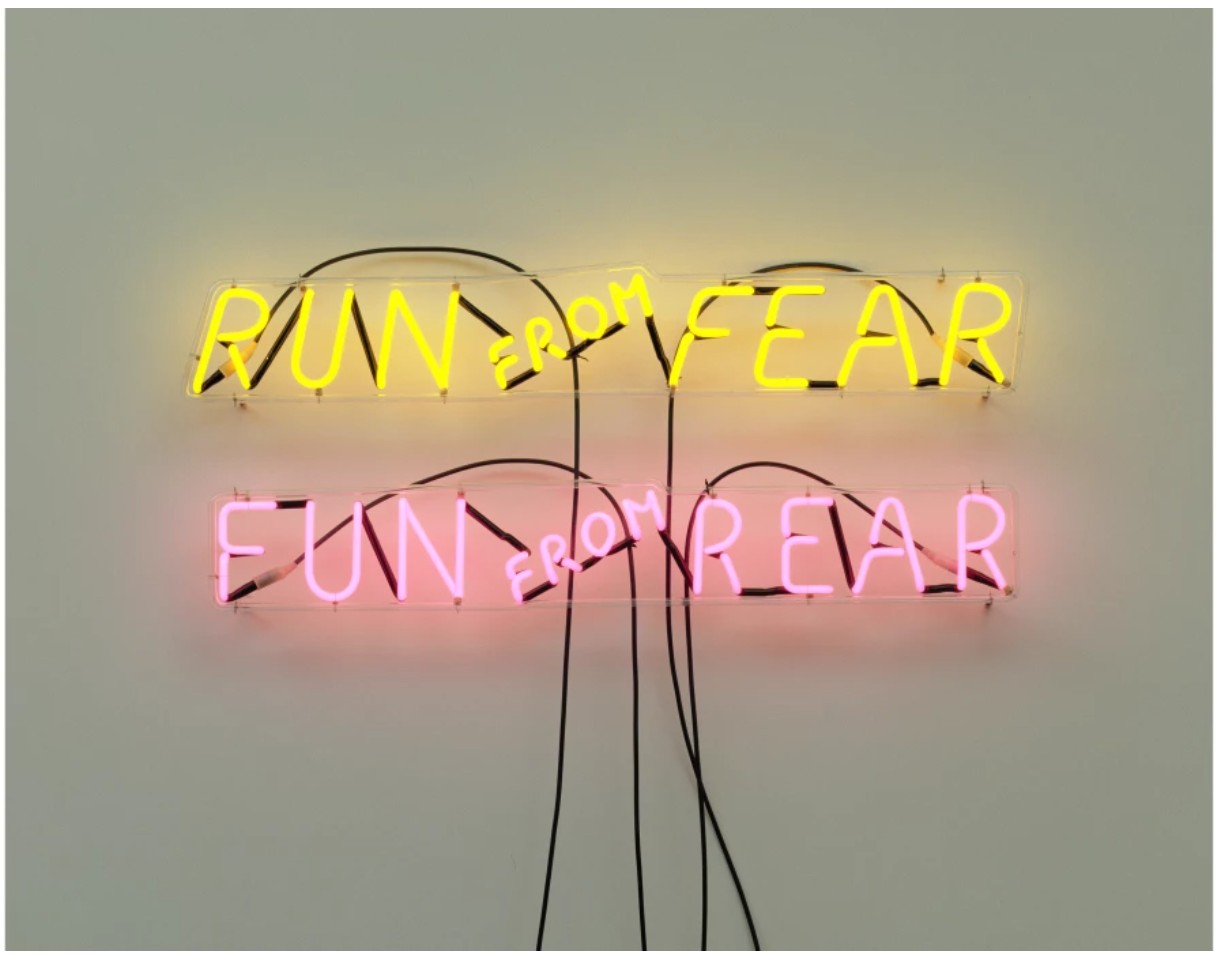
BRUCE NAUMAN, RUN FROM FEAR, FUN FROM REAR, 1972. MUSEUM OF CONTEMPORARY ART, CHICAGO. Image © Bridgeman Images. ART © 2020 BRUCE NAUMAN / ARTISTS RIGHTS SOCIETY (ARS), NEW YORK
Executed in 1988, Are You Kidding? is a large-scale exemplar of Prince’s iconic series. As Lisa Phillips observed, “[Prince] understood that in these jokes and cartoons, there were recurring patterns and subversive, often inflammatory content. They dealt with taboos.” (Lisa Phillips quoted in: Exh. Cat., New York, Whitney Museum of American Art (and traveling), Richard Prince, 1992-93, p. 42) The anonymous punchline of the present painting reads: I’m always kidding about my wife says the bartender. “Everytime I introduce her to anybody, they say, “Are you Kidding?”
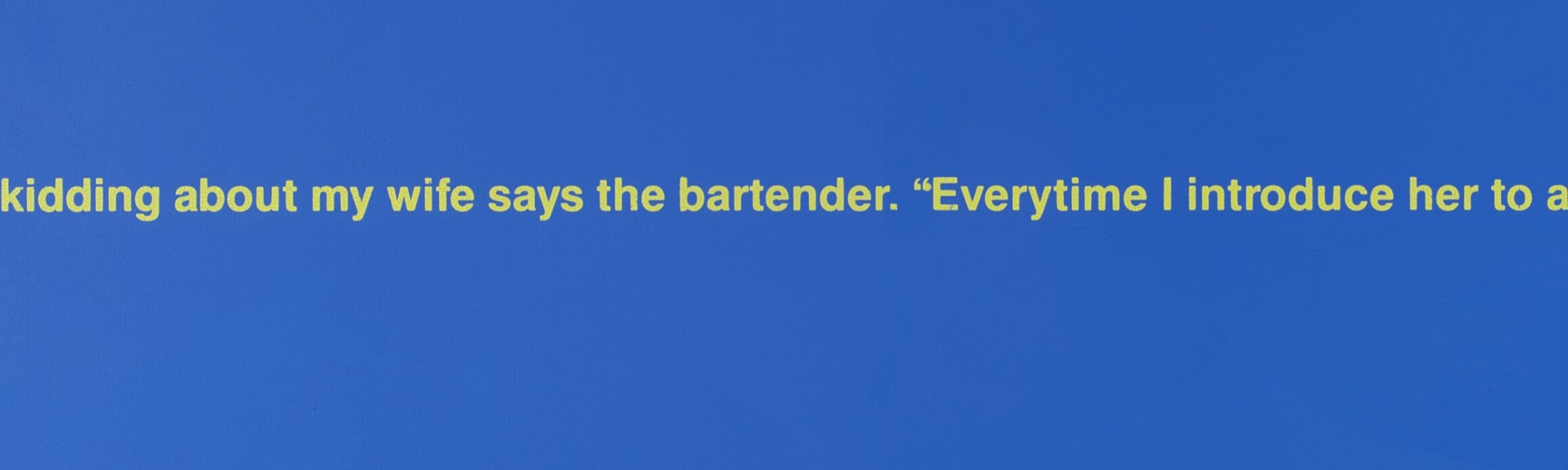
The text runs left to right across the serene blue composition like a metaphorical knife through the space. Prince’s text-based work differs from that of other Contemporary artists, like Ed Ruscha, who employed text to a semiotic end; instead, Prince’s text operates as a vehicle for his appropriated statement. A provocative ‘anti-masterpiece,’ the present work is an amalgamation of hard-edge abstraction and off-color wit, all in the name of subverting the serious. The painting uncovers distasteful attitudes and clandestine tensions typically scrubbed from proper social interactions. Alienated from its original context, Prince’s unattributed one-liner becomes the subject matter of his painting, further challenging the parameters of authorship, ownership, and the definitions of painting.
Left: Ed Ruscha, Noise, Pencil, Broken Pencil, Cheap Western, 1963. Virginia Museum of Fine Arts, Richmond. Art © Ed Ruscha. |
Right: Roy Lichtenstein, Forget It! Forget Me!, 1962. Rose Art Museum, Brandeis University, Waltham. Art © Estate of Roy Lichtenstein
Following his iconic Cowboys of the early 1980s, Prince’s radical Monochromatic Joke series advances the artist’s exploration of appropriation and transgressive mixing of ‘low’ and ‘high’ culture through painting. In his practice, Prince overtly quotes from mainstream visual culture but takes his sources out of context, recalibrating their meaning. In the Monochromatic Jokes, Prince presents his unattributed punchlines without image or protagonist and devoid of context using vibrant text and backgrounds. As Nancy Spector describes, “Prince embraced rebellion as a state of mind. The generational belief in challenging authority as a way of life–a necessity born in antiwar marches on Washington, race riots throughout the United States, and student protests around the world–informs the very fabric of his art.” (Nancy Spector, “Nowhere Man,” in: Exh. Cat., New York, Solomon R. Guggenheim Museum (and traveling), Richard Prince: Spiritual America, 2007-08, p. 22) Following Prince’s earliest handwritten transcriptions of jokes and cartoons, Prince soon extinguished any trace of illustration or the artist’s hand. He then used silkscreen techniques to transpose language on his canvases, accentuating the phrases as his subject matter. Prince’s composition directly challenged the reigning expressionist fervor of the 1980s with the antithesis of the Neo-Expressionist style.
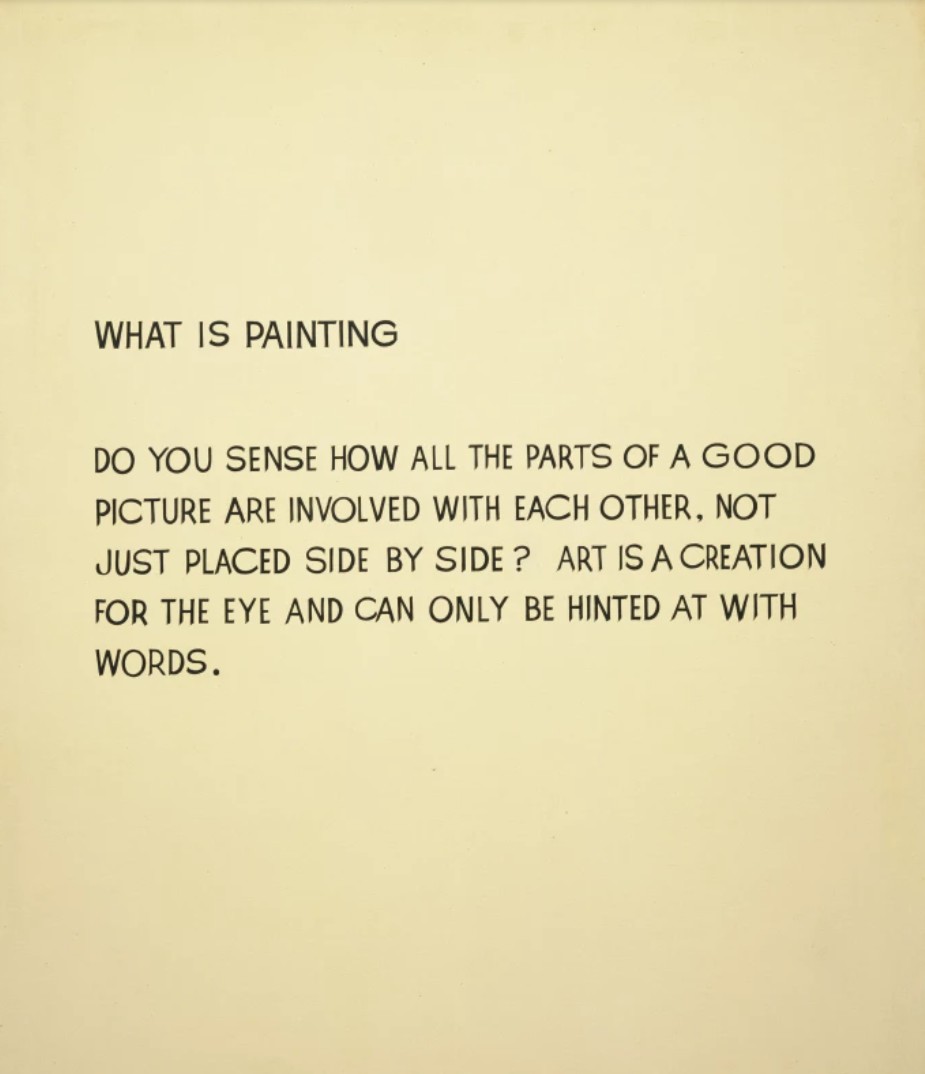
John Baldessari, What Is Painting, 1968. The Museum of Modern Art, New York.
Image © The Museum of Modern Art/Licensed by SCALA / Art Resource, NY. Art © 2025 John Baldessari
Disarmingly immediate, Are You Kidding? is a prodigious example of the Monochromatic Joke series, which bluntly isolates issues of sexuality, race and class in the form of ostensibly playful one-liners. Through his intentionally provocative compositions, Prince exposes a society built on malevolence and perversity. Prince’s Jokes are inherently self-reflexive, making the viewer complicit in unsavory, ‘low brow’ culture. At the same time, these unattributed and unsigned puns–quoted without license and represented in a pragmatic manner–make a damning indictment of the notions of authorship and originality that the art world deems sacrosanct. Through the Monochromatic Jokes, Prince cleverly subverts the serious and somewhat self-important modes of abstraction popularized in the cultural zeitgeist and further turns the mirror on American society and the viewer themself.
Untitled, 2013
Sotheby’s London: 5 March 2025
Estimated: GBP 200,000 – 300,000
GBP 292,100 / USD 373,560
Untitled | Contemporary Day Auction | 2025 | Sotheby’s
RICHARD PRINCE (b. 1949)
Untitled, 2013
Acrylic and collage on canvas
56×50 inches (142.4 x 127 cm)
Signed and dated 2013 (on the reverse)
Executed in 2013, Untitled belongs to Richard Prince’s celebrated series of Joke Paintings. Sparking heated dialogue about the limits of appropriations, Prince reproduces images in the mainstream media to capture America’s idiosyncrasies while highlighting the media’s derivative nature and pervasiveness. He shows that all images are reiterations of each other, but by being positioned in new contexts, they become their own redefined entities. Influenced by Pop Art, Prince embraces the brash world of common culture, advertising, and mass media to present new images imbued with irony which serve to critique society. A provocateur, Prince forces us to question the building blocks of contemporary society’s identity.
“Jokes and cartoons are part of any mainstream magazine. Especially magazines like the New Yorker or Playboy. They’re right up there with the editorial and advertisements and table of contents and letters to the editors. They’re part of the layout, part of the ‘sights’ and ‘gags’. Sometimes they’re political, sometimes they just make fun of everyday life. Once in a while they drive people to protest.”
Prince emerged in the early 1980s as a key figure of the Pictures Generation and as a pioneering appropriation artist. He first turned towards jokes in 1985 and their visual presentation has since undertaken a noticeable evolution that first simplified the composition to its most basic form and then re-introduced imagery known from the artist’s other series, such as the Nurse Paintings, as exemplified by the present composition.
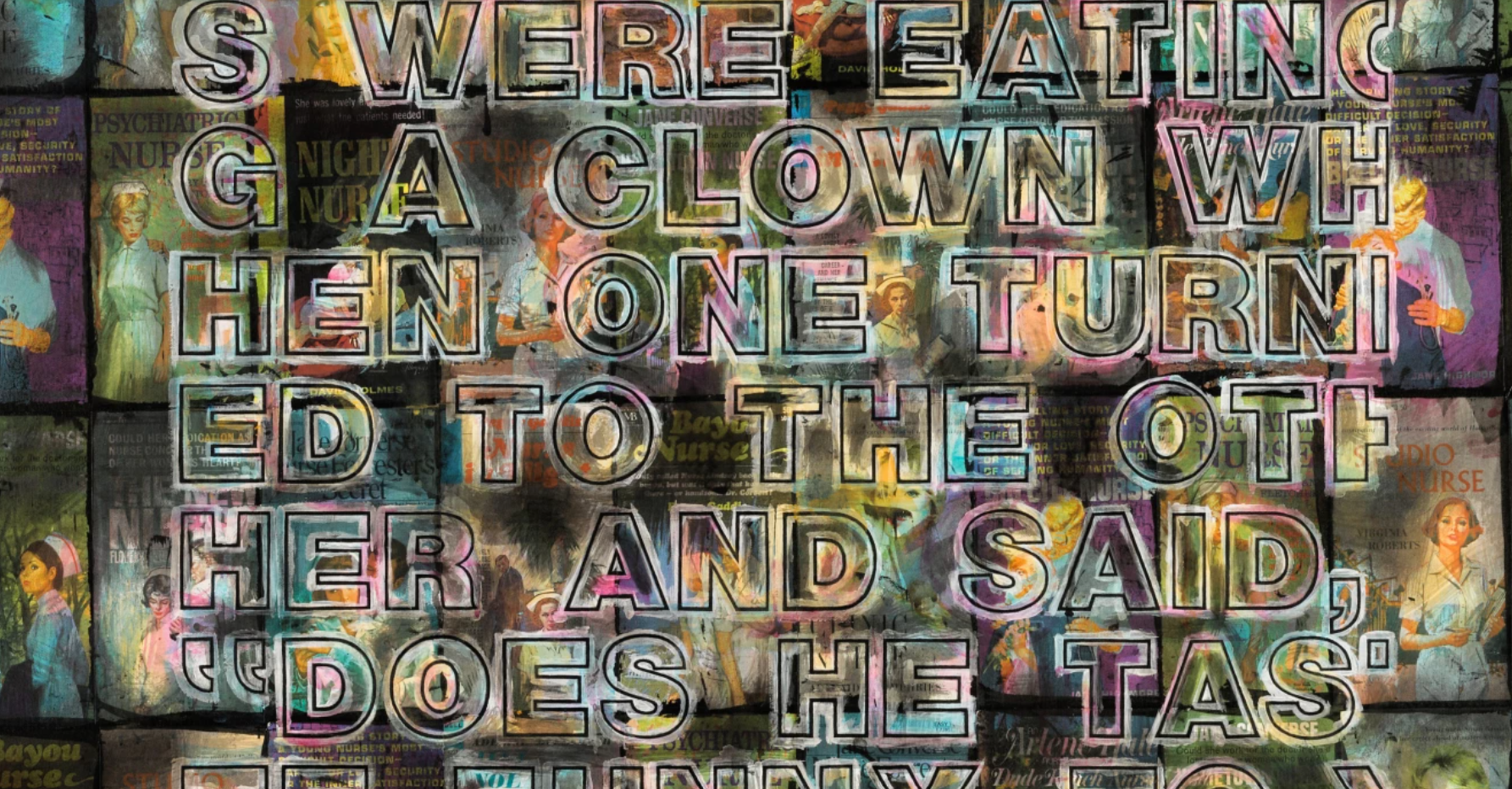
Inspired and appropriated from the titles and front covers of pulp romance novellas from the 1950s to 1980s, of which Prince has compiled an avid personal collection, the Nurse Paintings take as their subject the trope of the passive female nurse embroiled in an impossible love affair, which was popularized in American dime-store paperbacks from the mid to late twentieth century. Offering a transgressive scrutiny of such idealized modes of feminine portrayal, Prince’s Nurse Paintings simultaneously explore, exploit and contest the erotic stereotype and gender construct of the iconic blonde bombshell, which had previously been elevated to the realms of high-art by artists such as Andy Warhol and Roy Lichtenstein. In the present work, Prince combines the Joke Paintings and the appropriation of found imagery used in his renowned Nurse Paintings to create a unique, witty composition that highlights the contrast between his chosen punchline and the appropriated imagery crafted into a distinct background. What is added in the present work, to brilliant effect and with true bravado, is Prince’s riposte to Abstract Expressionism. Enlivened with heady brushstrokes, drips and splatters behind the painted text, the present Untitled pays homage to the techniques pioneered by the legendary group of Abstract Expressionist artists working to redefine the contemporary landscape.
The Wrong Joke (Again), 2001
Sotheby’s London: 10 October 2024
Estimated: GBP 120,000 – 180,000
GBP 144,000 / USD 188,640
The Wrong Joke (Again) | Contemporary Day Auction | 2024 | Sotheby’s
RICHARD PRINCE (b. 1949)
The Wrong Joke (Again), 2001
Acrylic and silkscreen on gator board
39 3/4 x 59 3/4 inches (101×152 cm)
Signed and dated 2001 (lower left)
The Wrong Joke (Again), executed in 2001, transcends the simplicity of a single joke against a monochromatic background, featuring a more layered and painterly ground than his earlier works. The work incorporates images from cartoons and fragments of other jokes, challenging viewers to reconsider their perceptions of art, humor, and media. Prince’s The Wrong Joke (Again) exemplifies a skillfully calculated inversion of art’s essential value system. By employing a deliberate conceptual strategy that echoes Warhol’s exploration of mass culture, he creates an anti-masterpiece—an art object that defies the museum and market contexts that typically privilege notions of greatness. Ironically, Prince’s Joke paintings have now been integrated into prestigious museum collections, including the Museum of Modern Art, the Solomon R. Guggenheim Museum, and the Whitney Museum of American Art.
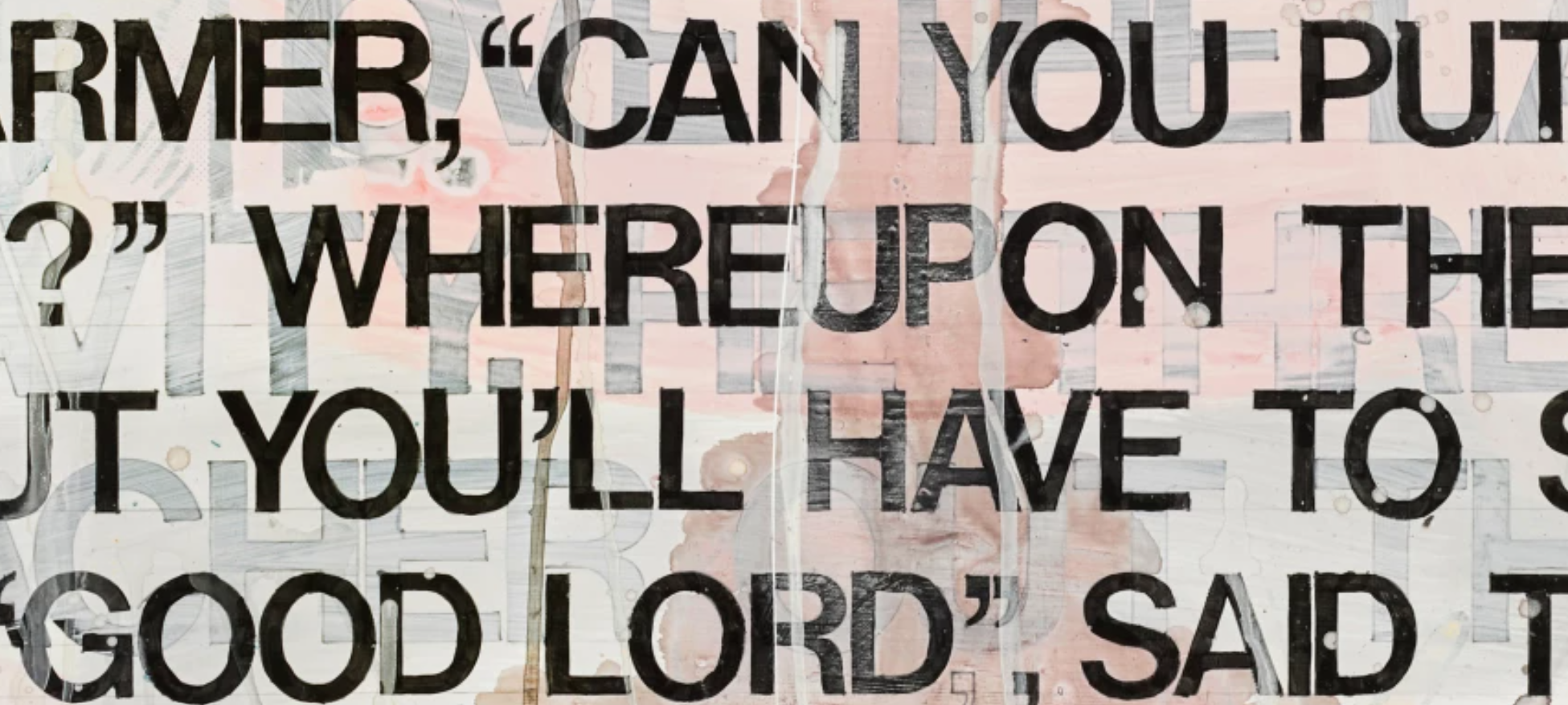
The Wrong Joke (Again) highlights Prince’s ongoing exploration of humor’s relationship with visual culture. Drawing upon the cartoons that first inspired his use of appropriation, this work invites viewers to reconsider the boundaries between art and everyday media, questioning the role of the artist and the nature of originality. Through his nuanced layering of imagery and text, Prince’s Joke paintings remain a provocative, critical examination of the way we consume and interpret images in the modern world.
Untitled [Four Works], 1992-1993
Christie’s New-York: 13 March 2024
Estimated: USD 200,000 – 300,000
USD 296,500
RICHARD PRINCE (B. 1949), Untitled [Four Works] | Christie’s (christies.com)
RICHARD PRINCE (B. 1949)
Untitled [Four Works], 1992-1993
Acrylic and silkscreen ink on canvas
Each: 24×18 inches (61 x 45.7 cm)
In 1993, a condemned home stood unassuming in West Hollywood, its date with a bulldozer rapidly approaching. Every corner of the ghostly venue was decorated with Prince’s artwork; there was a sculpture of junk food boxes in the kitchen, a painting screened directly onto the wall in the bedroom, and Jokes propped against walls in the living room and yard. This installation, titled First House, was a monumental development in Prince’s career. It fused themes he has explored throughout his oeuvre, chiefly his inclination to take ordinary objects, images, and experiences and force viewers to re-evaluate them. In First House, a decaying, cookie-cutter tract house was transformed—not just into a fine art gallery—but into a work of art itself.
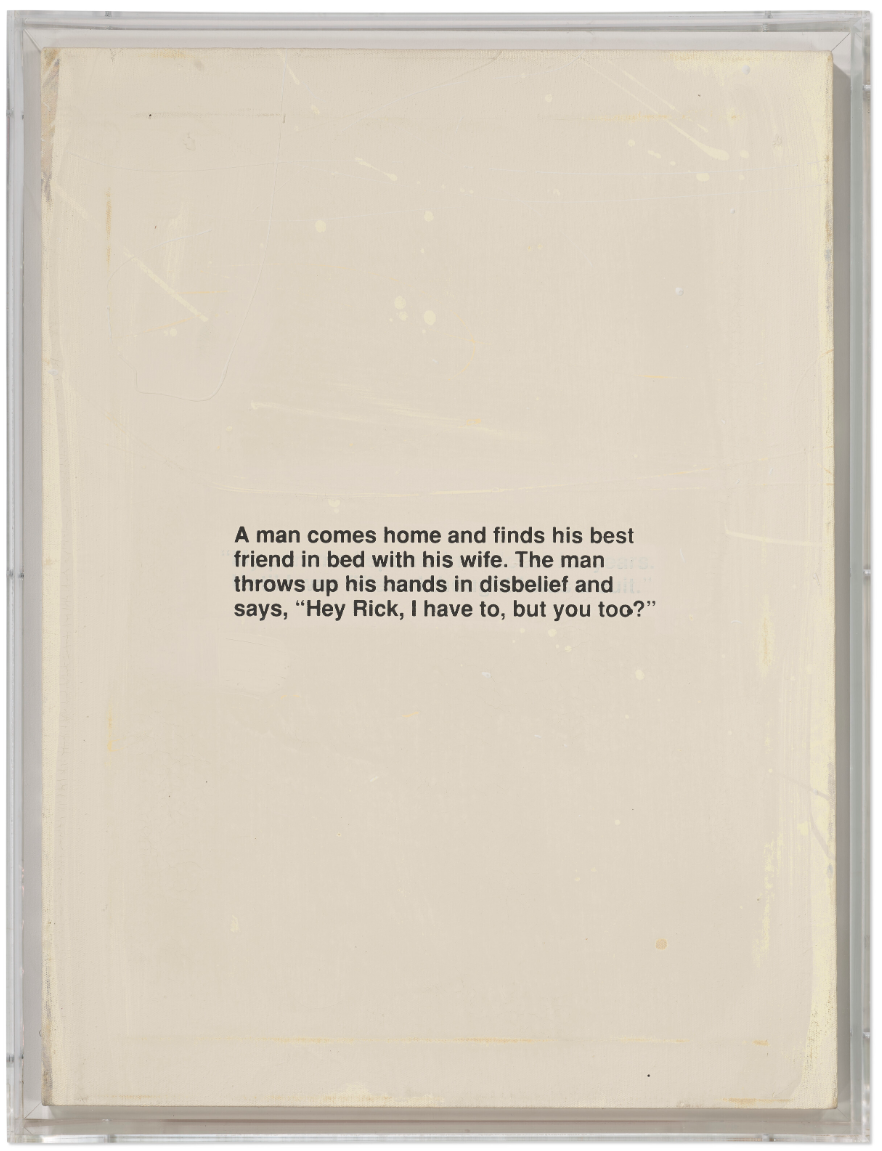
Included in this important exhibition were the present works: four crude and macabre Jokes from his seminal series by the same name. Because the First House was demolished shortly after the show, these objects have become relics—the last traces of an ephemeral experience. Printed in a stark black Helvetica font against a white background, viewers must read the words and acknowledge the strange shift from the typical context one would encounter a joke of this caliber—through a microphone in a dimly-lit comedy bar, or from a parent around the dinner table. These works challenge expectations of what can be put on a canvas and classified as fine art. Nancy Spector called the Jokes “antimasterpieces” (N. Spector, Richard Prince, exh. cat. Soloman R. Guggenheim Museum, New York, 2007, p. 39). The transformation of a multi-sensory phenomenon into a 2-D object forces viewers to confront the words at face value.
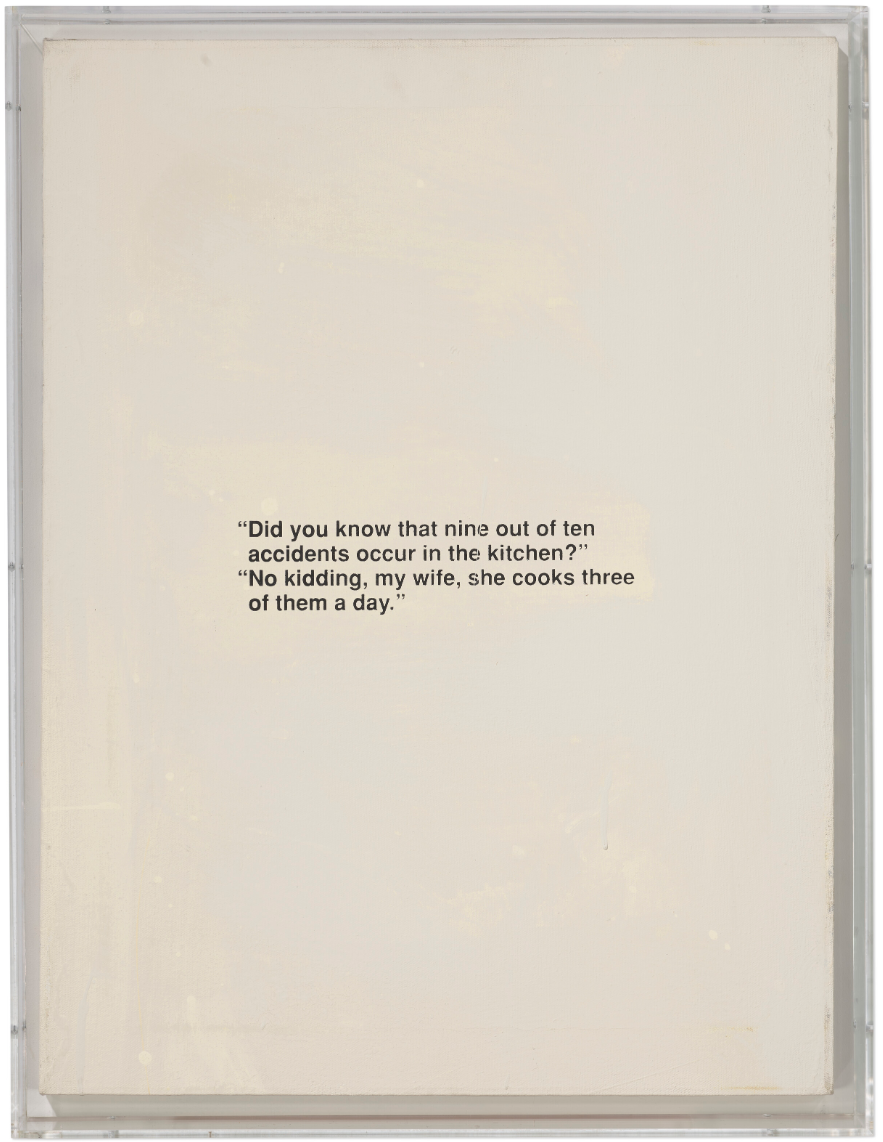
Unlike the sleek silkscreens of his Monochrome Jokes, the present canvases reveal remnants of the artist’s process. Drips, brushstrokes, and spots of raw canvas characterize all four compositions. The work that reads “I stumbled upon a funeral…” differs from the other three, as Prince used a T-shirt rather than a traditional canvas as the painting’s support. This unorthodox medium is recurring in Prince’s practice. They have taken on many forms; some are jokes, while others feature the RP trademark or cute animals for his daughter’s bedroom. The Jokes series is tied inextricably to Prince’s interest in pop culture, a fascination which earned him the title “bastard offspring of Andy Warhol” (K. McKenna, “First House: A Project for Artforum,” Artforum, vol. 32, no. 4, p. 56). Like Warhol, Prince appropriates the work of others in his artistic practice. The present jokes are not of the artist’s creation but taken from comedians, newspaper comic strips, and the shared American psyche. Most people have heard some variation of these jokes, which raises the question: what do the things we laugh at say about us?
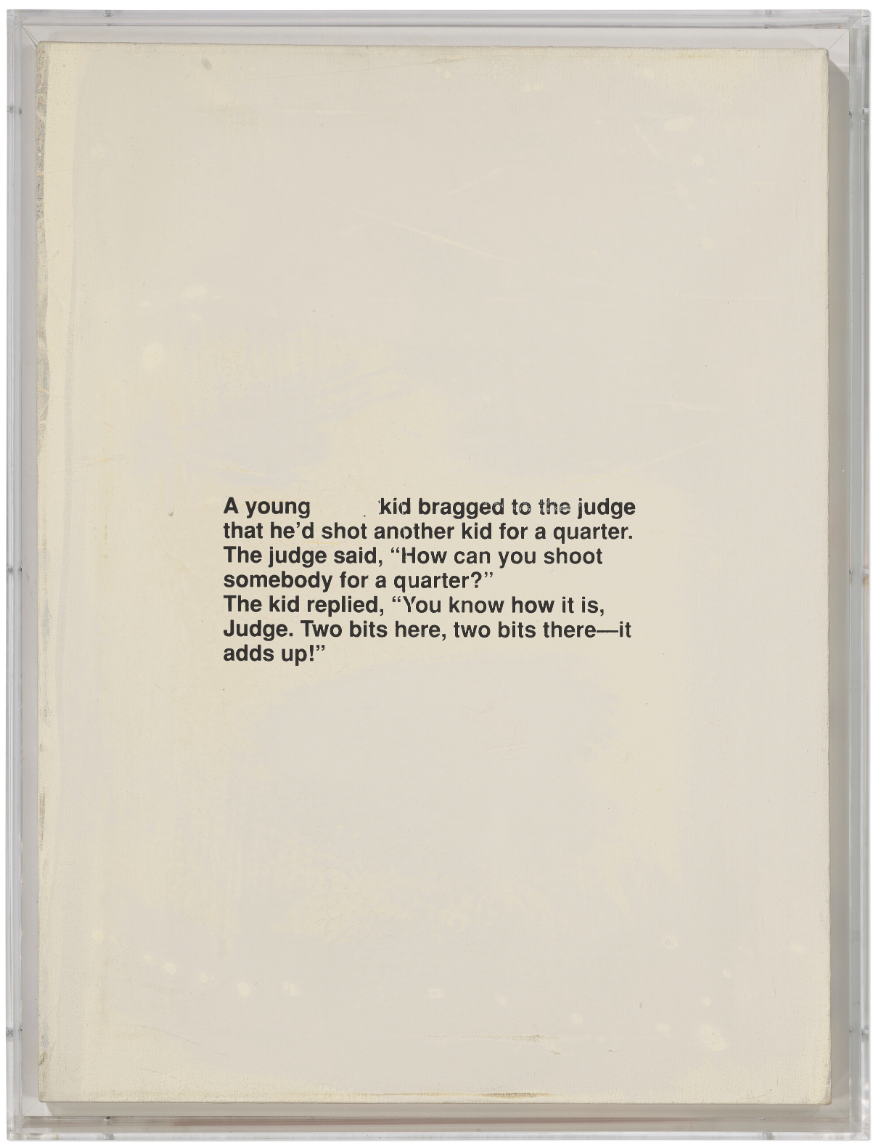
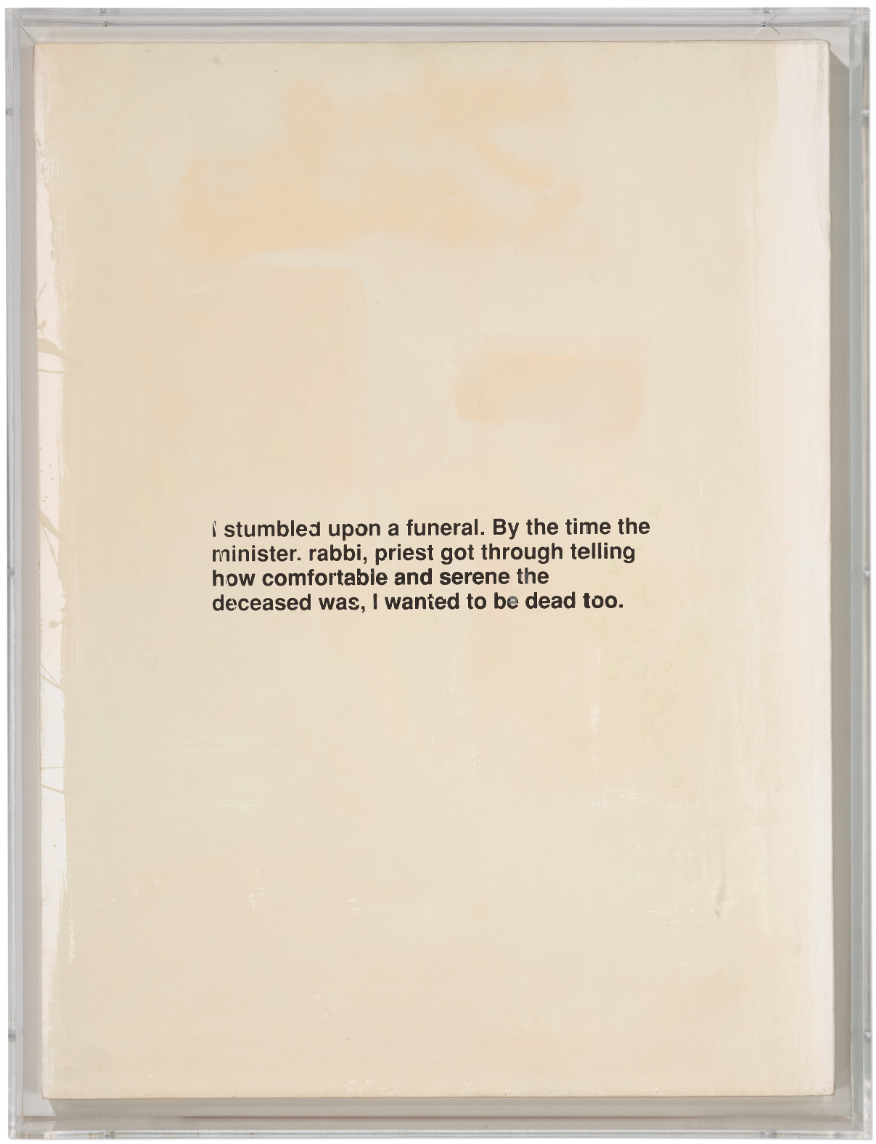
Richard Prince has had an immense impact on contemporary art, and his experimental exhibitions, such as First House, conclusively cemented him as part of the art historical canon. The inclusion of the present works in this exhibition makes them irreplaceable in Prince’s body of work. They are distinguished examples of his gift for taking recognizable Americana motifs and turning them on their head, creating an art-viewing experience that is both familiar and uncanny.
Most of the Time, 1991
Sotheby’s New-York: 1 March 2024
The Emily Fisher Landau Collection: An Era Defined
Estimated: USD 400,000 – 600,000
USD 508,000
Most of the Time | Contemporary Curated | 2024 | Sotheby’s (sothebys.com)
RICHARD PRINCE (b. 1949)
Most of the Time, 1991
Acrylic and silkscreen on 2 joined canvases
82×116 inches (208.3 x 294.6 cm)
Signed, titled and dated 1991 (on the overlap)
Executed in 1987, Most of the Time belongs to an important sub-series of Richard Prince’s iconic Joke Paintings known as the White Paintings. Following his iconic series of cowboy photographs in the early 1980s, in which Prince explored his signature conceptual strategy of appropriating imagery from advertising whilst referring to archetypes of the American dream, the artist turned to hand drawn illustrations lifting images from magazine pages to probe the American psyche through his White Paintings. In the present work, ghostly images of bookshelves, banisters and lamps flicker in and out of focus, evoking snapshots of the trappings of a conventional domestic life. Combining silk-screened selections from the media with his own illustrations of domestic environments—and in effect obliterating the contrast between these disparate elements—Prince increases the potential for the breadth of the viewer’s associations while compellingly contextualizing his satirical one-liner within a sea of simultaneously arbitrary and intentional symbols. The White Paintings delve into the world of image and association, teasing apart the universals of American private life for great comedic effect. The jokes, which were largely appropriated from mass media publications, feel deeply rooted both in style and subject matter in white, middle class America. With Prince’s masterful handling of America’s visual vernacular, the White Paintings sit perfectly at the crossroads where American consumer culture meets American psychological culture.
My First Girl, 1989
Sotheby’s New-York: 8 November 2023
Estimated: USD 2,500,000 – 3,500,000
USD 2,000,000
RICHARD PRINCE (b. 1949)
My First Girl, 1989
Acrylic and silkscreen on canvas
75 1/4 x 58 inches (191.1 x 147.3 cm)
Signed, titled and dated 1989 (on the overlap)
Rendered in ink blue lettering upon an ochre background, My First Girl is a quintessential example of the deadpan, provocative irony that defines Richard Prince’s seminal Monochromatic Joke series. Daring his viewers to take a lewd one-liner for a work of fine art, Prince began utilizing found jokes in 1985 during an extended stay in Los Angeles. Further demonstrating his disregard for the established artistic milieu of his time, Prince wryly inserts ‘low’ culture into a ‘high’ art backdrop. Subversive and irreverent, Prince’s My First Girl deploys humor as a universal human condition.
LEFT: EDWARD RUSCHA, OOF, 1962. THE MUSEUM OF MODERN ART, NEW YORK. IMAGE: ART RESOURCE, NY. ART © 2023 EDWARD RUSCHA. RIGHT: MARCEL DUCHAMP, L.H.O.O.Q., 1919. PRIVATE COLLECTION. ART © 2023 ARTISTS RIGHTS SOCIETY (ARS), NEW YORK / ESTATE OF MARCEL DUCHAMP
A tangential departure from the re-photographs that established Prince as part of the public consciousness in the early 1980s, Prince’s radical Monochromatic Joke series would test his newfound relationship with painting. In embrace of an American cultural influence, Prince belongs to the first generation weaned on glossy magazines, ubiquitous television and rampant consumerism. “A child of ‘68,” as Nancy Spector described him, “Prince embraced rebellion as a state of mind. The generational belief in challenging authority as a way of life–a necessity born in antiwar marches on Washington, race riots throughout the United States, and student protests around the world–informs the very fabric of his art” (Nancy Spector, “Nowhere Man,” in: Exh. Cat., New York, The Solomon R. Guggenheim Museum (and traveling), Richard Prince: Spiritual America, 2007-08, p. 22). What started as the handwritten transcription of jokes and cartoons quickly transformed, as Prince chose to abolish any trace of illustration on the canvas. Stripped down to their bare linguistic essentials and devoid of artistic gesture, the typed-out gags were silkscreened against backgrounds of flat and strident color. Inciting and matter of fact, Prince’s jokes would present as the antithesis of the era’s dominant Neo-Expressionist style: “they seemed to be a joke on painting,” noted Lisa Whitney, “and a joke on the idea that art is something to be labored over” (Ibid., 1992, p. 45).
JOHN BALDESSARI, WRONG, 1966-68. IMAGE © MUSEUM ASSOCIATES / LACMA. LICENSED BY ART RESOURCE, NY. ART © JOHN BALDESSARI 1997. COURTESY ESTATE OF JOHN BALDESSARI; 2023 COURTESY JOHN BALDESSARI FAMILY FOUNDATION. COURTESY SPRÜTH MAGERS
Executed in 1989, My First Girl is Richard Prince’s paramount gender-bending joke, serving as testament to the belief that his complete oeuvre can be best understood as a struggle to reconcile his own masculine identity. A culturally provocative ‘anti-masterpiece,’ the present work is an amalgamation of hard-edge abstraction and off-color wit, all in the name of subverting the serious. With suggestions of innuendo, My First Girl reveals the attitudes and tensions typically buried beneath the surface of social interactions. Presented with a deadpan sensibility, My First Girl is at once disarmingly immediate and resonant, yet subversive in its underlying intent. In the vein of “fifties-style, middle America, blue collar, Borscht Belt humor” (Ibid., p. 42), Prince’s Monochromatic Joke paintings can be read as criticism with a vengeance. By bluntly isolating issues of sexuality, race and class in the form of an ostensibly playful one-liner, he exposes a society built on malevolence and perversity. At the same time, these unattributed and unsigned puns–quoted without license and represented in a pragmatic manner–make a damning indictment of the notions of authorship and originality that the art world deems sacrosanct. In the antiheroic pursuit of destabilizing our already accepted reality, Prince focuses on the ordinary with a deliberate redundancy. As such, cultural provocation is the fiber that binds the overall tenor of his comprehensive artistic practice, and specifically his striking Monochromatic Jokes.
The Way She Looks in the Morning, 1988
Christie’s New-York: 7 November 2023
Estimated: USD 2,500,000 – 3,500,000
USD 2,712,000
RICHARD PRINCE (B. 1949), The Way She Looks in the Morning | Christie’s (christies.com)
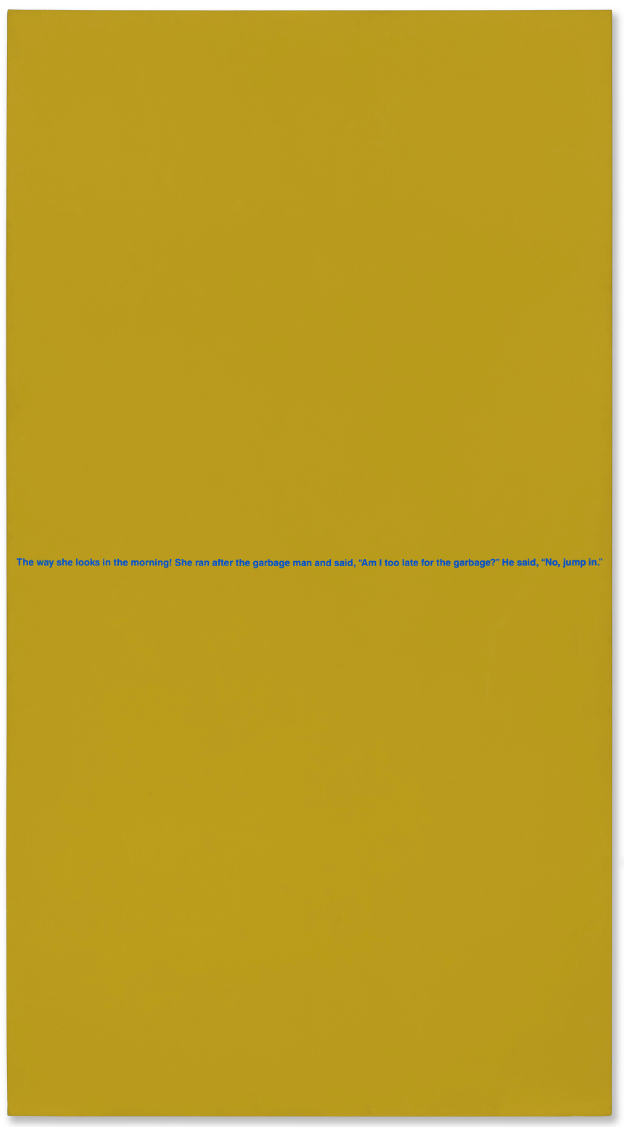
RICHARD PRINCE (B. 1949)
The Way She Looks in the Morning, 1988
Acrylic and silkscreen ink on canvas mounted on panel
86 1/4 x 47 1/8 inches (218.6 x 119.5 cm)
Signed and dated ‘R Prince 1988’ (on the overlap)
The monumental canvas The Way She Looks in the Morning is a prime example of Richard Prince’s characteristic incisiveness and humor. Standing over seven feet tall, much of the present work is a consumed by monochromatic color field, upon which the artist inscribes a diminutive joke. Possibly taking inspiration from the advertising billboards that litter the urban landscape, unlike the towering signs for gas stations, injury lawyers, or plastic surgeons, here the artist purposefully reduces the text, making the act of reading it a deliberate one. In this particular instance, the joke reads “The way she looks in the morning! She ran after the garbage man and said, “Am I too late for the garbage?” He said, “No, jump in.”
Prince has created several different iterations of this joke, as he does in much of his practice, but the present work is its most engrossing iteration. Here he chooses a mustard color that interplays directly with the blue-green text, thus heightening the impact of the joke. The text takes on a life of its own, like the deadpan one-liners of the ‘Borscht Belt’ comedians that so inspired him. Yet what Prince does that makes his text-based conceptualism so unique is his manipulation of narrative, as opposed to the exclusive use of disembodied words and phrases. The Way She Looks in the Morning works because there is a setup and a punchline, and the painting comes to mimic a film’s screenplay, or a comedy set in its linearity. Prince references special effects in his quote above. His rendering of a sexist joke not as the star of the show, but rather as a complement to a gorgeous field of color, is a radical act of editing and transformation.

We can trace the originator, or one of the originators, of this particular joke. It is attributed to the British-American, Jewish comedian Henry Youngman, who was often called the “King of the One-Liners”—a moniker that could certainly apply to Prince. Reminiscent of Prince’s use of silkscreen in The Way She Looks in the Morning, Youngman worked in a print shop in his youth and created “comedy cards” with short jokes on them, which were eventually discovered by comedy legend Milton Berle. Youngman wrote “The Way She Looks in the Morning” and other jokes about his own wife, who was a good sport about it all. Despite his cool exterior, Prince likely also knows that comedy comes as much from love as it does from ridicule. First shown in a group show at Perry Rubenstein Gallery, New York entitled Dialogue: Baldessari, Prince, Ruscha, Wool (2005), The Way She Looks in the Morning is central to a lineage of postwar conceptual art. A comparison between Prince and his friend and predecessor Ed Ruscha reveals a shared love of puns and a drive to deconstruct masculine language. Nowhere is this clearer than in The Way She Looks in the Morning, which plays on the double authorship of the painting—Prince and the person or people who made up the joke. He readily acknowledges his status as an appropriator, which obscures him as much as the authors from which he cribs: “None of [the jokes] are mine. I get them from magazines, books, the internet. Sometimes from the inside of a bank. You know they’re just like blueprints that float around the sky and show up on a cloud. Sometimes I buy them from other criminals. People tell them to me. Ministers. Rabbis. Priests. Once I one in the washing machine spinning around getting clean” (R. Prince, “Like A Beautiful Scar On Your Head,” Bird Talk, 2002). The present work certainly connects to its audience in multiple ways. The edgy joke provokes and conjures a different era, while the field of color immerses and intrigues. The Way She Looks in the Morning is exemplary of Prince’s ability to seduce, possibly even enrage. He remains earnestly committed to painting, even if the medium is the butt of the joke.
Untitled, 1992
Sotheby’s London: 12 October 2023
Estimated: GBP 2,000,000 – 3,000,000
GBP 1,909,000 / USD 2,348,070
Untitled | Contemporary Evening Auction | 2023 | Sotheby’s (sothebys.com)
RICHARD PRINCE (b. 1949)
Untitled, 1992
Acrylic and silkscreen on canvas
56 x 48 1/4 inches (142.2 x 122.6 cm)
Richard Prince’s career-devoting act of appropriation takes jokes as its subject in this untitled 1992 work. Far from being a light-hearted witticism that seeks to amuse, this particular joke in question addresses a topic that features especially prominently in Prince’s Jokes series, that of infidelity. The monochromatic Jokes paintings, made from the mid-1980s to late-1990s derived content from Las Vegas stand-up routines or cartoon captions that were silkscreened in boldly colored typefaces onto fields of contrasting, uniform color. Painting this canvas in an electric monochrome red, Prince’s yellow silk-screened joke here was appropriated directly from the Henry Youngman school. It is typical and perhaps best representative of the artist’s subversive impulse as he encourages his audience to understand “low” humor as “high” art and directly implicates them within the work by reconstructing them as the comic. However, as with other contemporary artists such as Jeff Koons, the viewer is never completely sure who is laughing at whom.
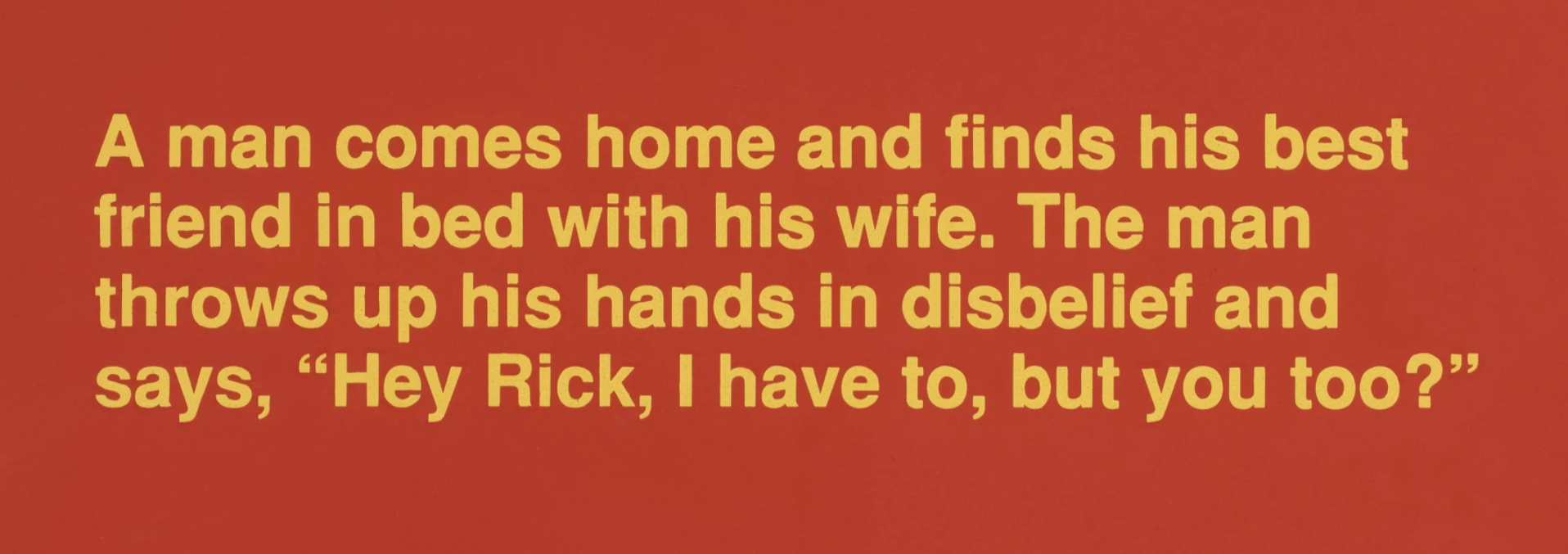
Prince emerged in the early 1980s as a key figure of the Pictures Generation and as a pioneering appropriation artist. He first turned towards jokes in 1985 and their visual presentation has since undertaken a noticeable evolution that simplified the composition to its most basic form, exemplified by Untitled. Removing appropriated images as backgrounds or moving away from cursive, handwritten text, the character and intrinsic linguistics of the joke hold greater significance; in this regard, they recall the works of Pop artist Ed Ruscha or the British conceptual art group Art & Language, where words and phrases take center stage, both visually and conceptually. As the artist playfully remarked: “The ‘joke’ paintings are abstract. Especially in Europe, if you can’t speak English” (Richard Prince quoted in: Exh. Cat., Oslo, Astrup Fearnley Museum of Modern Art, Richard Prince: Canaries in the Coal Mine, 2006, p. 124). They act both as a commentary and representation of fifties-style middle America, blue collar and Borscht-Belt humor that directly addressed issues of sexual identity, class and race and social acceptability. Often likened to the definition of humor proposed by Freud, Prince’s Jokes paintings create pleasure in spite, or perhaps because, of the painful effects that disturb it: the “liberating effect of humor.”
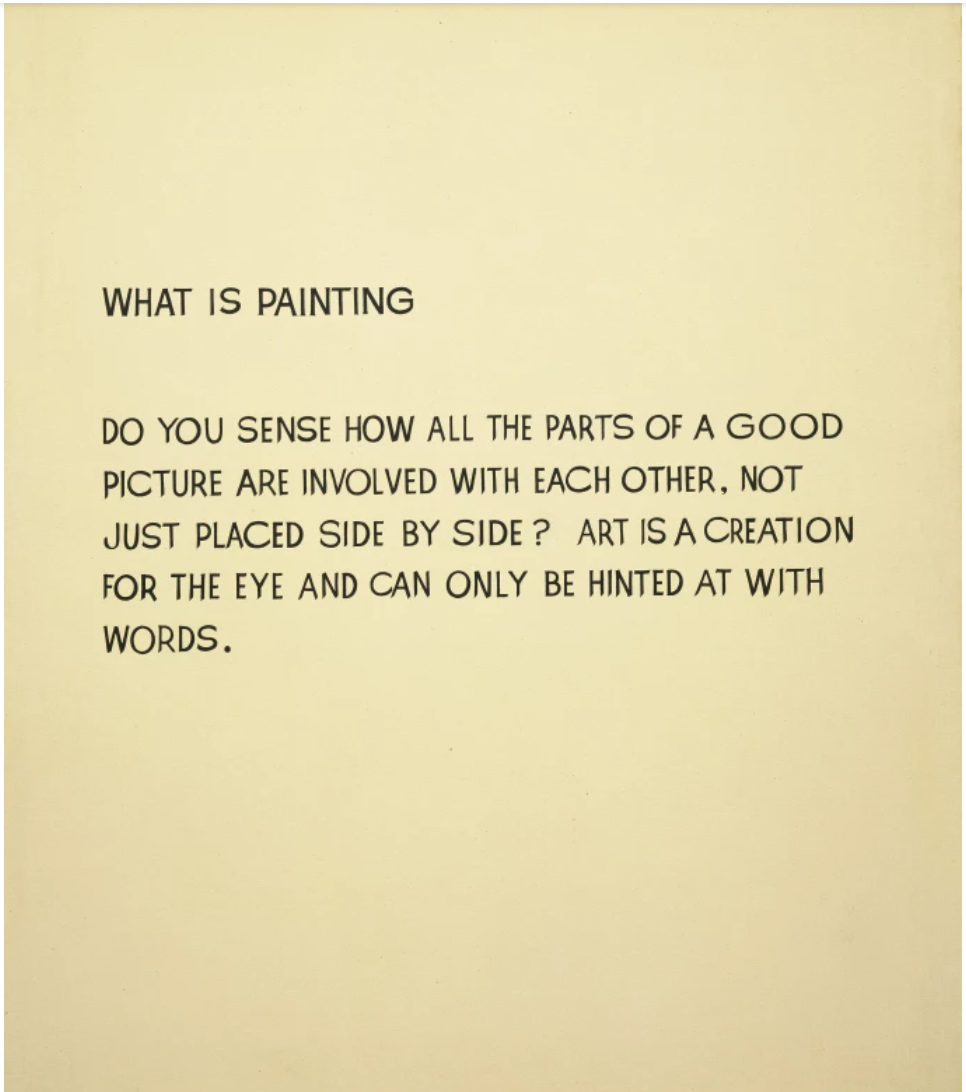
JOHN BALDESSARI, WHAT IS PAINTING, 1968 / MUSEUM OF MODERN ART, NEW YORK
IMAGE: THE MUSEUM OF MODERN ART, NEW YORK/SCALA, FLORENCE
The Jokes have become one of Prince’s most recognizable and important series as they manifest the artist’s complex thoughts towards cultural expression. More specifically, in dealing with infidelity, Untitled can be seen to metaphorically describe and depict the infidelity of pictures and appropriation more broadly. With Prince’s thickly applied acrylic paint, the canvas presents a smooth surface onto which the artist can undergo his silk-screening process. Predating the monochrome variants, earlier paintings in the series incorporated handwritten jokes on paper, but in 1987 Prince began experimenting with layered silk-screened captions on canvas. In doing so, Prince allowed the text to rise slightly above the surface, a clear trace of the artist’s hand. This further confused and collapsed the distinction between the readymade nature of the joke and the painterly aspect of the canvas. The present work exemplifies Prince’s ability to present jokes that “repeat and stutter in that tough, blank place, until it begins to do the painting’s act too,” where the “comic timing of the painting has to do with the way the material takes over its surface, sometimes bombing and sometimes knocking it dead” (John Kelsey, “My other Painting is a Car,” in Exh. Cat., Oslo, Astrup Fearnley Museum of Modern Art, Richard Prince: Canaries in the Coal Mine, 2007, p. 110).
BRUCE NAUMAN, PERFECT DOOR/PERFECT ODOR/PERFECT RODO, 1972 / THE MUSEUM OF MODERN ART, NEW YORK
IMAGE: THE MUSEUM OF MODERN ART, NEW YORK/SCALA, FLORENCE
© BRUCE NAUMAN / ARTISTS RIGHTS SOCIETY (ARS), NEW YORK AND DACS, LONDON 2023
Created after much experimentation throughout the series, Untitled is the product of Prince’s reconsidered and reconfigured relationship with painting: the joke is turned into the painter’s signature. The present work also reaches further back to the works of French artist Alphonse Allais, which are composed of amusingly captioned monochromatic blocks. In dedicating over a decade of fervent output to the Jokes series, Prince highlights the seriousness with which he approached this art form. His move to Los Angeles in 1985 was crucial to the shift towards monochromaticity. It was there, in the seedier underbelly of Los Angeles, that Prince gained clarity into what he hoped to achieve with his Jokes and Cartoons. It is a place where the worlds of Hollywood and TV exist and clash against the counterculture: the cults, serial murderers and end of the roaders. It is perhaps no surprise then that Prince took inspiration from this subversive, provocative environment when creating these works, with their own clashing juxtapositions of “high” and “low” art, humor and seriousness. Minimal and mechanical, the visual and conceptual bluntness of Untitled in many ways recalls that of Prince’s earlier appropriative re-photography: as he has acknowledged and demonstrated across his oeuvre, the art of the joke is in its re-telling.
Boyfriends, 1993
Christie’s New-York: 29 September 2023
Estimated: USD 300,000 – 500,000
USD 226,800
RICHARD PRINCE (B. 1949), Boyfriends | Christie’s (christies.com)
RICHARD PRINCE (B. 1949)
Boyfriends, 1993
Acrylic and silkscreen ink on canvas, in two joined parts
82×96 inches (208.3 x 243.8 cm)
Signed, titled and dated ‘R Prince 1993 “Boyfriends”‘ (on the overlap)
Richard Prince’s Boyfriends is a striking and daring artwork that confronts viewers with a masterful interplay of humor and visual symbolism. Executed in 1993, this exceptional piece belongs to a sub-series within Prince’s renowned Joke paintings, known as the White Paintings. As a trailblazer in his craft, Prince revolutionized the Joke paintings by evolving from handwritten quips to incorporating silk-screened images alongside the jokes. The culmination of this creative journey is brilliantly displayed in Boyfriends, where Prince exhibits his mastery in seamlessly fusing satire, text, and visual elements. The artwork captivates attention with a cleverly placed trailing joke at the lower left corner. It features an assemblage of fragmented items, artfully scattered throughout the composition. From a table lamp to a striped shirt, these seemingly mundane objects acquire new meaning within Prince’s context, prompting viewers to ponder their significance and potential symbolism. In this sub-series of the White Paintings, Prince takes his satirical prowess to new heights, presenting a comical one-liner and a longer joke that mercilessly mocks perplexing instances of what he perceives as stereotypical American values. The artist’s irreverent take on marriage, family, education, and employment serves as a critique of the norms governing everyday life.
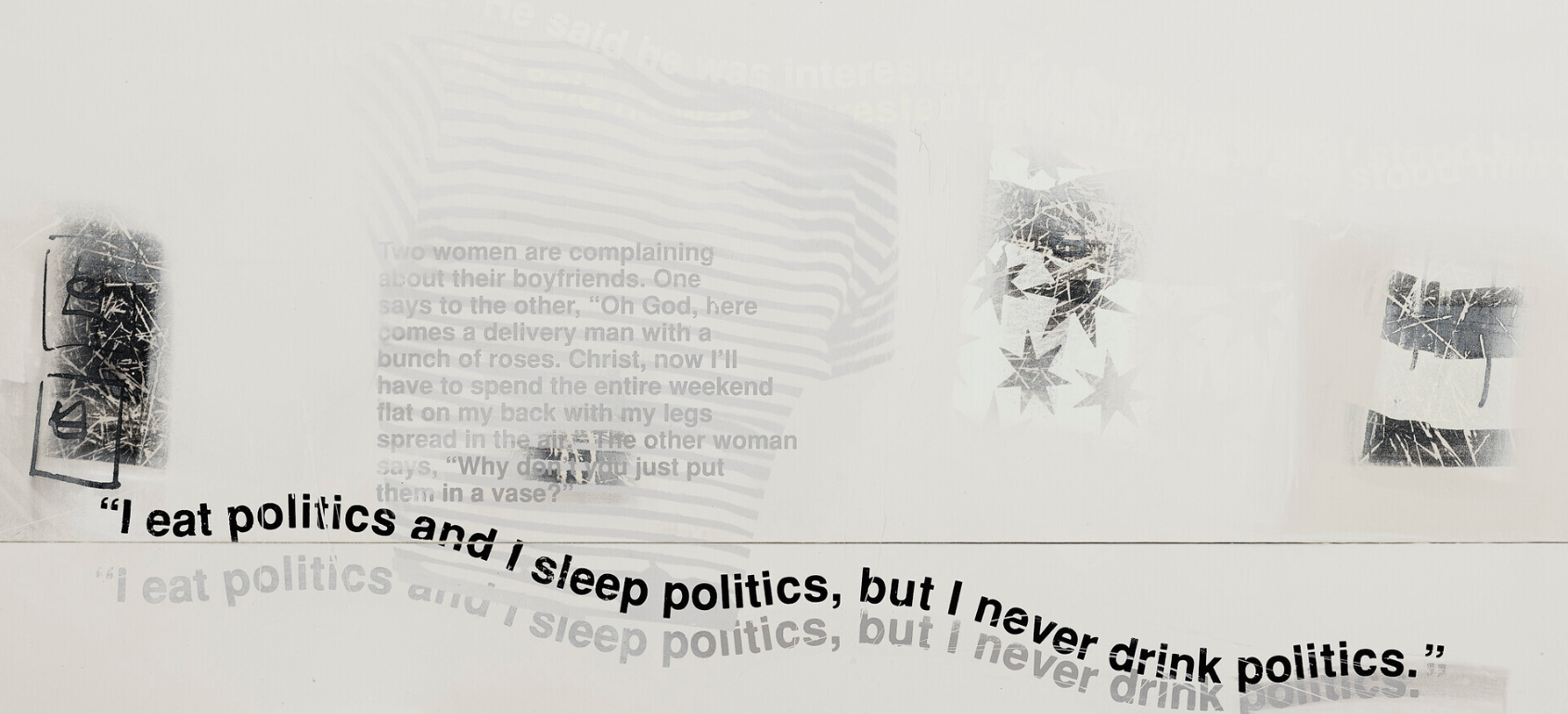
Moreover, the humor in Boyfriends derives its origin from Prince’s previous work, POLITICS, created in 1988. This continuity illustrates the artist’s keen observation of how textual art can be a powerful platform for political commentary and social reflection. Central to Richard Prince’s artistic practice is the prominent use of language, which takes center stage in Boyfriends. With a concise and clever phrase – “I eat politics, I sleep politics, but I never drink politics” – the artist encapsulates a multifaceted idea in just a few words. This witty play on the idiom “eat, sleep, and drink” suggests an all-encompassing immersion in politics, highlighting the pervasive nature of political involvement in contemporary society. The repetition of the word “politics” amplifies the artist’s obsession with this subject matter, underscoring his deep contemplation of political themes. Prince’s astute observation of the world’s political landscape is evident in his art, inviting viewers to reflect on their own relationships with politics and the impact of political discourse on society. Moreover, Prince’s genius as a conceptual artist lies in the strategic juxtaposition of the textual joke against the visual elements. Although specific details about the background and composition of Boyfriends are not provided, it is safe to assume that Prince’s deliberate choice of colors, textures, and imagery plays a pivotal role in conveying the artwork’s message. The white background serves as a pristine canvas for contemplation, where the absence of distractions directs the focus solely on the witty text and enigmatic visual components. As viewers engage with the piece, they find themselves drawn into a web of complex ideas, where humor intertwines with social commentary, leaving them with a lasting and thought-provoking experience.
All I’ve Heard, 1989
Christie’s New-York: 17 April 2022
Estimated: USD 3,000,000 – 5,000,000
USD 3,420,000
RICHARD PRINCE (B. 1949), All I’ve Heard | Christie’s (christies.com)
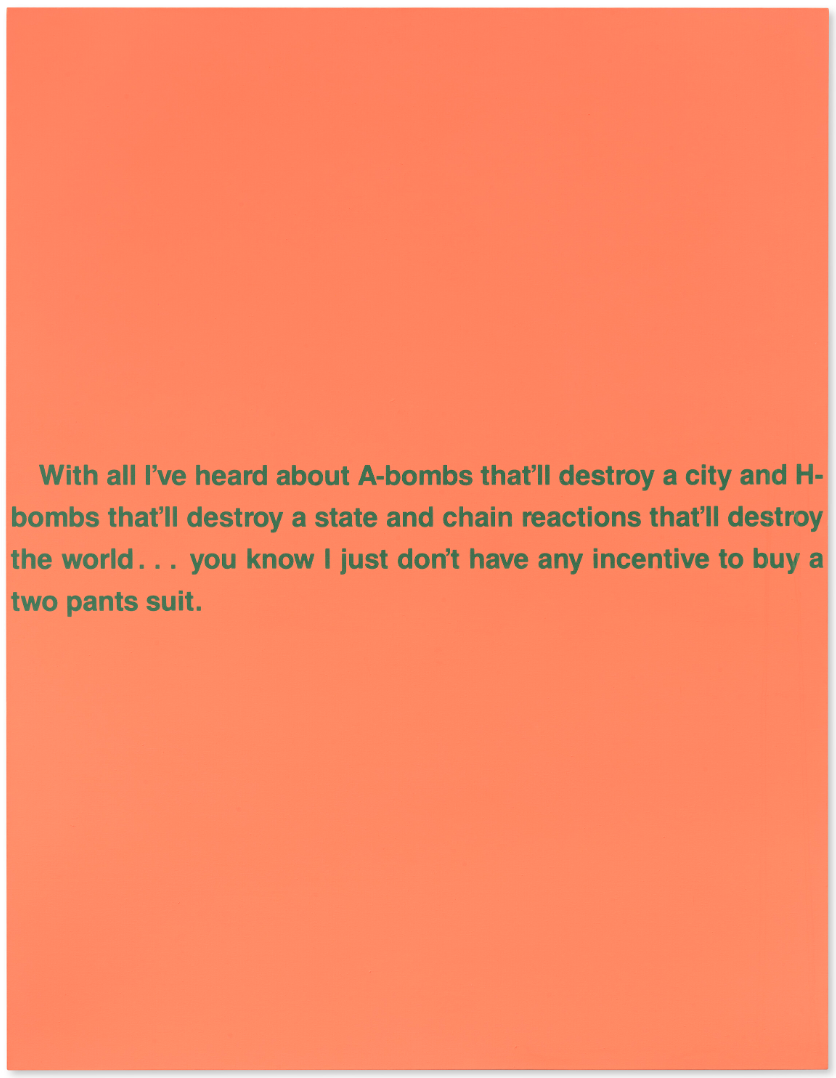
RICHARD PRINCE (B. 1949)
All I’ve Heard, 1989
Acrylic and silkscreen ink on canvas
75 1/4 x 58 inches (191.8 x 147.3 cm)
Signed, titled and dated ‘R. Prince 1989 “All I’ve Heard”‘ (on the overlap)
With characteristic humor, edginess, and elegance, Richard Prince has never ceased innovating since his explosion onto the art scene in the late 1970s. All I’ve Heard, among the most cutting of Prince’s Joke paintings of 1987-9, combines gallows humor with the modernist staple of the monochrome, thereby mixing high and low in the artist’s signature fashion. Exhibited in Prince’s seminal 2007-8 retrospective Richard Prince: Spiritual America at the Guggenheim Museum, New York, All I’ve Heard is an indispensable part of the artist’s storied career. Prince’s joke paintings are more than gags; they are in fact manifestations of artistic labor. Green words hover in an orange-peach field, a self-consciously unconventional juxtaposition of colors that is nevertheless alluring. The text seems to hover above the color field like movie credit, or the silkscreened paintings of Andy Warhol or Sister Corita Kent. The purloined punch line is tragicomic, amounting to the futility of getting a suit when the world’s end seems so near.
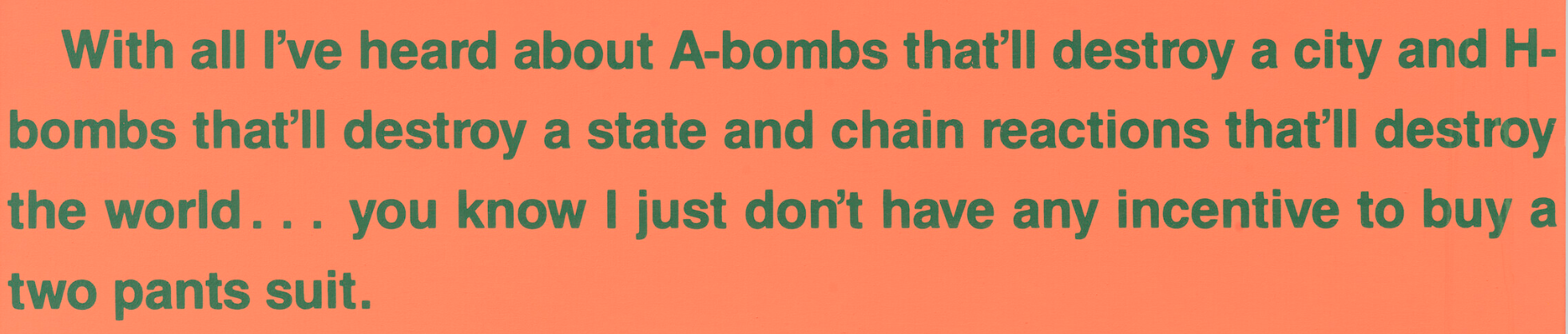
All I’ve Heard is reminiscent of today’s “dad jokes,” but also of what has been called Borscht Belt comedy—a genre of puns pioneered by Jewish comedians in the club circuit of the Borscht Belt. The largely defunct series of summer resorts straddling New York City and upstate New York that comprise the Borscht Belt lend a nostalgia to All I’ve Heard as it chronicles the humor of a bygone world. Moreover, the canvas’s titling suggests a retrospective quality, as if Prince himself has distilled all he has heard and seen into the painting, which bears witness as it solicits laughs.
Yet Prince remains elusive, and the joke is the perfect medium for self-effacement. By painting the joke on top of the ground, All I’ve Heard gestures toward what is underneath it, be it pigment or emotion. There is a pathos to always presenting one’s self through others, as is also seen in the work of Prince’s contemporaries, like Sherrie Levine and Cindy Sherman. A pioneer of the Pictures Generation, a loose grouping of artists in the late 1970s and 1980s thinking through appropriated images, text, and mass media, Prince takes his jokes from other sources and focuses on concept rather than originality. The artist describes his shift from illustration to text,
“I never really started telling [jokes]. I started telling them over. Back in 1985, in Venice, California, I was drawing my favorite cartoons in pencil on paper. After this I dropped the illustration or image part of the cartoon and concentrated on the punch line.”
Prince, always working to refine his visual language, has stripped painting nearly bare in works like All I’ve Heard, focusing on the spareness of text and monochromatic pigment rather than expression or imagery. All I’ve Heard is thus reminiscent of other avant-garde artists, like the poem-performances of Dada, Yves Klein’s blue monochromes, and the deadpan wordplay of John Baldessari. There is no overstating Prince’s influence on contemporary art. He has mounted numerous retrospectives and solo museum shows and his work is represented in many public collections around the world. All I’ve Heard points to the cumulative quality of Prince’s career, suggesting perhaps that it has all been an earnest attempt to get a laugh. Still, behind every joke is something serious. All I’ve Heard makes light of global destruction, but there are also pressing questions about the role of the artist. Is he a performer, a writer, a chronicler of our times using the words and images of others? Like the greatest comedians, for each chuckle Prince gives us, he also offers a moment of introspection.
Untitled, Jokes, 2000
Sotheby’s New-York: 11 March 2022
Estimated: USD 350,000 – 500,000
USD 365,400
Untitled, Jokes | Contemporary Curated | 2022 | Sotheby’s (sothebys.com)
RICHARD PRINCE (b. 1949)
Untitled, Jokes, 2000
Acrylic on gatorboard
53 3/4 x 48 inches (136.5 x 121.9 cm)
Signed and dated 2000 (lower right)
Richard Prince’s witty appropriations of American culture have cemented him as one of the most important artists of the twenty-first century. Sparking heated dialogue about the limits of appropriations, he reproduces images in the mainstream media to capture America’s idiosyncrasies while highlighting the media’s derivative nature and pervasiveness. He shows that all images are reiterations of each other, but by being positioned in new contexts, they become their own redefined entities. Influenced by Pop art, Prince embraces the brash world of common culture, advertising, and mass media to present new images imbued with irony which serve to critique society. A provocateur, Prince forces us to question the building blocks of American identity.
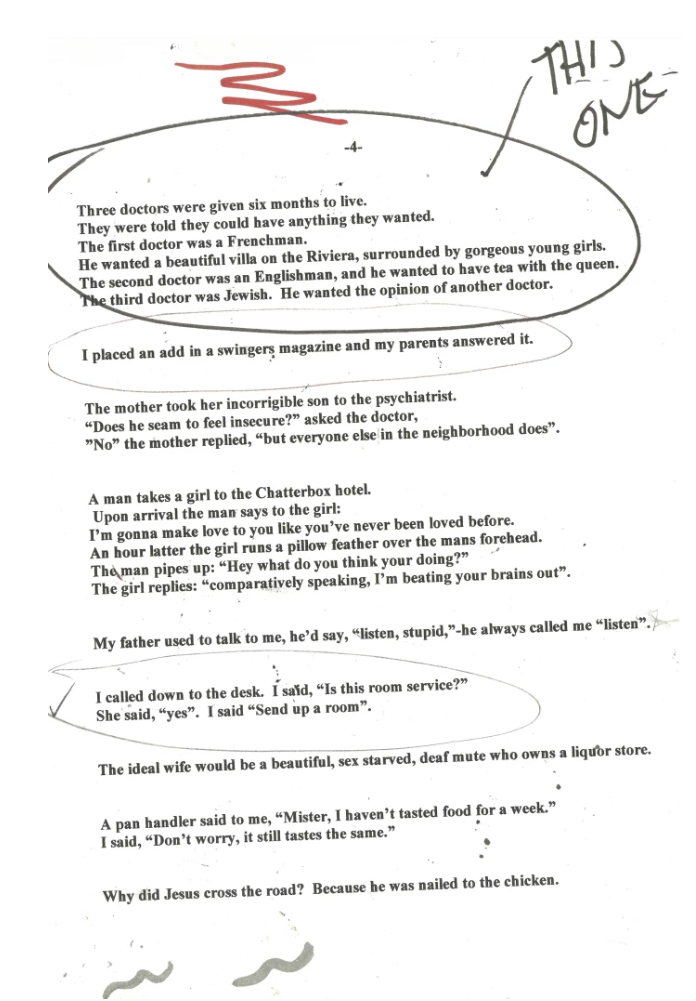
A PREPARATORY LIST OF JOKES, INCLUDING THE ONE UTILIZED IN THE PRESENT WORK, WITH ANNOTATIONS BY THE ARTIST IN BEATRIX RUF, JOKES & CARTOONS, P. 164.
Artists have widely used humor as a device to stimulate their readers, viewers, and listeners to laugh and reflect. He began his iconic Joke series in 1986, series exploiting American humor to explore the life of middle-class America. In Untitled, Jokes, Prince presents in bold text without spaces a short and absurd narrative. He ingeniously relies on the viewer’s understanding of a joke to read the text with the appropriate cadence and rhythm to deliver the punchline. The canvas becomes the script and the reader the comic. Like genre painting, these works unveil a shared unconscious and depict the everyday in their banality while existing as high-brow artworks. As with his early work with images, Prince appropriates popular culture and shows it in a new light that perceptively encapsulates American identity.
High Times
High Times, 2017
Property from an Important European Collection
Phillips New-York: 21 May 2026
Estimated: USD 600,000 – 800,000
USD 838,500
Richard Prince Modern & Contemporary Art: Afternoon Session
Acrylic, oilstick, inkjet and collage on canvas
55 x 74-1/4 inches (139.7 x 188.6 cm)
Signed, titled and dated “Richard Prince HIGH TIMES 2017” on the reverse
Stamped by the artist’s studio on the overlap
A significant example from one of Richard Prince’s most acclaimed recent series, High Times, 2017, belongs to a body of work that cuts against the grain of late-career retrospection—canvases of ambitious scale, brimming with the energy of an artist still inventing new stylistic modalities. Channeling the spirit of his Downtown New York years, Prince riffs on Surrealism, Art Brut, and Outsider Art, or, “Basquiat meets Dubuffet,” as Roberta Smith characterized the series. Notorious for absorbing and reframing the work of others, Prince here performs his most unexpected act of appropriation: of himself. The compositions amalgamate elements from his own Hippie Drawings (1998–2000), first published as a book in 2005 and elevated onto canvas in the present series.
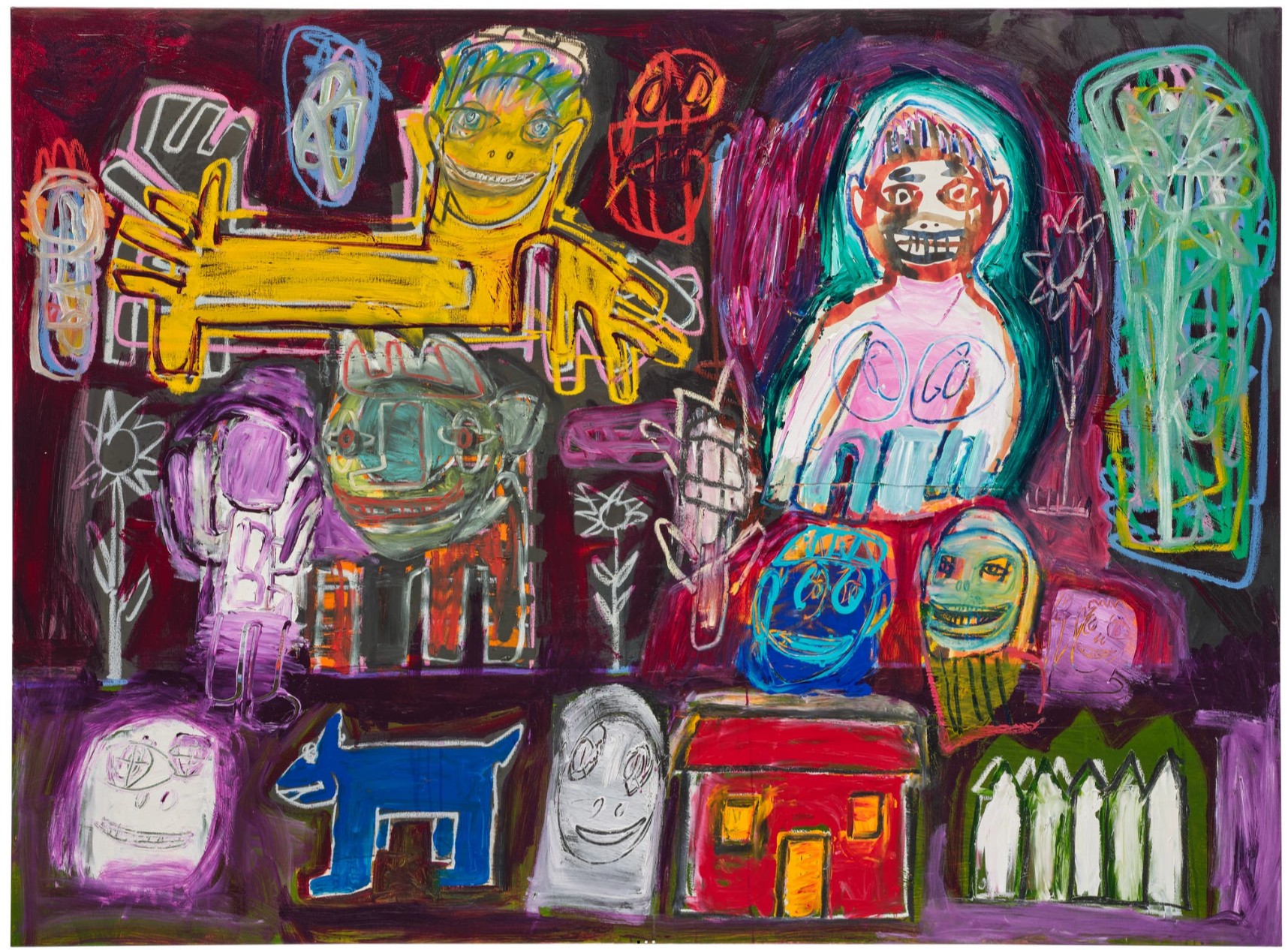
Prince made High Times roughly four decades after emerging as a breakout figure of the Pictures Generation, when his rephotographed Marlboro advertisements featuring cowboys established appropriation as his hallmark approach. By 2017, he had cycled through the bodies of work that would come to define his reputation, the Cowboys, Jokes, Nurses, and Instagram-sourced New Portraits, each probing how images circulate and what it means to make them. High Times marks a distinct pivot: rather than mining mass culture, Prince turns inward, directing his signature strategy toward his own archive. The Hippie Drawings themselves refer back to earlier Bic pen sketches made by the artist in 1972 and 1973 as a young man in Los Angeles, where he briefly lived before settling in New York.
“Yeah, I kind of looked like a hippie, but I wasn’t a hippie. They were probably the first things I did that ever had any soul.”
He recalls an ambivalent relationship to these early drawings, which he was reticent to put out into the world: “He knew the heads were the real thing, but he didn’t want the real thing” (High Times, Gagosian, 2018, press release). Prince had all but forgotten these early drawings until, in the late 1990s, he encountered his own children’s artwork. The spontaneity of their rendered shapes summoned his own 1970s drawings back into view. Rather than working from his own perspective, Prince made the drawing by imagining what a hippie might draw: appropriating a persona, rather than a specific image. 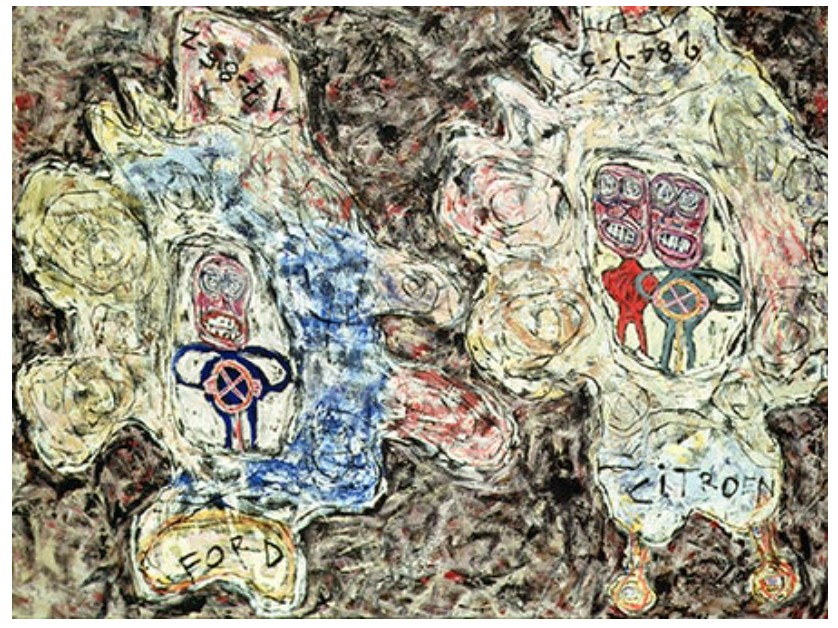 Jean Dubuffet, Automobile, Fleur de L’Industrie, 1961. Private Collection. Image: Bridgeman Images, Artwork: © 2026 Artists Rights Society (ARS), New York / ADAGP, Paris
In High Times, he enlarges and recomposes elements from the Hippie Drawings across the canvas, working over transferred forms with acrylic and oil stick. Both familiar and fanciful, the figures appear against expanses of black, often haloed in ultraviolet purple. Smiling faces greet the viewer, eerie yet disarming with their wide grins. The elements are discrete but accumulate toward an elusive narrative. As Prince has put it, “I’ve always liked it when something ‘way out’ is presented in an orderly fashion” (Richard Prince in conversation with Steve Miller, “Richard Prince,” Musée Magazine, no. 11, April 2015, online).
A white picket fence and a red house. A blue dog and a yellow figure with its arm outstretched—or is it its body, lying supine? Spiky flowers stand alone and in tangles of gestural lines, rendered in aquamarine and yellow. The forms carry the openhearted pathos of neon head-shop posters and bend it toward the schematic whimsy of a Dubuffet. Where progenitor-of-cool Eve Babitz—whose essay on Sixties counterculture is reprinted in the 2018 Gagosian catalogue—dismissed the Magic Marker aesthetic of hippiedom as synthetic and vile, Prince embraces it with an unguarded nostalgia rather than irony. After a career spent interrogating how images operate across high art and the vernacular, he remains acutely attuned to their cultural afterlives. Here, by appropriating his own repertoire, he produces a composition that invites the viewer in while maintaining a certain distance from its associative logic. High Times gathers this constellation of figures into one of his most fully realized statements—a self-portrait by way of a hippie who never was.
Untitled, 2020
Sotheby’s New-York: 16 May 2025
Estimated: USD 600,000 – 800,000
USD 762,000
Untitled | Contemporary Day Auction | 2025 | Sotheby’s
RICHARD PRINCE (b. 1949)
Untitled, 2020
Acrylic and oil stick on canvas
71 3/4 x 71 1/2 inches (182.2 x 181.6 cm)
Signed and dated 2020 (on the reverse)
Vibrant, unruly, and unmistakably subversive, Richard Prince’s Untitled from 2020 exemplifies the artist’s enduring fascination with outsider aesthetics and his ceaseless interrogation of authorship, identity, and popular culture. Rendered in vivid hues of orange, pink, turquoise, and acid yellow, the painting features five totemic figures whose wide-set eyes, claw-like fingers, and bristling hair evoke the raw power of tribal iconography and the unfiltered spontaneity of a matured artist. The composition brims with a frenetic, electric energy, fusing raw immediacy with a knowing nod to art history and countercultural motifs.
The present work installed in a preview exhibition at Victoria Beckham’s flagship store, London.
Part of the artist’s recent body of work following his Super Group and Hippie Drawings series, Untitled emerges from Prince’s ongoing exploration of drawing as both a mode of personal expression and a vehicle for cultural critique. In these works, Prince channels the spirit of outsider and folk art, reappropriating its visual language to question the boundaries between the sophisticated and the naïve, the authentic and the performed. As with the Hippie Drawings that prefigured this approach, Prince’s figures are often cast in theatrical poses—exaggerated, strange, and entirely unconcerned with naturalism.
This act of reworking is central to Untitled, in which Prince layers thick outlines and solid blocks of color to evoke the handmade and the instinctual. Each figure is set within a bold, vertical band of contrasting color—red, violet, blue, magenta—evoking the dynamic structure of comic book panels. The vivid hues and graphic outlines heighten the sense of individuality while maintaining a cohesive, almost narrative rhythm across the canvas. The forms are purposefully uneven and asymmetrical; hands and feet dangle with exaggerated weight, while the eyes—doubled in some figures—convey a sense of manic glee or knowing absurdity. These characters appear suspended in their own psychological or narrative states, yet they coexist with one another in a compressed, frontal alignment, like a band of misfits or a modern tribal procession.
Jean-Michel Basquiat, Phillistines, 1982. Private Collection. Art © 2025 Estate of Jean-Michel Basquiat. Licensed by Artestar, New York
Despite their apparent spontaneity, Prince’s figures are carefully composed. The overall canvas is held together by a punchy chromatic logic: the fiery background binds the composition in a visual hum, while each figure’s interior palette plays off its neighbors with deliberate discord. The image flattens the space entirely, eliminating any hierarchy between foreground and background. The gestural marks of oil stick—a medium associated with drawing more than painting—heighten the sense of immediacy, suggesting a return to childhood scribble or cave painting, filtered through the lens of postmodern appropriation. Prince’s embrace of the crude and the cartoonish finds precedent in his earlier “joke” and Nurse paintings, but the recent figure works mark a distinct turn inward, where figuration becomes a mirror for psychological play. In this sense, Untitled aligns with the expressive impulses of artists like Jean Dubuffet, Philip Guston, and even Jean-Michel Basquiat—painters who used the absurd and grotesque to tap into deeper emotional and societal currents. Yet Prince’s approach is uniquely reflexive: rather than claiming direct emotion or social protest, he filters everything through a veil of distance, irony, and layered identity.
Jean Dubuffet, Personnage et paysage, 1962. Private Collection. Art © 2025 Artists Rights Society (ARS), New York / ADAGP, Paris
In contrast to his earlier photographic appropriations or text-based jokes, these works place the artist’s hand front and center, yet still retain his signature ambivalence. The figures may appear playful or monstrous, childlike or menacing—it is precisely this ambiguity that grants the work its staying power. In Untitled, Prince offers a painting that is as irreverent as it is sincere, as chaotic as it is tightly choreographed. It stands as a testament to his restless visual imagination and his refusal to settle into a singular style or message. Here, the artist doesn’t just blur boundaries—he redraws them entirely.
Untitled, 2017
Christie’s New-York: 7 November 2023
Estimated: USD 800,000 – 1,200,000
USD 756,000
RICHARD PRINCE (B. 1949), Untitled | Christie’s (christies.com)
RICHARD PRINCE (B. 1949)
Untitled, 2017
Acrylic, oilstick, charcoal, matte medium and inkjet collage on canvas
86×61 inches (218×155 cm)
Signed, inscribed and dated ‘Richard Prince 2017 HIGH TIMES’ (on the reverse)
A standout canvas in Richard Prince’s most recent series High Times, Untitled is characteristically punk and unconcerned with the fashions of the art world. At about seven feet by five feet, it envelops the viewer in a surreal scene composed of a variety of media: acrylic, oilstick, charcoal, matte medium, and inkjet collage. An otherworldly circus of figures, Untitled evokes the menageries of James Ensor and Frida Kahlo. It is as if Prince’s mind, filled with humanoids, graffiti, masks, maybe even a mummy, has tumbled onto the canvas. High Times is a series of self-appropriation that re-proposes Prince’s earlier series Hippie Drawings (1998-1999). The idea germinated when Prince was asked to collaborate with the iconic marijuana counterculture magazine HIGH TIMES in 2016. In an interview with writer and gallerist Bill Powers in the magazine, Prince mused, “I like a little nonfiction in the work so it’s grounded in reality” (R. Price, quoted in B. Powers, “Always Trust a Hippie: An Interview with Richard Prince,” HIGH TIMES, January 1, 2019, online). It is interesting to consider what the nonfiction in Untitled might be. It could be that, in the tradition of the European neo-avant-garde, Prince has issued a call to reject normative society.
In the spirit of Surrealism, Art Brut, and Situationist International (or even Renaissance master Pieter Bruegel the Elder’s peasants), Untitled displays a humanistic absurdism, as well as a penchant for self-appropriation. Yet Prince’s technical care and skill are not lost in this parade. Close examination of Untitled reveals his meticulous process; like a tattoo, the canvas comes alive with texture and line. Prince’s prominent marks are unmistakable, especially at the edges of the figures, and they coalesce into a collage-like surface that ebbs and flows just as paint does. This playful, but rigorous, handling of pigment is reminiscent of the neo-avant-garde, such as Jean Dubuffet’s Paris Polka (1961) and Les Grandes Artères (1961) or Asger Jorn’s In the Beginning Was the Image (1965). Jean-Michel Basquiat could also be invoked here, which reminds us of Prince’s roots in the 1980s downtown New York scene. The High Times series, first exhibited in 2018, was critically lauded (and popular, especially with Prince’s launch of his own marijuana strain during the run of the show). The New York Times co-chief art critic Roberta Smith declared the style forged in High Times “one of his best,” observing that “As never before, the paintings reveal Mr. Prince’s chops as a painter and colorist, but the ‘fun’ they provide actually challenges more than entertains” (R. Smith, “Richard Prince’s New, Late Style Is One of His Best,” The New York Times, November 29, 2018). An accompanying book was published alongside Richard Prince: High Times with an essay by celebrated writer Rachel Kushner, continuing Prince’s legacy of self-archiving. Other examples from this series are held by the Hill Art Foundation and several esteemed private collections. The best artists combine levity with inquiry, humor with critique. Prince has always managed this balancing act with aplomb, and Untitled is no exception. With its luminous colors and engrossing tactility, it is akin not only to a crowd, but also to a landscape. Within this landscape are endless iterations of humanity and the flora and fauna that populate the world. Untitled is thus an ode to diversity, chance, and play. Though Prince’s work is often understood to be resolutely about the myth of “Richard Prince,” the humanity of the High Times series shows us that art is expansive and relatable. Within Prince’s work in painting, we can see his vision for a world free of boundaries.
Untitled, 2019
Sotheby’s New-York: 19 May 2023
Estimated: USD 500,000 – 700,000
USD 914,400
Untitled | Contemporary Day Auction | 2023 | Sotheby’s (sothebys.com)
RICHARD PRINCE (b. 1949)
Untitled, 2019
Acrylic, oil stick, charcoal and Inkjet on canvas
80×60 inches (203.2 x 152.4 cm)
Signed, dated 2019 and inscribed HIGHTIME’S (on the reverse)
Based on his eponymous early Hippie Drawings, Richard Prince’s Untitled from 2019 is an otherworldly and dynamic assemblage of vibrantly colored, exuberant creatures. Exploding with rhythmic plasticity, the present work is abundant with spontaneous, gestural marks that speak to the immediate engagement of the artist. A kaleidoscopic portrait of bewildering and exotic figures, the present work is rendered in sumptuous hues of exuberant green, midnight blues and and vibrant yellows, as a group of Jean Dubuffet-esque art brut figures dominate the canvas upon a seemingly spray painted graffiti style background. Here biomorphic forms, replete with Jean-Michel Basquiat inspired anatomy, transform and swell into gigantic, elongated limbs; a cumbersomely angular and primitive translation of the human form that is at once endearing and grotesque. Speaking to Prince’s energetic figuration, Brian Droitcour states:”they multiply and overlap, ricocheting against each other in manic, artistic ecstasy.” (Brian Droitcour quoted in “Richard Prince,” Art in America, February 1, 2019, (online))
JEAN DUBUFFET, FÊTE VILLAGEOISE, 1976. PRIVATE COLLECTION. © 2023 ARTISTS RIGHTS SOCIETY (ARS), NEW YORK / ADAGP, PARIS
Prince continues to be an avid collector and perceptive chronicler of American subcultures and vernaculars and their role in the construction of American identity. The High Times series, of which Untitled is a part, expands the artist’s vocabulary of appropriated material beyond commercial or popular imagery. First initiated in 1998 when Prince produced a series of drawings based on what he thought a hippie would draw. Revisiting these early drawings, Untitled is thus a deft continuation of or perhaps, appropriation of, his own oeuvre as the artist prints scans of these drawings onto the canvas overlapped by liberally and gesturally applied acrylic and oil stick. Untitled thus stands as a celebration of appropriation and modification within Prince’s explorative oeuvre.
Untitled, 2017
Phillips London: 13 October 2022
Estimated: GBP 350,000 – 550,000
GBP 403,200 / USD 457,350
Richard Prince – 20th Century & Con… Lot 132 October 2022 | Phillips
RICHARD PRINCE
Untitled, 2017
Collage, inkjet, oil crayon, pastel, charcoal and graphite on unstretched canvas
54 1/2 x 54 1/8 inches (138.5 x 137.5 cm)
Signed, inscribed and dated ‘Richard Prince HIGH TIMES 2017’ on the reverse
Executed in 2017, Untitled is part of Richard Prince’s High Time series produced between 2017 and 2018. This body of work presents a selection of large-scale canvases that depict an unusual array of trippy cartoon-like characters and graffiti style scribbles, highlighted with a vivid and bold colour palette choice. Influence from iconic artists such as Jean Dubuffet, Willem de Kooning and Jean-Michel Basquiat are ever present not only within Prince’s choice of subject matter, but also in his artistic process.
Jean Michel Basquiat, Dustheads, 1982.Image: © Christie’s Images / Bridgeman Images, Artwork: © The Estate of Jean-Michel Basquiat / ADAGP, Paris / DACS, London 2022
The present mixed media collage provides the viewer with a combination of cartoon characters in the form of cut-outs that have been adhered onto the black background, and figures that have been directly created on the canvas. Prince embraces the naïve drawing technique, in a large, almost life size scale. By incorporating an array of mediums to depict this composition, Prince is able to provide the viewer with textural differences that create a contrasting depth between the background and the seemingly flat representation of the 2D characters. The utilization of bold colors such as yellow, red, and white on a black background provides for an illuminating and attention-grabbing quality. Richard Prince being notorious for taking significant inspiration, and even at times appropriating the work of other artists, presents before us an amalgamation of drawings which he had previously published in a book in 2005, titled Hippie Drawings. Originally, he took inspiration from the drawings of his young children for both this series and the book on which this series is based. The black background in the present work is redolent of a school blackboard, further enhanced by the white outlines of the figures, much like a child’s use of chalk. Prince was fascinated by his children’s approach to creating drawings.
“I started imitating, as I usually do, other people. I was trying to imitate or channel what my kids were doing, because, you know, I can draw. But what I was interested in was the way they were drawing.”
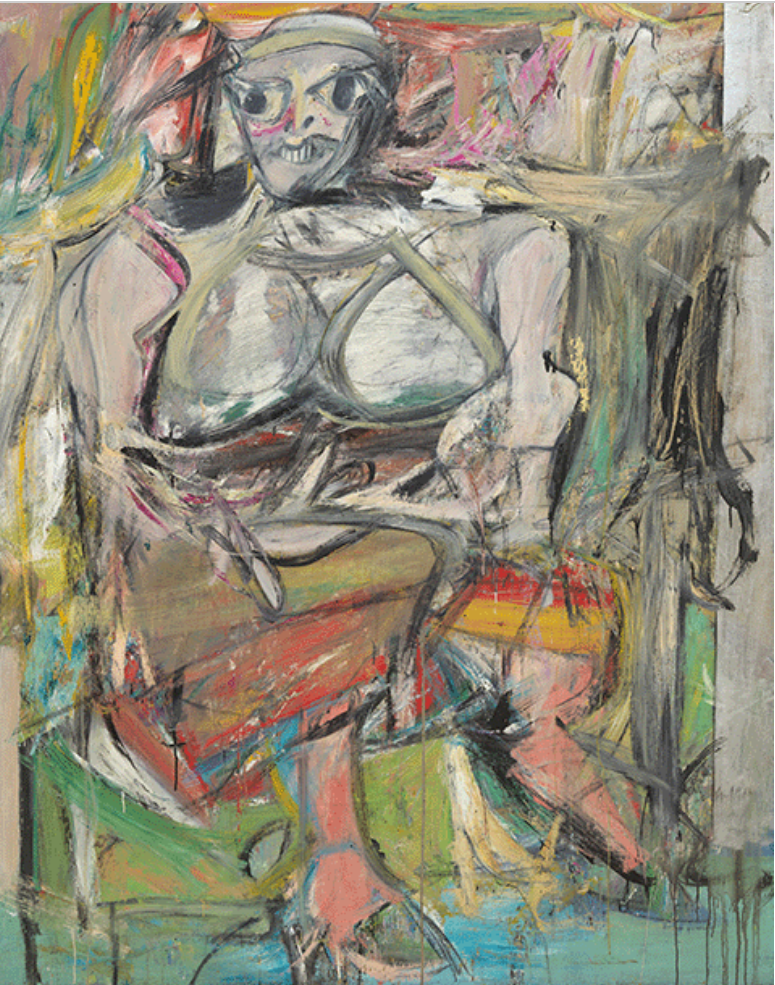
Willem de Kooning, Woman I, 1950 – 1952. Image: The Museum of Modern Art, New York/Scala, Florence, Artwork: © Willem de Kooning Revocable Trust/Artists Rights Society, New York and DACS, London 2022
Alongside his children, Prince is greatly inspired by the works of Jean-Michel Basquiat and Willem de Kooning, with the present work encompassing stylistic elements from both artists. A friend and ex-band member of Prince’s, Joan Katz, recalls that a year after having published Hippie Drawings, Prince received a de Kooning catalogue from LA MOCA. Some of de Kooning’s drawings reminded Prince of his own works, and he began drawing directly within the catalogue, creating distorted genderless figures that encompassed the ‘Hippie Drawing’ motif and de Kooning’s iconic style. The similarities between de Kooning’s Woman I, executed between 1950-1952, and the present work are increasingly apparent, and can be seen not only within the distortion of the somewhat demonic features, but also in the dark, impenetrable and indecipherable background. Within Untitled, Prince depicts similar psychedelic monsters, reminiscent of those used by both de Kooning and Basquiat, that interrogate the viewer with their wide-eyed stares, but simultaneously allow for a childlike nature to appear through the inclusion of color in the composition.
Untitled, 2014-2018
Christies’ New-York: 9 November 2021
Estimated: USD 600,000 – 800,000
USD 1,170,000
RICHARD PRINCE (B. 1949), Untitled | Christie’s (christies.com)
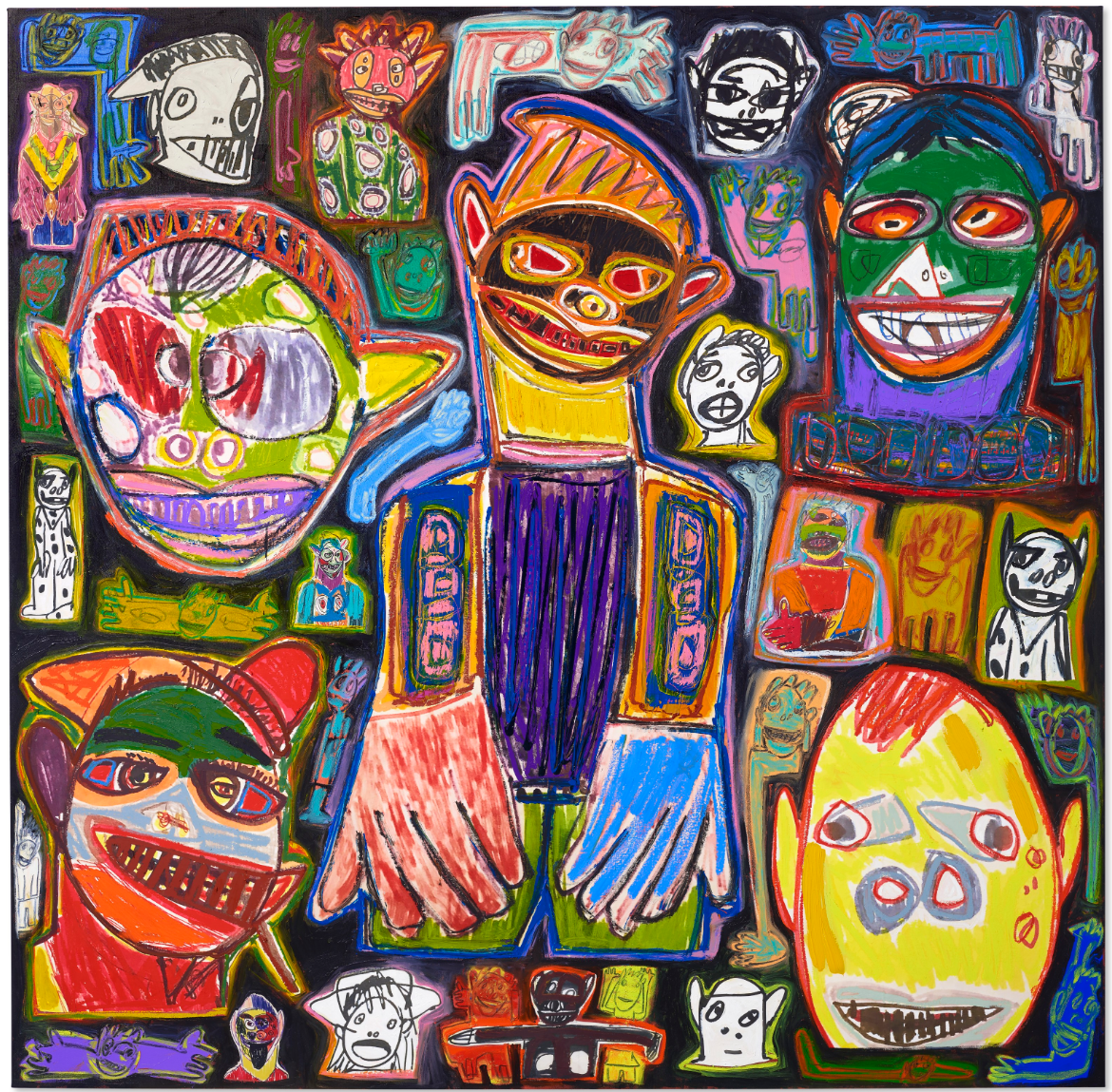
RICHARD PRINCE (B. 1949)
Untitled, 2014-2018
Acrylic, oil stick, canvas collage, gel medium and inkjet on canvas
88 1/2 x 89 3/4 inches (224.8 x 228 cm)
Signed twice, inscribed and dated four times ‘R Prince 2014 “OPEN DOOR” R Prince 2018 OPEN DOOR MORE 2014-2018 FRONT DOOR 2018 Aug 5’ (on the reverse)
One of the most vibrant artists to emerge from the exploration of authenticity and authorship in the 1980s, Richard Prince’s oeuvre is marked by discrete series and myriad styles. Though widely known for his works that deal with commercial imagery and appropriated imagery from sources like cigarette ads, pulp novels, and Instagram, he has also created several works that deal with painting, collage, and other more traditional media. Untitled is a riotous example of Prince’s ability to cast aside the often austere mantle of conceptual photo-based work and create something more related to the artist’s own hand. Working with mixed media to create compositions like the present example are a way for the artist to translate his creative impulses through his experience of historical artists and expressive mark-making. On a cursory glance, Untitled seems to be referencing everyone from Jean-Michel Basquiat and Keith Haring to the frantic brushwork of Willem de Kooning and Pablo Picasso. These visual cues and influences made visible are all in keeping with Prince’s larger conversation about our inability to live in a bubble. We are constantly taking in and consuming information from the culture at large and Prince seeks to highlight and investigate this fact.
Over seven feet on both sides, Untitled is a shocking cacophony of sketchy figures and brilliant colors. The middle of the composition is overtaken by a smirking character with one red hand and one blue hand. The face is askew in a bemused grin that shows a few of the red teeth behind its lips. Around this focal subject are four disembodied heads that similarly bare their teeth in various stages of posing. All of these characters are rendered frontally and exhibit a mixture of shapes, lines, and colors that make them unique from one another. Filling in the gaps on the dark background upon which they are rendered are many other smaller figures, faces, and creatures that bump around the canvas with a chaotic energy. A dog-like being, a lone, floating arm, and a motley crew of elven sprites jostle for attention. Untitled follows in the footsteps of a number of works Prince did in the 2000s that referenced specific historical artists. In the early part of the millennium, he created a series of pieces that took on the oeuvre of Willem de Kooning. Prince joined the painter’s style with collage to create an amalgam that was equal parts of each artist. Compositions like Untitled (de Kooning) (2007) pay tribute to De Kooning’s female figures with collaged insertions by Prince. In a similar vein, for an exhibition at the Museo Picasso in Malaga, the artist created pieces like Woman (2012) that nodded to the influence of Pablo Picasso on Prince’s practice. Again we see a mixture of collage and expressive, figurative mark-making that is similar to the present work. Stemming from these so-called New Figures series, Untitled is a medley of faces and figures that clearly shows the influence of his forefathers. The very fact that so many connections to other artists can be drawn with this example is a testament to the encyclopedic knowledge of visual culture that is Prince’s real strength.
Untitled, 2020
Sotheby’s London: 15 October 2022
Estimated: GBP 250,000 – 350,000
GBP 504,000 / USD 563,443
Untitled | Contemporary Day Auction | 2022 | Sotheby’s (sothebys.com)
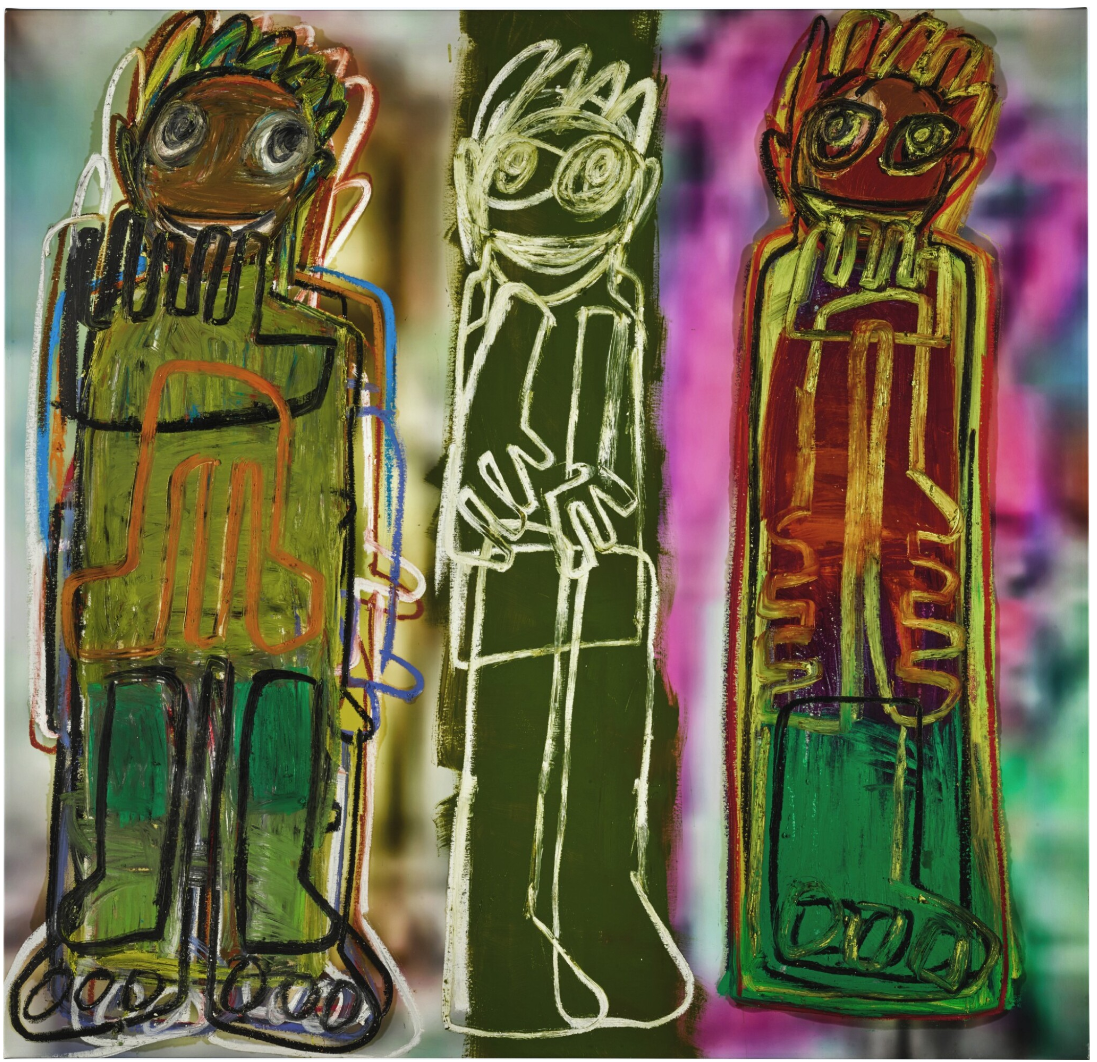
RICHARD PRINCE (b. 1949)
Untitled, 2020
Acrylic, oilstick and inkjet on canvas
58 1/8 x 60 inches (147.5 x 152.5 cm)
Striking in its chromatic intensity and provocative in compositional form, Untitled ranks amongst the most exceptional works from Richard Prince’s celebrated corpus of recent paintings that engage with the canonical imagery of 20th century art history. Endowing Prince’s homage with a graceful and rhythmic plasticity, the present work, executed in 2020, is abundant with spontaneous, gestural marks that speak of the immediate engagement of the artist. A kaleidoscopic triple portrait of sorts, the present work is rendered in sumptuous hues of emerald green, fuchsia and deep crimson, as a triumvirate of Dubuffet-esque art brut figures dominate the canvas upon a seemingly spray painted graffiti style background. Here biomorphic forms, replete with Basquiat inspired anatomy, transform and swell into gigantic, elongated limbs; a cumbersomely angular and primitive translation of the human form that is at once endearing and grotesque.
Inspired by the imagery of Abstract Expressionists and titans of the 20th Century art historical canon, Prince began sketching and doodling over the paintings of yesteryear, using graphite and oil crayons, adding outlines, textures and silhouettes. Applying collage fragments, Prince sought to cut and paste images from such literature, catalogues and vintage magazines, embellishing the figures with facial features, body parts and limbs, building hybrid of characters. Prince further painted over the canvases in oil and graphite in sweeping gestures, resulting in intricate surface and maimed imagery manifest simultaneously as an ode to the late Abstract Expressionists and a rigorous interrogation on the mythology of American pop cultural life. Prince’s methodology is certainly discernible in the present work, as the artist divides the canvas with distinct dynamic textural layers that come together harmoniously to achieve a perfect equilibrium of art historical references.
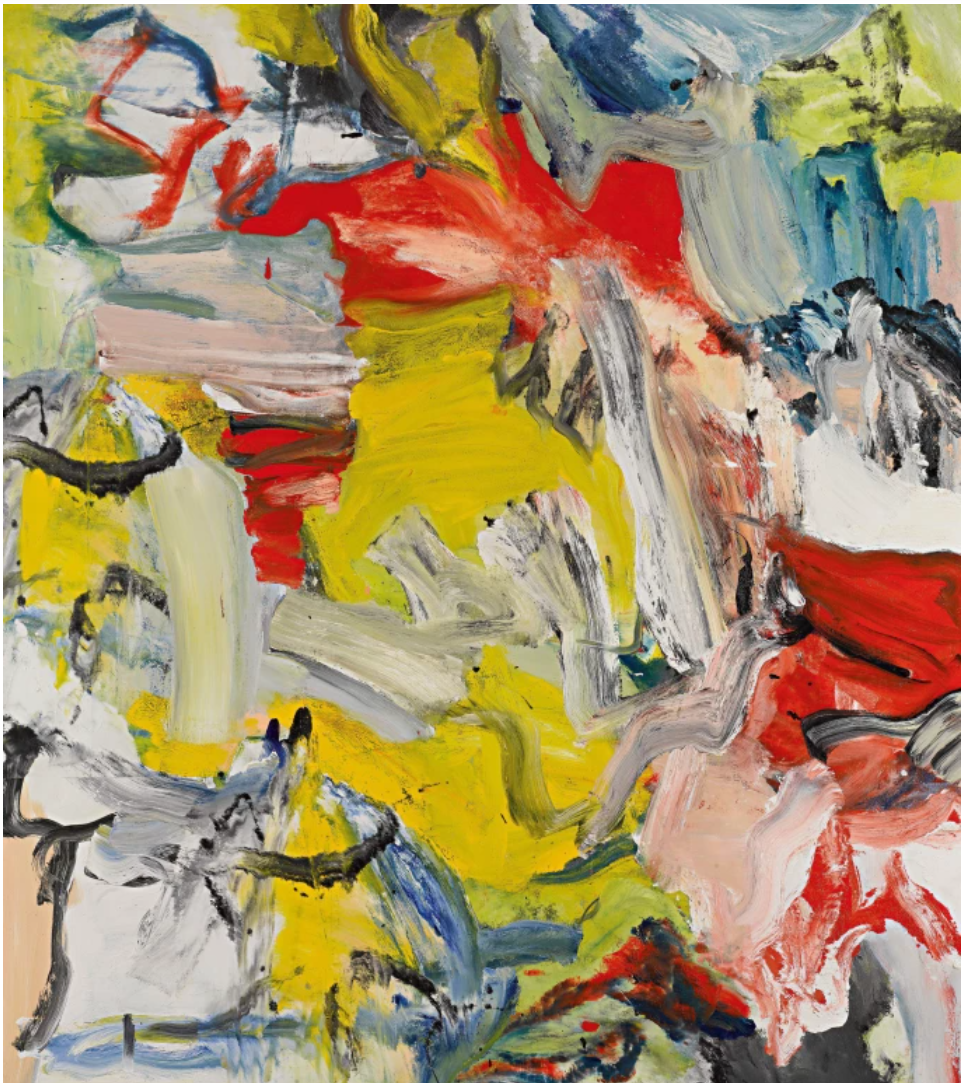
WILLEM DE KOONING, UNTITLED XXI, 1976 / PRIVATE COLLECTION
ARTWORK: © THE WILLEM DE KOONING FOUNDATION / ARTISTS RIGHTS SOCIETY (ARS), NEW YORK AND DACS, LONDON 2022
Along with his contemporaries from the Pictures Generation of the 1970s and 1980s, Prince rose to prominence at a time when his artistic predecessors had already stripped the art-making process from its representational, durational and even material constraints. In belonging to an image-saturated and highly commercialized culture, Prince addresses the visual vernacular that characterized his generation. The artist’s manipulation of found and readymade images vacillates between a Warholian fascination with pop-culture and criticism of the myths they propagate; in the profound inauthenticity of his re-worked images and academic references, Prince critiques the excesses and opulence of an age devoted to crass materialism and illusion. Indeed, the present work professes its myriad of sources, declaring its debt to Abstract Expressionism and creative output of the Post-War era, whilst simultaneously expressing a close sympathy with, and perhaps a nostalgia for, the grand painterly statements of Modernism. By mirroring these artists in both philosophy and technique, Prince presents a prism of refracting binaries including creation and destruction, high and low art, puritanism and mass pop culture.
Car Hoods
Medusa, 2003
Art & Design from The Collection of Barbara Gladstone
Sotheby’s New-York: 9 June 2026
Estimated: USD 800,000 – 1,200,000
USD 1,024,000
Richard Prince | Medusa | Art & Design from The Collection of Barbara
RICHARD PRINCE (b. 1949)
Medusa, 2003
Wood, fiberglass, paint and spackle
62-1/8 x 45 x 5-1/2 inches (157.8 x 114.3 x 14 cm)
Signed, titled and dated 2003 (on the reverse)
“It was the perfect thing to paint. Great size. Great subtext. Great reality. Great thing that actually got painted out there, out there in real life. I mean I didn’t have to make this up. It was there. Teenagers knew it. It got ‘teen-aged.’ Primed. Flaked. Stripped. Bondo-ed. Lacquered. Nine coats. Sprayed. Numbered. Advertised on. Raced. Fucking Steve McQueened.”
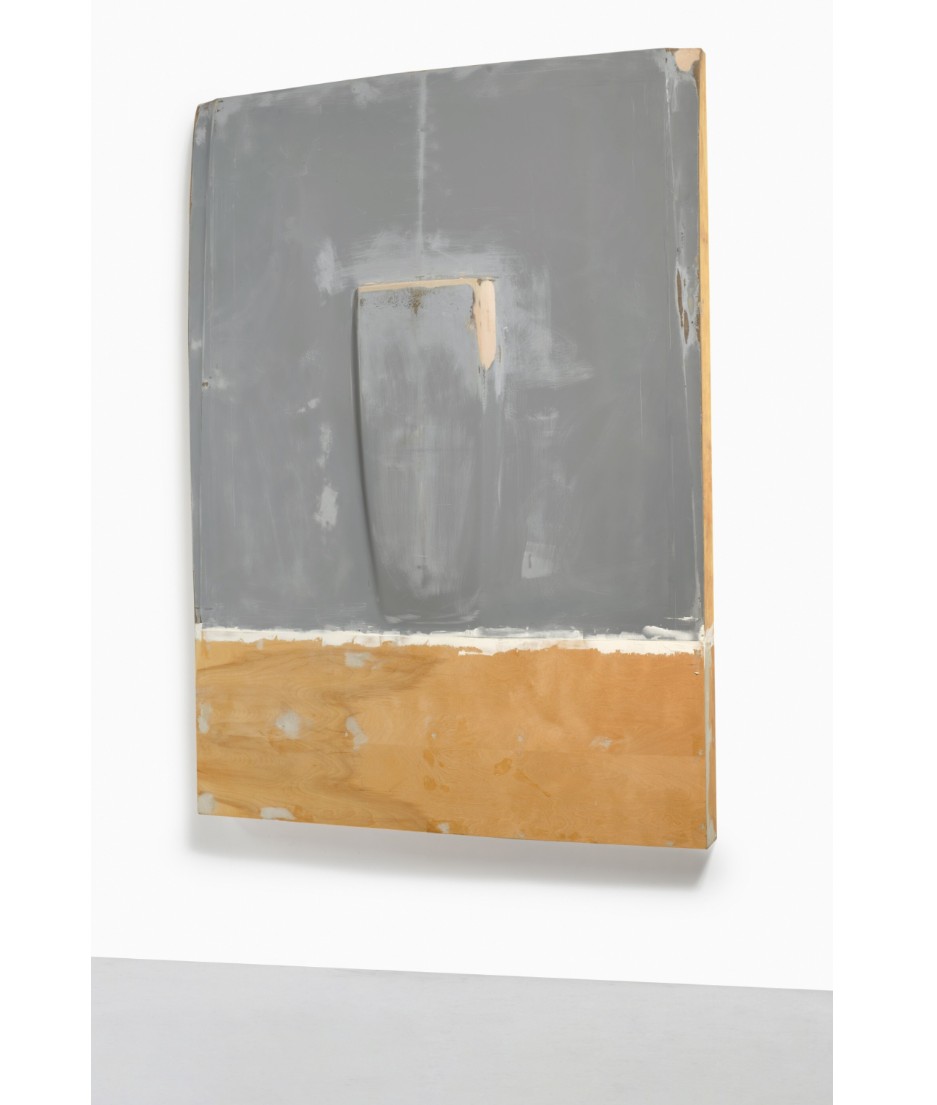
One of the defining artists of the late twentieth and early twenty-first centuries, Richard Prince rose to prominence through works that cast a sharp light on the imagery and attitudes surrounding American masculine culture. As a member of the Pictures Generation, Prince has long drawn upon the visual language of mass media and everyday life, transforming familiar cultural artifacts into works of art. Medusa, from the artist’s celebrated Hoods series, exemplifies this approach. The series draws upon America’s enduring fascination with the classic automobile: an object that embodies freedom, speed, power, torque, and mechanical bravado, as well as the triumphs of American engineering. Prince has often been drawn to objects that already exist within the collective visual landscape, recontextualizing them in ways that challenge expectations about authorship and artistic intervention.
“I’ve always liked the idea of taking as much subjectivity out of the image—or interpretation…You sort of remove the umpire, the critic, the opinion.”
Initiated in the late 1980s following a trip to Los Angeles, the Hoods series extends Prince’s exploration of appropriation into the realm of sculpture and object-making. For these works, the artist acquired replacement hoods from 1960s and 1970s American muscle cars, often ordered directly from advertisements in automotive magazines. Many of these vehicles carried secret identities, appearing in films such as Bullitt or Vanishing Point, and thus arrived already charged with a subtext of cinematic and cultural resonance. In the earliest examples, Prince sent the hoods to professional body shops to be prepped and painted, producing glossy surfaces and uniform finishes. Over time, however, he began transforming the hoods himself, applying automotive body filler, sanding the surfaces, and repainting them by hand. These later works remove the commercial flash, revealing a rougher, more tactile quality; their matte textures and visible layers evoking the improvisational aesthetic of garage workshops and DIY car culture.
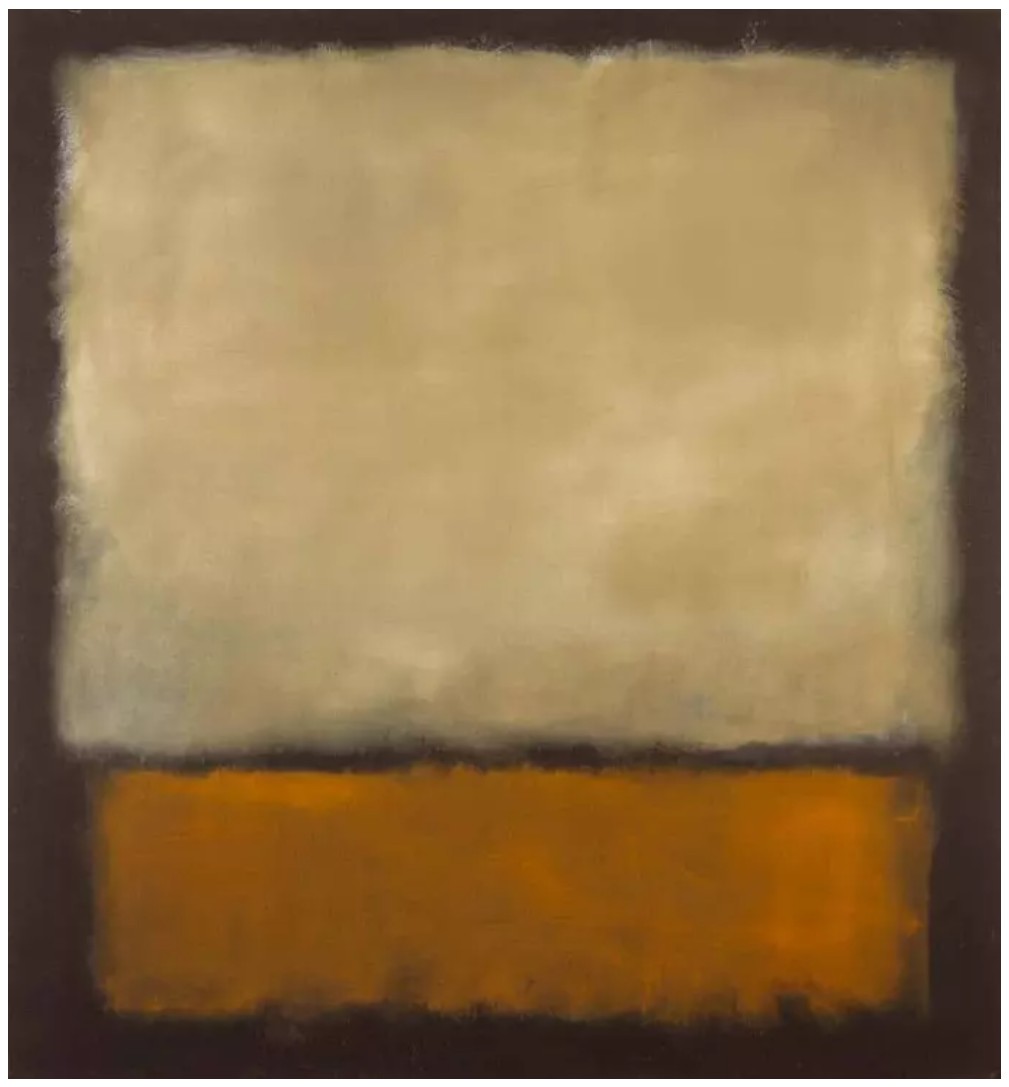
Rothko comp: Mark Rothko, No. 7 (Dark Brown, Gray, Orange), 1963.
© 1998 Kate Rothko Prizel & Christopher Rothko / Bildrecht, Vienna, 2019. Photo © Kunstmuseum Bern.
Prince has recalled that his first hoods were met with “a certain disconnect,” noting that aside from dedicated car enthusiasts, “gearheads,” he was unsure whether audiences fully understood what they were looking at. This ambiguity lies at the heart of the series. By isolating and presenting the hood as a work of art, Prince simultaneously decontextualizes the object and foregrounds the cultural fixation surrounding it. Mounted on the wall like a painting, the hood’s aerodynamic bulges and ridges, once designed for speed and performance, take on an unexpected sculptural presence. Stripped of its original function yet still carrying the visual language of the automobile, the object becomes a condensed symbol of American industrial design and cultural aspiration. As artist and writer Tom McGlynn observed, “is there any American dream machine more representative of the restless substance of ‘American Spirituality’ than the Fordist automobile? A pure product of the assembly line gone mad, the American car is the perfect prima materia from which Prince can ignite innumerable false starts” (Tom McGlynn, “Richard Prince: Hoods,” The Brooklyn Rail, June 2022).
Richard Prince’s Hood Sculptures in Institutional Collections
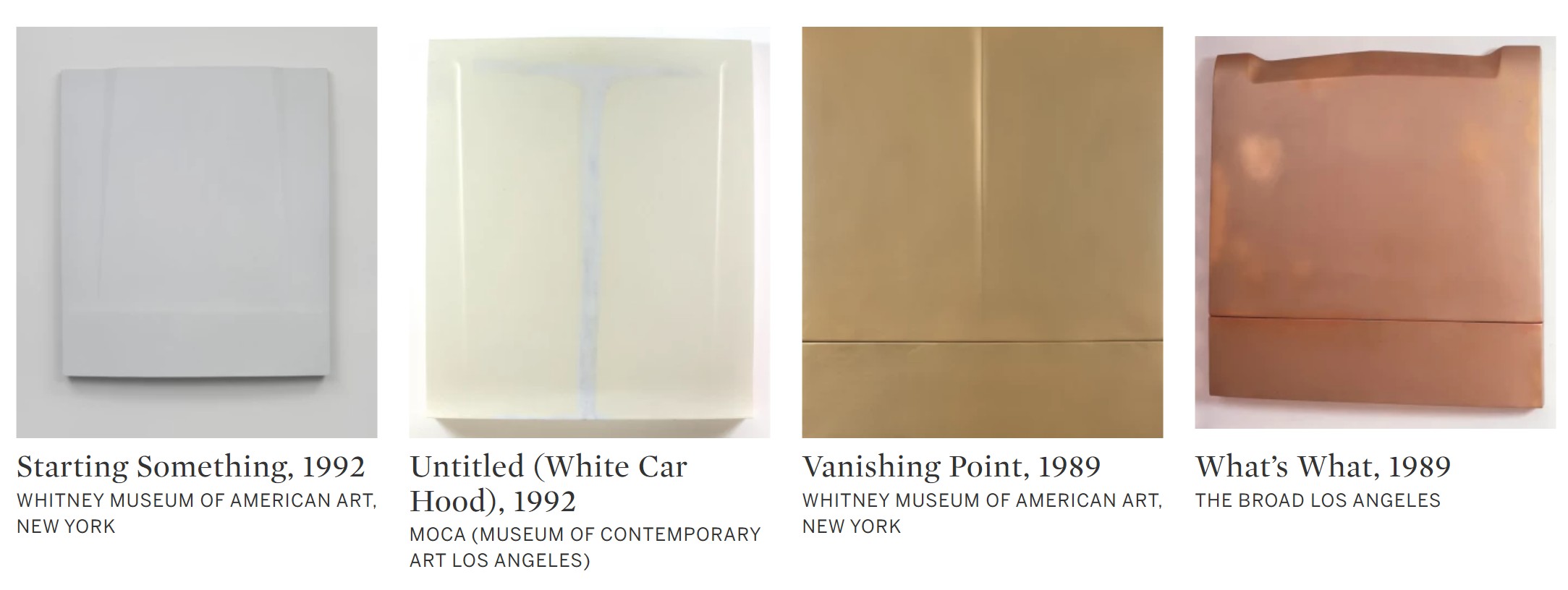
The Hoods series has become a critical body of work within Prince’s oeuvre, with examples held in major institutional collections including the Whitney Museum of American Art, New York; The Broad, Los Angeles; Walker Art Center, Minneapolis; the Brant Foundation, New York and Greenwich, Connecticut; the Museum of Contemporary Art, Los Angeles; and the Solomon R. Guggenheim Museum, New York, which presented Richard Prince: Hoods, the first exhibition dedicated exclusively to the series.
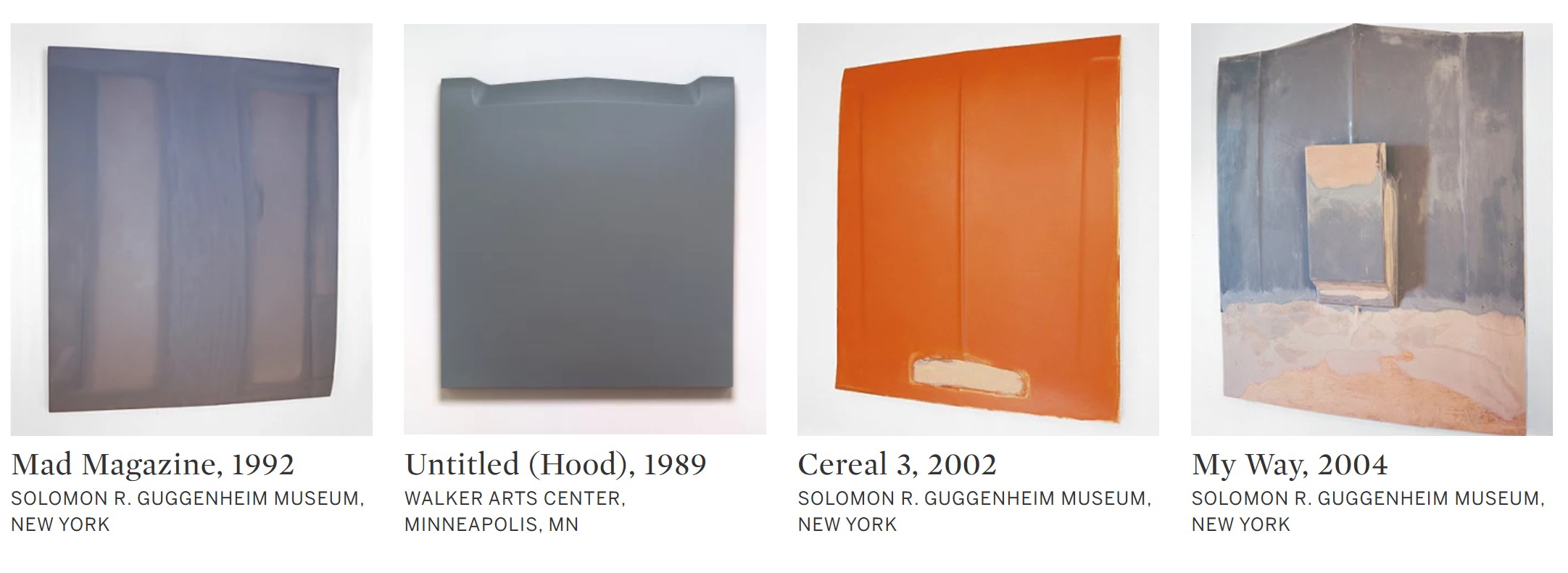
Prince’s broader practice repeatedly returns to the imagery of American masculinity. Fast cars, nurses, cowboys, girlfriends, and the tropes of sex, drugs, and rock and roll populate his oeuvre, forming a vocabulary that feels simultaneously seductive and uneasy. Across series such as Girlfriends, Gangs, Cowboys, Nurses, and Hoods, Prince revisits these motifs through shifting strategies of appropriation and transformation. Yet by isolating and amplifying these images, Prince also invites the viewer to question them: whether he is celebrating these symbols or quietly dismantling the fantasies of masculinity they project remains deliberately unresolved.
What I Know, 2005
Phillips New-York: 13 May 2025
Estimated: USD 1,000,000 – 1,500,000
USD 1,206,500
Richard Prince Modern & Contemporary Art Evening Sale
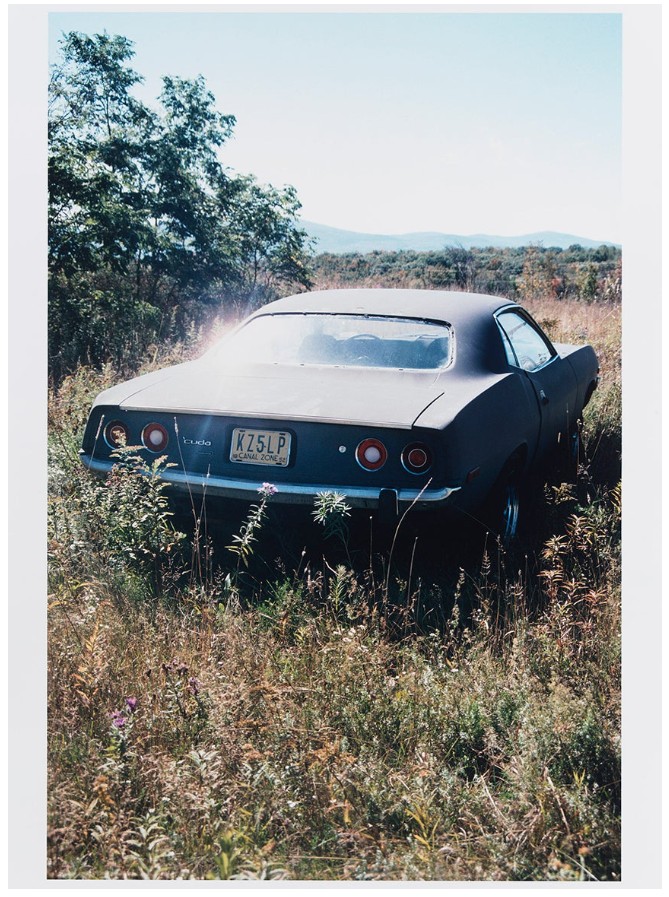
What I Know harkens back to Prince’s childhood: born in 1949, he came of age in the ‘60s, when the Beach Boys’ chart-topping hits helped elevate the muscle car into an icon of American youth culture. This cult status was solidified by Steve McQueen’s iconic car chase in Bullitt (1968), a sequence which transformed a Mustang GT into a symbol of raw strength and independence and became etched into the national imagination—as well as Prince’s. The artist later claimed that in 1972, he proposed to gain admission to the San Francisco Art Institute by offering to drive the faculty around the city in a Dodge Charger (“They didn’t go for it,” he clarified).i Indeed, Prince’s obsession with the iconography of the automobile even led him to construct a metal barn near his Catskills home dubbed the “Body Shop,” where his collection of vintage muscle cars today share space with other examples from the Hoods series. Like his earlier Cowboys series, these works channel a distinctly American vernacular rooted in speed, desire, escape, and the mythos of the open road. Mounted on the wall, WhatI Know highlights the bold contours of the cowl induction hood, a sculptural flourish that epitomized the distinctive styling of the era’s cars. In the broader cultural imagination, these vehicles came to represent the power and ambition of the postwar U.S.—a legacy that Prince channels here with visceral clarity.
“Vanishing Point. 1970 Dodge Challenger. Bullit. ’68 Mustang and ’68 Dodge Charger. That’s it. Those cars came out when I was teenager… When I started to focus on the contents of lifestyle magazines, hot-rod magazines were all over the newsstands. I noticed in the back of these magazines ads for car parts. You could order replacement parts. You could order a fiberglass hood for a 1970 Dodge Challenger. Bingo! Mail order. Paint the paint.”
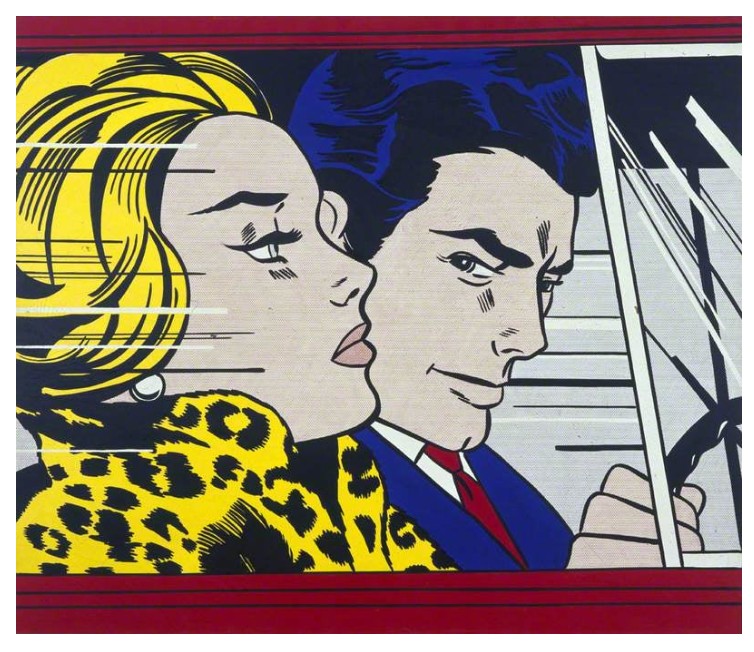
Roy Lichtenstein, In the Car, 1963. Scottish National Gallery of Modern Art, Edinburgh. Artwork: © Estate of Roy Lichtenstein
The widespread familiarity with, symbolic power of, and mass-market nostalgia for the muscle car made it ripe for Prince’s characteristic appropriation in What I Know. “It was the perfect thing to paint. Great size. Great subtext. Great reality. Great thing that actually got painted out there, out there in real life,” Prince expressed of the hood. “I mean I didn’t have to make this shit up. It was there. Teenagers knew it. It got ‘teen-aged.’ Primed. Flaked. Stripped. Bondo-ed. Lacquered. Nine coats. Sprayed. Numbered. Advertised on. Raced. Fucking Steve McQueened.”ii As source material for the series, the artist acquired by mail order fiberglass reproduction parts of classic models advertised in the back pages of hot rod magazines, tapping into a nostalgia industry built around the mythos of 1960s and ’70s muscle cars. This practice extended Prince’s signature appropriation and deconstruction of mass consumerism, evolving from the photographic strategies of his Pictures Generation origins, into three dimensions. Already steeped in narrative and aesthetic affect outside of the artist’s studio, the hood offered a form ready to be reframed from functional relic into conceptual object.
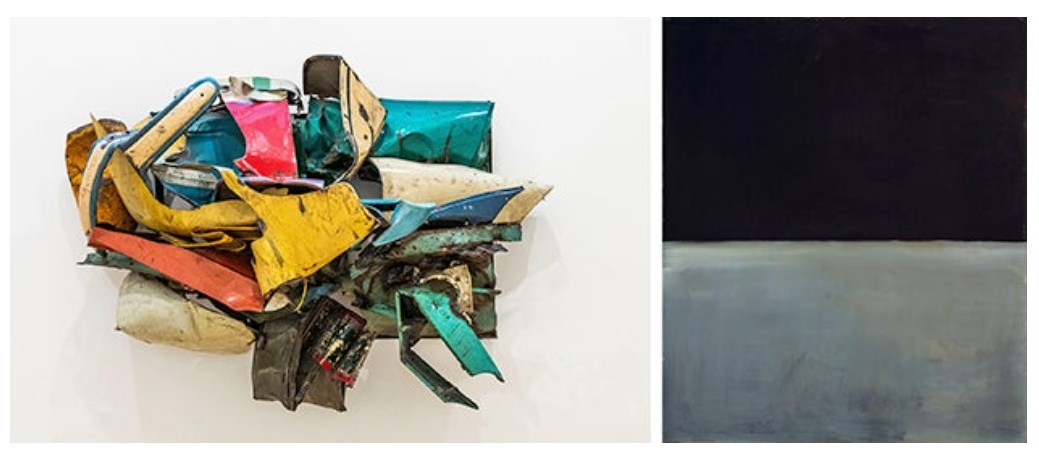
[Left] John Chamberlain, Dolores James, 1962. The Guggenheim Museum, Bilbao. Image: Hemis / Alamy Stock Photo, Artwork: © 2025 John Chamberlain / Artists Rights Society (ARS), New York
[Right] Mark Rothko, Untitled, 1969. Collection Christopher Rothko. Image: Art Resource, NY, Artwork: © 1998 Kate Rothko Prizel & Christopher Rothko / Artists Rights Society (ARS), New York
Although Prince initially outsourced the surface work of his Hoods by hiring professional body shops, What I Know reflects a later stage in the series when he began sanding, layering Bondo automotive body filler, and painting the panels himself—bringing a distinctly personal and tactile dimension to what had once been standardized car parts. Rather than opt for the sleek commercial finish typical of motor culture, in the present work Prince manually applied coats of silvery and misty-greenish grey pigments, resulting in two softly defined color fields. This painterly handling of a mass-produced object deliberately flirts with the high seriousness of Abstract Expressionism: the subtle interplay of color evokes the powerful, meditative compositions of Mark Rothko. Prince’s wider approach had concurrently grown increasingly expressive, frequently integrating gestural mark-making and painterly effects, as seen in his later Joke paintings and Nurse series. What I Know thus straddles the space between industrial object and painterly surface, invoking Rauschenberg’s Bed or Duchamp’s assisted ready-mades as it transformed an off-the-shelf car part into a charged site of both cultural memory and aesthetic intervention.
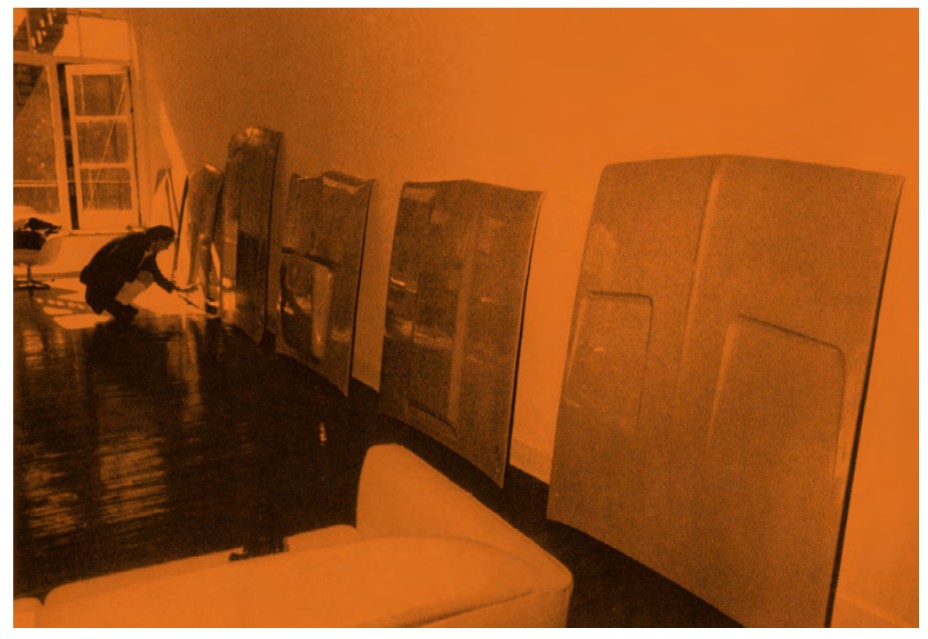
Richard Prince in his Reade Street Studio, New York 1987. © Richard Prince. Photo: Joseph Coscia, Jr.
“To de-referentialize the material is not to take it out of context. The great thing about an appropriation is that even though the transformation reads as fiction, everybody knows that the source of the appropriation was at some point non-fiction, (magazine, movie, etc.), and it’s these sources, or elements of non-fiction, that gives the picture, no matter how questionable, its believable edge.”
What I Know exemplifies Prince’s ongoing exploration of how images drawn from mass media and advertising are never isolated, but part of a wider network of associations. These images shape and refract our desires, embedding themselves in the cultural, social, and political frameworks through which we understand the world. The work invites viewers to see the car hood not only as a hybrid of sculpture and painting, but as a potent item of material culture charged with decades of mythology. The title itself may allude to a pop-cultural reference, as is often the case in the Hoods, but it also suggests an autobiographical note, a gesture of personal investment from an artist long attuned to the visual language of American car culture. In this way, the work resists a purely ironic reading, instead allowing space for genuine emotional resonance. In What I Know, Prince transforms a familiar automotive form into a painterly, conceptual object, channeling cultural mythology and personal reflection to conjure the reckless allure of youth, speed, desire, and danger.
Slingerlands, 2004
Sotheby’s New-York: 20 November 2024
Estimated: USD 1,000,000 – 1,500,000
USD 1,440,000
Slingerlands | The Now and Contemporary Evening Auction | 2024 | Sotheby’s
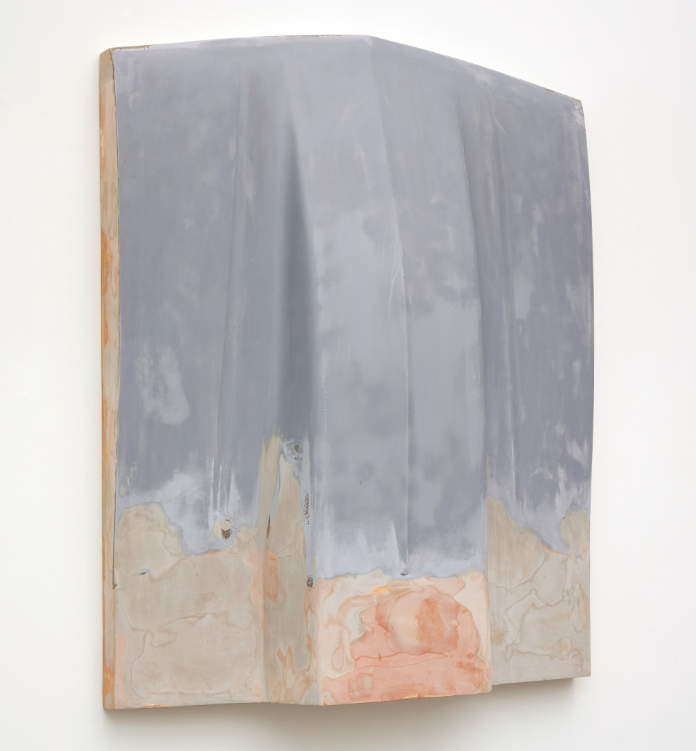
RICHARD PRINCE (b. 1949)
Slingerlands, 2004
Fiberglass, polyester resin, acrylic and wood
71 3/4 x 59 3/4 x 12 3/4 inches (182.2 x 151.8 x 32.4 cm)
The pure brawn of the muscle car meets the renegade coolness of the Duchampian readymade in Slingerlands from 2004, whose new, decontextualized life as former-car hood proffers yet another chapter in Richard Prince’s exploration of the American icon. In the company of cowboys, biker girlfriends, pulp fiction, and fashion models, Prince’s manipulation of the muscle car belongs to a career-long interrogation of national mythmaking; the Hoods extend the artist’s approach to appropriation, here castrating a classic American symbol of rebellion and masculinity in the name of high art. At the command of Prince’s shrewd reimagination, an ostensibly discolored, rusting auto part becomes legible as a color field painting, stained in coruscating, opalescent shades of blue and gray.
Testament to the Hoods’ significance in the artist’s oeuvre, examples belong in important institutional collections, such as the Solomon R. Guggenheim Museum, New York; Whitney Museum of American Art, New York; The Broad, Los Angeles; and Walker Arts Center, Minneapolis, among others. Held in the same private collection since its creation, Slingerlands covers the gamut of postwar American appropriation and abstraction, avant-garde and kitsch, juxtaposing the vernacular of action painting with the iconography of vernacular culture.
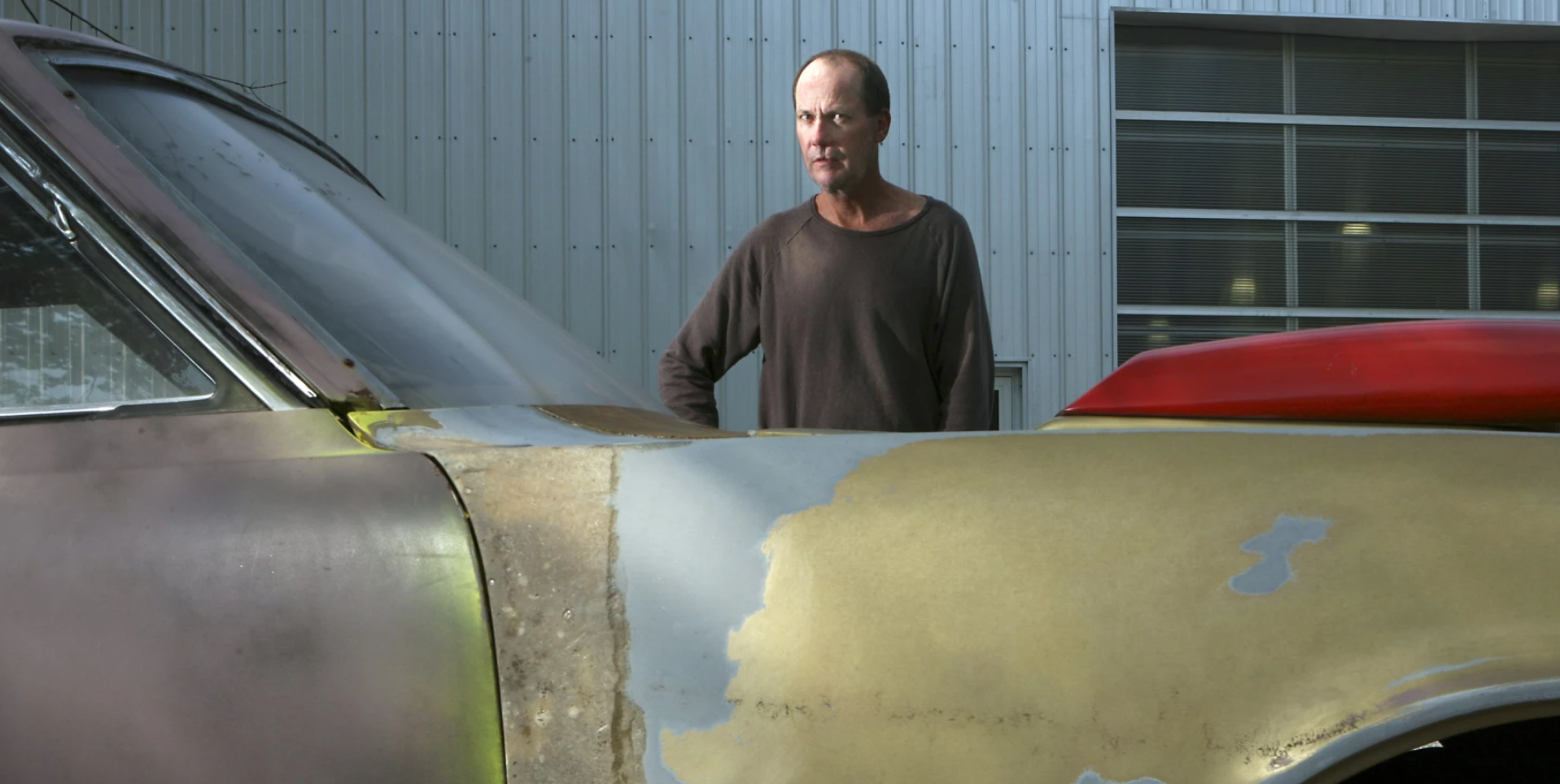
Richard Prince at his studio in Rensselaerville, 2007. Photo © Tony Cenicola / The New York Times / Redux
After encountering advertisements on the back of muscle magazines, Prince began the Hoods in 1987 following his move from New York to Los Angeles, and the series has remained one of his most enduring bodies of work. Instead of taking the advertisements as his source image – as he had with the epic and infamous cowboys illustrated on Marlboro cigarette ads – Prince ordered from them, receiving deliveries of fiberglass molds of high performance hot-rod cars. “1970 Dodge Challenger. Bullit. ’68 Mustang and ’68 Dodge Charger. That’s it,” the artist reflected, “Those cars came out when I was teenager… When I started to focus on the contents of lifestyle magazines, hot-rod magazines were all over the newsstands. I noticed in the back of these magazines ads for car parts. You could order replacement parts. You could order a fiberglass hood for a 1970 Dodge Challenger. Bingo! Mail order. Paint the paint.” (the artist quoted in: Rosetta Brooks, Jeffrey Rian and Luc Sante, eds., Richard Prince, London, 2003, p. 23) Prince first outsourced the application of the finish and varnish to auto body shops, initially approaching the series with rote, Warholian irreverence. Eventually, however, he began to paint the hoods himself, and the hoods were sanded and reshaped by hand, a process which replicated, and, to an extent, performs the nostalgia, desire, and machismo of do-it-yourself car culture – at once a mimicry of and aspiration for performed gender.
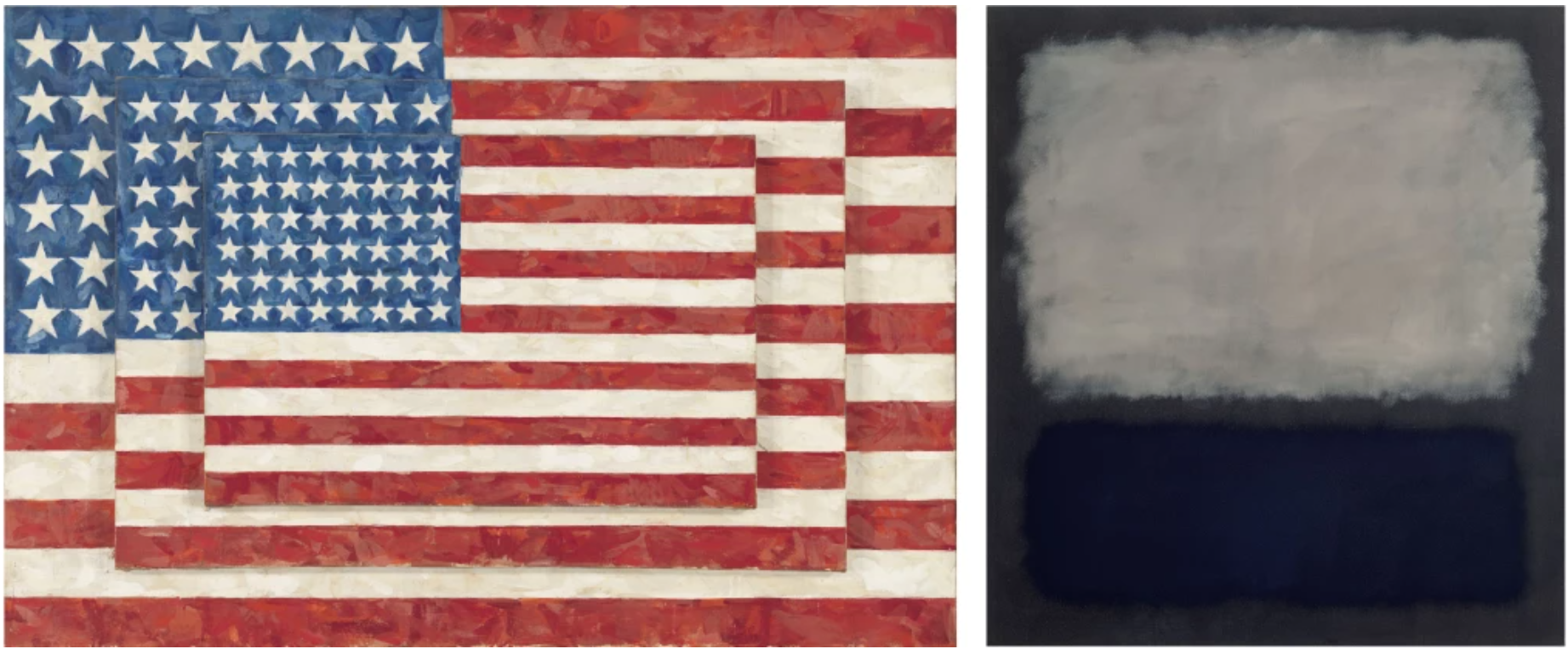
Left: Jasper Johns, Three Flags, 1958. Whitney Museum of American Art, New York. Image © Whitney Museum of American Art / Licensed by Scala / Art Resource, NY. Art © Jasper Johns/Licensed by VAGA, New York, NY. Right: Mark Rothko, Blue and Gray, 1962. Fondation Beyeler, Riehen. Art © 1998 Kate Rothko Prizel & Christopher Rothko / Artists Rights Society (ARS), New York
The success of the Hoods lies in their ability to be simultaneously recognized as abstracted and appropriated. The brushy, atmospheric passages of paint are interrupted by the raised impression of an engine jutting out through the center of the surface, which imbues the work with a three-dimensionality that thrusts the work’s objecthood and, consequently, the viewer’s phenomenological engagement with Slingerlands, into relief. The near-crude appropriation of the object-as-artwork encourages our extant associations with the car hood – immortalized in American popular culture as a signal of freedom, rebellion, masculinity, torque, horsepower, and power itself – before abstracting our collective conception of the object before us.
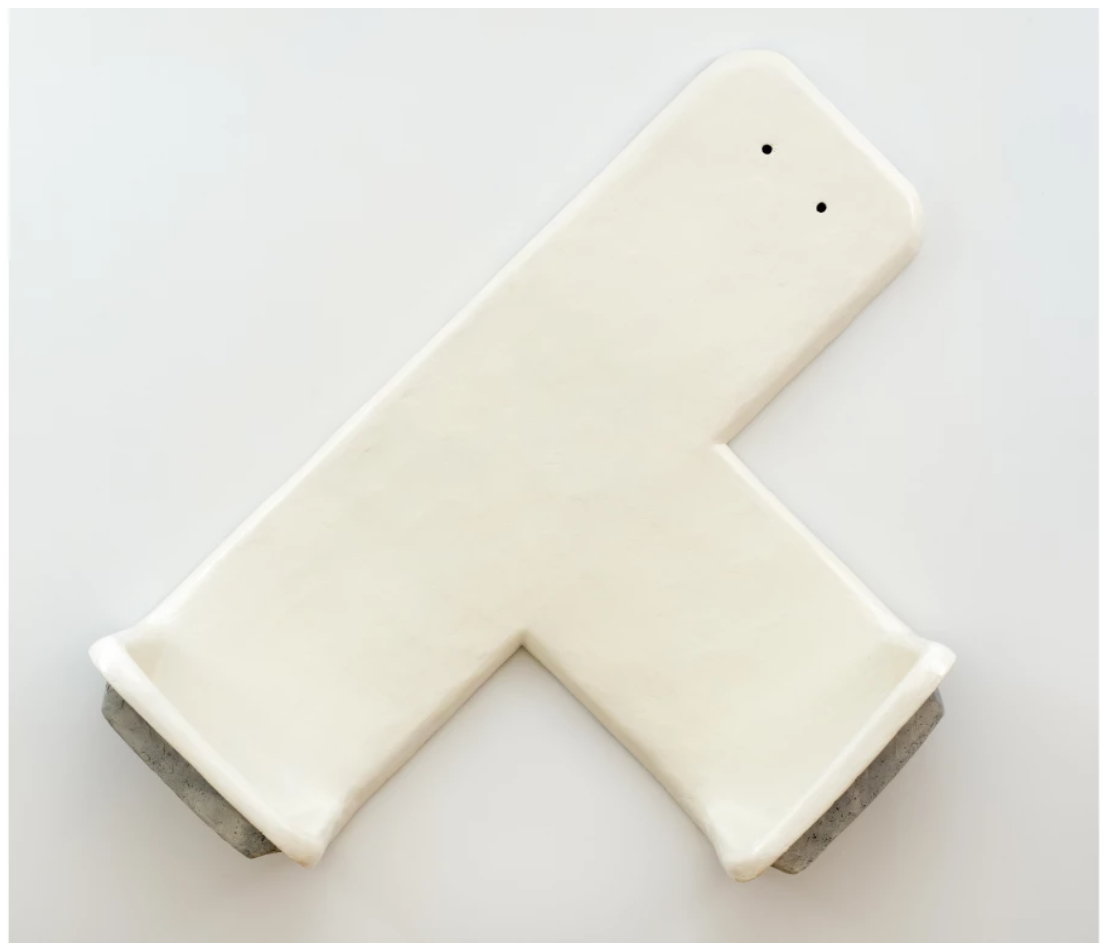
Robert Gober, The Split-up Conflicted Sink, 1985.
Private Collection. Sold at Sotheby’s New York in November 2019 for $4.8 million. Art © 2024 Robert Gober
“To de-referentialize the material is not to take it out of context,” the artist clarified, “The great thing about an appropriation is that even though the transformation reads as fiction, everybody knows that the source of the appropriation was at some point non-fiction, (magazine, movie, etc.), and it’s these sources, or elements of non-fiction, that gives the picture, no matter how questionable, its believable edge.” (Richard Prince, “Prior Availability,” New York, 1997 (online)) Sanded down, unhinged, and disembodied, Slingerlands now reflects back to a disfigured fantasy: American macho is proven apocryphal, now parodied as part of the artist’s longstanding play on the all-American hot car.
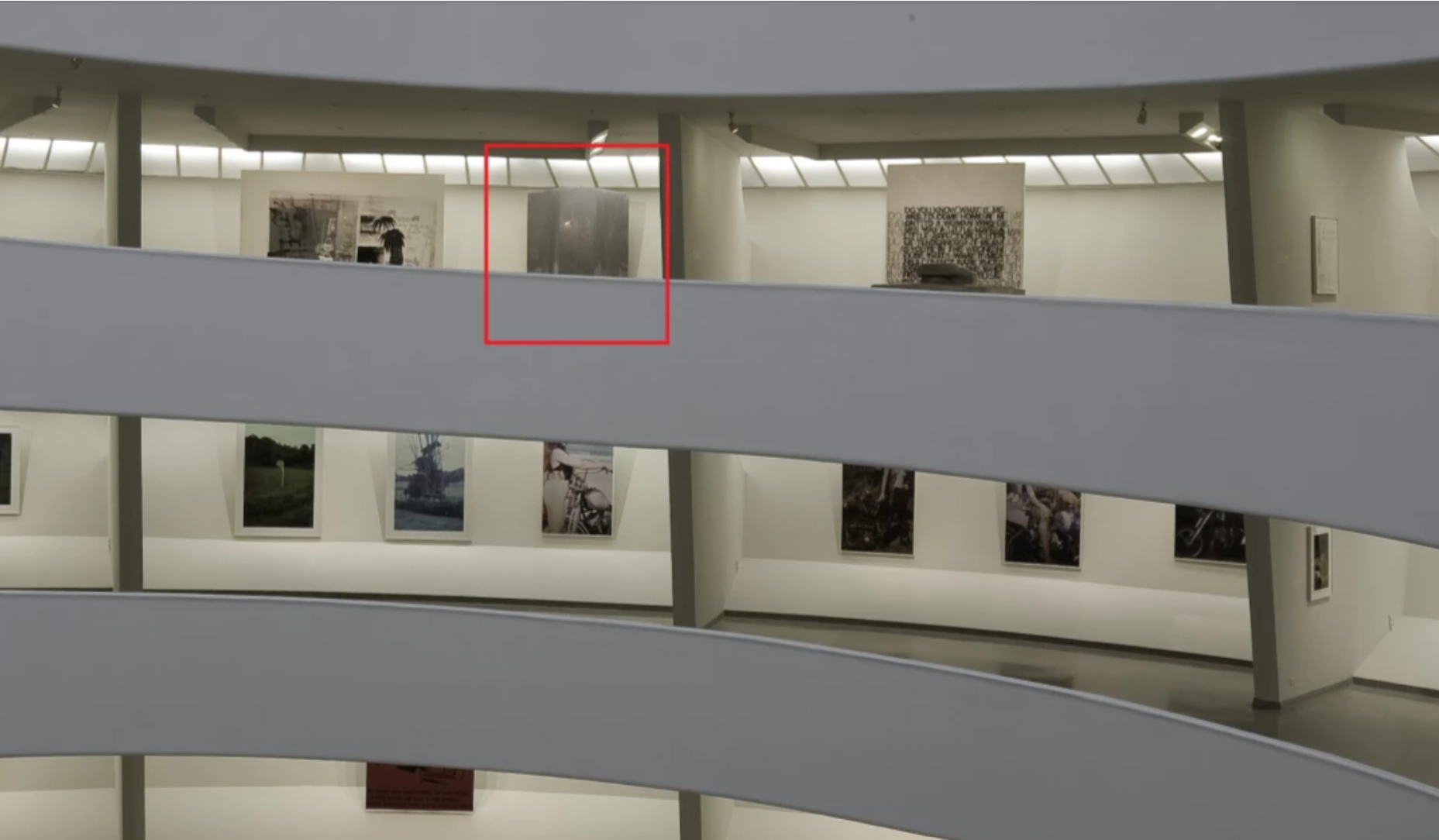
The present work installed in Richard Prince: Spiritual America at the Solomon R. Guggenheim Museum, New York, September 2007 – January 2008. Photograph by David Heald.
© Solomon R. Guggenheim Foundation, New York. All Rights Reserved. Art © 2024 Richard Prince
It is Prince’s unrelenting obsession with the aesthetic mythos of familiar items and images that earned him his place among the most influential and provocative voices of the twenty-first century. Not only a contemporary take on Duchamp’s readymade but also an exercise in the Pictures Generation’s fascination with collective imagery, the Hoods constitute the painting of an object that has already been painted, seizing the car part as well as its broader connotations for his adjustment. Slingerlands sees Prince author his celebrated take on American folklore, leaving his viewer to grapple with the collision of fine art and mass culture and the question of how the car became enshrined.
Untitled (Car Hood), 2008
Christie’s New-York: 10 November 2023
Estimated: USD 1,200,000 – 1,800,000
USD 1,320,500
RICHARD PRINCE (B. 1949), Untitled (Car Hood) | Christie’s (christies.com)
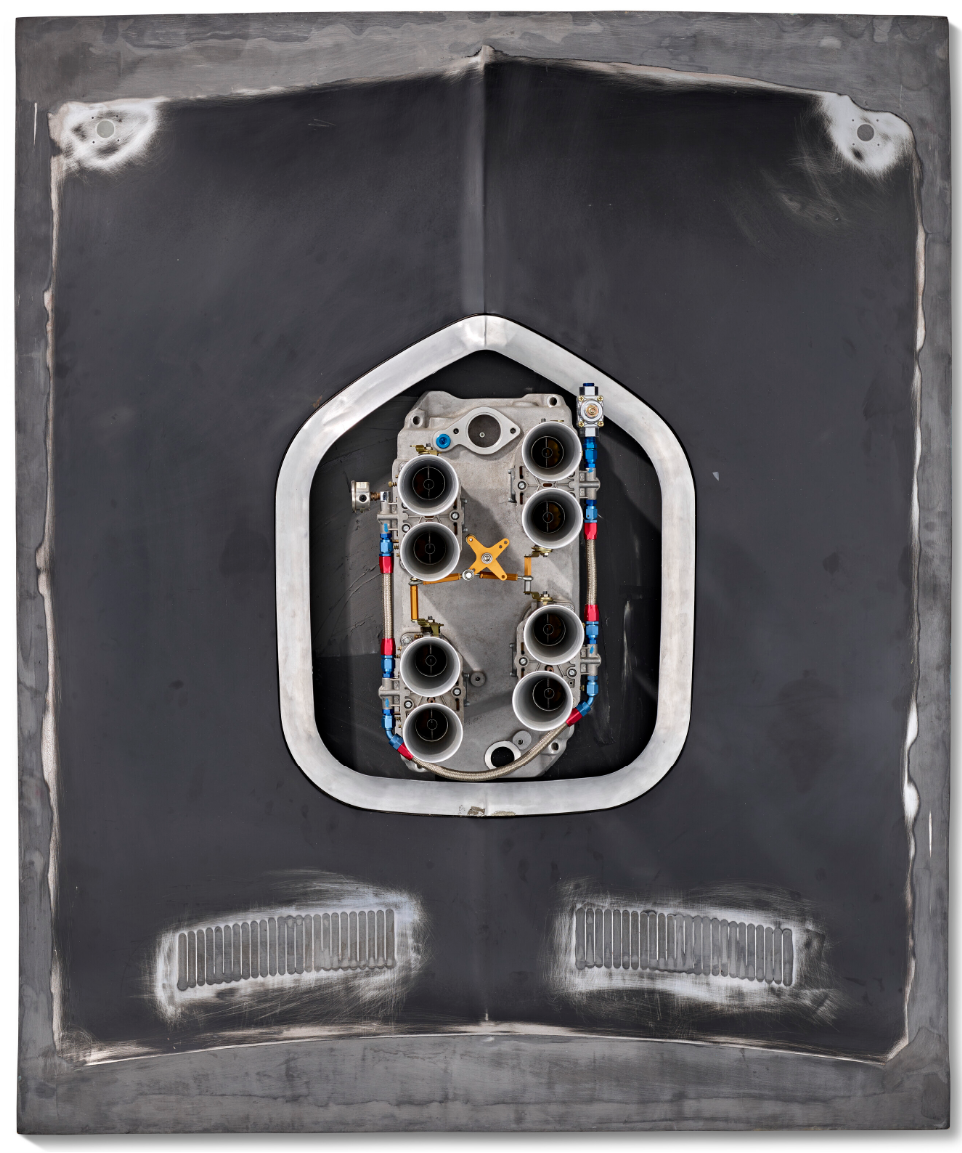
RICHARD PRINCE (B. 1949)
Untitled (Car Hood), 2008
Acrylic, wood, steel, fiberglass and Bondo
64 3/4 x 54 1/2 x 16 inches (164.5 x 138.4 x 40.6 cm)
Richard Prince’s artistic journey is a captivating exploration of American popular culture, defined by the distinct chapters of his Cowboys and Hood series. Amidst the backdrop of the 1980s, a decade marked by transformative cultural shifts, Prince ascended to prominence within the vibrant scene of the New York art scene. He soon became a prominent force of the Pictures Generation alongside Cindy Sherman and Barbara Kruger, a collective of artists renowned for their audacious reimagining of American sub-culture and the remnants of visual debris. In this era, Prince etched his name among the vanguard, emerging as a trailblazer whose work challenged boundaries, inviting viewers to traverse the realms of appropriation, interpretation, and profound cultural reflection. Prince’s artistic evolution took a new turn in the late 1980s with the creation of the Hood series. This phase represents a transition from two-dimensional imagery to a three-dimensional exploration of American culture. In this series, Prince employed actual muscle car hoods as his canvases by hiring body shops to prepare and paint the car hoods. However, as his artistic process evolved, he took on the task of applying automotive body filler Bondo, meticulously sanding, and personally hand-painting the hoods himself. The car hood series symbolizes America’s love affair with automobiles, nostalgia for muscle cars, and the allure of speed and escape.
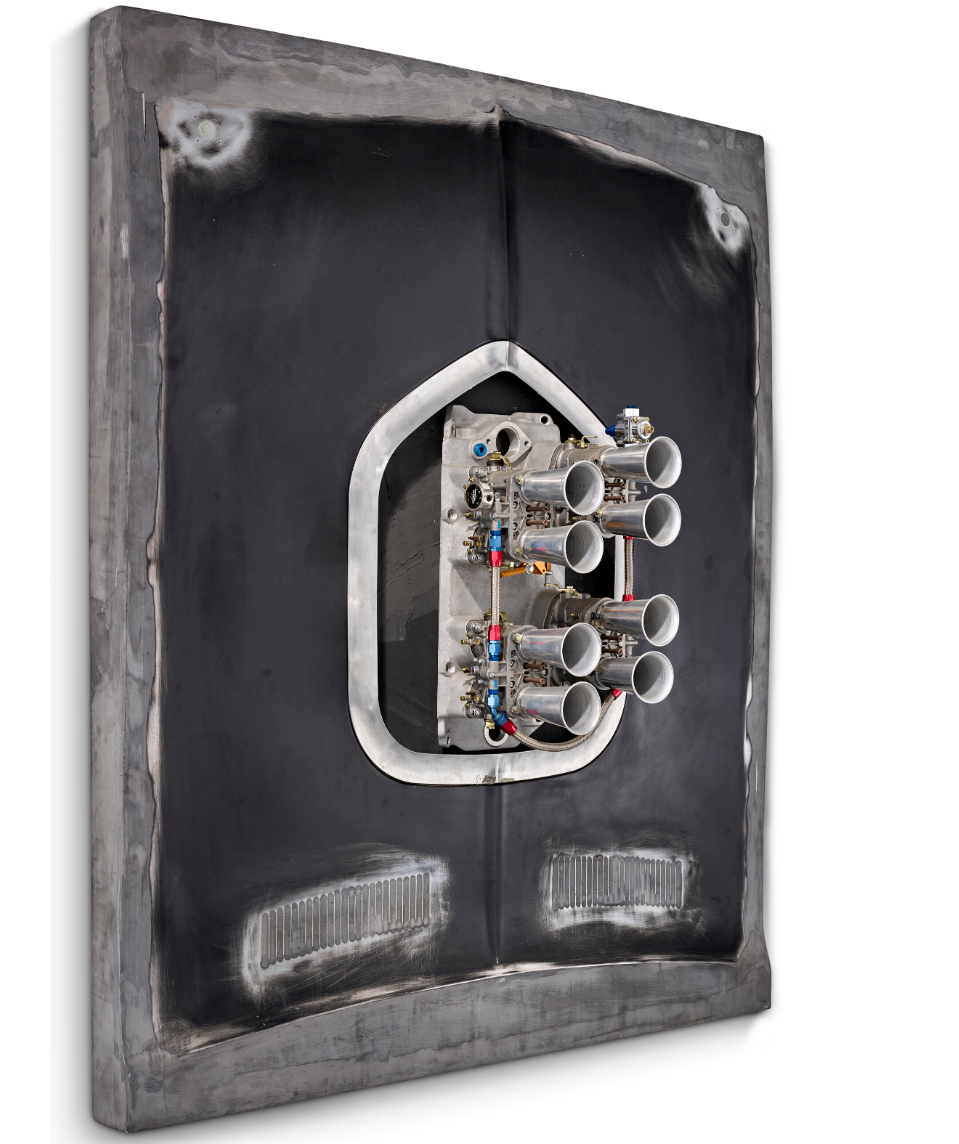
“It was the perfect thing to paint. Great size. Great subtext. Great reality. Great thing that actually got painted out there, out there in real life. I mean I didn’t have to make this shit up. It was there. Teenagers knew it. It got ‘teen-aged.’” Primed. Flaked. Stripped. Bondo-ed. Lacquered. Nine coats. Sprayed. Numbered. Advertised on. Raced. Fucking Steve McQueened”
Richard Prince’s Untitled (Car Hood) immediately captivates the viewer with its striking visual composition. The artwork’s arrangement bears a resemblance to the intricate and three-dimensional industrial aesthetics often associated with Lee Bontecou’s creations. At its core, we find eight metal tubes separate into groups of two that mimic the aesthetics of a car engine, or the funnels of a ship creating a visually arresting and unconventional arrangement. This central element, akin to the iron with nails in Man Ray’s classic readymade, Cadeau, commands attention and challenges our expectations of an everyday object. The surface of the car hood appears to be oxidized, evoking a sense of nostalgia. Unlike other works in the series that feature more vibrant colors, Untitled (Car Hood) primarily employs a palette of blacks and greys. This choice sets it apart, creating a distinct visual identity within the series. The central metal tubes, like components of a machine, infuse the piece with a dynamic energy that is both visually captivating and conceptually intriguing. The central piece, resembling an industrial ship sailing in a dark but calm sea, serves as a metaphorical statement. It suggests a sense of journey and transformation, mirroring Prince’s overarching theme of repurposing and reimagining objects. This central composition’s form and placement evoke the idea of change and metamorphosis, aligning with Prince’s exploration of how everyday objects can be transformed into symbols of artistic significance. It speaks to his ability to infuse his work with layers of meaning, encouraging viewers to contemplate the shifts that can occur through creative reinterpretation.
.
Photographs
Spiritual America IV, 2005
Property Sold to Benefit the Yale School of Art
Sotheby’s New-York: 15 May 2026
Estimated: USD 500,000 – 700,000
USD 384,000
Richard Prince | Spiritual America IV | Contemporary Day Auction |
RICHARD PRINCE (b. 1949)
Spiritual America IV, 2005
Ektacolor print in artist’s chosen frame
90-1/2 x 72 inches (229.9 x 182.9 cm)
Signed, dated 2005 and numbered ap #2 (on the backing board)
This work is artist’s proof number 2 of 2 from an edition of 6 plus 2 artist’s proofs
Executed in 2005, Spiritual America IV belongs to the late, self-reflexive phase of Richard Prince’s practice, when the artist turned back upon the images that had defined his early career. Monumental in scale, the present photo-portrait revisits the charged legacy of Prince’s 1983 Spiritual America, arguably his most recognized and audacious act of photographic appropriation. Whereas the 1983 work posed questions about innocence, authorship and the ethics of looking, Spiritual America IV returns to that same visual and cultural terrain with a new degree of theatricality and self-awareness. In the present work, Prince transforms an image once rooted in shock and provocation into a more layered meditation on the afterlife of images.
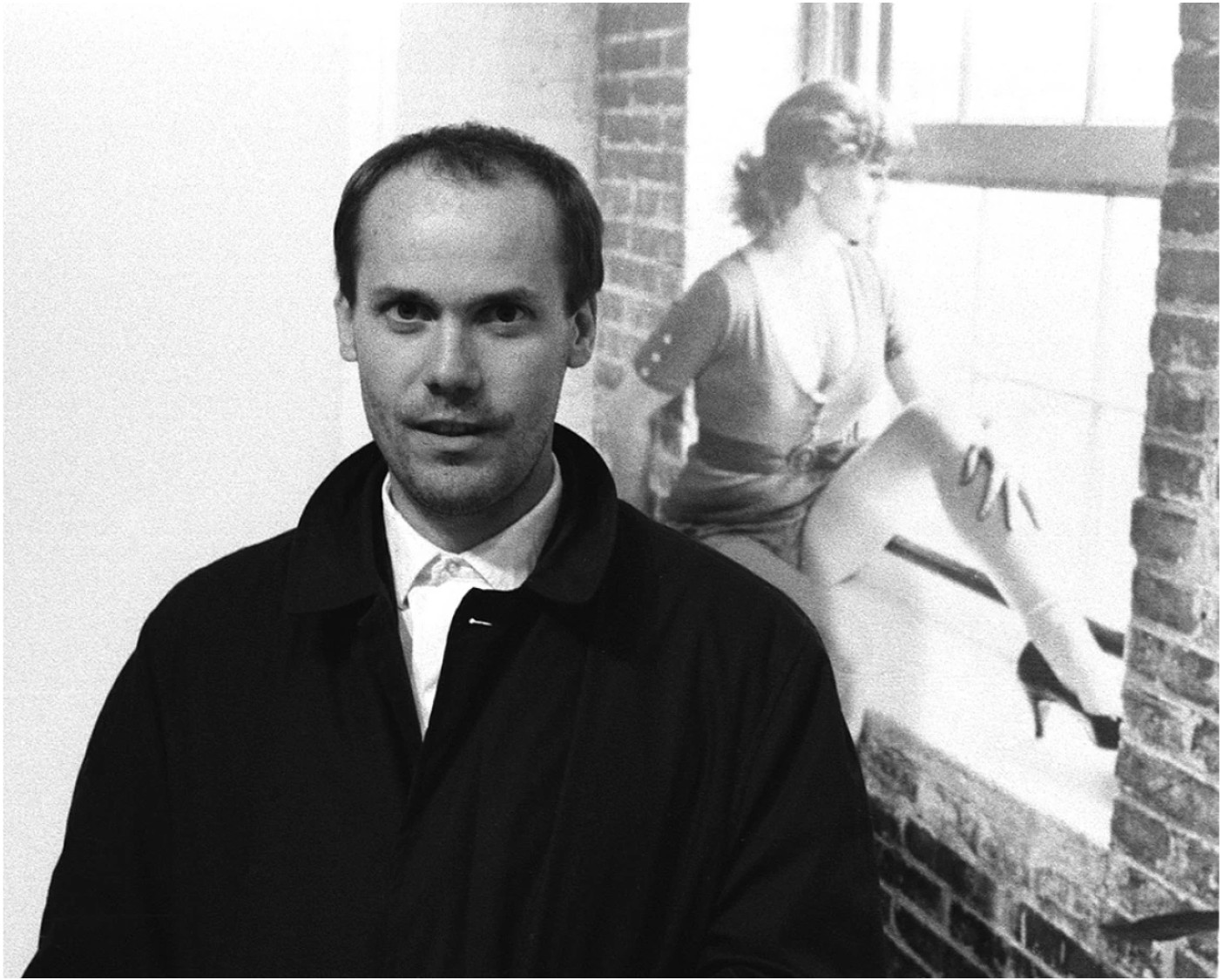
Richard Prince In Front Of Cindy Sherman’s Work, 1984. Photograph by Eleftheria Lialios.
In the 2005 work, Brooke Shields reappears not as the ambiguous child of the earlier image but as a fully self-aware adult, posed beside a motorcycle in a haze of theatrical vapor. If the original picture was among the artist’s most notorious interrogations of innocence and consent, Spiritual America IV transforms into an exploration about agency and participation. In the current work, photographed by acclaimed celebrity photographer Sante D’Orazio, the body is no longer passively implicated but actively staged, foregrounding questions of context and the viewer’s role in sustaining the image’s power. Spiritual America IV further captures the ways American culture recycles desire and transgression into an ever more stylized spectacle where fantasy and self-conscious performance become inseparable.
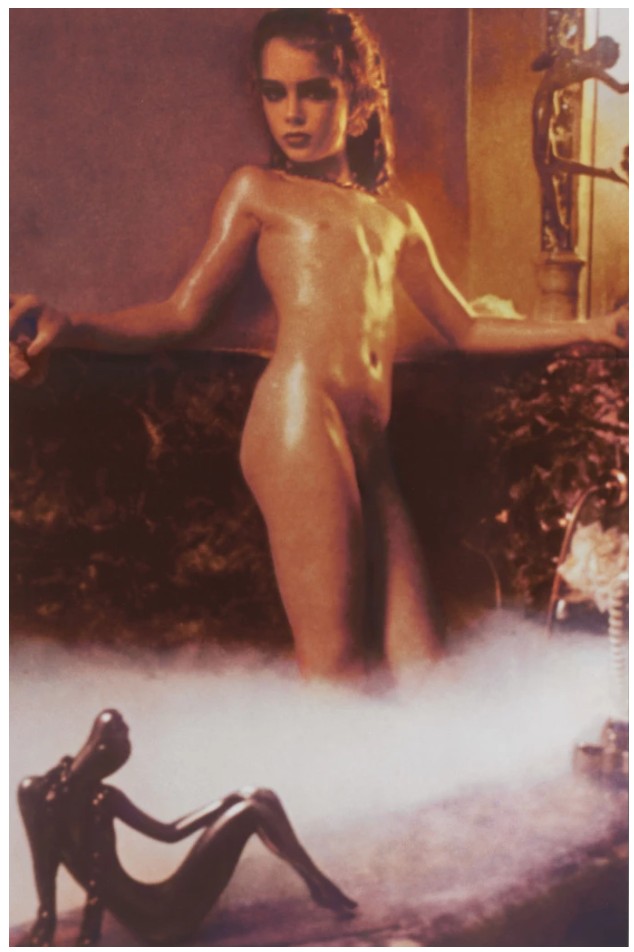
Richard Prince, Spiritual America, 1983. Private Collection. Art © 2026 Richard Prince.
Prince’s artistic achievement has long resided in his ability to make appropriation feel less like repetition than like diagnosis. His work resides at the very center of postwar American art, in dialogue with Duchamp’s readymade, Warhol’s serial coolness, and the broader Pictures Generation critique of media construction. Yet Spiritual America IV is not merely a return to an infamous motif; it is a mature restaging of authorship itself. That self-consciousness is precisely what gives the present work its extraordinary charge. Shields is no longer the unwitting subject of an image authorized by her mother and taken by a commercial photographer, Gary Gross; she is the knowing participant in her own recording.
Francisco Goya, La maja vestida, 1800-07. Museo del Prado, Madrid. Image © Photo Josse / Bridgeman Images
Women recur throughout Prince’s oeuvre as potent vessels for the fantasies, desires and projections of American image culture. Ranging from the seductive masquerade of the Nurses to the pulp heroines and magazine models, the female figure is never simply represented in his work. Rather, she becomes a charged site where sexuality, performance and power are simultaneously constructed and scrutinized. In this context, Spiritual America IV occupies a particularly significant place, revisiting one of the most provocative female images in Prince’s practice and recasting it with a heightened sense of theatricality. The result is a work that is at once seductive and unsettling, exposing the unstable boundary between desire, spectacle and complicity that lies at the core of Prince’s art.
The significance of Spiritual America IV was crystallized by another version’s presentation at Tate Modern in 2009, when the museum replaced the original Spiritual America with the 2005 version amid controversy. This substitution revealed the later work as Prince’s own mature reconsideration of one of his most contentious images, shifting the terms of debate from appropriation alone to questions of agency and historical afterlife. In this context, Spiritual America IV emerges as a pivotal work within Prince’s practice, one that demonstrates how his images continue to test the boundaries of representation, while reaffirming the enduring volatility and cultural force of the Spiritual America motif.
Other Series
Back to the Garden, 2008
Edlis Neeson Collection
Christie’s New-York: 20 May 2026
Estimated: USD 500,000 – 700,000
USD 533,400
RICHARD PRINCE (B. 1949), Back to the Garden | Christie’s
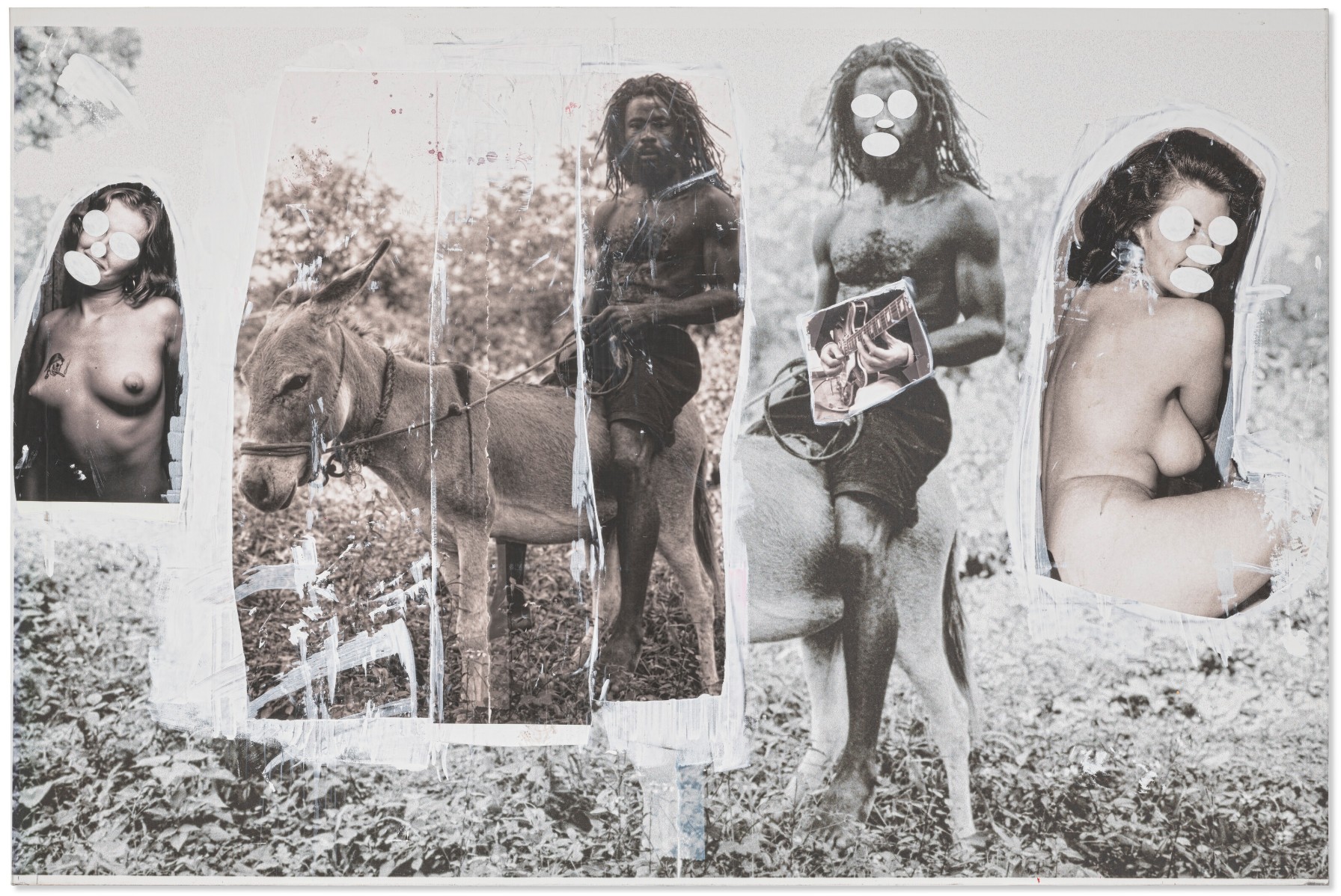
RICHARD PRINCE (B. 1949)
Back to the Garden, 2008
Acrylic, inkjet and canvas collage on canvas
80×120 inches (203.2 x 304.8 cm)
Signed, titled and dated ‘Richard Prince 2008 BACK TO THE GARDEN’ (on the overlap)
Executed in 2008, Richard Prince’s Back to the Garden belongs to a series of visually striking works that have become known as the artist’s Canal Zone paintings. Featuring figures in a lush, verdant setting, and rendered on a panoramic scale, the present work is a bold canvas in the grand tradition of the artist’s Cowboys and Nurse appropriation works. Using photographic imagery of nude women, their faces obscured with painted white lozenges, alongside a bare-chested Rastafarian seen riding a donkey, Prince manipulates their meaning as a biting commentary on our image-infatuated society. The photographs used in the present work were taken by the French photographer Patrick Cariou, and the artist’s use of them are part of his ongoing dialogue of how we use and understand images. Having spent his career culling imagery from books and magazines, Back to the Garden is a powerful postmodern critique of a vast, wide-ranging set of influences.
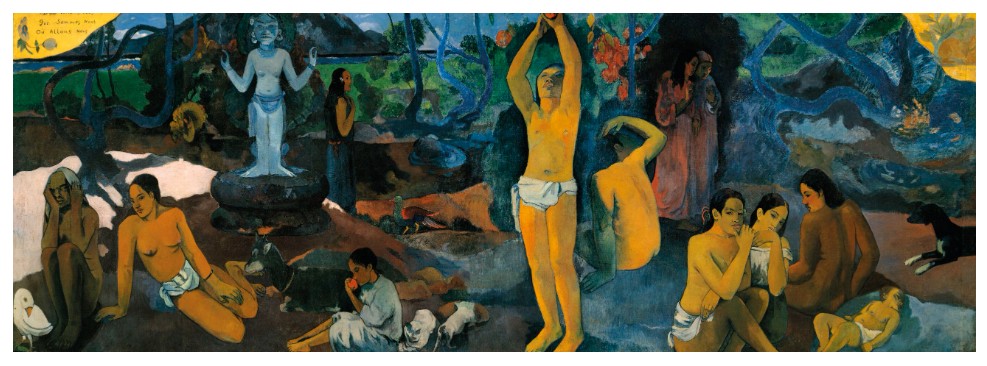
Paul Gauguin, Where Do We Come From? What Are We? Where Are We Going?, 1897 – 1898. Museum of Fine Arts, Boston.
In 2007, Richard Prince purchased a book of photographs by Cariou. The publication, called Yes Rasta, was shot on location in Jamaica and featured dozens of black-and-white photographs of Rastafarians living there. Prince created a collage from images in Cariou’s book, which he titled “Canal Zone,” a reference to the sub-tropical landscape of Panama, where Prince was born. The following year, Prince expanded upon the theme, appropriating more pictures from Yes Rasta into a new series of large-scale paintings, of which the present work is an example.
To create the present work, Prince used an inkjet printer to create large-scale, black-and-white copies which he then applied directly to the canvas surface, using white paint instead of glue. Prince let the excess paint seep and drip, leaving them as evidence of his working process. He covered the women’s faces with white, leaving them completely anonymous, a technique which ratchets up the evocative quality of the already sexualized imagery. The women were all nude, their bodies contorted into strange poses that seemed to emphasize and exaggerate their own nakedness. Alongside these women were the Rastafarians from Cariou’s book, also applied to the canvas in the same manner, with the white paint dripping down the surface.
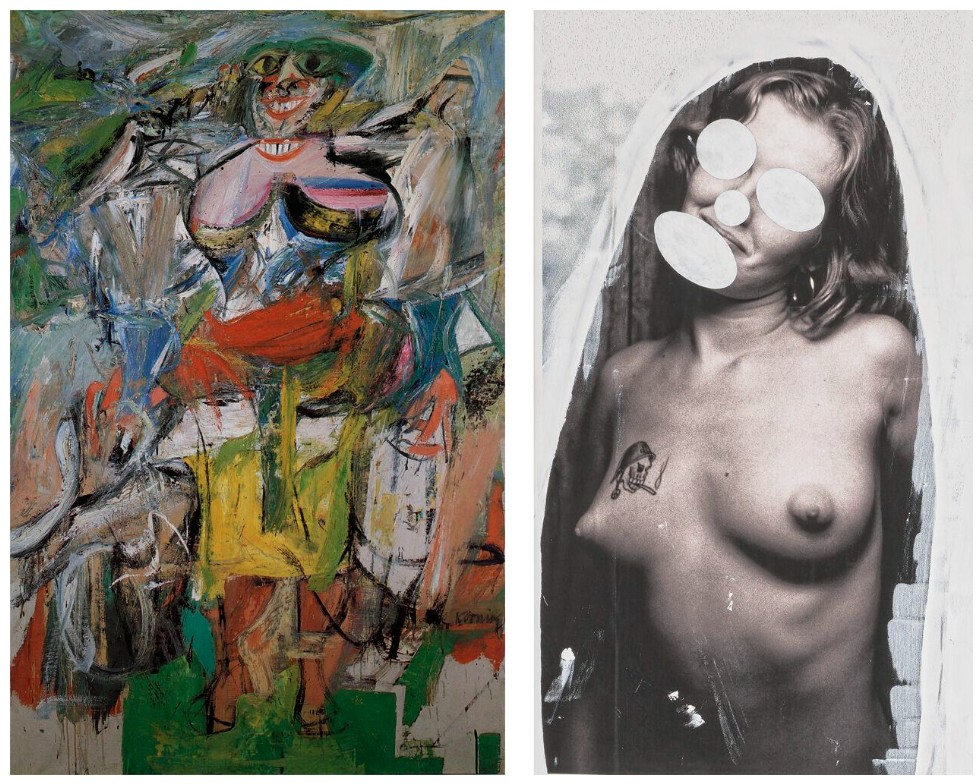
Left: Willem de Kooning, Woman and Bicycle, 1952 – 1953. Whitney Museum of American Art, New York. © 2026 The Willem de Kooning Foundation / Artists Rights Society (ARS), New York.
Right: Present lot illustrated (detail).
In 2011, the Canal Zone paintings became the subject of a lawsuit when Patrick Cariou sued Richard Prince, claiming copyright infringement. A court in the Southern District of New York ruled in Cariou’s favor, stating that Prince did not modify or transform the imagery significantly enough to constitute “fair use.” This high-profile copyright case sent shock waves through the art world, as it had implications for many artists who obtained their source imagery from a variety of different media. This strategy of “appropriation” was a hallmark of 1980s Postmodernism, a movement which Richard Prince pioneered when he re-photographed magazine ads and exhibited them as new work. His iconic Cowboys and Nurse paintings are two of the most well-known series that relied on this strategy. In 2014, an appeal brought to the United States Court of Appeals for the Second Circuit reversed the decision of the lower court, ruling largely in favor of Prince. They found that the Canal Zone paintings were permissible under “fair use” because they had a “different character” from the source material and gave it a “new expression”. This appeals ruling meant a great deal to many artists in America.
Pablo Picasso, Les Demoiselles d’Avignon, 1907. Museum of Modern Art, New York.
© 2026 Estate of Pablo Picasso / Artists Rights Society (ARS), New York.
Back to the Garden stands as a postmodern critique of an extensive, far-reaching set of influences, ranging from Paul Gauguin’s paintings of Tahitian girls and women, to Picasso’s Demoiselles d’Avignon, to de Kooning’s distorted female figures. Picasso, in his use of African masks, and Gauguin, in his sexualized paintings of Tahitian girls, exaggerated the concept of the “exotic other,” and used these visual motifs as shorthand for a sexualized libido, which they associated with Africa and the South Pacific. Back to the Garden mimics much of these earlier motifs, with subtle twists. The vibrant, colorful jungles of Gauguin’s landscapes are bleached out, leached of all color and warmth. The African masks are the white lozenge shapes, mimicking the black bars used by censors to mask the sitter’s identity. The painting’s title implies a return to Eden, but instead presents an unfamiliar world in which we are challenged to rethink our assumptions and not just passively consume the deluge of daily images that wash over us.
Mustang Painting #3, 2014-16
Bonhams New-York: 19 November 2025
Estimated: USD 500,000 – 700,000
USD 533,900
Bonhams : RICHARD PRINCE (B. 1949) Mustang Painting
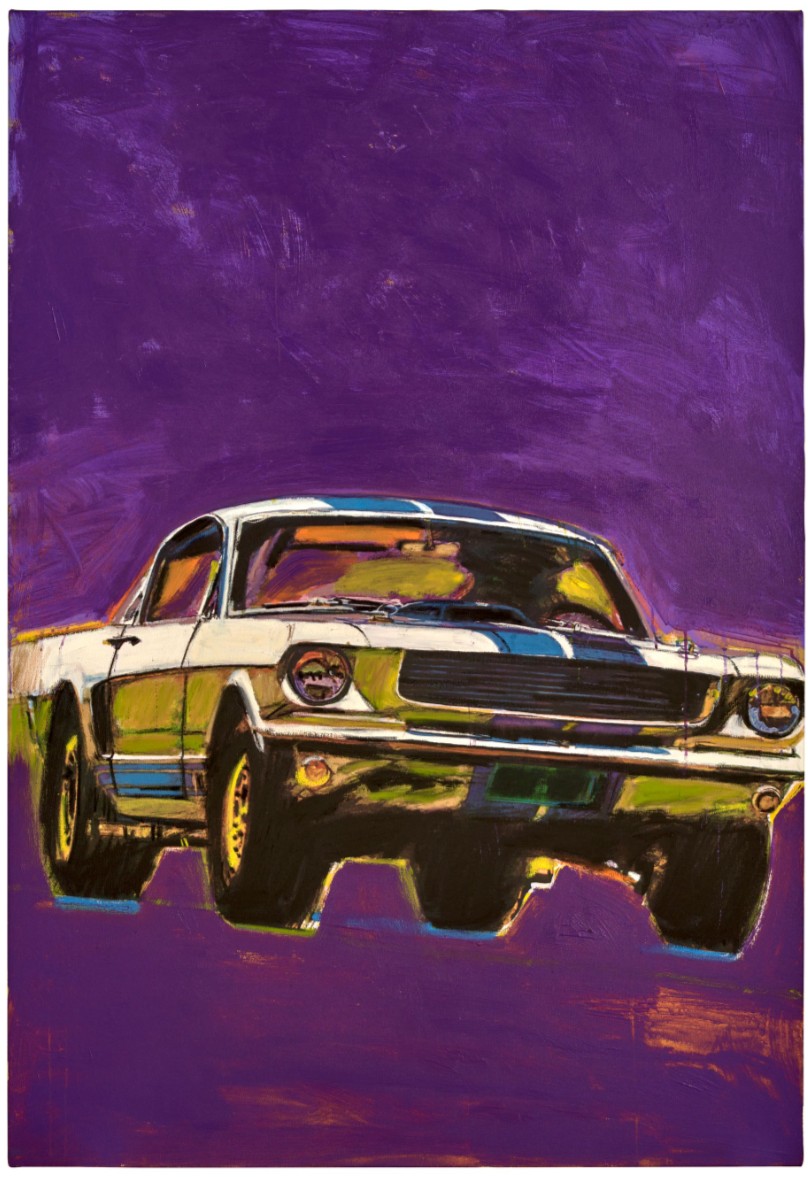
RICHARD PRINCE (B. 1949)
Mustang Painting #3, 2014-16
Inkjet and acrylic on canvas
69 5/8 x 47 7/8 inches (176.8 x 121.6 cm)
Signed, inscribed and dated ‘Prince 2014-2016 #3’ (on the reverse)
Few artists have mapped the mythology of American aspiration with as much wit and profundity as Richard Prince. In Mustang Painting (2014–2016), the artist revisits one of the country’s most enduring emblems of freedom and desire: the muscle car. Suspended over a saturated violet ground, the car – an iconic and rare Shelby Mustang GT350 – appears to hover between motion and stillness, its wheels dancing lightly on their tread. At once an image and an apparition, it crystallizes Prince’s fascination with the promises and delusions that animate the American dream. Prince’s career has long been entwined with the visual rhetoric of advertising and desire. Beginning in the late 1970s with his now-canonical Cowboys and Girlfriends series, he appropriated mass-media imagery to expose the coded fantasies underpinning masculinity, sexuality, and success. The muscle car entered his iconography as a natural extension of these themes: a fetish object of autonomy and performance, and a proxy for identity itself. In Mustang Painting, Prince reanimates that motif not through direct quotation from an advertisement, but through an image already mediated by the screen and the printer. The result is both painterly and mechanical, a composition whose digital inkjet underlayer is inflected with visceral streaks of acrylic paint, bridging the distance between the seductive gloss of commerce and the expressive force of painting.
The Mustang, of course, bears its own cultural meaning. Launched in 1964 as the sports car for a newly mobile middle class, it was designed to embody youth, rebellion, and self-invention. Here, it menaces with an unnatural intensity, rendered in the synthetic hues of a dream sequence. Yellows and electric blues that dissolve into the royal violet of the background. The car is less an object than an attitude, an avatar of speed and seduction suspended in painterly limbo. Prince’s hybrid process reflects his ongoing dialogue with the traditions of Pop. Like Warhol before him, he understands that the image is never neutral; yet unlike Warhol, Prince allows the image to reassert the hand of the artist amid the mechanics of reproduction. The inkjet transfer and Prince’s overpainting blurs authorship and authenticity. Occupying a commanding scale that recalls the monumental proportions of roadside billboards, its single, central subject radiates an almost devotional focus. The Mustang here is not merely an icon of mid-century Americana but a mirror for the spectator’s own projections of power and freedom. Prince’s art has always courted this ambiguity, the fine line between critique and complicity, between desire and disillusion. Mustang Painting stands as a late meditation on the mirage of freedom that defines the American image world. It is a painting about velocity and stasis. Within its vivid field of color and glare, Prince distills half a century of American dreaming into a single, dazzling pause.
Untitled (de Kooning), 2007
Phillips New-York: 25 September 2024
Estimated: USD 100,000 – 150,000
USD 279,400
Richard Prince – New Now: Modern &… Lot 22 September 2024 | Phillips
RICHARD PRINCE
Untitled (de Kooning), 2007
Acrylic on Ektacolor photograph mounted to board
48 x 58 1/2 inches (121.9 x 148.6 cm)
Executed in 2007, Prince’s Untitled (De Kooning) is a striking example from the artist’s ‘de Kooning’ series which appropriated the visual lexicon of the iconic Abstract Expressionist artist. Amidst a painterly background, shifting from deep maroons and purples to hazy greys and washed-out pinks, Prince situates his three curiously distorted figures. A crudely painted outstretched arm and a bent leg are juxtaposed against printed photographic clippings of human limbs in various states of activity and repose. What remains true between all three figures are their painted faces, directly drawn from de Kooning’s own. Arresting and slightly unnerving in their comically stretched eyes and toothy grins, Prince successfully creates a work which merges his own oeuvre with that of his inspiration.
“It was time to pay homage to an artist I really like.
Some people worship at the altar – I believe in de Kooning.”
Prince’s motivation for this series came about while browsing a catalogue of de Kooning’s Women series, which were created between 1950 and 1953; now revered as canonical works of modern art, these paintings were at the time seen as repellant and grotesque depictions of the female form; visual manifestations of dark Freudian insights. Indeed, these works by de Kooning – which portray garish women rendered in vigorous, gestural brushstrokes – were, although vulgar, also considered expressions of sexual struggles, where the feminine confronts masculinity. It is this aspect of the Women series that Prince seems to have taken as a jumping off point.
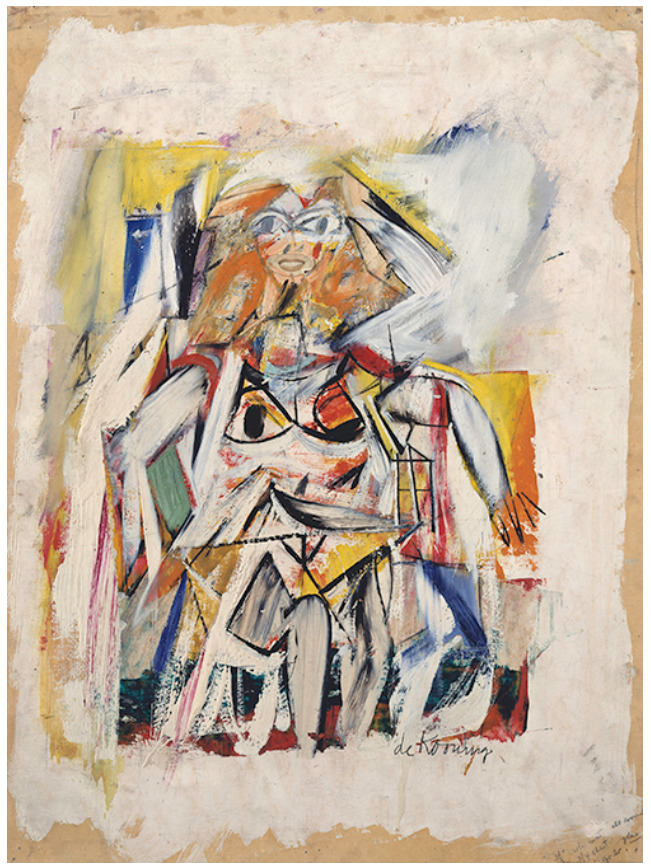
Willem de Kooning, Woman, 1952, Metropolitan Museum of Art, New York. From the Collection of Thomas B. Hess, Gift of the heirs of Thomas B. Hess, 1984 (1984.613.6). Image: Metropolitan Museum of Art, New York/Scala Archives, Florence, Artwork: © Willem de Kooning Foundation / Artists Rights Society (ARS), New York
Flipping through the catalogue, Prince began sketching over the paintings, sometimes adding male attributes to de Kooning’s women. As this project developed, Prince would apply fragments of male and female body parts – torsos, genitalia, thighs – over de Kooning’s originals, cutting and pasting from vintage magazines and physically drawing outlines and silhouettes with graphite and oil crayon. From these frenetically created drawings evolved this current series of paintings, almost doubly removed from their subject matter; using an ink-jet printer to blow up these drawings onto large canvases, Prince then all but painted over the original material. The resulting effect is somewhere between painting and collage, abstract expressionism and pulp-fiction, and a testament to de Kooning’s own collage practice.
“Beauty becomes petulant to me. I like the grotesque. It’s more joyous”
In an infamous exchange between critic Clement Greenberg and de Kooning, Greenberg questioned the role of figurative art in Modernism when he claimed that “In today’s world, it’s impossible to paint a face.” De Kooning responded, “That’s right. And it’s impossible not to.”i What de Kooning seems to be referencing here is the longstanding allure of the figure, and more importantly, the face; and the ways in which the human form both resists and invites being depicted. Prince’s appropriation of images in Untitled (de Kooning) is what he is known best for – although in this case, rather than sourcing his material from mass media and entertainment, he extends his artistic vocabulary into the realm of fine art. Cleverly co-opting de Kooning’s women as his own, Prince desecrates de Kooning’s already desecrated female figures to make something almost subversive in its beauty.
The Weeping One, 1988
Sotheby’s London: 26 June 2024
Estimated: GBP 150,000 – 200,000
GBP 162,000 / USD 205,465
RICHARD PRINCE (b. 1949)
The Weeping One, 1988
Acrylic, silkscreen, enamel and marker on canvas
65 5/8 x 54 inches (166.7 x 137.2 cm)
Signed and dated 1/19/88 4:46:14 (centre)
Signed, titled and dated 1988 (on the overlap)
Richard Prince’s The Weeping One stands out as a significant piece in the art-historical canon. Part of a series inspired by cartoons from The New Yorker magazine, this work was initiated by Prince in the 1980s as a witty critique of the art market’s vanities. Prince began this series in 1984, as a consequence of the rejection of the grandiose scale that characterized much contemporary painting. He meticulously redrew one-line gag cartoons from The New Yorker, faithfully replicating both images and texts. The use of graphite on a smaller scale allowed Prince to explore his appropriative strategies in a way that highlighted his own artistic hand. The cartoons, much like advertising images, mirror cultural tastes, desires.
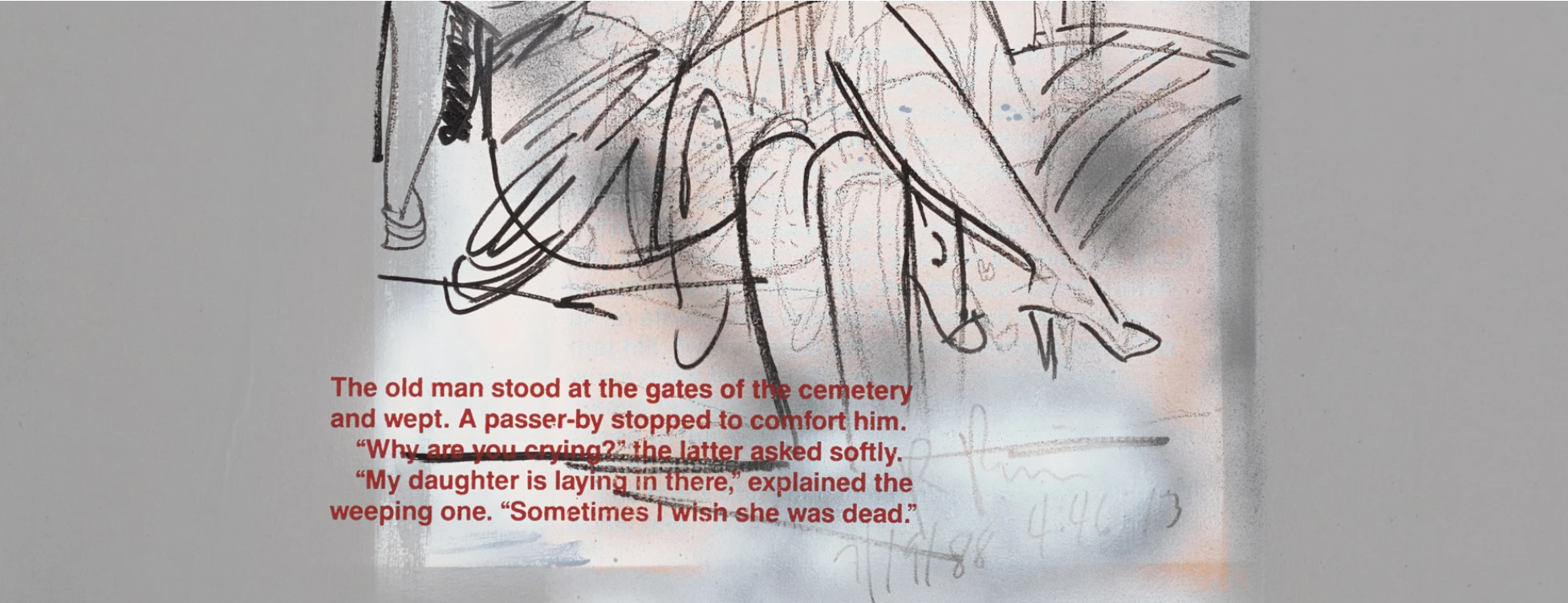
The Weeping One is unique in Prince’s ability to blend lowbrow cultural expressions with his own autobiographical elements. Initially copying Whitney Darrow originals, Prince soon began juxtaposing these with other hand-copied illustrations that reflected his personal obsessions. This infusion of cynical, self-mocking humor, typical of stand-up comedy, became a hallmark of his cartoon-based work. By replacing original punch lines with classic one-liners, Prince avoided appropriating a specific cultural ethos. The artist created hybrid emblems with fluid narratives by separating cartoons from their captions and adding non sequitur jokes, exposing the underlying hostility, fear, and shame within American humor. Between 1987 and 1989, Prince created numerous variations on this theme, resulting in a spectrum of paintings with interchangeable jokes. In the same tone as advertisements, these recycled jokes were authorless, waiting to be repeated. The power of humor to reveal the darker sides of existence through comic relief has been a central theme in Prince’s art since the mid-1980s. The Weeping One exceptionally exemplifies Prince’s unique approach: what began as a protest against the 1980s art market’s excesses has become a celebrated part of the art-historical canon. The integration of humor and painting remains a cornerstone of Prince’s work, reflecting his enduring engagement with the tradition of the readymade and his ability to transform everyday cultural artefacts into profound artistic statements.
Untitled (Fashion), 1982-84
Sotheby’s New-York: 16 November 2023
Estimated: USD 700,000 – 1,000,000
USD 762,000
Untitled (Fashion) | Contemporary Day Auction | 2023 | Sotheby’s (sothebys.com)
RICHARD PRINCE (b. 1949)
Untitled (Fashion), 1982-84
Ektacolor photograph
40×30 inches (101.6 x 76.2 cm)
This work is number 1 from an edition of 1
An enigmatically alluring image of American consumerism, Untitled (Fashion) is one of only nine images that constitute Prince’s iconic Fashion series. Inspired by fashion advertisements, the series, executed in 1982-1984, sees Prince expand upon the artful quality of print campaigns by rephotographing and recontextualizing found images culled from a plurality of fashion magazines into works of fine art. The distortion of the original subject-matter combined with the seductive pose of the sitter affords the present photograph an eerie editorial glamor that recalls the very best of Prince’s masterly body of works. Untitled (Fashion) boasts a rich exhibition history, having been displayed at such prestigious international institutions as the Guggenheim Museum in New York, the Walker Art Center in Minneapolis, the Museum für Gegenwartskunst in Basel, and the Kunstmuseum Wolfsburg in Zurich. Testifying to the series’ singular importance and unique appeal in the artist’s oeuvre, other photographs from Prince’s Fashion series can be found in prestigious institutional collections such as The Art Institute of Chicago.
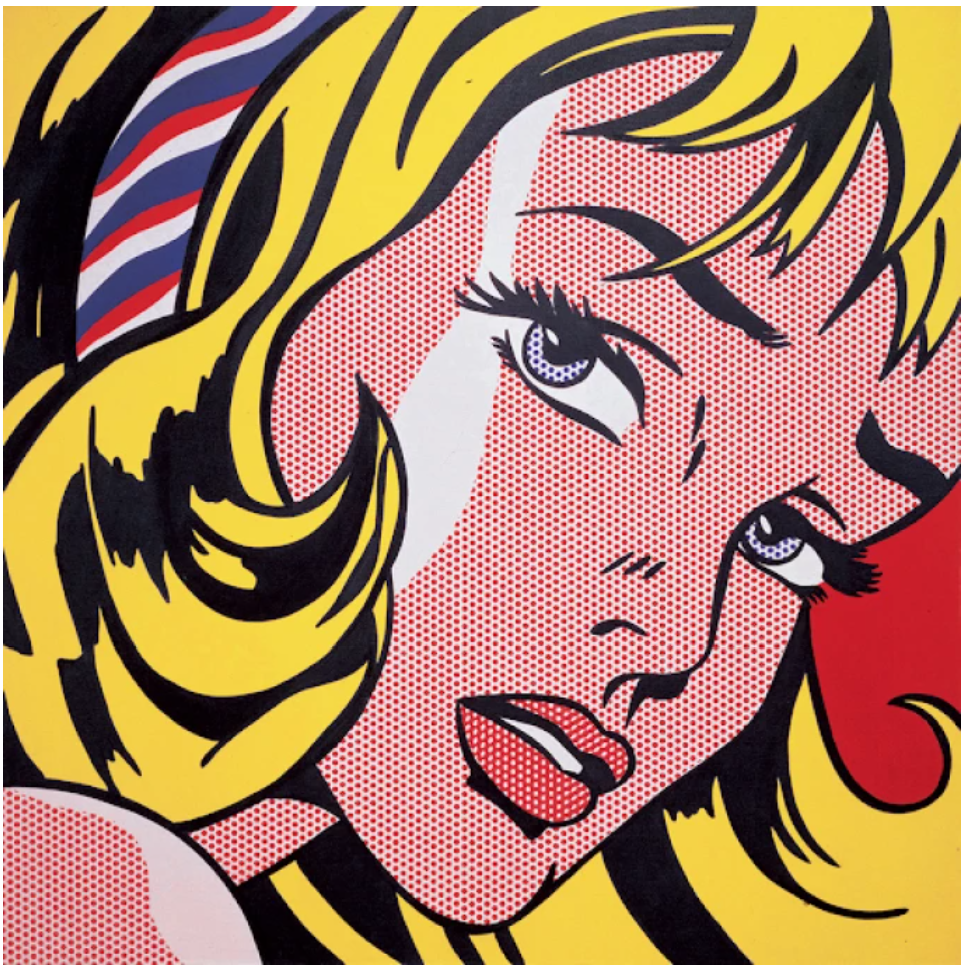
ROY LICHTENSTEIN, GIRL WITH HAIR RIBBON, 1965. MUSEUM OF CONTEMPORARY ART, TOKYO.
Discreetly cropped and dramatically magnified, the model in Untitled (Fashion) appears dubiously close. Eyes obscured by a futuristic lens, she directs her gaze assertively to the viewer’s right, boldly refusing any connection with her audience. This intriguing interplay of visual obstruction and the deliberate denial of eye contact leaves the viewer longing for a more intimate connection with the seemingly untouchable fashion icon, a quality which is shared amongst the other eight photographs in the series. Fragmented into grainy grisaille, the model’s profile is further abstracted into forms of shadow and light. The severity of the shadows contrast with islands of light, severing the illuminated forms from the darkened regions. As a result, the subject’s head appears distinct from her neck, foregrounded as the center of the image, and her eyewear appears to stand as an object in its own right, merely floating upon her face. Furthermore, the soft curves of the woman’s jaw and hairline starkly contrast the sharp edges of her mask, engendering a decisive distinction between human and object and making the composition all the more alien and peculiar. This alienating sensation is further amplified by the subtle violet haze that permeates all nine photographs in the Fashion series. Stripped from their original high-fashion campaigns, the models in the Fashion series manage to impart a similar sense of ethereal beauty and power through their detachment, transfixing viewers in the same way indiscriminate advertisements persuade consumers to participate in our capitalist society.
My boyfriend married a girl, 1995
Sotheby’s New-York: 16 November 2023
Estimated: USD 250,000 – 350,000
USD 228,600
My boyfriend married a girl | Contemporary Day Auction | 2023 | Sotheby’s (sothebys.com)
RICHARD PRINCE
My boyfriend married a girl, 1995
Acrylic, silkscreen and graphite on canvas
58×74 inches (147.3 by 188 cm)
Titled (center left); signed, titled and dated 1995 (on the overlap)
Richard Prince’s tongue-in-cheek appropriations of American life have cemented him as one of the most important artists of the 21st century. Throughout his career, Prince’s work has provoked debate over the limitations of appropriation and blurring the line between creativity and imitation. At the same time his reproduced images of mainstream media have captured America’s idiosyncrasies while highlighting the pervasiveness of the media’s derivative nature. Prince’s work demonstrates that all images are reiterations of one another and that their meaning and significance can be altered when placed in a different context. Influenced by Pop art, Prince has embraced the brash world of low culture, advertising, and mass media to present ironic images that critique contemporary social norms. Prince’s provocative work forces us to question the very foundations of American identity.
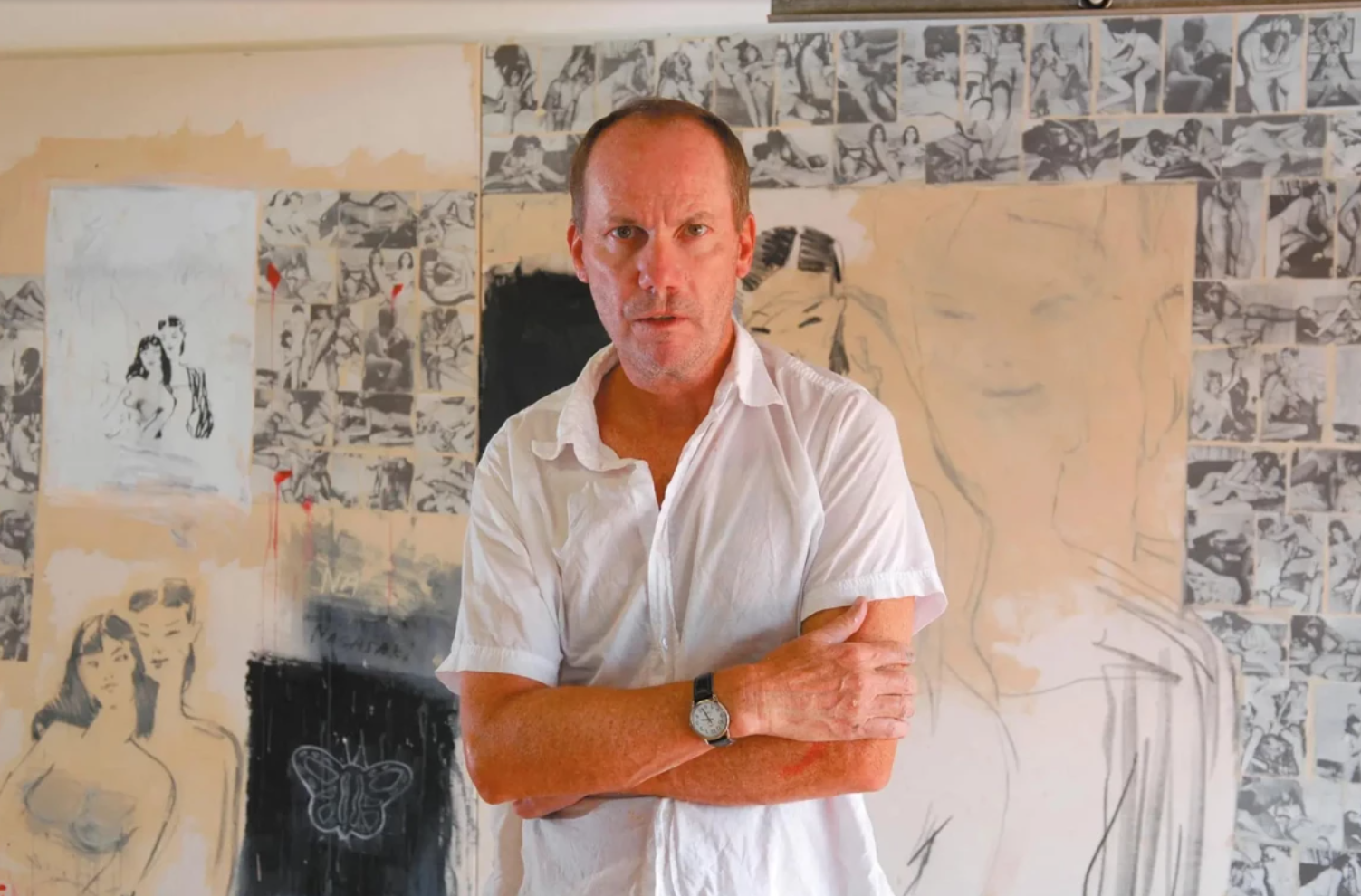
RICHARD PRINCE. PHOTO: GORDON M. GRANT/THE NEW YORK TIMES/REDUX
Combining sardonic humor with sharp wit, My Boyfriend Married a Girl from 1995 is a unique and clever work from Richard Prince’s rich and diverse oeuvre. By this time, Prince was already known as the absurdist, entertaining provocateur of the art world with the present work acting as a prime example of his enigmatic, yet intelligible works. The present work illustrates an assemblage of fragmented pieces of canvas, creating an image of a picket sign inscribed with fragments of a joke, creating a composition that is painterly and abstract. Related to Prince’s iconic Joke Paintings where the artist would include typed, found jokes on canvas devoid of imagery against a monochrome background, My Boyfriend Married a Girl creatively combines this deadpan humor with an expressionistic style of painting. The text is the beginning of a joke Prince has used in other places. The joke begins “My Boyfriend Married a Girl” and ends with, “who’s bisexual. Claims he’s going to change her. He did three years later she’s a lesbian.” By truncating the joke and sidelining it within the composition, Prince shifts the context and challenges viewer’s expectations. My Boyfriend Married a Girl no longer acts as an immediately understandable joke, nor an immediately recognizable Prince painting. Instead, here Prince presents an absurd narrative, relying on the viewer’s implicit understanding of his own artistic process; an inside joke amongst the art-world. The present work cleverly subverts the serious and somewhat self-important vernacular of abstract painting to turn a mirror to American society, and in doing so epitomizes the very best of Richard Prince’s progressive oeuvre.