
George Condo occupies a singular position within contemporary painting. At a time when figuration has reasserted itself globally, his work appears both foundational and forward-looking. He has reintroduced a form of intellectual rigor into figurative painting, one that embraces history without nostalgia and distortion without arbitrariness. His influence is evident in a younger generation of painters exploring psychological fragmentation and hybrid visual languages. Yet Condo remains distinct: his work is not merely stylistic but conceptual, grounded in a sustained inquiry into what it means to represent the human condition. In this sense, Condo’s achievement lies in reconciling opposites, beauty and grotesque, tradition and invention, control and chaos, within a body of work that continues to expand the possibilities of painting today.
Introduction
Born in 1957 in Concord, New Hampshire, George Condo stands as one of the most intellectually sophisticated painters of his generation. Trained in art history and music theory at the University of Massachusetts Lowell, Condo moved to New York in the late 1970s, where he briefly worked in the orbit of Andy Warhol’s Factory. This early immersion in a post-Pop environment proved formative, though Condo would quickly diverge from Pop’s cool detachment to pursue a more psychologically charged and historically grounded form of painting.

In the early 1980s, Condo relocated to Paris, where prolonged exposure to European Old Masters—Velázquez, Goya, Picasso—profoundly shaped his practice. It is within this transatlantic dialogue that his signature concept of “Artificial Realism” emerged: a mode of representation that synthesizes classical technique with invented, often grotesque figuration. Condo’s work thus occupies a rare position—simultaneously anchored in art history and radically contemporary.
Major Series and Pictorial Language
Condo’s oeuvre is structured around a number of highly distinctive series, each exploring different permutations of figuration, abstraction, and psychological distortion.
At the core lies Artificial Realism, not a single series but a conceptual foundation. Here, Condo constructs entirely invented characters—often aristocratic, bourgeois, or vaguely historical figures—rendered with technical finesse yet deliberately distorted. These paintings evoke Old Master portraiture while dismantling its claims to stability and identity.
From this emerges his celebrated Psychological Cubism, perhaps his most recognizable contribution. In these works, faces fracture into multiple viewpoints, recalling Pablo Picasso, yet infused with a distinctly Condo-esque humor and unease. Rather than formal experimentation alone, these distortions suggest the multiplicity of the self—simultaneously comic, tragic, and grotesque.
The “Fake Old Masters” series further engages with art history through parody and homage. Condo mimics the stylistic codes of classical European painting—composition, lighting, costume—only to subvert them through absurd expressions and exaggerated physiognomies. These works function as both critique and celebration of the canon. In the “Dancing to Miles” series, Condo introduces rhythm and musicality into painting, directly referencing his deep engagement with jazz, particularly Miles Davis. Figures appear animated, almost vibrating, as if structured by sound rather than form.
His Abstract Portraits push figuration toward near-dissolution. While still anchored in the idea of the face, these works become increasingly painterly, with gestural brushwork and chromatic intensity overtaking structural clarity.
Finally, Condo’s works on paper, including ink drawings and gouaches, form a critical parallel practice. Often more immediate and experimental, they distill his vocabulary into rapid, incisive gestures, revealing the underlying architecture of his invented characters.
Mediums and Technical Approach
His works on paper, executed in ink, graphite, watercolor, or gouache, offer a more spontaneous counterpart. These drawings often function as laboratories of form, where figures mutate freely, unburdened by the structural demands of large-scale painting.
Though less central, sculpture also plays a role in his practice. Typically rendered in bronze or other traditional materials, Condo’s sculptural works translate his grotesque heads into three-dimensional form, emphasizing volume and physical presence while maintaining their psychological intensity.
Across all mediums, what remains constant is a tension between control and chaos—between academic mastery and deliberate deformation.
Inspirations and Intellectual Framework
Condo approaches his creative process like a great jazz musician reinterpreting popular melodies to express their own unique sensibilities. Music, particularly jazz and classical music have been a great source of inspirations for the artist.
“Music is such a huge part of my life, without it I don’t know if I’d ever have painted anything… My favorite thing is to put on a record in the studio and to still be painting without noticing the fact that the music has stopped playing for hours and is just running through my head.”
Since the early 1980s, Condo has incorporated a myriad of different artistic references into his eccentric oeuvre, revealing a marked fascination with key figures in the canon of art history and a particular indebtedness to the cubist works of Pablo Picasso. Describing his approach to painting as “psychological cubism”, Condo adopts Picasso’s revolutionary method of representing reality. Like Picasso, the artist places emphasis on flatness and breaks down figures or objects into distinct planes in order to depict different viewpoints within the same space. However, while Picasso’s new way of seeing aimed to suggest the three-dimensionality of the object, Condo advances this approach further, illustrating the mental states of his figures.
Exhibition History and Institutional Presence
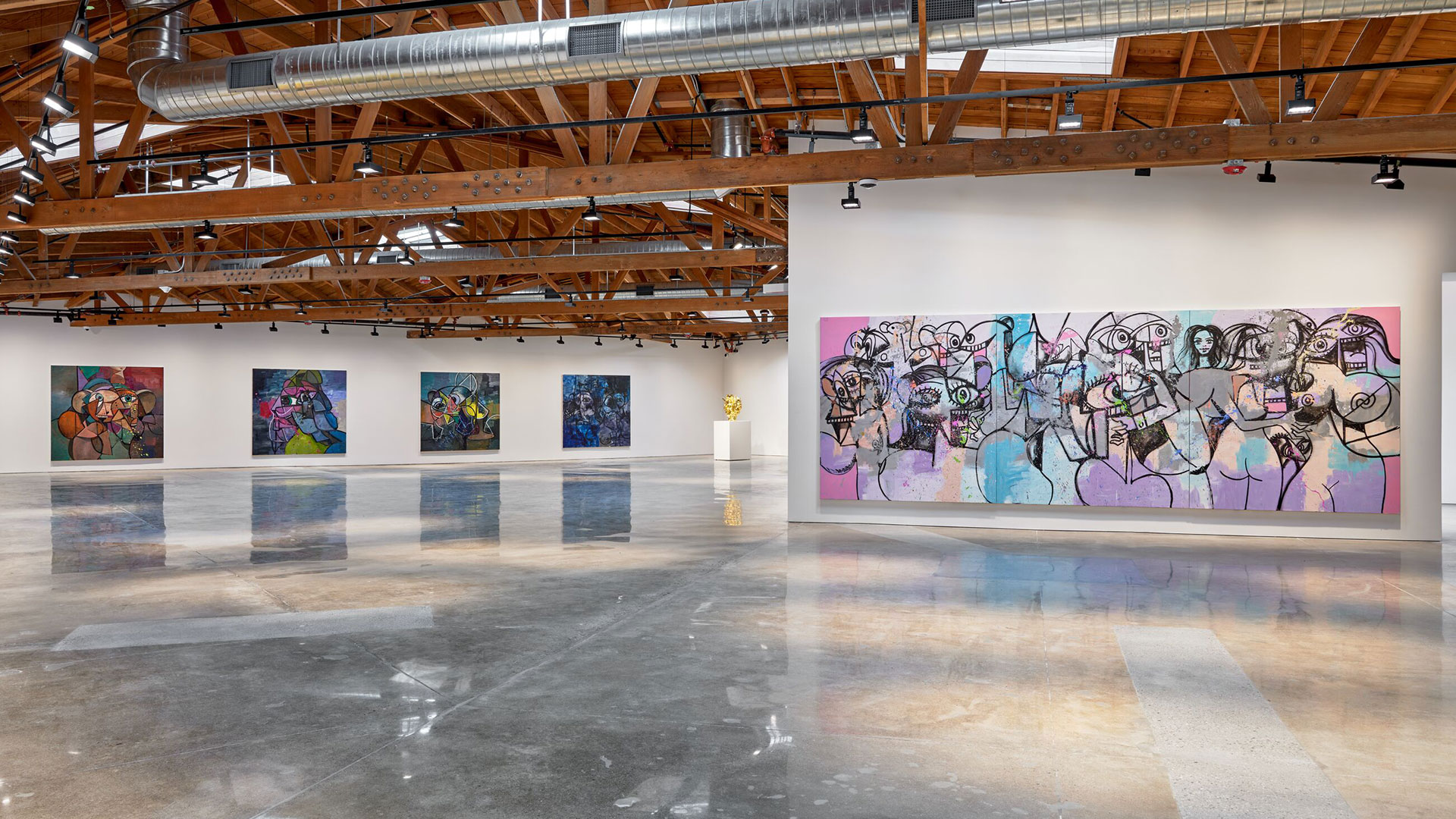
Over the years, Condo has been honored in a myriad of shows and retrospectives, many of which have been toured internationally. In 2021, Condo’s largest Asian solo exhibition, George Condo: The Picture Gallery, was held at the Long Museum, Shanghai. This exhibition brought together more than 200 paintings, sculptures and drawings made throughout his career. Condo’s work was also included in the 58th Venice Biennale, May You Live In Interesting Times in 2019 — six years after he first participated in the Biennale in 2013. In 2017, Condo’s works on paper were the focus of a retrospective at the Phillips Collection in Washington, DC, and, previously, he was the subject of a major career retrospective at the New Museum in New York City.
“Picasso painted a violin from four different perspectives at one moment. I do the same with psychological states. Four of them can occur simultaneously. Like glimpsing a bus with one passenger howling over a joke they’re hearing down the phone, someone else asleep, someone else crying – I’ll put them all in one face.”
Testament to the lasting impact of George Condo’s highly influential and experiential practice, works by the artist reside in permanent collections of esteemed institutions including the Broad Collection, Los Angeles; Metropolitan Museum of Art, New York; Solomon R. Guggenheim Museum, New York; Whitney Museum of American Art, New York; Centre Georges Pompidou, Paris; and the Tate Modern, London.
Gallery Representation
Condo is represented globally by leading galleries, most prominently Hauser & Wirth, which anchors his primary market across Europe, the United States, and Asia. The gallery has been instrumental in staging major exhibitions and placing significant works with institutional and private collections.
He also maintains strong relationships with Sprüth Magers and Almine Rech, further reinforcing his international presence. Historically, Condo has exhibited with Gagosian, reflecting his longstanding position within the upper tier of the contemporary art market.
PART I: SUMMARY
Auction Market Overview
2025 AUCTION STATISTICS
Turnover: USD 26,165,041
-36.8% vs. 2024
# Lots sold: 67
Sell-Through Rate: 80.7%
MARKET SEGMENTATION
COMING SOON
Highest Price Achieved at Auction:
Force Field, 2010
Christie’s Hong-Kong: 9 July 2020
HKD 53,150,000 / USD 6,856,828
The market for George Condo has demonstrated sustained strength, particularly over the past decade. His paintings, especially those aligned with Psychological Cubism and fully resolved portrait compositions, command significant prices at auction, regularly reaching into the multi-million-dollar range. Works on paper also occupy a crucial segment of his market, offering broader accessibility while retaining strong demand. These works are highly sought after for their immediacy and direct connection to his creative process. Unlike more speculative markets, Condo’s trajectory reflects a combination of critical validation and collector confidence. His market is supported by institutional recognition, consistent gallery placement, and a mature body of work that continues to evolve without losing coherence.
Auction Summary
1. Paintings
2025 Auction Highlights
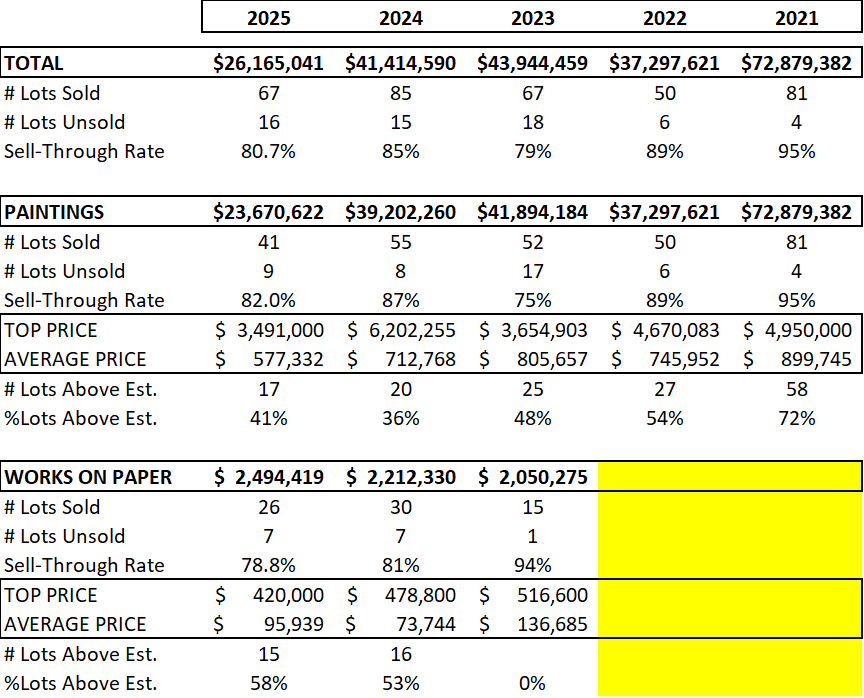
41 lots sold at auction in 2025 for a total turnover of USD 23,670,622. With 9 lots failing to sell, the sell-through rate is 82%. The highest price has been achieved by Abstract Conversation, a painting dated 2010, that sold at Christie’s in New-York, on 19 November 2025, for USD 3,491,000.
2025 Top 4 Lots
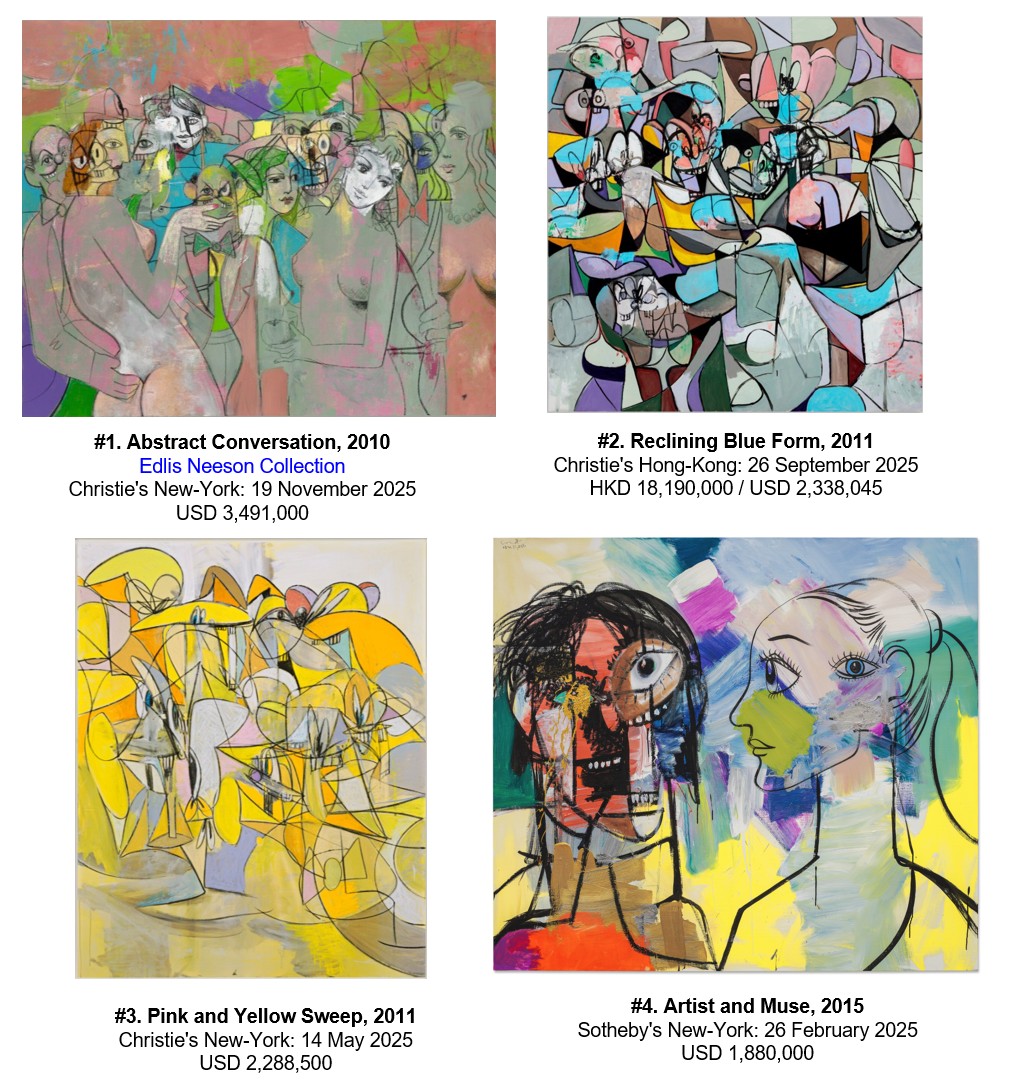
7 lots sold for more than USD 1 million, generating a cumulative turnover of USD 14,760,481, representing 62.3% of the total turnover of 2025.
2024 Auction Highlights
55 lots sold at auction in 2024 for a total turnover of USD 39,202,260. With 8 lots failing to sell (and 3 lots withdrawn), the sell-through rate is 87%. The highest price was achieved by Prescription for the Clinically Normal, a painting dated 2012, that sold at Christie’s in Hong-Kong on 26 September 2024 for HKD 48,291,000 (USD 6,202,255).
2024 Top 3 Lots
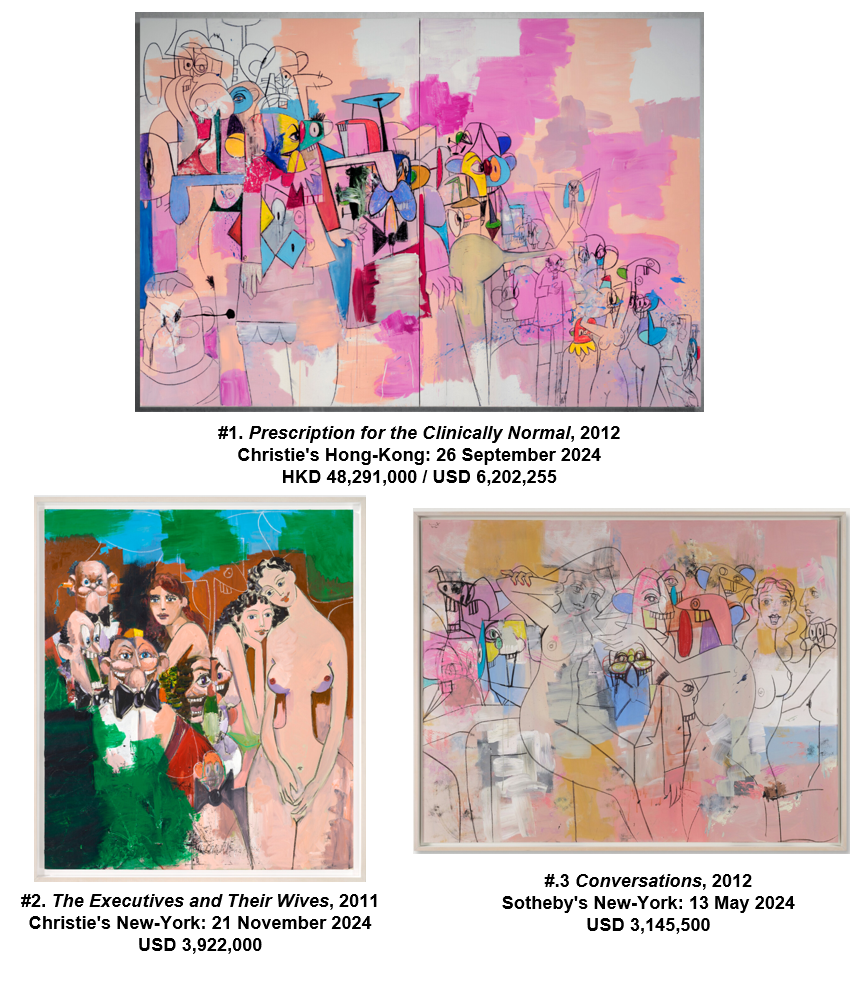
11 lots sold for more than USD 1 million, generating a cumulative turnover of USD 25,874,682, representing 66% of the total turnover for 2024.
2023 Auction Highlights
52 lots sold at auction in 2023 for a total turnover of USD 41,894,184. With 17 lots failing to sell, the sell-through rate is 75%. The top price of 2023 was achieved at Sotheby’s in London on 12 October 2023, where Multicolored Female Composition, a painting dated 2016 sold for GBP 2,993,000 (USD 3,654,903).
2023 Top 6 Lots
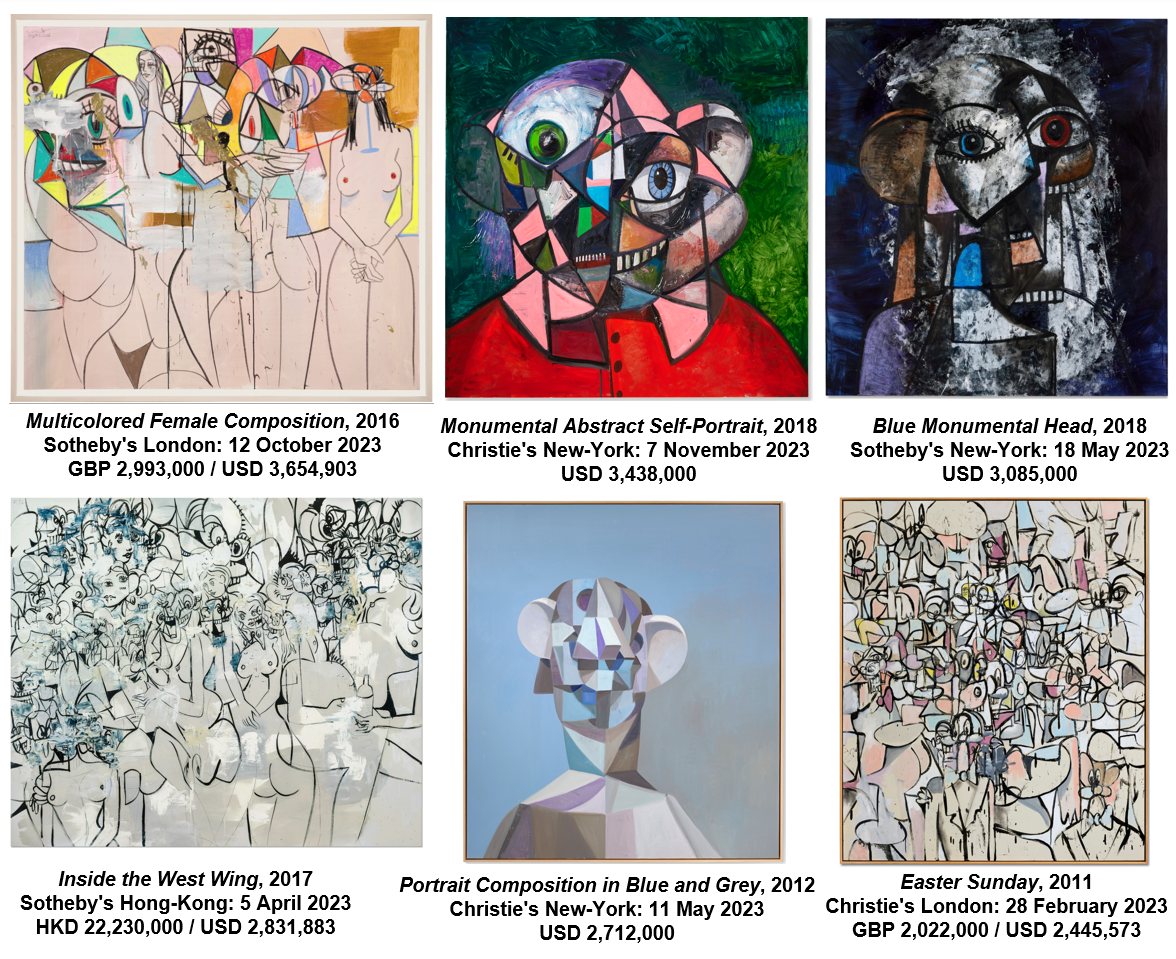
17 lots sold over USD 1 million for a cumulative turnover of USD 34,730,320, representing 82.9% of the total turnover for 2023. 27 lots sold in New-York for a cumulative turnover of USD 20,588,565, representing 50.3% of the total turnover. 16 lots sold in London for a cumulative turnover of USD 13,105,807 (32% of total).
2022 Auction Highlights
50 lots sold at auction in 2022, for a total turnover of USD 37,146,421. With 6 lots unsold, the sell-through rate is a solid 89%. The most expensive lot, Escaping from the Dark, dated 2017, sold at Sotheby’s in Hong-Kong on 30 November 2022 for HKD 36,450,000 (USD 4,670,083).
2022 Top 6 Lots
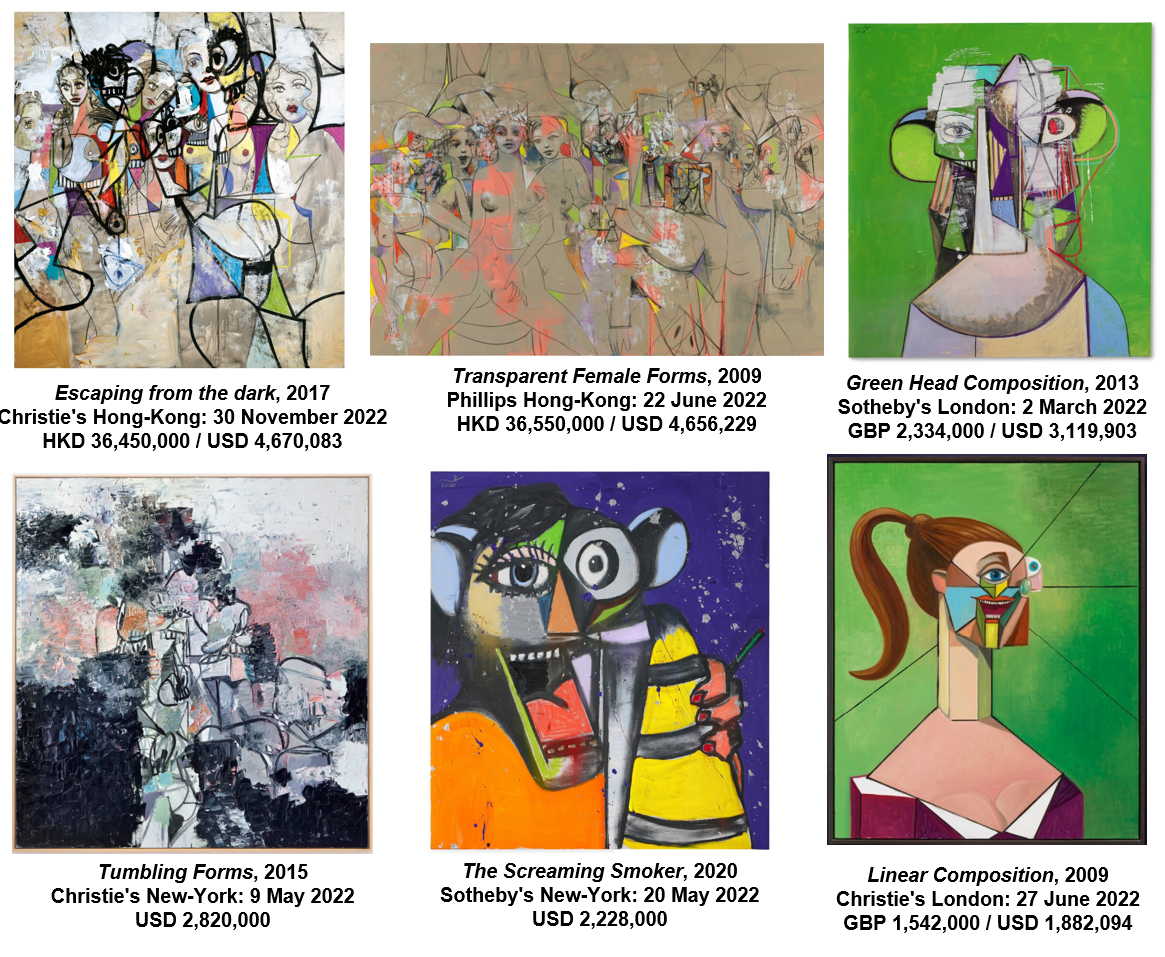
8 lots sold over USD 1 million, for a cumulative turnover of USD 21,543,509, representing 58% of the total turnover for 2022. The two most expensive lots were sold in Hong-Kong.
2021 Auction Highlights
81 lots sold at auction in 2021 for a total turnover of USD 72,879,382. With only 4 lots failing to sell, the sell-through rate is a remarkable 95%. The highest price of USD 4,950,000 for 2021 was achieved at Christie’s in New-York on 9 November 2021 for Linear Connection dated 2010.
2021 Top 6 Lots
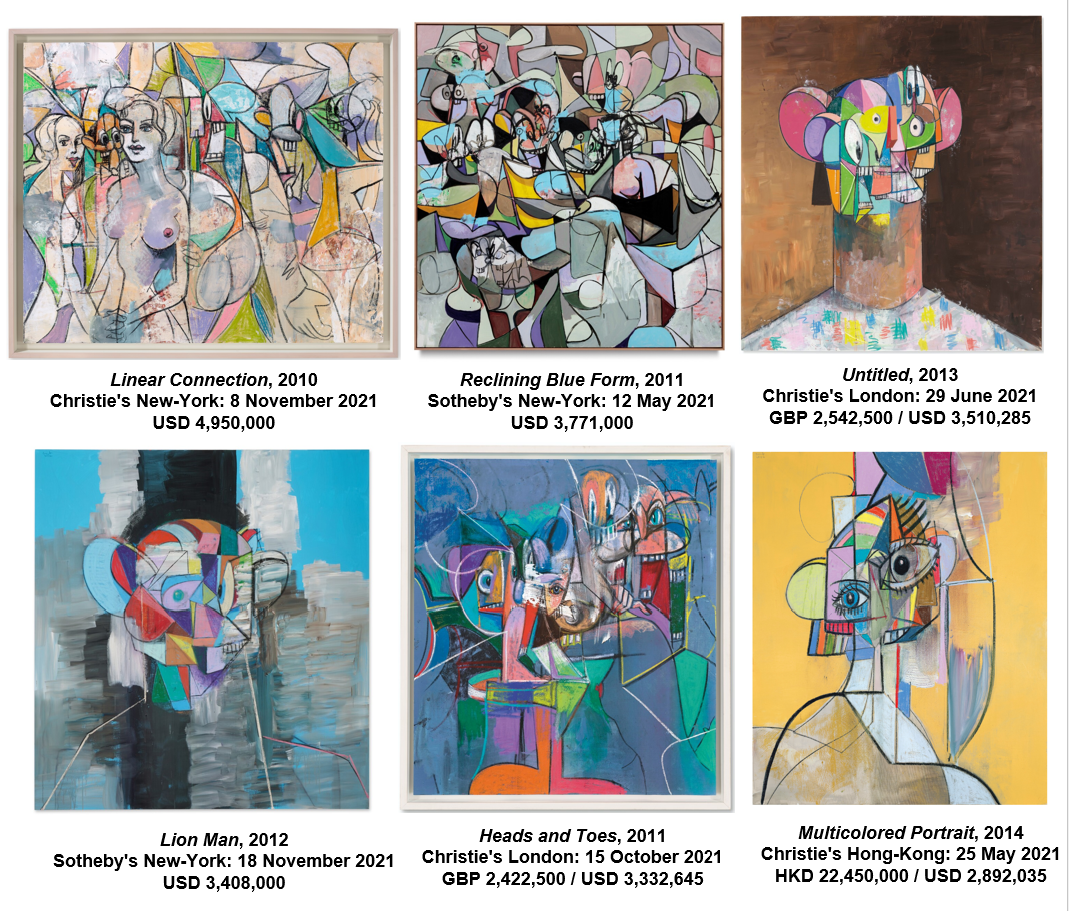
27 lots sold over USD 1 million for a cumulative turnover of USD 59,242,627 or 81.3% of total auction revenue for the year. 7 Lots from the Top 15 Lots sold in Hong-Kong.
2. Works on Paper
2025 Auction Highlights
26 lots sold at auction in 2025 for a total turnover of USD 2,494,419. With 7 lots failing to sell, the sell-through rate is 78.8%. The highest price was achieved by Blue Portrait Composition, a drawing dated 2013, that sold at Sotheby’s in Diriyah, on 8 February 2025 for USD 420,000.
2025 Top 6 Lots
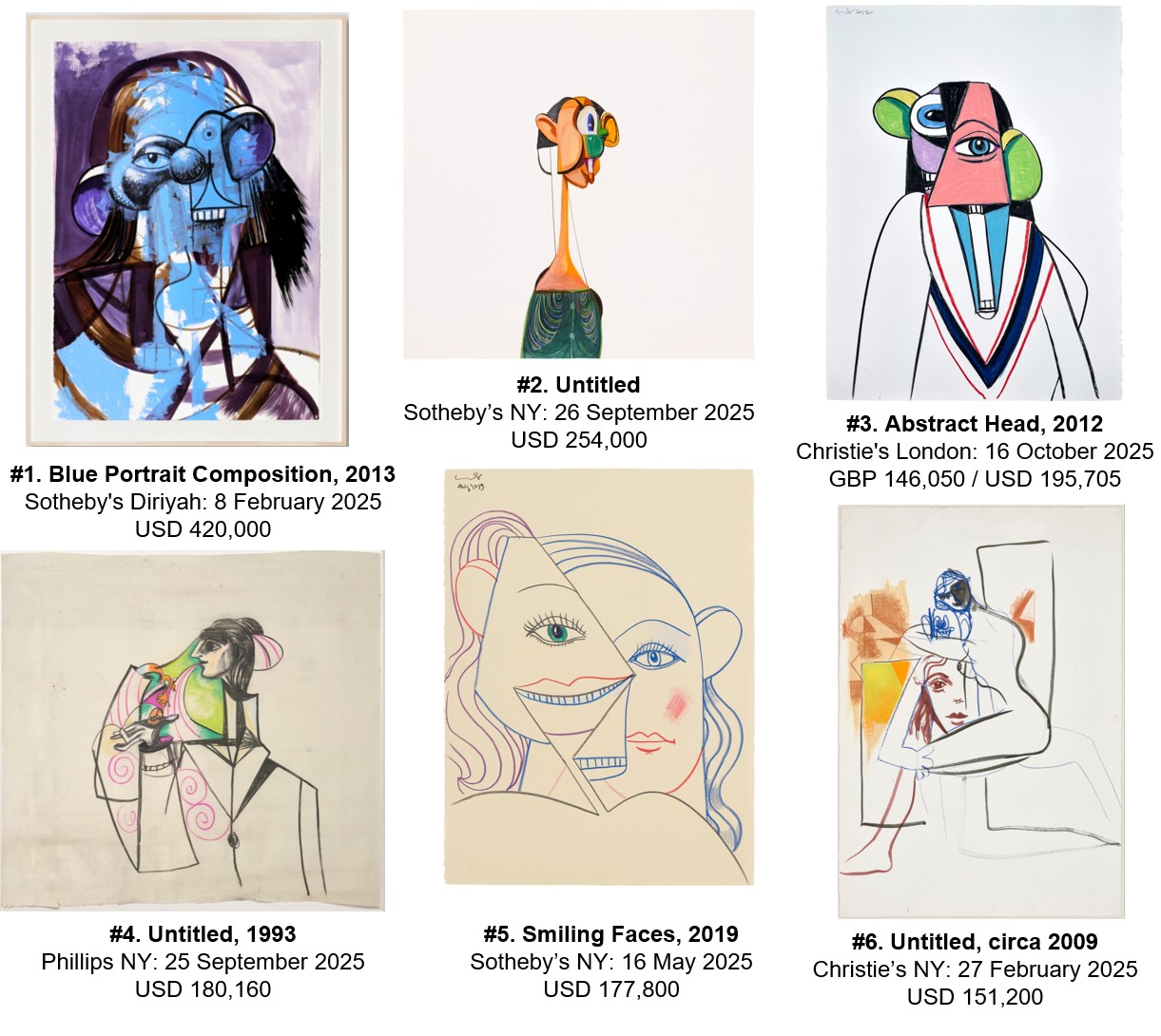
2024 Auction Highlights
30 lots sold at auction in 2024 for a total turnover of USD 2,212,330. With 7 lots failing to sell the sell-through rate is 81%. 4 lots sold for more than USD 100,000, for a cumulative turnover of USD 1,061,700, representing 48% of the total for 2024. The highest price was achieved by Linear Portrait, a drawing dated 2013, that sold at Christie’s in New-York on 22 November 2024 for USD 478,800.
2024 Top 6 Lots
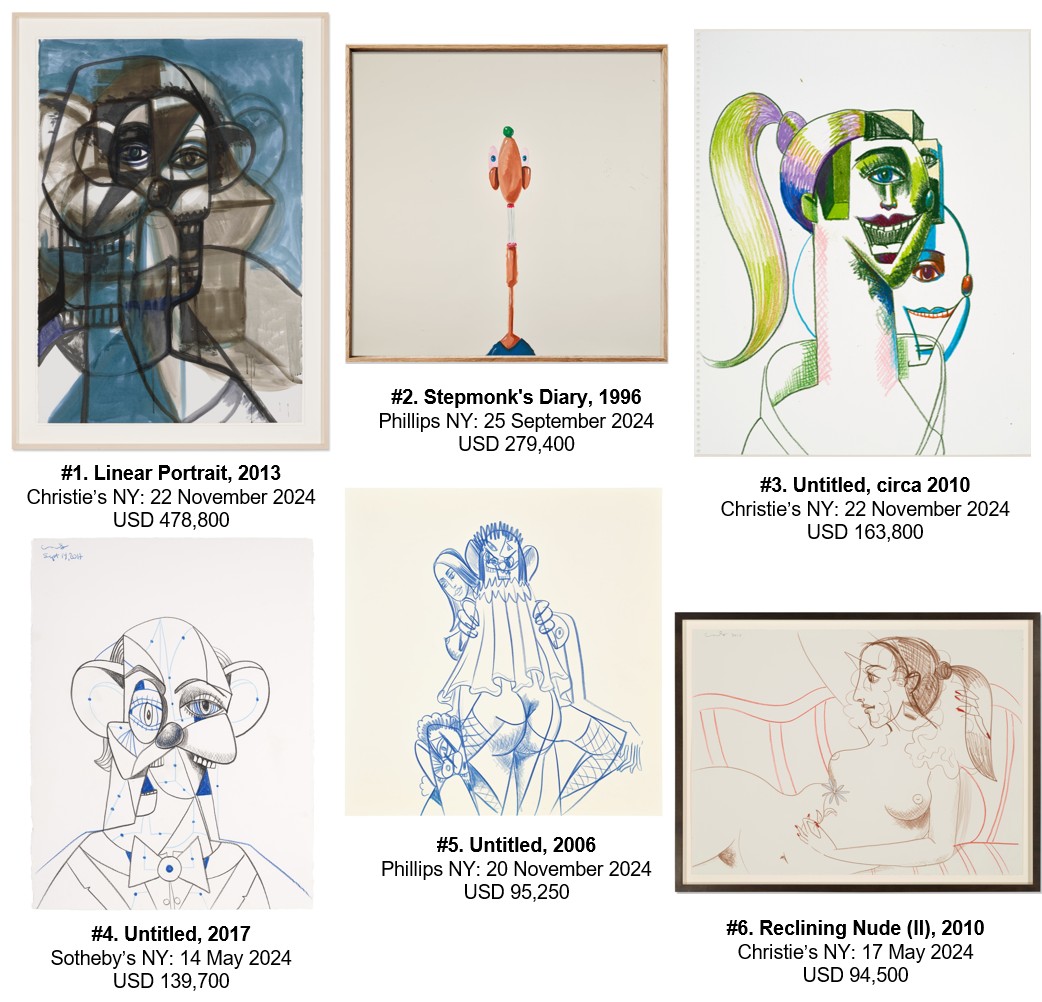
4 lots sold for more than USD 100,000, generating a cumulative turnover of USD 1, 061,700, representing 48% of the total turnover for 2024.
PLEASE CLICK BELOW TO READ ABOUT GEORGE CONDO WORKS ON PAPER
AND FIND HISTORICAL AUCTION RESULTS
Top Lots
#1. Force Field, 2010
Christie’s Hong-Kong: 9 July 2020
Estimated: HKD 18,000,000 – 28,000,000
HKD 53,150,000 / USD 6,856,828
George Condo (b. 1957) (christies.com)
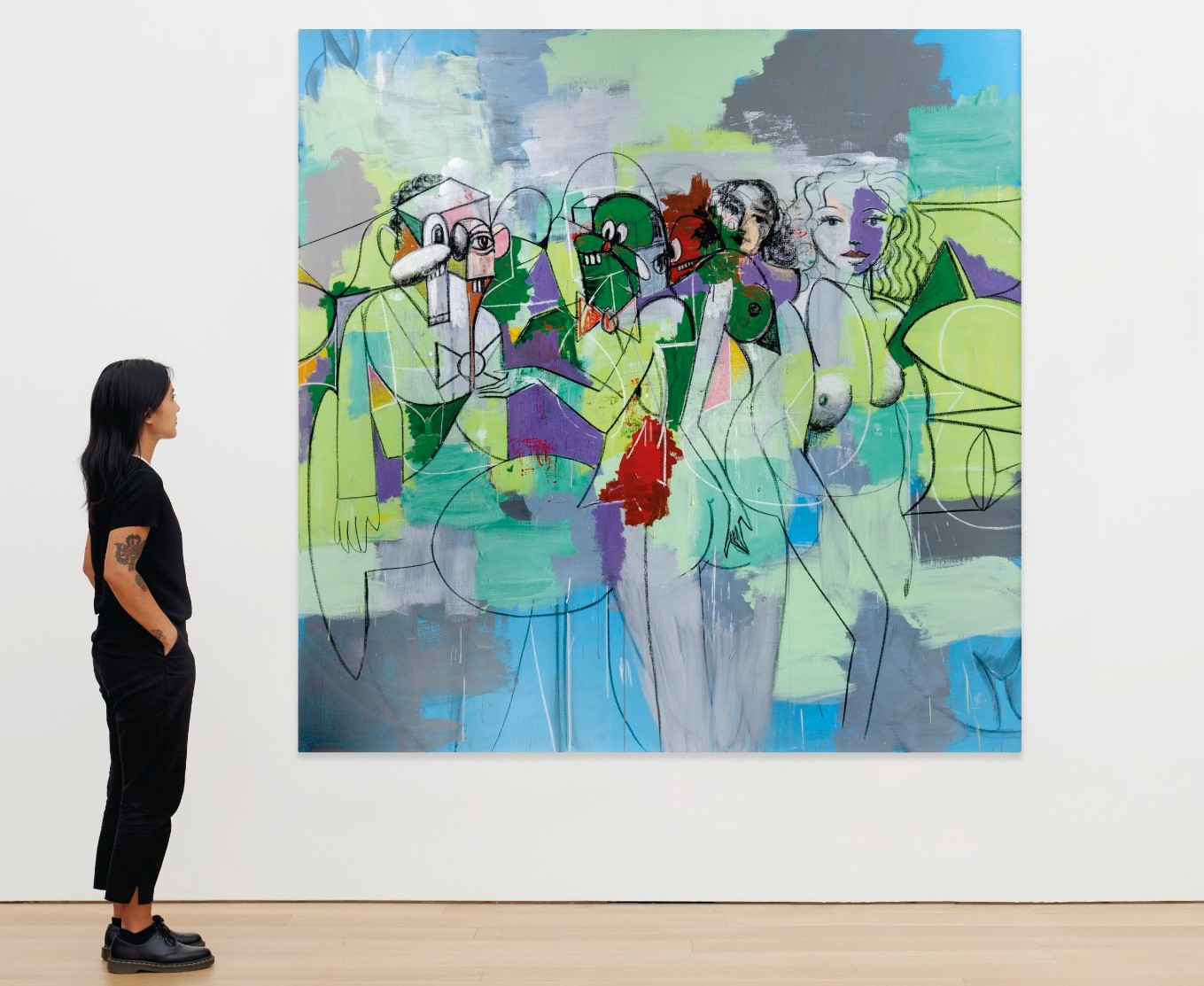
GEORGE CONDO (B. 1957)
Force Field, 2010
Acrylic, charcoal and pastel on linen
82×82 inches (208.3 x 208.3 cm)
Signed and dated ‘Condo 2010’ (upper right)
#2. Nude and Forms
Christie’s New-York: 16 May 2018
Estimated: USD 2,200,000 – 2,800,000
USD 6,162,500
George Condo (b. 1957) (christies.com)
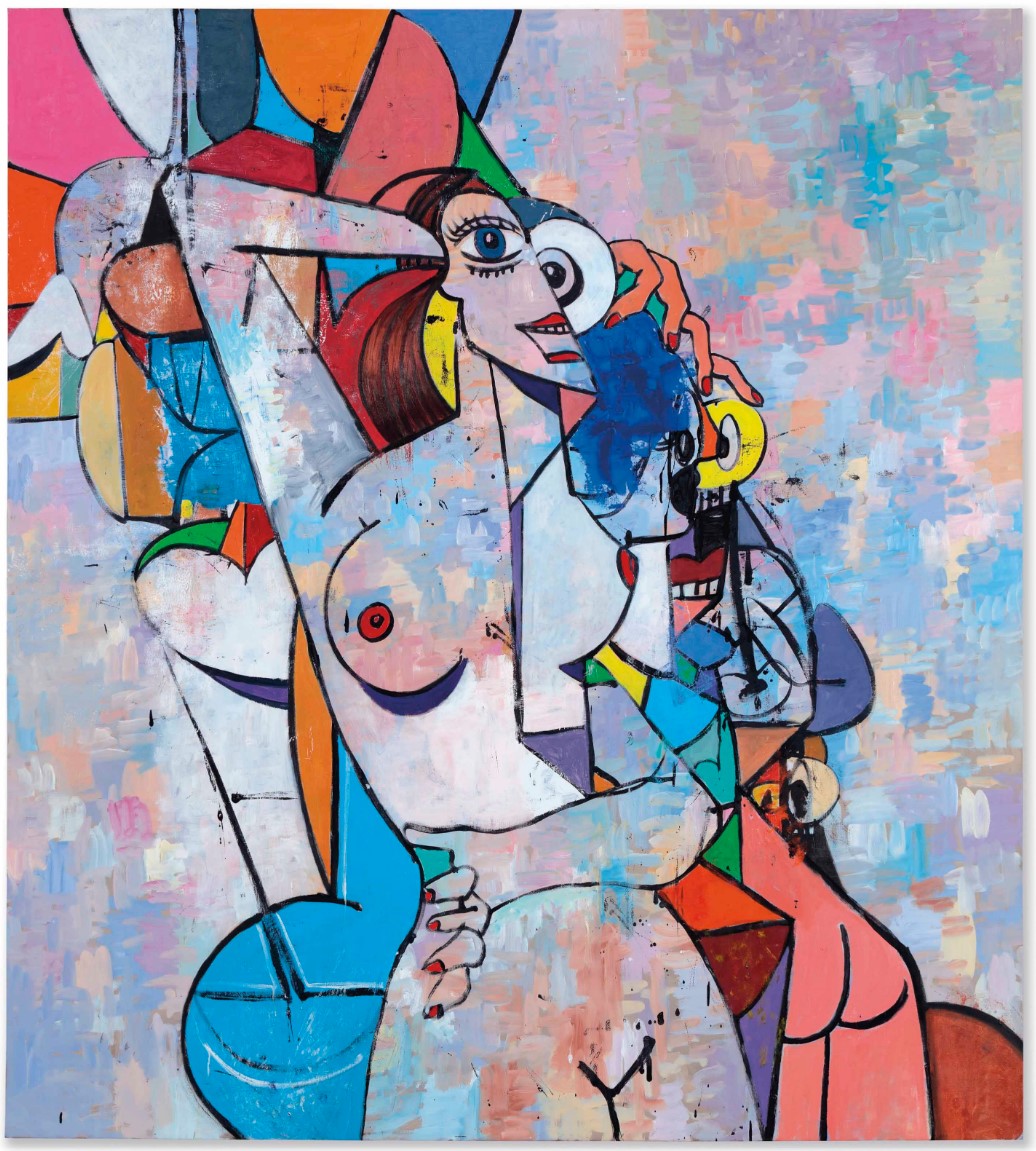
GEORGE CONDO (B. 1957)
Nude and Forms, 2014
Oil on canvas
80×72 inches (203.2 x 183 cm)
Signed and dated ‘Condo 2014’ (on the reverse)
Signed again three times, titled and dated again twice (on the overlap)
#3. Linear Connection
Christie’s New-York: 8 November 2021
Estimated: USD 2,500,000 – 3,500,000
USD 4,950,000
GEORGE CONDO (B. 1957) (christies.com)
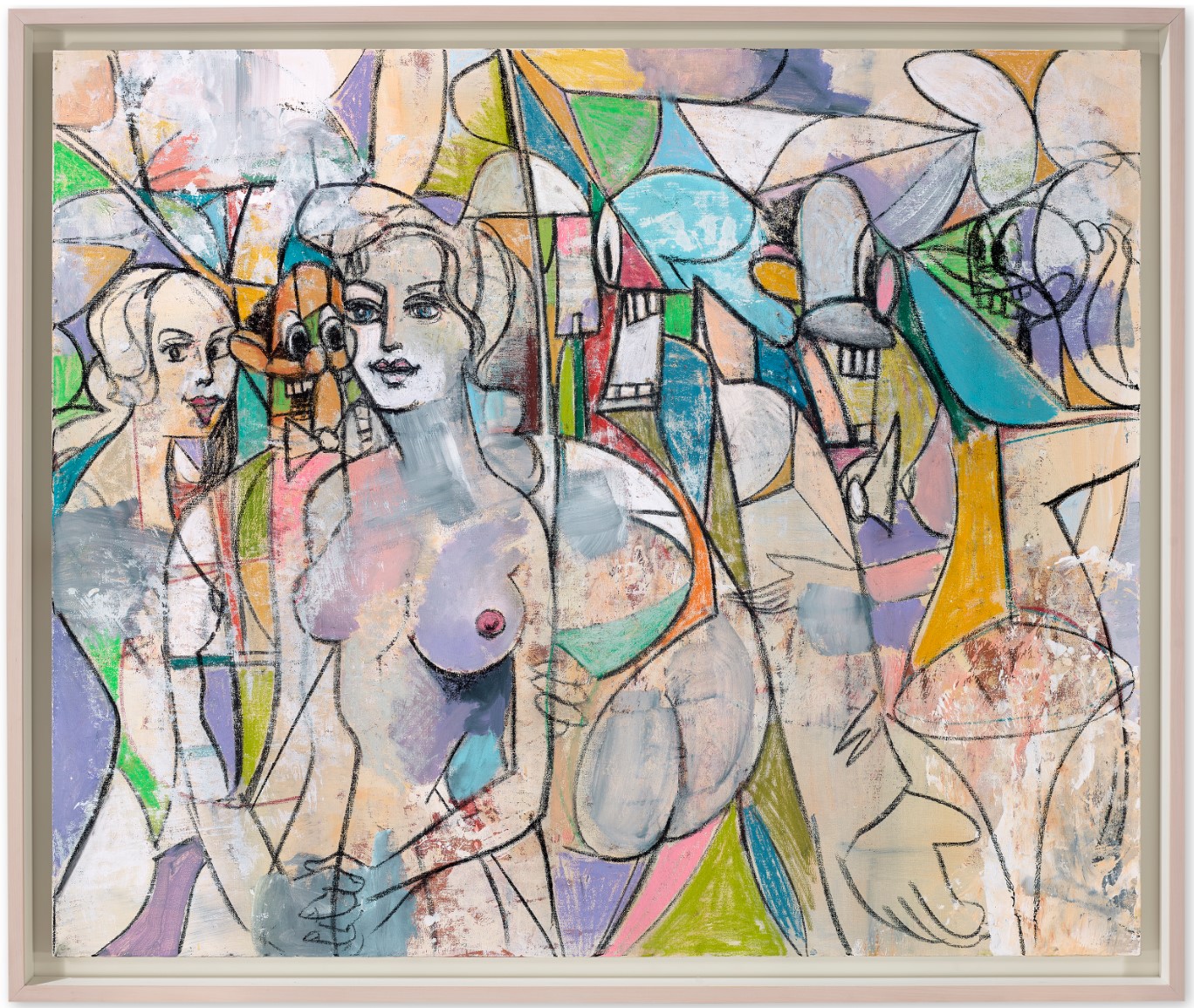
GEORGE CONDO (B. 1957)
Linear Connection, 2010
Acrylic, charcoal and pastel on linen
50×60 inches (127 x 152.4 cm)
#4. Washington Square Park, 2010
Christie’s New-York: 15 November 2018
Estimated: USD 2,600,000 – 3,200,000
USD 4,812,500
George Condo (b. 1957) (christies.com)
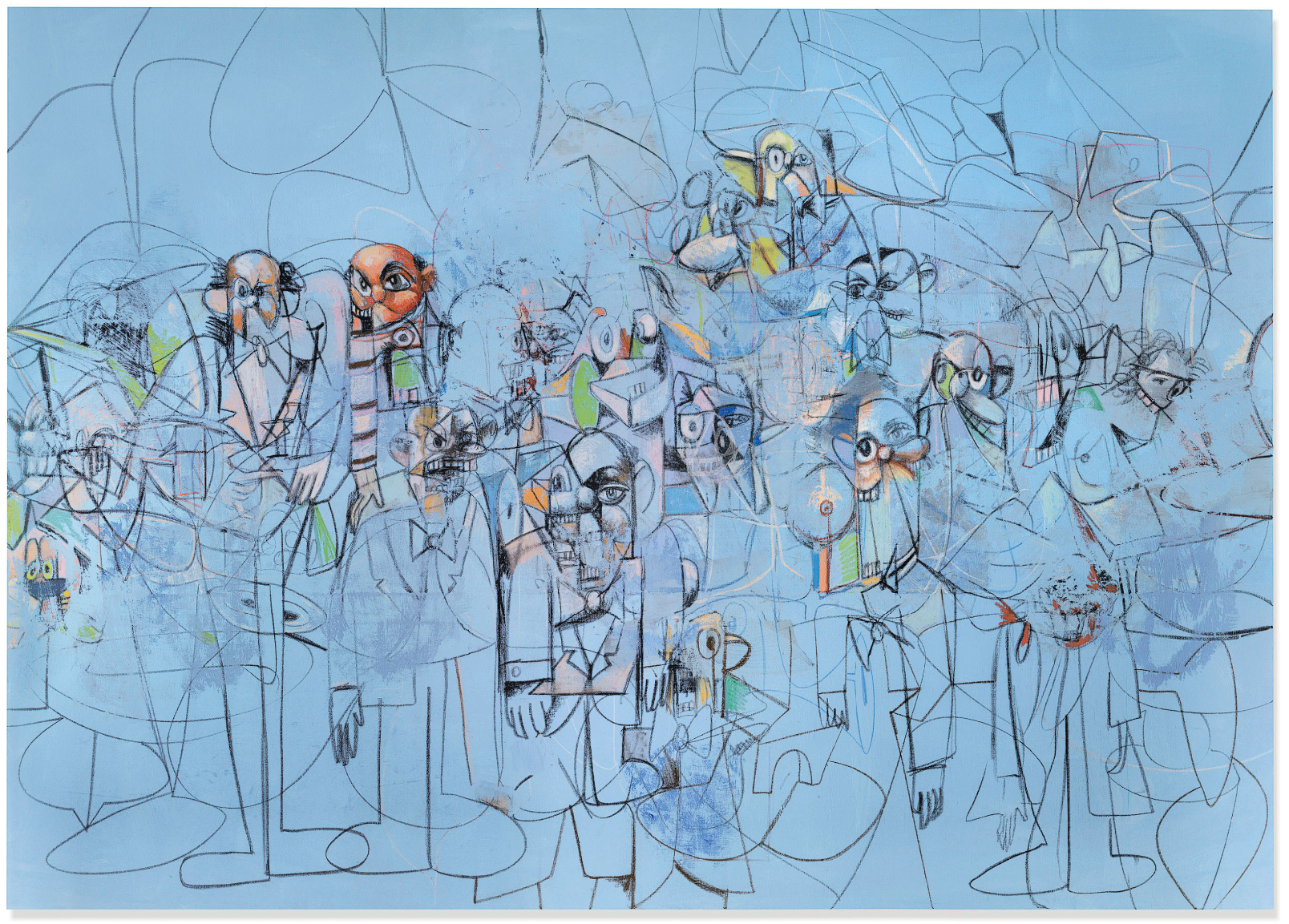
George Condo (b. 1957)
Washington Square Park, 2010
Acrylic, charcoal and pastel on linen
78×108 inches (198 x 274.5 cm)
Signed, titled and dated ‘Condo 2010 Washington Square Park’ (on the reverse)
#5. Escaping from the dark, 2017
Christie’s Hong-Kong: 30 November 2022
Estimated: HKD 32,00,000 – 48,000,000
HKD 36,450,000 / USD 4,670,083
GEORGE CONDO (B. 1957) (christies.com)
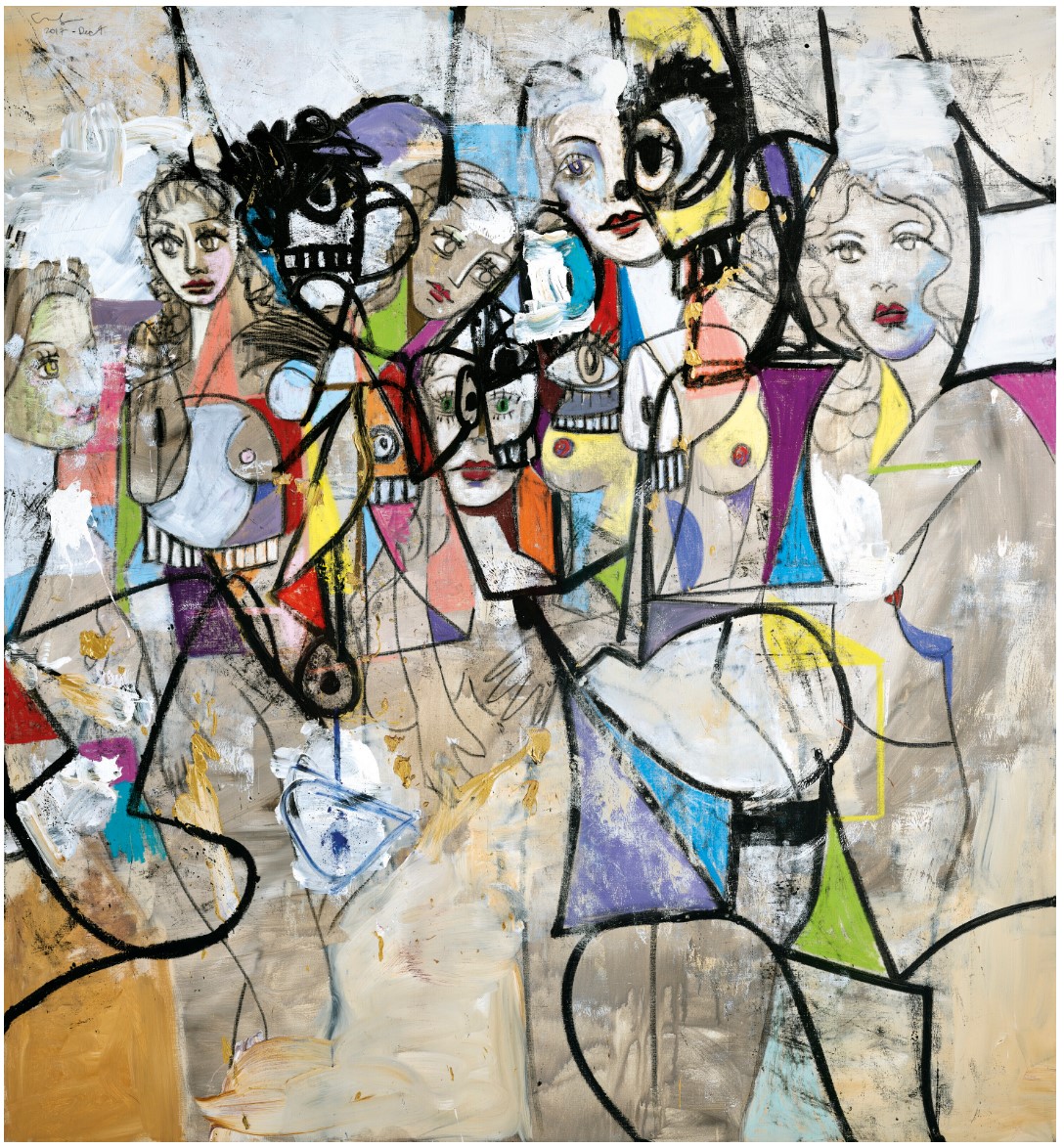
GEORGE CONDO (B. 1957)
Escaping from the dark, 2017
Acrylic, metallic paint, pigment stick, charcoal and pastel on linen
80 x 74 1/8 inches (203.2 x 188.3 cm)
Signed and dated ‘Condo 2017-Dec 7’ (upper left)
#6. Transparent Female Forms, 2009
Phillips Hong-Kong: 22 June 2022
Estimated: HKD 25,000,000 – 35,000,000
HKD 36,550,000 / USD 4,656,229
George Condo – 20th Century & Contempora… Lot 9 June 2022 | Phillips
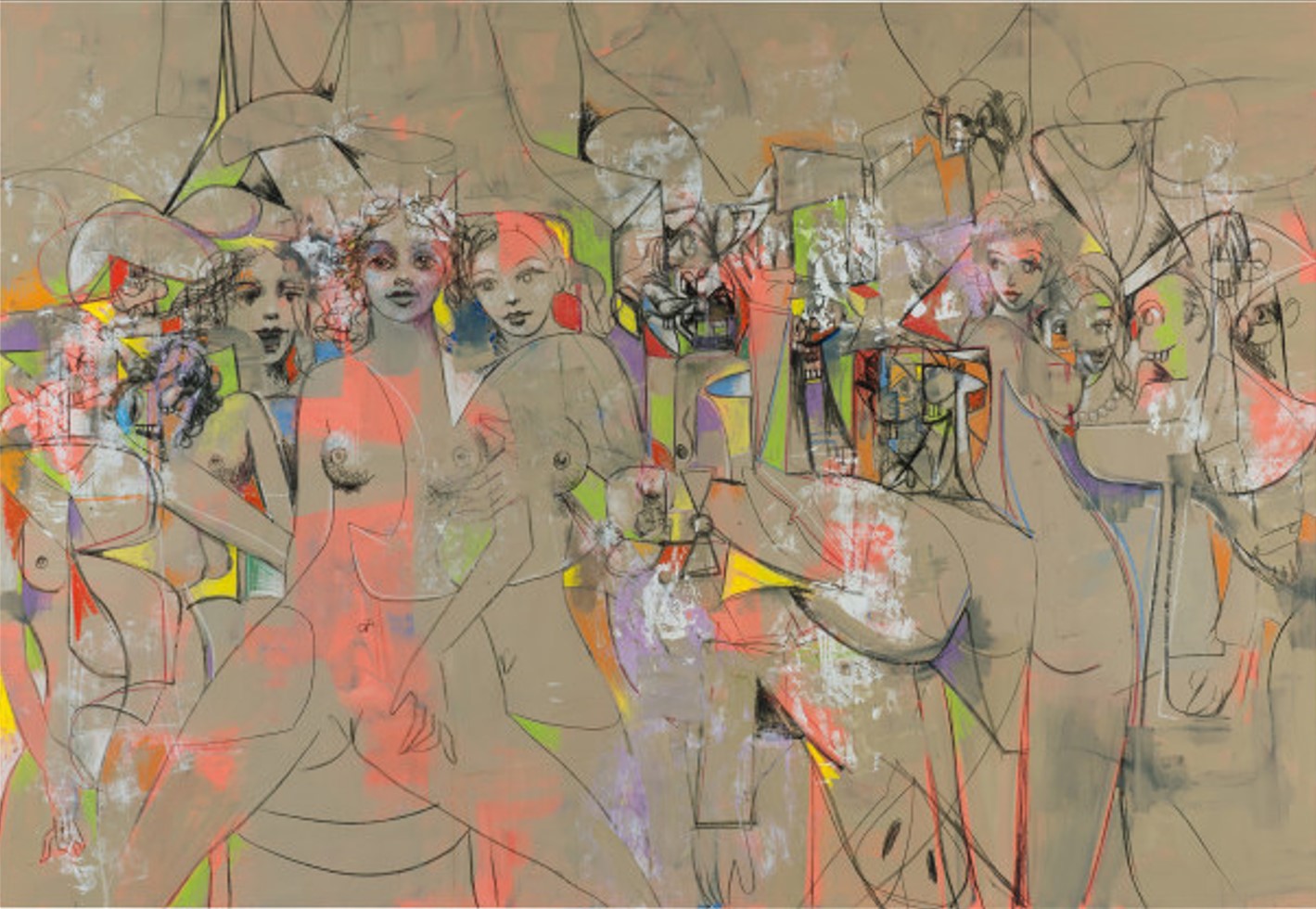
GEORGE CONDO
Transparent Female Forms, 2009
Acrylic, chalk and pastel on linen
77 7/8 x 113 7/8 inches (198.1 x 289.2 cm)
Signed and dated ‘Condo 09’ on the reverse
#7. Compression IV, 2011
Sotheby’s New-York: 17 November 2017
Estimated: USD 800,000 – 1,200,000
USD 4,066,600
(#409) George Condo (sothebys.com)
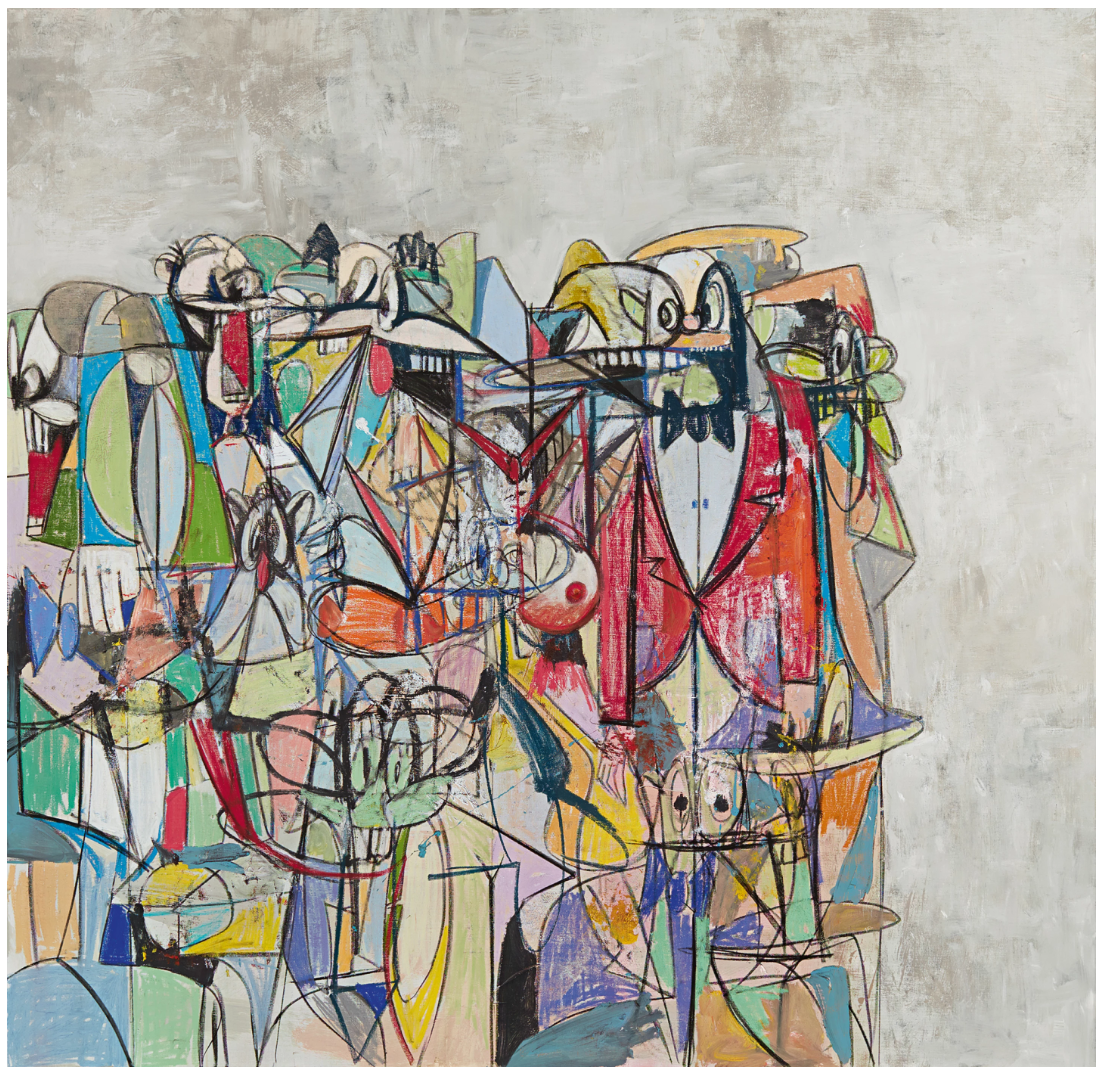
GEORGE CONDO
Compression IV, 2011
Acrylic, charcoal and pastel on linen, in artist’s chosen frame
75 3/8 x 77 3/8 inches (191.5 x 196.5 cm)
Signed and dated 2011
#8. PURPLE AND YELLOW ABSTRACTION, 2012
Sotheby’s Hong-Kong: 7 October 2020
Estimated: HKD 20,000,000 – 30,000,000
HKD 31,375,000 / USD 4,048,152
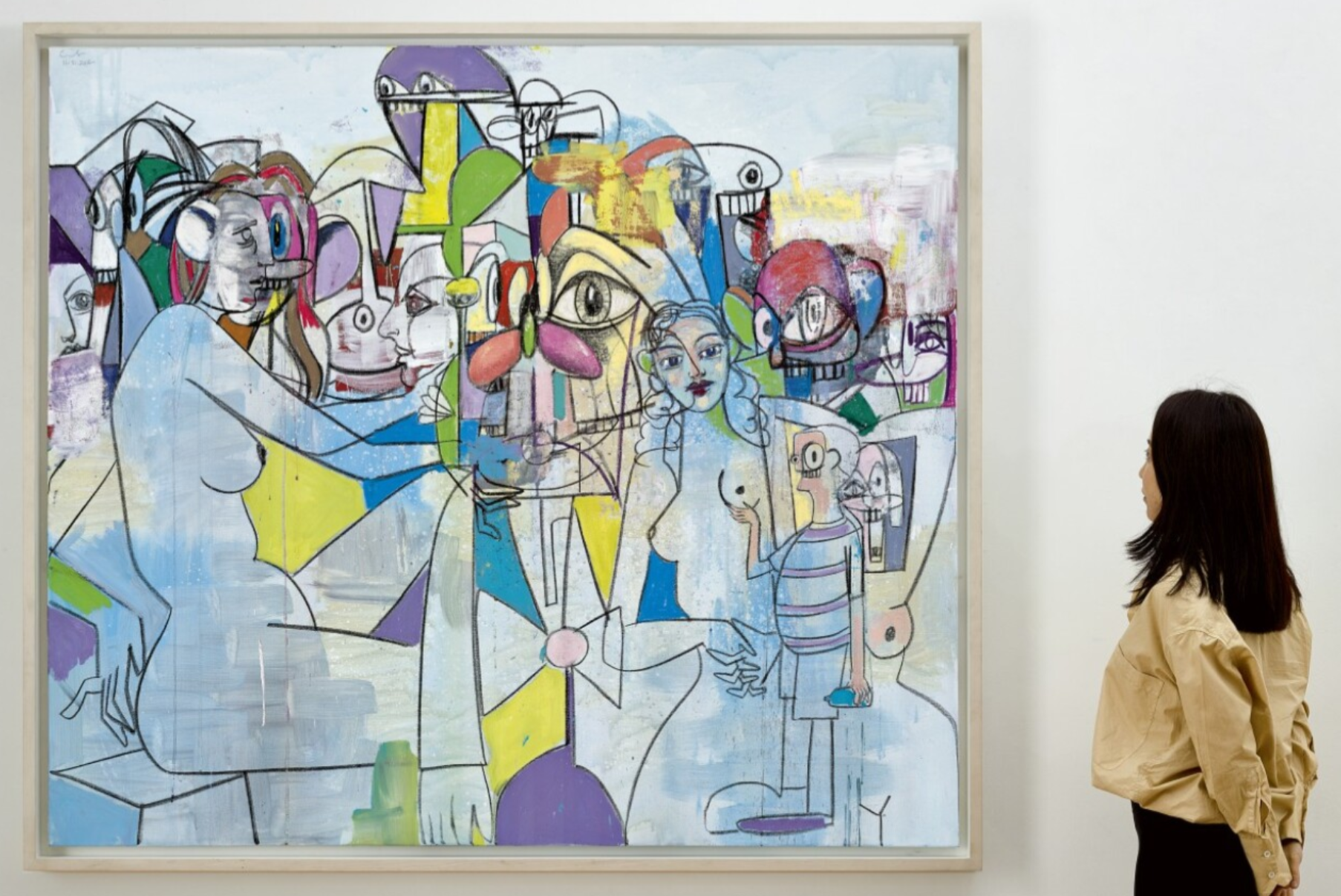
GEORGE CONDO (b. 1957)
PURPLE AND YELLOW ABSTRACTION, 2012
Acrylic, charcoal and pastel on canvas
57 3/8 x 66 1/8 inches (145.8 x 167.8 cm)
Signed and dated 12.31.2012
#9. Reclining Blue Form, 2011
Sotheby’s New-York: 12 May 2021
Estimated: USD 2,500,000 – 3,500,000
USD 3,771,000
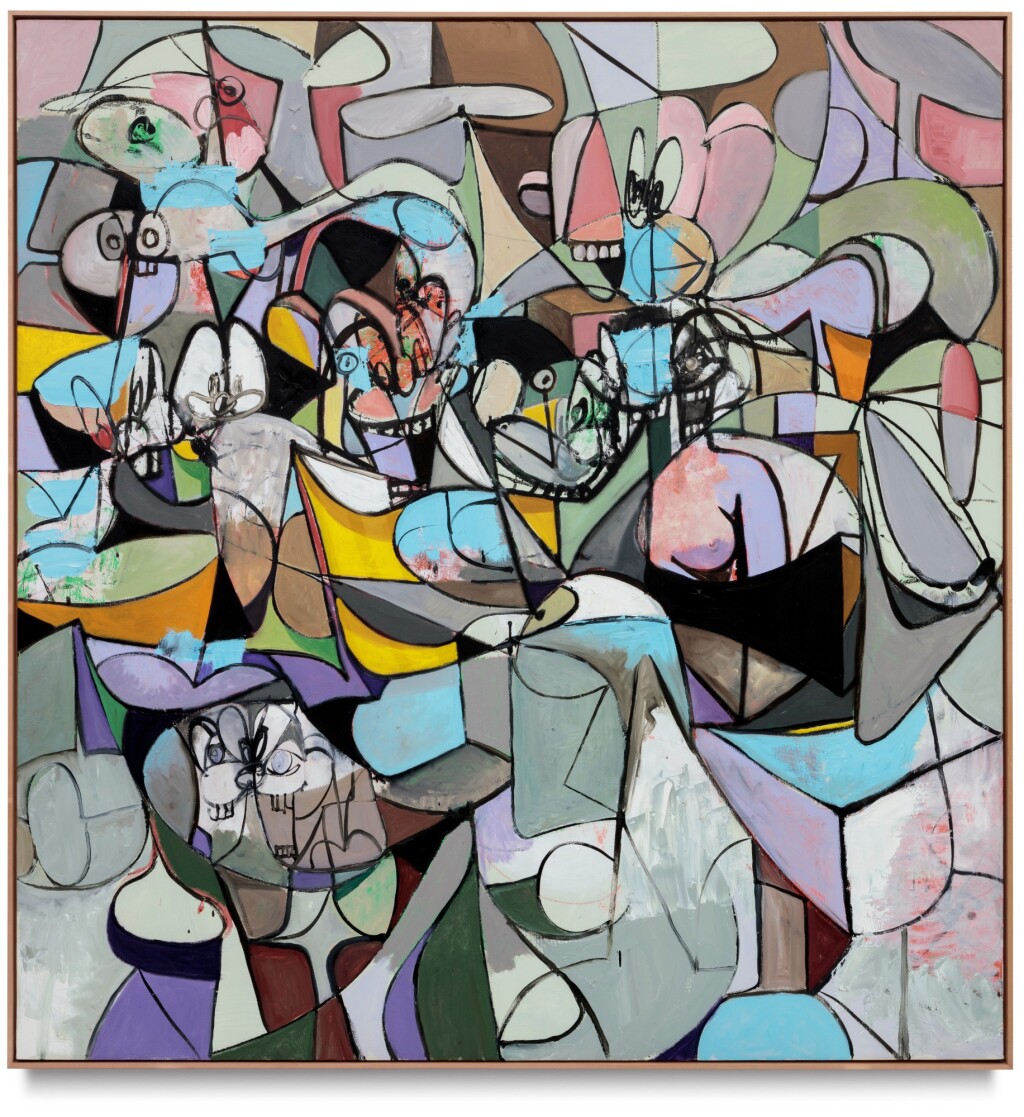
GEORGE CONDO (B.1957)
Reclining Blue Form, 2011
Oil on canvas
78×74 inches (198.1 x 188 cm)
PART II: AUCTION RESULTS
2026 Auction Results
FOR PAINTINGS ONLY
PRELIMINARY AUCTION RESULTS
As of 30 June 2026
#1. Figure on a Red Field, 2016
Property from an Ambassadorial collection
Sotheby’s New-York: 14 May 2026
Estimated: USD 2,000,000 – 3,000,000
USD 5,854,000
George Condo | Figure on a Red Field | The Now & Contemporary Evening
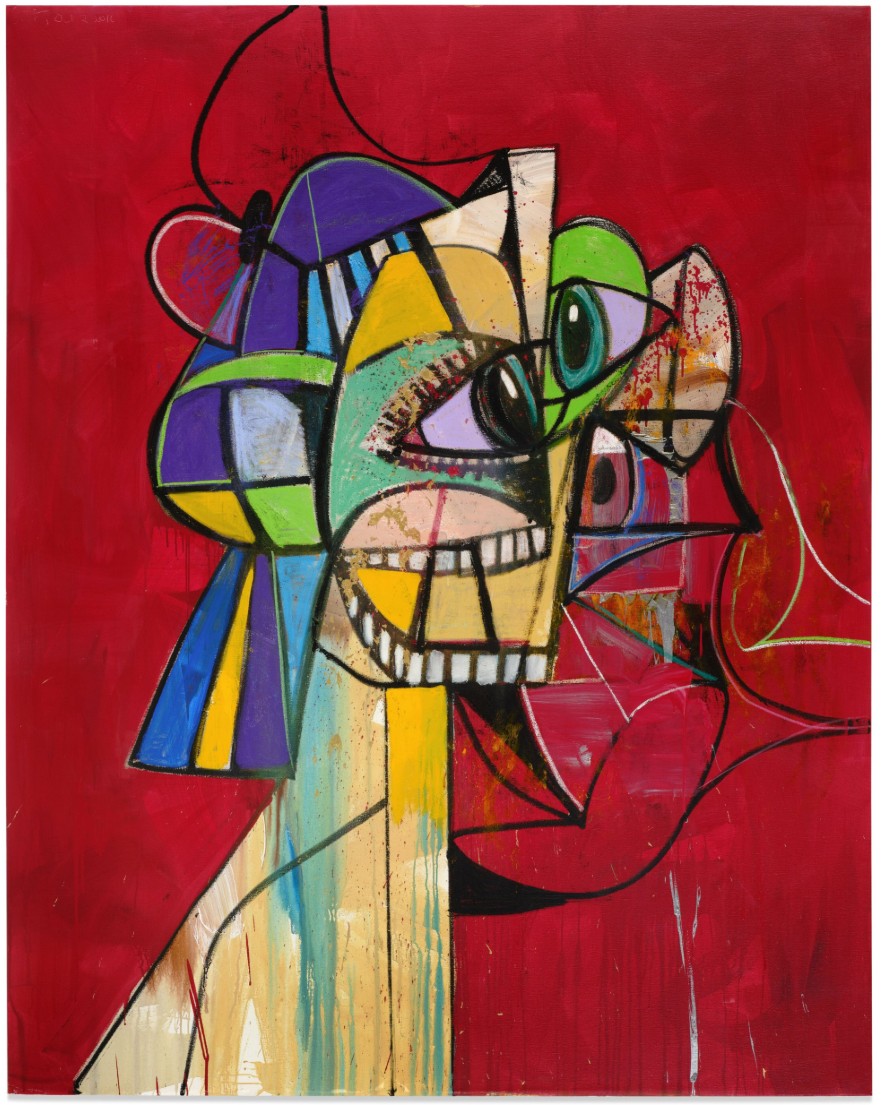
GEORGE CONDO (b. 1957)
Figure on a Red Field, 2016
Acrylic, metallic paint, charcoal, pastel and oilstick on canvas
96×76 inches (243.8 x 193 cm)
Signed and dated Oct 2, 2016 (upper left)
USD 5 million
#2. Infiltration, 2017
Sotheby’s London: 4 March 2026
Estimated: GBP 1,500,000 – 2,000,000
GBP 2,286,000 / USD 3,053,865
Infiltration | Modern & Contemporary Evening Auction | 2026 | Sotheby’s
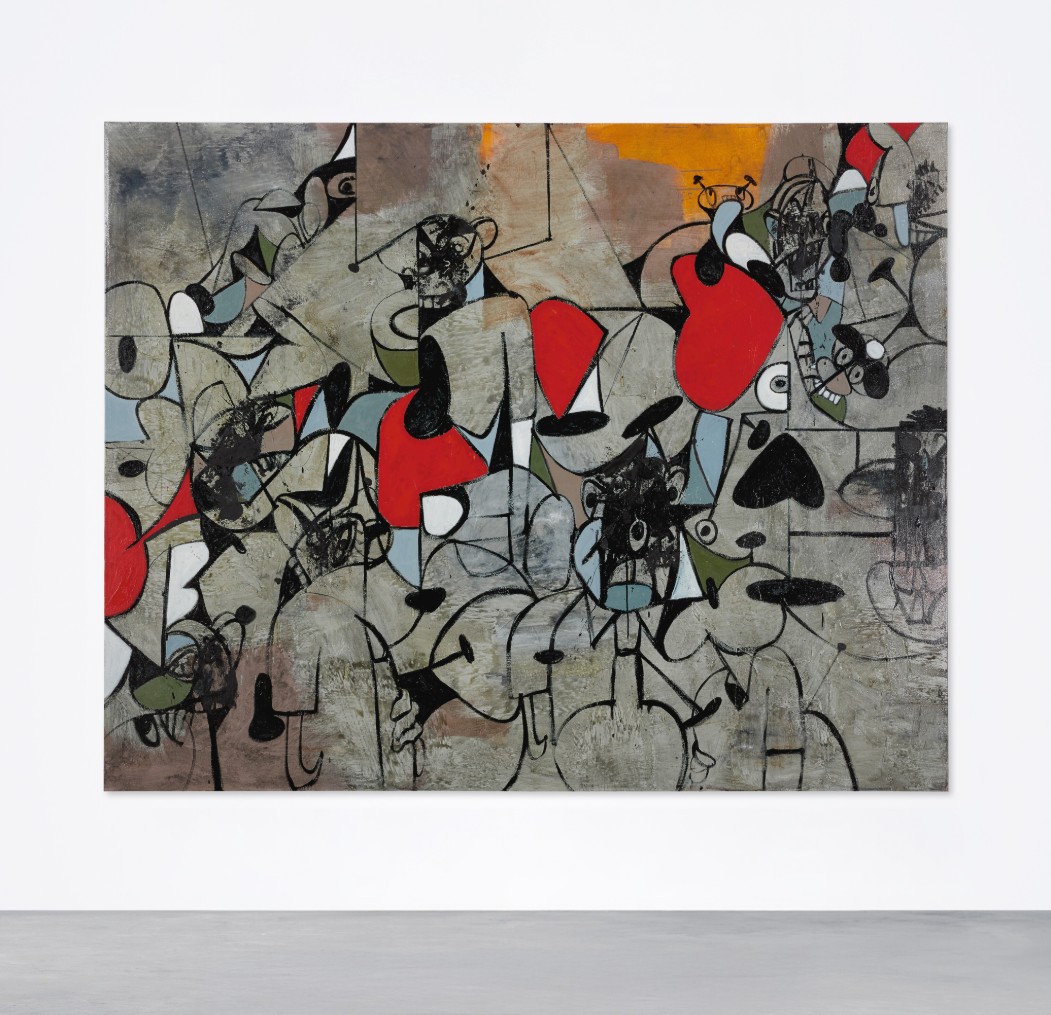
GEORGE CONDO (b. 1957)
Infiltration, 2017
Oil, acrylic and oilstick on canvas
76×96 inches (193 x 243.8 cm)
Signed and dated 2017 (upper left)
#3. Down in Chinatown, 2010
Sotheby’s London: 24 June 2026
Estimated: GBP 1,500,000 – 2,000,000
GBP 2,164,000 / USD 2,856,345
George Condo | Down in Chinatown | Modern & Contemporary Evening
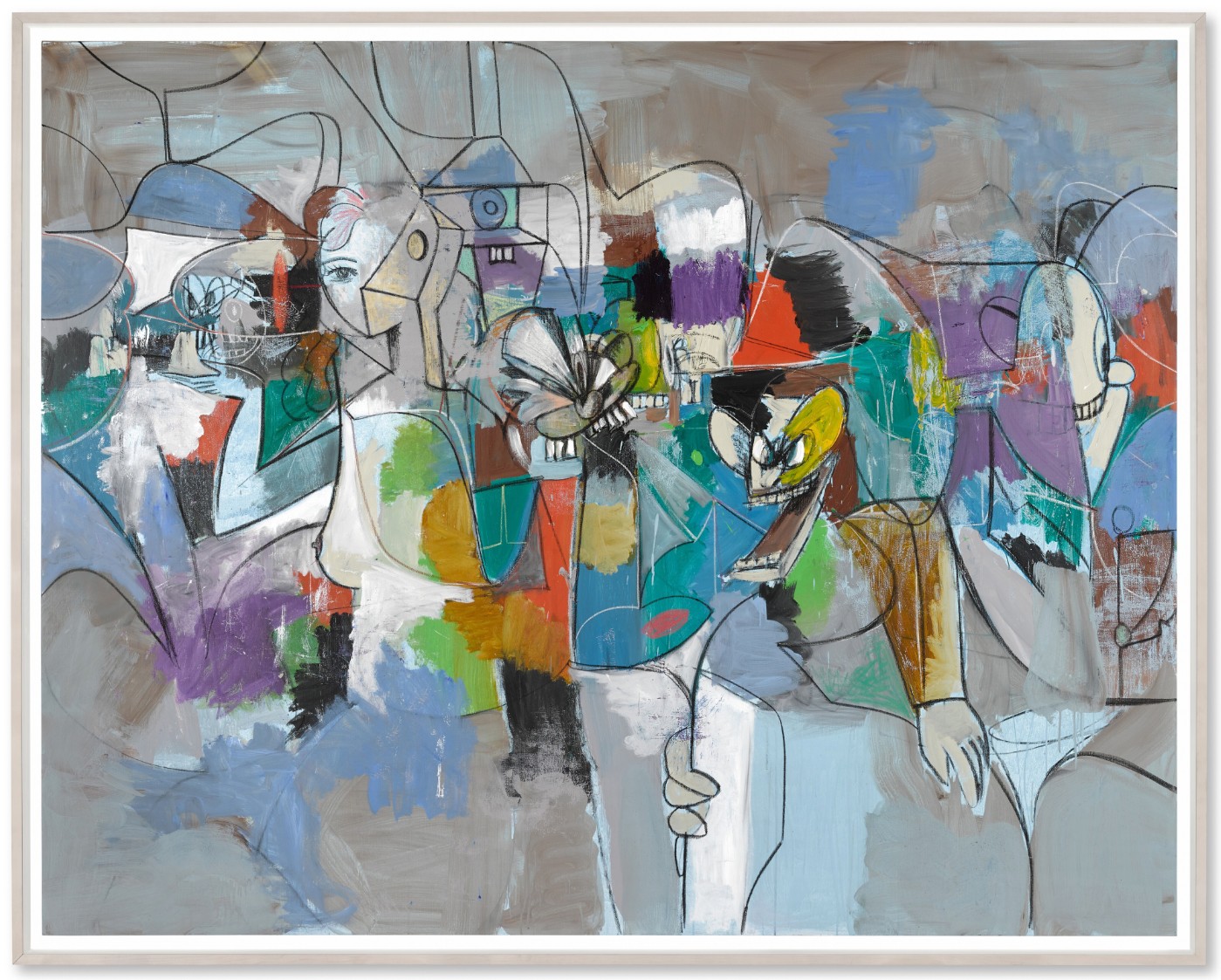
GEORGE CONDO (b. 1957)
Down in Chinatown, 2010
Acrylic, charcoal, and pastel on linen, in artist’s frame
79-3/8 x 99-1/2 inches (201.7 x 252.7 cm)
Signed and dated 2010 (upper left)
#4. Untitled, 2001
Between Madness and Beauty: Selections from the Anna Condo Collection
Christie’s New-York: 21 May 2026
Estimated: USD 500,000 – 700,000
USD 1,651,000
GEORGE CONDO (B. 1957), Untitled | Christie’s
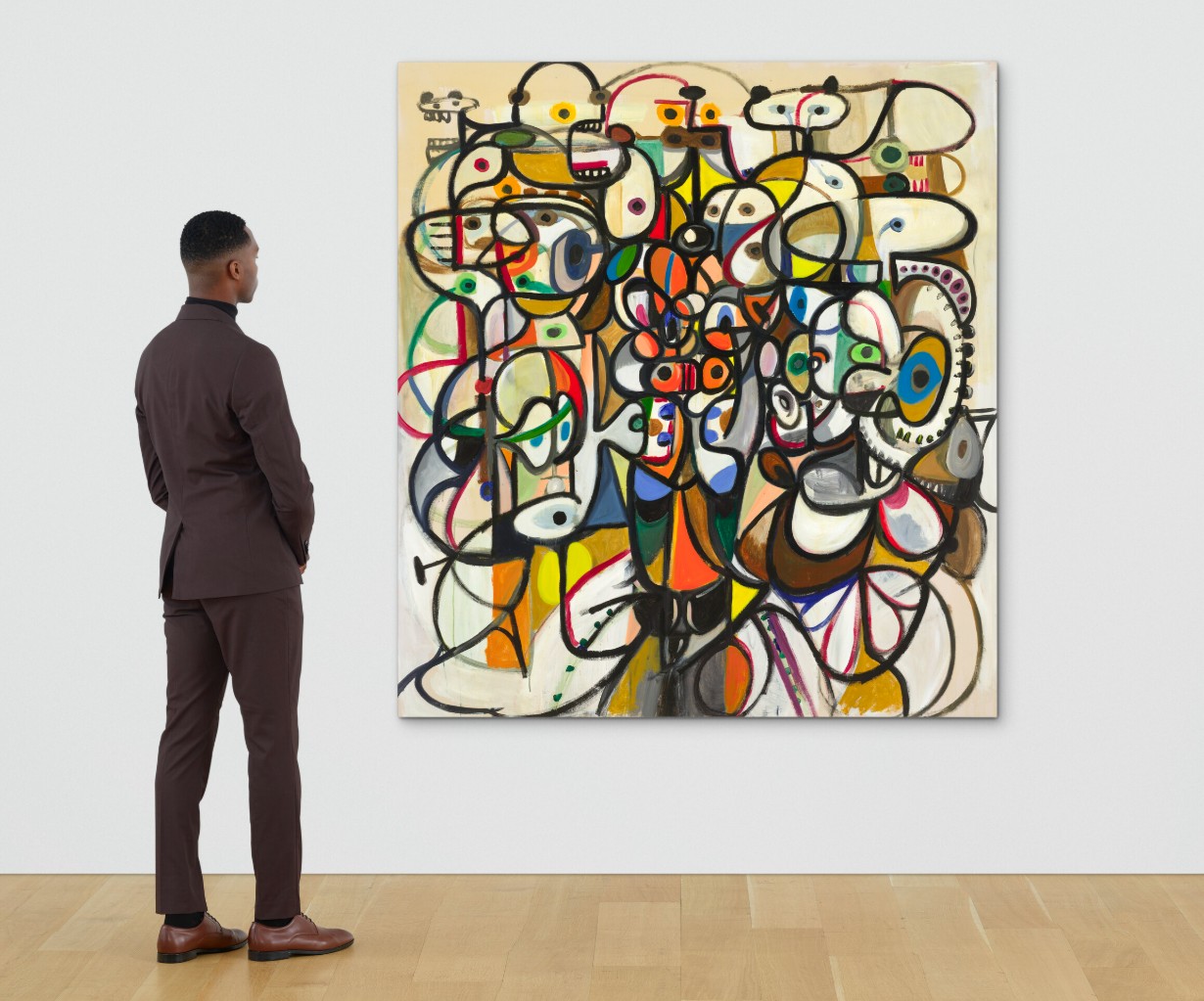
GEORGE CONDO (B. 1957)
Untitled, 2001
Oil on canvas
75 x 68-1/2 inches (190.5 x 174 cm)
#5. Zombie Modernism, 2015
Sotheby’s London: 25 June 2026
Estimated: GBP 600,000 – 800,000
GBP 832,000 / USD 1,098,190
George Condo | Zombie Modernism | Contemporary Day Auction | 2026 |
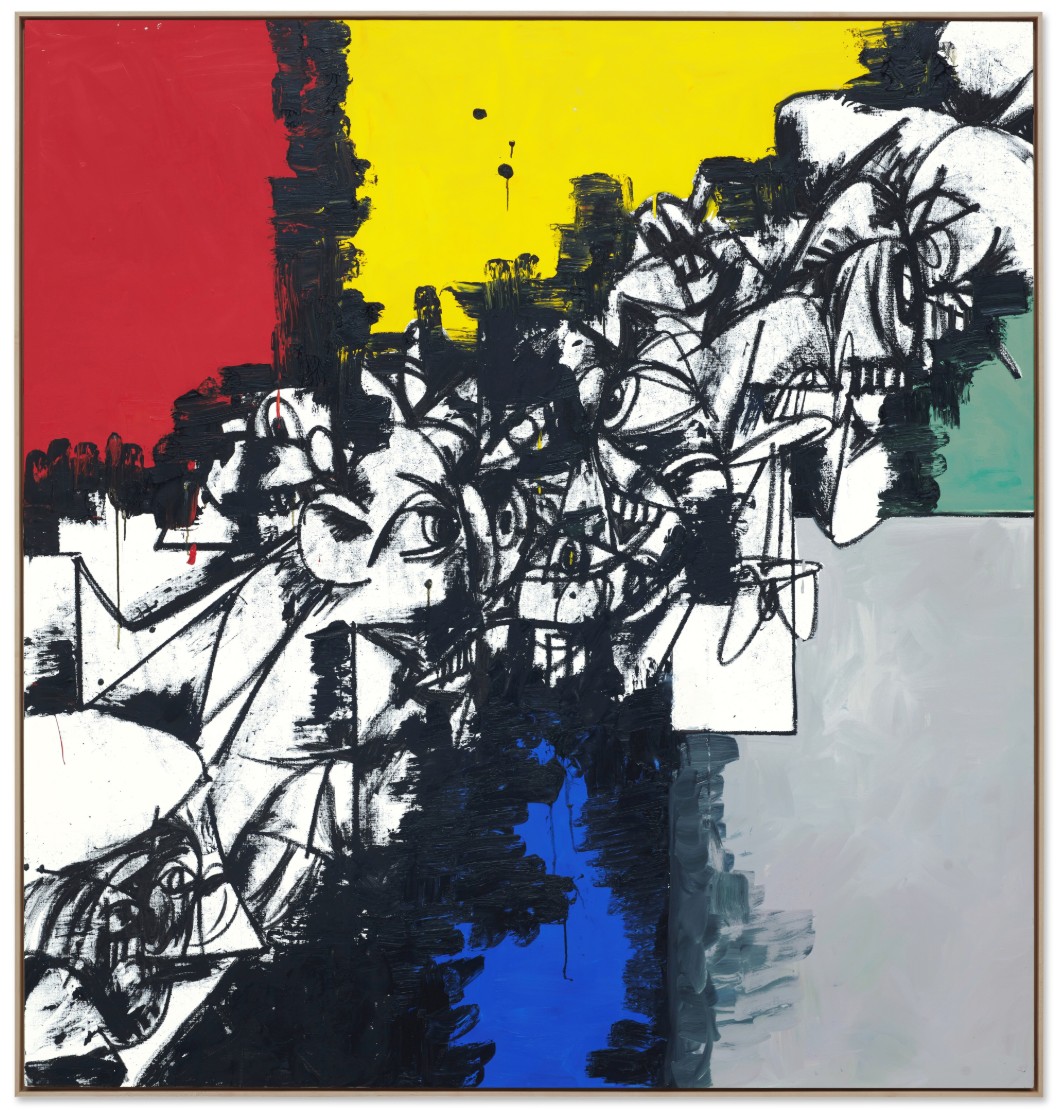
GEORGE CONDO (b. 1957)
Zombie Modernism, 2015
Oil and pigment stick on linen
78-1/8 x 74-1/8 inches (198.5 x 188.3 cm)
Signed and dated 2015 (on the reverse)
#6. Untitled, circa 2005
Between Madness and Beauty: Selections from the Anna Condo Collection
Christie’s New-York: 21 May 2026
Estimated: USD 250,000 – 350,000
USD 1,079,500
GEORGE CONDO (B. 1957), Untitled | Christie’s
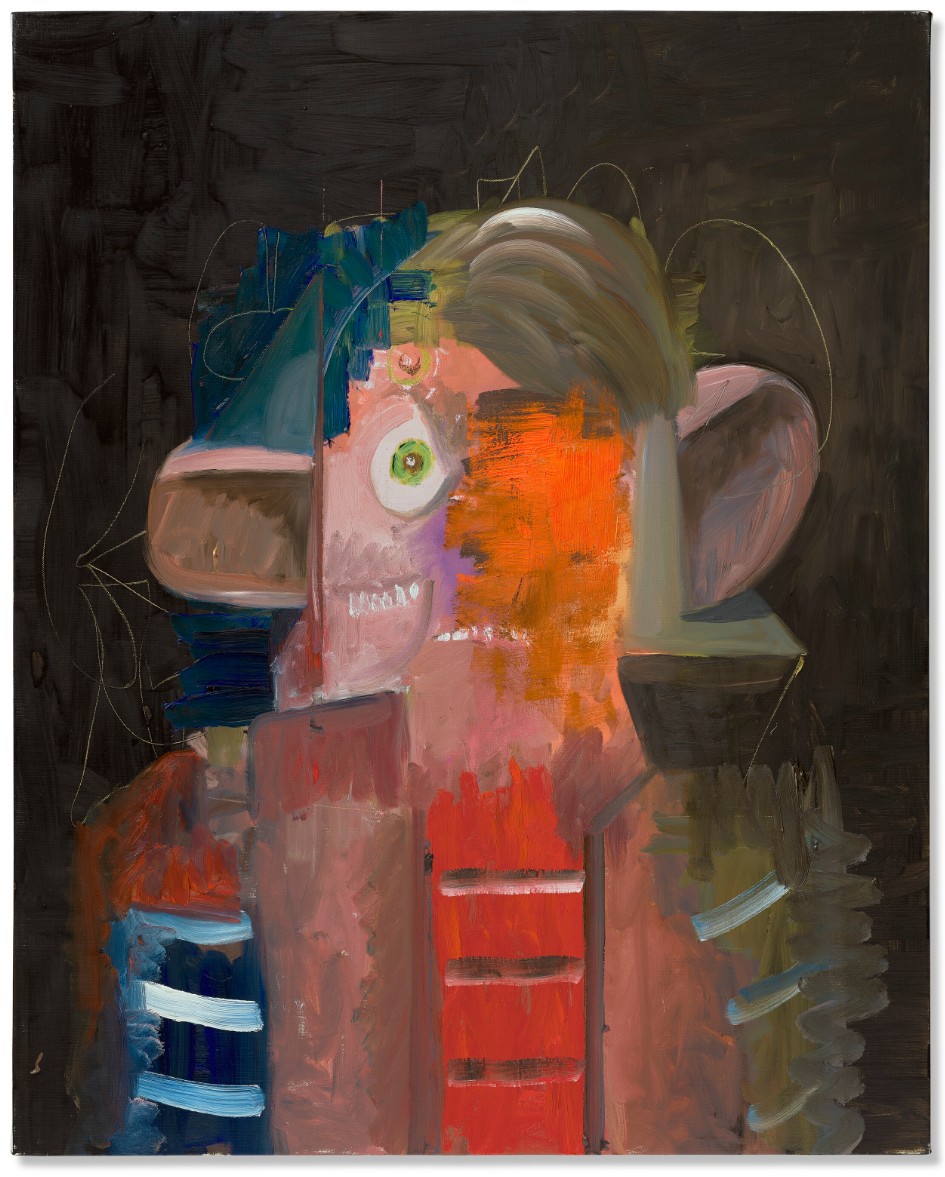
GEORGE CONDO (B. 1957)
Untitled, circa 2005
Oil on canvas
40 x 32-1/4 inches (101.6 x 81.9 cm)
USD 1 million
#7. Untitled, 2012
Between Madness and Beauty: Selections from the Anna Condo Collection
Christie’s New-York: 21 May 2026
Estimated: USD 250,000 – 350,000
USD 698,500
GEORGE CONDO (B. 1957), Untitled | Christie’s
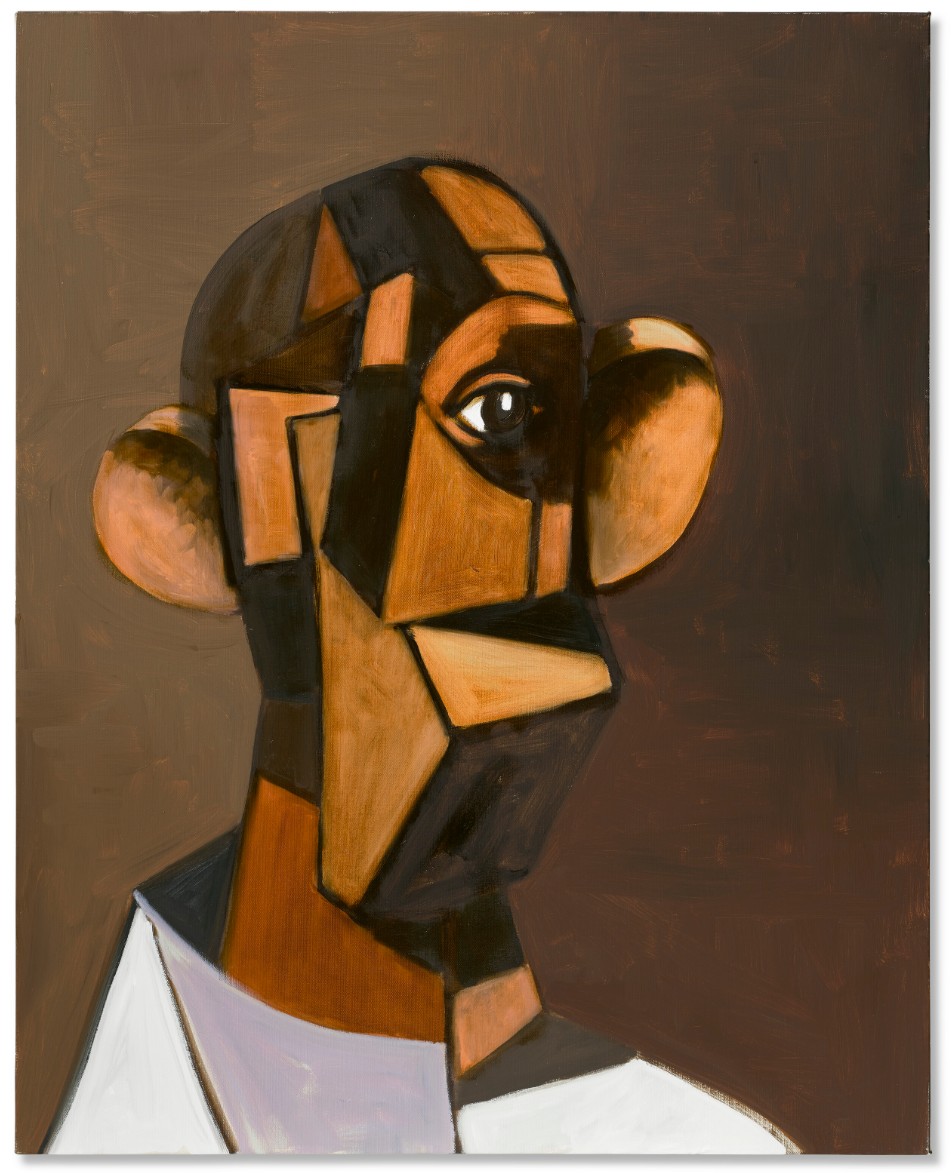
GEORGE CONDO (B. 1957)
Untitled, 2012
Oil on canvas
40 x 32-1/4 inches (101.6 x 81.9 cm)
#8. Untitled, 1998
Between Madness and Beauty: Selections from the Anna Condo Collection
Christie’s New-York: 21 May 2026
Estimated: USD 300,000 – 500,000
USD 609,600
GEORGE CONDO (B. 1957), Untitled | Christie’s
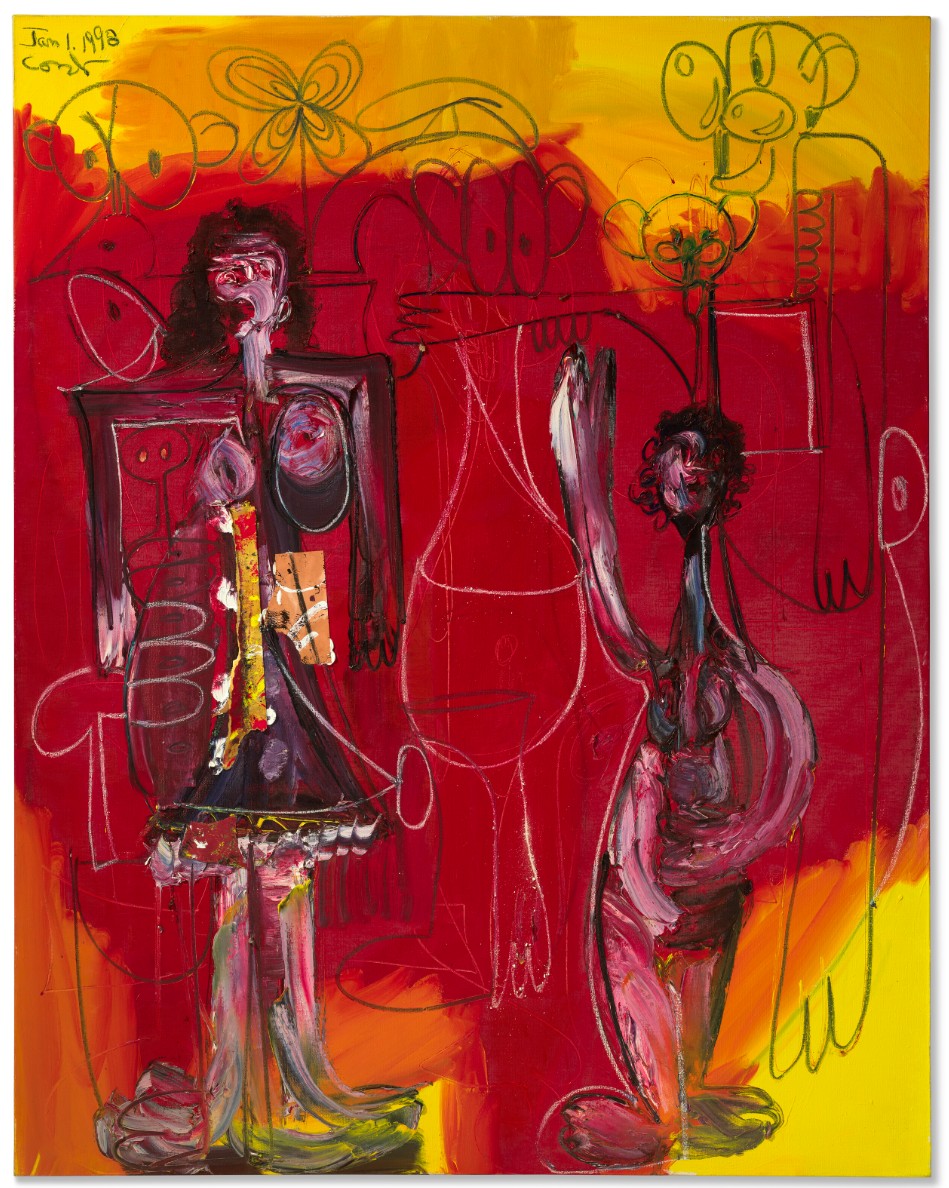
GEORGE CONDO (B. 1957)
Untitled, 1998
Oil, oil stick and paper collage on canvas
76×60 inches (193 x 152.4 cm)
Signed and dated ‘Jan 1. 1998 Condo’ (upper left)
#9. The Housekeeper’s Family, 2004
Christie’s London: 7 March 2026
Estimated: GBP 180,000 – 250,000
GBP 444,500 / USD 593,810
GEORGE CONDO (B. 1957), The Housekeeper’s Family | Christie’s
REPEAT SALE
Sotheby’s London: 27 June 2012
Estimated: GBP 120,000 – 180,000
GBP 121,250 / USD 188,545
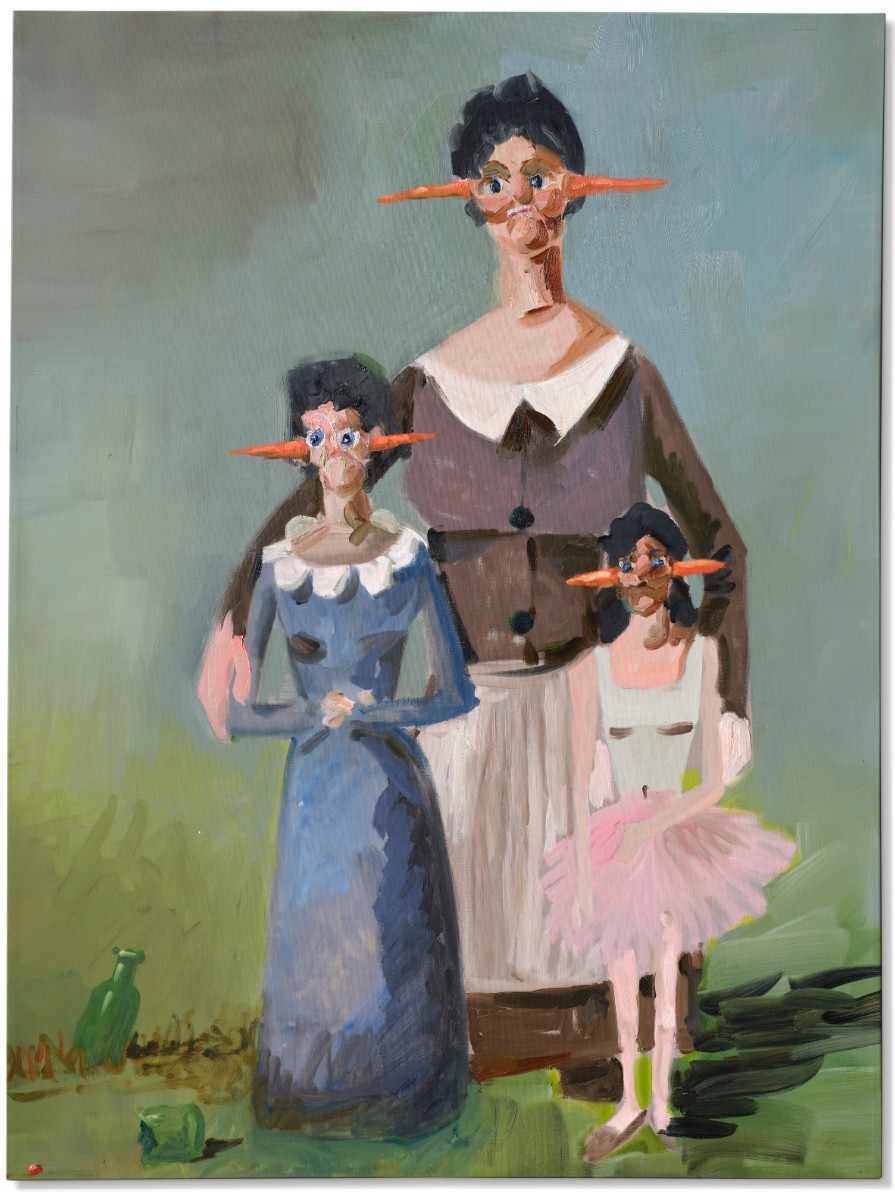
GEORGE CONDO (B. 1957)
The Housekeeper’s Family, 2004
Oil on canvas
48×36 inches (122 x 91.4 cm)
Signed, titled and dated ‘Condo 04 The Housekeeper’s Family’ (on the reverse)
#10. Untitled, 2013
Between Madness and Beauty: Selections from the Anna Condo Collection
Christie’s New-York: 21 May 2026
Estimated: USD 400,000 – 600,000
USD 508,000
GEORGE CONDO (B. 1957), Untitled | Christie’s
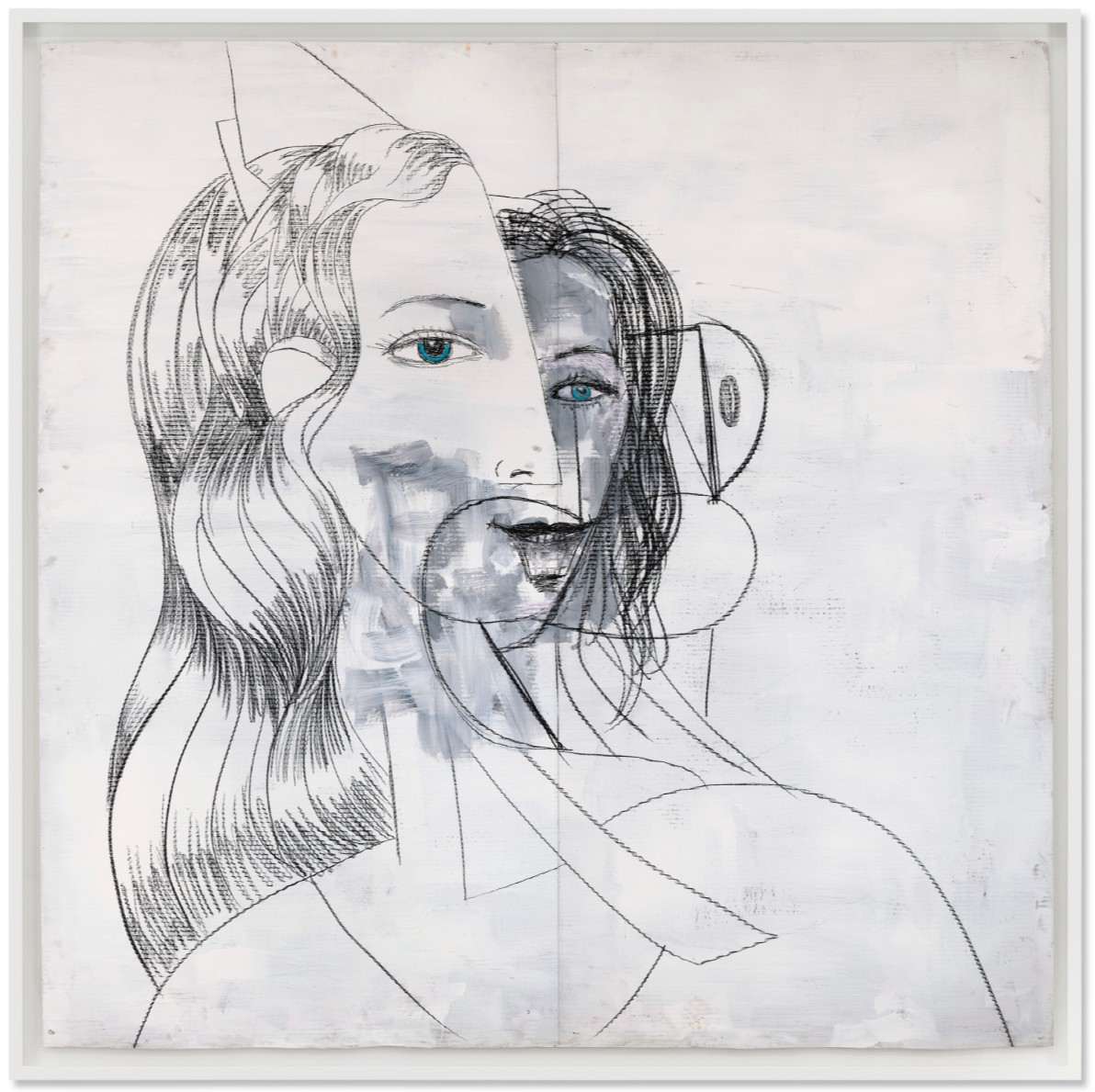
GEORGE CONDO (B. 1957)
Untitled, 2013
Acrylic and charcoal on cardboard, in two parts
71-5/8 x 72 inches (181.9 x 182.9 cm)
USD 500,000
#11. Untitled, circa 2016
Sotheby’s Riyadh: 31 January 2026
Estimated: USD 280,000 – 350,000
USD 482,600
Untitled | Origins II | 2026 | Sotheby’s
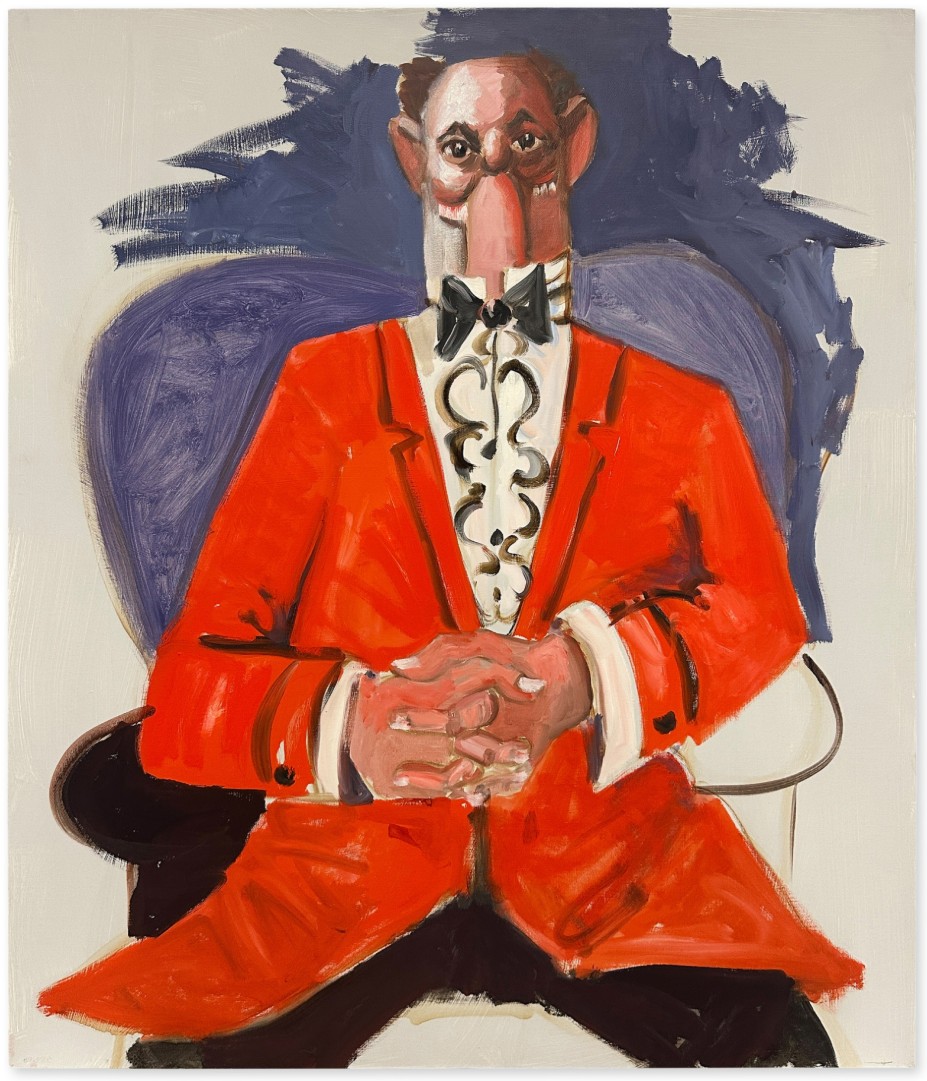
GEORGE CONDO (b. 1957)
Untitled, circa 2016
Oil on linen
45×35 inches (109.2 x 88.9 cm)
#12. Abstract Stick Figure, 1991
Property from a Prestigious European Collection
Sotheby’s New-York: 15 May 2026
Estimated: USD 250,000 – 350,000
USD 409,600
George Condo | Abstract Stick Figure | Contemporary Day Auction |
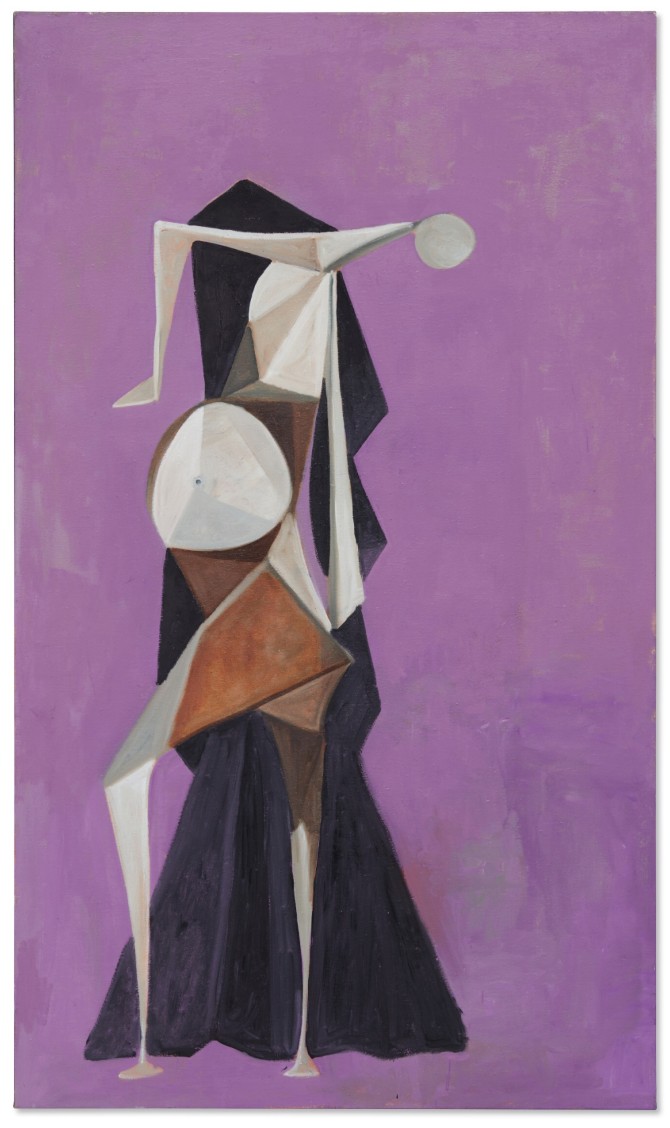
GEORGE CONDO (b. 1957)
Abstract Stick Figure, 1991
Oil on canvas
76-3/4 x 44-7/8 inches (194.9 x 114 cm)
Signed, titled and dated 91 (on the reverse)
Signed and dated Paris 91 (on the stretcher)
#13. Untitled, circa 2000
Between Madness and Beauty: Selections from the Anna Condo Collection
Christie’s New-York: 21 May 2026
Estimated: USD 250,000 – 350,000
USD 342,900
GEORGE CONDO (B. 1957), Untitled | Christie’s
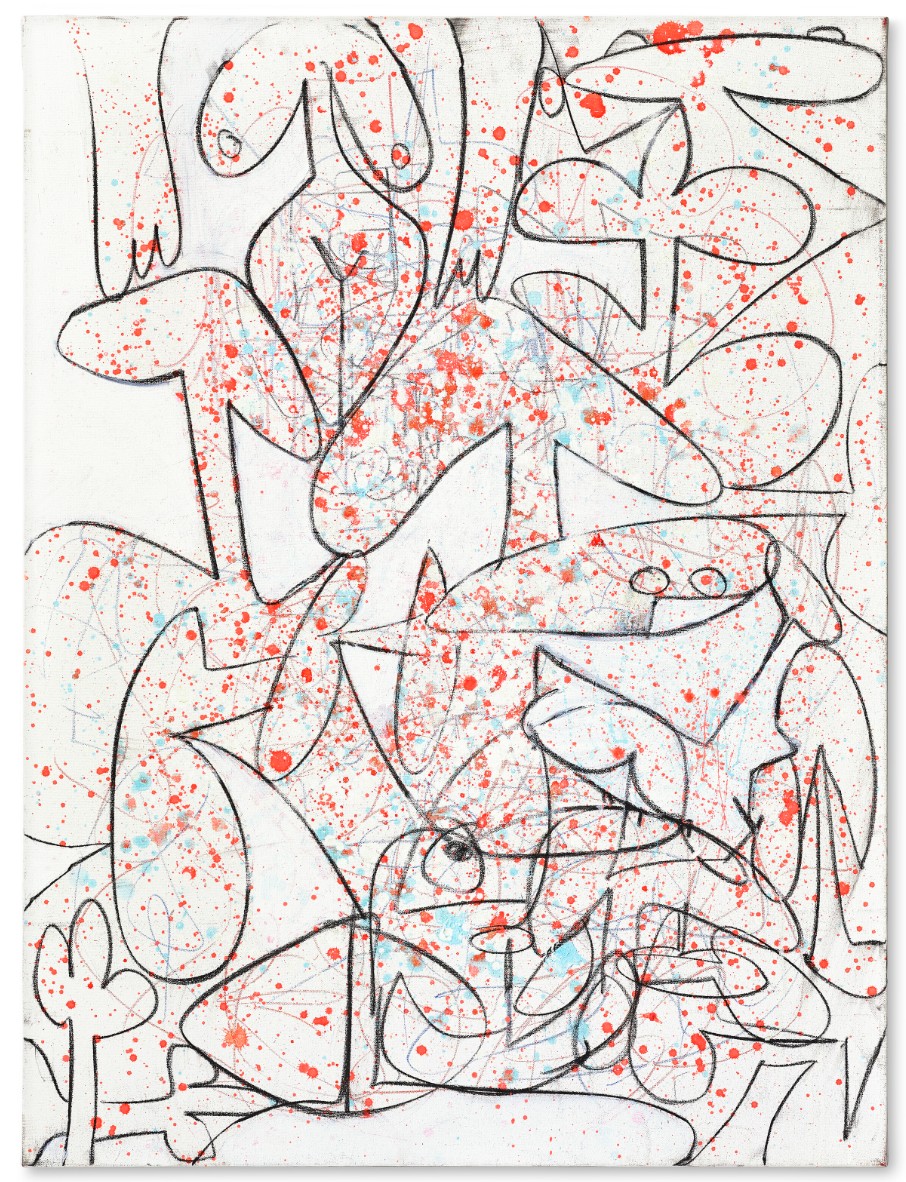
GEORGE CONDO (B. 1957)
Untitled, circa 2000
Acrylic and conté crayon on canvas
40×30 inches (101.6 x 76.2 cm)
#14. Untitled, circa 2000
Between Madness and Beauty: Selections from the Anna Condo Collection
Christie’s New-York: 21 May 2026
Estimated: USD 120,000 – 180,000
USD 304,800
GEORGE CONDO (B. 1957), Untitled | Christie’s
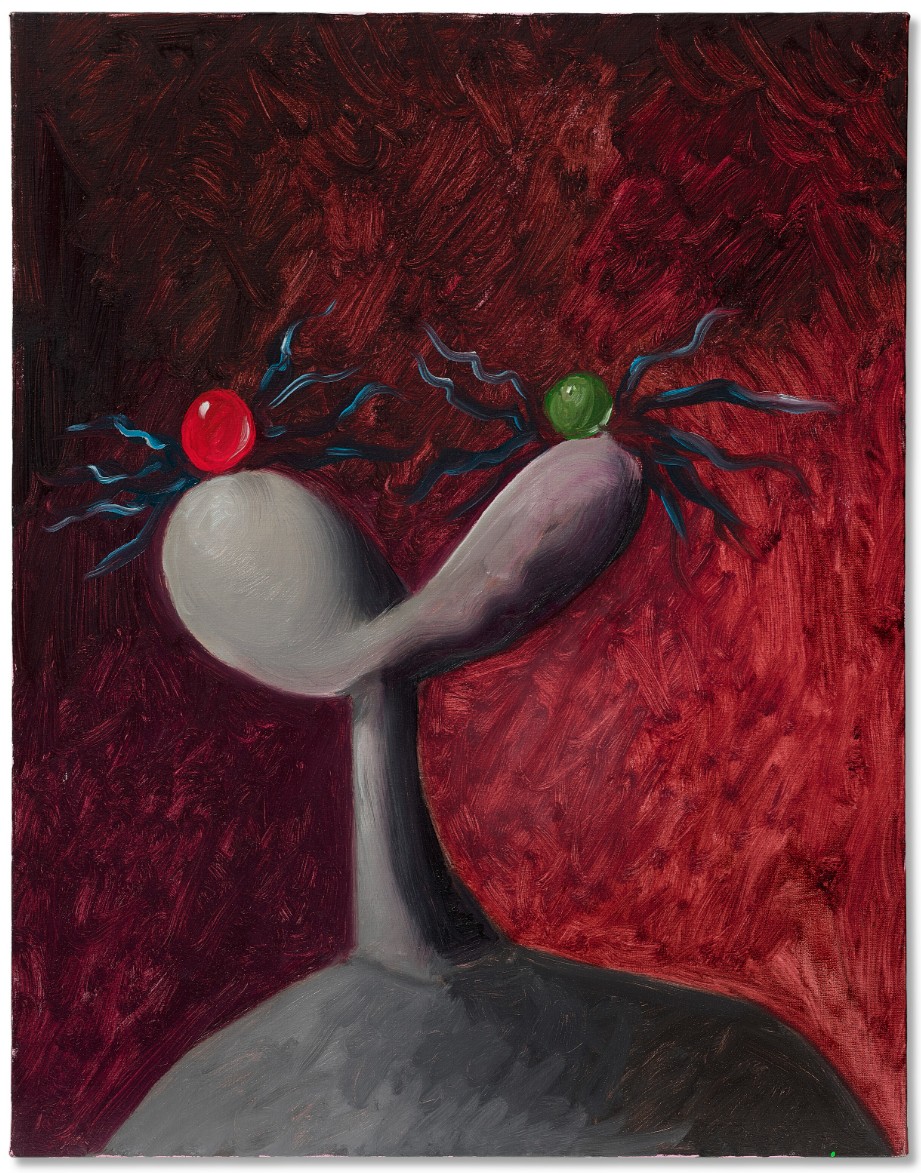
GEORGE CONDO (B. 1957)
Untitled, circa 2000
Oil on canvas
28×22 inches (71.1 x 55.9 cm)
#15. Untitled, circa 2005
Between Madness and Beauty: Selections from the Anna Condo Collection
Christie’s New-York: 21 May 2026
Estimated: USD 120,000 – 180,000
USD 279,400
GEORGE CONDO (B. 1957), Untitled | Christie’s
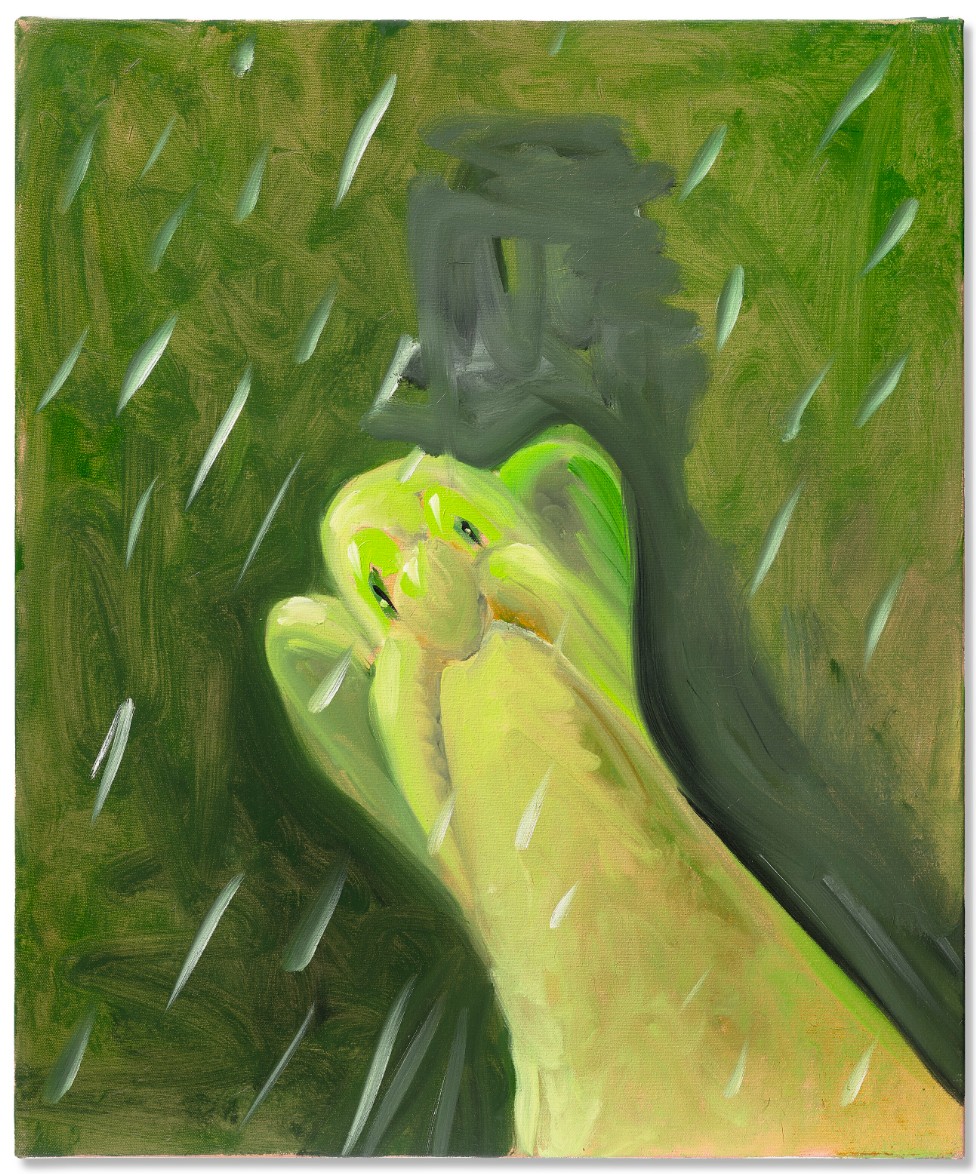
GEORGE CONDO (B. 1957)
Untitled, circa 2005
Oil on canvas
24×20 inches (61 x 50.8 cm)
#16. Female Bust, 2008
Between Madness and Beauty: Selections from the Anna Condo Collection
Christie’s New-York: 21 May 2026
Estimated: USD 180,000 – 250,000
USD 279,400
GEORGE CONDO (B. 1957), Female Bust | Christie’s
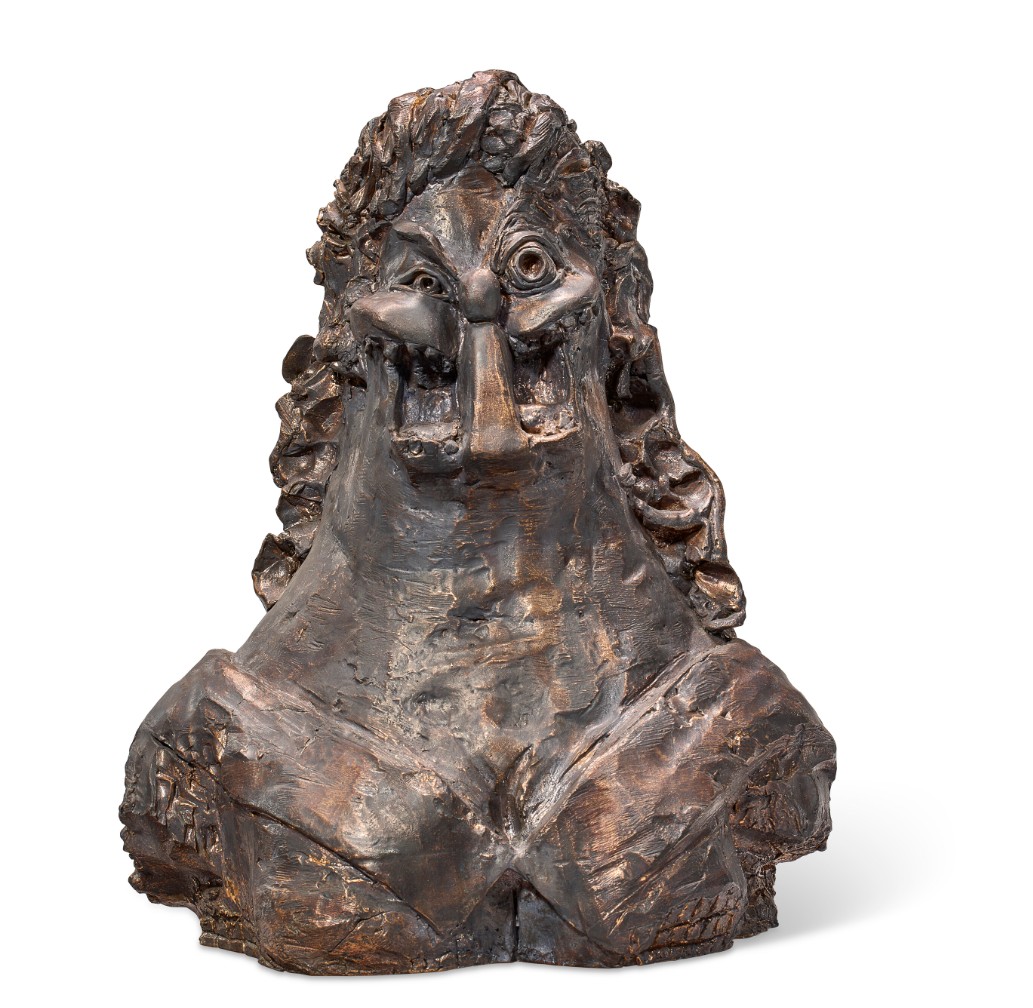
GEORGE CONDO (B. 1957)
Female Bust, 2008
Bronze
23x18x15 inches (58.4 x 45.7 x 38.1 cm)
Stamped with the artist’s name, number and foundry mark ‘CONDO AP’ (lower edge)
This work is the artist’s proof aside from an edition of four plus one artist’s proof
#17. Night of horrible dreams, 1989
Koller Zurich: 26 June 2026
Estimated: CHF 60,000 – 90,000
CHF 212,500 / USD 262,545
GEORGE CONDO Night of horrible dreams. 1989.
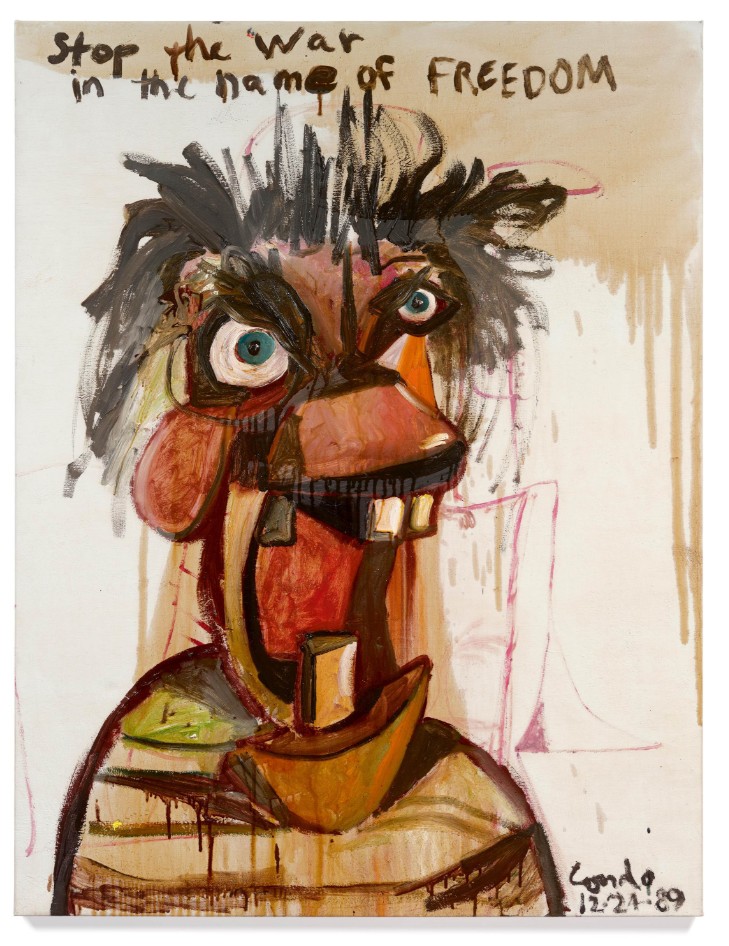
GEORGE CONDO (Concord 1957–lives and works in New York City)
Night of horrible dreams, 1989
Oil on canvas
51-1/8 x 39-3/8 inches (130×100 cm)
Signed and dated lower right: Condo 12.24.89
#18. Rodrigo and the Maid, 2008
Between Madness and Beauty: Selections from the Anna Condo Collection
Christie’s New-York: 21 May 2026
Estimated: USD 200,000 – 300,000
USD 222,250
GEORGE CONDO (B. 1957), Rodrigo and the Maid | Christie’s
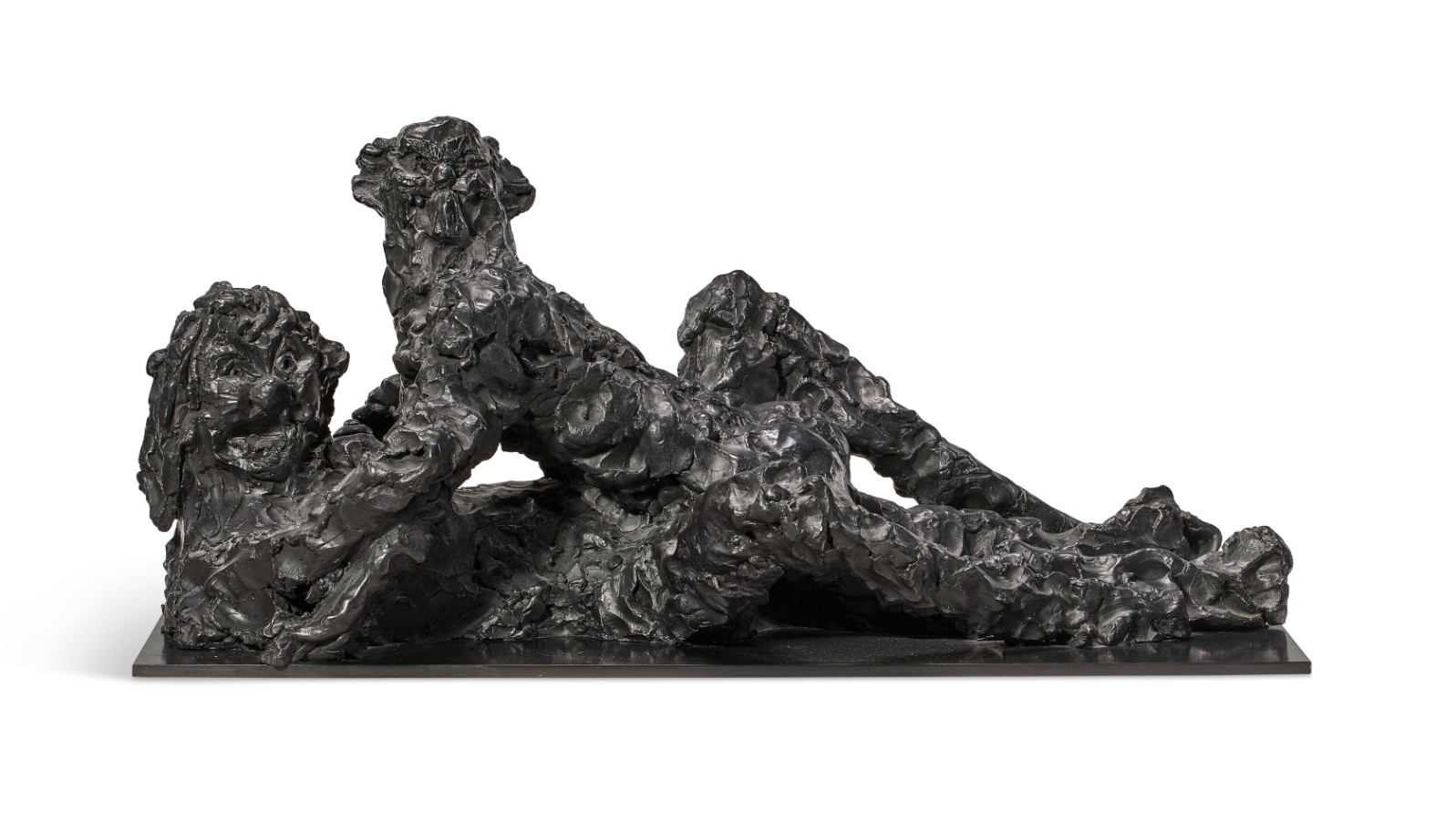
GEORGE CONDO (B. 1957)
Rodrigo and the Maid, 2008
Bronze
15x33x18 inches (38.1 x 83.8 x 45.7 cm)
Stamped with the artist’s initials, number, date and foundry mark ‘GC 08 1⁄4’ (on the base)
This work is number one from an edition of four
#19. The Outer Limit, 1992
Christie’s London: 7 March 2026
Estimated: GBP 30,000 – 50,000
GBP 139,700 / USD 186,625
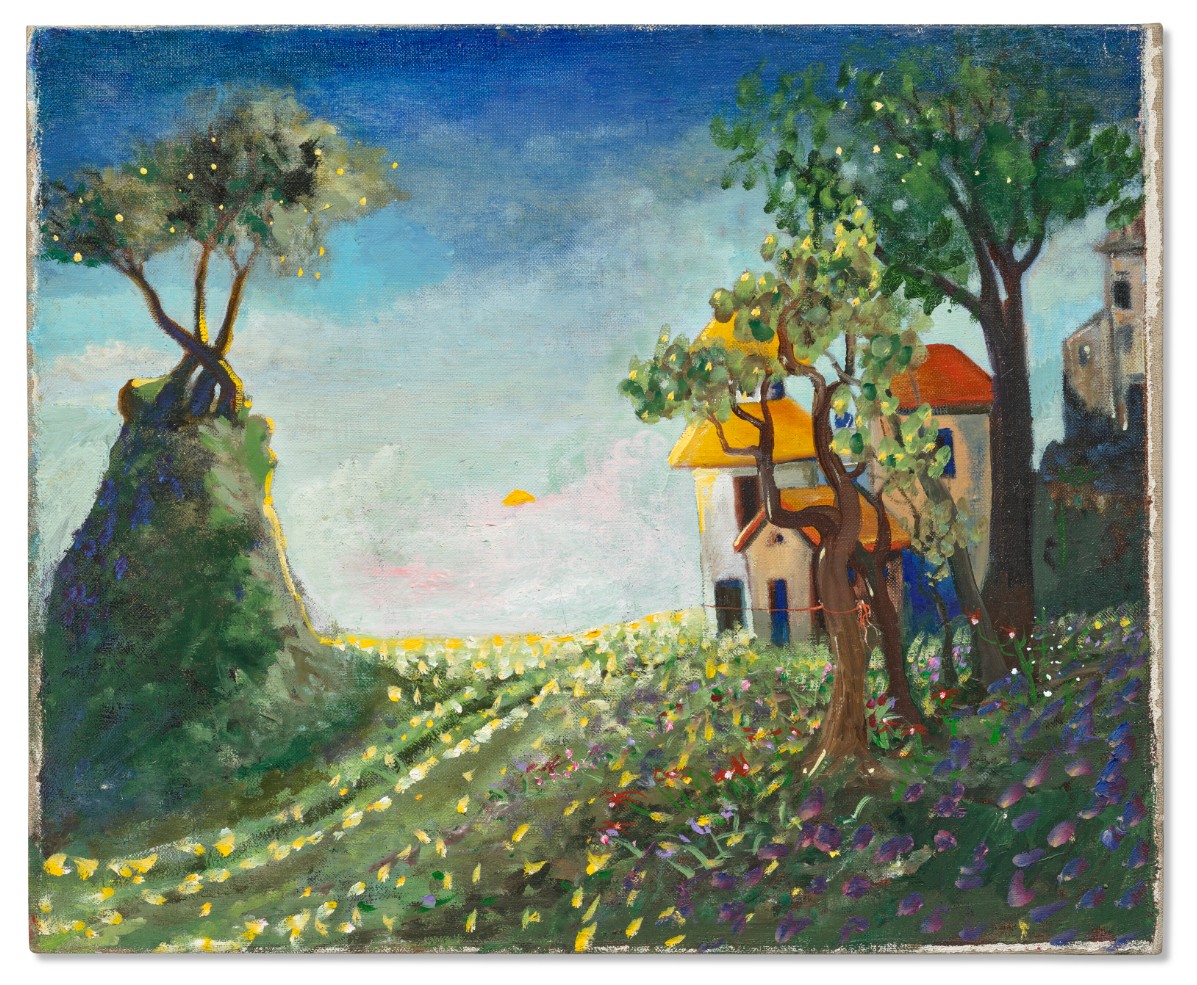
GEORGE CONDO (B. 1957)
The Outer Limit, 1992
Oil on canvas
19-3/4 x 24 inches (50×61 cm)
Signed, titled and dated ‘Condo 92 ”The Outer Limit”’ (on the reverse)
#20. Untitled, 1983
Estimated: GBP 60,000 – 80,000
GBP 133,750 / USD 178,675
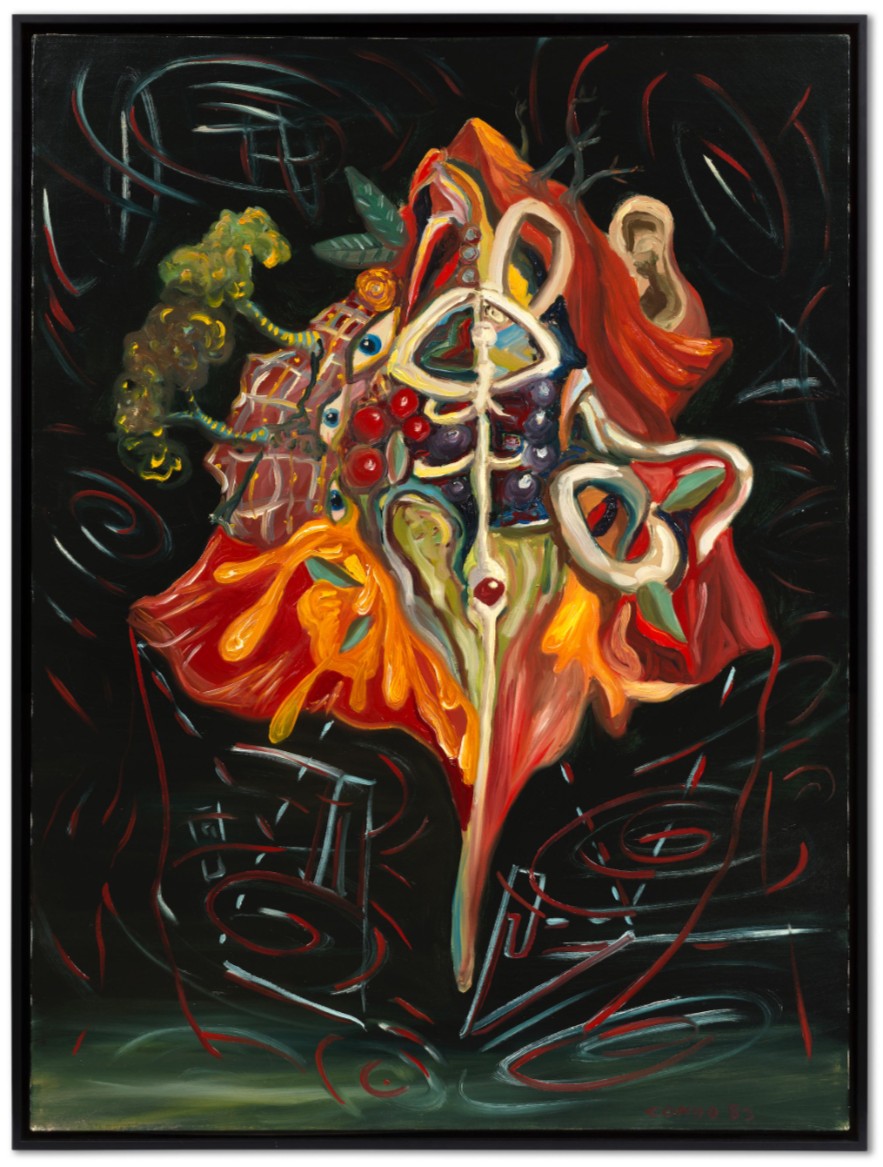
Untitled, 1983
Oil on canvas
48-1/4 x 36 inches (122.5 x 91.5 cm)
Signed and dated ‘Condo 83’ (lower right)
#21. Clown, circa 1985
Sotheby’s New-York: 9 June 2026
Estimated: USD 60,000 – 80,000
USD 166,400
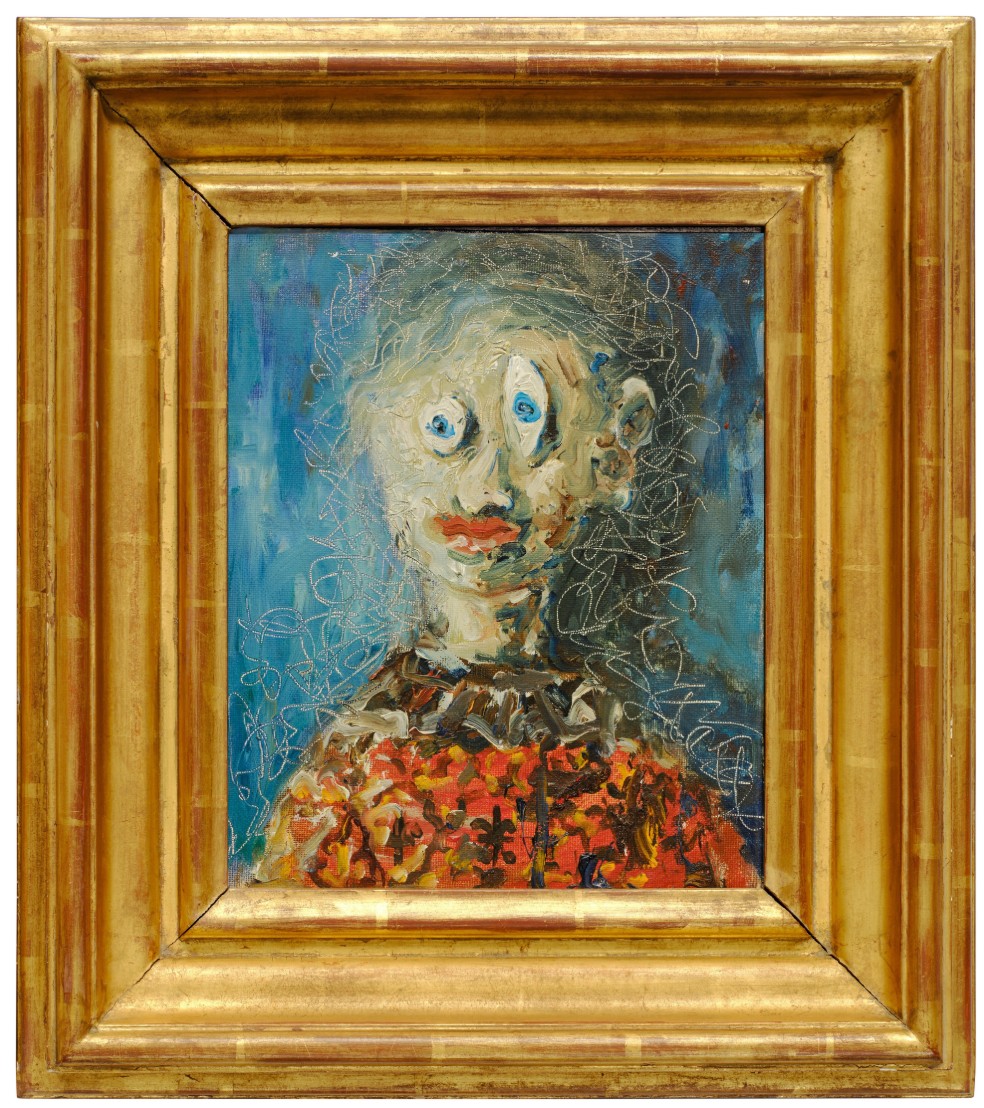
GEORGE CONDO (b. 1957)
Clown, circa 1985
Oil on canvas, in artist’s chosen frame
17-3/8 x 15-1/2 inches (44.1 x 39.4 cm)
#22. The Boy with White Hat and Blue Eyes, 1994-95
Sotheby’s Hong-Kong: 30 March 2026
Estimated: HKD 800,000 – 1,500,000
HKD 1,024,000 / USD 130,670
George Condo 喬治・康多 | The Boy with White Hat and Blue Eyes 白帽子藍眼睛男孩 |
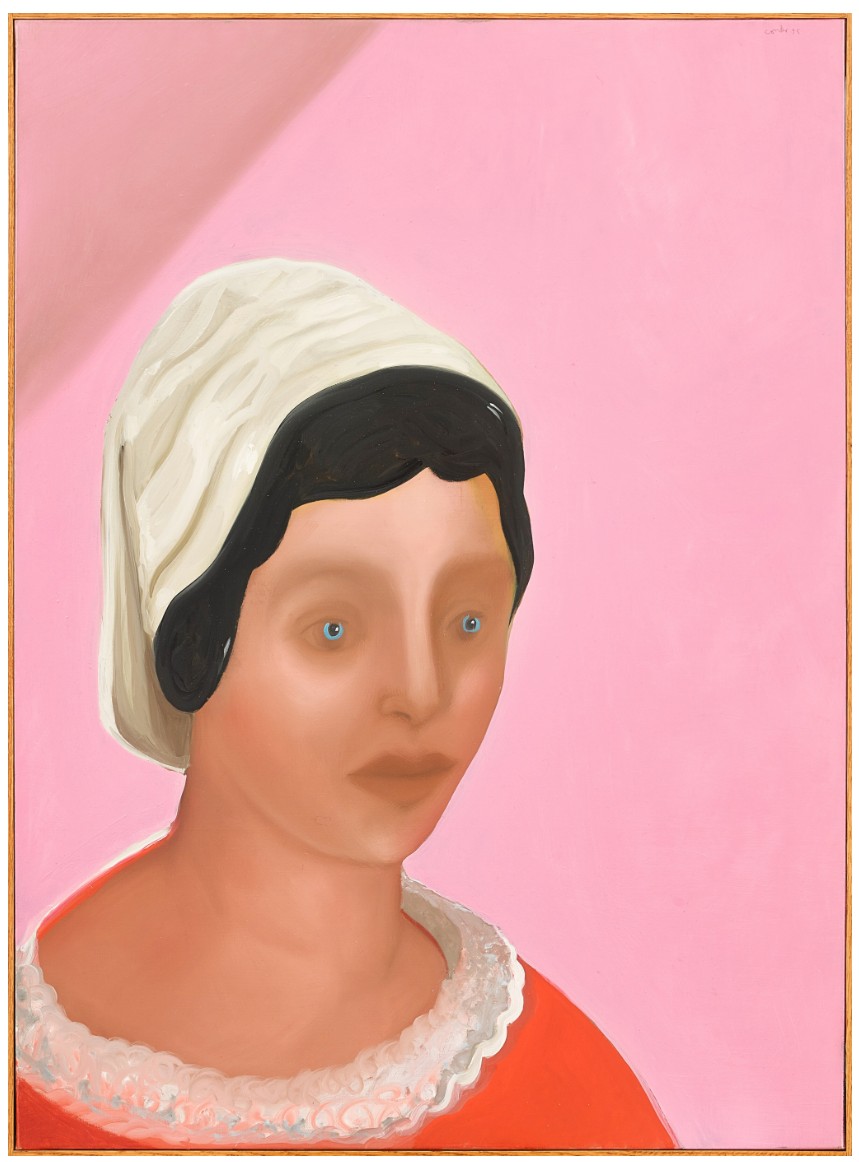
GEORGE CONDO (b. 1957)
The Boy with White Hat and Blue Eyes, 1994-95
Oil on canvas
39-1/4 x 28-3/4 inches (99.8 x 73 cm)
Signed and dated 95 (upper right)
Signed, titled and dated 1994 (on the reverse)
#23. Untitled, 2008
Between Madness and Beauty: Selections from the Anna Condo Collection
Christie’s New-York: 21 May 2026
Estimated: USD 30,000 – 50,000
USD 107,950
GEORGE CONDO (B. 1957), Untitled | Christie’s
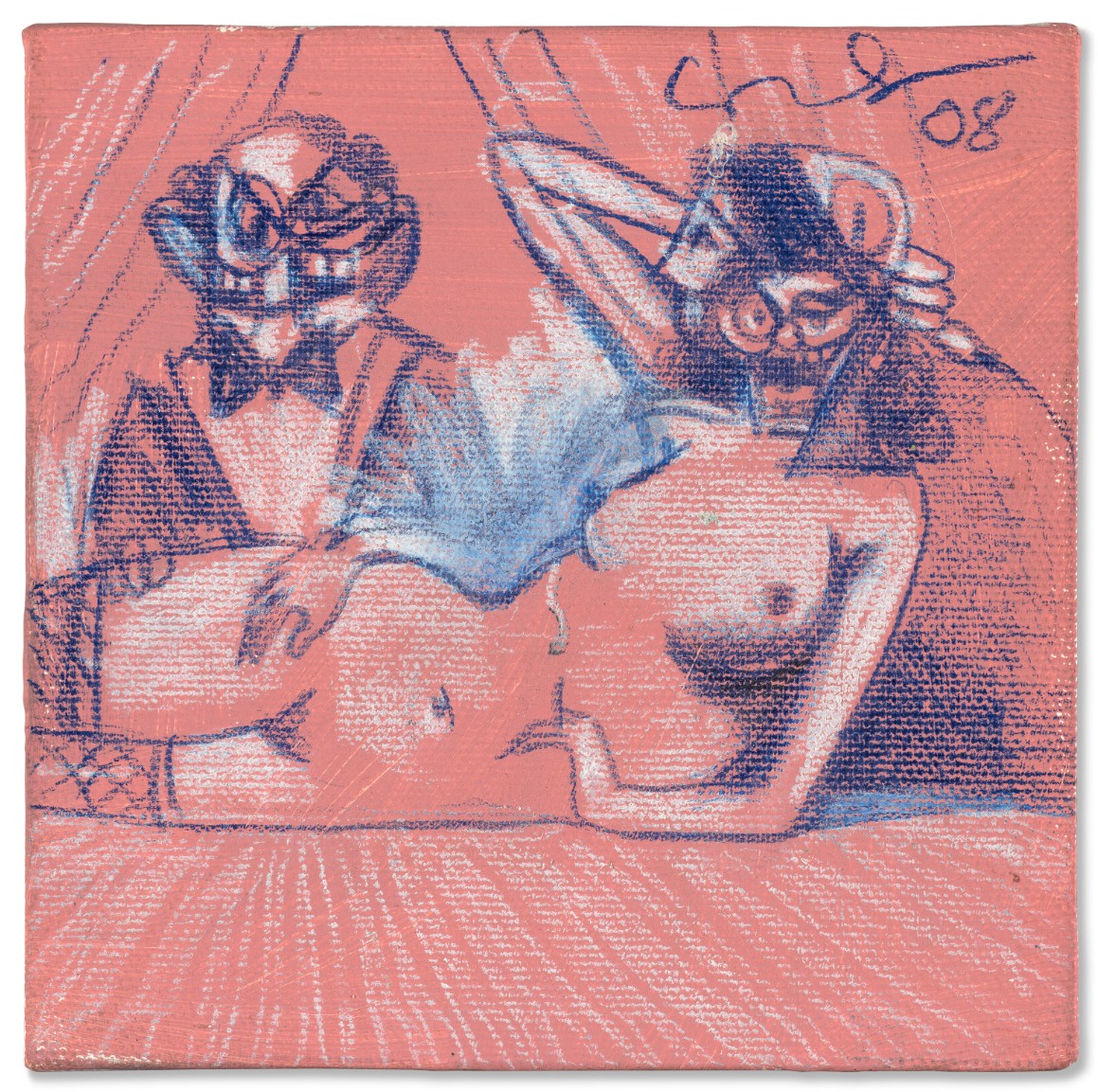
GEORGE CONDO (B. 1957)
Untitled, 2008
Acrylic and colored pencil on canvas
5×5 inches (12.7 x 12.7 cm)
Signed and dated ‘Condo 08’ (upper right)
USD 100,000
#24. Circular Head Composition, 1993-94
Phillips New-York: 21 May 2026
Estimated: USD 25,000 – 35,000
USD 54,180
George Condo Modern & Contemporary Art: Afternoon Session
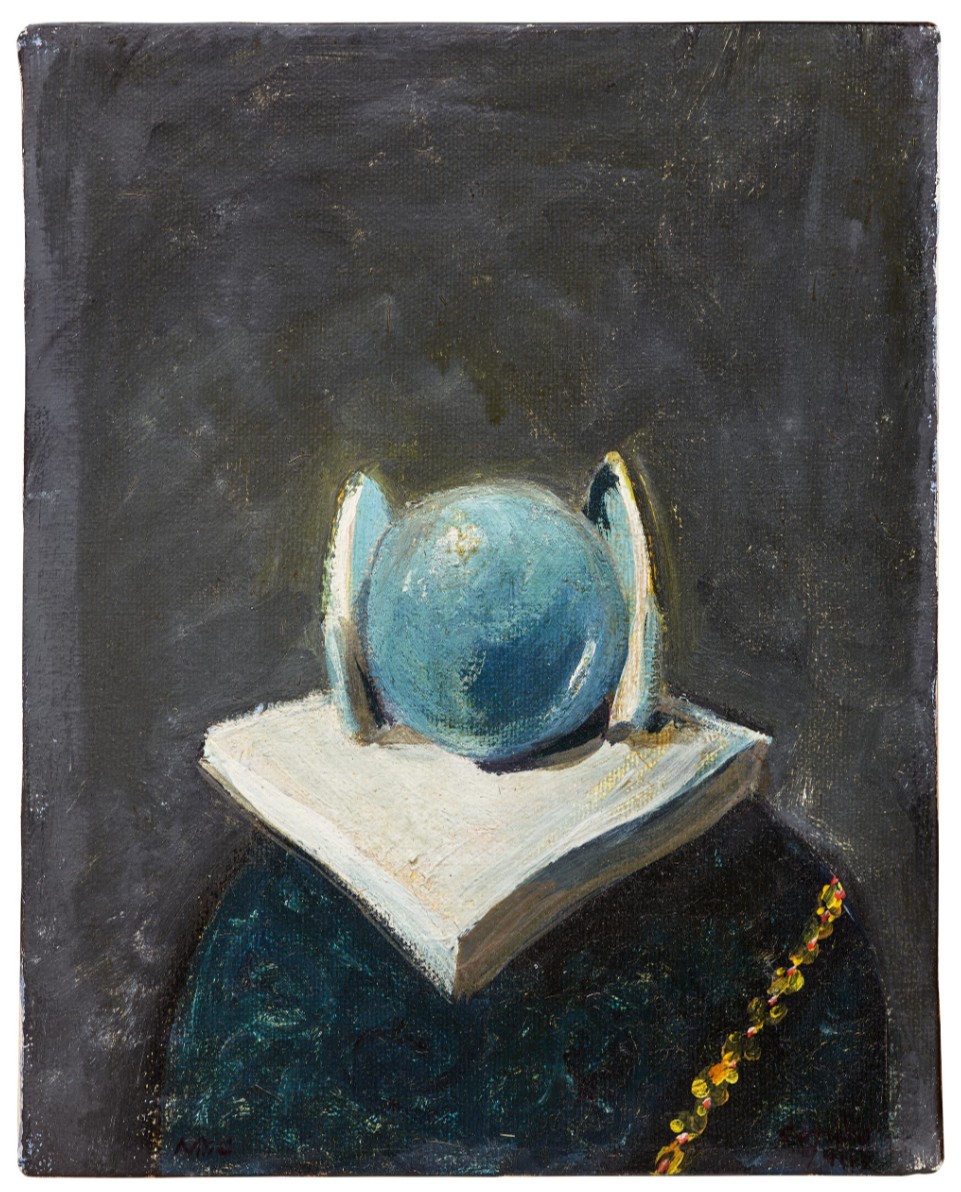
GEORGE CONDO
Circular Head Composition, 1993-94
Oil on canvas
9-7/8 x 7-7/8 inches (25.1 x 20 cm)
Signed and dated “Condo 94” lower right
Inscribed “N.Y.C.” lower left
Signed, titled, inscribed and dated
“Condo 1994 started Dec. 1993 N.Y.C “Circular Head Composition””
on the reverse
#25. Midwestern’s Night Dream, 1992
Estimated: USD 25,000 – 35,000
USD 38,400
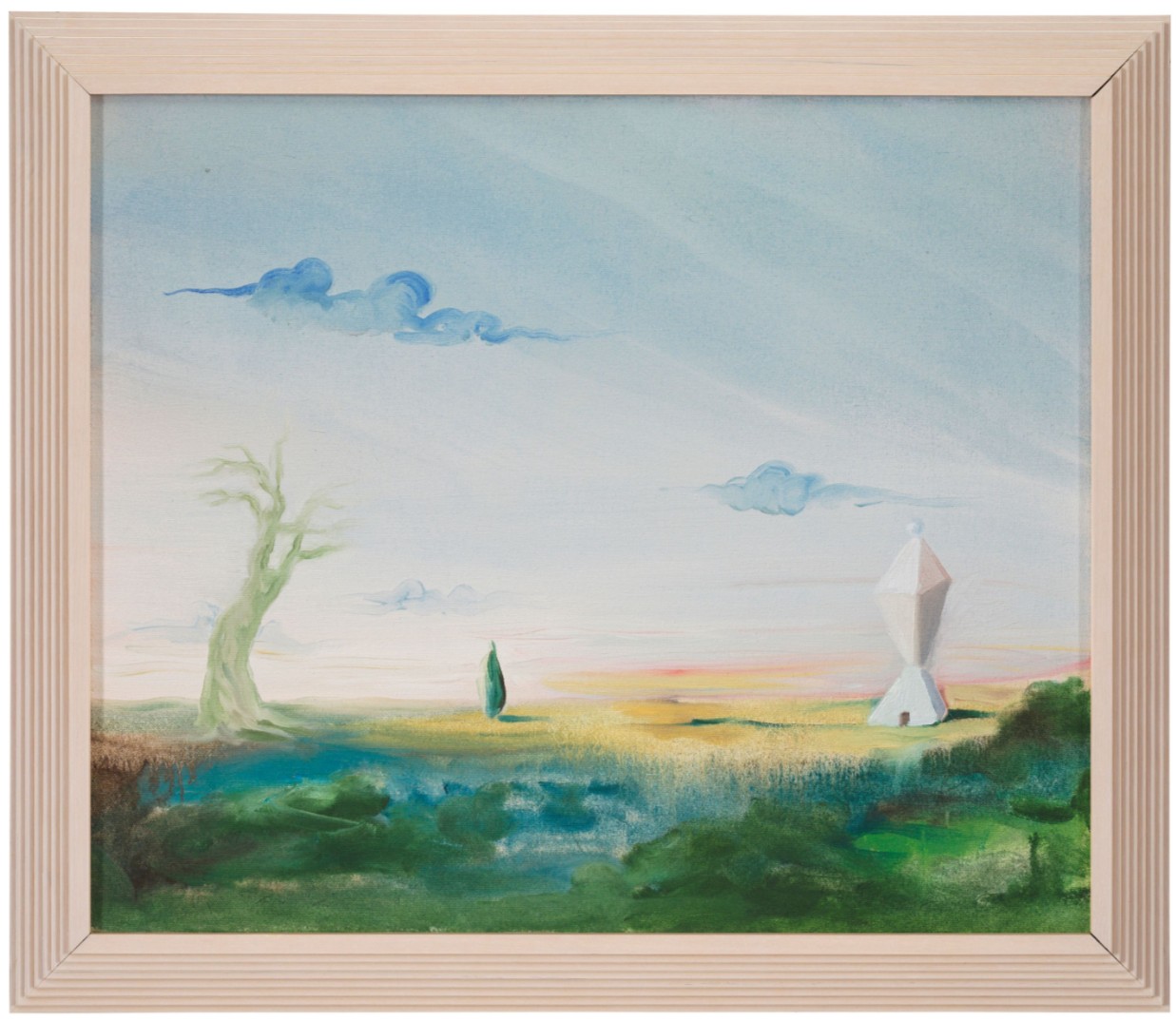
Midwestern’s Night Dream, 1992
Oil on canvas
21-1/4 x 25-5/8 inches (54×65 cm)
Signed, inscribed and dated ‘Condo Midwestern’s Night Dream 92’ (on the reverse)
#26. Clown, 1984
Estimated: USD 30,000 – 50,000
USD 38,100
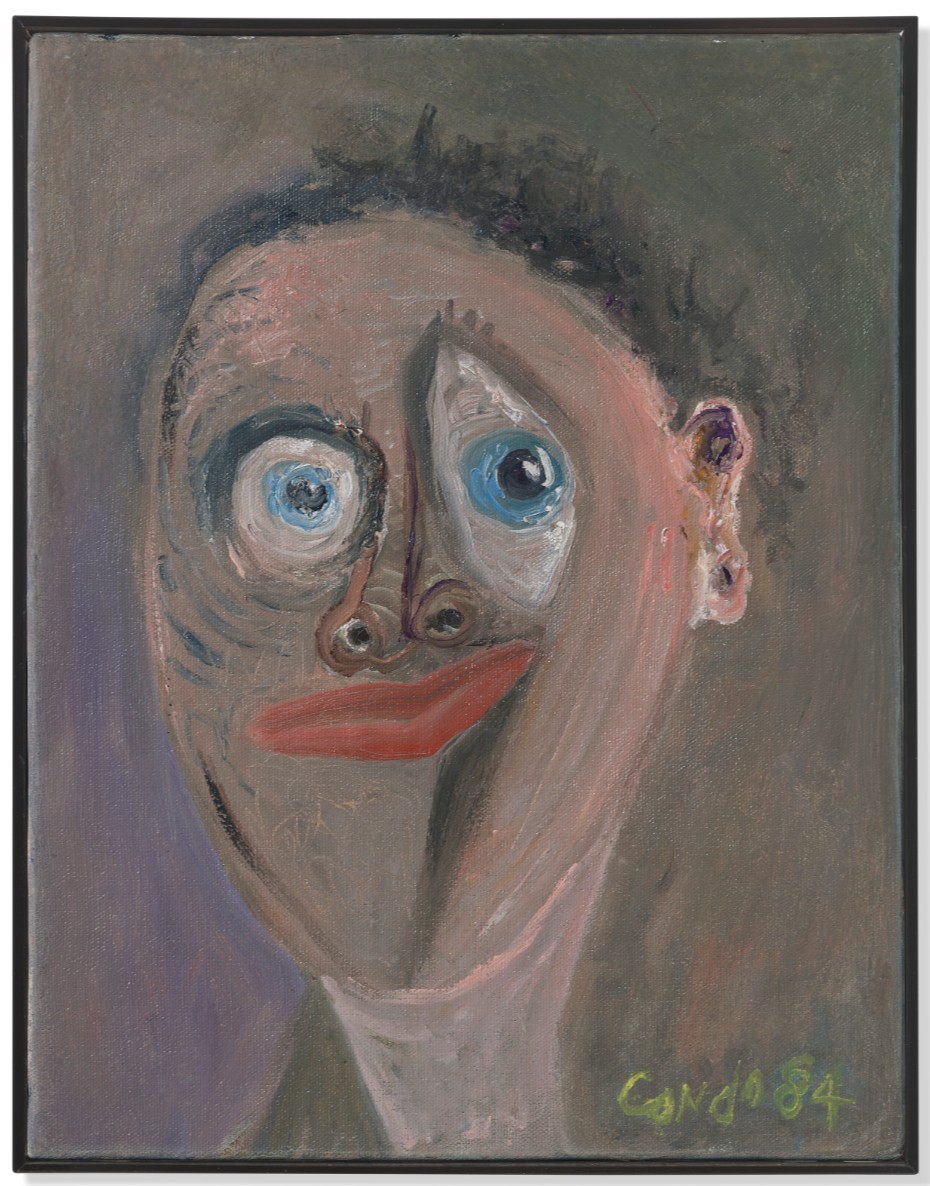
Clown, 1984
Oil on canvas
14×11 inches (35.6 x 27.9 cm)
Signed and dated ‘CONDO 84’ (lower right)
#27. The Albatross, 1984
Estimated: USD 20,000 – 30,000
USD 35,840
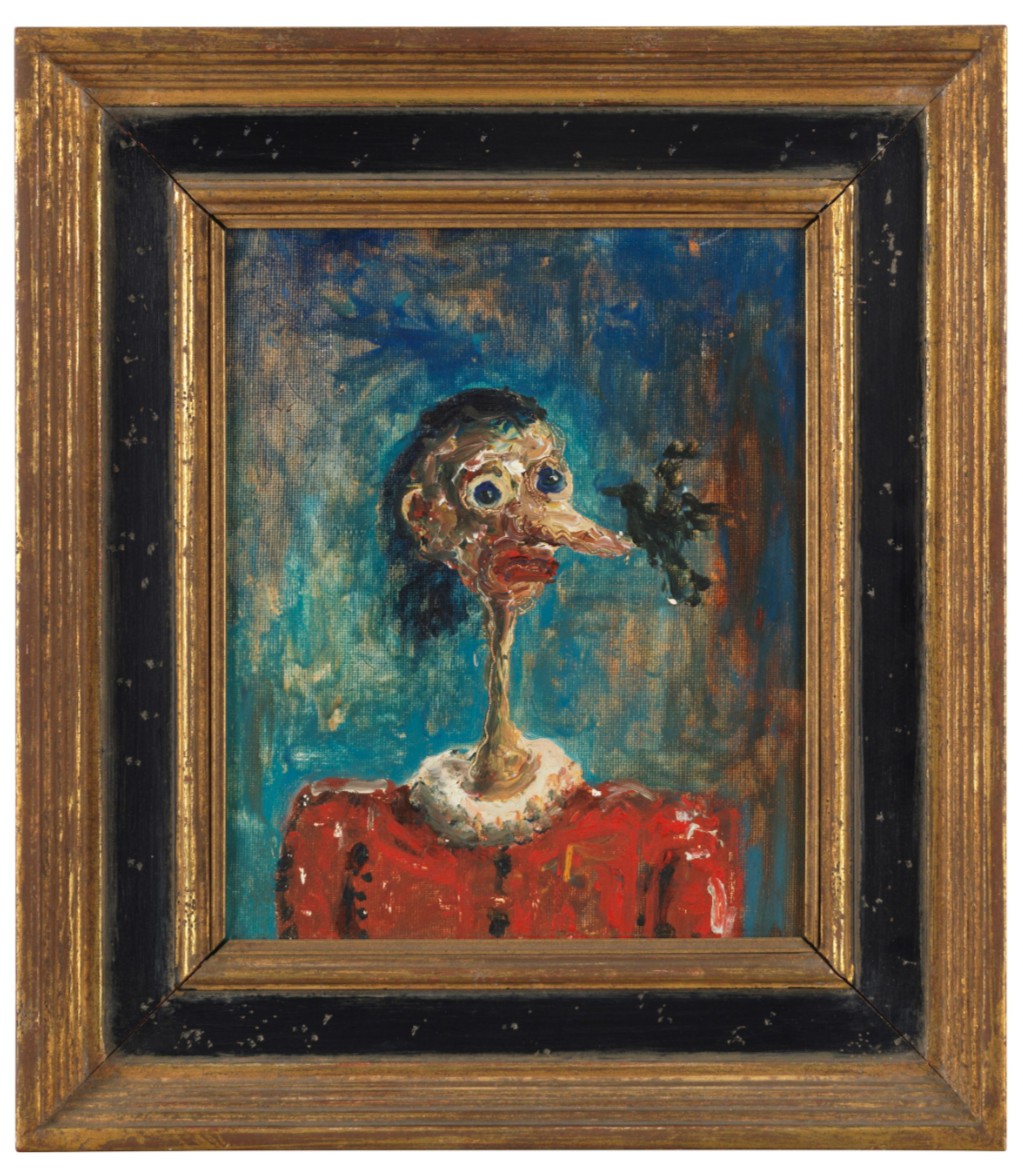
The Albatross, 1984
oil on canvas
17-1/4 x 15-1/4 inches (43.8 x 38.7 cm)

Between Madness and Beauty presents a focused group of twenty-seven paintings, sculptures, and works on paper by George Condo, drawn from the personal collection of Anna Condo. Anna and the artist were married for nearly three decades. The present selection offers a distilled and deliberate view of Condo’s work, bringing into focus the central tensions that define his practice across mediums and periods.
This notion of duality is central to Condo’s artistic language. Widely regarded as one of the most influential painters of his generation, he has developed what he terms “artificial realism,” a mode in which the compositional rigor of the Old Masters collides with the fractured figuration of modernism and the immediacy of contemporary culture. His works—held in major institutional collections including the Museum of Modern Art, the Metropolitan Museum of Art, and The Broad—are defined by their oscillation between extremes: elegance and distortion, harmony and dissonance, wit and unease.
Of this selection, Anna Condo recalls,
“This group of works reflects the duality that runs through [George’s] work and through him as a human being. Light and dark, abstraction and figuration, joy and pain. There’s a constant back and forth between the weight of art history and the immediacy of popular culture. You feel Goya, Rembrandt, Rodin, Picasso, but also Looney Tunes and American pop culture. There is that tension between Europe and the US, between old and new world sensibilities. Saint George and the madness of King George in one.”
The present group captures this full spectrum with particular clarity. Monumental canvases from the early 2000s, marked by their dynamic orchestration of figures and painterly virtuosity, are set in dialogue with more intimate works on paper, where line and gesture distill psychological states with immediacy and precision. Across media, Condo’s figures appear in a state of continual flux—at once constructed and unraveling, suspended between coherence and fragmentation. As a cohesive body, Between Madness and Beauty offers a distilled view of Condo’s enduring preoccupations. Through Anna Condo’s considered selection, the works foreground the fundamental dualities that animate his oeuvre—between past and present, control and improvisation, refinement and exuberance—revealing a practice that remains as vital, complex, and resonant as ever.
Lots Passed
Yellow Seated Woman, 2006
Sotheby’s London: 25 June 2026
Estimated: GBP 400,000 – 600,000
PASSED
George Condo | Yellow Seated Woman | Contemporary Day Auction | 2026
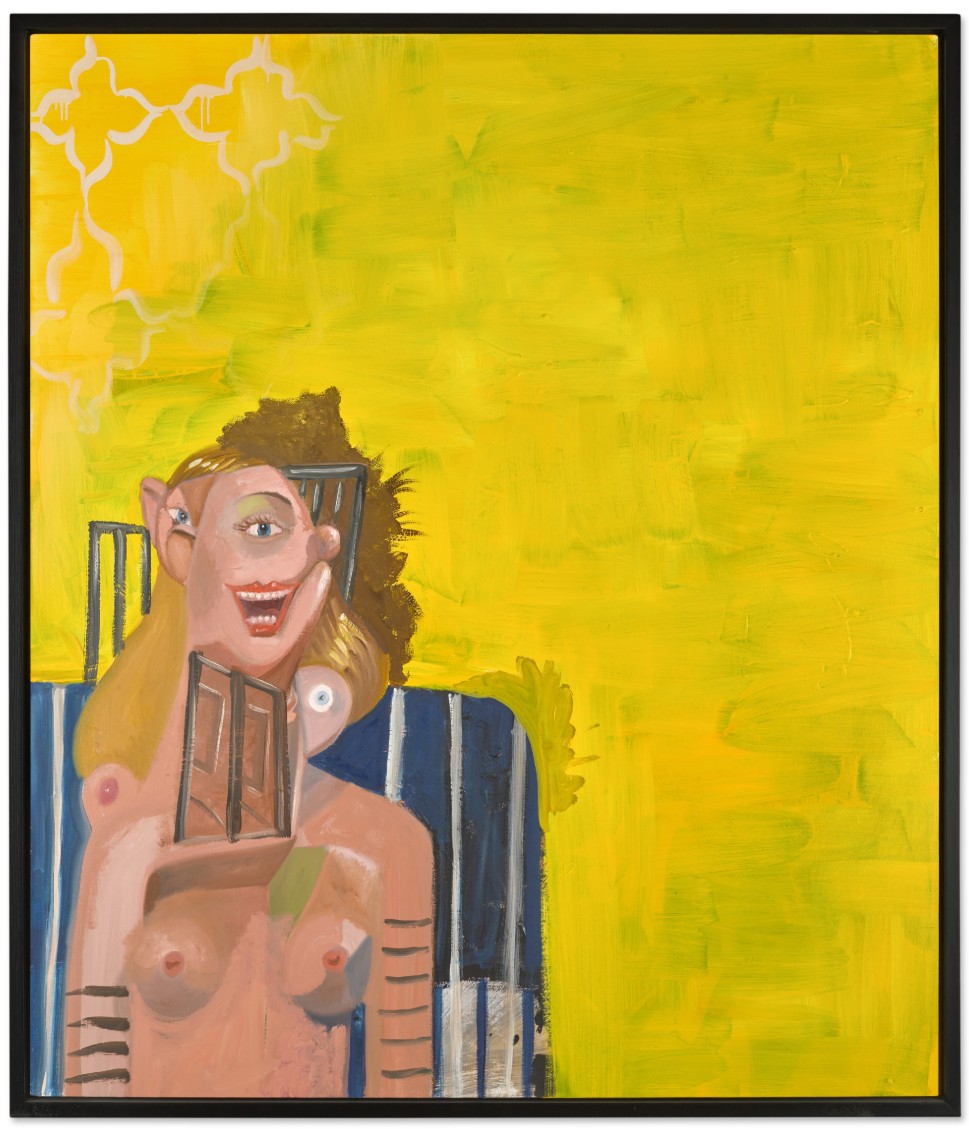
GEORGE CONDO (b. 1957)
Yellow Seated Woman, 2006
Oil on canvas
54 x 46-1/8 inches (137.2 x 117.1 cm)
Signed and dated 06 (on the reverse)
Madonna of Grapes, 1984
Art & Design from The Collection of Barbara Gladstone
Sotheby’s New-York: 9 June 2026
Estimated: USD 150,000 – 200,000
PASSED
George Condo | Madonna of Grapes | Art & Design from The Collection
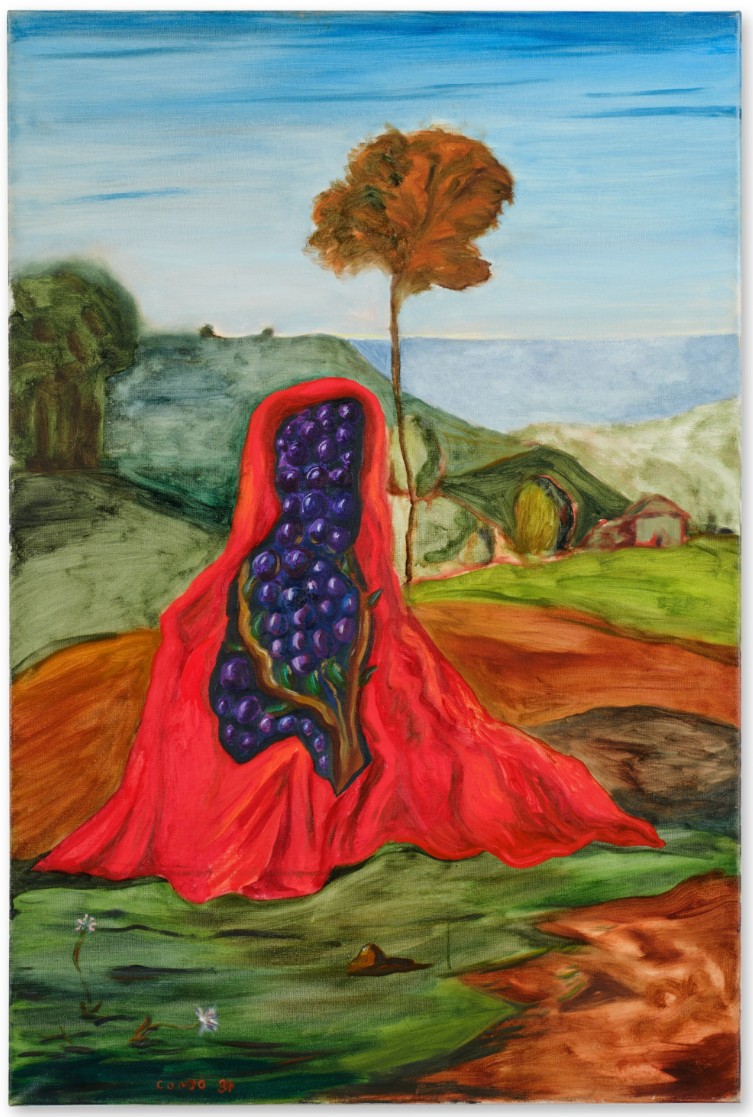
GEORGE CONDO (b. 1957)
Madonna of Grapes, 1984
Oil and pastel on canvas
47-1/4 x 31-3/4 inches (120 x 80.6 cm)
Signed, titled and dated 1984 (on the reverse)
Night portrait, 2001
Artcurial Paris: 16 April 2026
Estimated: EUR 650,000 – 850,000
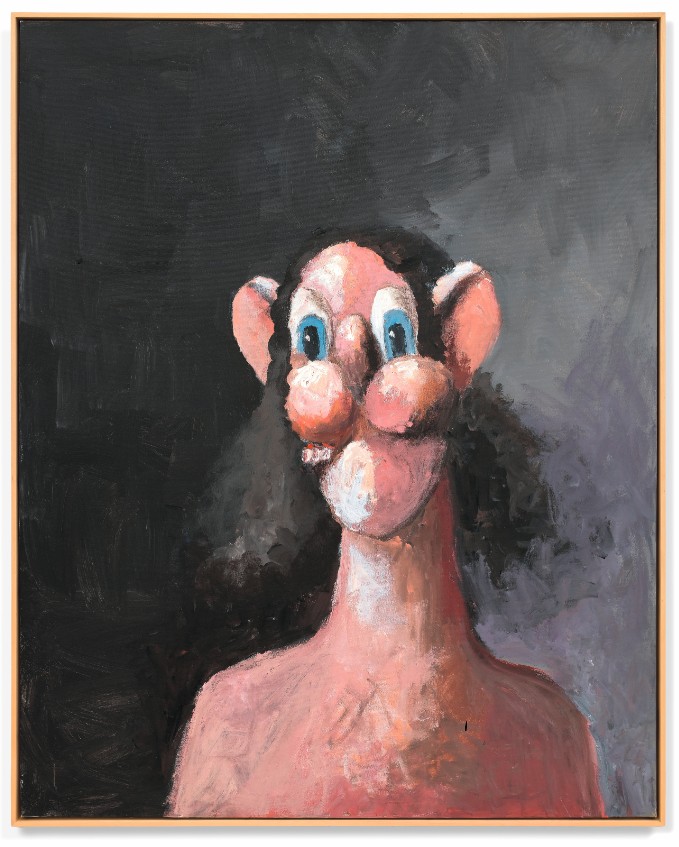
GEORGE CONDO (1957-)
Night portrait, 2001
Acrylic on canvas
60-1/4 x 48 inches (153×122 cm)
Signed, dated and titled on the reverse
2025 Auction Results
FOR PAINTINGS ONLY
41 lots sold at auction in 2025 for a total turnover of USD 23,670,622. With 9 lots failing to sell, the sell-through rate is 82%. The highest price has been achieved by Abstract Conversation, a painting dated 2010, that sold at Christie’s in New-York, on 19 November 2025, for USD 3,491,000.
2025 Top 4 Lots
7 lots sold for more than USD 1 million, generating a cumulative turnover of USD 14,760,481, representing 62.3% of the total turnover of 2025.
#1. Abstract Conversation, 2010
Edlis Neeson Collection
Christie’s New-York: 19 November 2025
Estimated: USD 3,000,000 – 5,000,000
USD 3,491,000
GEORGE CONDO (B. 1957), Abstract Conversation | Christie’s
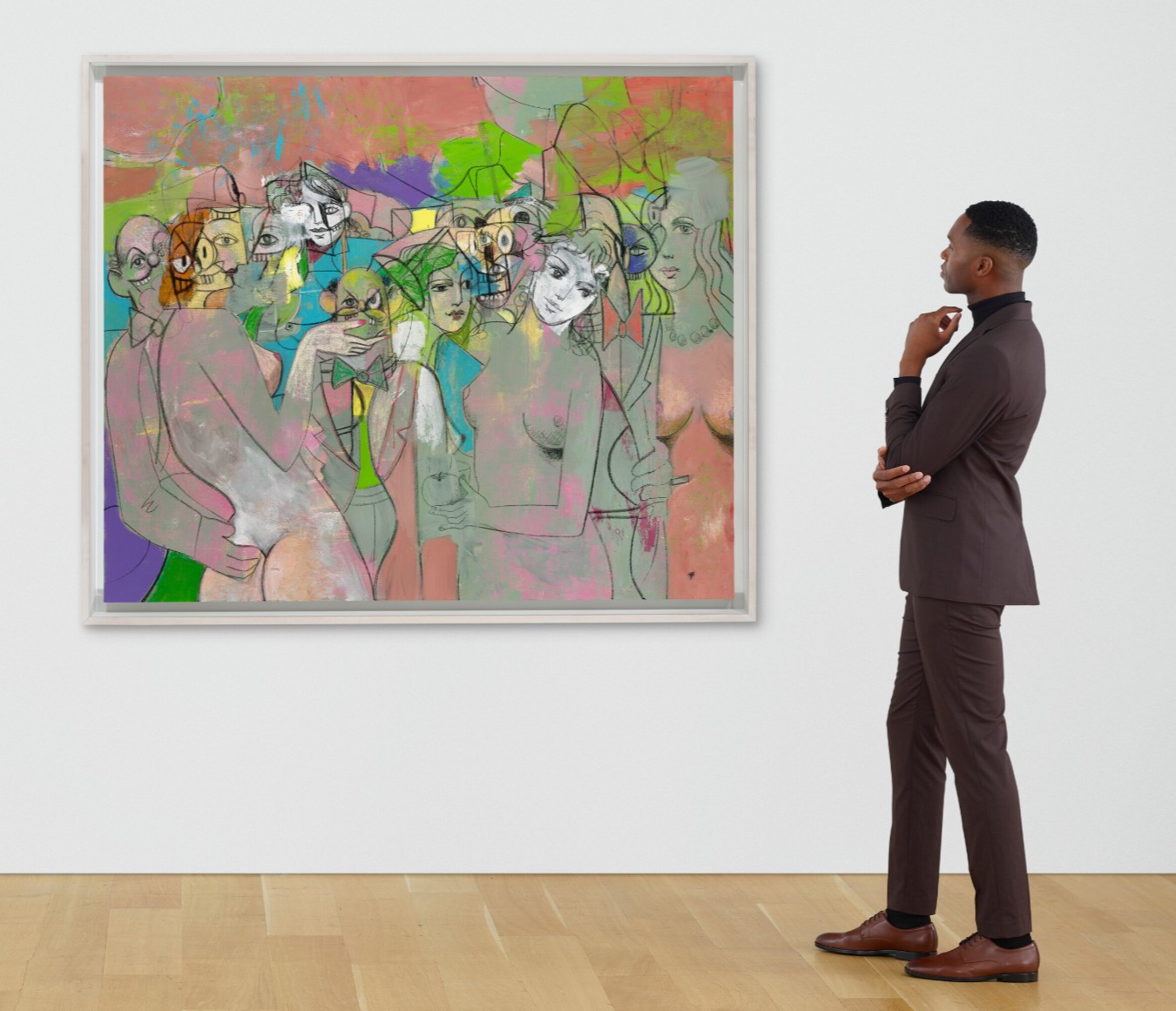
GEORGE CONDO (B. 1957)
Abstract Conversation, 2010
Acrylic, charcoal and pastel on linen
60×72 inches (152.4 x 182.9 cm)
Signed and dated ‘Condo 2010’ (upper left)
#2. Reclining Blue Form, 2011
Christie’s Hong-Kong: 26 September 2025
Estimated: HKD 12,500,000 – 22,500,000
HKD 18,190,000 / USD 2,338,045
GEORGE CONDO (B. 1957), Reclining Blue Form | Christie’s
REPEAT SALE
Sotheby’s New-York: 12 May 2021
Estimated: USD 2,500,000 – 3,500,000
USD 3,771,000
Reclining Blue Form | Contemporary Art Evening Auction | 2021 | Sotheby’s
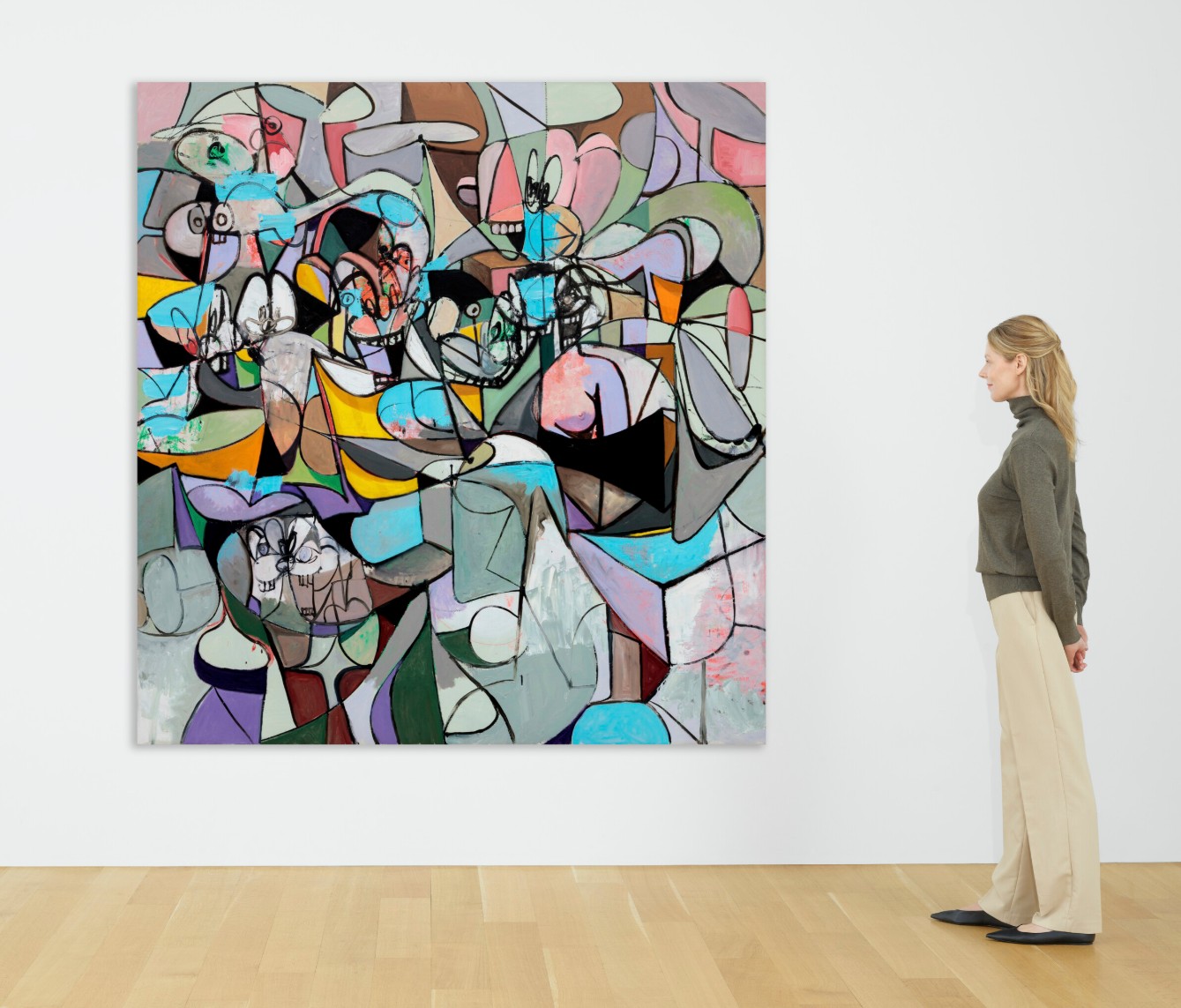
GEORGE CONDO (B. 1957)
Reclining Blue Form, 2011
Oil on linen
78×74 inches (198×188 cm)
Signed, titled and dated ‘condo 2011 Reclining Blue Form’ (on the overlap)
#3. Pink and Yellow Sweep, 2011
Christie’s New-York: 14 May 2025
Estimated: USD 1,500,000 – 2,000,000
USD 2,288,500
GEORGE CONDO (B. 1957), Pink and Yellow Sweep | Christie’s
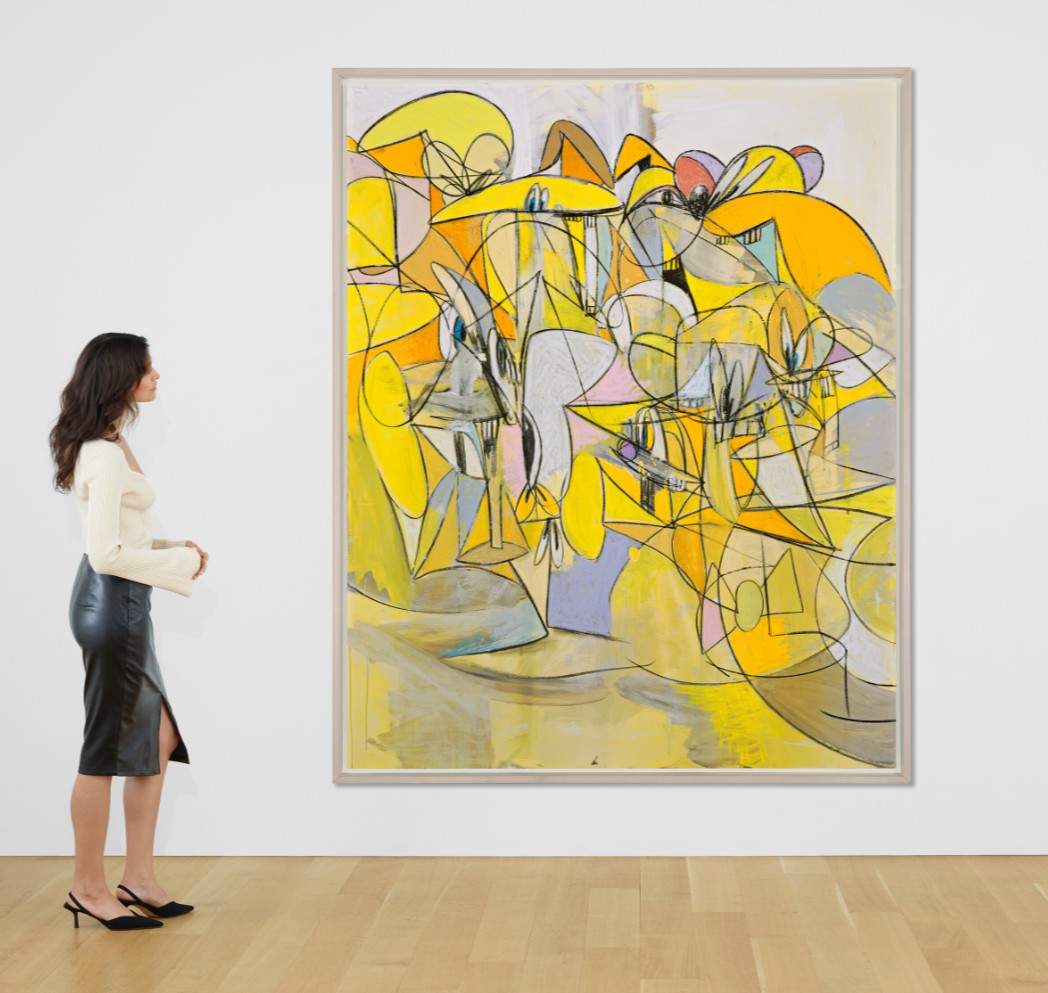
GEORGE CONDO (B. 1957)
Pink and Yellow Sweep, 2011
Acrylic, charcoal and pastel on linen
85×68 inches (215.9 x 172.7 cm)
Signed and dated ‘Condo 2011’ (upper left)
#4. Artist and Muse, 2015
Sotheby’s New-York: 26 February 2025
Estimated: USD 1,000,000 – 1,500,000
USD 1,880,000
Artist and Muse | Contemporary Curated | 2025 | Sotheby’s
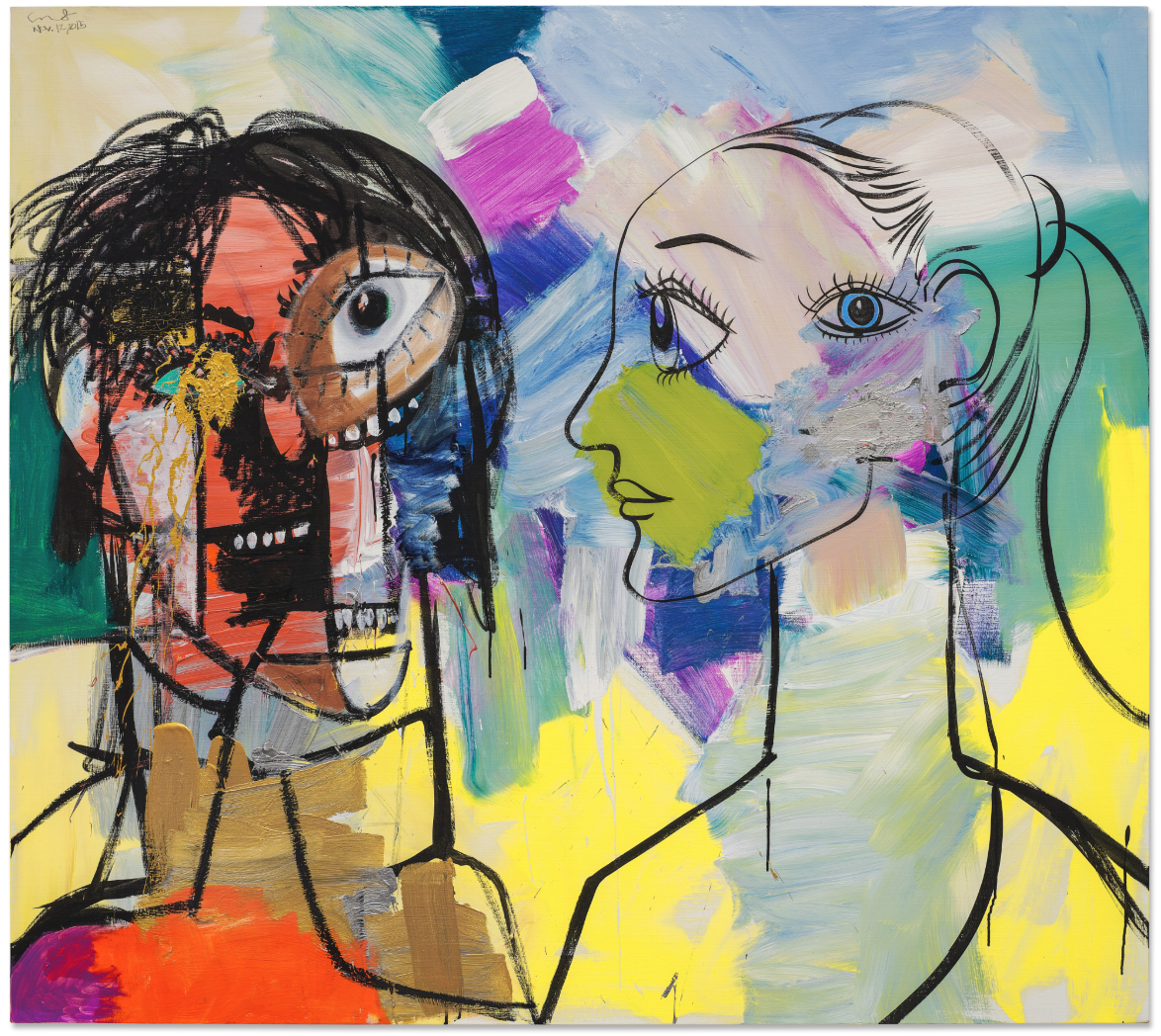
GEORGE CONDO (b. 1957)
Artist and Muse, 2015
Oil on canvas
58×65 inches (147.3 x 165.1 cm)
Signed and dated Nov. 12, 2015 (upper left)
Signed, titled and dated 2015.11 (on the overlap)
#5. The Banker’s Wife, 2011
Christie’s London: 15 October 2025
Estimated: GBP 800,000 – 1,200,000
GBP 1,331,000 / USD 1,783,540
READ MORE IN FOCUS SECTION / PORTRAITS
GEORGE CONDO (B. 1957), The Banker’s Wife | Christie’s
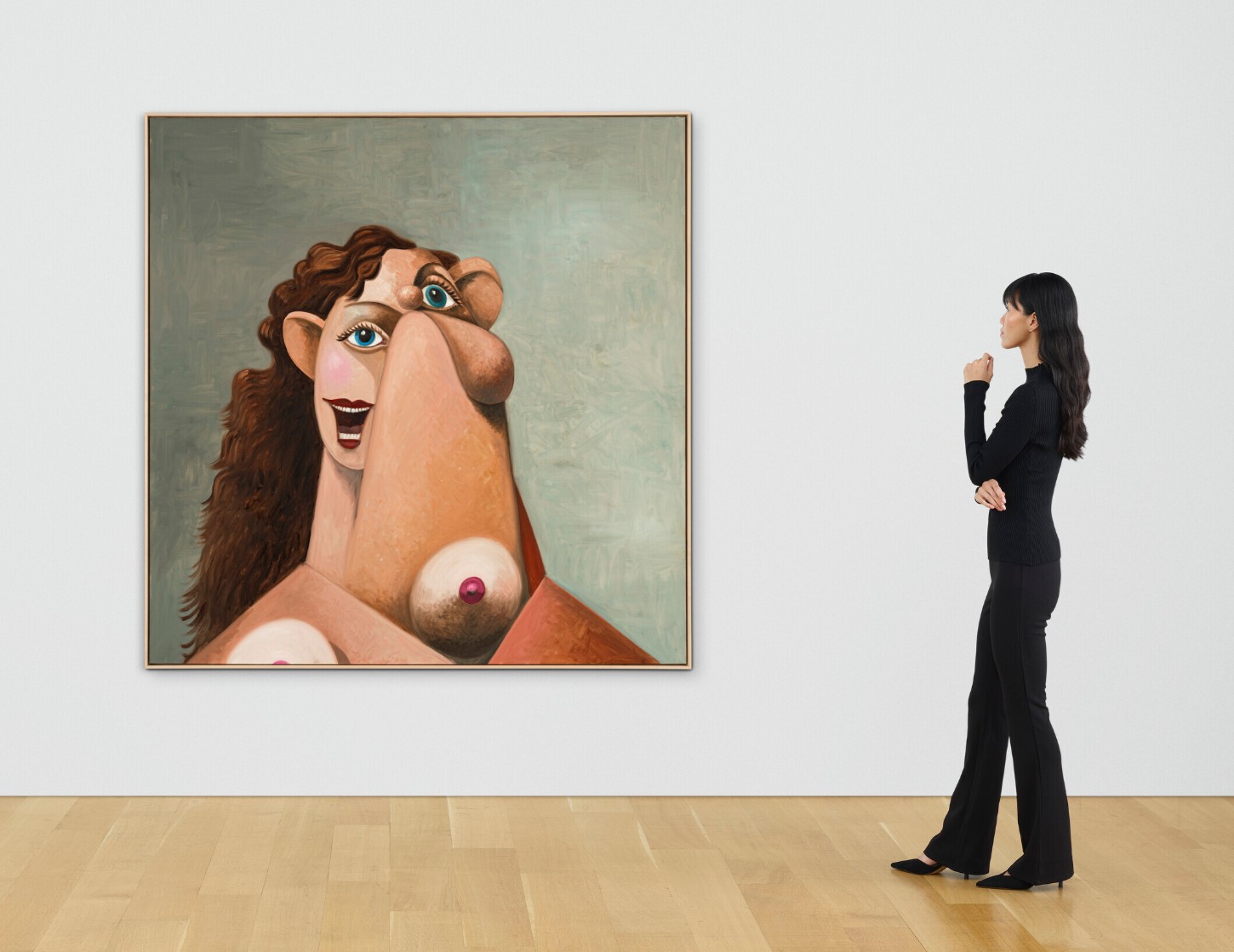
GEORGE CONDO (B. 1957)
The Banker’s Wife, 2011
Oil on linen
74×72 inches (188 x 182.9 cm)
Signed, titled and dated ‘Condo 2011 The Bankers Wife’ (on the overlap)
#6. Blues in F, 2021
Phillips Hong-Kong: 27 May 2025
Estimated: HKD 12,000,000 – 20,000,000
HKD 13,760,000 / USD 1,755,100
George Condo Modern & Contemporary Art: Evening & Day Sale
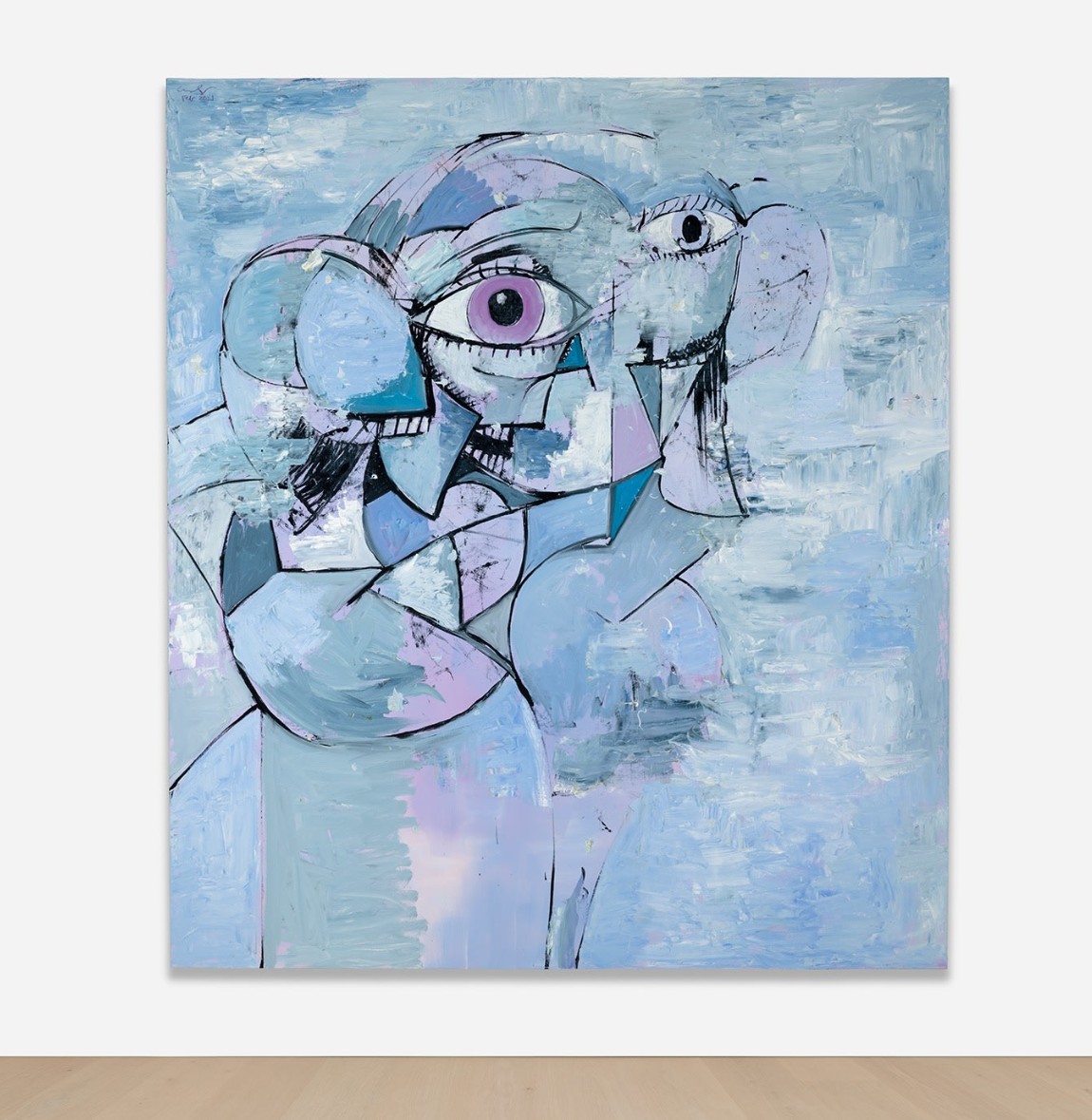
Blues in F, 2021
Oil on canvas
#7. The Showgirl, 2008
Christie’s Hong-Kong: 26 September 2025
Estimated: HKD 7,500,000 – 9,500,000
HKD 9,525,000 / USD 1,224, 295
GEORGE CONDO (B. 1957), The Showgirl | Christie’s
REPEAT SALE
Phillips London: 15 October 2021
Estimated: GBP 1,000,000 – 1,500,000
GBP 1,232,500 / USD 1,695,555
George Condo 20th Century & Contemporary Art Evening Sale
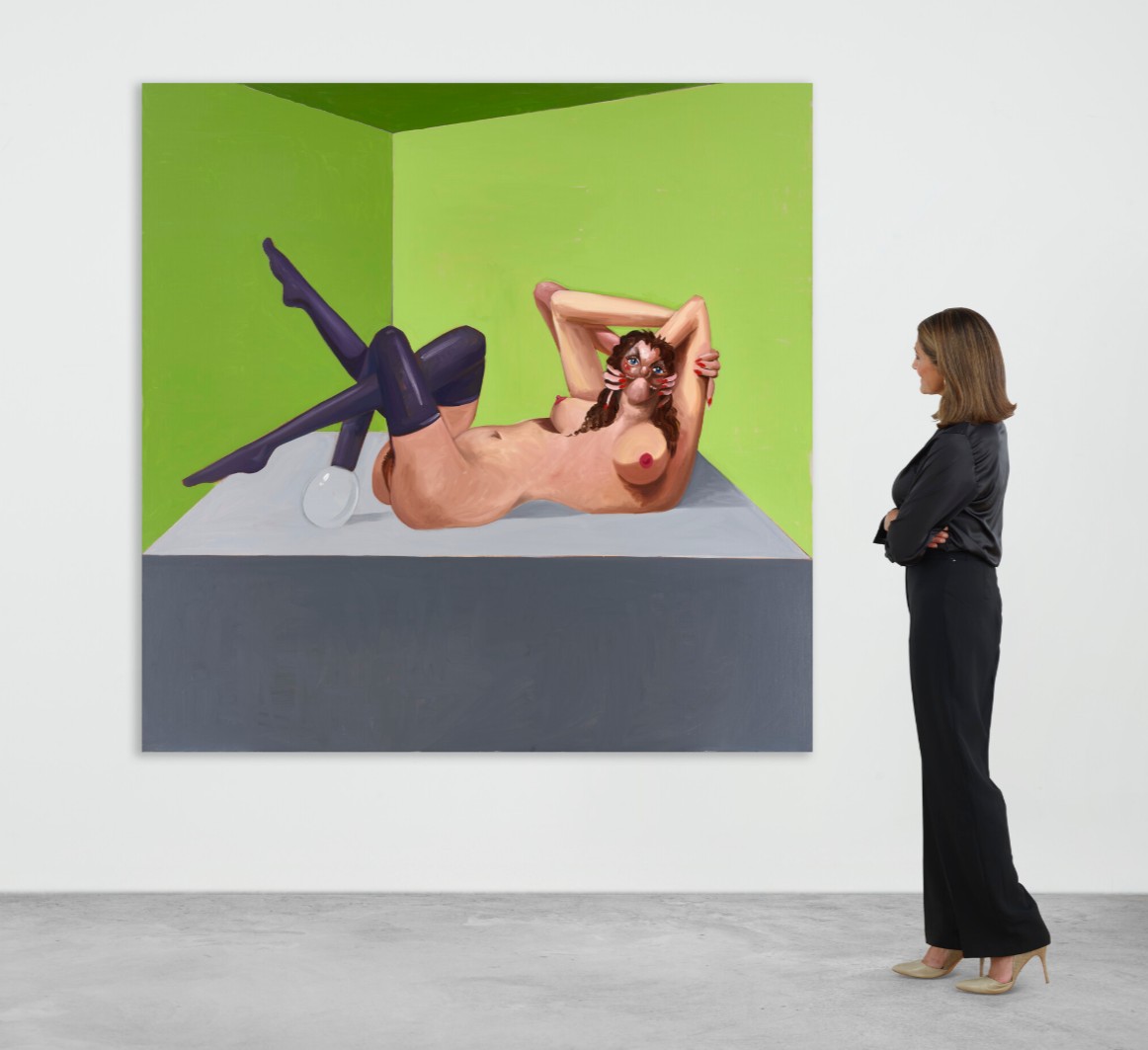
GEORGE CONDO (B. 1957)
The Showgirl, 2008
Oil on linen
80 1/8 x 80 1/8 inches (203.5 x 203.5 cm)
Signed and dated ‘Condo 08’ (on the reverse)
“Picasso painted a violin from four different perspectives at one moment.
I do the same with psychological states.”
USD 1 million
#8. Maja Vestida, 2005
Sotheby’s New-York: 16 May 2025
Estimated: USD 700,000 – 1,000,000
USD 889,000
Maja Vestida | Contemporary Day Auction | 2025 | Sotheby’s
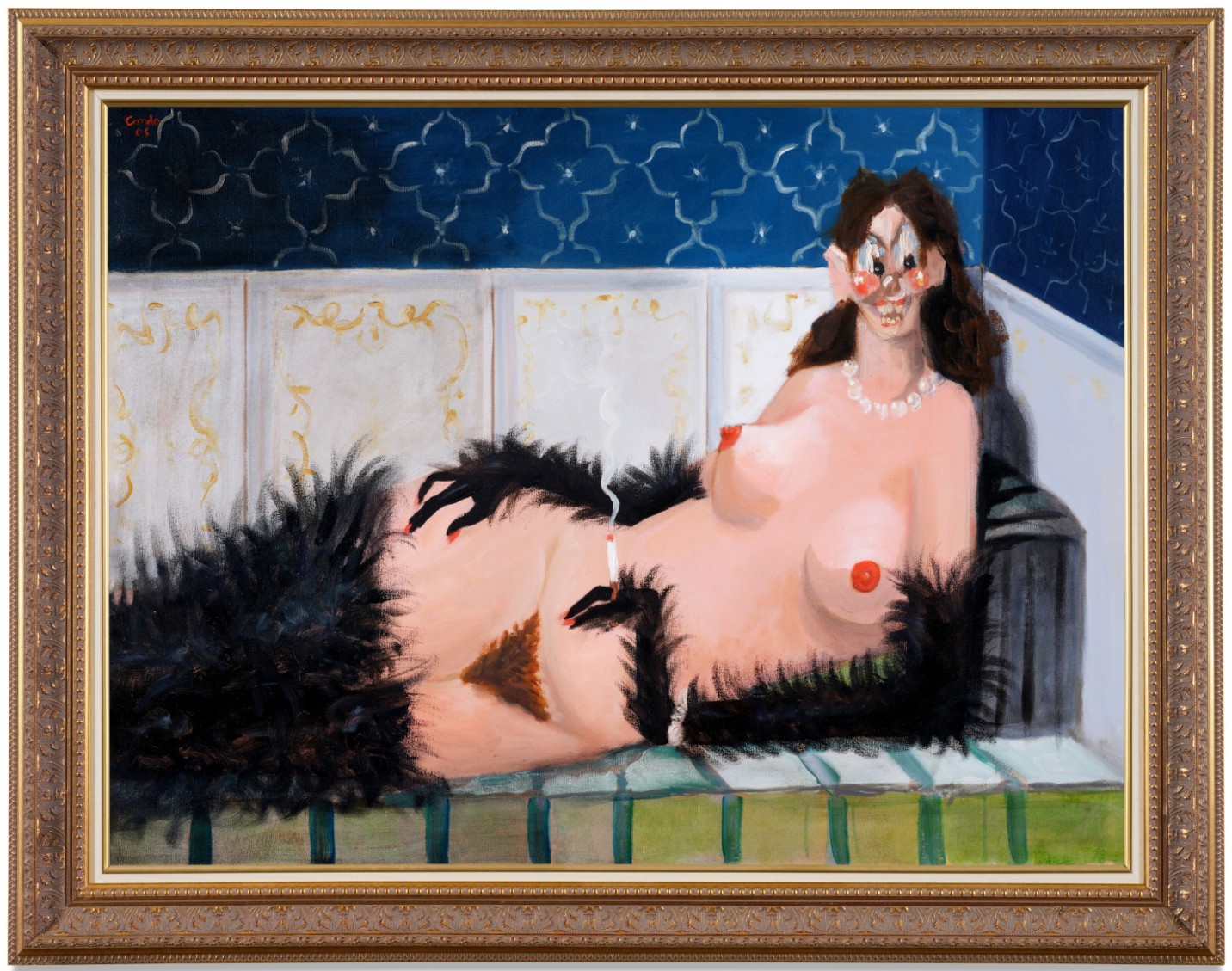
GEORGE CONDO (b. 1967)
Maja Vestida, 2005
Oil on canvas in artist’s chosen frame
37 1/4 x 47 1/8 inches (94.6 x 119.7 cm)
Signed and dated 05 (upper left)
Signed, titled and dated 05 (on the reverse)
#9. Untitled, circa 1998
Property from a Private New York Collection
Christie’s New-York: 20 November 2025
Estimated: USD 350,000 – 550,000
USD 787,400
GEORGE CONDO (B. 1957), Untitled | Christie’s
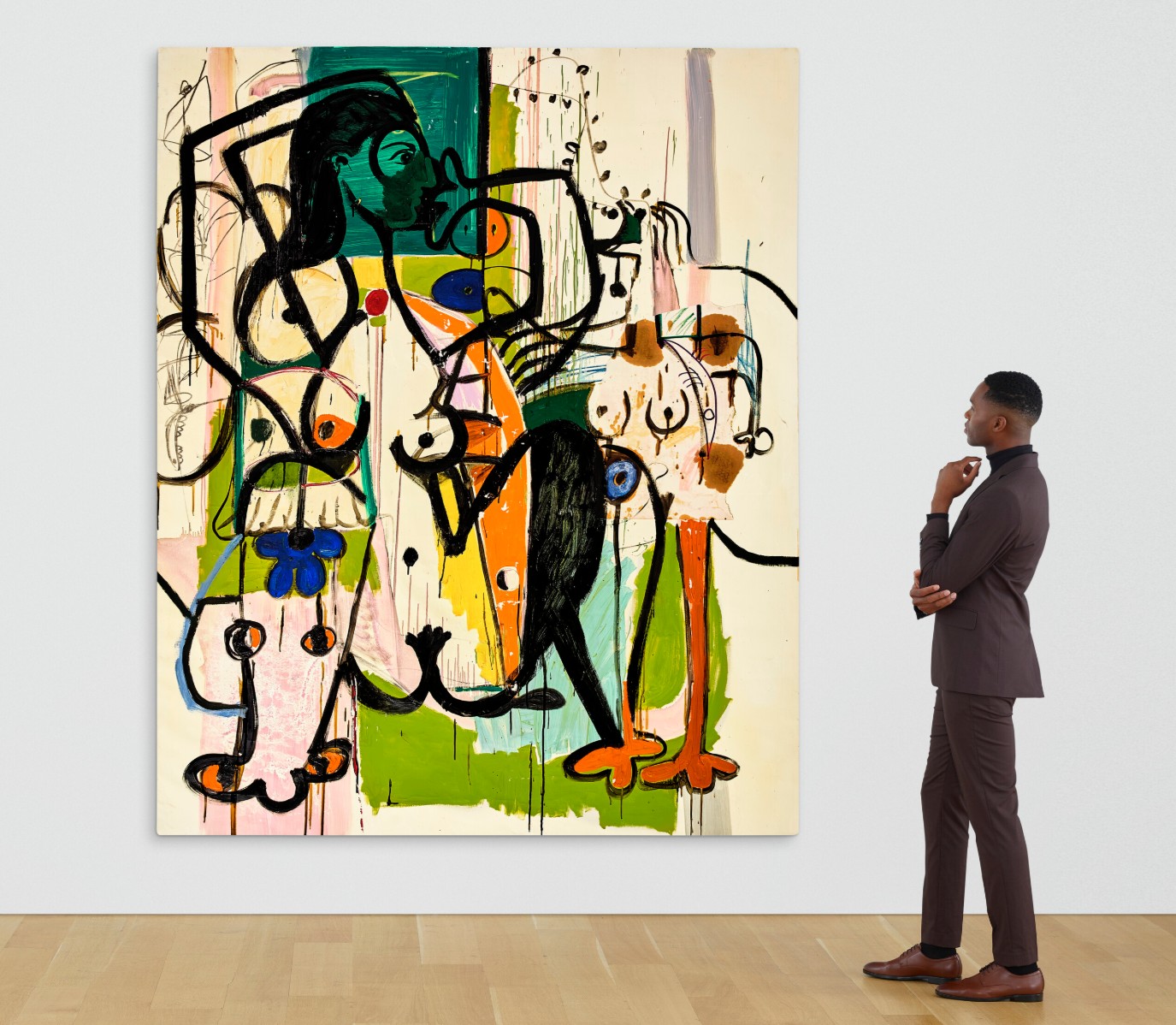
GEORGE CONDO (B. 1957)
Untitled, circa 1998
Oil and paper collage on canvas
76 5/8 x 62 5/8 inches (194.3 x 158.75 cm)
Signed ‘Condo’ (on the reverse)
#10. Untitled, 2007
Property from a Private New York Collection
Christie’s New-York: 20 November 2025
Estimated: USD 500,000 – 700,000
USD 635,000
GEORGE CONDO (B. 1957), Untitled | Christie’s
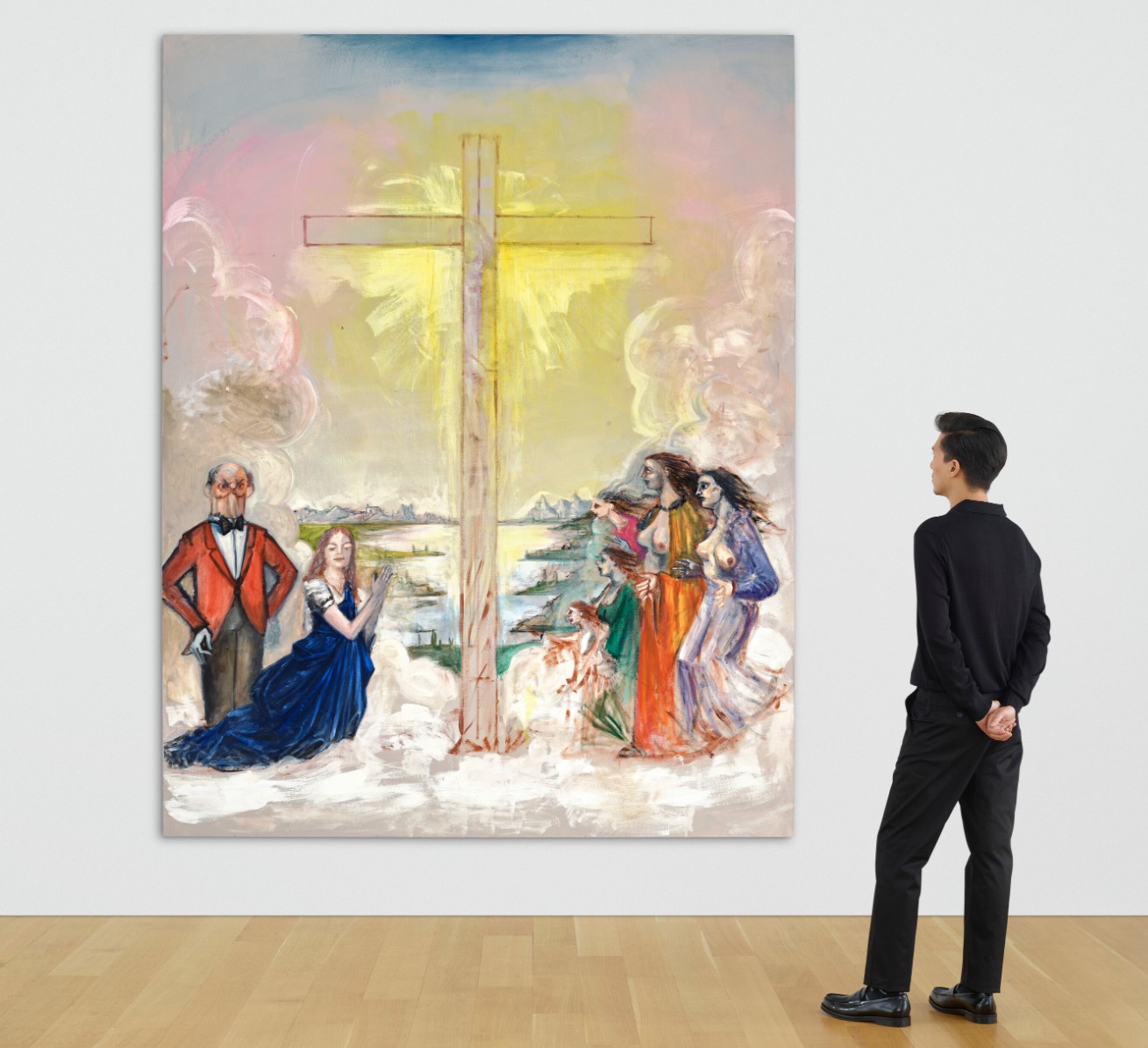
GEORGE CONDO (B. 1957)
Untitled, 2007
Acrylic and oil on canvas
108×85 inches (274.3 x 216 cm)
#11. Duke of Malta, 2009
Sotheby’s London: 17 October 2025
Estimated: GBP 200,000 – 300,000
GBP 406,400 / USD 544,575
Duke of Malta | Contemporary Day Auction | 2025 | Sotheby’s
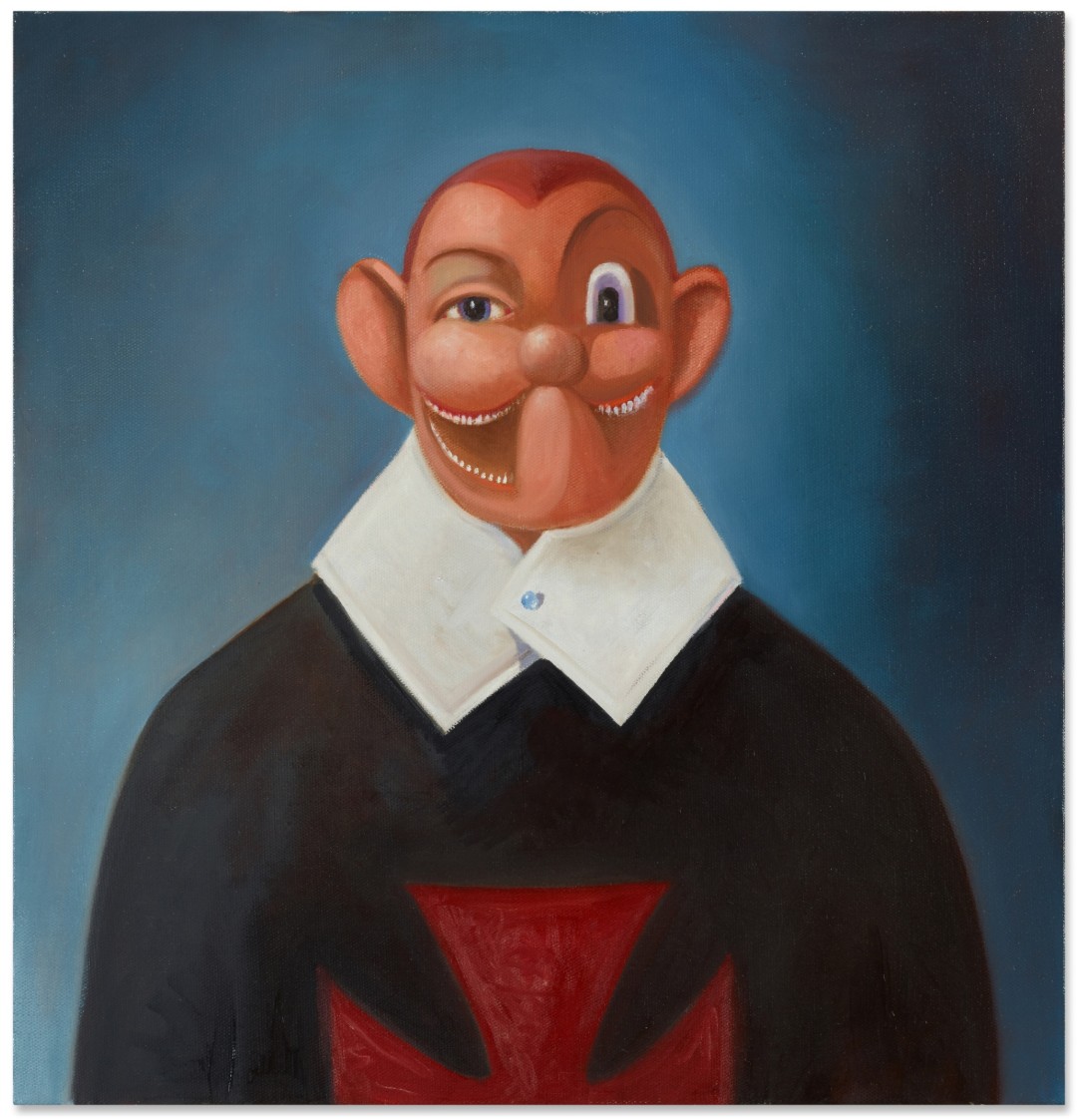
GEORGE CONDO (b. 1957)
Duke of Malta, 2009
Oil on canvas
27×26 inches (68.6 x 66 cm)
Signed and dated 09 (on the reverse)
#12. Mr Twiddle, 2010
Christie’s London: 6 March 2025
Estimated: GBP 350,000 – 550,000
GBP 403,200 / USD 516,096
GEORGE CONDO (B. 1957), Mr Twiddle | Christie’s
REPEAT SALE
Christie’s London: 14 April 2016
Estimated: GBP 120,000 – 180,000
GBP 170,500 / USD 241,245
George Condo (B. 1957), Mr Twiddle | Christie’s
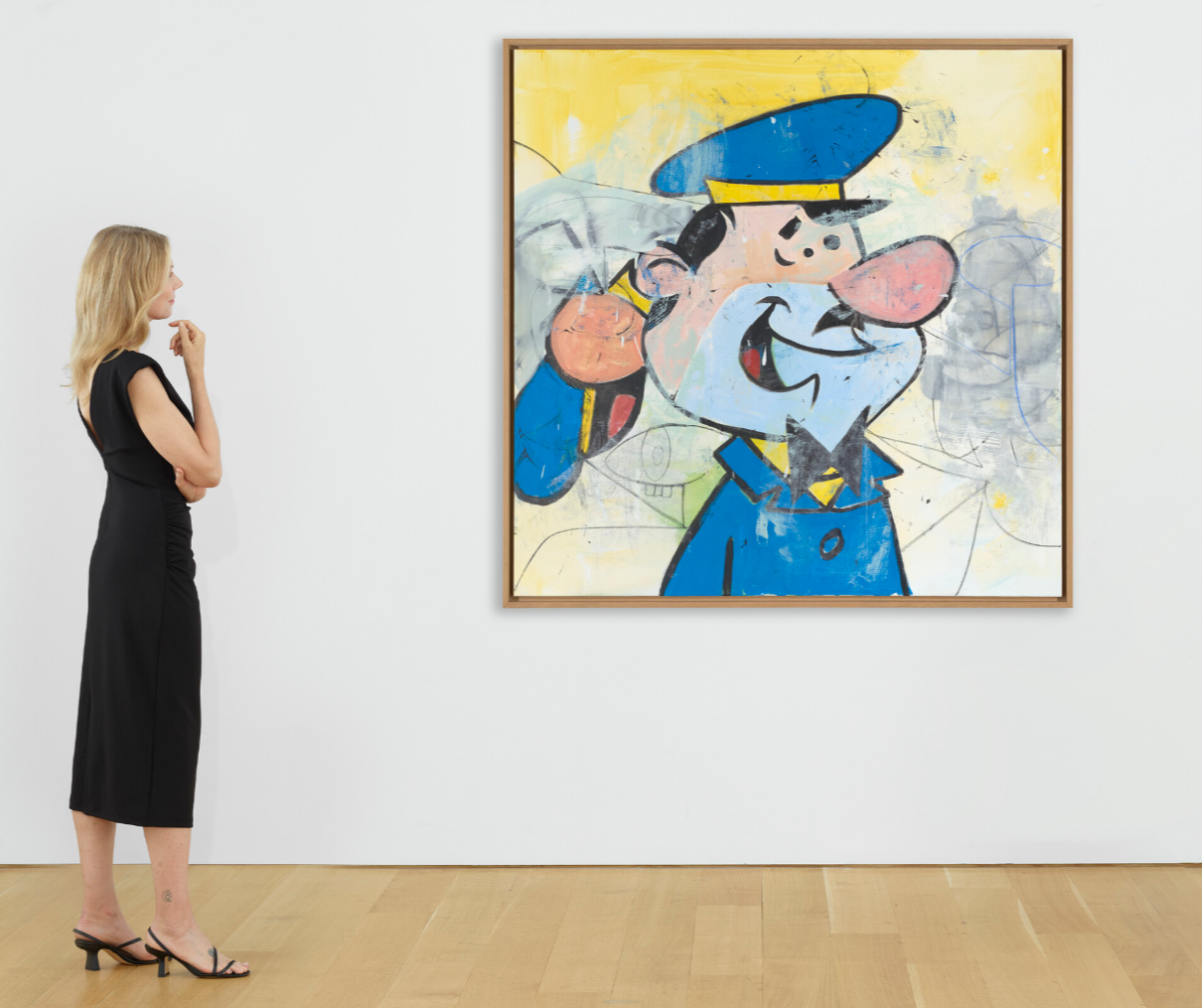
GEORGE CONDO (B. 1957)
Mr Twiddle, 2010
Acrylic, charcoal and pastel on canvas
64 5/8 x 65 1/8 inches (164.2 x 165.4 cm)
Signed and dated ‘Condo 2010’ (on the reverse)
#13. Mental States Blue Corner, 2000
Sotheby’s New-York: 16 May 2025
Estimated: USD 400,000 – 600,000
USD 444,500
Mental States Blue Corner | Contemporary Day Auction | 2025 | Sotheby’s
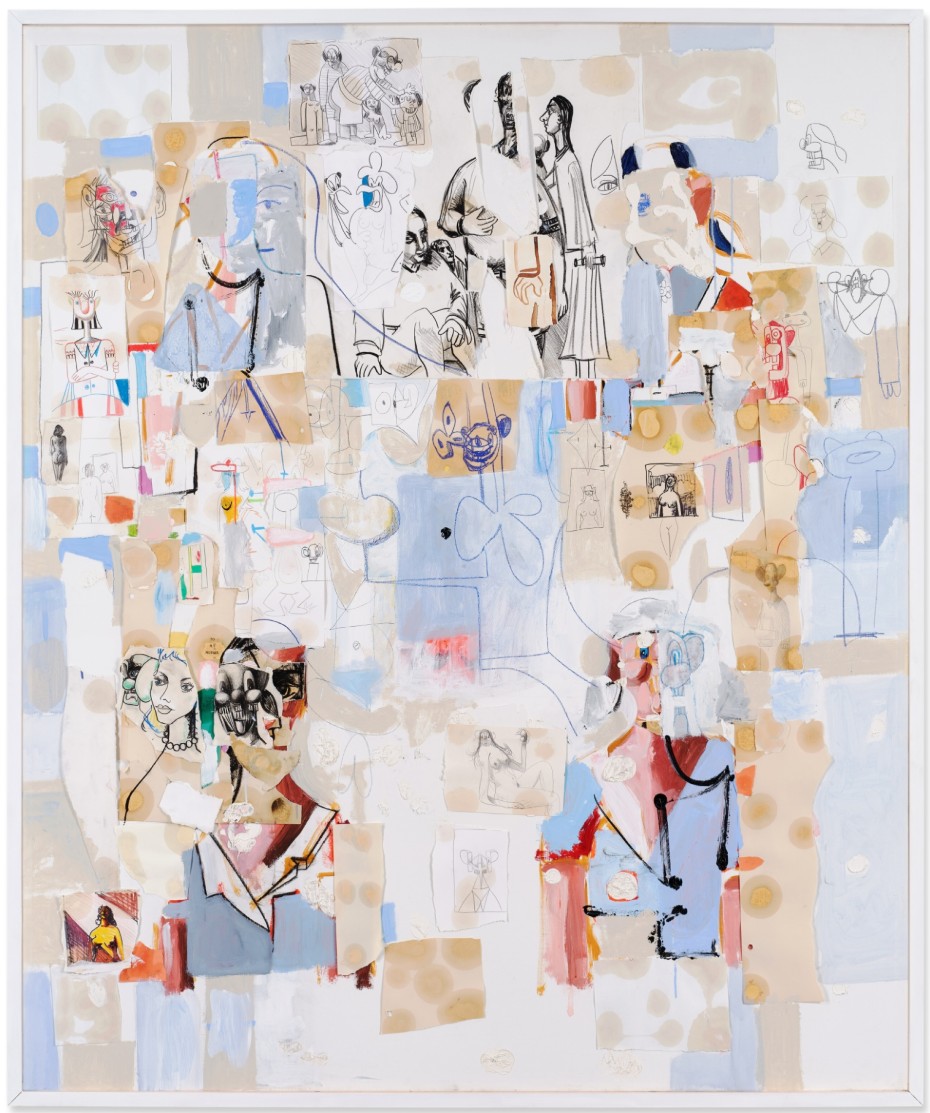
GEORGE CONDO (b. 1957)
Mental States Blue Corner, 2000
Oil, ink, graphite and paper collage on canvas
72×60 inches (182.9 x 152.4 cm)
Signed, titled and dated Nov. 2000 (on the reverse)
#14. Female Bust, 2008
Edlis Neeson Collection
Christie’s New-York: 20 November 2025
Estimated: USD 150,000 – 200,000
USD 444,500
SCULPTURE
GEORGE CONDO (B. 1957), Female Bust | Christie’s
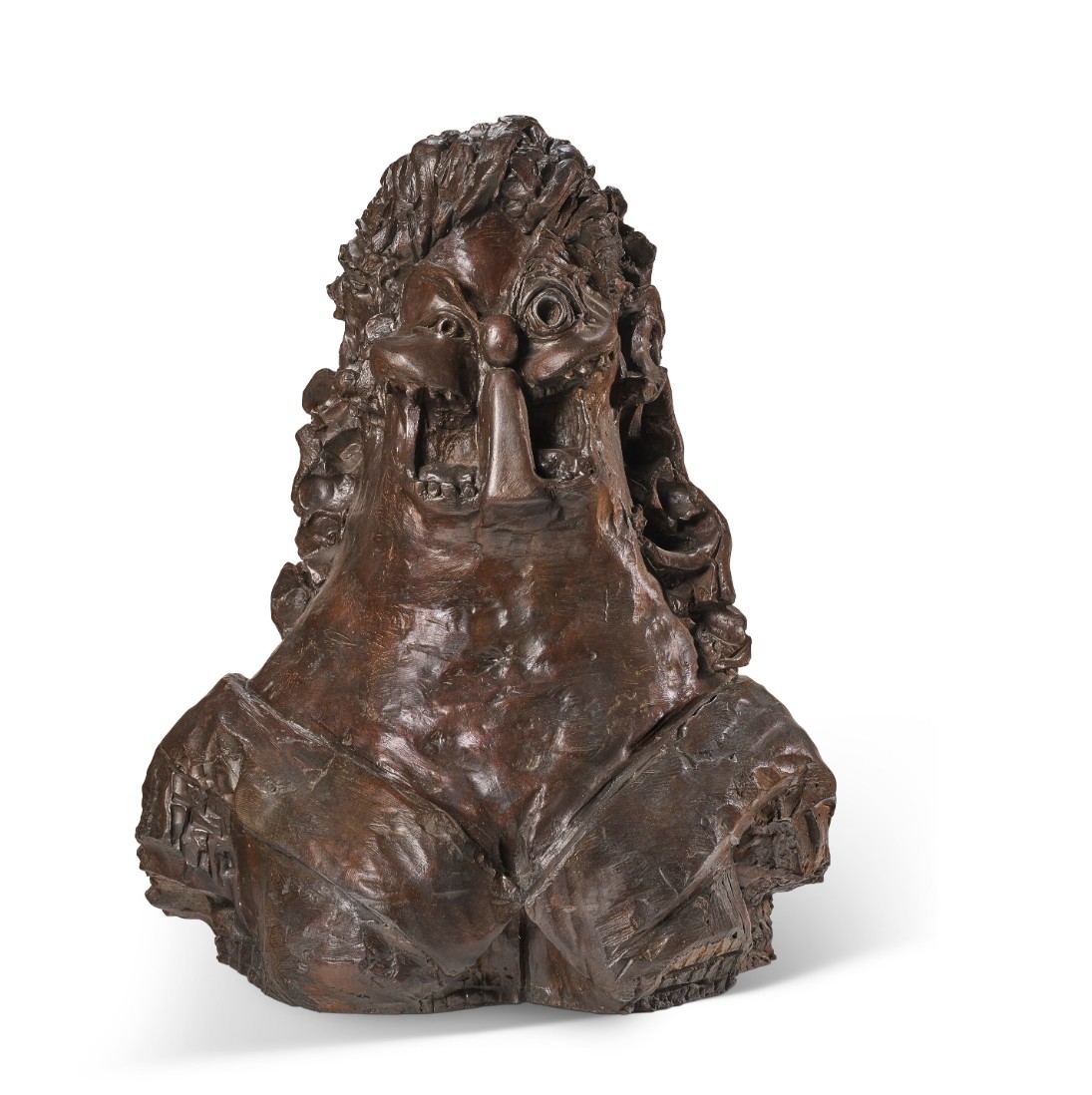
GEORGE CONDO (B. 1957)
Female Bust, 2008
Bronze
23x18x15 inches (58.4 x 45.7 x 38.1 cm)
Stamped with the artist’s signature and number ‘G. CONDO 3⁄4’ (lower edge)
This work is number three from an edition of four
#15. Division of the Eternal, 1986
Works from the Collection of Byron R. Meyer with Partial Proceeds
to Benefit the San Francisco Museum of Modern Art
Sotheby’s New-York: 19 November 2025
Estimated: USD 400,000 – 600,000
USD 431,800
Division of the Eternal | Contemporary Day Auction | 2025 | Sotheby’s
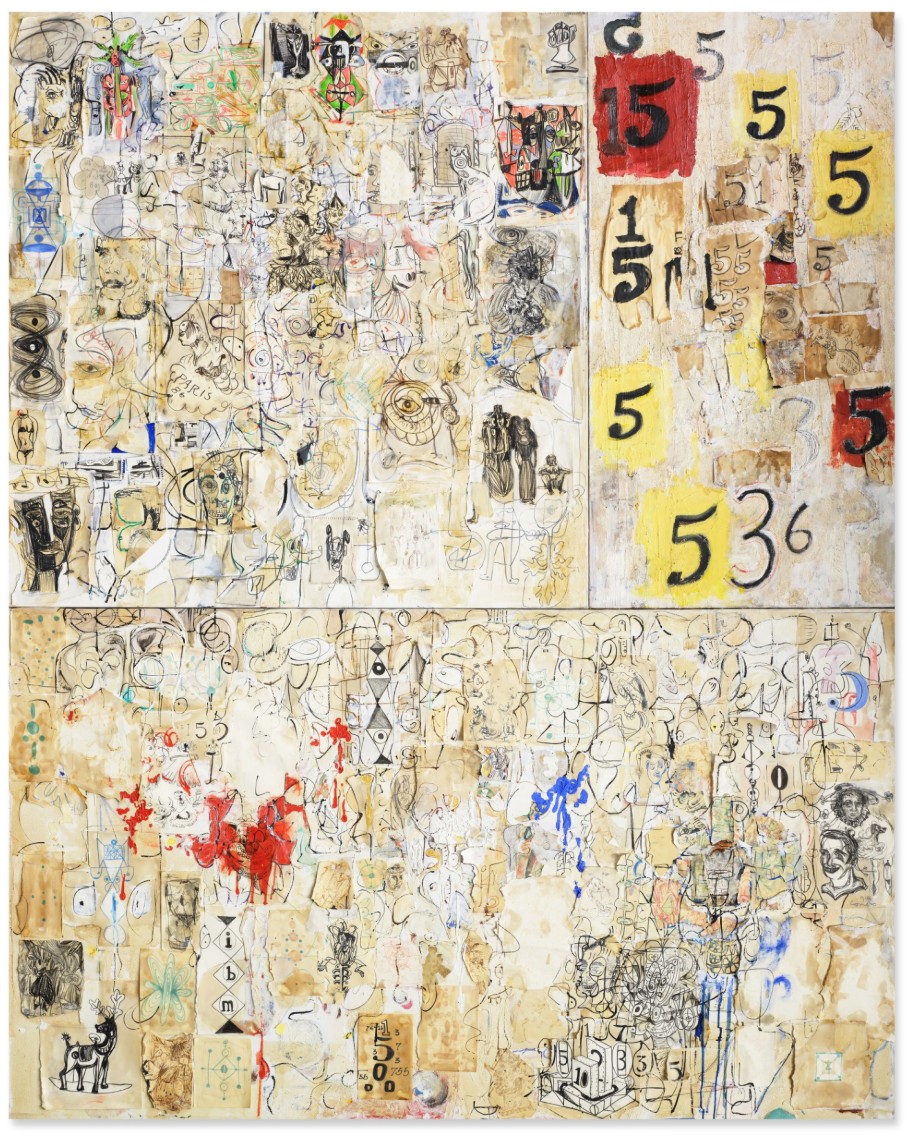
GEORGE CONDO (b. 1957)
Division of the Eternal, 1986
Oil, encaustic, ink, marker, graphite and paper collage on 3 joined canvases
107 x 85 1/2 inches (271.8 x 217.2 cm)
Signed and dated 9.86 (lower center right)
Dated Paris 86 (upper left)
#16. On the Lookout, 2001
Sotheby’s Diriyah: 8 February 2025
Estimated: USD 400,000 – 600,000
USD 384,000
On the Lookout | Origins | 2025 | Sotheby’s
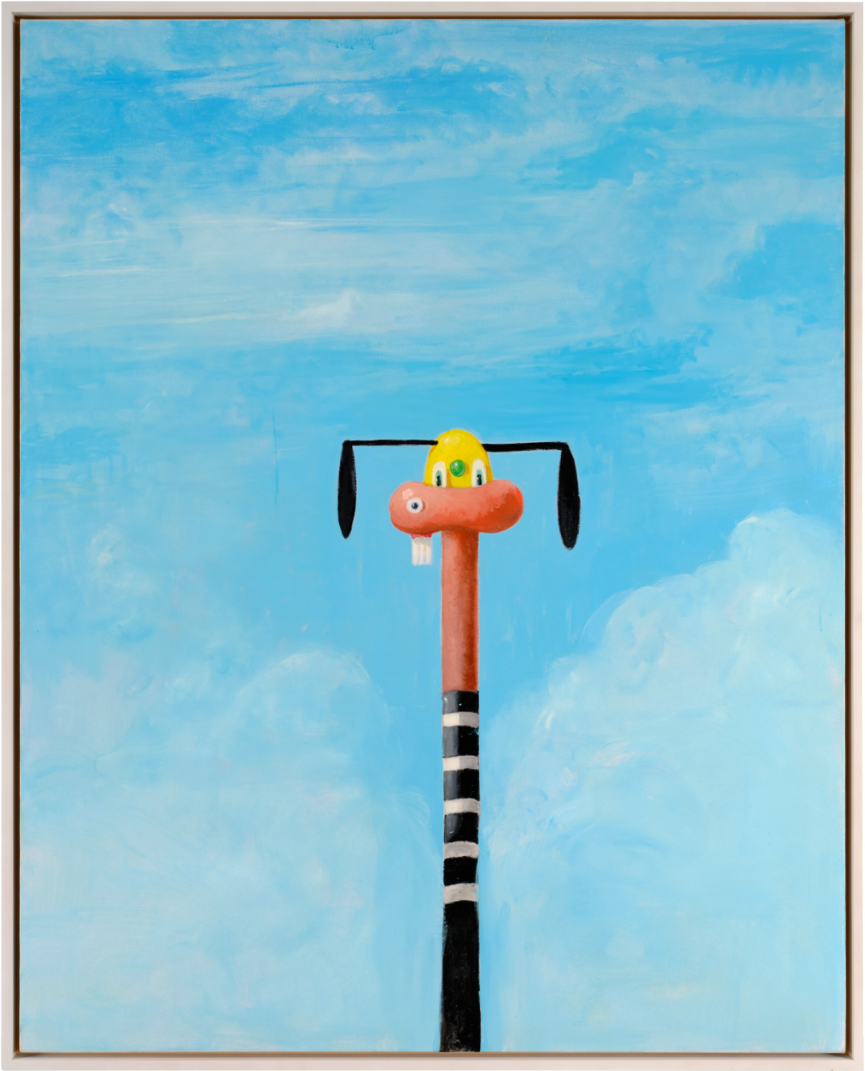
GEORGE CONDO (b. 1957)
On the Lookout, 2001
Oil on canvas
60×48 inches (152.4 x 121.9 cm)
Signed and dated 01 (upper left)
Signed Condo, titled and dated Sept 19, 01 (on the reverse)
#17. Untitled, circa 1998
Phillips New-York: 21 November 2025
Estimated: USD 250,000 – 350,000
USD 374,100
George Condo Modern & Contemporary Art Day Sale, Afternoon Session
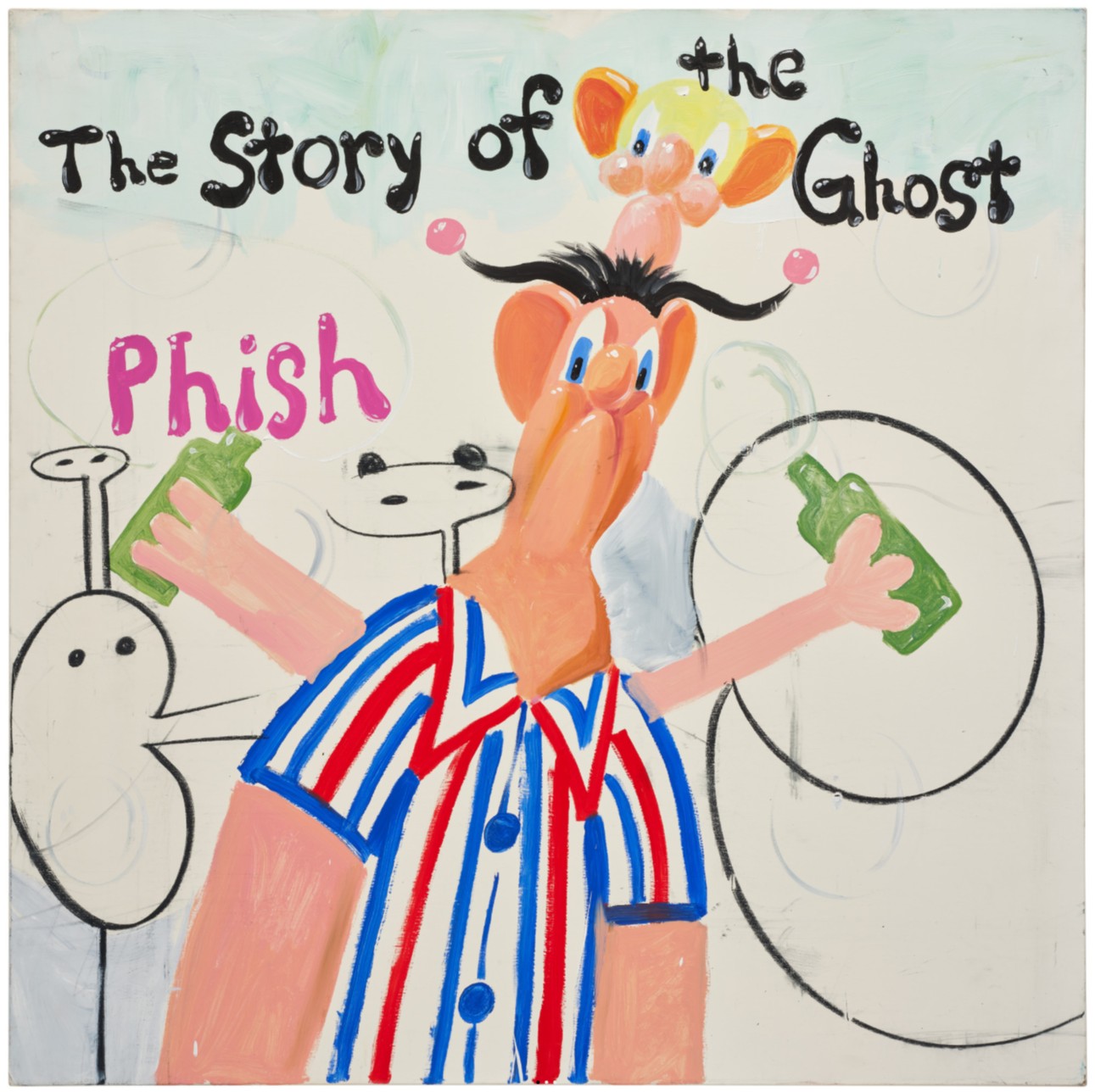
GEORGE CONDO
Untitled, circa 1998
Oil on canvas
50×50 inches (127×127 cm)
#18. Ideal Nature, 1994
Bonhams New-York: 19 November 2025
Estimated: USD 30,000 – 50,000
USD 368,800
Bonhams : GEORGE CONDO (B. 1957) Ideal Nature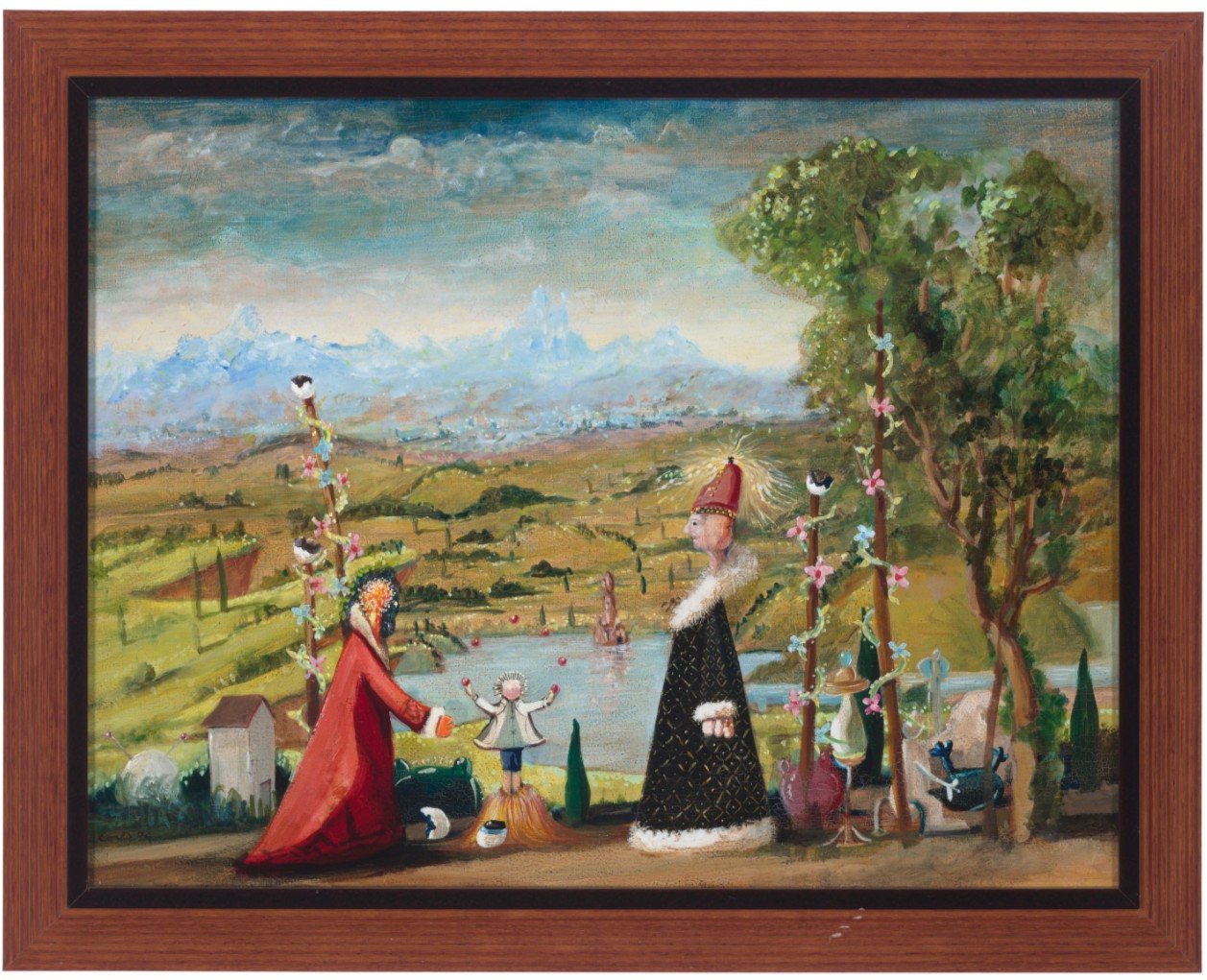
GEORGE CONDO (B. 1957)
Ideal Nature, 1994
Oil on canvas
19 3/4 x 25 5/8 in (50.2 x 65.1 cm)
Signed and dated ‘Condo 94’ (lower left)
Signed, inscribed and dated ‘Condo Sept 94 “Ideal Nature”‘ (on the reverse)
#19. Untitled, circa 2008-2010
Phillips London: 7 March 2025
Estimated: GBP 250,000 – 350,000
GBP 279,400 / USD 357,632
George Condo – Modern & Contemporary … Lot 119 March 2025 | Phillips
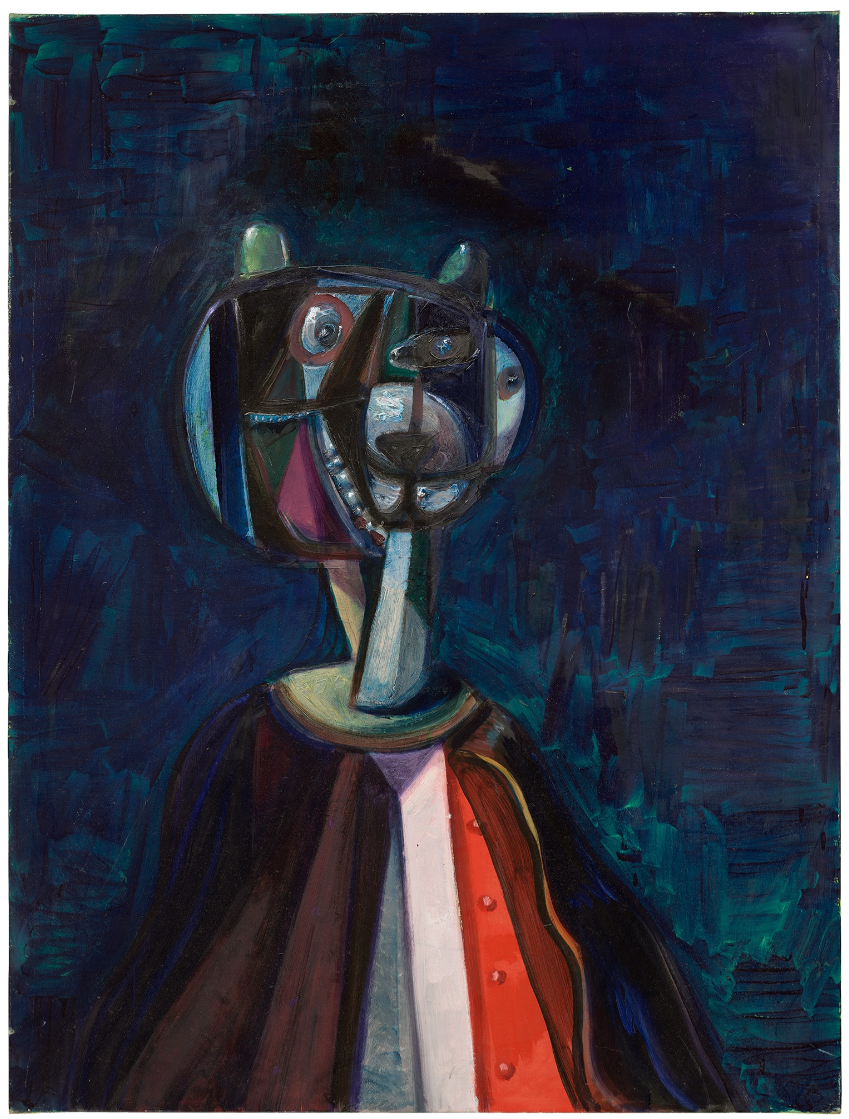
GEORGE CONDO
Untitled, circa 2008-2010
Oil on linen
47 1/4 x 35 1/2 inches (120 x 90.2 cm)
#20. Untitled, circa 2000
Phillips New-York: 28 February 2025
Estimated: USD 200,000 – 300,000
USD 355,600
George Condo – New Now: Modern & Co… Lot 13 February 2025 | Phillips
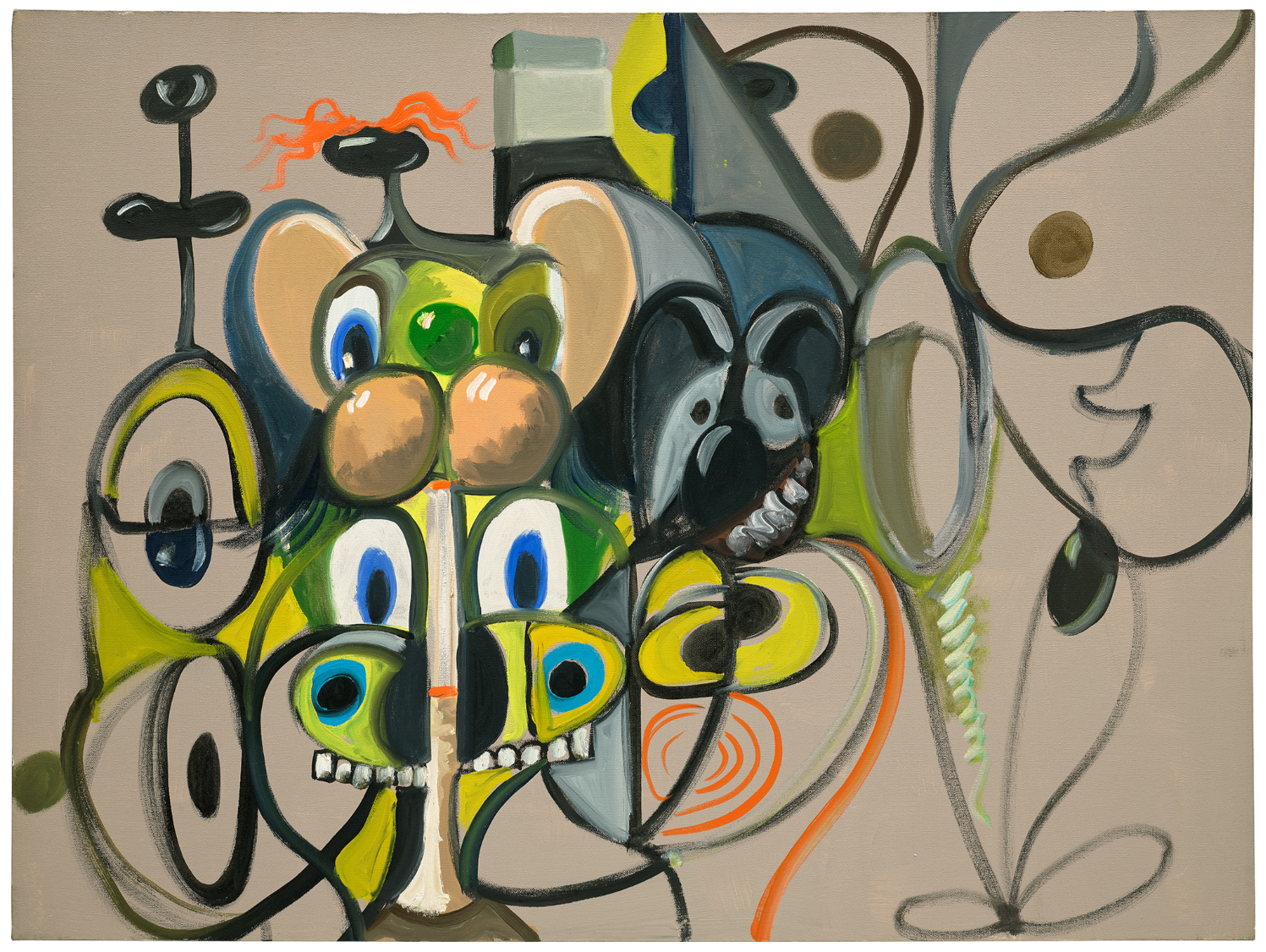
GEORGE CONDO
Untitled, circa 2000
Oil on canvas
30×40 inches (76.2 x 101.6 cm)
#21. Untitled, 2009
Sotheby’s London: 17 October 2025
Estimated: GBP 200,000 – 300,000
GBP 254,000 / USD 340,360
Untitled | Contemporary Day Auction | 2025 | Sotheby’s
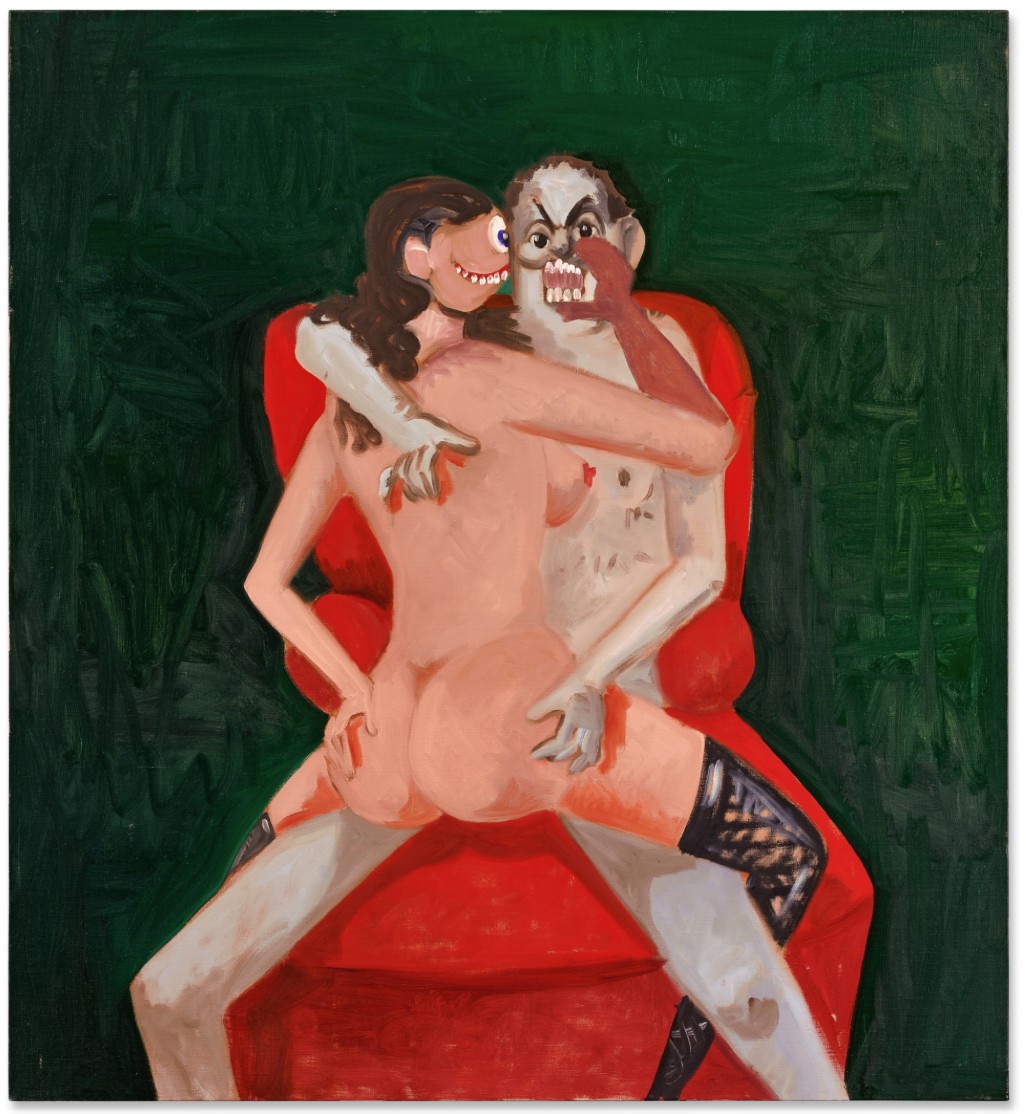
GEORGE CONDO (b. 1957)
Untitled, 2009
Oil on canvas
48×44 inches (121.9 x 111.8 cm)
#22. Vertical Abstraction, 1989
Hampel Fine Art Auctions Munich: 4 December 2025
Estimated: EUR 180,000 – 250,000
EUR 180,000 (Hammer)
EUR 233,100 / USD 271,780
George Condo | HAMPEL Fine Art Auctions 4.12.2025
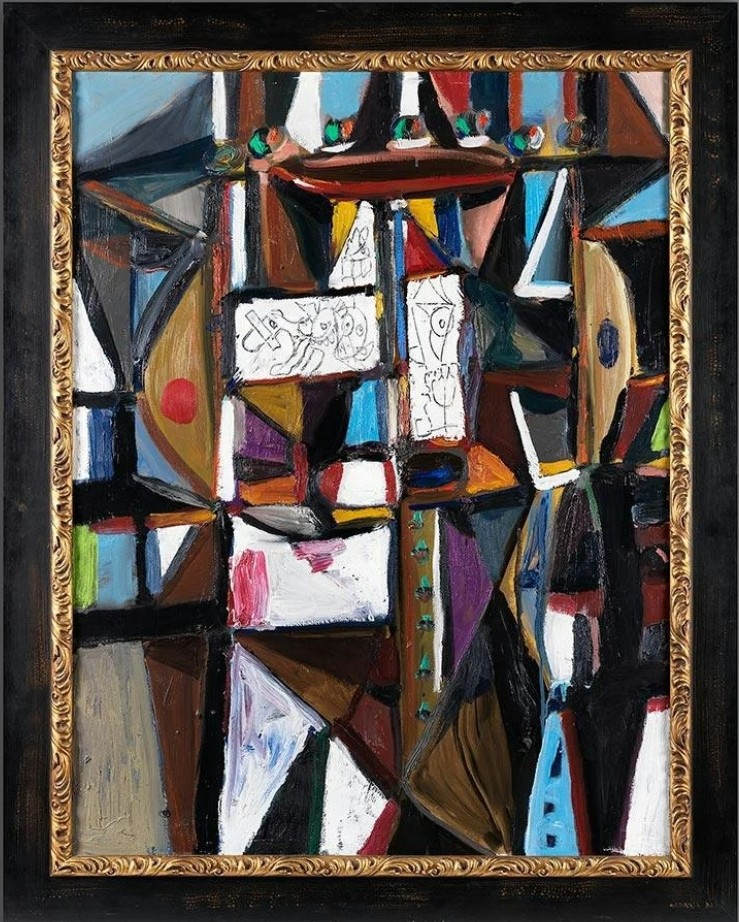
GEORGE CONDO (born 1957 Concord, New Hampshire)
Vertical Abstraction, 1989
Oil on canvas
45 5/8 x 35 inches (116×89 cm)
Signed and dated “Condo 89” on the reverse upper right
#23. The Grocery Man, 1997
K Auction Seoul: 19 March 2025
Estimated: KRW 327,000,000 – 500,000,000
KRW 376,050,000 / USD 259,100
REPEAT SALE
Phillips London: 4 March 2022
Estimated: GBP 70,000 – 80,000
GBP 163,800 / USD 216,409
George Condo – 20th Century & Contemp… Lot 143 March 2022 | Phillips
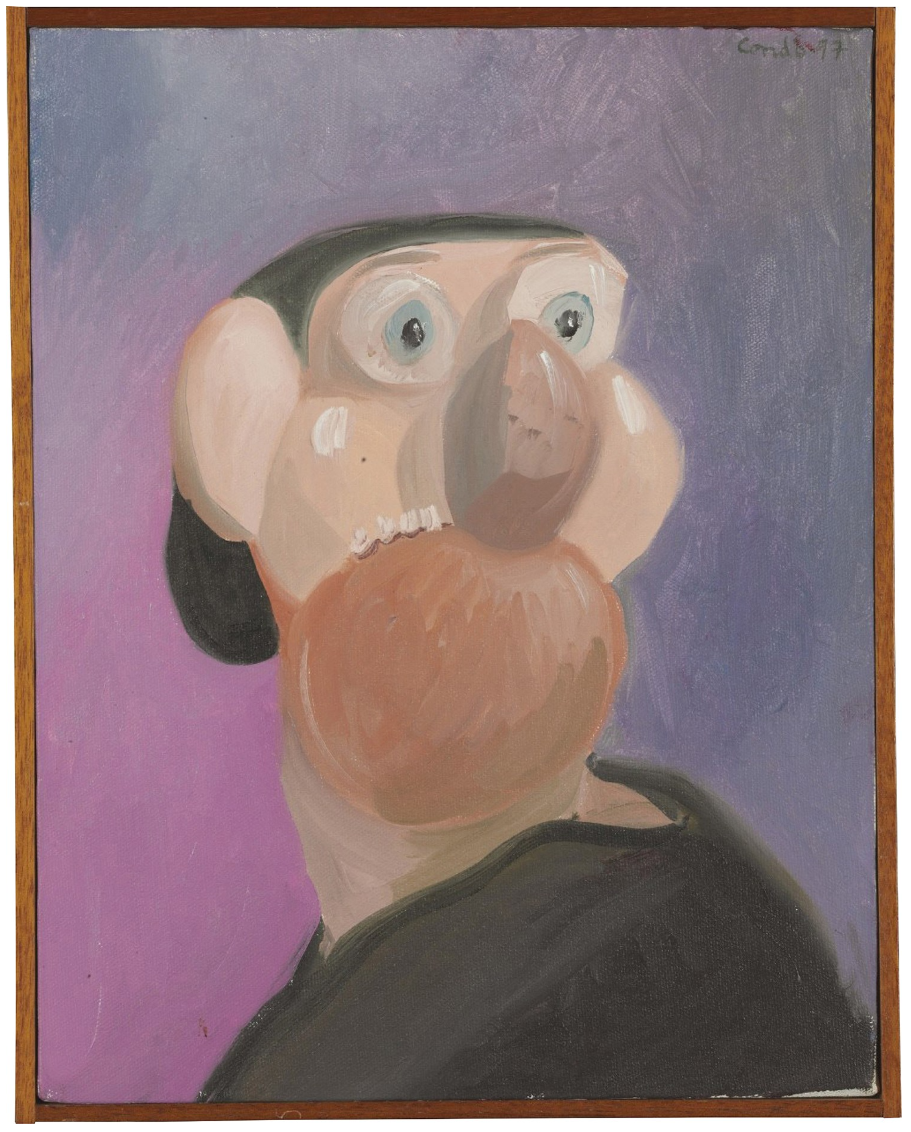
GEORGE CONDO
The Grocery Man, 1997
Oil on canvas, in artist’s frame
14 1/2 x 11 5/8 inches (36.7 x 29.4 cm)
Signed and dated ‘Condo 97’ upper right
Signed, dedicated, indistinctly inscribed and dated
‘For Robert La Vigne with great admiration love Condo 6.21.97 “memory portrait”…’ on the reverse
#24. Smiling Teen, 2008
Sotheby’s New-York: 26 February 2025
Estimated: USD 150,000 – 200,000
USD 190,500
Smiling Teen | Contemporary Curated | 2025 | Sotheby’s
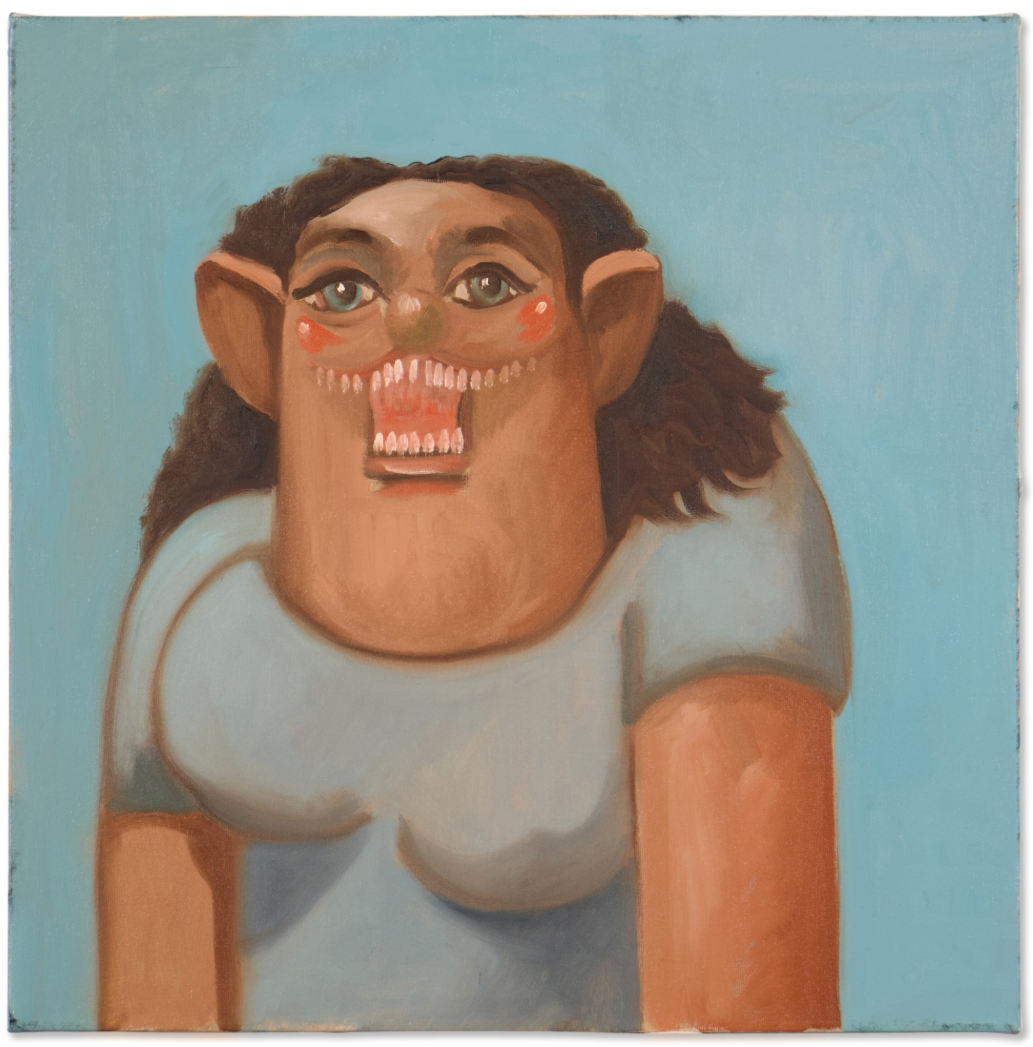
GEORGE CONDO (b. 1957)
Smiling Teen, 2008
Oil on canvas
19 7/8 x 20 inches (50.5 x 50.8 cm)
Signed and dated 08 (on the reverse)
#25. Untitled, 1997
Christie’s New-York: 27 February 2025
Estimated: USD 120,000 – 180,000
USD 151,200
GEORGE CONDO (B. 1957), Untitled | Christie’s
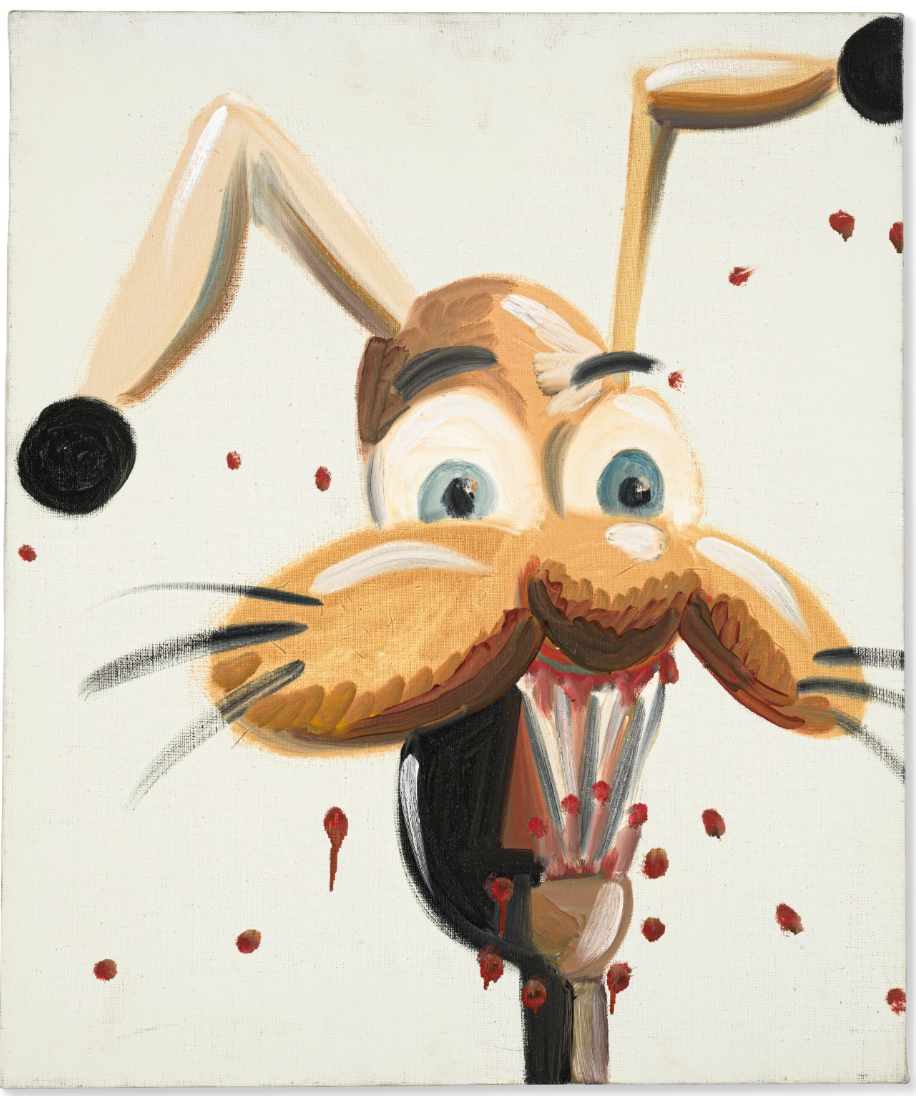
GEORGE CONDO (B. 1957)
Untitled, 1997
Oil on linen
24×20 inches (61 x 50.8 cm)
#26. Grace, 1993
Phillips New-York: 14 May 2025
Estimated: USD 50,000 – 70,000
USD 133,350
George Condo Modern & Contemporary Art Day Sale, Afternoon Session
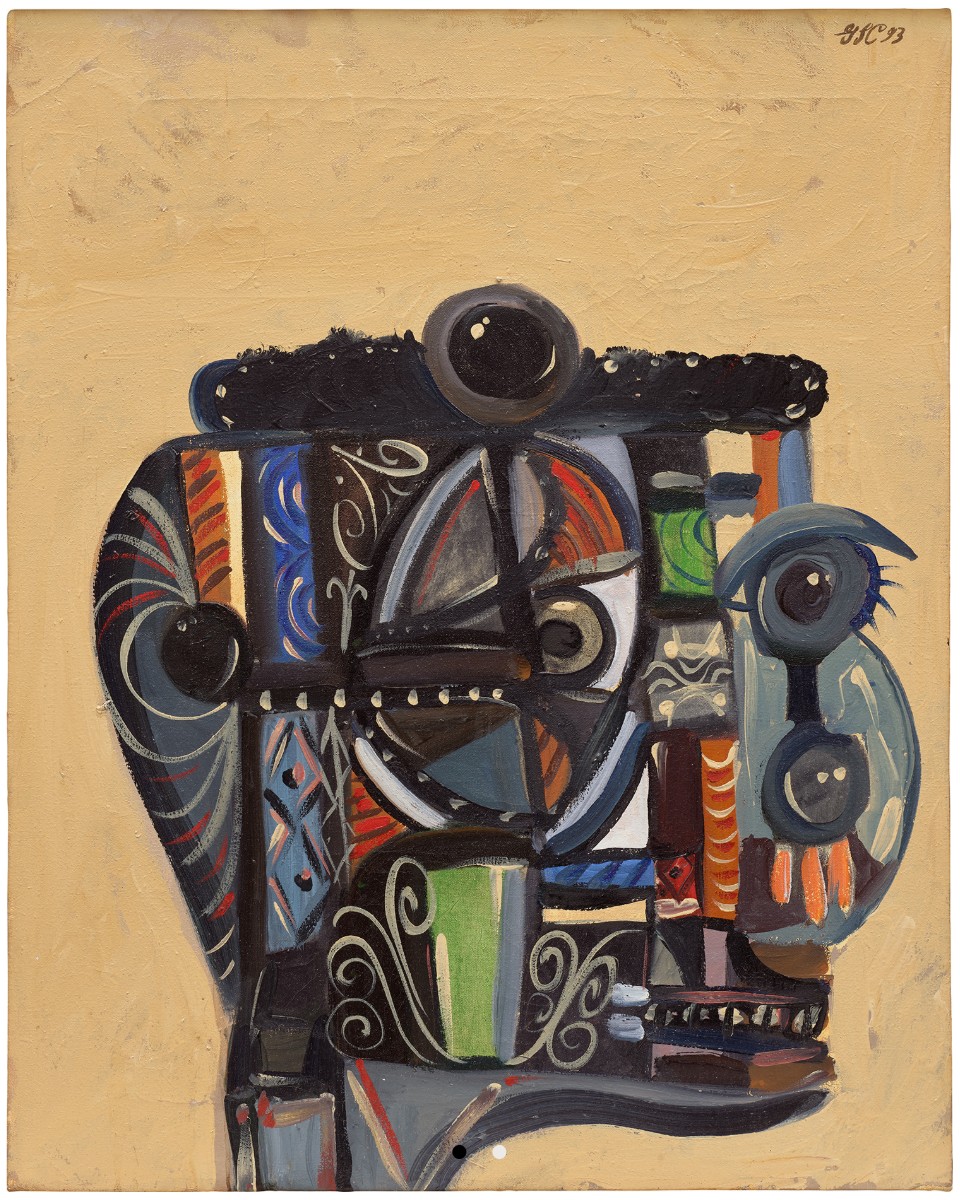
Grace, 1993
Oil on canvas
Signed, titled and dated “Condo 93 “Grace”” on the reverse
#27. ARP, 1984
Phillips New-York: 21 November 2025
Estimated: USD 120,000 – 180,000
USD 129,000
George Condo Modern & Contemporary Art Day Sale, Afternoon Session
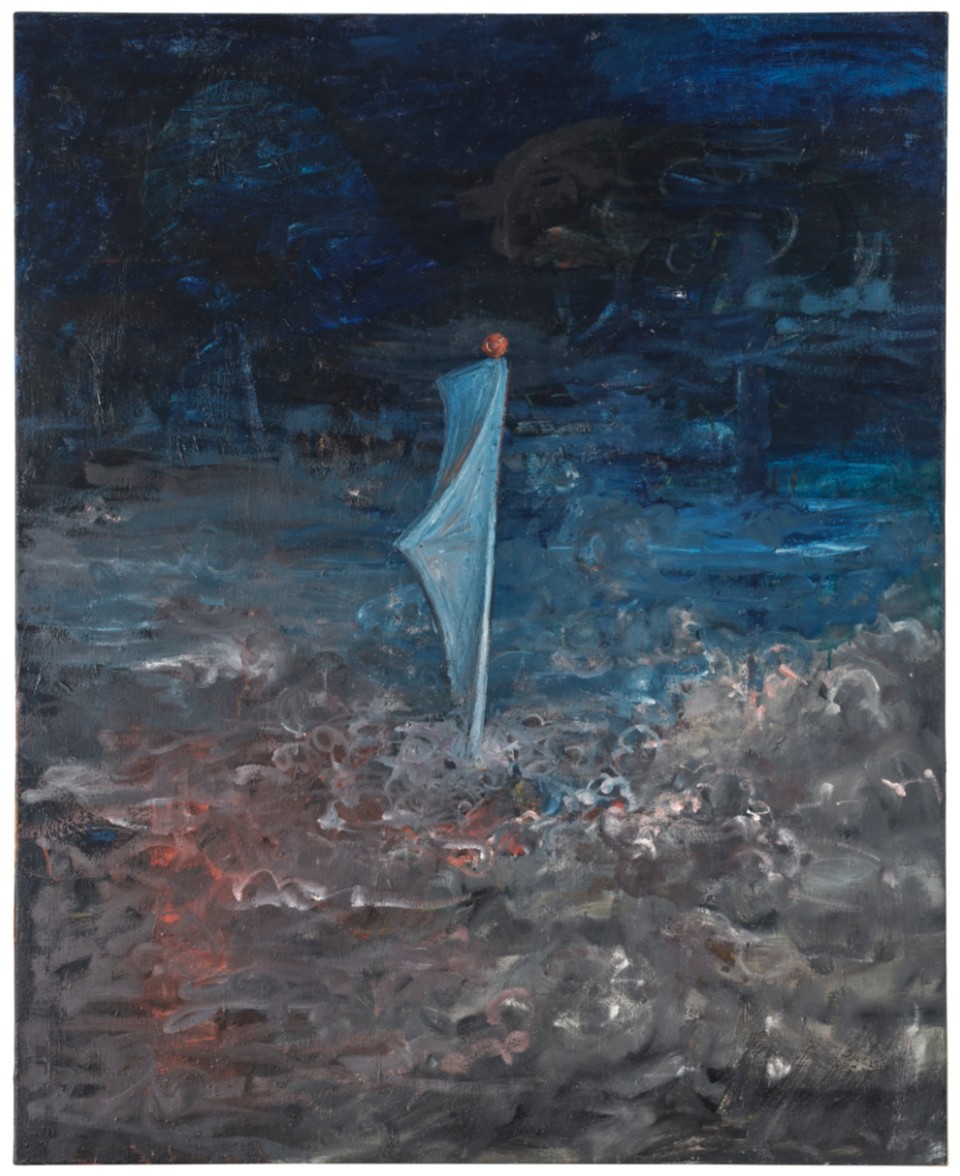
Oil on canvas
42×34 inches (106.7 x 86.4 cm)
#28. Clown Composition, 2003
Christie’s London: 6 March 2025
Estimated: GBP 80,000 – 120,000
GBP 94,500 / USD 120,960
GEORGE CONDO (B. 1957), Clown Composition | Christie’s
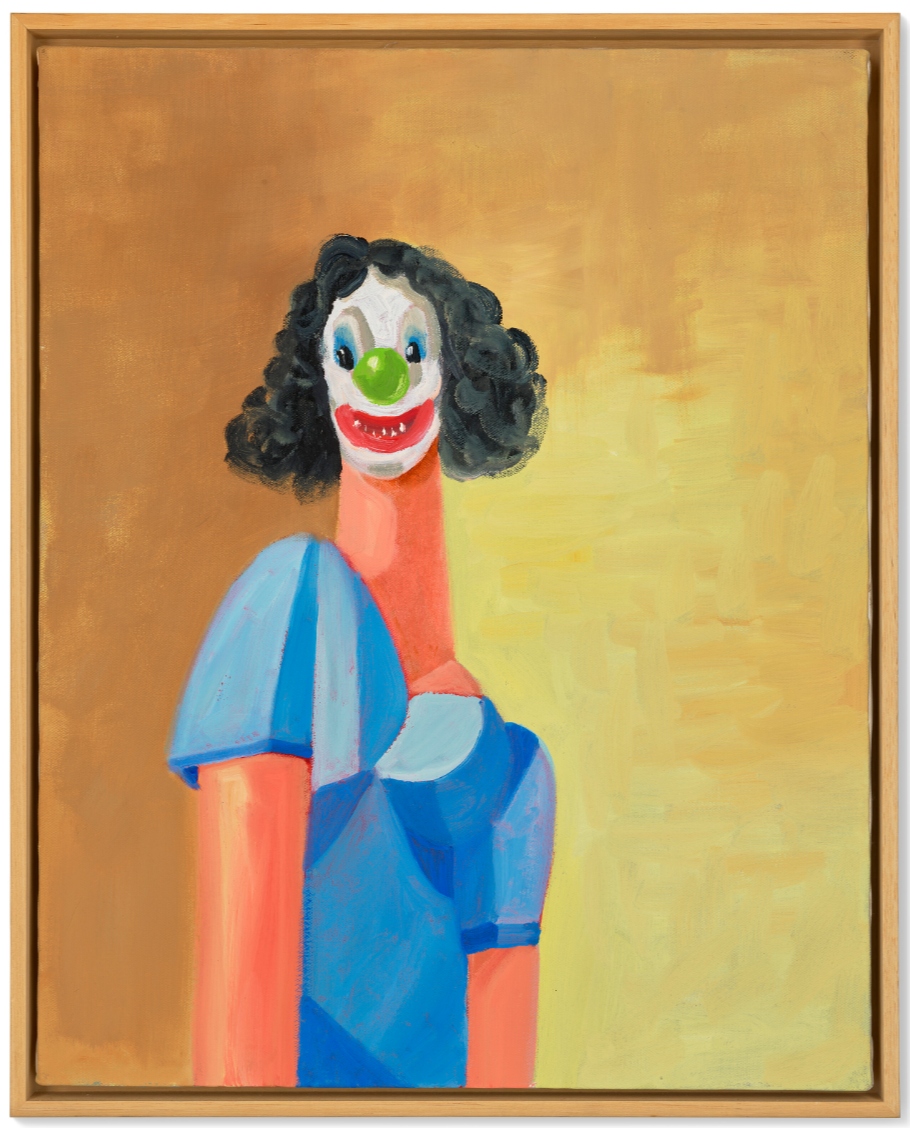
GEORGE CONDO (B. 1957)
Clown Composition, 2003
Oil on canvas
20×16 inches (50.7 x 40.5 cm)
Signed and dated ‘Condo 03’ (on the reverse)
#29. Rainbow Bridge, 1985
Christie’s London: 26 June 2025
Estimated: GBP 70,000 – 100,000
GBP 81,900 / USD 112,120
GEORGE CONDO (B. 1957), Rainbow Bridge | Christie’s
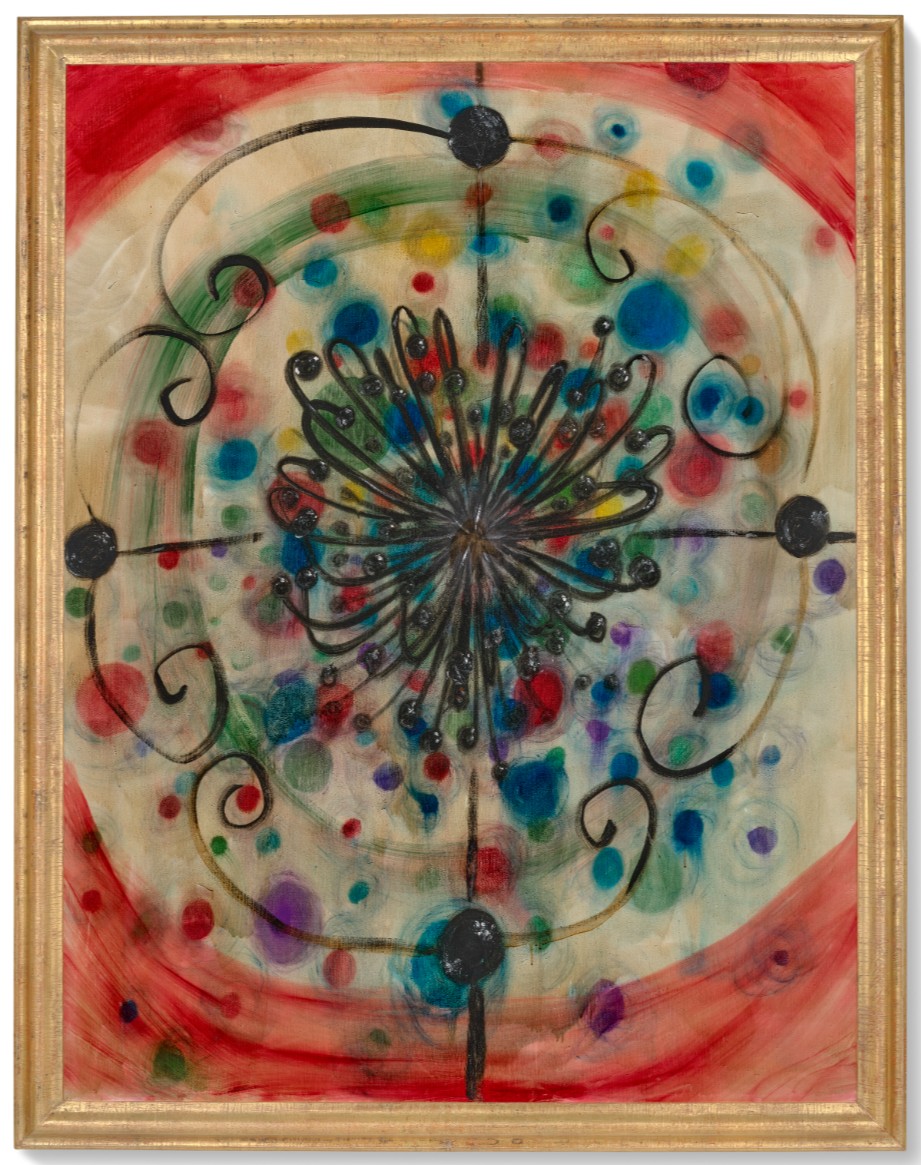
GEORGE CONDO (B. 1957)
Rainbow Bridge, 1985
Oil on canvas
66 7/8 x 51 1/4 inches (170 x 130.2 cm)
Signed, titled and dated ‘Condo 85 Rainbow Bridge’ (on the reverse)
#30. Untitled, 1982
Phillips Hong-Kong: 29 March 2025
Estimated: HKD 550,000 – 700,000
HKD 825,500 / USD 106,070
George Condo New Now: Modern & Contemporary Art and Design
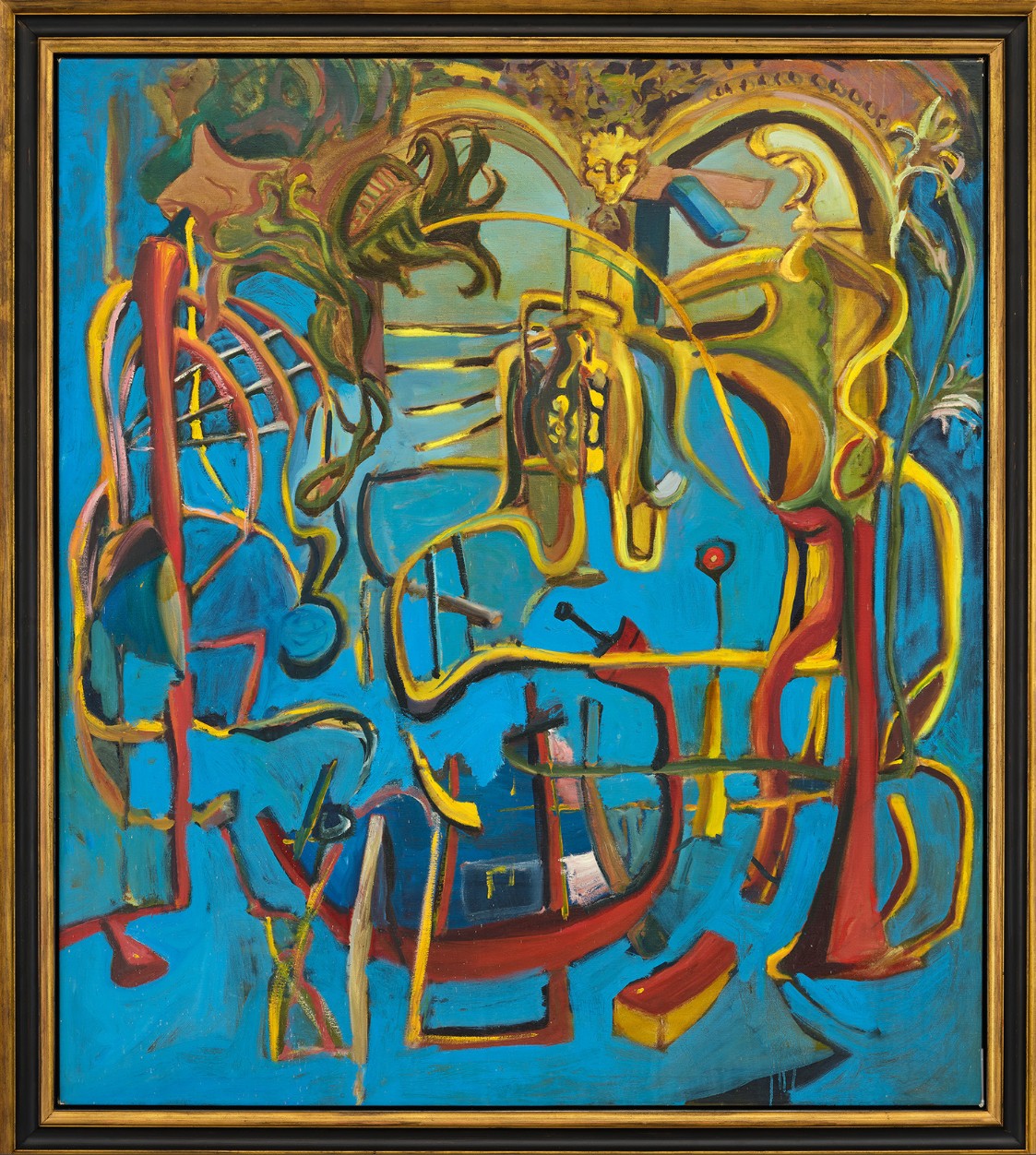
Untitled, 1982
Oil on canvas
USD 100,000
#31. El Coyote, 1989
Lempertz Cologne: 5 December 2025
Estimated: EUR 40,000 – 60,000
EUR 78,120 / USD 90,895
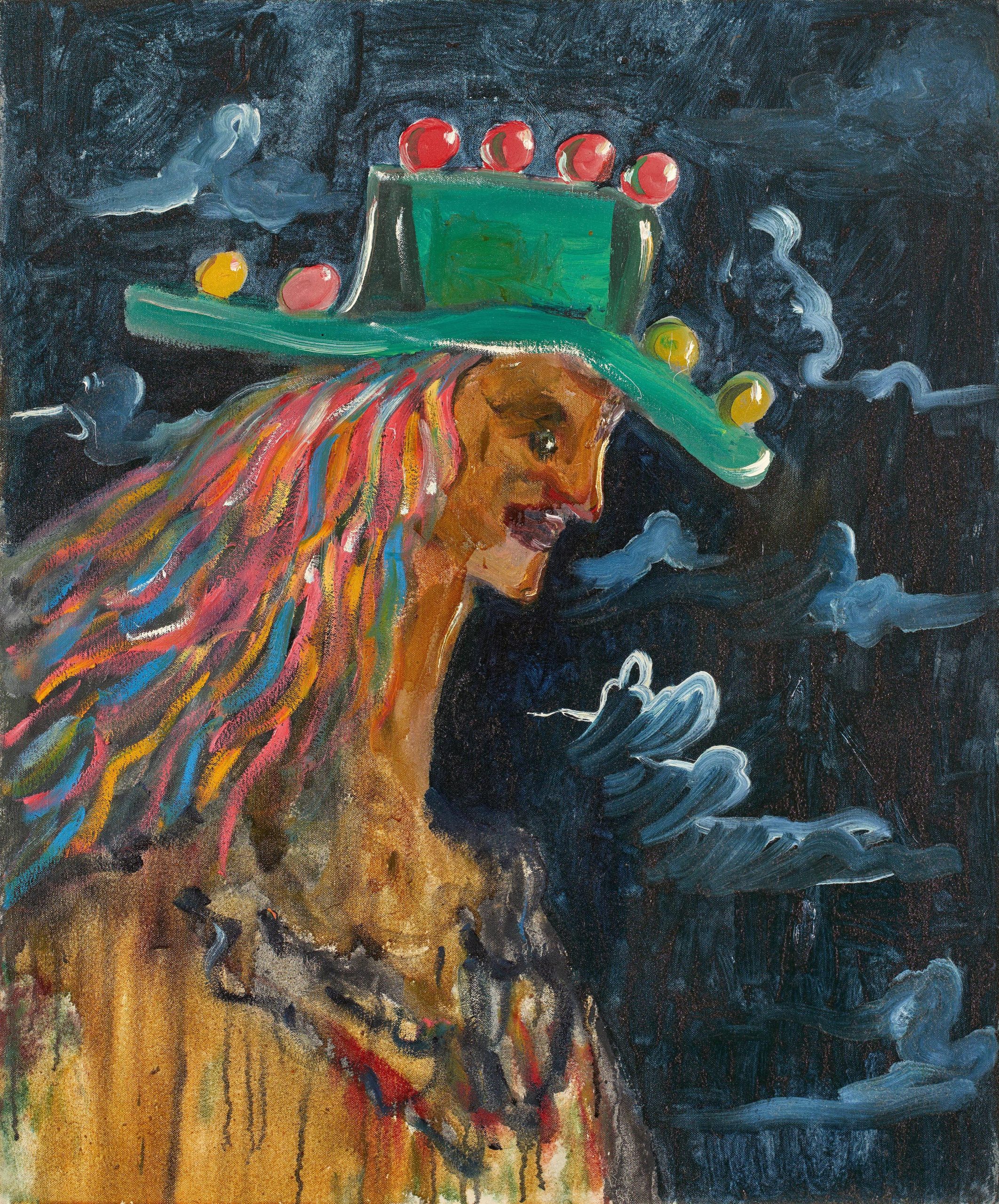
GEORGE CONDO
El Coyote, 1989
Oil on canvas
34 1/4 x 28 3/8 inches (87×72 cm)
Signed, dated, titled and inscribed ‘el coyote nyc Condo 89’ on canvas verso
#32. Untitled, circa 2010
Sotheby’s New-York: 28 February 2025
Estimated: USD 60,000 – 80,000
USD 76,200
Untitled | Contemporary Discoveries | 2025 | Sotheby’s
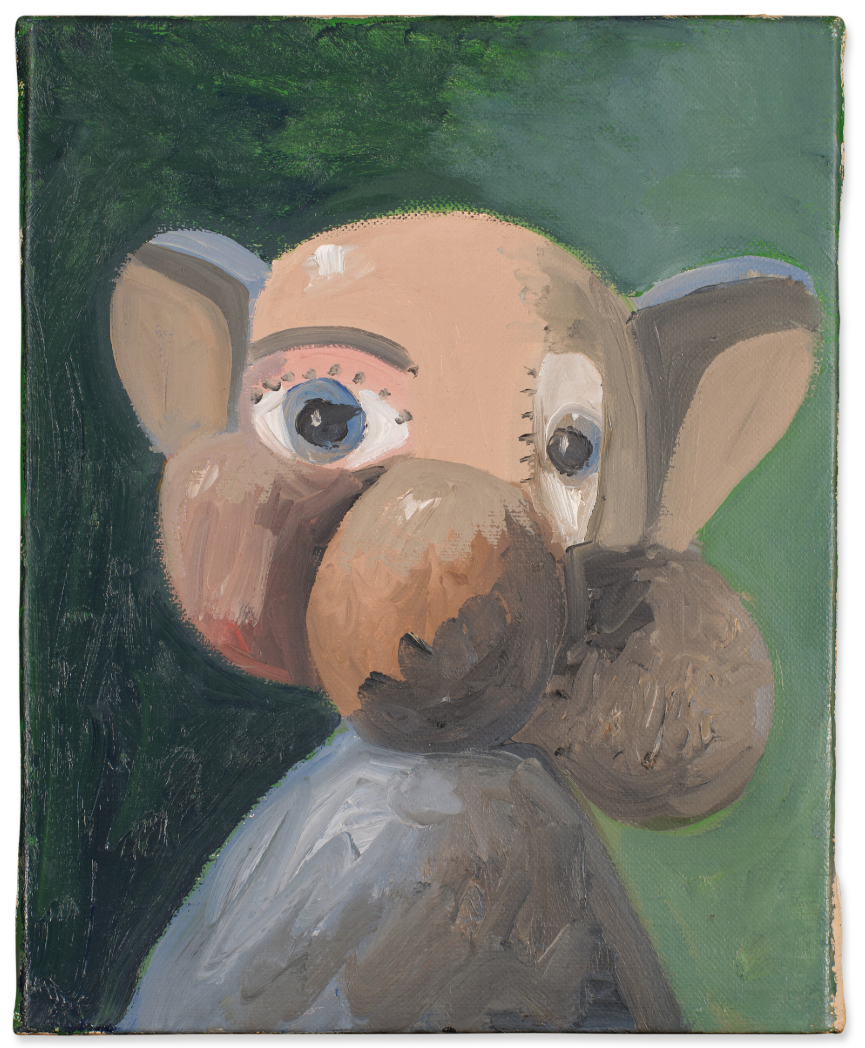
GEORGE CONDO (b. 1957)
Untitled, circa 2010
Oil on canvas
9 1/2 x 7 1/2 inches (24.1 x 19.1 cm)
Signed, dedicated for Doug and illegibly inscribed (on the reverse)
#33. The Trashman, 2008
Phillips New-York: 28 February 2025
Estimated: USD 60,000 – 80,000
USD 76,200
George Condo – New Now: Modern & Co… Lot 70 February 2025 | Phillips
REPEAT SALE
Sotheby’s New-York: 9 March 2023
Estimated: USD 60,000 – 80,000
USD 88,900
The Trashman | Contemporary Curated | 2023 | Sotheby’s (sothebys.com)
REPEAT SALE
Sotheby’s New-York: 2 October 2020
Estimated: USD 60,000 – 80,000
USD 63,000
GEORGE CONDO | THE TRASHMAN | Contemporary Curated | 2020 | Sotheby’s
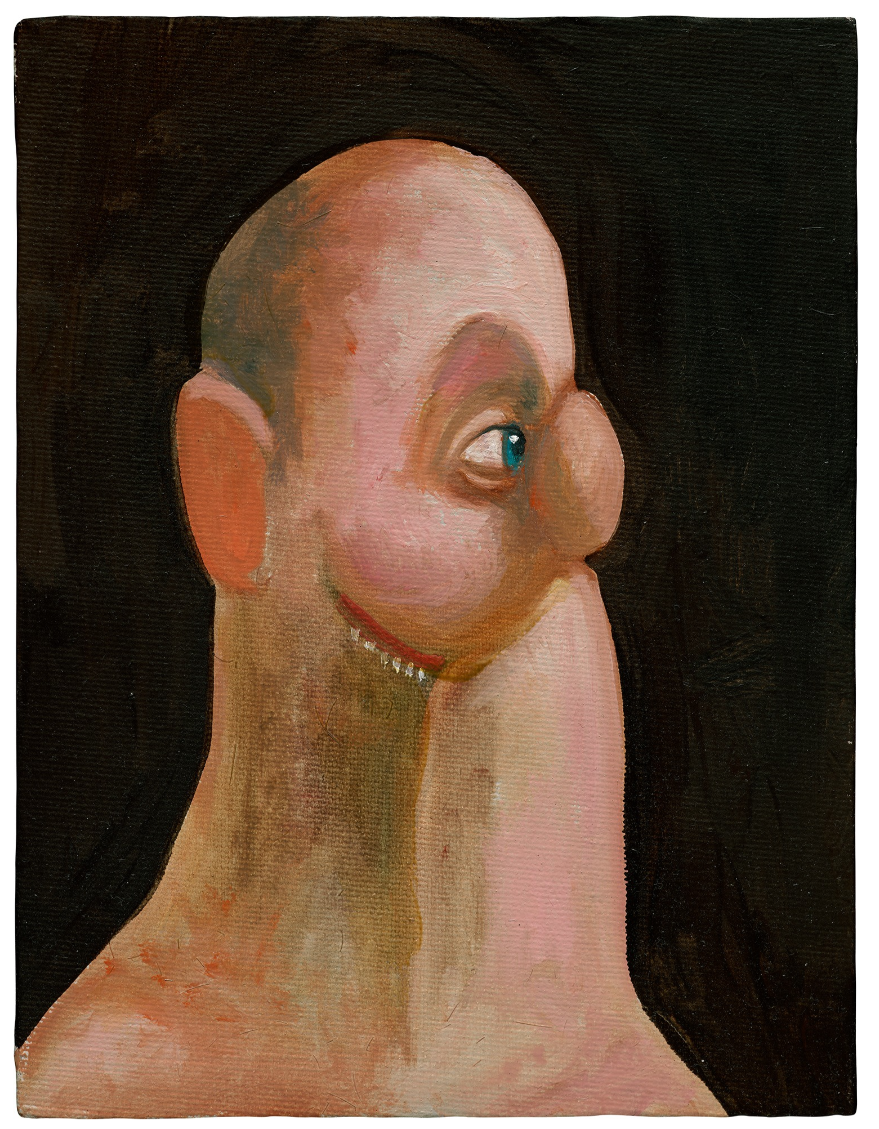
GEORGE CONDO
The Trashman, 2008
Oil on canvas
8 x 6 1/8 inches (20.3 x 15.6 cm)
Signed and dated “George Condo 08” on the reverse
#34. Mr. Misinformation, 1982
Christie’s London: 3 July 2025
Estimated: GBP 20,000 – 30,000
GBP 52,920 / USD 72,230
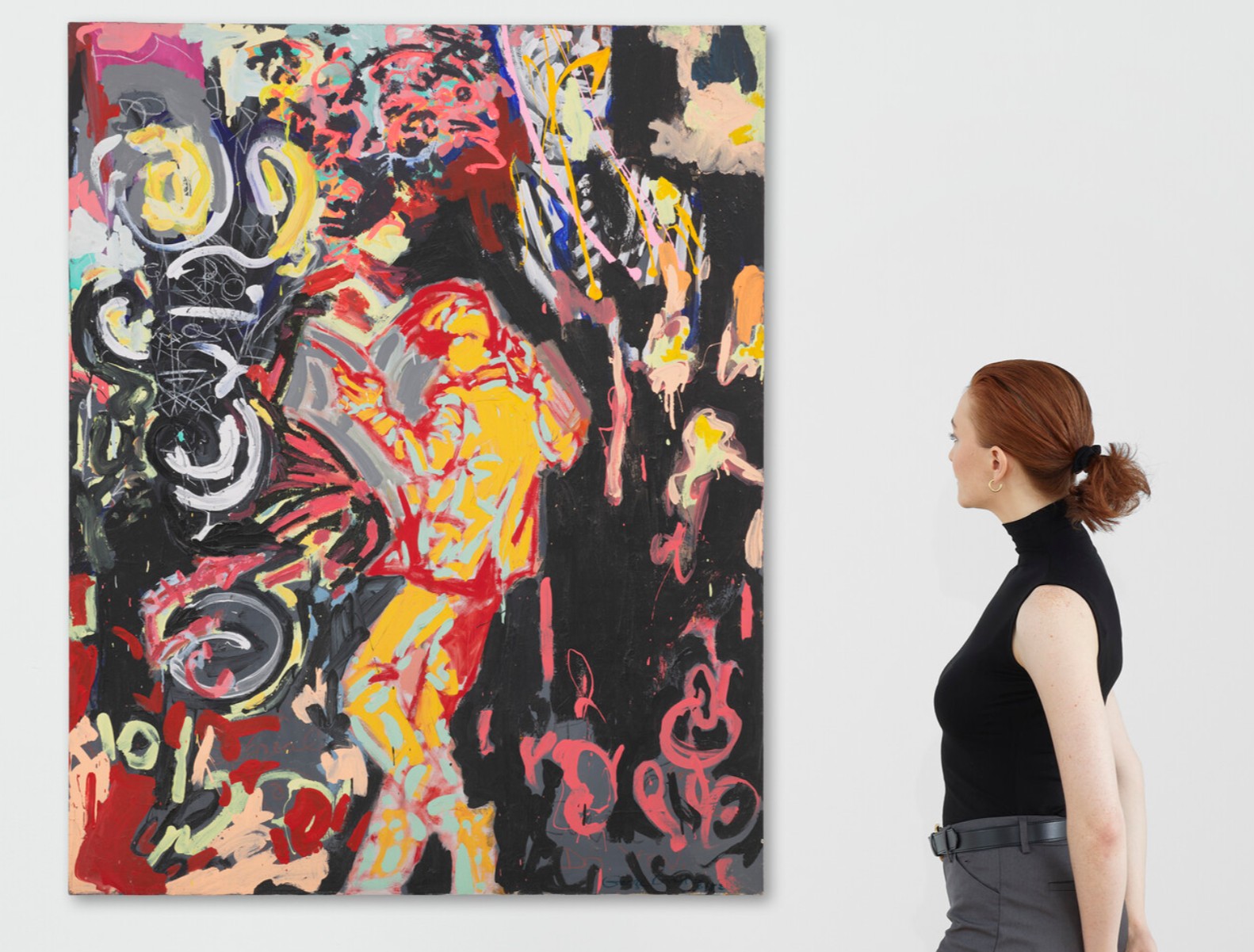
GEORGE CONDO (B. 1957)
Mr. Misinformation, 1982
Oil on canvas
60 x 47 7/8 inches (152.3 x 121.7 cm)
Signed and dated ”George Condo 6/82′ (lower right)
Signed and dated ‘George Condo 6/82’ (on the reverse)
#35. Untitled, circa 1984
Sotheby’s Paris: 11 April 2025
Estimated: EUR 40,000 – 60,000
EUR 53,350 / USD 60,045
Untitled | Art Moderne et Contemporain Day Auction | 2025 | Sotheby’s
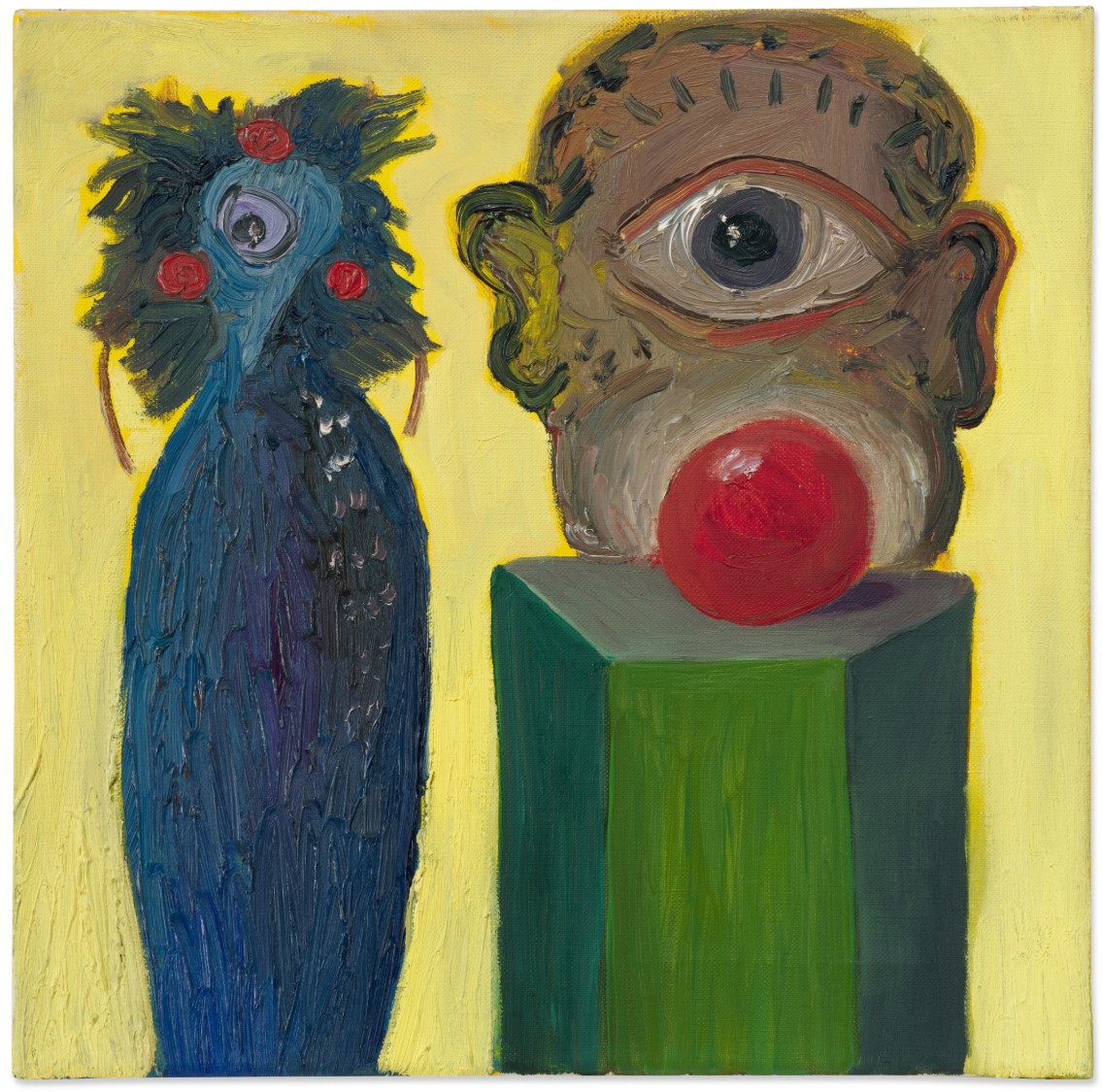
GEORGE CONDO (b. 1957)
Untitled, circa 1984
Oil on canvas
15 3/4 x 15 3/4 inches (40×40 cm)
#36. Sadomasochism, 1984
Sotheby’s Milan: 28 May 2025
Estimated: EUR 30,000 – 40,000
EUR 40,640 / USD 46,075
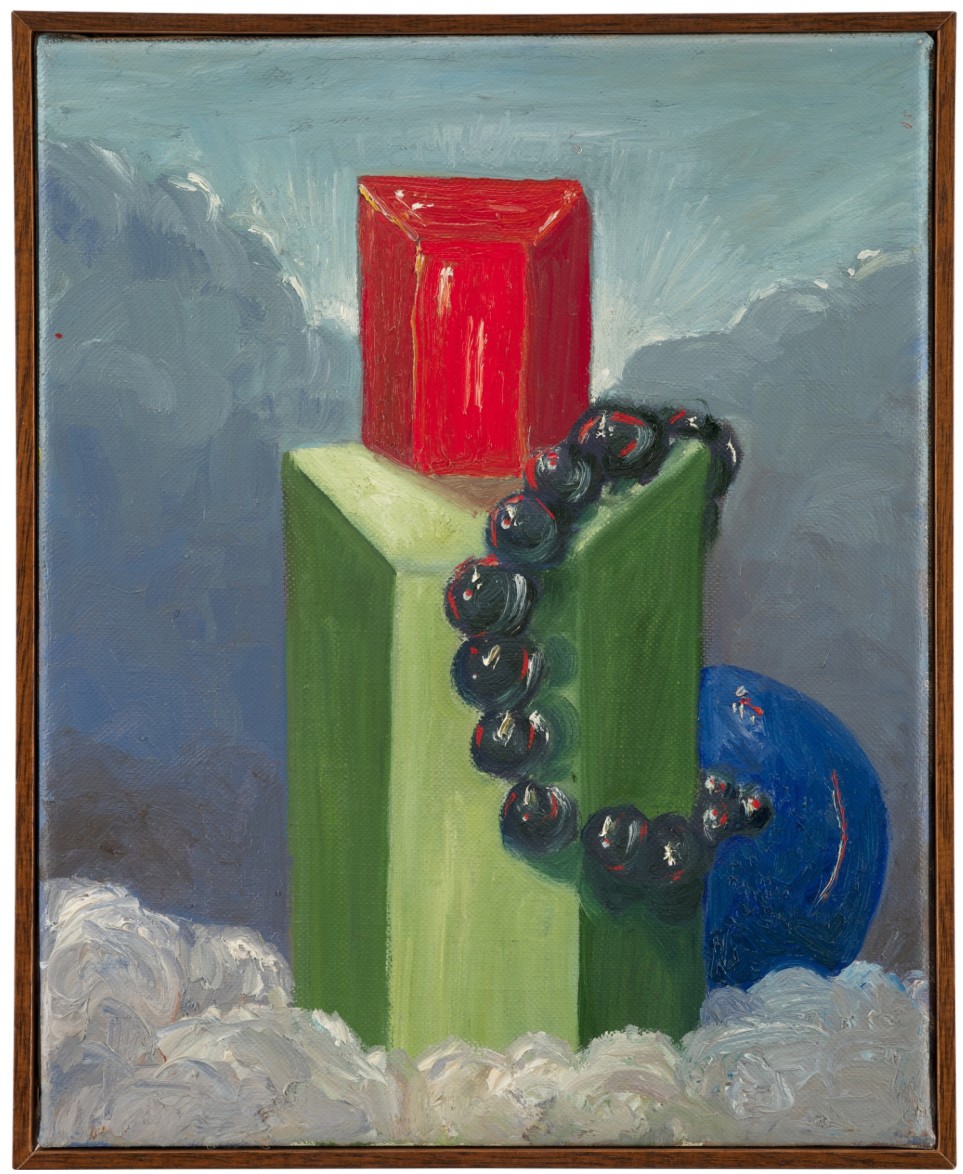
GEORGE CONDO (b. 1957)
Sadomasochism, 1984
Oil on canvas
11 7/8 x 9 1/2 inches (30 x 24.2 cm)
Signed, titled and dated 84 on the reverse
#37. The Scream, 1985
Sotheby’s New-York: 1 October 2025
Estimated: USD 20,000 – 30,000
USD 35,560
The Scream | Contemporary Discoveries | 2025 | Sotheby’s
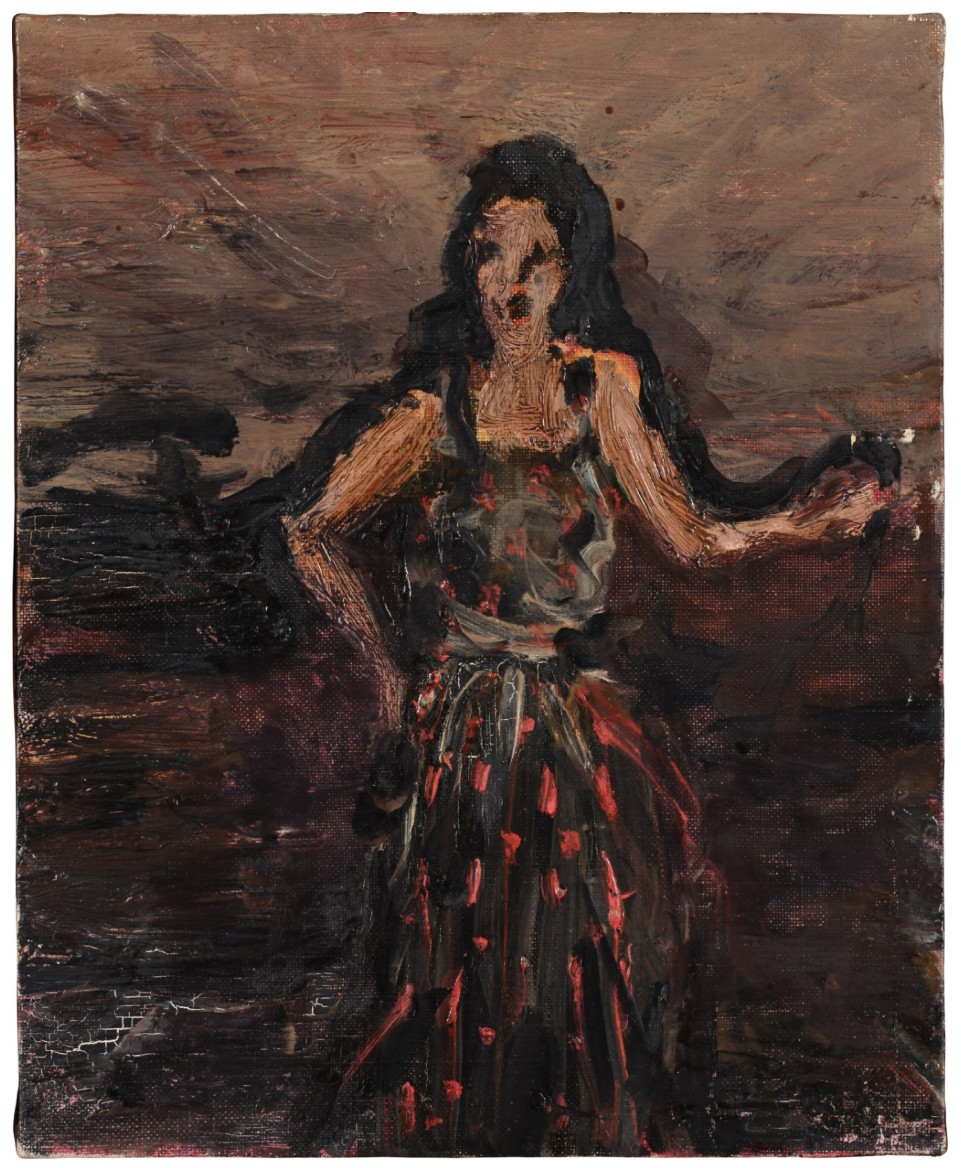
GEORGE CONDO (b. 1957)
The Scream, 1985
Oil on canvas
10 5/8 x 8 5/8 inches (27 x 21.9 cm)
Signed, titled and dated 85 (on the reverse)
#38. Many Handed Shiva, 1983
Sotheby’s Paris: 11 April 2025
Estimated: EUR 30,000 – 40,000
EUR 27,940 / USD 31,455
Many Handed Shiva | Art Moderne et Contemporain Day Auction | 2025 | Sotheby’s
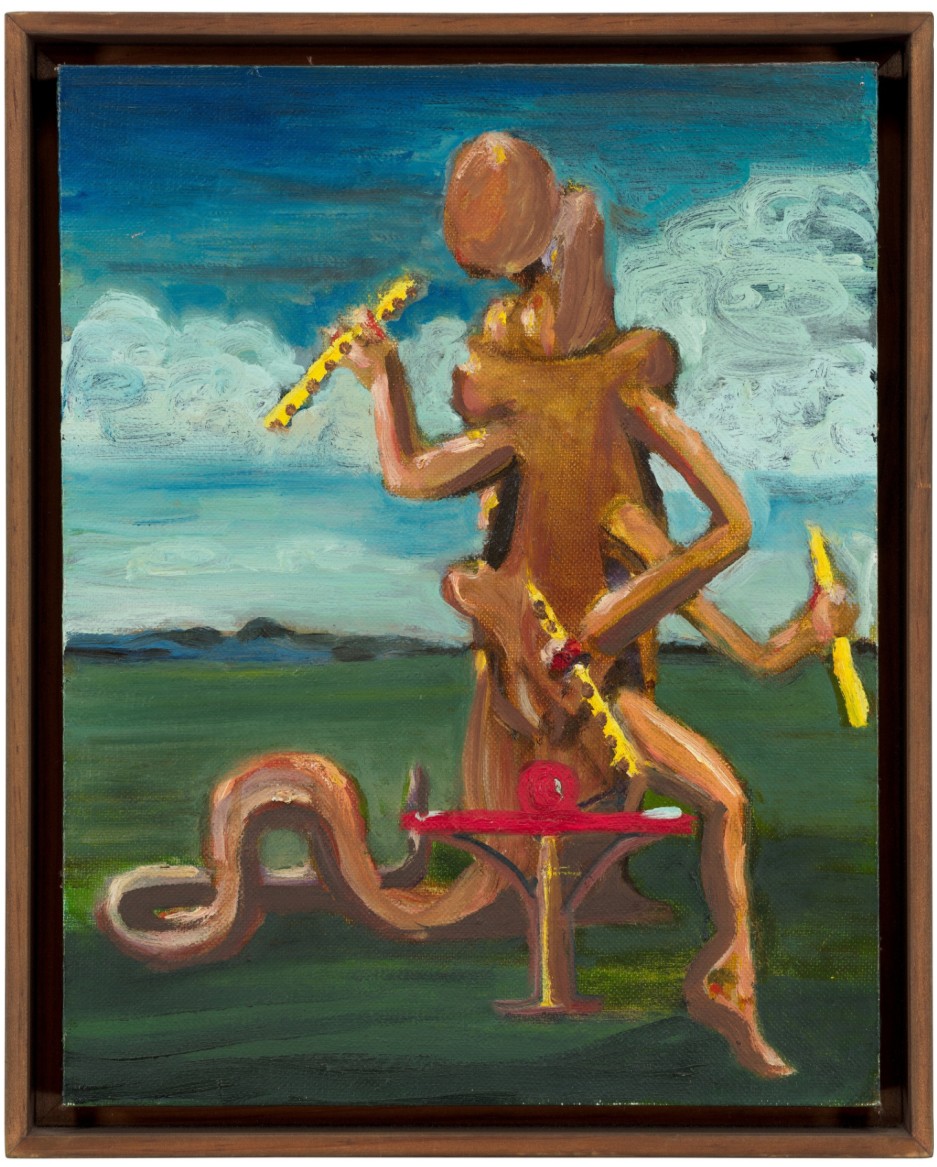
GEORGE CONDO (b. 1957)
Many Handed Shiva, 1983
Oil on canvas board
14 x 10 7/8 inches (35.4 x 27.7 cm)
Signed, titled and dated 83 (on the reverse)
#39. The Queen, 1984
Phillips New-York: 21 November 2025
Estimated: USD 20,000 – 30,000
USD 28,380
George Condo Modern & Contemporary Art Day Sale, Afternoon Session
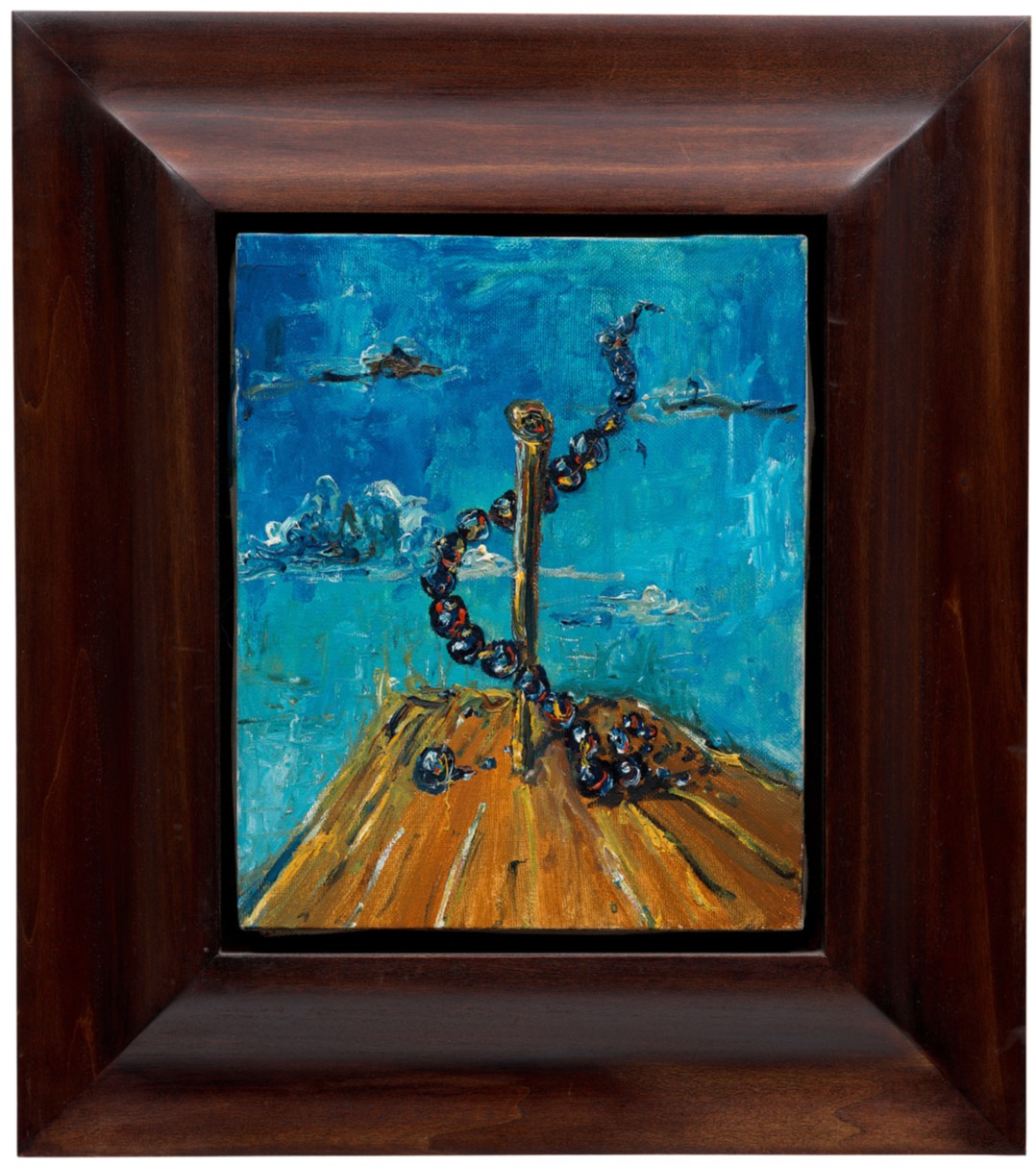
Acrylic on canvas, in artist’s frame
18 x 15 3/4 inches (45.7 x 40 cm)
Signed, titled and dated “Condo The Queen 9-84″ on the stretcher
#40. The Lion, 1985
SBI Art Auction: 23 May 2025
Estimated: JPY 2,000,000 – 3,000,000
JPY 3,910,000 / USD 27,430
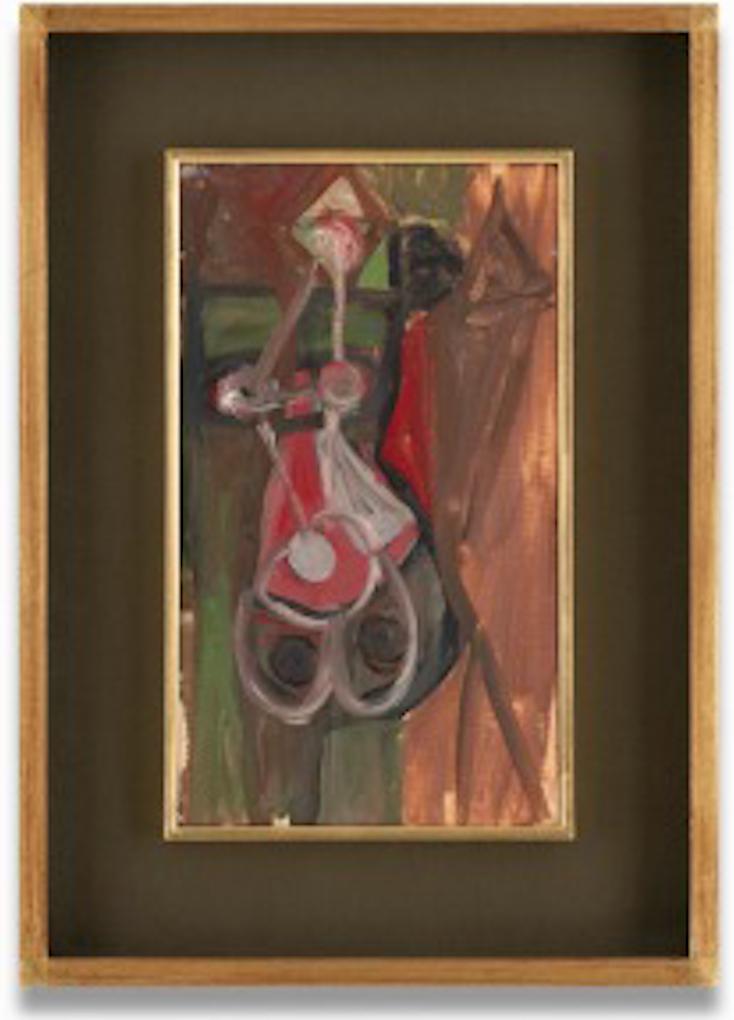
GEORGE CONDO
The Lion, 1985
Oil on canvas
13 x 7 1/2 inches (33×19 cm)
Signed and titled on the reverse
#41. Sans titre
Christie’s Paris: 27 May 2025
Estimated: EUR 15,000 – 20,000
EUR 23,940 / USD 27,265
George Condo (né en 1957), Sans titre | Christie’s
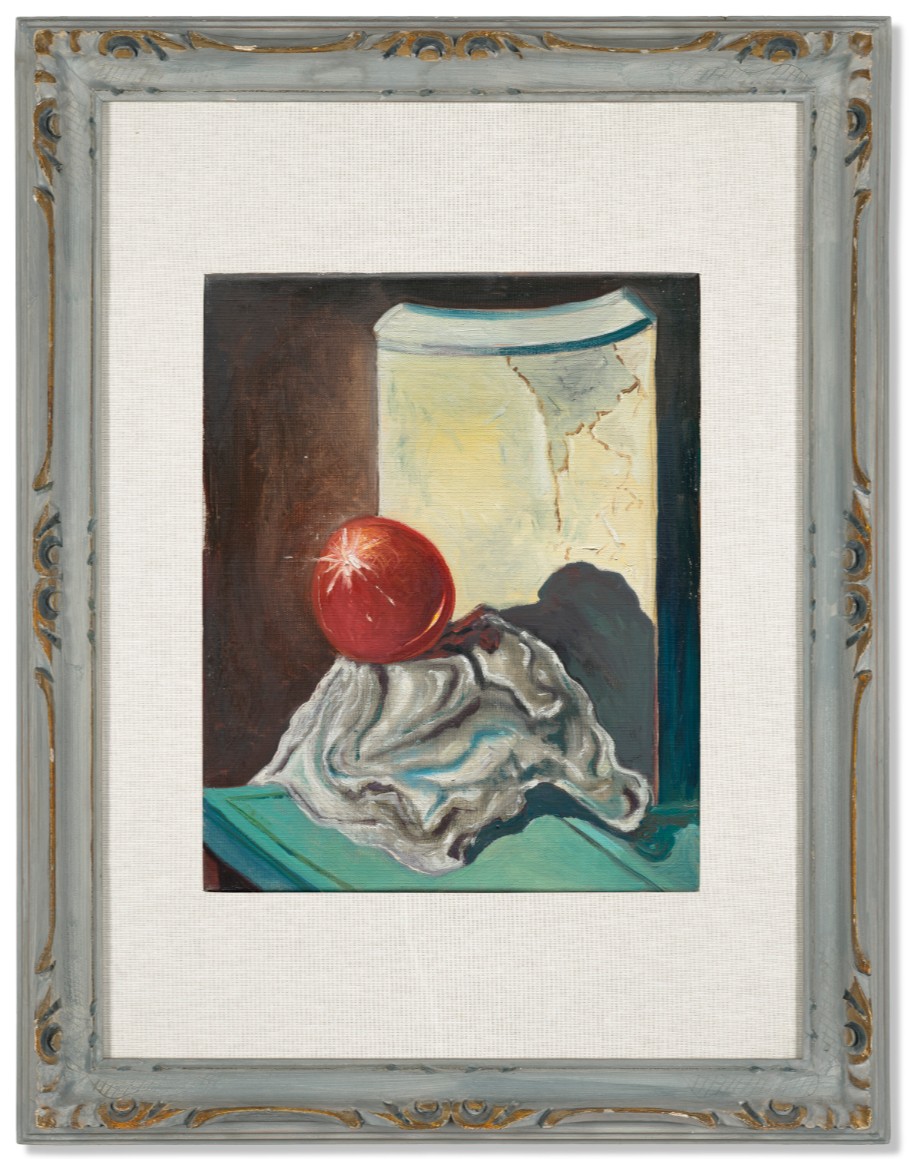
GEORGE CONDO (born 1957)
Sans titre
Oil on canvas
19 3/4 x 15 3/4 inches (50×40 cm)
Signed ‘Condo’ (on the stretcher)
Lots Passed
Stick Figure, 2000
Christie’s New-York: 30 September 2025
Estimated: USD 300,000 – 500,000
PASSED
GEORGE CONDO (B. 1957), Stick Figure | Christie’s
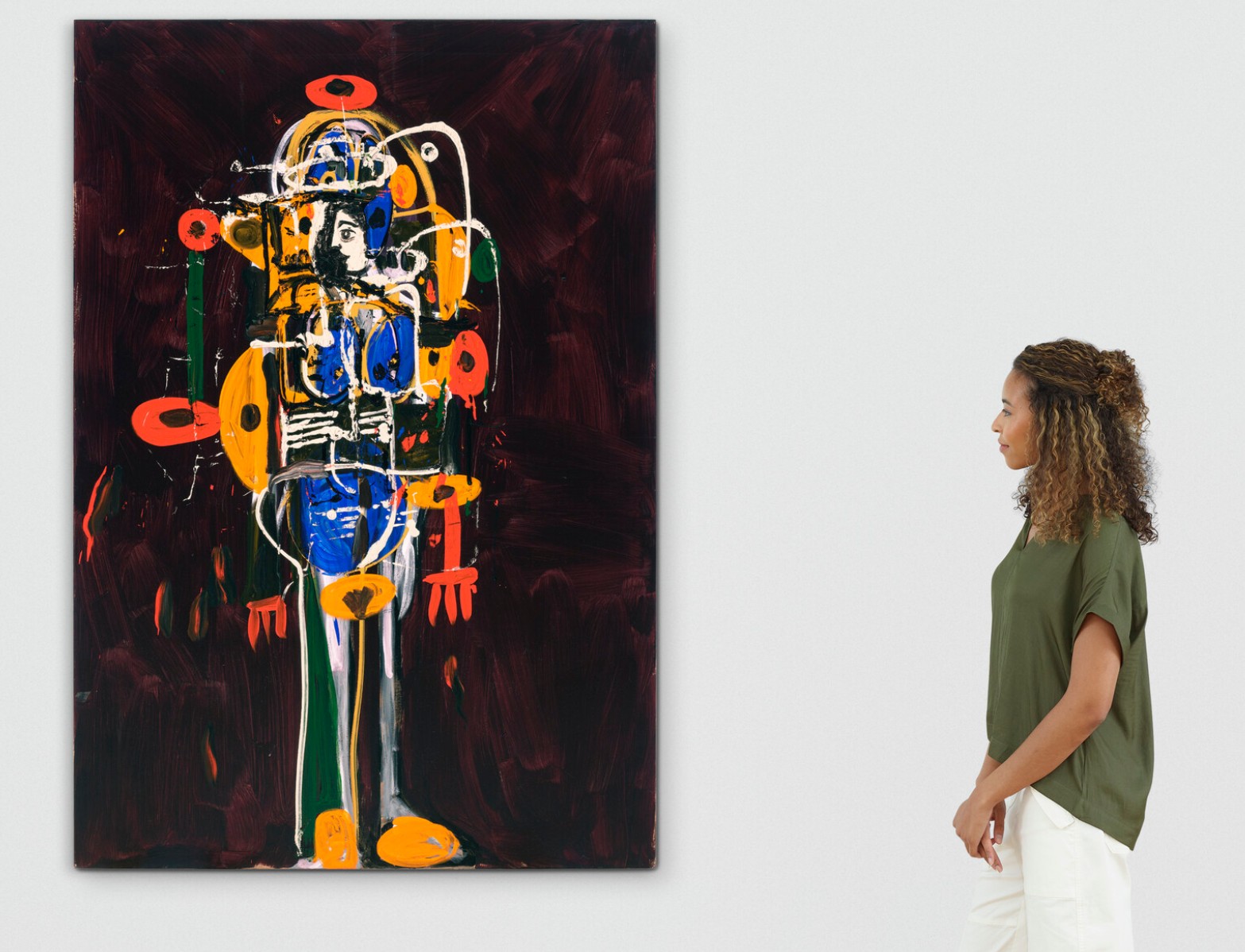
Stick Figure, 2000
Oil on linen
70×48 inches (177.8 x 121.9 cm)
Signed and dated ‘Condo 2000’ (upper right)
Signed again, titled and dated again ‘Condo 2000 Stick Figure’ (on the reverse)
Untitled, circa 2010
Christie’s New-York: 15 May 2025
Estimated: USD 400,000 – 600,000
PASSED
GEORGE CONDO (B. 1957), Untitled | Christie’s
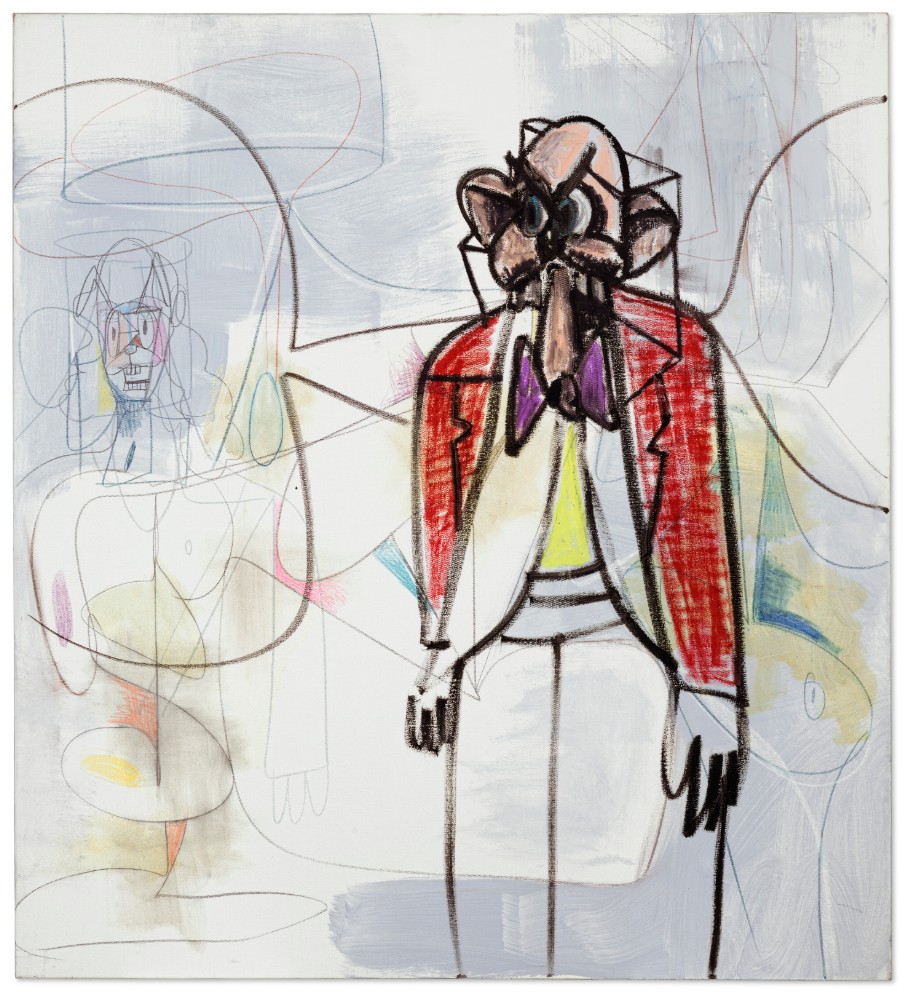
GEORGE CONDO (B. 1957)
Untitled, circa 2010
Acrylic, pastel and charcoal on canvas
42×38 inches (106.7 x 96.5 cm)
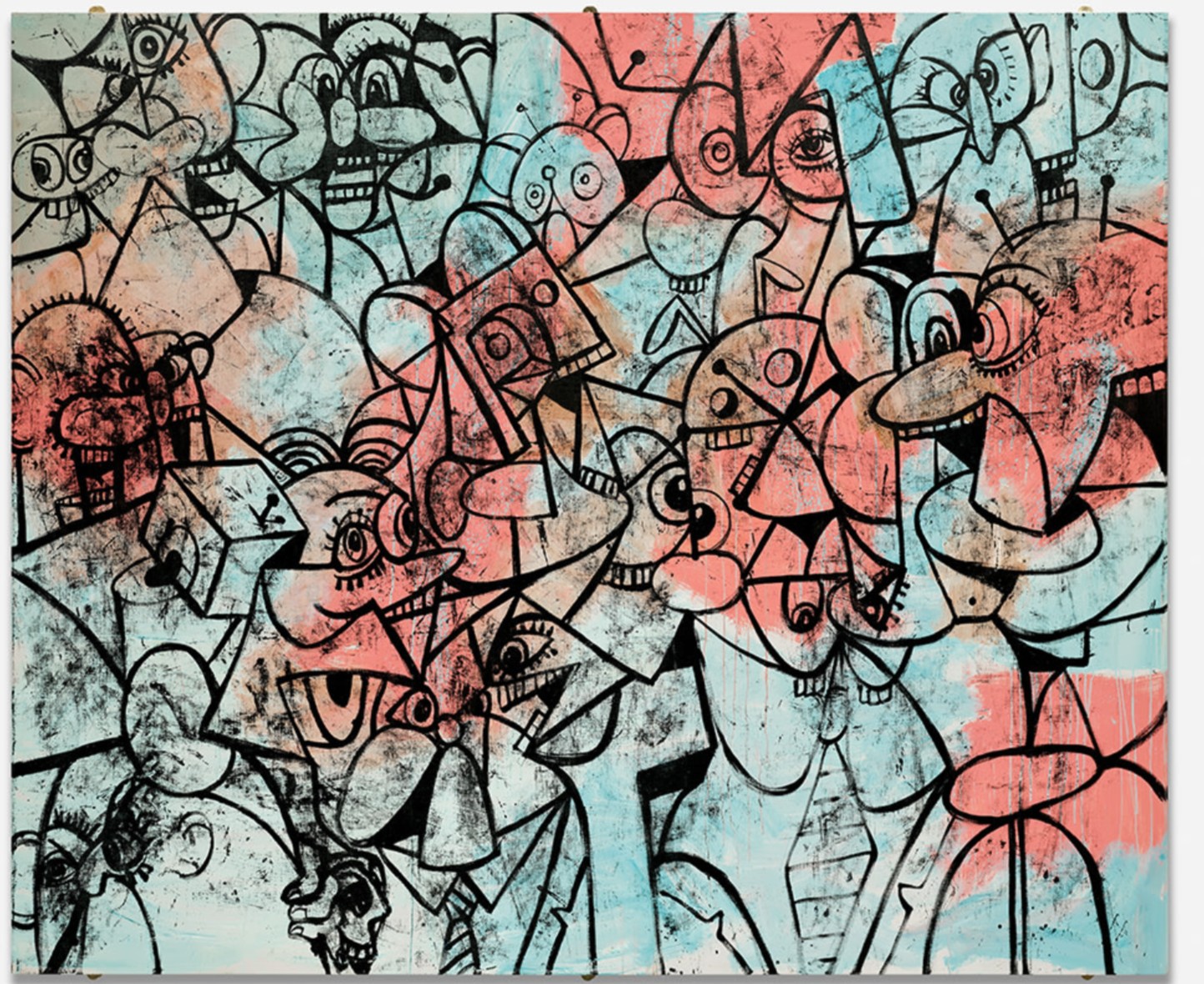
Social Media, 2017
Phillips New-York: 13 May 2025
Estimated: USD 2,500,000 – 3,500,000
PASSED
George Condo Modern & Contemporary Art Evening Sale
Lots Withdrawn
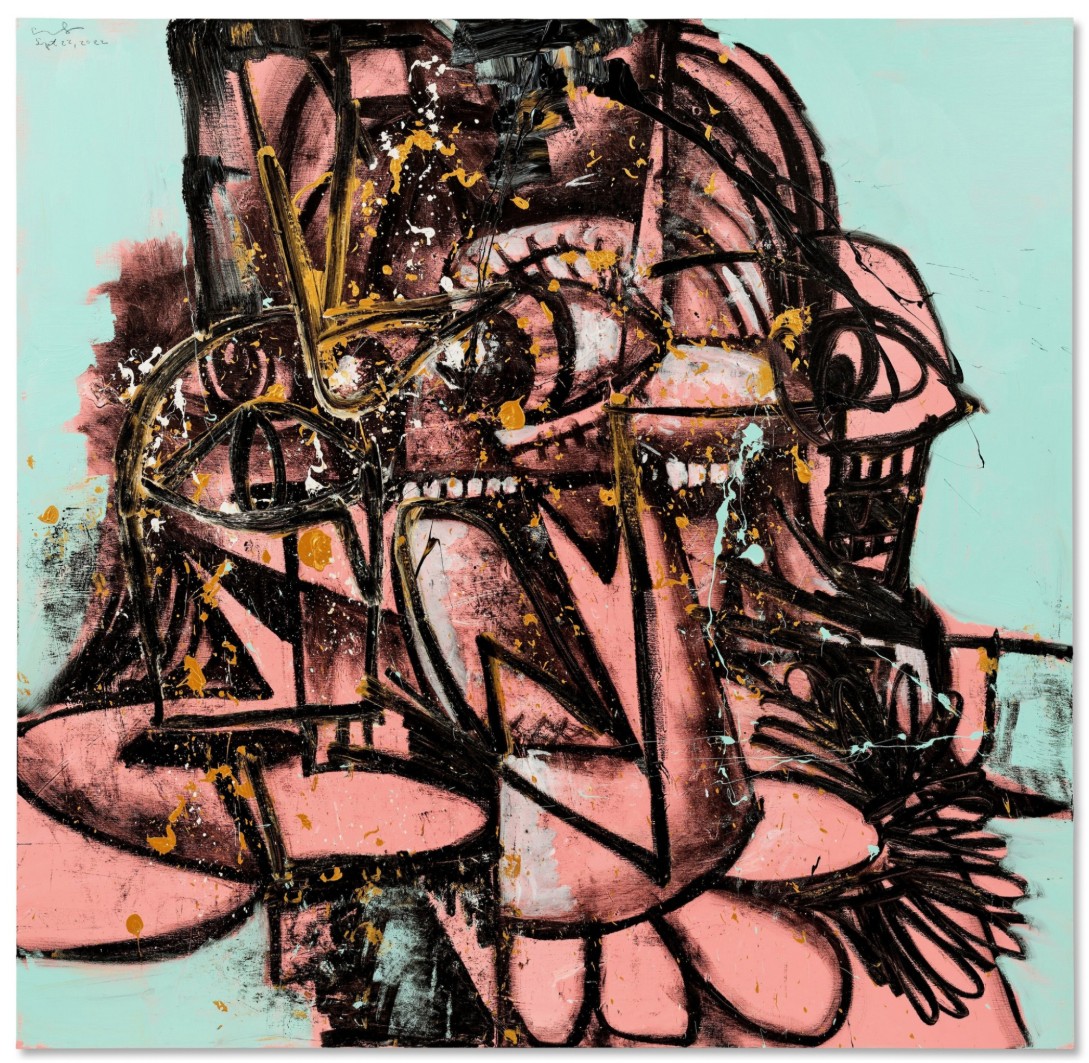
The Endless Journey, 2022
Sotheby’s New-York: 16 May 2025
Estimated: USD 1,500,000 – 2,000,000
WITHDRAWN
The Endless Journey | Contemporary Day Auction | 2025 | Sotheby’s
GEORGE CONDO (b. 1957)
The Endless Journey, 2022
Acrylic, oil stick and metallic paint on linen
82×84 inches (208.3 x 213.4 cm)
Signed and dated Sept 22, 2022 (upper left)
2024 Auction Results
FOR PAINTINGS ONLY
55 lots sold at auction in 2024 for a total turnover of USD 39,202,260. With 8 lots failing to sell (and 3 lots withdrawn), the sell-through rate is 87%. The highest price was achieved by Prescription for the Clinically Normal, a painting dated 2012, that sold at Christie’s in Hong-Kong on 26 September 2024 for HKD 48,291,000 (USD 6,202,255).
2024 Top 3 Lots
11 lots sold for more than USD 1 million, generating a cumulative turnover of USD 25,874,682, representing 66% of the total turnover for 2024.
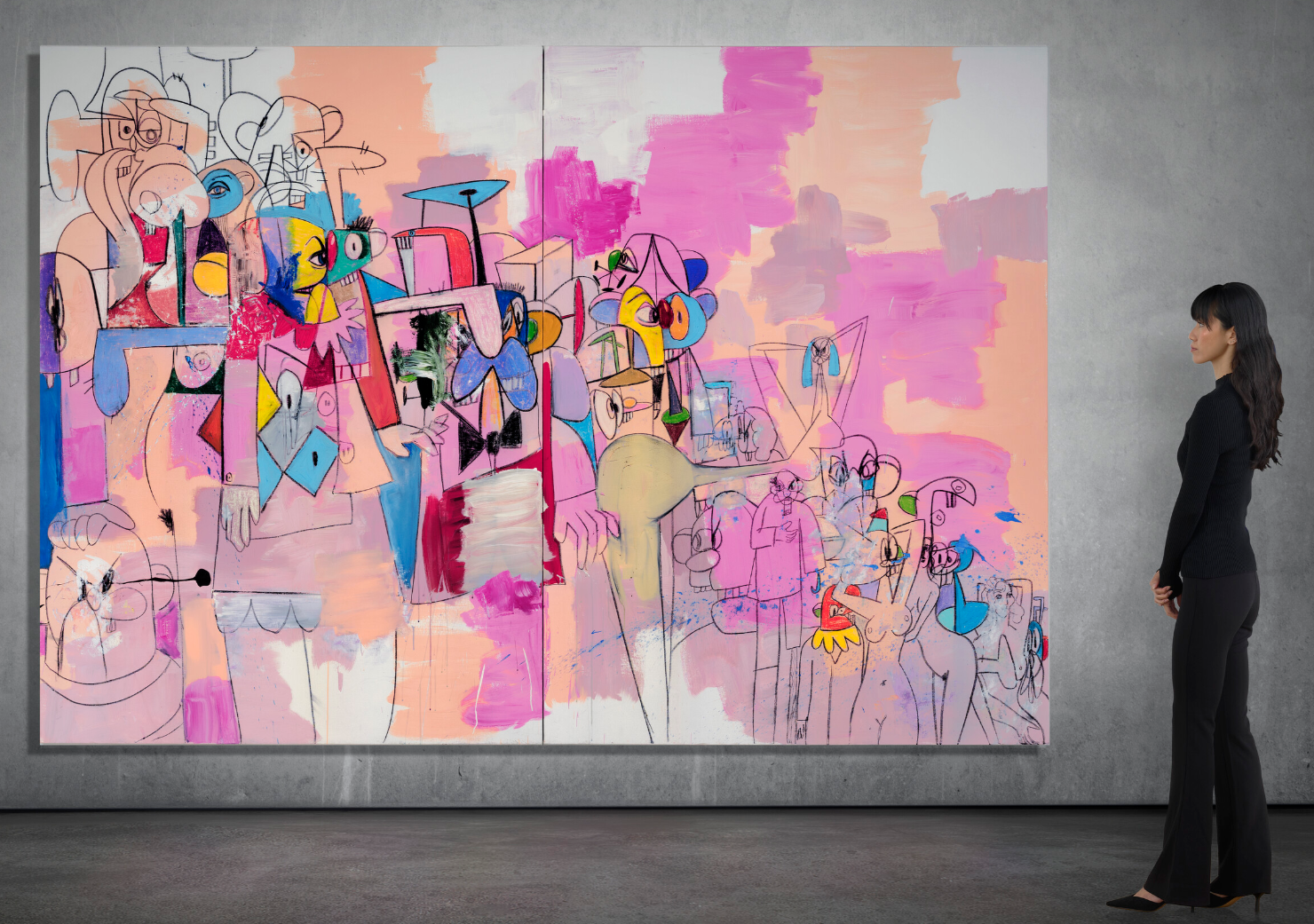
#1. Prescription for the Clinically Normal, 2012
Christie’s Hong-Kong: 26 September 2024
Estimated: HKD 40,000,000 – 60,000,000
HKD 48,291,000 / USD 6,202,255
Prescription for the Clinically Normal (christies.com)
GEORGE CONDO (B. 1957)
Prescription for the Clinically Normal, 2012
Acrylic, charcoal, and pastel on linen (diptych)
Each: 90×65 inches (228.6 x 165.1 cm) (2)
Overall: 90×130 inches (228.6 x 330.2 cm)
Signed twice and dated ‘Condo 2012’ (on the overlap of the each panel)
USD 1 million
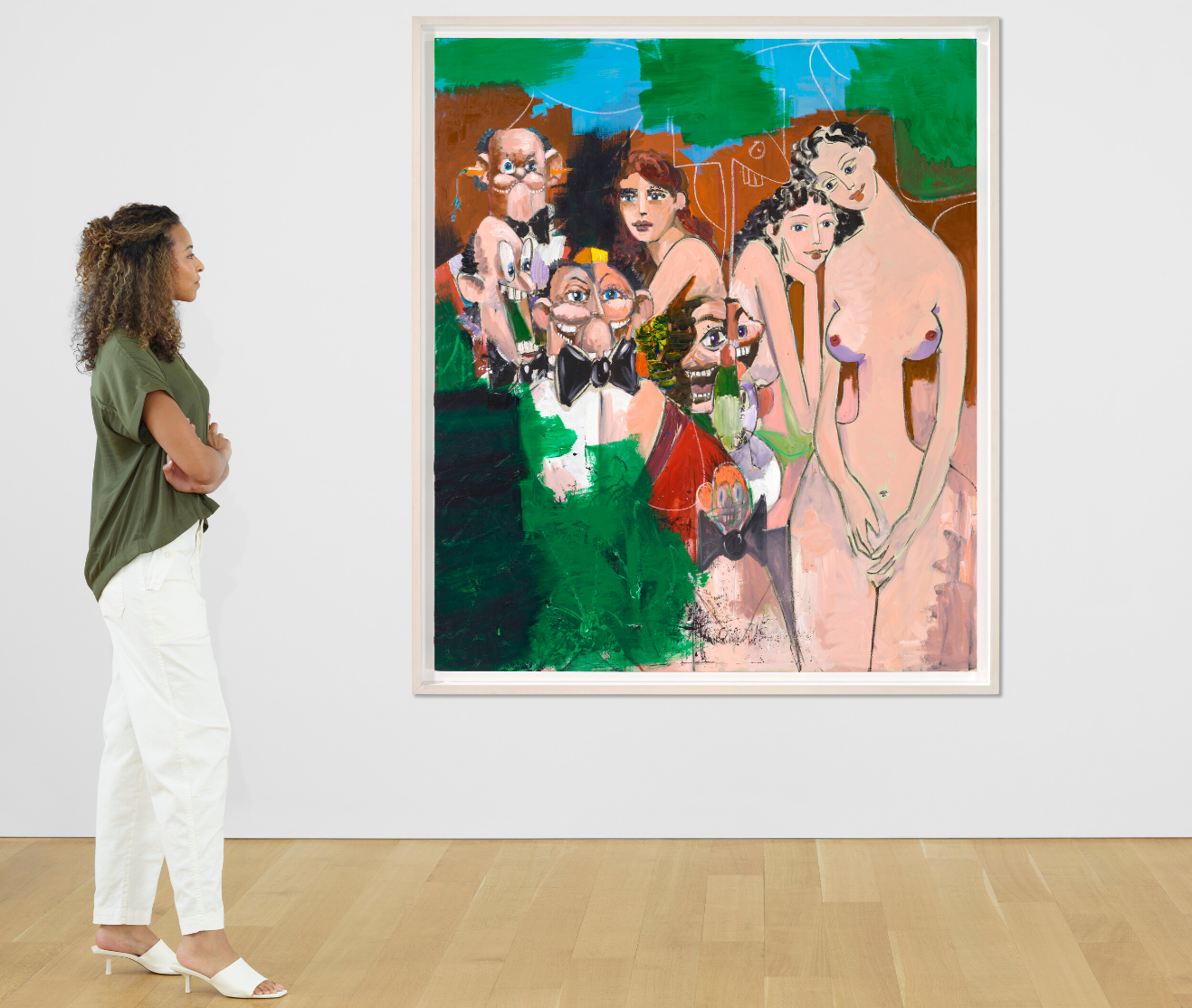
#2. The Executives and Their Wives, 2011
Christie’s New-York: 21 November 2024
Estimated: USD 2,500,000 – 3,500,000
USD 3,922,000
GEORGE CONDO (B. 1957), The Executives and Their Wives | Christie’s
GEORGE CONDO (B. 1957)
The Executives and Their Wives, 2011
Oil, acrylic, charcoal and pastel on linen
70×60 inches (177.8 x 152.4 cm)
#3. Conversations, 2012
Sotheby’s New-York: 13 May 2024
Estimated: USD 2,500,000 – 3,500,000
USD 3,145,500
Conversations | The Now Evening Auction | 2024 | Sotheby’s (sothebys.com)

GEORGE CONDO (b. 1957)
Conversations, 2012
Acrylic, charcoal and pastel on canvas
70×90 inches (177.8 x 228.6 cm)
Signed and dated 2012 (upper left)
#4. Red, White and Black, 2014
Sotheby’s Hong-Kong: 11 November 2024
Estimated: HKD 25,000,000 – 35,000,000
HKD 20,400,000 / USD 2,625,010
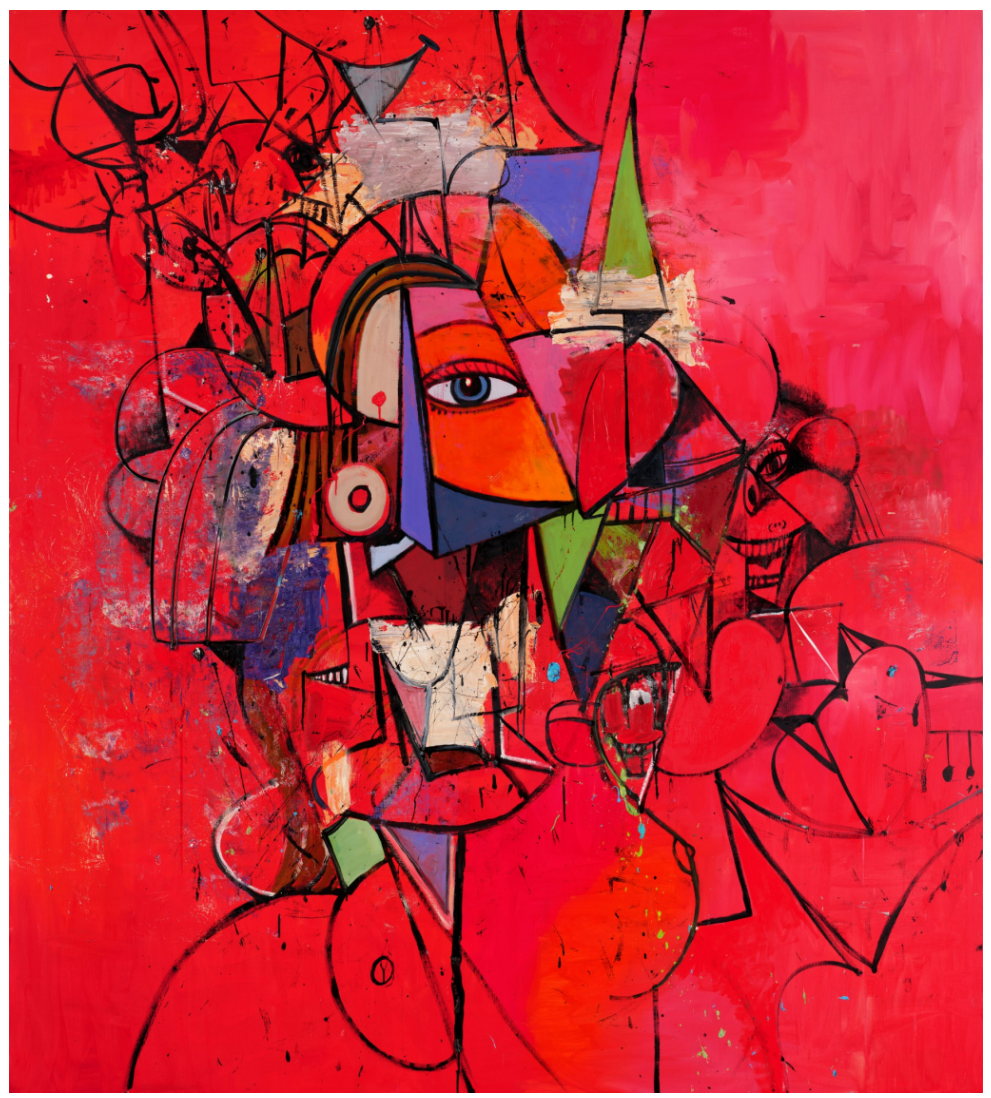
GEORGE CONDO (1957 – )
Red, White and Black, 2014
Oil on linen
80×72 inches (203.2 by 182.9 cm)
#5. Transmutation 2, 2015
Christie’s Hong-Kong: 29 May 2024
Estimated: HKD 8,000,000 – 15,000,000
HKD 14,895,000 / USD 1,906,926
GEORGE CONDO (B. 1957), Transmutation 2 | Christie’s (christies.com)

GEORGE CONDO (B. 1957)
Transmutation 2, 2015
Oil on linen
70×65 inches (178×165 cm)
Signed and dated ‘Condo 2015’ (upper left)
#6. Green Eyed Lady, 2016
Sotheby’s Hong-Kong: 5 April 2024
Estimated: HKD 10,000,000 – 20,000,000
HKD 13,518,000 / USD 1,728,203

GEORGE CONDO (b. 1957)
Green Eyed Lady, 2016
Acrylic, pastel and charcoal on canvas
70×66 inches (177.8 x 167.6 cm)
Signed and dated 2016
#7. The Alpine Waitress, 2006
Sotheby’s New-York: 21 November 2024
Estimated: USD 1,000,000 – 1,500,000
USD 1,320,000
The Alpine Waitress | Contemporary Day Auction | 2024 | Sotheby’s
REPEAT SALE
Sotheby’s London: 13 October 2011
Estimated: GBP 160,000 – 200,000
GBP 169,250 / USD 266,225
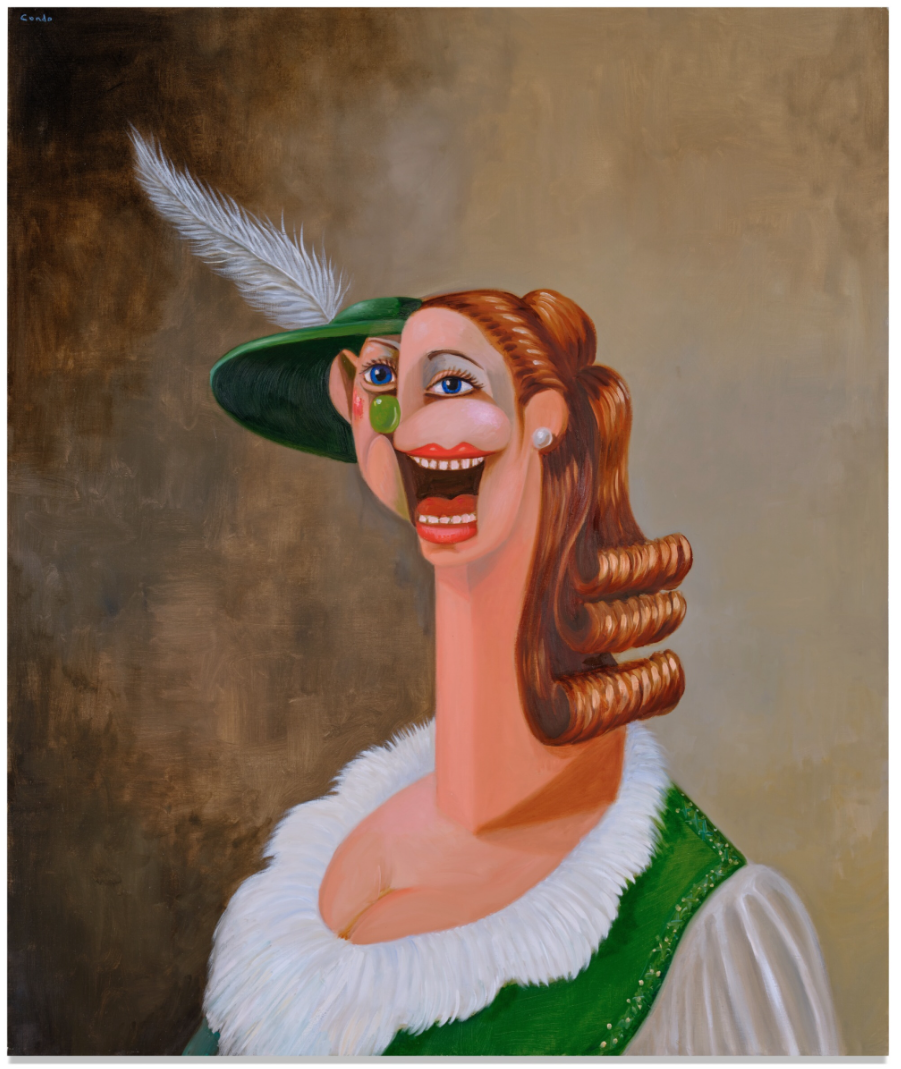
GEORGE CONDO (b. 1957)
The Alpine Waitress, 2006
Oil on canvas
50×42 inches (127 x 106.7 cm)
Signed (upper left)
#8. Green and Purple Head Composition, 2018
Phillips London: 27 June 2024
Estimated: GBP 700,000 – 900,000
GBP 1,016,000 / USD 1,288,288
George Condo – Modern & Contemporary Art… Lot 8 June 2024 | Phillips
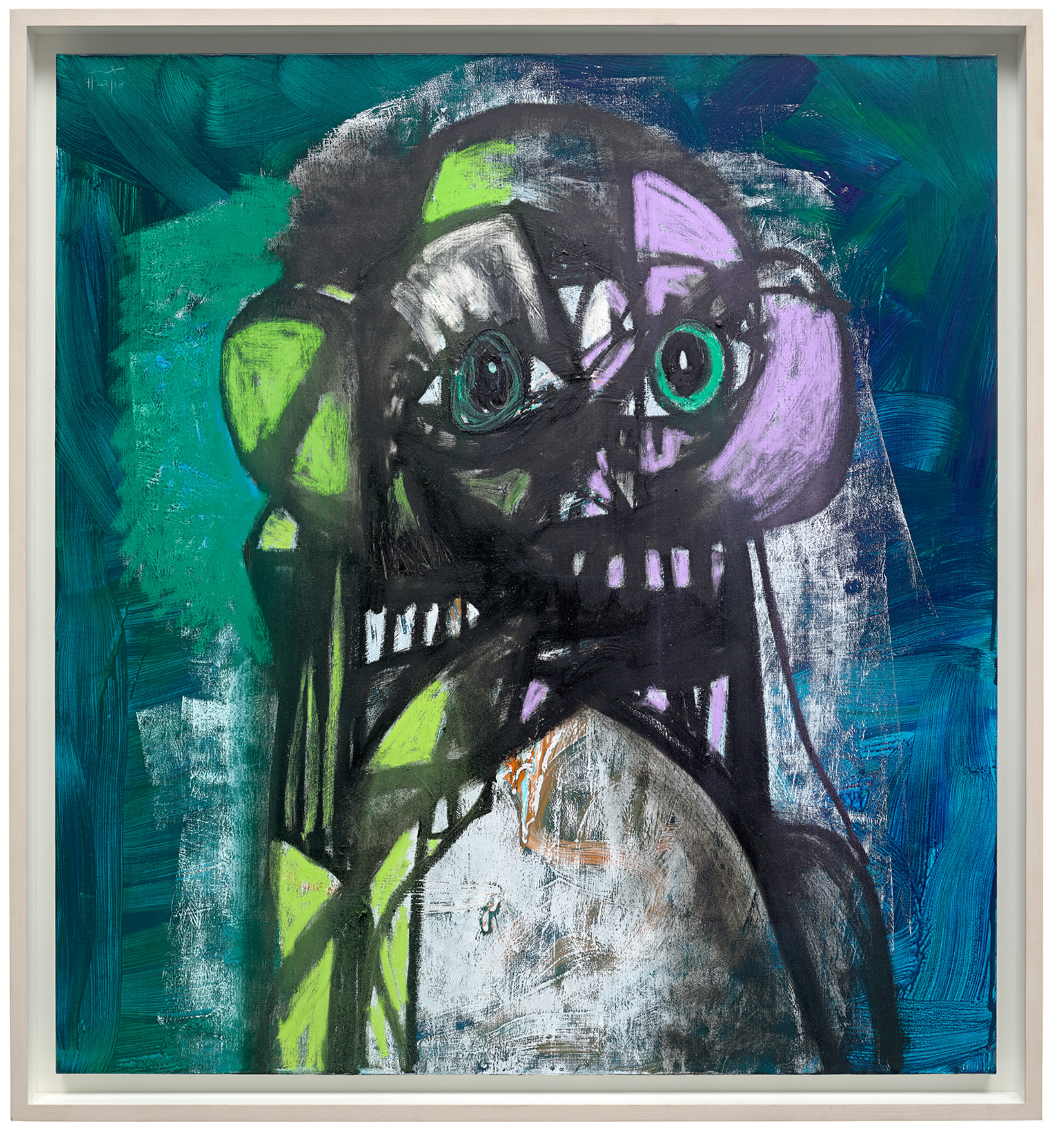
GEORGE CONDO
Green and Purple Head Composition, 2018
Acrylic, charcoal, pastel and pigment stick on linen, in artist’s frame
56 1/8 x 52 1/4 inches (142.7 x 132.6 cm)
Signed and dated ‘George Condo 4/22/18’ upper left
#9. Focusing on Space, 2016
Phillips New-York: 14 May 2024
Estimated: USD 1,000,000 – 1,500,000
USD 1,270,000
George Condo – Modern & Contemporary Art… Lot 15 May 2024 | Phillips

GEORGE CONDO
Focusing on Space, 2016
Oil and pigment stick on canvas
77×75 inches (195.6 x 190.5 cm)
Signed and dated “Condo 2016” upper left
#10. Shimmering Forms, 2010
Christie’s New-York: 17 May 2024
Estimated: USD 1,000,000 – 1,500,000
USD 1,260,000
GEORGE CONDO (B. 1957), Shimmering Forms | Christie’s (christies.com)

GEORGE CONDO (B. 1957)
Shimmering Forms, 2010
Acrylic, pastel and graphite on canvas
70×70 inches (177.8 x 177.8 cm)
Signed and dated ‘Condo 2010’ (upper left)
#11. Female Portrait, 2008
Sotheby’s New-York: 14 May 2024
Estimated: USD 1,200,000 – 1,800,000
USD 1,206,500
Female Portrait | Contemporary Day Auction | 2024 | Sotheby’s (sothebys.com)
REPEAT SALE
Sotheby’s New-York: 18 November 2016
Estimated: USD 350,000 – 450,000
USD 972,500

GEORGE CONDO (b. 1957)
Female Portrait, 2008
Oil on canvas
72×60 inches (183 x 152.4 cm)
Signed, titled and dated 08 (on the reverse)
USD 1 million
#12. The Young Sailor, 2012
Christie’s New-York: 17 May 2024
Estimated: USD 800,000 – 1,200,000
USD 882,000
GEORGE CONDO (B. 1957), The Young Sailor | Christie’s (christies.com)
REPEAT SALE
Sotheby’s Hong-Kong: 1 April 2019
Estimated: HKD 4,000,000 – 5,500,000
HKD 12,175,000 / USD 1,551,030
(#1150) GEORGE CONDO | The Young Sailor
REPEAT SALE
Phillips London: 3 July 2014
Estimated: GBP 150,000 – 250,000
GBP 422,500 / USD 724,590
George Condo Contemporary Day Sale
REPEAT SALE
Sotheby’s New-York: 14 November 2012
Estimated: USD 150,000 – 200,000
USD 302,500

GEORGE CONDO (B. 1957)
The Young Sailor, 2012
Oil on canvas
40 1/4 x 32 1/4 inches (102.2 x 81.9 cm)
Incised with the artist’s signature and date ‘Condo 2012’ (upper left)
#13. Figures on a Blue Couch, 1996
Sotheby’s Paris: 23 April 2024
Estimated: EUR 600,000 – 800,000
EUR 762,000 / USD 811,906
GEORGE CONDO (b. 1957)
Figures on a Blue Couch, 1996
Oil on canvas
68 1/8 x 75 inches (173 x 190.5 cm)
#14. The Return of Client No. 9, 2008
Christie’s New-York: 13 March 2024
Estimated: USD 800,000 – 1,200,000
USD 693,000
GEORGE CONDO (B. 1957), The Return of Client No. 9 | Christie’s (christies.com)
GEORGE CONDO (B. 1957)
The Return of Client No. 9, 2008
Oil on linen
80×80 inches (203.2 x 203.2 cm)
Signed and dated ‘Condo 08’ (on the reverse)
#15. Rodrigo and His Mistress, 2007
Phillips New-York: 14 May 2024
Estimated: USD 600,000 – 800,000
USD 660,400
George Condo – Modern & Contemporary Art… Lot 26 May 2024 | Phillips

Rodrigo and His Mistress, 2007
Oil on canvas
53×46 inches (134.6 x 116.8 cm)
Signed and dated “Condo 07” on the reverse
#16. Black Standing Figures, 2000
Sotheby’s New-York: 1 March 2024
Estimated: USD 500,000 – 700,000
USD 635,000
Black Standing Figures | Contemporary Curated | 2024 | Sotheby’s (sothebys.com)
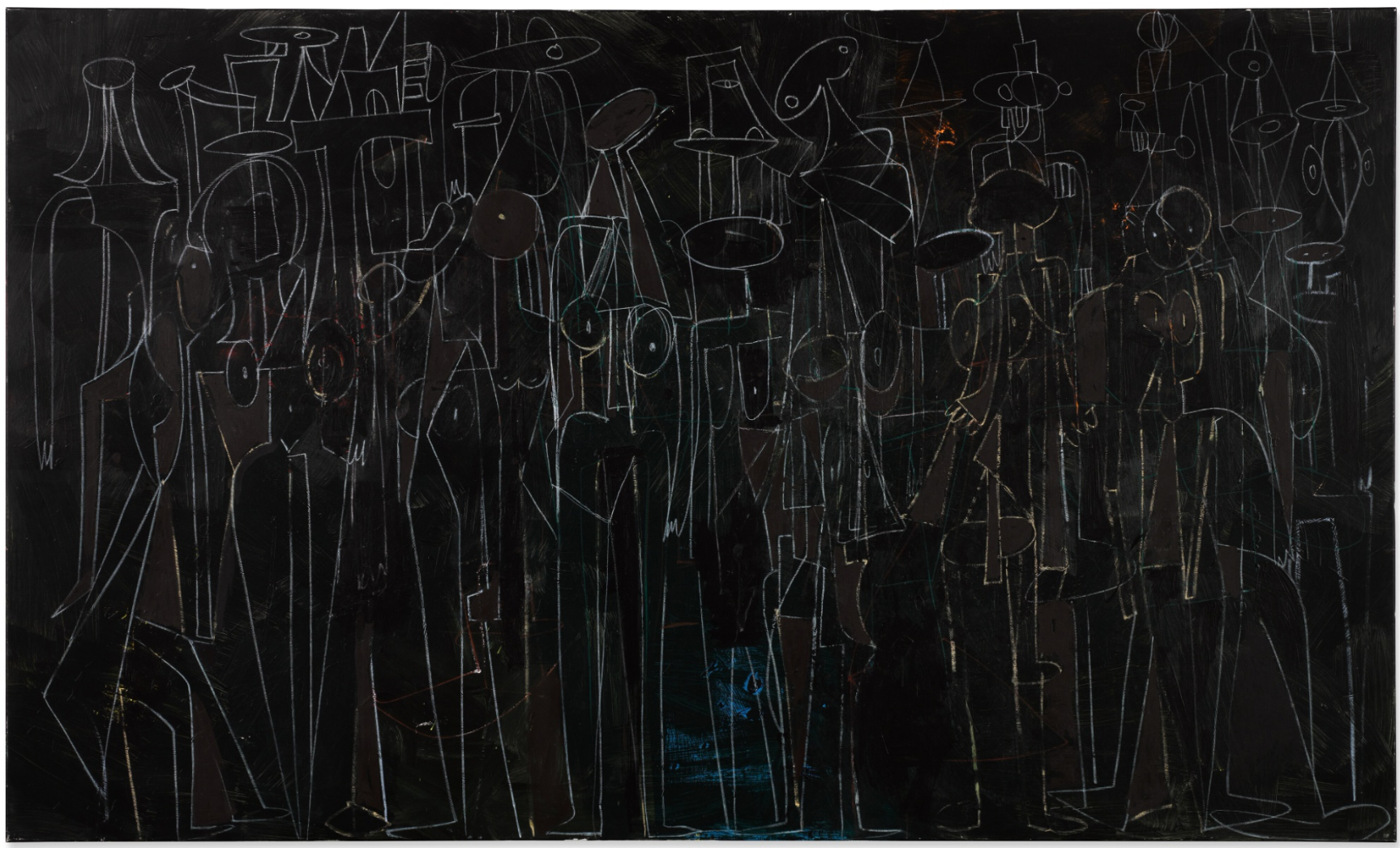
GEORGE CONDO (b. 1957)
Black Standing Figures, 2000
Oil, oilstick, acrylic and chalk on canvas
60×100 inches (152.1 x 253.7 cm)
#17. Seated Bather, 2005
Phillips London: 27 June 2024
Estimated: GBP 400,000 – 600,000
GBP 508,000 / USD 644,144
https://www.phillips.com/detail/george-condo/UK010424/20
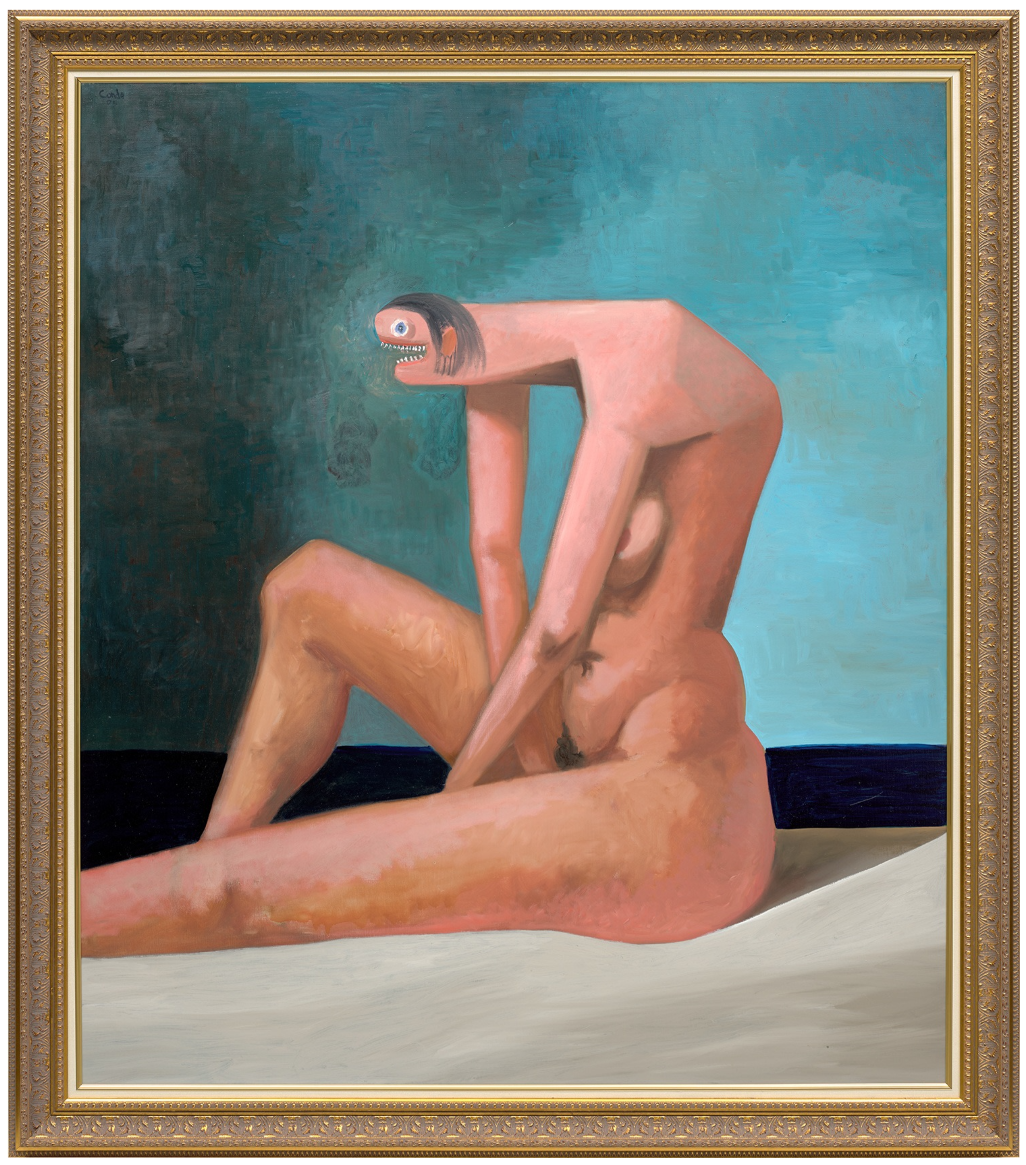
GEORGE CONDO
Seated Bather, 2005
Oil on canvas, in artist’s frame
60 7/8 x 53 7/8 inches (154.5 x 137 cm)
Signed and dated ‘Condo 05’ upper left
#18. Painting for the French Revolution, 1989
Sotheby’s London: 7 March 2024
Estimated: GBP 200,000 – 300,000
GBP 482,600 / USD 611,937
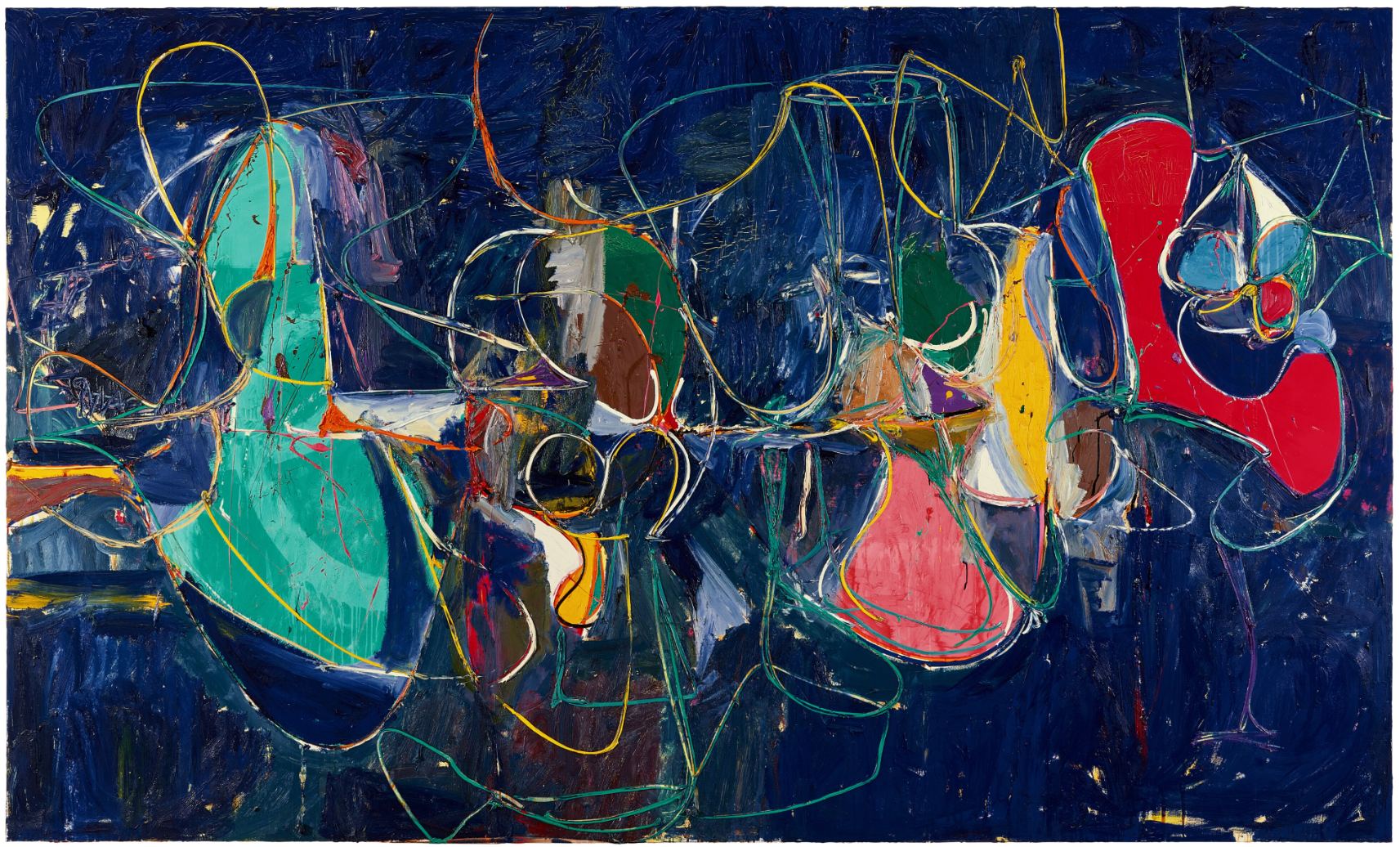
GEORGE CONDO (b. 1957)
Painting for the French Revolution, 1989
Oil on canvas
70 7/8 x 118 1/4 inches (180 x 300.5 cm)
#19. Antipodal Dream, 1996
Sotheby’s New-York: 14 May 2024
Estimated: USD 400,000 – 600,000
USD 596,900
Antipodal Dream | Contemporary Day Auction | 2024 | Sotheby’s (sothebys.com)

GEORGE CONDO (b. 1957)
Antipodal Dream, 1996
Oil on canvas
72×60 inches (183 x 152.4 cm)
Signed and dated 1996 (on the reverse)
#20. La Legion D’honneur, 1993-1994
China Guardian Hong-Kong: 8 October 2024
Estimated: HKD 3,600,000 – 4,600,000
HKD 4,440,000 / USD 571,690
Auction | China Guardian (HK) Auctions Co., Ltd.
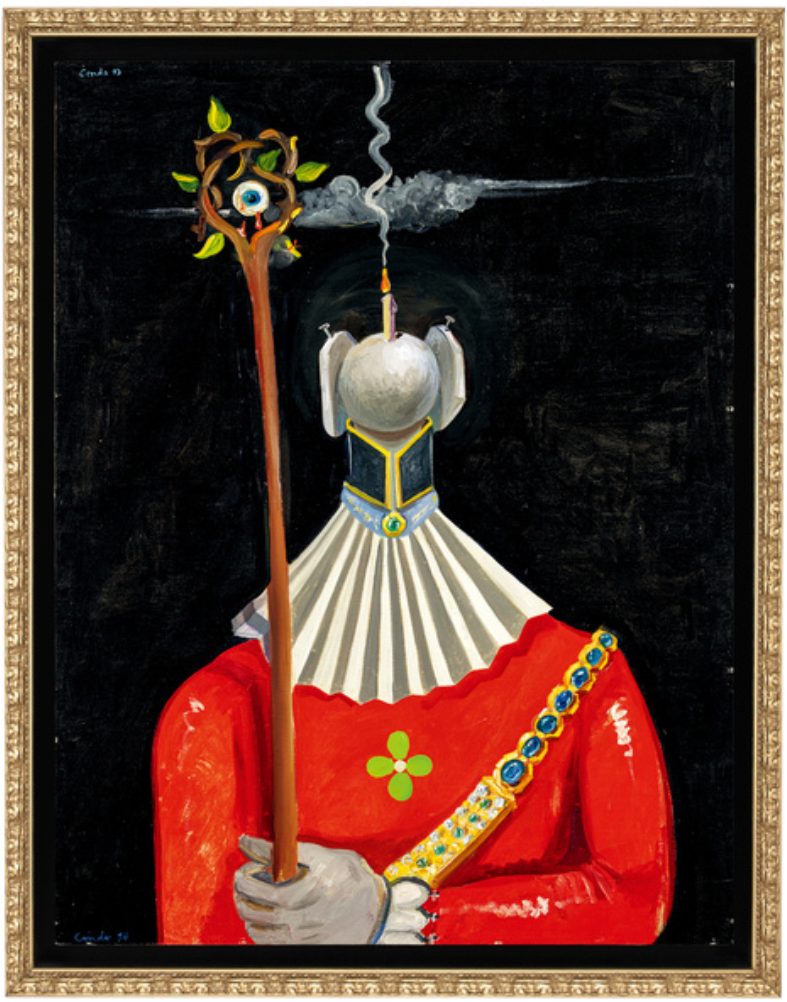
Oil on canvas
45 5/8 x 35 inches (116 x 88.8 cm)
Signed in English and dated on upper left and bottom left
#21. The Apparition, 2009
Christie’s New-York: 17 May 2024
Estimated: USD 400,000 – 600,000
USD 504,000
GEORGE CONDO (B. 1957), The Apparition | Christie’s (christies.com)

GEORGE CONDO (B. 1957)
The Apparition, 2009
Oil on canvas
40×36 inches (101.6 x 91.4 cm)
USD 500,000
#22. Clown with Clock, 1996
Sotheby’s London: 26 June 2024
Estimated: GBP 250,000 – 350,000
GBP 384,000 / USD 486,912
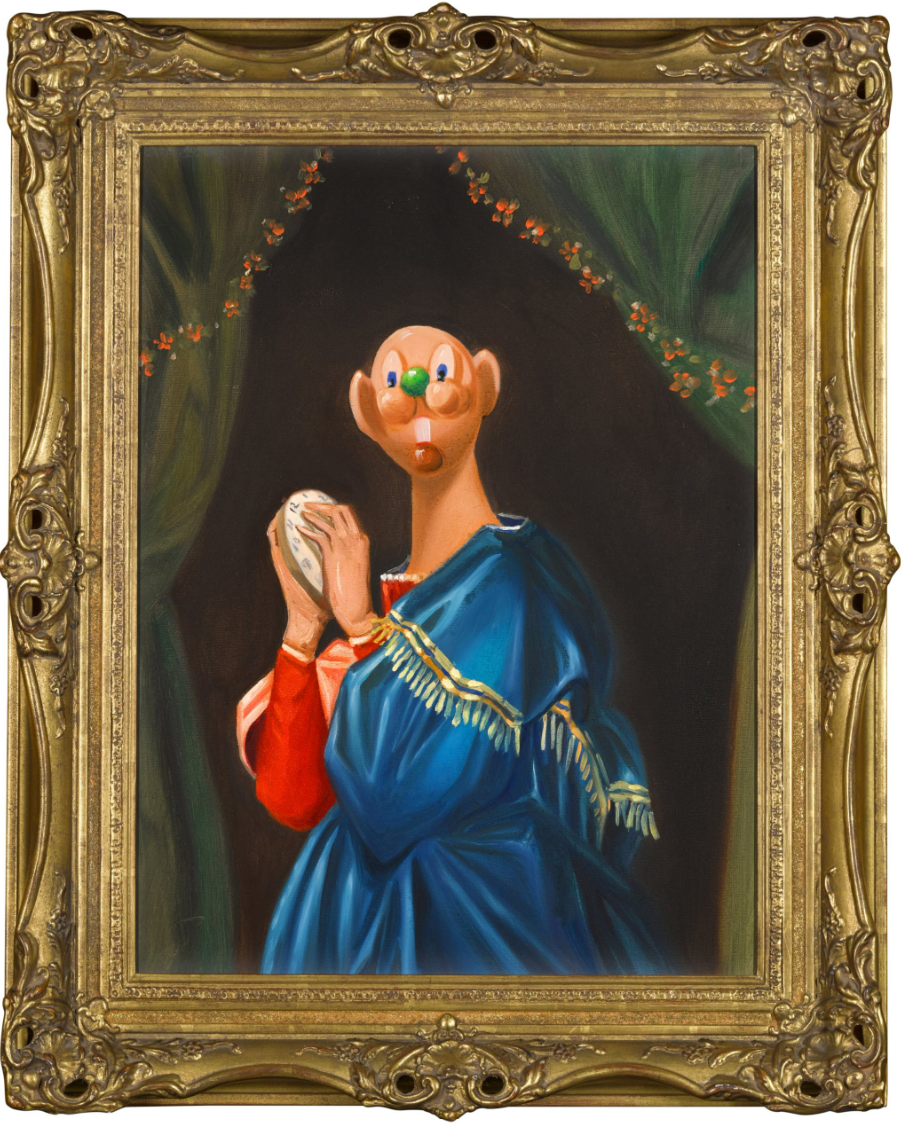
GEORGE CONDO (b. 1957)
Clown with Clock, 1996
Oil on canvas, in artist’s frame
30 3/4 x 24 7/8 inches (78.2 x 63.2 cm)
Signed and dated 96 (upper left)
#23. Irish Girl, 2003
Phillips London: 8 March 2024
Estimated: GBP 320,000 – 500,000
GBP 381,000 / USD 483,108
George Condo – 20th Century & Contemp… Lot 129 March 2024 | Phillips
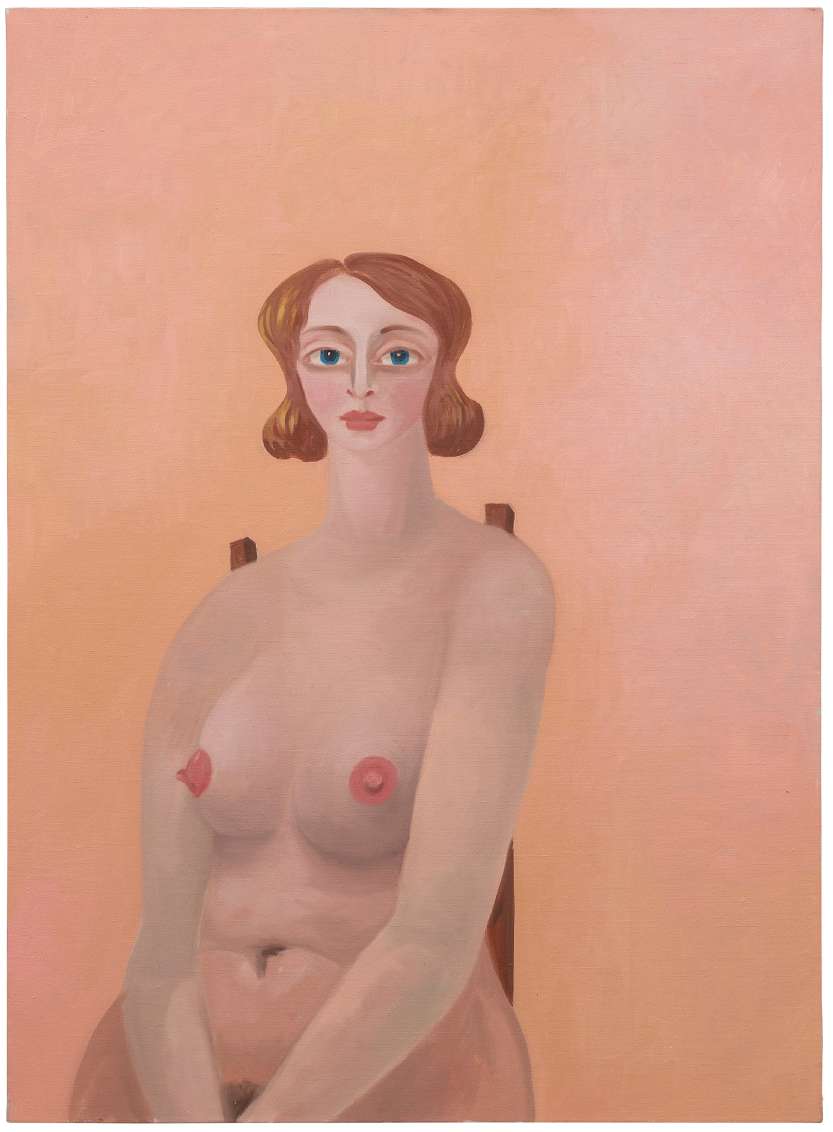
GEORGE CONDO
Irish Girl, 2003
Oil on canvas
39 3/8 x 29 inches (100 x 73.7 cm)
Signed, titled, dedicated, inscribed and dated ‘Condo “The Irish Girl” 2003 To Thomas with Best Wishes in memory of the Great Times installing The Sculpture’ on the reverse
#24. Untitled, 2016
Sotheby’s Hong-Kong: 5 April 2024
Estimated: HKD 6,000,000 – 8,000,000
HKD 3,556,000 / USD 454,615

GEORGE CONDO (b. 1957)
Untitled, 2016
Oil and graphite on linen
90×140 inches (229×356 cm)
Signed and dated 2016
#25. The Sculptor, 2003
Phillips New-York: 20 November 2024
Estimated: USD 320,000 – 500,000
USD 406,400
George Condo – Modern & Contempora… Lot 326 November 2024 | Phillips
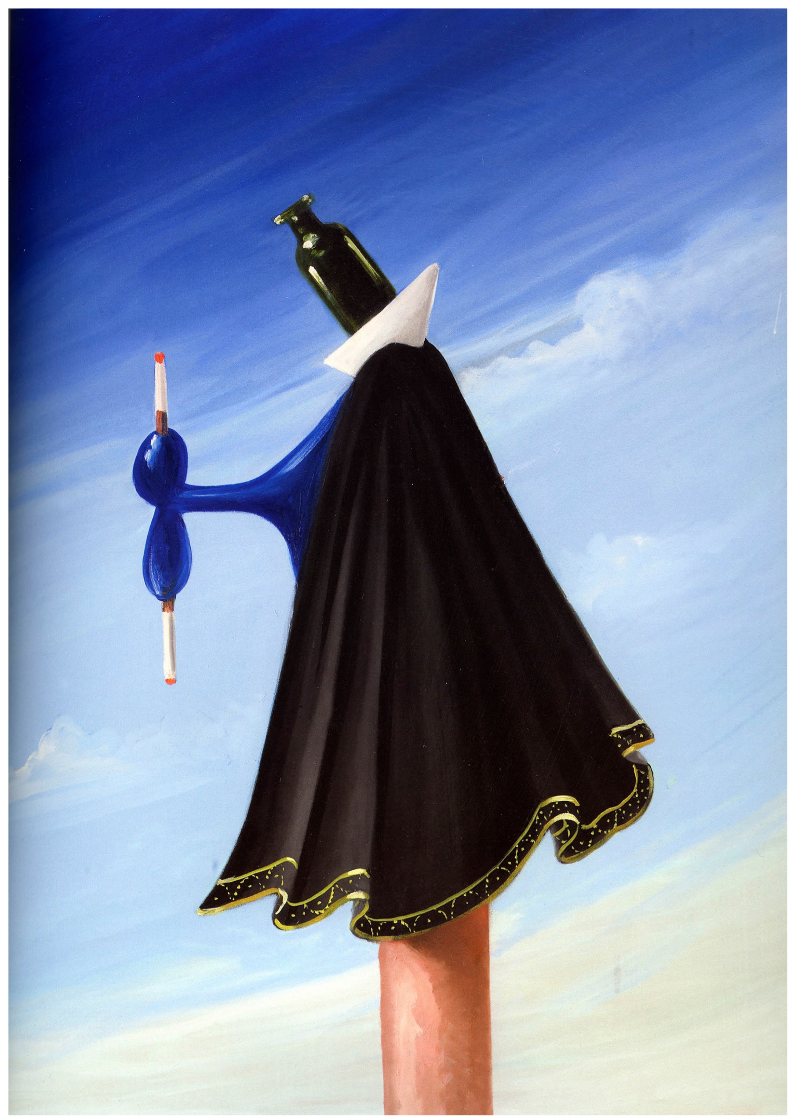
GEORGE CONDO
The Sculptor, 2003
Oil on canvas
48×36 inches (121.9 x 91.4 cm)
#26. Girl with Green Hair, 2009
Christie’s London: 9 March 2024
Estimated: GBP 250,000 – 350,000
GBP 302, 400 / USD 383,443
REPEAT SALE
Christie’s New-York: 9 March 2021
Estimated: USD 350,000 – 550,000
USD 437,500
George Condo (b. 1957) (christies.com)
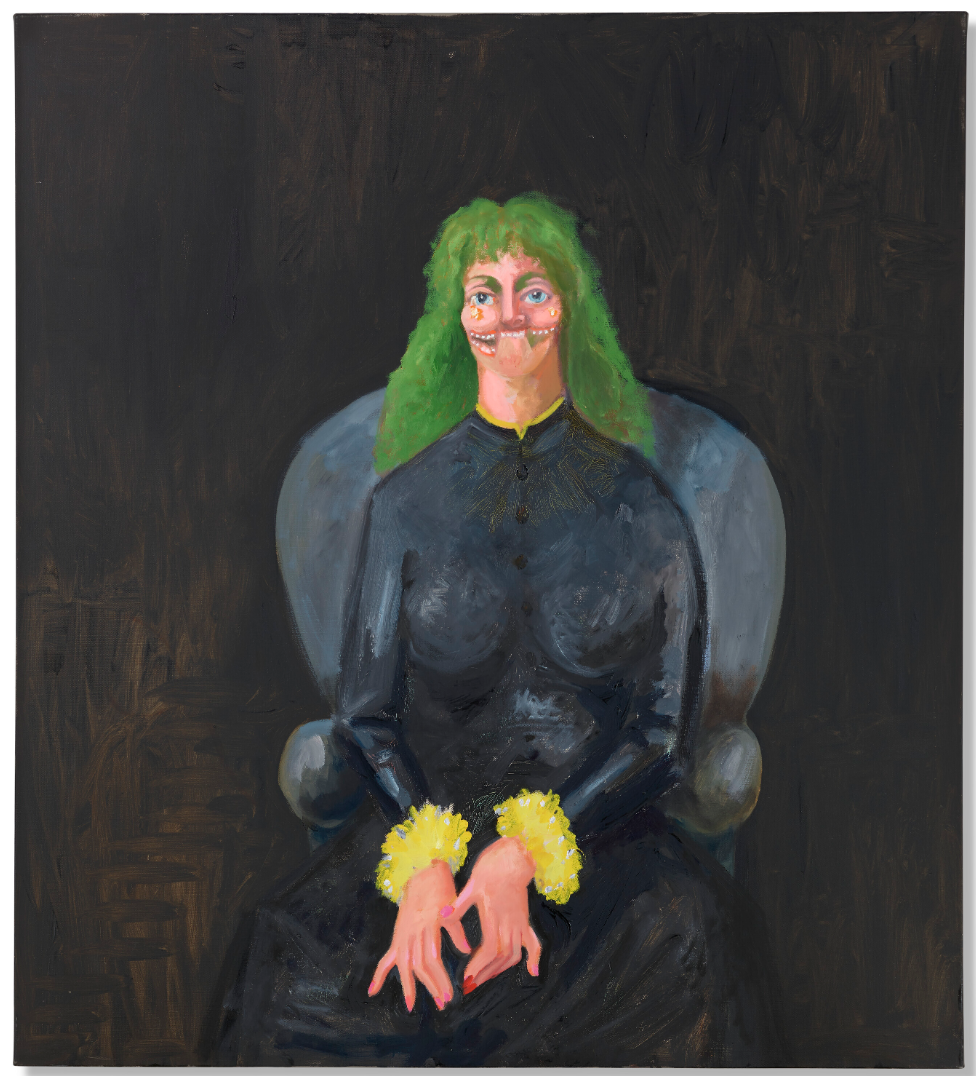
GEORGE CONDO (B. 1957)
Girl with Green Hair, 2009
Oil on canvas
40×36 inches (101.6 x 91.4 cm)
Signed and dated ‘condo 09’ (on the reverse)
#27. Mrs. Alice Tully Hall, 2000
Sotheby’s New-York: 27 September 2024
Estimated: USD 100,000 – 150,000
USD 360,000
Mrs. Alice Tully Hall | Contemporary Curated | 2024 | Sotheby’s (sothebys.com)
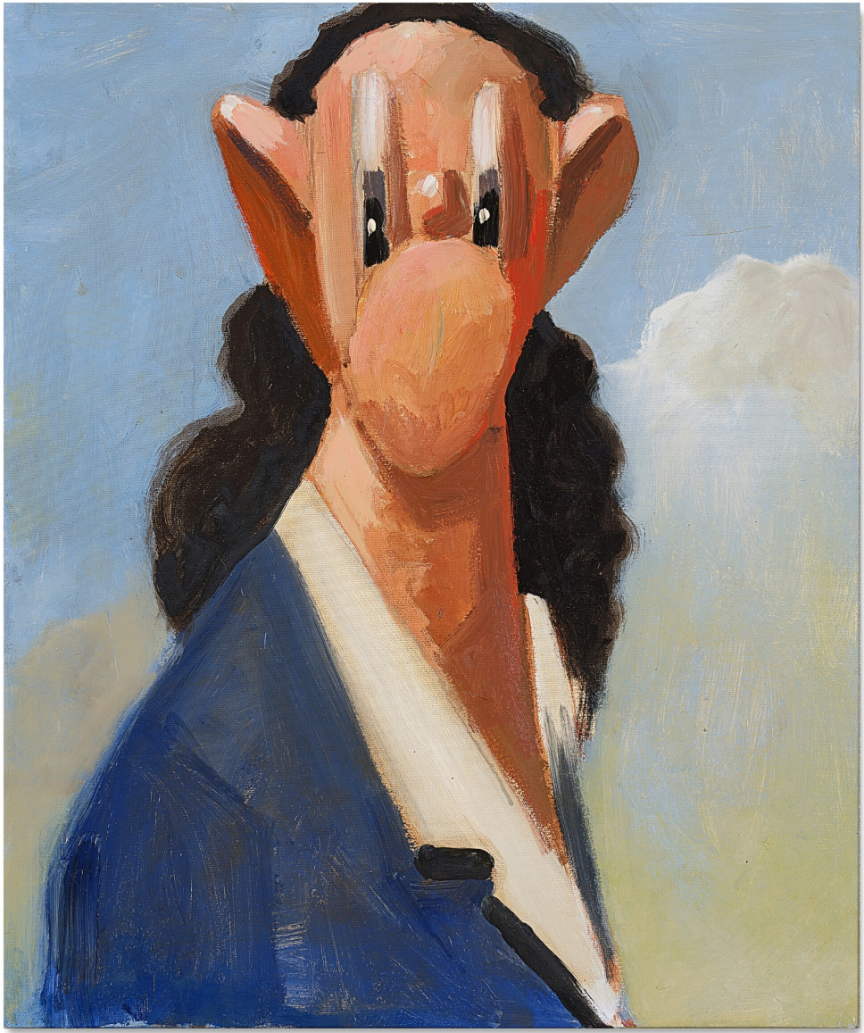
GEORGE CONDO (b. 1957)
Mrs. Alice Tully Hall, 2000
Oil on canvas
24×20 inches (61 x 50.8 cm)
Signed and dated 7/2000 (on the reverse)
#28. Antipodular Improvisation #1, 1996
Christie’s Hong-Kong: 26 September 2024
Estimated: HKD 2,000,000 – 4,000,000
HKD 2,772,000 / USD 356,321
GEORGE CONDO (B. 1957), Antipodular Improvisation #1 | Christie’s (christies.com)
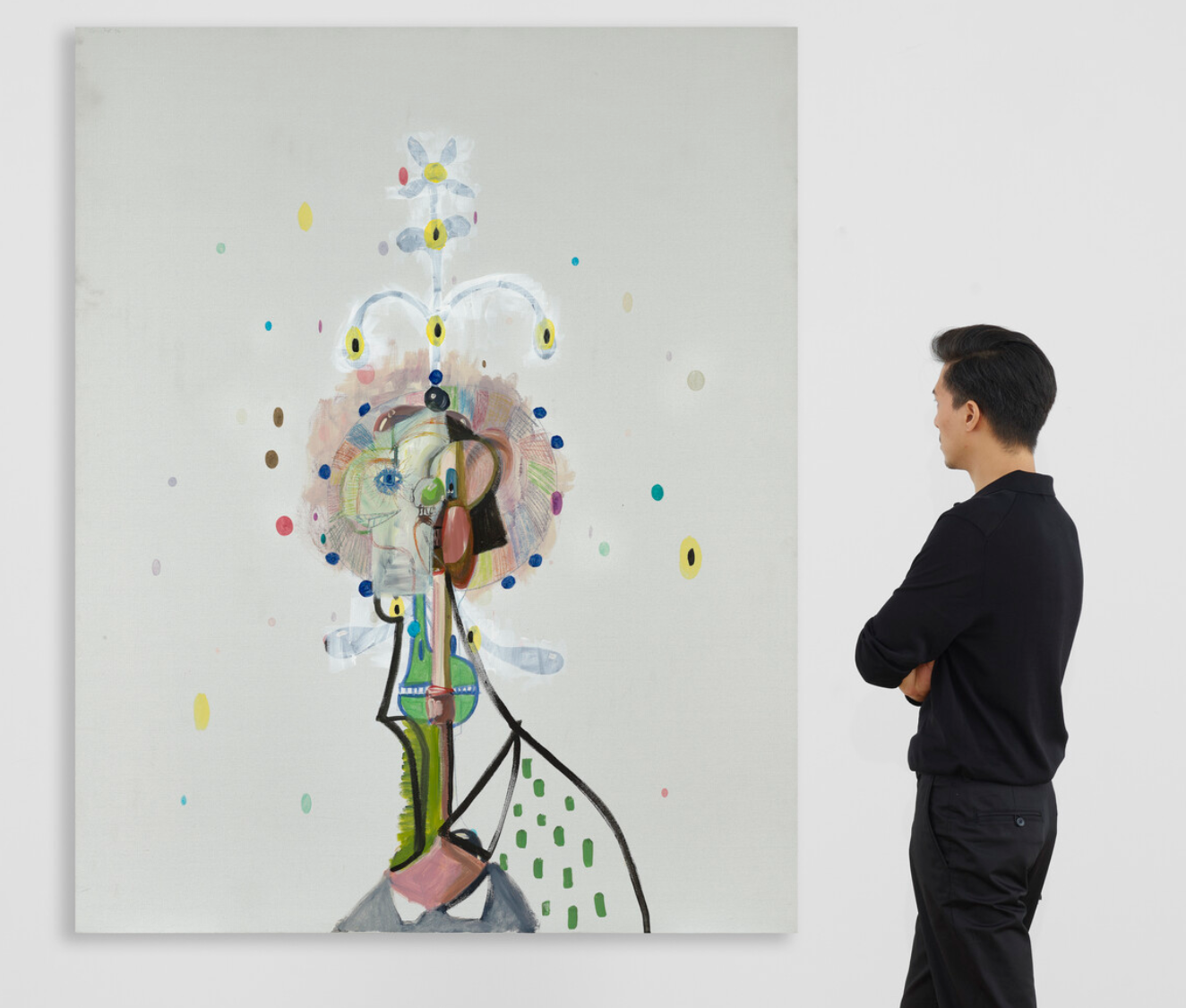
GEORGE CONDO (B. 1957)
Antipodular Improvisation #1, 1996
Oil, acrylic, marker and graphite on canvas
61 1/4 x 48 inches (153×122 cm)
Signed and dated ‘Condo 96’ (upper left)
#29. The Luitanent, 1991
Estimated: USD 120,000 – 180,000
USD 315,000
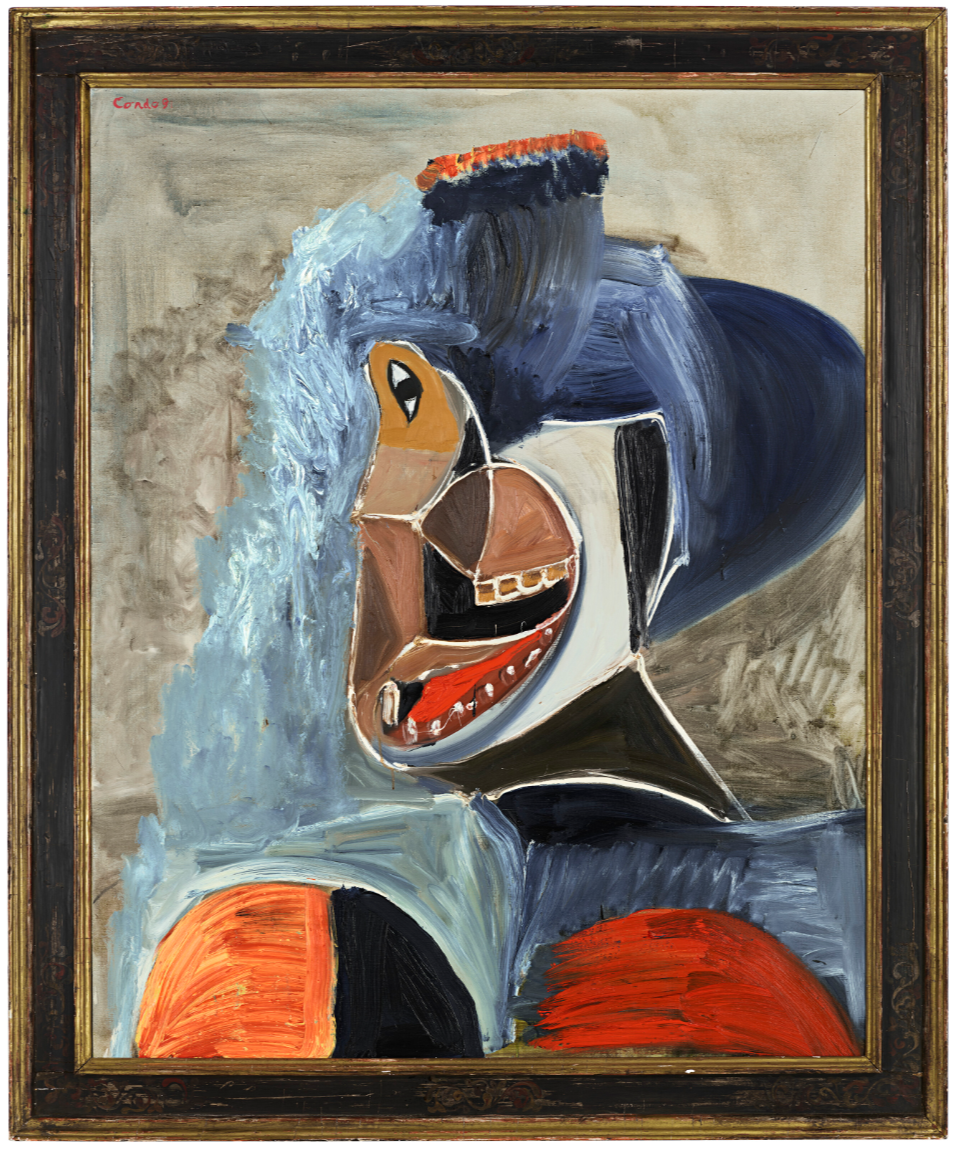
The Luitanent, 1991
Oil on canvas
50 1/4 x 40 1/4 inches (127.6 x 102.2 cm)
Signed and dated ‘Condo 91’ (upper left)
Signed again and titled ‘Condo The Luitanent’ (on the reverse)
#30. The Hamptonites, 2004
Christie’s New-York: 22 November 2024
Estimated: USD 400,000 – 600,000
USD 315,000
GEORGE CONDO (B. 1957), The Hamptonites | Christie’s
REPEAT SALE
Christie’s Hong-Kong: 25 May 2019
Estimated: HKD 4,000,000 – 5,000,000
HKD 6,125,000 / USD 780,350
GEORGE CONDO (USA, B. 1957), The Hamptonites | Christie’s
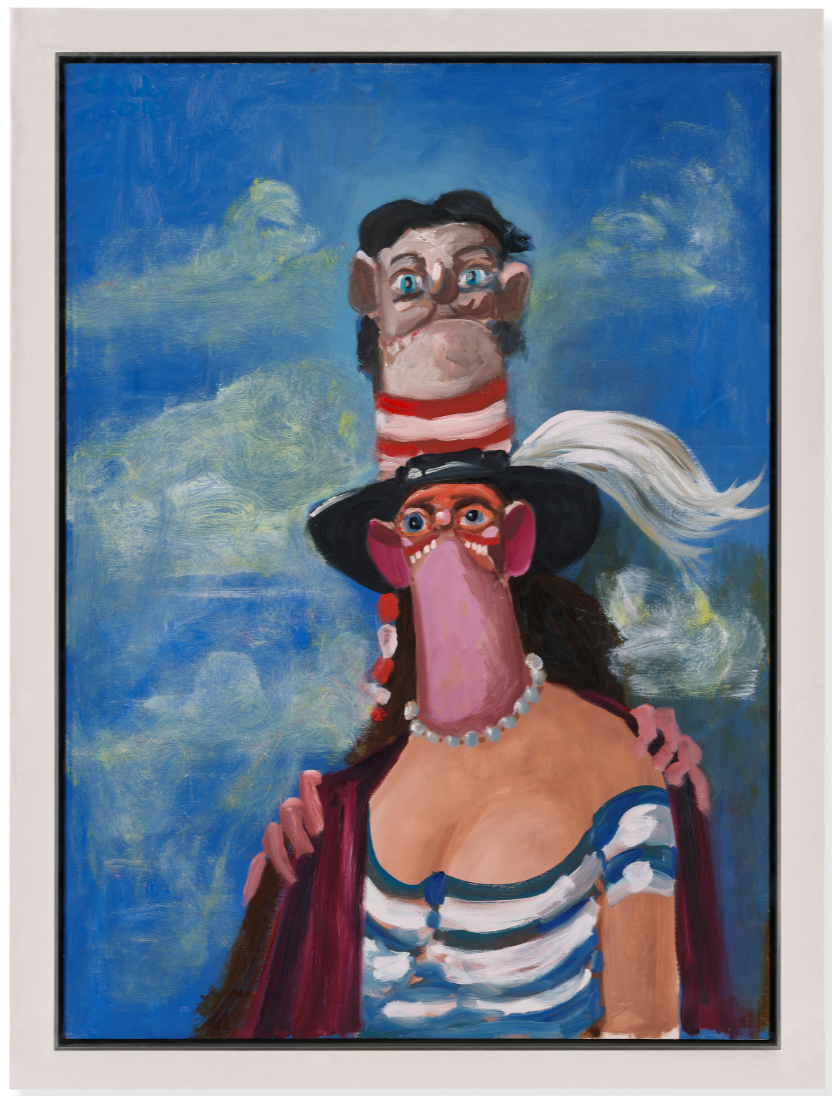
GEORGE CONDO (B. 1957)
The Hamptonites, 2004
Oil on canvas
39 7/8 x 28 7/8 inches (101.4 x 73.4 cm)
Signed and dated ‘Condo 04’ (upper left)
Signed again, titled and dated again ‘Condo 04 THE HAMPTONITES’ (on the reverse)
#31. The Maitre D, 2007
Christie’s New-York: 17 May 2024
Estimated: USD 200,000 – 300,000
USD 252,000
GEORGE CONDO (B. 1957), The Maitre D | Christie’s (christies.com)

GEORGE CONDO (B. 1957)
The Maitre D, 2007
Oil on canvas
24×18 inches (61 x 45.7 cm)
Signed and dated ‘Condo 07’ (on the reverse)
#32. Blue Diamonds, 2004
K Auction Seoul: 23 October 2024
Estimated: KRW 290,000,000 – 600,000,000
KRW 333,500,000 / USD 240,790
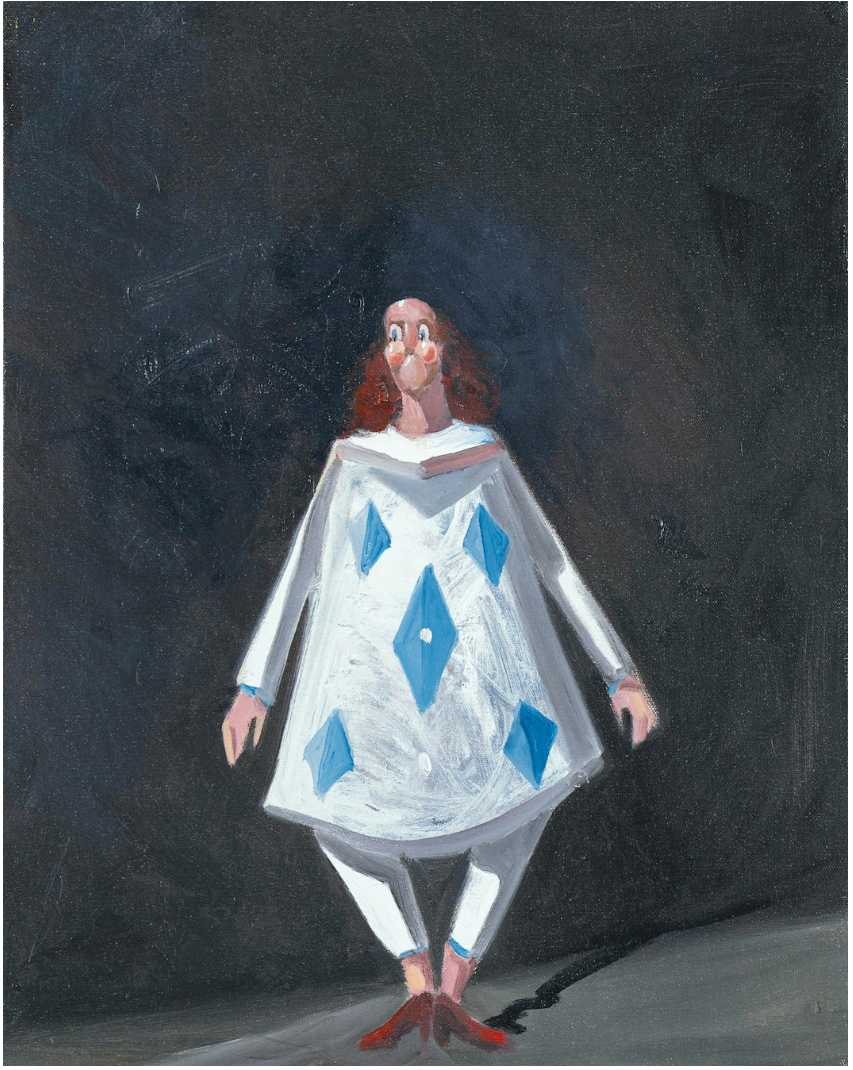
Oil on canvas
20×16 inches (50.8 x 40.6 cm)
Signed and dated on the reverse
#33. Dark Pearls, 1999
Sotheby’s London: 26 June 2024
Estimated: GBP 70,000 – 90,000
GBP 120,000 / USD 152,160
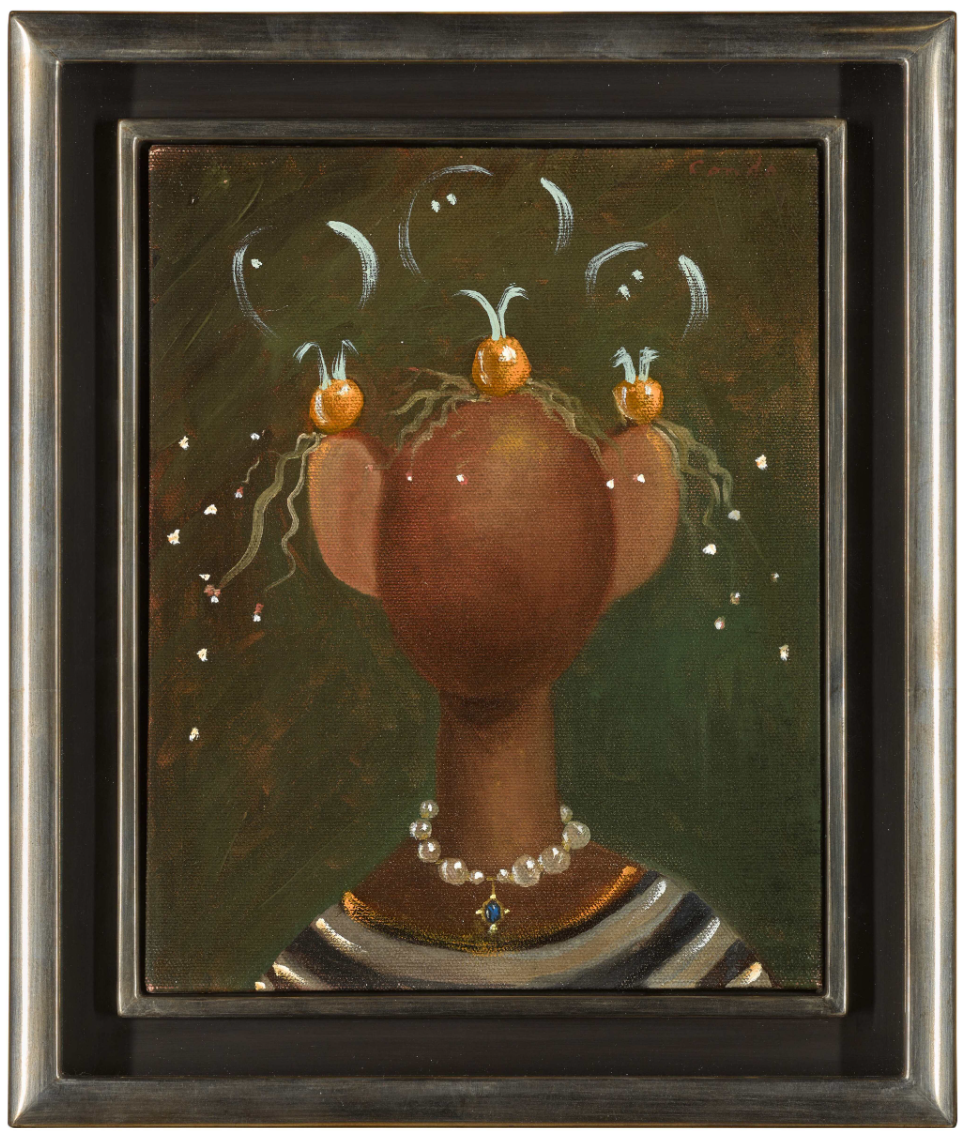
GEORGE CONDO (b. 1957)
Dark Pearls, 1999
Oil on canvas
10×8 inches (25.4 x 20.1 cm)
Signed (upper right); signed and variously inscribed (on the reverse)
#34. The Accountant, 1994
Christie’s London: 27 June 2024
Estimated: GBP 80,000 – 120,000
GBP 107,100 / USD 135,803
https://www.christies.com/en/lot/lot-6492309
REPEAT SALE
Christie’s Hong-Kong: 27 May 2022
Estimated: HKD 1,000,000 – 2,000,000
HKD 1,638,000 / USD 208,675
GEORGE CONDO (B. 1957), The accountant | Christie’s
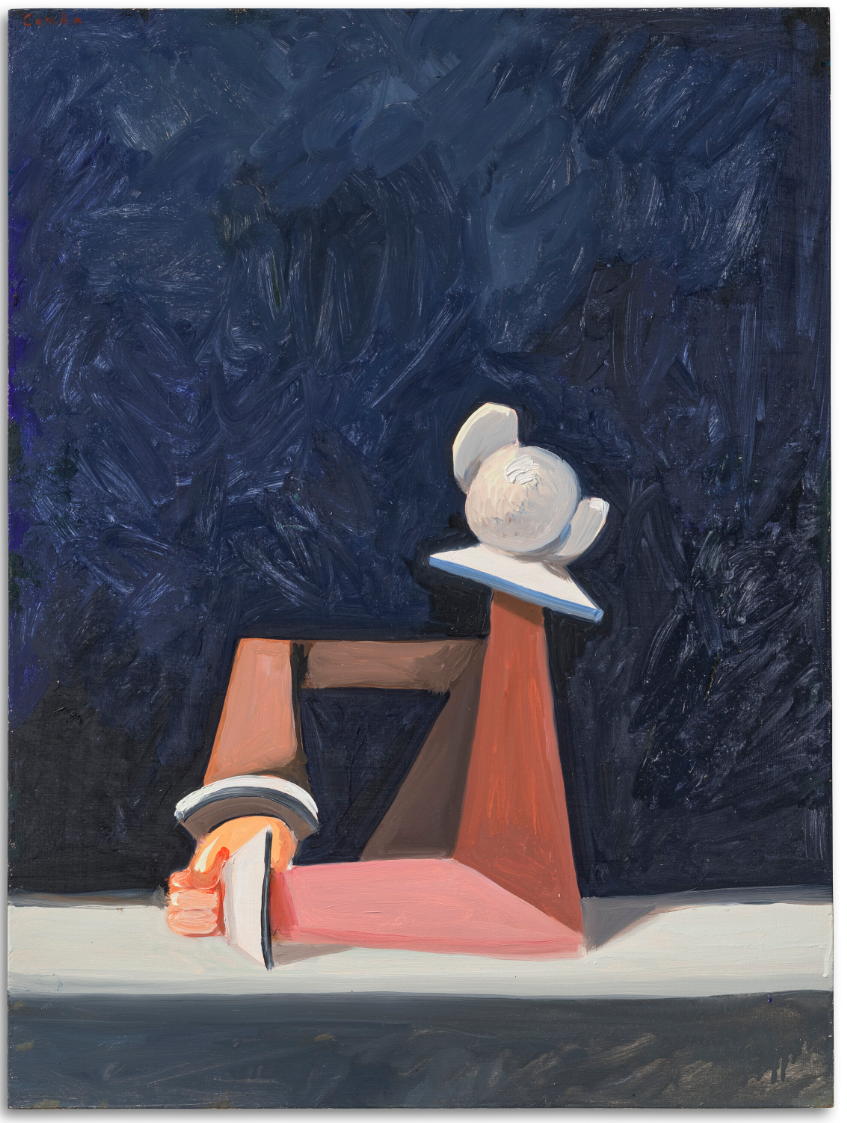
GEORGE CONDO (B. 1957)
The Accountant, 1994
Oil on masonite
24 1/8 x 18 inches (61 x 45.7 cm)
Signed ‘Condo’ (upper left)
Signed, titled twice and dated ‘Condo 94 The account The Accountant’ (on the reverse)
#35. Untitled, 1999
Sotheby’s London: 2 August 2024
Estimated: GBP 40,000 – 60,000
GBP 90,000 / USD 114,505
Untitled | Contemporary Discoveries | 2024 | Sotheby’s
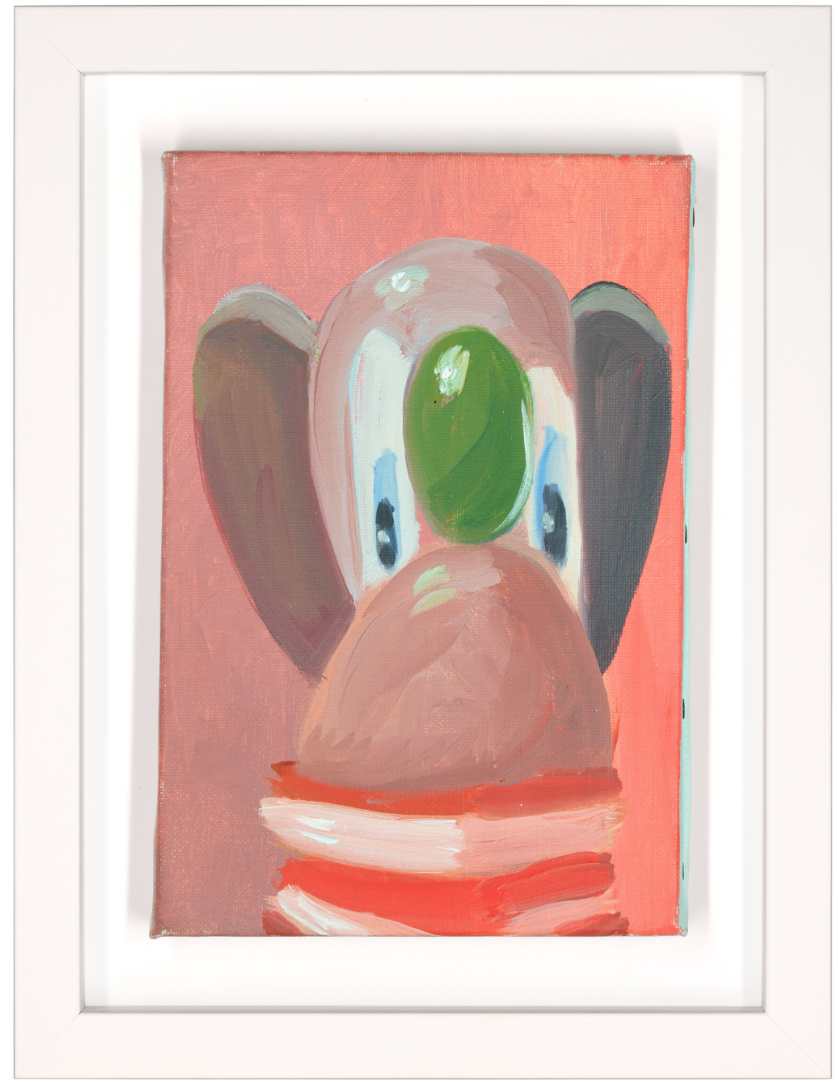
GEORGE CONDO (b. 1957)
Untitled, 1999
Oil on canvas
9 3/8 x 6 1/4 inches (23.8 x 16 cm)
Dedicated For Christian Souvenir of N.Y.C. Feb 13, 02 (on the stretcher)
Signed and dated 99 (on the reverse)
#36. Memories of Hawkins, 1985
Christie’s New-York: 13 March 2024
Estimated: USD 30,000 – 50,000
USD 113,400
GEORGE CONDO (B. 1957), Memories of Hawkins | Christie’s (christies.com)
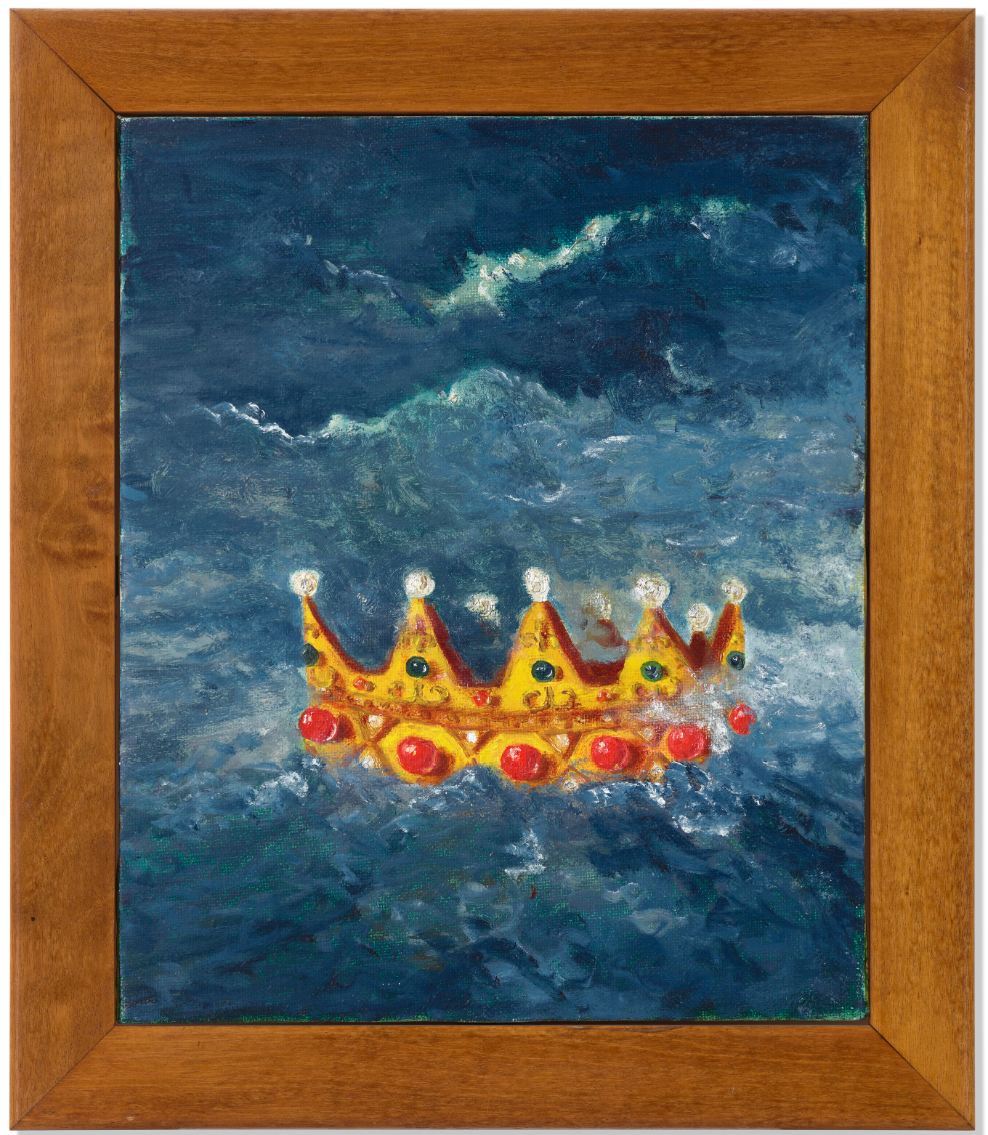
GEORGE CONDO (B. 1957)
Memories of Hawkins, 1985
Oil on linen, in artist’s chosen frame
22 3/8 x 19 1/4 inches (56.8 x 48.9 cm)
Signed, titled and dated ‘Condo 85 Memories of Hawkins’ (on the reverse)
USD 100,000
#37. Untitled (Clown), 1996
Sotheby’s New-York: 1 March 2024
Estimated: USD 60,000 – 80,000
USD 95,250
Untitled (Clown) | Contemporary Curated | 2024 | Sotheby’s (sothebys.com)
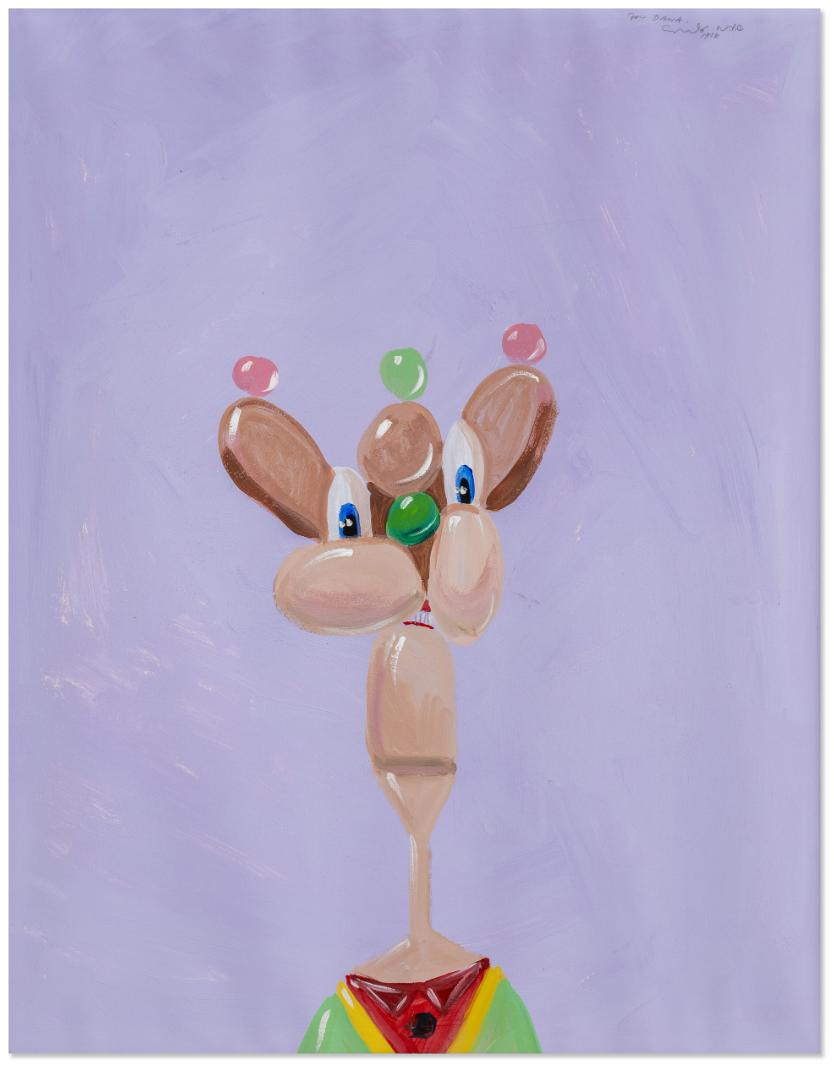
GEORGE CONDO (b. 1957)
Untitled (Clown), 1996
Acrylic on paper laid down on foam board
29×23 inches (73.7 x 58.4 cm)
Signed, dated 1996 and dedicated For Dana Condo (upper right)
#38. Monkey Boy, 1985
Christie’s New-York: 13 March 2024
Estimated: USD 50,000 – 70,000
USD 94,500
https://www.christies.com/en/lot/lot-6471989
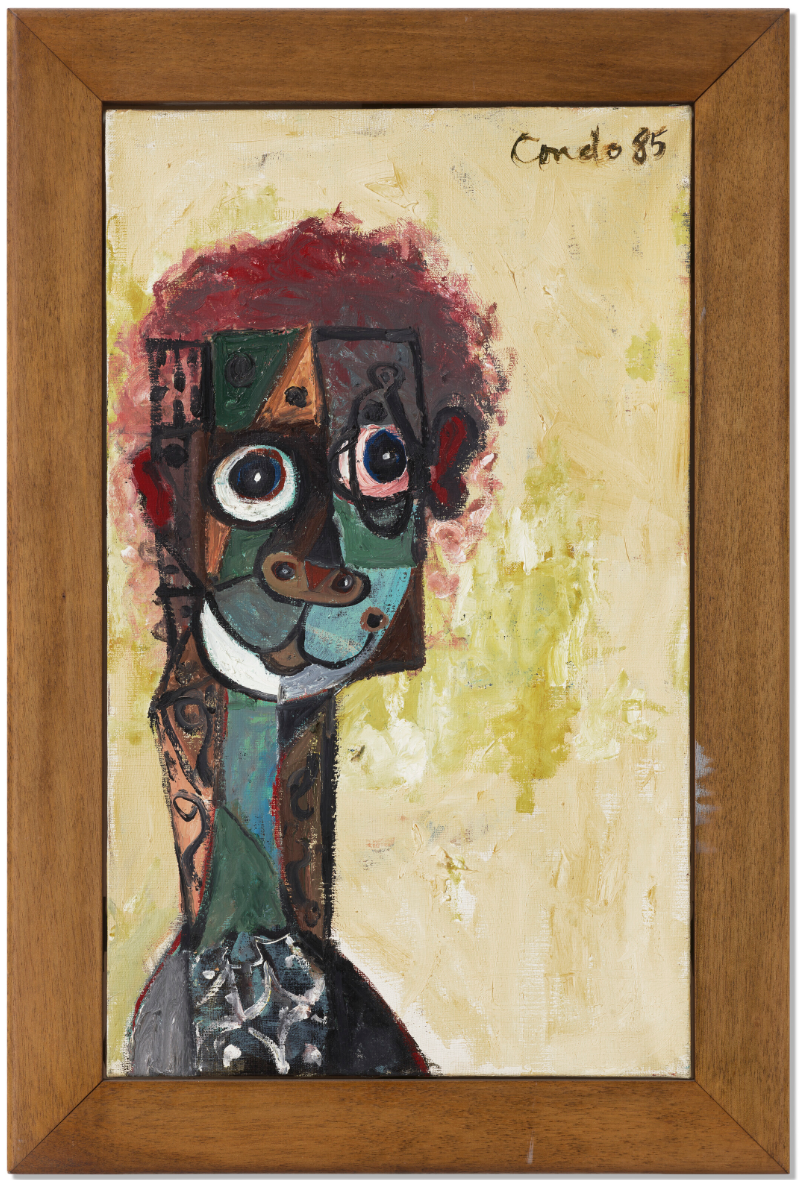
GEORGE CONDO (B. 1957)
Monkey Boy, 1985
Oil on linen, in artist’s chosen frame
25 7/8 x 17 3/8 inches (65.7 x 44.1 cm)
Signed and dated ‘Condo 85’ (upper right)
#39. Separated by Death, 1987
Sotheby’s New-York: 1 March 2024
Estimated: USD 100,000 – 150,000
USD 88,900
Separated by Death | Contemporary Curated | 2024 | Sotheby’s (sothebys.com)
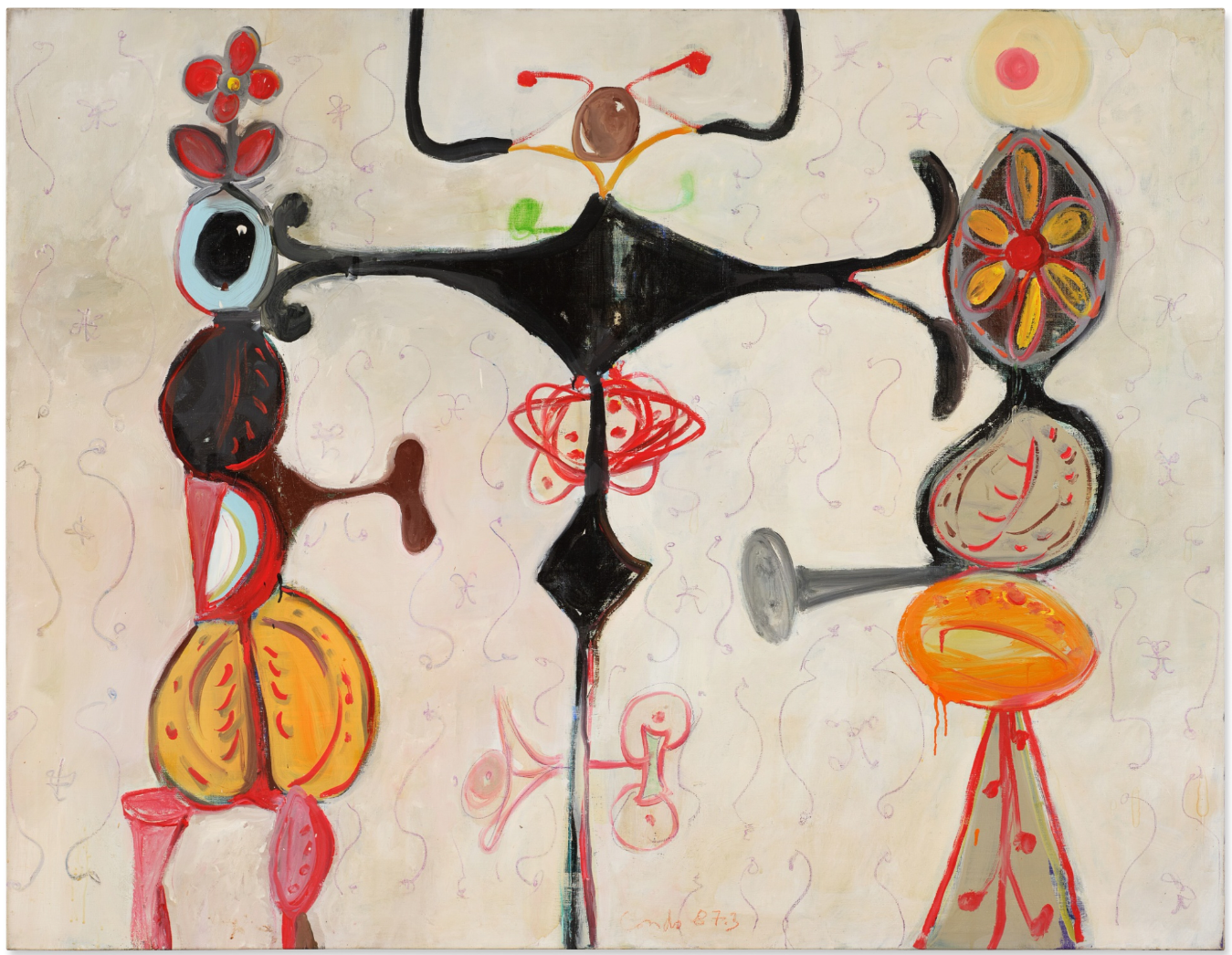
GEORGE CONDO (b. 1957)
Separated by Death, 1987
Oil on canvas
55 x 70 3/4 inches (139.7 x 179.7 cm)
Signed and dated 87.3 (lower center)
#40. Grey Figures, 2001
Sotheby’s New-York: 27 September 2024
Estimated: USD 60,000 – 80,000
USD 72,000
Grey Figures | Contemporary Curated | 2024 | Sotheby’s
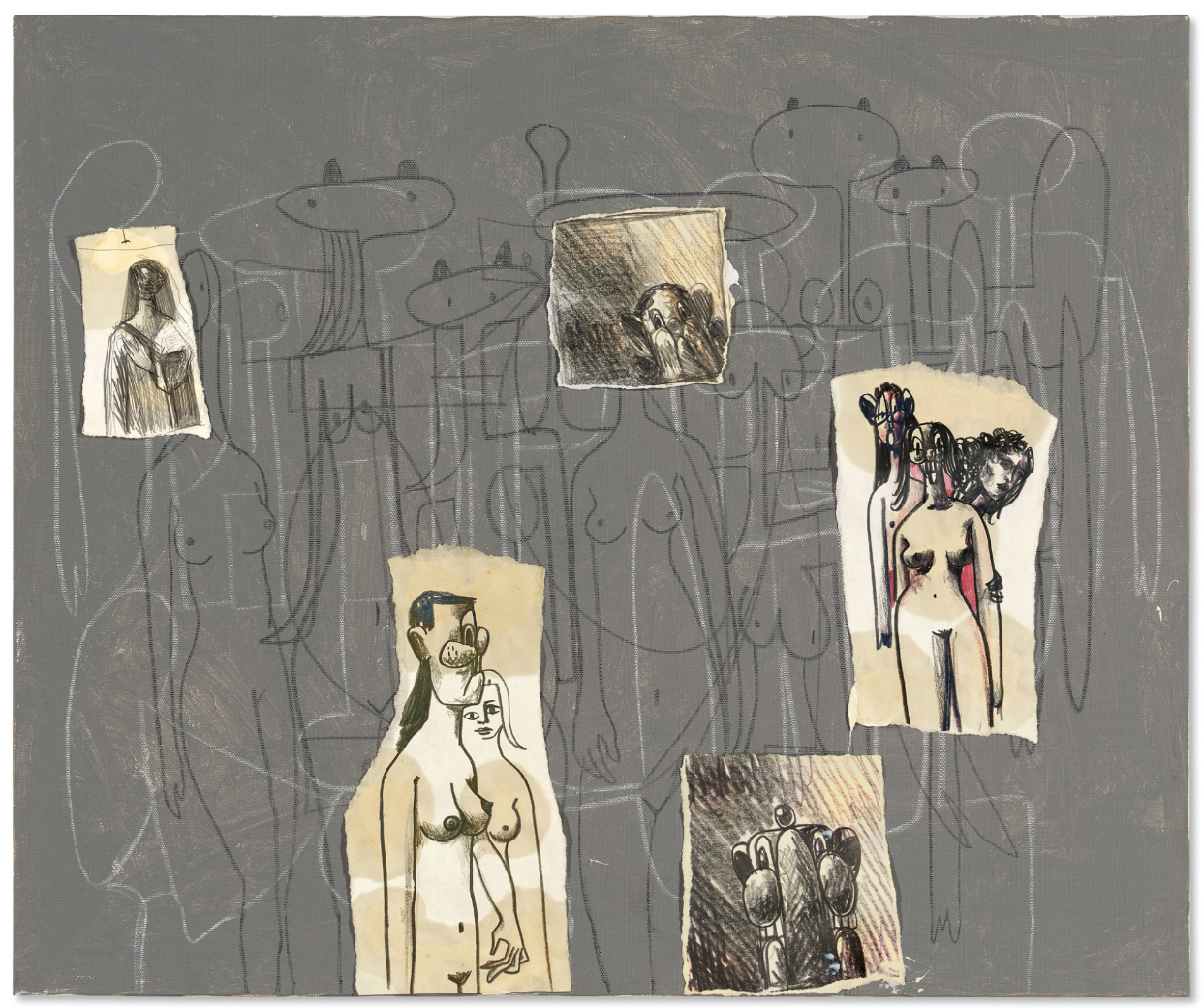
GEORGE CONDO (b. 1957)
Grey Figures, 2001
oil, acrylic and collage on canvas
19 3/4 x 23 7/8 inches (50.2 x 60.6 cm)
Signed, titled and dated 2001 (on the reverse)
#41. Paper Face, 1985
Christie’s New-York: 13 March 2024
Estimated: USD 15,000 – 20,000
USD 50,400
https://www.christies.com/en/lot/lot-6471990
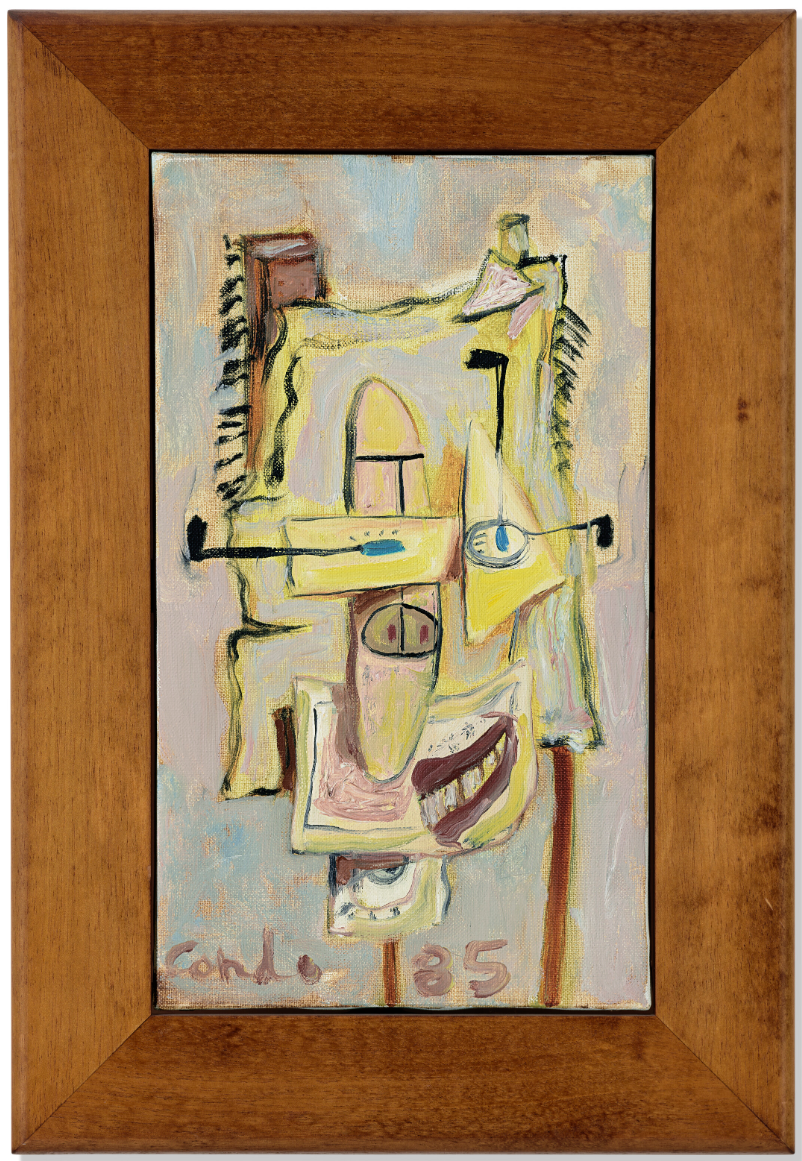
GEORGE CONDO (B. 1957)
Paper Face, 1985
Oil on linen, in artist’s chosen frame
17 1/4 x 11 7/8 inches (43.8 x 30.2 cm)
Signed and dated ‘Condo 85’ (lower left)
#42. So What, 1985
Sotheby’s New-York: 4 March 2024
Estimated: USD 20,000 – 30,000
USD 30,480
So What | Contemporary Discoveries | 2024 | Sotheby’s (sothebys.com)
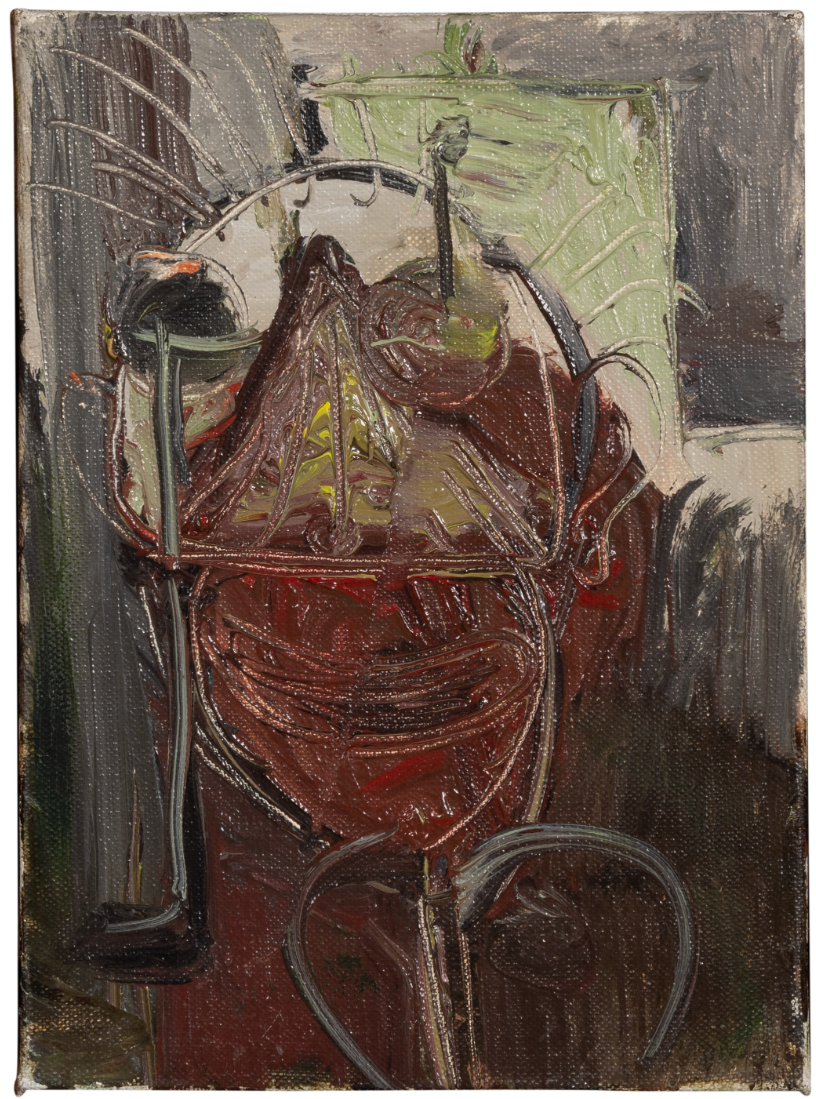
GEORGE CONDO (b. 1957)
So What, 1985
Oil on canvas
8 3/4 x 6 1/4 inches (22×16 cm)
Signed, titled and dated 85 (on the reverse)
#43. Trouble is Coming, 1985
Christie’s New-York: 13 March 2024
Estimated: USD 20,000 – 30,000
USD 27,720
https://www.christies.com/en/lot/lot-6471991
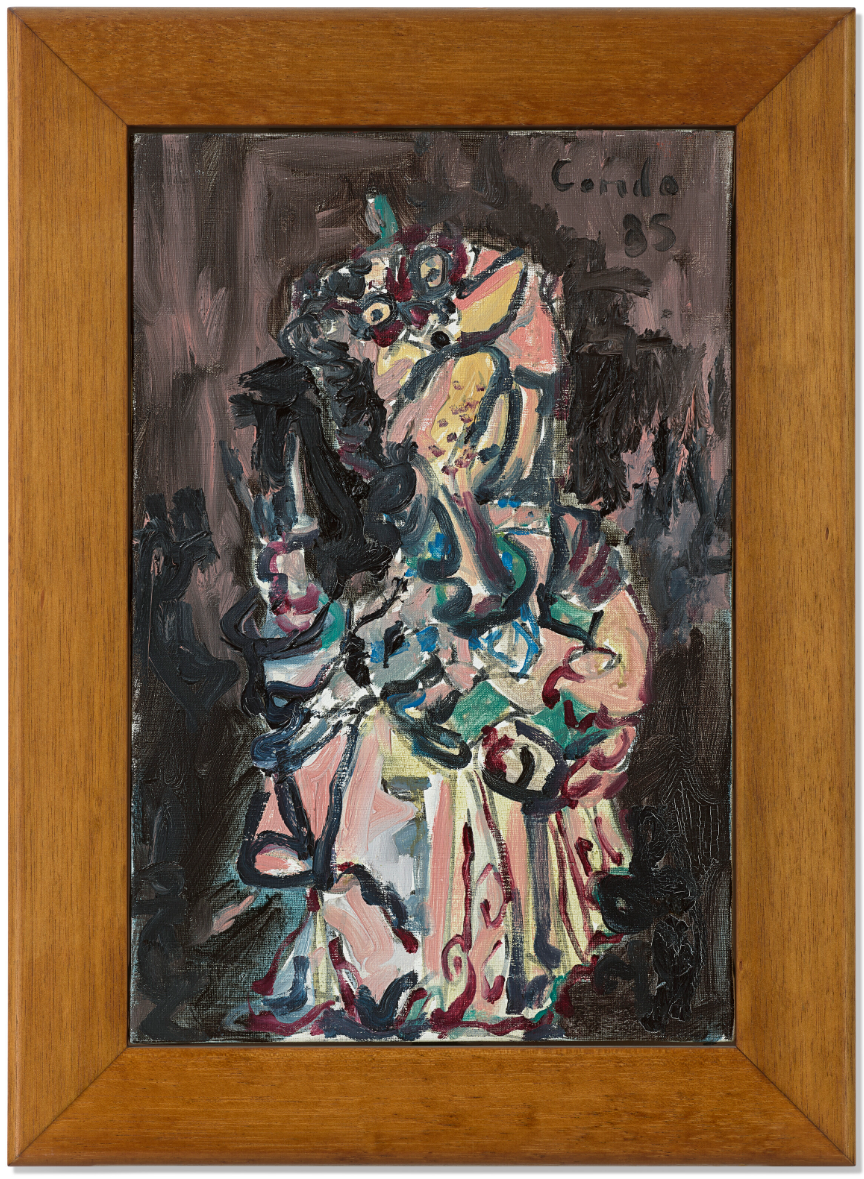
GEORGE CONDO (B. 1957)
Trouble is Coming, 1985
Oil on linen, in artist’s chosen frame
20 1/2 x 15 inches (52.1 x 38.1 cm)
Signed and dated ‘Condo 85’ (upper right)
The dreamer, 1985
Christie’s New-York: 13 March 2024
Estimated: USD 15,000 – 20,000
USD 27,720
https://www.christies.com/en/lot/lot-6471992
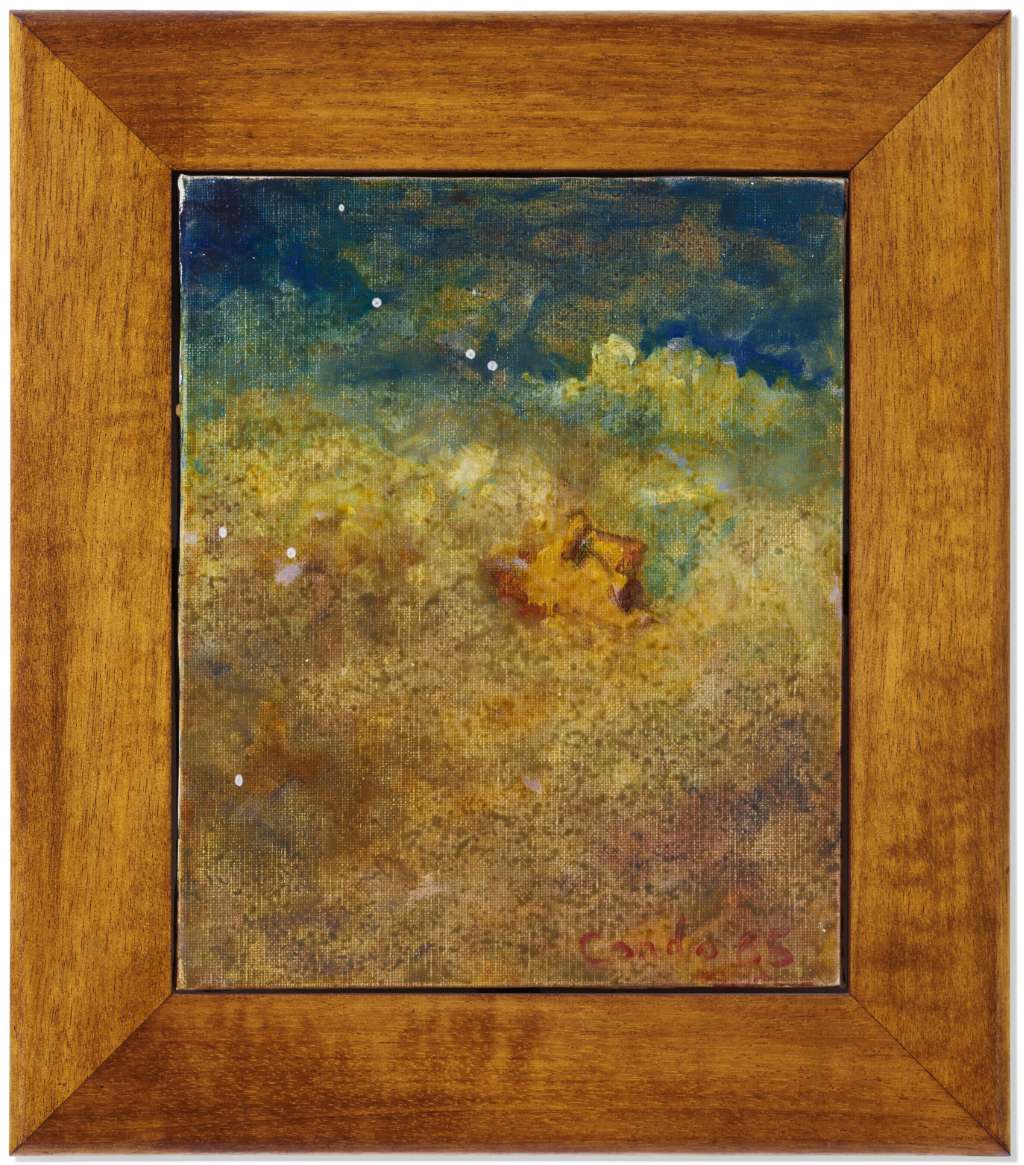
GEORGE CONDO (B. 1957)
The dreamer, 1985
Oil on linen, in artist’s chosen frame
14 7/8 x 13 inches (37.8 x 33 cm)
Signed and dated ‘Condo 85’ (lower right)
Signed again, titled and dated again ‘Condo 85 The dreamer’ (on the reverse)
The Scream, 1985
Phillips New-York: 12 March 2024
Estimated: USD 20,000 – 30,000
USD 19,050
https://www.phillips.com/detail/george-condo/NY010124/164
GEORGE CONDO
The Scream, 1985
Oil on canvas
10 5/8 x 8 5/8 inches (27 x 21.9 cm)
Signed, titled and dated “Condo 85 The Scream” on the reverse
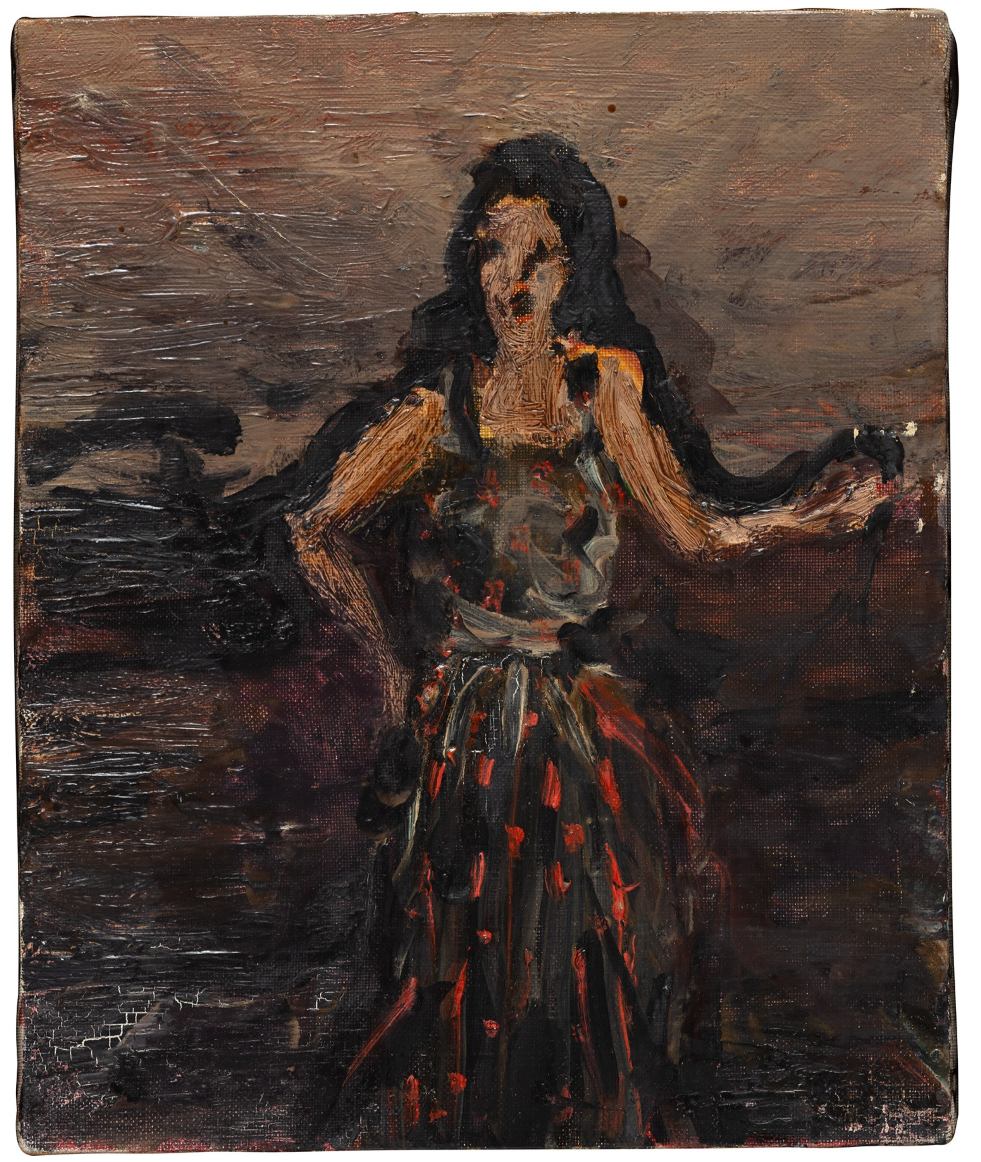
Fräuen, 1985
Christie’s Hong-Kong: 2 April 2024
Estimated: HKD 120,000 – 220,000
HKD 119,700 / USD 15,303
https://onlineonly.christies.com/s/20th-21st-century-art-online/george-condo-b-1957-29/217935
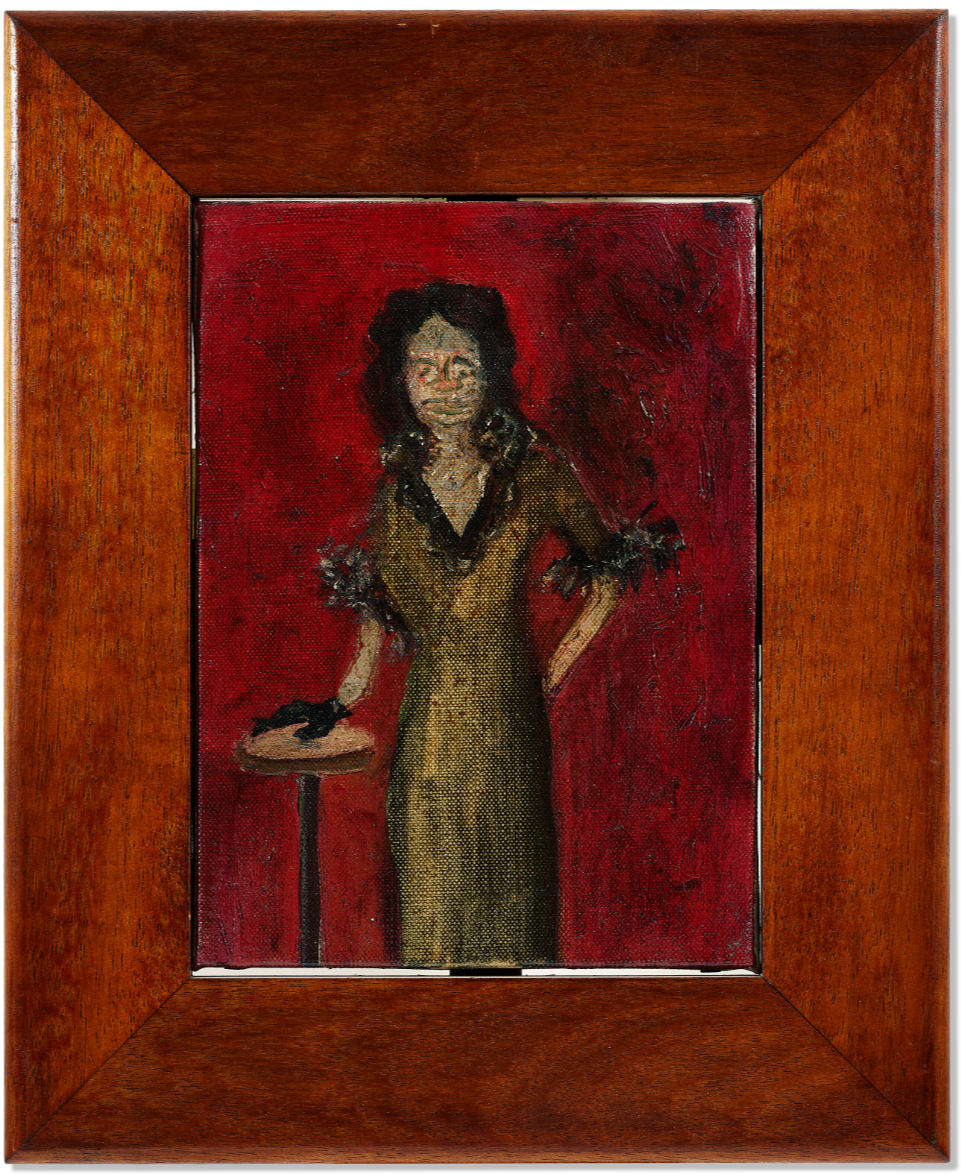
GEORGE CONDO (B. 1957)
Fräuen, 1985
Oil on canvas
8 3/4 x 6 1/4 inches (22×16 cm)
Signed, titled and dated ‘Condo 85 “Fräuen”‘ (on the reverse)
Lots Passed
Untitled, 2010
Sotheby’s New-York: 27 September 2024
Estimated: USD 100,000 – 150,000
PASSED
Untitled | Contemporary Curated | 2024 | Sotheby’s (sothebys.com)
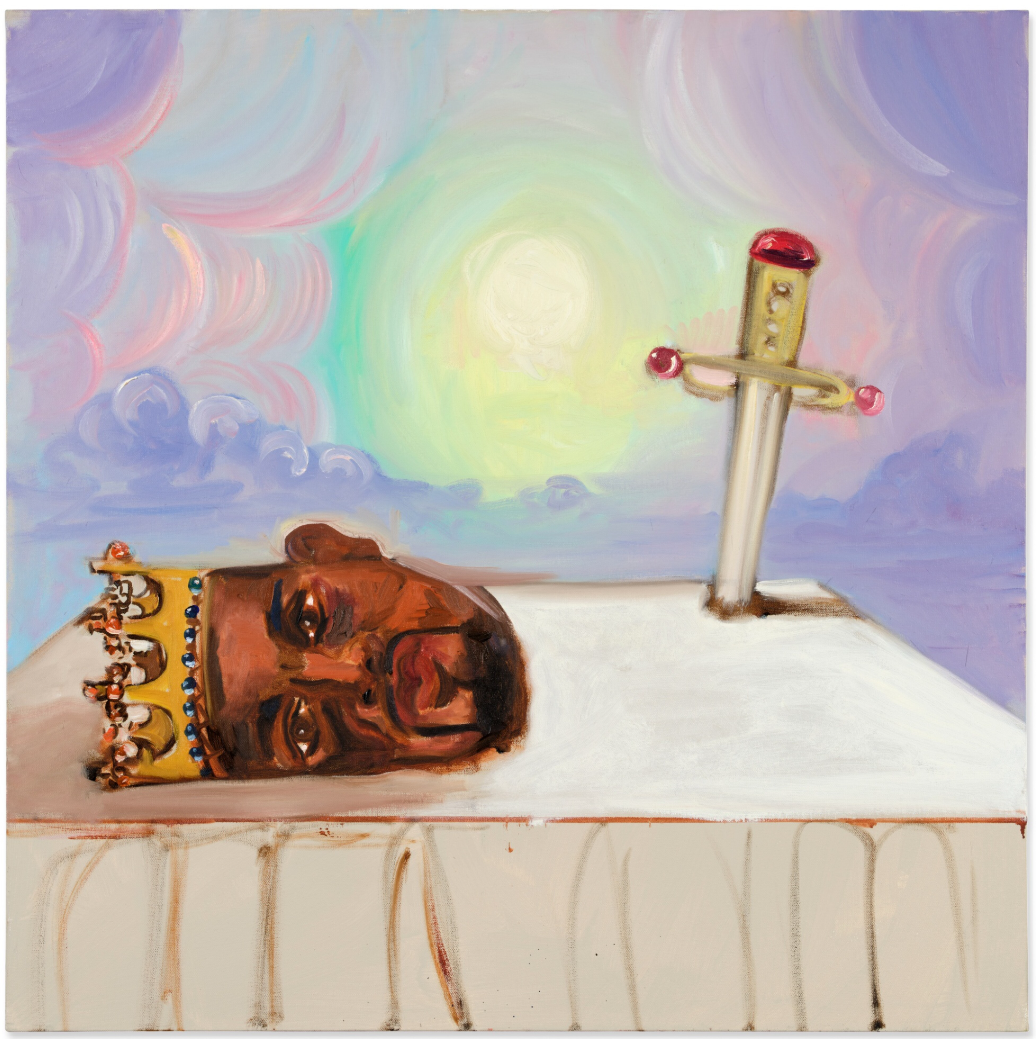
GEORGE CONDO (b. 1957)
Untitled, 2010
Oil on canvas
36×36 inches (91.4 x 91.4 cm)
2023 Auction Results
FOR PAINTINGS ONLY
52 lots sold at auction in 2023 for a total turnover of USD 41,894,184. With 17 lots failing to sell, the sell-through rate is 75%. The top price of 2023 was achieved at Sotheby’s in London on 12 October 2023, where Multicolored Female Composition, a painting dated 2016 sold for GBP 2,993,000 (USD 3,654,903).
2023 Top 6 Lots
17 lots sold over USD 1 million for a cumulative turnover of USD 34,730,320, representing 82.9% of the total turnover for 2023. 27 lots sold in New-York for a cumulative turnover of USD 20,588,565, representing 50.3% of the total turnover. 16 lots sold in London for a cumulative turnover of USD 13,105,807 (32% of total)
#1. Multicolored Female Composition, 2016
Sotheby’s London: 12 October 2023
Estimated: GBP 2,000,000 – 3,000,000
GBP 2,993,000 / USD 3,654,903
Multicolored Female Composition | The Now Evening Auction | 2023 | Sotheby’s (sothebys.com)
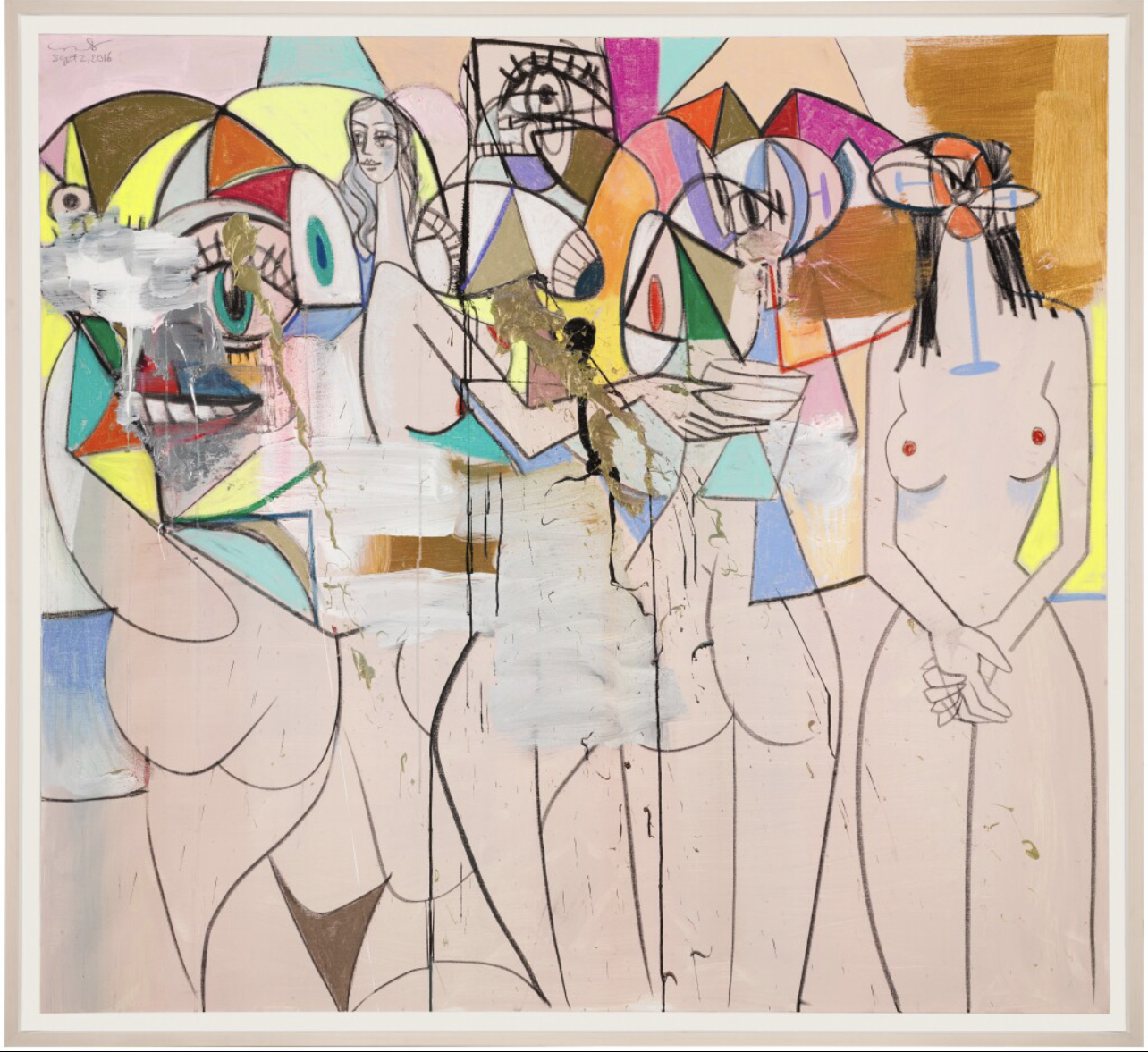
GEORGE CONDO (b. 1957)
Multicolored Female Composition, 2016
Acrylic, metallic paint, charcoal and pastel on linen, in artist’s frame
68 1/8 x 74 1/4 inches (173.1 x 188.6 cm)
signed and dated Sept 2, 2016 (upper left)
#2. Monumental Abstract Self-Portrait, 2018
Christie’s New-York: 7 November 2023
Estimated: USD 3,500,000 – 4,500,000
USD 3,438,000
GEORGE CONDO (B. 1957) (christies.com)
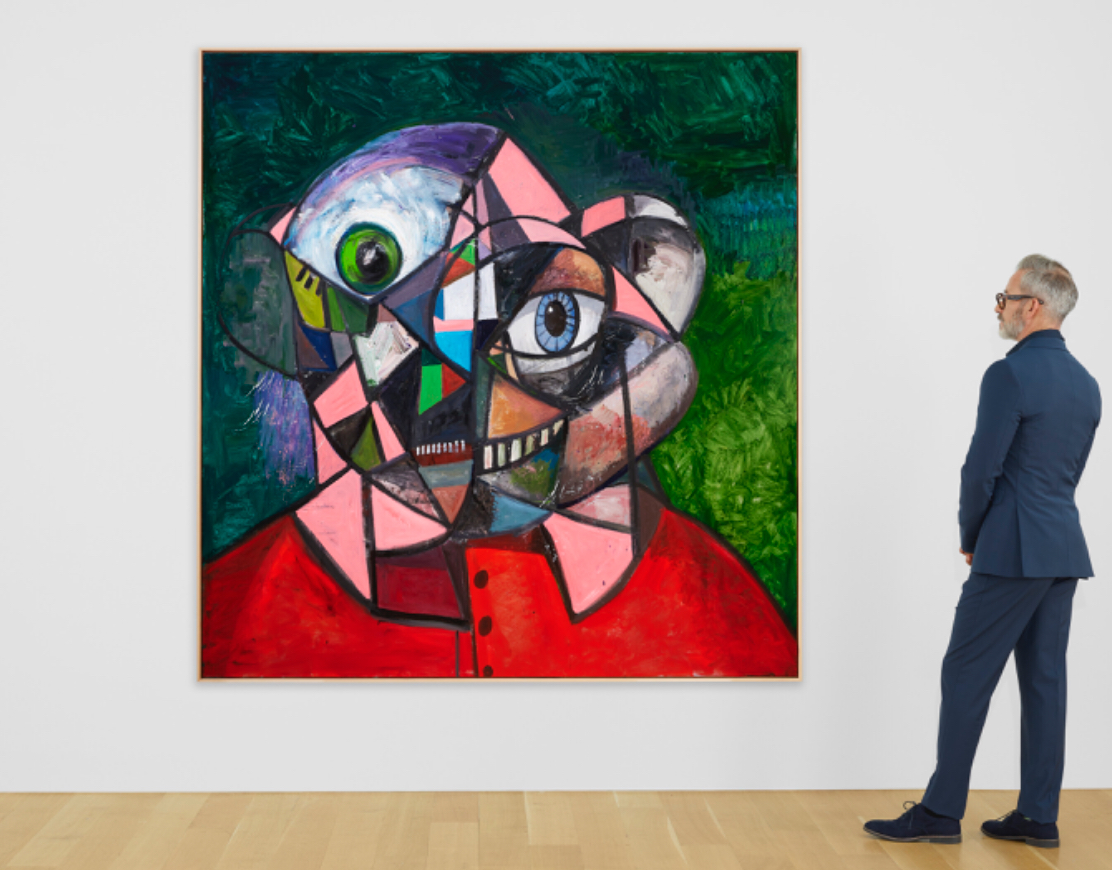
GEORGE CONDO (B. 1957)
Monumental Abstract Self-Portrait, 2018
Oil on canvas
84×80 inches (213.4 x 203.2 cm)
#3. Blue Monumental Head, 2018
Sotheby’s New-York: 18 May 2023
Estimated: USD 1,500,000 – 2,000,000
USD 3,085,000
Blue Monumental Head | The Now Evening Auction | 2023 | Sotheby’s (sothebys.com)
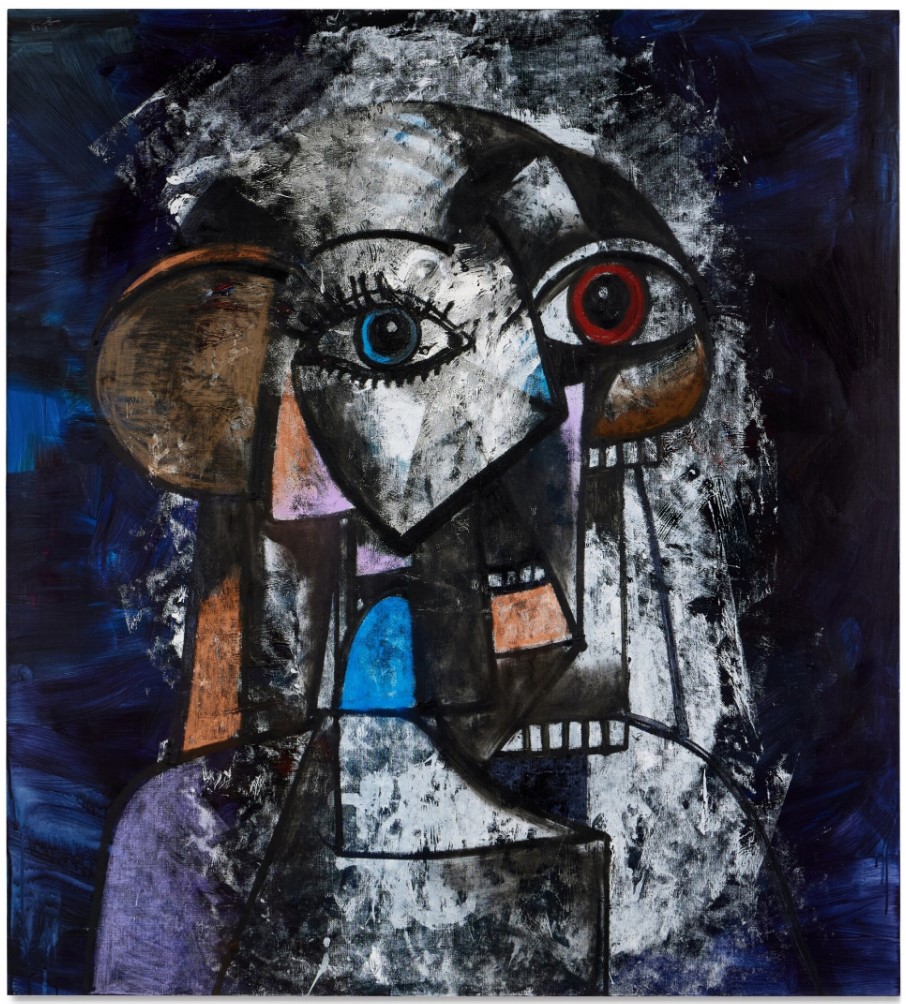
GEORGE CONDO (b. 1957)
Blue Monumental Head, 2018
Acrylic, charcoal and pastel on linen
72×65 inches (182.9 x 165.1 cm)
Signed and dated 2018 (upper left)
#4. Inside the West Wing, 2017
Sotheby’s Hong-Kong: 5 April 2023
Estimated: HKD 14,000,000 – 25,000,000
HKD 22,230,000 / USD 2,831,883
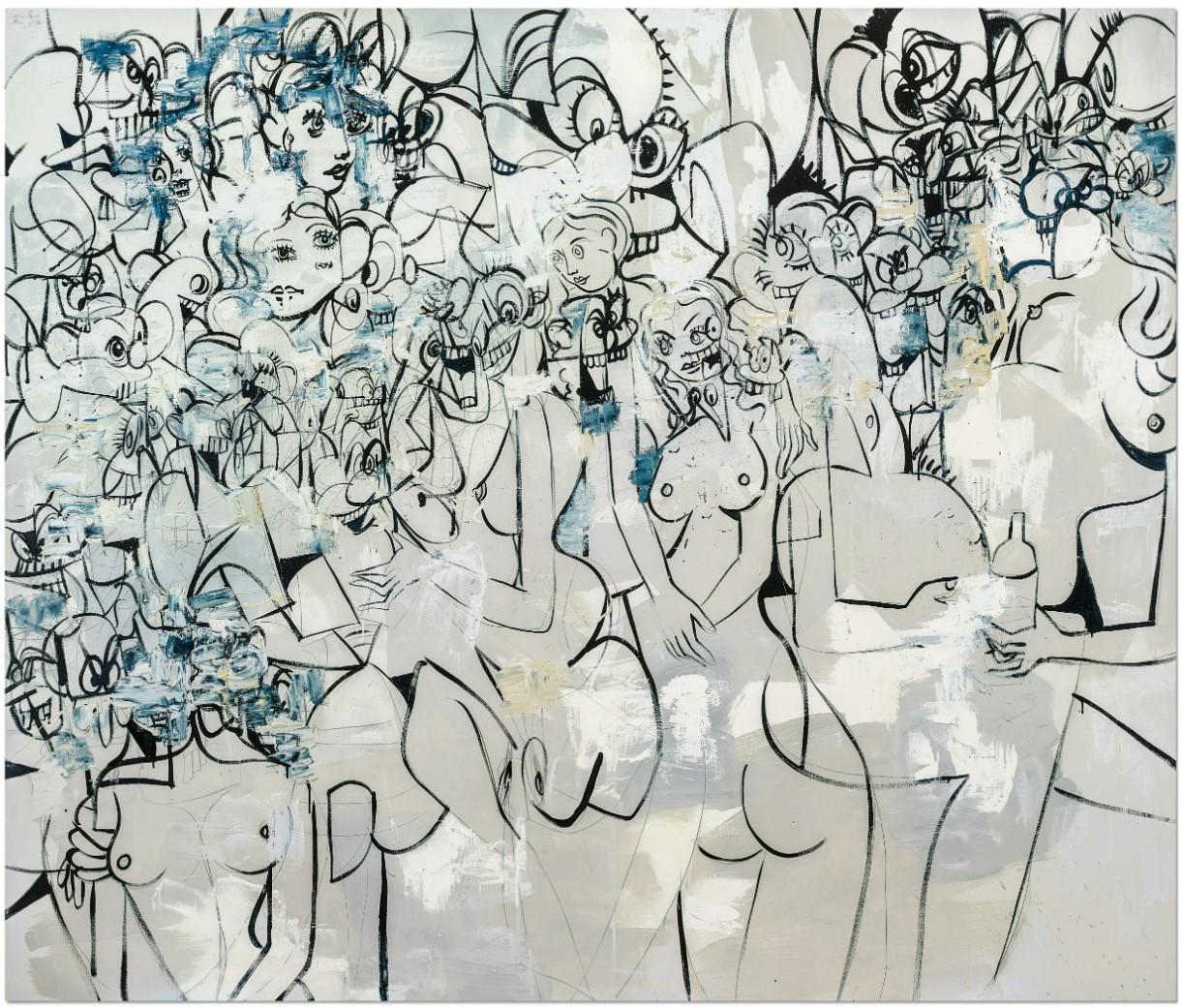
GEORGE CONDO (b. 1957)
Inside the West Wing, 2017
Oil and graphite on linen
78×92 inches (198.1 x 233.7 cm)
Signed and dated 2017
#5. Portrait Composition in Blue and Grey, 2012
Christie’s New-York: 11 May 2023
Estimated: USD 1,000,000 – 1,500,000
USD 2,712,000
GEORGE CONDO (B. 1957) (christies.com)
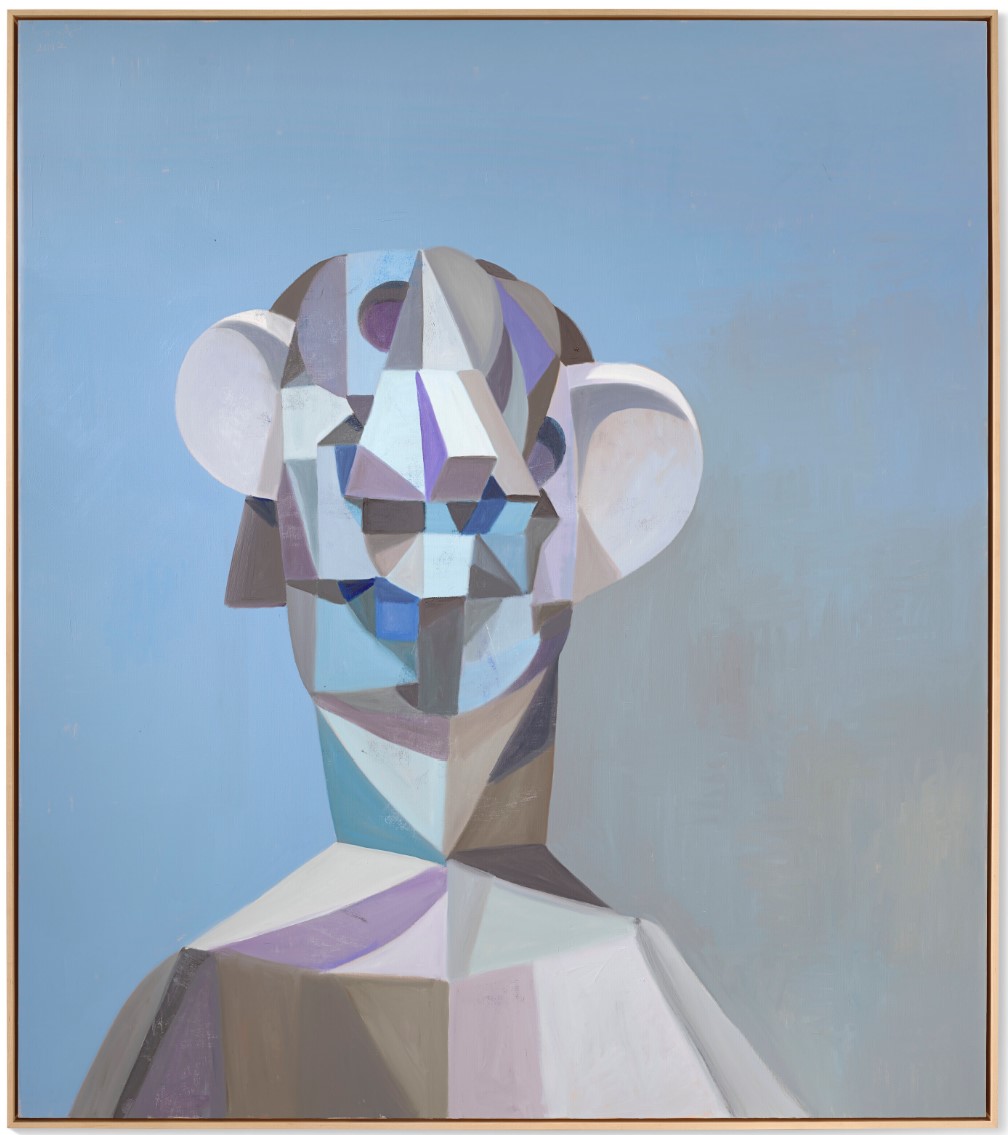
GEORGE CONDO (B. 1957)
Portrait Composition in Blue and Grey, 2012
Oil on canvas
66 x 58 1/8 inches (167.6 x 147.6 cm)
Incised with the artist’s signature and date ‘Condo 2012’ (upper left)
#6. Easter Sunday, 2011
Christie’s London: 28 February 2023
Estimated: GBP 1,800,000 – 2,500,000
GBP 2,022,000 / USD 2,445,573
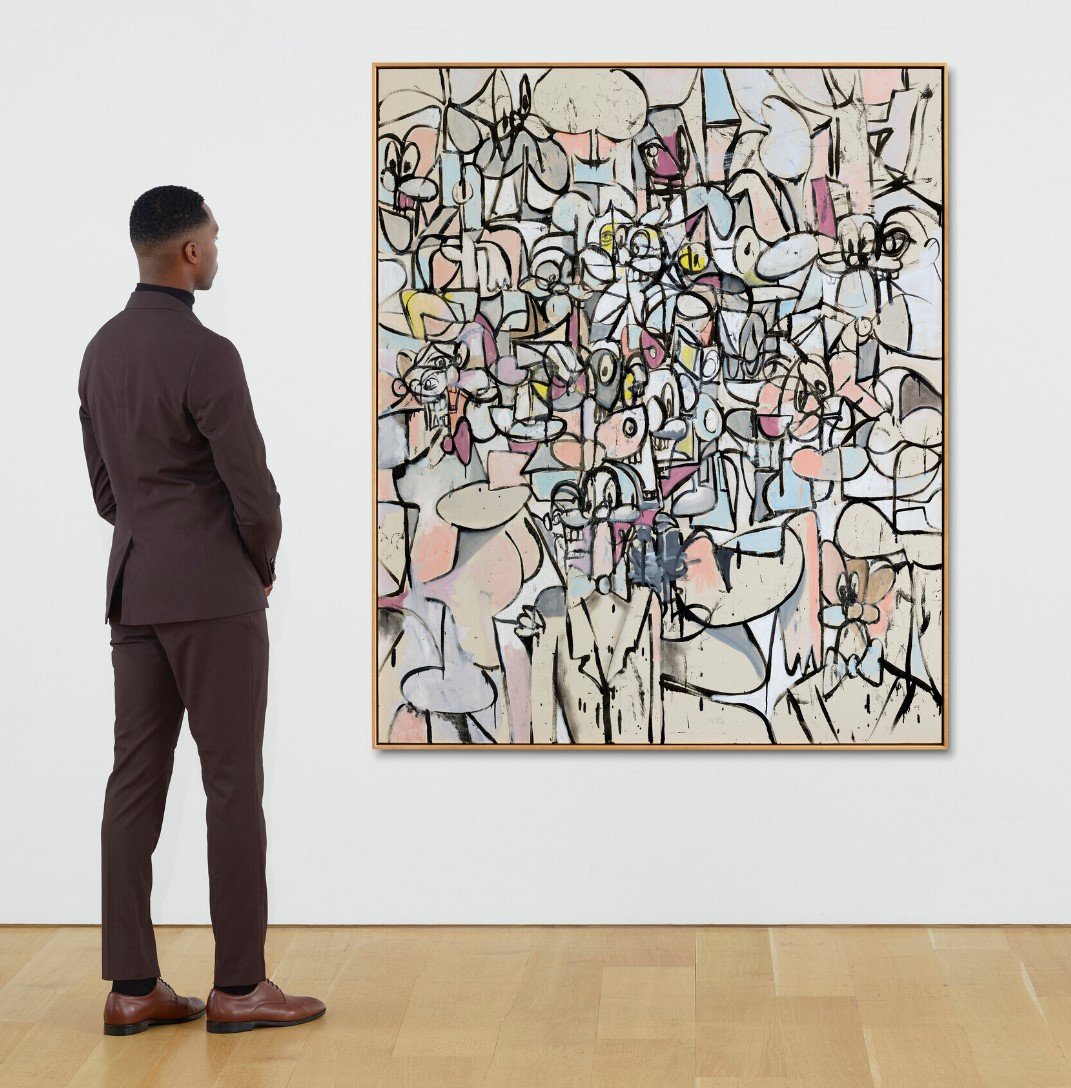
GEORGE CONDO (B. 1957)
Easter Sunday, 2011
Oil on linen
72×60 inches (182.8 x 152.5 cm)
Signed and dated ‘Condo 2011’ (on the overlap)
#7. In The Brothel, 2007
Christie’s London: 13 October 2023
Estimated: GBP 1,000,000 – 1,500,000
GBP 1,855,000 / USD 2,251,213
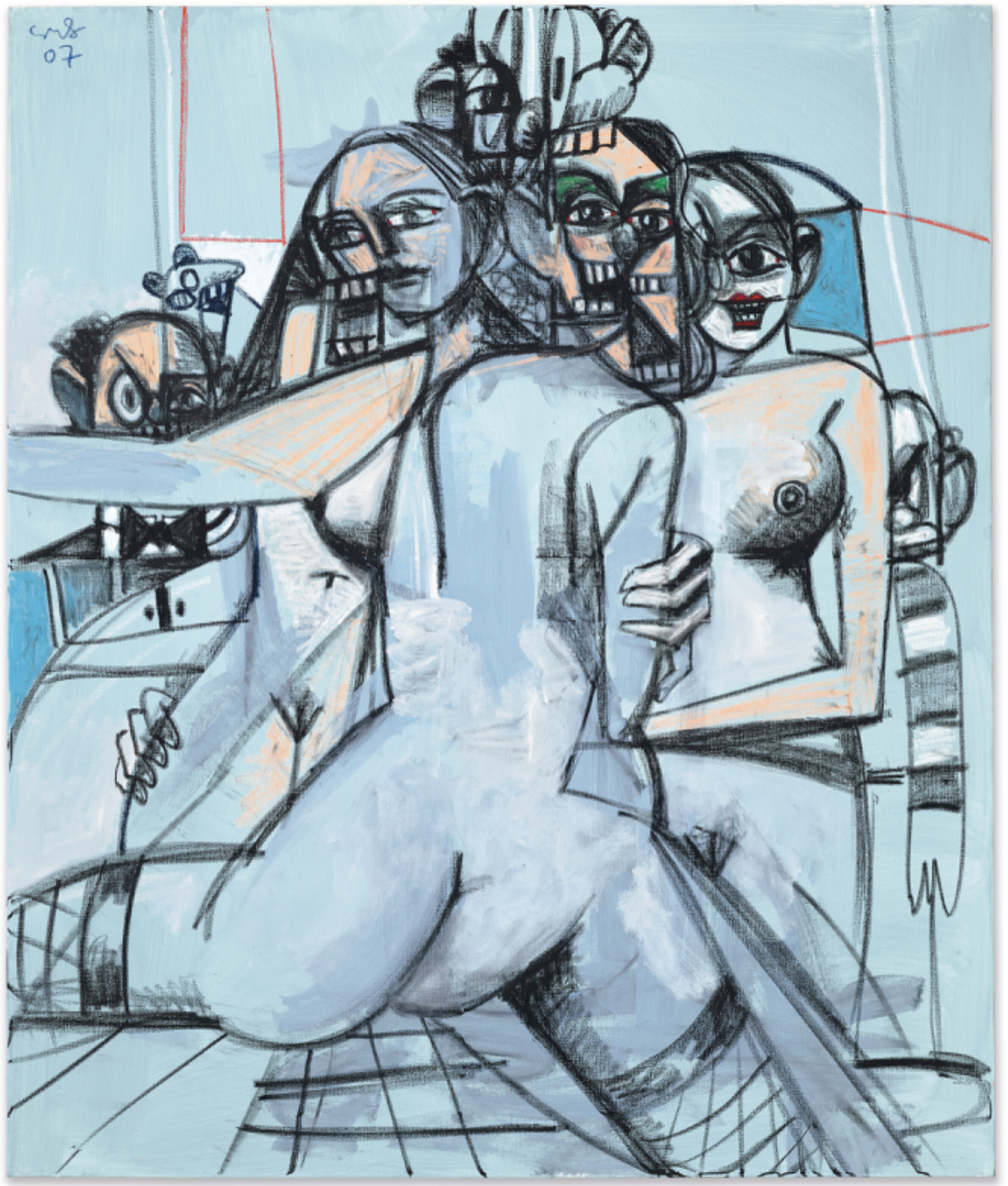
GEORGE CONDO (B. 1957)
In the Brothel, 2007
Oil and pastel on canvas
49 1/2 x 42 inches (125.7 x 105.4 cm)
Signed and dated ‘Condo 07’ (upper left)
Signed and dated ‘Condo 07’ (on the reverse)
#8. Untitled (Painting Drawing 6), 2011
Estimated: USD 1,500,000 – 2,000,000
USD 1,804,500
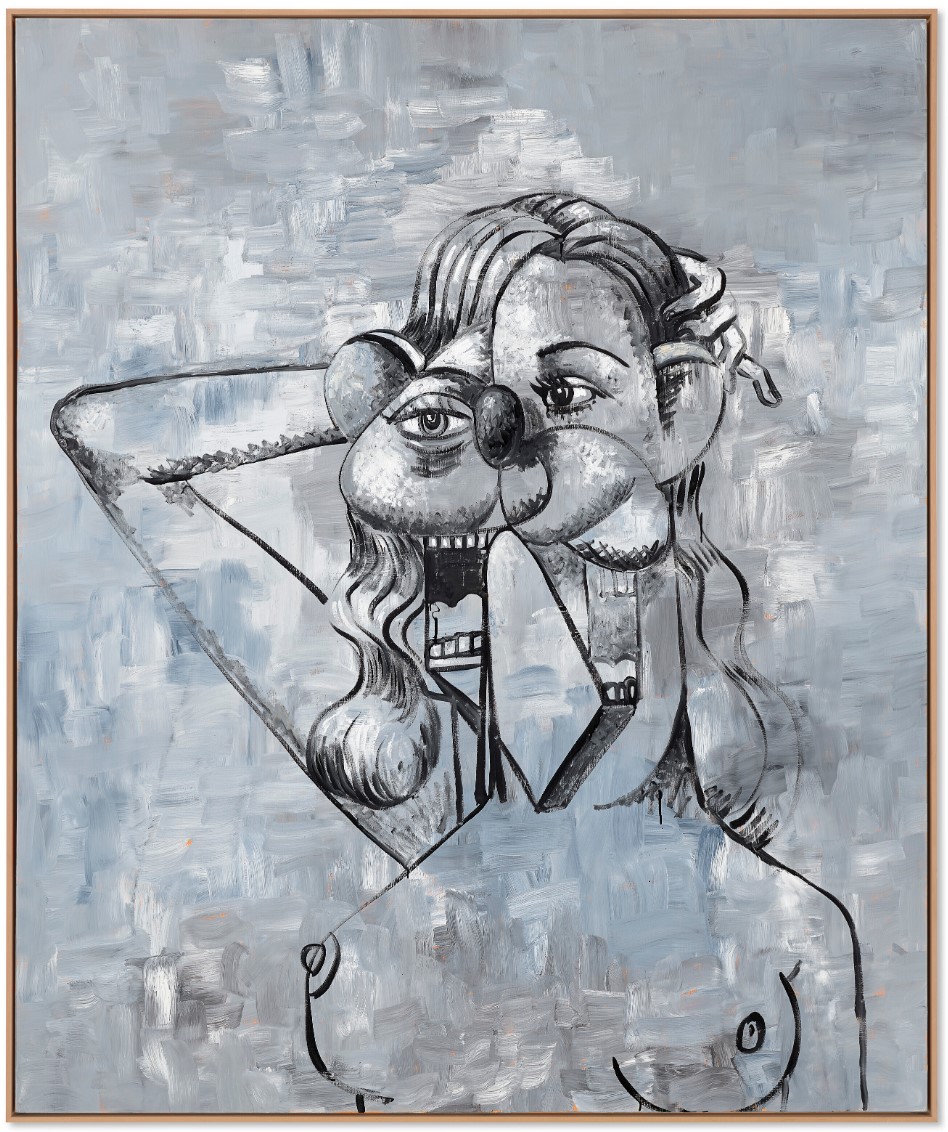
Untitled (Painting Drawing 6), 2011
Oil on canvas
72×60 inches (182.9 x 152.4 cm)
#9. The Good Old Days, 2015
Sotheby’s New-York: 15 November 2023
Estimated: USD 1,500,000 – 2,500,000
USD 1,775,000
The Good Old Days | The Now Evening Auction | 2023 | Sotheby’s (sothebys.com)
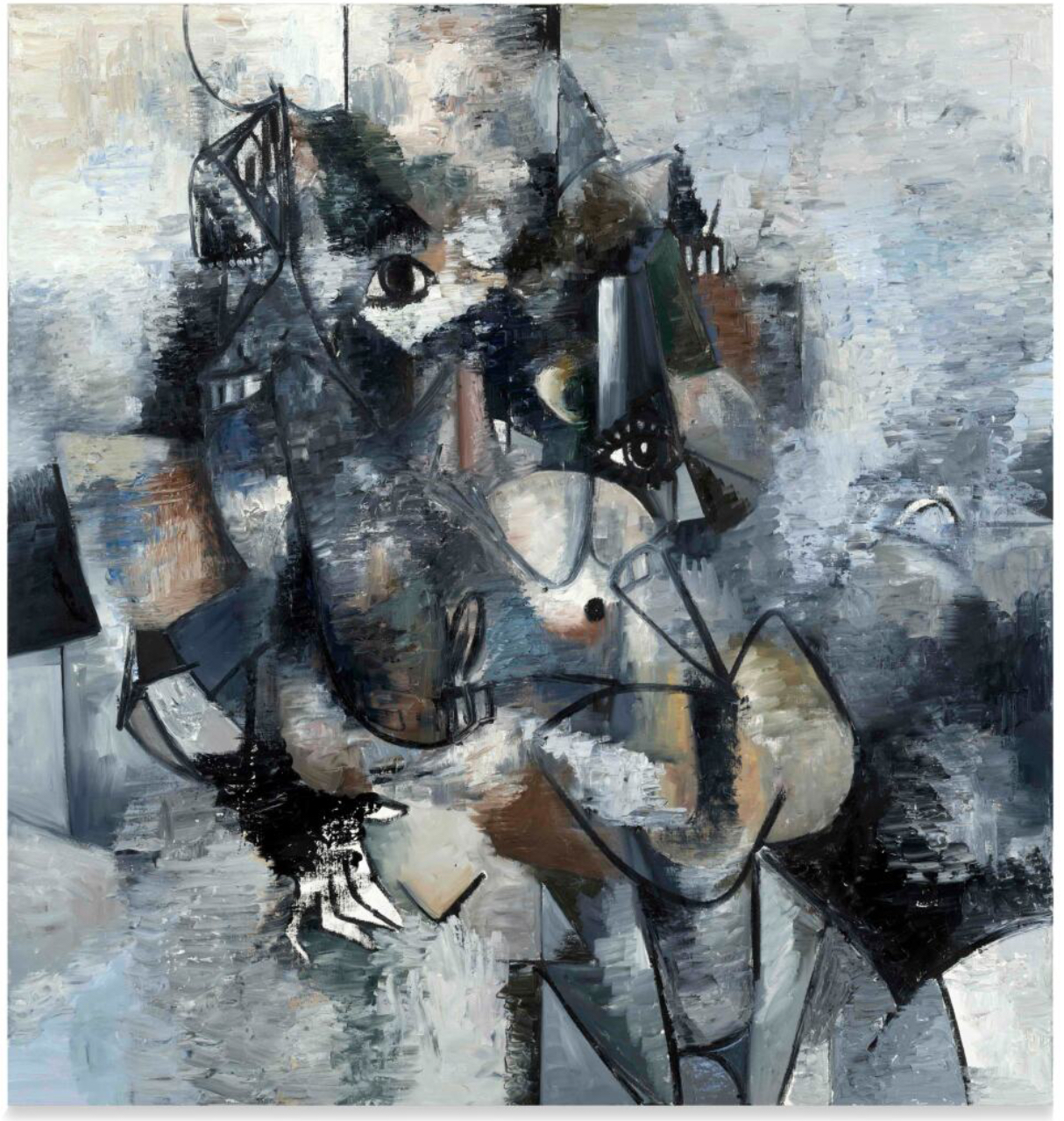
GEORGE CONDO (b. 1957)
The Good Old Days, 2015
Oil and pigment stick on canvas
78×74 inches (198.1 x 188 cm)
Signed and dated 2015 (on the overlap)
#10. Harlequin’s Diary, 2009
Sotheby’s London: 27 June 2023
Estimated: GBP 900,000 – 1,300,000
GBP 1,318,500 / USD 1,681,331
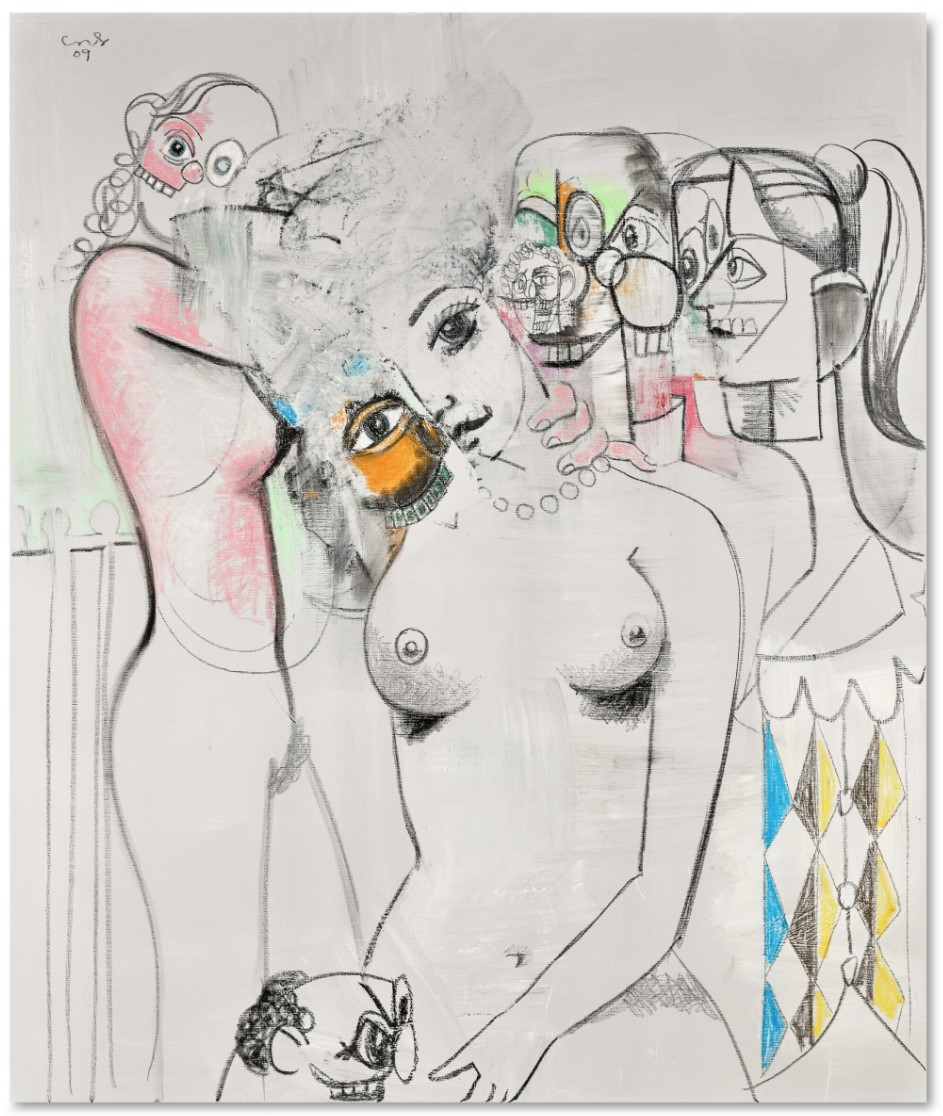
GEORGE CONDO (b. 1957)
Harlequin’s Diary, 2009
Acrylic, charcoal and pastel on linen, in artist’s frame
50×42 inches (127 x 106.7 cm)
Signed and dated 09 (upper left)
#11. The Stockbroker, 2002
Christie’s Hong-Kong: 29 November 2023
Estimated: HKD 10,000,000 – 15,000,000
HKD 12,475,000 / USD 1,600,430
GEORGE CONDO (B. 1957) (christies.com)
REPEAT SALE
Sotheby’s New-York: 12 May 2021
Estimated: USD 1,200,000 – 1,800,000
USD 1,593,000
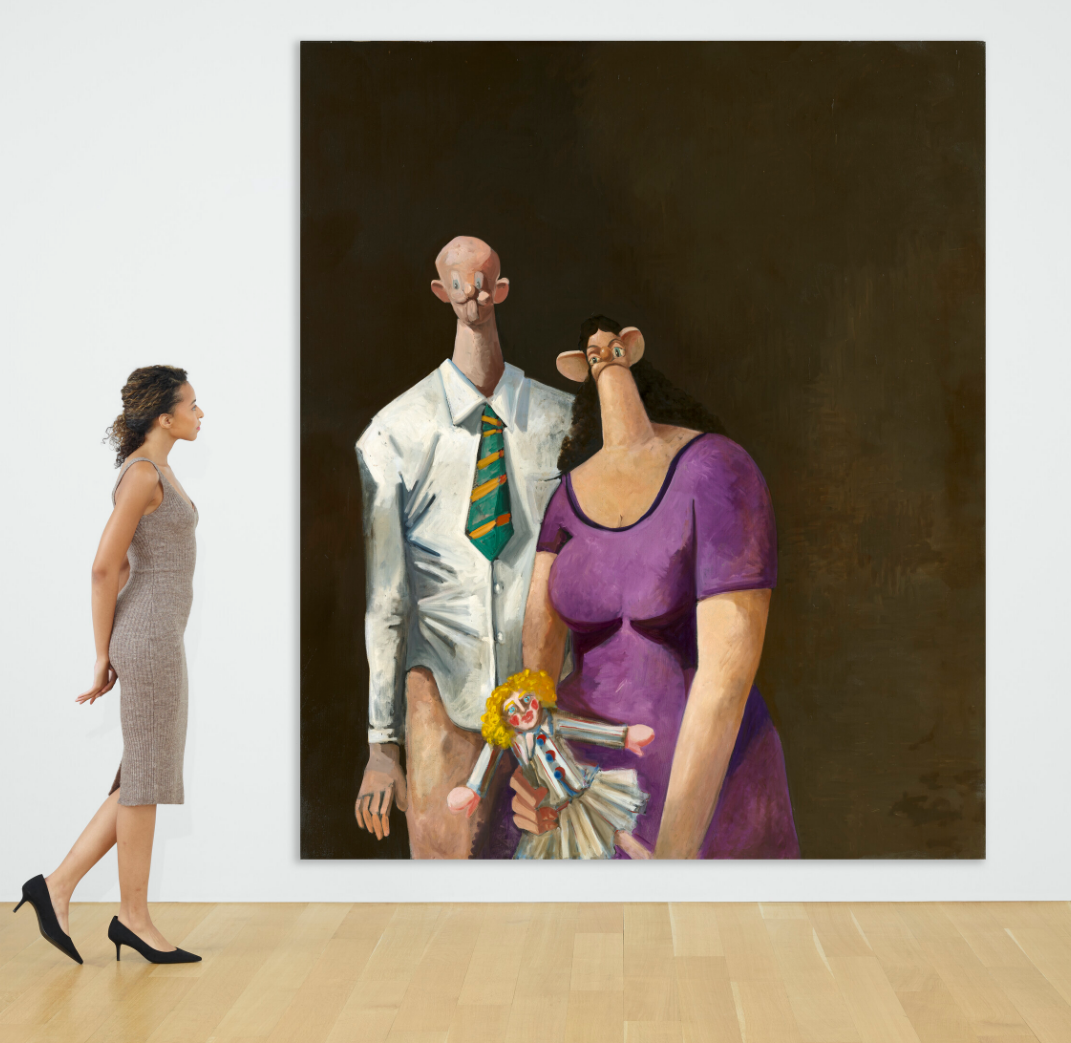
GEORGE CONDO (B. 1957)
The Stockbroker, 2002
Oil on canvas
97×80 inches (243.8 x 203.2 cm)
Signed, titled, and dated ‘Condo 2002 The StockBroker’ (on the reverse)
#12. Eyes Wide Open, 2022
Phillips New-York: 14 November 2023
Estimated: USD 1,500,000 – 2,000,000
USD 1,391,000
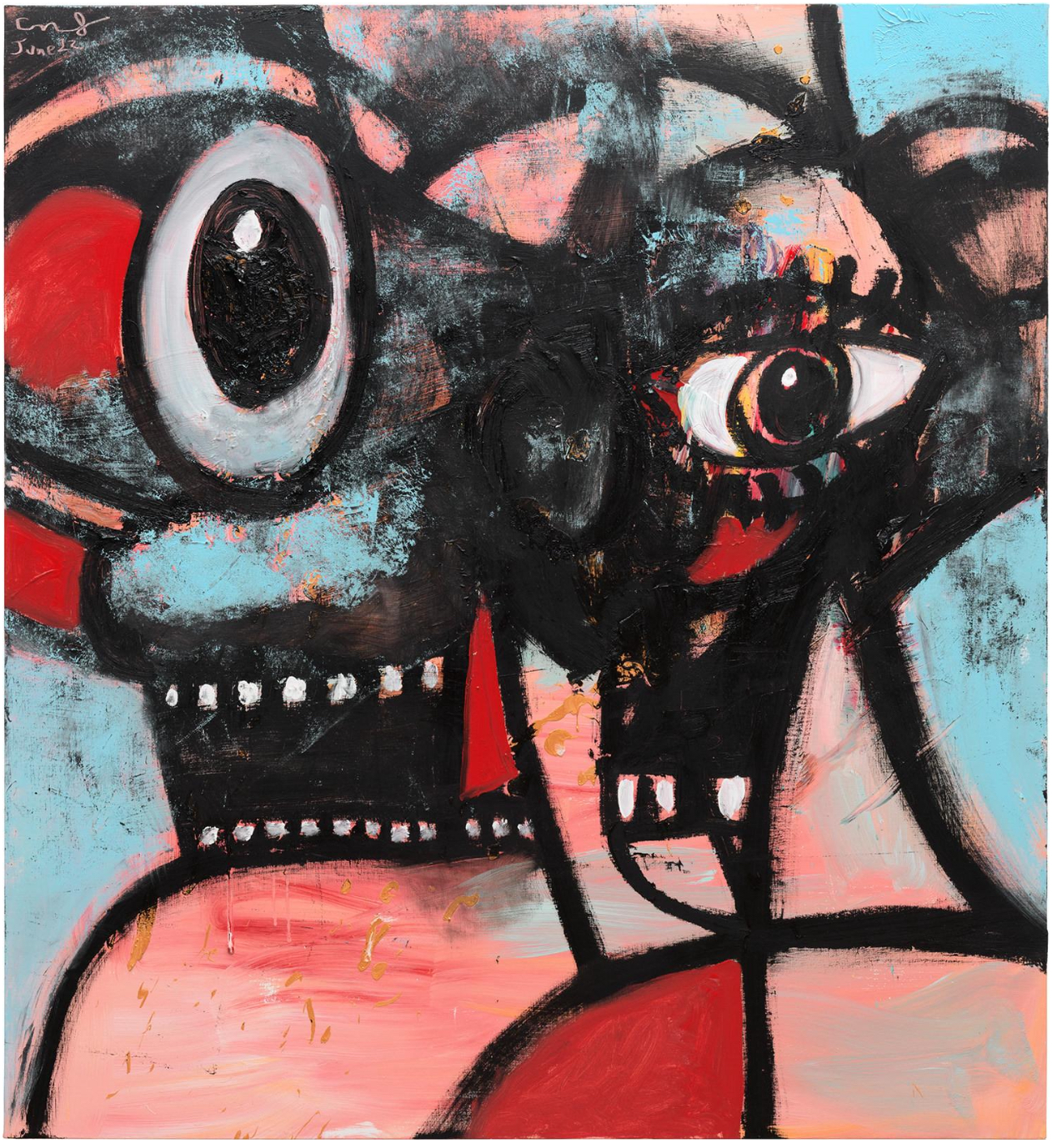
GEORGE CONDO
Eyes Wide Open, 2022
Acrylic and oilstick on linen
50 x 46 1/4 inches (127 x 117.5 cm)
Signed and dated “Condo June 22” upper left
#13. Female Portrait with Blue Eyes, 2013
Sotheby’s Hong-Kong: 5 October 2023
Estimated: HKD 10,000,000 – 15,000,000
HKD 9,888,000 / USD 1,263,844
REPEAT SALE
Sotheby’s London: 11 February 2020
Estimated: GBP 600,000 – 800,000
GBP 855,000 / USD 1,106,525
(#43) GEORGE CONDO | Female Portrait with Blue Eyes
GEORGE CONDO (b. 1957)
Female Portrait with Blue Eyes, 2013
Acrylic, charcoal and pastel on linen, in artist’s chosen frame
53×42 inches (134.6 x 106.7 cm)
Signed and dated 2013
#14. Confrontation, 1999
Estimated: USD 1,000,000 – 1,500,000
USD 1,260,000
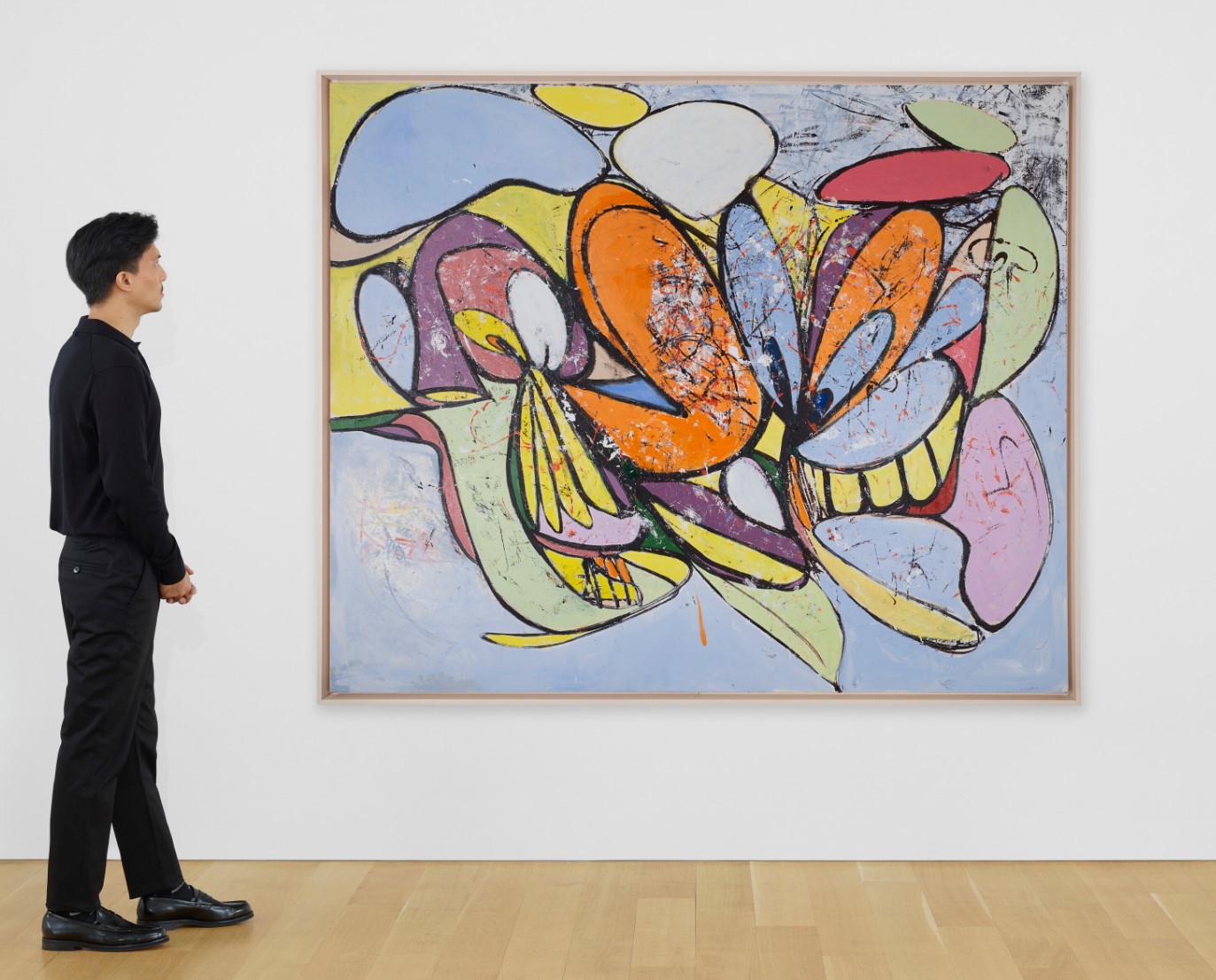
GEORGE CONDO (B. 1957)
Confrontation, 1999
Acrylic on canvas
70×85 inches (177.8 x 215.9 cm)
Signed and dated ‘Condo 99’ (lower right)
#15. Red Screaming Woman, 2019
Christie’s Hong-Kong: 28 November 2023
Estimated: HKD 12,000,000 – 15,000,000
HKD 9,813,000 / USD 1,259,831
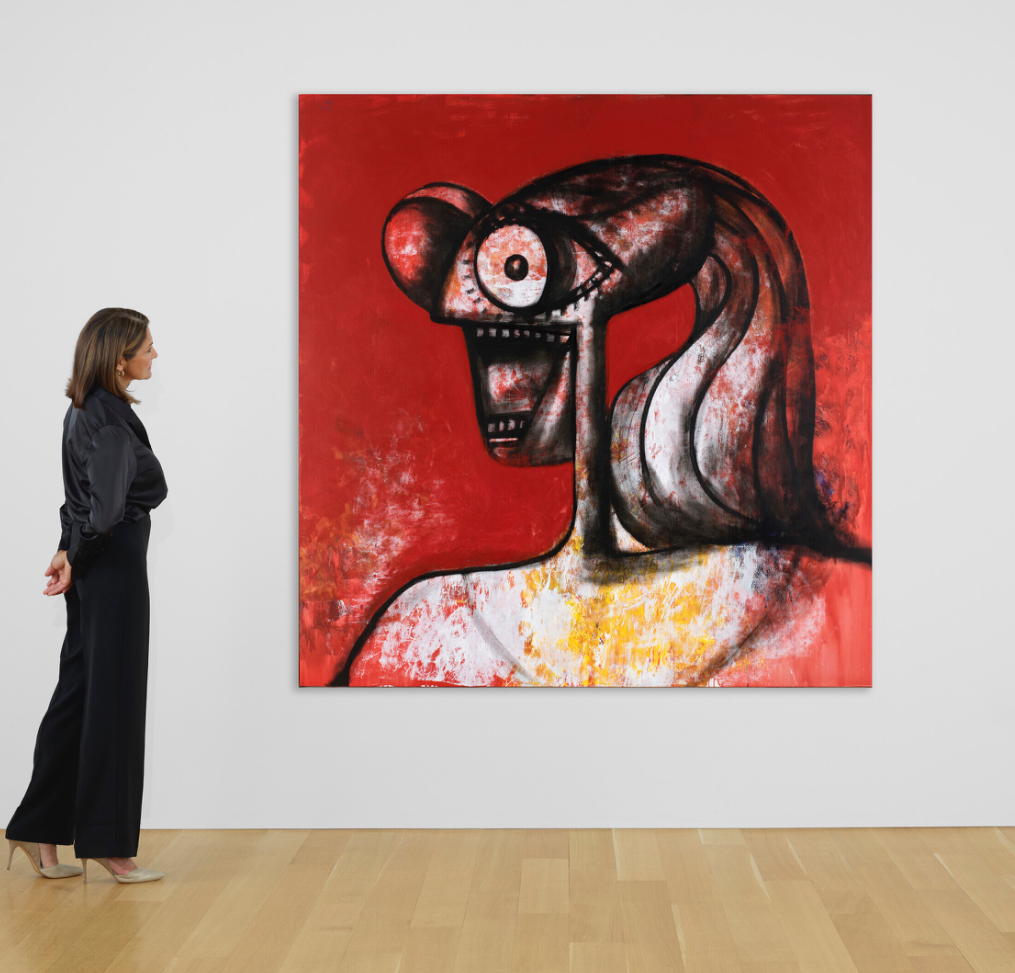
GEORGE CONDO
Red Screaming Woman, 2019
Oil and pigment stick on linen
193×188 cm (76 x 74 inches)
Signed and dated ‘Condo 2019’ (upper left)
#16. The Psychoanalytic Puppeteer Losing His Mind, 1994
Christie’s New-York: 10 November 2023
Estimated: USD 300,000 – 500,000
USD 1,197,000
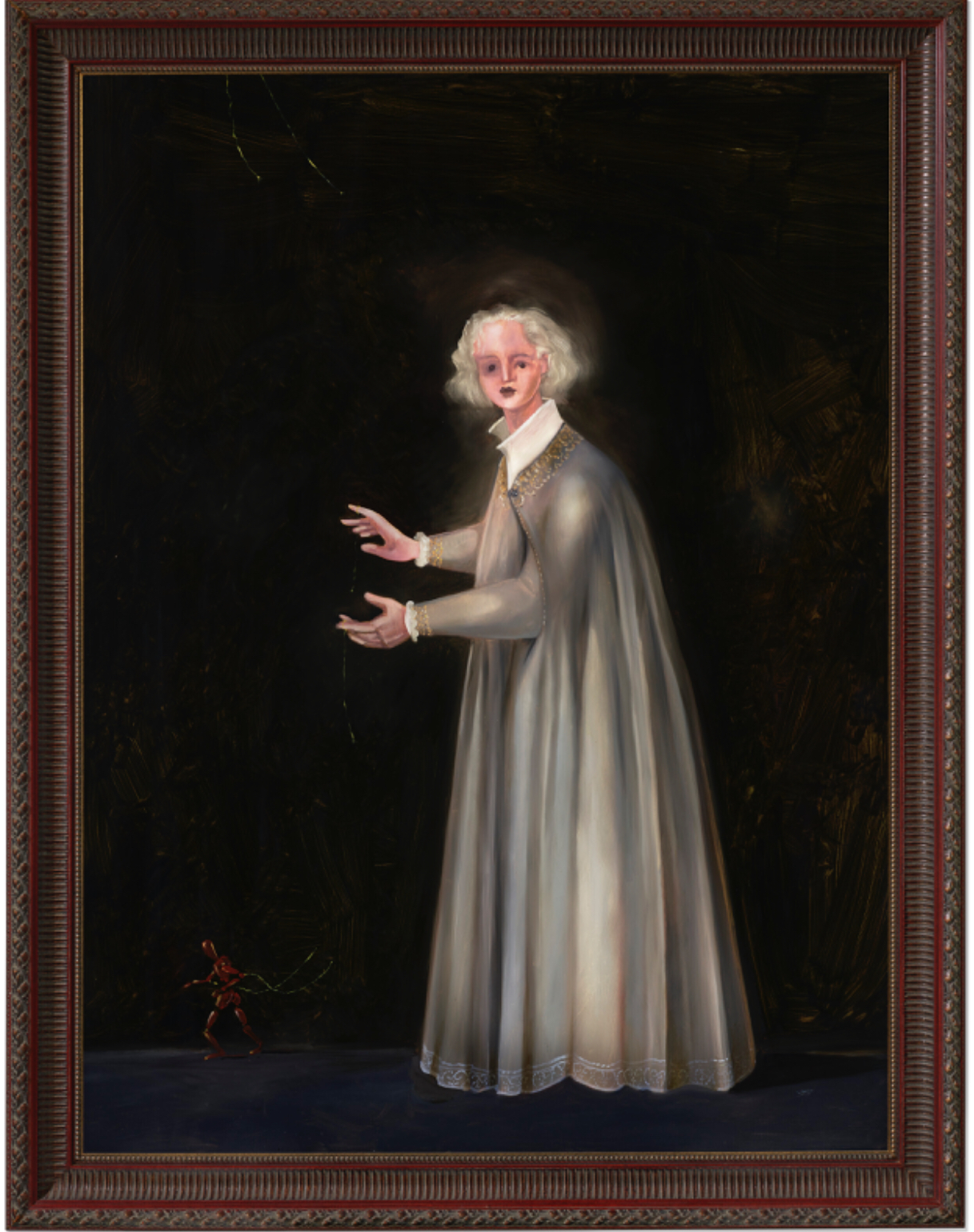
GEORGE CONDO (B. 1957)
The Psychoanalytic Puppeteer Losing His Mind, 1994
Oil on canvas
78 3/4 x 59 inches (200 x 149.9 cm)
Signed, partially titled and dated ‘Condo 94 The Psychoanalytic Puppeteer’ (on the reverse)
#17. Seated Harlequin, 2007
Phillips London: 13 October 2023
Estimated: GBP 750,000 – 950,000
GBP 889,000 / USD 1,078,883
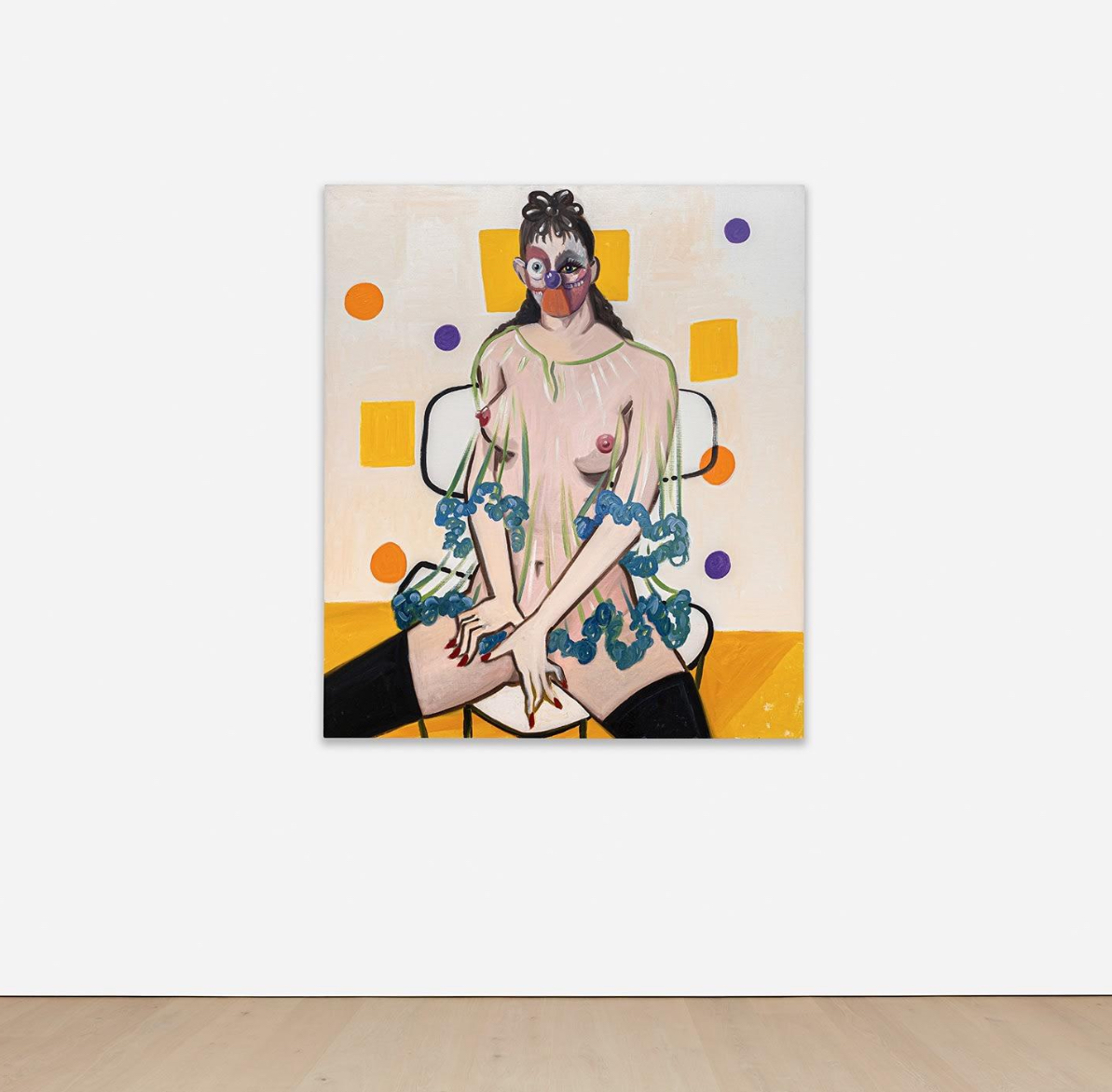
GEORGE CONDO
Seated Harlequin, 2007
Oil on canvas
134×117 cm (52 3/4 x 46 1/8 inches)
Signed and dated ‘Condo 07’ on the reverse
USD 1 million
#18. Existential Traveler (Girl in Blue Box), 1996
Sotheby’s New-York: 15 November 2023
Estimated: USD 1,000,000 – 1,500,000
USD 850,000
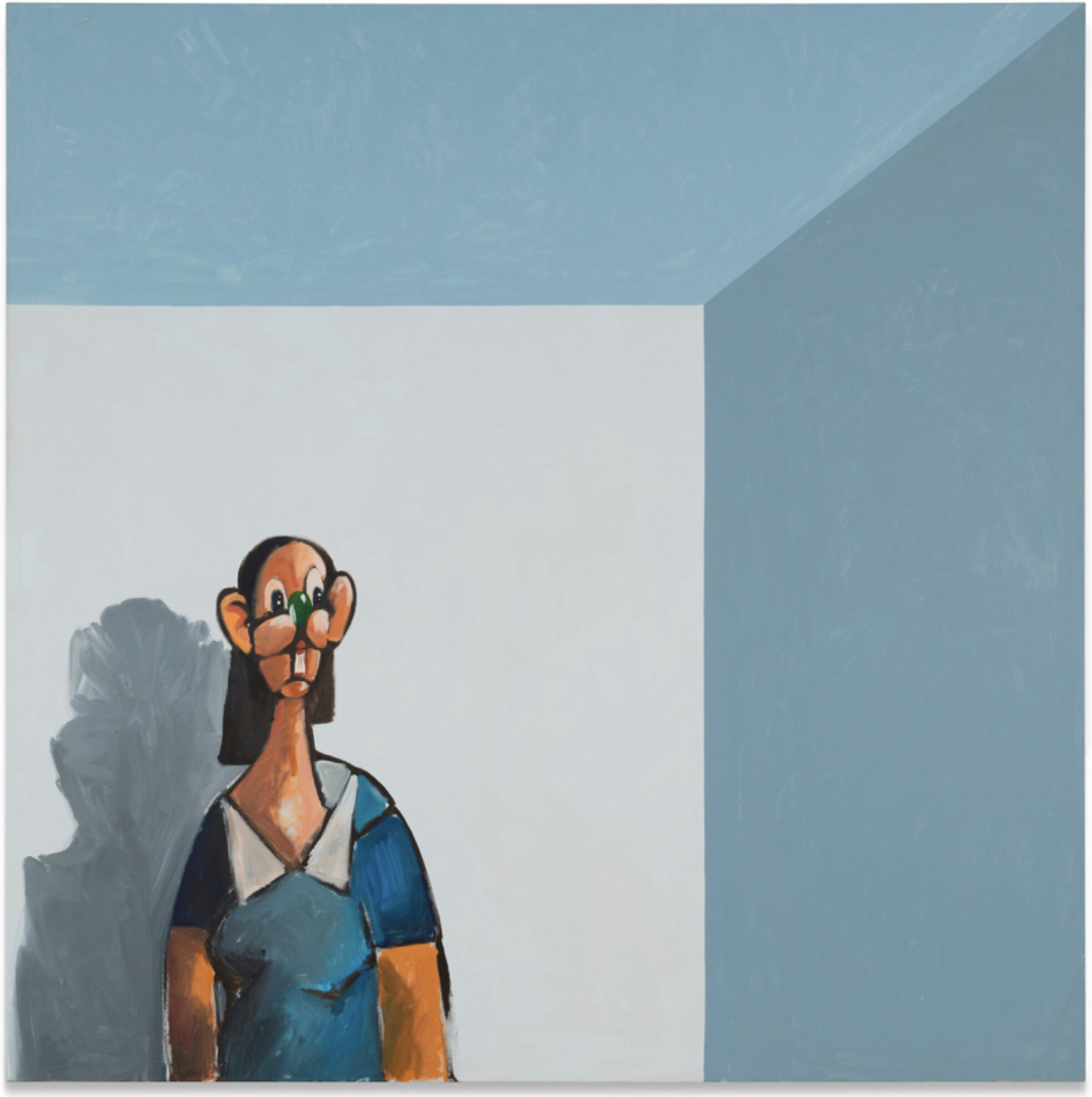
GEORGE CONDO (b. 1957)
Existential Traveler (Girl in Blue Box), 1996
Oil on canvas
80×80 inches (203.2 x 203.2 cm)
Signed and dated 96 (lower right)
#19. Facial Composition on Green Sky, 1997
Christie’s Shanghai: 23 September 2023
Estimated: CNY 1,800,000 – 2,800,000
CNY 5,418,000 / USD 744,179
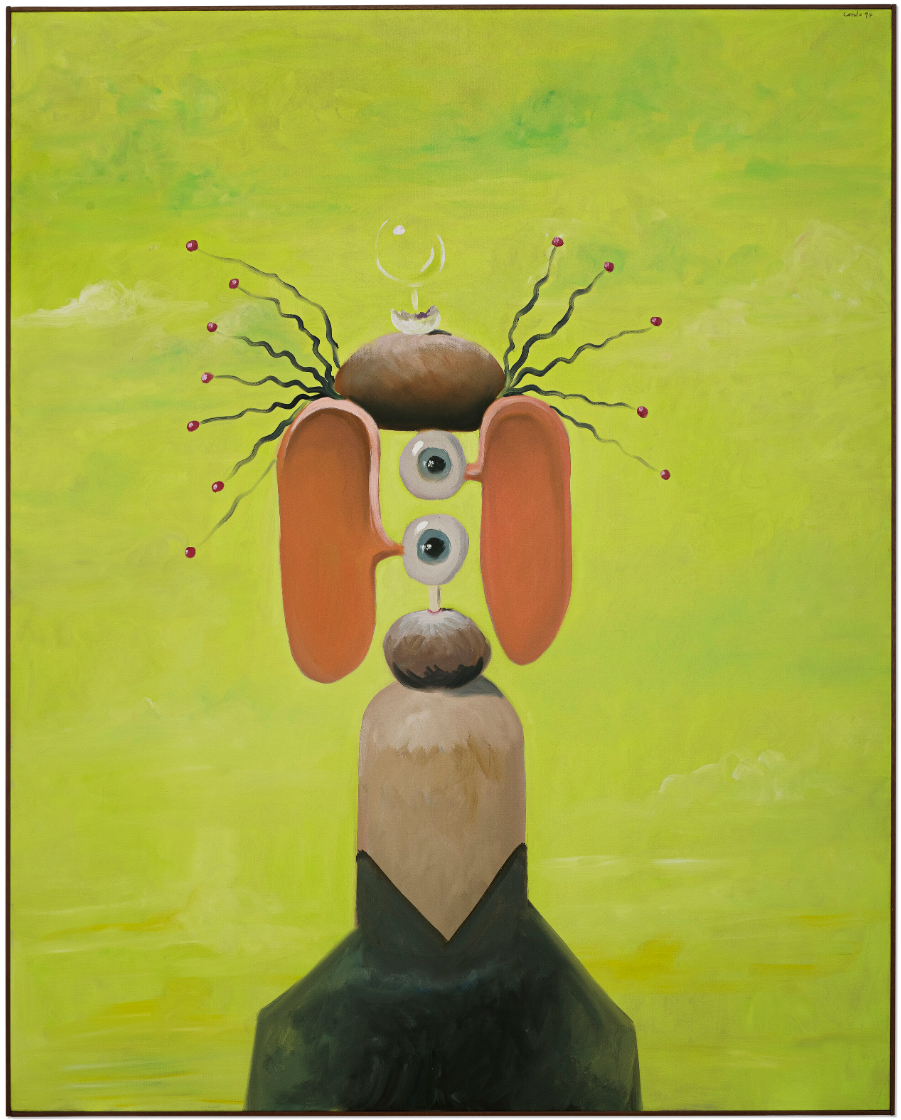
GEORGE CONDO (B. 1957)
Facial Composition on Green Sky, 1997
Oil on canvas
60×48 inches (152.5 x 121.5 cm)
Signed and dated ‘Condo 97’ (upper right)
#20. The Second Life, 1985
Sotheby’s New-York: 16 November 2023
Estimated: USD 400,000 – 600,000
USD 571,500
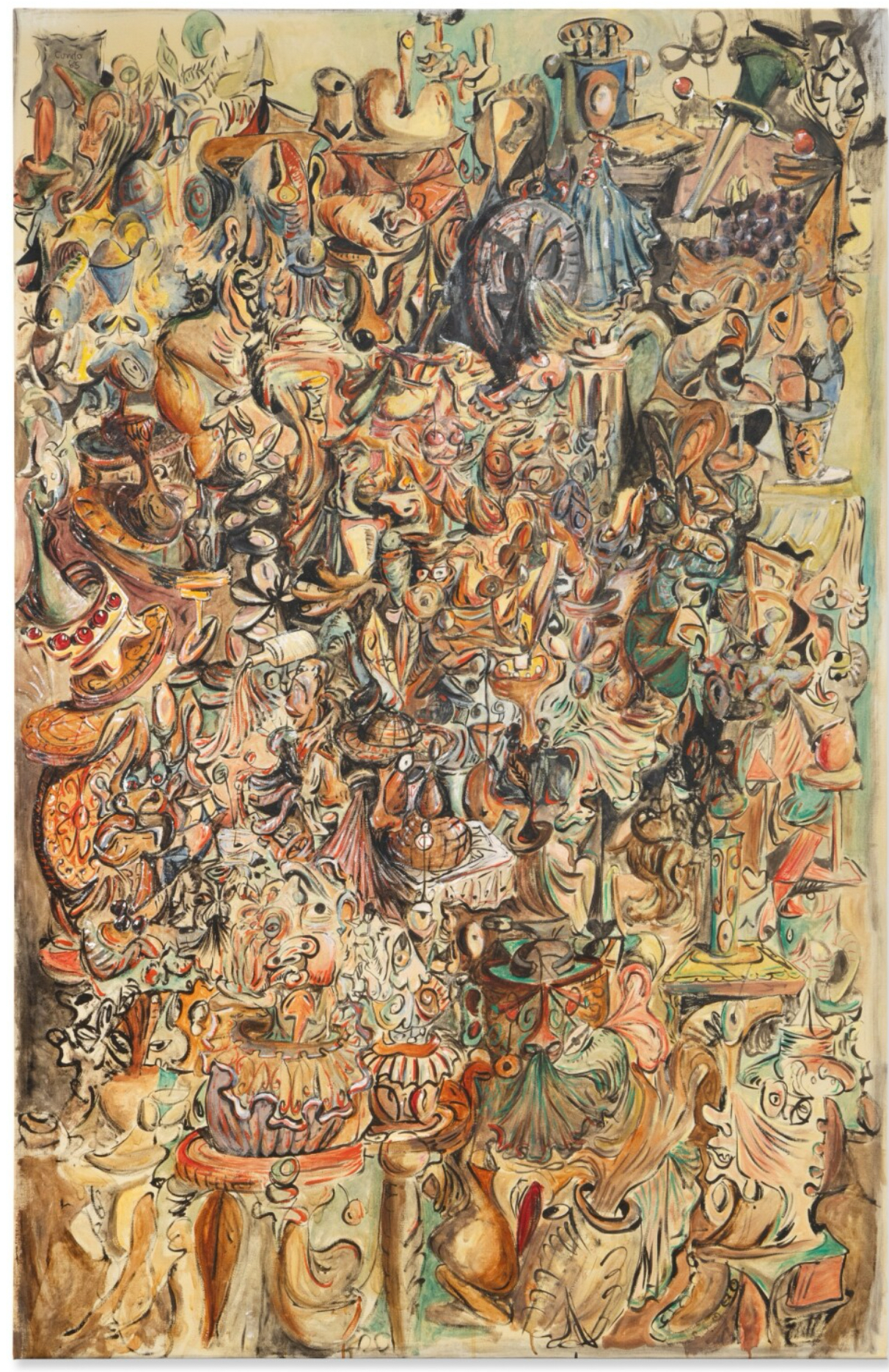
GEORGE CONDO (b. 1957)
The Second Life, 1985
Oil on canvas
74 1/4 x 48 inches (188.6 x 121.9 cm)
Signed and dated 85 (upper left)
#21. Female Composition, 2006
Sotheby’s New-York: 16 November 2023
Estimated: USD 400,000 – 600,000
USD 508,000
Female Composition | Contemporary Day Auction | 2023 | Sotheby’s (sothebys.com)
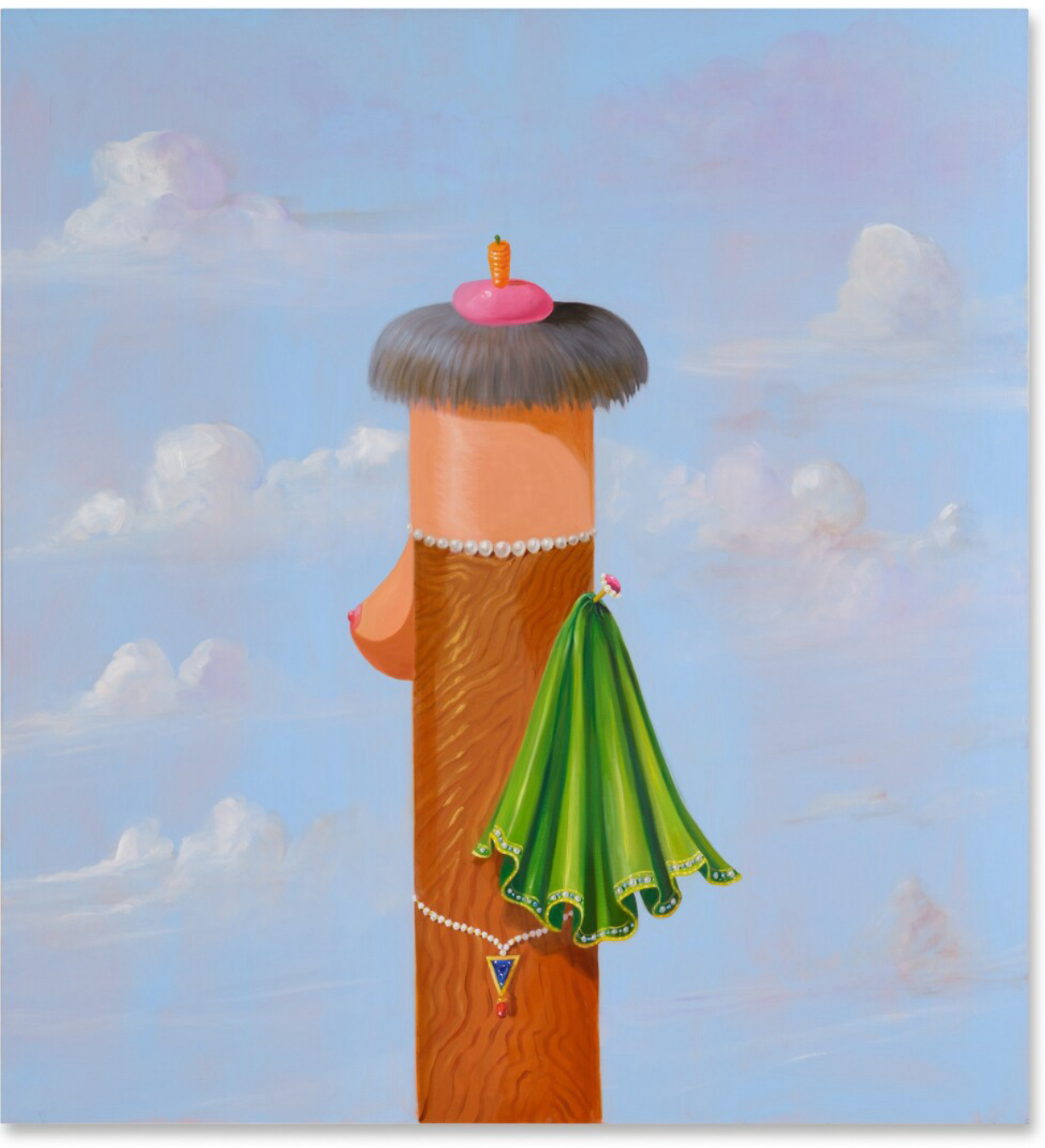
GEORGE CONDO (b. 1957)
Female Composition, 2006
Oil on canvas
65×60 inches (165.1 by 152.4 cm)
Signed and dated 06 (on the reverse)
USD 500,000
#22. Take Yourself Away, 1985
Phillips New-York: 16 May 2023
Estimated: USD 400,000 – 600,000
USD 482,600
George Condo – 20th Century & Contempor… Lot 146 May 2023 | Phillips
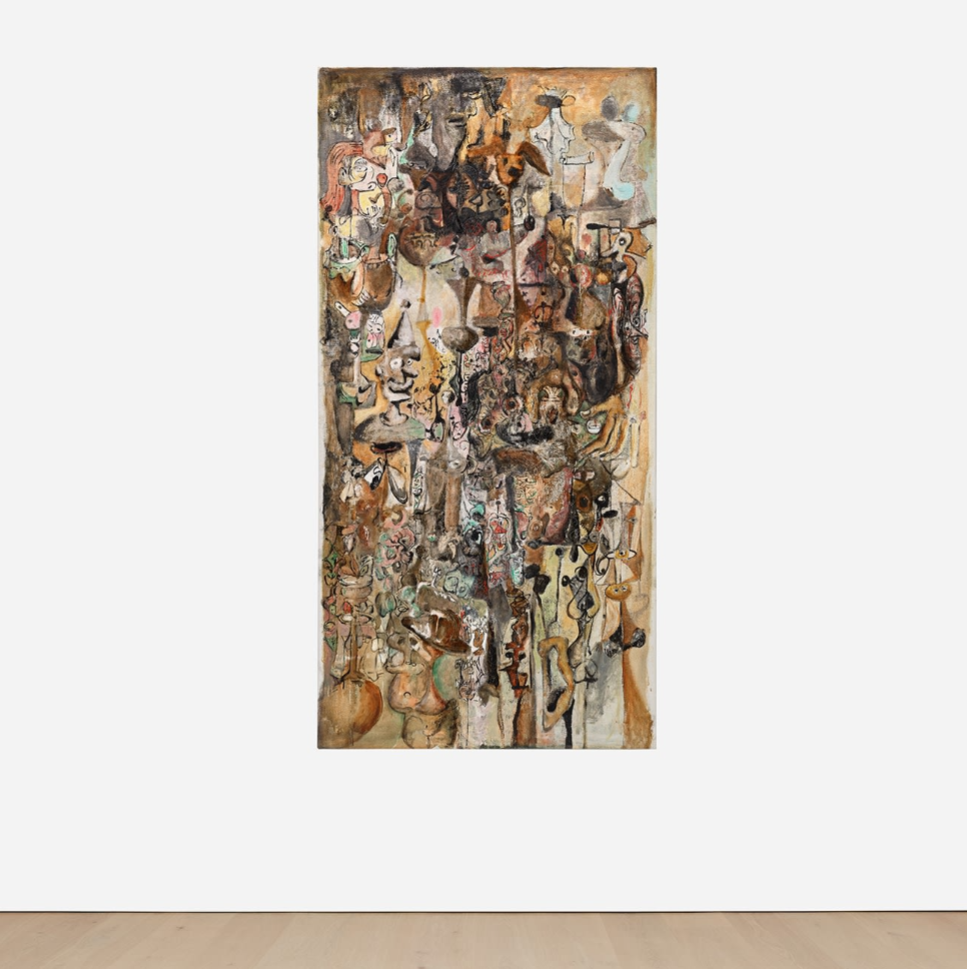
GEORGE CONDO
Take Yourself Away, 1985
Oil on canvas
75 3/4 x 37 1/2 inches (192.4 x 95.3 cm)
Signed and dated “Condo 85” upper left
#23. The Life We Love, 2004
Ketterer Kunst: 9 June 2023
Estimated: EUR 280,000
EUR 419,100 / USD 450,499
Ketterer Kunst, Art auctions, Book auctions Munich, Hamburg & Berlin
GEORGE CONDO
The Life We Love, 2004
Oil on canvas
59 7/8 x 47 7/8 inches (152 x 121.5 cm)
Signed, dated and titled on the reverse
#24. Red Expanding Form in Landscape, 2002
Sotheby’s London: 18 April 2023
Estimated: GBP 300,000 – 400,000
GBP 355,600 / USD 441,629
Red Expanding Form in Landscape | Contemporary Curated | 2023 | Sotheby’s (sothebys.com)
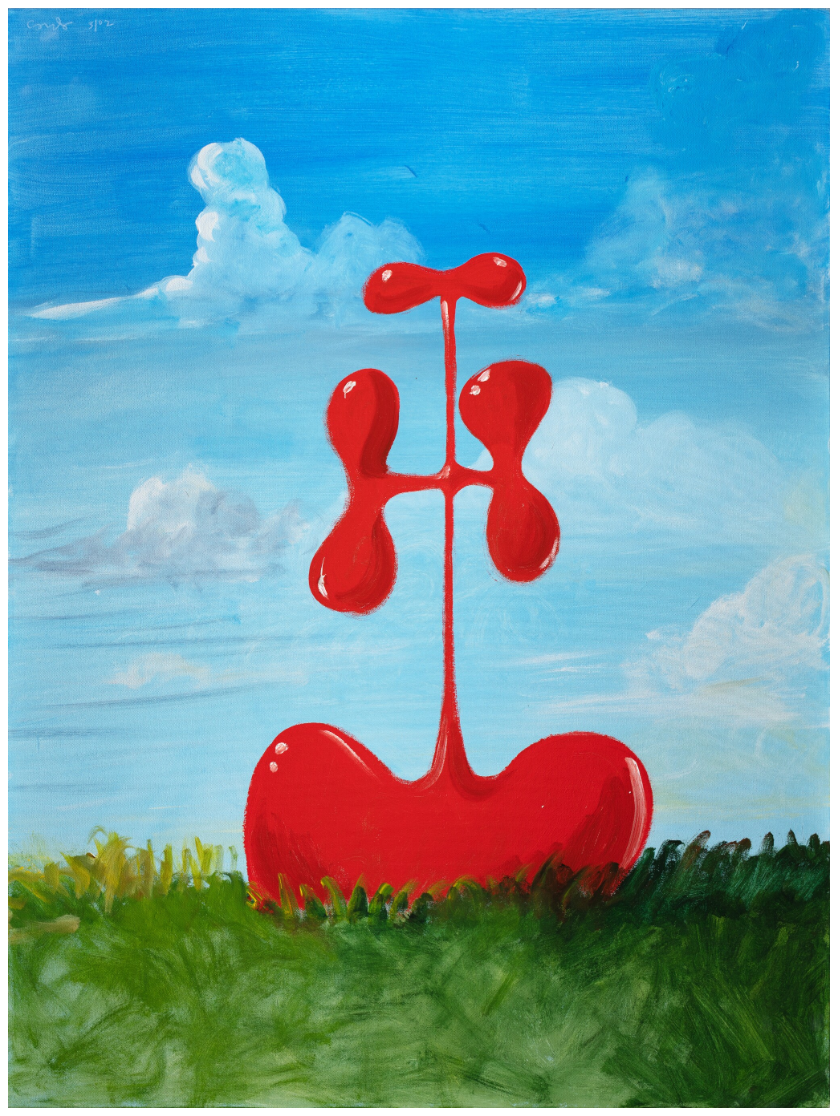
GEORGE CONDO (b. 1957)
Red Expanding Form in Landscape, 2002
Oil on canvas
48×36 inches (122 x 91.1 cm)
Signed and dated 3/02
#26. Big Oil Money, 2017
Christie’s New-York: 10 November 2023
Estimated: USD 60,000 – 80,000
USD 264,600
GEORGE CONDO (B. 1957) (christies.com)
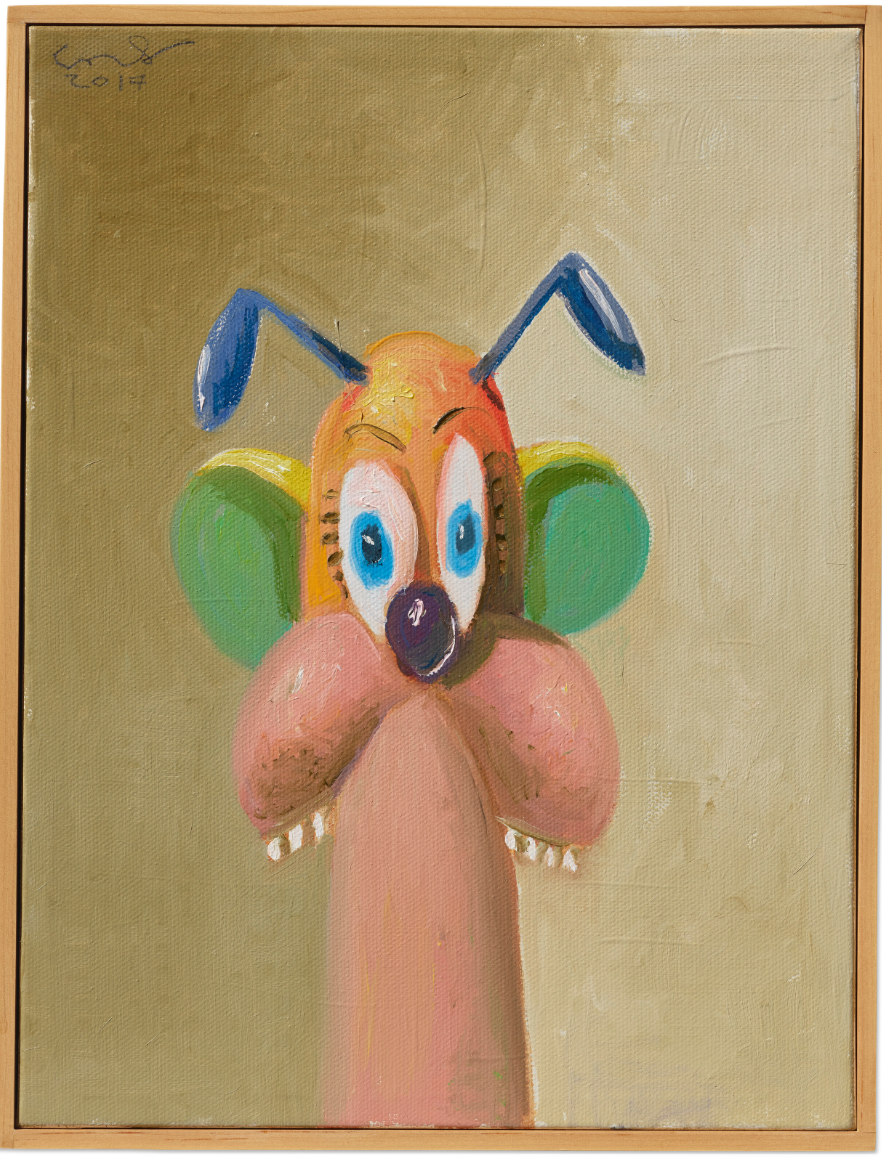
GEORGE CONDO (B. 1957)
Big Oil Money, 2017
Oil on canvas
12×9 inches (30.5 x 22.9 cm.)
Signed and dated ‘Condo 2017’ (upper left); signed again and dated again ‘Condo 2017’ (on the reverse)
#27. Seated Nude, 2005
Christie’s London: 1 March 2023
Estimated: GBP 80,000 – 120,000
GBP 176,400 / USD 212,299
GEORGE CONDO (B. 1957), Seated Nude | Christie’s (christies.com)
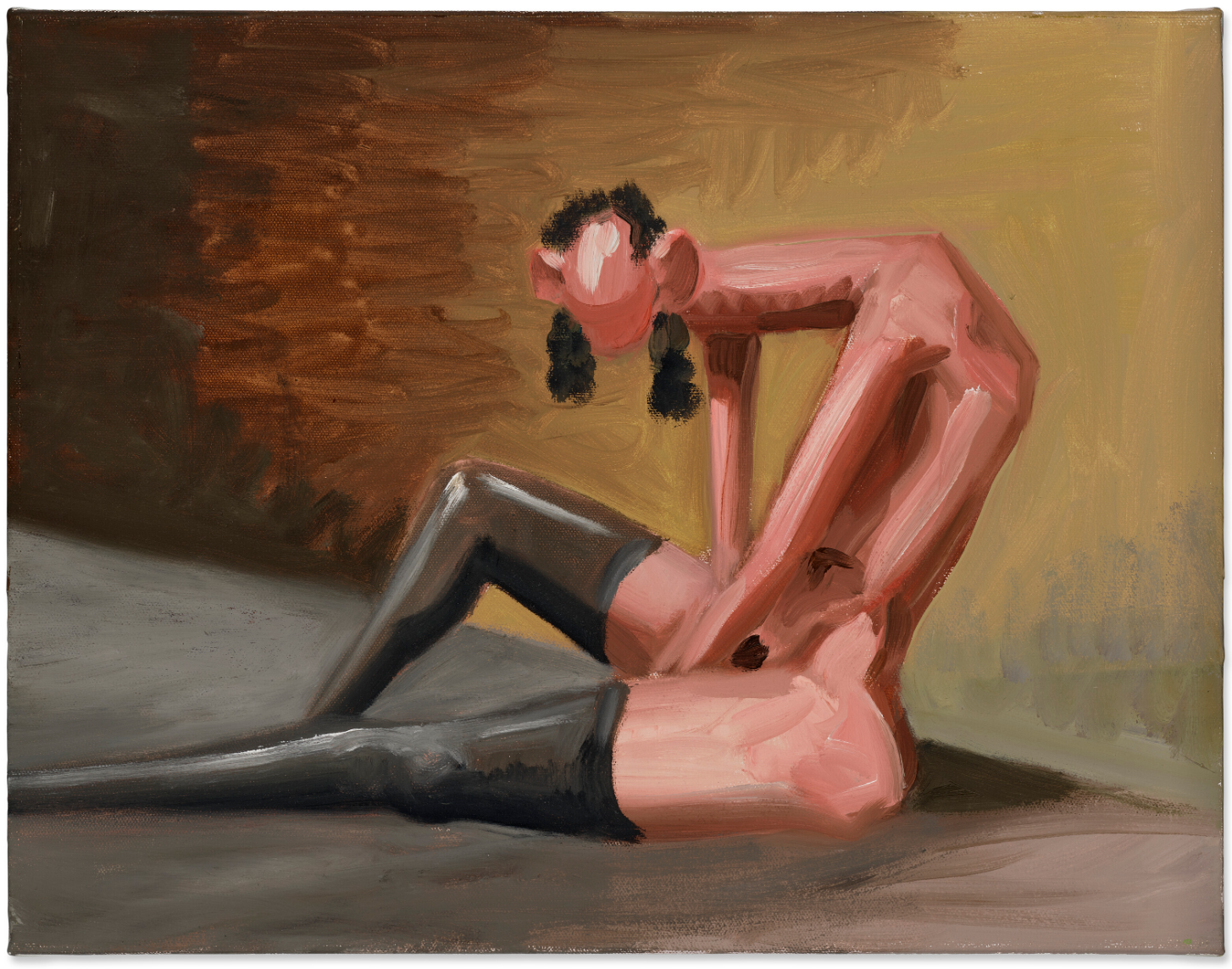
GEORGE CONDO (B. 1957)
Seated Nude, 2005
Oil on canvas
14 x 17 7/8 inches (35.5 x 45.5 cm)
Signed and titled ‘Condo Seated Nude’ (on the reverse)
#28. Religions of its Time, 1986
Phillips New-York: 15 November 2023
Estimated: USD 50,000 – 70,000
USD 190,500
George Condo – 20th Century & Cont… Lot 208 November 2023 | Phillips
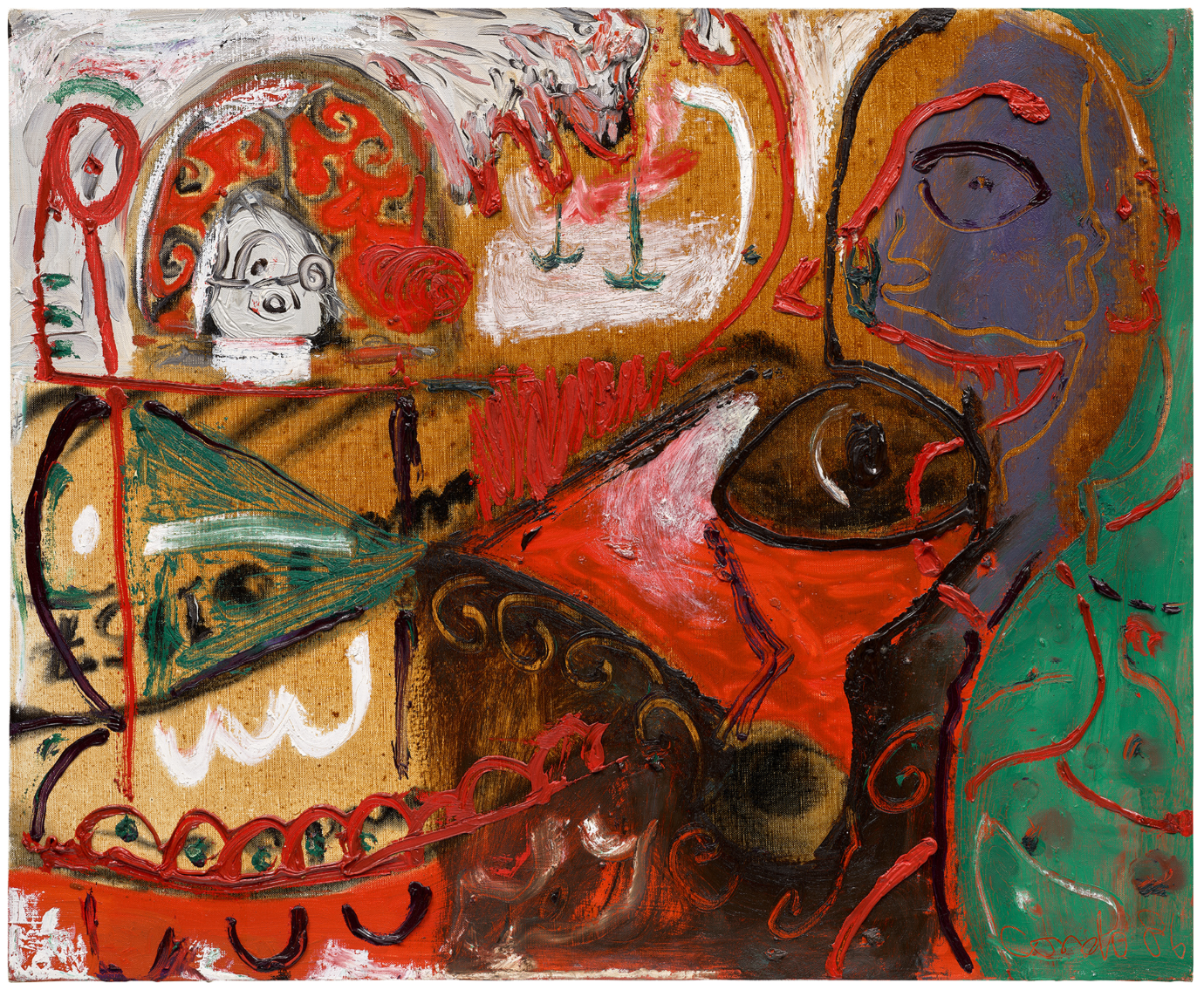
GEORGE CONDO
Religions of its Time, 1986
Oil on canvas
19 3/4 x 24 inches (50.2 x 61 cm)
Signed and dated “Condo 86” lower right
Signed, dedicated, titled and dated “For Bernard,-Paris 11-6-86 For Religions of its Time (This Painting) Condo 86” on the reverse
#29. Des Esseintes Contemplating Artifice, 2012
Christie’s New-York: 9 March 2023
Estimated: USD 80,000 – 120,000
USD 163,800
GEORGE CONDO (B. 1957) (christies.com)
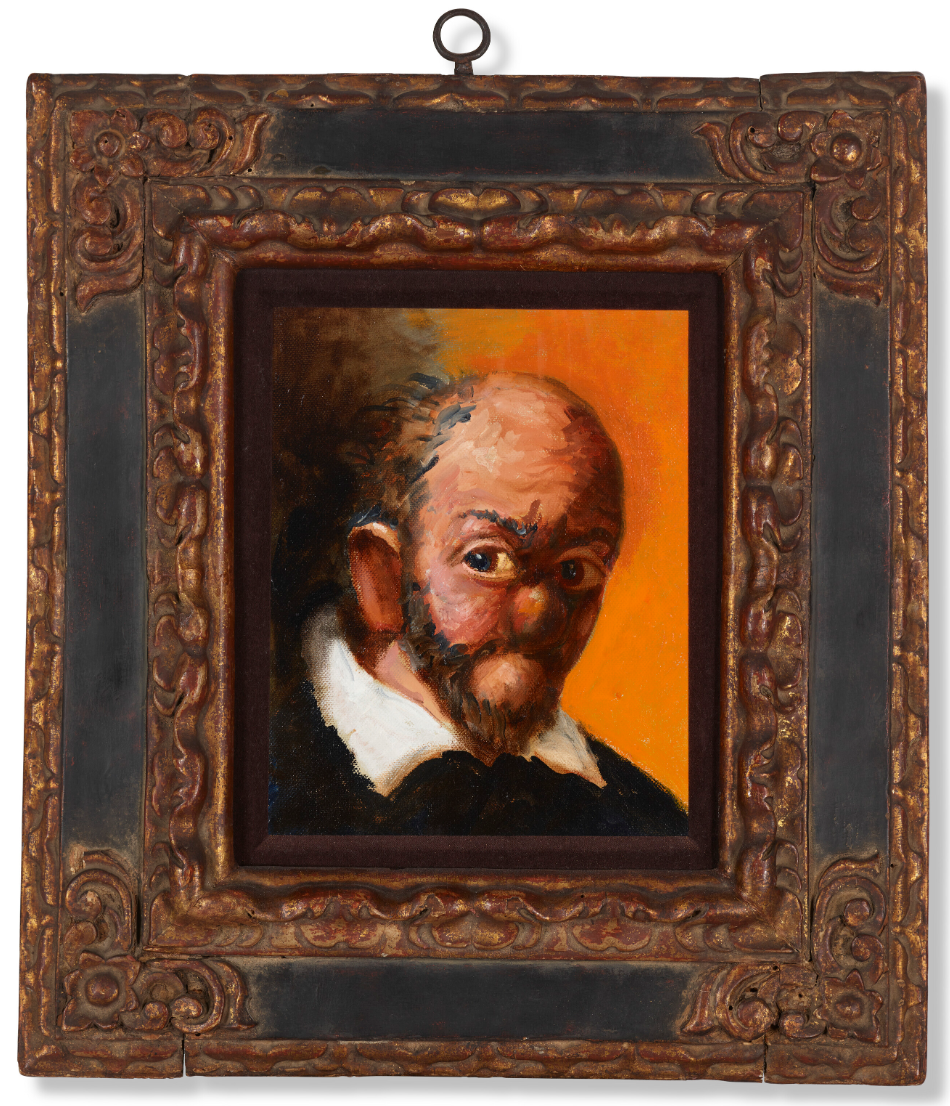
GEORGE CONDO (B. 1957)
Des Esseintes Contemplating Artifice, 2012
Oil on canvas, in artist’s chosen frame
Canvas: 10×8 inches (25.4 x 20.3 cm)
Signed, titled and dated ‘”Des Esseintes Contemplating Artifice” George Condo 2012’ (on the reverse)
#31. Awakening, 1996
Sotheby’s New-York: 15 March 2023
Estimated: USD 80,000 – 120,000
USD 139,700
Awakening | Contemporary Discoveries | 2023 | Sotheby’s (sothebys.com)
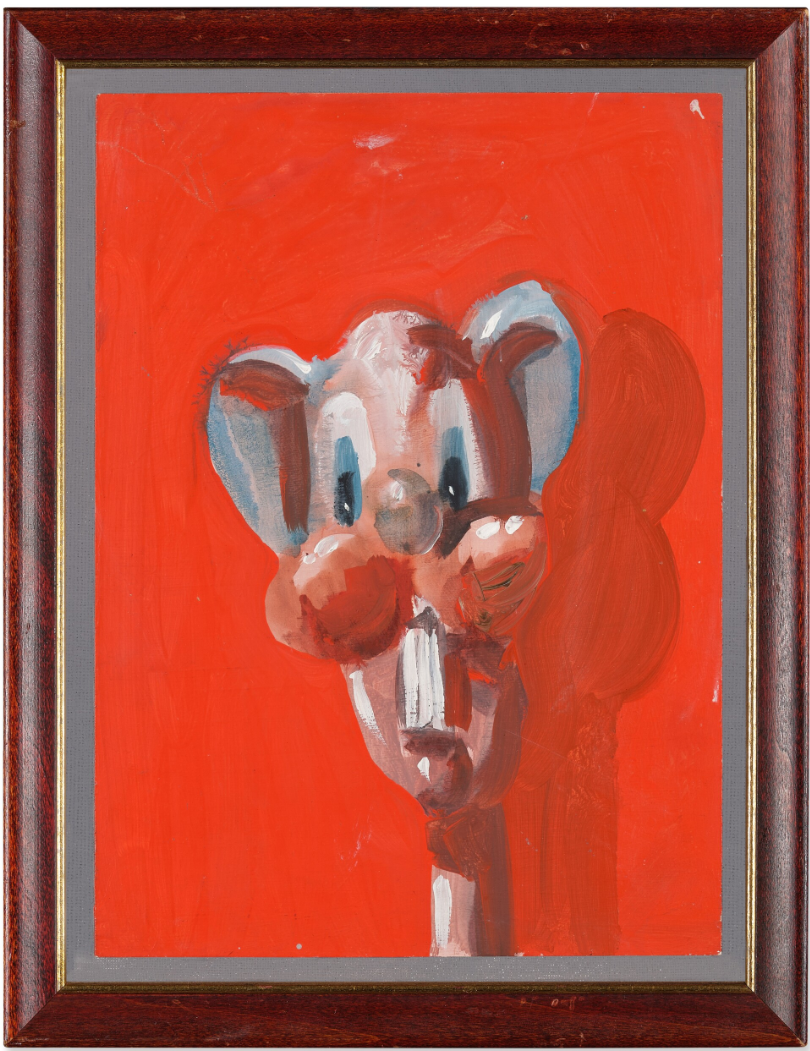
GEORGE CONDO (b. 1957)
Awakening, 1996
Oil on panel mounted to artist’s board
12×9 inches (30.5 x 22.9 cm)
Signed Condo, dated 1996 and variously inscribed (on the reverse)
#33. Portrait of Marie Antoinette’s Three Eyes, 1989
Christie’s London: 29 June 2023
Estimated: GBP 120,000 – 180,000
GBP 100,800 / USD 127,160
GEORGE CONDO (B. 1957) (christies.com)
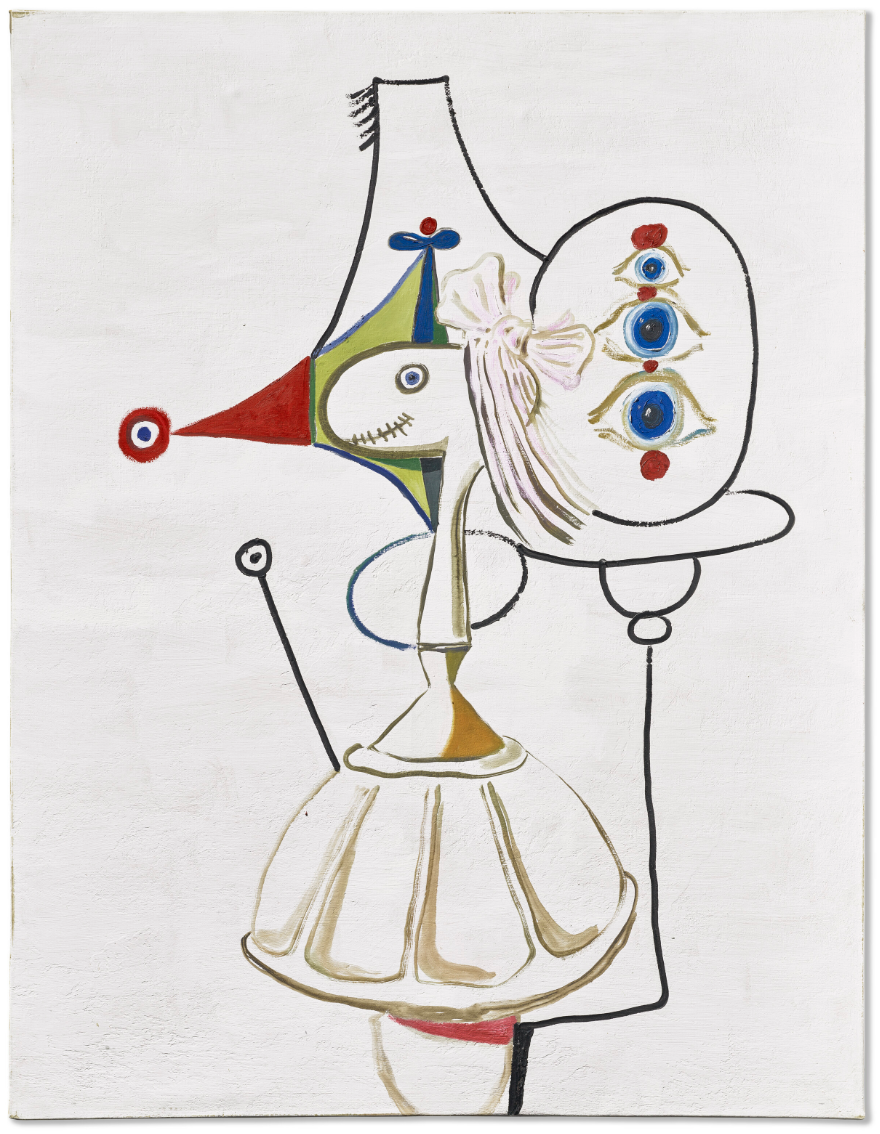
GEORGE CONDO (B. 1957)
Portrait of Marie Antoinette’s Three Eyes, 1989
Oil on canvas
51 1/8 x 39 5/8 inches (130 x 100.5 cm)
#35. Visions of the Dying Bird Species, 1990
Christie’s London: 14 October 2023
Estimated: GBP 80,000 – 120,000
GBP 100,800 / USD 122,226
GEORGE CONDO (B. 1957), Visions of the Dying Bird Species | Christie’s (christies.com)
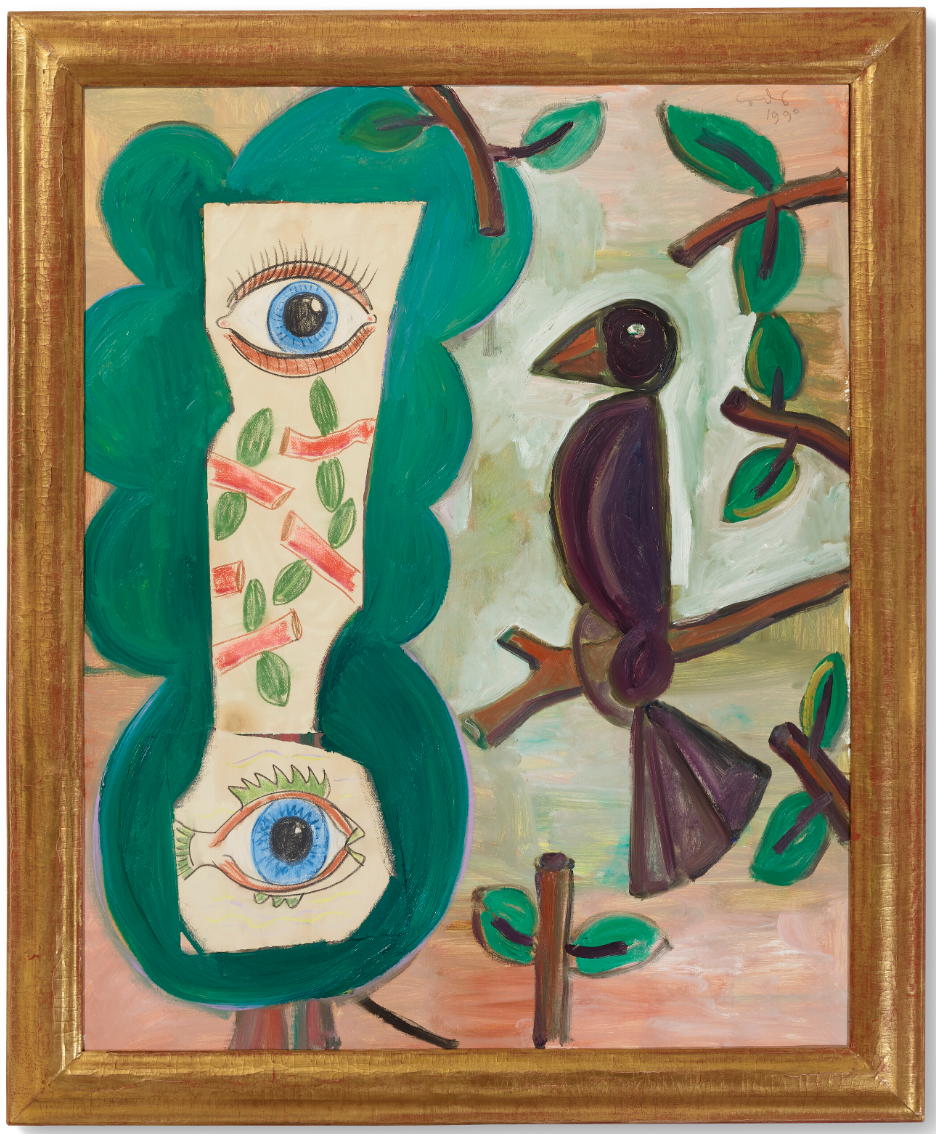
GEORGE CONDO (B. 1957)
Visions of the Dying Bird Species, 1990
Oil, pastel and paper collage on canvas
50 3/4 x 40 3/8 inches (129 x 102.6 cm)
Signed and dated ‘Condo 1990’ (upper right)
#36. Lord Jim, 2000
Sotheby’s London: 18 April 2023
Estimated: GBP 80,000 – 120,000
GBP 95,250 / USD 118,293
Lord Jim | Contemporary Curated | 2023 | Sotheby’s (sothebys.com)
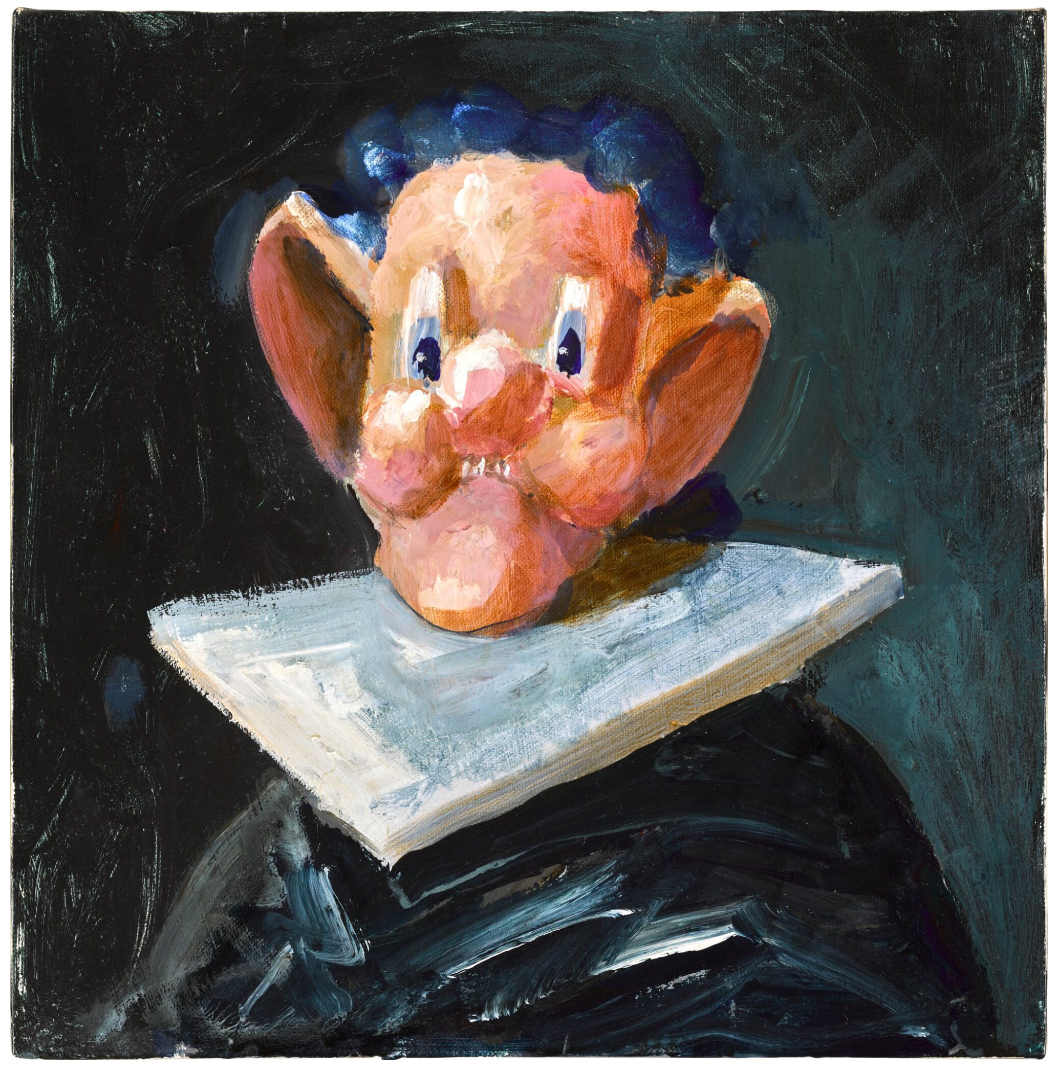
GEORGE CONDO (b. 1957)
Lord Jim, 2000
Oil on canvas
12 x 11 3/4 inches (30.5 x 30 cm)
Signed, titled and dated 2000 on the reverse
#37. Gray Portrait (The End of Vietnam), 1989
Phillips London: 6 December 2023
Estimated: GBP 70,000 – 100,000
GBP 88,900 / USD 111,894
George Condo – New Now London Lot 27 December 2023 | Phillips
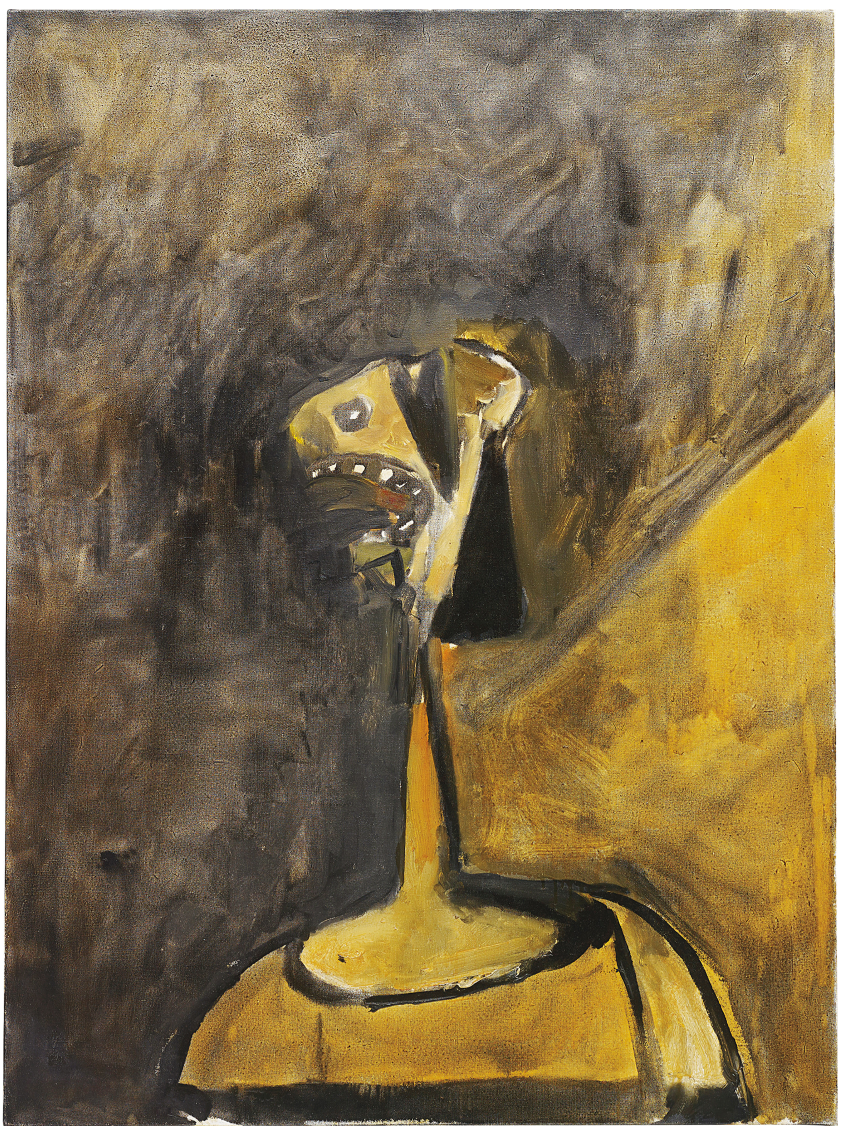
GEORGE CONDO
Gray Portrait (The End of Vietnam), 1989
Oil on linen
46×34 inches (116.4 x 86.5 cm)
USD 100,000
Two works: (i) Expecting Graces; (ii) Deciding Fates, 1985
Phillips New-York: 20 November 2024
Estimated: USD 40,000 – 60,000
USD 99,060
George Condo – Modern & Contempora… Lot 365 November 2024 | Phillips
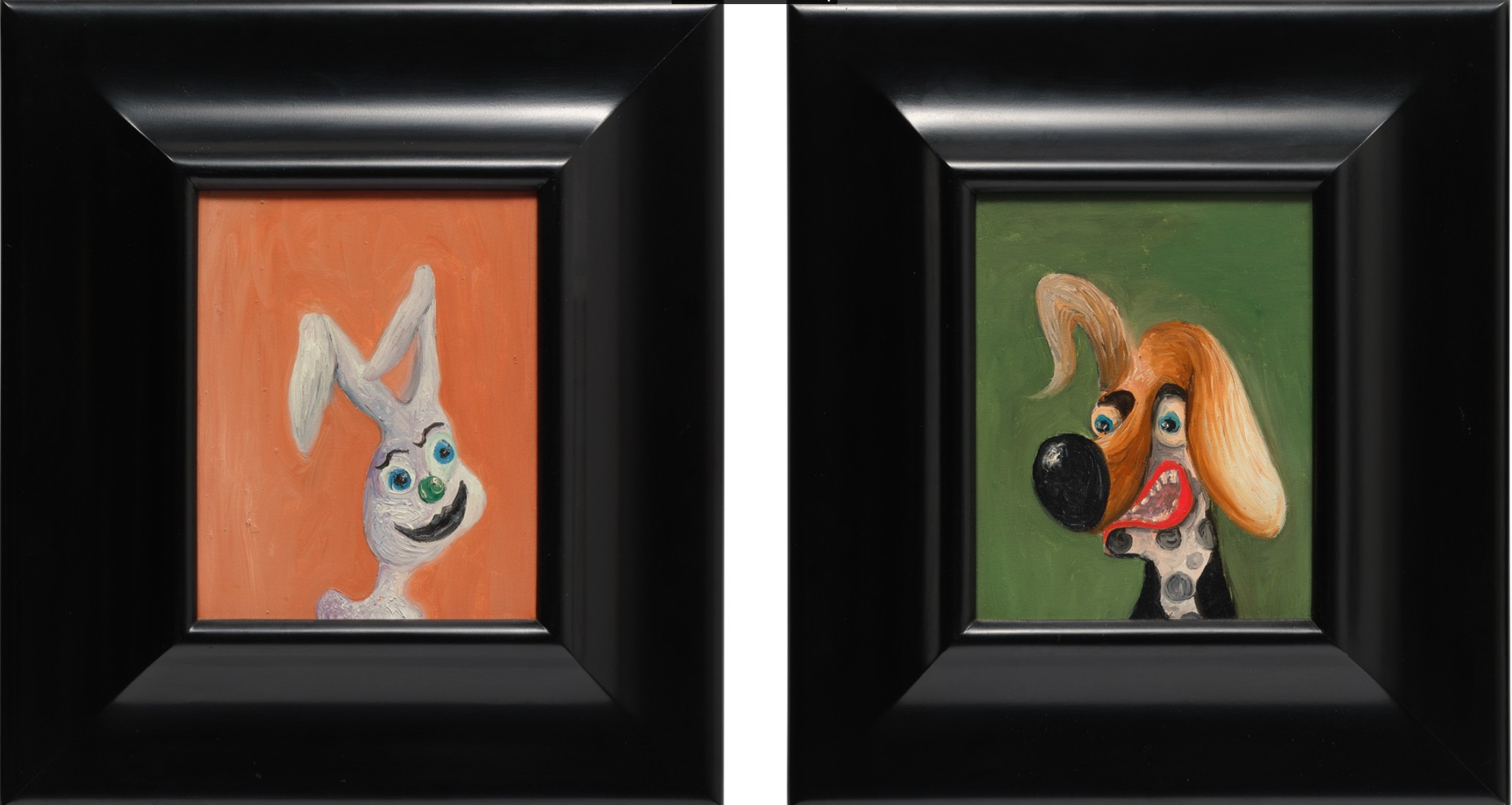
GEORGE CONDO
Two works: (i) Expecting Graces; (ii) Deciding Fates, 1985
Oil and watercolor on canvas
Each: 10×8 inches (25.4 x 20.3 cm)
(i) signed, titled and dated “April 30th 1985 Condo Expecting graces” on the reverse
(ii) signed, titled and dated “April 30th 1985 Condo deciding fates” on the reverse
#40. Untitled, 1984
Phillips New-York: 8 March 2023
Estimated: USD 40,000 – 60,000
USD 95,250
George Condo – New Now New York Lot 28 March 2023 | Phillips
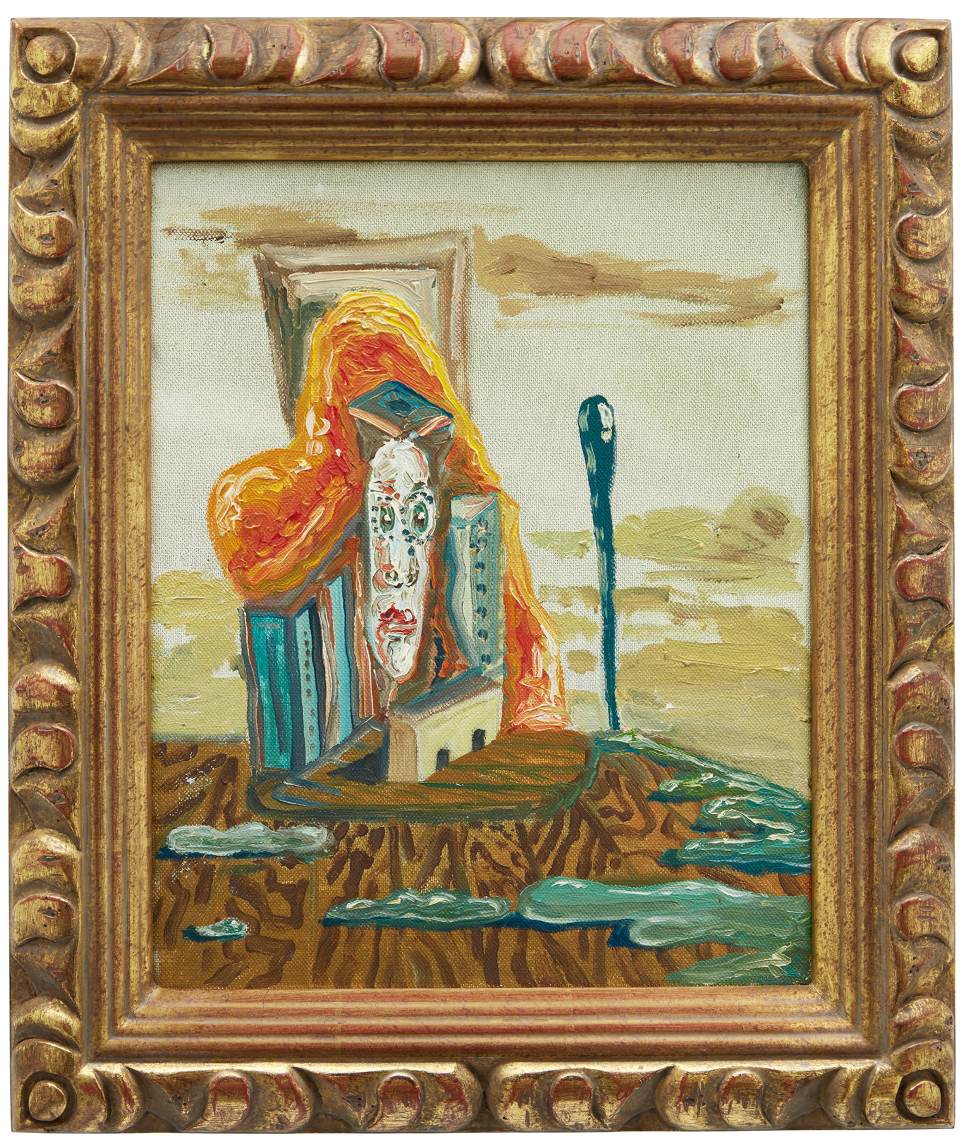
GEORGE CONDO
Untitled, 1984
Oil on canvas, in artist’s frame
12 x 9 1/2 inches (30.5 x 24.1 cm)
Signed and dated “Condo 5-84” on the stretcher
#42. The Trashman, 2008
Sotheby’s New-York: 9 March 2023
Estimated: USD 60,000 – 80,000
USD 88,900
The Trashman | Contemporary Curated | 2023 | Sotheby’s (sothebys.com)
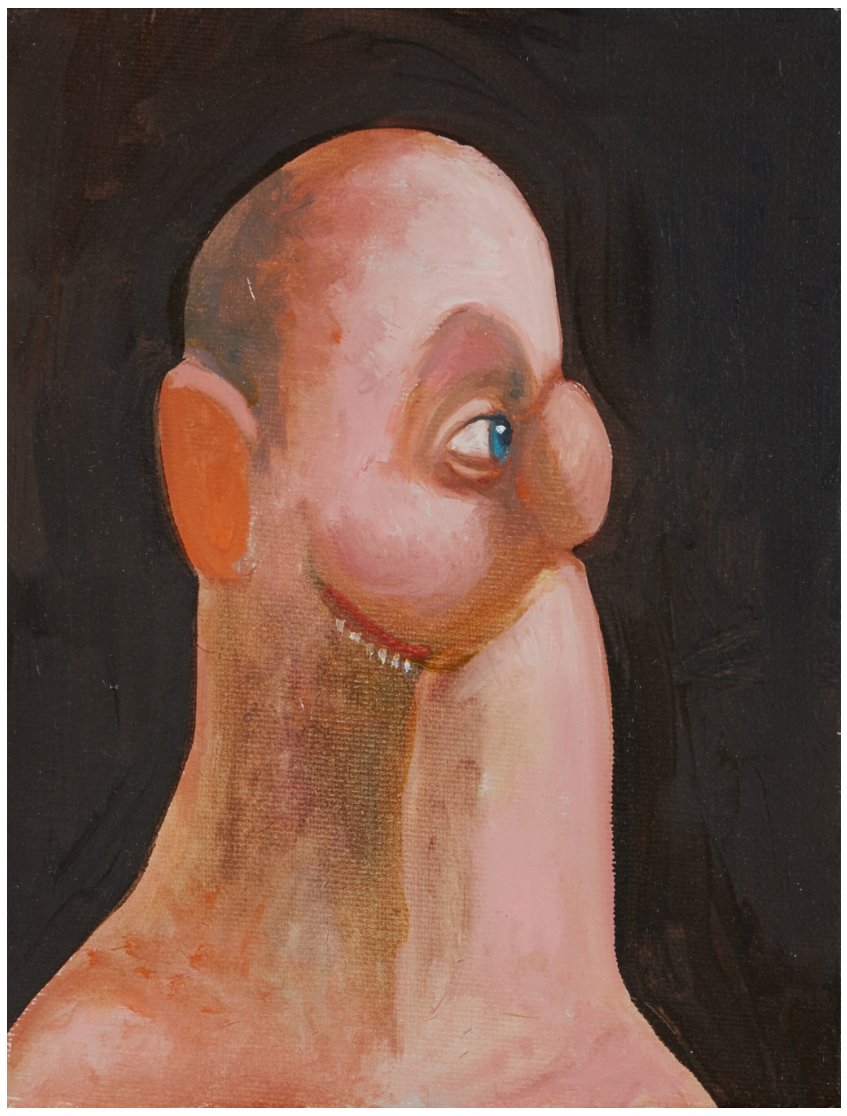
GEORGE CONDO (b. 1957)
The Trashman, 2008
Oil on canvas
8×6 inches (20.3 x 15.2 cm)
Signed and dated 08 (on the reverse)
#43. Torro, 1984
Phillips New-York: 15 November 2023
Estimated: USD 20,000 – 30,000
USD 82,550
George Condo – 20th Century & Cont… Lot 211 November 2023 | Phillips
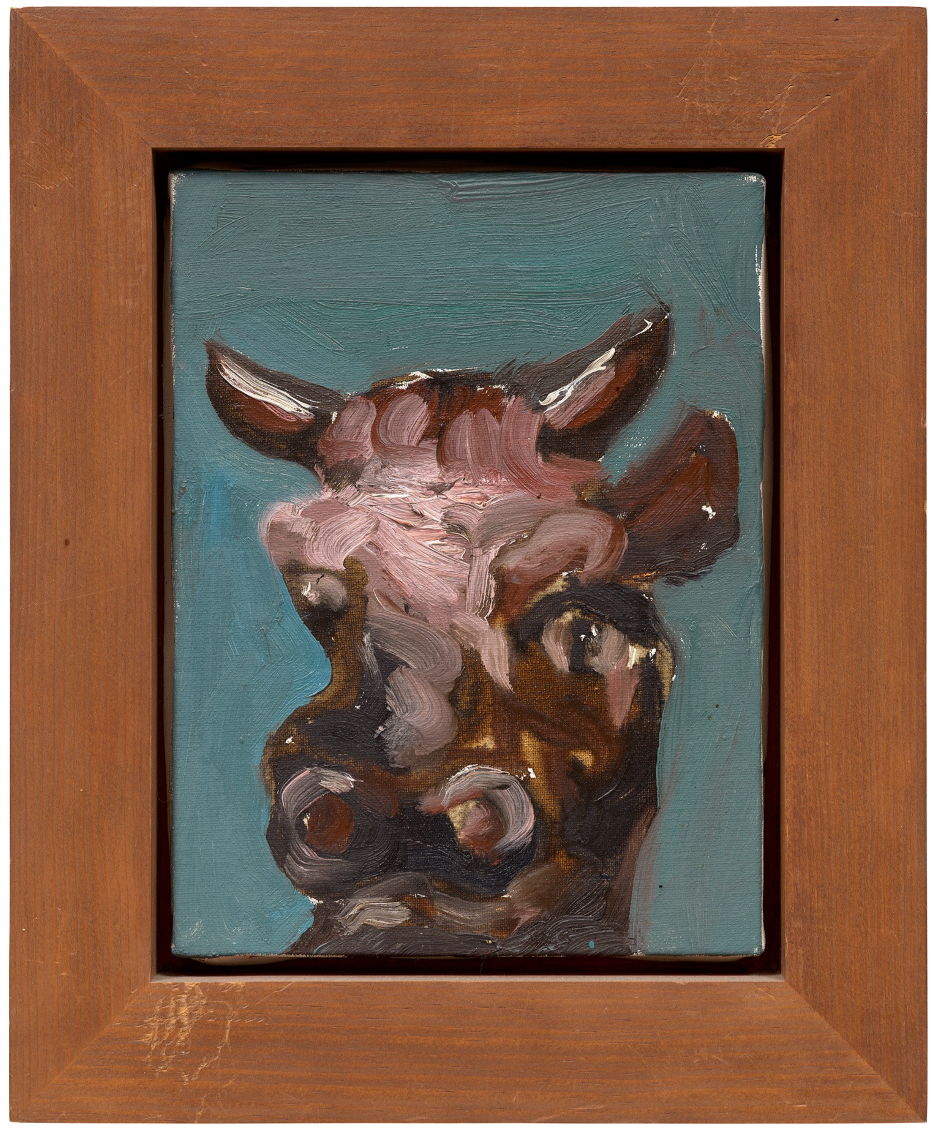
GEORGE CONDO
Torro, 1984
Oil on canvas, in artist’s frame
13 1/2 x 11 inches (34.3 x 27.9 cm)
#44. The King, 1984
Phillips New-York: 15 November 2023
Estimated: USD 30,000 – 40,000
USD 63,500
George Condo – 20th Century & Cont… Lot 209 November 2023 | Phillips
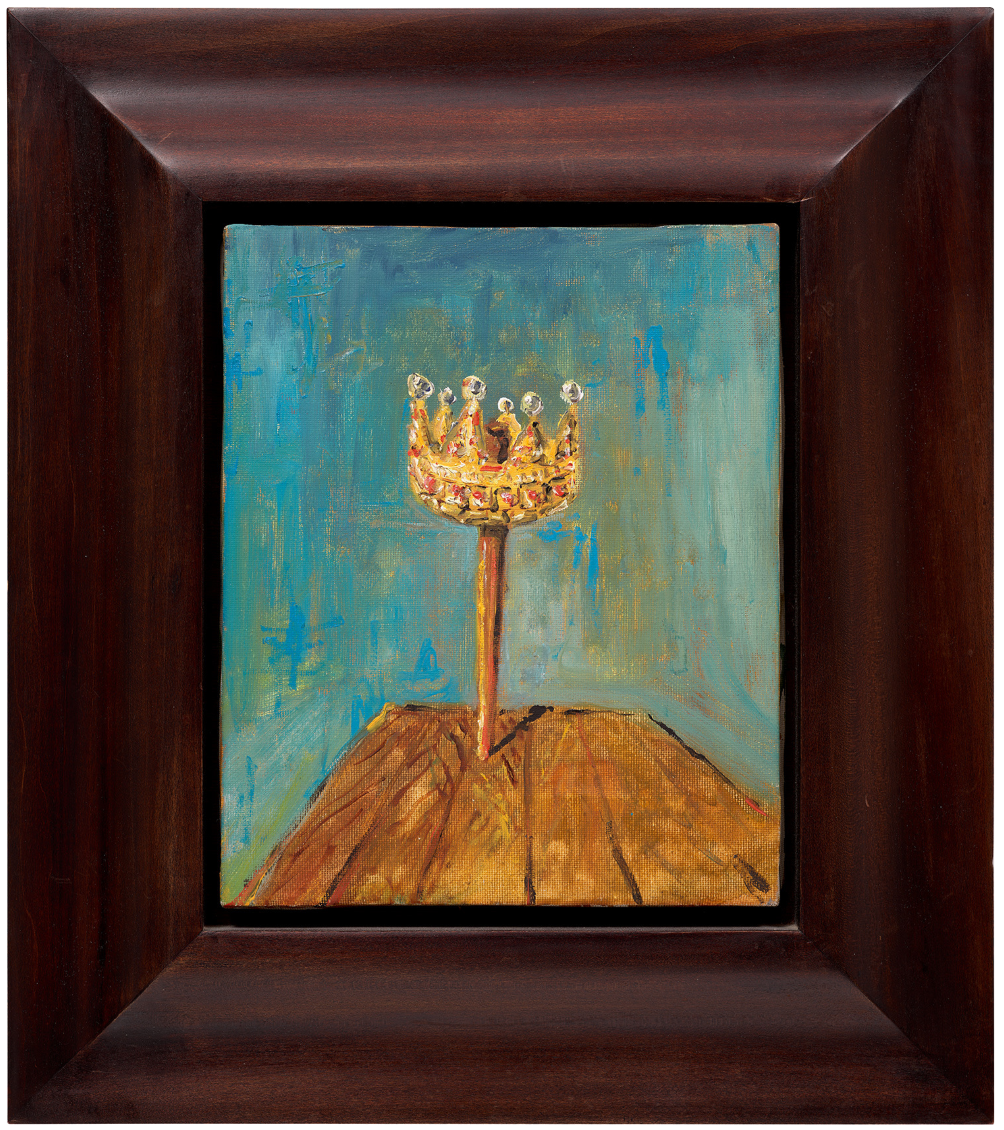
GEORGE CONDO
The King, 1984
Oil on canvas, in artist’s frame
18 x 15 3/4 inches (45.7 x 40 cm)
Signed, titled and dated “The King Condo 84-9” on the stretcher
#47. Still Life, 1984
Phillips New-York: 15 November 2023
Estimated: USD 20,000 – 30,000
USD 50,800
George Condo – 20th Century & Cont… Lot 210 November 2023 | Phillips
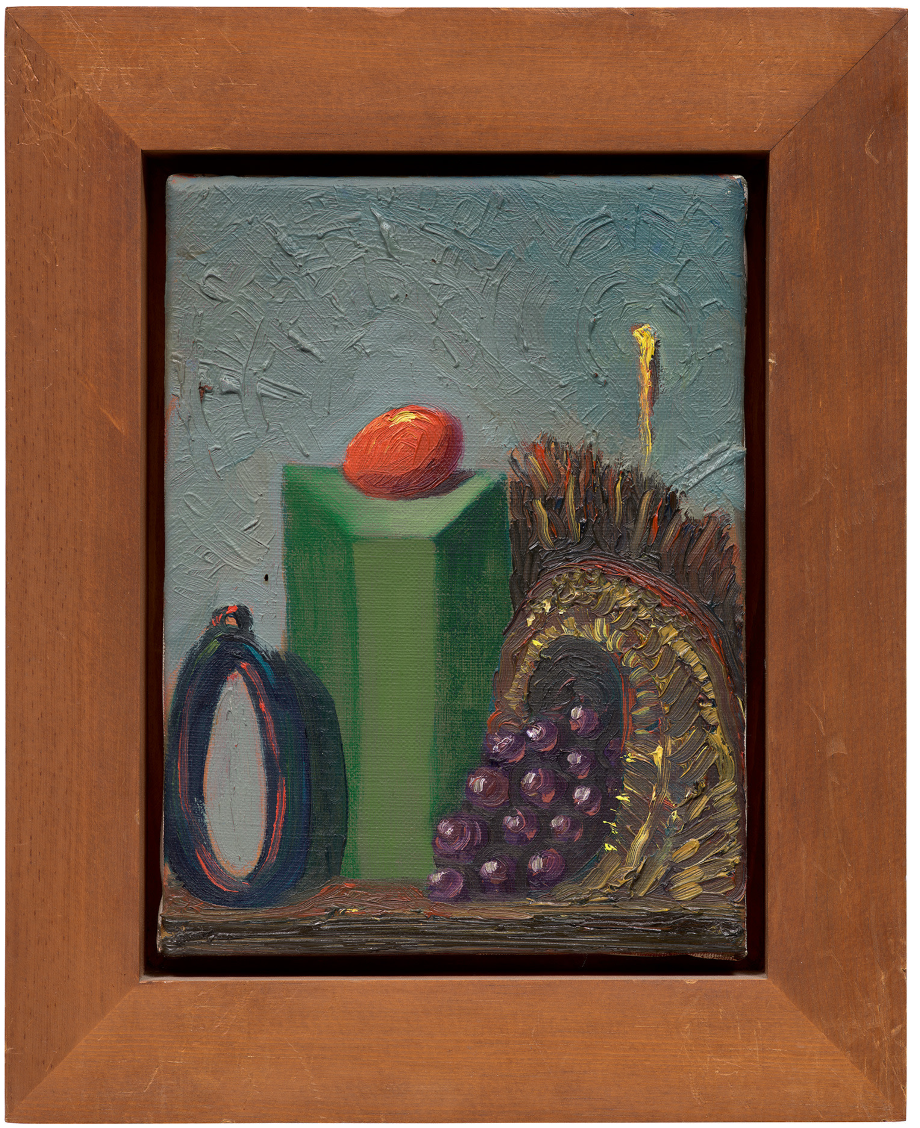
GEORGE CONDO
Still Life, 1984
Oil on canvas, in artist’s frame
13 3/4 x 11 1/8 inches (34.9 x 28.3 cm)
Signed, titled and dated “Still Life CONDO 84” on the reverse
Untitled, 1984
Phillips New-York: 20 November 2024
Estimated: USD 20,000 – 30,000
USD 38,100
George Condo – Modern & Contempora… Lot 366 November 2024 | Phillips
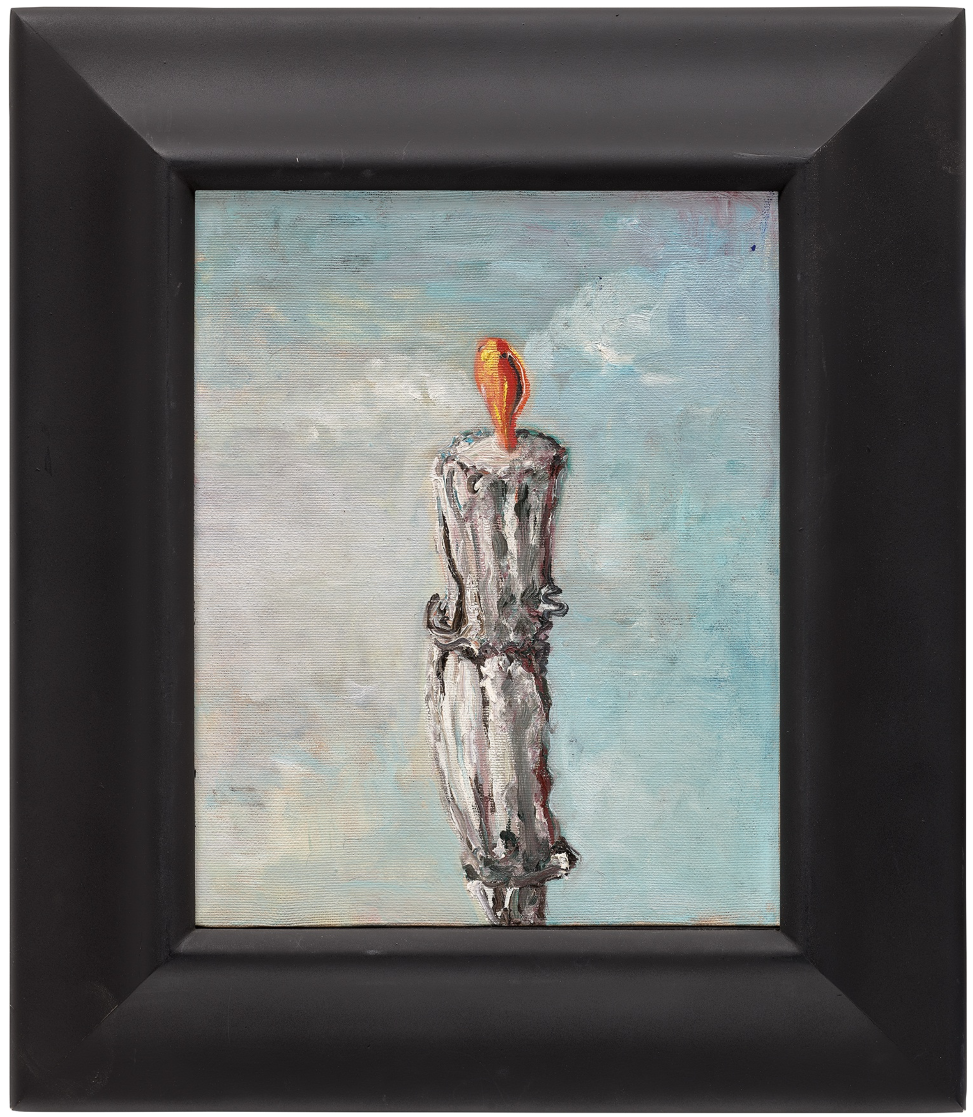
GEORGE CONDO
Untitled, 1984
Oil on canvas
11 7/8 x 9 1/2 inches (30.2 x 24.1 cm)
Signed and dated “Condo 84” on the reverse
2022 Auction Results
FOR PAINTINGS ONLY
50 lots sold at auction in 2022, for a total turnover of USD 37,146,421. With 6 lots unsold, the sell-through rate is a solid 89%. The most expensive lot, Escaping from the Dark, dated 2017, sold at Sotheby’s in Hong-Kong on 30 November 2022 for HKD 36,450,000 (USD 4,670,083). 8 lots sold over USD 1 million, for a cumulative turnover of USD 21,543,509, representing 58% of the total turnover for 2022. The two most expensive lots were sold in Hong-Kong.
2022 Top 6 Lots
#1. Escaping from the dark, 2017
Christie’s Hong-Kong: 30 November 2022
Estimated: HKD 32,00,000 – 48,000,000
HKD 36,450,000 / USD 4,670,083
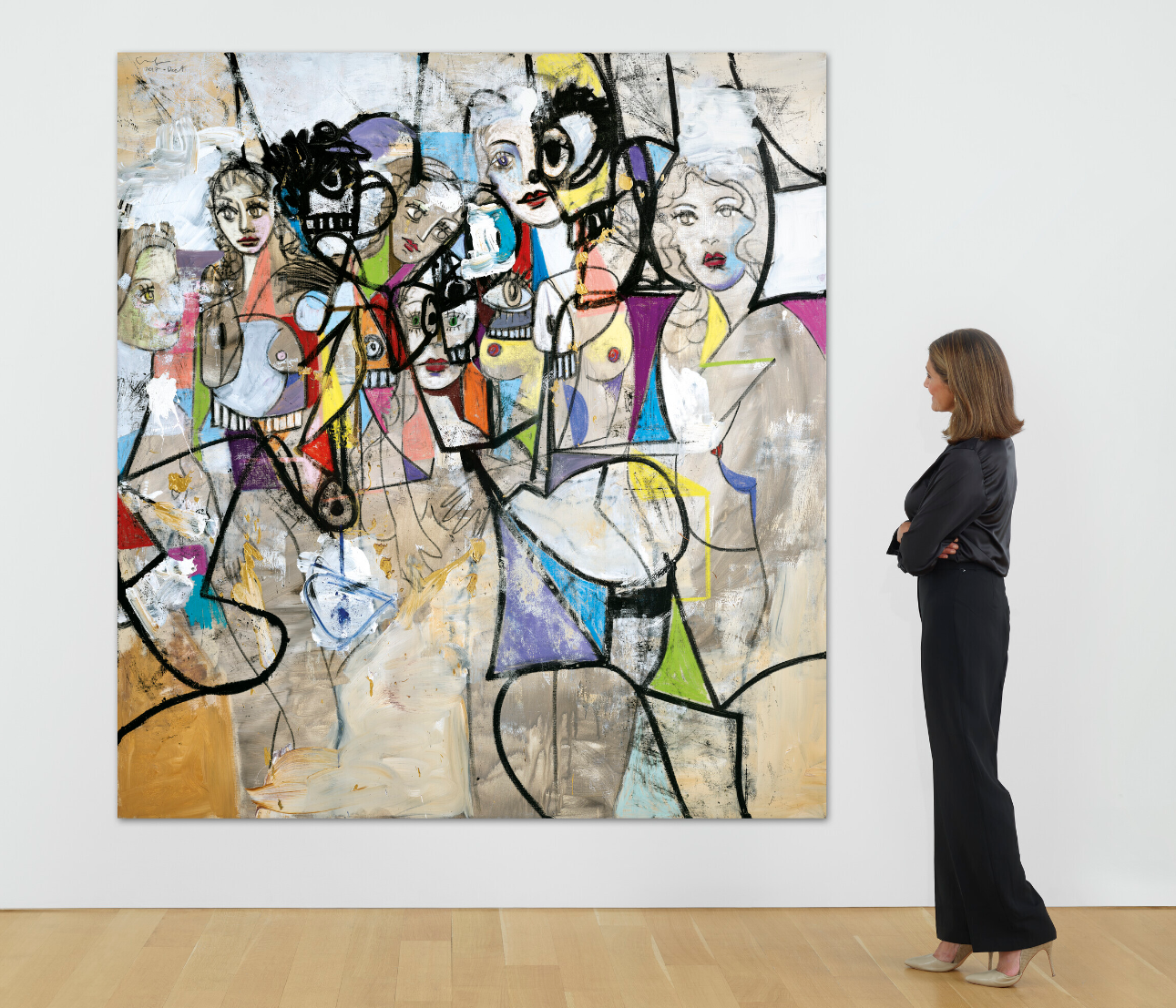
GEORGE CONDO (B. 1957)
Escaping from the dark, 2017
Acrylic, metallic paint, pigment stick, charcoal and pastel on linen
80 x 74 1/8 inches (203.2 x 188.3 cm)
Signed and dated ‘Condo 2017-Dec 7’ (upper left)
#2. Transparent Female Forms, 2009
Phillips Hong-Kong: 22 June 2022
Estimated: HKD 25,000,000 – 35,000,000
HKD 36,550,000 / USD 4,656,229
George Condo – 20th Century & Contempora… Lot 9 June 2022 | Phillips
GEORGE CONDO
Transparent Female Forms, 2009
Acrylic, chalk and pastel on linen
77 7/8 x 113 7/8 inches (198.1 x 289.2 cm)
Signed and dated ‘Condo 09’ on the reverse
#3. Green Head Composition, 2013
Sotheby’s London: 2 March 2022
Estimated: GBP 1,500,000 – 2,500,000
GBP 2,334,000 / USD 3,119,903
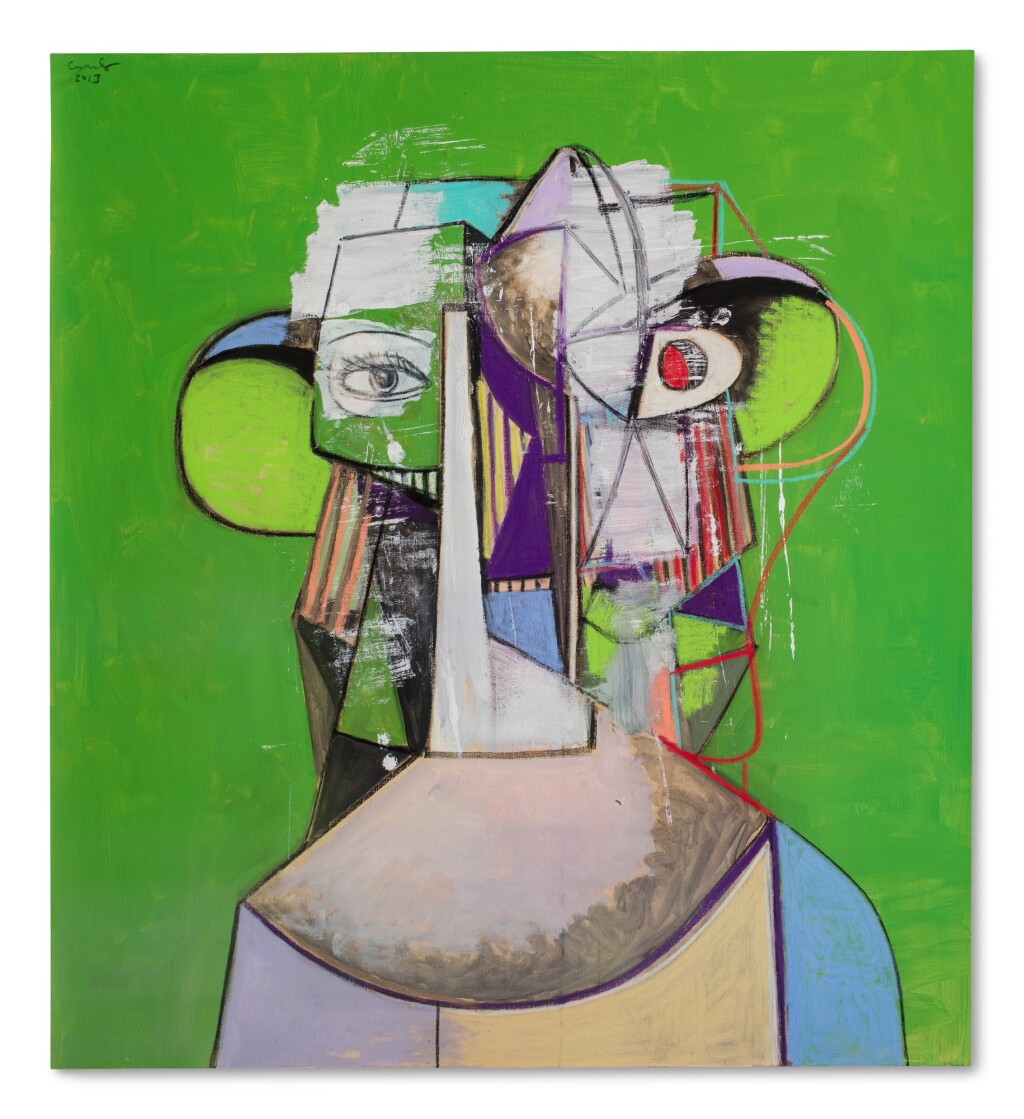
GEORGE CONDO (B. 1957)
Green Head Composition, 2013
Acrylic, charcoal and pastel on linen, in artist’s frame
56×52 inches (142.2 x 132 cm)
#4. Tumbling Forms, 2015
Christie’s New-York: 9 May 2022
Estimated: USD 1,500,000 – 2,500,000
USD 2,820,000
George Condo (b. 1957) (christies.com)
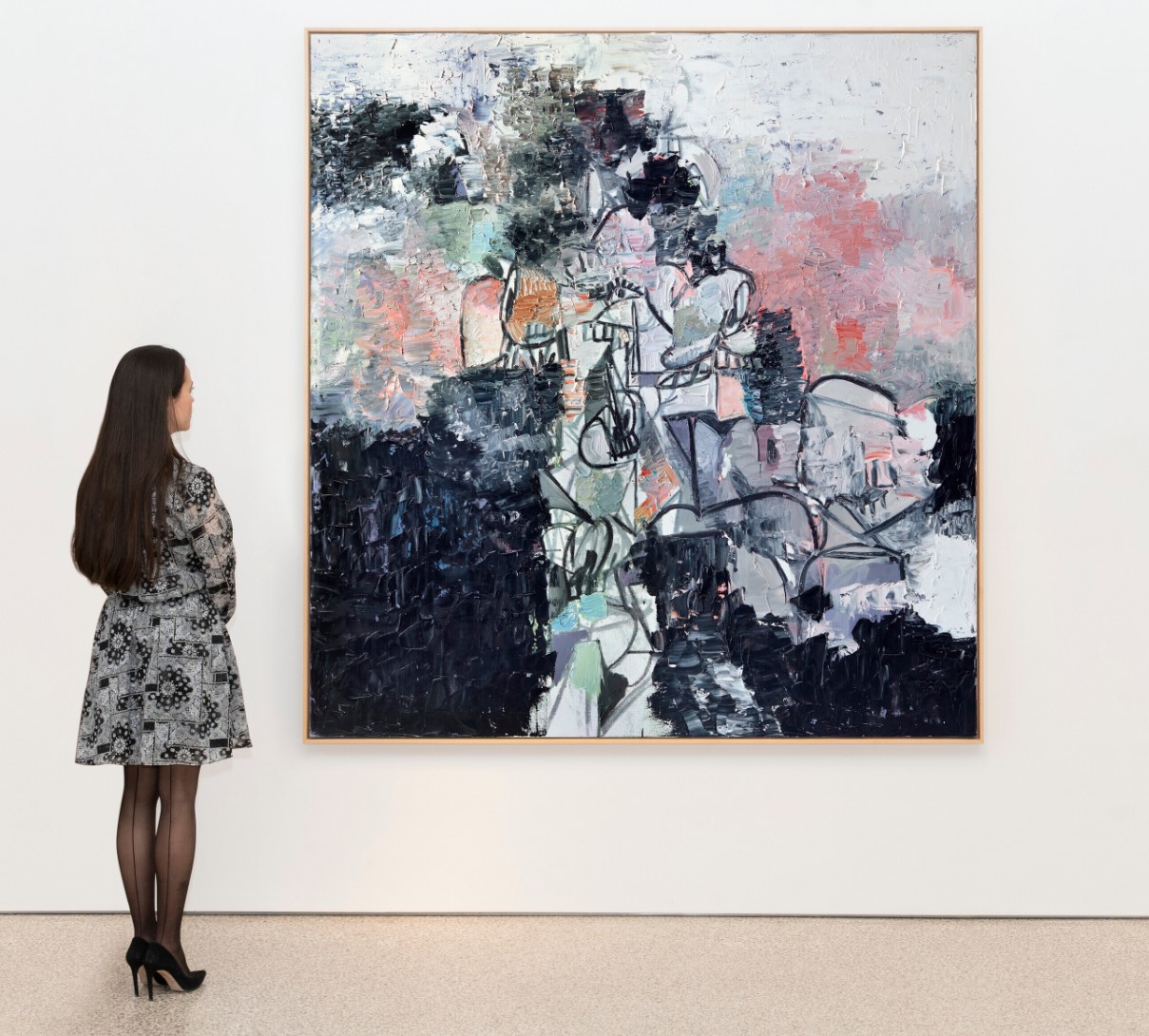
GEORGE CONDO (B. 1957)
Tumbling Forms, 2015
Oil and pigment stick on linen
78×74 inches (198.1 x 188 cm)
#5. The Screaming Smoker, 2020
Sotheby’s New-York: 20 May 2022
Estimated: USD 1,000,000 – 1,500,000
USD 2,228,000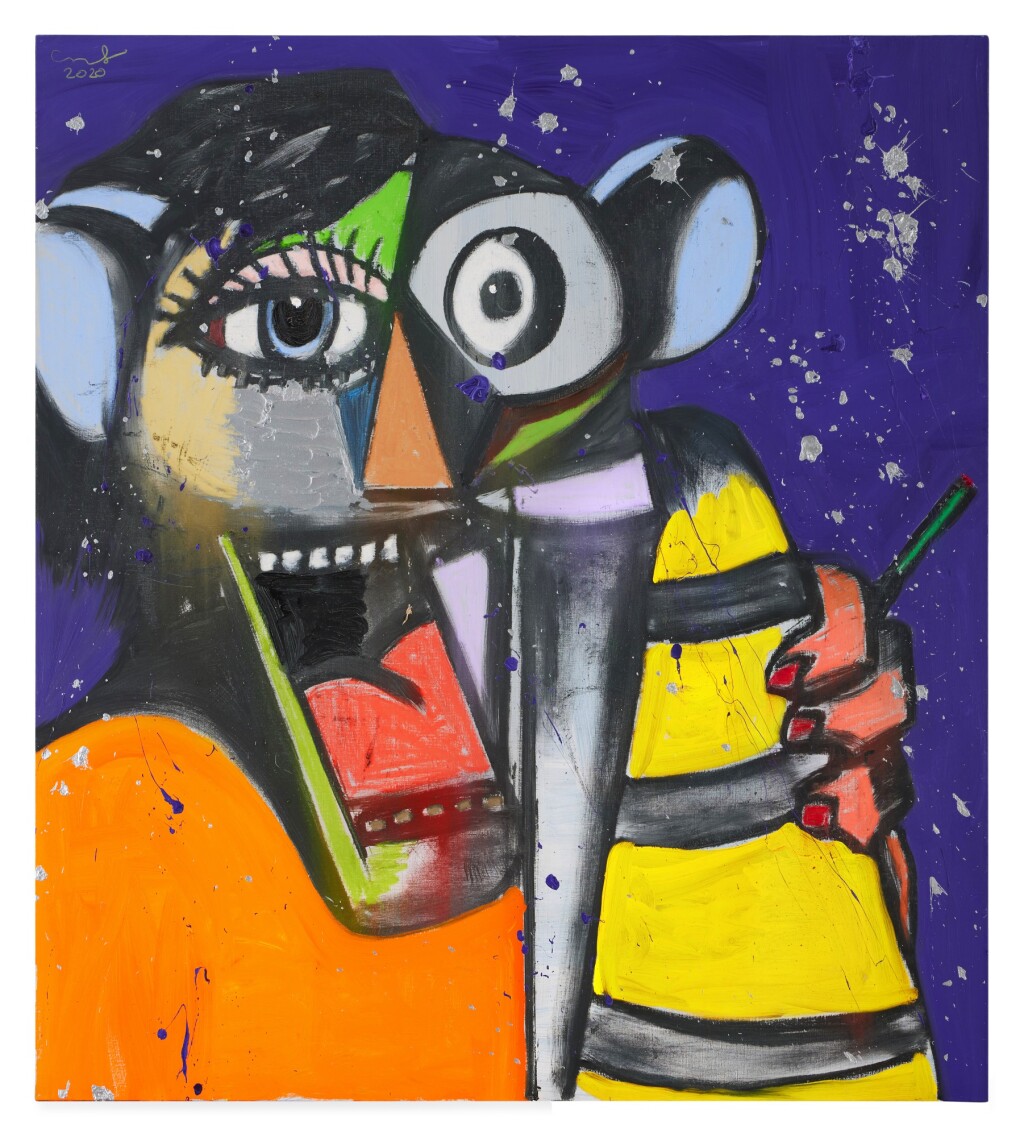
GEORGE CONDO (B. 1957)
The Screaming Smoker, 2020
Acrylic on canvas
56×50 inches (142.2 x 127 cm)
Signed Condo and dated 2020 (upper left)
#6. Linear Composition, 2009
Christie’s London: 27 June 2022
Estimated: GBP 1,200,000 – 1,800,000
GBP 1,542,000 / USD 1,882,094
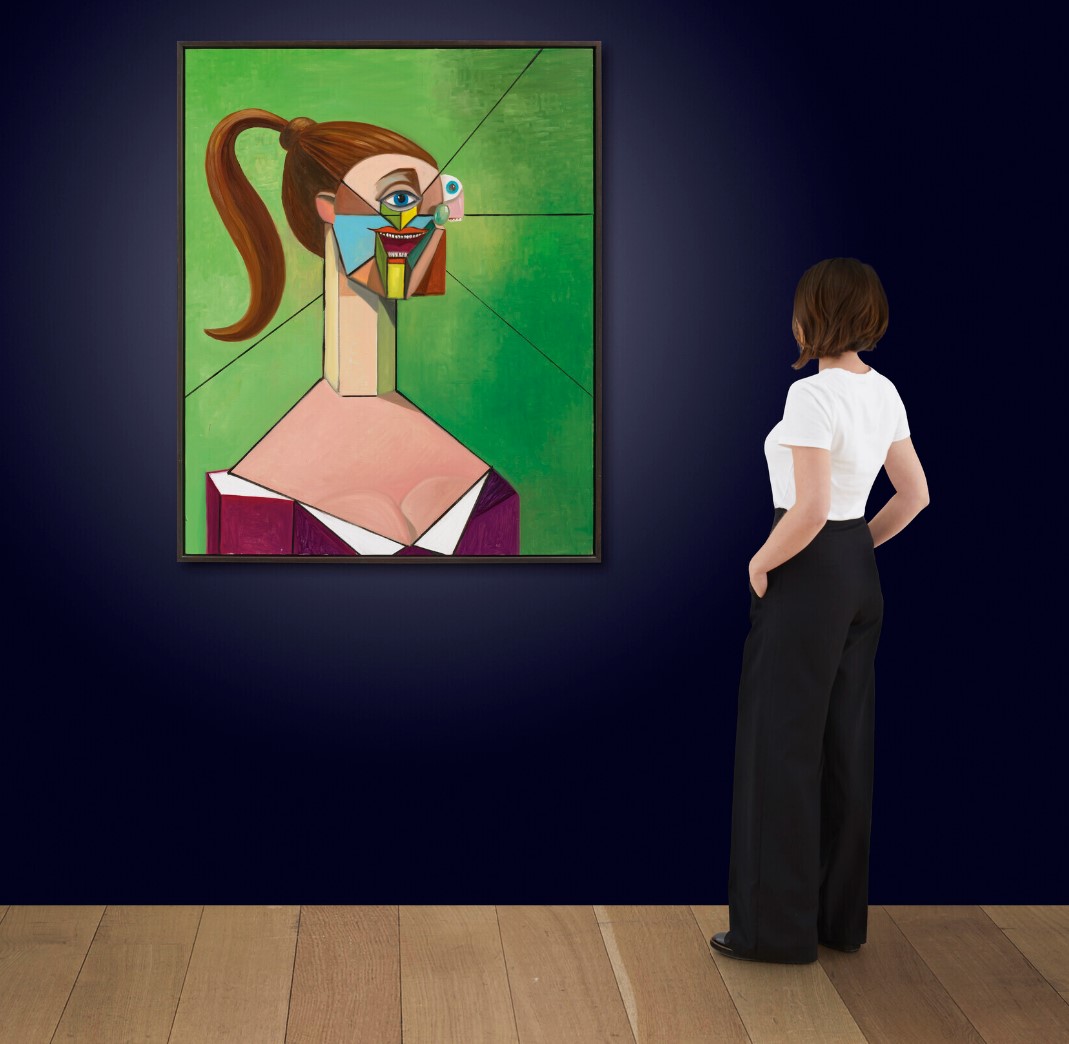
GEORGE CONDO (B. 1957)
Linear Composition, 2009
Oil on linen
52×42 inches (132.1 x 106.7 cm)
Signed and dated ‘Condo 09’ (on the reverse)
#7. Ten Small Portraits, 2001
Sotheby’s New-York: 20 May 2022
Estimated: USD 900,000 – 1,200,000
USD 1,159,200
REPEAT SALE
Sotheby’s London: 25 March 2021
Estimated: GBP 500,000 – 700,000
GBP 1,225,000 / USD 1,680,614
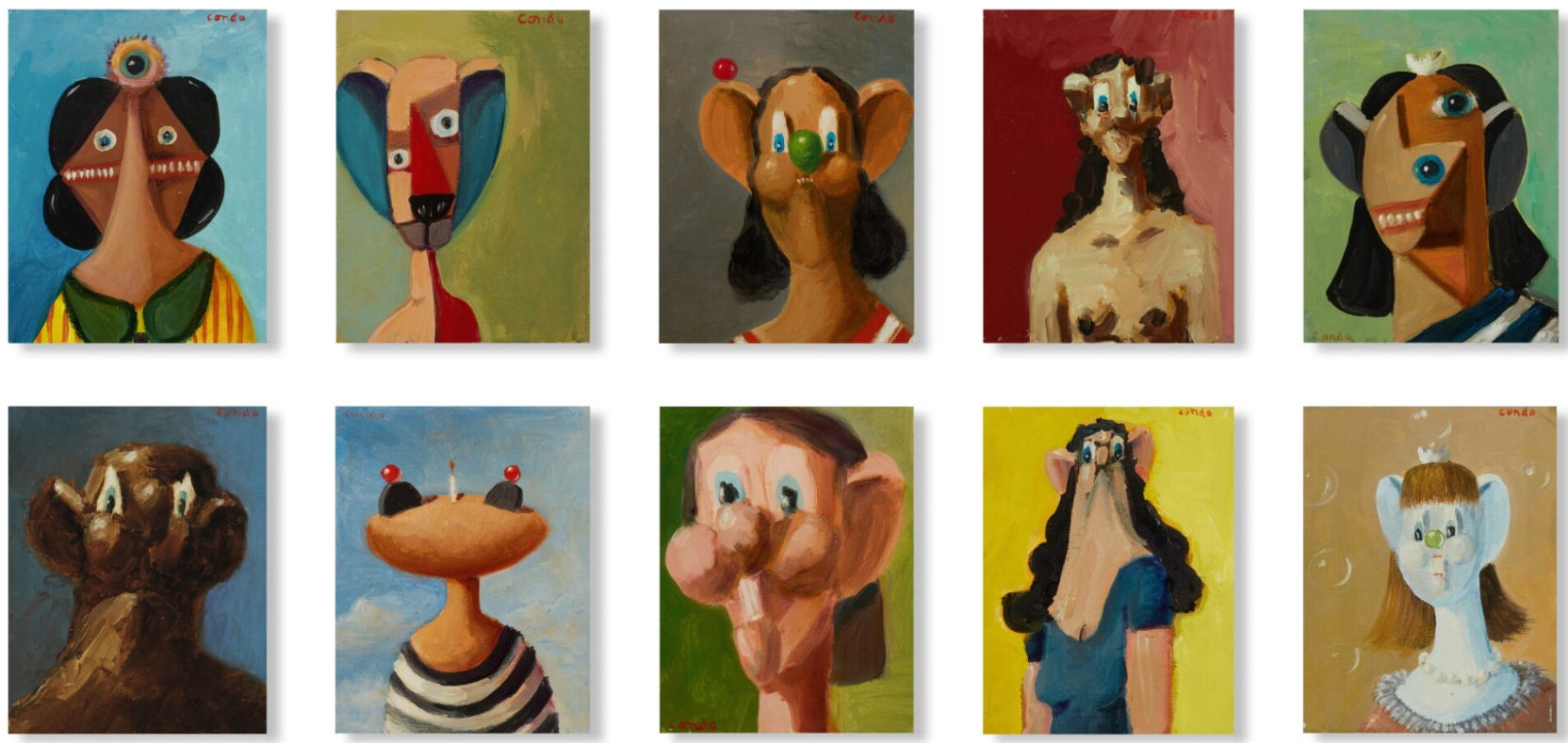
GEORGE CONDO (b. 1957)
Ten Small Portraits, 2001
Oil on canvas, in 10 parts
Each: 7 1/8 x 5 1/2 inches (18.1 x 13.9 cm)
Signed Condo (on each); signed and dated 5/01 (on the reverse of each)
#8. Memories of Bozo’s Father, 2009
Sotheby’s New-York: 20 May 2022
Estimated: USD 600,000 – 800,000
USD 1,008,000
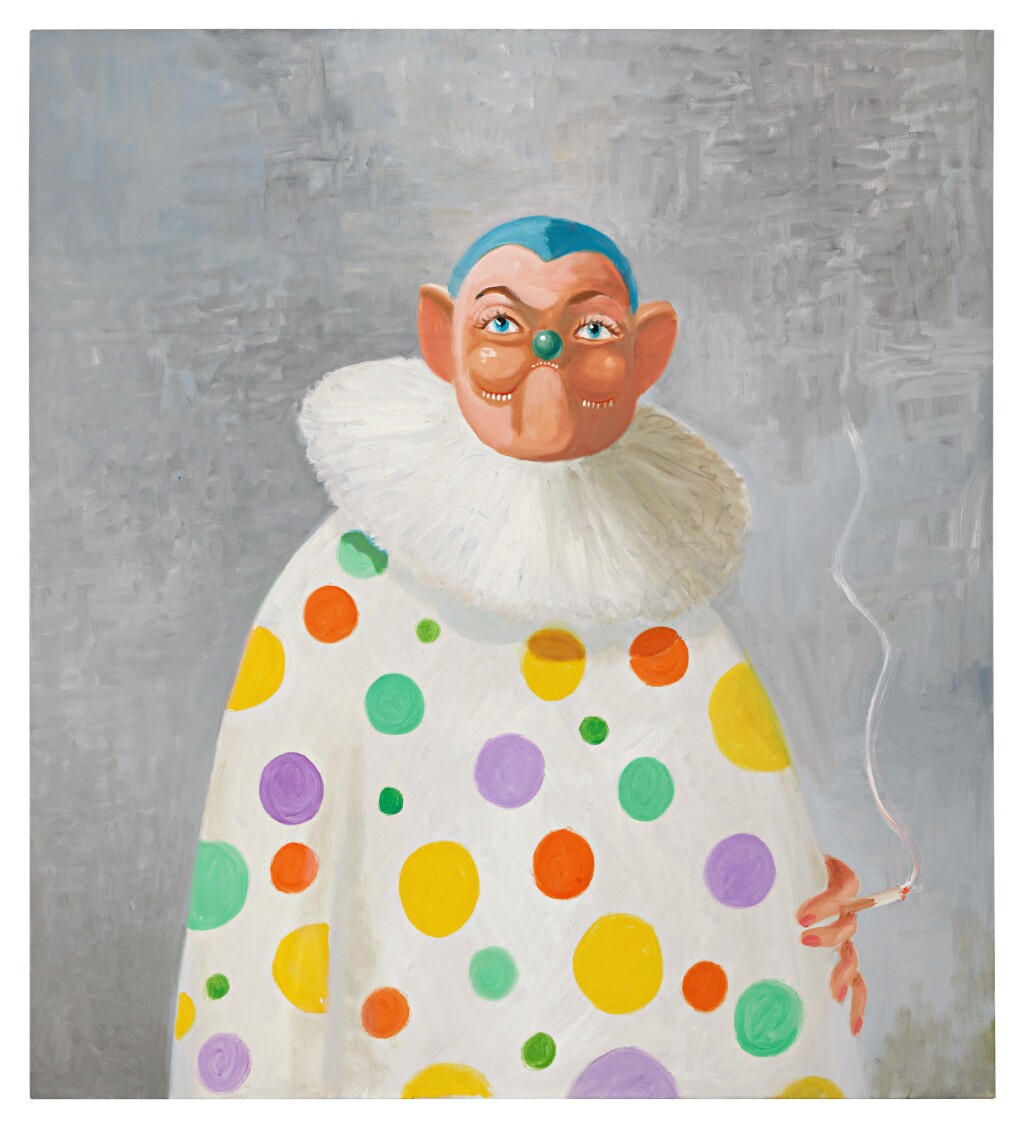
GEORGE CONDO (B. 1957)
Memories of Bozo’s Father, 2009
Oil on linen
40 x 36 1/8 inches (101.6 x 92 cm)
Signed and dated 09 (on the reverse)
#9. Black Jack Sally, 2006
Phillips London: 30 June 2022
GBP 700,000 – 1,000,000
GBP 809,000 / USD 983,706
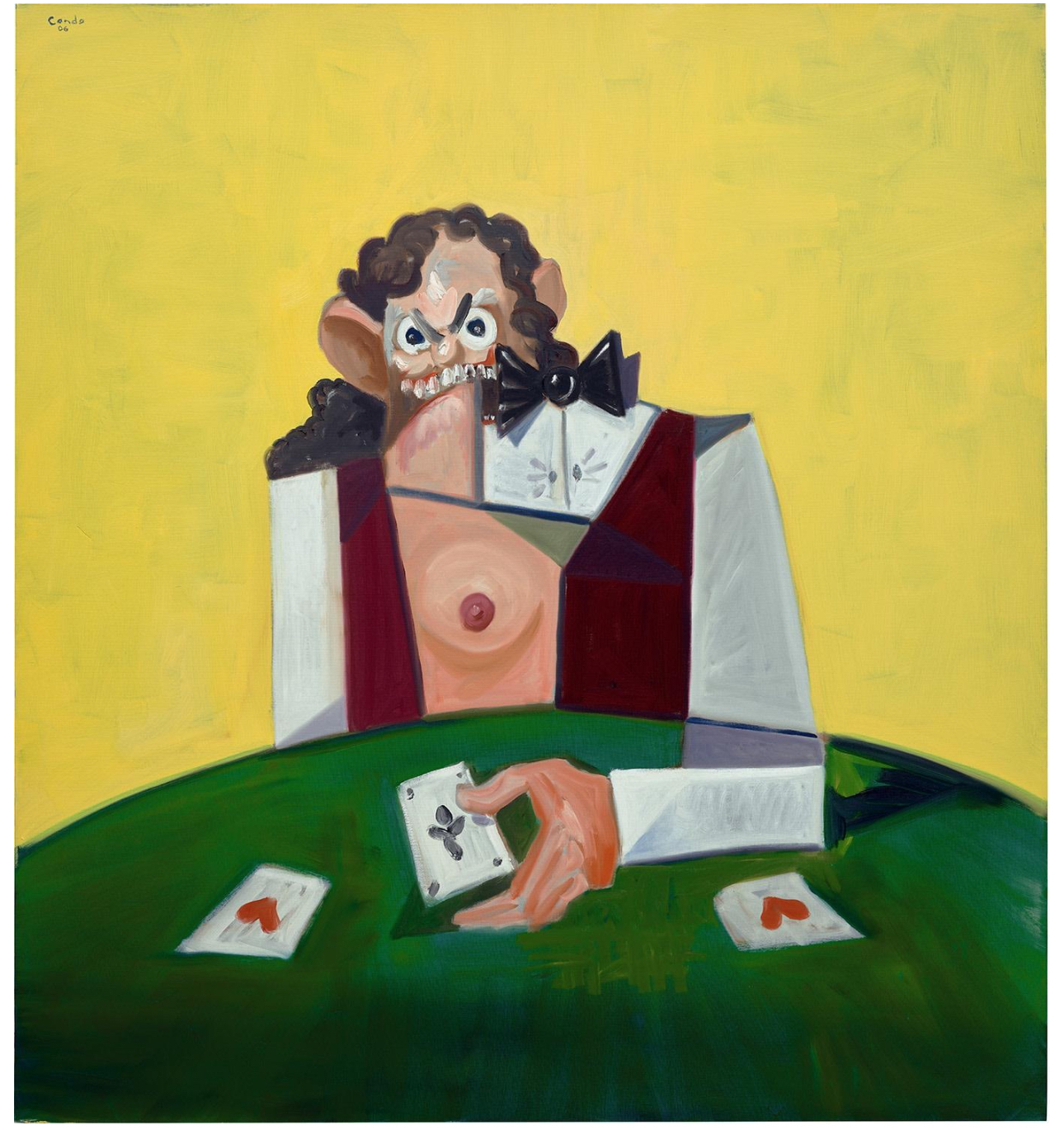
GEORGE CONDO
Black Jack Sally, 2006
Oil on canvas
65×60 inches (165.1 x 152.4 cm)
Signed and dated ‘Condo 06’ upper left; signed and dated ‘Condo 06’ on the reverse
#10. Portrait of Elegant Woman, 2007
Sotheby’s New-York: 17 November 2022
Estimated: USD 700,000 – 1,000,000
USD 882,000
Portrait of Elegant Woman | Contemporary Day Auction | 2022 | Sotheby’s (sothebys.com)
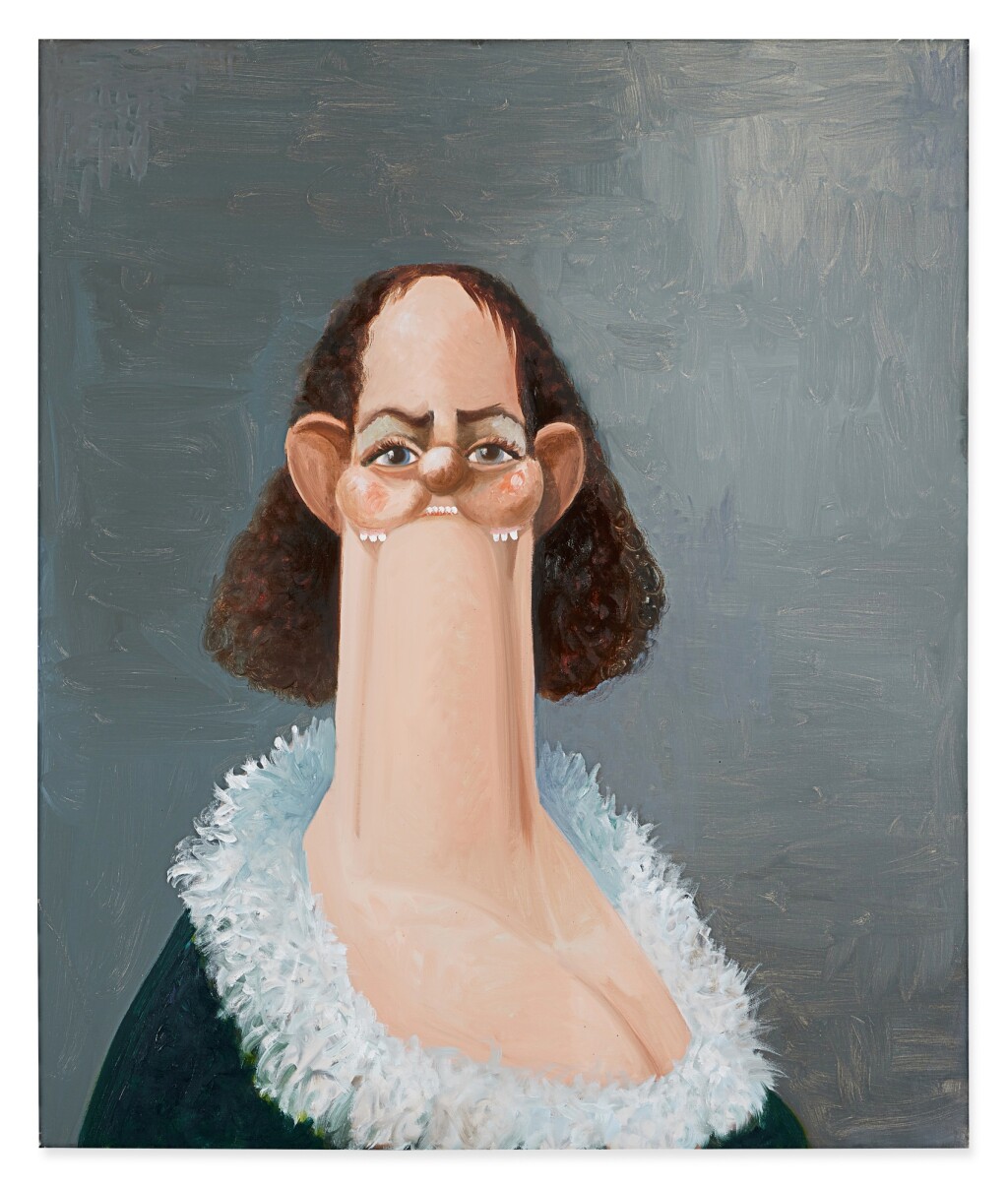
GEORGE CONDO (B. 1957)
Portrait of Elegant Woman, 2007
Oil on canvas
50 x 42 ¼ inches (127 x 107.3 cm)
Signed and dated 07 (on the reverse)
#11. Gestas, 2007
Sotheby’s London: 3 March 2022
Estimated: GBP 600,000 – 800,000
GBP 655,200 / USD 872,785
GEORGE CONDO (b. 1957)
Gestas, 2007
oil on canvas
86×86 inches (218.4 x 218.9 cm)
#12. Untitled, 2007
Phillips New-York: 19 May 2022
Estimated: USD 400,000 – 600,000
USD 816,500
GEORGE CONDO
Untitled, 2007
Oil, pencil and paper collage on canvas, in artist’s frame
42×42 inches (106.7 x 106.7 cm)
Signed and dated “Condo 07” on the overlap
#13. The Diver, 2001
Christie’s New-York: 13 May 2022
Estimated: USD 600,000 – 800,000
USD 756,000
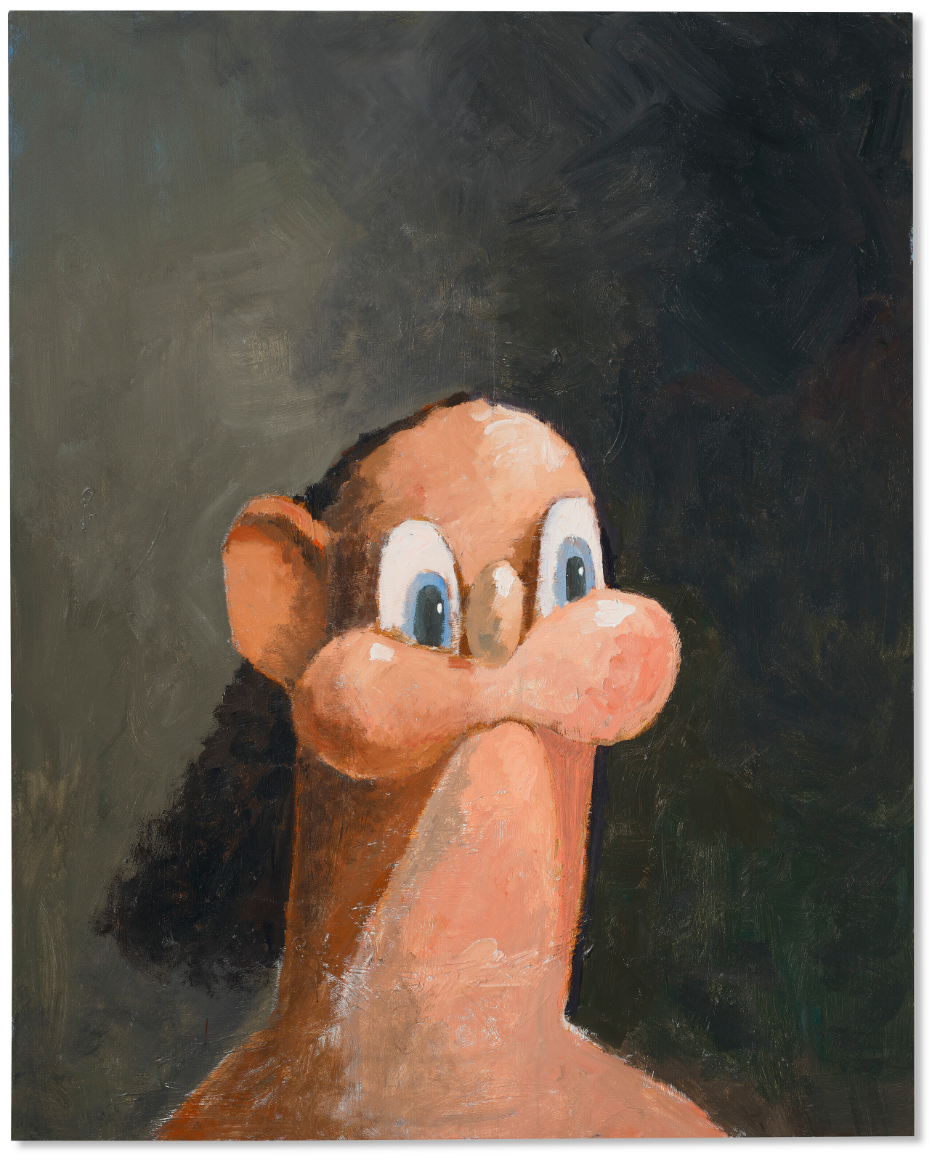
GEORGE CONDO (B. 1957)
The Diver, 2001
Acrylic on canvas
60×48 inches (152.4 x 121.9 cm)
Signed, titled and dated ‘Condo Aug. 01 The Diver’ (on the reverse)
#14. The Rock Thrower, 2007
Phillips London: 3 March 2022
Estimated: GBP 500,000 – 700,000
GBP 567,000 / USD 755,295
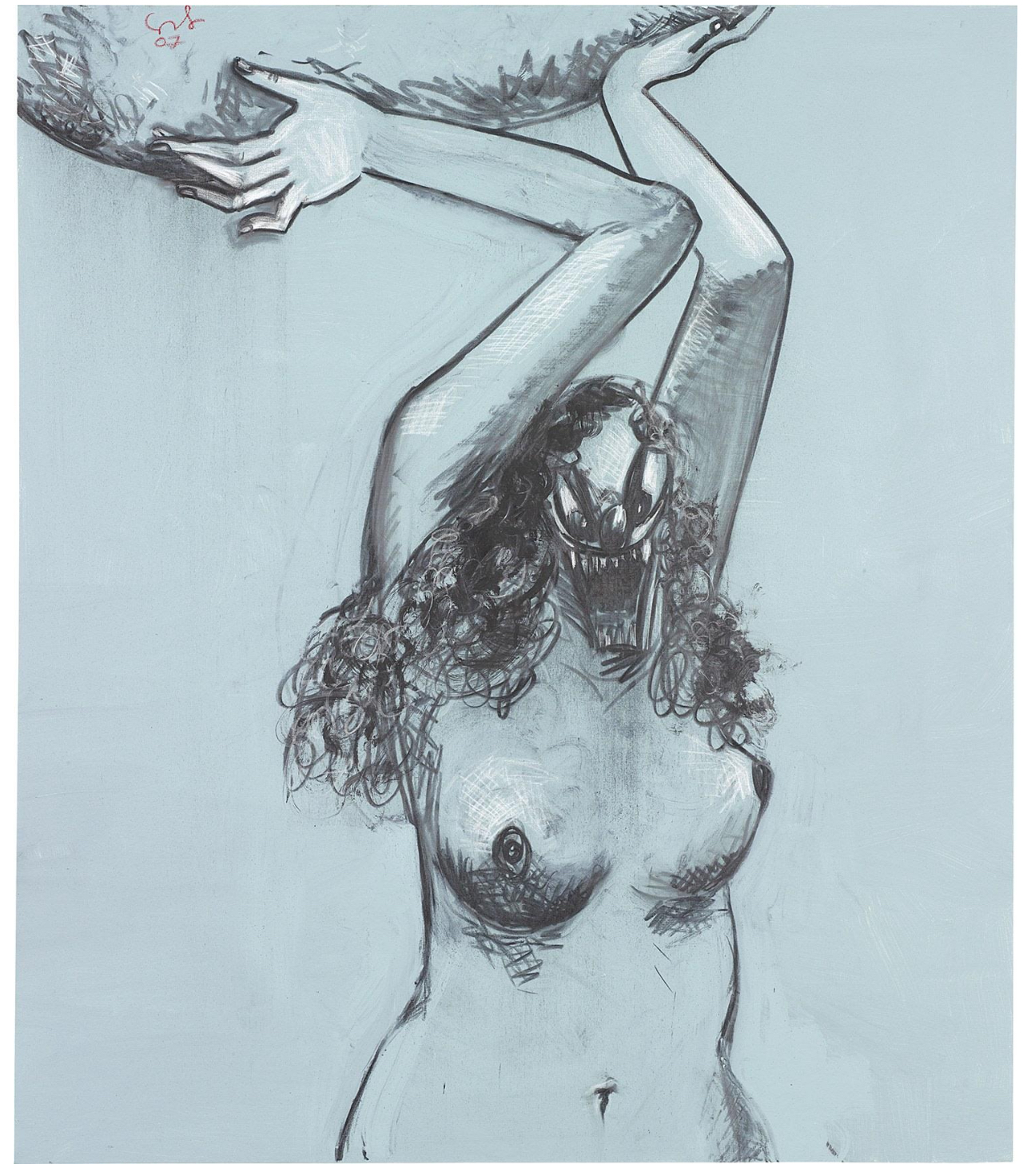
GEORGE CONDO
The Rock Thrower, 2007
Acrylic and charcoal on canvas
52 3/4 x 45 7/8 inches (134 x 116.8 cm)
Signed and dated ‘Condo 07’ upper left
#15. The Cocktail Drinker’s Wife, 2002
Christie’s New-York: 18 November 2022
Estimated: USD 600,000 – 800,000
USD 730,800
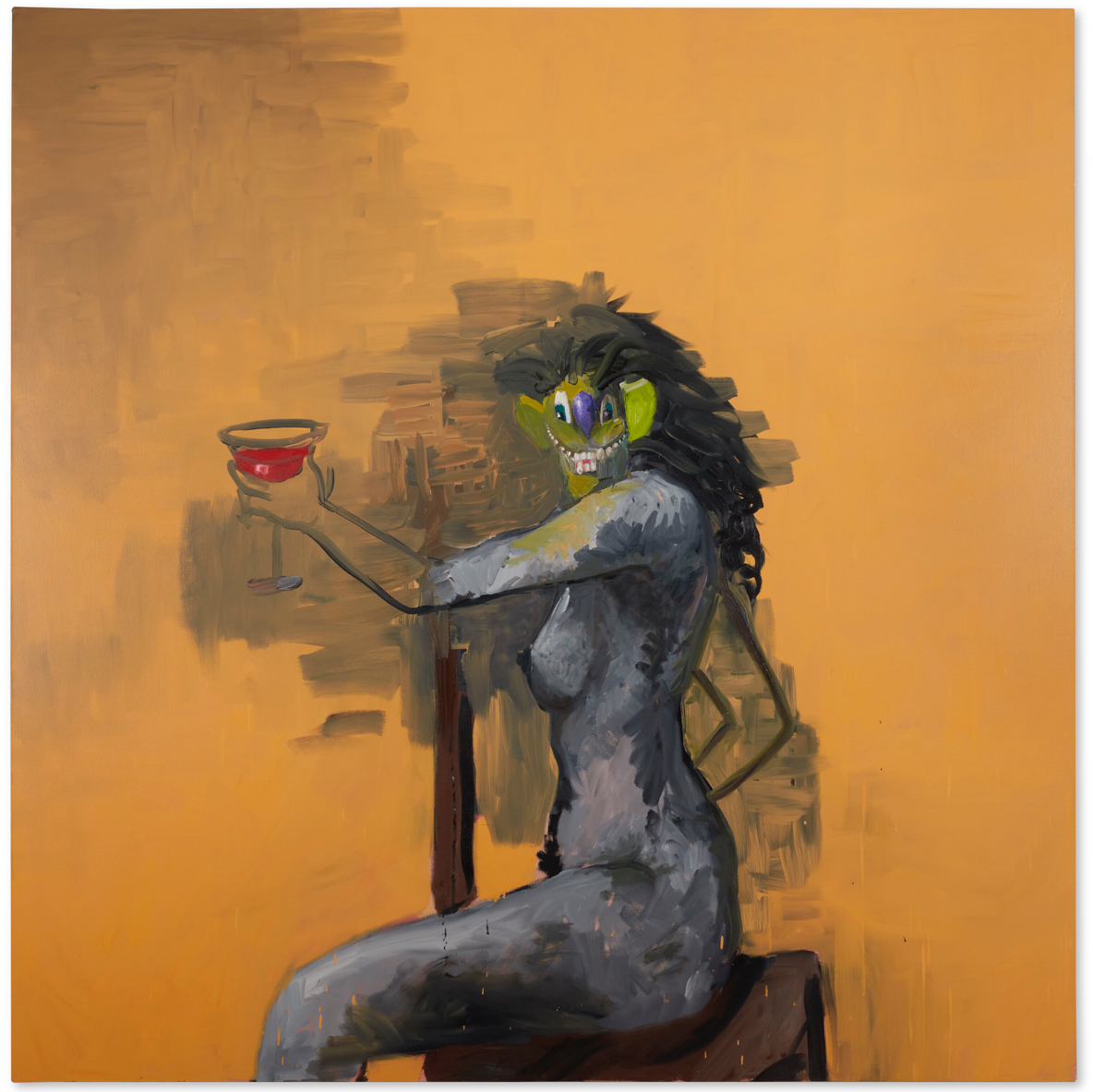
GEORGE CONDO (b. 1957)
The Cocktail Drinker’s Wife, 2002
Oil on canvas
78×78 inches (198.1 x 198.1 cm)
Signed, titled and dated ‘Condo 2002 The Cocktail Drinker’s Wife’ (on the reverse)
#16. The Strangers, 2009
Phillips Hong-Kong: 22 June 2022
Estimated: HKD 5,000,000 – 6,500,000
HKD 5,670,000 / USD 722,320
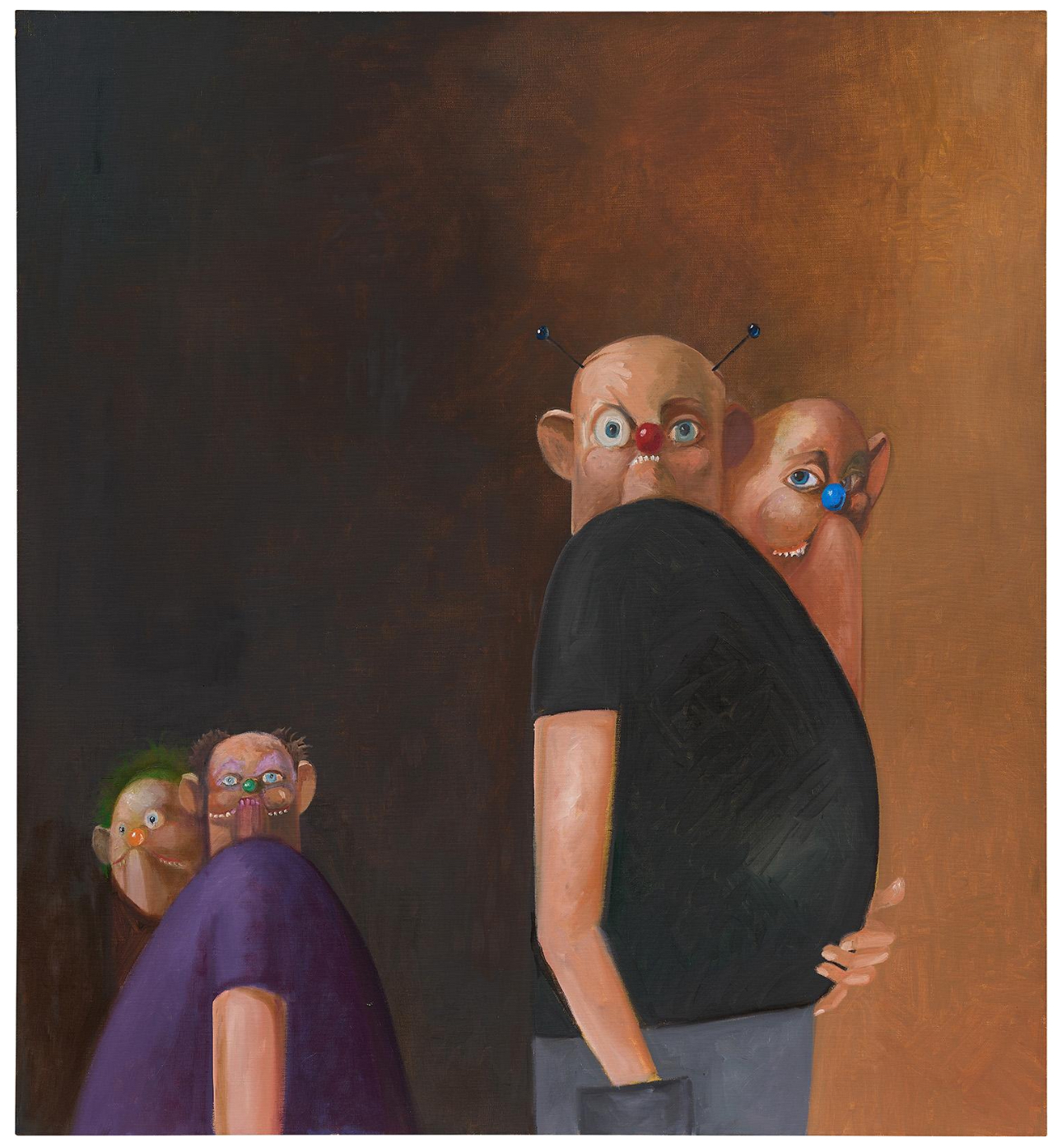
GEORGE CONDO
The Strangers, 2009
Oil on linen
48 x 44 1/8 inches (122×112 cm)
Signed and dated ‘Condo 09’ on the reverse
#17. Green Seated Woman, 2006
Phillips Hong-Kong: 21 June 2022
Estimated: HKD 5,000,000 – 7,000,000
HKD 5,418,000 / USD 690,208
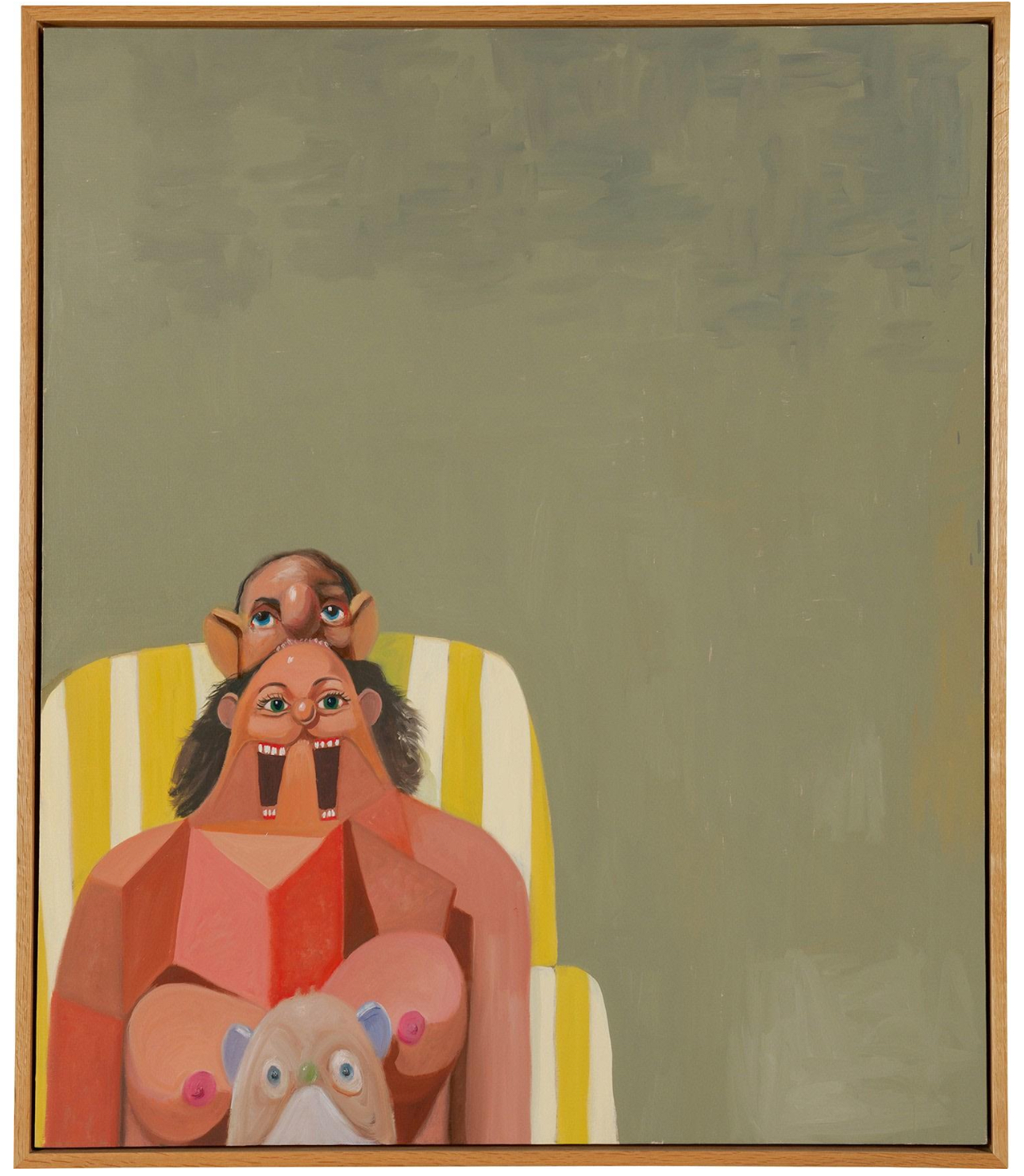
GEORGE CONDO
Green Seated Woman, 2006
Acrylic on canvas
54 1/8 x 45 7/8 inches (137.5 x 116.8 cm)
Signed and dated ‘Condo 06’ on the reverse
#18. Big Red Abstraction, 1990
Sotheby’s New-York: 17 November 2022
Estimated: USD 600,000 – 800,000
USD 663,000
Big Red Abstraction | Contemporary Day Auction | 2022 | Sotheby’s (sothebys.com)
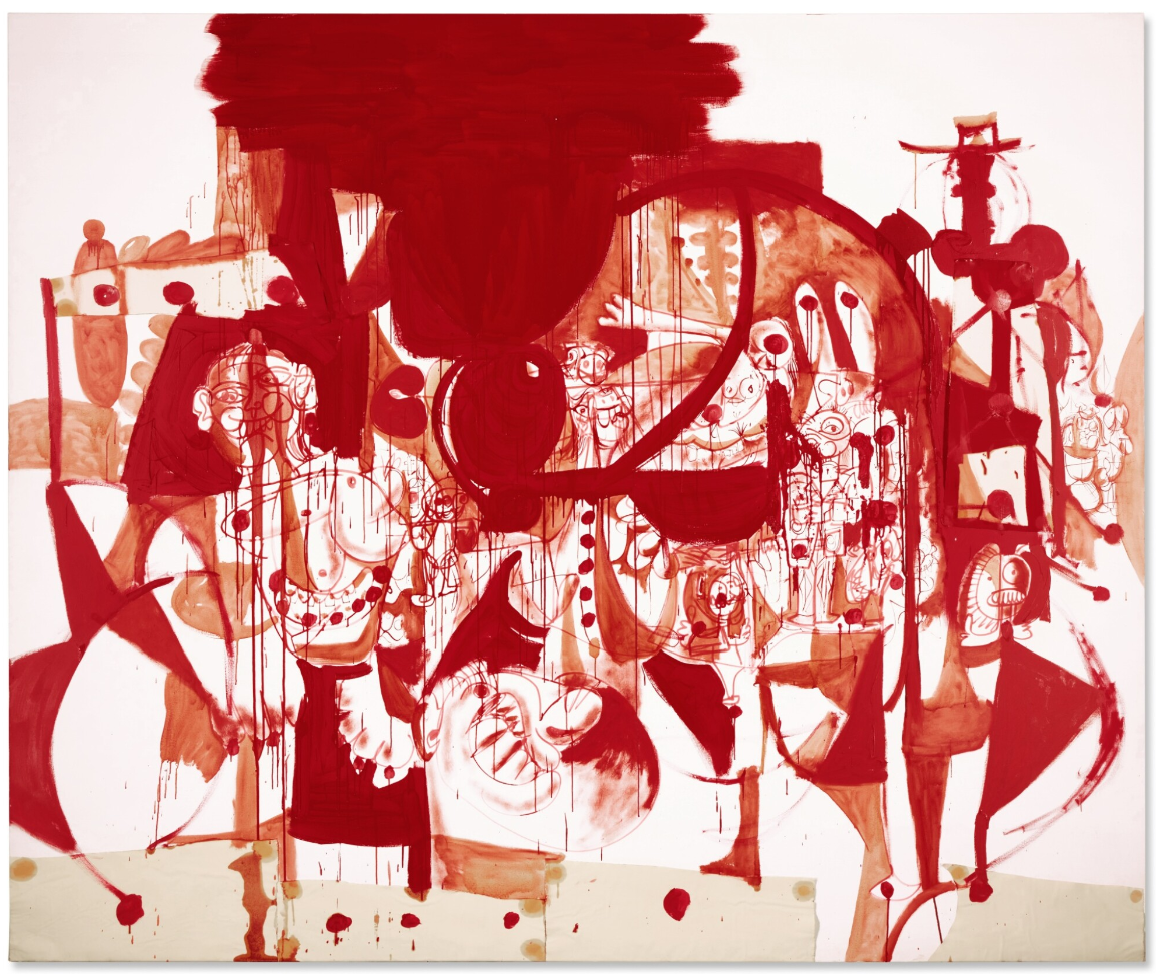
GEORGE CONDO (b. 1957)
Big Red Abstraction, 1990
Oil and oil on paper on canvas
98 1/2 x 118 inches (250.2 x 299.7 cm)
#19. Dismas, 2007
Sotheby’s London: 28 April 2022
Estimated: GBP 450,000 – 650,000
GBP 504,000/ USD 626,865
GEORGE CONDO (b. 1957)
Dismas, 2007
Oil on canvas
85 3/4 x 86 inches (217.9 x 218.4 cm)
#20. Untitled, 1985
Phillips New-York: 19 May 2022
Estimated: USD 250,000 – 350,000
USD 504,000
George Condo – 20th Century & Contempor… Lot 121 May 2022 | Phillips
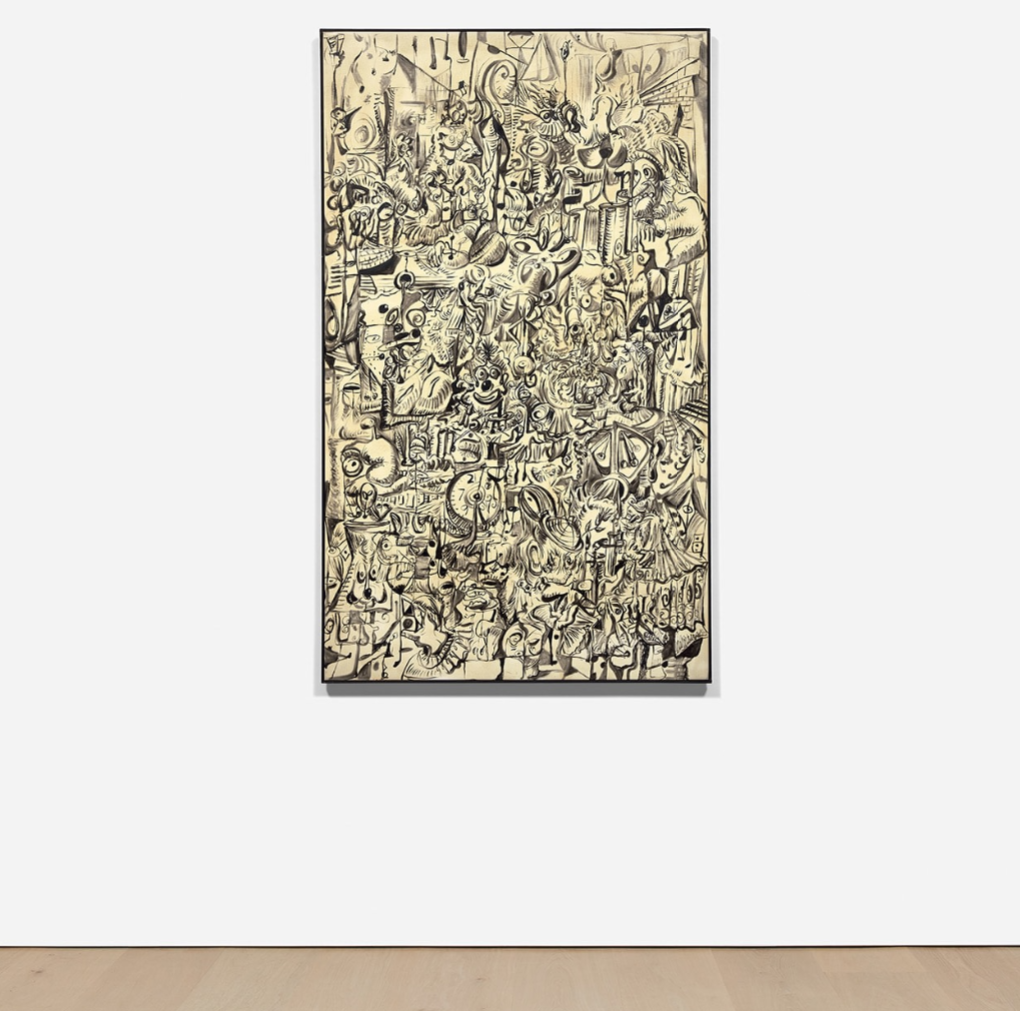
GEORGE CONDO
Untitled, 1985
Oil on linen
62 3/4 x 34 3/8 inches (159.4 x 87.3 cm)
Signed and dated “Condo 1985” on the overlap
#21. The Wooden Horse, 1986
Christie’s New-York: 10 March 2022
Estimated: USD 250,000 – 350,000
USD 504,000
GEORGE CONDO (B. 1957), The Wooden Horse | Christie’s (christies.com)
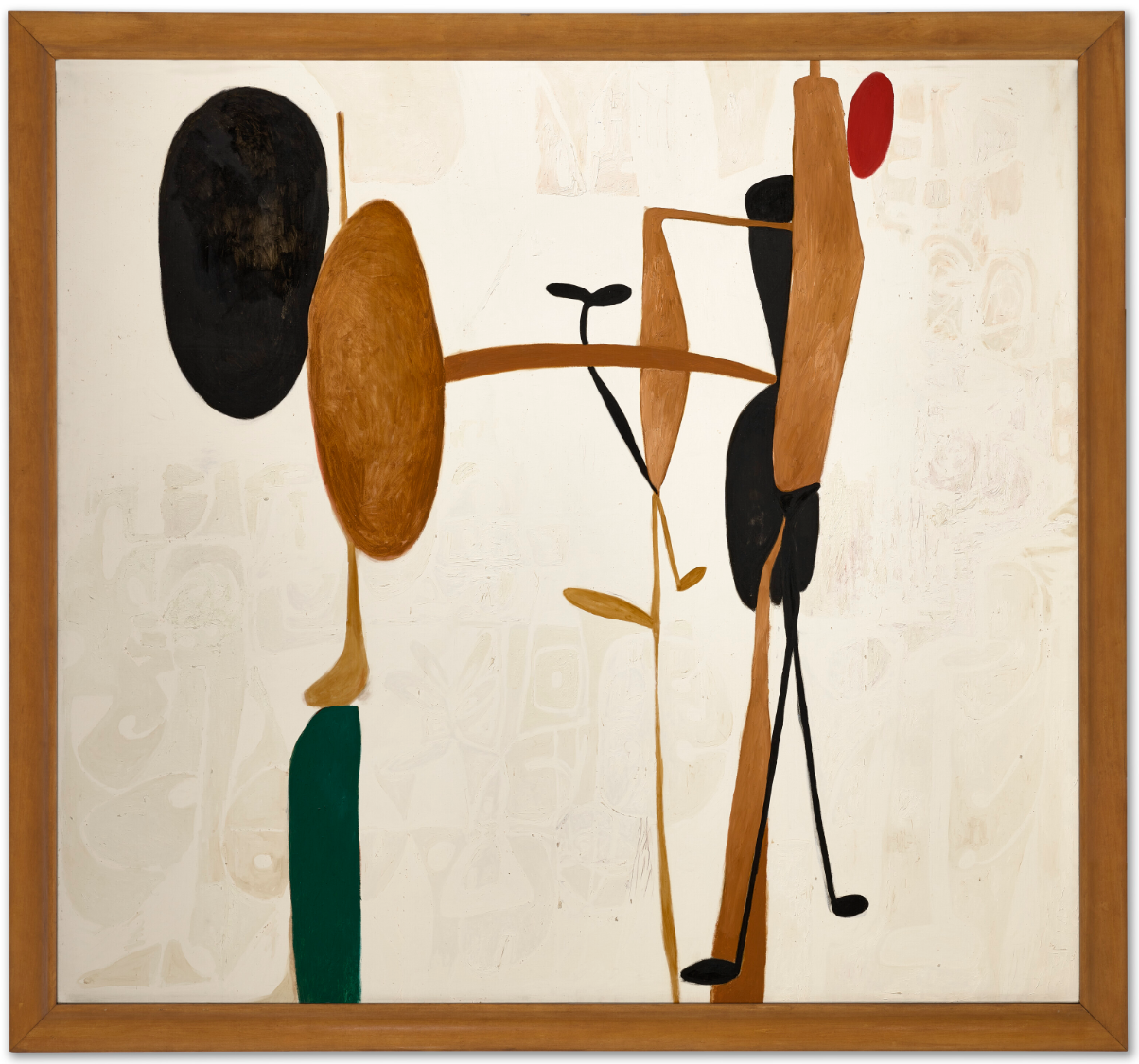
GEORGE CONDO (B. 1957)
The Wooden Horse, 1986
oil on canvas, in artist’s chosen frame
90×95 inches (228.6 x 241.3 cm)
USD 500,000
#22. Untitled, 1998
Phillips London: 4 March 2022
Estimated: GBP 300,000 – 500,000
GBP 378,000 / USD 499,405
George Condo – 20th Century & Contemp… Lot 144 March 2022 | Phillips
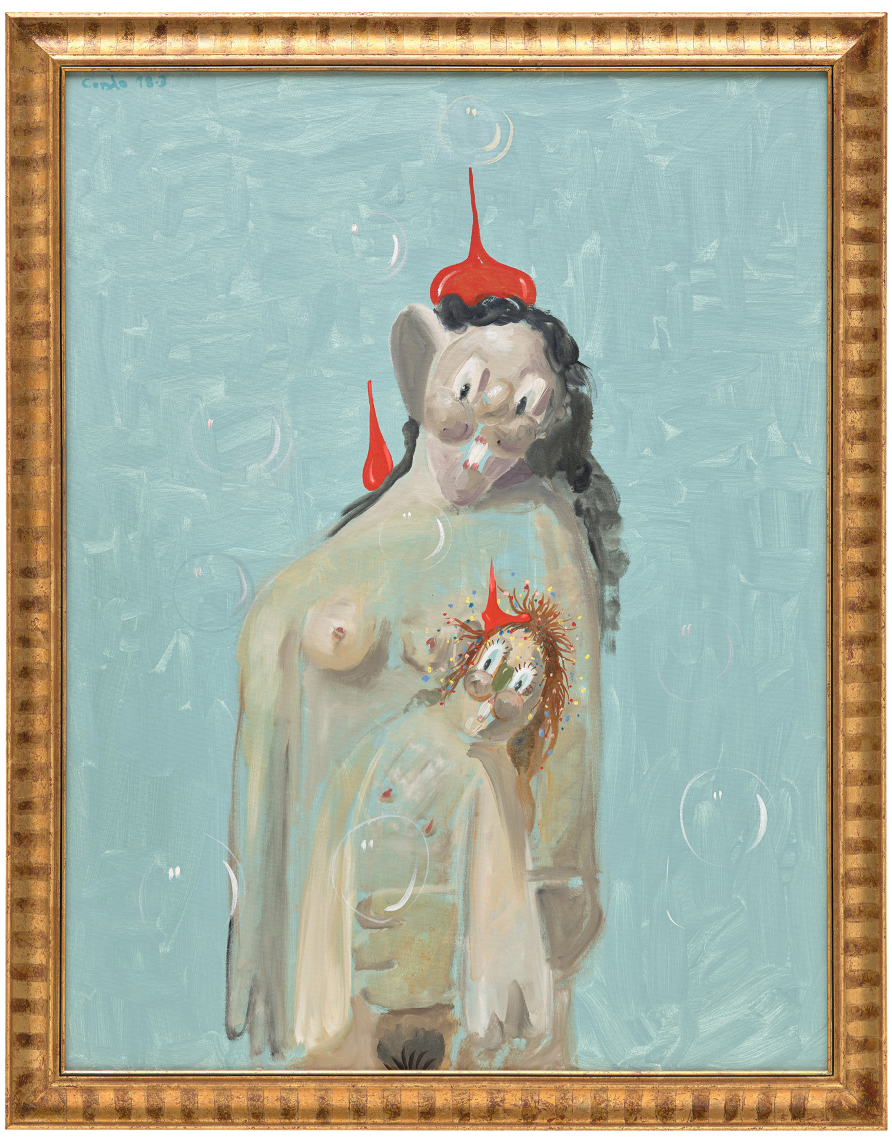
GEORGE CONDO
Untitled, 1998
Oil on canvas, in artist’s frame
50 3/4 x 40 inches (128.8 x 101.7 cm)
Signed and dated ‘Condo 98.3’ upper left
#23. Untitled, 1994
Sotheby’s Hong-Kong: 27 April 2022
Estimated: HKD 3,000,000 – 5,000,000
HKD 3,780,000 / USD 481,725
George Condo 喬治 · 康多 | Untitled 無題 | Contemporary Evening Auction | 2022 | Sotheby’s (sothebys.com)
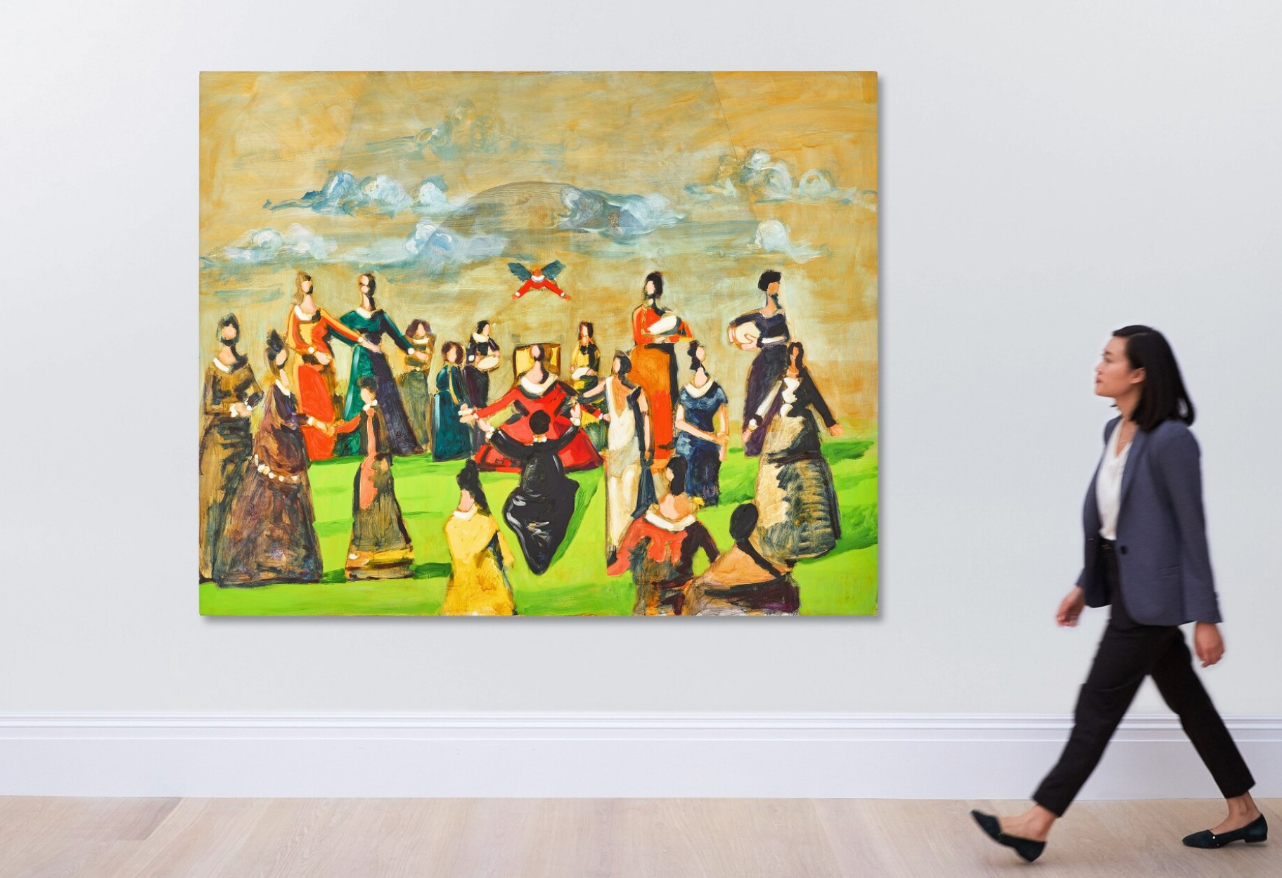
GEORGE CONDO (b. 1957)
Untitled, 1994
Oil on canvas
65×81 inches (165.1 x 205.7 cm)
Signed and dated 1994 on the reverse
#24. Standing Nude in the Night with Bubbles, 1999
Sotheby’s Hong-Kong: 28 April 2022
Estimated: HKD 2,200,000 – 4,200,000
HKD 3,528,000 / USD 449,632
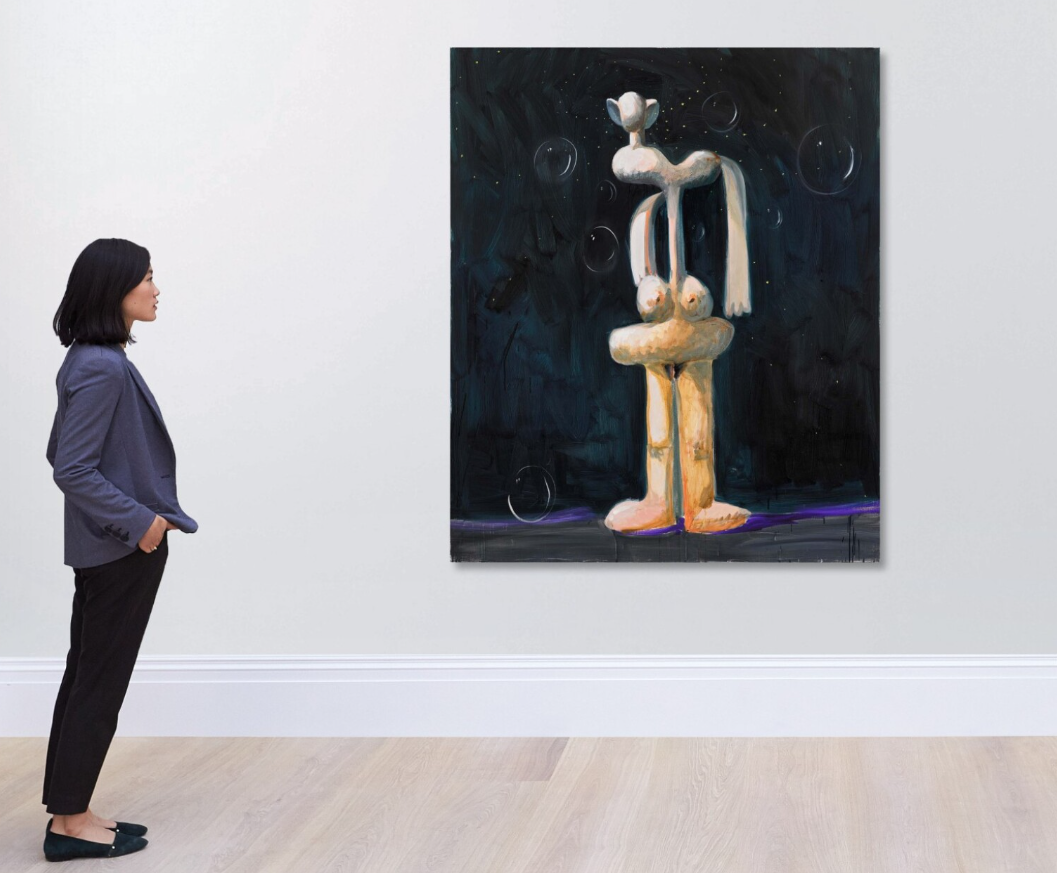
GEORGE CONDO (b. 1957)
Standing Nude in the Night with Bubbles, 1999
Oil on canvas
59 5/8 x 50 1/4 inches (151.4 x 127.5 cm)
Signed, titled and dated 99 on the reverse
#25. Female Portrait, 2009
Sotheby’s London: 30 June 2022
Estimated: GBP 200,000 – 300,000
GBP 315,000 / USD 383,025
Female Portrait | Modern & Contemporary Day Auction | 2022 | Sotheby’s (sothebys.com)
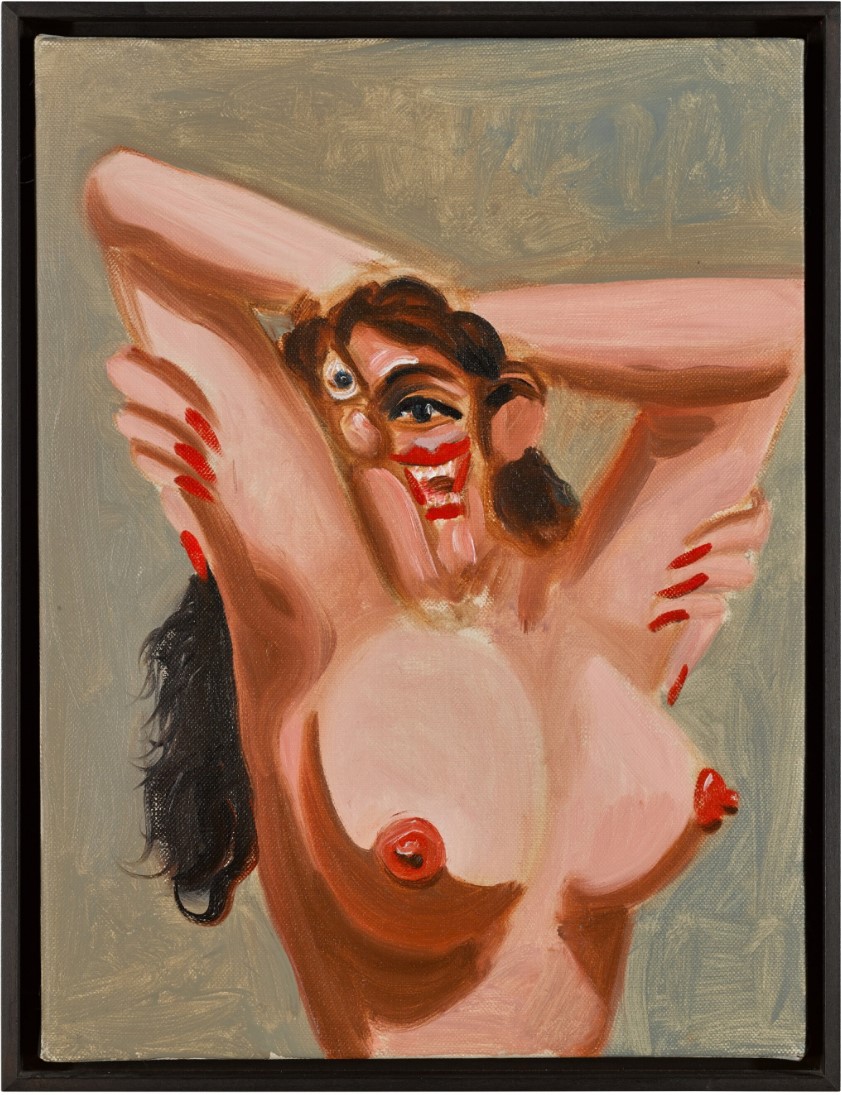
GEORGE CONDO (b. 1957)
Female Portrait, 2007
Oil on canvas
16×12 inches (40.5 x 30.5 cm)
Signed and dated 07 on the reverse
#26. Monkey Man, 1999
Christie’s New-York: 29 September 2022
Estimated: USD 300,000 – 400,000
USD 327,600
GEORGE CONDO (B. 1957) (christies.com)
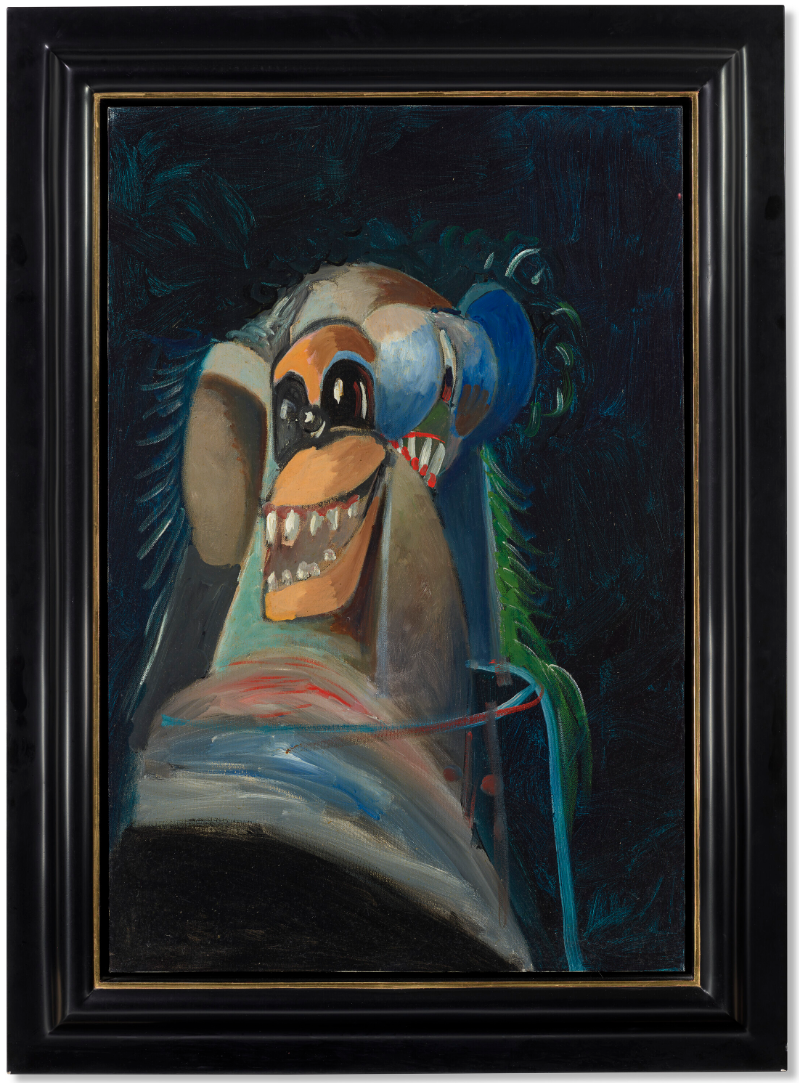
GEORGE CONDO (B. 1957)
Monkey Man, 1999
Oil on canvas
36 x 23 7/8 inches (91.4 x 60.6 cm)
#27. French Maid with Red Hair, 2005
Christie’s New-York: 13 May 2022
Estimated: USD 100,000 – 150,000
USD 327,600
GEORGE CONDO (B. 1957) (christies.com)
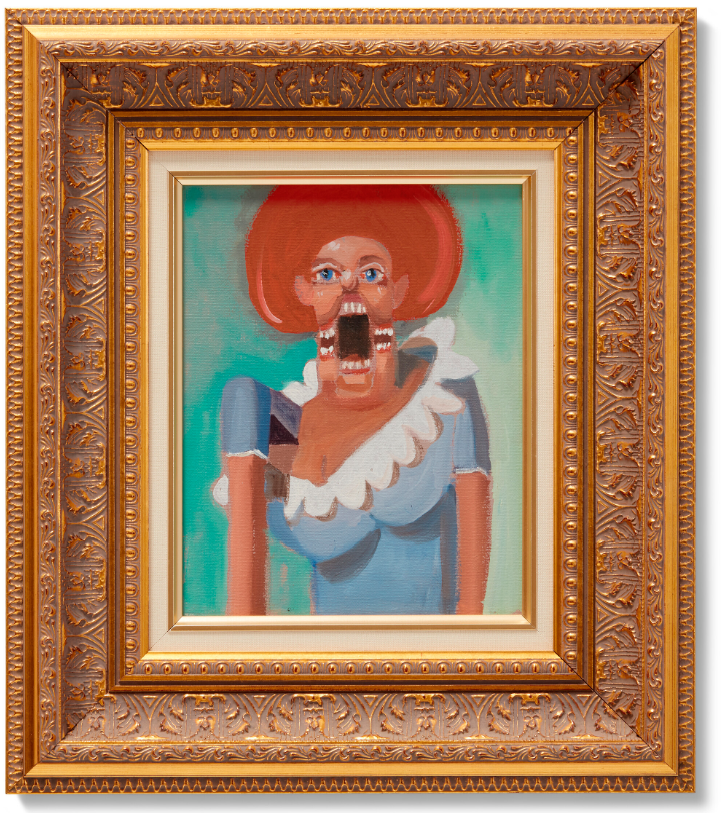
GEORGE CONDO (B. 1957)
French Maid with Red Hair, 2005
Oil on canvas, in artist’s chosen frame
17 1/4 x 15 1/8 inches (43.8 x 38.4 cm)
Signed, titled and dated ‘Condo 05 French Maid with Red Hair’ (on the reverse)
#29. White + Grey Composition, 1989
Phillips New-York: 22 September 2022
Estimated: USD 70,000 – 90,000
USD 289,800
George Condo – New Now New York Lot 130 September 2022 | Phillips
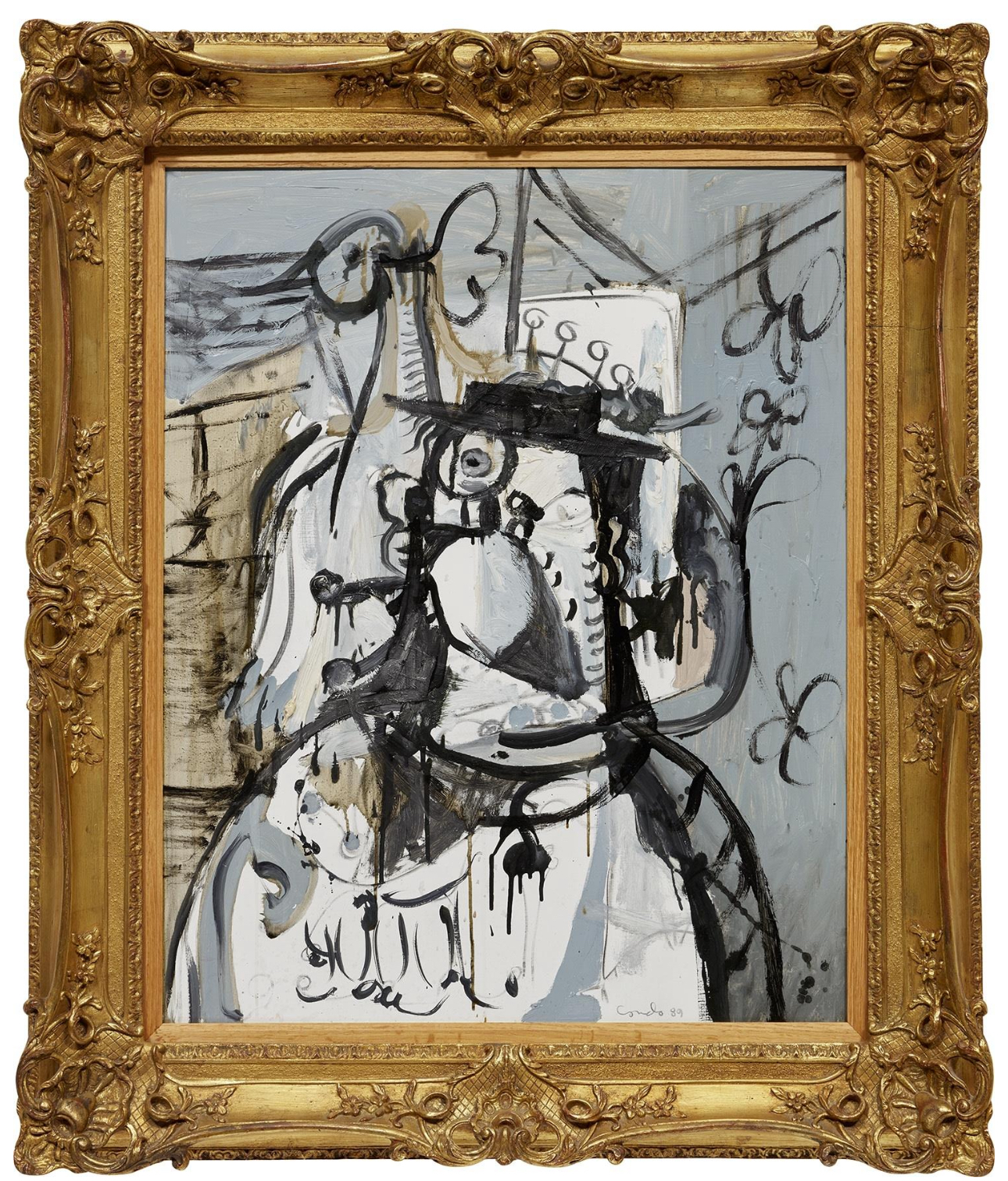
GEORGE CONDO
White + Grey Composition, 1989
Oil on canvas, in artist’s frame
Canvas: 32 x 25 5/8 inches (81.3 x 65.1 cm)
Artist’s frame: 41×35 inches (104.1 x 88.9 cm)
Signed and dated “Condo 89” lower right
Signed, titled, inscribed and dated “Condo 89.12 Paris “white + grey” composition” on the reverse
#30. Femme au chapeau, 2007
Phillips Hong-Kong: 30 November 2022
Estimated: HKD 2,200,000 – 3,800,000
HKD 2,016,000 / USD 258,295
George Condo – 20th Century & Cont… Lot 119 November 2022 | Phillips
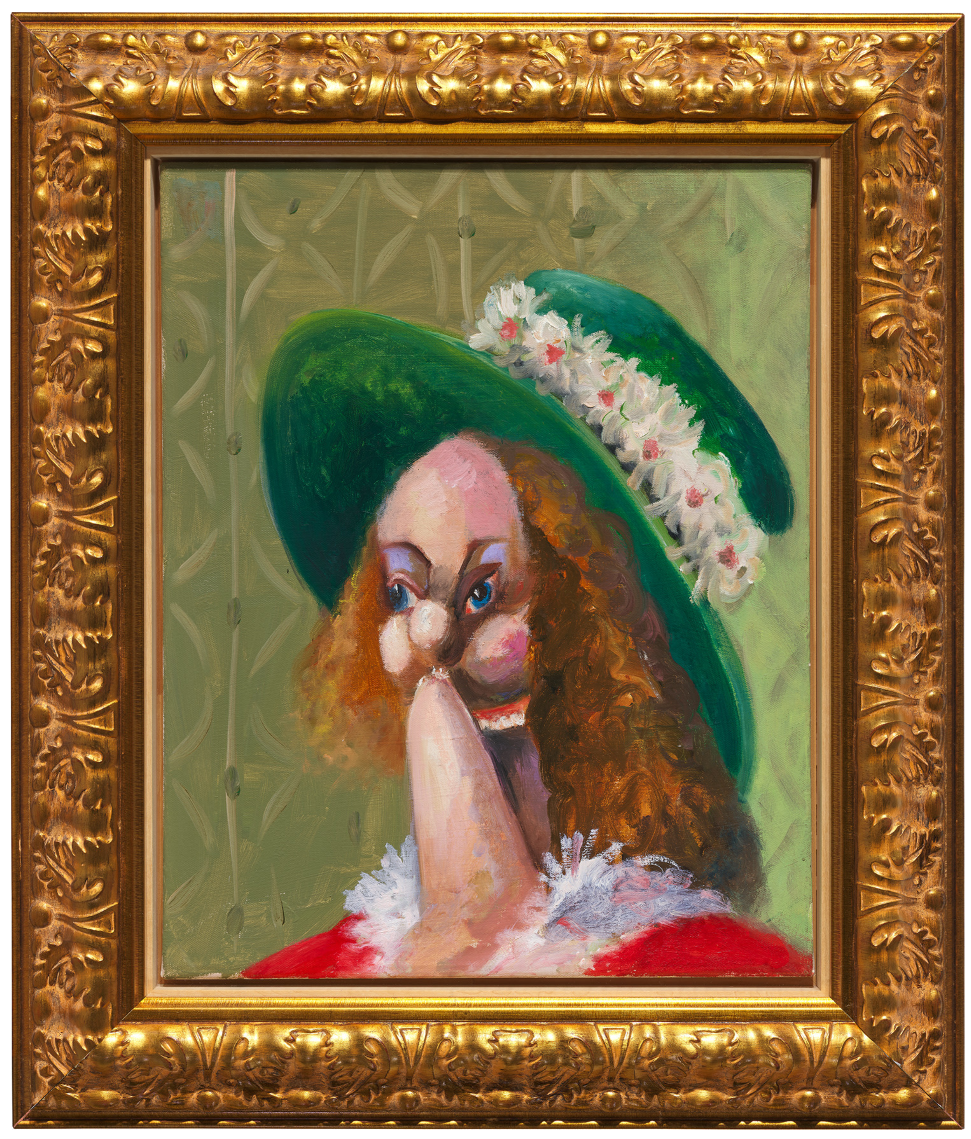
GEORGE CONDO
Femme au chapeau, 2007
Oil on canvas
20 x 15 7/8 inches (50.8 x 40.6 cm)
Signed and dated ‘Condo 07’ on the reverse
#31. Jean Louis’ Chef, 2005
Christie’s New-York: 18 November 2022
Estimated: USD 100,000 – 150,000
USD 239,400
GEORGE CONDO (B. 1957) (christies.com)
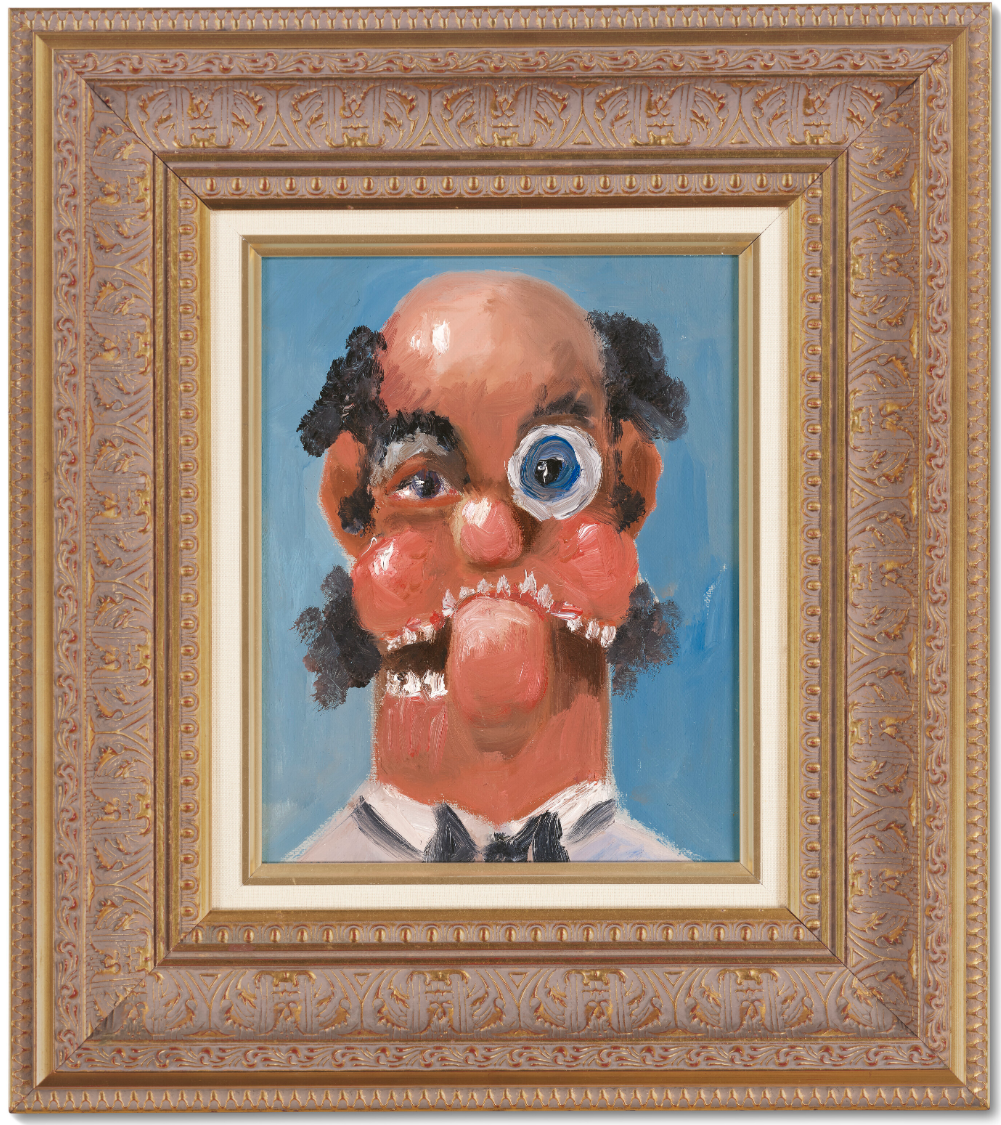
GEORGE CONDO (B. 1957)
Jean Louis’ Chef, 2005
Oil on canvas, in artist’s chosen frame
17 1/8 x 15 1/4 inches (43.2 x 38.7 cm)
Signed, titled and dated ‘Condo Jean Louis’ Chef 05′ (on the reverse)
#32. The Grocery Man, 1997
Phillips London: 4 March 2022
Estimated: GBP 70,000 – 80,000
GBP 163,800 / USD 216,409
George Condo – 20th Century & Contemp… Lot 143 March 2022 | Phillips
GEORGE CONDO
The Grocery Man, 1997
Oil on canvas, in artist’s frame
14 1/2 x 11 5/8 inches (36.7 x 29.4 cm)
Signed and dated ‘Condo 97’ upper right
Signed, dedicated, indistinctly inscribed and dated
‘For Robert La Vigne with great admiration love Condo 6.21.97 “memory portrait”…’ on the reverse
#33. The accountant, 1994
Christie’s Hong-Kong: 17 May 2022
Estimated: HKD 1,000,000 – 2,000,000
HKD 1,638,000 / USD 208,675
GEORGE CONDO (B. 1957) (christies.com)
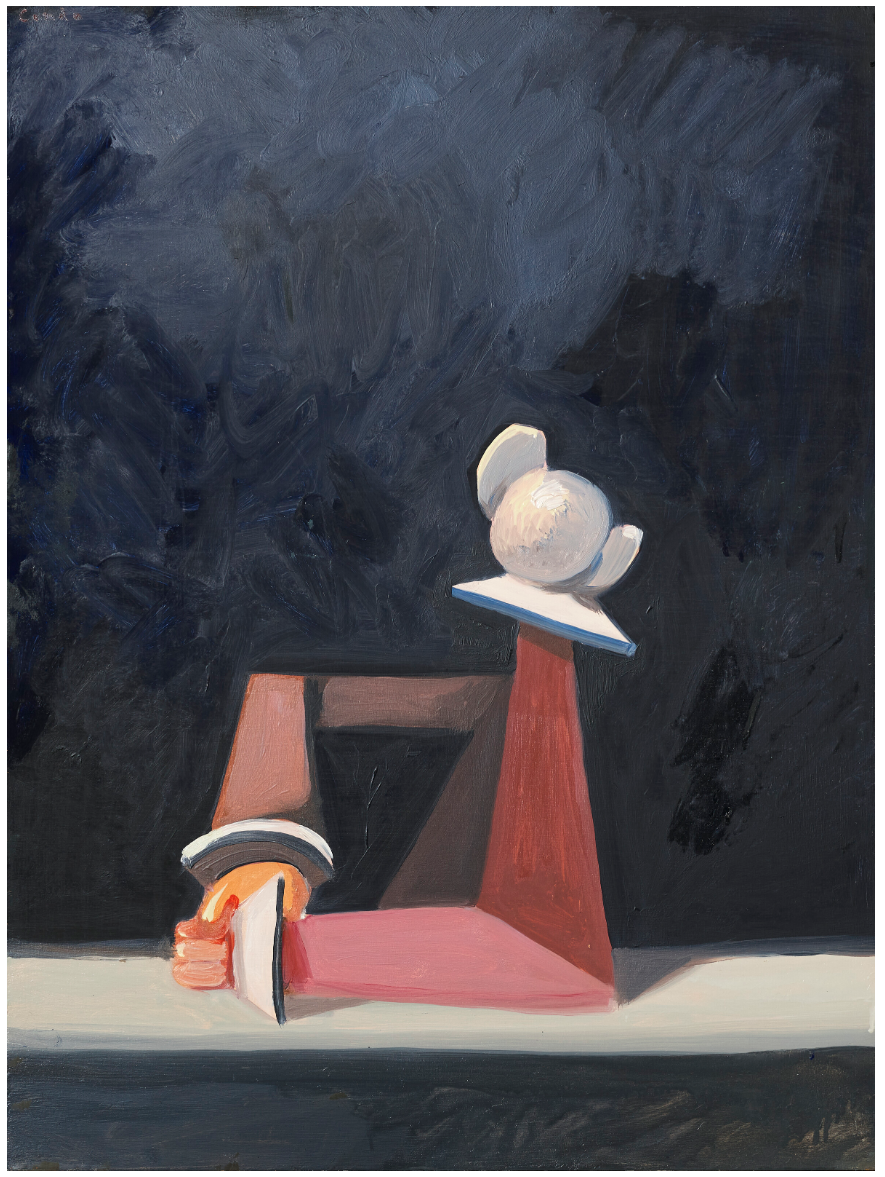
GEORGE CONDO (B. 1957)
The accountant, 1994
Oil on masonite
24 1/8 x 17 7/8 inches (61 x 45.5 cm)
Signed ‘Condo’ (upper left); signed, titled and dated ‘Condo 94 The accountant’
Titled again ‘The Accountant’ (on the reverse)
#34. Fish head, 1984
Sotheby’s Milan: 13 April 2022
Estimated: EUR 60,000 – 80,000
EUR 176,400 / USD 191,593
Fish head | Contemporary Auction | 2022 | Sotheby’s (sothebys.com)
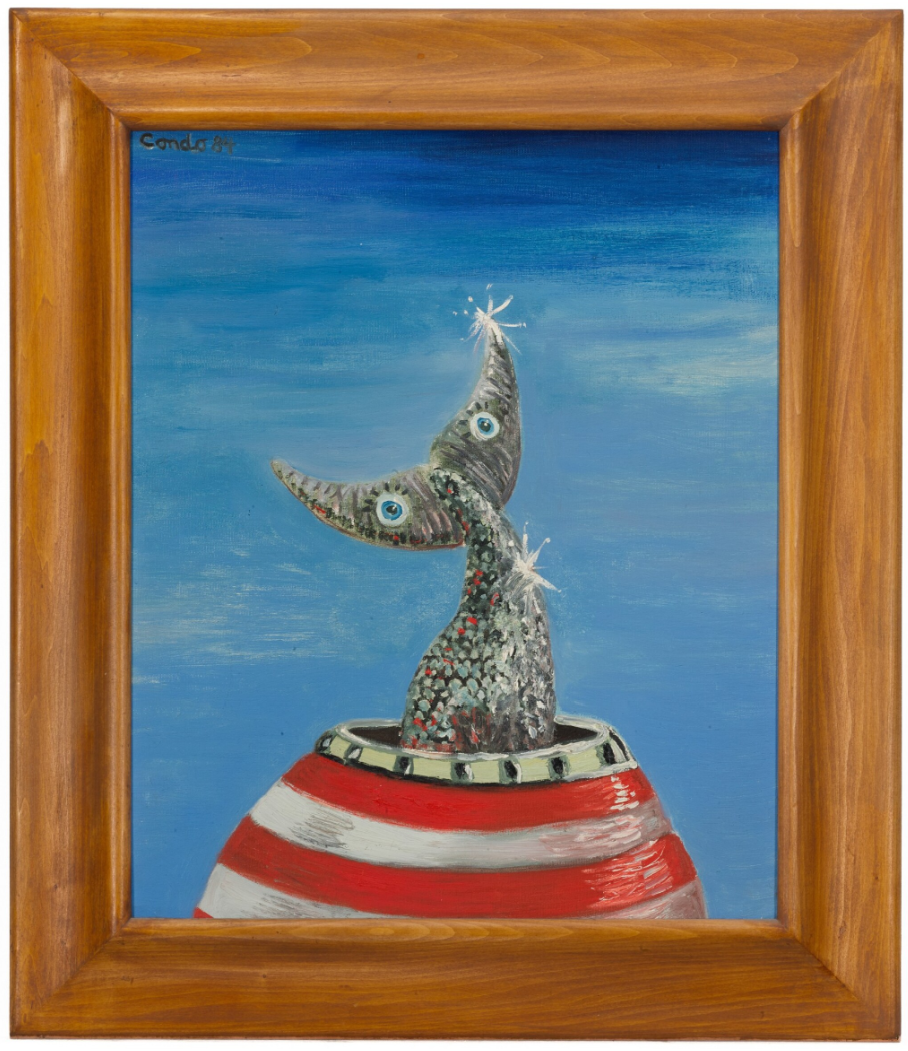
GEORGE CONDO (b. 1957)
Fish head, 1984
Oil on canvas
23.6 x 19.4 inches (60 x 49.2 cm)
Signed and dated 84; signed, titled and dated 5/1/84 on the reverse
#35. Clock, 1984
Sotheby’s New-York: 20 May 2022
Estimated: USD 50,000 – 70,000
USD 176,400
Clock | Contemporary Day Auction | 2022 | Sotheby’s (sothebys.com)
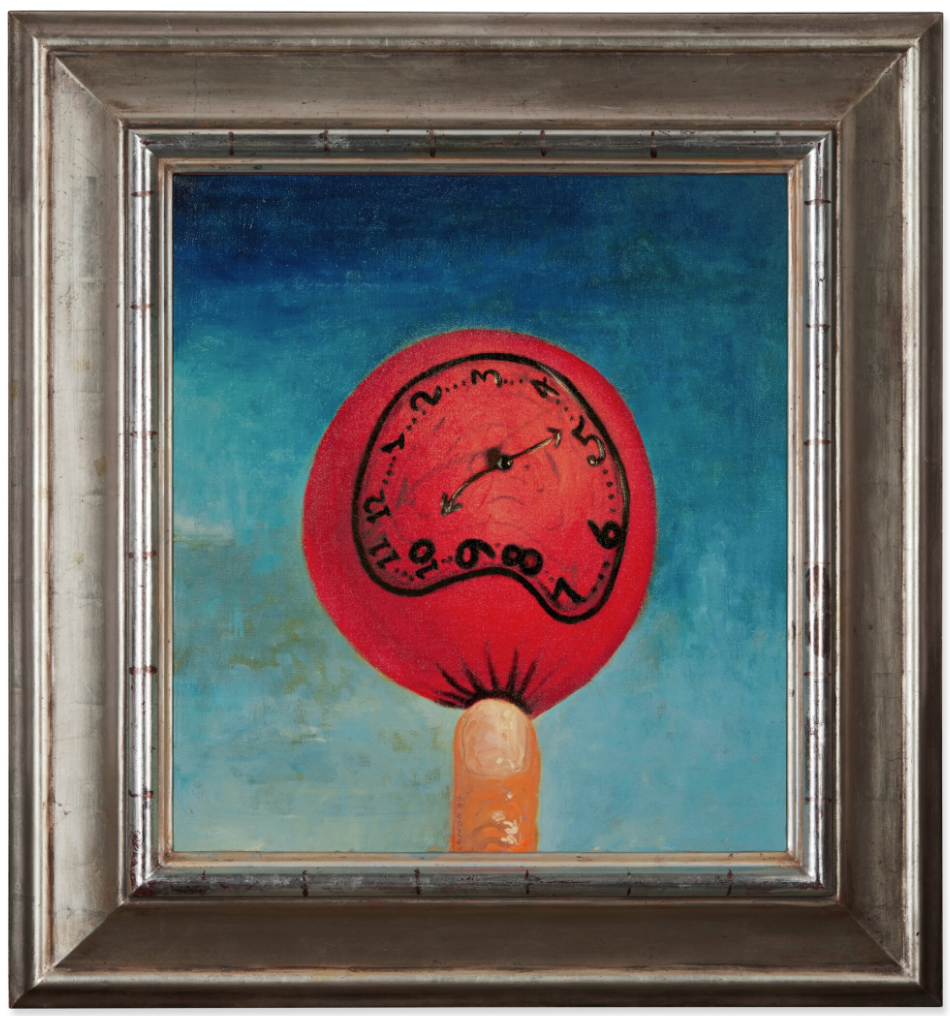
GEORGE CONDO (b. 1957)
Clock, 1984
Oil on canvas, in artist’s chosen frame
19 5/8 x 18 inches (49.8 x 45.7 cm)
Signed CONDO and dated 84 (lower center)
#36. Don Quixote’s Alter Ego, 1985
Sotheby’s New-York: 30 September 2022
Estimated: USD 50,000 – 70,000
USD 163,800
Don Quixote’s Alter Ego | Contemporary Curated | 2022 | Sotheby’s (sothebys.com)
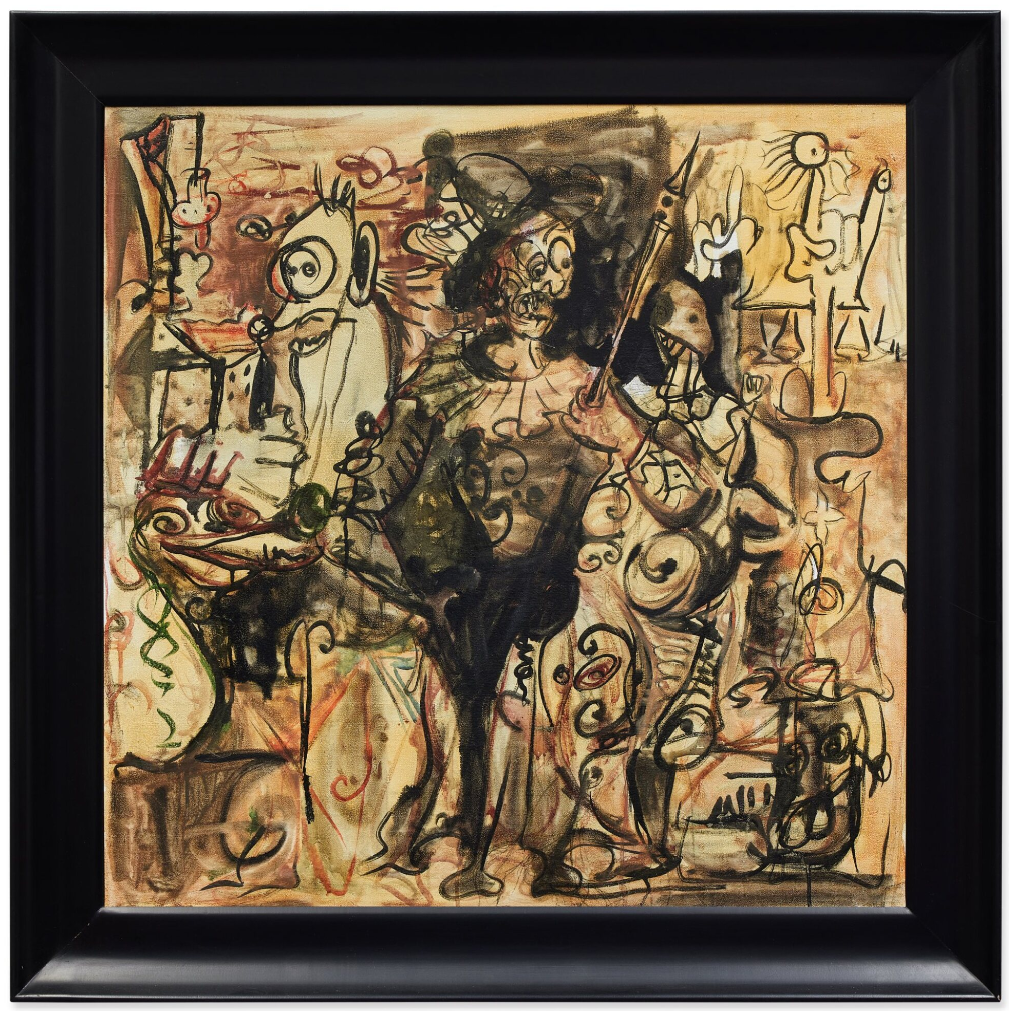
GEORGE CONDO (b. 1957)
Don Quixote’s Alter Ego, 1985
Oil on canvas
35×35 inches (88.9 x 88.9 cm)
Signed, titled Don Quixote’s Alter Ego and dated 85 (on the verso); signed (on the stretcher)
#40. Composition with Flower, 1987
Christie’s New-York: 14 December 2022
Estimated: USD 70,000 – 100,000
USD 151,200
GEORGE CONDO (B. 1957), Composition with Flower | Christie’s (christies.com)
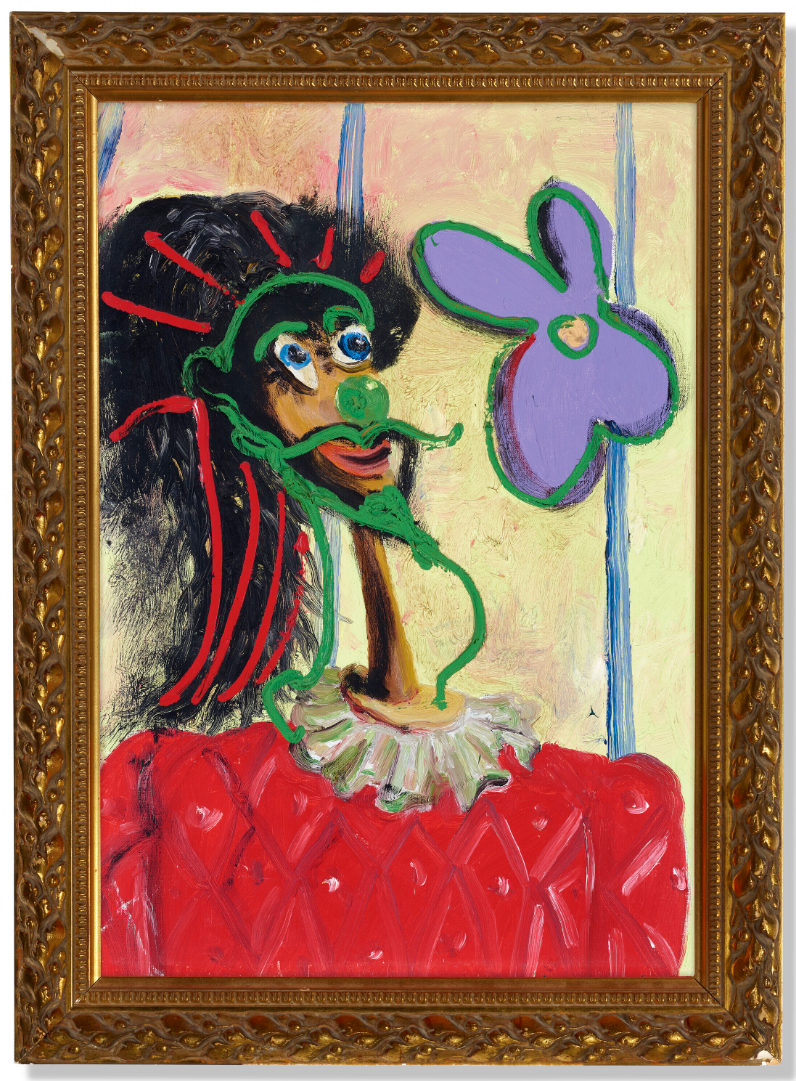
GEORGE CONDO (B. 1957)
Composition with Flower, 1987
Acrylic on canvas with gilt frame
211/2 x 16 inches (54.6 x 40.6 cm)
Signed and dated ‘CONDO 87’ (upper right)
Signed again, inscribed and dated twice ‘For Keith in Paris 7-19-87 Condo 87-4’ (on the reverse)
Titled ‘Composition with Flower’ (on the stretcher)
#41. The Renegade, 2008
Phillips London: 4 March 2022
Estimated: GBP 60,000 – 80,000
GBP 113,400 / USD 149,821
George Condo – 20th Century & Contemp… Lot 142 March 2022 | Phillips
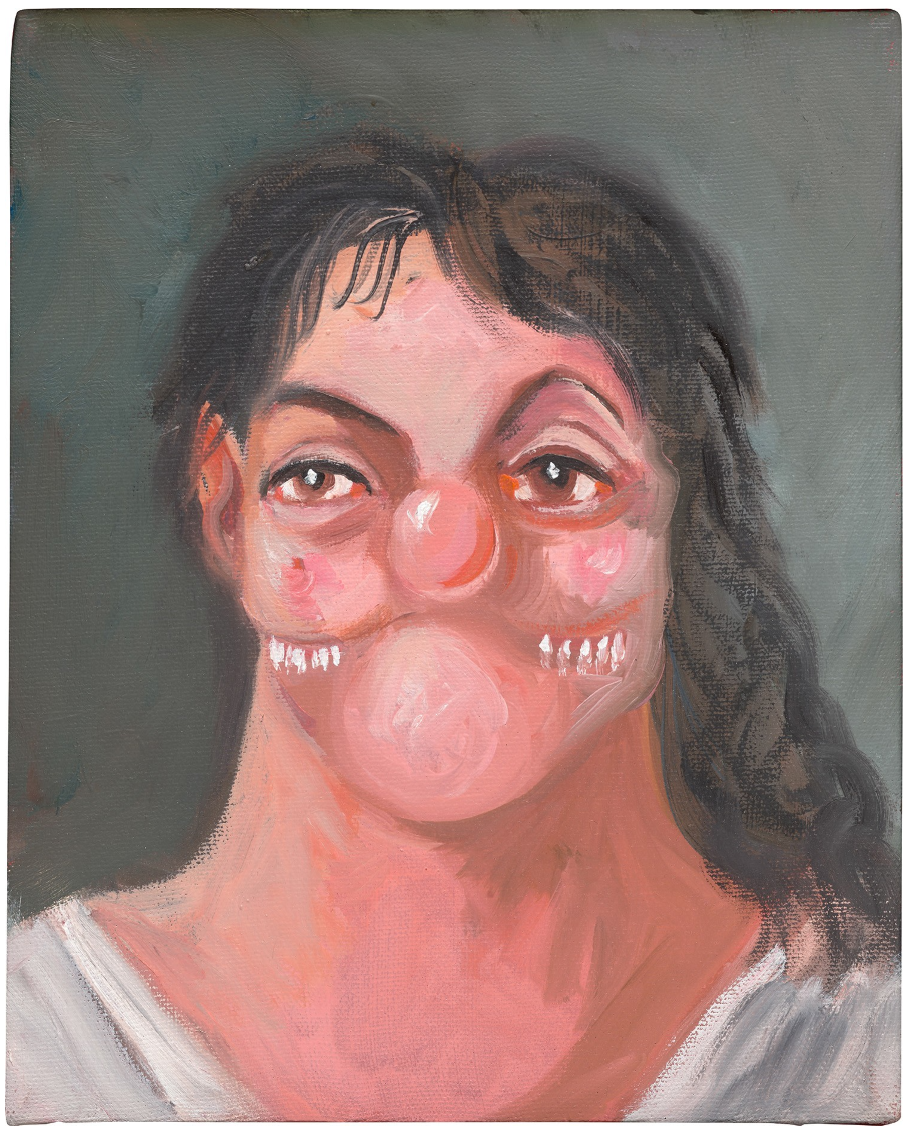
GEORGE CONDO
The Renegade, 2008
Oil on canvas
10×8 inches (25.5 x 20.4 cm)
Signed and dated ‘Condo 08’ on the reverse
#44. Untitled, 1982-84
Sotheby’s New-York: 20 May 2022
Estimated: USD 80,000 – 120,000
USD 126,000
Untitled | Contemporary Day Auction | 2022 | Sotheby’s (sothebys.com)
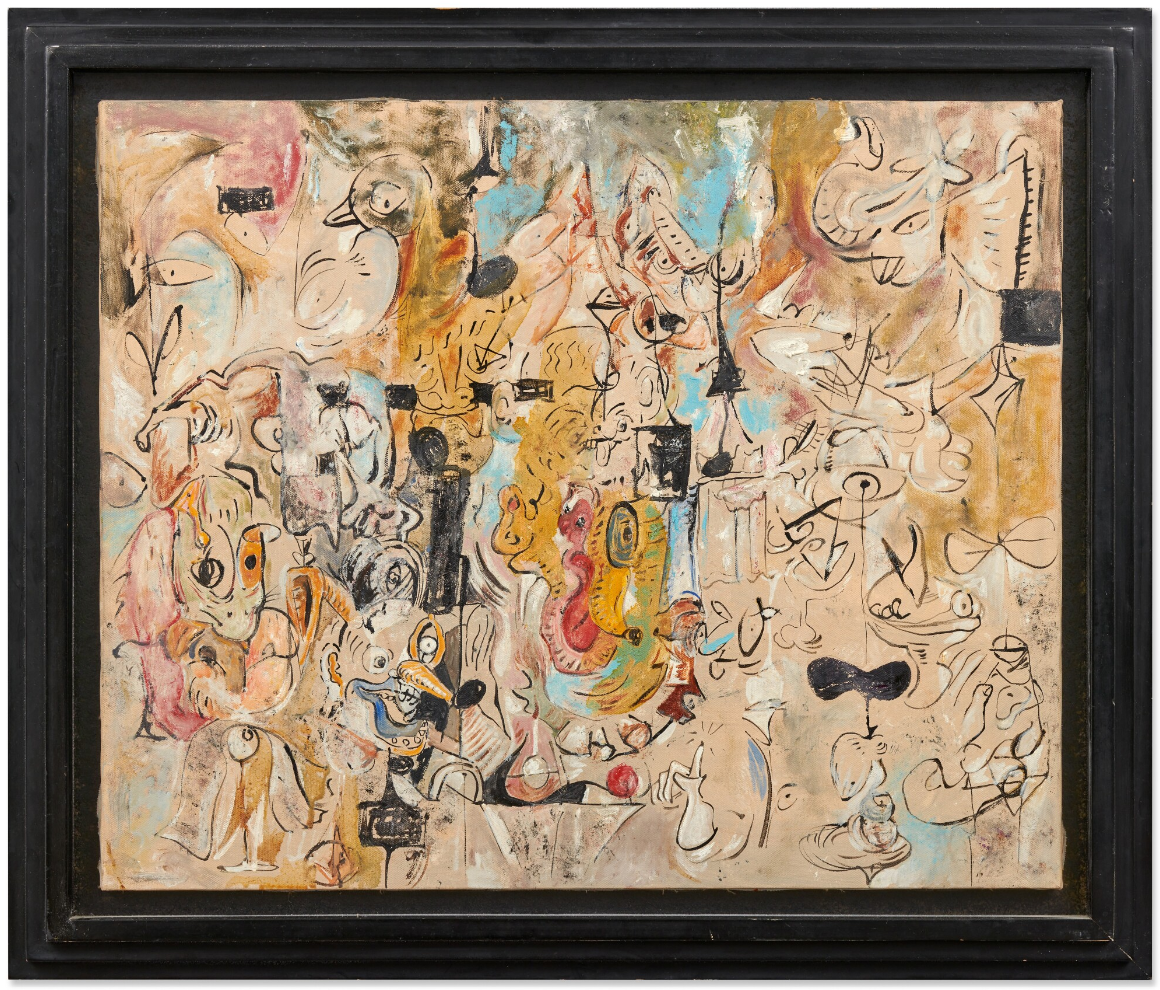
GEORGE CONDO (b. 1957)
Untitled, 1982-84
Oil and lacquer on canvas
20 x 24 1/4 inches (50.7 x 61.5 cm)
2021 Auction Results
FOR PAINTINGS ONLY
81 lots sold at auction in 2021 for a total turnover of USD 72,879,382. With only 4 lots failing to sell, the sell-through rate is a remarkable 95%. The highest price of USD 4,950,000 for 2021 was achieved at Christie’s in New-York on 9 November 2021 for Linear Connection dated 2010. 27 lots sold over USD 1 million for a cumulative turnover of USD 59,242,627 or 81.3% of total auction revenue for the year. 7 Lots from the Top 15 Lots sold in Hong-Kong.
2021 Top 6 Lots
#1. Linear Connection, 2010
Christie’s New-York: 8 November 2021
Estimated: USD 2,500,000 – 3,500,000
USD 4,950,000
GEORGE CONDO (B. 1957)
Linear Connection, 2010
Acrylic, charcoal and pastel on linen
50×60 inches (127 x 152.4 cm)
#2. Reclining Blue Form, 2011
Sotheby’s New-York: 12 May 2021
Estimated: USD 2,500,000 – 3,500,000
USD 3,771,000
Reclining Blue Form | Contemporary Art Evening Auction | 2021 | Sotheby’s (sothebys.com)
GEORGE CONDO (B.1957)
Reclining Blue Form, 2011
Oil on canvas
78×74 inches (198.1 x 188 cm)
#3. Untitled, 2013
Christie’s London: 29 June 2021
Estimated: GBP 1,000,000 – 1,500,000
GBP 2,542,500 / USD 3,510,285
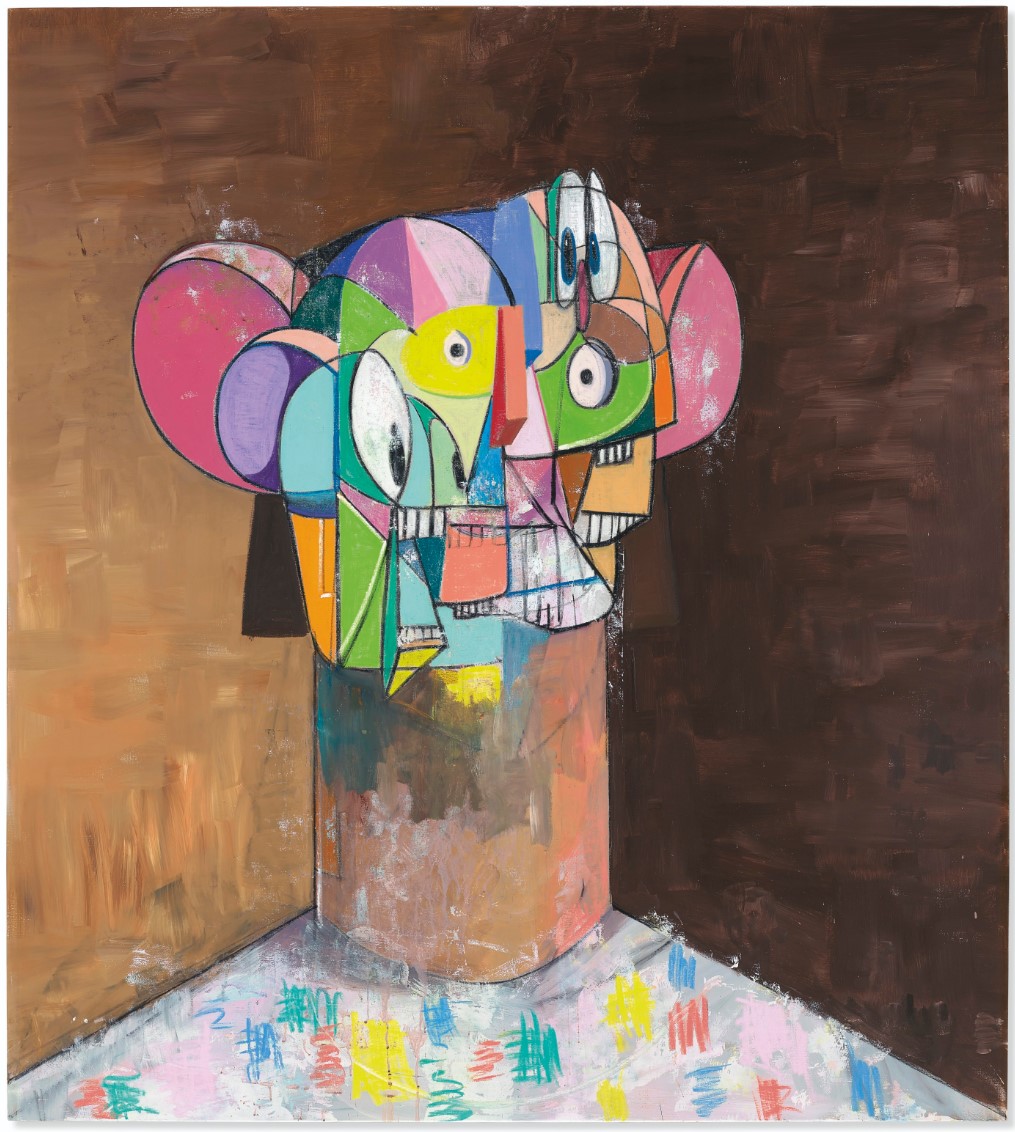
GEORGE CONDO (b. 1957)
Untitled, 2013
Acrylic, charcoal and pastel on linen
78×70 inches (198.1 x 177.8 cm)
Signed and dated ‘Condo 2013’ (upper left)
#4. Lion Man, 2012
Sotheby’s New-York: 18 November 2021
Estimated: USD 2,000,000 – 3,000,000
USD 3,408,000
Lion Man | The Now Evening Auction | 2021 | Sotheby’s (sothebys.com)
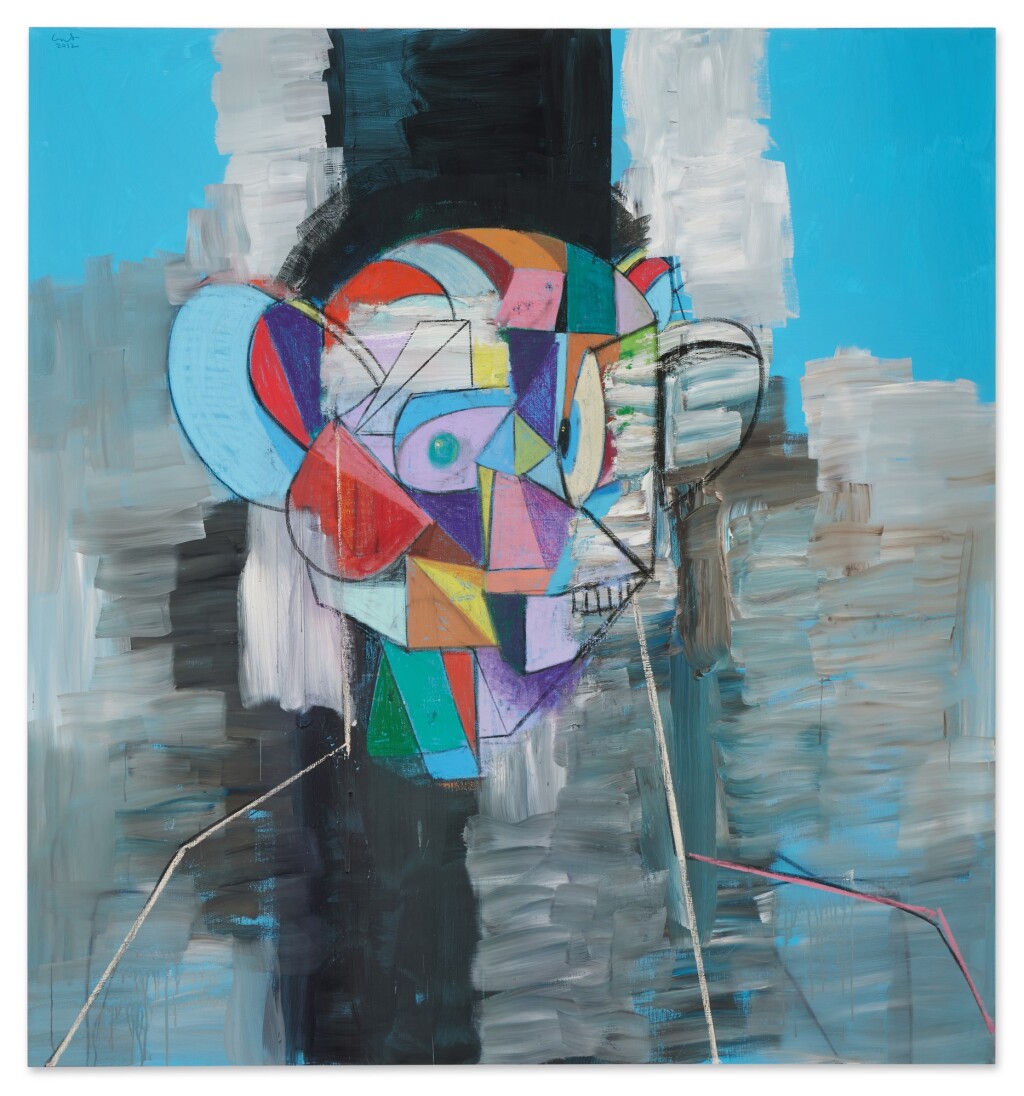
GEORGE CONDO
Lion Man, 2012
Acrylic, charcoal, and pastel on linen
70×65 inches (177.8 x 165.1 cm)
Signed Condo and dated 2012 (upper left)
#5. Heads and Toes, 2011
Christie’s London: 15 October 2021
Estimated: GBP 1,300,000 – 1,500,000
GBP 2,422,500 / USD 3,332,645
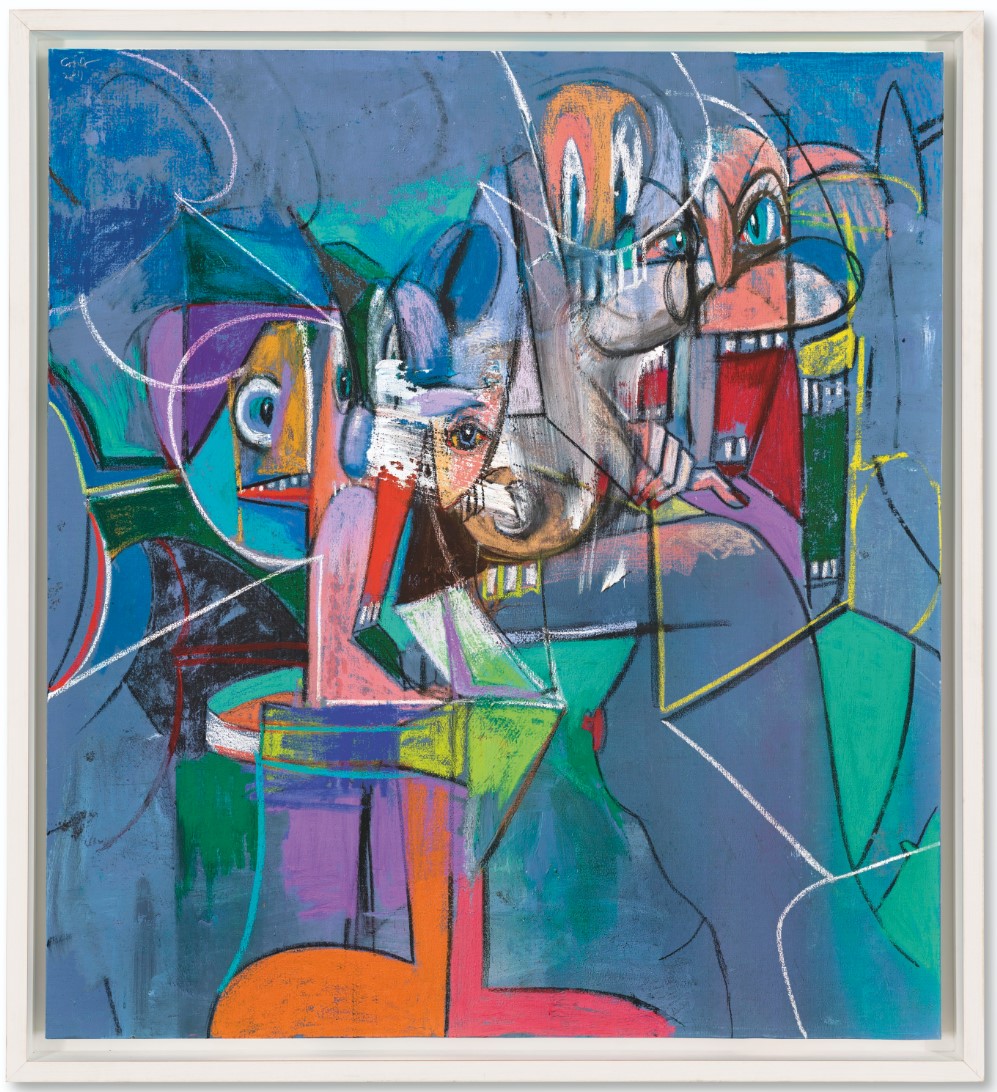
GEORGE CONDO (B. 1957)
Heads and Toes, 2011
Acrylic, pastel and charcoal on linen
42×40 inches (106.7 x 101.6 cm)
Signed and dated ‘Condo 2011’ (upper left)
#6. Multicolored Portrait, 2014
Christie’s Hong-Kong: 25 May 2021
Estimated: HKD 12,000,000 – 16,000,000
HKD 22,450,000 / USD 2,892,035
GEORGE CONDO (B. 1957)
Multicolored Portrait, 2014
Acrylic, charcoal and pastel on linen
50 1/2 x 42 1/2 inches (128.3 x 108 cm)
Signed and dated ‘Condo 2014.6’ (upper left)
#7. Staring into Space, 2014-2015
Christie’s Hong-Kong: 1 December 2021
Estimated: HKD 20,000,000 – 28,000,000
HKD 21,850,000 / USD 2,804,374
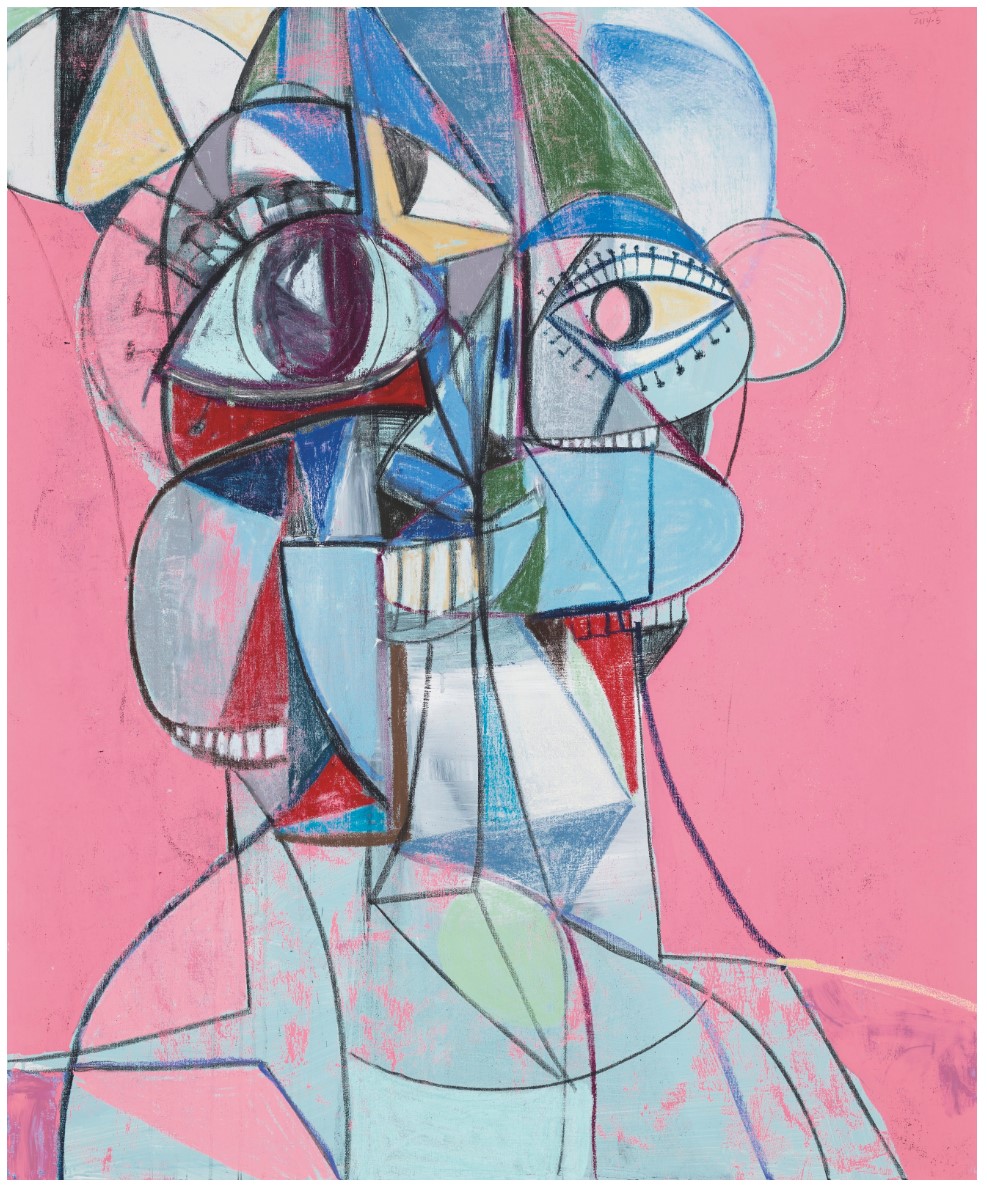
GEORGE CONDO (B. 1957)
Staring into Space, 2014-2015
Acrylic, charcoal, pastel on linen
52 1⁄2 x 43 1⁄2 inches (133.3 x 110.5 cm)
Signed and dated ‘Condo 2014-5’ (upper right)
#8. Blue and White Improvisation, 2018
Christie’s Hong-Kong: 24 May 2021
Estimated: HKD 10,000,000 – 15,000,000
HKD 20,650,000 / USD 2,659,334
GEORGE CONDO (B. 1957) (christies.com)
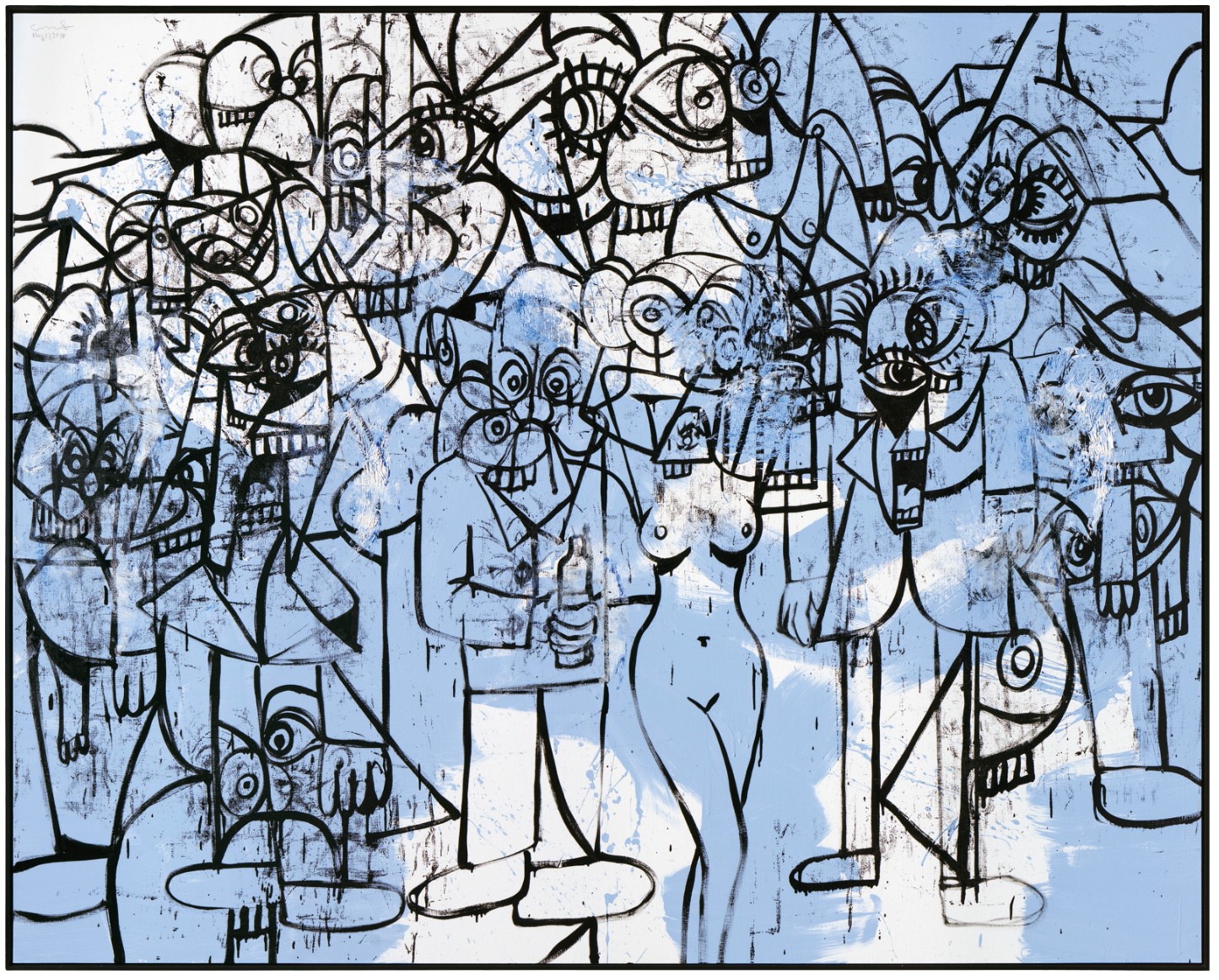
GEORGE CONDO (B. 1957)
Blue and White Improvisation, 2018
Acrylic and oil on linen, in artist’s frame
85 ¼ x 106 ¼ inches (216.5 x 270 cm)
Signed and dated ‘Condo May 17, 2018’ (upper left)
#9. Nun and Priest, 2007
Christie’s online: 28 September 2021
Estimated: HKD 10,000,000 – 18,000,000
HKD 20,650,000 / USD 2,652,911
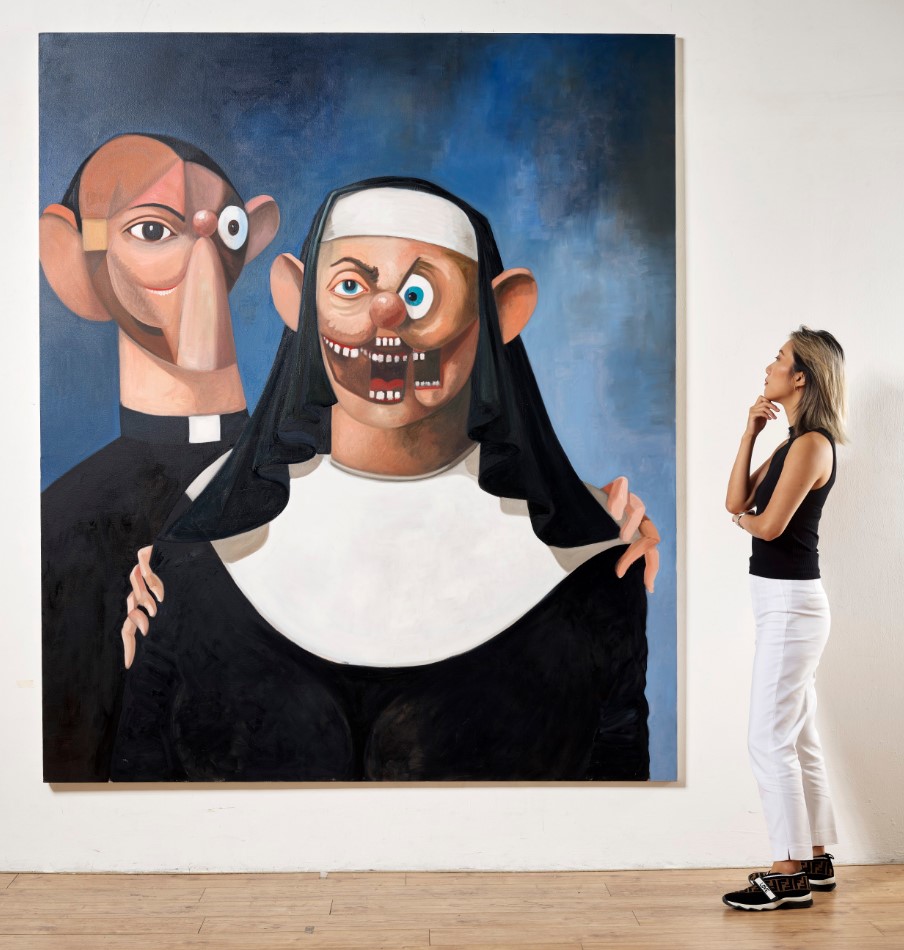
GEORGE CONDO (B. 1957)
Nun and Priest, 2007
Oil on canvas
91 3/4 x 78 inches (233×198 cm)
Signed and dated ‘Condo 07’ (on the reverse)
#10. Back Channel, 2017
Sotheby’s Hong-Kong: 19 April 2021
Estimated: HKD 14,000,000 – 24,000,000
HKD 19,535,000 / USD 2,515,387
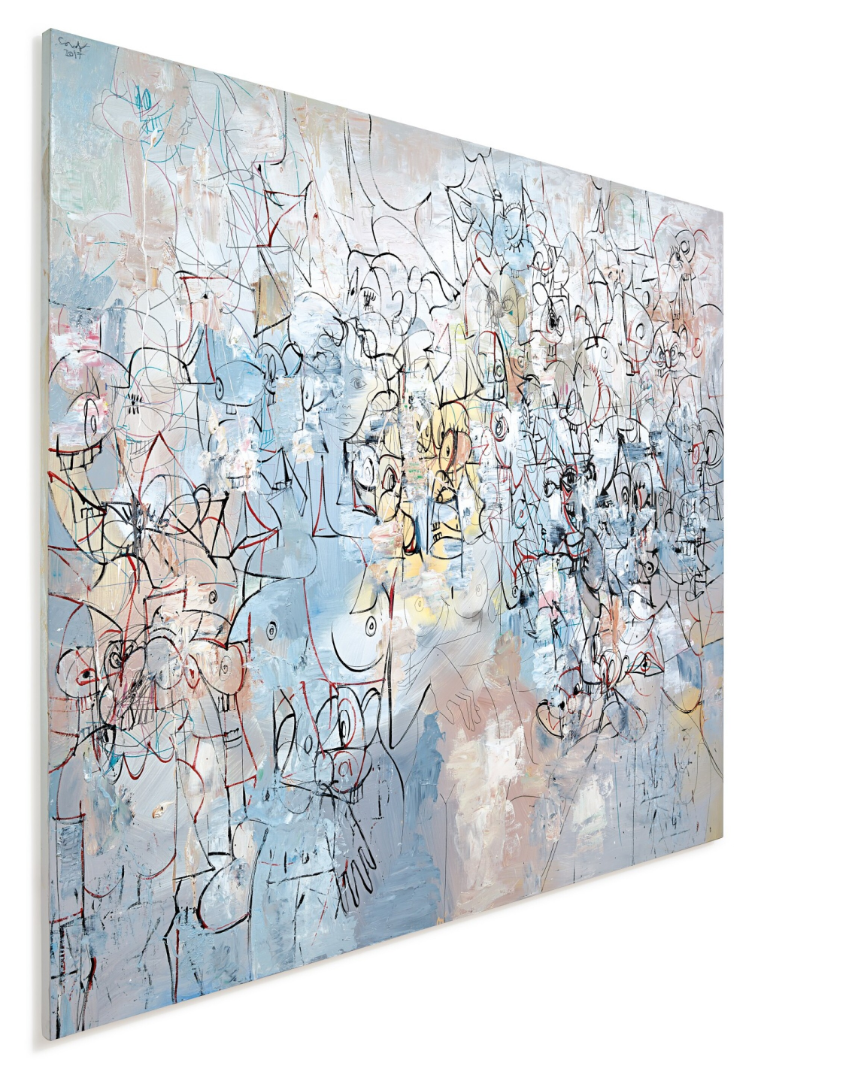
GEORGE CONDO (b. 1957)
Back Channel, 2017
Oil, graphite, colored pencil and acrylic on linen
75×90 inches (190.5 x 228.6 cm)
Signed and dated 2017
#11. Collision Course, 2009
Phillips New-York: 17 November 2021
Estimated: USD 1,800,000 – 2,500,000
USD 2,450,000
George Condo – 20th Century & Conte… Lot 39 November 2021 | Phillips
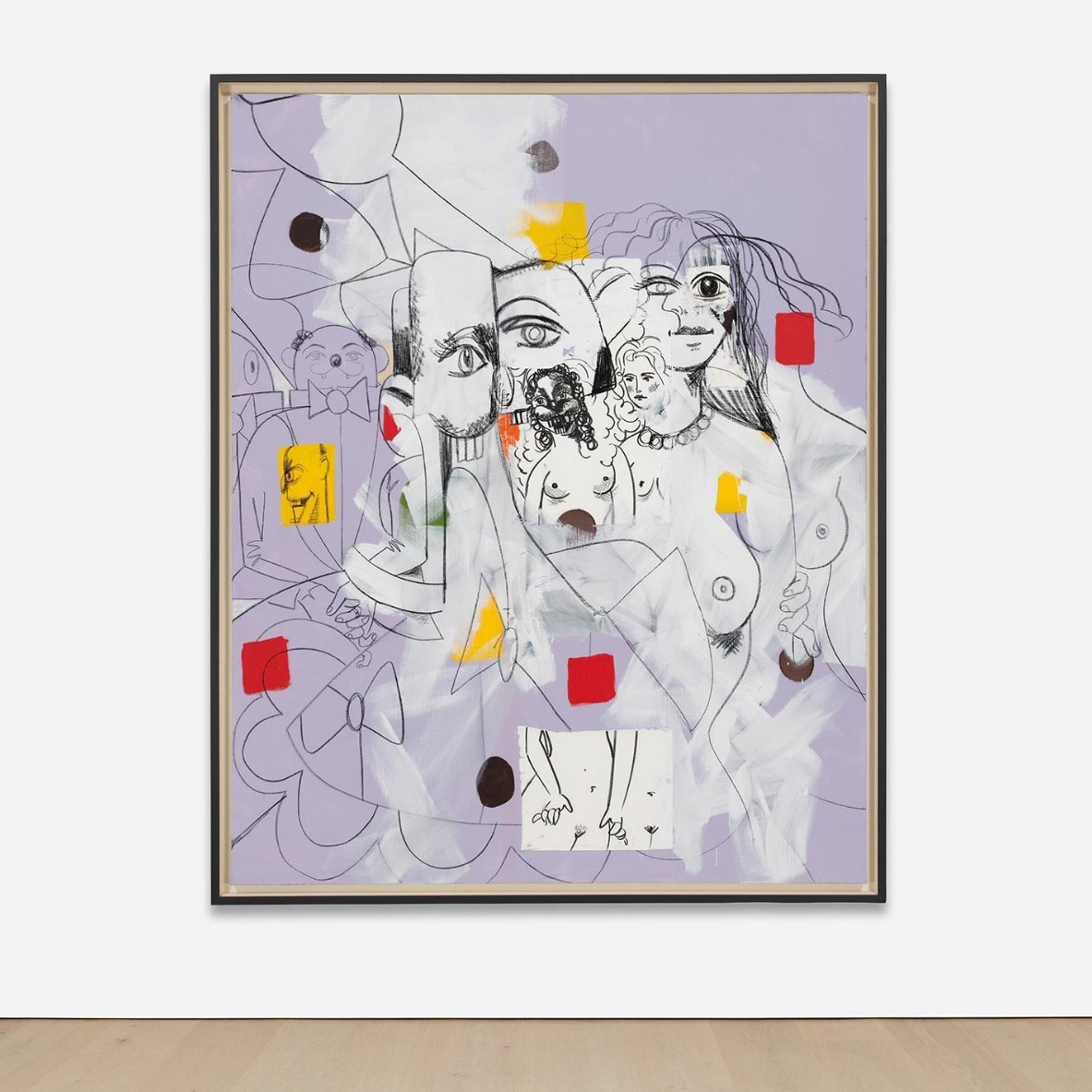
GEORGE CONDO
Collision Course, 2009
Acrylic, charcoal, wax crayon, pastel and paper collage on linen
71 7/8 x 57 7/8 inches (182.6 x 147 cm)
Signed and dated “Condo ’09” on the reverse
#12. Untitled (Artist and Muse), 2015
Sotheby’s Hong-Kong: 10 October 2021
Estimated: HKD 11,000,000 – 15,000,000
HKD 16,510,000 / USD 2,120,881
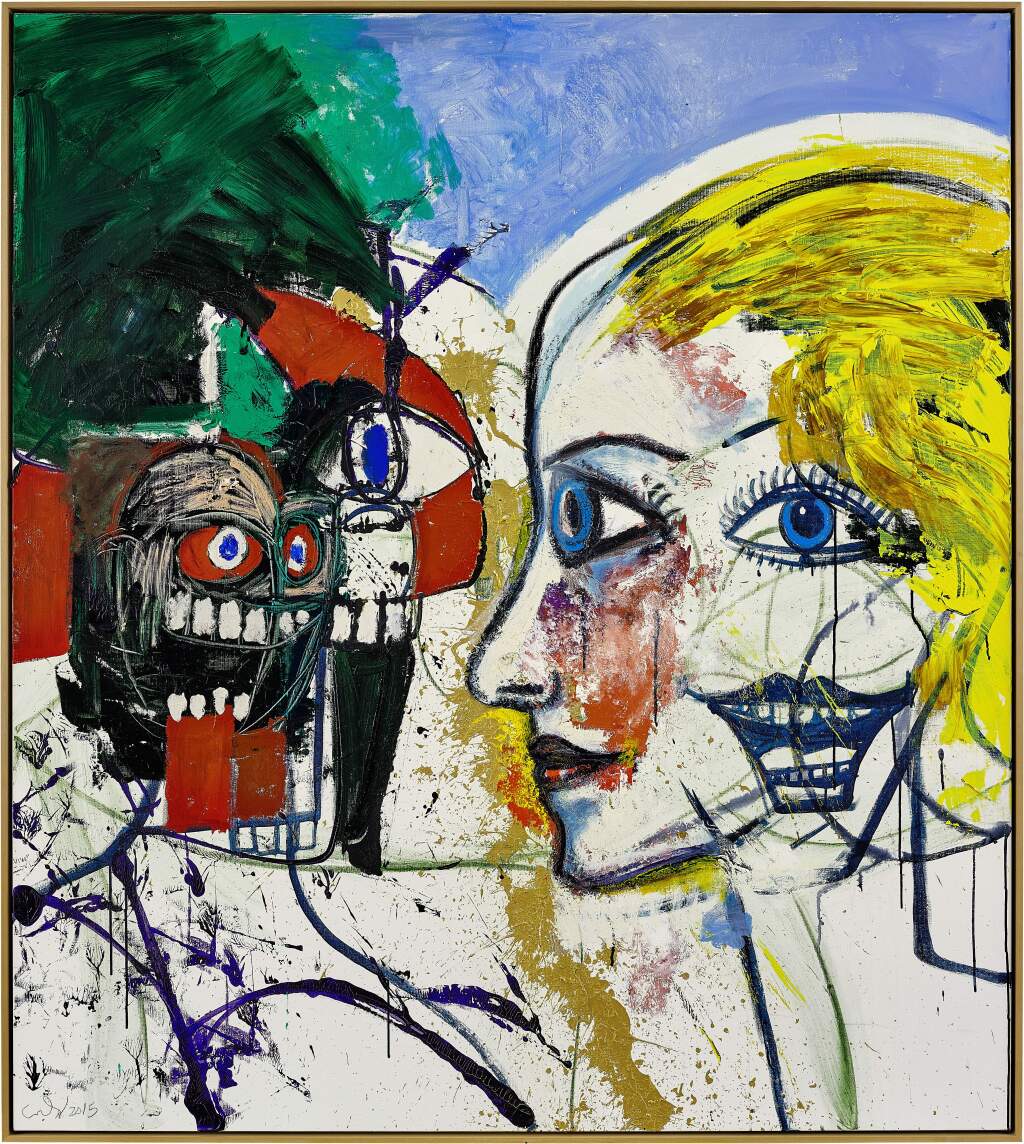
GEORGE CONDO (B. 1957)
Untitled (Artist and Muse), 2015
Acrylic, pigment stick, and gold paint on canvas
65×58 inches (165.1 x 147.3 cm)
Signed and dated 2015
#13. Blue Expanding Orgy, 2005
Christie’s Hong-Kong: 2 December 2021
Estimated: HKD 11,000,000 – 18,000,000
HKD 14,650,000 / USD 1,879,795
GEORGE CONDO (B. 1957) (christies.com)
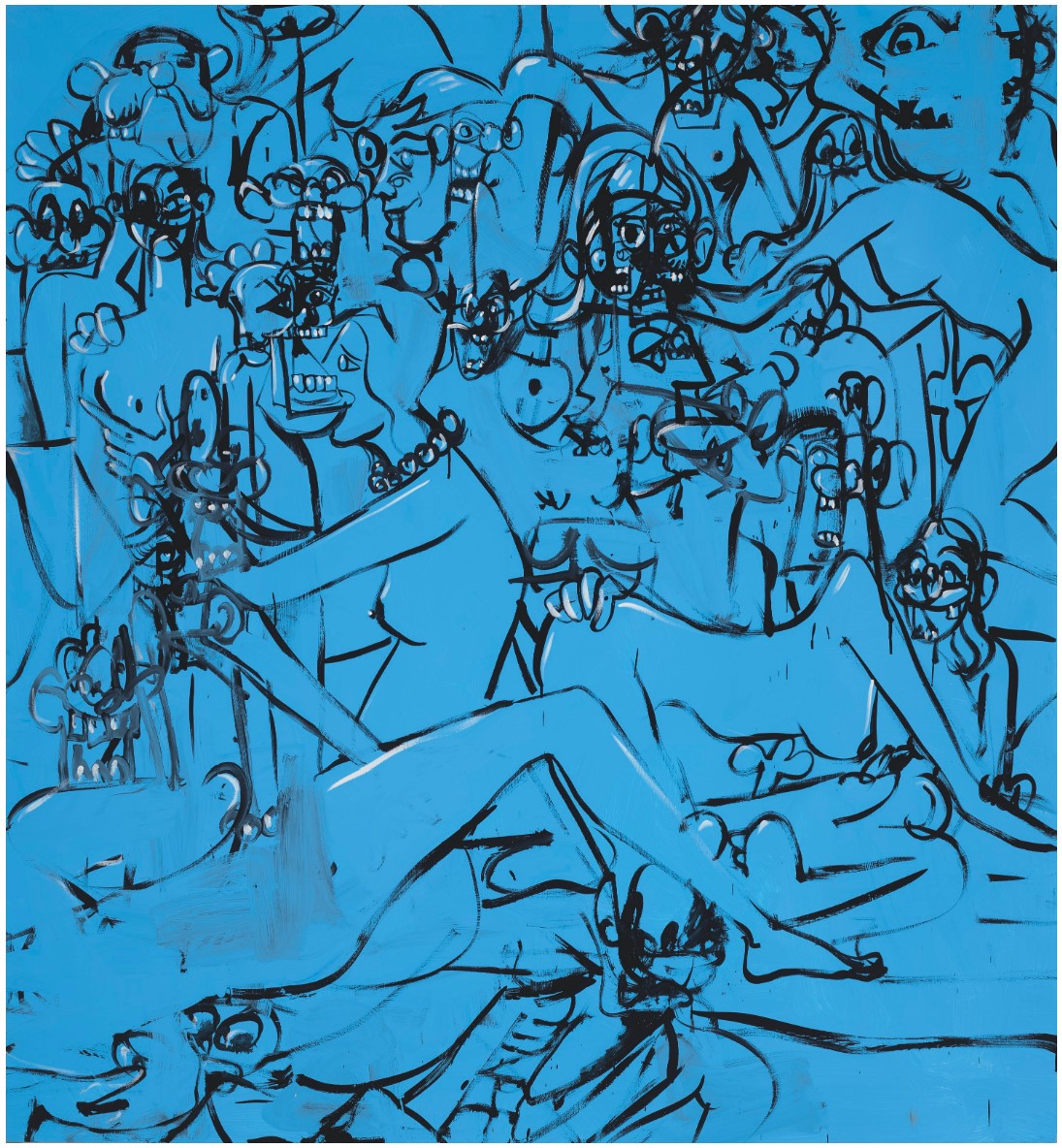
GEORGE CONDO (B. 1957)
Blue Expanding Orgy, 2005
Oil on linen
165×152 cm (65 x 59 7⁄8 inches)
Signed with artist’s signature and dated ‘05’ (upper left)
Signed with artist’s signature, titled and dated ‘05 Blue Expanding Orgy’ (on the reverse)
#14. Superman, 2005
Christie’s New-York: 12 November 2021
Estimated: USD 500,000 – 700,000
USD 1,830,000
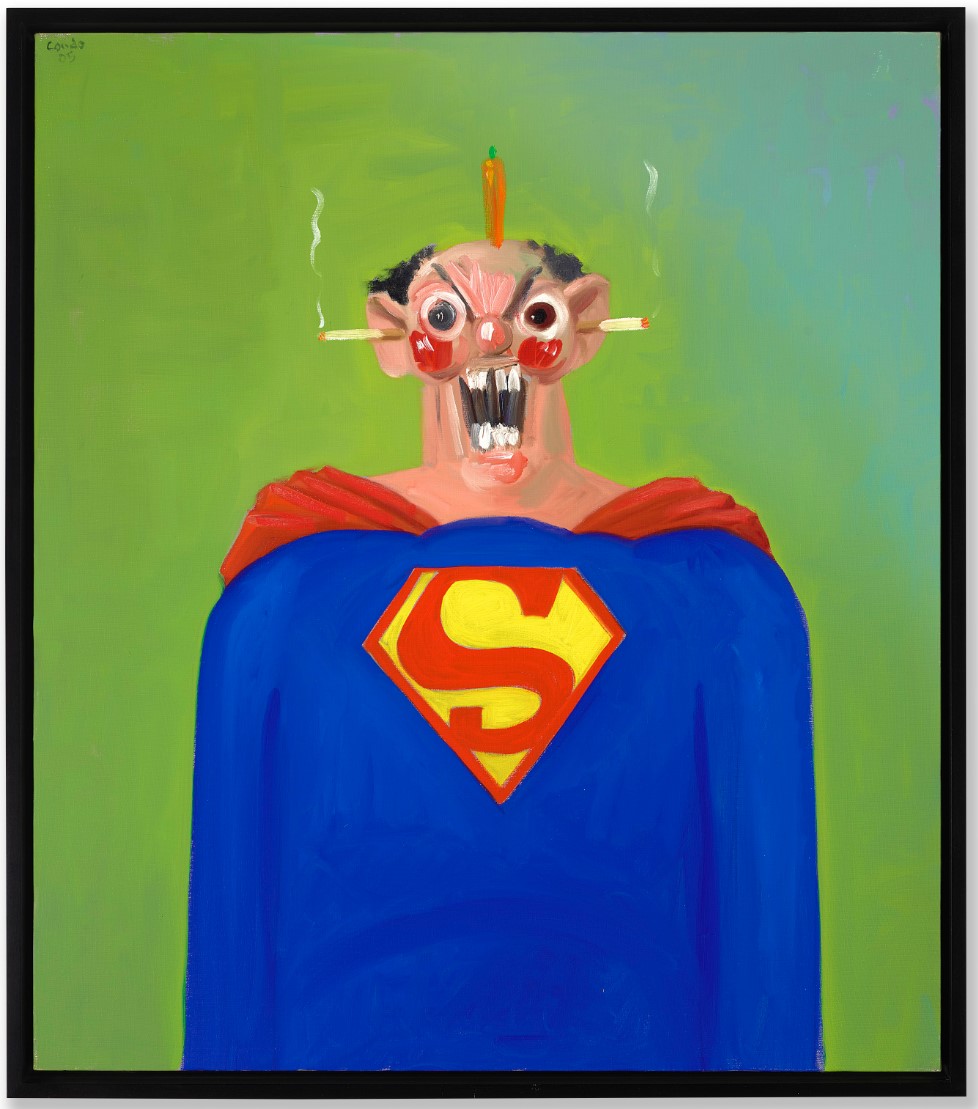
GEORGE CONDO (b. 1957)
Superman, 2005
Oil on canvas
32×28 inches (81.3 x 71.1 cm)
Signed and dated ‘Condo 05’ (upper left)
Signed again, titled and dated again ‘Condo 05 Superman’ (on the reverse)
#15. Sketches of Jean Louis, 2006
Phillips Hong-Kong: 8 June 2021
Estimated: HKD 10,000,000 – 15,000,000
HKD 13,560,000 / USD 1,747,445
George Condo – 20th Century & Contempor… Lot 28 June 2021 | Phillips
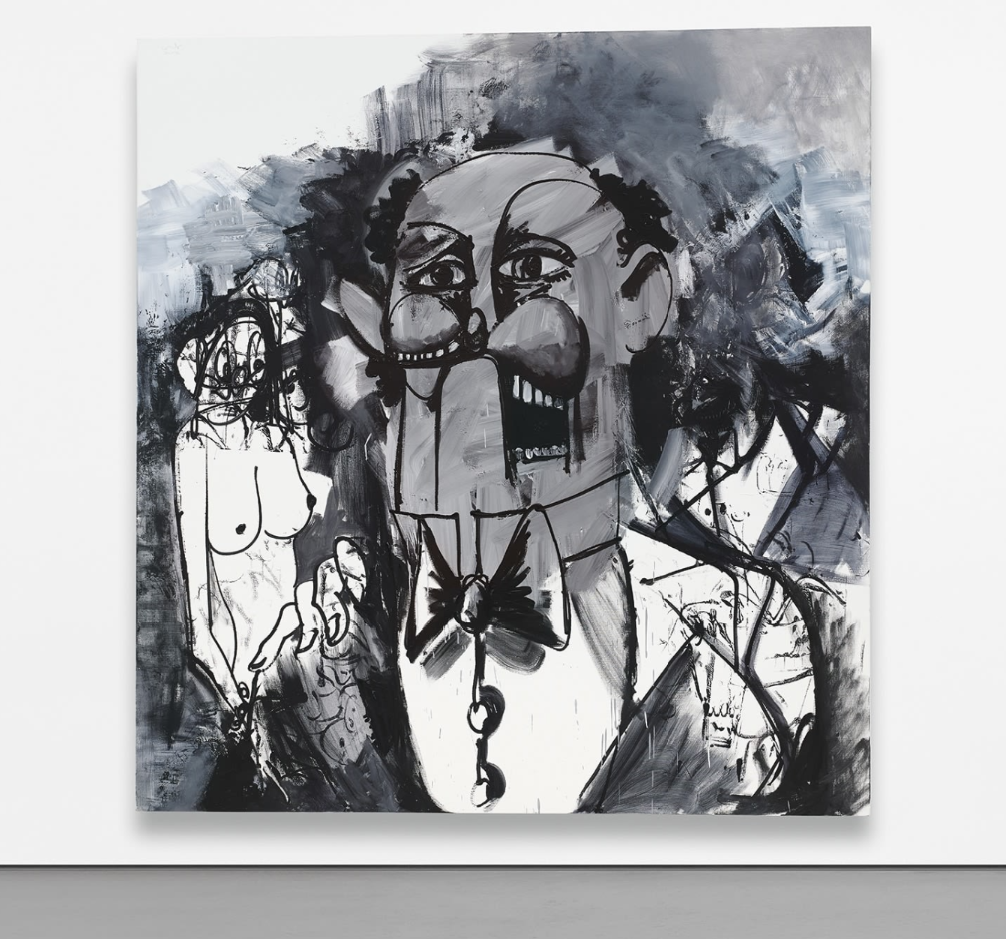
GEORGE CONDO
Sketches of Jean Louis, 2006
Oil on canvas
84 7/8 x 80 1/8 inches (215.6 x 203.5 cm)
Signed and dated ‘Condo Jan. 19.06’ upper left
#16. The Showgirl, 2008
Phillips London: 15 October 2021
Estimated: GBP 1,000,000 – 1,500,000
GBP 1,232,500 / USD 1,695,556
George Condo – 20th Century & Contem… Lot 35 October 2021 | Phillips
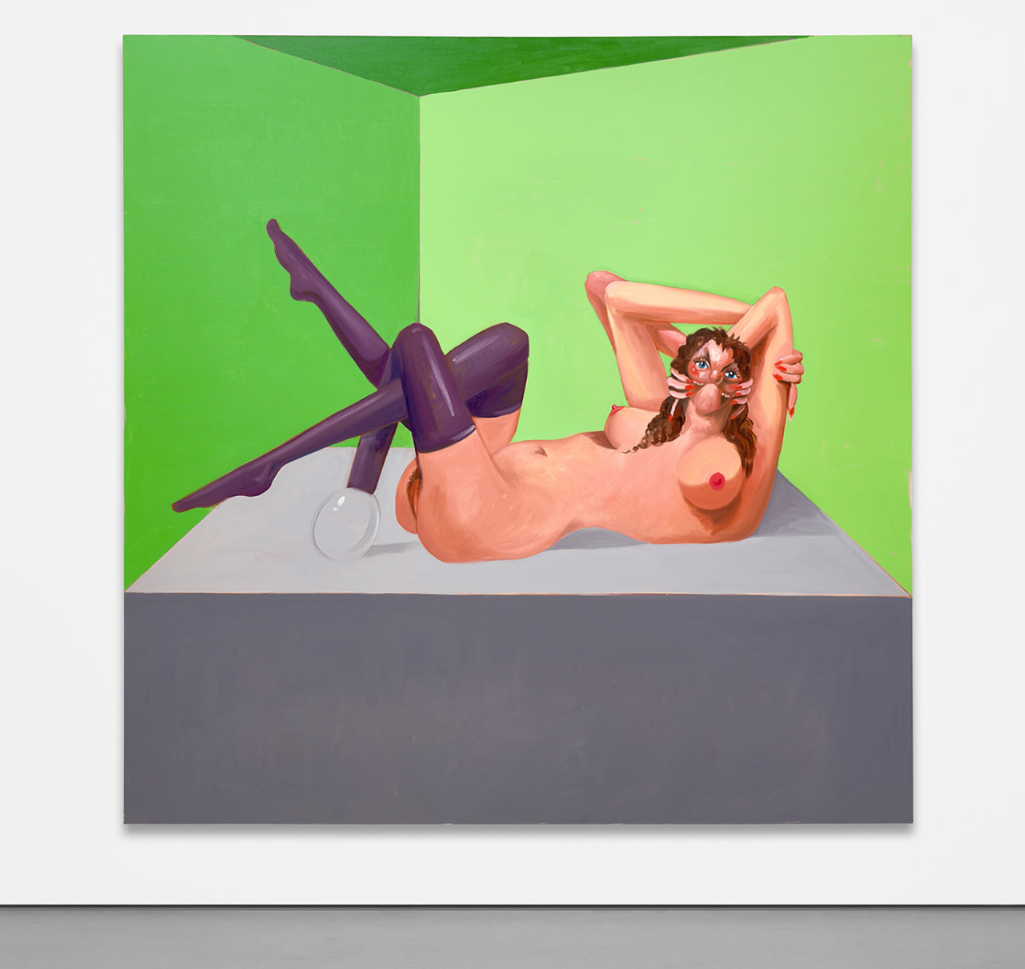
GEORGE CONDO
The Showgirl, 2008
Oil on linen
80 1/8 x 80 1/8 inches (203.5 x 203.5 cm)
Signed and dated ‘Condo 08’ on the reverse
#17. Ten Small Portraits, 2001
Sotheby’s London: 25 March 2021
Estimated: GBP 500,000 – 700,000
GBP 1,225,000 / USD 1,680,614
GEORGE CONDO (b. 1957)
Ten Small Portraits, 2001
Oil on canvas, in 10 parts
Each: 7 1/8 x 5 1/2 inches (18.1 x 13.9 cm)
Signed Condo (on each); signed and dated 5/01 (on the reverse of each)
#18. Whistler’s Father, 2019
Sotheby’s Hong-Kong: 9 October 2021
Estimated: HKD 11,000,000 – 15,000,000
HKD 12,880,000 / USD 1,654,527
GEORGE CONDO (b. 1957)
Whistler’s Father, 2019
Acrylic and oil stick on canvas
76×74 inches (193×188 cm)
Signed and dated 2019
#19. Red and Black Diagonal Portrait, 2016
Christie’s Hong-Kong: 1 December 2021
Estimated: HKD 12,000,000 – 18,000,000
HKD 12,850,000 / USD 1,649,254
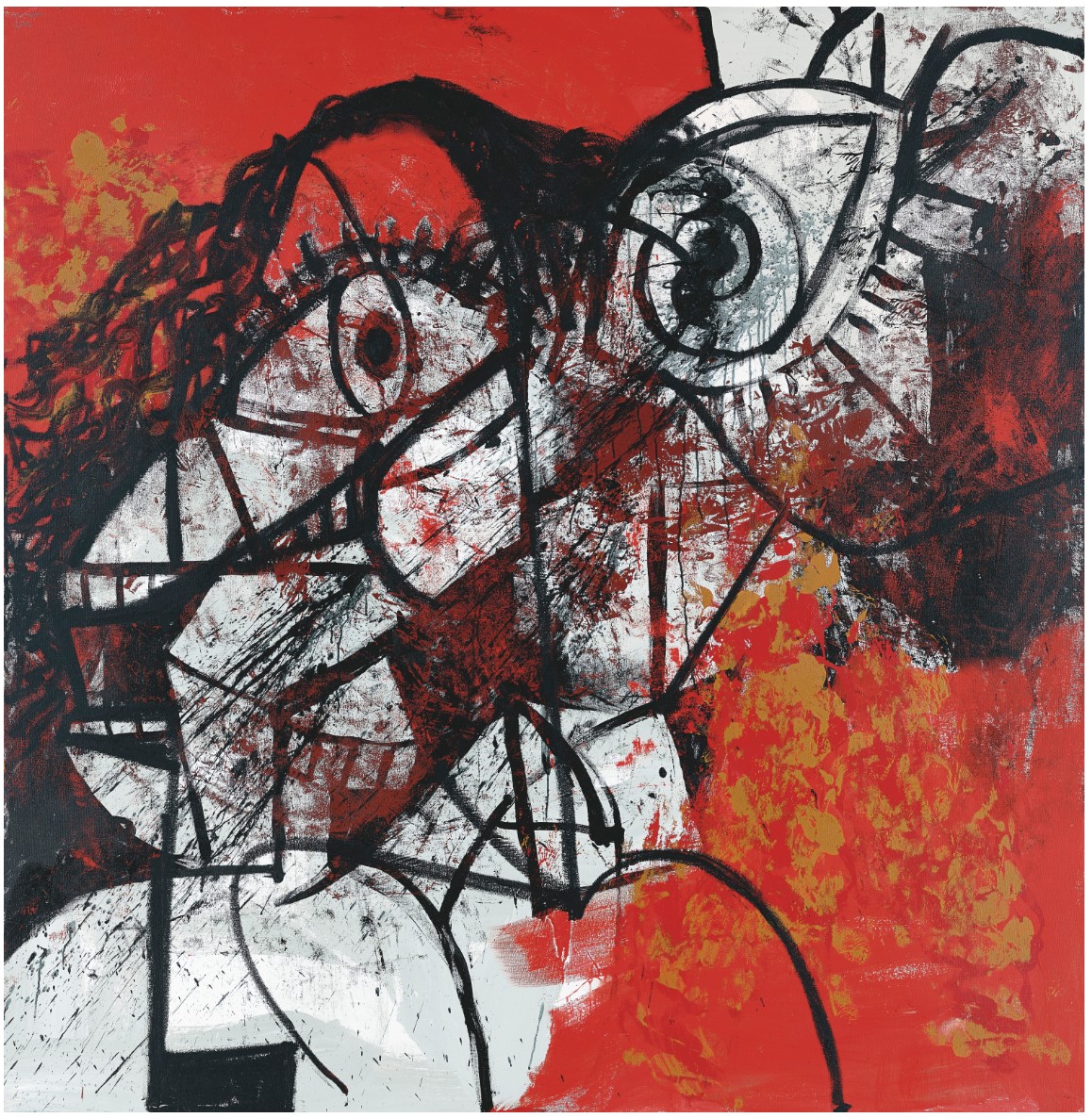
GEORGE CONDO (B. 1957)
Red and Black Diagonal Portrait, 2016
Acrylic and oilstick on canvas
83 7⁄8 x 82 1⁄8 inches (213 x 208.6 cm)
Signed and dated ‘Condo 2016’ (upper left)
#20. The Stockbroker, 2002
Sotheby’s New-York: 12 May 2021
Estimated: USD 1,200,000 – 1,800,000
USD 1,593,000
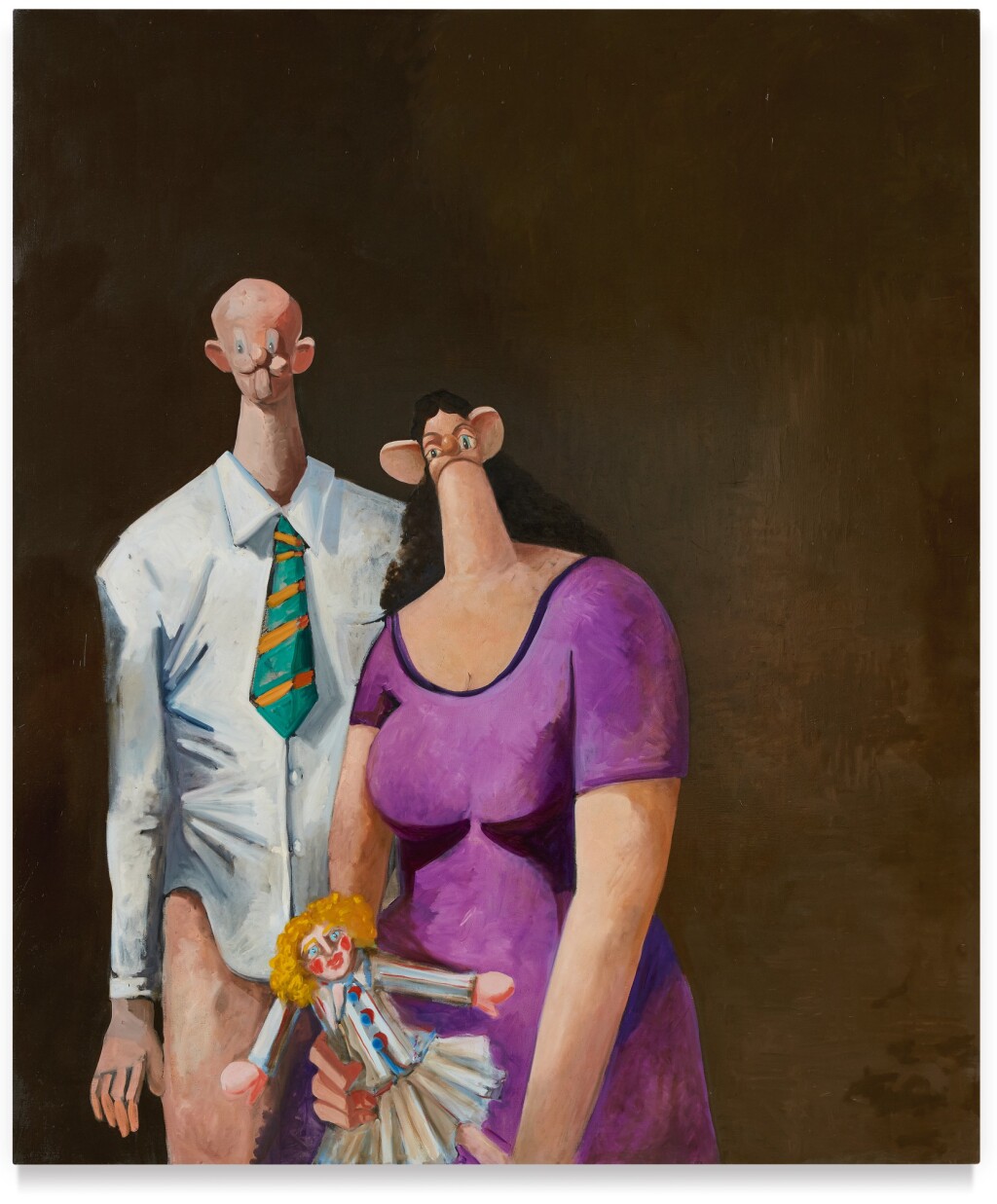
GEORGE CONDO (B.1957)
The Stockbroker, 2002
Oil on canvas
97×80 inches (243.8 x 203.2 cm)
Signed, titled, and dated 2002 on the reverse
#21. The Dreamer, 2008
Phillips Hong-Kong: 30 November 2021
Estimated: HKD 4,600,000 – 6,200,000
HKD 11,140,000 / USD 1,428,773
George Condo – 20th Century & Conte… Lot 43 November 2021 | Phillips
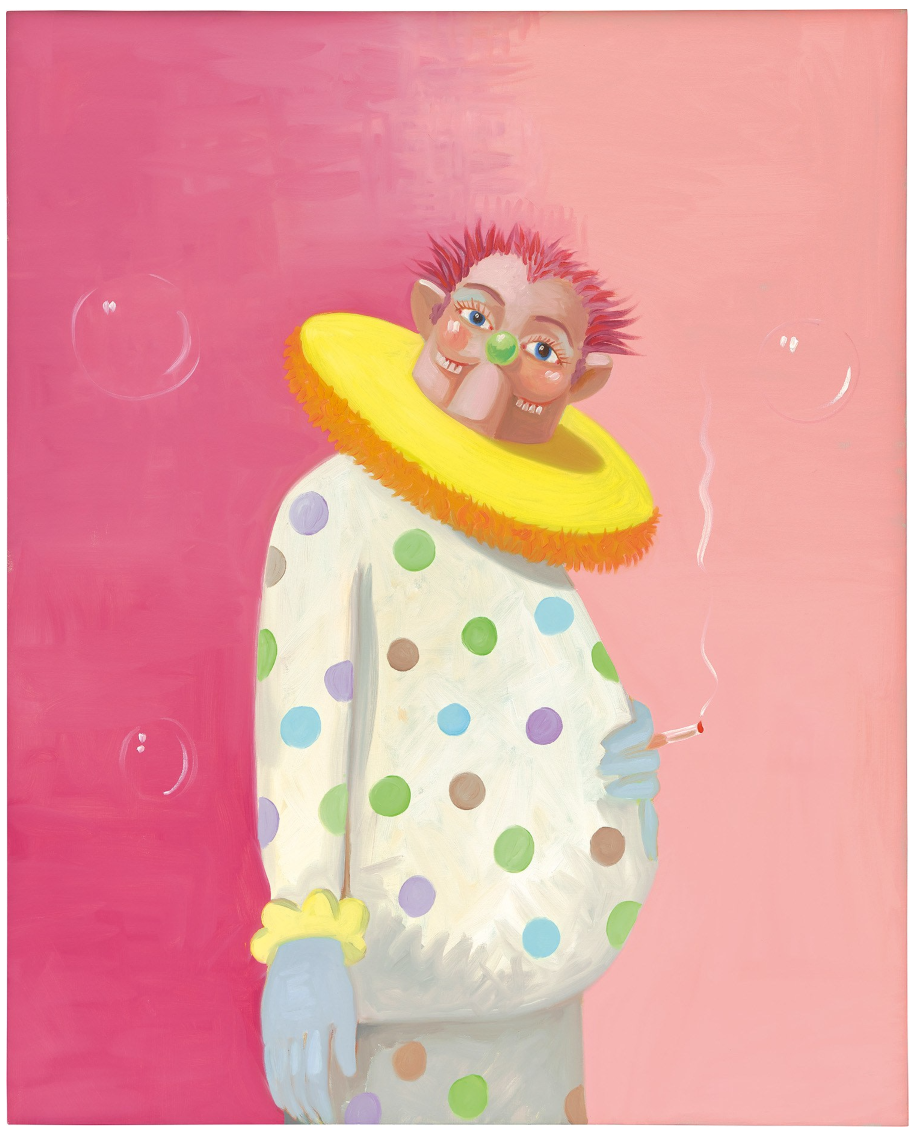
GEORGE CONDO
The Dreamer, 2008
Oil on canvas
52 x 41 7/8 inches (132.2 x 106.6 cm)
Signed, titled and dated ‘Condo 08 “The DReamer”‘ on the reverse
#22. Smiling Girl, 2005
Sotheby’s New-York: 13 May 2021
Estimated: USD 400,000 – 600,000
USD 1,411,500
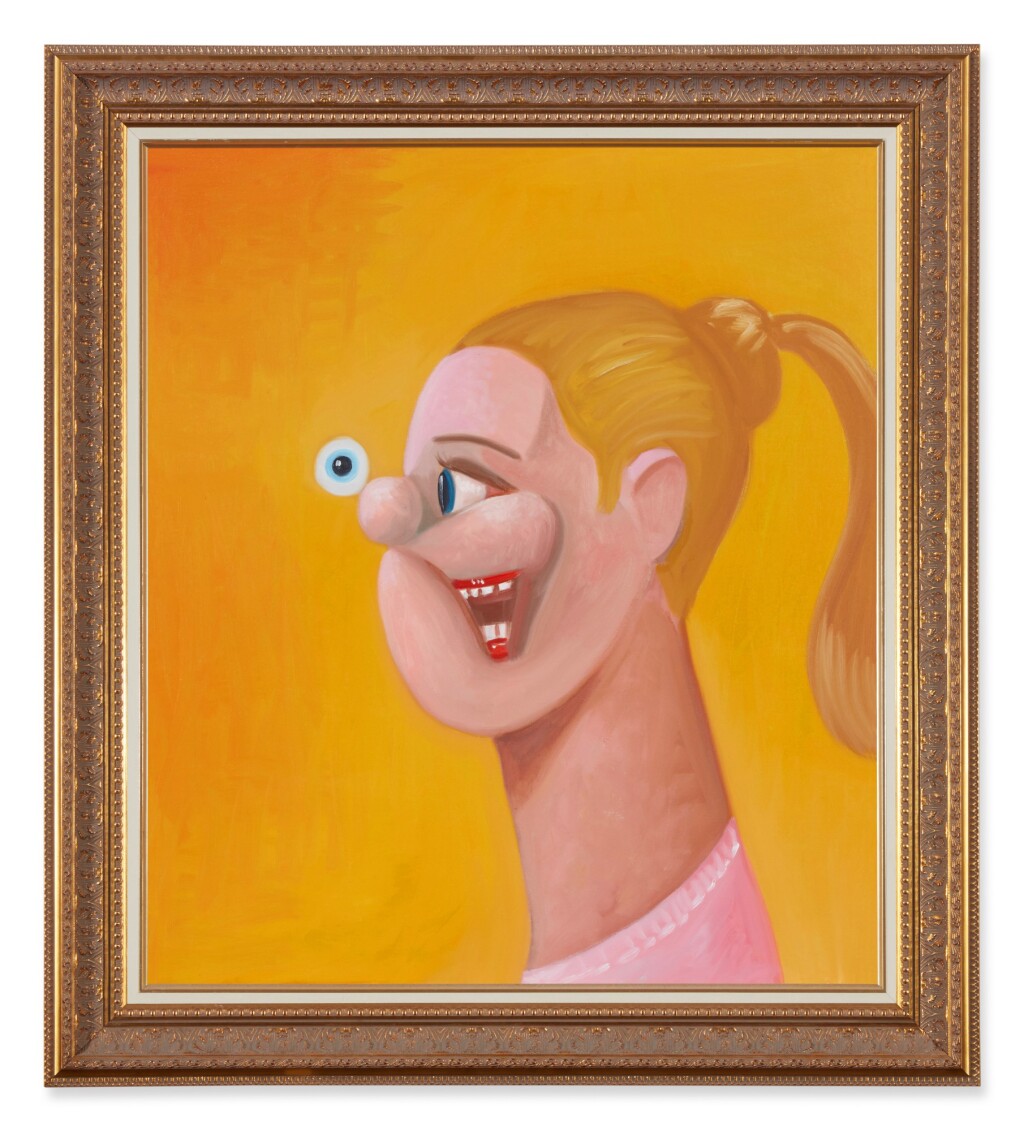
GEORGE CONDO (B. 1957)
Smiling Girl, 2005
Oil on canvas, in artist’s chosen frame
39 ½ x 35 ¼ inches (100.3 x 89.5 cm)
Signed, titled and dated 08.05 on the reverse; signed and titled on the overlap
#24. Rodrigo at his Wedding, 2007
Christie’s New-York: 12 November 2021
Estimated: USD 700,000 – 1,000,000
USD 1,134,000
GEORGE CONDO (B. 1957) (christies.com)
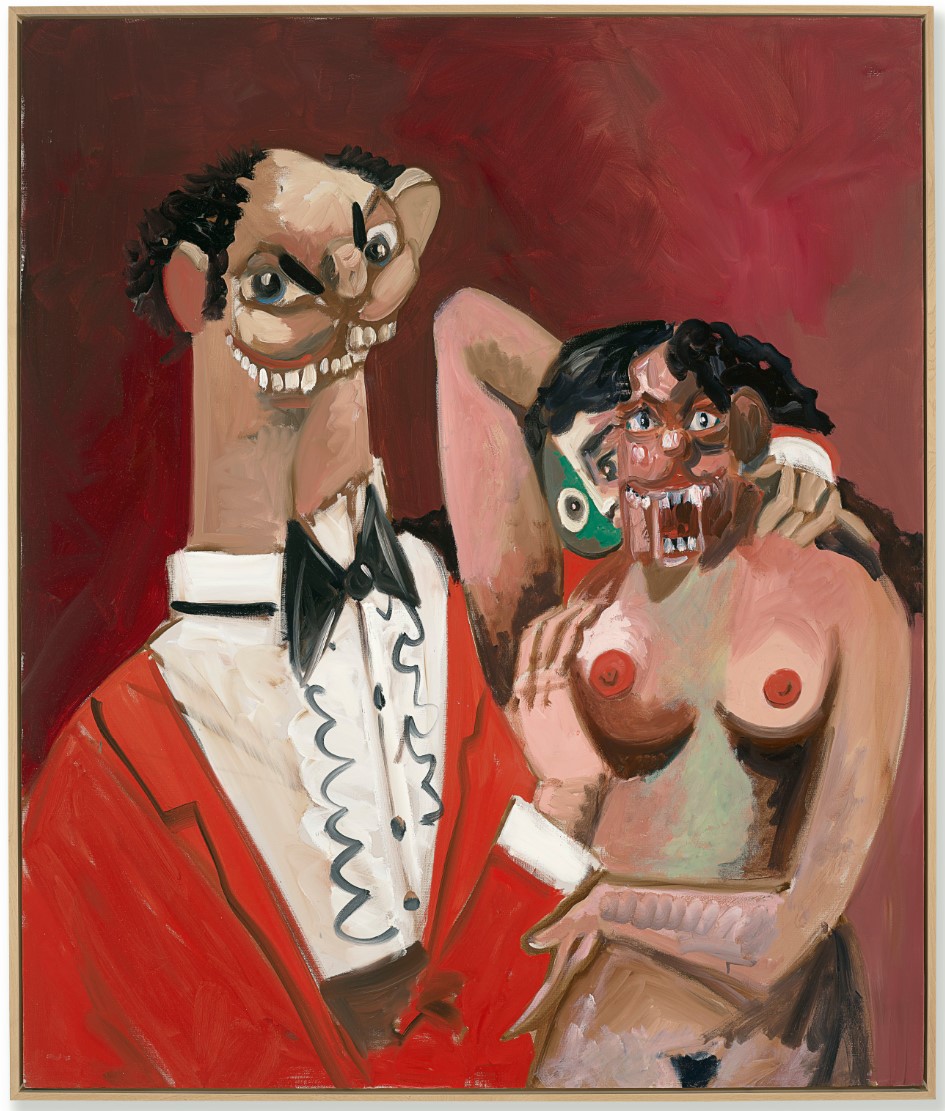
GEORGE CONDO (B. 1957)
Rodrigo at his Wedding, 2007
Oil on canvas
50 1⁄8 x 42 1⁄8 inches (127.3 x 107 cm)
Signed, titled and dated ‘Condo 07 Rodrigo at his Wedding’ (on the reverse)
#25. Rodrigo and His Muse, 2007
Christie’s Hong-Kong: 2 December 2021
Estimated: HKD 3,800,000 – 5,800,000
HKD 8,650,000 / USD 1,109,913
GEORGE CONDO (B. 1957), Rodrigo and His Muse | Christie’s (christies.com)
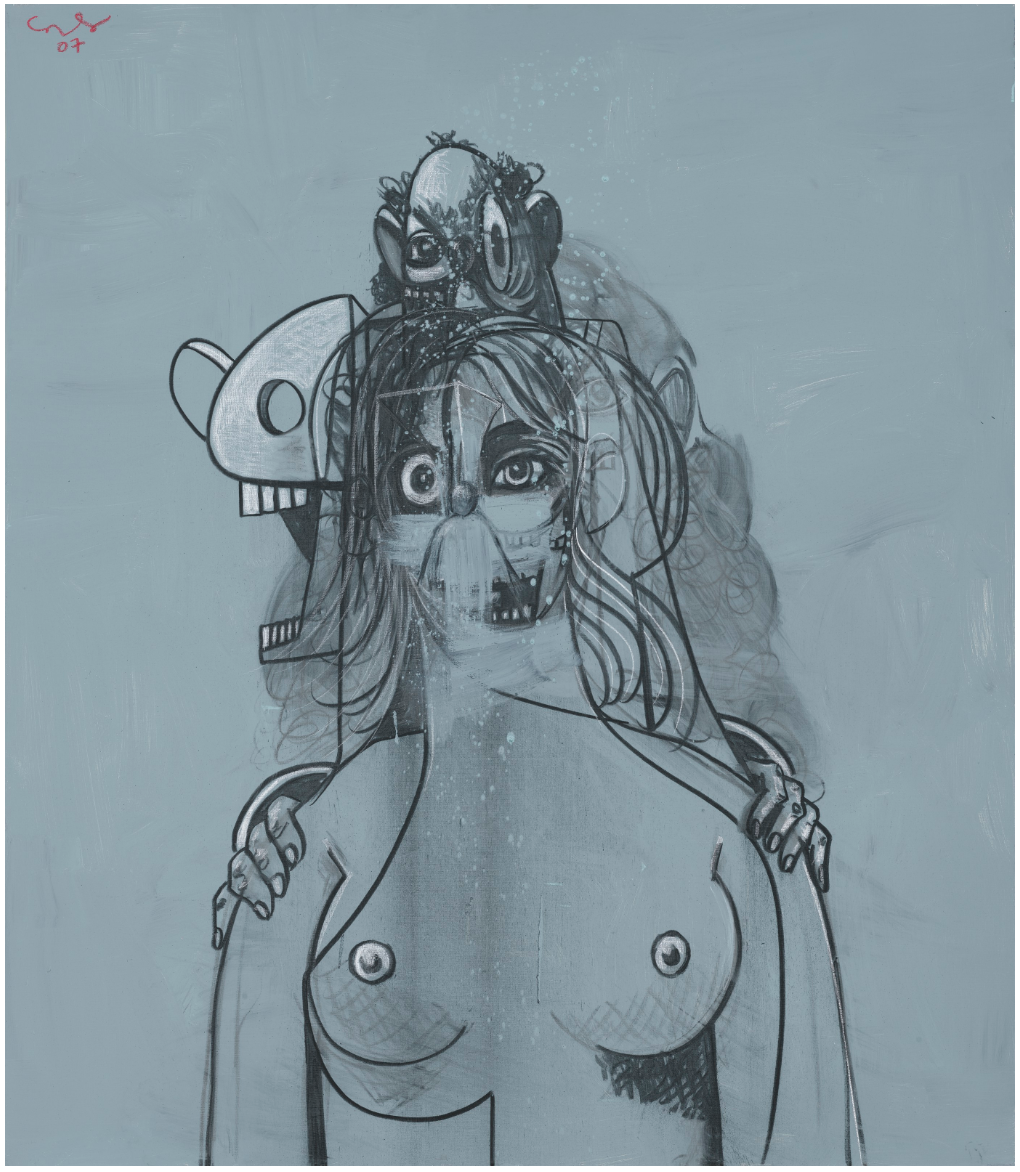
GEORGE CONDO (B. 1957)
Rodrigo and His Muse, 2007
Acrylic and charcoal on canvas
53 1/8 x 46 1/8 inches (135×117 cm)
Signed with artist’s signature and dated ‘07’ (upper left)
#26. Grandpa (Old Red with Bubbles), 1996
Phillips London: 14 October 2021
Estimated: GBP 300,000 – 400,000
GBP 809,000 / USD 1,107,157
George Condo – 20th Century & Conte… Lot 130 October 2021 | Phillips
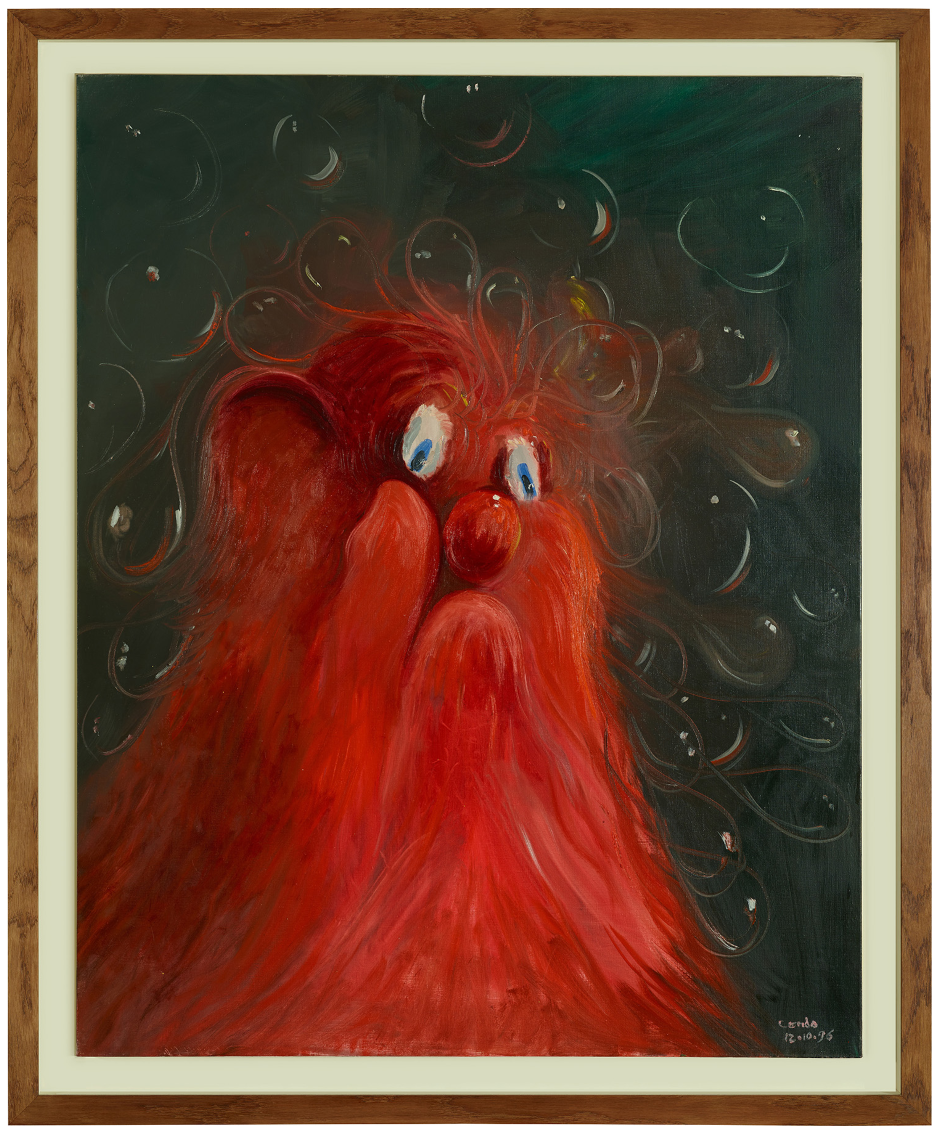
GEORGE CONDO
Grandpa (Old Red with Bubbles), 1996
Oil on canvas
50 x 40 1/8 inches (127×102 cm)
Signed and dated ‘Condo 12.10.96’ lower right
#27. Little Dancer, 2003
Christie’s Hong-Kong: 25 May 2021
Estimated: HKD 5,000,000 – 7,000,000
HKD 8,050,000 / USD 1,037,010
GEORGE CONDO (B. 1957), Little Dancer | Christie’s (christies.com)
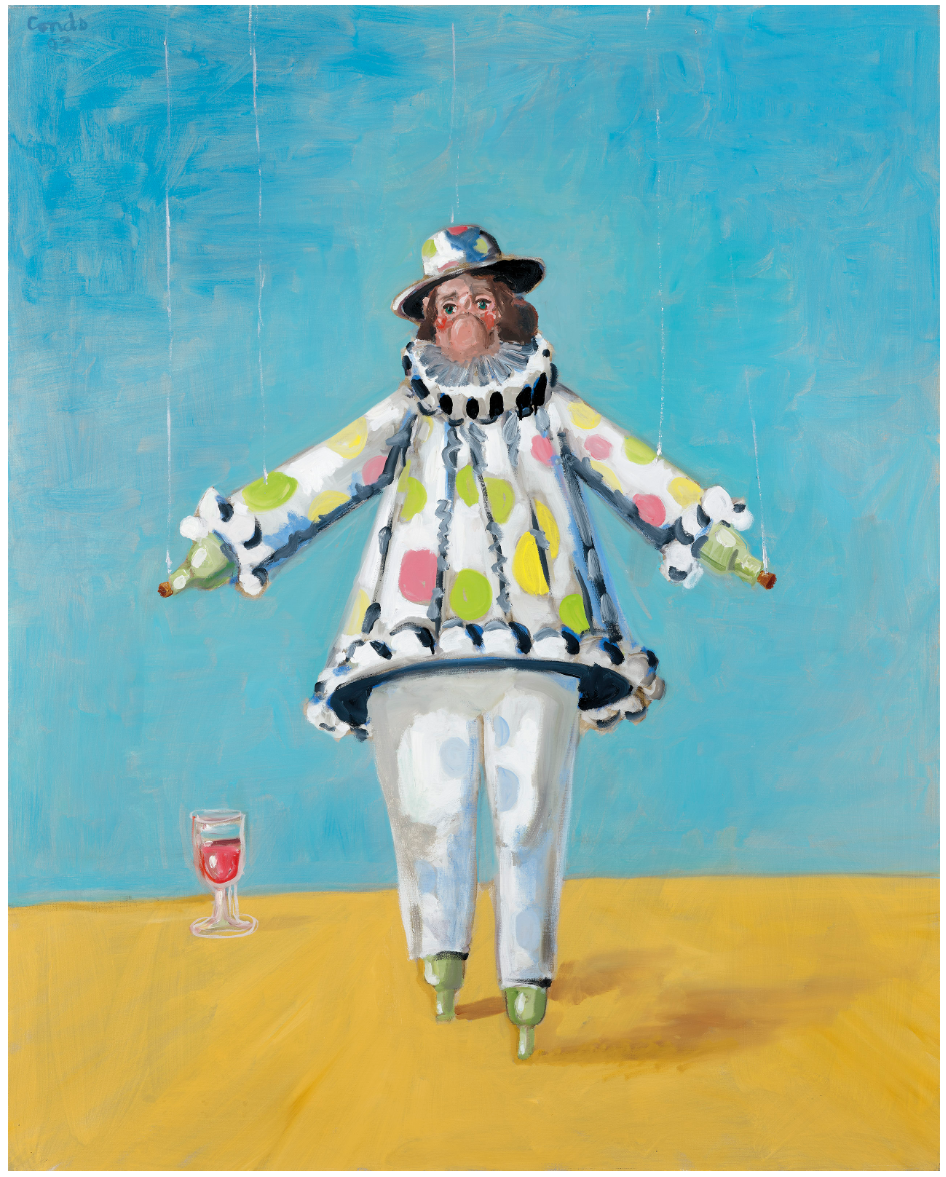
GEORGE CONDO (B. 1957)
Little Dancer, 2003
Oil on canvas
58 x 40 inches (127.3 x 101.6 cm)
Signed and dated ‘Condo 03’ (upper left)
USD 1 million
#28. Night Portrait, 2001
Phillips Hong-Kong: 29 November 2021
Estimated: HKD 4,800,000 – 6,800,000
HKD 6,905,000 / USD 885,347
George Condo – 20th Century & Cont… Lot 161 November 2021 | Phillips
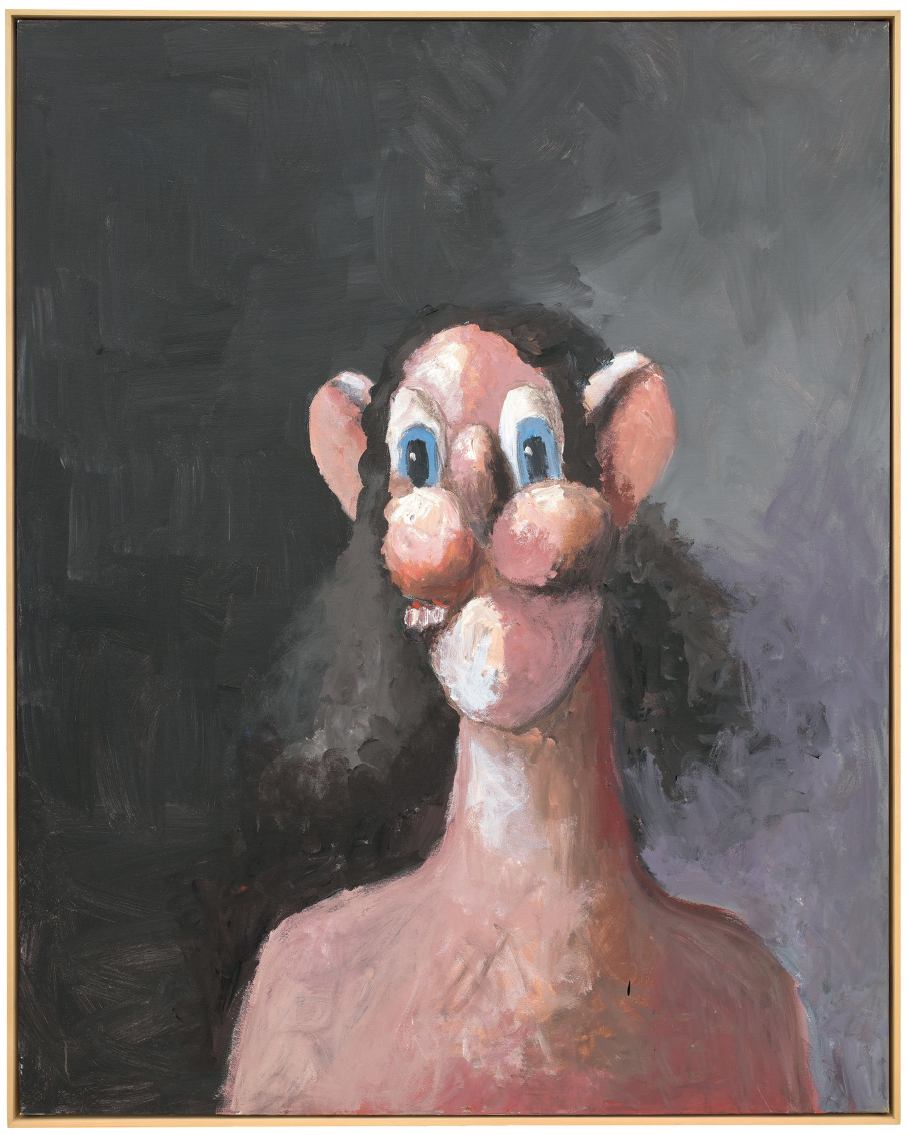
GEORGE CONDO
Night Portrait, 2001
Acrylic on canvas
60 1/8 x 47 7/8 inches (152.7 x 121.7 cm)
Signed, titled and dated ‘Condo August 01 “Night Portrait”‘ on the reverse
#31. Large Figure Composition, 2008
Christie’s London: 30 June 2021
Estimated: GBP 450,000 – 650,000
GBP 500,000 / USD 690,321
GEORGE CONDO (B. 1957), Large Figure Composition | Christie’s (christies.com)
GEORGE CONDO (B. 1957)
Large Figure Composition, 2008
Gesso, wax crayon and colored pencil on panel, in three parts
Each: 90×46 inches (228.6 x 116.8 cm)
Overall: 90×138 inches (228.6 x 350.4 cm)
Signed and dated ‘Condo 08’ (upper left)
#32. Gold Nude, 1989
Phillips London: 14 October 2021
Estimated: GBP 200,000 – 300,000
GBP 478,800 / USD 655,262
George Condo – 20th Century & Conte… Lot 143 October 2021 | Phillips
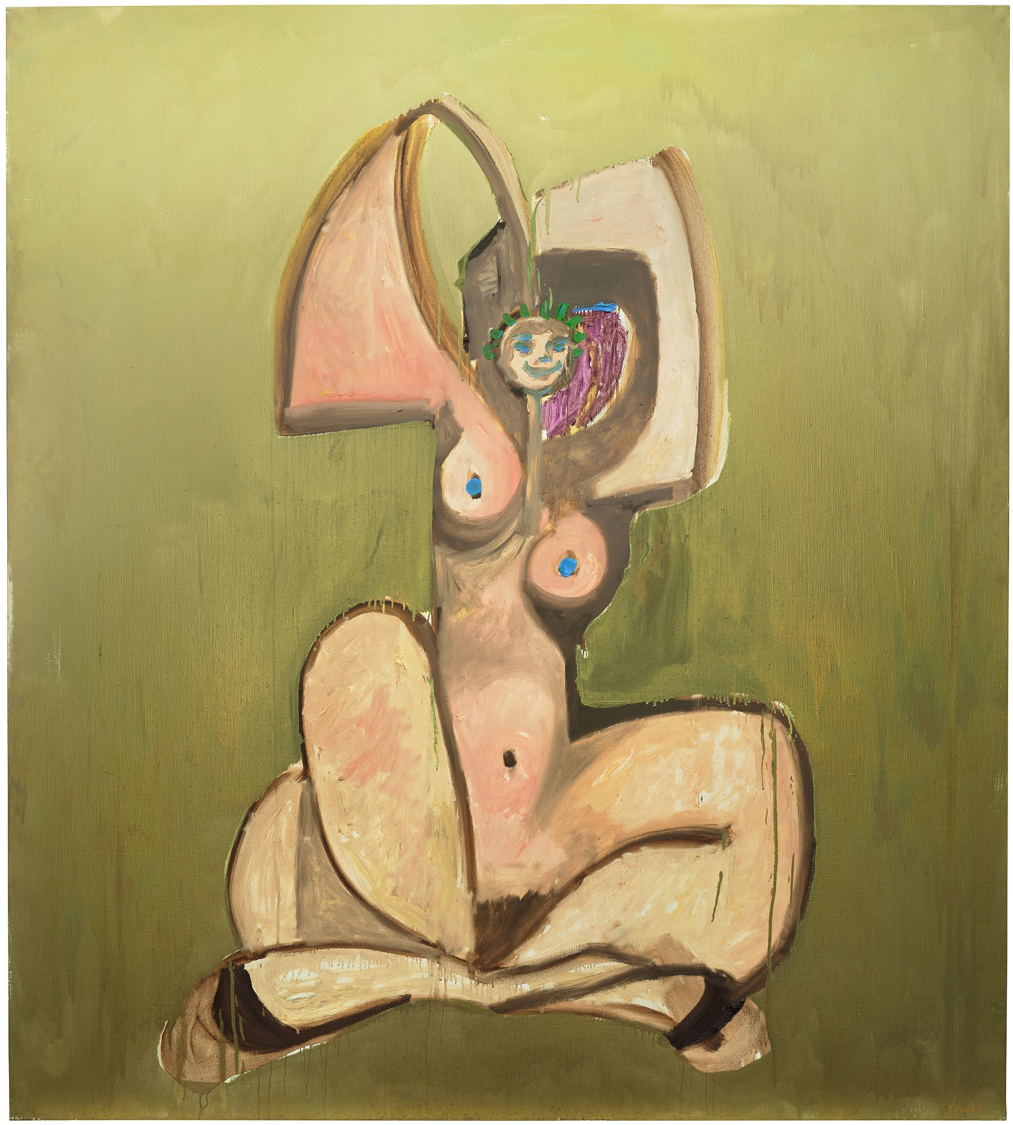
GEORGE CONDO
Gold Nude, 1989
Oil on canvas
78 5/8 x 70 7/8 inches (199.8 x 180 cm)
Signed ‘Condo’ lower right
#34. Woman on Red Chair, 2007
Phillips Hong-Kong: 7 June 2021
Estimated: HKD 2,500,000 – 3,000,000
HKD 4,788,000 / USD 617,973
George Condo – 20th Century & Contempo… Lot 193 June 2021 | Phillips
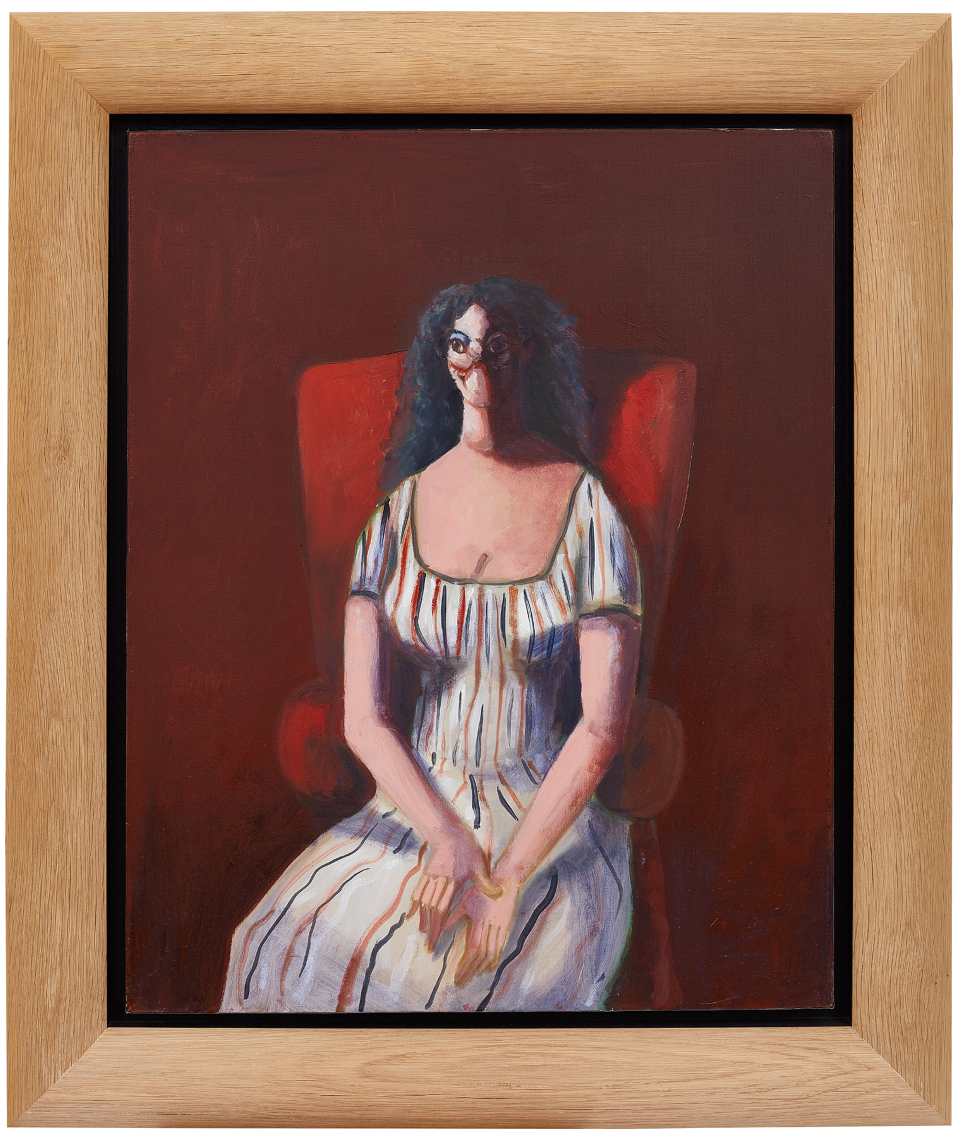
GEORGE CONDO
Woman on Red Chair, 2007
Oil on canvas
30 1/8 x 24 inches (76.5 x 61 cm)
Signed and dated ‘Condo 07’ on the reverse
#35. Smiling Young Woman, 2008
Phillips New-York: 18 November 2021
Estimated: USD 450,000 – 650,000
USD 604,800
George Condo – 20th Century & Cont… Lot 348 November 2021 | Phillips
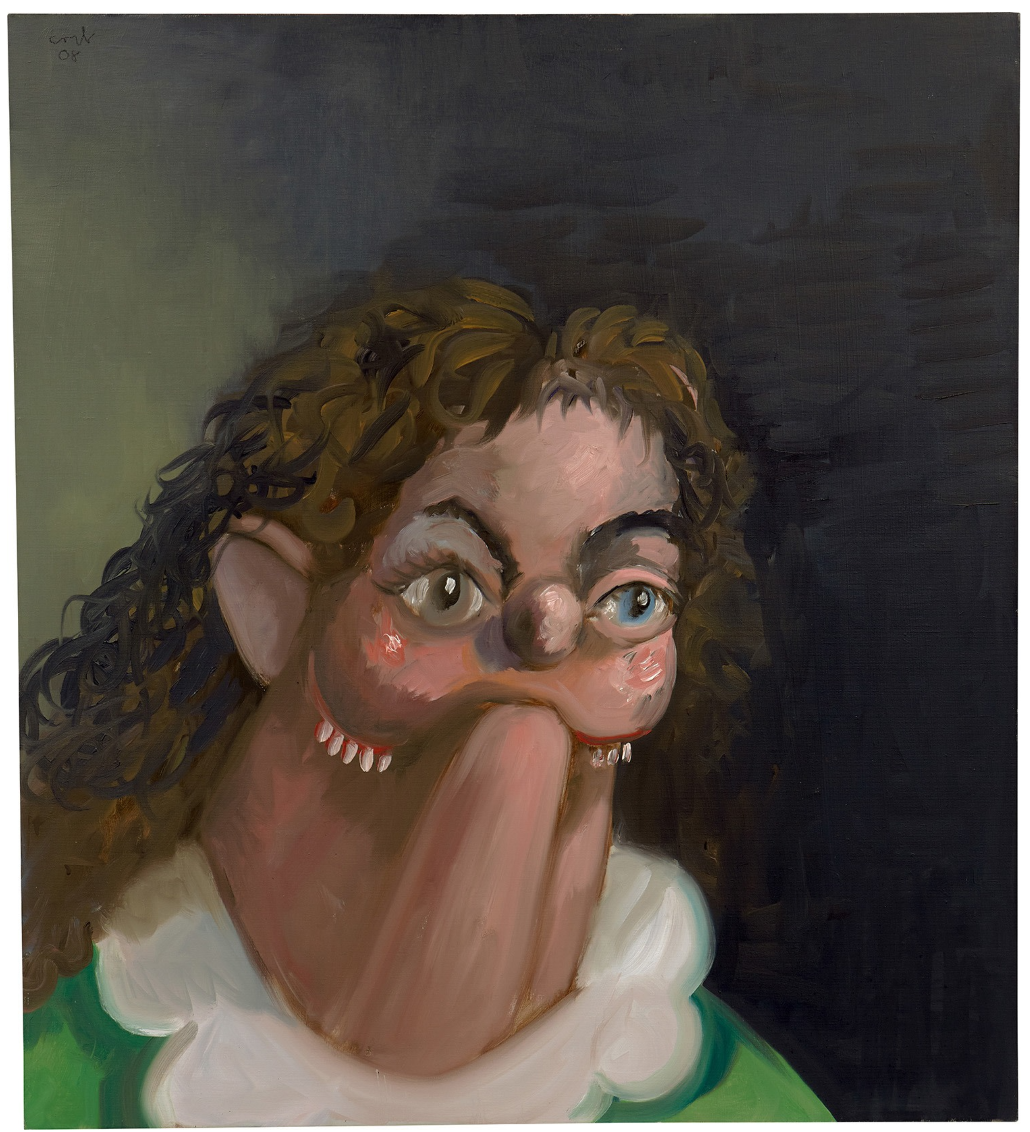
GEORGE CONDO
Smiling Young Woman, 2008
Oil on canvas
39 7/8 x 36 inches (101.3 x 91.4 cm)
Signed and dated “Condo 08” upper left; signed and dated “Condo 08” on the reverse
#36. The Executive, 2003
Phillips Hong-Kong: 7 June 2021
Estimated: HKD 2,200,000 – 3,200,000
HKD 4,284,000 / USD 552,118
George Condo – 20th Century & Contempo… Lot 194 June 2021 | Phillips
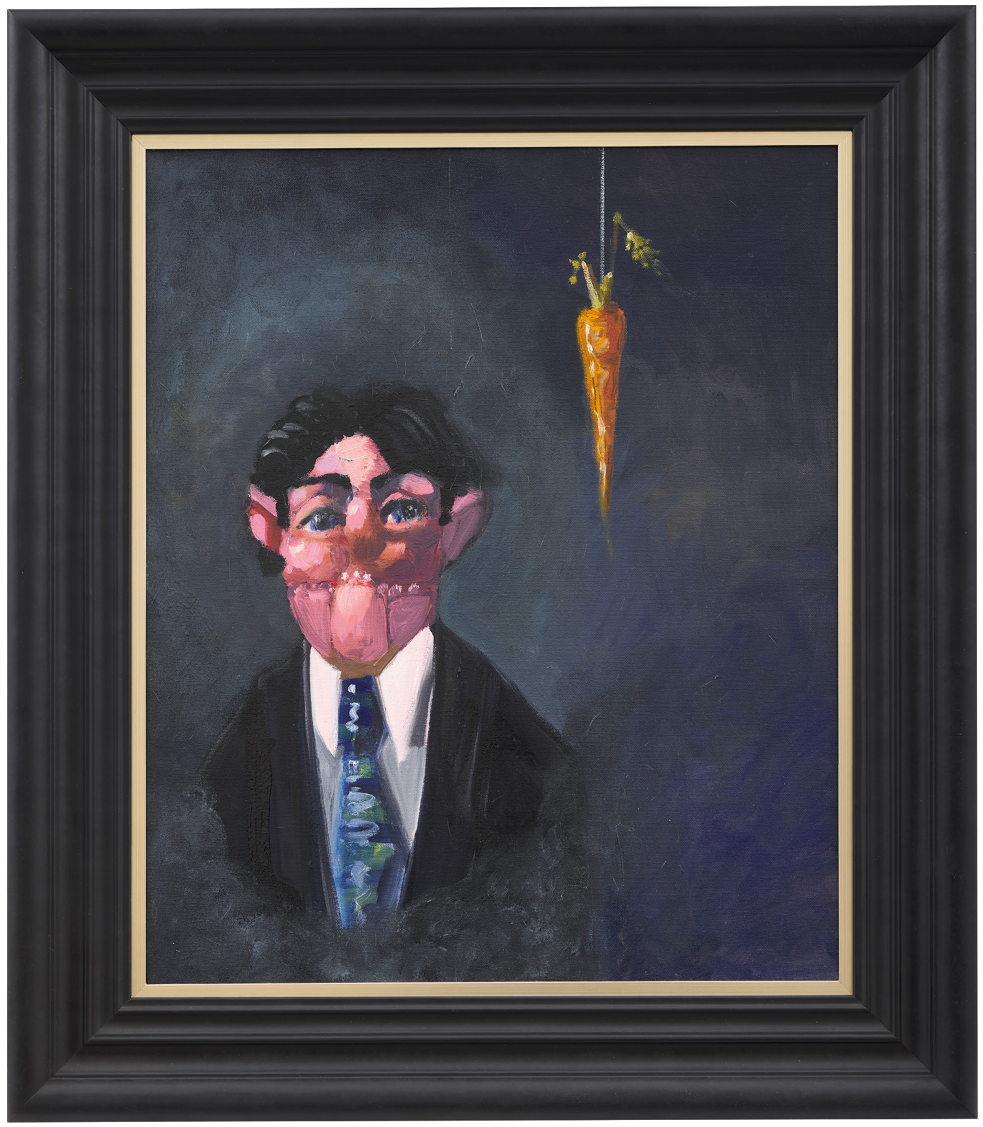
GEORGE CONDO
The Executive, 2003
Oil on canvas
24×20 inches (61 x 50.8 cm)
Signed and dated ‘Condo 03’ on the reverse
#37. The Abducted Butler, 2011
Phillips Hong-Kong: 29 November 2021
Estimated: HKD 1,800,000 – 2,800,000
HKD 4,032,000 / USD 516,976
George Condo – 20th Century & Cont… Lot 168 November 2021 | Phillips
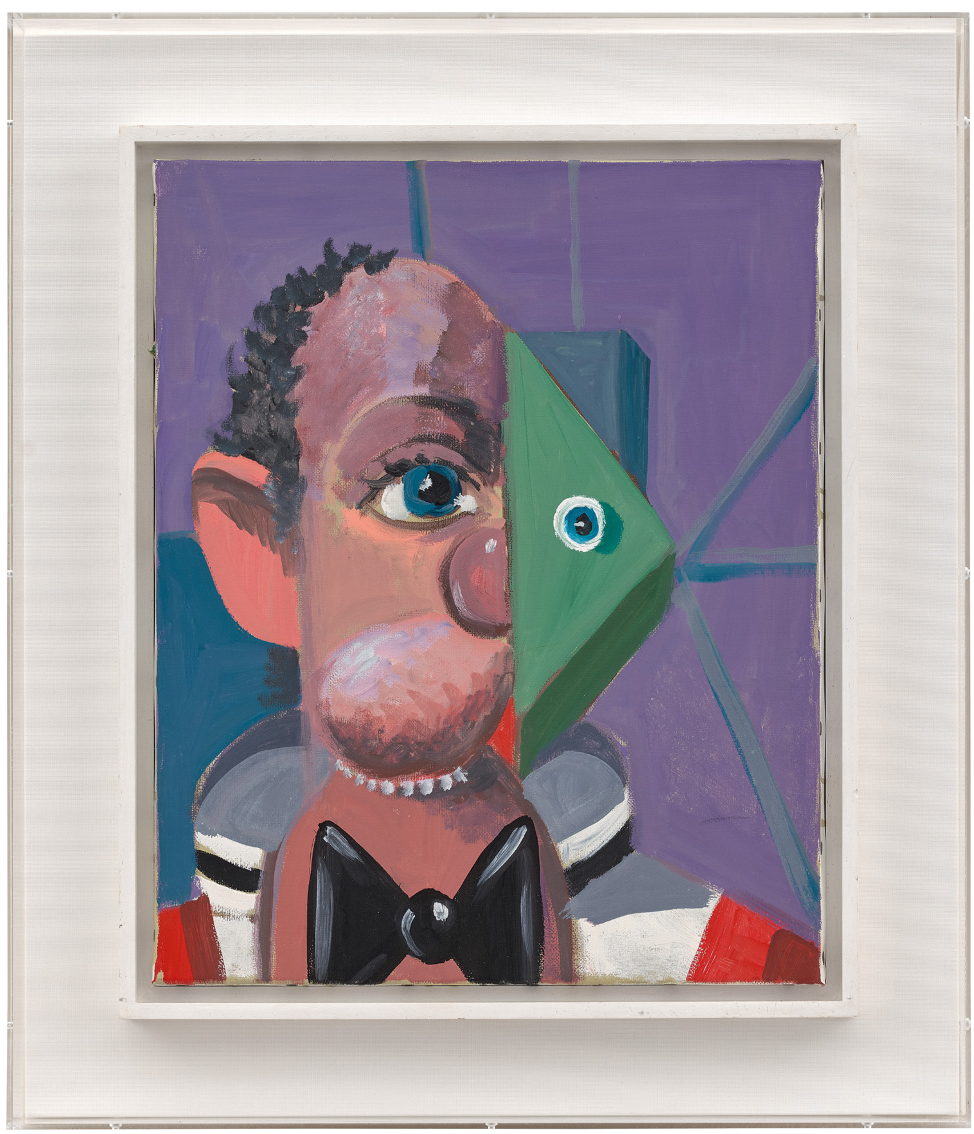
George Condo
The Abducted Butler, 2011
Oil on canvas
16 1/4 x 12 7/8 inches (41.3 x 33 cm)
Signed, titled, inscribed and dated ‘”The Abducted Butler” for Will Condo Oct 2011 London Hotel Ritz’ on the reverse
USD 500,000
Uncle Dick, 1999
Christie’s New-York: 22 November 2024
Estimated: USD 350,000 – 450,000
USD 441,000
GEORGE CONDO (B. 1957), Uncle Dick | Christie’s
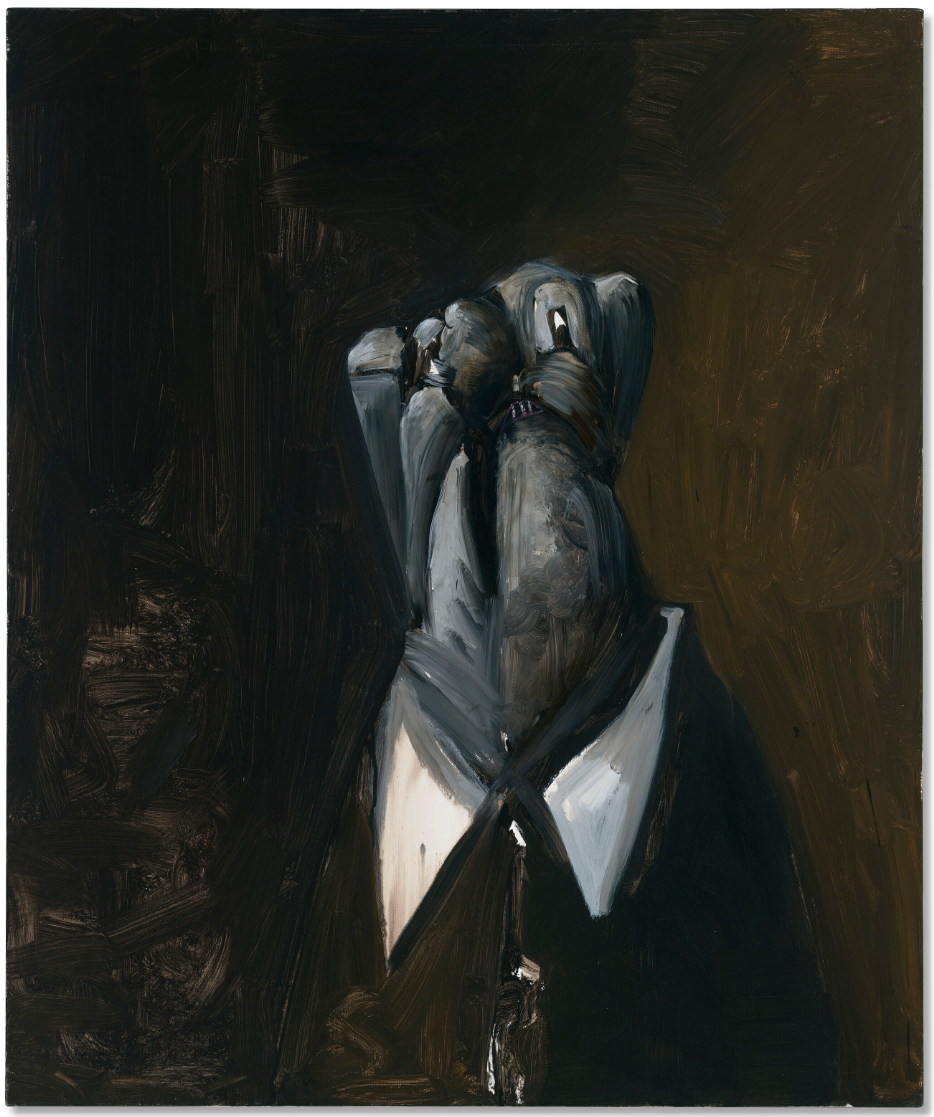
GEORGE CONDO (B. 1957)
Uncle Dick, 1999
Oil on canvas
60×50 inches (152.4 x 127 cm)
#39. The Barber, 2005
Christie’s New-York: 12 November 2021
Estimated: USD 150,000 – 200,000
USD 437,500
GEORGE CONDO (B. 1957) (christies.com)
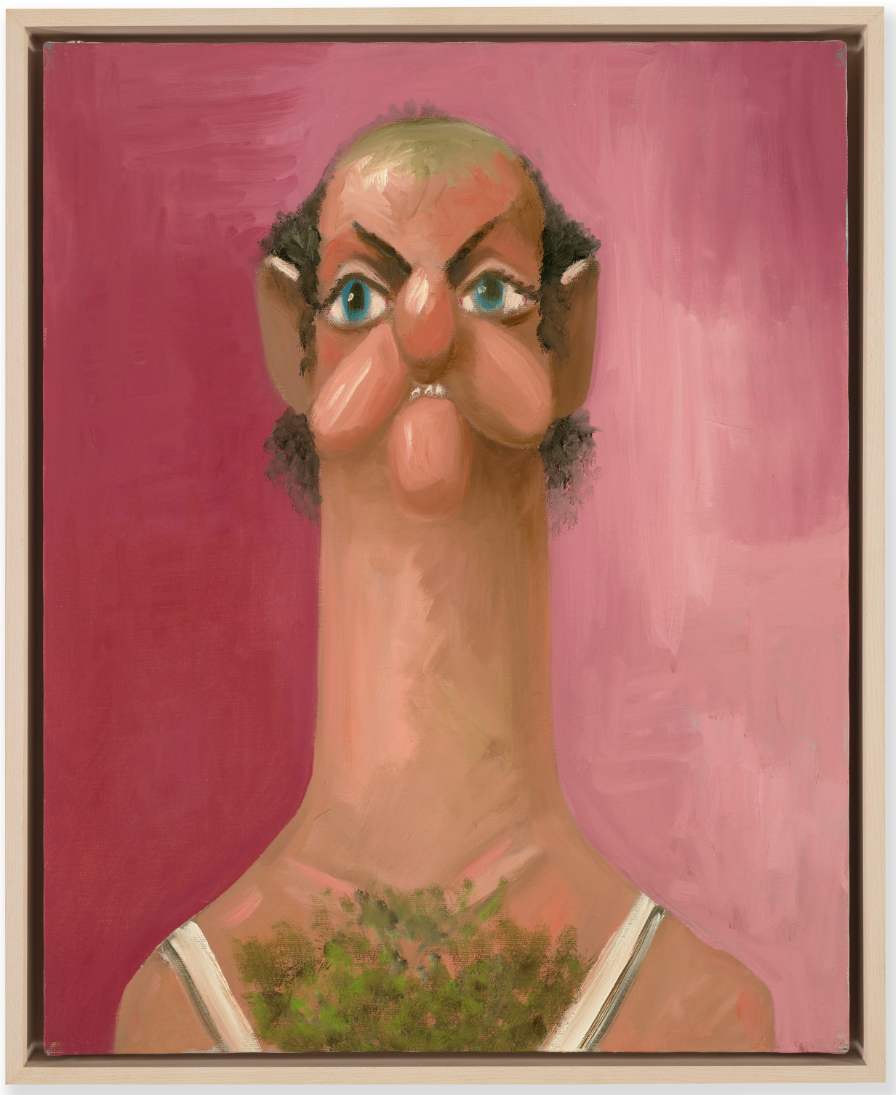
GEORGE CONDO (B. 1957)
The Barber, 2005
Oil on canvas
20×16 inches (50.8 x 40.3 cm)
Signed, titled and dated ‘The Barber Condo 05’ (on the reverse)
#40. Girl with Green Hair, 2009
Christie’s New-York: 9 March 2021
Estimated: USD 350,000 – 550,000
USD 437,500
George Condo (b. 1957) (christies.com)
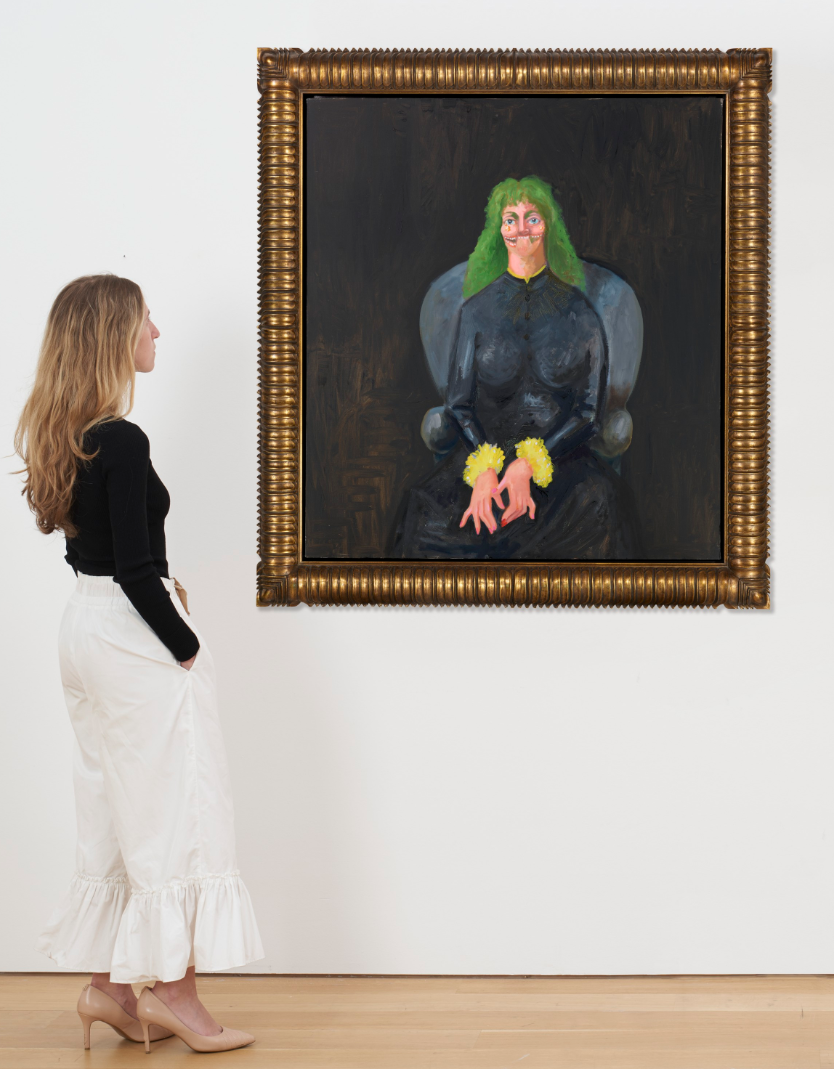
George Condo (b. 1957)
Girl with Green Hair, 2009
Oil on canvas
40×36 inches (101.6 x 91.4 cm)
Signed and dated ‘Condo 09’ (on the reverse)
#41. Jean Louis’ Mother, 2005
Christie’s New-York: 1 October 2021
Estimated: USD 200,000 – 300,000
USD 400,000
GEORGE CONDO (B. 1957) (christies.com)
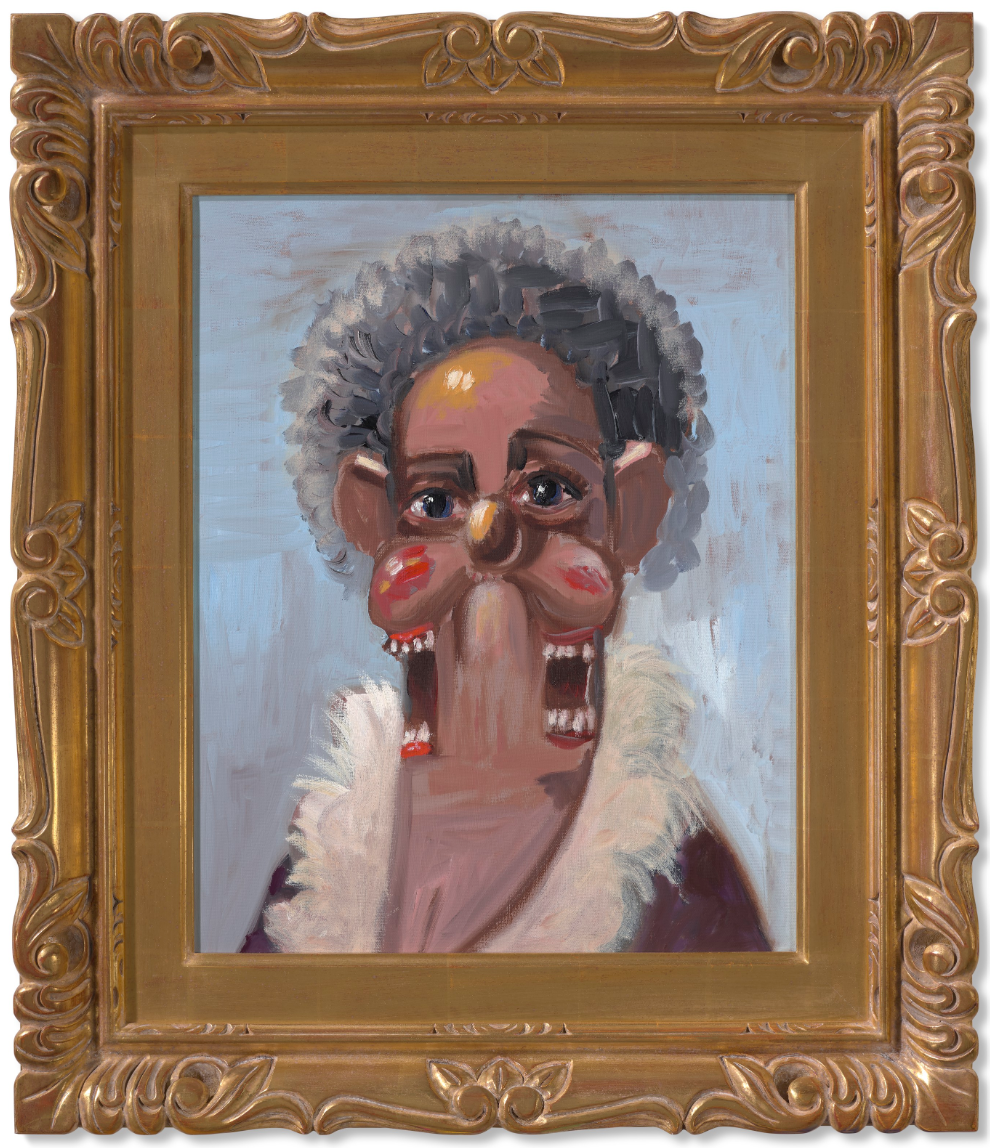
GEORGE CONDO (B. 1957)
Jean Louis’ Mother, 2005
Oil on canvas
20×16 inches (50.8 x 40.6 cm)
Signed, titled and dated ‘Condo 05 Jean Louis’ Mother’ (on the reverse)
“What is Jean Louis? Is he a waiter, a chef, a driver? Is he a real person? Or is he a Chuck Close painting gone wrong? … When Jean Louis appeared, he took on the same framing used in Chuck’s self-portraits from the seventies. He has no other origin really.”
#42. French Ecology, 1989
Sotheby’s Paris: 26 October 2021
Estimated: EUR 130,000 – 180,000
EUR 327,100 / USD 379,070
French Ecology | Modernités | 2021 | Sotheby’s (sothebys.com)
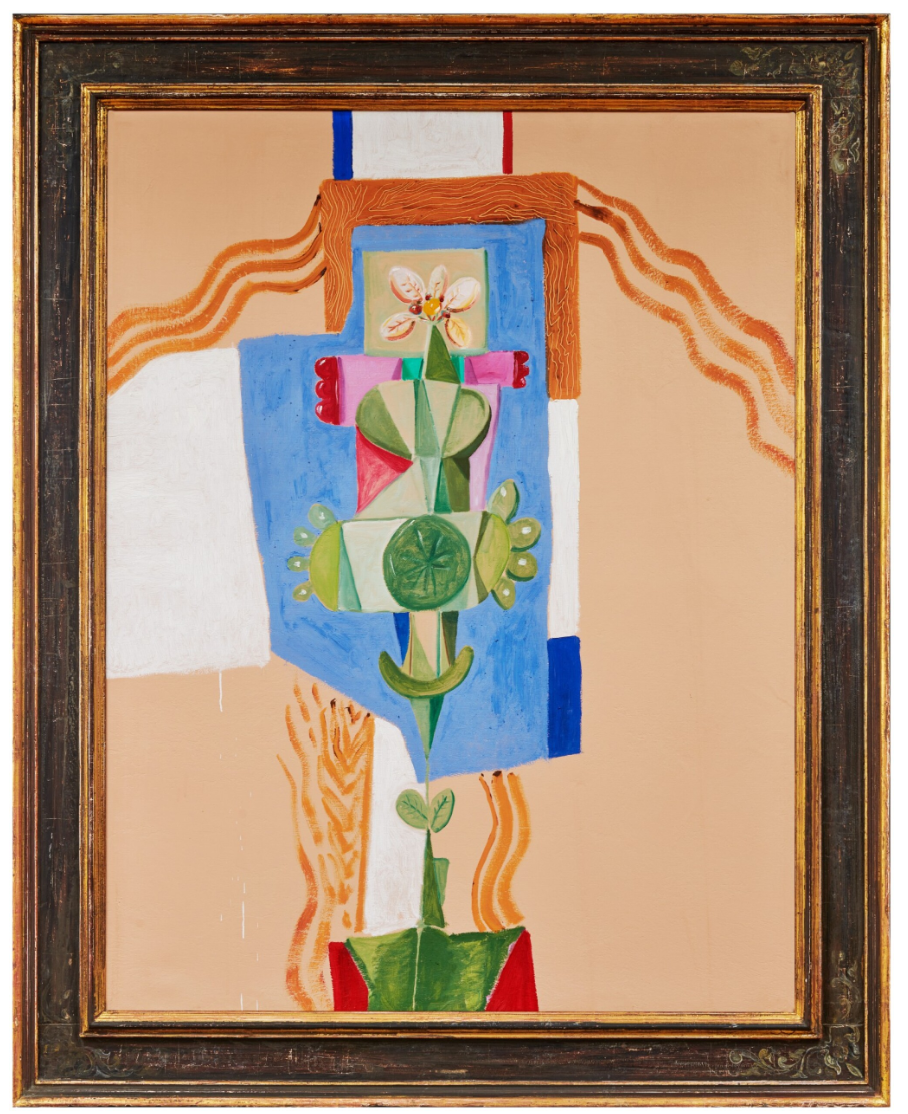
GEORGE CONDO (b.1957)
French Ecology, 1989
Oil on canvas
51 3/16 x 39 3/8 inches (130×100 cm)
#43. Rusty Skipper, 2008
Christie’s Paris: 13 October 2021
Estimated: EUR 70,000 – 100,000
EUR 312,500 / USD 361,564
George Condo (né en 1957), Rusty Skipper | Christie’s (christies.com)
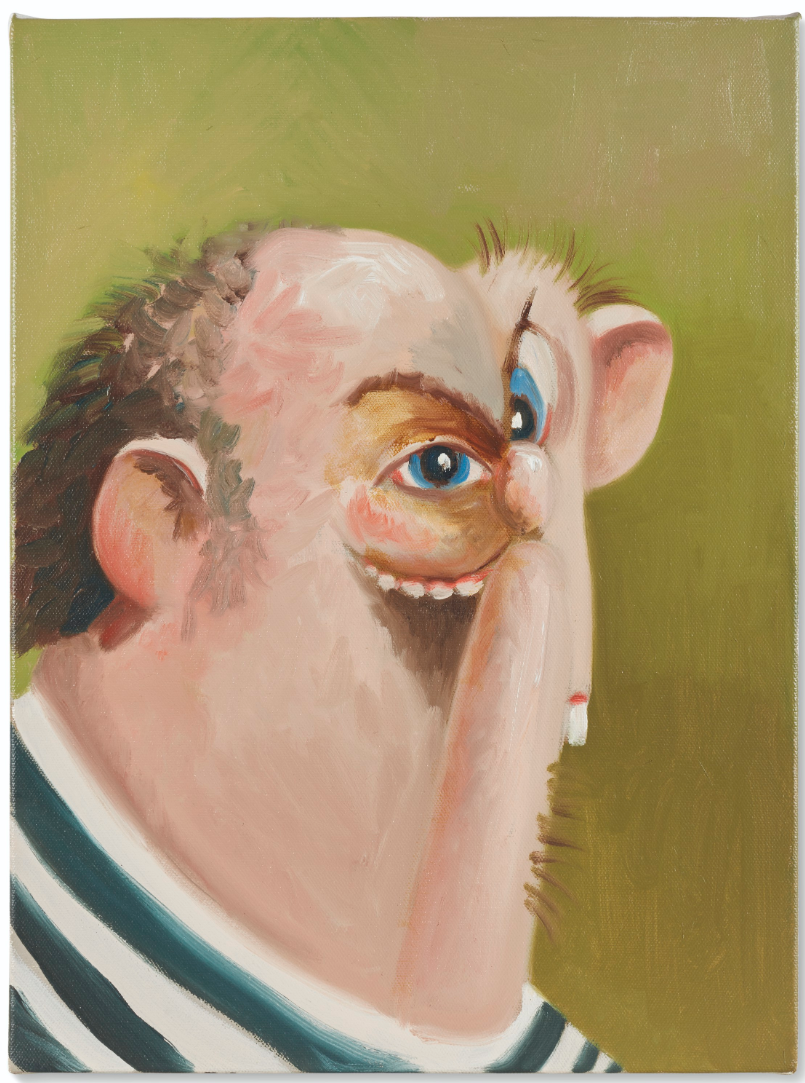
GEORGE CONDO (Born 1957)
Rusty Skipper, 2008
Oil on canvas
15 1/2 x 11 1/2 inches (40×30 cm)
Signed and dated ‘Condo 08’ (on the reverse)
#46. Toy Soldier, 1992
Phillips Hong-Kong: 29 November 2021
Estimated: HKD 2,000,000 – 3,000,000
HKD 2,268,000 / USD 290,799
George Condo – 20th Century & Cont… Lot 169 November 2021 | Phillips
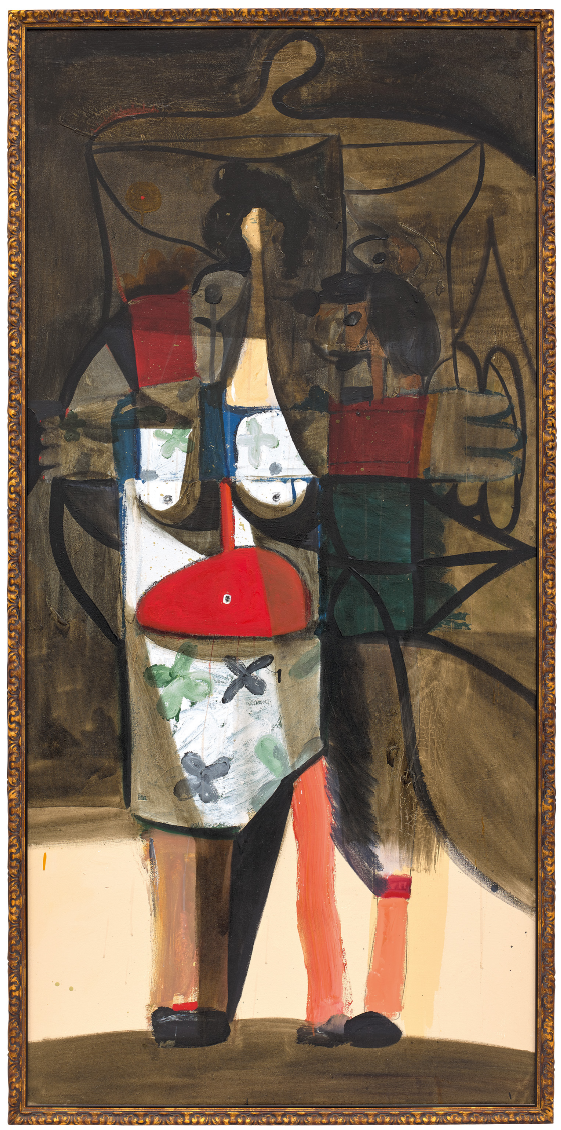
GEORGE CONDO
Toy Soldier, 1992
Oil on canvas
75 7/8 x 36 1/4 inches (193×92 cm)
Signed, titled, inscribed and dated ‘”toy soldier” 1992 Condo N.Y.C’ on the reverse
#47. Untitled (Large Landscape), circa 1983
Phillips New-York: 18 November 2021
Estimated: USD 40,000 – 60,000
USD 252,000
George Condo – 20th Century & Cont… Lot 414 November 2021 | Phillips
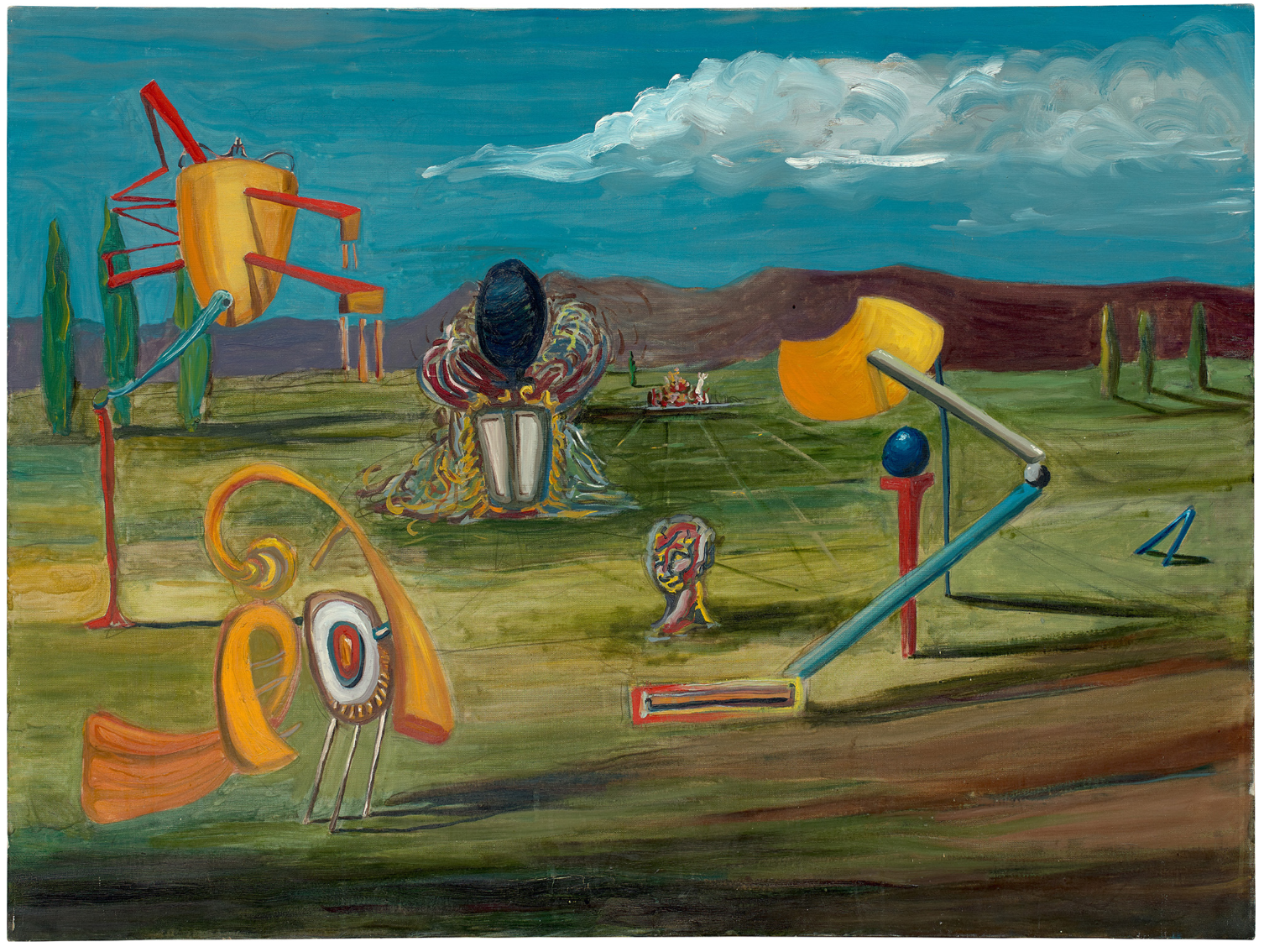
GEORGE CONDO
Untitled (Large Landscape), circa 1983
Oil on canvas
36×48 inches (91.4 x 121.9 cm)
#48. Bunny Rap, 1985
Sotheby’s New-York: 30 September 2021
Estimated: USD 100,000 – 150,000
USD 214,200
Bunny Rap | Contemporary Curated | 2021 | Sotheby’s (sothebys.com)
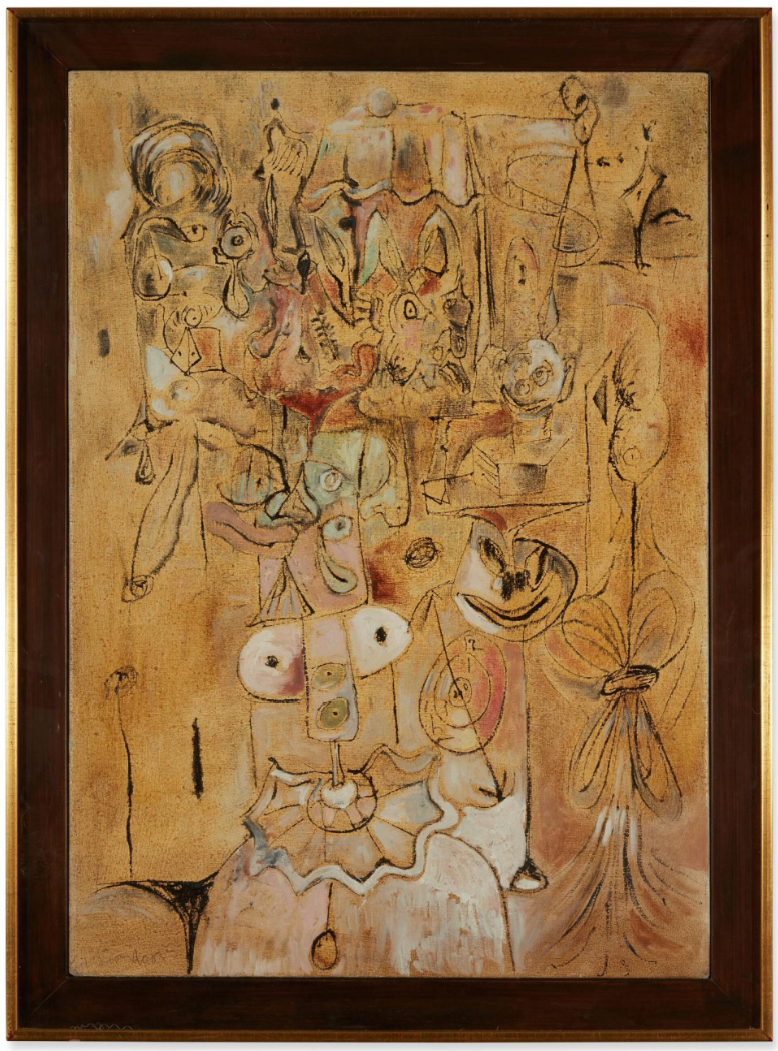
GEORGE CONDO (b. 1957)
Bunny Rap, 1985
Oil on canvas
39 3/8 x 27 3/4 inches (100 x 70.5 cm)
Signed and dated 1985
#49. Pink Nude in Prison, 1988
Christie’s online: 15 December 2021
Estimated: USD 70,000 – 100,000
USD 212,500
GEORGE CONDO (b. 1957), Pink Nude in Prison | Christie’s (christies.com)
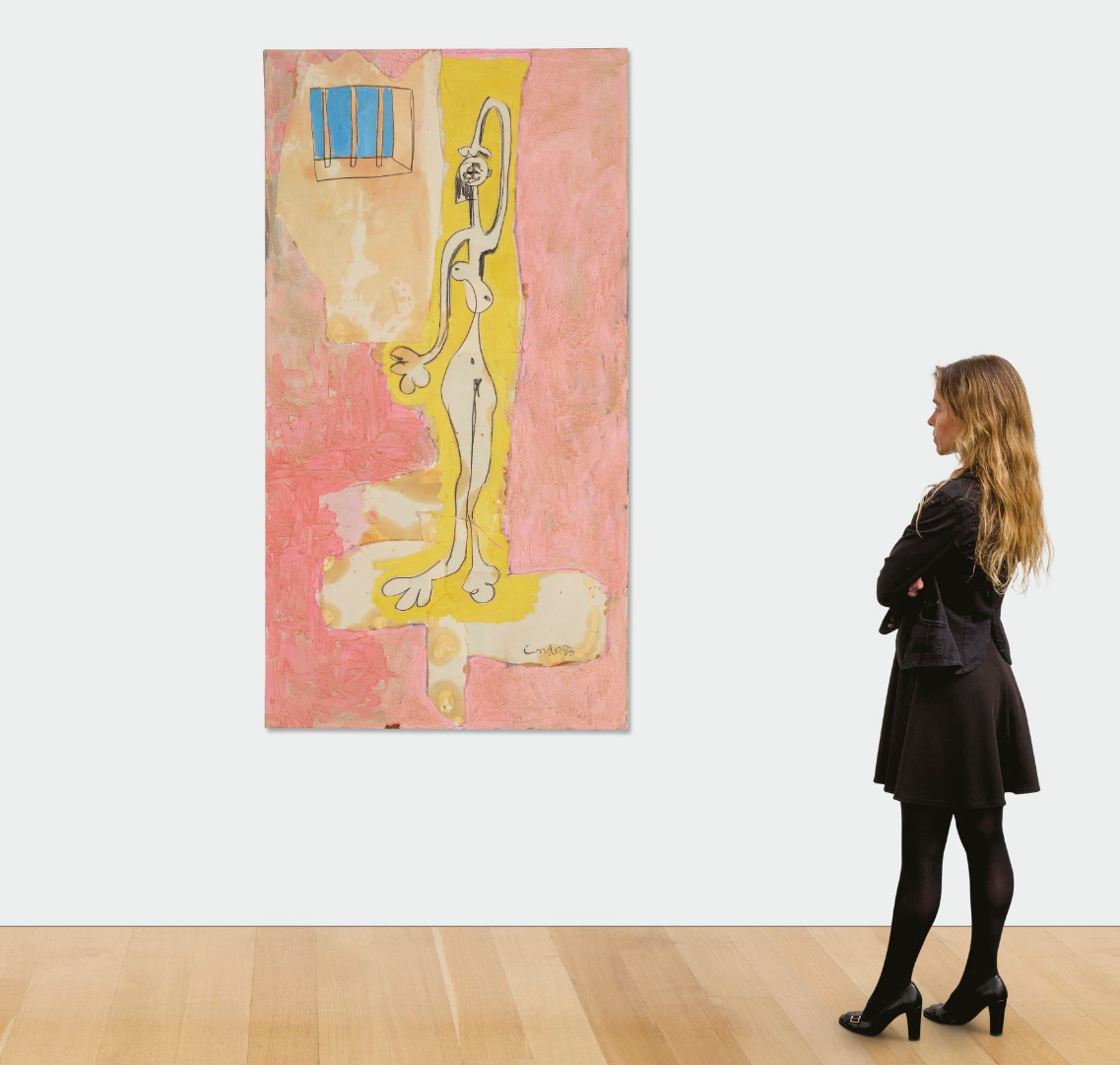
GEORGE CONDO (b. 1957)
Pink Nude in Prison, 1988
Oil, charcoal and paper collage on canvas
59 x 31 1/2 inches (150×80 cm)
Signed and dated ‘Condo 88’ (lower right)
#50. Dream Sequence and Big Sur, 1991
Sotheby’s London: 26 March 2021
Estimated: GBP 150,000 – 200,000
GBP 151,200 / USD 208,580
Dream Sequence and Big Sur | Contemporary Art Day Auction | 2021 | Sotheby’s (sothebys.com)
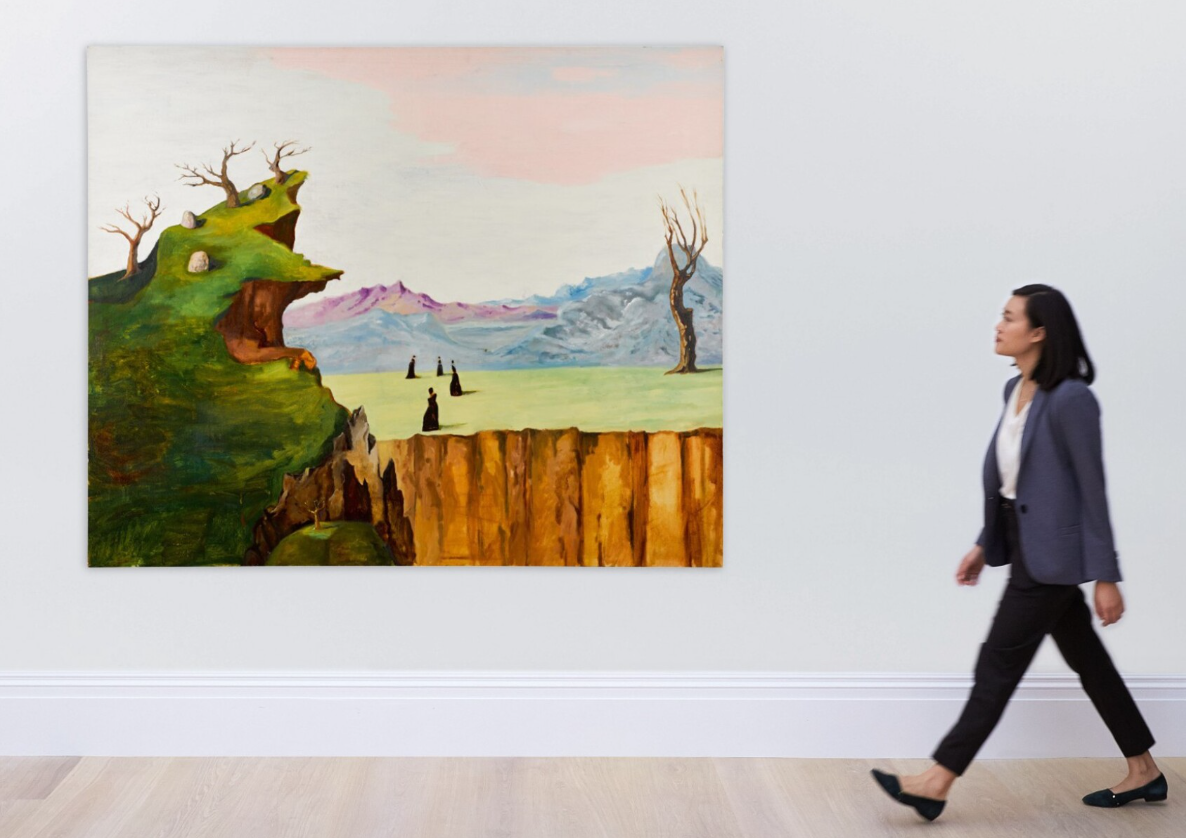
GEORGE CONDO (b. 1957)
Dream Sequence and Big Sur, 1991
Oil on linen
63 x 76 3/4 inches (160×195 cm)
Signed and inscribed Paris on the stretcher
#54. Big Red’s Day, 1997
Christie’s New-York: 14 May 2021
Estimated: USD 60,000 – 80,000
USD 162,500
GEORGE CONDO (B. 1957), Big Red’s Day | Christie’s (christies.com)
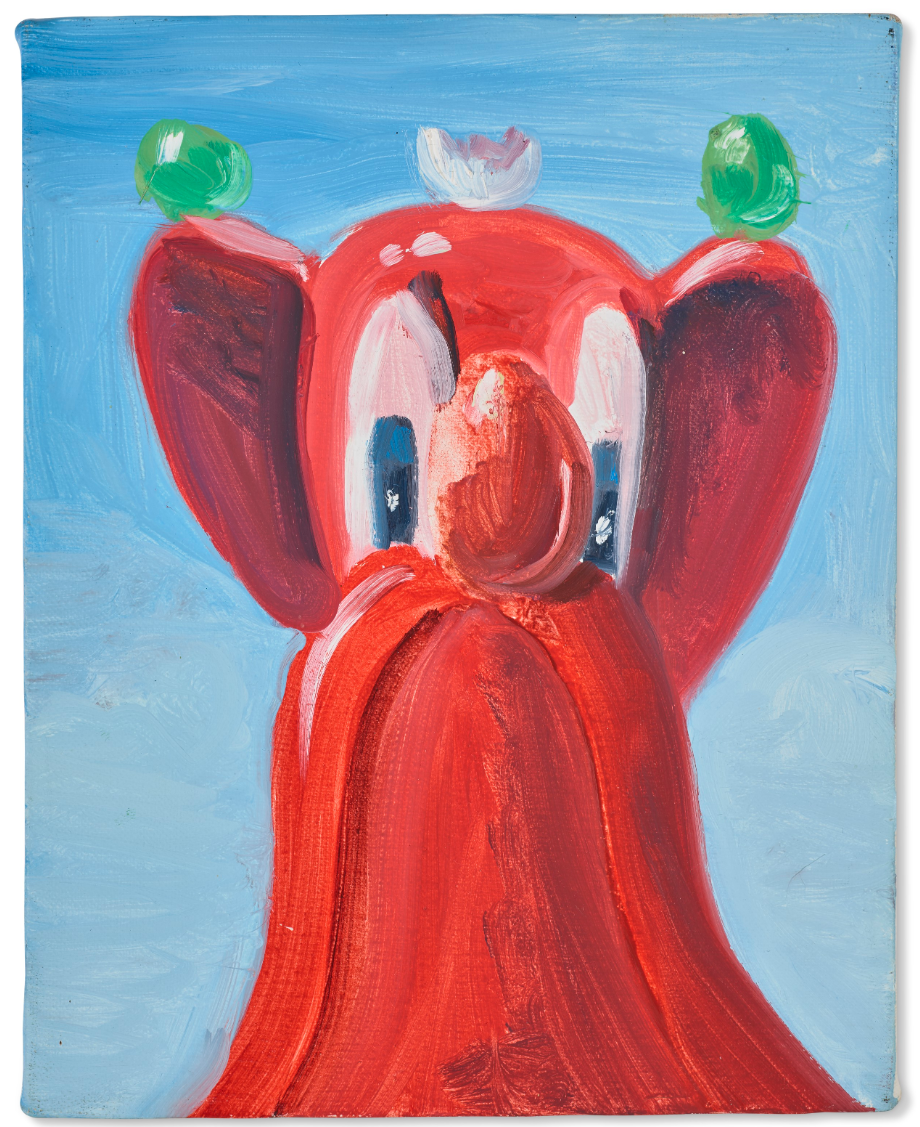
GEORGE CONDO (B. 1957)
Big Red’s Day, 1997
Oil on canvas
10×8 inches (25.4 x 20.3 cm)
Signed, titled and dated ‘Condo 1997 “Big Red’s Day”‘ (on the reverse)
#55. Homage to Manet, 1985
Sotheby’s New-York: 21 July 2021
Estimated: USD 40,000 – 60,000
USD 151,200
Homage to Manet | Contemporary Art Online | New York | 2021 | Sotheby’s (sothebys.com)
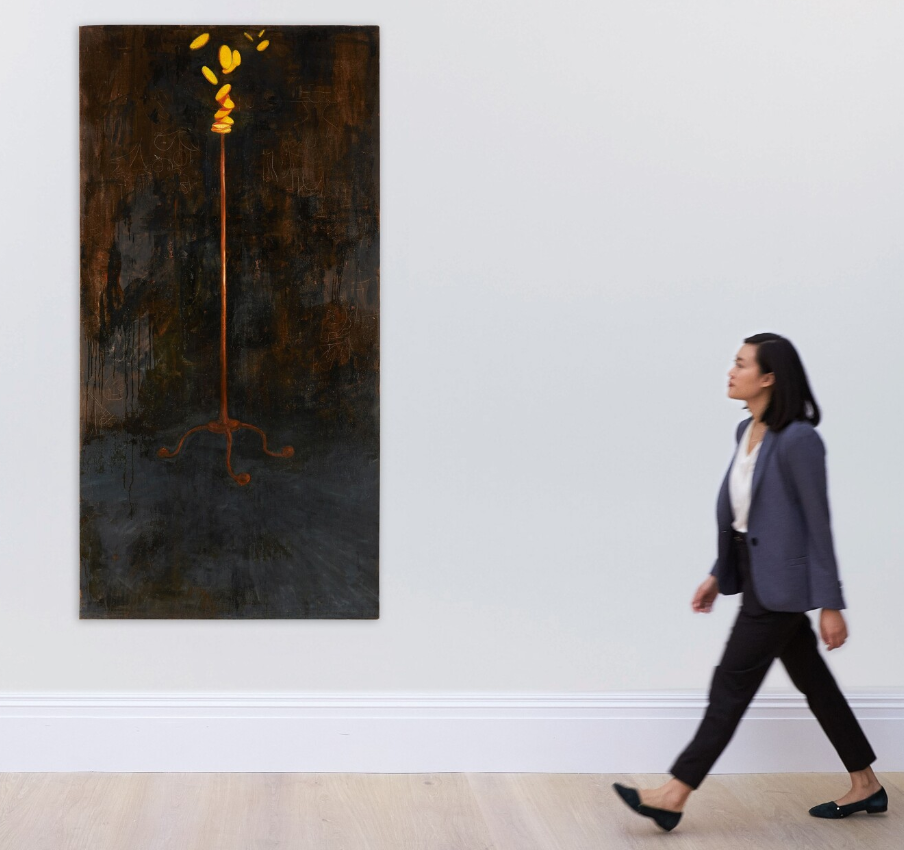
GEORGE CONDO (b. 1957)
Homage to Manet, 1985
Oil on canvas
77×38 inches (195.6 x 96.5 cm)
Signed and titled on the reverse
#76. Dizzy Dream, 1985
Sotheby’s London: 26 May 2021
Estimated: GBP 12,000 – 18,000
GBP 27,720 / USD 39,152
Dizzy Dream | Contemporary Art Online | 2021 | Sotheby’s (sothebys.com)
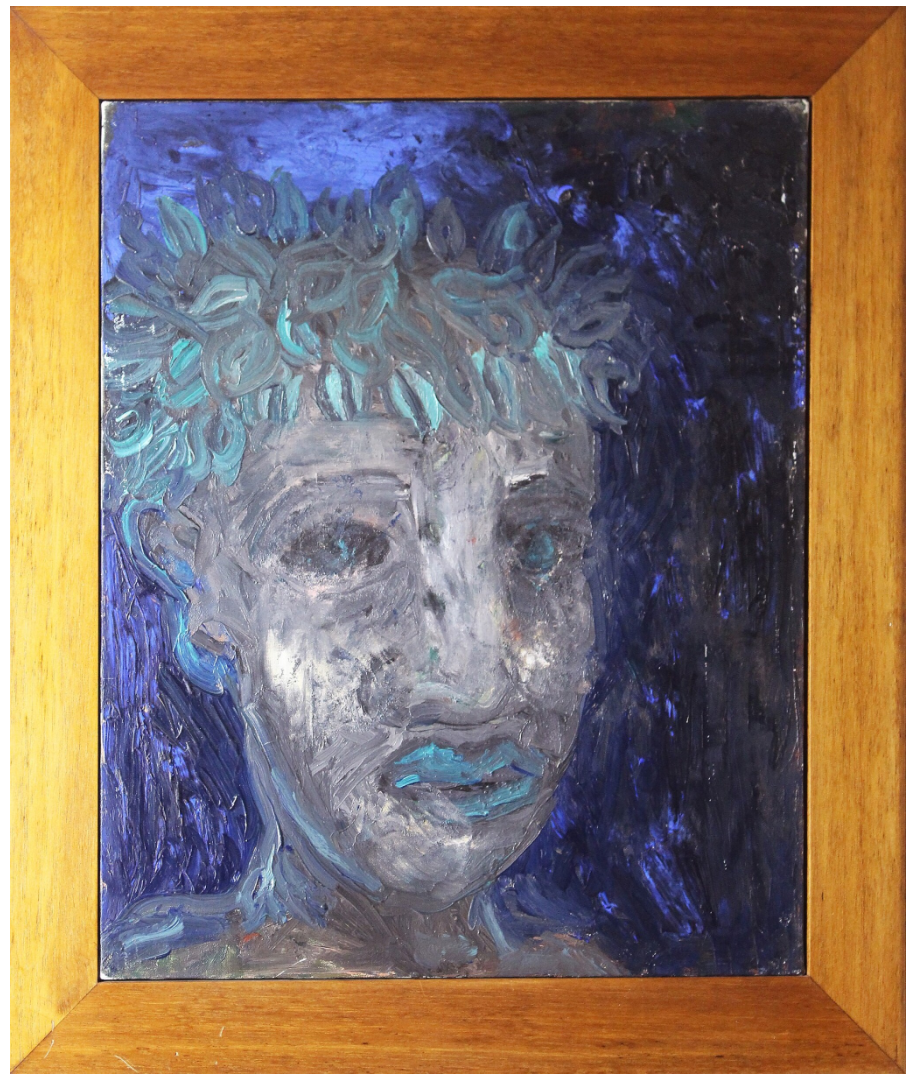
GEORGE CONDO (b. 1957)
Dizzy Dream, 1985
Oil on canvas
18×15 inches (46×38 cm)
Signed, titled and dated 85 on the reverse
Repeat Sales
WORK IN PROGRESS
2025 Repeat Sales
The Showgirl, 2008
Christie’s Hong-Kong: 26 September 2025
Estimated: HKD 7,500,000 – 9,500,000
HKD 9,525,000 / USD 1,224, 295
GEORGE CONDO (B. 1957), The Showgirl | Christie’s
REPEAT SALE
Phillips London: 15 October 2021
Estimated: GBP 1,000,000 – 1,500,000
GBP 1,232,500 / USD 1,695,555
George Condo 20th Century & Contemporary Art Evening Sale
GEORGE CONDO (B. 1957)
The Showgirl, 2008
Oil on linen
80 1/8 x 80 1/8 inches (203.5 x 203.5 cm)
Signed and dated ‘Condo 08’ (on the reverse)
Reclining Blue Form, 2011
Christie’s Hong-Kong: 26 September 2025
Estimated: HKD 12,500,000 – 22,500,000
HKD 18,190,000 / USD 2,338,045
GEORGE CONDO (B. 1957), Reclining Blue Form | Christie’s
REPEAT SALE
Sotheby’s New-York: 12 May 2021
Estimated: USD 2,500,000 – 3,500,000
USD 3,771,000
Reclining Blue Form | Contemporary Art Evening Auction | 2021 | Sotheby’s
GEORGE CONDO (B. 1957)
Reclining Blue Form, 2011
Oil on linen
78×74 inches (198×188 cm)
Signed, titled and dated ‘condo 2011 Reclining Blue Form’ (on the overlap)
Mr Twiddle, 2010
Christie’s London: 6 March 2025
Estimated: GBP 350,000 – 550,000
GBP 403,200 / USD 516,096
GEORGE CONDO (B. 1957), Mr Twiddle | Christie’s
REPEAT SALE
Christie’s London: 14 April 2016
Estimated: GBP 120,000 – 180,000
GBP 170,500 / USD 241,245
George Condo (B. 1957), Mr Twiddle | Christie’s
GEORGE CONDO (B. 1957)
Mr Twiddle, 2010
Acrylic, charcoal and pastel on canvas
64 5/8 x 65 1/8 inches (164.2 x 165.4 cm)
Signed and dated ‘Condo 2010’ (on the reverse)
The Trashman, 2008
Phillips New-York: 28 February 2025
Estimated: USD 60,000 – 80,000
USD 76,200
George Condo – New Now: Modern & Co… Lot 70 February 2025 | Phillips
REPEAT SALE
Sotheby’s New-York: 9 March 2023
Estimated: USD 60,000 – 80,000
USD 88,900
The Trashman | Contemporary Curated | 2023 | Sotheby’s (sothebys.com)
REPEAT SALE
Sotheby’s New-York: 2 October 2020
Estimated: USD 60,000 – 80,000
USD 63,000
GEORGE CONDO | THE TRASHMAN | Contemporary Curated | 2020 | Sotheby’s
GEORGE CONDO
The Trashman, 2008
Oil on canvas
8 x 6 1/8 inches (20.3 x 15.6 cm)
Signed and dated “George Condo 08” on the reverse
2024 Repeat Sales
The Hamptonites, 2004
Christie’s New-York: 22 November 2024
Estimated: USD 400,000 – 600,000
USD 315,000
GEORGE CONDO (B. 1957), The Hamptonites | Christie’s
REPEAT SALE
Christie’s Hong-Kong: 25 May 2019
Estimated: HKD 4,000,000 – 5,000,000
HKD 6,125,000 / USD 780,350
GEORGE CONDO (USA, B. 1957), The Hamptonites | Christie’s
GEORGE CONDO (B. 1957)
The Hamptonites, 2004
Oil on canvas
39 7/8 x 28 7/8 inches (101.4 x 73.4 cm)
Signed and dated ‘Condo 04’ (upper left)
Signed again, titled and dated again ‘Condo 04 THE HAMPTONITES’ (on the reverse)
The Alpine Waitress, 2006
Sotheby’s New-York: 21 November 2024
Estimated: USD 1,000,000 – 1,500,000
USD 1,320,000
The Alpine Waitress | Contemporary Day Auction | 2024 | Sotheby’s
REPEAT SALE
Sotheby’s London: 13 October 2011
Estimated: GBP 160,000 – 200,000
GBP 169,250 / USD 266,225
GEORGE CONDO (b. 1957)
The Alpine Waitress, 2006
Oil on canvas
50×42 inches (127 x 106.7 cm)
Signed (upper left)
The Accountant, 1994
Christie’s London: 27 June 2024
Estimated: GBP 80,000 – 120,000
GBP 107,100 / USD 135,803
https://www.christies.com/en/lot/lot-6492309
REPEAT SALE
Christie’s Hong-Kong: 27 May 2022
Estimated: HKD 1,000,000 – 2,000,000
HKD 1,638,000 / USD 208,675
GEORGE CONDO (B. 1957), The accountant | Christie’s
GEORGE CONDO (B. 1957)
The Accountant, 1994
Oil on masonite
24 1/8 x 18 inches (61 x 45.7 cm)
Signed ‘Condo’ (upper left)
Signed, titled twice and dated ‘Condo 94 The account The Accountant’ (on the reverse)
The Young Sailor, 2012
Christie’s New-York: 17 May 2024
Estimated: USD 800,000 – 1,200,000
USD 882,000
GEORGE CONDO (B. 1957), The Young Sailor | Christie’s (christies.com)
REPEAT SALE
Sotheby’s Hong-Kong: 1 April 2019
Estimated: HKD 4,000,000 – 5,500,000
HKD 12,175,000 / USD 1,551,030
(#1150) GEORGE CONDO | The Young Sailor
REPEAT SALE
Phillips London: 3 July 2014
Estimated: GBP 150,000 – 250,000
GBP 422,500 / USD 724,590
George Condo Contemporary Day Sale
REPEAT SALE
Sotheby’s New-York: 14 November 2012
Estimated: USD 150,000 – 200,000
USD 302,500
GEORGE CONDO (B. 1957)
The Young Sailor, 2012
Oil on canvas
40 1/4 x 32 1/4 inches (102.2 x 81.9 cm)
Incised with the artist’s signature and date ‘Condo 2012’ (upper left)
Female Portrait, 2008
Sotheby’s New-York: 14 May 2024
Estimated: USD 1,200,000 – 1,800,000
USD 1,206,500
Female Portrait | Contemporary Day Auction | 2024 | Sotheby’s (sothebys.com)
REPEAT SALE
Sotheby’s New-York: 18 November 2016
Estimated: USD 350,000 – 450,000
USD 972,500
GEORGE CONDO (b. 1957)
Female Portrait, 2008
Oil on canvas
72×60 inches (183 x 152.4 cm)
Signed, titled and dated 08 (on the reverse)
Girl with Green Hair, 2009
Christie’s London: 9 March 2024
Estimated: GBP 250,000 – 350,000
GBP 302, 400 / USD 383,443
REPEAT SALE
Christie’s New-York: 9 March 2021
Estimated: USD 350,000 – 550,000
USD 437,500
George Condo (b. 1957) (christies.com)
GEORGE CONDO (B. 1957)
Girl with Green Hair, 2009
Oil on canvas
40×36 inches (101.6 x 91.4 cm)
Signed and dated ‘condo 09’ (on the reverse)
2023 Repeat Sales
The Stockbroker, 2002
Christie’s Hong-Kong: 29 November 2023
Estimated: HKD 10,000,000 – 15,000,000
HKD 12,475,000 / USD 1,600,430
GEORGE CONDO (B. 1957) (christies.com)
REPEAT SALE
Sotheby’s New-York: 12 May 2021
Estimated: USD 1,200,000 – 1,800,000
USD 1,593,000
GEORGE CONDO (B. 1957)
The Stockbroker, 2002
Oil on canvas
97×80 inches (243.8 x 203.2 cm)
Signed, titled, and dated ‘Condo 2002 The StockBroker’ (on the reverse)
Female Portrait with Blue Eyes, 2013
Sotheby’s Hong-Kong: 5 October 2023
Estimated: HKD 10,000,000 – 15,000,000
HKD 9,888,000 / USD 1,263,844
REPEAT SALE
Sotheby’s London: 11 February 2020
Estimated: GBP 600,000 – 800,000
GBP 855,000 / USD 1,106,525
(#43) GEORGE CONDO | Female Portrait with Blue Eyes
GEORGE CONDO (b. 1957)
Female Portrait with Blue Eyes, 2013
Acrylic, charcoal and pastel on linen, in artist’s chosen frame
53×42 inches (134.6 x 106.7 cm)
Signed and dated 2013
2022 Repeat Sales
Ten Small Portraits, 2001
Sotheby’s New-York: 20 May 2022
Estimated: USD 900,000 – 1,200,000
USD 1,159,200
REPEAT SALE
Sotheby’s London: 25 March 2021
Estimated: GBP 500,000 – 700,000
GBP 1,225,000 / USD 1,680,614
GEORGE CONDO (b. 1957)
Ten Small Portraits, 2001
Oil on canvas, in 10 parts
Each: 7 1/8 x 5 1/2 inches (18.1 x 13.9 cm)
Signed Condo (on each); signed and dated 5/01 (on the reverse of each)
PART III: FOCUS
Abstracted Bodily Forms
Infiltration, 2017
Sotheby’s London: 4 March 2026
Estimated: GBP 1,500,000 – 2,000,000
GBP 2,286,000 / USD 3,053,865
Infiltration | Modern & Contemporary Evening Auction | 2026 | Sotheby’s
GEORGE CONDO (b. 1957)
Infiltration, 2017
Oil, acrylic and oilstick on canvas
76×96 inches (193 x 243.8 cm)
Signed and dated 2017 (upper left)
A tour de force of chromatic and psychological invention, Infiltration epitomizes the restless virtuosity that has made George Condo one of the defining painters of his generation. Executed in 2017, the present work condenses the principal energies of Condo’s practice into a single panoramic field – fractured figuration together with a bravura collision of drawing and painting. Across its monumental surface, a raucous ensemble of characters jostles for attention, each animated by the artist’s unmistakable blend of humor and unease, both inflected with formal sophistication. Condo’s ability to blend contemporary and historical references has placed him as a household name in the annals of contemporary art history, further underscored by his recent major retrospective at the Musée d’Art Moderne in Paris, which closed in February 2026.
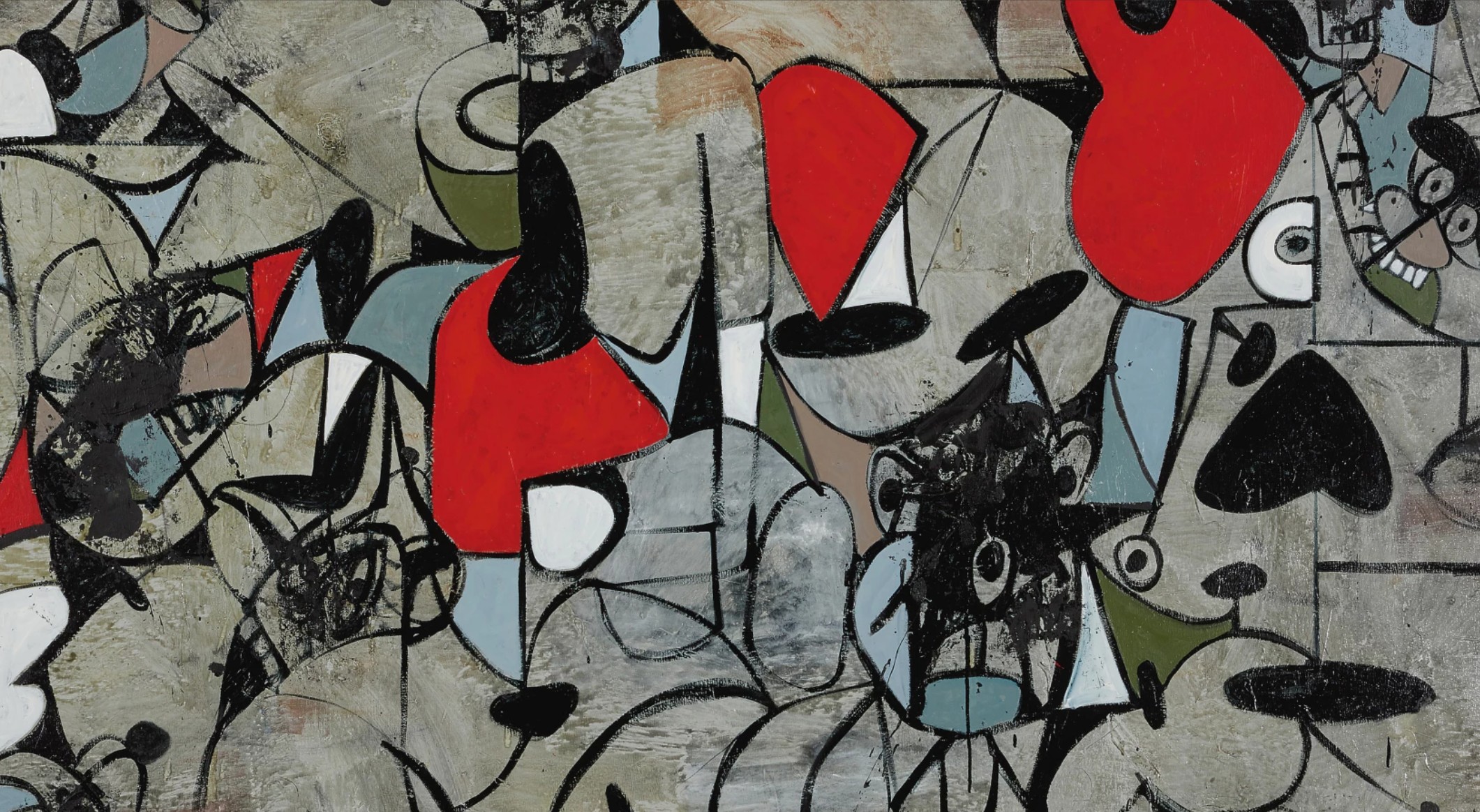
Condo has long described his project as a form of ‘psychological cubism,’ a mode in which the picture plane becomes a stage for simultaneous states of mind. In Infiltration, this principle is realized with exceptional clarity. Faces tilt, overlap, and dissolve into one another; bodies emerge and recede as though caught in perpetual motion. What appears at first glance to be a single crowded scene gradually reveals itself as a constellation of interior dramas. There are clear echoes of Picasso, de Kooning and Guston that become absorbed into Condo’s singular idiom, transformed by an imagination that treats art history as living material. Pablo Picasso has remained referential for Condo throughout his oeuvre, and thus, like Picasso before him, he dismantles conventional perspective, yet he does so not to explore multiple physical viewpoints but in the pursuit to depict the layered complexity of human consciousness. Through this he interrogates form – challenging the viewer’s perception of reality. Just as Picasso broke away from representational art, the present work exemplifies Condo’s turn towards artificial realism and the synonymous reimagining of traditional techniques in a contemporary context.
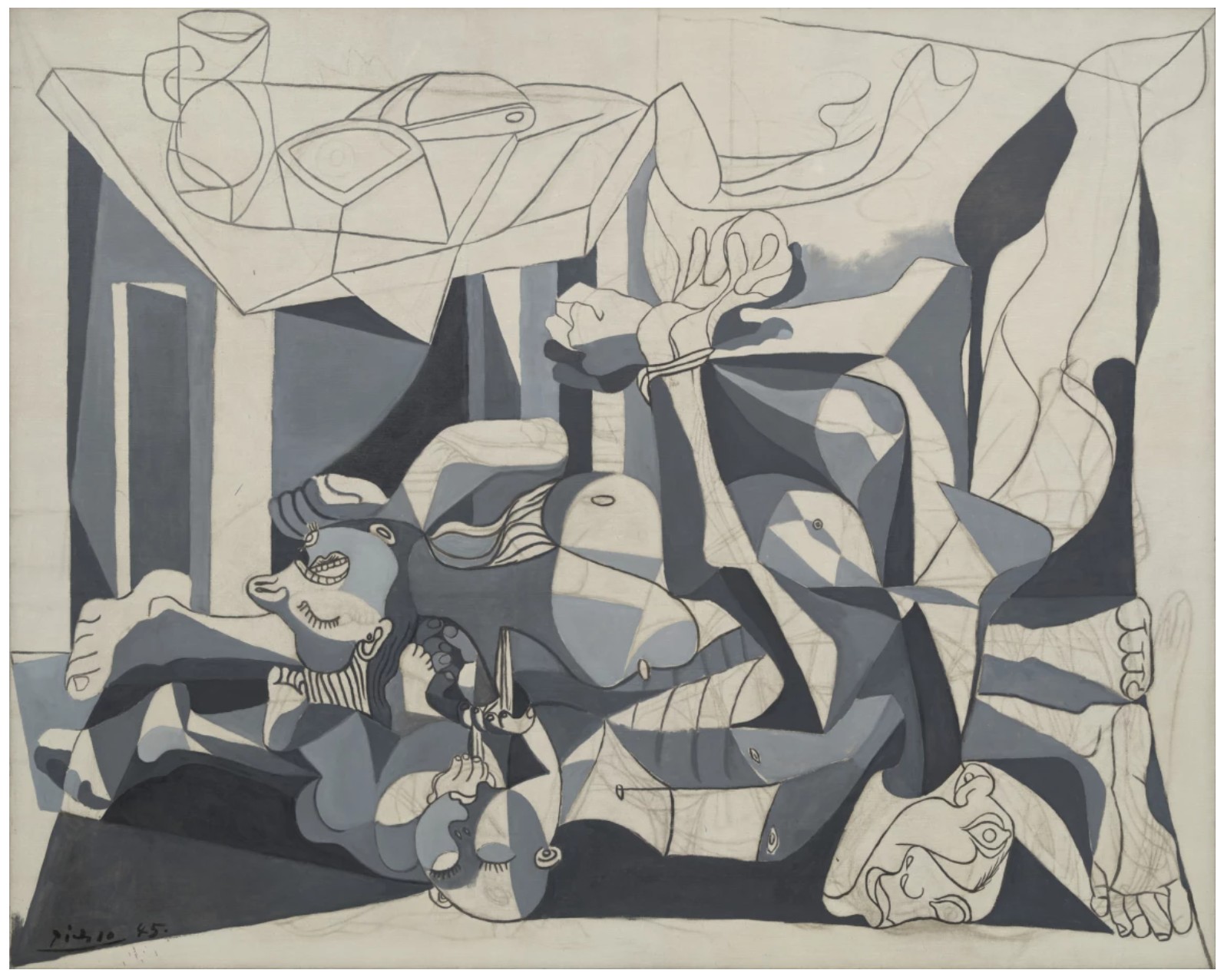
Pablo Picasso, The Charnel House, Paris, 1944-45. The Museum of Modern Art, New York. Art © 2026 Succession Picasso/DACS, London
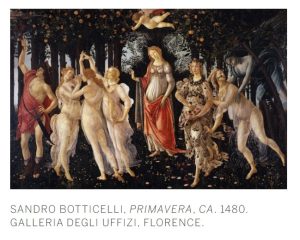
The material language of the painting mirrors this conceptual ambition. Working across oil, acrylic and oilstick, Condo builds the image through successive strata of color and line, allowing earlier gestures to surface through later passages. The result is a surface alive with revisions and improvisations through a record of decisions made in real time. As the artist has observed, he deliberately chooses difficult tonal relationships in order to discover a path through them – a process that transforms the act of painting into a form of problem-solving performance. Trained in music theory before turning fully to painting, Condo has frequently likened his working method to jazz improvisation, with rhythm and tempo guiding the hand as surely as any formal plan. The present composition unfolds like an intricate musical arrangement: motifs recur and mutate while discordant notes find unexpected harmony, and disparate voices coalesce into a boisterous chorus. Infiltration initially presents itself as a site of visual chaos, though upon closer inspection, reveals itself to be a carefully calibrated orchestration.
Within this teeming arena, Condo collapses distinctions between the comic and the tragic. Cartoonish grins coexist with expressions of palpable anxiety, and classical allusions rub shoulders with Pop-inflected caricature. For Condo, the legacy of past masters becomes a means of self-definition – a vocabulary to be rearranged in the service of new psychological realities. At once exuberant and unsettling, Infiltration captures the essence of Condo’s vision: a world in which the human condition appears fragmented, volatile and irrepressibly alive.
Abstract Conversation, 2010
Edlis Neeson Collection
Christie’s New-York: 19 November 2025
Estimated: USD 3,000,000 – 5,000,000
USD 3,491,000
GEORGE CONDO (B. 1957), Abstract Conversation | Christie’s
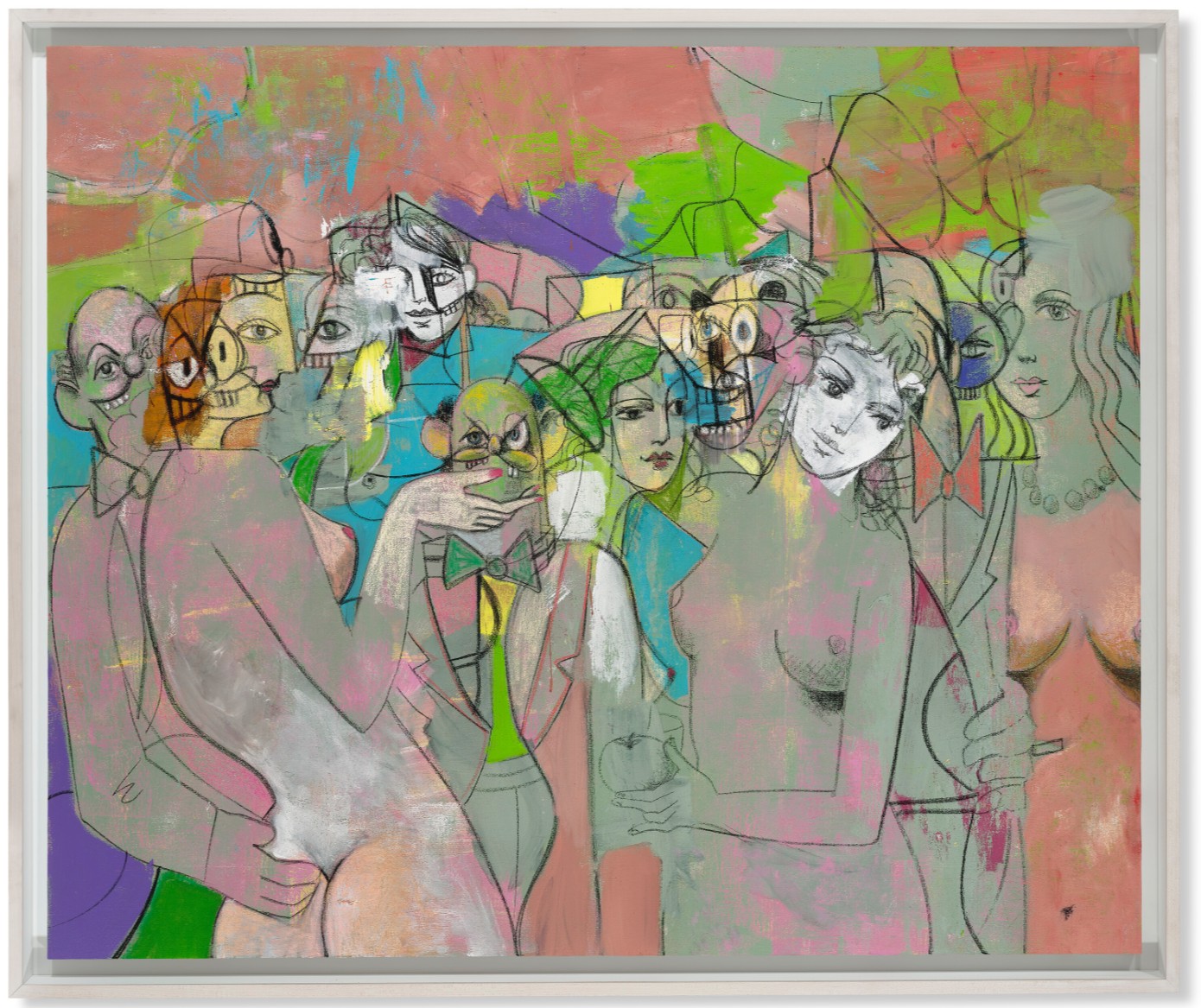
GEORGE CONDO (B. 1957)
Abstract Conversation, 2010
Acrylic, charcoal and pastel on linen
60×72 inches (152.4 x 182.9 cm)
Signed and dated ‘Condo 2010’ (upper left)
George Condo’s 2010 painting Abstract Conversation was painted during a prolific period for the artist, just months before his first major retrospective organized by New York’s New Museum in 2011. Acquired by the present owner the year it was painted, this multi-figure portrait is populated by a cast of mysterious characters; expertly rendered in acrylic paint, charcoal, and pastel, they populate a canvas at the confluence of contemporary figurative painting and art history. This particular crowd of figures characterizes the artist’s approach to portraiture, as by focusing only on what he considers to be the fundamental elements of the human body, he extracts a myriad of busy, introspective detail.
“My memory is made up of fragments that I want put in a state of continuity”
Corralled into the confines of Condo’s canvas is an array of distinctive and diverse characters. Some are fully realized portraits while others appear as snatched glimpses of faces in a crowd; some seem aware of the viewer’s presence, while others remain oblivious. Front and center is a curvaceous young woman holding an apple in the mode of Eve, her eyes downcast to avoid temptation. Next to her is placed one of Condo’s male protagonists, a balding man sporting a toothy grin and wearing a bow-tie—a common motif in many of Condo’s paintings. Beside them another couple appears more engaged with each other. They join a palimpsest of other overlapping figures—some well-defined, others suggested merely by rapid traces of the artist’s charcoal stick—the dynamic between all of them purposefully ambiguous.
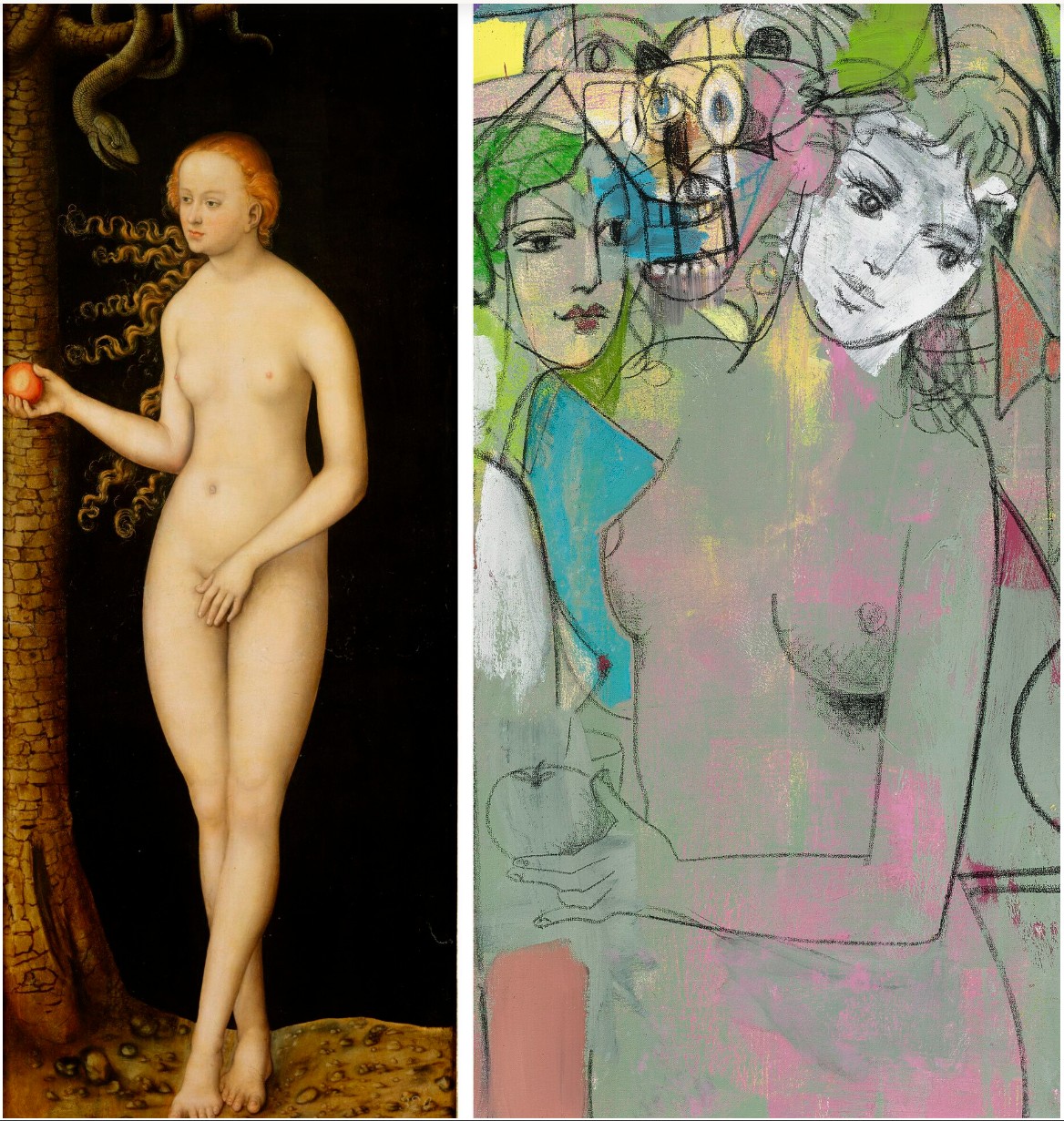
Left: Lucas Cranach the Elder, Eve, circa 1510/20. Kunsthistorisches Museum Wien, Gemäldegalerie.
Right: Present lot illustrated (detail).
With works such as Abstract Conversation, Condo enters into dialogue with a century of abstracted portraiture. Beginning with Pablo Picasso’s Les Demoiselles d’Avignon (1907, Museum of Modern Art, New York), artists have deconstructed the human figure only to rebuild them again, infused with new and interesting meanings. The are direct parallels between the present work and Picasso’s masterpiece—the positioning of the figures (particularly the figure on the left), and the preponderance of flesh-colored and blue tones.
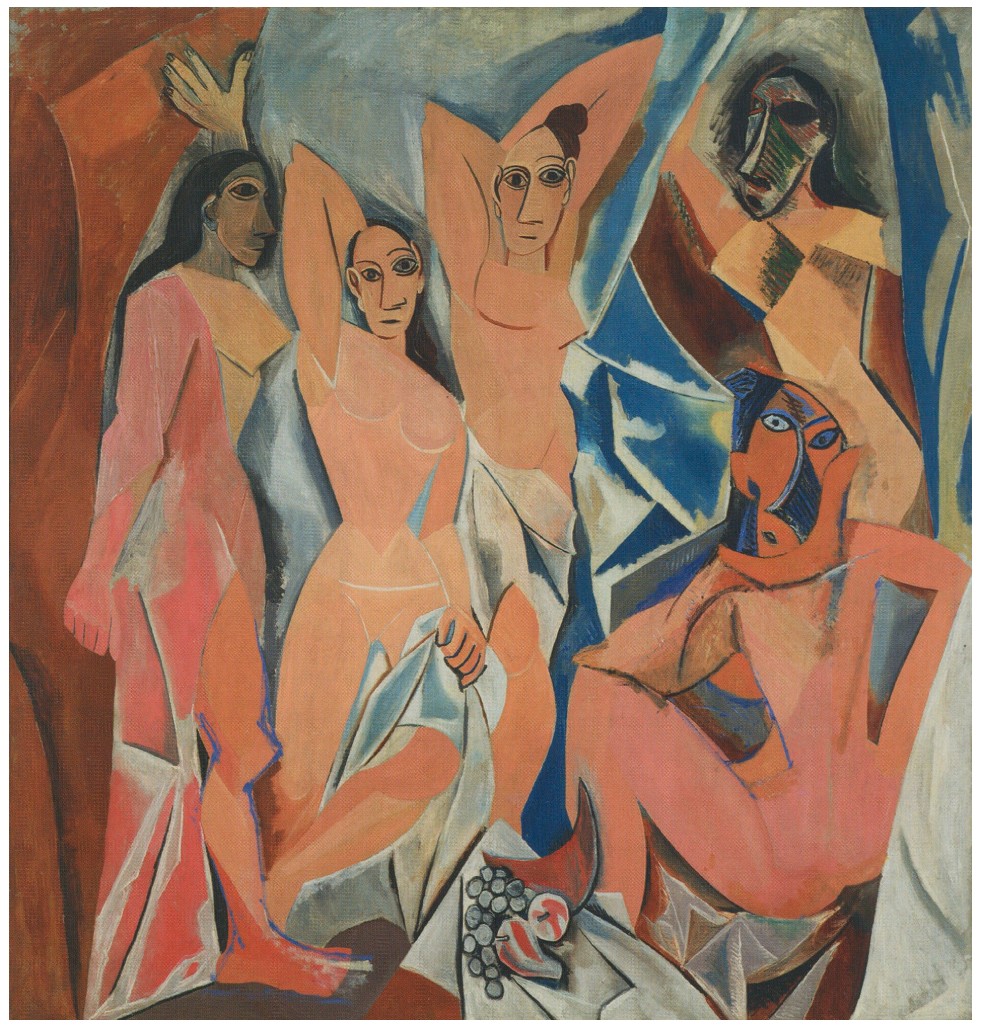
Pablo Picasso, Les Demoiselles d’Avignon, 1907. Museum of Modern Art, New York. © 2025 Estate of Pablo Picasso / Artists Rights Society (ARS), New York.
As Laura Hoptman points out, throughout his career Condo has displayed an encyclopedic ability to channel the pantheon of modern art history. Throughout his work he incorporates the language of modernist abstraction developed by the likes of Matisse, Klee, Tanguy, Gorky, de Kooning, Pollock and Picasso. He is, as Hoptman says, “…a philologist—a collector, admirer and lover of languages—in this case, languages of representation”. He sees himself, she continues, in the tradition of the masters who revised the motifs and techniques that had gone before and paid homage to them, “Just as Manet would emulate—and send up—Titian, and Picasso would furiously tackle the subjects of Velázquez and Manet, Condo re-imagines Picasso’s portraits and de Kooning’s human-scapes as a challenge” (L. Hoptman, “Abstraction as a State of Mind,” in R. Rugoff and L. Hoptman (eds.), George Condo: Mental States, op. cit., pp. 25-27).
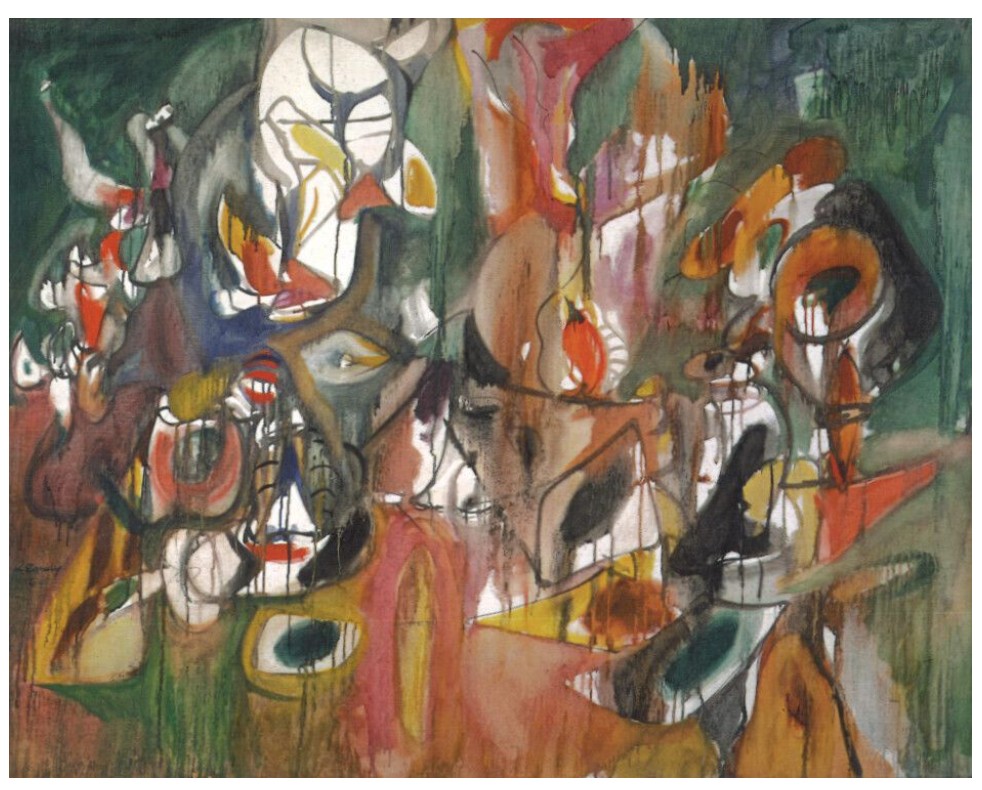
Arshile Gorky, One Year the Milweed, 1944. National Gallery of Art, Washington, D.C.
© 2025 The Arshile Gorky Foundation / Artists Rights Society (ARS), New York.
Born in New Hampshire in 1957, Condo moved to New York and spent the early 1980s working in Andy Warhol’s Factory in the silkscreen department. It was also during this time that he had the first exhibitions of his works that merged the styles of Old Masters with a fractured Pop sensibility. Expanding upon his interest in appropriating and finessing the extant imagery of art history, Condo began to work with some of the key elements of the New York School.
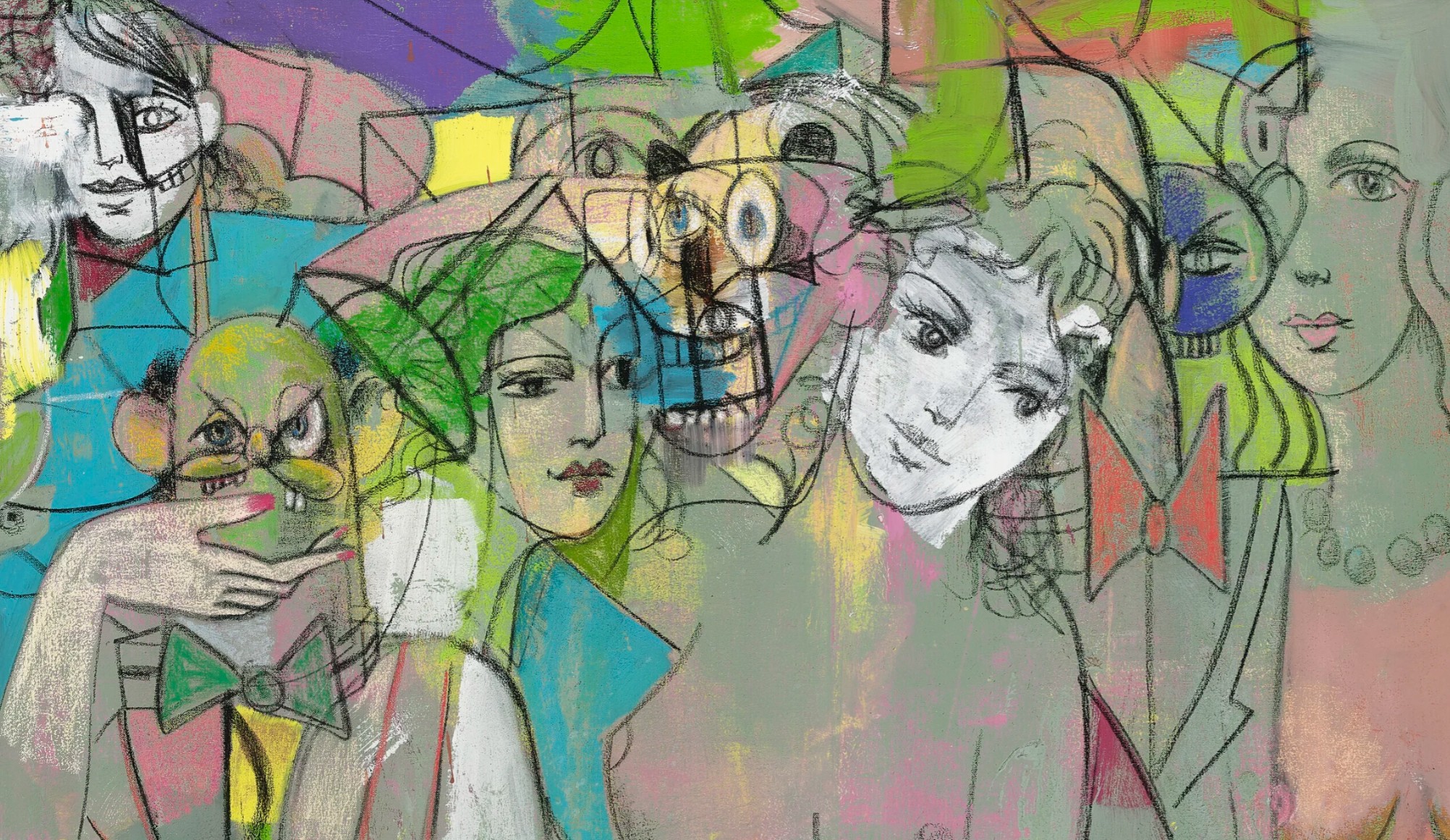
“Expressionism and Surrealism had already converged in Abstract Expressionism, particularly Willem de Kooning’s, but Condo’s integration of them produces even more absurdly (and comically) monstrous and menacing figures than de Kooning’s women. The snarling white teeth of Condo’s human grotesques seem to allude to those de Kooning’s sometimes also possess, but Condo’s seem more biting, and there are more of them” (D. Kuspit, op. cit.). Consistently pulling from every direction but always staying true to his unique vision, Condo creates work that is both recognizable and bizarre at the same time.
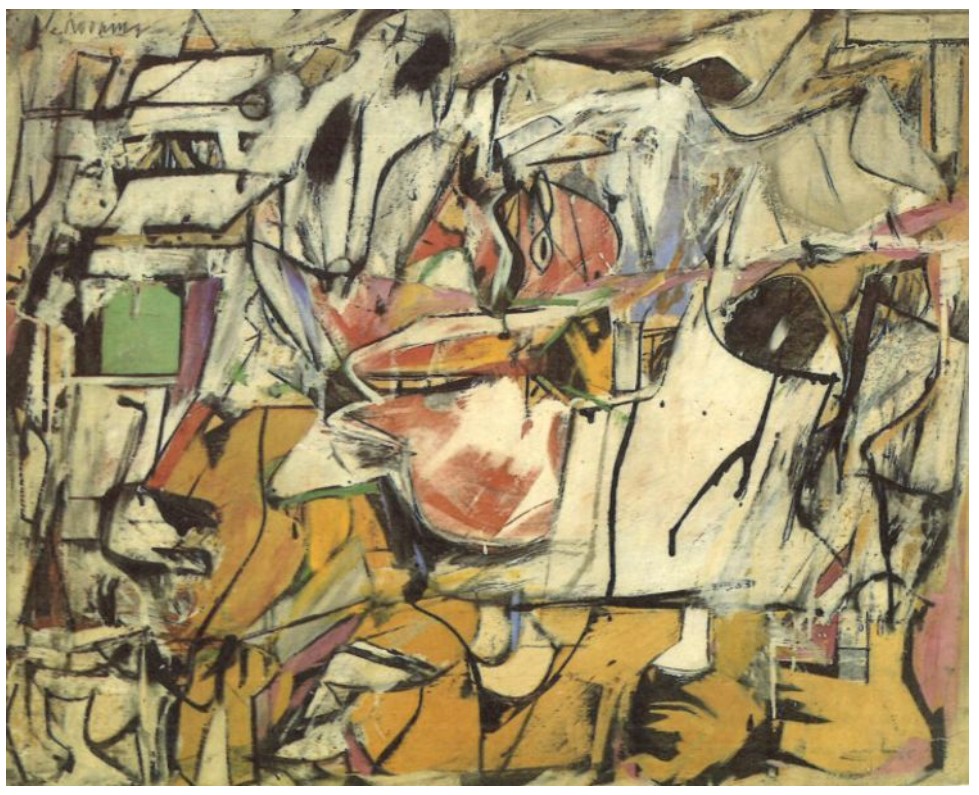
Willem de Kooning, Asheville, 1949. Phillips Collection, Washington, D.C.
© 2025 The Willem de Kooning Foundation / Artists Rights Society (ARS), New York.
Paintings such as Abstract Conversation have done much to reinvigorate the noble tradition of figurative painting. A generation of contemporary painters such as John Currin, Glenn Brown and Lisa Yuskavage have all acknowledged a debt of gratitude to Condo, for appreciating the traditions of painting, while not being suffocated by them, and in turn developing a whole new set of rubrics. Condo uses his inimitable technique to reassess painting in a radical new way and by combining the past with a more contemporaneous narrative, paintings such as this have done much to reinvigorate figurative painting and return the human figure to its central position in the modern art historical canon.
Pink and Yellow Sweep, 2011
Christie’s New-York: 14 May 2025
Estimated: USD 1,500,000 – 2,000,000
USD 2,288,500
GEORGE CONDO (B. 1957), Pink and Yellow Sweep | Christie’s
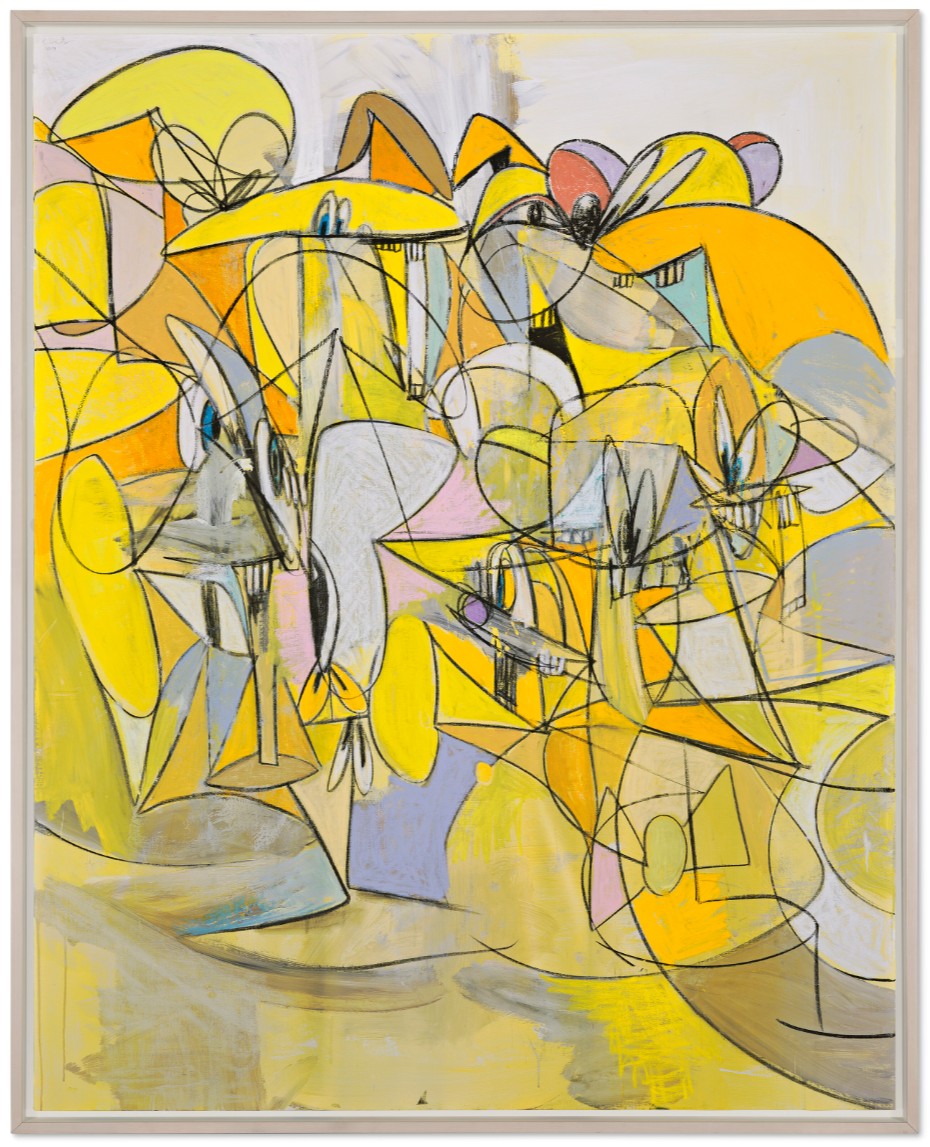
GEORGE CONDO (B. 1957)
Pink and Yellow Sweep, 2011
Acrylic, charcoal and pastel on linen
85×68 inches (215.9 x 172.7 cm)
Signed and dated ‘Condo 2011’ (upper left)
George Condo’s Pink and Yellow Sweep is an intoxicating example of the artist’s ability to coax emotional tension by mixing together figuration and abstraction. In this 2011 painting, a series of animated eyes stare out through an amalgamation of nebulous shapes.
“I wanted to capture the characters in these paintings at the extreme height of whatever moment they’re in—in that static moment of chaos—and to picture them as abstract compositions that are set in destitute places and isolated rooms. Everything takes place in a relatively impoverished kind of situation.”
Crystallizing a moment of energy and chaos, paintings such as Pink and Yellow Sweep freeze time and represent a convergence of physical matter and kinetic energy.
At first glance, one is confronted with a mix of swooping lines that intersect and connect as they form abstract shapes that give body to the applications of paint underneath. Washes of yellow and pale pink are cut with areas of white, black, and gray-blue that push against each other in Condo’s active canvas. Taking shape in this turmoil, a host of faces and figures yearn to make themselves known. The artist renders pairs of eyes, toothy grins, and floppy ears amid his curvilinear marks so that seemingly random shapes are transformed by our own pareidolia into manic visages. Paintings such as the present example are indicative of Condo’s larger interest in transitory realms between action and reaction, the real world and representation.
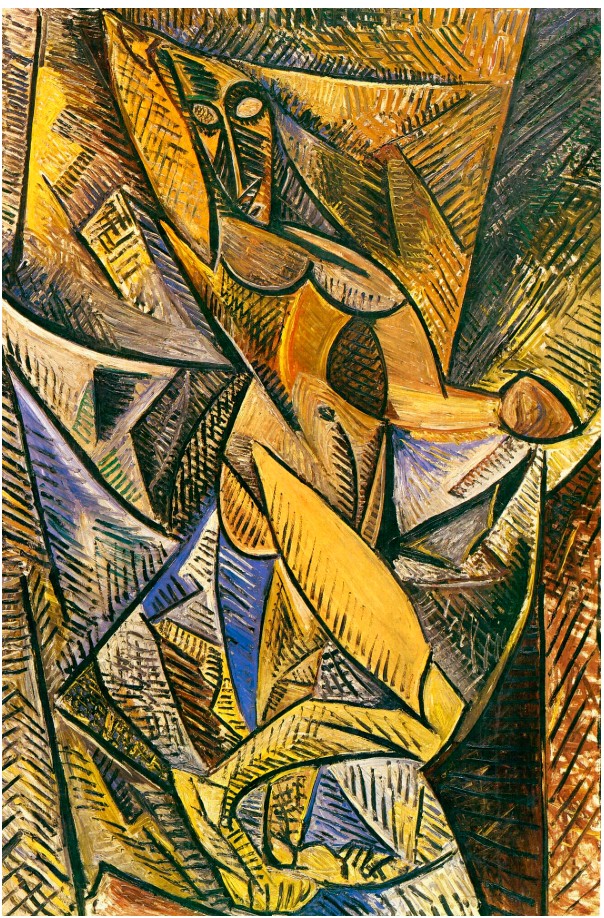
Pablo Picasso, Dance of the Veils, 1907. St. Hermitage, Petersburg.
© 2025 Estate of Pablo Picasso / Artists Rights Society (ARS), New York.
Condo’s oeuvre is rife with allusions to the history of art, and the artist himself consciously mines the styles of his forebearers in order to reposition and question the nature of painting. In the late 1980s, he introduced figures from the tradition of Spanish court portraiture into his bizarre realms as a means of further probing their psychological contexts. Likewise, he often references artists like Pablo Picasso and Joan Miró as he recontextualizes the legacies of Cubist and Surrealist painting. Condo’s affinity for Picasso is especially revelatory in works like Pink and Yellow Sweep as he seeks to depict multiple moments, angles, and fields of vision in one two-dimensional plane.
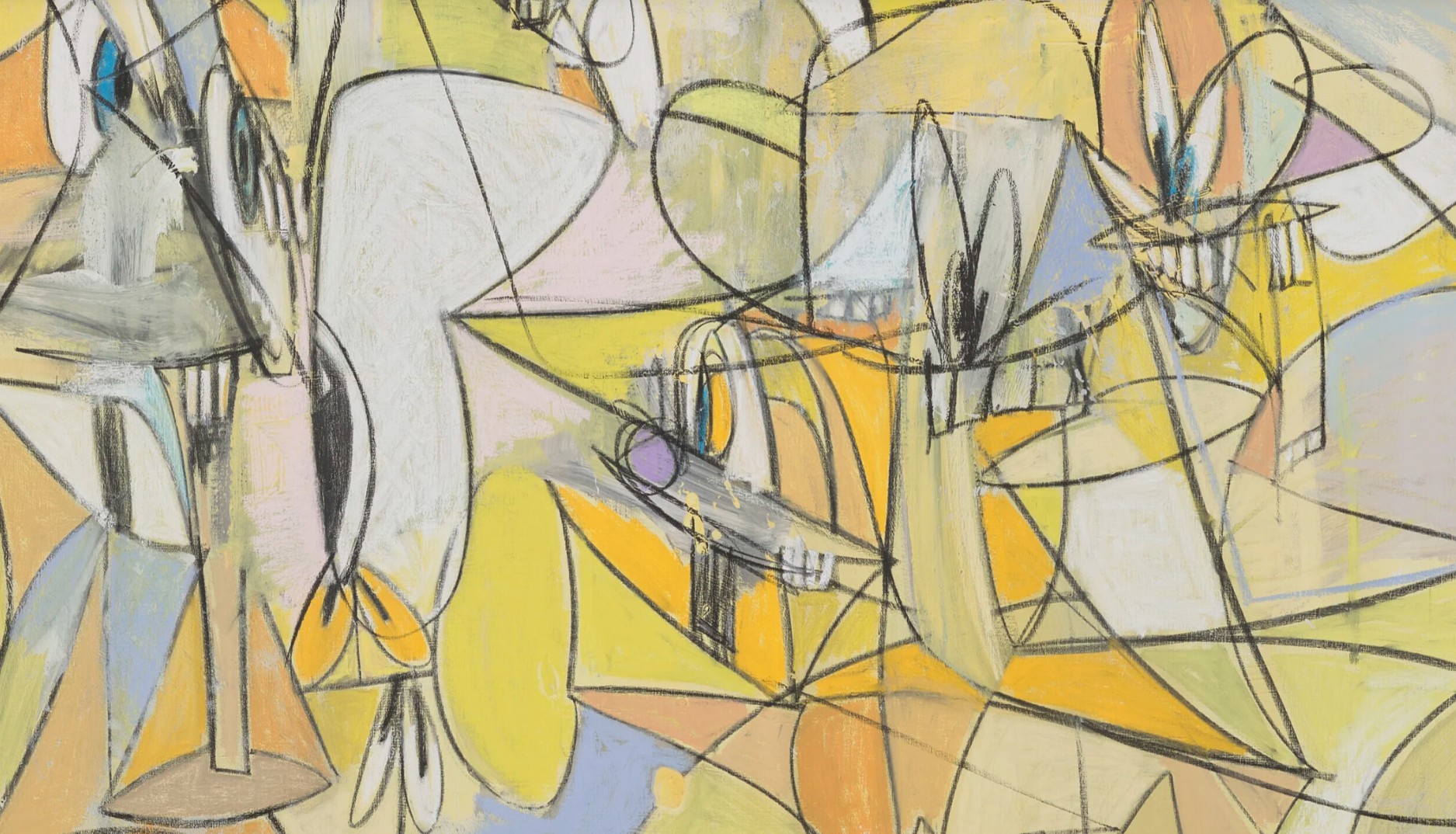
“My painting is all about this interchangeability of languages in art, where one second you might feel the background has the shading and tonalities you would see in a Rembrandt portrait, but the subject is completely different and painted like some low-culture, transgressive mutation of a comic strip”
The multifaceted approaches of analytical cubism merge with cartoon exaggeration and a knack for instilling emotional fervor in each stroke of the brush. Combined, these elements coalesce into a potent treatise on the continued growth and evolution of the painted image.
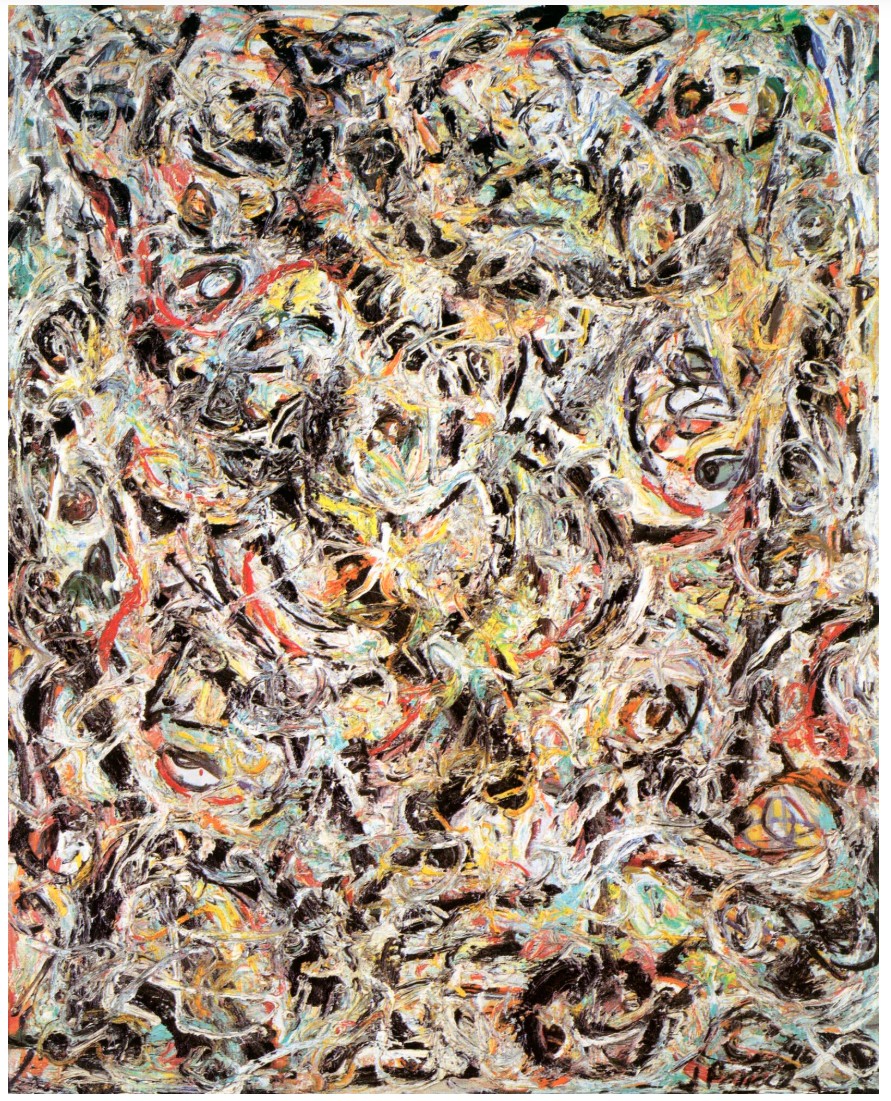
Jackson Pollock, Eyes in the Heat (Sounds in the Grass Series), 1946. Peggy Guggenheim Foundation, Venice.
© 2025 The Pollock-Krasner Foundation / Artists Rights Society (ARS), New York.
As a highly accomplished example of George Condo’s unique style of painting, Pink and Yellow Sweep is an important contribution to the resurgence in figurative painting. A generation of contemporary painters such as John Currin, Glenn Brown and Lisa Yuskavage have all acknowledged a debt of gratitude to Condo, for appreciating the traditions of painting, while not being suffocated by them, and in turn, developing a whole new set of rules and practices. Condo uses his inimitable technique to reassess centuries of painterly tradition in a radical new way, and by combining the past with a more contemporaneous narrative, paintings such as this have done much to reinvigorate figurative painting and return the human figure to its central position in the modern art historical canon.
The Executives and Their Wives, 2011
Christie’s New-York: 21 November 2024
Estimated: USD 2,500,000 – 3,500,000
USD 3,922,000
GEORGE CONDO (B. 1957), The Executives and Their Wives | Christie’s
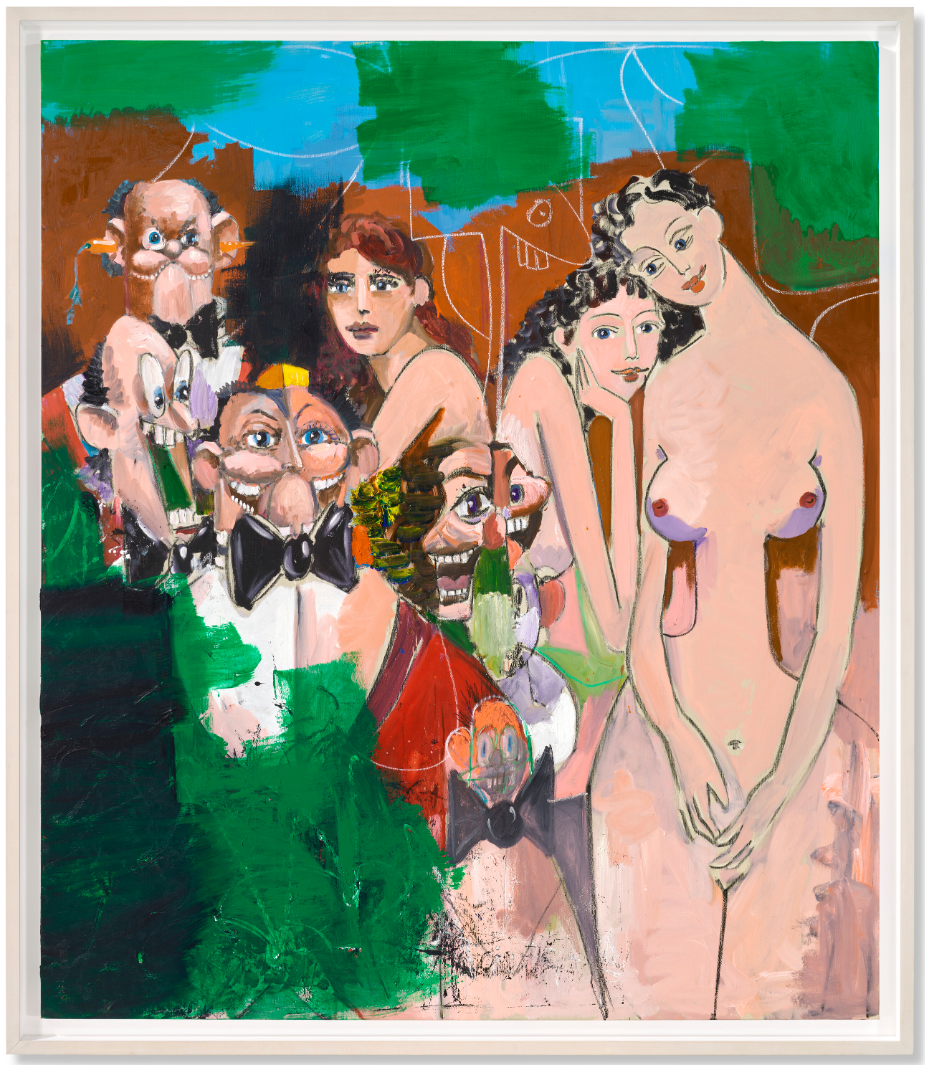
GEORGE CONDO (B. 1957)
The Executives and Their Wives, 2011
Oil, acrylic, charcoal and pastel on linen
70×60 inches (177.8 x 152.4 cm)
George Condo’s The Executives and their Wives presents an impressive array of art historical influences which converge into a singularly compelling image. The large-scale canvas showcases a seemingly discordant collision between abstraction and figuration, wherein classically-derived female nudes contrast with the sartorial exuberance of their husbands, all painted in Condo’s iconic visual language. The many internal paradoxes within this picture epitomize the best of the artist’s oeuvre, which attains a sort of ‘psychological’ cubism, rendering a number of parallel psychological states within his self-described oppositional beings.

From the beginning of Condo’s mature practice in the 1980s, the artist has sought out different symbols, techniques, and motifs practiced by European Old Masters, reconfiguring these various artistic languages in a thoroughly contemporary mode. Reversing the iconic motto of the Viennese Secessionists, ‘to every age its art, to every art its freedom (Der Zeit ihre Kunst. Der Kunst ihre Freiheit)’, Condo references art from every age, his work abridging centuries to discover a freedom which he felt was lacking in the historically-inattentive artistic atmosphere from which he emerged.
The Executives and their Wives belongs to a long history of multifigure voyeuristic paintings which exhibit female nudes around a group of fully-clad men. This tradition originates with Titian’s early masterpiece Pastoral Concert, now at the Musée du Louvre. In this work, two arcadian youths engrossed in lyrical production sprawl against a grassy knoll, flanked by two voluptuous female nudes. Édouard Manet rekindles this iconography in another famous masterpiece, Le Déjeuner sur l’herbe (1863, Musée d’Orsay, Paris), with the nude woman now directly confronting the viewer with a searching stare. Condo updates his nude from his luscious antecedents, depicting the women in a more modern mode—reminiscent of the elongated eroticism in Amedeo Modigliani’s nudes, while all three figures’ compositional positioning and direct stare bear tribute to Pablo Picasso’s famed Les Demoiselles d’ Avignon. Condo applies the same tonality attained by layers of warm hues built up with whites and oranges witnessed in Picasso’s work, yet the artist modifies the emphasis from Picasso’s Cubist focus on presenting all angles of the women’s bodies at once while abstracting their faces, lingering instead on capturing their direct, emotive faces. In another unexpected deviation, Condo draws upon a further strand of art history in his figure furthest to the right, whose disproportioned body consisting of an unnaturally slim torso bookended by enlarged erogenous zones recalls the anatomical exaggerations present in the prehistoric Venus of Willendorf.
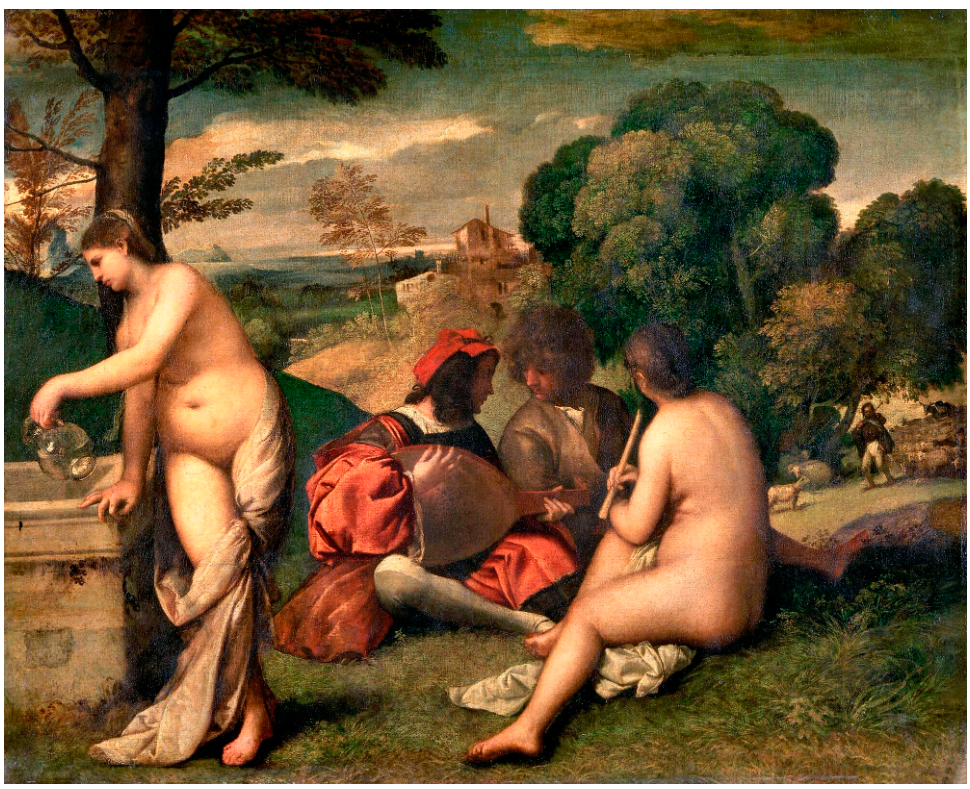
Giorgione or Titian, Pastoral Concert, circa 1510. Louvre Museum, Paris. Photo: Niday Picture Library / Alamy Stock Photo.
Condo contrasts the alluring yet unsettling figurative beauty imbued in his female figures with highly abstracted men, whose open toothy mouths, bulging eyes, and crazed disposition remind of an altogether different art historical heritage, coming instead from a concoction of Willem de Kooning’s Women paintings, Picasso’s abstracted portraits, and Francis Bacon’s distorted profiles. Here, Condo presents contradictory signals, these titular executives seeming to simultaneously scream and smile, their expressiveness contrasting with that of their demure wives. Condo draws further inspiration from Bacon in his exploitation of background—the figures reside amid an ambiguous backdrop color-blocked by deep oranges, turquoises, and blues dissected with white linear elements, referencing Bacon’s fluorescent orange backgrounds segmented spatially through black lines. However, Condo intervenes with this antecedent in the lower left corner, where the darkened background becomes an obscurant foreground covering the figures.
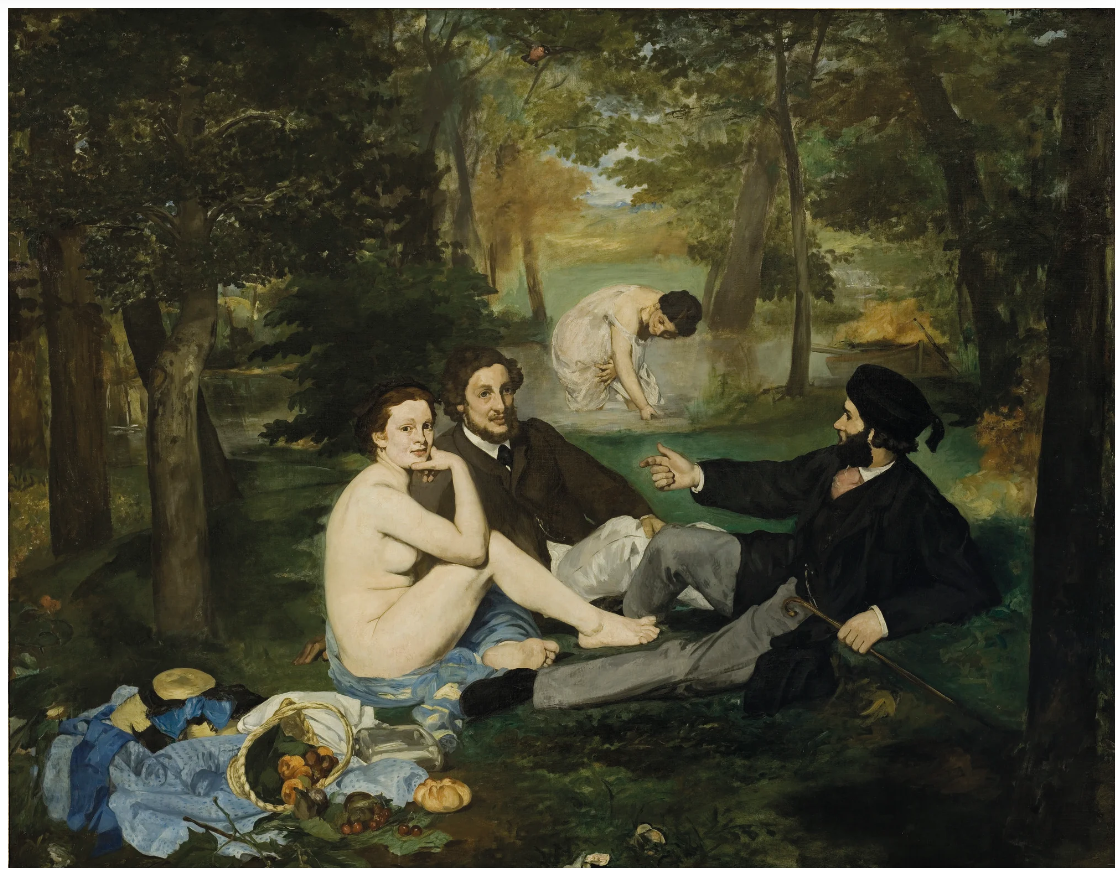
Édouard Manet, Le Déjeuner sur l’herbe, 1863. Musée d’Orsay, Paris.
Underlying the totality of this composition is Condo’s facility as a painter, orchestrating a choreography of brushstrokes varied in touch and texture against a masterful palette embracing the exciting interplay of unexpected color relationships. Typical of Condo’s practice, the artist vacillates between tradition and modernity, employing ancient motifs for modern purposes. George Condo is one of today’s most celebrated figurative painters. In the present work, Condo exposes the corporatized sexism still lingering into the twenty-first century, where the titular “executives” are all rendered male, appearing as lecherous voyeurs which bring to mind depictions of the biblical Susanna and the Elders. Here, Condo weaponizes art historical references against these debased archetypes, reconstructing art history as an interpretive lens through which to engage with the present.
Conversations, 2012
Sotheby’s New-York: 13 May 2024
Estimated: USD 2,500,000 – 3,500,000
USD 3,145,500
Conversations | The Now Evening Auction | 2024 | Sotheby’s (sothebys.com)
GEORGE CONDO (b. 1957)
Conversations, 2012
Acrylic, charcoal and pastel on canvas
70×90 inches (177.8 x 228.6 cm)
Signed and dated 2012 (upper left)
A sublime synthesis of art historical tropes and contemporary aesthetics, Conversations epitomizes the exceptional virtuosity, psychic intensity and fragmented perspectives that distinguish George Condo’s remarkable oeuvre. Executed in 2012, the present work was produced shortly following George Condo’s major mid-career retrospective George Condo: Mental States at the New Museum, New York; Museum Boijmans Van Beuningen, Rotterdam; Hayward Gallery, London; and Schirn Kunsthalle. The formal constituents of this exceptional canvas—its confidently contoured figures, vibrant palette, and richly textured surface—reveal a brilliant fusion of many of the artists’ most significant motifs. Anchored by a central figure reminiscent of Picasso’s Les Demoiselles d’Avignon, the confluence of idiosyncratic figures in the present work is emblematic of Condo’s signature mode of ‘psychological cubism,” in which he ruptures the picture plane to reveal the complexities and multifaceted nature of human emotion. Incorporating Abstract Expressionist action painting, the formality of Old Master portraiture and the wry humor of pop art, Condo’s Conversations employs ostensibly contradictory elements of canonical art history to both challenge and collapse traditional conceptions of genre.

LEFT: PABLO PICASSO, LES DEMOISELLES D’AVIGNON, 1907. IMAGE © THE MUSEUM OF MODERN ART/LICENSED BY SCALA / ART RESOURCE, NY. ART © 2024 ESTATE OF PABLO PICASSO / ARTISTS RIGHTS SOCIETY (ARS), NEW YORK. RIGHT: WILLEM DE KOONING, WOMAN VI, 1953. IMAGE © CARNEGIE MUSEUM OF ART, PITTSBURGH, PA / ART RESOURCE, NY. ART © 2024 THE WILLEM DE KOONING FOUNDATION / ARTISTS RIGHTS SOCIETY (ARS), NEW YORK
A striking coalescence of color and form, Conversations evocatively recalls Pablo Picasso’s masterful Cubist facture; yet, where Picasso radically shattered the picture plane to explore multiple viewpoints in the same moment, Condo here ruptures his compositions to explore the complexities of the psyche. Embodying the artist’s career-long interrogation of representations of the figure throughout art history, George Condo’s Conversations examines the aesthetic legacies of Cubism within his surreal figures, both appropriatings and recontextualizings the traditions of portraiture. Following a nine-month stint as the diamond duster in Andy Warhol’s Factory, Condo emerged onto the 1980s New York art scene alongside seminal figures like Keith Haring and Jean-Michel Basquiat. Like his peers, Condo was critically engaged throughout the eighties in bringing to life a new form of figurative painting that stylistically blended the representational and the abstract. Condo coined the terms ‘artificial realism’ and ‘psychological Cubism’ to define his lexicon of amusing caricatures, profound and intimate portraits, and grotesque abstractions. In Conversations, Condo inverts and inserts art historical tropes, paying homage to Pablo Picasso’s protagonist, Matisse’s fluid and organic figures, Lichtenstein’s archetypal blonde heroines, among others in a playful and absurd new context that simultaneously revives, and humorously undermines, the integrity of portraiture.

Dominated by rose-colored hues punctuated by bright blue, red, pinks and yellows, Condo’s lines and color fields teeter on the periphery of representation and abstraction; as Condo describes, “There was a time when I realized that the central focal point of portraiture did not have to be representational in any way.” (the artist quoted in: Anney Bonney, “George Condo,” BOMB Magazine, Summer 1992) Like Matisse’s figures, rendered in simplified shapes and liberated contours, Condo’s characters break free from strict representational conventions, continuing a Modernist experimentation with the human form that Matisse set forth. Here, Condo’s figures—each set in conversation, each positioned in a different perspective and each boldly contoured—collapse the traditional delineations between not only painting and drawing, but also the beautiful and the grotesque, the comic and tragic. As Holland Cotter noted in his review of George Condo: Mental States at the New Museum in 2011: “Mr. Condo is not a producer of single precious items consistent in style and long in the making… He’s an artist of variety, plentitude and multiformity. He needs to be seen in an environment that presents him not as a virtuoso soloist but as the master of the massed chorale.” (Holland Carter, “A Mind Where Picasso Meets Looney Tunes,” The New York Times, 27 January 2011 (online)). Conversations, from 2012, is a quintessential embodiment of the fantastical, pictorial landscapes rife with hedonistic entropy that typify Condo’s genius. Within the fractured realm of the canvas, abstraction and figuration collide with a ferocious velocity; while clearly discernible, the silhouette of each figure evades clear delineation, as Condo deftly manipulates our ability to interpret the tableau before us, toying with the boundaries of non-representational and figurative paintings. Painted with broad, gestural brushstrokes that convey the fleeting and fluid nature of conversation, the present work is encapsulates Condo’s inimitable ability to reflect and synthesize the human experience.
The Good Old Days, 2015
Sotheby’s New-York: 15 November 2023
Estimated: USD 1,500,000 – 2,500,000
USD 1,775,000
The Good Old Days | The Now Evening Auction | 2023 | Sotheby’s (sothebys.com)
GEORGE CONDO (b. 1957)
The Good Old Days, 2015
Oil and pigment stick on canvas
78×74 inches (198.1 x 188 cm)
Signed and dated 2015 (on the overlap)
A kaleidoscope of surging forms and dense figuration, The Good Old Days is a sensational example of George Condo’s ability to meld flatness and sculptural depth with thrilling velocity. Through a dizzying assemblage of form and figure, the present work revels in Condo’s most significant touchstone: Picasso’s Cubist fracture. Playfully undermining the integrity of traditional portraiture through its masterful contusion of abstracted bodily forms, The Good Old Days is a striking reflection of Condo’s self-termed mode of ‘psychological cubism’. Further elaborating on his desire to reproduce the emotional spectrum of the human experience.
“It’s what I call artificial realism. That’s what I do. I try to depict a character’s train of thoughts simultaneously – hysteria, joy, sadness, desperation. If you could see these things at once that would be like what I’m trying to make you see in my art.”
The gracefully churning collision of form that defines Condo’s oeuvre is perhaps one of the most honest and accurate representations of a complicated modern psychology in the art historical canon: glee, rage, insanity, loneliness, as well as cheeks, and eyes, are crushed together in a visceral state of being.
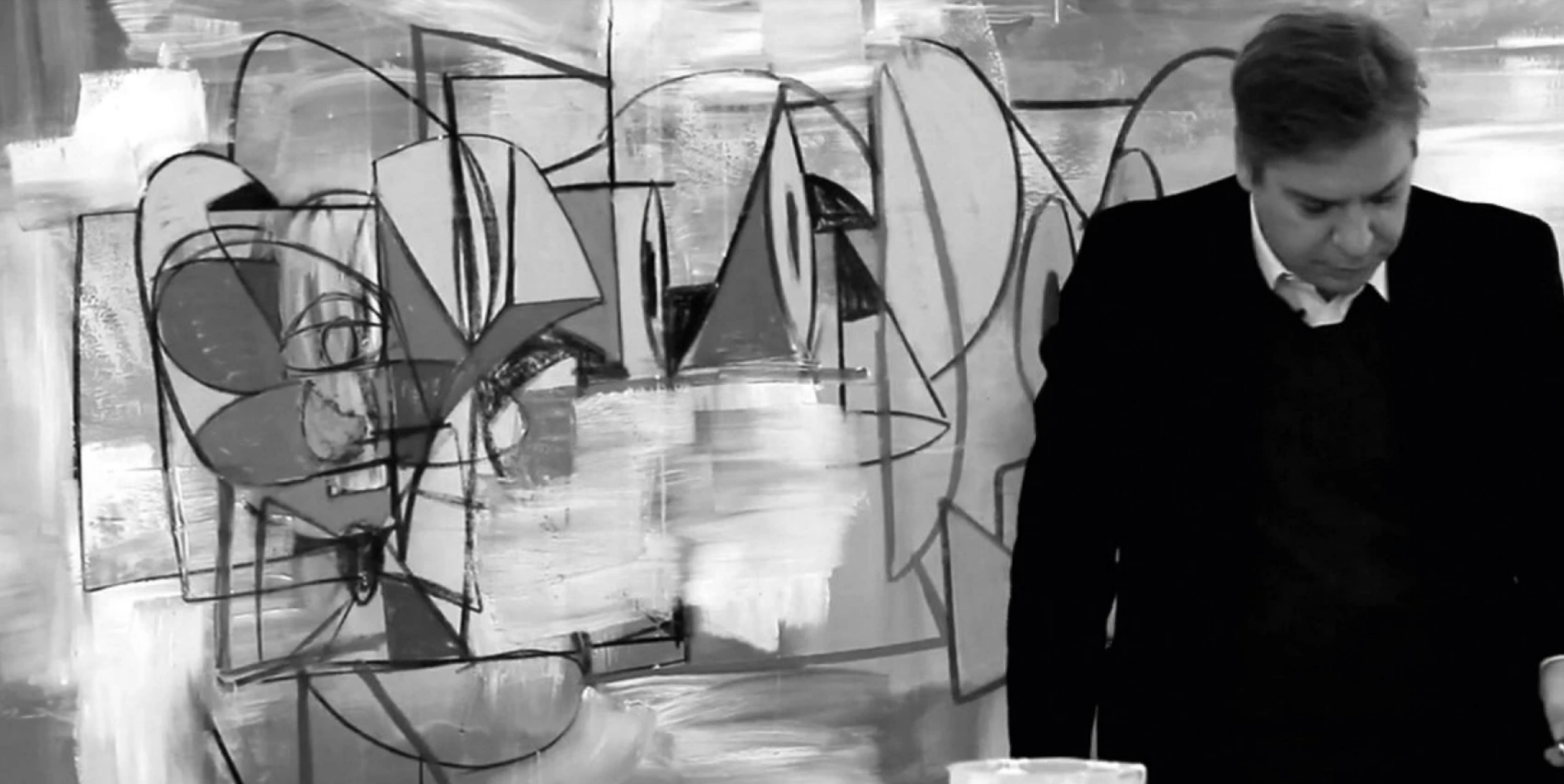
GEORGE CONDO IN HIS STUDIO, PHOTOGRAPH BY TINA BARNEY. ART © 2023 GEORGE CONDO / ARTISTS RIGHTS SOCIETY (ARS), NEW YORK
Executed in 2015, The Good Old Days marvels in Condo’s unraveling and subsequent reassembly of various pictorial languages. Strikingly reminiscent of The Portuguese – George Braque’s genre-defining Cubist masterpiece – the present work references this art historical period in both its compositional structure and nostalgically cliché title. Monumentally influential on Condo and his output, together Braque and Picasso possessed a distinct ability to overcome the unified singularity of objects and people, and instead transform them into something jarringly fragmented. In the same vein as his Cubist predecessors, The Good Old Days sees Condo breaking down a discrete character, tinkering with its parts, and welding it back together in new and inventive configurations, ultimately producing a painting that, in its alluring visual chaos, serves as fitting testament to the infinite variety and complications of the human psyche. A rich optical puzzle spliced by overlapping forms and charcoal lines, the figure’s human features clash, churn and collide in a prodigious yet whimsical riddle.
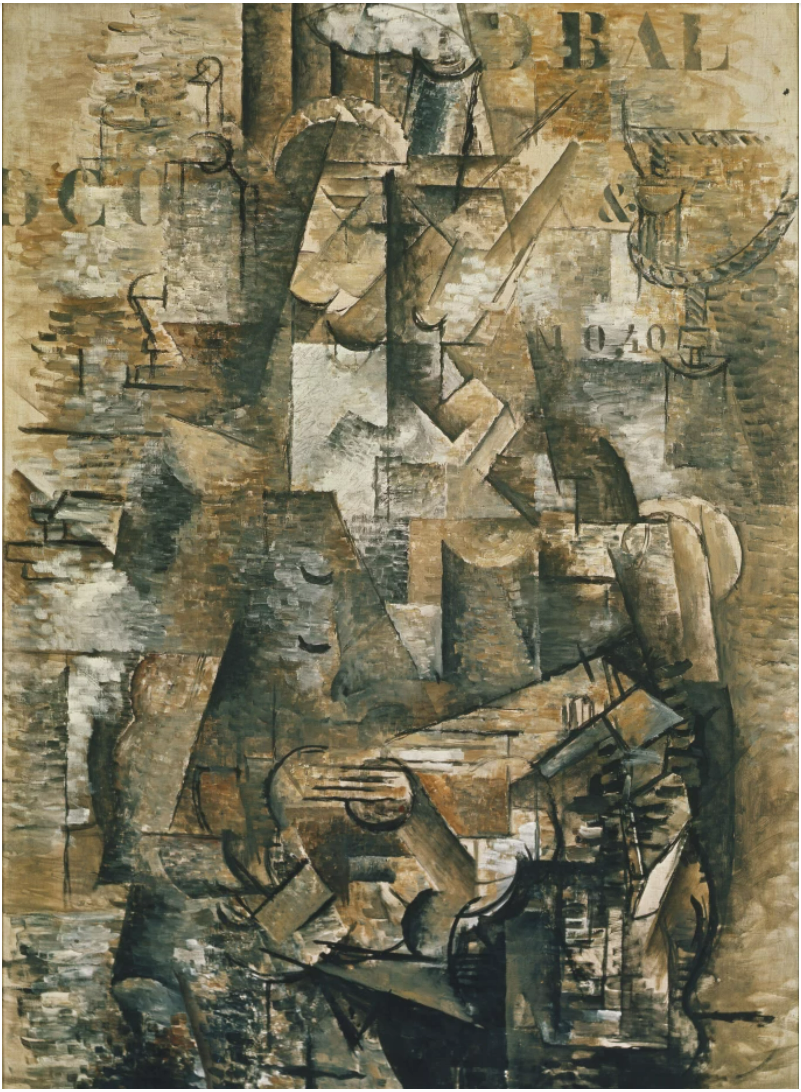
GEORGES BRAQUE, THE PORTUGUESE MAN, 1911. KUNSTMUSEUM, BASEL. IMAGE © BRIDGEMAN-GIRAUDON / ART RESOURCE, NY. ART © 2023 ARTISTS RIGHTS SOCIETY (ARS), NEW YORK / ADAGP, PARIS
Building upon years spent refining and maturing his iconic figurative style, The Good Old Days embodies an artist at the height of his career, utterly uninhibited and full of instinctive creative fervor. A knife-edge dance between the familiar and the alien, the beautiful and the grotesque, the present work symbolizes the splintering of identity and the challenge of maintaining a coherent sense of self, as materialized through fractured visages on the canvas. An inevitable result of the whirling abstraction and sinuous shapes of the present work, the moment one picks out a form, it slips back into the delirium of the whole. Exuding a mystifyingly psychological aura with dynamic permutations of line, color, and shape, The Good Old Days endures as a poignant and visually arresting reminder of Condo’s elusive genius that permeates from the battleground of his canvas.
In The Brothel, 2007
Christie’s London: 13 October 2023
Estimated: GBP 1,000,000 – 1,500,000
GBP 1,855,000 / USD 2,251,213
GEORGE CONDO (B. 1957)
In the Brothel, 2007
Oil and pastel on canvas
49 1/2 x 42 inches (125.7 x 105.4 cm)
Signed and dated ‘Condo 07’ (upper left)
Signed and dated ‘Condo 07’ (on the reverse)
A tangled profusion of faces and bodies fills the canvas of George Condo’s In the Brothel (2007). Condo works in both oil paint and pastel: his dance between painterly and graphic registers complements the polyphonic energy of the picture, which flickers among Cubist, Neo-Classical and Abstract Expressionist modes in the signature style he has called “Artificial Realism”. Riffing on the palette and structure of Pablo Picasso’s 1907 masterpiece Les Demoiselles d’Avignon, the work represents a close conversation with Condo’s great artistic hero. Black lines silhouette the figures against the sky-blue ground, which is heightened with lilac blushes. Loose strokes of peach illuminate nude skin, while red lines scaffold the composition. In the foreground is a nude woman with her back to us, stretching acrobatically in fishnet stockings. She merges with two frontal female forms, overlapping in a medley of limbs and grasping hands. The picture gathers in density around the women’s faces, which are combined with the multiplied features of Rodrigo—a dastardly, bow-tied valet who appears in many of Condo’s canvases—to form a prismatic mosaic of toothy grins, red lips and staring eyes. The present work’s imbroglio of smiles, frowns, screams and stares exemplifies Condo’s kaleidoscopic approach, creating a tapestry of seething, simultaneous mental states. In the Brothel’s affinity with Les Demoiselles d’Avignon—perhaps the foundational masterpiece of modern painting—is more than skin-deep. Before the critic André Salmon renamed it for its first public exhibition, Picasso had more plainly called the work Le Bordel d’Avignon (‘The Brothel of Avignon’). It had also been known as Le Bordel Philosophique (‘The Philosophical Brothel’), a title later used by Leo Steinberg for the 1972 essay which remains one of the painting’s most famous interpretations. The French word Bordel is often used non-literally to describe a mess, or a state of disorder. The term is as apt for Picasso’s clashing of Iberian, African and Old Masterly visual influences as it is for Condo’s own hectic amalgamation of idioms—Picasso’s among them. Condo’s ‘brothel’ foregrounds the erotic dynamics of Picasso’s work, which shocked viewers with its radical, shattered perspective and the women’s direct, confrontational stares. Preparatory sketches for Les Demoiselles d’Avignon show that Picasso originally planned to include two male figures, who are absent from the final painting. By enmeshing the cartoonish, menacing Rodrigo within the scene, Condo brings the male gaze back into the picture. A Breton-striped sleeve to the picture’s right might even belong to Picasso.
Multicolored Female Composition, 2016
Sotheby’s London: 12 October 2023
Estimated: GBP 2,000,000 – 3,000,000
GBP 2,993,000 / USD 3,654,903
Multicolored Female Composition | The Now Evening Auction | 2023 | Sotheby’s (sothebys.com)
GEORGE CONDO (b. 1957)
Multicolored Female Composition, 2016
Acrylic, metallic paint, charcoal and pastel on linen, in artist’s frame
68 1/8 x 74 1/4 inches (173.1 x 188.6 cm)
signed and dated Sept 2, 2016 (upper left)
In the ever-evolving landscape of contemporary painting, George Condo has established himself as a prolific and influential artist whose work challenges the boundaries of tradition while drawing inspiration from art history’s vast and eclectic lineage. Multicolored Female Composition from 2016 stands as a testament to his remarkable ability to synthesized diverse influences into a singular and deeply compelling visual language. This painting, characterized by its striking composition of fractured figuration and colorful palette, invites viewers to explore the complexities of human existence and the interplay between the conscious and unconscious mind.
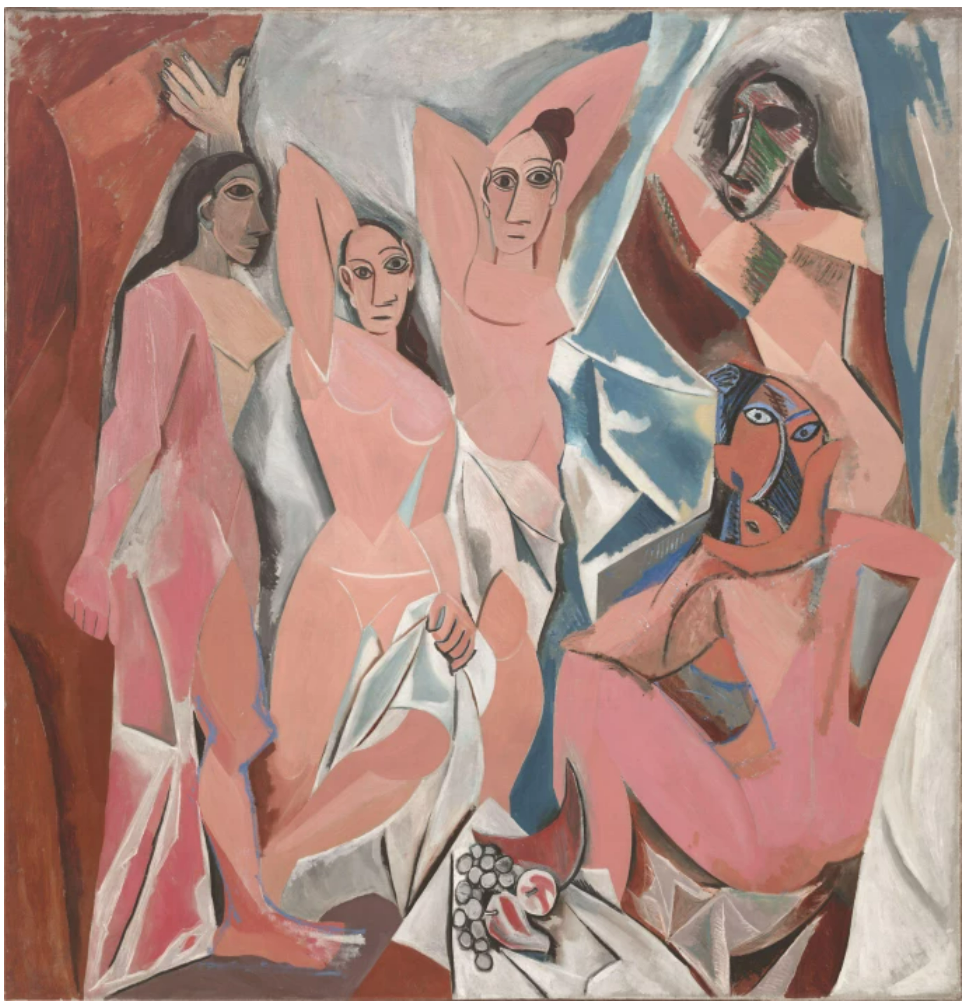
PABLO PICASSO, LES DEMOISELLES D’AVIGNON, 1907
THE MUSEUM OF MODERN ART, NEW YORK © SUCCESSION PICASSO/DACS, LONDON 2023
Teetering on the periphery of representation, Multicolored Female Composition is as a myriad of half-formed visages and voluptuous feminine silhouettes which tantalizingly emerge and recede across the picture plane. Drawing on the long lineage of the female nude, Condo fragments, abstracts and splatters, to create a meta-dialogue between the history of Western painting across the twentieth century. The geometrically fractured figures are distinctively Cubist and the large square format of the composition in the present work particularly evokes Pablo Picasso’s iconic masterpiece Les Demoiselles d’Avignon. At the same time, Condo employs vivid colors and bold graphic lines to create forms which recall Wassily Kandinsky’s colorful experimentations with geometric abstraction. Splattered across the figures are gestural splashes of gold paint which recalls Jackson Pollock’s drip paintings, while dynamic brushwork that scrapes, smudges and drips run across the canvas to add to the physicality embodied in action painting. Captured in the present work is the history of painterly traditions which sweep across the entire twentieth and twenty-first century, brought together through Condo’s unique visual lexicon.
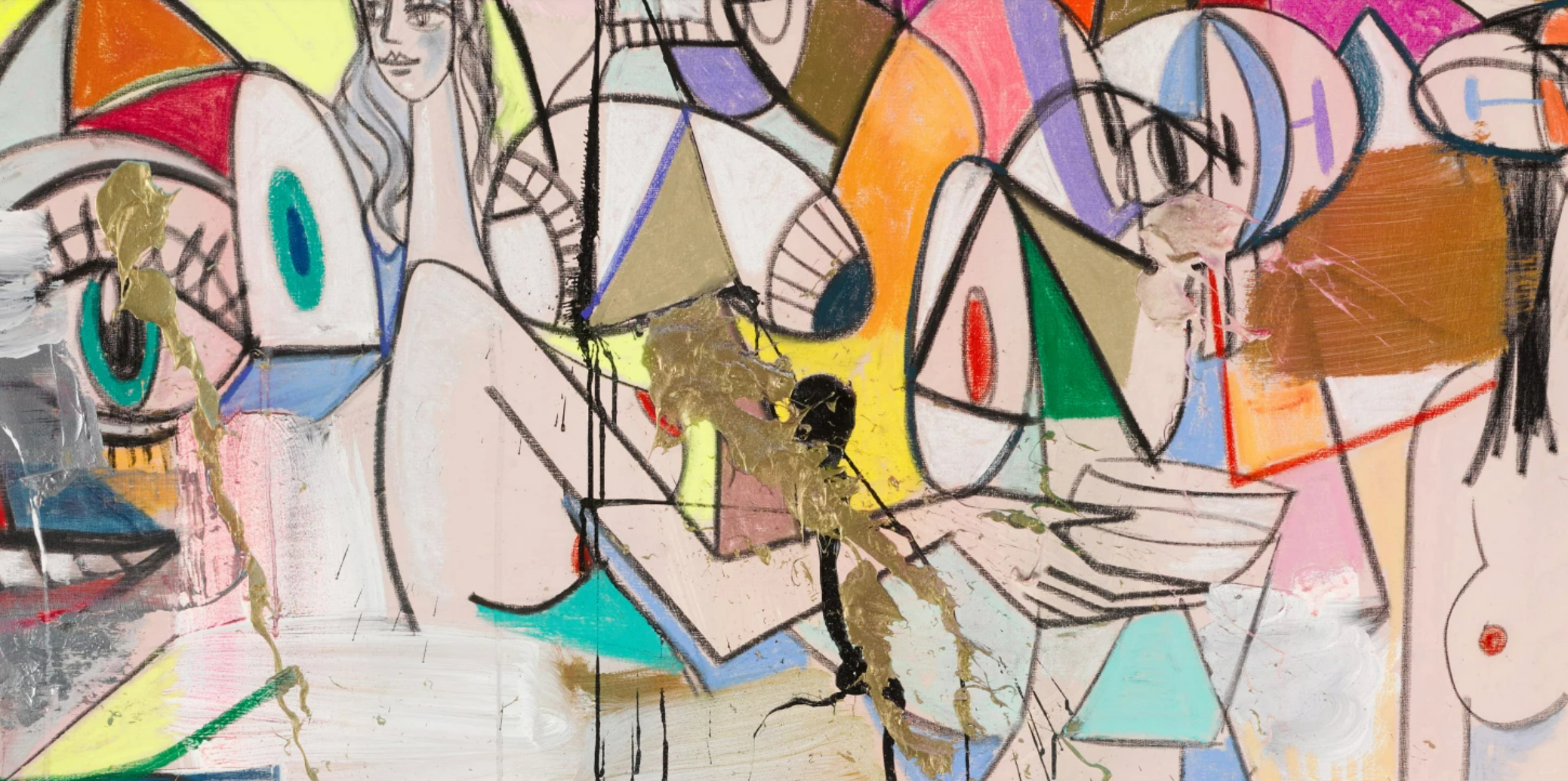
Condo’s artistic journey is marked by a relentless pursuit of innovation, a spirit that finds its ultimate expression in Multicolored Female Composition. At first glance, the canvas appears to be a cacophony of forms and colors, with layers of paint converging and diverging in a dance of chaos and order. Running across the canvas are fragmented figures and distorted faces emerging from the tumultuous sea of abstraction. These figures, though distorted, are undeniably human, reflecting Condo’s fascination with the psychological and emotional complexities of the human condition. The fractured visages are both haunting and captivating, as they oscillate between the familiar and the alien, the beautiful and the grotesque. Condo takes the Cubist impulse to represent objects and figures from multiple perspectives simultaneously, and applies it to the realm of the psyche, representing the inner lives which are similarly multi-dimensional and fragmented. The viewer is left to contemplate the intricacies of the mind, where memories, desires, and fears coexist in a complex web of interconnected thoughts and emotions. In what Condo has described as ‘psychological Cubism,’ his use of distortion and fragmentation serves as a reflection of the fractured nature of contemporary existence. In a world marked by constant change, uncertainty, and the relentless influence of technology and mass media, Condo’s fractured figures embody the splintering of identity and the challenge of maintaining a coherent sense of self. In this sense, Multicolored Female Composition speaks to the zeitgeist of the modern times, where the boundaries between reality and illusion, authenticity and artifice, are constantly blurred.
Inside the West Wing, 2017
Sotheby’s Hong-Kong: 5 April 2023
Estimated: HKD 14,000,000 – 25,000,000
HKD 22,230,000 / USD 2,831,883
GEORGE CONDO (b. 1957)
Inside the West Wing, 2017
Oil and graphite on linen
78×92 inches (198.1 x 233.7 cm)
Signed and dated 2017
Presenting an enigmatic tableau of decadence and betrayal, the sinewy mass of Inside the West Wing from 2017 dances with George Condo’s frenetic, textural energy. Drawing and painting a dizzying assemblage of forms and figures that collide and fragment, the viewer catches glimpses of recognizable human features; an arm, teeth, curvaceous hips and legs, delicate hands which emerge from the captivating chaos only to be subsumed again beneath the mass of quivering bodies. Telling a story of debauchery, the present work presents fragile hands holding a bottle, searching, solitary eyes and Condo’s characteristic open-mouthed and toothy whispering grins. Capturing many different states within one compositional frame, Inside the West Wing feels almost like a visual puzzle, the moment one picks out a form, it slips back into the delirium of the whole. A captivating large-scale composition in acrylic and graphite on linen, the rich textures of Inside the West Wing embody Condo’s knife-edge dance between the enticing and the grotesque, sanctifying his place as one of the leading painters of his generation.
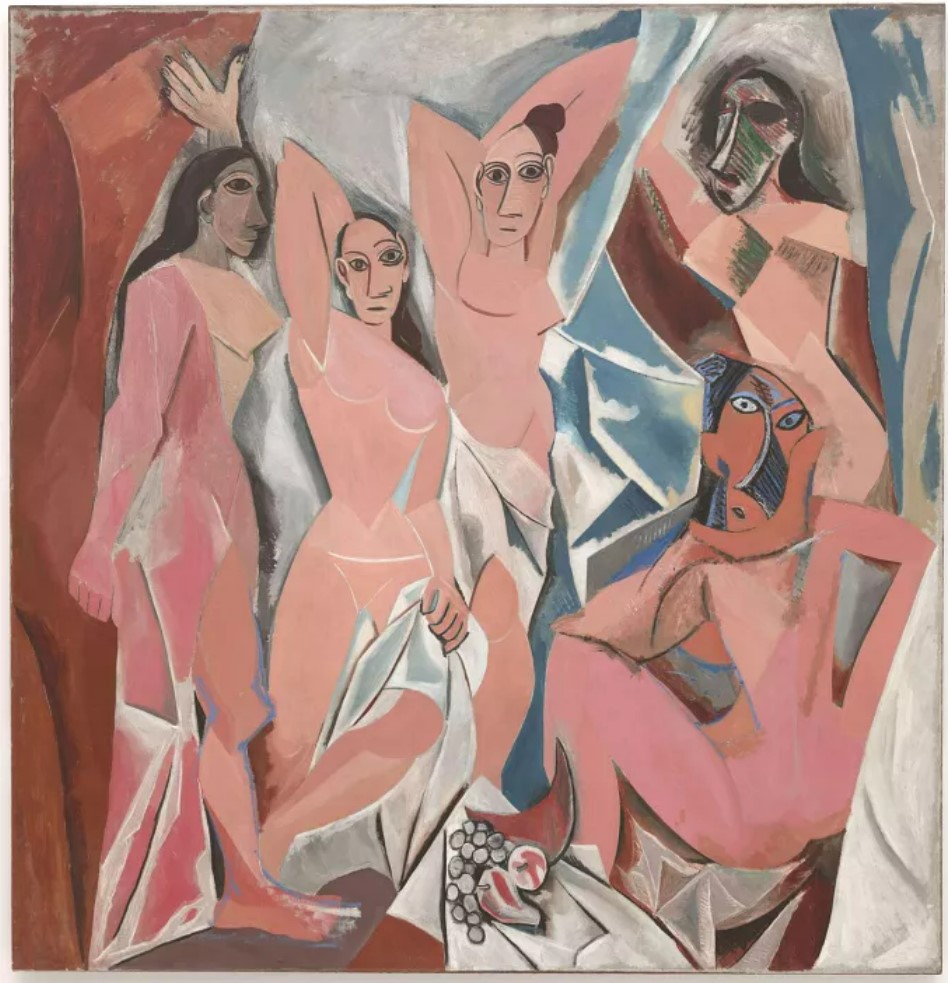
PABLO PICASSO, LES DEMOISELLES D’AVIGNON, 1907 © 2023 ESTATE OF PABLO PICASSO / ARTISTS RIGHTS SOCIETY (ARS), NEW YORK
Exhibited as part of Condo’s first solo exhibition with Almine Rech Gallery in Paris in 2017, Inside the West Wing depicts a network of deceptive activities and dangerous liaisons. This exhibition’s title of “Life is Worth Living” was taken from an old note Condo once sent to his long-time friend Bernard Ruiz-Picasso, a sentiment felt in Condo’s carnivalesque compositions. Exploring the reactionary quality of great art like Picasso’s Guernica and Andy Warhol’s Race Riot, Condo’s work from this exhibition (Collusion, The Trial, The Investigation, along with the present work) are a response to the political atmosphere of our contemporary world. Not just a political caricature, Inside the West Wing is Shakespearean in its theatrical portrayal of deception and misinformation at the heart of political life. Seeing art as the only constant in an ever-shifting landscape.
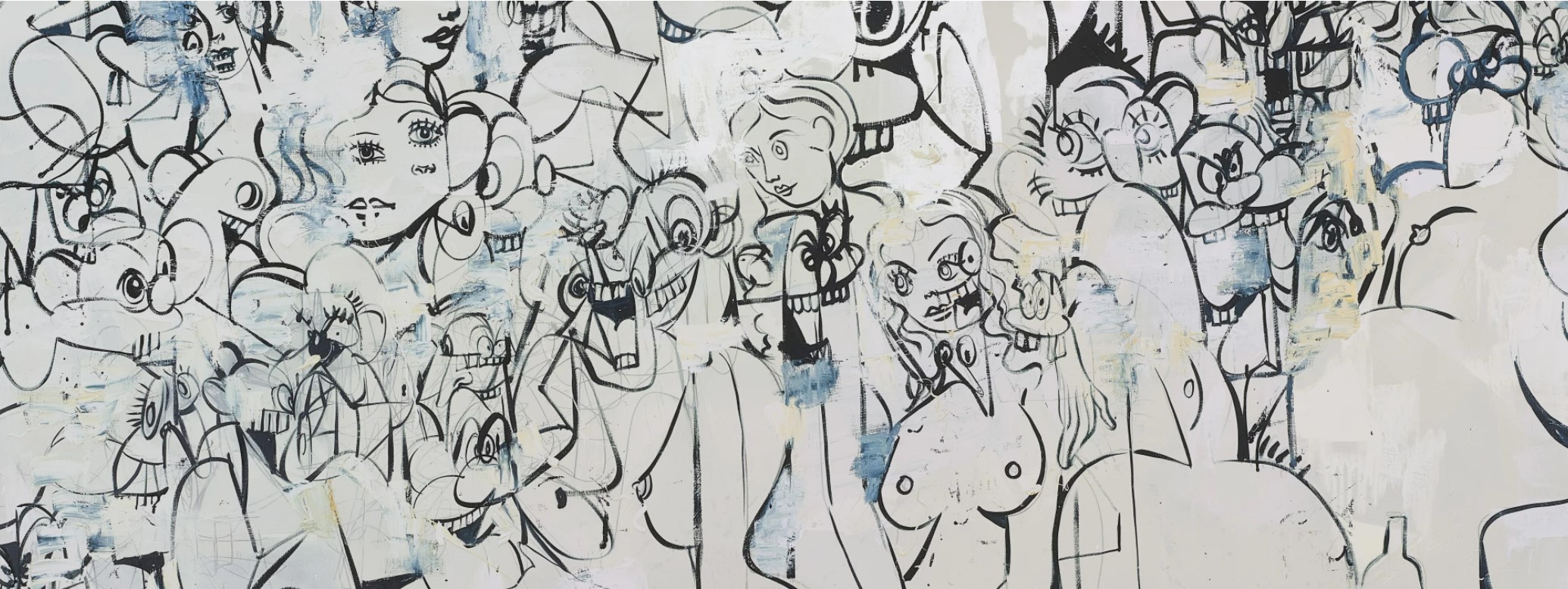
Exemplifying the artist’s use of drawing and painting together in a structurally destructive method of working, Inside the West Wing is a passionately charged example of Condo’s uniquely disconcerting techniques and exploration of the human psyche. Carrying the Cubistic quality of Picasso’s work of the 1930s applied to psychology more interpersonal rather than singular, Condo expands his compositions from an initial point, whether it be a face a limb or an expression, before moving outwards in large, gestural swathes of inky-black color. There’s a performative element to Condo’s practice, his expressive moments at points slow, before speeding up to reach their crescendo. The particularly animate cluster of shapes in the upper right-hand corner explode outwards into the billowing and luscious curves of other bodies. There is an innate tempo and rhythmic quality to Condo’s work, a musicality informed by his study of Music Theory at the University of Massachusetts. Translating the composition of music onto the canvas, Condo adopts the approach of a composer, with periods of thrilling hyper-activity within the picture frame being expertly balanced by moments of quiet.
Easter Sunday, 2011
Christie’s London: 28 February 2023
Estimated: GBP 1,800,000 – 2,500,000
GBP 2,022,000 / USD 2,445,573
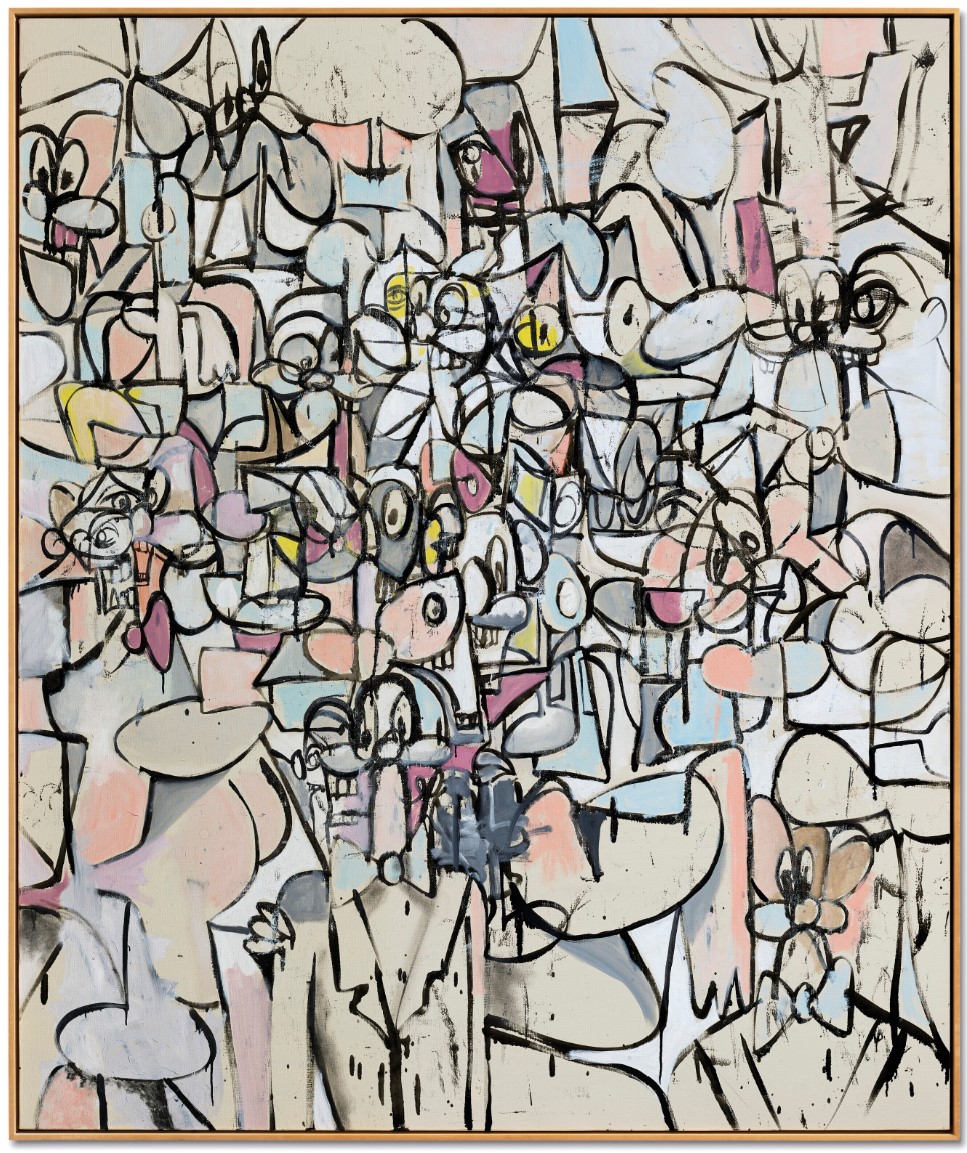
GEORGE CONDO (B. 1957)
Easter Sunday, 2011
Oil on linen
72×60 inches (182.8 x 152.5 cm)
Signed and dated ‘Condo 2011’ (on the overlap)
Painted in 2011—the year the artist’s major touring retrospective George Condo: Mental States opened at the New Museum, New York—Easter Sunday is a scintillating large-scale composition by George Condo. Faces, curves and facets flash in pearlescent hues of peach, powder-blue, silver and lilac against a pale khaki ground. Marshalled by deft, sinuous black lines, the forms assemble a dynamic ‘all-over’ surface that recalls both the Abstract Expressionism of de Kooning and the crystalline Cubism of Picasso. The picture clusters towards its centre, where flares of bright yellow illuminate nestled eyes and toothy grins; some of these features are joined by cartoonish rabbit ears, perhaps inspiring the title’s playful reference to Easter. The tuxedoed figure of Rodrigo—a roguish manservant who reappears across Condo’s oeuvre—emerges at least three times from the foreground, his bow-tie flitting through the action like a butterfly. Relating both to the musically-inspired ‘expanded canvases’ Condo began painting in the 1980s and to the ‘drawing paintings’ he first made in 2008, Easter Sunday is a feat of painterly, graphic and improvisational brilliance, riffing on art history and Condo’s own oeuvre with the skill and daring of a jazz virtuoso.
Condo has described the major early ‘expanded canvases’ Diaries of Milan (1984, Museum of Modern Art, New York) and Dancing to Miles (1985-1986, The Broad, Santa Monica) as ‘improvisations’ on the ‘chords’ provided by the symbolic content of the Old Masterly pastiches he had painted previously. These motifs included swords, bunches of grapes, rabbits, and his own spelled-out name. In Easter Sunday, the chords are characters and shapes that run through several decades of Condo’s work, including the recurring rabbits and the dastardly Rodrigo. Like a vision of his interior creative landscape, the tableau chatters with the noise of a crowded party scene. Its elegant, high-modernist palette counterpoises the manic energy of its grinning teeth and staring eyes: gleeful, anarchic and barely repressed, they seem to embody the psychic drives that lie beneath our outward surfaces, and the busy, fugitive complexity of unfiltered thought.
Untitled, 2007
Phillips New-York: 19 May 2022
Estimated: USD 400,000 – 600,000
USD 816,500
George Condo – 20th Century & Contempor… Lot 324 May 2022 | Phillips
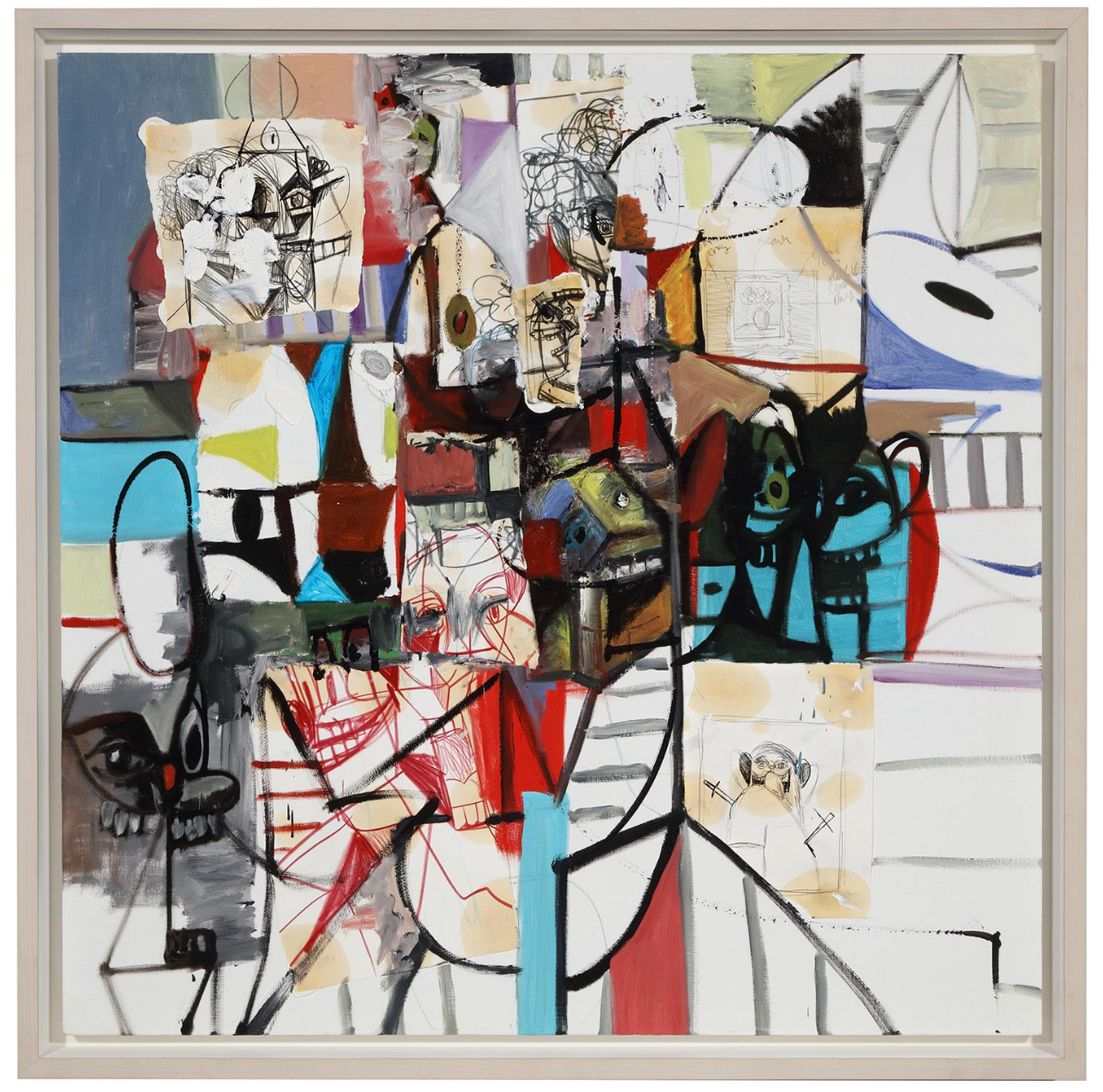
GEORGE CONDO
Untitled, 2007
Oil, pencil and paper collage on canvas, in artist’s frame
42×42 inches (106.7 x 106.7 cm)
Signed and dated “Condo 07” on the overlap
Held in the Collection of Josh Brolin, George Condo’s Untitled is a remarkable example of the artist’s unique approach to portraiture. A kaleidoscope of color and form, the work pushes the boundaries of what can be achieved by figural representation. Layering a multitude of mediums, the artist fluently works line, form and color into a multi-facetted portrait that brims with an explosive energy–revealing Condo’s undeniable virtuosity as both a draftsman and painter. Geometric planes of color pay homage to his great hero Pablo Picasso, the jigsaw of line and form recall the multiple points of analytical cubism. Executed in 2007, Untitled captures the distinct shift in Condo’s practice whereby he embraced a greater cubist fragmentation of the human form.
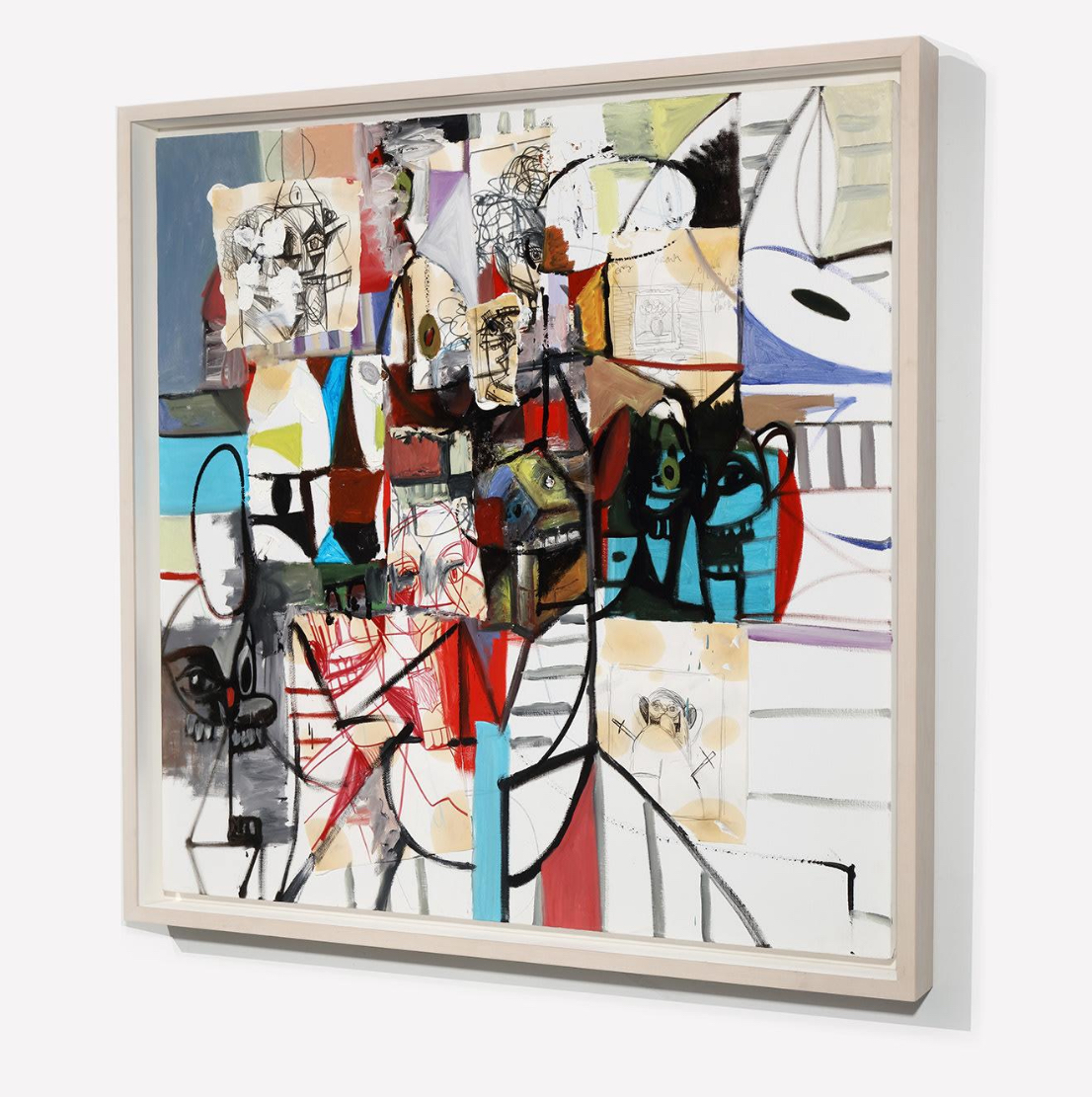
Plunging into the grotesque and the captivating, the comedic and the tragic, Condo’s dark humor mines the psychological depths of both mass media and art history. With his cast of irreverent characters, exaggerated body parts and fantastical worlds, Condo presents one of our generation’s most transformative investigations into the genre of painting. Executed in 2007, Untitled can in many ways be seen as an extension of Condo’s 2006 seminal painting Sketches of Jean Louis which featured a monumental portrait of the fictitious French character Jean Louis. One of the most reoccurring protagonists in Condo’s repertoire of imagined figures, Jean Louis is a chameleon who at times is presented as a butler, chef, banker or maid. In Sketches of Jean Louis, Condo presents him sharply dressed, wearing a bowtie and a white collared shirt; his exaggerated face defined by a bulbous nose, protruding ears and a row of clearly defined teeth.
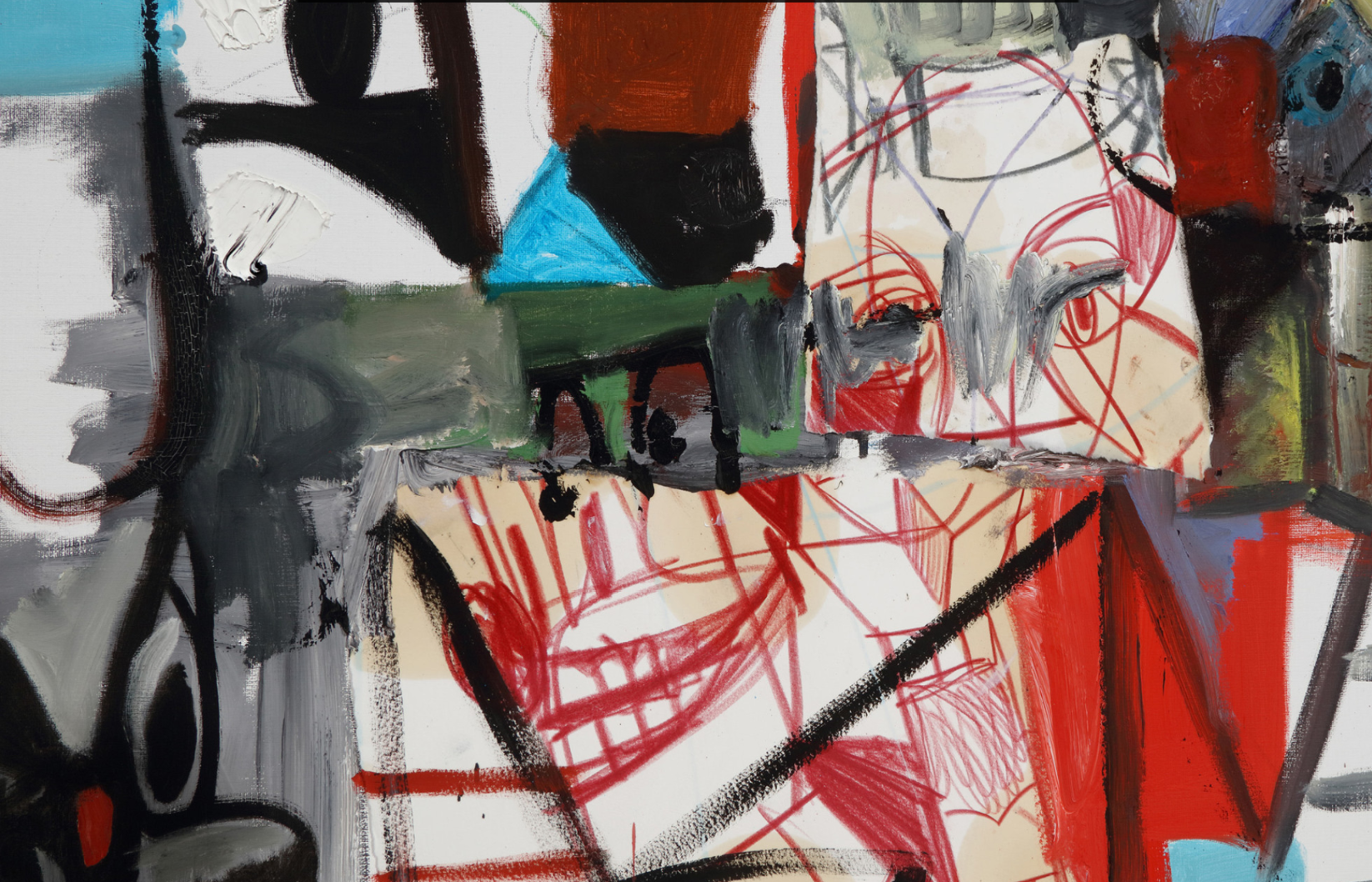
With the present work, Condo deconstructs the portrait into a multi-faceted, fragmented creature–pushing his idiom of “psychological cubism” to even greater heights. The overall figure has become almost entirely abstracted, propagated into a multitude of creatures. Perched on sloping shoulders is a medusa-like head that encompasses an entanglement of figures competing for attention. Within this cacophonous painting lie Cubist-like, syncopated faces with rows of exaggerated teeth and compressed chins and cheeks. Framing the head at-large is a cartoonish left ear and an oversized eye, featuring an olive-green iris and crimson pupil. While obfuscating any clear resemblance to Jean-Louis, Condo slyly integrates him in various points of the composition, as while as introducing Rodrigo, another reoccurring figure recognizable for his bulgy eyes.
Tumbling Forms, 2015
Christie’s New-York: 9 May 2022
Estimated: USD 1,500,000 – 2,500,000
USD 2,820,000
George Condo (b. 1957) (christies.com)
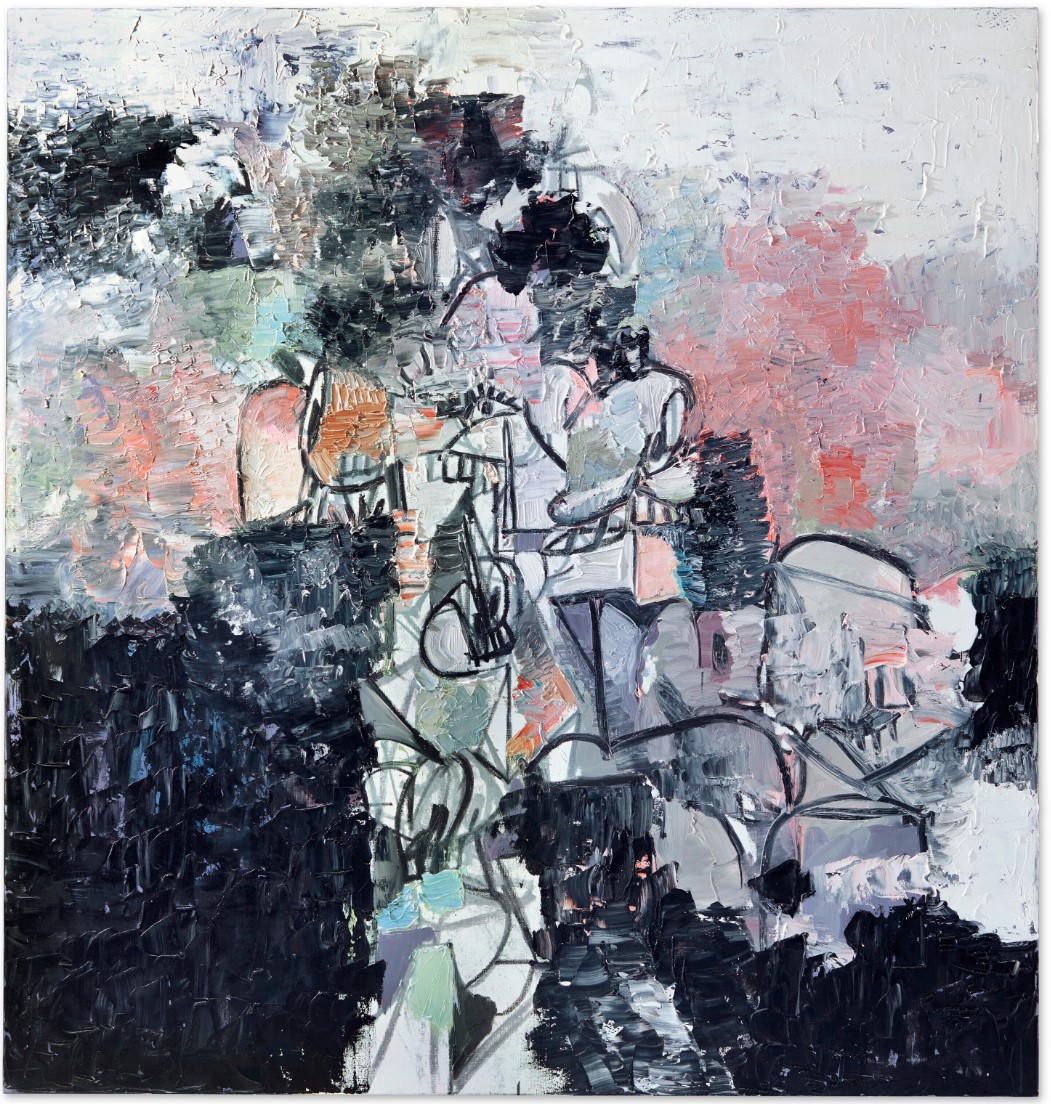
GEORGE CONDO (B. 1957)
Tumbling Forms, 2015
Oil and pigment stick on linen
78×74 inches (198.1 x 188 cm)
Vibrating with a dynamic sense of energy, Tumbling Forms cascades off of the canvas and into our own space with a deafening crash. Beginning in the upper left, one can trace the path of the swirling, brushy cavalcade as it powers toward the edge of the picture plane through a cloud of pastel colors that resembles a spring landscape through fogged glass. Scumbles of black, white, and gray merge with sickly green and rosy pink as the chunky brushstrokes and palette knife impasto gives way to discrete linework showing figurative bits like eyes, teeth, and the occasional nose.
Indeed the bottom of Tumbling Forms is inundated with a mass of black paint that threatens to overtake any semblance of recognizable shapes. Like a tarpit swallowing a crowd of frenzied faces, the entire composition is in danger of slipping into the abyss. This visual tension is key to Condo’s compositions as it immediately enthralls the viewer and urges them to share in the frenetic dance.
Blue Expanding Orgy, 2005
Christie’s Hong-Kong: 2 December 2021
Estimated: HKD 11,000,000 – 18,000,000
HKD 14,650,000 / USD 1,879,795
GEORGE CONDO (B. 1957) (christies.com)
GEORGE CONDO (B. 1957)
Blue Expanding Orgy, 2005
Oil on linen
165×152 cm (65 x 59 7⁄8 inches)
Signed with artist’s signature and dated ‘05’ (upper left)
Signed with artist’s signature, titled and dated ‘05 Blue Expanding Orgy’ (on the reverse)
Wrought by stark black outlines against an intense wash of blue, Blue Expanding Orgy is one of the most explicit, striking figurative abstraction works by George Condo to appear in auction. Braving the sexual taboo, Condo confronts the audience with a life-size composition of twisted and tangled nude figures engaging in a variety of sexual activity: at once, most viewers might shy away from the obscene image as conditioned by social practice; yet the smudged and chaotic throes of figures might allure them to take a closer look and traverse the ambiguity in this work. With different versions of its prints collected in the Museum of Modern Art and the Whitney Museum of American Art in New York, Blue Expanding Orgy is a captivating example that epitomizes Condo’s exploration of the style he coined “Psychological Cubism” during the early years.
Collision Course, 2009
Phillips New-York: 17 November 2021
Estimated: USD 1,800,000 – 2,500,000
USD 2,450,000
George Condo – 20th Century & Conte… Lot 39 November 2021 | Phillips
GEORGE CONDO
Collision Course, 2009
Acrylic, charcoal, wax crayon, pastel and paper collage on linen
71 7/8 x 57 7/8 inches (182.6 x 147 cm)
Signed and dated “Condo ’09” on the reverse
Collision Course, George Condo’s surreal and fragmented puzzle of imagery, is characteristic of the artist’s enquiry into the notions of perception. A spliced dreamscape of interlocking silhouettes patently reveals the artist’s ability to fluently work line, form and color into his celebrated oeuvre. Marrying figuration with abstraction, the present composition is exemplary of Condo’s self-termed style of “psychological cubism.” Presenting the onlooker with what the imagination—rather than the eye—sees, in Collision Course, the mental state of each subject is refracted across the composition.
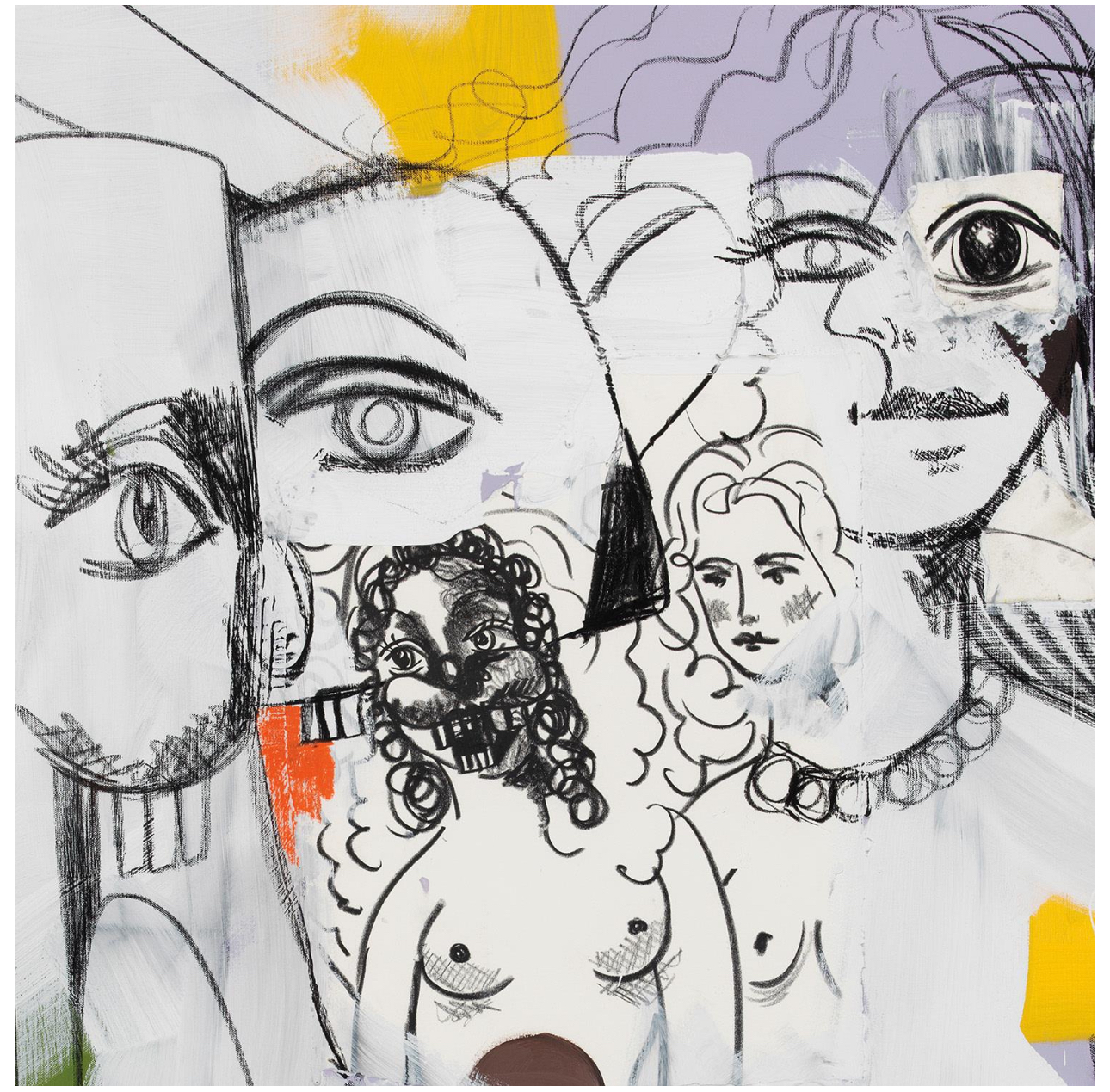
Informed by an art historical trajectory, from the Renaissance and the Baroque to Cubism, Surrealism and Pop Art, Condo’s multifarious oeuvre is awash with imagery taken from myriad sources. The present canvas, a stylized patchwork of discrete compartments composed of small images of fragmented body parts, displays the psychological perspective of multiple colliding figures. Evocative of Pablo Picasso’s Synthetic Cubism, where portraits of individuals are limited to planar surfaces and restricted geometric forms, the present work pairs multiple fragmented characters with blocks of color. In Collision Course, executed in 2009, the artist expertly dissects the composition into a flurry of fractured planes, the work comprised of underlying and overlapping forms which coalesce in a tangle of visual intrigue. Blurring the light purple ground with white, cloudy washes, Condo segments the canvas with his delineated figures, interwoven in a tapestry of forms. Layering a multitude of mediums, the artist projects his divided configuration into the third-dimension. Snippets of faces and bodies twist and turn, punctuated by visual anchors of yellow and red squares. In the same manner of Piet Mondrian, who used flashes, strips and small planes of color to create depth and dynamism in his black and white banded compositions, Condo absorbs the viewer’s gaze, his painting a Cubist prism through which to see his constructed microcosm. Presenting intricately worked facial features and voluptuous female forms, the artist intimately engages with his subjects. Registering distinct yet dislocated body parts—the curve of breasts, the outline of an eye, the texture of hair—Condo allows the portrait to take cognitive form, revealing caricatures that are both serene and frenzied.
Heads and Toes, 2011
Christie’s London: 15 October 2021
Estimated: GBP 1,300,000 – 1,500,000
GBP 2,422,500 / USD 3,332,645
GEORGE CONDO (B. 1957) (christies.com)
GEORGE CONDO (B. 1957)
Heads and Toes, 2011
Acrylic, pastel and charcoal on linen
42×40 inches (106.7 x 101.6 cm)
Signed and dated ‘Condo 2011’ (upper left)
An electrifying rhapsody on the human condition, Heads and Toes (2011) stands among the finest examples of George Condo’s celebrated Drawing Paintings. From a virtuosic blend of acrylic, charcoal and pastel, a fragmentary chorus of faces, features and limbs explodes across the canvas: eyes, teeth, breasts, fingers, feet, noses and jaws merge and collide to form a writhing, hybrid vision. Condo’s palette is one of opulent grandeur, juxtaposing deep blue and purple tones with jewel-like flashes of orange, red, yellow, lime green, violet and teal. Bright white lines dark across the surface like ghostly traces of previous drawings, creating a complex interplay of geometries, angles and rhythms. Textures shift in and out of focus, at once chalky, translucent and thick with impasto. Condo’s Drawing Paintings, created by combining both disciplines, extend his pursuit of what he describes as ‘psychological Cubism’: a desire to render conflicting states of consciousness simultaneously. The fusion of painting and drawing enhances this mission, adding another layer of collision between opposites. As if refracted through a mirror, the present work envisages a world of dualism, contradiction and cacophony, where polarized extremities—heads and toes, beauty and horror, charcoal and brush—sit side by side.
Blue and White Improvisation, 2018
Christie’s Hong-Kong: 24 May 2021
Estimated: HKD 10,000,000 – 15,000,000
HKD 20,650,000 / USD 2,659,334
GEORGE CONDO (B. 1957) (christies.com)
GEORGE CONDO (B. 1957)
Blue and White Improvisation, 2018
Acrylic and oil on linen, in artist’s frame
85 ¼ x 106 ¼ inches (216.5 x 270 cm)
Signed and dated ‘Condo May 17, 2018’ (upper left)
In Blue & White Improvisation, the viewer is confronted with a cacophony of truncated eyes, teeth, faces, and limbs. Exhibiting a complex, psychological air that upends traditional portraiture, the work features some of the eclectic figures that Condo invents as caricatures of human emotions and social structures. Towards the centre of the painting stands a character that resembles the infamous waiter-valet Rodrigo, hovering with a bottle of wine; on the upper left-hand corner, one may also see the familiar facial features used to characterize Jean- Louis the butler, who peers ominously over the rest of the painting. Condo has always been fascinated with the inner life of the servant, who is ever-present, and yet often considered to be invisible and anonymous. The flashing eyes that are repeated over and over in this magnificent painting gives the viewer a sinister feeling of always being watched, while the ferocious rows of teeth evoke clenched jaws and the rage lurks behind the servants’ composed façades. The faceless body of a naked woman near the center of the canvas further reinforces the sensation of being on a voyeuristic journey.
Reclining Blue Form, 2011
Sotheby’s New-York: 12 May 2021
Estimated: USD 2,500,000 – 3,500,000
USD 3,771,000
Reclining Blue Form | Contemporary Art Evening Auction | 2021 | Sotheby’s (sothebys.com)
GEORGE CONDO (B.1957)
Reclining Blue Form, 2011
Oil on canvas
78×74 inches (198.1 x 188 cm)
An kaleidoscope of brilliant colors and surging forms, Reclining Blue Form from 2011 powerfully captures the raw painterly dynamism and searing psychic intensity which characterize the very best of George Condo’s celebrated practice. Within the fractured realm of the present work, abstraction and figuration collide with thrilling velocity before the viewer’s eyes. As exaggerated features and disjointed body parts wildly careen across fragmented, abstract planes, we glimpse flashes of each of the artist’s most important touchstones: Old Master portraits, his own brand of ‘psychological Cubism,’ cartoon references, and a commitment to constantly pushing the boundaries that separate figurative and non-representational painting. Evincing an irresistible creative furor, the present work departs from Condo’s more carefully planned portraits and towards a liberated embrace of line, color, and form. Ultimately, Reclining Blue Form revels in the unforeseen beauty and wildly alluring chaos of Condo’s improvisational genius.
Back Channel, 2017
Sotheby’s Hong-Kong: 19 April 2021
Estimated: HKD 14,000,000 – 24,000,000
HKD 19,535,000 / USD 2,515,387
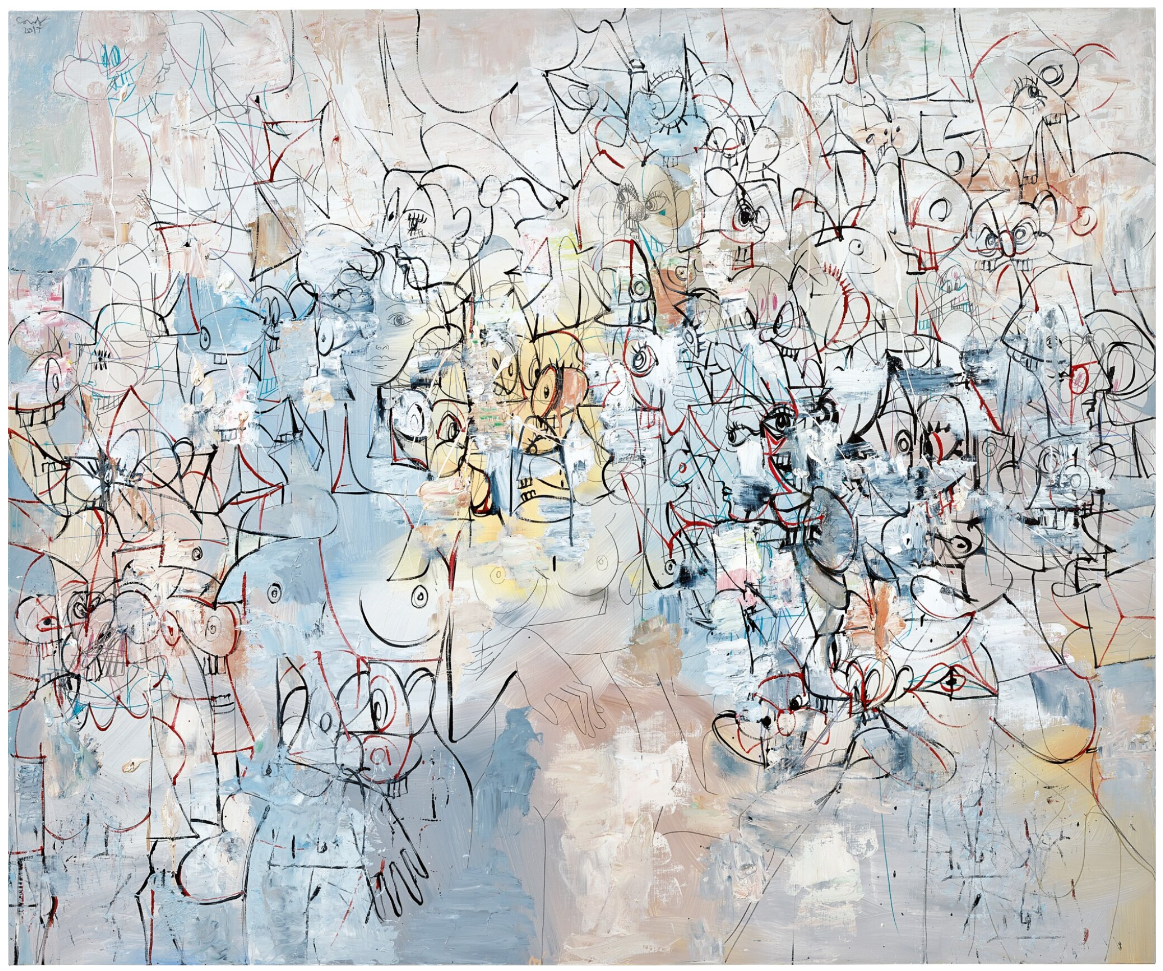
GEORGE CONDO (b. 1957)
Back Channel, 2017
Oil, graphite, colored pencil and acrylic on linen
75×90 inches (190.5 x 228.6 cm)
Signed and dated 2017
Frenetically charged yet fluidly graceful, presenting an utterly mesmerizing landscape of architectural figuration and compelling calligraphic gesture, Back Channel wholly embodies the irrefutable beauty, conceptual gravitas, and unparalleled technical finesse which characterize the very best of George Condo’s celebrated oeuvre. Executed in 2017, the present work stands at the apex of the artist’s continued series of Drawing Paintings, which deftly synergize the traditionally separate processes of drawing and painting in single, fluid gestural expression. In their celebratory fusion of captivating imagery and spontaneous mark-making, the alluring beings of these paintings blur the boundary between figurative and non-representational painting with graceful ease. Even within this celebrated group, Back Channel is exemplary in exhibiting a richly sensual surface of lush impasto in nuanced, luminous translucent hues. Across the vast canvas, Condo fuses the tactile with the visual, the figurative with the fragmented, and the known with the imaginary to produce an irresistible final image. A masterwork in the artist’s signature mode, Back Channel revels in the unforeseen beauty and alluring, hedonistic entropy of Condo’s improvisational genius.
Emanating emotional intensity and psychological depth, Back Channel features a crowd of faint yet striking figures interwoven together in a kaleidoscopic composition. Within a Cubist topography, sensuous lines and lush passages of flat color overlap into a densely layered web of unrestrained abstraction, infused with a sense of rhythm and polyphony that stems from Condo’s spontaneous, gestural improvisations. Throughout the work, bodies are fragmented into disjointed planes of color along the same innovative vein as Marcel Duchamp’s Nude Descending a Staircase, No. 2 and Pablo Picasso’s Les Demoiselles d’Avignon. Within Condo’s creative output, the genre of portraiture occupies a position of tremendous importance. Taking inspiration from masters as varied as Diego Velázquez, Edouard Manet, Giorgio de Chirico, Pablo Picasso, Willem de Kooning and Philip Guston, Condo weaves into the fabric of figurative painting a renewed interest in inserting art historical tropes into a playful and absurd new context, both reviving and humorously undermining the integrity of the genre of portraiture. For Condo, it is the imaginary potential of portraits that defines the genre for him; as such, the artist tends to paint from his own mental snapshot or emotional reaction, rather than from life. The artist’s frenzied brushwork is anchored by sharp, fragmented lines evoking an enormous range of human emotions that collide into a riot of forms that bridge the gap between an emotional state and an imagined physical reality.
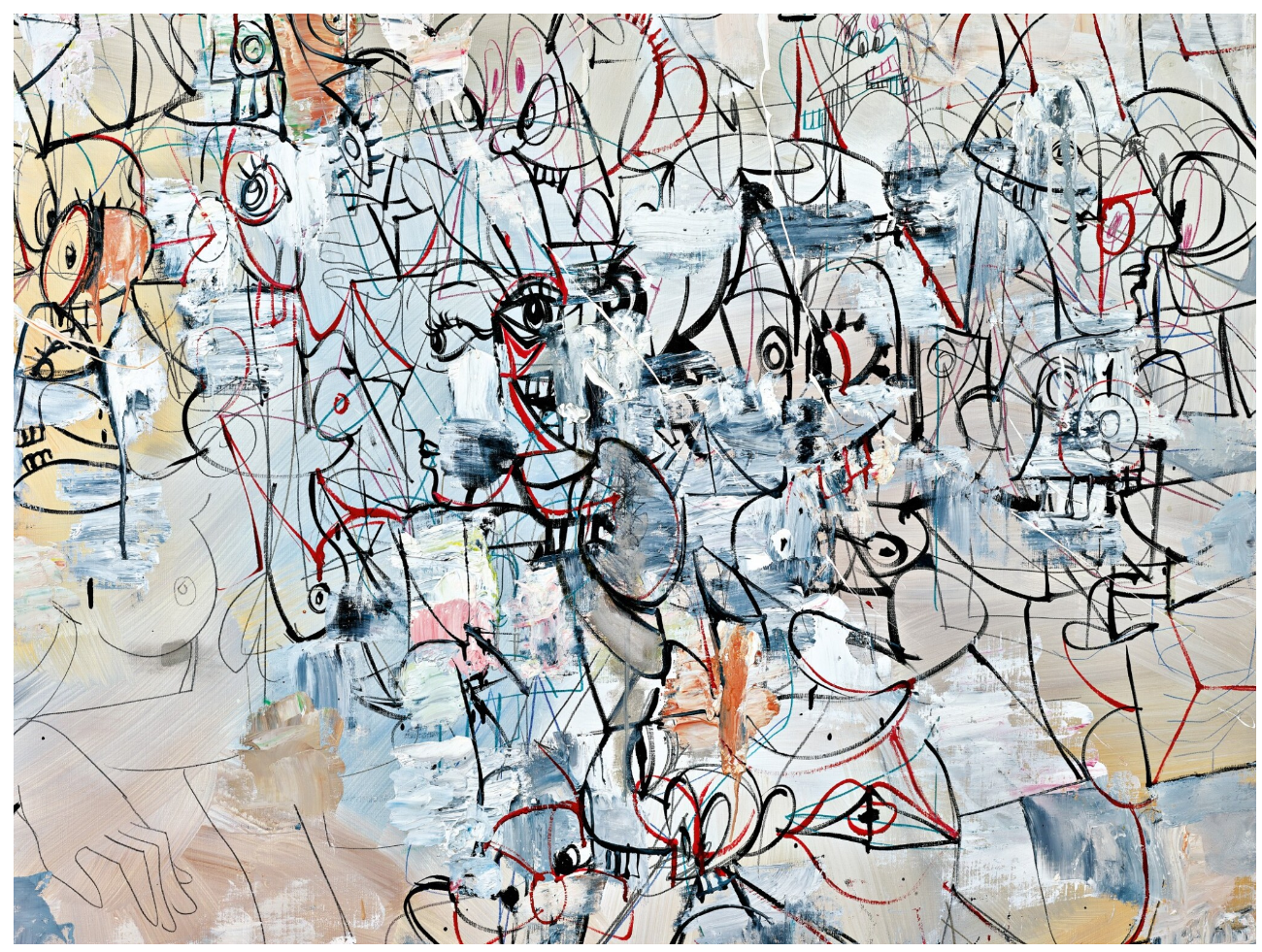
Following a nine-month stint as the diamond duster in Andy Warhol’s infamous Factory, Condo emerged onto the 1980s New York art scene at the eager age of twenty-three alongside seminal figures Keith Haring and Jean-Michel Basquiat, the latter of whom is stated to have officially convinced Condo to pursue a career as a professional artist. Like Haring and Basquiat, Condo was critically engaged throughout the eighties in the inauguration of a new form of figurative painting that stylistically blended the representational and the abstract. Condo coined the terms ‘artificial realism’ and ‘psychological cubism’ to define his hybridization of art historical influences, specifically his fusion of the Old Master subject matter with the distorted geometric perspectives of Cubism. Through a prolific output of compelling yet grotesque portraits, Condo established himself by the turn of the century as one of the preeminent figurative painters of the contemporary era; his method of extrapolating and distorting traditional figurative motifs through an abstract lens has influenced an entire generation of artists working today.
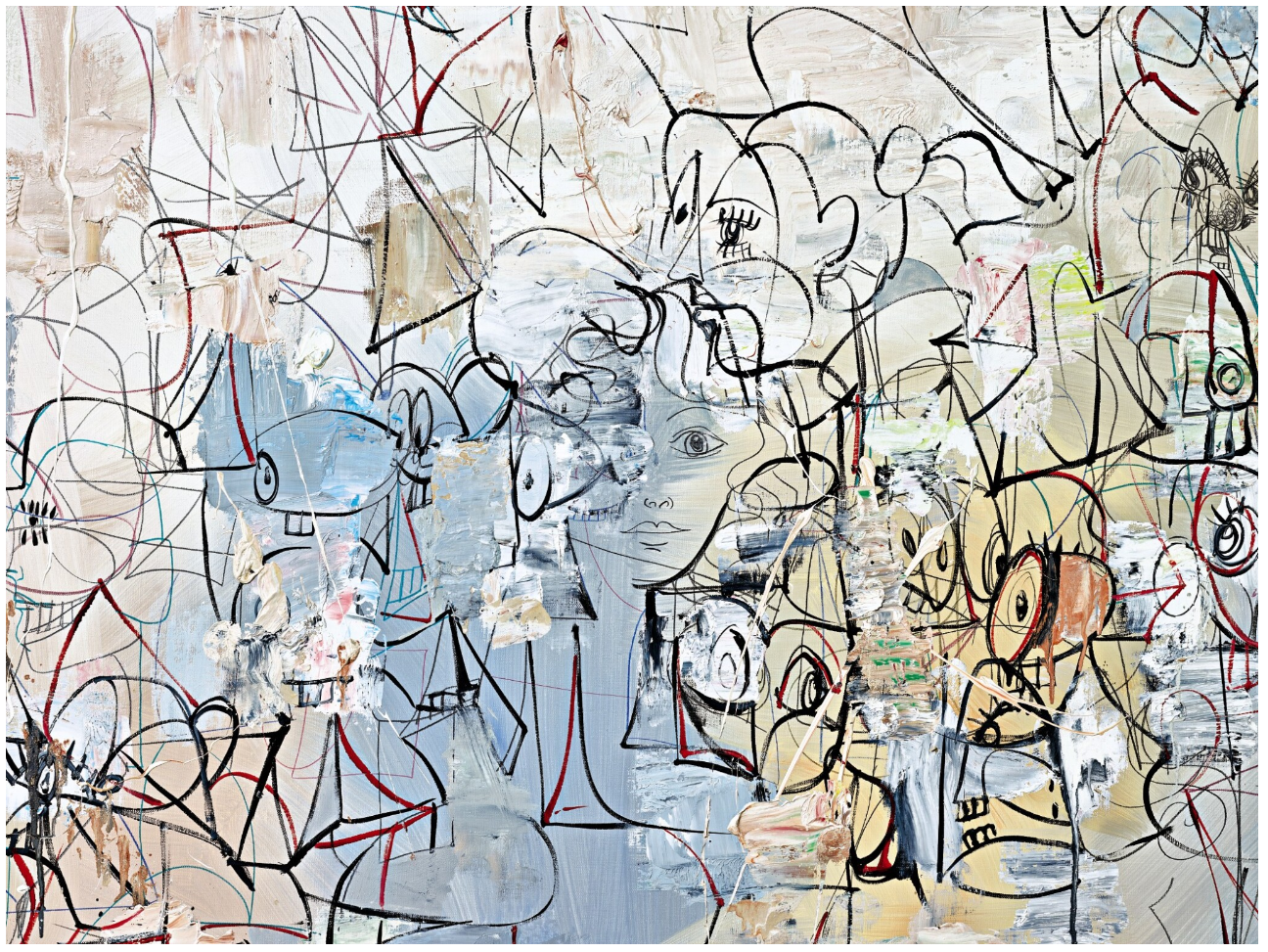
Condo’s Back Channel from 2017 pushes the boundaries on his ever-evolving exploration of the human form and his unique ability to push the sculptural, three-dimensional form within the confines of a two-dimensional canvas. Condo ruptures his compositions to reveal the multifaceted complexities of human emotion through his aptly self-termed mode of psychological cubism. “I try to depict a character’s train of thoughts simultaneously – hysteria, joy, sadness, desperation,” the artist explains. “If you could see these things at once that would be like what I’m trying to make you see in my art.” (The artist in Stuart Jeffries, “George Condo: ‘I Was Delirious. Nearly Died’,” The Guardian, 10 February 2014, online) Condo has established himself in the canon of Western art history as a master puppeteer of the human psyche, presenting to his audience forms that delight and repulse, amuse and sadden, welcome and alienate. Back Channel captures the best of Condo’s unraveling and subsequent reassembly of various pictorial languages, which has cemented him as one of today’s most clever and cutting-edge contemporary painters.
Force Field
Christie’s Hong-Kong: 9 July 2020
Estimated: HKD 18,000,000 – 28,000,000
HKD 53,150,000 / USD 6,856,828
George Condo (b. 1957) (christies.com)
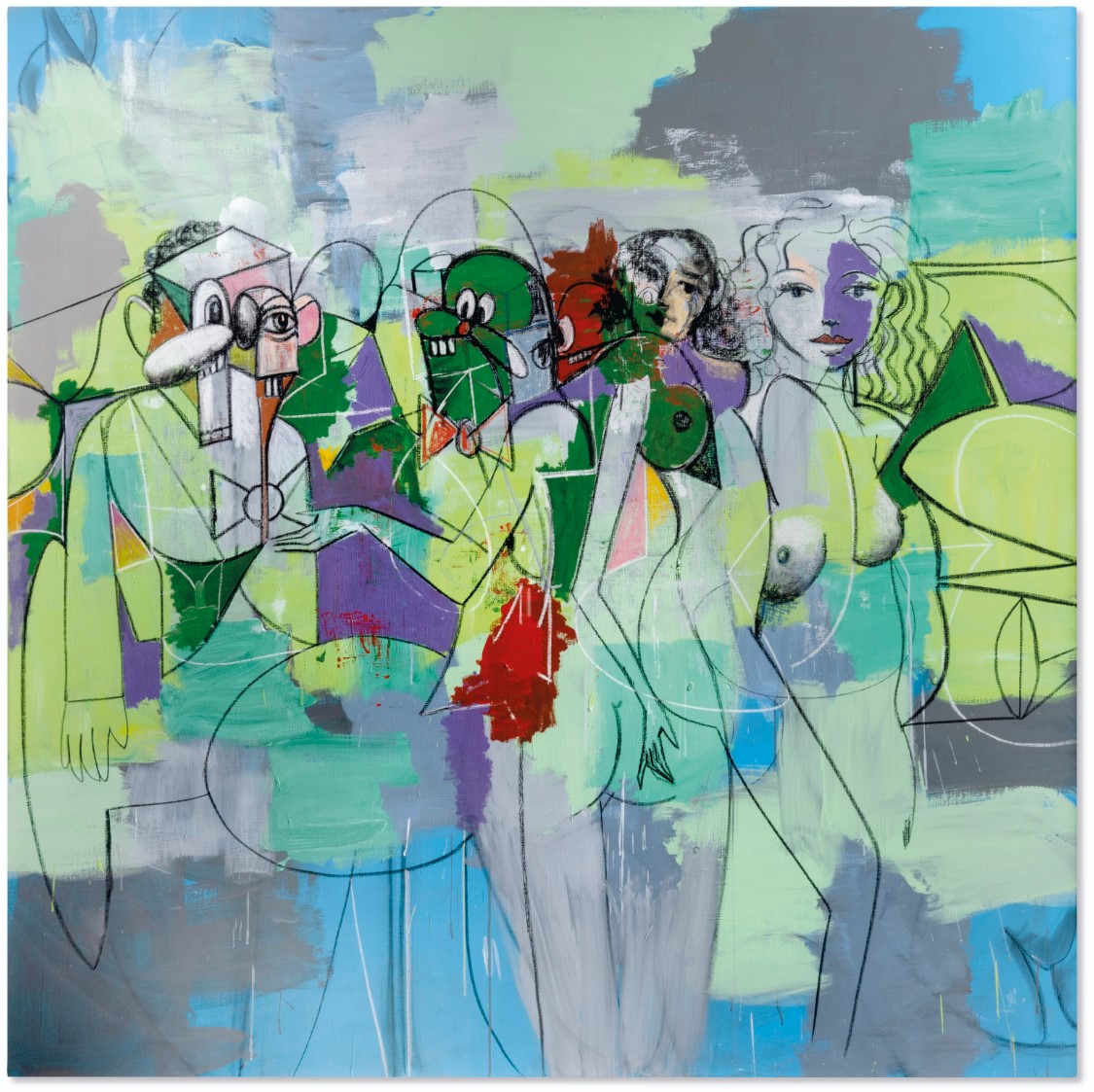
GEORGE CONDO (B. 1957)
Force Field, 2010
Acrylic, charcoal and pastel on linen
82×82 inches (208.3 x 208.3 cm)
Signed and dated ‘Condo 2010’ (upper right)
Force Field is a banquet of color, form and melodic arrangement. Across the monumental two-meter canvas, Condo has drawn and painted a dizzying assemblage of characters, which collide and fragment in a densely-packed ensemble. Executed in acrylic on linen, with well-defined charcoal lines and soft pastel elements, the work presents a cornucopia of rich texture and eye-catching tone, dominated by vivid greens and opalescent passages of blue, lavender and graphite. Snatches of recognizable human features—eyes and teeth, buttocks and breasts, bow-ties, the poised limbs and smiling face of an elegant nude—are both spotlighted and subsumed in a captivating chaos. Bursts of red fracture faces and bodies; three-dimensional form mingles with abstracted shape. Continuing the themes of the “expanded canvases” that Condo first made in the 1980s, Force Field’s content is governed by a compositional rather than narrative logic. As a painter, Condo adopts a similar approach to a classical composer, counterpoising flurries of busy activity with more quiet, open sections; with its density of ideas, overlapping themes and vibrant contrasts, Force Field is a symphony of a painting.
Taken as a whole, Force Field’s composition feels almost like a puzzle: the moment one picks out a form, it slips back into the excitement of the whole. It is as if multiple drawings have been overlaid together on the same page. The effect is far from claustrophobic. The work’s exuberant forms and vital colors, presided over by balmy shades of sky-blue and leaf-green, conjure an expansive sense of light and space. In its joyful palette as well as in its fragmented structure, Force Field evokes Picasso’s work of the 1930s, in which he finessed Cubism to luscious, prismatic heights. Such echoes are no accident: throughout his career, Condo has been immersed in an intelligent conversation with the history of painting, and Picasso has remained a key touchstone and influence.
Nude and Forms
Christie’s New-York: 16 May 2018
Estimated: USD 2,200,000 – 2,800,000
USD 6,162,500
George Condo (b. 1957) (christies.com)
GEORGE CONDO (B. 1957)
Nude and Forms, 2014
Oil on canvas
80×72 inches (203.2 x 183 cm)
Signed and dated ‘Condo 2014’ (on the reverse)
Signed again three times, titled and dated again twice (on the overlap)
An instantly recognizable example of Condo’s neo-Cubist style, Nude and Forms finds Condo examining Modernism’s greatest achievement while innovating within his unique, iconic personal style. In this work, an ethereal field of rectilinear pastel brushstrokes backgrounds the picture, lending it a dreamlike tone and removing it from any plainly observable reality. The foreground’s porousness permits that background to slip through sections of the titular nude. Her simultaneous opacity and immateriality underscores one of Condo’s basic premises, that all things are equal and organized non-hierarchically in his cubist pictures. Coalescing around her shapely figure are a mix of organic and geometric forms, some echoing her body and some purely abstract. For Condo, whose paintings are largely democratic in their approach to compositional equanimity, a small mark in the upper corner warrants as much critical attention as the woman’s fractured face. Nevertheless, the titular nude is deeply captivating and visually alluring, with her serpentine stance, varied coloration and spider-like fingers. Still, she seamlessly blends in with both background and abstract forms, disintegrating and extending off the canvas at various points along her body.
Drawing Paintings
Artist and Muse, 2015
Sotheby’s New-York: 26 February 2025
Estimated: USD 1,000,000 – 1,500,000
USD 1,880,000
Artist and Muse | Contemporary Curated | 2025 | Sotheby’s
GEORGE CONDO (b. 1957)
Artist and Muse, 2015
Oil on canvas
58×65 inches (147.3 x 165.1 cm)
Signed and dated Nov. 12, 2015 (upper left)
Signed, titled and dated 2015.11 (on the overlap)
A sublime synthesis of art historical tropes and contemporary aesthetics, Artist and Muse epitomizes the exceptional virtuosity, psychic intensity and fragmented perspectives that distinguish George Condo’s remarkable oeuvre. Condo successfully synthesizes the vigor of Abstract Expressionism, the rigor of Old Master portraiture, the wry humor of Pop art, all while being grounded in Picasso’s revolutionary principles of Cubism. But Condo not only incorporates, but elevates the concept, presenting the figure not only from multiple perspectives, but as an embodiment of simultaneous emotional states, which he calls “psychological cubism.” Executed in 2015, the present work is a rare and mature example of the artist applying his signature psychological cubism to an important art historical trope, one Picasso explored extensively—the painter and his model. Having sojourned in Paris in the late 1980s and early 1990s, Condo studied works by the artist, and would have come across these painting, as well as his celebrated profile portraits of Sylvette, a young girl with a long neck and thick tumbling blond hair tied in a pony tail, who captivated Picasso in the Spring of 1954. In Condo’s Artist and Muse, a figure that resembles Picasso, or perhaps Condo himself, appears next to a woman presented in full profile, with a familiar pony tail. However, instead of focusing on only the formal qualities of abstraction to depict different viewpoints within the same space, Condo advances this approach further to illustrate the complex metal states of his figures—the turmoil of obsession in the artist and the peaceful passivity of the muse.
“The figure is somehow the content and the non-content, the absolute collision of styles and the interruption of one direction by another, almost like channels being changed on the television set before you ever see what is on. All this adds up to one image, and most of the time, that image is a woman.”
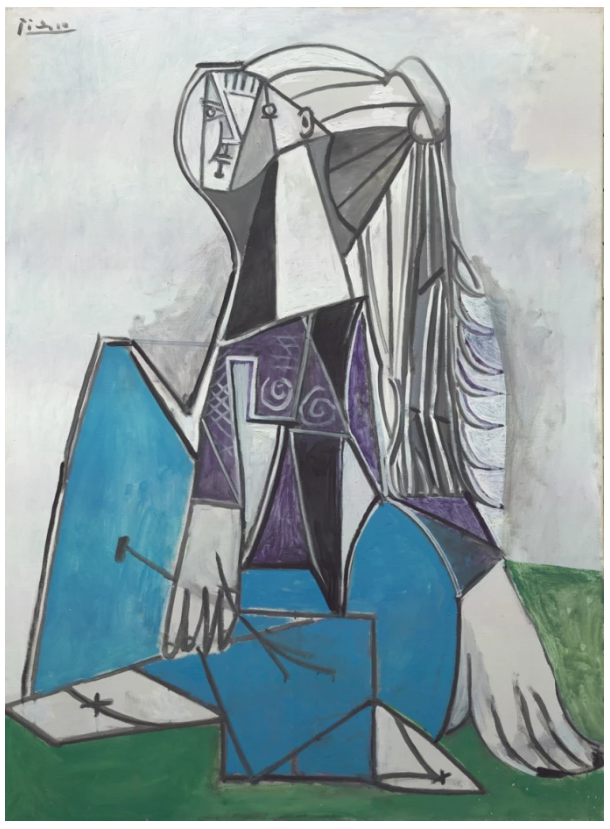
Pablo Picasso, Portrait of Sylvette David, 1954, at the Art Institute of Chicago (Gift of Mary and Leigh Block)
Explaining his adoption of “psychological cubism”, Condo stated in an interview with Stuart Jeffries for The Guardian: “Picasso painted a violin from four different perspectives at one moment. I do the same with psychological states. Four of them can occur simultaneously. Like glimpsing a bus with one passenger howling over a joke they’re hearing down the phone, someone else asleep, someone else crying – I’ll put them all in one face” (the artist quoted in Stuart Jeffries, “George Condo: ‘I was delirious. Nearly died’”, The Guardian, 10 February 2014, online). In Artist and Muse, Condo provides an interpretation of the famous relationship that captured Picasso in entirety in 1954 and resulted in over 40 works across all mediums of the elegant and mysterious Sylvette.
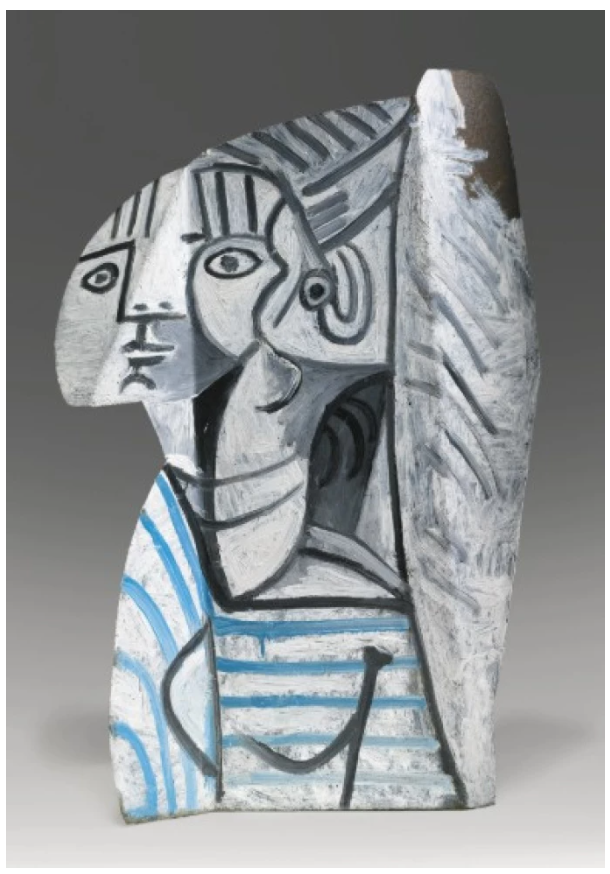
Pablo Picasso, Sylvette, Sold at Sotheby’s New York for $13,605,000
Like his peers, Condo was critically engaged throughout the eighties with bringing to life a new form of figurative painting that stylistically blended the representational and the abstract. Along with the term psychological cubism, Condo coined the term “artificial realism” to define his unique lexicon of amusing caricatures, profound and intimate portraits, and grotesque abstractions. Moving into the 2010s, Condo began to employ a technique of “drawing painting.” Striking and arresting in color and composition, Artist and Muse with its sketched-like muse and splatterings of vivid colors exemplifies these “Drawing Paintings.”
“I love to draw and I love to paint and I thought, why should there be any distinction or hierarchy between those two mediums?
Why not put them together as a single thing.”
In these lively canvas works, Condo dissolves the distinction between drawing and painting, and the traditional hierarchy perceived between the two, demonstrating that they both exist along the same continuum. In Artist and Muse, the artist delineates his figures with dark, bold brushstrokes, as is typical for these post-2010 “Drawing Paintings.” However, the color palette of Artist and Muse is especially bright: the vivid orange of the artist’s face and his jet black hair against the luminous yellow and blue background that the muse appears to fade into. While the woman’s expression hints at contentment in her soft smile, Condo successfully conveys the inner torment and anxiety of the figure on the left by rupturing the composition, allowing him to explore the complexities of the psyche. The cubist portrayal of the figure on the left with teeth bared and manic eyes staring wide, along with the bolder, earthier palette contrasts against the cheerful colors and simply drawn outline of the right figure, juxtaposing the strikingly different moods of his two characters within the same pictorial space.
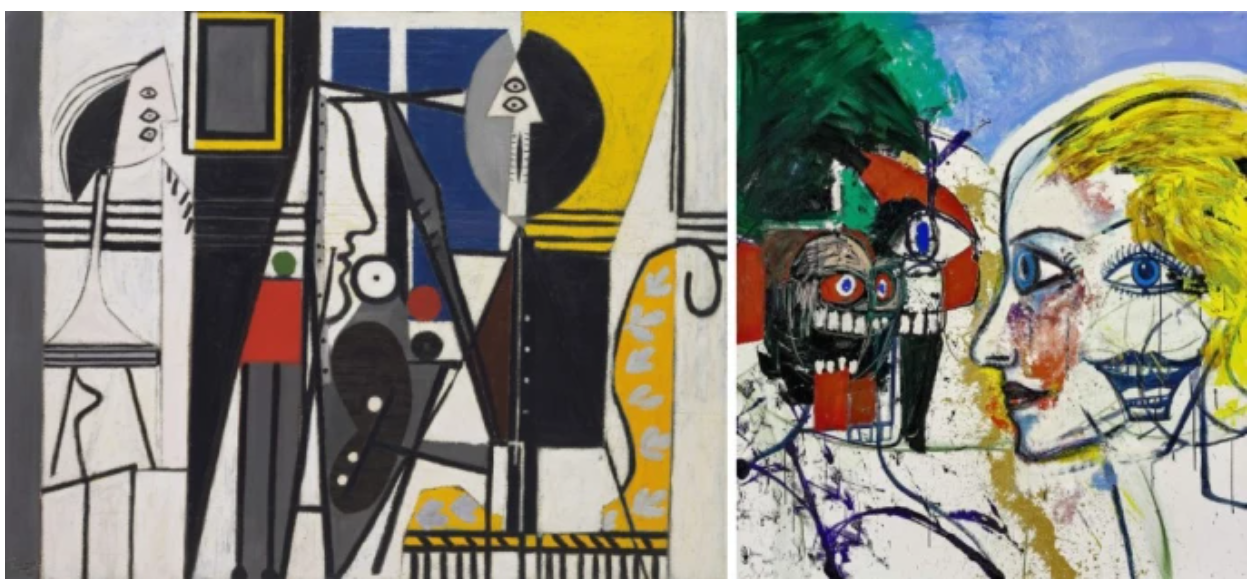
LEFT: Pablo Picasso, Painter and Model, 1928 (Sidney and Harriet Janis Collection)
© 2025 Estate of Pablo Picasso / Artists Rights Society (ARS), New York
RIGHT: George Condo, Untitled (Artist and Muse), Sold at Sotheby’s Hong Kong for $2,120,881
As seen in the present work, throughout his practice, Condo has mined the formal possibilities of art historical tropes to push the boundaries and defy expectations for both painting and portraiture reflective of our contemporary moment. Artist and Muse is a testament to Condo’s ability to translate his conceptual influences into a unique and fresh work of painting that resonates deeply with its art historical past, making it not only an exhilarating painting, but also a conceptually rich one.
Prescription for the Clinically Normal, 2012
Christie’s Hong-Kong: 26 September 2024
Estimated: HKD 40,000,000 – 60,000,000
HKD 48,291,000 / USD 6,202,255
Prescription for the Clinically Normal (christies.com)
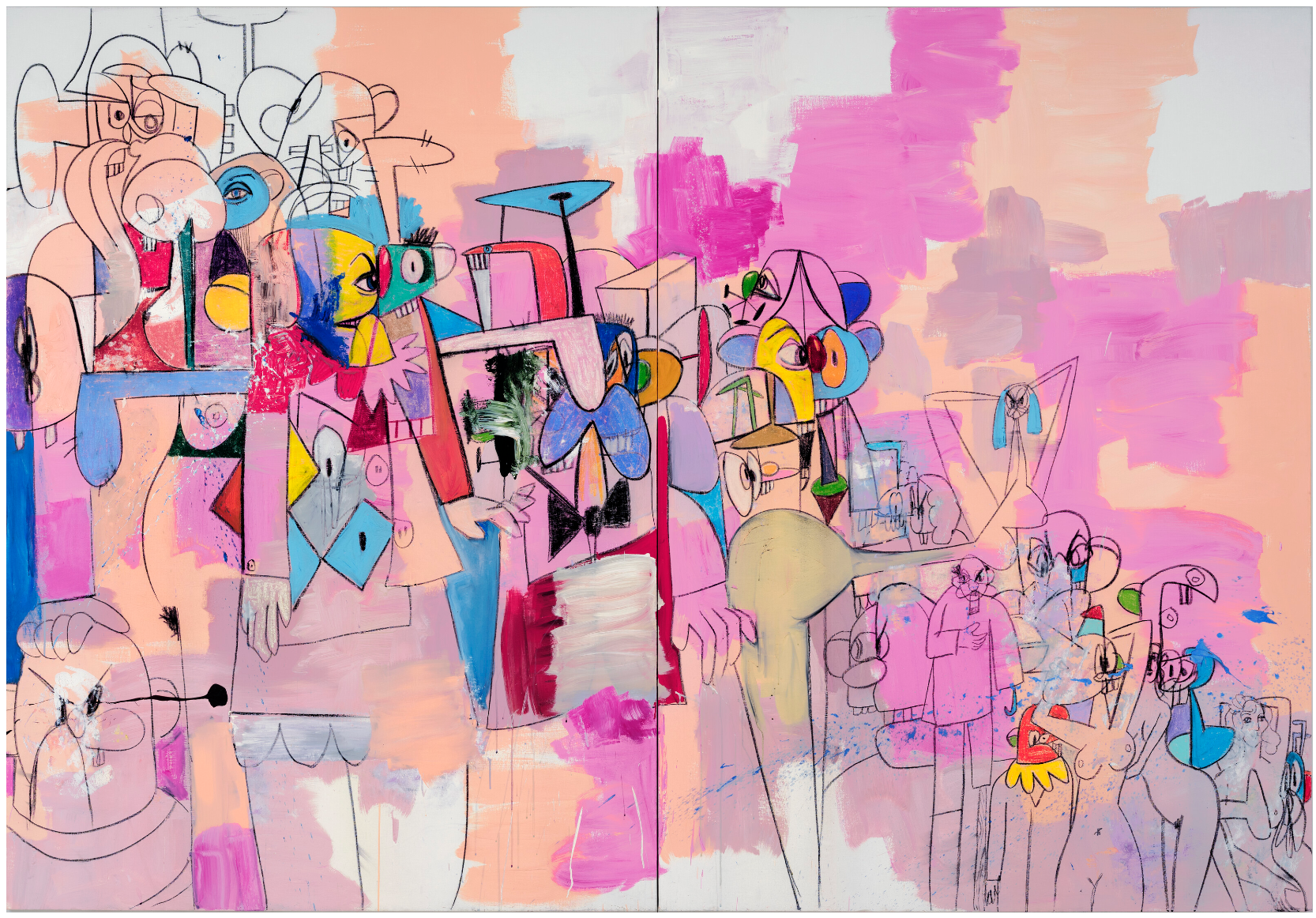
GEORGE CONDO (B. 1957)
Prescription for the Clinically Normal, 2012
Acrylic, charcoal, and pastel on linen (diptych)
Each: 90×65 inches (228.6 x 165.1 cm) (2)
Overall: 90×130 inches (228.6 x 330.2 cm)
Signed twice and dated ‘Condo 2012’ (on the overlap of the each panel)
Monumental in scale and epic in execution, George Condo’s Prescription for the Clinically Normal stands as a masterpiece amongst his coveted oeuvre. One of the leading painters of his generation, Condo’s technical dexterity and postmodern approach to form, color, and composition have placed him at painting’s vanguard since his emergence on the scene over four decades ago. The present work exhibits a complex, psychological air that upends traditional portraiture while drawing inspiration from the history of figurative painting. At once a grandiose expression of his psychological portraiture and an exhibition of his confident hand, the present work’s swirling, brushy cavalcade takes the viewer on an enthralling journey through the artist’s unique visual language.
“There was a time when I realized that the central focal point of portraiture did not have to be representational in any way. You don’t need to paint the body to show the truth about a character. All you need is the head and the hands.”
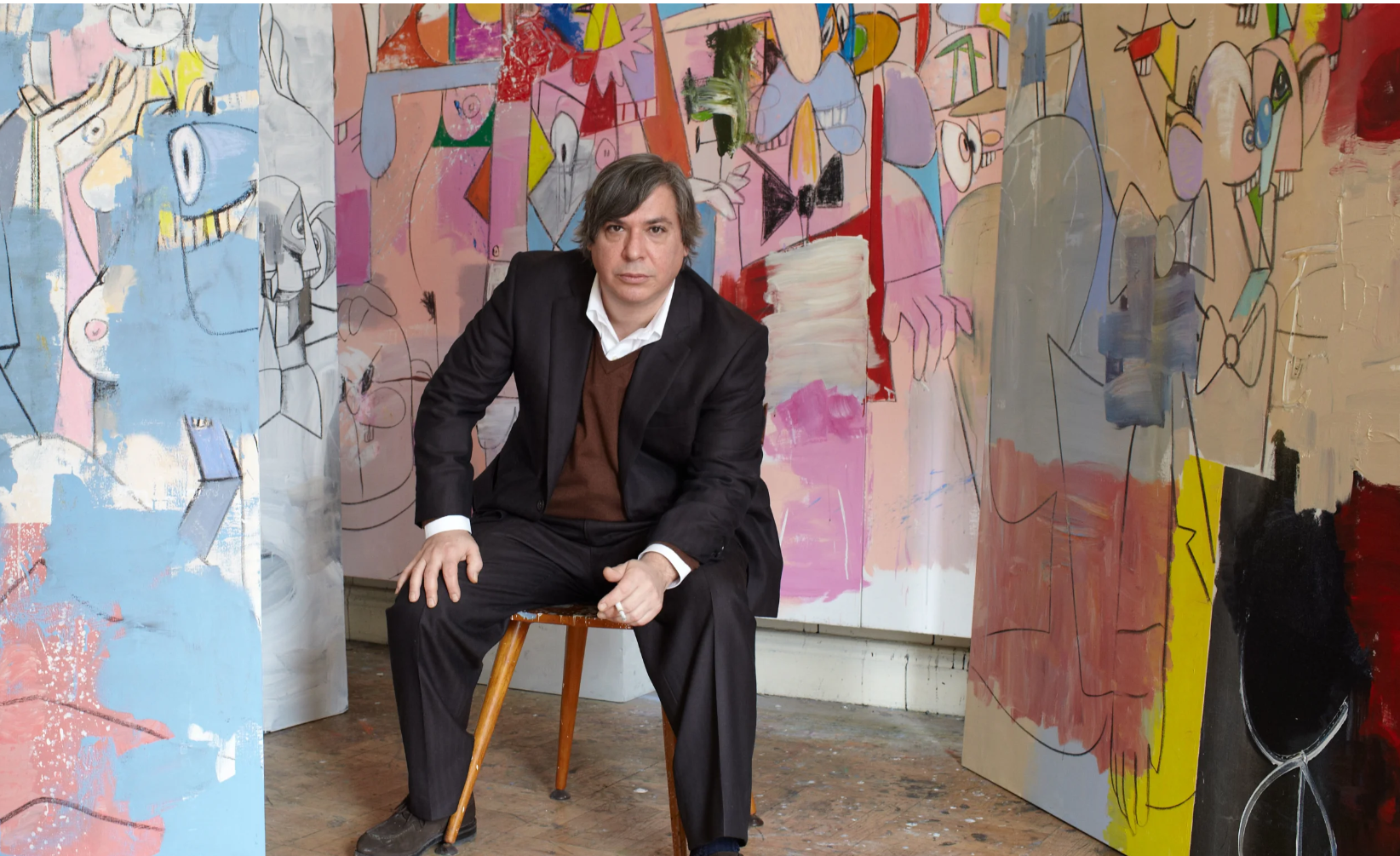
George Condo in his Upper East Side studio in front of the present lot. Artwork: © 2024 George Condo / Artists Rights Society (ARS), New York. Photo: © TransGlobe Publishing Photographer: Robin Friend.
Part of his aptly-named “Drawing Paintings” series, this painting is characterized by a tight grouping of staring faces and grasping extremities that meld with the contour lines of their mismatched bodies. Condo’s meandering lines envelop the viewer with a myriad of faces and figures that collide and intermingle to become one entity. Rendered atop cotton-candy like washes of peaches and pinks, a cast of characters peers out from superimposed passages of yellow, blue, and orange weave together in clusters of brushy color. Hazy brushwork set the stage for objects almost Guston-like in their fevered rendering while the emotive color fields of the mid-twentieth century simmer in the fore. All of this comes together to create a visual vocabulary that is distinctly Condo. The dense web of charcoal lines and patches of color reveal a horizontal band of bow-tied butlers and lustful figures partially emerging and materializing from their sketchy surroundings, from this chaotic yet dreamlike concoction emblematic of the entirety of Condo’s oeuvre.
Condo’s oeuvre reflects a deep engagement with a myriad of art historical styles and influences. The artist pays homage to Abstraction–influenced by de Kooning’s lines–Kirchner’s Expressionist style, Pollock’s all-encompassing compositions, and, of course, Picasso’s Cubist innovations. In Prescription for the Clinically Normal, each distinct figure rendered in Condo’s much-lauded style is infused with a range of emotions that simmer and vie for dominance. On this grand and immersive scale, this tension is magnified as the whirlpool of fragmented bodies churn and dissolve before the viewer. Marshalled by deft, sinuous black lines, the figures create a dynamic skeleton for the composition which recalls the emotional rawness and distorted forms of Kirchner’s work. Condo’s elegantly arranged, tumultuous stacking of figures, much like those immortalized by Kirchner, oscillate between Abstraction and Figuration as their flattened yet vibrant forms unify the composition in its visual rhythm. This emotional intensity and disintegration of form blur the lines between psychological tension and physicality, creating a sense of chaotic energy that draws the viewer into Condo’s charged psychological landscape.
Shimmering Forms, 2010
Christie’s New-York: 17 May 2024
Estimated: USD 1,000,000 – 1,500,000
USD 1,260,000
GEORGE CONDO (B. 1957), Shimmering Forms | Christie’s (christies.com)
GEORGE CONDO (B. 1957)
Shimmering Forms, 2010
Acrylic, pastel and graphite on canvas
70×70 inches (177.8 x 177.8 cm)
Signed and dated ‘Condo 2010’ (upper left)
It has been suggested that to view even one of George Condo’s momentous paintings is to consider an entire world, defined by its range of subjects, styles and art historical influences. The prolific artist arrived in New York in 1980, upon which he was quickly embraced by the downtown art scene. Working closely with the likes of Keith Haring and Jean-Michel Basquiat, the artist forged his own unique style, deploying the time-honored techniques of the old masters to bring his uncanny visions to life. Over the course of his decades-long career, Condo has amassed an enormous repertoire of art historical references, which he synthesizes through his own pictorial language. His works seem to float above time, lacking any individual features that tether them to specific moments in history. Instead, what remains is a picture of eerie familiarity and psychological closeness. In Shimmering Forms, 2010, Condo shuffles the deck of art history, fusing abstraction and figuration, the tangible and the imagined, the beautiful and the grotesque. The crowded composition presents the viewer with Condo’s most storied and desirable motifs, showcasing the power of Condo’s singular visual lexicon alongside his masterful draftsmanship and energetic painterly sensibilities. Forged from the wealth of art history, George Condo’s Shimmering Forms captures the artist’s ability to blend different styles and mediums, establishing his own pictorial language while traversing the waters of the human psyche.

George Condo, New York, 2011. Photo: Mike McGregor / Contour by Getty Images. Artwork: © 2024 George Condo / Artists Rights Society (ARS), New York.
Part of the artist’s “Drawing Paintings” series, the blend of various media and styles at play in Shimmering Forms bloom into an expressionistic and surrealist landscape. Drawing from elements of cubism, surrealism, and abstract expressionism, the work is significant not for its focus on any one element, but rather the narrative that emerges from the confluence of these many different styles. The delineated forms, melded together with a symphonic clash, pay homage to the competing visual rhythms of cubism, while Condo’s gestural lines give way to fragmented, sliding planes, echoing the distinctive energy and organization of abstract expressionism. The alluring, sinuous female figures recall the powerful and sensuous women of Ruben’s baroque masterpieces. The flattened plane is reminiscent of Cezanne’s radical perspective, as the figures seem to float in space, tethered by only their relation to one another. However, Condo’s approach to his practice is not one of emulation or appropriation; instead, he maintains that great art is characterized by its ability to repurpose and reinvent existing styles. Though at first glance viewers recognize the familiar canonical motifs such as the reclining nude and the decisive lines which define the canvas’s architecture, the rich deposits of Condo’s fabricated characters imbue the work with modern eclecticism. The soft, languid composition of Condo’s nude women are contrasted with the frenetic energy of his cartoonish characters. Furthermore, the juxtaposition of representational forms mirror the very act of Condo’s artistic process. In producing the “Drawing Painting” series, Condo desired to assert the equality of drawing and painting, combating the traditionally-held view of painting as a superior medium. Known for innovatively blending the most established art historical motifs with cartoon-like figures, the work collapses centuries of art’s most defining symbols and debates into one canvas.

The monumental cloud-blue canvas is peppered with stark, black outlines, depicting the most iconic symbols of Condo’s oeuvre. Condo asserts that caricatures and cartoons, specifically those inspired by everyday citizens, are an indispensable part of his practice.
“The cartoon is a very bizarre weapon against the sort of intellectual concept of what our supposedly high-art culture is all about… I think the interest is that it’s a sort of entry into a certain kind of serious component of the human psyche.”
Shimmering Forms is rich with several of Condo’s celebrated characters. Rodrigo, who Condo has described as a “kind of lowlife” and is recognizable by his elongated neck, bulbous nose and neck tie, is depicted several times throughout the canvas. The Cocktail Drinker’s wife, shown in fishnet tights and holding a cocktail glass, is reproduced in the far right corner. Indeed, the canvas is filled with Condo’s signature characters and recurring motifs, such as ballooning cheeks and enlarged eyes, reminiscent of the artist’s highly celebrated portraits. The soft, Grecian female forms populating the lower register are juxtaposed with the tightly arranged, grotesque and cartoonish portraits of the upper register. Instead of radicalizing any one style or motif, the collaging of a diverse range of symbols and characters suggests the traces of an other-worldly narrative.

Willem de Kooning, Excavation, 1950. Art Institute of Chicago. © 2024 The Willem de Kooning Foundation / Artists Rights Society (ARS), New York.
Blurring the line between abstraction and figuration, the meandering and vivacious canvas offers a view into Condo’s unfiltered psyche. The composition is dynamic, undulating between areas of meticulously detailed sketching and uninterrupted pools of white and blue. The artist has described the process of producing abstract art as automatic, saying that his abstract works are “detailed descriptions of undefinable thoughts.” As opposed to his portraits, which offer intensive studies into the artist’s fabricated characters, paintings such as Shimmering Forms display the relationship of his thoughts and characters to one another. Presented as a culmination of Condo’s life-long fascinations, the painting’s rich amalgamation of imagined characters and quasi-figurative forms converge into a chaotic, cubist landscape, offering a coup d’œil into the artist’s fantastical universe.
Focusing on Space, 2016
Phillips New-York: 14 May 2024
Estimated: USD 1,000,000 – 1,500,000
USD 1,270,000
George Condo – Modern & Contemporary Art… Lot 15 May 2024 | Phillips
GEORGE CONDO
Focusing on Space, 2016
Oil and pigment stick on canvas
77×75 inches (195.6 x 190.5 cm)
Signed and dated “Condo 2016” upper left
Psychological, physical, and tactile, for the past fifty years George Condo’s captivatingly discordant paintings have challenged our perception of reality. Executed in 2016 during Condo’s first wave of creativity following his recovery from cancer, Focusing on Space viscerally expresses primal emotions of turmoil, pain, and healing: an obliteration of the figure to project energy – sensations – through paint. A significant work belonging to Condo’s Drawing Paintings series, first commenced in 2008, Focusing on Space continues the artist’s long-standing relationship with a repertoire of strange and recurring characters, immediately recognizable from their alarmingly exaggerated features, including bulbous eyes, oversized ears, and prominent overbites. As is more typical of the expansion of this series into the works known as Compressions, these figures are here even further abstracted and concentrated towards one edge of the composition, allowing him to draw out the contrasts between color and line, painting, and drawing.

Exploring the more improvisational and impulsive qualities of drawing alongside paint’s more retrained application, wide plains of lemon yellow are here lacerated by rapidly executed, ensnaring black loops. From within this tangled web of reverberating lines, the fractured features of a face are easily discernible. Overlarge staring eyes, ears, and flashes of gnashing teeth emerge from the lower right of the composition with remarkable energy and force, a pictorial intensity that takes on personal dimensions when we consider the artist’s own internal struggles with his health during this period. After a near death experience in 2013 when Condo contracted triple pneumonia while suffering from Legionnaires’ disease, two years later the artist received another shattering diagnosis: cancer of the vocal cords. Measuring over six feet tall, Focusing on Space responds to Condo’s foundational principle of “psychological Cubism” alongside his immediate tragic circumstances. For Condo, art provides the potential to portray extremities of emotions in simultaneity: joy to hysteria, hope to despair at once. As early as 1976, Condo records in his diary the shapes and peaks and personalities locked up in a cage, and minds and thoughts and ideas trying to escape. To explore these sensations, Condo draws consistently and consciously from the history of visual culture, incorporating elements from Old Masters to popular imagery based on the conviction that an image constructed from a broad range of formal styles results in a new, psychological vision.

[Left] Pablo Picasso, Weeping Woman’s Head with Handkerchief III, 1937, Museo Nacional Centro de Arte Reina Sofia. Image: Bridgeman Images, Artwork: © 2024 Estate of Pablo Picasso / Artists Rights Society (ARS), New York
[Right] Willem de Kooning, Pink Angels, c. 1945, Frederick R. Weisman Art Foundation, Los Angeles. Image: Bridgeman Images, Artwork: © 2024 The Willem de Kooning Foundation/Artists Rights Society (ARS), New York
As is evident in Focusing on Space, Condo assiduously borrowed from a range of 20th century artistic sources, the rapid exchanges energizing Abstract Expressionist canvases and Cubism’s sharp dissections, spatial logic, and emphasis on simultaneity allowing him to articulate multiple emotional and psychological states concurrently. Questions of space had preoccupied Cubists Pablo Picasso and Georges Braque, at once reducing distinctions between figure and ground, and exploring innovative new methods of presenting multiple viewpoints simultaneously; a technique that for Picasso would find new emotional intensity in his monumental Guernica and related Weeping Woman series. Similarly, in its compositional verve and complex internal rhythms, Focusing on Space recalls the muscular mark-making of Abstract Expressionists such as Willem de Kooning, notably in works such as Pink Angels, where charcoal and paint work together to create a frenetic network of lines and interpenetrating forms. As our eye travels across the expanse of the canvas here, compositional stability seems to break down and reinforce itself by turns as the arched, loosened ribbons of paint are met and countered with corpulent, jagged brushstrokes, all threatening to expand well beyond the picture’s surface.
Music, like sensation, informs Condo’s practice, discernable here in the paintings syncopated rhythms and counterpointed motifs. At the University of Massachusetts in Lowell, alongside art history, Condo majored in music theory, studying the classical guitar and then the lute. His subsequent participation in the punk band called “The Girls” led Condo to meet fellow artist-musician Jean Michel-Basquiat during the band’s performance in Tribeca, New York—a friendship that would persuade Condo to move to the city and pursue art full time at twenty-three years old. A rhythm, or rather, improvision remains central to Condo’s mark-making, staccato impastos fearlessly liberated across the surface. In Focusing on Space, Condo weaves an intricate arrangement of line and texture, where oil and pigment stick blur indistinguishably—much like the faces and bodies of his characters—melding into a raw, graffiti-like scrawl and sinuous graphic simplicity that knits the foreground and background into cohesive alignment.
Untitled, 2016
Sotheby’s Hong-Kong: 5 April 2024
Estimated: HKD 6,000,000 – 8,000,000
HKD 3,556,000 / USD 454,615

GEORGE CONDO (b. 1957)
Untitled, 2016
Oil and graphite on linen
90×140 inches (229×356 cm)
Signed and dated 2016
A profoundly rich optical puzzle intersected by overlapping forms and expressive charcoal lines, Untitled embodies the irrefutable beauty, conceptual gravitas, and unparalleled technical finesse which characterize the very best of George Condo’s celebrated oeuvre. Executed in 2016, the present work presents a mesmerizing landscape of architectural figuration and compelling materiality which stands at the apex of the artist’s continued series of Drawing Paintings. Deftly combining the processes of painting and drawing into a single, gestural plane, these captivating works blur the boundary between figurative and non-representational painting with graceful ease. Exhibiting a rich textural surface and a sensual, pearlescent luminosity, Untitled revels in the unforeseen beauty and alluring, hedonistic entropy of Condo’s improvisational genius. Fusing the tactile with the visual, the present work’s lush impasto and bold, expressive lines presents an enigmatic and fractured tableau of delicate chaos. Drawing and painting a dizzying assemblage of forms and figures that collide and fragment, the viewer catches glimpses of recognizable human features; an arm, teeth, curvaceous hips and breasts, and ogling eyes which emerge only to be subsumed again beneath the mass of quivering bodies. A captivating large-scale composition, Untitled embodies Condo’s knife-edge dance between the enticing and the grotesque, sanctifying his place as one of the leading painters of his generation.
Charged with emotional intensity and psychological depth, Transparent Figures features a crowd of faint yet striking figures interwoven together in a kaleidoscopic composition. Within a Cubist topography, sensuous lines and lush passages of flat color overlap into a densely layered web of unrestrained abstraction, infused with a sense of rhythm and polyphony that stems from Condo’s spontaneous, gestural improvisations. Throughout the work, bodies are fragmented into disjointed planes of color along the same innovative vein as Marcel Duchamp’s Nude Descending a Staircase, No. 2 and Pablo Picasso’s Les Demoiselles d’Avignon. For Condo, it is the imaginary potential of portraits that defines the genre for him; as such, the artist tends to paint from his own mental snapshot or emotional reaction, rather than from life. The artist’s frenzied brushwork is anchored by sharp, fragmented lines evoking an enormous range of human emotions that collide into a riot of forms that bridge the gap between an emotional state and an imagined physical reality.

PABLO PICASSO, THE CHARNEL HOUSE, PARIS, 1945, OIL AND CHARCOAL ON CANVAS, THE MUSEUM OF MODERN ART, NEW YORK, MRS. SAM A. LEWISOHN BEQUEST (BY EXCHANGE), AND MRS. MARYA BERNAD © 2024 ESTATE OF PABLO PICASSO / ARTISTS RIGHTS SOCIETY (ARS), NEW YORK
Pushing the boundaries of his ever-evolving exploration of the human form and his unique ability to push the sculptural, three-dimensional form within the confines of a two-dimensional canvas, Condo ruptures the composition of the present work to reveal the multifaceted complexities of human emotion. Condo has established himself in the canon of Western art history as a master puppeteer of the human psyche, presenting to his audience forms that delight and repulse, amuse and sadden, welcome and alienate. Untitled captures the best of Condo’s unravelling and subsequent reassembly of various pictorial languages, which has cemented him as one of today’s most clever and cutting-edge contemporary painters.
Harlequin’s Diary, 2009
Sotheby’s London: 27 June 2023
Estimated: GBP 900,000 – 1,300,000
GBP 1,318,500 / USD 1,681,331
Harlequin’s Diary | The Now Evening Auction | 2023 | Sotheby’s (sothebys.com)
GEORGE CONDO (b. 1957)
Harlequin’s Diary, 2009
Acrylic, charcoal and pastel on linen, in artist’s frame
50×42 inches (127 x 106.7 cm)
Signed and dated 09 (upper left)
Executed in 2009, Harlequin’s Diary, is an exceptional paradigm of the George Condo’s lifelong engagement with distorting the human form. Master of both brush and hand, Condo deftly combines the hard-edged linear qualities of drawing with the sumptuous, loose nature of painting to create a hybrid composition where watery sections of paint collide with calculated charcoal lines. The present work illuminates a group portrait that is at once abstracted and fractured, as faces and forms morph into one another in a geometric maze. The diamond-patterned costume of the harlequin is evident in the lower right quadrant of the composition in bright shots of yellow and blue. The trope of the harlequin conflates Condo’s appreciation for the history of art (Picasso and Cézanne’s harlequins are a pivotal reference point here) with a flair for theatrical comedy and slapstick. From Condo’s dazzling Cubist color-block passages in Harlequin’s Diary, the fractured outlines of heads and nude torsos emerge, taunting the viewer’s grasp the figurative truth within this densely abstracted compositional landscape.
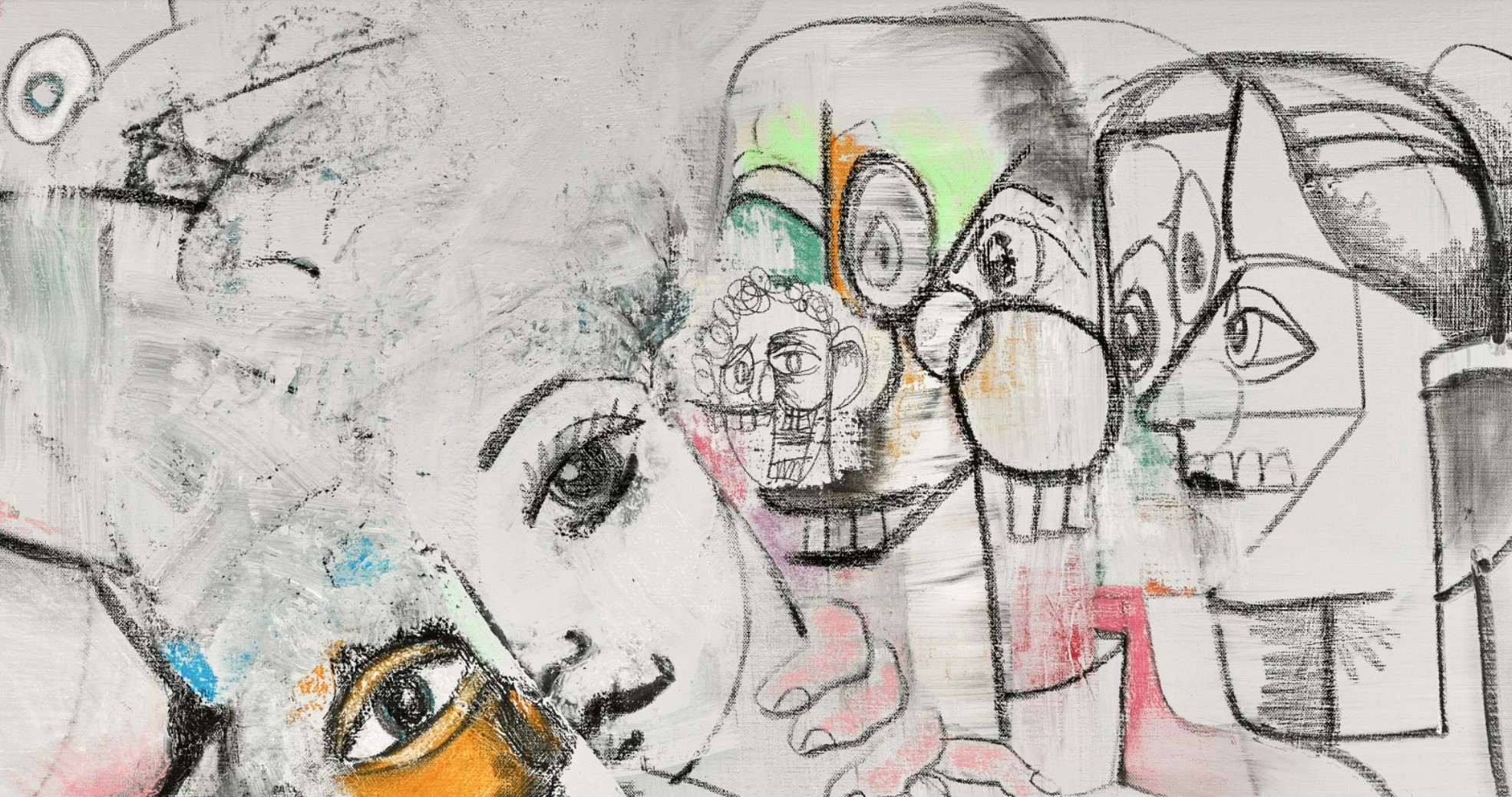
Juxtaposed against a glistening grey ground, this explosive synthesis of colour and form evocatively recalls Pablo Picasso’s masterful Cubist facture: Yet, where Picasso radically shattered the picture plane to explore multiple viewpoints in the same moment, Condo ruptures his compositions to reveal the multifaceted and kaleidoscopic complexities of human emotion and personality through his aptly self-termed mode of ‘psychological cubism’.
“I try to depict a character’s train of thoughts simultaneously – hysteria, joy, sadness, desperation. If you could see these things at once that would be like what I’m trying to make you see in my art.”
The figure of the harlequin fits perfectly in this theatrical description of a character’s psychology. From the 16th century the harlequin character has taken the role of a mischievous clown, a melancholic trickster who is also a loyal servant of the court. Harlequin’s Diary is a striking manifestation not only of Condo’s ability to blur the boundaries between drawing and painting, but also exemplifies his great interest in negating the boundaries between comedy and tragedy, and exploring a vast range of emotions via chaotically fractured abstraction. Fully departing from his early style of portraiture that relied heavily on an Old Master sensibility of dark baroque backgrounds and ample brownish tones, the present work is a fresh realization of Condo’s recent output.
Transparent Female Forms, 2009
Phillips Hong-Kong: 22 June 2022
Estimated: HKD 25,000,000 – 35,000,000
HKD 36,550,000 / USD 4,656,229
George Condo – 20th Century & Contempora… Lot 9 June 2022 | Phillips
GEORGE CONDO
Transparent Female Forms, 2009
Acrylic, chalk and pastel on linen
77 7/8 x 113 7/8 inches (198.1 x 289.2 cm)
Signed and dated ‘Condo 09’ on the reverse
Manifested on a large canvas, Transparent Female Forms is a masterpiece from American visual artist George Condo’s seminal Drawing Paintings series, capturing a group of gorgeous female nudes in a delicate state of glitching between figuration and fragmentation. Marking the beginning of what would become a decade-long preoccupation with the Drawing Paintings, this exquisite work from 2009 synergizes the traditionally disparate processes of drawing and painting, rendered in Condo’s trademark style of ‘psychological cubism’ and ‘artificial realism’.
In Transparent Female Forms, a kaleidoscope of neon-pastel hues drizzled across a neutral ground, are superimposed with gestural improvisations that lend the work to a sense of rhythm invoking Condo’s preoccupation with music, which he studied alongside art history in university. Sensuous female figures that traverse the composition appear in and out of the picture plane: their faces adorned with elegant pearls, full lips and luscious hair are rendered with astonishing fluidity. Yet in signature Condo fashion, grotesque characters with snarled grimaces, wild-eyes, and disfigured heads loom in the background. With these juxtapositions, Condo expertly bridges the cacophonous with the sensual and the recognizable with the alien, probing at our most primitive human instincts of desire, disgust and intrigue.
Large Figure Composition, 2008
Christie’s London: 30 June 2021
Estimated: GBP 450,000 – 650,000
GBP 500,000 / USD 690,321
GEORGE CONDO (B. 1957), Large Figure Composition | Christie’s (christies.com)
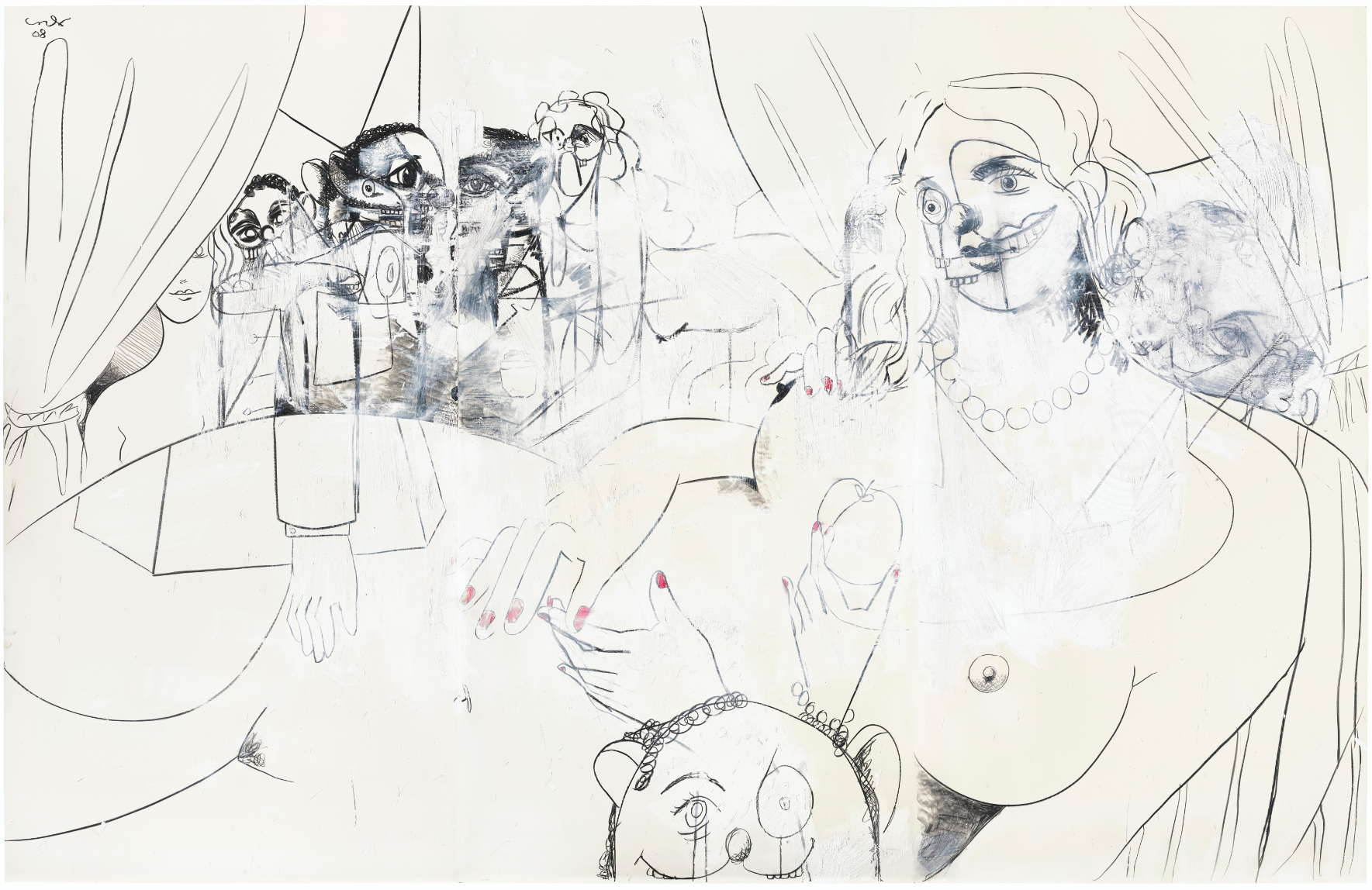
GEORGE CONDO (B. 1957)
Large Figure Composition, 2008
Gesso, wax crayon and colored pencil on panel, in three parts
Each: 90×46 inches (228.6 x 116.8 cm)
Overall: 90×138 inches (228.6 x 350.4 cm)
Signed and dated ‘Condo 08’ (upper left)
A monumental work formerly held in the prestigious collection of Melva Bucksbaum, Large Figure Composition is a vivid demonstration of George Condo’s art-historical imagination. Over three panels conjoined in the manner of a grand altarpiece, a female nude unfurls upon a bed, with curtains parting behind her to reveal a gathering of onlookers. Multiple hands clamor across her sinuous monochromatic form, speckled with flashes of gleaming red nail polish. Exquisitely rendered in gesso, wax crayon and colored pencil, the work belongs to a series of works from 2008—the so-called Figure Compositions—in which Condo’s distinctive hybrid characters confront the viewer in a variety of staged groupings. Here, the artist takes on one of art history’s most time-honored subjects, situating his reclining muse in a tradition that extends from Titian and Velázquez through to Manet, Modigliani, Matisse, Picasso, Bacon and Freud. She is part-temptress, an apple raised symbolically to her lips; she is part-prop, subservient to the gaze of Condo’s motley cast members. It is an image of the complex mechanisms—seduction, desire, voyeurism and appropriation—that define our encounters with the art of the past.
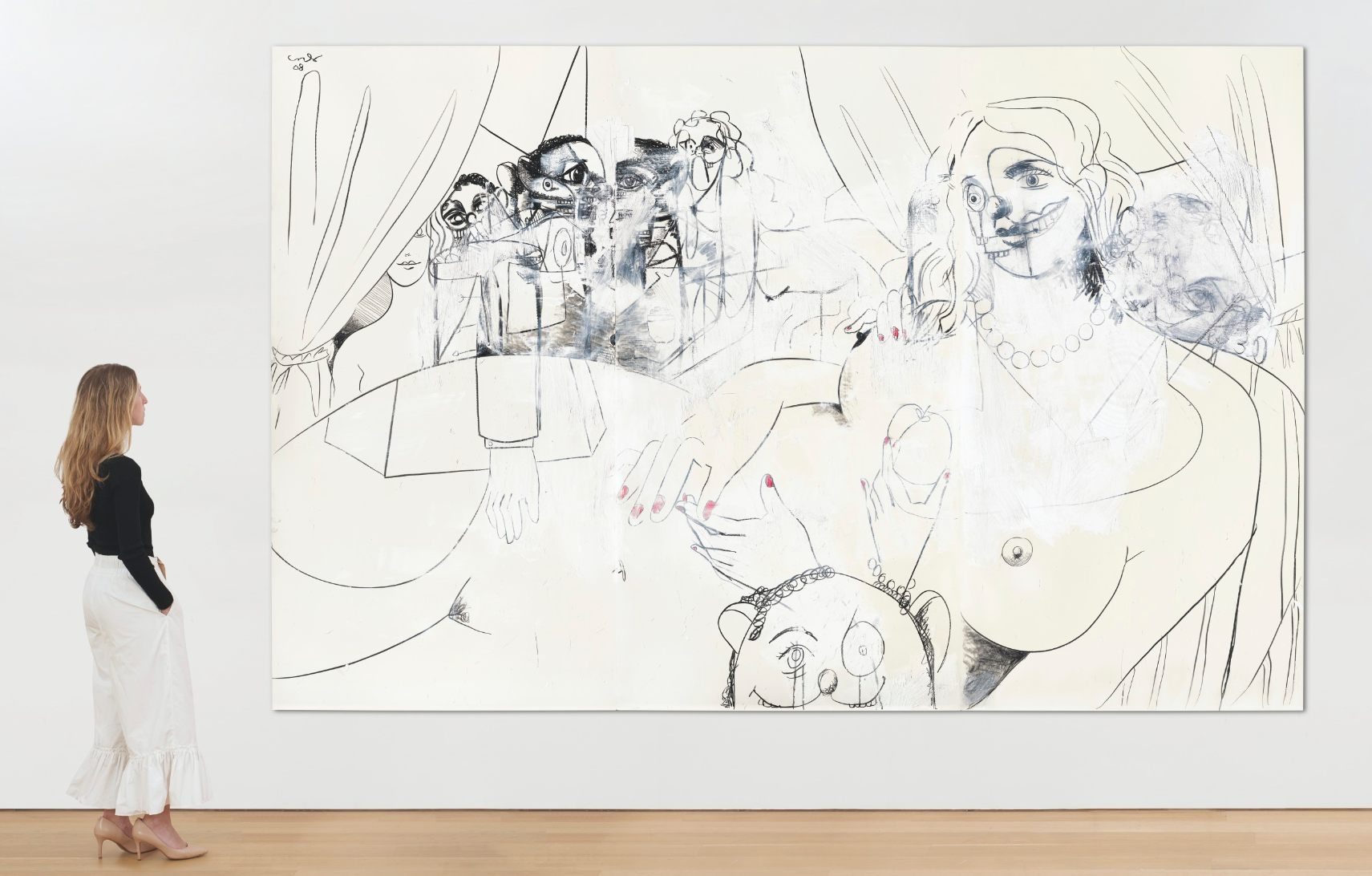
In the present work, the fractured face of Condo’s muse—and those of her entourage—capture the artist’s engagement with this principle, conjuring the split perspectives and contours of Picasso’s own portraits. The rabble of onlookers spans a gamut from classical beauty to monstrous chaos, offering a snapshot of the human condition and its depiction across the ages. The figure at the bottom, meanwhile, evokes Condo’s central protagonist Rodrigo—a fictional scoundrel, variously styled as a butler, brothel owner, gambler or valet—who appears throughout the Figure Compositions. The drapes that envelop the figure, evocative of the compositional staging in works such as Manet’s Olympia (1863) or Titian’s The Venus of Urbino (1538), serve to heighten the work’s voyeuristic implications. We as viewers are made aware of the implicit judgements, we bestow upon these seemingly alien figures, and in turn come to recognize them as reflections of ourselves.
Washington Square Park, 2010
Christie’s New-York: 15 November 2018
Estimated: USD 2,600,000 – 3,200,000
USD 4,812,500
George Condo (b. 1957) (christies.com)
George Condo (b. 1957)
Washington Square Park, 2010
Acrylic, charcoal and pastel on linen
78×108 inches (198 x 274.5 cm)
Signed, titled and dated ‘Condo 2010 Washington Square Park’ (on the reverse)
George Condo’s unparalleled approach to figurative representation has afforded him a singular space in the history of American contemporary art. Created the same year as his inclusion in the 2010 Whitney Biennial, and one year before his momentous mid-career retrospective at the New Museum, Washington Square Park is a grandiose expression of the artist’s psychological portraiture. Part of his aptly-named Drawing Paintings series, the work’s confluence of meandering lines and Condo’s signature representative style surround the viewer with myriad faces and figures that jostle against each other like the crowds that occupy the work’s namesake park. The piece is marked by a tight grouping of staring faces and grasping extremities that meld with the contour lines of their ghostly bodies. By honing in on the most pivotal aspects of each figure and reproducing them across such a vast expanse of canvas, the artist is able to extract and harness the most vibrant points of his visual vocabulary. Rendered atop an even light blue ground, a cast of characters peers out from an amalgamation of lines and shapes. Passages of blue, peach, pink, and green come together in clusters of brushy color; a central, horizontal band presents a group of faces that materialize from their sketchy surroundings. Singular eyes stare out at the viewer as their gaze is met by furrowed brows, gnashing teeth, bare breasts, and snarled grimaces. Though the style of each figure is in keeping with Condo’s instantly recognizable style, Washington Square Park explores a new avenue that harnesses open space through a spiderweb of thin black lines. Donald Kuspit, writing for Artforum, notes about the Drawing Paintings, “The canvases are noteworthy not only for their mix of acrylic, charcoal, and oil pastel, almost indistinguishably integrated, but for their fusion of styles, resulting in what might be called an expressionistic surrealism or, perhaps more pointedly, an expressionistically grotesque surrealism.
Monumental Heads
Figure on a Red Field, 2016
Property from an Ambassadorial collection
Sotheby’s New-York: 14 May 2026
Estimated: USD 2,000,000 – 3,000,000
USD 5,854,000
George Condo | Figure on a Red Field | The Now & Contemporary Evening
GEORGE CONDO (b. 1957)
Figure on a Red Field, 2016
Acrylic, metallic paint, charcoal, pastel and oilstick on canvas
96×76 inches (243.8 x 193 cm)
Signed and dated Oct 2, 2016 (upper left)
Set against a sonorous field of deep red, the kaleidoscopic figure that dominates Figure on a Red Field unfolds in a vocabulary at once fractured and precise, a commanding demonstration of George Condo’s singular painterly language. Over the course of five decades, Condo has forged one of the most intellectually rigorous and stylistically unbounded practices in contemporary art—one that resists classification precisely because it thrives on the tension between traditions. Here, the dissected face erupts into an orchestration of color and form, its forceful tendrils extending outward as though testing the limits of pictorial coherence. This is Condo at his most assured: a master of synthesis, orchestrating a coalition of genres into a unified yet destabilizing whole.
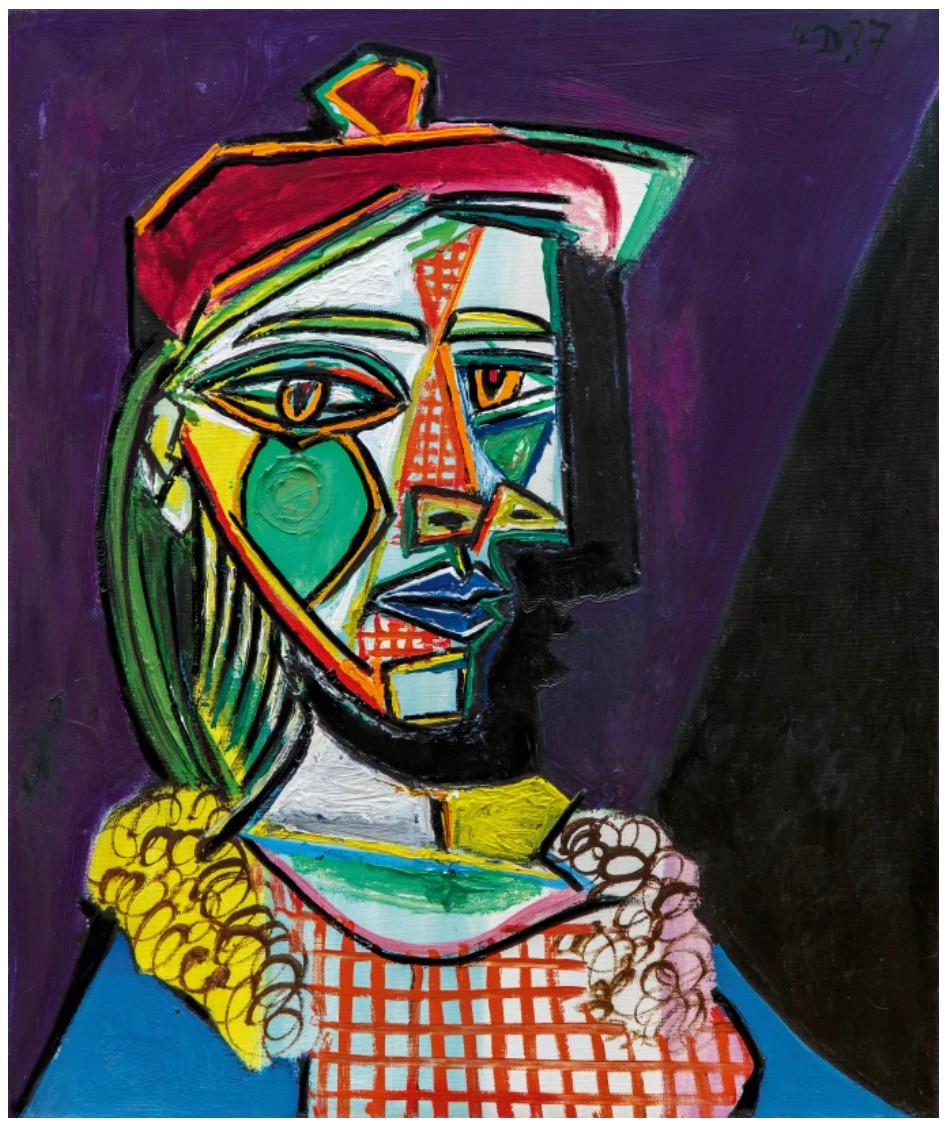
Pablo Picasso, Femme au béret et à la robe quadrillée (Marie-Thérèse Walter), 1937. Private Collection. Sold at Sotheby’s London in February 2018 for £50 million GBP. Art © 2026 Estate of Pablo Picasso / Artists Rights Society (ARS), New York
Central to this achievement is Condo’s self-defined mode of “psychological Cubism,” a conceptual and formal strategy indebted to the radical innovations of Pablo Picasso and Willem de Kooning. Yet Condo’s project extends far beyond homage. His practice constitutes a profound act of creative cannibalism, absorbing and reconfiguring the pictorial languages of Diego Velázquez, Francisco Goya, Jean-Auguste-Dominique Ingres, Édouard Manet, Théodore Géricault, Paul Cézanne and Henri Matisse, alongside the vernacular idioms of caricature, comic strips, and animated cartoons.
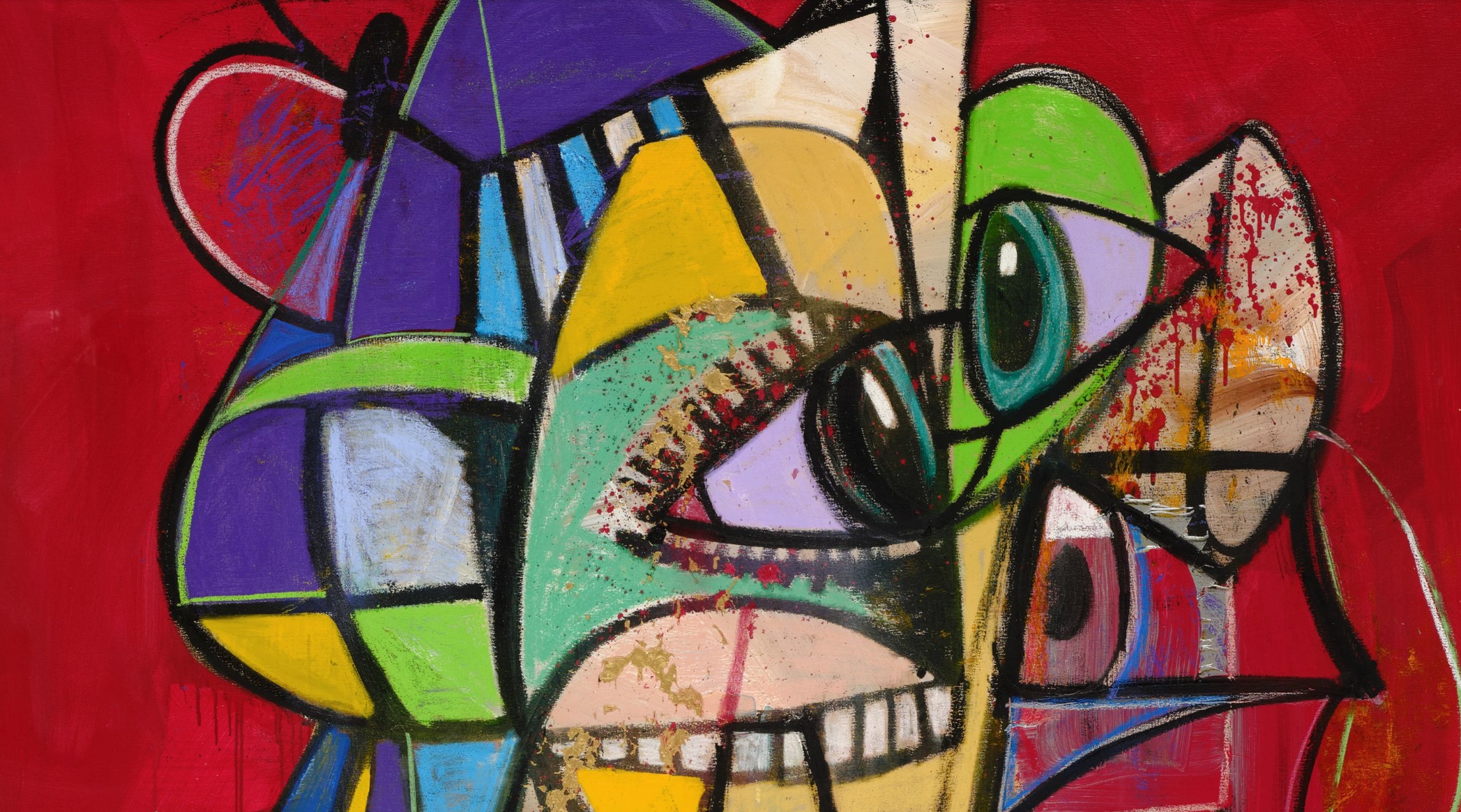
Rather than imitation, Condo internalizes these divergent traditions, constructing from them a distinctly contemporary vision that is at once erudite and subversive. This synthesis finds its theoretical grounding in what Condo has termed “artificial realism,” a mode in which the familiar and the aberrant collapse into a single, destabilized image. As the scholar Simon Baker has observed, “artificial realism… can play out in the adoption or adaptation of contrasting and conflicting materials from both the history of art and popular culture, from the esoteric diagrams explaining the compositional secrets of the Old Masters to the incredible abstractions inherent to animated cartoon characters — with what is most important being the blurring of distinctions between representational codes that occurs when Condo ‘dismantles one reality and constructs another from the same parts.’” (Simon Baker, George Condo: Painting Reconfigured, London 2015, p. 55) Within this framework, portraiture assumes a position of renewed urgency. For Condo, the portrait is never an exercise in likeness but an excavation of psychological interiority, a site in which incompatible styles converge to produce a new and often absurd figuration.
“I describe what I do as psychological cubism, Picasso painted a violin from four different perspectives at one moment. I do the same with psychological states. Four of them can occur simultaneously. Like glimpsing a bus with one passenger howling over a joke they’re hearing down the phone, someone else asleep, someone else crying – I’ll put them all in one face.”
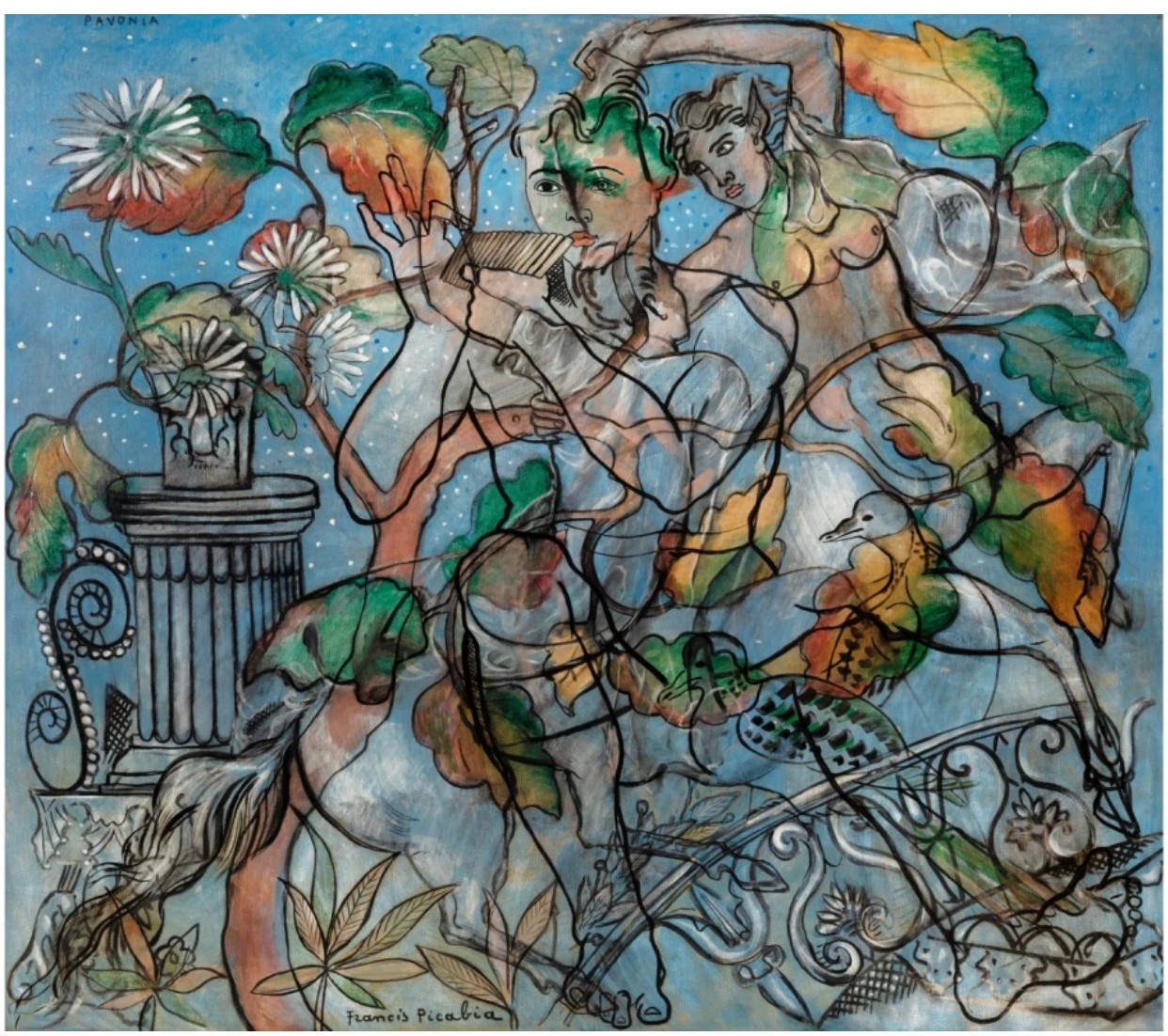
Francis Picabia, Pavonia, 1929. Private Collection. Sold at Sotheby’s Paris in March 2022 for €10 million EUR.
Art © 2026 Artists Rights Society (ARS), New York / ADAGP, Paris
Working without models or photographic reference, Condo allows his figures to emerge directly from the subconscious: heads fractured into geometric shards, mouths distended into impossible grins, eyes multiplied or misaligned. As the artist himself has explained, “Picasso painted a violin from four different perspectives at one moment. I do the same with psychological states. Four of them can occur simultaneously. Like glimpsing a bus with one passenger howling over a joke they’re hearing down the phone, someone else asleep, someone else crying – I’ll put them all in one face.” (George Condo cited in: Stuart Jeffries, The Guardian, “George Condo: ‘I was delirious. Nearly died’,”10 February 2014 (online))
Market Precedents for George Condo Heads
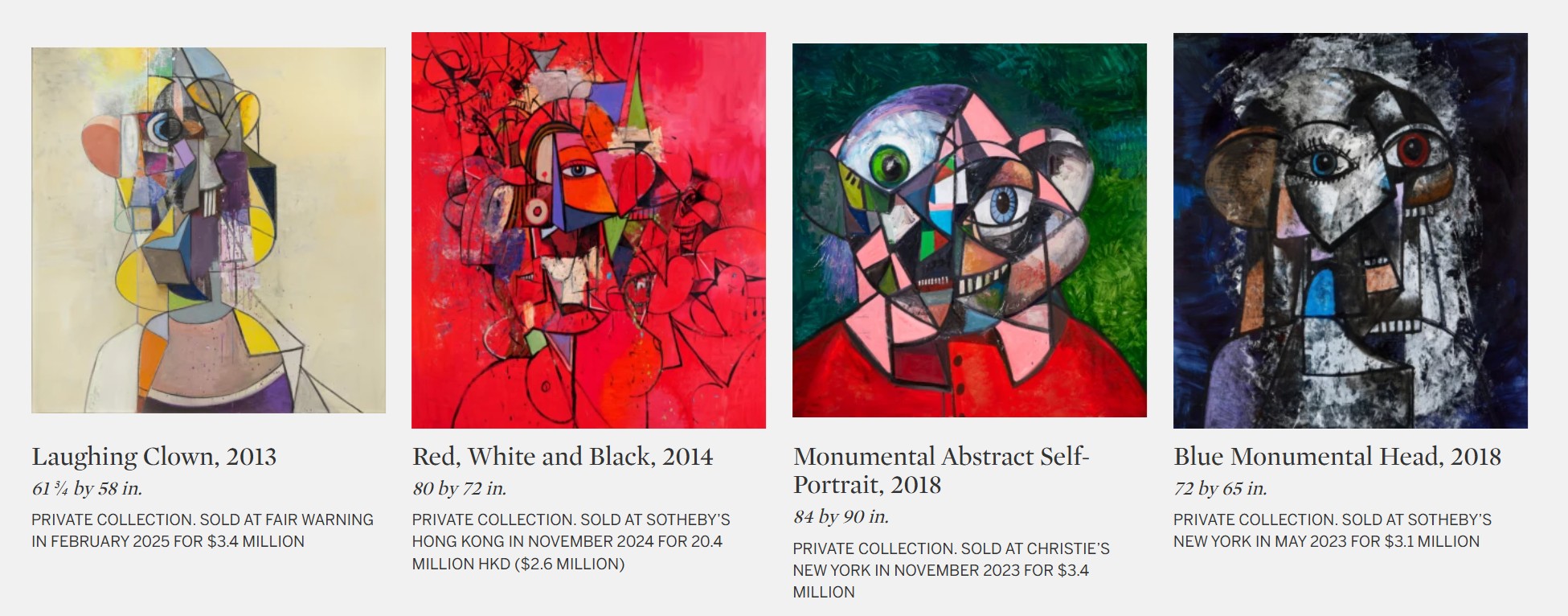
In Figure on a Red Field, this simultaneity is rendered with extraordinary clarity, the face becoming a stage upon which conflicting emotional registers collide. The surface of the canvas itself operates as a site of argument and resolution. Through the dynamic interplay of acrylic, charcoal, and pastel, Condo constructs a painterly field that is as much performance as image—gestures accumulate, collide, and resolve in passages that evoke the kinetic urgency of Abstract Expressionism. Sweeping strokes and abrupt incisions animate the composition, imbuing it with a volatile energy that resists stasis. Yet what ultimately distinguishes Condo from the many artists who have mined art history for inspiration is the gravity with which he treats the comedy he invents. Beneath the grotesque distortions lies a profound meditation on the human condition.
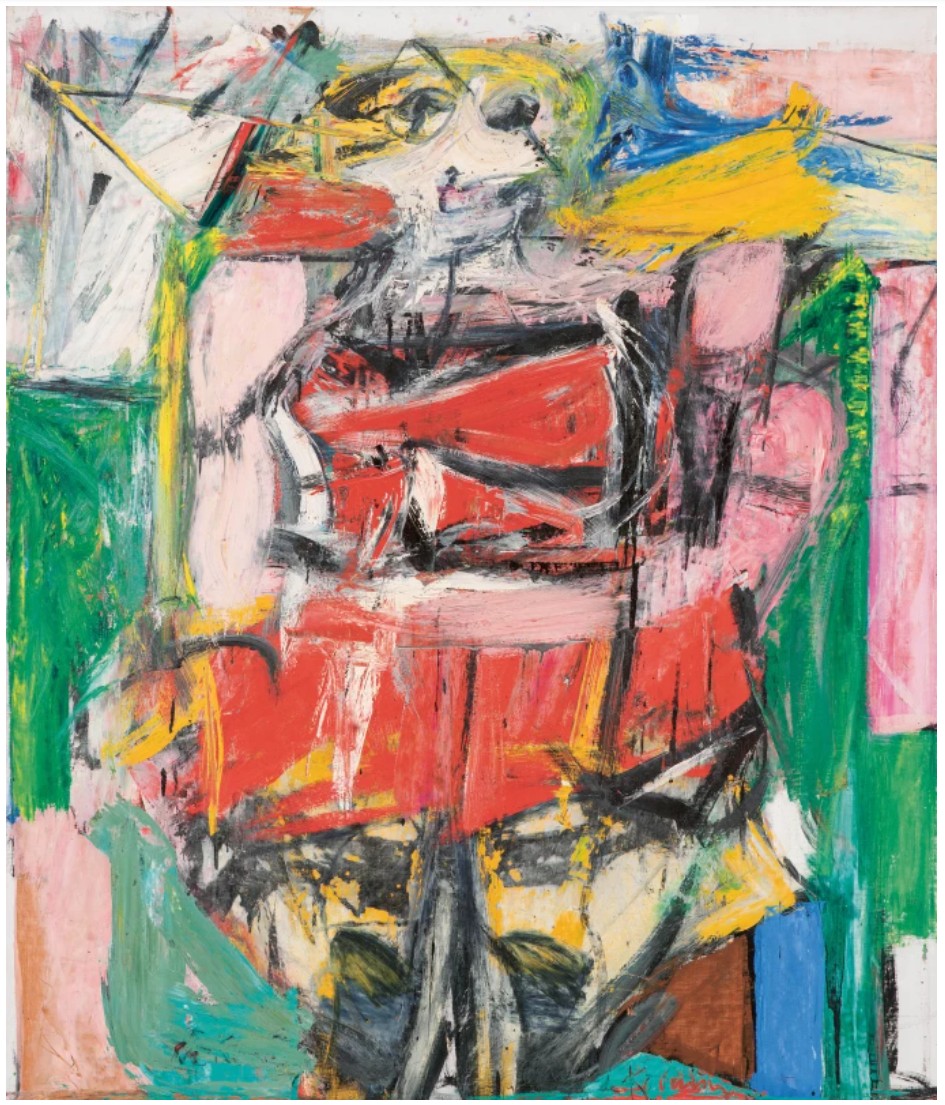
Willem de Kooning, Woman VI, 1953. Carnegie Museum of Art, Pittsburgh. Image © Carnegie Museum of Art, Pittsburgh, PA / Art Resource, NY. Art © 2026 The Willem de Kooning Foundation / Artists Rights Society (ARS), New York.
Indeed, although his figures defy verisimilitude, their fractured anatomies yield a strangely lucid account of psychological complexity: teeth, glee, rage, smiles, insanity, and loneliness compressed into a single, almost unbearable state of being.
“What I’m trying to depict is the truth of human nature through artificial means. In order to show what’s real, you sometimes have to show it in the most unreal way possible.”
It is precisely this tension—between the grave and the grotesque, the canonical and the carnivalesque—that defines Condo’s enduring achievement and secures his position among the most consequential painters of his generation.
Red, White and Black, 2014
Sotheby’s Hong-Kong: 11 November 2024
Estimated: HKD 25,000,000 – 35,000,000
HKD 20,400,000 / USD 2,625,010
GEORGE CONDO (1957 – )
Red, White and Black, 2014
Oil on linen
80×72 inches (203.2 by 182.9 cm)
Conjuring conflicting psychological states of passion and rage, George Condo’s Red, White and Black (2014) dances with frenetic, textural energy. An enthralling example of Condo’s celebrated practice which subverts the lucidity of portraiture with a whimsical and farcical new context, the present work is extraordinary for its vibrant coloration, compositional intricacy, and rich surface of expressionistic brushwork, as well as the artist’s remarkable ability to synthesize diverse influences into a singular and deeply compelling visual language. Steeped in the traditions of Cubism and the legacy of Picasso, the present work was exhibited as part of Sotheby’s Hong Kong’s Face-Off: Picasso / Condo exhibition in 2018, which displayed a curation of works to draw a compelling, cross-temporary dialogue between both prodigious artists. As with Picasso, within the fractured realm of the present work, forms slip and collide with thrilling velocity before the viewer’s eyes before being subsumed within the delirium of the whole. Appearing at auction for the first time, Red, White and Black is a potent example of the carnal intensity of Condo’s recent style of portraiture.
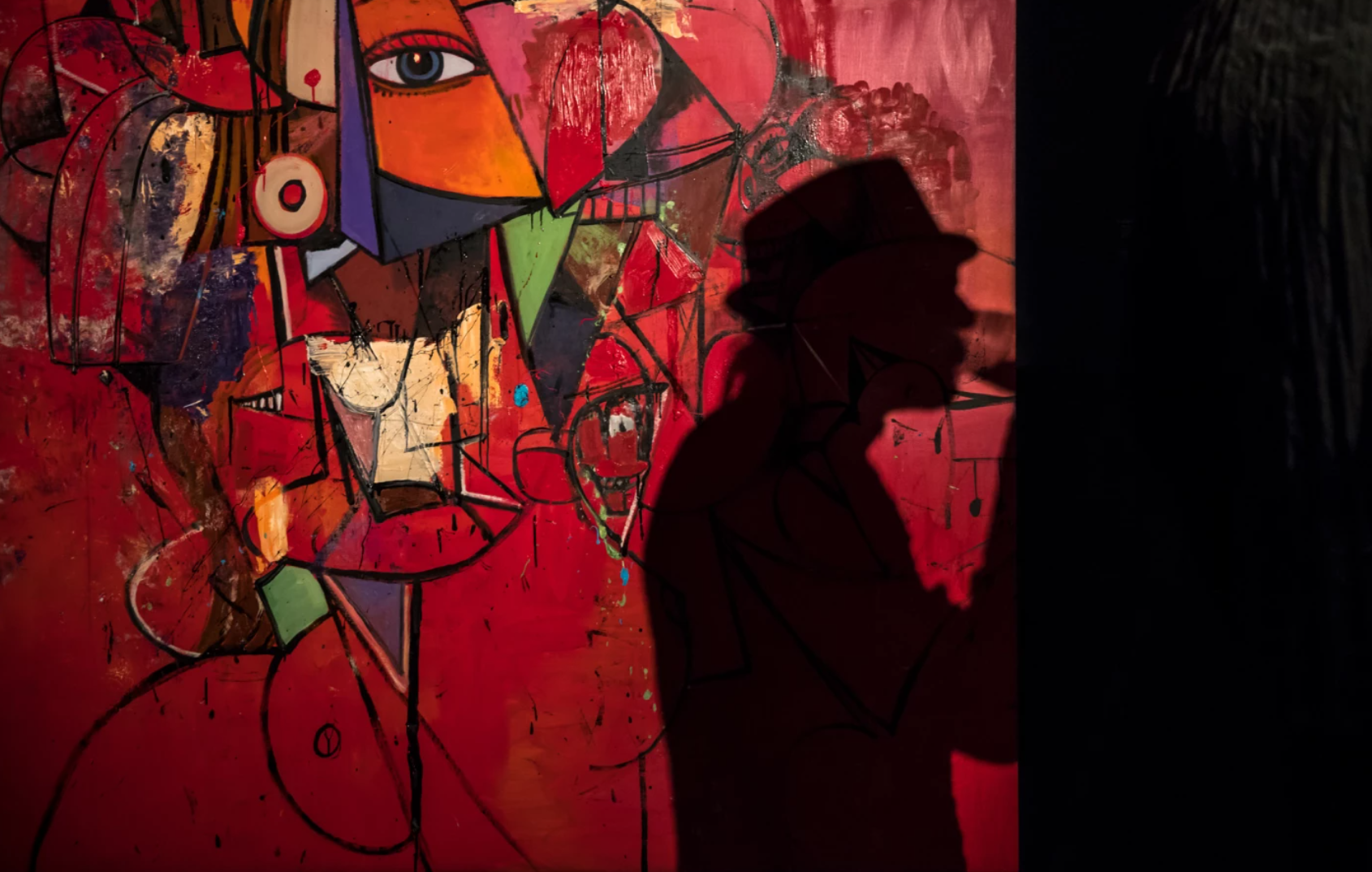
Exuberant in its invocation of pure color and expressive in its boldly evocative mark making, Red, White and Black is a concise manifestation of Condo’s transformation of the established portraiture form. Like Keith Haring and Jean-Michel Basquiat, Condo was critically engaged throughout the eighties in a new form of figurative painting that stylistically blended the representational and the abstract. As he continued to develop his personal style, Condo coined the terms ‘artificial realism’ and ‘psychological cubism’ to define his hybridization of art historical influences, specifically to portray his fusion of the Old Master subject with the geometric perspectives of Cubism. Since then, Condo has continued to mine the formal possibilities of art historical tropes to push the boundaries and defy expectations for both painting and portraiture in a modern setting. The central figure of the present work is depicted as a bust in a compositional framework frequently utilized in Italian Renaissance portraiture, revealing a multitude of converging perspectives that suggest at fragmented psychological states. The subject reaches to the edges of the canvas, their extremities coalescing with the fierce red of the background. The identity of Condo’s subject remains elusive, although exaggerated breasts suggest at femininity, with their shattered visage of purple, orange and green tiles only restrained by Condo’s thick black lines. Teeth, eyes and hair collide and fragment, manipulating our ability to read the image before us, with Condo assembling and disassembling his subject with palpable dynamism to create a new paradigm in portraiture. Building upon years of refining and maturing his iconic figurative style, Red, White and Black reveals an artist now at the height of his career, utterly uninhibited and full of instinctive creative fervor.
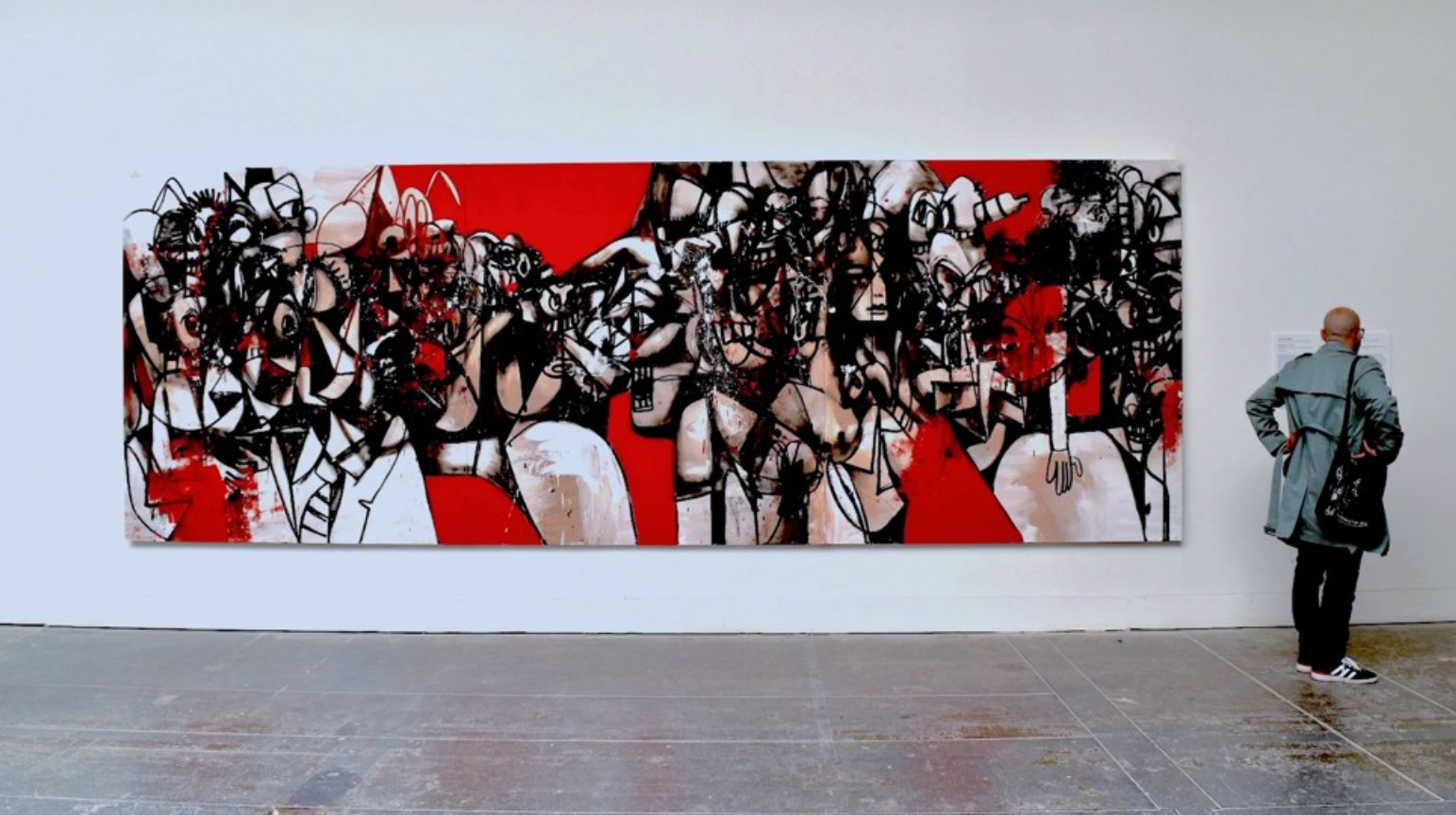
Set against a luxurious red ground, a shade which the artist has frequently favored in the last decade, the present work recalls the portraits of Diego Velázquez and the psychologically dense images of Francis Bacon. This scarlet background, rich in painterly texture and backlit with subtle shades of yellow and pink, hint at the work of color field painters like Mark Rothko and Barnett Newman, whilst simultaneously conjuring conflicting psychological associations of passion and rage. The title and primary palette of the present work has become increasingly significant to the artist in recent years, most notably in the 2017 work Facebook which was displayed at the Venice Biennale in 2019. Aggressive, potent in symbolism and aesthetically vigorous, red, white and black have become paradigmatic within the artist’s newer portraits, often defined by the kind of carnival intensity seen in the present work.
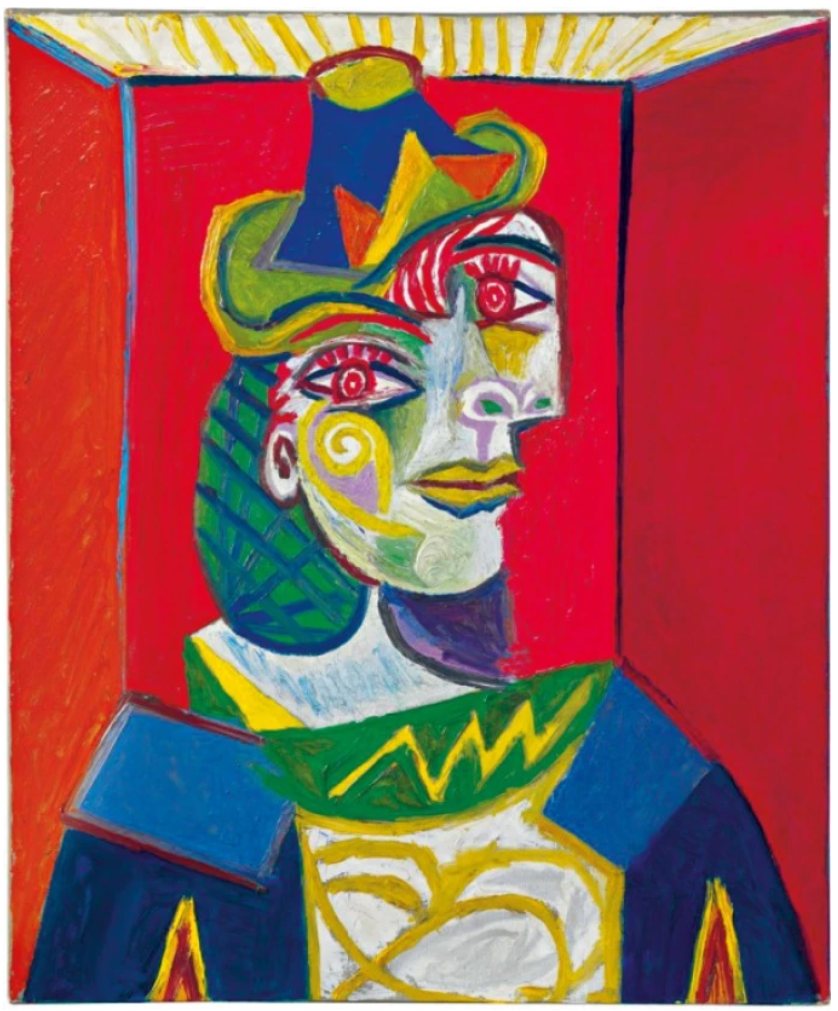
Pablo Picasso, Buste de femme (Femme à la résille) (Bust of a woman (Woman with stocking)), 1938, oil on canvas, Private Collection
In its masterful depiction of fragmented figuration, Red, White and Black evocatively recalls Pablo Picasso’s masterful Cubist facture; yet, where Picasso radically shattered the picture plane to explore multiple viewpoints in the same moment, Condo ruptures his compositions to reveal the multifaceted and kaleidoscopic complexities of human emotion through his aptly self-termed mode of ‘psychological cubism.’
“And I guess that was the other thing I got from Picasso. It’s the idea of Cubism—but rather than seeing and depicting this coffee cup, say, from four different angles at the same time, I’m seeing a personality from multiple angles at once. Instead of space being my subject, I’m painting all of someone’s emotional potentialities at once, and that’s what I’d call Psychological Cubism”
While Picasso’s fractured and distorted forms have long been a source of influence for Condo, works such as Red, White and Black represent a further course of exploration for the artist. In its expressive brushwork and chromatic complexity, the painterly surface of the present work reveals Condo’s interest in the work of the Abstract Expressionists. As in Red, White and Black, Condo’s bold and primitive black lines recall the rigid contours of Picasso’s portraiture of the 1930s, whilst the brilliantly expressive paintwork, and dense, chromatic complexity, recalls the action paintings of Pollock and de Kooning which elevate the physicality painting in the creative process. The kaleidoscopic silhouette of the figure in the present work teeters on the periphery of representation, its elusive figuration and art historical amalgamation a beguiling example of the artist’s distinct style of portraiture.
“The only way for me to feel the difference between every other artist and me is to use every artist to become me.”
Bringing together elements of beauty and the macabre with expressionistic brushwork in a kaleidoscopic sweep of colors, Red, White and Black is an intoxicating example of Condo’s unique ability to hypothesize and manipulate the traditions of figuration and portraiture with abstraction. With a boldness of color and fluidity of carnal gesture, Condo has established himself as one of the eminent figurative painters of today.
Green and Purple Head Composition, 2018
Phillips London: 27 June 2024
Estimated: GBP 700,000 – 900,000
GBP 1,016,000 / USD 1,288,288
George Condo – Modern & Contemporary Art… Lot 8 June 2024 | Phillips
GEORGE CONDO
Green and Purple Head Composition, 2018
Acrylic, charcoal, pastel and pigment stick on linen, in artist’s frame
56 1/8 x 52 1/4 inches (142.7 x 132.6 cm)
Signed and dated ‘George Condo 4/22/18’ upper left
A perennial art-world provocateur, approaching art with protean force and spontaneity, Purple and Green Head Composition embodies the range, verve, and potency inherent to George Condo’s canvases. Belonging to Condo’s celebrated Drawing Paintings first commenced in 2008, Purple and Green Head Composition articulates the artist’s ongoing dialogue with his retinue of strangely familiar, grotesque characters. Through his committed and close examination of art historical tradition and the human psyche, Condo expresses his unique vision of ‘psychological cubism’ as a means of pursuing construction through fragmentation.
“I like to think about Picasso […] because he took a bicycle seat and a pair of handlebars and made a bull’s head: he re-configured a manmade thing into a natural thing. What I’ve done is the reverse, I’ve turned it back into a bicycle.”
Frenetic and fluorescent, with staccato strokes of charcoal and pastel, Condo schematically outlines the bust of a figure. Across the richly layered painterly surface, flashes of lilac and lime green radiate from the blue and white ground, the animated surface speaking to the composition’s latent energy and dynamism. A composition that resembles the geometric constructions of Analytical Cubism and the visceral impastos of Abstract Expressionists, Condo aspires for his work to be ‘the sum of everything that ever happened before [him]’. Unconventionally combining paint with the velocity and immediacy afforded by drawing, as Francis Picabia or Phillip Guston had relentlessly experimented with a range of styles, Condo re-energizes historical references to create a distinct, personal language.
“I describe what I do as psychological cubism. Picasso painted a violin from four different perspectives at one moment. I do the same with psychological states.”
Beginning with his ‘fake’ Old Masters in the early 1980s, to explorations of Pop Art and Surrealism, in Purple and Green Head Composition Condo uses the vocabulary of Cubism to reflect on the multifaceted, antithetical emotional states which are part of the human condition. Defined by the artist as ‘psychological cubism’, Condo challenges the ostensible empiricism of perceived reality since ‘people create artificial representations of themselves as their sole identity’. From the reverberating tangle, fractured features of a face materialize: flared teeth, exaggerated ears, and prominent eyes. These physiognomic characteristics are instantly recognizable as belonging to Condo’s crazed, ‘antipodal beings’, apparitions that repeatedly resurface across the artist’s oeuvre to express spheres of the consciousness. Through prismatic planes of color and incandescent surface, in Purple and Green Head Composition beauty, horror, ecstasy and despair are revealed simultaneously, ranges of emotions that are all the more compellingly human.
Eyes Wide Open, 2022
Phillips New-York: 14 November 2023
Estimated: USD 1,500,000 – 2,000,000
USD 1,391,000
George Condo – 20th Century & Conte… Lot 42 November 2023 | Phillips
GEORGE CONDO
Eyes Wide Open, 2022
Acrylic and oilstick on linen
50 x 46 1/4 inches (127 x 117.5 cm)
Signed and dated “Condo June 22” upper left
Eyes Wide Open, painted in 2022, represents a fresh iteration of George Condo’s signature, self-described techniques of artificial realism and psychological cubism. The human form is both recognizable as a Condo character, and unrecognizably abstracted—one cannot tell how many figures there are; which panes of peach-colored pigment are meant to be human skin; which cherry reds are tongues. With cheeks, chins, ears, and mouths fractured to cubist oblivion, George Condo keeps his figures’ eyes wide open.
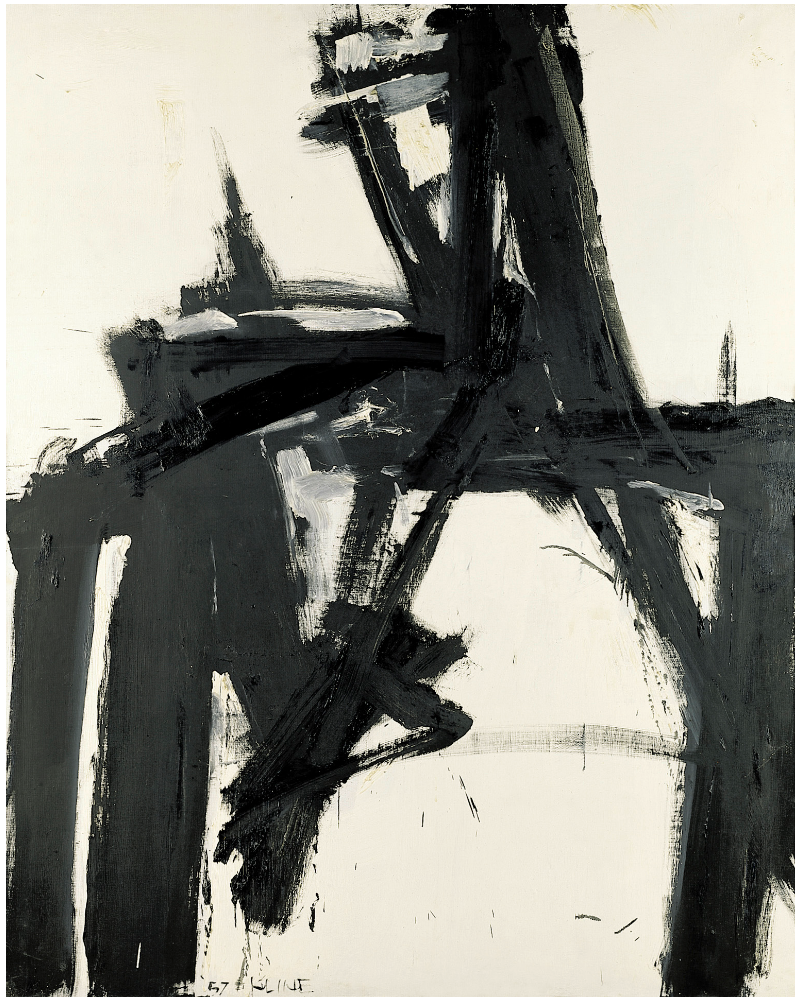
Franz Kline, Untitled, 1957. Kunstsammlung Nordrhein-Westfalen, Düsseldorf. Image: bpk Bildagentur / Kunstsammlung Nordrhein-Westfalen/ Walter Klein / Art Resource, NY, Artwork: © 2023 Artists Rights Society (ARS), New York / ADAGP, Paris
Condo first developed the concept of artificial realism in the late 1980s, as a way to free himself from the confines of realistic figurative representation. The framework doubled as an accurate assessment of the modern material world, and the visual inputs affecting contemporary artists. As Condo explained, it’s an idea “about representing reality, but reality being a construct of man-made appearances.” Artificial realism functions on two levels in Condo’s work: first, at the level of his physical marks and painterly style, and then, second, on a more profound and philosophical level. With Eyes Wide Open, Condo invokes the “artificial” visual realities of art history and popular media, synthesizing high and low culture in one aesthetic output. The work employs thick black lines like those of Franz Kline, and peachy pastels and pale blues reminiscent of Willem de Kooning’s Woman paintings. The black outlines of Eyes Wide Open also recall the aesthetics of newspaper comics and television cartoons, a connection furthered by Condo’s stylized eyeballs and pearl-like teeth in gaping black mouths. As Condo rightly argues, these visual phenomena, whether contained to canvas, newsprint, or a television screen, are no less real than the natural world.
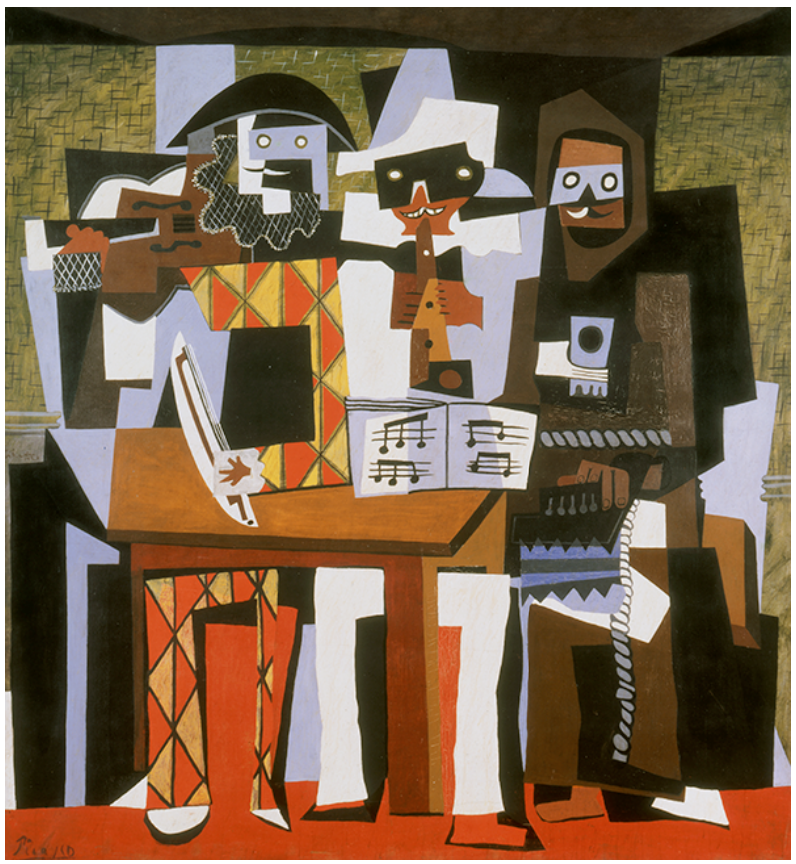
Pablo Picasso, Three Musicians, 1921. Philadelphia Museum of Art. Image: The Philadelphia Museum of Art / Art Resource, NY, Artwork: © 2023 Estate of Pablo Picasso / Artists Rights Society (ARS), New York
Eyes Wide Open captures the uniquely artificial reality of the internet and social media as well, and how Condo navigates those spaces as a contemporary artist and citizen. The work’s square canvas, for instance, is adroitly suited to be shared and re-shared on Instagram. As in his earlier works, which play with Old Master traditions of portraiture, Condo evokes centuries’ worth of representations of the human figure in Eyes Wide Open, and registers the emotional ambivalence of living in an image-saturated culture—especially one in which, thanks to social media, it can be difficult, if not impossible, to distinguish false images from reality. The splintering of the human form in Eyes Wide Open comes to resonate with the sensation of scrolling through social media, seeing slices of bodies, lives, and lifestyles, in an infinite queue of images.
Monumental Abstract Self-Portrait, 2018
Christie’s New-York: 7 November 2023
Estimated: USD 3,500,000 – 4,500,000
USD 3,438,000
GEORGE CONDO (B. 1957) (christies.com)
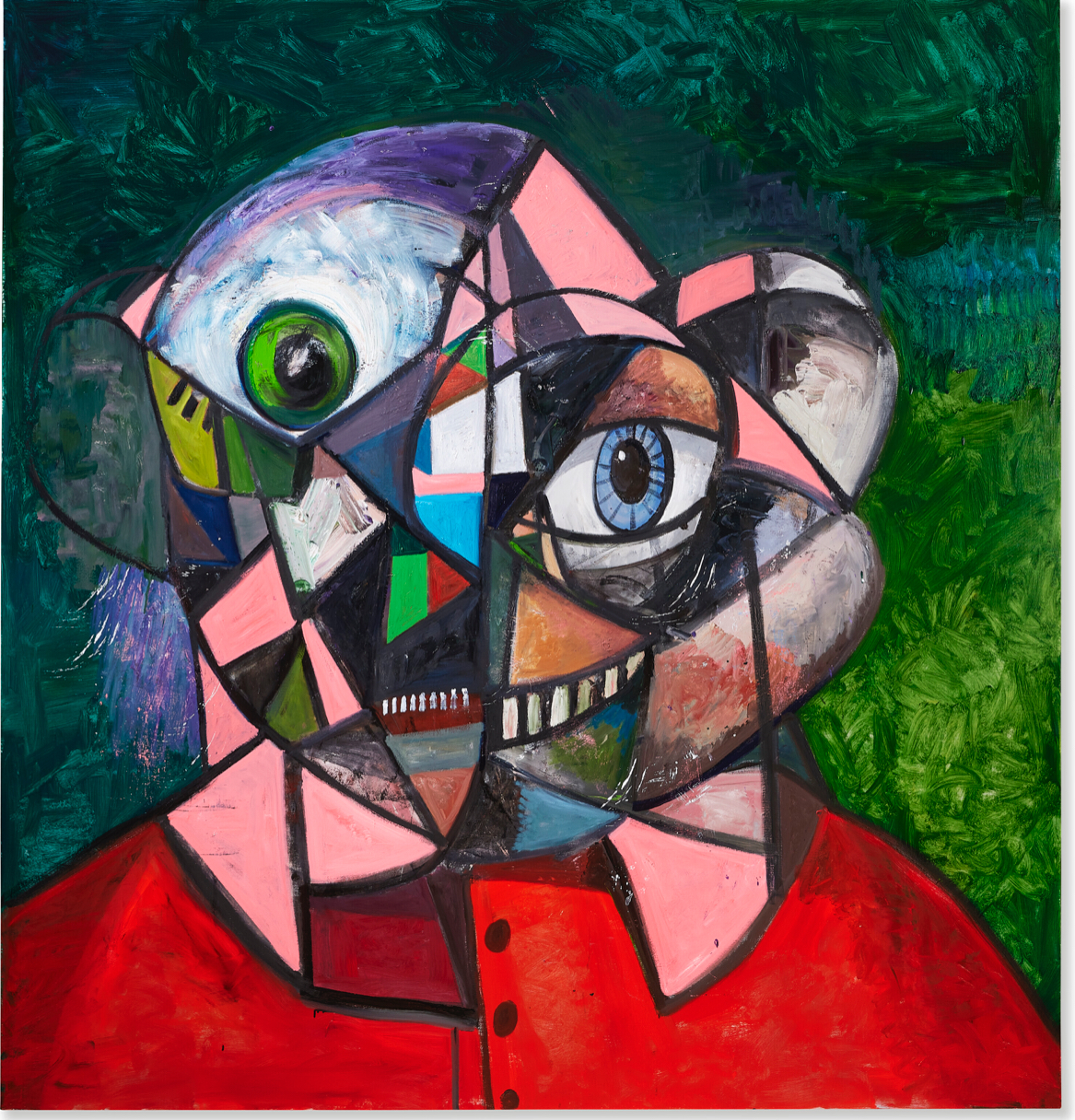
GEORGE CONDO (B. 1957)
Monumental Abstract Self-Portrait, 2018
Oil on canvas
84×80 inches (213.4 x 203.2 cm)
The true nature of George Condo can be glimpsed within Monumental Abstract Self-Portrait. It is a treatise on how he has approached the history of painting and his own role within the ever-evolving timeline. Alongside his New York contemporaries like David Salle and Julian Schnabel, he helped to kickstart the turn toward figuration in the 1980s as they questioned the conjunction of abstraction and representative subjects. Reducing the figure down to a bust-length portrait, he instills the present example with an emotional and psychological depth made all the more poignant by his adept handling of material. “There was a time when I realized that the central focal point of portraiture did not have to be representational in any way,” he recalled. “You don’t need to paint the body to show the truth about a character. All you need is the head and the hands” (G. Condo, quoted in A. Bonney, “George Condo,” BOMB Magazine, Summer 1992). Monumental Abstract Self-Portrait shows just that: the fragmented, unruly head confronts the viewer while the artist’s hands make themselves known in the undulating, luxurious brushwork that brings this grinning visage to life.
In the grand tradition of court painting and historic depictions of the wealthy, Condo positions himself as a noble subject in Monumental Abstract Self-Portrait. The sheer size, combined with the bold red vestment and the dark green backdrop allude to the works of Velázquez and Holbein while remaining firmly in the present. A dark outline defines the shoulders and then continues into the sitter’s head where it immediately splinters into a multi-faceted gem. The basic shape of the human head is there, but it only exists because of Condo’s ability to place certain signifiers in specific places that trigger our pareidolia. Two separate rows of grinning teeth are buffered by panels of bronze and black while the cheeks exist as both rounded, illusionistic objects and flat, geometric planes of salmon pink. Above this, two large eyes stare menacingly at the viewer and seem to pierce us with their gaze. The left eye is gray, its iris stylized with multiple black lines as a cartoon dot of light gleams on the upper pupil. The lid is drooping slightly and casts a subtle shadow across the white of the eye. In contrast, the right eye looms above as it seems to burst forth from the top of the artist’s head. Its green iris, as well as the rest of the protuberance, is brushy and shows Condo’s handling of paint as it swirls like a small hurricane. It is only barely contained by a shock of purple hair and the outline of an ear.
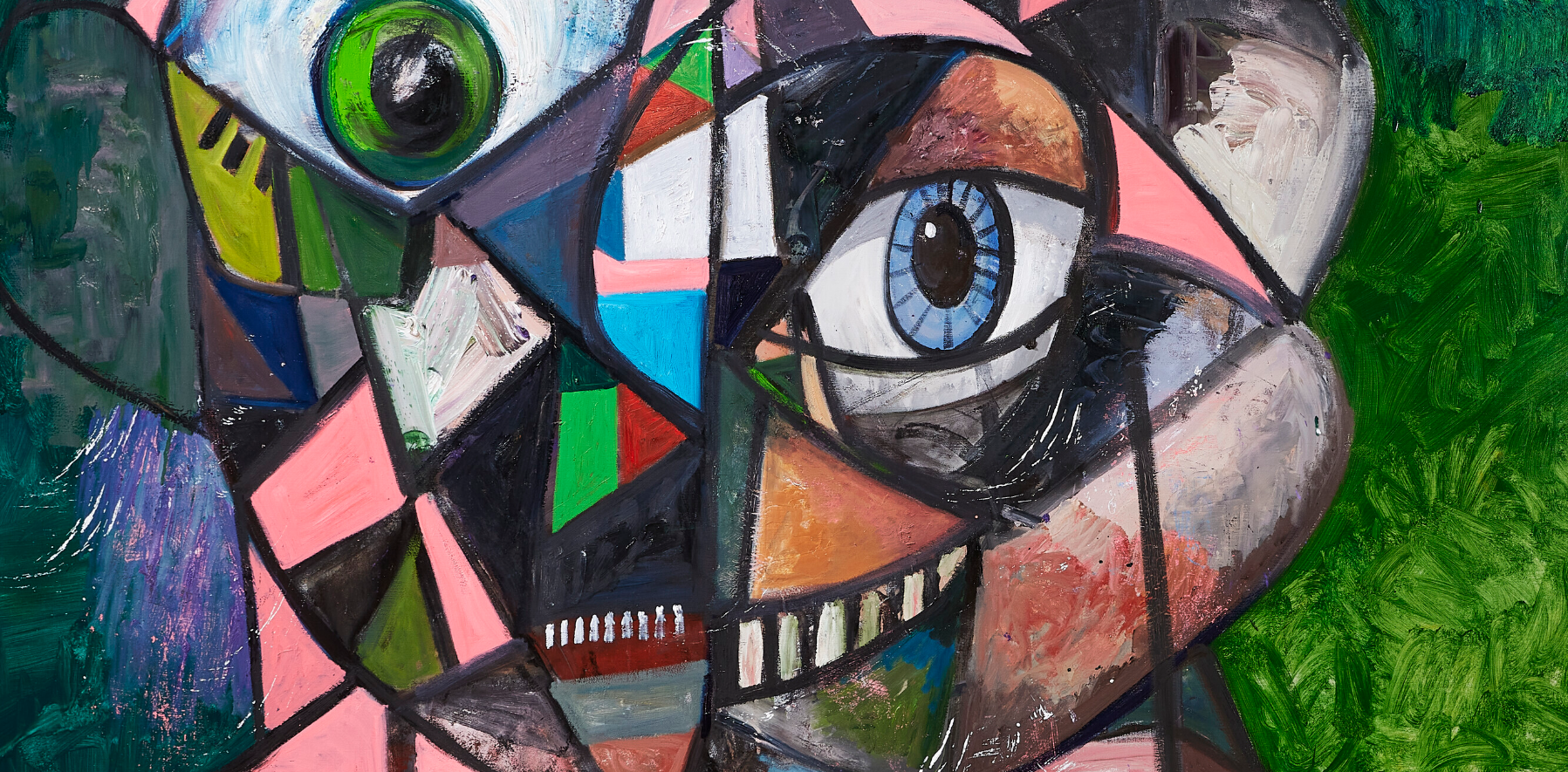
The result of this construction is a portrait that enthralls the viewer while simultaneously dislocating our idea of the human form. “Attention is what Condo’s figures initially demand, located as they are between the grotesque and the comic, protagonists caught between comedy and tragedy. Only on closer observation does the degree emerge to which his way of painting, his composition and his concept of the figure govern the actual attraction of his paintings, and how complex and independent is his engagement with a very personal tradition” (M. Brehm, “Tradition as Temptation. An Approach to the ‘George Condo Method'”, in T. Kellein, George Condo: One Hundred Women, exh. cat., Salzburg, Museum der Moderne, 2005, pp. 19-20). There is no way to escape Condo’s characters. Not only do we instinctively lock eyes with them, but by doing so we begin to be affected by their inner turmoil. Each painted plane becomes a different mental state within the figure that reveals itself the longer we stare.
Blue Monumental Head, 2018
Sotheby’s New-York: 18 May 2023
Estimated: USD 1,500,000 – 2,000,000
USD 3,085,000
Blue Monumental Head | The Now Evening Auction | 2023 | Sotheby’s (sothebys.com)
GEORGE CONDO (b. 1957)
Blue Monumental Head, 2018
Acrylic, charcoal and pastel on linen
72×65 inches (182.9 x 165.1 cm)
Signed and dated 2018 (upper left)
Visceral in application and metamorphic in composition, Blue Monumental Head powerfully captures the raw painterly dynamism and searing psychic intensity which characterize the very best of George Condo’s celebrated practice. A dizzying assemblage of forms and figures that collide and fragment, Blue Monumental Head obfuscates and blurs the traditional delineations between drawing and painting, finished and unfinished, balanced and unbalanced, flatness and sculptural depth to embody the kaleidoscopic complexities of human emotion. Testament to the lasting impact of Condo’s highly influential and experiential oeuvre, works by the artist reside in permanent collections of esteemed institutions including the Broad Collection, Los Angeles; Metropolitan Museum of Art, New York; Solomon R. Guggenheim Museum, New York; Whitney Museum of American Art, New York; Centre Georges Pompidou, Paris; and the Tate Modern, London.
“The most consistent thing in my work is this idea of humanity. Of finding a way to represent the human consciousness in the representation through a portrait. That portrait could represent not only the exterior appearance of that person, but what’s going through their mind and what emotional states could be happening to them and within them.”
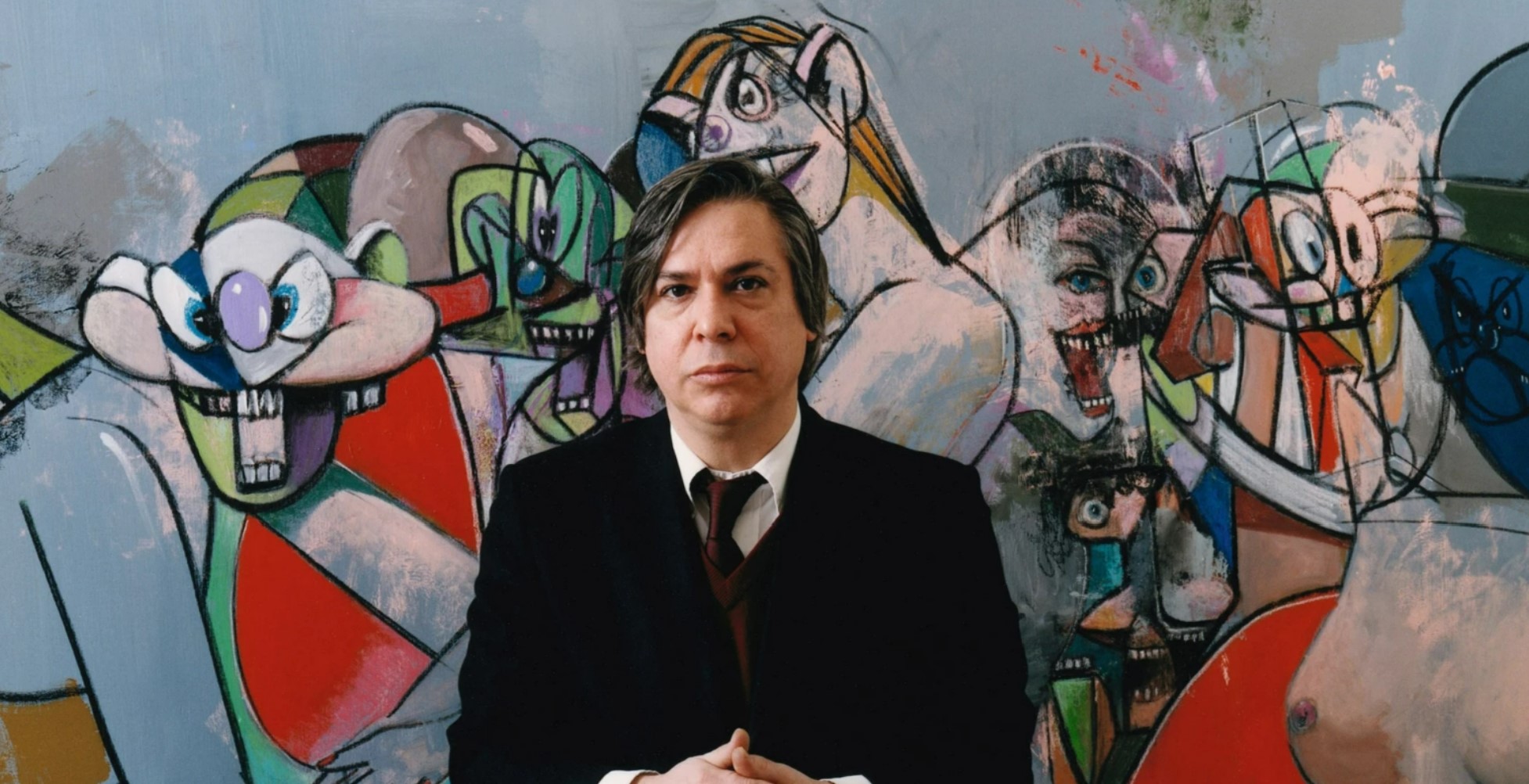
Exaggerated features and disjointed body parts careen across fragmented, abstract planes in Blue Monumental Head and reveal Condo’s most important touchstones–Old Master portraits, Picasso’s cubism, cartoon references. Heralding an unprecedented creative fervor of spontaneous mark-making, Blue Monumental Head departs from Condo’s more carefully planned portrait paintings toward a reckless embrace of the sketchy grit inherent in the alloyed mediums of sooty charcoal and pastel carved into wet acrylic. The painting emerges from Condo’s continued series of Drawing Paintings, in which the artist synergizes the traditionally separate processes of drawing and painting into one fluid gestural expression.
Red and Black Diagonal Portrait, 2016
Christie’s Hong-Kong: 1 December 2021
Estimated: HKD 12,000,000 – 18,000,000
HKD 12,850,000 / USD 1,649,254
GEORGE CONDO (B. 1957) (christies.com)
GEORGE CONDO (B. 1957)
Red and Black Diagonal Portrait, 2016
Acrylic and oilstick on canvas
83 7⁄8 x 82 1⁄8 inches (213 x 208.6 cm)
Signed and dated ‘Condo 2016’ (upper left)
George Condo’s monumental painting Red and Black Diagonal Portrait vividly demonstrates the artist’s mastery of line, color and composition. Executed in 2016, it reaffirms the artist’s interest in the dance between figuration and abstraction, witnessing his continued fascination with what he terms ‘psychological Cubism.’ Red and Black Diagonal Portrait displays a scarlet background, rich in painterly texture and backlit with subtle ochre flashes. Hinting at the work of color field painters like Mark Rothko and Barnett Newman, whilst simultaneously conjuring conflicting psychological associations of passion and rage, the monumental work’s mismatched complexity extends to its medium through the use of both acrylic paint and oil sticks. The emotional power of color in this painting lends to the personal strife that the artist was going through at the time. Following a major surgery on his vocal chords, after being diagnosed with cancer in 2015, the artist’s painting method assumed a new degree of personal significance.
Lion Man, 2012
Sotheby’s New-York: 18 November 2021
Estimated: USD 2,000,000 – 3,000,000
USD 3,408,000
Lion Man | The Now Evening Auction | 2021 | Sotheby’s (sothebys.com)
GEORGE CONDO
Lion Man, 2012
Acrylic, charcoal, and pastel on linen
70×65 inches (177.8 x 165.1 cm)
Signed Condo and dated 2012 (upper left)
A kaleidoscope of brilliant colors and surging forms, Lion Man from 2012 is a paradigm of George Condo’s career-long exploration of and engagement with figurative painting in the twenty-first century. Within the fractured realm of the present work, abstraction and figuration collide with thrilling velocity before the viewer’s eyes; while clearly discernable, the silhouette of the central figure evades clear articulation, as Condo deftly manipulates our ability to read the image before us. Within Condo’s revered large-scale canvases from this period, Lion Man is extraordinary for its vibrant coloration, compositional intricacy, and rich surface of expressionistic brushwork. Between the melee of exaggerated features and fragmented, abstract planes, flashes of the artist’s most important motifs are clearly discernable: Old Master portraits, his own brand of ‘psychological Cubism,’ cartoon references, and a commitment to constantly pushing the boundaries that separate figurative and non-representational painting.
Whistler’s Father, 2019
Sotheby’s Hong-Kong: 9 October 2021
Estimated: HKD 11,000,000 – 15,000,000
HKD 12,880,000 / USD 1,654,527
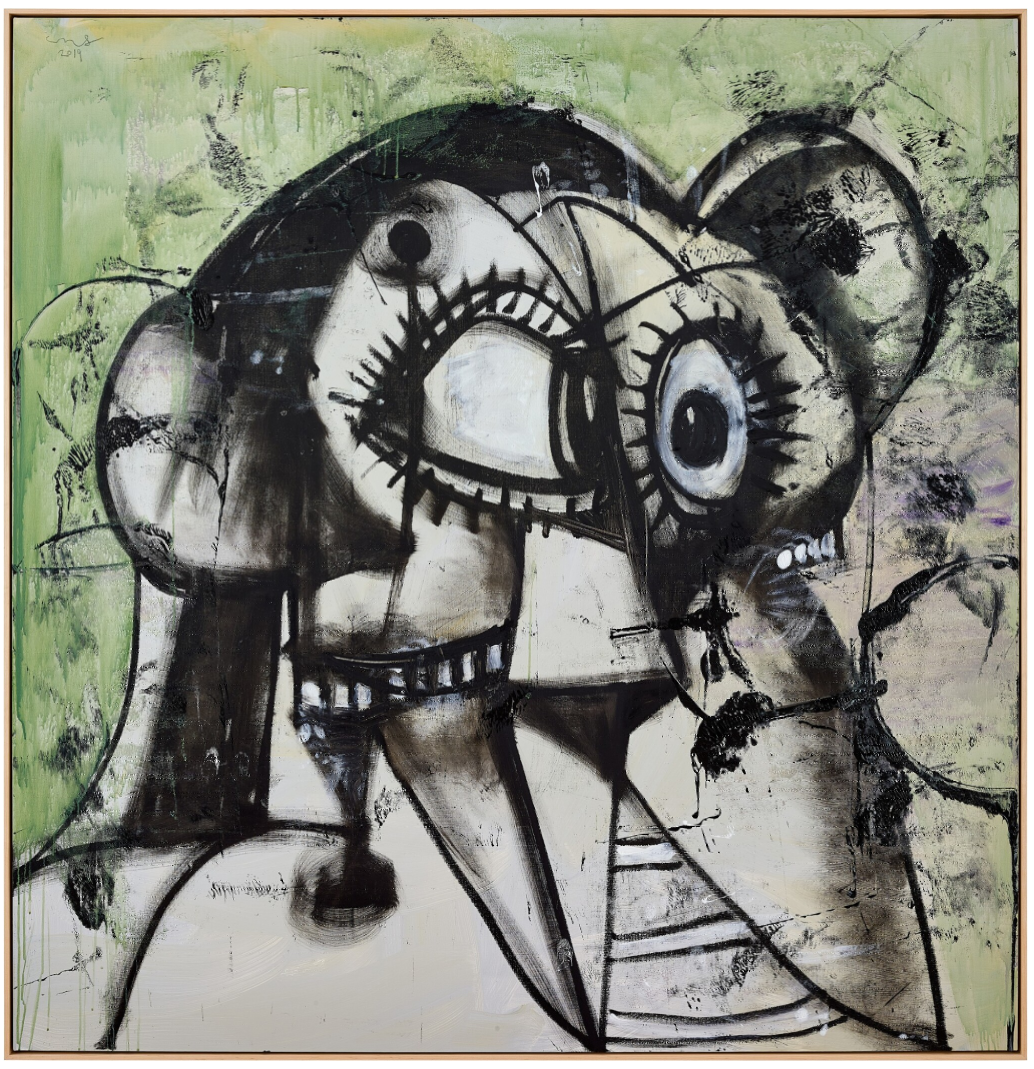
GEORGE CONDO (b. 1957)
Whistler’s Father, 2019
Acrylic and oil stick on canvas
76×74 inches (193×188 cm)
Signed and dated 2019
Emanating strident intensity and psychological depth, Whistler’s Father wholly embodies the irrefutable beauty, conceptual gravitas, and unparalleled technical finesse which characterize the very best of George Condo’s celebrated oeuvre. Executed in 2019, the present work deftly synergizes the traditionally separate processes of drawing and painting in single, fluid gestural expression; while the extraordinarily dense and complex configuration of the fragmented portrait represents a brilliant fusion of his trademark brand of ‘psychological Cubism’ and his commitment to constantly pushing the boundaries that separate figurative and abstract painting. A rich optical puzzle spliced by overlapping forms and charcoal lines, the painting draws from the established custom of the portrait, featuring a figure truncated below the shoulders in the manner traditional to Italian Renaissance portraiture. Under Condo’s masterful draftsmanship akin to choreography, the figure’s human features clash, churn and collide in a prodigious yet whimsical riddle. An enormous range of human emotion is on display across this spectrum of figures; joy, terror, hilarity, fury, and ecstasy collide in a chaotic yet elegant cacophony of forms that bridges the gap between an emotional state and a physical reality. As a finishing touch, the figure is hinted to be donning the iconic black-and-white striped shirt – a nod to Picasso and Warhol, who were often photographed in the Breton shirt – rendering Whistler’s Father a special portrait in line with the very best of Condo’s universally acclaimed oeuvre.
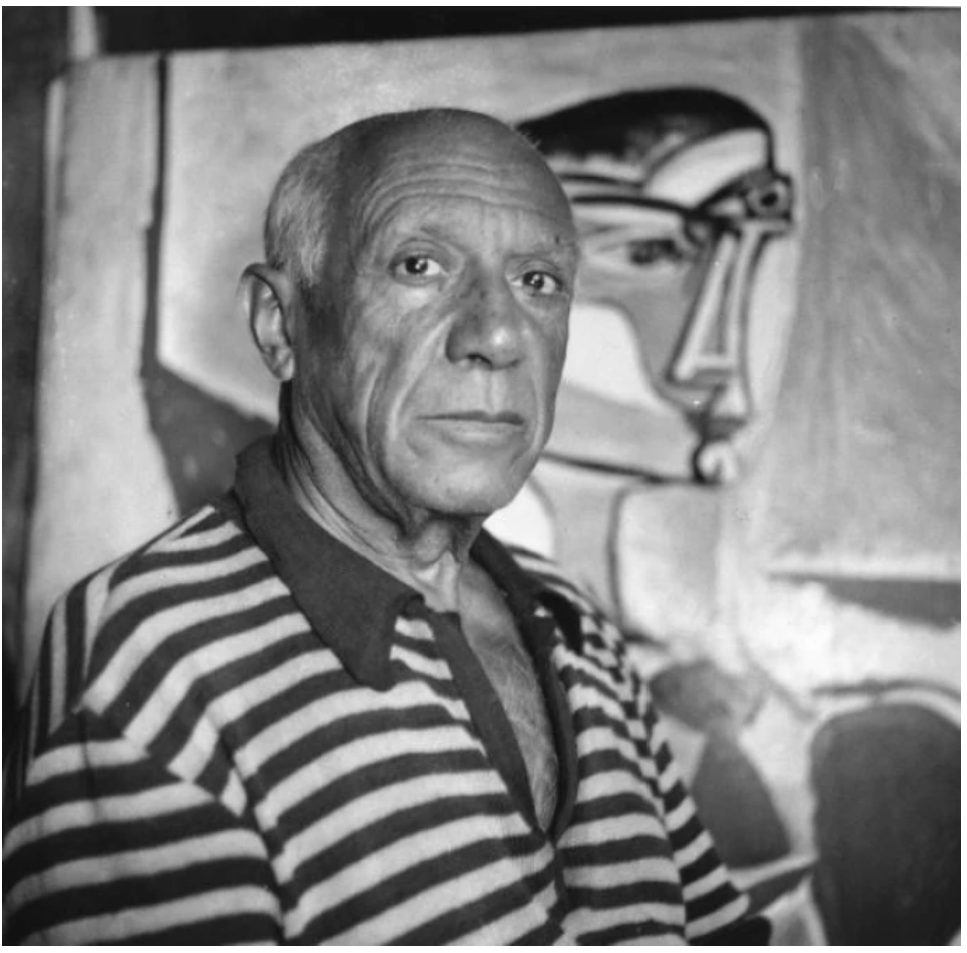
PABLO PICASSO IN HIS ICONIC BRETON STRIPED TOP
Following a nine-month stint as the diamond duster in Andy Warhol’s infamous Factory, George Condo emerged onto the 1980s New York art scene at the eager age of twenty-three alongside seminal figures Keith Haring and Jean-Michel Basquiat, the latter of whom is stated to have officially convinced Condo to pursue a career as a professional artist. Like Haring and Basquiat, Condo was critically engaged throughout the eighties in the inauguration of a new form of figurative painting that stylistically blended the representational and the abstract. Condo coined the terms ‘artificial realism’ and ‘psychological cubism’ to define his hybridization of art historical influences, specifically his fusion of the Old Master subject matter with the distorted geometric perspectives of Cubism. Through a prolific output of compelling yet grotesque portraits, Condo established himself by the turn of the century as one of the preeminent figurative painters of the contemporary era; his method of extrapolating and distorting traditional figurative motifs through an abstract lens has influenced an entire generation of artists working today.
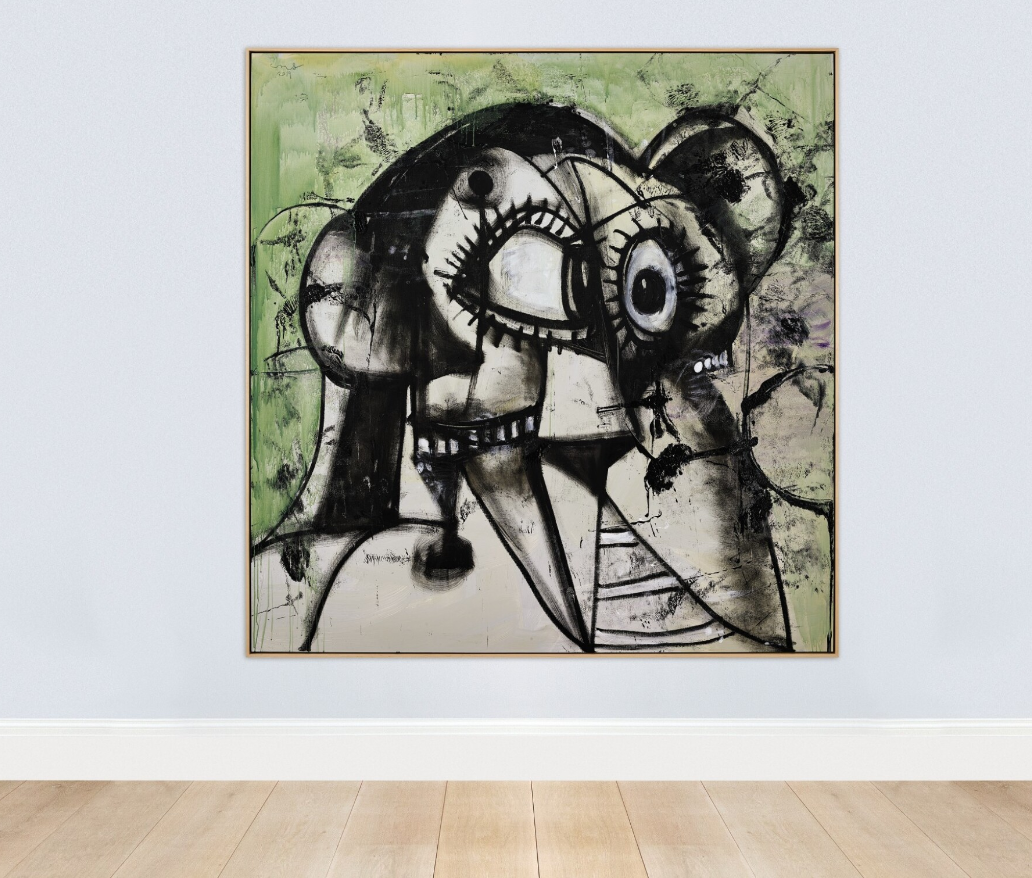
Displaying an unprecedented creative fervor of spontaneous mark-making, the present work departs from Condo’s more carefully planned portrait paintings toward a reckless embrace of the sketchy grit inherent in the alloyed mediums of sooty charcoal and pastel carved into wet acrylic. Whistler’s Father revels in the unforeseen beauty and wildly alluring entropy of Condo’s improvisational genius. The painting represents an extension of Condo’s continued series of Drawing Paintings in which he synergizes the traditionally separate processes of drawing and painting into one fluid gestural expression. The present work thus marvels in Condo’s intellectual game that obfuscates and blurs the traditional delineations between drawing and painting, finished and unfinished, balanced and unbalanced, and flat two-dimensionality versus sculptural depth. The gracefully churning collision of forms is perhaps one of the most honest and accurate representations of a complicated modern psychology: teeth, glee, rage, smiles, insanity, cheeks, loneliness, and eyes crushed together in an almost unbearable state of being. Condo has established himself in the canon of Western art history as a master puppeteer of the human psyche, presenting to his audience forms that delight and repulse, amuse and sadden, welcome and alienate. His unraveling and subsequent reassembly of various pictorial languages has cemented him as one of today’s most clever and cutting-edge contemporary painters. Exuding a mystifyingly psychological aura with gorgeous permutations of line, color, and form, Whistler’s Father endures as a stunning reminder of Condo’s elusive genius in the act of abstraction.
Untitled, 2013
Christie’s London: 29 June 2021
Estimated: GBP 1,000,000 – 1,500,000
GBP 2,542,500 / USD 3,510,285
GEORGE CONDO (b. 1957) (christies.com)
GEORGE CONDO (b. 1957)
Untitled, 2013
Acrylic, charcoal and pastel on linen
78×70 inches (198.1 x 177.8 cm)
Signed and dated ‘Condo 2013’ (upper left)
Almost two metres in height, Untitled (2013) is a vibrant and monumental portrait by George Condo. A kaleidoscopic figure faces us, with multiplied eyes, ears and teeth fragmented into colourful Cubist disarray; graphic charcoal lines frame its cartoonish features and abstract facets of fluorescent green, magenta and orange. These psychedelic hues—echoed in scribbled swatches on the subject’s harlequin-like shirt—are applied in oil pastel. The figure’s neck is more conventionally rendered in paint, as is the warm, mahogany-brown backdrop. This rich variegation of surface is typical of Condo’s hybrid ‘drawing paintings’, which he began making around 2008. These works synergize pastel, charcoal and acrylic, reconfiguring traditional media in a way that mirrors Condo’s complex dialogue with art history. Clashing disparate references from Rembrandt to Picasso, Basquiat, and Walt Disney, Untitled sees Condo explore the fantasy and artifice inherent in figurative painting. A cacophony of signals compete, pushing the portrait into a strange, beguiling new realm.
Sketches of Jean Louis, 2006
Phillips Hong-Kong: 8 June 2021
Estimated: HKD 10,000,000 – 15,000,000
HKD 13,560,000 / USD 1,747,445
George Condo – 20th Century & Contempor… Lot 28 June 2021 | Phillips
GEORGE CONDO
Sketches of Jean Louis, 2006
Oil on canvas
84 7/8 x 80 1/8 inches (215.6 x 203.5 cm)
Signed and dated ‘Condo Jan. 19.06’ upper left
Recognized as one of the most inventive and prolific artists of his generation, few have dedicated their careers as singularly to one genre as George Condo has to that of portraiture. From his oeuvre, Sketches of Jean Louis is an exceptional work, the largest of Condo’s cherished black and white portraits to have come to auction, rising tall at over two meters high. At the forefront of the imposing composition is a handsomely dressed figure who emerges from a labyrinth of texture and line that seemingly takes on a life of its own. His twisted, exaggerated face dons a bulbous nose, protruding ears, grimace-like toothy overbite, and an incongruous pair of Condoesque eyes that confront us with a striking stare. Straddling the line between the ludicrous and the exquisite, the macabre and the carnivalesque, Sketches of Jean Louis brilliantly showcases the acclaimed American artist’s mastery as a puppeteer of the human form.
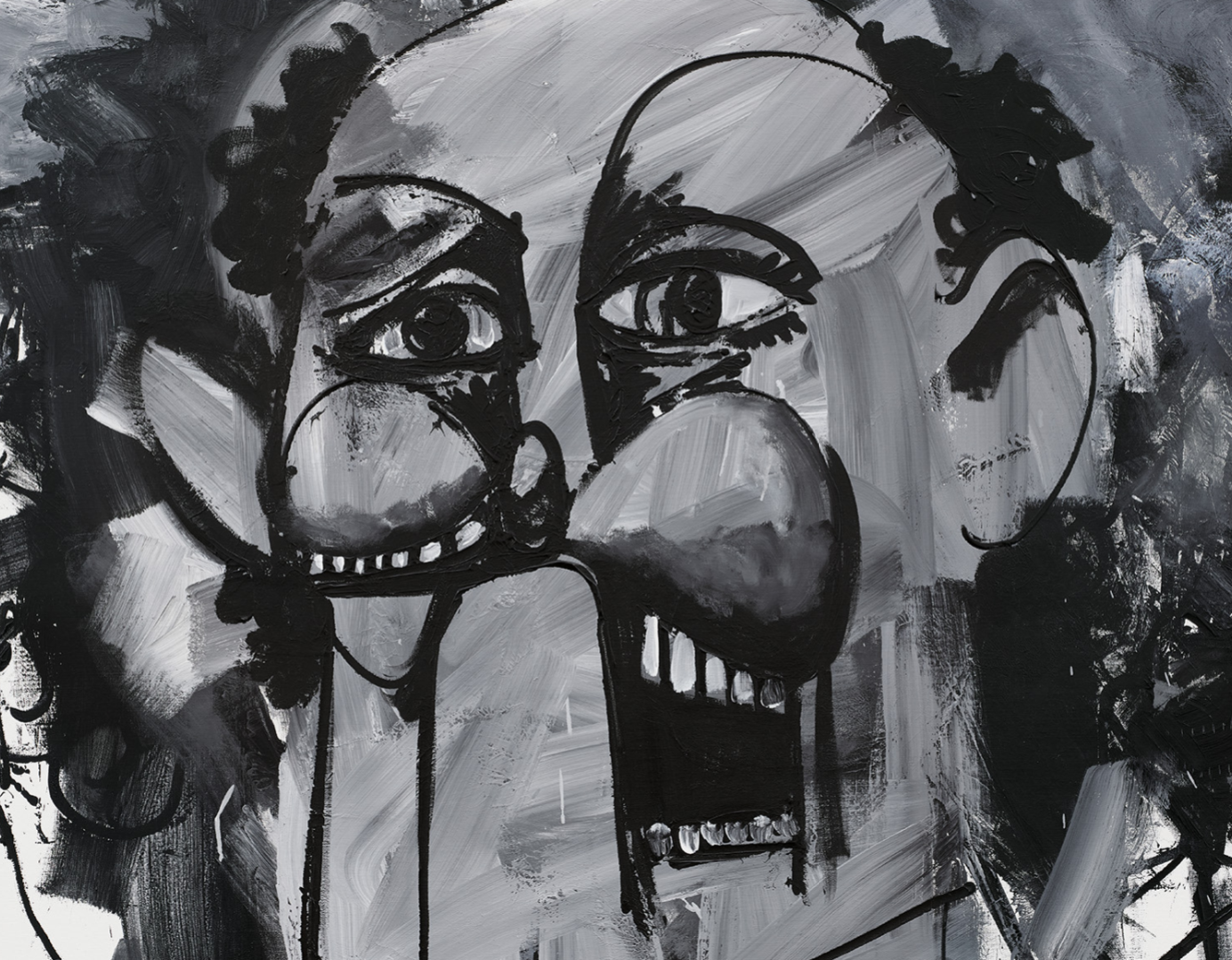
Both traversing and abolishing the border between abstraction and figuration, Sketches of Jean Louis is a superb example of Condo’s remarkable ability to warp the representational. Set against a backdrop of textured strokes in varying opacities, the melodramatic Jean Louis meets our gaze through the fractured facial landscape of Cubism, his warped visage revealing a distorted array of features. Often presented as a butler, maid, chef, or banker, in the present work Jean Louis is smartly dressed with a white-collared shirt and sharp black bow-tie, his depiction both nodding to a kaleidoscopic array of art historical references whilst also feeling conspicuously contemporary, bringing to mind an array of sources that range from the slick James Bond to caricature, comics, and the comical Looney Tunes.
“I believe that painting needs to transform in order for it to become interesting for each and every generation, but I think of it more in terms of being liberated by history. Liberated by what has come before.”
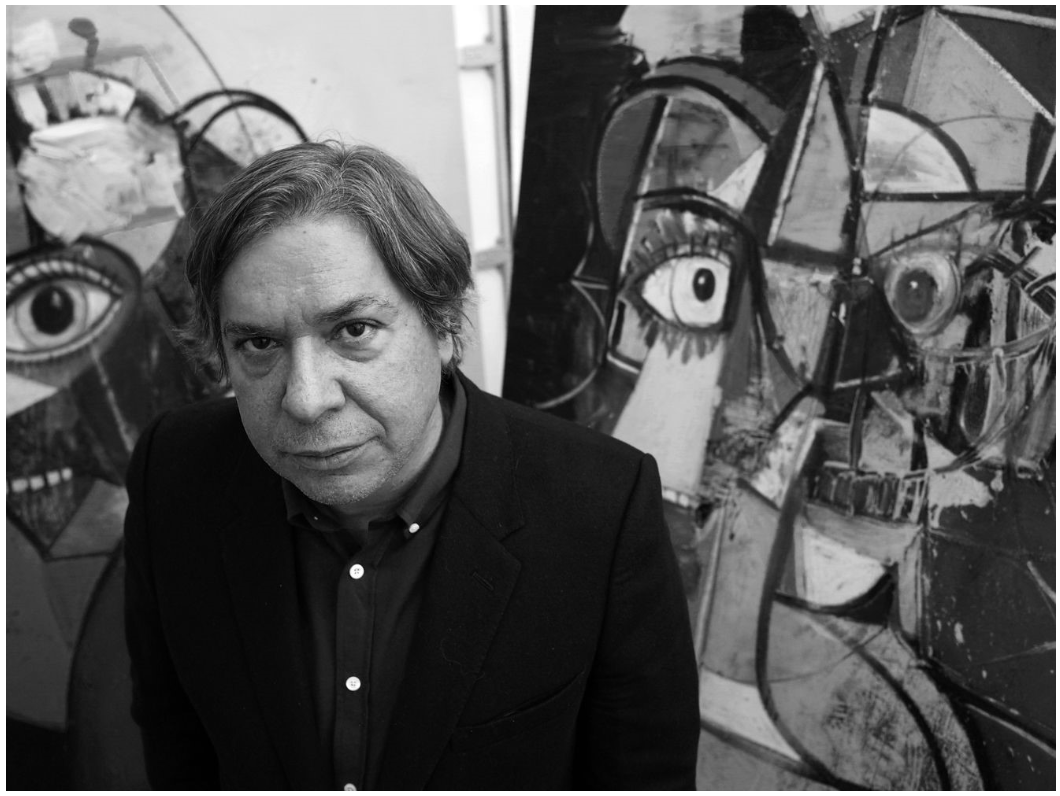
George Condo / Photo Courtesy Melissa Brice Shea
As a defining, recurring subject in his oeuvre, in Sketches of Jean Louis, Condo presents the fictious Frenchman full of pointed humor and unexpected angles, with an expression that intrigues us as his mouth is wide open as if shouting out in alarm. In searching for answers for the cause of his half-pained look, we notice the hand clasped around Jean Louis’ shoulder, a gesture that appears simultaneously friendly and eerie – the latter of which owing to its claw-like grasp. Whilst the hand is clearly defined, the possessor is not, their face smudged into darkness as their features smear into the dense topography of the background, which appears as a labyrinth of sensuous de Kooning-esque line. Contributing to the uncanniness of the overall scene is the bare-breasted woman to the left of the composition, whose torso juxtaposes the notably expressive backdrop in that it is left predominantly clear of mark-making, thus existing within the canvas as a contradictory place of negative space. The beauty of her face too, is morphed and mangled, through expressive strokes that animate her bug-eyed look with an unsettling mixture of torture and parody. Twisting and merging together, a sense of manic horror emerges, leaving us to believe we perhaps understand Jean-Louis’ surreal gasp.
Abstract Portraits
Untitled, 2012
Between Madness and Beauty: Selections from the Anna Condo Collection
Christie’s New-York: 21 May 2026
Estimated: USD 250,000 – 350,000
USD 698,500
GEORGE CONDO (B. 1957), Untitled | Christie’s
GEORGE CONDO (B. 1957)
Untitled, 2012
Oil on canvas
40 x 32-1/4 inches (101.6 x 81.9 cm)
“The only way for me to feel the difference between every other artist and me is to use every artist to become me…[I use] Rembrandt, Hals, Picasso, De Kooning, Rothko, Guston, and Degas.”
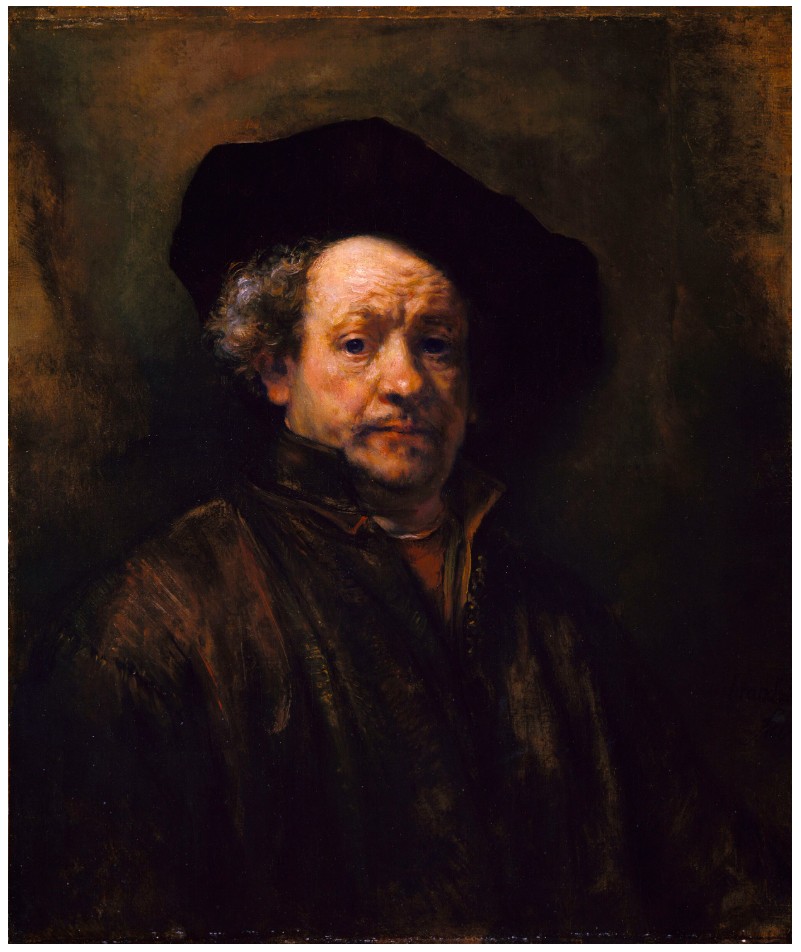
Rembrandt van Rijn, Self-Portrait, 1660. Metropolitan Museum of Art, New York.
Untitled, circa 2008-2010
Phillips London: 7 March 2025
Estimated: GBP 250,000 – 350,000
GBP 279,400 / USD 357,632
George Condo – Modern & Contemporary … Lot 119 March 2025 | Phillips
GEORGE CONDO
Untitled, circa 2008-2010
Oil on linen
47 1/4 x 35 1/2 inches (120 x 90.2 cm)
“Kandinsky, Picasso, Caravaggio […] created their own language which was somehow comprised of everything that came before them and took it to a new level. That’s my intention as an artist.”
Untitled serves as a true metaphor for Condo’s approach to contemporaneity, where ideas, lessons, and experiences of the past directly influence the way our reality is constructed. The sitter is portrayed in a traditional Renaissance portraiture format, dressed in 15th-century attire- a clear acknowledgement of the weight of art history on the visual language of today. The pictorial vocabulary of the 21st century is represented by a youthful and trendy outfit subtly layered beneath the cape. Condo’s signature method commonly involves layering faces and emotions to create complex expressions that imbue his characters with depth and dimension. In the present piece, this method extends beyond facial expressions, integrating the entire composition. The work’s background symbolically draws on art history’s poignant use of ultramarine blue, originally derived from semi-precious stones, to demonstrate wealth, humility, and purity. This color became emblematic of humility, purity and wealth. By employing this color scheme, Condo ascribes greater significance to the complexity of human consciousness, illustrating how similarly to art, it is a continuum that evolves over time, from the simplest living forms to the most sophisticated human systems.
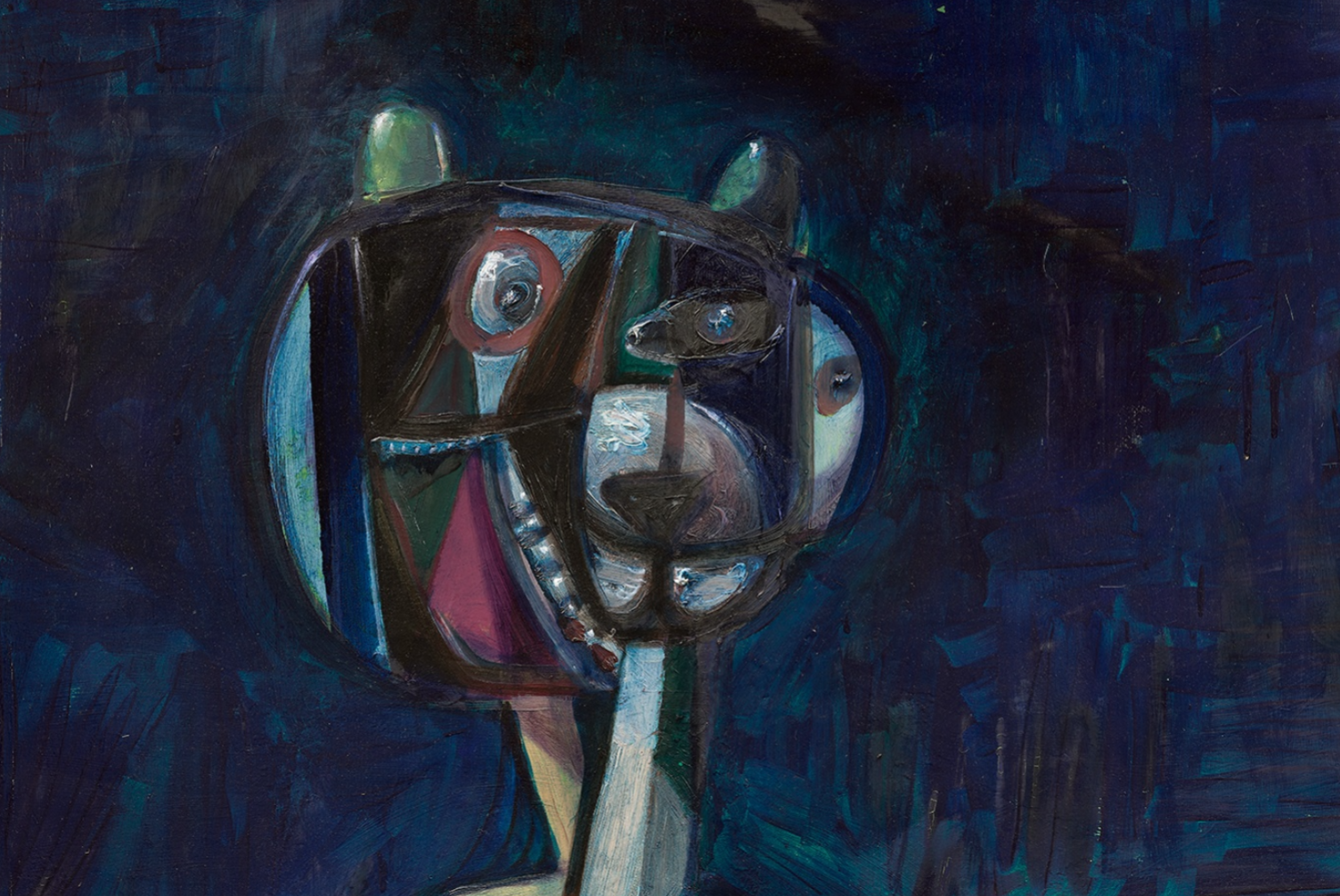
In the present work, the depicted kaleidoscope of forms and colours, inspired by Cubist pioneers such as Picasso and Braque, does not merely showcase fragmented personages but delves into the profound depth of the human psyche. The dynamic elements of Untitled pay tribute to Condo’s lifelong interest in music, which paralleled his journey in the visual arts. His classical guitar training, alongside his academic background in art history and music theory, brought a multidimensional aspect to his work. The present work showcases this musical interest most notably within the protagonist’s expression, where Condo incorporates elements that evoke musical note charts, replacing sharps and flats with lines and colours, and simultaneously echoing Kandinsky’s belief in the connection between music and art to reflect the dynamism of modernity – with all its virtues and flaws.
Portrait Composition in Blue and Grey, 2012
Christie’s New-York: 11 May 2023
Estimated: USD 1,000,000 – 1,500,000
USD 2,712,000
GEORGE CONDO (B. 1957) (christies.com)
GEORGE CONDO (B. 1957)
Portrait Composition in Blue and Grey, 2012
Oil on canvas
66 x 58 1/8 inches (167.6 x 147.6 cm)
Incised with the artist’s signature and date ‘Condo 2012’ (upper left)
At once becoming and dissolving, building and demolishing, materializing and evaporating, George Condo’s Portrait Composition in Blue and Grey both engages an age-old tradition of portraiture and paints a novel path forward in abstract figuration. Blocks of weighty color cram and abut within the contour of a traditional bust against an evanescent background that passes from light blue to grey and back again. Arranged geometrically, these lush passages mimic three-dimensionality—prisms and spheres caught in a moment of expansion—yet a realization of the perspectival impossibilities halts the deception in its tracks. Bricks of white and pastel hues imitate the cool light that would presumably fall on the bridge of the sitter’s nose, the tops of the ears and the proper right clavicle, but their clearly defined edges again belie any sense of illusionism. Similarly, what first appear as shadows quickly dissolve into varying shades of the same palette, citing the Impressionist realization that darkness does not require blackness. The formless, ethereal space enshrouding the figure borrows from the early seventeenth century, when portrait subjects abandoned their luxurious environments for the barren canvas. Thus, Condo obeys the portrait recipe in name alone, following the art historical rules for the express purpose of breaking them.
The Screaming Smoker, 2020
Sotheby’s New-York: 20 May 2022
Estimated: USD 1,000,000 – 1,500,000
USD 2,228,000
The Screaming Smoker | Contemporary Day Auction | 2022 | Sotheby’s (sothebys.com)
GEORGE CONDO (B. 1957)
The Screaming Smoker, 2020
Acrylic on canvas
56×50 inches (142.2 x 127 cm)
Signed Condo and dated 2020 (upper left)
The Screaming Smoker from 2015 is a brilliant example of George Condo’s ability to express various psychological states through his instantly recognizable artistic language that is deeply rooted in art history, specifically in the methodology of cubism. Striking and arresting in color and composition, The Screaming Smoker captures the raw dynamism and psychological intensity of George Condo’s recent work. Condo’s paintings often fuse cartoon-like figures and human forms, simultaneously reflecting a plethora of emotions and gestures; a scream and a laugh within a single expression. Capturing the essence of what the artist calls ‘Artificial Realism’, the present work showcases a smoking figure, with geometric-like features and an agape mouth against a rich purple background. Grasping a large cigar while staring directly at the viewer, the present work is vibrantly dream-like. Between the melee of exaggerated features and fragmented, abstract planes, flashes of the artist’s most important motifs are clearly discernable: Old Master portraits, his own brand of ‘psychological Cubism,’ cartoon references, and a commitment to constantly pushing the boundaries that separate figurative and non-representational painting.
Green Head Composition, 2013
Sotheby’s London: 2 March 2022
Estimated: GBP 1,500,000 – 2,500,000
GBP 2,334,000 / USD 3,119,903
Green Head Composition | The Now Evening Auction | 2022 | Sotheby’s (sothebys.com)
GEORGE CONDO (B. 1957)
Green Head Composition, 2013
Acrylic, charcoal and pastel on linen, in artist’s frame
56×52 inches (142.2 x 132 cm)
A kaleidoscope of brilliant colors and surging forms, Green Head Composition is a paradigm of George Condo’s career-long exploration of and engagement with figurative painting in the twenty-first century. Within the fractured realm of the present work, abstraction and figuration collide with thrilling velocity before the viewer’s eyes; while clearly discernable, the silhouette of the central figure evades clear articulation, as Condo deftly manipulates our ability to read the image before us. Green Head Composition is extraordinary for its vibrant coloration, compositional intricacy, and rich surface of expressionistic brushwork. Between the melee of exaggerated features and fragmented, abstract planes, flashes of the artist’s most important motifs are clearly discernable: Old Master portraits, his own brand of ‘psychological Cubism,’ cartoon references, and a commitment to constantly pushing the boundaries that separate figurative and non-representational painting.
Staring into Space, 2014-2015
Christie’s Hong-Kong: 1 December 2021
Estimated: HKD 20,000,000 – 28,000,000
HKD 21,850,000 / USD 2,804,374
GEORGE CONDO (B. 1957) (christies.com)
GEORGE CONDO (B. 1957)
Staring into Space, 2014-2015
Acrylic, charcoal, pastel on linen
52 1⁄2 x 43 1⁄2 inches (133.3 x 110.5 cm)
Signed and dated ‘Condo 2014-5’ (upper right)
In Staring into Space, Condo assembles geometric planes of colour into the idiosyncratic face of a woman’s portrait . Referencing the Cubist legacy of Picasso, out of this collection of frontal planer forms, features appear: eyes wide open, a protruding ear, high cheekbones, an elongated neck, and finally a toothy grin all emerge out of the interlocking jigsaw of shapes. Set against a backdrop of bubblegum pink, the flowing lines of Condo’s figure—he has called works such as this a “drawing painting”—evoke the spirit of Arshile Gorky’s color-blocked washes in his landscapes of the 1940s or Willem de Kooning’s early abstractions, wherein bits of flesh peek through a flurry of furious marks.
Multicolored Portrait, 2014
Christie’s Hong-Kong: 25 May 2021
Estimated: HKD 12,000,000 – 16,000,000
HKD 22,450,000 / USD 2,892,035
GEORGE CONDO (B. 1957) (christies.com)
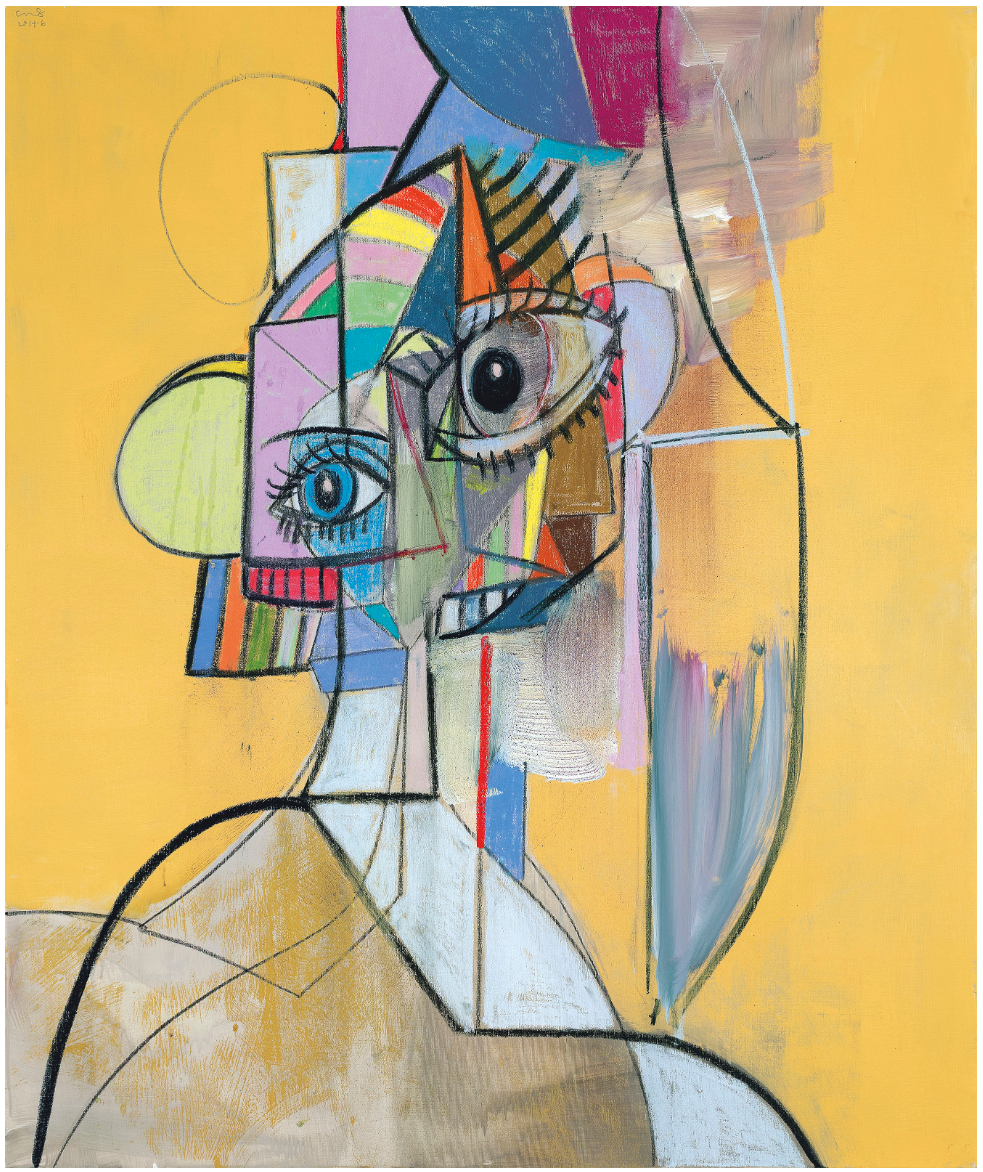
GEORGE CONDO (B. 1957)
Multicolored Portrait, 2014
Acrylic, charcoal and pastel on linen
50 1/2 x 42 1/2 inches (128.3 x 108 cm)
Signed and dated ‘Condo 2014.6’ (upper left)
Multicolored Portrait epitomizes George Condo’s mature style, it is also a continuation of his “expanded canvases” series. Executed in acrylic on linen, with well-defined charcoal lines and soft pastel elements outlining the portraiture against a yellow background, Multicolored Portrait presents exuberant forms and vital colors, presided over by balmy shades of sky-blue, lavender, fuchsia and light grey, conjure an expansive sense of light and space. Multicolored Portrait derives from his most-sought-after ‘psychological cubism’ series; it is a triumph of his multifaceted approach to bridge the boundary between figuration and abstraction. Snatches of recognizable human features—eyes, eyelashes, forehead and streaks of hair of an elegant nude—are subsumed in an enchanted chaos. The fragmented faces and upper body are composed of abstract shapes that assemble a three-dimensional form. The viewer can decipher Condo’s recontextualization of Picasso’s cubism works of the 1930s, in which he finessed Cubism to prismatic heights. Condo’s experimentation of various shapes to piece together the profiled head find clear parallels in works like Picasso’s Buste de femme (1938). It is also evident that all top fifteen auction records of Condo derive from the same series.
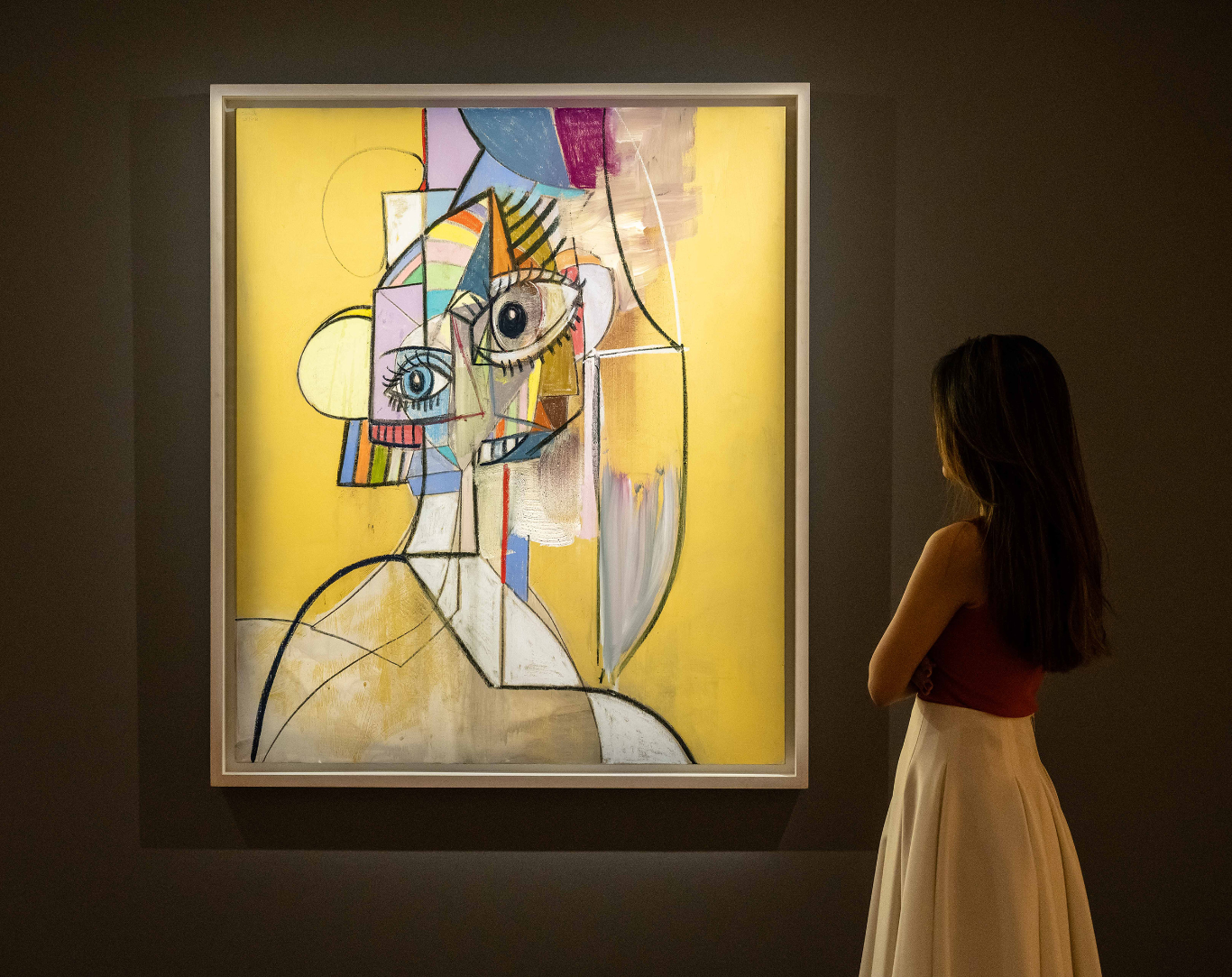
Throughout Condo’s career, he has immersed in an intelligent conversation with the history of painting, and Picasso has remained a key touchstone and influence. “I describe what I do,” said Condo in 2014, “as Psychological Cubism”. Picasso painted a violin from four different perspectives at one moment. I do the same with psychological states”. However, there is one major difference between the two: Picasso’s cubism emphasizes on creating a new way of seeing familiar faces, such as his most beloved Dora Maar; whereas for Condo, the highlight is on the psychological perception of his imaginary subjects. He does not only attempt to show an object from various angles, but rather to paint the internal and ever struggling emotions of the human psyche. Although Condo is a painter, he also adopts a similar approach to a classical composer. Multicolored Portrait is a symphony of a painting—counterpoising flurries of busy movement with more quiet, open sections; with its density of ideas, overlapping themes and vibrant contrasts. Condo’s expressive use of structure and improvisation, the rhyme and rule-bending of his forms and tones, also draws upon his relationship with music. At the University of Massachusetts, he studied Music Theory along with Art History.
Female Portraits
The Banker’s Wife, 2011
Christie’s London: 15 October 2025
Estimated: GBP 800,000 – 1,200,000
GBP 1,331,000 / USD 1,783,540
GEORGE CONDO (B. 1957), The Banker’s Wife | Christie’s
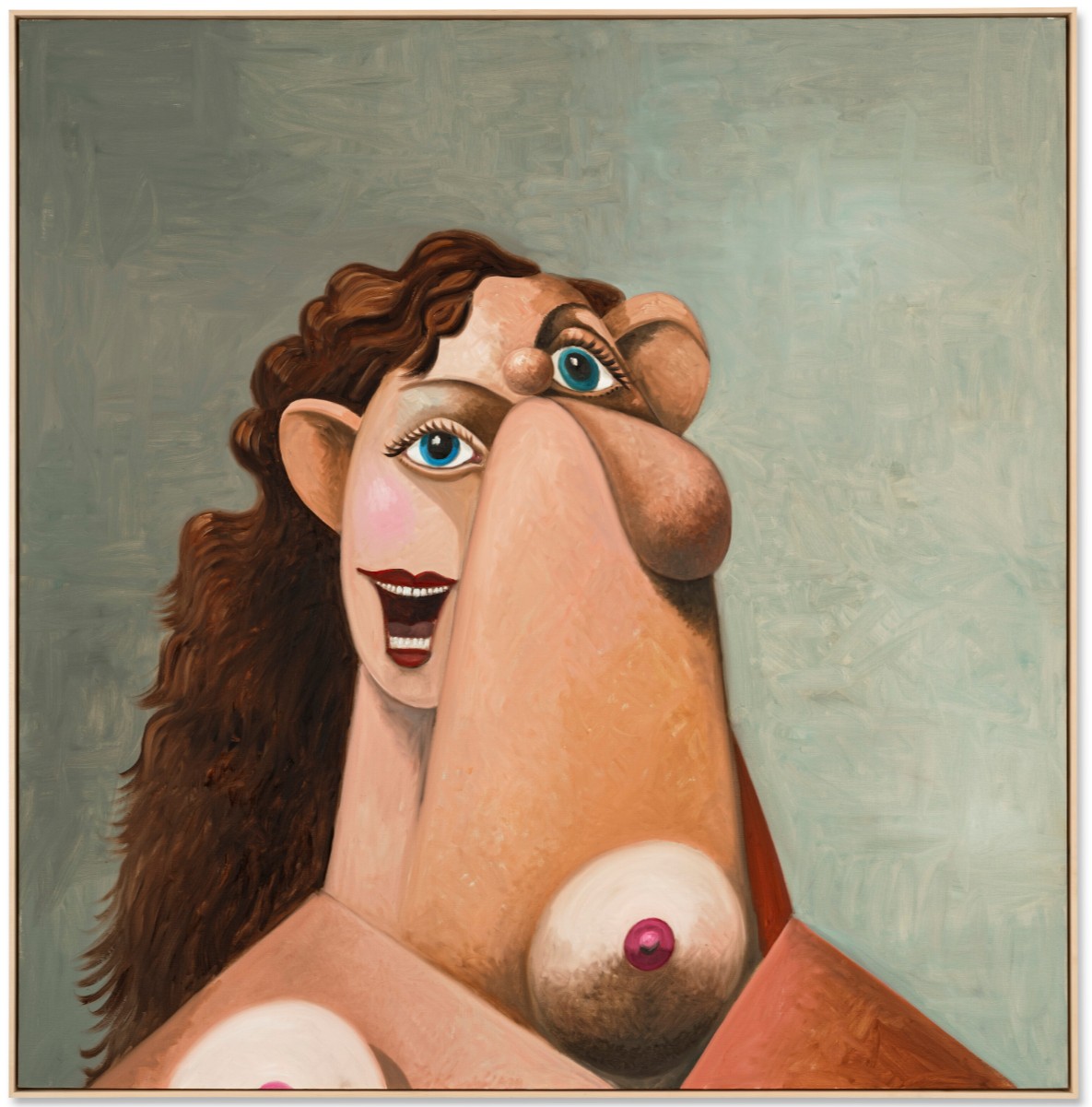
GEORGE CONDO (B. 1957)
The Banker’s Wife, 2011
Oil on linen
74×72 inches (188 x 182.9 cm)
Signed, titled and dated ‘Condo 2011 The Bankers Wife’ (on the overlap)
Dating from one of George Condo’s richest and most exciting periods, The Banker’s Wife is a bold example of his theatrical portraits. Painted in 2011, the year of his landmark solo exhibition Mental States at the New Museum, New York, it has been held in the same private collection ever since. Populated by a motley cast of characters— from sailors and secretaries to businessmen, barbers and butlers—Condo’s portraits depict a society at once familiar and alien. Borrowing the stances, postures and lighting of the Old Masters, his subjects are cut and spliced into strange, disarming caricatures, their features distorted and multiplied.
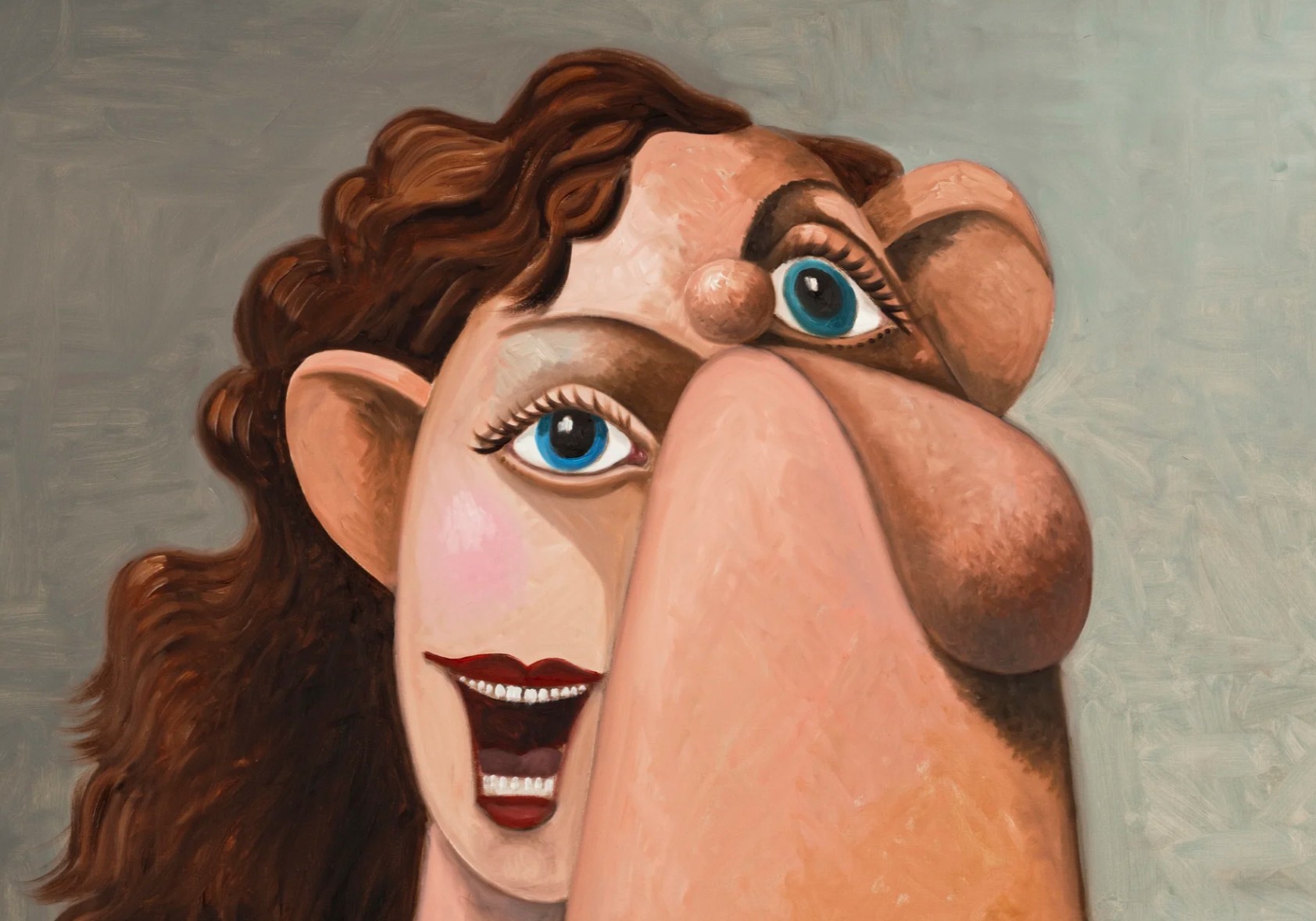
The Banker’s Wife is an arresting example of this approach, combining subtle chiaroscuro with an outlandish reorganization of body parts and facial features. With nods to Picasso and the Surrealists as well as Rembrandt, Hals and others, it captures the extraordinary hybridized language that defines Condo’s oeuvre.
Condo came of age in 1980s New York, gigging alongside the young Jean-Michel Basquiat, sharing a studio with Keith Haring and working for Andy Warhol’s master printer. He spent ten years in Paris, where he grew close to the writer Allen Ginsberg and nurtured his love of Renaissance and Baroque music. Against the backdrop of these eclectic influences, he undertook intense studies of the artists he loved—from Tiepolo and Caravaggio to Cezanne and de Kooning—copying their works and deliberately tearing them apart in the process. Condo’s admiration for Picasso, in particular, would eventually give rise to an approach he termed ‘psychological Cubism’. It described his attempts to depict multiple emotional states simultaneously, just as Picasso had painted objects from different angles within a single image. Closely related was the notion of ‘artificial realism’: a term coined by Condo to capture his own clashing appropriation of styles, genres and languages. Both concepts became linchpins of a practice at pains to understand image-making from the inside out.
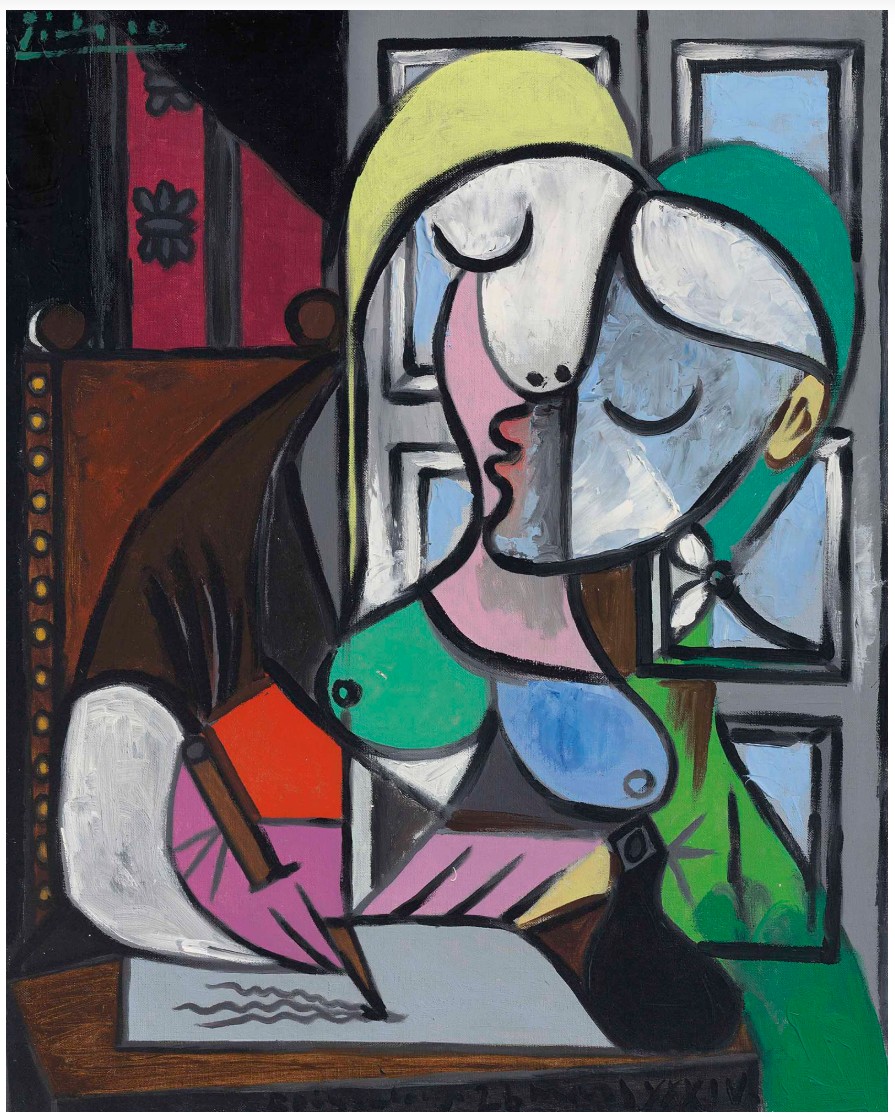
Pablo Picasso, Femme écrivant (Marie-Thérèse), 1934. Private collection. Artwork: © Succession Picasso/DACS, London 2025.
Condo’s portraits represent the sum total of his artistic and intellectual explorations during these years. They evolved from his so-called ‘antipodular’ creatures begun in 1996: strange beings with cartoon features and long flowing hair, based on the figures described in Aldous Huxley’s Heaven and Hell who live ‘at the antipodes of everyday consciousness’. From there Condo began to develop a distinctive line-up of imaginary characters who came to inhabit his practice like actors in a play. Alongside recurring archetypes including ‘Rodrigo’ and ‘Jean-Louis’, he conjures figures drawn from all walks of life: servants, socialites, royalty, reprobates. His subjects are simultaneously courtly and clown-like, archaic and urban, comic and tragic. All are plagued by bouts of mania, ecstasy and anxiety, trapped in an existential crisis between conflicting mental and artistic states.
Maja Vestida, 2005
Sotheby’s New-York: 16 May 2025
Estimated: USD 700,000 – 1,000,000
USD 889,000
Maja Vestida | Contemporary Day Auction | 2025 | Sotheby’s
GEORGE CONDO (b. 1967)
Maja Vestida, 2005
Oil on canvas in artist’s chosen frame
37 1/4 x 47 1/8 inches (94.6 x 119.7 cm)
Signed and dated 05 (upper left)
Signed, titled and dated 05 (on the reverse)
With a blend of provocation and wit, George Condo’s Maja Vestida offers a mischievous and psychologically charged homage to one of art history’s most iconic reclining nudes: Francisco Goya’s La Maja Vestida from circa 1800–1807. Refracted through Condo’s singularly surreal and visceral aesthetic, the work stands as a bold intervention in the lineage of portraiture, uniting classical precedent with the grotesque, the erotic, and the absurd.
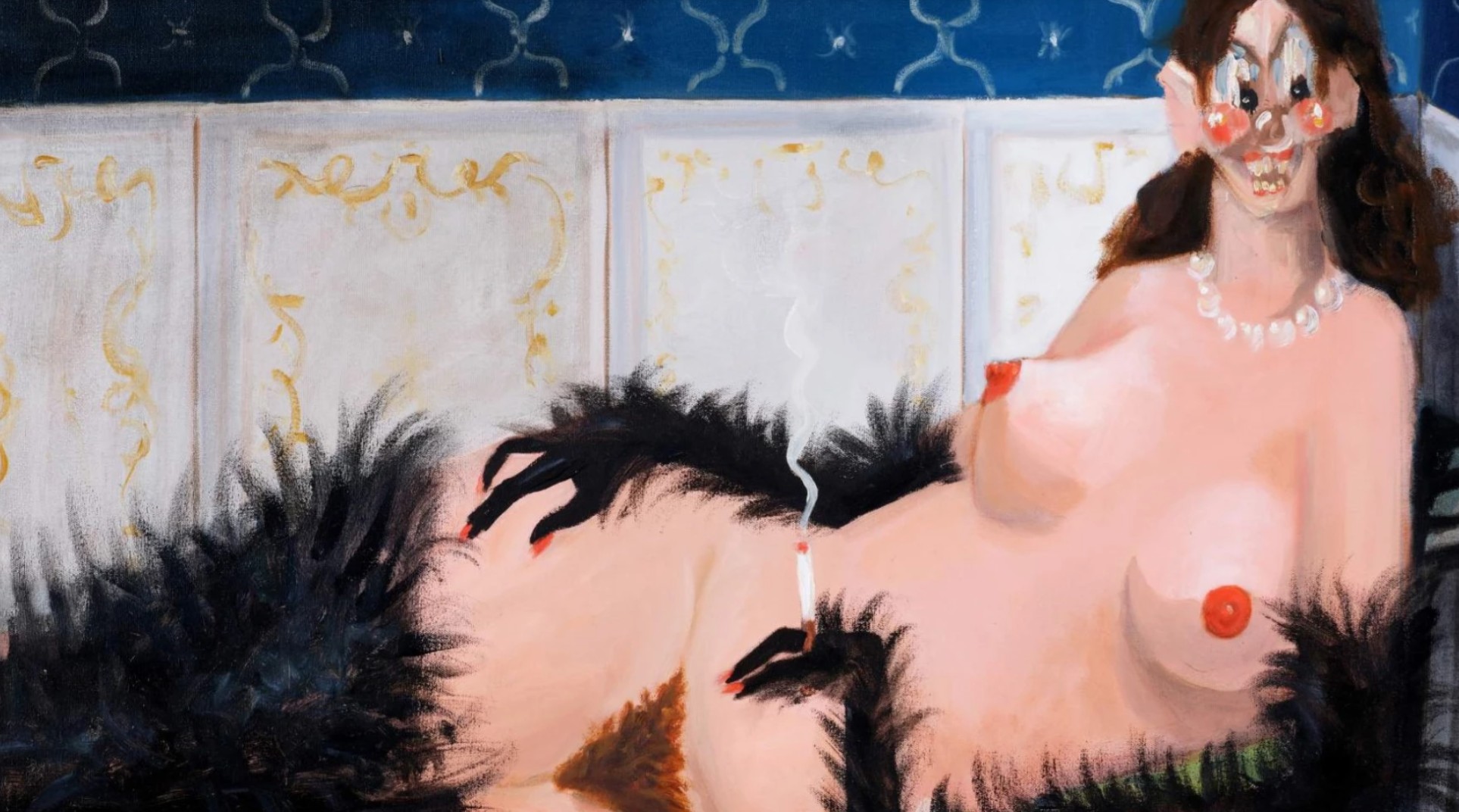
Rather than simply reinterpreting Goya’s composition, Condo fractures it—recasting the reclining figure as an uncanny amalgam of desire, theatricality, and psychic unrest. Draped in a voluminous black fur and sprawled provocatively across a divan, the woman stares out with brazen confidence, her form marked by exaggerated features and unsettling detail. Animistic hands, seemingly fused with the fur, clutch a burning cigarette as smoke curls into the air. Condo’s brushwork shifts fluidly between expressive painterliness and satirical distortion, amplifying the tension between beauty and madness, reverence and parody. The face, as ever in Condo’s portraits, becomes the locus of psychic drama. Disfigured yet uncannily expressive, the sitter’s features are a riot of competing expressions and stylistic registers: bulbous eyes peer outward from a mask-like visage; a manic grin is paired with a vacant stare. Her pearl necklace and delicately coiffed hair suggest bourgeois refinement, while her animal-like limbs and exaggerated anatomy teeter on the edge of the grotesque. This tension between the civilized and the primal lies at the heart of Condo’s practice—a recurring meditation on the dualities of human nature.
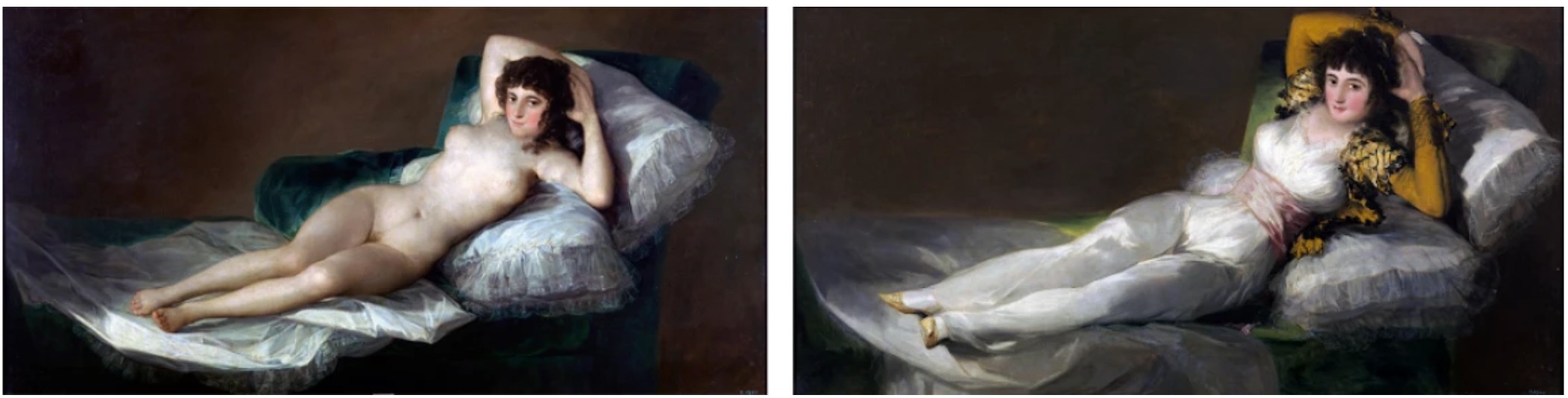
Left: Francisco Goya, La maja desnuda, 1797-1800. Museo del Prado, Madrid.
Right: Francisco Goya, La maja vestida, 1798-1805. Museo del Prado, Madrid.
The painting’s title, Maja Vestida (“The Clothed Maja”), is itself a sly provocation, as the subject here is provocatively naked save for her fur wrap. Condo’s inversion of Goya’s title points to his ongoing fascination with the collapse of binaries: clothed and nude, classical and contemporary, sacred and profane. In Goya’s original works—the Maja Desnuda and Maja Vestida—the figure remains largely identical in pose and gaze, her two states of undress offered as a moral and aesthetic paradox. In Condo’s hands, this paradox becomes even more unstable, transformed into a carnivalesque tableau of fragmented identity and performed eroticism.
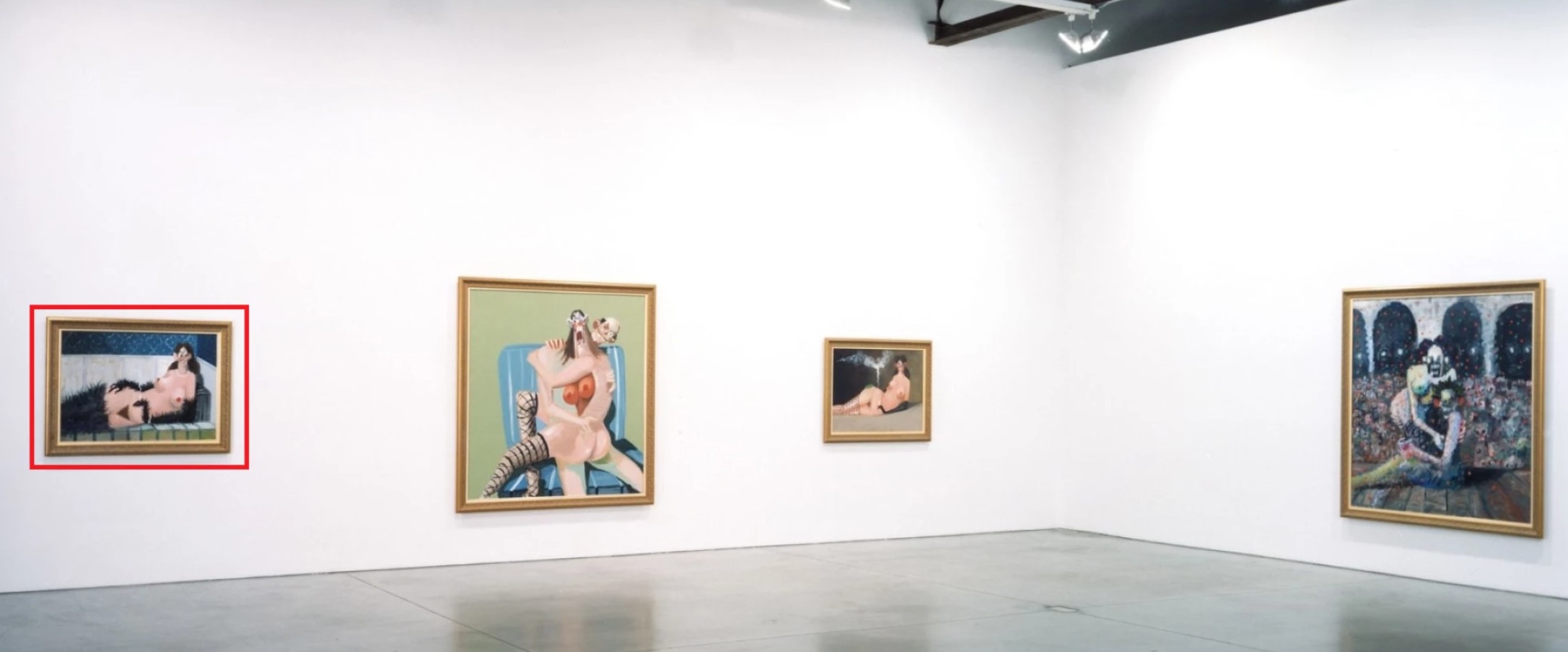
The present work installed in Existential Portraits at Luhring Augustine, New York, May – June 2006.
Art © 2025 George Condo / Artists Rights Society (ARS), New York
Painted at the height of Condo’s engagement with psychological portraiture, Maja Vestida exemplifies his Existential Portraits series, in which the artist probed the depths of human consciousness through imagined sitters rendered in his inimitable “Artificial Realism.” Condo has long cited an interest in his Cubist predecessors, layering multiple emotional states and stylistic vocabularies within a single figure. In this sense, Maja Vestida is less a depiction of a woman than a kaleidoscopic embodiment of contradictions—sensuality and anxiety, comedy and horror, form and formlessness.
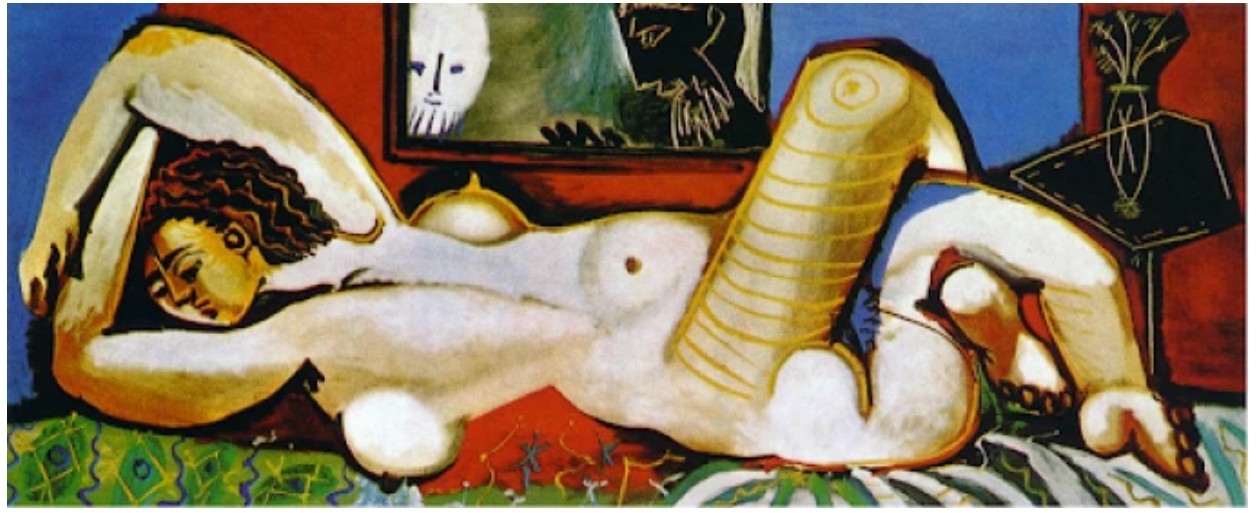
Pablo Picasso, Susanna and the Elders, 1955. Museo Picasso Málaga.
Art © 2025 Estate of Pablo Picasso / Artists Rights Society (ARS), New York
The setting itself contributes to the surreal charge of the composition. Ornamental wallpaper in cobalt and gold evokes an opulent, almost Moorish interior, while the tiling beneath the chaise longue adds a cold, clinical edge to the otherwise theatrical mise-en-scène. The space feels at once lavish and claustrophobic—a dreamscape where the boundaries of time and place dissolve. Condo’s chromatic dexterity is on full display: from the warm tonalities of the flesh to the glistening whites of her jewelry and teeth, the palette oscillates between opulence and decay. Ultimately, Maja Vestida is a masterful distillation of Condo’s enduring preoccupations: the tension between beauty and monstrosity, the artifice of portraiture, and the fractured nature of modern subjectivity. In its bold confrontation with the past—and its unflinching look at the raw interiority of the human form—Maja Vestida captures Condo at his most provocative, and his most profound.
The Alpine Waitress, 2006
Sotheby’s New-York: 21 November 2024
Estimated: USD 1,000,000 – 1,500,000
USD 1,320,000
The Alpine Waitress | Contemporary Day Auction | 2024 | Sotheby’s
GEORGE CONDO (b. 1957)
The Alpine Waitress, 2006
Oil on canvas
50×42 inches (127 x 106.7 cm)
Signed (upper left)
George Condo’s The Alpine Waitress from 2006 stands as a definitive work from his acclaimed series Existential Portraits, embodying both his radical approach to contemporary portraiture and subject-hood as well as his enduring engagement with ‘artificial realism’. The series as a whole endeavored to probe the depths of the human psyche by depicting fantastically hybrid figures which both materialize and heighten the tensions and contradictions between outward appearance and the internal self. Drawing on classical portraiture, cubist principles, and contemporary abstraction, Condo’s distinctive approach to figuration presents a rich crossbreed of diverse art historical influences and popular culture references. This synthesis innovates the depiction of the complexities of the human form as well as highlights Condo’s unique ability to weave a resplendent tapestry of tradition and imaginative distortion into his cohesive, compelling, and above all, immediately recognizable visual language.
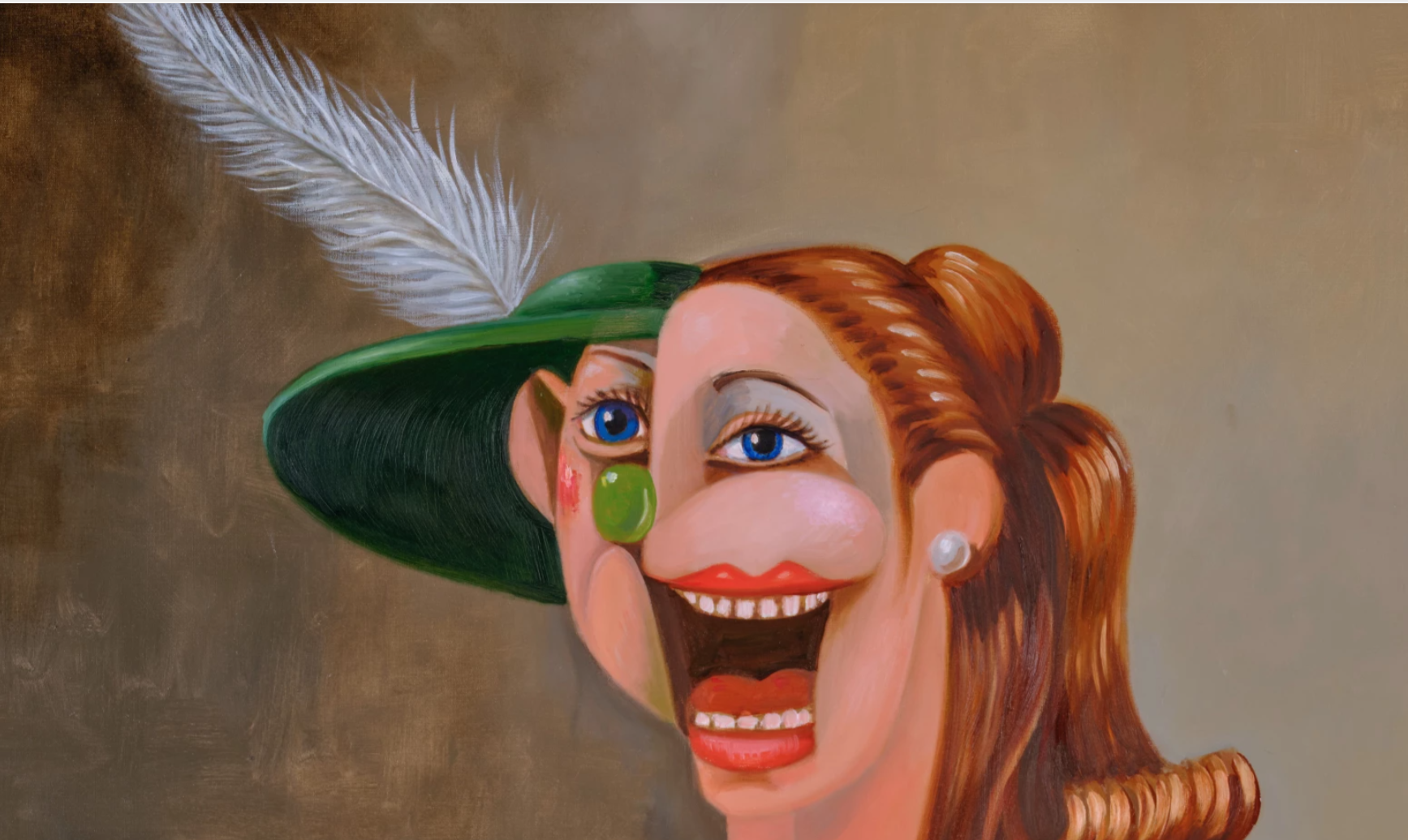
The Alpine Waitress presents a singular figure that, while bifurcated, retains a strikingly cohesive and harmonious identity within her twin-profile. The intriguing interplay of duality and togetherness examines the multifaceted nature of the human condition, as well as the intricacies of character and form. Despite the fragmented and schizoid-esque construction of her figure, she projects an undeniable human-quality, her face offering an immediate and emphatic address as she openly acknowledges and engages with her observer. Her visage appears almost seamlessly grafted on top of her elongated, rectangular neck, which extends preposterously and abruptly from her broad, rotund shoulders and full bust, amplifying the contrast between her soft classical roundness and severe cubist geometry. Her luxuriant curls and cavernous expanse of red lips swell towards the viewer and exaggerate her facial misalignment, submerging the onlooker into an unnerving and comic realm where humor, horror, and pathos take center stage. She personifies this persistent oscillation between attraction and repulsion, with her abstracted form exemplifying one of Condo’s most celebrated and iconic motifs: the titular abstracted figure, set against a scumbled, muted background reminiscent of classical portraiture. The Alpine Waitress merges the grace and refinement of an Old Master’s woman with the spiritedness and dynamism of contemporary abstraction, characteristic of Condo’s inventive approach towards composition.
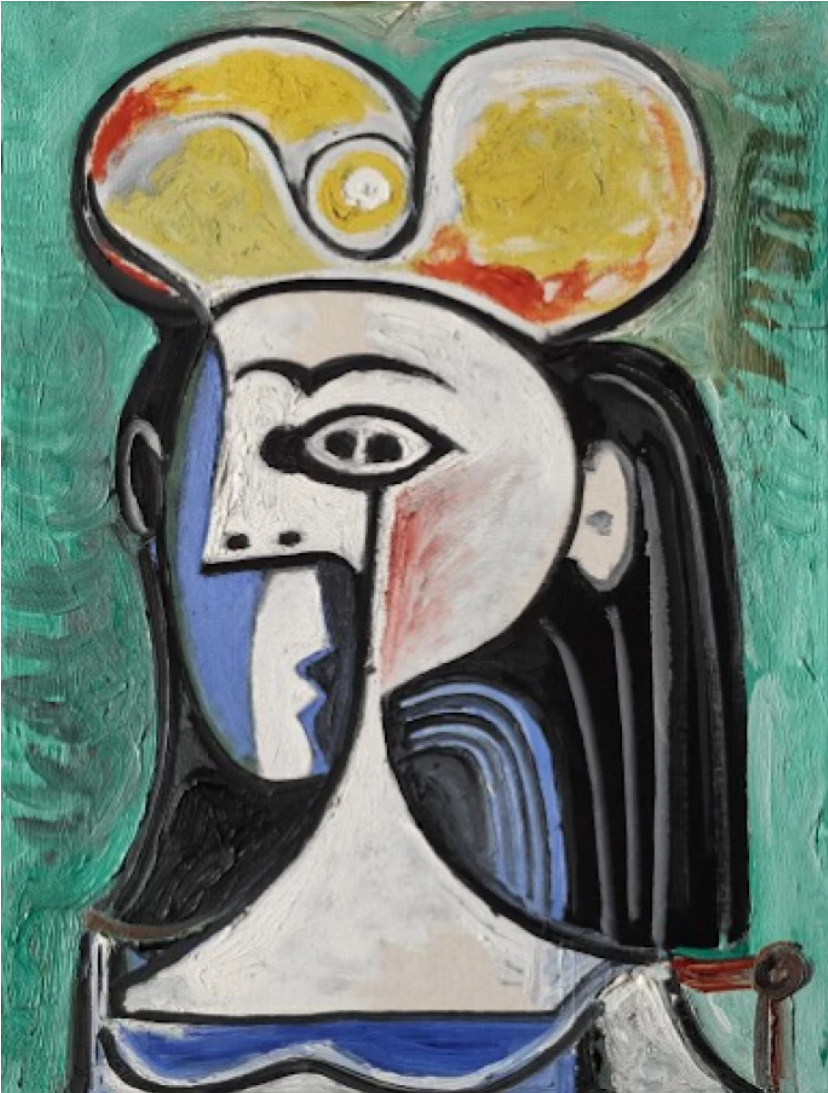
Pablo Picasso, Buste de femme assise, 1962. Private Collection.
Sold at Sotheby’s New York December 2020 for $11.2 million. Art © 2020 Estate of Pablo Picasso / Artists Rights Society (ARS), New York
While Condo draws from an incredible repository of art historical references, his works are particularly grounded in the principles of Cubism and their possible applications in the contemporary moment, evident in the geometric fragmentation, interplay of planes and perspectives, and deconstructions of objects and figures. Condo not only incorporates, but elevates the concept, presenting the figure not only from multiple perspectives, but as an embodiment of simultaneous emotional states. On a formal level, the present work echoes Pablo Picasso (1881-1973) both visually and conceptually, as both artists work to challenge conventional means of representation and push the boundaries of figuration, perception, and reality. “I describe what I do”, remarked Condo in 2014 “as psychological cubism. Picasso painted a violin from four different perspectives at one moment. I do the same with psychological states” (George Condo quoted in Stuart Jeffries, George Condo: ‘I was delirious. Nearly Died, The Guardian, 2014).
Seated Bather, 2005
Phillips London: 27 June 2024
Estimated: GBP 400,000 – 600,000
GBP 508,000 / USD 644,144
https://www.phillips.com/detail/george-condo/UK010424/20
GEORGE CONDO
Seated Bather, 2005
Oil on canvas, in artist’s frame
60 7/8 x 53 7/8 inches (154.5 x 137 cm)
Signed and dated ‘Condo 05’ upper left
In a period when the discipline of figurative painting was eclipsed by advances in conceptual art and abstraction, George Condo revitalized the medium through a careful and humorous appropriation of Old and Modern Masters fused with Pop culture references and reimagined in the artist’s highly distinctive visual style. Like his contemporaries Keith Haring and Jean-Michel Basquiat, Condo worked to combine stylistically representational and abstract elements, developing a mode of ‘Artificial Realism’ that was entirely his own. Swerving between Baroque theatricality, Cubist experiments in simultaneity and form, and Surrealist juxtaposition, Condo’s wildly inventive portraits are freed from the constraints of physical or anatomical likeness, populated by a host of strange figures characterized by exaggerated overbites, oversized ears, and bulging eyes – ‘Antipodal Beings’ from the far-flung edges of psychological experience. Often taking on the menial roles of butler, maid, chauffeur, or janitor, this strange cast of characters allowed Condo to visually expose the tensions between the composed face a subject might have to present to the world, and the more complex internal feelings shifting beneath the surface, embodying ‘the despair, the heartache, the love and the happiness of any of us.’ Such a strikingly original approach to notions of simultaneity also emphasizes the supreme influence of the great modern master Pablo Picasso on Condo’s work over the years
“Any great artist is a sum total of the artists who came before him. Picasso’s ‘Seated Bather’ comes straight out of Renoir and there’s reference to David and ‘Le Déjeuner sur l’herbe’ by Manet. It’s an identity thing – everybody wants to feel like an individual, but we’re part of a continuum, whether we like it or not.”
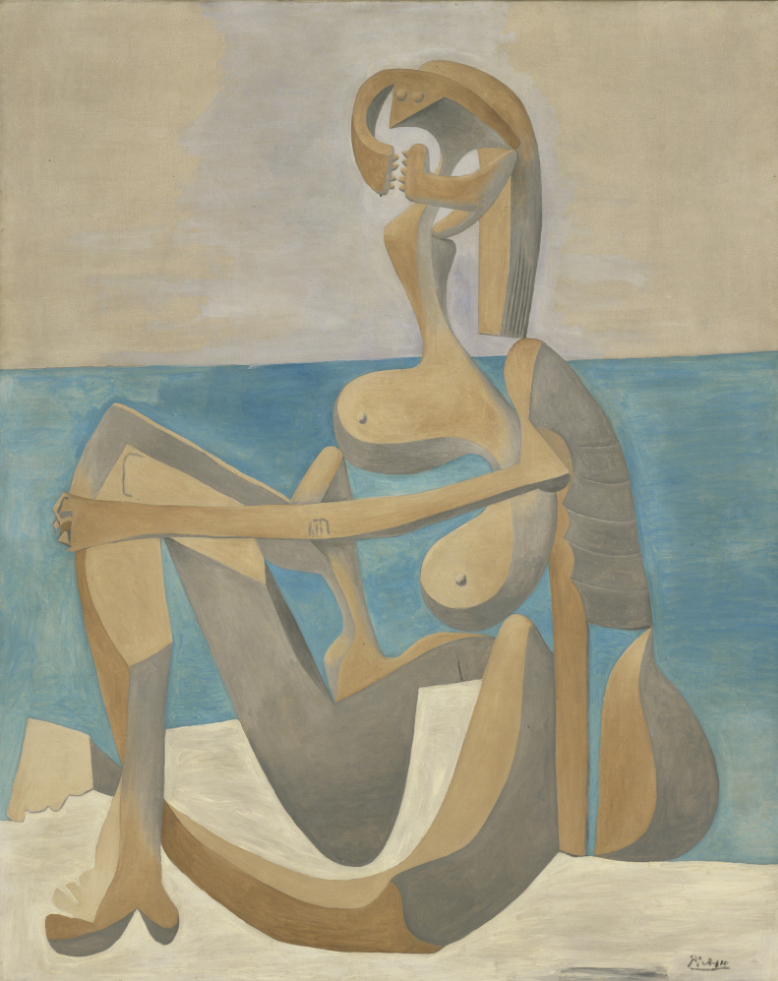
Pablo Picasso, Seated Bather, 1930, The Metropolitan Museum of Art
https://www.moma.org/collection/works/78721
Painted in 2005, Seated Bather takes these connections even further, drawing immediate compositional comparisons to Picasso’s pivotal series of nude bathers from the late 1920s and early 1930s. Although the motif of the nude bather had been a recurrent feature across Picasso’s oeuvre, his stylistic approach during this important period combined Cubist and more Surrealist elements with great dexterity and novelty. Applying a similar stylistic approach, Condo’s Seated Bather stands in a particularly close compositional relationship to Picasso’s Seated Bather from 1930, now held in the permanent collection of The Metropolitan Museum of Art in New York. In both paintings, a single, female figure sits in profile, alone against a sparse backdrop of sky, sea, and sand. In both, the angularity of the figure is exaggerated through the arrangement of the sitter’s limbs and the sharp contrast established between the bended knee and softer, more rounded forms. Just as Picasso fractured the body to reach a deeper understanding of its volumetric form, drawing himself into dialogue with both classical art and modern modes of experimentation, Condo’s similarly amalgamative approach has enabled the artist to pursue the complex and contradictory realities of our psychological lives.
Antipodal Dream, 1996
Sotheby’s New-York: 14 May 2024
Estimated: USD 400,000 – 600,000
USD 596,900
Antipodal Dream | Contemporary Day Auction | 2024 | Sotheby’s (sothebys.com)
GEORGE CONDO (b. 1957)
Antipodal Dream, 1996
Oil on canvas
72×60 inches (183 x 152.4 cm)
Signed and dated 1996 (on the reverse)
Powerful in its ambient ethereality, George Condo’s Antipodal Dream is a definitive example of the artist’s stylistic construct of artificial realism, through which he has expanded the traditional realm of figurative painting to portray the often-humorous idiosyncrasies of contemporary life. As part of Condo’s experimental series known as “Antipodal portraits,” the present work is an outstanding example of the synthesis of Condo’s unique visual language and the art historical concerns that fascinated him throughout his career. Known for his unique and sometimes humorous repurposing of classical subjects, Condo draws from influences as varied as the Old Masters and Picasso’s Cubist language to construct worlds and characters that toe the line between fantasy and reality. His “antipodal portraits” exist in this liminal space, presenting psychologically complex figures on the “outskirts of society” in indeterminate settings with absurdly juxtaposed features. They often include recurring symbols, such as bubbles, wine glasses, and cigarettes. In an interview with the Hong Kong art magazine Ran Dian, Condo describes these antipodal figures as “humanoid” that “live independent of our existence… and they don’t necessarily want you to know that they’re in there. They are living in the periphery to a certain degree.. and they are… putting your molecules in place and you, as an artist, are able to tap into that depth of your psyche and see these characters.” Condo compares his search for these “antipodal beings” as similar to Da Vinci’s intensive study of anatomy, which ultimately allowed him to better understand the external world and develop his remarkable naturalism.

PORTRAIT OF A GIRL IN A BLUE DRESS WITH A PARROT IN A PALATIAL GARDEN, WILLEM VERELST (ACTIVE C. 1734-C. 1752, PERA MUSEUM, ISTANBUL.
Antipodal Dream is a portrait of a standing figure in formal clothes from a bygone era, whose unique form borders between the human and the animalistic. In contrast to the figure’s stark presence, an ominous cloud looms in the upper left corner painted with gentle gestural brushstrokes, evoking a dreamscape and further unsettling the composition as perspective and depth are warped. The figure us positioned against a sea of gray-blue and black, demonstrating Condo’s mastery of the eighteenth-century Baroque depictions of portraiture as well over the pictorial plane. Condo embodies the dichotomy between past and present by frequently incorporating stylistic influences and formal qualities used by Old Master painters into his own work.
“That’s a sleepwalker I was thinking of. Somebody that was walking in their sleep so they’ve got dressed up and walked out of their dream. That’s framed, in a strange way, like a classical portrait of this imaginary figure.”

JAMES ENSOR, SQUELETTE ARRÊTANT MASQUES, 1991. SOLD AT SOTHEBY’S PARIS, 2016 FOR $8.1 MILLION. ART © 2023 ARTISTS RIGHTS SOCIETY (ARS), NEW YORK / SABAM, BRUSSELS
While the work’s subject matter probes the boundaries of reality, Condo approaches the work with a naturalism inspired by the Dutch Old Masters. Condo describes the framing of light in this portrait as inspired by Rembrandt and Frans Hals, who developed a technique in which the background of the figure corresponds uniquely to the lighting of its face, with the dark background echoed on the opposite side of the face. This creates, according to Condo, a “constellation of human psychology,” one of the artist’s primary fascinations. In the present work, the dark, swirling brushstrokes of the background suggest a storm cloud emanating from the figure, while the green clown nose and stretched necklace convey a satirical, humorous quality to her attire and presence. The figure’s features are instantly recognizable as Condo’s exceptional visual language, with its large ears, bulbous cheeks, and mismatched eyes (COMP). The figure’s hairy arms, green nose, and wide neck contrasts with her formal dress and delicate pearls, uniting the grotesque and the beautiful to confront the viewer with the unresolveable contradictions of the human psyche. Building upon years of refining and maturing an iconic figurative style, Condo’s Antipodal Dream is a work of dramatic intensity, at once utterly uninhibited and full of instinctive acumen.
Female Portrait, 2008
Sotheby’s New-York: 14 May 2024
Estimated: USD 1,200,000 – 1,800,000
USD 1,206,500
Female Portrait | Contemporary Day Auction | 2024 | Sotheby’s (sothebys.com)
GEORGE CONDO (b. 1957)
Female Portrait, 2008
Oil on canvas
72×60 inches (183 x 152.4 cm)
Signed, titled and dated 08 (on the reverse)
Searing with psychological depth, George Condo’s Female Portrait Composition from 2008, represents the paradigm of the artist’s radical approach to contemporary portraiture that unpacks the complexity of subject-hood. Overwhelming with an immediacy of pathos, eccentricity and satire, Female Portrait Composition evinces Condo’s innovatory aesthetic mode of painting, that harnesses the traditions of European portraiture to employ an ingenious articulation of Contemporary figuration, infused with a Surrealist and Pop twist. Striking and dazzling, the female figure gazes are the viewer with an astounding intensity, her single cerulean blue eye quietly reflecting the light across the surface of the immense canvas. In the present work, the cyclopean stare acts as centrifugal force that is framed by a dizzying lock of sculpted hair, zany button nose, rosy cheek and cocked eyebrow, to convey a spry and daring demeanor of the subject. The facial vocabulary in Female Portrait Composition is elevated further with the comedic elongation of the neck, megawatt smile, the cupids bow punctuated with garish red lipstick and goofy, deciduous teeth that offset the angularity of the oversized jaw. The outrageously impossible anatomical proportions in Female Portrait Composition serve as direct counterpoints to the technical mastery of the painted surface.

PABLO PICASSO, DORA MAAR IN AN ARMCHAIR, 1939. © 2024 ESTATE OF PABLO PICASSO / ARTISTS RIGHTS SOCIETY (ARS), NEW YORK. THE METROPOLITAN MUSEUM OF ART, NEW YORK.
Condo’s intricate brushwork captures the dignified and majestic posturing of the female subject in Female Portrait Composition. This period of production in Condo’s practice is distinguished by his employment of the concept of artificial realism: the strategy of taking a real subject and making it artificial. The sharp triangulation of the torso creates extraordinary dimension and structure to this profoundly analytical Cubist composition, that discreetly engages with the tension between the painted surface and the psychological depth of portraiture. Overtly saturated, the bubblegum pink of the figure is sliced by the searing yellow, royal purple and dazzling black that comprises the stark chest of the female figure, the multi-triangulation of her figure creates a complex and spellbinding impact for the viewer. This extraordinary compositional architecture is further echoed by the black triangle situated above the shoulder, which creates balance between the absurdity of the length of the neck and the truncation of the arm.

GEORGES BRAQUE, WOMAN SEATED AT AN EASEL, 1936. © 2024 ARTISTS RIGHTS SOCIETY (ARS), NEW YORK. THE METROPOLITAN MUSEUM OF ART, NEW YORK.
Female Portrait Composition successfully engages the visual language of Cubism and propels it further via the vehicle of artificial realism. The Cubist notion of reducing the image to a limited number of geometric shapes was the very genesis of the Cubist quest for compositional simplification and dynamism. For Condo, the present work is the very prism of his fragmented reconstructions, typical of only his most superlative paintings from the mid-2000s, in which the very nature of the identity of the subject is a construction only he can contort, obfuscate and translate into an energizing reimagination of contemporary figuration. The refinement and technical skill deployed in Female Portrait Composition is not only demonstrated by the hilarious anatomical improbability of the singular eye, offset nose, lips and triangulated torso, but is equally seen in the splendid cross-hatching of the rich charcoal and midnight blue, which creates an almost atmospheric quality that pays homage to the influence on Baroque and modern masters in Condo’s groundbreaking practice.
Beyond standing as a superlative example of the very mechanics of Condo’s language of painting, Female Portrait Composition is fresh to the market, having remained in the same private collection for nearly a decade and having previously been owned by the esteemed collectors, Steven and Ann Ames. The selection of Female Portrait Composition by the Ames family further demonstrates the undeniable quality of the present work as a standout example from one of Condo’s most celebrated periods of production.
Green Eyed Lady, 2016
Sotheby’s Hong-Kong: 5 April 2024
Estimated: HKD 10,000,000 – 20,000,000
HKD 13,518,000 / USD 1,728,203
GEORGE CONDO (b. 1957)
Green Eyed Lady, 2016
Acrylic, pastel and charcoal on canvas
70×66 inches (177.8 x 167.6 cm)
Signed and dated 2016
Conjuring conflicting psychological states of passion and rage, Green Eyed Lady from 2016 dances with frenetic, textural energy, a paradigm of George Condo’s knife-edge dance between the enticing and the grotesque. Within the fractured realm of the present work, abstraction and figuration collide with thrilling velocity before the viewer’s eyes; the moment one picks out a form, it slips back into the delirium of the whole. Teeth, eyes and hair collide and fragment, manipulating our ability to read the image before us. Extraordinary for its vibrant coloration, compositional intricacy, and rich surface of expressionistic brushwork, Green Eyed Lady is a paradigm of Condo’s remarkable ability to synthesize diverse influences into a singular and deeply compelling visual language. Steeped in the traditions of Cubism and the legacy of Picasso yet altered through Pop culture idioms, Green Eyed Lady demonstrates George Condo’s extraordinary command of image, color and composition.

Painted in 2016, the present work is a remarkable example of the artist’s celebrated Drawing Paintings (2009-present), so called because they marked a shift away from the oil paint that Condo had used up to that point towards a multi-media approach consisting of acrylic, charcoal and pastel. These intriguing works continue to draw on techniques and styles of his Modernist predecessors while exploring what he has called ‘abstract figuration’. Between the melee of exaggerated features and fragmented, abstract planes, flashes of the artist’s most important motifs are clearly discernible: Old Master portraits, his own brand of ‘psychological Cubism,’ cartoon references, and a commitment to constantly pushing the boundaries that separate figurative and non-representational painting. Evocatively recalling Pablo Picasso’s masterful Cubist facture through a visage which slowly melds, morphs and dissolves into a geometric being, Green Eyed Lady is a masterful example of Condo’s self-termed mode of ‘psychological cubism.’ Where Picasso radically shattered the picture plane to explore multiple viewpoints in the same moment, Condo ruptures his compositions to reveal the multifaceted and kaleidoscopic complexities of human emotion.
“And I guess that was the other thing I got from Picasso. It’s the idea of Cubism—but rather than seeing and depicting this coffee cup, say, from four different angles at the same time, I’m seeing a personality from multiple angles at once. Instead of space being my subject, I’m painting all of someone’s emotional potentialities at once, and that’s what I’d call Psychological Cubism.”
Dividing the highly stylized and multitudinous ‘subject’ of the present work into multiple planes of experience, Green Eyed Lady is Jazz-like in its recapitulation of the human form. Blurring the traditional delineations between drawing and painting, finished and unfinished, flat two-dimensionality and sculptural depth, the present work builds upon years of refining and maturing his iconic figurative style. Isolating the eyes, teeth and ears against a mottled blue background, Condo’s application of red, orange, green and blue pigment seems to convulse from within the pictorial frame. Bringing together elements of beauty and the macabre with expressionistic brushwork in a kaleidoscopic sweep of colors, Green Eyed Lady invites the viewer on a journey into the depths of the human psyche and the creative process.
Irish Girl, 2003
Phillips London: 8 March 2024
Estimated: GBP 320,000 – 500,000
GBP 381,000 / USD 483,108
George Condo – 20th Century & Contemp… Lot 129 March 2024 | Phillips
GEORGE CONDO
Irish Girl, 2003
Oil on canvas
100 x 73.7 cm (39 3/8 x 29 inches)
Signed, titled, dedicated, inscribed and dated ‘Condo “The Irish Girl” 2003 To Thomas with Best Wishes in memory of the Great Times installing The Sculpture’ on the reverse
George Condo’s Irish Girl presents a captivating example of the artist’s wide-ranging aptitude for art-historical idioms. Since his emergence in New York’s East Village scene in the early 1980s, Condo has been unrelenting in his ability to coalesce principles of Cubism, Neo-Classicism, Surrealism and Pop Art. Far from being mere quotations or appropriations, Condo’s works plunder the very history of art and range from the grotesque to the sublime. While Picasso’s Cubist construction of figures is often a rally-point for interpretive remarks, the techniques of Dürer, Rembrandt or Caravaggio are equally valued in Condo’s practice. The result is an idiosyncratic visual language that has cemented his position in the vanguard of contemporary painting. The present example is a uniquely temperate expression of Condo’s fascination with portraiture’s sprawling legacy throughout the codex of Art History. Irish Girl is set apart from many of Condo’s portraits that seesaw between horror and beauty with mangled faces or indeed, no faces at all. Nevertheless, the work stages a theme that tracks throughout the artist’s oeuvre: the bare essentials of portraiture. To that end, Irish Girl is emblematic of Picasso’s Neo-classical style drawings and paintings from the 1920s. With a sincere approach to female beauty, the carefully executed physiognomy and placement of the sitter echoes Picasso’s emphasis on the strength of line and the monumentality of form. A key example is Picasso’s 1923 work Large nude with drapery, which features a figure that is similarly imposing within the space. The broad figure is executed in a manner that favours the noble and full features of the Hellenistic era. Yet for all the hardening effects of the figure’s execution, it is softened by the ever-deepening colours that comprise the backdrop.
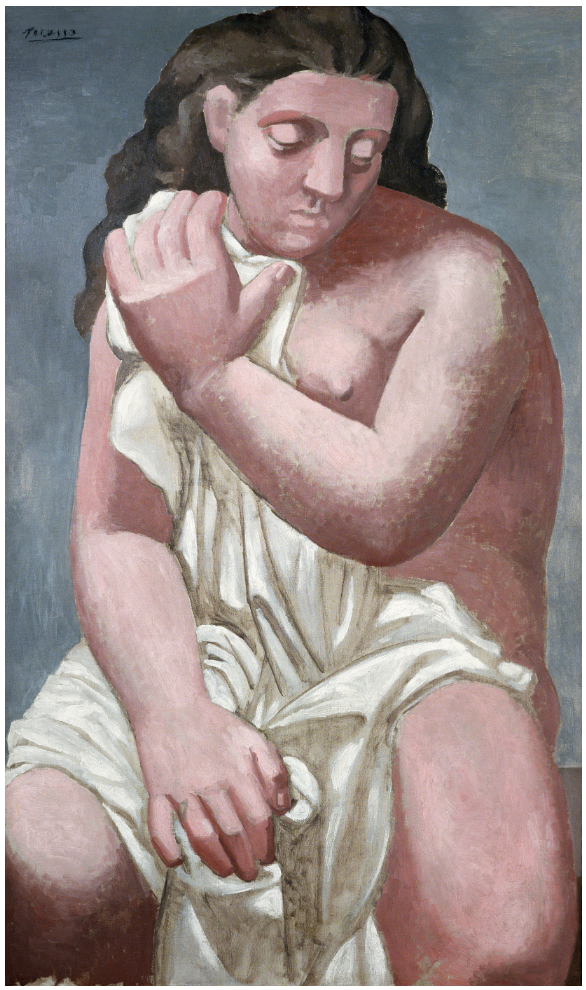
Pablo Picasso, Grand nu à la draperie, 1921-1923, Musée de l’Orangerie, Paris. Image: Bridgeman Images, Artwork: © Succession Picasso / DACS 2024
Irish Girl resembles a similar approach with monumental and somewhat abrupt figuration that is bathed in the softening effects of the surrounding space. Unlike in other portraits from this period, Condo’s adherence to form is more measured and he even forsakes signature motifs that have come to form his artistic vernacular. Whether from the fractured construction of bulging eyes or the jutting position of teeth, there is a gnawing tension that jostles within each canvas. Irish Girl remains exempt from any inkling of the grotesque, instead allowing the artist’s many reference points to thrum with poise rather than frenzy. Yet, as a half-length portrait, the viewer is allowed to wonder at that which is left unrevealed.
Girl with Green Hair, 2009
Christie’s London: 9 March 2024
Estimated: GBP 250,000 – 350,000
GBP 302, 400 / USD 383,443
REPEAT SALE
GEORGE CONDO (B. 1957)
Girl with Green Hair, 2009
Oil on canvas
40×36 inches (101.6 x 91.4 cm)
Signed and dated ‘condo 09’ (on the reverse)
A chimera positioned against a richly variegated ground, George Condo’s Girl with Green Hair (2009) exemplifies the artist’s distinctive pictorial universe, a world in which hybridity rules all and time is a farcical construct. With clear blue eyes and a penetrating stare, the protagonist of the present work confronts the viewer as her mouth curls into a slight grin. Drawing on portraiture conventions that span centuries, Condo has installed his figure on a large armchair; such a setting has long been used to exalt and frame a sitter. Yet although the girl is modestly attired, her Day-Glo hair and distorted, toothy mouth stand in stark contrast to historical propriety. Instead, the proportions and physiognomy depicted are outlandish, a counterpoint to the painting’s somewhat traditional title and muted staging. It is a vivid example of Condo’s enigmatic canvases, which reconceive the formal language of painting as they push forward the medium’s many possibilities. To achieve his sumptuous surfaces, Condo first lays down the painting’s ground before making a series of technical drawings. A work can involve several elements culled from different sources, all of which he sketches from memory. Rather than copying any specific, individual motif, Condo pulls atmospheres and details, all of which are commingled and remixed on the canvas. Neither a copy nor a send-up, Girl with Green Hair calls to mind Goya’s portraits, Modigliani’s almond-eyed sitters and Picasso’s many depictions of Dora Maar: material that has then been refracted through the lenses of Cubism, Postmodernism, and pop culture so as to upend any fixed association.
Red Screaming Woman, 2019
Christie’s Hong-Kong: 28 November 2023
Estimated: HKD 12,000,000 – 15,000,000
HKD 9,813,000 / USD 1,259,831
21391-condo-red-screaming-women (christies.com)
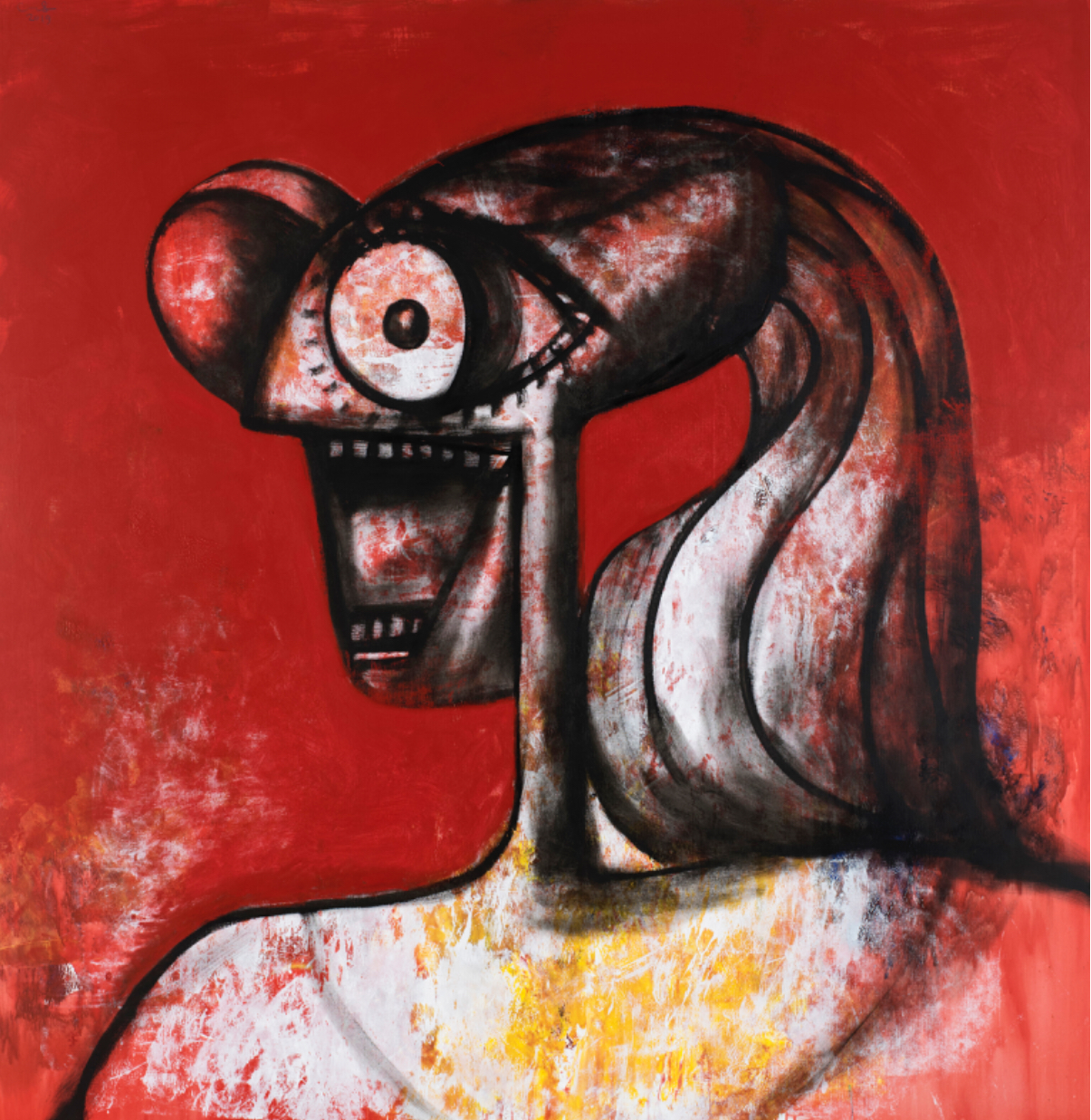
GEORGE CONDO
Red Screaming Woman, 2019
Oil and pigment stick on linen
193×188 cm (76 x 74 inches)
Signed and dated ‘Condo 2019’ (upper left)
Incarcerated in a psychologically charged torrent of scarlet paint, George Condo’s Red Screaming Woman is an enthralling example of Condo’s celebrated practices that subvert the integrity of the portraiture with a whimsical and ludicrous new context. Executed in 2019, the present work shifts away from the artist’s more carefully composed portrait from the 90s and accentuates its mismatched complexity through the use of both oil and pigment sticks. The conflicting emotional associations of rage and exhilaration cascaded through the artist’s virtuoso handling of these materials in the billowy and luxurious brushwork. The psychological drama of Red Screaming Woman is evident in the disproportioned eye, the rigid rows of teeth and the overly elongated neck where the voluminous hair fiddles with—this larger-than-life bust-length female portrait greets the viewer with its puzzling head that probed into the multitude of human subconscious. Through the viscosity of singular charcoal dark lines, Condo galvanizes this grinning visage in a glimpse of the kaleidoscopic web of human emotion which he termed as ‘psychological cubism’.
Ushering an exceptional metamorphic approach of figuration, Red Screaming Woman displays Condo’s most principal touchstones ranging from Old Master portraits to Picasso’s cubism to Bacon’s corporeal figures or even cartoon references. Since the 1980s, Condo has been actively engaged in the launch of a new form of figurative painting that merged the figurative and the abstract in the New York art scene. Alongside key figures like Haring and Basquiat, Condo is notable for his hybridization of art historical influences, in which he fuses Old Master subject matter with the distorted geometric perspective of Cubism, ‘artificial realism’ and ‘psychological cubism’. Condo’s method of hypothesizing and manipulating traditional figurative elements through an abstract lens has inevitably established him as one of the eminent figurative painters around the turn of the century, yet beneath his fluid gestural expression, the unshakable respect and affection for those artists who came before him remain.
Existential Traveler (Girl in Blue Box), 1996
Sotheby’s New-York: 15 November 2023
Estimated: USD 1,000,000 – 1,500,000
USD 850,000
GEORGE CONDO (b. 1957)
Existential Traveler (Girl in Blue Box), 1996
Oil on canvas
80×80 inches (203.2 x 203.2 cm)
Signed and dated 96 (lower right)
A prodigious work that embodies the artist’s career-long exploration of “artificial realism,” George Condo’s Existential Traveler (Girl in Blue Box) stands as a strong and striking painting within the artist’s Imaginary Portrait series. Endearing yet subdued, the central figure is a sublime example of the construction of fictional characters that render a fantastical reflection of our contemporary world. The girl’s short, slicked-back hair and neatly rendered dress puts the viewer at ease, reminiscent of an individual they may know personally or have seen in pop-culture. The title of the painting Existential Traveler (Girl in Blue Box) only adds to the uncanny psychological complexity that immediately returns the viewer to a specific moment in time, temporarily altering their comfort. A testament to the artist’s unique virtuosity and highly celebrated style, the composition represents surprise through a lens that is simultaneously sympathetic and jarring.
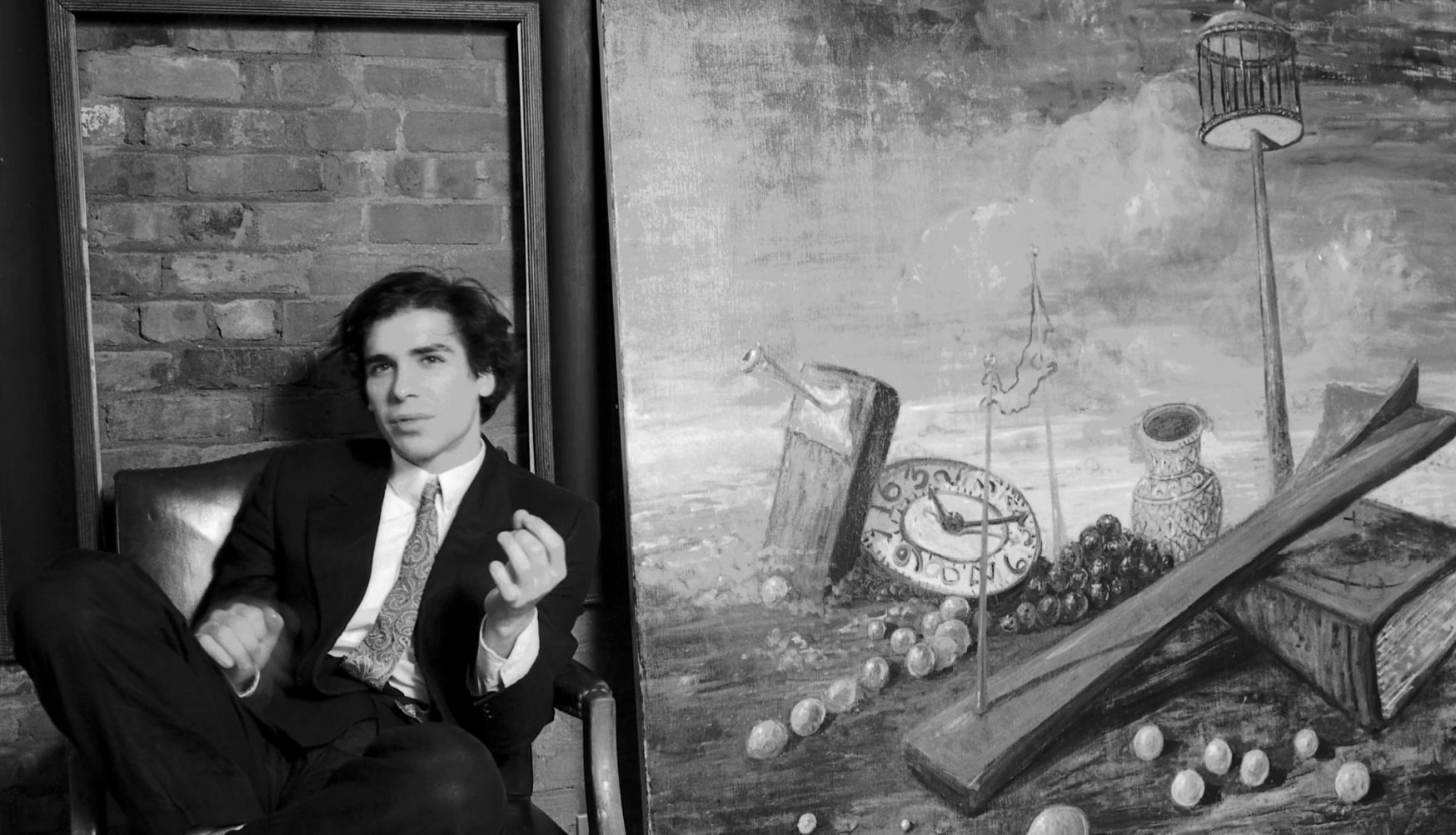
GEORGE CONDO IN HIS STUDIO, PHOTOGRAPH BY TINA BARNEY. ART © 2023 GEORGE CONDO / ARTISTS RIGHTS SOCIETY (ARS), NEW YORK
The central figure’s facial features are reminiscent of Condo’s Pod characters, which reoccur throughout his oeuvre beginning in the 1990s into his Unedited Human Disaster series. Their embellished features contort into expressions of pain, anger, and loss, that are both compassionate and revolting, encouraging the viewer to wonder at their own nature. Playfully grotesque and amusingly uncanny, Condo’s paintings allow the viewer to step beyond the borders of our aesthetic inclinations, forcing us to consider how we feel and experience our own humanity in front of the surreal reflections of his figures. As noted by curator Simon Baker, “Condo’s ‘unedited human disasters’ can be understood as channeling the artist’s interest in the imaginary psychological and moral terrain of a whole host of characters, situations and emotional states that might plausibly be found in the real world, as seen through the warped lens of reworked memories of the history of art. But although in places the connections between reality and fantasy, however distorted or reconfigured, are still somehow evident, in others, the subjects are so extreme or perverse as to resist any kind of obvious symbolic explanation” (Simon Baker, George Condo: Painting Reconfigured, 2015, London, p. 254).
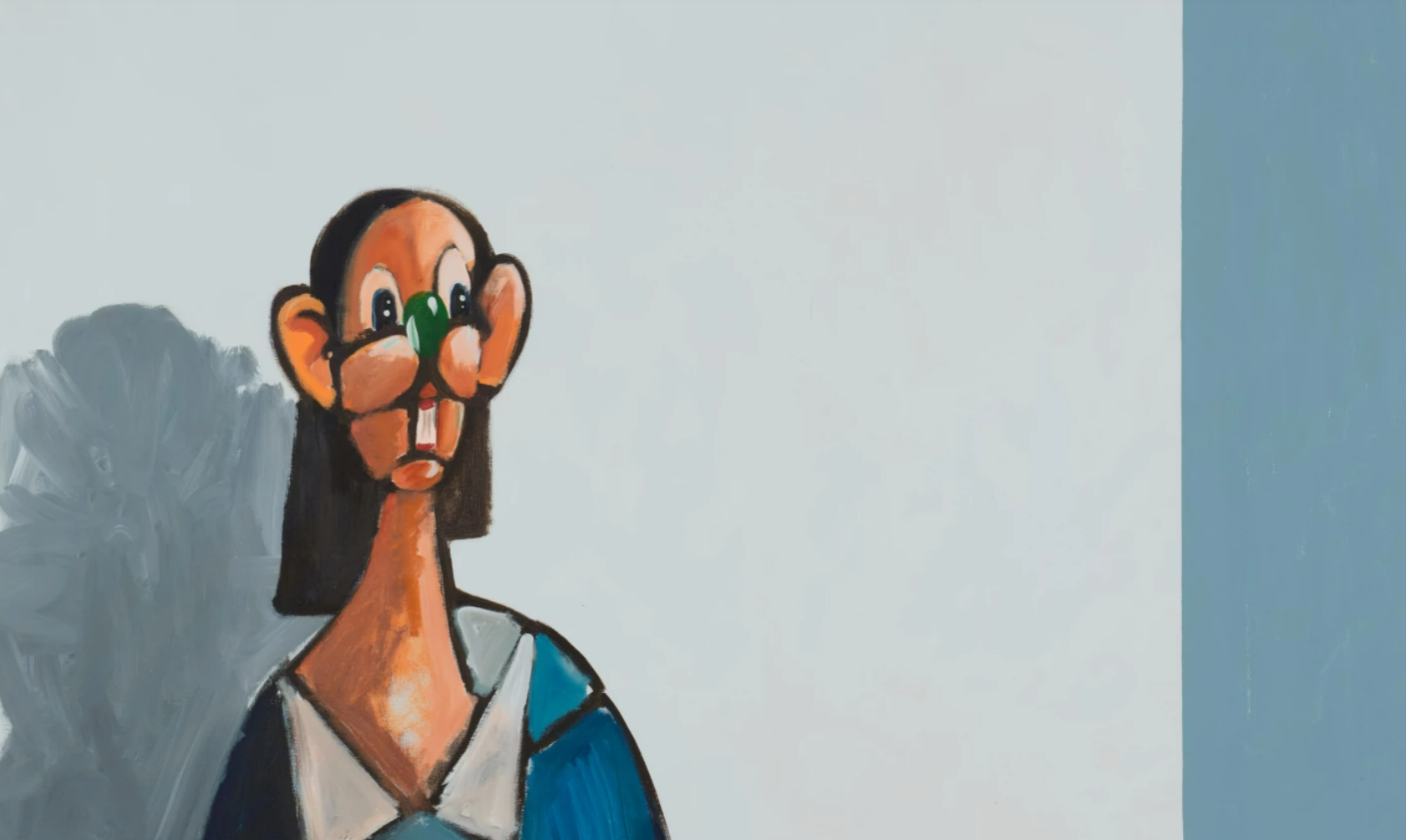
In contrast to the figure’s stark presence, an ominous shadow echoes backwards painted with gentle and refined brushstrokes. The traveler and its shadow are positioned against a crisp geometric background, demonstrating Condo’s mastery of the eighteenth-century Baroque depictions of portraiture as well as the pictorial plane. Condo embodies the dichotomy between past and present by frequently incorporating stylistic influences and formal qualities used by Old Master painters into his own work. Existential Traveler (Girl in Blue Box) elicits a degree of grandeur, glowing against the background. In traditional portraiture the figure is a willing sitter, and the commissioned painter is tasked to conceal any physical or emotive flaws, depicting the sitter at their most prestigious. It is in the revelation of human emotion that Condo pulls the genre of portraiture out of the past and into the present. Here, during a private moment in an unknown city, the girl feebly peers outwards, the precise moment Condo captures in the present work. The girl stands doe-eyed totally unprepared to be observed, challenging the viewer in evoking a degree of art historical charade.
Seated Harlequin, 2007
Phillips London: 13 October 2023
Estimated: GBP 750,000 – 950,000
GBP 889,000 / USD 1,078,883
George Condo – 20th Century & Contem… Lot 35 October 2023 | Phillips
GEORGE CONDO
Seated Harlequin, 2007
Oil on canvas
134×117 cm (52 3/4 x 46 1/8 inches)
Signed and dated ‘Condo 07’ on the reverse
Wearing only black, thigh-high stockings and a sheer negligee, edged in knotted whorls of blue lace, George Condo’s Seated Harlequin meets our gaze with disarming directness, her provocative pose and grotesquely twisted features marking her out as a memorable addition to Condo’s cast of wildly inventive characters who reside within ‘a ribald world of crazed, comic engagement, theatrical logic, and a furious indifference to conventional niceties.’i Borrowing from the art historical traditions of the seated nude and the tragi-comic figure of the Harlequin, the artist plays very directly with questions of performance and spectacle here, and of the absurdity and violence involved in the confrontation between viewer and subject as multiple, conflicting states of human consciousness collide.
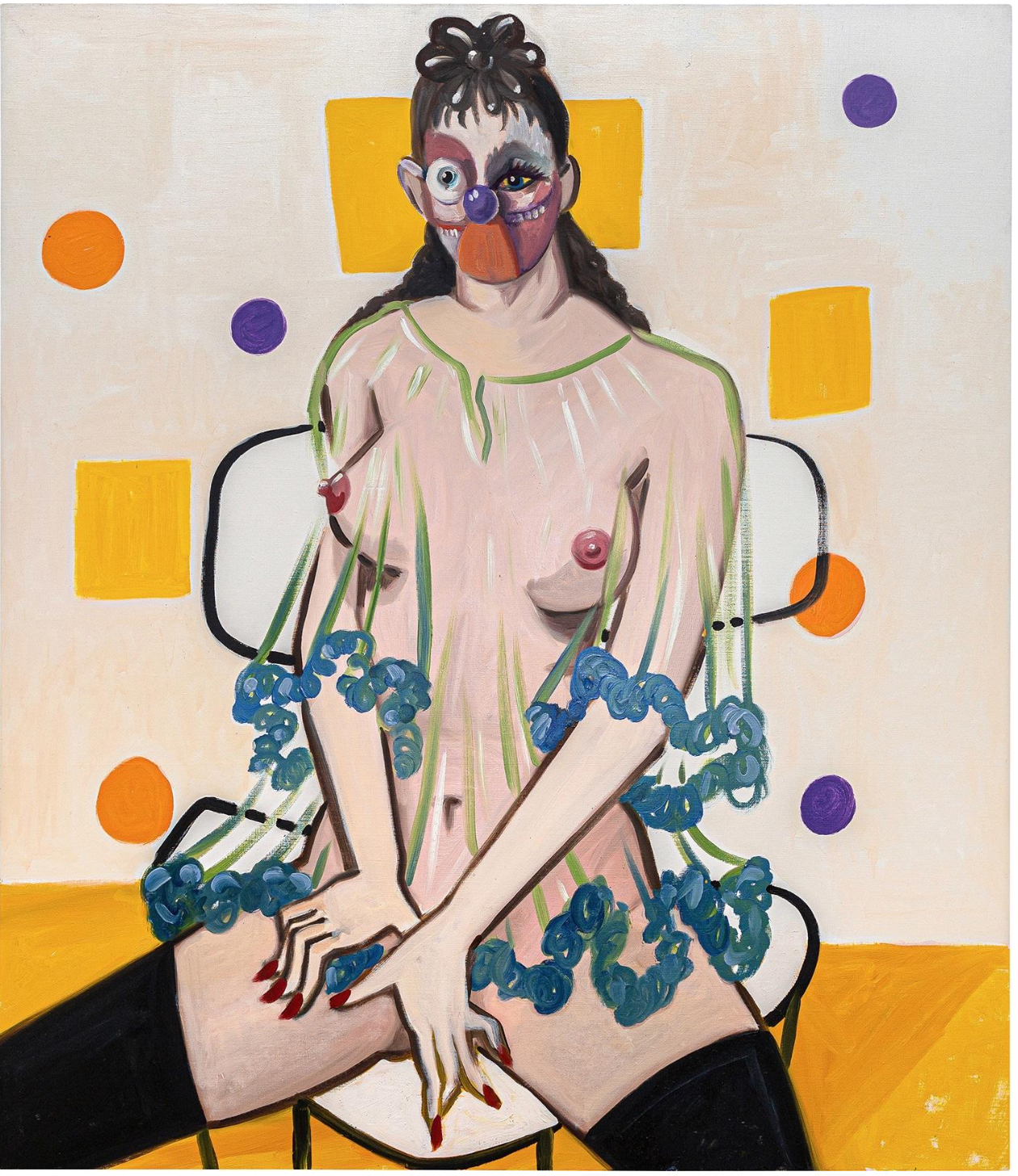
Provocatively posed on the edge of a chair, her clothes accentuating her nakedness and exposing rather than concealing her, Condo’s Seated Harlequin is at once confrontational and passive, violent and vulnerable, these conflicting states all combined in a vivid expression of Condo’s brand of psychological cubism. Sitting upright, looking out at us with her hands crossed, the arrangement of her body here visually recalls Ingres’ well-known portraits, the vivid blue of her negligee, boldly contrasted to the rich, golden ground and dancing squares of orange and yellow behind her brining to mind his iconic Joséphine-Élénore-Marie-Pauline de Galard de Brassac de Béarn, displayed at the Metropolitan Museum in New York. Stripped of the more gentile elements of her dress and rich surroundings, Condo’s Seated Harlequin exposes and dramatizes the underlying dynamics of Ingres’ presentation of a woman who – to paraphrase John Berger – watches herself be looked at.
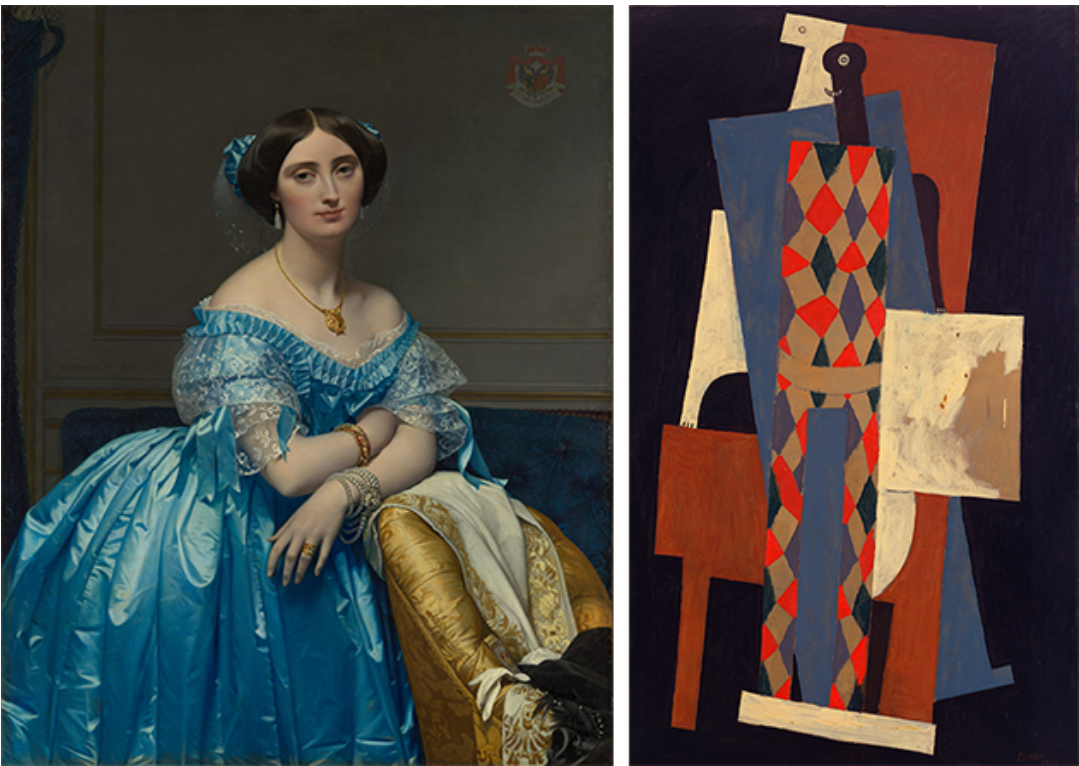
[Left] Jean Auguste Dominique Ingres, Joséphine-Élénore-Marie-Pauline de Galard de Brassac de Béarn, 1851-1853, The Metropolitan Museum of Art, New York. Image: © Metropolitan Museum of Art, New York, Bequest of Benjamin Altman, 1913, 14.40.611
Right: Pablo Picasso, Harlequin, 1915, The Museum of Modern Art, New York. Image: The Museum of Modern Art, New York/Scala, Florence, Artwork: © 2023 Estate of Pablo Picasso / Artists Rights Society (ARS), New York
Making notable appearances in the works of Jean-Antoine Watteau, Paul Cézanne, and Picasso, the harlequin has its own art historical lineage, allowing Condo to blend his investigations into the art of the past with his characteristic flair for the theatrical and darkly slapstick comedy. A character who combines the extremes of comedy and tragedy in a single entity, the harlequin is perhaps the supreme embodiment of Condo’s artistic project, speaking directly to the artist’s fascination for simultaneous, conflicting, psychological states. Presented to us nude, starkly lit and posed on a chair for our close contemplation, the Seated Harelquin captures the objectification involved in this performance, and of the titular character’s own recognition of herself as an object – like painting itself – to be looked at.
Female Portrait with Blue Eyes, 2013
Sotheby’s Hong-Kong: 5 October 2023
Estimated: HKD 10,000,000 – 15,000,000
HKD 9,888,000 / USD 1,263,844
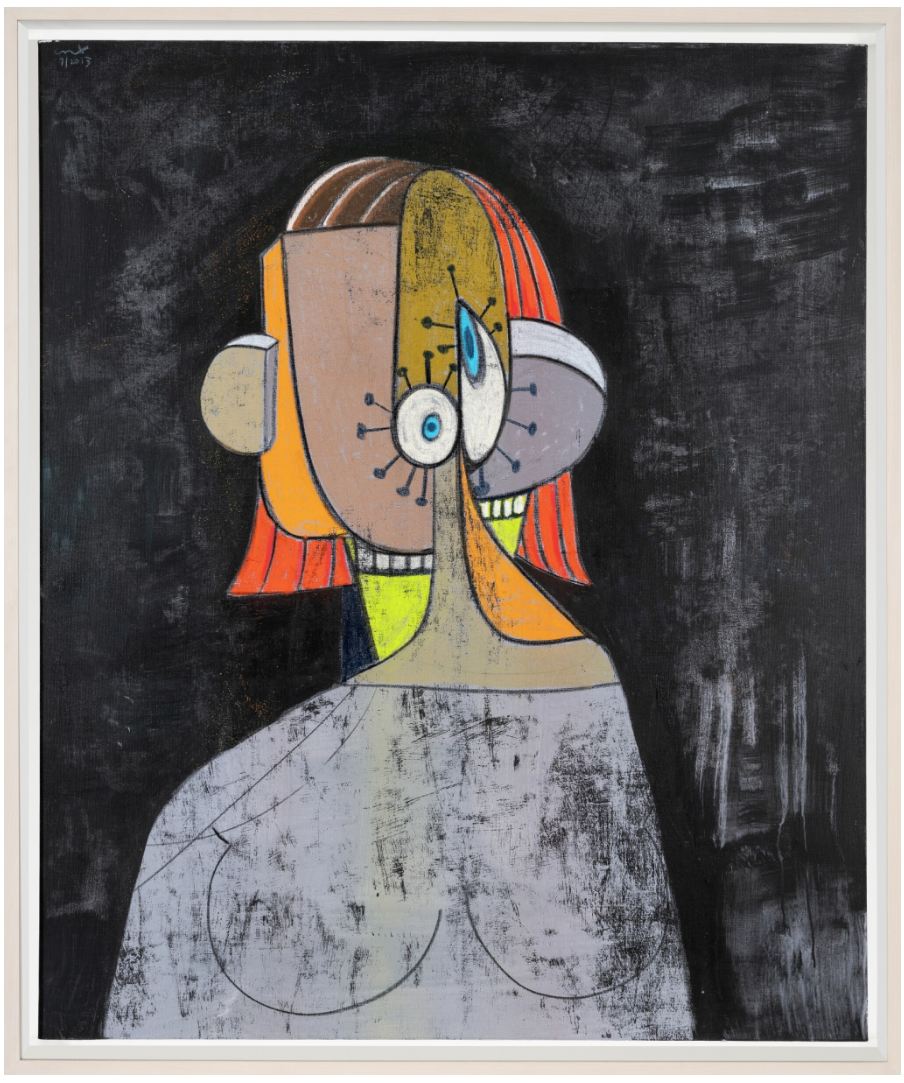
GEORGE CONDO (b. 1957)
Female Portrait with Blue Eyes, 2013
Acrylic, charcoal and pastel on linen, in artist’s chosen frame
53×42 inches (134.6 x 106.7 cm)
Signed and dated 2013
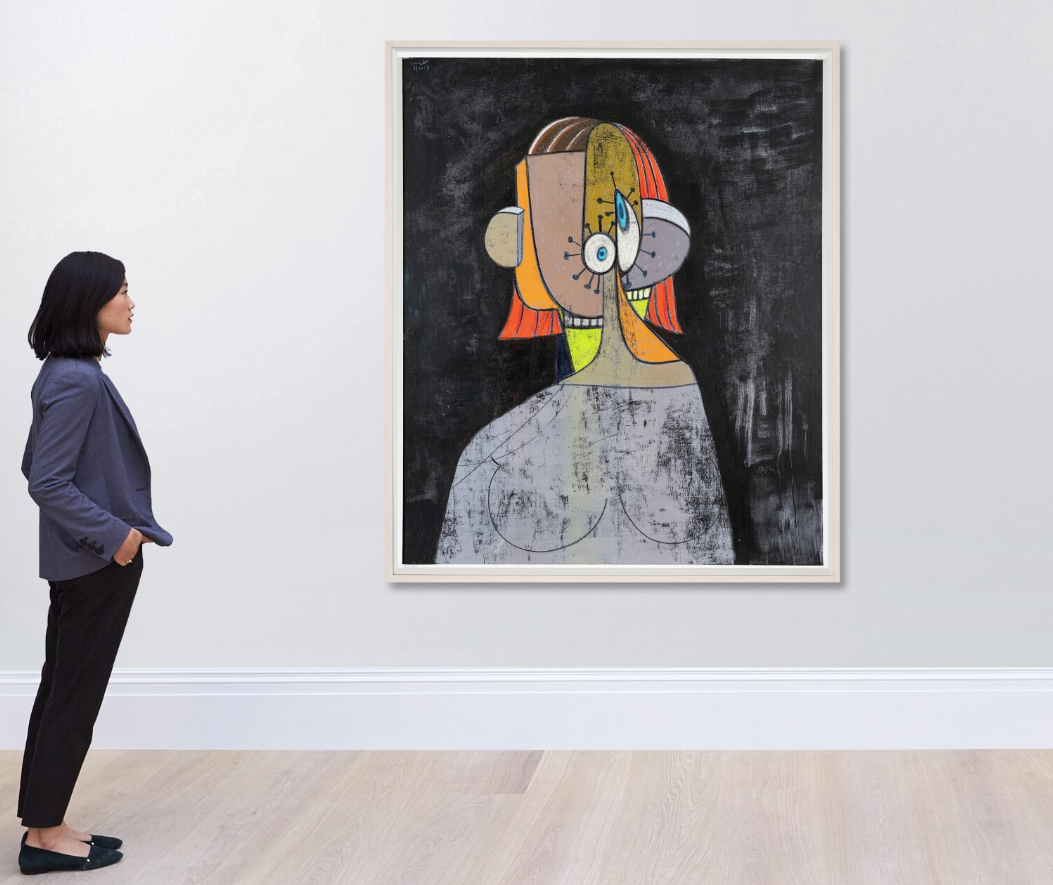
Portrait of Marie Antoinette’s Three Eyes, 1989
Christie’s London: 29 June 2023
Estimated: GBP 120,000 – 180,000
GBP 100,800 / USD 127,160
GEORGE CONDO (B. 1957) (christies.com)
GEORGE CONDO (B. 1957)
Portrait of Marie Antoinette’s Three Eyes, 1989
Oil on canvas
51 1/8 x 39 5/8 inches (130 x 100.5 cm)
Held in the same private collection since 1990, the year after its creation, Portrait of Marie Antoinette’s Three Eyes (1989) is a playful early portrait by George Condo. Painted in bold geometric lines and primary colors, the symbolic, caricature-like sitter appears to be assembled from different parts, with a wide baluster-shaped base juxtaposed against delicate stems which function as arms. One arm is stalked with a simple eye, as is the colorful, flag-like shape behind the figure’s head: the other balances a vessel of marbled blue eyes on a tray. Any resemblance to Marie Antoinette seems more allegorical than physical. The group of watching eyes—in contrast with her hair ribbon and oblivious, doll-like smile—create a sense of uncertainty, perhaps alluding to the iconic downfall of the last queen of France. Condo has looked frequently to the Old Masters in his work, and the painting also closely echoes Gothic depictions of Saint Lucy, a martyr who is traditionally shown holding her own eyes on a golden plate. Anomalous and intriguing, Portrait of Marie Antoinette’s Three Eyes is exemplary of Condo’s early portraits, his composite sitter exuding a sense of jest and psychological complexity. The present work’s interlocking planes, geometric lines, profiled pose and hair ribbon recall Picasso’s early Cubist paintings of his daughter Maya. Unlike Picasso’s more innocent sitter, however, Condo’s distorted, grinning Marie Antoinette exudes a sense of aberrant mischief, epitomizing his unique eye for the comical and grotesque.
Untitled (Painting Drawing 6), 2011
Estimated: USD 1,500,000 – 2,000,000
USD 1,804,500
Untitled (Painting Drawing 6), 2011
Oil on canvas
72×60 inches (182.9 x 152.4 cm)
Seated Nude, 2005
Christie’s London: 1 March 2023
Estimated: GBP 80,000 – 120,000
GBP 176,400 / USD 212,299
GEORGE CONDO (B. 1957), Seated Nude | Christie’s (christies.com)
GEORGE CONDO (B. 1957)
Seated Nude, 2005
Oil on canvas
14 x 17 7/8 inches (35.5 x 45.5 cm)
Signed and titled ‘Condo Seated Nude’ (on the reverse)
Painted in 2005, Seated Nude is a poignant example of the endearing and monstrous portraits that lie at the core of George Condo’s practice. Rendered in oil on canvas, Condo presents us with a seated nude figure, its slouched, languid body depicted side-on as it turns to look at us. Anonymous and androgynous, the sitter’s face is devoid of all features, and their long, angular limbs positioned to conceal any signs of sexual identification. Gleaming black stockings, or perhaps thigh-high boots, lend the figure an air of erotic burlesque. In almost cartoon-like proportions, its protracted neck, mouse-like ears, and wild shock of hair are jarringly comedic, a feature which contrasts with the background’s Old Masterly depiction of light. As if lit from the right, the background shades from a radiant golden yellow to an area of deep umber, dappled with quick brushstrokes which throw the figure into spatial relief. Outlandish yet psychologically captivating, Seated Nude is a magnificent example of George Condo’s skillful marriage of humor, caricature and the grotesque, and an amusing and masterful embodiment of his celebrated portrait practice.
Femme au chapeau, 2007
Phillips Hong-Kong: 30 November 2022
Estimated: HKD 2,200,000 – 3,800,000
HKD 2,016,000 / USD 258,295
George Condo – 20th Century & Cont… Lot 119 November 2022 | Phillips
GEORGE CONDO
Femme au chapeau, 2007
Oil on canvas
20 x 15 7/8 inches (50.8 x 40.6 cm)
Signed and dated ‘Condo 07’ on the reverse
In Femme au chapeau, the artist renders a confluence of emotion in the portrait: hysteria, joy, sadness and desperation. These temperaments fight each other for prominence, an impossible feat as they are swallowed into their own contortions – a quite literal, whirlpool of emotions. The woman’s monstrous expression is juxtaposed by her gentile clothing, more fitting of a Jane Austen afternoon stroll than the Lynchian fever dream in which she finds herself. With a white Victorian collar and a wide brimmed green hat, she reminds us of Gustave Courbet’s Young Ladies on the Banks of the Seine.
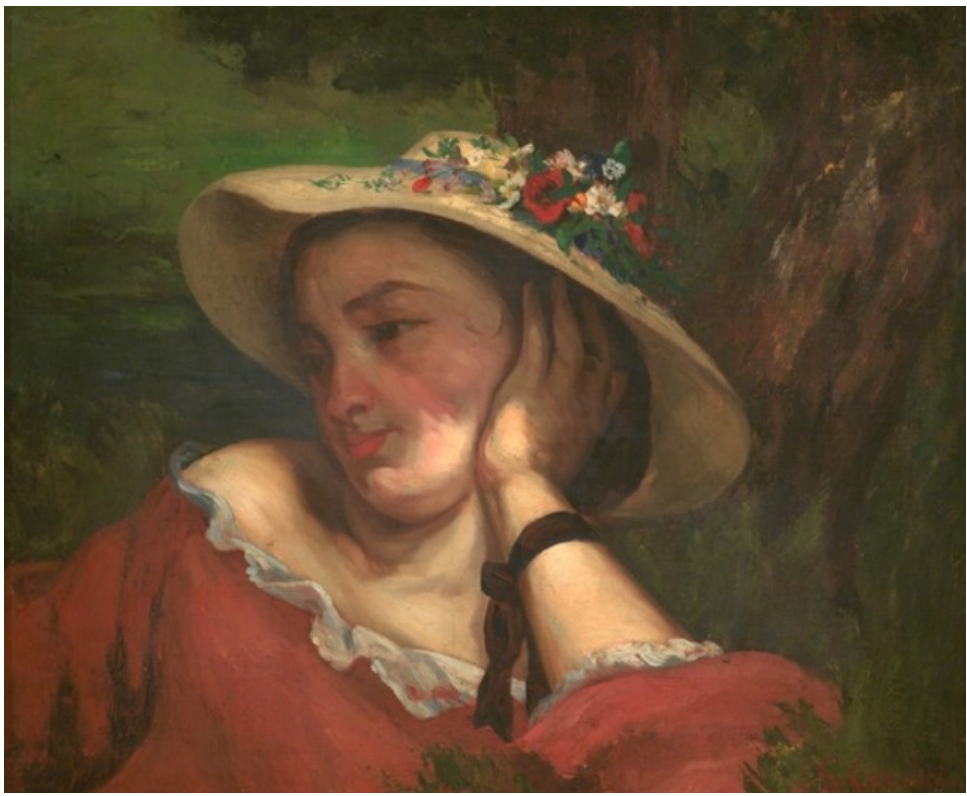
Gustave Courbet, Young Ladies on the Banks of the Seine (fragment), 1856 / National Gallery, Prague
Though Condo’s practice is not merely an inquiry into the multifaceted essence of the human psyche, but so too a reflection of the polycrisis world in which modern society finds itself enveloped. This search for truth within the realm of an opulent madness is something that Condo has been developing since an art student in the 80s, a genre that he titles ‘Artificial Realism’: “I see today’s world as it is! Absurd and exaggerated—and I need to turn it into something truthful. As an artist you are a mirror, but simply reflecting today’s culture is not enough, it has to come through as a visual correction.”.
Portrait of Elegant Woman, 2007
Sotheby’s New-York: 17 November 2022
Estimated: USD 700,000 – 1,000,000
USD 882,000
Portrait of Elegant Woman | Contemporary Day Auction | 2022 | Sotheby’s (sothebys.com)
GEORGE CONDO (B. 1957)
Portrait of Elegant Woman, 2007
Oil on canvas
50 x 42 ¼ inches (127 x 107.3 cm)
Signed and dated 07 (on the reverse)
Drenched in satire and eccentricity, George Condo’s Portrait of an Elegant Woman from 2007 represents the paradigm of the artist’s radical approach to portraiture. Overflowing with an immediacy of pathos and gravity, Portrait of an Elegant Woman captures Condo’s ingenious aesthetic approach that harnesses the traditions of European portraiture while skillfully incorporating a Contemporary twist of Surrealist and Pop. Wholly enchanting, the female figure gazes at the viewer with an utter coolness to her expression, the pale cerulean eyes quietly reflecting the light across the surface of the impressive canvas. In the present work, the serene expression is framed by zany baby blue toned eyeshadow and framed by dizzyingly dark ringlets of hair, while the subject’s eyebrows are cocked in a spry and daring demeanor. The facial vocabulary in Portrait of an Elegant Woman is elevated even further, with the comic elongation of the neck and lower lip, and goofy teeth punctuated by ballooned rosy cheeks. The outrageous physical proportions in Portrait of an Elegant Woman, and even the title itself, are juxtaposed with the muted and traditional garment adorned that adorns the figure.
Black Jack Sally, 2006
Phillips London: 30 June 2022
GBP 700,000 – 1,000,000
GBP 809,000 / USD 983,706
George Condo – 20th Century & Contempor… Lot 17 June 2022 | Phillips
GEORGE CONDO
Black Jack Sally, 2006
Oil on canvas
65×60 inches (165.1 x 152.4 cm)
Signed and dated ‘Condo 06’ upper left; signed and dated ‘Condo 06’ on the reverse
Executed in a bold palette dominated by sharp chromatic contrasts and a compositional arrangement as confident as it is confrontational, George Condo’s Black Jack Sally is a paradigmatic example of the artist’s twinned concepts of artificial realism and psychological cubism, and of his unique contribution to the tradition of portraiture. Drawing on a range of art historical and pop culture references that swerve masterfully between Baroque theatricality, Cubist experimentation, and expressionistic verve, Condo’s wildly inventive portraits are also strangely liberated from these principles. Not bound to the depiction of physical likeness, his unmistakable figures are instead characterized by exaggerated overbites, bulging eyes, and sharp-edged, violently fractured faces, coalescing like ‘fragments of a convention, filtered through the artist’s memory and imagination.’i
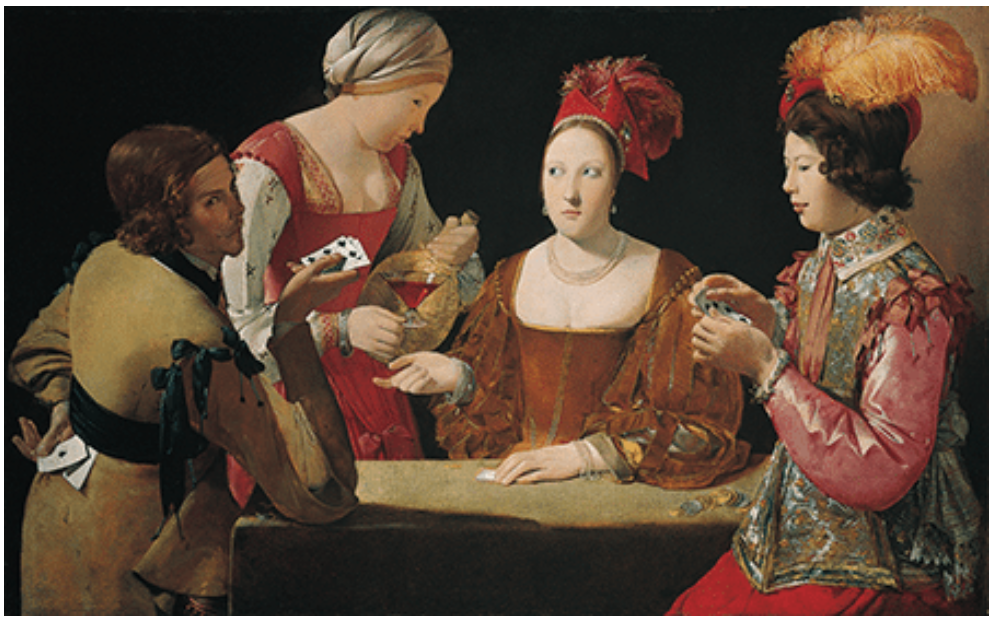
Georges de la Tour, La Triche avec l’As de Trèfle, (The Cheat with the Ace of Clubs), c.1630-34, Kimbell Art Museum, Fort Worth, Texas. Image: © Kimbell Art Museum / Bridgeman Images
Taking the titular card dealer as its protagonist here, Condo touches on a long tradition of allegorical painting in which certain themes, subjects, or symbolically charged objects are used in the composition as a way of encouraging or satirizing moral or spiritual concerns. Usually employed as a warning against the temptations of gambling and the vices of alcohol and lustful liaisons, these paintings reflected the cultural and moral values of their day, a vivid mode of commentary that Condo develops, not in order to moralize, but as a means of capturing a psychological portrait of our times.
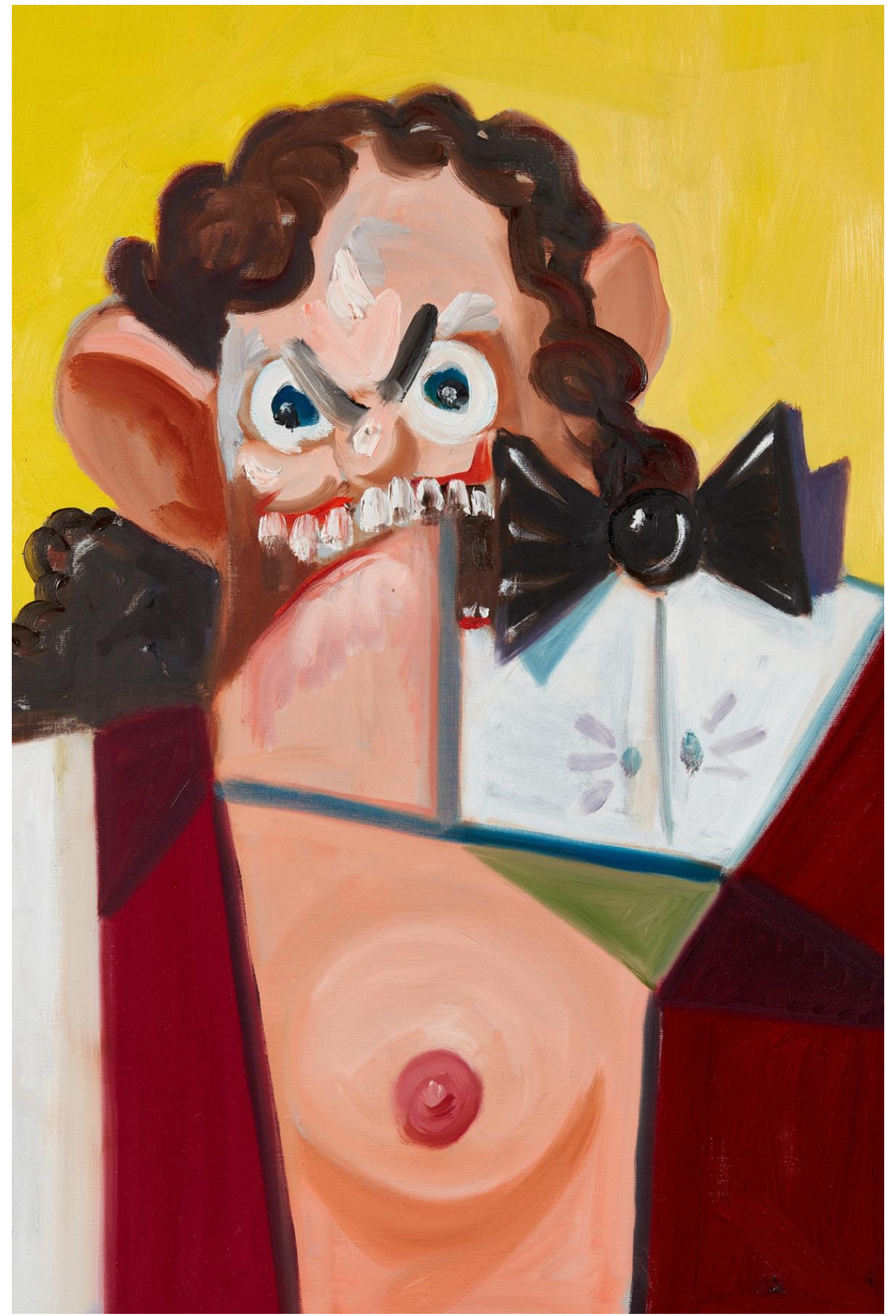
Although card players are a well-established motif in art historical terms, the frontal presentation of the titular subject here, as well as the fractured waistcoat and bowtie of her casino uniform and the broad swell of green baize that rises between us and her firmly situates ‘Black Jack Sally’ as one of Condo’s ‘private mythology of cultural types’ – a character who carries the weight of our contemporary cultural condition with her
Female Portrait, 2009
Sotheby’s London: 30 June 2022
Estimated: GBP 200,000 – 300,000
GBP 315,000 / USD 383,025
Female Portrait | Modern & Contemporary Day Auction | 2022 | Sotheby’s (sothebys.com)
GEORGE CONDO (b. 1957)
Female Portrait, 2007
Oil on canvas
16×12 inches (40.5 x 30.5 cm)
Signed and dated 07 on the reverse
Equal parts sensual and distorted, George Condo’s Female Portrait from 2007 is a captivating example of the artist’s exploration into the female nude. Adopting a blend of the artist’s two best known techniques of psychological cubism and artificial realism, the present work showcases the artist’s exploration into the psychology of the portrait. The female torso is simultaneously delicate, rendered in soft swathes of oil, and jarring, with the artist swelling and cinching her body proportions past the realm of reality. The absurd fusion of neck, head, and arms, in tandem with swollen ears and a bulbous nose deliver an unnervingly comic element, while the imploring stare of her eyes immediately engage and arrest the viewer. Condo’s iconic female portraits offer a singularly apposite commentary on contemporary society through their instantly recognizable distortions and geometric additions.
Linear Composition, 2009
Christie’s London: 27 June 2022
Estimated: GBP 1,200,000 – 1,800,000
GBP 1,542,000 / USD 1,882,094
GEORGE CONDO (B. 1957) (christies.com)
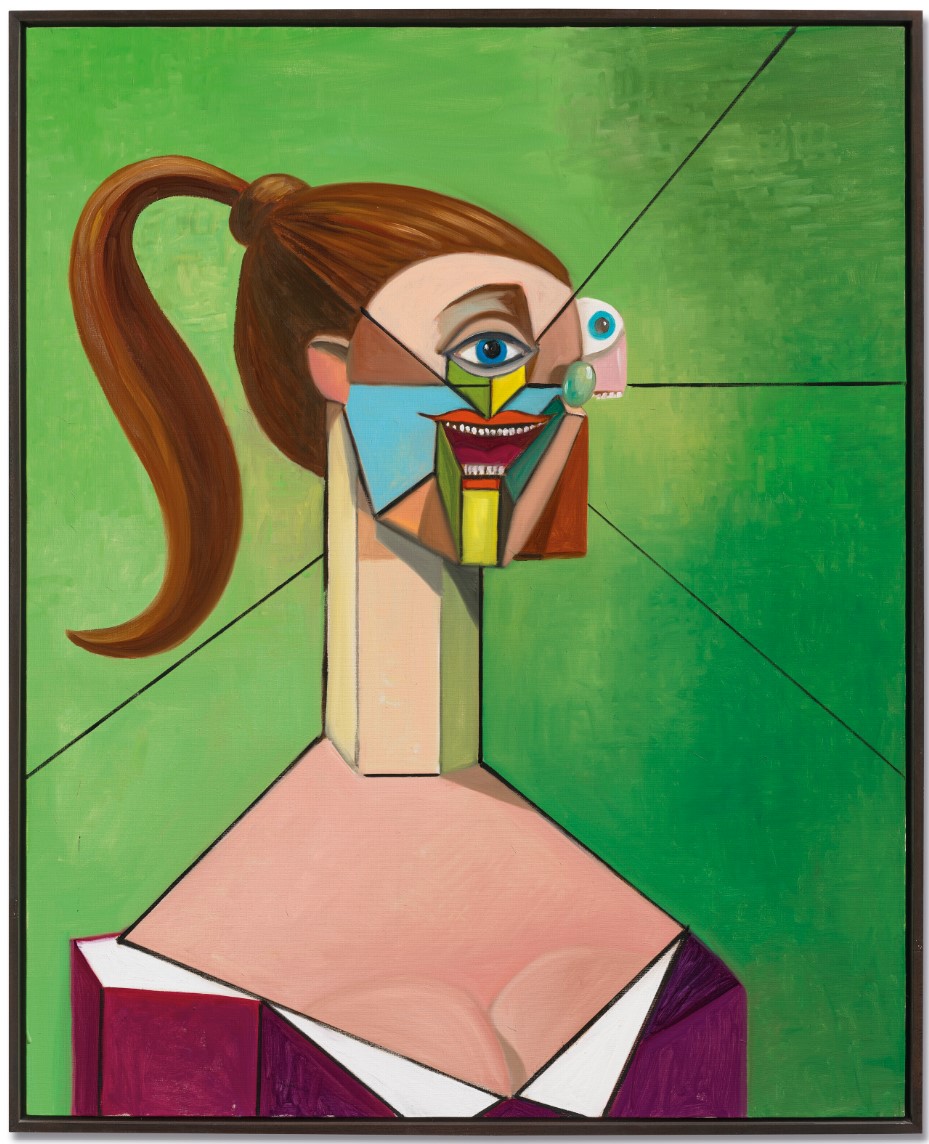
GEORGE CONDO (B. 1957)
Linear Composition, 2009
Oil on linen
52×42 inches (132.1 x 106.7 cm)
Signed and dated ‘Condo 09’ (on the reverse)
Painted in 2009, Linear Composition is a vibrant and playful portrait by George Condo. Against a luminous green backdrop is a kaleidoscopic figure, her features fragmented into colorful cubist disarray. Planes of brilliant color meet a smiling red mouth, off-kilter eyes—one cartoonish, one more realistically portrayed—and a green, grape-like nose, which seems to perch on the canvas in trompe-l’oeil splendor. Bold geometric lines converge at the center of her face, splitting the picture into prismatic sections. Her neck and bust are depicted in simplified, polygonal shapes, which pick up the shadow and glow of the green background: her plunging burgundy dress furthers her uncanny resemblance to the noble profile portraits of the Italian Renaissance. Oscillating between graphic, painterly, abstract and figurative registers, the work relates to the hybrid ‘drawing paintings’ Condo began making in 2008. As he clashes disparate references from Botticelli to Picasso, de Kooning and da Vinci, Condo explores the fantasy and artifice inherent in figure-painting: a complex cacophony of signals compete, pushing the portrait into strange, beguiling new territory.
Throughout his career, Condo has been engaged in conversation with the history of painting, and Picasso has remained a key touchstone and influence.
“I describe what I do as psychological cubism. Picasso painted a violin from four different perspectives at one moment.
I do the same with psychological states”
The woman in Linear Composition is typical of this multifaceted approach, her fractured face reflecting the experience of postmodern flux that informs Condo’s vision. In tune with its echoes of Renaissance portraiture, however, the painting is also held together by an Old Masterly sense of light. As if lit from the left, the background shades from a radiant chartreuse to areas of deeper green, dappled with lush brushstrokes and throwing the figure into spatial relief.
“That’s just the way that Rembrandt or Frans Hals or any of those portrait painters usually framed their portraits’, Condo explains. ‘It does something to classicize the constellation of human psychology that might be represented in one of those portraits.”
This sense of ‘constellation’ is particularly palpable in the present work, whose schematic lines intersect and interact with the woman’s expression, as if attempting to map or fix its changeability in space.
Green Seated Woman, 2006
Phillips Hong-Kong: 21 June 2022
Estimated: HKD 5,000,000 – 7,000,000
HKD 5,418,000 / USD 690,208
George Condo – 20th Century & Contempo… Lot 150 June 2022 | Phillips
GEORGE CONDO
Green Seated Woman, 2006
Acrylic on canvas
54 1/8 x 45 7/8 inches (137.5 x 116.8 cm)
Signed and dated ‘Condo 06’ on the reverse
As delightful as it is repulsive, Green Seated Woman epitomizes the bizarre amalgamations of physical anatomy and human psychology that is synonymous with George Condo’s oeuvre. Condo explores the limits and extremes of a fragmented psyche in his hilariously grotesque works that oscillate between the realms of the familiar and uncanny.
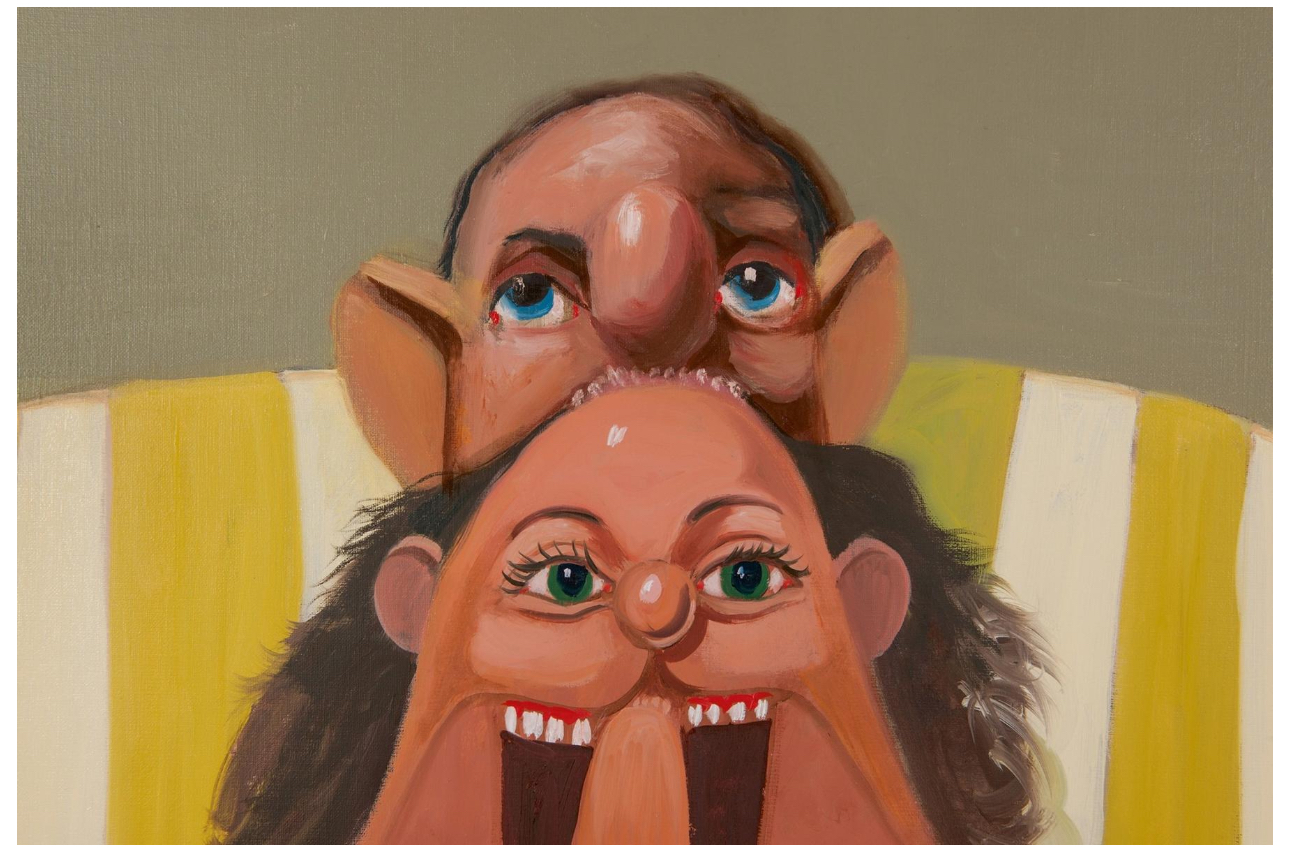
Green Seated Woman is a prime example of the whimsical works from Condo’s extensive repertoire, incorporating all the signature features that is instantly recognizable and most representative of the artist’s unique visual vocabulary— clownish noses, protruding ears, ominous grins, fused features, and frenzied stares. Artfully employed, these quintessential characteristics are an act of defiance against traditional portraiture practices, and the present work particularly seems to challenge the age-old trope of the nude female subject. A chimeric combination of three hideous, swollen figures, the sitter of Green Seated Woman subverts common beauty standards, presenting the traditionally objectified female body in a shocking and even more disturbing manner. Amidst a constellation of inspirational figures throughout canonical art history,
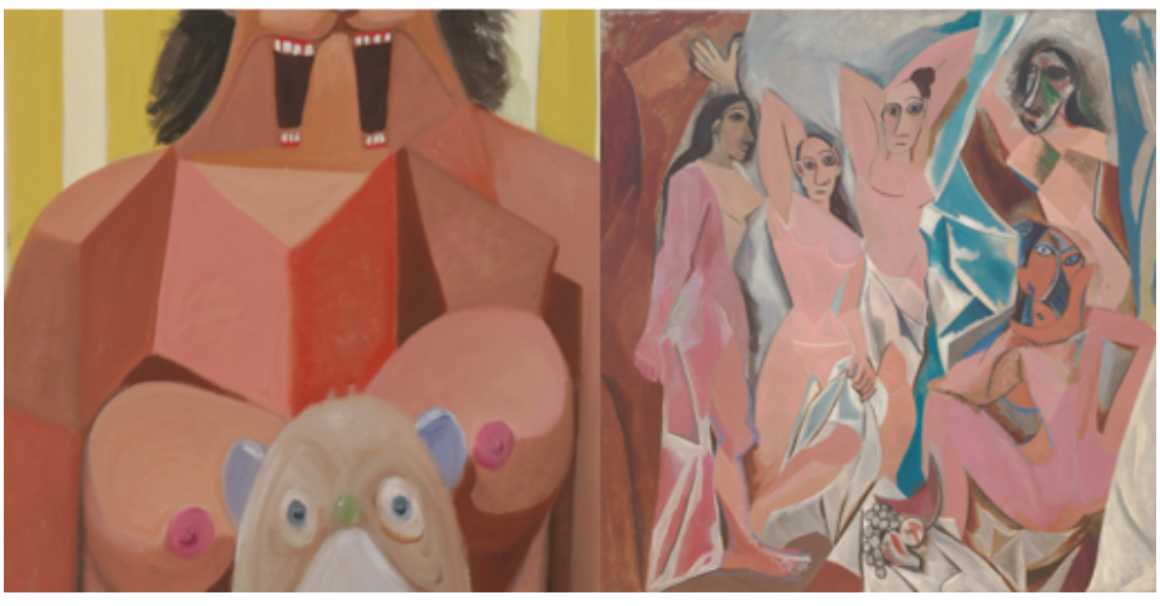
Left: Detail of the present work / Right: Pablo Picasso, Les Demoiselles d’Avignon, 1907
Condo finds his greatest role model in Picasso, yet his pictorial rhetoric gleans more from the Cubist master than just thematic and conceptual ideas— as demonstrated in the present work, Condo pays tribute to Picasso’s painterly style. The torso of the portrait’s sitter is rendered in a geometric pattern, in sharp contrast to the smooth, rounded contours and edges observable in the rest of the painting. Such an intricate three-dimensional composition instantly recalls the defined, angular composition of Les Demoiselles d’Avignon, one of Picasso’s most exemplary works and a representative masterpiece of the Cubist canon.
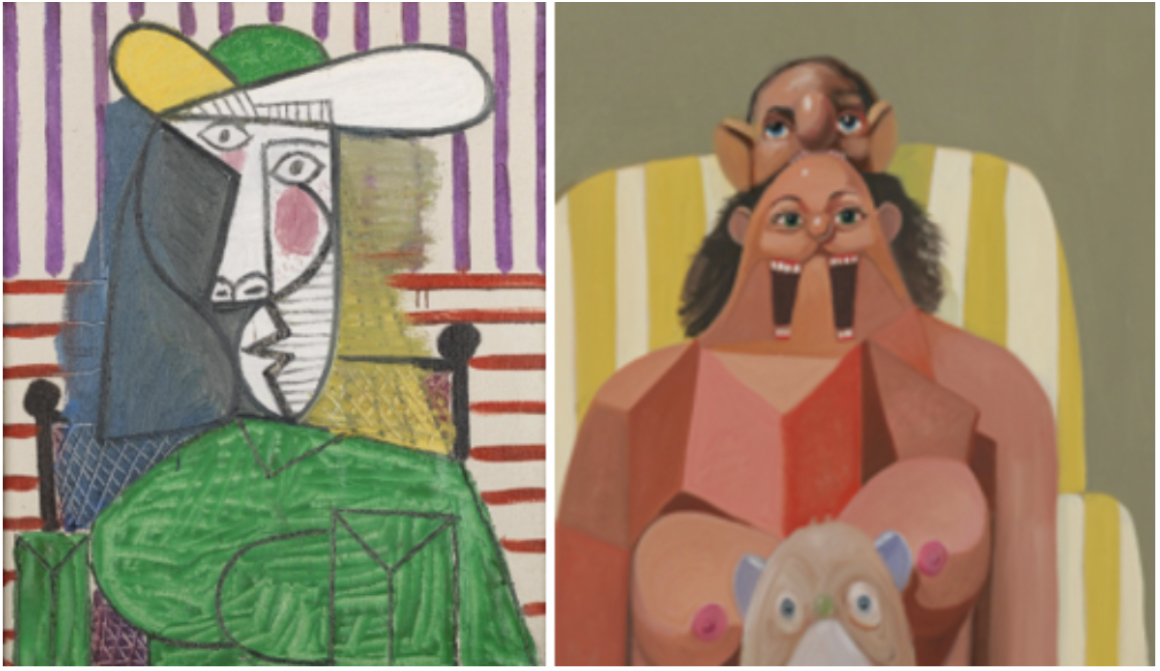
Left: Pablo Picasso, Buste de femme (Bust of a Woman), 1944. Collection of the Tate Modern, London (on long term loan, lent from a private collection, 2011) / Right: Detail of the present work
One can detect in the present work a deep commitment to and a preoccupation with the human condition. Set against a nebulous, green-tinged background, the setting of Green Seated Woman is deliberately illusory and non-temporal. Particularly reminiscent of Picasso’s Bust of a Woman—a painting featuring Dora Maar seated on a metal chair, its vertical and horizontal stripes visually comparable to the striped deckchair in the present work—Condo, here, swaps Picasso’s model’s hat for the top figure’s bulbous head; and interchanges a jacket pocket for a third face in its tri-pillar of characters. Whether deliberate or not, the evocation of this work harks back to the complex emotions captured by Picasso during the end of World War Two, Bust of a Woman being an intimate glimpse into the anguish and horror during wartime Nazi occupation.
Untitled, 1998
Phillips London: 4 March 2022
Estimated: GBP 300,000 – 500,000
GBP 378,000 / USD 499,405
George Condo – 20th Century & Contemp… Lot 144 March 2022 | Phillips
GEORGE CONDO
Untitled, 1998
Oil on canvas, in artist’s frame
50 3/4 x 40 inches (128.8 x 101.7 cm)
Signed and dated ‘Condo 98.3’ upper left
Central to George Condo’s practice is a fundamental balance of contradiction and amalgamation. Teasing the line between the grotesque and the captivating, the comedic and tragic, Condo summons the Old Masters and art historical approaches such as Cubism, reconfiguring established forms and ideas into a completely new aesthetic. The artist’s acclaimed singular and iconic approach challenges and re-defines the conventional notion of figurative portraiture. In Untitled, 1998, Condo tackles the traditional motif of the mother and child, concurrent to the female nude, skewing our preconceived ideologies with his challenging portrayal. The present work is framed in the artist’s carved gilt frame, utilizing the traditional portraiture format. Paying ode to Cubism, with an awareness of popular culture, to create a character that is simultaneously ‘seductive and repulsive’ yet ‘frightening and appealing, Picasso’s considerable influence is evident in Condo’s exploration into the re-invention of the facial features.
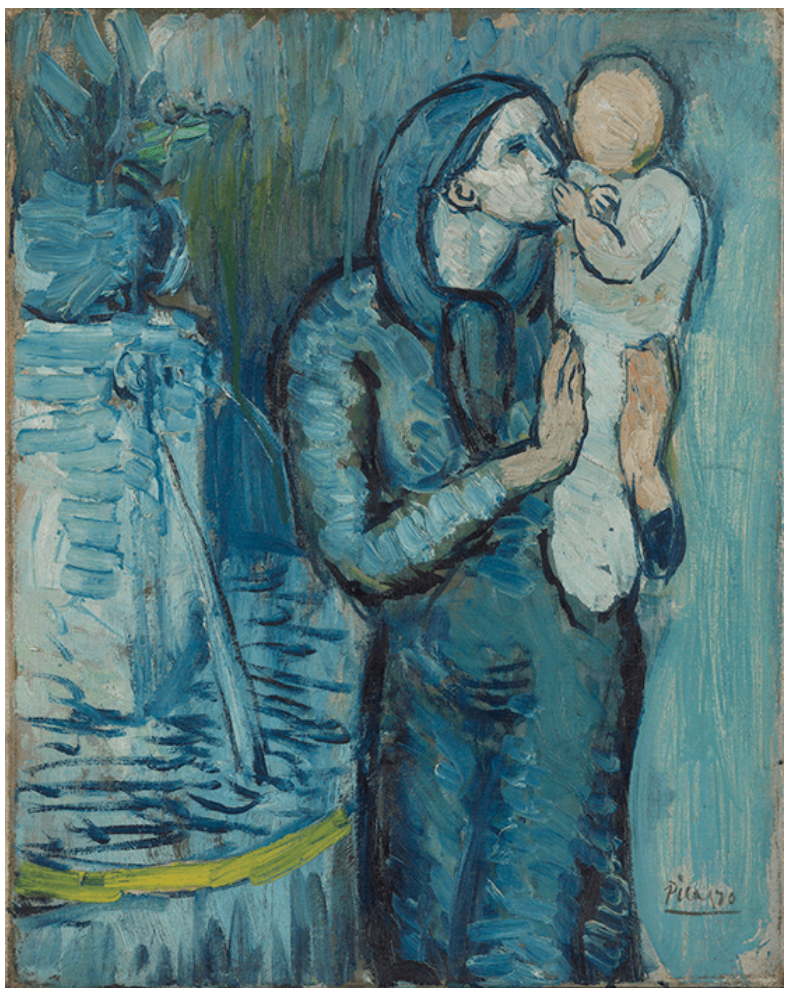
Pablo Picasso, Mother and Child by a Fountain, 1901, Metropolitan Museum of Art, New York. Image: © The Metropolitan Museum of Art/Art Resource/Scala, Florence, Artwork: © Succession Picasso/DACS, London 2022
In typical Condo fashion, further similarities make a swift departure. Set in front of a blue background, with clear bubbles in the air, the dream-like quality is sinisterly countered by the red drops of blood that hit each figure on the head and the mother’s shoulder. Characteristic of Condo’s partiality for amplification and distortion, the mother and child are depicted with exaggerated ears, rabbit teeth and large bug eyes. The mother gazes down adoringly at her young child, who hangs like a rag doll in her hooked arm. The iconography of motherly love is thus disrupted by an unconventional and jarring image, provoking critical contemplation. Condo’s masterful painterly technique and strong characterization of the figures set against an ethereal backdrop, creates an effect that is both stylistically elegant and disturbing, repulsive and sympathetically engaging. The artist’s vision, embodied in the present work, uniquely and imaginatively re-examines the canon of the mother and child and female nude in history of art.
The Rock Thrower, 2007
Phillips London: 3 March 2022
Estimated: GBP 500,000 – 700,000
GBP 567,000 / USD 755,295
George Condo – 20th Century & Contempo… Lot 26 March 2022 | Phillips
GEORGE CONDO
The Rock Thrower, 2007
Acrylic and charcoal on canvas
52 3/4 x 45 7/8 inches (134 x 116.8 cm)
Signed and dated ‘Condo 07’ upper left
A master of contemporary painting whose prolific output has spanned over forty years, George Condo’s portraits combine a staggering range of art-historical, pop culture and mythic references whose interrogations of both physical and psychological reality have created a unique œuvre that melds abstract and figurative elements. Condo’s The Rock Thrower is a consummate example of the artist’s knowing and articulate commentary on ancient stories as well as his critical engagement with the great masters of art history, his references roaming from Titian to Pablo Picasso. Interrogating both myth and art history, the present work is a raw meditation on the female form and the often unsettling physical contortions that the body can undergo though dislocation, fracture, and scarring. Condo’s provocative and irreverent fusion of the recognisably human with the grotesque is an attempt to push against the boundaries of what figurative painting can visually represent, and the psychological depths that it is able to explore. Executed in 2007, and appropriately included in the artist’s 2009 exhibition George Condo: The Lost Civilisation at the Fondation Dina Vierny-Musée Maillol, The Rock Thrower is highly representative of this, blending archetypal myth with one of the most established and important subjects in art history – the female nude.
Titian, Sisyphus, 1548 – 49, Prado, Madrid. Image: © Museo Nacional del Prado / MNP / Scala, Florence
Rendered in a confident, heavy black outline against a wash of cool blue, The Rock Thrower is an unusual monochromatic portrait by the artist, drawing from an impressively broad range of sources that encompass Old to Modern Masters. In a stark parody of the Myth of Sisyphus, Condo replaces the muscled, stoical male figure as painted by Titian with a grotesque, disjointed female form. Her twisted physiology bends and collapses beneath the weight of the rock, her arms forced into angles that cut away unnaturally from the rest of her body. In a striking counterpoint to Picasso’s own Woman Throwing a Stone, who adopts the biomorphic curves and fluid lines most commonly associated with this period of his work, Condo’s nude seems to be about to throw down her rock in a murderous rage. In the center of the composition, we see what might be a recognizably human face, but which reveals itself rather as a terrifying specter releasing a howl of anguish or possibly a mocking grimace.
The Showgirl, 2008
Phillips London: 15 October 2021
Estimated: GBP 1,000,000 – 1,500,000
GBP 1,232,500 / USD 1,695,556
George Condo – 20th Century & Contem… Lot 35 October 2021 | Phillips
GEORGE CONDO
The Showgirl, 2008
Oil on linen
80 1/8 x 80 1/8 inches (203.5 x 203.5 cm)
Signed and dated ‘Condo 08’ on the reverse
A master of contemporary painting whose prolific output has spanned over forty years, George Condo’s portraits combine a staggering range of art-historical and pop culture references including old and modern masters, Playboy bunnies, cartoons, and comic strips. Blending the seductive silhouette of Jean Auguste Dominique Ingres’s Odaliques with the overt sexual display of fantasy characters like Who Framed Roger Rabbit’s Jessica Rabbit, The Showgirl shocks and delights in its audaciousness, a show-stopping statement of Condo’s synthesis of tradition and 20th century painterly experiment, and the mastery of his own unique Artificial Realism.
Presented to us on a plinth against a bare, lurid green ground, Condo’s show girl is an arresting illustration of the artist’s stated desire to ‘take a person and fragment them to make architecture.’ Lying prone on her back under stark, bright lighting, the titular figure is presented to us in an extreme dramatization of the objectification of the performing girl – and of paining itself – as an object to be looked at.
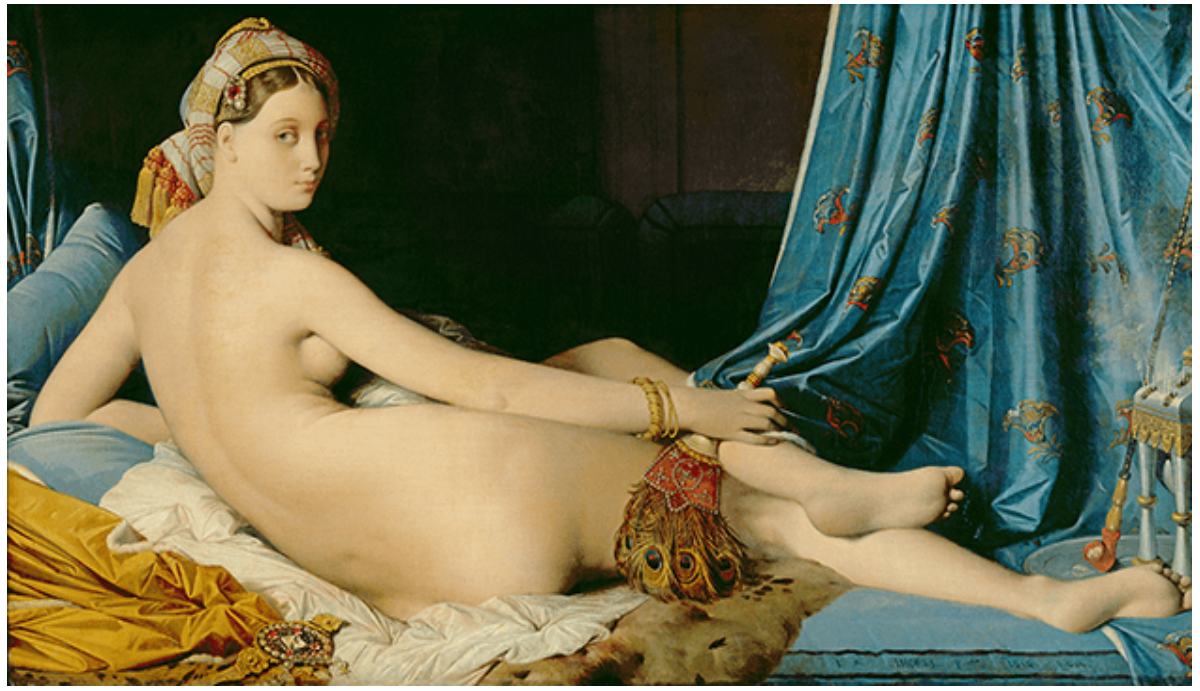
Jean Auguste Dominique Ingres, La Grande Odalisque, 1814, Louvre, Paris. Bridgeman Images
Radically disrupting the smooth curves and passive contemplation of form familiar the reclining Odalisques favored by Ingres’, The Showgirl is a tangle of knotted, angular, and alarmingly proliferating limbs edged in long, crimson nails. Staring confrontationally out at us, two of her three hands pull her face wide, fracturing it into a grotesque, toothy smile and exaggerated underbite that appears throughout Condo’s provocative portraits Wearing only purple stockings in a witty inversion of the elbow-length gloves of Disney’s iconic Jessica Rabbit, Condo captures the energetic tension established between active performance and passive display at work in the girl’s studied presentation of herself. At once powerful and vulnerable, seductive and terrifying, The Showgirl ranks highly in Condo’s ‘arresting parade of tragi-comic beings.
Smiling Girl, 2005
Sotheby’s New-York: 13 May 2021
Estimated: USD 400,000 – 600,000
USD 1,411,500
Smiling Girl | Contemporary Art Day Auction | 2021 | Sotheby’s (sothebys.com)
GEORGE CONDO (B. 1957)
Smiling Girl, 2005
Oil on canvas, in artist’s chosen frame
39 ½ x 35 ¼ inches (100.3 x 89.5 cm)
Signed, titled and dated 08.05 on the reverse; signed and titled on the overlap
Consistently pushing the bar through his unique approach to contemporary portraiture, George Condo’s Smiling Girl offers a glimpse into the fantastical world of the artist’s forty-year career. Part of one of Condo’s most noted series, the Existential Portraits, Smiling Girl showcases the artist’s exploration into the psychology of the portrait. In the present work, the artist ingeniously fuses his characteristic and self-proclaimed psychological cubism and artificial realism to transcend the confines of traditional portraiture. The blend of the artist’s two best-known techniques rendered in unabashed bold colors with unwavering lines ultimately results in a portrait that triggers a viewer’s emotions through its contradictory nature. Smiling Girl demonstrates through the vibrant canary yellow in its background, soft pink of the subject’s likeness, and crimson red lipstick the magic that is Condo’s creative genius.
Artificial Realist Portraits
Untitled, circa 2000
Phillips New-York: 28 February 2025
Estimated: USD 200,000 – 300,000
USD 355,600
George Condo – New Now: Modern & Co… Lot 13 February 2025 | Phillips
GEORGE CONDO
Untitled, circa 2000
Oil on canvas
30×40 inches (76.2 x 101.6 cm)
In George Condo’s Untitled, painted circa 2000, a frenetic network of lines and interpenetrating forms gives rise to several faces, peeking back at the viewer. Emerging from a neutral backdrop, we see the artist’s signature cartoonish faces – a chipmunk-like creature with enlarged cheeks and a long neck, a grey mouse with a toothy grin, and other pairs of eyes peering out from behind, all seemingly stitched together into one grotesque and fractured figure. Rendered in lime greens, dusky blues, and earthy neutral tones, Untitled adopts a more muted palette while still showcasing Condo’s unmistakable cast of characters—distinguished by their bulging eyes, exaggerated cheeks, and signature bare-toothed grins. The work effortlessly balances restraint in color with the dynamic energy of his surreal figures. What Condo aims to create with these paintings are “composites of various psychological states”, as he has said. Discrete figures linked by intersecting lines, Condo’s ‘Antipodal Beings’ employ repetitive facial features to illustrate multiple sides of the same mind: fear, paranoia, joyfulness, embarrassment.
“The characters in your paintings must be alive in order for the art to live a long life.”
Around the year 2000, when this painting was created, George Condo was well-established as a leading figure in contemporary art, known for his self-declared “Psychological Cubism”: a unique blend of surrealism, abstraction and figuration. Drawing from the lineage of Cubist painters such as Picasso, who similarly deconstructed the human form to explore the multifaceted nature of human perception, Condo also used distortion and exaggerated figures to tie his work to the psychological exploration of Surrealism, particularly in the way the unconscious mind is visualized. Moreover, Condo’s figures often have a cartoonish or comic-book-like quality, which ties his work to Pop Art and American illustration traditions. This blending of high and low culture, as well as the use of playful but unsettling figures, is characteristic of Condo’s approach to both narrative and visual language.
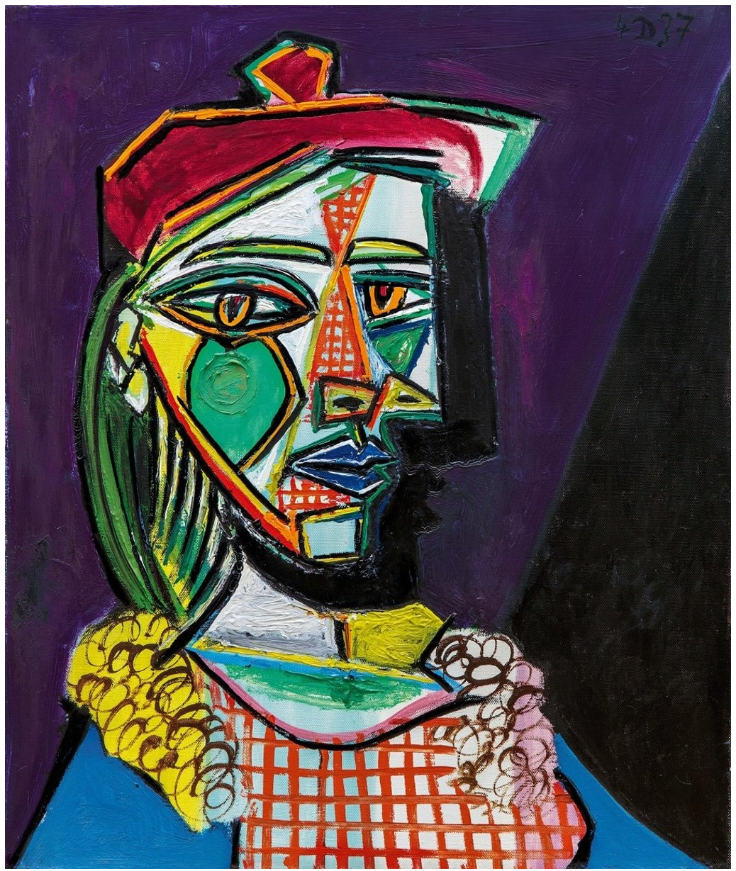
Pablo Picasso, Femme au béret et à la robe quadrillée (Marie-Thérèse Walter), 1937, Private Collection. Artwork: © 2025 Estate of Pablo Picasso / Artists Rights Society (ARS), New York
Condo’s work continued to be exhibited throughout the early 2000s at prestigious galleries and institutions, which helped cement his reputation. He was part of the The Triumph of Painting exhibition at the Saatchi Gallery in London in 2005, but by 2000, his works were already well-known in the international art scene. The present work has been in the same collection since its creation, never before shown in public. In this manner, Untitled is a uniquely curious painting by the artist and a singular collection opportunity, coalescing his key tenets of psychological depth, distorted figures and emotional intensity.
On the Lookout, 2001
Sotheby’s Diriyah: 8 February 2025
Estimated: USD 400,000 – 600,000
USD 384,000
On the Lookout | Origins | 2025 | Sotheby’s
GEORGE CONDO (b. 1957)
On the Lookout, 2001
Oil on canvas
60×48 inches (152.4 x 121.9 cm)
Signed and dated 01 (upper left)
Signed Condo, titled and dated Sept 19, 01 (on the reverse)
A sublime synthesis of art historical tropes and contemporary aesthetics, On the Lookout epitomizes the exceptional virtuosity, psychic intensity and fragmented perspectives that distinguish George Condo’s remarkable oeuvre and perfectly encapsulate the concept of “Artificial Realism.” Defined as the realistic representation of that which is artificial, the principles of Artificial Realism guide Condo’s construction of a motley crew of fictional characters whose imagined lives provide a fanciful recreation of our contemporary world. Condo’s inimitable figures serve as a mirror for human nature—their exaggerated features contorting into expressions of pain, anger, and loss that are both sympathetic and revolting, encouraging the viewer to reflect on their own contradictory nature. Rendered in clean brushstrokes of ebullient hues, On the Lookout presents one such character, staring at the viewer with three eyes. Set atop a towering cylindrical neck, the figure surveys its surreal surroundings like a periscope. The face resembles a transmogrified cartoon animal, contributing to an overall sense of excitement and whimsy, emphasized by the soft, stratospheric clouds in the background.
“It’s about dismantling one reality and constructing another from the same parts, and that various concrete objects are not attached to their parts alone.”
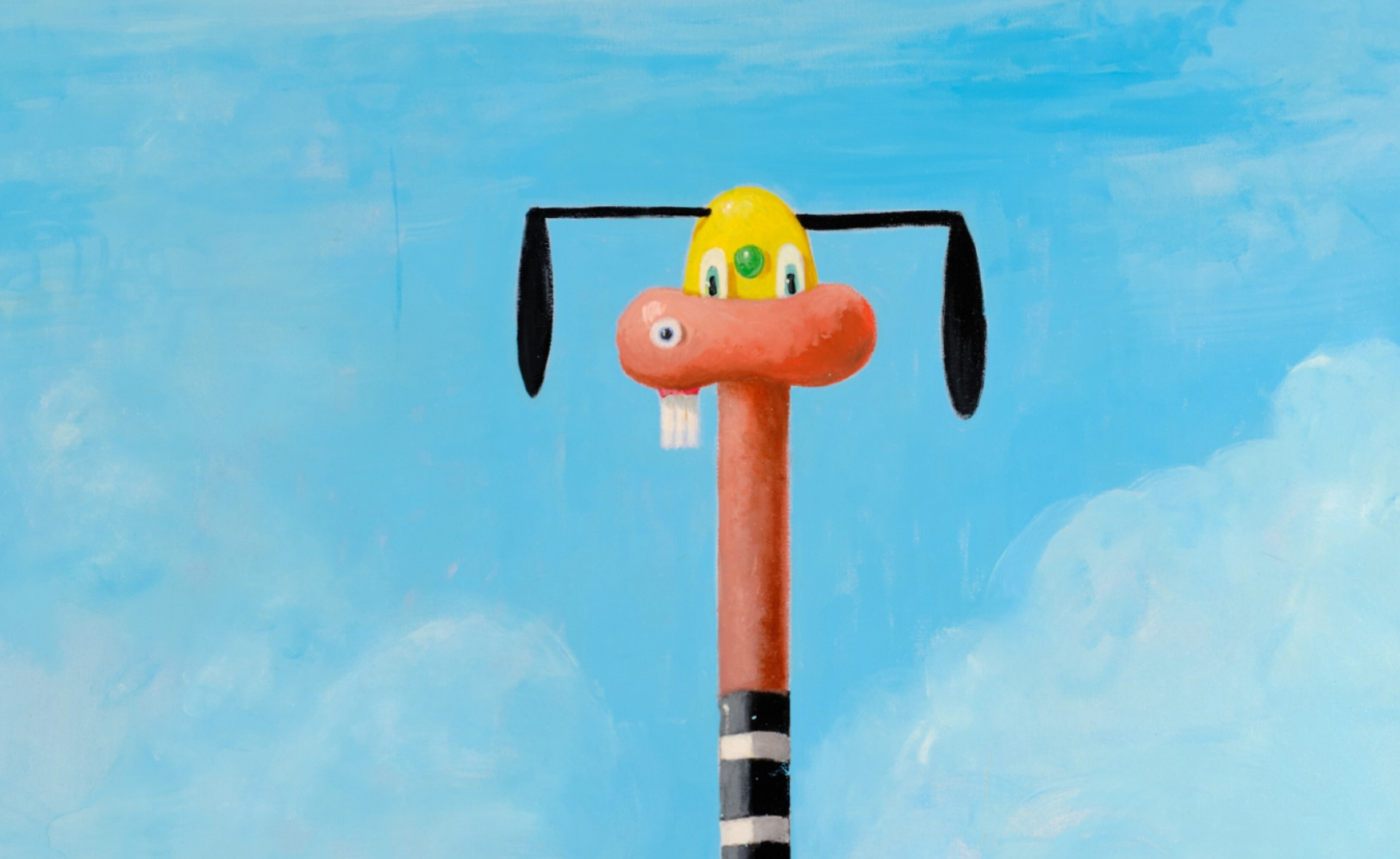
Often referred to as portraits, Condo complicates this straightforward classification, noting that traditionally, portraiture aimed to capture the essential character of an individual through a faithful reproduction of the sitter’s likeness. The exaggerated and clownish features of Condo’s eclectic cast of characters—so clearly evidenced in On the Lookout—seem to disguise their identity, while simultaneously revealing a compelling psychological presence.
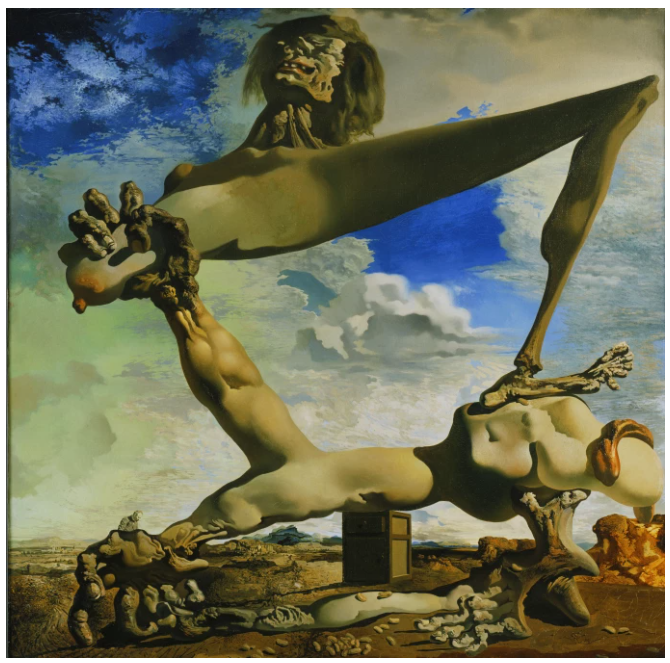
Salvador Dalí, Soft Construction with Boiled Beans (Premonition of Civil War), 1936, Philadelphia Museum of Art.
Image © Philadelphia Museum of Art / The Louise and Walter Arensberg Collection, 1950 / Bridgeman Images.
Art © 2025 Salvador Dalí, Gala-Salvador Dalí Foundation / Artists Rights Society (ARS), New York
Nonetheless, Condo often uses the tropes of traditional portraiture, conducting a symphony of artistic references to Rembrandt, Magritte, and Picasso, only to disrupt and subvert them. The Madonna, one of Condo’s first mature works that launched his career in the early 1980s, imitates the style of the Old Masters while simultaneously distorting it.
“I felt that my offering [to painting] would be an artificial, simulated American view of what European painting looks like. I thought of this as being a realist, in a strange way… I think creating hybrids is a characteristic of American thinking.”
It is important to note that this hybridity, which characterizes Condo’s works, is not, in his mind, appropriation. Having worked in Andy Warhol’s legendary Factory for a brief period in the 1980s, Condo witnessed Warhol’s reinvention of familiar images and tropes to create new and original works. Condo took away other lessons from his time at the Factory, including his seamless blending of high art techniques and kitsch aesthetics. Condo’s amalgamation of older and modern painting styles offers a sense of untimeliness that boldly contrasts with the populist work of contemporaries Keith Haring and Jean-Michel Basquiat. Like them, however, Condo’s work was engaged in a new kind of stylistically blended figurative painting. The resulting dynamic collection of ‘portraits,’ both psychologically and aesthetically rich, of which On the Lookout is an excellent example, has solidified Condo as a pioneer of contemporary art.
The Sculptor, 2003
Phillips New-York: 20 November 2024
Estimated: USD 320,000 – 500,000
USD 406,400
George Condo – Modern & Contempora… Lot 326 November 2024 | Phillips
GEORGE CONDO
The Sculptor, 2003
Oil on canvas
48×36 inches (121.9 x 91.4 cm)
George Condo’s The Sculptor, 2003, is an illuminating example of the artist’s neo-Modernist compositions in imaginary environments that combine caricature and the grotesque. The main figure, typical of Condo’s compositions, blends representational and abstract elements, embodying an undecipherable form that characterizes his “Artificial Realism” style. The Sculptor can best be described as an assembly of intimate objects arranged to resemble a human figure draped in a black cape. Instead of a head, there is a glass bottle protruding above the figure’s white collar, and instead of arms, what seems like a warped blue balloon holds two cigarettes against a blue-sky backdrop. The challenge of interpreting Condo’s compositions is precisely what makes his practice so distinctive and individual. Revitalizing the medium of painting by humorously appropriating traditional art historical icons with contemporary culture, Condo’s inventive portraits break free from the constraints of anatomical likeness and realism that have long defined pre-20th century Western art.
The Young Sailor, 2012
Christie’s New-York: 17 May 2024
Estimated: USD 800,000 – 1,200,000
USD 882,000
GEORGE CONDO (B. 1957), The Young Sailor | Christie’s (christies.com)
GEORGE CONDO (B. 1957)
The Young Sailor, 2012
Oil on canvas
40 1/4 x 32 1/4 inches (102.2 x 81.9 cm)
Incised with the artist’s signature and date ‘Condo 2012’ (upper left)

Pablo Picasso, Le Marin, 1943. © 2024 Estate of Pablo Picasso / Artists Rights Society (ARS), New York.
White + Grey Composition, 1989
Phillips New-York: 22 September 2022
Estimated: USD 70,000 – 90,000
USD 289,800
George Condo – New Now New York Lot 130 September 2022 | Phillips
GEORGE CONDO
White + Grey Composition, 1989
Oil on canvas, in artist’s frame
Canvas: 32 x 25 5/8 inches (81.3 x 65.1 cm)
Artist’s frame: 41×35 inches (104.1 x 88.9 cm)
Signed and dated “Condo 89” lower right
Signed, titled, inscribed and dated “Condo 89.12 Paris “white + grey” composition” on the reverse
Widely recognized as one of the most inventive and prolific artists of his generation, George Condo has dedicated his career to portraiture. White + Grey Composition from 1989 depicts a figure with comically distorted proportions, representing themes of ecstasy, performance and surprise that are central to Condo’s practice. The figure’s flattened face dons a bulbous chin, he wears a cartoonishly small hat, a monocle sits atop his nose, and a pipe sticks out from his mouth’s side. By incorporating elements of caricature and illustration techniques into his paintings, Condo continuously recontextualizes his work in a contemporary fine art setting. Condo’s style is an amalgamation of his experiences, both domestically and abroad. When he was 21 years old, he assisted at Andy Warhol’s Factory, where he would meet fellow New York artists such as Jean-Michel Basquiat, Keith Haring, and Julian Schnabel. Each of these artists clearly share a devotion to heavy linework, gestural portraiture and violent paint application that is characteristic of neo-expressionism. In the same year White + Grey Composition was executed, Condo travelled for the first time to Europe, where he was influenced by the German “Neue Wilde” – a neo-expressionism movement championed by artists including Georg Baselitz and Anselm Kiefer, characterized by intense color and quick, broad brushstrokes that are apparent here.
Memories of Bozo’s Father, 2009
Sotheby’s New-York: 20 May 2022
Estimated: USD 600,000 – 800,000
USD 1,008,000
Memories of Bozo’s Father | Contemporary Day Auction | 2022 | Sotheby’s (sothebys.com)
GEORGE CONDO (B. 1957)
Memories of Bozo’s Father, 2009
Oil on linen
40 x 36 1/8 inches (101.6 x 92 cm)
Signed and dated 09 (on the reverse)
Effortlessly striking and eccentric, George Condo’s Memories of Bozo’s Father from 2009, captures one of the artist’s most complex and beloved subjects, the clown. Overflowing with an immediacy of comedy and tragedy, the innovative aesthetic approach of Condo in Memories of Bozo’s Father harnesses the traditions of European portraiture while skillfully incorporating a Contemporary twist of Surrealist and Pop fusion. Utterly dazzling, the clown gazes in a comically deadpan expression at the viewer, his blue eyes and green nose punctuating his serene expression, the polka dots vibrantly splashed across his costume, while comfortably resting his lit cigarette at his side, signaling a quiet moment of reprieve for the fatigued performer. Condo’s intricate brushwork is displayed in the elegant feathering of the white Elizabethan ruff, which not only pays homage to the influence of Baroque masters, its seriousness is directly at odds with the outrageously cerulean dyed hair of the clown, his arched eyebrows daring the viewer to request a gag. Drenched in satire, the clown in the present work operates within ludicrous absurdity and stirring gravity, drawing the viewer in closer to engage.
The Diver, 2001
Christie’s New-York: 13 May 2022
Estimated: USD 600,000 – 800,000
USD 756,000
GEORGE CONDO (B. 1957) (christies.com)
GEORGE CONDO (B. 1957)
The Diver, 2001
Acrylic on canvas
60×48 inches (152.4 x 121.9 cm)
Signed, titled and dated ‘Condo Aug. 01 The Diver’ (on the reverse)
George Condo’s The Diver greets the viewer with a gloriously amusing figure set against a somber backdrop of ash greys and charcoal black. Staring out from the canvas are two bulging grey eyes, a bulbous nose, and puffy gleaming jowls. An exaggerated ear extends from the comically small head, one that bears no distinction when encountering a thick, elongated neck. Condo’s generous swathes of paint and broad brushstrokes add masterly texture to both the figure’s skin and the plain backdrop behind him. Questions abound in regard to the figure’s identity. The title hints at an occupation as a diver, inserting visualizations of this strange figure swan-diving into a pool. Condo’s trademark balance of lighthearted visual humor and references to classical art history make for a delightful work, encouraging both smiles and reflection in its reception. While influences from Picasso to Disney might be glimpsed in The Diver, the work also displays an Old Masterly sense of light. As if lit from the composition’s right-hand side, the background shades from black to smudged grey, throwing the figure into shadowed relief. If Rembrandt and Hals play their part, the present work also has a touch of Giuseppe Arcimboldo, the 16th-century Italian painter who composed imaginary profile portrait heads entirely from objects such as fruit, flowers, fish, and books. Condo here does similar building work with eyes, teeth, and the shapes of body parts, creating a sense of distinct components seen from multiple, simultaneous angles. He assembles The Diver through a compound gaze, looking at art history in the way the Cubists regarded the physical world.
The Grocery Man, 1997
Phillips London: 4 March 2022
Estimated: GBP 70,000 – 80,000
GBP 163,800 / USD 216,409
George Condo – 20th Century & Contemp… Lot 143 March 2022 | Phillips
GEORGE CONDO
The Grocery Man, 1997
Oil on canvas, in artist’s frame
14 1/2 x 11 5/8 inches (36.7 x 29.4 cm)
Signed and dated ‘Condo 97’ upper right
Signed, dedicated, indistinctly inscribed and dated
‘For Robert La Vigne with great admiration love Condo 6.21.97 “memory portrait”…’ on the reverse
The Grocery Man, 1997, was painted by George Condo for his friend, the artist and set designer Robert LaVigne. LaVigne, ‘the painter among poets’ was an important member of the bohemian subculture that flourished in San Francisco in the 1950s, whose subjects included many of the central figures of the Beat movement. A figure conjured from George Condo’s imagination, The Grocery Man, forms part of Condo’s celebrated imaginary portraits. Simultaneously ridiculous, grotesque and endearing, the portrait evokes a feeling of pathos in the viewer. Infused with an intense psychological charge, whatever discomfort we feel confronted with Condo’s wretched portraits is undermined by their contradictory clownishness, which is at once vulnerable and demonic.
“What’s possible with painting that’s not in real life is you can see two or three sides of a personality at the same time, and you can capture what I call a psychological cubism.”
On the occasion of a major exhibition of Condo’s paintings at the Hayward Gallery, London in 2011, the artist discusses his innovative approach to portraiture and the origins of the antipodular works.
In contrast to traditional portraiture in which dress, setting and environment provide visual cues to the sitter, the present work is better described through its title. The grey clothing worn is ambiguous and gives no further information on the subject. The Grocery Man stares beyond the picture frame with a startled and confused expression. The intimate scale, muted color palette of purples, greys, soft oranges and pinks, and background softly rendered in painterly brushstrokes, draws the viewer into the sitters bewildered and gentle world. Condo notoriously borrows from art history, reworking ideas that span from the Renaissance to Cubism and Surrealism, assimilating these references into his own unique interpretation. The restructured anatomies, the large bulging eyes, bulbous nose and small teeth that peep above a disarmingly tumorous shaped chin, can be compared to Picasso’s reorganized forms of the face and figure.
Early Works
Division of the Eternal, 1986
Works from the Collection of Byron R. Meyer with Partial Proceeds
to Benefit the San Francisco Museum of Modern Art
Sotheby’s New-York: 19 November 2025
Estimated: USD 400,000 – 600,000
USD 431,800
Division of the Eternal | Contemporary Day Auction | 2025 | Sotheby’s
GEORGE CONDO (b. 1957)
Division of the Eternal, 1986
Oil, encaustic, ink, marker, graphite and paper collage on 3 joined canvases
107 x 85 1/2 inches (271.8 x 217.2 cm)
Signed and dated 9.86 (lower center right)
Dated Paris 86 (upper left)
Executed in 1986, George Gondo’s Division of the Eternal crystallizes the synthesis of figuration and abstraction that would come to define his contribution to postmodern painting. Executed during his Paris years, one of the most fertile periods of his early career, the work stands as a monumental exploration of psychic fragmentation, human comedy, and painterly excess. The composition’s monumental scale and fevered surface of oil, encaustic, and collage evoke both an archaeological wall and a palimpsest of consciousness, an index of the mind’s infinite divisions and reconciliations.
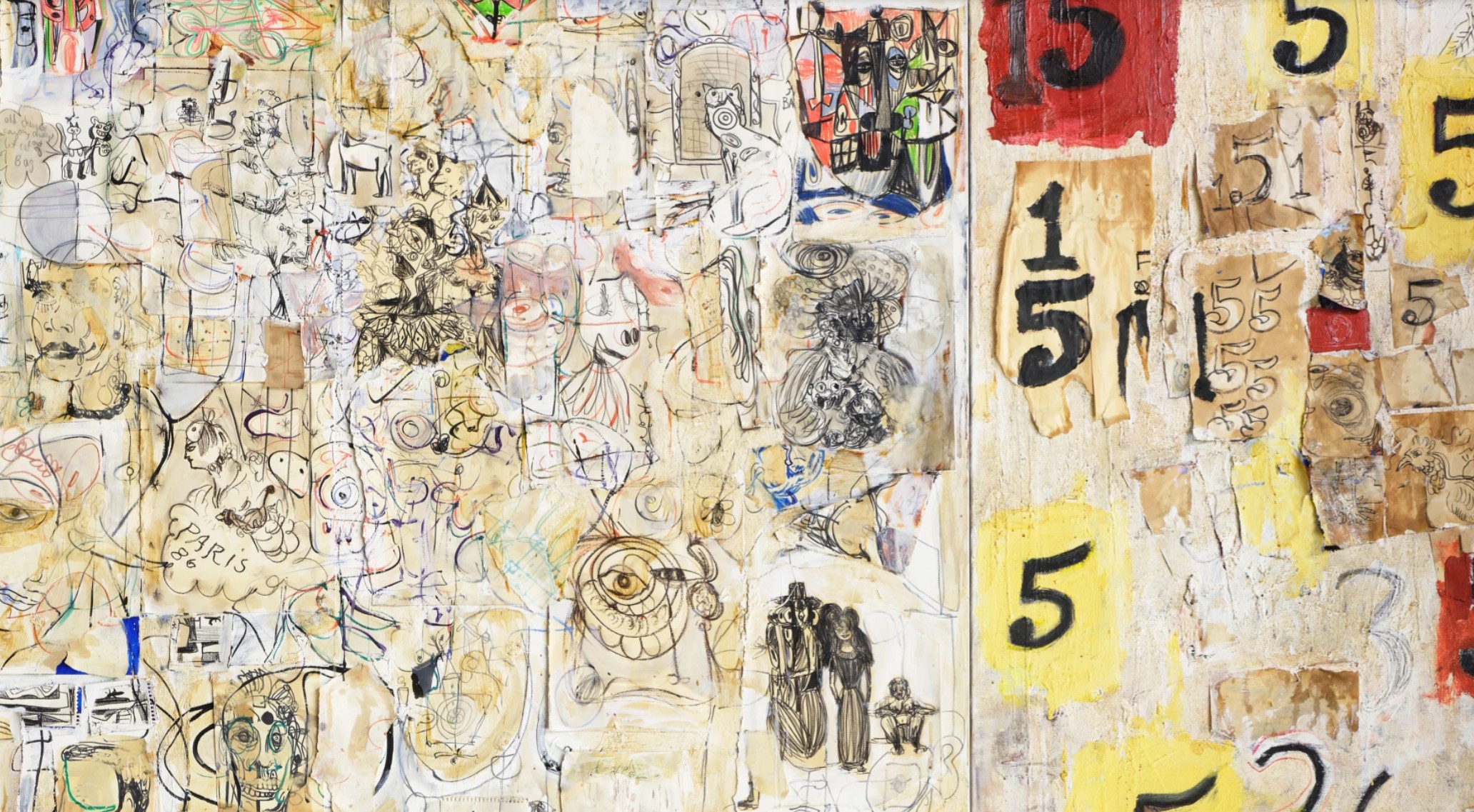
Painted at the height of the 1980s neo-expressionist surge, Division of the Eternal departs from the gestural bravado of his contemporaries by embracing a deeper dialogue with art history. Condo’s references are multiple and simultaneous: the cubist dislocation of Picasso, the spiritual density of Dubuffet, and the layered psychological space of Rauschenberg’s early combines. The serial repetition of the number “5” across the canvas, rendered in emphatic blocks of yellow and red, suggests a structural device akin to Charles Demuth’s and Jasper Johns’s numerical symbolism, yet Condo’s treatment transforms counting into incantation, a rhythmic anchor amid chaos.
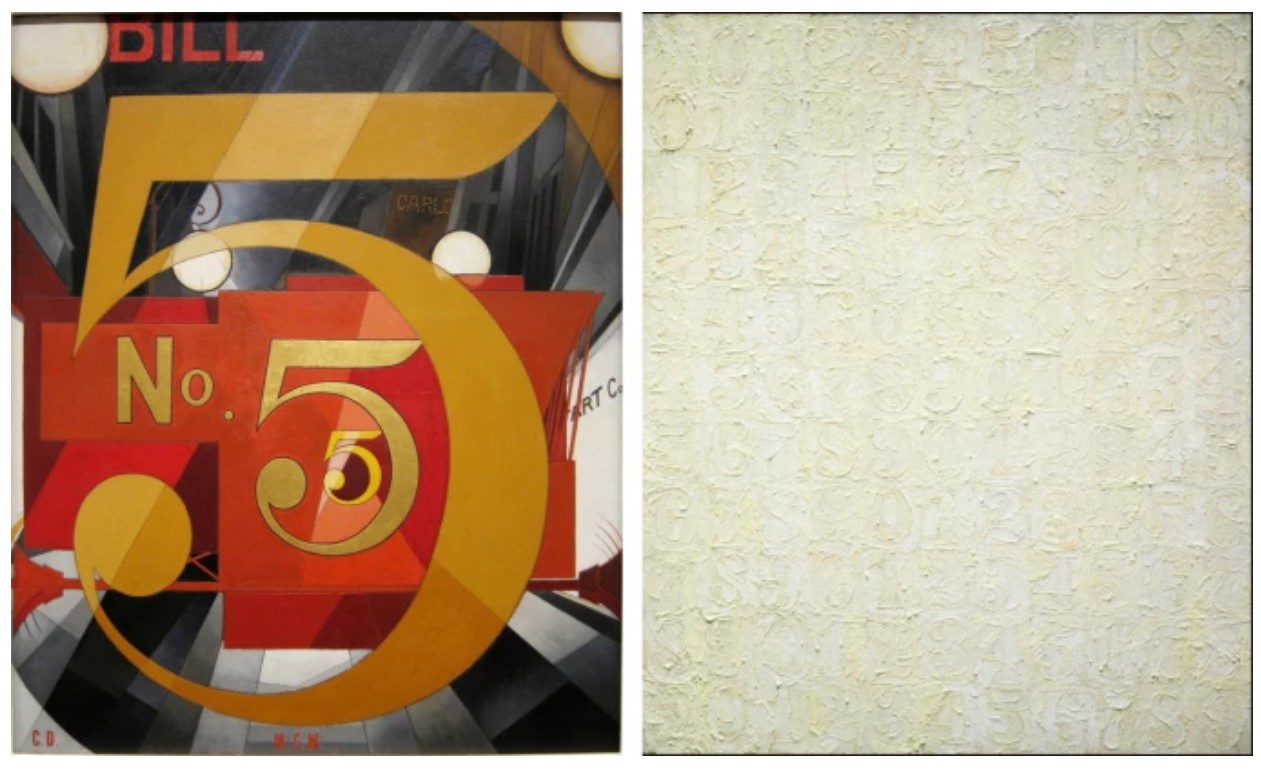
Left:Charles Demuth, I Saw the Figure 5 in Gold, 1928. The Metropolitan Museum of Art, New York.
Right: Jasper Johns, White Numbers, July 29, 1957.The Museum of Modern Art, New York. © 2025 Jasper Johns / Licensed by VAGA at Artists Rights Society (ARS), NY.
The surface bears evidence of multiple revisions, erasures, and overpainting, revealing Condo’s process as a kind of excavation. Paper collage and encaustic lend the painting a sculptural tactility, inviting comparisons with the textured strata of Antoni Tàpies or Alberto Burri, while the overall effect retains the immediacy and anxiety of raw thought. Each section teems with fragments of drawn figures, archaic symbols, and smudged gestures, traces of the human form in states of disintegration and renewal.
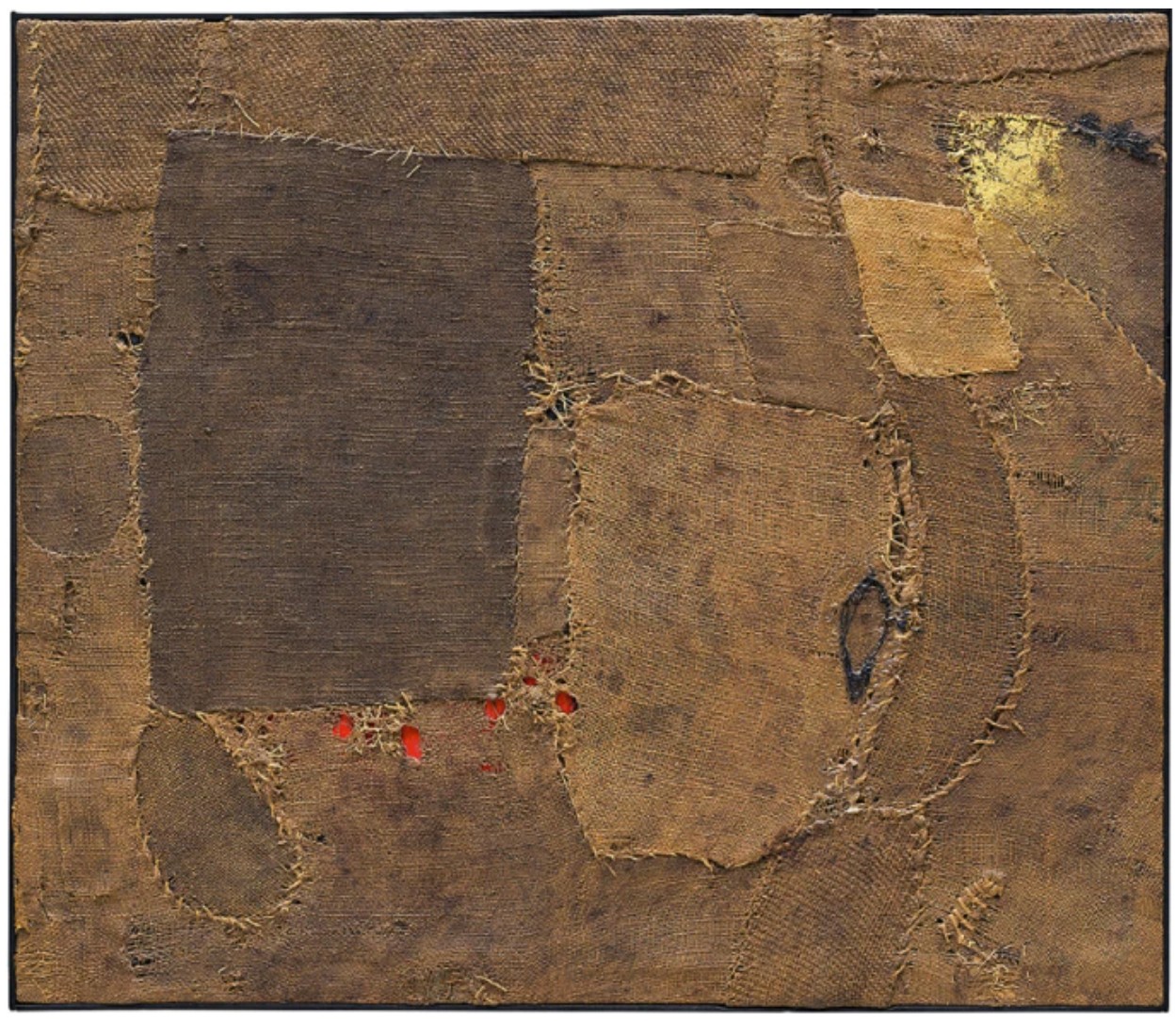
Alberto Burri, Composizione, 1953. Solomon R. Guggenheim Museum, New York. © Fondazione Palazzo Albizzini Collezione Burri, Città di Castello/2023 Artist Rights Society (ARS), New York/SIAE, Rome
Division of the Eternal emerges at a key inflection point in Condo’s career. Having left New York for Paris in 1985, he immersed himself in the European avant-garde tradition, befriending figures such as Jean-Michel Basquiat and working within a milieu that valued conceptual and painterly experimentation. The year 1986 saw the crystallization of what the artist would later call “Artificial Realism,” or the depiction of imagined figures through the technical language of the Old Masters. While many of his later portraits display psychological grotesquerie and overt caricature, here Condo operates on the cusp between abstraction and figuration, revealing the primordial field from which those personae would later emerge. Key figures from Condo’s repertoire—including the iconic character Rodrigo and the recurring symbol of the human eye—are scattered throughout the composition, serving as a window into the artist’s singular menagerie of subjects that would come to define his career.
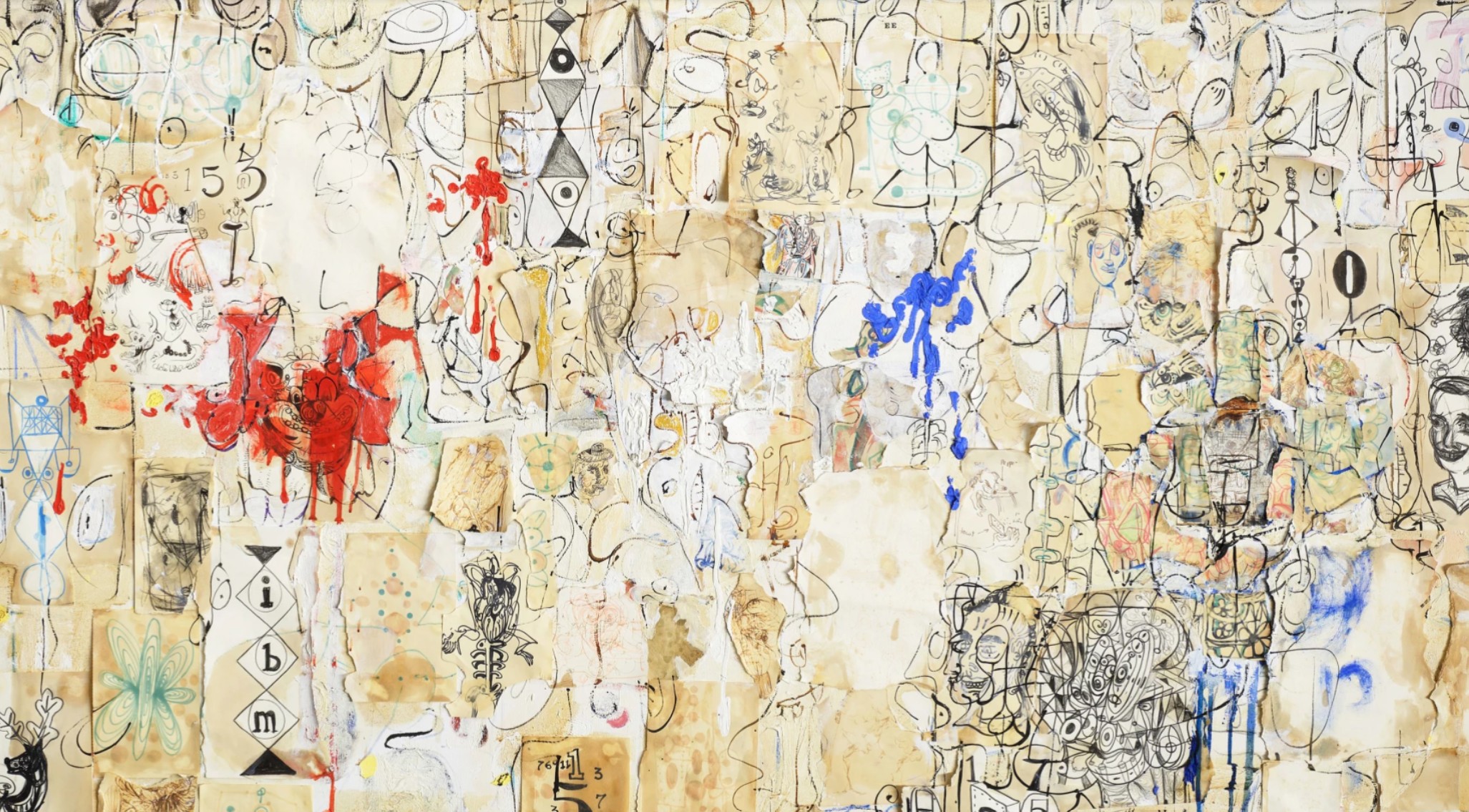
Having remained in the collection of Byron R. Meyer since the year of its creation in 1986, Division of the Eternal held pride of place in his home as a centerpiece of his collection for over three decades. The painting reflects Meyer’s lifelong commitment to supporting the artists whose work composed his collection, purchased early on in Condo’s career before the artist’s trademark signs and symbols had become some of the most recognizable images in contemporary painting.
Ultimately, Division of the Eternal encapsulates Condo’s lifelong pursuit: to visualize the multiplicity of human consciousness through painterly invention. Its title alone suggests both fracture and perpetuity, a paradox resolved only through art. In its dense layering, symbolic repetition, and frenetic order, the work becomes a kind of visual fugue: an ode to the eternal divisions within the self, and a testament to Condo’s enduring relevance in the continuum of modern painting.
The Second Life, 1985
Sotheby’s New-York: 16 November 2023
Estimated: USD 400,000 – 600,000
USD 571,500
The Second Life | Contemporary Day Auction | 2023 | Sotheby’s (sothebys.com)
GEORGE CONDO (b. 1957)
The Second Life, 1985
Oil on canvas
74 1/4 x 48 inches (188.6 x 121.9 cm)
Signed and dated 85 (upper left)
Emerging from a pivotal moment in his career, The Second Life was executed in 1985, the same year George Condo moved to Paris for what would ultimately be ten years. It was during this time that Condo coined the term ‘artificial realism.’ In the artist’s own words: “That idea about representing reality, but reality being a construct of man-made appearances”. Strikingly reminiscent of the analytic spaces of cubism, The Second Life possesses qualities not dissimilar from the likes of Pablo Picasso and Georges Braque. Fraught with turbulence and decay, the present work is a critical example of Condo’s Expanding Canvas series: paintings that Condo himself has described as ‘psychological landscapes’ and ‘detailed descriptions of undefinable thoughts’. Each produced during a moment of fervent experimentation, he would listen to jazz musicians like Miles Davis, allowing the music to influence his own artistic improvisations on the canvas. Partially abstract, partially figurative, the compositions of the artist’s canvas provides the viewer with an intentionally disorienting visual experience. The result is a canvas which immerses the viewer into the chaos of improvisation—one that, while informed by the traditional art historical canon, is distinctly contemporary.
Untitled, 1985
Phillips New-York: 19 May 2022
Estimated: USD 250,000 – 350,000
USD 504,000
George Condo – 20th Century & Contempor… Lot 121 May 2022 | Phillips
GEORGE CONDO
Untitled, 1985
Oil on linen
62 3/4 x 34 3/8 inches (159.4 x 87.3 cm)
Signed and dated “Condo 1985” on the overlap
Executed early in the artist’s career in 1985, Untitled uniquely showcases Condo’s use of the art historical canon as both a source and a point of departure. Student of Warhol and friend of Basquiat, George Condo first rose to prominence amidst the bustling New York art scene in the early 1980s. Despite the artistic influences of his mentors and peers, Condo had no interest in becoming part of the post-Pop movement; rather, he looked to the Old Masters for inspiration. The unique style he has developed and honed over the past four decades relies on contrasts—in style, form, and subject matter—which allows him to pay tribute to a vast array of art-historical figures, from Vermeer to Picasso, abstracting figures using a variety of artistic styles ranging from Mannerism to Cubism.
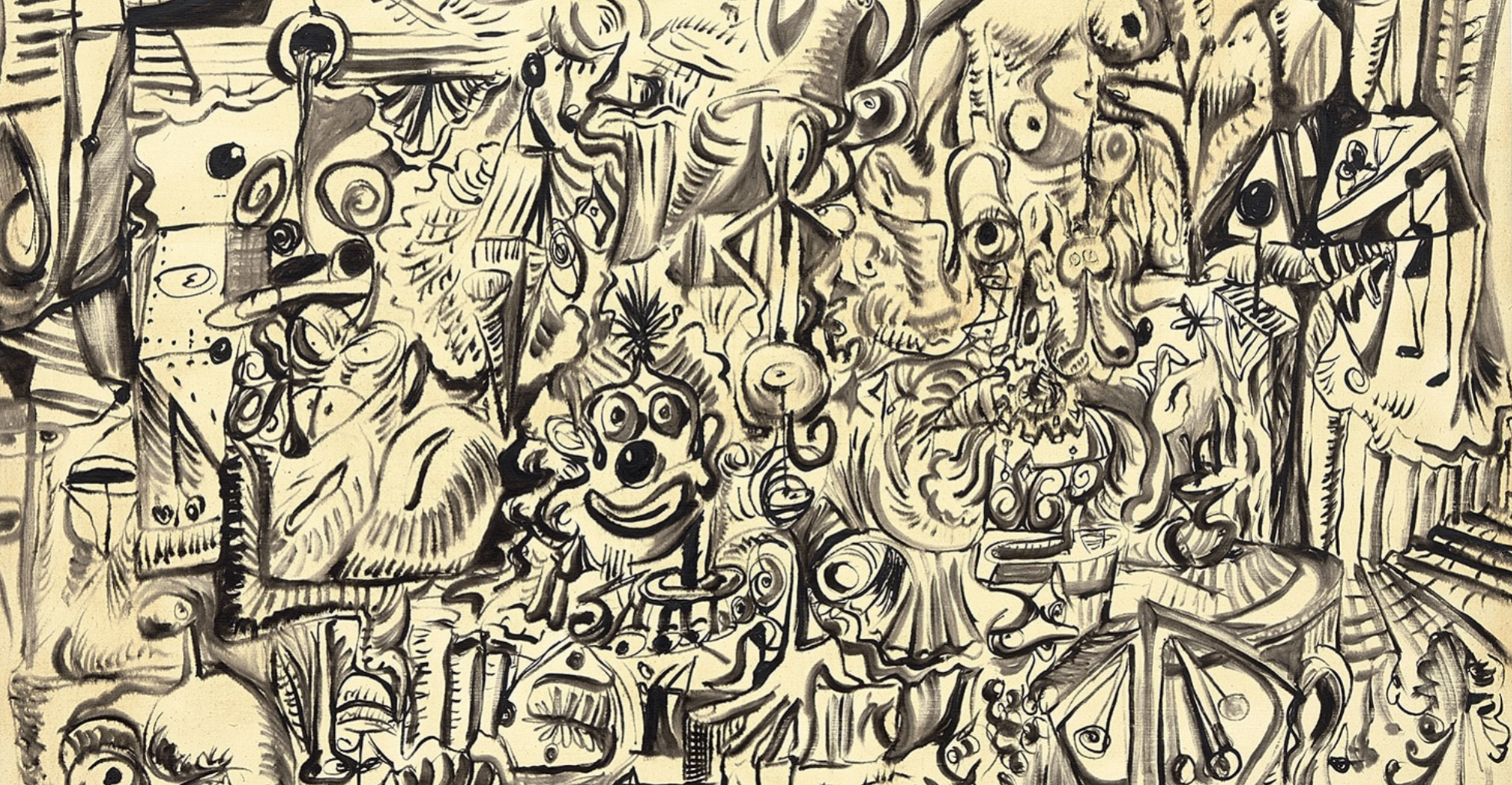
In the mid-1980s, Condo began working on a group of paintings which he called “Expanding Canvases.” While making these works, each produced during a period of fervent experimentation, he would listen to jazz musicians like Miles Davis, allowing the music to inspire his own artistic improvisations on the canvas. A trained musician himself, Condo used riffs and solos to guide the weaving and swirling of paint across his canvas, creating sweeping tendrils and sharp turns. The improvised lines in Untitled give life to clocks, music notes, disjointed brick walls, staircases, and cartoonish figures; however, these forms are abstracted just past the point of creating narrative, suspended within patterns of dots and lines which elude time and setting.
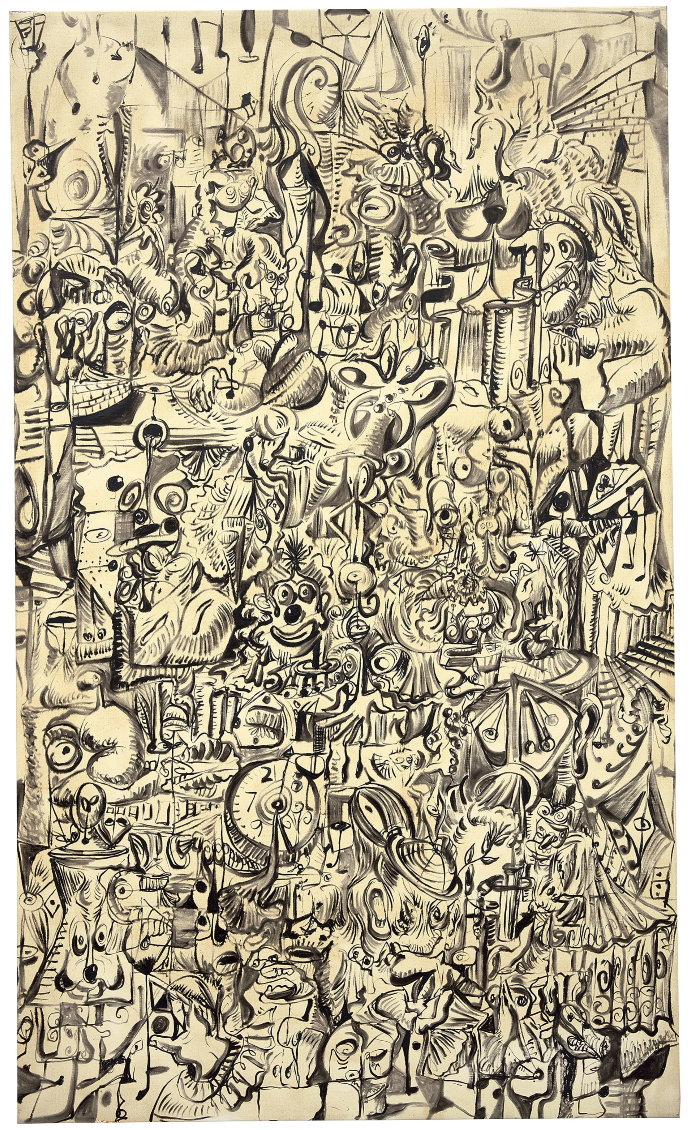
The Expanding Canvases combine European tradition and American experimentation, producing a kind of fervency and dynamism not unlike what Hieronymus Bosch produced during the Northern Renaissance. Much like Bosch’s crowded scenes with anthropomorphic monsters and city walls, the present work merges reality with fantasy, for instance where the nose of the man in the stocking cap joins a swirling clifftop pathway, as if one must continue up his brow like a drawbridge. Like Bosch’s Christ in Limbo, Condo’s Untitled transports viewers to a place that is many settings all at once—part city, part carnival, part story—and yet no place at all. In technique, this painting also recalls the monochromatic traditions made widespread by artists such as Albrecht Dürer, who used lines to create a sense of chaos and mystery in his woodcut prints illustrating biblical stories. Like Dürer’s prints, Condo’s Untitled relies on similar methods of cross-hatching and varying densities in pigment to create highlights and lowlights. The result is a canvas which immerses the viewer into the chaos of improvisation—one that, while informed by European traditions, is distinctly American.
Bunny Rap, 1985
Sotheby’s New-York: 30 September 2021
Estimated: USD 100,000 – 150,000
USD 214,200
Bunny Rap | Contemporary Curated | 2021 | Sotheby’s (sothebys.com)
GEORGE CONDO (b. 1957)
Bunny Rap, 1985
Oil on canvas
39 3/8 x 27 3/4 inches (100 x 70.5 cm)
Signed and dated 1985
Executed at a pivotal moment in the artist’s career, Bunny Rap from 1985 represents a monumental shift in George Condo’s life and career. In 1985, George Condo moved to Paris for what would be ten years. His time there resulted in the careful study of artistic masters of both the past and present – the museums of Paris provided for close examination of modernist abstraction like that found in the work of Pablo Picasso, and the proximity of the Parisian studios of Keith Haring and Jean-Michel Basquiat allowed for fast friendships to develop. It was at this inspired time in the artist’s life that he began work on his Expanding Canvas series, paintings that Condo himself has described as ‘psychological landscapes’ and ‘detailed descriptions of undefinable thoughts. Partially abstract, partially figurative, the compositions of these works spread over the surface of the artist’s canvas providing the viewer with a dynamic, energetic experience, drawing the eye over the expanse of the painting. Bunny Rap is an early example of the artist’s experimentation with “figurative abstraction”. The amalgamation of forms combined with the metallic color palette makes for a captivating and engaging composition that leaves the eye swirling around the canvas. Radiating in all directions, the present work Both Condo’s chameleon-like qualities to mimic the great artists of the past, as well as his own unique vision, merge in the present work seamlessly, asserting the artist’s own place among great icons of the canon of Western art.
Other Series
The Housekeeper’s Family, 2004
Christie’s London: 7 March 2026
Estimated: GBP 180,000 – 250,000
GBP 444,500 / USD 593,810
GEORGE CONDO (B. 1957), The Housekeeper’s Family | Christie’s
GEORGE CONDO (B. 1957)
The Housekeeper’s Family, 2004
Oil on canvas
48×36 inches (122 x 91.4 cm)
Signed, titled and dated ‘Condo 04 The Housekeeper’s Family’ (on the reverse)
An arresting example of George Condo’s melding of caricature and pathos, The Housekeeper’s Family (2004)playfully refracts art-historical references through his own absurd symbolic lexicon. The large-scale paintingpresents three figures, the titular housekeeper and her two children, standing before a blue-green backdrop. With distorted, impastoed faces, they sport carrots growing out of their ears. During the early 2000s, figures working in domestic help began to populate many of Condo’s canvases, including a French maid and the recurring rogues Jean-Louis, a butler, and Rodrigo, a valet. The character of the housekeeper seen here recurred in several compositions. In 2005, the painting was part of the major exhibition George Condo: One Hundred Women, at the Museum der Moderne, Salzburg and the Kunsthalle Bielefeld.
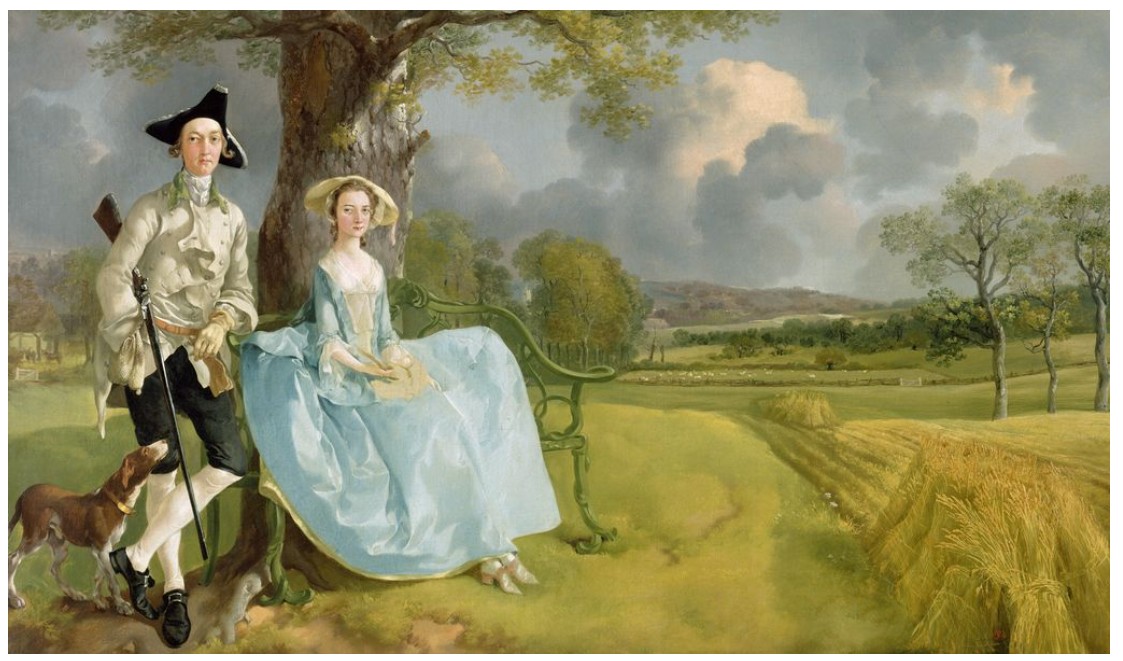
Thomas Gainsborough, Mr and Mrs Andrews, circa 1748-1749. National Gallery, London. Digital image: Bridgeman Images.
The muted palette and moody, broad-brushed background of The Housekeeper’s Family lend the painting an Old Masterly aspect, contrasting with the surreal appearance of the depicted trio. The carrot, intruding in various ways into these carnivalesque portraits, was a recurrent motif within Condo’s oeuvre of this period, and one that the artist understood to be a ‘metaphor for false hope’ that seemingly signifies an artificial existence (G. Condo quoted in R. Rugoff, ‘The Enigma of Jean Louis’, in George Condo: Existential Portraits, exh. cat. Luhring Augustine, New York 2006, p. 12).
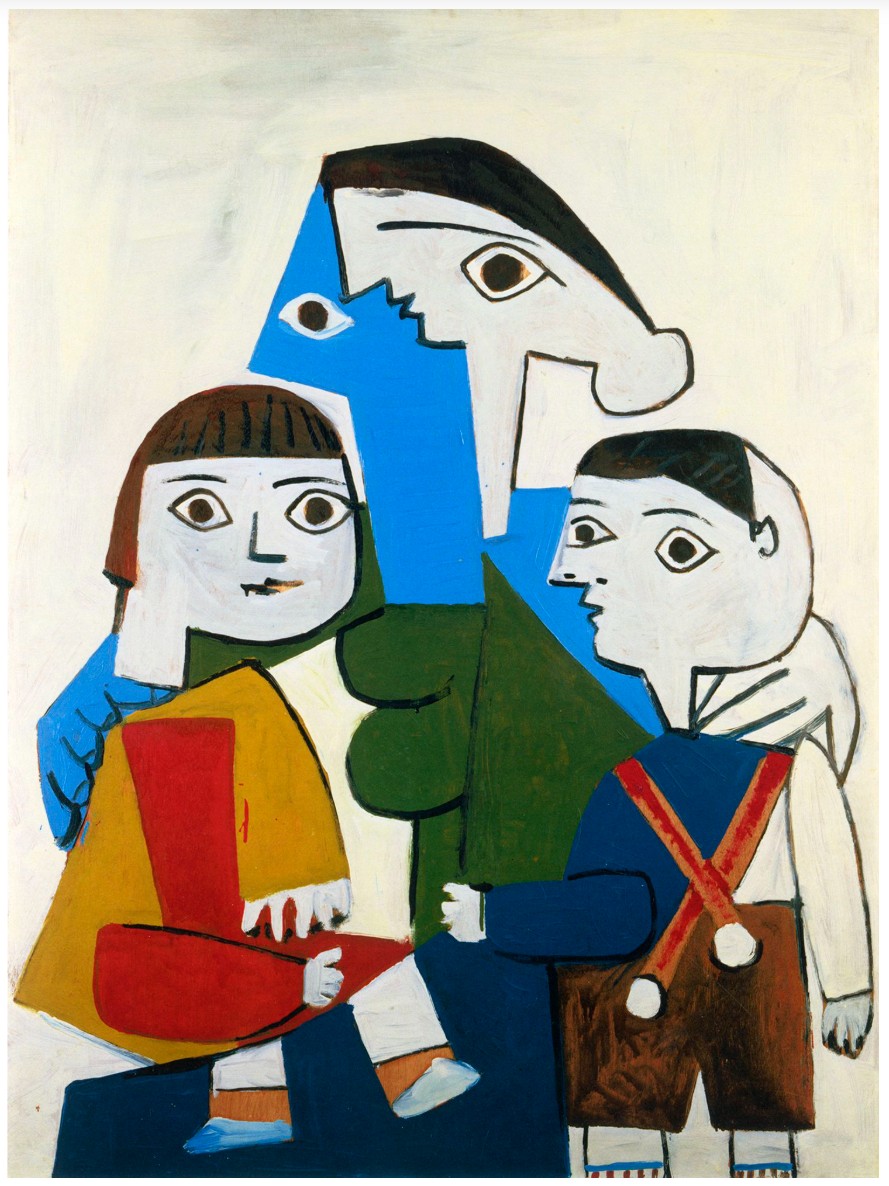
Pablo Picasso, Maternité sur fond blanc, 1953. Private collection. Artwork: © 2026 Succession Picasso/DACS, London.
Condo never modelled his imagery on a single source but drew upon impulses from a diverse range of material. In The Housekeeper’s Family, the little girl dressed in a tutu recalls Edgar Degas’ famous ballerinas, but she also has a more personal significance, tied to Condo’s own memories of the children’s ballet classes that took place directly across from his studio in Paris. During the period that he painted The Housekeeper’s Family, Condo was also interested in paintings by Diego Velázquez and Edouard Manet, whose work had been placed in dialogue in the 2003 exhibition The French Taste for Spanish Painting at The Metropolitan Museum of Art, New York. Like Manet’s studies of absinthe drinkers, singers, and musicians, Condo’s paintings often feature type-figures that, although invented, occupy real positions in society.
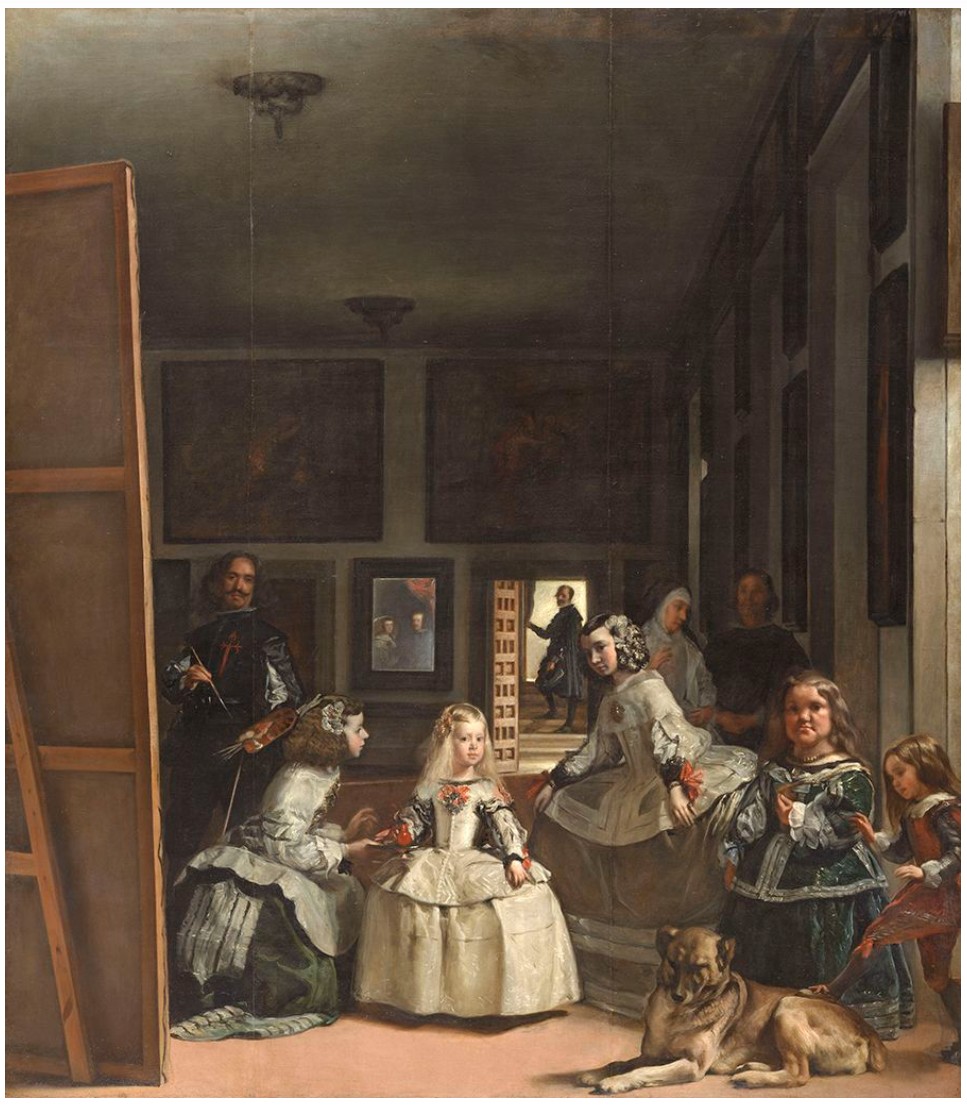
Diego Velázquez, Las Meninas, 1656. Museo Del Prado, Madrid.
Digital image: © 2026 Museo Nacional del Prado © Photo MNP / Scala, Florence.
Condo’s practice has long engaged with a variety of techniques, symbols, and motifs from every art-historical era. He came of age in 1980s New York, befriending Jean-Michel Basquiat and worked for Andy Warhol, before relocating to Paris for ten years, where he immersed himself in French philosophy. It was against this backdrop of wide-ranging influences that he began to study and copy the artists that he loved, from Caravaggio and Cezanne to de Kooning and Picasso, who remains a particular favorite. Condo has described his jarring and forcefully synthetic style as ‘artificial realism’.
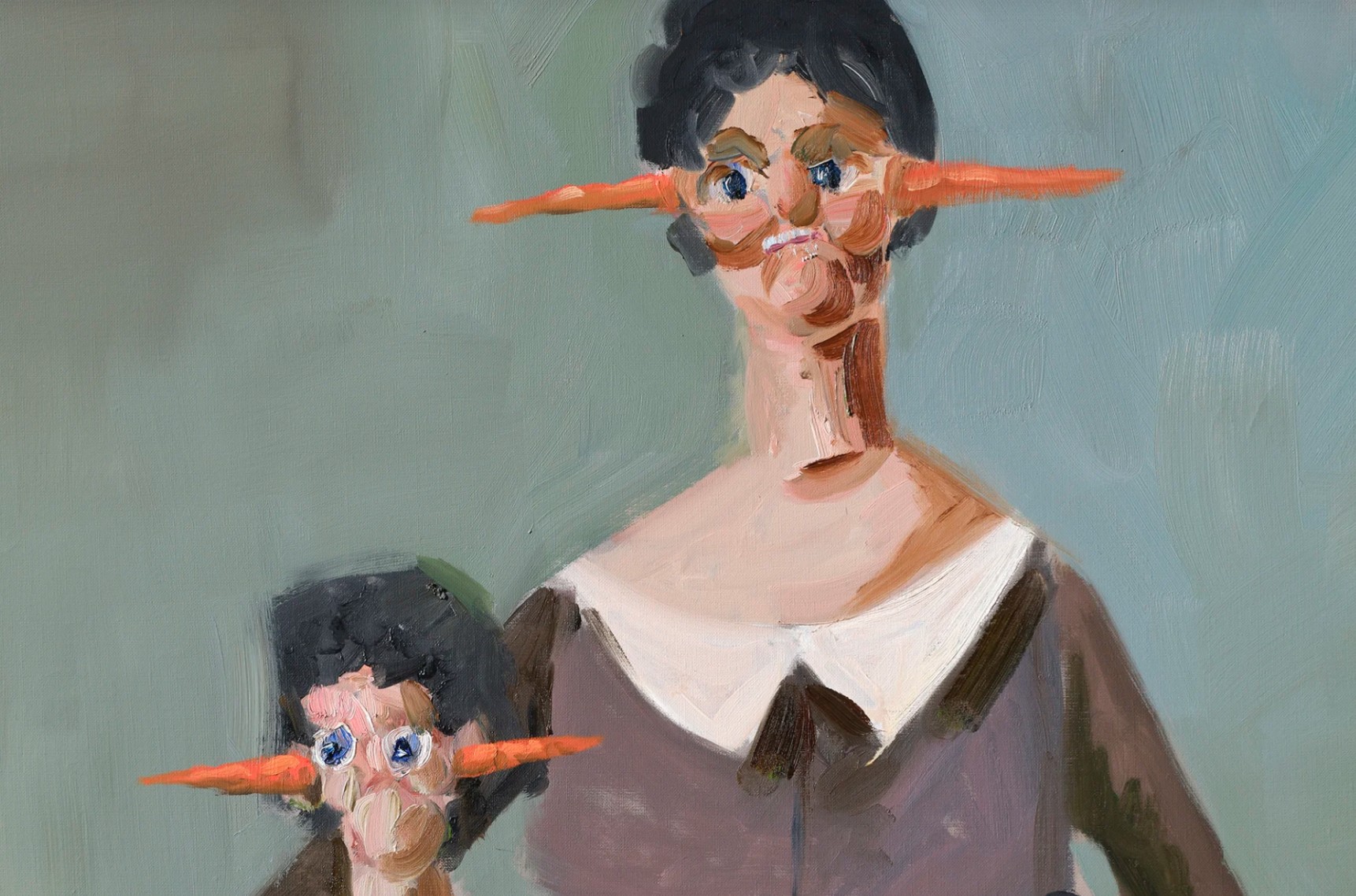
By embracing disorientation as an artistic gesture, his compositions trigger layered and contradictory responses. The tragicomic characters that Condo depicts in The Houskeeper’s Family appear to possess complex psychologies, at once outlandish and sympathetic, vulnerable yet potent.
Untitled, circa 2016
Sotheby’s Riyadh: 31 January 2026
Estimated: USD 280,000 – 350,000
USD 482,600
Untitled | Origins II | 2026 | Sotheby’s
GEORGE CONDO (b. 1957)
Untitled, circa 2016
Oil on linen
45×35 inches (109.2 x 88.9 cm)
Searing with psychological tension and painterly bravura, Untitled (circa 2016) exemplifies George Condo’s mature exploration of what he has famously termed “psychological cubism”: a radical reconfiguration of the human figure that fractures identity into simultaneous emotional and perceptual states. Executed at a moment when Condo’s international reputation was firmly established, the present work distills decades of inquiry into the mechanics of portraiture, drawing upon art-historical precedent while decisively asserting a contemporary idiom that is at once incisive and darkly humorous.
The composition presents a formally dressed figure, seated frontally and clad in a vivid vermilion jacket that immediately commands the viewer’s attention. This sartorial elegance, suggestive of aristocratic portraiture or ceremonial dress, is destabilized by the figure’s reassembled face, whose features appear stretched, split, and recombined along a central axis. The elongated nose bifurcates the visage, while the eyes, rendered with a striking intensity, resist any singular psychological reading. Condo’s manipulation of anatomy is neither arbitrary nor merely satirical; rather, it functions as a visual metaphor for the fractured self, exposing the instability beneath social performance and cultivated decorum.
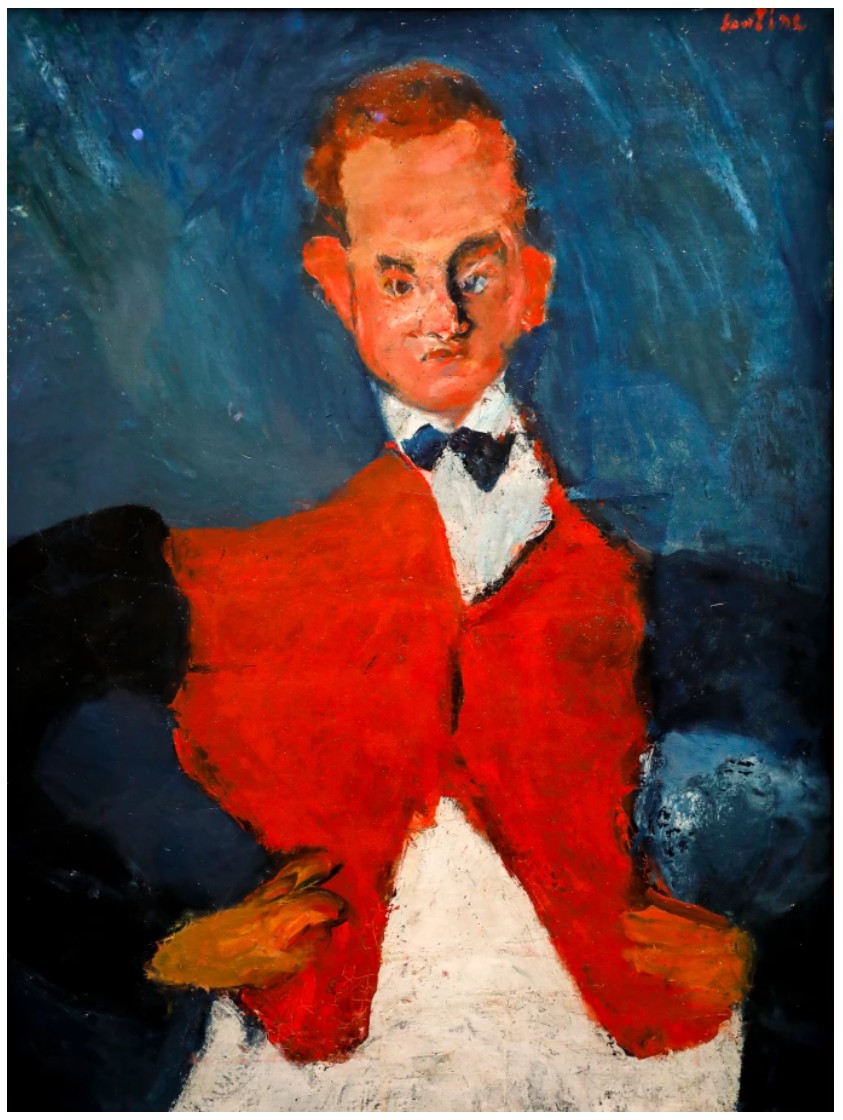
Chaim Soutine, The Room-service Waiter, c.1927. Musée de l’Orangerie, Paris.
Art © 2025 Artists Rights Society (ARS), New York / ADAGP, Paris
Condo’s technical fluency is central to the work’s power. The brushwork oscillates between confident, declarative strokes and areas of deliberate awkwardness, underscoring the tension between mastery and distortion. The handling of paint, particularly in the jacket, where saturated reds are layered with tonal variation and gestural vitality, demonstrates the artist’s deep engagement with the materiality of oil paint and the expressive potential of color. Behind the figure, a loosely articulated indigo and violet field serves as both backdrop and psychological aura, amplifying the subject’s presence while refusing spatial specificity. This ambiguous ground situates the figure in a mental rather than physical space, aligning the work with the legacy of Surrealism while remaining resolutely contemporary. Throughout his career, Condo has drawn extensively from the canon of European painting, absorbing lessons in figuration, distortion, and emotional intensity. In Untitled, echoes of Old Master portraiture are unmistakable in the frontal pose and composed hands, which rest neatly at the figure’s center, conveying restraint and authority. Yet these classical signals are subverted by the face’s implausible architecture, producing a discordant harmony that is quintessentially Condo. The result is a portrait that feels both timeless and acutely of its moment, reflecting contemporary anxieties surrounding identity, performance, and psychological fragmentation.
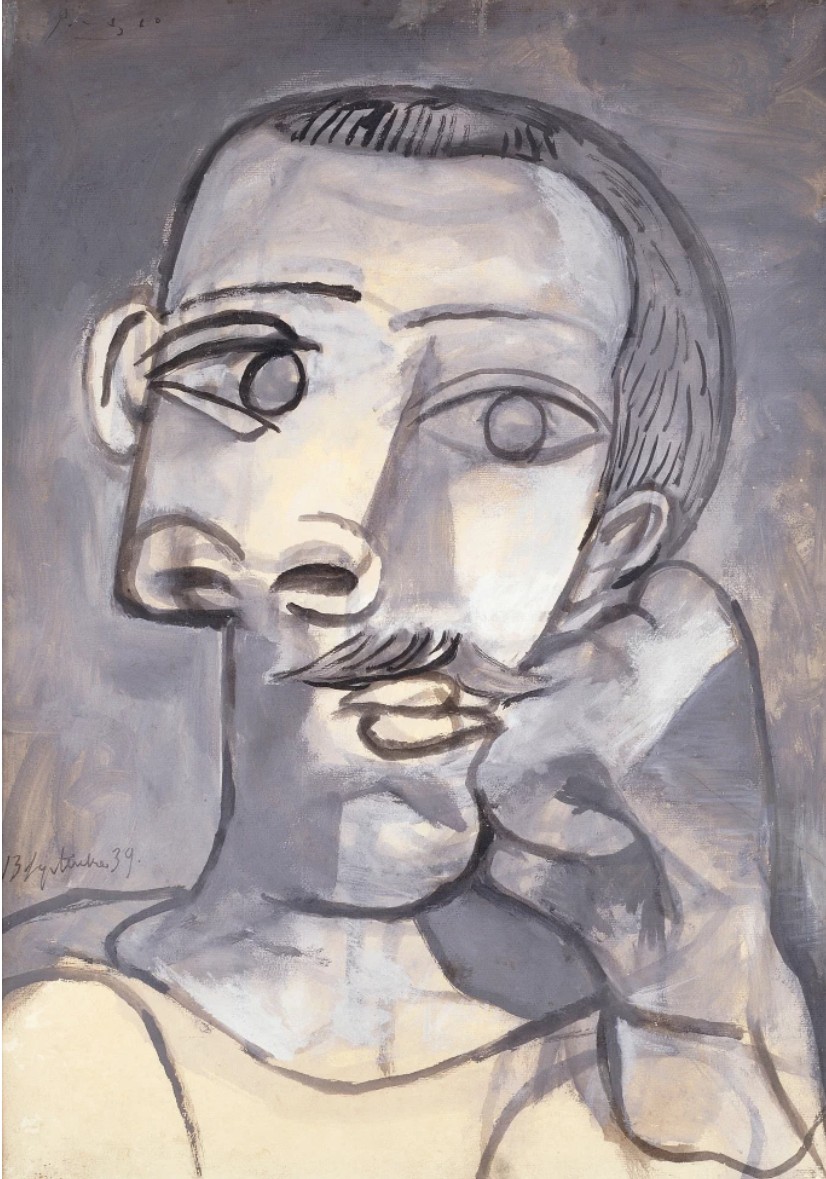
Pablo Picasso, Tete d’Homme a la Moustache, 1939. Private Collection. Christie’s Images / © Succession Picasso/DACS, London 2025 / Bridgeman Images. Art © 2025 Estate of Pablo Picasso / Artists Rights Society (ARS), New York.
Importantly, Condo’s figures are not caricatures in the reductive sense; they are portraits of inner life rendered visible through exaggeration and formal dissonance. The absurdity of the figure’s appearance coexists with an undercurrent of vulnerability, suggesting that humor, in Condo’s practice, is inseparable from existential unease. The painting invites prolonged looking, rewarding the viewer with subtle shifts in expression and mood as the eye moves across its fractured planes. Untitled (circa 2016) stands as a compelling example of Condo’s ability to synthesize art-historical reference, technical virtuosity, and conceptual rigor into a single, arresting image. It captures the artist at a moment of assured confidence, deploying distortion not as provocation alone but as a sophisticated language for articulating the complexities of the human psyche. As such, the work occupies a significant position within Condo’s oeuvre and within the broader trajectory of contemporary figurative painting, reaffirming his status as one of the most incisive portraitists of the modern era.
Untitled, 2007
Property from a Private New York Collection
Christie’s New-York: 20 November 2025
Estimated: USD 500,000 – 700,000
USD 635,000
GEORGE CONDO (B. 1957), Untitled | Christie’s
GEORGE CONDO (B. 1957)
Untitled, 2007
Acrylic and oil on canvas
108×85 inches (274.3 x 216 cm)
“Condo is not a producer of single precious items consistent in style and long in the making… He’s an artist of variety, plentitude and multiformity. He needs to be seen in an environment that presents him not as a virtuoso soloist but as the master of the massed chorale.”
Holland Cotter
Raphael, The Mond Crucifixion, ca. 1503-3. National Gallery, London.
Untitled, 2009
Sotheby’s London: 17 October 2025
Estimated: GBP 200,000 – 300,000
GBP 254,000 / USD 340,360
Untitled | Contemporary Day Auction | 2025 | Sotheby’s
GEORGE CONDO (b. 1957)
Untitled, 2009
Oil on canvas
48×44 inches (121.9 x 111.8 cm)
At once compelling and disquieting, George Condo’s 2009 painting melds the grotesque, the canonical and the alluring. Against a dark green background, the composition depicts an intimate encounter between a man and a woman, rendered with Condo’s characteristic tension between desire and distortion. The plush red armchair gives the scene both a sense of non-site but also an art-historical specificity, harkening to works by Pablo Picasso, Francis Bacon and many other titans of the art historical canon. Both bodies oscillate between hypersexualized idealism and nightmarish disfigurement; she seems to grab the jagged, square teeth of his mouth with a lobster claw; his skin is ghoulish grey next to hers. The woman’s rounded buttocks, perky breasts and thigh high fishnet tights are a recurrent visual motif in Condo’s works of this period.
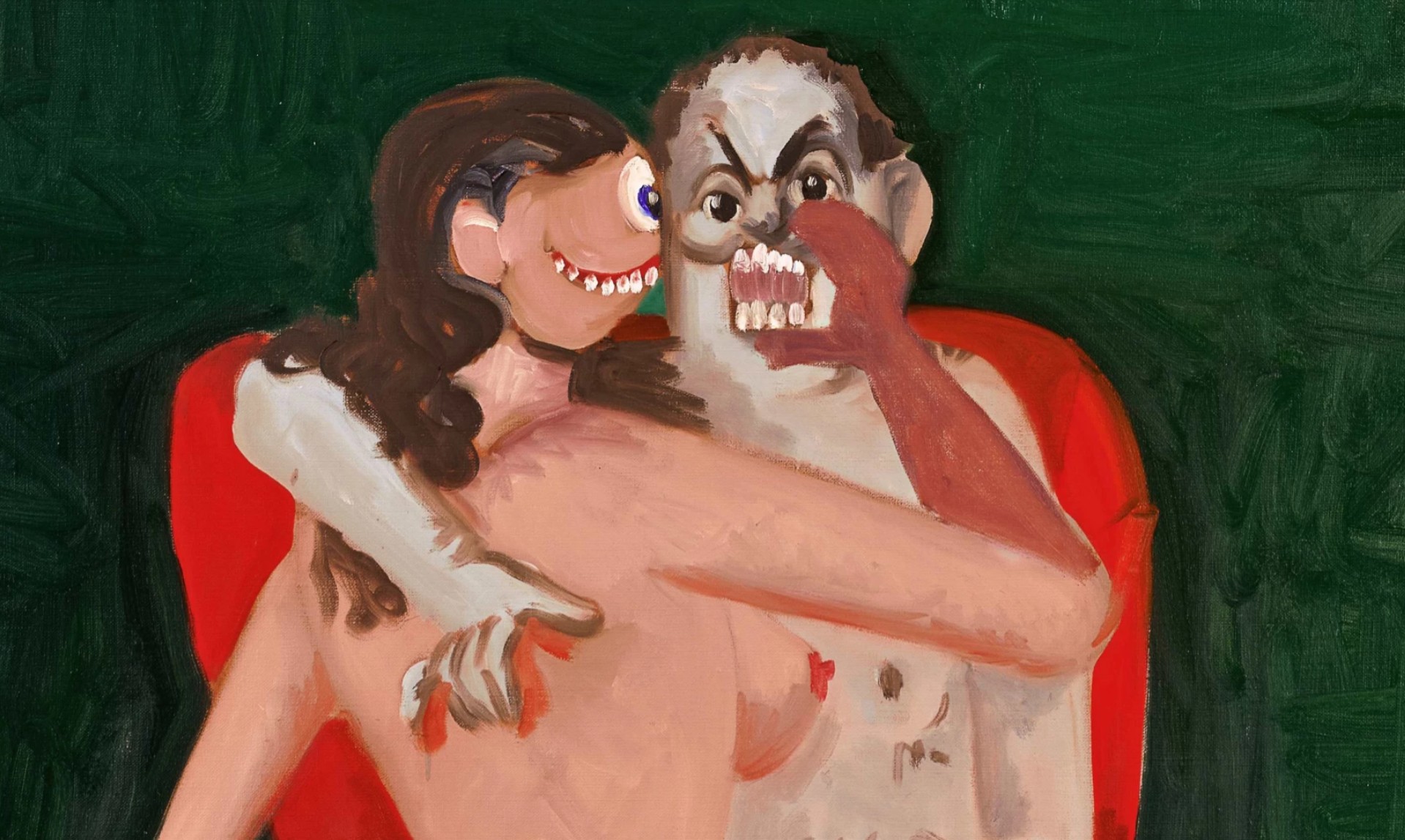
The present work is part of Condo’s Lost Civilization series in which a recurring cast of distorted figures – often in a state of undress and engaging in sexual acts – are simultaneously distinctive and referential. Condo has long cited an interest in his Cubist predecessors, layering multiple emotional states and stylistic vocabularies within a single figure: he termed this style ‘Artificial Realism’. Condo’s notion represents a distinctive approach to contemporary painting that blends classical portraiture with surreal, often grotesque distortions of the human figure. Rather than striving for photographic accuracy, Condo creates imaginative, hybrid characters that simultaneously evoke familiarity and alienation. It is this sense of the canonical art historical lexicon that makes his ‘Artificial Realism’ so compelling.
Peter Paul Rubens, Samson and Delilah, 1609-10 / The National Gallery, London
Condo’s work draws on a wide range of influences – from the Italian Renaissance to Cubism and Abstract Expressionism – reconfiguring these traditions through a lens of psychological complexity and humor. Indeed, the range of emotions that Untitled brings to bear shares many similarities to depictions of classical mythology. Peter Paul Ruben’s 1609-10 painting of Sampson and Delilah uses a similar chthonic palette and to depict the tragic embrace of the beautiful, semi-dressed Delilah and the betrayed Samson. In the same way that the story of Sampson and Delilah captures a complex web of human emotion, Condo uses exaggerated facial features reveals the fractured nature of identity in the modern world, capturing the tensions between reality and artifice, between lust and disgust. This inventive synthesis challenges conventional notions of realism, presenting a fractured yet compelling vision of human experience that is both unsettling and deeply human.
Untitled encapsulates the central tensions at the heart of his ‘Artificial Realism’: the grotesque and the beautiful, the historical and the contemporary, the comic and the tragic. Through disfigured bodies and psychologically charged scenes, he dismantles the illusion of stable identity and coherent narrative, offering instead a kaleidoscopic view of human consciousness. Drawing from the deep well of art history while confronting the fractured sensibilities of the present, Condo’s work becomes both homage and critique of both the past and the present.
Duke of Malta, 2009
Sotheby’s London: 17 October 2025
Estimated: GBP 200,000 – 300,000
GBP 406,400 / USD 544,575
Duke of Malta | Contemporary Day Auction | 2025 | Sotheby’s
GEORGE CONDO (b. 1957)
Duke of Malta, 2009
Oil on canvas
27×26 inches (68.6 x 66 cm)
Signed and dated 09 (on the reverse)
Executed in 2009, George Condo’s Duke of Malta exemplifies the artist’s singular ability to conflate art historical traditions and genres with his own dissonant vocabulary of psychological distortion. Throughout his career, Condo has reanimated the genre of Old Master portraiture, engaging with their gravitas while fracturing their authority into a kaleidoscopic vision of human character. Here, the stately presence of an imagined nobleman is at once majestic and absurd, recalling the formal weight of Renaissance portraiture even as it unravels into Condo’s distinctive idiom of invention. In its ceremonial air, Duke of Malta inevitably calls to mind Giovanni Bellini’s iconic Portrait of Doge Leonardo Loredan, a paragon of civic dignity and spiritual majesty. Yet where Bellini sought crystalline serenity, Condo presents a nobleman whose visage splinters into competing registers of elegance and grotesquerie. The noble mask is dismantled and reconstructed, exposing not an eternal ideal but the instability of human identity itself.
Giovanni Bellini, Portrait of Doge Leonardo Loredan, 1501 / National Gallery, London
Condo’s approach is encapsulated in the concept of ‘Artificial Realism’, a term he coined in 1982 to describe “the realistic representation of that which is artificial” (the artist quoted in: Ralph Rugoff, George Condo: Mental States, London, Hayward Gallery, 2011, p. 33). In Duke of Malta, the sitter is not a portrait in the conventional sense but an imagined archetype, a fictional sovereign conjured to embody the contradictions of nobility as both spectacle and illusion.
“What I’m trying to depict is the truth of human nature through artificial means. In order to show what’s real, you sometimes have to show it in the most unreal way possible.”
The work belongs to a pivotal period in Condo’s practice, during which he consolidated decades of experimentation into a seamless dialogue between abstraction and figuration, oscillating between parody and homage. His fictional portraits of the late 2000s achieved a new equilibrium of elegance and disruption, their commanding presence rivaling the authority of their historical forebears while revealing the fragility beneath. “It’s a way of painting people as if you were looking into their mental state, their soul,” Condo has observed (ibid.), a sentiment that reverberates in the fractured gaze of the Duke, teetering between dignity and ridicule.
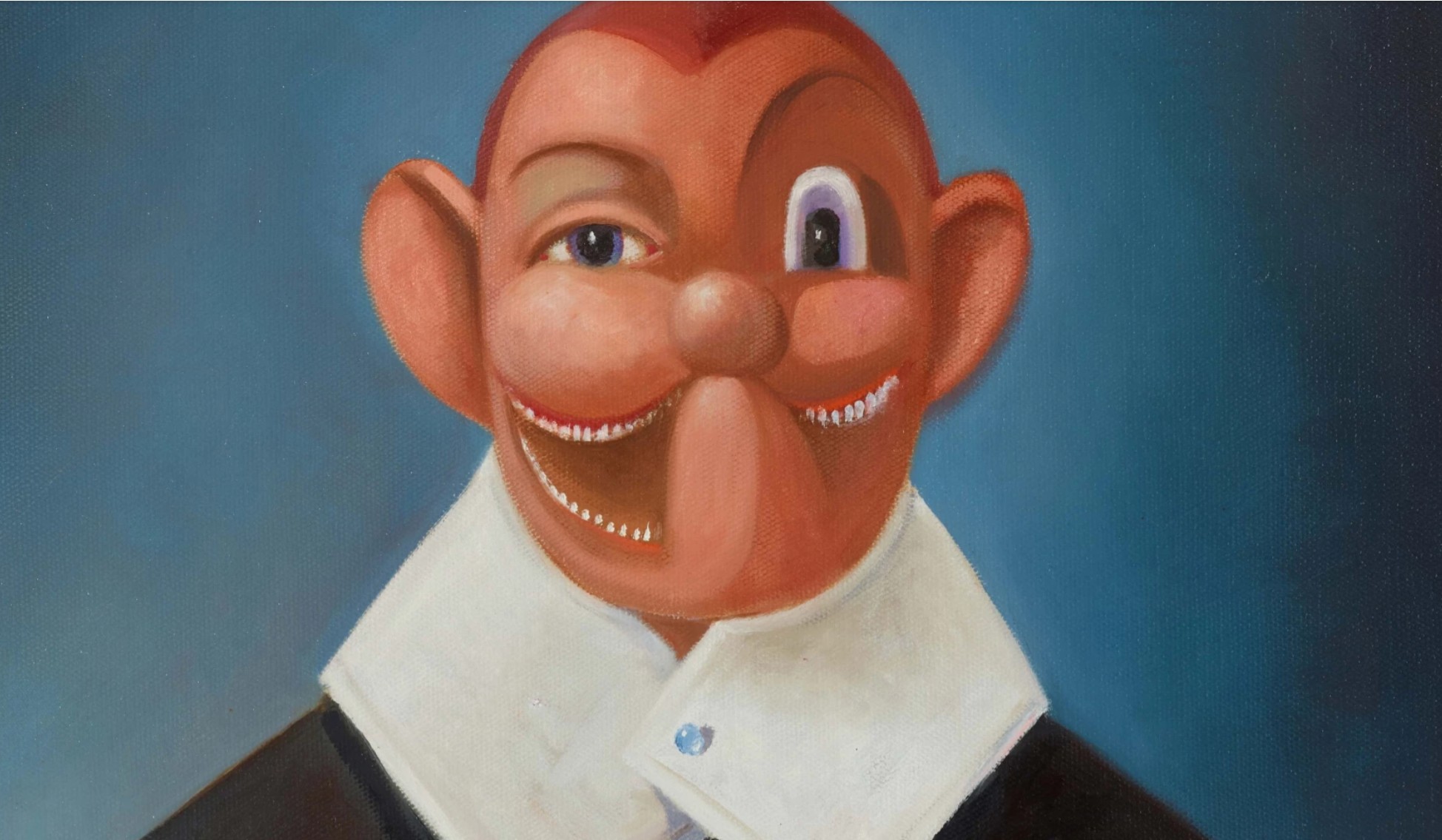
In Duke of Malta, Condo demonstrates that the portrait remains an arena of profound contemporary relevance. Rather than the static emblem of lineage or power, it becomes a theatre of psychological revelation, where majesty and monstrosity coexist. Drawing on the legacy of Bellini, Velázquez, and Goya, while irreverently undoing it, Condo stages an encounter between the timeless and the contemporary, the ideal and the grotesque. The result is a canvas of extraordinary resonance: at once homage and subversion, a testament to the enduring vitality of portraiture in the twenty-first century.
Blues in F, 2021
Phillips Hong-Kong: 27 May 2025
Estimated: HKD 12,000,000 – 20,000,000
HKD 13,760,000 / USD 1,755,100
George Condo Modern & Contemporary Art: Evening & Day Sale
Blues in F, 2021
Oil on canvas
“The Blue Paintings are my ongoing exploration of the relationship between music and painting. These works are like visualized blues compositions—improvisation within a structure. You have to master all the technical rules, then deliberately break them. Those ‘wrong’ brushstrokes often become the most authentic, just like how ‘off-notes’ in blues music make its soul.”
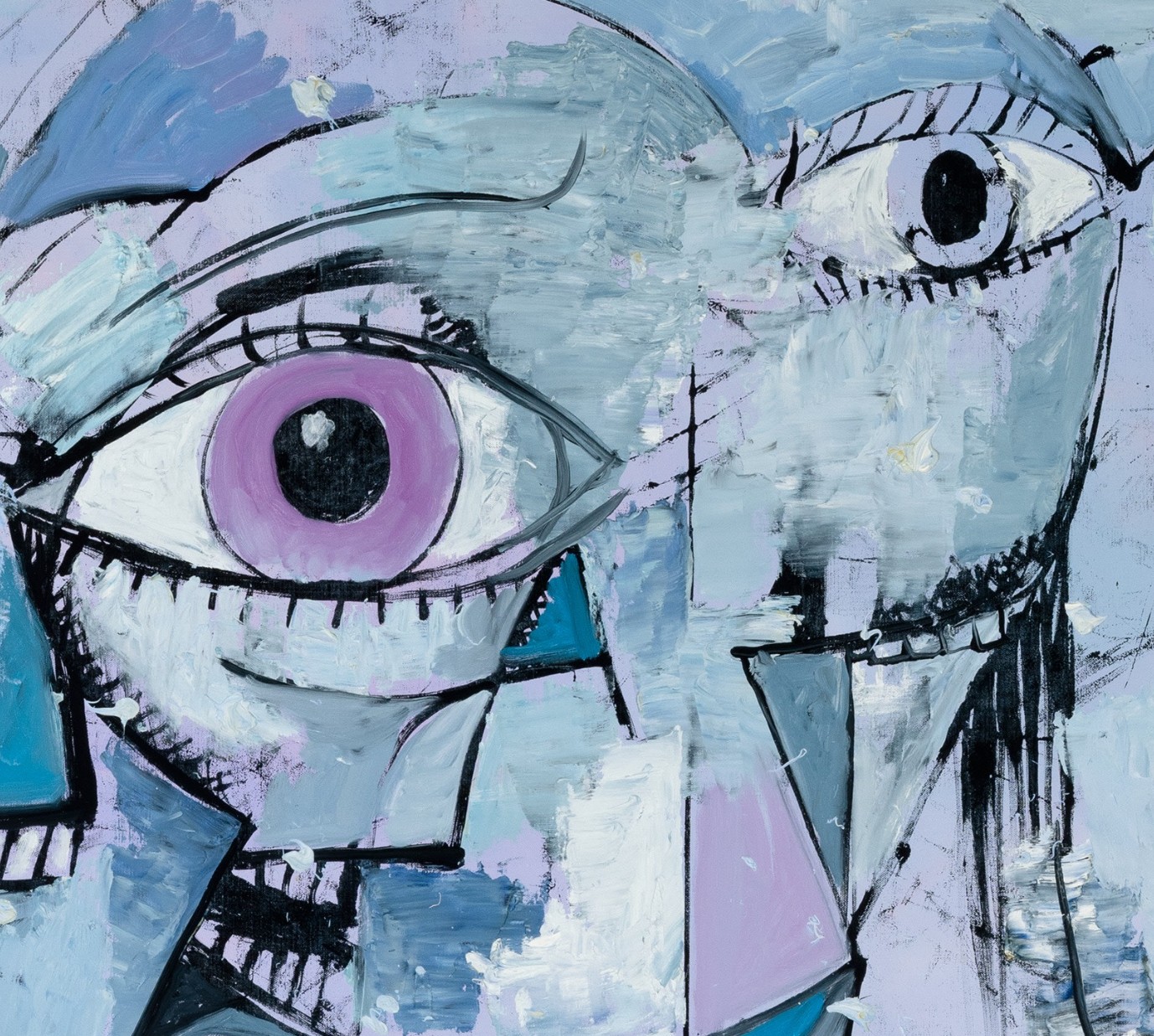
His friendship with Basquiat proved particularly formative. The two met in the early 1980s while Condo was playing guitar for the punk band The Girls in Boston. This musical background fundamentally informed Condo’s creative process, imbuing his work with a distinctive rhythmic quality and improvisational energy.
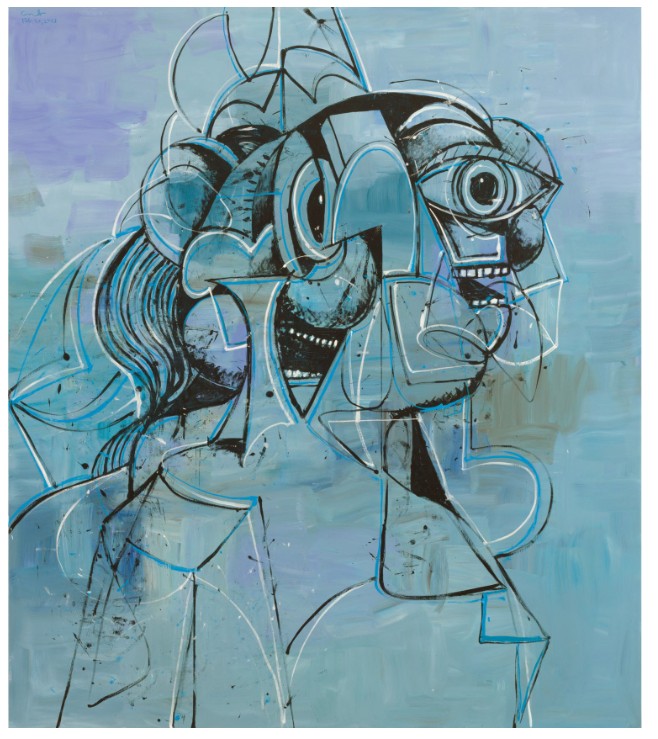
George Condo, Blues in A Minor, 2021
Artwork: © ARS, NY and DACS, London 2025
Music remains integral to Condo’s artistic practice, a connection rooted in his classical guitar training from age fourteen and subsequent academic studies in music theory and art history. He frequently employs musical terminology – ‘rhythm’, ‘tempo’, ‘variations’ – to describe his creative process, an interdisciplinary approach that finds perfect expression in Blues in F. The present lot is part of Condo’s 2020 Blues Paintings series, where each painting takes its title from musical scales (A Minor, D-flat Major, etc.). Here, the interdisciplinary master translates jazz’s improvisational quality into visual terms, using fractured lines and overlapping forms to create syncopated rhythms across the canvas.
“To me, ‘Blue Paintings’ are an exploration that merges technique with improvisation, knowledge with freedom.”
The work’s blue palette not only references the melancholy quality of blues music but, through subtle gradations and contrasts, creates visual ‘melodic lines’. Condo’s understanding of the relationship between music and visual art is remarkably nuanced – he can speak with equal authority about the correspondences between Monet’s Impressionism and Debussy’s compositions, German Expressionism and twelve-tone music, or Pollock’s Abstract Expressionism and the jazz of Miles Davis.
Condo’s development of ‘Psychological Cubism’ represents his most significant contribution to contemporary art. Unlike traditional Cubism, which presents multiple physical viewpoints simultaneously, Condo seeks to capture the complex, fluctuating psychological states of his subjects. In the present lot, the fragmented facial features – dislocated eyes, bifurcated nose, exaggerated teeth – all manifest this conceptual approach, this compositional strategy clearly shows Picasso’s Cubist influence, yet Condo introduces a new psychological dimension.
Technically, Blues in F demonstrates Condo’s masterful command of traditional painting techniques. The work employs a multi-layered approach, building from dark underpainting to progressively lighter applications of purple and white pigment. This method creates rich textural quality and tonal contrasts, allowing the work to maintain both the vitality of Abstract Expressionism and the depth of classical painting.
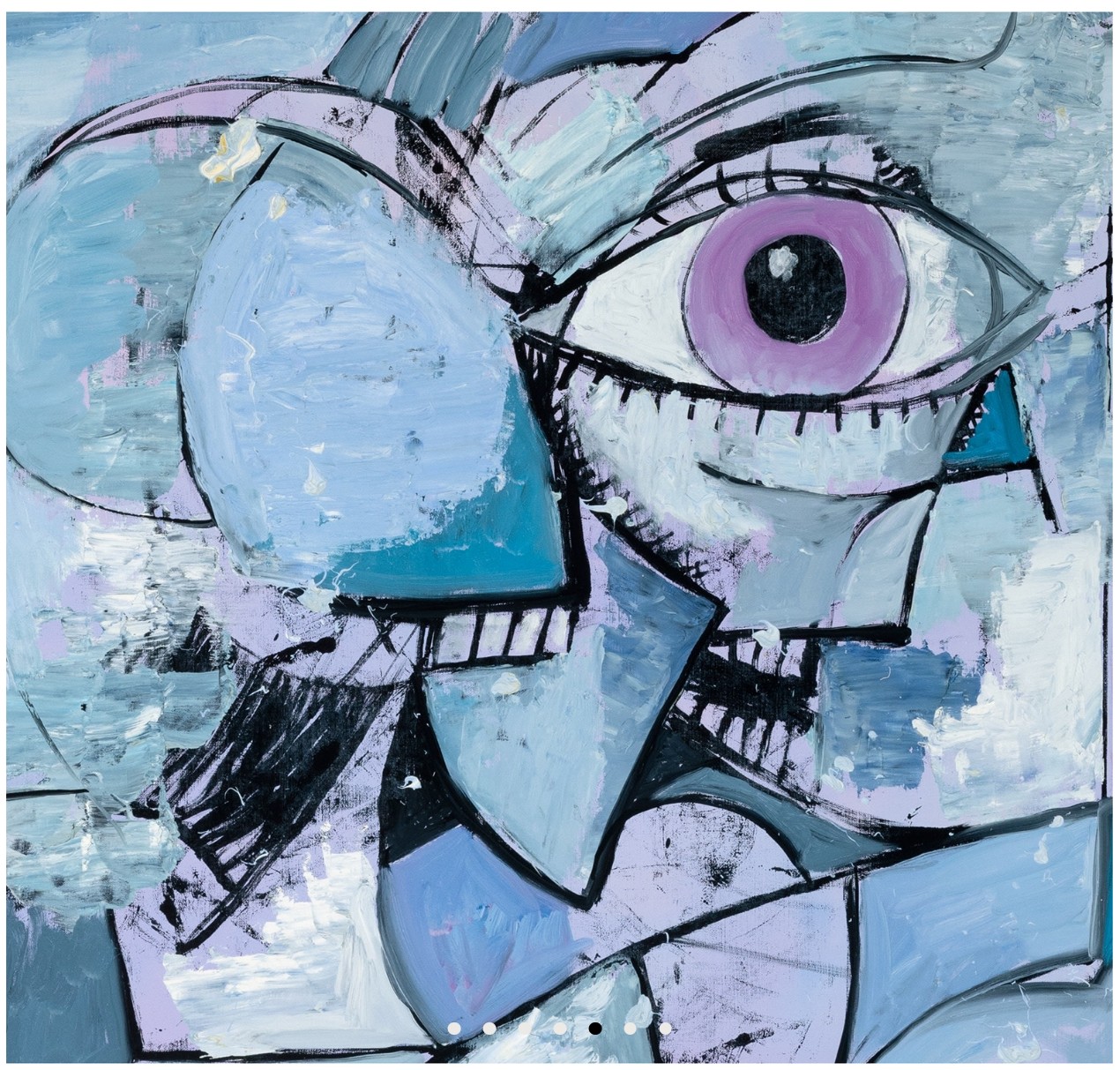
Blues in F establishes spatial depth through its modulated blue ground. At the composition’s center, fragmented facial features emerge through interlocking strokes of purple and white pigment: asymmetrical eyes gaze in divergent directions, the left one dramatically protruding; a row of sharp white teeth bisects the midground, forming a cruciform intersection with the vertical nose; the forehead dissolves into geometric planes suggesting concurrent emotional states. One could interpret each distortion as precisely capturing a specific emotional state – for example, the clenched teeth could suggesting rage, widened eyes could indicate fear, furrowed brow conveying anxiety, and so on. As Condo explains, he aims to depict the different mental states of a person, those possibly opposing, contradictory emotions and moods experienced at different moments in time and space. Created during the 2020 global pandemic, Blues in F acquires particular resonance when viewed through this historical lens. Condo’s work from this period shows heightened engagement with universal experiences of isolation and alienation.
Mr Twiddle, 2010
Christie’s London: 6 March 2025
Estimated: GBP 350,000 – 550,000
GBP 403,200 / USD 516,096
GEORGE CONDO (B. 1957), Mr Twiddle | Christie’s
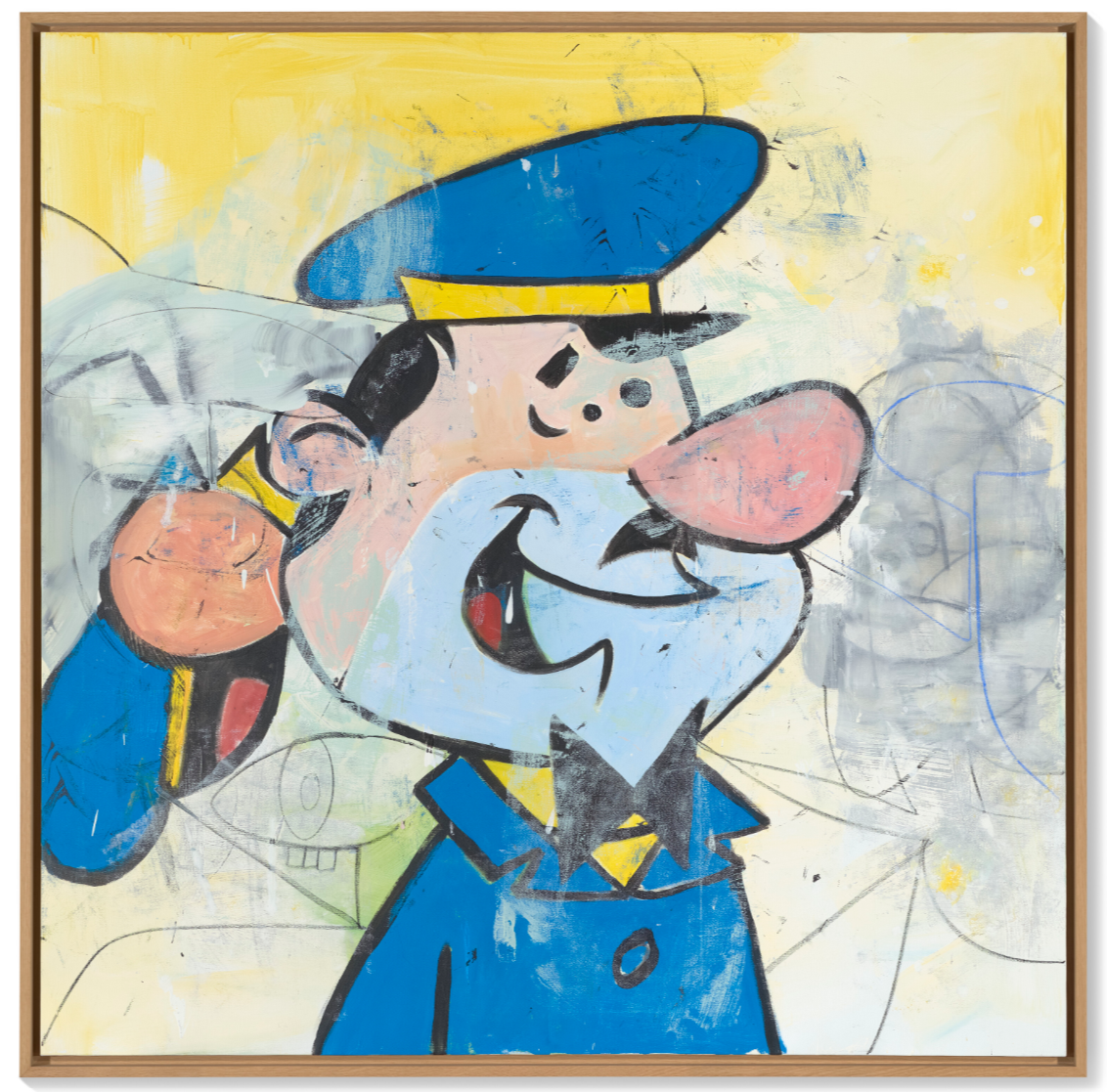
GEORGE CONDO (B. 1957)
Mr Twiddle, 2010
Acrylic, charcoal and pastel on canvas
64 5/8 x 65 1/8 inches (164.2 x 165.4 cm)
Signed and dated ‘Condo 2010’ (on the reverse)
Painted in 2010, Mr Twiddle is a vibrant work from George Condo’s series of ‘Cartoon Abstractions’, which feature figures from mid-century Looney Tunes, Hanna-Barbera and Tex Avery animations warped and fractured in the artist’s signature style. Mr Twiddle himself is a zookeeper from the Hanna-Barbera show Wally Gator (1962-1963). Here, the simple, graphic form of the cartoon character—the flat blues, yellows and blacks of his uniform, his cheerful grin and five-o’clock shadow—is seen as if through a funhouse mirror. Parts of his nose, mouth and hat repeat in a glitchy reflection. The background’s soft yellows reveal ghostly pentimenti of other figures, eyes and teeth. Deliberate spatters and marks and in paint, charcoal and pastel bedeck the painting’s surface, like patina on an archaeological relic.
“It’s about dismantling one reality and constructing another from the same parts”
Since emerging as an artist in 1980s New York, Condo has plundered a kaleidoscopic array of art-historical references from Rembrandt to Picasso. He has focused particularly on traditions of portraiture, offering a new, postmodern way of seeing our inner lives. He renders his subjects in multifaceted, chimeric forms that, for all their outlandishness, resonate with universal experiences of shifting selfhood. He has described this practice ‘as psychological cubism. Picasso painted a violin from four different perspectives at one moment. I do the same with psychological states’ (G. Condo, quoted in S. Jeffries, ‘George Condo: “I was delirious. Nearly died”’, The Guardian, 10 February 2014). Mr Twiddle is refracted through the same existential lens.
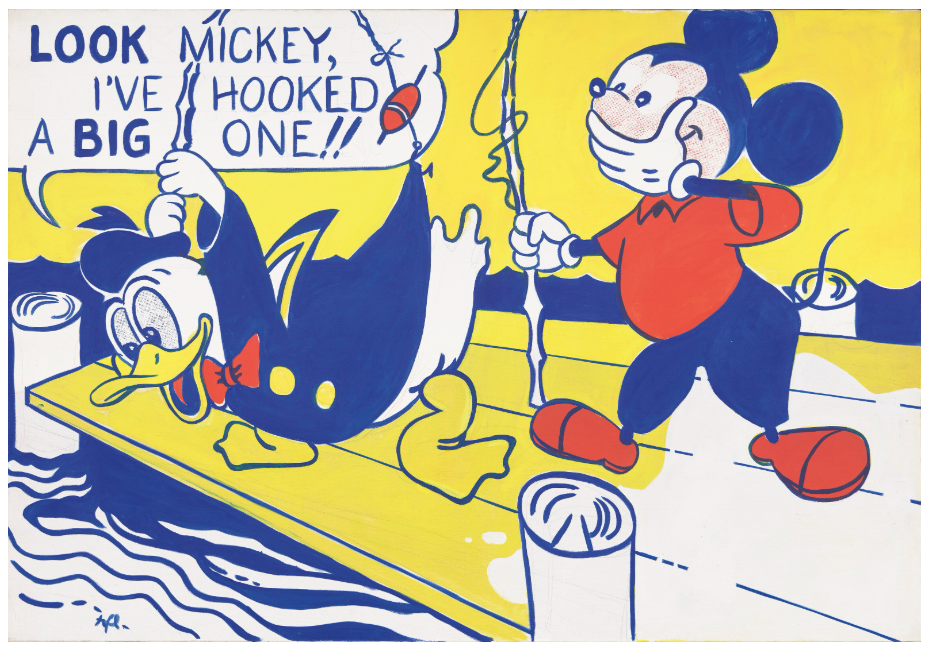
Roy Lichtenstein, Look Mickey, 1961. National Gallery of Art, Washington, D.C.
Artwork and digital image: © Board of Trustees, National Gallery of Art.
In their use of cultural archetypes, Condo’s ‘Cartoon Abstractions’ evoke the comic-based language of artists such as Roy Lichtenstein. They also introduce a Pop element of societal critique. ‘Often these paintings insinuate a landscape of decaying beliefs and failing mythologies’, wrote Ralph Rugoff of the artist’s post-2000s work. ‘… As our surrogates, the artist’s subjects appear to embody both the cartoonishness of contemporary media culture and the pervasive sense of inadequacy and failure that it engenders’ (R. Rugoff, ‘The Mental States of America’ in George Condo: Mental States, exh. cat. New Museum, New York, 2011, p. 19). The character in Mr Twiddle dates to Condo’s own childhood and evokes nostalgia for a simpler, more innocent age, when hierarchies and images could be relied upon. Distorted, beset by spectres and worn as if by the passage of time, in Condo’s painting he is transformed into a startlingly honest portrait of contemporary life.
The Hamptonites, 2004
Christie’s New-York: 22 November 2024
Estimated: USD 400,000 – 600,000
USD 315,000
GEORGE CONDO (B. 1957), The Hamptonites | Christie’s
GEORGE CONDO (B. 1957)
The Hamptonites, 2004
Oil on canvas
39 7/8 x 28 7/8 inches (101.4 x 73.4 cm)
Signed and dated ‘Condo 04’ (upper left)
Signed again, titled and dated again ‘Condo 04 THE HAMPTONITES’ (on the reverse)
George Condo’s The Hamptonites, 2004, is a mischievous conflation of European art history and comedic transgression. Condo has posed his two vacationers against a sky worthy of Constable. Contorted into toothy grins and bulging eyes, their faces sit atop elongated necks. These startling, chimerical forms are a signature example of the artist’s unique perspective on portraiture, an approach which is informed by a complex dialogue with art history. Clashing disparate references from art history, American pop culture and the visual idiom of cartoons, Condo works to dismantle the fantasies and artifices inherent in figuration.
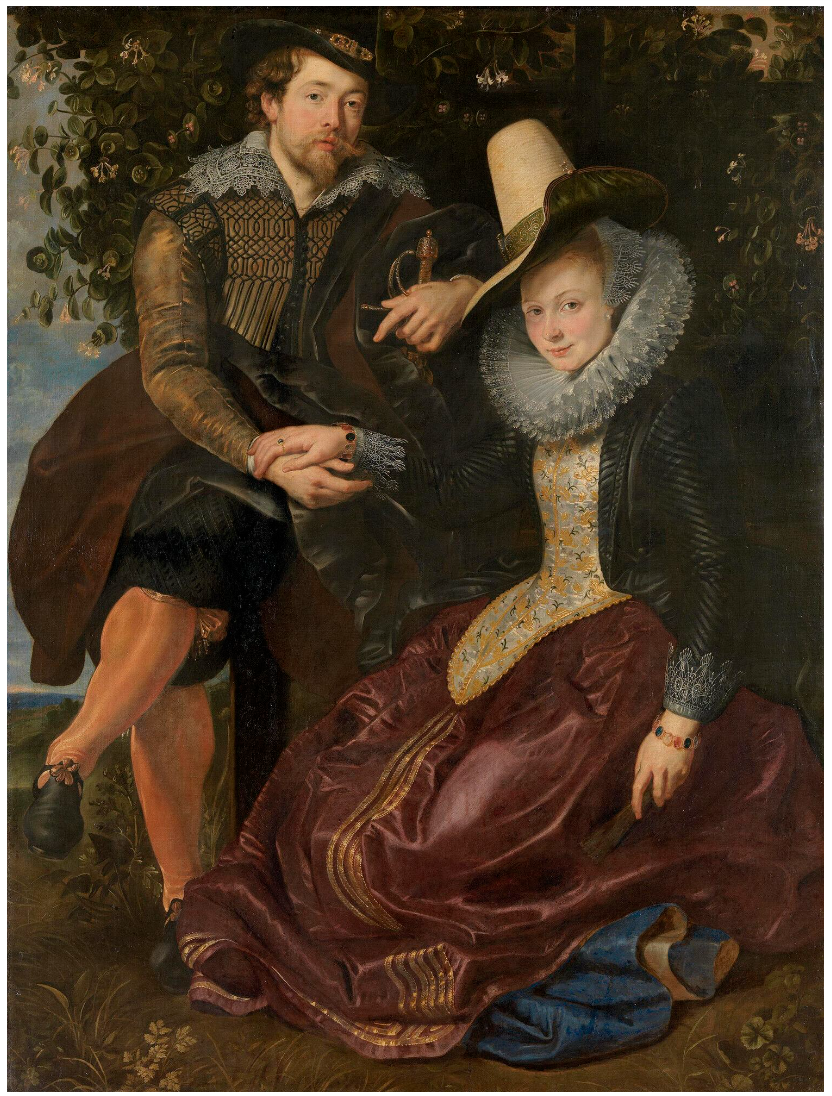
Peter Paul Rubens, The Honeysuckle Bower, circa 1609. Alte Pinakothek, Munich.
More than pastiche, The Hamptonites fuses the sartorial gestures of Van Dyck and Rubens with Vigee Le Brun’s aesthetics and a Venetian gondolier to form a fanciful amalgam of bright animated color.
“The point is not to see how well somebody paints a figure, but something beyond that. A way of saying that the figure itself becomes a map of a number of intellectual processes involved in the idea of making an art work. The figure is somehow the content and the non-content, the absolute collision of styles and the interruption of one direction by another, almost like channels being changed on the television set before you ever see what is on. All this adds up to one image, and most of the time, that image is a woman. In one way or another.”
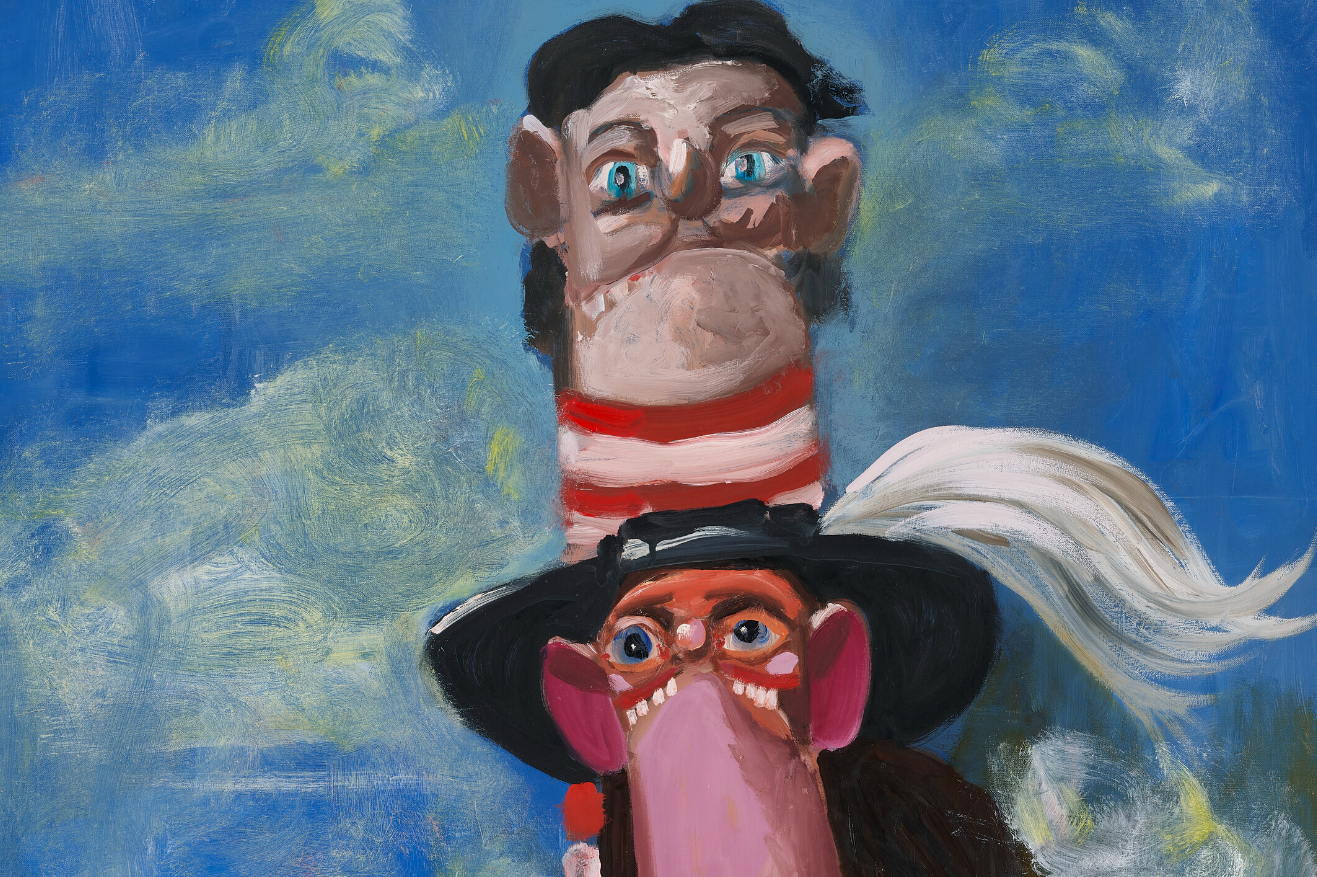
Indeed, Condo’s portraits contain multitudes; his mutations exist within the land of plurality where portraiture does not need to be representational, but where the soul, however weird and wild, can shine through.
La Legion D’honneur, 1993-1994
China Guardian Hong-Kong: 8 October 2024
Estimated: HKD 3,600,000 – 4,600,000
HKD 4,440,000 / USD 571,690
Auction | China Guardian (HK) Auctions Co., Ltd.
Oil on canvas
45 5/8 x 35 inches (116 x 88.8 cm)
Signed in English and dated on upper left and bottom left
In 1985, Condo relocated from New York to Paris, officially embarking on his transformative ten-year Parisian period. Prior to this move, he held his first solo exhibition in 1983, which was highly praised by Andy Warhol, who acquired numerous works and helped establish Condo as a significant figure in New York’s East Village, where he introduced the concept of Artificial Realism. Upon his arrival in Paris, Condo immersed himself in the rich tapestry of classical art history, delving deeper into the nuances of Western traditional art. Inspired by the elegance of classical music, he ultimately unveiled an innovative vocabulary that transcends the boundaries between past and present in La Legion D’honneur.
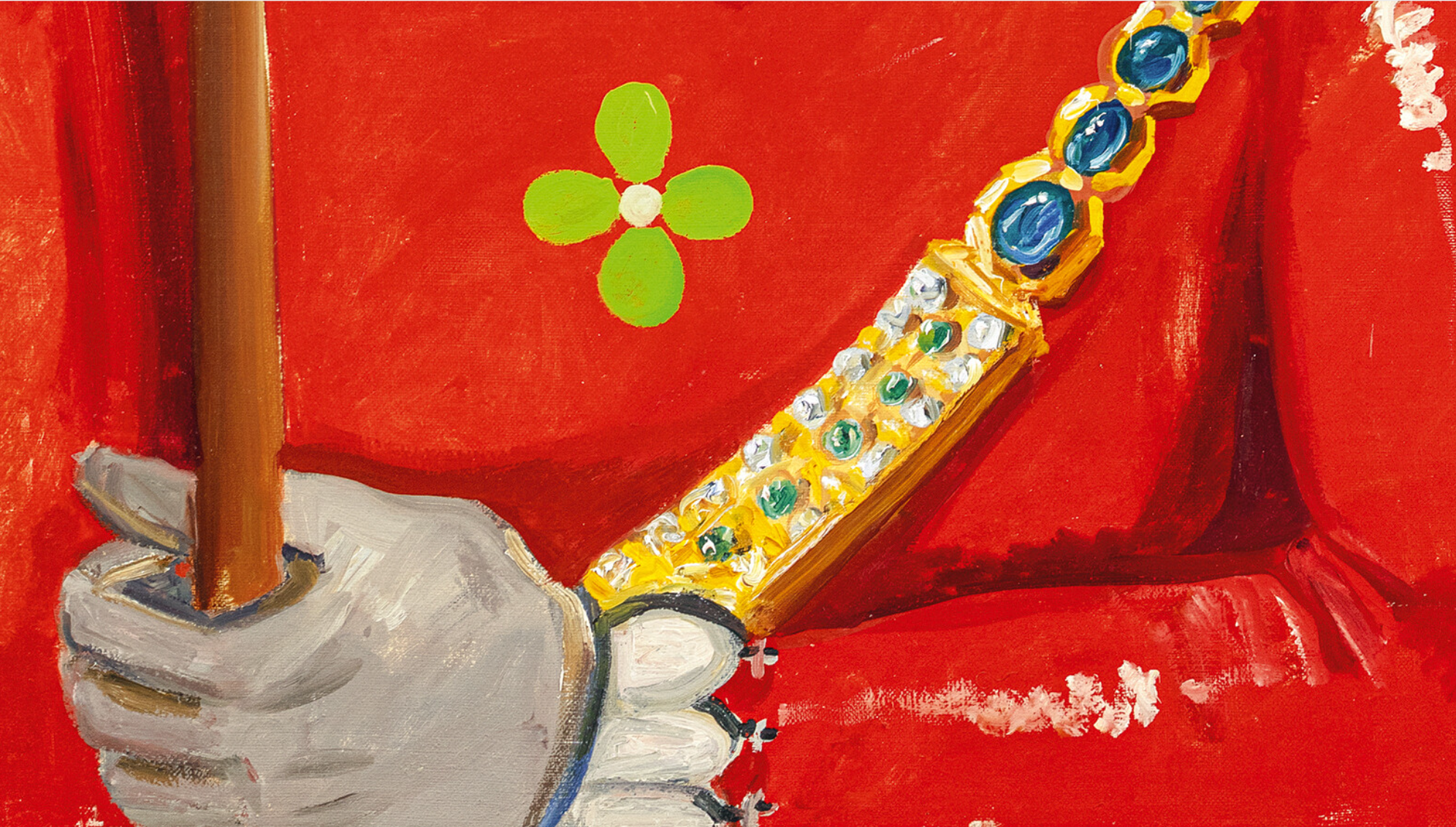
The entire structure of La Legion D’honneur pays homage to the Neo-Classical artist Jean-Auguste-Dominique Ingres’s 1806 portrait Napoleon I on the Throne of the Napoleonic Empire, which portrays Napoleon in a striking red robe, an ornate ruff collar, a jeweled royal sash, and a stout figure holding a scepter—all elements that embody the spirit of an emperor from the Planned Era. This imposing figure, coupled with the majestic scepter, instantly revives the essence of imperial authority on the canvas. The title La Legion D’honneur references the launch of this prestigious order by Napoleon, who abolished the traditional Order of the Knights to introduce a new title. Drawing from history and his own imagination, Condo masterfully reinterprets the medal of honor on the emperor’s chest and the scepter in his hand, transforming the original white five-star medal, encircled by oak and laurel leaves, into a delicate entanglement of branches and foliage. The scepter, resembling a tree trunk, connects to the earth, while the leaves at the top form the outlines of five stars, with the “Eyes of Power” at the centre symbolizing the divine authority derived from nature. This “Eye of Power” encapsulates the essence of authority and the glory of kingship, conveying their majesty to the fullest extent. The dark background serves as a psychological projection reminiscent of Edvard Munch’s haunting shadows, while the candles adorning the figures’ heads symbolize both “light and enlightenment” and a fleeting sigh for the human experience. From the misty smoke, he conjures a cross, alluding to the eternity of religion and the ephemeral nature of life. The chest, which would traditionally be adorned with a medal of honour, is instead graced by a vibrant green clover, while the scepter merges seamlessly with natural plants, blending the “everlasting” essence of nature with the “mortal” trajectory of human destiny. This fusion establishes a compelling new discourse within the realm of art history.
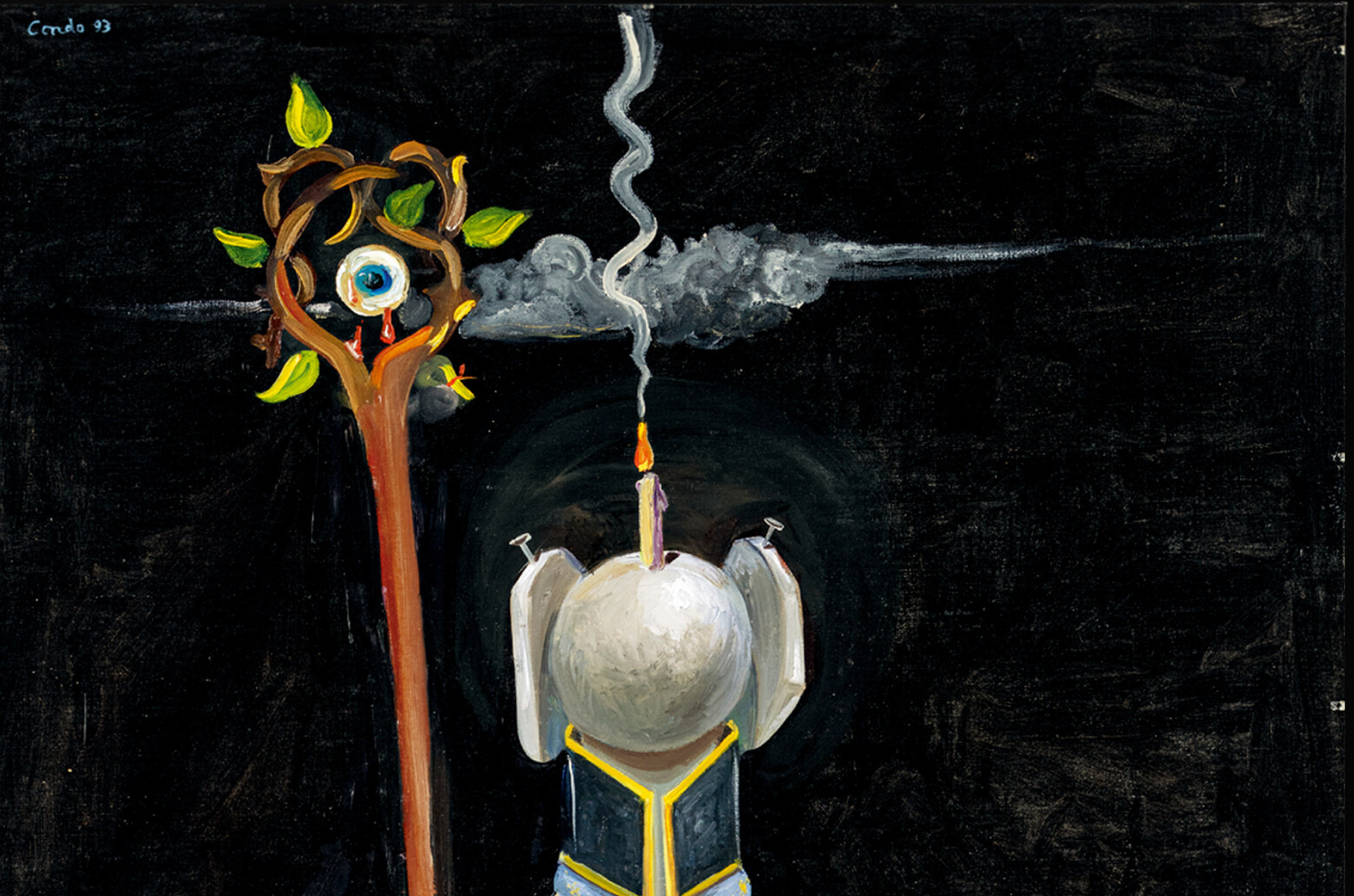
The central theme of La Legion D’honneur resonates with the profound essence of Ludwig van Beethoven’s Symphony No. 3, often referred to as Eroica, embodying the spirit of heroism and artistic ambition. Beethoven’s Eroica was originally dedicated to Napoleon as a tribute to his heroic efforts in dismantling the old imperial system and heralding the revolution. However, when Napoleon restored the imperial order in 1804 and crowned himself Emperor, Beethoven was so disillusioned that he angrily erased the name Bonaparte from the score, renaming the piece Sinfonia eroica, composta per festeggiare il sovvenire d’un grand’uomo. In doing so, he dedicated it to the ideal heroes of his time and to all heroes throughout history, both celebrated and obscure. Condo, in turn, cleverly intertwines this historical narrative with the texts of music and art history. Through the humorous irony of the blank face, he dismantles the monolithic portrait of classicism, crafting a broader image of heroism that resonates with the Contemporary era: a collective of heroes that transcends the individual, embodying a more grandiose and authentic form of heroism rooted in free will. While he evokes the immeasurable spirit of legendary emperors, Condo also infuses the symphony of heroes and the cacophony of art history with a distinct language that speaks to the individual and the nation, inheritance and creation, the ephemeral and the eternal, ultimately calling forth the heroism that resides in each of our hearts.
Clown with Clock, 1996
Sotheby’s London: 26 June 2024
Estimated: GBP 250,000 – 350,000
GBP 384,000 / USD 486,912
GEORGE CONDO (b. 1957)
Clown with Clock, 1996
Oil on canvas, in artist’s frame
30 3/4 x 24 7/8 inches (78.2 x 63.2 cm)
Signed and dated 96 (upper left)
Pulling from traditional art historical tropes and transforming them in playfully exaggerated, at times ludicrous contexts, George Condo’s work simultaneously revives and humorously reinterprets the traditions of portraiture. Clown with Clock exemplifies this fantastical hybridisation of art historical influences, executed in the artist’s quintessentially playful yet absurd style. In the present work, Condo illustrates the iconic features of his figurative lexicon – a bulbous nose, protruding ears, bulging cheeks and a toothy grimace. Looking directly at the viewer, the anonymous sitter stands against a dark background with two hands holding onto a clock, curtains pulled back in a manner that is reminiscent of Old Master portraiture. Masterfully combining an array of art historical tropes, Condo internalises multiple pictorial languages to form his own brand of psychologically charged portraiture. He described in his own words: “I believe that painting needs to transform in order for it to become interesting for each and every generation, but I think of it more in terms of being liberated by history. Liberated by what has come before” (the artist quoted in: Ralph Rugoff, “The Enigma of Jean Louis,” in Exh. Cat., New York, Luhring Augustine Gallery, George Condo: Existential Portraits: Sculpture, Drawings, Paintings 2005-2006, 2006, p. 7).
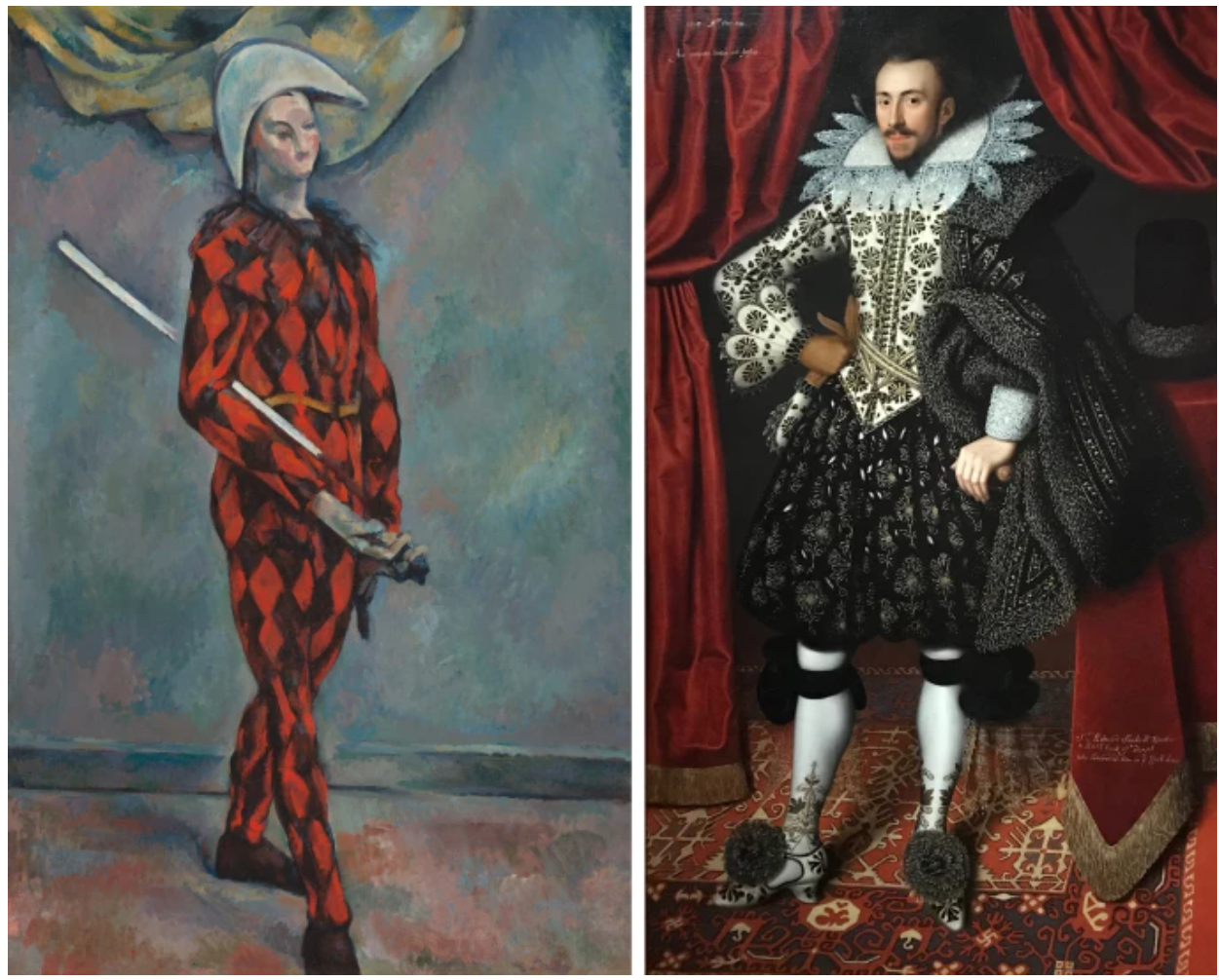
LEFT: PAUL CEZANNE, HARLEQUIN, 1888-90, NATIONAL GALLERY OF ART, WASHINGTON D.C.
RIGHT: WILLIAM LARKIN, PORTRAIT OF RICHARD SACKVILLE, 3RD EARL OF DORSET, 17TH CENTURY,
COLLECTION OF NATIONAL TRUST
Titled Clown with Clock, the present work is one of many depictions of clowns, a recurring motif throughout Condo’s vast and varied oeuvre. The trope conflates the artist’s appreciation for the history of art, with Pablo Picasso and Paul Cézanne’s harlequins being a pivotal reference point, with a flair for theatrical comedy and slapstick. The vivid green nose, bald head and boldly colorful clothing create an appearance of a clown caught in-between acts, the ambiguous features which seem to cross between human and animal also creating a costume-like appearance. In their ability to elicit a range of emotions, from humor and laughter to fear and discomfort, clowns present a particularly fitting subject for Condo, whose practice is deeply engaged with capturing the multifaceted complexities of human emotion.
Rodrigo and His Mistress, 2007
Phillips New-York: 14 May 2024
Estimated: USD 600,000 – 800,000
USD 660,400
George Condo – Modern & Contemporary Art… Lot 26 May 2024 | Phillips
Rodrigo and His Mistress, 2007
Oil on canvas
53×46 inches (134.6 x 116.8 cm)
Signed and dated “Condo 07” on the reverse
One of George Condo’s most striking compositions, Rodrigo and His Mistress, 2007, centers on the painter’s notorious valet character and his romantic exploits. The flirtatious scene is a pinnacle of Condo’s exploration of the fiery and depraved character Rodrigo, who he describes as “the valet wearing his red jacket and his bow tie [who] when you hand him the keys to your car he drives off and you never see him again… He’s the guy you read about in the newspapers, he’s the politician that was leading a double life.” Here, Rodrigo grins mischievously while presenting his risqué companion, who wears a sheer negligee and makes a suggestive gesture. Rodrigo and His Mistress was initially exhibited at Andrea Caratsch Gallery in George Condo: New Works in 2007. Hung alongside the similarly composed Rodrigo at his Wedding, 2007, the present example represents the titular character’s descent into impropriety. Presenting the wife and the mistress side-by-side, Condo highlights the duplicity of Rodrigo’s maneuvers. The raunchy mistress is a colorful addition to the cast of characters who populate, in Jennifer Higgie’s words, “a ribald world of crazed, comic engagement, theatrical logic, and a furious indifference to conventional niceties.” Her presentation alongside Rodrigo exemplifies Condo’s aptitude for exploring human folly.

Rodrigo and Jean Louis, a similarly bow-tied butler, make up the two of Condo’s most recognizable recurring characters. In Condo’s elaborate but loosely defined narrative, each holds a day job in the service industry while also leading an extraordinary double life. The formal smoking jacket and frilly tuxedo shirt worn by Rodrigo belie what he feels beneath the surface and his escapades after-hours. To this point, a pair of Condo’s Rodrigo works, The Internal Rage of Rodrigo and The Infernal Rage of Rodrigo, spotlights the character’s emotional turbulence. Jean Louis, who first appeared in 2005, laid the groundwork for his more volatile counterpart. As Simon Baker identifies: “The tightrope walk of appearance, propriety and repression that marks out Jean Louis… turns into an explosion in the firework factory for Rodrigo, who seems about a millisecond away from his ‘id’ at all times.”
The expressions of the titular subjects in Rodrigo and His Mistress exemplify Condo’s concept of psychological cubism. As Calvin Tompkins defines the term: “instead of showing different facets of an object simultaneously, as Picasso and Braque did, [Condo] paints different and often conflicting emotions in the same face.” The exaggerated features of Rodrigo and his mistress are difficult to read, grinning on the surface but seemingly enraged and unsettled. Rodrigo’s bulbous nose, cheeks, eyes and ears typify Condo’s unique cartoonish stylization, while the mistress’ face nods more directly to Picasso’s formal influence. A row of pearly teeth extends beyond her mouth while mismatched eyes—one more realistically fleshy and one raw and exposed—sit atop Condo’s signature clown-like nose. At the same time, Condo riffs on formal portrait conventions: the female subject is seated while her male partner, positioned behind her, rests a familial but distanced hand on the back of her chair. Condo’s choice is all the more surprising—and ingenious—when comparing this work to the wedding portrait in which Rodrigo is groping his bride.

William Holman Hunt, The Awakening Conscience, 1853. Tate Gallery, London
On his strategy of ‘Psychological Cubism,’ Condo explains: “Picasso painted a violin from four different perspectives at one moment. I do the same with psychological states. Four of them can occur simultaneously. Like glimpsing a bus with one passenger howling over a joke they’re hearing down the phone, someone else asleep, someone else crying – I’ll put them all in one face.” In this way, the grinning couple is both seemingly inviting us to watch their indecency and seething that they’ve been caught. The blend of seduction and repulsion is like watching a train wreck from which we can’t look away. Knowing that the extramarital exploit can’t end well for Rodrigo, we view them with wry amusement.
Figures on a Blue Couch, 1996
Sotheby’s Paris: 23 April 2024
Estimated: EUR 600,000 – 800,000
EUR 762,000 / USD 811,906
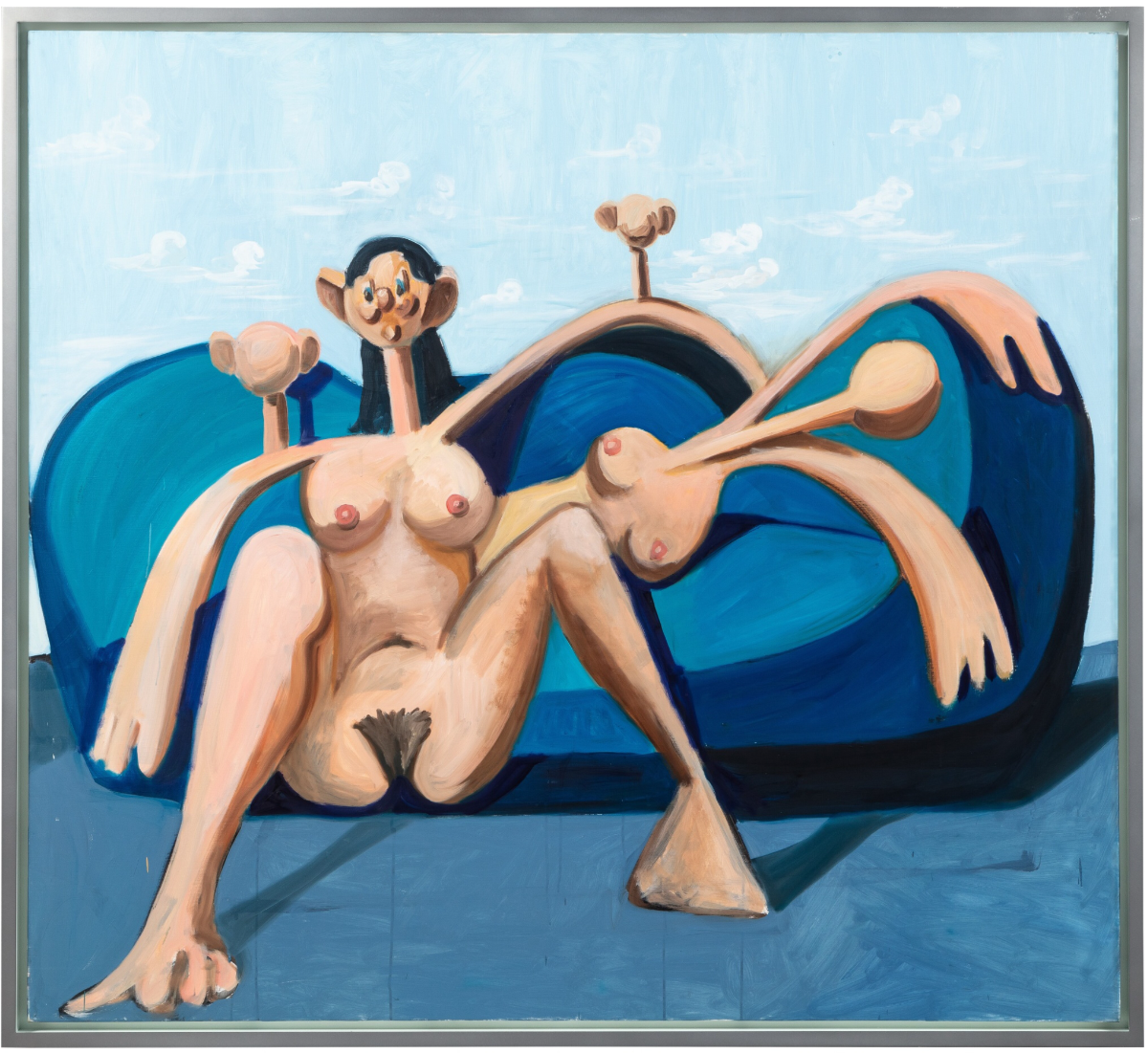
GEORGE CONDO (b. 1957)
Figures on a Blue Couch, 1996
Oil on canvas
68 1/8 x 75 inches (173 x 190.5 cm)
Figures on a Blue Couch embodies the essence of Georges Condo’s practice, which explores the extremes of the human psyche through the prism of figurative painting. On the blue couch, the figures seem to distort and metamorphose before our eyes, revealing a profound exploration of simultaneous psychological states. As Condo himself describes it, these figures illustrate a form of “psychological cubism”, where different emotional states coexist in a single facial expression. In this work, Condo defies the conventions of traditional art while revealing the complexities of human experience through an aesthetic that is both disturbing and exciting.
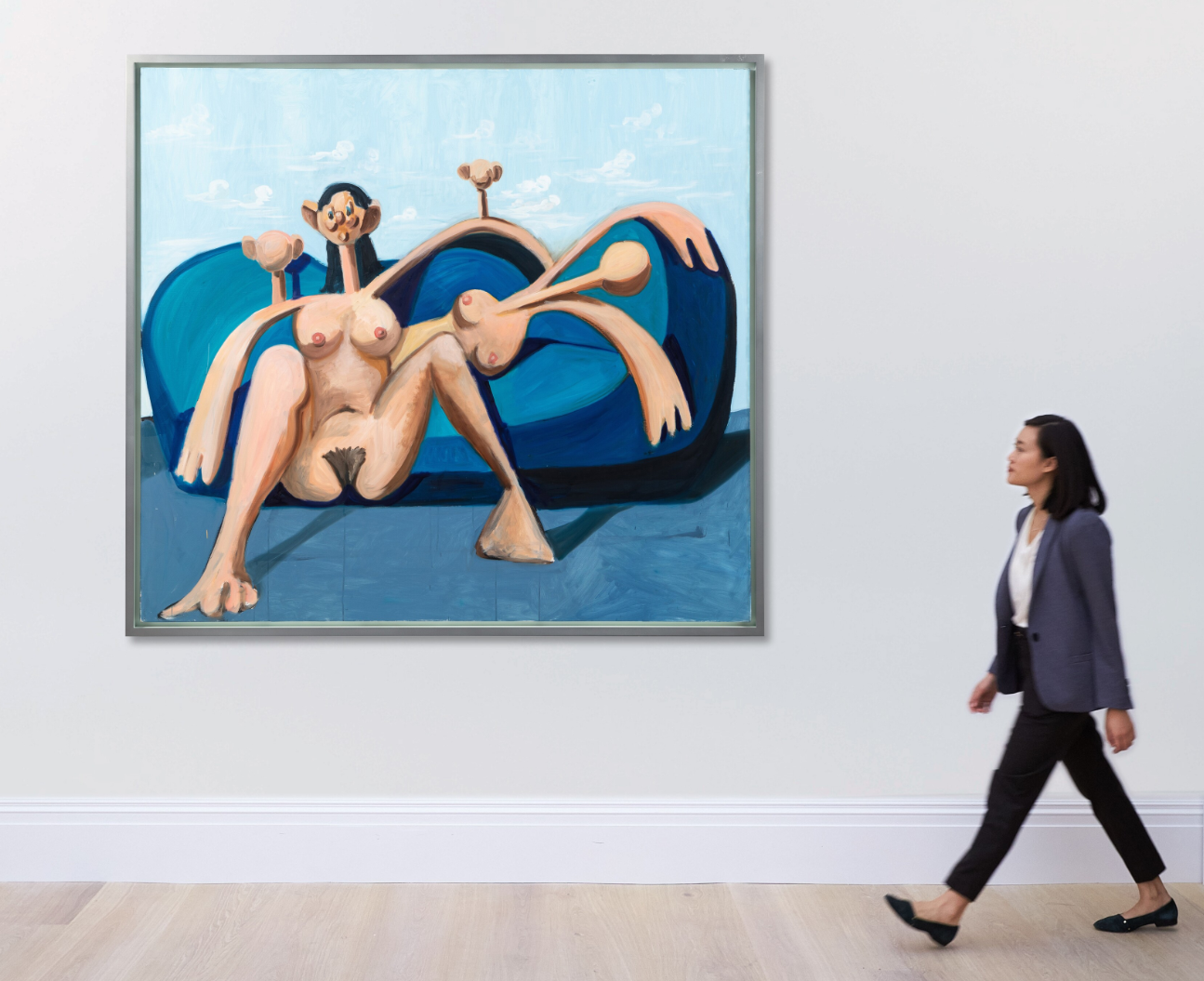
In this work, George Condo offers a cacophony of art-historical references expressed in an explosion of color and form. Beginning his career as an assistant in Andy Warhol’s studio, Condo quickly learned to draw on a variety of sources, from Rembrandt’s portraits to the curvilinear forms of Jean-Auguste-Dominique Ingres’s Odalisques, to the distortions of the human body by Francis Bacon or Pablo Picasso, whose work he studied during a stay in Paris in the late 1980s and early 1990s.
The Return of Client No. 9, 2008
Christie’s New-York: 13 March 2024
Estimated: USD 800,000 – 1,200,000
USD 693,000
GEORGE CONDO (B. 1957), The Return of Client No. 9 | Christie’s (christies.com)
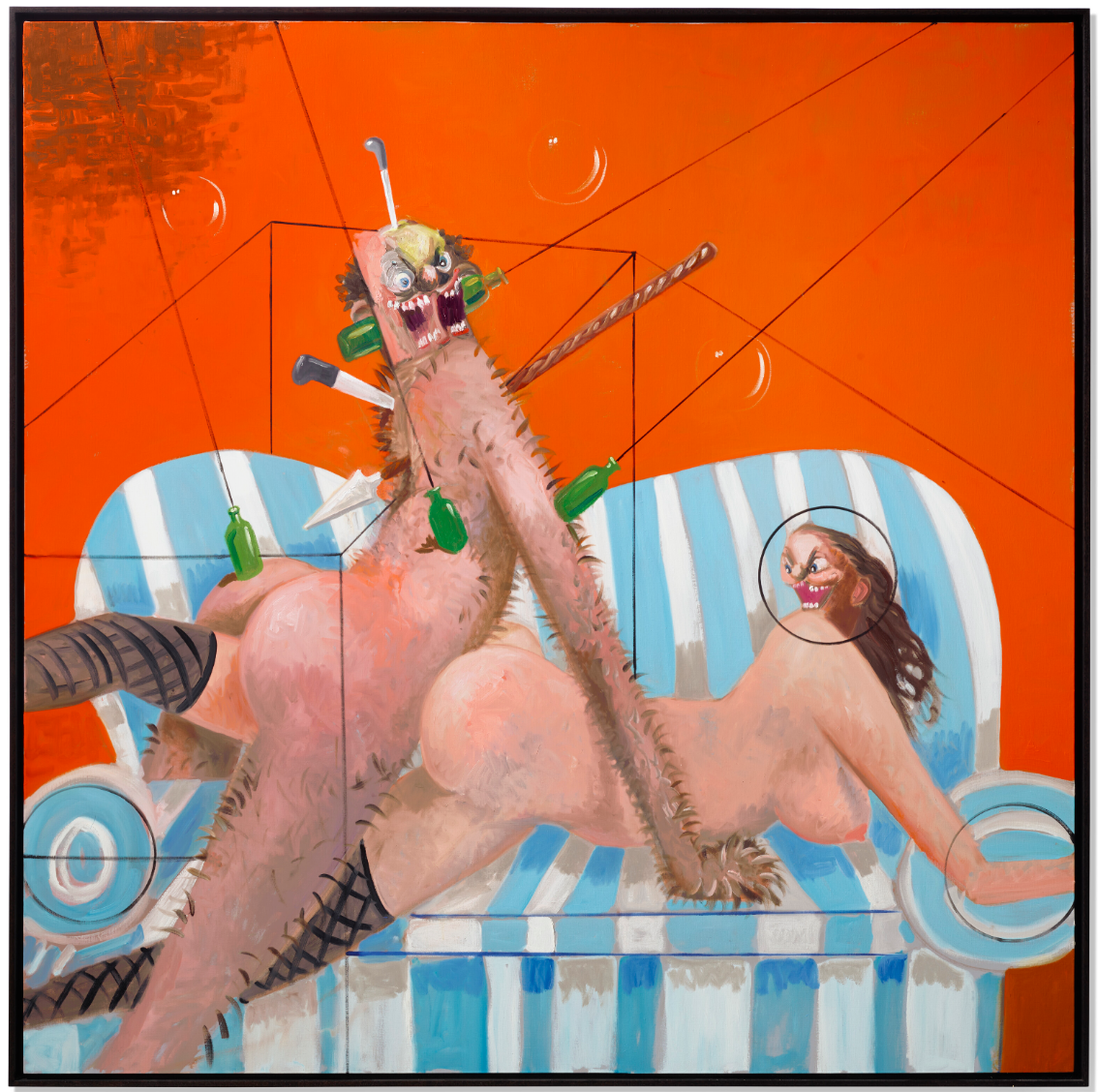
GEORGE CONDO (B. 1957)
The Return of Client No. 9, 2008
Oil on linen
80×80 inches (203.2 x 203.2 cm)
Signed and dated ‘Condo 08’ (on the reverse)
Bodies intertwine atop a lurid ground of cubist geometry in George Condo’s 2008 painting The Return of Client No. 9. In the present Dionysian canvas, Condo’s painting is at its strongest: toying with the interminable artistic pulls between abstraction and figuration, comedy and seriousness, art historicism and inventiveness. These contradictions are central to the artist’s practice, particularly his self-declared “psychological cubism,” where the painter renders multiple, concurrent psychological states in one canvas. With virtuous application of oil paint, Condo expertly constructs a cacophony of sensorial and formal experience. The fleshy pink limbs of the fornicating figures are fragmented by thin, black lines that shoot from empty green bottles. A violent dynamism envelops the composition, with the diagonals of the geometric lines mirroring the directions of the weapons that impale the male subject. As if refracted through the prism of the orange background, the monstrous faces refuse a singular perspective, defiantly challenging the gaze of the viewer. Transmogrified by a thick application of oil paint, these characters become the psychological subjects of Condo’s masochistic comedy. The Return of Client No. 9 reveals Condo’s artistic impulse, where painting becomes the material vessel for psychoanalytic exploration.
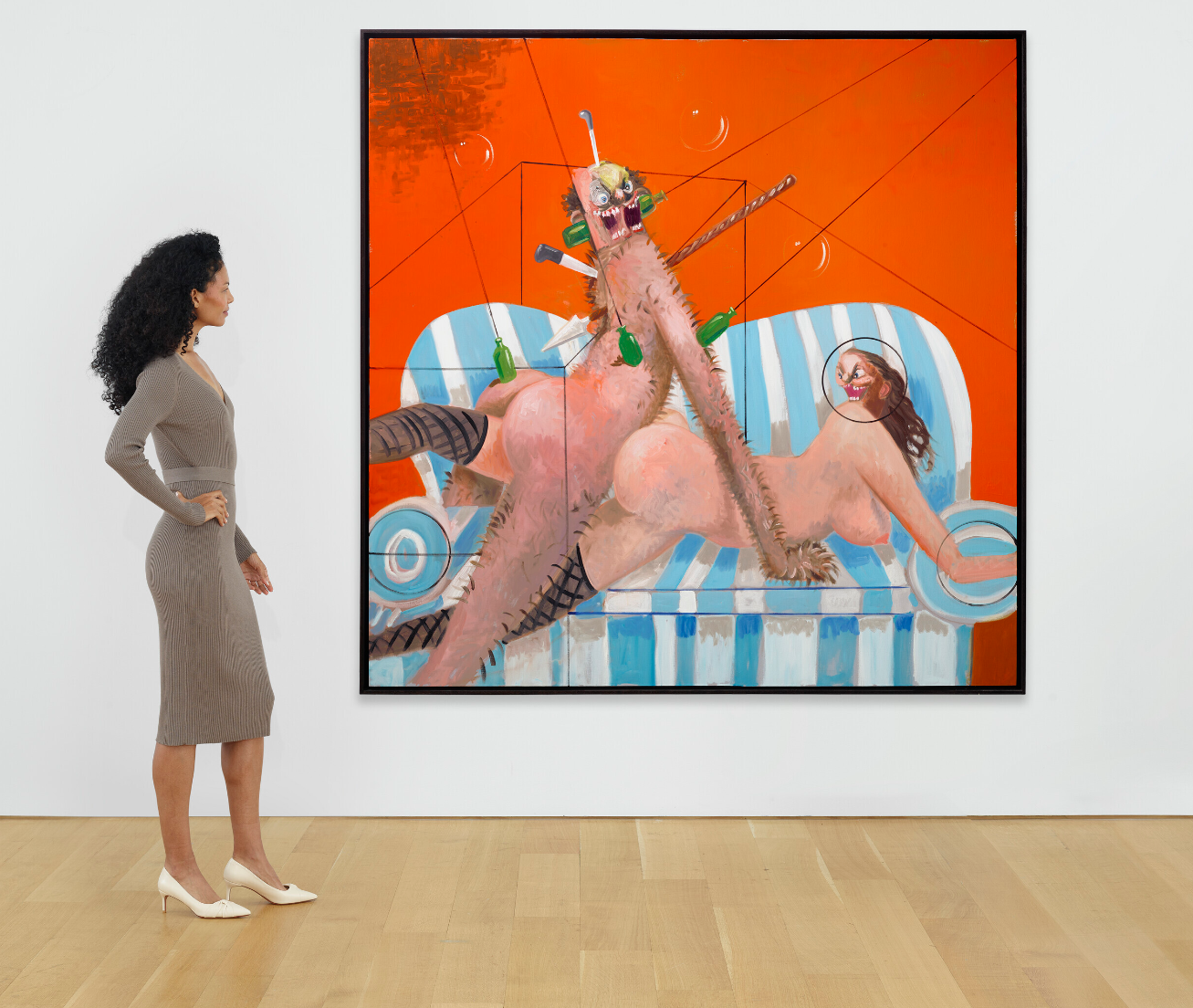
Drawing from Old Master’s academicism, Impressionist perspective, Cubist geometry, and Contemporary graffiti, Condo developed an inimitable visual language that traces his career. In The Return of Client No. 9, this referentiality is abundant—Manet is in the gestural pink facture of the bodies and Picasso in their craned necks and fragmented faces; Guston is in the texturizing mark-making and Bacon in the fluorescent orange background and segmentation of space through black lines. In this hybridization of influence, Condo develops a brand new lexicon. The artist’s historical vocabulary portends a shiny, forward-thinking mode of painting. Exhibited in the artist’s 2011 New Museum retrospective, George Condo: Mental States, the present work comes at a mature and renowned juncture of the artist’s prodigious career.
While indebted to the history of painting, Condo is simultaneously invested in and observant of contemporary social circumstances. Particularly in the wake of the Great Recession of the late aughts, the artist turned his focus outward to real-life scandals. The present composition is a reference a New York Governor’s solicitation of an elite escort service. Impaled by various weapons and encased in a framework of Cubist splintering, the subject is treated at once with humility and parody. Amidst this frenzied public crucifixion, the exaggerative, comedic gesture of Condo’s vision undergirds his painting. Here, art historical reference becomes an interpretive lens through which to engage with the present. The Return of Client No. 9 is a triumphant example of Condo’s idiosyncratic painterly language, where diametric opposites not only coexist but are fundamentally inextricable. In the antipodal psychological landscape of Condo’s oeuvre, painting is an act of observation, rebellion, and transformation. It is by engaging with the Western canon of portraiture that the artist is thereby able to dismantle it and develop something novel. In other words, rather than being freed from art history, Condo’s painting is freed by it.
Painting for the French Revolution, 1989
Sotheby’s London: 7 March 2024
Estimated: GBP 200,000 – 300,000
GBP 482,600 / USD 611,937
GEORGE CONDO (b. 1957)
Painting for the French Revolution, 1989
Oil on canvas
70 7/8 x 118 1/4 inches (180 x 300.5 cm)
Painting for the French Revolution from 1989 is a triumphant example of George Condo’s dream-like creations. Departing from the aesthetic confines of figuration, the present work explores a myriad of portrayals that enunciate the most intimate parts of the human mind. Upon a backdrop of cobalt and azure that nods to the nocturnal, vibrant crescendos of green, yellow and red coalesce. Performative in it’s creative methodology, the present work is instilled with captivating energy, palpable in its immediacy. With a deft hand and a keen eye, the artist weaves a tapestry of provocative and daring gestures that challenge the boundaries of contemporary painting.
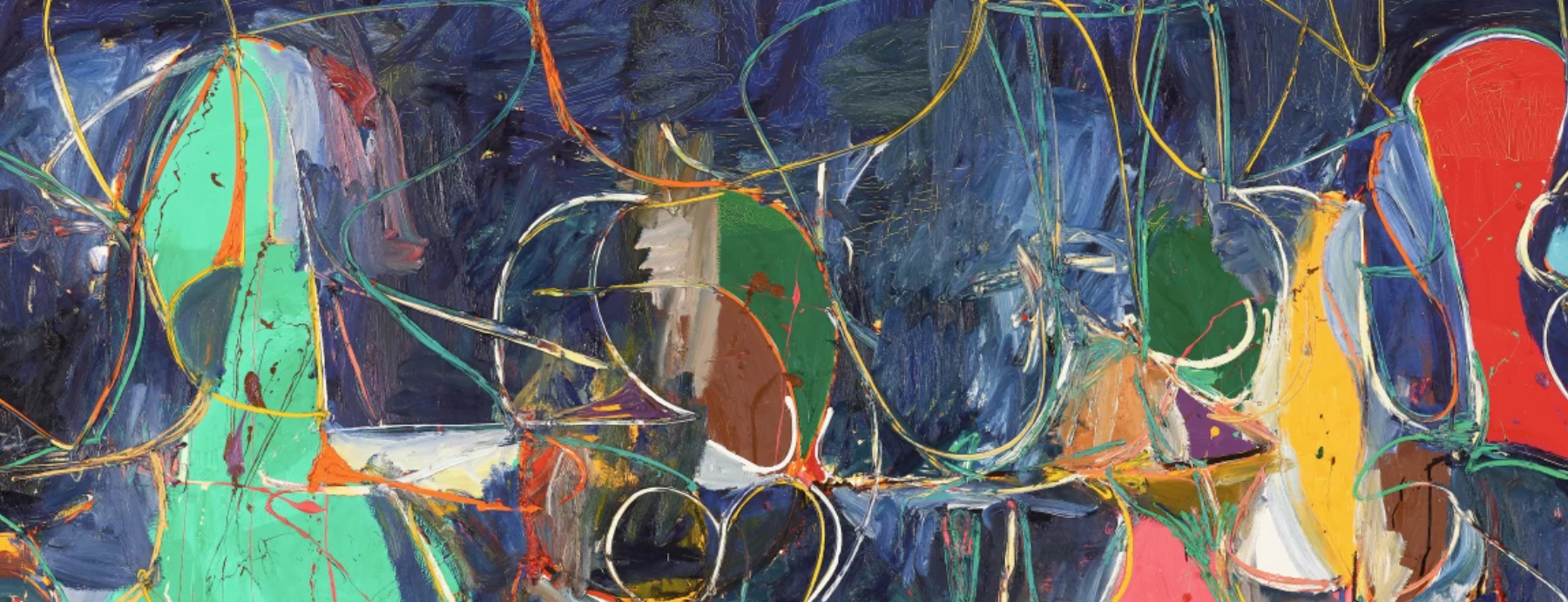
Since his emergence onto the New York art scene in the early 1980s, with his enigmatic Fake Old Master creations, Condo has orchestrated a mesmerising journey through the annals of art history. Frequenting Paris between 1985 to 1995, the present work is a product of Condo’s admiration for Parisian culture. A menagerie of artistic activity and cultural exchange, the city provided Condo with valuable opportunities for inspiration, collaboration, and professional growth. Paris’ thriving and vibrant art scene further offered Condo exposure to diverse artistic influences and facilitated encounters with influential figures in the art world, such as fellow artists, critics, and theorists. French philosopher Gilles Deleuze and psychoanalyst and activist Félix Guattari became well acquainted with Condo during this period. Guattari wrote about Condo’s creative process, emphasising the distinctive “Condo effect” that eliminated conventional pictorial structure and highlighting Condo’s musical background and his use of lines, forms, and colours as a temporal dimension.
ANDRÉ MASSON, PASIPHAË, 1945, MUSEUM OF MODERN ART, NEW YORK © 2024 ARTISTS RIGHTS SOCIETY (ARS), NEW YORK / ADAGP, PARIS /MASSON, ANDRE’ (1896-1987)/©SCALA/DIG. IMAGE MOMA, NEW YORK
Assimilating various influences into a seamless amalgamation of genius, Condo paintings simultaneously allude to and evade art historical context. The result is a pantheon of work that is at once strange and yet familiar. Having encountered the work of André Masson’s creative output in the Parisian capital, the present work echoes a Surrealist disposition. Throughout Painting for The French Revolution, Condo embraces the liberating spontaneity of automatism. With fluid brushstrokes and gestural fervor, the artist channels the raw impulses of the subconscious onto the canvas, infusing the picture plane with a dynamic and palpable energy. The canvas itself becomes a battleground of hues, with bold strokes of cobalt blue, vibrant crimson, and crisp white converging to evoke the spirit of the French tricolor. Though devoid of overt symbolism, the painting exudes a patriotic fervor, rebelliously encapsulating the essence of national identity in an abstract expressionist spirit.
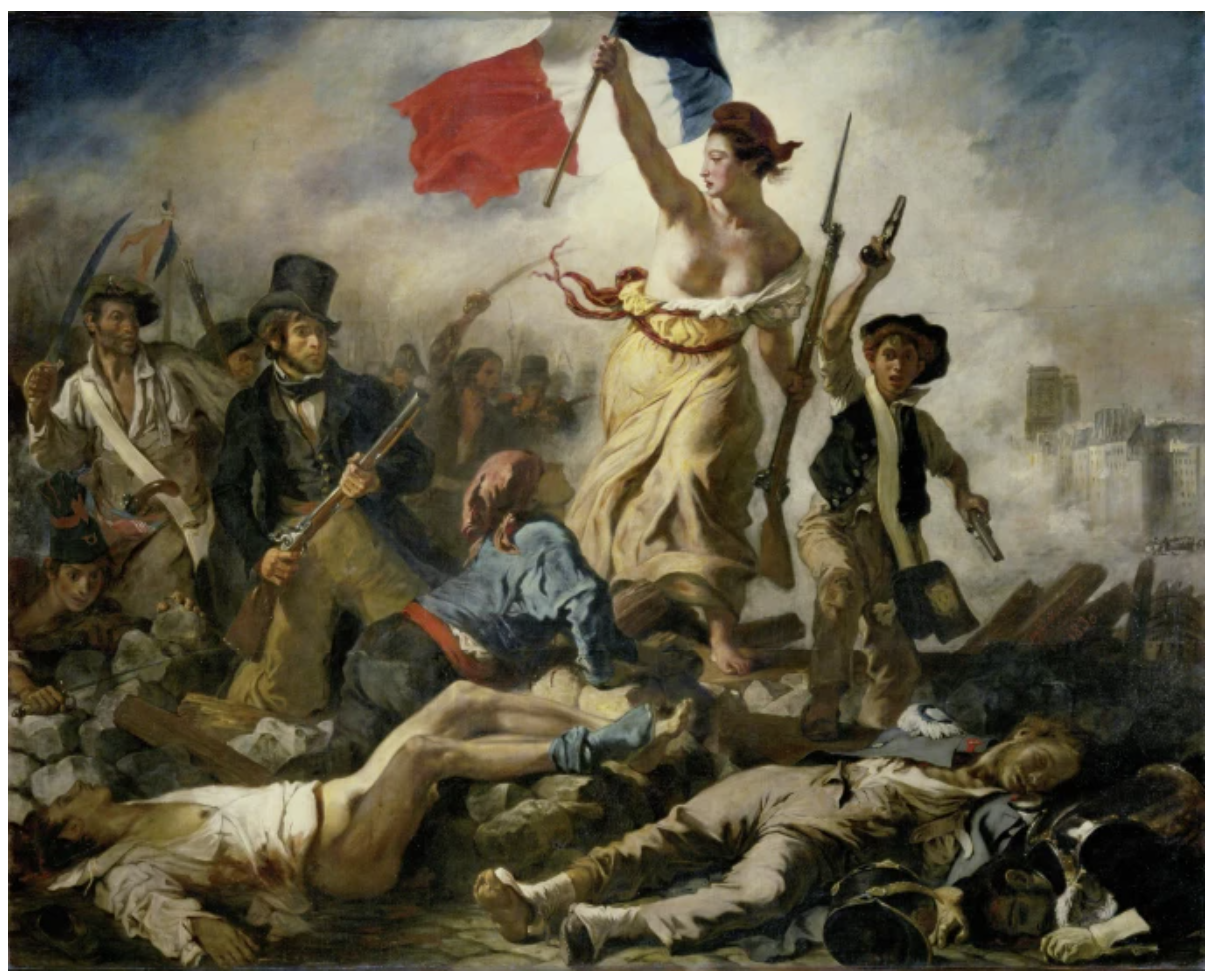
EUGÈNE DELACROIX, LA LIBERTÉ GUIDANT LE PEUPLE, 1830, MUSÉE DU LOUVRE, PARIS ERICH LESSING / ART RESOURCE, NY / © ARTRES/ERICH LESSING CULTURE AND FINE ARTS ARCHIVES
In its homage to Eugène Delacroix’s iconic Liberty Leading the People, Painting for The French Revolution emerges as a kindred spirit, pulsating with a shared sense of power and patriotism. Like Liberty’s determined advance amidst the tumult of revolution, Condo’s composition captivates with its bold brushstrokes and dynamic compositions, inviting viewers to join in the exhilarating dance of liberty and defiance.
Black Standing Figures, 2000
Sotheby’s New-York: 1 March 2024
Estimated: USD 500,000 – 700,000
USD 635,000
Black Standing Figures | Contemporary Curated | 2024 | Sotheby’s (sothebys.com)
GEORGE CONDO (b. 1957)
Black Standing Figures, 2000
Oil, oilstick, acrylic and chalk on canvas
60×100 inches (152.1 x 253.7 cm)
A bustling parade of abstracted figures collide and fracture across a dark, mottled background in George Condo’s triumph Black Standing Figures of 2000. A captivating large-scale composition, measuring over two meters wide and nearly life-sized in height, the present work commands itself as part of the artist’s forty-year practice dedicated to a unique and highly distinctive style of painting. Initially appearing black and white from a distance, the artwork reveals an intricate tapestry of texture and color upon closer inspection, charged with a degree of frenetic and textural energy that is only visible in the very best of Condo’s celebrated oeuvre. By use of his distinct gestural flare and mastery of line, Condo successfully superimposes dynamic yet highly cohesive graffiti-like figures along the same plane, creating a dizzying, architectural image emboldened with hallucinatory power. A testament to Condo’s ability to translate his conceptual influences into unique and fresh works of painting, Black Standing Figures resonates deeply with its art historical past, making it not only an elegantly beautiful painting, but also a conceptually rich one.
KEITH HARING, UNTITLED, 1982. MUSEUM OF MODERN ART, NEW YORK. ART © 2024 THE KEITH HARING FOUNDATION
An enigmatic tableau teeming with rhythm and depth, Black Standing Figures embodies Condo’s spontaneous, gestural improvisation. Featuring faint yet striking figures, carefully outlined in white chalk, interwoven together in a kaleidoscopic composition, the present work recalls the characteristic conflation of figuration and abstraction of Jean-Michel Basquiat and Keith Haring, both Condo’s late friends. Like Haring and Basquiat, Condo was critically engaged throughout the eighties in the inauguration of a new form of figurative painting that stylistically blended the representational and the abstract. During this time, he coined the term ‘psychological cubism’ and ‘artificial realism’ to define his amalgamation of art historical canons, specifically those of Pablo Picasso’s Cubism. Through the use of expressive geometry, Condo utilizes his ‘psychological cubism’ by placing many human figures in a tight space, charging them with energy and dynamism, as they appear to spring out from the darkened corners of the mind. Exuding a mystifyingly psychological aura with gorgeous permutations of line and form, Black Standing Figures endures as a stunning reminder of Condo’s elusive genius in the field of abstraction and sanctifies his place as one of the leading painters of his generation.
The Life We Love, 2004
Ketterer Kunst: 9 June 2023
Estimated: EUR 280,000
EUR 419,100 / USD 450,499
Ketterer Kunst, Art auctions, Book auctions Munich, Hamburg & Berlin
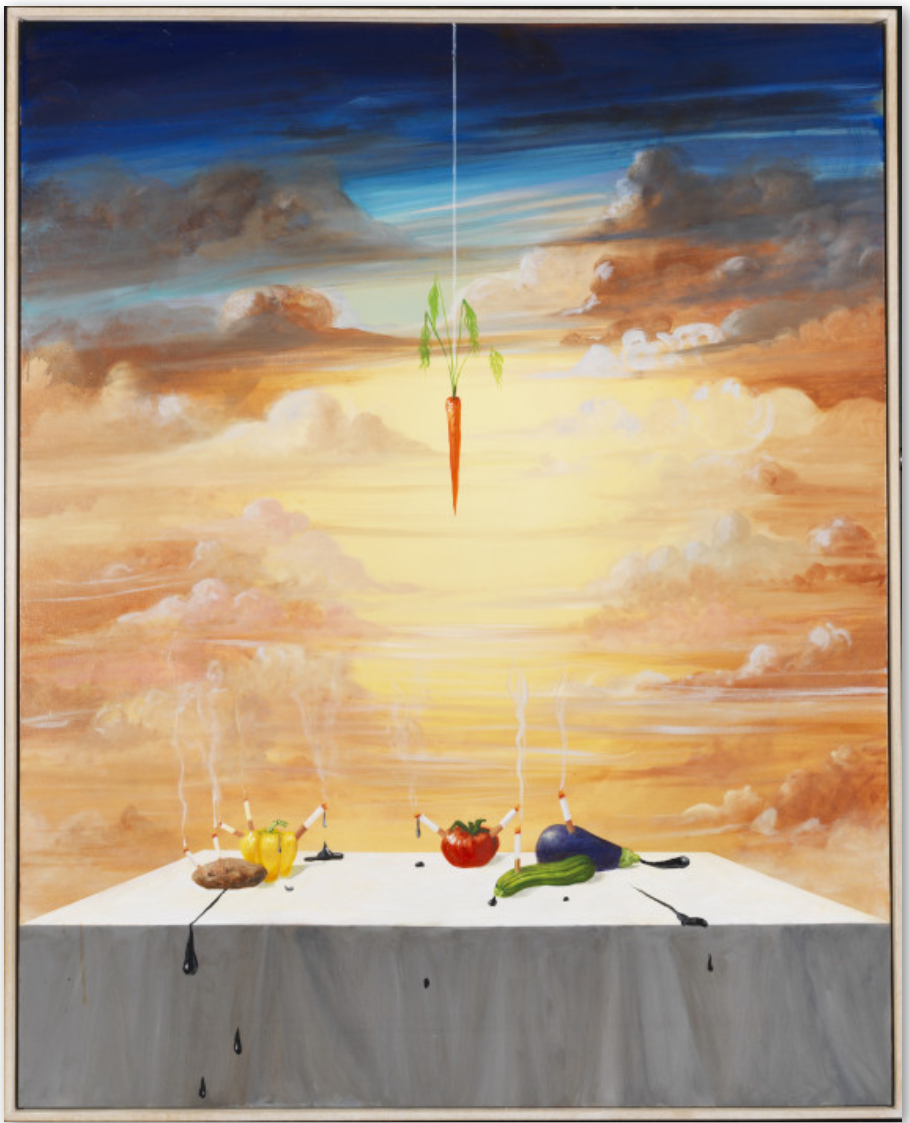
GEORGE CONDO
The Life We Love, 2004
Oil on canvas
59 7/8 x 47 7/8 inches (152 x 121.5 cm)
Signed, dated and titled on the reverse
The party is over.
The party isn’t over yet. The possible spontaneous attribution of this utterly unusual picture requires a certain connoisseurship. And again not. It shows everything. Clear and obvious. The dream is over, a life at the edge – of the table? Is that the case? Is it really?

You already know it, the painting with the dangling carrot is a picture by George Condo. It is a “hybrid painting”, a programmatic picture and a “masterpiece”. When it was created in 2004, the American artist had already painted everything – always new and always programmatically different. A particularly ruthless “fine painting” when he felt like it. The artist is generous. He still paints himself, and each cornucopia is still an example of his talent. The present one is also a rare “giddy” masterpiece. The eyes of many enthusiastic collectors today can hardly believe those critics who for many years saw just another “eclectic position of exotic constructions” in the smugly confident palette of the New Yorker by choice. They were basically right, but the applause came from the other side, and would soon be unmistakable. Condo, who always chose to move about in the peripheries of the extraordinary, had long been a prophet of an artificial paradise that had almost once existed. Today George Condo is celebrated alongside Jean-Michel Basquiat, Robert Longo and Cindy Sherman. He has long been one of the main voices of American art of the 1980s that has received worldwide attention, an artists’ artist, and visual creator of a time in which elusive offshoots of an ” other tradition” were able to gain undreamt-of momentum. In uncertain times, Condo’s pictures provide convincing certainties of what it means to gain the immediate present from the hopeless “fabrication of fictions”.
By the end of the 1980s at the latest, George Condo saw one of the most enigmatic paintings of early Renaissance: Piero della Francesca’s “Pala Montefeltro”, a Madonna and Child with the saint and donor expanded into a “Sacra Conversazione”. The painting, already far ahead of its time, is also world-famous for an unusual detail. A large egg dangles on a chain in the central axis of the picture, above and behind the figure of Mary, which dominates the foreground. Beyond all iconological allusions, the artist, above all, presents one thing: a strange thing that promises an unfulfilled immediacy even after 500 years. “The Life We Love” is about delicacies. Such a special kind, specific consistency and smoke that can probably be smelled from afar. Our view is led “outside”, pulled into an unknown distance. In the foreground we see a strangely “set table”, certainly not a “classical” still life, but perhaps an allegory – one could think of Pieter Bruegel’s “Land of Cockaigne” charged with the most diverse meanings. However, the genre from occidental painting, which has been popular for centuries, does not apply here. We almost tend to speak of “inhabited” and “figures” – the vegetables have become independent, they are not only fresh, they are alive. Very much so. On closer inspection, “inside” is actually “outside”. The tablecloth, traditionally starched with egg white, defines the only apparently familiar sight as an “inside view” of things. The horizon is below the table’s rear edge of the table. And that’s not all: Imposition disguised as hope looks different. We believe the painter that this should be the life we love. Life is a burden, no question about that. We do nothing more or nothing less than chasing the dubious carrot from Bugs Bunny’s comic worlds, however, we never manage to get it. The fact that Condo shows the carrot dangling in the middle of the picture with its valuable “greens” as a sign of organic glory also opens up another association. It hangs from a thin thread, in terms of meaning exactly where Leonardo’s “Salvator Mundi” could easily appear from the depth of the room – but there is no salvation. Instead there is only emptiness, far into the baroque hinterland. Clouds in the sky, Nimbostratus, not the slightest doubt. The ready-to-harvest vegetables are now regarded as the ultimate promise of salvation, the speaking messenger of a dreamy vegan world.
Condo – one name. one program. In “Self Creator”, the bizarrely transformed letters of his name had already led to incredible and cheerful arrangements in oil on canvas. Confidently “animated” with all kinds of beings whose only rationale was their appearance. Radioactive representatives on lush green grass and, to top it all off, embedded in landscapes as apparently “artificial” as O’Rear’s screensaver Bliss, which has promised us reality as pleasant fiction as the opener of “Windows XP” for more than two decades. Incessantly and with an astonishing versatility, Condo lets artificiality and reality blur in the eye of the beholder. In and with his pictures we can confidently leave the “known world” behind us. Any form of efficiency, control and clarity dissolves. Loss of control is the only diagnosis we can really rely on. Burning cigarettes on yellow peppers in a diligent discourse with a fellow on an aubergine – presumably grade 1 and with a questionable carbon footprint, definitely from far away. It’s the world we love, the only one we know. It’s always the others who have a guilty conscience – Condo is also sure about that.
Essay written by Axel Heil for Ketterer Kunst
Red Expanding Form in Landscape, 2002
Sotheby’s London: 18 April 2023
Estimated: GBP 300,000 – 400,000
GBP 355,600 / USD 441,629
Red Expanding Form in Landscape | Contemporary Curated | 2023 | Sotheby’s (sothebys.com)
GEORGE CONDO (b. 1957)
Red Expanding Form in Landscape, 2002
Oil on canvas
48×36 inches (122 x 91.1 cm)
Signed and dated 3/02
George Condo’s visually arresting Red Expanding Form in Landscape from 2002 is a superb example of the artist’s remarkable skill as a puppeteer of the human psychological state. Expressing a Surrealist scene based on pure fantasy, Condo’s dream-like creation espouses a technical virtuosity, in turn assimilating the entire range of major modern artists’ creative output. In the present work, a serene azure sky is punctuated by beautifully scattered Magritte-esque clouds, as luscious emerald green grass germinates at the lower register of the canvas. An otherwise bucolic landscape, the viewer is confronted by an enigmatic form, curiously inanimate and standing proudly and peacefully atop a meadow. The bright red and slender anthropomorphic form emerges from a satisfyingly rotund base; commissioned for Michel Comte’s charity auction honouring the British Red Cross, its shape and hue an obvious homage to the charity’s logo. Assimilating various influences into a seamless amalgamation of genius, Condo produces paintings which simultaneously allude to and evade art historical context. The result is a pantheon of work that is at once strange and yet familiar. The openness of influence attests to the fact that Condo’s oeuvre has and continues to be wholly unique and ultimately unclassifiable, in which his art re-appropriates the potential contained in the works of the past.
The Strangers, 2009
Phillips Hong-Kong: 22 June 2022
Estimated: HKD 5,000,000 – 6,500,000
HKD 5,670,000 / USD 722,320
George Condo – 20th Century & Contempor… Lot 17 June 2022 | Phillips
GEORGE CONDO
The Strangers, 2009
Oil on linen
48 x 44 1/8 inches (122×112 cm)
Signed and dated ‘Condo 09’ on the reverse
Featuring his signature carnivalesque caricatures with their distinctive bulging eyes and compressed and contorted faces, George Condo’s clownishly grotesque characters stare maniacally and confrontationally from his canvases at the viewer, simultaneously comical and unsettling. Described by the artist to be composites of various psychological states, these macabre portraits reflect the abject and the absurd, exploring ideas of madness and metamorphosis by compacting a plethora of emotions within a single expression. This is the aesthetic of “artificial realism”, a term coined by Condo to describe his own painterly style, defined as ‘the realistic representation of that which is artificial.
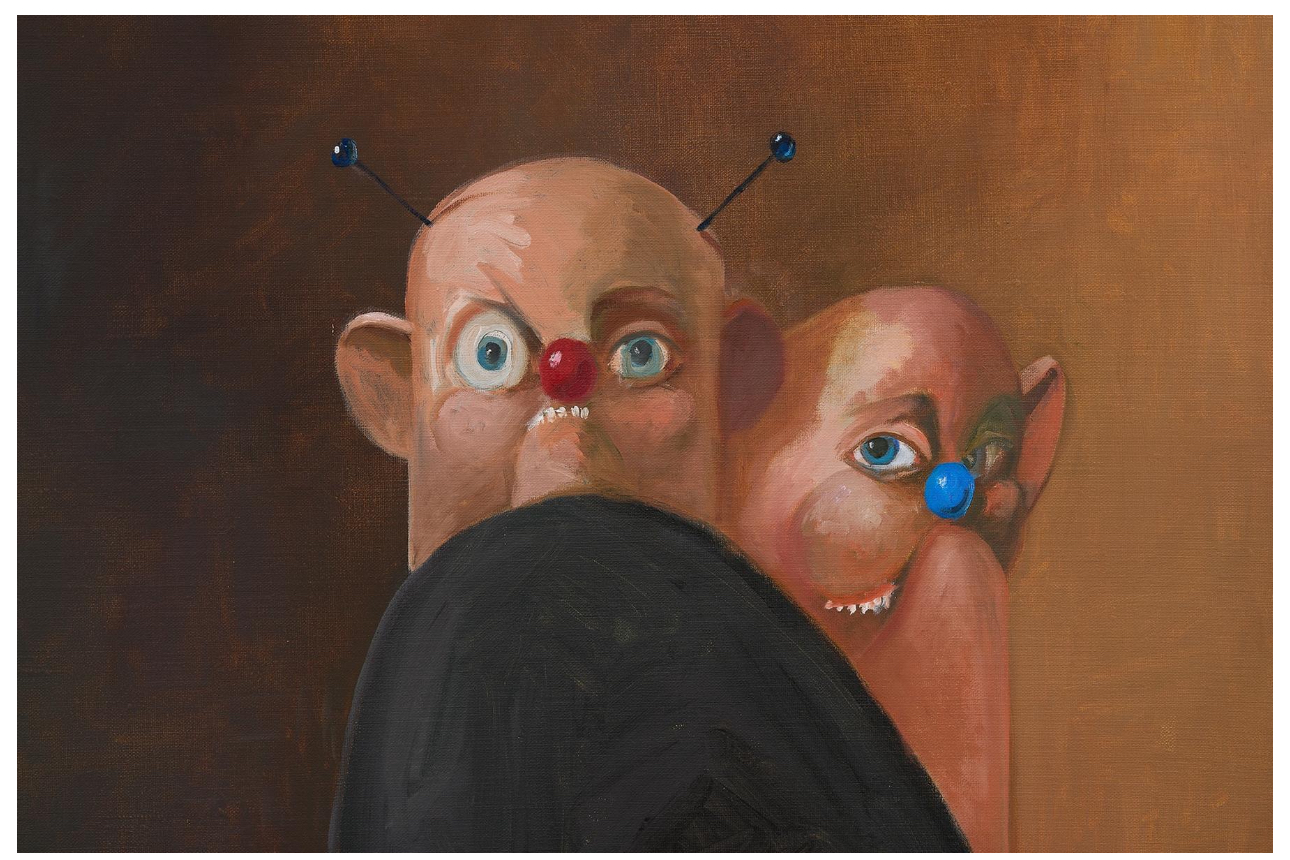
Despite drawing upon a vast array of art-historical sources, incorporating everything from American graffiti to Old Master portraiture into his practice, Condo manages to craft a revolutionary, inventive oeuvre that is uniquely his own. The Strangers was executed in 2009 and is emblematic of his outlandish, whimsical style, and was featured in a solo exhibition, Family Portraits, with Sprüth Magers, Berlin in 2010. Reflecting the title of the exhibition, the current work depicts the artist, his wife, and their two daughters — though they are barely identifiable, having been mutated beyond recognition. This family portrait is an undeniably unorthodox one; reimagining the realist genre with a bizarre, surreal twist. The Strangers demonstrates Condo’s virtuosity in absorbing the genius of the great masters before him, and his success in ventriloquizing and reworking historical painting styles, translating them into his own pictorial vocabulary.
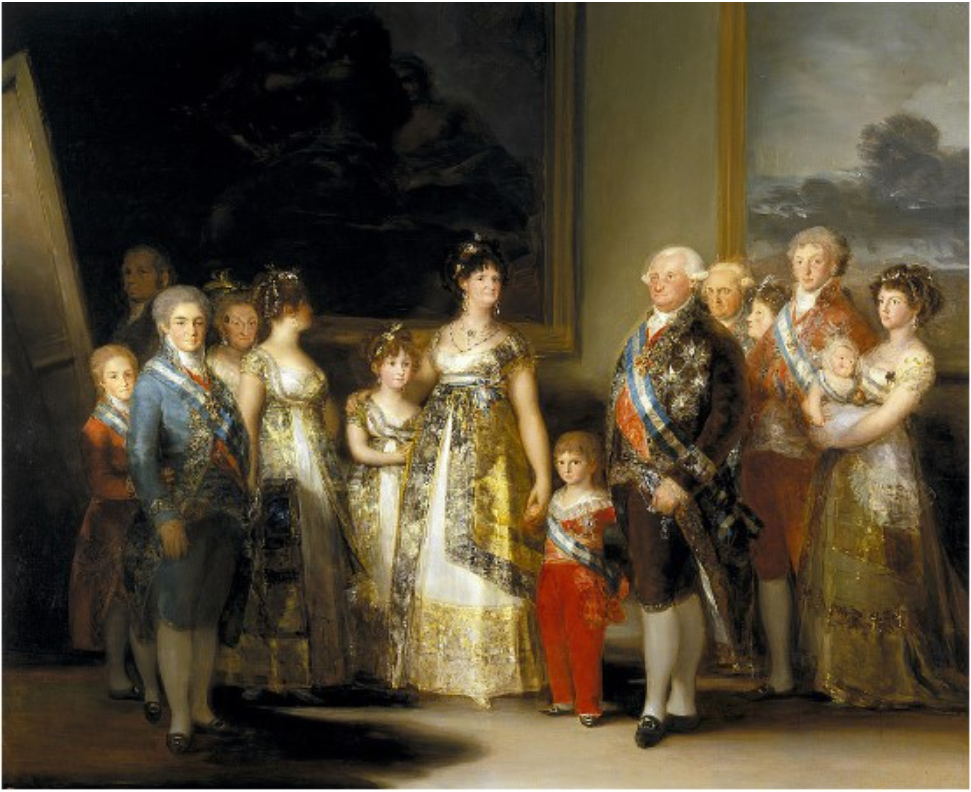
Francisco Goya, Charles IV of Spain and His Family, 1800-1801 / Collection of Museo del Prado, Madrid
The painterly style of Francisco Goya, a constant source of inspiration for Condo, is evident in the present work. Condo channels the Spanish master’s dark portraits with his empty, ambiguous backgrounds, drawing focus to his subjects using lighting of varying saturation in a method evocative of Goya’s Chiaroscuro techniques. Known for his ability to capture complex feelings and personalities within a single facial expression, Goya’s sitters are sensitively and realistically rendered — Condo’s subjects are the same, their visages an amalgamation of emotions that are often open to the viewer’s interpretation. Mimicking the macabre sensibilities of Goya’s works, The Strangers delves into darker narratives, hinting toward a tale of conflict and a split family. An erudite artist, Condo proves himself to be a master puppeteer of perception and emotion. In his prodigious manipulation of the human psyche, he plunges viewers into a curiously complex narrative, shocking his audience in a fashion that is as abrasive as it is entertaining.
Ten Small Portraits, 2001
Sotheby’s New-York: 20 May 2022
Estimated: USD 900,000 – 1,200,000
USD 1,159,200
Ten Small Portraits | Contemporary Day Auction | 2022 | Sotheby’s (sothebys.com)
GEORGE CONDO (b. 1957)
Ten Small Portraits, 2001
Oil on canvas, in 10 parts
Each: 7 1/8 x 5 1/2 inches (18.1 x 13.9 cm)
Signed Condo (on each); signed and dated 5/01 (on the reverse of each)
Offering a spectrum of portraits presenting a compelling study into the artist’s unique and psychologically charged style of Artificial Realism, the present group of intimately scaled works spans the breadth of George Condo’s unique approach to contemporary portraiture. Launching his career as an assistant in Andy Warhol’s studio, Condo quickly learned how to draw from a variety of source material; encompassing references that span from the Renaissance to Modernism, and into the undeniable influence of contemporary pop culture. Assimilating these references into a transformative practice, Condo devises a unique approach to psychological portraiture, producing paintings that simultaneously allude and evade categorization. The result is a pantheon that is at once strange and familiar, experimental and fragmented; these enticing subjects are distinguished by their ballooning cheeks and bulbous noses, tumescent chins and globular eyes gracing this fleshed out collection of characters.
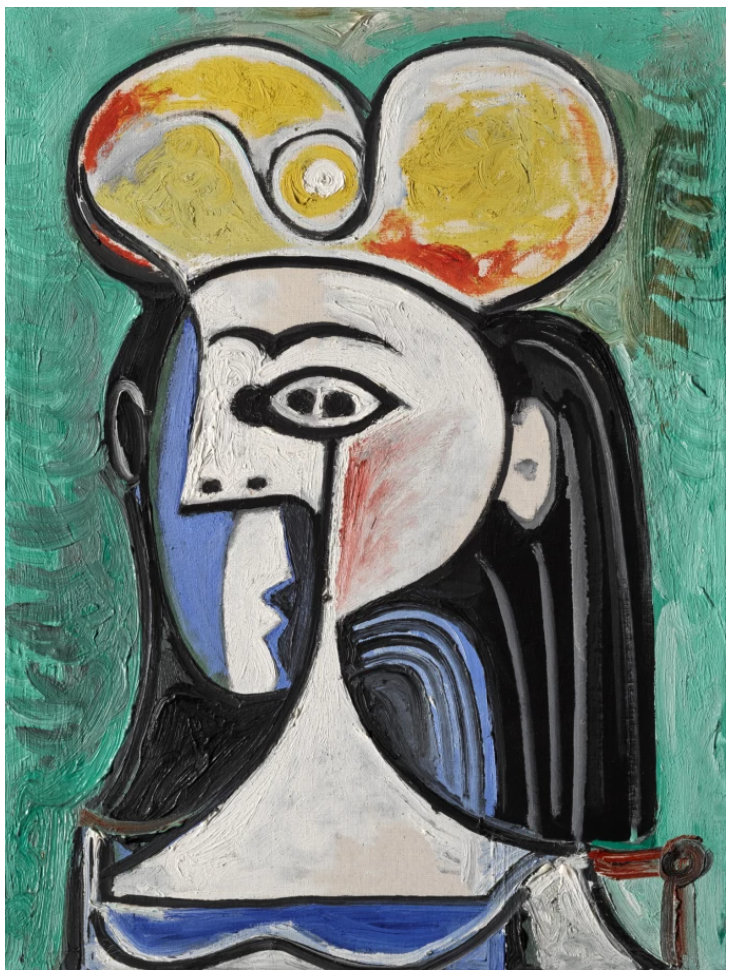
PABLO PICASSO, BUSTE DE FEMME ASSISE, 1962. PRIVATE COLLECTION. ARTWORK: © SUCCESSION PICASSO/DACS, LONDON 2021
The instantly recognizable style of Pablo Picasso dialogues directly with George Condo’s practice. Having studied Picasso’s work during his sojourn in Paris during the late 1980s and early 1990s, Condo absorbed the Cubist artist’s visual syntax into a unique pictorial vision. Like Condo, Picasso’s portraits simultaneously show various facial facets into a single two-dimensional plane; showcasing emotional depth while seeking to transform and reinvigorate portrait painting through the abstraction of features into solid geometric shapes. For both Picasso and Condo, this confrontation is not a process of destruction, but rather one of celebration, reverence and progression, as the represented profile transcends the naturalistic representation of their subjects. Condo’s use of portraiture has thus reinvigorated the genre through the creation of an aesthetic that unfolds with the dynamism of their subjects’ inner nature. Expressive figures composed through distended forms, the cast of characters are imbued with a sense of ineffable pathos. Intimately scaled yet commanding in their presence, these studies offer an impressive archetype into Condo’s well established self-coined term of Artificial Realism. Through his portraits, Condo has mined the formal possibilities of art historical tropes as to push the boundaries of representation, in what the artist will call “”just a long series of experiments with life.”
Dismas, 2007
Sotheby’s London: 28 April 2022
Estimated: GBP 450,000 – 650,000
GBP 504,000/ USD 626,865
Dismas | Contemporary Curated | 2022 | Sotheby’s (sothebys.com)
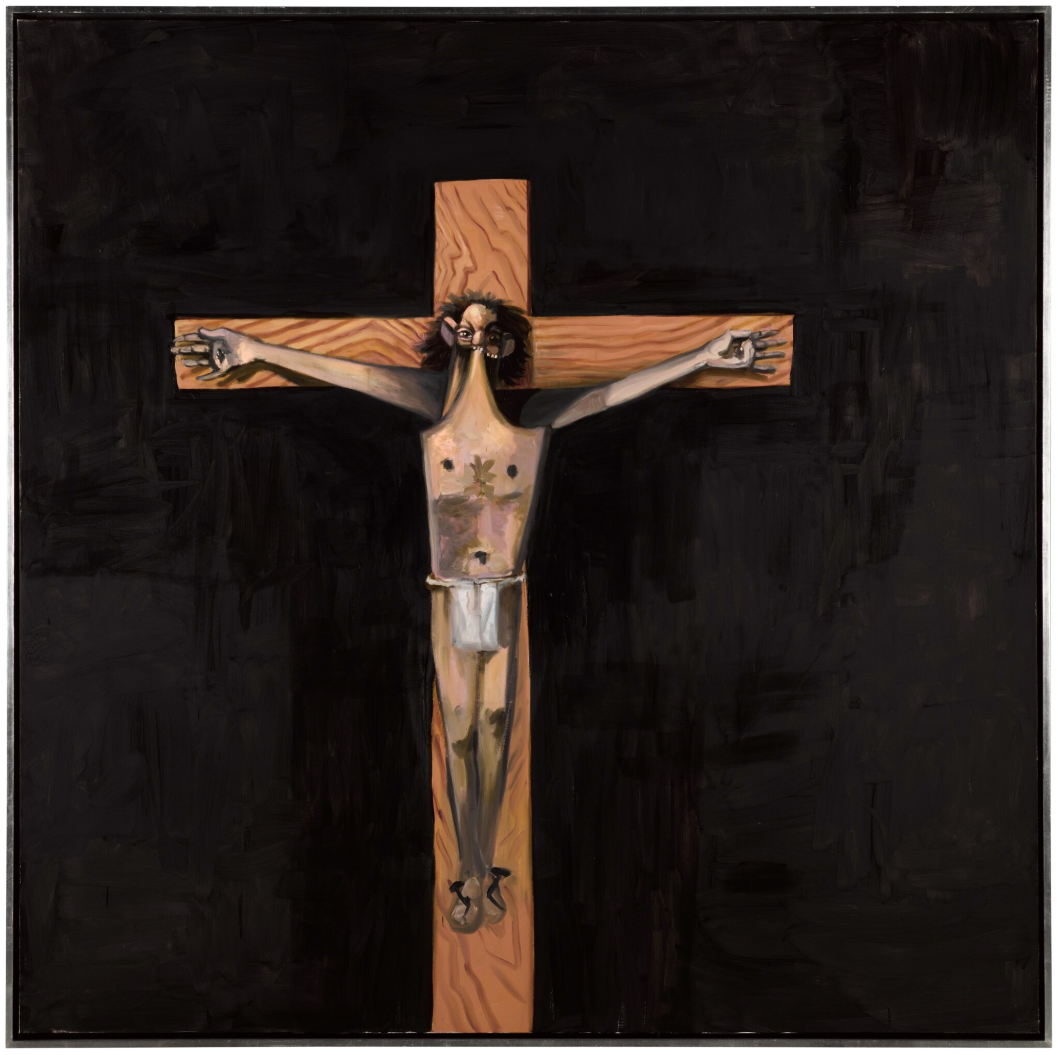
GEORGE CONDO (b. 1957)
Dismas, 2007
Oil on canvas
85 3/4 x 86 inches (217.9 x 218.4 cm)
Building upon decades of refining and maturing of an iconic figurative style, George Condo’s Dismas is a work of dramatic intensity. A stoic yet visceral representation of human pain, Condo captures the complex nature of psychological states within the emaciated body of Dismas, reflecting the madness of everyday life. In 2007, Condo presented a series of four paintings which reimagined the scene of the crucifixion: Jesus, Gestas, Dismas and God. Traditional images of the crucifixion depict Jesus nailed to the cross, frail and sorrowful, illustrated to emphasize his suffering and sacrifice. Dismas and Gestas, the two thieves, are nailed on the right and left side of Jesus. In contrast to Jesus, the two thieves are often depicted contorting their bodies and wailing in repent. Condo’s Dismas is skeletal upon the cross, his haggard face distorted into a grimace of pain. Theatrically propped up with a bright spotlight against the dark backdrop, the thief transforms from a biblical figure to a fantastical creature of Condo’s universe.
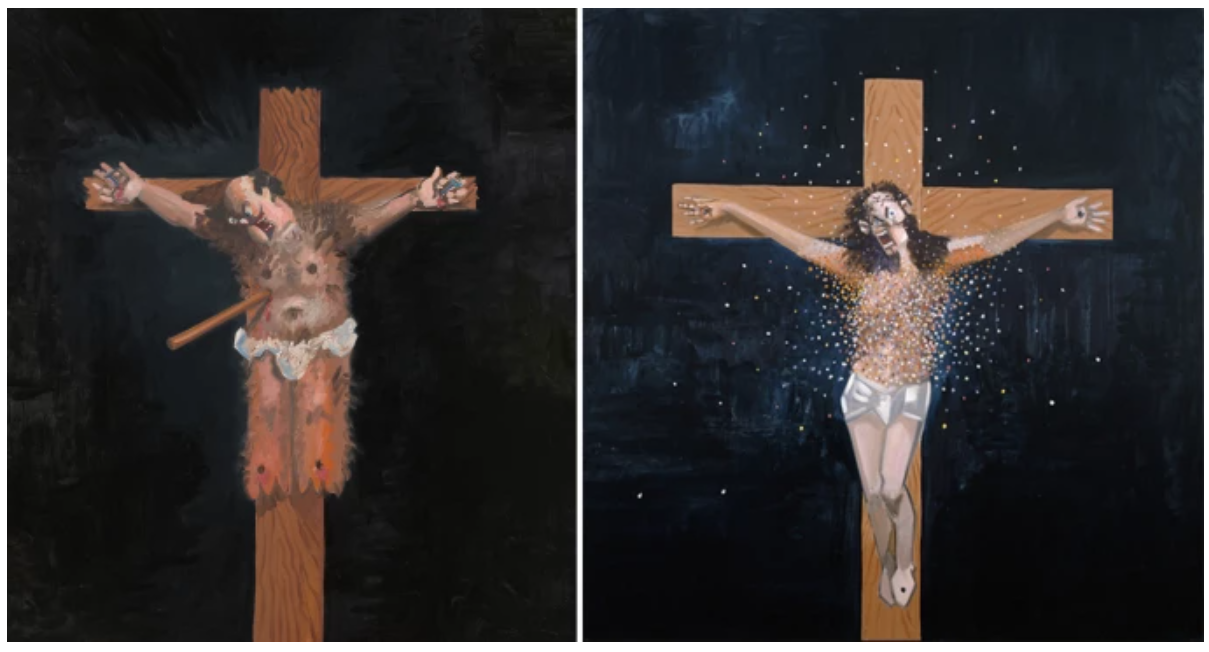
LEFT: GEORGE CONDO, GESTAS, 2007 PRIVATE COLLECTION ARTWORK: © ARS, NY AND DACS, LONDON 2022
RIGHT: GEORGE CONDO, JESUS, 2007 IMAGE: © LUHRING AUGUSTINE ARTWORK: © ARS, NY AND DACS, LONDON 2022
Born into a Catholic household, Condo was raised attending Mass and going to confessions. Revisiting the Christian imagery which he grew up with decades later, Condo describes the great value he places in the “opportunity as an artist to destroy authority by depicting it in your own terms” (George Condo cited in: Calvin Thomas, ‘Portraits of Imaginary People: How George Condo reclaimed Old Master painting’, The New Yorker, January 2011, online). Always out of step with his contemporaries, Condo consistently remained dedicated to his own brand of painting. His pictorial vocabulary draws on an astonishing range of sources; the revolutionary genius of Picasso, enigmatic portraits by Rembrandt, and the sacred imagery of mediaeval and Renaissance altarpieces all merge to create a painterly lexicon that is uniquely his own. Dismas’ skeletal form, seemingly floating out of the darkness, harkens back to the grey-fleshed bodies of quattrocento altarpieces, borrowing from the serene flatness of form within the angular, sharp corners of Dismas’ torso.
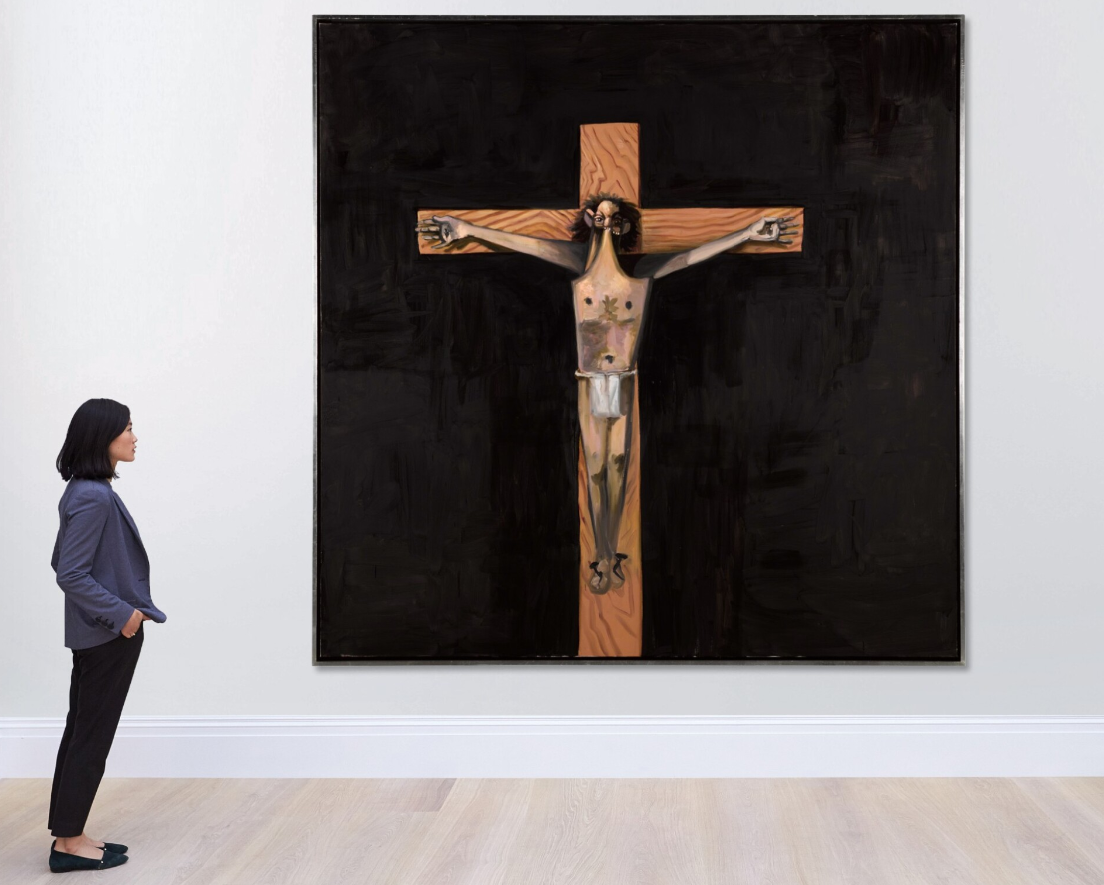
Described by one critic as a game of seduction and repulsion, Condo endows the religious subject with enigma which simultaneously confronts and repels, bringing Dismas into a new terrain of psychological tension which is characteristic of Condo’s portraiture. Extracting the singular figure from its associative visual motifs, Condo stages the figure with a new aura of artificial holiness. The bright light is both a searchlight exposing the savage state of the thief, and a holy halo. Condo described it as “a way of depicting his spirit emanating outward. In my opinion, it’s like a grand homecoming parade” (George condo cited in: Calvin Thomas, ‘Portraits of Imaginary People: How George Condo reclaimed Old Master painting’, The New Yorker, January 2011, online). The spectral lighting and splayed figure parallels the early work of Francis Bacon, in particular the 1933 Crucifixion. Here, Bacon employs the same blackened background to hang his figure, a supernatural biomorph of a body, hanging from skeletal limbs. The starkness of the figure against the deep backdrop imbues the painting with an otherworldly aura, and the cadaverous corpus upon the cross echoes the wraithlike, angular rendering of Dismas. Like Bacon, Condo uses the motif of the crucifixion not as a conventional religious subject, but as a platform that allowed the expression of human emotions.
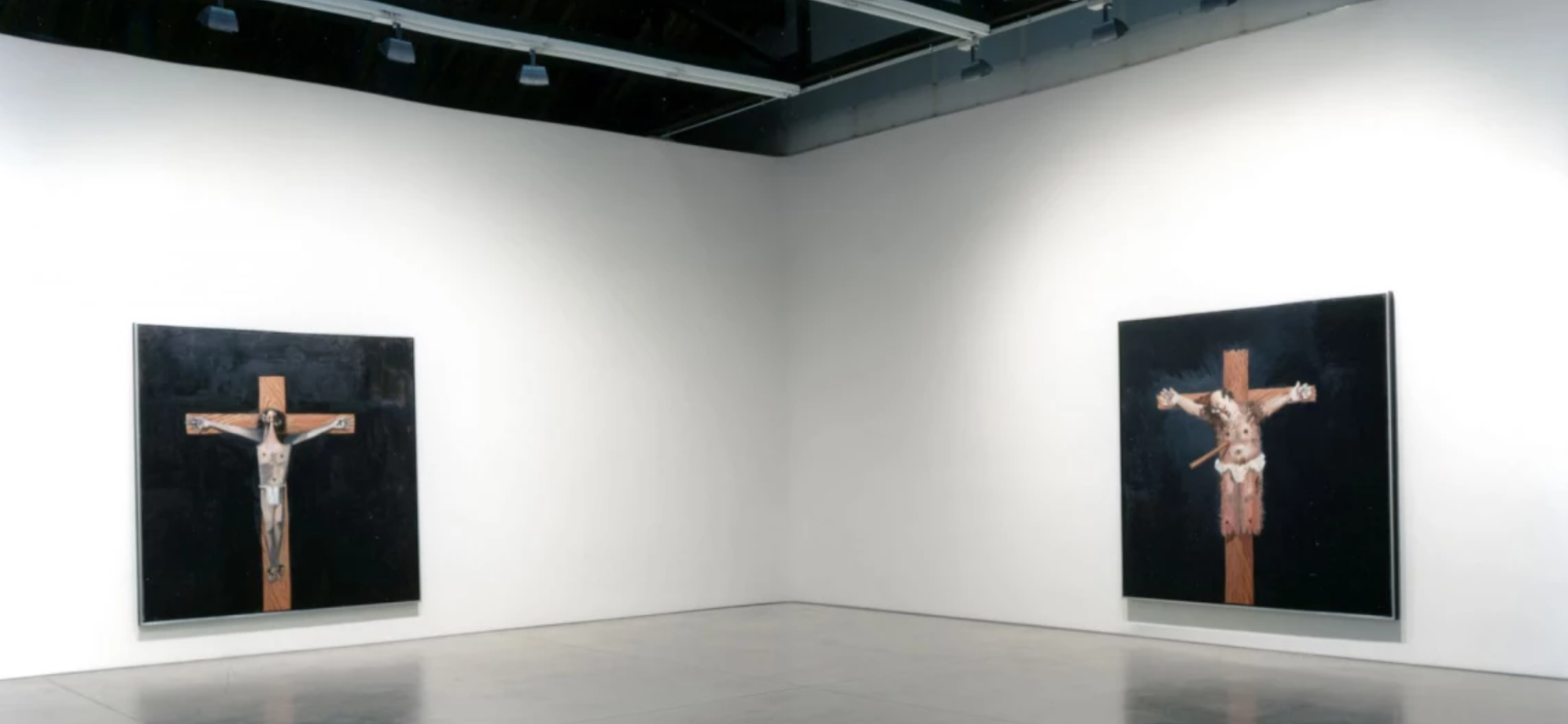
INSTALLATION VIEW, CHRIST: THE SUBJECTIVE NATURE OF OBJECTIVE REPRESENTATION, LUHRING AUGUSTINE, NEW YORK, 2009
PHOTO: © LUHRING AUGUSTINE / ARTWORK: © ARS, NY AND DACS, LONDON 2022
Adopting a blend of the artist’s two best known techniques of psychological cubism and artificial realism, the present work showcases the artist’s exploration into the psychology of the portrait as well as an investigation into the possibility of ‘Objective Representation’ in religious imagery. Condo investigates the idea first brought by the Abstract Expressionists where a subjective experience, such as a spiritual or existential mood, is transmitted through art to be perceived by the viewer in their own way. Expressing the psychological through a re-representation of religious motifs, Condo explores the potential of creating an objective religious experience. The painting also is an example of what the artist calls ‘Artificial Realism,’ whereby reality is presented as a construct of man-made appearances.
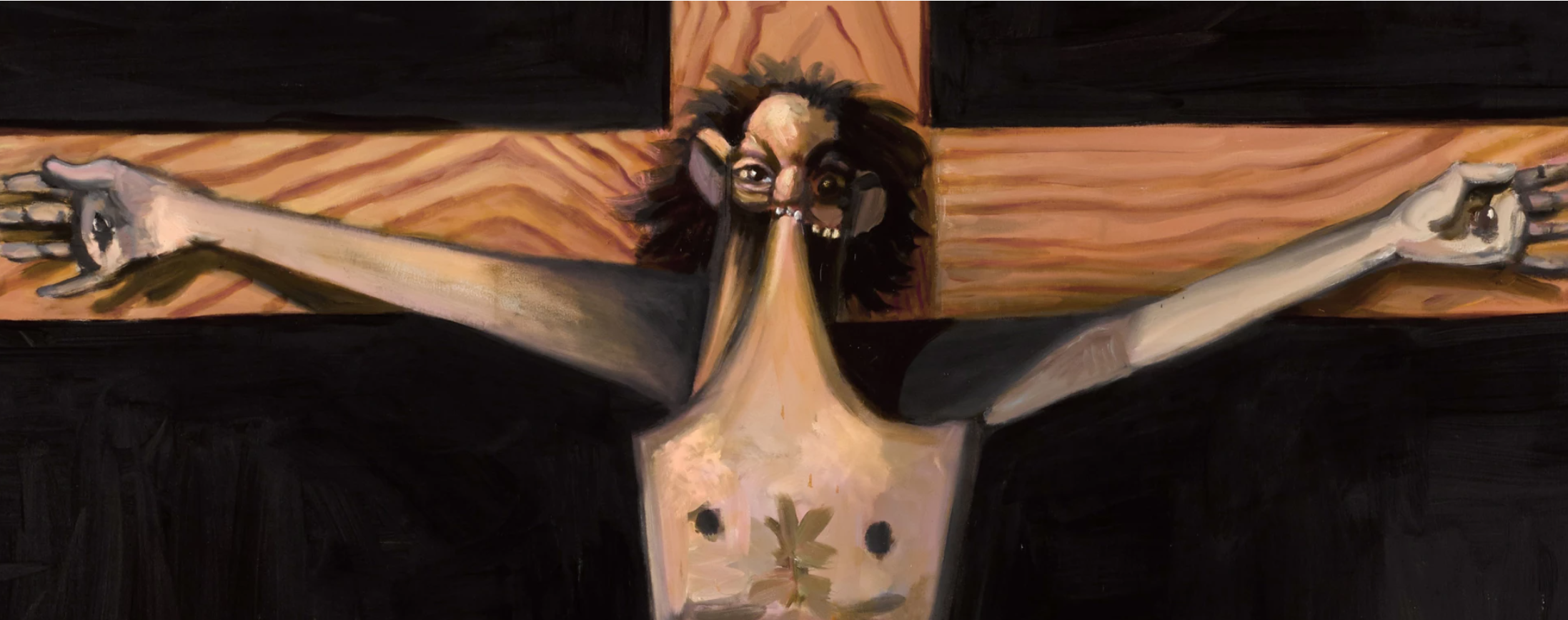
The present work conveys Dismas in a state of metamorphosis, reflecting a plethora of emotions and gestures. Walking the line between pathos and the grotesque, Condo translates one of the most ubiquitous iconography in the history of western art into a unique work of his own imagination. Throughout his prolific career, Condo has mined the formal possibilities of art historical tropes to push the boundaries and defy expectations for both painting and portraiture reflective of our contemporary moment.
Standing Nude in the Night with Bubbles, 1999
Sotheby’s Hong-Kong: 28 April 2022
Estimated: HKD 2,200,000 – 4,200,000
HKD 3,528,000 / USD 449,632
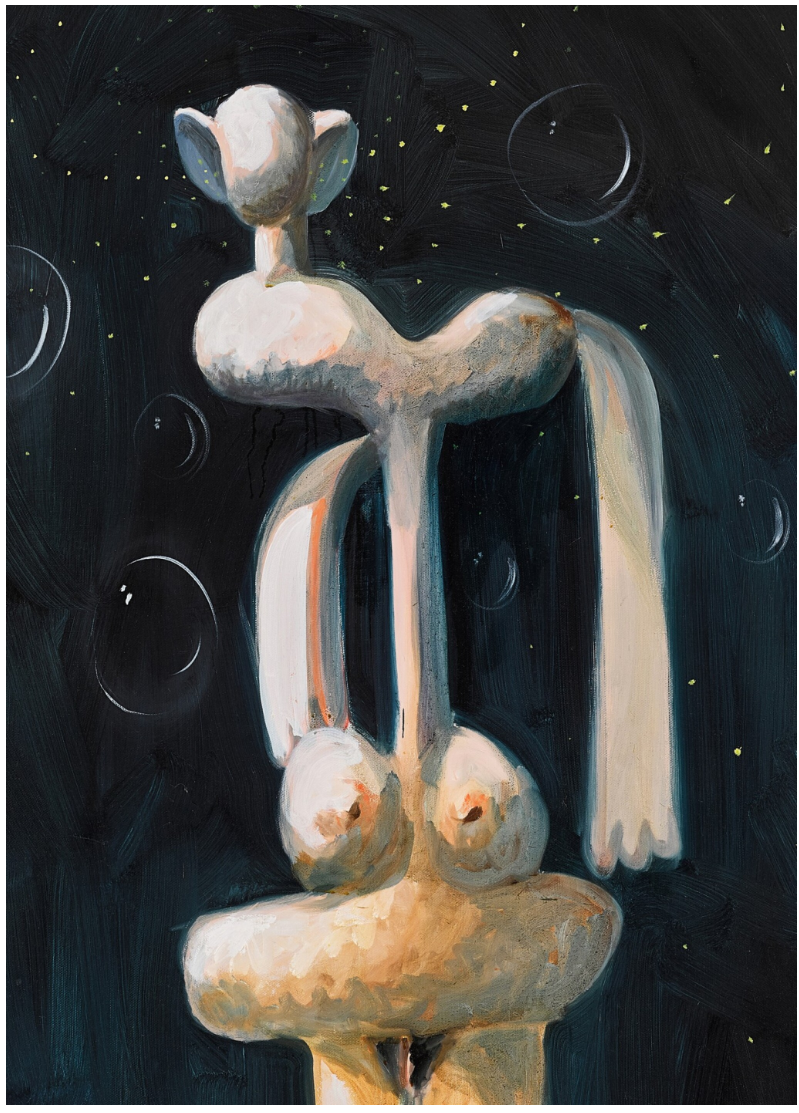
GEORGE CONDO (b. 1957)
Standing Nude in the Night with Bubbles, 1999
Oil on canvas
59 5/8 x 50 1/4 inches (151.4 x 127.5 cm)
Signed, titled and dated 99 on the reverse
Standing Nude in the Night with Bubbles is a captivating example of George Condo’s exploration of the female nude genre. Always out of step with his contemporaries, Condo consistently remained dedicated to his own brand of painting, which draws on an astonishing range of art historical sources to build a painterly lexicon that is uniquely his own. The artist draws inspiration from canonical figures of art history, ranging from old masters such as Diego Velaquez and Edouard Manet, to the modern masters of Giorgio de Chirico, Pablo Picasso and Willem de Kooning. In the present work, the grand tradition of the female nude is translated through Condo’s pictorial language in an art historical hybridization.
EDOUARD MANET, OLYMPIA, 1863, OIL ON CANVAS
The nude in the present work stands tall, her faceless head directly confronting the viewer in a manner reminiscent of Manet’s Olympia. The female anatomy is simplified into a series of geometrical forms, her two circular breasts resting beside a long tubular neck, from which loose, flat arms dangle like a deflated balloon. Oscillating between the figuration and abstract, the ambiguous figure recalls the fragmented nudes of de Kooning’s Woman series, whilst its graphic geometricality also recalls the surreal architectural landscapes of de Chirico. From her large ears emerge speckles of yellow, dotting the sky with twinkling stars arranged in orbits around her head. Bubbles float around in an ambiguous nightscape, its innocent whimsicality contrasting with the distortion of the nude body to create playful absurdity that is characteristic of Condo’s work.
Emerging onto the 1980s New York art scene alongside seminal figures such as Keith Haring and Jean-Michel Basquiat, Condo’s early works explored a new form of figuration which blended the representational and the abstract. Executed in 1999, the present work demonstrates Condo’s continued exploration into the formal possibilities of art historical tropes to push the boundaries and defy expectations for painting and the nude in a modern setting. A fantastical creature of Condo’s universe, the complete ambiguity of the anatomical form and its faceless, identity-less subject creates endless imaginary potential that both humorously revives and undermines the integrity of the nude tradition. Walking the line between pathos, hilarity and the grotesque, Standing Nude in the Night with Bubbles is an outstanding example of Condo’s pioneering oeuvre.
Gestas, 2007
Sotheby’s London: 3 March 2022
Estimated: GBP 600,000 – 800,000
GBP 655,200 / USD 872,785
Gestas | Modern & Contemporary Day Auction | 2022 | Sotheby’s (sothebys.com)
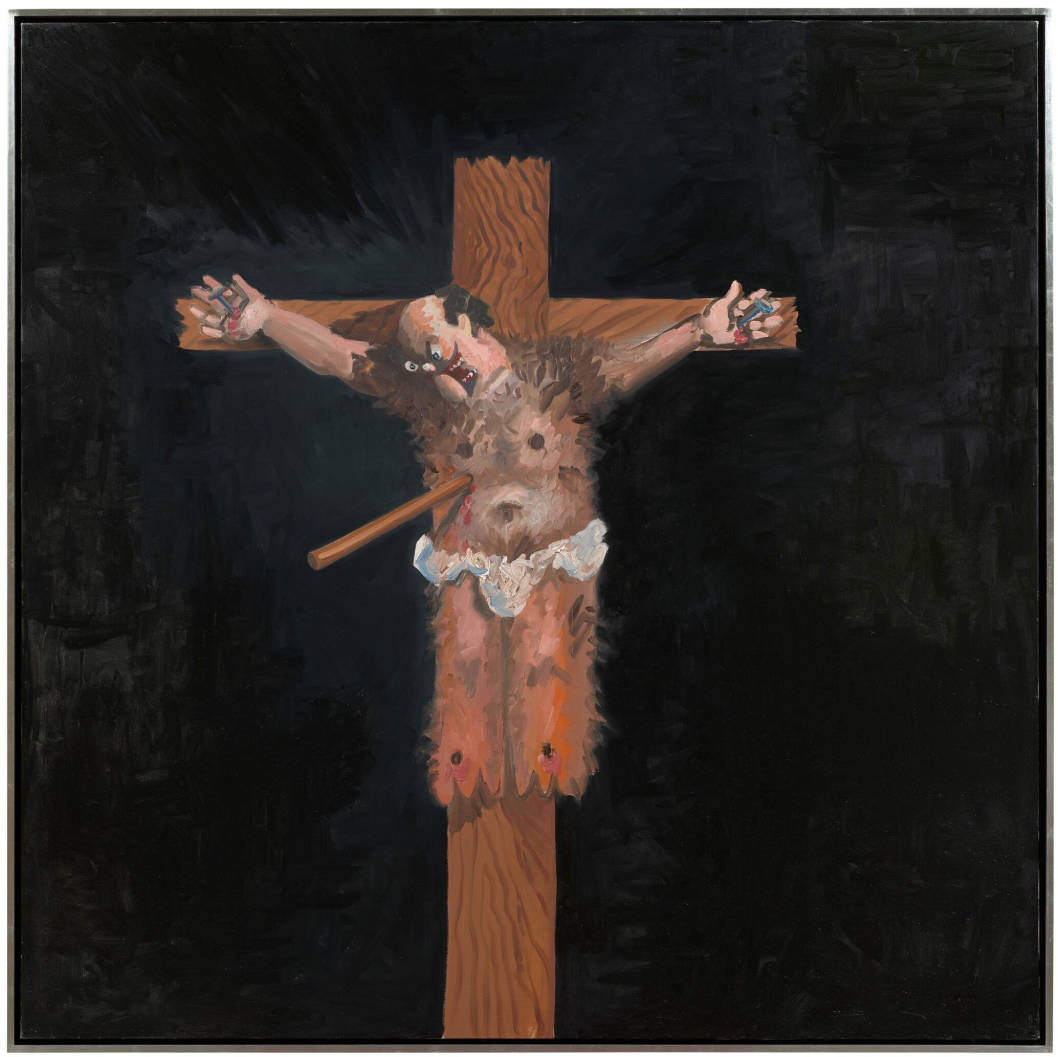
GEORGE CONDO (b. 1957)
Gestas, 2007
oil on canvas
86×86 inches (218.4 x 218.9 cm)
Building upon decades of refining and maturing of an iconic figurative style, George Condo’s Gestas is a work of dramatic intensity. Always out of step with his contemporaries, Condo consistently remained dedicated to his own brand of painting. His pictorial vocabulary draws on an astonishing range of sources; the revolutionary genius of Picasso, enigmatic portraits by Rembrandt, and the sacred imagery of medieval altarpieces all merge to create a painterly lexicon that is uniquely his own. Walking the line between pathos, hilarity and the grotesque, Condo translates one of the most ubiquitous iconography in the history of western art into a unique work of his own imagination.
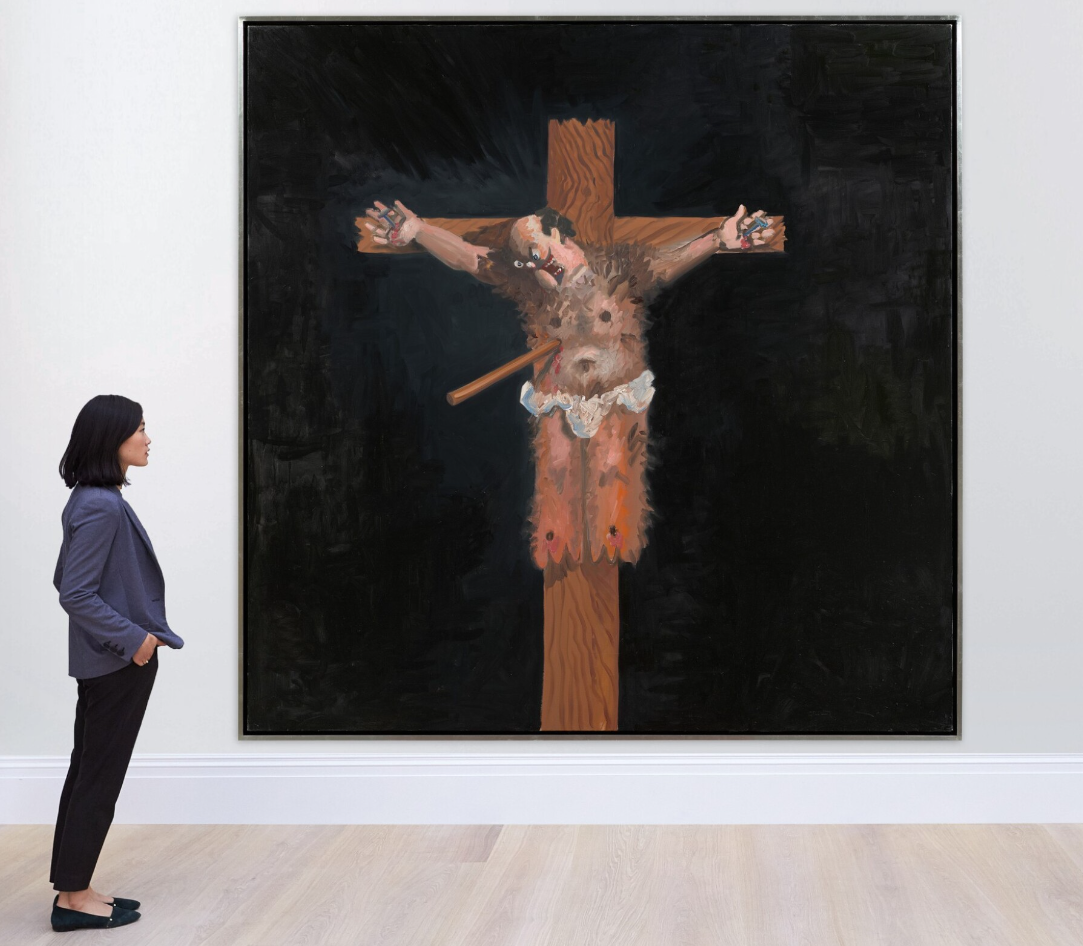
Born into a Catholic household, Condo was raised attending Mass and going to confessions. Revisiting the Christian imagery which he grew up with decades later, Condo describes the great value he places in the “opportunity as an artist to destroy authority by depicting it in your own terms.”
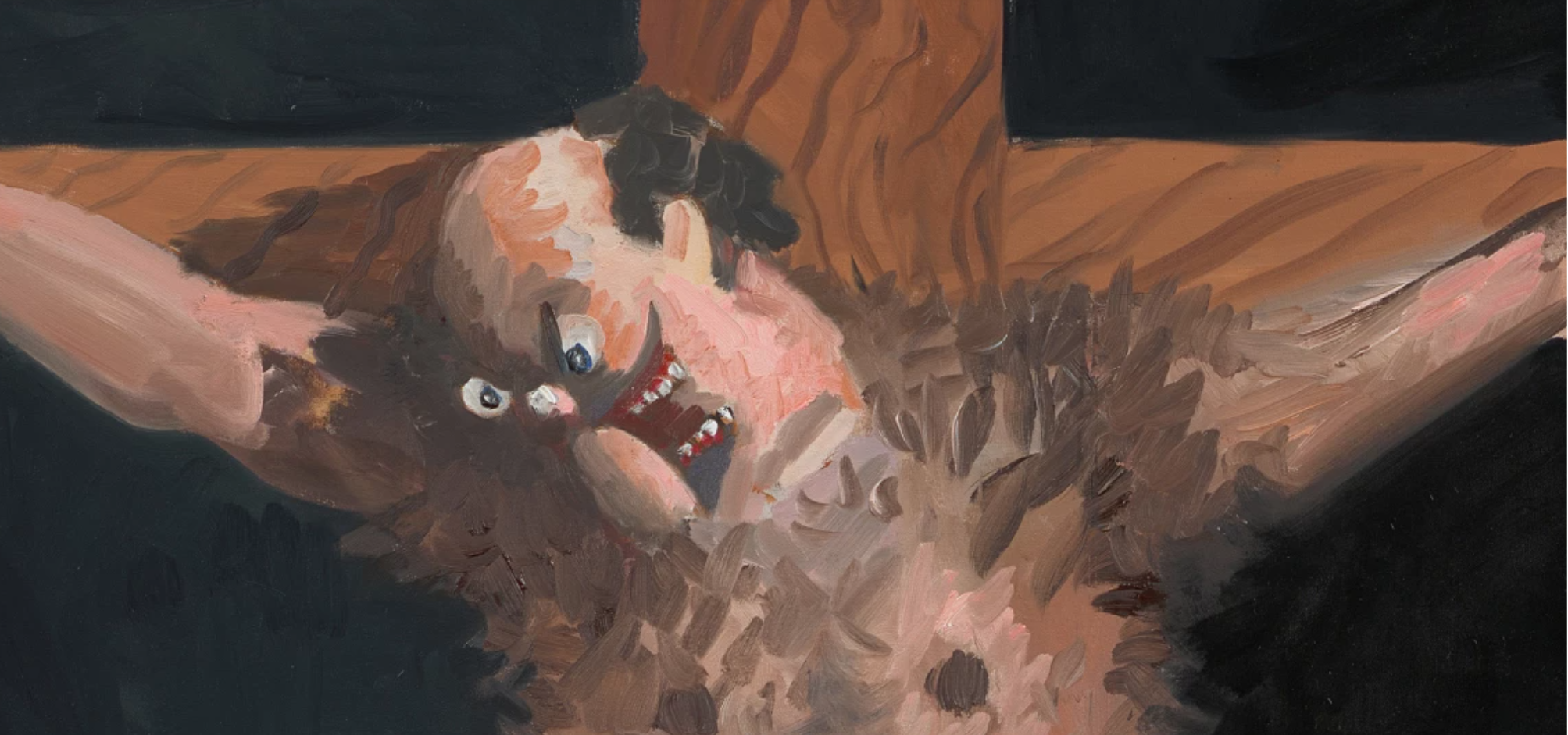
In 2007, Condo presented a series of four paintings which reimagined the scene of the crucifixion: Jesus, Gestas, Dismas and God. Traditional images of the crucifixion depict Jesus nailed to the cross, frail and sorrowful, illustrated to emphasise his suffering and sacrifice. Dismas and Gestas, the two thieves, are nailed on the right and left side of Jesus. In contrast to Jesus, the two thieves are often depicted contorting their bodies and wailing in repent. Condo’s Gestas is wild and dynamic, his manic eyes and ferocious teeth screaming out with madness. In fact, Condo’s Gestas is barely human. His torso is covered with tufts of fur, and his feet droop vertically down from his knees like that of a rag-doll. Theatrically propped up with a bright spotlight against the dark backdrop, the thief transforms from a biblical figure to a fantastical creature of Condo’s universe.
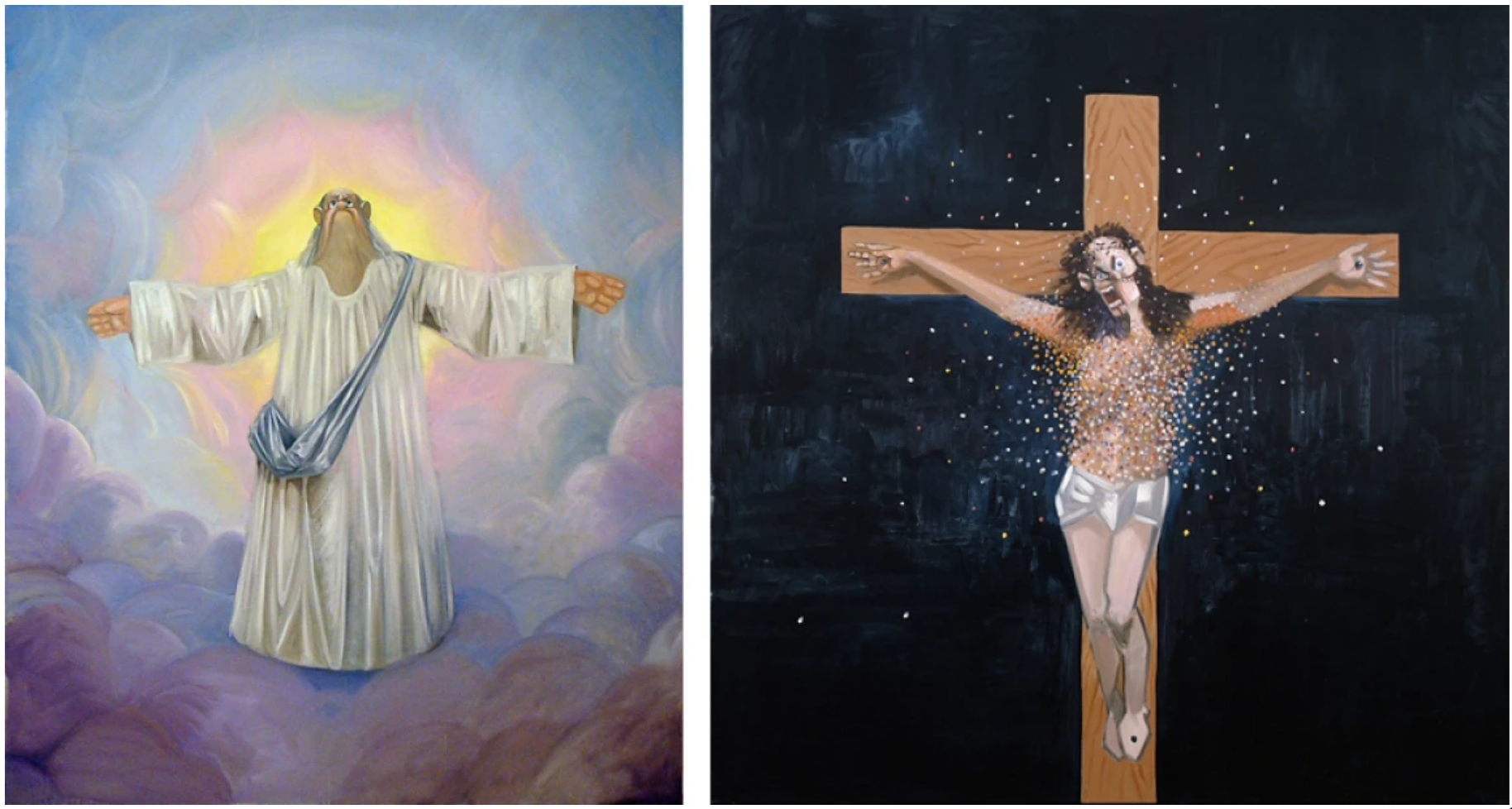
LEFT: I) GEORGE CONDO, GOD, 2007 / IMAGE © LUHRING AUGUSTINE / ARTWORK © ARS, NY AND DACS, LONDON 2022
RIGHT: II) GEORGE CONDO, JESUS, 2007 / IMAGE © LUHRING AUGUSTINE / ARTWORK © ARS, NY AND DACS, LONDON 2022
At once strange and familiar, experimental and fragmented, Condo’s subjects are distinguished by their ballooning sheeks and bulbous noses, tumescent chins and globular eyes. Particularly characteristic of Condo’s portraiture are the diverging eyes.
“Often one eye is looking at you and the other eye is more recessive. You’re seduced by the willing eye and then stared at by the aggressive one. As you move into the portrait there is something paranoiac about each part.”
Described by one critic as a game of seduction and repulsion, Condo endows the religious subject with enigma which simultaneously confronts and repels, bringing Gestas into a new terrain of psychological tension which is characteristic of Condo’s portraiture. Extracting the singular figure from its associative visual motifs, Condo stages the figure with a new aura of artificial holiness. The bright light is both a searchlight exposing the savage state of the thief, and a holy halo.
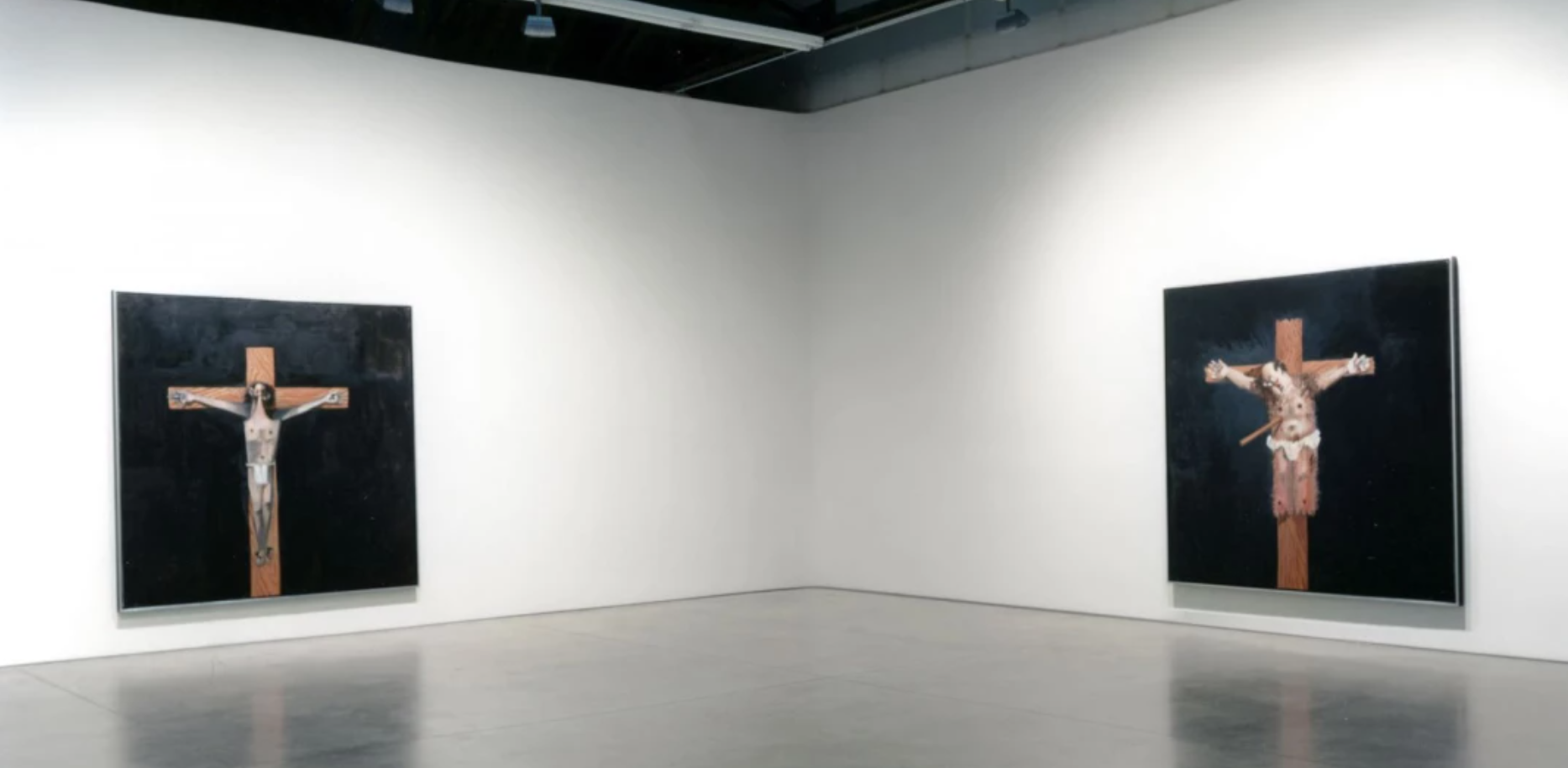
INSTALLATION VIEW, CHRIST: THE SUBJECTIVE NATURE OF OBJECTIVE REPRESENTATION, LUHRING AUGUSTINE, NEW YORK, 2009
PHOTO © LUHRING AUGUSTINE / ARTWORK © ARS, NY AND DACS, LONDON 2022
Adopting a blend of the artist’s two best known techniques of psychological cubism and artificial realism, the present work showcases the artist’s exploration into the psychology of the portrait as well as an investigation into the possibility of ‘Objective Representation’ in religious imagery. Condo investigates the idea first brought by the Abstract Expressionists where a subjective experience, such as a spiritual or existential mood, is transmitted through art to be perceived by the viewer in their own way. Expressing the psychological through a re-representation of religious motifs, Condo explores the potential of creating an objective religious experience. The painting also is an example of what the artist calls ‘Artificial Realism,’ whereby reality is presented as a construct of man-made appearances. Fusing human forms with cartoon-like features, the present work conveys Gestas in a state of metamorphosis, reflecting a plethora of emotions and gestures. Screaming and laughing within a singular expression, Condo captures the complex nature of psychological states, reflecting the madness of everyday life. Throughout his prolific career, Condo has mined the formal possibilities of art historical tropes to push the boundaries and defy expectations for both painting and portraiture reflective of our contemporary moment.
Untitled (Artist and Muse), 2015
Sotheby’s Hong-Kong: 10 October 2021
Estimated: HKD 11,000,000 – 15,000,000
HKD 16,510,000 / USD 2,120,881
GEORGE CONDO (B. 1957)
Untitled (Artist and Muse), 2015
Acrylic, pigment stick, and gold paint on canvas
65×58 inches (165.1 x 147.3 cm)
Signed and dated 2015
Untitled (Artist and Muse) from 2015 is a brilliant example George Condo’s ability to express a character’s various psychological states, capturing concurrent trains of thought through his unique artistic language that draws on the methodology of cubism. Indeed, Condo wonderfully captures the moods and thoughts of his two characters, the figure on the left of the canvas an apparent self-portrait of the artist, in confrontation or communication with the blonde female figure to his right. Untitled (Artist and Muse) exemplifies the artist’s “Drawing Paintings” of sketch-like figures and splatterings of vivid color, using a variety of mediums, including acrylic paint, pigment stick and gold paint as seen in the present work. In his lively canvas works, Condo dissolves the distinction between drawing and painting and the traditional hierarchy perceived between the two, demonstrating that they both exist along the same continuum. In Untitled (Artist and Muse), the artist delineates his figures with dark, daring brushstrokes, typical of many of his post-2010 “Drawing Paintings”. However, the color palette of the work is especially bright, the luminous honey blonde of the woman’s hair glowing against the light blue of the background. While the woman’s two expressions hint at contentment and joy—the central mouth open wide in a jubilant smile—Condo expresses the inner torment and anxiety of the figure on the left. For the abstracted figure on the left, teeth bared and manic eyes staring wide, Condo employs bolder colors of crimson red alongside dark areas of black and green, juxtaposing the strikingly different moods of his two characters, within the same pictorial space.
Nun and Priest, 2007
Christie’s online: 28 September 2021
Estimated: HKD 10,000,000 – 18,000,000
HKD 20,650,000 / USD 2,652,911
GEORGE CONDO (B. 1957), Nun and Priest | Christie’s (christies.com)
GEORGE CONDO (B. 1957)
Nun and Priest, 2007
Oil on canvas
91 3/4 x 78 inches (233×198 cm)
Signed and dated ‘Condo 07’ (on the reverse)
The Stockbroker, 2002
Sotheby’s New-York: 12 May 2021
Estimated: USD 1,200,000 – 1,800,000
USD 1,593,000
The Stockbroker | Contemporary Art Evening Auction | 2021 | Sotheby’s (sothebys.com)
GEORGE CONDO (B.1957)
The Stockbroker, 2002
Oil on canvas
97×80 inches (243.8 x 203.2 cm)
Signed, titled, and dated 2002 on the reverse
Presenting an arresting portrait of abject domesticity, George Condo’s The Stockbroker from 2002 is a superb example of the artist’s remarkable skill as a puppeteer of the human psyche, showcasing his ability to warp the representational and deftly manipulate the emotional dramas of his subjects and viewers. Standing side-by-side, the seeming couple of the present work are both reflection and caricature of suburbia: while the crisp white shirt, neat tie, and vibrant housedress suggest normality, Condo deftly destabilizes and distorts a classic image to create his own, perfectly warped American Gothic. Straddling the line between the familiar and the uncanny, the ludicrous and the exquisite, the present work exemplifies the body of rich pictorial creations have made Condo one of the most inventive and popular artists of his generation.
Dream Sequence and Big Sur, 1991
Sotheby’s London: 26 March 2021
Estimated: GBP 150,000 – 200,000
GBP 151,200 / USD 208,580
Dream Sequence and Big Sur | Contemporary Art Day Auction | 2021 | Sotheby’s (sothebys.com)
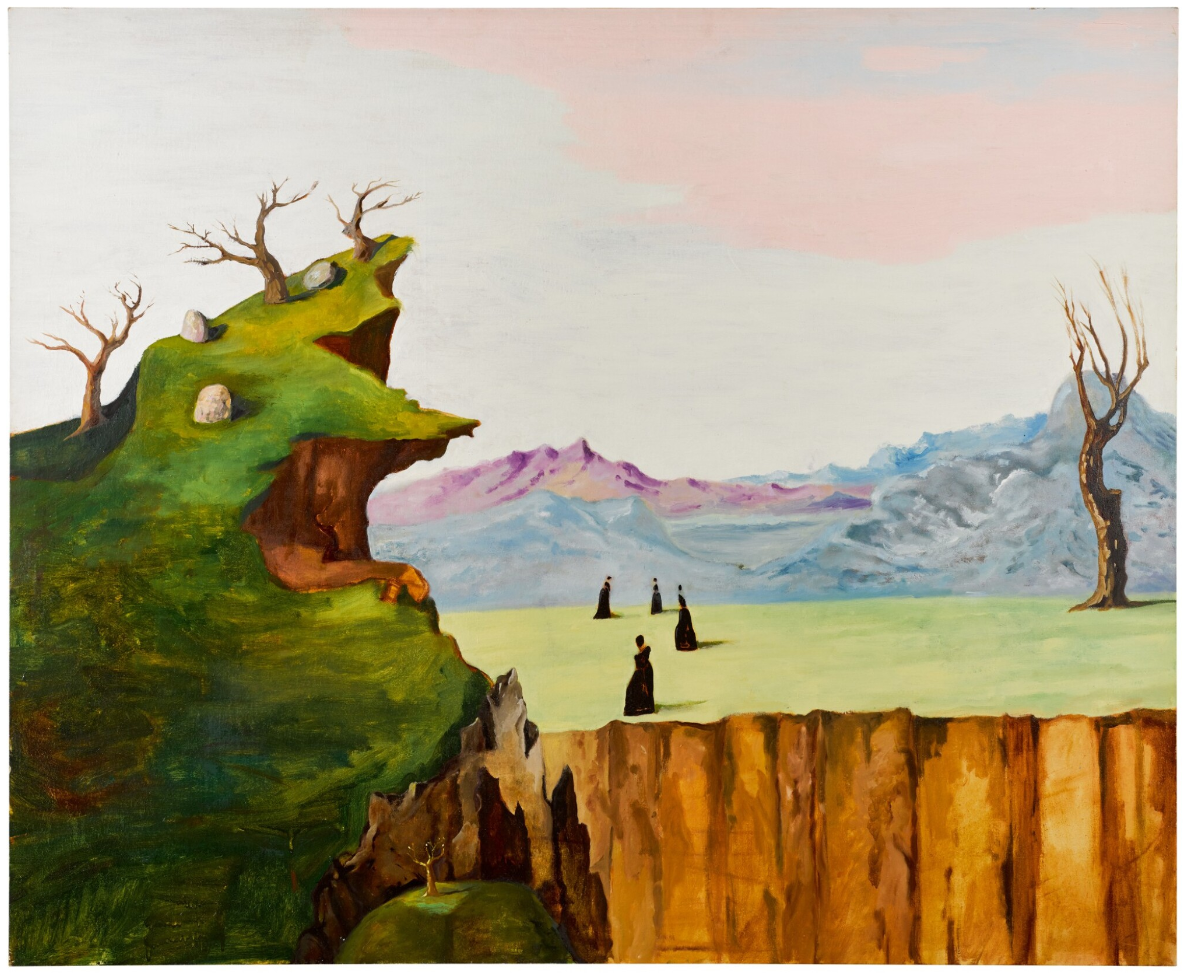
GEORGE CONDO (b. 1957)
Dream Sequence and Big Sur, 1991
Oil on linen
63 x 76 3/4 inches (160×195 cm)
Signed and inscribed Paris on the stretcher
George Condo’s visually arresting Dream Sequence and Big Sur from 1991 is a superb example of the artist’s remarkable skill as a puppeteer of the human psychological state. Expressing a cynical attitude based on pure fantasy, Condo’s dream-like creations espouse a technical virtuosity, in turn assimilating the entire range of major modern artists’ creative output. Departing from the aesthetic confines of figuration, the artist explores a myriad of portrayals that enunciate the most intimate parts of the human mind, as exemplified by the profoundly expressive and psychologically enigmatic nature of the present work.
In Dream Sequence and Big Sur, an early twilight sky with low, nebulous clouds is placed above a landscape with deep, nighttime shadows, recalling the paradox of day, night and dusk explored in works by René Magritte. In the foreground, personified tree trunks found in Salvador Dalí’s paintings are placed atop a green hilltop. The perspective of the trees is disconcerting. The looming cliff edge, sharp and unwelcoming at its edges, almost confronts the waste land across the valley, as the luscious and enriched grass verge stands in stark contrast to the bleak and sparse background in which four figures stand. The cloaked figures at the center of the composition, which call to mind priests or clergymen, are oddly configured, not engaged with one another and not communicating. One figure is alarmingly close to the cliff edge; perhaps the sequence of the figures represents one person’s psyche moving towards a climax or a breaking point, closer to the edge.
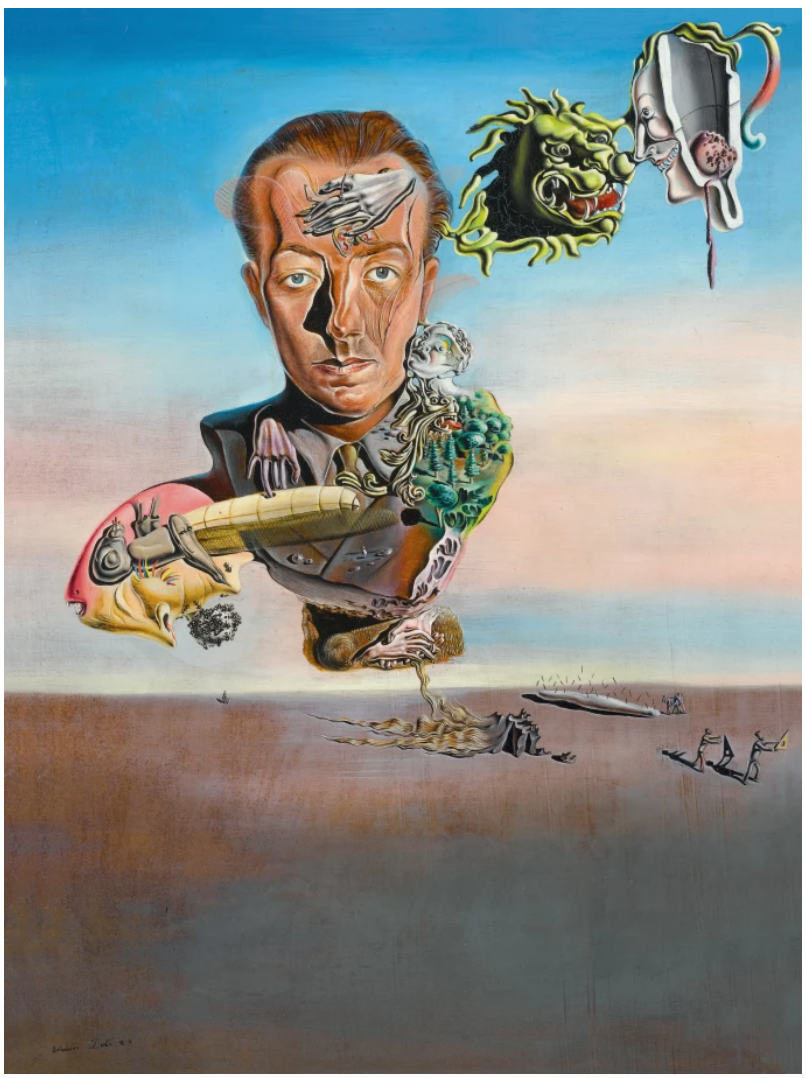
SALVADOR DALÍ, PORTRAIT DE PAUL ÉLUARD, 1929
ARTWORK: © SALVADOR DALI, FUNDACIÓ GALA-SALVADOR DALÍ, DACS 2021
The earthy hues in the cross section of the cliff, warm and golden in tonality, and the Surrealist blues, purples and pinks of the mountains and the sky, take their inspiration from the sanctity of the Californian landscape. Big Sur is a rugged stretch of California’s central coast bordered to the east by the Santa Lucia Mountains and the west by the Pacific Ocean. It is traversed by narrow route known for winding turns, seaside cliffs and views of the often-misty coastline. With a distinctly layered composition awash with a palette of predominantly greens and blues, the Californian landscape is certainly discernible in the present work and serves to question the nature of our perception and our ability to decode and decipher the artist’s unique visual lexicon.
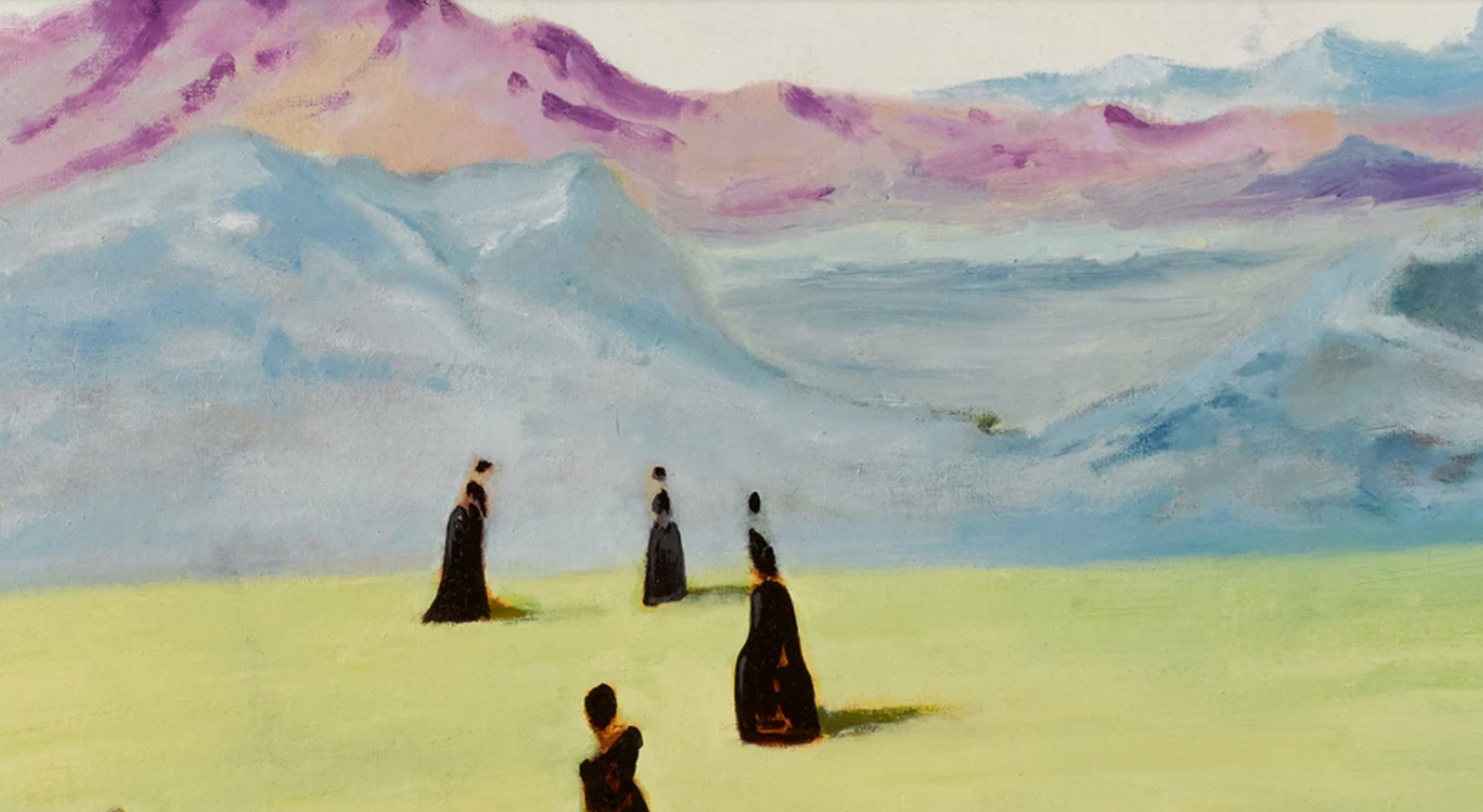
Assimilating various influences into a seamless amalgamation of genius, Condo produces paintings which simultaneously allude to and evade art historical context. The result is a pantheon of work that is at once strange and yet familiar. The openness of influence attests to the fact that Condo’s oeuvre has and continues to be wholly unique and ultimately unclassifiable, in which his art re-appropriates the potential contained in the works of the past. Condo has continued to mine the formal possibilities of art historical tropes to push the boundaries and defy expectations for both painting and portraiture in a modern setting. Building upon years of refining and maturing his iconic figurative style, Dream Sequence and Big Sur reveals an artist at the height of his career, utterly uninhibited and full of instinctive creative fervor.
Works on Paper
PLEASE CLICK BELOW TO READ ABOUT GEORGE CONDO WORKS ON PAPER
AND FIND DETAILED HISTORICAL RESULTS