
Elizabeth Peyton stands as one of the most influential painters of her generation, credited with reviving portraiture at a moment when the genre had largely fallen out of favor. Since the early 1990s, she has developed a body of work that is both deeply personal and culturally resonant, merging art history, celebrity culture, and emotional intimacy into a distinctive visual language. Her paintings, drawings, and works on paper are characterized by their modest scale, lyrical execution, and psychological immediacy, offering a quiet yet powerful alternative to the monumental tendencies of contemporary art.
Introduction
Born in 1965 in Danbury, Connecticut, Peyton studied at the School of Visual Arts in New York between 1984 and 1987. Her early career was marked by unconventional exhibition strategies that already revealed her independent spirit. Rather than relying on traditional gallery spaces, she presented works in intimate and unexpected locations, including the Hotel Chelsea and a downtown restaurant setting.
These early gestures were not anecdotal—they established a conceptual framework for her practice. Peyton’s work would consistently resist spectacle, favoring proximity over distance, and intimacy over scale. From the outset, her paintings were conceived less as public declarations and more as personal encounters.
“Making art is making something live forever. Human beings especially—we can’t hold on to them in any way. Painting is a way of holding onto things and making things go on through time.”
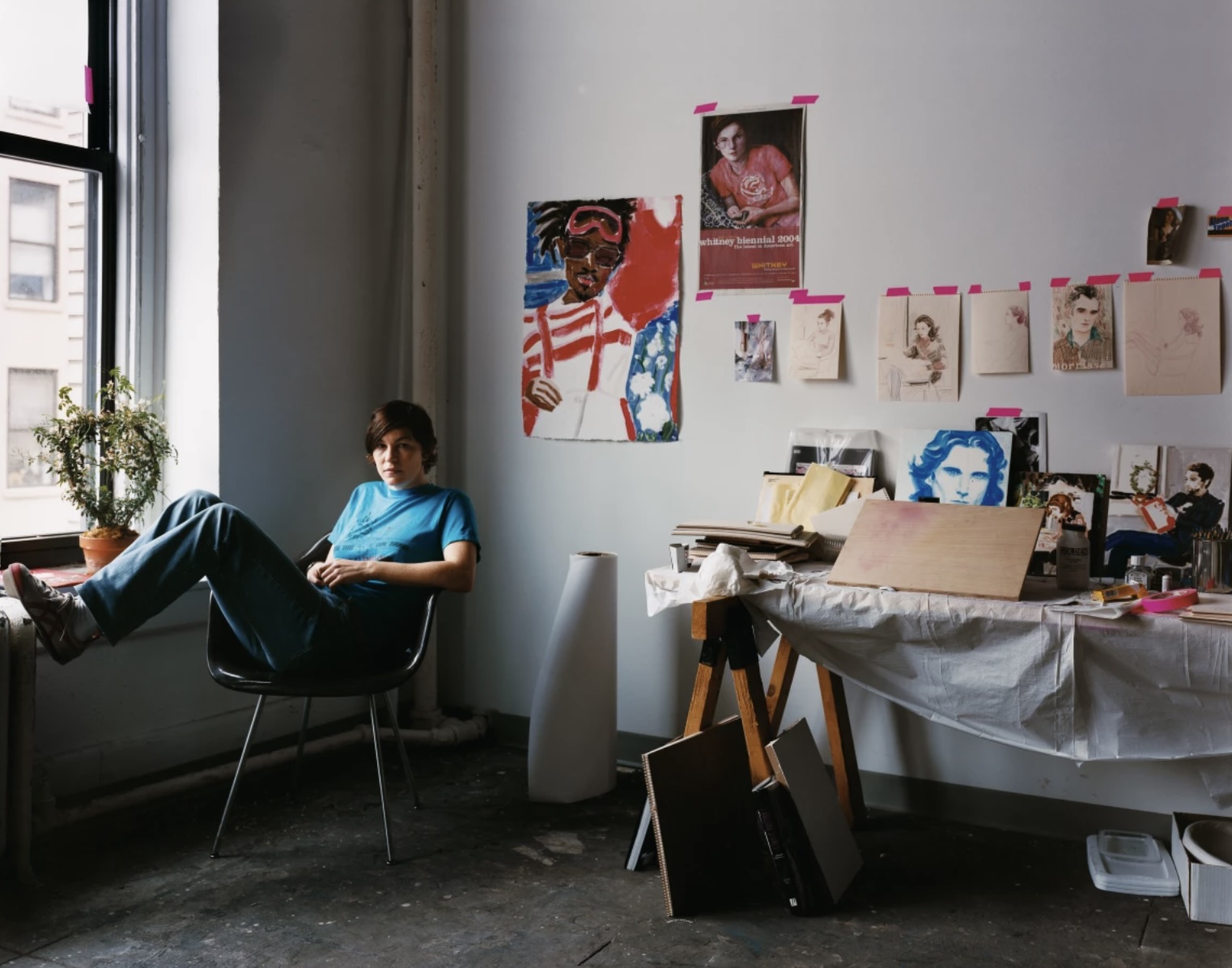
Artistic Practice and Technique
Peyton’s work spans multiple mediums, including oil painting, watercolor, drawing, etching, and monotype. She is particularly associated with small-scale oil paintings on panel or canvas, often described as “jewel-like” in their concentration and intensity.
Her technique is both economical and expressive. Brushwork can appear fluid and abbreviated, at times dissolving contours into color, yet always retaining a strong emotional clarity. Her watercolors further emphasize this sense of transience, allowing figures to emerge almost atmospherically from light washes.
She frequently works from photographs, film stills, historical paintings, and media imagery. However, her process is not one of reproduction but transformation. Peyton filters these sources through a subjective lens, translating mediated images into something intimate, tactile, and emotionally charged.
Major Bodies of Work
Emerging in the 1990s, Peyton captivated the art world with her portraits of friends, celebrities and historical figures that captured the cultural iconography of the age with an intimate feminine gaze and vivid palette, a style that defined the artists later oeuvre and which helped to usher a return to figuration. Rather than operating through rigid, formally defined series, Peyton’s work evolves through recurring constellations of subjects.
One major strand of her practice focuses on historical and literary figures, including Napoleon, Marie Antoinette, Oscar Wilde, and other emblematic personalities. These works reveal her interest in myth, projection, and the emotional narratives attached to historical figures.
A second central body of work revolves around musicians and cultural icons. Figures such as Kurt Cobain, Liam Gallagher, David Bowie, and Jarvis Cocker appear not as distant celebrities, but as fragile, introspective presences. Peyton strips away the spectacle of fame, presenting instead moments of vulnerability and interiority.
Equally important are her portraits of friends, lovers, and members of her immediate circle. These works introduce a diaristic dimension, grounding her practice in lived experience and reinforcing the sense that all her subjects—famous or not—exist within the same emotional register.
In more recent years, Peyton has expanded her vocabulary to include still lifes, flowers, landscapes, and references to art history. These developments reflect a broadening of her concerns while maintaining the same sensitivity to beauty, light, and emotional nuance.
Themes and Meaning
At the core of Peyton’s work lies a meditation on looking, desire, and identification. Her paintings explore the emotional relationships we form with images, whether of public figures, historical icons, or people in our personal lives.
She engages deeply with the notion of admiration and projection. Her subjects are often individuals who have already accumulated cultural meaning, yet she reclaims them from mass-media narratives and repositions them within a more intimate, contemplative space.
There is also a strong undercurrent of queer sensibility in her work, expressed not through overt declaration but through a sustained focus on beauty, vulnerability, and emotional openness. Peyton’s portraits challenge traditional hierarchies of representation, offering an alternative vision of identity grounded in sensitivity rather than power.
Beautifully interweaving fact and fiction, Peyton successfully diminishes the traditional distance of portraiture and photography, seeking instead to enhance the inner vulnerabilities of her sitters through lush and expressive brushwork. In so doing Peyton marvelously blurs the lines between lived experience, memory and the imagination. Emerging at a time when figurative painting had been widely denounced, Peyton is today praised for reinvigorating portraiture in contemporary form, simultaneously portraying her subjects with an air close to veneration whilst imbuing them with a sense of comfortable familiarity. As she immerses the viewer into her pictorial code, Peyton skillfully invents a multisensorial aesthetic that combines the classicism of the Romantic era with the resolutely contemporary, an approach to image making that marks her out as among the most innovative and poetic artists of her generation.
Influences and Artistic Context
Peyton’s work operates at the intersection of art history and contemporary image culture. Her references range from painters such as Édouard Manet, John Singer Sargent, and Gustave Moreau to broader influences drawn from music, literature, and cinema.
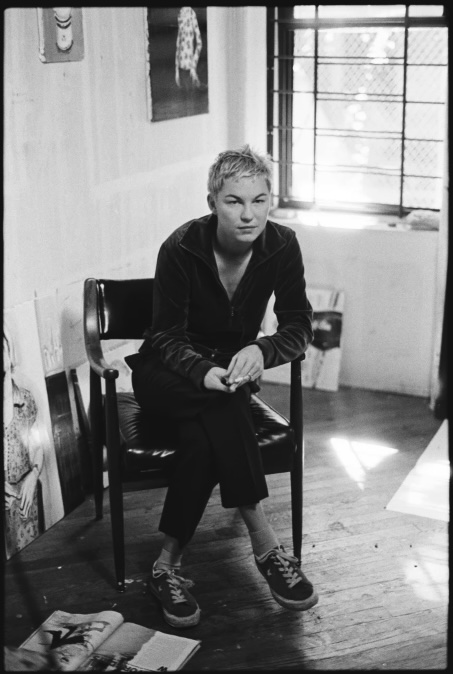
At the same time, her engagement with celebrity culture aligns her loosely with the legacy of Pop Art, though her approach is fundamentally different. Where Pop artists often emphasized distance and repetition, Peyton insists on intimacy and singularity. Each image becomes a site of emotional investment rather than a critique of mass production.
Institutional Recognition and Museum Presence
Elizabeth Peyton’s importance is firmly established through her presence in major museum collections worldwide. Her works are held by leading institutions including the Museum of Modern Art (MoMA), the Metropolitan Museum of Art, the Whitney Museum of American Art, the Solomon R. Guggenheim Museum, and Tate.
Her exhibition history further confirms her international standing. The landmark survey Live Forever: Elizabeth Peyton, organized by the New Museum in 2008 and later presented at the Walker Art Center, was the first major institutional overview of her work. Subsequent exhibitions include Still life at the Hara Museum of Contemporary Art in Tokyo (2017), Aire and Angels at the National Portrait Gallery in London (2019), and Practice at UCCA Beijing (2020). These exhibitions collectively underscore her global relevance and sustained institutional interest.
Gallery Representation
Peyton is currently represented by David Zwirner, one of the most influential contemporary art galleries, which has played a key role in consolidating her international profile. She is also associated with Sadie Coles HQ in London, a gallery that has supported her work since the late 1990s.
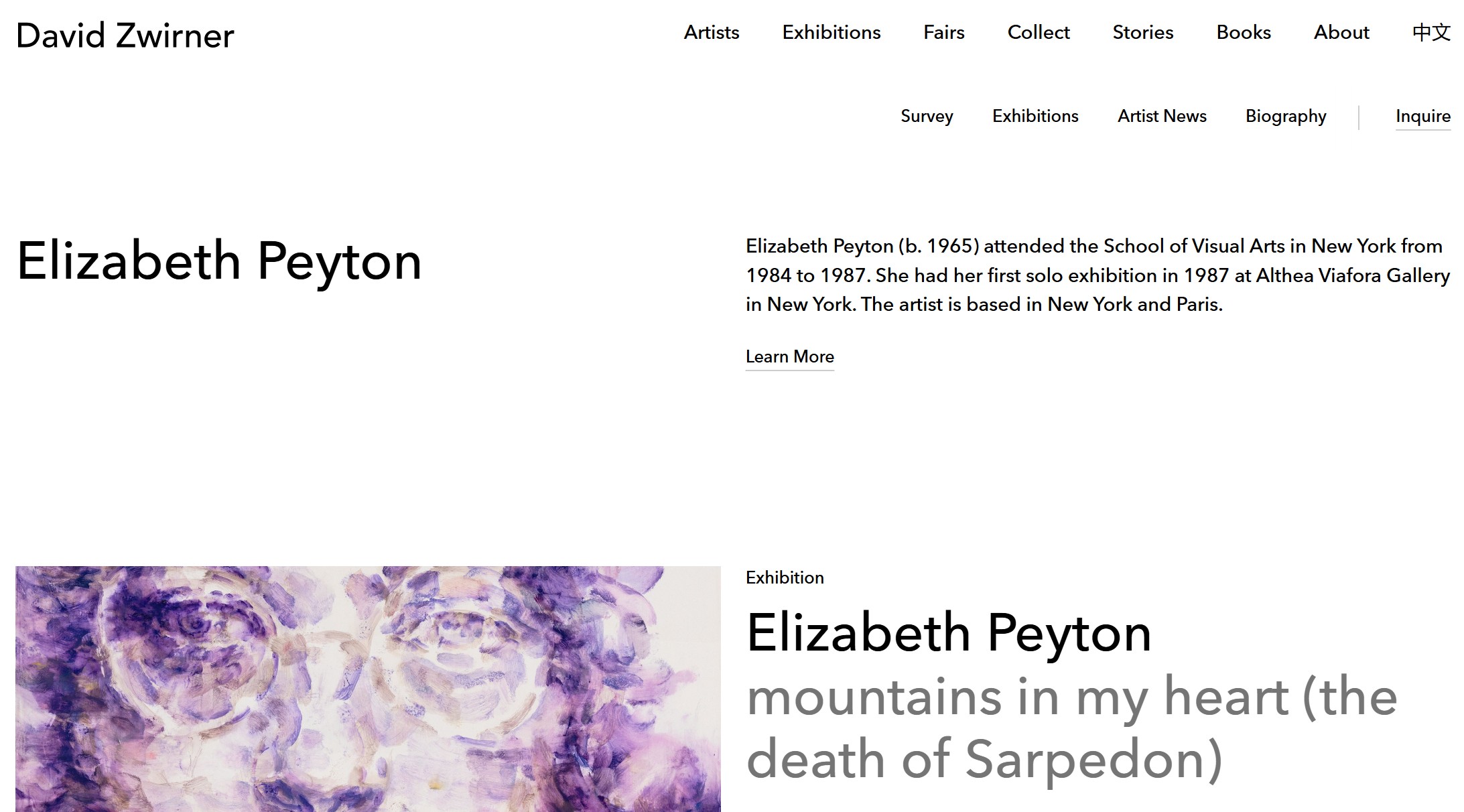
Over time, her work has also been connected to major galleries such as Gladstone Gallery and neugerriemschneider, reflecting a strong and consistent gallery network.
Elizabeth Peyton has held numerous successful solo exhibitions in recent years. This includes at Sadie Coles HQ, Heddon Street, London, England, 1998; Georg Kargl Fine Arts, Vienna, Austria, 1998; Gavin Brown’s enterprise, New York NY, USA, 2001; The Wrong Gallery, New York NY, USA, 2003; Barbara Gladstone, at Jane Holzer apartment, New York NY, USA, 2006; Gladstone Gallery, Brussels, Belgium, 2009; Gagosian Gallery, Paris, France, 2011; Regen Projects, Los Angeles CA, USA, 2012; Hara Museum of Contemporary Art, Tokyo, Japan, 2016; Eternal Idol, Elizabeth Peyton – Camille Claudel, The French Academy in Rome, Villa Medici, Rome, Italy, 2017; Eventyr, Thaddeus Ropac, Salzburg, Austria, 2018; Practice, UCCA Center for Contemporary Art, Beijing, China, 2020; Leeahn Gallery, Seoul, Korea, 2021; Transformer, Thaddaeus Ropac, Paris, France, 2022.
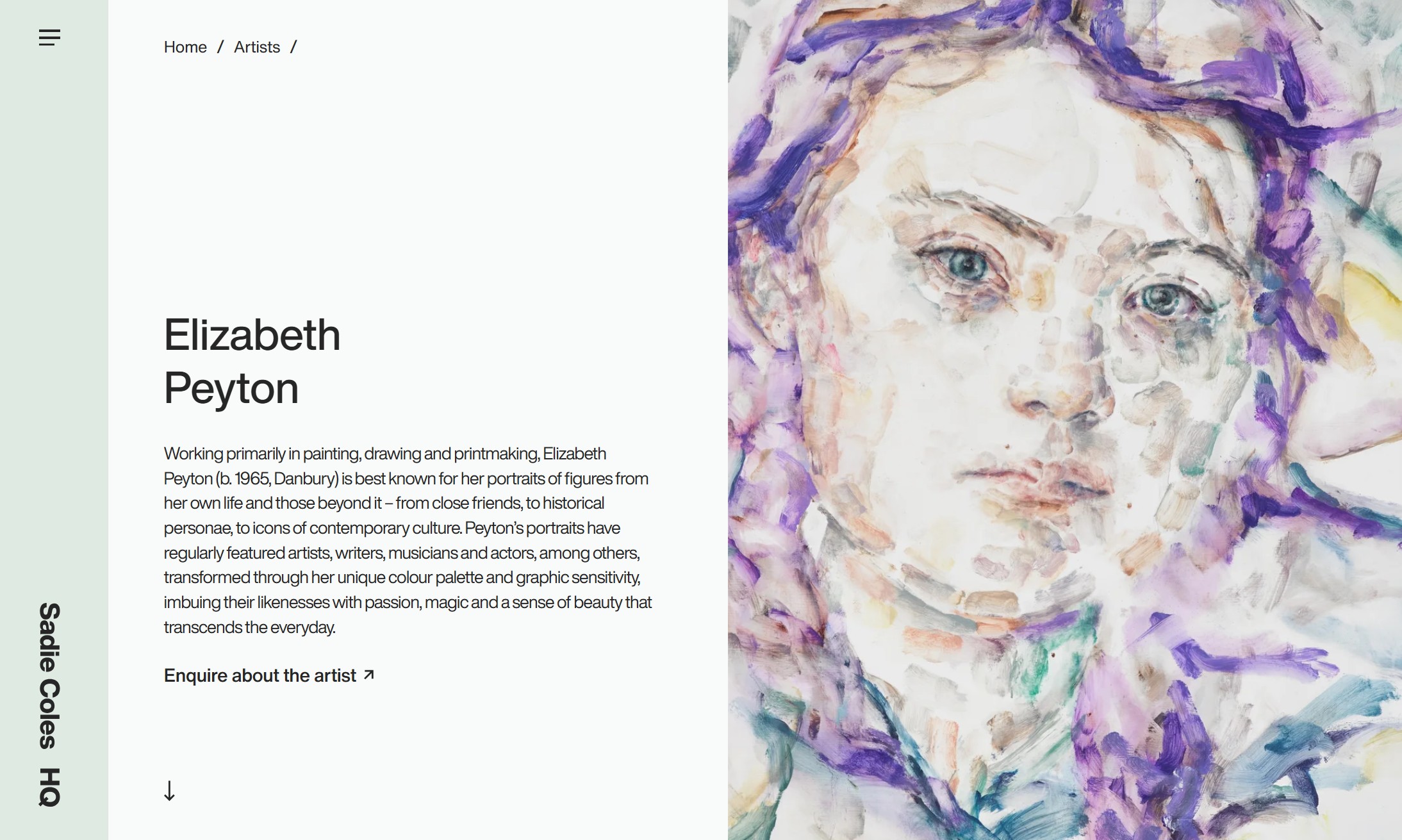
Elizabeth Peyton’s legacy lies in her ability to restore sincerity, beauty, and emotional depth to contemporary painting. At a time when irony and conceptual distance often dominated artistic discourse, she reintroduced a form of painting grounded in feeling, admiration, and personal connection. She did not merely revive portraiture; she redefined it for a contemporary context shaped by media saturation and image circulation. Her work acknowledges the mediated nature of modern experience while insisting on the continued relevance of the human subject.
Today, Peyton’s influence can be seen across a generation of figurative painters who embrace intimacy, subjectivity, and emotional nuance. Her work remains a testament to the enduring power of painting to capture not just how people look, but how they are felt.
PART I: SUMMARY
Auction Market Overview
2025 AUCTION STATISTICS
Turnover: USD 12,684,221
+66.1% vs. 2024
# Lots sold: 19
Sell-Through Rate: 90%
MARKET SEGMENTATION
COMING SOON
Highest Price achieved at auction:
USD 2,881,000
(19 November 2025)
Elizabeth Peyton’s market is robust and well-established. She is among the most sought-after figurative painters of her generation, with strong demand across both primary and secondary markets.
Her auction record approaches $3 million, and significant works—particularly early portraits and iconic subjects—regularly achieve seven-figure results. Collectors are drawn to the rarity of her best works, their emotional resonance, and their historical importance within the resurgence of figurative painting.
Unlike markets driven by scale or spectacle, Peyton’s market is built on intimacy and conviction. Her works reward close engagement, and this quality has contributed to sustained collector interest over time.
Auction Summary
2025 Auction Highlights
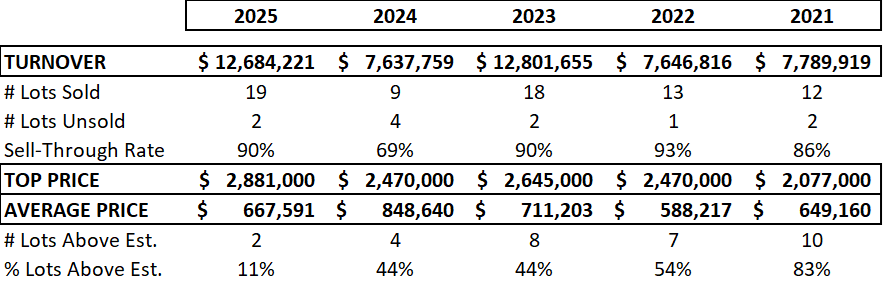
19 lots sold at auction in 2025 for a total turnover of USD 12,684,221. With 2 lots failing to sell, the sell-through rate is 90%. The highest price has been achieved by Kurt, a painting dated 1995, that sold at Christie’s in New-York, on 19 November 2025, for USD 2,881,000, setting a new auction record for the artist.
2025 Top 3 Lots
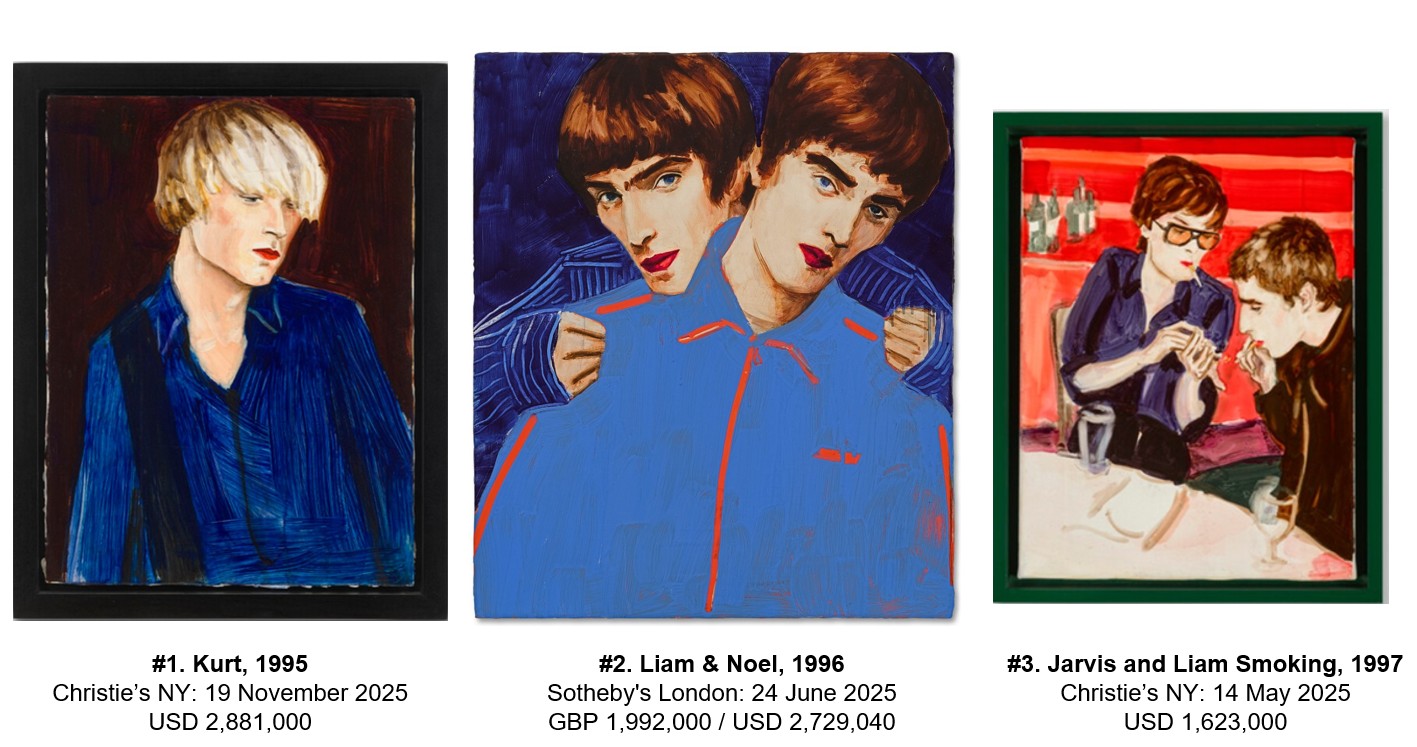
4 lots sold for more than USD 1 million, generating a cumulative turnover of USD 8,337,940, representing 65.7% of the total turnover of 2025.
2024 Auction Highlights
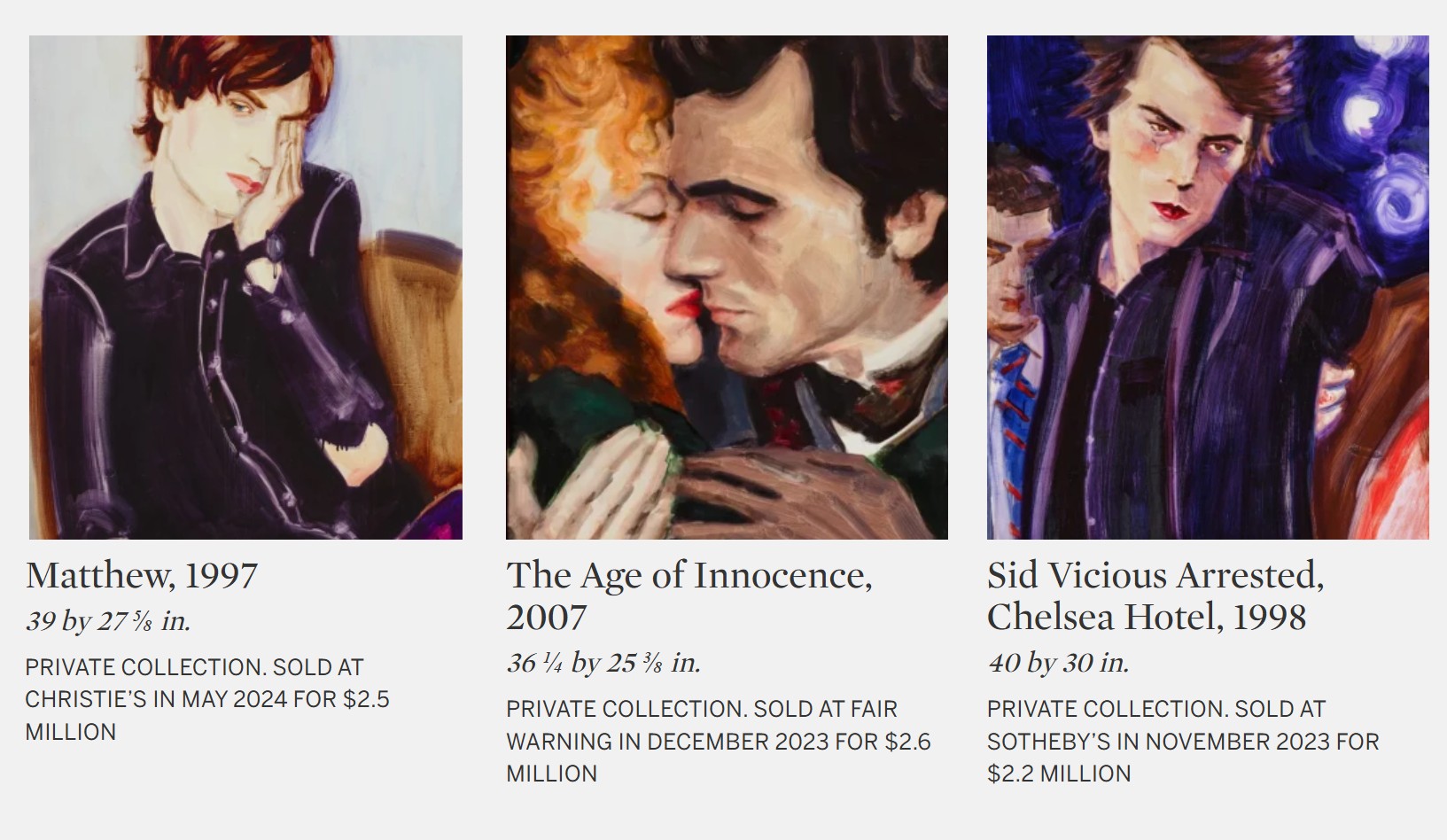
9 lots sold at auction in 2024 for a total turnover of USD 7,637,759. With 4 lots failing to sell, the sell-through rate is 69%. The highest price has been achieved at Christie’s in New-York on 14 May 2004, for Matthew, a painting dated 1997, that sold for USD 2,470,000.
2024 Top 3 Lots
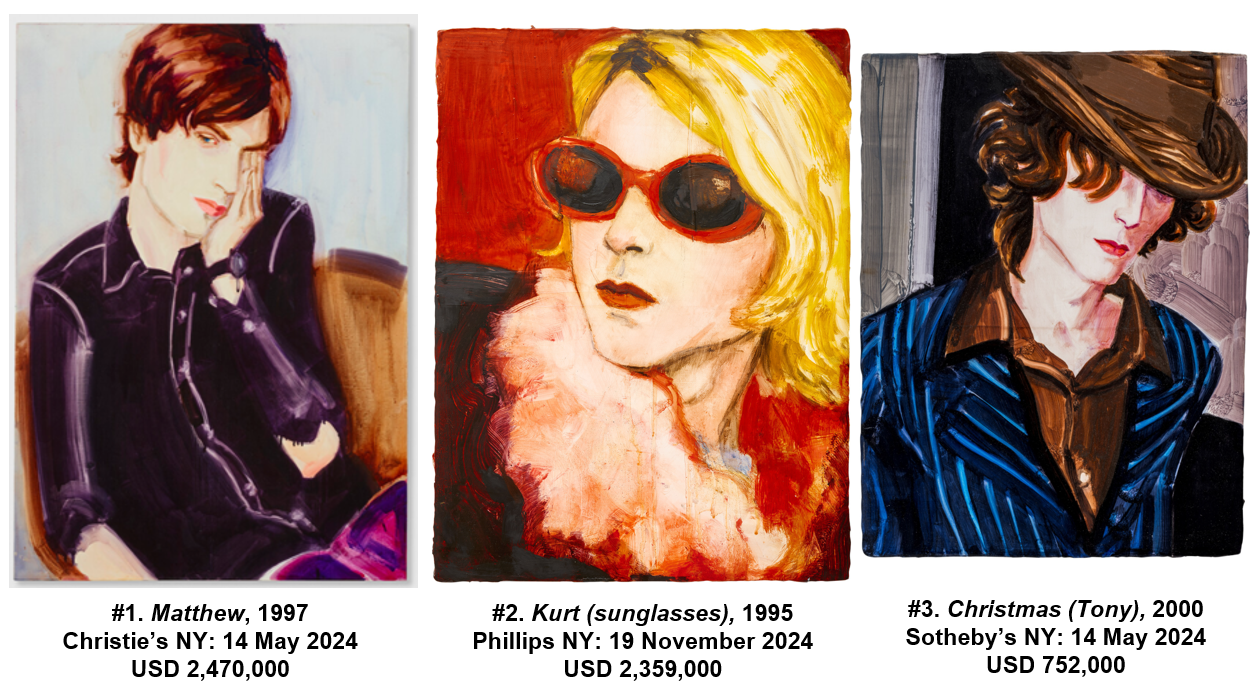
2 lots sold for more than USD 1 million, generating a cumulative turnover of USD 4,829,000, representing 63.2% of the total turnover for 2024.
2023 Auction Highlights
18 lots sold at auction in 2023 for a total turnover of USD 12,801,655. With 2 lots failing to sell, the sell-through rate is 90%. The highest price has been achieved by The Age of Innocence, an oil on board dated 2007, that sold for USD 2,645,000 at Fair Warning on 14 December 2023.
2023 Top 3 Lots
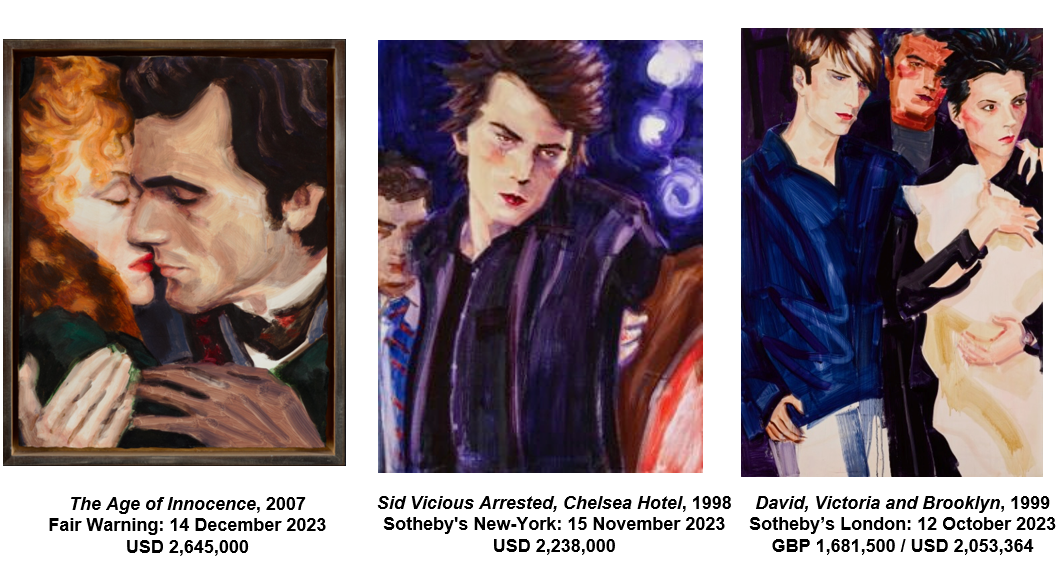
4 lots sold for more than USD 1 million, generating a cumulative turnover of USD 8,142,864, representing 63.6% of the total turnover for 2023.
2022 Auction Highlights
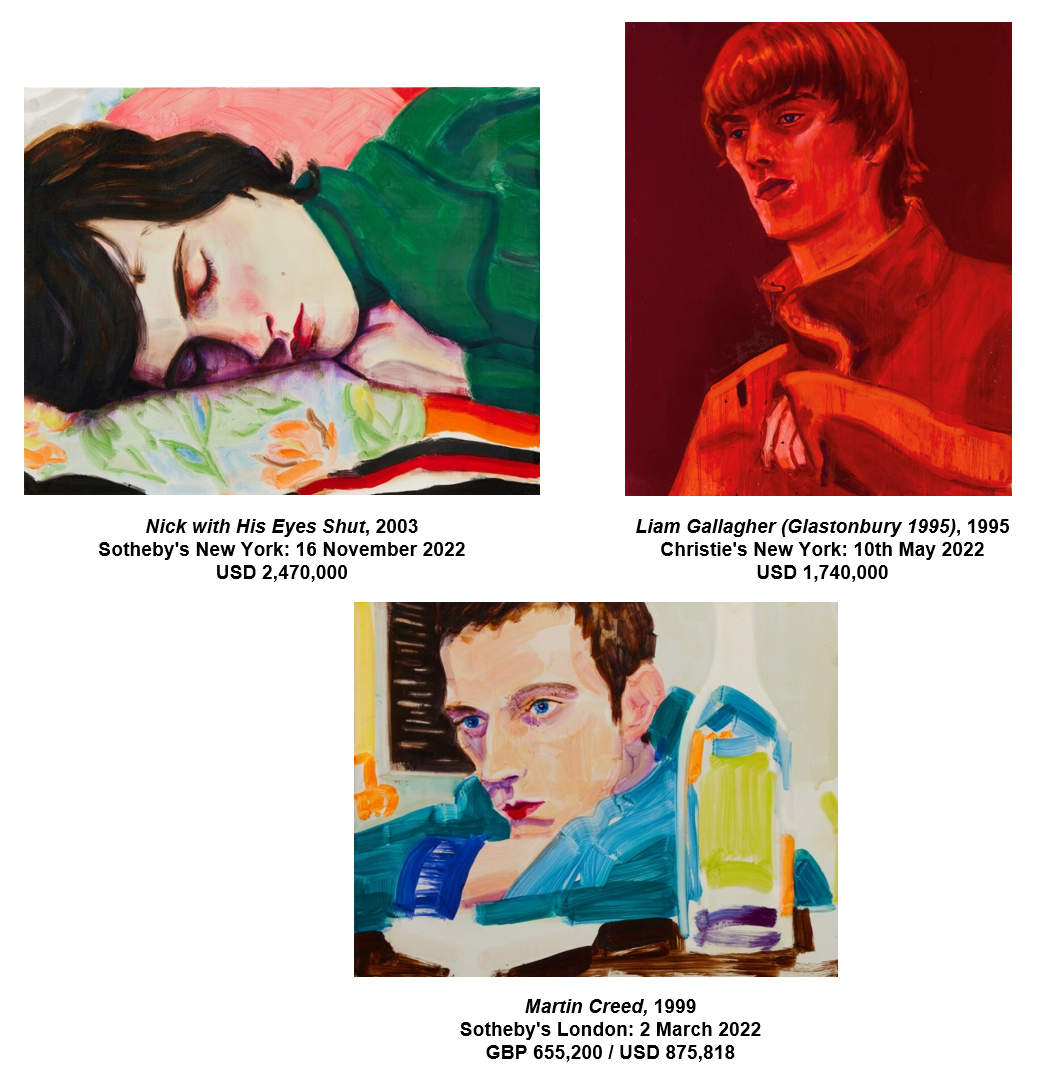
13 lots sold at auction in 2022 for a total turnover of USD 7,646,816. With only 1 lot failing to sell, the sell-through rate is 93%. The highest price has been achieved by Nick with His Eyes Shut, an oil on panel dated 2003, that sold for USD 2,470,000 at Sotheby’s in New-York on 16 November 2022.
2022 Top 3 Lots
Top Lots
#1. Kurt, 1995
Property from an Esteemed Private Collection
Christie’s New-York: 19 November 2025
Estimated: USD 2,000,000 – 3,000,000
USD 2,881,000
NEW AUCTION RECORD FOR ELIZABETH PEYTON
READ MORE IN FOCUS SECTION
ELIZABETH PEYTON (B. 1965), Kurt | Christie’s
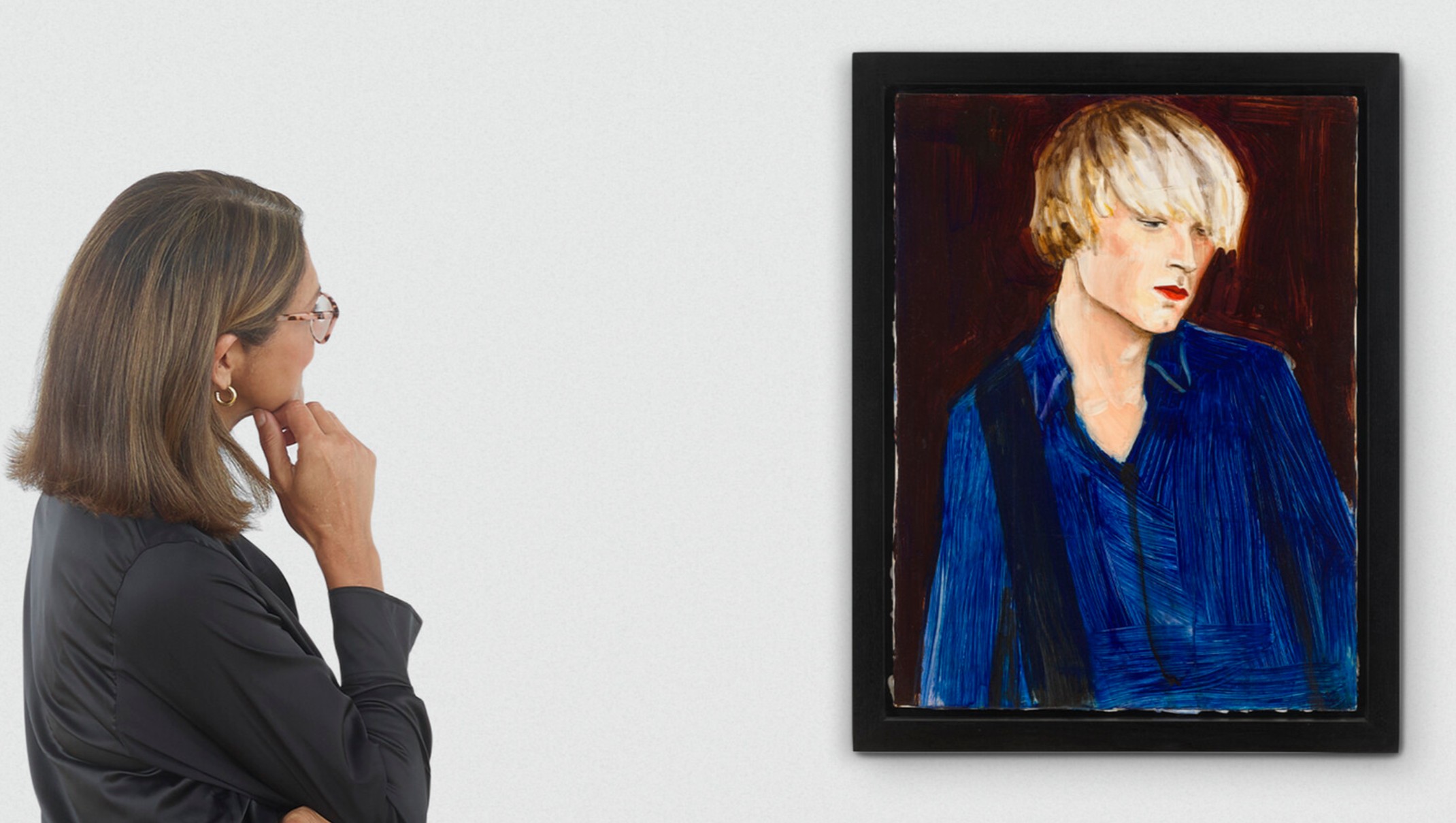
ELIZABETH PEYTON (B. 1965)
Kurt, 1995
Oil on canvas
24×19 inches (61 x 48.3 cm)
Signed, titled and dated ‘Kurt 1995 Elizabeth Peyton’ (on the reverse)
‘‘There is no separation for me between people I know through their music or photos and some I know personally. The way I perceive them is very similar, in that there’s no difference between certain qualities that I find inspiring in them.’’
#2. Liam & Noel, 1996
Sotheby’s London: 24 June 2025
Estimated: GBP 1,500,000 – 2,000,000
GBP 1,992,000 / USD 2,729,040
READ MORE IN FOCUS SECTION
Liam & Noel | Modern & Contemporary Evening Auction | 2025 | Sotheby’s
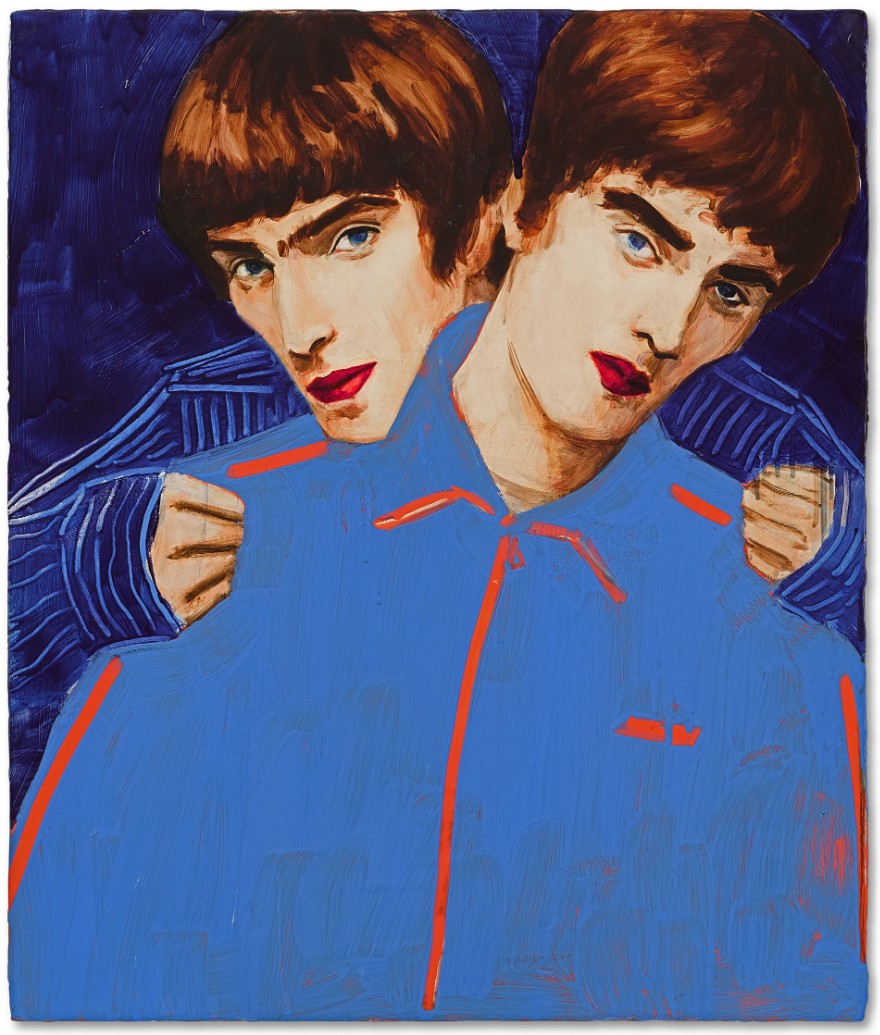
ELIZABETH PEYTON (b. 1965)
Liam & Noel, 1996
Oil on board
26 1/4 x 22 1/4 inches (66.5 x 56.5 cm)
Signed, titled Liam + Noel (Gallagher) and dated 1996 (on the reverse)
#3. Nick with His Eyes Shut, 2003
Sotheby’s New York: 16th November 2022
Estimated: USD 1,000,000 – 1,500,000
USD 2,470,000
ELIZABETH PEYTON (B. 1965) (sothebys.com)
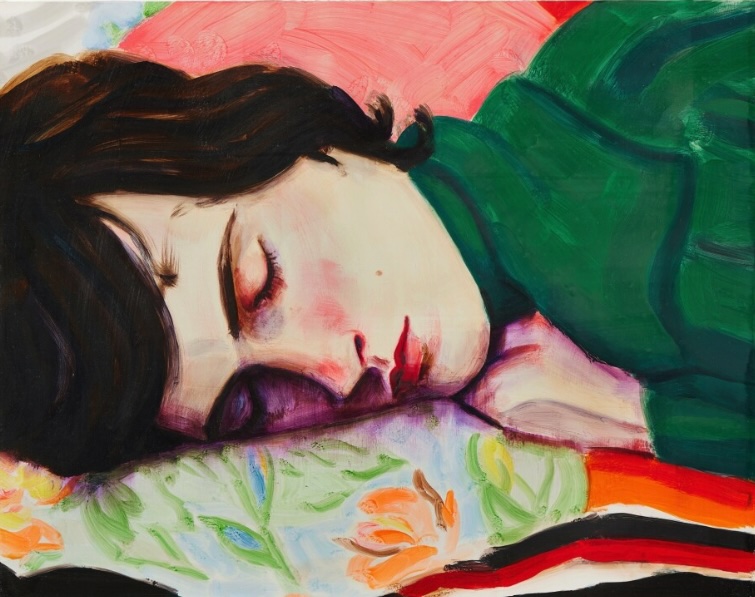
ELIZABETH PEYTON (B. 1965)
Nick with His Eyes Shut, 2003
Oil on panel
11×14 inches (27.9 x 35.6 cm)
Signed, titled Nick with his Eyes Shut and dated 2003 (on the reverse)
#4. Sid Vicious Arrested, Chelsea Hotel, 1998
Sotheby’s New-York: 16 November 2022
Estimated: USD 1,500,000 – 2,000,000
USD 2,238,000
ELIZABETH PEYTON (B. 1965) (sothebys.com)
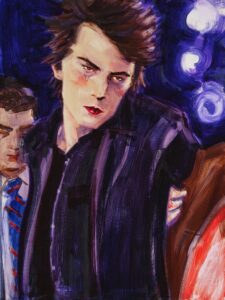
ELIZABETH PEYTON (B. 1965)
Sid Vicious Arrested, Chelsea Hotel, 1998
Oil on canvas
40×30 inches (101.5 x 76 cm)
Initialed, titled and variously inscribed (on the overlap)
#5. David Bowie, 2012
Sotheby’s New York: 12 May 2021
Estimated: USD 500,000 – 700,000
USD 2,077,000
ELIZABETH PEYTON (B. 1965) (sothebys.com)
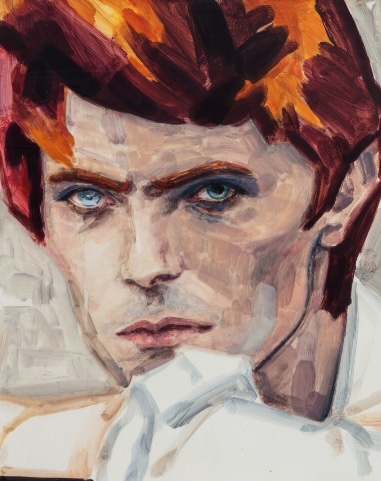
ELIZABETH PEYTON (B. 1965)
David Bowie, 2012
Oil on aluminum veneered panel
14×11 inches (35.6 x 27.9 cm)
Signed, titled and dated 2012 on the reverse
#6. Liam + Noel in the 70s, 1997
Christie’s New York: 9 November 2021
Estimated: USD 850,000 – 1,200,000
USD 2,070,000
ELIZABETH PEYTON (B. 1965) (christies.com)
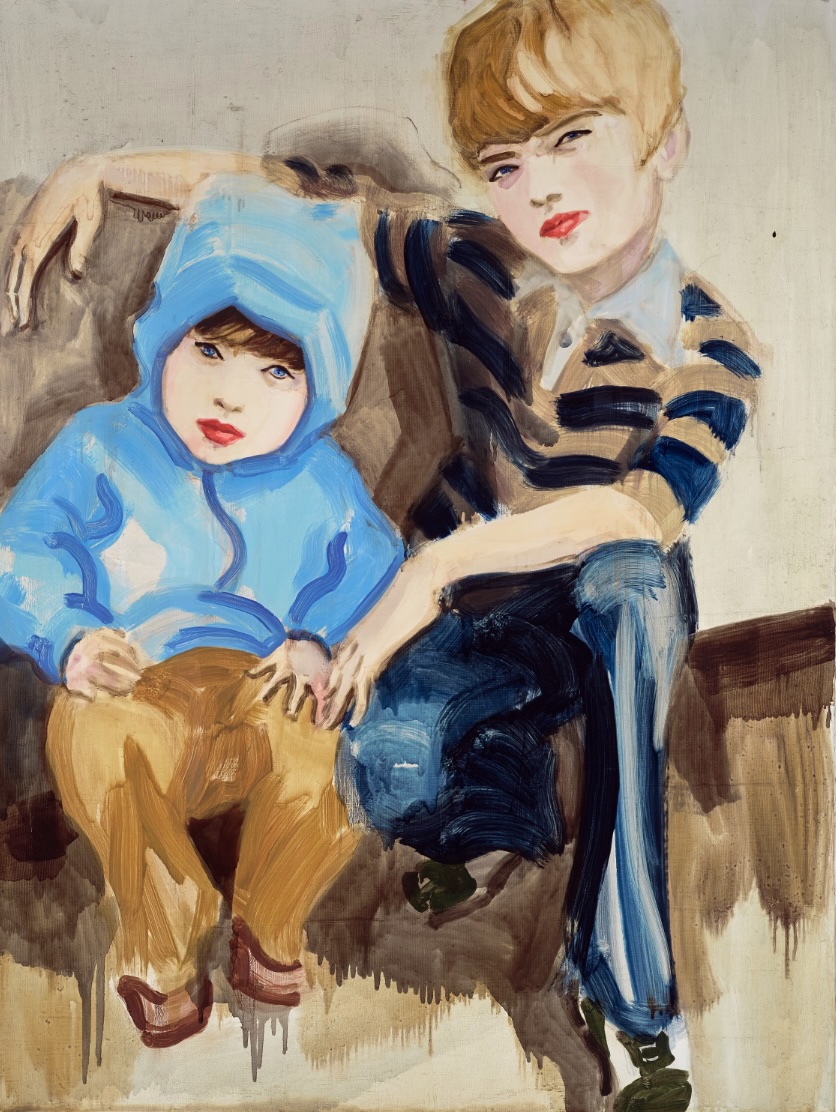
ELIZABETH PEYTON (B. 1965)
Liam + Noel in the 70s, 1997
Oil on canvas
40×30 inches (101.6 x 76.2 cm)
#7. David, Victoria and Brooklyn, 1999
Sotheby’s New York: 16 November 2023
Estimated: GBP 1,200,000 – 1,800,000
GBP 1,681,500 / USD 2,053,365
ELIZABETH PEYTON (B. 1965) (sothebys.com)
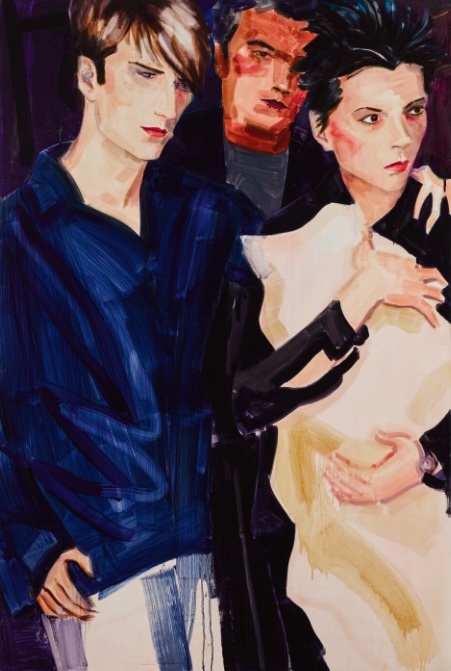
ELIZABETH PEYTON (B. 1965)
David, Victoria and Brooklyn, 1999
Oil on canvas
60 x 40 1/8 inches (152.3 x 101.8 cm)
Signed, titled and dated 1999 (on the overlap)
PART II: AUCTION RESULTS
2026 Upcoming Lots
MORE LOTS COMING SOON
2026 Auction Results
PRELIMINARY AUCTION RESULTS
As of 1 June 2026
#1. Earl’s Court (Liam + Noel), 1996
Property from an Important Private Collection, New York
Sotheby’s New-York: 14 May 2026
Estimated: USD 1,500,000 – 2,000,000
USD 1,920,000
Elizabeth Peyton | Earl’s Court (Liam + Noel) | The Now &
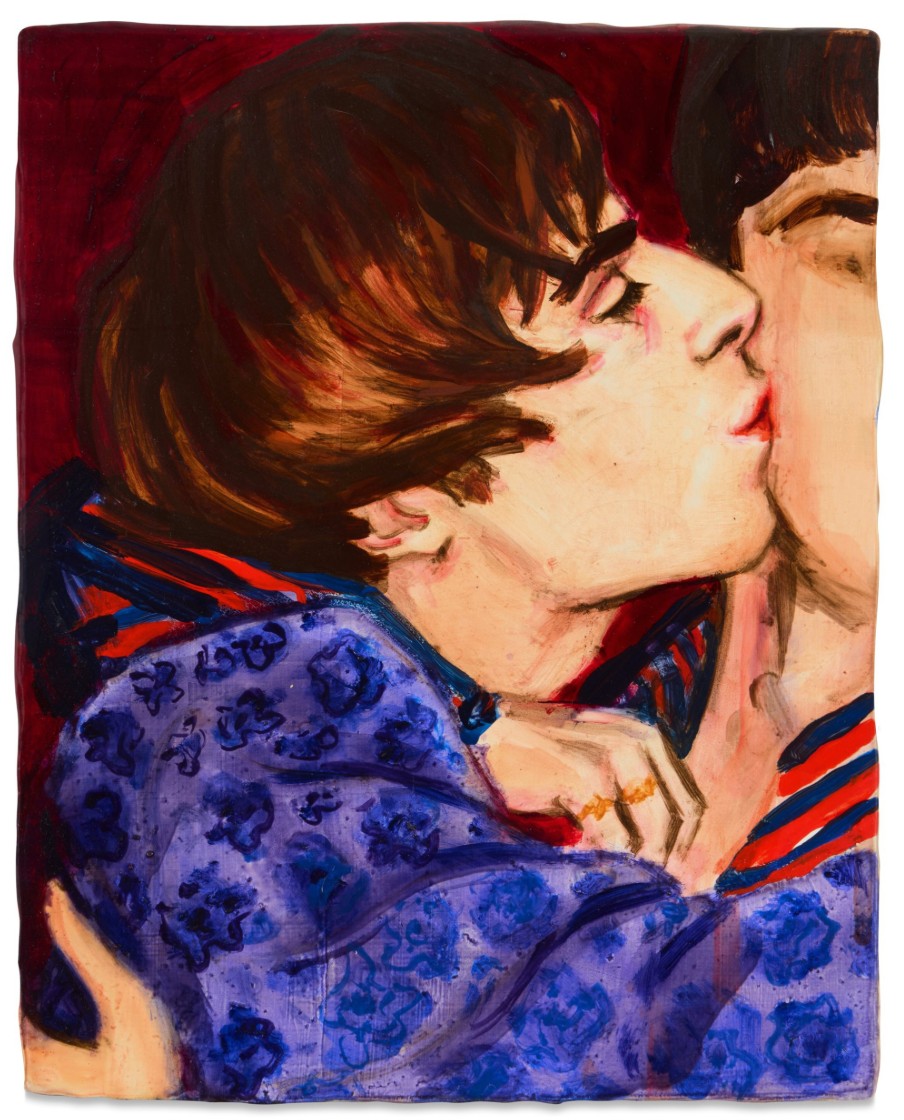
ELIZABETH PEYTON (b. 1965)
Earl’s Court (Liam + Noel), 1996
Oil on board
10×8 inches (25.4 x 20.3 cm)
Signed, titled Earl’s Court (Liam + Noel) December 1995 and dated 1996 (on the reverse)
#2. Jarvis after Jail, 1996
Christie’s New-York: 20 May 2026
Estimated: USD 1,200,000 – 1,800,000
USD 1,651,000
ELIZABETH PEYTON (B. 1965), Jarvis after Jail | Christie’s
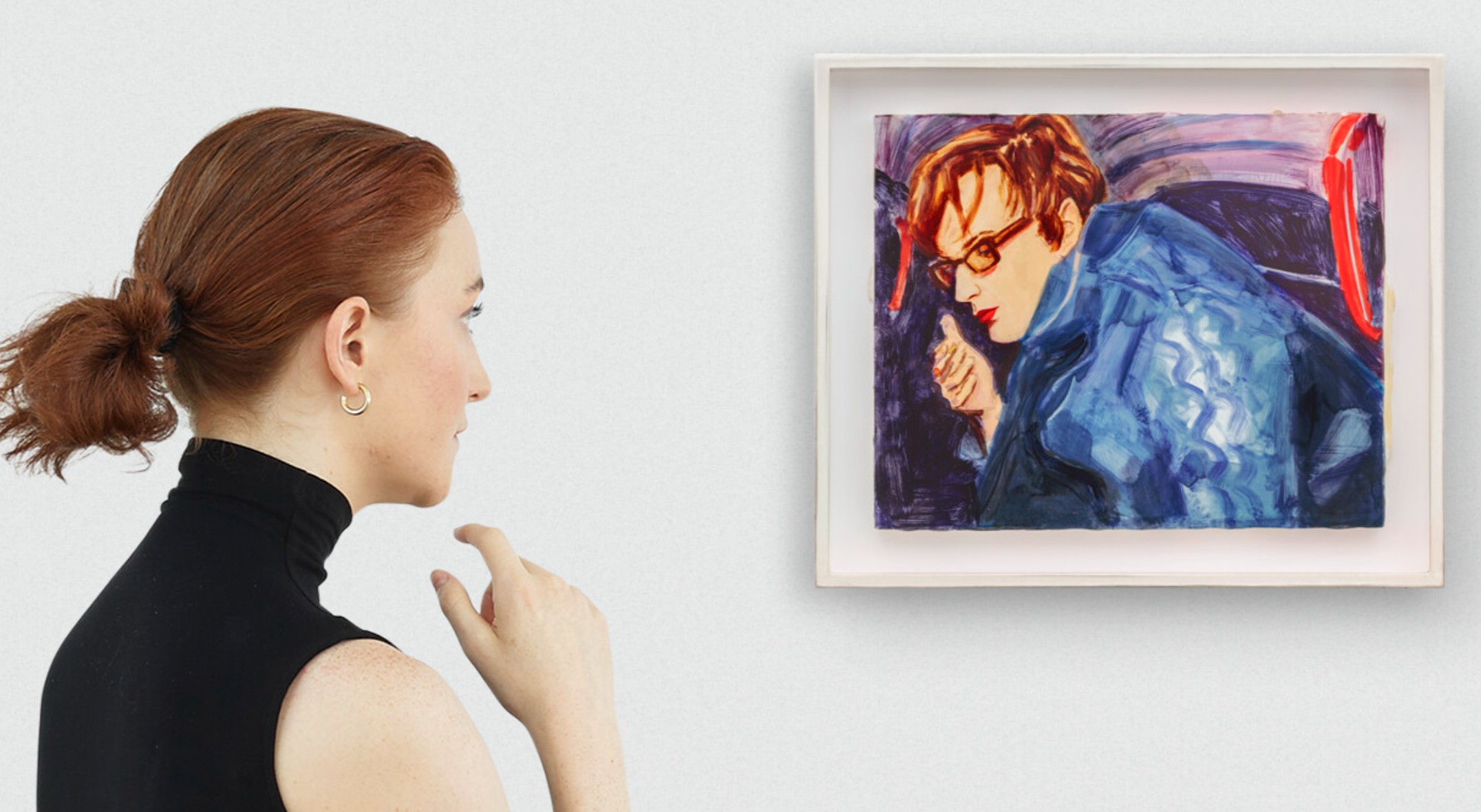
ELIZABETH PEYTON (B. 1965)
Jarvis after Jail, 1996
Oil on board
12-1/4 x 15 inches (31.1 x 38.1 cm)
Signed, titled and dated ‘JARVIS (AFTER JAIL) 1996 Elizabeth Peyton’ (on the reverse)
#3. Mendips, 1996
Sotheby’s New-York: 15 May 2026
Estimated: USD 900,000 – 1,200,000
USD 998,400
Elizabeth Peyton | Mendips | Contemporary Day Auction | 2026 |
REPEAT SALE
Phillips New York: 14 November 2023
Estimated: USD 900,000 – 1,200,000
USD 1,206,500
ELIZABETH PEYTON (B. 1965), Mendips, 1963 | Phillips (phillips.com)
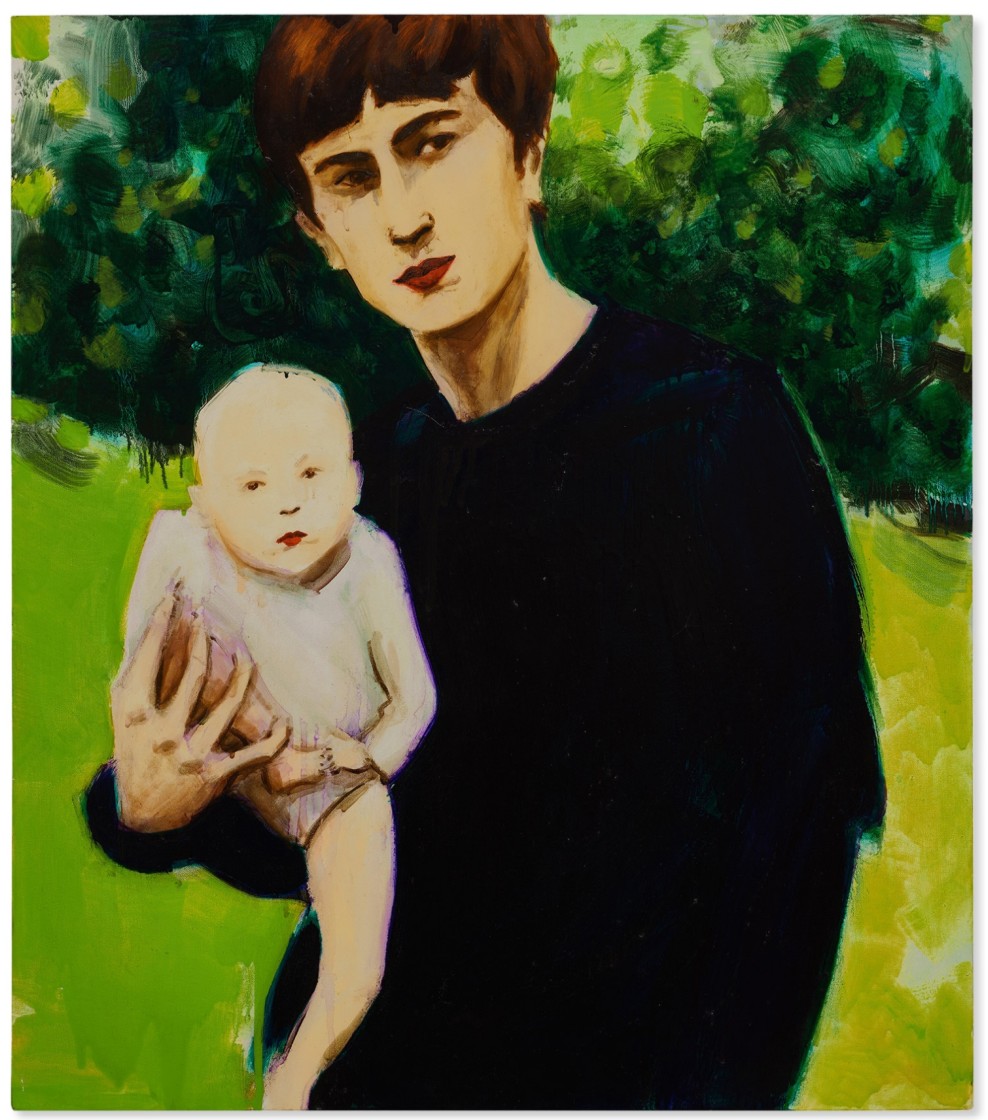
ELIZABETH PEYTON (b. 1965)
Mendips, 1996
Oil on canvas
32-1/4 x 28-1/4 inches (81.9 x 71.8 cm)
#4. Max, 1996
Sotheby’s New-York: 14 May 2026
Estimated: USD 800,000 – 1,200,000
USD 768,000
Elizabeth Peyton | Max | The Now & Contemporary Evening Auction |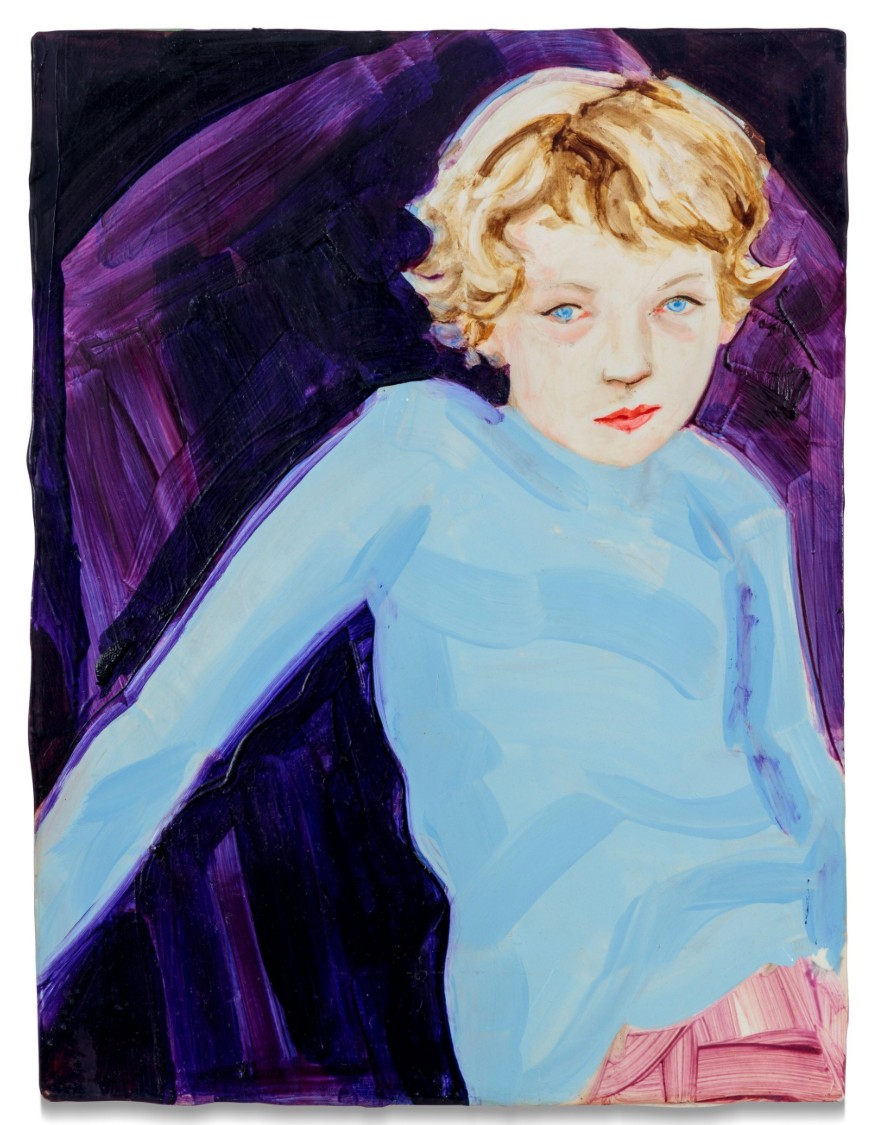
ELIZABETH PEYTON (b. 1965)
Max, 1996
Oil on board
12×9 inches (30.5 x 22.9 cm)
Signed, titled Maxie August 1996 and dated 1996 (on the reverse)
#5. Angus and Jonathan, 2006-07
Sotheby’s New-York: 25 February 2026
Estimated: USD 300,000 – 500,000
USD 371,200
Elizabeth Peyton | Angus and Jonathan (Angus Cook and Jonathan
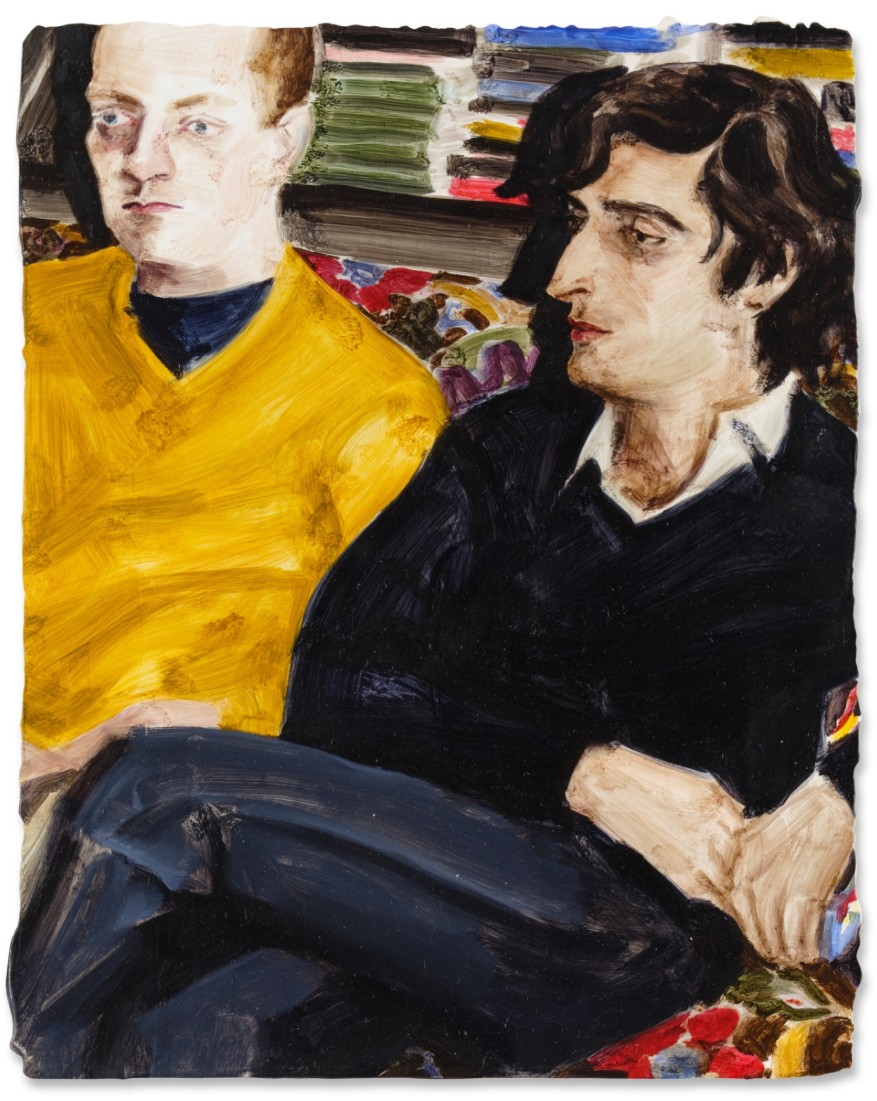
ELIZABETH PEYTON (b. 1965)
Angus and Jonathan (Angus Cook and Jonathan Caplan), 2006-07
Oil on MDF
10×8 inches (25.4 x 20.3 cm)
Signed, titled and dated 2006-2007 (on the reverse)
#6. Peconic (Ben), 2002
Christie’s New-York: 21 May 2026
Estimated: USD 250,000 – 350,000
USD 368,300
ELIZABETH PEYTON (B. 1965), Peconic (Ben) | Christie’s
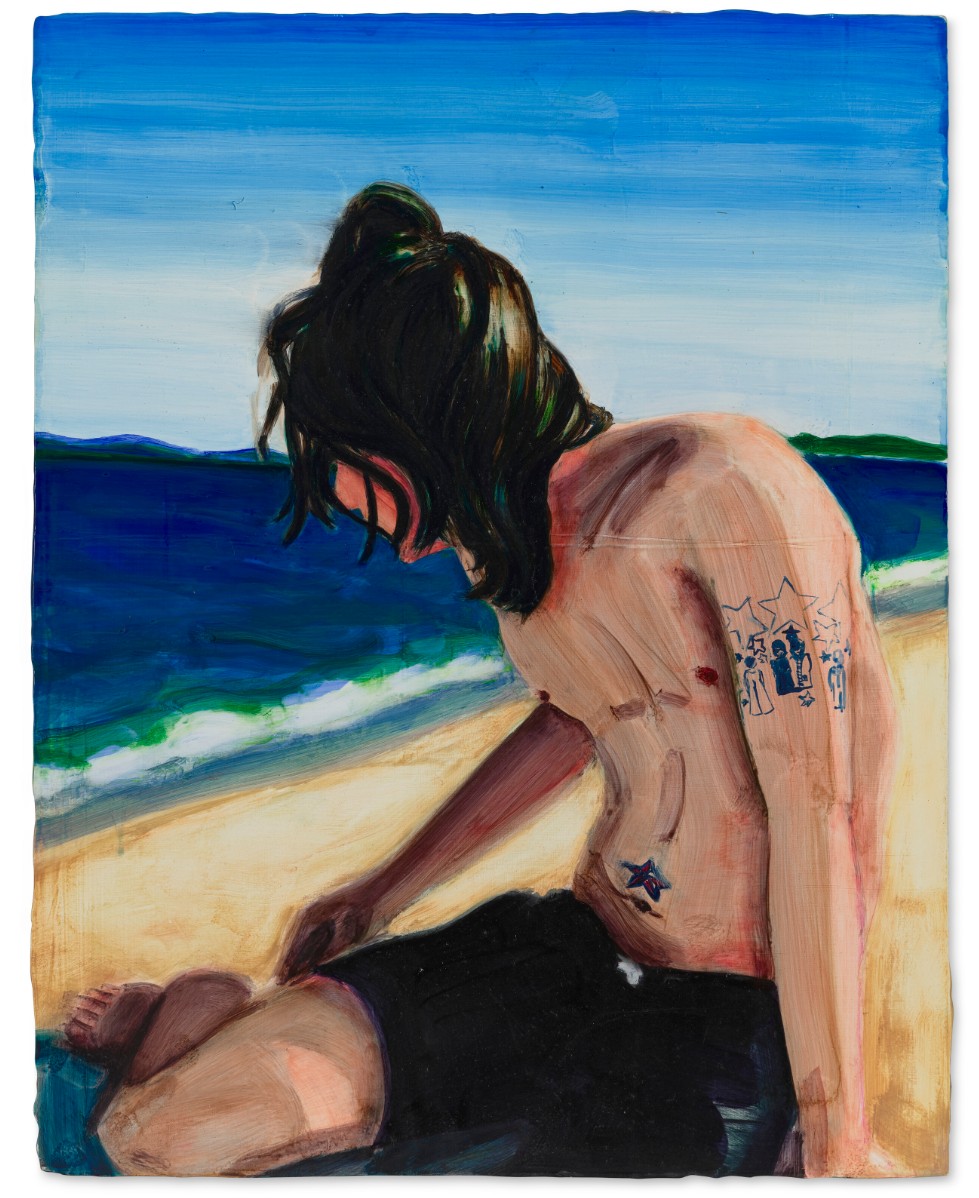
ELIZABETH PEYTON (B. 1965)
Peconic (Ben), 2002
Oil on panel
14-1/8 x 11-1/8 inches (35.8 x 28.2 cm)
Signed, titled and dated ‘Peconic (Ben) Elizabeth Peyton AUGUST 2002’ (on the reverse)
#7. Ozzy (Two), 2002
Christie’s New-York: 21 May 2026
Estimated: USD 60,000 – 80,000
USD 120,650
WORK ON PAPER
ELIZABETH PEYTON (B. 1965), Ozzy (Two) | Christie’s
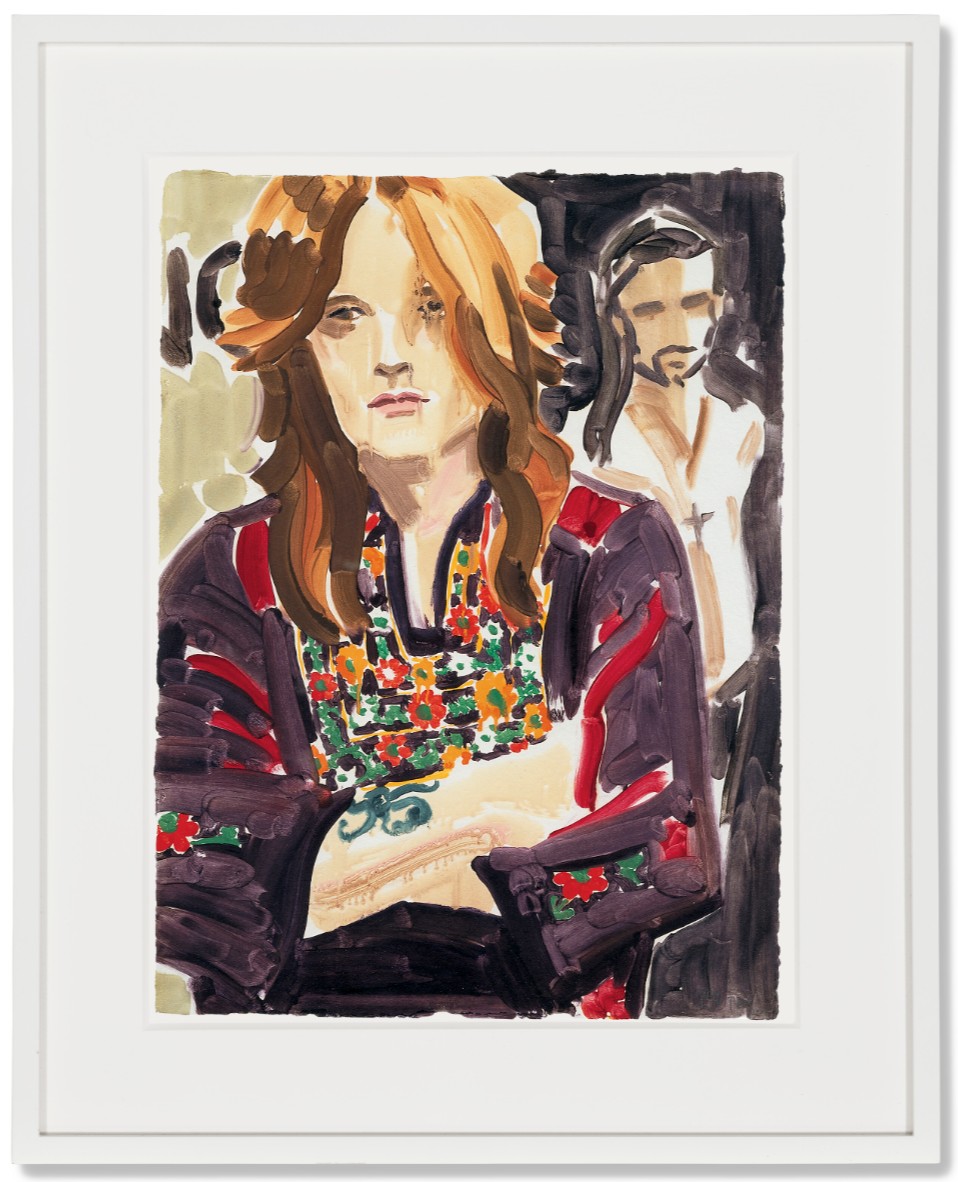
ELIZABETH PEYTON (B. 1965)
Ozzy (Two), 2002
Hand-painted oil monotype on paper
30 x 22-1/8 inches (76.3 x 56.2 cm)
Signed, titled and dated ‘OZZY Elizabeth Peyton 2002′ (lower right)
Signed again with the artist’s initials, inscribed, titled and dated again ‘OZZY II 2002 EP’ (on the reverse)
#8. Vichy (David at the Spa), 1997
Christie’s New-York: 21 May 2026
Estimated: USD 20,000 – 30,000
USD 109,950
WORK ON PAPER
ELIZABETH PEYTON (B. 1965), Vichy (David at the Spa) | Christie’s
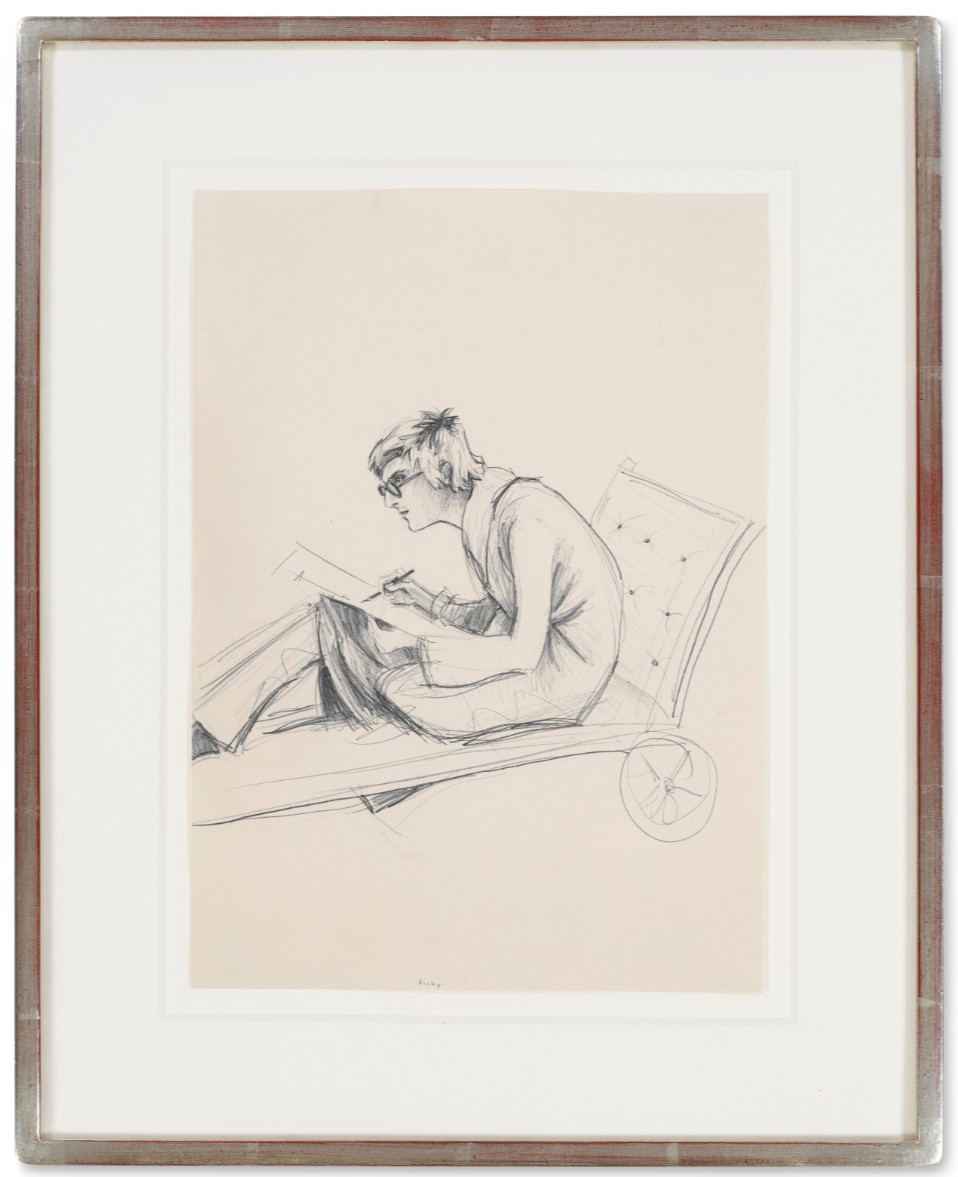
ELIZABETH PEYTON (B. 1965)
Vichy (David at the Spa), 1997
Graphite on paper
12 x 8-1/2 inches (30.5 x 21.6 cm)
Signed, titled and dated ‘Vichy (David @ the Spa) Elizabeth Peyton 1997’ (on the reverse)
#9. Jonathan (Jonathan Horowitz), 2004
Christie’s London: 7 March 2026
Estimated: GBP 20,000 – 30,000
GBP 60,960 / USD 81,435
WORK ON PAPER
ELIZABETH PEYTON (B. 1965), Jonathan (Jonathan Horowitz) | Christie’s
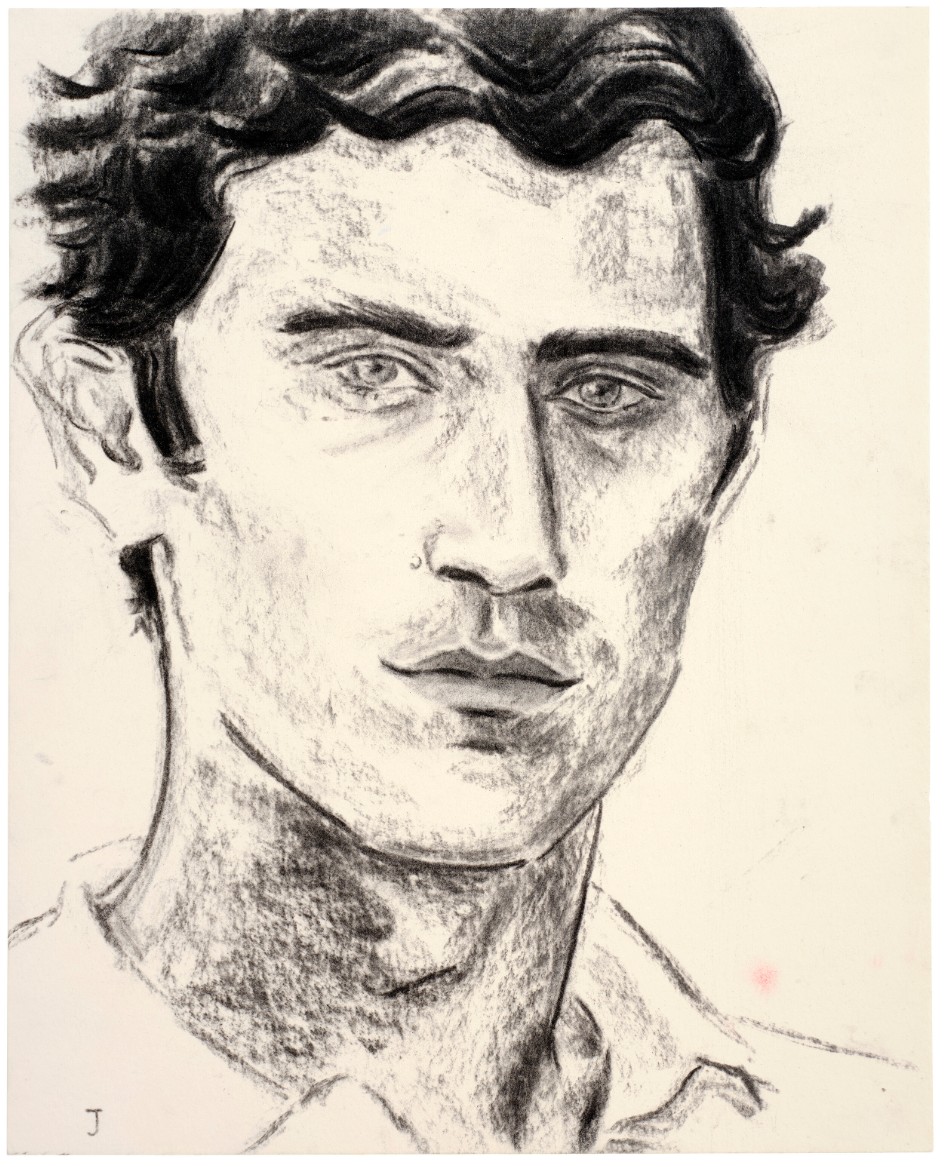
ELIZABETH PEYTON (B. 1965)
Jonathan (Jonathan Horowitz), 2004
Charcoal on paper
13-5/8 x 11 inches (34.5 x 27.8 cm)
Signed, titled and dated ‘Jonathan Horowitz Elizabeth J Peyton July 2004’ (on the reverse)
#10. Untitled, circa 1987
Sotheby’s New-York: 27 February 2026
Estimated: USD 20,000 – 30,000
USD 15,360
Elizabeth Peyton | Untitled | Contemporary Discoveries | 2026 |
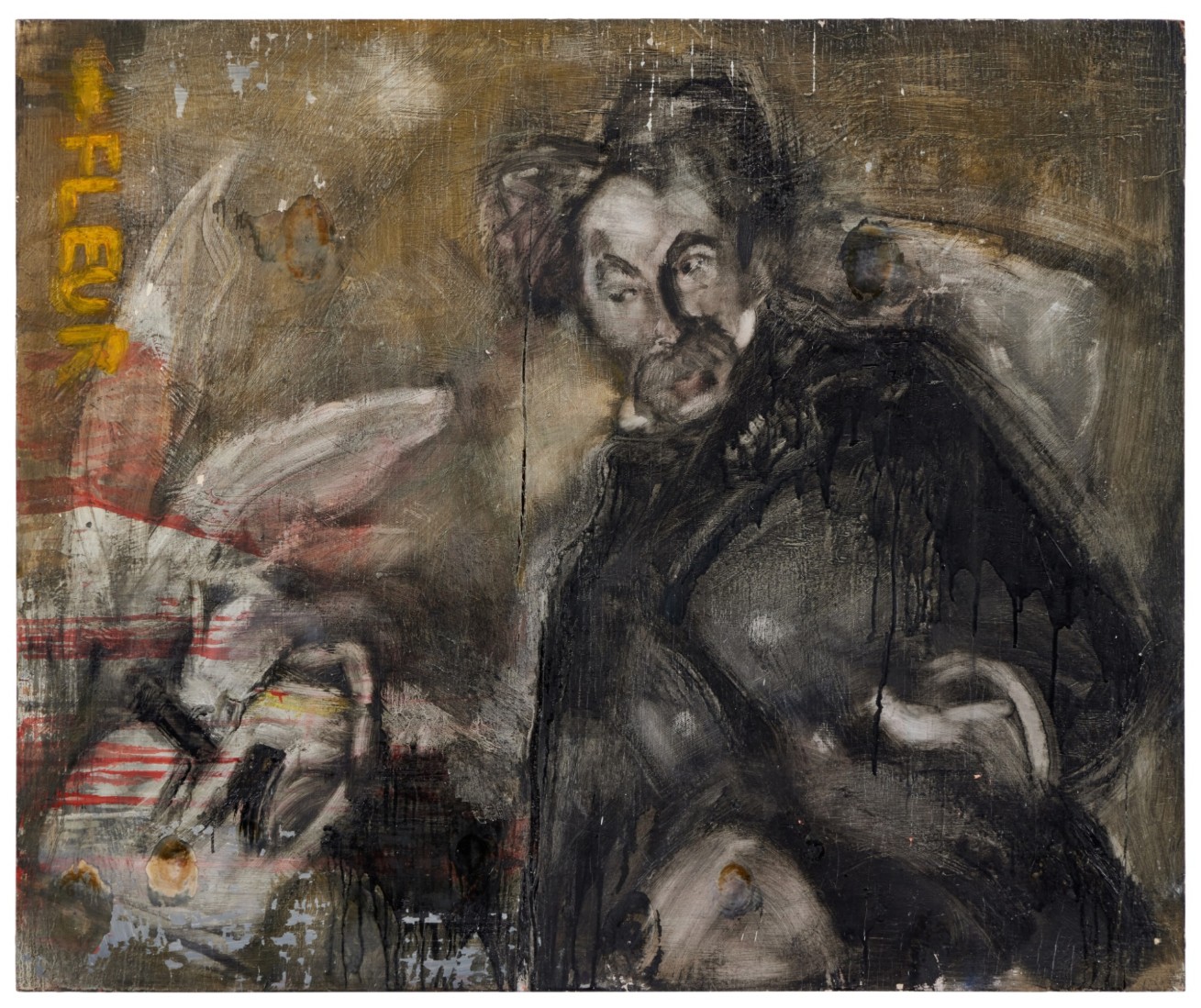
ELIZABETH PEYTON (b. 1965)
Untitled, circa 1987
Oil on panel
29-3/4 x 36 inches (75.6 x 91.4 cm)
2025 Auction Results
19 lots sold at auction in 2025 for a total turnover of USD 12,684,221. With 2 lots failing to sell, the sell-through rate is 90%. The highest price has been achieved by Kurt, a painting dated 1995, that sold at Christie’s in New-York, on 19 November 2025, for USD 2,881,000, setting a new auction record for the artist.
2025 Top 3 Lots
4 lots sold for more than USD 1 million, generating a cumulative turnover of USD 8,337,940, representing 65.7% of the total turnover of 2025.
XXXXXXXXXX
#1. Kurt, 1995
Property from an Esteemed Private Collection
Christie’s New-York: 19 November 2025
Estimated: USD 2,000,000 – 3,000,000
USD 2,881,000
NEW AUCTION RECORD FOR ELIZABETH PEYTON
READ MORE IN FOCUS SECTION
ELIZABETH PEYTON (B. 1965), Kurt | Christie’s
ELIZABETH PEYTON (B. 1965)
Kurt, 1995
Oil on canvas
24×19 inches (61 x 48.3 cm)
Signed, titled and dated ‘Kurt 1995 Elizabeth Peyton’ (on the reverse)
‘‘There is no separation for me between people I know through their music or photos and some I know personally. The way I perceive them is very similar, in that there’s no difference between certain qualities that I find inspiring in them.’’
#2. Liam & Noel, 1996
Sotheby’s London: 24 June 2025
Estimated: GBP 1,500,000 – 2,000,000
GBP 1,992,000 / USD 2,729,040
READ MORE IN FOCUS SECTION
Liam & Noel | Modern & Contemporary Evening Auction | 2025 | Sotheby’s
ELIZABETH PEYTON (b. 1965)
Liam & Noel, 1996
Oil on board
26 1/4 x 22 1/4 inches (66.5 x 56.5 cm)
Signed, titled Liam + Noel (Gallagher) and dated 1996 (on the reverse)
#3. Jarvis and Liam Smoking, 1997
Christie’s New-York: 14 May 2025
Estimated: USD 800,000 – 1,200,000
USD 1,623,000
READ MORE IN FOCUS SECTION
ELIZABETH PEYTON (B. 1965), Jarvis and Liam Smoking | Christie’s
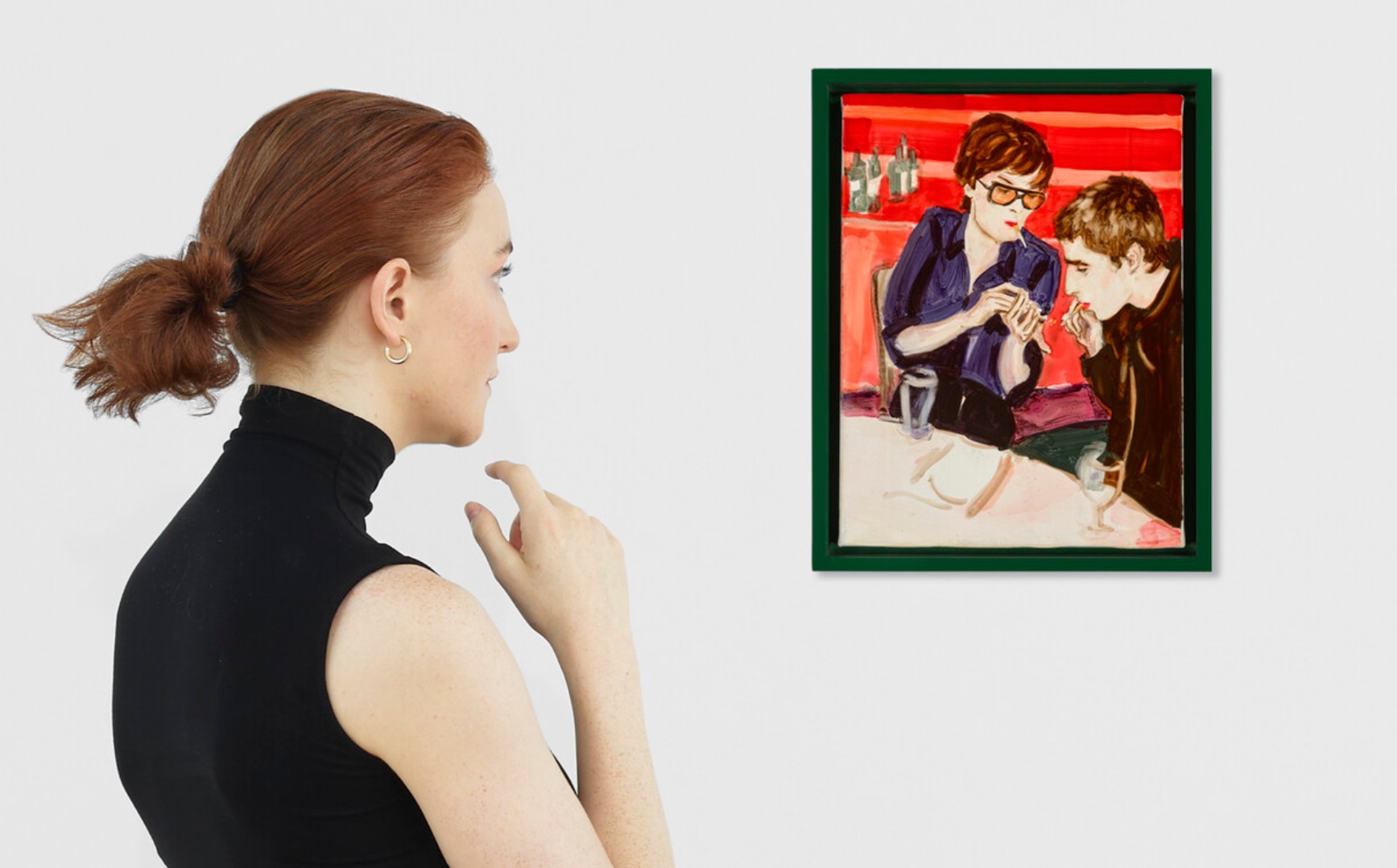
ELIZABETH PEYTON (B. 1965)
Jarvis and Liam Smoking, 1997
Oil on canvas
12 1/8 x 9 1/8 inches (30.8 x 23.2 cm)
Signed, titled and dated ‘Jarvis and Liam Smoking 1997 Elizabeth Peyton’ (on the overlap)
#4. Flowers, Lichtenstein, Parsifal, 2011
Christie’s New-York: 19 November 2025
Estimated: USD 500,000 – 700,000
USD 1,104,900
READ MORE IN FOCUS SECTION
ELIZABETH PEYTON (B. 1965), Flowers, Lichtenstein, Parsifal | Christie’s
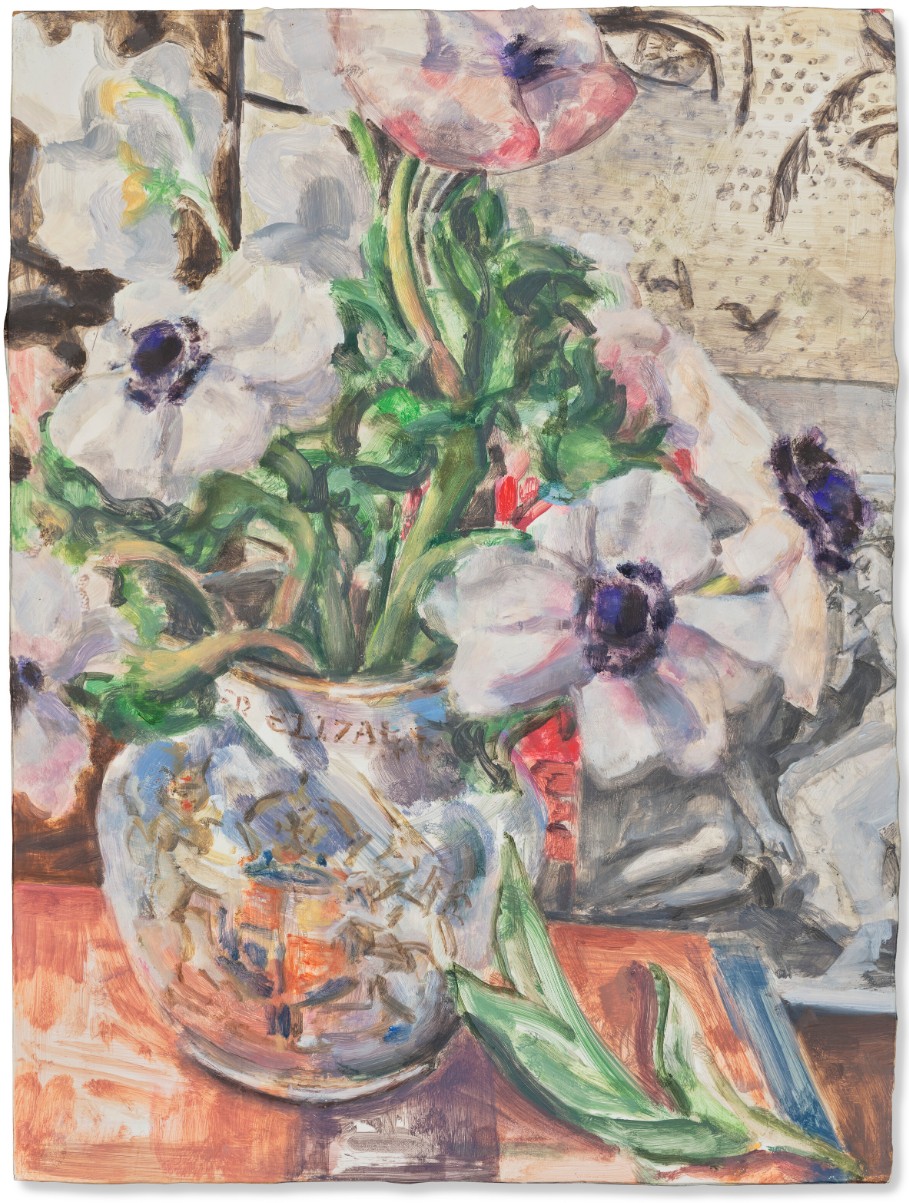
ELIZABETH PEYTON (B. 1965)
Flowers, Lichtenstein, Parsifal, 2011
Oil on panel
12 1/8 x 9 1/8 inches (30.5 x 23 cm)
USD 1 million
#5. Jonas Kaufmann, March 2013, NYC, 2013
Edlis Neeson Collection
Christie’s New-York: 20 November 2025
Estimated: USD 400,000 – 600,000
USD 952,500
ELIZABETH PEYTON (B. 1965), Jonas Kaufmann, March 2013, NYC | Christie’s
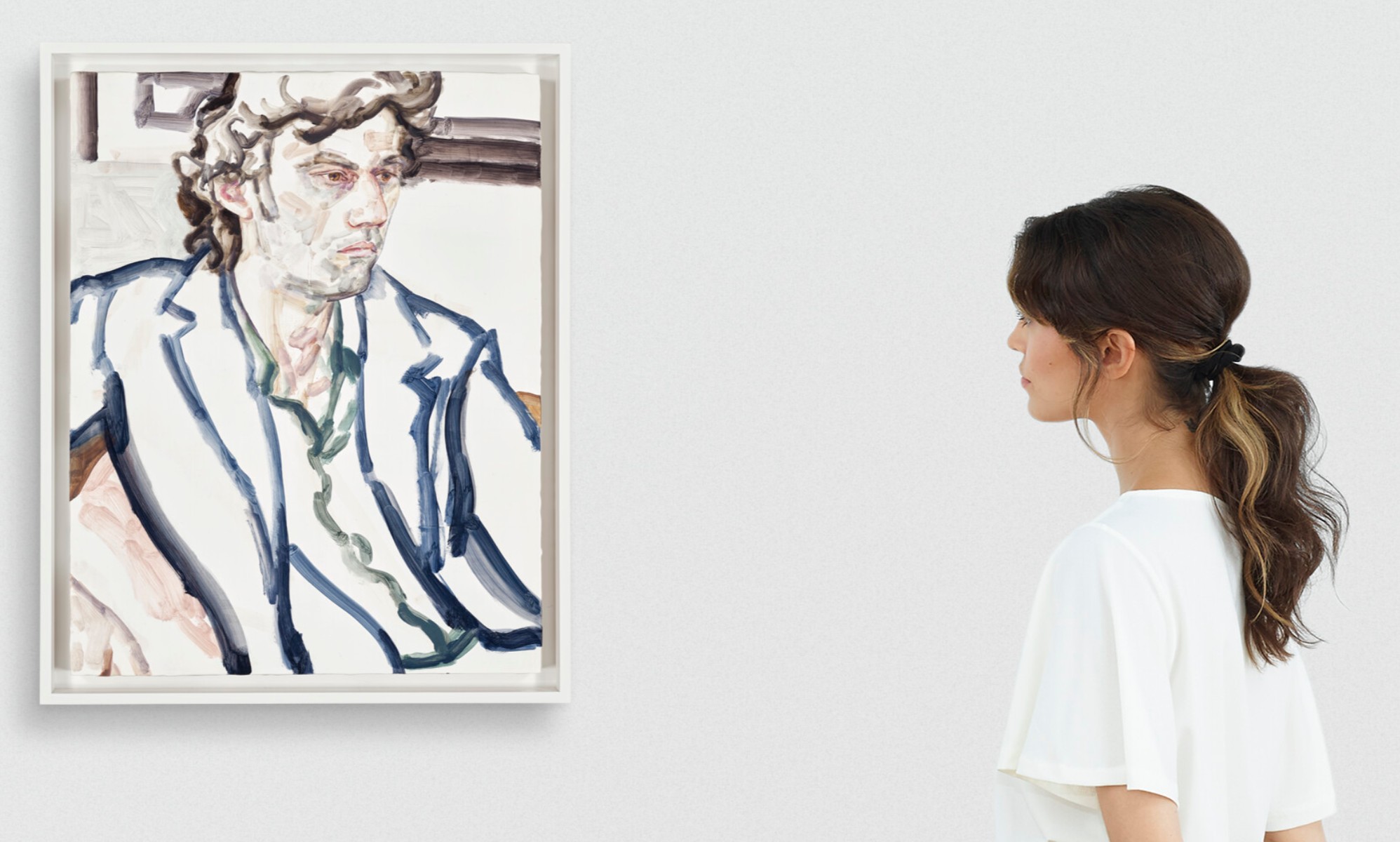
ELIZABETH PEYTON (B. 1965)
Jonas Kaufmann, March 2013, NYC, 2013
Oil on panel
23×18 inches (58.5 x 45.7 cm)
Signed, titled and dated ‘Jonas Kaufmann March 2013 NYC Elizabeth Peyton 2013’ (on the reverse)
#6. What Wondrous Thing Do I See… (Lohengrin, Jonas Kaufmann), 2011-12
Selections from The Collection of Barbara Gladstone
Sotheby’s New-York: 15 May 2025
Estimated: USD 600,000 – 800,000
USD 889,000
READ MORE IN FOCUS SECTION
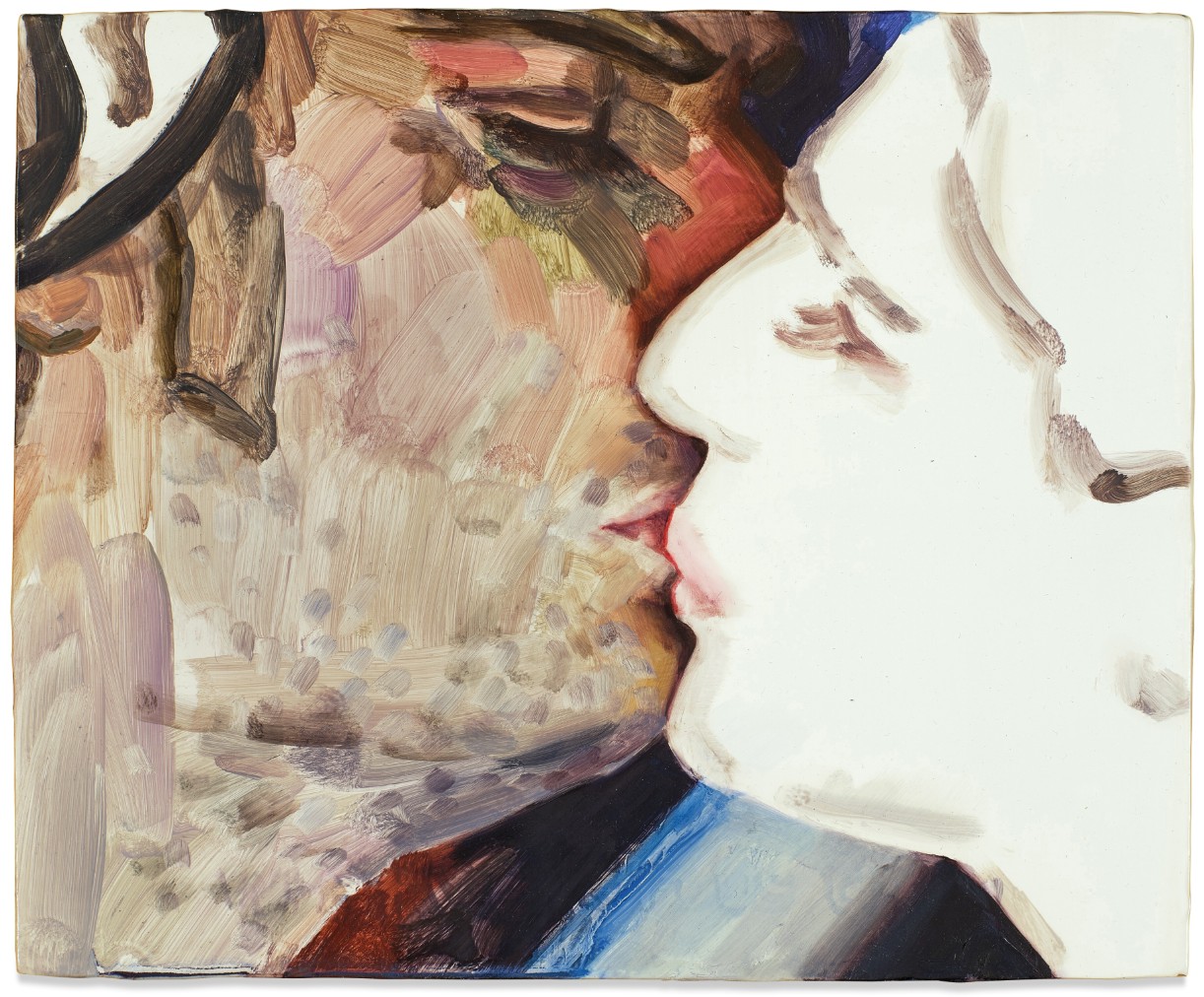
ELIZABETH PEYTON (b. 1965)
What Wondrous Thing Do I See… (Lohengrin, Jonas Kaufmann), 2011-12
Oil on veneered panel
9×11 inches (22.9 x 27.9 cm)
Signed, titled and dated 2011-2012 (on the reverse)
#7. Spencer (Two Palms), 2002
Phillips London: 26 June 2025
Estimated: GBP 600,000 – 800,000
GBP 635,000 / USD 869,950
READ MORE IN FOCUS SECTION
Elizabeth Peyton Modern & Contemporary Art: Evening & Day Sale
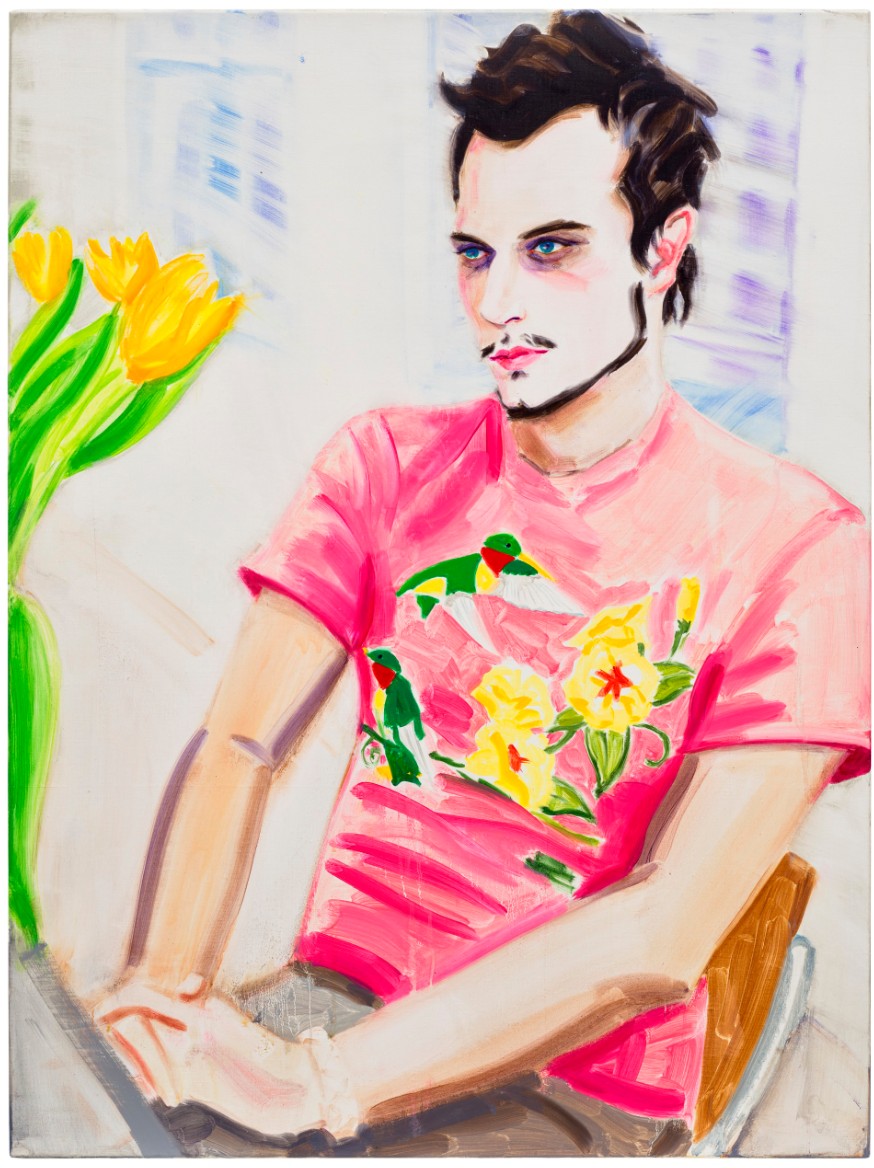
101.7 x 76.4 cm (40 x 30 1/8 inches)
USD 500,000
#8. Tony Reading (Silver Tony), 1999
Works from the Collection of Byron R. Meyer with Partial Proceeds
to Benefit the San Francisco Museum of Modern Art
Sotheby’s New-York: 19 November 2025
Estimated: USD 500,000 – 700,000
USD 457,200
READ MORE IN FOCUS SECTION
Tony Reading (Silver Tony) | Contemporary Day Auction | 2025 | Sotheby’s
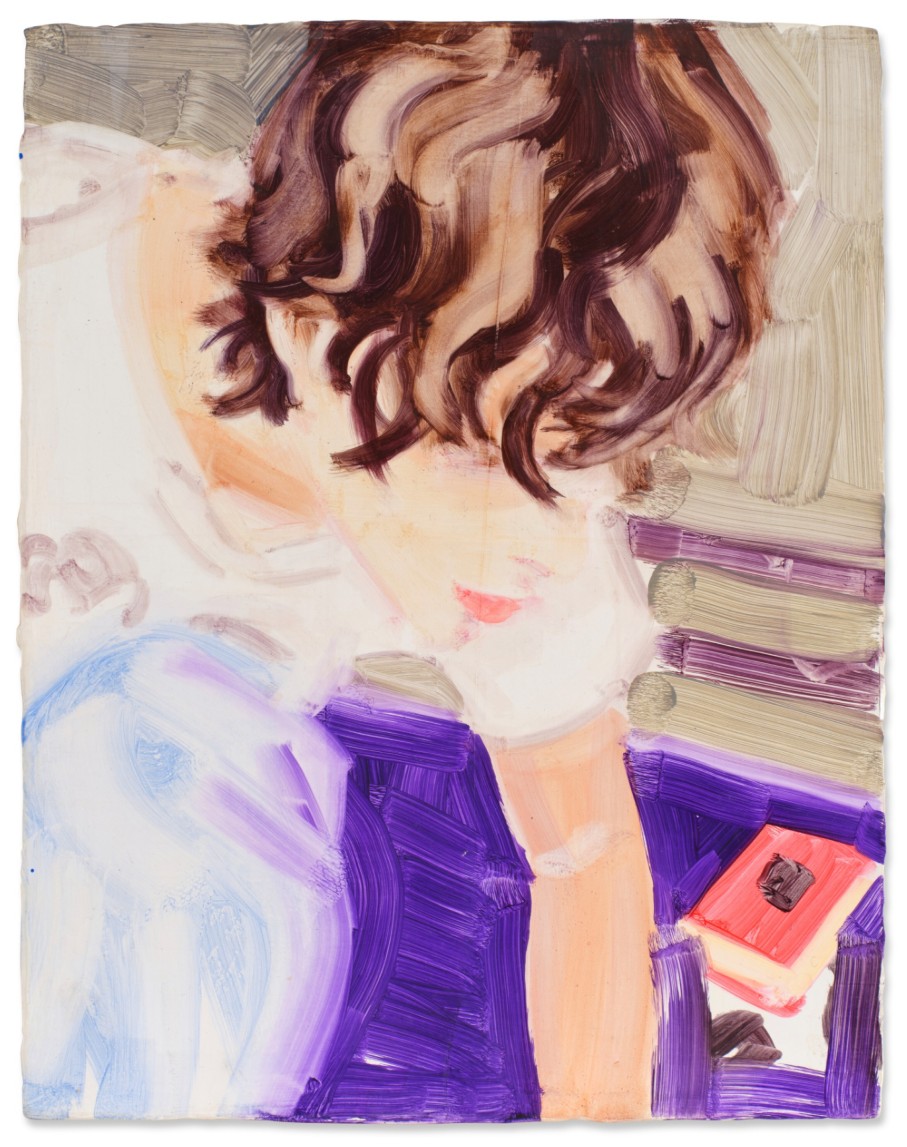
ELIZABETH PEYTON (b. 1965)
Tony Reading (Silver Tony), 1999
Oil on MDF
14 1/4 x 11 inches (36.2 x 27.9 cm)
Signed, titled, dated 1999 and inscribed Tony Just (age 30) (on the reverse)
#9. The Origin of the Order of the Garter, 1995
Christie’s New-York: 15 May 2025
Estimated: USD 300,000 – 500,000
USD 441,000
ELIZABETH PEYTON (B. 1965), The Origin of the Order of the Garter | Christie’s
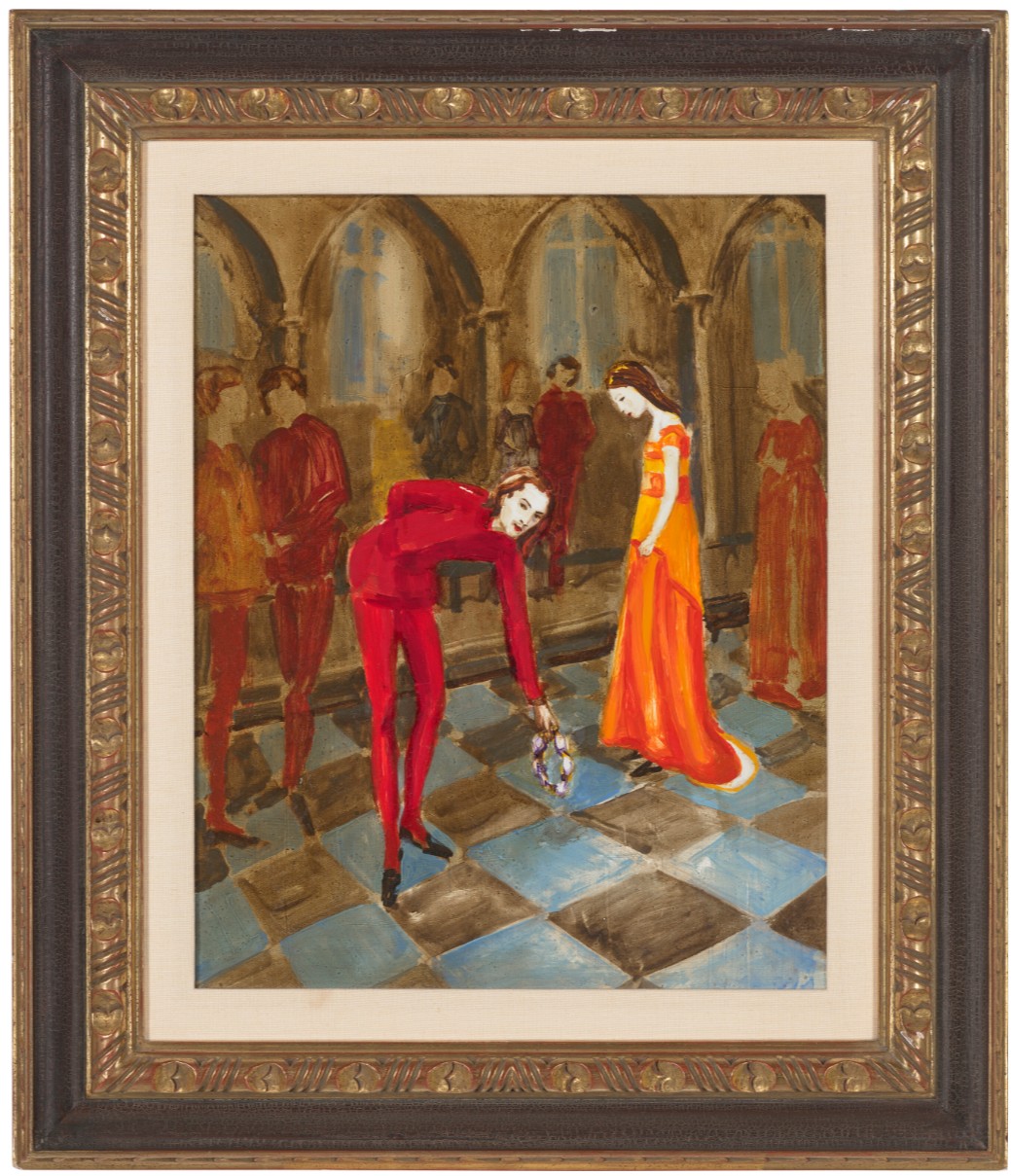
ELIZABETH PEYTON (B. 1965)
The Origin of the Order of the Garter, 1995
Oil on panel
20×16 inches (50.8 x 40.6 cm)
Signed and dated ‘Elizabeth Peyton 1995’ (on the reverse)
#10. Yuzuru (Helsinki Grand Prix), 2018
Christie’s Hong-Kong: 29 March 2024
Estimated: HKD 1,500,000 – 2,500,000
HKD 1,386,000 / USD 178,149
WORK ON PAPER
ELIZABETH PEYTON (B. 1965), Yuzuru (Helsinki Grand Prix) | Christie’s
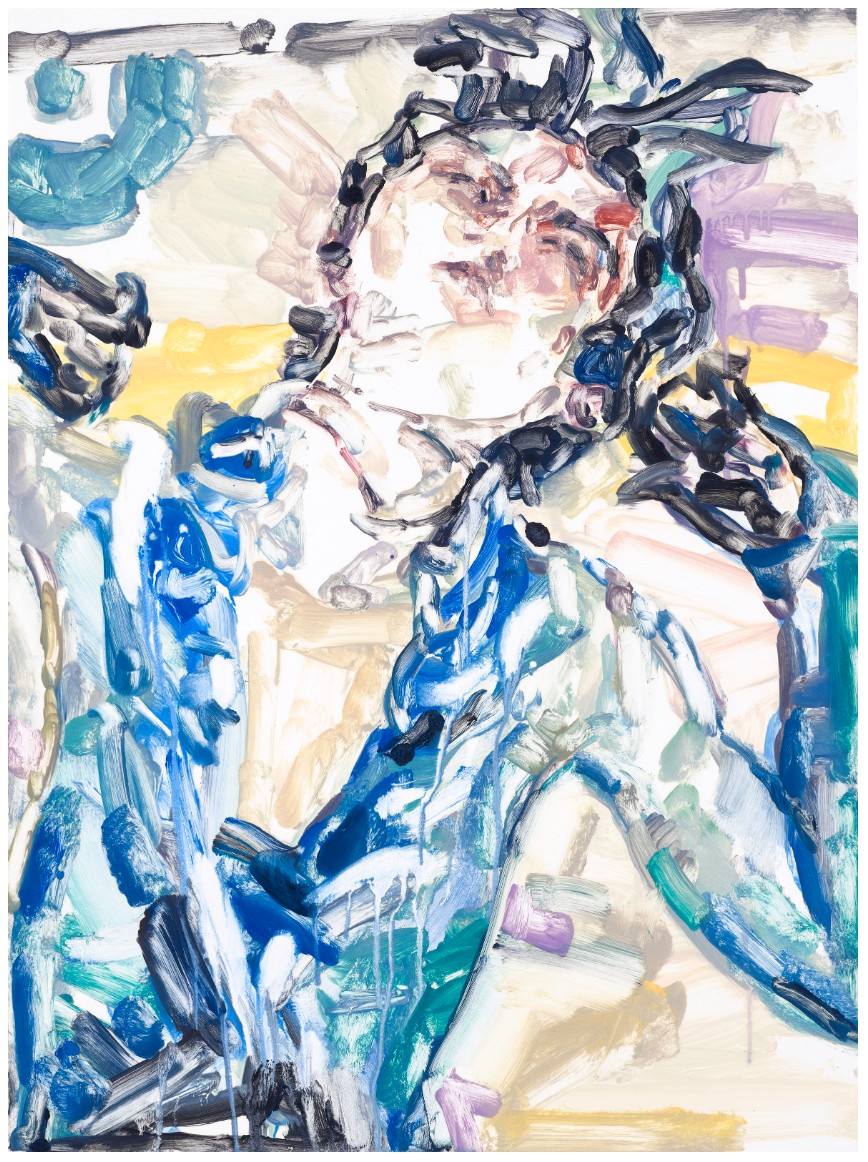
ELIZABETH PEYTON (B. 1965)
Yuzuru (Helsinki Grand Prix), 2018
Monotype on Twinrocker handmade paper
31 3/8 x 23 3/8 inches (79.7 x 59.5 cm)
#11. Franz in Hamburg, 1995
Sotheby’s Milan: 26 November 2025
Estimated: EUR 100,000 – 150,000
EUR 107,950 / USD 124,845
Franz in Hamburg | Modern and Contemporary Art | 2025 | Sotheby’s
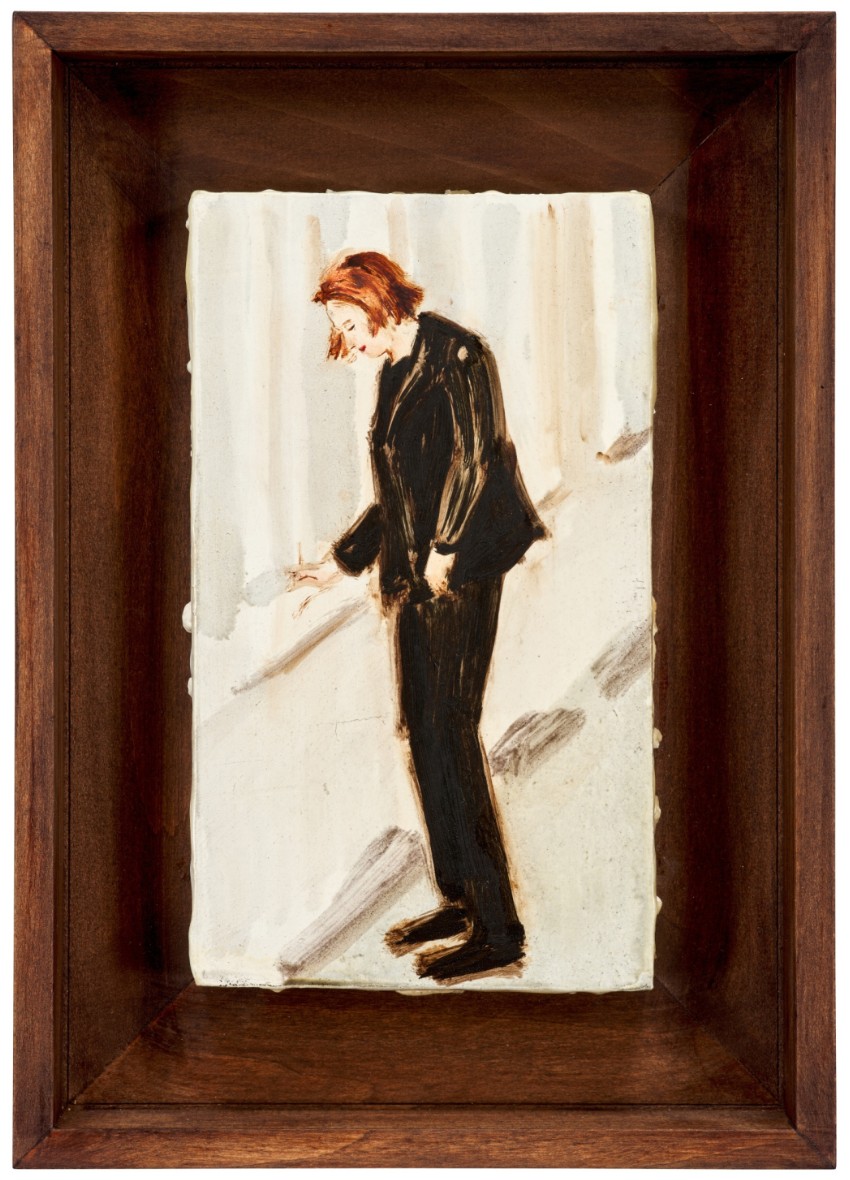
ELIZABETH PEYTON (b. 1965)
Franz in Hamburg, 1995
Oil on board
7 1/8 x 4 1/8 inches (18×10 cm)
Signed, dated 1995 and inscribed FRANZ ACKERMAN on the reverse
USD 100,000
#12. Balzac + Roses, 2008
Christie’s London: 6 March 2025
Estimated: GBP 50,000 – 70,000
GBP 69,300 / USD 88,755
WORK ON PAPER
ELIZABETH PEYTON (B. 1965), Balzac + Roses | Christie’s
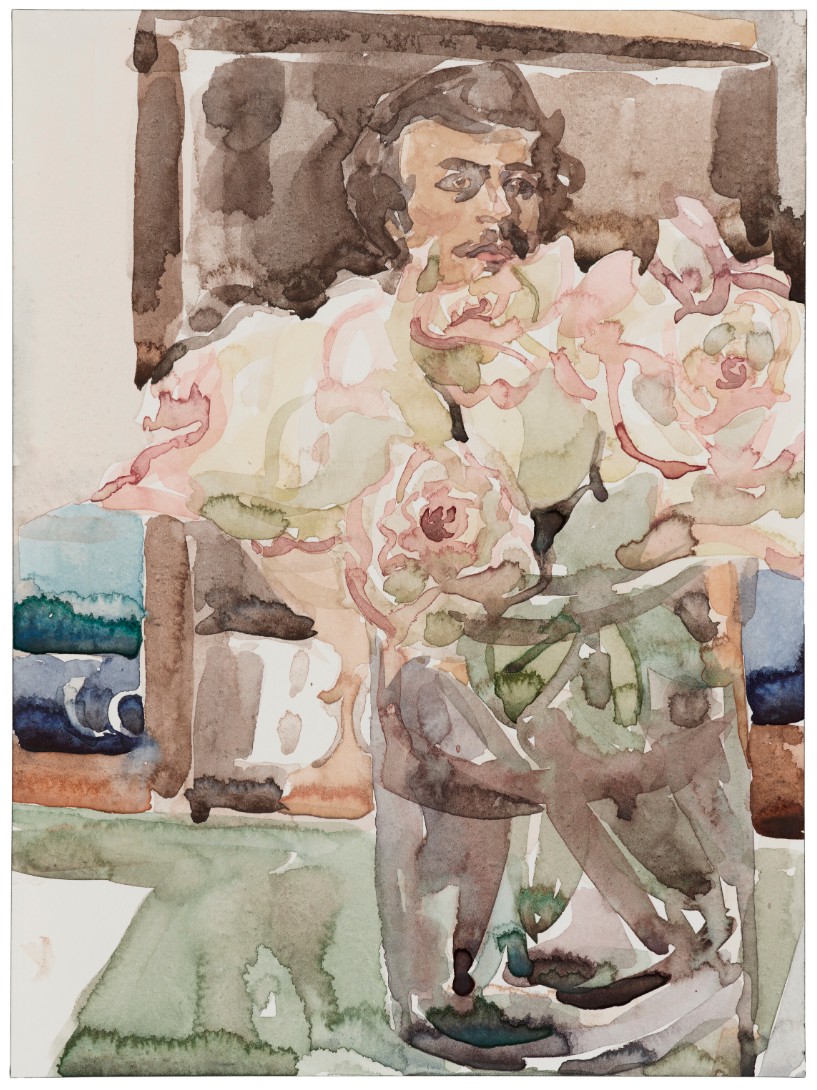
ELIZABETH PEYTON (B. 1965)
Balzac + Roses, 2008
Watercolor on paper
12 1/4 x 9 inches (31×23 cm)
Signed, titled and dated ‘Balzac + Roses Elizabeth Peyton 2008’ (on the reverse)
“I just have a feeling of urgency that I want to make a picture of somebody.
Probably because I’m very inspired by them or there is something I really want to know about or understand in them.
So, fascination? Yes. Admiration? Yes. But also, curiosity.
I get fascinated by what people are doing and what they’re making and how it’s what I need at that moment.”
#13. Brian Epstein, 1998
Phillips London: 18 October 2025
Estimated: GBP 45,000 – 65,000
GBP 64,500 / USD 86,605
WORK ON PAPER
Elizabeth Peyton Modern & Contemporary Art Day Sale
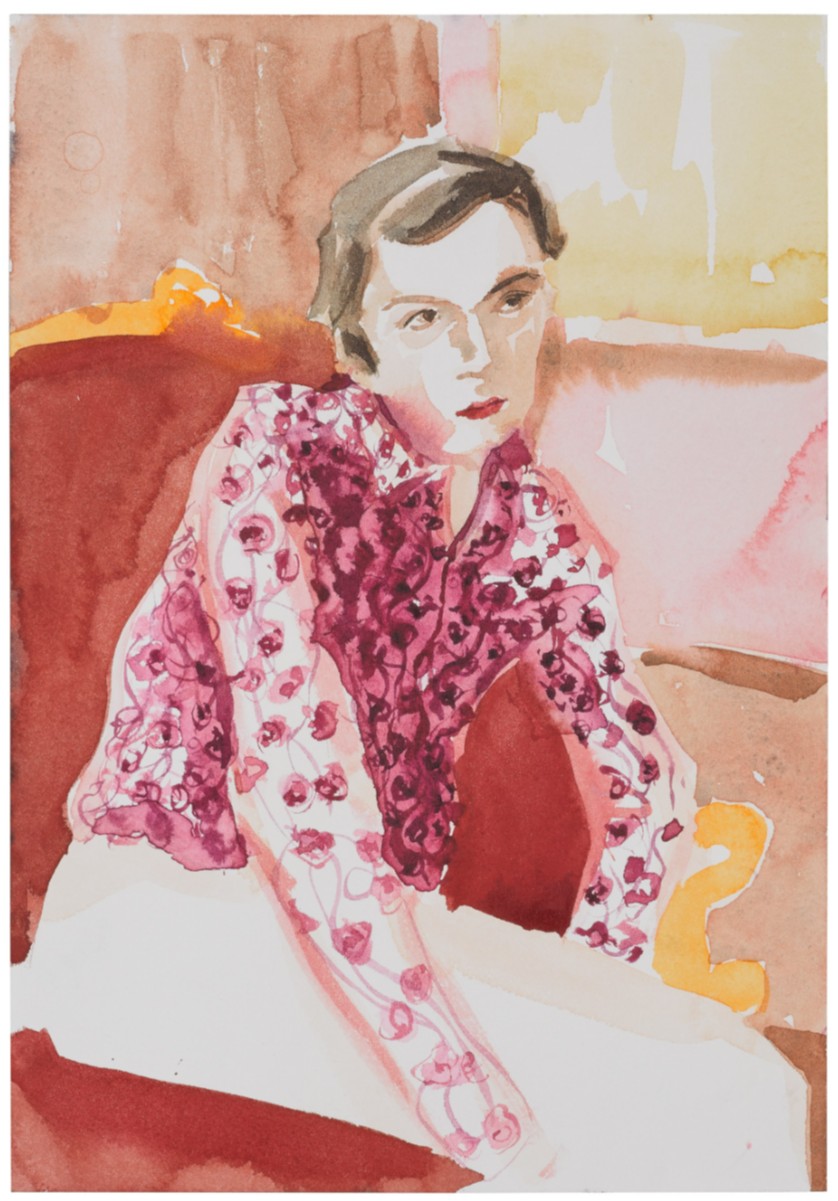
Watercolor on paper
10 1/4 x 7 1/8 inches (26×18 cm)
Signed, titled and dated ‘Brian Epstein Elizabeth Peyton 1998’ on the reverse
#14. Prince Harry, September 1998, 1998
Estimated: GBP 10,000 – 15,000
GBP 49,020 / USD 65,325
WORK ON PAPER
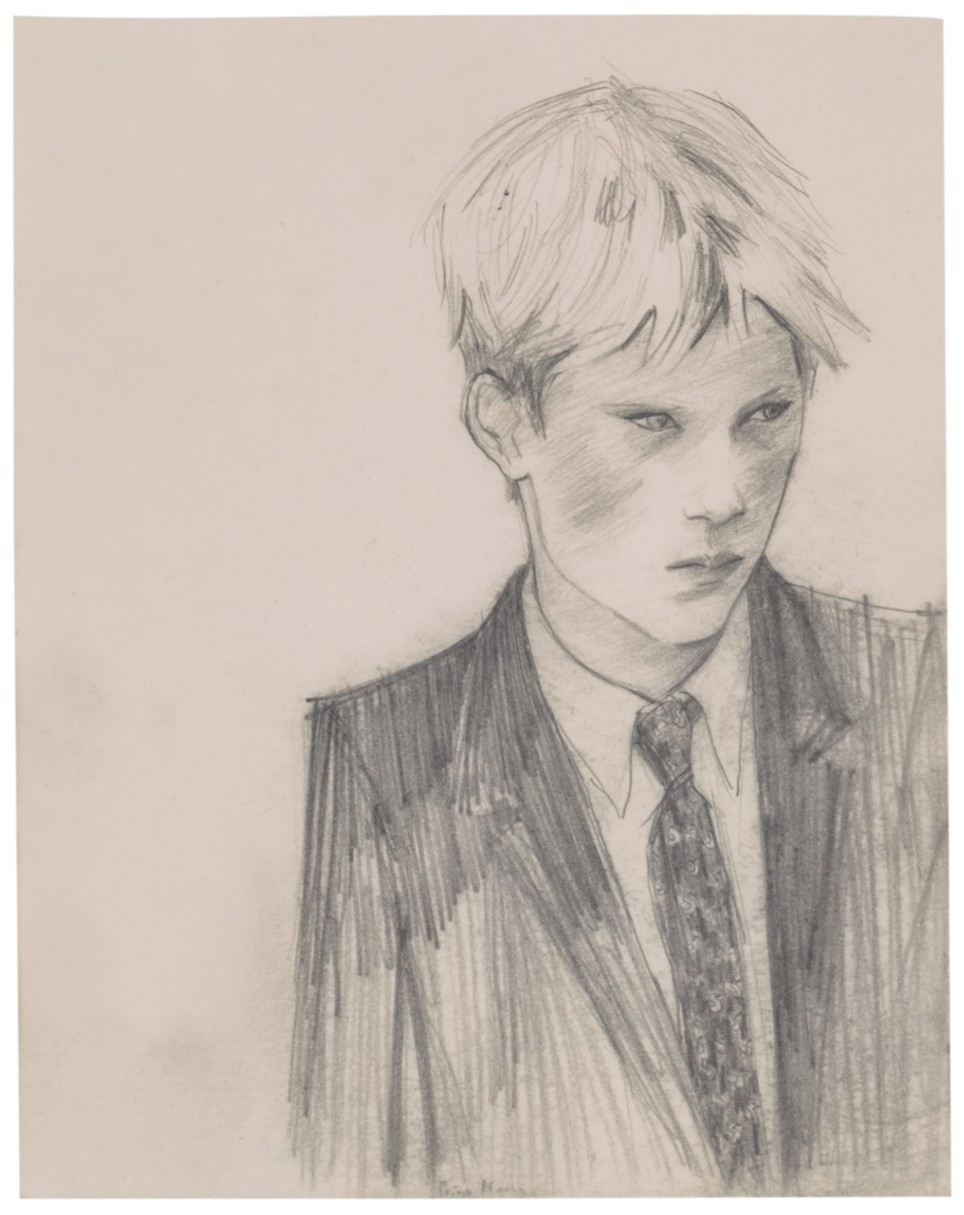
7 1/2 x 5 7/8 inches (19×15 cm)
Titled ‘Prince Harry’ lower edge
Signed, titled and dated ‘Prince Harry Sept 1998, Elizabeth Peyton 1998’ on the reverse
#15. Prince Harry, 1998
Phillips Hong-Kong: 28 September 2025
Estimated: HKD 300,000 – 500,000
HKD 412,800 / USD 53,065
WORK ON PAPER
Elizabeth Peyton Modern & Contemporary Art Day Sale
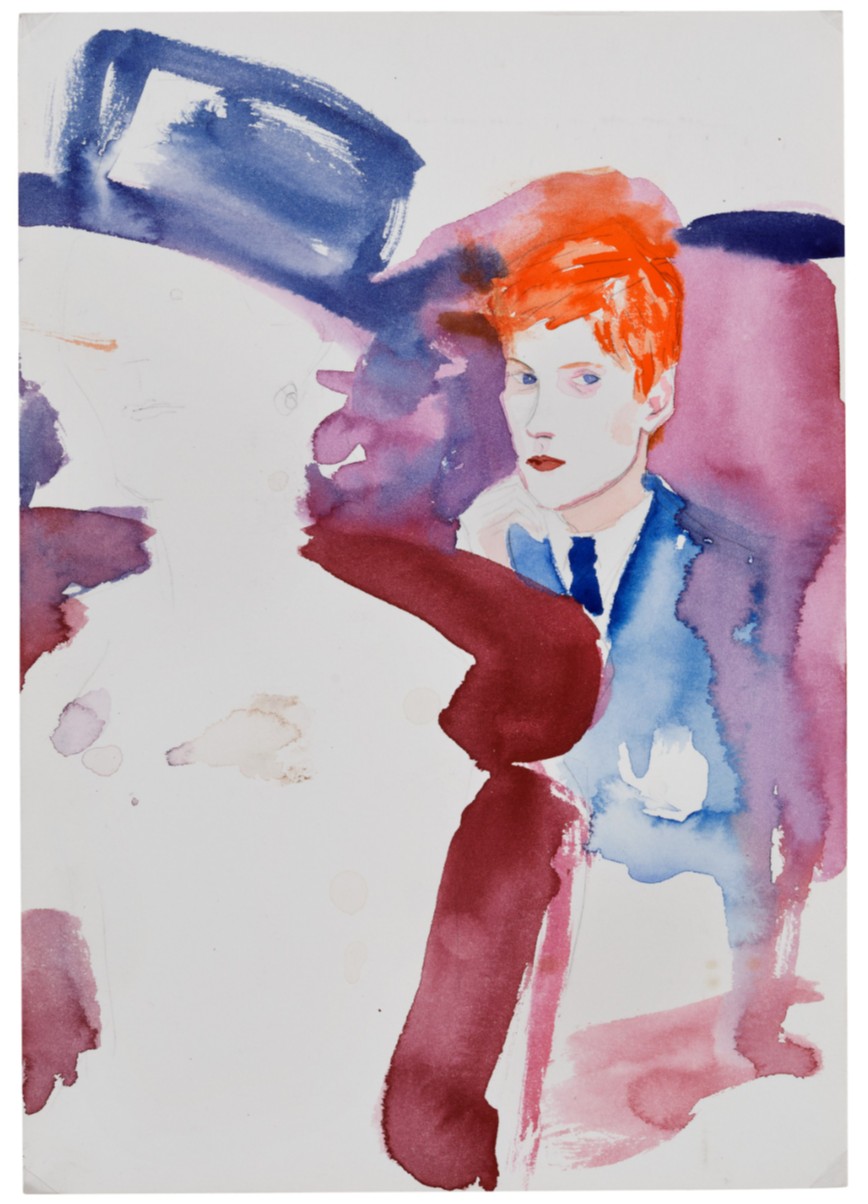
#16. Jake and Heath (Jack and Ennis), 2012-13
Sotheby’s London: 25 June 2025
Estimated: GBP 30,000 – 40,000
GBP 27,940 / USD 38,280
WORK ON PAPER
Jake and Heath (Jack and Ennis) | Contemporary Day Auction | 2025 | Sotheby’s
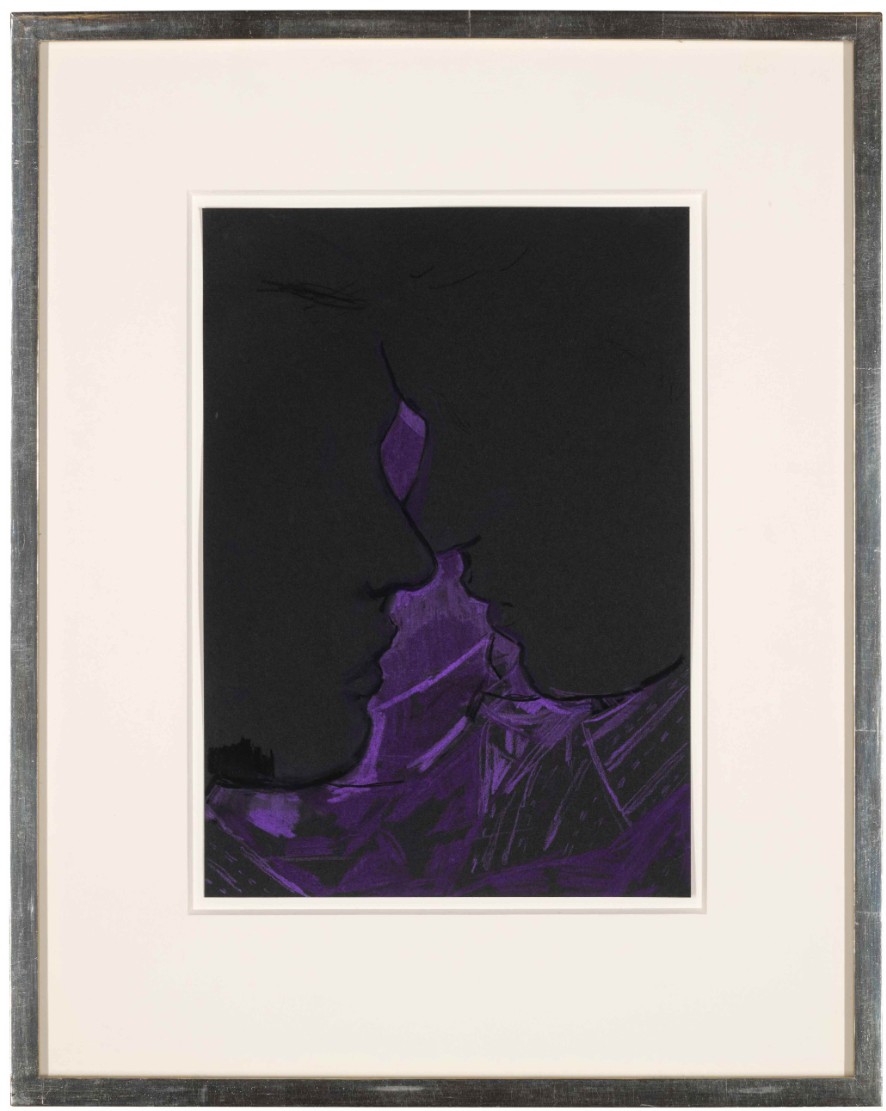
ELIZABETH PEYTON (b. 1965)
Jake and Heath (Jack and Ennis), 2012-13
Colored pencil and pastel on black paper
11 3/4 x 8 1/4 inches (29.8 x 21 cm)
Signed, titled and dated 2012+2013 (on the verso)
#17. Two Women (Flaubert in Egypt, After Delacroix), 2010
Christie’s London: 16 October 2025
Estimated: GBP 15,000 – 20,000
GBP 27,940 / USD 37,450
WORK ON PAPER
ELIZABETH PEYTON (B. 1965), Two Women (Flaubert in Egypt, After Delacroix) | Christie’s
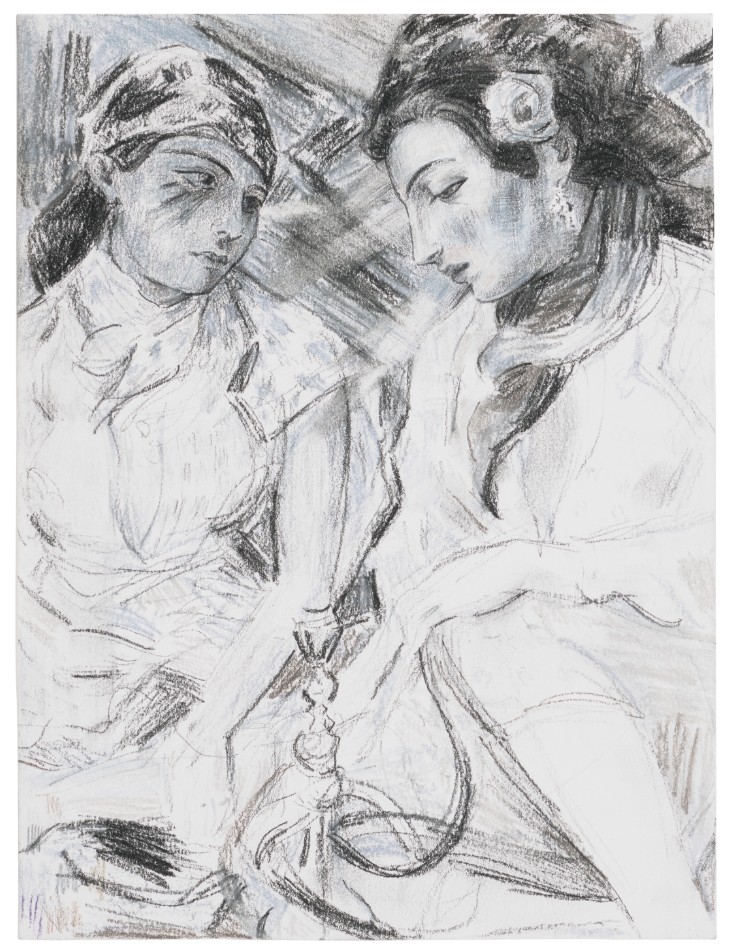
ELIZABETH PEYTON (B. 1965)
Two Women (Flaubert in Egypt, After Delacroix), 2010
Colored pencil and pastel on paper
9 1/2 x 7 1/8 inches (24 x 18.2 cm)
Signed, titled and dated
‘Two Women (Flaubert in Egypt, After Delacroix) Elizabeth Peyton 2010’
(on the reverse)
#18. Untitled, 2002
Grisebach Berlin: 27 November 2025
Estimated: EUR 15,000 – 20,000
EUR 27,940 / USD 32,415
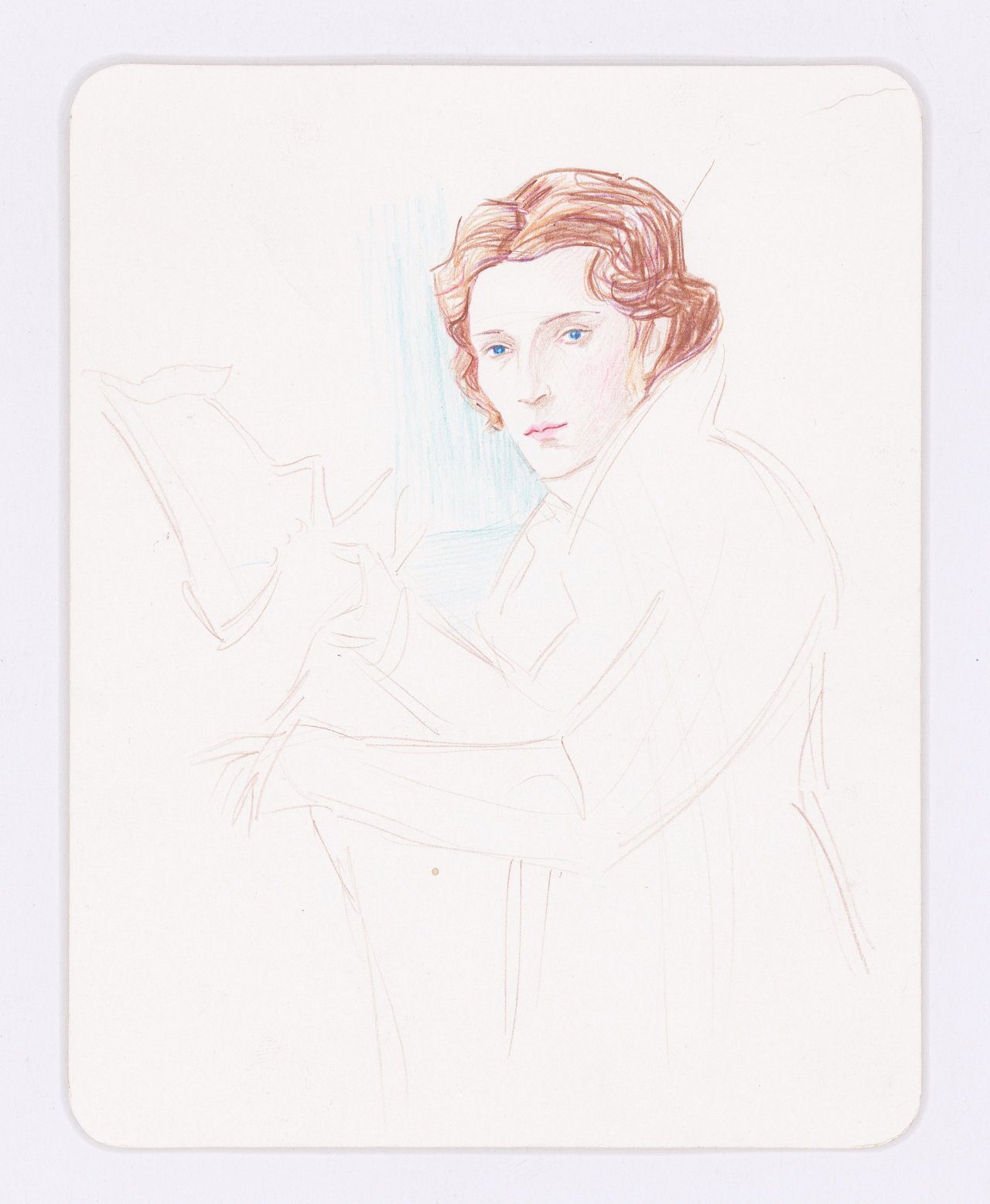
ELIZABETH PEYTON (Danbury, Connecticut 1965 – lives in New York and Paris)
Untitled, 2002
Colored pencil on cardboard
7 x 5 1/2 inches (17.8 x 14 cm)
On the reverse dated, dedicated and signed in blue ballpoint ink: February 2002 […] Elizabeth
There too inscribed with the work number in pencil: EP 704d. [3258]
#19. Untitled, circa 1991
Sotheby’s New-York: 1 October 2025
Estimated: USD 20,000 – 30,000
USD 31,750
Untitled | Contemporary Discoveries | 2025 | Sotheby’s
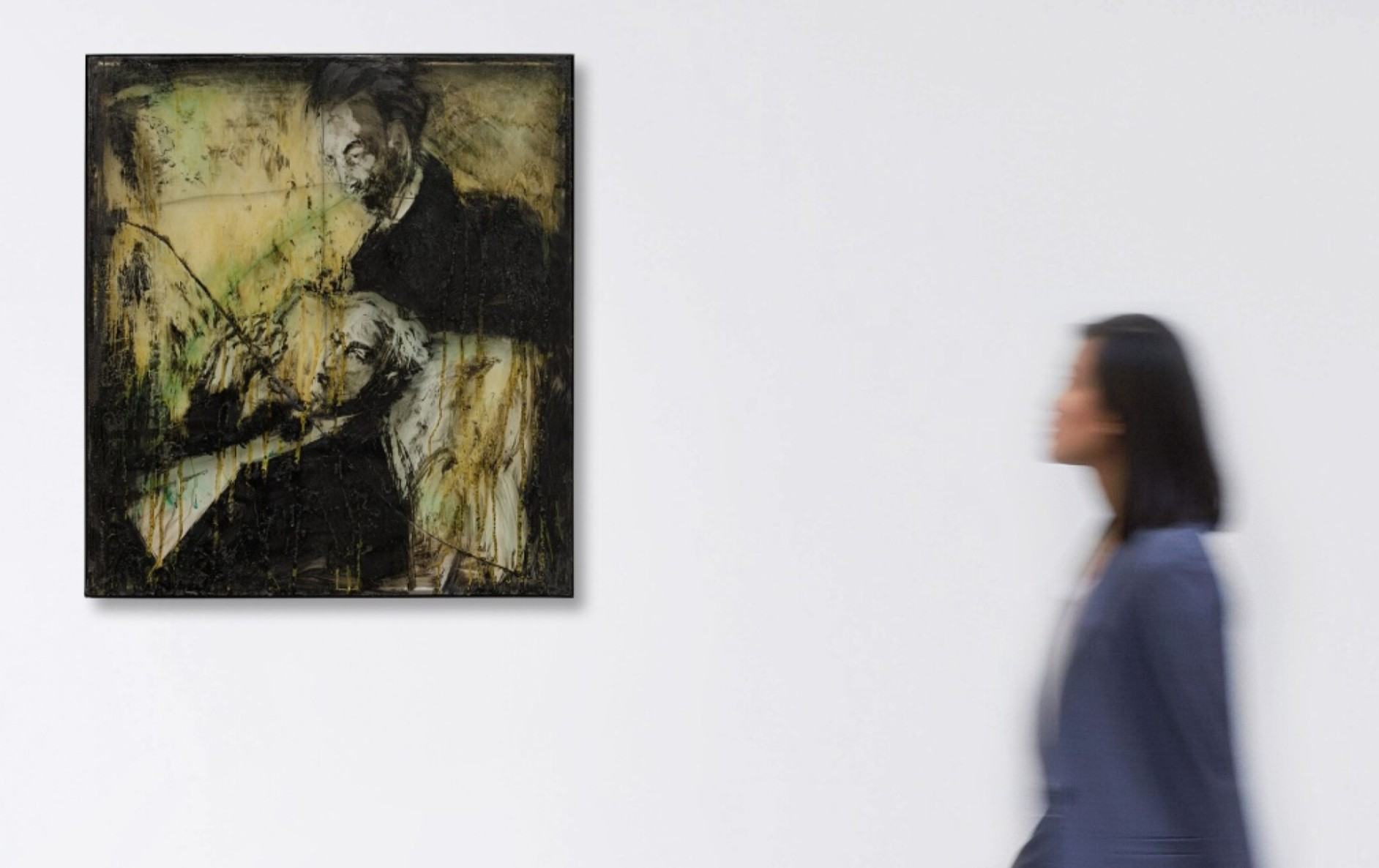
ELIZABETH PEYTON (b. 1965)
Untitled, circa 1991
Oil on found glass window
30 3/4 x 27 3/4 inches (78.1 x 70.5 cm)
Lots Passed
Balzac Still Life, 2008
Sotheby’s London: 25 June 2025
Estimated: GBP 200,000 – 300,000
PASSED
Balzac Still Life | Contemporary Day Auction | 2025 | Sotheby’s
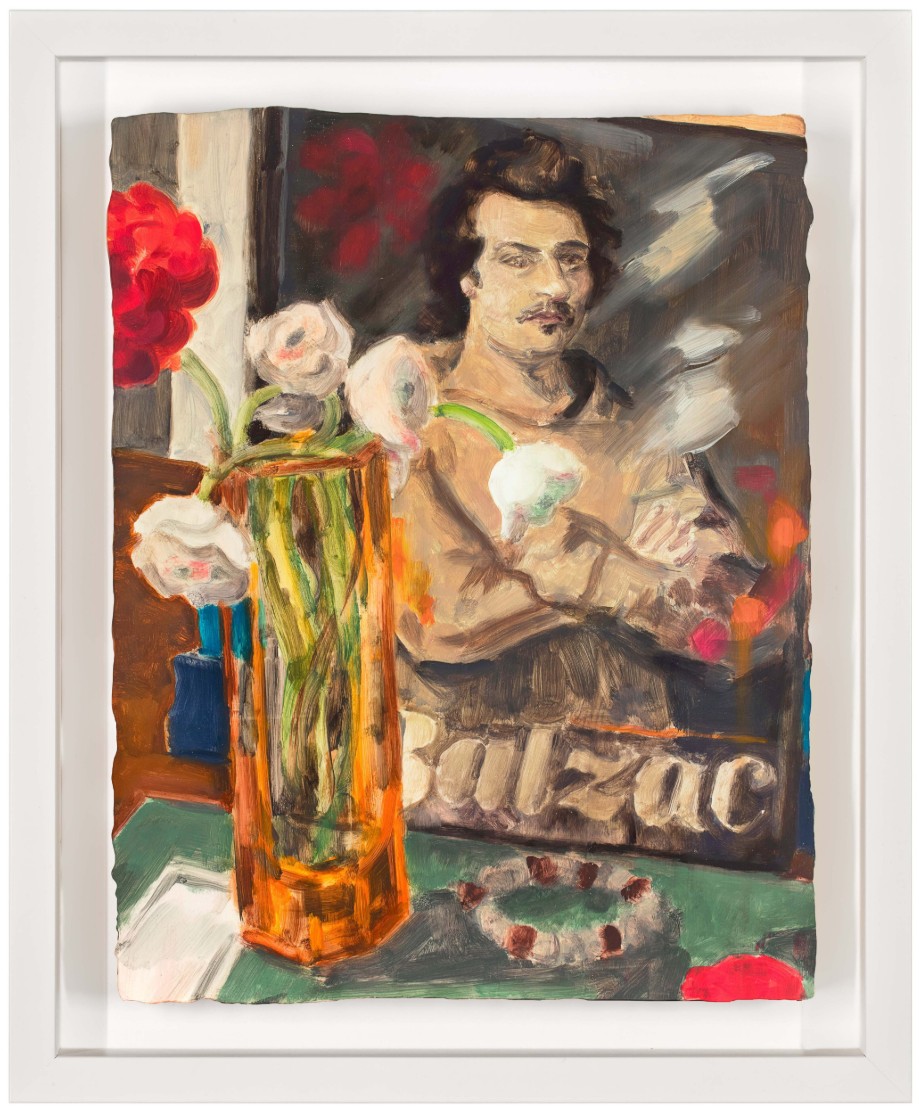
ELIZABETH PEYTON (b. 1965)
Balzac Still Life, 2008
Oil on board
14 1/2 x 11 3/8 inches (36.7 x 28.8 cm)
Signed, titled and dated 2008 May (on the reverse)
Untitled, circa 1991
Sotheby’s New-York: 28 February 2025
Estimated: USD 40,000 – 60,000
PASSED
Untitled | Contemporary Discoveries | 2025 | Sotheby’s
ELIZABETH PEYTON (b. 1965)
Untitled, circa 1991
Oil on found glass window
30 3/4 x 27 3/4 inches (78.1 x 70.5 cm)
2024 Auction Results
9 lots sold at auction in 2024 for a total turnover of USD 7,637,759. With 4 lots failing to sell, the sell-through rate is 69%. The highest price has been achieved at Christie’s in New-York on 14 May 2004, for Matthew, a painting dated 1997, that sold for USD 2,470,000. 2 lots sold for more than USD 1 million, generating a cumulative turnover of USD 4,829,000, representing 63.2% of the total turnover for 2024.
2024 Top 3 Lots
#1. Matthew, 1997
Christie’s New-York: 14 May 2024
Estimated: USD 1,000,000 – 1,500,000
USD 2,470,000
https://www.christies.com/en/lot/lot-6482278
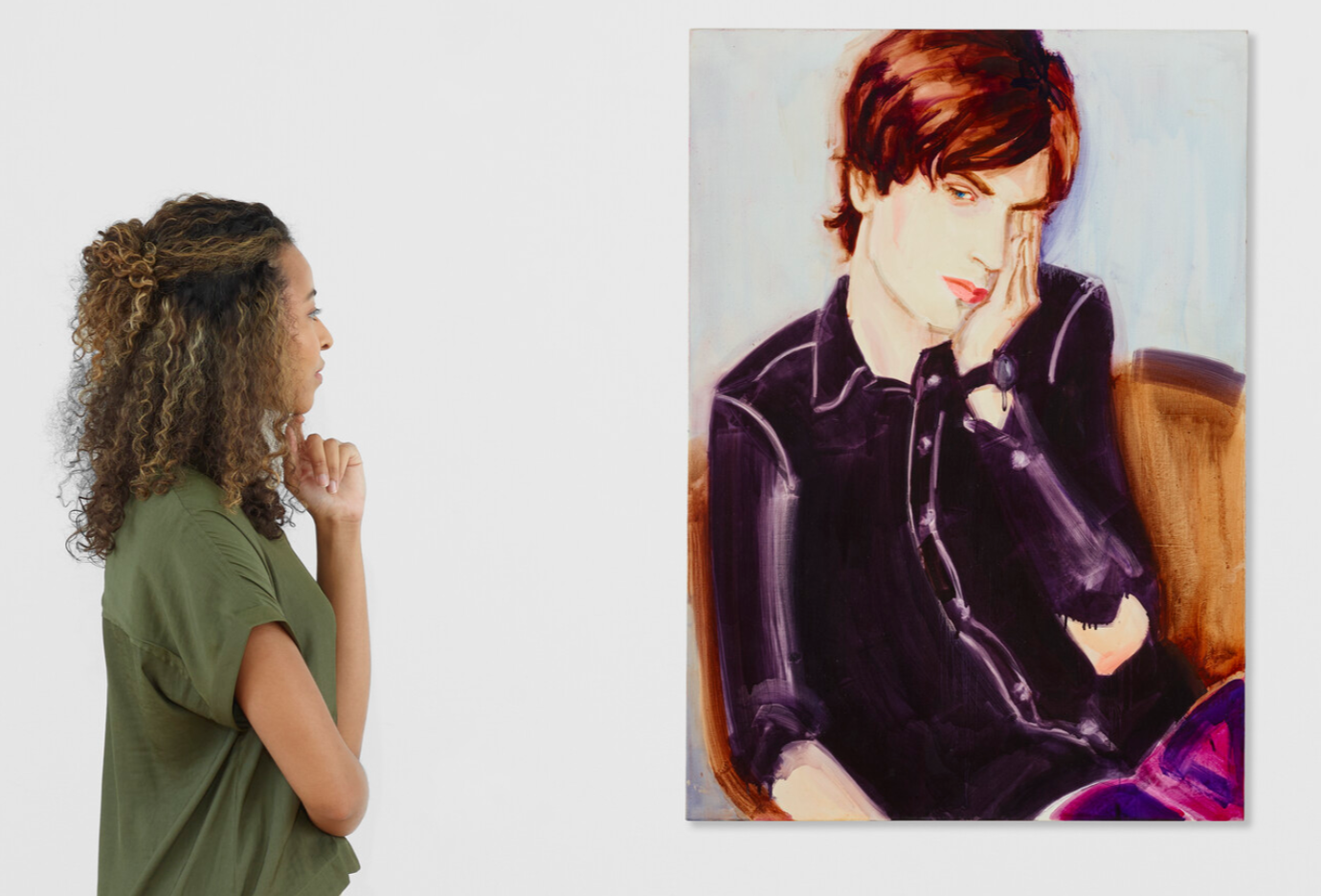
ELIZABETH PEYTON (B. 1965)
Matthew, 1997
Oil on canvas
39 x 27 3/4 inches (99×70 cm)
Signed, titled and dated ‘Matthew, May 1997, Elizabeth Peyton’ (on the overlap)
#2. Kurt (sunglasses), 1995
Phillips New-York: 19 November 2024
Estimated: USD 600,000 – 800,000
USD 2,359,000
Elizabeth Peyton – Modern & Contempo… Lot 3 November 2024 | Phillips
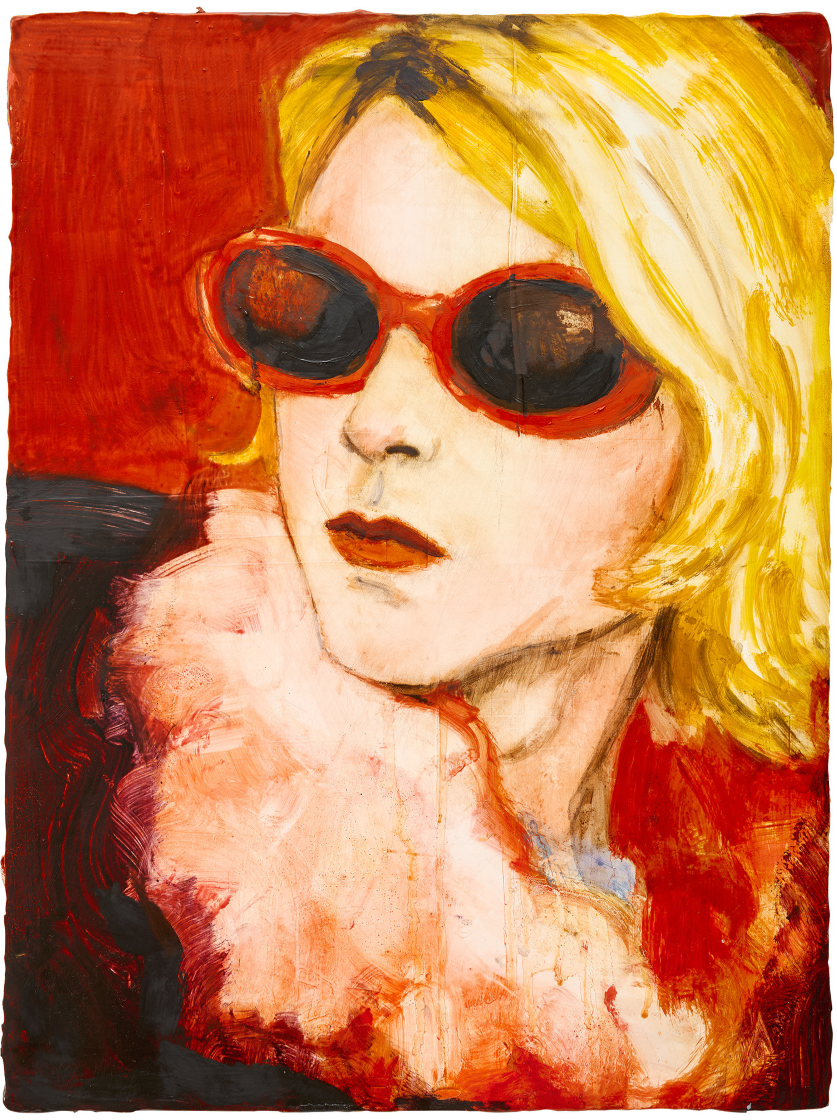
ELIZABETH PEYTON
Kurt (sunglasses), 1995
Oil on canvas
16×12 inches (40.5 x 30.5 cm)
Signed, titled and dated “Kurt (sunglasses) Elizabeth Peyton 1995” on the overlap
USD 1 million
#3. Christmas (Tony), 2000
Sotheby’s New-York: 14 May 2024
Estimated: USD 600,000 – 800,000
USD 752,000
Christmas (Tony) | Contemporary Day Auction | 2024 | Sotheby’s (sothebys.com)

ELIZABETH PEYTON (b. 1965)
Christmas (Tony), 2000
Oil on panel
12 x 9 1/8 inches (30.5 x 23.2 cm)
Signed, titled and dated 2000 (on the reverse)
#4. Torino (Tony) Sept. 99, 1999
Phillips London: 10 October 2024
Estimated: GBP 300,000 – 500,000
GBP 431,800 / USD 564,205
Elizabeth Peyton – Modern & Contempor… Lot 7 October 2024 | Phillips
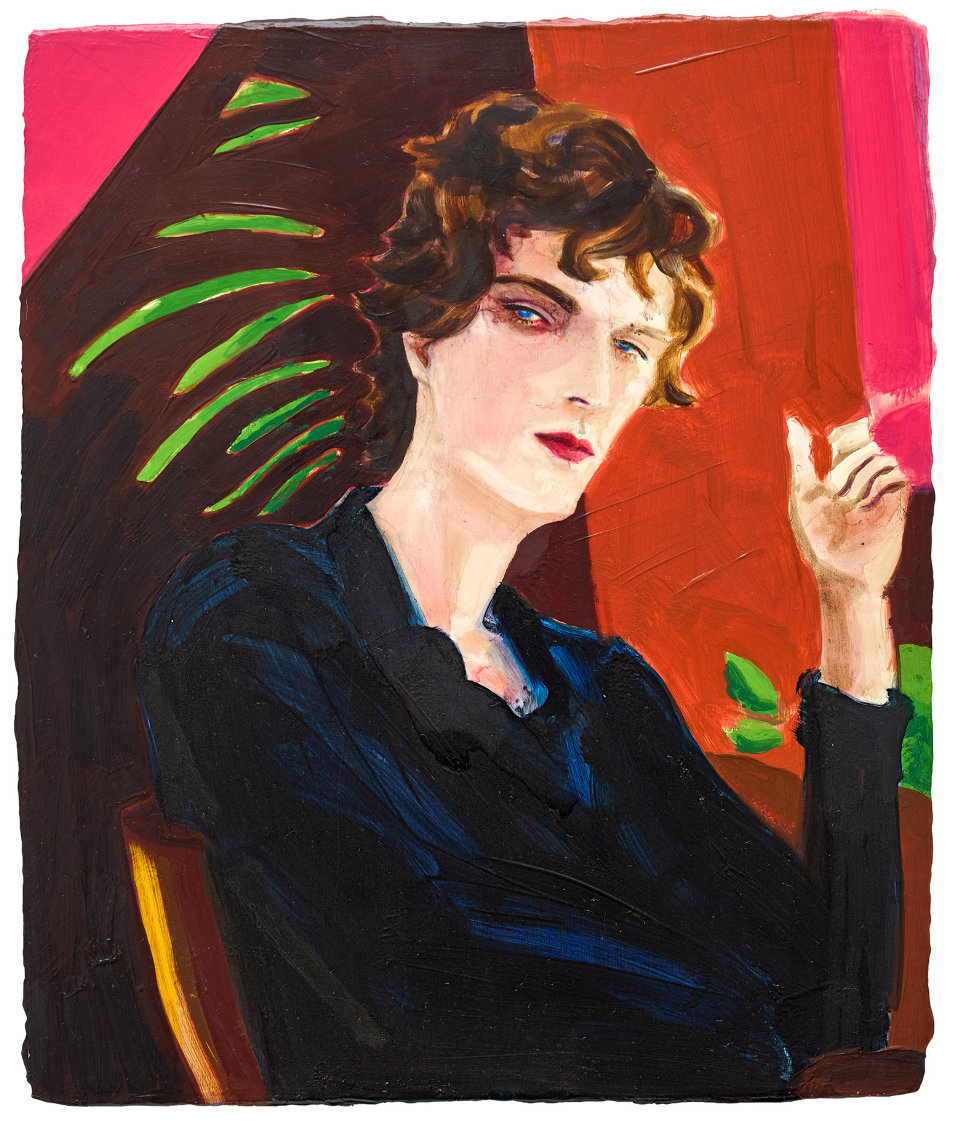
ELIZABETH PEYTON
Torino (Tony) Sept. 99, 1999
Oil on board
24.6 x 20.9 cm (9 5/8 x 8 1/4 inches)
Signed, titled and dated ‘September Torino, (Tony) Elizabeth Peyton 1999’ on the reverse
USD 500,000
#5. Queen Elizabeth II, 1995
Sotheby’s London: 25 June 2024
Estimated: GBP 300,000 – 600,000
GBP 384,000 / USD 486,912
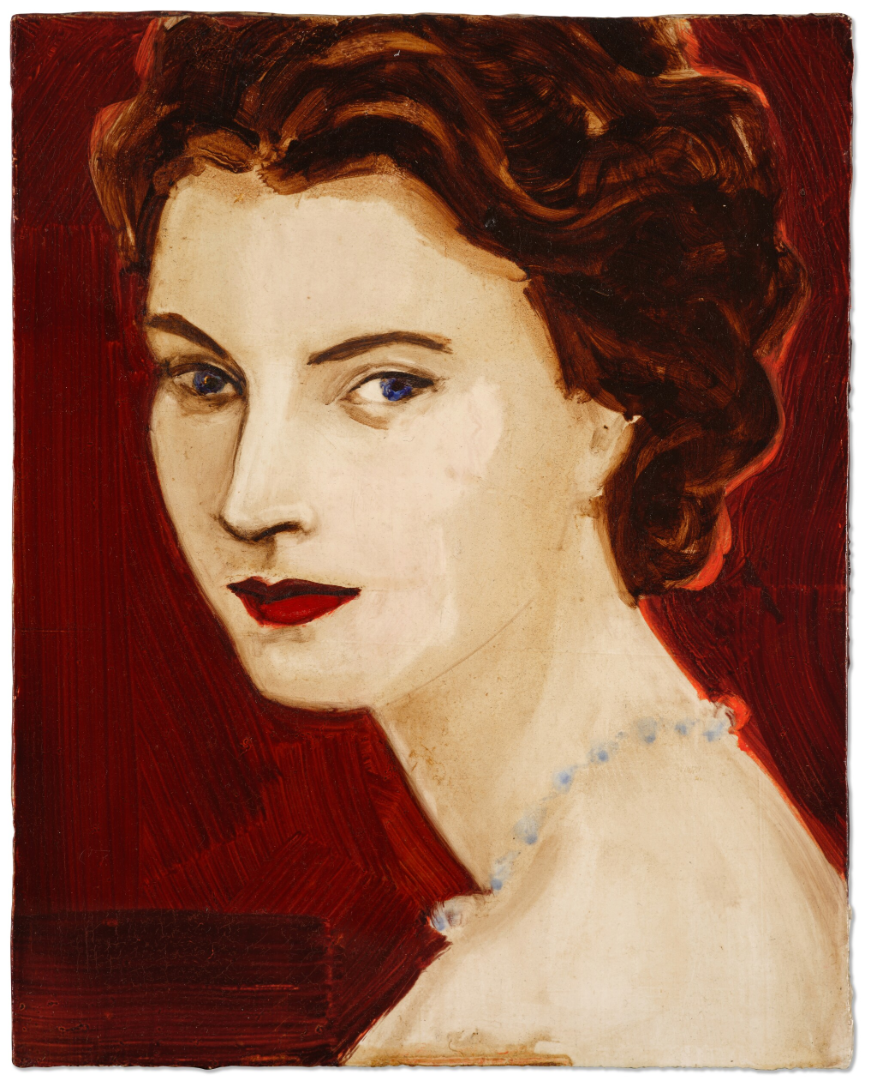
ELIZABETH PEYTON (b. 1965)
Queen Elizabeth II, 1995
Oil on board
10 1/8 x 8 inches (25.8 x 20.5 cm)
#6. Maurizio Eating, 1999
Christie’s New-York: 17 May 2024
Estimated: USD 350,000 – 550,000
USD 441,000
https://www.christies.com/en/lot/lot-6482475
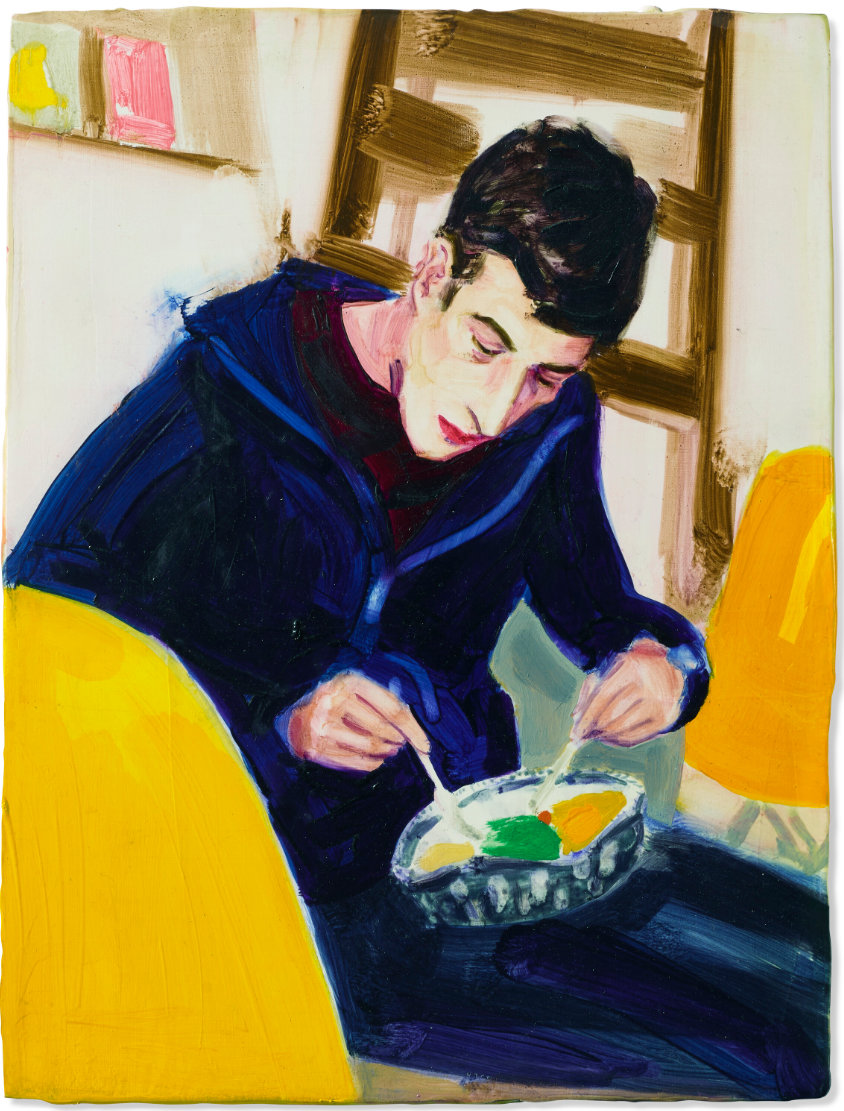
ELIZABETH PEYTON (B. 1965)
Maurizio Eating, 1999
Oil on panel
12 1/8 x 9 1/4 inches (30.8 x 23.5 cm)
Signed, titled and dated ‘Maurizio eating 1999 Elizabeth Peyton’ (on the reverse)
#7. Alex (Alex Katz) Winter 2012, 2012
Phillips New-York: 20 November 2024
Estimated: USD 300,000 – 400,000
USD 304,800
Elizabeth Peyton – Modern & Contem… Lot 318 November 2024 | Phillips
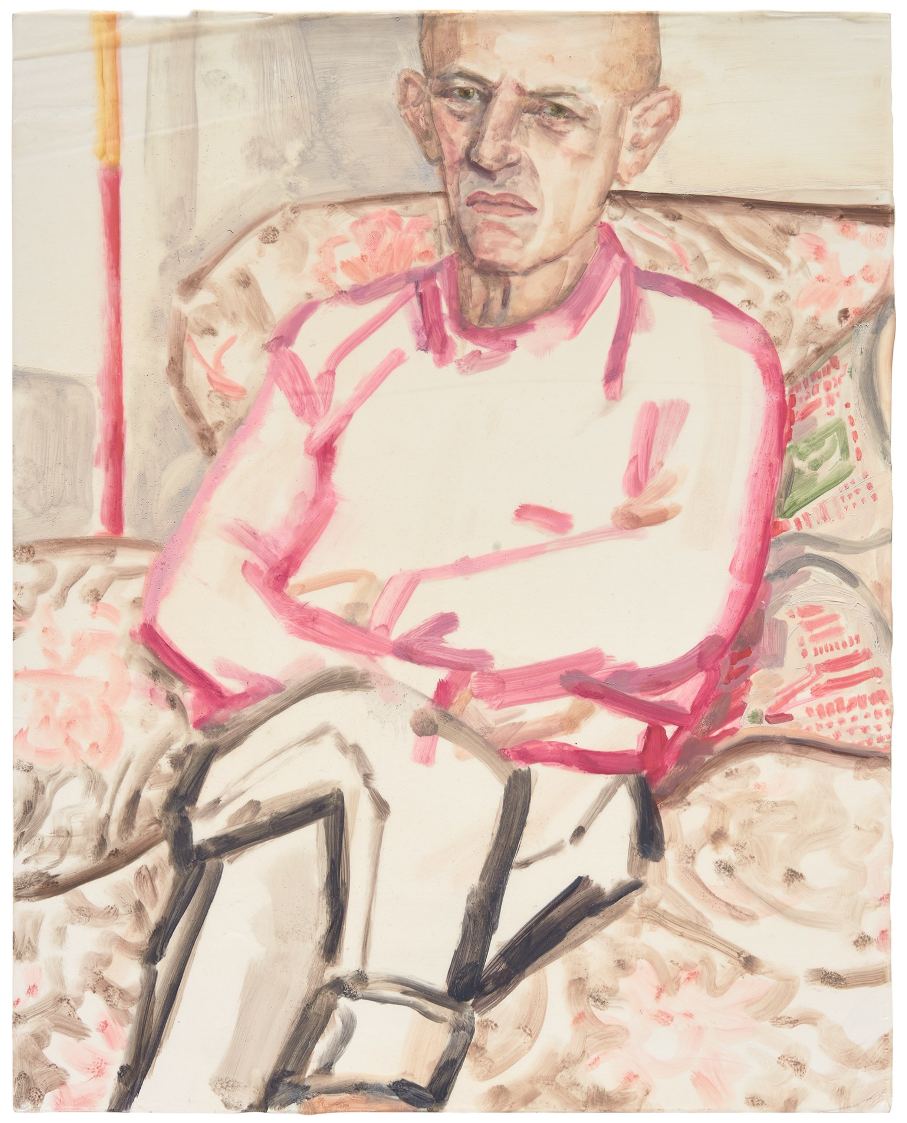
ELIZABETH PEYTON
Alex (Alex Katz) Winter 2012, 2012
Oil on aluminum veneered panel
15×12 inches (38.1 x 30.5 cm)
Signed, titled and dated “Alex, (Alex Katz) WINTER 2012 Elizabeth Peyton 2012” on the reverse
#8. Marcello, 1996
Christie’s London: 9 March 2024
Estimated: GBP 50,000 – 70,000
GBP 176,400 / USD 226,822
WORK ON PAPER
https://www.christies.com/en/lot/lot-6470177
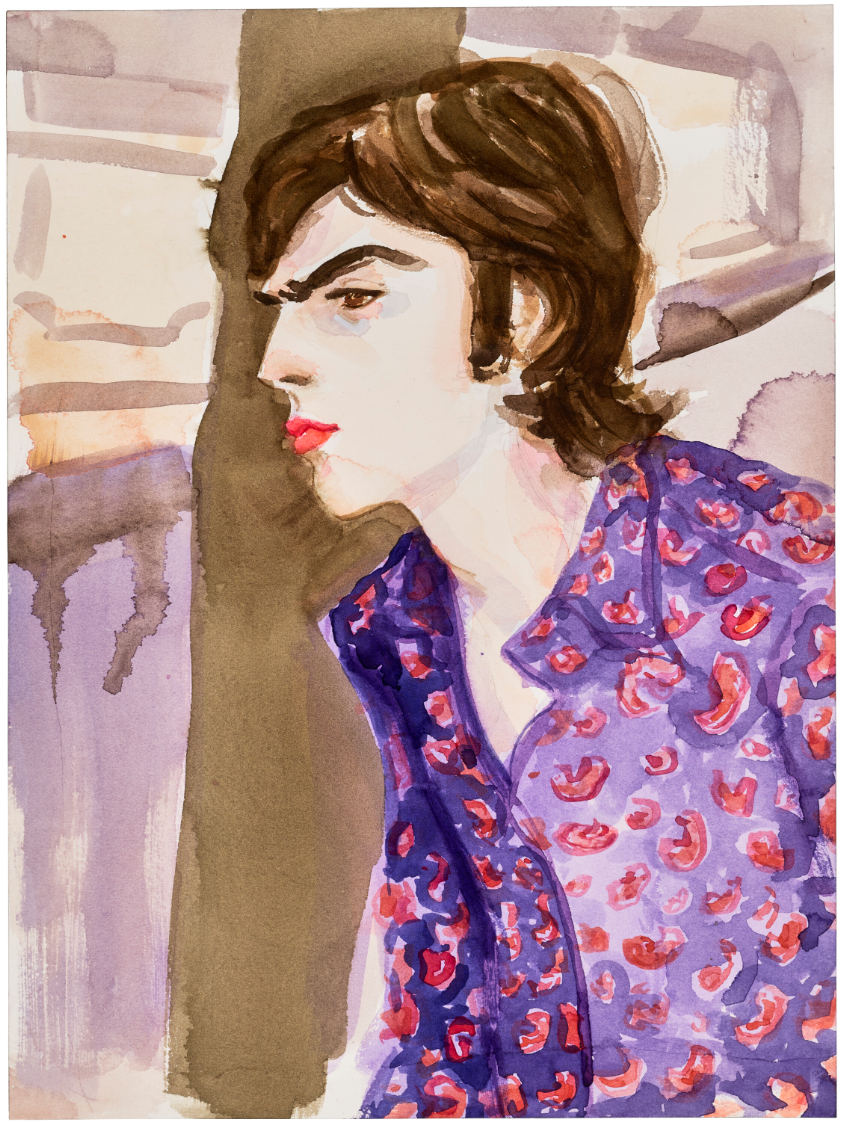
ELIZABETH PEYTON (B. 1965)
Marcello, 1996
Watercolor on paper
12 1/4 x 9 inches (31×23 cm)
#9. Untitled (Elizabeth), 1993
Phillips New-York: 15 May 2024
Estimated: USD 12,000 – 18,000
USD 33,020
WORK ON PAPER
https://www.phillips.com/detail/elizabeth-peyton/NY010524/417
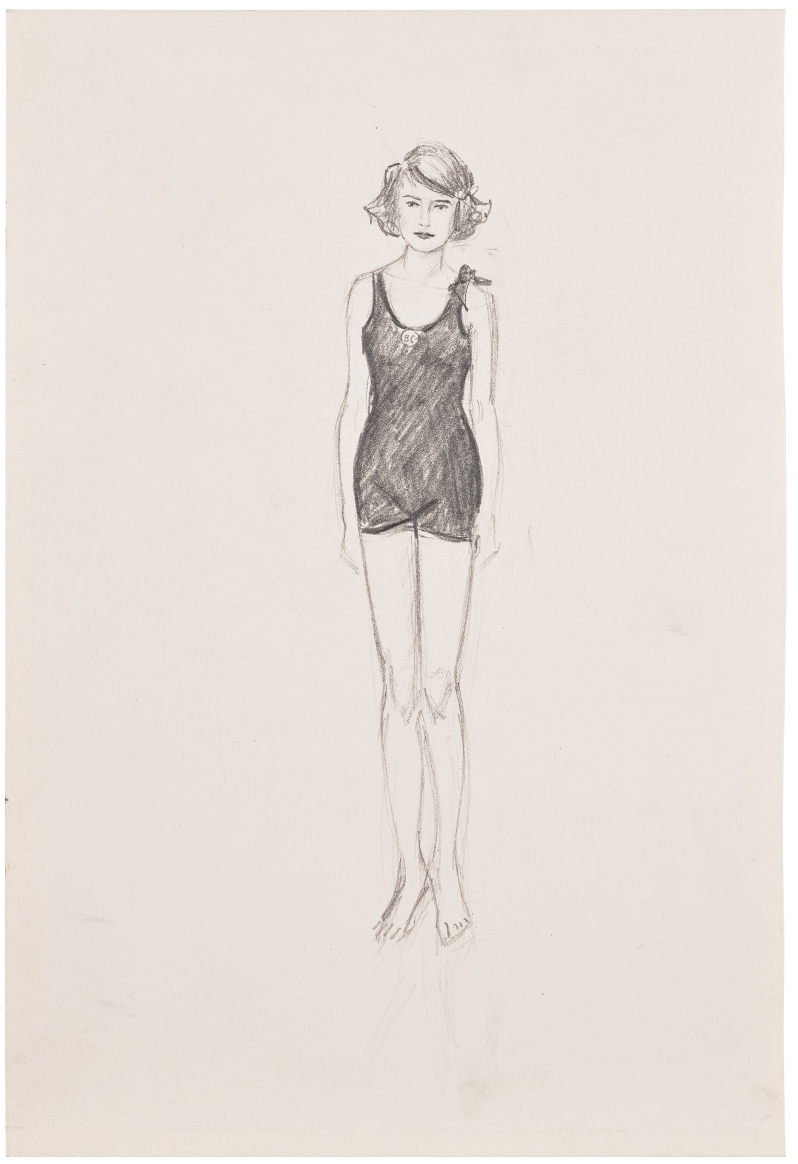
ELIZABETH PEYTON
Untitled (Elizabeth), 1993
Graphite on paper
12 x 8 1/4 inches (30.5 x 21 cm)
2023 Auction Results
18 lots sold at auction in 2023 for a total turnover of USD 12,801,655.
With 2 lots failing to sell, the sell-through rate is 90%. The highest price has been achieved by The Age of Innocence, an oil on board dated 2007, that sold for USD 2,645,000 at Fair Warning on 14 December 2023. 4 lots sold for more than USD 1 million, generating a cumulative turnover of USD 8,142,864, representing 63.6% of the total turnover for 2023.
2023 Top 3 Lots
#1. The Age of Innocence, 2007
Fair Warning: 14 December 2023
Estimated: USD 2,000,000 – 3,000,000
USD 2,645,000
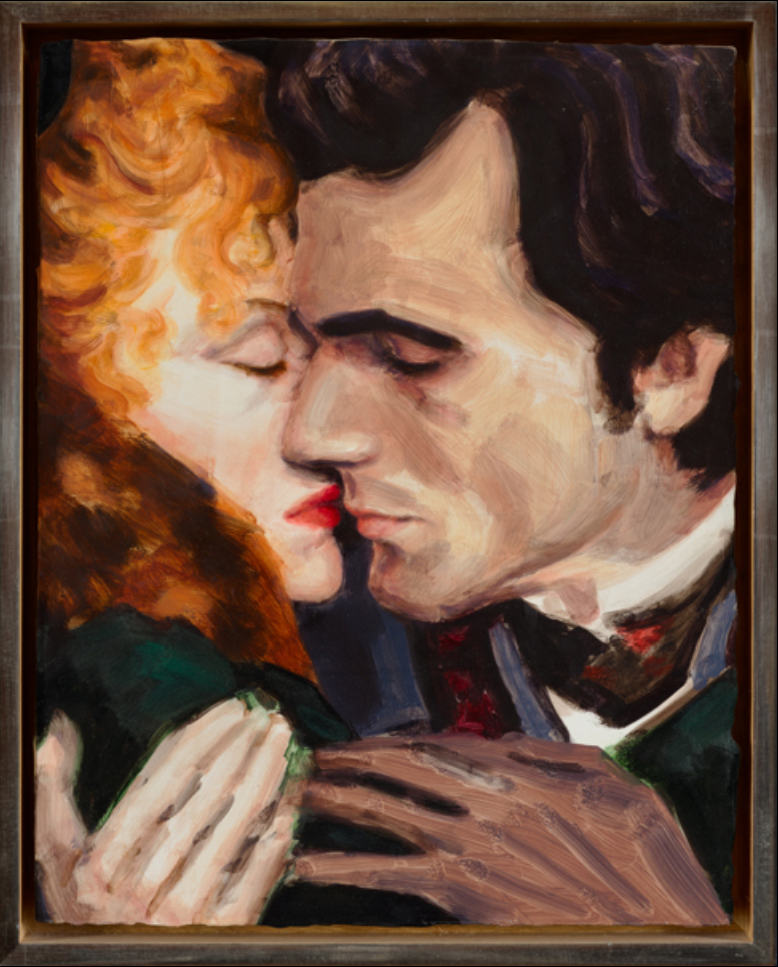
ELIZABETH PEYTON
The Age of Innocence, 2007
Oil on board
36 1/4 x 25 3/8 inches (92 x 64.2 cm)
#2. Sid Vicious Arrested, Chelsea Hotel, 1998
Sotheby’s New-York: 15 November 2023
Estimated: USD 1,500,000 – 2,000,000
USD 2,238,000
ELIZABETH PEYTON (B. 1965), Sid Vicious Arrested, Chelsea Hotel | Sotheby’s (sothebys.com)
ELIZABETH PEYTON (B. 1965)
Sid Vicious Arrested, Chelsea Hotel, 1998
Oil on canvas
40×30 inches (101.5 x 76 cm)
Initialed, titled and variously inscribed (on the overlap)
#3. David, Victoria and Brooklyn, 1999
Sotheby’s London: 12 October 2023
Estimated: GBP 1,200,000 – 1,800,000
GBP 1,681,500 / USD 2,053,364
ELIZABETH PEYTON (B. 1965), David, Victoria and Brooklyn | Sotheby’s (sothebys.com)
ELIZABETH PEYTON (B. 1965)
David, Victoria and Brooklyn, 1999
Oil on canvas
60 x 40 1/8 inches (152.3 x 101.8 cm)
Signed, titled and dated 1999 (on the overlap)
#4. Mendips, 1996
Phillips New York: 14 November 2023
Estimated: USD 900,000 – 1,200,000
USD 1,206,500
ELIZABETH PEYTON (B. 1965), Mendips, 1963 | Phillips (phillips.com)
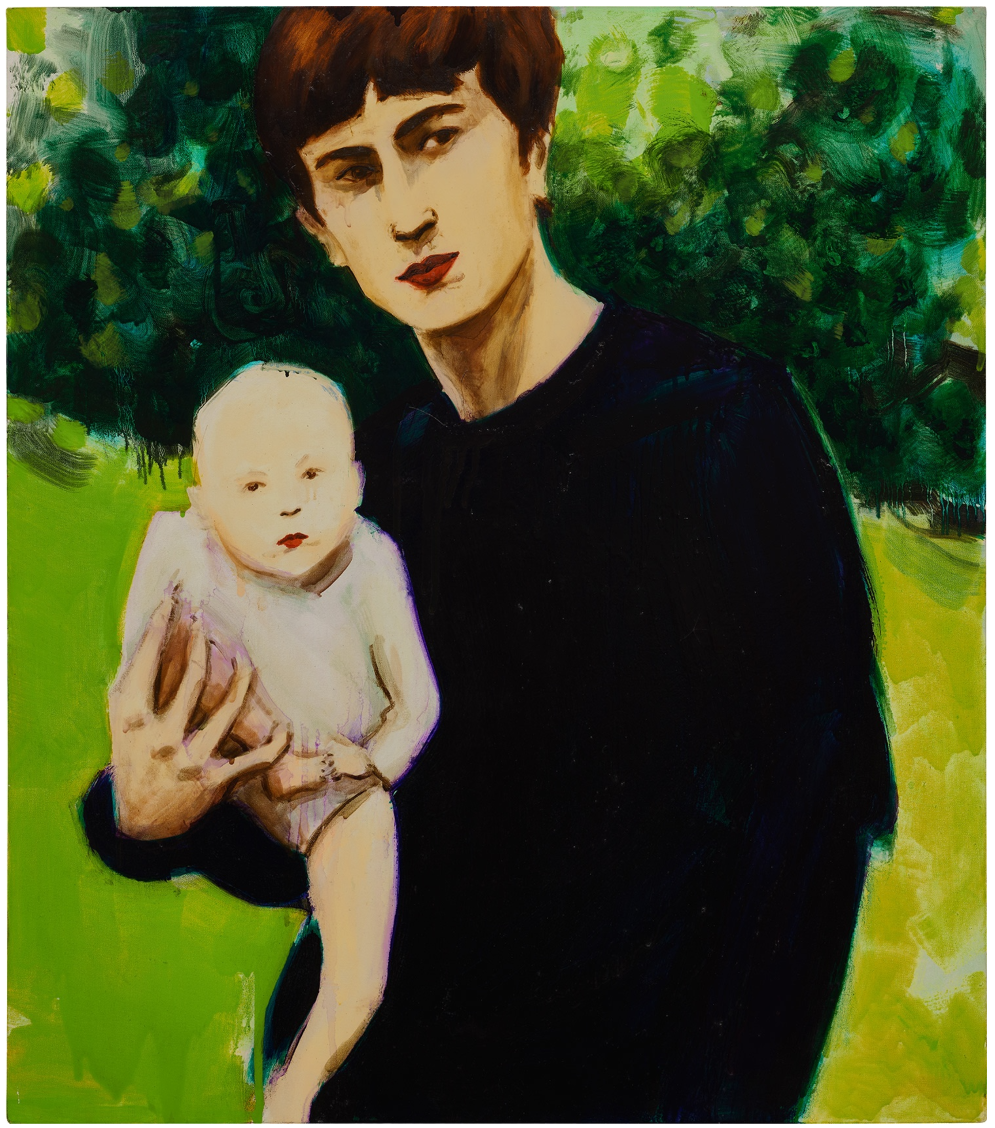
ELIZABETH PEYTON (B. 1965)
Mendips, 1963, 1996
Oil on canvas
32 1/4 x 28 1/4 inches (81.9 x 71.8 cm)
#5. Kiss, 2019
Sotheby’s New York: 19 May 2023
Estimated: USD 600,000 – 800,000
USD 825,500
ELIZABETH PEYTON (B. 1965), Kiss | Sotheby’s (sothebys.com)
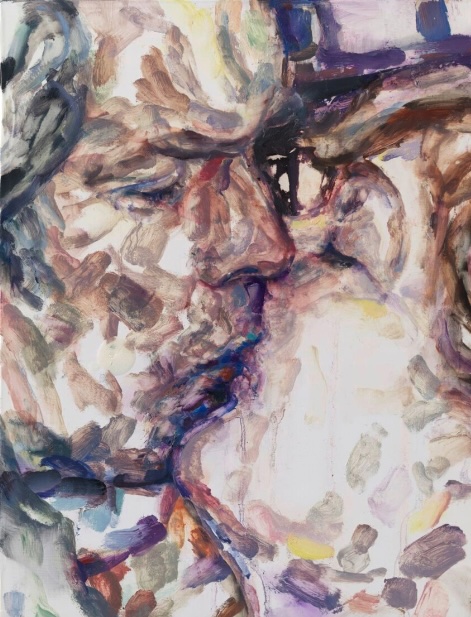
ELIZABETH PEYTON (B. 1965)
Kiss, 2019
Oil on panel
12×9 inches (30.5 x 22.9 cm)
Signed, titled and dated 2019 (on the reverse)
#6. Prince Harry, September 1998, 1998
Phillips London: 30 June 2023
Estimated: GBP 400,000 – 600,000
GBP 488,950 / USD 621,362
ELIZABETH PEYTON (B. 1965), Prince Harry, September 1998 | Phillips (phillips.com)
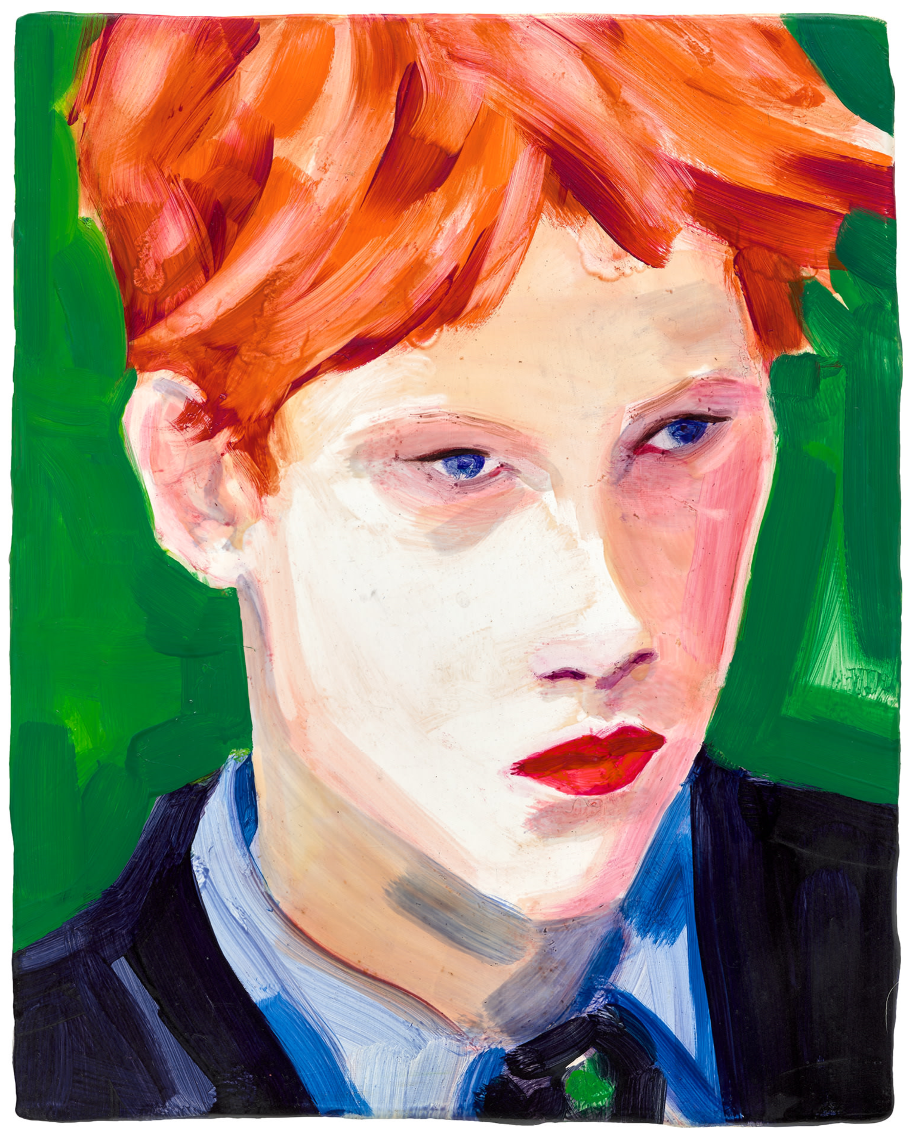
ELIZABETH PEYTON (B. 1965)
Prince Harry, September 1998, 1998
Oil on board
10 1/4 x 8 1/4 inches (26.1 x 21.1 cm)
Signed, titled and dated ‘Prince Harry, September 1998 Elizabeth Peyton, Elizabeth Peyton 1998’ on the reverse
#7. Harry and Tittie, 2003
Sotheby’s New York: 9 March 2023
Estimated: USD 300,000 – 400,000
USD 508,000
ELIZABETH PEYTON (B. 1965), Harry and Tittie | Sotheby’s (sothebys.com)
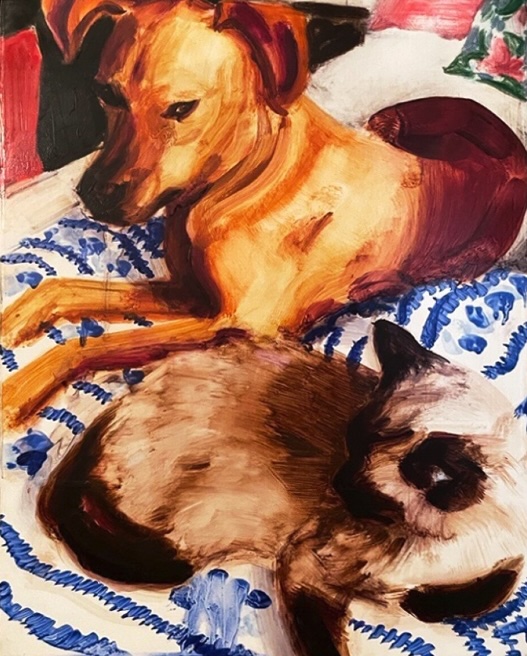
ELIZABETH PEYTON (B. 1965)
Harry and Tittie, 2003
Oil on fiberboard
9×7 inches (22.9 x 17.8 cm)
Signed, titled and dated 2003 (on the reverse)
#8. Haircut (Ben & Spencer), 2002
Christie’s Hong Kong: 29 May 2023
Estimated: HKD 2,500,000 – 4,500,000
HKD 3,528,000 / USD 450,672
ELIZABETH PEYTON (B. 1965), Haircut (Ben & Spencer) | Christie’s (christies.com)
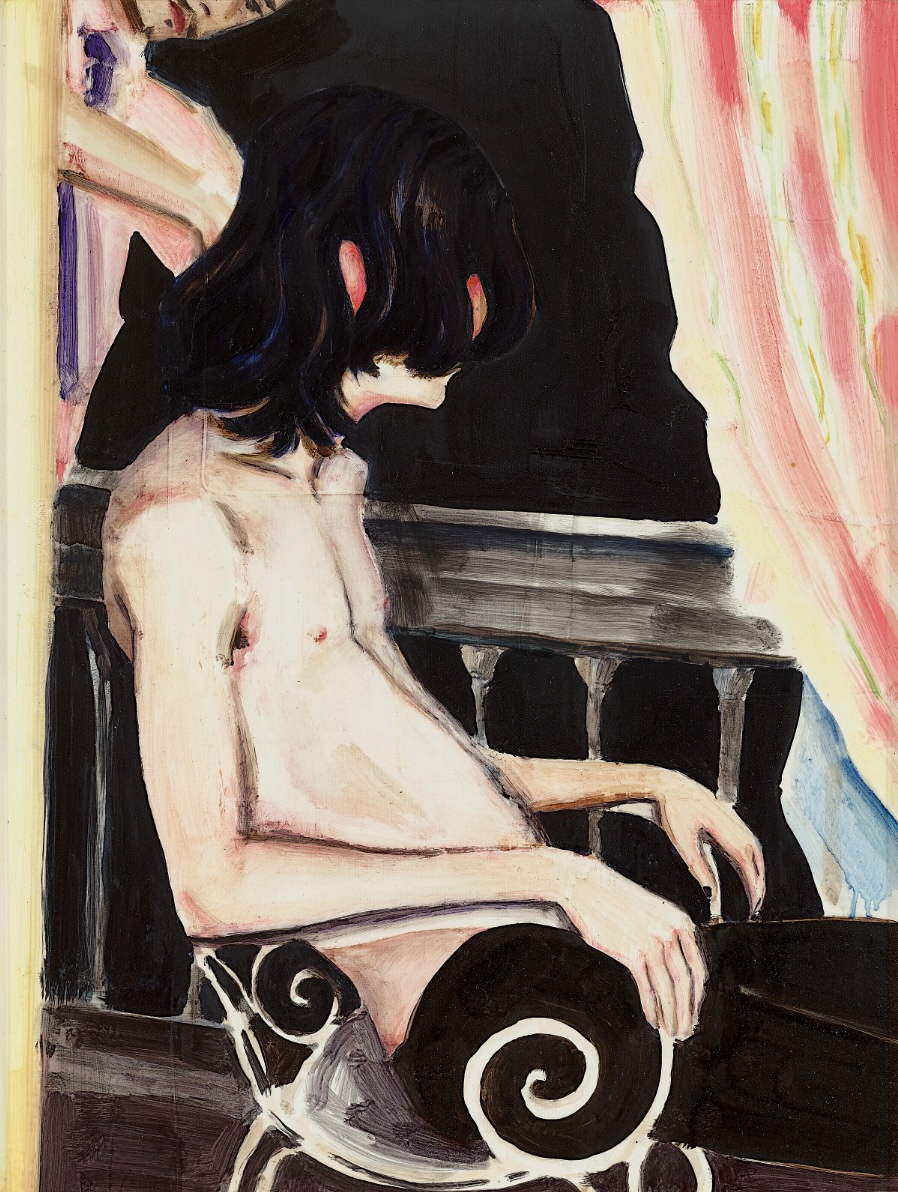
ELIZABETH PEYTON (B. 1965)
Haircut (Ben & Spencer), 2002
Oil on board
12 1/8 x 9 1/4 inches (30.8 x 23.4 cm)
Signed with artist’s signature, titled and dated ‘Haircut (Ben & Spencer) SEPT 2002’ (on the reverse)
#9. Angela, 2017
Sotheby’s London: 27 June 2023
Estimated: GBP 500,000 – 700,000
GBP 349,250 / USD 445,358
ELIZABETH PEYTON (B. 1965), Angela | Sotheby’s (sothebys.com)
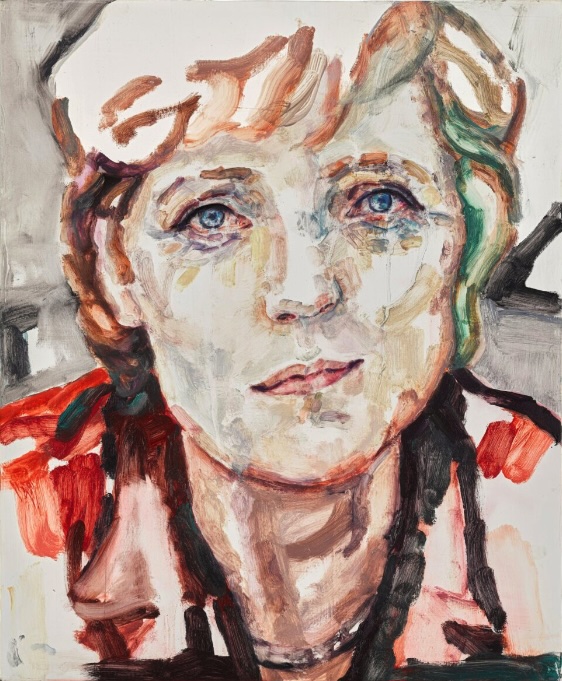
ELIZABETH PEYTON (B. 1965)
Angela, 2017
Oil on board
17×14 inches (43.2 x 35.6 cm)
Signed, titled and dated 2017 (on the reverse)
#10. Balzac Still Life, 2008
Sotheby’s London: 13 October 2023
Estimated: GBP 300,000 – 400,000
GBP 355,600 / USD 431,553
ELIZABETH PEYTON (B. 1965), Balzac Still Life | Sotheby’s (sothebys.com)
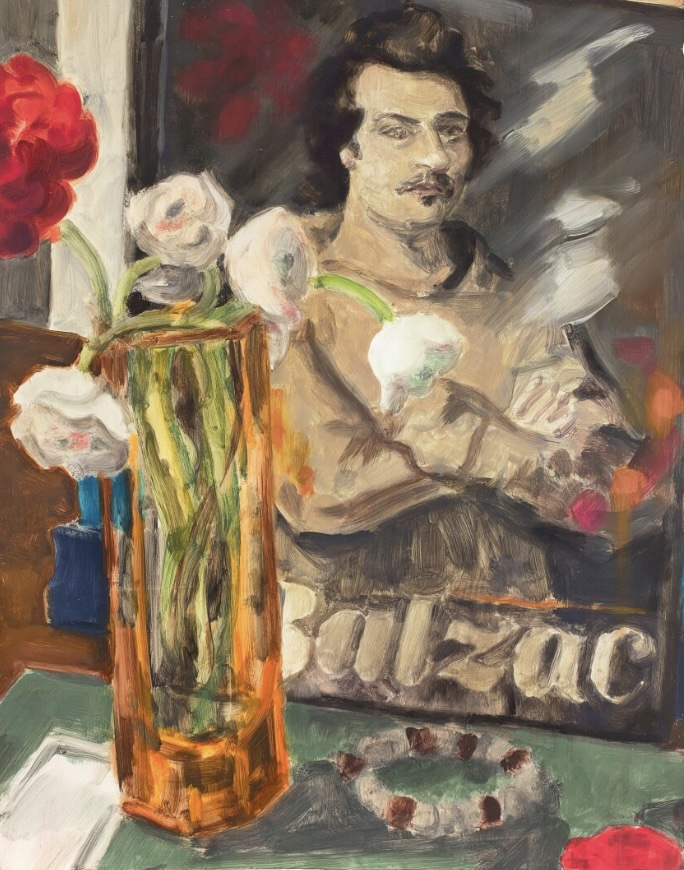
ELIZABETH PEYTON (B. 1965)
Balzac Still Life, 2008
Oil on board
14 1/2 x 11 3/8 inches (36.7 x 28.8 cm)
Signed, titled and dated 2008 May (on the reverse)
#11. Mark (Smoking), 1996
Christie’s London: 14 October 2023
Estimated: GBP 50,000 – 70,000
GBP 289,800 / USD 351,400
WORK ON PAPER
ELIZABETH PEYTON (B. 1965), Mark (Smoking) | Christie’s (christies.com)
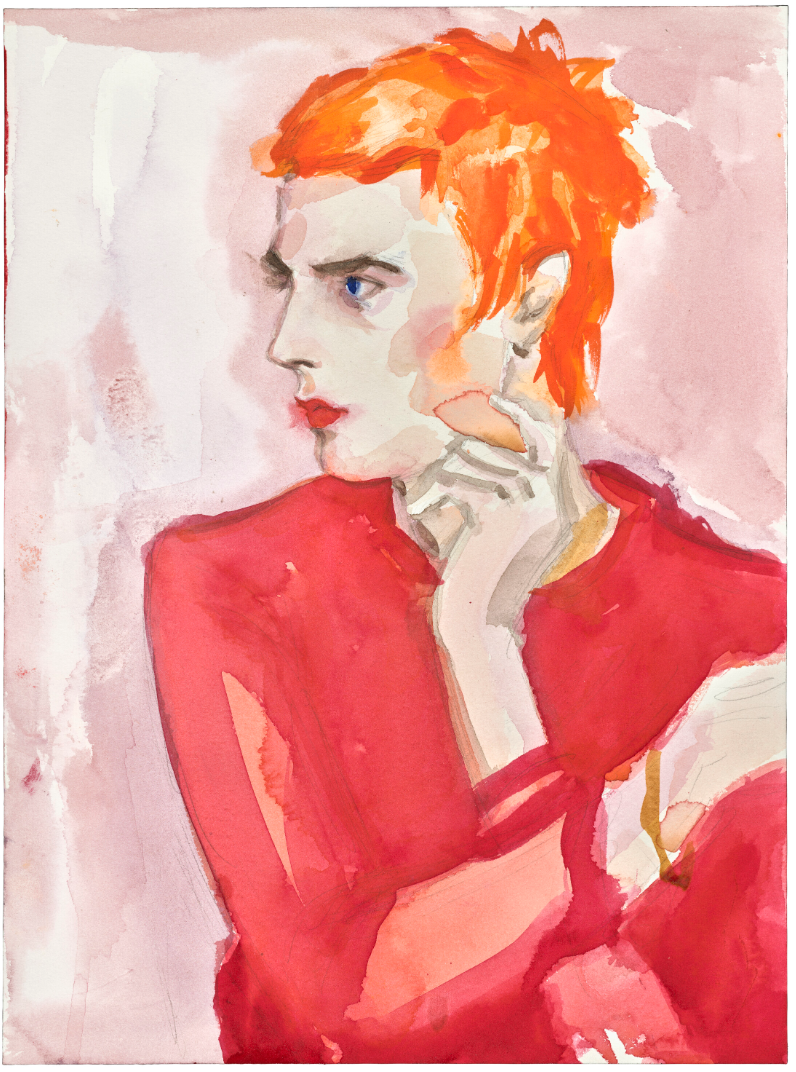
ELIZABETH PEYTON (B. 1965)
Mark (Smoking), 1996
Watercolor and graphite on paper
12 1/4 x 9 1/8 inches (31.1 x 23.1 cm)
#12. David, 1988-89
Christie’s London: 28 June 2023
Estimated: GBP 280,000 – 350,000
GBP 252,000 / USD 318,382
ELIZABETH PEYTON (B. 1965), David | Christie’s (christies.com)
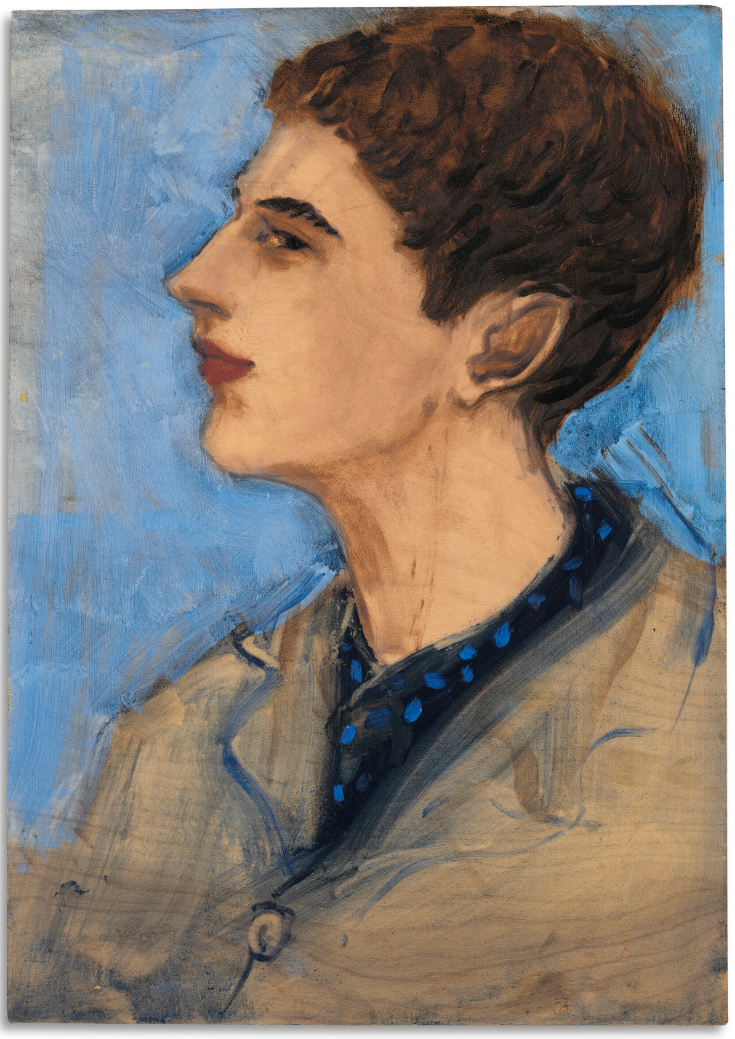
ELIZABETH PEYTON (B. 1965)
David, 1988-89
Oil on panel
19 x 13 1/2 inches (48.3 x 34.3 cm)
Signed, titled and dated ‘David Elizabeth Peyton 1988 ? 1989 ?’ (on the reverse)
#13. Kurt, 1999
Sotheby’s New York: 16th November 2023
Estimated: USD 100,000 – 150,000
USD 304,800
WORK ON PAPER
ELIZABETH PEYTON (B. 1965), Kurt | Sotheby’s (sothebys.com)
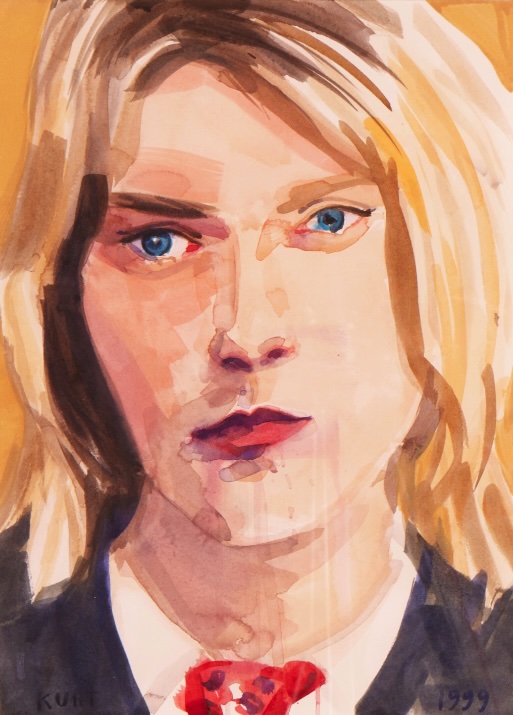
ELIZABETH PEYTON (B. 1965)
Kurt, 1999
Watercolor on paper
14 1/4 x 10 1/4 inches (36.2 x 26 cm)
Titled (lower left); dated 1999 (lower right); signed, titled and dated May 99 (on the verso)
#14. Georgia O’Keeffe after Stieglitz 1918 (with hat), 2006
Christie’s Paris: 19 October 2023
Estimated: EUR 40,000 – 60,000
EUR 214,200 / USD 226,403
WORK ON PAPER
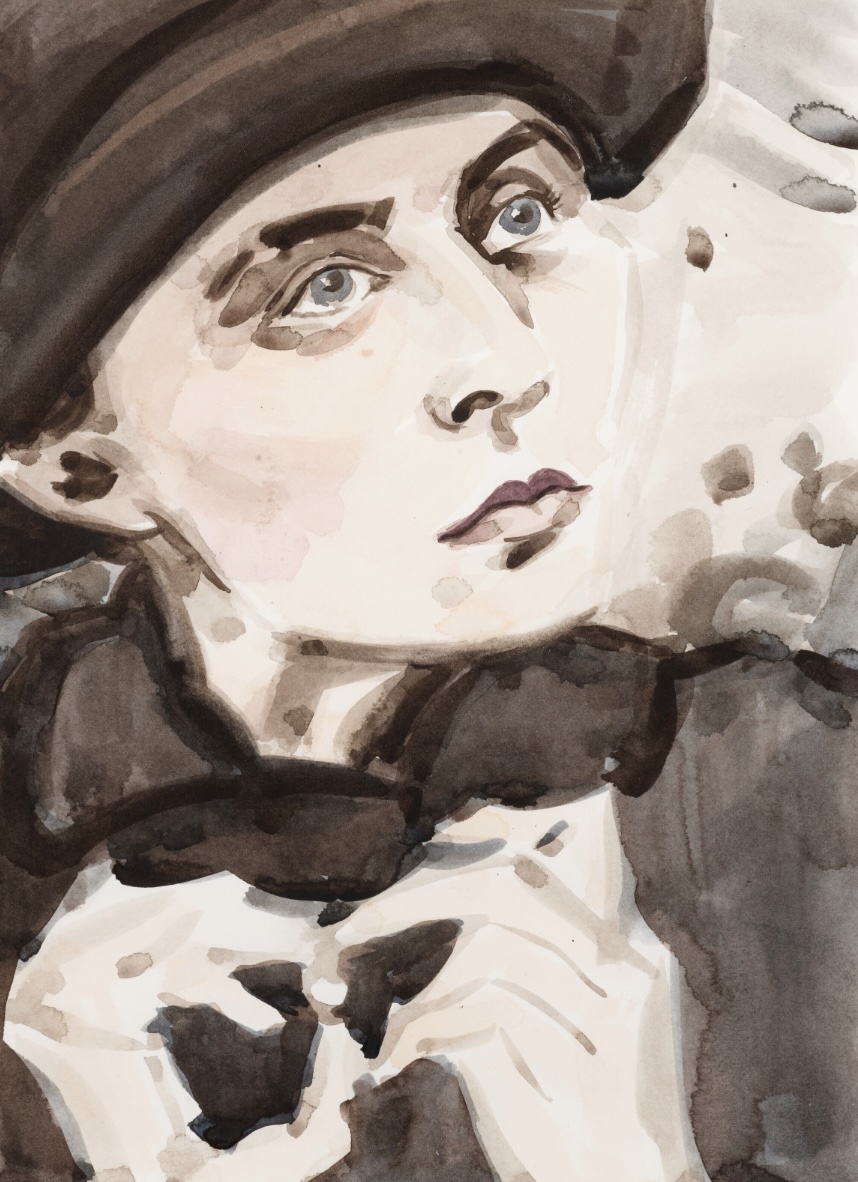
ELIZABETH PEYTON (B. 1965)
Georgia O’Keeffe after Stieglitz 1918 (with hat), 2006
Watercolor on paper
14 1/8 x 10 1/4 inches (36×26 cm)
Signed, titled and dated ”’Georgia O’Keeffe AFTER STIEGLITZ (WITH HAT) (1918)” Elizabeth 2006′ (on the reverse)
#15. Marie Antoinette, 1993
Im Kinsky: 27 November 2023
Estimated: EUR 70,000 – 140,000
EUR 100,680 / USD 110,121
WORK ON PAPER
ELIZABETH PEYTON (B. 1965), Marie Antoinette | Im Kinsky (imkinsky.com)
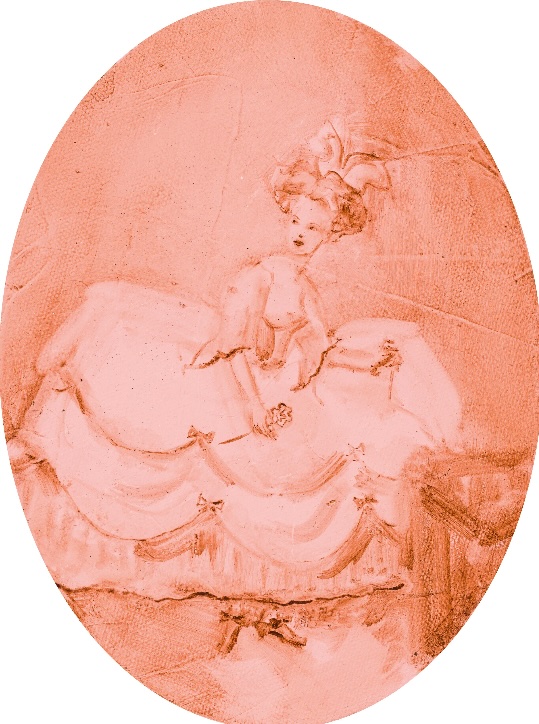
ELIZABETH PEYTON (B. 1965)
Marie Antoinette, 1993
20×15 cm
Inscribed, dedicated, dated and signed on the reverse: Marie Antoinette for Rudy, 1993, Elizabeth Peyton
#16. Lord Alfred Douglas, 2004
Sotheby’s London: 25 January 2023
Estimated: GBP 12,000 – 18,000
GBP 25,200 / USD 31,176
WORK ON PAPER
ELIZABETH PEYTON (B. 1965), Lord Alfred Douglas | Sotheby’s (sothebys.com)
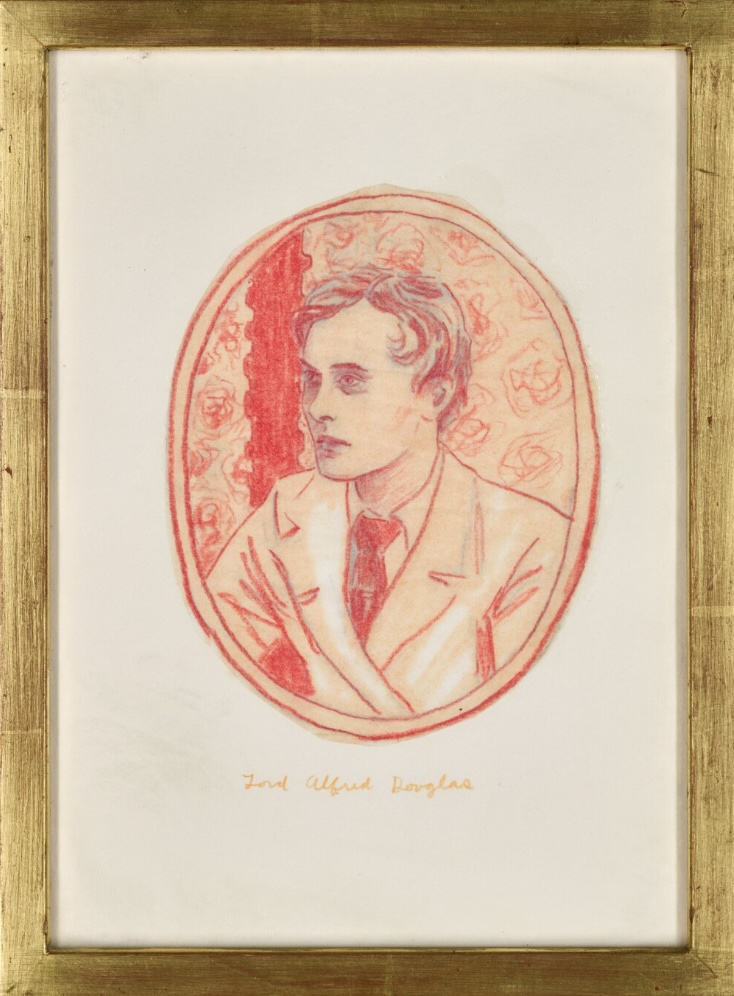
ELIZABETH PEYTON (B. 1965)
Lord Alfred Douglas, 2004
Color pencil and collage on paper
8 1/2 x 6 1/8 inches (21.5 x 15.5cm)
Titled; signed, dated November 2004 and dedicated on the reverse
#17. Untitled (Barenboim and Bosie), 1993
Phillips New York: 15 November 2023
Estimated: USD 15,000 – 20,000
USD 17,780
WORK ON PAPER
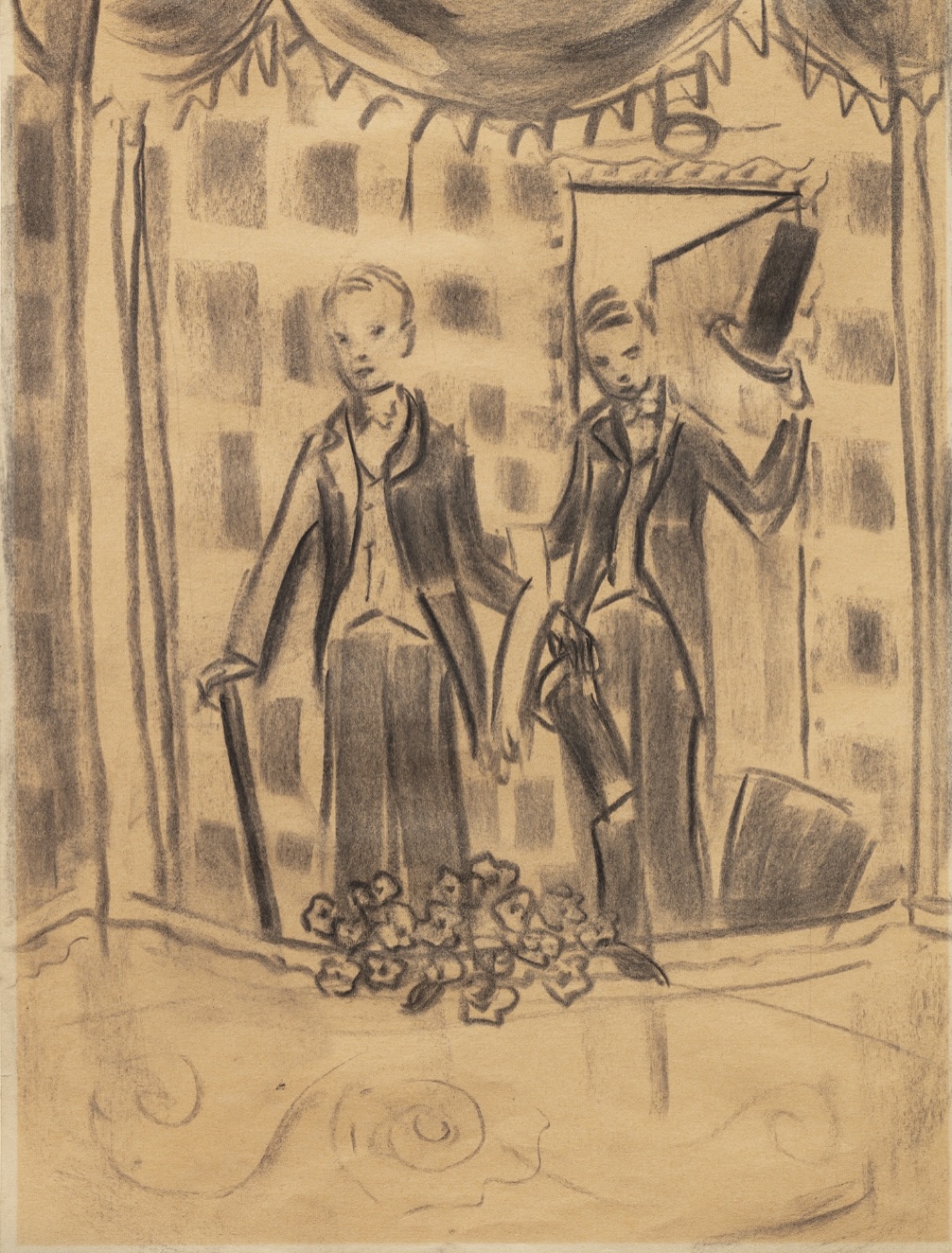
ELIZABETH PEYTON (B. 1965)
Untitled (Barenboim and Bosie), 1993
Charcoal on paper
16 1/2 by 11 3/4 in. (41.9 by 29.8 cm.)
#18. Untitled (Royals – Harry and William), 1997
Phillips London: 12 October 2023
Estimated: GBP 10,000 – 15,000
GBP 13,335 / USD 16,284
WORK ON PAPER
ELIZABETH PEYTON (B. 1965), Untitled (Royals – Harry and William) | Phillips (phillips.com)
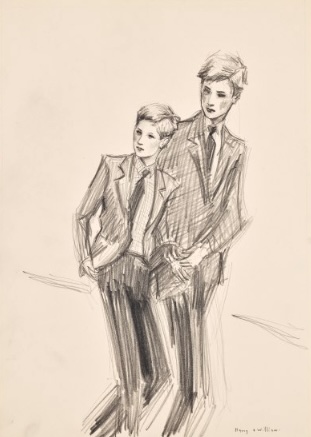
ELIZABETH PEYTON (B. 1965)
Untitled (Royals – Harry and William), 1997
Graphite on paper
12 1/8 x 8 5/8 inches (30.8 x 21.9 cm)
Titled ‘Harry + William’ lower right; signed, titled and dated ‘Harry + William Elizabeth Peyton 1997’ on the reverse
Lots Passed
Piotr, 1996
Sotheby’s New York: 18 May 2023
Estimated: USD 600,000 – 800,000
PASSED
ELIZABETH PEYTON (B. 1965), Piotr | Sotheby’s (sothebys.com)
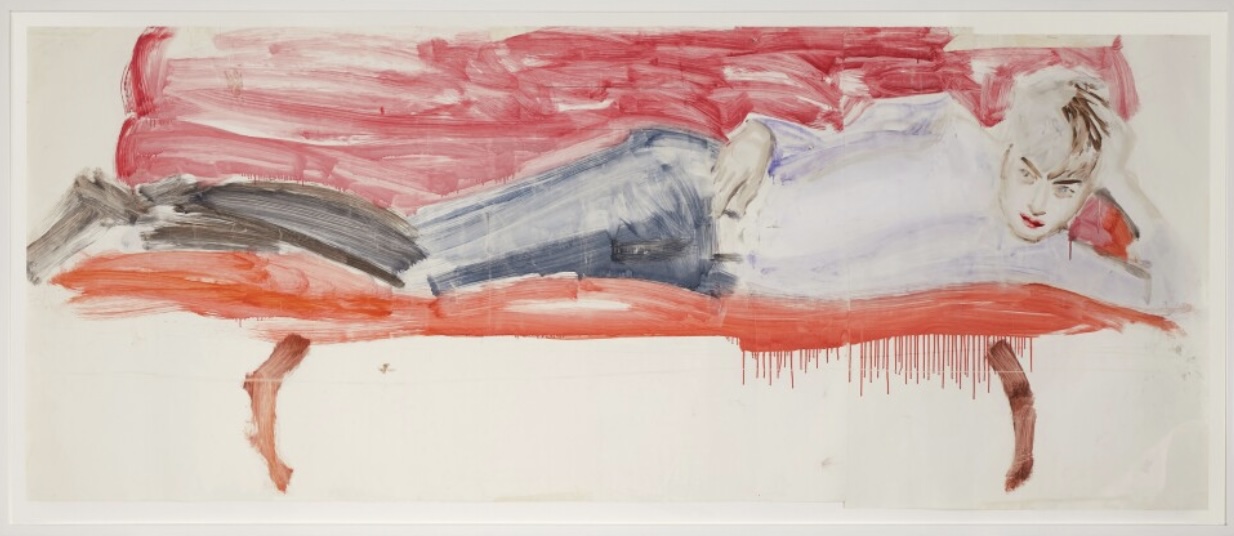
ELIZABETH PEYTON (B. 1965)
Piotr, 1996
oil on paper
35 1/2 x 87 1/4 inches (90.2 x 221.6 cm)
Beck, 1996
Sotheby’s New York: 19 July 2023
Estimated: USD 18,000 – 25,000
PASSED
ELIZABETH PEYTON (B. 1965), Beck | Sotheby’s (sothebys.com)
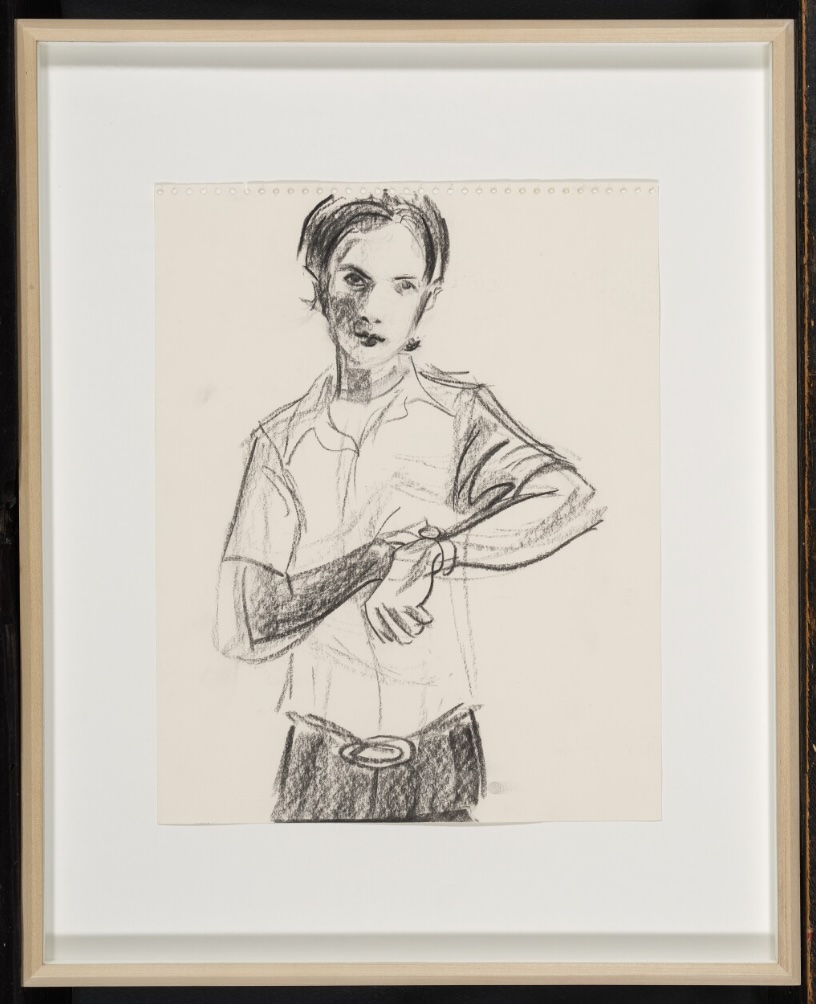
ELIZABETH PEYTON (B. 1965)
Beck, 1996
Charcoal and graphite on paper
13 7/8 x 11 inches (35.2 x 27.9 cm)
Titled, dated 1996 and variously inscribed (on the verso)
Louie XIV, 2005
Sotheby’s New York: 19 July 2023
Estimated: USD 40,000 – 60,000
PASSED
ELIZABETH PEYTON (B. 1965), Louie XIV | Sotheby’s (sothebys.com)
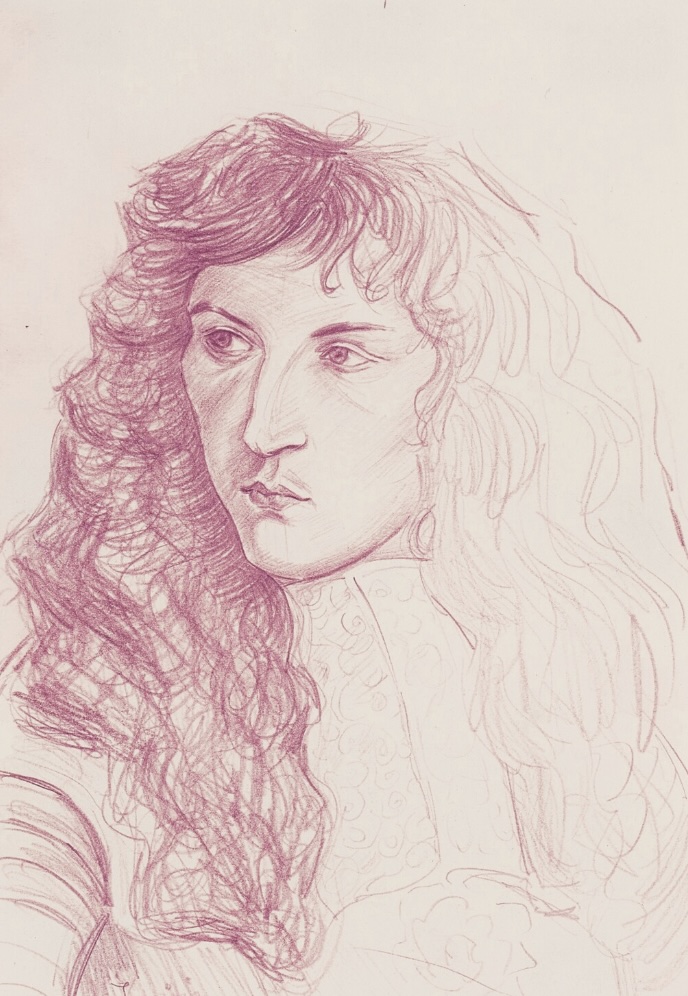
ELIZABETH PEYTON (B. 1965)
Louie XIV, 2005
Colored pencil
8 1/2 x 5 3/4 inches (21.6 x 14.6 cm)
2022 Auction Results
13 lots sold at auction in 2022 for a total turnover of USD 7,646,816.
With only 1 lot failing to sell, the sell-through rate is 93%. The highest price has been achieved by Nick with His Eyes Shut, an oil on panel dated 2003, that sold for USD 2,470,000 at Sotheby’s in New-York on 16 November 2022.
2022 Top 3 Lots
#1. Nick with His Eyes Shut, 2003
Sotheby’s New York: 16 November 2022
Estimated: USD 1,000,000 – 1,500,000
USD 2,470,000
ELIZABETH PEYTON (B. 1965), Nick with His Eyes Shut | Sotheby’s (sothebys.com)
ELIZABETH PEYTON (B. 1965)
Nick with His Eyes Shut, 2003
Oil on panel
11×14 inches (27.9 x 35.6 cm)
Signed, titled Nick with his Eyes Shut and dated 2003 (on the reverse)
#2. Liam Gallagher (Glastonbury 1995), 1995
Christie’s New York: 10th May 2022
Estimated: USD 600,000 – 800,000
USD 1,740,000
ELIZABETH PEYTON (B. 1965), Liam Gallagher (Glastonbury 1995) | Christie’s (christies.com)
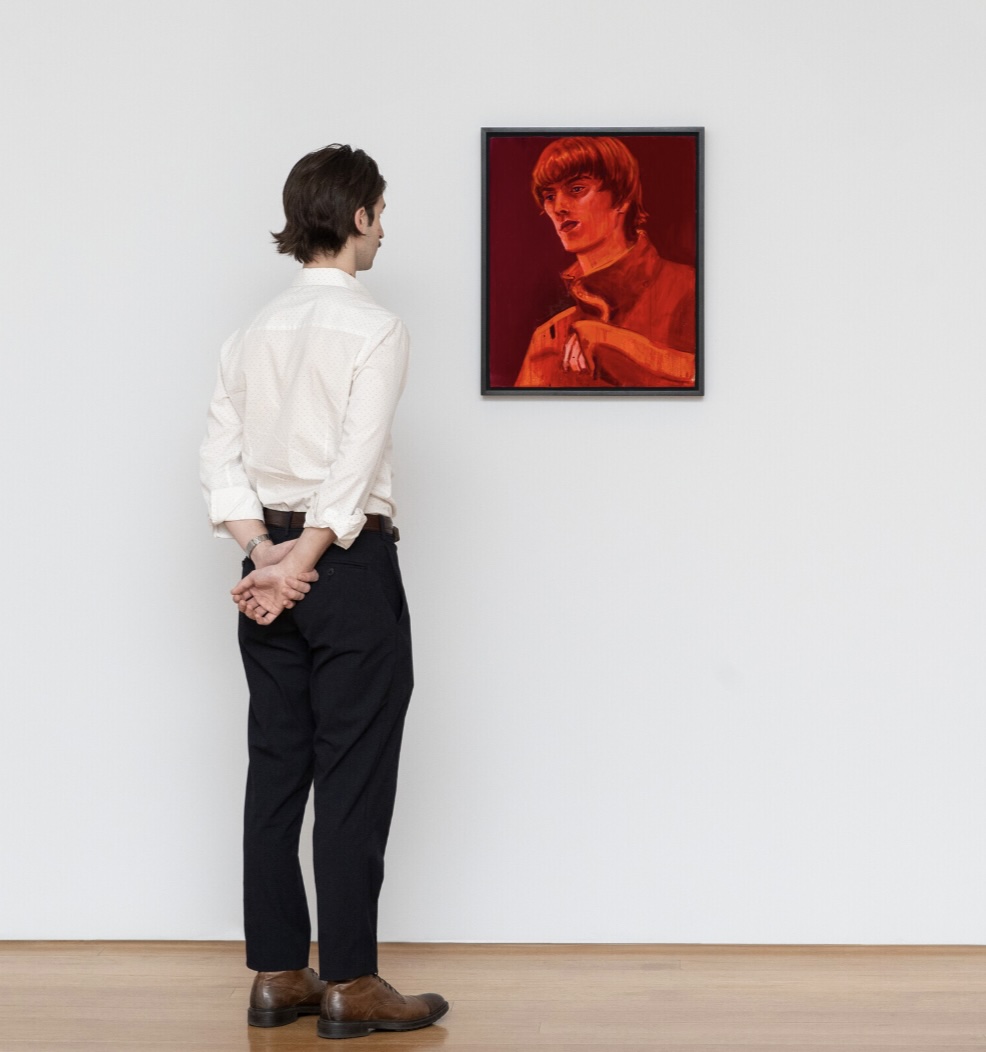
ELIZABETH PEYTON (B. 1965)
Liam Gallagher (Glastonbury 1995), 1995
Oil on panel
22 1/8 x 18 1/8 inches (56.2 x 46 cm)
Signed, titled and dated ‘LIAM GALLAGHER (GLASTONBURY 1995) Elizabeth Peyton 1995’ (on the reverse)
#3. Martin Creed, 1999
Sotheby’s London: 2 March 2022
Estimated: GBP 500,000 – 700,000
GBP 655,200 / USD 875,818
ELIZABETH PEYTON (B. 1965), Martin Creed | Sotheby’s (sothebys.com)
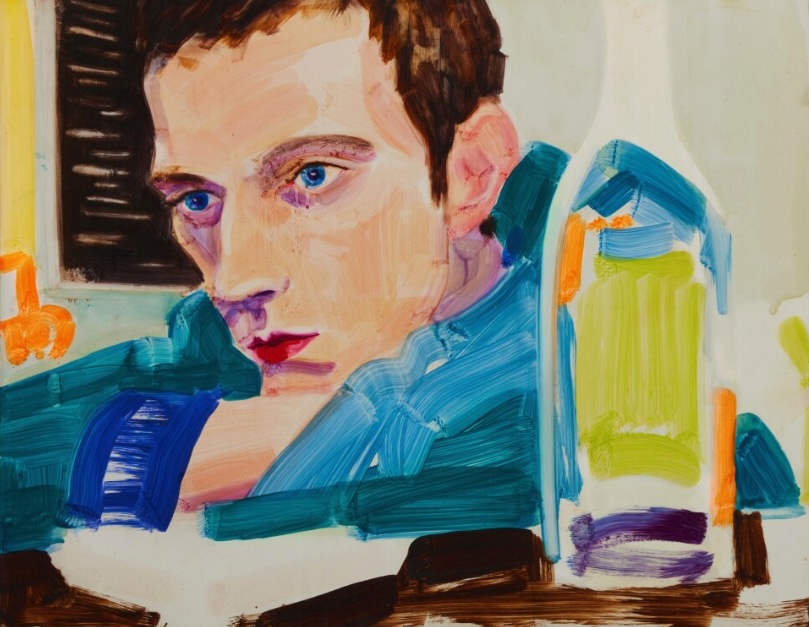
ELIZABETH PEYTON (B. 1965)
Martin Creed, 1999
Oil on board
11×14 inches (27.9 x 35.5 cm)
Titled, dated 1999 and variously inscribed (on the verso)
#4. Martin, 1998
Sotheby’s London: 14 October 2022
Estimated: GBP 400,000 – 600,000
GBP 730,800 / USD 819,282
ELIZABETH PEYTON (B. 1965), Martin | Sotheby’s (sothebys.com)
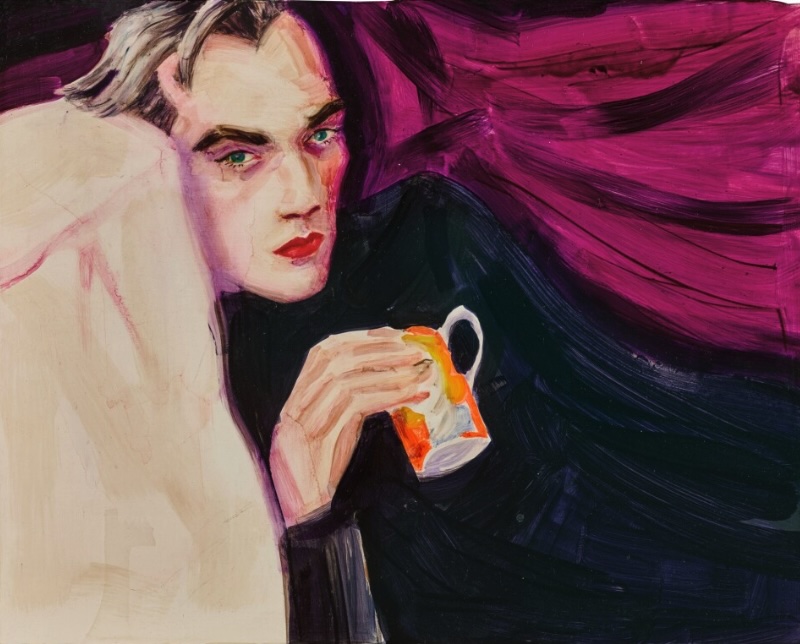
ELIZABETH PEYTON (B. 1965)
Martin, 1998
Oil on MDF
11 1/8 x 14 1/8 inches (28.2 x 36 cm)
Titled Martin, dated November 1998 and variously inscribed (on the reverse)
#5. Evan at the Reading Festival 1993, 1997
Phillips New-York: 14 October 2022
Estimated: USD 480,000 – 650,000
USD 567,000
ELIZABETH PEYTON (B. 1965), Evan at the Reading Festival 1993 | Phillips (phillips.com)
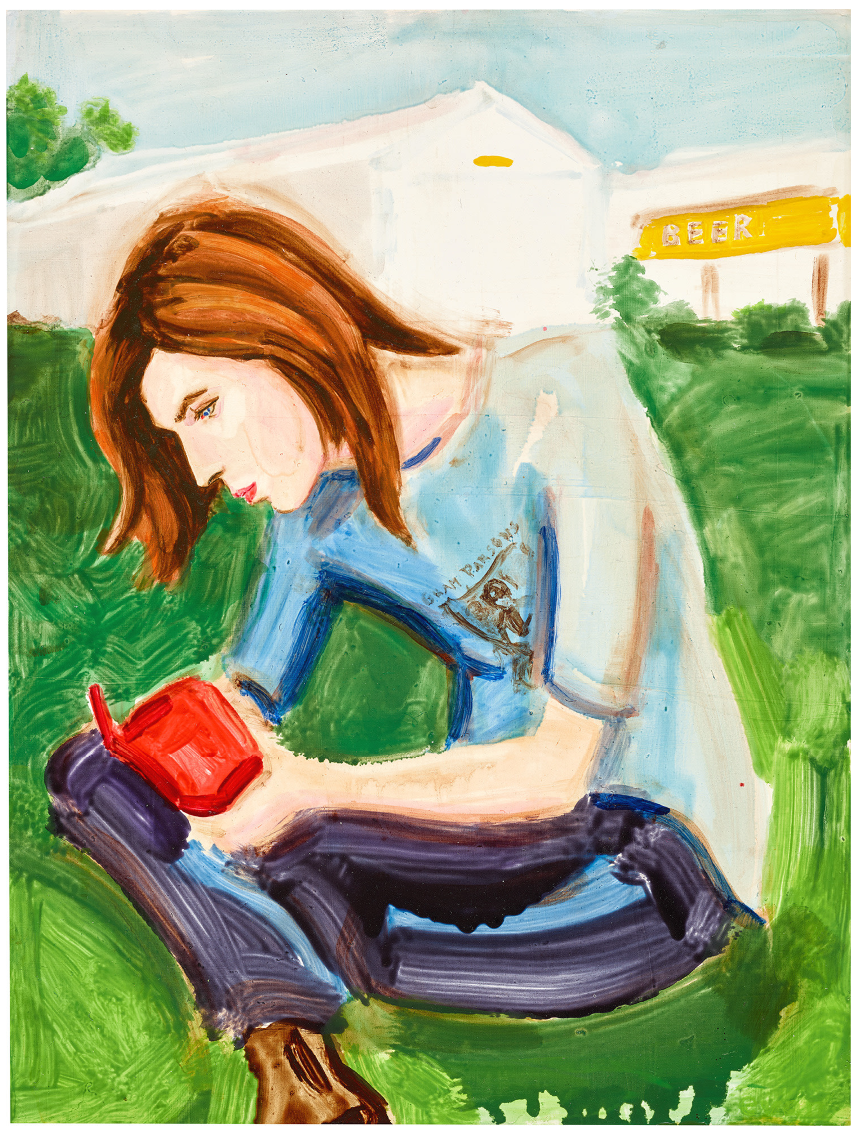 ELIZABETH PEYTON (B. 1965)
Evan at the Reading Festival, 1993, 1997
Oil on board
12 x 9 1/4 inches (30.6 x 23.4 cm)
Signed, titled and dated ‘evan @ the reading festival 1993 1997 Elizabeth Peyton’ on the reverse
#6. Burkhard Riemscheider, 1995
Phillips New York: 16 November 2022
Estimated: USD 450,000 – 650,000
USD 567,000
ELIZABETH PEYTON (B. 1965), Burkhard Riemschneider | Phillips (phillips.com)
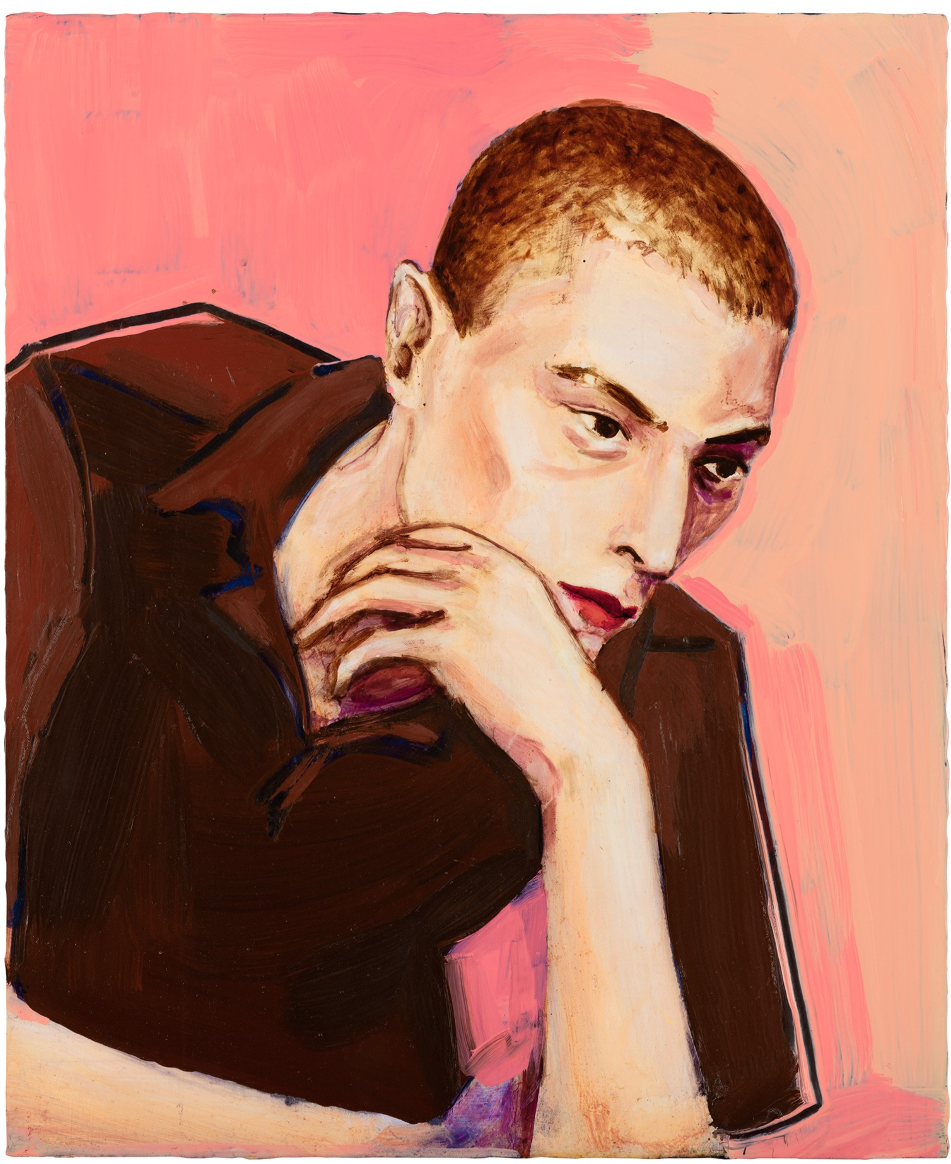
ELIZABETH PEYTON (B. 1965)
Burkhard Riemschneider, 1995
Oil on board
17 1/8 by 14 1/8 in. (43.5 x 35.9 cm)
signed, titled and dated “BURKHARD RIEMSCHNEIDER Elizabeth Peyton 1995” on the reverse
#7. Craig Maquette, 1998
Christie’s London: 2 March 2022
Estimated: GBP 150,000 – 200,000
GBP 94,500 / USD 126,320
WORK ON PAPER
ELIZABETH PEYTON (B. 1965), Craig Maquette | Christie’s (christies.com)
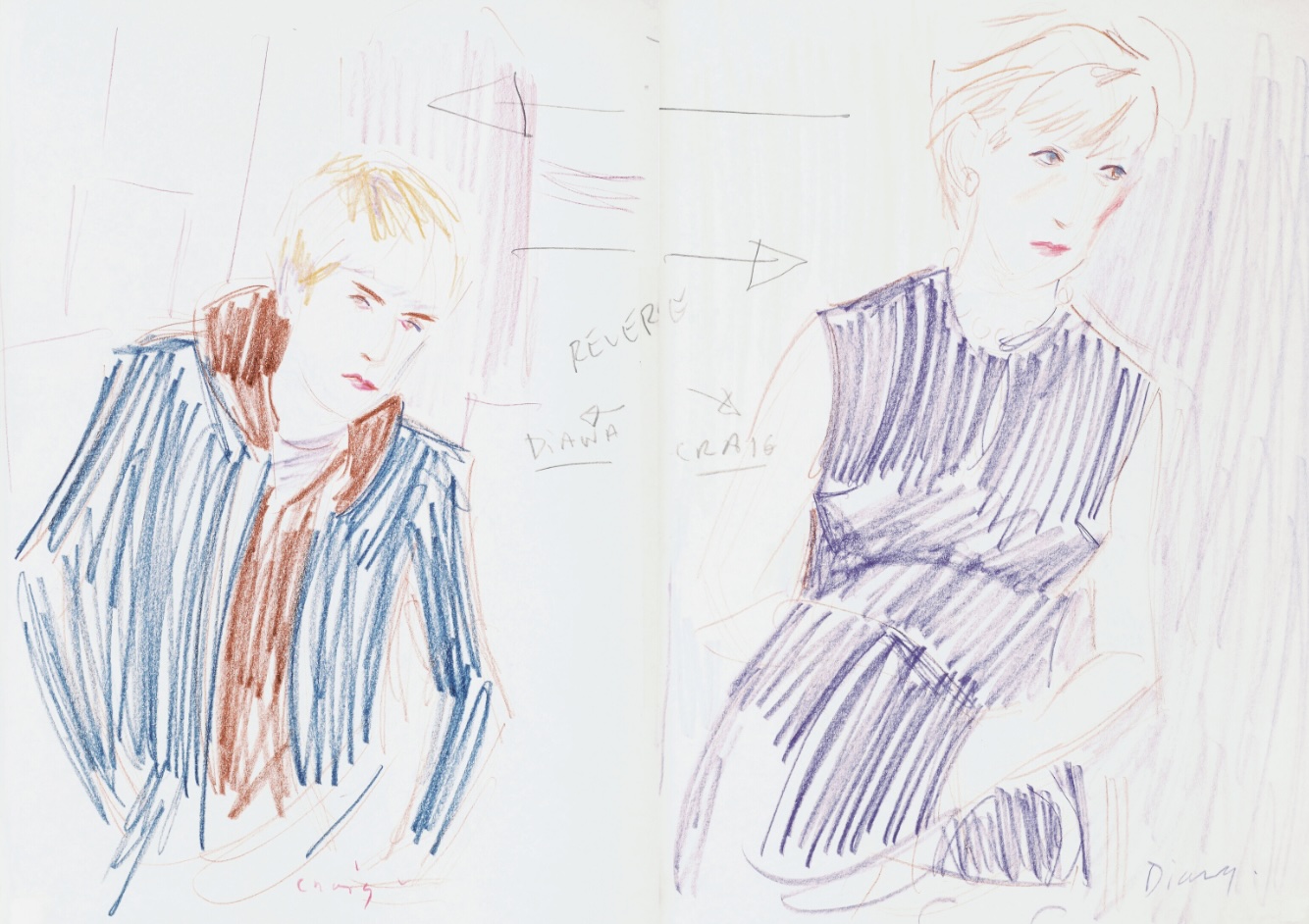
ELIZABETH PEYTON (B. 1965)
Craig Maquette, 1998
Colored pencil and graphite on forty-two variously double-sided bound sheets of paper
Overall: 11 5/8 x 8 1/8 inches (29.6 x 21cm)
Signed and dedicated ‘for Rainer x Peyton’ (on the back cover)
#8. Tony Just, 2000
Sotheby’s London: 30 June 2022
Estimated: GBP 40,000 – 60,000
GBP 90,720 / USD 110,311
WORK ON PAPER
ELIZABETH PEYTON (B. 1965), Tony Just | Sotheby’s (sothebys.com)
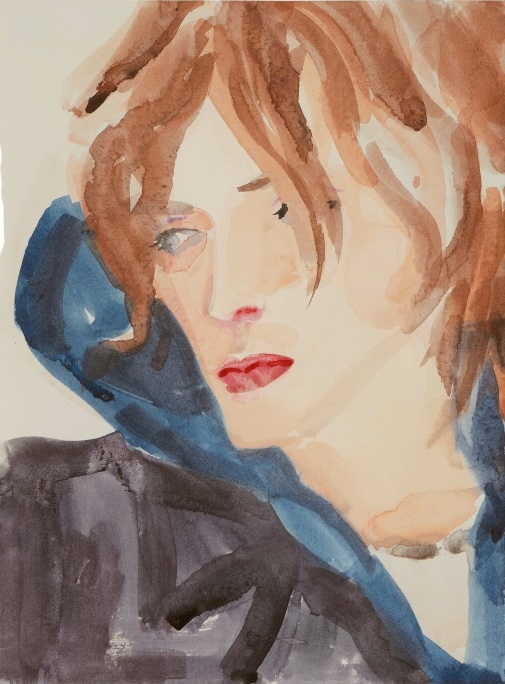
ELIZABETH PEYTON (B. 1965)
Tony Just, 2000
Watercolor on paper
12 1/4 x 9 inches (31.1 x 22.8 cm)
Signed, titled and dated 2000 on the reverse
#9. Nick (One), 2002
Christie’s New York: 13 May 2022
Estimated: USD 30,000 – 50,000
USD 100,800
WORK ON PAPER
ELIZABETH PEYTON (B. 1965), Nick (One) | Christie’s (christies.com)
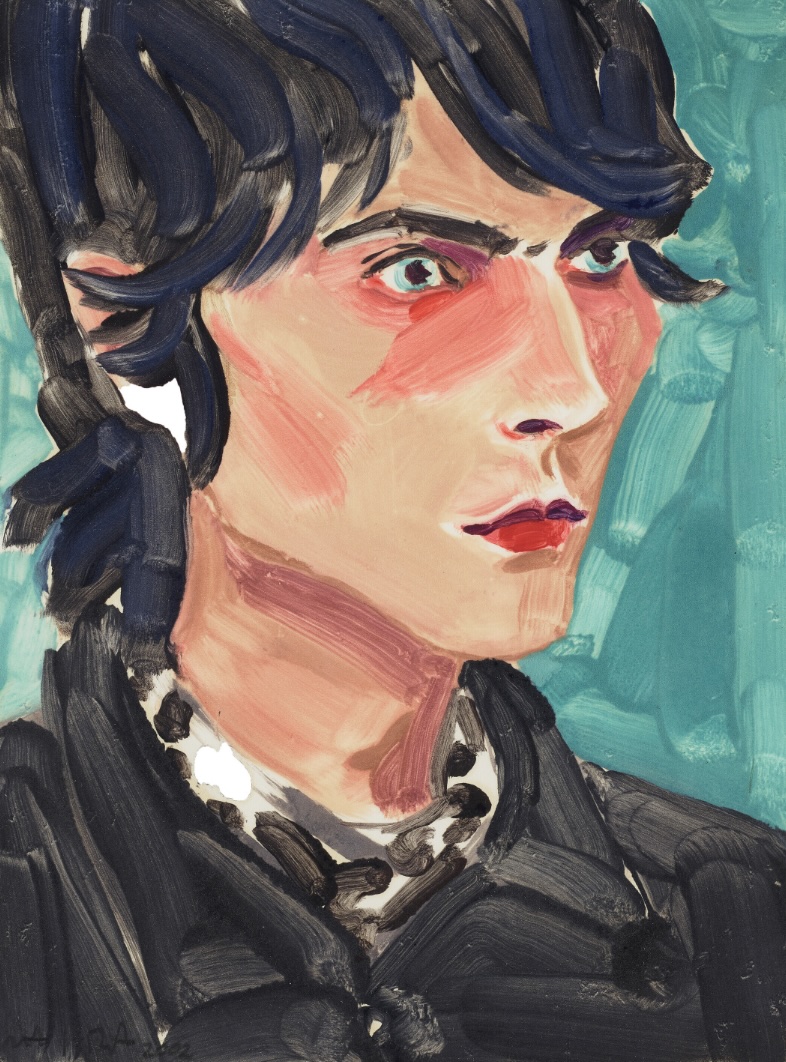
ELIZABETH PEYTON (B. 1965)
Nick (One), 2002
Monotype on paper
12×9 inches (30.5 x 22.9 cm)
Signed and dated ‘Elizabeth Peyton 2002’ (lower left)
#10. Lugwig II Caresses Marie Antoinette, 1993
Phillips New York: 19 May 2022
Estimated: USD 70,000 – 90,000
USD 88,200
ELIZABETH PEYTON (B. 1965), Lugwig II Caresses Marie Antoinette | Phillips (phillips.com)
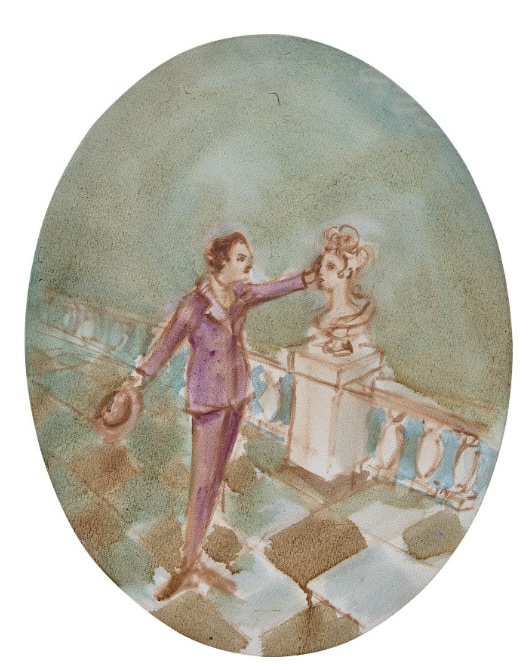
ELIZABETH PEYTON (B. 1965)
Ludwig II Caresses Marie Antoinette, 1993
Oil on canvas
14×11 inches (35.6 x 27.9 cm)
Signed, titled, dedicated and dated “LUDWIG II CARRESSES [sic] MARIE ANTOINETTE To Brett with love from Elizabeth 1993” on the stretcher
#11. Adam from I.D. Magazine, 1998
Sotheby’s London: 15 October 2022
Estimated: GBP 30,000 – 40,000
GBP 71,820 / USD 80,290
WORK ON PAPER
ELIZABETH PEYTON (B. 1965), Adam from I.D. Magazine | Sotheby’s (sothebys.com)
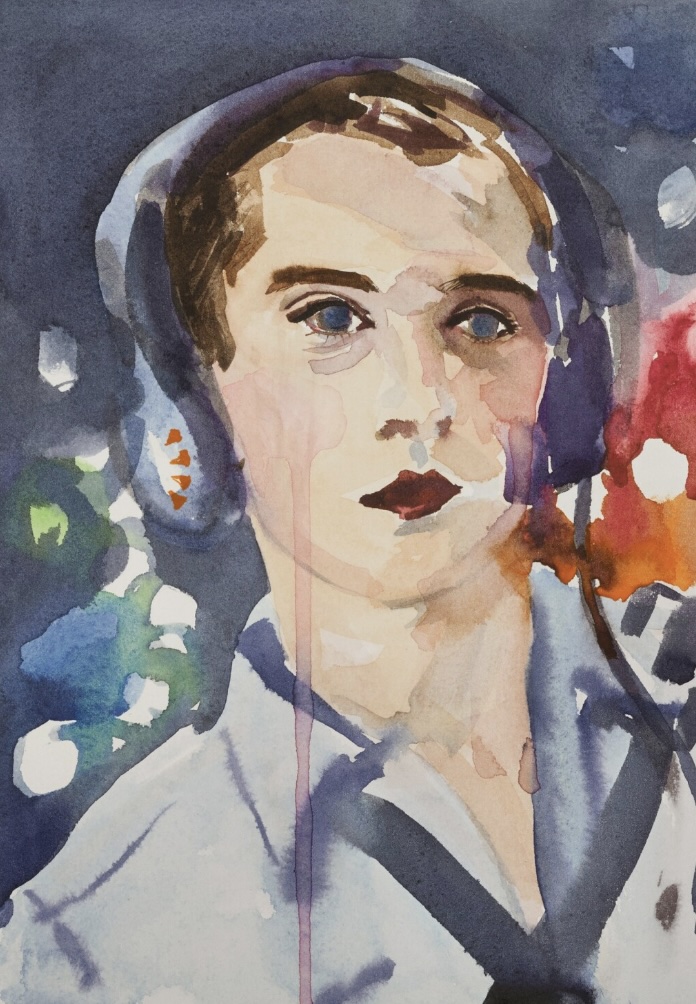
ELIZABETH PEYTON (B. 1965)
Adam from I.D. Magazine, 1998
Watercolor on paper
16 1/4 x 12 7/8 inches (41.3 x 32.8 cm)
#12. Andy in the 70s, 1996
Sotheby’s New York: 15 December 2022
Estimated: USD 15,000 – 25,000
USD 18,900
WORK ON PAPER
ELIZABETH PEYTON (B. 1965), Andy in the 70s | Sotheby’s (sothebys.com)
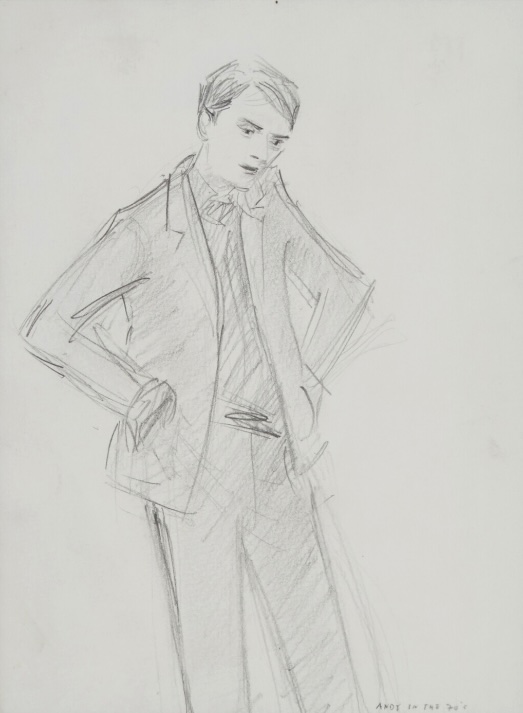
ELIZABETH PEYTON (B. 1965)
Andy in the 70s, 1996
Graphite on paper
7 1/4 x 5 1/4 inches (18.4 x 13.3 cm)
Titled (lower right); Signed, titled and dated 1996 (on the reverse)
#13. Flowers + Camille, 2009
Christie’s London: 18 October 2022
Estimated: GBP 8,000 – 12,000
GBP 12,600 / USD 14,245
WORK ON PAPER
ELIZABETH PEYTON (B. 1965), Flowers + Camille | Christie’s (christies.com)
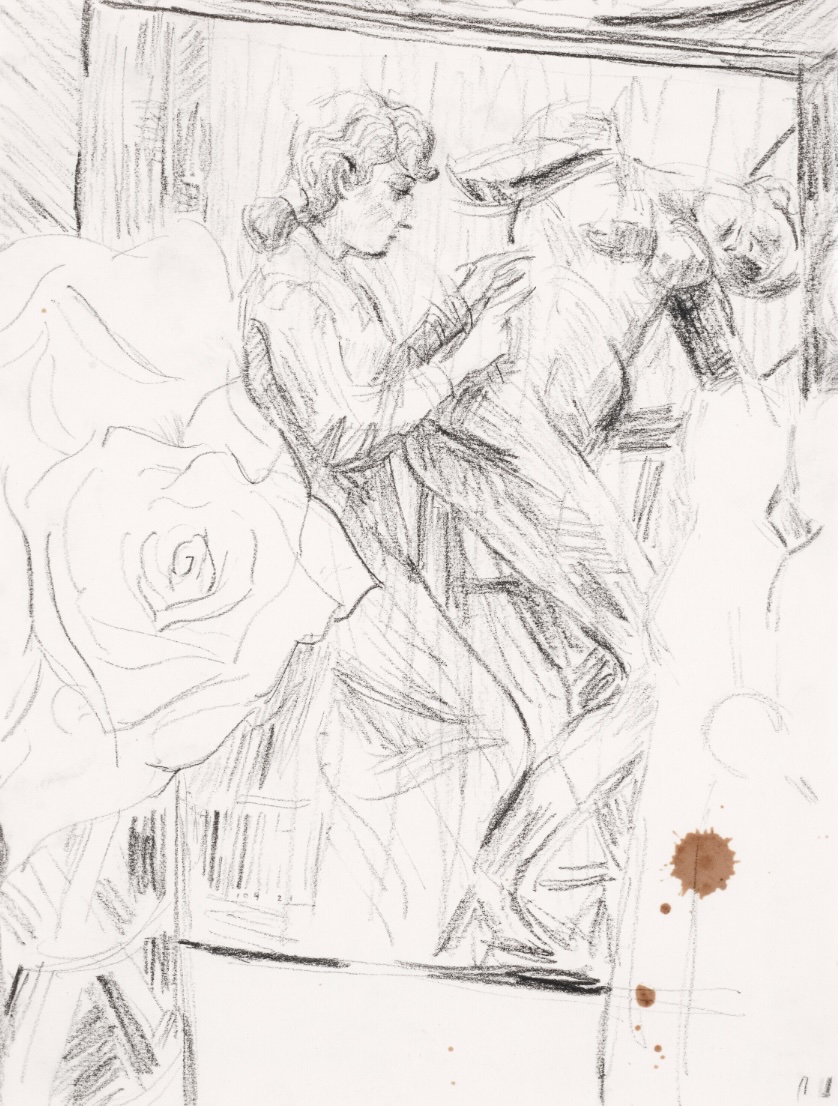
ELIZABETH PEYTON (B. 1965)
Flowers + Camille, 2009
Colored pencil, graphite and ink on paper
11 5/8 x 9 inches (29.5 x 22.7 cm)
Signed, titled, inscribed and dated ‘Flowers + Camille Elizabeth Peyton (Berlin 2009)’ (on the reverse)
2021 Auction Results
12 lots sold at auction in 2021 for a total turnover of USD 7,789,919.
With 2 lots failing to sell, the sell-through rate is 986%. The highest price has been achieved by David Bowie, an oil on panel dated 2012, that sold for USD 2,077,000 at Sotheby’s in New-York on 12 May 2021.
#1. David Bowie, 2012
Sotheby’s New York: 12 May 2021
Estimated: USD 500,000 – 700,000
USD 2,077,000
ELIZABETH PEYTON (B. 1965), David Bowie | Sotheby’s (sothebys.com)
ELIZABETH PEYTON (B. 1965)
David Bowie, 2012
Oil on aluminum veneered panel
14×11 inches (35.6 x 27.9 cm)
signed, titled and dated 2012 on the reverse
#2. Liam + Noel in the 70s, 1997
Christie’s New York: 9 November 2021
Estimated: USD 850,000 – 1,200,000
USD 2,070,000
ELIZABETH PEYTON (B. 1965), Liam + Noel in the 70s | Christie’s (christies.com)
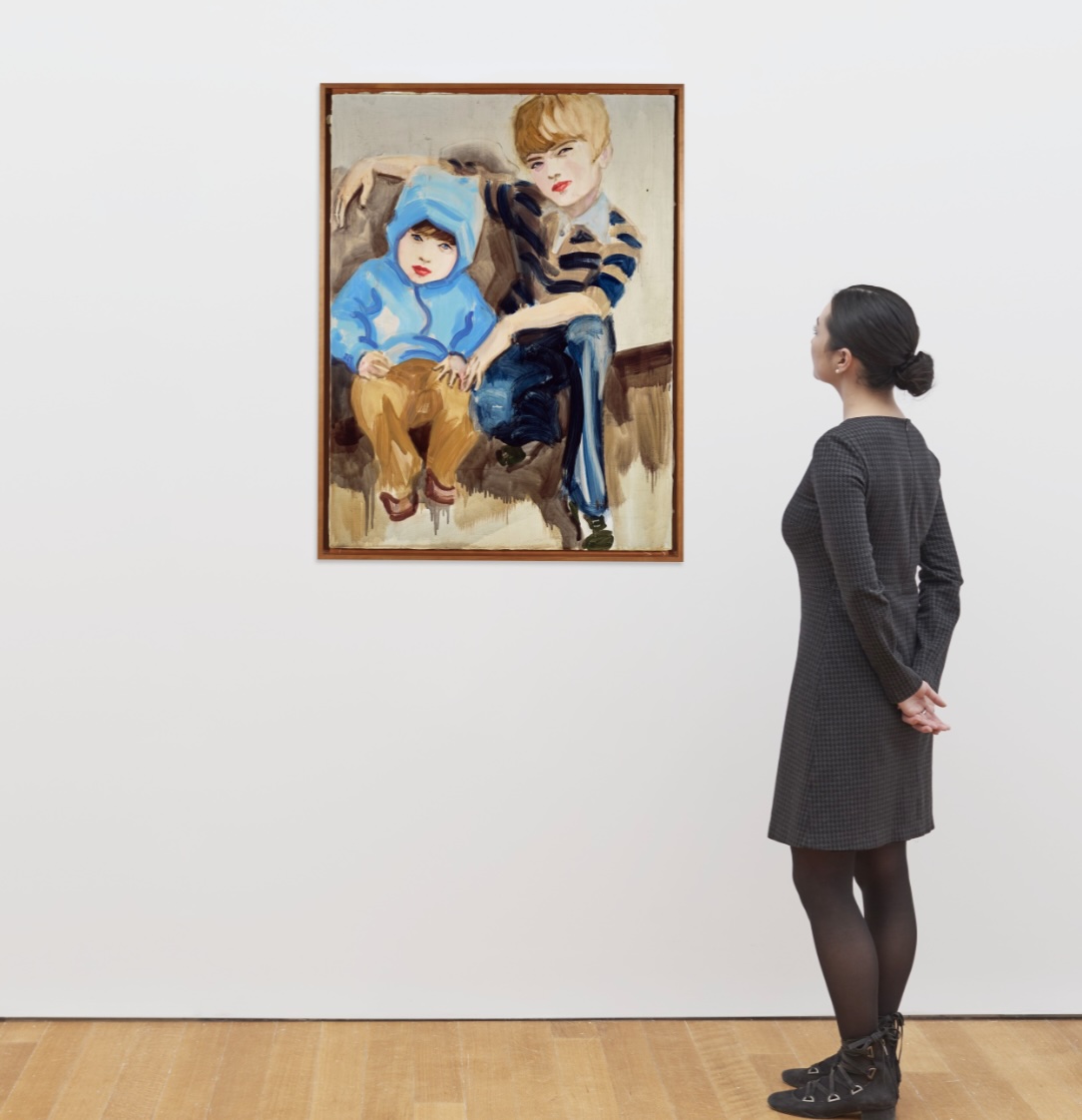
ELIZABETH PEYTON (B. 1965)
Liam + Noel in the 70s, 1997
Oil on canvas
40×30 inches (101.6 x 76.2 cm)
#3. Prince Harry (with Flowers), 1997
Sotheby’s London: 29 June 2021
Estimated: GBP 500,000 – 700,000
GBP 886,200 / USD 1,226,914
ELIZABETH PEYTON (B. 1965), Prince Harry (with Flowers)| Sotheby’s (sothebys.com)
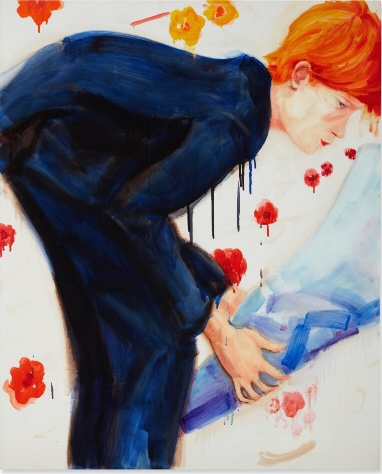
ELIZABETH PEYTON (B. 1965)
Prince Harry (with Flowers), 1997
Oil on canvas
40 x 32 5/8 inches (101.6 x 82.8 cm)
Signed, titled and dated 1997 on the overlap
#4. Julie (Julie Mehretu), 2015
Christie’s London: 30 June 2021
Estimated: GBP 400,000 – 600,000
GBP 682,500 / USD 942,289
ELIZABETH PEYTON (B. 1965), Julie (Julie Mehretu) | Christie’s (christies.com)
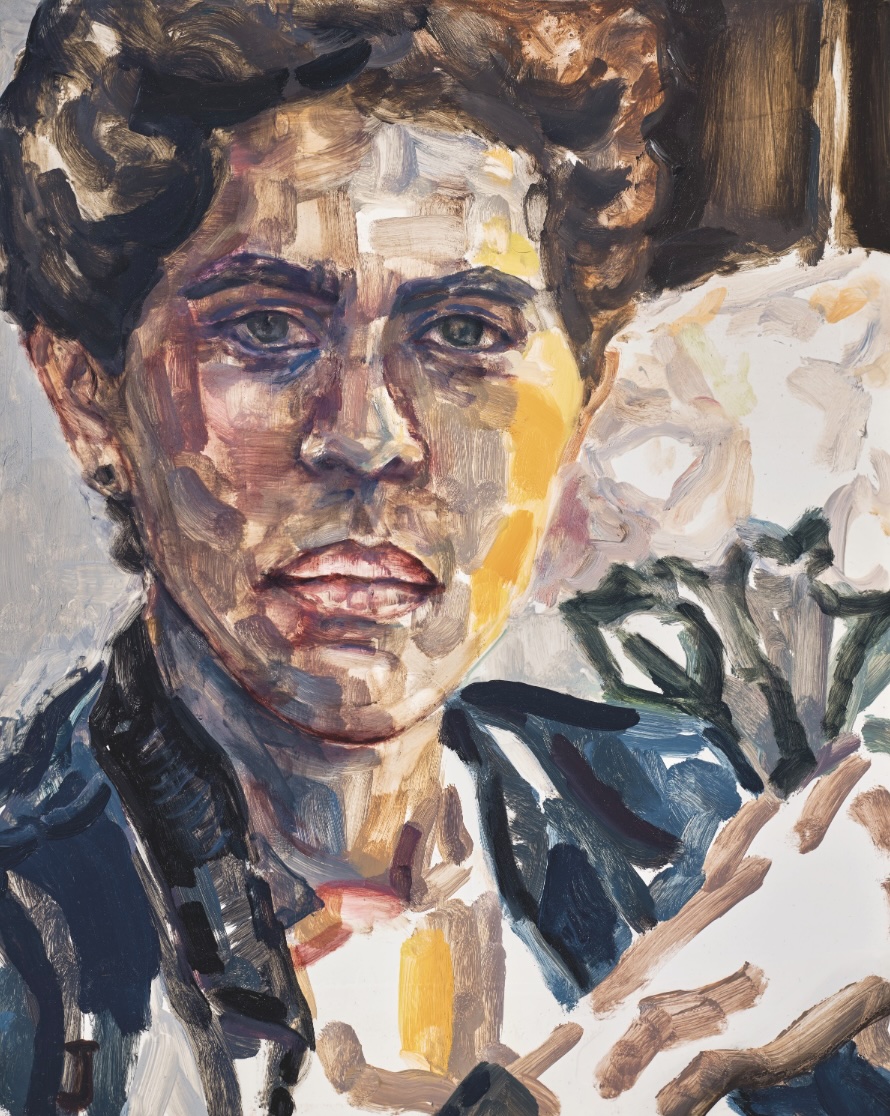
ELIZABETH PEYTON (B. 1965)
Julie (Julie Mehretu), 2015
Oil on board
15×12 inches (38.1 x 30.5 cm)
Inscribed ‘J’ (lower left)
Signed, titled and dated ‘Julie (Julie Mehretu) Elizabeth Peyton 2015’ (on the reverse)
#5. Sara, 1996
Sotheby’s London: 29 June 2021
Estimated: GBP 200,000 – 300,000
GBP 414,300 / USD 573,584
ELIZABETH PEYTON (B. 1965), Sara | Sotheby’s (sothebys.com)
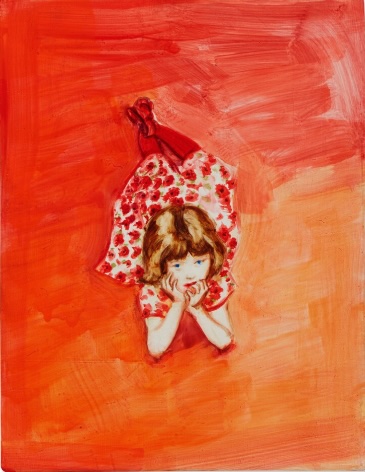
ELIZABETH PEYTON (B. 1965)
Sara, 1996
Oil on board
9 1/4 x 7 1/4 inches (23.4 x 18.4 cm)
#6. Nude (Tony), 2001
Sotheby’s New York: 19 November 2021
Estimated: USD 180,000 – 250,000
USD 378,000
ELIZABETH PEYTON (B. 1965), Nude (Tony) | Sotheby’s (sothebys.com)
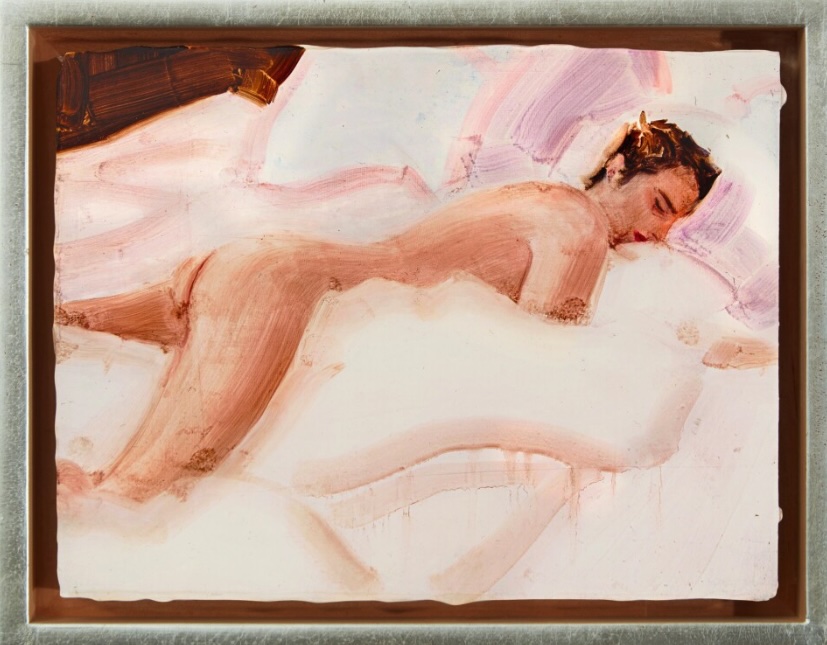
ELIZABETH PEYTON (B. 1965)
Nude (Tony), 2001
Oil on panel
6 1/8 x 8 1/8 inches (15.6 x 20.6 cm)
Signed twice with the artist’s monogram, titled and dated 2001 (on the reverse)
#7. Jude Law as Lord Alfred Douglas, 1998
Christie’s New York: 14 May 2021
Estimated: USD 120,000 – 180,000
USD 187,500
WORK ON PAPER
ELIZABETH PEYTON (B. 1965), Jude Law as Lord Alfred Douglas | Christie’s (christies.com)
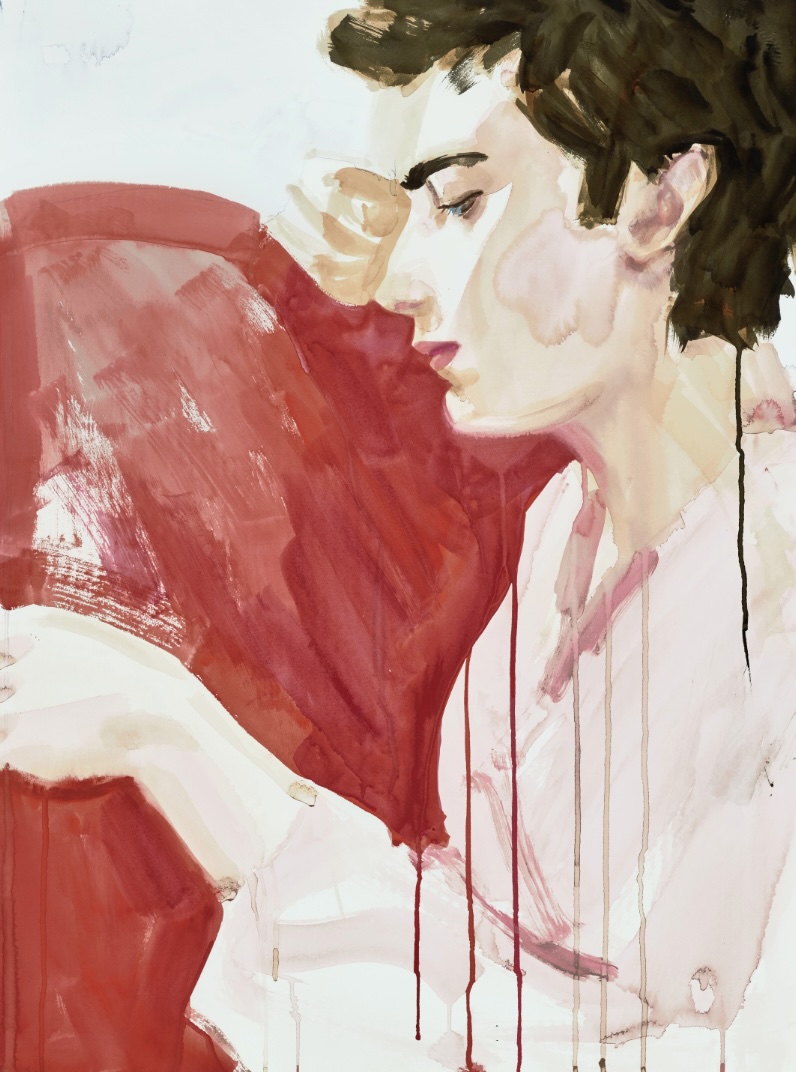
ELIZABETH PEYTON (B. 1965)
Jude Law as Lord Alfred Douglas, 1998
Watercolor on paper
29 3/4 x 22 inches (75.6 x 55.9 cm)
Titled and dated ‘Jude Law as Lord Alfred Douglas 27.11.98’ (on the reverse)
#8. Adi, 2002
Sotheby’s Milan: 24 November 2021
Estimated: EUR 80,000 – 120,000
EUR 113,400 / USD 126,945
WORK ON PAPER
ELIZABETH PEYTON (B. 1965), Adi | Sotheby’s (sothebys.com)
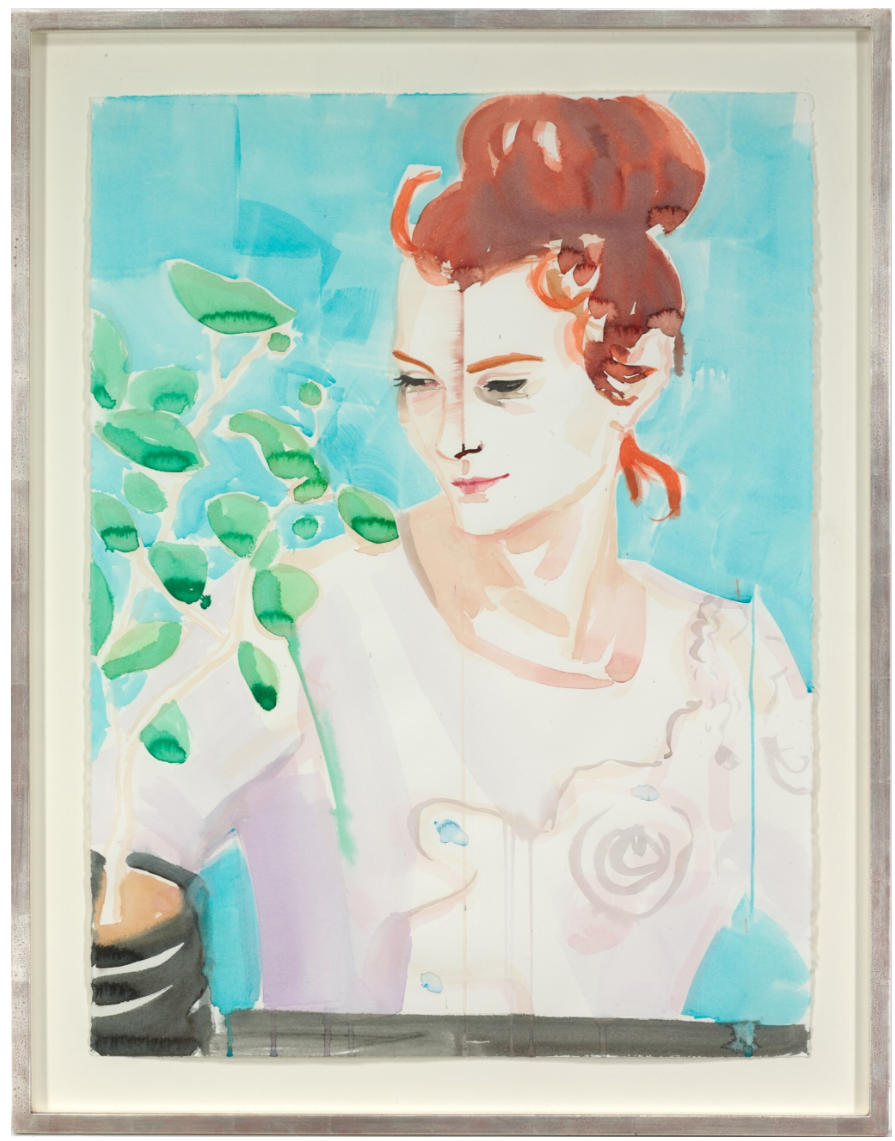
ELIZABETH PEYTON (B. 1965)
Adi, 2002
Watercolor on card
29 5/8 x 22 1/8 inches (75.5 x 56.5 cm)
#9. Black teapot, Anemones, We, 2015
Phillips New York: 18 November 2021
Estimated: USD 30,000 – 50,000
USD 73,080
WORK ON PAPER
ELIZABETH PEYTON (B. 1965), Black teapot, Anemones, We | Phillips (phillips.com)
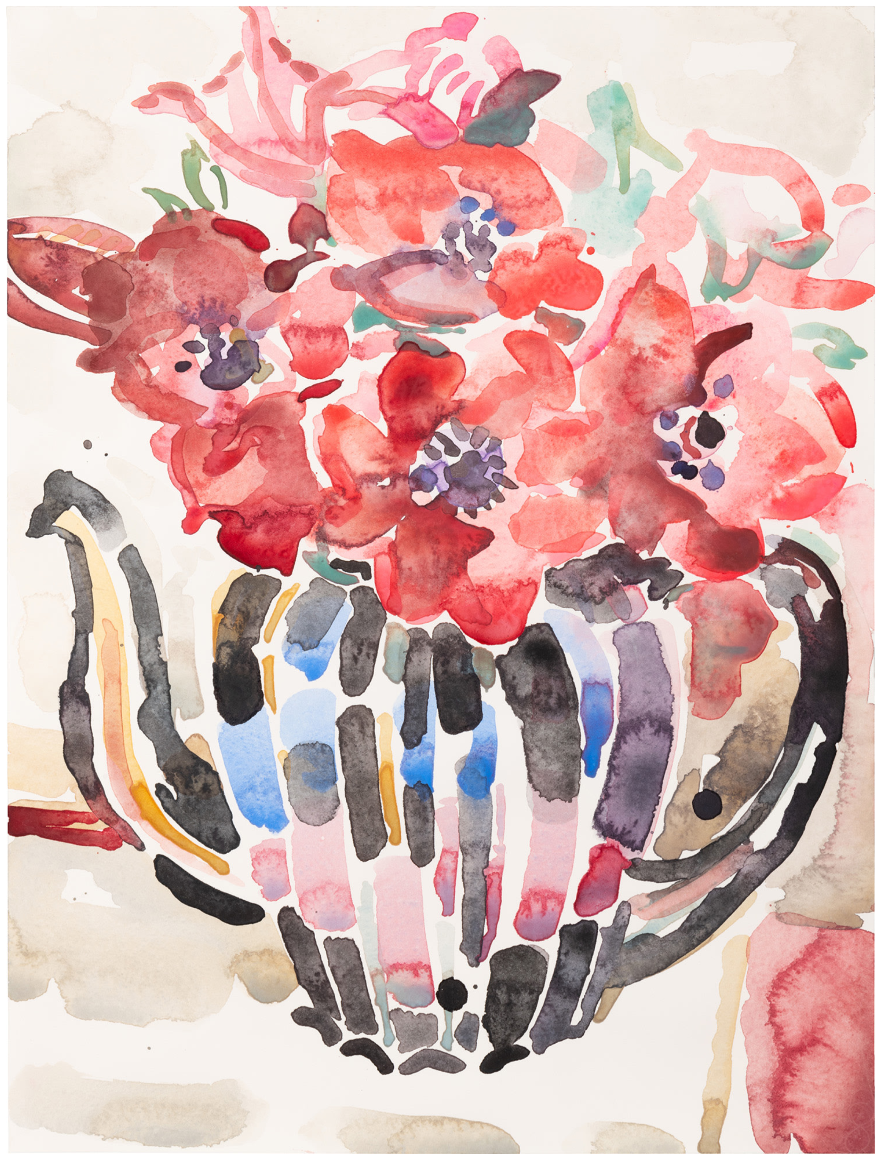
ELIZABETH PEYTON (B. 1965)
Black teapot, Anemones, We, 2015
Watercolor on paper
18 1/8 x 12 1/4 inches (46 x 31.1 cm)
Signed, inscribed and dated “Flowers + Teapot Elizabeth Peyton 2015” on the reverse
#10. John with Julian, 1997
Sotheby’s New York: 19 November 2021
Estimated: USD 40,000 – 60,000
USD 69,300
WORK ON PAPER
ELIZABETH PEYTON (B. 1965), John with Julian | Sotheby’s (sothebys.com)
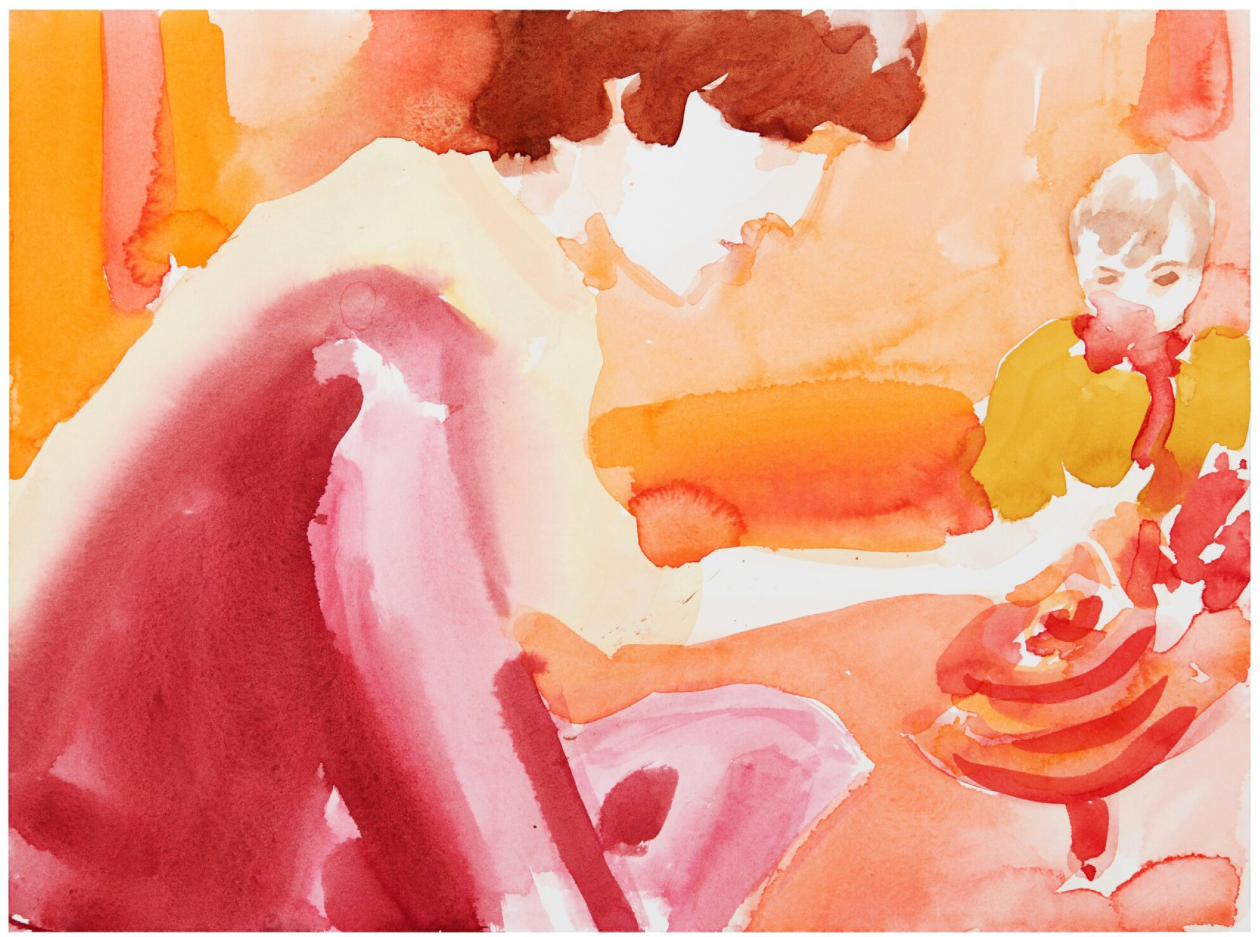
ELIZABETH PEYTON (B. 1965)
John with Julian, 1997
Watercolor on paper
9 x 12 1/4 inches (22.9 x 31.1 cm)
Signed twice with the artist’s monogram and titled (on the verso)
#11. John Lydon, 1994
Christie’s London: 25 March 2021
Estimated: GBP 20,000 – 30,000
GBP 37,500 / USD 51,447
WORK ON PAPER
ELIZABETH PEYTON (B. 1965),John Lydon | Christie’s (christies.com)
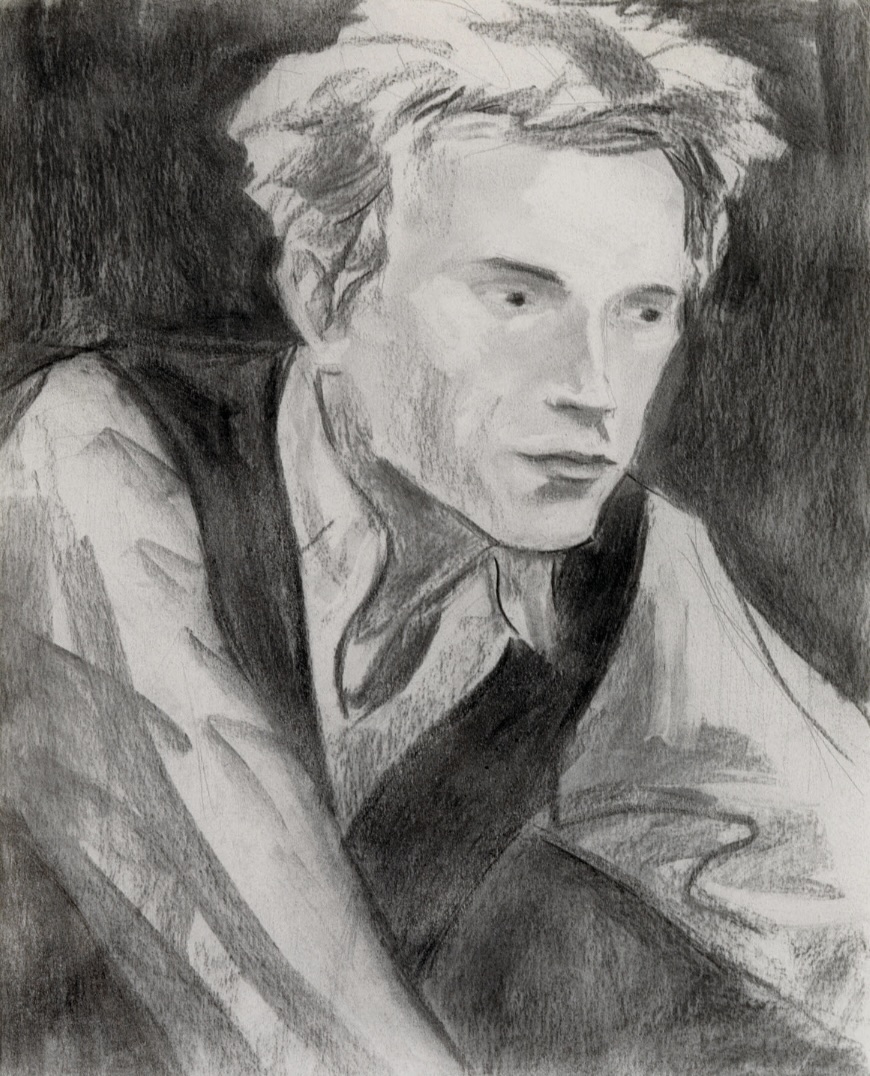
ELIZABETH PEYTON (B. 1965)
John Lydon, 1994
Charcoal and graphite on paper
17 x 13 5/8 inches (43.2 x 34.6 cm)
Signed, titled and dated ‘John Lydon Elizabeth Peyton 1994’ (on the reverse)
#12. Tony Sleeping, Avenue B, 2000
Sotheby’s New York: 19 November 2021
Estimated: USD 10,000 – 15,000
USD 13,860
WORK ON PAPER
ELIZABETH PEYTON (B. 1965), Toby Sleeping, Avenue B| Sotheby’s (sothebys.com)
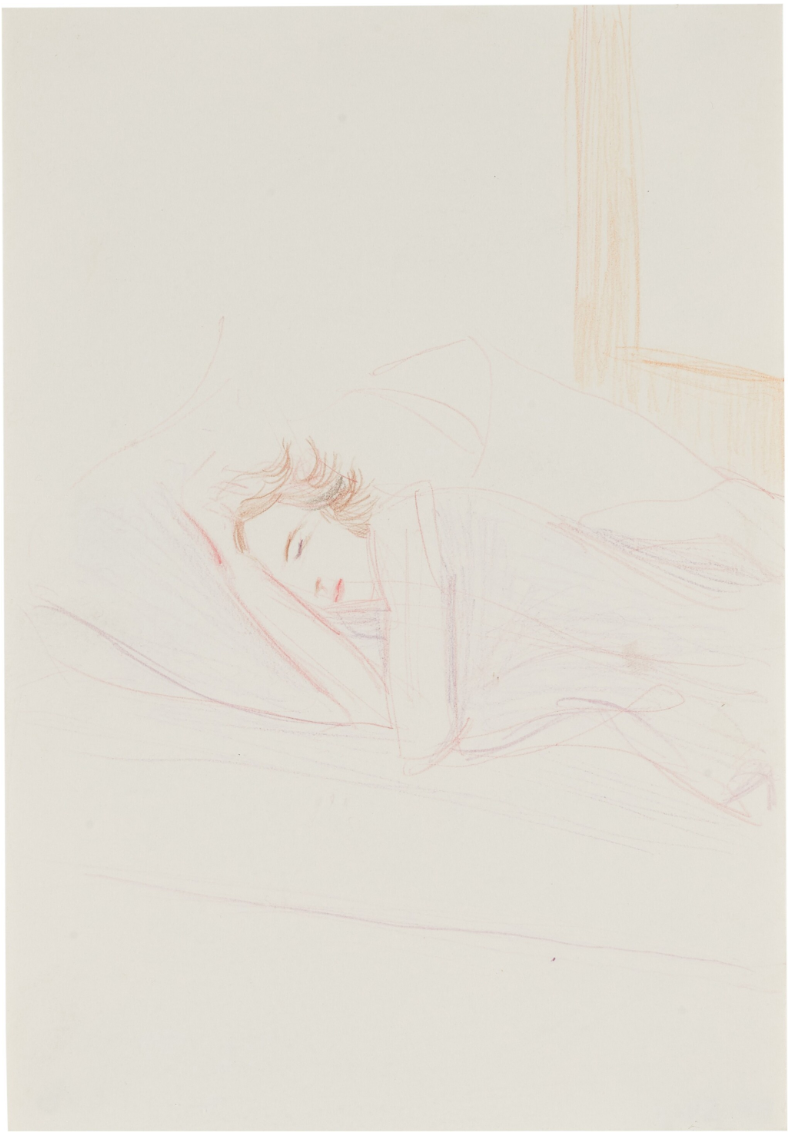
ELIZABETH PEYTON (B. 1965)
Tony Sleeping, Avenue B, 2000
Colored pencil on paper
8 1/2 x 6 inches (21.6 x 15.2 cm)
Signed, titled and dated 2000 (on the verso)
PART III: FOCUS
Celebrity Portraits
Jarvis after Jail, 1996
Christie’s New-York: 20 May 2026
Estimated: USD 1,200,000 – 1,800,000
USD 1,651,000
ELIZABETH PEYTON (B. 1965), Jarvis after Jail | Christie’s
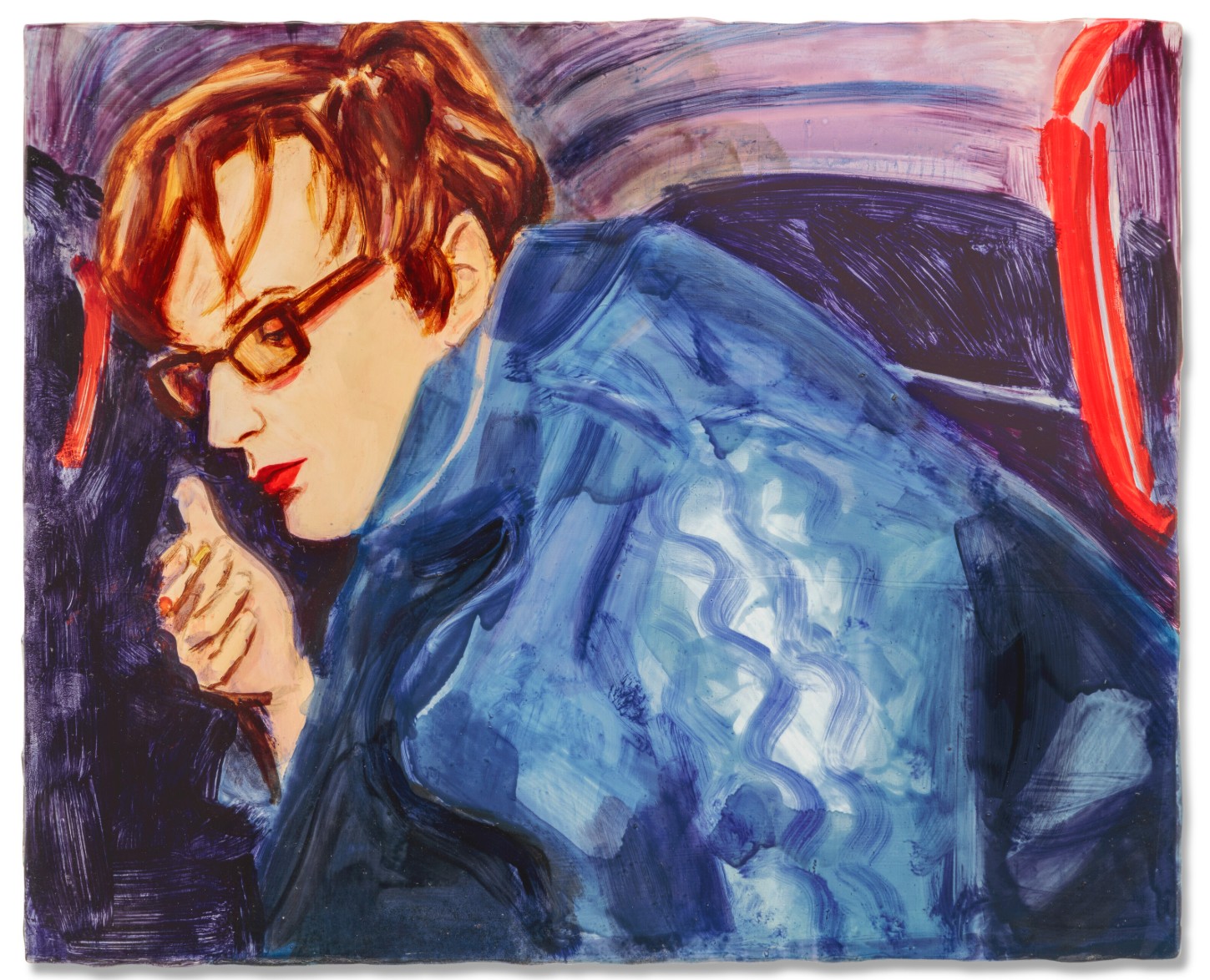
ELIZABETH PEYTON (B. 1965)
Jarvis after Jail, 1996
Oil on board
12-1/4 x 15 inches (31.1 x 38.1 cm)
Signed, titled and dated ‘JARVIS (AFTER JAIL) 1996 Elizabeth Peyton’ (on the reverse)
Elizabeth Peyton’s astute painting Jarvis after Jail captures the fallout from one of the most infamous events in British Pop music history. In 1996, during a performance of Earthsong by Michael Jackson, Jarvis Cocker—the lead singer of the English rock band Pulp—rushed the stage to protest Jackson’s depiction of himself as a Christ-like figure with the apparent power of healing. Following the incident, Cocker was detained by the police and questioned on suspicion of assault, but was later released without charge. Peyton’s source image for the present work comes from a press photo taken after Cocker’s release and published on the front page of Melody Maker music magazine.
Broadcast around the world, the incident caused a media frenzy, with many—including politicians and the tabloid press—decrying Cocker’s actions as setting a bad example for the audience of children and young people watching. Peyton, on the other hand, saw things differently. “I’m interested in making pictures of artists whose work inspires me,” Peyton once said (E. Peyton quoted in C. Roux “Elizabeth Peyton: The Exceptional Portrait Painter”, The Gentlewoman, no. 8 Autumn & Winter 2013). In an interview with Cocker in 2008, she told him that she decided to paint him after his act of protest at the Brit Awards.
“There aren’t many people who stand up, whether it be in culture or politics, and say: “Listen, this is dumb. It doesn’t have to be like this.” After that awards show, I made a painting of you getting out of jail because I thought what you did was so heroic.”
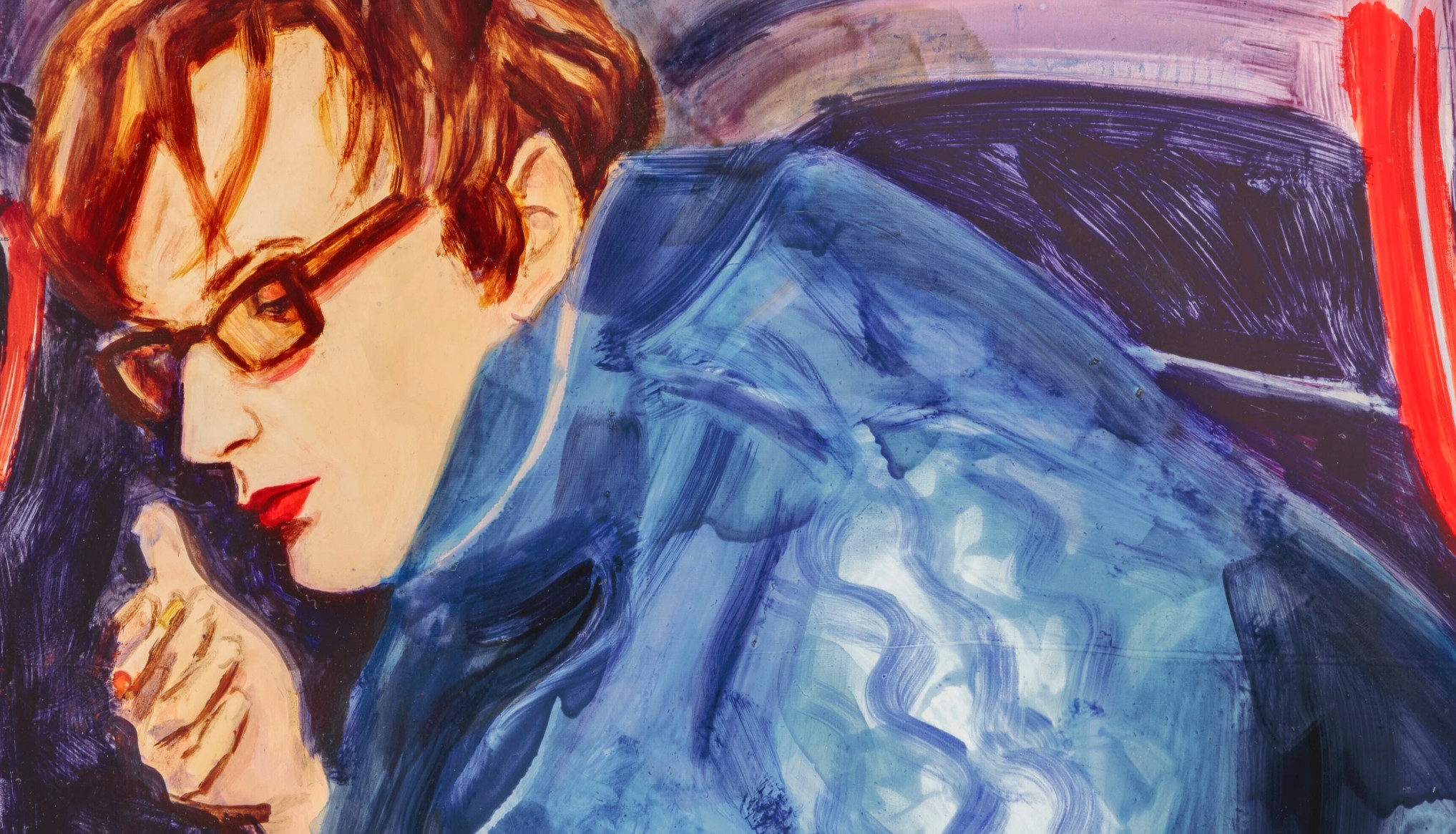
The disheveled figure of Cocker is deftly manifested out of Peyton’s fluid brushwork. The musician’s famous tousled hair and iconic thick-rimmed glasses are the result of ample, confident strokes from a fully loaded brush, while Peyton precisely captures the texture of Cocker’s embroidered jacket as it merges with the upholstered interior of the London taxi as he’s driven away to avoid the attention of waiting paparazzi. Enhancing the sense of drama, Peyton adds pops of color to the interior gloom of the taxi, highlighting his cherry-red lips and the illuminated end of the lit cigarette with pops of bright red that match the colorful grab handles located near the doors of the taxi. Peyton works spontaneously, without the need for preparatory sketches or drawings. Her aim is to capture the impulse of the moment or event she is immortalizing. In this sense, this present image of Jarvis Cocker becomes the perfect subject for her unique style. Cocker is on record as saying that his stage “invasion” was completely spontaneous.
“I was quite surprised, as suddenly I was there,
and once I was there I didn’t really know what to do.”
In the present work, Peyton perfectly captures the aftermath of what record company executive Marc Marot called “the perfect moment of rock’n’roll bedlam.”
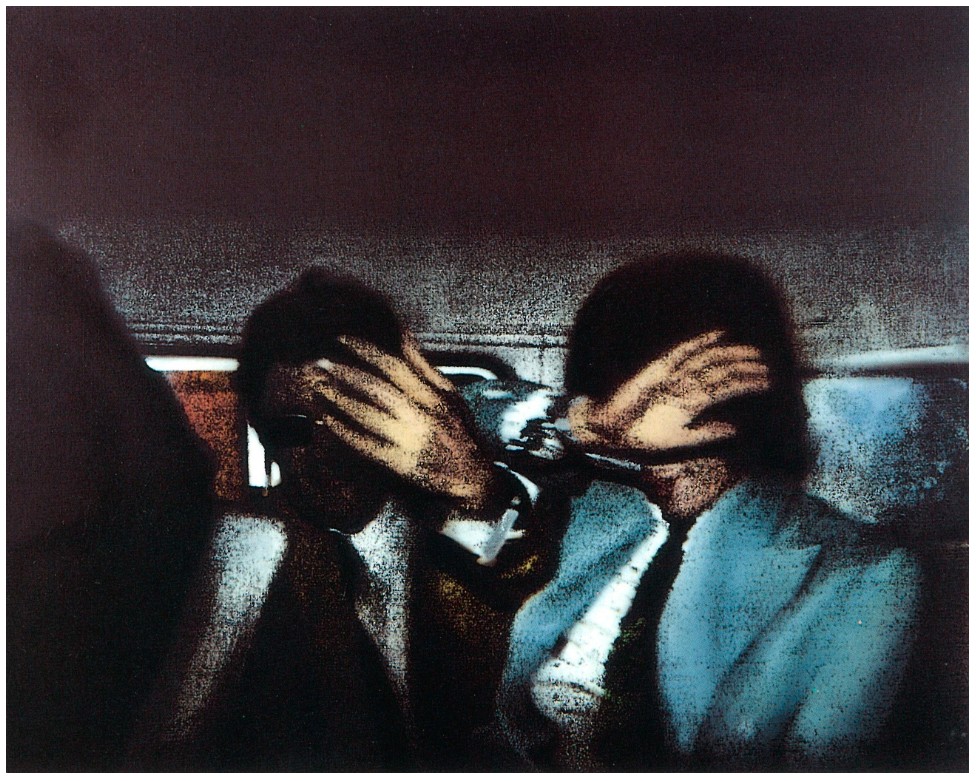
Richard Hamilton, Swingeing London 67 (f), 1968-1969. Tate, London. © R. Hamilton. All Rights Reserved, DACS and ARS 2026.
Cocker was by no means the first musician to have fallen foul of a public ideal of perfection and subsequently caught the attention of artists. From Andy Warhol’s immortalization of Elvis Presley and John Lennon at the height of media frenzy to Richard Hamilton’s Swinging London (1968-69), capturing the moment in 1967 when Mick Jagger, lead singer of the Rolling Stones, was released after being arrested for drug possession, the media roller-coaster of Pop icons has provided a rich seam of subject material for artists.
Jarvis after Jail was painted shortly after Peyton’s breakthrough solo show at Gavin Brown’s Enterprise in New York. Reviewing that show, The New York Times critic Roberta Smith noted, “Her penchant for indicating his pale skin and bleached hair with stark white lines gives his famous charisma an incandescent glow that seems to be both coming into focus and fading away. In these and other ways, the auras of painting and fame are repeatedly equated” (R. Smith, “Blood and Punk Royalty to Grunge Royalty,” The New York Times, March 24, 1995, p. C30, online [accessed:10/23/2025]). It is precisely due to this beguiling nature that Peyton decided to revisit Cocker in several institutional works, including Jarvis (1998) in the Boros Collection, Berlin; and Jarvis Cocker (1996) in the Seattle Art Museum.
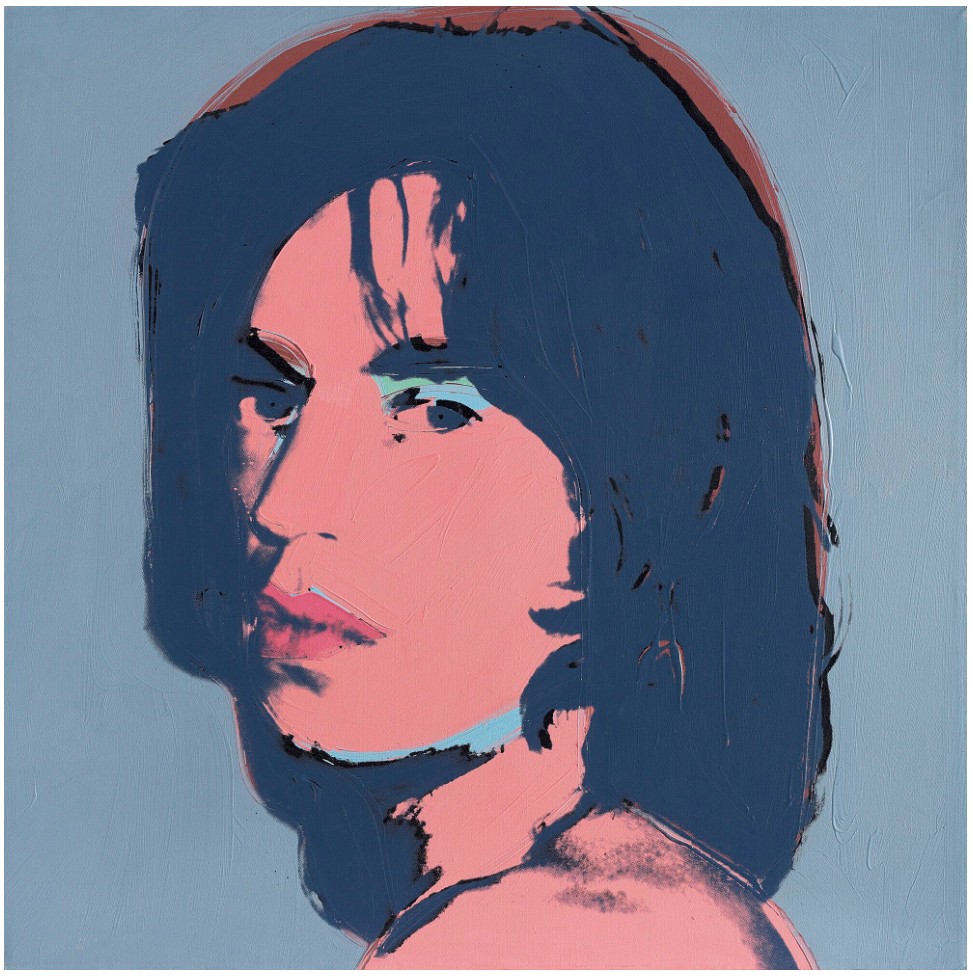
Andy Warhol, Mick Jagger, circa 1975.
© 2026 The Andy Warhol Foundation for the Visual Arts, Inc. / Licensed by Artists Rights Society (ARS).
Elizabeth Peyton’s subjects find themselves inhabiting a magical space where many overlapping and divergent worlds coalesce. Like Elvis, Lennon and Mick Jagger, Jarvis Cocker in Jarvis after Jail occupies both a public and private space. In her hands, the 90s-era aesthetic personified by the present work transcends time. Using heightened colors, intense and intimate detail and a votive-like approach to her subjects, Peyton has found a way to be both of her time and mystically of another.
Mendips, 1996
Sotheby’s New-York: 15 May 2026
Estimated: USD 900,000 – 1,200,000
USD 998,400
Elizabeth Peyton | Mendips | Contemporary Day Auction | 2026 |
REPEAT SALE
Phillips New York: 14 November 2023
Estimated: USD 900,000 – 1,200,000
USD 1,206,500
ELIZABETH PEYTON (B. 1965), Mendips, 1963 | Phillips (phillips.com)
ELIZABETH PEYTON (b. 1965)
Mendips, 1996
Oil on canvas
32-1/4 x 28-1/4 inches (81.9 x 71.8 cm)
A red-lipped young man slouches in a verdant garden in Elizabeth Peyton’s 1996 painting, Mendips, 1963, holding a baby dressed in white. At first glance, the pale, lithe man seems an interchangeable member of the chorus of beautiful young people Peyton painted in the 1990s, a roster that included friends, lovers, historical figures, and celebrities. However, figural clues (from the man’s bowl cut to the infant in his arms), along with the work’s title, reveal the specificity of Peyton’s vision: a photograph of John Lennon at his family home, Mendips, in Liverpool, holding his infant son, Julian, born in 1963. Painted the year after Peyton was featured at the Venice Biennale in 1995, Mendips, 1963, presents the compositional elements and wider themes that brought her renown as a figural artist in the 1990s, with enchanting portraits that engage cultural ideals of fame, artistry, and intimacy. Photographs have long been a source of inspiration for Peyton. By drawing from photographs, Peyton engages a long-standing question of modern art, from the Impressionists onwards, of the relationship between painting and photography. Gerhard Richter’s photo paintings stand as a contemporary forebear to Peyton’s method. But where artists like Richter use photography as a tool against subjectivity and sentimentality, Peyton is forthcoming in her love and personal admiration for her painted subjects. Rather than focusing on the materiality of the photograph itself, she hones in on the personality of the subject, and “at some point,” she says, “the photo’s got to get lost.”
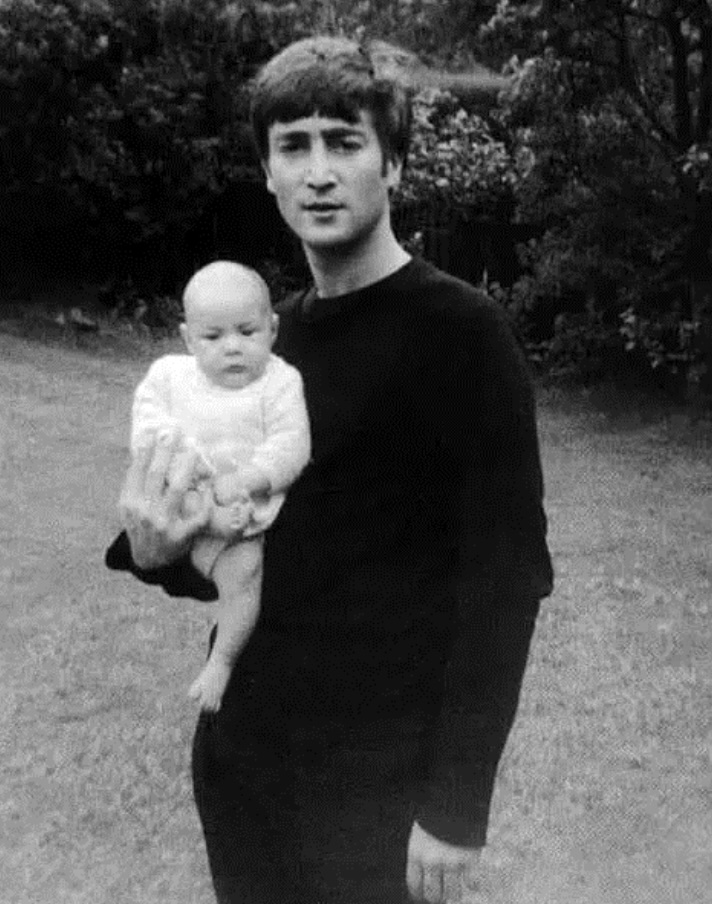
With Mendips, 1963, the original photograph of John and Julian “gets lost” through Peyton’s painterly interventions. She alters the composition in slight, yet significant ways, tilting Lennon, who stands upright in the photograph, on a diagonal, and cropping the canvas closer to his body, which encourages a more intimate relationship between figure and viewer. Peyton also trades in the photographer’s black and white for a vibrant palette of spring greens, and the photograph’s realistic precision gives way to rounded, swishing brushstrokes and an abstracted background. Lennon’s face grows angular, and his features more stylized; he averts his gaze, in demure contrast to his photographed self. Peyton paints his berry-red lips parted and full, almost like a Pre-Raphaelite model’s. Her brushstrokes seem to transform the suburban Liverpool setting of Mendips, 1963 into a mythical English garden.
Earl’s Court (Liam + Noel), 1996
Property from an Important Private Collection, New York
Sotheby’s New-York: 14 May 2026
Estimated: USD 1,500,000 – 2,000,000
USD 1,920,000
Elizabeth Peyton | Earl’s Court (Liam + Noel) | The Now &
ELIZABETH PEYTON (b. 1965)
Earl’s Court (Liam + Noel), 1996
Oil on board
10×8 inches (25.4 x 20.3 cm)
Signed, titled Earl’s Court (Liam + Noel) December 1995 and dated 1996 (on the reverse)
Brushstrokes of vibrant color and sincere tenderness coalesce upon the intimately scaled picture plane of Elizabeth Peyton’s Earl’s Court. One of the most influential figurative artists working today, Peyton is celebrated for her paintings that portray cultural icons and close friends with a singularly tender and observant gaze that unearths the profound essence lying behind each of her subjects. Executed in 1996, the present work captures Oasis frontman Liam Gallagher kissing his brother Noel on the cheek, at the apex of their fame and cultural potency.
“Making art is making something live forever. Human beings especially—we can’t hold on to them in any way. Painting is a way of holding onto things and making things go on through time.”
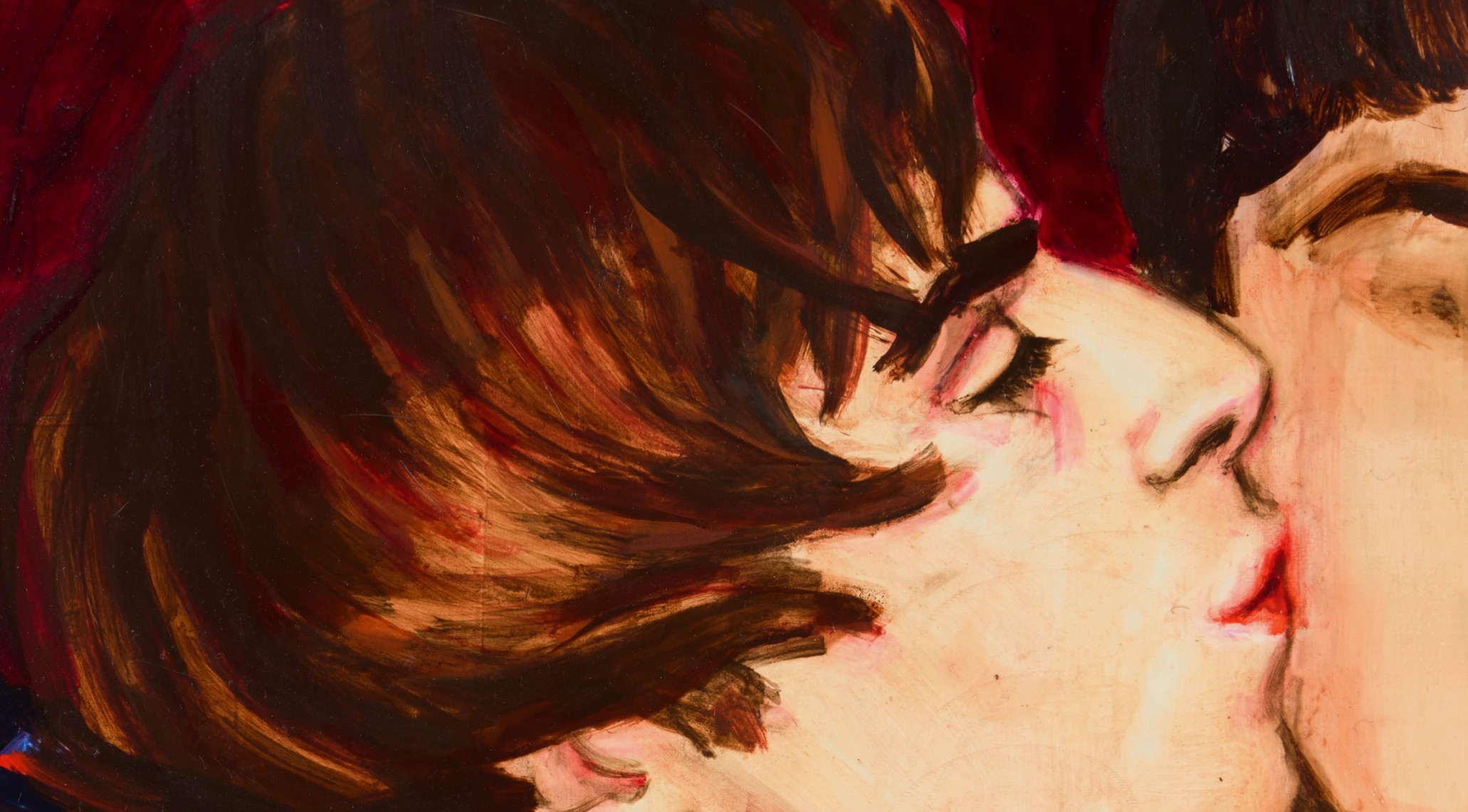
Inextricably woven into the mythological fabric of British music following their first two albums of immense commercial success and critical acclaim, Oasis played two iconic sold-out shows at London’s Earl’s Court on November 4th and 6th, 1995, from which Peyton’s intimate composition takes its inspiration. Here, the artist freezes these rockstars in a pivotal moment of their lives, the composition radiating not only the fervor surrounding the band, but also Peyton’s singular ability to capture the psychological undertow behind public image, portending the eventual friction that grew between the two brothers.
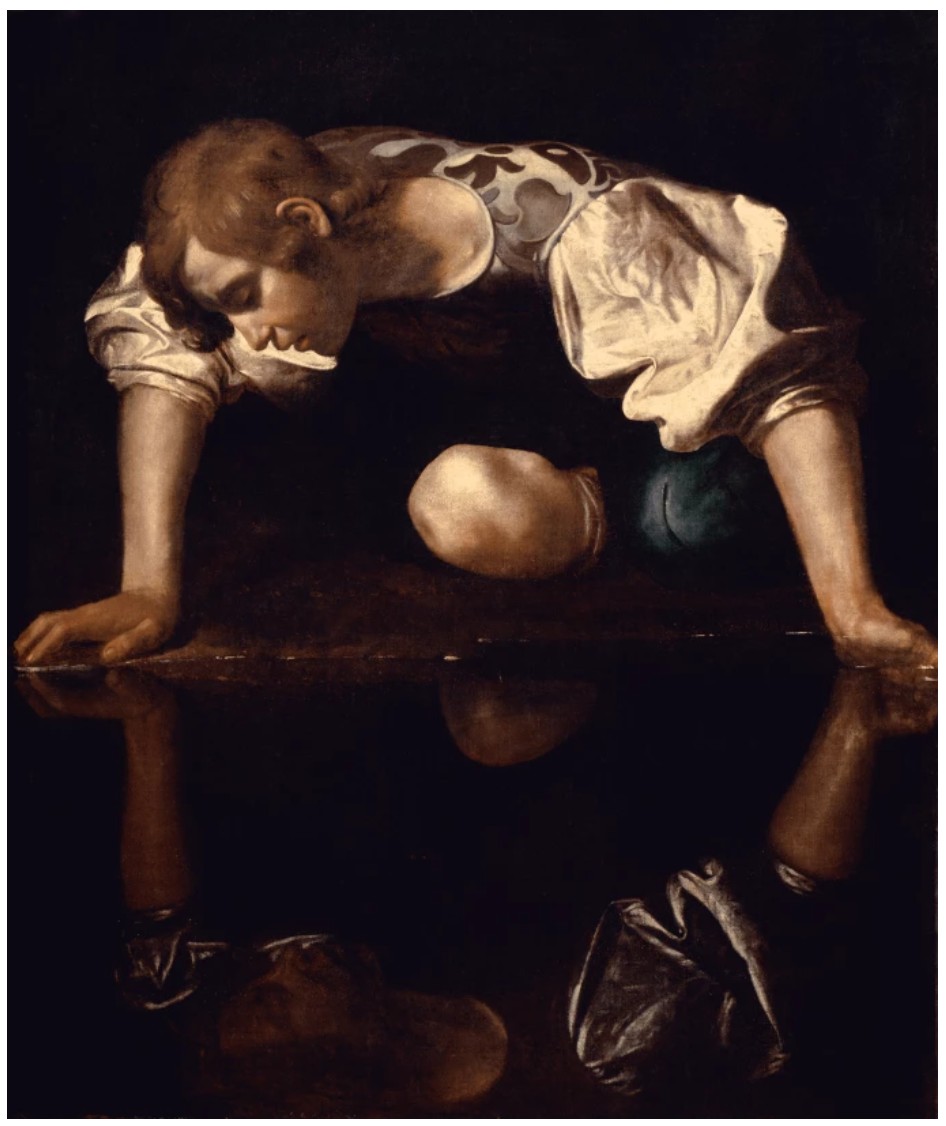
Michelangelo Merisi da Caravaggio, Narcissus, c.1597–99. Gallerie Nazionali di Arte Antica, Barberini Corsini, Palazzo Barberini, Rome. Image © Luisa Ricciarini / Bridgeman Images
Oasis, led by two brothers, Noel and Liam Gallagher, hailing from Manchester, was indubitably the cornerstone of Britpop’s meteoric ascent to global prominence. Their second studio album, (What’s the Story) Morning Glory?, released a year prior to the execution of Earl’s Court, catapulted the band into becoming a worldwide rock phenomenon as it spent 10 weeks at number one in the United Kingdom Albums Chart and reached number four on the U.S. Billboard 200. Coupled with their stardom was extensive paparazzi coverage on their daily lives, often offering narratives of the brothers as combative and volatile, marked by high tension and frequent public fighting. Here in Earl’s Court, Peyton frames them in a moment of intimacy and repose, zooming in on Liam and inviting the viewer to gaze closely at the protagonist. Against a luscious maroon backdrop, he is seen in a purple jacket patterned with cobalt flowers, encapsulating the working-class cool that became a hallmark of the Oasis aesthetic. Unlike how the tabloids would make their relationship seem, the Gallaghers here appear in a moment of fragility, care, and boyish joy; Peyton’s luminous palette, diaphanous facture, and refined sense of composition thus imbues the painting with a heightened emotionality, taking two idols of celebrity and turning them into a poetic meditation on kinship, fame, love, rivalry, and vulnerability.
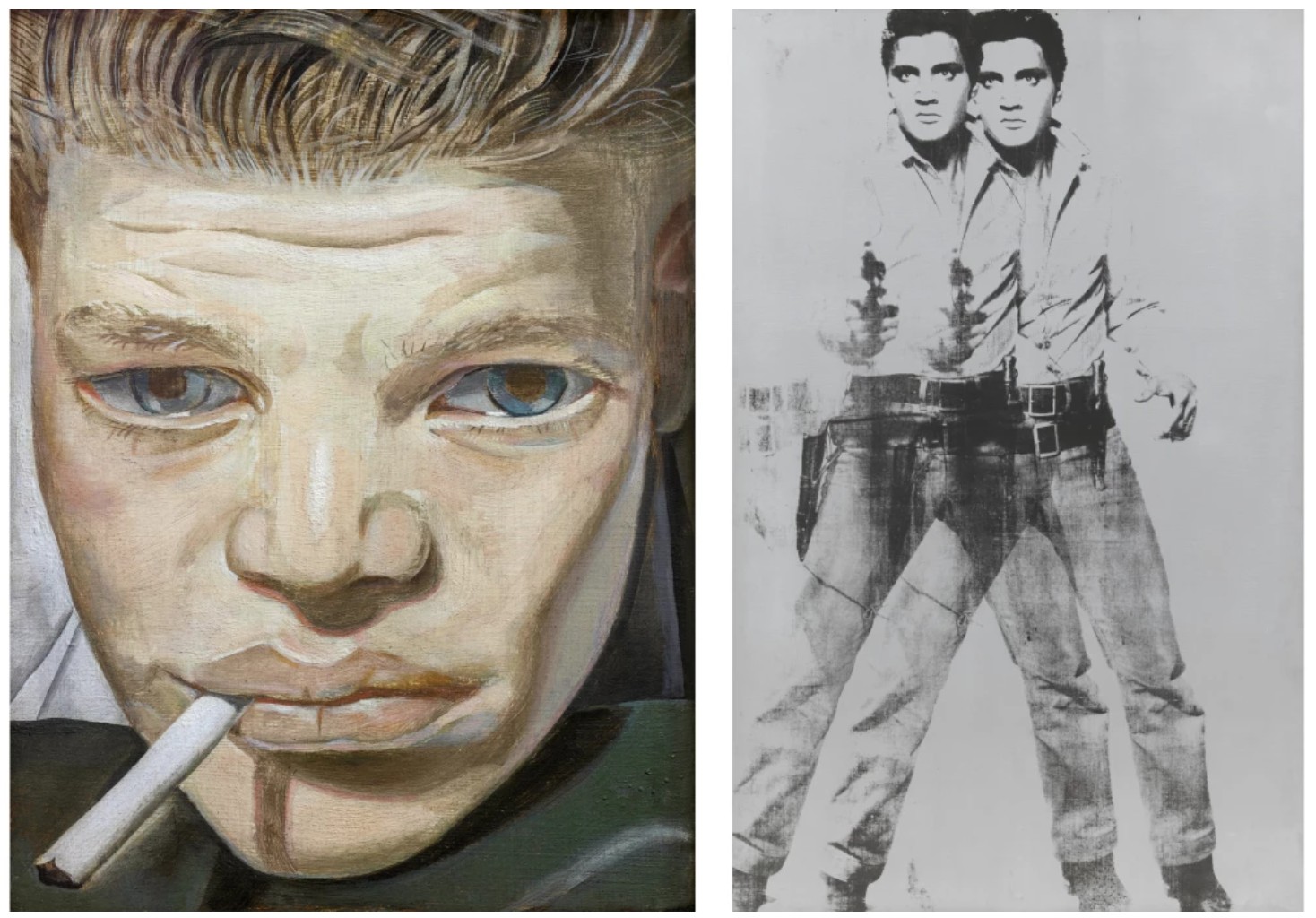
Left: Lucian Freud, Boy Smoking, 1950–51. Tate Modern, London. Image © The Lucian Freud Archive. All Rights Reserved 2026 / Bridgeman Images. Art © 2026 Lucian Freud.
Right: Andy Warhol, Double Elvis, 1963. The Museum of Modern Art, New York. Image © The Museum of Modern Art/Licensed by SCALA / Art Resource, NY. Art © 2026 Andy Warhol Foundation for the Visual Arts / Artists Rights Society (ARS), New York
Peyton’s lush and swift brushstrokes oscillate between projection and interiority, a dynamic central to the potency of Earl’s Court and her celebrated practice in portraiture. By appropriating an original photograph and elevating the moment to a new contemplative level, she deftly contrasts the brothers’ increasingly strained relationship with their unprecedented musical success, their idolization as rock stars with their mutual care and appreciation as siblings, their glories with their faults. As art critic Jon Savage explains, Peyton is “an unashamed fan” with “an idiosyncratic, feminine gaze” that invites us to encounter hypermasculine icons not as caricatures but as individuals caught in the tensions of visibility and myth: “It’s all right for disco divas to take off the slap when they get home, but rock stars have to be who they are, offstage and on. This absurd state of affairs crucifies lives and stunts individual and collective growth. Peyton is careful to emphasize male tenderness.” (Jon Savage, “Boys Keep Swinging, Elizabeth Peyton,” Frieze, November – December 1996 (online)) In the process, she reanimates nineteenth-century traditions of portraiture, which glorified high art while also finding beauty in unifying the subject with expressions of humanity.
“It’s almost a nineteenth-century idea that what’s on the inside appears on the outside, Balzac was into the curve of your nose or mouth, expressing some kind of inner quality that it could be read on your face.”
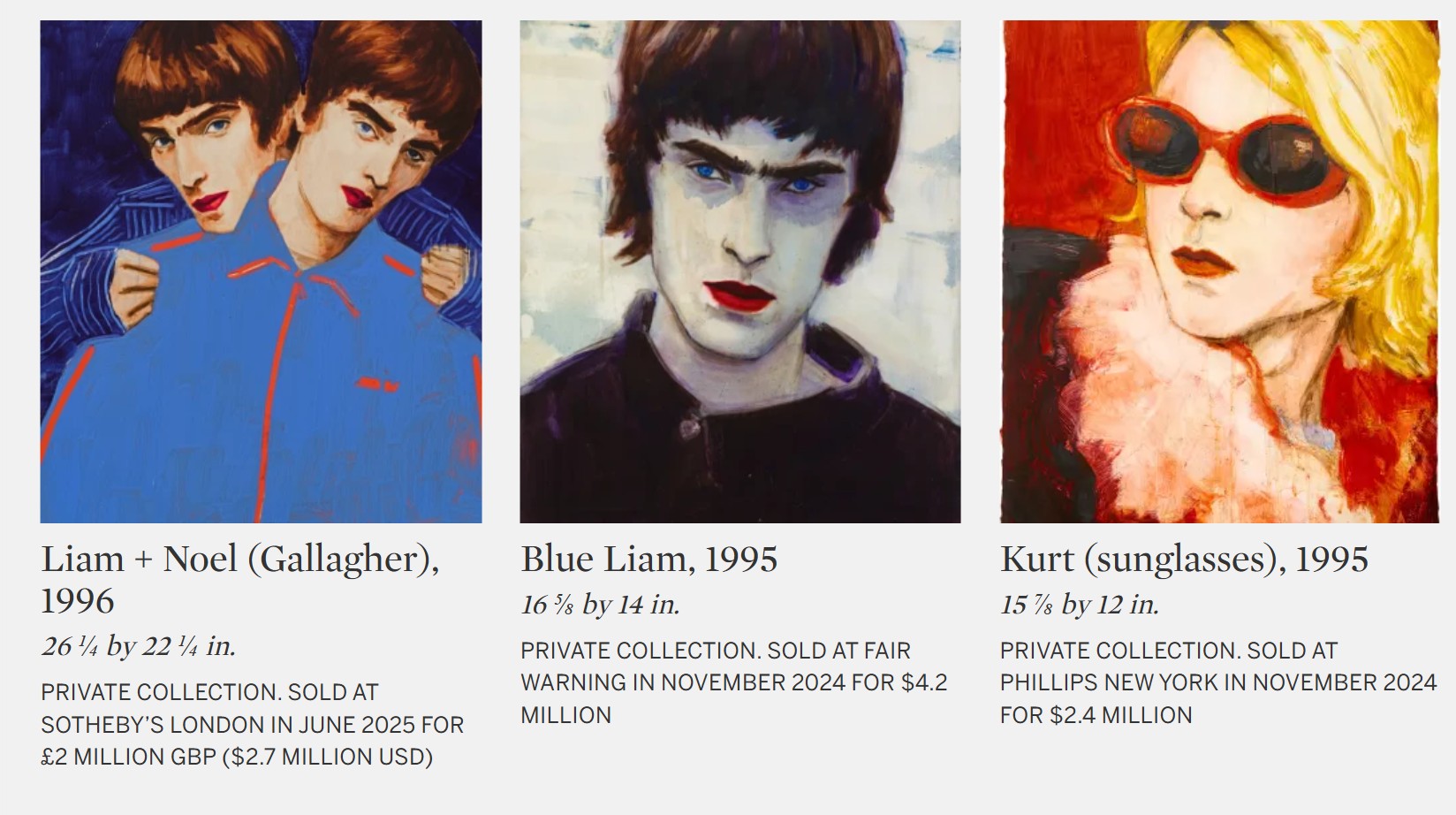
Market Precedents
Peyton emerged in the 1990s and immediately captivated the art world with her portraits of friends, artists, musicians, and historical figures rendered with an intimate gaze and vivid palette, parsing the cultural iconography of her generation. Fundamentally, Peyton regards her works as “paintings of people,” capturing an individual’s essence in a manner reminiscent of still life. Painting her friends and public figures with equal reverence.
“There is no separation for me between people I know through their music or photos and someone I know personally. The way I perceive them is very similar, in that there’s no difference between certain qualities that I find inspiring in them.”
Peyton has through her celebrated career enacted a quiet but radical flattening of social hierarchy, a decisive spotlighting of the tender humanity lying in us all. The 8-by-10 inch composition of Earl’s Court thus captures one such moment, the complicated intertwining of brotherly love found in two legendary icons of popular culture. In doing so, the present work decisively affirms Elizabeth Peyton’s singular position as one of the most perceptive chroniclers of fame and cultural mythology.
Kurt, 1995
Property from an Esteemed Private Collection
Christie’s New-York: 19 November 2025
Estimated: USD 2,000,000 – 3,000,000
USD 2,881,000
ELIZABETH PEYTON (B. 1965), Kurt | Christie’s
ELIZABETH PEYTON (B. 1965)
Kurt, 1995
Oil on canvas
24×19 inches (61 x 48.3 cm)
Signed, titled and dated ‘Kurt 1995 Elizabeth Peyton’ (on the reverse)
Elizabeth Peyton’s Kurt belongs to a much-celebrated series of portraits of the singer Kurt Cobain, the lead vocalist, guitarist, and songwriter for Nirvana—whom the artist had painted the year following his passing in 1994, at the age of just 27. His sudden death affected an entire generation of young fans who felt a close personal connection both to his uniquely authentic brand of music and his struggles with mental health and addiction. One of those who resonated with the power of music was Peyton herself.
“There’s something in music that fascinates me, how it communicates emotion so immediately. That’s something I wanted in my paintings.”
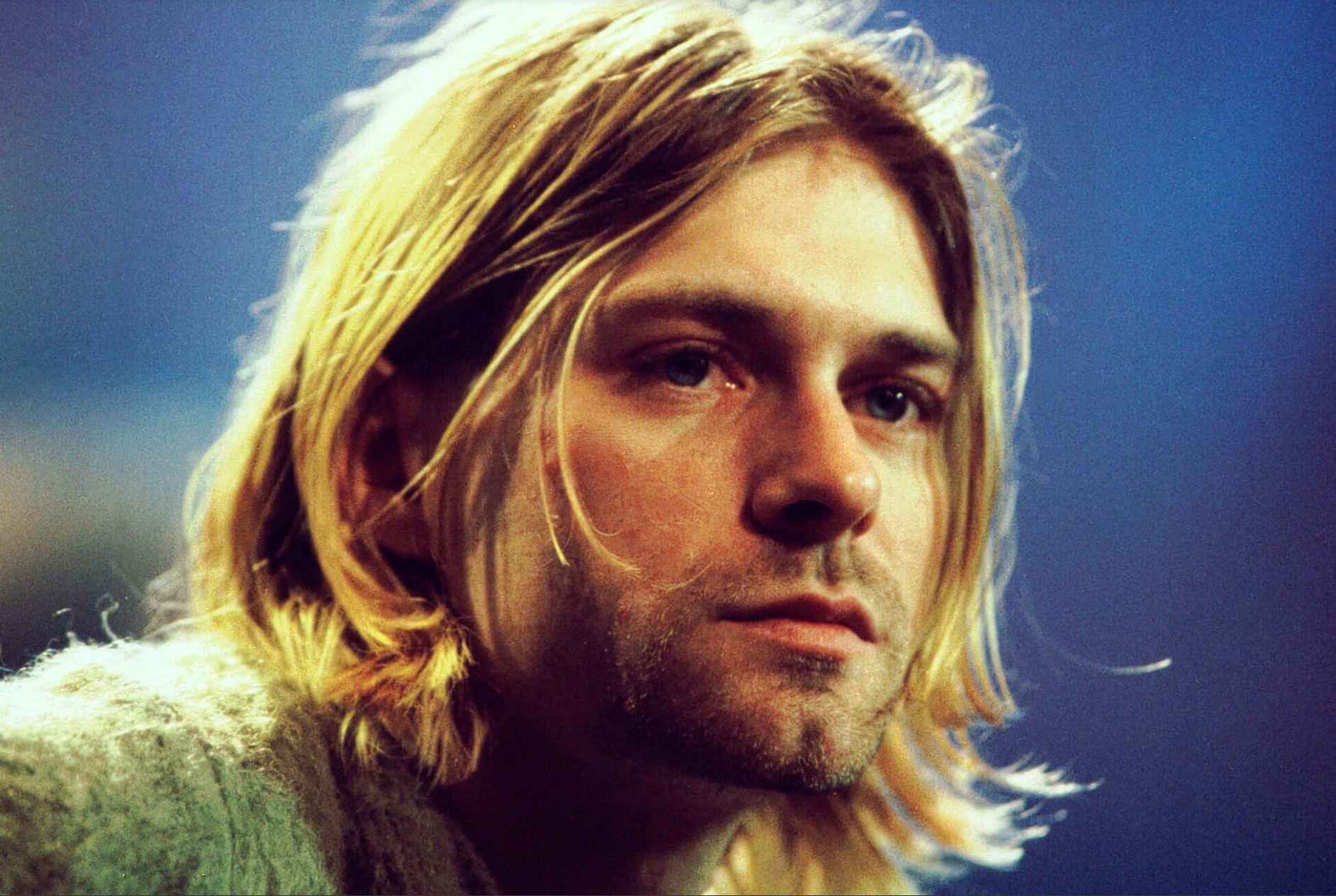
Kurt Cobain of Nirvana during the taping of MTV Unplugged at Sony Studios in New York City, 11/18/93.
Photo by Frank Micelotta via Alamy.
Peyton’s portraits of Kurt Cobain are filled with both beauty and pathos. Wearing a shirt made out of loosely fitting blue fabric, the singer’s delicate features are formed using the skillful movement of the artist’s fluid brushstrokes. The characteristic tussles of the singer’s blond hair appears to glow against the dark ground, as Peyton infuses the tips of his locks with golden highlights. Finally, the deep pools of blue for his downcast eyes and the bright red ‘pop’ of Cobain’s cherry red lips completes the intense yet intimate composition.
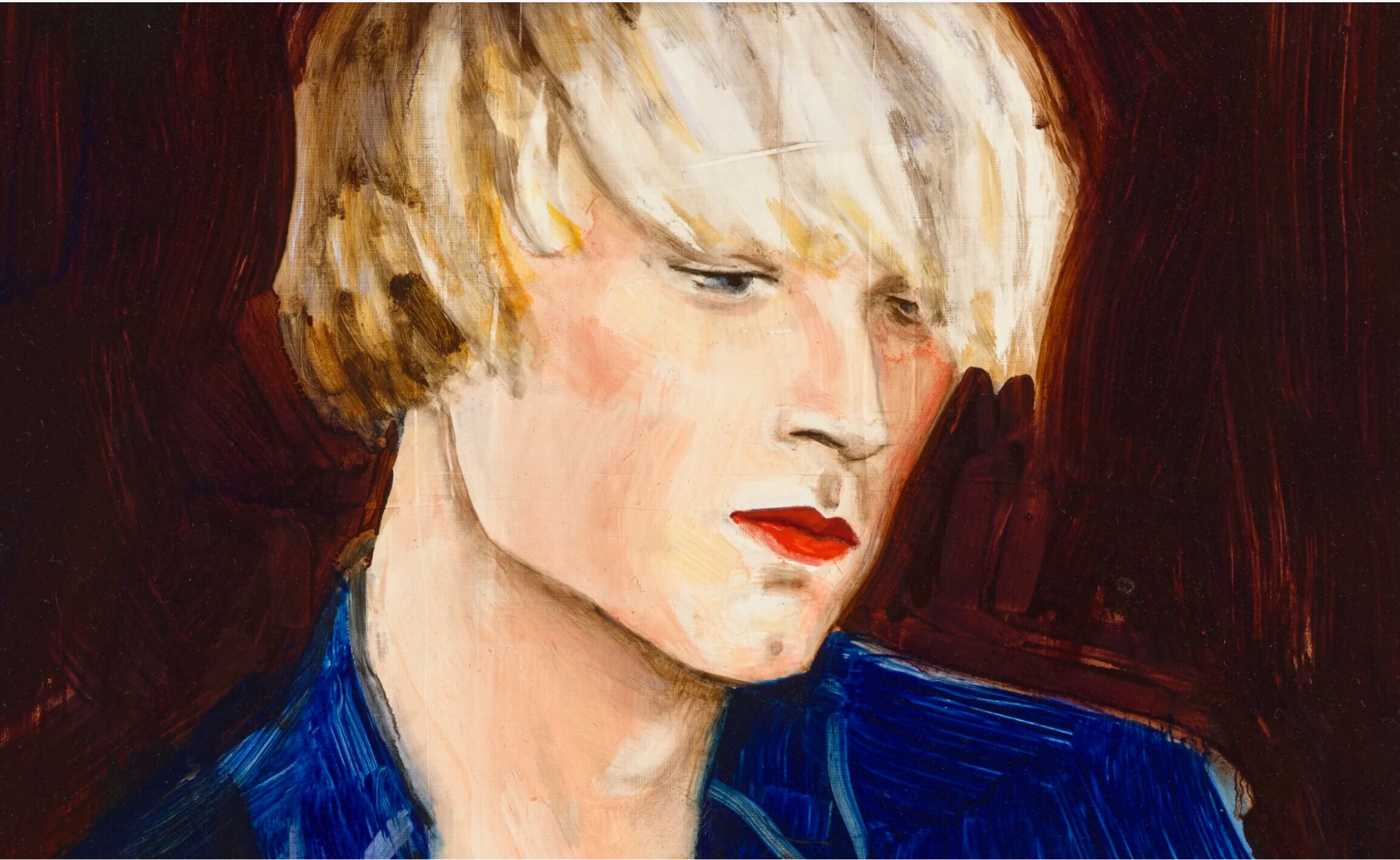
Human emotion and artistry have always been fundamental themes in Peyton’s work. Peyton produced Kurt ahead of her first solo exhibition at Gavin Brown’s enterprise. Within the intimate storefront space of the gallery, these expressions of emotional connection radiated intensely. This exhibition helped launch Peyton’s career and established the significance of her approach to figuration. Other paintings of the Nirvana lead singer included Zok’s Kurt, Alizerean Kurt, Blur Kurt, Kurt Sleeping, Kurt Smoking, and Blue Kurt. Created during a period when other artists rejected the painted portrait, Peyton’s work freshly rejuvenates the style. She employs the paint in a sensitive and expressive manner, not afraid to expose her painterly brush strokes. Her vibrant colors expose the underlying personal sentiments that exist between the artist and her subjects.
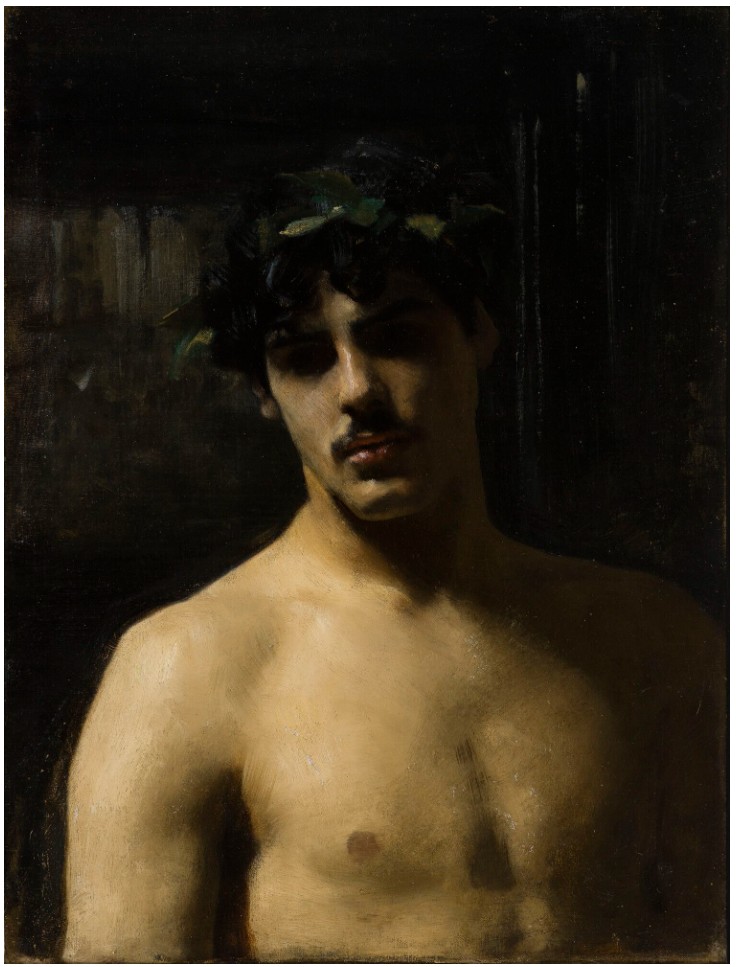
John Singer Sargent, Man Wearing Laurels, 1874-80. Los Angeles County Museum of Art.
Peyton’s rapidly applied, expressive brushstrokes that make up Cobain’s shirt evoke Willem de Kooning’s emotive abstract figures, while the degree of intimacy with which her figures are executed recalls the Renaissance portrait miniatures of Nicholas Hilliard. Furthermore, the angst and emotions that are apparent in Peyton’s work have drawn comparisons with the paintings of the Pre-Raphaelite Brotherhood.
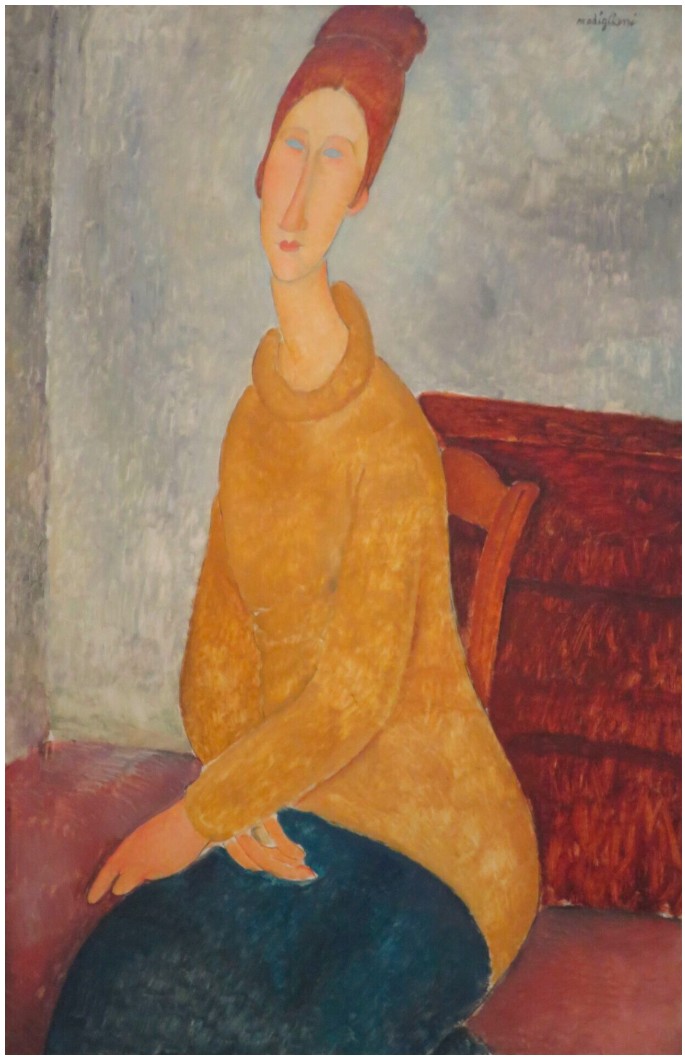
Amadeo Modigliani, Jeanne Hébuterne with Yellow Sweater (Le sweater jaune), 1918-19, Guggenheim Museum, New York.
Elizabeth Peyton’s subjects find themselves inhabiting a magical space where many overlapping and divergent worlds coalesce. In her hands, the 90s-era aesthetic personified by the present work transcends time. Using heightened colors, intense and intimate detail and a votive-like approach to her subjects, Peyton has found a way to be both of her time and yet mystically of another time. Connected to an earlier, mythical and allegorical world, Kurt is infused with poetry and legend, and offers up a beautiful Romantic dream.
Spencer (Two Palms), 2002
Phillips London: 26 June 2025
Estimated: GBP 600,000 – 800,000
GBP 635,000 / USD 869,950
Elizabeth Peyton Modern & Contemporary Art: Evening & Day Sale
101.7 x 76.4 cm (40 x 30 1/8 inches)
Painted in 2002, Spencer (Two Palms) is a deeply sensitive yet robust exploration of contemporary portraiture by a leading figure of the discipline, Elizabeth Peyton. Executed at a critical moment in her practice, this vibrant, psychologically-charged portrait depicts artist, musician and former club owner Spencer Sweeney, a key figure in the late 1990s and early 2000s downtown New York scene. With its ethereal palette and delicate yet deliberate brushwork, Spencer (Two Palms) bridges the intimacy of private life and the radiance of public mythology, exemplifying Peyton’s singular contribution to the genre of portrait painting.
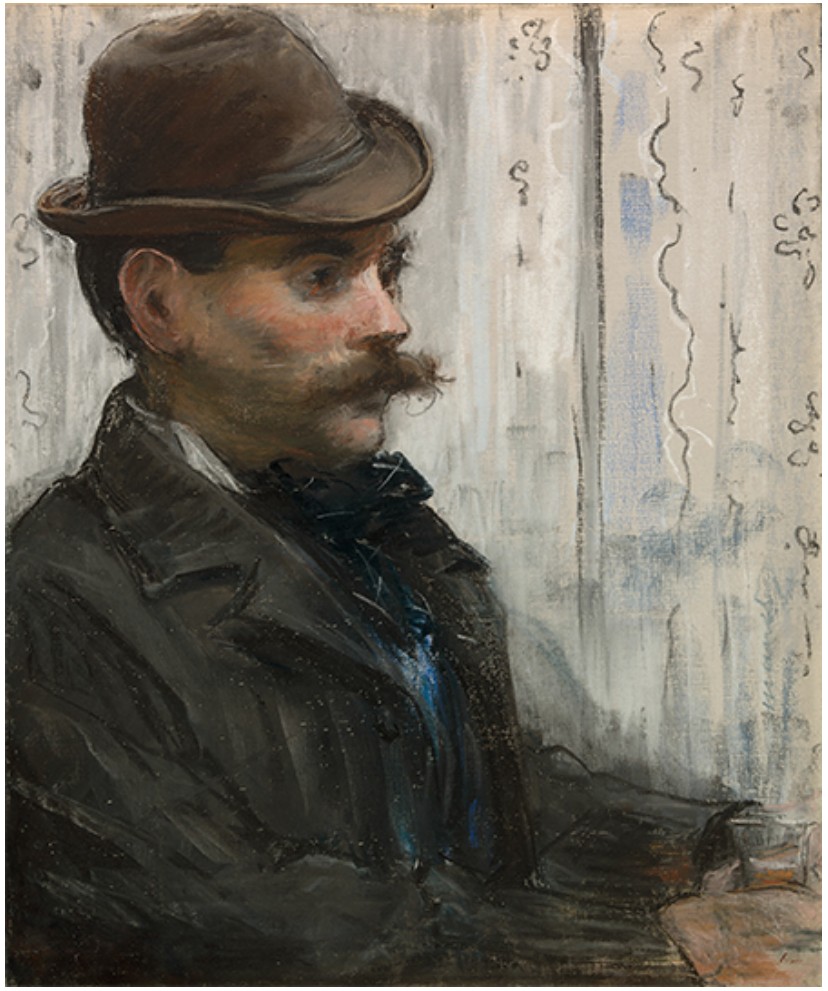
Édouard Manet, Portrait of Alphonse Maureau, 1878-1879, Art Institute of Chicago.
Image: Art Institute of Chicago, Bequest of Kate L. Brewster, 1950.123
Bathed in the atmospheric rays of a muggy summer morning in New York City, Sweeney sits poised in a light-flooded apartment, paused in a moment of quiet contemplation. His vivid pink T-shirt, adorned with two hummingbirds feeding on blooming yellow flowers, introduces a note of playful elegance that offsets his pale, sleep-shadowed face and steady gaze. He is caught in a moment, reflective and romanticized yet rendered through Peyton’s characteristically unironic handling of her medium. For the artist, an intimate connection between artist and sitter is a prerequisite for all her works:
“I just have a feeling of urgency that I want to make a picture of somebody. Probably because I’m very inspired by them or there is something I really want to know about or understand in them. So, fascination? Yes. Admiration? Yes. But also curiosity — I get fascinated by what people are doing and what they’re making and how it’s what I need at that moment.”
With his hands folded loosely on his lap and his eyes cast just off-canvas, Peyton masterfully captures both Sweeney’s effortless bravado and the ubiquitous creative spirit of the early 2000s downtown New York scene. Peyton first rose to prominence in the 1990s with her jewel-toned, small-scale portraits of historical and cultural icons—Napoleon Bonaparte, Kurt Cobain, Princess Diana—figures drawn from art, literature, music and history. But by the early 2000s, her focus had shifted from distant admiration to lived experience. She turned her attention more closely to those within her own milieu: painting friends, collaborators and fellow creatives whose presence offered new emotional registers. Spencer (Two Palms) is a key product of this shift, demonstrating Peyton’s deepening engagement with real-time intimacy and contemporary cultural life. The present work is part of a celebrated suite of paintings that centers on Spencer Sweeney, a fixture in New York’s early 2000s art and nightlife scenes. Peyton and Sweeney met through the legendary downtown gallery world of Colin de Land and Pat Hearn, and their friendship sparked a series of portraits that have since entered the artist’s celebrated canon. Two related works are held in significant institutional collections: Spencer (1999) in the Museum of Modern Art, New York, and Spencer (Spencer Sweeney) (2005) in the Rubell Museum, Miami. Positioned between these two examples in both date and scale, Spencer (Two Palms) stands out for its lyrical intensity and nuanced characterization.
In her 2002 painting, Peyton’s signature handling of oil paint—fluid, radiant, and emotionally-charged—is on full display. Her virtuoso technique balances precision and spontaneity in a way that draws back to a tradition of portraiture stemming from artists such as Édouard Manet and Edgard Degas: translucent layers of colour coalesce into Sweeney’s pale facial features, while looser strokes animate the vivid space around him. The result is a portrait suspended between immediacy and reverie, between observation and idealization. As the artist once explained,
“It all begins with me. That’s my interest. But I’m very inspired by people who are artists and musicians, people who touch me, people who help me feel my feelings, that describe my feelings in a way.”
This emotional connectivity—between painter and subject, viewer and sitter—underscores the lasting impact of Peyton’s portraits.
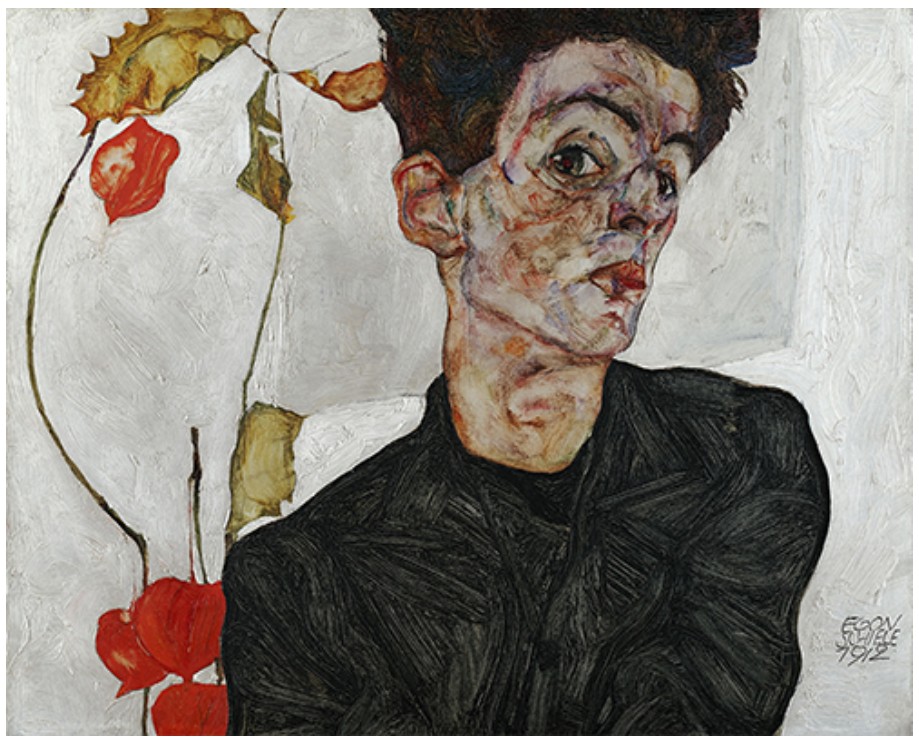
Egon Schiele, Self-Portrait with Chinese Lantern Plant, 1912, Leopold Museum, Vienna. Image: classicpaintings / Alamy Stock Photo
A defining characteristic of Peyton’s work is her celebration of beauty—not in a conventional sense, but as a condition of presence, sensitivity and style. In Sweeney, she found a subject who blurs the lines between masculine and feminine, personal and iconic. His delicate features and bold sartorial choices speak to Peyton’s fascination with androgyny and stylized self-presentation—qualities echoed in other recurring muses such as David Bowie and Jarvis Cocker and highly reminiscent of Egon Schiele’s evocative, edgy portraiture. Even her self-portrait, Live to Ride (E.P.), painted in 2003 and located in the Whitney Museum’s collection, presents a stylistically standardized vision of the self, closely aligned with her rendition of Sweeney. Both figures occupy unknowable interiors, adorned in highly individualized clothing, their impenetrable stares leave much to be uncovered. In Spencer (Two Palms), Peyton does not simply render an individual: she conveys a moment, a mood and a relationship, steeped in both admiration and artistic communion.
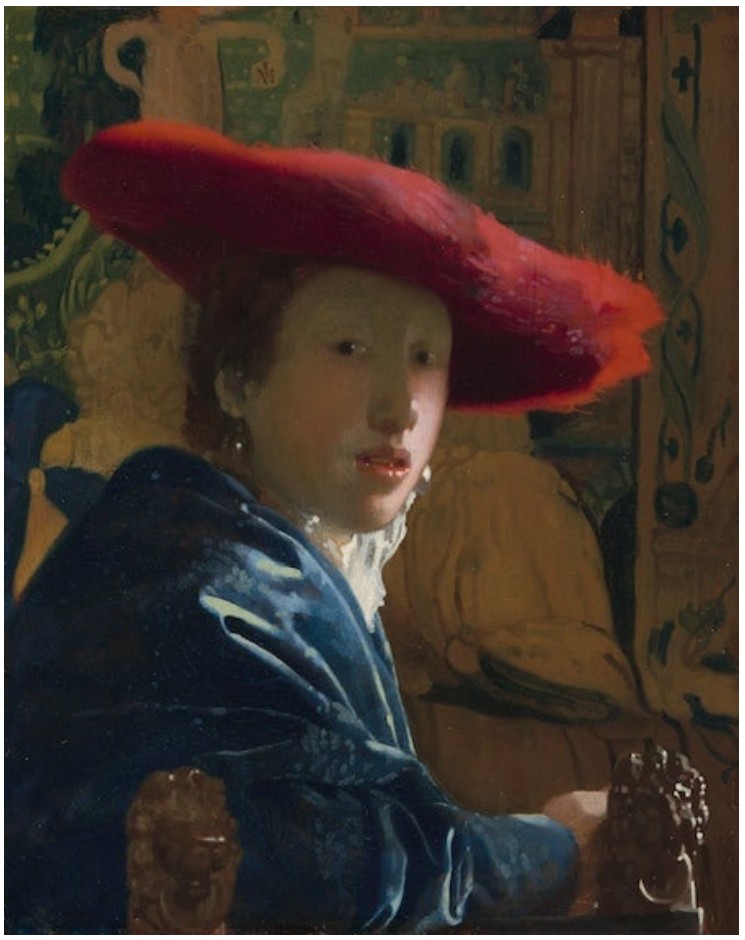
Johannes Vermeer, Girl with the Red Hat, circa 1669, National Gallery of Art, Washington, D.C.
Image: National Gallery of Art, Washington, D.C., Andrew W. Mellon Collection, 1937.1.53
Spencer (Two Palms) embodies Peyton’s broader revival of figurative painting at the turn of the millennium. At a time when portraiture was often dismissed as nostalgic or apolitical, Peyton reasserted its relevance with portraits that were unapologetically emotional, often romantic and always attuned to the sensibilities of a generation. Art historian Nicholas Cullinan, director of the British Museum in London, has noted that her portraits are ‘perceptive and psychologically penetrating’, focusing not just on likeness but on presence—whether painted from life, memory or a photograph. Though grounded in the personal, Peyton’s portraits transcend (auto)biography. In her rendering of Sweeney, we encounter not only a friend, but also a symbol of creative life and downtown culture. As such, Spencer (Two Palms) operates on multiple levels: as a document of a particular time and place, as a luminous object of painterly beauty and as an emblem of Peyton’s unique ability to capture one’s unmediated presence, beyond mere surface likeness.
Liam & Noel, 1996
Sotheby’s London: 24 June 2025
Estimated: GBP 1,500,000 – 2,000,000
GBP 1,992,000 / USD 2,729,040
Liam & Noel | Modern & Contemporary Evening Auction | 2025 | Sotheby’s
ELIZABETH PEYTON (b. 1965)
Liam & Noel, 1996
Oil on board
66.5 x 56.5 cm (26 1/4 x 22 1/4 inches)
Signed, titled Liam + Noel (Gallagher) and dated 1996 (on the reverse)
Elizabeth Peyton’s electric Liam + Noel (Gallagher) is among the most ambitious and psychologically nuanced portraits the artist produced of the Britpop era, capturing the Oasis frontmen at the apex of their fame and cultural potency. Painted in 1996, the work belongs to a pivotal series in Peyton’s oeuvre, created in the wake of the band’s meteoric rise and against the backdrop of a moment that came to define British cultural identity. Executed in the aftermath of Oasis’s record-breaking concerts at Knebworth Park – in which 250,000 tickets were sold within 24 hours amid a staggering 2.5 million applicants – the present work reflects not only the fervor surrounding the band, but also Peyton’s singular ability to capture the psychological undertow behind public image.
“Making art is making something live forever. Human beings especially – we can’t hold on to them in any way. Painting is a way of holding onto things and making things go on through time.”
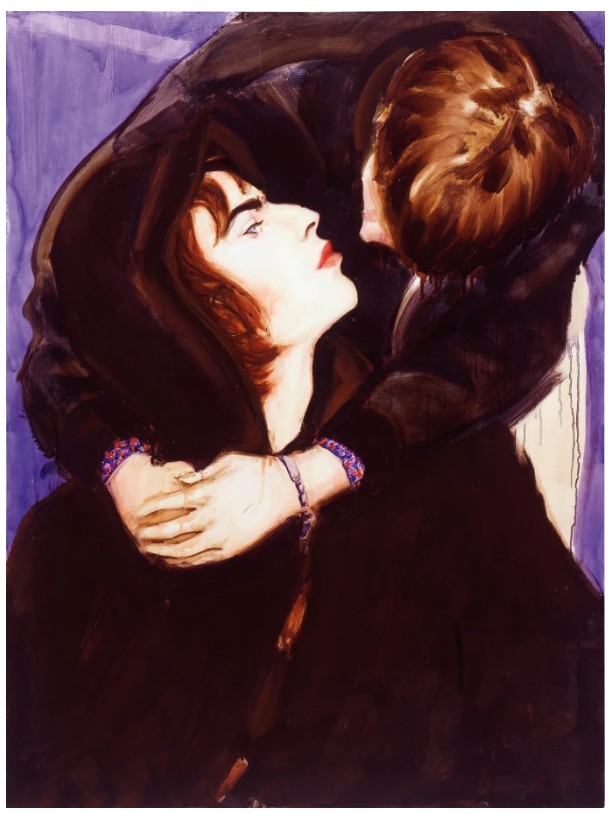
Elizabeth Peyton Liam & Noel, Loch Lomond, 1997 San Francisco Museum of Modern Art © Elizabeth Peyton
As Britpop ascended to global prominence, Oasis occupied a central role, their success marking a transatlantic shift in musical identity at a time when British art was dominated by the provocative rise of the Young British Artists. Released in the Autumn of 1995, (What’s the Story) Morning Glory? had catapulted to number one in the United Kingdom and number four in the United States, where it remained in the charts for ten consecutive weeks, propelling the group to international stardom and embedding the Gallaghers into the mythology of British music. That another painting of the Gallagher brothers is held in the permanent collection of the San Francisco Museum of Modern Art, underscores the lasting institutional significance of Peyton’s motif, and lasting cultural weight of a moment when music, art, and celebrity fused to define the spirit of the 1990s.
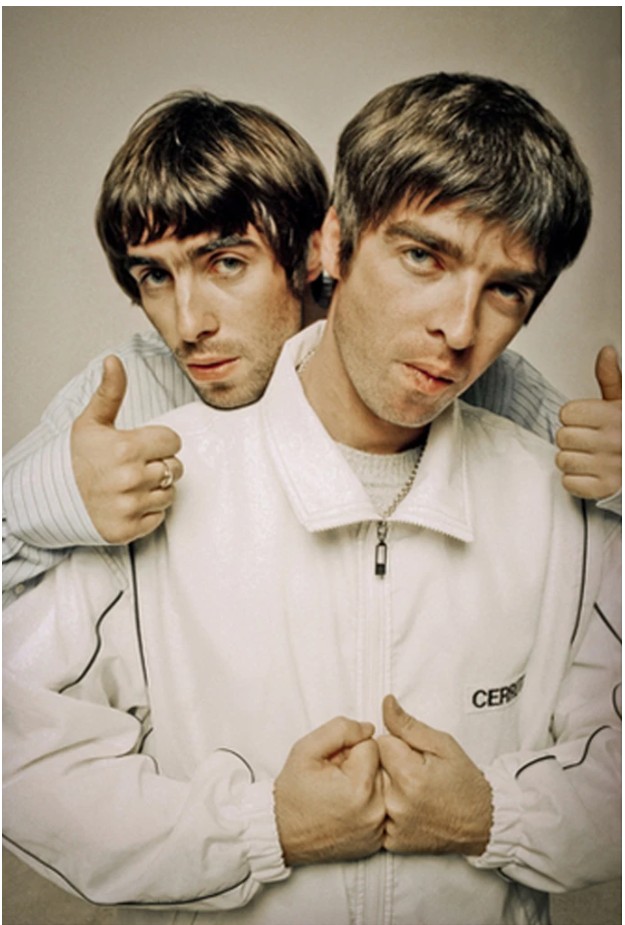
Noel and Liam Gallagher photographed in London, 1995. © Stefan De Batselier 2025
Peyton’s portrait offers a compelling counterpoint to the widely circulated media narratives of the brothers as combative and volatile. Rather than foregrounding their notoriety, the painting frames Liam and Noel in a moment of intimacy and repose. Based on a promotional image by the late Belgian photographer Stefan De Batselier, the composition features the two brothers posed in casual attire – an oversized tracksuit and collared shirt – encapsulating the working-class cool that became a hallmark of the Oasis aesthetic. Yet Peyton’s translation of this promotional imagery transcends its source: through her luminous palette, diaphanous brushwork, and refined sense of composition, the portrait transforms an image of celebrity into a poetic meditation on kinship, fame, and vulnerability.
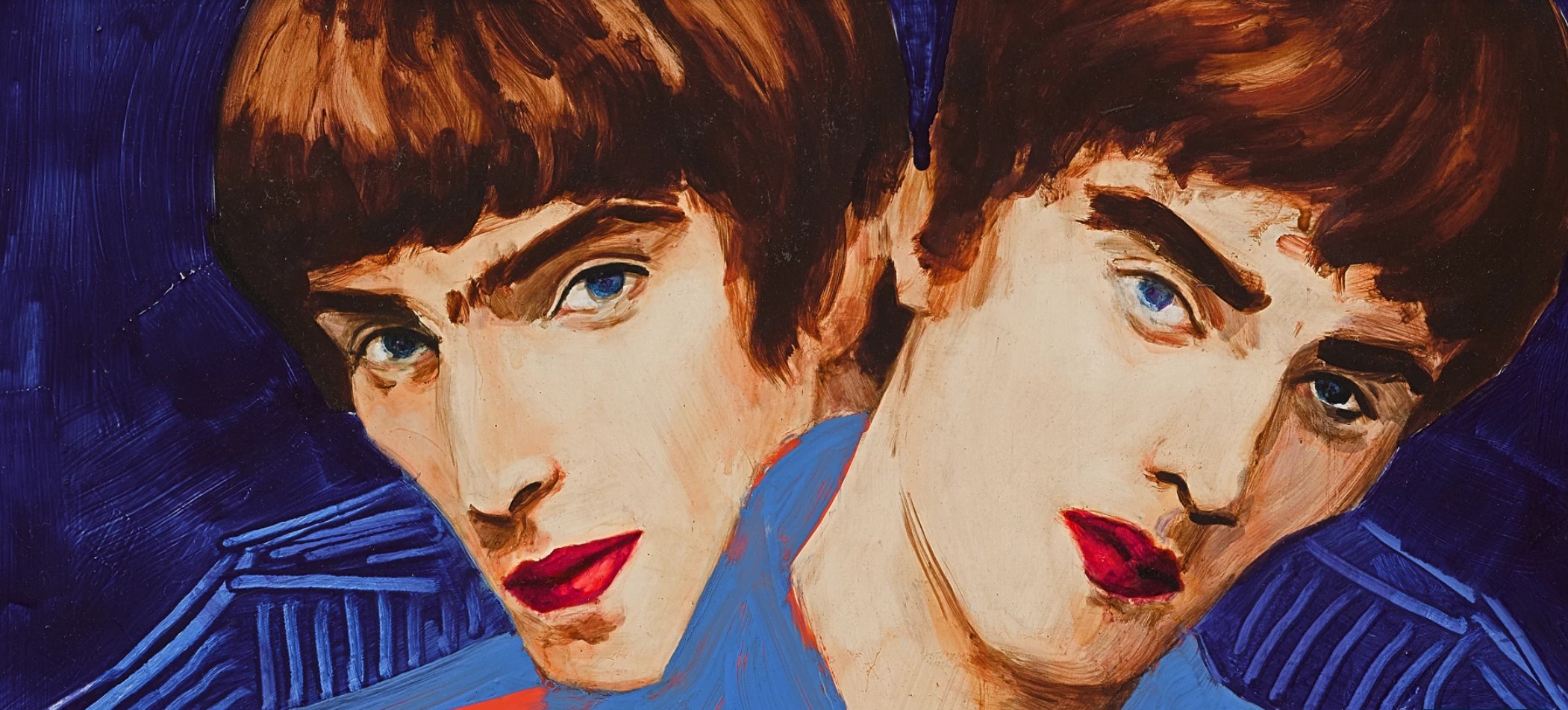
Rendered with Peyton’s signature economy of line and exquisite mark making, the brothers appear almost indistinguishable; mirroring each other in their matching haircuts, aquiline profiles, and delicately flushed complexions. Liam’s chin rests gently on Noel’s shoulder, a pose of physical proximity and emotional ambiguity that destabilises their hard-edged public personas. In Peyton’s vision, they are not rock stars but siblings: elfin, tender, and introspective. As art critic Jon Savage has observed, an essential dimension of Peyton’s practice lies in her ability to inhabit the space between public persona and private self, between the abstraction of the icon and the raw intimacy of the human subject. “An unashamed fan,” Savage writes, Peyton applies “an idiosyncratic, feminine gaze” to the often hypermasculine figures of contemporary pop, inviting the viewer to encounter these icons not as caricatures, but as individuals caught in the tensions of visibility and myth. (John Savage, “Boys Keep Swinging, Elizabeth Peyton,” Frieze, November – December 1996 (online))
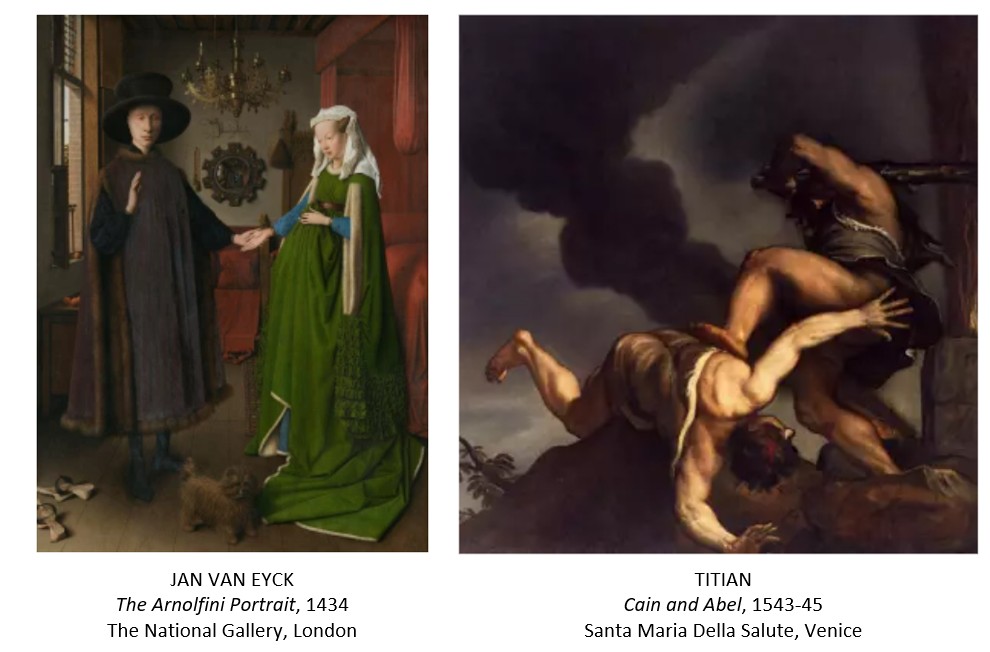
This duality between projection and interiority is central to the potency of Liam + Noel (Gallagher). At the time of its making, the brothers’ increasingly strained relationship had become tabloid fodder, a counterpoint to their musical success. Peyton subtly channels this undercurrent of discord: though the painting depicts a moment of connection, it is laden with the knowledge of fracture to come. The delicacy of Peyton’s brushwork and the almost translucent rendering of the figures serve to heighten this emotional tension, creating a visual atmosphere that is as ephemeral as it is evocative.
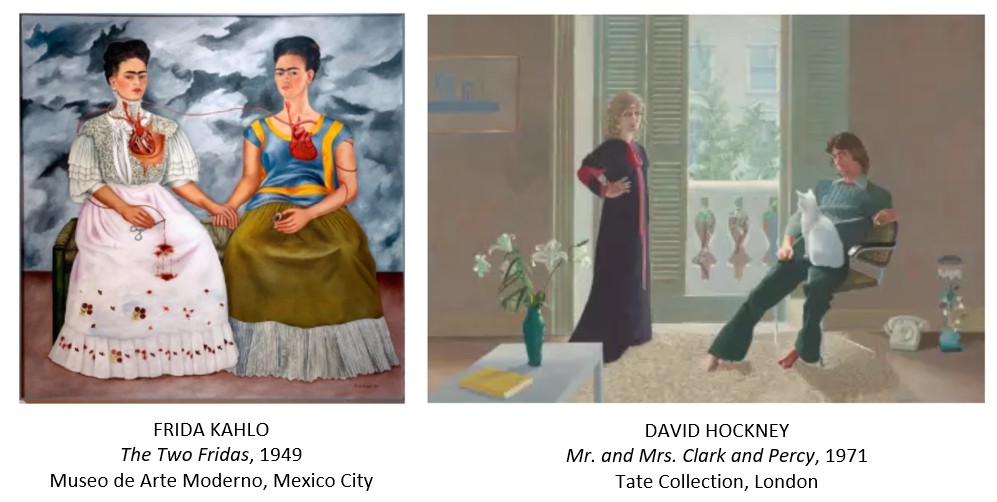
Throughout art history, the double portrait has served as a powerful site for exploring relationships: familial, fraternal, romantic, and psychological. Peyton’s Liam + Noel (Gallagher) certainly participates in this lineage. From Jan van Eyck’s Arnolfini Portrait (1434) and Frida Kahlo’s The Two Fridas (1939) to David Hockney’s Christopher Isherwood and Don Bachardy (1968), the format offers a unique lens through which to examine identity not as singular, but as relational. Artists utilizing this device have continued to foreground intimacy and psychological nuance, probing the subtle tensions and affections between sitters. Andy Warhol reimagined the double portrait through radically different means: his screen-printed images emphasized surface and repetition, reducing figures to icons. In contrast to Warhol’s cool detachment, Peyton’s approach is unabashedly emotional, suffused with a fan’s devotion and an artist’s eye for transformative detail. In her hands, stardom becomes something fragile, luminous, and deeply human.
Liam + Noel (Gallagher) occupies a critical place within Peyton’s pantheon of muses, which includes both cultural legends – Kurt Cobain, Jarvis Cocker, Sid Vicious, David Bowie – and historical figures such as Ludwig II and Napoleon. Painting her friends and public figures with equal reverence, Peyton enacts a quiet but radical flattening of social hierarchy. Her portraits suggest not only who is worthy of depiction, but how. Indeed, the icon in pop culture is never static; it evolves through successive acts of reinvention and reinterpretation. Ahead of their eagerly anticipated world tour, due to kick off in July this summer, Peyton’s Liam + Noel (Gallagher) captures one such moment – poised on the edge of change, still radiant in its immediacy. In doing so, the work affirms Peyton’s singular position as one of the most perceptive chroniclers of fame and cultural mythology.
Jarvis and Liam Smoking, 1997
Christie’s New-York: 14 May 2025
Estimated: USD 800,000 – 1,200,000
USD 1,623,000
ELIZABETH PEYTON (B. 1965), Jarvis and Liam Smoking | Christie’s
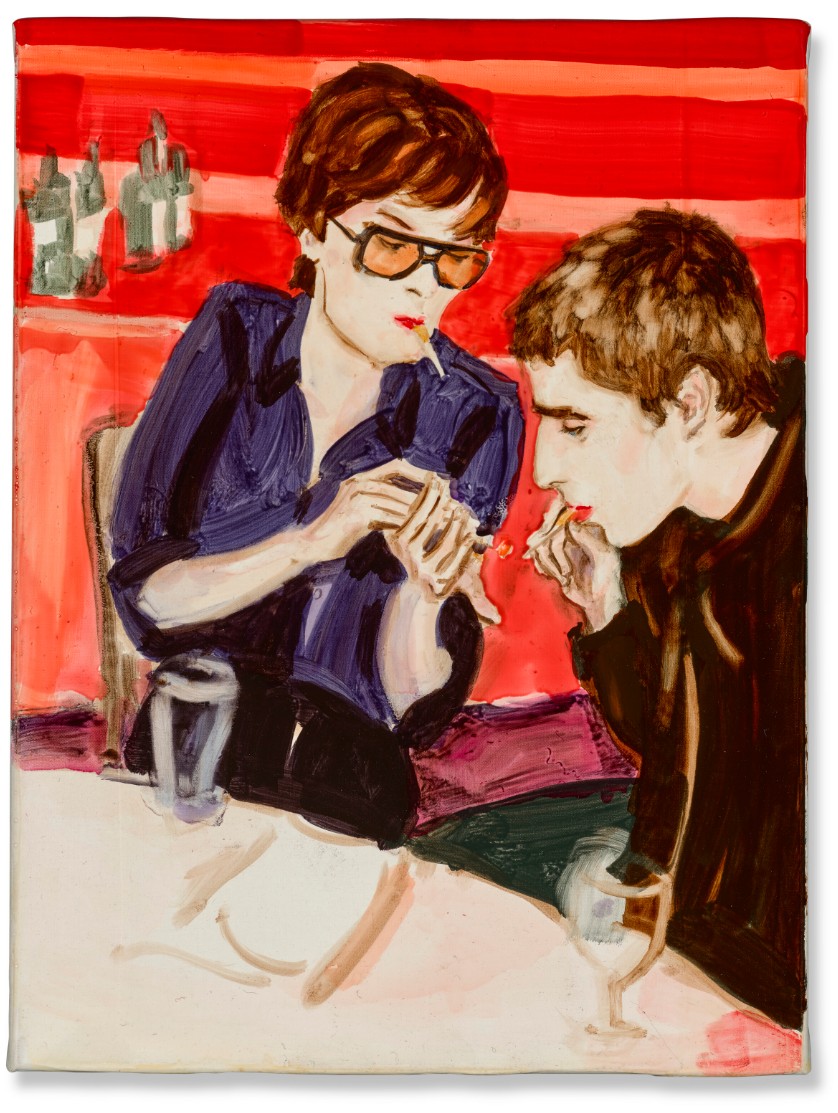
ELIZABETH PEYTON (B. 1965)
Jarvis and Liam Smoking, 1997
Oil on canvas
12 1/8 x 9 1/8 inches (30.8 x 23.2 cm)
Signed, titled and dated ‘Jarvis and Liam Smoking 1997 Elizabeth Peyton’ (on the overlap)
In deft, fluid brushstrokes, Elizabeth Peyton has captured a fleeting moment of intimacy between two musicians at the height of their fame. Painted in 1997—two years after her acclaimed 1995 solo exhibition at Gavin Brown’s enterprise in New York, which itself followed on the heels of the artist’s debut 1993 solo show at the Chelsea Hotel, New York—Jarvis and Liam Smoking is a quintessential example of the portraits that “helped melt the ice that had formed around painting in the early 1990s” (J. Saltz, “Red Lipped Royals”, Artnet magazine, 16 April 1999).
Jarvis and Liam Smoking unites two men–Jarvis Cocker and Liam Gallagher–who helped define the Brit Pop era. By then, Gallagher’s band Oasis had achieved enormous success with their second album, What’s the Story (Morning Glory)?, which entered the UK charts at number one in October 1995 and did not leave the top three for seven months. In 1996, it won Best British Album at the Brit Awards. At that same award ceremony, Jarvis Cocker, the frontman of Pulp, invaded the stage while Michael Jackson was singing to protest the performance—an act that Noel Gallagher, Liam’s brother and bandmate, publicly supported.
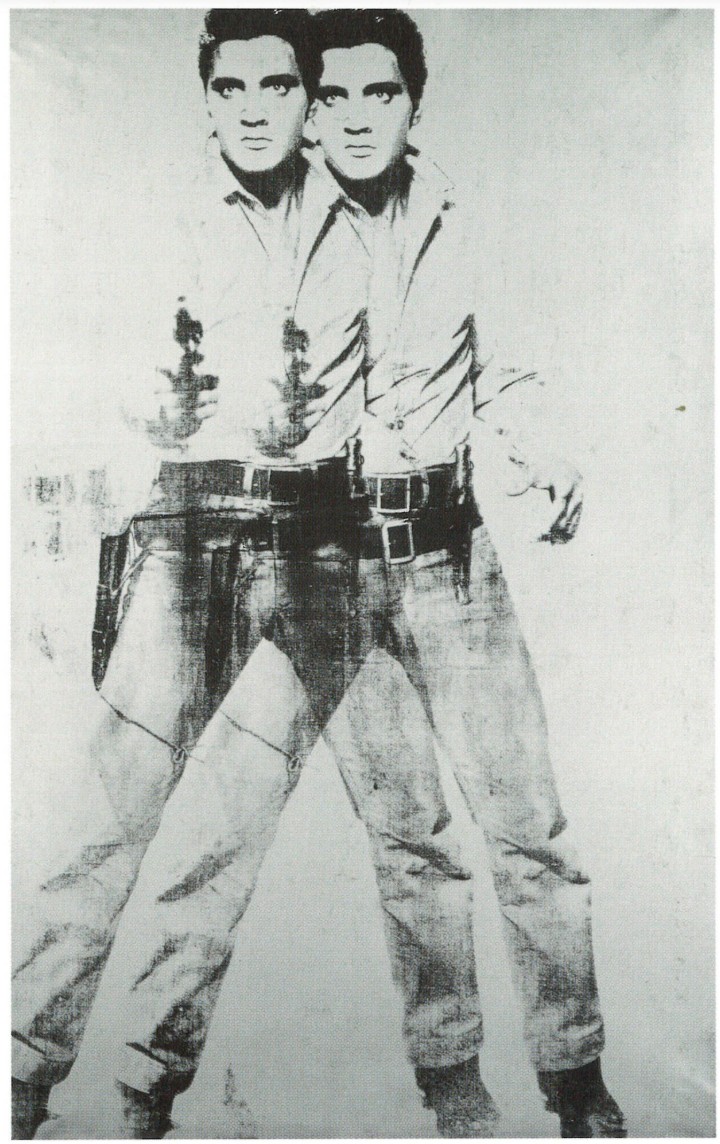
Andy Warhol, Double Elvis [Elvis IV] [Ferus Type], 1963.
© 2025 The Andy Warhol Foundation for the Visual Arts, Inc. / Licensed by Artists Rights Society (ARS).
“I’m interested in making pictures of artists whose work inspires me.”
In an interview with Cocker in 2008, she told him that she decided to paint him after his act of protest at the Brit Awards.
“There aren’t many people who stand up, whether it be in culture or politics, and say: “Listen, this is dumb. It doesn’t have to be like this.” After that awards show, I made a painting of you getting out of jail because I thought what you did was so heroic.”
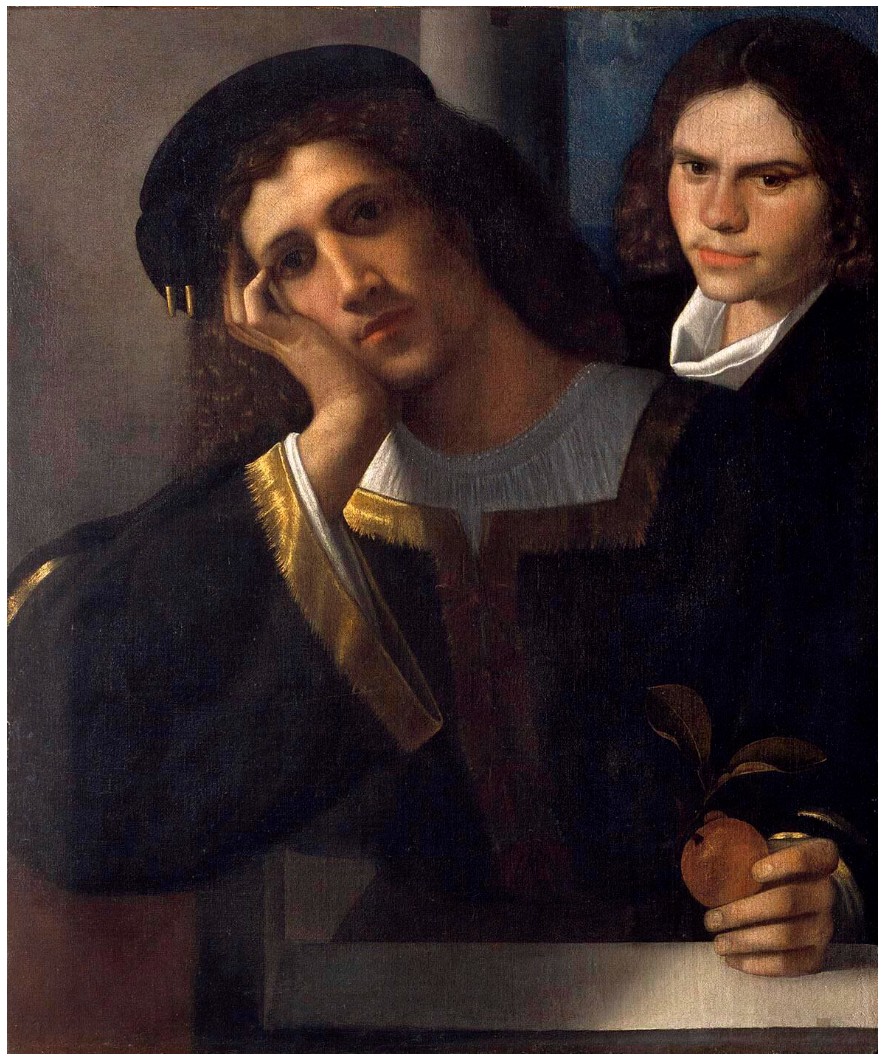
Giorgione, Double Portrait, circa 1502. Castel Sant’Angelo, Rome.
She does not make preparatory sketches before beginning a painting, meaning that the energy and spontaneity that arise from the painting process are retained, resulting in work that is vivid and alive. In this way, the formal qualities of Jarvis and Liam Smoking further underline her tender reverence for her subjects, as well as the beauty of the ephemeral moment that it captures.
Kurt (sunglasses), 1995
Phillips New-York: 19 November 2024
Estimated: USD 600,000 – 800,000
USD 2,359,000
Elizabeth Peyton – Modern & Contempo… Lot 3 November 2024 | Phillips
ELIZABETH PEYTON
Kurt (sunglasses), 1995
Oil on canvas
16×12 inches (40.5 x 30.5 cm)
Signed, titled and dated “Kurt (sunglasses) Elizabeth Peyton 1995” on the overlap
Elizabeth Peyton’s Kurt (sunglasses), 1995, is an exquisitely rendered oil on canvas that exemplifies her ability to evoke emotional depth through intimate depictions of larger-than-life figures. Part of a series of portraits of Kurt Cobain, the iconic frontman of Nirvana and a defining figure of the 1990s grunge movement, the work reflects Peyton’s enduring fascination with fame and vulnerability. Painted in the year following his tragic suicide, Cobain—symbolizing both cultural rebellion and deep personal fragility—becomes a vessel through which Peyton merges emotional intimacy with iconic status. Known for her luminous portrayals that blend personal connection with celebrity allure, Peyton captures the essence of the rocker’s anti-establishment persona with a careful, tender execution.
“I guess what I’m interested in is the quality of my subjects being able to be themselves while occupying this extreme role in the public imagination. You can see their will, and that’s incredibly beautiful.”
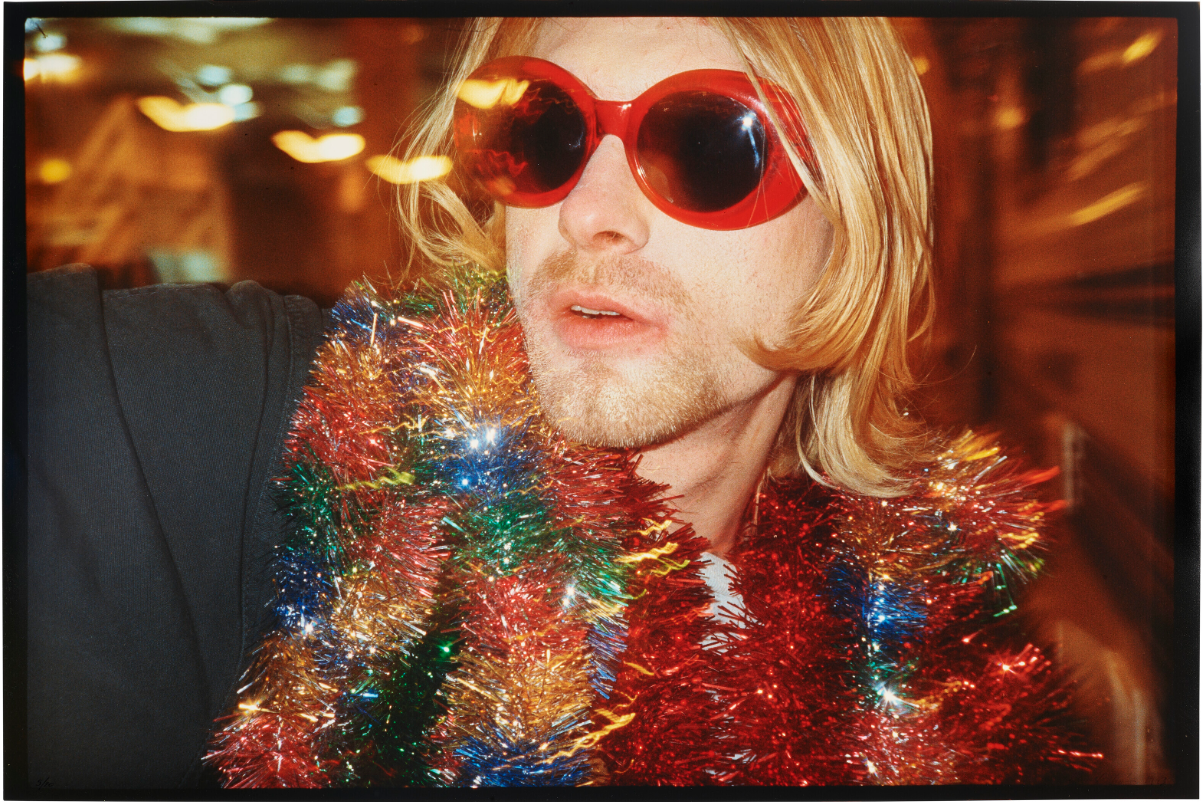
Kurt Cobain at MTV’s Live and Loud, Pier 48, Seattle, WA, Dec. 13, 1993. Photograph by Alice Wheeler. Image: Greg Kucera Gallery, Seattle
Drawing from historical influences and photographic inspirations, Kurt (sunglasses) invites viewers into a private realm where personal narrative and cultural image coalesce, marking a pivotal shift in Peyton’s career from historical figures to contemporary pop icons. Although not exhibited, this portrait of Cobain emerged alongside Peyton’s pivotal 1995 solo exhibition at Gavin Brown’s Enterprise in SoHo, which showcased a series of related works. The show, which received high-profile reviews from The New York Times and Artforum, launched Peyton’s career and established her as a leading figure in the revival of figurative painting, steering art away from the academic theory that had dominated the 1980s. Other examples from this foundational series reside in prestigious collections, including the Walker Art Center in Minneapolis, The Brant Foundation in Greenwich, the Boros Collection in Berlin, and the Burger Collection in Hong Kong.
“People who are good at what they do often become well known, and I’m interested in making pictures of artists whose work inspires me.”
Peyton often uses photographs as references for her portraits, selecting subjects who captivate her for their cultural impact and emotional depth. In Kurt (sunglasses), the composition closely resembles Alice Wheeler’s well-known photograph of Kurt Cobain, taken during MTV’s Live and Loud performance in Seattle on December 13, 1993. In this image, Cobain, adorned with his iconic Christian Roth oval-shaped sunglasses and a festive garland of multi-colored Christmas tinsel, embodies the glamorous yet troubled rock star persona, exuding confidence while navigating the mounting pressures of fame and personal turmoil. Peyton reinterprets this moment with her signature soft brushstrokes, transforming the photograph into an intimate painting that merges Cobain’s public persona with the vulnerability that lies beneath, highlighting the emotional complexity at the core of her work.
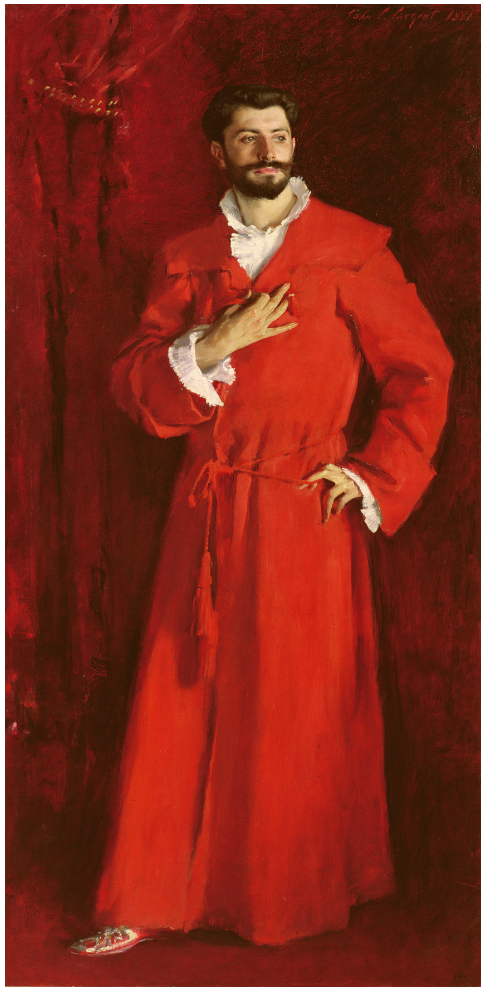
John Singer Sargent, Dr. Pozzi at Home, 1881. The Hammer Museum, Los Angeles. Image: Bridgeman Images
In Kurt (sunglasses), Peyton invites the viewer into a close, personal engagement with the subject. The painting’s modest scale further encourages familiarity, underscoring the personal and reflective nature of Peyton’s portrayal, which stands in stark contrast to the typical veneer of glamor associated with rock stardom. Her loose, gestural brushstrokes create a sense of immediacy, heightening the emotional intensity of the portrait while retaining the sense of a fleeting, unguarded moment. This approach—letting the paint streak and smear, alternately building up and thinning out in a push-pull between saturation and transparency—mirrors Cobain’s shifting personas and the contradictions he embodied: a symbol of rebellion and raw aggression whose music captured the angst of an entire generation, yet also a figure of private fragility, expressed through his terse, darkly humorous lyrics.
As is typical in much of her portraiture, the figure embodies an androgynous archetype of Peyton’s style, featuring a blood-touched pout, carefully delineated cupid’s bow, and a waifish look of easily bruised youth. A bold Hockney-esque use of color intensifies the sensation within the work, reflecting the saturation of her vision. In Kurt (sunglasses), Peyton aligns Cobain’s lips with the cherry-red hue of his signature frames, creating a striking contrast against the delicately rendered softness of his facial features and the relaxed contours of his golden hair. Her deft handling of light and shadow imparts a profound interior complexity to the portrait. As Cobain’s clothing and the background dissolve into an expanse of red and shadow, a gentle glow envelops his face and neck, infusing the image with a dreamy, almost ethereal quality. Recalling a rich tradition of portraiture, from John Singer Sargent to Sir John Everett Millais, Peyton’s practice similarly seeks to capture intrinsic human beauty.
Sid Vicious Arrested, Chelsea Hotel, 1998
Sotheby’s New-York: 15 November 2023
Estimated: USD 1,500,000 – 2,000,000
USD 2,238,000
ELIZABETH PEYTON (B. 1965), Sid Vicious Arrested, Chelsea Hotel | Sotheby’s (sothebys.com)
ELIZABETH PEYTON (B. 1965)
Sid Vicious Arrested, Chelsea Hotel, 1998
Oil on canvas
40×30 inches (101.5 x 76 cm)
Initialed, titled and variously inscribed (on the overlap)
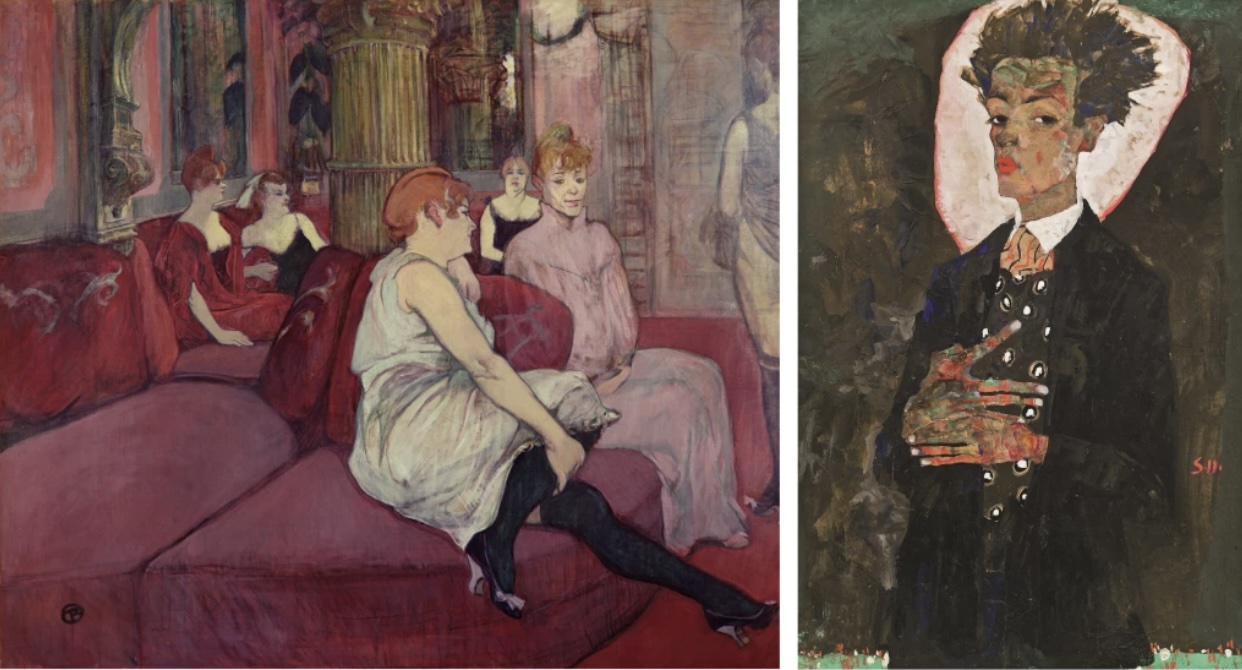
David, Victoria and Brooklyn, 1999
Sotheby’s London: 12 October 2023
Estimated: GBP 1,200,000 – 1,800,000
GBP 1,681,500 / USD 2,053,364
ELIZABETH PEYTON (B. 1965), David, Victoria and Brooklyn | Sotheby’s (sothebys.com)
ELIZABETH PEYTON (B. 1965)
David, Victoria and Brooklyn, 1999
Oil on canvas
60 x 40 1/8 inches (152.3 x 101.8 cm)
Signed, titled and dated 1999 (on the overlap)
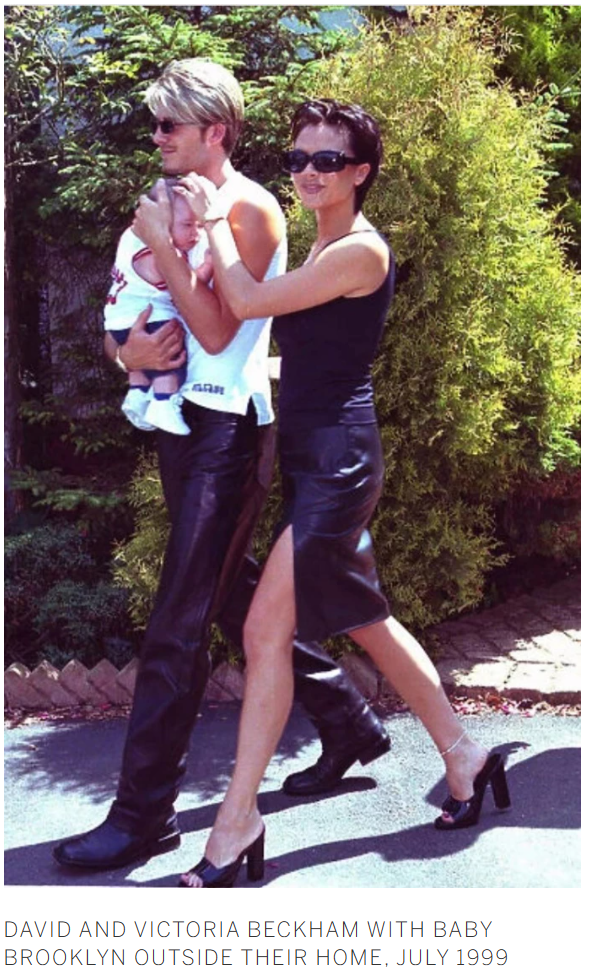
Set against a lustrous black backdrop, the Beckham family is portrayed as if captured by a paparazzi, candid and immediate. The interlocking bodies of David and Victoria form the two pillars which ground the long canvas. Peyton employs her signature style, characterized by thin, fluid brushstrokes and a vivid color palette, to imbue her subjects with an ethereal quality. David Beckham’s enigmatic gaze and Victoria’s chiseled features are rendered with remarkable precision, while Brooklyn, a tender infant at the time, is portrayed as a bundle of blanket, his silhouette faintly implied in Victoria’s arms. The artist’s reverence for her subjects is palpable in every brushstroke, evoking a sense of tenderness and nostalgia. Peyton’s use of color and light creates an aura of softness that envelops the family, as if existing in a timeless, otherworldly realm.
Celebrities and rock musicians are Peyton’s most celebrated subjects, and the present work depicting the Beckham family represents the pinnacle of celebrity culture in the 90s and early 2000s. The Beckham family, at the height of their fame at this time, symbolized the fusion of sports, fashion, and music, epitomizing the pop culture landscape of the era. The Posh Spice of the Spice Girls and Manchester United’s football star married in July of 1999, and upon the birth of their first child, Brooklyn, the couple began to receive kidnapping threats. Widespread across the media at this period were images of the couple protectively clutching their child, from which Peyton takes the present imagery. In David, Victoria and Brooklyn, Peyton elevates the Beckhams to the realm of iconic figures, capturing their charisma and allure with an almost reverent sensibility. At the same time, she immortalizes a particularly vulnerable moment in which the dark sides of the celebrity frenzy are brought to the forefront. In this sense, the work is not merely a portrayal of celebrities, but a homage to the popular zeitgeist of the late 20th century.
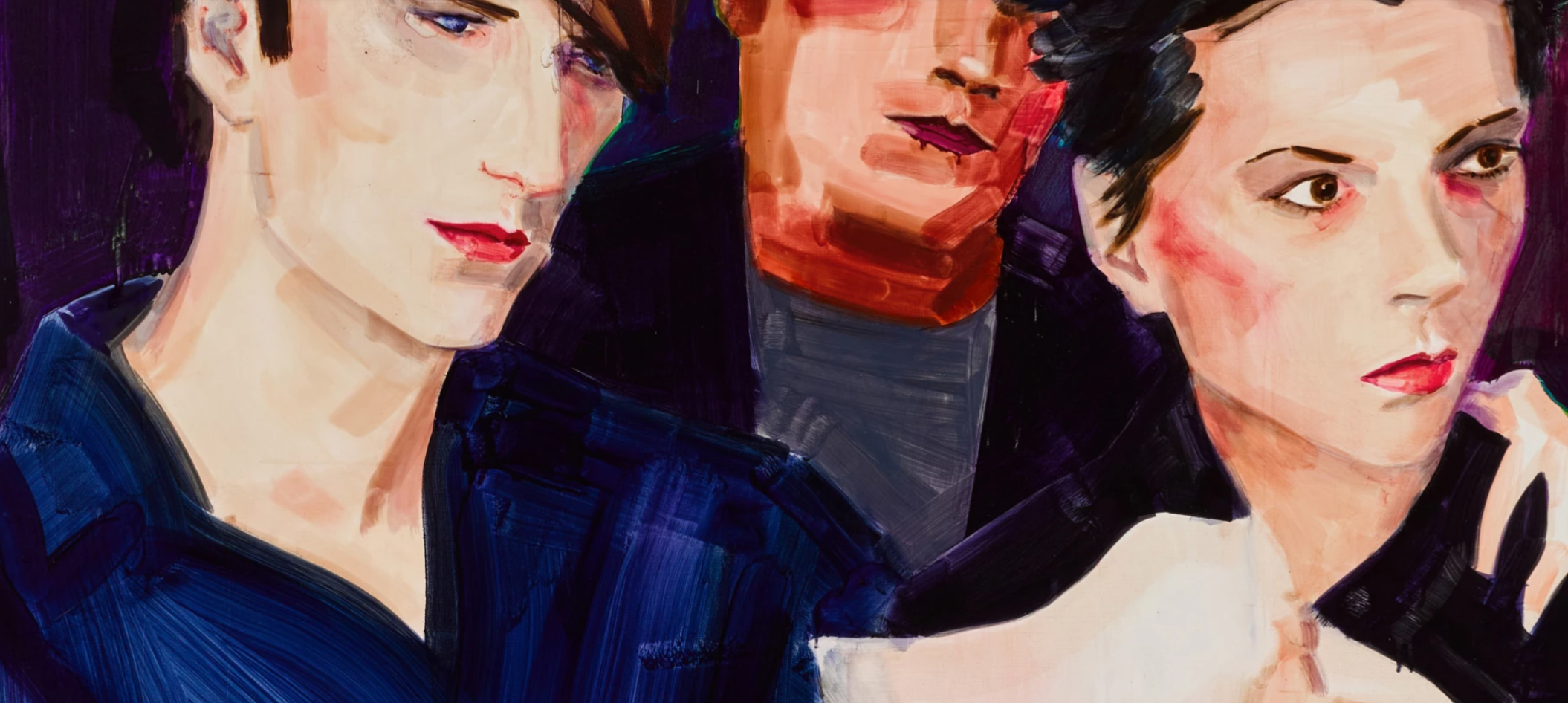
Fundamentally, Peyton regards her works as “paintings of people”, capturing the essence of life in a sense that is reminiscent of still life. David, Victoria and Brooklyn is a remarkable testament to Peyton’s ability to capture the essence of her subjects while elevating them to the status of cultural icon. Transcending the boundaries of portraiture, the present work serves as a timeless tribute to the convergence of fame, family and art.
Mendips, 1996
Phillips New York: 14 November 2023
Estimated: USD 900,000 – 1,200,000
USD 1,206,500
ELIZABETH PEYTON (B. 1965), Mendips, 1963 | Phillips (phillips.com)
ELIZABETH PEYTON (B. 1965)
Mendips, 1963, 1996
Oil on canvas
32 1/4 x 28 1/4 inches (81.9 x 71.8 cm)
A red-lipped young man slouches in a verdant garden in Elizabeth Peyton’s 1996 painting, Mendips, 1963, holding a baby dressed in white. At first glance, the pale, lithe man seems an interchangeable member of the chorus of beautiful young people Peyton painted in the 1990s, a roster that included friends, lovers, historical figures, and celebrities. However, figural clues (from the man’s bowl cut to the infant in his arms), along with the work’s title, reveal the specificity of Peyton’s vision: a photograph of John Lennon at his family home, Mendips, in Liverpool, holding his infant son, Julian, born in 1963. Painted the year after Peyton was featured at the Venice Biennale in 1995, Mendips, 1963, presents the compositional elements and wider themes that brought her renown as a figural artist in the 1990s, with enchanting portraits that engage cultural ideals of fame, artistry, and intimacy. Photographs have long been a source of inspiration for Peyton. By drawing from photographs, Peyton engages a long-standing question of modern art, from the Impressionists onwards, of the relationship between painting and photography. Gerhard Richter’s photo paintings stand as a contemporary forebear to Peyton’s method. But where artists like Richter use photography as a tool against subjectivity and sentimentality, Peyton is forthcoming in her love and personal admiration for her painted subjects. Rather than focusing on the materiality of the photograph itself, she hones in on the personality of the subject, and “at some point,” she says, “the photo’s got to get lost.”
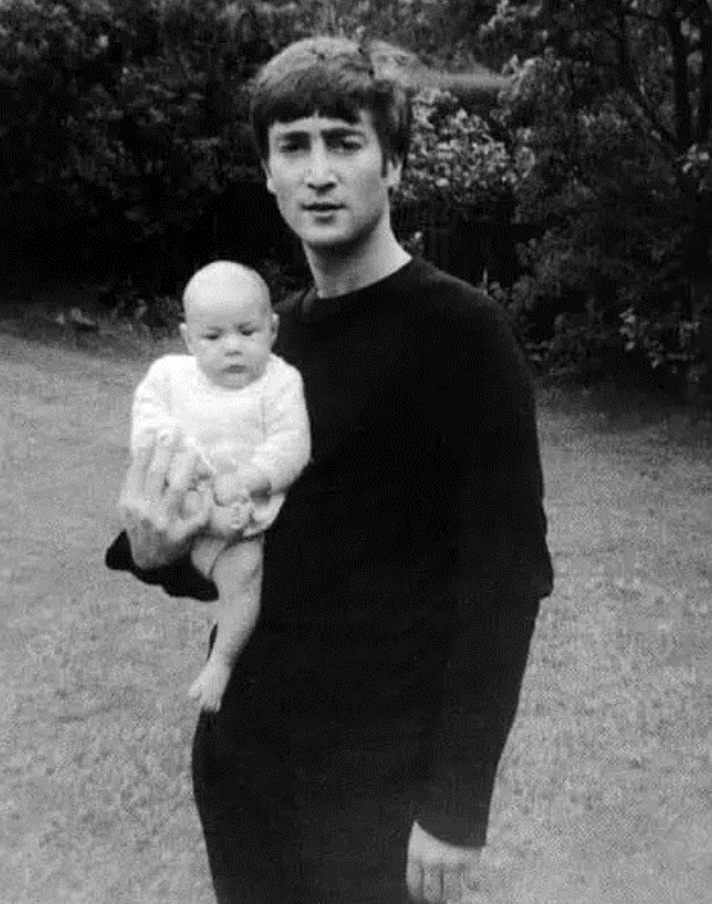
With Mendips, 1963, the original photograph of John and Julian “gets lost” through Peyton’s painterly interventions. She alters the composition in slight, yet significant ways, tilting Lennon, who stands upright in the photograph, on a diagonal, and cropping the canvas closer to his body, which encourages a more intimate relationship between figure and viewer. Peyton also trades in the photographer’s black and white for a vibrant palette of spring greens, and the photograph’s realistic precision gives way to rounded, swishing brushstrokes and an abstracted background. Lennon’s face grows angular, and his features more stylized; he averts his gaze, in demure contrast to his photographed self. Peyton paints his berry-red lips parted and full, almost like a Pre-Raphaelite model’s. Her brushstrokes seem to transform the suburban Liverpool setting of Mendips, 1963 into a mythical English garden.
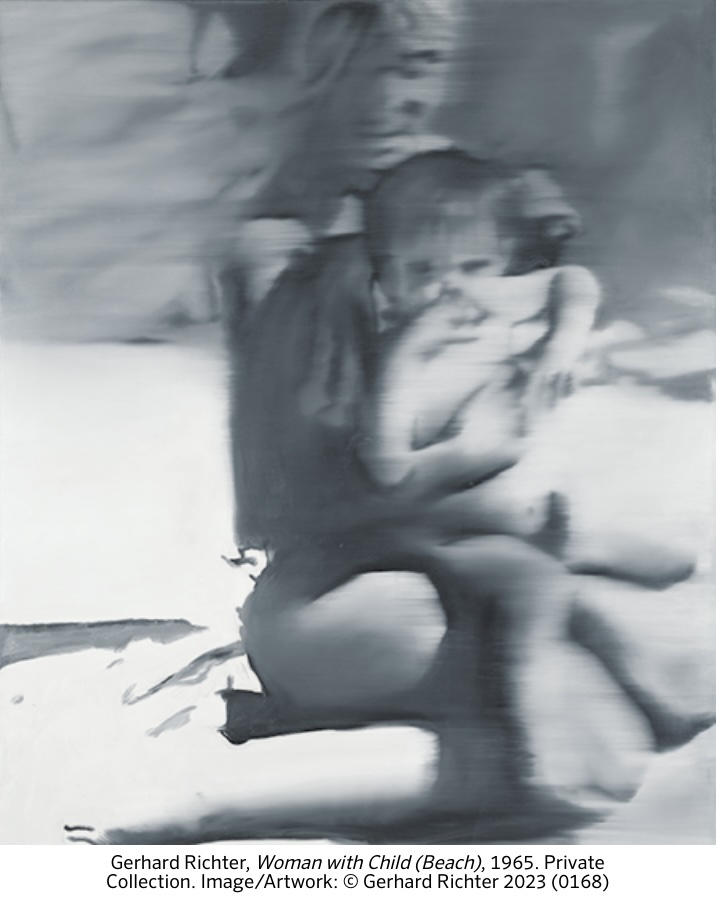
In the case of Mendips, 1963, Peyton takes on the iconic visage of one of the 20th century’s most famous musicians but presents him in an unfamiliar light. Instead of seeing John Lennon, the singer, guitarist, and activist, we see John Lennon, the new father. It is an unexpectedly private moment, from a decidedly public life, and it is the surprising intimacy of such an image that placed Peyton’s work at the vanguard of the return to figuration in painting in the 1990s. Peyton likes to paint portraits of other artists who inspire her, and musicians like Lennon are among her favorites. For Peyton, it does not matter if she knows her subject personally, or only through their music, or a photograph. As she explained in an interview for Index in 2000, music, like art, can collapse time and accelerate intimacy. There is a shared human emotion at the root of music that allows a musician’s words or melodies to become those of the listener’s, in a uniquely close, and personal way. She said: “It’s like John Lennon [singing], you hear his breath. And you can have it. And if you really love that person, then you take them into your life and you make it better with them…It’s a beautiful thing when a collapse occurs between our own personal needs and what’s in the air.”
Kiss, 2019
Sotheby’s New York: 19 May 2023
Estimated: USD 600,000 – 800,000
USD 825,500
ELIZABETH PEYTON (B. 1965), Kiss | Sotheby’s (sothebys.com)
ELIZABETH PEYTON (B. 1965)
Kiss, 2019
Oil on panel
12×9 inches (30.5 x 22.9 cm)
Signed, titled and dated 2019 (on the reverse)
Intimately rendered in sublime washes of lilac, royal blue and caramel brown, Elizabeth Peyton’s Kiss exemplifies the very best of the artist’s most recent oeuvre. Executed in 2019, the present work depicts Clint Eastwood and Meryl Streep engaged in a loving kiss, a momentous scene from the iconic 1992 film The Bridges of Madison County. Detaching her subjects from their surroundings, Peyton zooms into her protagonists and condenses emotion within the picture plane, compelling the viewer to gaze closely at a charged moment forever frozen in time. In this dream-like instant, Peyton embarks on a redefinition of the tradition of portraiture. One of the most influential artists in the field of contemporary figurative painting, Peyton is lauded for her depictions of cultural icons and close friends that have reinvigorated portraiture, imbuing the subjects with a vulnerability and familiarity that resonates with a strong romantic devotion. Peyton’s gestural and pulsating brushstrokes in Kiss are juxtaposed by the soft nature of her subjects, which create a composition that is utterly dynamic yet peacefully meditative. In this incredibly romantic moment, all logical elements of the situation are suspended and beauty trumps disenchantment as this loving couple embraces.
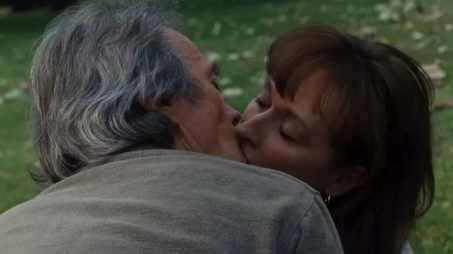
“There is no separation for me between people I know through their music or photos and someone I know personally. The way I perceive them is very similar, in that there’s no difference between certain qualities that I find inspiring in them.”
Mark (Smoking), 1996
Christie’s London: 14 October 2023
Estimated: GBP 50,000 – 70,000
GBP 289,800 / USD 351,400
ELIZABETH PEYTON (B. 1965), Mark (Smoking) | Christie’s (christies.com)
ELIZABETH PEYTON (B. 1965)
Mark (Smoking), 1996
Watercolor and graphite on paper
12 1/4 x 9 1/8 inches (31.1 x 23.1 cm)
Painted in 1996, and held in the same collection since 1999, Mark (Smoking) is an electric early portrait by Elizabeth Peyton. The painting was exhibited at the San Francisco Museum of Art in 1997. The subject of her intimate portrait is Mark Webber, the guitarist of the iconic ’90s British rock band Pulp. Masterfully deploying a selective palette of red, pink and orange, Peyton switches between loose, diaphanous washes and concentrated flashes of brilliant color to render the musician’s likeness: his fantastically fiery hair, bold red shirt, and blushed lip. He is captured in a contemplative side profile, one hand curled pensively next to his delicately painted face, the other cropped from view. Recalling the rich traditions of portraiture, from Singer Sargent to Rossetti, Peyton’s practice makes many nods to art history—indeed, struck by the artist’s incandescent portraits of the late Kurt Cobain, critic Roberta Smith called her paintings ‘part Abstract Expressionist, part Renaissance miniature, with a touch of Pre-Raphaelite romanticism’ (R. Smith, ‘Blood and Punk Royalty to Grunge Royalty’, The New York Times, 24 March 1995, section C, p. 30).
David Bowie, 2012
Sotheby’s New York: 12 May 2021
Estimated: USD 500,000 – 700,000
USD 2,077,000
ELIZABETH PEYTON (B. 1965), David Bowie | Sotheby’s (sothebys.com)
ELIZABETH PEYTON (B. 1965)
David Bowie, 2012
Oil on aluminum veneered panel
14×11 inches (35.6 x 27.9 cm)
signed, titled and dated 2012 on the reverse
“I think a lot about David Bowie. I listen to his music for hours at a time in the studio. Somehow it seems trite to try to say how inspiring he is, how beautiful his music is, because it’s just so much more.”
This desire to know more about another person or another time, informs her entire oeuvre; it imbues each depiction with a searching curiosity about the lives of others and forges connection—a “bridge that reaches other people.” David Bowie’s universal acclaim and constant experimentation with self-image seems a natural subject for Peyton’s interest in how the self is expressed over time through mutable visual signifiers. In this 2012 portrait, Bowie is at once ethereally elusive and, somehow, intensely present. Capturing Bowie’s singular gaze including a subtle and nuanced depiction of his anisocoria, an eye condition in which each eye has a different sized pupil resulting in different colored irises, Peyton enlivens the portrait with a unique subjectivity that seemingly freezes her subject in a poignant moment that evades mortality and the passage of time. The face of David Bowie has held particular fascination for Peyton, appearing in several of her paintings and works on paper in recent years. This painting came after many years of trying to paint him, but it was this image of him at the opera that helped her to understand his face at last. Rendered with exquisite care, Bowie’s visage suggests both strength and vulnerability, intimacy and aloof reserve; within the variegated, ever-so-slightly hollowed blue eyes, the viewer is offered a glimpse of the mercurial nature for which Bowie was so well known. Peyton juxtaposes her Bowie’s electrifying shock of red locks with a simple white shirt, endearingly casual in the loosely cuffed sleeve below his chin. Peyton’s almost forensic investigation of the self—both the life of the subject and a way to reflect on her own lived experience—grants a remarkable multidimensionality to Bowie’s persona.
Liam + Noel in the 70s, 1997
Christie’s New York: 9 November 2021
Estimated: USD 850,000 – 1,200,000
USD 2,070,000
ELIZABETH PEYTON (B. 1965), Liam + Noel in the 70s | Christie’s (christies.com)
ELIZABETH PEYTON (B. 1965)
Liam + Noel in the 70s, 1997
Oil on canvas
40×30 inches (101.6 x 76.2 cm)
Painted in 1997, Liam + Noel in the 70s is an exquisite portrait from the formative period of Elizabeth Peyton’s early career. Painted just two years after her watershed exhibit at Gavin Brown’s Enterprise in West SoHo, New York, it depicts the two frontmen of the British rock band Oasis, the brothers Liam and Noel Gallagher. It represents a fleeting moment in time, where Peyton’s brushstrokes and luminous, jewel-like color seems to affix the brothers in amber, infusing them with a sense of lost innocence.
Elizabeth Peyton is undoubtedly one of the most influential American artists of her generation who, in the late 1990s, helped to revitalize the genre of figurative painting. Peyton’s unmatched ability to depict human life is a result of a careful understanding of her subjects, with their portraits evoking the contemporary zeitgeist of the time in which they were created. Liam and Noel, in particular, have proven to be significant, recurring subjects. A similarly scaled painting of the Oasis frontmen, also from 1997, is in the collection of the San Francisco Museum of Modern Art. In the present work, Peyton depicts the Oasis duo from when they were small children, inspired by a family photograph from the 1970s. Young Liam looks cherubic in a light-blue hoodie that’s pulled up tightly around his face. Noel, the older brother, is pictured as a young adolescent, with his arm casually draped around his brother in a protective way. The palette itself evokes the sepia tones of a vintage photograph—a symphony of earthy, gold and amber hues that are accentuated with pops of blue. The palette works in tandem with Peyton’s brushstrokes to convey a sense of impermanence, of time passing. When Peyton painted Liam + Noel in the 70s, Oasis was seemingly everywhere, their hit songs heard over and over on the radio and TV. Their second album, (What’s the Story) Morning Glory? went platinum in the U.S. and propelled them from indie musicians to pop superstardom. Liam and Noel were the face of the band, outspoken and controversial in their comments and actions, which often landed them on the front pages of newspapers and magazines around the world. Peyton’s portraits of the band, however, are at odds with their wild image.
Liam Gallagher (Glastonbury 1995), 1995
Christie’s New York: 10 May 2022
Estimated: USD 600,000 – 800,000
USD 1,740,000
ELIZABETH PEYTON (B. 1965), Liam Gallagher (Glastonbury 1995) | Christie’s (christies.com)
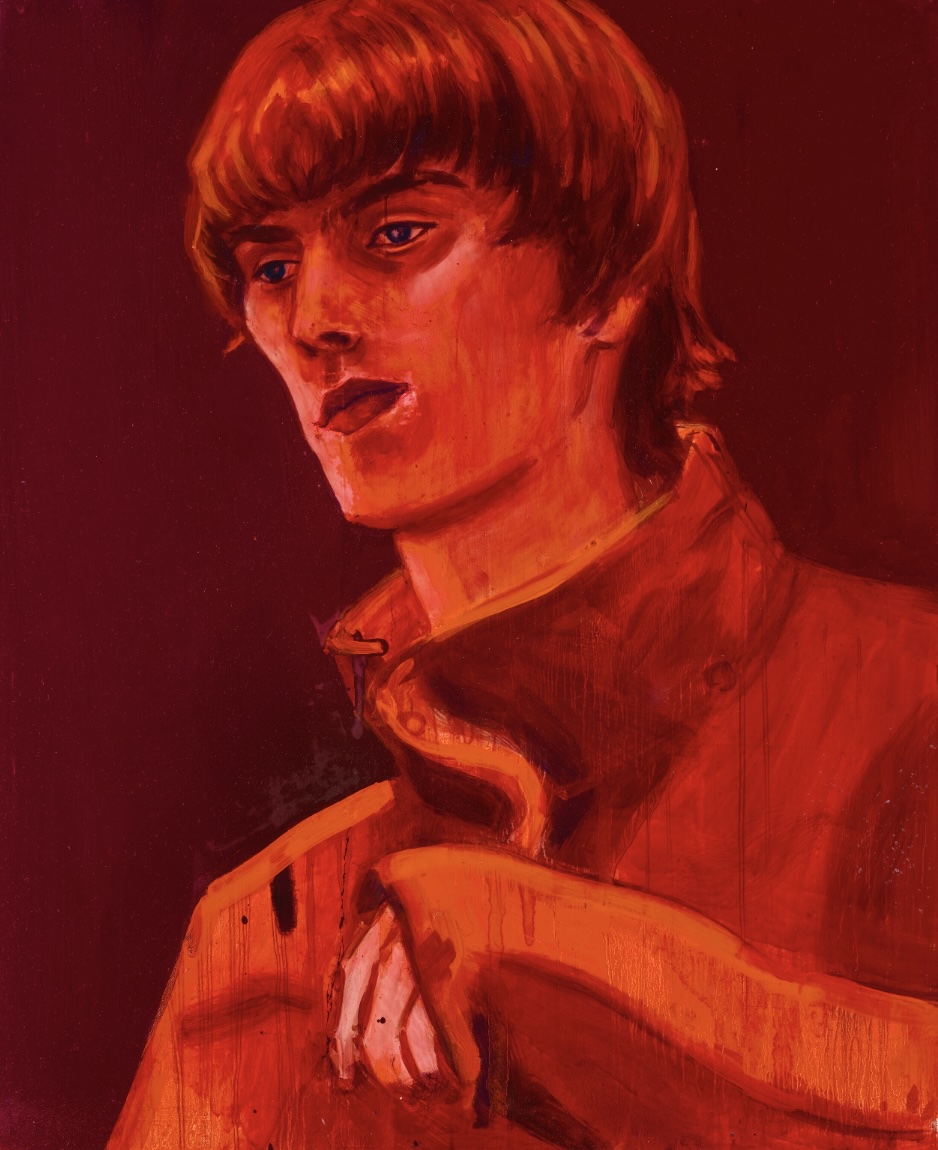
ELIZABETH PEYTON (B. 1965)
Liam Gallagher (Glastonbury 1995), 1995
Oil on panel
22 1/8 x 18 1/8 inches (56.2 x 46 cm)
Signed, titled and dated ‘LIAM GALLAGHER (GLASTONBURY 1995) Elizabeth Peyton 1995’ (on the reverse)
One of the most significant artists of her generation, Elizabeth Peyton creates communities across history and makes aesthetic connections with her friends, colleagues, and a lineage of artists in all media. An important early painting, Liam Gallagher (Glastonbury 1995) is an intimate work created from a photograph of the eponymous English singer and former front man of the band Oasis. Peyton has been called the Andy Warhol of Britpop for her impassioned and formally rigorous appropriated portraits of British alt-rock icons of the mid-1990s. To consider Peyton a documentarian would only be one part of the story. Her permutations of her source material evince something more subjective, recalling artists from Edgar Degas, who often worked from photographs, to François Boucher, Cecil Beaton, Pablo Picasso, and Billy Sullivan. Liam Gallagher (Glastonbury 1995) has all the tactility and familiarity of a family photograph, like the handheld daguerreotype mementos of the nineteenth-century, even as it reminds us that a portrait can only capture so much of a beloved person.
A fixture in the New York art world since her show in a room at New York’s storied Chelsea Hotel in 1993, Peyton’s mid-career retrospective opened in 2008 at the New Museum, New York, and travelled internationally. She has mounted celebrated solo exhibitions at the Royal Academy, London, the Deichtorhallen, Hamburg, the Irish Museum of Modern Art, Dublin, and the Metropolitan Opera, New York. A version of the present work in ink wash and pencil on paper is in the collection of the Museum of Modern Art, New York.
Like Picasso’s defining 1905-6 portrait of Gertrude Stein, Liam Gallagher (Glastonbury 1995), painted early in Peyton’s career, foretells the impact she would have on art history. Drawing from a subdued concert photograph, in which Gallagher is not performing but rather in a liminal space, Peyton enlivens and modifies the image through cropping and the application of an otherworldly color palette, almost like the photographer’s darkroom, that is unconcerned with veracity. Gallagher is drenched in glamourous reds and oranges, inevitably reminiscent of the genre-defining prom scene in Carrie (1976), but any associations with rage are mollified by the tender gesture of his left hand, caught mid-air like a conductor’s. Peyton has tightened the framing of the original photograph and emphasizes her affectionate and skillful brushstrokes that illustrate a longed-for closeness with a personal hero. Here, the source material becomes important, since the photograph inherently captures unintended motion and detail because of its instantaneity. In Liam Gallagher (Glastonbury 1995), Peyton takes that instantaneity and adds echoing layers to its stasis, creating instead a gestural, dynamic image that is personal, contingent, surreal, and medium-specific. There is no irony or hierarchy of genres, and Liam Gallagher (Glastonbury 1995) is the sum of its multimedia parts brought together by paint.
Just as Peyton treats her source photographs with seriousness, she argues that there is no distinction between her friends and idols, love and fandom, “There is no separation for me between people I know through their music or photos and someone I know personally. The way I perceive them is very similar, in that there’s no difference between certain qualities that I find inspiring in them” (E. Peyton, quoted in E. Peyton, Elizabeth Peyton, New York, 2005, p. 16). It follows that, in a conceptualist gesture reminiscent of the Pictures Generation, she calls her paintings “pictures of people” and not squarely portraits (C. Tomkins, “The Artist of the Portrait, The New Yorker, September 29, 2008). Liam Gallagher (Glastonbury 1995) aspires to represent both a historical figure and, say, Peyton’s unknown musician friend playing a concert at a small venue. Seeing both as monumental and important is the height of art’s democratic power.
Martin Creed, 1999
Sotheby’s London: 2 March 2022
Estimated: GBP 500,000 – 700,000
GBP 655,200 / USD 875,818
ELIZABETH PEYTON (B. 1965), Martin Creed | Sotheby’s (sothebys.com)
ELIZABETH PEYTON (B. 1965)
Martin Creed, 1999
Oil on board
11×14 inches (27.9 x 35.5 cm)
Titled, dated 1999 and variously inscribed (on the verso)
The small wood panel of the present work holds an immense visual power: Peyton’s use of bright color and heavy, fluid brushstrokes carve out a snapshot of Creed, himself an artist and musician, evoking a tangible feeling of passing time and a depth of space. Peyton manages to animate each likeness, capturing depth, dynamism and the personality of the sitter within a two-dimensional plane. In Martin Creed, a two-way mirror is created out of the figurative representation of a real flesh-and-blood person, deftly hewn out of the artist’s signature, determined brushwork. Creed appears at once ethereally elusive and, somehow, intensely present. The board has a tautological, reflective aspect to it. Curator and writer Matthew Higgs explains, “Peyton’s pictures are possessed by a self-reflexive ability to both see and be seen: “witnesses” to themselves, their surroundings, and their circumstances” (Matthew Higgs, Elizabeth Peyton, New York, 2005, p. 12). Peyton’s body of work serves as a snapshot of a generation – a visual relic of a certain moment of history, shaped by the gregariousness and force of the artist’s choice of subjects.
Peyton’s dedication to painting as a medium was only possible through her extensive source materials, mainly photographs taken by herself, as well as film stills, video snapshots and sketches taken from life. She broke down the established aesthetic conventions of viewing fine art within a rarefied gallery or museum setting by exhibiting her works within domestic or public spaces – apartments, hotels, pubs – as a way of reintegrating ‘everyday’ imagery back into the fabric of public social life. Her work is a visual time capsule of a singular cultural moment, shaped by those within it: Peyton’s friends, lovers and artistic peers are all immortalized within paint, becoming bastions of a certain aesthetic of cool that is inextricably linked with the specific fifteen-year period it was captured in. A testament to Peyton’s sensitive treatment of her sitters, Martin Creed is a mesmerizing example of the extraordinary timelessness of Peyton’s visual lexicon.
Evan at the Reading Festival 1993, 1997
Phillips New-York: 14 October 2022
Estimated: USD 480,000 – 650,000
USD 567,000
ELIZABETH PEYTON (B. 1965), Evan at the Reading Festival 1993 | Phillips (phillips.com)
ELIZABETH PEYTON (B. 1965)
Evan at the Reading Festival, 1993, 1997
Oil on board
12 x 9 1/4 inches (30.6 x 23.4 cm)
Signed, titled and dated ‘evan @ the reading festival 1993 1997 Elizabeth Peyton’ on the reverse
Lyrically composed with broad, sweeping brushstrokes and a vivid, jewel-bright palette, Evan at the Reading Festival 1993 is a stunningly tender portrait from one of the finest figurative painters of her generation. Working primarily from photographs and printed media, Elizabeth Peyton is best known for her romantic portraits of rock stars, movie icons, and members of European Royalty, although the tone of her small-scale paintings moves far beyond celebrity adoration. Charged with emotion, these works collapse distinctions between realist painting and expressionist verve, and between the public performance of celebrity and the deeply personal relationships that we forge with them. A portrait of Evan Dando, the frontman of 90’s grunge band the Lemonheads, Evan at the Reading Festival 1993 is particularly emblematic of Peyton’s work, where, as Roberta Smith has suggested, ‘Each image is a point on entwined strands of artistic or emotional growth, memorializing a relationship, acknowledging an inspiration or exposing an aspect of ambition.’
Executed in 1997, the year of The Lemonheads last appearance at the infamous UK festival before their 8 year hiatus (and of Peyton’s first solo exhibition in a major public institution) the work reflects a pivotal moment in both the artist’s career and in the cultural shift into the millennium. One of several portraits of Dando, he is shown here quietly contemplative, his long hair swept from his luminous face as he reads from the red book in his hands. Elbows leaning on crossed legs, his shoulders gently curved in concentration it is an image of quiet introspection and unguarded honesty that takes on the ethereal quality of a Pre-Raphaelite masterpiece.
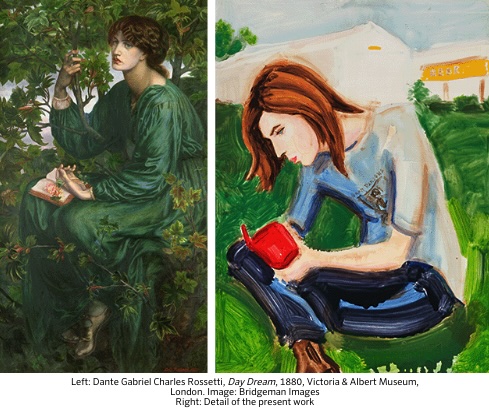
Intimately scaled, but possessing immense emotional power, the work is closely related to Peyton’s moving portraits of another grunge idol, Nirvana frontman Kurt Cobain. Although eluding the sense of tragedy and melancholy that pervades Peyton’s Kurt portraits, Evan at the Reading Festival 1993 shares in the same powerfully evocative sense of a specific cultural moment, and of the nostalgia that its recollection brings with it. While Peyton’s portraits ‘create a democracy or equivalence amongst their subjects’ akin to that of Andy Warhol who used modes of seriality and repetition in his silkscreened portraits of the most iconic celebrities of his own day, Peyton’s work marks a significant departure from Warhol’s fascination with the mechanics of celebrity and the image.
“I guess what I’m interested in is the quality of my subjects being able to be themselves while occupying this extreme role in the public imagination. You can see their will, and that’s incredibly beautiful.”
Coming of age in the 1980s when the Pictures Generation was in their ascendancy, Peyton’s first exhibition was held in a locked room of New York’s infamous Chelsea Hotel, featuring small-scaled portraits of famous historical figures including Marie Antoinette and Napoleon Bonaparte. These beginnings are telling, and even in Peyton’s more recent paintings of her friends, family, and close circle of art-world acquaintances, the artist’s interest in people as vehicles of history has remained consistent. Discussing this early exhibition some years later, Peyton explained: ‘Reading about Napoleon made me think how people make history. They are the way the world moves, and they contain their time.’
Discerning no real distinction between those she knows personally and those she knows from history or through their music Evan at the Reading Festival 1993 is emblematic of Peyton’s finest portraits, presenting a moving statement on her deep emotional connection to music and literature. Moving beyond the purely representational on a journey inwards, Peyton’s portraits of musicians including John Lennon, David Bowie, and Sid Vicious act as a vehicle for her to explore the deeply personal and conflicted feelings that these found source images provoke, images of those artists and musicians who most inspire her, the ‘people who touch me, people who can help me feel my feelings.’
Adam from I.D. Magazine, 1998
Sotheby’s London: 15 October 2022
Estimated: GBP 30,000 – 40,000
GBP 71,820 / USD 80,290
ELIZABETH PEYTON (B. 1965), Adam from I.D. Magazine | Sotheby’s (sothebys.com)
ELIZABETH PEYTON (B. 1965)
Adam from I.D. Magazine, 1998
watercolor on paper
16¼ by 12⅞ in. (41.3 by 32.8 cm.)
Royals
Queen Elizabeth II, 1995
Sotheby’s London: 25 June 2024
Estimated: GBP 300,000 – 600,000
GBP 384,000 / USD 486,912
ELIZABETH PEYTON (b. 1965)
Queen Elizabeth II, 1995
Oil on board
10 1/8 x 8 inches (25.8 x 20.5 cm)
One of the most influential artists in the field of contemporary figurative painting, Peyton is lauded for her paintings of cultural icons and close friends that have reinvigorated portraiture, imbuing the subjects with an intimacy and familiarity that resonates with a strong romantic devotion. Intimately scaled and rendered in lush, sensual crimson brushstrokes, the present work depicts a young Queen Elizabeth II, without the crown jewels, in a relaxed rendering of Her Royal Highness. The present work sees the masterfully skilled blending of soft blurred hues, almost dreamlike and transient in application, yet sharpened by Peyton’s precise and expressive marks. Fluid washes of richly toned pigment coalesce to portray the Queen of England in a familiar and accessible depiction, in which there is a luminosity and emotive precision to the present work that is so quintessentially Peyton.
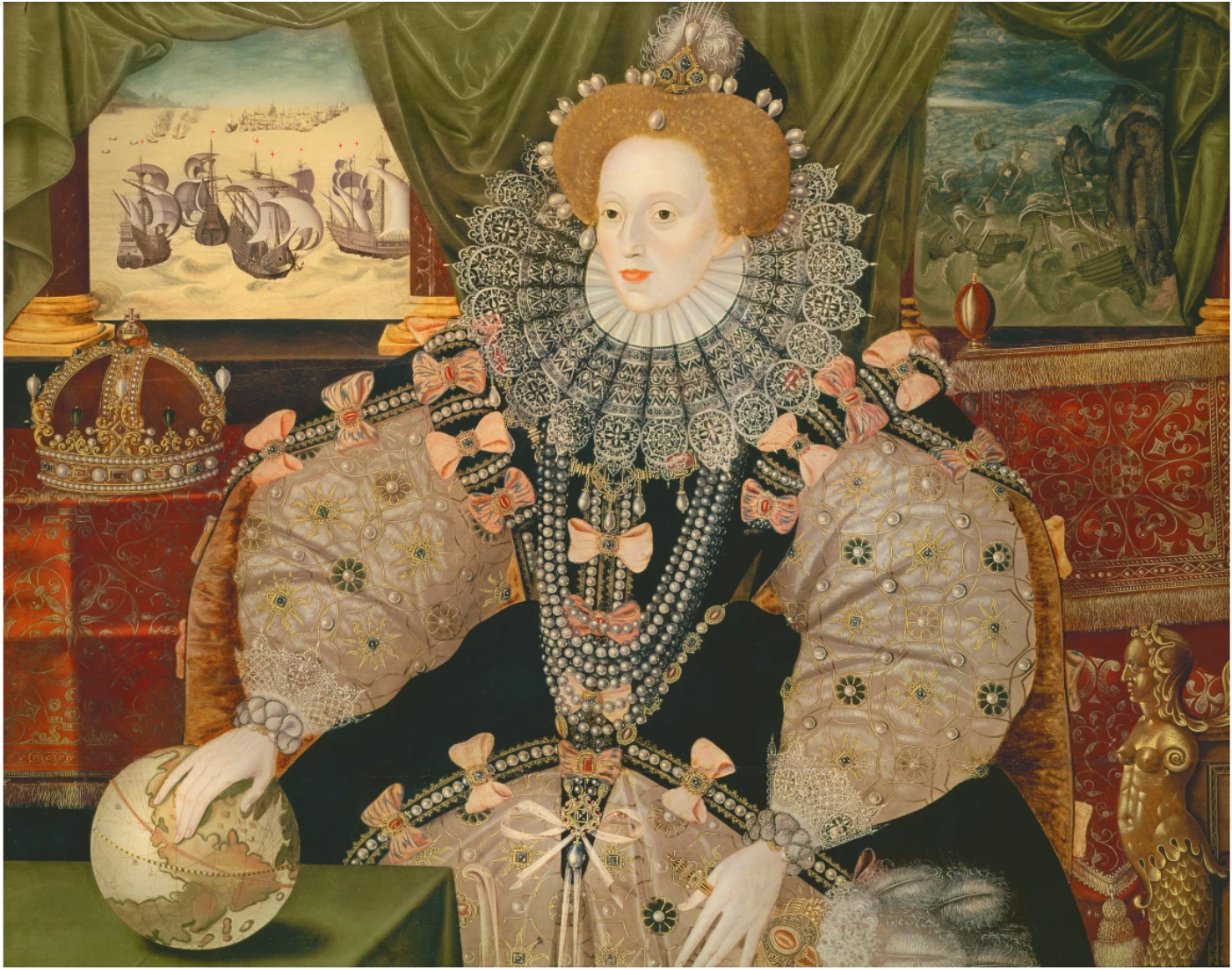
GEORGE GOWER, ELIZABETH I (ARMADA PORTRAIT), CIRCA 1588.
IMAGE: © BRIDGEMAN IMAGES WOBURN ABBEY, BEDFORDSHIRE 2024
At a time when the contemporary art world deemed figurative painting archaic, Peyton’s work filled a fresh and innovative niche through her particular brand of romanticized realism and the unironic treatment of her subjects. A subject that continues to intrigue her, Peyton has created images of royalty throughout her career, both historical and current, such as Louis XIV, King Ludwig II of Bavaria, and Prince Harry, with portraits from this series in major public collections including Prince Harry and Prince William, 1999 (Centre Georges Pompidou, Paris), and Prince Harry in Westminster Abbey, London, November 1997, 1998 (Kunstmuseum Wolfsburg, Wolfsburg). As in her numerous other portraits of friends and loved ones, the artist paints with broad strokes and spare details that make the sitter seem hazy, perhaps untouchable, yet there is an air of familiarity that creates a powerfully atmospheric impact for the viewer.
“Making art is making something live forever. Human beings especially – we can’t hold on to them in any way. Painting is a way of holding onto things and making things go on through time.”
Emerging in the 1990s, Peyton captivated the art world with her portraits of friends, celebrities and historical figures; she captured the cultural iconography of the age with an intimate feminine gaze and vivid palette, a style that would come to define the artist’s later oeuvre and which helped to usher in a return to figuration. Often drawn from media sources, Peyton chooses her subjects with great care, only selecting those she admires or for whom she feels an affinity. There is an inherent sense of narrative present in these works, pulsating with nostalgia, imbued with romance and sometimes fraught with angst. Peyton’s devotional portraits, with their unique visual lexicon of highly-coloured features, intimate composition and diminutive scale, are reminiscent of Byzantine icon paintings, commenting on the present-day hero worship of celebrity in our image-drenched culture. Inspired by the studio portraiture of Nadar, Alfred Stieglitz and Robert Mapplethorpe, who all photographed their friends and intimates, and frequently compared to Andy Warhol, Peyton’s representations of iconic images of contemporary celebrities pay tribute to the way in which portraiture can celebrate a person.
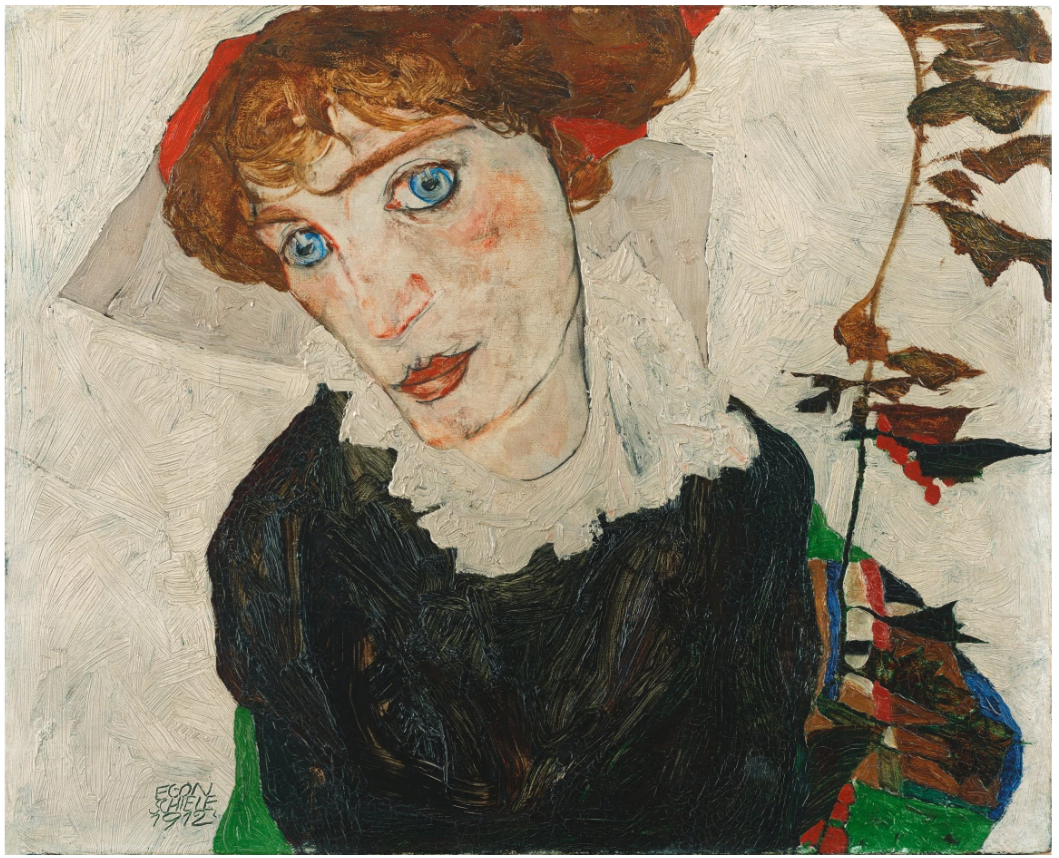
EGON SCHIELE, PORTRAIT OF WALLY NEUZIL, 1912. IMAGE: © BRIDGEMAN IMAGES LEOPOLD MUSEUM, VIENNA 2024
By taking her source photograph from the shared repertoire of our image-saturated culture, Peyton lends a certain familiarity and intimacy to the work which the viewer can share. Even if we do not recognize the specific source, we feel as though we do, as though this moment somehow shares in our own nostalgic personal histories.
“There is no separation for me between people I know through their music or photos and someone I know personally. The way I perceive them is very similar, in that there’s no difference between certain qualities that I find inspiring in them.”
Queen Elizabeth II joins a highly personal pantheon of subjects which includes Sid Vicious, Kurt Cobain, Liam Gallagher, Jarvis Cocker, and friends from her bohemian art circle, as well as literary and historical figures including Honoré de Balzac. Painting without hegemony – both her close friends and figures in the public eye – there is a democratization at play in Peyton’s technique that blurs social boundaries. Peyton’s oeuvre thus presents a parallel aristocracy equally worthy of depiction, which responds in an intensely personal way to individuals whose lives and actions she deems heroic, noble and inspirational.
Prince Harry, September 1998, 1998
Phillips London: 30 June 2023
Estimated: GBP 400,000 – 600,000
GBP 488,950 / USD 621,362
ELIZABETH PEYTON (B. 1965), Prince Harry, September 1998 | Phillips (phillips.com)
ELIZABETH PEYTON (B. 1965)
Prince Harry, September 1998, 1998
Oil on board
10 1/4 x 8 1/4 inches (26.1 x 21.1 cm)
Signed, titled and dated ‘Prince Harry, September 1998 Elizabeth Peyton, Elizabeth Peyton 1998’ on the reverse
For American artist Elizabeth Peyton, the zeitgeist of our past and present historical moments are most accurately conveyed through the individual. Her luminous, small-scale portraits are intimately penetrating in their fixation on presence and have portrayed a broad spectrum of historical and popular figures from Napoleon Bonaparte to Kurt Cobain over the years. Making a compelling case for portraiture’s survival and importance in our own hyper-visual digital age, Peyton powerfully demonstrates how ‘people contain their time in their face’. Taking as her subject primarily people whom she either admires or feels an affinity with, Peyton’s work evidences the deep connection she forges with them, her languorous brushstrokes of luminous color offering us a decluttered, phenomenological approach to the portrait which favors psyche and character over the tropes of naturalistic depiction.
‘‘There is no separation for me between people I know through their music or photos and some I know personally. The way I perceive them is very similar, in that there’s no difference between certain qualities that I find inspiring in them.’’
Prince Harry, September 1998 comes from one of her most iconic periods of work, when she captured the ethos at the turn of the 20th century through her depiction of popular figures from mediated images, drawing on ‘lives that are played out in the public arena of the mass media.’ A subject which she has returned to time and again, the present work brilliantly illustrates the consciousness of the young prince on the cusp of adolescence, anxiously arriving at Eton for his first day of school – an intensely private, family moment that was made public through the nation’s press. Working from this original paparazzi photograph, Peyton focuses her attention closely on the young Prince’s face, restoring a humanizing intimacy and fragility to this mass-reproduced and widely circulated image.
On this richly painted surface of luminous tones, Harry’s blood-red lips are powerfully affecting; sapping color from his bleached cheeks, they draw on notions of composure and restraint as fundamental to Royal life, emphasized further in the young Prince’s expression here and in the knowledge of the recent, tragic loss of his mother. Peyton, with uttermost sincerity and compassion, depicts a young man caught in the passage between childhood and adulthood, private pain and public voyeurism, depicting a singular moment when – for a split second – ‘the fickle nature of fame and celebrity appear temporarily arrested.’
Whilst Peyton’s work is materially linked to the tradition of panel paintings, particularly Lucas Cranach and Hans Holbein the Younger, the way in which she has manipulated the artistic tools at her disposal to revive popular art also alludes to the paintings of Gustave Courbet. As T.J Clark noted, Courbet ‘exploited high art – its techniques, its size and something of its sophistication – in order to revive popular art’, addressing his work ‘not to the connoisseur, but to a different hidden public.’ In the same way, Peyton’s exquisite paintings have restructured the contemporary landscape, using the materials of high art to not only revive portraiture and figuration, but to expand the scope and potential of these modes. Her choice of a hotel room for her debut exhibition in 1993, and then a pub for her first exhibition in London in 1995, both speak to her desire for her work inclusive and accessible, reinforced by the nature of her source material itself, drawn from a pool of mass-produced and widely circulated mass-media images available to all.
Prince Harry (with Flowers), 1997
Sotheby’s London: 29 June 2021
Estimated: GBP 500,000 – 700,000
GBP 886,200 / USD 1,226,914
ELIZABETH PEYTON (B. 1965), Prince Harry (with Flowers)| Sotheby’s (sothebys.com)
ELIZABETH PEYTON (B. 1965)
Prince Harry (with Flowers), 1997
Oil on canvas
40 x 32 5/8 inches (101.6 x 82.8 cm)
Signed, titled and dated 1997 on the overlap
The original source image, however, is merely a jumping-off point for Peyton. In contrast to Warhol’s silkscreen process which replicates the impersonal mechanics of the printing press in such a way that the viewer becomes desensitized to Jackie’s personal tragedy, here Peyton’s delicate, deceptively spontaneous brushstrokes heighten emotional intensity, bringing the viewer into communion with her subjects. Though painted from a paparazzi photo, Peyton’s work reverberates with all the emotional energy of a candid family snapshot. Her depiction bypasses the aura surrounding his fame and public life, tapping into his personal history to create a portrait which is devoid of the voyeurism and the intrusive gaze of the media. Peyton herself has commented that what she is drawn to in her subjects is “that particular moment, when they’re about to become what they’ll become” (Elizabeth Peyton cited in: David Lock, ‘Live Forever’ in A&M, Issue 6, Summer 2009). Peyton’s Prince Harry narrates a watershed event in the history of our generation’s Royal Family, a moment at which, owing to great personal tragedy, a young boy was forced to grow up.
By taking her source photograph from the shared repertoire of our image-saturated culture, Peyton lends a certain familiarity and intimacy to the work which the viewer can share. Even if we do not recognise the specific source, we feel as though we do, as though this moment somehow shares in our own nostalgic personal histories. As the artist explains: “There is no separation for me between people I know through their music or photos and someone I know personally. The way I perceive them is very similar, in that there’s no difference between certain qualities that I find inspiring in them” (Elizabeth Peyton cited in: Rizzoli, Ed., Elizabeth Peyton, New York 2005, p. 16). Prince Harry joins a highly personal pantheon of subjects which includes Kurt Cobain, Liam Gallagher, Jarvis Cocker, friends from her bohemian art circle as well as literary and historical figures including Balzac and Ludwig II. Painting without hegemony, both her close friends and figures in the public eye, there is a democratisation at play in Peyton’s technique that recalls Warhol’s programme to rescue portraiture from its elitist past. Blurring social boundaries, Peyton’s oeuvre presents a parallel aristocracy equally worthy of depiction, which responds in an intensely personal way to individuals whose lives and actions she deems heroic, noble and inspirational.
As Carolyn Christov-Bakargiev says in her catalogue essay for the exhibition The Painting of Modern Life in 2007, “She painted Prince Harry repeatedly in 1997, the year that Princess Diana died. The motherless prince typically appears alone, a little-boy-lost look in his eye… What Peyton does here, and what she does best, is to record the transfiguring pressure of private life on public faces” (Carolyn Christov-Bakargiev, ‘A Strange Alliance: The Painter and the Subject’ in Exh. Cat., London, Hayward Gallery, The Painting of Modern Life, p. 35).
Typically, Peyton prefers the intimate, off-duty moments where the true personality behind the mask might be glimpsed. Other paintings and drawings of the young prince include his first day at Eton, at an Arsenal match and some double portraits with his older brother, Prince William. Yet none have quite the same emotional intensity of this work which draws the viewer like a magnet. Her brief, concise and efficacious brushstrokes imbue the photographic image with an emotional energy. The brilliant luminosity and translucency of her style transforms an artless media image into an intimate and personal icon which throws into relief the way in which Peyton has drawn upon the history of devotional portraiture in her treatment of her unambiguously contemporary subject matter.
Portraits from the Art World
Franz in Hamburg, 1995
Sotheby’s Milan: 26 November 2025
Estimated: EUR 100,000 – 150,000
EUR 107,950 / USD 124,845
Franz in Hamburg | Modern and Contemporary Art | 2025 | Sotheby’s
ELIZABETH PEYTON (b. 1965)
Franz in Hamburg, 1995
Oil on board
7 1/8 x 4 1/8 inches (18×10 cm)
Signed, dated 1995 and inscribed FRANZ ACKERMAN on the reverse
In 1995, Elizabeth Peyton made her debut at the Venice Biennale, and in that same year she began portraying figures from contemporary life alongside her historical and literary subjects. Among her new subjects were Kurt Cobain, Sid Vicious and David Hockney. She also produced several portraits of the German artist Franz Ackermann, of which the present work is an example.
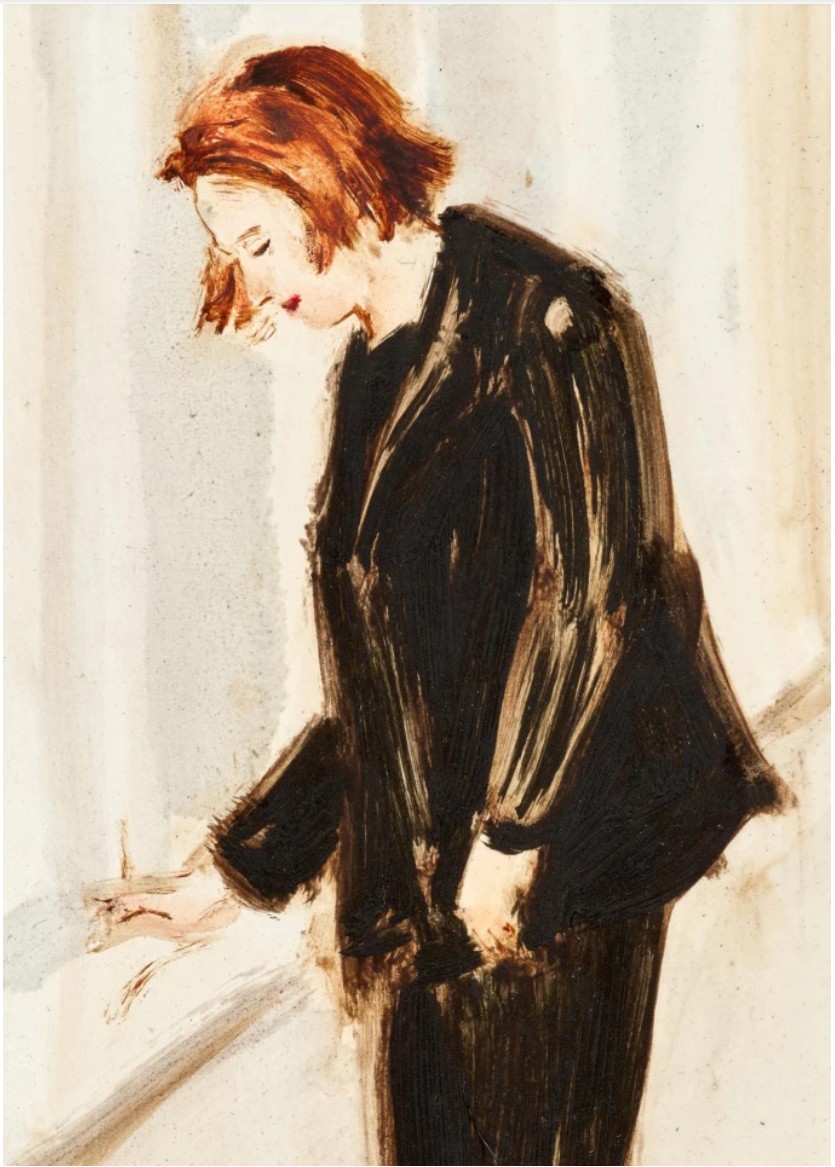
Her paintings are intimate and informal in tone, following the approach pioneered by Hockney, and they often contain a hint of voyeurism. Peyton portrays Franz away from the spotlight, managing to capture everyday gestures and attitudes—for example, as he walks through the streets of Hamburg—rather than the aura of celebrity.
Alex (Alex Katz) Winter 2012, 2012
Phillips New-York: 20 November 2024
Estimated: USD 300,000 – 400,000
USD 304,800
Elizabeth Peyton – Modern & Contem… Lot 318 November 2024 | Phillips
ELIZABETH PEYTON
Alex (Alex Katz) Winter 2012, 2012
Oil on aluminum veneered panel
15×12 inches (38.1 x 30.5 cm)
Signed, titled and dated “Alex, (Alex Katz) WINTER 2012 Elizabeth Peyton 2012” on the reverse
Painted in 2012, Alex (Alex Katz), Winter 2012 is a carefully articulated yet supremely expressive example of Elizabeth Peyton’s career-long exploration of portraiture. Typical of her practice, the present work is executed in a small-scale format, creating an aesthetic immediacy that captures an otherwise fleeting moment in time. A portrait of fellow painter Alex Katz, the present work belongs to a rich tradition of artists painting other artists. Katz stares back at the viewer, sitting cross-legged and arms folded in a patterned armchair, seemingly uncomfortable in his unusual position as a painting’s subject. As in her other portraits, Peyton employs a characteristically light-filled palette and skilful blending of fluid line here, eschewing perspectival naturalism and instead rendering form with spare detail and broad strokes. Focusing squarely on her subject’s face Peyton uses delicate and overlapping washes of translucent paint to create form and expression. The result is a captivating image that fluidly draws on a range of painting traditions, from non finito Renaissance works to the stylisation of Viennese Secession artists. This formal and textural juxtaposition between her sitter’s face and body reflects a broader oscillation between emotive, psychological realism and painterly abstraction, a facet of her practice that marks Peyton as one of the most precise and empathetic figurative painters of today.
In this work, the figure of Katz is simultaneously elusive yet intensely present, a hallmark of Peyton’s conceptual kind of contemporary realism. At their core, Peyton’s portraits are paintings of images of people as humans. She negotiates and motivates this formal and conceptual slippage, placing emphasis on direct observation and its translation to the painted surface in a manner akin to other contemporary artists such as Michaël Borremans. Unlike her Belgian counterpart, however, Peyton’s subjects are grounded by a humanising realism. She affords an informal universality to her figures that belies their celebrity or social status, rendering them almost knowable. Here, she sets Katz’s richly depicted yet subtly nuanced face against the coolness of exposed canvas and sparse outlines, eliminating any cultural or symbolic associations. The figure’s casual pose is matched by the relaxed brushwork and mark-making, resulting in a poignant and mesmerising composition founded in Peyton’s intimate gaze and empathy towards her subject.
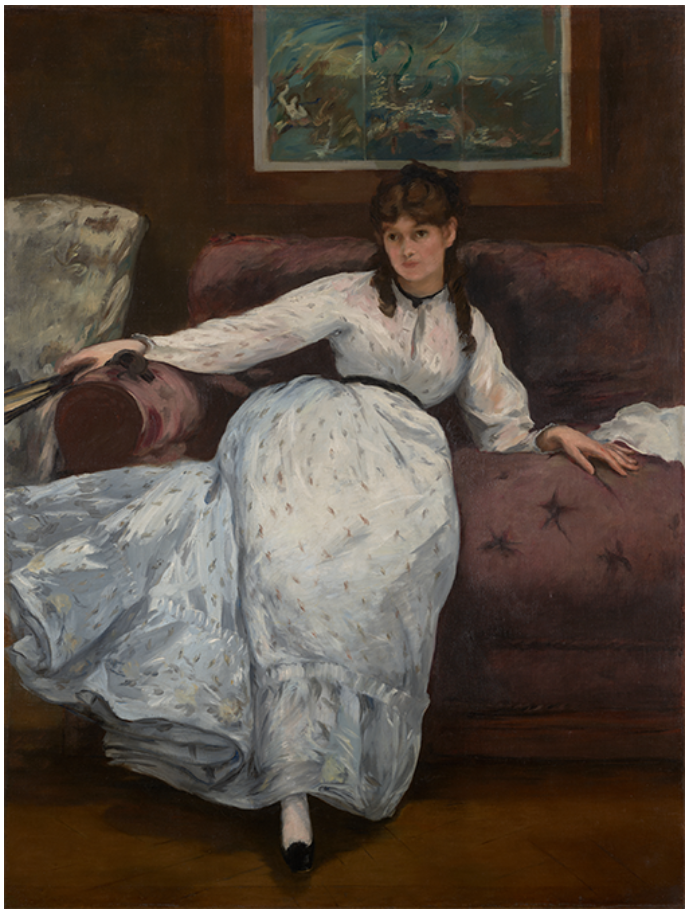
Édouard Manet, Le Repos, circa 1871, Rhode Island School of Design Museum, Providence
In many ways, Alex Katz is a uniquely apposite artistic touchstone for Elizabeth Peyton. Both primarily portraitists, their works tend towards a bold simplicity and heighted palette with a flattened perspective and unusual, dramatic cropping. Rather than illustrating a scene in a narrative manner, they both seek to capture a mood or moment, seeking intimacy in the familiar faces of partners in the case of Katz, or in press cuttings and photographs of celebrities and historical figures favored by Peyton. Just as in Édouard Manet’s tender depictions of Berthe Morisot, or Lucian Freud’s famous portrait of David Hockney, the act of depicting another artist is loaded with significance. Simultaneously collaborative yet inherently imbalanced, artist and sitter are linked by trust and empathy. For Peyton, this is a prerequisite for all her portraits and her works:
“I just have a feeling of urgency that I want to make a picture of somebody. Probably because I’m very inspired by them or there is something I really want to know about or understand in them. So, fascination? Yes. Admiration? Yes. But also curiosity — I get fascinated by what people are doing and what they’re making and how it’s what I need at that moment.”
In this way, her works are defined by an unironic treatment and romanticized realism, occupying an innovative niche within contemporary painting.
Martin, 1998
Sotheby’s London: 14 October 2022
Estimated: GBP 400,000 – 600,000
GBP 730,800 / USD 819,282
ELIZABETH PEYTON (B. 1965), Martin | Sotheby’s (sothebys.com)
ELIZABETH PEYTON (B. 1965)
Martin, 1998
Oil on MDF
11 1/8 x 14 1/8 inches (28.2 by 36 cm.)
Titled Martin, dated November 1998 and variously inscribed (on the reverse)
“There is no separation for me between people I know through their music of photos and someone I know personally. The way I perceive them is very similar, in that there’s no difference between certain qualities that I find inspiring in them.”
Since her initial ascent to widespread recognition in the mid-1990s, Peyton’s intimately rendered paintings, including portraits and still life paintings, seek to capture not only the aura of the individual, but also the process by which she explores different modes of being. Compelling for their extraordinary timelessness, Peyton’s sitters — summoned from the historical depths of the past and the intimate relations of her personal circle — join us in the present day, stripped of nostalgia, and new again before our eyes.
Burkhard Riemscheider, 1995
Phillips New York: 16 November 2022
Estimated: USD 450,000 – 650,000
USD 567,000
ELIZABETH PEYTON (B. 1965), Burkhard Riemschneider | Phillips (phillips.com)
ELIZABETH PEYTON (B. 1965)
Burkhard Riemschneider, 1995
Oil on board
17 1/8 by 14 1/8 in. (43.5 x 35.9 cm)
signed, titled and dated “BURKHARD RIEMSCHNEIDER Elizabeth Peyton 1995” on the reverse
Elizabeth Peyton refers to her work as “pictures of people” rather than portraits. This humble tone reflects the artist’s casually brilliant style of intimate, straightforward paintings of friends and cultural figures. Burkhard Riemschneider, 1995, depicts the eponymous gallerist who, with Tim Neuger, opened the gallery Neugerriemschneider in Berlin just the year prior. Riemschneider began representing Peyton the year this work was created, and his expressive likeness responds to the close relationship between two young people who had begun to achieve early professional success in the field.
Riemschneider ’s delicate features and cool androgyny capture the cultural zeitgeist of the 1990s. The cropped composition further reflects the aesthetics of the decade’s youth culture, drawing influence from the close-up photographs featured in magazines like Cream. Mirroring this style, Peyton painted her sitter from a snapshot, isolating his face from any distinct background. The lush, rosy backdrop heightens Riemschneider’s glowing ruby lips and attenuated pale skin. As is exemplary of Peyton’s work, the male subject also embodies a graceful femininity. In the word of Peyton, “There’s something about a particular kind of male sexuality that has always appealed to me: straight boys who aren’t afraid of being feminine, who aren’t afraid to be very open about the whole thing.”
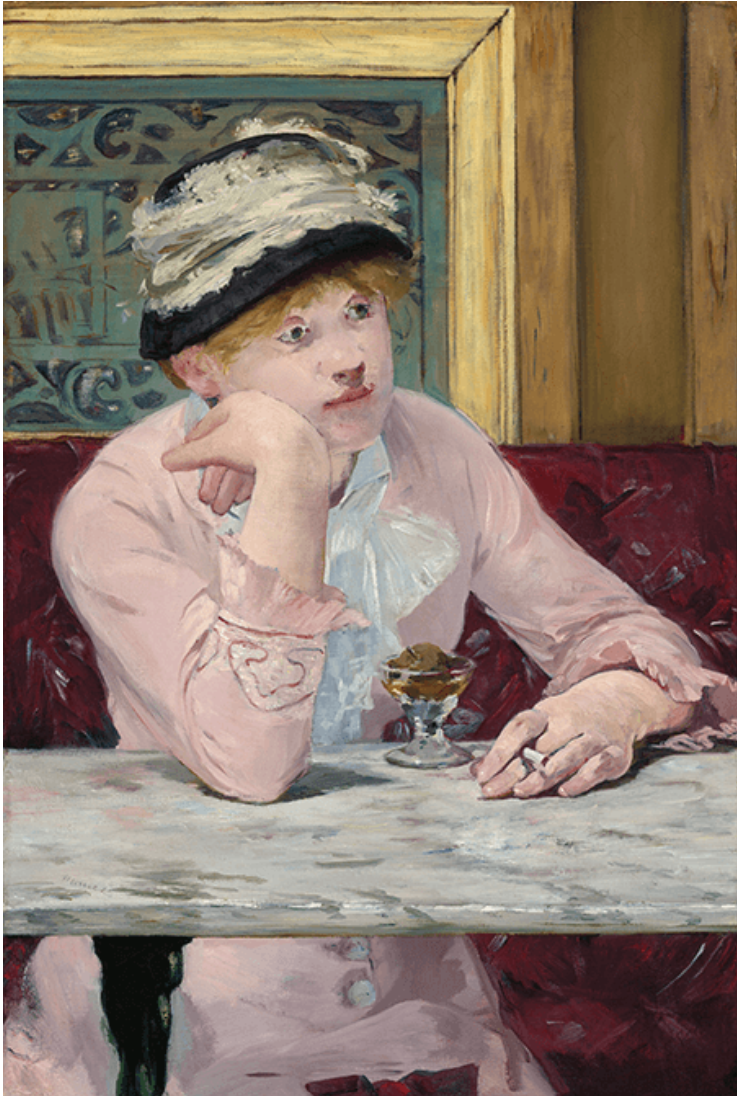
Édouard Manet, Plum Brandy, c. 1877, National Gallery of Art, Washington D.C. Image: National Gallery of Art, Washington D.C., Collection of Mr. and Mrs. Paul Mellon, 1971.85.1
Burkhard Riemschneider is an important example amongst several paintings Peyton made of art world figures– other subjects have included Matthew Barney, Gavin Brown and her former husband Rirkrit Tiravanija. Her early career depictions of Marc Jacobs, Queen Elizabeth and musicians Kurt Cobain, Liam Gallagher and Sid Vicious distinctly capture the 1990s; curator Laura Hoptman has recognized Peyton as her generation’s “painter of modern life,” a distinction referencing Charles Baudelaire’s term to describe Édouard Manet in the late nineteenth century. Through her tender portraits and curated cast of era-defining subjects, Peyton can be understood as a fin de siècle painter for the 20th century, walking in the footsteps of such masters as Manet. Their respective cultural observation and mastery of portraiture evident in comparison with works like Plum Brandy, circa 1877. The present example further exhibits Peyton’s genius as a colorist. Painted with diluted oil paint and finished with a varnished, glossy surface, the work’s subject glows with a seeming effortlessness against a backdrop awash in peach and coral. With this brilliance packed into such an intimate scale, it is no wonder her work so often elicits the description “jewel-like,” as expressed by curators Laura Hoptman, who organized Peyton’s mid-career retrospective at the New Museum in New York in 2008, and Chrissie Iles, who selected Peyton for the 2004 Whitney Biennial. Roberta Smith has likewise used the phrase, further praising the works’ “incandescent glow” and “offhand intensity.”
Painted in 2015, Julie (Julie Mehretu) is a powerful, luminous portrait by Elizabeth Peyton. The subject is Peyton’s fellow artist Julie Mehretu, who rose to acclaim in the early 2000s for her vast, geometric abstract works that conjure overlaid complexities of history and place: the two are near-contemporaries, and both work in New York. Joining the pantheon of pop icons, rockstars, friends and heroes who people Peyton’s oeuvre, Mehretu takes her place among a select company of female artists she has depicted, including Georgia O’Keeffe, Frida Kahlo, Camille Claudel and Isa Genzken. Peyton captures Mehretu as a vision of poised intelligence, gazing directly out at the viewer. She grips what might be a bunch of leaves in her hand. Flashes of gold and inky shadows enrich her face, while other areas are more loosely worked, allowing light to break through from the bright white ground beneath. This radiance is typical of Peyton’s technique: she applies diluted oil paint to a painted ground that she has sanded glassy-smooth, creating pellucid, dappled washes of color that glide across the surface. In deft, fluid strokes, Mehretu is made brilliantly present. Many of her works are based on found photographs, focusing on images mediated through history and the public eye: she rose to acclaim in the mid-1990s with an installation that juxtaposed idealised drawings of figures like Napoleon Bonaparte alongside pale, incandescent pictures of the recently-deceased Kurt Cobain. Later paintings like the present are often derived from Peyton’s own photographs, setting their subjects’ charisma in a more direct emotional key. Her depiction of Mehretu—composed, determined and fiercely self-aware—conveys her sitter’s personal magic with the keen sensitivity of one artist understanding another.
Born of far more than a devotion to celebrity, Peyton’s works traverse centuries to express an unironic fascination with people who define their moment, and who inspire her through their art. Her vision is achingly pure, and alive with a literary, almost romantic sensibility: working on an intimate scale, she believes that ‘little things are more powerful because they’re more honest, so people feel them more strongly’ (E. Peyton, quoted in J. Cocker, ‘Elizabeth Peyton’, Interview Magazine, 26 November 2008). Julie (Julie Mehretu) affirms this belief. Born of a moment of recognition between two great painters of our time, it seizes Mehretu’s essence with gem-like clarity.
Historical Figures
What Wondrous Thing Do I See… (Lohengrin, Jonas Kaufmann), 2011-12
Selections from The Collection of Barbara Gladstone
Sotheby’s New-York: 15 May 2025
Estimated: USD 600,000 – 800,000
USD 889,000
ELIZABETH PEYTON (b. 1965)
What Wondrous Thing Do I See… (Lohengrin, Jonas Kaufmann), 2011-12
Oil on veneered panel
9×11 inches (22.9 x 27.9 cm)
Signed, titled and dated 2011-2012 (on the reverse)
Intimate in both composition and scale, What Wondrous Thing Do I See… (Lohengrin, Jonas Kaufmann) from 2011-12 is a luminous portrayal of a scene from Richard Wagner’s opera Lohengrin, executed in Elizabeth Peyton’s alluring facture and arresting composition.
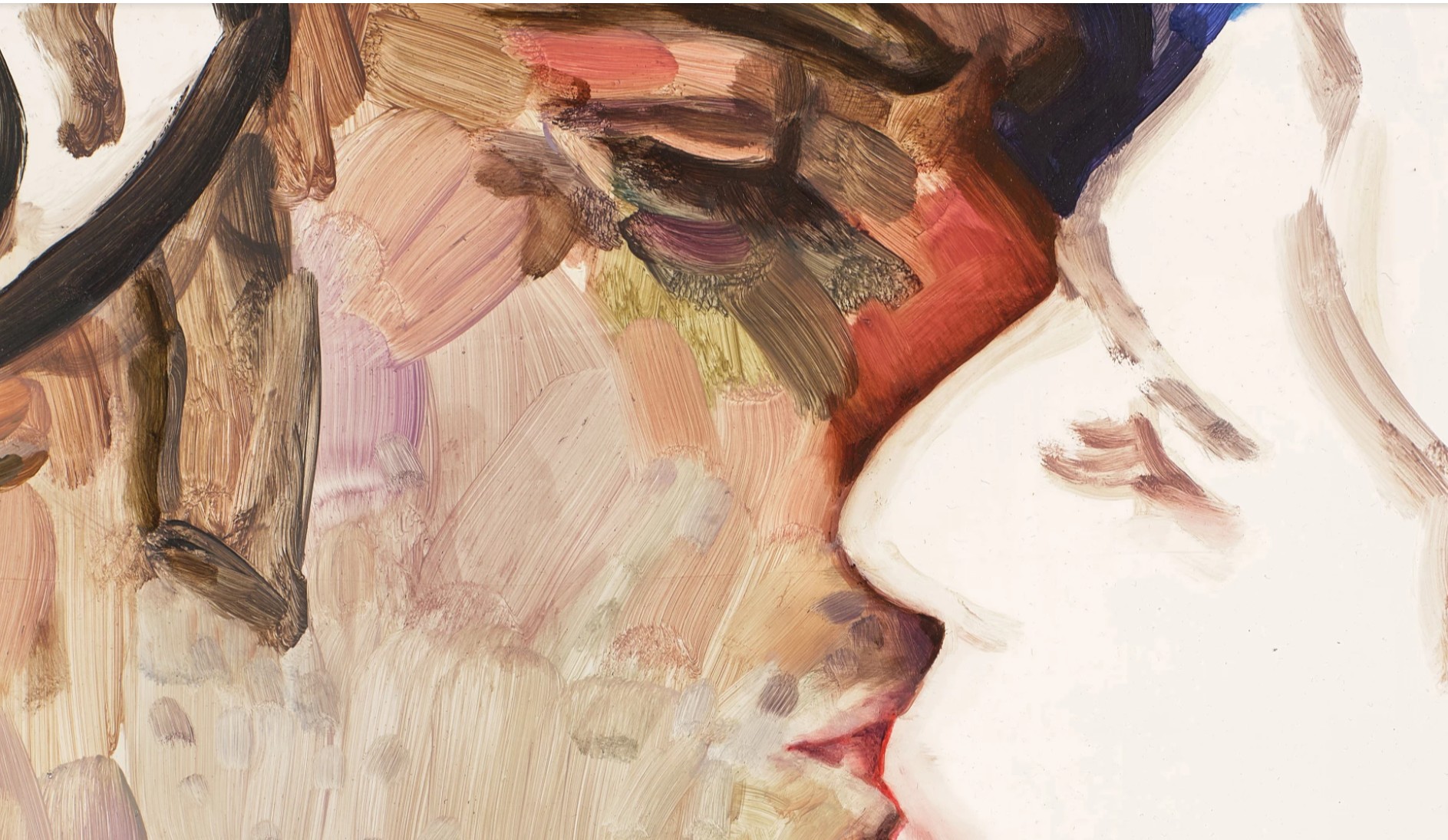
One of the most influential figurative artists working today, Peyton is celebrated for paintings of cultural icons and close friends, and the present work’s tender and observant gaze underscores the artist’s dedication to unearthing the profound essence that lies behind each of her subjects. Removing the two sitters’ surroundings and focusing the composition on the moment they meet for a kiss, Peyton distills emotive potential into the 9-by-11-inch picture frame, urging us to gaze into a moment of love forever frozen in time.
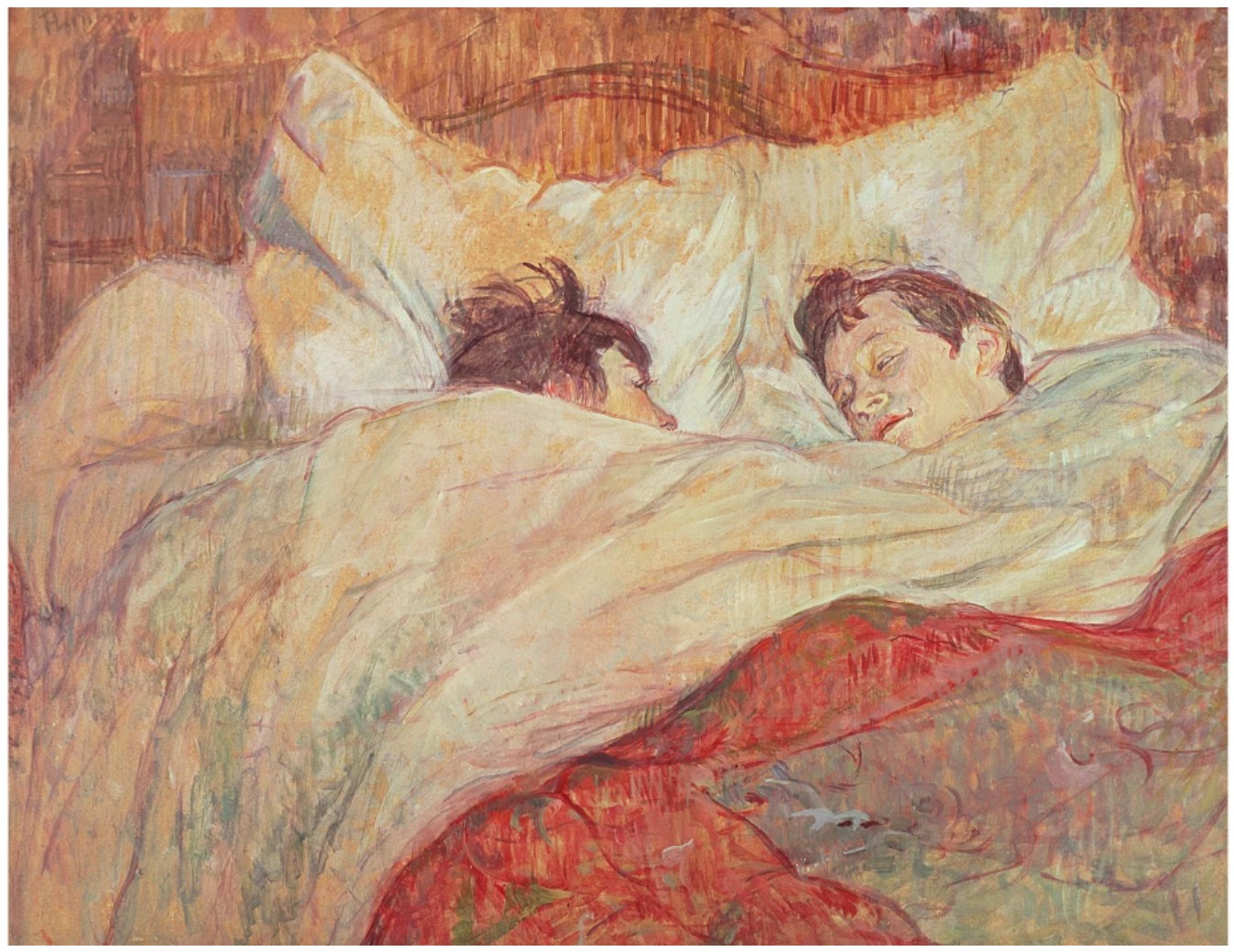
Henri de Toulouse-Lautrec, The Bed, c. 1892-95. Musée d’Orsay, Paris. Image © Bridgeman Images
Peyton’s lush and swift brushstrokes, in the present work, witness its two subjects sharing a kiss, surrounded by a luminous glow. As art historian Thomas Crow adroitly explains, the present work is a masterful exemplar of Peyton’s iconic facture and composition: “The side of Lohengrin’s face fills the opposing, darker portion of the composition, likewise demonstrating how much incident and nuance Peyton can generate from such economically light application of the brush; yet the visage is at the same time veiled, as befits a character who will not voluntarily reveal his name. Once again, their blissful union lasts only minutes before the fateful revelation and the knight leaping to his feet to confront a band of assailants.” (Thomas Crow, “Heroes,” in Exh. Cat., London, National Portrait Gallery, Elizabeth Peyton: Aire and Angels, 2019, Book 4, p. 4)
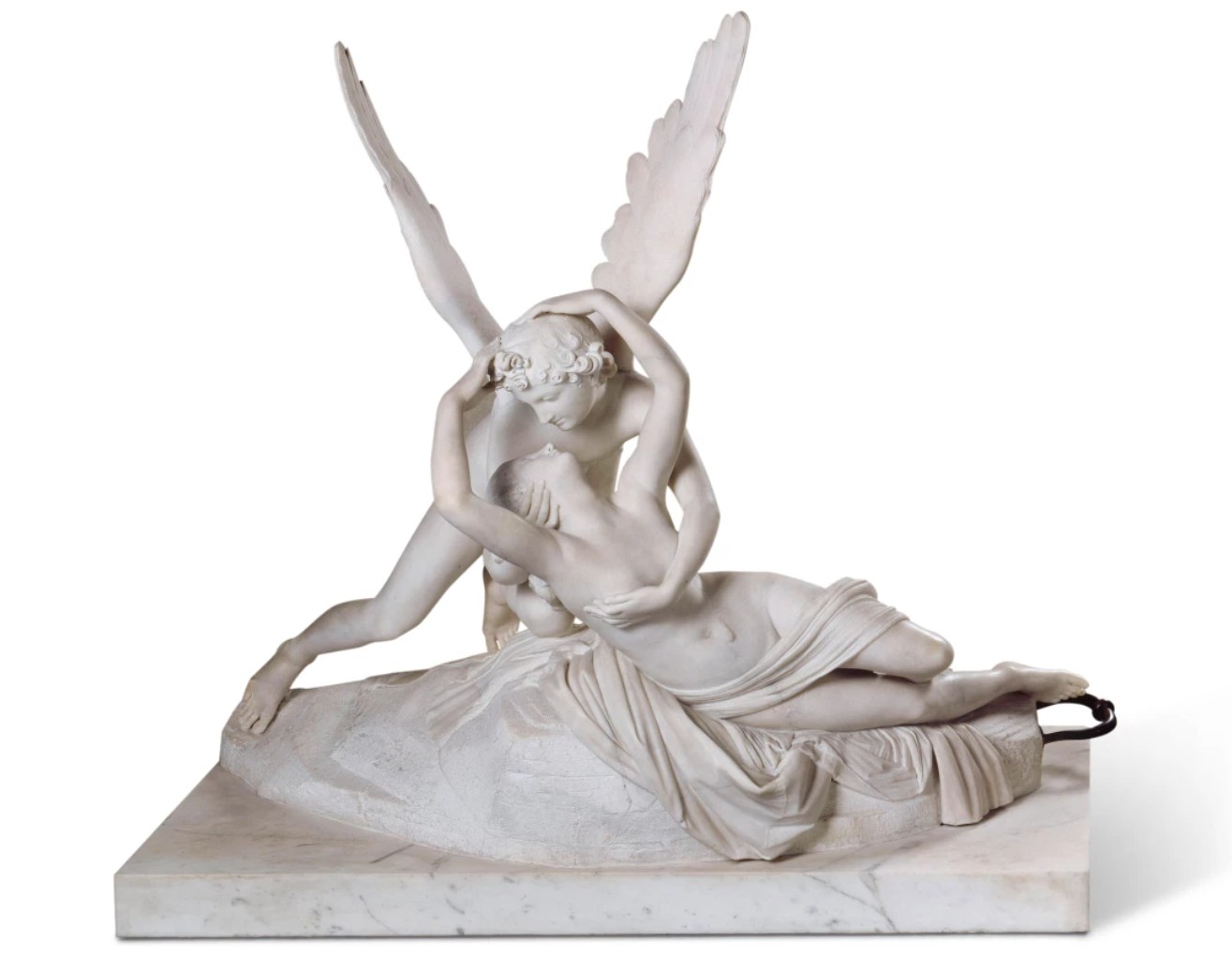
Antonio Canova, Psyche brought back to life by Amor’s Kiss, 1793. Musée du Louvre, Paris. Image © RMN-Grand Palais / Art Resource, NY
What Wondrous Thing Do I See… (Lohengrin, Jonas Kaufmann) captures the titular German-Austrian tenor as Lohengrin in the eponymous opera, composed and written by Richard Wagner, engaged in a tender kiss with noblewoman Elsa von Brabant. In the scene, the Knight of the Swan—Lohengrin in disguise—appears on the River Scheldt, vowing to protect her from Count Friedrich von Telramund’s schemes and professing his love for her. Moved by this decision, the crowds surrounding the couple sing: Welch holde Wunder muss ich sehen? (What wondrous thing do I see?) Since seeing Wagner’s Die Walküre at the Metropolitan Opera, New York, in 2011, Peyton has developed a deep-seated interest in the opera, leading to a series of paintings portraying Jonas Kaufmann.
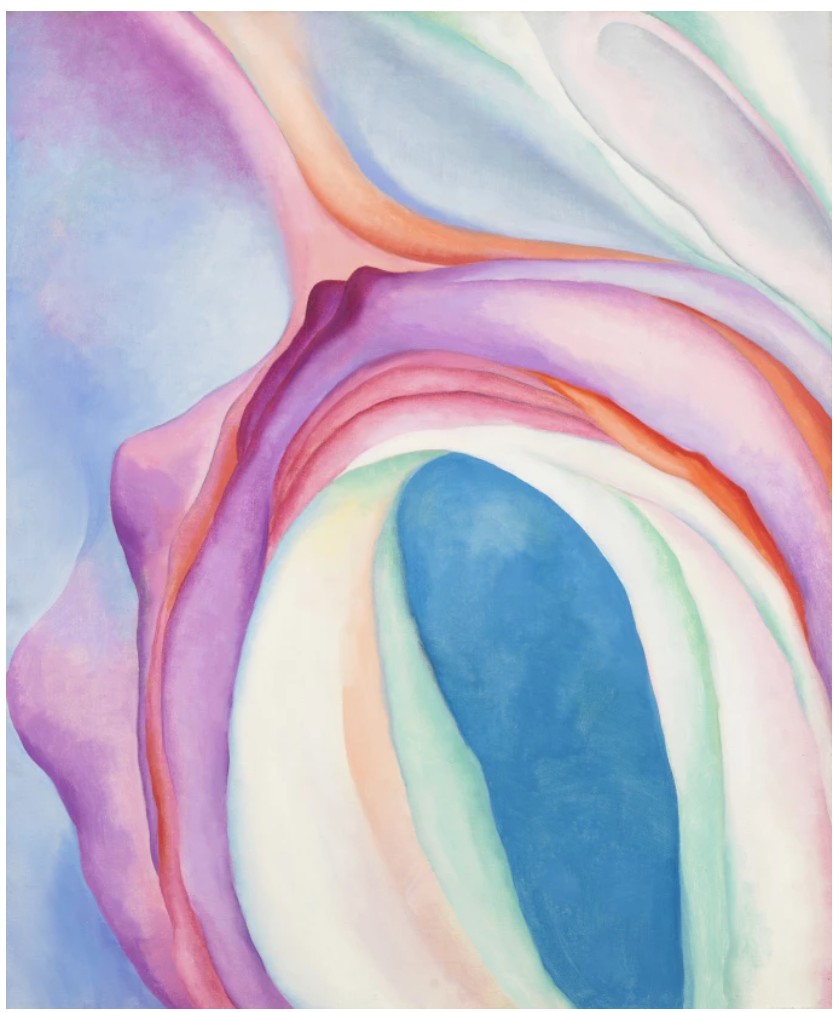
Georgia O’Keeffe, Music, Pink and Blue No. 2, 1918. Whitney Museum of American Art, New York. Image © Whitney Museum of American Art / Licensed by Scala / Art Resource, NY. Art © 2025 Georgia O’Keeffe Museum / Artists Rights Society (ARS), New York
Peyton emerged in the 1990s and immediately captivated the art world with her portraits of friends, artists, musicians, and historical figures rendered with an intimate gaze and vivid palette, parsing the cultural iconography of her generation. Fundamentally, Peyton regards her works as “paintings of people,” capturing an individual’s essence in a manner reminiscent of still life. In Wagner’s opera, despite Lohengrin’s warnings, Elsa breaks their promise and asks for her groom’s name, leading the Knight to lose his powers and having to return home under the laws of the Holy Grail. As if to resist the sorrowful parting to come, Peyton’s brushstrokes offer a timelessly romantic and alluring portrait that attempts to cherish love in its fleeting moments.
Angela, 2017
Sotheby’s London: 27 June 2023
Estimated: GBP 500,000 – 700,000
GBP 349,250 / USD 445,358
ELIZABETH PEYTON (B. 1965), Angela | Sotheby’s (sothebys.com)
ELIZABETH PEYTON (B. 1965)
Angela, 2017
Oil on board
17×14 inches (43.2 x 35.6 cm)
Signed, titled and dated 2017 (on the reverse)
Executed in 2017, Angela exemplifies Elizabeth Peyton’s transfixing investigation into the genre of portraiture. Looking directly at the viewer with a relaxed gaze and a gentle smile, Peyton’s depiction of Angela Merkel portrays the well-known political leader with a softness and warmth that is distinctive to her celebrated style. Previously shown at her 2019 exhibition at the National Portrait Gallery, Elizabeth Peyton: Aire and Angels, where selected works from the Gallery’s collection were shown alongside Peyton’s paintings, the present portrait follows in the lineage of historical portraiture of political leaders.
Portraits have long been used by political leaders and rulers to assert their status and power. Through gestures, dress, props and background, the primary function of portraits was to signal authority, with emphasis placed on communicating a social role rather than depicting a likeness to the individual. Such traditions can be traced back to portraits of Alexander the Great, whose depictions were often clad in panther skin to draw association with gods and, to Medieval and early Renaissance artists whose rulers would be drawn associations with Christ, saints, or other holy figures. By the eighteenth and nineteenth century in Europe, portraits of powerful figures shifted to portraying subjects in more domestic settings, but they still sought to highlight their moral and social superiority, remaining largely formal, symbolic and imposing. In light of this lineage, Peyton’s portrait of Merkel follows a radically different approach in its informality. Simply titled Angela, Peyton paints a compassionate and intimate image of the former chancellor, her face illuminated through layered washes of translucent paint. Unlike the grandiose historical portraits, the present work is executed in a smaller scale of just over forty centimetres in height. In a similar manner to Lucian Freud’s smaller scale portraits, this highlights the subtle nuances of expression and heightens the sitter’s presence. The composition is closely cropped to her face, eliminating any symbolic associations through her setting, objects or clothing. Instead, the focus is placed solely on Merkel’s expression, which is gentle and at ease, exuding a calm and restful aura. Lauded for her paintings of cultural icons, Peyton’s casual rendering of Merkel also depicts her sense of celebrity, highlighting the cultural iconicity of Merkel as one of the first female politicians to rise to her level of influence and prominence. Emerging in the 1990s, Peyton rose to prominence with her captivating portraits of friends, celebrities, and historical figures. Reflecting the cultural iconography of the present day, Peyton’s vivid palette and intimate gaze placed the human figure at the core of her practice, highlighting the transient, precious moments of youth with a uniquely romantic gaze that came to define her painterly style. In the present painting, the pastel palette is punctuated by notes of vivid crimson and cobalt, rendered in swift caresses of brushwork. Capturing the slight imbalance of her upturned lips and the smile lines of her deep blue eyes, Peyton enlivens Angela with a unique immediacy, poignantly illustrating the beauty in a candid, fleeting moment in time. As Peyton described in her own words: “Artwork expresses what it’s like to be human, and one of the things about being human is time passing” (Elizabeth Peyton quoted in: Calvin Tomkins, “The Artists of the Portrait”, The New Yorker, 6 October 2008, p.47). Indeed, it is this sensitivity to the beauty of transience, and an empathetic humanizing gaze, that imbues Peyton’s works with an alluring and mesmerizing quality.
Georgia O’Keeffe after Stieglitz 1918 (with hat), 2006
Christie’s Paris: 19 October 2023
Estimated: EUR 40,000 – 60,000
EUR 214,200 / USD 226,403
ELIZABETH PEYTON (B. 1965)
Georgia O’Keeffe after Stieglitz 1918 (with hat), 2006
Watercolor on paper
14 1/8 x 10 1/4 inches (36×26 cm)
Signed, titled and dated ”’Georgia O’Keeffe AFTER STIEGLITZ (WITH HAT) (1918)” Elizabeth 2006′ (on the reverse)
Peyton’s intimate paintings of friends, celebrities and historical figures first drew attention in the 1990s, at a time when figuration was out of fashion. She works on a small scale with fast, fluid brushstrokes. Often referring to photographs, she chooses her subjects with great care, only selecting people whom she admires or feels an affinity with. The portraits have a jewel-like clarity.
“Making art is making something live forever. Human beings especially—we can’t hold on to them in any way. Painting and art is a way of holding onto things and making things go on through time.”
The present work is a watercolor depicting the American painter Georgia O’Keeffe. It is based on a portrait taken in 1918 by the pioneering photographer Alfred Stieglitz, whom O’Keeffe later married. Across their creative relationship, the couple would collaborate on around three hundred photographic portraits. Peyton portrays O’Keeffe in what looks like a moment of destiny. O’Keeffe is one of a number of women artists Peyton has painted. Others include Frida Kahlo and Camille Claudel, and her living contemporaries Julie Mehretu and Isa Genzken.
Marie Antoinette, 1993
Im Kinsky: 27 November 2023
Estimated: EUR 70,000 – 140,000
EUR 100,680 / USD 110,121
ELIZABETH PEYTON (B. 1965), Marie Antoinette | Im Kinsky (imkinsky.com)
ELIZABETH PEYTON (B. 1965)
Marie Antoinette, 1993
20×15 cm
Inscribed, dedicated, dated and signed on the reverse: Marie Antoinette for Rudy, 1993, Elizabeth Peyton
In intimate small formats, Elizabeth Peyton portrays pop icons and historical figures in whom she takes a personal interest. She mainly used photographs as models. With her unique visual language, Peyton brought a breath of fresh air to traditional portrait painting in the early 1990s. What her portrayals of different characters all have in common is a sensitive, airy style of painting that creates a melancholy aura. After intensively studying the person and their history, the painter reveals to us their vulnerable side, as so evident in the portrait of Marie Antoinette. The glaze-like pink tones applied with delicate brushstrokes and the contours of varying thickness make the subject appear fragile, sensitive and alive. Marie Antoinette’s marionette-like figure reflects her tragic history, from her politically motivated, arranged marriage to her death on the guillotine. Peyton possibly drew inspiration from Stefan Zweig’s biography “Marie Antoinette: Bildnis eines mittleren Charakters”. In 1993, Peyton’s portrait of Marie Antoinette was featured in her major exhibition in Room 828 of the legendary Chelsea Hotel in New York. Visitors had to request the room key at the hotel reception.
Balzac Still Life, 2008
Sotheby’s London: 13 October 2023
Estimated: GBP 300,000 – 400,000
GBP 355,600 / USD 431,553
ELIZABETH PEYTON (B. 1965), Balzac Still Life | Sotheby’s (sothebys.com)
ELIZABETH PEYTON (B. 1965)
Balzac Still Life, 2008
Oil on board
14 1/2 x 11 3/8 inches (36.7 x 28.8 cm)
Signed, titled and dated 2008 May (on the reverse)
“With Balzac, so many things appealed to me…One, he is an artist above all things. And in his novels, artists were the ones who could move in and around society. The portraits that he made of people inspired me, in my brain: they told me how I wanted to make portraits.”
Peyton’s ability to capture the inner complexities of her subjects in her portraits parallels Balzac’s intricate literary characters. Indeed, in Balzac Still Life, Peyton intentionally draws a direct line between her aesthetic motivations and the history of Realism within the arts at large through this ravishing depiction of her main creative influence. The present work sees the masterfully skilled blending of soft blurred hues, almost dreamlike and transient in application, yet sharpened by Peyton’s precise and expressive marks. Fluid washes of richly toned pigment coalesce to portray the novel and portrait of the writer atop a table replete with an incandescence orange vase and blooming florals. Indeed, there is a luminosity and emotive precision to the present work that is so quintessentially Peyton. Devoid of a sitter in the traditional sense, here the artist offers an alternative portrait; an intimate window to our protagonist’s bedside table, in which bracelet, book and personal paraphernalia flood the scene to suggest a profound sense of personhood. Perhaps a self portrait of Peyton during her time at The School of Visual Arts; a notion reinforced by the ephemera, traces and clues left to the viewer to interpret. To this end, Peyton’s portraits go beyond the painting of people, rather, her artistic production captures the very foundations of self, capturing a moment in time, an encounter between sitter and artist.
Intimate Portraits
Max, 1996
Sotheby’s New-York: 14 May 2026
Estimated: USD 800,000 – 1,200,000
USD 768,000
Elizabeth Peyton | Max | The Now & Contemporary Evening Auction |
ELIZABETH PEYTON (b. 1965)
Max, 1996
Oil on board
12×9 inches (30.5 x 22.9 cm)
Signed, titled Maxie August 1996 and dated 1996 (on the reverse)
A deeply personal, intimate portrait of her close friend and gallerist Gavin Brown’s son, Max, from 1996, reveals Elizabeth Peyton’s artistic genius in all its subdued, yet piercingly vivid, nature. Testament to the high regard in which she held his father, her painted tribute does not portray the child with the expected virtues of playfulness and naivete, but rather a knowing, delicate representation of the child. Complete with a resolute, unwavering gaze; one of confidence and brash attitude, Max offers a quiet, enigmatic portrayal of the child from Peyton’s highly coveted mid-90s working period, capturing the best of her genius with a deeply personal muse.
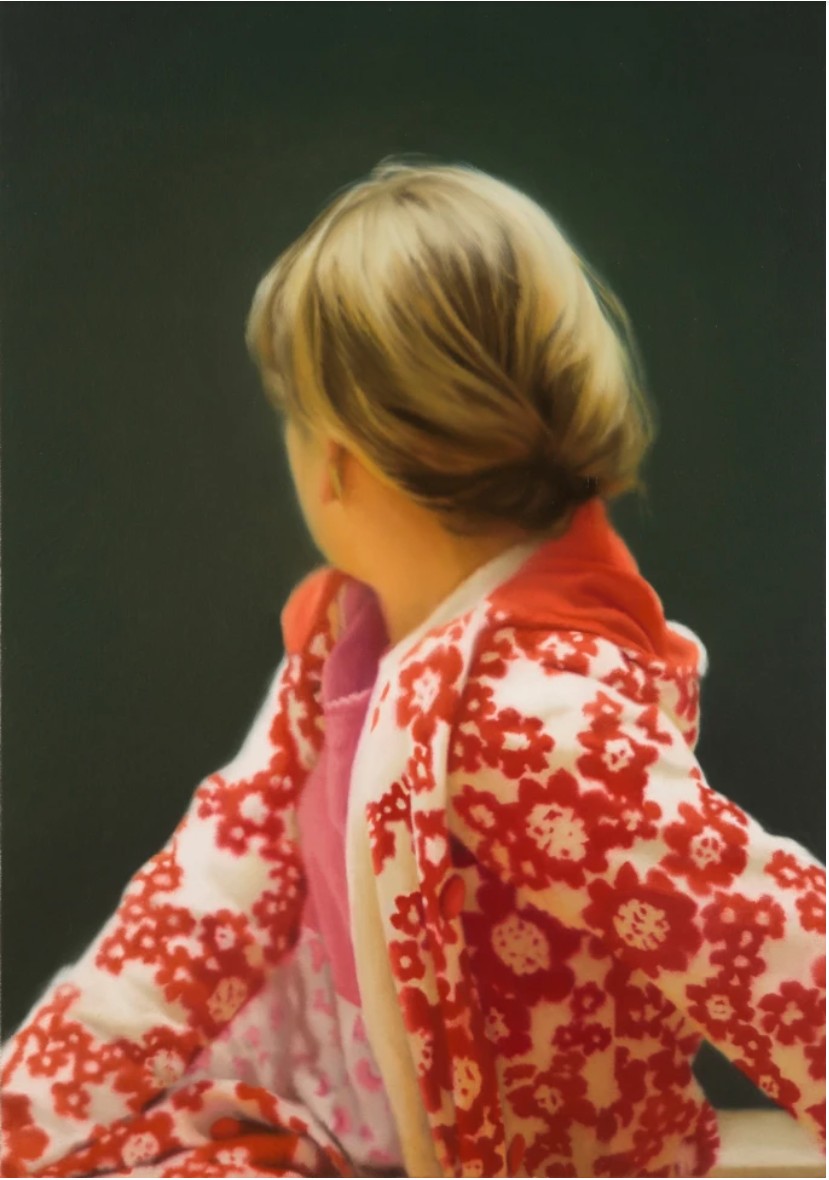
Gerhard Richter, Betty, 1988. Saint Louis Art Museum. Art © 2026 Gerhard Richter
Peyton’s artistic genesis took shape at the Chelsea Hotel in 1993—a place already steeped in decades of creative breakthroughs. By staging an exhibition of her latest drawings in room 828, she deliberately inserted herself into that lineage. The work wasn’t simply on display; viewers had to request a key from the front desk, turning the act of seeing into a quiet initiation. It was there that she met Gavin Brown, the gallerist who would become both a close friend and a catalyst for her remarkably swift rise.
“Human beings are very avant-garde, and are as worthy a contemporary subject as anything else.”
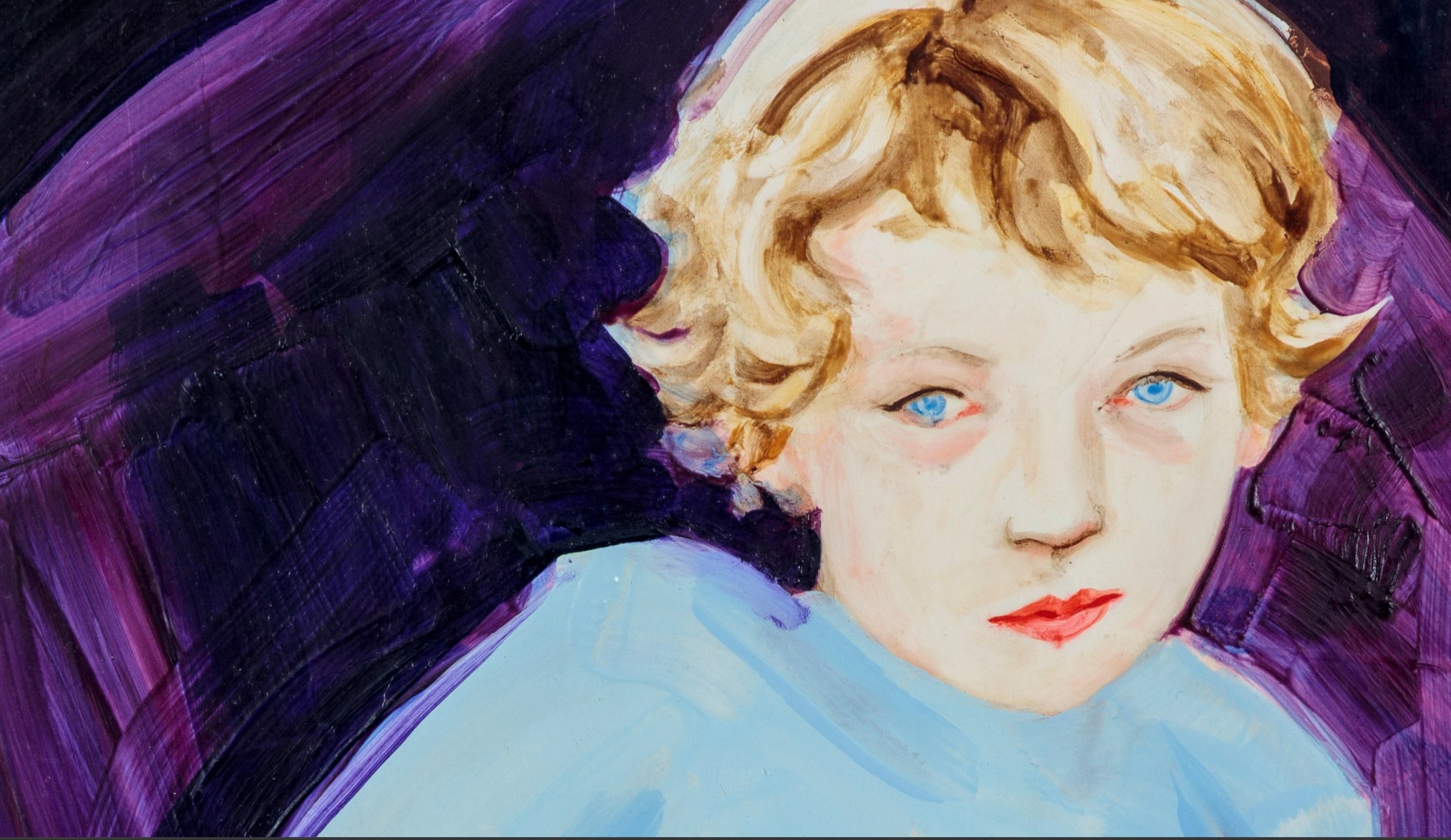
Soon after, Peyton shifted from drawing to painting, focusing on portraits of the people who captivated her—friends, cultural figures, and personal heroes alike. As she put it: “I guess I like looking at people when they’re finding their way, living up to themselves. It’s something that looks spectacular.” (The artist quoted in: Steve Lefreniere and Elizabeth Peyton, Elizabeth Peyton, New York 2005, p. 253) Her early critical reception was far from unanimous. One New York Times review described her portraits as “beautiful in an awkward, self-effacing way,” (Roberta Smith, “ART REVIEW: Blood and Punk Royalty to Grunge Royalty,” The New York Times, 24 March 1995, p. C30) capturing both their intimacy and their perceived fragility. Gavin Brown, however, defended her work with conviction, and his clarity of vision and steady advocacy proved pivotal, helping propel Peyton into broader recognition and forming the foundation of their enduring professional partnership. Within that context, Peyton’s decision to paint Brown’s son, Max, reads as both reciprocal and deeply personal—a gesture that transforms portraiture into a record of trust and friendship, as much as artistic observation.
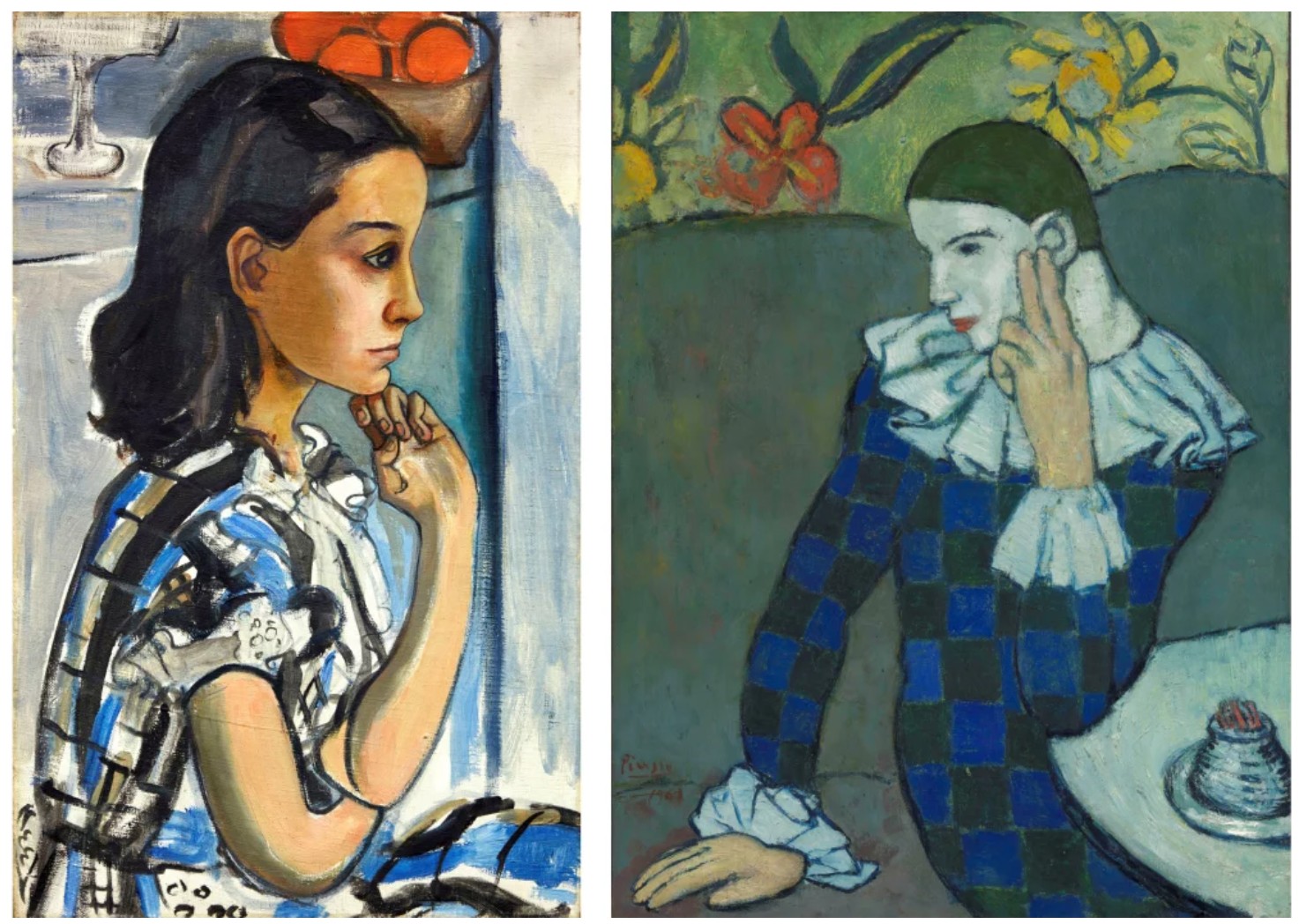
Left: Alice Neel, Mady, 1942. Private Collection. Sold at Sotheby’s New York in November 2021 for $1.8 million. Art © 2026 Alice Neel. Right: Pablo Picasso, Seated Harlequin, 1901. Metropolitan Museum of Art, New York. Image © The Metropolitan Museum of Art. Image source: Art Resource, NY. Art © 2026 Estate of Pablo Picasso / Artists Rights Society (ARS), New York
Set against a moody plum backdrop, Peyton paints Max with a baby blue shirt that brings out the boy’s intensely striking gaze, looking out at the viewer with a glare that reads – humorously – disappointed. Executed with a few, thinly impastoed brush strokes, the boy’s right arm extends out bracing himself, while compositionally, it expertly points the viewer directly to his face. With such a casual, unpretentious feel to the portrait, the viewer isn’t prepared for Max’s captivating visage: bright blue eyes that confront you resolutely; red lips that smirk ever so slightly, and soft skin that appears youthful, though not angelic. Sweeping beneath his eyes are the familiar dark crescents of tiredness. Just as with all of her portraits, Peyton took her time with Max’s face, imbuing a sensitivity to emotion and verisimilitude with a few dancing strokes. With this magnificent depiction of the boy as human and as hero, Max holds a pivotal place in Peyton’s body of work. Through her highly acclaimed portraits, Peyton presents a modest, yet intense view of her subjects. Whether close friends or front-page celebrities, she captures her subjects with gleaming intensity and intimate knowing, stripping portraiture back to its most personal ethos. In doing so, she inserts herself as artist – and her subjects as art – into a longer lineage of art history and, ultimately, humanity. Quoting Shakespeare’s 55th sonnet in her 2001 book, Prince Eagle, she provides an epigraph for her own oeuvre, explaining to her portrait subjects: “But you shall shine more bright in these contents / Than unswept stone.” Max embraces these emblematic words; a deeply intimate portrait of a child not set in the context of his youth, but seen first and foremost as a human, entitled to opinions and understanding just as the rest of Peyton’s older subjects. Max shines brightly in Peyton’s oeuvre as an exquisite legacy of the artist and subject – containing multitudes of her artistic genius and, more importantly, as a loving monument to her friendship with Gavin Brown.
Tony Reading (Silver Tony), 1999
Works from the Collection of Byron R. Meyer with Partial Proceeds
to Benefit the San Francisco Museum of Modern Art
Sotheby’s New-York: 19 November 2025
Estimated: USD 500,000 – 700,000
USD 457,200
Tony Reading (Silver Tony) | Contemporary Day Auction | 2025 | Sotheby’s
ELIZABETH PEYTON (b. 1965)
Tony Reading (Silver Tony), 1999
Oil on MDF
14 1/4 x 11 inches (36.2 x 27.9 cm)
Signed, titled, dated 1999 and inscribed Tony Just (age 30) (on the reverse)
Infused with luminous intimacy and painterly tenderness, Elizabeth Peyton’s Tony Reading (Silver Tony) from 1999 exemplifies the artist’s celebrated portraits of the late 1990s, a period that cemented her reputation as one of the most original figurative painters of her generation. Rendered in radiant oil on board, the work captures Tony Just—Peyton’s longtime muse and former partner—absorbed in the quiet act of reading. With its close-cropped composition, diaphanous brushwork, and jewel-like palette, the painting transforms an ordinary moment into a timeless meditation on beauty, presence, and the interiority of her sitters.
“Human beings are very avant-garde,
and are as worthy a contemporary subject as anything else.”
In Tony Reading (Silver Tony), Peyton depicts her subject in a downward pose, head bent and gaze directed toward the page. The angle denies full access to Tony’s features, yet his presence radiates through the curve of his hair, the tilt of his head, and the flush of red at his lips. Purple, silver, and pale lavender tones animate the composition, while quick strokes of white and brown catch the light across his clothing and hair. The book, rendered in flashes of crimson and cream, punctuates the canvas with vivid contrast, anchoring the sitter’s attention and ours. The entire scene hums with an atmosphere of reverie—an unguarded glimpse into a moment of thought and concentration, preserved with painterly delicacy.
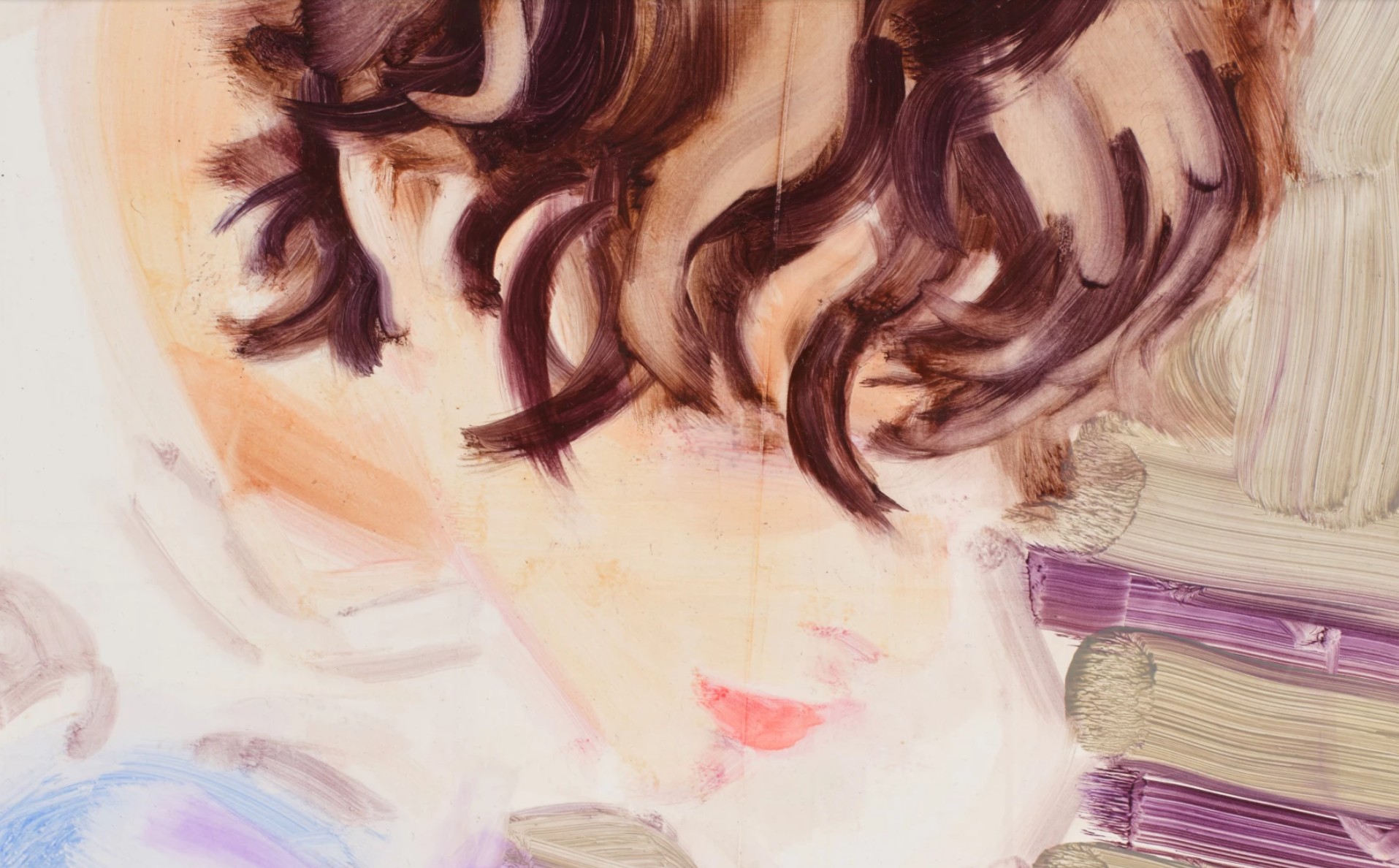
Tony was among Peyton’s most frequent subjects in the 1990s, appearing in multiple canvases that traced the intimacy of their friendship. Unlike her portraits of public figures such as Kurt Cobain, Jarvis Cocker, or Liam and Noel Gallagher, Peyton’s images of Tony feel distinctly personal, affirming her interest in portraying not only cultural icons but also those closest to her. In Tony Reading (Silver Tony), the sitter is not posed for spectacle but caught in a private moment. The absence of eye contact reinforces the sense of introspection, as if the viewer is quietly witnessing a fleeting instant of everyday life, elevated by the act of painting into permanence.
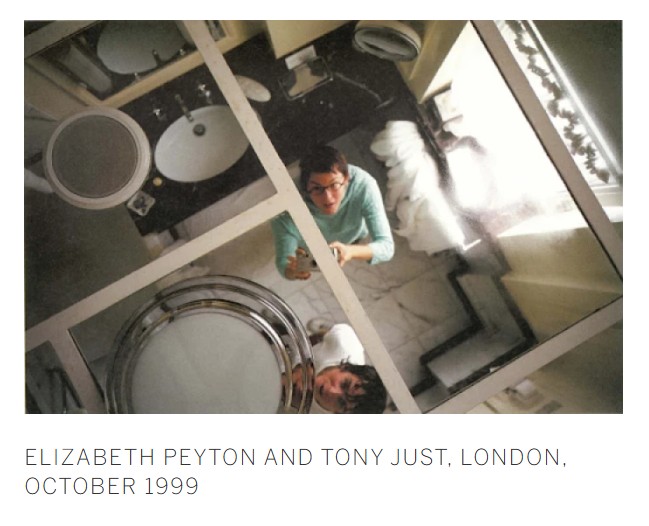
The painting reflects Peyton’s distinct approach to portraiture, in which likeness is less about verisimilitude than about emotional presence. Her brushwork is fluid, at times dissolving contours into washes of color, at others sharpening them into luminous accents. The result is a sense of lightness and immediacy: one feels the painting was executed in a single breath, even as its composition is carefully considered. Peyton’s technique owes as much to the lyricism of nineteenth-century painters like Édouard Manet and Édouard Vuillard as it does to the immediacy of contemporary photography and the affective charge of fan culture.
By the late 1990s, Peyton had achieved widespread recognition for her portraits of cultural figures—often musicians, writers, and artists—who represented not only celebrity but also the emotional texture of their era. Yet works such as Tony Reading (Silver Tony) reveal that at the core of her practice lies a fascination with intimacy and friendship. Whether depicting a rock star or a close companion, Peyton renders her sitters with the same tenderness, blurring the line between public and private, icon and individual.
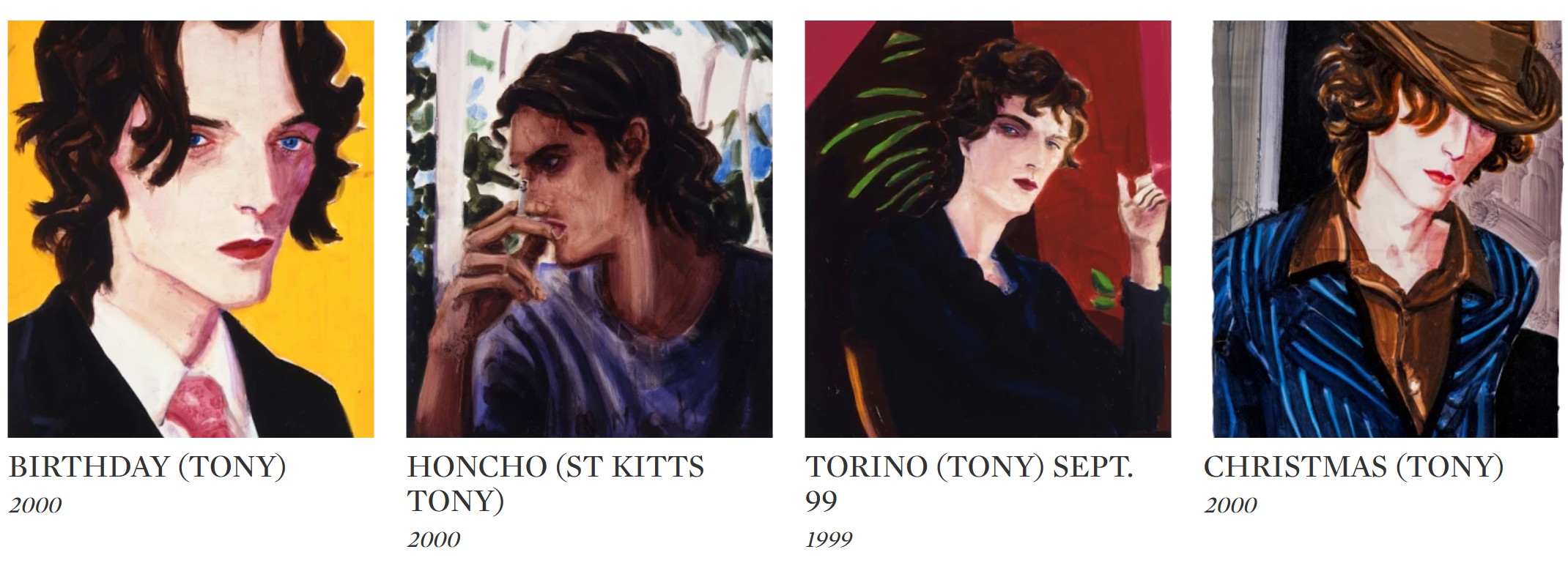
The choice of reading as subject further underscores Peyton’s interest in interiority. Books recur in her work as symbols of reflection and selfhood, marking moments of pause rather than performance. In Tony Reading (Silver Tony), the sitter’s absorption creates a sense of distance, but it is a distance filled with empathy. The painting is less a record of Tony’s likeness than of his state of being—attentive, contemplative, alive in a moment of solitude.
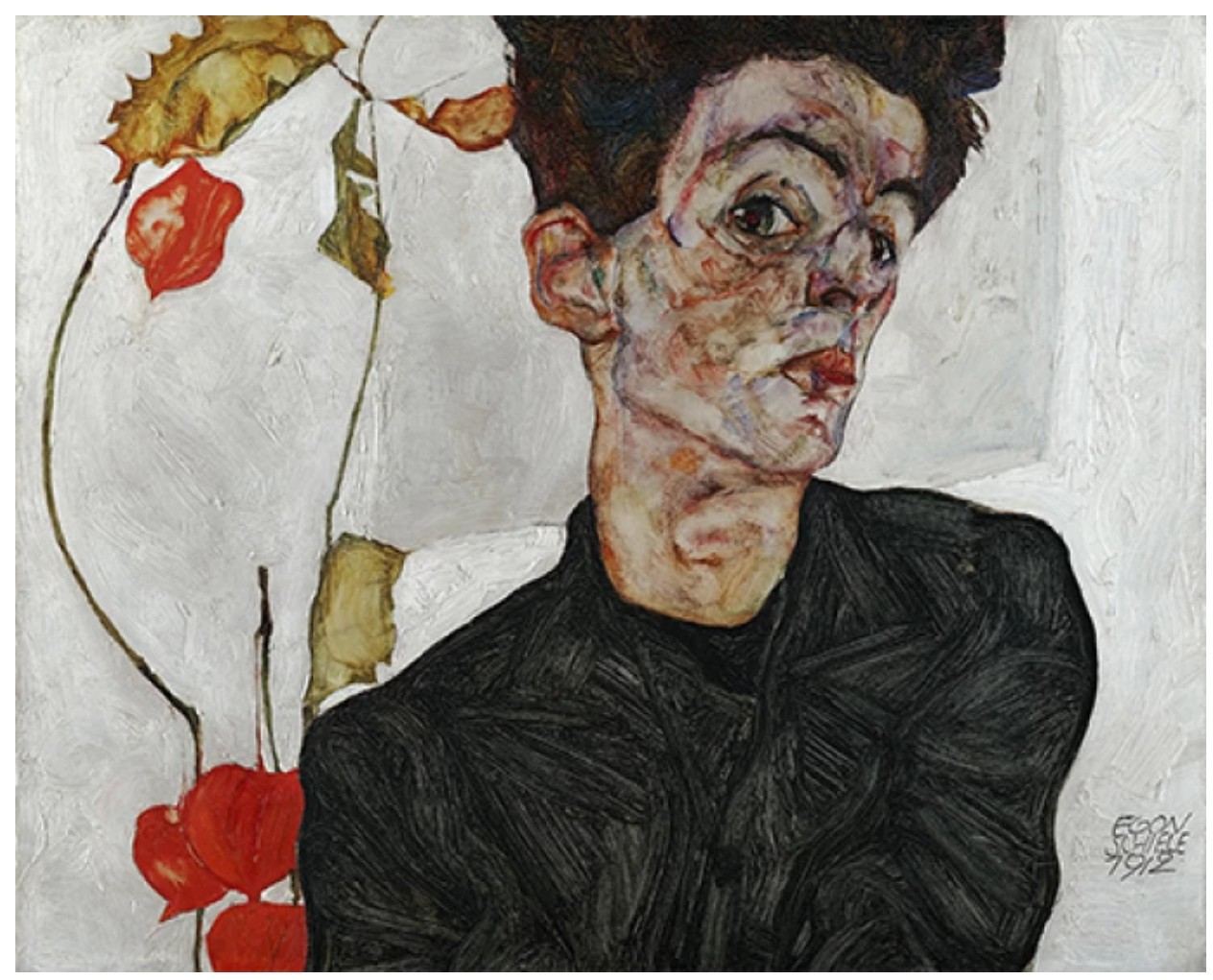
Egon Schiele, Self-Portrait with Chinese Lantern Plant, 1912, Leopold Museum, Vienna.
Painted in 1999, the work belongs to a pivotal moment in Peyton’s career. Having gained international attention through her early exhibitions in New York and London, she was increasingly recognized for her ability to merge the sensibility of Old Master portraiture with the visual culture of her own time. Tony Reading (Silver Tony) demonstrates this synthesis with particular clarity: its palette and brushwork echo the modernist intimism of Henri Matisse or Pierre Bonnard, while its subject and immediacy speak to a late-twentieth-century context of friendship, fandom, and personal connection. Ultimately, the power of Tony Reading (Silver Tony) lies in its ability to render the ordinary extraordinary. A simple act of reading becomes a subject of luminous attention, transfigured through Peyton’s brush into an emblem of beauty and presence. The painting affirms her singular place within contemporary portraiture: an artist who finds grandeur not in spectacle but in the fragile, fleeting moments of life, preserved forever in the charged surface of paint.
Torino (Tony) Sept. 99, 1999
Phillips London: 10 October 2024
Estimated: GBP 300,000 – 500,000
GBP 431,800 / USD 564,205
Elizabeth Peyton – Modern & Contempor… Lot 7 October 2024 | Phillips
ELIZABETH PEYTON
Torino (Tony) Sept. 99, 1999
Oil on board
24.6 x 20.9 cm (9 5/8 x 8 1/4 inches)
Signed, titled and dated ‘September Torino, (Tony) Elizabeth Peyton 1999’ on the reverse
Stunningly executed in luminous, jewel-like shades of deep reds, pinks, and rich tones of black and blue, Torino (Tony) Sept. 99 is an arresting early example of American artist Elizabeth Peyton’s unique contribution to contemporary portraiture. Taking as its subject Peyton’s lover and fellow artist Tony Just, the work exemplifies Peyton’s sensitive and emotionally charged approach to her material, typically revolving around the representation of close friends and familiar cultural icons borrowed from second-hand images. Fascinated by the fragile beauty of youth, Peyton’s tender and often small-scaled images of artists and musicians are among her best known and revered works, records not only of specific individuals and the cultural moment that they occupy but, more pressingly, of the profound emotional response that they draw from her.
“I’m very inspired by artists and musicians, people who touch me, people who help me feel my feelings.”
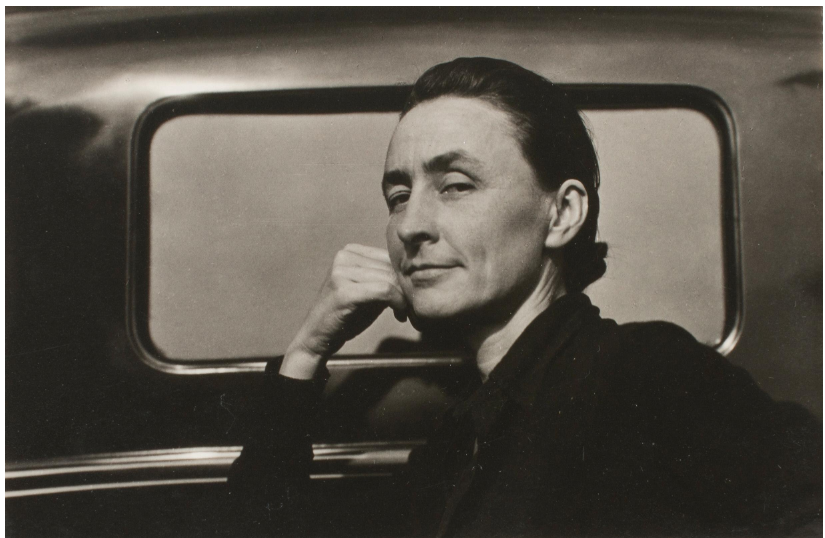
Alfred Stieglitz, Georgia O’Keeffe – After Return from New Mexico, 1929, Philadelphia Museum of Art. Image: Philadelphia Museum of Art, 125th Anniversary Acquisition. The Alfred Stieglitz Collection, purchased with the gift (by exchange) of Dr. and Mrs. Paul Todd Makler, the Lynne and Harold Honickman Fund for Photography, the Alice Newton Osborn Fund, and the Lola Downin Peck Fund, with funds contributed by Mr. and Mrs. John J. F. Sherrerd, Lynne and Harold Honickman, John J. Medveckis, and M. Todd Cooke, and gift of The Georgia O’Keeffe Foundation, 1997
Including notable historical characters, rock stars, and members of the Royal Family, Peyton has drawn on a wide array of visual sources including magazine clippings and press photographs in the composition of her portraits of well-known cultural figures. Often familiar, these images elicit a charge of recognition in the viewer, drawing out our own feelings towards her subjects. In her more intimate portraits of friends and family from her inner circle – of which the present work is a particularly powerful example – Peyton offers us a more personal vision, an invitation to engage directly with the artist on her own emotional frequency. Instead of second-hand and widely circulated press images, for these more intimate portraits Peyton draws on her own photographs, informal snapshots on 35 millimeter, polaroid, and digital cameras amassed over decades. In recent years, this aspect of Peyton’s practice has received increasing critical attention, the Aldrich Contemporary Art Museum even mounting an exhibition devoted to this vast archive of images in the 2008 exhibition Elizabeth Peyton: Portrait of an Artist. Drawing attention to this important dimension of Peyton’s practice, Torino (Tony) Sept. 99 belongs to a fascinating lineage of artists documenting the lives and loves of their innermost circle including Alfred Stieglitz, Lee Miller, and Robert Mapplethorpe. Peyton’s painted portraits of Just carry an emotional charge and are especially reminiscent of Stieglitz’s images of his partner and fellow artist Georgia O’Keeffe.
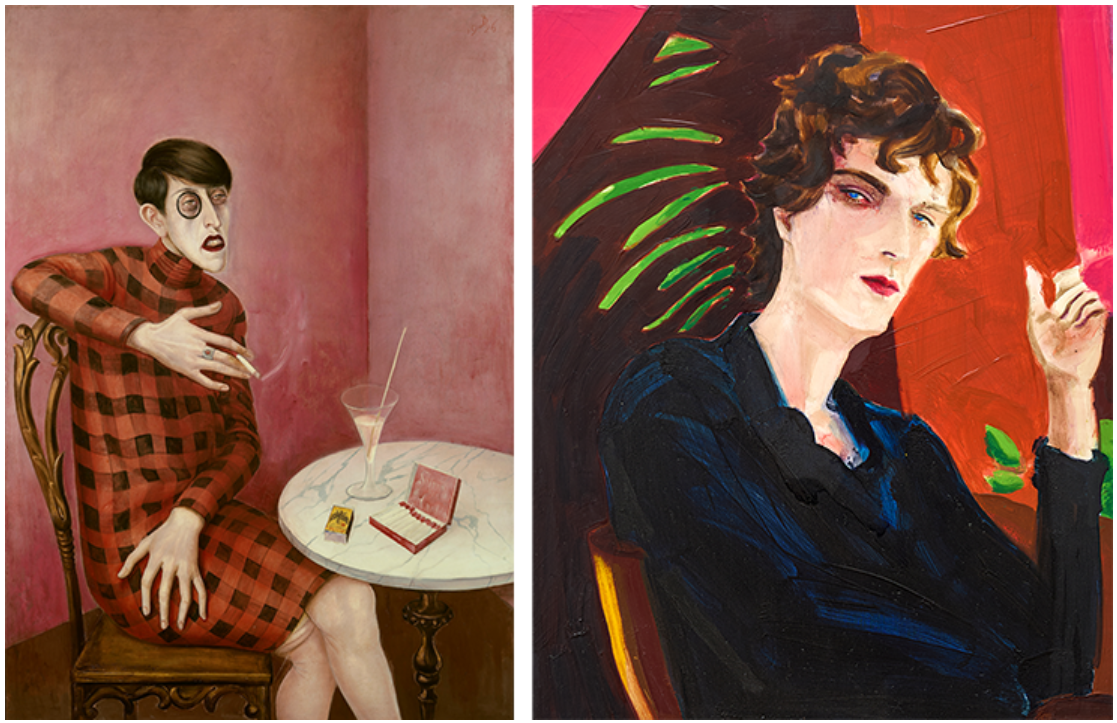
Left: Otto Dix, Portrait of the Journalist Sylvia Von Harden, 1926, Musée national d’art moderne, Centre Georges Pompidou, Paris. Image: Photo Josse/Scala, Florence, Artwork: © DACS 2024
Right: The present work
Following their first meeting at a party in the 1990s, Peyton immediately started drawing and painting Just in a variety of poses and settings.
“It really felt like I’d waited my entire life to meet Tony. He was magnetic. I wanted to look at him all the time.”
Peyton has recalled how Just initially reminded her of a young Napoleon – a favorite subject of her early painting – the two even travelling to France shortly after meeting to visit Fontainebleau where Napoleon had based himself before his ultimate exile in 1814. Photographs taken of Just on this trip would go on to form the basis of a series of portraits from the late 1990s and early 2000s, underscoring the centrality of these works in what would prove to be a pivotal period in Peyton’s career and personal life. Following her first institutional solo show in 1997 at the St. Louis Art Museum, Peyton was the subject of a staggering thirteen monographic exhibitions between 1998 and 2000, a remarkable record of the critical reception of her work in these early decades of her practice. Appearing here with delicate, elfin features, tousled hair, and an air of androgynous self-determination, ‘Torino’ epitomises the otherworldly sharp beauty that characterises Peyton’s most accomplished portraits. Although stylistically and emotionally distinct, in the rich palette, confident self-assured pose, and narrative charge of Torino (Tony) Sept. 99, Peyton seems to be drawing certain visual relationships to Otto Dix’s infamous 1926 portrait of androgynous beauty, Portrait of the Journalist Sylvia von Harden. This work similarly captured not only the mood of an epoch, but a new fascination with psychological interiority that resonates with the profound emotional character of Peyton’s most powerful portraits.
Christmas (Tony), 2000
Sotheby’s New-York: 14 May 2024
Estimated: USD 600,000 – 800,000
USD 752,000
Christmas (Tony) | Contemporary Day Auction | 2024 | Sotheby’s (sothebys.com)
ELIZABETH PEYTON (b. 1965)
Christmas (Tony), 2000
Oil on panel
12 x 9 1/8 inches (30.5 x 23.2 cm)
Signed, titled and dated 2000 (on the reverse)
Intimately scaled and rendered in lush, sensual brushstrokes, Christmas (Tony) from 2000 exquisitely depicts Elizabeth Peyton’s fellow artist and longtime lover Tony Just. Wearing an exquisite royal blue pinstriped suit and porting a wide-brimmed hat that mysteriously obscures the figure’s eyes, the present work is suffused with a cool seductiveness, which manifests everywhere from Peyton’s attention to her subject’s tousled hair and ruby lips, to her delicate, dreamlike palette of soft purples and browns. Like much of Peyton’s oeuvre, Christmas (Tony) is striking in its simplicity of style and subject matter; as in her numerous other portraits of friends and loved ones, she paints with broad strokes and spare details that make the scene at hand seem both mundane yet hazy, to create a powerfully atmosphere impact for the viewer.

Christmas (Tony) is a classic example of Peyton’s endless fascination with the feminine and androgynous male forms, a subject she began exploring at the start of her career through portraits of a fresh-faced Napoleon Bonaparte inspired by the 19th-century paintings of Jacques-Louis David and Antoine-Jean Gros. It was this same aesthetic impulse that drew Peyton to Tony when they first met at a party in the 1990s. As she once recalled, “He was magnetic. I wanted to look at him all the time.” (Elizabeth Peyton, quoted in Steve Lafreniere, “A Conversation with the Artist” in Matthew Higgs, et. al., Elizabeth Peyton, New York, 2005, p. 252) The present work seamlessly weaves together all of these characteristic elements of Peyton’s practice into a single painting. She depicts Tony—whose appearance she has often compared to that of a youthful Napoleon—in a paparazzi- like image of him in his finest clothing. Slipping deftly between signifiers of gender, culture, and history, Peyton’s portrait is a charming token of love that simultaneously casts an insightful eye on ideas of masculine perception and identity in modern society.
Haircut (Ben & Spencer), 2002
Christie’s Hong Kong: 29th May 2023
Estimated: HKD 2,500,000 – 4,500,000
HKD 3,528,000 / USD 450,672
ELIZABETH PEYTON (B. 1965), Haircut (Ben & Spencer) | Christie’s (christies.com)
ELIZABETH PEYTON (B. 1965)
Haircut (Ben & Spencer), 2002
Oil on board
12 1/8 x 9 1/4 inches (30.8 x 23.4 cm)
Signed with artist’s signature, titled and dated ‘Haircut (Ben & Spencer) SEPT 2002’ (on the reverse)
Painted in 2002, Haircut (Ben and Spencer) captures an intimate moment of Ben and Spencer on a balcony by their dear friend and one of the most celebrated contemporary figurative painters Elizabeth Peyton. The American female painter is lauded for her portraitures dedicated to celebrities and her close companions with great attention to emotional detail, like the Austrian Expressionist Egon Schiele. In Haircut (Ben and Spencer), Peyton features two regular sitters in her works who are great friends in real life—Ben is a DJ who used to be her assistant in the early 2000s while Spencer is likely to be the artist friend Spencer Sweeney. Working both from life and with photographs, Peyton has rendered the two characters with strong androgynous features as with all her subjects. Slouching nonchalantly on the chair with his upper-body bare, Ben seems to be completely relaxed with the moustached Spencer trimming his hair—except that his ear and forehead are reddened, flushing and blushing under his overdue bangs. In high contrast to the quasi-balcony filled with a pitch-dark background and in his stark black jeans, Ben’s pale skin and slender built strip away the last bits of masculine stereotype. The presentation is raw and unprocessed, exposing the inner vulnerabilities that Ben has in Peyton’s eyes for she said ‘I think people’s faces look how they do from a lot of internal conscious decision making or even just the movements, how they use their face—it has to do with their emotional character’ (E. Peyton: quoted in U. Schumann, Elizabeth Peyton: “History is Contained within People”, The Talks, 2018).
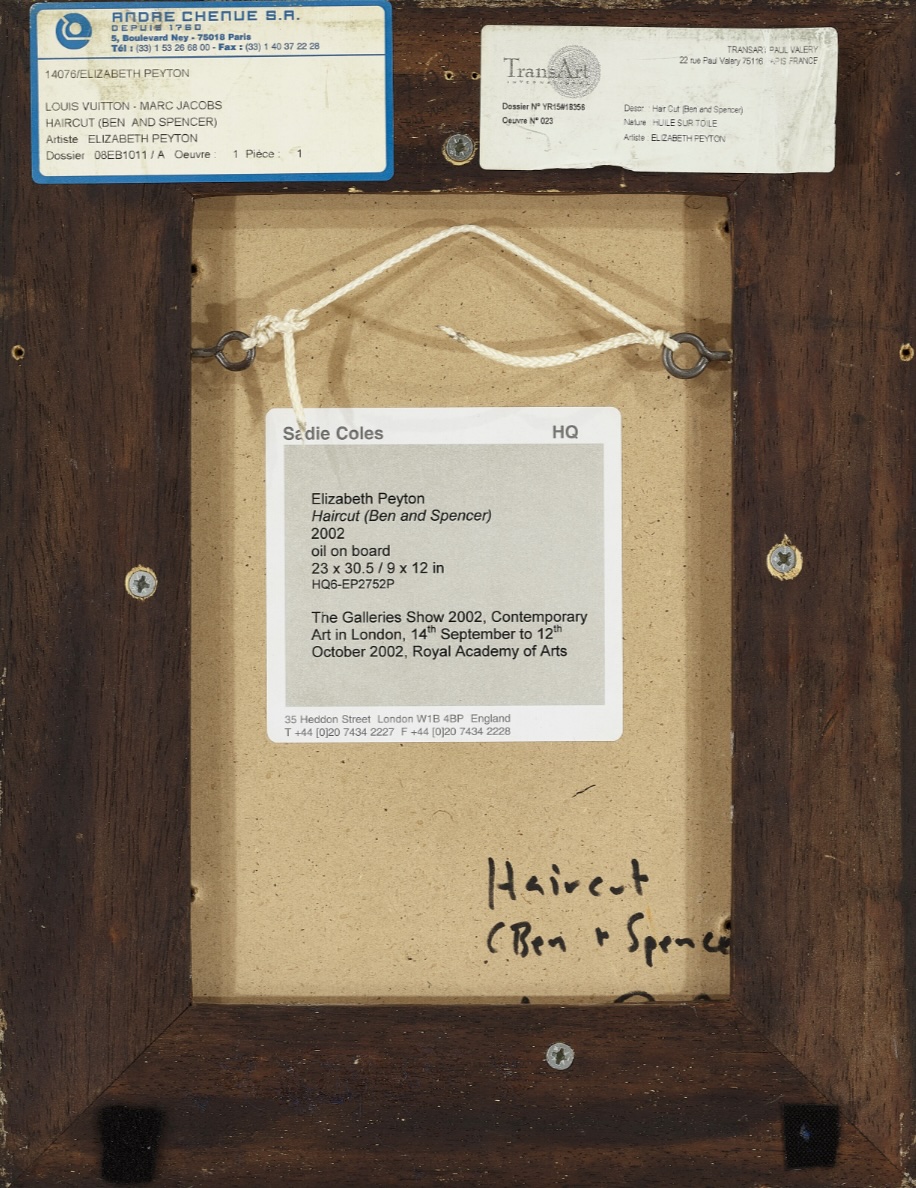
Elizabeth Peyton reinvigorated portraiture in the 90s when it was largely under-valued. She explores and revives the beauty of Romantic portraitures in contemporary manner by developing her own language with the female gaze. In doing so, she has democratised the genre that has long been dedicated to people in power or with great wealth – or both. A quintessential portrait by Peyton that was formerly housed in the Fashion designer Marc Jacob’s collection, Haircut (Ben and Spencer) was also featured in Peyton’s mid-career retrospective Live Forever that travelled across four cities between 2008 and 2010. Attesting to Peyton’s status in the contemporary art world, she had another major retrospective at London’s National Portrait Gallery and UCCA, Beijing between 2019 and 2020. Her works are widely collected by leading public institutions and collections, such as Solomon R. Guggenheim Museum, New York; Centre Pompidou, Paris; Tate Modern, London; and The Museum of Modern Art in New York which houses more than 30 works by the artist.
Nick with His Eyes Shut, 2003
Sotheby’s New York: 16 November 2022
Estimated: USD 1,000,000 – 1,500,000
USD 2,470,000
ELIZABETH PEYTON (B. 1965), Nick with His Eyes Shut | Sotheby’s (sothebys.com)
ELIZABETH PEYTON (B. 1965)
Nick with His Eyes Shut, 2003
Oil on panel
11×14 inches (27.9 x 35.6 cm)
Signed, titled Nick with his Eyes Shut and dated 2003 (on the reverse)
David, 1988-89
Christie’s London: 28 June 2023
Estimated: GBP 280,000 – 350,000
GBP 252,000 / USD 318,382
ELIZABETH PEYTON (B. 1965), David | Christie’s (christies.com)
ELIZABETH PEYTON (B. 1965)
David, 1988-89
Oil on panel
19 x 13 1/2 inches (48.3 x 34.3 cm)
Signed, titled and dated ‘David Elizabeth Peyton 1988 ? 1989 ?’ (on the reverse)
Acquired directly from the artist by the present owner, held in the same collection since the early 1990s and never before seen in public, David (1988-1989) is a rare and exquisite early portrait by Elizabeth Peyton. Painted on panel—a resistant surface that brings Peyton’s deft, diaphanous brushstrokes to the fore—the young sitter appears in profile against a radiant blue backdrop. His fine, elfin features are conveyed in delicate detail, while loose lines and washes define his jacket and shirt. The work dates from the very dawn of Peyton’s career. She graduated from New York’s School of Visual Arts in 1987, and held her first solo exhibition a year later. The present owner shared a studio with Peyton in New York, and remembers the strength and surety of her vision from the start. With its luminous, unapologetic beauty, David declares her practice fully formed.
In 1993, with an intimate show of drawings held in a suite at the Chelsea Hotel, Peyton began an unlikely rise to acclaim. Her idealized, wistful pictures—depicting historical figures including Napoleon Bonaparte and King Ludwig II of Bavaria—caused a stir even at a time when figuration was out of fashion. In 1995, her pale, incandescent paintings of the recently-deceased Kurt Cobain caught the eye of critic Roberta Smith, who called them ‘part Abstract Expressionist, part Renaissance miniature, with a touch of Pre-Raphaelite romanticism’, and admired their ‘offhand intensity’ (R. Smith, ‘Blood and Punk Royalty to Grunge Royalty’, The New York Times, 24 March 1995, section C, p. 30). To this day, Peyton is enraptured by people who change or define the time they live in. Her subjects, often painted from photographs, range from rock stars and royalty to inspirational friends and acquaintances. They all share the imprint of her fascination, and the distinctive glow of her touch. Fluid and immediate, her paint glides across its hard support with a vital sense of movement. She works on gessoed panels that are sanded to jewel-like smoothness, and even painted some early works on found glass.
A romantic, literary sensibility pervades Peyton’s paintings, which often catch their sitters in moments of contemplation. She was inspired early on by the fin-de-siècle worlds of Marcel Proust and Henry James, and, in 1986, by a revelatory John Singer Sargent show at the Whitney Museum of American Art. ‘It seemed like he painted in a way that was so fast, so open, and so abstract that it was almost a miracle that the paint somehow landed on the canvas to make a portrait’, she later recalled. ‘… The show coincided with a moment in the mid-1980s when beauty—and painting—was being questioned in critical theory, so it was reassuring to see this huge body of work that celebrated both of those things’ (E. Peyton, ‘Elizabeth Peyton on John Singer Sargent’, Harper’s Bazaar, March 2015, p. 344). In David, as a charismatic smile plays across the subject’s lips, the stage is set for a practice that would keep the painting of beauty alive for years to come.
Sara, 1996
Sotheby’s London: 29 June 2021
Estimated: GBP 200,000 – 300,000
GBP 414,300 / USD 573,584
ELIZABETH PEYTON (B. 1965), Sara | Sotheby’s (sothebys.com)
ELIZABETH PEYTON (B. 1965)
Sara, 1996
Oil on board
9 1/4 x 7 1/4 inches (23.4 x 18.4 cm)
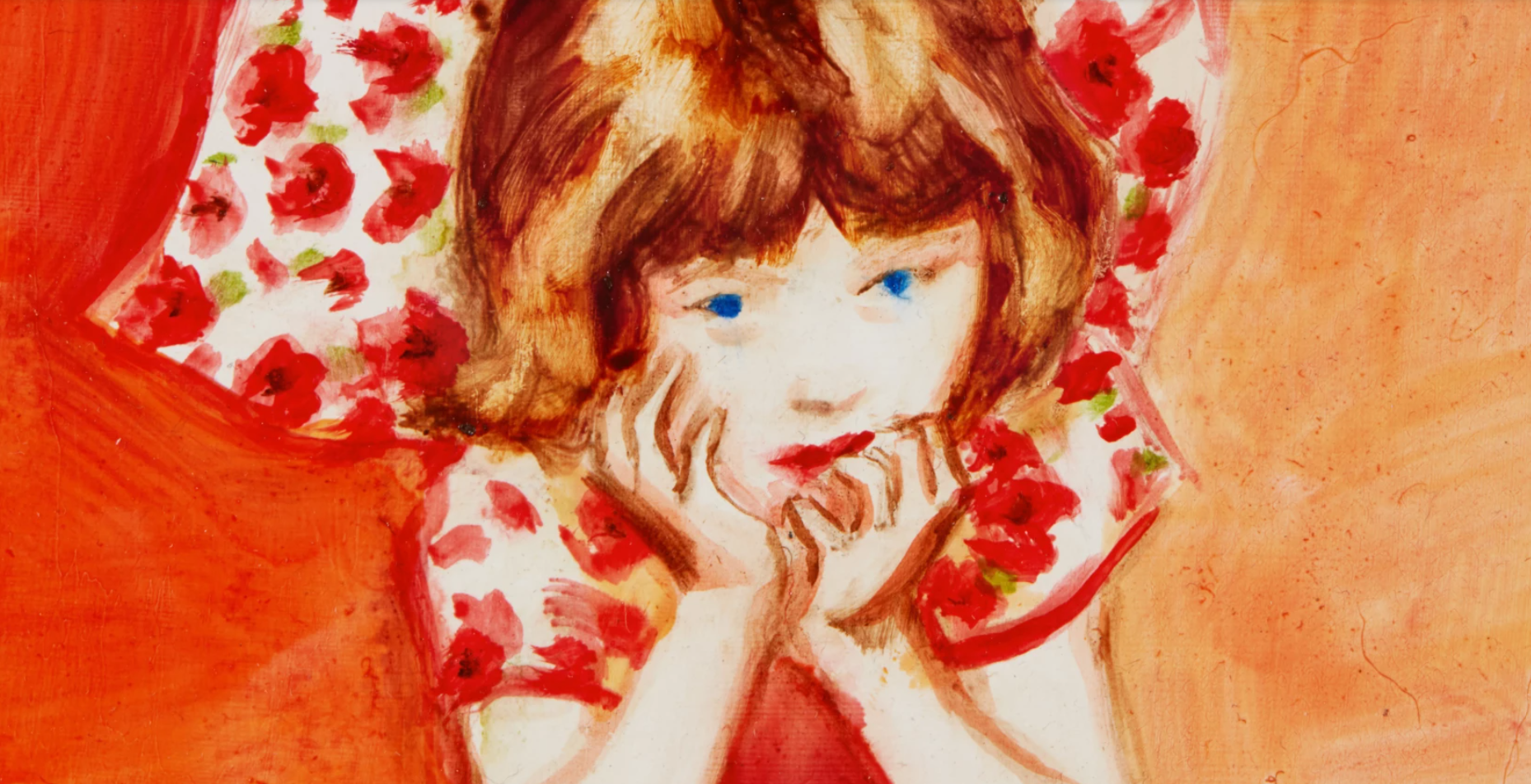
“There is no separation for me between people I know through their music or photos and someone I know personally. The way I perceive them is very similar, in that there’s no difference between certain qualities that I find inspiring in them.”
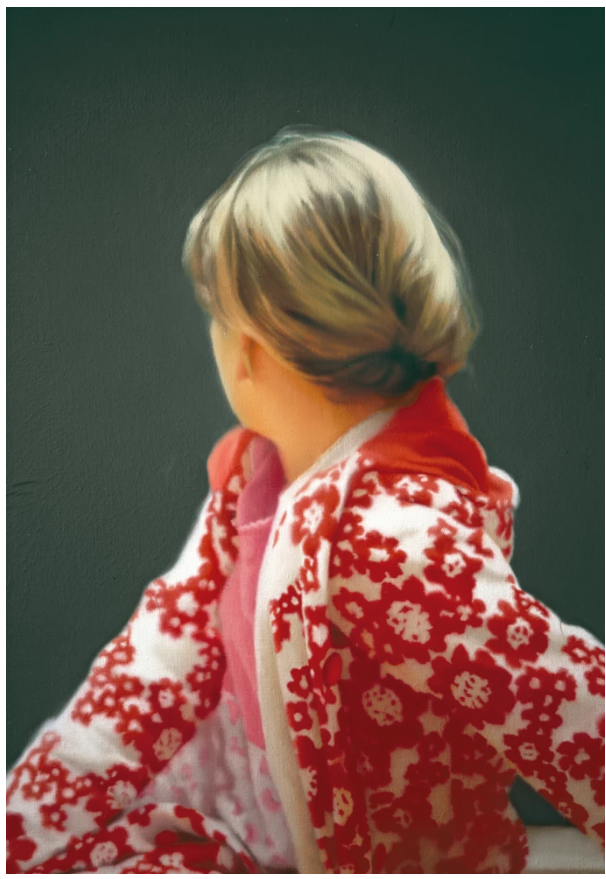
IMAGE/ARTWORK: © GERHARD RICHTER 2021
While Peyton’s figures retain their specificity – of a certain cultural moment, a certain social cache, and individual personality – they are transformed and made universal, suspended in time and space within Peyton’s imaginary realm. To this end, Peyton’s famous, infamous, and even relatively unknown subjects, command equally iconic status; indeed, through her paintings, Peyton’s subjects are made more luminous, more beautiful, and more dispassionate than they could ever be in real life. The devotional aesthetic of Peyton’s portraits has frequently been compared to Byzantine icon paintings, as well as the intimate studio portraiture of Nadar, Alfred Stieglitz and Robert Mapplethorpe. Each painting harbors a distinct narrative charge, laced with ambiguous strains of nostalgia, love, and vulnerability. Beautifully interweaving fact and fiction, Peyton successfully diminishes the traditional distance of portraiture and photography, seeking instead to enhance the inner vulnerabilities of her sitters through lush and expressive brushwork. In so doing Peyton marvelously blurs the lines between lived experience, memory and the imagination. Emerging at a time when figurative painting had been widely denounced, Peyton is today praised for reinvigorating portraiture in contemporary form, simultaneously portraying her subjects with an air close to veneration whilst imbuing them with a sense of comfortable familiarity. As she immerses the viewer into her pictorial code, Peyton skillfully invents a multisensorial aesthetic that combines the classicism of the Romantic era with the resolutely contemporary, an approach to image making that marks her out as among the most innovative and poetic artists of her generation.
Nude (Tony), 2001
Sotheby’s New York: 19 November 2021
Estimated: USD 180,000 – 250,000
USD 378,000
ELIZABETH PEYTON (B. 1965), Nude (Tony) | Sotheby’s (sothebys.com)
ELIZABETH PEYTON (B. 1965)
Nude (Tony), 2001
Oil on panel
6 1/8 x 8 1/8 inches (15.6 x 20.6 cm)
Signed twice with the artist’s monogram, titled and dated 2001 (on the reverse)
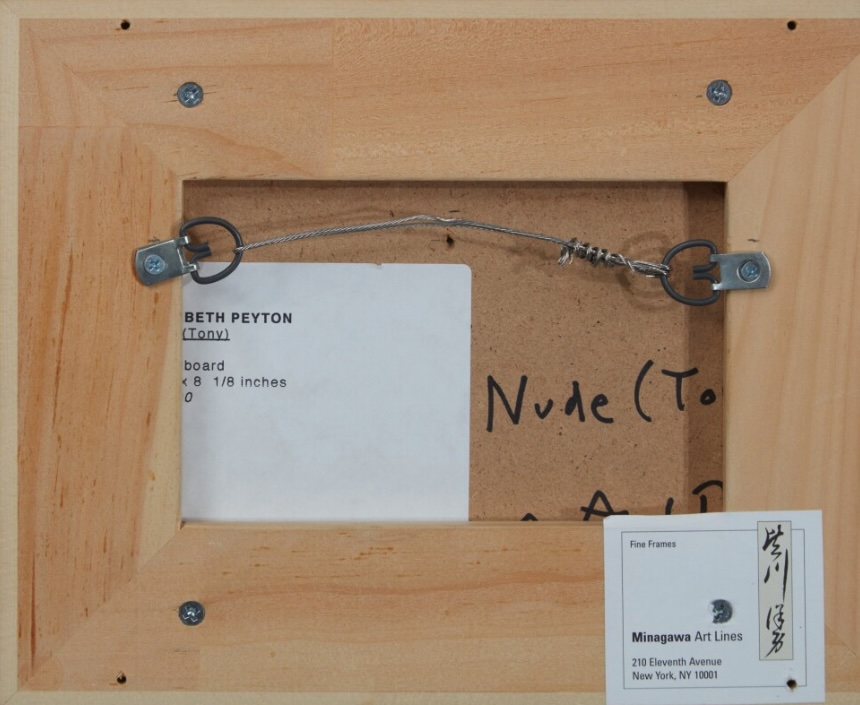
Other Paintings
Flowers, Lichtenstein, Parsifal, 2011
Christie’s New-York: 19 November 2025
Estimated: USD 500,000 – 700,000
USD 1,104,900
ELIZABETH PEYTON (B. 1965), Flowers, Lichtenstein, Parsifal | Christie’s
ELIZABETH PEYTON (B. 1965)
Flowers, Lichtenstein, Parsifal, 2011
Oil on panel
12 1/8 x 9 1/8 inches (30.5 x 23 cm)
Elizabeth Peyton has long explored the intersections between painting, music, and the emotional permanence that binds them.
“Making art is making something live forever. Painting and art is a way of holding onto things and making things go on through time.”
That enduring transmission of feeling is at the heart of Peyton’s practice, and nowhere is it more vividly expressed than in Flowers, Lichtenstein, Parsifal (2011). Here, the artist unites three central strands of her oeuvre—portraiture, still life, and art-historical homage—into a single, deeply resonant image.
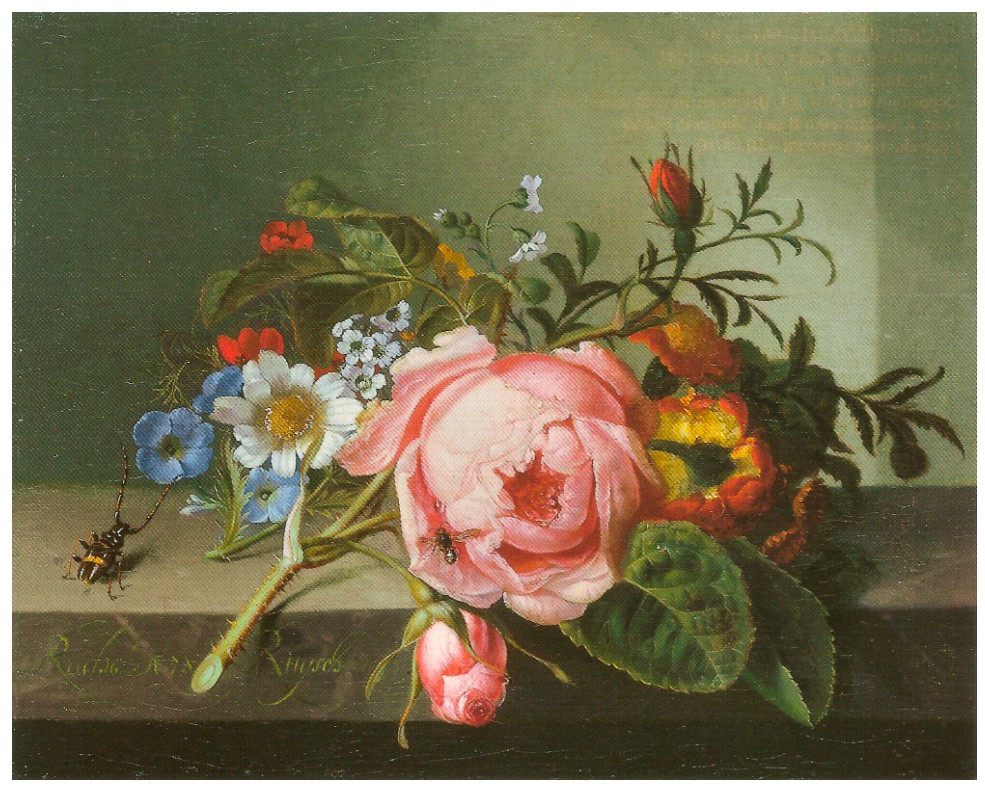
Rachel Ruysch, Still Life with Rose Branch, Beetle, and Bee, 1741. Kunstmuseum, Basel.
Painted in preparation for her landmark 2011 exhibition at the Metropolitan Opera in New York, which coincided with their production of Wagner’s Ring Cycle, the work encapsulates Peyton’s fascination with the grand narratives and emotional intensity of opera. Immersing herself in Wagner’s music—what she describes as a “gigantic feat” of emotional storytelling—she sought to match its transcendence in paint.
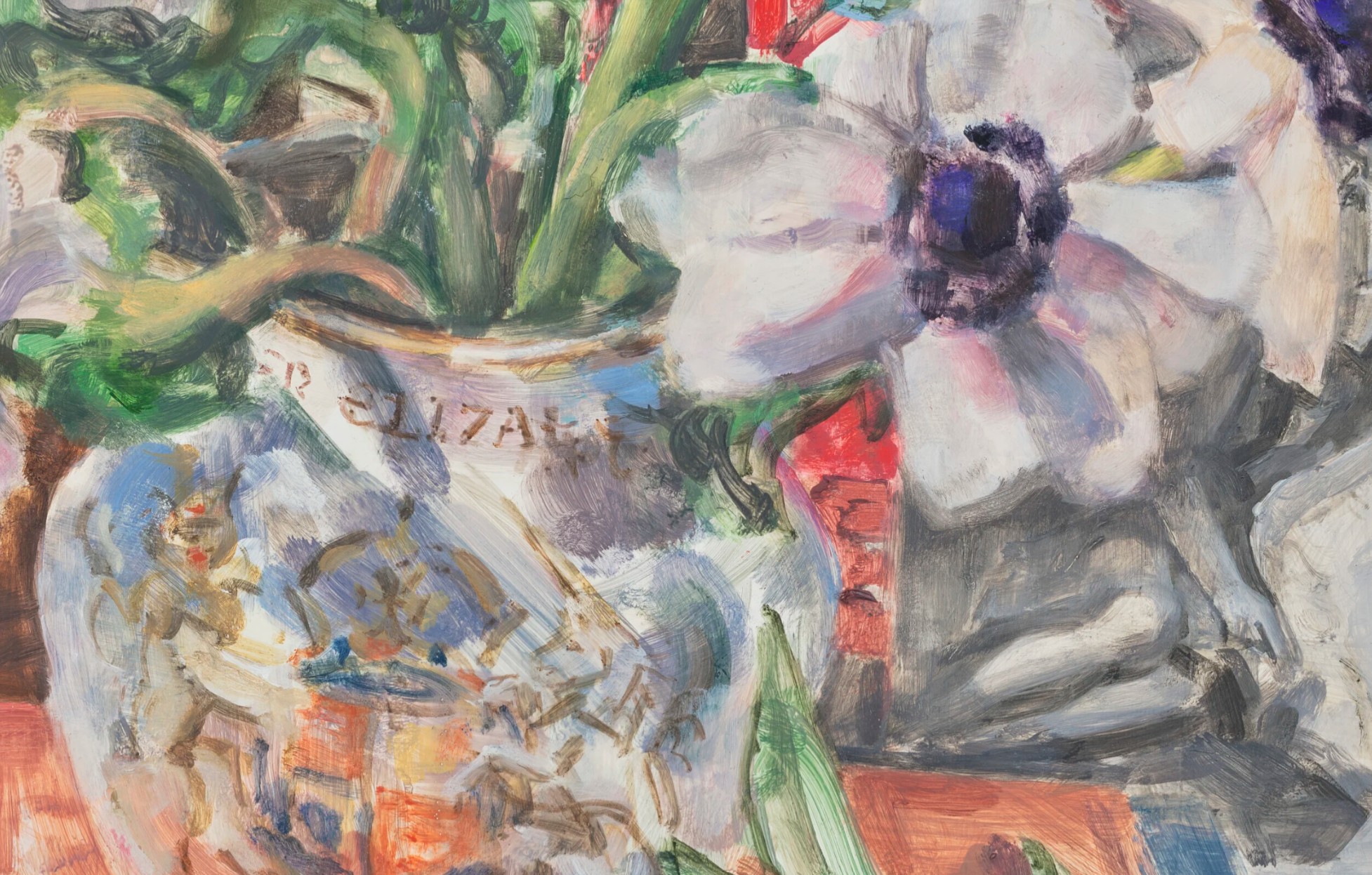
In this intimate composition, the program for Parsifal, Wagner’s final opera, stands behind a vase of lilac anemones, whose delicate petals evoke both the fleeting nature of beauty and the operatic themes of love and mortality. The vase itself bears the coat of arms of Queen Elizabeth II, a subtle nod to another of Peyton’s recurring subjects: royalty. Across her career, Peyton has portrayed monarchs and their family members with care and fascination. Here, only the word Elizabeth is visible—a wry, self-referential gesture that collapses the distance between artist and subject, painter and queen.
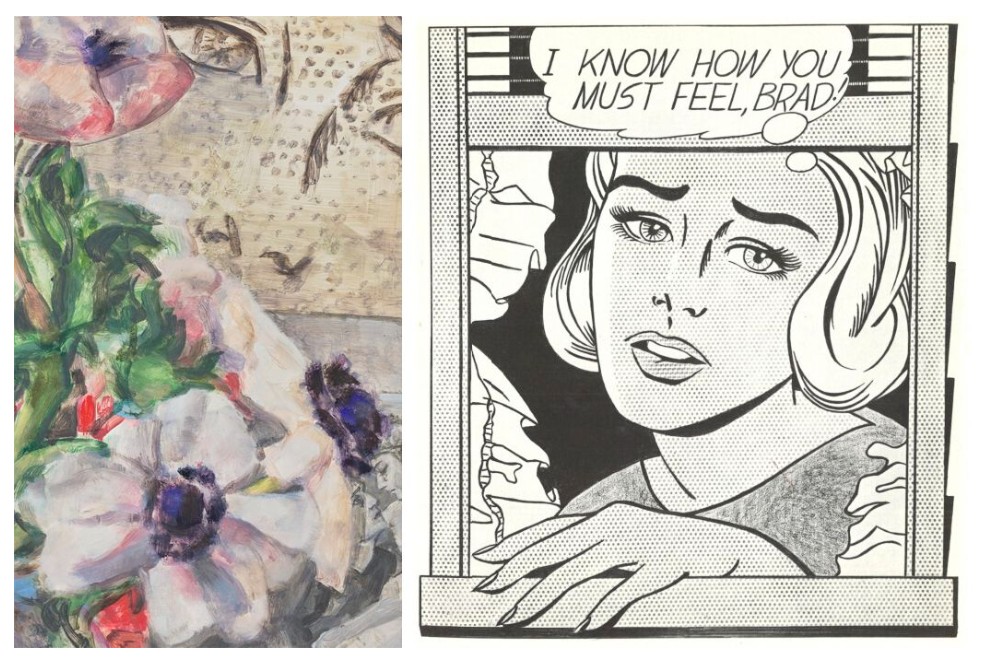
Left: Present lot illustrated (detail).
Right: Roy Lichtenstein, I KNOW HOW YOU MUST FEEL, BRAD!, 1963, Collection Mrs. Vera List, New York. © Estate of Roy Lichtenstein
Above, Peyton introduces a fragment of Roy Lichtenstein’s preparatory sketch for I Know How You Must Feel, Brad… (1964), its Ben-Day dots reimagined through her fluid, expressive hand. The Pop master’s graphic language, Wagner’s mythic narrative, and the lush vitality of the floral still life coexist within a single frame—a portrait of artistic inheritance and emotional communion. In Flowers, Lichtenstein, Parsifal, Peyton transcends genre and subject, creating a meditation on beauty, devotion, and the sustaining dialogue between art forms across time.
Harry and Tittie, 2003
Sotheby’s New York: 9 March 2023
Estimated: USD 300,000 – 400,000
USD 508,000
ELIZABETH PEYTON (B. 1965), Harry and Tittie | Sotheby’s (sothebys.com)
ELIZABETH PEYTON (B. 1965)
Harry and Tittie, 2003
Oil on fiberboard
9×7 inches (22.9 x 17.8 cm)
Signed, titled and dated 2003 (on the reverse)
A stylish and sophisticated depiction of Peyton’s beloved pets, Elizabeth Peyton’s Harry and Tittie is a moving depiction of the special bond shared between humans and their animal companions. One of the foremost contemporary figurative painters and among the most renowned chroniclers of contemporary life, Peyton is celebrated for her portraits of familiar cultural icons such as Queen Elizabeth II, Jackie Kennedy, Kurt Cobain and Leonardo DiCaprio as well as intimate personal depictions of lovers, friends and family—and in this case, pets. Peyton possesses the rare artistic quality to treat all her sitters with the same importance. Her famous, infamous, and even relatively unknown subjects command equally iconic status. As a result, the artist has been credited for reinvigorating contemporary portraiture, portraying her subjects with veneration, while simultaneously infusing them with a sense of comfort and familiarity. In the present work Peyton offers a deeply personal glimpse into her inner circle and home, immortalizing her Rhodesian Ridgeback Pit Bull mix Harry, and her Siamese cat Tittie reclining comfortably on a striped blanket in a small-scaled and serenely contemplative painting of domestic bliss. The work possesses the tranquility, warm palette and carefully executed brushwork characteristic of Peyton’s most accomplished pictures. The blues and reds in the background are indicative of the artist’s mastery of light and shade and remarkable talent for depicting compelling interiors. The painting possesses extraordinary tenderness and palpably represents the deep affection and emotional depth felt for her furry companions. Peyton’s depiction of her pets occupies a place in a long tradition of animal portraiture throughout art history that stretches back to the Renaissance. More recently in contemporary painting, Andy Warhol started his Cats and Dogs series in 1976, and in 1995 David Hockney famously staged an entire exhibition at Yorkshire’s Salt Mills comprising 45 paintings of pastel-hued dog portraits of his beloved dachshunds Stanley and Boodgie. While Peyton’s pets have been a less frequent motif, they have been a recurring motif in her work, sometimes appearing individually as in Harry at Home (Pink), 2002, or with other figures as in E.P. Reading (self portrait), 2005. More than anything, the present work not only reveals Peyton’s human side, it symbolizes companionship, loyalty, and unconditional love, and unites all of these qualities in a charming painting rendered in Peyton’s trademark style for which she is best known.
Prints
WORK IN PROGRESS
WILL BE UPDATED SHORTLY
1. John and Jackie, 2000
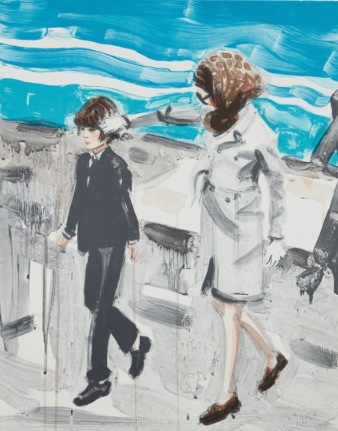
ELIZABETH PEYTON (B. 1965)
John and Jackie, 2000
Lithograph in colors on wove paper
Sheet: 24×19 inches (61 x 48.3 cm)
Edition: 350 + 10 AP (Artist’s Proofs)
Publisher: The Public Art Fund, New York
Printer: Derriere L’Etolie Studios, New York
Signed, dated and numbered in pencil
Phillips New York: 26 October 2023
Estimated: USD 1,500 – 2,500
USD 1,905
Signed, dated and numbered 7/350 in pencil
Phillips New York: 13 September 2023
Estimated: USD 1,500 – 2,500
USD 1,778
Signed, dated and numbered 123/350 in pencil
Rago Art: 1 June 2023
Estimated: USD 2,000 – 3,000
USD 2,268
Signed, dated and numbered 36/350 in pencil
Heritage Auctions: 19 April 2023
Estimated: USD 2,000 – 3,000
USD 3,500
Signed, dated and numbered 162/350 in pencil
Phillips New York: 21 October 2021
Estimated: USD 2,000 – 3,000
USD 4,032
Signed, dated and numbered 7/350 in pencil
Wright: 17 February 2021
Estimated: USD 4,000 – 6,000
USD 2,750
Signed, dated and numbered to lower right ‘261/350 Peyton 2000’
2. Prince Harry and Prince William, 2000
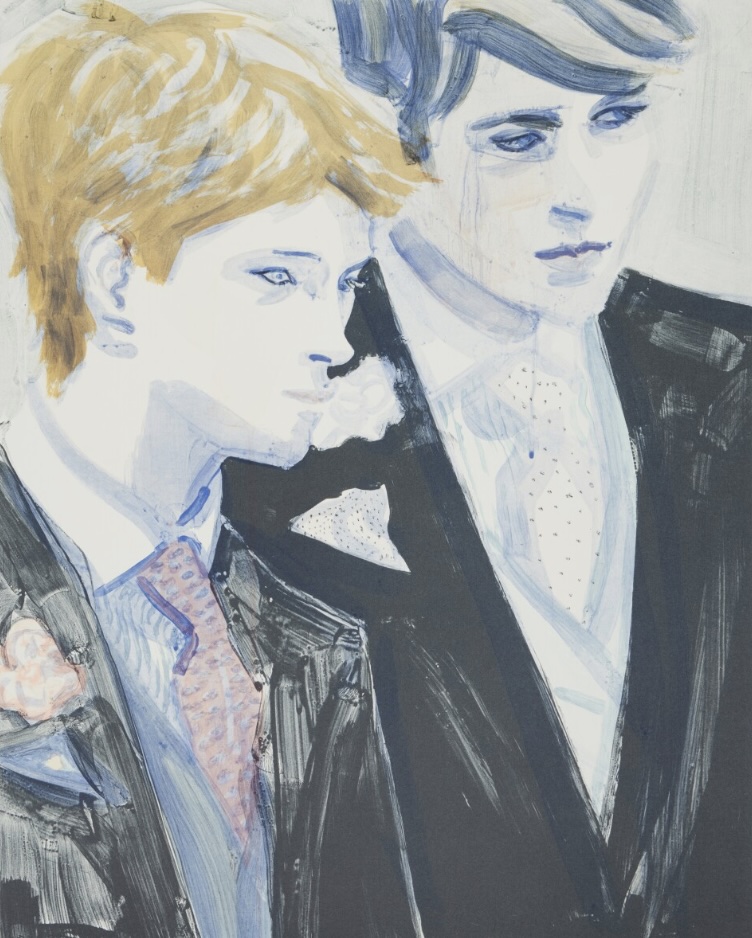
ELIZABETH PEYTON (B. 1965)
Prince Harry and Prince William, 2000
Lithograph printed in colors on wove paper
24×19 inches (61×48 cm)
Edition: 350
Publisher: The Public Art Fund, New-York
Signed, dated and titled in pencil
Shapiro Auctions: 27 January 2024
Estimated: USD 1,500 – 2,000
USD 1,430
Signed, dated and numbered 174/350
SBI Art Auction: 15 April 2023
Estimated: USD 747 – 1,121
USD 2,062
PP aside from ED. 350
LA Modern: 23 March 2023
Estimated: USD 1,000 – 1,500
USD 645
Signed, dated and numbered 334/350
Toomey & Co: 16 November 2022
Estimated: USD 1,000 – 1,500
USD 768
Signed, dated and numbered to lower right ‘261/350 Peyton 00’
Rago: 16 November 2022
Estimated: USD 1,000 – 1,500
USD 938
Signed, dated and numbered to lower right ‘336/350 Elizabeth Peyton 2000’
Sotheby’s New York: 3 October 2022
Estimated: USD 1,000 – 1,500
USD 1,260
Signed in pencil Elizabeth Peyton and inscribed PP 10/10 (lower center)
Heritage Auctions: 17 March 2021
Estimated: USD 1,500 – 2,500
USD 1,500
Signed, dated and numbered 117/350
3. Prince William, 2000
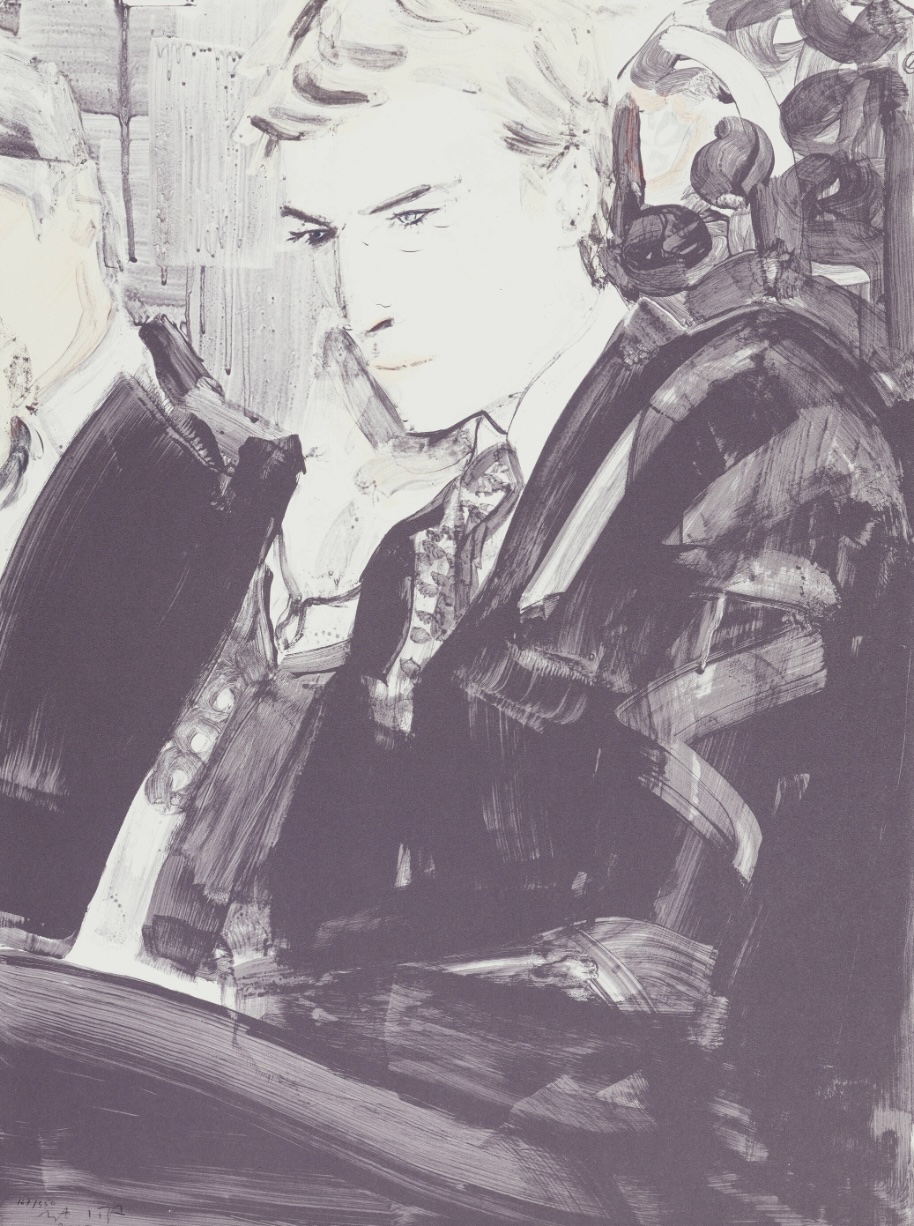
ELIZABETH PEYTON (B. 1965)
Prince William, 2000
Lithograph in colors
24×18 inches (61×46 cm)
Edition: 350
Publisher: The Public Art Fund, New-York
Toomey & Co: 8 March 2023
Estimated: USD 1,000 – 1,500
USD 355
Signed, dated and numbered to lower left ‘222/350 Elizabeth Peyton 2000’
Toomey & Co: 11 January 2023
Estimated: USD 1,500 – 2,500
USD 1,310
Signed, dated and numbered to lower left ‘180/350 Elizabeth Peyton 2000’
RAGO: 16 November 2022
Estimated: USD 1,000 – 1,500
USD 1,024
Signed, dated and numbered to lower left ‘231/350 Elizabeth Peyton 2000’
LA Modern: 12 July 2022
Estimated: USD 1,000 – 1,500
USD 585
Signed, dated and numbered to lower left ‘167/350 Elizabeth Peyton 2000’
4. John, 2000
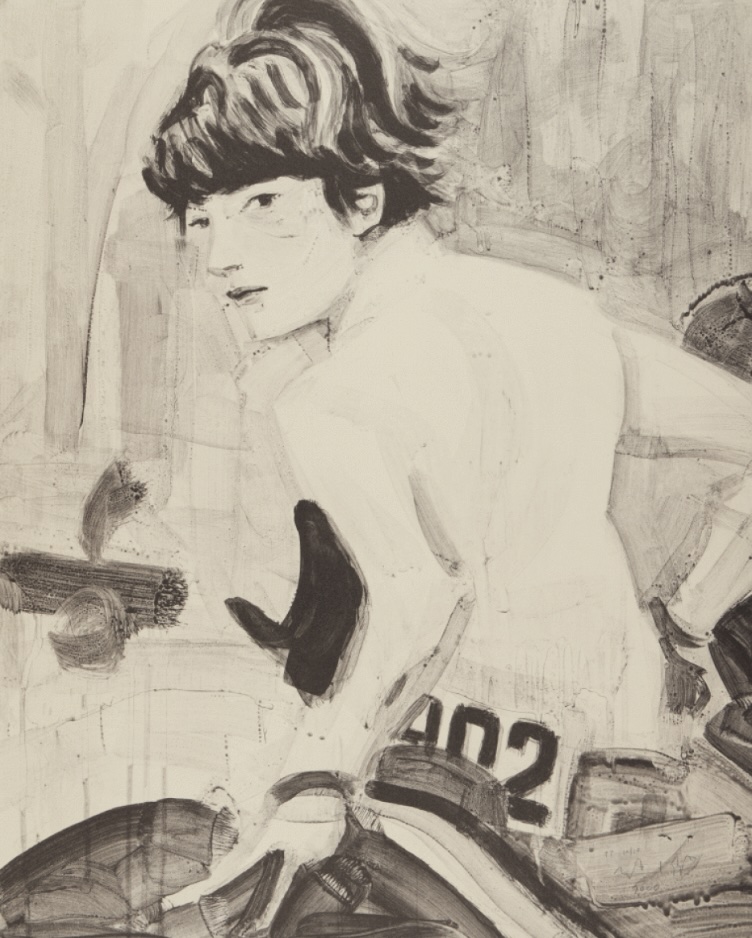
ELIZABETH PEYTON (B. 1965)
John (John F. Kennedy, Jr. on Horseback), 2000
Lithograph on wove paper
Edition: 350 + 10 PP
Publisher: The Public Art Fund
Heritage Auctions: 21 June 2023
Estimated: USD 800 – 1,200
USD 500
Signed, numbered 236/350, and dated in pencil, lower right
Rago: 16 November 2022
Estimated: USD 1,000 – 1,500
USD 500
Signed, dated and numbered to lower right ‘174/350 Elizabeth Peyton 2000’
Sotheby’s New York: 3 October 2022
Estimated: USD 1,000 – 1,500
USD 630
Signed in pencil Elizabeth Peyton, dated 2000 and inscribed PP 10/10 (lower right)
LA Modern: 12 July 2022
Estimated: USD 1,000 – 1,500
USD 813
Signed, dated and numbered to lower right ‘119/350 Elizabeth Peyton 2000’
Heritage Auctions: 15 September 2021
Estimated: USD 1,500 – 2,500
USD 1,562
Signed, numbered 195/350, and dated in pencil lower right