
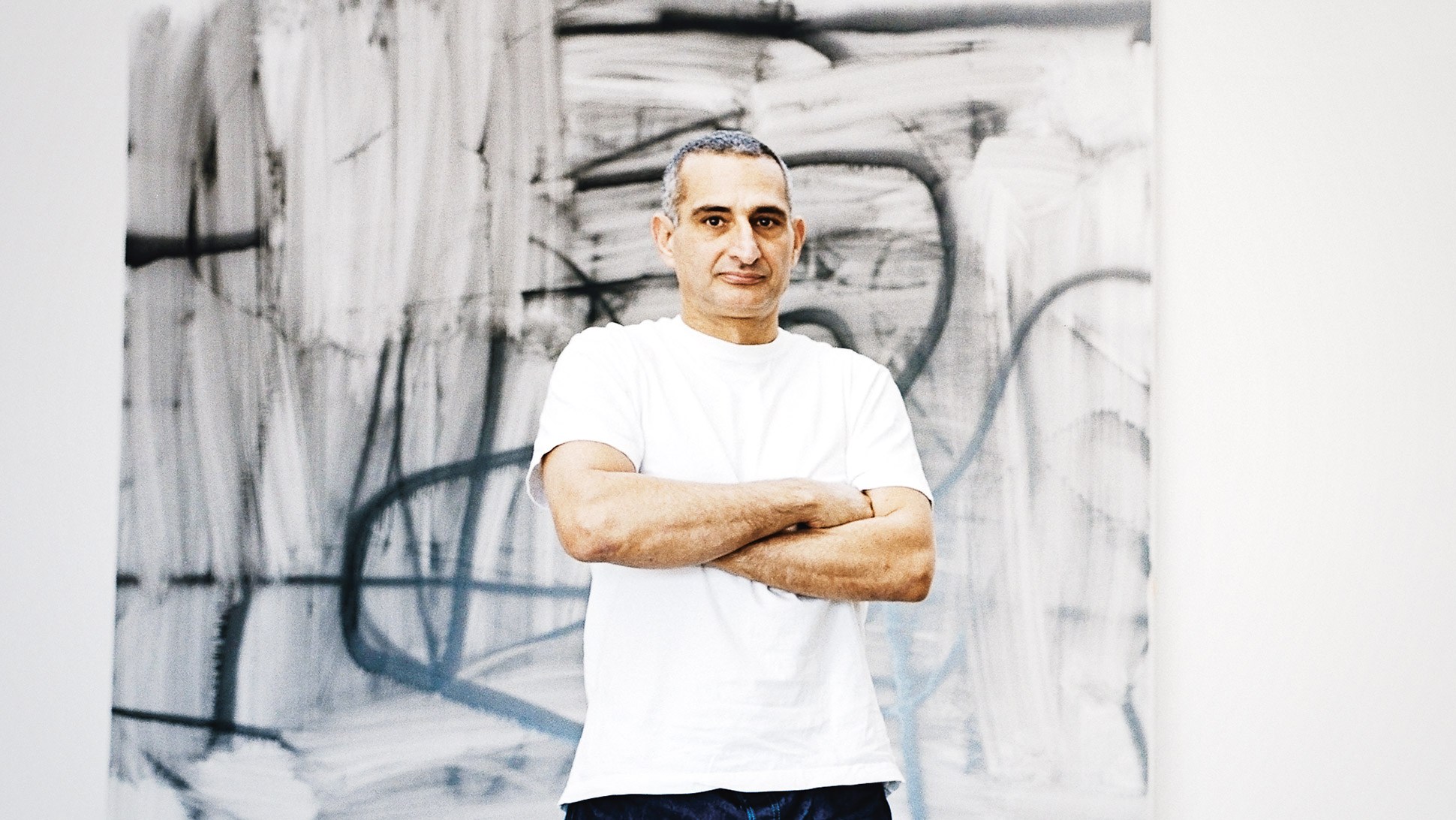
Christopher Wool is one of the most influential figures in contemporary painting, known for a practice that dismantles and reconstructs the language of abstraction and text. Since the late 1980s, he has developed a body of work that interrogates image-making through processes of repetition, erasure, fragmentation, and mechanical reproduction. His paintings, at once austere and aggressive, operate at the intersection of language, gesture, and structure. By reducing painting to its essential elements while simultaneously disrupting them, Wool has created a visual language that reflects the instability and saturation of contemporary culture.
Introduction
Christopher Wool was born in 1955 in Chicago and moved to New York in the 1970s, where he became associated with a generation of artists responding to the legacy of Abstract Expressionism and Minimalism. Emerging in the late 1980s, Wool quickly gained recognition for his text-based paintings, which broke with traditional painterly expression by incorporating mechanical processes and industrial materials. His work aligned with a broader shift toward conceptual and process-driven painting, positioning him as a central figure in postmodern abstraction.
Artistic Practice and Technique
Wool’s practice is defined by a continuous tension between control and disruption. He employs a range of techniques, including silkscreen, spray paint, stenciling, and hand-painted gestures. A key aspect of his process is layering. Images and marks are applied, partially erased, and reworked, creating surfaces that carry visible traces of their own construction. The use of mechanical reproduction, particularly silkscreen, introduces a degree of detachment, while manual intervention reasserts the presence of the artist’s hand.
This oscillation between mechanical and gestural marks is central to Wool’s work. His paintings are neither purely expressive nor purely conceptual; they exist in a space where both modes intersect and destabilize one another.
Major Series and Bodies of Work
Word Paintings
Wool’s Word Paintings are among his most iconic and influential works. Created primarily in the late 1980s and early 1990s, these paintings consist of black stenciled letters on white backgrounds, arranged in grid-like formats. Words and phrases, often fragmented, compressed, or obscured, are presented without punctuation or spacing, forcing the viewer to actively decode the text. The language is frequently drawn from everyday speech, popular culture, or ambiguous statements.
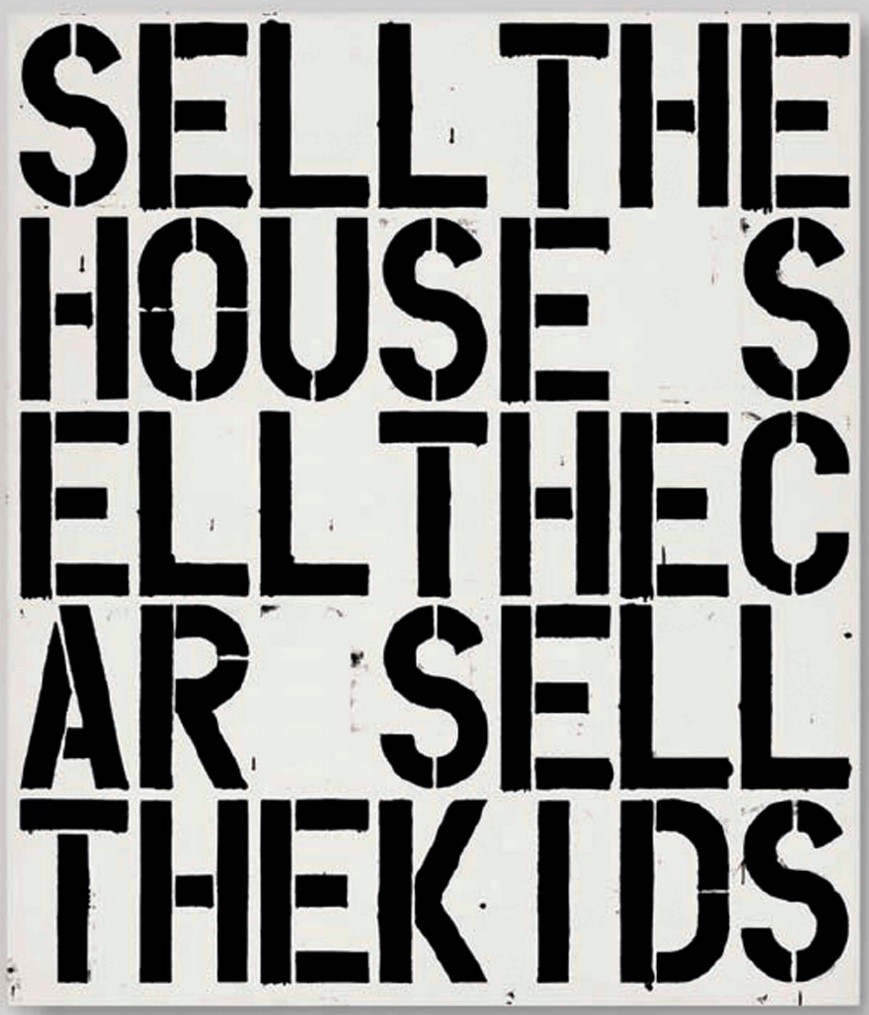
These works collapse the boundary between reading and looking. Language becomes image, and meaning is destabilized through formal constraints. The stark contrast and industrial aesthetic reinforce the tension between communication and breakdown.
Pattern Paintings
In his Pattern Paintings, Wool employs repetitive motifs, often derived from decorative or industrial sources, applied through rollers or stencils. These works explore the logic of repetition and variation. Patterns are repeated across the surface, but imperfections, interruptions, and distortions disrupt their uniformity. The result is a tension between order and disorder, structure and collapse.
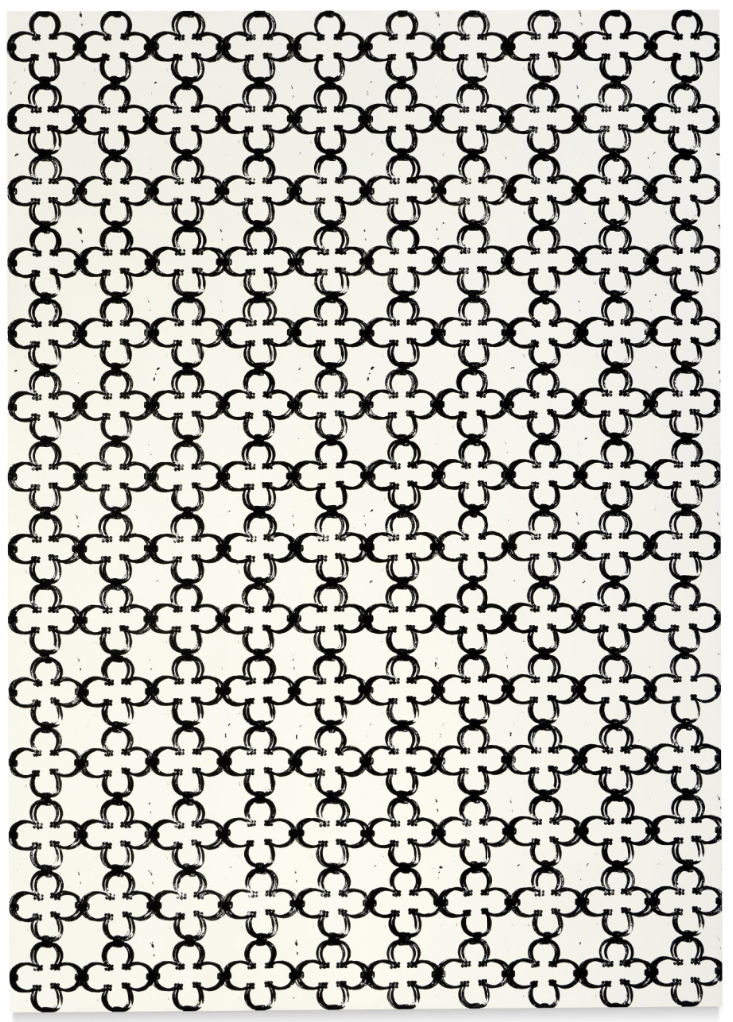
The use of pattern connects Wool’s work to broader histories of ornament and abstraction, while his interventions prevent the compositions from becoming purely decorative.
Floral (Flowers) Paintings
The Flower Paintings represent one of Wool’s most recognizable bodies of work. Based on photographic images of flowers, often taken from commercial sources, these works are translated into black-and-white silkscreen compositions.
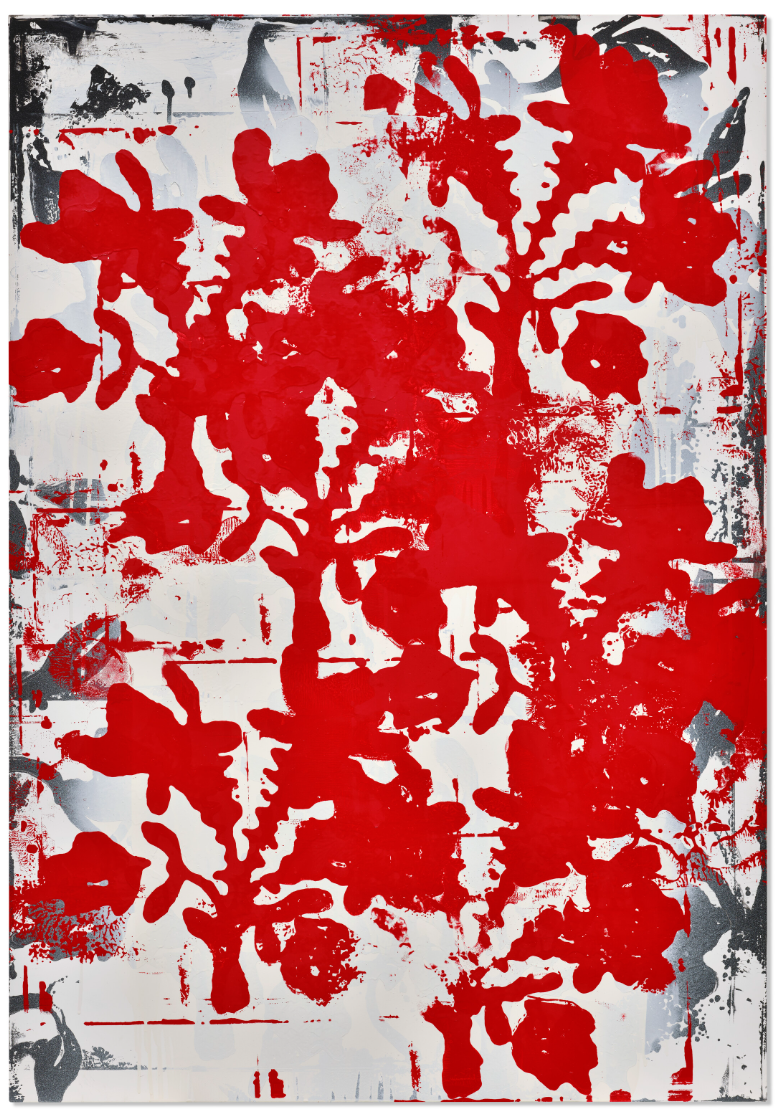
The flowers are repeated, layered, and partially obscured, creating dense surfaces that oscillate between figuration and abstraction. The mechanical reproduction of a traditionally decorative subject introduces a sense of distance and ambiguity. These works exemplify Wool’s ability to transform familiar imagery into complex visual systems, where repetition and degradation become central to meaning.
Grey Paintings
The Grey Paintings mark a significant development in Wool’s practice, characterized by their reduced palette and increased emphasis on process.
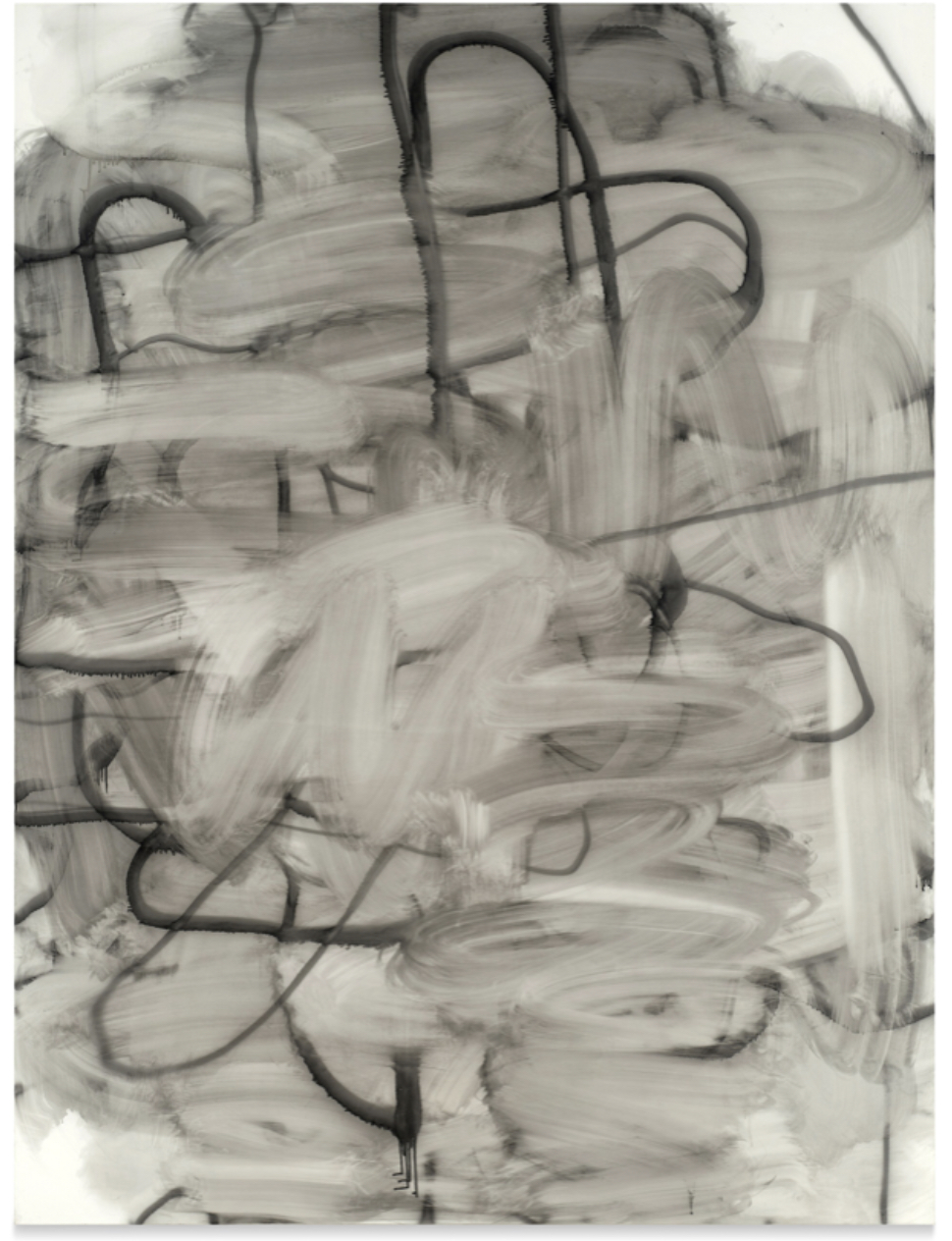
Working primarily in shades of grey, Wool builds layered compositions using silkscreen and hand-applied marks. Images are repeated, erased, and reintroduced, creating surfaces that appear both constructed and eroded. The absence of strong color shifts the focus toward texture, rhythm, and the accumulation of marks. These works are often described as among his most painterly, despite their reliance on mechanical processes.
Spray Paintings
Wool’s Spray Paintings introduce a more overtly gestural dimension to his work. Using spray paint, he creates looping lines, drips, and irregular forms that contrast with the precision of his stenciled and silkscreened works.
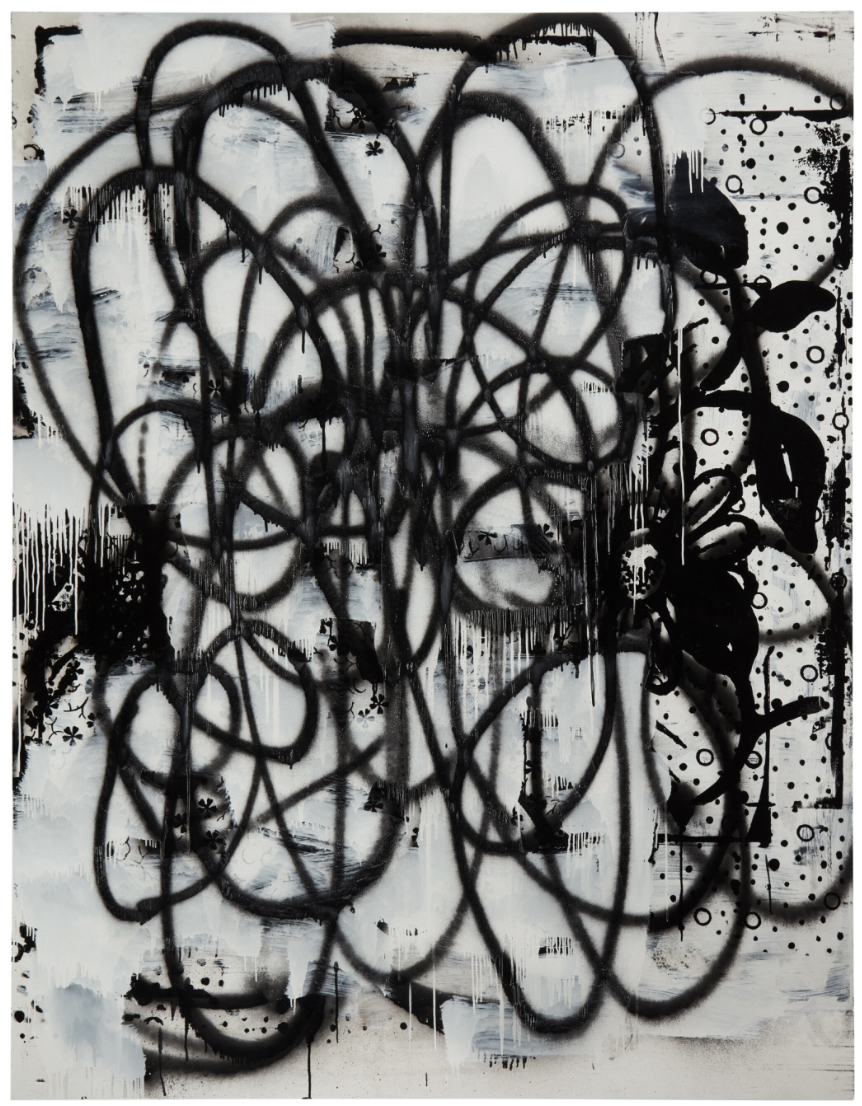
These compositions often appear chaotic or improvised, yet they are carefully structured. The interaction between sprayed marks and underlying layers creates a dynamic tension between spontaneity and control. The spray technique also introduces a physical immediacy, recalling graffiti and urban mark-making while remaining firmly situated within the context of contemporary painting.
Black-and-White Abstractions
Across multiple series, Wool has consistently explored black-and-white abstraction as a central theme. These works reduce painting to its most essential elements—line, contrast, and repetition. Through layering, erasure, and fragmentation, Wool creates compositions that resist resolution. Forms emerge and dissolve, and the surface becomes a site of ongoing negotiation between presence and absence.
Themes and Meaning
Wool’s work engages with the breakdown of meaning in contemporary culture. His use of language, repetition, and mechanical processes reflects a world saturated with images and information. Central themes include fragmentation, erasure, and the instability of communication. His paintings do not offer clear narratives; instead, they present systems that are constantly shifting and unresolved.
At the same time, his work maintains a strong connection to the history of painting. By engaging with abstraction while simultaneously undermining it, Wool positions himself within a lineage that he both honors and critiques.
Institutional Recognition and Exhibitions
Christopher Wool has achieved extensive institutional recognition, with major exhibitions at leading museums worldwide. A landmark retrospective was held at the Solomon R. Guggenheim Museum, later traveling internationally.
Solo shows include the San Francisco Museum of Modern Art (1989); Museum Boymans–van Beuningen, Rotterdam, Netherlands (1991, traveled to Kunsthalle Bern, Switzerland; and Kölnischer Kunstverein, Cologne, Germany); Eli Broad Family Foundation, Los Angeles (1992); Ophiuchus Collection, The Hydra Workshop, Greece (1998); Museum of Contemporary Art, Los Angeles (1998, traveled to Carnegie Museum of Art, Pittsburgh; and Kunsthalle Basel); Centre d’Art Contemporain, Geneva (1999); Le Consortium, Dijon, France (2002, traveled to Dundee Contemporary Arts, Scotland, through 2003); Camden Arts Centre, London (2004); Instituto Valenciano de Arte Moderno, Valencia, Spain (2006); ETH (Swiss Federal Institute of Technology), Zurich (2006); Museu de Serralves, Porto, Portugal (2008, traveled to Museum Ludwig, Cologne, Germany); Musée d’Art Moderne de la Ville de Paris (2012); and Solomon R. Guggenheim Museum, New York (2013, traveled to the Art Institute of Chicago).
Gallery Representation
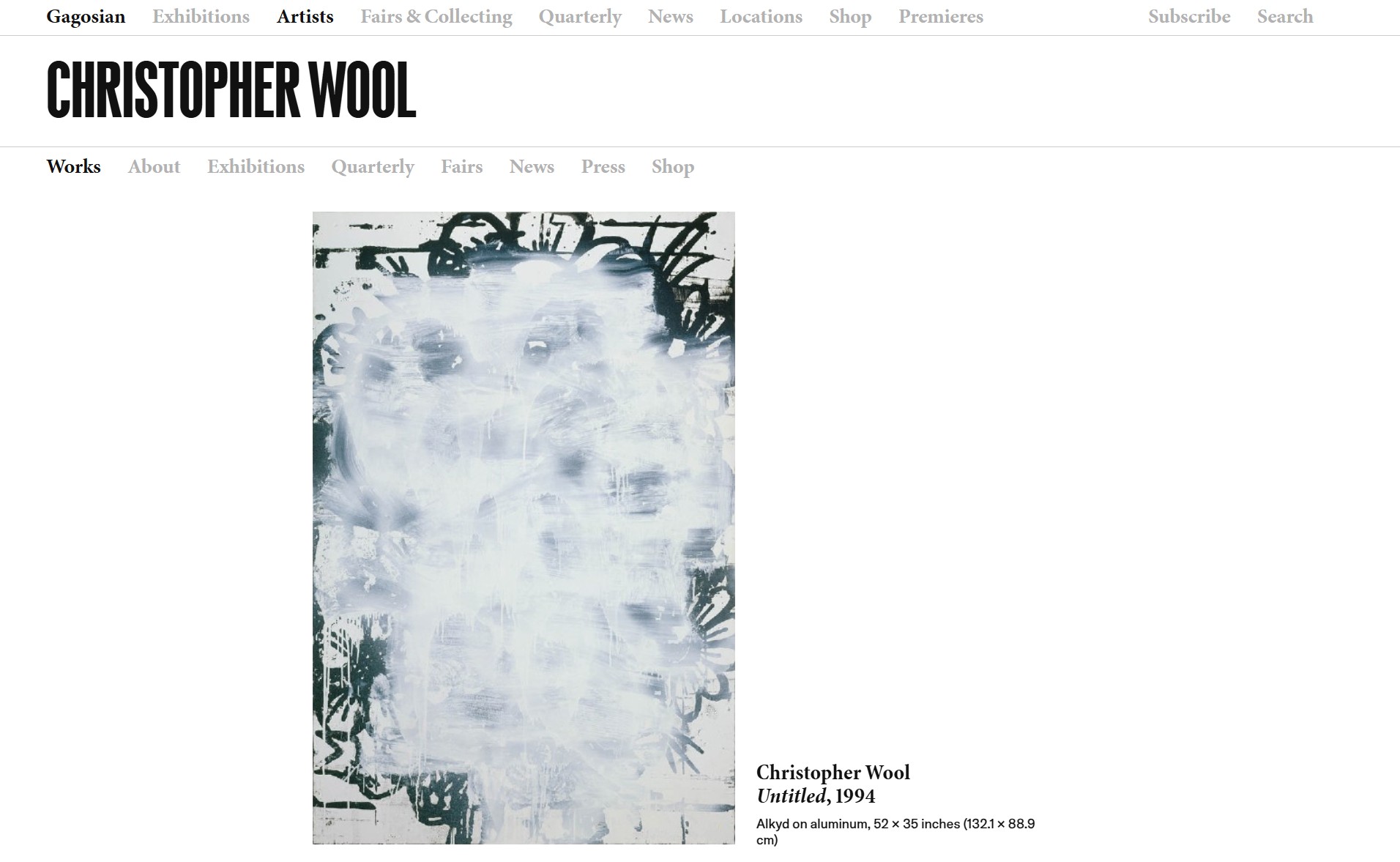
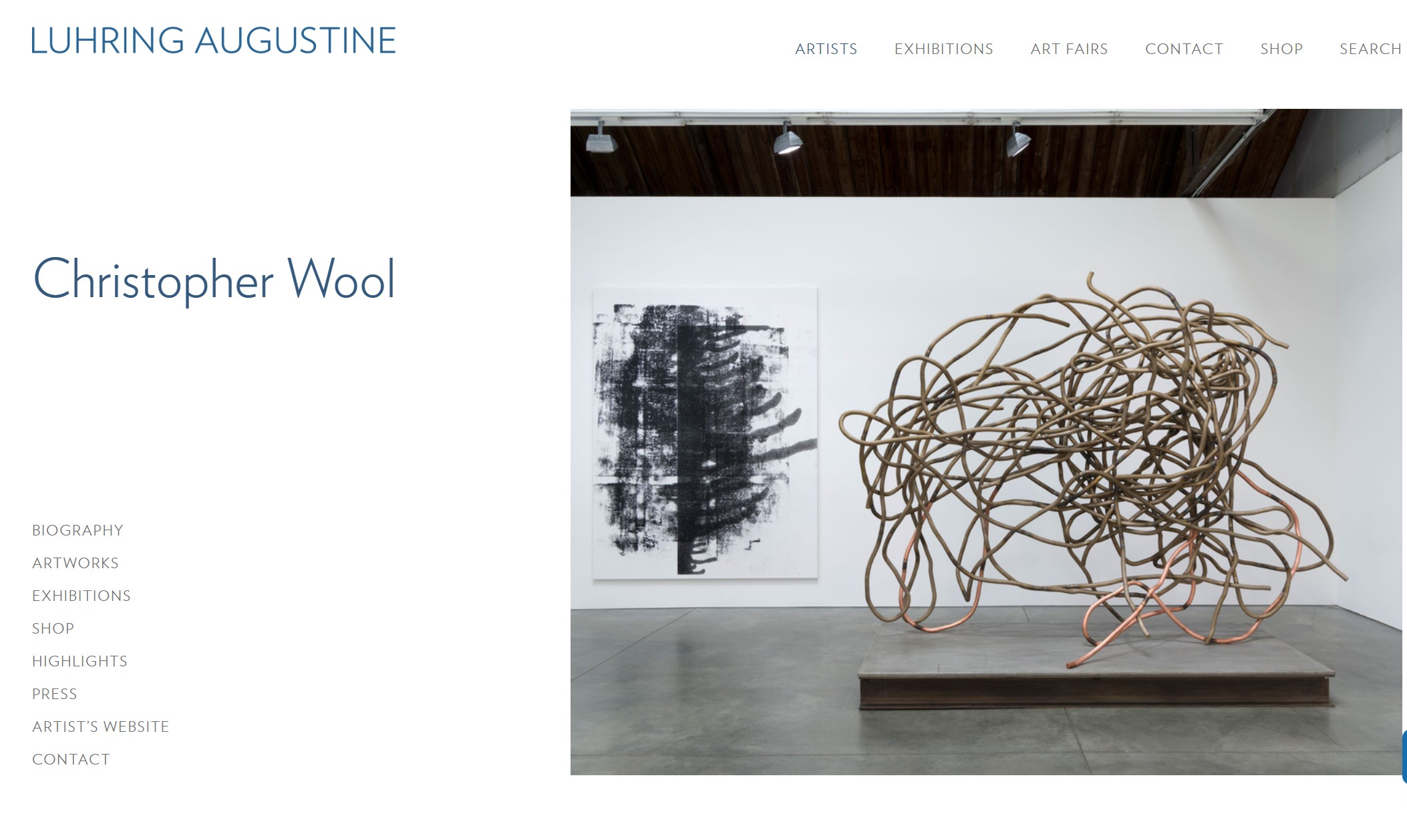
Wool is represented by leading international galleries, including Gagosian, Luhring Augustine, and Galerie Max Hetzler. These galleries have played a key role in sustaining his global presence and institutional engagement.
Christopher Wool has fundamentally reshaped the language of contemporary painting. By integrating text, mechanical processes, and gestural abstraction, he has expanded the possibilities of what painting can be. His work reflects the complexities of contemporary visual culture while maintaining a deep engagement with the history of art. In doing so, Wool has created a body of work that is both conceptually rigorous and visually compelling, securing his position as one of the most important painters of his time.
PART I: SUMMARY
Auction Market Overview
2025 AUCTION STATISTICS
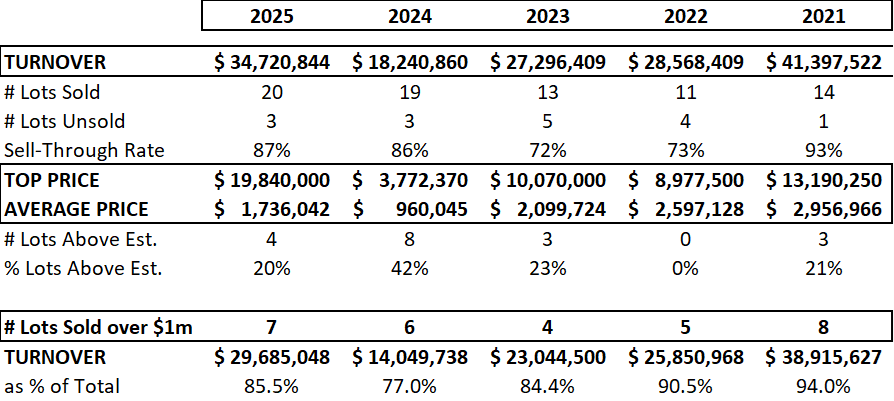
Turnover: USD 34,720,844
+90.4% vs. 2024
# Lots sold: 20
Sell-Through Rate: 87%
Highest Price achieved at Auction:
USD 29,930,000
(11 May 2015)
Christopher Wool’s market is among the strongest for postwar and contemporary artists. His works have consistently achieved multi-million-dollar results at auction, particularly iconic examples from the Word Paintings and early black-and-white abstractions.
His market is driven by both historical importance and visual recognizability. Key works are held in major collections, and demand remains strong across primary and secondary markets.
Auction Summary
2025 Auction Highlights
20 lots sold at auction in 2025 for a total turnover of USD 34,720,844. With 3 lots failing to sell, the sell-through rate is 87%. Moreover, 2 lots were withdrawn from auction in 2025. The highest price was achieved by Untitled (RIOT), an iconic WORD painting dated 1990, that sold at Christie’s, in New-York, 0n 19 November 2025, for USD 19,840,000.
2025 Top 3 Lots
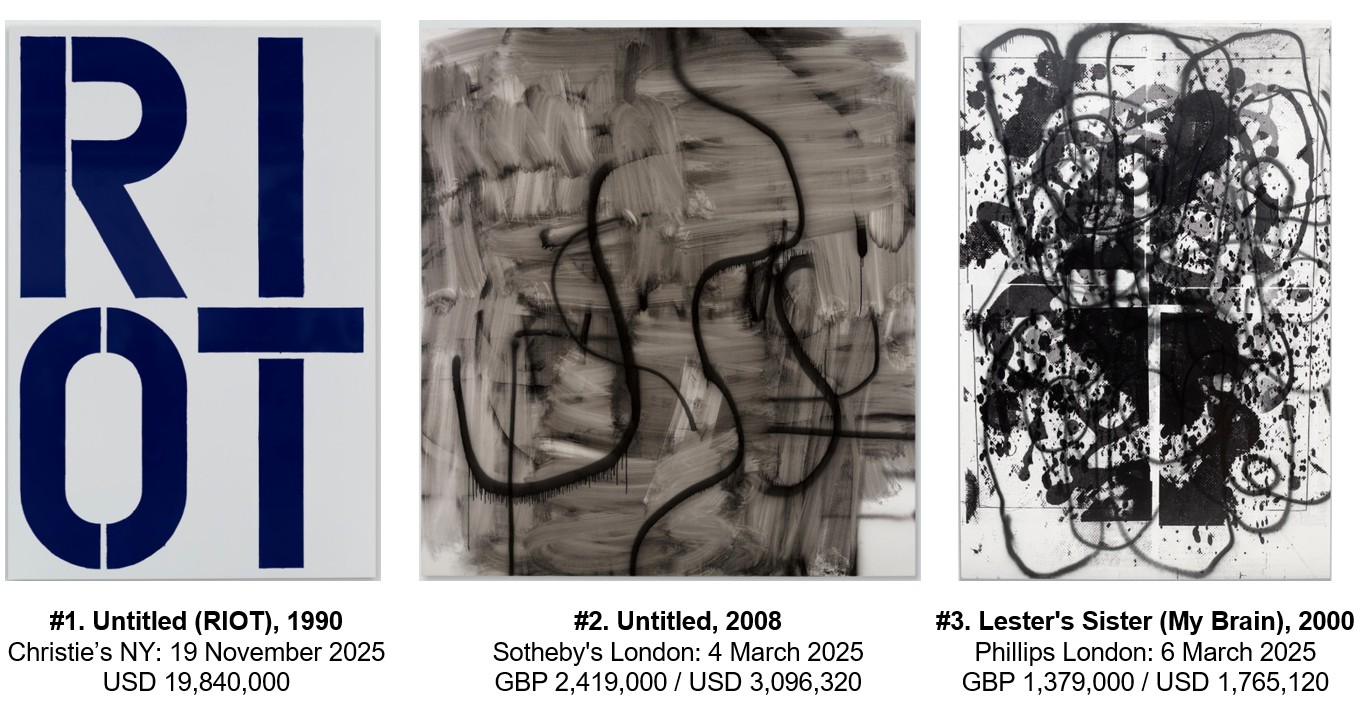
7 lots sold for more than USD 1 million, generating a cumulative turnover of USD 29,685,048, representing 85.5% of the total turnover of 2025.
2024 Auction Highlights
19 lots sold at auction in 2024 for a total turnover of USD 18,240,860. With 3 lots failing to sell, the sell-through rate is 86%. The highest price has been achieved at Sotheby’s in London on 9 October 2024, when Untitled, an enamel on linen dated 2009, sold for GBP 2,880,000 (USD 3,772,370).
2024 Top 3 Lots
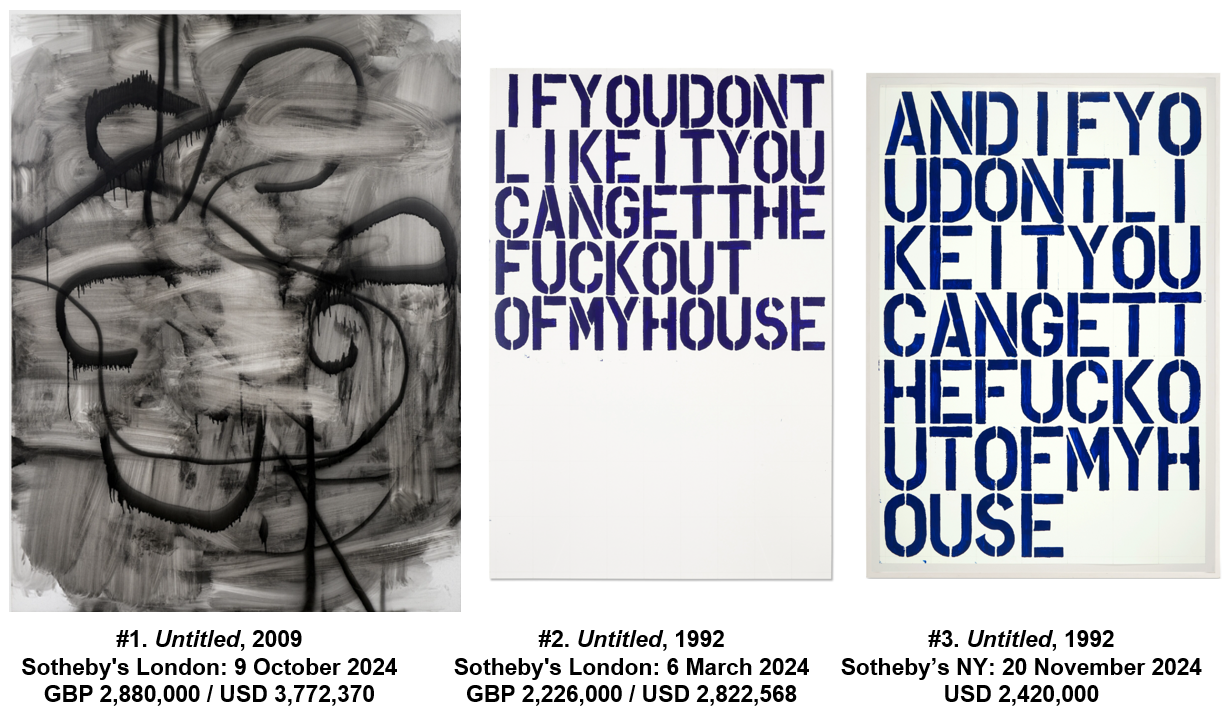
6 lots sold for more than USD 1 million, generating a cumulative turnover of USD 14,049,738, representing 77% of the total turnover in 2024.
2023 Auction Highlights
13 lots sold in 2023 for a total turnover of USD 27,296,409. With 5 lots failing to sell, the sell-through rate is 72%. The highest price was achieved at Christie’s in New-York on 17 May 2023, for a Word painting, untitled enamel on aluminum dated 1993 that sold for USD 10,070,000.
2023 Top 3 Lots
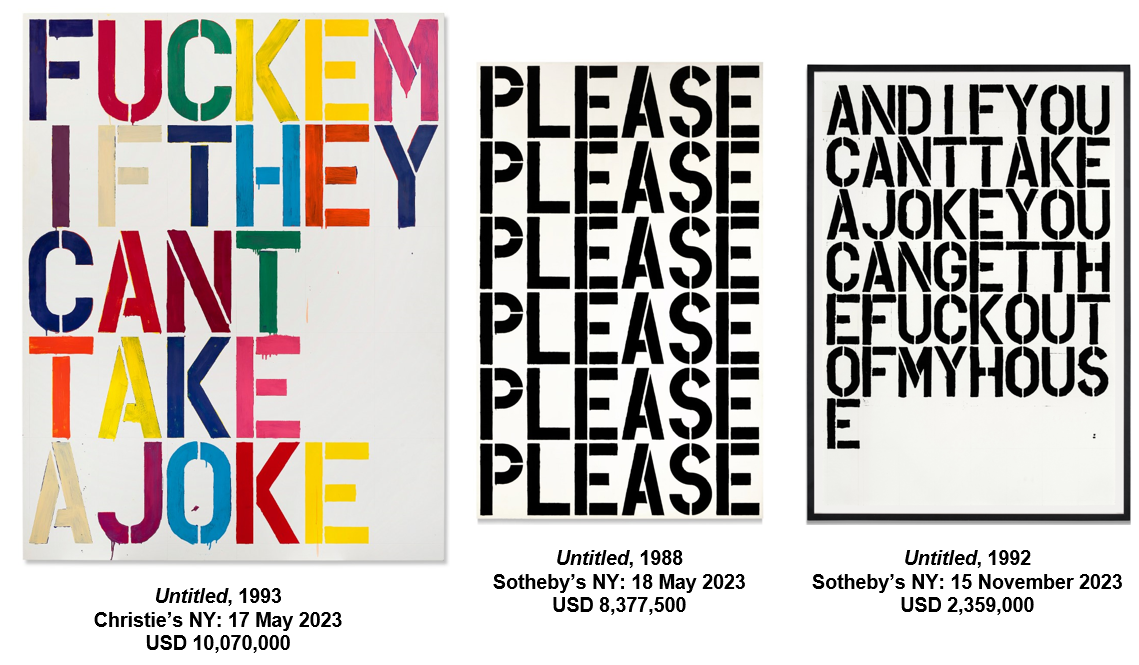
4 lots sold for more than USD 1 million, generating a cumulative turnover of USD 23,044,500, representing 84.4% of the total turnover for 2023.
2022 Auction Highlights
11 lots sold at auction in 2022 for a total turnover of USD 28,568,409. With 4 lots failing to sell, the sell-through rate is 73%. The highest price was achieved at Christie’s in New-York, on 17 November 2022, for an enamel on aluminum from the Flowers series that sold for USD 8,977,500.
2022 Top 3 Lots
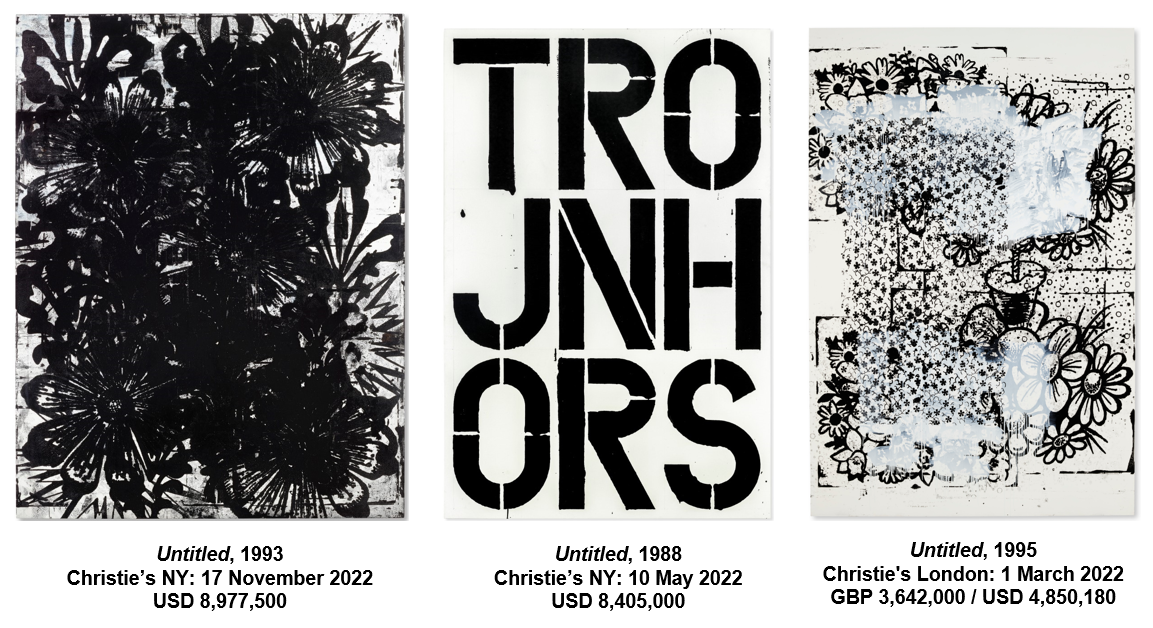
5 lots sold for more than USD 1 million, generating a cumulative turnover of USD 25,850,968, representing 90.5% of the total turnover for 2022.
2021 Auction Highlights
14 lots sold at auction in 2021 for a total turnover of USD 41,397,522. With only 1 lot failing to sell, the sell-through rate is 93%. The highest price was achieved at Sotheby’s in New-York on 18 November 2021 when Untitled, an enamel on aluminum dated 1995 sold for USD 13,190,250.
2021 Top 3 Lots
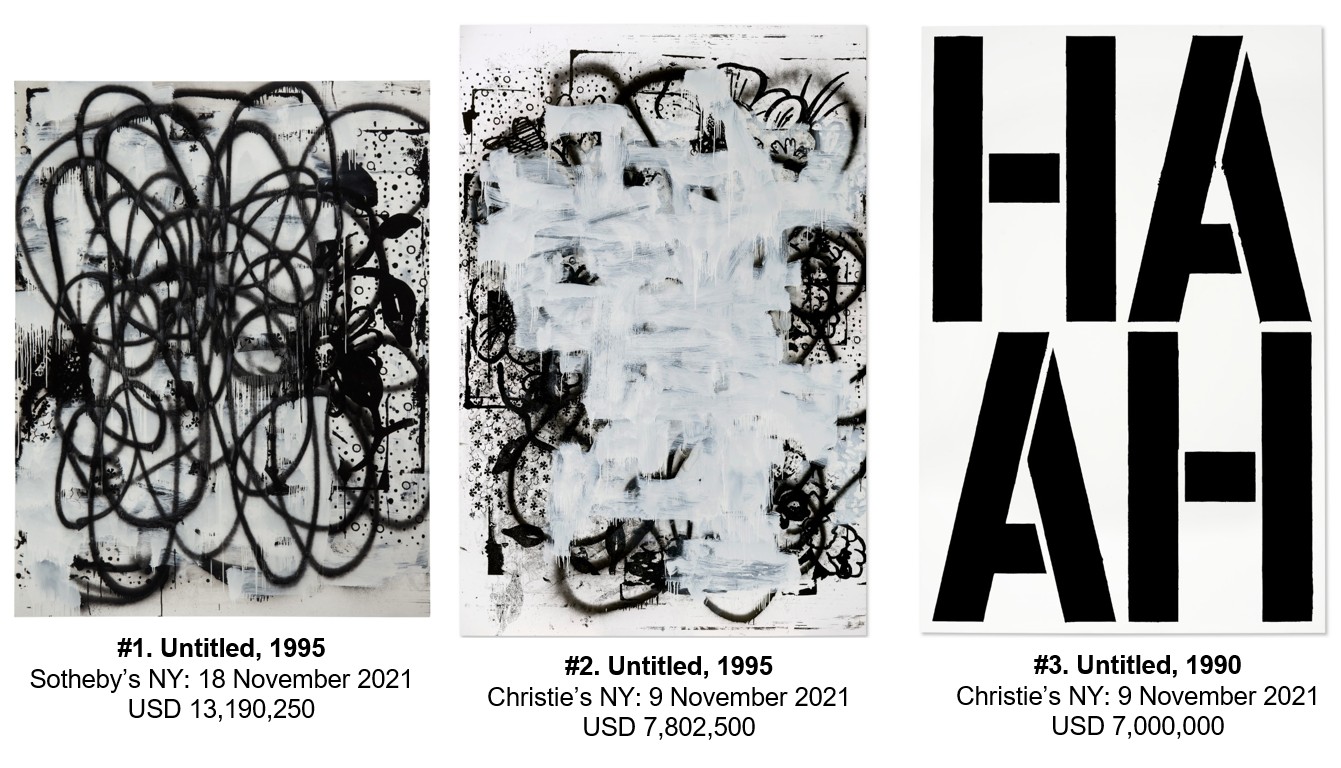
This is the only lot that sold for more than USD 10 million. 8 lots sold for more than USD 1 million, generating a cumulative turnover of USD 38,915,627, representing 94% of the total turnover for 2021.
Top Lots
#1. Untitled (RIOT), 1990
Sotheby’s New-York: 11 May 2015
Estimated: USD 12,000,000 – 18,000,000
USD 29,930,000
(#7) Christopher Wool (sothebys.com)
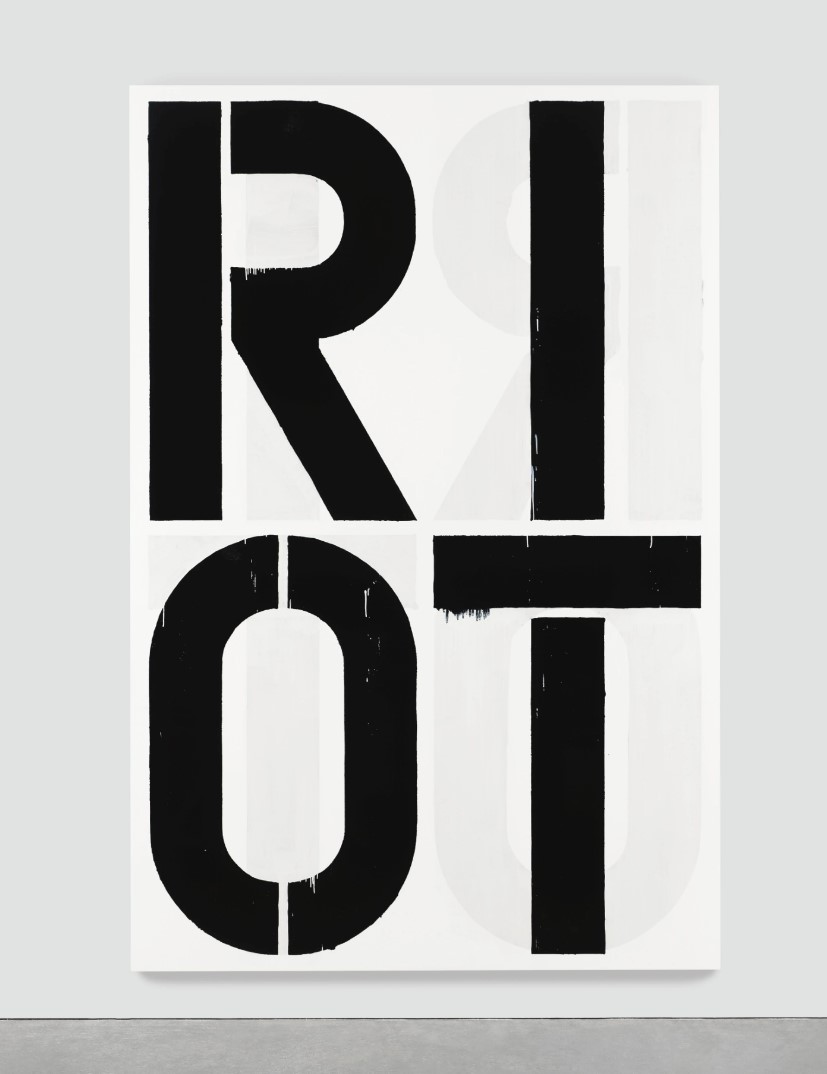
CHRISTOPHER WOOL
Untitled (RIOT), 1990
Enamel on aluminum
108×72 inches (274.3 x 182.9 cm)
Signed, dated 1990 and numbered W14 on the reverse
#2. Apocalypse Now, 1988
Christie’s New-York: 12 November 2013
Estimated: USD 15,000,000 – 20,000,000
USD 26,485,000
Christopher Wool (B. 1955) (christies.com)
CHRISTOPHER WOOL (B. 1955)
Apocalypse Now, 1988
Alkyd and flashe on aluminum and steel
84×72 inches (213.4 x 182.9 cm)
Signed, titled, numbered and dated ‘APOCALYPSE NOW (P.50) WOOL 1988’ (on the reverse)
#3. If You, 1988
Christie’s New-York: 13 May 2014
Estimated: USD 20,000,000 – 30,000,000
USD 23,685,000
Christopher Wool (b. 1955) (christies.com)
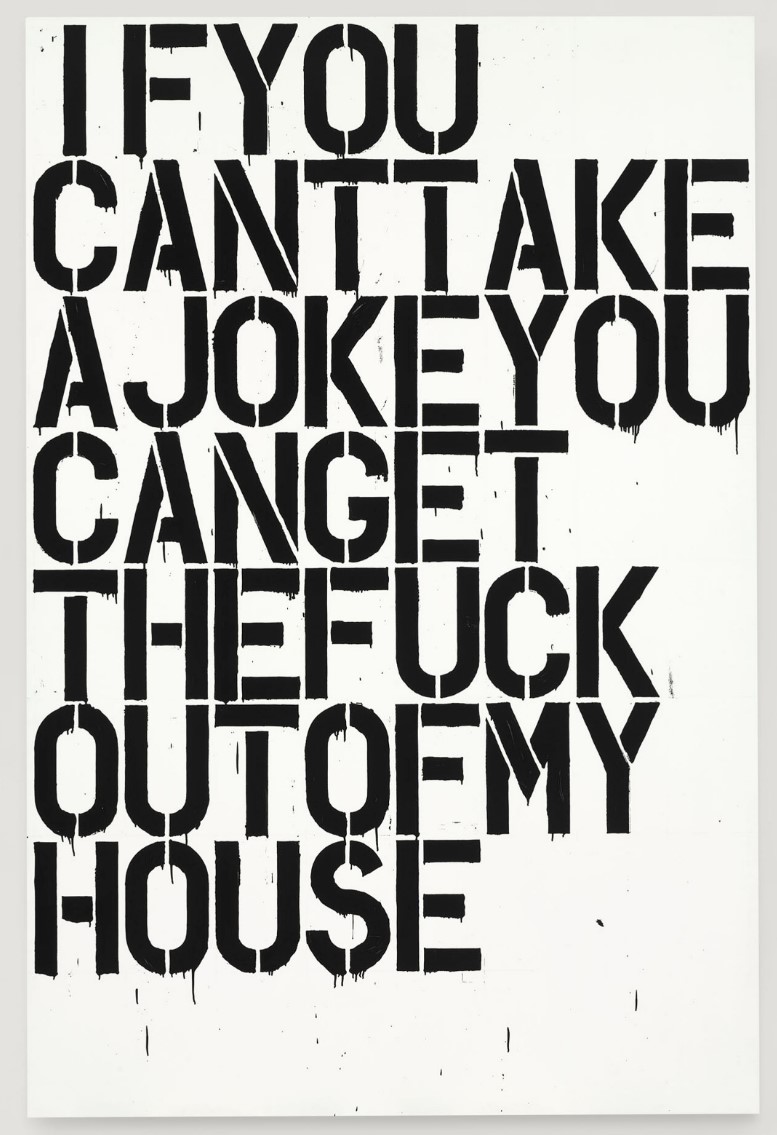
CHRISTOPHER WOOL (b. 1955)
If You, 1992
Enamel on aluminum
108×72 inches (274.3 x 182.8 cm)
Signed, titled, numbered and dated ‘IF YOU (W33) WOOL 1992’ (on the reverse)
#4. Untitled, 1988
Christie’s New-York: 18 May 2017
Estimated: USD 15,000,000 – 20,000,000
USD 17,159,500
Christopher Wool (B. 1955), Untitled | Christie’s (christies.com)
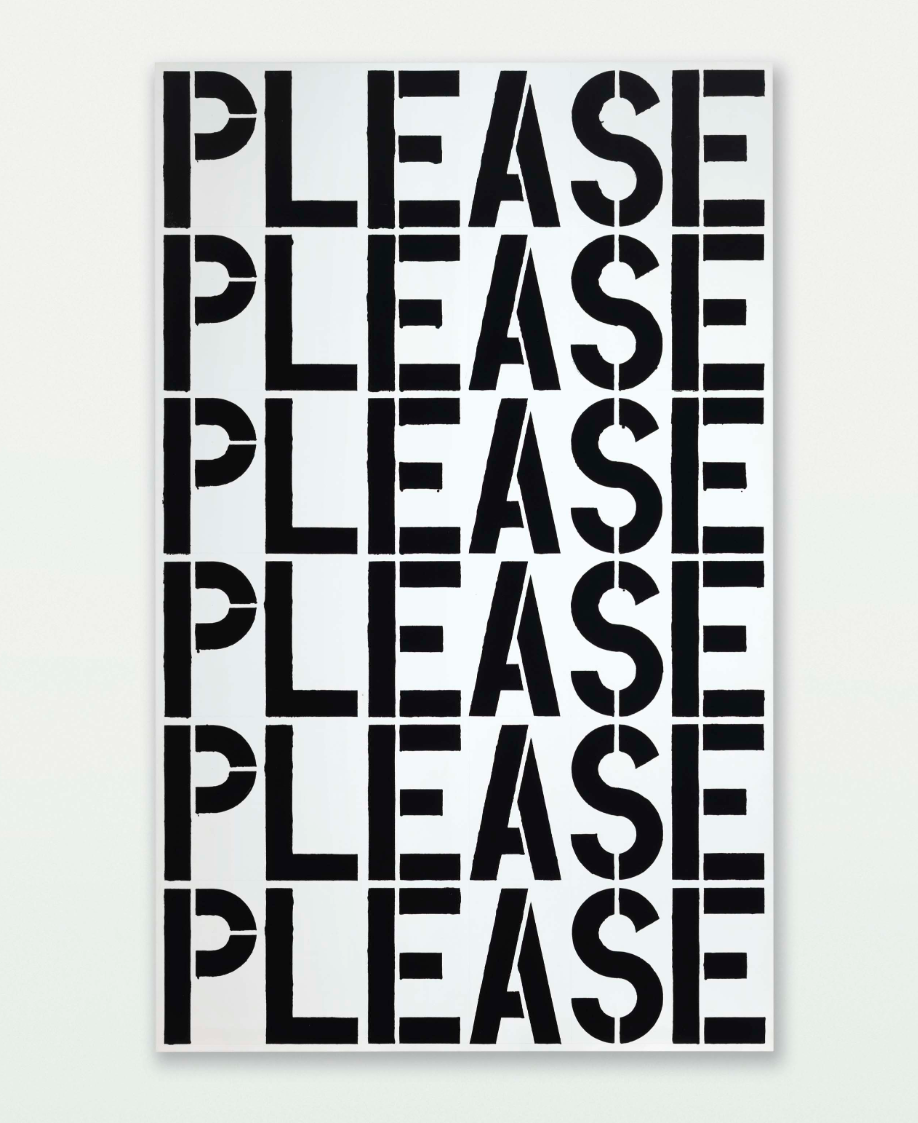
CHRISTOPHER WOOL (B. 1955)
Untitled, 1988
Alkyd and Flashe on aluminum
96×60 inches (243.8 x 152.4 cm)
Signed, numbered and dated ‘Wool 1988 P79’ (on the reverse)
#5. Untitled, 1990
Christie’s New-York: 10 November 2015
Estimate on Request
USD 16,965,000
Christopher Wool (B. 1955), Untitled | Christie’s (christies.com)
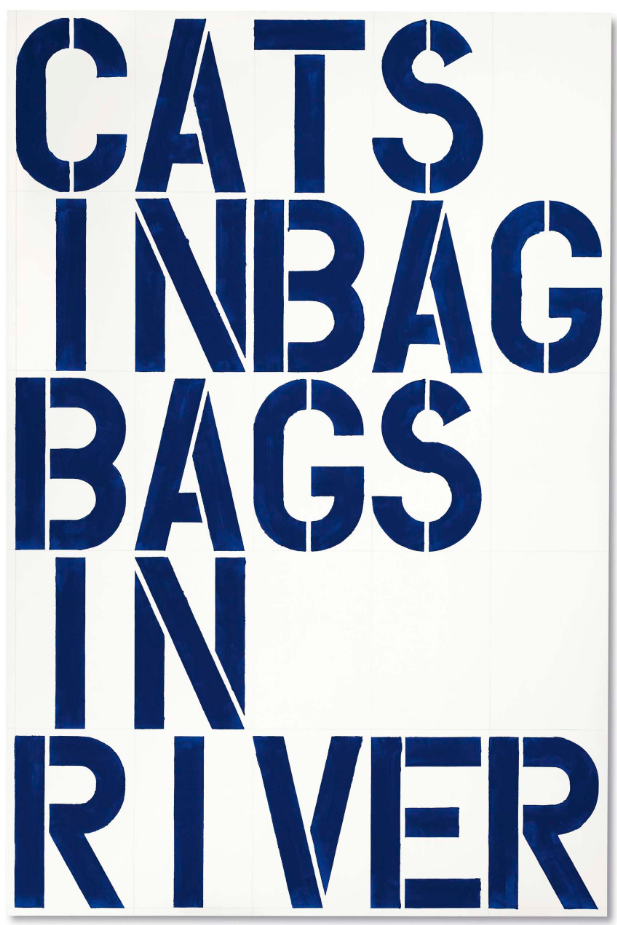
CHRISTOPHER WOOL (B. 1955)
Untitled, 1990
Enamel on aluminum
108×72 inches (274.3 x 182.9 cm)
Signed and dated ‘Wool 1990’ (on the reverse)
PART II: AUCTION RESULTS
2026 Auction Results
PRELIMINARY AUCTION RESULTS
As of 15 June 2026
#1. Untitled, 1988
Christie’s New-York: 20 May 2026
Estimated: USD 2,000,000 – 3,000,000
USD 3,247,000
WORK ON PAPER
CHRISTOPHER WOOL (B. 1955), Untitled | Christie’s
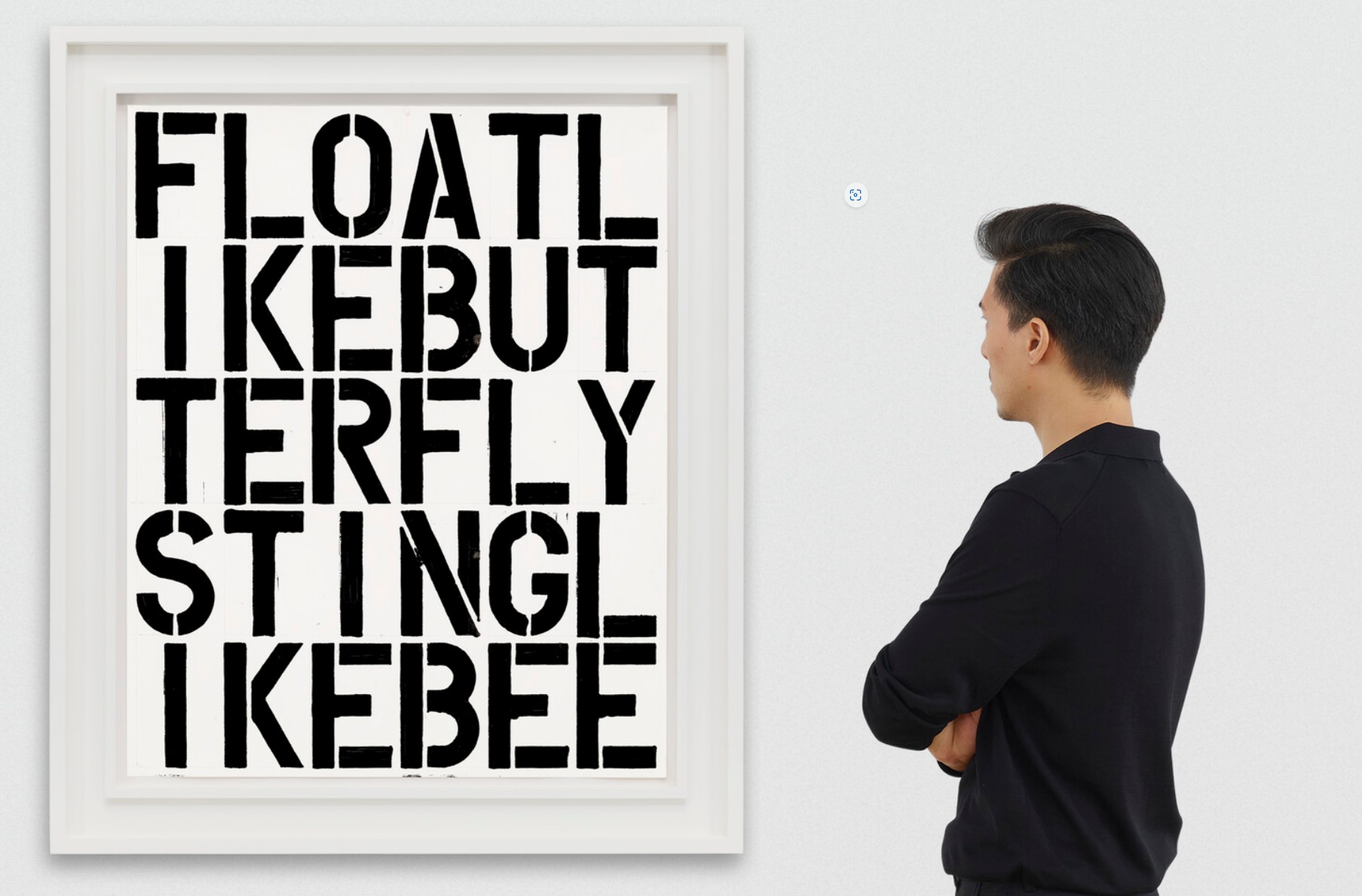
CHRISTOPHER WOOL (B. 1955)
Untitled, 1988
Enamel on paper
32-1/2 x 26 inches (82.6 x 66 cm)
Signed, inscribed and dated ‘Christopher Wool Nov. 1988’ (on the reverse)
#2. Untitled, 2005
Sotheby’s New-York: 15 May 2026
Estimated: USD 1,000,000 – 1,500,000
USD 1,280,000
Christopher Wool | Untitled | Contemporary Day Auction | 2026 |
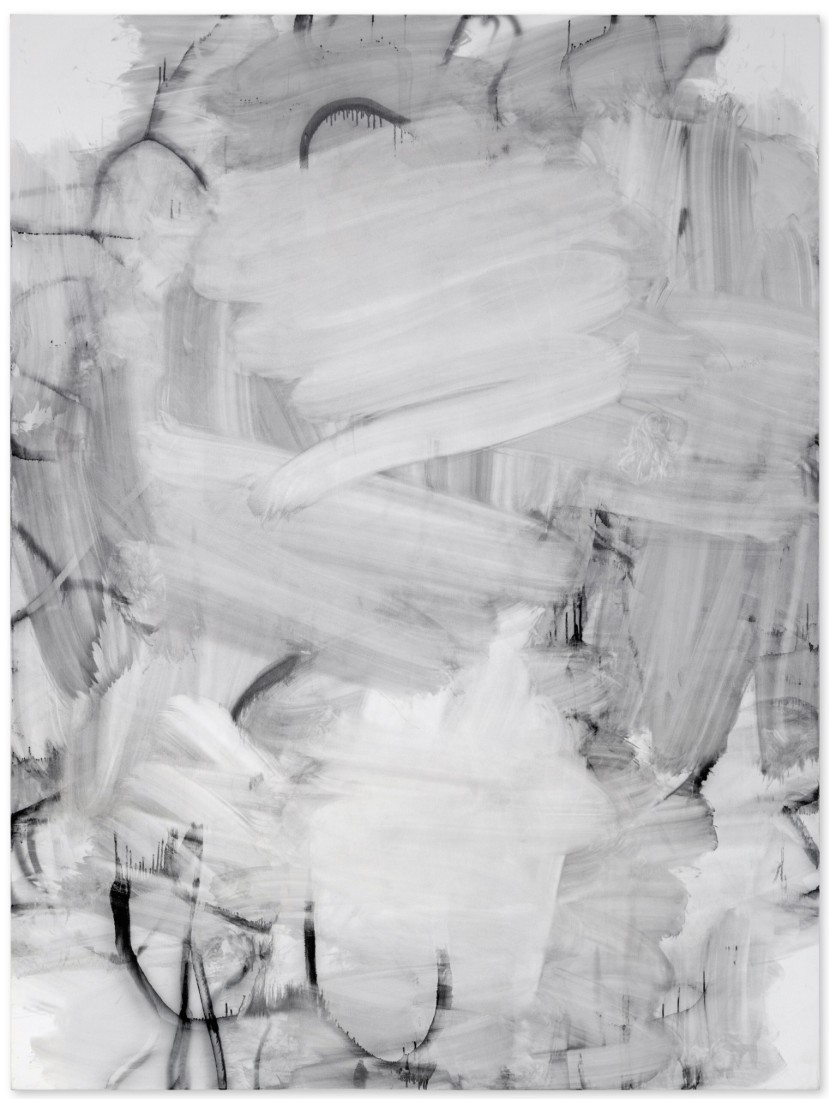
CHRISTOPHER WOOL (b. 1955)
Untitled, 2005
Enamel on linen
96×72 inches (243.8 x 182.9 cm)
Signed, dated 2005 and numbered P508 (on the overlap)
Signed, dated 2005 and numbered P508 (on the backing board)
USD 1 million
#3. Untitled, 2008
Christie’s London: 7 March 2026
Estimated: GBP 250,000 – 350,000
GPB 304,800 / USD 407,180
WORK ON PAPER
CHRISTOPHER WOOL (B. 1955), Untitled | Christie’s
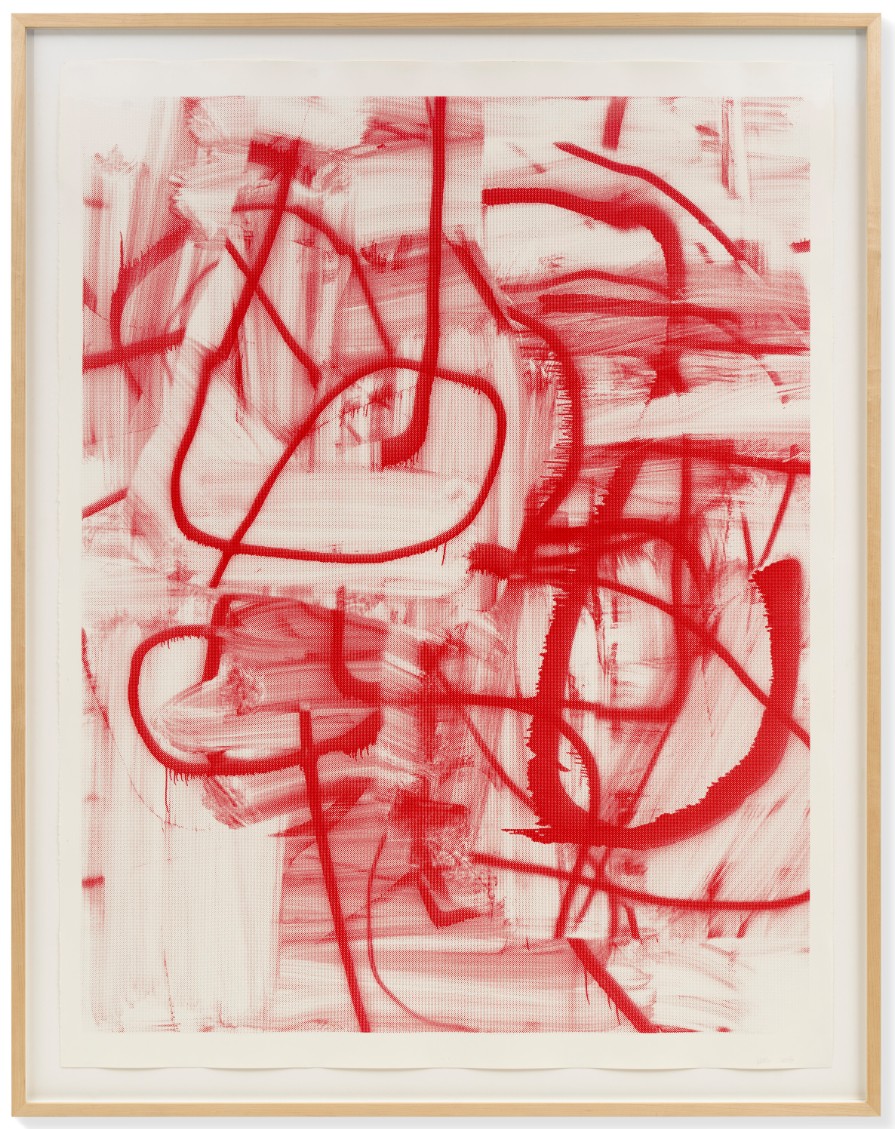
CHRISTOPHER WOOL (B. 1955)
Untitled, 2008
Silkscreen ink on paper
72 x 55-1/4 inches (182.9 x 140.3 cm)
Signed and dated ‘WOOL 2008’ (lower right)
USD 100,000
#4. Untitled, 1991
Art & Design from The Collection of Barbara Gladstone
Sotheby’s New-York: 9 June 2026
Estimated: USD 70,000 – 100,000
USD 96,000
WORK ON PAPER
Christopher Wool | Untitled | Art & Design from The Collection of
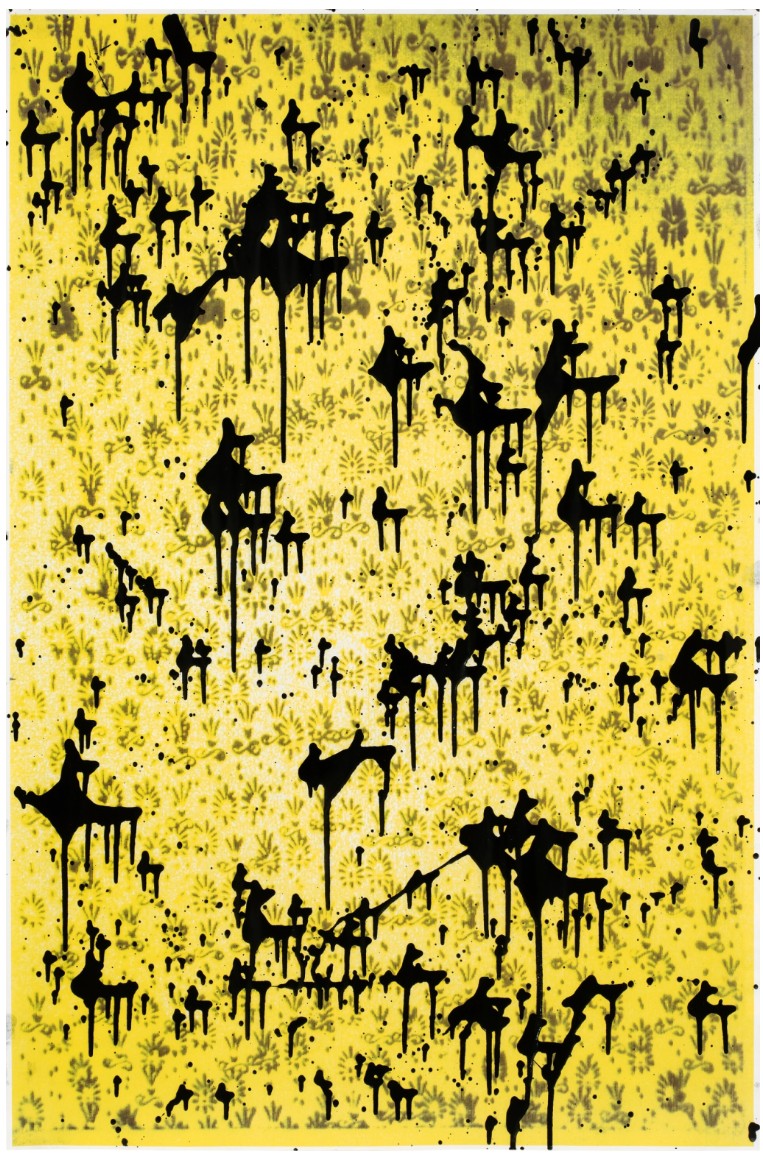
CHRISTOPHER WOOL (b. 1955)
Untitled, 1991
Enamel on paper
39-3/4 x 26-1/4 inches (101 x 66.7 cm)
Signed, dated 1991 and numbered D18 (on the verso)
2025 Auction Results
20 lots sold at auction in 2025 for a total turnover of USD 34,720,844. With 3 lots failing to sell, the sell-through rate is 87%. Moreover, 2 lots were withdrawn from auction in 2025.
The highest price was achieved by Untitled (RIOT), an iconic WORD painting dated 1990, that sold at Christie’s, in New-York, 0n 19 November 2025, for USD 19,840,000.
2025 Top 3 Lots
7 lots sold for more than USD 1 million, generating a cumulative turnover of USD 29,685,048, representing 85.5% of the total turnover of 2025.
#1. Untitled (RIOT), 1990
Christie’s New-York: 19 November 2025
Estimated: USD 15,000,000 – 20,000,000
USD 19,840,000
CHRISTOPHER WOOL (B. 1955), Untitled (RIOT) | Christie’s
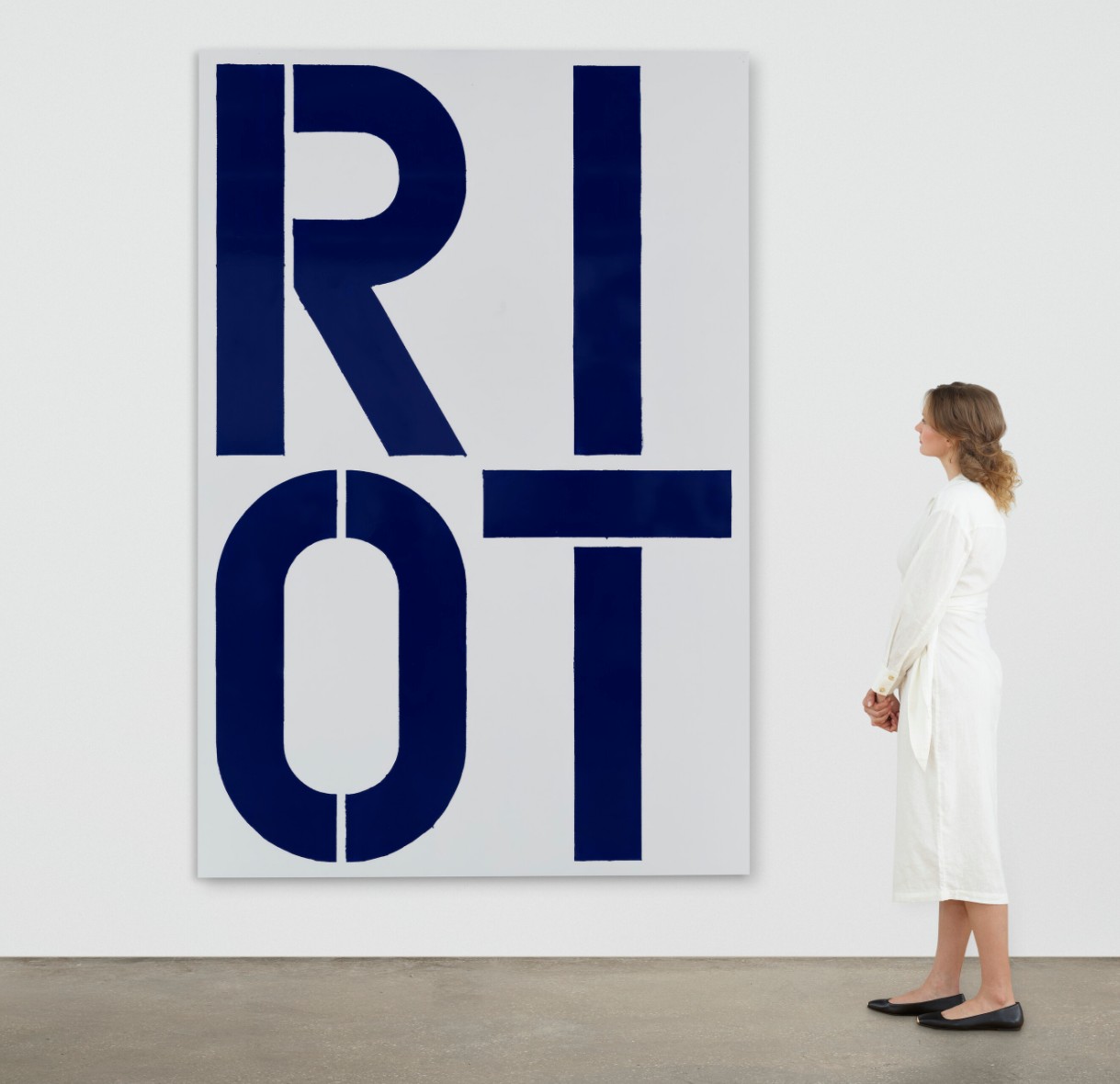
CHRISTOPHER WOOL (B. 1955)
Untitled (RIOT), 1990
Enamel on aluminum
108×72 inches (274.3 x 182.9 cm)
Signed, inscribed and dated ‘Wool 1990 (W16)’ (on the reverse)
#2. Untitled, 2008
Sotheby’s London: 4 March 2025
Estimated: GBP 2,000,000 – 3,000,000
GBP 2,419,000 / USD 3,096,320
Untitled | Modern & Contemporary Evening Auction | 2025 | Sotheby’s
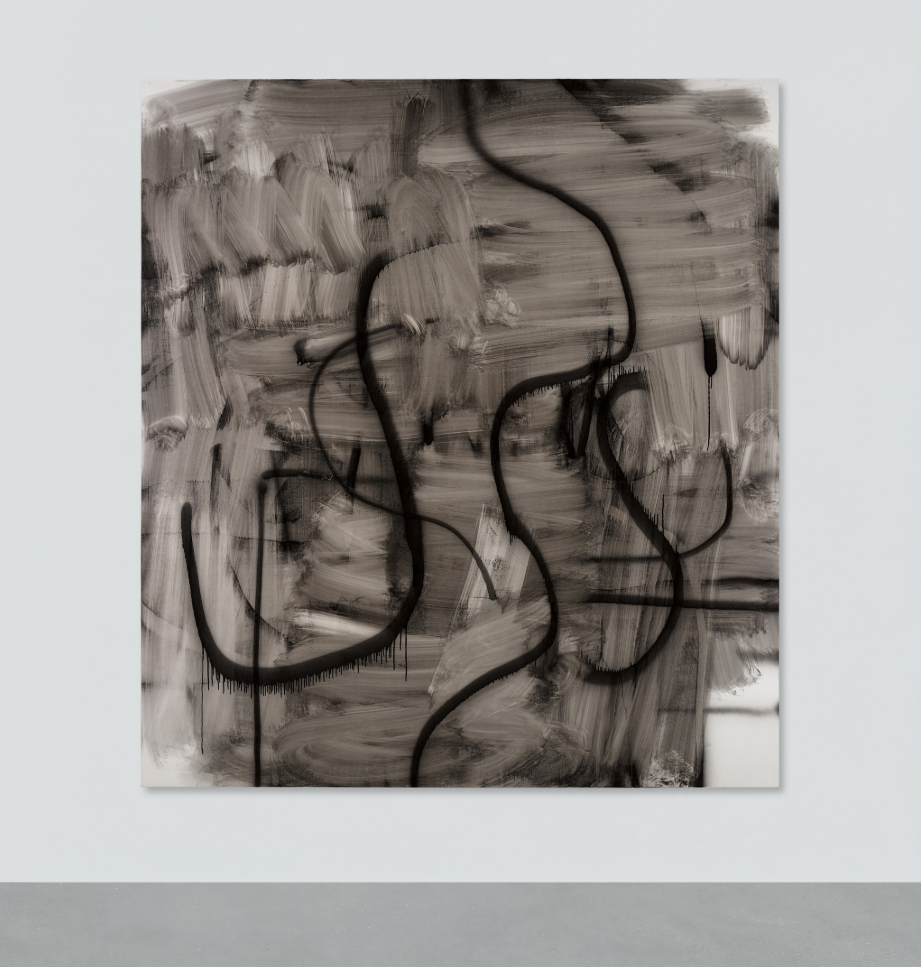
CHRISTOPHER WOOL (b. 1955)
Untitled, 2008
Enamel on linen
106×96 inches (269.2 x 243.8 cm)
Signed, dated 2008 and numbered (P572) (on the overlap)
Signed, dated 2008 and numbered (P572) (on the backing board)
#3. Lester’s Sister (My Brain), 2000
Phillips London: 6 March 2025
Estimated: GBP 1,200,000 – 1,800,000
GBP 1,379,000 / USD 1,765,120
Christopher Wool – Modern & Contempora… Lot 16 March 2025 | Phillips
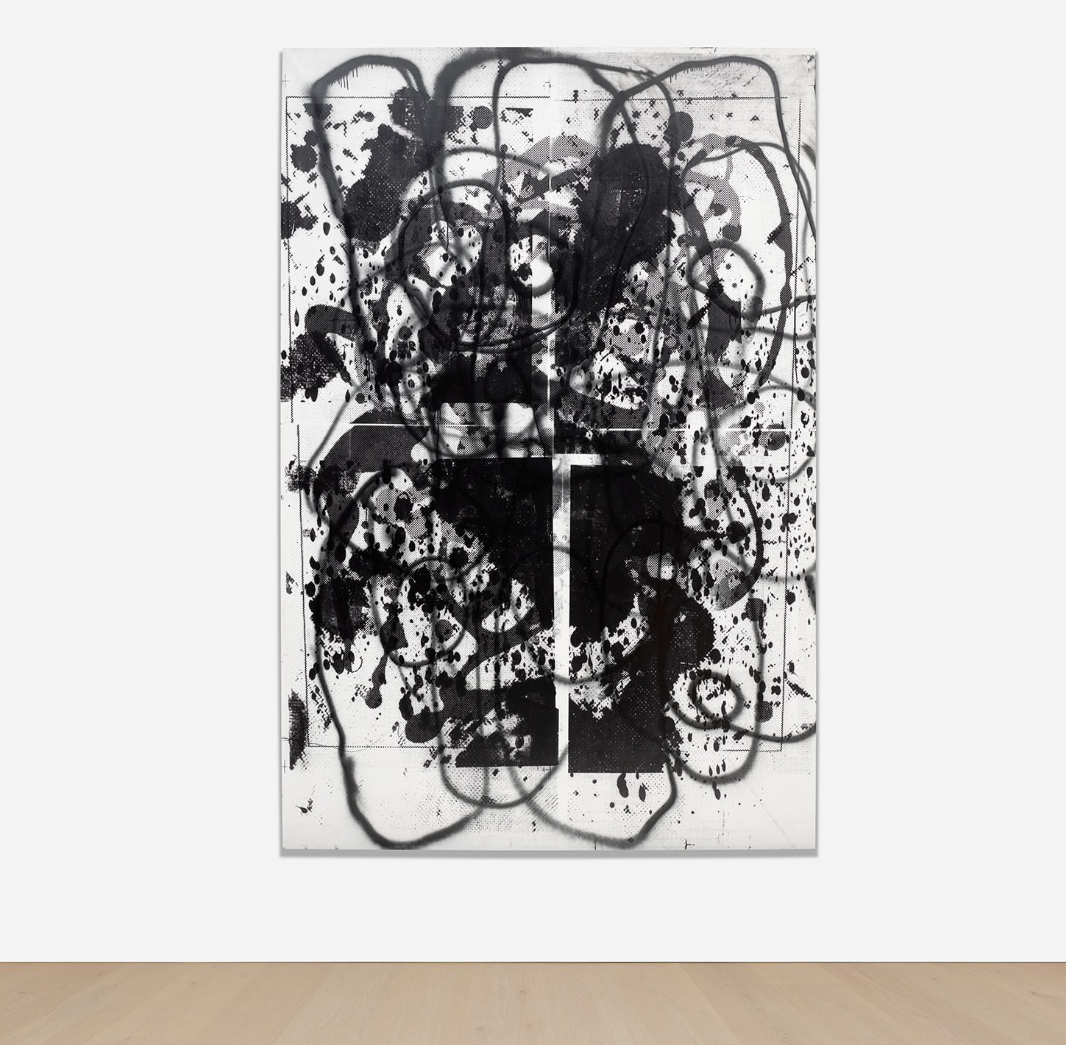
CHRISTOPHER WOOL
Lester’s Sister (My Brain), 2000
Enamel and silkscreen on linen
108 1/8 x 71 7/8 inches (274.7 x 182.8 cm)
Signed, numbered and dated ‘Wool 2000 (P335)’ on the overlap
Signed, numbered and dated ‘Wool 2000 (P335)’ on the stretcher
#4. Untitled, 2014
Christie’s New-York: 19 November 2025
Estimated: USD 1,500,000 – 2,000,000
USD 1,397,000
CHRISTOPHER WOOL (B. 1955), Untitled | Christie’s
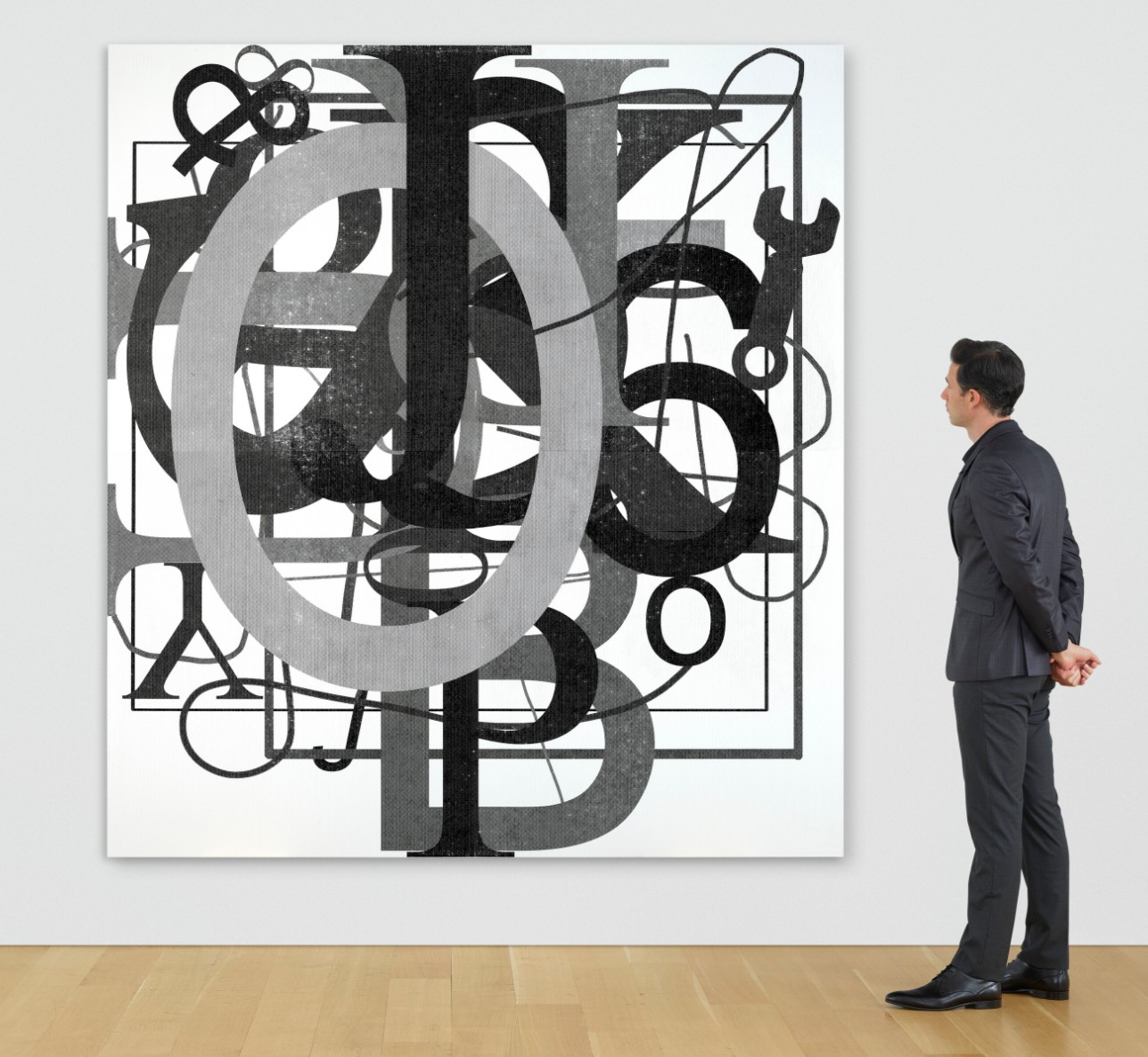
CHRISTOPHER WOOL (B. 1955)
Untitled, 2014
Silkscreen ink on linen mounted to wood
106×96 inches (269.2 x 243.8 cm)
Signed, titled and dated ‘Wool 2014 Untitled (P647)’ (on the reverse)
#5. Nation Time, 2000
Sotheby’s London: 24 June 2025
Estimated: GBP 800,000 – 1,200,000
GBP 1,082,000 / USD 1,391,920
Nation Time | Modern & Contemporary Evening Auction | 2025 | Sotheby’s
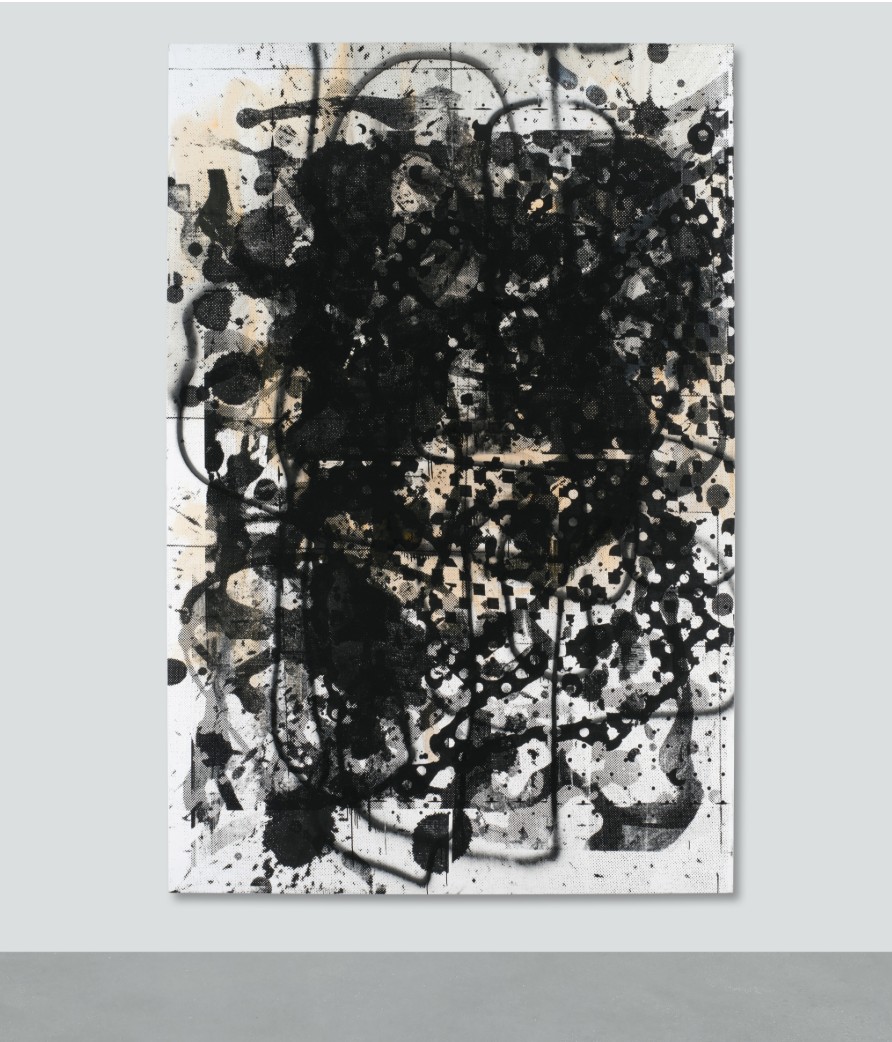
CHRISTOPHER WOOL (b. 1955)
Nation Time, 2000
Enamel and silkscreen ink on linen
108×72 inches (274.3 x 182.9 cm)
Signed, dated 2000 and numbered (P328) (on the overlap)
Signed, dated 2000 and numbered (P328) (on the stretcher)
#6. Untitled, 1997
Phillips London: 6 March 2025
Estimated: GBP 600,000 – 800,000
GBP 927,100 / USD 1,186,688
Christopher Wool – Modern & Contemporar… Lot 6 March 2025 | Phillips
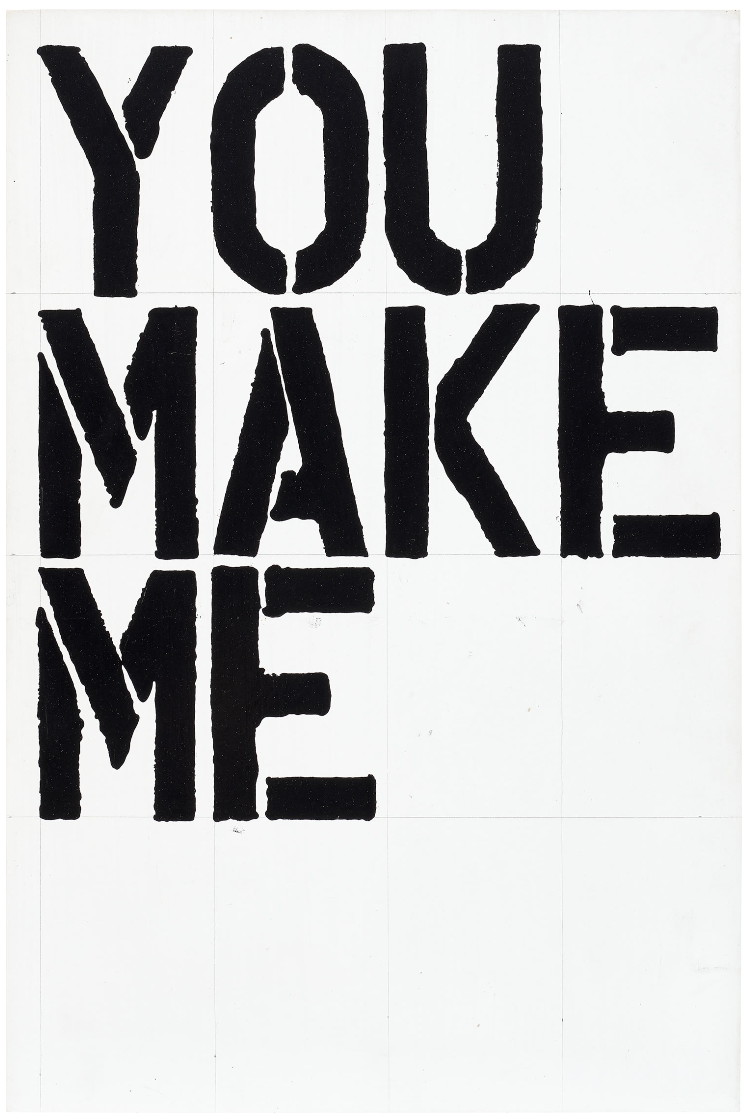
CHRISTOPHER WOOL
Untitled, 1997
Enamel on aluminum
17 7/8 x 11 3/4 inches (45.5 x 30 cm)
Signed, inscribed and dated ‘Wool 1997 (S145) For Richard Hell Who Wrote It’ on the reverse
#7. Untitled, 1997
Christie’s New-York: 14 May 2025
Estimated: USD 800,000 – 1,200,000
USD 1,008,000
WORK ON PAPER
CHRISTOPHER WOOL (B. 1955), Untitled | Christie’s
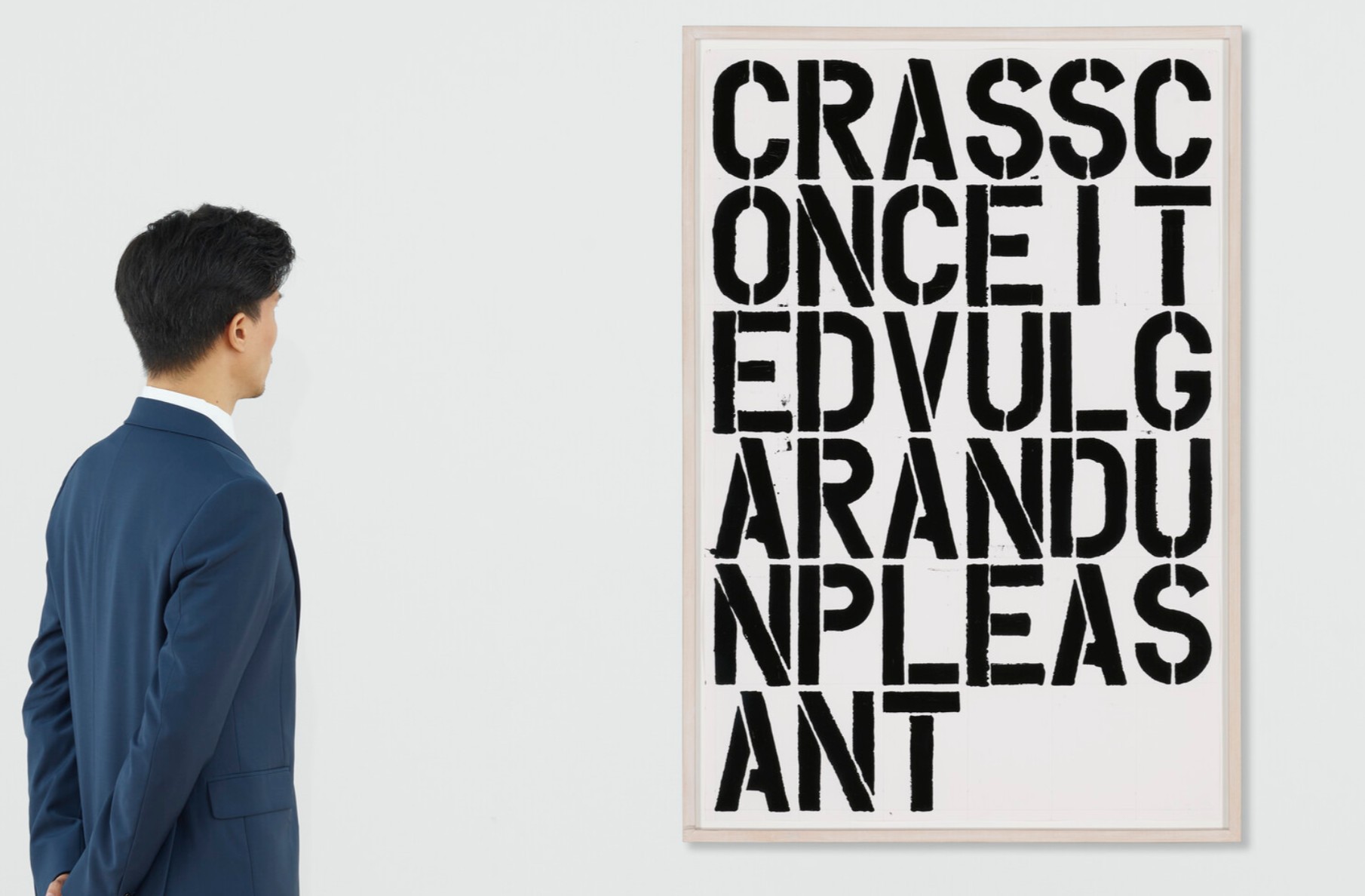
CHRISTOPHER WOOL (B. 1955)
Untitled, 1997
Alkyd and graphite on paper
38 1/2 x 26 inches (97.8 x 66 cm)
Signed and dated ‘Wool 1997’ (on a label affixed to the reverse)
USD 1 million
#8. Untitled, 2011
Christie’s New-York: 15 May 2025
Estimated: USD 700,000 – 1,000,000
USD 882,000
CHRISTOPHER WOOL (B. 1955), Untitled | Christie’s
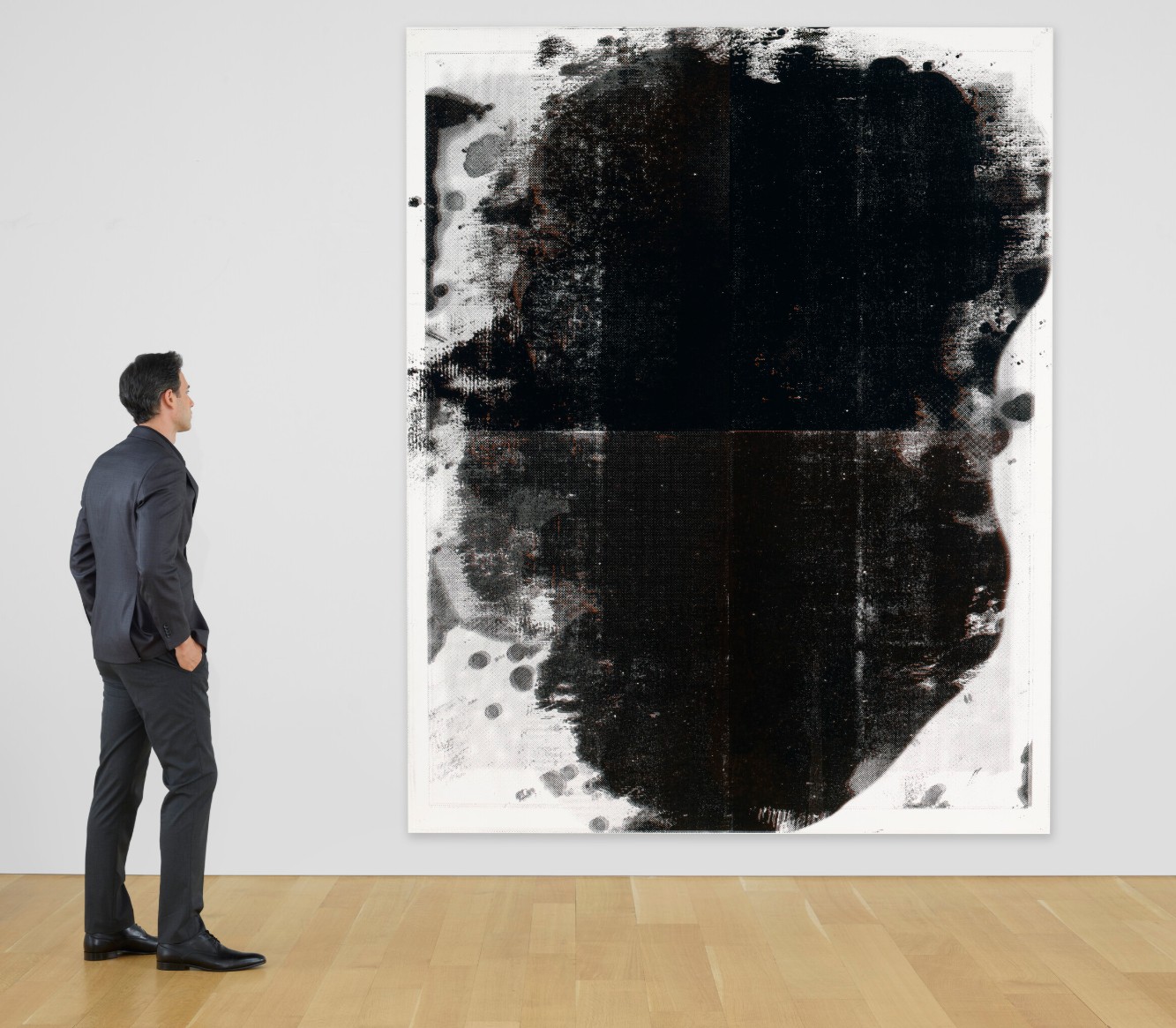
CHRISTOPHER WOOL (B. 1955)
Untitled, 2011
Silkscreen ink on linen
120×96 inches (304.8 x 243.8 cm)
Signed, inscribed and dated ‘WOOL 2011 P623’ (on the reverse)
Signed again and dated again ‘WOOL 2011’ (on the overlap)
#9. Brown No Halloween, 2005
Phillips London: 26 June 2025
Estimated: GBP 400,000 – 600,000
GBP 508,000 / USD 695,960
Christopher Wool Modern & Contemporary Art: Evening & Day Sale
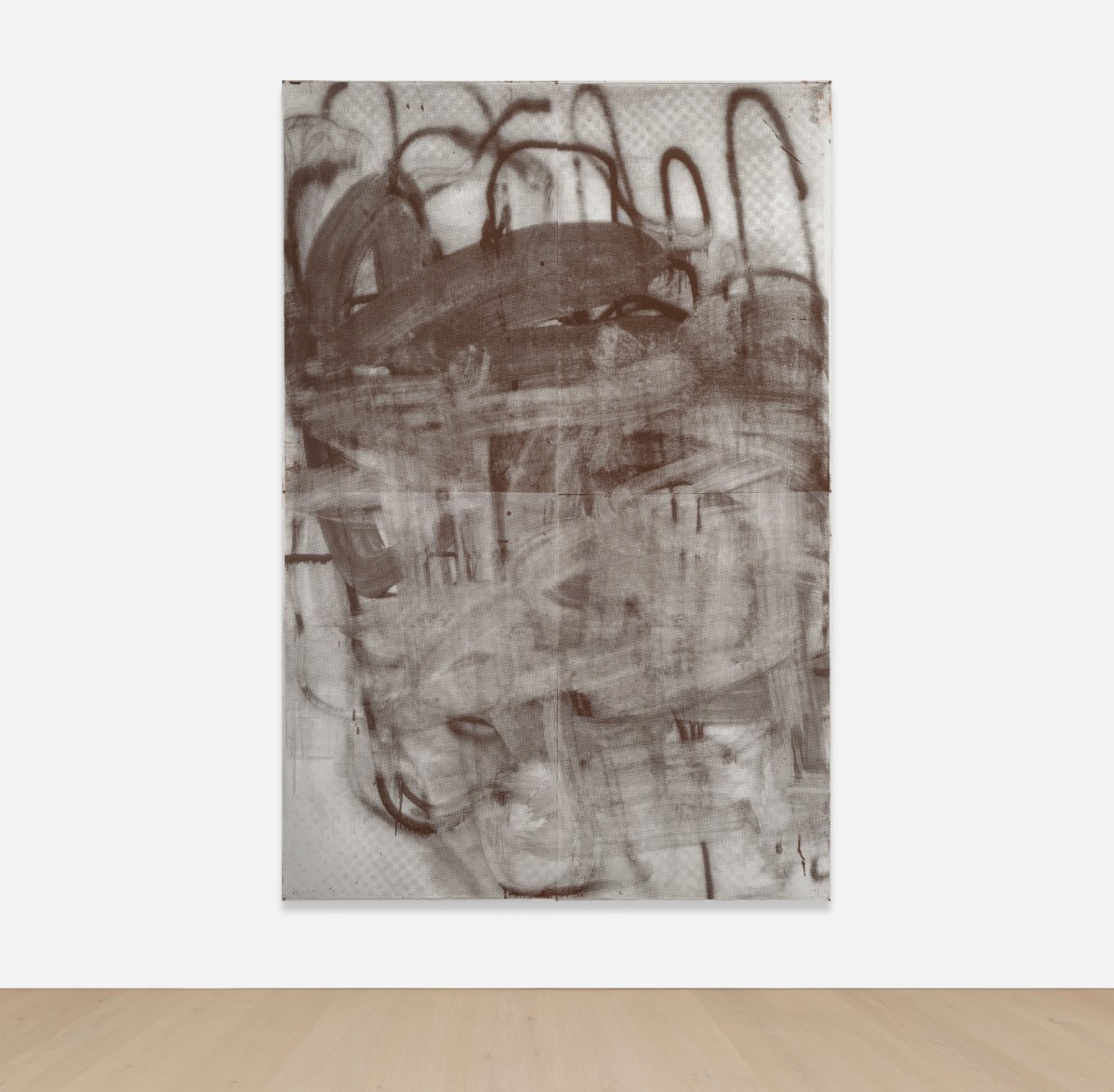
Signed, titled, numbered and dated ‘WOOL BROWN NO HALLOWEEN 2005 (P511)’ on the overlap
#10. Untitled, 1993
Christie’s New-York: 15 May 2025
Estimated: USD 500,000 – 700,000
USD 579,600
CHRISTOPHER WOOL (B. 1955), Untitled | Christie’s
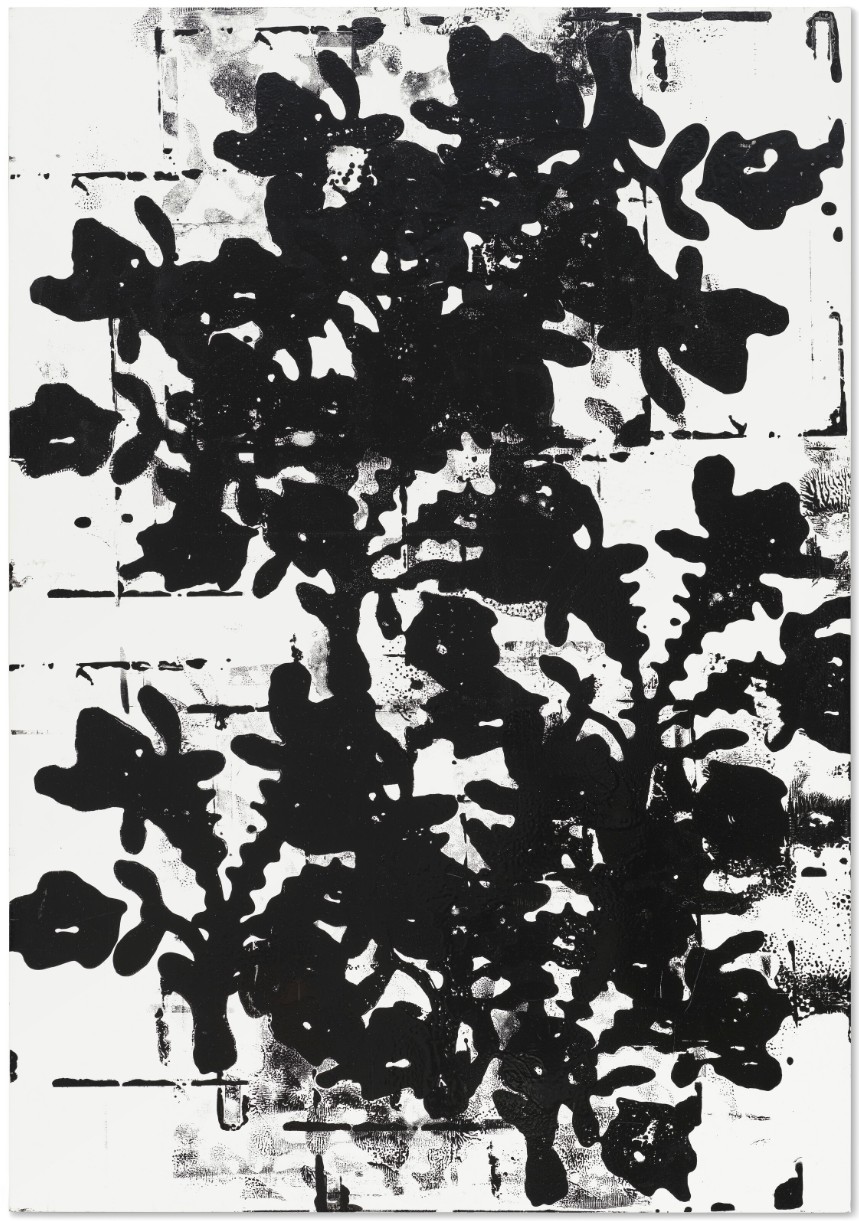
CHRISTOPHER WOOL (B. 1955)
Untitled, 1993
Enamel on aluminum
43×30 inches (109.2 x 76.2 cm)
Signed, inscribed and dated ‘WOOL 1993 (S107)’ (on the reverse)
#11. Untitled, 1989
Sotheby’s New-York: 16 May 2025
Estimated: USD 400,000 – 600,000
USD 508,000
Untitled | Contemporary Day Auction | 2025 | Sotheby’s
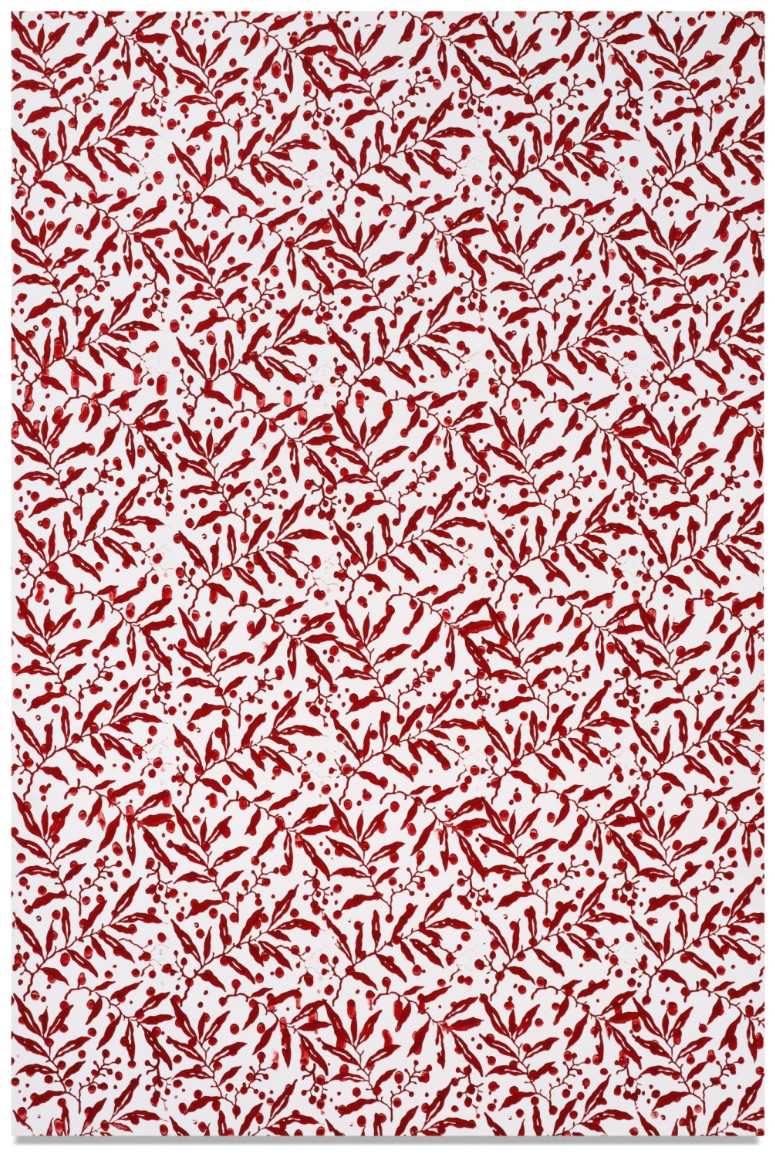
CHRISTOPHER WOOL (b. 1955)
Untitled, 1989
Enamel on aluminum
36×24 inches (91.4 x 61 cm)
Signed, dated 1989 and numbered S45 (on the reverse)
USD 500,000
#12. Untitled, 1992
Christie’s New-York: 20 November 2025
Estimated: USD 400,000 – 600,000
USD 444,500
CHRISTOPHER WOOL (B. 1955), Untitled | Christie’s
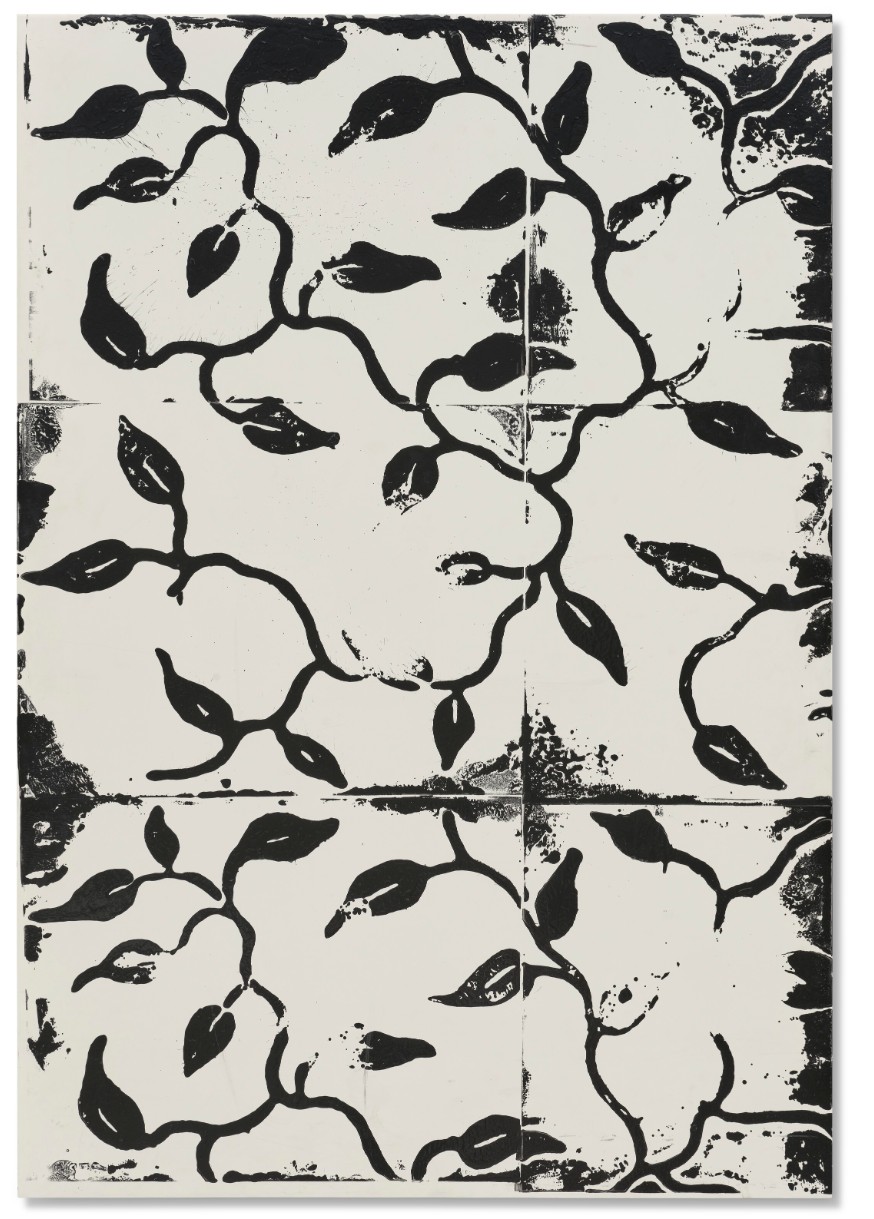
CHRISTOPHER WOOL (B. 1955)
Untitled, 1992
Enamel on aluminum
52 x 35 3/4 inches (132 x 90.8 cm)
Signed, inscribed and dated ‘WOOL 1992 (S114)’ (on the reverse)
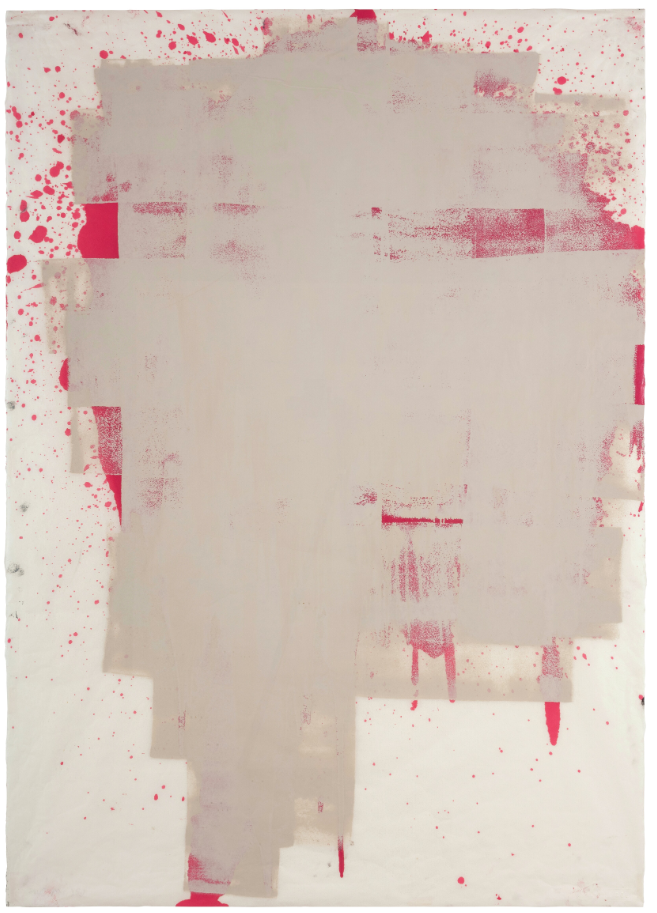
#13. Untitled (Red), 2007
Sotheby’s New-York: 19 November 2025
Estimated: USD 350,000 -450,000
USD 444,500
WORK ON PAPER
Untitled (Red) | Contemporary Day Auction | 2025 | Sotheby’s
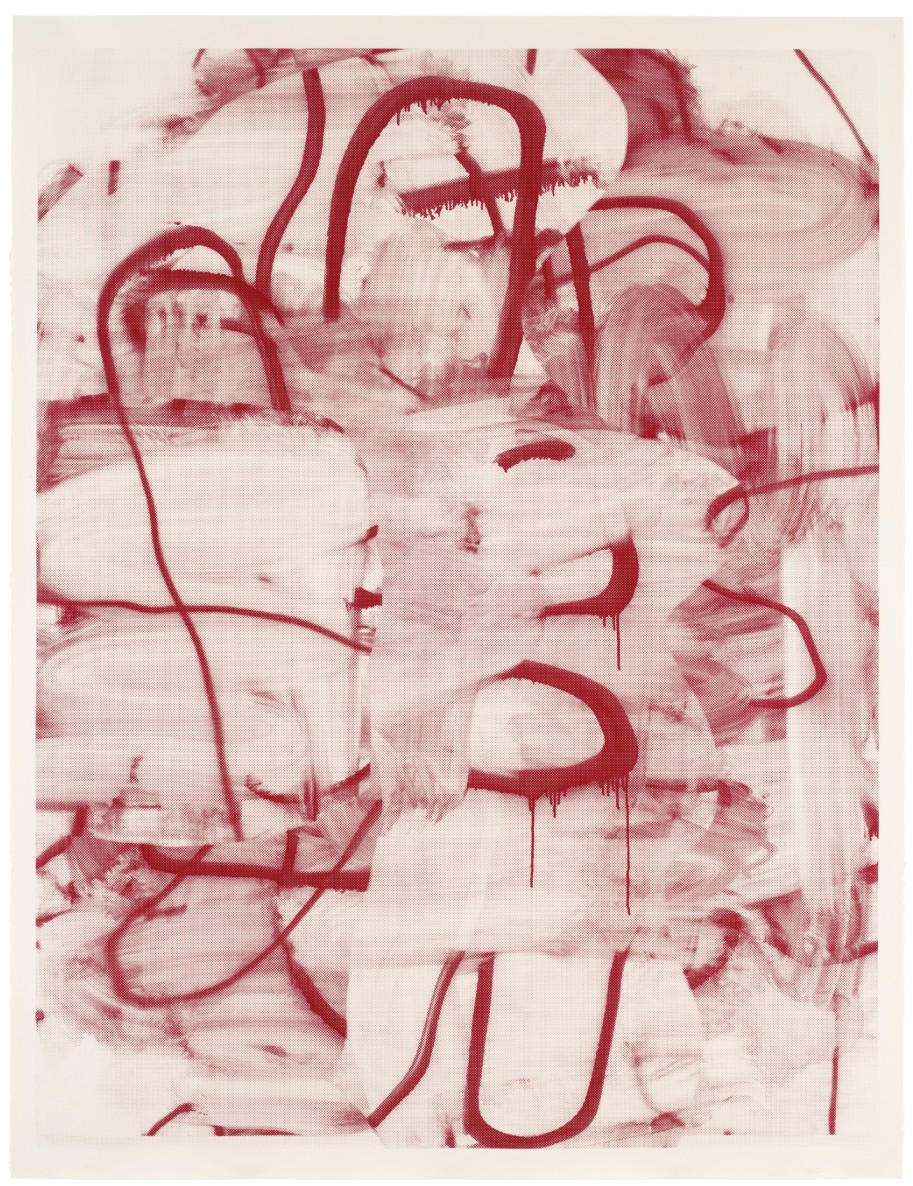
CHRISTOPHER WOOL (b. 1955)
Untitled (Red), 2007
Silkscreen ink on paper
72 x 55 1/4 inches (182.9 x 140.3 cm)
Signed and dated 2007 (lower right)
#14. Untitled, 2004
Phillips New-York: 14 May 2025
Estimated: USD 750,000 – 1,000,000
USD 399,999
Christopher Wool Modern & Contemporary Art Day Sale, Afternoon Session
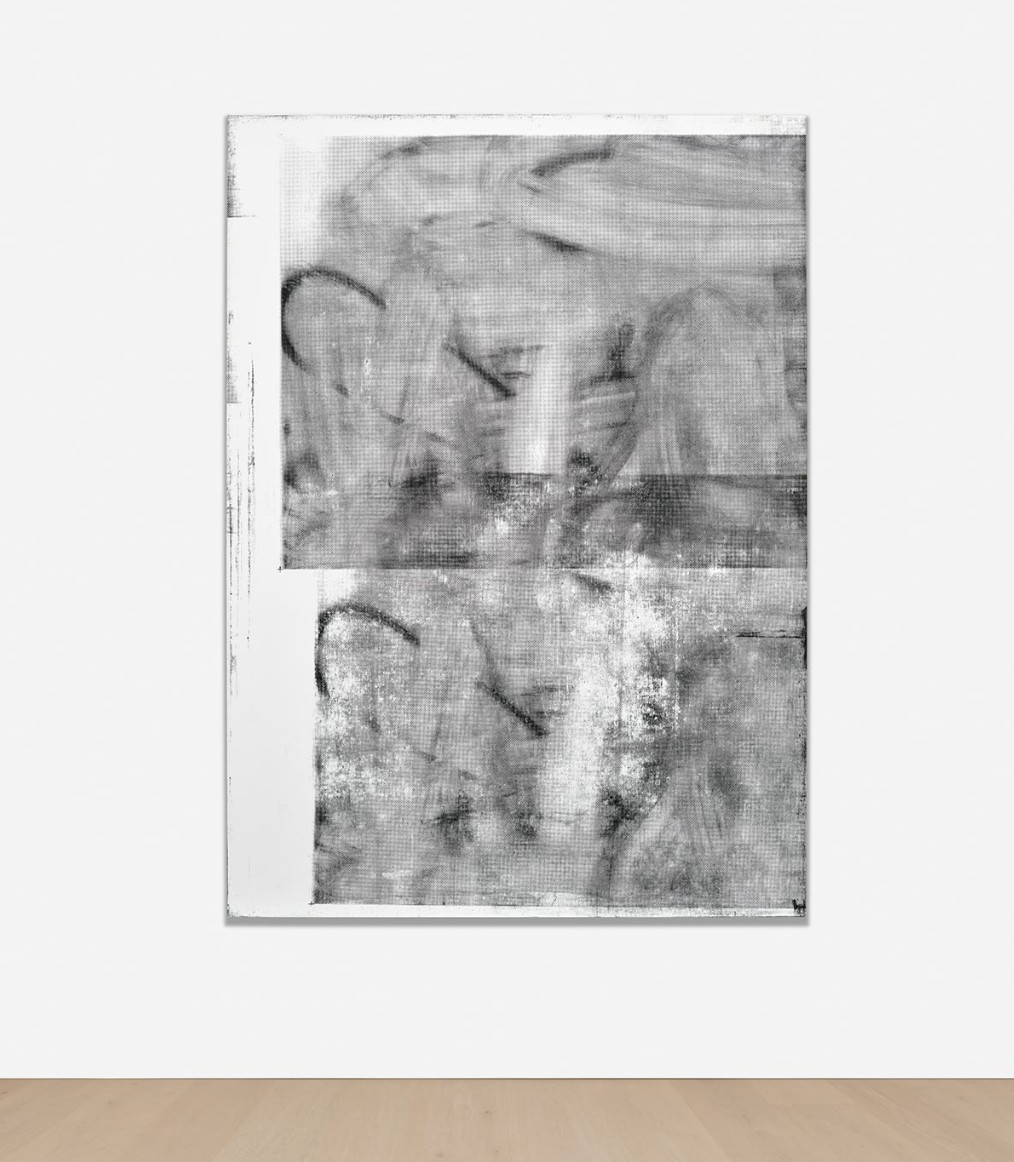
Untitled, 2004
Silkscreen ink on linen
#15. Untitled, 1989
Phillips New-York: 25 September 2025
Estimated: USD 150,000 – 200,000
USD 309,600
WORK ON PAPER
Christopher Wool New Now: Modern & Contemporary Art
Untitled, 1989
Acrylic on paper
#16. Untitled, 2000
Sotheby’s London: 4 March 2025
Estimated: GBP 250,000 – 350,000
GBP 215,900 / USD 276,352
WORK ON PAPER
Untitled | Modern & Contemporary Evening Auction | 2025 | Sotheby’s
CHRISTOPHER WOOL (b. 1955)
Untitled, 2000
Enamel on rice paper
66×48 inches (167.6 x 121.9 cm)
Signed, dated 2000, and numbered D103 (on the reverse)
#17. Untitled, 1989
Property from an Important Private Collection, Japan
Christie’s New-York: 20 November 2025
Estimated: USD 200,000 – 300,000
USD 254,000
CHRISTOPHER WOOL (B. 1955), Untitled | Christie’s
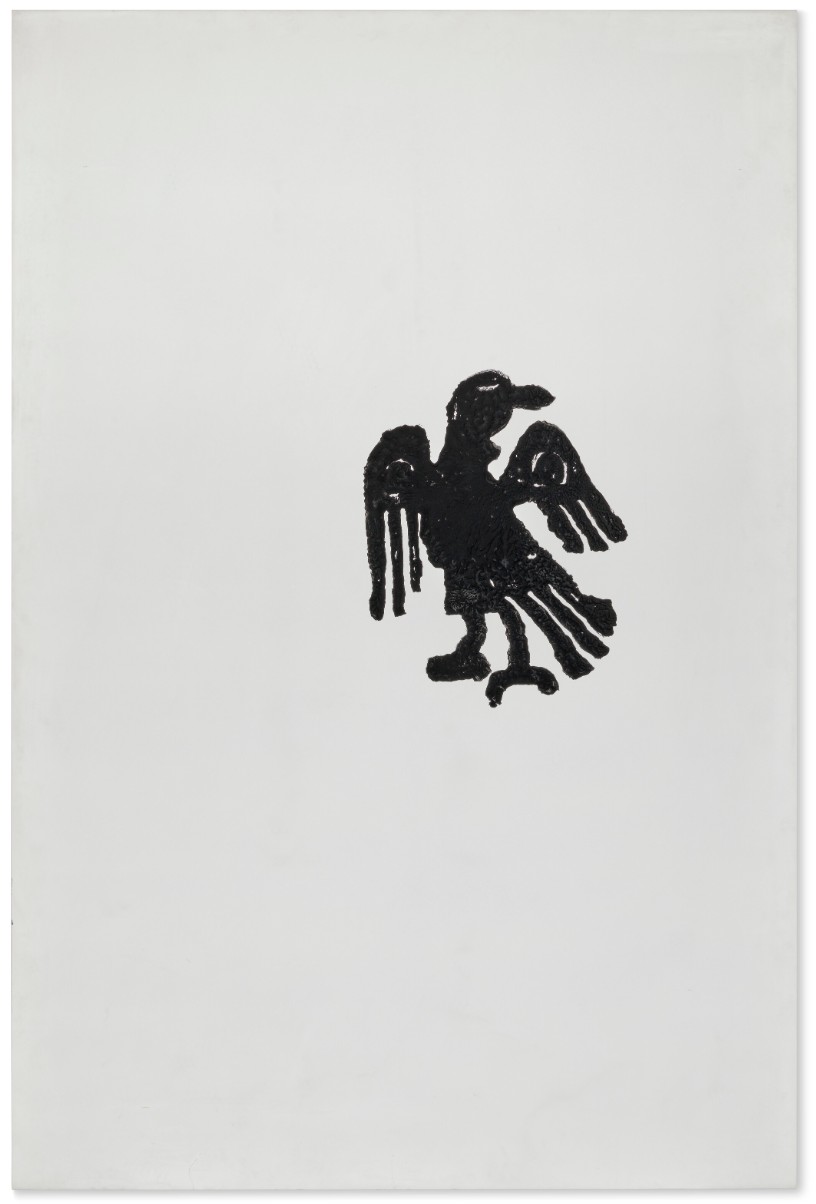
CHRISTOPHER WOOL (B. 1955)
Untitled, 1989
Enamel and acrylic on aluminum
72×48 inches (182.9 x 121.9 cm)
Signed and dated ‘Wool 1989’ (on the reverse)
#18. Untitled, 1989
Phillips London: 10 April 2025
Estimated: GBP 60,000 – 80,000
GBP 107,950 / 139,685
WORK ON PAPER
Christopher Wool New Now: Modern & Contemporary Art
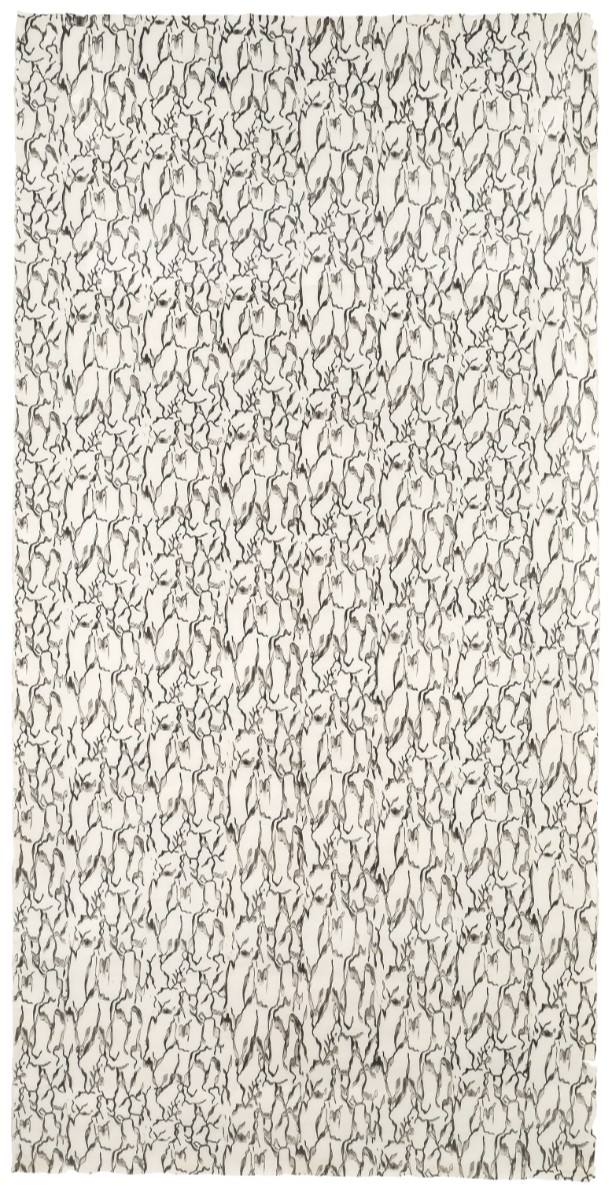
CHRISTOPHER WOOL
Untitled, 1989
Ink on paper
73 5/8 x 37 inches (187×94 cm)
Signed and dated ‘Wool ’89’ on the reverse
USD 100,000
#19. Untitled, 2016
Phillips New-York: 28 February 2025
Estimated: USD 60,000 – 80,000
USD 53,340
Christopher Wool New Now: Modern & Contemporary Art
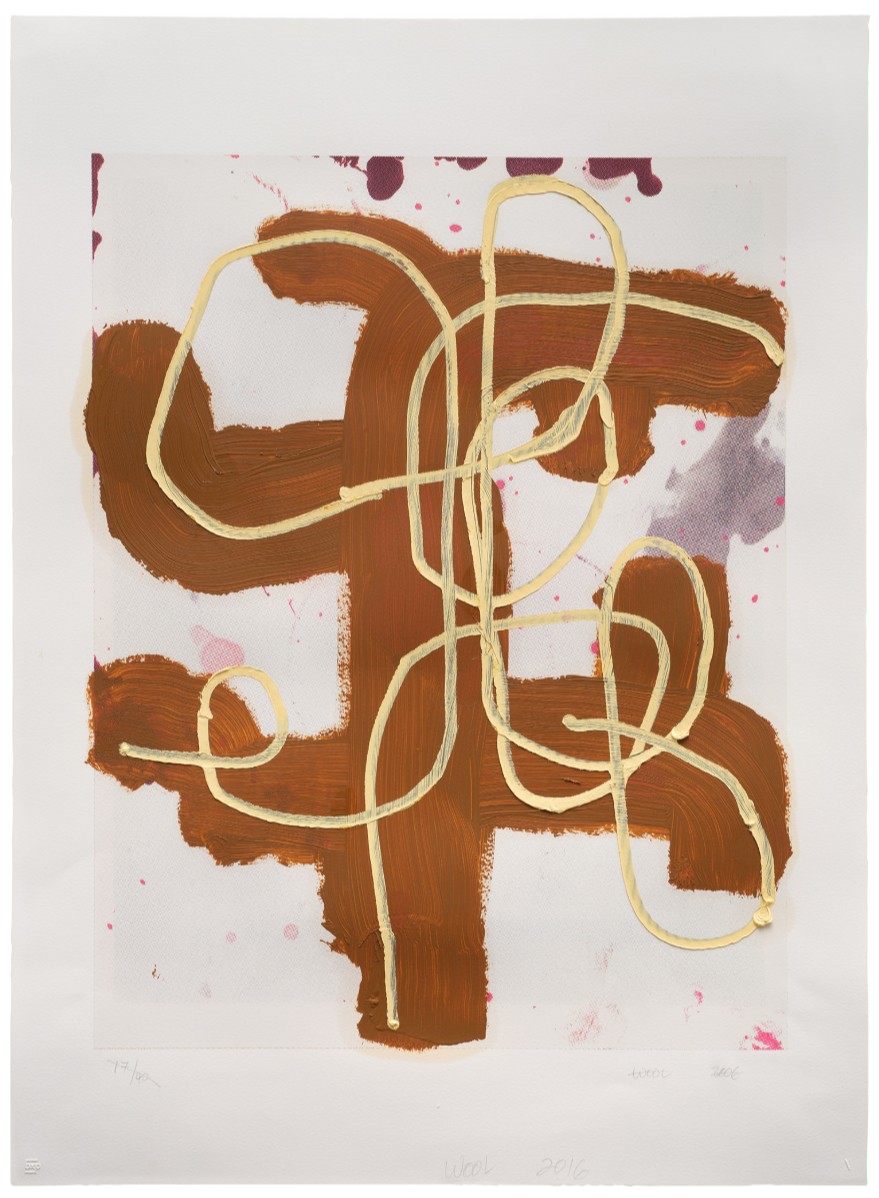
CHRISTOPHER WOOL
Untitled, 2016
Oil and silkscreen on paper
30×22 inches (76.2 x 55.9 cm)
Signed and dated “WOOL 2016” lower center
#20. Untitled, 1991
Sotheby’s New-York: 1 October 2025
Estimated: USD 10,000 – 15,000
USD 48,260
Untitled | Contemporary Discoveries | 2025 | Sotheby’s
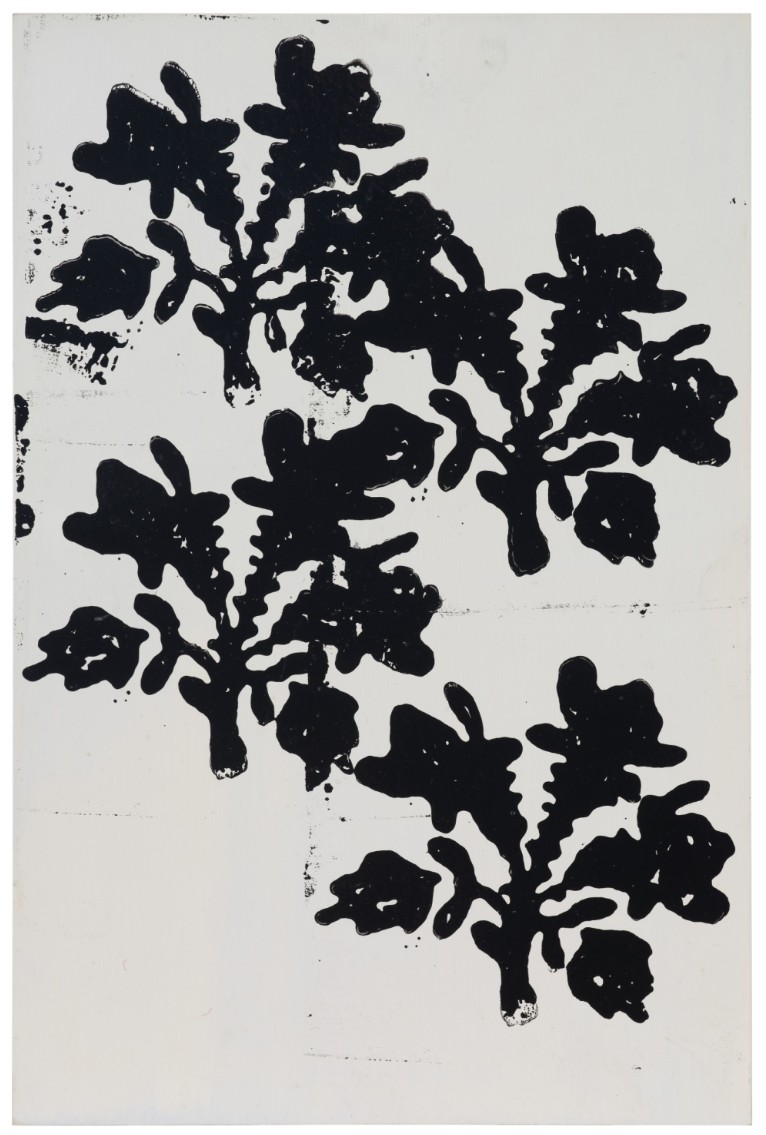
CHRISTOPHER WOOL (b. 1955)
Untitled, 1991
Enamel on aluminum
12×8 inches (30.5 x 20.3 cm)
Signed, dated 1991 and numbered 6/8 (on the reverse)
This work is number 6 from an edition of 8 unique variants
Lots Passed
Untitled, 1989
Phillips Hong-Kong: 12 December 2025
Estimated: HKD 500,000 – 700,000
PASSED
Christopher Wool Modern & Contemporary Art & Design Sale
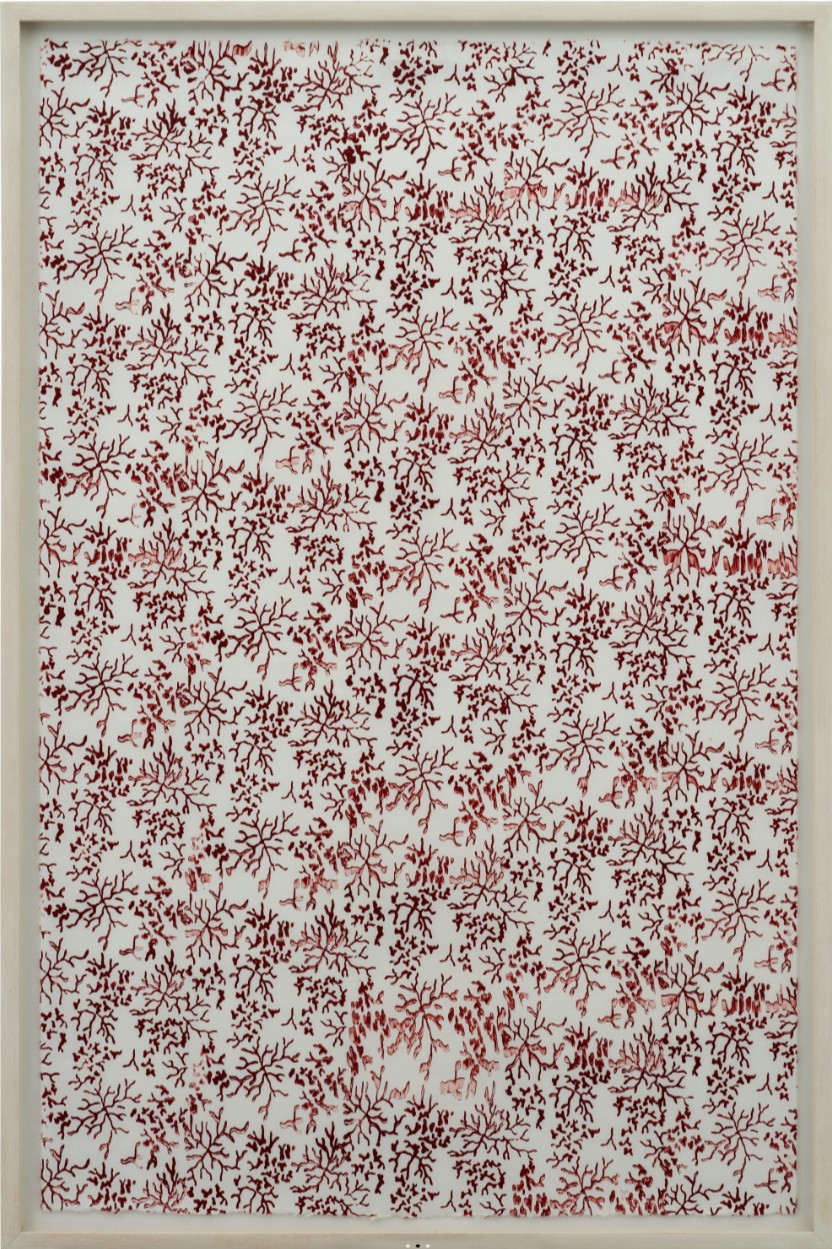
CHRISTOPHER WOOL
Untitled, 1989
Enamel on Suzuki paper
37×24 inches (94×61 cm)
Signed and dated ‘Wool ’89’ on the reverse
Untitled, 1988
Sotheby’s New-York: 19 November 2025
Estimated: USD 50,000 -70,000
PASSED
Untitled | Contemporary Day Auction | 2025 | Sotheby’s
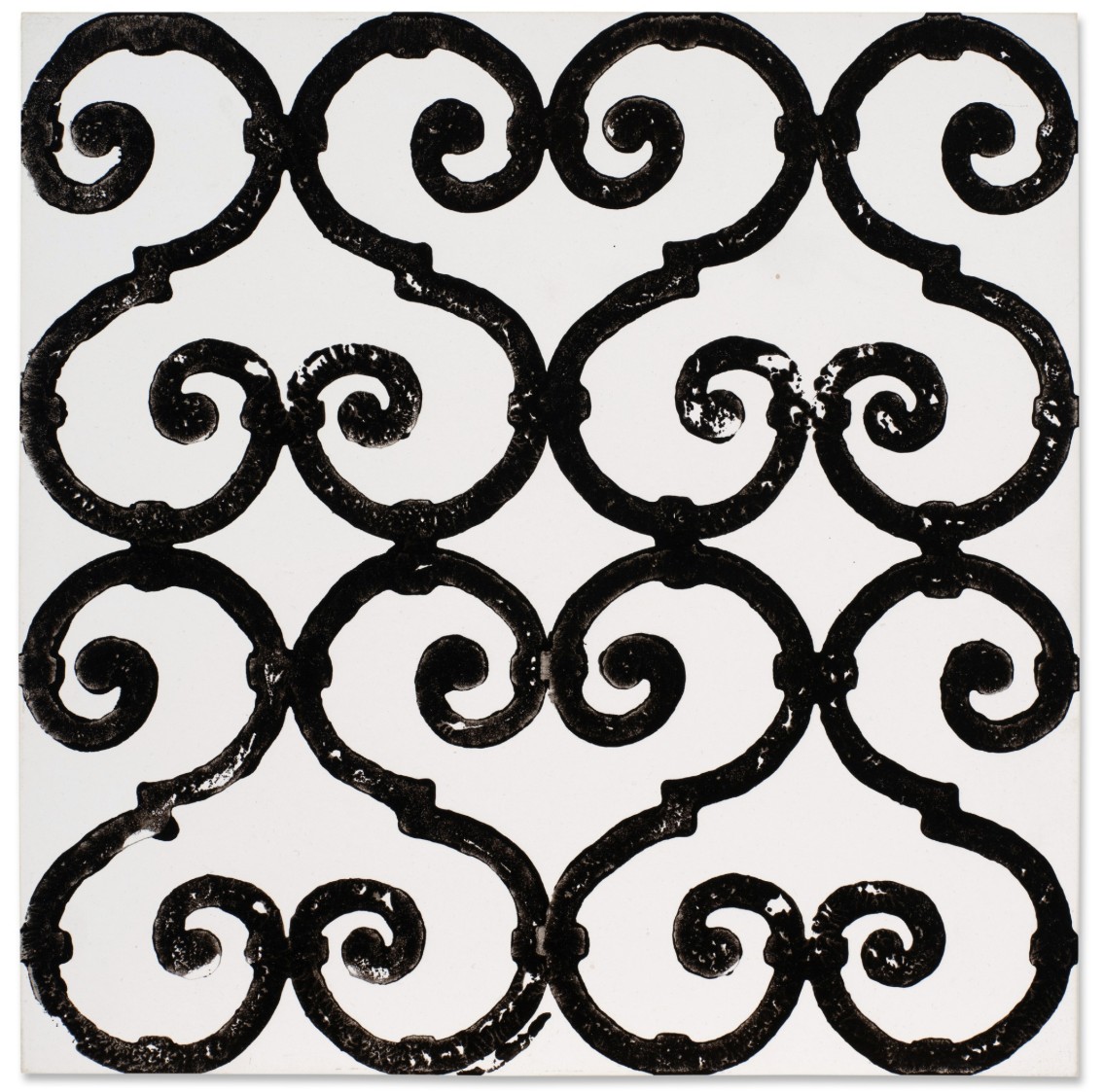
CHRISTOPHER WOOL (b. 1955)
Untitled, 1988
Enamel and flashe on aluminum
12×12 inches (30.5 x 30.5 cm)
Signed, dated 1988 and inscribed T19 (on the reverse)
Untitled, 1988
Christie’s New-York: 14 May 2025
Estimated: USD 3,500,000 – 5,500,000
PASSED
CHRISTOPHER WOOL (B. 1955), Untitled | Christie’s
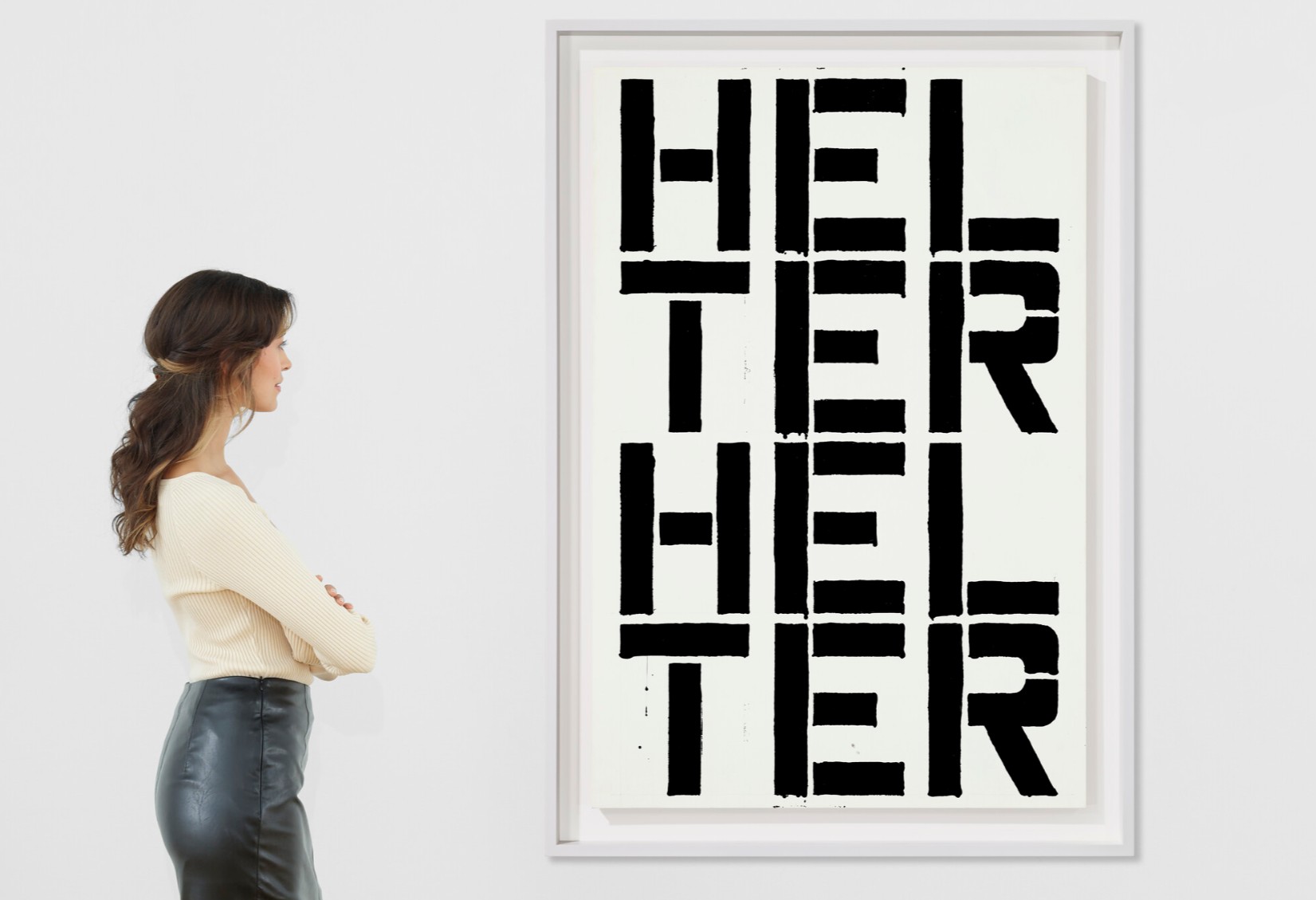
CHRISTOPHER WOOL (B. 1955)
Untitled, 1988
Enamel and Flashe on aluminum
48×32 inches (121.9 x 81.2 cm)
Signed and dated ‘WOOL 1988’ (on the reverse)
Lots Withdrawn
Untitled, 2006
Sotheby’s New-York: 26 September 2025
Estimated: USD 300,000 – 400,000
WITHDRAWN
Endplate | Contemporary Curated | 2025 | Sotheby’s
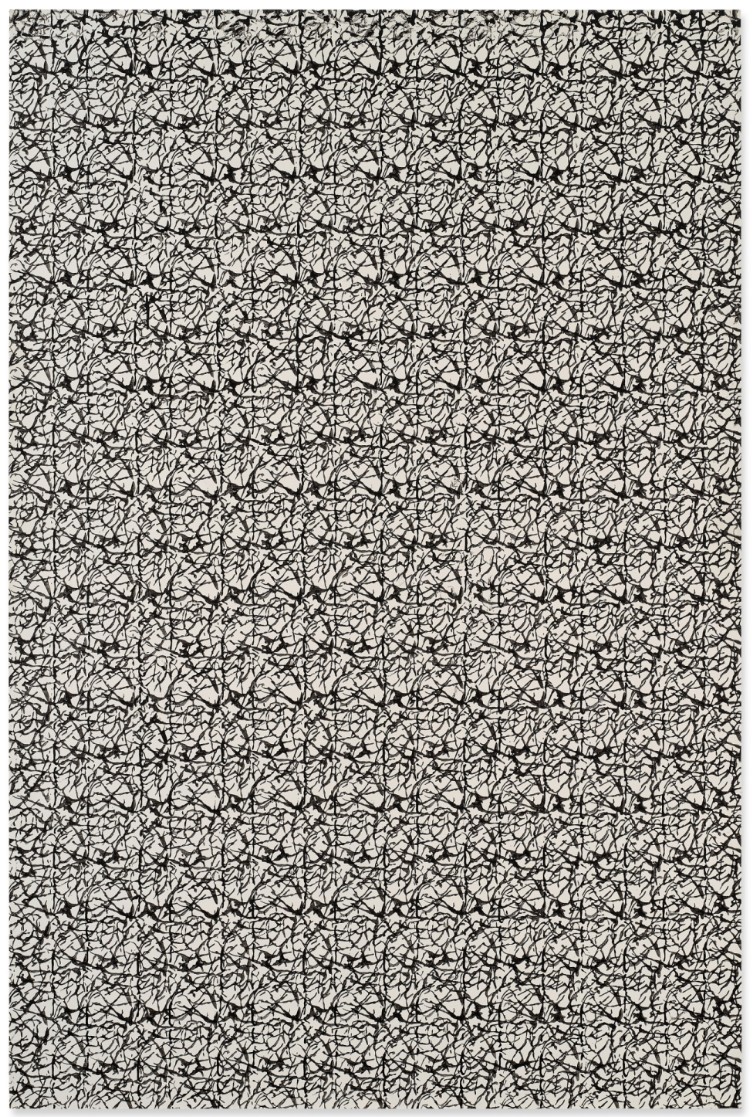
CHRISTOPHER WOOL (b. 1955)
Untitled, 2006
Silkscreen ink on linen
96×72 inches (243.8 x 182.9 cm)
Signed and dated 2006 (on the reverse)
Signed and dated 2006 (on the overlap)
2024 Auction Results
19 lots sold at auction in 2024 for a total turnover of USD 18,240,860. With 3 lots failing to sell, the sell-through rate is 86%. The highest price has been achieved at Sotheby’s in London on 9 October 2024, when Untitled, an enamel on linen dated 2009, sold for GBP 2,880,000 (USD 3,772,370). 6 lots sold for more than USD 1 million, generating a cumulative turnover of USD 14,049,738, representing 77% of the total turnover in 2024.
2024 Top 3 Lots
#1. Untitled, 2009
Sotheby’s London: 9 October 2024
Estimated: GBP 2,200,000 – 2,800,000
GBP 2,880,000 / USD 3,772,370
Untitled | Contemporary Evening Auction | 2024 | Sotheby’s
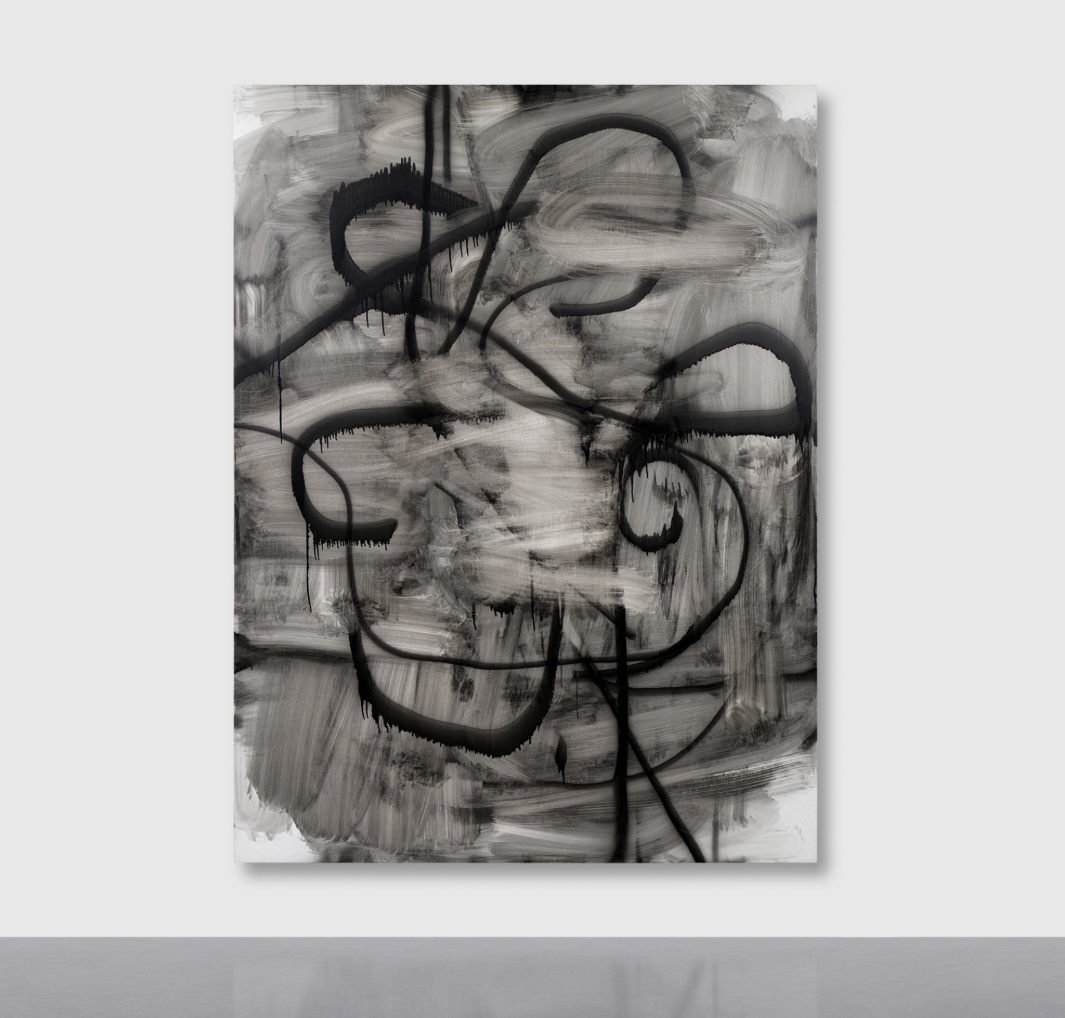
CHRISTOPHER WOOL (b. 1955)
Untitled, 2009
Enamel on linen
104×78 inches (264.1 x 198.1 cm)
Signed, dated 2009 and numbered (P579) (on the overlap)
Signed, dated 2009 and numbered (P579) (on the backing board)
#2. Untitled, 1992
Sotheby’s London: 6 March 2024
Estimated: GBP 800,000 – 1,200,000
GBP 2,226,000 / USD 2,822,568
Untitled | Modern & Contemporary Evening Auction featuring The Now | 2024 | Sotheby’s (sothebys.com)
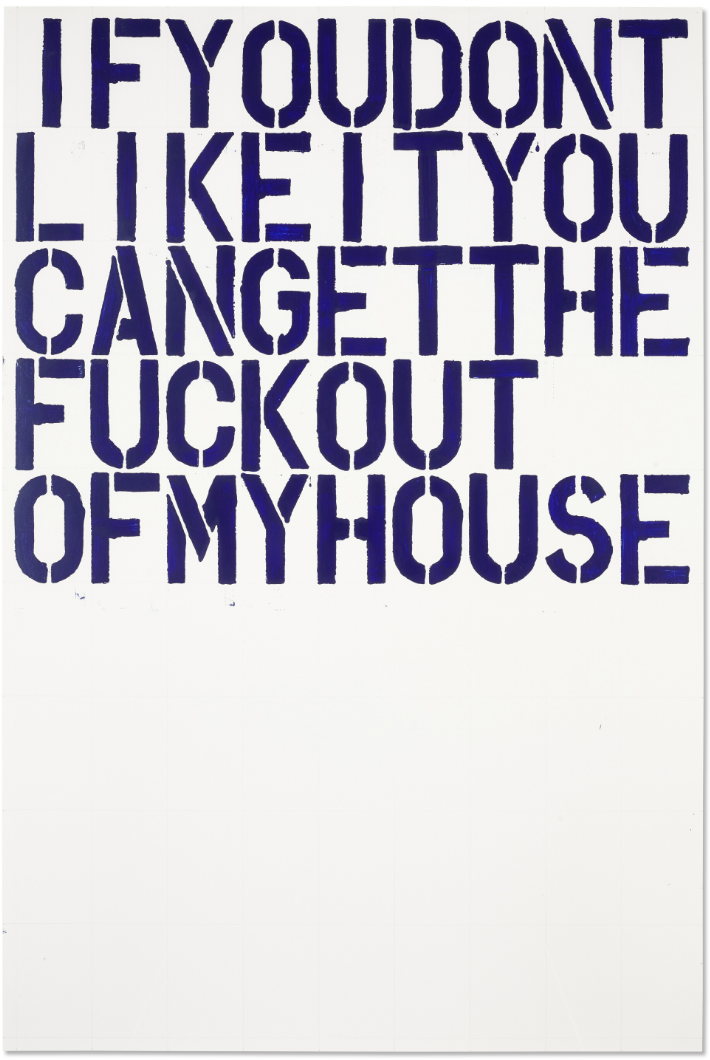
CHRISTOPHER WOOL (b. 1955)
Untitled, 1992
Enamel on paper
39×26 inches (99 x 66.2 cm)
Signed, dated 1992 and numbered F50 (on the reverse)
#3. Untitled, 1992
Sotheby’s New-York: 20 November 2024
Estimated: USD 2,000,000 – 3,000,000
USD 2,420,000
Untitled | The Now and Contemporary Evening Auction | 2024 | Sotheby’s
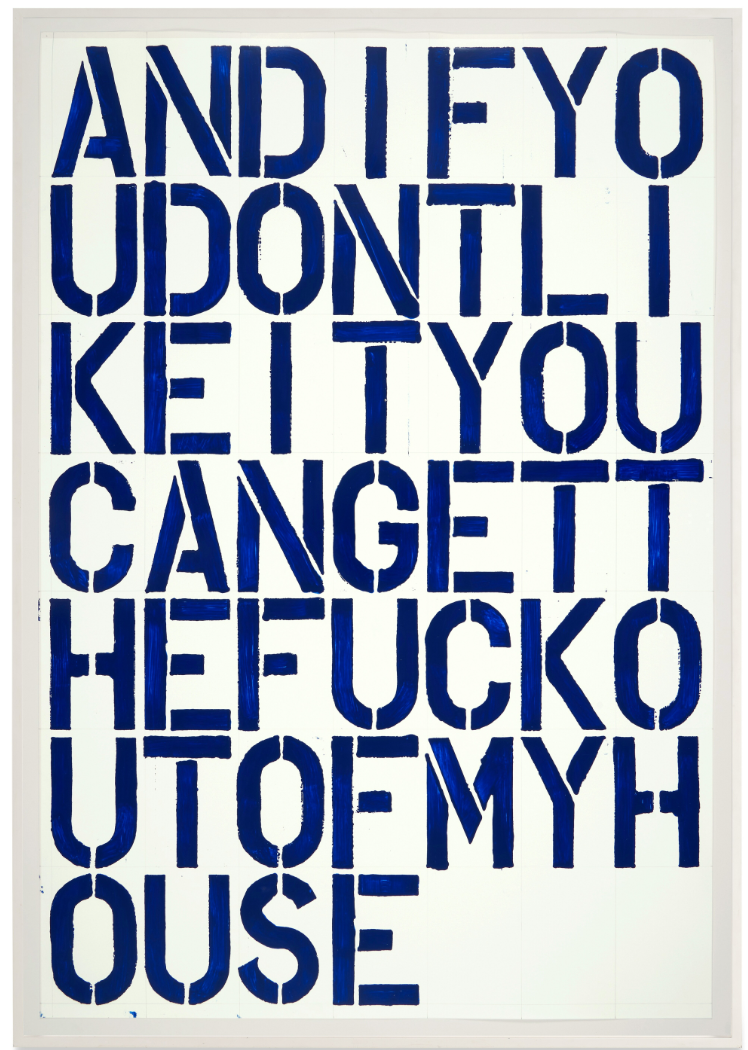
CHRISTOPHER WOOL (b. 1955)
Untitled, 1992
Enamel on paper
38×26 inches (96.5 x 66 cm)
Signed, dated 1992 and numbered F43 (on the reverse)
#4. Untitled (TRBL), 1990
Sotheby’s New-York: 13 May 2024
Estimated: USD 1,500,000 – 2,500,000
USD 2,310,600
Untitled (TRBL) | Contemporary Evening Auction | 2024 | Sotheby’s (sothebys.com)

CHRISTOPHER WOOL (b. 1955)
Untitled (TRBL), 1990
Enamel on paper
36×24 inches (91.4 by 61 cm)
Signed and dated 1990 (on the reverse)
#5. Untitled, 1992
Christie’s New-York: 21 November 2024
Estimated: USD 1,500,000 – 2,500,000
USD 1,502,000
CHRISTOPHER WOOL (B. 1955), Untitled | Christie’s
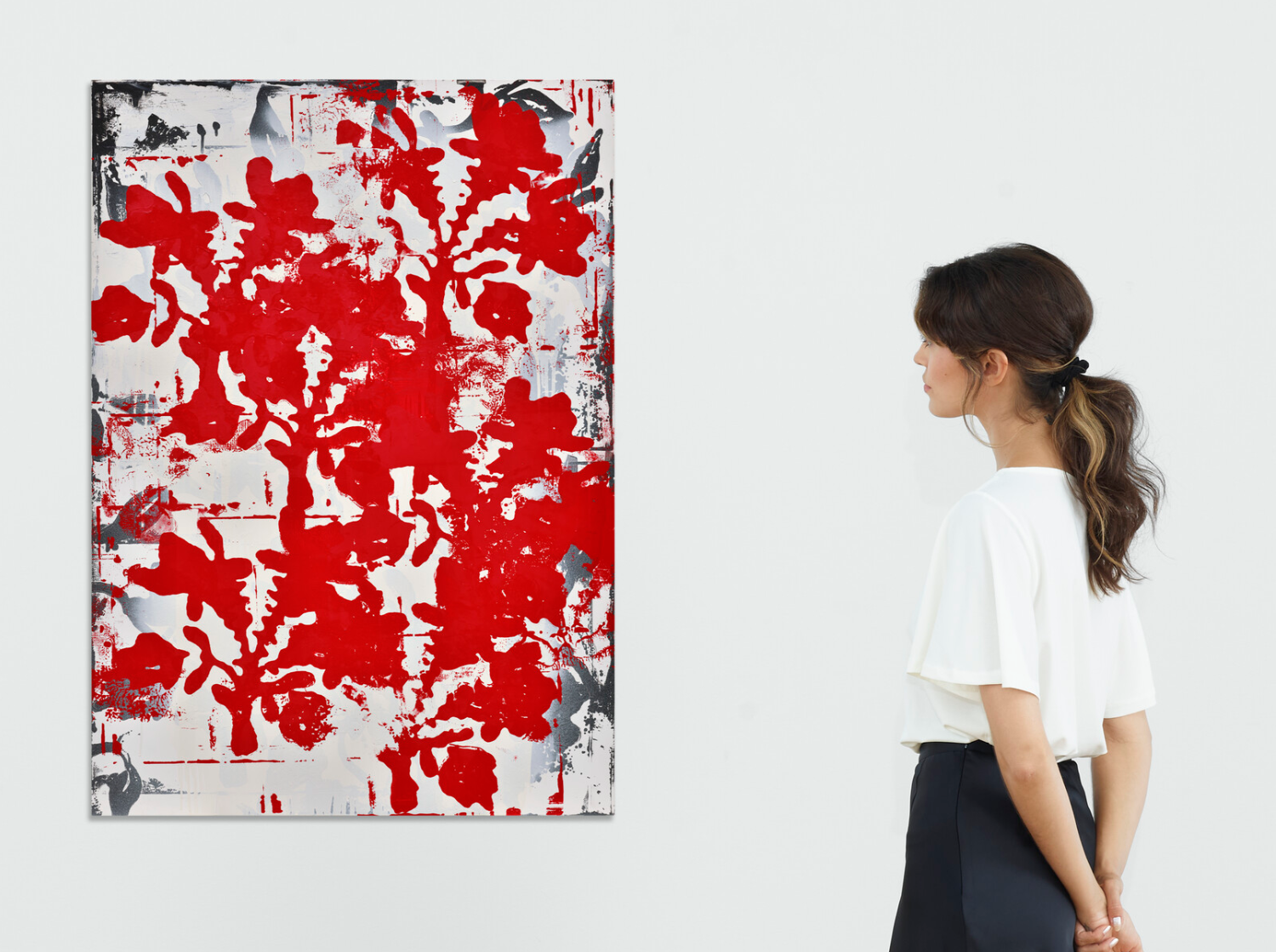
CHRISTOPHER WOOL (B. 1955)
Untitled, 1992
Enamel on aluminum
43×30 inches (109.2 x 75.9 cm)
Signed, inscribed and dated ‘WOOL 1993 (S116)’ (on the reverse)
#6. Untitled, 2011
Christie’s New-York: 14 May 2024
Estimated: USD 600,000 – 800,000
USD 1,222,200
CHRISTOPHER WOOL (B. 1955), Untitled | Christie’s (christies.com)
GUARANTEED

CHRISTOPHER WOOL (B. 1955)
Untitled, 2011
Silkscreen on linen
129×96 inches (304.8 x 243.8 cm)
Signed and dated ‘Wool 2011’ (on the overlap)
Signed and dated again ‘Wool (2011)’ (on the stretcher)
USD 1 million
#7. Untitled, 1997
Christie’s New-York: 22 November 2024
Estimated: USD 1,200,000 – 1,800,000
USD 945,000
CHRISTOPHER WOOL (B. 1955), Untitled | Christie’s
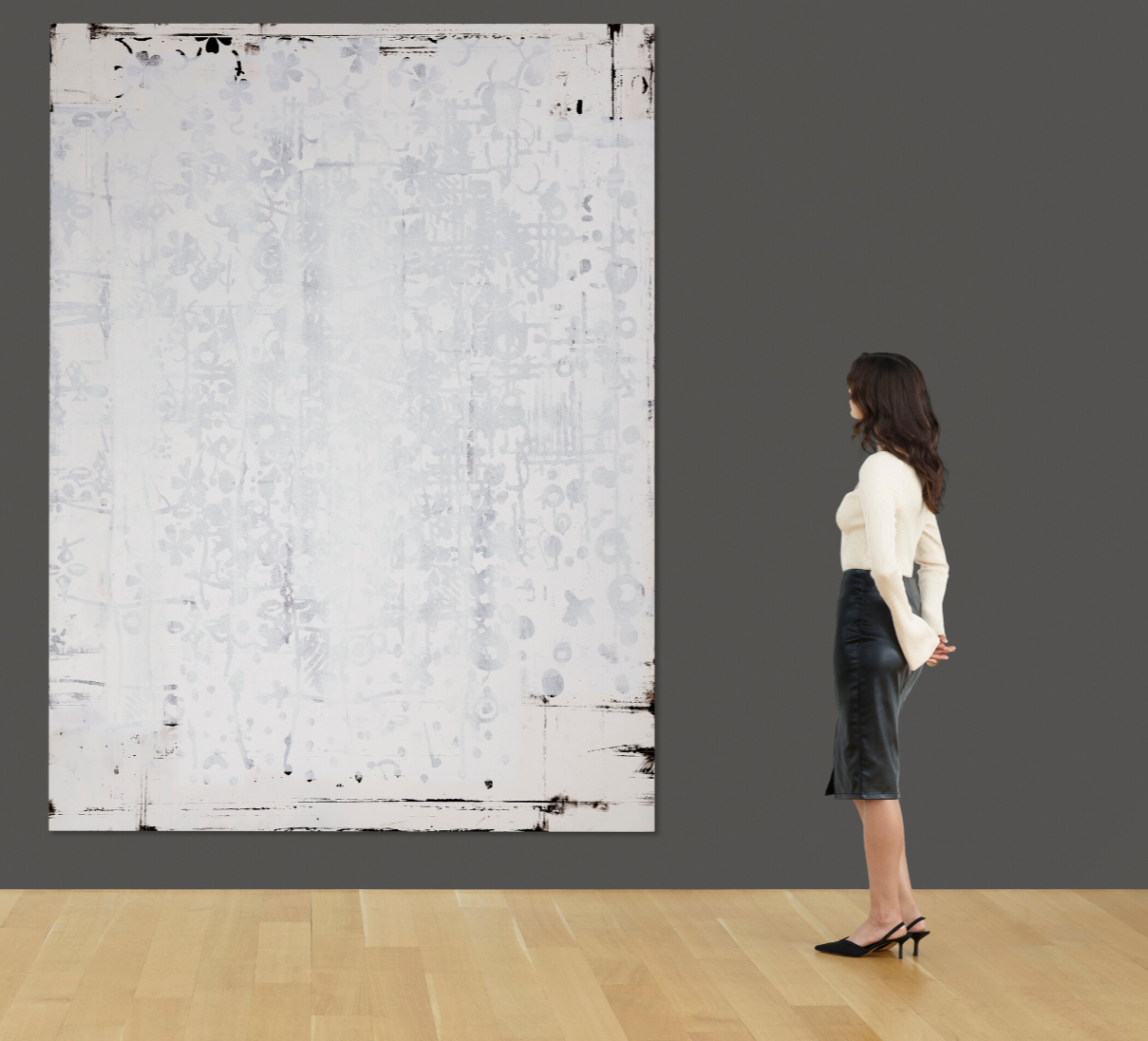
CHRISTOPHER WOOL (B. 1955)
Untitled, 1997
Enamel on aluminum
96×72 inches (243.8 x 182.8 cm)
Signed, inscribed and dated ‘WOOL 1997 (P272)’ (on the reverse)
#8. Untitled, 2002
Christie’s New-York: 22 November 2024
Estimated: USD 700,000 – 1,000,000
USD 819,000
CHRISTOPHER WOOL (B. 1955), Untitled | Christie’s
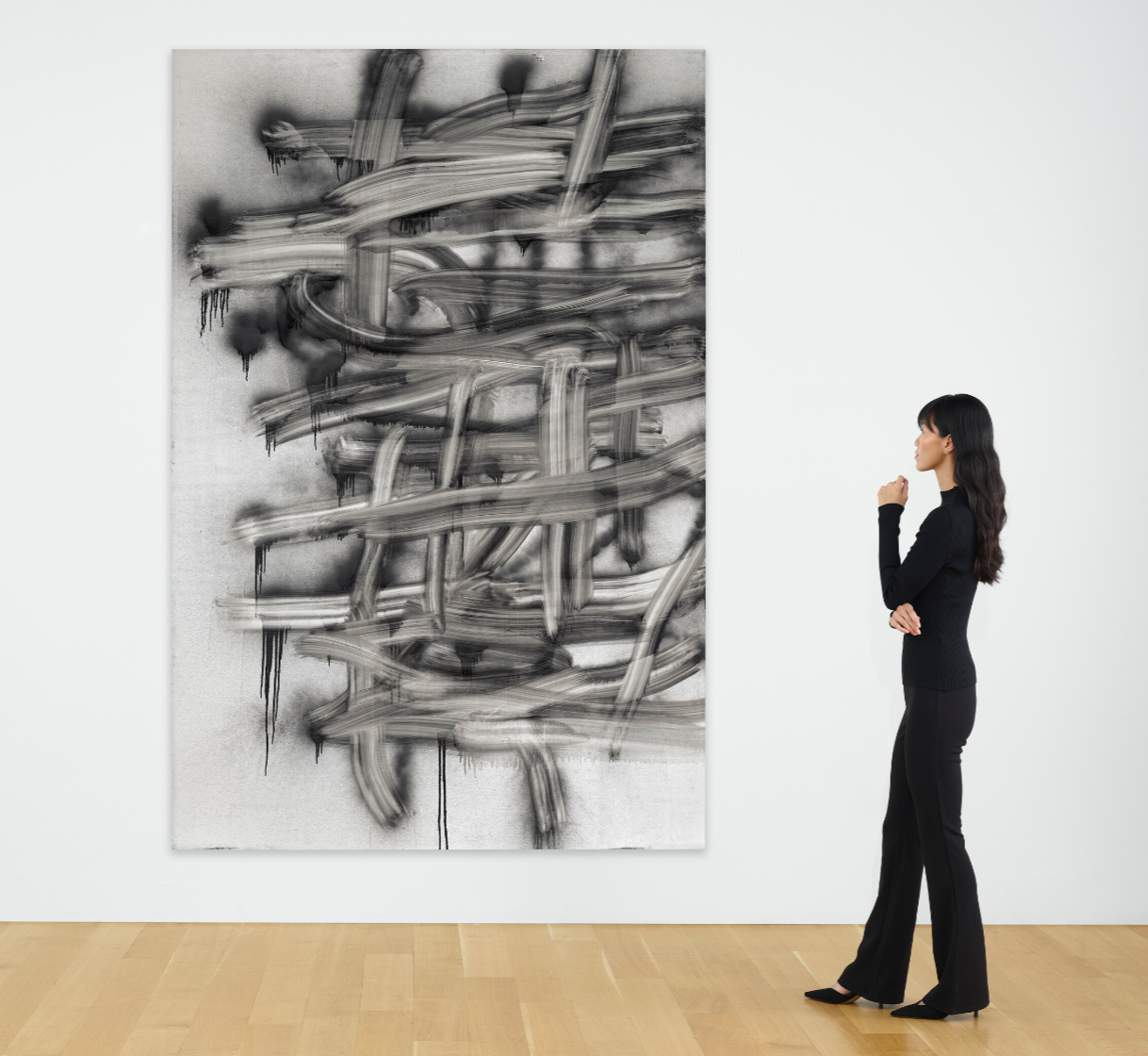
CHRISTOPHER WOOL (B. 1955)
Untitled, 2002
Enamel on linen
108×72 inches (274.3 x 182.8 cm)
Signed, inscribed, titled and dated ‘Wool Untitled (P378) 2002’ (on the reverse)
#9. Untitled (H.H.), 2003
Christie’s Paris: 18 October 2024
Estimated: EUR 600,000 – 800,000
EUR 630,000 / USD 682,250
Christopher Wool (né en 1955), Untitled (H.H.) | Christie’s
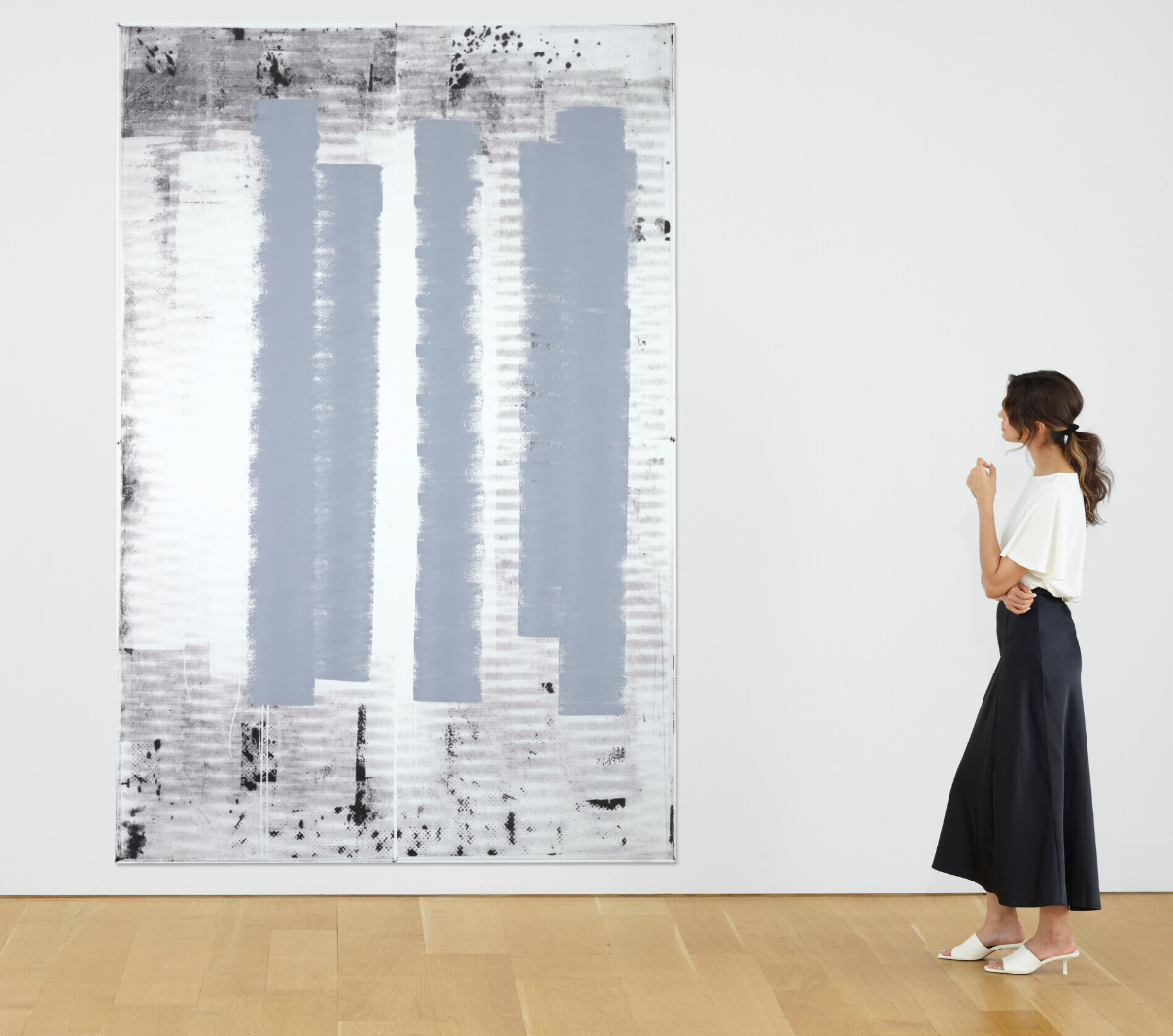
CHRISTOPHER WOOL (born 1955)
Untitled (H.H.), 2003
Silkscreen ink and enamel on linen
108 x 72 1/4 inches (274.4 x 183.5 cm)
Signed, inscribed and dated ‘WOOL 2003 (P405)’
Signed, inscribed and dated ‘WOOL 2003 (P405)’ (on the overlap)
#10. Untitled, 2004
Sotheby’s London: 26 June 2024
Estimated: GBP 450,000 – 650,000
GBP 504,000 / USD 639,072
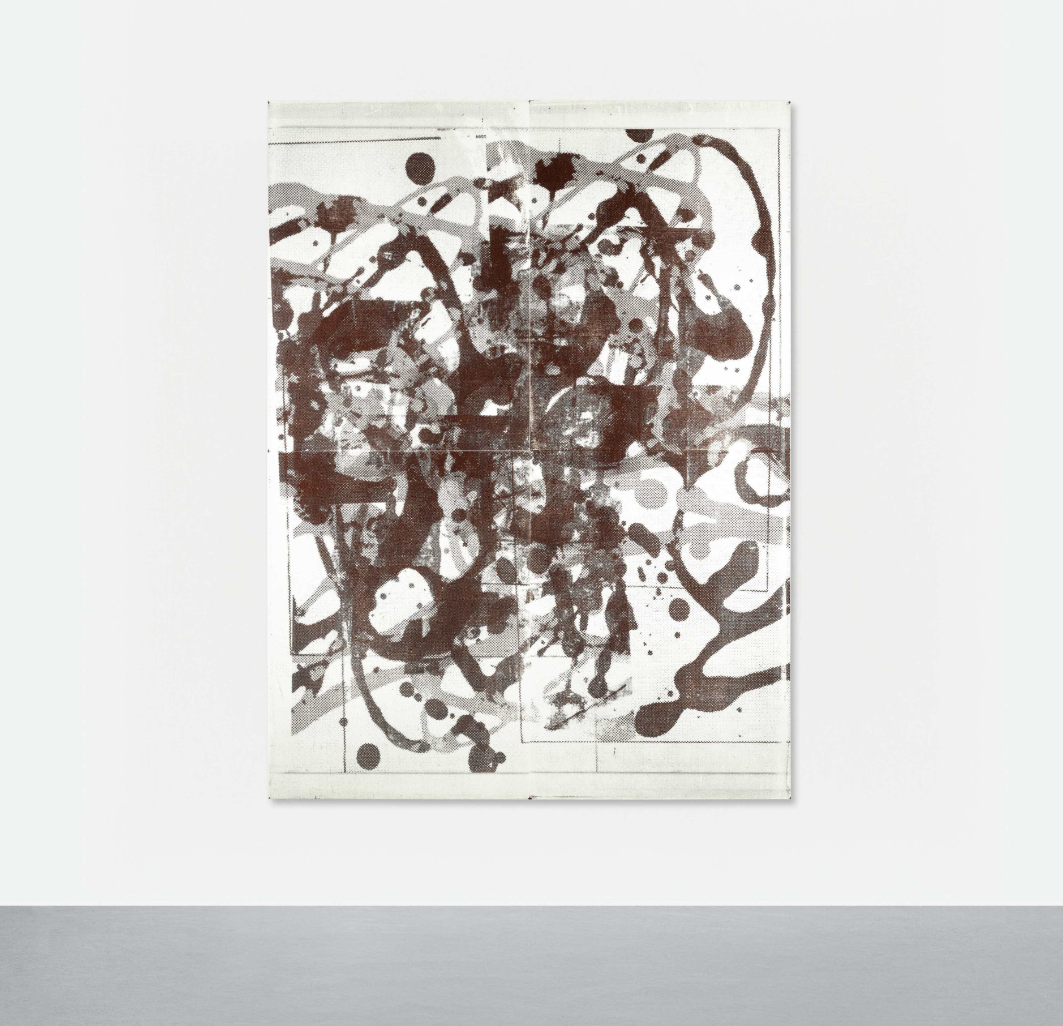
CHRISTOPHER WOOL (b. 1955)
Untitled, 2004
Silkscreen ink on linen mounted on board
104×78 inches (264.3 x 198 cm)
Signed, dated 2004 and numbered P467 (on the overlap and on the reverse)
#11. Untitled, 1990
Phillips New-York: 20 November 2024
Estimated: USD 400,000 – 600,000
USD 488,950
Christopher Wool – Modern & Contem… Lot 328 November 2024 | Phillips
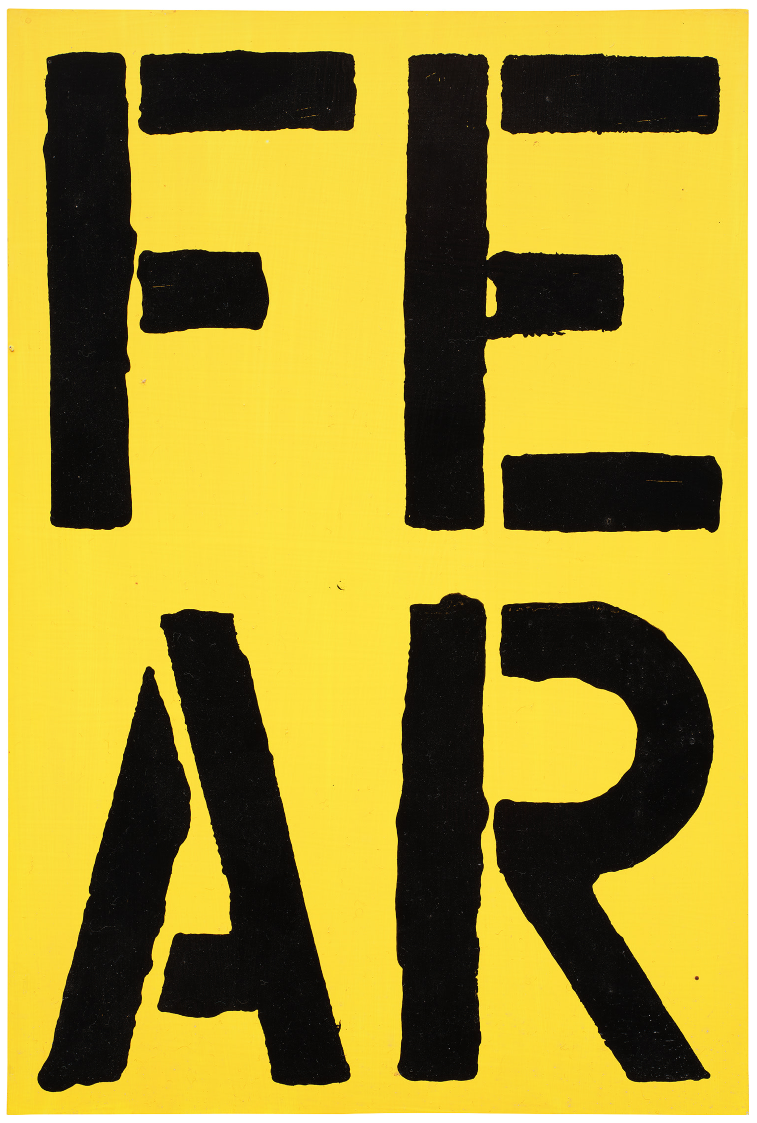
CHRISTOPHER WOOL
Untitled, 1990
Enamel on aluminum
11 7/8 x 8 inches (30.2 x 20.3 cm)
Signed and dated “WOOL 1990” on the reverse
#12. Archival material associated with the 1989 Whitney Biennial Cover, 1989
Sotheby’s New-York: 1 March 2024
Estimated: USD 30,000 – 40,000
USD 139,700
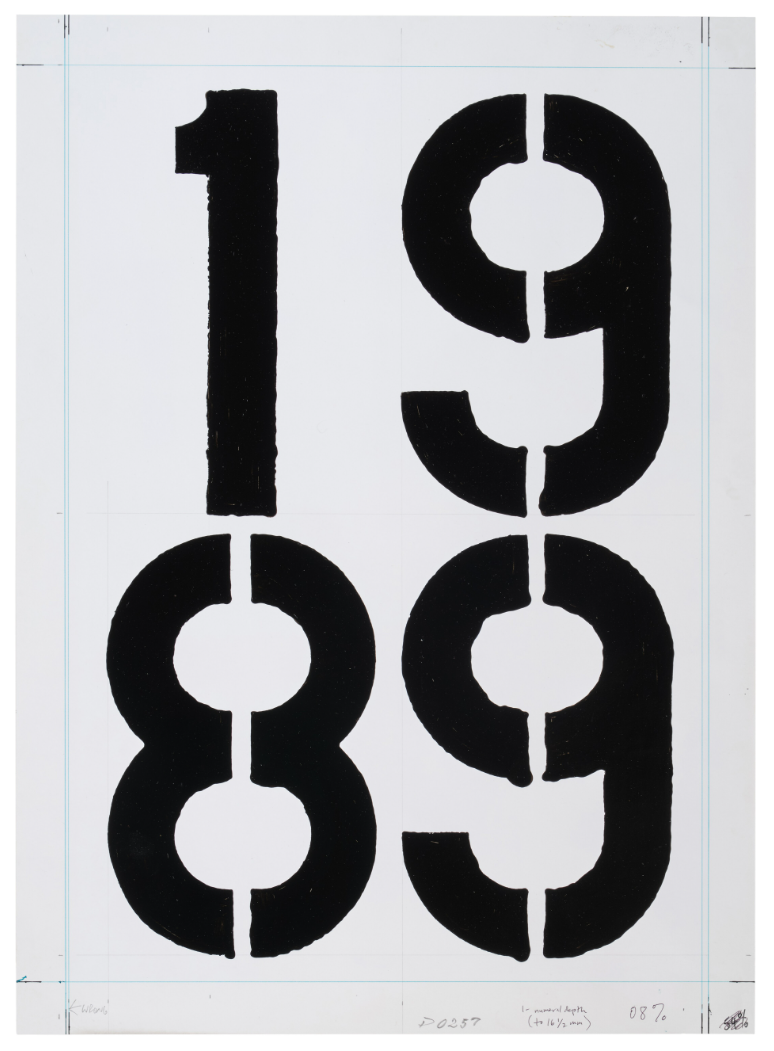
CHRISTOPHER WOOL (b. 1955)
Archival material associated with the 1989 Whitney Biennial Cover, 1989
Enamel and graphite on paper
Sheet: 19 1/4 x 14 1/4 inches (48.9 x 36.2 cm)
Image: 17 1/4 x 12 inches (43.8 x 30.5 cm)
USD 100,000
#13. Untitled, 1988
Bonhams New-York: 16 May 2024
Estimated: USD 80,000 – 120,000
USD 95,750
Bonhams : CHRISTOPHER WOOL (B. 1955) Untitled 1988
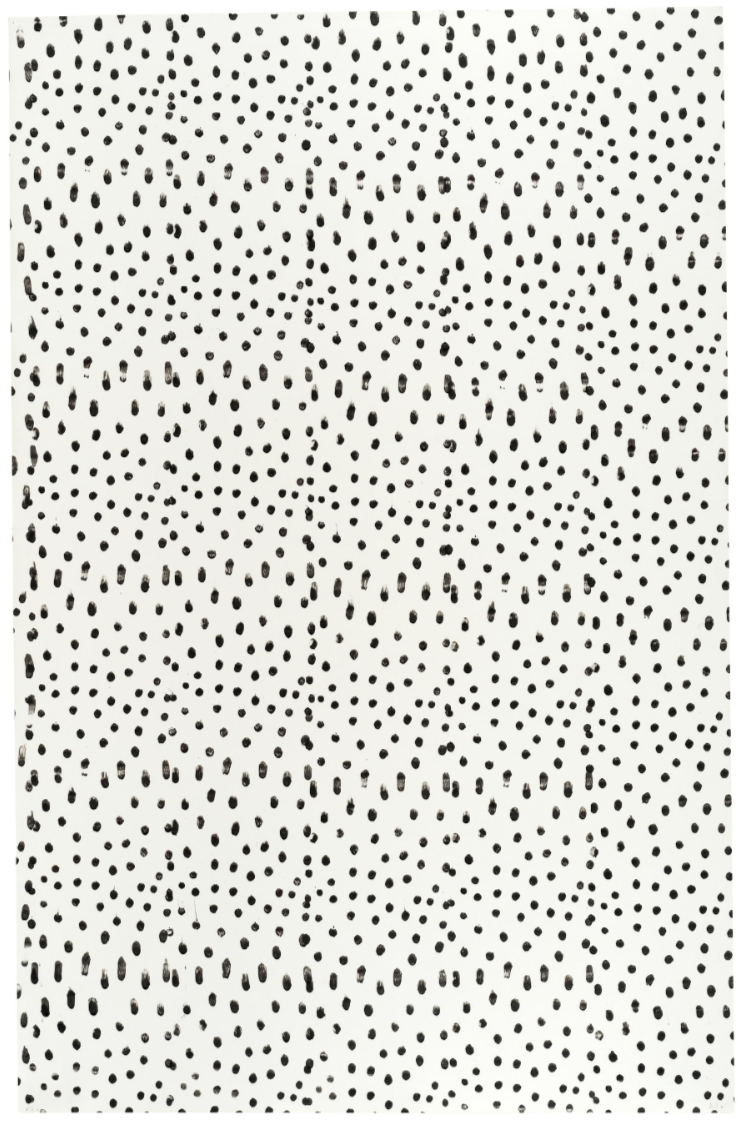
Enamel on paper
40×26 inches (101.6 x 66 cm)
Signed and dated 1988 on the reverse
#14. Archival material associated with the 1989 Whitney Biennial Cover, 1989
Estimated: USD 30,000 – 40,000
USD 88,900
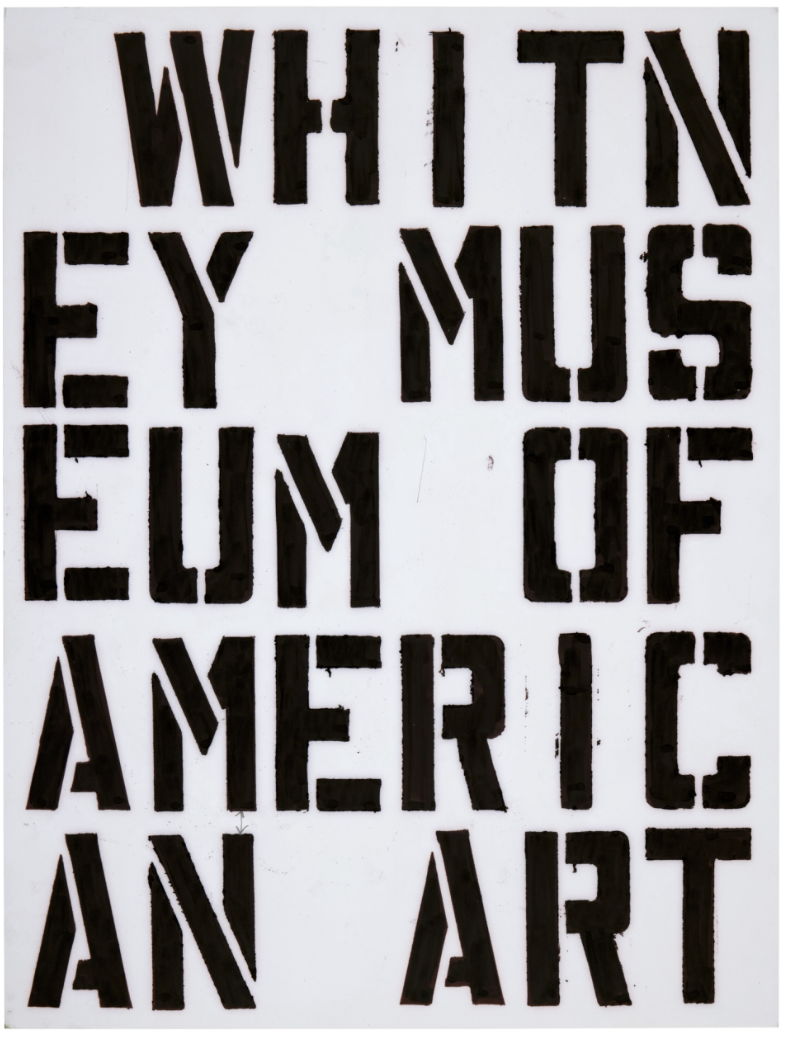
CHRISTOPHER WOOL (b. 1955)
Archival material associated with the 1989 Whitney Biennial Cover, 1989
Enamel and graphite on paper
17 3/4 x 13 1/2 inches (45.1 x 34.3 cm)
#15. Archival material associated with the 1989 Whitney Biennial Cover, 1989
Sotheby’s New-York: 16 May 2024
Estimated: USD 30,000 – 40,000
USD 82,550
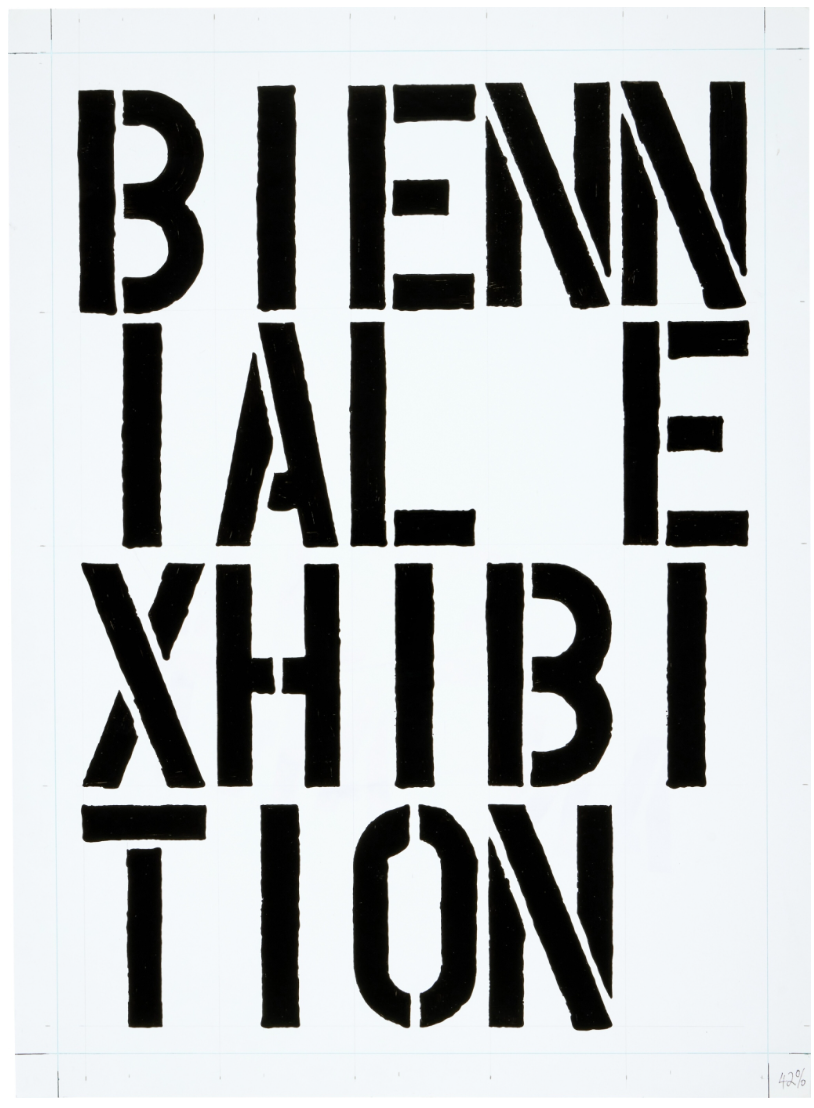
CHRISTOPHER WOOL (b. 1955)
Archival material associated with the 1989 Whitney Biennial Cover, 1989
Enamel and graphite on paper
25 3/4 x 18 inches (63 x 45.7 cm)
Unsigned
Lots Passed
Untitled, 2015
Sotheby’s New-York: 21 November 2024
Estimated: USD 1,000,000 – 1,500,000
PASSED
Untitled | Contemporary Day Auction | 2024 | Sotheby’s
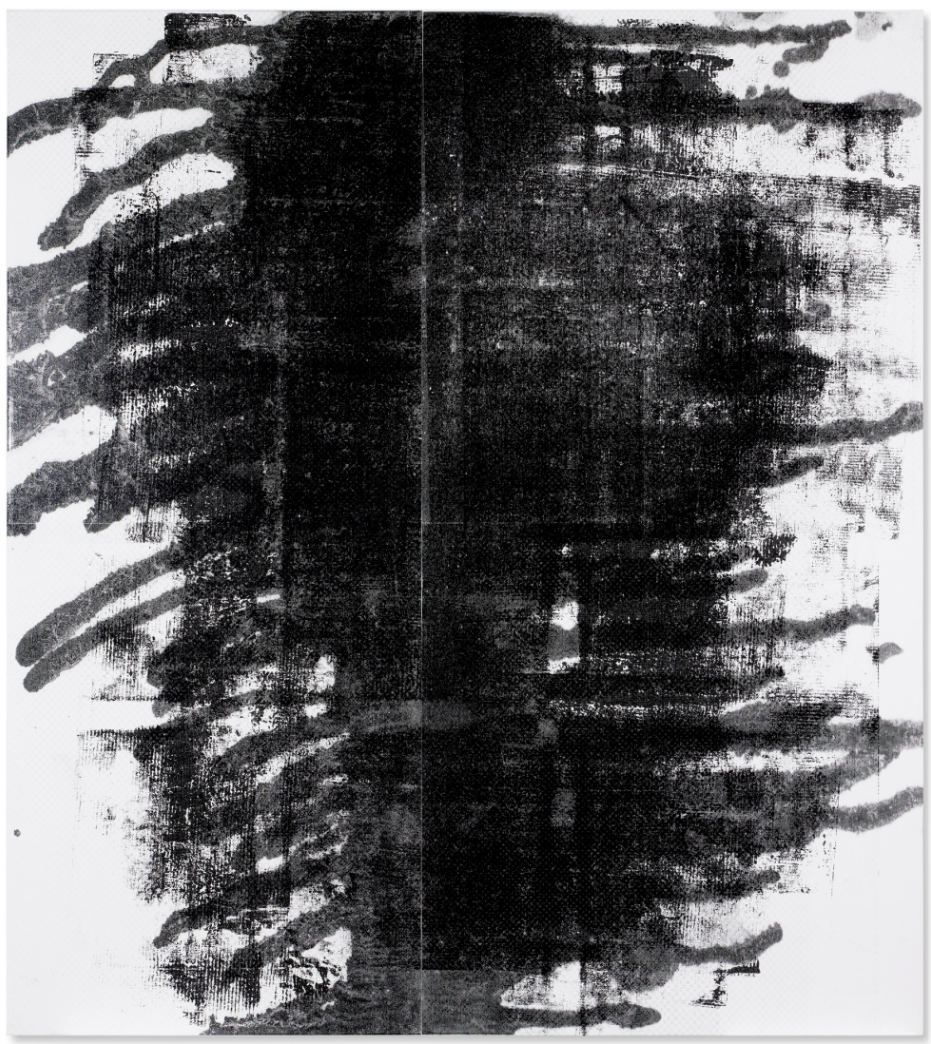
CHRISTOPHER WOOL (b. 1955)
Untitled, 2015
Silkscreen ink on linen
108×96 inches (274.3 x 243.8 cm)
Signed and dated 2015 (on the overlap)
2023 Auction Results
13 lots sold in 2023 for a total turnover of USD 27,296,409. With 5 lots failing to sell, the sell-through rate is 72%. The highest price was achieved at Christie’s in New-York on 17 May 2023, for a Word painting, untitled enamel on aluminum dated 1993 that sold for USD 10,070,000. 4 lots sold for more than USD 1 million, generating a cumulative turnover of USD 23,044,500, representing 84.4% of the total turnover for 2023.
2023 Top 3 Lots
#1. Untitled, 1993
Christie’s New-York: 17 May 2023
Estimated: USD 15,000,000 – 20,000,000
USD 10,070,000
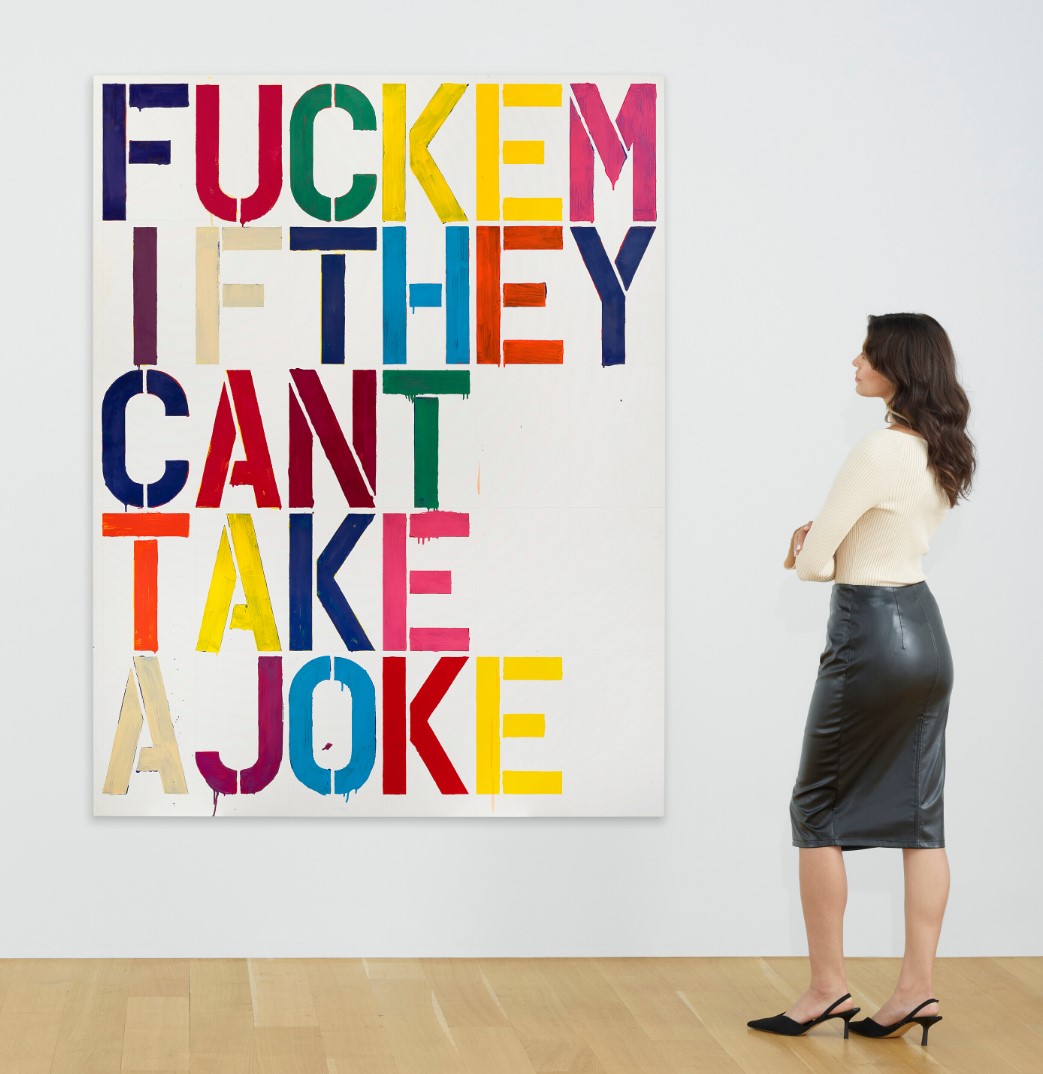
CHRISTOPHER WOOL (b. 1955)
Untitled, 1993
Enamel on aluminum
78×60 inches (198 x 152.4 cm)
Signed, titled, inscribed and dated ‘WOOL 1993 UNTITLED (P185)’ (on the reverse)
#2. Untitled, 1988
Sotheby’s New-York: 18 May 2023
Estimated: USD 10,000,000 – 15,000,000
USD 8,377,500
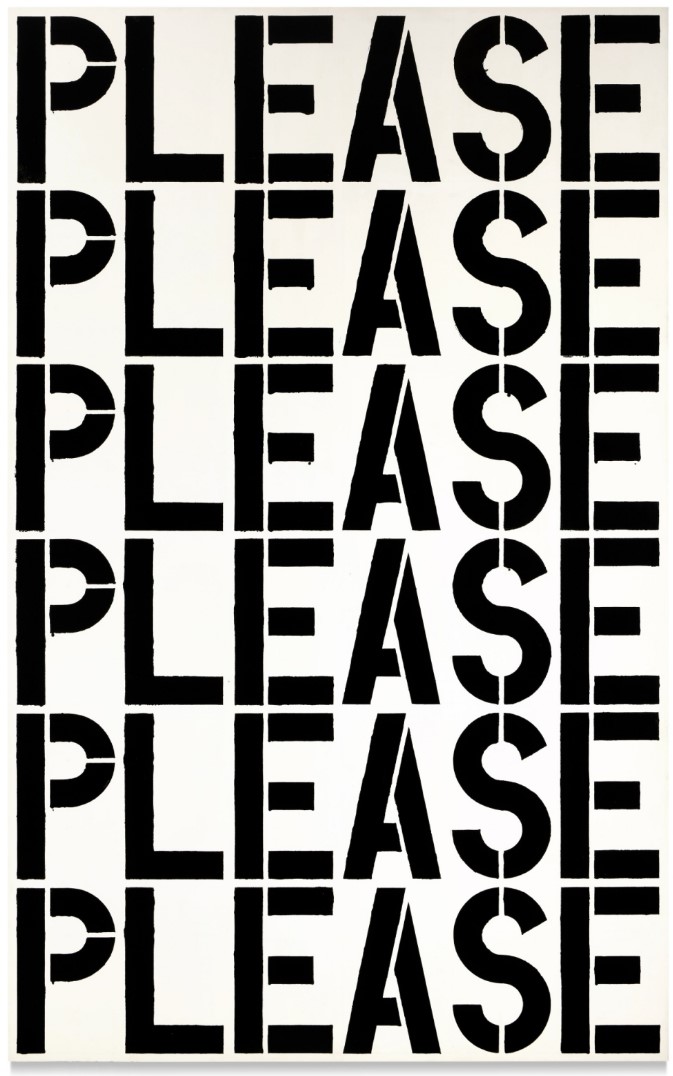
CHRISTOPHER WOOL (b. 1955)
Untitled, 1988
Enamel and Flashe on aluminum
96×60 inches (243.8 x 152.4 cm)
Signed, dated 1988 and numbered P79 (on the reverse)
#3. Untitled, 1992
Sotheby’s New-York: 15 November 2023
Estimated: USD 1,500,000 – 2,000,000
USD 2,359,000
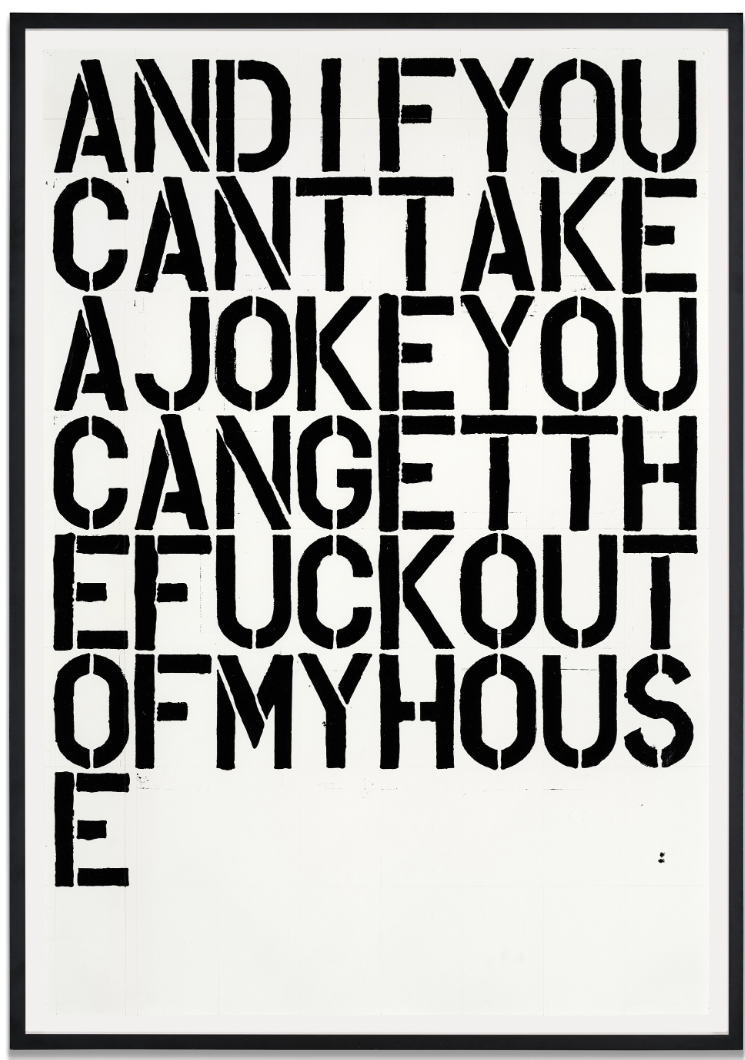
CHRISTOPHER WOOL (b. 1955)
Untitled, 1992
Enamel on paper
43 1/4 x 29 3/4 inches (109.9 x 75.6 cm)
#4. Untitled, 2005
Sotheby’s New-York: 15 November 2023
Estimated: USD 1,500,000 – 2,000,000
USD 2,238,000
CHRISTOPHER WOOL (b. 1955)
Untitled, 2005
Enamel on canvas
96×72 inches (243.8 x 182.9 cm)
Signed, dated 2005 and numbered (P507) (on the overlap)
USD 1 million
#5. Untitled, 1988
Sotheby’s New-York: 18 May 2023
Estimated: USD 800,000 – 1,200,000
USD 889,000
Untitled | Contemporary Evening Auction | 2023 | Sotheby’s (sothebys.com)
CHRISTOPHER WOOL (b. 1955)
Untitled, 1988
Enamel and Flashe on aluminum
84×60 inches (213.4 x 152.4 cm)
Signed, titled, dated 1988 and numbered P57 (on the reverse)
#6. Untitled, 2000
Christie’s New-York: 17 May 2023
Estimated: USD 1,500,000 – 2,000,000
USD 819,000
CHRISTOPHER WOOL (b. 1955), Untitled | Christie’s (christies.com)
CHRISTOPHER WOOL (b. 1955)
Untitled, 2000
Silkscreen ink on linen
90×60 inches (228.6 x 152.4 cm)
Signed, titled, inscribed and dated ‘(P314) UNTITLED WOOL 2000’ (on the stretcher)
#7. Untitled, 1989
Sotheby’s New-York: 12 December 2023
Estimated: USD 800,000 – 1,200,000
USD 750,000
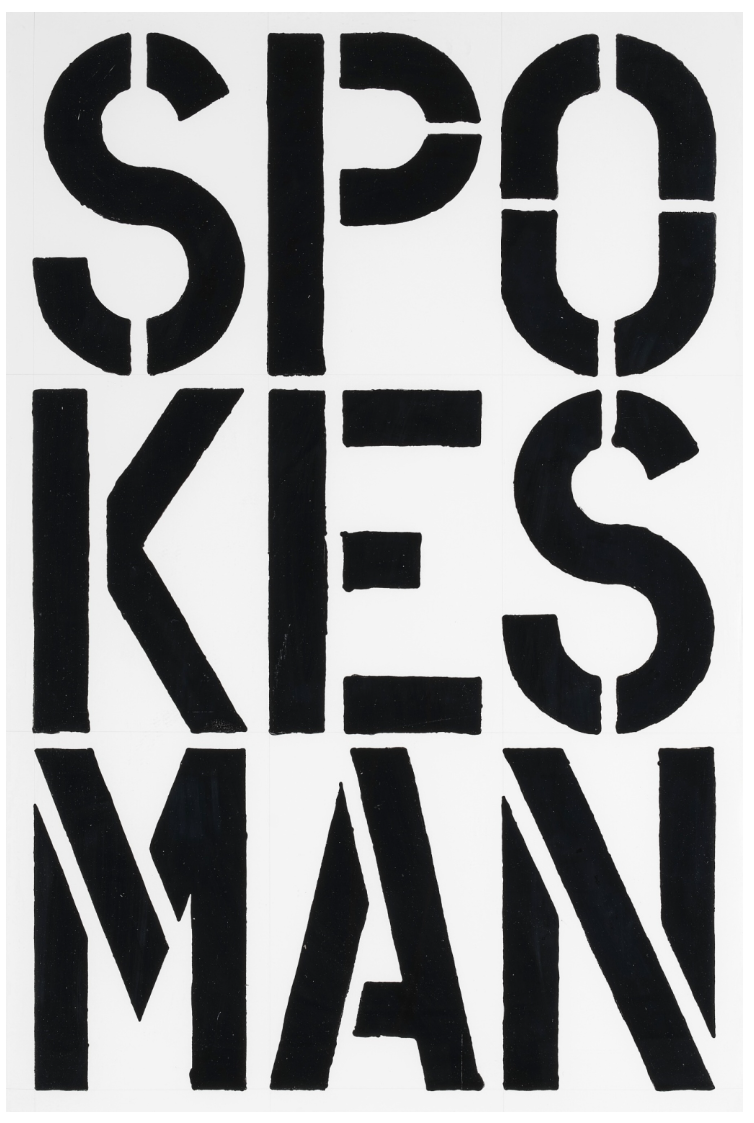
CHRISTOPHER WOOL (b. 1955)
Untitled, 1989
Enamel on paper
32 1/2 x 21 1/2 inches (82.6 x 54.6 cm)
Signed and dated 1989 (on the verso)
#8. Untitled, 1987
Christie’s New-York: 18 May 2023
Estimated: USD 500,000 – 700,000
USD 441,000
CHRISTOPHER WOOL (b. 1955), Untitled | Christie’s (christies.com)
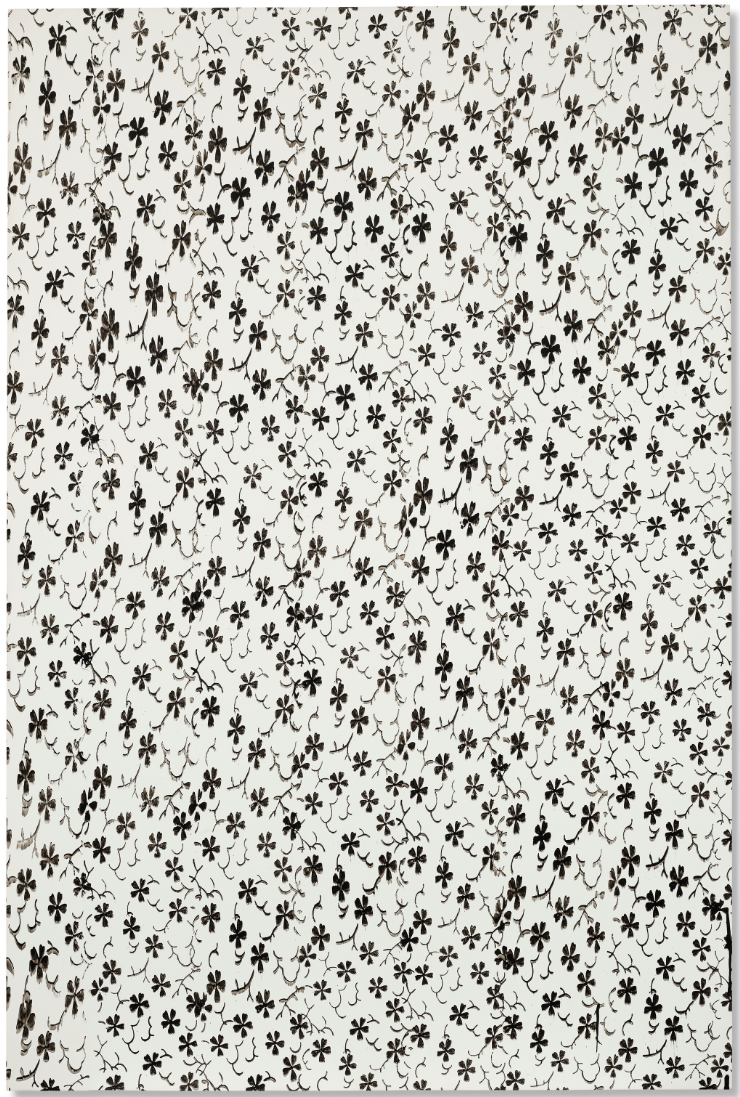
CHRISTOPHER WOOL (b. 1955)
Untitled, 1987
Enamel and flashe on aluminum
48×32 inches (121.9 x 81.3 cm)
Signed, titled, inscribed and dated ‘WOOL ’87 UNTITLED S17’ (on the reverse)
#9. Untitled, 1990
Sotheby’s New-York: 9 November 2023
Estimated: USD 400,000 – 600,000
USD 355,600
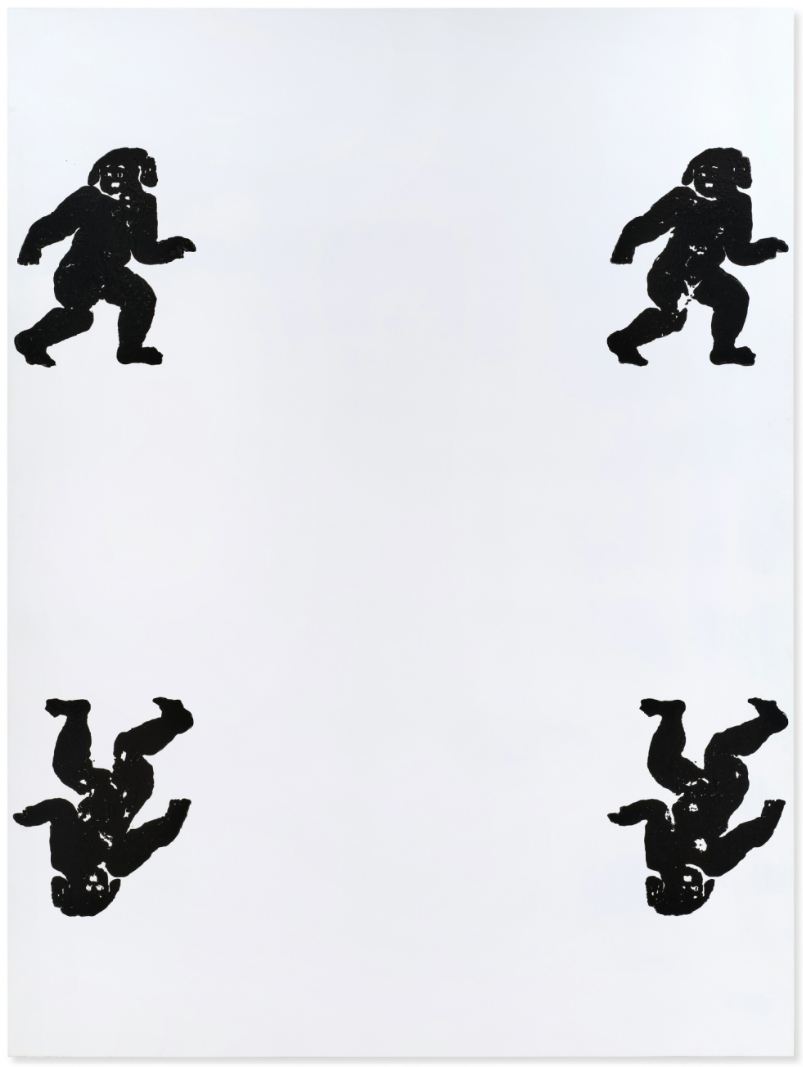
CHRISTOPHER WOOL (b. 1955)
Untitled, 1990
Enamel and acrylic on aluminum
96×72 inches (243.8 x 183 cm)
Signed, titled and dated 1990 (on the reverse)
#10. Untitled, 2009
Sotheby’s New-York: 28 September 2023
Estimated: USD 300,000 – 400,000
USD 355,600
Untitled | Contemporary Curated | 2023 | Sotheby’s (sothebys.com)
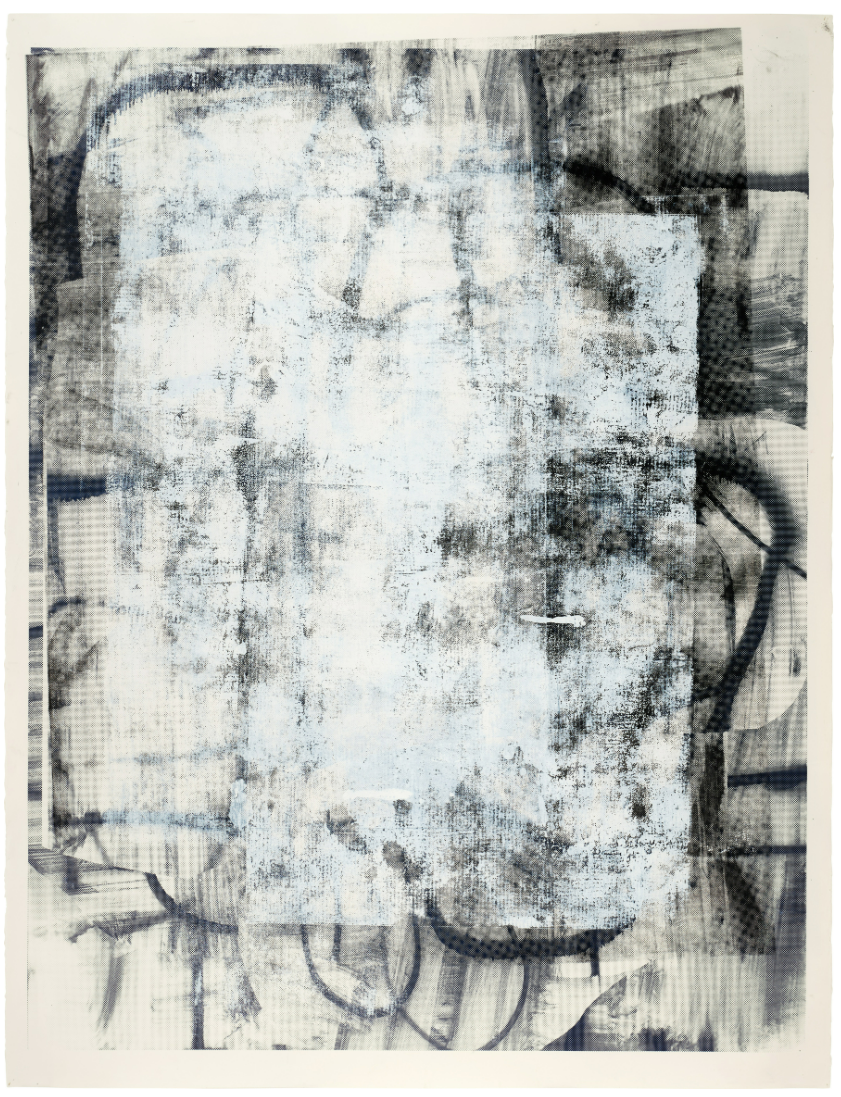
CHRISTOPHER WOOL (b. 1955)
Untitled, 2009
Silkscreen ink and enamel on paper
72 x 55 1/4 inches (182.9 x 140.3 cm)
Signed and dated 2009 (on the verso)
#11. Untitled, 1988
Sotheby’s New-York: 16 November 2023
Estimated: USD 350,000 – 350,000
USD 254,000
Untitled | Contemporary Day Auction | 2023 | Sotheby’s (sothebys.com)
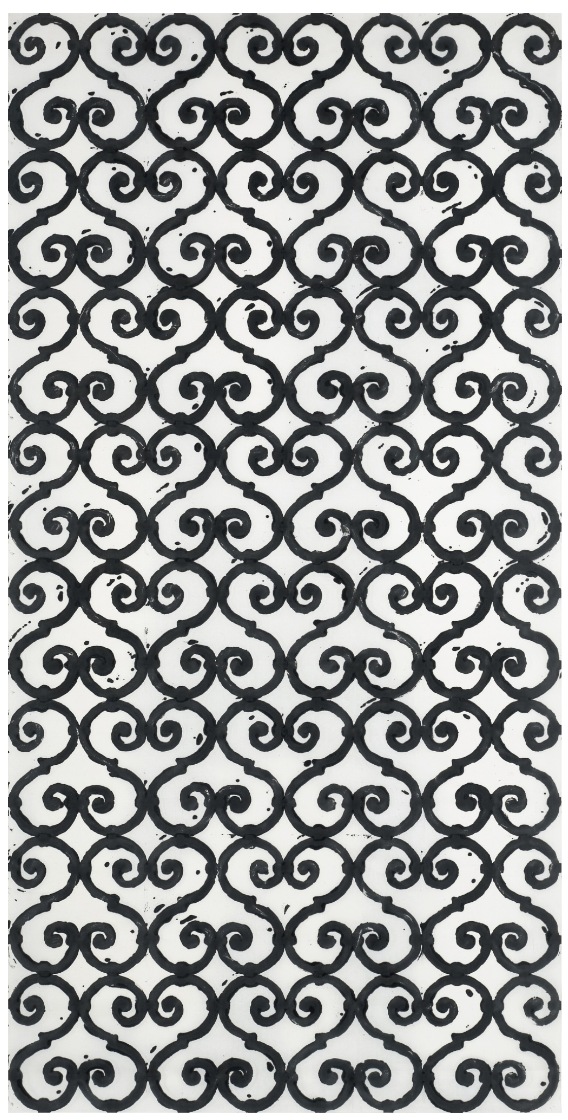
CHRISTOPHER WOOL (b. 1955)
Untitled, 1988
Enamel on paper
64×32 inches (162.6 x 81.3 cm)
Signed and dated 1988 (on the verso)
#12. Untitled, 2008
Sotheby’s New-York: 19 May 2023
Estimated: USD 200,000 – 300,000
USD 279,400
Untitled | Contemporary Day Auction | 2023 | Sotheby’s (sothebys.com)
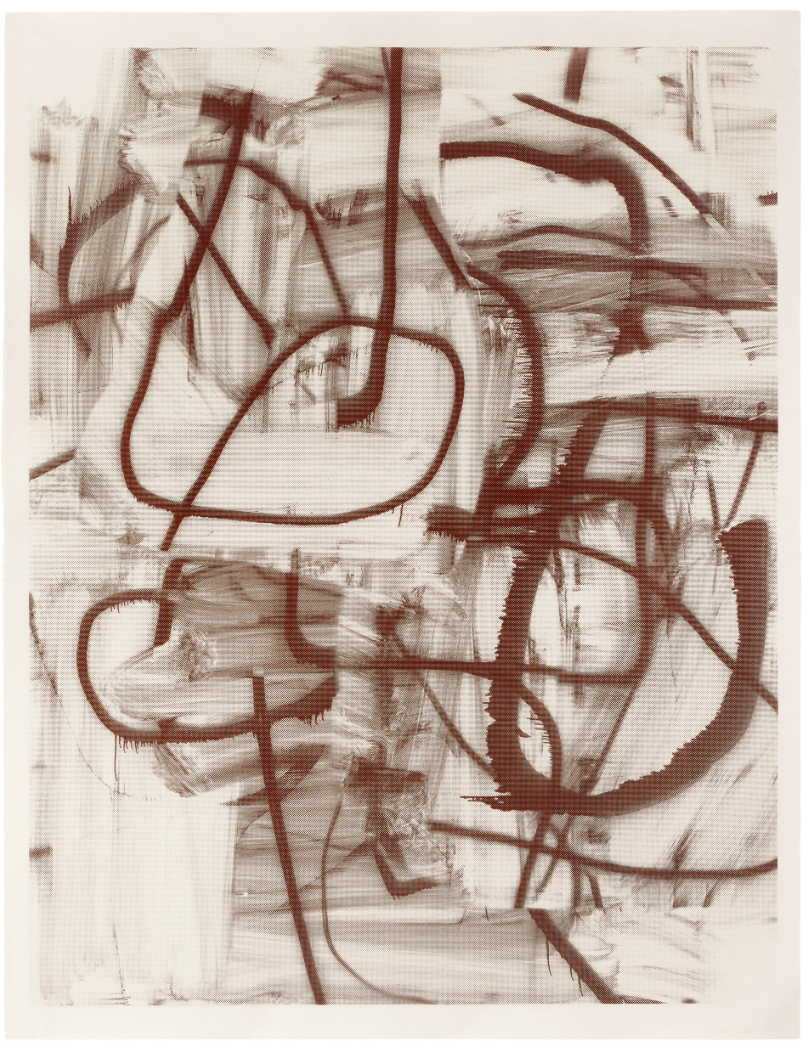
CHRISTOPHER WOOL (b.1955)
Untitled, 2008
Silkscreen ink on paper
72 5/8 x 55 1/4 inches (182.9 x 140.3 cm)
Signed and dated 2008 (lower right)
2022 Auction Results
11 lots sold at auction in 2022 for a total turnover of USD 28,568,409. With 4 lots failing to sell, the sell-through rate is 73%. The highest price was achieved at Christie’s in New-York, on 17 November 2022, for an enamel on aluminum from the Flowers series that sold for USD 8,977,500. 5 lots sold for more than USD 1 million, generating a cumulative turnover of USD 25,850,968, representing 90.5% of the total turnover for 2022.
2022 Top 3 Lots
#1. Untitled, 1993
Christie’s New-York: 17 November 2022
Estimated: USD 8,000,000 – 12,000,000
USD 8,977,500
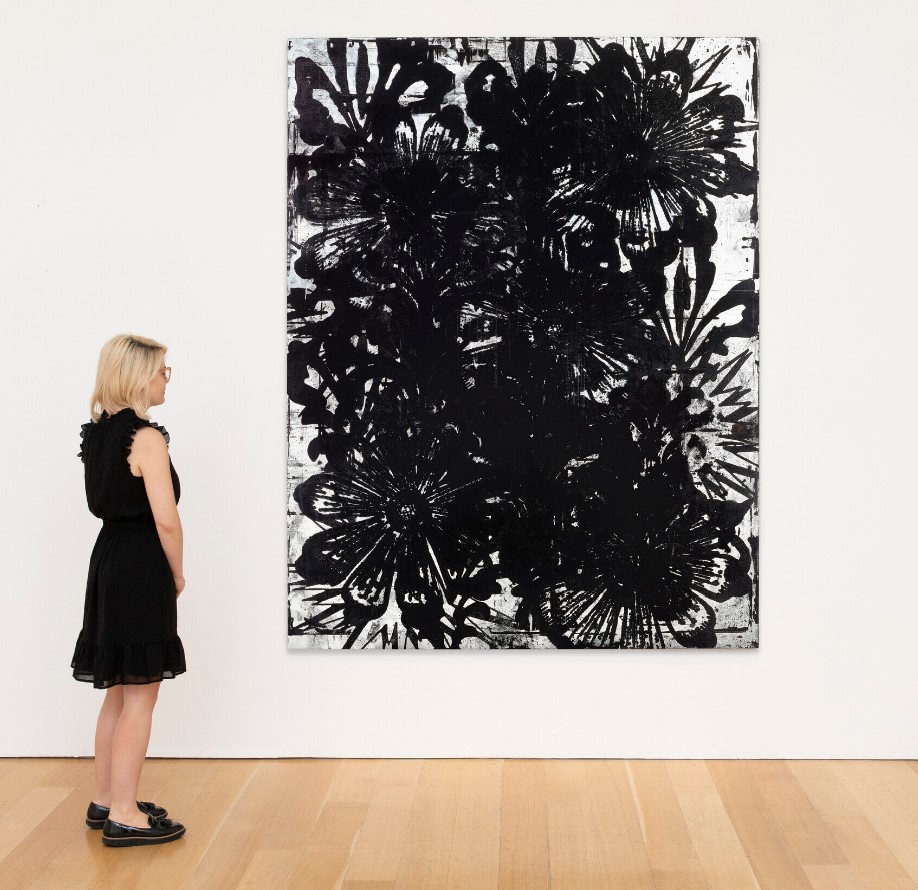
CHRISTOPHER WOOL (B. 1955)
Untitled, 1993
Enamel on aluminum
90 x 69 1/2 inches (228.6 x 176.5 cm)
Signed, inscribed and dated ‘WOOL 1993 (P174)’ (on the reverse)
#2. Untitled, 1988
Christie’s New-York: 10 May 2022
Estimated: USD 8,000,000 – 12,000,000
USD 8,405,000
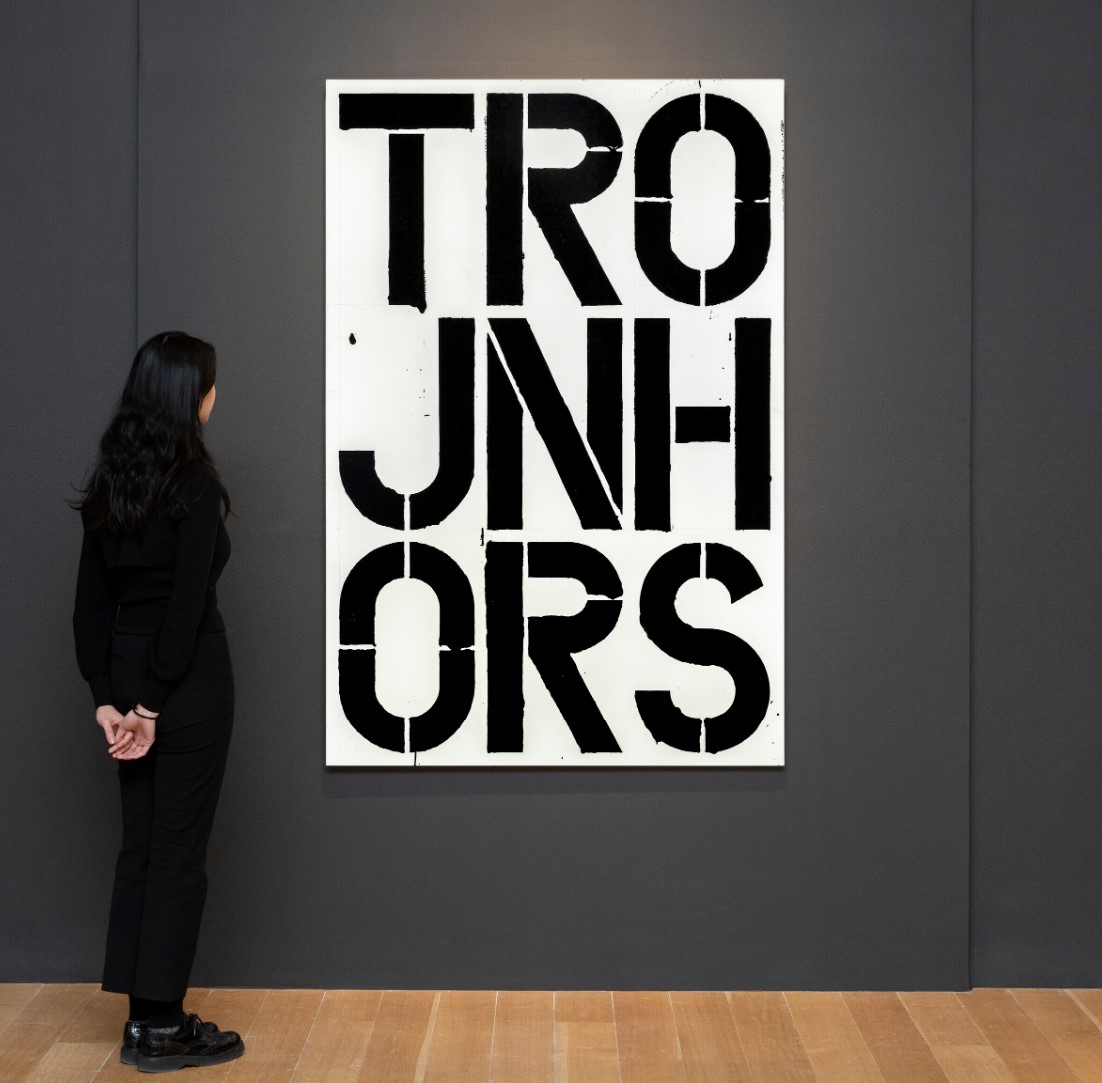
CHRISTOPHER WOOL (B. 1955)
Untitled, 1988
Enamel on aluminum
72×48 inches (182.9 x 121.9 cm)
Signed, titled, inscribed and dated ‘WOOL UNTITLED P.47 1988’ (on the reverse)
#3. Untitled, 1995
Christie’s London: 1 March 2022
Estimated: GBP 3,000,000 – 5,000,000
GBP 3,642,000 / USD 4,850,180
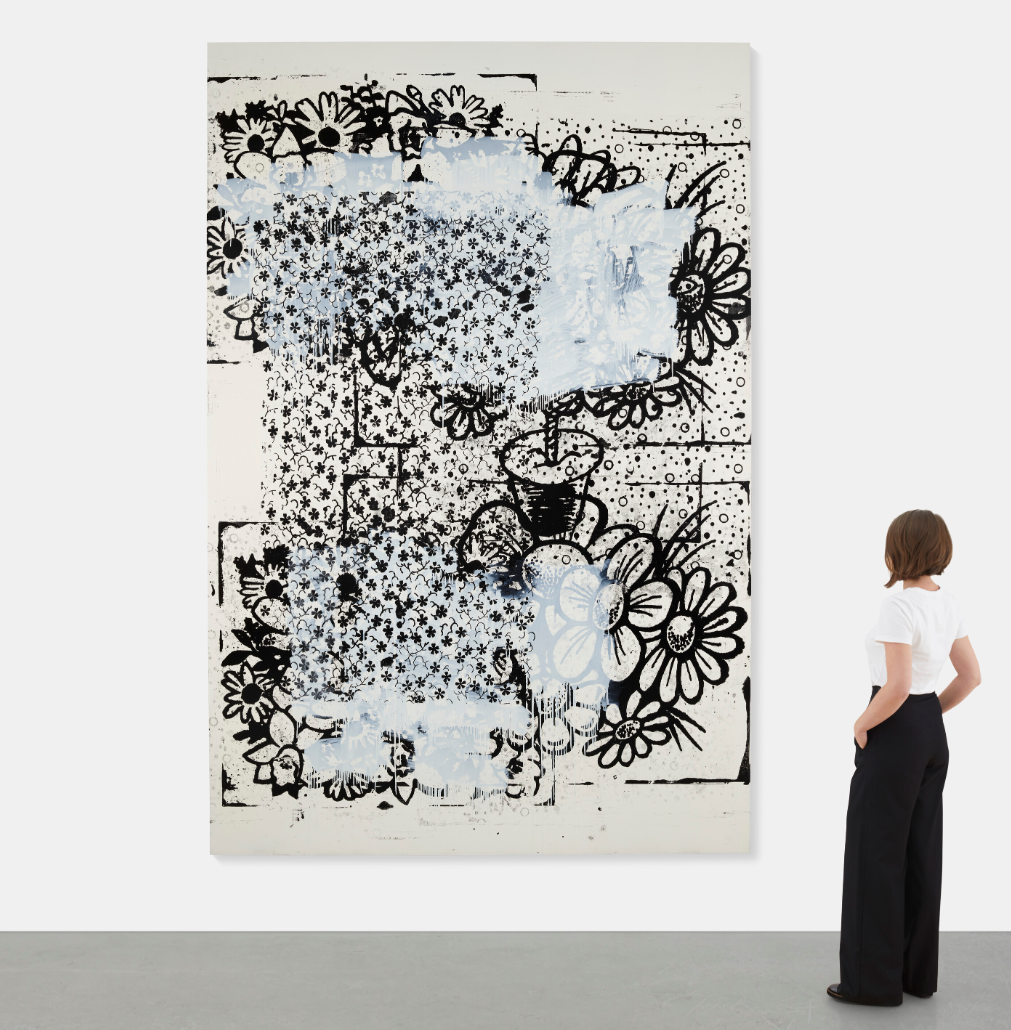
CHRISTOPHER WOOL (B. 1955)
Untitled, 1995
Enamel on aluminium
107 7/8 x 72 inches (274×183 cm)
Signed, titled and dated ‘ WOOL 1995 UNTITLED (P248) (on the reverse)
#4. Untitled, 2000
Sotheby’s New-York: 16 November 2022
Estimated: USD 2,500,000 – 3,500,000
USD 2,245,000
Untitled | Contemporary Evening Auction | 2022 | Sotheby’s (sothebys.com)
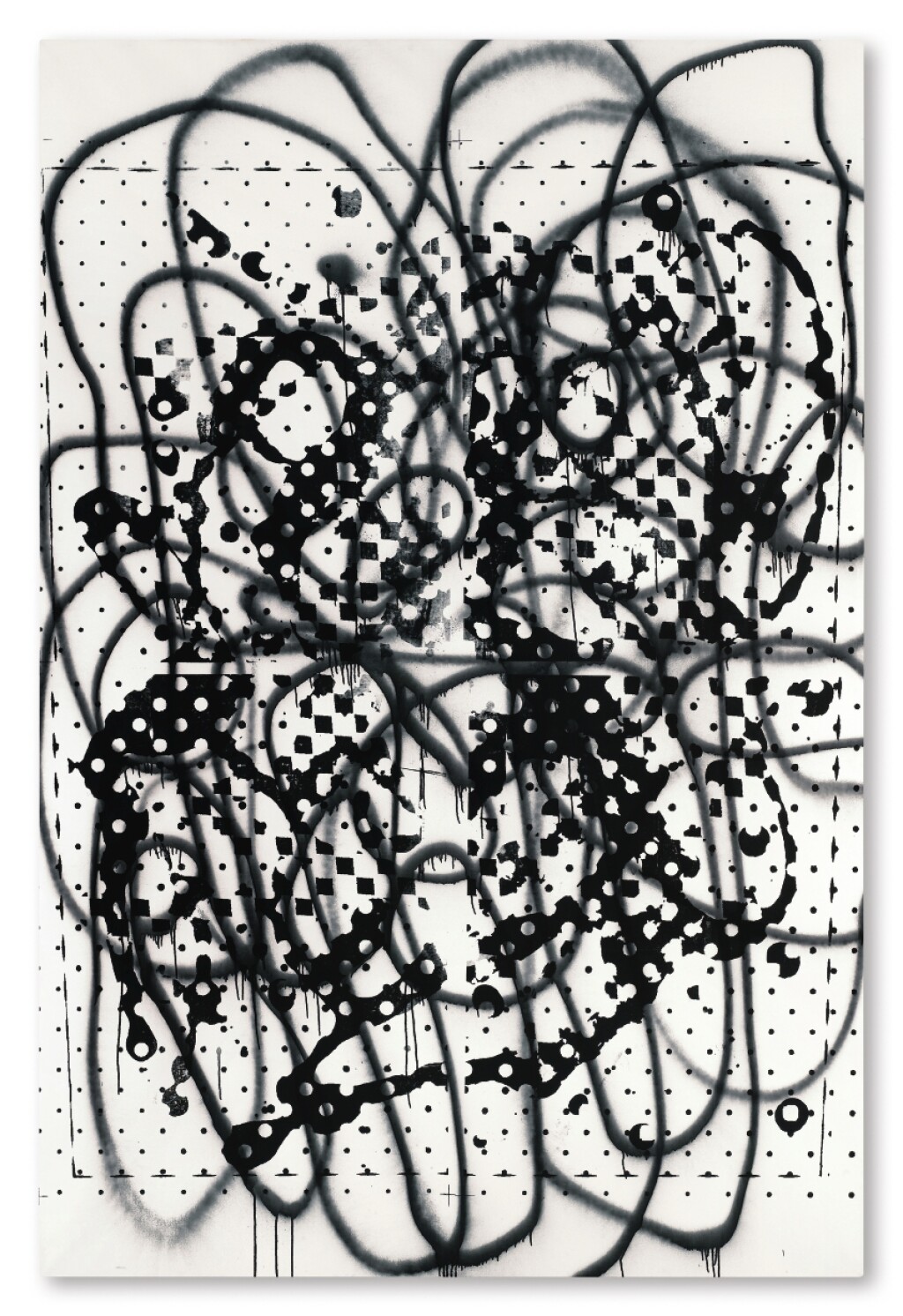
CHRISTOPHER WOOL (b. 1955)
Untitled, 2000
Enamel and silkscreen ink on linen
108×72 inches (274.3 x 183 cm)
Signed Wool, dated 2000 and numbered (P326) (on the stretcher)
Signed Wool, dated 2000 and numbered (P326) (on the overlap)
#5. Not, Not, 2004
Sotheby’s Hong-Kong: 7 October 2022
Estimated: HKD 11,000,000 – 15,000,000
HKD 10,781,000 / USD 1,373,288
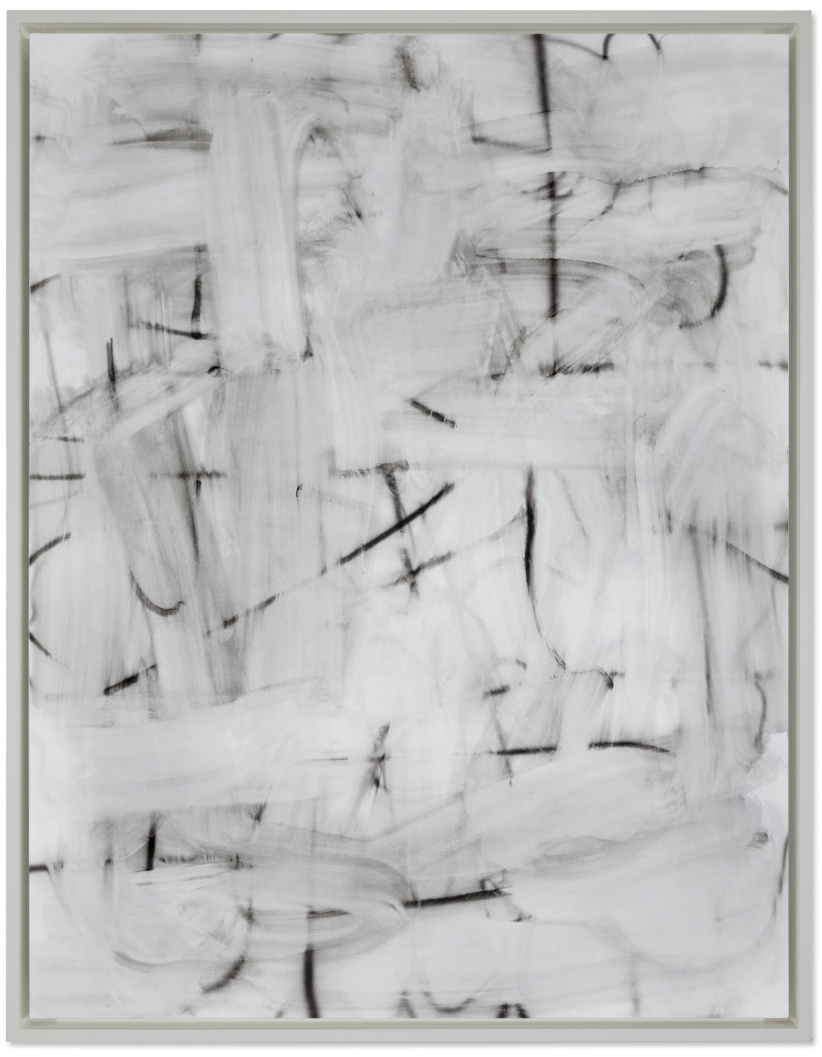
CHRISTOPHER WOOL (b.1955)
Not, Not, 2004
Enamel on linen
78 3/8 x 60 inches (199 x 152.5 cm)
Signed and dated 2004 on the overlap
#6. Untitled, 2000
Sotheby’s New-York: 20 May 2022
Estimated: USD 400,000 – 600,000
USD 907,200
Untitled | Contemporary Day Auction | 2022 | Sotheby’s (sothebys.com)
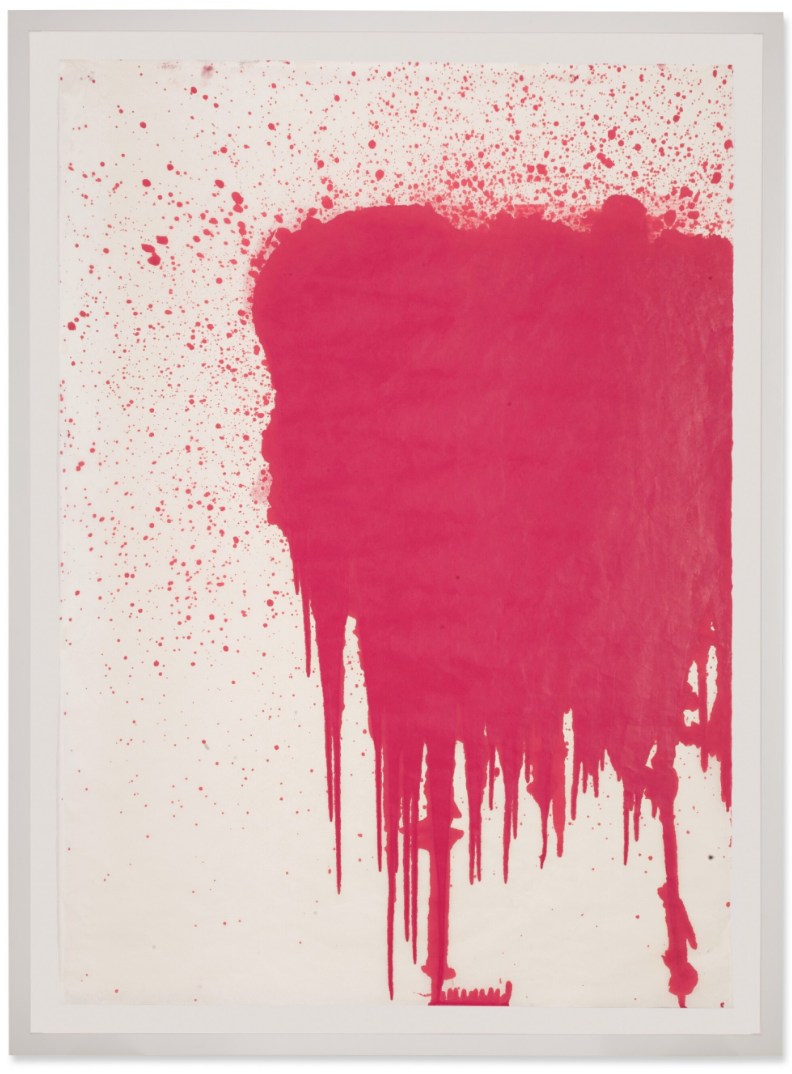
CHRISTOPHER WOOL (b. 1955)
Untitled, 2000
Enamel on rice paper
66×48 inches (167.6 x 121.9 cm)
Embossed WOOL (lower right); signed and dated 2000 (on the verso)
#7. Untitled, 2006
Christie’s London: 28 June 2022
Estimated: GBP 500,000 – 700,000
GBP 630,000 / USD 768,949
CHRISTOPHER WOOL (B. 1955), Untitled | Christie’s (christies.com)
CHRISTOPHER WOOL (B. 1955)
Untitled, 2006
Silkscreen ink on linen
96×72 inches (243.8 x 182.8 cm)
Signed and dated ‘WOOL 2006’ (on the reverse); signed and dated ‘WOOL 2006’ (on the overlap)
#8. Untitled, 1990-91
Sotheby’s London: 2 March 2022
Estimated: GBP 450,000 – 650,000
GBP 529,200 / USD 707,392
Untitled | Modern & Contemporary Evening Auction | 2022 | Sotheby’s (sothebys.com)
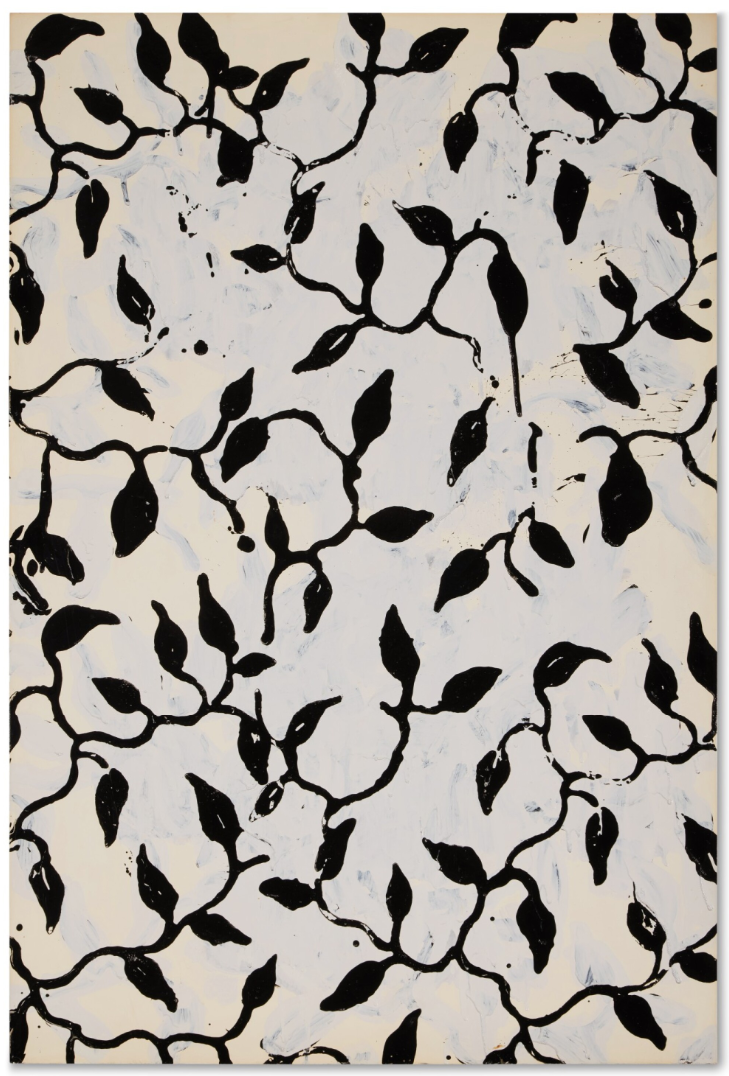
CHRISTOPHER WOOL (b. 1955)
Untitled, 1990-91
Enamel and acrylic on aluminum
36×24 inches (91.4 x 60.9 cm)
Signed Wool, dated 1990-91 and numbered S65 (on the verso)
2021 Auction Results
14 lots sold at auction in 2021 for a total turnover of USD 41,397,522. With only 1 lot failing to sell, the sell-through rate is 93%. The highest price was achieved at Sotheby’s in New-York on 18 November 2021 when Untitled, an enamel on aluminum dated 1995 sold for USD 13,190,250.
2021 Top 3 Lots
This is the only lot that sold for more than USD 10 million. 8 lots sold for more than USD 1 million, generating a cumulative turnover of USD 38,915,627, representing 94% of the total turnover for 2021.
XXXXXXXXXX
#1. Untitled, 1995
Sotheby’s New-York: 18 November 2021
Estimated: USD 6,000,000 – 8,000,000
USD 13,190,250
Untitled | Contemporary Evening Auction | 2021 | Sotheby’s (sothebys.com)
CHRISTOPHER WOOL (b.1955)
Untitled, 1995
Enamel on aluminum
78×60 inches (198.1 x 152.4 cm)
Signed Wool, dated 1995 and numbered P244 (on the reverse)
#2. Untitled, 1995
Christie’s New-York: 9 November 2021
Estimated: USD 7,000,000 – 10,000,000
USD 7,802,500
CHRISTOPHER WOOL (B. 1955) (christies.com)
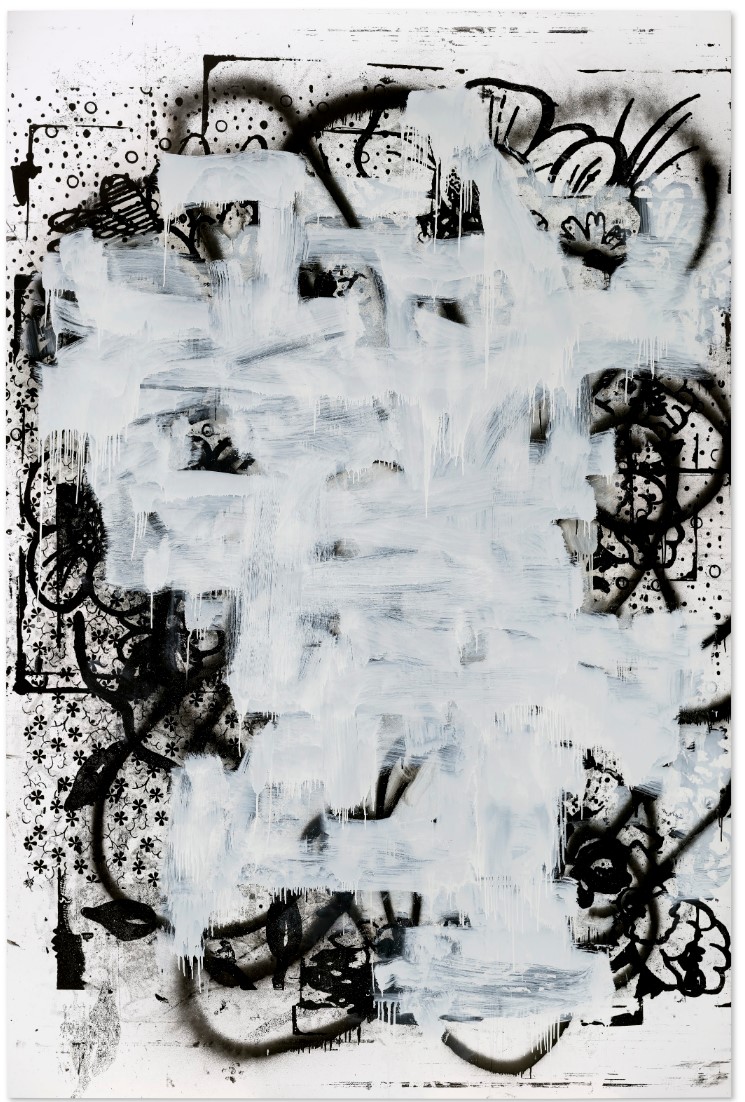
CHRISTOPHER WOOL (B. 1955)
Untitled, 1995
Enamel on aluminum
108×72 inches (274.3 x 182.9 cm)
Signed, titled, inscribed and dated ‘WOOL 1995 UNTITLED (P246)’ (on the reverse)
#3. Untitled, 1990
Christie’s New-York: 9 November 2021
Estimated: USD 6,500,000 – 8,500,000
USD 7,000,000
CHRISTOPHER WOOL (B. 1955) (christies.com)
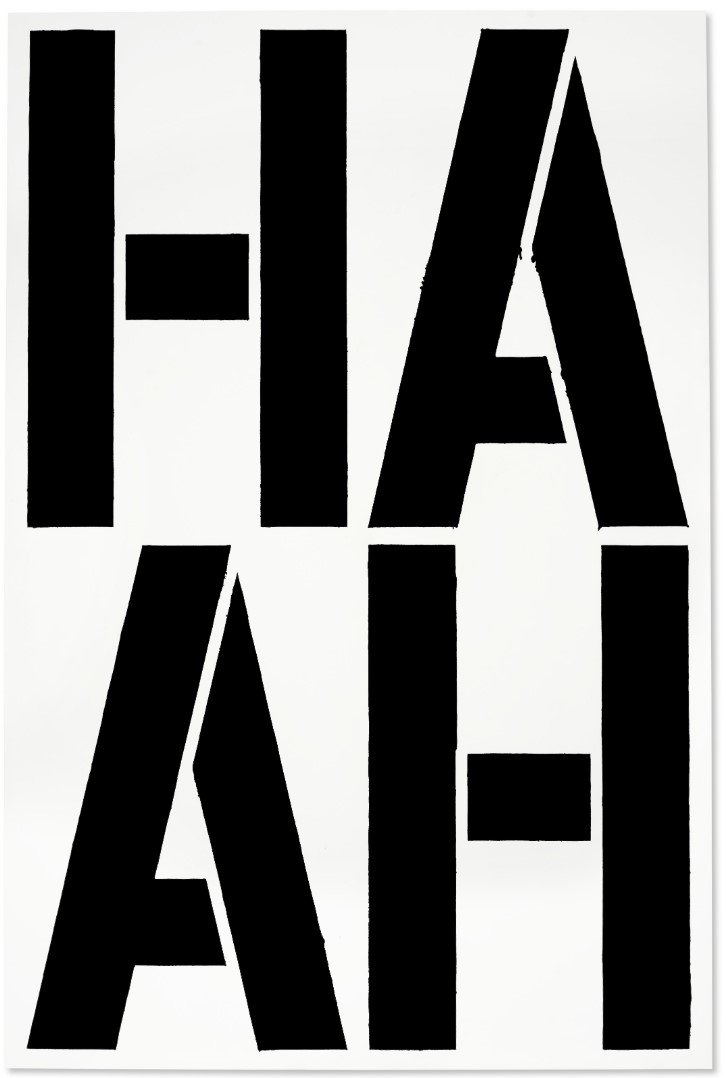
CHRISTOPHER WOOL (B. 1955)
Untitled, 1990
Enamel on aluminum
108×72 inches (274.3 x 182.9 cm)
Signed, inscribed and dated ‘WOOL 1990 W3’ (on the reverse)
#4. Hole, 1992
Christie’s New-York: 11 May 2021
Estimated: USD 3,500,000 – 5,500,000
USD 3,630,000
CHRISTOPHER WOOL (B. 1955), Hole | Christie’s (christies.com)
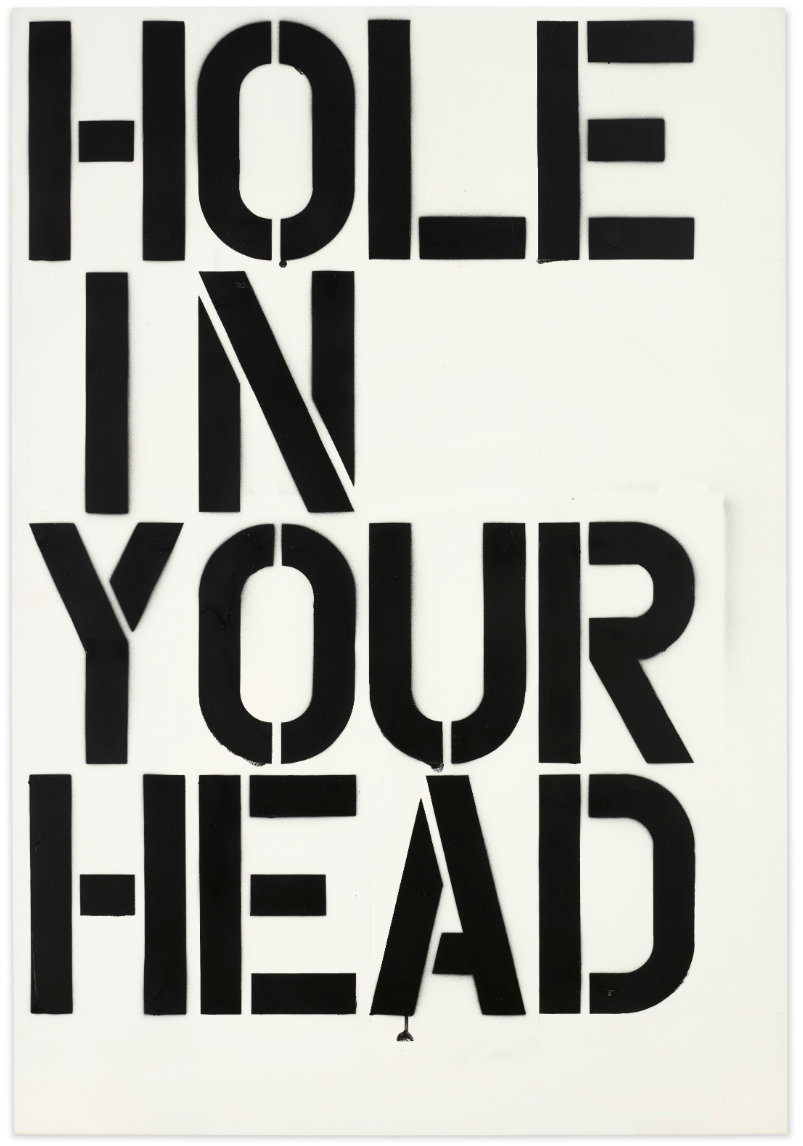
CHRISTOPHER WOOL (B. 1955)
Hole, 1992
Enamel on aluminum
52×36 inches (132 x 91.4 cm)
Signed, titled, inscribed and dated ‘HOLE S93 WOOL 1992’ (on the reverse)
#5. Untitled, 2000
Christie’s New-York: 9 November 2021
Estimated: USD 3,000,000 – 5,000,000
USD 3,315,000
CHRISTOPHER WOOL (B. 1955) (christies.com)
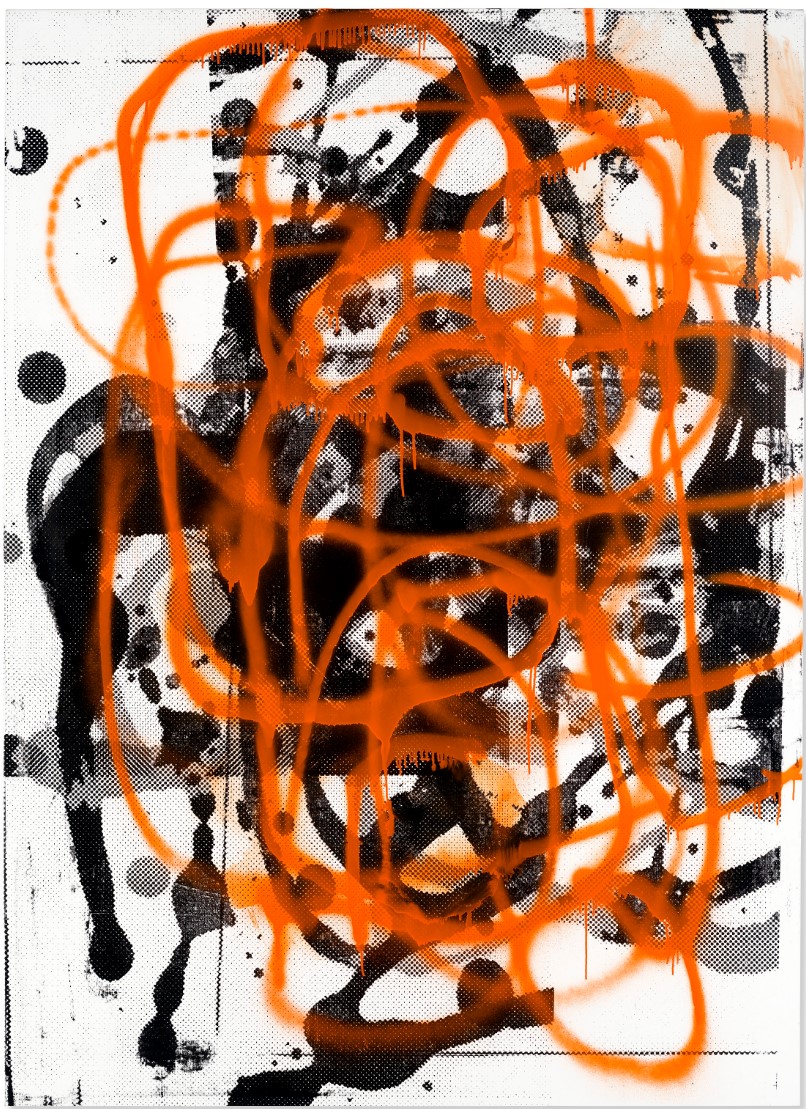
CHRISTOPHER WOOL (B. 1955)
Untitled, 2000
Enamel on linen
66×48 inches (167.6 x 121.9 cm)
Signed, inscribed and dated ‘WOOL 2000 (S153)’ (on the stretcher bar)
PART III: FOCUS
Words
Untitled, 1988
Christie’s New-York: 20 May 2026
Estimated: USD 2,000,000 – 3,000,000
USD 3,247,000
WORK ON PAPER
CHRISTOPHER WOOL (B. 1955), Untitled | Christie’s
CHRISTOPHER WOOL (B. 1955)
Untitled, 1988
Enamel on paper
32-1/2 x 26 inches (82.6 x 66 cm)
Signed, inscribed and dated ‘Christopher Wool Nov. 1988’ (on the reverse)
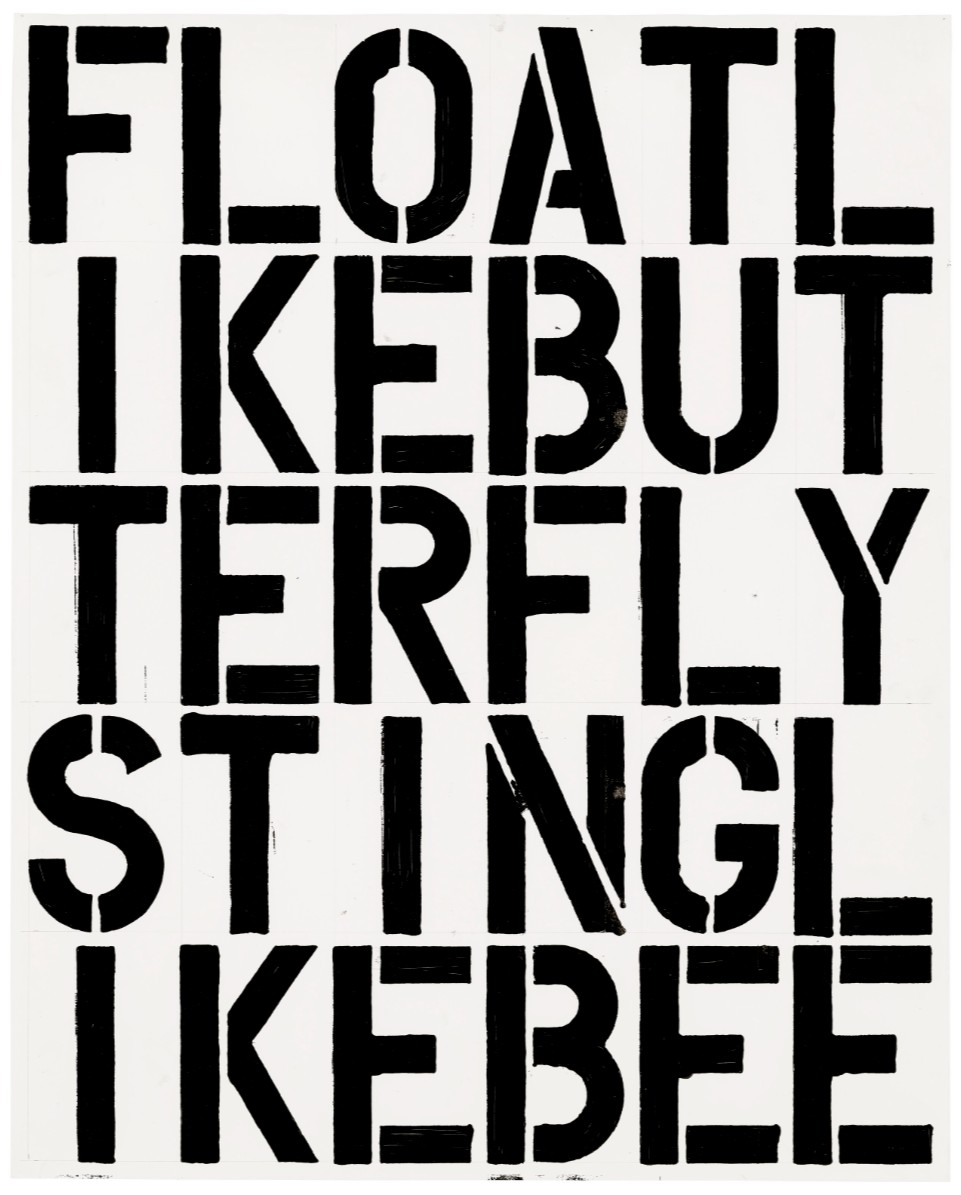
Exalting Muhammad Ali’s famous maxim “Float like a butterfly, sting like a bee,” Christopher Wool’s potent 1988 work on paper is an early example of the artist’s famed word paintings. It is with these works that Wool arrived on the contemporary art scene as the leader of a new generation of post-conceptual artists whose paintings captured the “scary, euphoric mood of the high-flying period” (K. Johnson, “Art in Review: Christopher Wool, March 17, 2000, p. E37). The present work is an early, iconic painting that cleverly blends the raw, graphic power of graffiti with the cool, formalist precision of Minimalism showcasing both the artist’s sardonic wit and highly inventive style.
At first glance the appearance of the monolithic letters that Wool manifests on the surface of Untitled appear to be uniform, utilitarian forms stenciled onto the sheet in almost mechanical fashion. However, closer inspection reveals an array of undulating lines, Pollock-like drips, and “shadows” caused by the stenciling process that allude to, paradoxically, the hand-made nature of Wool’s painterly process. Far from homogenous, his forms are in fact the remnants of very human interventions and gestures. The structure of the text in Untitled engenders both familiarity and discord. The first word of Ali’s famous saying presents itself in its entirety, but then the first letter of the next word appears before the rest of the word drops down to the next line. This pattern is then repeated on subsequent lines until a structure of entirely new words is formed: FLOATL IKEBUT TERFLY STINGL IKEBEE. This new structure causes the viewer to pause and try to decipher these new unfamiliar forms, forcing a formalist interrogation of the supposedly familiar phrase.
Wool chose these words very carefully, very deliberately, and after considerable thought. “Float like a butterfly, sting like a bee” is of course Muhammad Ali’s phrase,” the artist told curator Ann Tempkin.
“Initially I had been drawn to text because I wanted to make a work that was a little more direct, a little louder, that talked a little more directly to the audience, than some of my abstract paintings had, and working with found text often seemed suitable.”
Initially attracted to its potent association with Ali, Wool subsequently realized that the poetry inherent in the famous phrase allowed him to experiment with the syntax. Wool used this particular text in two paintings, the present example, and a large, monumental version on aluminum, in the UBS Art Collection. Muhammad Ali first uttered these famous words during the preparations for his 1964 world title fight against Sonny Liston. Although the boxer (still known as Cassius Clay at the time) was considered to have little chance against the much-fancied Liston, he defeated him with a technical knockout in the seventh round. At the time, the bout was regarded as the greatest fight of all time and soon gained widespread notoriety around the world. The lyrical nature of the full quote—”Fight like a butterfly, sting like a bee. His hands can’t hit what his eyes can’t see”—refers to Ali’s reputation for graceful footwork (which allowed him to avoid incoming punches) combined with his own powerful jabs. Thus, this is a particularly suitable phrase for Wool’s textual intervention, whereby the usual expressive nature of language is interrupted, resulting in a powerful exercise in self-examination.
In seeking new possibilities for the medium of painting, Wool, like Jean-Michel Basquiat, turned to the city, drawing inspiration from the grimy, graffiti-covered streets of post-punk New York. The often-documented moment of inspiration for the artist’s word paintings first came in 1987. Living and working in downtown Manhattan, Wool saw a white van with the words SEX LUV crudely branded in spray paint on the side. Taken by the immense simplicity and graphic power of the black letters against the white surface, Wool made his own version of the image, and subsequently began to create his word paintings. Wool reinvented the possibilities of abstract painting with his unique adaptation of the industrial materials of urban culture, absorbing himself in the processes and the very act of painting. Thus, the present work is deeply entrenched in the narrative of the period it is depicting: in the chaotic, abrasive, gritty urbanity of downtown New York, a city in which graffiti was scrawled across abandoned buildings, peeling posters and flyers were pasted in collage-like layers, and bold advertisements were displayed in a gargantuan scale on billboards. In contrast to the clean-cut, commercial lettering of Andy Warhol’s Pop Art, or the slick, gleaming text of Ed Ruscha or Robert Indiana, Wool’s text-based paintings were born from the urban fabric of the metropolis, conveying the same overwhelming vitality and harshness that is unique to New York. In art critic Jerry Saltz’s words, “Wool captures the way New York looks, sounds, and smells in our time, much as Jackson Pollock’s drip paintings embody the city’s texture in the fifties. I see Wool creating new order out of all this chaos. I see little epiphanies and glean the same clashing, gritty, seemingly haphazard, abrasive, bludgeoning beauty [of] New York” (“Christopher Wool’s Stenciled Words Speak Loudly…,”New York Magazine, November 11, 2013).
An important early work, Untitled pushes at the boundaries of what might, at the time, have been understood to be painting in the traditional sense in its mixing of urban scrawl with billboard advertising lettering and the traditional painterly gesture. Wool questions as he celebrates this tension between act and image, high art and the urban landscape, order and randomness. As critic Jim Lewis mused, “Wool can take a word and worry it, turn it this way and that, beat on it a few times, paint it, paint over it, paint it again, try to break it, auscultate it like a doctor tapping the chest of a sick patient and listening for the echo inside; try to humiliate it with paint splatter, and then to deify it as if it were the word of God; and then, when it’s been stripped of sense, when he’s sure it can’t be understood, and he’ll erase it and paint it again, and leave it there as the embodiment of his efforts – and leave us wondering if it’s the word that means something, or the painting” (J. Lewis, cited in: Christopher Wool, exh. cat., Museum of Contemporary Art, Los Angeles, 1998, p. 284).
Untitled (RIOT), 1990
Christie’s New-York: 19 November 2025
Estimated: USD 15,000,000 – 20,000,000
USD 19,840,000
CHRISTOPHER WOOL (B. 1955), Untitled (RIOT) | Christie’s
CHRISTOPHER WOOL (B. 1955)
Untitled (RIOT), 1990
Enamel on aluminum
108×72 inches (274.3 x 182.9 cm)
Signed, inscribed and dated ‘Wool 1990 (W16)’ (on the reverse)
R.I.O.T.
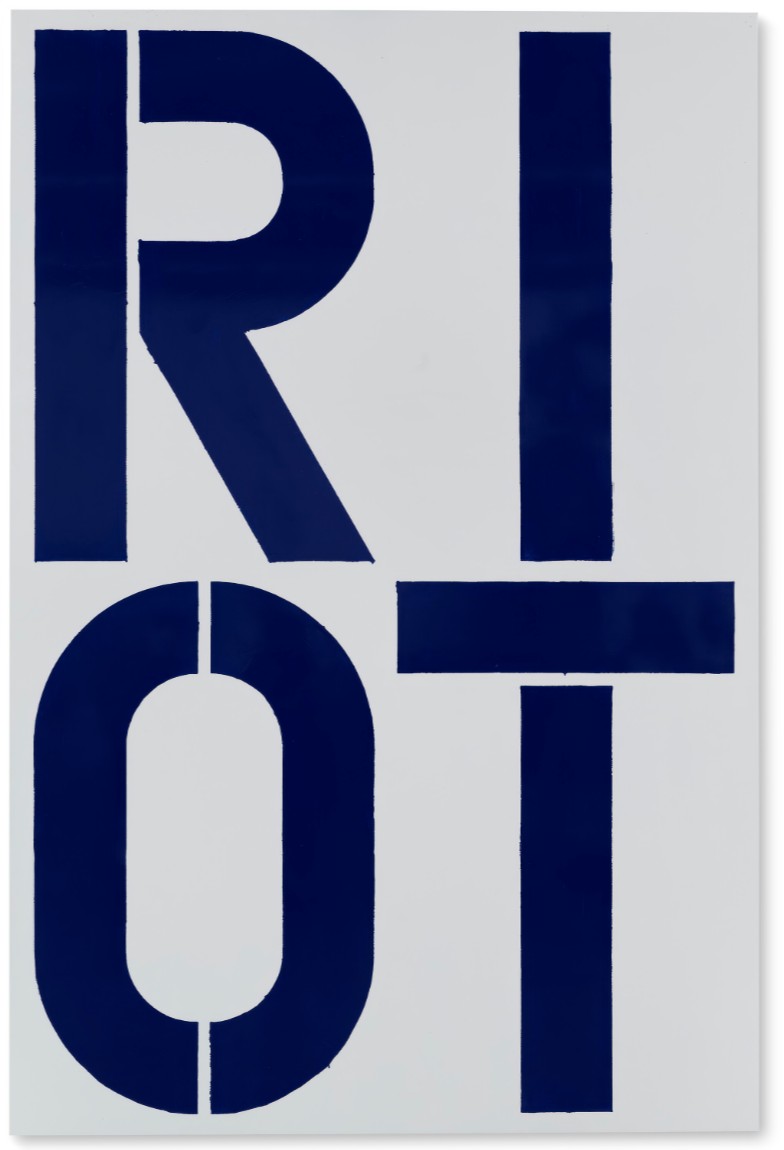
Four resolute capital letters, arranged methodically two by two, each within its own quadrant. These four letters, comprised of pooled blue enamel paint constrained by stencils dried thickly upon an imposing aluminum sheet primed with a velvety white ground, have become more than mere letters constituting a word, rising beyond text to serve as icons of Christopher Wool’s revolutionary artistic practice. Untitled (RIOT) is one of the artist’s most enigmatic and important works from his celebrated word paintings. RIOT. A single word, split in two. A headline, an announcement, a command, a demand, a threat, or a warning? This singular succinct word holds all and none of these meanings, or is maybe without meaning, evoking Wool’s eccentric enterprise examining the limitations of linguistics, the confounding of communication amid the explosion of text, and visual symbols in the era of mass media. Occupying a novel metaphysical space somewhere between language, image, speech, and act, Untitled (RIOT) conjures the best qualities of Wool’s radical reinvention of painting. The work demands to be looked at, stared into, deciphered, read, uttered aloud. But not understood.
Untitled (RIOT) is one of the very few from the approximately 75 word paintings to have blue rather than black enamel. Constrained by Wool’s stencils—which the artist fabricated himself in order to achieve his desired grand scale, nine by six feet across—the blue enamel hardened into a sumptuous dark ultramarine. Upon close inspection, the coloration in each letter oscillates slightly, the blues becoming deeper in areas where more paint pooled. This effect, coupled with the drips and painterly stutters observed around the nominally straight edges of each letter, is a deliberate and painstaking residual of Wool’s presence in the painting, revealing the materiality of the painting transcending its graphic effect and opening up myriad conceptual potentialities. Carefully planned, “they indict themselves, and, in the process indict the viewer,” explains the critic Jim Lewis. “YOU MAKE ME, yes, but it might just as well say ‘you unmake me,’ or even, ‘this isn’t made’” (J. Lewis, “Fail Better,” in Christopher Wool, ed. H. W. Holzwarth, Köln, 2012, p. 100).
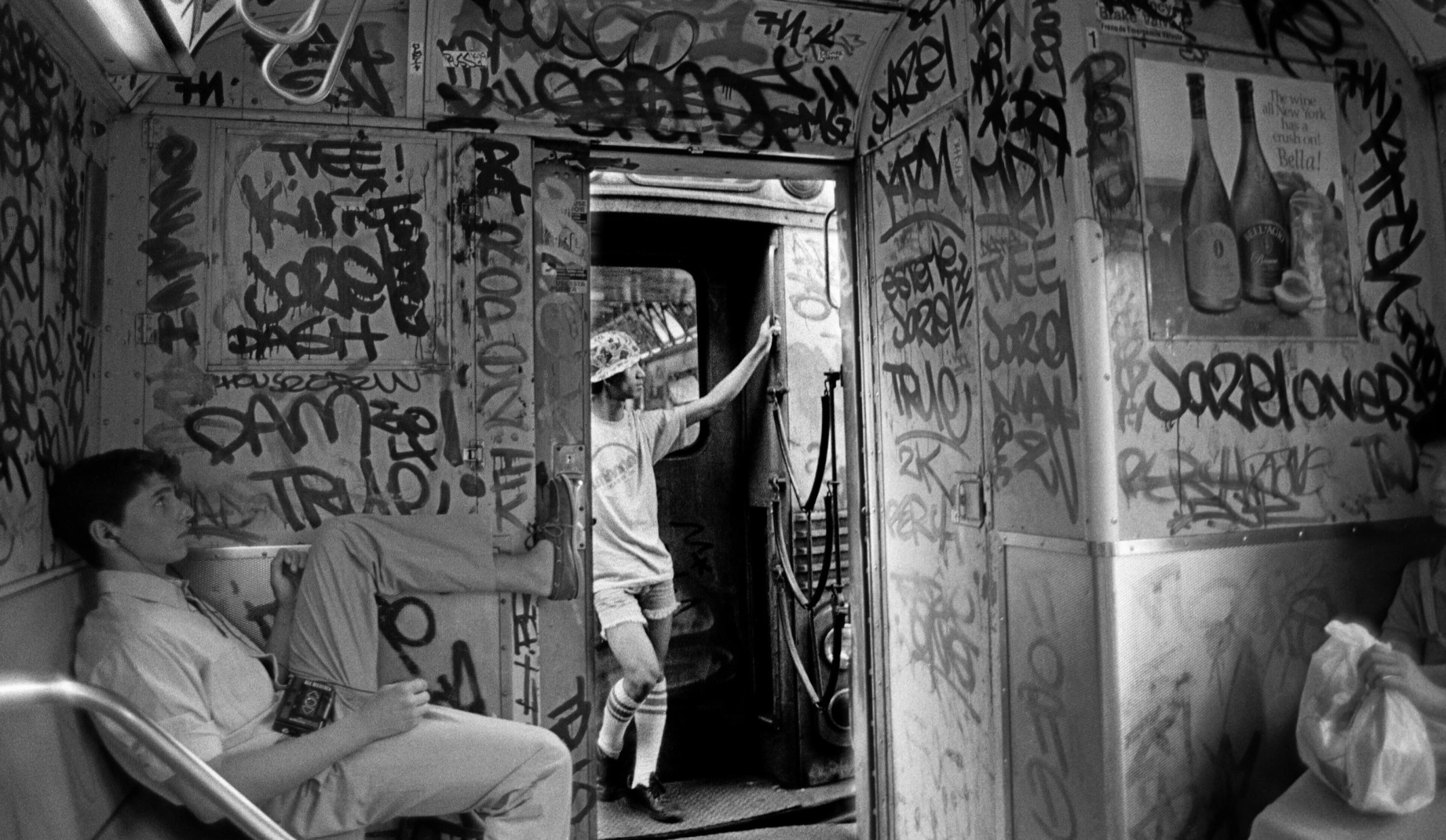
Photograph of the new York City subway, 1985. Photo © Ferdinando Scianna/Magnum Photos.
Untitled (RIOT) is among Wool’s crowning achievements, signifying his subversive lure as a painter in an era when painting was dead. Made in 1990, Wool stood out in the midst of seismic historical and art historical junctures. The Berlin Wall had just toppled—the Soviet Union had not. History was still being made, its path uncertain—Francis Fukuyama only published The End of History in 1992. The first web server arrived in 1990, but its significance was yet to be acknowledged. Wool was straddling the nebulous temporality between two eras, creating in the midst of great uncertainty as the Cold War was coming to a close and the Internet Age was fast approaching. Christopher Wool’s importance arises from his almost prophetic ability to capture the zeitgeist not just of his era but our own; if anything, Untitled (RIOT) has amassed more poignance in the contemporary moment of artificial intelligence.
Christopher Wool began making his word paintings amid an ongoing crisis where painting’s dominance and relevance as a medium of artistic expression was under sustained attack. Wool emerged from the schismatic downtown New York art scene of the 1980s. Jean-Michel Basquiat and Julian Schnabel tried to arrest this seemingly inevitable historical pull away from painting with their Neo-Expressionist figuration. Wool’s contemporaries Cindy Sherman and Richard Prince went the opposite direction, inaugurating the Pictures generation. Wool’s middle way of earnest painterly invention, epitomized with his word paintings, was as radical as it was accretive. The word paintings amalgamate the raw energy of Abstract Expressionism with Pop Art’s deadpan cool, accommodating the Post-Minimalist emphasis on process within the strategies of replication and referential piracy. While concerned with and critiquing contemporary culture, Wool does not simply appropriate themes and images.
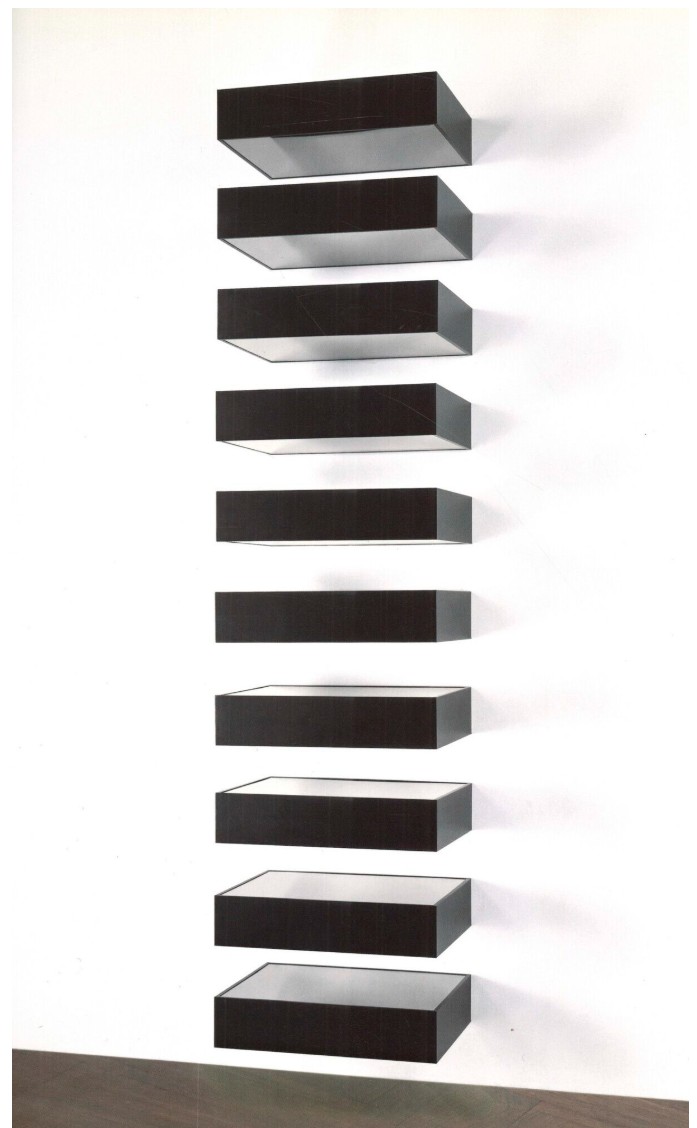
Donald Judd, Untitled, 1990. © 2025 Judd Foundation / Artists Rights Society (ARS), New York.
The origin of Wool’s word paintings has achieved a quasi-mythological tenor. On one of his many walks exploring and photographing the urban detritus of downtown Manhattan, Wool stumbled upon a gleaming white delivery van recently vandalized with black spray-painted graffiti: ‘SEX LUV,’ crudely rendered in crisp font. Utterly transfixed by the graphic and auratic power of this text, Wool set off at once to his studio in order to capture this raw energy in what would become his word paintings.
Wool’s textual explorations are abreast of a grand historical tradition in both literature and painting. His toying with the relationship vis-à-vis visual and verbal representation recalls the literary experiments of Stéphane Mallarmé and Guillaume Apollinaire. The Cubists’ inclusion of snatches of newspaper text in their still life constructions similarly stimulates the push and pull of recognition and illegibility. Ed Rucha’s portraits of words first called attention to how the brain is incapable of looking and reading at the same instant. Cy Twombly and Basquiat looked to words, scribbling them onto canvas, repeating them, crossing them out. Barbara Kruger and Jenny Holzer made language their medium too, while Glenn Ligon’s Door Paintings are contemporaneous.
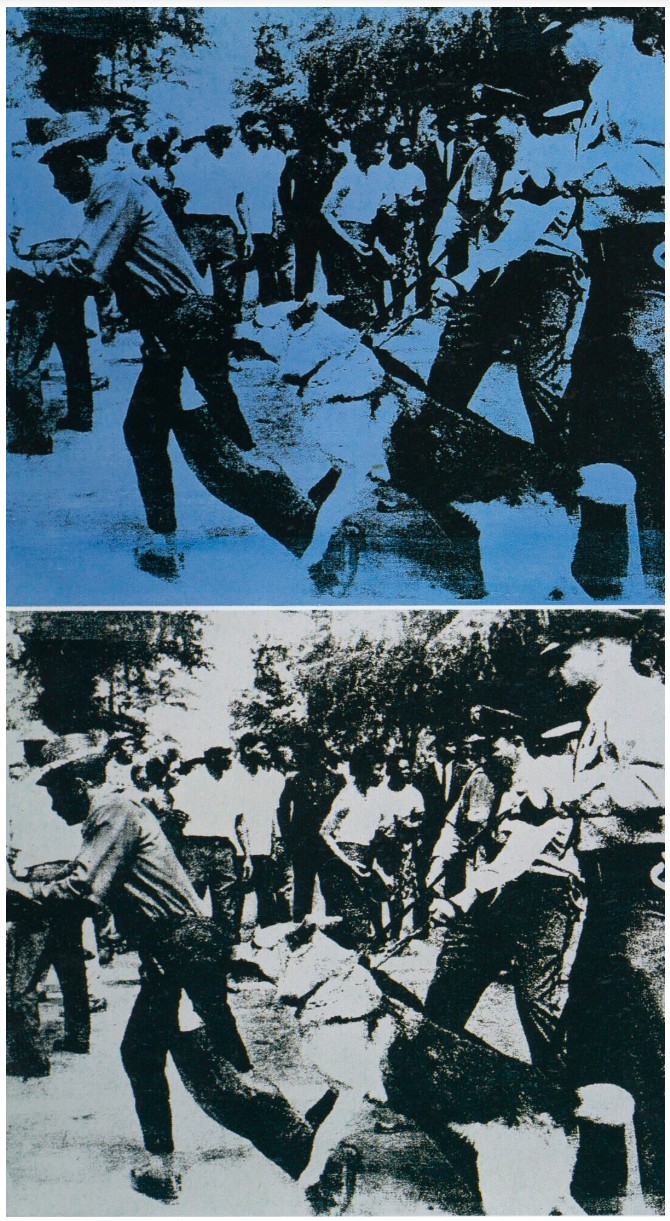
Andy Warhol, Little Race Riot, 1964, The Art Institute of Chicago, Chicago.
© 2025 The Andy Warhol Foundation for the Visual Arts, Inc. / Licensed by Artists Rights Society (ARS).
Wool sourced the text for his word paintings from a vast mental archive he maintained of any words or phrases which arrested his attention. Textual spolia wrought from disparate sources, from obscure philosophical texts, Francis Ford Coppola films, Richard Prince jokes, or street graffiti, form the basis of each composition. RIOT is singular in its status among the series, its primal, almost guttural diction less spoliation and more an outpouring from the artist’s own inner psyche. Articulating an aura of anxiety also embedded in works like Apocalypse Now (1988, Private Collection), which commands SELL THE HOUSE SELL THE CAR SELL THE KIDS, or Untitled, depicting a series of paranoid statements paraphrasing the apocalyptic prose of Russian Philosopher Vasily Rozanov (1990-91, Private Collection). RIOT, however, appears to be among Wool’s most favored words, appearing as titles and texts to several other works.
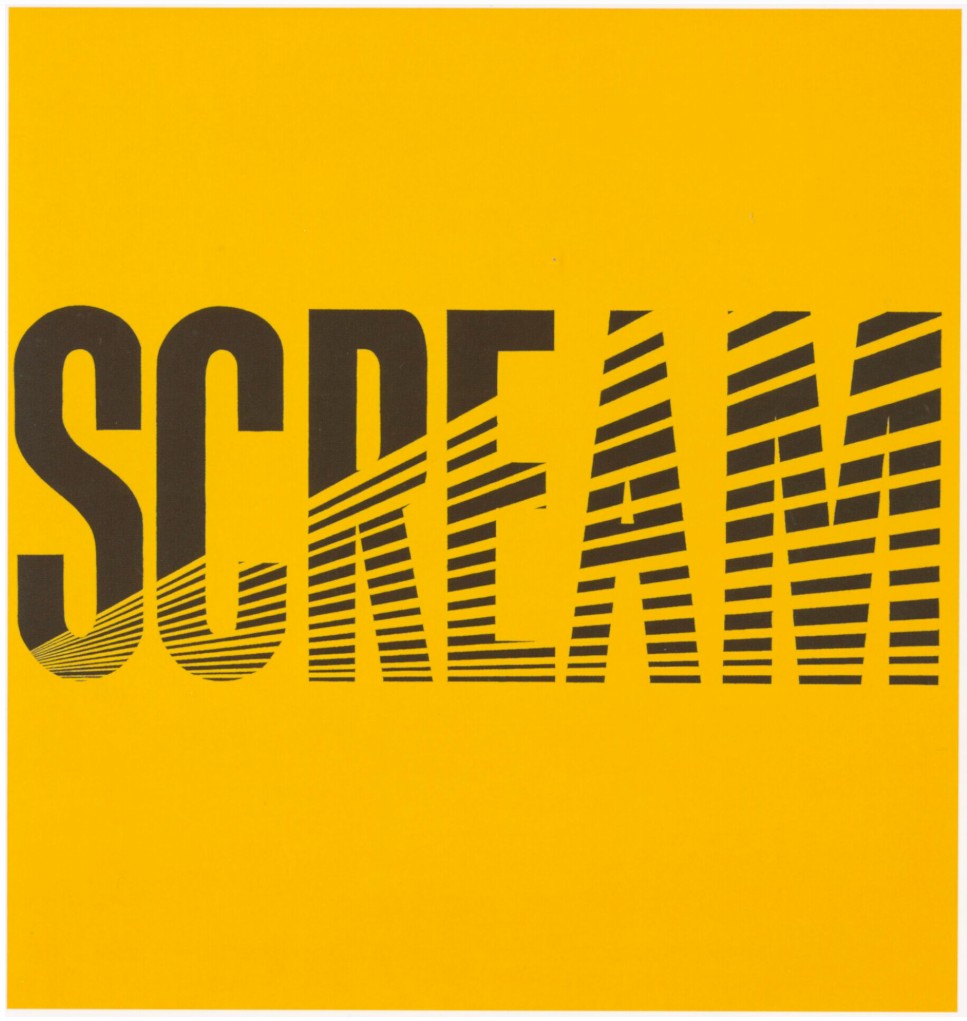
Ed Ruscha, Scream, 1964. Private Collection. © Ed Ruscha.
The present work thus achieves a poignancy lent by its intimate proximity to the artist’s imagination, accommodating the most important attributes exhibited in Wool’s best work, as identified by Jeff Koons for Wool’s first solo exhibition in 1986: “Wool’s work contains continued internal/external debate within itself. At one moment his work will display self-denial, at the next moment, solipsism. Shifting psychological states, false fronts, shadows of themselves, justify their own existence… Wool’s work locks itself in only to deftly escape through sleight of hand. The necessity to survive the moment at all costs, using its repertoire of false fronts and psychological stances is the work’s lifeblood.”
Untitled, 1989
Phillips New-York: 25 September 2025
Estimated: USD 150,000 – 200,000
USD 309,600
WORK ON PAPER
Christopher Wool New Now: Modern & Contemporary Art
Untitled, 1989
Acrylic on paper
Christopher Wool’s Untitled, 1989, belongs to his series of stark, text-based paintings begun in 1987. Using commercially available stencils, Wool rendered single words or abbreviations such as “RIOT,” “FOOL,” or “TRBL,” into stripped back compositions. These so-called “word paintings” have become Wool’s most iconic work, often rendered in his distinctive two-by-two letter grid like in the present example. In Untitled, the arrangement partially abstracts the text, removing it from narrative or grammatical context and allowing it to function simultaneously as a semantic concept and a visual form. Like much of Wool’s work, Untitled navigates the tension between language, image and sign. Drawing on his experience of downtown New York, Wool responds to the visual language of billboards, graffiti and advertising that saturate the urban environment. In this context, the isolated, familiar word is destabilized, transforming into something mysterious, suggestive or even confrontational.
Wool’s work can be understood in conversation with contemporaries like Barbara Kruger and Jenny Holzer, who also deployed language as a critical tool. But unlike those artists, whose practices evolved largely through photography, installation and public art, Wool remained committed to the medium of painting — even during a moment in the 1980s and early ’90s when painting was dismissed as outdated. His approach offers a stripped-down, emotionally direct alternative that is at once conceptual and grounded in physicality. Through the repeated use of identical phrases and stencils across multiple works from this period, Wool produced compositions that, while structurally similar, reveal subtle variations and imperfections that bear the trace of the artist’s hand. In Untitled, the stenciled letters are both impersonal and expressive, imposing and unstable. Stripped of context, it resists easy interpretation, inviting reflection on how language can both communicate and collapse under scrutiny.
Untitled, 1988
Christie’s New-York: 14 May 2025
Estimated: USD 3,500,000 – 5,500,000
WITHDRAWN
CHRISTOPHER WOOL (B. 1955), Untitled | Christie’s
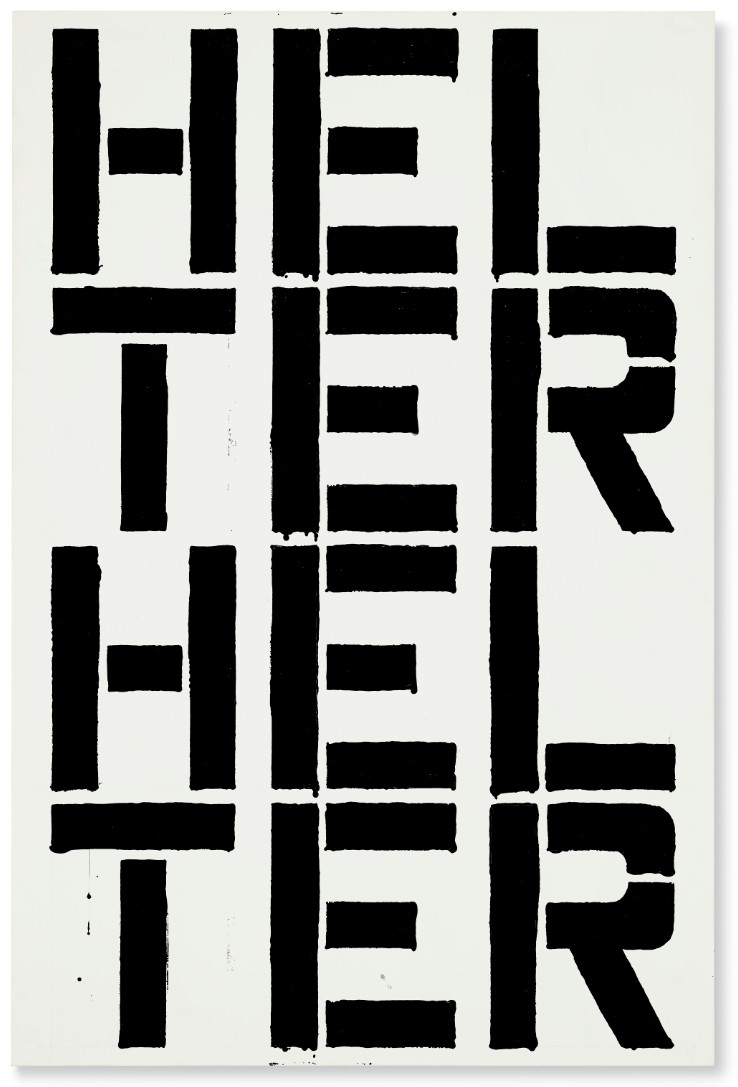
CHRISTOPHER WOOL (B. 1955)
Untitled, 1988
Enamel and Flashe on aluminum
48×32 inches (121.9 x 81.2 cm)
Signed and dated ‘WOOL 1988’ (on the reverse)
Defiantly confronting the viewer with full force, the message rendered across Christopher Wool’s Untitled is the ultimate anarchic statement of his striking output. Combining raw language and materials from the streets, Wool drags the grit of the post-punk urban abyss into the rarified history of fine art. Like many artists of his generation, Wool’s work is governed by mass media and a kaleidoscopic world of appropriation, resulting in a dynamic interplay of borrowed imagery and layered meanings that challenge his audience to navigate a maze of cultural references. His Word paintings unfold as a palimpsest of language, urbanity, and form — blending spoken, phonetic, poetic, and everyday expressions. Alluding to the phrase “helter skelter,” a term synonymous with chaos and disorder, Untitled’s HELTER HELTER swiftly navigates across a vast plain of cultural boundaries — from The Beatles’ jubilant song, to the cult teachings of Charles Manson, to MoCA Los Angeles’ heralded survey of Contemporary art in the 1990s.
One of the rawest rock ‘n’ roll tracks within The Beatles catalog, Helter Skelter was born out of Paul McCartney’s deliberate attempt to create a song as loud and unrefined as possible. Akin to Wool’s own method of cultural appropriation, McCartney borrowed the title of Helter Skelter from a spiraling fairground ride where revelers would climb a tower and slide down the exterior. The ride became a metaphor in McCartney’s mind, symbolizing a descent from the heights of success — “the rise and fall of the Roman Empire,” as McCartney described it (P. McCartney, quoted in B. Miles, Paul McCartney: Many Years from Now, New York, 1998). Noted for both its “proto-metal roar” and “unique textures,” the 23rd track from The Beatles eponymous LP — more affectionately known as The White Album — is often credited by music historians to be a key influence on the development of heavy metal.
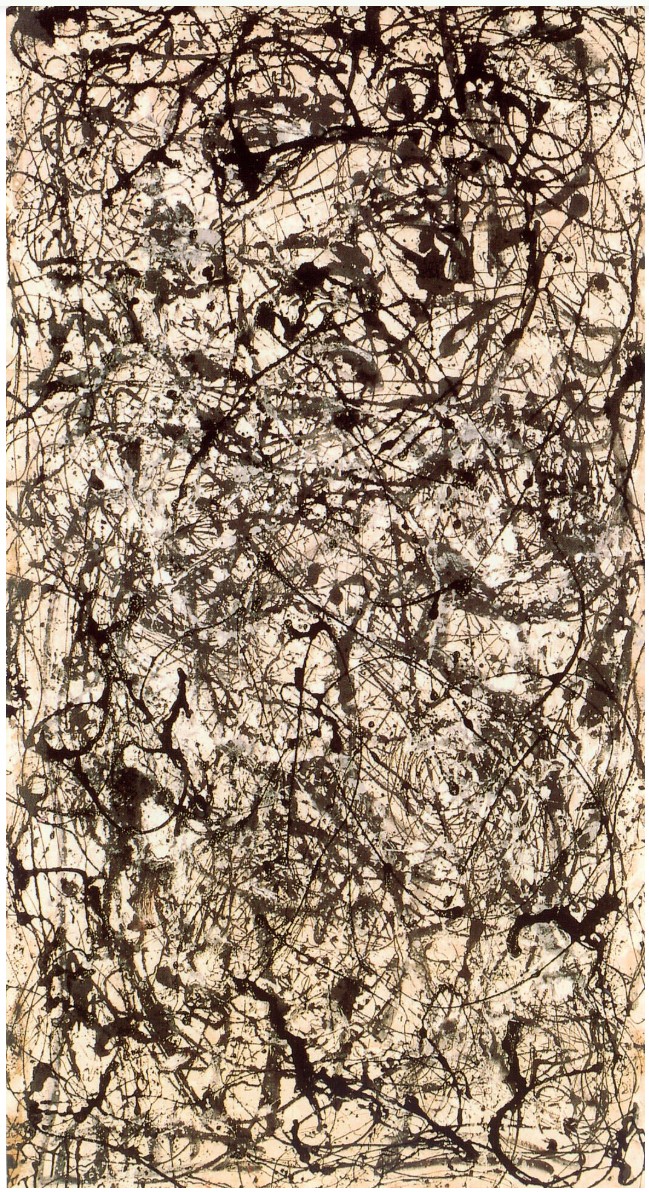
Jackson Pollock, Number 26A, Black and White, 1948. Musée National d’Art Moderne, Centre Georges Pompidou, Paris.
© 2025 The Pollock-Krasner Foundation / Artists Rights Society (ARS), New York.
This playful yet foreboding metaphor took on a different meaning when Manson adopted the song as an anthem for his apocalyptic vision, twisting its message to fit his own radical ideology of revolution and violence. McCartney later reflected on the term’s sinister transformation, stating, “You could have thought of it as a rather cute title but it’s since taken on all sorts of ominous overtones because Manson picked it up as an anthem, and since then quite a few punk bands have done it because it is a raunchy rocker” (Ibid.). This unsettling shift in meaning likely intrigued Wool, aligning with his interest in language’s fluidity and the subversion of seemingly straightforward phrases — a theme explored in other works like Apocalypse Now (1988) and The Show is Over (1990).
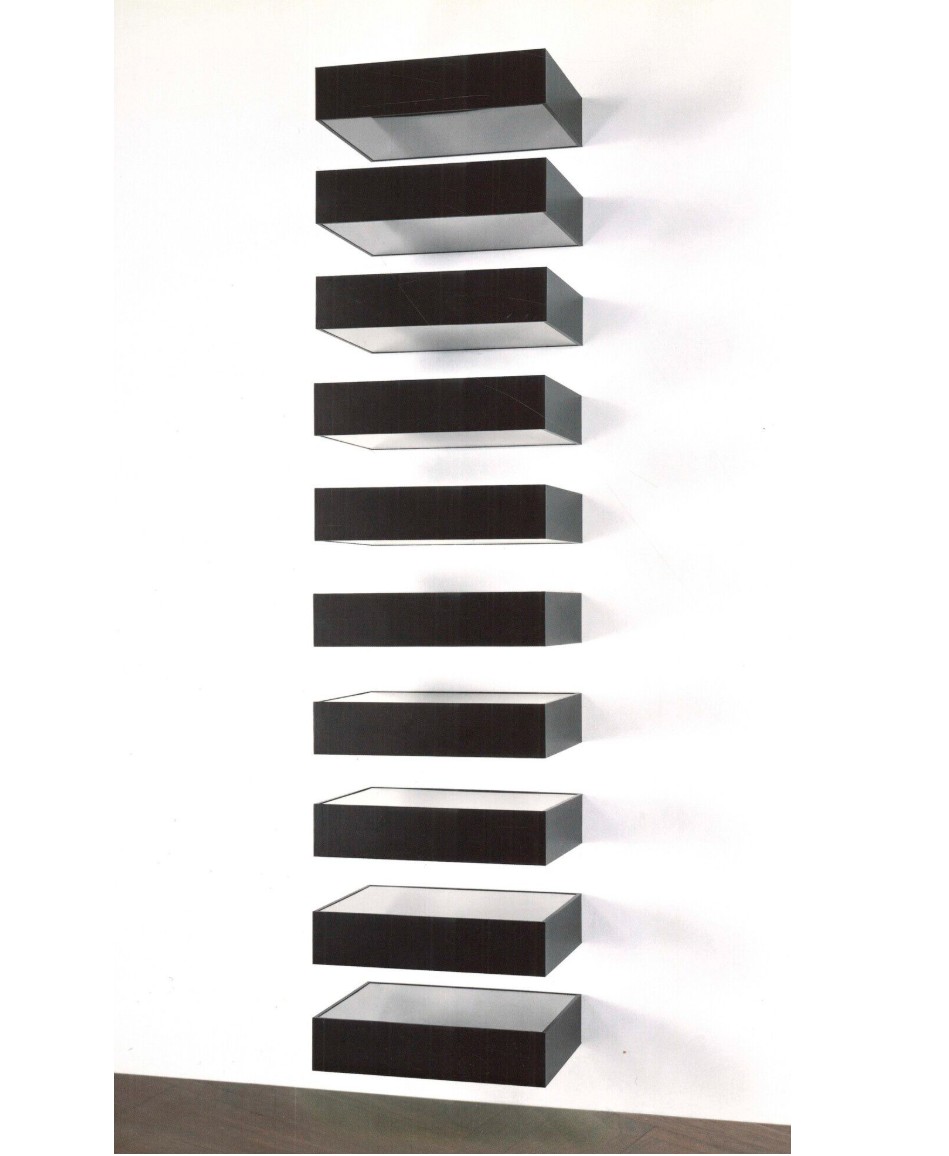
Donald Judd, Untitled, 1990. © 2025 Judd Foundation / Artists Rights Society (ARS), New York.
Untitled crackles with inherent contradictions, balancing anarchic undertones with a meticulously choreographed execution. While the painting’s subject evokes a sense of impending doom, its formal composition remains strikingly controlled: columns of stenciled letters align with sharp precision, the central “E” acting as a visual anchor flanked by rhythmic patterns of “HTHT” and “LRLR” on either side. This tension between order and disorder mirrors the paradox at the core of Wool’s practice. As with Untitled his Word paintings often reverberated with layered meanings, their impact heightened by an anti-literal approach to language. Rather than presenting words as cohesive units, Wool dissects them into isolated letters, scattering them across a pictorial grid. This fragmentation destabilizes the clarity of language, transforming familiar words into visual puzzles — a bold reminder of language’s inherent instability and the slippery nature of meaning.
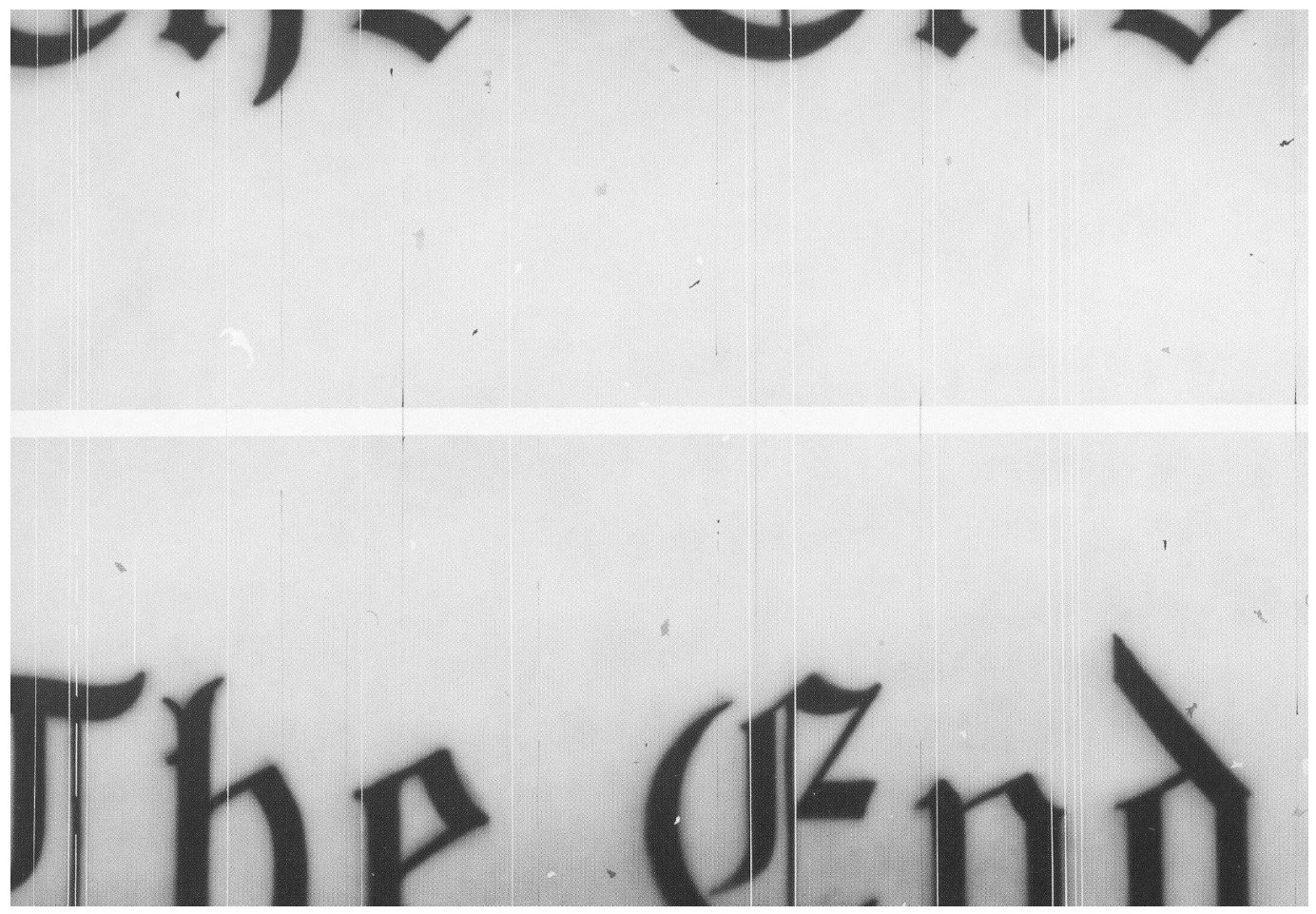
Ed Ruscha, The End, 1991. Museum of Modern Art, New York. © Ed Ruscha.
Wool’s paintings are especially revelatory given the art historical landscape from which they emerged. When he began his word paintings in 1981, Wool was knowingly rebelling against the prevailing artistic current. That same year, influential art critic and historian Douglas Crimp published his now-famous essay, The End of Painting, declaring the medium obsolete. Wool embraced the so-called impossibility of painting, pushing its boundaries by seeking inspiration beyond the traditional art world — in the raw, unfiltered language of the streets. Untitled captures this tension, its disjointed phrases and brutalist typography balancing between structure and anarchy. By stripping words of their context, Wool reduces language to stark, surreal fragments that resonate with unsettling intensity. Like a shout in the dark or a message scrawled in haste, his work challenges us to extract meaning from the chaos — or simply to stand before it, uncertain and uneasy.
Untitled, 1997
Phillips London: 6 March 2025
Estimated: GBP 600,000 – 800,000
GBP 927,100 / USD 1,186,688
Christopher Wool – Modern & Contemporar… Lot 6 March 2025 | Phillips
CHRISTOPHER WOOL
Untitled, 1997
Enamel on aluminum
17 7/8 x 11 3/4 inches (45.5 x 30 cm)
Signed, inscribed and dated ‘Wool 1997 (S145) For Richard Hell Who Wrote It’ on the reverse
Visually imposing and immediately disarming, Christopher Wool’s Untitled, 1997 is an image indebted to its time – the grit of the New York punk and art scene, the angst of the Bowery’s CBGB music club and the graffiti-covered walls of the Lower East Side. Featuring the starkly stenciled words ‘YOU MAKE ME’, Untitled exemplifies Wool’s text-based practice that defined his rise to prominence in the 1980s and 1990s downtown scene. Employing raw materials such as metal and using bold, blocky lettering reminiscent of urban signage, Wool’s word paintings challenge immediate legibility, delving into the ambiguity of language whilst pushing the limits of painting itself. Drawing from a wide range of cultural influences, Wool’s inspiration here is the 1977 album Blank Generation by Richard Hell & the Voidoids. Wool’s chosen words are those scrawled across Hell’s bare chest on the album cover, his direct gaze echoed in Wool’s own confrontational address here. Central to the early punk scene in Lower Manhattan alongside contemporaries such as Patti Smith, Hell’s Blank Generation is a deliberately messy uproar of angst. In Hell’s version of the phrase, he invites the viewer to complete the phrase with an underlined blank. Wool’s version, typical of his word painting syntax, confines the words to a four-by-four grid and stacks them one on top of the other, leaving the phrase unpunctured with a blank space underneath, a gap for the viewer to complete.
Unlike other word paintings where Wool appropriates fragments of text, his meeting with Richard Hell was a deliberate act of collaboration. Wool approached Hell to request consent to use the words, a gesture Hell appreciated, noting, ‘Which of course he didn’t have to do. I mean, that was really courteous. It’s not like I own those words.’ This initial encounter revealed a mutual artistic respect, highlighting their shared fascination with semantics and syntax. A few years after rising to fame, Hell retired from music to focus on writing. More recently, the pair collaborated on a project called Psychopts, in which they turned pairs of words into images that appeared to trick the eye into anticipating another word.
“Our project didn’t have anything to do with changing those words, or reassessing those words. They were just images we started with.”
Wool’s word paintings can be traced back to an encounter in the early 1980s with a truck bearing the graffiti ‘SEX LUV’ on its powdery white surface. Moved by the raw simplicity of the letters, stripped of context and exposed to the urban fabric, Wool chose to use text as a medium to explore the boundaries of painting. Similar text-based interventions were undertaken by artists such as Joseph Kosuth a decade earlier. Kosuth’s minimalist, uniform text works sought to make language the content of the art, collapsing description and image into each other. The careful construction of Wool’s paintings, often arranged on aluminum with a geometric grid, transforms each sloping letter into a painterly object. The stray drips and splashes of paint on each letter imbue a sense of urgency, recalling the graffiti artists of downtown New York.
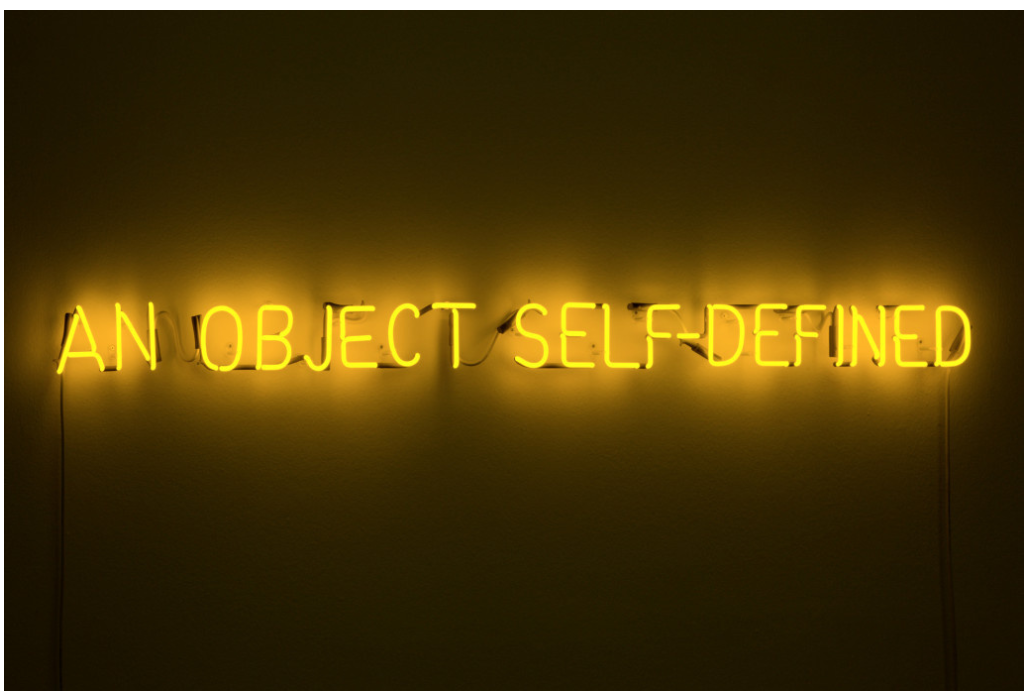
Joseph Kosuth, Self-defined object, 1966. Artwork: © ARS, NY and DACS, London 2025
Composed a decade after the start of his first experimentation with word paintings, Untitled seems unique in its duality, a powerful example of Wool’s exploration of the limits of painting and the ambiguity of syntax as well as the burst of punk energy that projected Hell and Wool to prominence in 1980s. The present work also stands as a testament to the friendship and continued artistic collaboration between the pair, both figures having pushed the boundaries of the visual and musical fields reflecting the experiences of young artists working in the urban environment of the early 1990s.
Untitled, 1990
Phillips New-York: 20 November 2024
Estimated: USD 400,000 – 600,000
USD 488,950
Christopher Wool – Modern & Contem… Lot 328 November 2024 | Phillips
CHRISTOPHER WOOL
Untitled, 1990
Enamel on aluminum
11 7/8 x 8 inches (30.2 x 20.3 cm)
Signed and dated “WOOL 1990” on the reverse
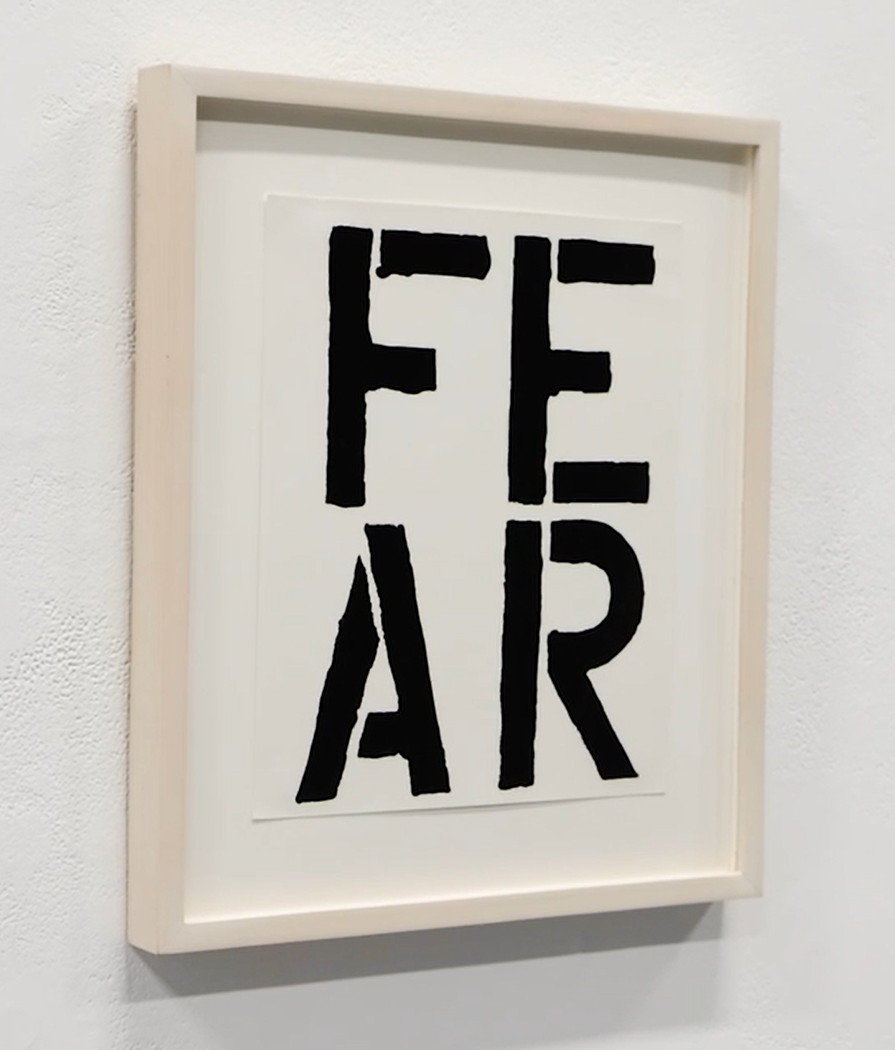
Christopher Wool’s Untitled, 1990, featuring the starkly rendered word “FEAR” in alkyd paint, is an iconic example of the artist’s text-based artistic practice that defined his rise to prominence in the 1980s and 1990s downtown New York art scene. Wool’s mid-1980s experimentation with abstraction led to a deep exploration of language, semiotics, and linguistic fragmentation, ultimately giving rise to the iconic word paintings that define his practice. Untitled, like Wool’s other four-letter paintings spelling words such as “AMOK,” “AWOL” and “RIOT,” stacks two letters over two, subverting instant legibility, engaging viewers in a perceptual tension between text and abstraction—a hallmark of Wool’s exploration of language as both form and content. While deeply influenced by the artistic milieu of his era, Wool’s text artworks, including Untitled, were sparked by a serendipitous moment during a walk in New York. In the late 1980s, he encountered a new white truck emblazoned with the words “SEX LUV,” rendered in bold block-letter stencils. Wool was captivated by how words were both exposed to and transformed by the urban environment, manifesting through graffiti, billboards and advertisements, as integral components of the city’s social fabric and landscape. The industrial landscape in parts of New York profoundly shaped Wool’s selection of materials, notably his choice of aluminum support. His attention to the properties of these materials, combined with a limited color palette and reductive forms, underscores a commitment to post-minimalist principles, revealing the symbolic significance of language in his work. Similar ideas resonated with peers such as Bruce Nauman, Vito Acconci and Jean-Michel Basquiat, who likewise navigated the intersection of text and image as a compelling means of engagement.
“I think of myself primarily as an abstract painter, but I find that in making paintings, there is a little bit of investigation into what abstract painting can be.”
Wool continued to delve into text-based art throughout the 1980s and early 1990s, experimenting with nine-letter words and extended texts, often collaborating with artists like Richard Prince and Félix González-Torres. Though he later expanded his practice to include dynamic canvases with splatters, swooshes, displaced letters and blots, it was his text works, such as Untitled, that ultimately catapulted him to prominence. By repeating the same text motifs, Wool engages in a form of self-plagiarism with his word paintings to interrogate the limitations of language. The words in his works, rather than merely conveying meaning, underscore the inadequacies of written communication. In Untitled, “FEAR” transcends its literal interpretation, metamorphosing into an abstract form that commands attention through its monumental scale and visual aggression. Wool’s transformation elevates the word beyond its semantic constraints, illuminating the intrinsic inefficacy of language and compelling viewers to confront the challenges inherent in communication.
Untitled, 1992
Sotheby’s New-York: 20 November 2024
Estimated: USD 2,000,000 – 3,000,000
USD 2,420,000
Untitled | The Now and Contemporary Evening Auction | 2024 | Sotheby’s
CHRISTOPHER WOOL (b. 1955)
Untitled, 1992
Enamel on paper
38×26 inches (96.5 x 66 cm)
Signed, dated 1992 and numbered F43 (on the reverse)
At once emotionally charged and aesthetically entrancing, Untitled from 1992 is a commanding exemplar of Christopher Wools’ iconic text-based body of paintings and works on paper, which shatter the critical threshold between text and image. Distinguished for its rich ultramarine palette, its full composition, and imperfect painterliness of the stenciled text, the phrase “And if you don’t like it you can get the fuck out of my house” recalls Eddie Murphy’s famous stand-up show Raw from 1987 and is Wool’s among iconic and oft-used phrases for its brash, flippant humor. Sourcing from spoken, phonetic, poetic and everyday language, the words in Wool’s paintings emerge from the crossroads of various cultural legacies to radically collapse the syntax and semantics of our everyday linguistic exchange.
Forged in the gritty crucible of 1990s downtown Manhattan, an era defined by the disruptive energy of the Punk and New Wave scenes, Untitled challenges theories of postmodern critical thinking to present the viewer with a singularly engaging and rigorous conceptual experience.
Untitled (TRBL), 1990
Sotheby’s New-York: 13 May 2024
Estimated: USD 1,500,000 – 2,500,000
USD 2,310,600
Untitled (TRBL) | Contemporary Evening Auction | 2024 | Sotheby’s (sothebys.com)
CHRISTOPHER WOOL (b. 1955)
Untitled (TRBL), 1990
Enamel on paper
36×24 inches (91.4 by 61 cm)
Signed and dated 1990 (on the reverse)
An iconic and visionary masterwork, Untitled (TRBL) epitomizes the disruptive spirit and striking visual impact of Christopher Wool’s painterly practice. It is one of the most significant examples of Wool’s Word Paintings – uniquely combining the sequential enamel layers, anarchic drips, and defiant and timeless message that defines the best of Wool’s oeuvre. We see the word TRBL doubled and inverted, first painted in a deep blue, with the T starting in the lower right, then overpainted with white enamel, flipped upside down, then with TRBL superimposed over the top in Wool’s iconic, glossy black. We see the trace of the blue underpainting in the ghostly forms behind the white, and through the letter R, where Wool has left a skip through which the viewer can peer to see the underlayer. The shiny, painterly quality of the present work’s surface makes it particularly compelling: articulated through strokes of richly built-up enamel paint, the structure enforced by Wool’s stencil is subverted by drips of paint that disrupt the composition, introducing the presence of the artist’s hand. Executed in 1990, a pivotal year in which the best of Wool’s Word Paintings were executed, Untitled (TRBL) stands as one of the most iconic of Wool’s four-letter paintings; by removing the vowels from TROUBLE Wool breaks the word, changing its significance and making it a new signifier. Untitled (TRBL) also bears remarkable provenance, having been held in the same private collection for over twenty years and once belonging in the collection of Tom Patchett, who was key in shaping the Los Angeles art scene of the 1990s with his gallery Track 16.

JEAN-MICHEL BASQUIAT, PEGASUS, 1987. PRIVATE COLLECTION. ART © 2024 ESTATE OF JEAN-MICHEL BASQUIAT. LICENSED BY ARTESTAR, NEW YORK
Untitled (TRBL) is exemplary of Wool’s four-letter Word Paintings, which he began painting in 1989 using a standard sans-serif capitalized font commonly used by the American military to create imposing and confrontational artworks. Running the letters together with no spaces in between to reduce quick legibility, these text paintings elide linguistic and visual aesthetics in a manner that is confusingly humorous yet deadly serious. Here, Wool has truncated the word “trouble” by eliminating its vowels; thus, “TRBL” opens itself to possibilities of new vowels and new forms of interpretation. Further hinting to additional pathways of meaning, the ghostly suggestion of the same letters hang upside down and in reverse beneath the inked “TRBL,” casting the entire orientation of the picture plane into question. Painted over, yet still visible, these enigmatic shadows reveal arresting glitches of process – the rich incidents of skipping and distortion that corrupt our reading of the words as text becomes a visual rather than purely linguistic device. With drips of white and black paint, Wool centers our attention toward the material application of enamel, harnessing the pictorial qualities of his stenciled letters to accentuate their status as shapes and de-naturalize their communicative utility. Speaking to the paradoxical nature of Wool’s Word Paintings, Bruce Ferguson writes, “Some gestalt, visual or cultural, is inevitable given the geometric order that prevails, but it is not a happy or a complete one, grammatically assured and visually complete. Rather, the Word Paintings signal the desire for completion, the desire for a viewer to be complicit with meaning and a desire for an anarchistic pulse beyond language to be maintained as well. If painting can still forcefully offer the idea of such freedom and such bonding, despite how complicated its strategies and procedures have, of necessity, become, then Wool’s work strongly points to the relevance of its raptures today in ways that are both critical and compliant, both estranging and strange.” (Bruce W. Ferguson, “Patterns of Intent,” Artforum, September 1991, p. 98)
Though the exact source of Untitled (TRBL)’s linguistic readymade is not confirmed, two potential origins surface: the first being the 1988 film noir Trouble in Angel City, told from the perspective of novelist Raymond Chandler, and the second being the death of Stevie Ray Vaughan, blues guitarist and front man of the band Stevie Ray Vaughan and Double Trouble, who tragically died in a helicopter accident the year of the present work’s execution. Irrespective of his exact source, Wool, in his use of stencils as a form of mechanical reproduction, as well as his appropriation of ‘low-brow’ phrasing and profanity, confuses the traditional boundaries of textual and artistic language – this is a subversive conceit familiar from the Pop Art of Warhol or Lichtenstein, all the way to the readymade aesthetic of Duchamp. As explained by Katherine Brinson: “Wool was less concerned with language as a means to transcend image, or with the problematic conjunction of text and image, than with text as image. He has long been fascinated by the way words function when removed from the quiet authority of the page and exposed to the cacophony of the city, whether through the blaring incantations of billboards and commercial signage or the illicit interventions of graffiti artists. But with their velvety white grounds and stylized letters rendered in dense, sign painter’s enamel that pooled and dripped within the stencils, the Word Paintings have a resolute material presence that transcends the graphic.” (Katherine Brinson in: Exh. Cat., New York, Solomon R. Guggenheim Museum (and traveling), Christopher Wool, 2013, p. 40)
Untitled, 1992
Sotheby’s London: 6 March 2024
Estimated: GBP 800,000 – 1,200,000
GBP 2,226,000 / USD 2,822,568
Untitled | Modern & Contemporary Evening Auction featuring The Now | 2024 | Sotheby’s (sothebys.com)
CHRISTOPHER WOOL (b. 1955)
Untitled, 1992
Enamel on paper
39×26 inches (99 x 66.2 cm)
Signed, dated 1992 and numbered F50 (on the reverse)
Jarring, anarchic and insurgent, Untitled epitomizes the irreverent and disruptive spirit of Christopher Wool’s subversive painterly practice. Executed in 1992, the iconic and visceral phrase “IF YOU DONT LIKE IT YOU CAN GET THE FUCK OUT OF MY HOUSE” is emblazoned in capitals across the width of the paper in hard, glossy enamel, recalling the language and appearance of public billboards or commercial advertising. Starkly painted against a pure white ground, each hard-edged letter confronts the viewer with the formal purity of abstract painting, challenging them to recognise and accept the artist’s conceptual enterprise. Leaving the lower half of the composition empty, Wool creates an elegance within the present work that differentiates it from others in the series and his earlier Black Books in which the phrase stretches across the entire surface. Appearing like a thought half-finished or half-formed, the composition is abrupt yet dismissive. In this way, it epitomizes Wool’s critically acclaimed and conceptually challenging artistic project: what you see is what you get.
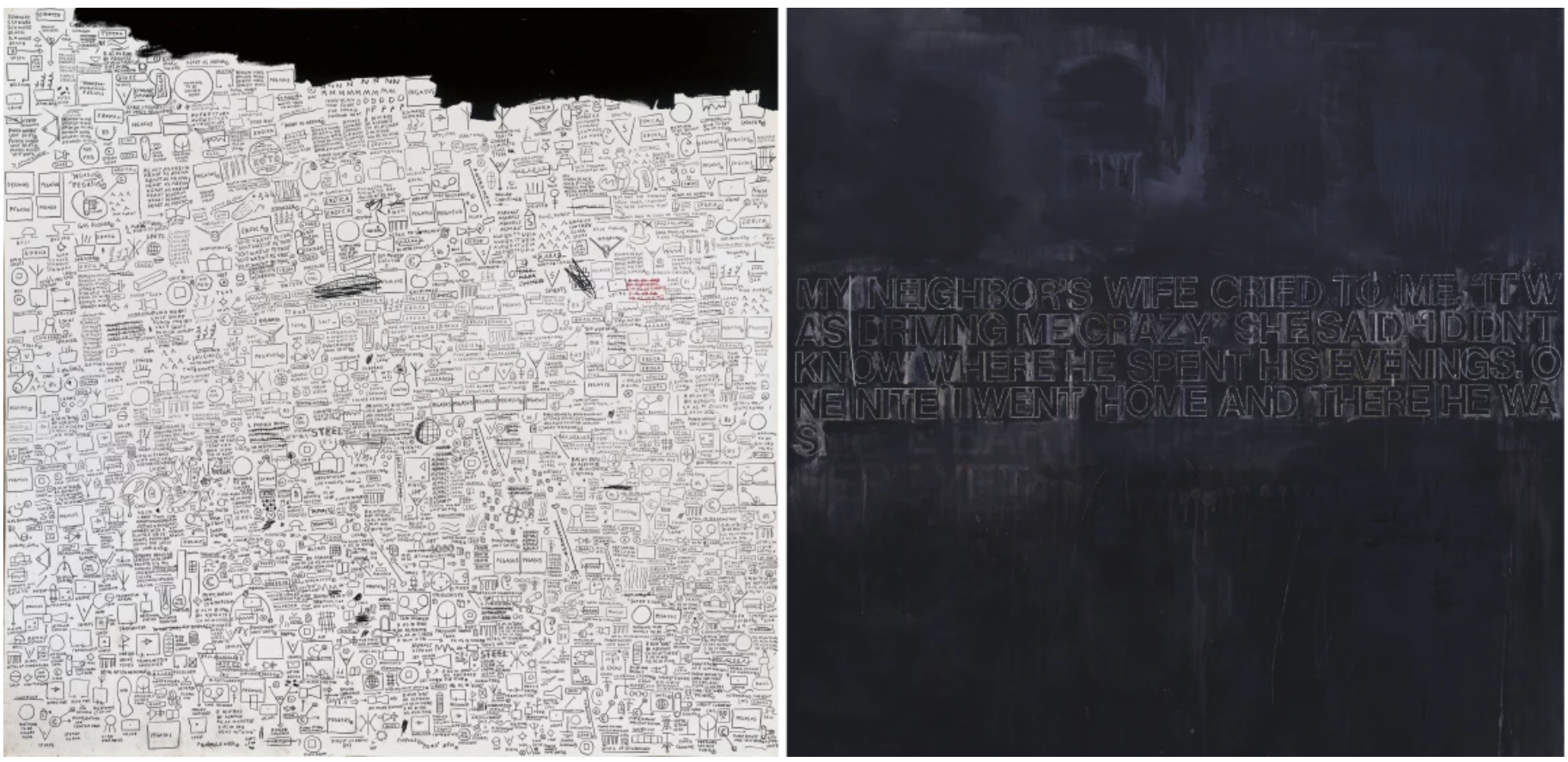
JEAN-MICHEL BASQUIAT, PEGASUS, 1987. PRIVATE COLLECTION. ART © 2023 ESTATE OF JEAN-MICHAEL BASQUIAT. LICENSED BY ARTESTAR, NEW YORK
RICHARD PRINCE, MY NEIGHBOR, 2002. SOLOMON R. GUGGENHEIM MUSEUM, NEW YORK. IMAGE: ART RESOURCE, NY/SCALA, FLORENCE. ART © 2024 RICHARD PRINCE
In this series of “word paintings,” begun in 1989, Wool used a standard sans-serif capitalized font commonly used by the American military to create imposing and confrontational artworks. Running the letters together with no spaces in between to reduce quick legibility, these text paintings elide linguistic and visual aesthetics in a manner that is confusingly humorous yet deadly serious. As in Richard Prince’s contemporaneous series of Jokes, there is a manipulative self-reflexivity to Untitled that seeks to subvert the boundaries between text and painting, as well as the handcrafted and machine-made. Wool here has appropriated the written message from a stand-up show, in this case Eddie Murphy’s Raw from 1987; the phrase “If you don’t like it you can get the fuck out of my house” is one of the artist’s most iconic and recognizable. In this way, Untitled is typical and perhaps best representative of the artist’s subversive impulse as it blurs the viewer’s conception of “low” humor and “high” art, directly implicating them through the arresting nature of the textual message and visual form. Humour pervades these works yet, as with other contemporary artists such as Jeff Koons, the viewer is never quite sure who is laughing at whom.
At its core, however, Untitled is undeniable in its visual and conceptual power. Cacophonous and subversive, its message and aesthetic project remains relevant to every era. As Katherine Brinson has noted, “Wool was less concerned with language as a means to transcend image, or with the problematic conjunction of text and image, than with text as image. He has long been fascinated by the way words function when removed from the quiet authority of the page and exposed to the cacophony of the city, whether through the blaring incantations of billboards and commercial signage or the illicit interventions of graffiti artists. But with their velvety white grounds and stylized letters rendered in dense, sign painter’s enamel that pooled and dripped within the stencils, the word paintings have a resolute material presence that transcends the graphic” (Katherine Brinson in Exh. Cat., New York, Solomon R. Guggenheim Museum (and travelling), Christopher Wool, 2013, p. 40). In its inversion of conventional understanding and art history, Untitled challenges our right to anticipate specific outcomes from art with just a few letters, emblematising the continued anarchy that defines Wool’s oeuvre.
Untitled, 1989
Sotheby’s New-York: 12 December 2023
Estimated: USD 800,000 – 1,200,000
USD 750,000
CHRISTOPHER WOOL (b. 1955)
Untitled, 1989
Enamel on paper
32 1/2 x 21 1/2 inches (82.6 x 54.6 cm)
Signed and dated 1989 (on the verso)
A singular word boldly announces itself to the viewer as it echoes across the surface of Christopher Wool’s Untitled; stacked in three rows of three, the nine letters project a palpable and enigmatic energy that fractures the conventional boundaries between language and visual representation, captivating the observer with its dynamic interplay of form and meaning. Executed in 1989, Untitled is a seminal early example on paper of Wool’s most renowned and desirable body of text works: his Black Book series. Rare for their declarative straightforward symmetry, this series includes such seminal and iconic word compositions as PARANOIAC, PESSIMIST, COMEDIAN, PRANKSTER, INSOMNIAC, HYPOCRITE, PERSUADER, and TERRORIST, together resonating either as a cast of dubious characters, or the various facets of a single individual. Of the large-scale Black Book paintings he produced from these smaller works on paper, nearly half belong to prominent museum collections, such as the Museum of Contemporary Art in Los Angeles, the San Francisco Museum of Modern Art, the Baltimore Museum of Art, and the Broad Art Museum in Los Angeles. The present work’s composition remains lauded as the paragon of this iconic series, even having been featured on the poster of Wool’s 1989 show at Max Hetzer Gallery in Cologne, the first ever exhibition of his text paintings. Concurrently provocative and aesthetically seductive, Untitled stands as a testament to Wool’s unparalleled ability to transcend conventional boundaries and redefine the narrative of art making, solidifying his place as a leading voice in the contemporary art world today.
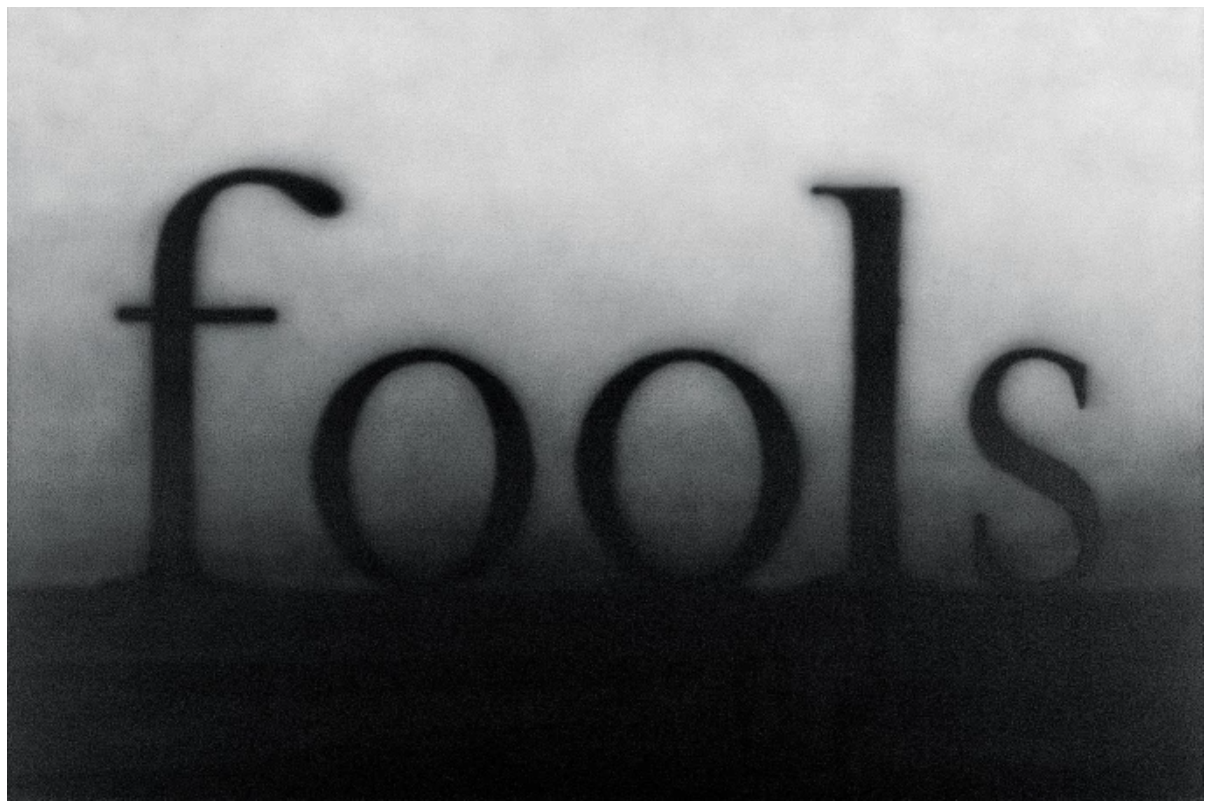
ED RUSCHA, FOOLS, 1990. SAN FRANCISCO MUSEUM OF MODERN ART / ART © 2023 EDWARD RUSCHA
Emblazoned in black enamel and neatly arranged in three rows of three, the nine-letter word SPOKESMAN rejects instantaneous legibility, instead demanding fixed concentration from the viewer. Formally composed in a way that resists communication, Untitled stirs sensations of unease, apprehension, and even animosity among the audience. This anxiety evokes a heightened intensity and fragility that is visually mirrored in the imperfections that disrupt the rigidity of each stenciled letter: dribbles, smudges, and errors menacingly challenge the order of the gridded word and the readability of the term, hovering on the perilous precipice of total systemic collapse at every juncture. The formality of the three-by-three grid and the truncation of the word imply constriction, while the obstruction of such severe boundaries by painterly interruptions articulate a palpable danger along every edge. Indeed, it is this striking fluctuation between clarity and obscurity that is the source of tension in Wool’s work.
Untitled, 1992
Sotheby’s New-York: 15 November 2023
Estimated: USD 1,500,000 – 2,000,000
USD 2,359,000
Untitled | Contemporary Evening Auction | 2023 | Sotheby’s (sothebys.com)
CHRISTOPHER WOOL (b. 1955)
Untitled, 1992
Enamel on paper
43 1/4 x 29 3/4 inches (109.9 x 75.6 cm)
Visceral and abrupt, Untitled epitomizes Christopher Wool’s anarchic painterly enterprise. Amongst the most iconic phrases form Wool’s text series, the present work powerfully embodies the radical energy and disruptive spirit of the 1990s, the stark silhouette of each letter wholly capturing the angst and exuberance of the downtown art scene. Executed in 1992, the rebelliously dismissive edict emblazoned upon the present work serves as an explosive statement of intent for Wool’s critically acclaimed artistic project, successfully disrupting and manipulating art historical precedent with exhilarating nonchalance. In every way exemplary of Wool’s specialized approach to painting, the font and text of the present work immediately assault the viewer, while marks from the stencils and remanence of the handmade nature of the work juxtapose the formality of the capitalized letters.
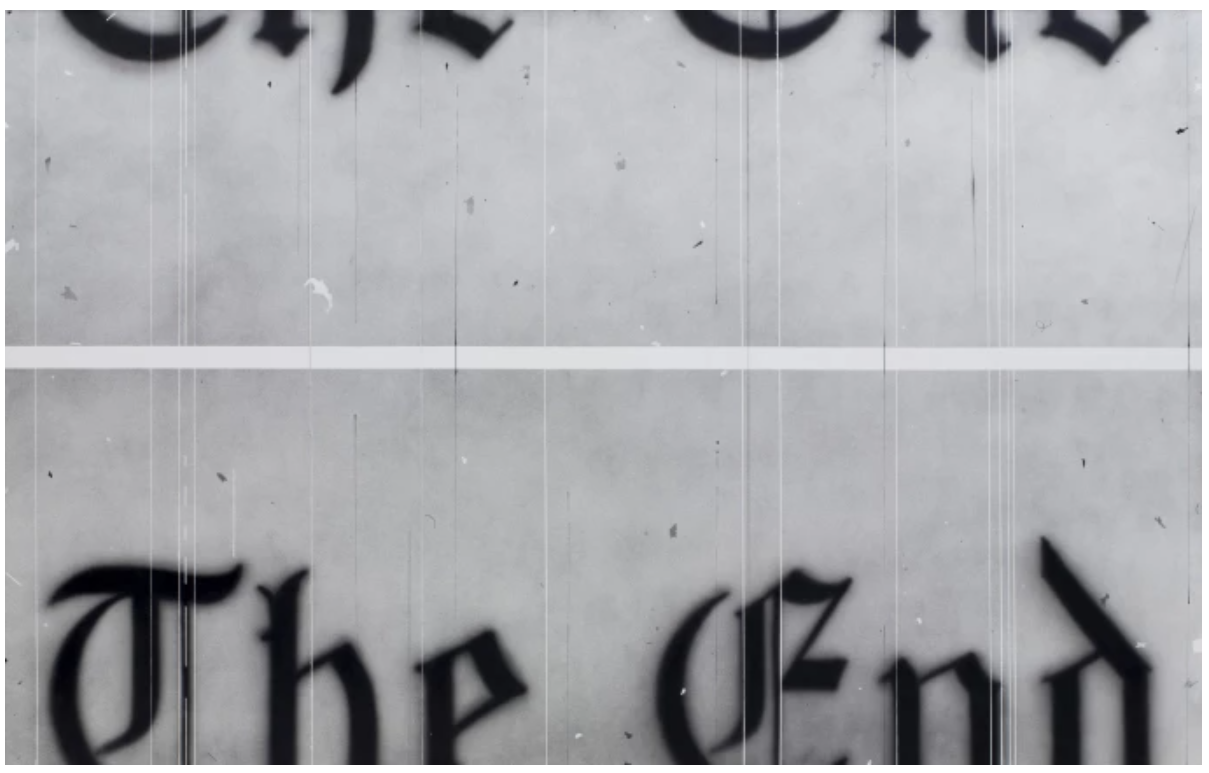
ED RUSCHA, THE END, 1991. IMAGE © THE MUSEUM OF MODERN ART/LICENSED BY SCALA / ART RESOURCE, NY. ART © 2023 ED RUSCHA
Forged in the gritty crucible of 1990s downtown Manhattan, an era defined by the disruptive energy of the Punk and New Wave scenes, Untitled challenges theories of postmodern critical thinking to present the viewer with a singularly engaging and rigorous conceptual experience. Within the present work, Wool combines elements of Pop Art and Abstract Expressionism to form an entirely new artistic visual language, while simultaneously enacting an investigation into the semiotic content of words themselves. His all-over composition and overt suggestion of the artist’s hand through irregular outlines, smudges, and slippages assert the importance of gesture, in line with such Abstract Expressionist predecessors as Jackson Pollock or Willem de Kooning; yet simultaneously, his use of stencils as a form of mechanical reproduction, as well as his appropriation of ‘low-brow’ phrasing and profanity, link his work inextricably to the Pop and Conceptual movements. Indeed, though it has been pushed to the edges of abstraction, Wool’s irreverent message is still legibly aggressive and jarring, compounding the attitude of punk indifference which permeates his oeuvre.
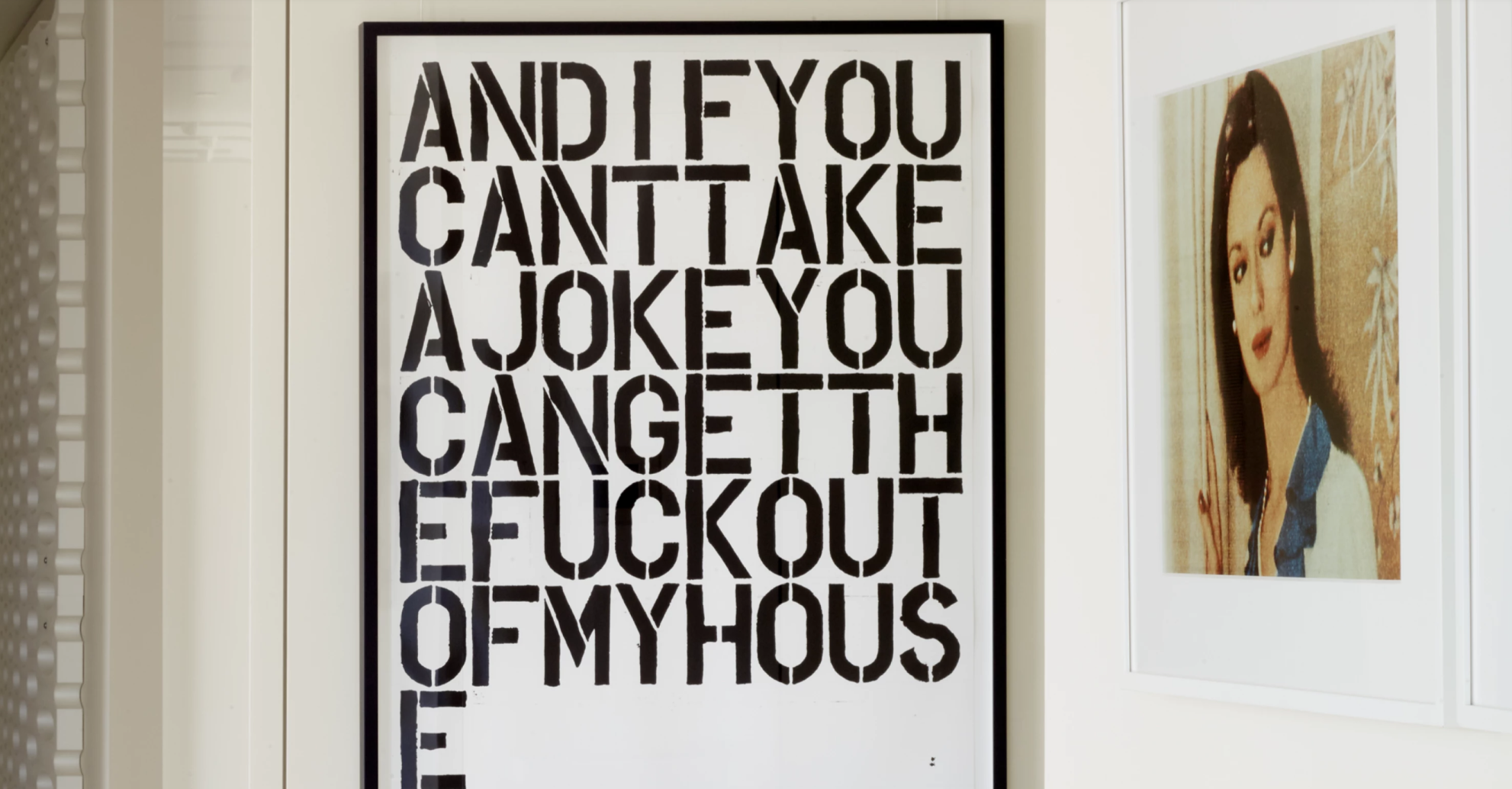
CHRISTOPHER WOOL’S UNTITLED AS EXHIBITED IN CHARA SCHREYER’S SAN FRANCISCO HOME. PHOTO © MATTHEW MILLMAN
Like hastily stenciled graffiti or heralded tabloid headlines, Untitled summons the industrial severity of the urban environment. The phrase “And if you don’t like it you can get the fuck out of my house” comes from Eddie Murphy’s famous stand-up show Raw from 1987 and is Wool’s most iconic and oft-used phrases for its brash, flippant humor. Confronting the viewer with the violent force of sudden impact, the present work juxtaposes painterly entropy with commanding linguistic force to utterly annihilate presumed boundaries between image and text. Indeed, by emphasizing the visual appearance of the letters rather than the meaning of the words, Wool transforms Untitled into a formal statement that critically examines the nature of painting as a vehicle for contemporary artistic expression. Arranged in seven rows of stacked letters, the formality of the grid barely contains the phrase as the words blend together, intensifying their potent graphic power; below, the last row leave ample areas of white surrounding, compounding the attitude of post-Punk indifference which permeates the painting.
Untitled, 1988
Sotheby’s New-York: 18 May 2023
Estimated: USD 10,000,000 – 15,000,000
USD 8,377,500
Untitled | Contemporary Evening Auction | 2023 | Sotheby’s (sothebys.com)
CHRISTOPHER WOOL (b. 1955)
Untitled, 1988
Enamel and Flashe on aluminum
96×60 inches (243.8 x 152.4 cm)
Signed, dated 1988 and numbered P79 (on the reverse)
A singular word conjures an entire psychological and conceptual revelation as it echoes across the monumental surface of Christopher Wool’s Untitled; repeated six times in emphatic verticality, the artist does not so much request our attention with the courtesy of its plea, but rather demands it, powerfully embodying the rebellious tension at the core of the Wool’s singular oeuvre. Forged in 1988 in the gritty crucible and renegade cultural milieu of downtown Manhattan, Untitled is an early paradigm of Christopher Wool’s anarchic painterly enterprise and witnesses the artist shatter the critical threshold between text and image. Repeated across a canvas towering eight feet tall with seemingly increasing urgency, Wool’s insistent refrain “PLEASE” appropriates the soulful 1956 James Brown single of the same name, intensifying the explosive and visceral lyrics with the painting’s monumental authority and enamel black lettering. The present work belongs to Wool’s iconic and early corpus of 1988 text paintings that unsettle the semantics of popular culture by echoing soundbites from cinema and mass media, such as the refrain “HELTER HELTER” from The Beatles’ Helter Skelter in his Untitled and the punchline “SELL THE CAR SELL THE KIDS” from Martin Scorsese’s eponymous film in Apocalypse Now. Testifying to its milestone significance in Wool’s career, Untitled was one of two masterpieces by the artist selected for inclusion in the 1989 Whitney Biennial, only one year after its execution. In Untitled, Wool mutates a polite request or a rhythmic lyric into an anxious plea, an imploration teetering on the fragile borderline of hysteria; in other words, “The painting becomes a chant, a rant, a slogan, and a scream” (Jerry Saltz, “This is the End: Christopher Wool’s Apocalypse Now” in Arts Magazine, vol. 63, no. 1, Sept.1988, p. 20).
Emblazoned in black lamina, Christopher Wool’s text in Untitled is a linguistic string that lacks punctuation – an unrelenting imploration from an unnamed narrator for an indeterminate request. His monosyllabic plea is stripped of any context and echoed six times in graphic repetition, its sinister desperation reified by its functional yet stark and stenciled letters. Wool’s dispossessed language is no less abstract than his formal mark-making: like street signs or tabloid headlines, his words are resolutely matter-of-fact in their overall presence. Upon further inspection, drips of ink-like black paint left visible on the aluminum canvas are remnants of the process of its making, serving as evidence of the artist’s own hand within the painting. Untitled is fixed at the precarious brink between automated rigor and handcrafted intimacy, setting into motion an oscillation between order and chaos to subvert the semantics of our quotidian vocabulary.
Untitled, 1993
Christie’s New-York: 17 May 2023
Estimated: USD 15,000,000 – 20,000,000
USD 10,070,000
CHRISTOPHER WOOL (b. 1955) (christies.com)
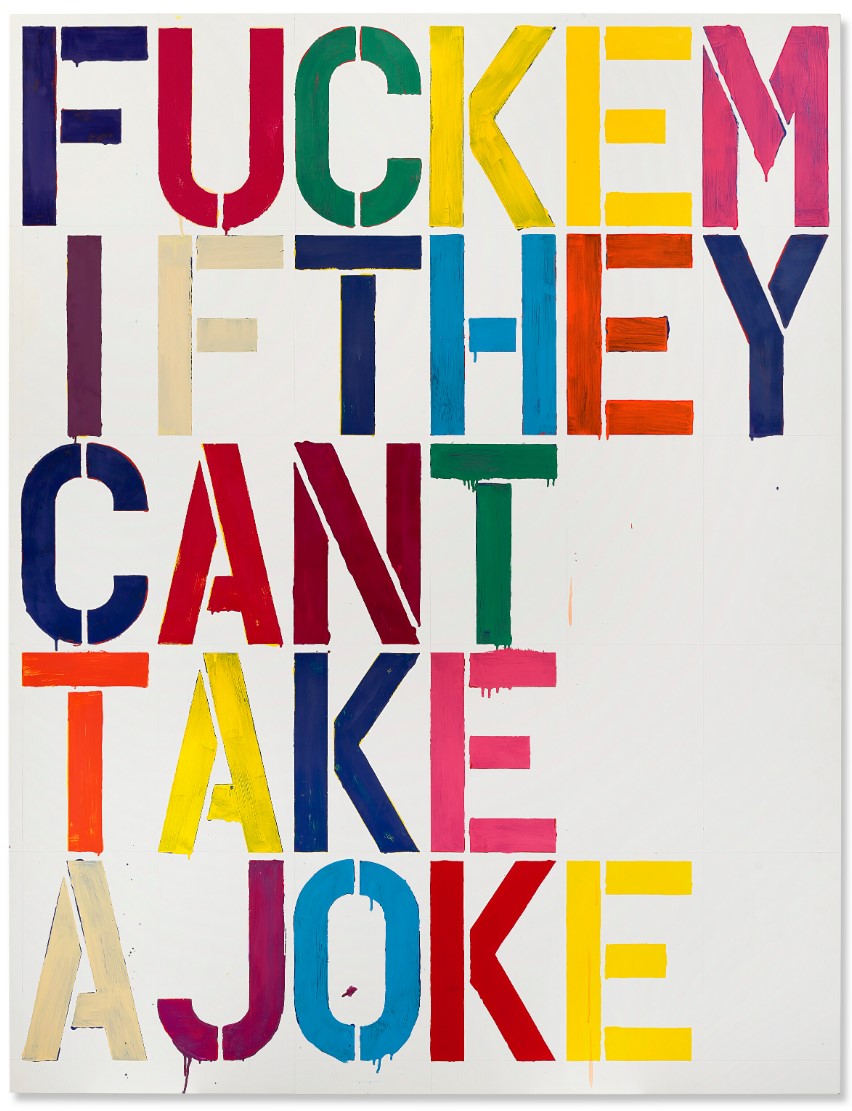
CHRISTOPHER WOOL (b. 1955)
Untitled, 1993
Enamel on aluminum
78×60 inches (198 x 152.4 cm)
Signed, titled, inscribed and dated ‘WOOL 1993 UNTITLED (P185)’ (on the reverse)
Christopher Wool’s Untitled is an exceedingly rare multi-colored example from the artist’s iconic series of word paintings. While most are rendered in thick black text stenciled on a white aluminum ground, this polychromed panel lays bare the artist’s interest in the perception of both painting and textual information in reaction to daily life and the urban environment. Jeff Koons addressed the complexity of his fellow conceptual artist’s oeuvre, noting, “Wool’s work contains continual internal/external debate within itself. At one moment his work will display self-denial, at the next moment solipsism. Shifting psychological states, false fronts, shadows of themselves, justify their own existence…. Wool’s work locks itself in only to deftly escape through sleight of hand. The necessity to survive the moment at all costs, using its repertoire of false fronts and psychological stances is the work’s lifeblood” (J. Koons, cited in Christopher Wool, exh. cat., New York, Solomon R. Guggenheim (and travelling), 2013, p. 35). Untitled peels away the hard layers of the city to reveal the artist’s hand. Viewed from afar, it retains the shocking immediacy the monochrome word paintings, its slogan cut and rearranged by the artist into a sort of visual poetry. However, upon closer inspection, the subtleties of the painter’s process make themselves known. By allowing for this duality, Wool asks us to reconsider our relationship with text and its link to information while also commenting on the nature of symbols, language, and the art of painting.
Acquired by the present owner just a year after it was painted, Untitled has an especially active surface, a fact that is only further emphasized by Wool’s use of colored paint to render each block letter. Using the whole spectrum, he spells out the phrase “FUCKEM IF THEY CANT TAKE A JOKE”, omitting punctuation and ignoring proper spacing as he does in the rest of the series. The use of color here gives a deeper insight into Wool’s seemingly straightforward process. In the black works, one could be excused for thinking each stenciled glyph was applied in order until the phrase of completed. However, in this particular example, one is rewarded for looking closer. Under higher scrutiny, it becomes clear that Wool painted the letters in one color before returning to overpaint in a different shade. The dripping, pulsating pigment on the surface hides this initial coat in some cases, but in others, like the first ‘K’ and the ‘F’ of the word ‘IF’, the base layer pushes through. In the first ‘C’, a halo of red glows beneath the verdant green, and in the ‘T’ below a yellow aura radiates on the edge of midnight blue. It oozes at the periphery of the otherwise clean and orderly shapes and, juxtaposed with the vertical drips of paint, helps to create a visually dynamic composition that oscillates between being readable as text or image. Furthermore, the grain of the coarse brush is visible in each stroke as light catches darker undercoating peering through thin coverage areas. By creating this visual intrigue, Wool successfully disconnects our normal habit of reading letters for information and instead allows us to explore the pictorial qualities presented.
Untitled, 1988
Christie’s New-York: 10 May 2022
Estimated: USD 8,000,000 – 12,000,000
USD 8,405,000
CHRISTOPHER WOOL (B. 1955) (christies.com)
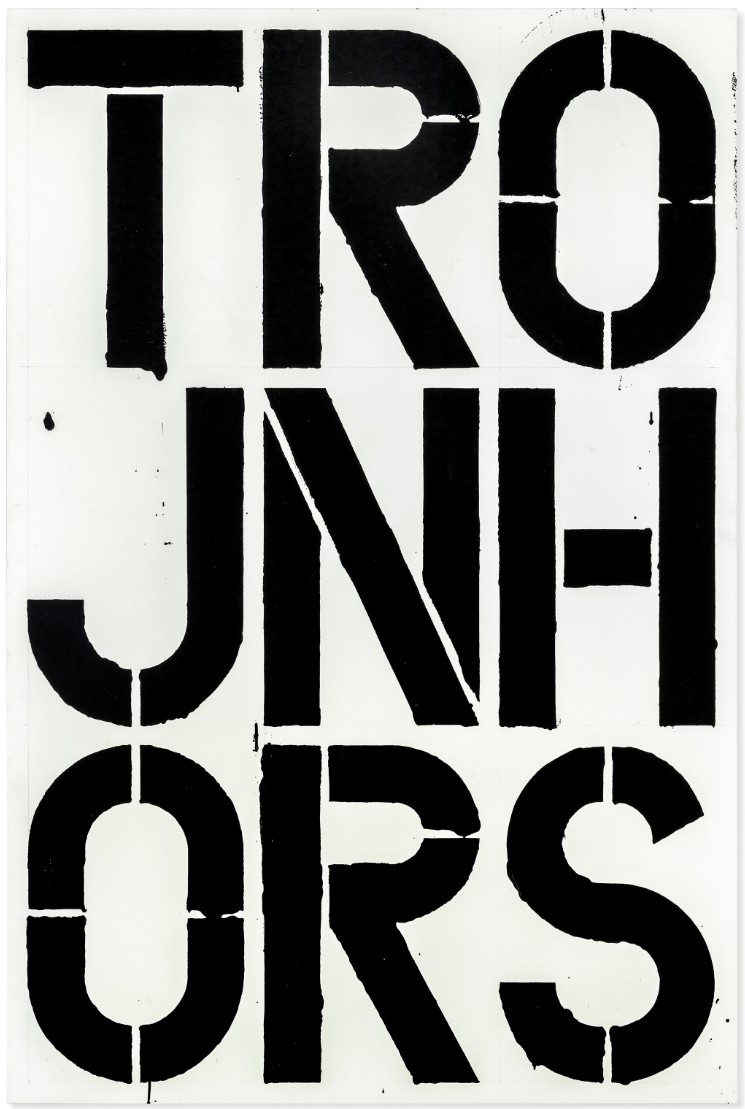
CHRISTOPHER WOOL (B. 1955)
Untitled, 1988
Enamel on aluminum
72×48 inches (182.9 x 121.9 cm)
Signed, titled, inscribed and dated ‘WOOL UNTITLED P.47 1988’ (on the reverse)
Christopher Wool’s Untitled is the very first painting in the artist’s iconic Word series. By stenciling the letters TROJNHORS in his now familiar grid pattern, Wool’s exhortation itself acts as trojan horse, breaching the boundaries of traditional art with a power and force that took everyone by surprise. Perhaps no other series is so distinctly associated with the artist as these paintings, which combines seemingly simple text on a white ground to dizzying effect. As the first painting in the series, and the only instance of the artist using this particular phrase, it is from this seed that the artist’s celebrated notability and authority grew.
From this point on, the artist catapulted himself into a world where words became subjects and meaning shifted and collapsed as he sought to imbue the urgency of the streets into his textual arrangements. Looking less at his chosen words as text or conveyors of semiotic meaning, Wool forces the audience to reevaluate our relationship with language. Isolated, dripping, and misaligned, the letters become abstract shapes and lines, and become more individually clear in the process. Visually paving the way for an army of text-based works, Untitled sees the artist applying thick black enamel to a white aluminum support for the first time. Using industrial-style lettering stencils, he embraces the drips and overpainting that result from the process. The shapes are accurate and clear, but the marks themselves veer from absolute perfectionism in favor of an almost painterly attention to medium.
“I always considered myself involved with painting. I can’t imagine someone seeing one of those and not realizing it’s a painting. I think, the way I used text was not didactic. I was not speaking about art, I was just making paintings. The text was more subject than anything else.”
Untitled is centered around nine letters in three rows of three letters each. Spelling them out, he makes an abbreviated reference to the Ancient Greek military tactic of hiding inside a wooden horse sculpture to gain access to the besieged city of Troy. Like the equine ruse, Wool’s work is full of more meaning than might initially meet the eye. The letters are easily read, but becoming aware of the objecthood of each symbol takes time as one must actively dissociate any learned associations with the alphabet in order to more fully appreciate the composition.
Untitled, 1990
Christie’s New-York: 9 November 2021
Estimated: USD 6,500,000 – 8,500,000
USD 7,000,000
CHRISTOPHER WOOL (B. 1955) (christies.com)
CHRISTOPHER WOOL (B. 1955)
Untitled, 1990
Enamel on aluminum
108×72 inches (274.3 x 182.9 cm)
Signed, inscribed and dated ‘WOOL 1990 W3’ (on the reverse)
Striking for both its monumental scale as well as its perceived simplicity, the present work is made up of four black letters on a stark white background. Spelling out “HA” and “AH” in two lines, the artist constructs a bold visual statement with minimal outright complexity. The aluminum support, typical of Wool’s word paintings in this series, creates a knife edge around the work that further dissociates the text from its environment. Using industrial stencils, Wool extricates himself from the painting process and instead supplants a sort of mechanical mark-making that seems more comfortable as a mode of signage on a city street or construction site. There is no attempt by the artist to obscure the stencil’s connecting pieces or to retouch the result of his application of black paint. The lines are sharp but not finessed, the color seeps through the barriers in small errors that hint at process and means of production. The text itself becomes an image, and as Wool noted, “I always considered myself involved with painting. I can’t imagine someone seeing one of those and not realizing it’s a painting. I think, the way I used text was not didactic. I was not speaking about art, I was just making paintings. The text was more subject than anything else” (C. Wool, cited in: M. Prinzhorn, “Conversation with Christopher Wool”, Museum in Progress, 1997, online). Divorcing the words from their symbolic meaning, one is confronted with geometric arrangements in an achromatic void.
Hole, 1992
Christie’s New-York: 11 May 2021
Estimated: USD 3,500,000 – 5,500,000
USD 3,630,000
CHRISTOPHER WOOL (B. 1955), Hole | Christie’s (christies.com)
CHRISTOPHER WOOL (B. 1955)
Hole, 1992
Enamel on aluminum
52×36 inches (132 x 91.4 cm)
Signed, titled, inscribed and dated ‘HOLE S93 WOOL 1992’ (on the reverse)
A striking example of the artist’s iconic Word paintings, Christopher Wool’s Hole exudes an edginess that will forever be linked to the post-Punk scene of 1980s New York City. Wool’s disruptive energy and attitude run through the very heart of this work with his arresting visual language projecting a gritty, urban air with undertones of a darker humor and meaning. Echoing both the graffiti imagery of the time as well as a more minimal aesthetic, Hole fires our imagination in search of the understanding of its multiple meanings. Personal in scale, yet big on impact, this painting creates an unsettling relationship with the viewer, drawing you closer before delivering its dramatic message in a unapologetically blunt manner. The way in which the black enamel paint has been sprayed onto the metal surface ensures the words carry a sense of urgency; ghostly shadows of excess spray paint can be seen along the right edge, and the single drip of surplus paint trailing from the heel of the letter ‘A’ and the smudge on the underside of the ‘U’ hint at the pace at which this work was executed. The phrase is also intrinsically ambiguous in nature, seeming to speak to us about a present danger, yet refusing to definitely root itself in one particular meaning. We are forced to wonder if words are literal or figurative, a caution or a joke. Yet as we read the words they transform from a possible warning aimed at us, to one we are giving. There is clearly underlying intent present in the phrase, nevertheless it retains an elusive air, refusing to be easily deciphered. Wool transforms his words and phrases into a visual material which he then controls, forming them to fit the physical space of the painting. Similar to the font adopted by the U.S. military after World War II, Wool’s typeface matches it in its utilitarian nature, these elements then combined with the physical size creates a sense of stark authority. The visual austerity of the lettering also commands immediate attention, referencing his choice of a commercially derived letter type customarily used to covey straightforward information.
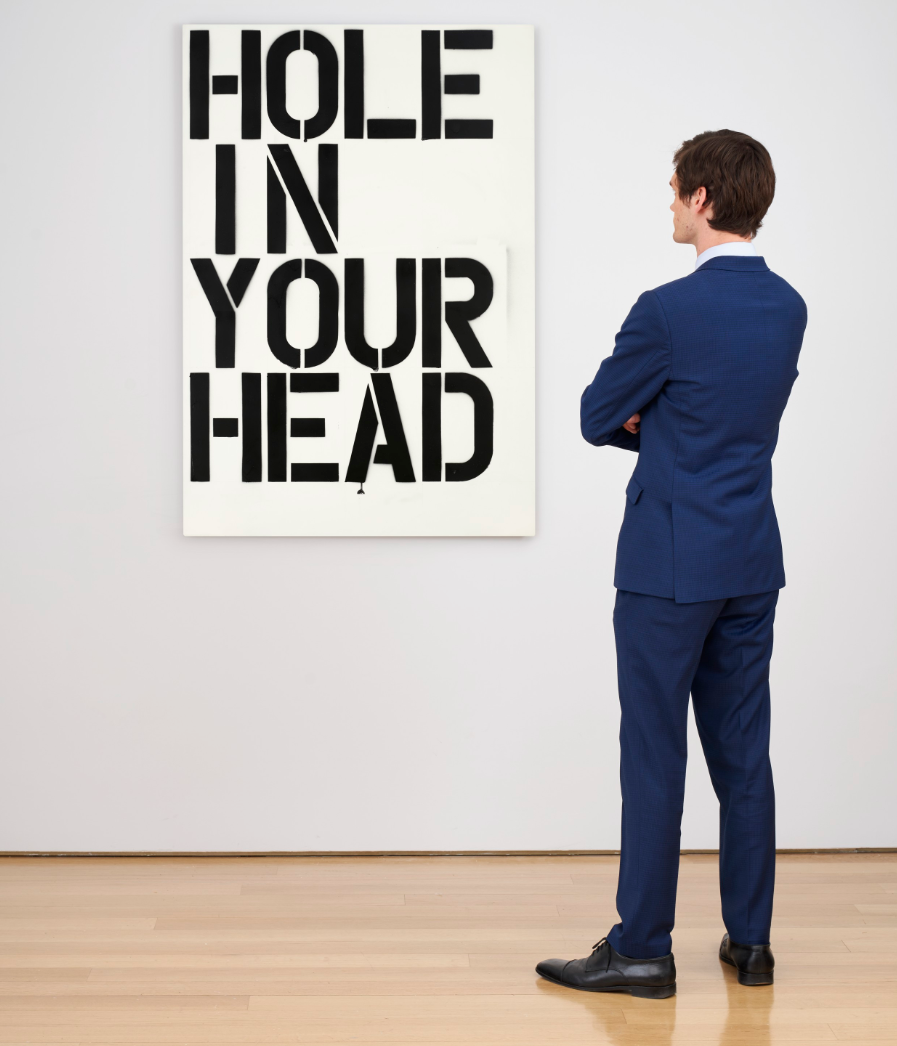
The ghostly gray shadow of the stencil around the “R,” and a small drip of paint below the “A,” recall the artist’s “drip” paintings of the mid 1980s and remain as evidence that the artist’s hand is very much present in the current work. Together, these two details break the austere nature of the stencil, referencing not only Wool’s past and the graffiti subtext but also cultivate the personal sphere of the painting, bringing the artist’s action to life. There is a post-Pop intensity to the stenciled letters in Wool’s Word paintings. With the same renegade authority as the graffiti messages that inspired them, this incitement first to read and then to run has street power. This art is not the descendent of advertising as Pop was, but is rather the product of the disjointed writings of the urban landscape, the same warnings, boasts, insults and territorial markers of graffiti that can also be found in the work of Jean-Michel Basquiat and Keith Haring. Yet they can also be seen as illustrating the limits of painting at the time, demonstrating the fallacy of language and symbolic meaning of art in general. By braking words and phrases across the surface, Wool makes the viewer deduce and re-imagine their meanings. The no-frills lettering also recalls the word works of Ed Ruscha or Joseph Kosuth. However, where Kosuth’s works are deliberately self-constrained, hermetically sealed by the words that they formed, like Ruscha textural canvases, Wool’s Hole is rogue; it is disjointed and points to the ambiguity of language.
Patterns
Untitled, 1988
Sotheby’s New-York: 18 May 2023
Estimated: USD 800,000 – 1,200,000
USD 889,000
Untitled | Contemporary Evening Auction | 2023 | Sotheby’s (sothebys.com)
CHRISTOPHER WOOL (b. 1955)
Untitled, 1988
Enamel and Flashe on aluminum
84×60 inches (213.4 x 152.4 cm)
Signed, titled, dated 1988 and numbered P57 (on the reverse)
An arresting fusion of baroque ornamentation and mechanical iteration, Untitled (P57) is an unparalleled early work emerging from a pivotal moment in Christopher Wool’s inventive career. Untitled (P57) emerges from Wool’s groundbreaking “pattern paintings”, a body of work long considered among Wool’s most conceptually rich, disruptive, and profound contributions to the medium of painting. Resurrecting, reinvigorating, and boldly driving the medium of painting to new heights. Untitled (P57) collapses the binaries of abstraction and figuration, style and content, surface and depth, encouraging all sets of differences to coexist on the aluminum surface. Testament to the lasting impact of this body of work, Wool’s pattern paintings reside in the permanent collections of esteemed institutions including the Whitney Museum of American Art, New York; Broad, Los Angeles; and Museum of Modern Art, New York, among others.
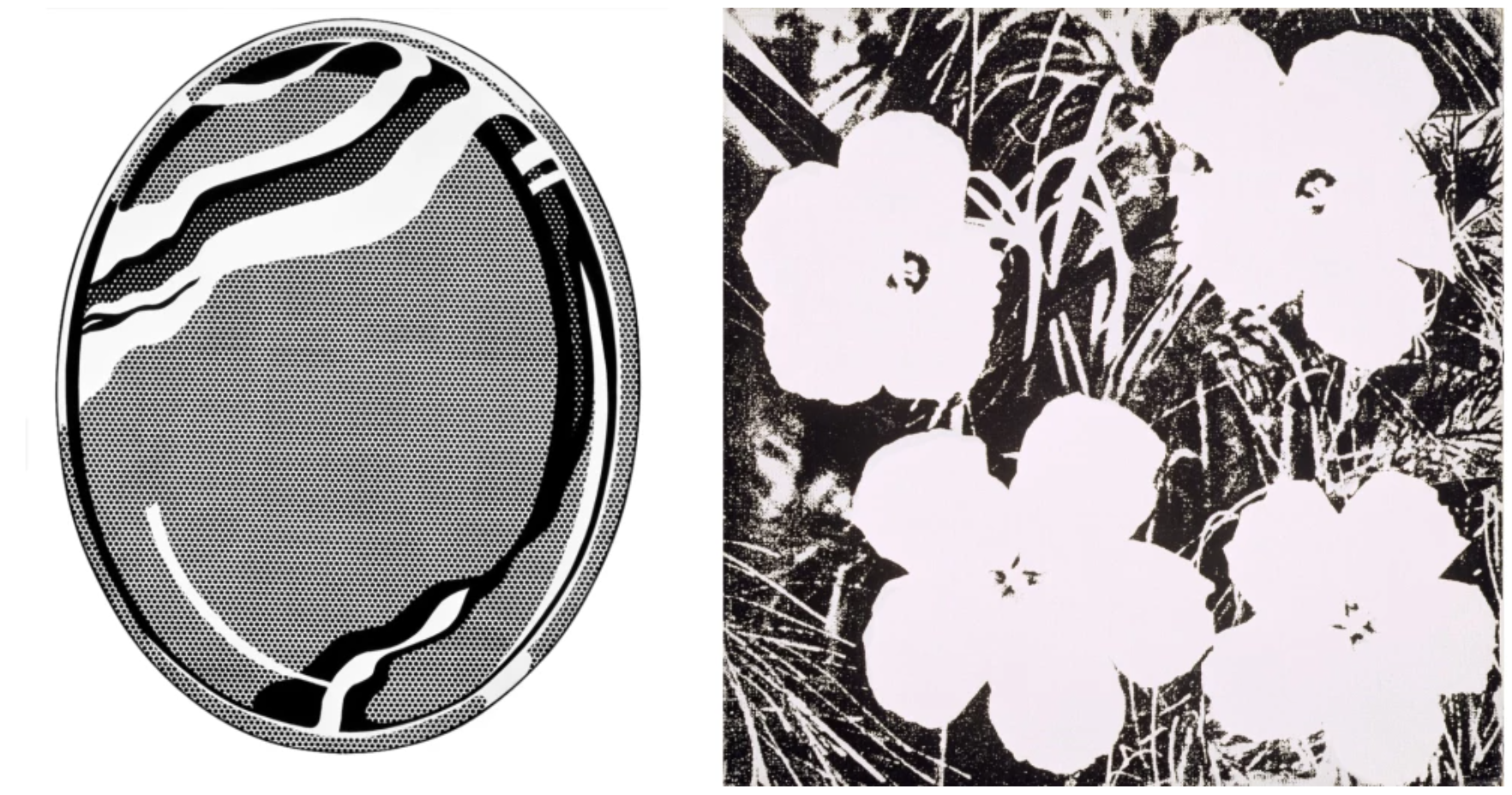
LEFT: ROY LICHTENSTEIN, MIRROR #1, 1969. THE BROAD MUSEUM, LOS ANGELES. IMAGE © ESTATE OF ROY LICHTENSTEIN. RIGHT: ANDY WARHOL, FLOWERS, 1964. PRIVATE COLLECTION. IMAGE © DACS, LONDON / BRIDGEMAN IMAGES. ART © 2023 ANDY WARHOL FOUNDATION FOR THE VISUAL ARTS / ARTISTS RIGHTS SOCIETY (ARS), NEW YORK
The monochromatic palette of Untitled (P57) creates a stunning painterly distillation. Autographic black stamped patterns march across a stark white surface, creating a swirl of layered forms that project an aura at once fully resolved and utterly dynamic. Repeated row after row, Wool’s black stamps create new forms in their juxtaposition, counter images within the negative white voids. Wool’s hypnotic process is closely aligned with that of Andy Warhol; both emphasize seriality by utilizing repeated motifs subtly contrasting one another with chance striations in black and white. “Wool’s detached acts of painting still suggest a strong sensibility —a Warholian stylistic mark of a personality that impiously emerges through rendered anonymity.” (Bruce W. Ferguson, “Patterns of Intent: Christopher Wool,” Artforum, September 1991, vol. 30, no. 1, p. 96) As motifs build, collide, and overlap, individual components skip and stutter in turbulent growth. Within the deep marks are chance imperfections, the blurring of an edge or the lifting of the stencil slightly too soon that leaves the acrylic dappled and fuzzy. These imperfections imbue the work with fragility, as the seemingly decorative patterns are rendered imperfect, and thus vulnerable. Untitled (P57) is a dialectical tension between opposing forces: black and white, order and chaos, choice and accident, mechanical and gestural.
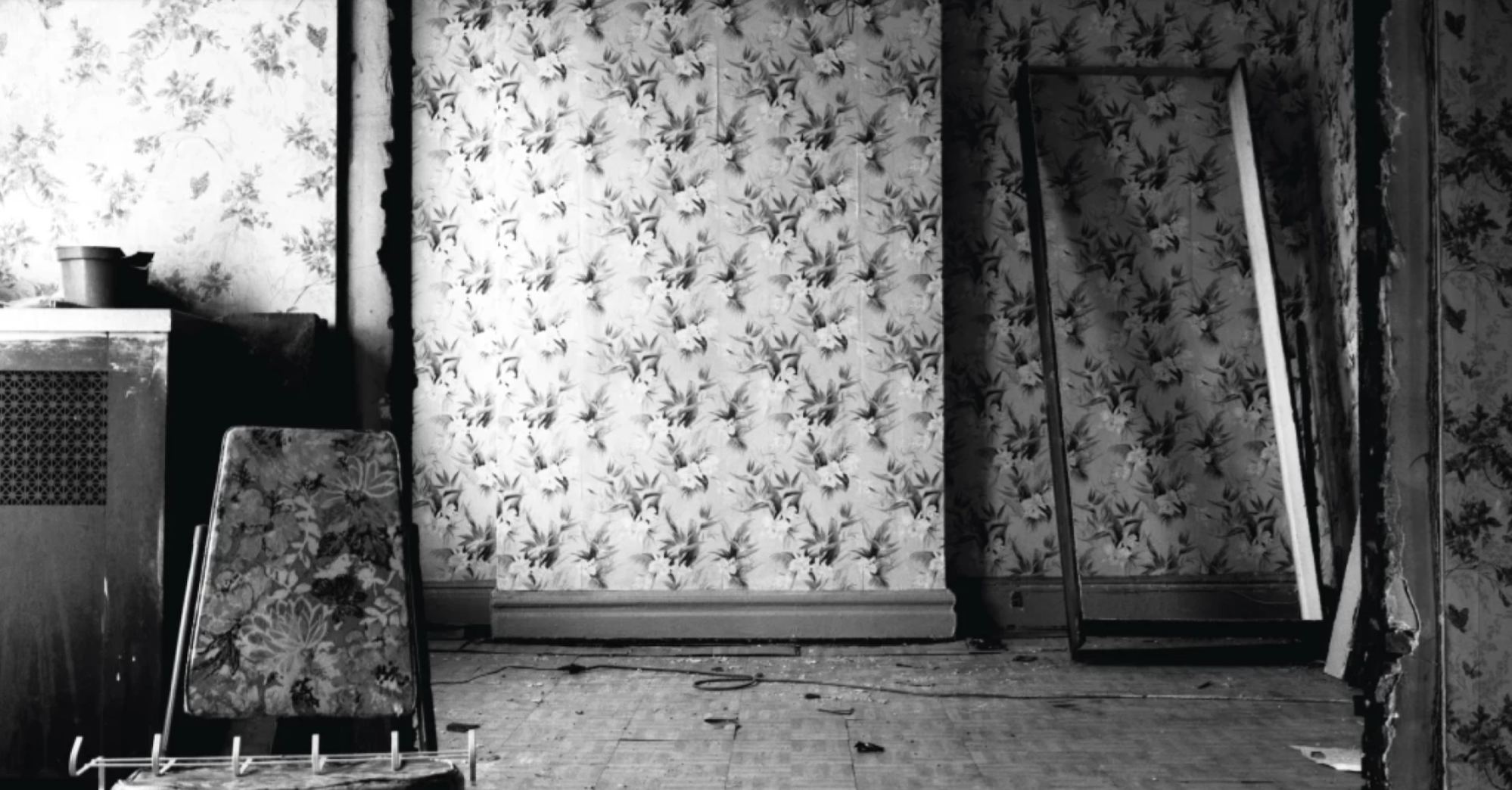
WIJNANDA DEROO, 103 ORCHARD STREET INTERIOR, DEROO, 2016. THE TENEMENT MUSEUM, NEW YORK. ART © 2023 WIJNANDA DEROO
Untitled (P57) is a product of the grunge and grime of the New York art scene in the late 1980s, encapsulating the hungry spirit of the urban landscape. Applying found objects onto his canvases, Wool’s distinctive printing process echoes the silkscreen practice of his art historical forebear Andy Warhol. Similarly inspired by ready-made mechanical means of production, Wool developed his “pattern paintings” by dipping the prefabricated rubber paint roller or stencil in paint and applying it directly to an aluminum surface, manipulating the legacy of action painting “with the cool reflection of a pop artist or dada collagist [to create] art that is both intense and reflective, physical and mechanical, unconscious and considered, refined in technique and redolent of street vernacular” (Glenn O’Brien, “Apocalypse and Wallpaper” in: Hans Werner Holzwarth, Ed., Christopher Wool, Cologne, 2012, p.10) Combining the tools and processes of the pop artist with the spontaneous expression of the action painter, Wool establishes an innovative frontier for painting, shouldering the legacy of pop for a radical new generation.
Untitled, 1990-91
Sotheby’s London: 2 March 2022
Estimated: GBP 450,000 – 650,000
GBP 529,200 / USD 707,392
Untitled | Modern & Contemporary Evening Auction | 2022 | Sotheby’s (sothebys.com)
CHRISTOPHER WOOL (b. 1955)
Untitled, 1990-91
Enamel and acrylic on aluminum
36×24 inches (91.4 x 60.9 cm)
Signed Wool, dated 1990-91 and numbered S65 (on the verso)
Executed in 1990, Untitled is part of a series of stamped paintings Christopher Wool began in New York City in the late 1980s and early ‘90s. Through cumulative acts of construction and deconstruction, Wool has stripped down the essential facets of twentieth-century painting. In a progression started with the roller and rubber-stamp paintings, through to the stenciled text pictures and the most recent corpus of silkscreened gestural abstractions, Wool has explored a mutating, visually arresting landscape of seemingly mechanical, cipher-like reductions; coolly detached and emptied of heroic angst. The winding vine-like pattern on the surface of Untitled is entirely arbitrary, inching over the blotched white and cream enamel background. The organic ebb and flow of the motif frames the compositional space, referencing the decorative quality of the Baroque.
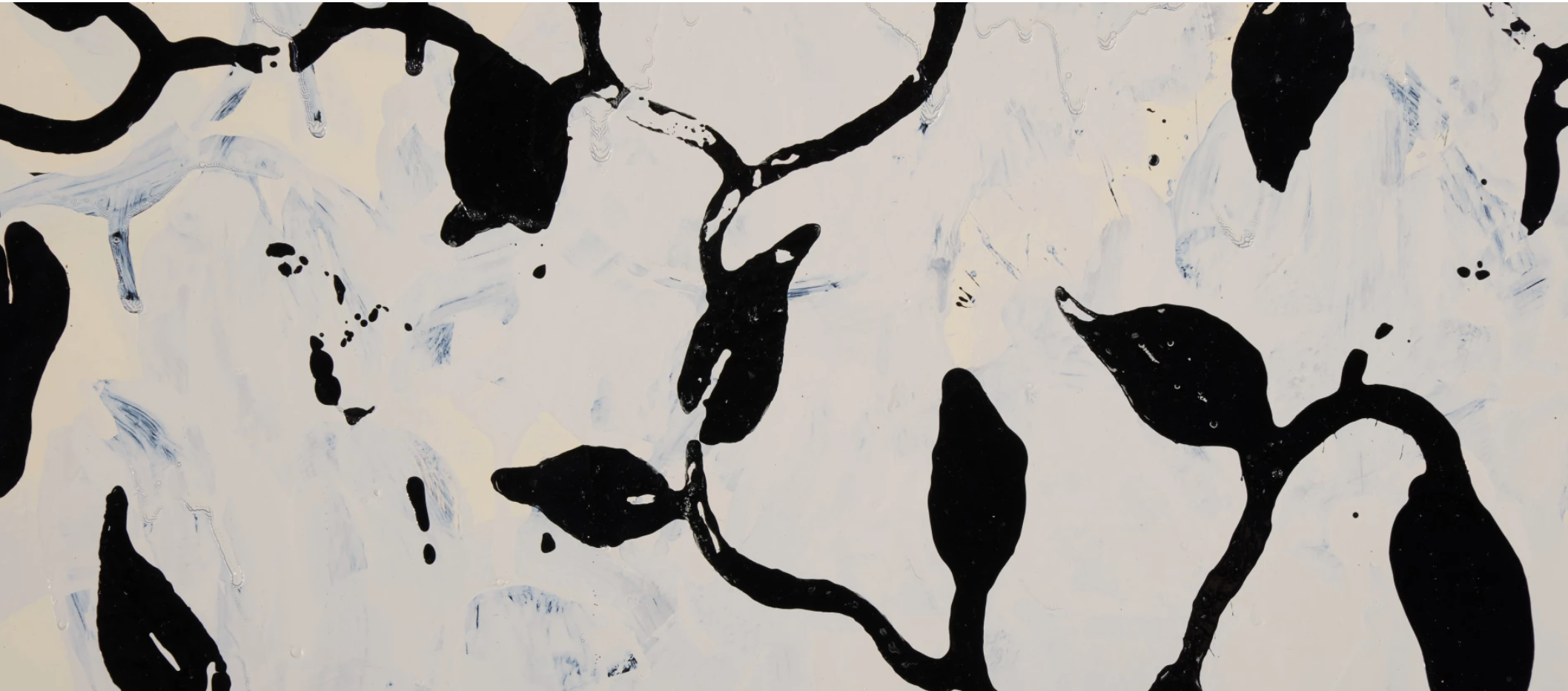
The curling foliage on the surface of the present work evokes unfurling vines, wrought-iron gates or delicate floral designs, yet their mechanistic application – a manual duplication of an image repeated serially – creates an all-over pattern that embodies the dichotomy of Wool’s working process: at once organic and mechanistic, unconscious and considered, bridging the gap between the ‘allover’ compositional strategy of the great Abstract Expressionists, and the revolutionary silkscreen technique of Andy Warhol’s Pop lexicon. In 1988, Wool began using rubber stamps and rollers for the first time. Repetition, deletion and abandon thus became the hallmarks of a deeply personal visual process for Wool, whose pictorial practice illuminates a profound oscillation between negation and affirmation, doing and undoing, doubt and determination. The urban vernacular of New York prevails upon the surfaces of Wool’s abstractions, exposing a vivaciously cool, punk language informed by the artist’s experiences as part of the city’s underground film and music scene of the seventies and eighties.
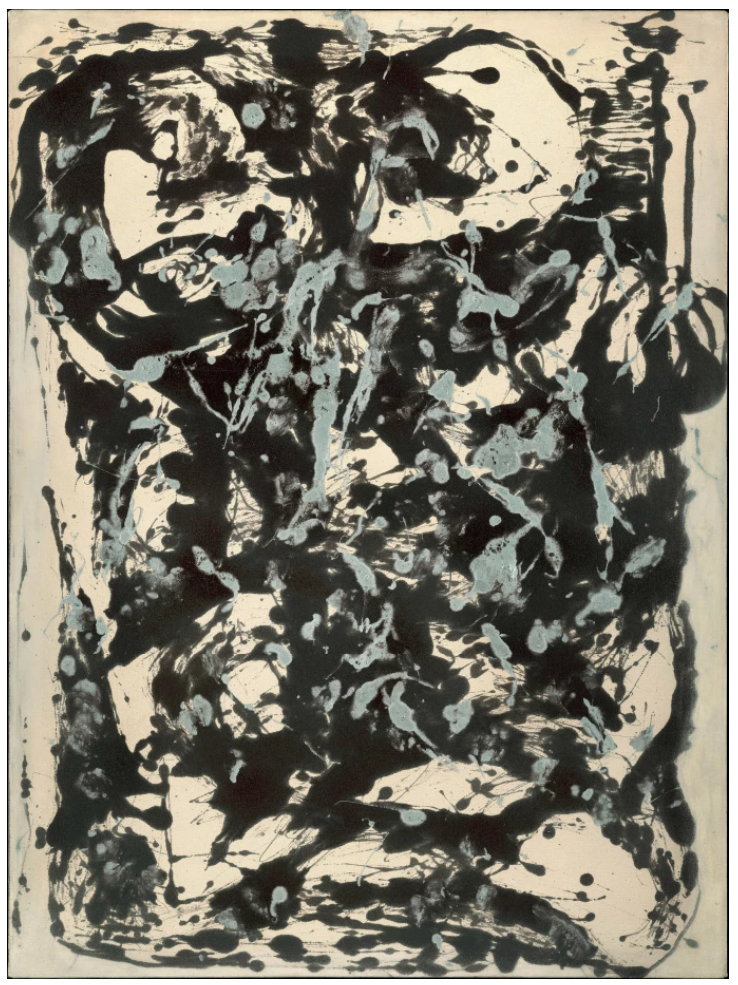
JACKSON POLLOCK, BROWN AND SILVER I, CIRCA 1951 / MUSEO NACIONAL THYSSEN-BORNEMISZA, MADRID
IMAGE: © MUSEO NACIONAL THYSSEN-BORNEMISZA/SCALA, FLORENCE
ARTWORK: © THE POLLOCK-KRASNER FOUNDATION ARS, NY AND DACS, LONDON
Alongside his contemporaries Martin Kippenberger and Albert Oehlen, Wool scrutinized the medium of painting by creating bodies of work that were inherently self-reflexive and deeply aware of art historical convention. These artists explored new possibilities by embracing failure and parodying archetypes of painterly expression. Yet unlike his contemporaries, Wool removed himself physically from the process of mark-making, leaving no evidence of the artist’s hand. He wholeheartedly embraced the decorative and the domestic, elevating the aesthetics of everyday life into the realm of fine art. The unfurling arrangement of vines on the surface of the present work is particularly reminiscent of household wallpapers, and even Wool’s application via roller and stamp evokes the process required to apply paint or decorative paper to a wall. The result of Wool’s manipulation of the decorative is an entirely abstracted image, one that references the work of the Abstract Expressionists, such as Franz Kline’s reductive black and white compositions or Jackson Pollock’s drippy monochromatic canvases of the early 1950s. Drawing on the painterly language of the New York School, Wool too, illuminates the chaos of urban New York City life on his canvases, albeit decades later. Born of conceptual doubt and pictorial denial, Untitled is an affirmation of contemporary paintings’ critical agency, and indeed Wool’s contribution to the trajectory of American abstraction at the end of the Twentieth Century.
Flowers
Untitled, 1992
Christie’s New-York: 21 November 2024
Estimated: USD 1,500,000 – 2,500,000
USD 1,502,000
CHRISTOPHER WOOL (B. 1955), Untitled | Christie’s
CHRISTOPHER WOOL (B. 1955)
Untitled, 1992
Enamel on aluminum
43×30 inches (109.2 x 75.9 cm)
Signed, inscribed and dated ‘WOOL 1993 (S116)’ (on the reverse)
Emblazoned with floral motifs executed in bold red pigment, Christopher Wool’s Untitled bridges the gap between the visual and the intellectual, and between the art of the street and Post-Modern inquiries into the nature of painting. By combining the quasi-mechanical process of stenciling with hand-applied sprayed paint, Wool sets up a visual dichotomy that is both controlled and chaotic.
“Painting, for me, is often a struggle between the planned and the unforeseen. The best paintings are the ones that you could not have imagined before you began…”
Early works such as Untitled are especially notable for their ability to lay bare the artist’s process as he wrestles with non-traditional methods and materials.
Untitled is characterized by rich compositional depth and a marked attention to repetitive motifs. Here, the artist applies consecutive layers of enamel onto an aluminum support, one on top of another to create a visual record of his process. In the upper layer, repeated applications of blazing red foliage overlap in an amalgam of petals, leaves, and thorny stems. Below this, a sprayed white midground covers the bottom layer of black stenciling with a gauzy veil of pigment that separates the two opposing elements. Only discernible on the edges of the composition, the black paint peers out from below and serves as both a framing element as well as a visual record of Wool’s creative actions.
“I often want a painting to feel like it is the result of a certain process….a process that was not simply the painting/picturing process of putting together a formalistically successful painting. I’ve made paintings that were ‘pictures’ created merely by the act/process of painting over a previous image.”
The struggle between the painting’s strata infuses it with a palpable energy. Each element adds something to the whole so that disparate, unstable parts evolve into a poignant, harmonious arrangement.
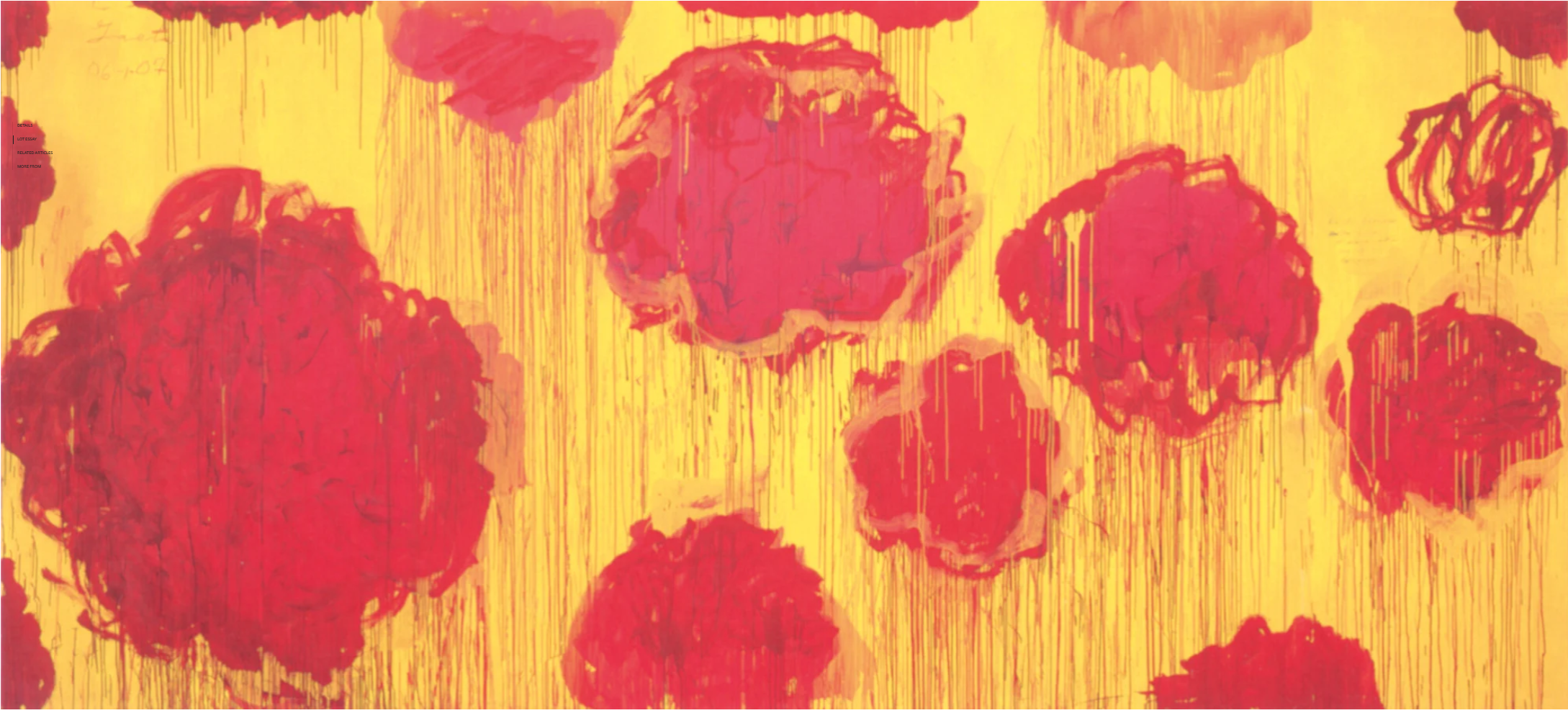
Cy Twombly, Untitled, 2007. © Cy Twombly Foundation.
Stenciling and repetitive processes have been a major part of Wool’s practice since the 1980s. He uses letters, images, and reproductions to investigate visual language and the process of painting. In the 1990s, Wool began a series of works that used figurated rollers he acquired at hardware stores. The resulting ‘readymade pattern’ paintings looked critically at the divide between ‘high’ and ‘low’ art, an investigation that was amplified when Wool began utilizing silkscreened floral motifs in later works. The present example hails from this pivotal early series and pushes the source material to its limits. Drawing visual corollaries to printed compositions used in wallpaper and other decorative arts, paintings like Untitled disintegrate the orderly nature of those techniques and bring them into conversation with the streets of Manhattan.
“New York was, especially back then, just a gritty, gritty place, and I was interested visually in all of it”
Seeking to translate the electric atmosphere of the city into dynamic compositions, Wool pulled from his experiences on the street and infused them with critical discourse. While visually they may seem to have more in common with peeling wheatpaste posters on the walls of dilapidated buildings than the intensely rendered designs of William Morris, pieces like Untitled question the divide between fine art and design, the juxtaposition of street art and the white cube gallery, and the role of the urban experience in the history of painting.
Untitled, 1993
Christie’s New-York: 17 November 2022
Estimated: USD 8,000,000 – 12,000,000
USD 8,977,500
CHRISTOPHER WOOL (B. 1955) (christies.com)
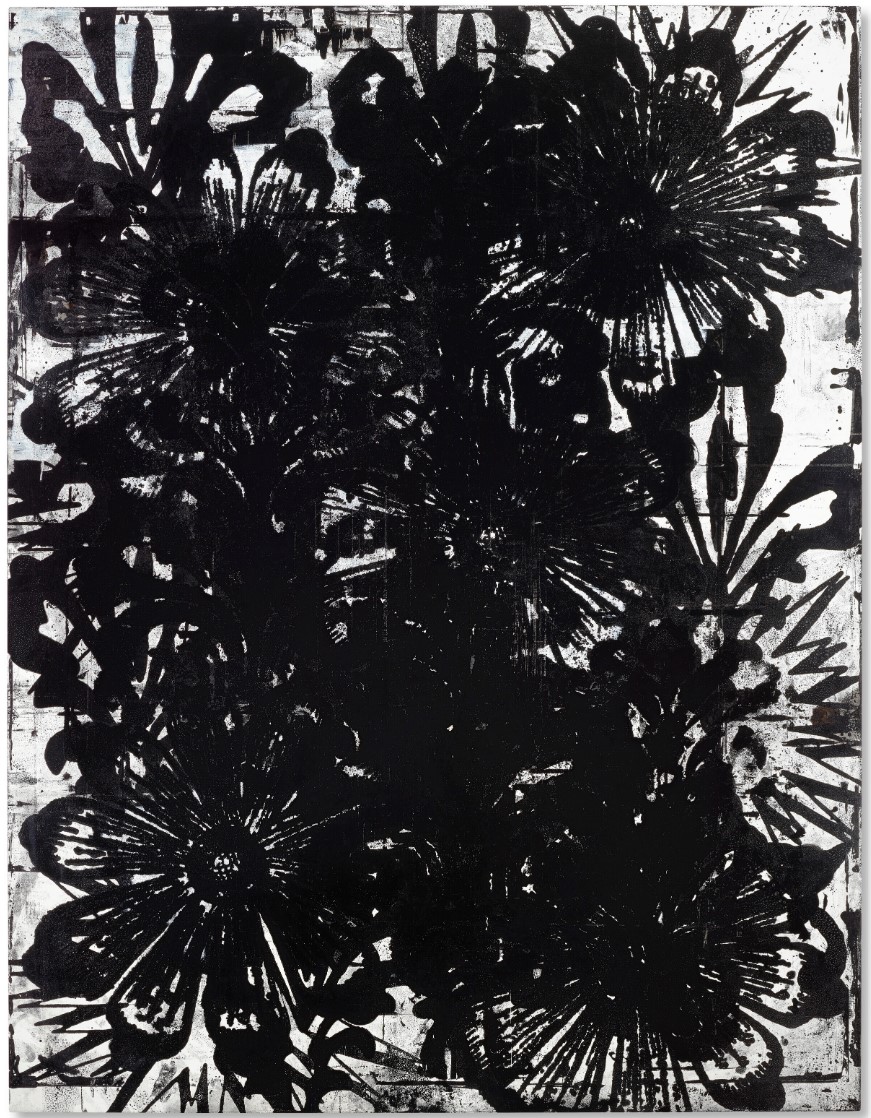
CHRISTOPHER WOOL (B. 1955)
Untitled, 1993
Enamel on aluminum
90 x 69 1/2 inches (228.6 x 176.5 cm)
Signed, inscribed and dated ‘WOOL 1993 (P174)’ (on the reverse)
A revered post-Conceptual artist known for his stenciled word paintings, Christopher Wool has refined a visual style since the late 1980s that continues to inspire new ways of thinking about art, text, expression, and the role of the artist. The monumental Untitled is a peerless abstract painting that shows Wool pushing his own artistic vocabulary to new limits. As part of the esteemed Taschen Collection, the present work was exhibited at the Museum of Contemporary Art, Los Angeles (1998), the Carnegie Museum of Art, Pittsburgh (1999), and the Museo Nacional Centrode Arte Reina Sofia, Madrid (2004-2005). The painting is a foundational moment in the artist’s oeuvre that flows through the areas of perception and the history of painting. A towering work of beauty, detail, and rigor, Untitled encapsulates Wool’s decades-long goal to upend art and language.
In the early 1990s, Wool began to silkscreen flower motifs, allowing his work to engage productively with decoration. Both austere and beautiful, Untitled is so densely layered as to almost obscure the floral shapes and create a Rorschach test or allover field of pigment. The center of the aluminum support approaches monochromatic black, while the natural forms begin to emerge as the pigment reaches the edges, as if the flowers are growing out of paint itself. At nearly seven-and-a-half feet by six feet, the viewer is absorbed by this play of forms and textures. Untitled refutes Jackson Pollock’s anxiety about pattern and decoration, allowing itself to intersect with the casual loveliness of a textile or wallpaper. Considering the centrality of the flower motif, one could connect Untitled to still life, which has always been an unexpectedly experimental genre. Still life has also served as a memento mori, which draws out the ephemerality and awareness of change in Wool’s work. There is a similar pathos in Warhol’s flower screenprints, themselves still lifes, but we might also consider his mystical 1984 Rorschach paintings, one of few series that was completely original and not reliant on preexisting material. Warhol painted one side of a canvas and folded it vertically, emulating the visual symmetry of the inkblot test. Interestingly, Wool’s father was a psychiatrist, suggesting not that he has been inspired by the tools of the discipline, but rather that he has likely always considered the depths of the psyche, even in his supposedly deadpan work.
Untitled, 1995
Christie’s London: 1 March 2022
Estimated: GBP 3,000,000 – 5,000,000
GBP 3,642,000 / USD 4,850,180
CHRISTOPHER WOOL (B. 1955) (christies.com)
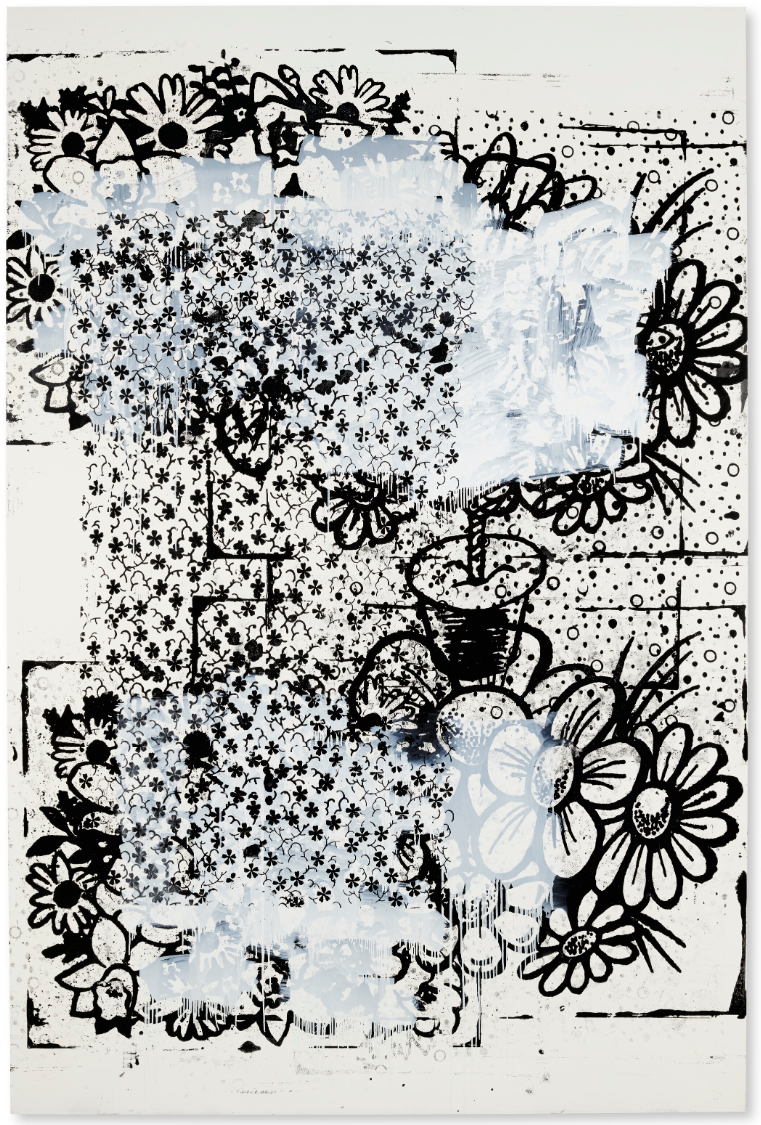
CHRISTOPHER WOOL (B. 1955)
Untitled, 1995
Enamel on aluminium
107 7/8 x 72 inches (274×183 cm)
Signed, titled and dated ‘ WOOL 1995 UNTITLED (P248) (on the reverse)
Held in the same private collection since 1998, Untitled (1995) is an impressive large-scale example of Christopher Wool’s postmodern practice. Encompassing the coolness of Pop and Minimalism, the rigour of Conceptual art and the bravado of Abstract Expressionism, Wool takes the history, conventions and problematics of painting itself as his subject. The present work, executed in black and white enamels on an aluminium panel almost three metres high, creates a complex palimpsest of printed floral imagery and gestural brushwork, bringing together some of the main motifs that defined his art in the mid-1990s. Two large, cartoonish Clip Art pictures of flowers are silkscreened in repeated pairs, dividing the composition into rough quadrants: traces of enamel define the rectangular margins of each stencil, creating the effect of overlaid frames or collaged posters.
Over these Wool has applied a dotted pattern, using a roller of the type used to print decorative ‘wallpaper’ designs on domestic surfaces. He has further overpainted and obscured these layers with translucent, broad-brushed clouds of dripping white enamel. Finally, another roller-pattern, which reiterates the flowers in a confetti-like haze, is laid over the white paint. An abundance of registers, scales and modes of imagery jostle for attention, building up into a surface of extraordinary visual life, even as the painting seems to try to cancel itself out.
Sprays
Untitled, 2002
Christie’s New-York: 22 November 2024
Estimated: USD 700,000 – 1,000,000
USD 819,000
CHRISTOPHER WOOL (B. 1955), Untitled | Christie’s
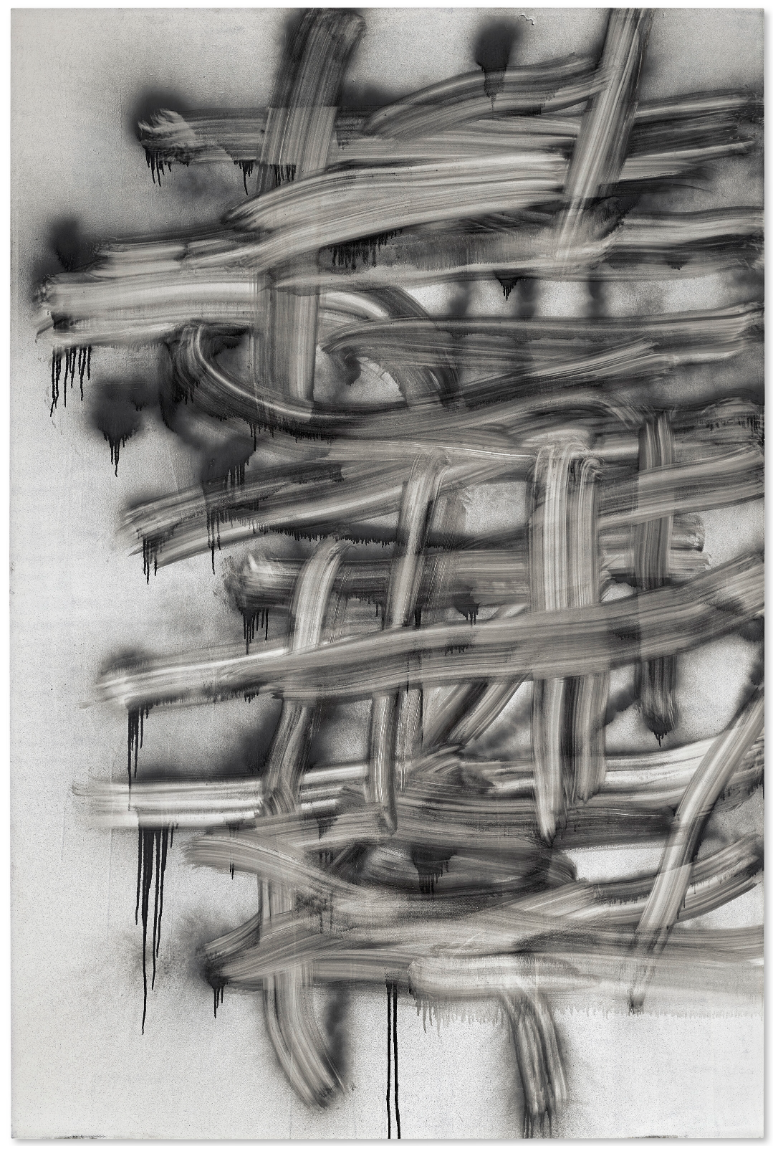
CHRISTOPHER WOOL (B. 1955)
Untitled, 2002
Enamel on linen
108×72 inches (274.3 x 182.8 cm)
Signed, inscribed, titled and dated ‘Wool Untitled (P378) 2002’ (on the reverse)
A striking example of the artist’s ongoing interrogation of abstract painting, Christopher Wool’s Untitled from 2002 is a work of great resolve from the varied oeuvre of a postmodern American master. Combining dynamic, gestural brushwork with a restrained color palette and a subdued backdrop, Wool draws the viewer’s attention to his bold, painterly gestures. Turbulent smears of black enamel paint stand out against a spare, muted gray background, while subtle tonal gradations suggest depth and lend an atmospheric quality. Diffuse clouds of spray paint punctuate the composition and hint at a tension between the precise and the uncontrolled—a tension that is further underscored by the inky black drips peppering the canvas. The painting appears before its viewers almost as an apparition; the transparent brushstrokes traversing across a fog of spray paint appear fleeting, almost as if they could evaporate off the canvas at any moment. Impressive in both scale and impact, Untitled is a compelling postmodern triumph and a testament to Christopher Wool’s provocative and boundary-pushing practice.
Though Wool’s energetic brushstrokes seem to reflect the spontaneous gestures typical of Abstract Expressionist painters, the hazy backdrop of Untitled, created with spray paint, introduces a distinct contrast and departure. The incorporation of spray paint alongside abstract shapes and strong brushstrokes recalls the burgeoning downtown graffiti scene that inspired Wool’s iconic “word paintings” in the 1980s. Indeed, Wool first came to the attention of the American public in the late 80’s through text-based word paintings featuring letters stenciled in black onto white metal panels. Drawing phrases from film, television, and mass advertising, Wool transformed aggressive, edgy statements into painted images, challenging the relationship between text and meaning. This sense of recontextualization, both in terms of his text paintings and his abstract paintings, is in many ways rooted in concepts embraced and explored by the Pictures Generation before him.
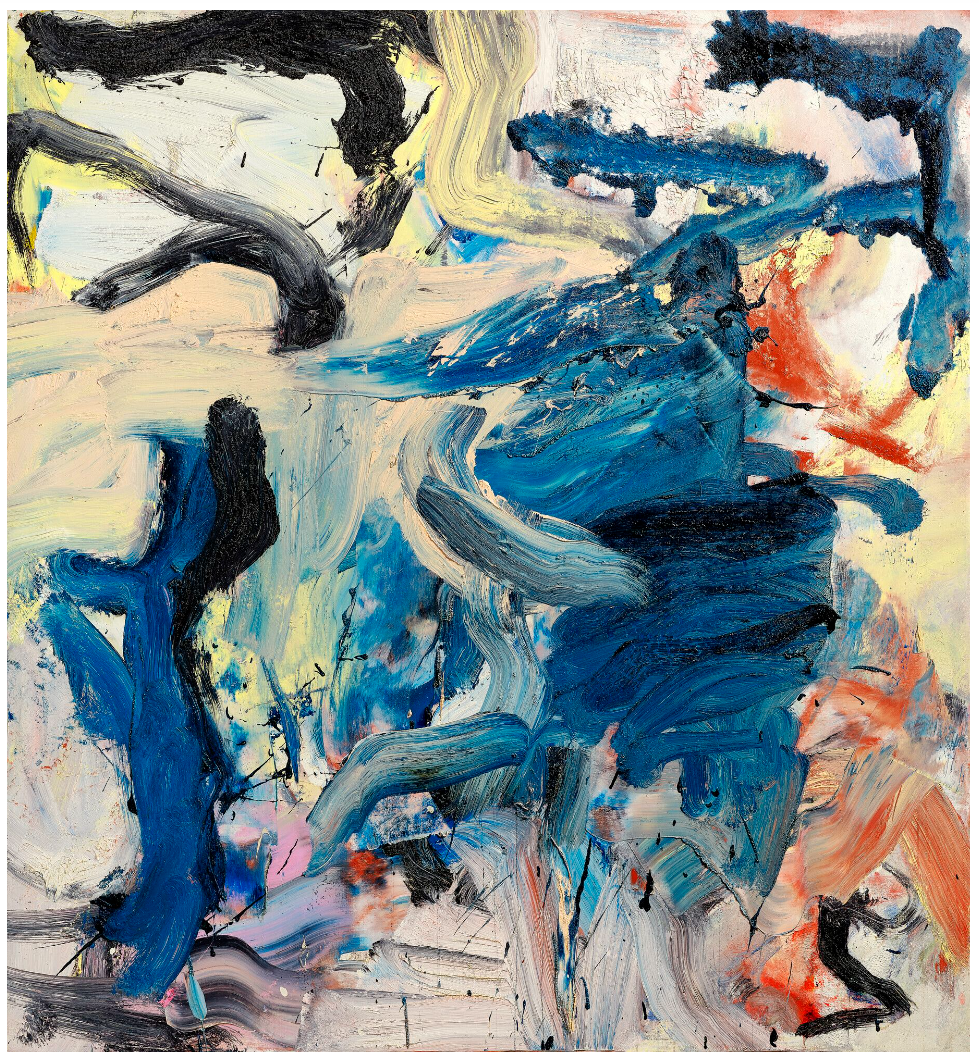
Willem de Kooning, Untitled XVIII, 1976. © 2024 The Willem de Kooning Foundation / Artists Rights Society (ARS), New York.
Beginning in the late 1970s, artists such as Cindy Sherman, Richard Prince, and Laurie Simmons shifted the tone of contemporary art by creating work that utilized appropriation and montage to reveal the constructed nature of images, which consequently brought the process of art-making, itself, into sharp focus. While painting was largely out of vogue within the Pictures Generation, Christopher Wool once again radically advanced contemporary art by bringing painting back into the discourse.
Untitled, 1995
Sotheby’s New-York: 18 November 2021
Estimated: USD 6,000,000 – 8,000,000
USD 13,190,250
Untitled | Contemporary Evening Auction | 2021 | Sotheby’s (sothebys.com)
CHRISTOPHER WOOL (b.1955)
Untitled, 1995
Enamel on aluminum
78×60 inches (198.1 x 152.4 cm)
Signed Wool, dated 1995 and numbered P244 (on the reverse)
An explosive masterpiece from Wool’s celebrated series of ‘Spray’ paintings on aluminum from the mid-1990s, with the present work Christopher Wool secures his legacy as one of America’s most important painters. It is a work that encapsulates all the most sought-after characteristics in Wool’s abstract practice, from the outsized vine on the right to the hugely active drips of white pigment and iconic concentric loops of spray paint on the surface. There is an urgency and beauty to the work, which sees Wool elevate the graffiti scrawl to the realm of the sublime, and this spirit aligns it with the best of Wool’s ‘Word’ paintings, such as Apocalypse Now and Untitled (Riot). Perhaps most significantly, the aluminum substrate, which Wool ceased to employ at the end of the 1990s, allows the paint to sit directly on the surface without any of the absorption we see in canvas works. This creates a striking juxtaposition between the textured, almost transparent surface of the remarkable white overpainting with the shiny glossiness of the black enamel. Remarkable for its richness and extraordinary depth of composition, Untitled is a tour de force that sees Wool mine his aesthetic vocabulary, using all his most significant abstract motifs only to erase them with white paint to create a tabula rasa on which to assert the primacy of his sprayed loops. At its core, Untitled is dialectical tension between opposing forces: black and white, order and chaos, choice and accident, mechanical and gestural: a jet-black labyrinth sizzles against broad swaths of milky white; repeating dotted and floral patterns compete against powerful spray-painted gestures; tightly rendered forms give way to inky drips and shadowy speckles. Wool detonates these polarities with virtuosity, harnessing their explosive energy while maintaining a near-impossible equilibrium.
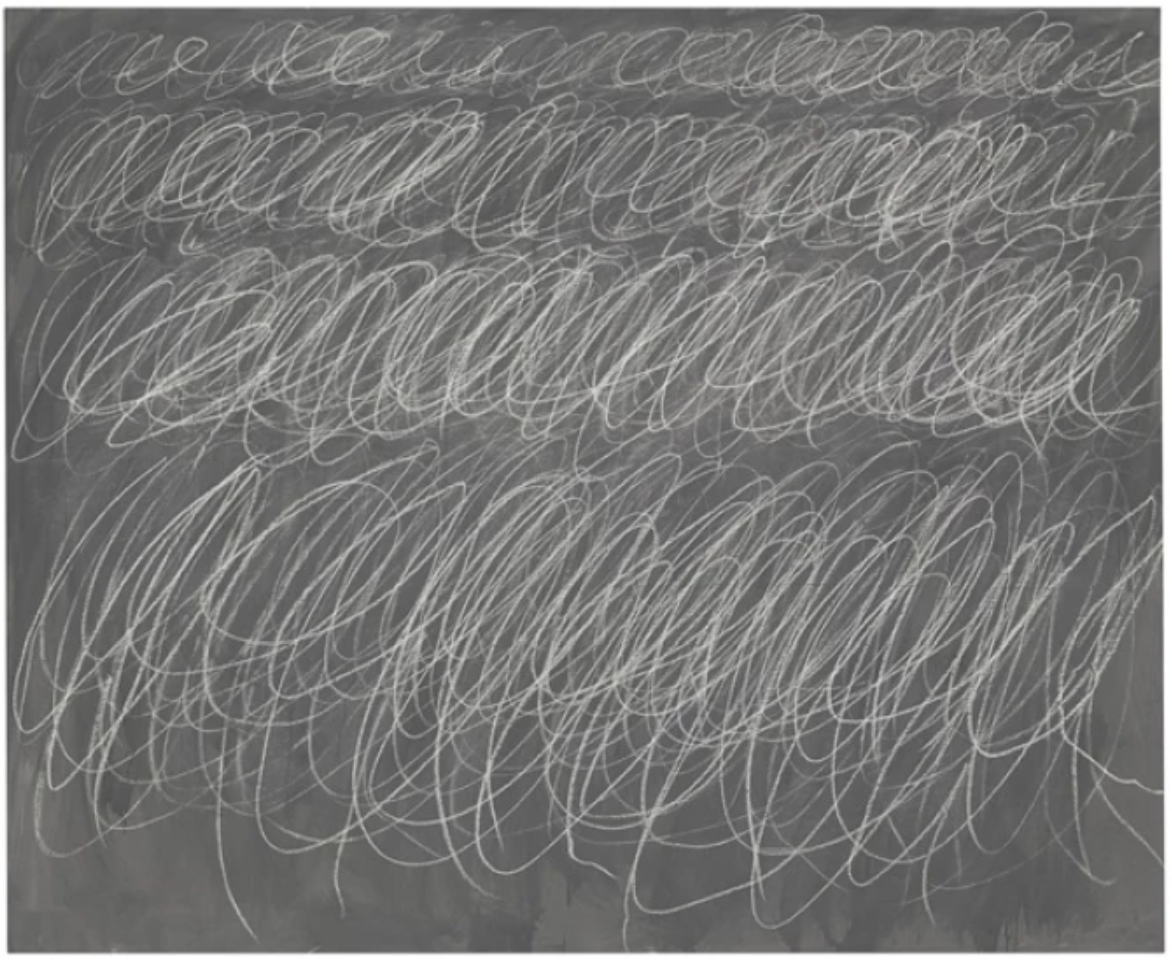
CY TWOMBLY, UNTITLED, 1970 / ART © CY TWOMBLY FOUNDATION
Untitled choreographs an exhilarating collision between mark and mistake, beauty and defacement, chaos and grace. Achieving a distinctly post-Punk attitude of intentional indifference, the slick coils and drips of Untitled powerfully invoke the gritty crucible of 1990s downtown Manhattan in which Wool began his practice. Representative of an era defined by the disruptive energy of the Punk and New Wave scenes, Wool’s paintings challenge theories of postmodern painting to present the viewer with a singularly engaging and rigorous conceptual experience. Like hastily stenciled graffiti or heralded tabloid headlines, Untitled summons the industrial severity of the urban environment: indeed, reveling in the rhythmic intensity of calligraphic rebounds, Wool’s rebellious lines powerfully evoke the iconic markings of Jean-Michel Basquiat, an artist similarly influenced and inspired by the guttural, adrenalizing energy of downtown New York.
Untitled, 1995
Christie’s New-York: 9 November 2021
Estimated: USD 7,000,000 – 10,000,000
USD 7,802,500
CHRISTOPHER WOOL (B. 1955) (christies.com)
CHRISTOPHER WOOL (B. 1955)
Untitled, 1995
Enamel on aluminum
108×72 inches (274.3 x 182.9 cm)
Signed, titled, inscribed and dated ‘WOOL 1995 UNTITLED (P246)’ (on the reverse)
Combining painterly finesse with utilitarian reproduction, works like Untitled are peak examples of the layered dynamism evident throughout Wool’s oeuvre. By introducing disparate visual elements that grapple for control, the artist creates a tension that brings about a new inquiry into the art form. Throwing aside the prescribed notions of traditional painting, Wool brings a sense of rowdy experimentalism to his practice that seeks to upend compositional complacency. Curator Neville Wakefield has reflected about Wool’s paintings: “Dispense with hierarchy, dispense with composition and colour, dispense with pictorial order, they seem to say. Yet, paradoxically, from this confrontation with painting’s supposed civility, Wool makes an elegant and formidable case for it being alive and well” (N. Wakefield, “Christopher Wool: Paintings Marked by Confrontation and Restraint”, Elle Décor, March 1999, p. 59). By eschewing traditional compositions and Modernist investigations into the purity of media, Wool breaks from the expected in order to more fully embrace all that painting has to offer. Not content to accept the much-touted death of the artform in the last few decades of the twentieth-century, the painter sought new ways to update and stimulate a slumbering giant as the millennium drew to a close. Rendered in black and white enamel on the artist’s signature aluminum substrate, Untitled is a riot of mark making subdued only by its limited color palette. Several layers are visible as they leak out from below, but the primary focus is a smeared, dripping body of wide, white strokes that obscures much of the artist’s investigations below.
Untitled, 2000
Christie’s New-York: 9 November 2021
Estimated: USD 3,000,000 – 5,000,000
USD 3,315,000
CHRISTOPHER WOOL (B. 1955) (christies.com)
CHRISTOPHER WOOL (B. 1955)
Untitled, 2000
Enamel on linen
66×48 inches (167.6 x 121.9 cm)
Signed, inscribed and dated ‘WOOL 2000 (S153)’ (on the stretcher bar)
Over five feet high, the white rectangle that makes up the current work is spattered and sprayed with orange and black in an energetic amalgam of graffiti-like linework and halftone reproductions. Though the canvas upon which Wool works is oriented vertically, Untitled exhibits an air of anti-gravity as the forms float and merge within the confines of the picture. Except for the drips that seep from the energetic swirl of orange in the piece’s center, there is little to formally hold the composition to traditional modes of viewing. By employing a mixture of silkscreens and exuberant spray-painting, Wool deftly navigates a conversation about the role of the artist’s hand in expressive abstractions. His oeuvre has always been part of a discussion about the overriding power of Abstract Expressionism in American art, both as a style and as a symbol of the power and chaotic nature of mid-century Modernist painting. By copying and reprinting his own indelible marks as silkscreened imagery, Wool remakes the active brushstrokes and chance splatters as symbols of painting itself. Echoing the semiotic ideas set forth by earlier works like Brushstrokes, 1966-1968 (Museum of Modern Art, New York) by Roy Lichtenstein, Wool questions the notion that an expressive painting’s true power lies in its inability to be reproduced and in its inimitable energy. Instead, taking the kinetic motion as a symbol, the artist can instill its vivacity into his compositions at will.
Gray Paintings
Brown No Halloween, 2005
Phillips London: 26 June 2025
Estimated: GBP 400,000 – 600,000
GBP 508,000 / USD 695,960
Christopher Wool Modern & Contemporary Art: Evening & Day Sale
Signed, titled, numbered and dated ‘WOOL BROWN NO HALLOWEEN 2005 (P511)’ on the overlap
“With the paintings the inspiration is really internal. I get inspiration from the work and from the process of working. Painting is a visual medium, there to be looked at. For me, like listening to music, it’s an emotional experience.”
Although Wool began using silkscreen in 1993, influenced by and conceptually attuned to Andy Warhol’s mass-produced serialization of images, the present work belongs to his wider series of silkscreened paintings that Wool began creating in 1998 and refined further in 2000. To produce these works, he would use an image of a finished painting to create a silkscreen which he would then apply to a fresh canvas. Later works in the series, of which Brown No Halloween is a prime example, tend to be more complex compositionally, with layers of ink added and subtracted across the surface and defined lines swallowed by areas of greyscale erasure. The tension between artifice and chance that underpins much of his oeuvre manifests here in dense layers of pattern and form, with Wool finding ‘the freedom to generate new ones by sabotaging his own images’; in many ways, this presages the practice of Wade Guyton, whose large-scale inkjet-printed canvases are defined by slippage and created through accident.
“I became more interested in ‘how to paint it’ than ‘what to paint’.”
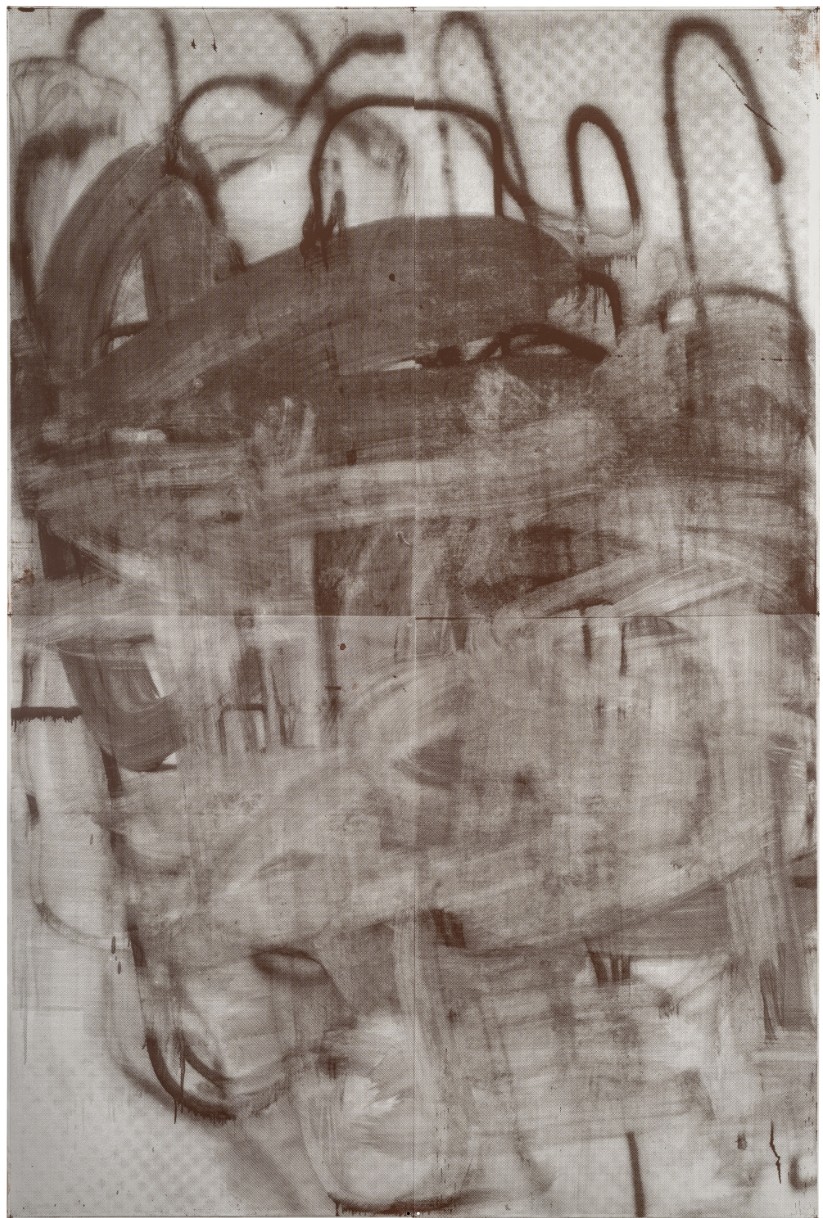
In Brown No Halloween, Wool has theoretically and materially redefined the picture plane as a material surface, rather than a field of narrative representation. Fastening conceptual play to aesthetic sensitivity, he has created a composition that thrums with latent expressive potential and entropy. As noted by critic John Corbett in discussing these silkscreen paintings, ‘Improvisation is there to bring the unexpected to bear, to call the viewer back from the editorial/compositional hall of mirrors, while the compositional/editorial element undermines the seductive implication of “freedom” in improvisation. Sometimes one is more dominant, sometimes the other, but they’re locked in a perpetual exchange, waves moving back and forth, extracting and adding energy to the work’. In many ways, Brown No Halloween has been created ‘real time’, with Wool fixing the ephemeral act and physical performance of painting in place in a way that embeds the editorial, authorial component into the process of improvisation. In this sense, it manifests spontaneous processes of self-editing and erasure, materially suppressing the role of the artist’s hand whilst simultaneously immortalising it across the surface.
Untitled, 2008
Sotheby’s London: 4 March 2025
Estimated: GBP 2,000,000 – 3,000,000
GBP 2,419,000 / USD 3,096,320
Untitled | Modern & Contemporary Evening Auction | 2025 | Sotheby’s
CHRISTOPHER WOOL (b. 1955)
Untitled, 2008
Enamel on linen
106×96 inches (269.2 x 243.8 cm)
Signed, dated 2008 and numbered (P572) (on the overlap)
Signed, dated 2008 and numbered (P572) (on the backing board)
Reverberating with chaotic tension and kinetic atmosphere, Untitled is a superb testament to Christopher Wool’s Gray Paintings. Whipping and lashing across the surface, the arabesque lines – sprayed in black enamel – drip like an electrified live wire and disrupt the surface. Wool erases some of these lines with broad strokes of turpentine-soaked rags, as the ghost-like residue turns to clouds of hazy grays, conjuring up extraordinary atmospheric depth. Precise yet uncontrolled, Wool’s exposes the construction and deconstruction through the traces of his mark making. In doing so, his Gray Paintings defy the canonical tradition of painting as they become oxymoronic images of definitive uncertainty in which addition is levied by subtraction to depict the ultimate post-modern condition: doubt. Executed for the artist’s 2008 exhibition at Luhring Augustine Gallery in New York, the present work is among his most celebrated works, some of which are in the collection of The Museum of Modern Art, New York; The Art Institute of Chicago; and the Tate, London.
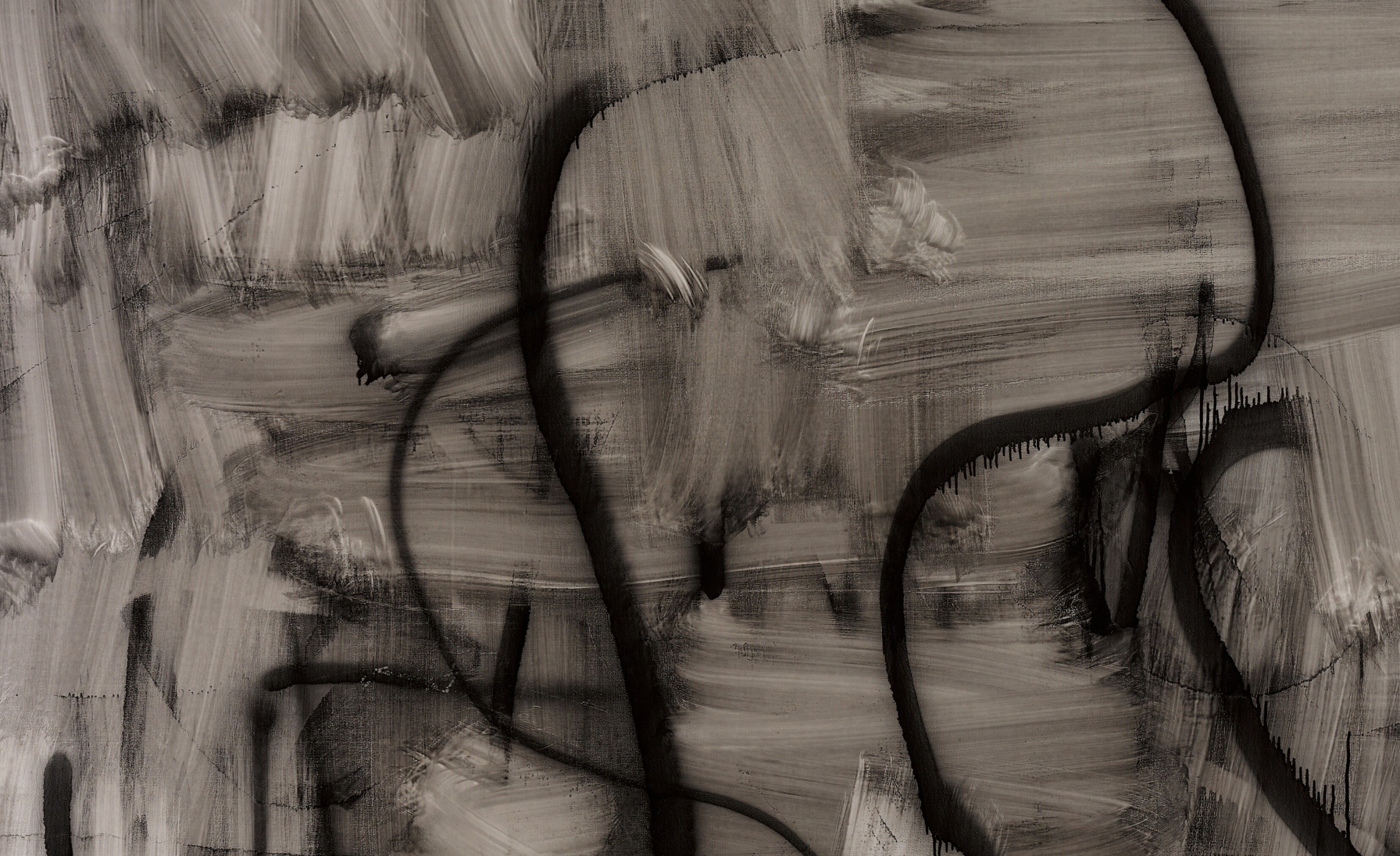
Born in Chicago in 1955, Wool rose to prominence in New York during the mid-1980s. Caught between the gesture of Abstract Expressionism, the inward-looking reduction of Minimalism, the readymade immediacy of Pop art, and the intellectual piety of conceptualism, Wool’s work resists codification and interpretation. As curator of Wool’s 2007 Guggenheim retrospective, Katherine Brinson, has stated: “A restless search for meaning is already visualised within the paintings, photographs, and works on paper that constitute the artist’s nuanced engagement with the question of how to make a picture” (Katherine Brinson, “Trouble is my Business” in: Exh. Cat., New York, Solomon R. Guggenheim Museum (and travelling), Christopher Wool, 2014, p. 35). Wool developed his practice during the height of the Pictures Generation; a group of artists who used appropriation and photography to challenge the relevance of painting in contemporary art. In response, Wool sought to demonstrate painting’s critical potential by redefining its boundaries. Despite influential critic Douglas Crimp’s 1981 declaration of “The End of Painting,” Wool pursued a path that rejected the expressive decision-making typically linked to the medium since the Abstract Expressionists. Wool’s work is a rebuttal to the total image prized by this group; he almost satirizes this group by borrowing archetypal features such as the fluid coils of Jackson Pollock or the concentric loops of Cy Twombly. It was however not until the early 2000s that Wool shifted toward working almost exclusively with abstract forms, exploring expression through repetition, erasure, mechanical processes, and his monochromatic palette.
Christopher Wool’s Gray Paintings in Prominent Museum Collections
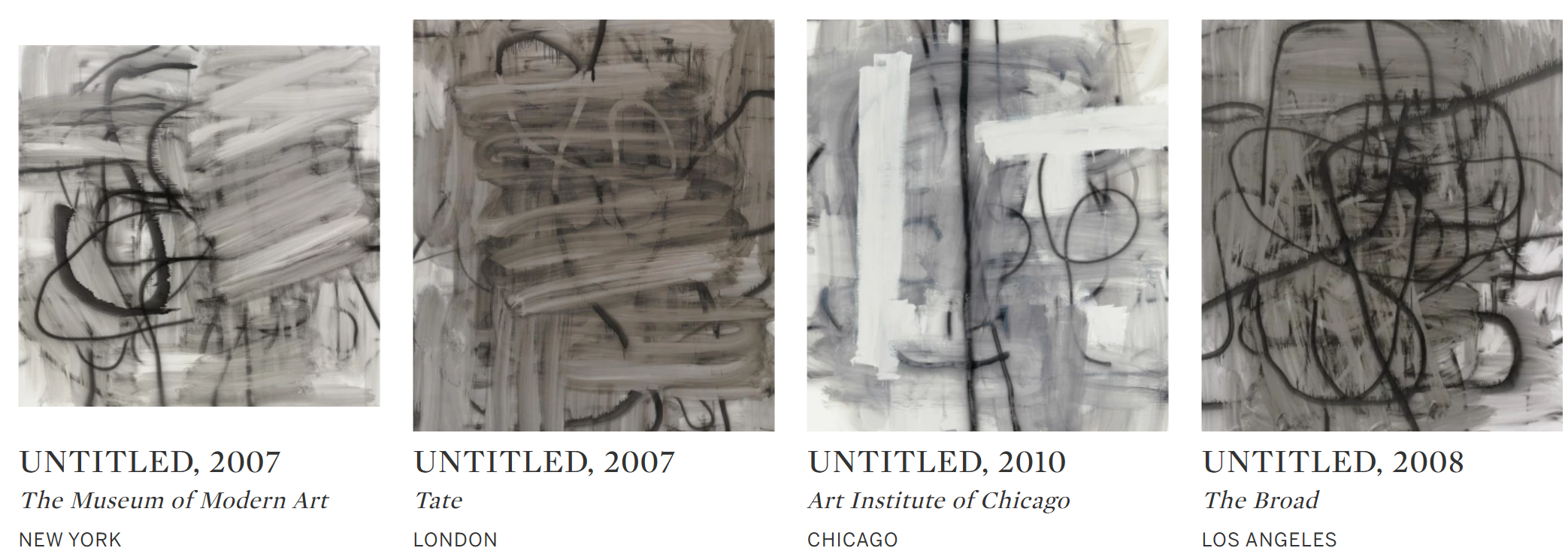
In 2000, after accidentally discovering the interaction between turpentine and enamel paint, Wool developed the erasure technique that would become the signature of his celebrated abstract paintings series. Originating from a moment of frustration when Wool attempted to erase a yellow enamel composition using a soaked rag, which in turn created a chaotic yet captivating blurred mass, Untitled signifies a spontaneous and radical process of self-editing, in which Wool first smeared and partially erased his existing black linear strokes, after which he painted over the faint traces left behind, embracing chance and reasserting the role of the artist’s hand.
“It starts someplace and reacting to itself progresses.”
The chaotic, gestural energy at the heart of this work echoes the visual language of graffiti, transforming the painting into an act of vandalism. Wool’s abstractions are deeply influenced by the urban landscape of New York, reflecting the raw, punk ethos shaped by his involvement in the city’s underground film and music scenes of the 1970s and 1980s. At the height of New York’s graffiti movement, where densely adorned letters often prioritized graphic impact over legibility, communication was pushed to its breaking point. In Untitled, legibility is abstracted even further, prompting a search for recognizable forms yet continually withholding resolution.
“With the paintings the inspiration is really internal. I get inspiration from the work and from the process of working. Painting is a visual medium, there to be looked at. For me, like listening to music, it’s an emotional experience.”
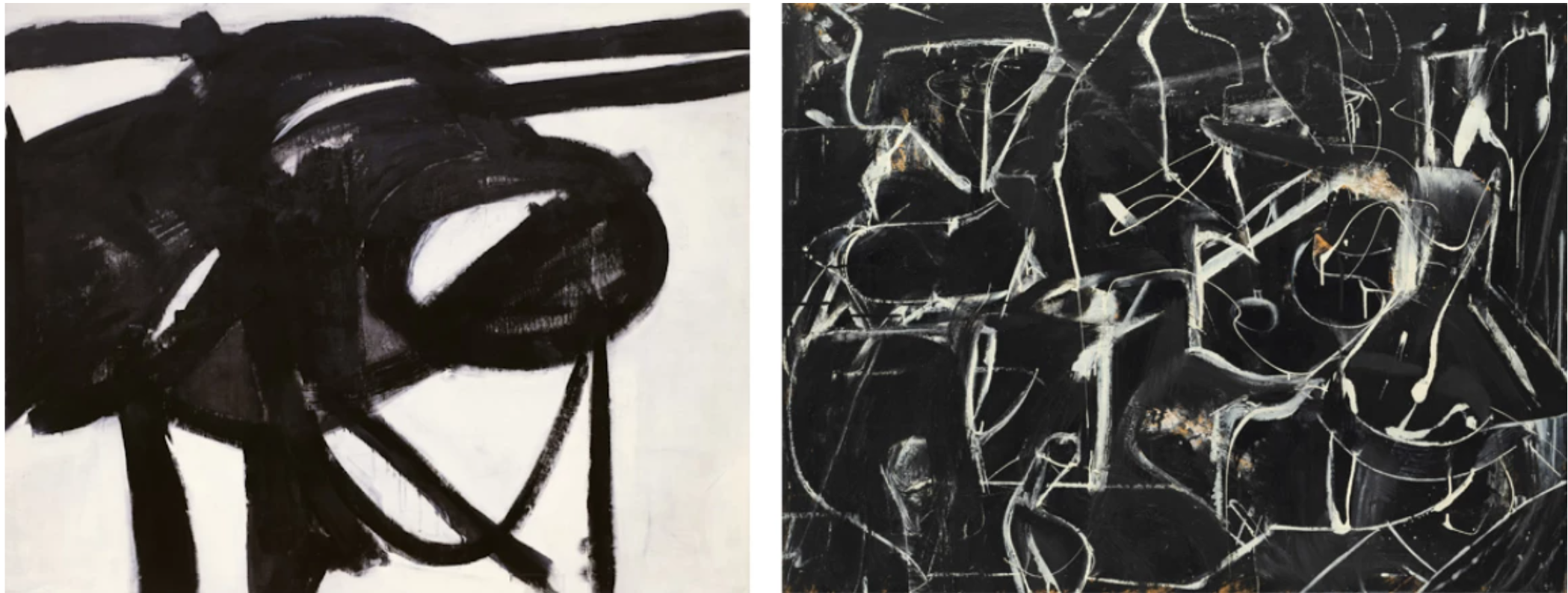
Left: Franz Kline, Chief, 1950. The Museum of Modern Art, Art: © ARS, NY and DACS, London 2024
Right: Willem de Kooning, Untitled, 1948-49. Art Institute of Chicago, Image: Art Resource, NY/ Scala, Florence. Art © The Willem de Kooning Foundation / Artists Rights Society (ARS), New York and DACS, London 2025
Like Robert Rauschenberg with his Erased de Kooning Drawing, Wool advances visual and conceptual discourse through the act of effacement, channeling Punk and Dada discourses to affect a form of nihilism, which unlike Rauschenberg he directs upon his own works, rather than that of others. In this way, Wool attains a form of transcendence in his abstraction. In effacing and erasing his previous work, Wool projects an almost spiritual clarity as he choreographs an exhilarating collision between mark and mistake, beauty and defacement, chaos and grace. Achieving a distinctly post-Punk attitude of intentional indifference, the slick coils and drips of Untitled powerfully invoke the gritty crucible of 1990s downtown Manhattan.
Untitled, 2009
Sotheby’s London: 9 October 2024
Estimated: GBP 2,200,000 – 2,800,000
GBP 2,880,000 / USD 3,772,370
Untitled | Contemporary Evening Auction | 2024 | Sotheby’s
CHRISTOPHER WOOL (b. 1955)
Untitled, 2009
Enamel on linen
104×78 inches (264.1 x 198.1 cm)
Signed, dated 2009 and numbered (P579) (on the overlap)
Signed, dated 2009 and numbered (P579) (on the backing board)
Lattice-like structures of broad scrubbings, ghost-like residues, and half concealed arabesques form an endless imbrication of doing and undoing in Untitled, a painting that exemplifies Christopher Wool’s defiance of the traditional conventions of painting. Representing an antiheroic paradigm in the art of mark-unmaking, the present work belongs to Wool’s Gray Paintings; oxymoronic images of definitive uncertainty in which addition is levied by subtraction to depict the ultimate post-modern condition: doubt. Extending from Wool’s dynamic series of abstract monochrome paintings that began in the early 1980s, Untitled was created through a refined enamel technique, in which works from the series simultaneously expose both their construction and deconstruction.
“I became more interested in ‘how to paint it’ than ‘what to paint.'”
Untitled thus reflects the artist’s iconic breakdown of formal systems, with abstract forms obliterated under layers of chaotic overpainting, celebrating process as the primary means of production.
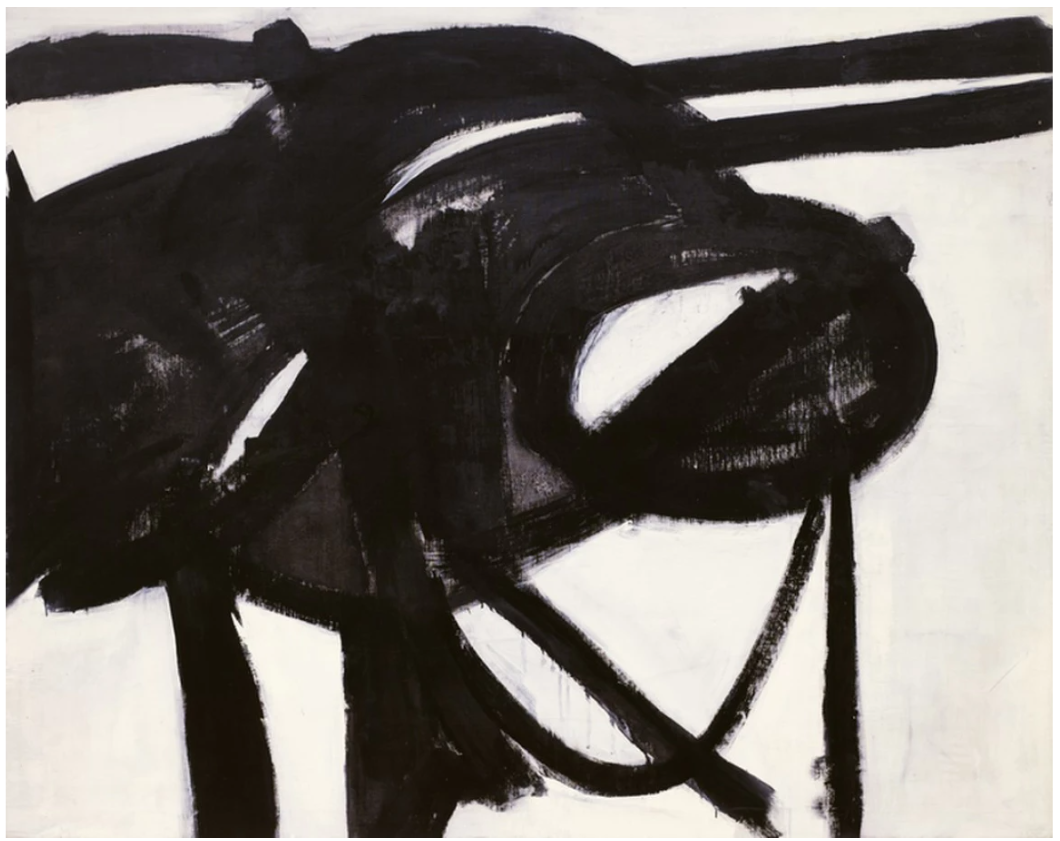
Franz Kline, Chief, 1950, The Museum of Modern Art, Image: © ARS, NY and DACS, London 2024
Born in Chicago in 1955, Wool rose to prominence in New York during the mid-1980s. Caught between the gesture of Abstract Expressionism, the inward-looking reduction of Minimalism, the readymade immediacy of Pop art, and the intellectual piety of conceptualism, Wool’s work resists codification and interpretation. As curator of Wool’s 2007 Guggenheim retrospective, Katherine Brinson, has stated: “A restless search for meaning is already visualized within the paintings, photographs, and works on paper that constitute the artist’s nuanced engagement with the question of how to make a picture” (Katherine Brinson, “Trouble is my Business” in: Exh. Cat., New York, Solomon R. Guggenheim Museum (and travelling), Christopher Wool, 2014, p. 35).
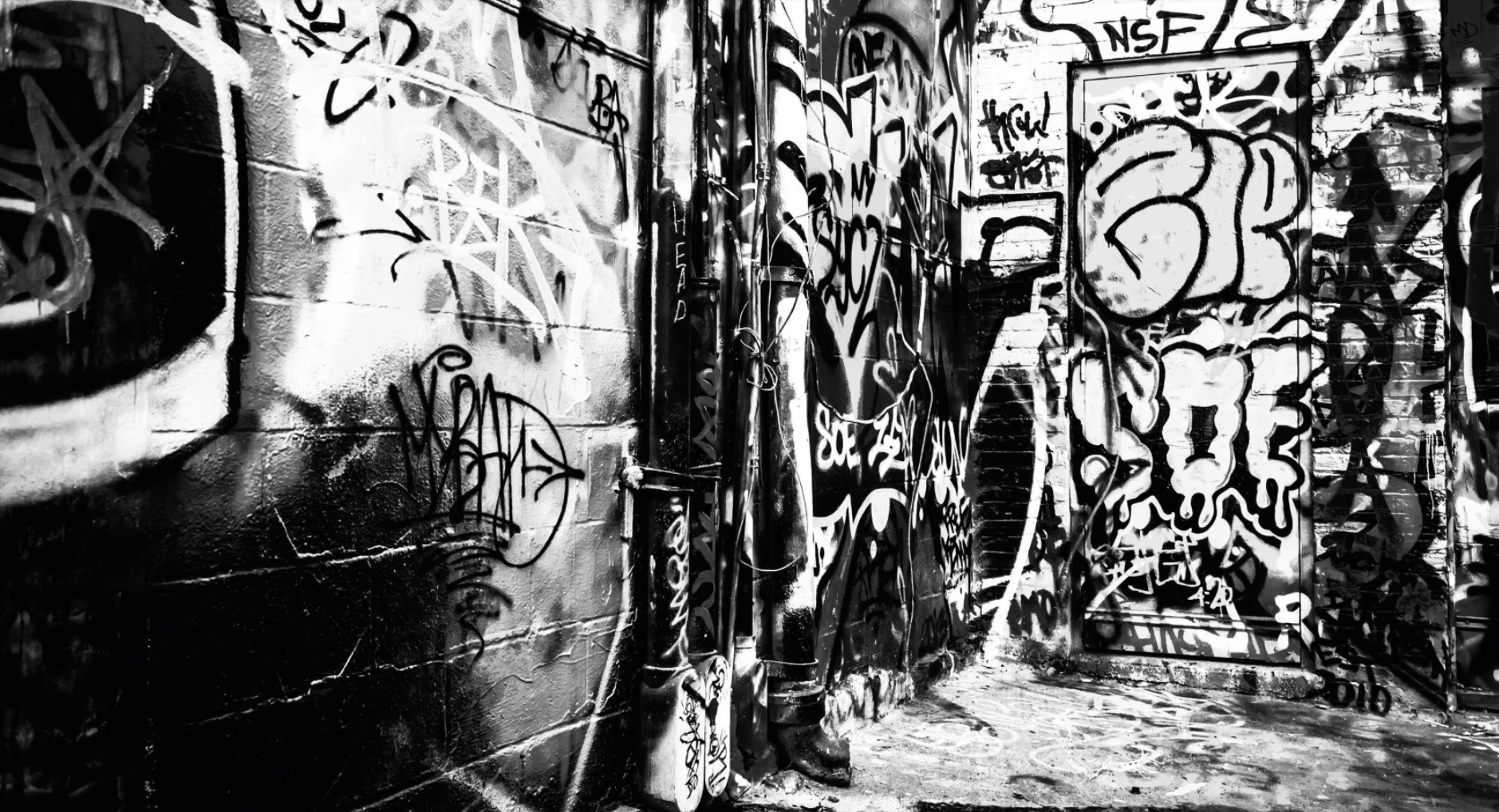
Graffiti covered wall in an alley
Wool developed his practice during the height of the Pictures Generation; a group of artists who used appropriation and photography to challenge the relevance of painting in contemporary art. In response, Wool sought to demonstrate painting’s critical potential by redefining its boundaries. Despite influential critic Douglas Crimp’s 1981 declaration of “The End of Painting,” Wool pursued a path that rejected the traditional expressive decision-making typically linked to the medium. It was not until the early 2000s that Wool shifted toward working almost exclusively with abstract forms, exploring expression through repetition, erasure, mechanical processes, and a limited color palette.
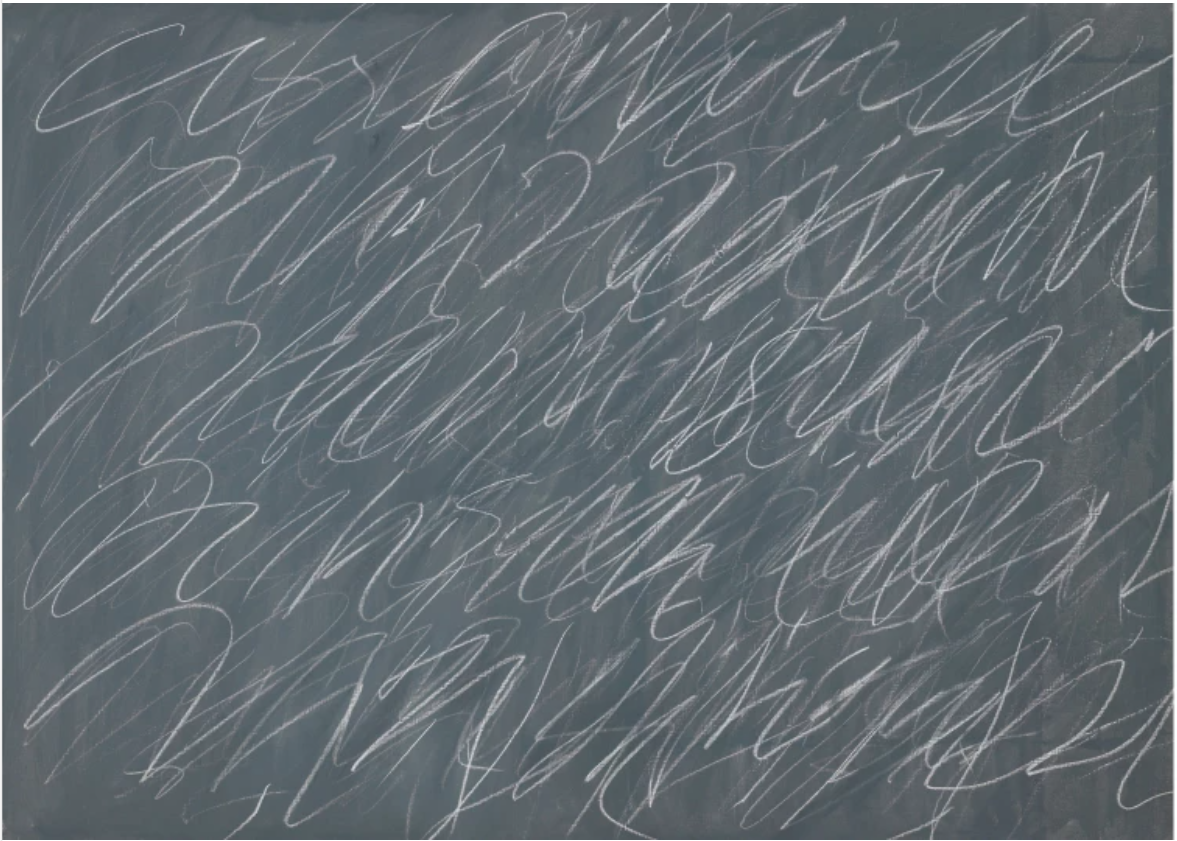
Cy Twombly, Untitled, 1970, Minneapolis Institute of Arts, MN, Image: Photo © Minneapolis Institute of Art / Gift of Mr. and Mrs. William N. Driscoll in memory of Charlotte Driscoll Gage / Bridgeman Images
In 2000, after accidentally discovering the interaction between turpentine and enamel paint, Wool developed the erasure technique that would become the signature of his celebrated abstract paintings series. Originating from a moment of frustration when Wool attempted to erase an yellow enamel composition using a soaked rag, which in turn created a chaotic yet captivating blurred mass, Untitled signifies a spontaneous and radical process of self-editing, in which Wool first smeared and partially erased his existing black linear strokes, after which he painted over the faint traces left behind, embracing chance and reasserting the role of the artist’s hand. As Wool described it, “It starts someplace and reacting to itself progresses” (The artist quoted in Exh. Cat. Musée d’Art Moderne de la Ville de Paris, Impropositions: Christopher Wool, Improvisation, Dub Painting, 2012, p. 8). The chaotic, gestural energy at the heart of this work echoes the visual language of graffiti, transforming the painting into an act of vandalism. Wool’s abstractions are deeply influenced by the urban landscape of New York, reflecting the raw, punk ethos shaped by his involvement in the city’s underground film and music scenes of the 1970s and ’80s. At the height of New York’s graffiti movement, where densely adorned letters often prioritized graphic impact over legibility, communication was pushed to its breaking point. In Untitled, legibility is abstracted even further, prompting a search for recognizable forms yet continually withholding resolution.
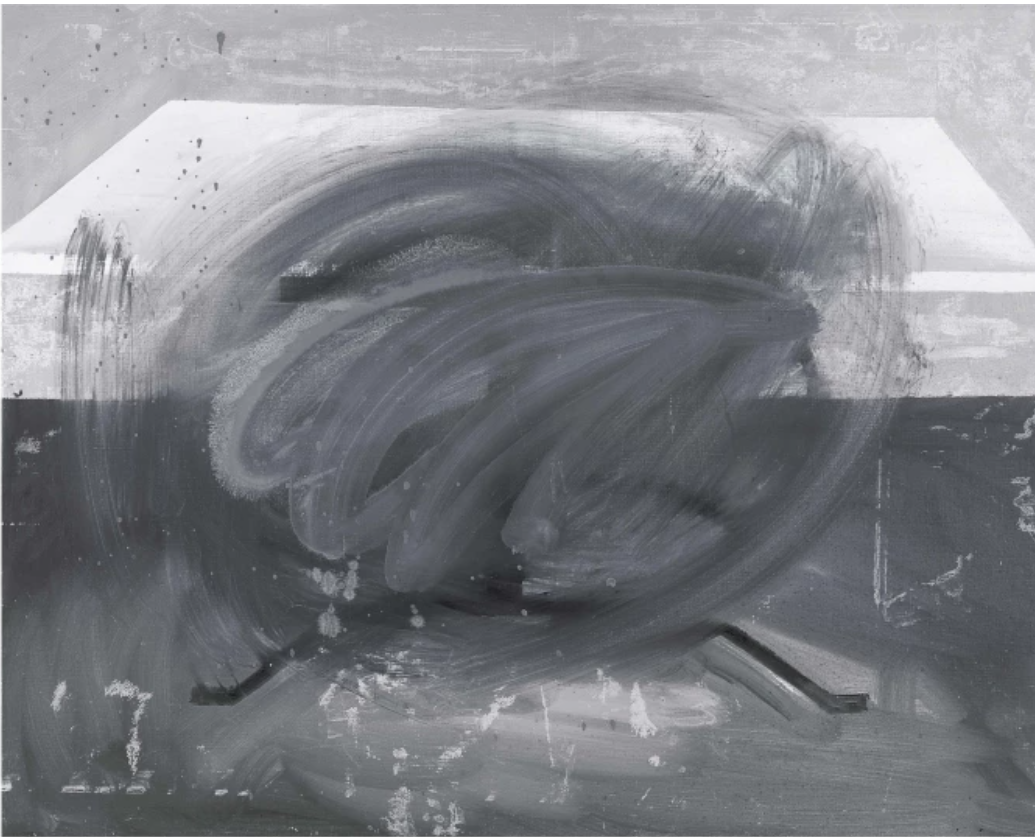
Gerhard Richter, Table, 1962, Private collection Art © 2024 Gerhard Richter Bridgeman Images
Untitled is a monumental and eloquent essay on lightness and abstract fluency. By administering an inscrutable, yet symbiotic, cycle of doing and undoing, Wool creates a space in which free-hand chaotic lines, nebulous shapes, and indistinct forms co-exist in remarkable aesthetic and emotive cohesion. As explained by Brinson, the effect of these works is surprisingly emotive: “The literal loss enacted in the realization of these paintings endows them with the character of a lamentation, chiming with the potent strains of angst and melancholia that have always run close to the surface of his work, despite its game face of cool indifference” (Ibid., p. 47). Poignantly borne of conceptual doubt and pictorial denial, Untitled is an overwhelming affirmation of paintings’ critical agency.
Untitled, 2005
Sotheby’s New-York: 15 November 2023
Estimated: USD 1,500,000 – 2,000,000
USD 2,238,000
Untitled | Contemporary Evening Auction | 2023 | Sotheby’s (sothebys.com)
CHRISTOPHER WOOL (b. 1955)
Untitled, 2005
Enamel on canvas
96×72 inches (243.8 x 182.9 cm)
Signed, dated 2005 and numbered (P507) (on the overlap)
Emerging from a cycle of addition and subtraction, Christopher Wool’s Untitled is a monumental example of a painting imbued with unapologetic presence and remarkable tension. Executed in 2005, the present work illuminates a profound oscillation between the gestural immediacy of the artist’s hand and the calculated reduction of painting itself. Since the early 2000s, Wool has worked almost entirely with abstract forms, maximizing his expressive potential through techniques of replication, erasure, mechanical manipulation, and a highly restricted color palette. As Katrina Brown explains, with their grand scale and monochromatic confidence, “Wool’s paintings seem like an indescribable urban cool, a tense fusion of intellect and emotion, control and chaos.” (Katrina M. Brown cited in: Hans Werner Holzwarth, Ed., Christopher Wool, New York 2008, p. 296) Daring to challenge the status quo of painting by disrupting the medium itself, Untitled exists as a product of the continual evolutionary progress of Wool’s practice.
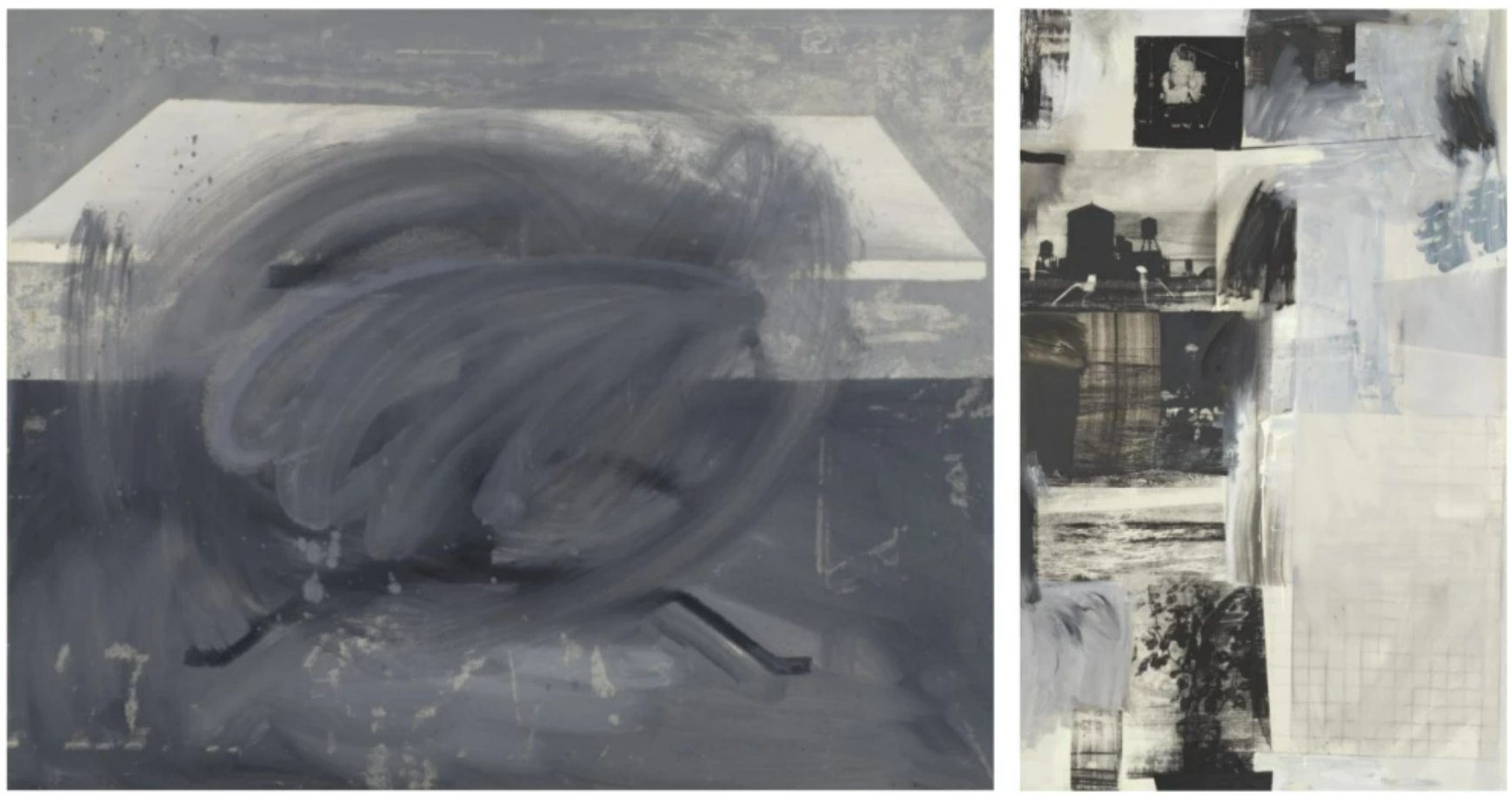
LEFT: GERHARD RICHTER, TABLE, 1962. PRIVATE COLLECTION. ART © 2023 GERHARD RICHTER. RIGHT: ROBERT RAUSCHENBERG, ALMANAC, 1962. IMAGE: © TATE, LONDON / ART RESOURCE, NY. ART © 2023 ROBERT RAUSCHENBERG FOUNDATION / LICENSED BY VAGA AT ARTISTS RIGHTS SOCIETY (ARS), NY
Messy, erratic, and gesturally kinetic, Wool’s seminal Gray Paintings both undermine the rigid compositional structure of his early output and ruminate on the future of painting.
“The traditional idea of an objective masterpiece is no longer possible.”
The genesis of this series emerged in a moment of frustration, when Wool took to a composition of yellow enamel with a soaked rag in attempt to blot out his work, resulting in a chaotic yet compelling blurred mass. In 2000, following an accidental discovery of the interaction between turpentine and enamel paint, Wool developed the erasure technique that would become the defining hallmark of the Gray Paintings. Spontaneous in his act of radical mark making, Wool first smears and partially erases his existing black linear marks, then paints again atop the ghostly remainder. Through this act of self-repudiation, Wool learned to embrace the element of chance and reassert the presence of the artist’s hand within his practice.
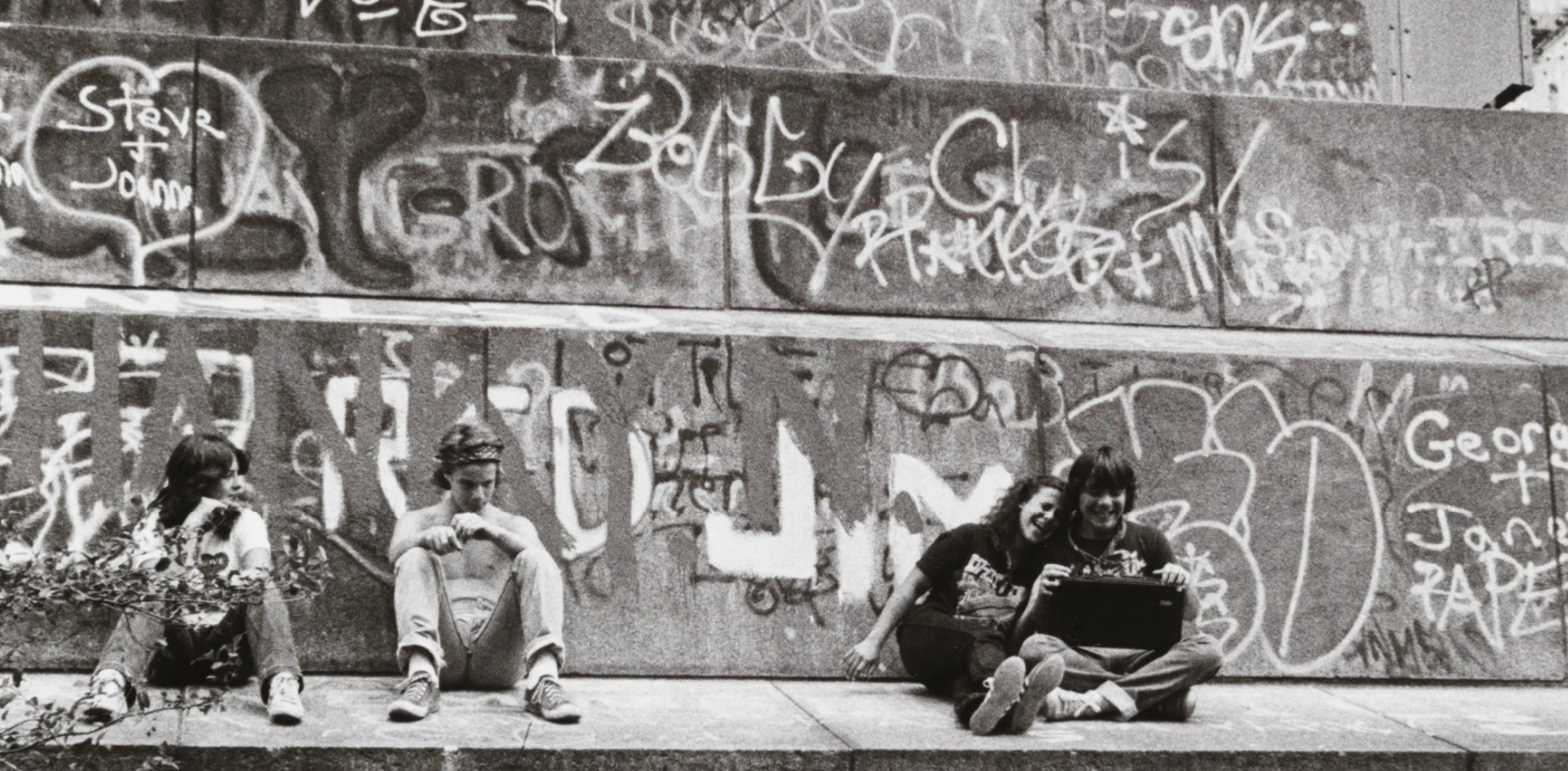
AGNES ZELLIN, ASTORIA PARK, 1981. IMAGE © THE MUSEUM OF THE CITY OF NEW YORK / ART RESOURCE, NY. ART © 2023 AGNES ZELLIN
Untitled is a defining example of Wool’s Gray Paintings, with tangles of black lines repeatedly puncturing fields of hazy washes. Illustrating that depth is as much an illusion as anything, the accretion of lines appear to be built on previous layers of paint. Yet, what these broad swathes often attempt to disrupt is regions on the canvas that were otherwise blank. Evoking the language of graffiti on city streets, Wool’s act of destruction became a process of creation.
“I make a lot of mistakes but I keep them. I use and recycle them.”
The urban vernacular of New York prevails on the surface of Untitled, as the painting itself seems to morph into an act of vandalism. At the height of the city’s graffiti movement in the 1980s, when Wool was first cutting his teeth as a practicing artist, legibility was pushed beyond its elastic limit and trumped by graphic spectacle. In the present work, legibility is abstracted even further, and figuration is referenced as something primal and alive. One can sense the rich interplay between uninhibited gesture and consequential interruption, between one moment’s impulse and another.
Not, Not, 2004
Sotheby’s Hong-Kong: 7 October 2022
Estimated: HKD 11,000,000 – 15,000,000
HKD 10,781,000 / USD 1,373,288
CHRISTOPHER WOOL (b.1955)
Not, Not, 2004
Enamel on linen
78 3/8 x 60 inches (199 x 152.5 cm)
Signed and dated 2004 on the overlap
Widely regarded as one of contemporary art’s most innovative pioneers, Christopher Wool has created some of the most influential works of the 21st century. Born in Chicago in 1955, Wool moved to New York City in 1973, attracted to the city’s underground culture, and there began studying painting. Perfecting his craft since the early 1980s, Wool has yielded a body of work which has pushed the limits of abstract painting whilst remaining fiercely expressive. Created in 2004, Not, Not is a classic example of Wool’s Grey Paintings, a series of work which have explored and expanded the limits of formal painting. Deploying the rigorous practise and formal innovation characteristic of the artist’s oeuvre, the present work renders a series of lines, angles and dynamic swoops of black enamel that are periodically smudged and compromised to build a set of enigmatic marks against the grey landscape of the canvas.
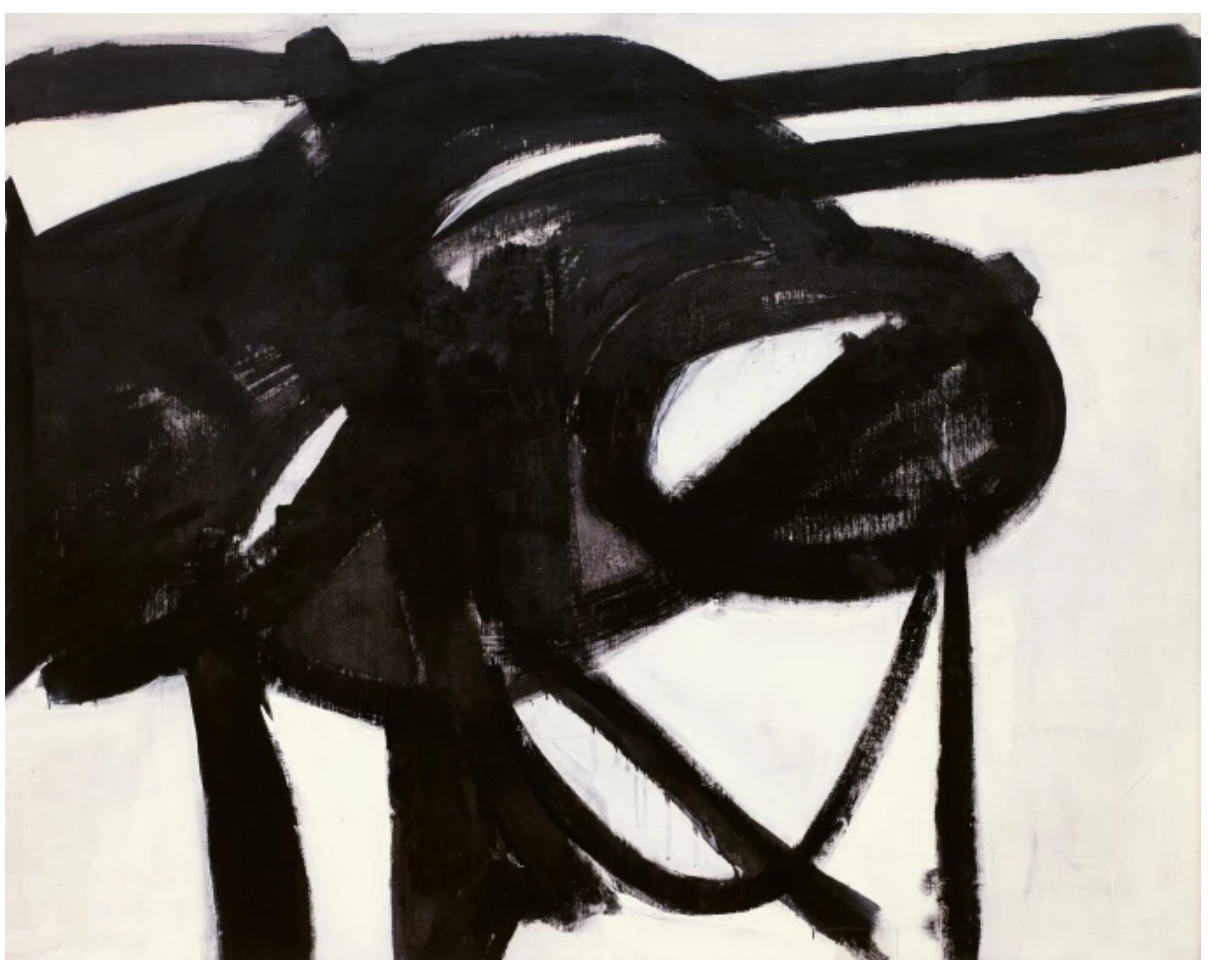
FRANZ KLINE, CHIEF, 1950 / COLLECTION OF THE MUSEUM OF MODERN ART (MOMA), GIFT OF MR. AND MRS. DAVID M. SOLINGER
© THE MUSEUM OF MODERN ART, NEW YORK/SCALA, FLORENCE 2022
In 2000, in what would be the most defining accident of his career, Wool discovered the interaction between turpentine and enamel paint, which would go on to stimulate this unique body of work. Becoming frustrated with a piece he was working on, the artist, hoping to blot out part of the canvas, took up a rag soaked in turpentine. Rather than simply wiping his canvas clean, Wool was left with a blurry, smeared grey wash, an effect he embraced for its strange but compelling beauty. Eliciting the effects of broad, gestural brushwork, an act of destruction became a process of creation that Wool has described as a cornerstone of his creative process: “I make lots of mistakes – and keep them in” (Christopher Wool cited in: Stuart Jeffries, “Punk painter Christopher Wool: ‘I make lots of mistakes – and keep them in’’, in The Guardian, 2 June 2022, online). Fuelled by the artist’s inquisitiveness and willingness to experiment with a variety of artists modalities, this happy-accident would become the blueprint of the Grey Paintings. As this series developed, Wool’s work began to alternate the act of the erasure with the act of fabrication, embracing the free gesture that this method afforded. The result of this, the artist’s most celebrated technique, bends expectations of traditional painting, as the ironic title Not, Not implies.
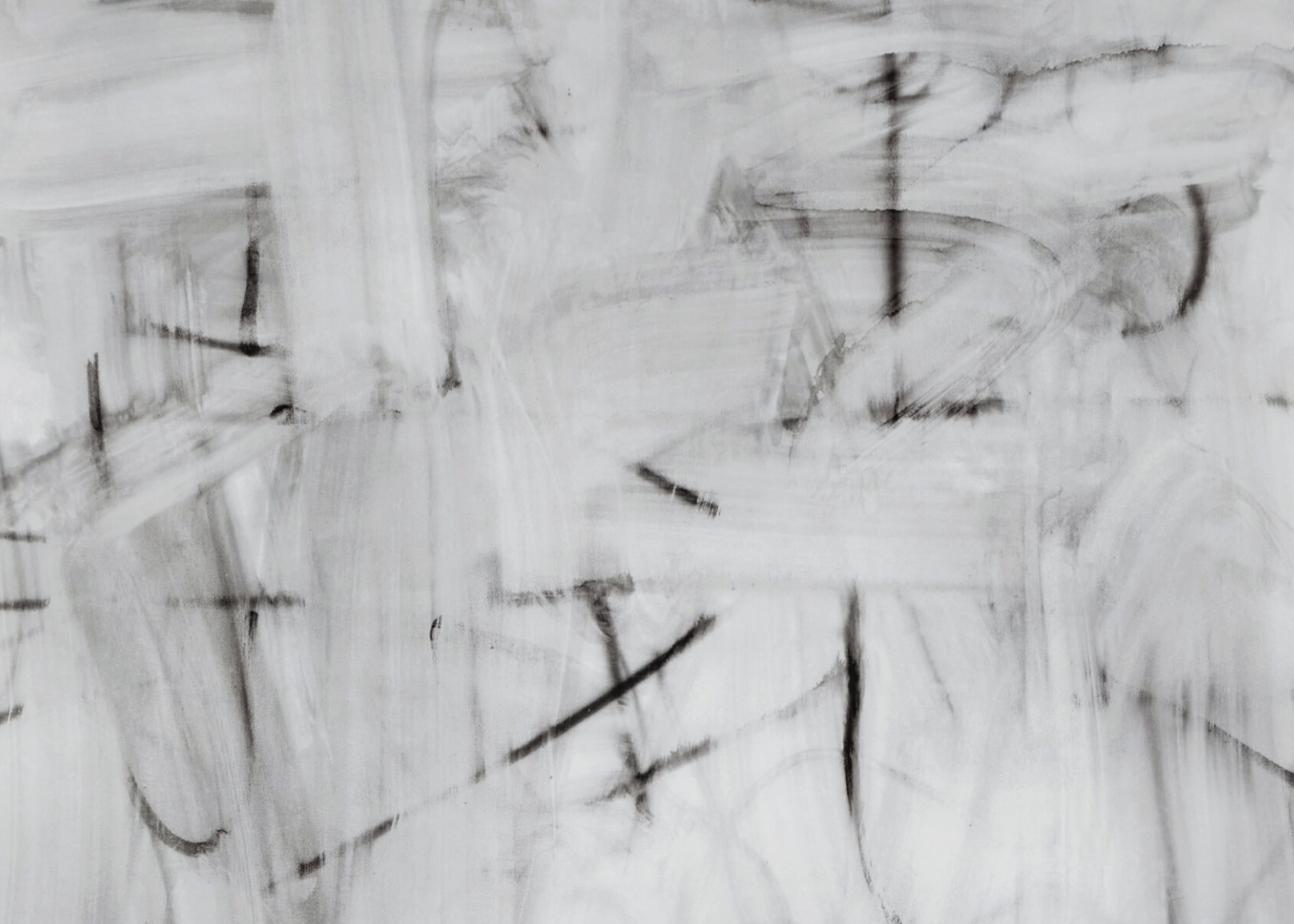
The present work’s composition reveals, in a simultaneous act of construction and destruction, a complex process of creation whereby acts of erasure are boldly juxtaposed by the artist’s hand. In Wool’s work, paintings comprised of stains, sprays and rolled paint, instances of “mistakes” that might otherwise be corrected or ignored, become the focal points of the composition. Stripping a canvas of recognisable attributes like imagery, brushwork and texture, the monochromatic final product could suggest a kind of finality, as if the greys of the canvas could be the last work the artist is going to produce. Wool has used this suggestion of finality to narrow his artistic framework, operating within a set of carefully executed techniques in increasingly complex compositions. The tools utilised by Wool – the spray paints and stencils of his early work, the rags soaked in turpentine – are not those traditionally associated with painting. Along with his monochromatic palette of black and white, Wool’s Not, Not articulates a liminal space between art and artist, the expected and the improbable. The dashes of black fade in and out of the shadowy greys which surround them, spawning something dissonant, oxymoronic in its uncertainty, and riveting.
Other Series
Untitled, 2014
Christie’s New-York: 19 November 2025
Estimated: USD 1,500,000 – 2,000,000
USD 1,397,000
CHRISTOPHER WOOL (B. 1955), Untitled | Christie’s
CHRISTOPHER WOOL (B. 1955)
Untitled, 2014
Silkscreen ink on linen mounted to wood
106×96 inches (269.2 x 243.8 cm)
Signed, titled and dated ‘Wool 2014 Untitled (P647)’ (on the reverse)
Christopher Wool’s Untitled (2014) is a rare, monumental exemplar from his important series of jumbled letters and symbols strewn on canvas. Created just after the artist’s celebrated New York retrospective at the Solomon R. Guggenheim Museum, which then traveled to the Art Institute of Chicago, the work clarifies the elements which have come to be the most important to Wool’s practice—letters and words, black and white coloration, and the silkscreen process. This series recapitulates the artist’s oeuvre in a novel, extraordinary form. Wool here is reflecting upon his previous works, self-appropriating and reintegrating old motifs in new, revolutionary ways in order to rejuvenate his sense of artistic discovery. Untitled most significantly recalls Wool’s celebrated word paintings begun a quarter-century before. While this earlier series was notably ordered and followed ordinary semantic conventions to permit legibility, Untitled amasses a cacophony of letters of different sizes, fonts, tones, and orientations, overlaid against one another to prevent any sense of semiotic clarity. Of considerable importance to Wool’s artistic development after the Guggenheim retrospective, Untitled is the first of this rarefied series to come to auction, with similar examples held in prestigious institutional collections, including The Broad in Los Angeles and Fondation Louis Vuitton in Paris.
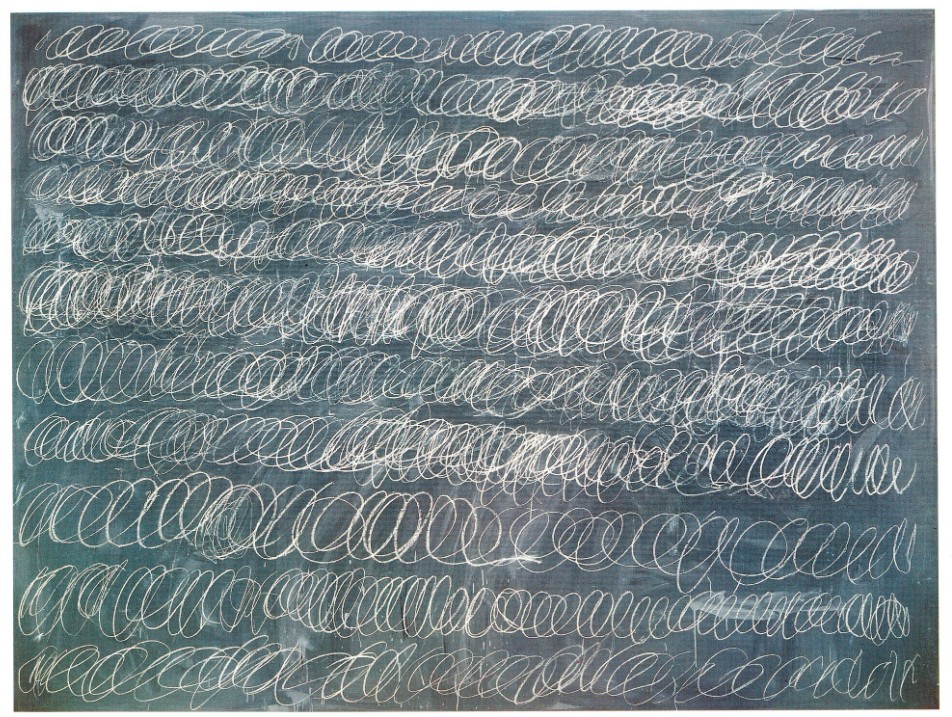
Cy Twombly, Untitled, 1967. © Cy Twombly Foundation.
Created with digital assistance, in Untitled Wool uses mechanical and digital replication as a means of self-appropriation, propelling old forms into new dialogues more suited for the digital era. While his earlier word paintings were created before the widespread adoption of the internet, Untitled came into being in an era of immediate digital reproduction, where text and image had become universally pervasive. The style seen in Untitled was first employed in Wool’s cover design for the 2013 Guggenheim catalogue. In Untitled, a large uppercase O is the most prominent icon in the assembly of greyscale letters and symbols, which also includes Js and Bs, a 6, an upside-down Y, and several sideways ampersands. A wrench form to the right of the canvas challenges distinctions between text and symbol. Two rectangular forms attempt in vain to frame the composition, instead becoming an underlayer upon which Wool adds more and more forms. Meandering, freeform lines weave across the canvas, echoing the organic forms of the artist’s contemporaneous wire and metal sculptures and linear etchings. Untitled is a palimpsest of Wool’s artistic practice, excavating then reburying myriad motifs from the artist’s past across the almost nine by eight-foot canvas.
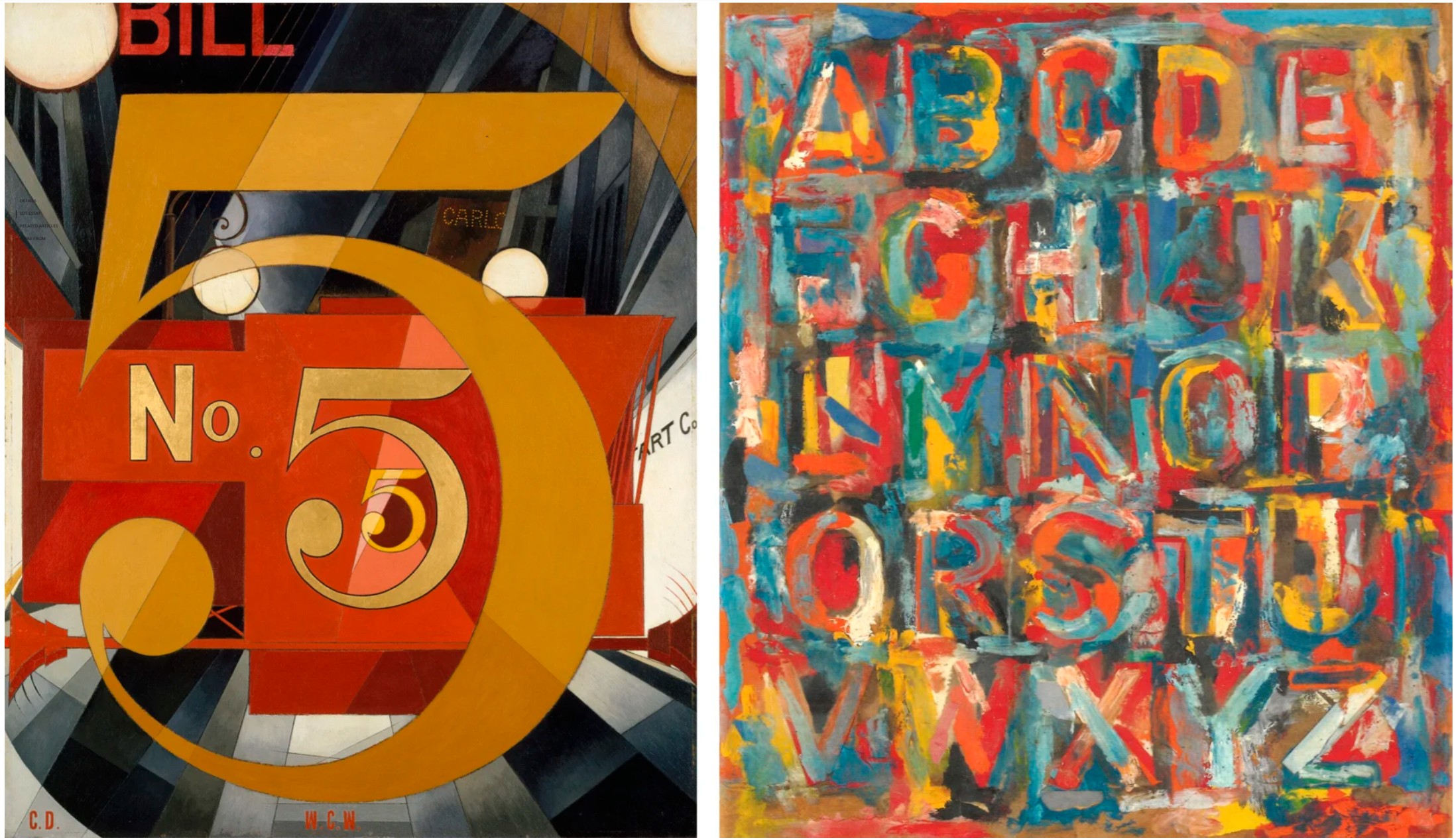
Left: Charles Demuth, I Saw the Figure 5 in Gold, 1928. Metropolitan Museum of Art, New York.
Right: Jasper Johns, Alphabet, 1959. Art Institute of Chicago. © 2025 Jasper Johns / Licensed by VAGA at Artists Rights Society (ARS), NY.
“I define myself in my work by reducing the things I don’t want—it seems impossible to know when to say ‘yes,’ but I know what I can say ‘no’ to.”
Untitled presents Wool’s practice in its most considered and reduced form, reintegrating disparate earlier works into a cohesive composition, succinctly communicating his enduring message, critiquing contemporary culture and challenging conventional notions of text and meaning. Having earlier worked within the historical tradition exploring the pictorial possibilities of language, here Wool offers a decisive break, projecting his earlier work as shattered fragments of texts bound together in an undecipherable, wooly thicket of symbols. Bringing to the fore the abstracted tendencies latent in his previous work, Wool creates a vivid work replete with a potent visual presence and abounding in aesthetic subtleties.
Nation Time, 2000
Sotheby’s London: 24 June 2025
Estimated: GBP 800,000 – 1,200,000
GBP 1,082,000 / USD 1,391,920
Nation Time | Modern & Contemporary Evening Auction | 2025 | Sotheby’s
CHRISTOPHER WOOL (b. 1955)
Nation Time, 2000
Enamel and silkscreen ink on linen
108×72 inches (274.3 x 182.9 cm)
Signed, dated 2000 and numbered (P328) (on the overlap)
Signed, dated 2000 and numbered (P328) (on the stretcher)
Reverberating with kinetic atmosphere and chaotic tension, Nation Time is a supreme testament to Christopher Wool’s reinvention of painting in the late 1990s. Characteristic of the artist’s signature fusion of mechanical reproduction and gestural abstraction, the present work marks a new phase in his practice. These self-referential silkscreen and enamel works lie between his eulogized word and roller paintings and his later more gestural Gray Paintings. Whipping and lashing amidst the expanse of black splodges and stamped patterns of the silkscreen, the signature squiggle lines – sprayed in black enamel – enliven the stark artifacts of mechanical reproduction in Wool’s signature monochrome. Precise yet uncontrolled, Wool exposes the construction of his image by consciously leaving behind the traces of his making. Whereas the earlier works used stencils and printing rollers to create text and patterns, Nation Time pulls from Wool’s own history whilst adding new layers in a potent image that defies the authenticity of the artist’s mark. Executed for the artist’s 2001 exhibition at Luhring Augustine Gallery in New York, the present work is among his most celebrated silkscreen works, some of which are in the collection of Whitney Museum of American Art, New York; The Broad, Los Angeles; and Centre Pompidou, Paris.
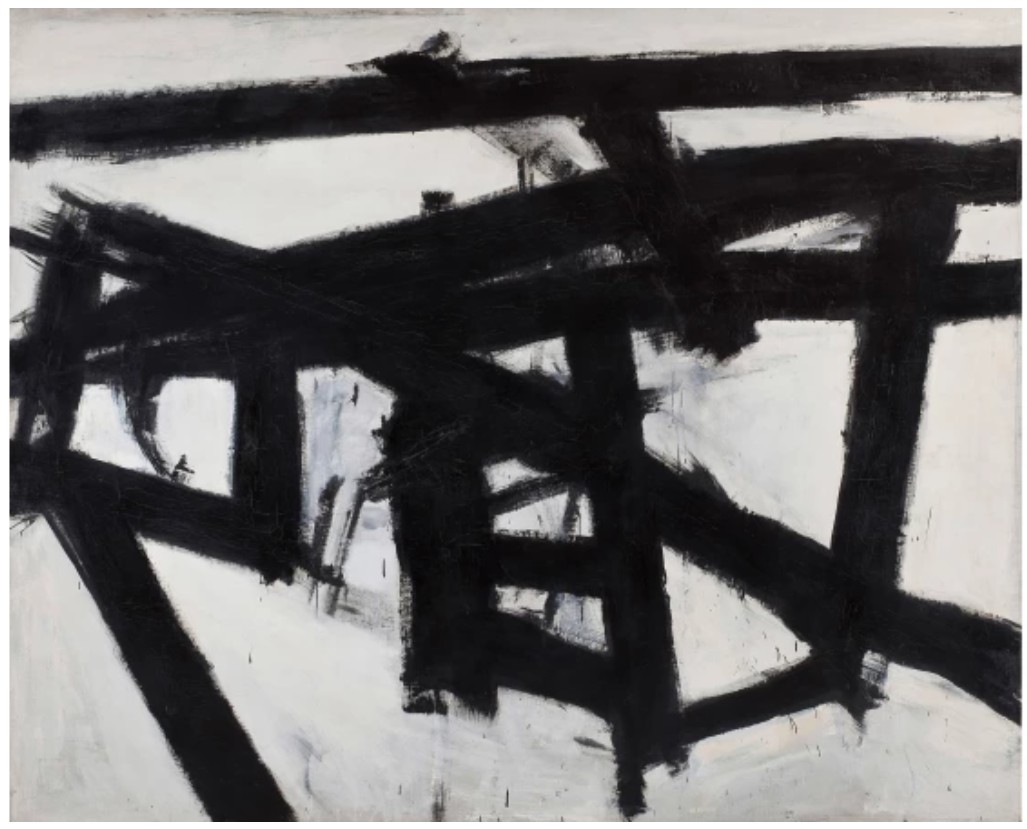
Franz Kline, Mahoning, 1956. Image © New York, Whitney Museum of American Art.
Art © The Franz Kline Estate/Artists Rights Society (ARS), New York
Born in Chicago in 1955, Wool rose to prominence in New York during the mid-1980s. Caught between the gesture of Abstract Expressionism, the inward-looking reduction of Minimalism, the readymade immediacy of Pop art, and the intellectual piety of conceptualism, Wool’s work resists codification and interpretation. Wool developed his practice during the height of the Pictures Generation; a group of artists who used appropriation and photography to challenge the relevance of painting in contemporary art. In response, Wool sought to demonstrate painting’s critical potential by redefining its boundaries. Despite influential critic Douglas Crimp’s 1981 declaration of “The End of Painting,” Wool pursued a path that rejected the expressive decision-making typically linked to the medium since the Abstract Expressionists. Wool’s work is a rebuttal to the total image prized by this group; he almost satirizes this group by borrowing archetypal features such as the late poured paintings of Jackson Pollock, the concentric loops of Cy Twombly, or the electric line of Franz Kline.
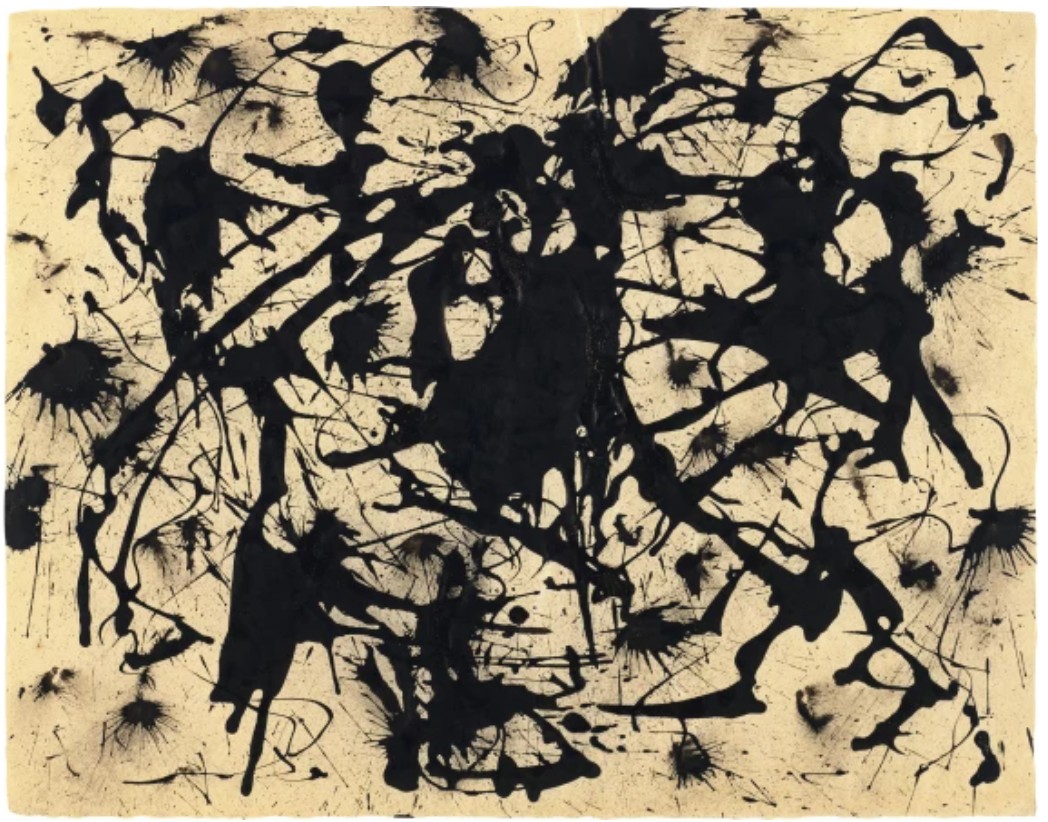
Jackson Pollock, Untitled, c. 1950. Image © THE MUSEUM OF MODERN ART/LICENSED BY SCALA / ART RESOURCE, NY. Art © 2025 Pollock-Krasner Foundation / Artists Rights Society (ARS), New York
During the late 1990s, Wool began to focus almost exclusively on abstract forms, exploring the expressive potential of repetition, erasure, and mechanical manipulation within a highly restricted color palette. Works such as Nation Time represent a critical shift in his creative perspective, moving away from formal image-making. His use of silkscreened imagery — a hallmark of his practice — injects an industrial, mechanized quality into the work, recalling the serial production techniques of Andy Warhol’s Pop practice. Going considerably further than Warhol’s serial repetitions of consumerist and cultural icons, Wool embraces imperfection and misalignment, deliberately allowing slips, drips, and overpainted layers to disrupt the regimented order of the silkscreened motifs. This method creates a dense strata of patterns that culminate in surprising and unexpected results. Not only does Wool’s embrace of chance dissolve the idea of the authentic mark as with Jackson’s Pollock’s drip and pour paintings, his silkscreen technique interrogates authorship and cultural memory in the same vein as Richard Prince’s mass-media appropriations.
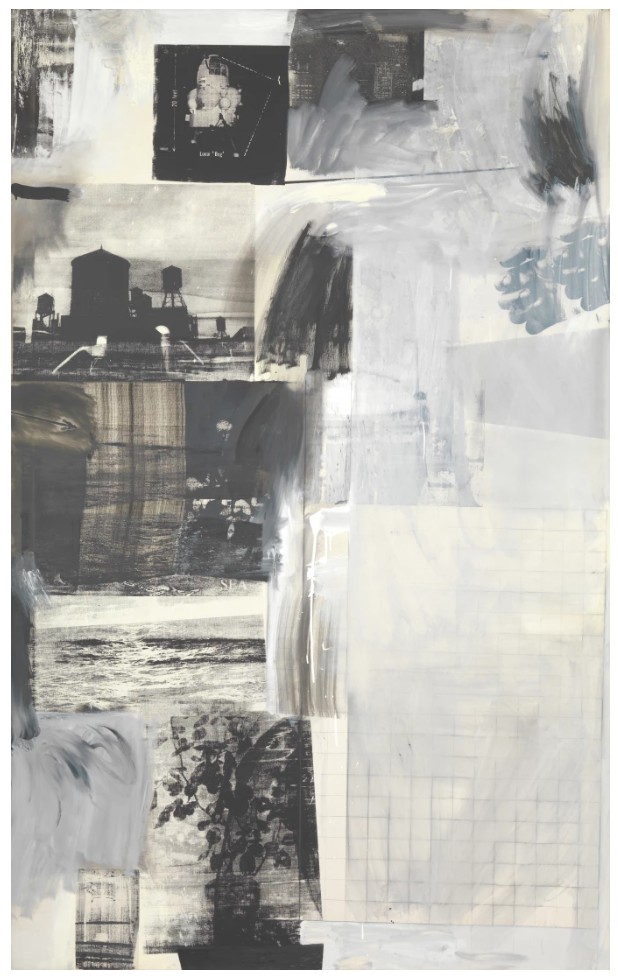
Robert Rauschenberg, Almanac, 1962, Tate, London
Image: © Tate Collection, London
Artwork: © Robert Rauschenberg Foundation/ DACS, London 2025
Reaching even further back to the aesthetic automatism of André Masson, Wool firmly positions himself at the contemporary end of a lineage of the most significant abstract painters of the past century. Yet emanating from behind like digital interference, the structured presence of printed marks equally call upon the bold raster paintings of Sigmar Polke and Ben-Day compositions of Roy Lichtenstein, the iconic silkscreens of Warhol and Rauschenberg, as well as the digitally-generated images of his contemporary Albert Oehlen. At its core, the present work is a dialectical tension between opposing forces: black and white, chaos and order, accident and choice, mechanical and gesture. It is a work that encapsulates all the most sought-after characteristics in Wool’s practice: from the concentric loops of enamel spray paint, expanses of black paint to the tightly printed mechanical pattern of dots and checkers, Nation Time offers a complex overlay of Wool’s visual
Untitled, 2011
Christie’s New-York: 15 May 2025
Estimated: USD 700,000 – 1,000,000
USD 882,000
CHRISTOPHER WOOL (B. 1955), Untitled | Christie’s
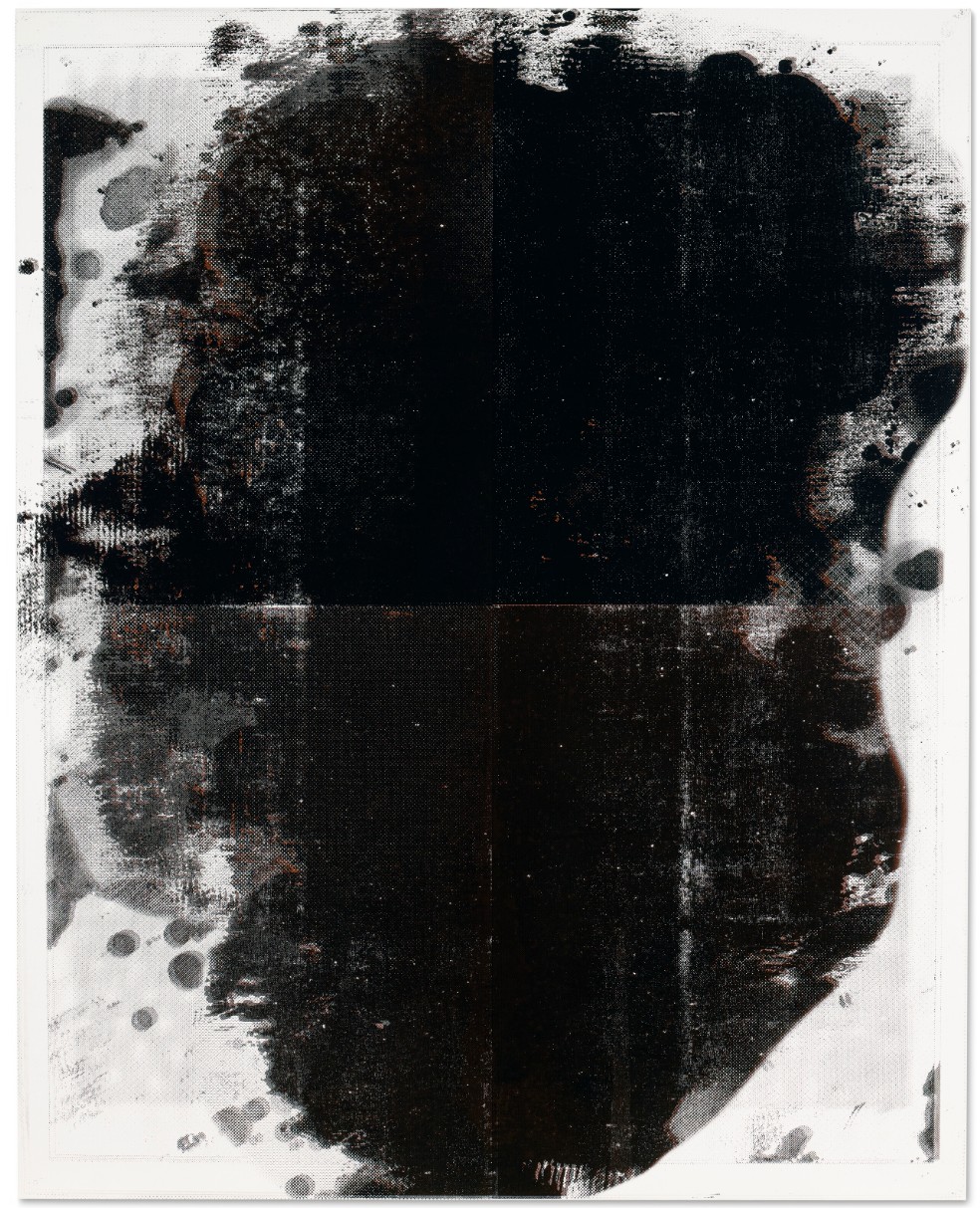
CHRISTOPHER WOOL (B. 1955)
Untitled, 2011
Silkscreen ink on linen
120×96 inches (304.8 x 243.8 cm)
Signed, inscribed and dated ‘WOOL 2011 P623’ (on the reverse)
Signed again and dated again ‘WOOL 2011’ (on the overlap)
Christopher Wool’s Untitled is a commanding and significant work that exemplifies the artist’s mastery of abstraction. First presented at the 54th Venice Biennale, the monumental painting is characterized by a field of deep, inky black that progressively fades into earthy hues. Dynamic, static-like lines traverse the canvas, dividing the surface into quadrants. The deep black pigment gives the biomorphic patterns a tangible sense of presence as two cellular-like shapes on the upper and lower left side seem to be dividing, suggesting an organic process of development and change.
Untitled was created through a highly complex and multidimensional process that seamlessly blends digital manipulation with traditional artistic techniques. Wool began by photographing a selection of small old drawings, magnifying them to an enormous scale. This enlargement revealed intricate details, which were then reduced to individual, painstakingly rendered dots. These dots were transferred onto a linen canvas through a meticulous silkscreen printing process. Once the initial impression was complete, the surface of the canvas was carefully painted over, which resulted in subtly altering the texture and form of the original image. The work was then photographed once again, and this time, Photoshop was employed to apply a series of intricate digital modifications and enhancements. The resulting artwork is the product of this fusion of old and new methods, creating a sense of depth and complexity that is both captivating and enigmatic. The layered nature of this process, with its multiple stages of transformation, lends the painting a unique, mysterious allure, as it becomes increasingly difficult to trace the exact steps of Wool’s creative journey. The combination of these contrasting techniques not only adds richness to the final composition, but also invites viewers to consider the boundaries between the physical and the digital in the realm of contemporary art.
While Wool first rose to fame with his text paintings from the late 1980s, Untitled highlights the artist’s deep interest in pure abstraction. By the early 2000s, Wool had started to create his renowned “Grey Paintings,” which are distinguished by their vast, monochromatic fields. His early work in abstraction experimented with floral motifs and vivid hues. This approach subsequently underwent a significant transformation resulting in the series of large-scale paintings of which the present work is a part, debuting at the 2011 Venice Biennale. Distinguished by their dense texture, physicality, and intricacy, combined with the compositions’ biomorphic elements, these paintings convey an almost dreamy quality, encouraging reflection as they appear to be pulsing with life. Wool’s consistent investigation of abstraction is memorialized in the present work, which offers a distinctive blend of conventional artistic methods and modern technical advancements. While the segmented divisions and organic shapes give the work a sense of movement and alteration, the stark black tones and rudimentary surface conjure up a raw, industrial sensibility. The painting’s fragmented and unexpected composition demonstrates the strength of Wool’s abstract visual lexicon, expertly balancing harmony and tension.
Untitled, 2004
Phillips New-York: 14 May 2025
Estimated: USD 750,000 – 1,000,000
USD 399,999
Christopher Wool Modern & Contemporary Art Day Sale, Afternoon Session
Untitled, 2004
Silkscreen ink on linen
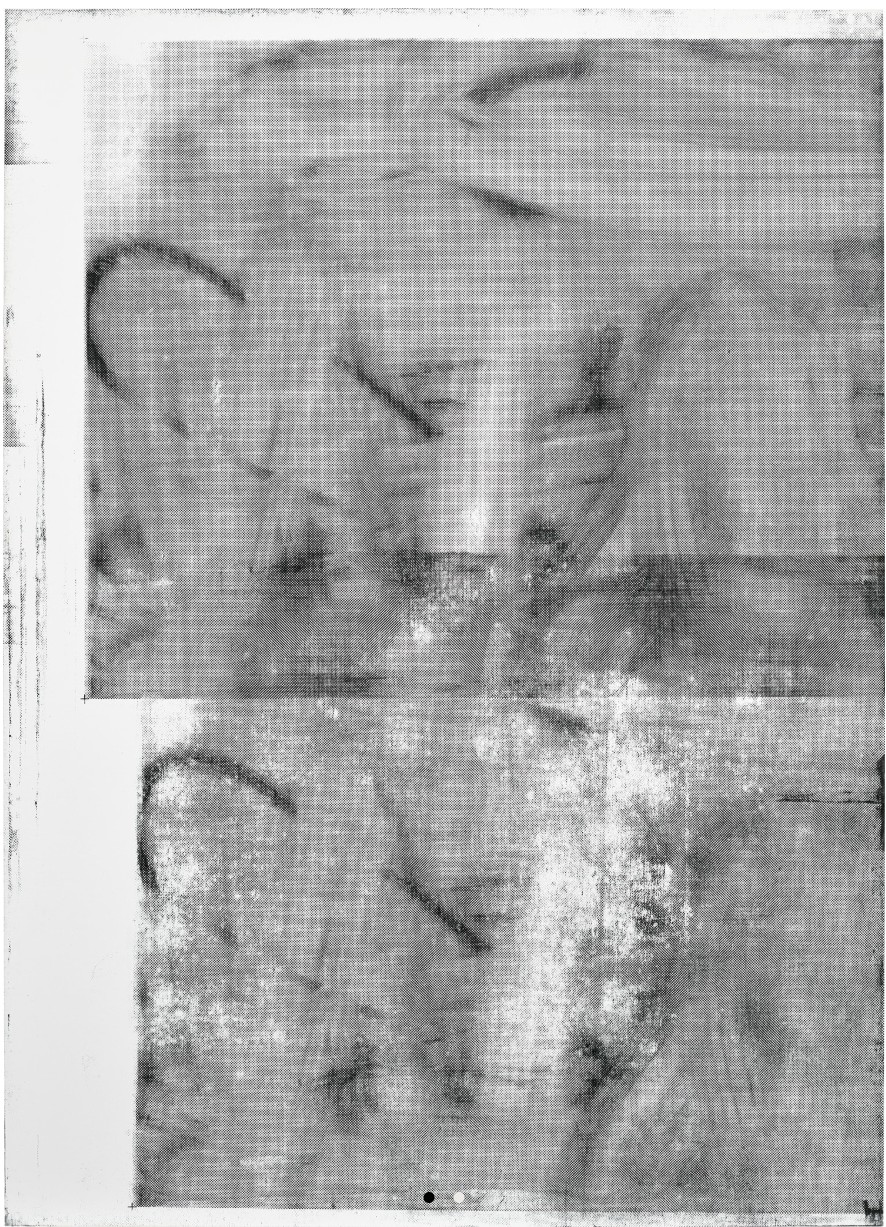
Wool’s work embodies the idea of palimpsest. His layered process includes applying sweeping gestures with a spray gun, using solvents to strip back its application in an additional layer of mark making, and then translating that image via silkscreen into a uniquely rendered canvas. Crucial to Wool’s work is self-referentiality, a distinguishing formal and conceptual process in which he repeatedly references his own works. This serves as a metaphor for the endless recycling of forms and information in a media-obsessed society saturated with visual signification. The notion of palimpsest also connects Wool’s work to graffiti and street art. As a young artist in 1980s New York, Wool was active amongst the counterculture and punk scenes, and his work distinctively reflects the literal and visual vocabulary of the city. In many ways his process relates directly to the lifecycle of street art: layers accumulate over time, tags are repeatedly executed in new sites, and attempts at erasure sometimes fail, leaving behind ghost images.
“I became more interested in ‘how to paint it’ than ‘what to paint.”
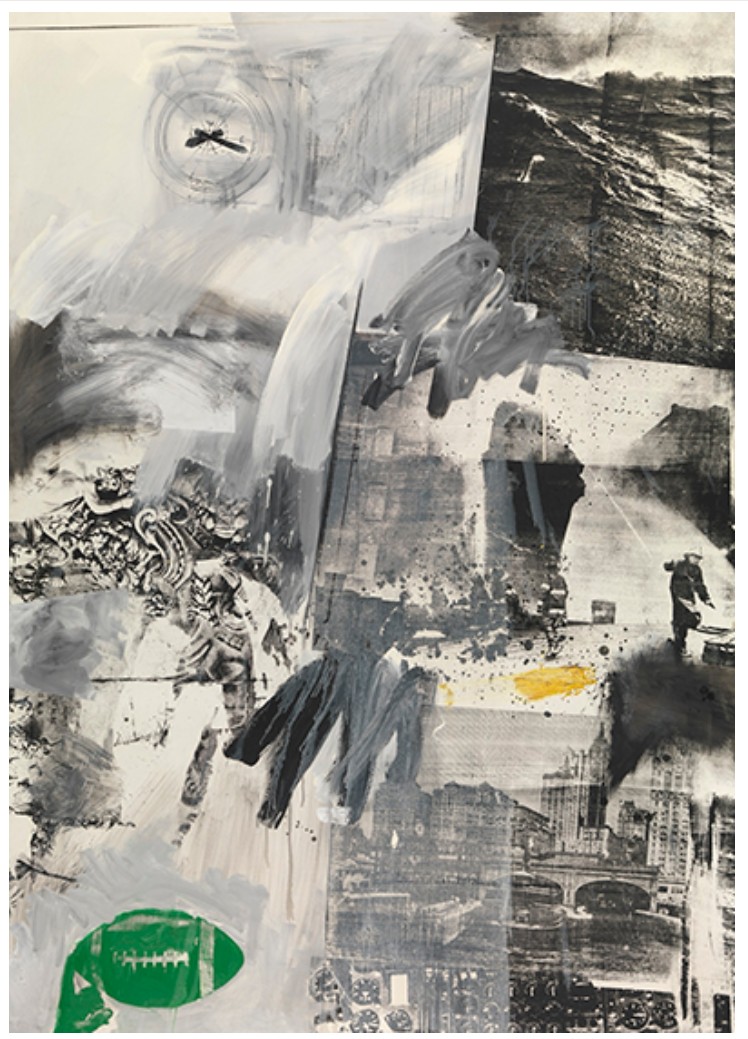
Robert Rauschenberg,Tideline, 1963. Artwork: © 2025 Robert Rauschenberg Foundation / Artists Rights Society (ARS), New York
Lester’s Sister (My Brain), 2000
Phillips London: 6 March 2025
Estimated: GBP 1,200,000 – 1,800,000
GBP 1,379,000 / USD 1,765,120
Christopher Wool – Modern & Contempora… Lot 16 March 2025 | Phillips
CHRISTOPHER WOOL
Lester’s Sister (My Brain), 2000
Enamel and silkscreen on linen
108 1/8 x 71 7/8 inches (274.7 x 182.8 cm)
Signed, numbered and dated ‘Wool 2000 (P335)’ on the overlap
Signed, numbered and dated ‘Wool 2000 (P335)’ on the stretcher
“Painting, for me, is often a struggle between the planned and the unforeseen. The best paintings are the ones that you could not have imaged before you began […] Of course the worst paintings are created in this way as well.”
A monumental and electrifying testament to Christopher Wool’s radical reinvention of painting at the turn of the millennium, Lester’s Sister (My Brain) stands as an emblem of the artist’s signature fusion of mechanical reproduction and gestural abstraction. Executed in 2000, the work epitomizes Wool’s masterful command of the silkscreen process, a technique that he has wielded to dismantle traditional hierarchies of painting and redefine the very act of mark-making. With its stark monochromatic palette, rich textural complexity, and arresting interplay of erasure and assertion, Lester’s Sister (My Brain) is an essential example of Wool’s oeuvre, a compelling link between his earlier text-based works and his later, more gestural abstractions.
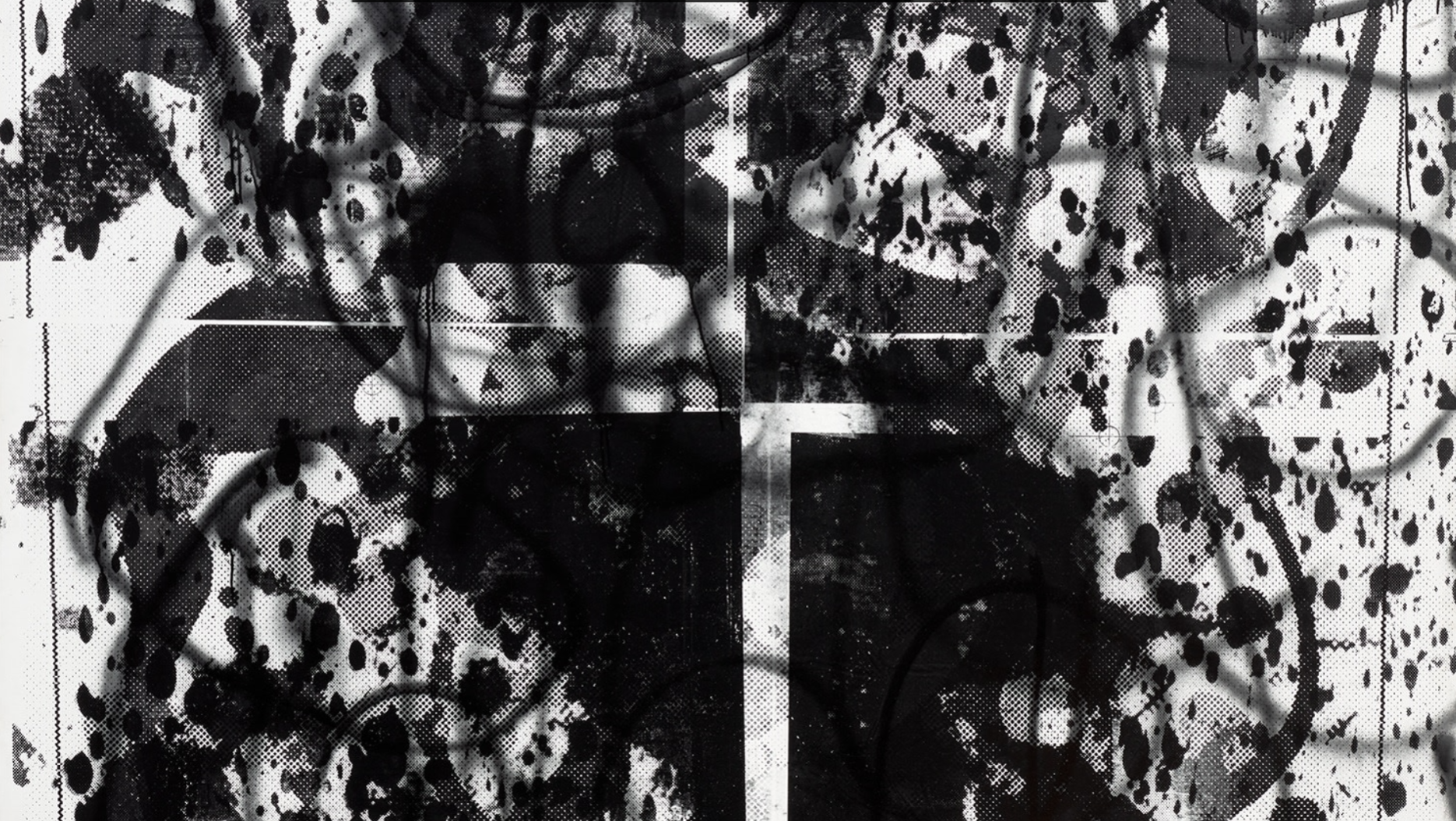
After years of working with mechanical techniques and imagery, notably stencilled patterns and letters, Wool reintroduced gestural mark-making into his practice in 1995 with works like Maggie’s Brain, located in The Art Institute of Chicago. In 1998, the artist began appropriating his own paintings as the base images for autonomous works—taking a finished picture, using it to create a silkscreen, and then reassigning the image onto a new canvas. The original painting is metamorphosized into a crisp, flattened image, which Wool either leaves as such or builds upon with enamel paint and further screen printing. Executed in 2000, Lester’s Sister (My Brain) is a masterful product of this transition in style and technique, representing the artist’s unique approach to the painterly medium.
At first glance, Lester’s Sister (My Brain) presents a field of seemingly frenetic forms, layered and distorted across the linen surface. Wool divides his source painting into four screens placed with the edges slightly misaligned, dissecting the flow of the original work into disjunctive quadrants. His use of silkscreened imagery—a hallmark of his practice—injects an industrial, mechanized quality into the work, recalling the serial production techniques of Andy Warhol’s Pop practice. Going considerably further than Warhol’s serial repetitions of consumerist and cultural icons, Wool embraces imperfection and misalignment, deliberately allowing slips, drips, and overpainted layers to disrupt the regimented order of the silkscreened motifs. This disorientation is taken further as Wool draws over the screen-printed image with enamel spray paint. The result is a work in flux, its compositional structure constantly wavering between control and chaos, a fundamental tension that has defined the artist’s career.
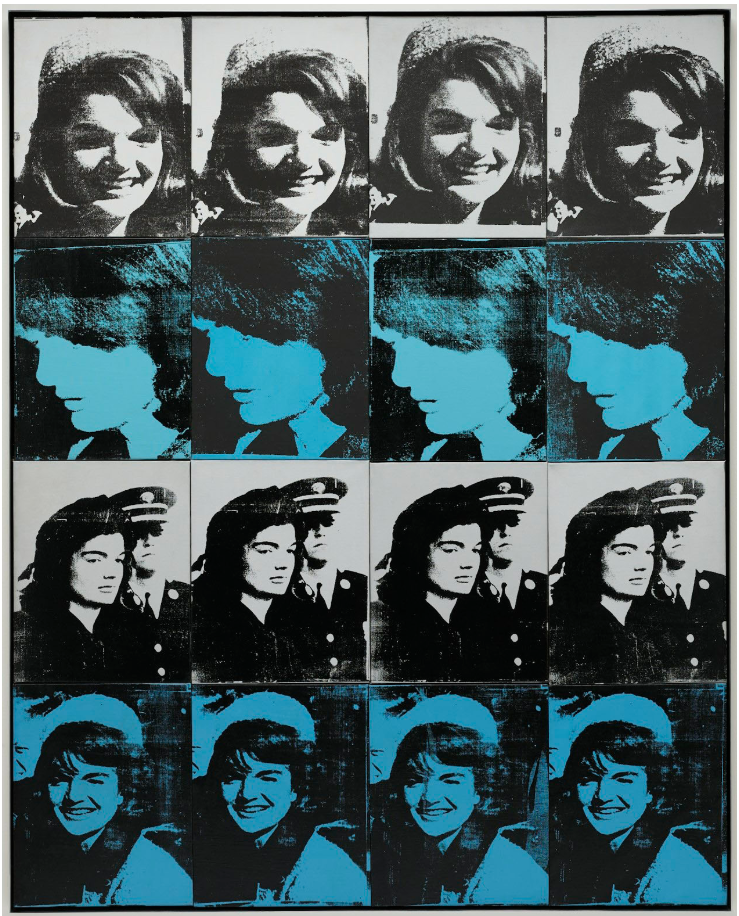
Andy Warhol, Sixteen Jackies, 1964, Walker Art Center, Minneapolis. Artwork: © 2025 The Andy Warhol Foundation for the Visual Arts, Inc. / Licensed by DACS, London
Wool’s work exists within a stylistic and technical space between Pop Art and Abstract Expressionism. A crucial touchstone for his practice is the legacy of Jackson Pollock’s all-over compositions, where gesture is both spontaneous and highly orchestrated. In Lester’s Sister (My Brain), Wool channels the physical immediacy of Pollock’s drip paintings while subverting their heroic individualism with a process more akin to mechanical reproduction. This dissolution of the ‘authentic mark’ places Wool’s work in dialogue not only with Pollock but also with contemporaries like Richard Prince, whose appropriations of mass-media imagery interrogate authorship and cultural memory.
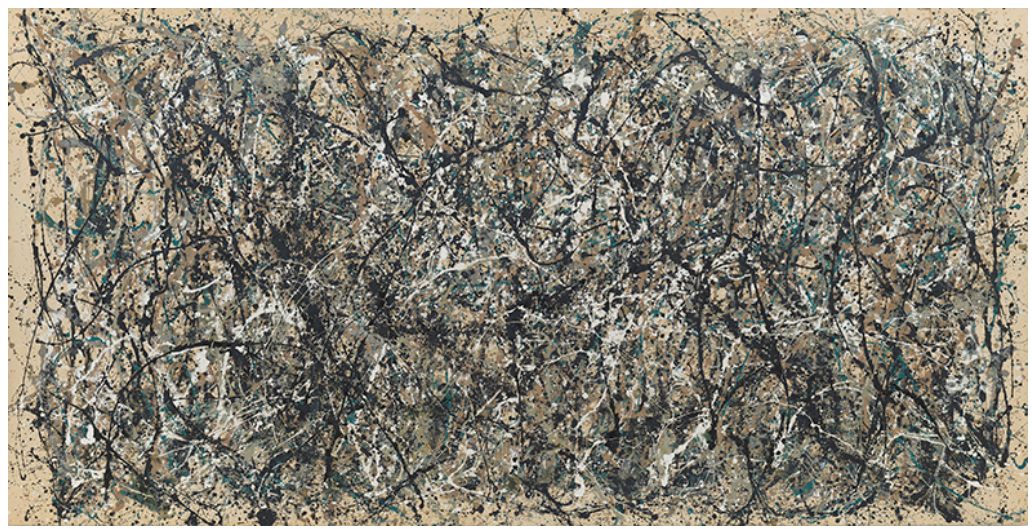
Jackson Pollock, One: Number 31, 1950, 1950, The Museum of Modern Art, New York.
Image: The Museum of Modern Art, New York/Scala, Florence, Artwork: © Pollock-Krasner Foundation ARS, NY and DACS, London 2025
The raw, urban energy of Lester’s Sister (My Brain) is deeply rooted in Wool’s early influences. Growing up in Chicago in the 1960s before moving to New York in the 1970s, Wool was profoundly shaped by the visual and political landscape of the city. The aesthetics of street art, graffiti, and industrial signage infiltrate his work, giving it a distinct edge that speaks to a broader urban consciousness. In Lester’s Sister (My Brain), this tension is fully realized: the silkscreened patterns provide a structured framework, but Wool’s intervention—through misaligned printing and expressive spray paint—infuses the work with raw spontaneity, challenging the viewer’s perception of painterly intent. An exceptional example of Wool’s practice, Lester’s Sister (My Brain) is a work of striking visual dynamism and conceptual depth. The artist himself has described his method as ‘a struggle between the planned and the unforeseen,’ an ethos that manifests palpably in the intricate layering and spontaneous line-work at play in this piece. For collectors and institutions alike, Lester’s Sister (My Brain) represents not only a critical moment in Wool’s artistic trajectory but also a broader meditation on the language of painting in the contemporary era.
Untitled, 2000
Sotheby’s London: 4 March 2025
Estimated: GBP 250,000 – 350,000
GBP 215,900 / USD 276,352
Untitled | Modern & Contemporary Evening Auction | 2025 | Sotheby’s
CHRISTOPHER WOOL (b. 1955)
Untitled, 2000
Enamel on rice paper
66×48 inches (167.6 x 121.9 cm)
Signed, dated 2000, and numbered D103 (on the reverse)
Presenting a masterful manifestation of Christopher Wool’s unbridled exploration of abstraction, Untitled exemplifies the artist’s radical process of construction and erasure that continues to subvert conventions of artistic authorship. Sitting within Wool’s 9th Street Run Down series painted in 2000, Untitled extends upon the artist’s dynamic series of abstract monochrome paintings that he first started in the early 1980s. From spray painting to stenciling, screen printing to stamping, Wool’s oeuvre is expansive in the varied approaches he has taken to mark-making. Painted with the artist’s refined enamel technique, in Untitled, Wool has created a surface that simultaneously exposes its making and undoing. Broad swathes of pale taupe sweep across the canvas, with textures recalling a screen-printing squeegee, that partially veil an underlying expanse of bubble gum pink, vivacious in its drips and splatters. Evoking that of weathered graffiti, or a palimpsest of eroded histories, Untitled underscores Wool’s ongoing dialogue with the fragility of abstraction.
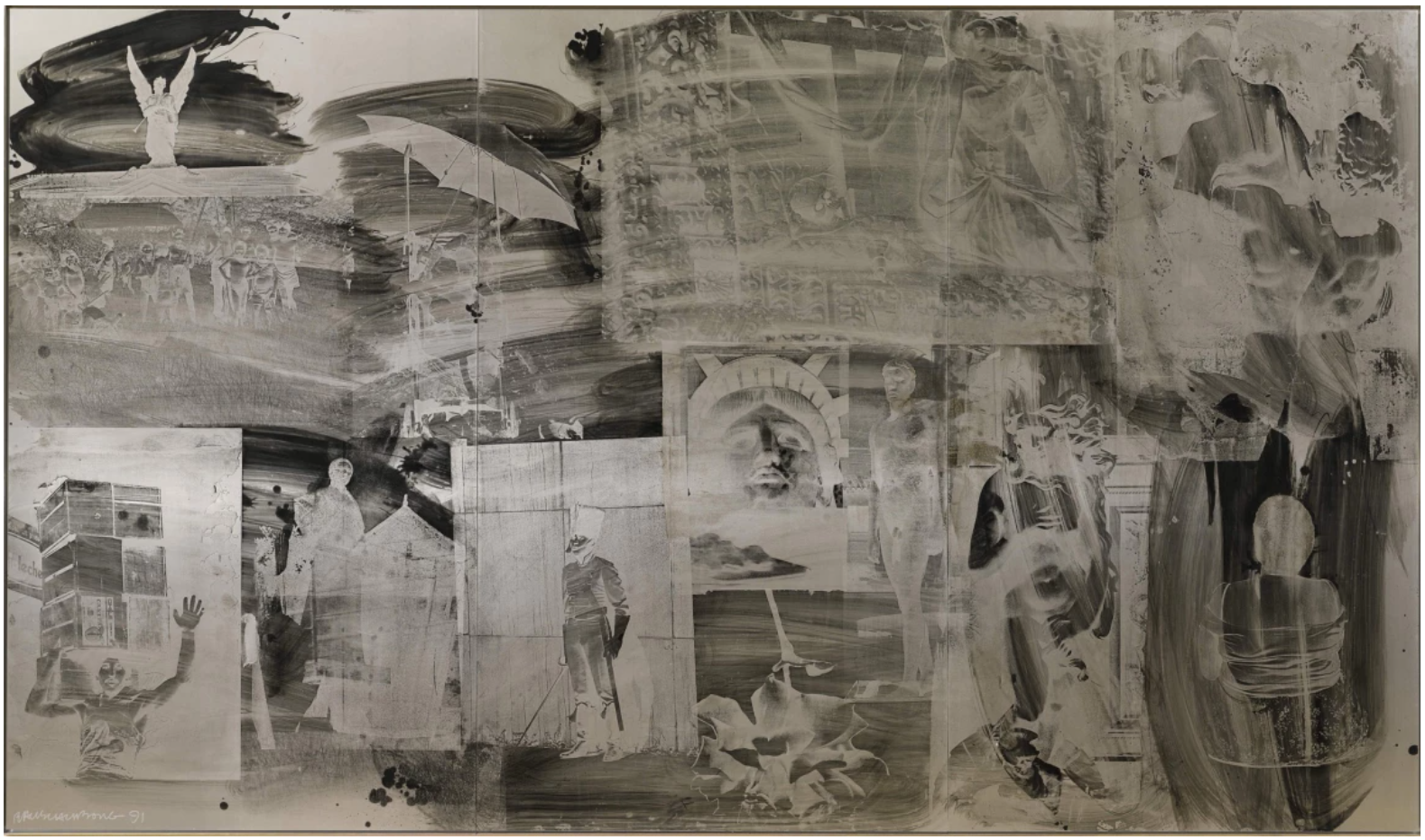
Robert Rauschenberg, Heroes / Sheroes (Night Shade), 1991. Faurschou Foundation, New York.
Art © The Pollock-Krasner Foundation ARS, NY and DACS, London 2025
Marking a critical inflection point within the artist’s aesthetic development, Wool initially painted 9th Street Run Down as studio sketches following a slew of major retrospectives in 1998-99 at the Museum of Contemporary Art, Los Angeles, the Carnegie Museum of Art, Pittsburgh, and the Kunsthalle Basel. Composed of forty-four large scale works on paper, the series narrates a complex fiction in which Wool questions a string of artistic dichotomies: that of original and copy, and of appropriation and appreciation. Within the series, Untitled stands as one of only two painted-over magenta works, amongst the larger group of eight taupe-veiled works. Beginning in 1998, Wool produced his first painted silkscreens by incorporating his past paintings and studies into new compositions. Any semblance of boundary between primary work, copy, and new composition was shattered. Springboarding from Warhol’s incendiary use of photographic screen printing, Wool transferred his past compositions to new canvases atop which he (re)paints in order to build ever-evolving painterly structures. Adding subtle motion or grand movement with each iteration, Wool creates a dizzying narrative, confounding the idea of where one work ends and the other begins.
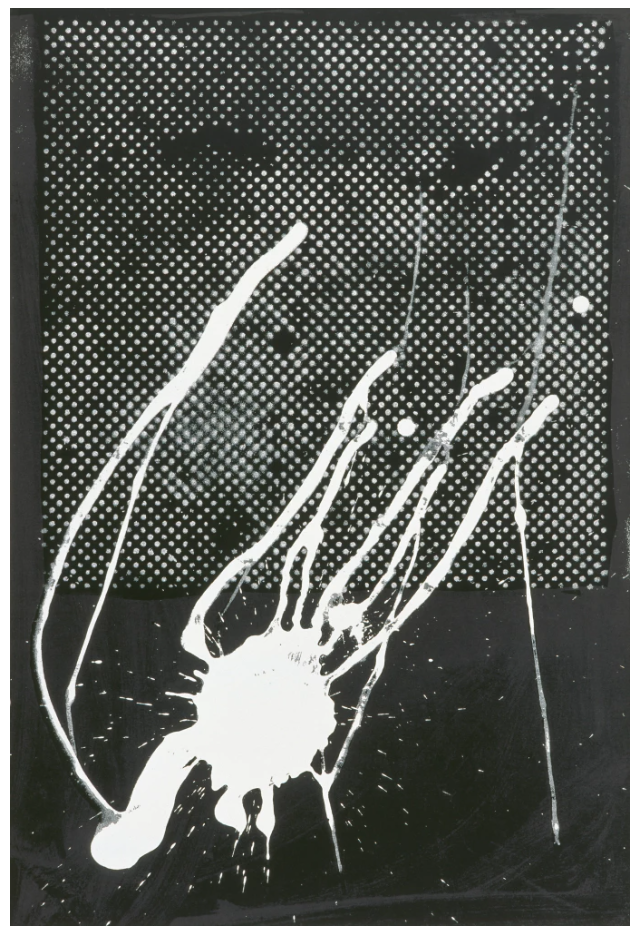
Sigmar Polke, Untitled, 1989. Städelsches Kunstinstitut und Städtische Galerie, Frankfurt am Main. Image: © Städel Museum – ARTOTHEK Art © The Estate of Sigmar Polke, Cologne / DACS 2025 St?del Museum/ARTOTHEK
Wool’s artistic output since 9th Street Run Down has been comprised almost entirely of abstract forms, harnessing his ceaseless desire to fracture visions of abstraction to continually question and challenge preconceived notions of contemporary painting – particularly his own. Though never completely concealing the cerise hue, in obstructing its marks in Untitled – muting its presence and challenging his own artistic identity – Wool shifts the chromatic hierarchy within the painting. In so doing, Wool reveals a deeper ambition that informs his entire oeuvre, that which is defined by constructing an oxymoronic image of definitive uncertainty, in which addition is levied by subtraction to depict the ultimate post-modern condition: doubt.
“I became more interested in ‘how to paint it’ than ‘what to paint.’”
Reflecting the artist’s iconic breakdown of formal systems, in Untitled, abstract forms are negated under overpainting, celebrating process as the primary means of production.
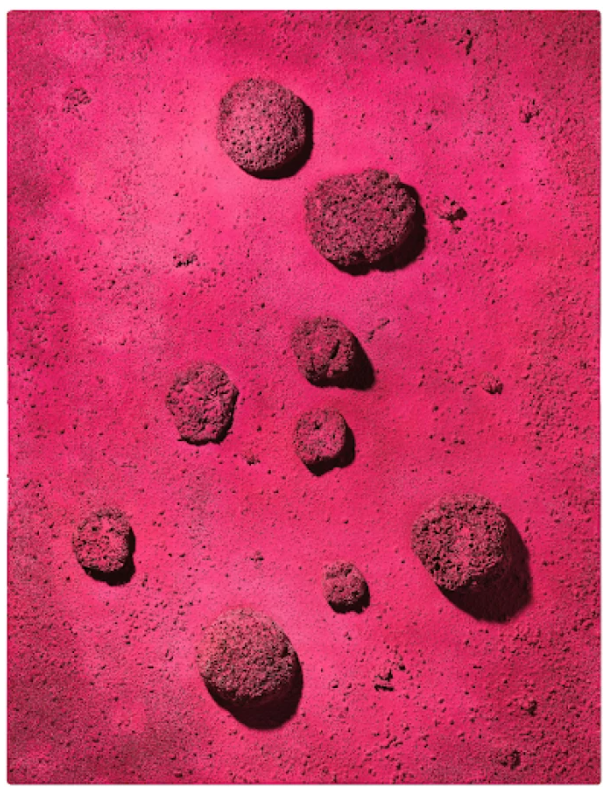
Yves Klein, Le Rose du Bleu (RE 22), 1960.
Image: Christie’s Images, London/Scala, Florence Art © Succession Yves Klein c/o ADAGP, Paris and DACS, London 2025
Prescient to Untitled, Wool’s application of the iconic bubble gum pink is evident in his early and prized work, I Can’t Stand Myself When You Touch Me (1994), with its dynamic overlaying and rolling of pink as the centrifugal force within the composition. An iconic color deeply embedded in the lineage of contemporary art, pink flourished with the advent of Pop Art and its melding of high art and mainstream culture; from Andy Warhol’s Marilyns to David Hockney’s Bathers to Dan Flavin’s fluorescent lights. Within Wool’s oeuvre, pink stands as one of two colours the artist is known to paint with, establishing itself as a chromatic signature. Unlike his early text-based works or stark black-and-white compositions, Untitled introduces a visceral chromatic tension, where color is not merely an aesthetic choice but a conceptual force. Boldly painting over the magenta in Untitled, Wool demonstrates his capacity for renewal and re-conceptualization.
From the outset of his career, Wool has reassessed and expanded on the process of painting, exploring the production techniques of urban industry, and grappling with concepts of authenticity, yet few works encapsulate these ambitions as powerfully as Untitled. As an outstanding example of his seminal Run Down series – one of his most conceptually rigorous and visually arresting bodies of work – Untitled embodies Wool’s restless pursuit of reinvention. Heavily influenced by the sub-cultures he encountered upon moving to New York in the 1970s, Wool embraces their anarchic spirit as painterly ethos. Cementing Wool’s status at the vanguard of contemporary painting, Untitled stands as an indelible testament to Wool’s ability push the medium to its very limits.
Untitled, 1997
Christie’s New-York: 22 November 2024
Estimated: USD 1,200,000 – 1,800,000
USD 945,000
CHRISTOPHER WOOL (B. 1955), Untitled | Christie’s
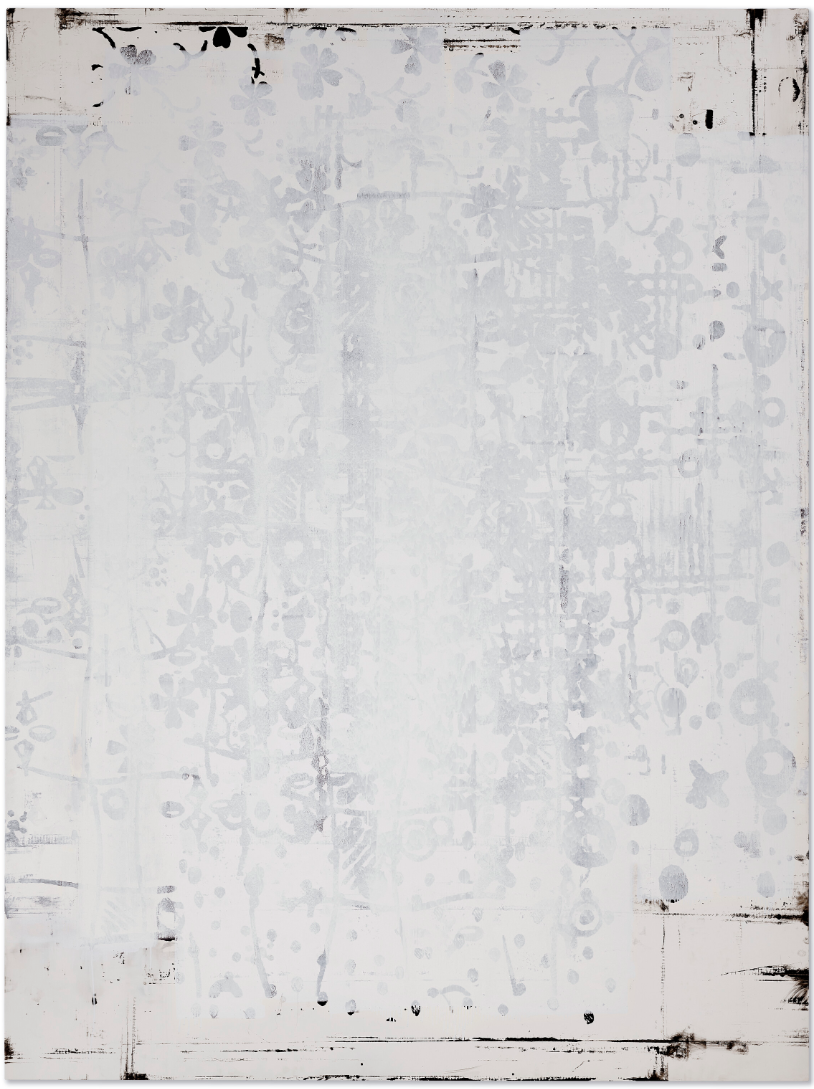
CHRISTOPHER WOOL (B. 1955)
Untitled, 1997
Enamel on aluminum
96×72 inches (243.8 x 182.8 cm)
Signed, inscribed and dated ‘WOOL 1997 (P272)’ (on the reverse)
Rendered on aluminum, the artist’s signature substrate, Untitled is a masterful example of Christopher Wool’s layered dynamism. Decorative patterns of clovers, dots, and geometric forms have been screen-printed onto this epic expanse, all of which was then covered in iridescent white paint. Wool intended for such visual chaos: in this and related works, he has created a visual palimpsest wherein the viewer must interrogate and decipher the strata of pigment. It is no coincidence that the overlapping lines and shapes appear to belong to a hieroglyphic system, drawing parallels with the artist’s earlier word paintings.
After several years of wild investigation, Wool settled on painting in the early 1980s. His eureka moment occurred one afternoon while watching his landlord paint the hallway of his New York City apartment building. The painterly hiccups left by the roller intrigued the young artist who had long been drawn to imperfections of all types. Shortly thereafter, Wool purchased a set of paint rollers, which he incised with various, often floral designs. By using such a quotidian tool, a painter’s roller, Wool purposefully drew attention to the actual objects and instruments necessary to his art.
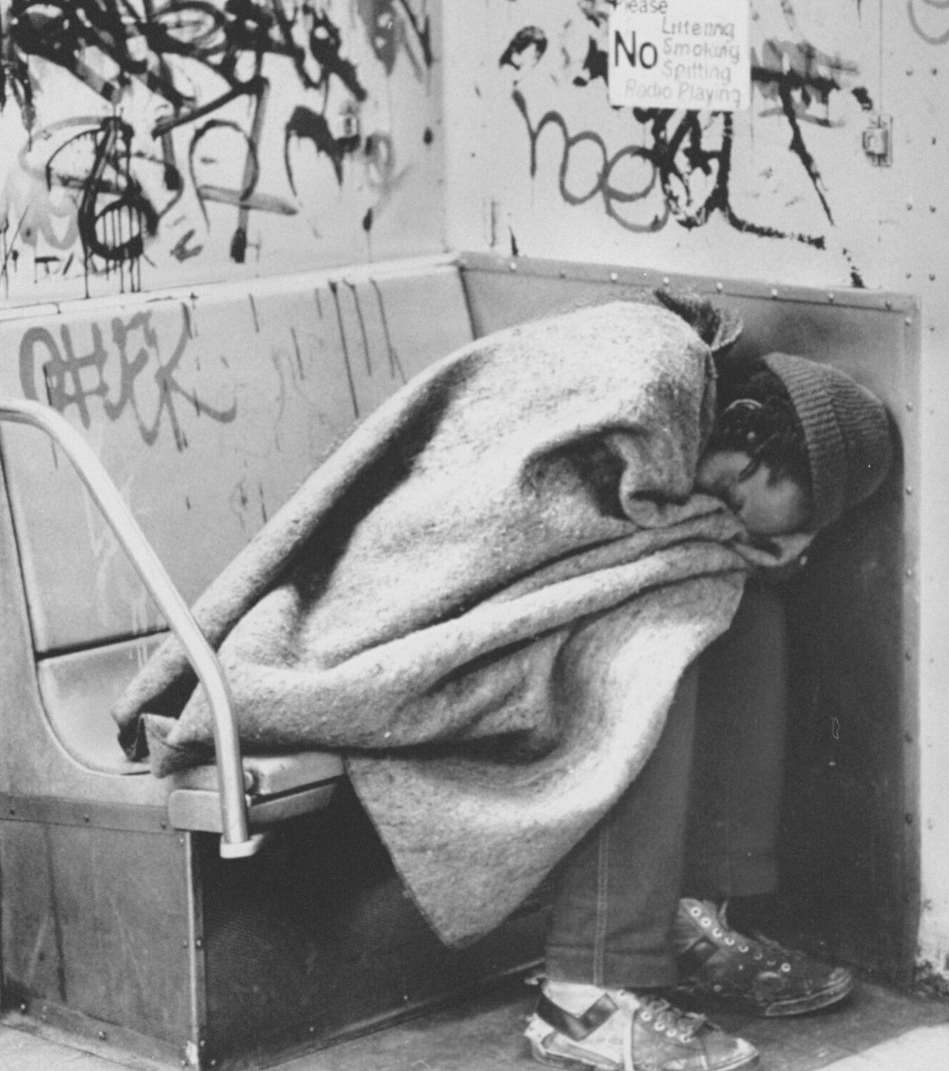
Homeless man sleeping on subway, 1988. Photograph by David Handschuh / NY Daily News Archive via Getty Images.
Indeed, layering has long played an outsized role in Wool’s oeuvre, a strategy the artist relies upon both materially and conceptually. Wool, whose practice includes painting, photography, and bookmaking, understands media to be contingent, and it is the act of accumulation itself that interests the artist. Instead of cleaving to traditional divisions, Wool gravitates towards enlargement and excess.
Untitled (H.H.), 2003
Christie’s Paris: 18 October 2024
Estimated: EUR 600,000 – 800,000
EUR 630,000 / USD 682,250
Christopher Wool (né en 1955), Untitled (H.H.) | Christie’s
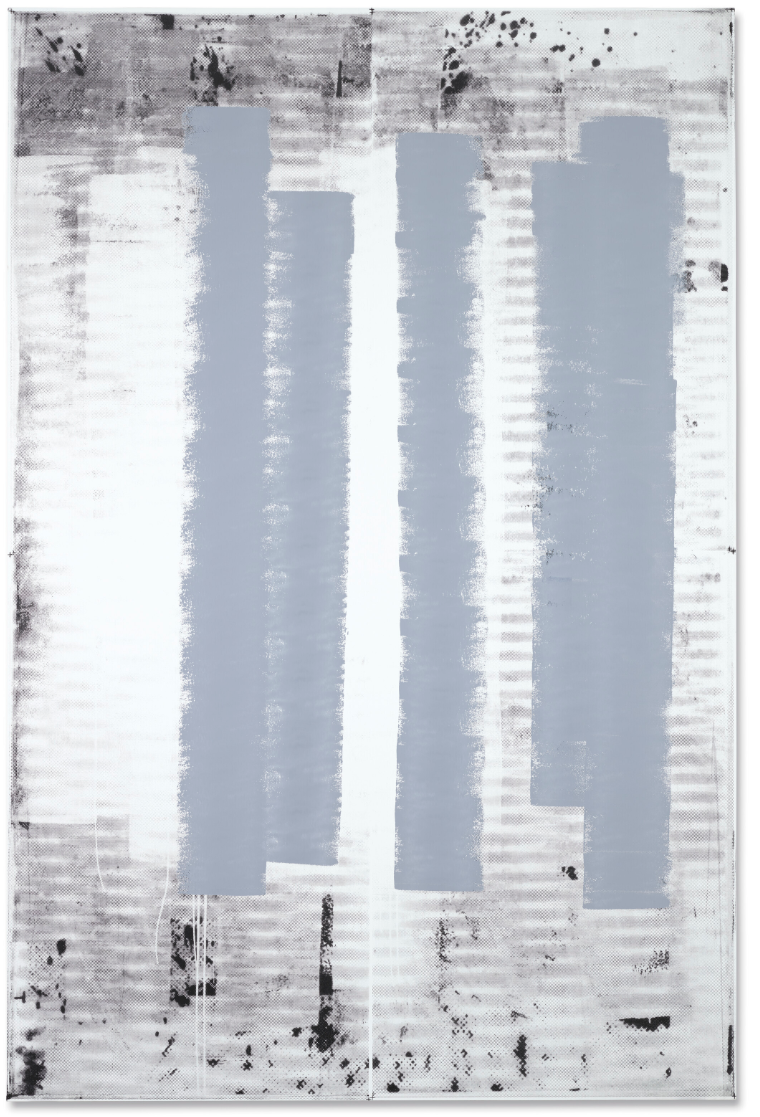
CHRISTOPHER WOOL (born 1955)
Untitled (H.H.), 2003
Silkscreen ink and enamel on linen
108 x 72 1/4 inches (274.4 x 183.5 cm)
Signed, inscribed and dated ‘WOOL 2003 (P405)’
Signed, inscribed and dated ‘WOOL 2003 (P405)’ (on the overlap)
Held in the de la Cruz Collection for almost two decades, Untitled (H.H.) (2003) is a mesmerizing large-scale abstraction by Christopher Wool. It belongs to a fruitful period in his practice beginning in the late 1990s, when he started to use his own previous paintings as the basis for new works. Across the monumental canvas, he has silkscreened a reproduction of an earlier abstract composition—featuring vertical, rollered marks over a ground of darker splashes—before applying further verticals in silver-grey enamel paint on top. These bars at once build upon and cancel out the underlying image, echoing the silkscreen’s eerie replica of the same paintwork. The silkscreen mimics paint using the dots of halftone printing, and is beset by visual noise and distortion. Cross-shaped registration marks show the corners of the four separate screens that make up the picture: they align imperfectly, slightly out of kilter with the canvas edge. A cryptic and compelling surface layered with doubt, deletion and interference, the work exemplifies Wool’s testing of the boundaries between the real and the reproduced in a post-painterly age.
Born in Chicago, Wool learnt from some of the most cerebral painters of the New York School during the early 1970s, studying under Richard Pousette-Dart at Sarah Lawrence College and Jack Tworkov at the Studio School. Aspects of his own work might be seen to descend from Abstract Expressionism, outwardly recalling the gestural languages of Pollock or de Kooning. Wool, however, came of age at a time when painting’s future was in serious question. Like some of his 1980s contemporaries, including Albert Oehlen in Germany, he chose to critique the medium from within, evading self-expression in favors of mediation, erasure and uncertainty. He drew upon the urban grit of his Lower East Side environment, and probed the points at which language and imagery fall apart. Inspired by the décor common to low-rent apartment buildings, he started to use rollered floral patterns in 1986. His confrontational text paintings, along with works that used Clip-Art stencils and large rubber stamps, followed soon afterwards. He began to make silkscreens in 1993, piling up strata of pattern and symbol, printed replica and painted redaction. His own hand came into view as a looping, graffiti-like line: in the ‘grey paintings’, whose beginnings are contemporary with Untitled (H.H.), he would efface these with cloudy smears of turpentine.
Wool began to use reproductions of his own previous work in 1998, soon building them into complex palimpsests of real and virtual mark-making. The ghosts of multiple pictures shimmer within the present work. Its genesis lies in 9th Street Run Down (2000)—a group of forty-four ‘studio sketches’ on rice-paper to which Wool would frequently return. One of these featured a lattice of white strokes rollered over a blown-up silkscreen of black splashes. Wool enlarged that composition into a large, rust-coloured silkscreen on linen in 2001. He repeated this silkscreen in black the following year, adding a layer of dripping white enamel stripes on top. The 2002 painting in turn became a silkscreen in 2003, before being reiterated—with the final application of grey enamel strokes—to create Untitled (H.H.). Each successive silkscreen functioned as both an erasure and an addition. The present work’s flat surface takes on a compound depth, overlaying afterimages of paintings past.
In self-appropriation, Wool had found a fertile and liberating way of working. Taking his own back catalogue as a repertory of found motifs, the question of the ‘original’ became irrelevant as he played freely with repetition, recursion and transformation. These works’ glitchy, tarnished splendour reflects their mood of ambivalence, while also accruing an uncanny new kind of life. ‘’As the copy is copied it becomes more original and something else emerges,’’ observed Glenn O’Brien: ‘’something like the soul of the machine. The process itself is the picture. Warhol declared he wanted to be mechanical, without feeling, like a machine. But Wool figured out how to make the machine human’’ (G. O’Brien, ‘Apocalypse and Wallpaper’, in H-W. Holzwarth (ed.), Christopher Wool, Cologne 2012, p. 12).
Untitled, 2011
Christie’s New-York: 14 May 2024
Estimated: USD 600,000 – 800,000
USD 1,222,200
CHRISTOPHER WOOL (B. 1955), Untitled | Christie’s (christies.com)
GUARANTEED

CHRISTOPHER WOOL (B. 1955)
Untitled, 2011
Silkscreen on linen
129×96 inches (304.8 x 243.8 cm)
Signed and dated ‘Wool 2011’ (on the overlap)
Signed and dated again ‘Wool (2011)’ (on the stretcher)
Untitled is one of just eight iconic paintings Christopher Wool exhibited at the 2011 Venice Biennale, each featuring one of the artist’s abstract forms. Over ten feet tall, the field of deep burgundy that inhabits the surface of Untitled dissolves into earthy colors. Hazy lines like television static divide the canvas roughly into quadrants. Biomorphic shapes emerge, made even more bodily by the blood-red pigment. As if we are looking into a microscope, two small forms in the upper right of the canvas appear to be in the process of dividing like cells. Also exhibited in the artist’s acclaimed 2013-2014 retrospective at the Guggenheim Museum, New York, the present work is a monumental, rigorous, and engrossing painting that challenges and seduces by equal measure.
Untitled is the result of a multifaceted process involving several media. Wool began by taking photographs of old drawings and enlarging them up to a huge scale, thereby reducing them to individual dots, and transferring them to linen via silkscreen. The blown-up images were painted, re-photographed, and altered again using Photoshop. C Yet it is impossible to exactly trace Wool’s steps. Though Wool is perhaps best known for his text-based paintings, Untitled proves his ongoing investigation of abstraction as well. In the early 1990s, the artist began to silkscreen using flower motifs, and in the mid-1990s, he painted over reproductions of these paintings with bright colors. Around 2000, he began his Grey Paintings, which use an allover grey field. The Venice Biennale paintings represent a turning point with their complexity, corporeality, and understated beauty. They call to mind the quasi-abstract paintings of Surrealist Joan Miró, who likewise used the medium to create a phantasmagoria of organic shapes, as in Femme et oiseaux dans la nuit (Woman and Birds in the Night) (1945). Untitled also clearly wrestles with the legacy of Abstract Expressionism. Interestingly, Wool cites Jackson Pollock’s late black paintings as his favorite by the artist. Executed in the early 1950s, these black paintings oscillate between figuration and abstraction and allow organic forms to emerge. Untitled also calls to mind the staining technique of Helen Frankenthaler, and she was also known to use rusty-red hues in paintings like Pink Lady (1963) and Gulf Stream (1963).
Untitled, 1990
Sotheby’s New-York: 9 November 2023
Estimated: USD 400,000 – 600,000
USD 355,600
CHRISTOPHER WOOL (b. 1955)
Untitled, 1990
Enamel and acrylic on aluminum
96×72 inches (243.8 x 183 cm)
Signed, titled and dated 1990 (on the reverse)
At once representational and abstract, the graphic, otherworldly figures populating Christopher Wool’s 1990 Untitled is a commanding example from the artist’s corpus of abstract monochrome works. What at first glance appears to be four identical figures– the bottom two forming a perfect mirror image of those above them – reveals subtle differences upon closer inspection. By employing large-format rubber stamps, Wool maintains uniform imagery while achieving the delicate variations which result from each new impression. As such, Untitled belongs to, and indeed exemplifies, a body of work known as the Rubber Stamp Paintings, which are themselves a continuation of the rubber roller series which the artist began in the early 1980s. The repetition and appropriation of images have come to characterize Wool’s artistic practice. With its emphasis on process and appropriation of quotidian imagery, Untitled deftly avoids associations with painterly expressivity while maintaining its free-hand energy through the slippages afforded by Wool’s part-handmade part-mechanical method. Between the skips and slides of ink and the visual noise left like thumbprints by his rubber stamps, the spontaneity of Wool’s own hand emerges, underscoring the importance of the artist’s technique. Sharply contrasting the immaculate white aluminum surface underneath, Wool’s self-referential composition challenges the boundaries of image production and reproduction in contemporary art, stressing the artist’s commitment to re-thinking the medium of painting at a time when many regarded it as obsolete.
Untitled, 2009
Sotheby’s New-York: 28 September 2023
Estimated: USD 300,000 – 400,000
USD 355,600
Untitled | Contemporary Curated | 2023 | Sotheby’s (sothebys.com)
CHRISTOPHER WOOL (b. 1955)
Untitled, 2009
Silkscreen ink and enamel on paper
72 x 55 1/4 inches (182.9 x 140.3 cm)
Signed and dated 2009 (on the verso)
Sinuous and lyrical, Christopher Wool’s Untitled is a superb testament to the artist’s recurrent oscillation between negation and affirmation, doing and undoing, doubt and determination. Executed in 2010, Untitled shows the artist mining his own oeuvre, drawing upon his innovative early years to create something altogether new. It is a work that encapsulates all the most sought-after characteristics in Wool’s abstract practice, from the sweeping, painterly strokes to the highly active, iconic concentric loops of spray paint on the surface. Remarkable for its richness and extraordinary depth of composition, Untitled is a tour de force that sees Wool using his most significant abstract motifs only to veil them with striated white paint, creating a dialectical tension between order and chaos. Wool detonates this polarity with virtuosity, harnessing an explosive energy while maintaining a near-impossible equilibrium.
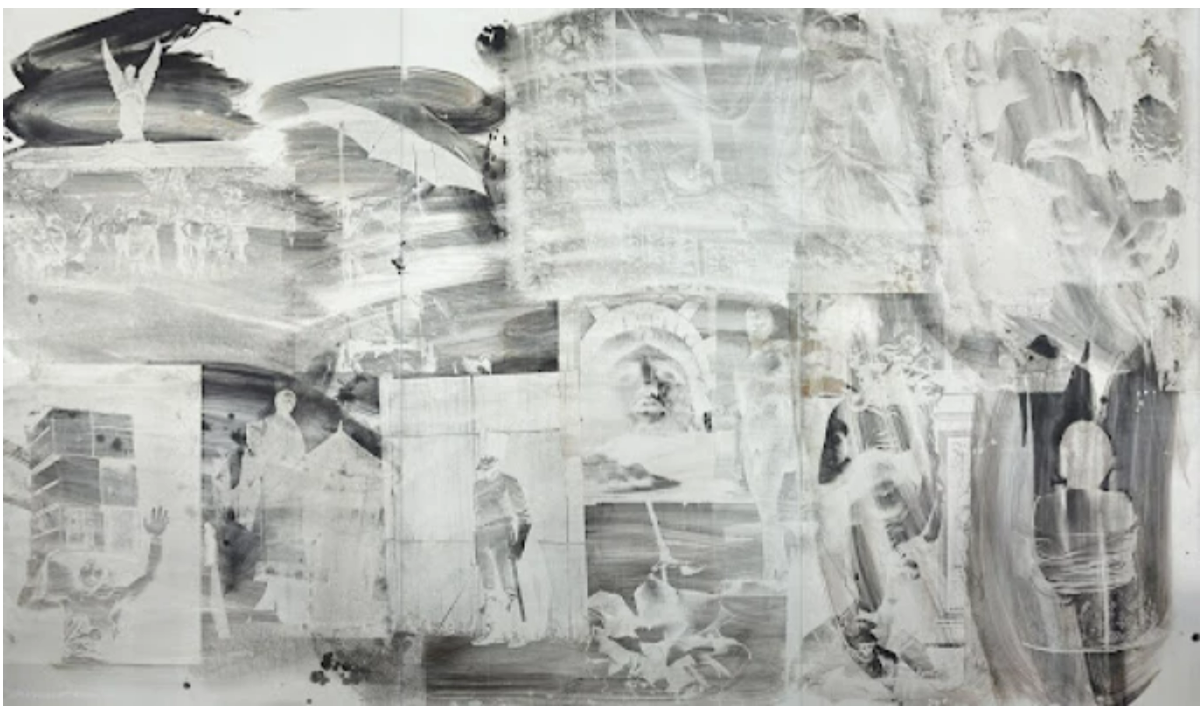
ROBERT RAUSCHENBERG, HEROES / SHEROES (NIGHT SHADE), 1991. FAURSCHOU FOUNDATION, NEW YORK. ART © 2023 ROBERT RAUSCHENBERG FOUNDATION
Delivering an arbitrary yet carefully orchestrated palimpsest of erased and over-written abstract gestures, Untitled deploys an eloquent denouncement of color, composition, and form. Indeed, defined by its occlusions and white-washed erasures as much as forcefully spray painted loops and frenetic scribbles, Untitled masterfully pairs drastic urgency with Wool’s cool and utterly inimitable detachment.
Untitled, 2000
Christie’s New-York: 17 May 2023
Estimated: USD 1,500,000 – 2,000,000
USD 819,000
CHRISTOPHER WOOL (b. 1955), Untitled | Christie’s (christies.com)
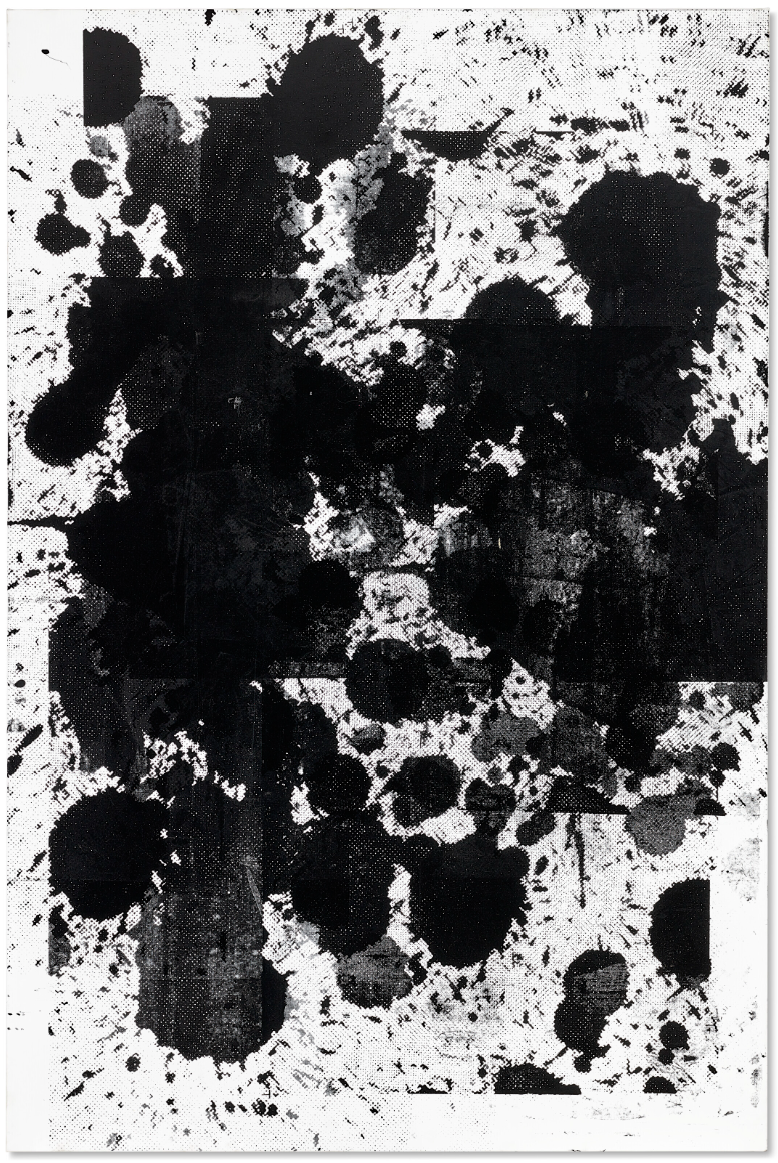
CHRISTOPHER WOOL (b. 1955)
Untitled, 2000
Silkscreen ink on linen
90×60 inches (228.6 x 152.4 cm)
Signed, titled, inscribed and dated ‘(P314) UNTITLED WOOL 2000’ (on the stretcher)
Continuing his examination of painting through alternative modes, Untitled is an explosive example of Christoper Wool’s work with visual archives and mechanical reproduction. Marking a new phase in his career, these paintings build upon his much-lauded roller and word paintings in the way that they use found subjects and objects to create work that departs from issues of artistic originality. Whereas the earlier pieces used stencils and pre-made printing rollers to create text and patterns set upon a white ground, Untitled pulls from Wool’s own history while perplexingly separating the painter from himself. The source materials are the direct result of the artist taking up paint and applying it to a surface, but once reproduced, rotated, and reapplied, they begin to break down and become layered signifiers of the artist’s work rather than retaining a one-to-one relationship between Wool and the finished product.
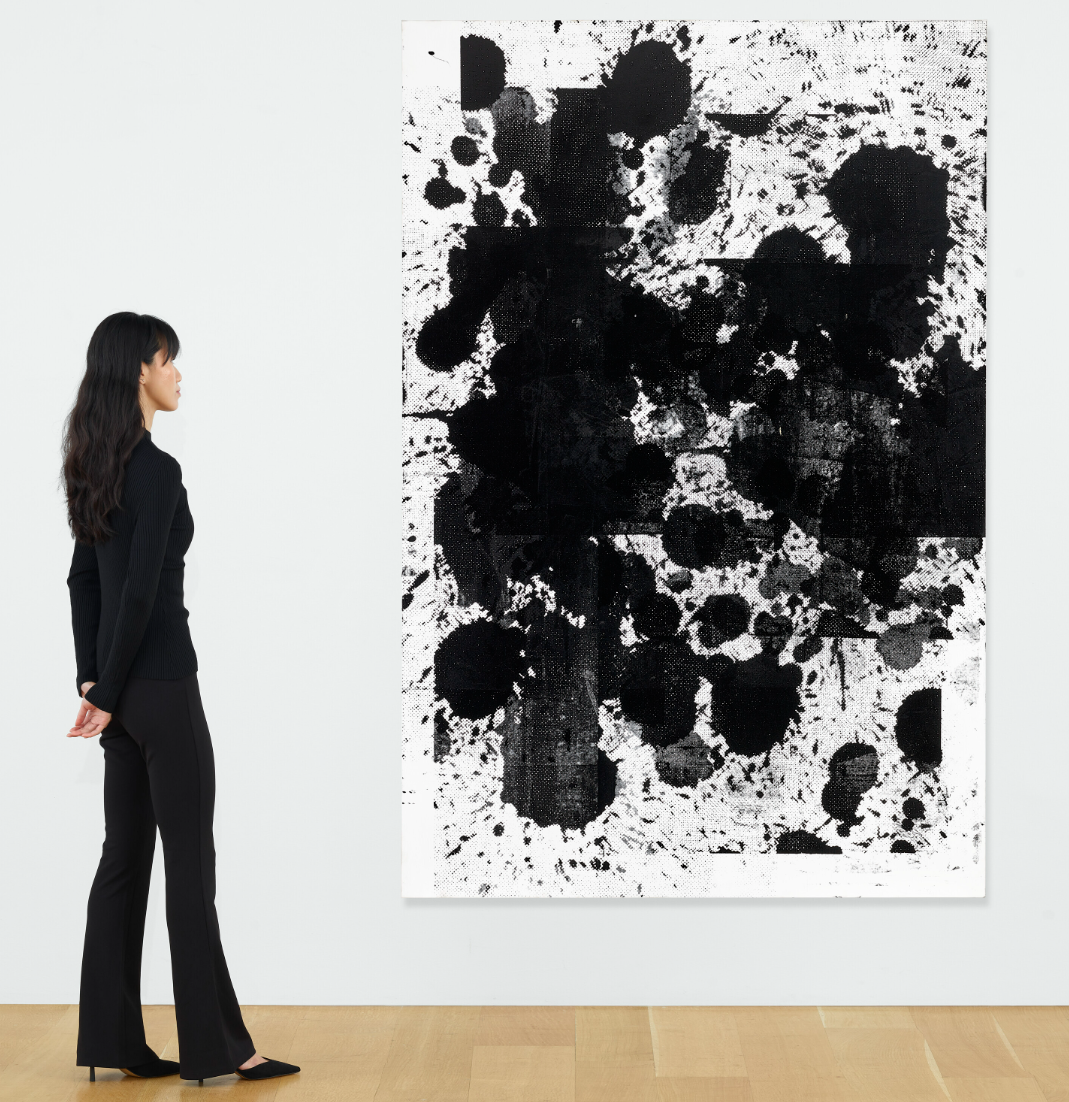
Although they might at first resemble gestural spatters of paint or errant droplets across a blank page, the sheer size of Untitled creates a disconnect between the depicted forms and their connection to chance happenings in the studio. The forms have been extracted from Wool’s repertoire, enlarged, and used to make a screenprint which allows the artist to create multiples from his original effort. One notes throughout the crisp cut of a straight edge that denotes the end of the screen. These flat borders, notable in the upper left and lower right corners where the artist seems to have employed the same screen, create a counterbalance to the compositionally loose action of the brush inherent to these types of marks. The chaos of sprayed paint is captured and repurposed as Wool doubles his print with a slight offset in the top right to create an optical hum that also makes the viewer more aware of his methods. By leveraging mechanical processes, Wool takes the artist’s mark as a symbol of action or spontaneity that can be reproduced while retaining the connections to vigor and movement so key to the Abstract Expressionists that came before. In Untitled, the viewer may think for a brief moment that something has changed, that we will now be witness to a burst of painterly energy from the New York artist. Instead, noting the unmistakable moiré pattern of the silkscreen, one begins to recognize doubled images, reapplications, and the specific layering of various elements that result in the final composition. Masterfully combining a more conceptual investigation of creative signifiers and authorship with the immediate impact of action painting, Wool continues to push at the edges of his art form in an effort to fully explore its limits.
Untitled, 2000
Sotheby’s New-York: 16 November 2022
Estimated: USD 2,500,000 – 3,500,000
USD 2,245,000
Untitled | Contemporary Evening Auction | 2022 | Sotheby’s (sothebys.com)
CHRISTOPHER WOOL (b. 1955)
Untitled, 2000
Enamel and silkscreen ink on linen
108×72 inches (274.3 x 183 cm)
Signed Wool, dated 2000 and numbered (P326) (on the stretcher)
Signed Wool, dated 2000 and numbered (P326) (on the overlap)
At once gesturally charged and aesthetically elusive, Christopher Wool’s Untitled is a commanding example from the artist’s corpus of abstract monochrome works. Executed in 2000, the present work juxtaposes a chaotic entropy with the austerity of the palette, perfectly encapsulating Wool’s anarchic painterly enterprise. In every way exemplary of Wool’s specialized approach to painting, Wool’s autographic black stamped patterns dance across the stark white surface of the present work, creating a swirl of layered forms that project an aura at once fully resolved and utterly dynamic. Vigorous gestures of spray-painted abstraction coalesce with stark artifacts of mechanical reproduction in Wool’s signature monochrome, imbuing the work with a characteristic refinement. Coming from the collection of celebrated New York City artist and gallerist Tony Shafrazi, Untitled presents the viewer with a formally engaging and intellectually rigorous artistic experience that is an enduring testament to Wool’s singular contribution to twentieth and twenty first century painting.
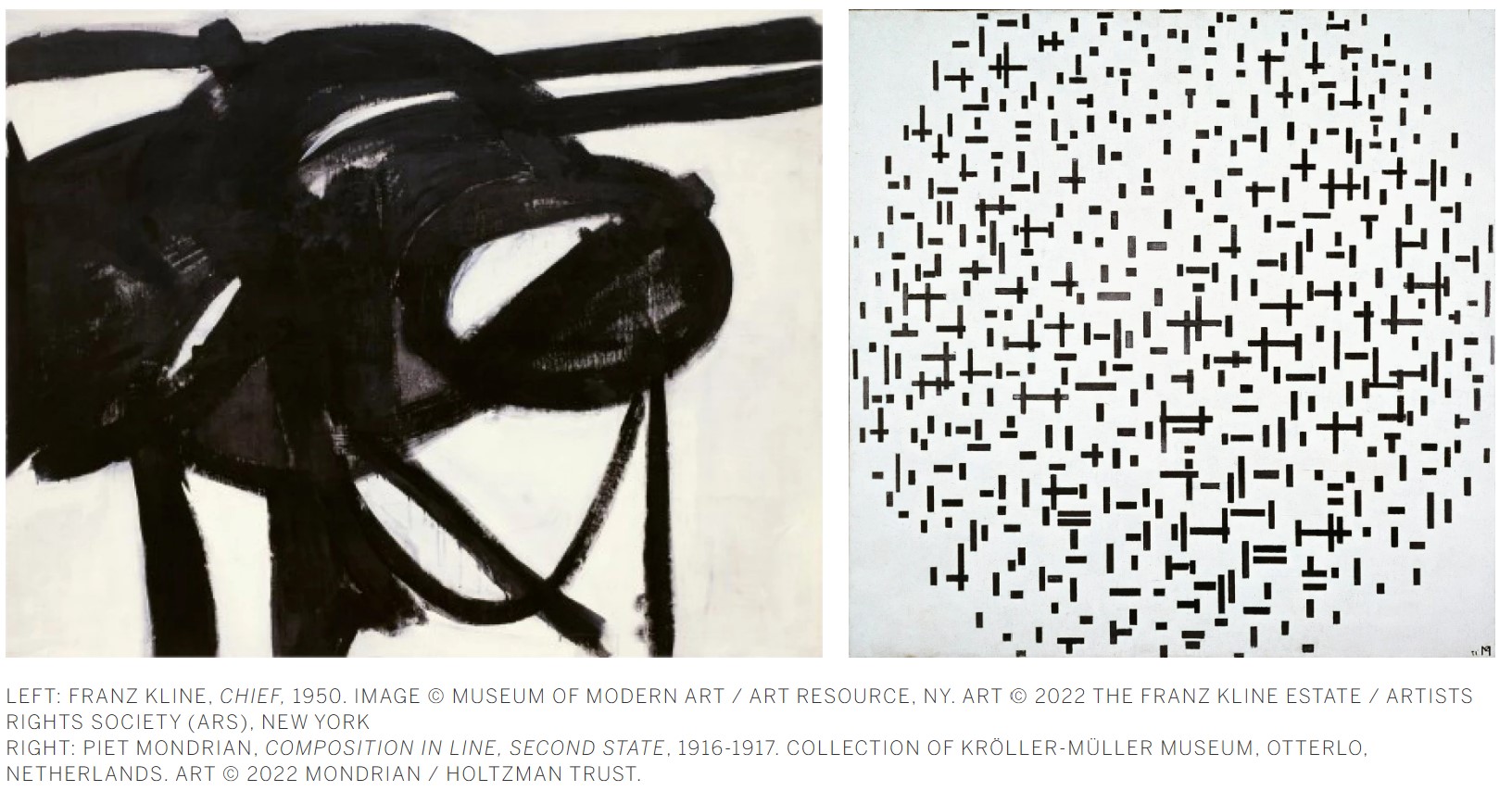
Remarkable for its richness and extraordinary depth of composition, Untitled is a tour de force that sees Wool mine his aesthetic vocabulary, using all his most significant abstract motifs only to erase them with white paint to create a tabula rasa on which to assert the primacy of his sprayed loops. At its core, Untitled is dialectical tension between opposing forces: black and white, order and chaos, choice and accident, mechanical and gestural. Here, a jet-black labyrinth sizzles against broad swaths of milky white, while repeating dotted, checkered patterns compete against powerful spray-painted gestures, the tightly rendered forms giving way to inky drips and shadowy speckles. Wool detonates these polarities with virtuosity, harnessing their explosive energy while maintaining a near-impossible equilibrium. By introducing a neutralizing spread of white, Wool creates a tabula rasa on which to project his distinctive spray-painted lines. Employing the use of a large spray gun and liquified enamel paint, Wool feverishly assaults the picture with a frenzy of corkscrews. Often compared to the fluid coils of Jackson Pollock, or the concentric loops of Cy Twombly, Wool’s lines remain unique to his touch. Vibrating within the crisp confines of the support, the gleaming skeins of enamel spray within Untitled pulse with the emphatic vitality and raw, barely contained vigor that mark the very best of Wool’s radical painterly oeuvre.
Untitled, 2006
Christie’s London: 28 June 2022
Estimated: GBP 500,000 – 700,000
GBP 630,000 / USD 768,949
CHRISTOPHER WOOL (B. 1955), Untitled | Christie’s (christies.com)
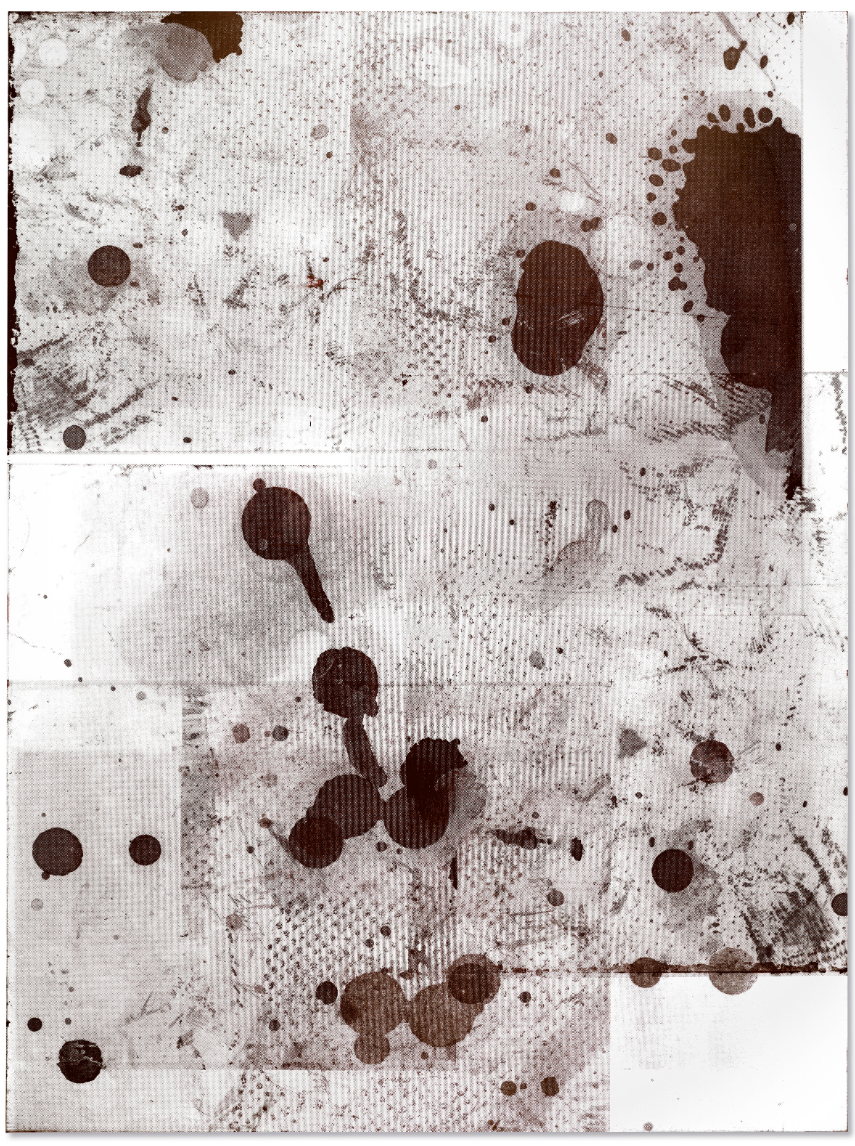
CHRISTOPHER WOOL (B. 1955)
Untitled, 2006
Silkscreen ink on linen
96×72 inches (243.8 x 182.8 cm)
Signed and dated ‘WOOL 2006’ (on the reverse); signed and dated ‘WOOL 2006’ (on the overlap)
Towering almost two and a half meters in height, the present work is a monumental example of Christopher Wool’s abstract silkscreen paintings. As if fired from a gun, splashes, drips and smears of colour are layered in a kaleidoscopic web of dots, the ghostly trace of the silkscreen frame creating a hypnotic lattice of geometric forms. Executed in 2006, the work stems from one of Wool’s most exciting periods, during which he began to develop his early silkscreen practice into a complex system of image manipulation. Using photographs of his own paintings, which he transformed, spliced and recombined using computer software before transferring the results to canvas, the artist created a thrilling blend of real and simulated gesture. The present work conjures everything from ancient ink-blotted manuscripts to Jackson Pollock’s drip paintings and the weathered residue of urban graffiti. Centuries of image-making linger in its inscrutable depths, asking where the boundaries of painting begin and end in the digital era.
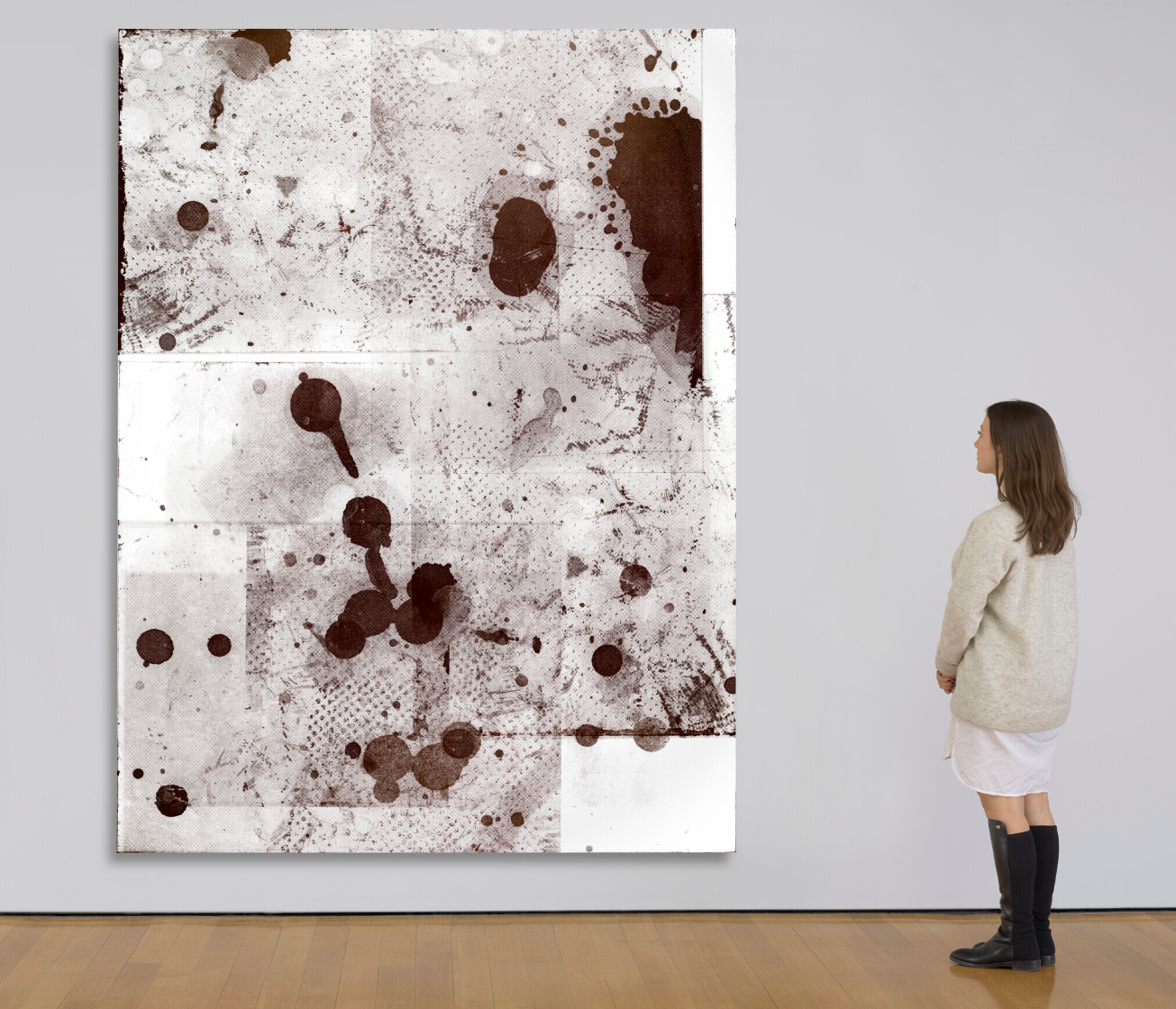
Working in the legacy of Andy Warhol, who used the silkscreen to blur the boundaries between high art and mass-produced imagery, Wool began to explore the medium during the 1990s. Following on from his ‘word’ paintings of the previous decade, which saw him turn fragments of text into giant, near-abstract monoliths, he began to use industrial patterned paint rollers, creating vast tapestries of flowers, vines and other ornamental wallpaper-like motifs. His earliest silkscreen paintings initially extended this vocabulary; by the late 1990s, however, he had found a new subject. Wool’s own back catalogue of paintings quickly became his primary muse, with forms, textures, patterns and brushstrokes plucked from their depths and wrangled into new creations. Divided, repeated, cropped and overwritten, the trace of the artist’s hand was placed at a further layer of remove, sealed forever behind the mesh of the silkscreen. Just as Wool’s word paintings had asked whether we can still divine meaning from reconfigured text, works such as the present asked at what stage a painterly gesture loses its integrity—or, indeed, takes on a new meaning.
Untitled, 2000
Sotheby’s New-York: 20 May 2022
Estimated: USD 400,000 – 600,000
USD 907,200
Untitled | Contemporary Day Auction | 2022 | Sotheby’s (sothebys.com)
CHRISTOPHER WOOL (b. 1955)
Untitled, 2000
Enamel on rice paper
66×48 inches (167.6 x 121.9 cm)
Embossed WOOL (lower right); signed and dated 2000 (on the verso)
Christopher Wool’s Untitled from 2000 is a masterful example of the artist’s unbridled exploration of abstraction. Imbued with the artist’s strikingly vibrant and signature pink hue, this iconic composition was the inspiration for the band Sonic Youth’s 2006 album cover, “Rather Ripped.” Wool’s application of the iconic pink hue is evident in one of his early and most prized examples, I Can’t Stand Myself When you Touch Me from 1994, is prescient to Untitled, with its dynamic overlaying and rolling of pink as the centrifugal force within the composition. Untitled is further notable as the critical inflection point of aesthetic and development for Wool, who debuted his new body of work at the Vienna Succession the following year. Since the onset of his career, Wool has reassessed and expanded on the process of painting, refining elements of Abstract Expressionist action, exploring the production techniques of urban industry, and grappling with concepts of authenticity. Here, along with the other gestural works comprising this seminal series, the artist confronts the notion of authorship head on.
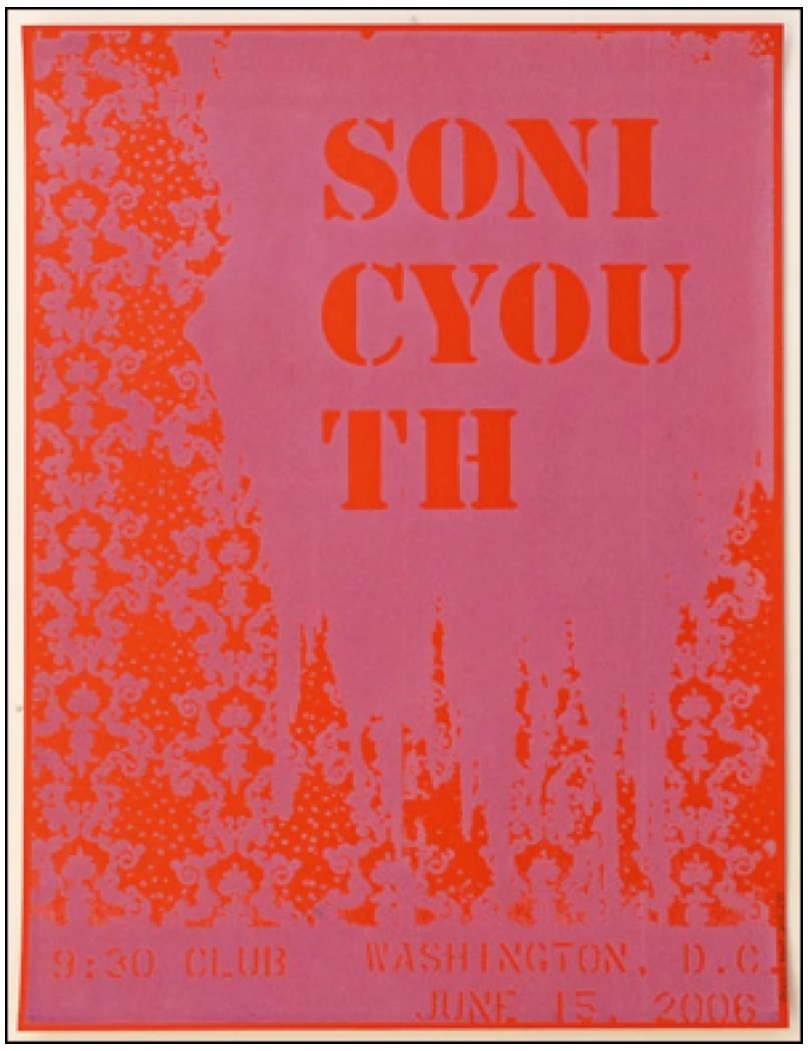
SONIC YOUTH SHOW AT 9:30 CLUB, WASHINGTON, D.C., JUNE 15, 2006. PRODUCED BY TANNIS ROOT, INC
Beginning in 1998, Wool started his first “painted silkscreens” in which he used his own paintings and studies as the foundation for others, blurring the line between primary work, copy, and new composition. Springboarding from Warhol’s incendiary use of photographic screen printing, Wool transfers works wholesale to new canvases, repainting them via silkscreen and building superstructures atop them. Adding subtle motion or grand movement with each iteration, Wool creates a dizzying narrative, confounding the idea of where one work ends and the other begins. The present work is thus a seductive and rarefied example as the only all-pink composition by the artist, that ingeniously challenges authorship, authenticity and identity in art through the signature technique of appropriation.
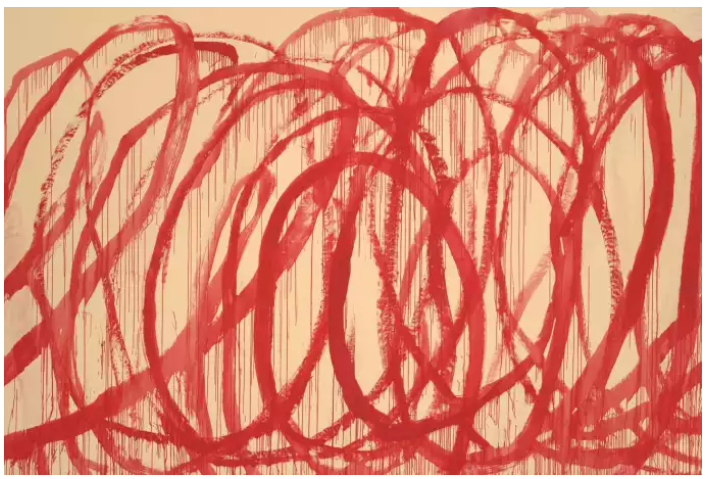
CY TWOMBLY, UNTITLED (BACCHUS), 2008. TATE, LONDON. © CY TWOMBLY FOUNDATION.
In Untitled, cascading pigment ripples down the surface, creating an overwhelming sense of immediacy and impact for the viewer. Like a single splash of paint blown to explosive proportions, Wool re-examines the most primary motions of abstract art on a grand scale. In focusing on the most rudimentary principles of abstraction, the paint itself takes on a vivaciousness and vigor, drawing away form the artist and towards the act of painting. The striking pink hues compel the viewer to follow the flow of the pigment on the surface, exploring the movement of this work. There is a sense of rawness that permeates the composition; sprawling tendrils of color that seep down the rice paper imply the unrestrained impulse of a single artistic gesture.
Record Breakers
#1. Untitled (RIOT), 1990
Sotheby’s New-York: 11 May 2015
Estimated: USD 12,000,000 – 18,000,000
USD 29,930,000
(#7) Christopher Wool (sothebys.com)
CHRISTOPHER WOOL
Untitled (RIOT), 1990
Enamel on aluminum
108×72 inches (274.3 x 182.9 cm)
Signed, dated 1990 and numbered W14 on the reverse
Wool’s subversive conceptual project nowhere better echoes the content of his painting than in the immediacy of the word RIOT: a rebellious, insurrectionary edict that parallels the insurgency of Wool’s own artistic practice. The leviathan Untitled (Riot) encapsulates Christopher Wool’s anarchic painterly enterprise with complexity, juxtaposing the chaotic entropy of the image with the austere stringency of language. Concurrently outrageously provocative, artistically seductive and conceptually brilliant, Christopher Wool’s monolithic Untitled (Riot) is the very quintessence of his most immediately recognizable and significant body of work. Having resided in the same private collection since it was first acquired from Luhring Augustine Gallery in 1991, Untitled (Riot) is a monument of Wool’s singular output. The expressive nature of the immediately charged word RIOT confronts the viewer, conveying a violence or imminent threat that is visually echoed by his graffiti-like defacement of the aluminum surface. Fragmenting the four-letter word into its constituent parts and stacking the letters two-by-two immediately opens an incongruity into the decisive word, resulting in an ‘all-over’ composition that can be read in different permutations and suggesting the potential for multiple interpretations. The blunt, exclamatory quality of the word RIOT is paralleled by the quadrilateral brusqueness of Wool’s rectangular grid, in which the geometric blocks of black text assert imperative space. As is characteristic of Wool’s paintings, the edges of the stenciled blocks reveal small but arresting glitches of process—rich incidents of dripping, skipping, or distortion that corrupt our reading of the word. Behind the letters, we see a sumptuously overpainted record of the word, with the word inverted in order and each letter rendered backwards. In this way, the word becomes a visual rather than purely linguistic device, centering attention toward the material application of enamel on the aluminum—process rather than content here takes reign. The formality of the grid and the truncation of the word imply constriction, while the obstruction of such rigid boundaries by painterly interruptions articulate a palpable danger along every edge.
#2. Apocalypse Now, 1988
Christie’s New-York: 12 November 2013
Estimated: USD 15,000,000 – 20,000,000
USD 26,485,000
Christopher Wool (B. 1955) (christies.com)
CHRISTOPHER WOOL (B. 1955)
Apocalypse Now, 1988
Alkyd and flashe on aluminum and steel
84×72 inches (213.4 x 182.9 cm)
Signed, titled, numbered and dated ‘APOCALYPSE NOW (P.50) WOOL 1988’ (on the reverse)
Shattering the art world with its catastrophic incantation, Apocalypse Now made its debut in 1988 during a collaborative exhibition with Robert Gober at 303 Gallery under the humble title, A Project: Robert Gober and Christopher Wool. Hung directly across from Gober’s Three Urinals of the same year, Apocalypse Now emerged as the decisive, commanding and seemingly unmatched tour de force of Wool’s contemporary output. An image so indebted to its time–to the grittiness of the Lower East Side, the graffiti battered walls, and the hard-edge punk scene–Apocalypse Now is no less powerful today than it was during its creation. Constructing his imposing images out of language, Wool, who draws from a myriad of sources, turns to Francis Ford Coppola’s cinematic adaptation of Joseph Conrad’s Heart of Darkness, the epic Vietnam War film from which Wool draws his title–Apocalypse Now. Wool’s chosen words, which announce a fear of imminent chaos and heartbreak are those of Richard Colby–a special services captain on a mission to assassinate the film’s most notorious character, Captain Kurtz. Played by Marlon Brando, Colonel Walter E. Kurtz, a decorated U.S. Army Special Forces veteran, widely believed to be insane, has gone rogue–running his own operations out of Cambodia, he is feared by the U.S. military as much as the North Vietnamese and Vietcong. Yet, in Colby’s own dramatic turn of events, he becomes one of Kurtz’s zoned-out zombie followers. Having “crossed the line,” he communicates his radical decision in an angry and hopeless letter home, hastily penciled across a scrap of paper, which simply–yet no less despairingly–reads:
SELL The HOUSE
SELL The CAR
SELL The KIDS
FIND SOMEONE ELSE
FORGET IT!
I’M NEVER COMING BACK
FORGET IT ! ! !
Judiciously and carefully edited, Wool loops around the first three lines of Colby’s letter, creating a desperately bold and resounding statement. Severed from the final four lines of text, Wool’s painting becomes a real statement of urgency. SELL THE HOUSE, SELL THE CAR, SELL THE KIDS is as emotionally wrought today as it was during the paintings conception, the movie’s 1979 release, and the Vietnam War–and will be for as long as mankind holds value in property and family. Composed of large black letters, each word is staggered out across the expanse of the aluminum, and yet the message is tightly constrained within the edges of a sizable support. Wool confines Colby’s words into a strict grid–five rows across, and seven columns down. It is through this breakdown of pictorial order that visual chaos ensues. Initially unable to digest the words, the viewer–seeing only letters–must methodically read through the painting in several streams of consciousness as the starts and stops of each word begin to materialize. It is here, when the viewer finds security in deciphering Wool’s code, that the initial meaning is lost within the painting and a whole new field of significance emerges. In the act of decoding his painting, the letters gain meaning as we recite the statement, digest it, and, in so doing, become part of the artistic process. As the words in turn are directed at us, we understand the underlying intent present in the phrase, which retains an elusive air, refusing to be easily deciphered and thus remaining all the more ominous.
#3. If You, 1988
Christie’s New-York: 13 May 2014
Estimated: USD 20,000,000 – 30,000,000
USD 23,685,000
Christopher Wool (b. 1955) (christies.com)
CHRISTOPHER WOOL (b. 1955)
If You, 1992
Enamel on aluminum
108×72 inches (274.3 x 182.8 cm)
Signed, titled, numbered and dated ‘IF YOU (W33) WOOL 1992’ (on the reverse)
Striking its viewer with a sudden, full-force collision, Christopher Wool’s If You emerges as the ultimate “Fuck You” statement in contemporary art. Hauling language and materials from the streets, Wool drags grit from the underbelly of the industrial urban environment into the expansive history of fine art. Gridded out over eight columns and six rows, “IF YOU CANT TAKE A JOKE YOU CAN GET THE FUCK OUT OF MY HOUSE” is undeniably raw, impactful and affecting–a gnomic and startling scrawled reprimand fitted out in aggressive block lettering with loose paint dripping from its edges. The artist’s bold, edgy and uncompromising censure bursts its framing structure. As a statement of rebuke within the format of a painting, If You‘s brashness is reinforced by the materials of its making. Substituting aluminum for canvas and enamel paint for oils, Wool has slyly tweaked art historical tradition while accosting comprehension. Executed in 1992, If You recalls a series of works Wool created nearly four years earlier. Adopting the deadpan, Borscht Belt one-liners made famous by his friend and collaborator, Richard Prince, Wool reappropriated Prince’s I never had a penny to my name so I changed my name, and I went to see a psychiatrist, he said tell me everything, I did, and now he is doing my act in his own signature style. Originally taken by Prince from popular culture as a way of destabilizing the idea of art as highbrow academic pursuit, Wool’s reappropriation of the jokes deliberately alienated him from the idea of the artist as a singular creative genius further questioning the notion of originality. As a result, his seemingly nihilistic approach to image making challenges the viewer’s right to expect anything from art. Superficially acting in defense of his earlier work, If You directly corresponds to this earlier series. However, unlike the one-liners, If You turns the joke on the audience. The fiercely combative statement, ‘IF YOU CANT TAKE A JOKE YOU CAN GET THE FUCK OUT OF MY HOUSE’ goads the viewer–directly questioning whether they are part of the in crowd, and subsequently suggesting that, if not, then it is their loss.
#4. Untitled, 1988
Christie’s New-York: 18 May 2017
Estimated: USD 15,000,000 – 20,000,000
USD 17,159,500
Christopher Wool (B. 1955), Untitled | Christie’s (christies.com)
CHRISTOPHER WOOL (B. 1955)
Untitled, 1988
Alkyd and Flashe on aluminum
96×60 inches (243.8 x 152.4 cm)
Signed, numbered and dated ‘Wool 1988 P79’ (on the reverse)
Painted in 1988, Christopher Wool’s Untitled is a brilliant, early iteration of the critically-acclaimed word-based paintings that remain the most gripping, highly-coveted objects of the artist’s career. The stark, graphic wall-power of Untitled seizes the viewer with an almost electric jolt. The insistent refrain “PLEASE PLEASE PLEASE PLEASE PLEASE PLEASE” personifies the explosive, primal utterings of the soulful James Brown song of the same name. The brashness of Wool’s stark black lettering grabs the viewer with the urgency and insistence of their pleading, which is made all the more potent by the monolithic authority of the painting’s vast scale. The word “PLEASE” remains one of Wool’s most enigmatic personal phrases. It appears in an early paper version in 1987, and again two years later, in a nearly identical painting of 1989 with matching dimensions (owned by The Broad, Los Angeles). An early, iconic painting, this work cleverly blends the raw, graphic power of graffiti with the cool, formalist precision of Minimalism, in a radical work that showcases the artist’s sardonic wit and inventive style.
According to the now legendary story, the inspiration for Wool’s word-based paintings came in 1987, when the artist glimpsed the words “SEX” and “LUV” spray-painted across the side of an unmarked white van. The potent visual jolt of those two emblematic words seized the artist, and he immediately began incorporating the words into his paintings, adopting a no-frills font rendered in stark, black lettering upon an empty white background. Wool was increasingly drawn to those words and phrases that carried the same visual shock of “SEX” and “LUV,” and he found them in the music lyrics and film noir movies that echoed the gritty, hard-edged punk rock aesthetic of New York’s Lower East Side where he lived and worked. The early word paintings from 1988 are tough, emphatic and brash, calling out to the viewer with an anxiety that borders on hysteria. “HELTER HELTER” from the Beatles’ Helter Skelter, “SELL THE CAR SELL THE KIDS” from Martin Scorsese’s Apocalypse Now, and “PLEASE PLEASE PLEASE PLEASE PLEASE PLEASE” from James Brown’s thrilling, soulful, bring-you-to-your-knees ballad are all powerful examples from 1988. They evoke the broken-down, living-on-the-edge nihilism that characterized so much of the New York art scene of the 1980s. At the time, Wool acknowledged that he was looking for a new kind of work that proclaimed itself in a “louder” and more direct manner than his earlier pattern paintings.
“Initially I had been drawn to text because I wanted to make a work that was a little more direct, a little louder, that talked a little more directly to the audience than some of my abstract paintings had.”
Untitled personifies the direct, in-your-face tenor that Wool sought to achieve. Towering over the viewer at eight-feet tall, the painting doesn’t merely hang on the wall as an inert, decorative object, but rather commands the viewer by nature of its sheer scale and the authoritarian quality of its message. Wool used large-scale, hand-cut stencils to render the words “PLEASE PLEASE PLEASE PLEASE PLEASE PLEASE,” using a no-frills script similar to that used by the U.S. military after the Second World War. The immediate impact and the instant legibility of Wool’s message has a bold, demonstrative tone; it’s reminiscent of signs posted around New York City by the police and municipal government, like “KEEP OUT” or “POST NO BILLS.” In keeping with the sardonic quality of these early paintings, Untitled nearly screams at the viewer with the fact of its rendering, but it does so with a desperate plea. Wool repeats the word “PLEASE” six times, maintaining the same size and scale for each new iteration, so that the painting becomes a repeated mantra, its message reiterated ad infinitum inside the viewer’s head: “PLEASE PLEASE PLEASE PLEASE PLEASE PLEASE…” There’s a palpable sense of desperation, of anxiety implied in the message, recalling the desperate, end-of-life pleadings of some film noir rube who’s nixed in the first scene of a movie, or the last-ditch “I’ll-do-anything-to-get-you-back” promises of a cheating boyfriend. A deeply personal work that dates to an early, critical juncture, this work illustrates the clever blend of irreverence and wit that have long remained a hallmark of his radical word-based paintings. At once brash and insistent, cool and elegant, imbued with much personal and cultural reference, Untitled remains one of the most significant paintings of his career.
#5. Untitled, 1990
Christie’s New-York: 10 November 2015
Estimate on Request
USD 16,965,000
Christopher Wool (B. 1955), Untitled | Christie’s (christies.com)
CHRISTOPHER WOOL (B. 1955)
Untitled, 1990
Enamel on aluminum
108×72 inches (274.3 x 182.9 cm)
Signed and dated ‘Wool 1990’ (on the reverse)
Painted in 1990, Untitled is one of the most iconic examples of this early, desirable series. With bold, demonstrative power, the painting replicates a film-noir catchphrase from the 1957 film Sweet Smell of Success: “The cat’s in the bag, and the bags in the river,” which Wool shortens and condenses to “CATS IN BAG BAGS IN RIVER” in stark, declaratory lettering upon a monolithic aluminum panel. The potency of the letters and their blunt display hit the viewer like a punch to the gut, and there is a speed and sureness to the work that evokes the fast-talking, innuendo-laden dialogue of film-noir. The work is situated at a seminal moment in the artist’s career, flanked by his first major solo museum exhibitions at the San Francisco Museum of Modern Art and the Museum Boijmans Van Beuningen in Rotterdam, alongside his Fellowship at the prestigious American Academy in Rome. An iconic work from the artist’s oeuvre—a similar version of
this painting, of exact dimensions and using the same phrase, is owned by the Museum of Modern Art, New York—this early text-based painting brilliantly merges the raw, graphic intensity of graffiti with the cool, formalist precision of Minimalist painting, a truly bravura performance that showcases the artist’s inventive style and sardonic wit. When asked to explain the meaning behind the strange phrase “CATS IN BAG BAGS IN RIVER,” the artist acknowledged the poetical aspect of this particular phrase and its resonant power:
“I did a painting with the phrase, ‘CATS IN BAG, BAGS IN RIVER’…it’s a line from the movie Sweet Smell of Success [1957]. Sidney Falco, the Tony Curtis character, does a dirty job for J.J. Hunsecker, the Burt Lancaster character, and to tell him that he’s done the job—they’re in the 21 Club so they have to talk in code—he says, ‘The cat’s in the bag, the bag’s in the river’…Harper’s Bazaar did an article recently about that for which they interviewed Tony Curtis, who said, ‘When I heard that sentence, it went straight to my brain.’ It was an important line…I loved the poetry. It was a poem.”
In Untitled, Wool translates the raw, punchy jargon of the film to painterly format in a large-scale, commanding script. In doing so, he adjusts and shortens the original phrase, eliminating certain words and running the letters together so they pack more of a visual punch. Wool then selects a series of large-scale, hand-cut stencils to render each letter, using a font similar to the one adopted by the U.S. military after the Second World War. The immediate impact and the instant legibility of Wool’s script has a bold, demonstrative tone; it’s a no-frills, easily readable form that proclaims “KEEP OUT” or “POST NO BILLS.” Often ignoring punctuation and the spaces between words, Wool turns the letters into formal cyphers, so that there is a complex interplay between the legible and the illegible. Squished together, moved around, condensed and shortened, Wool’s phrases appear nonsensical until their meaning snaps into place. Often this moment of disorientation might occur within a split second so that the effect is registered on a subliminal level. The letters of Wool’s phrase require a quick and efficient scanning process—the same technique required in reading a line of text. This sort of effortless rapid-fire response takes over when the brain is confronted with words or phrases, as in reading a book or scanning a billboard. But a second type of viewing experience is required when applied to a work of art, which dictates a slower, more inquisitive reaction. In Untitled, these two processes suddenly collide, in a complicated back-and-forth in which the brain attempts to both read and look simultaneously. By zooming in on certain letters, slicing up phrases and eliminating punctuation, Wool transforms the letters into an allover pattern. What results is a kind of visual poetry, one that is born out of the particular environment in which they were created.
Prints
WORK IN PROGRESS
Three Women (Dark I, II, III), from Door Cycle, 2006
Phillips New-York: 24 October 2o24
Estimated: USD 100,000 – 150,000
USD 133,350
Christopher Wool – Editions & Works … Lot 95 October 2024 | Phillips
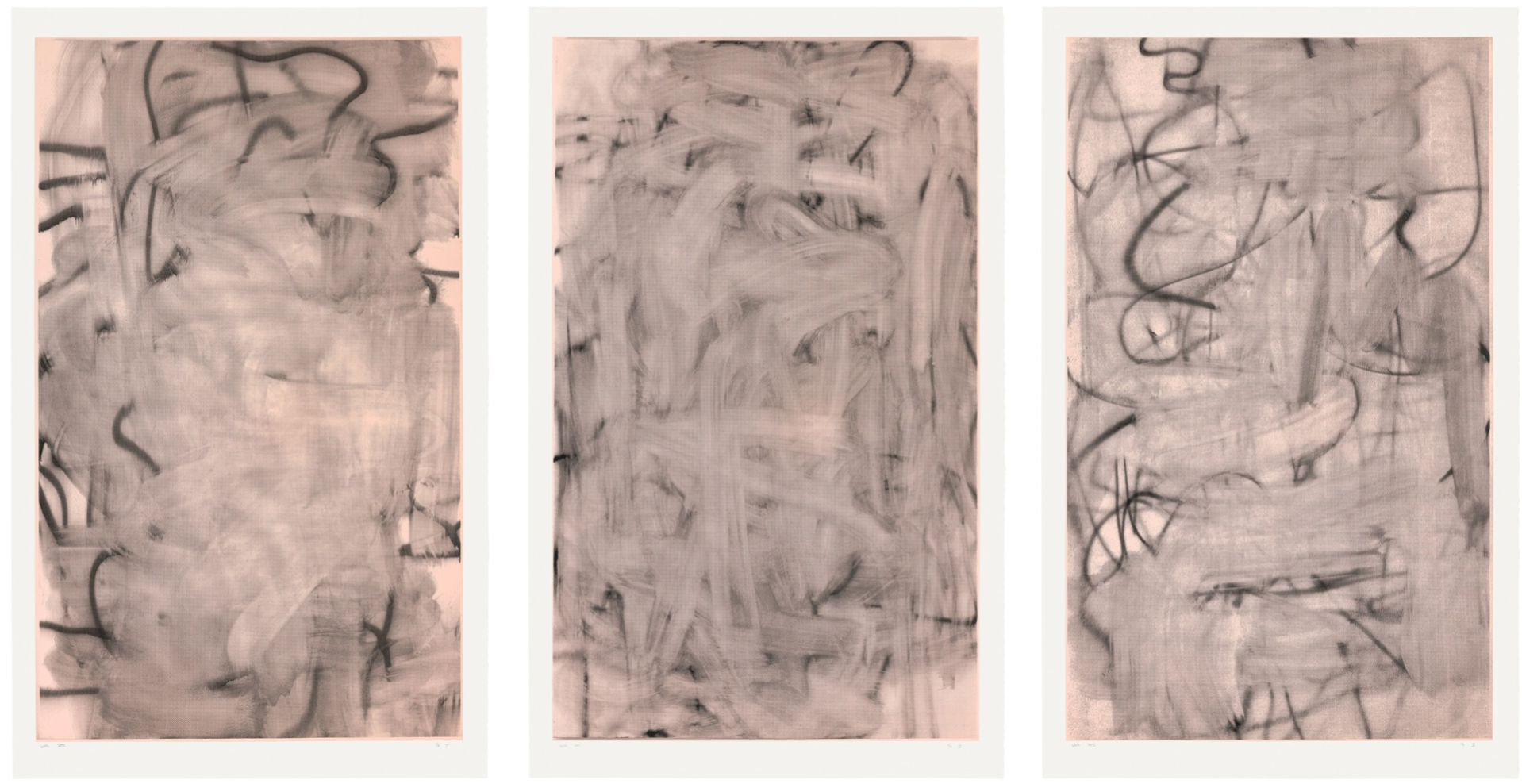
CHRISTOPHER WOOL
Three Women (Dark I, II, III), from Door Cycle, 2006
The complete set of three monumental screenprints in colors on Saunders Watercolor paper
Image: 74 1/4 x 45 inches (188.6 x 114.3 cm)
Sheet: 81 1/2 x 50 1/4 inches (207 x 127.6 cm)
All signed, dated and numbered 9/9 in pencil
There were three editions in variant shades of light, medium and dark rose, there were also 3 artist’s proofs
Publisher: Edition Schellmann, Munich and New York
Following his characteristic word pictures of the 1980s and 90s, in the 2000s the renowned artist Christopher Wool returned to his earlier preoccupation, namely, developing a distinct approach to painting. Marked by a unique blend of gestural draughtsmanship and a captivating exploration of abstraction, Wool’s work explores reduced pictorial forms in an all-over style that often reflects a dynamic interplay between chaos and control. He employs layers of bold brushstrokes and expressive gestures to create intricate compositions, often erasing then re-working parts, intertwining graffiti-like marks with painterly gestures. Silkscreen becomes an integral part of this process, serving as a way to reproduce paintings and then continue re-working the surfaces (what Wool refers to as “painted silkscreens”). Deeply inspired by Willem de Kooning’s 1964-66 Women series, in Three Women (Dark I, II, III), Wool’s skillful manipulation of form and color subtly evoke a sense of femininity without overtly representational elements.
“With its flat, empty surface, light weight and painting-size, the mass-produced door panel seemed to be an appropriate contemporary product to make work in editions with. After two years of consideration, Edition Schellmann invited a group of artists to create works of art on prefabricated hollow-core doors. The 16 works that resulted – painting, object, silkscreen, sculpture, relief, and other techniques, on wood, glass, steel and even paper – were produced in editions of 15.”
—Jörg Schellmann
Also inspired by de Kooning, the publisher Jörg Schellmann decided to commission Door Cycle after he saw the artist’s project of the same name exhibited at the Whitney Museum of American Art in 1996. Schellmann considered the formal and poetic qualities of the door, such as its metaphoric values, its measurements corresponding to a human’s general size, and its appearance and dimensions representing a canvas. He concluded that the door would be a fitting starting point for artists to make editioned works with and so he invited a range of artists, including Olafur Eliasson, Sarah Morris and Anish Kapoor, to create works on prefabricated hollow-core doors, resulting in the Door Cycle, 2006.