
WORK IN PROGRESS
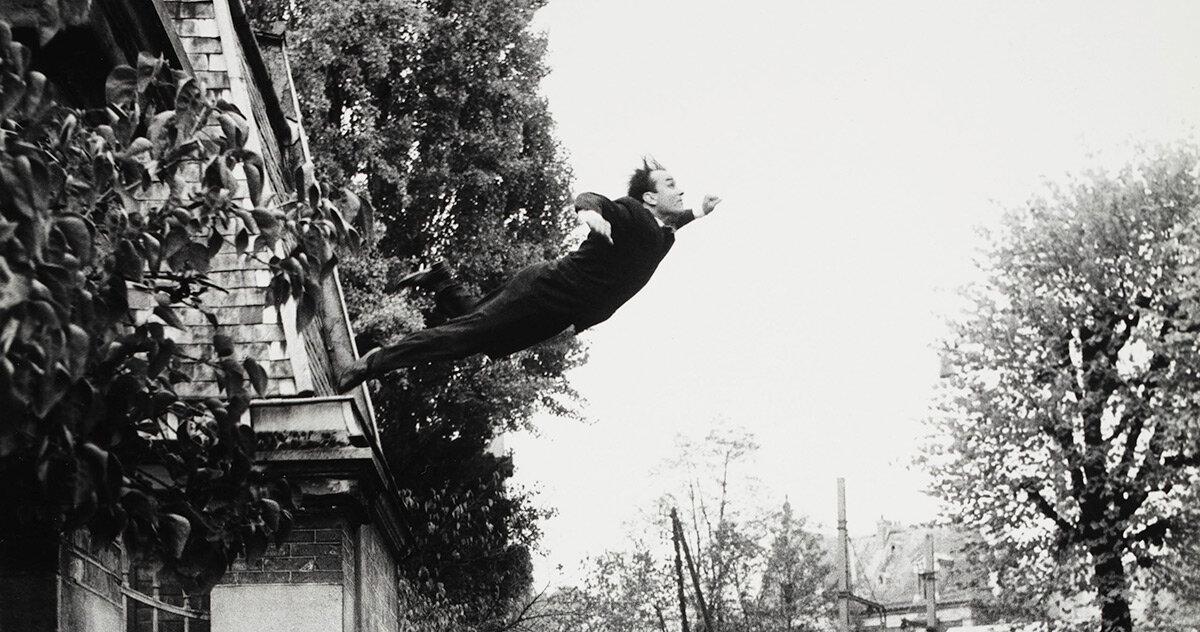
Yves Klein’s work unfolds as a radical and coherent pursuit of the immaterial, where painting, sculpture, and performance become vehicles for something that exceeds form itself. Trained as a judo master and shaped by travels that exposed him to both discipline and metaphysical thought, Klein approached art not as representation, but as experience—an attempt to make the invisible tangible. From the absolute intensity of International Klein Blue to the ritualized gestures of the Anthropometries, from sponge reliefs saturated with pigment to fire paintings marked by elemental force, his practice consistently dissolves the boundary between object and energy. Even his most iconic gesture, the Leap into the Void, reads less as an image than as a manifesto: a declaration that art can exist beyond matter, in space, in belief, and in the charged presence between the two.
Introduction
Yves Klein (1928–1962) occupies a singular position in postwar art, not only for the radical brevity of his career, but for the clarity and ambition of his vision. Born in Nice to painter parents, Klein moved early between artistic inheritance and a desire to break from it entirely. His formation was neither academic nor conventional. In the early 1950s, he traveled extensively through Italy, Spain, and most significantly Japan, where he became deeply immersed in judo, eventually achieving a fourth dan black belt and publishing a treatise on the discipline. Judo, for Klein, was not merely physical training. It was a philosophy of space, balance, and invisible force, elements that would later define his artistic language with remarkable precision.
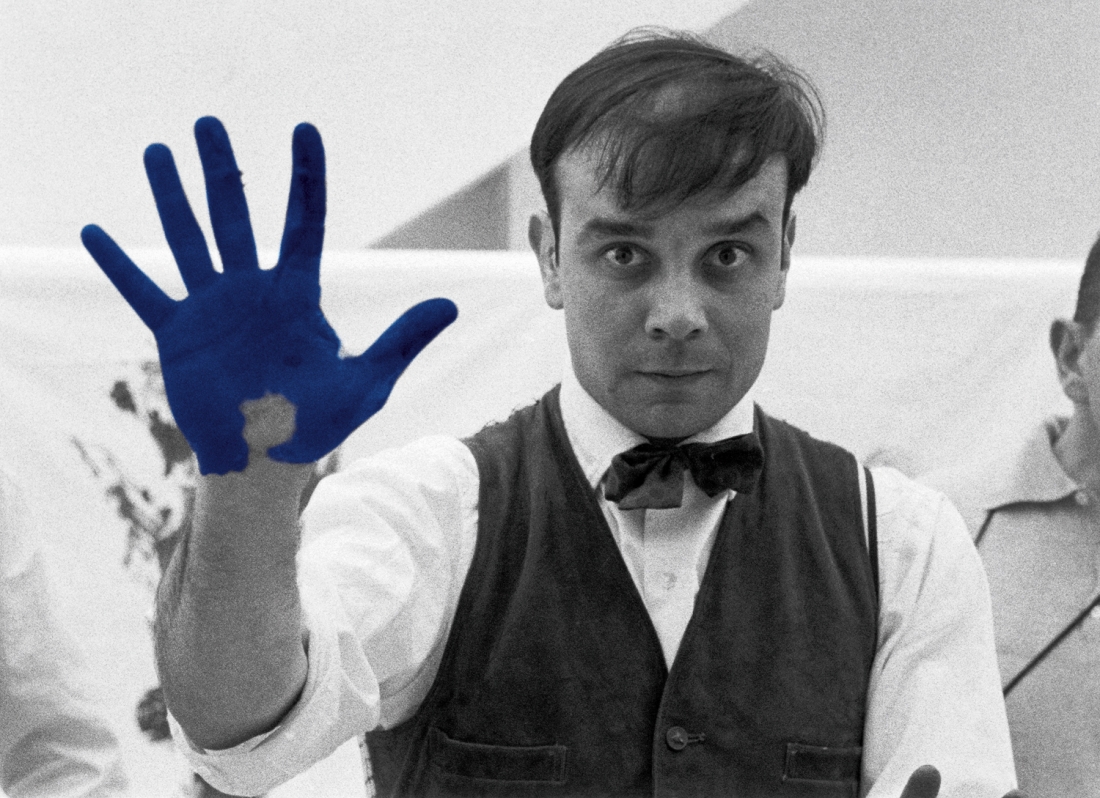
From the outset, Klein sought to move beyond the object and into what he termed the “immaterial.” His work is not concerned with representation, nor even abstraction in the traditional sense, but with presence itself. In 1958, at the Galerie Iris Clert, he staged one of the most radical exhibitions of the twentieth century, Le Vide (The Void), presenting an empty gallery as a fully realized work. Visitors entered a space stripped of objects yet saturated with intent, forcing a confrontation not with what was seen, but with what was felt. This gesture established Klein as an artist of ideas as much as forms, one for whom art could exist beyond material constraints.
International Klein Blue (IKB)
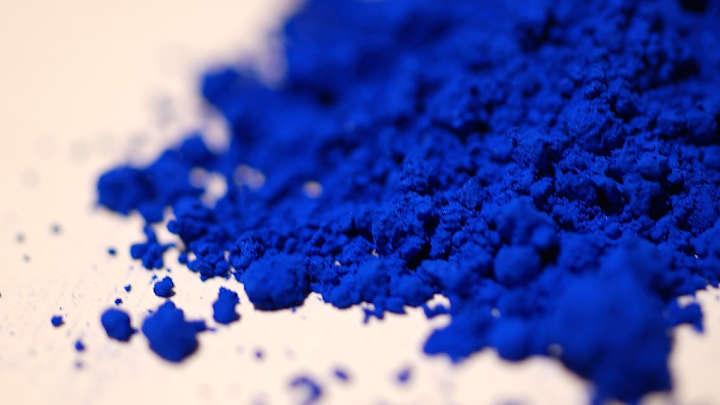
Klein’s most iconic contribution is undoubtedly International Klein Blue, a color he developed and patented in 1960 in collaboration with chemists to preserve the vibrancy and matte intensity of pure pigment. IKB is not simply a color choice; it is a conceptual tool. For Klein, blue represented the immaterial, the infinite, the boundless. It was the color of the sky and the sea, but also of something beyond both.
Anthropometries
Sponge Reliefs and Sculptures
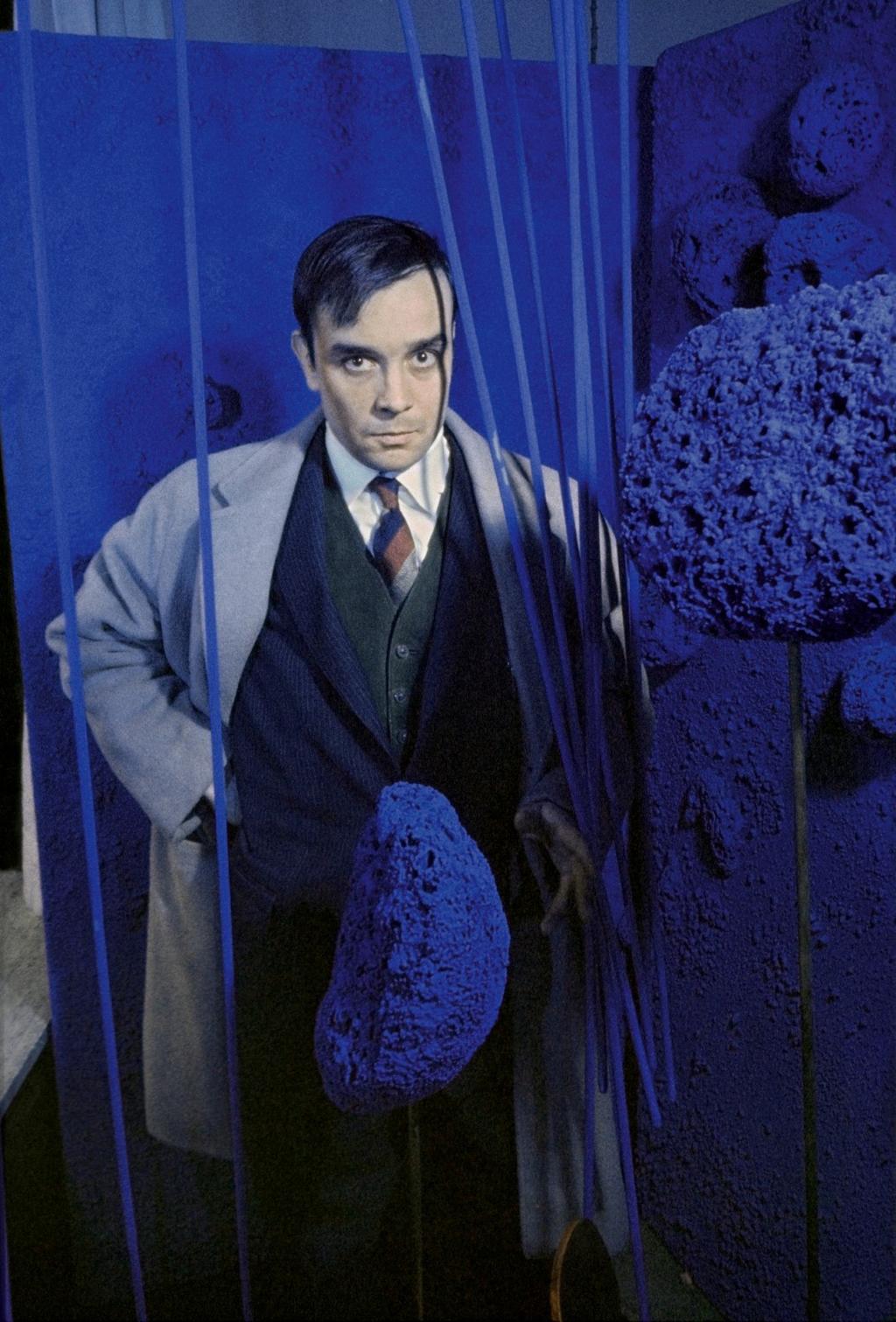
These works introduce a new dimension to Klein’s practice. The monochrome is no longer flat. It becomes volumetric, tactile, and deeply physical, while still pointing toward something beyond itself. The sponge, with its porous structure, becomes a metaphor for the body, for absorption, for the capacity to hold the infinite within the finite.
Fire Paintings and Planetary Reliefs
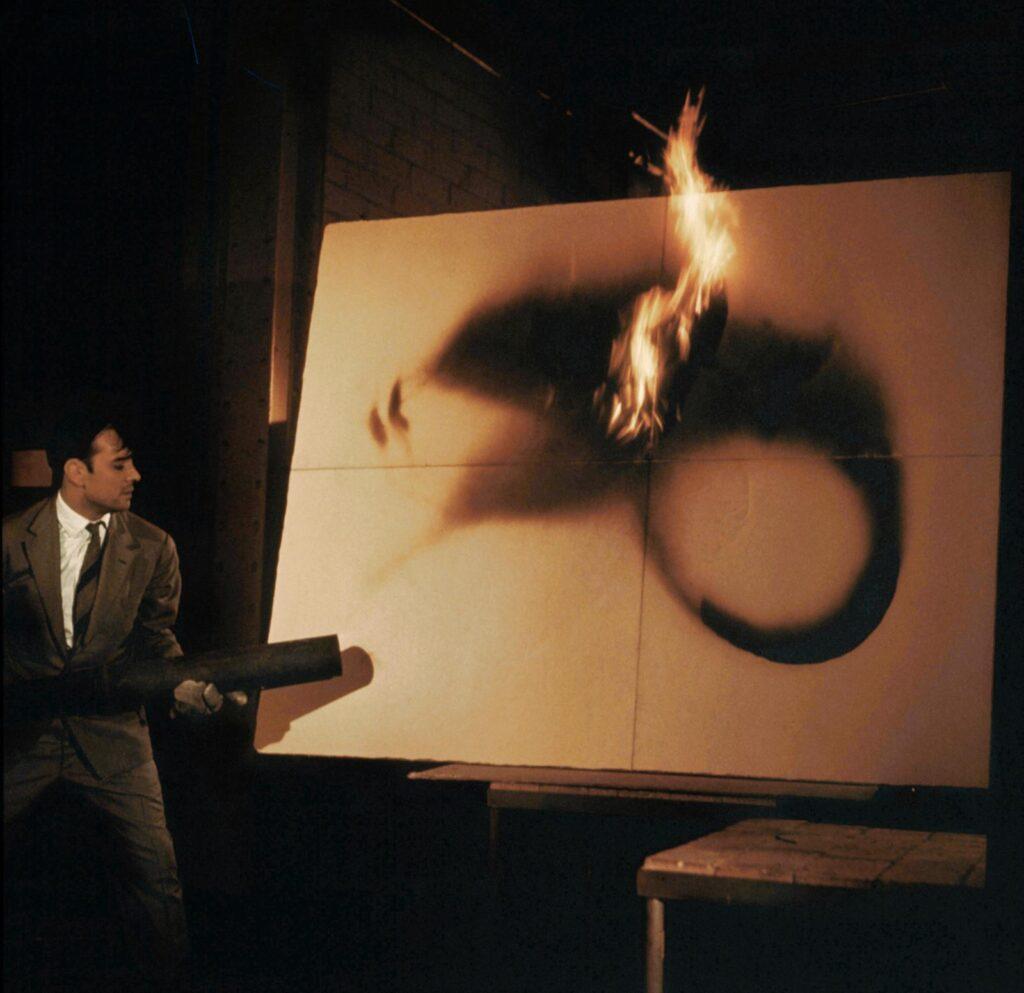
In his Peintures de feu (Fire Paintings), Klein replaces pigment with flame, using industrial burners to imprint traces of fire onto surfaces. The gesture is both destructive and generative, capturing energy in its most volatile form. Fire becomes a drawing tool, a way to register movement, heat, and transformation.
Leap into the Void
Market, Legacy, and Institutional Recognition
Yves Klein’s market reflects both the rarity of his works and the enduring relevance of his ideas. Major monochromes, sponge reliefs, and Anthropometries achieve strong results at auction, with consistent demand across Europe, the United States, and Asia. His work occupies a central position in postwar and contemporary art collections, both private and institutional.
Klein has been represented and supported by leading galleries including Galerie Iris Clert, Galerie Rive Droite, and today by major international dealers such as Almine Rech and Gagosian, who continue to place his work in significant collections.
Institutionally, Klein’s importance has been firmly established through major retrospectives at institutions such as Centre Pompidou, Tate Modern, and the Hirshhorn Museum and Sculpture Garden. These exhibitions have reinforced his role not only as a painter, but as a pioneer of conceptual and performance-based practices.
Yves Klein’s work resists easy categorization because it was never meant to remain within the boundaries of objects. His paintings, performances, sculptures, and actions all point toward a single idea: that art can exist beyond material form, as experience, as presence, as belief. In just a few years, Klein redefined what it meant to create. He replaced composition with intensity, object with energy, and image with sensation. His legacy is not only in the works he left behind, but in the space he opened—an infinite field where art is no longer something to look at, but something to enter.
SUMMARY
Auction Market Overview
Top Lots
#1. Le Rose du bleu (RE 22), 1960
Christie’s London: 27 June 2012
Estimate on Request
GPB 23,561,250 / USD 36,695,822
Yves Klein (1928-1962) , Le Rose du bleu (RE 22) | Christie’s
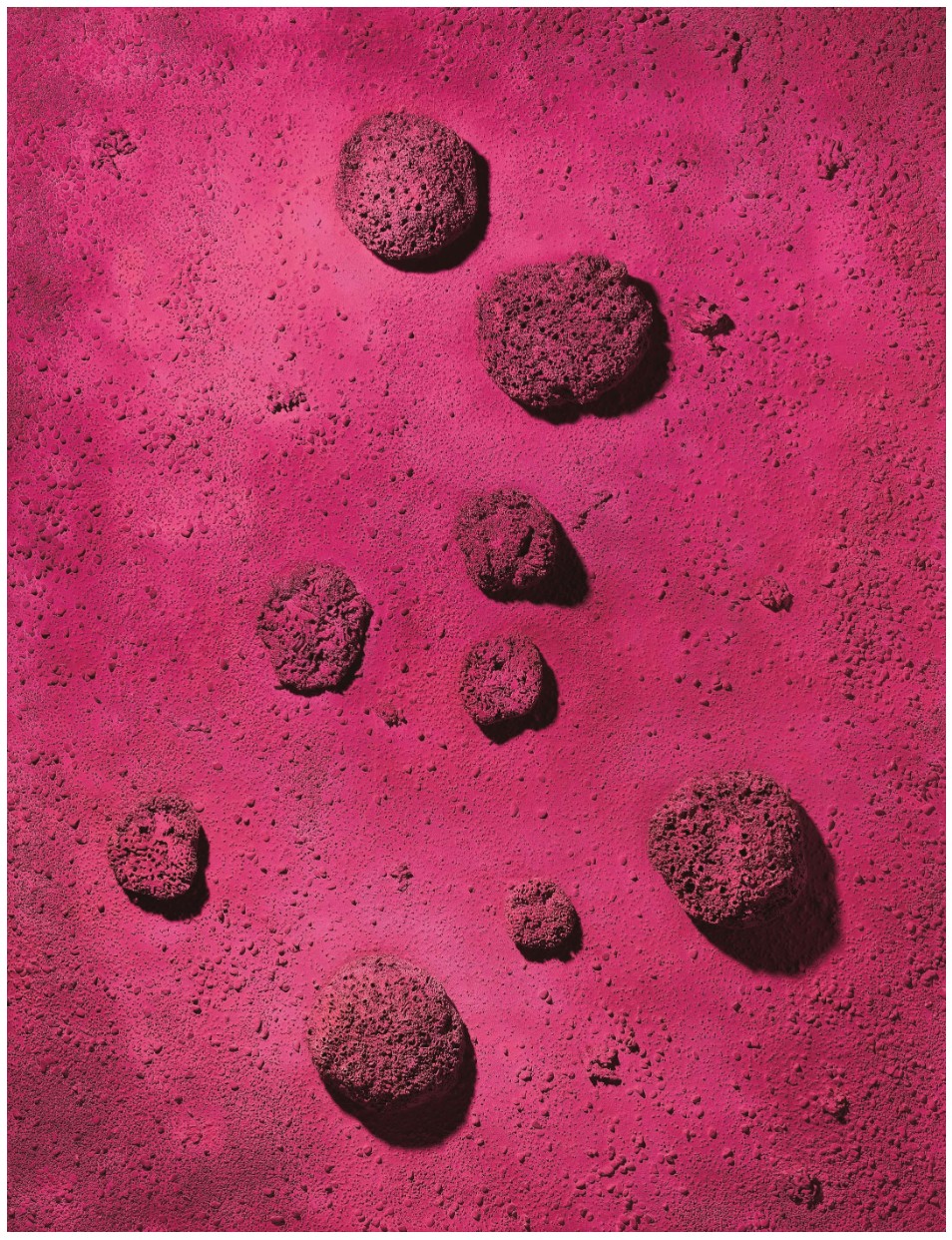
YVES KLEIN (1928-1962)
Le Rose du bleu (RE 22), 1960
Dry pigment in synthetic resin, natural sponges and pebbles on board
199x153x16 cm (78-3/8 x 60 x 6-3/8 inches)
Titled ‘Le Rose du bleu’ (on the reverse)
#2. FC1 (Fire Color 1), 1962
Christie’s New-York: 8 May 2012
Estimated: USD 30,000,000 – 40,000,000
USD 36,482,500
Yves Klein (1928-1962) , FC1 (Fire Color 1) | Christie’s
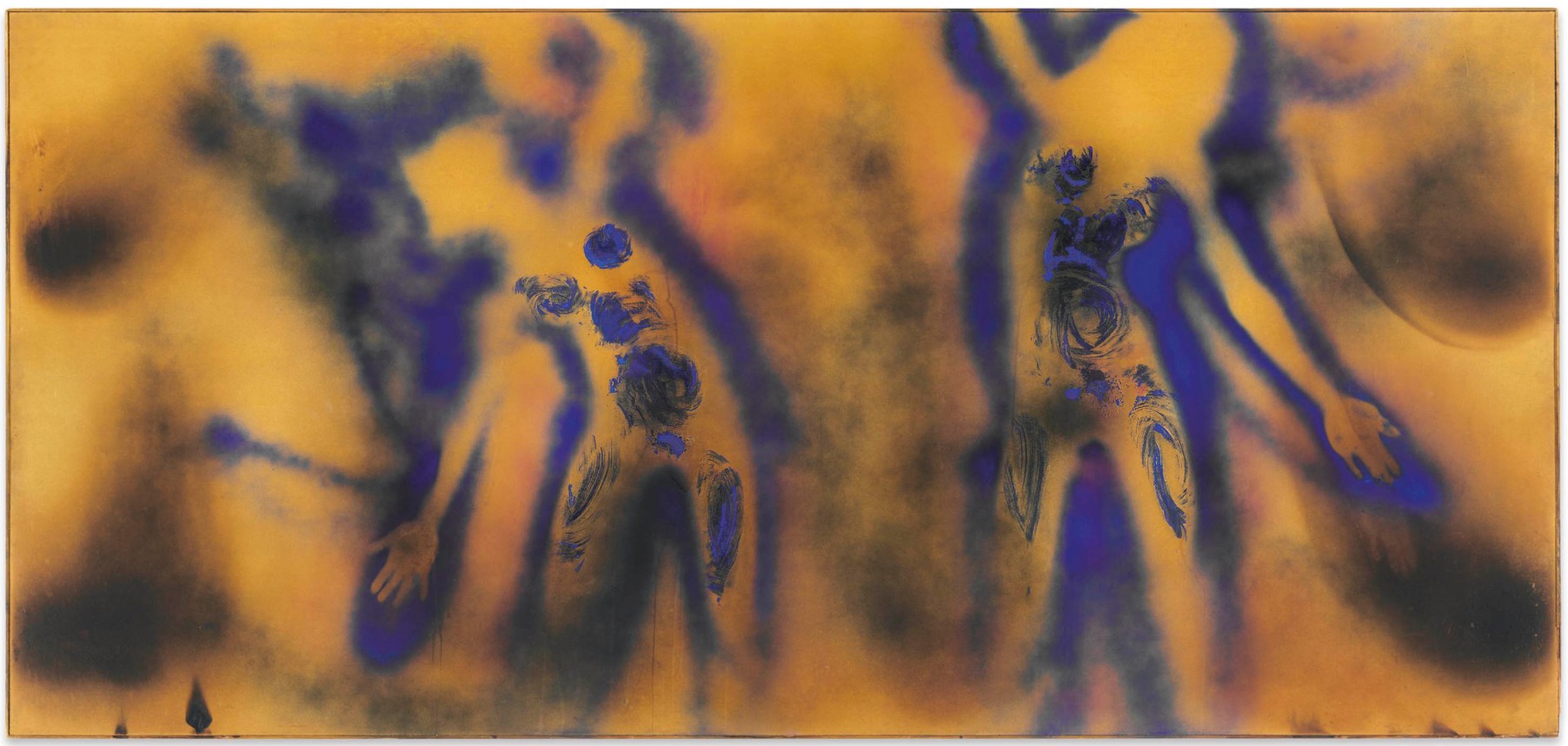
YVES KLEIN (1928-1962)
FC1 (Fire Color 1), 1962
Dry pigments and synthetic resin on panel with artist’s frame
141 x 299.5 x 3 cm (55-1/2 x 117-3/4 x 1 inches)
#3. Anthropométrie de l’époque bleue, (ANT 124), 1960
Christie’s London: 28 June 2022
Estimate on Request
GPB 27,197,000 / USD 33,360,930
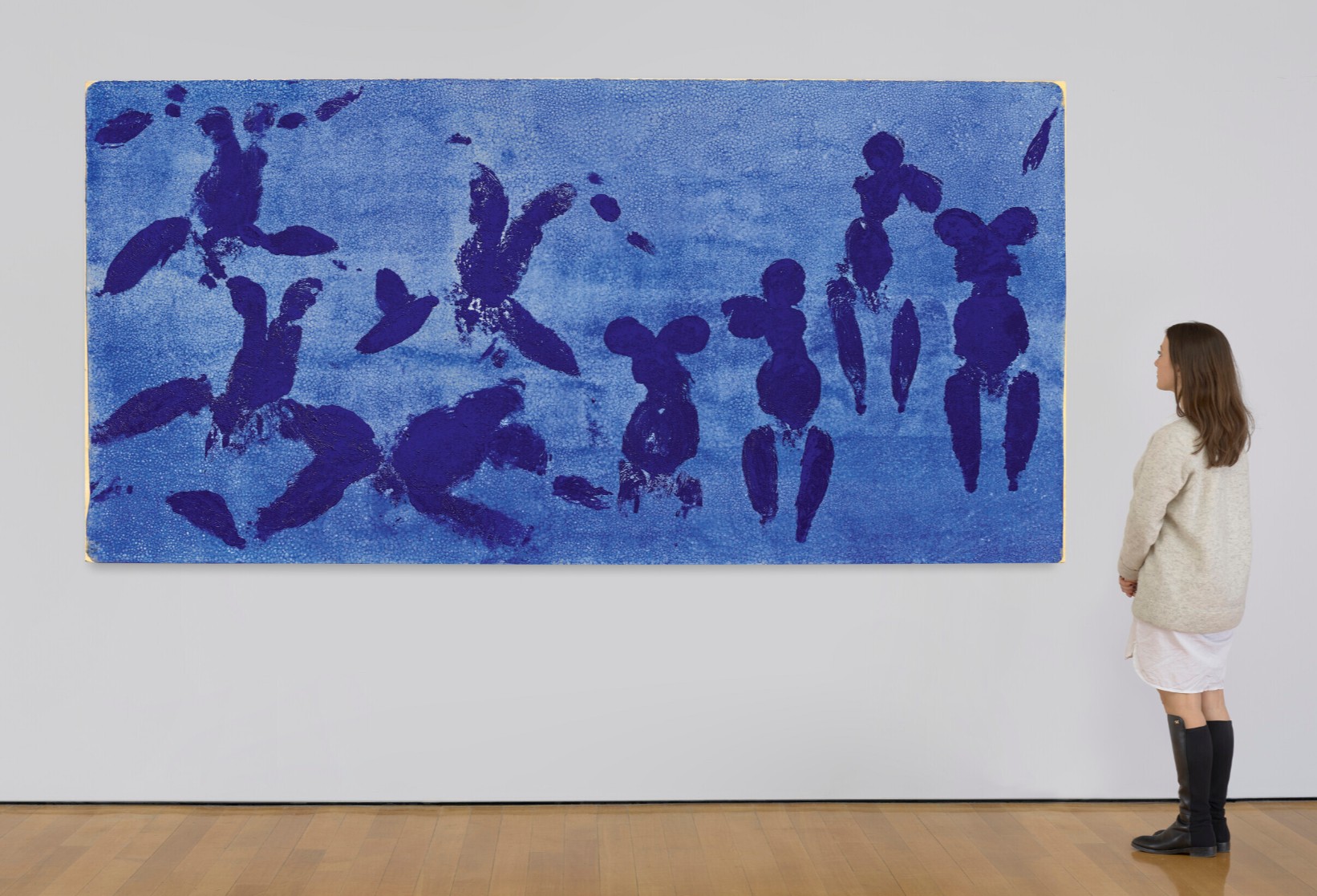
YVES KLEIN (1928-1962)
Anthropométrie de l’époque bleue, (ANT 124) (Anthropometry of the Blue Period), (ANT 124)), 1960
Dry pigment and synthetic resin on paper laid down on canvas
154.5 x 317 cm (60-3/4 x 124-3/4 inches)
Indistinctly signed, inscribed and dated
‘Yves Klein Le Monochrome Paris février 1960 Anthropométrie de l’époque bleue’
(lower right)
Executed in February 1960
AUCTION RESULTS
2026 Auction Results
Monochrome IKB, 1959
Sotheby’s London: 5 March 2026
Estimated: GBP 150,000 – 200,000
GBP 217,600 / USD 289,780
Yves Klein | Monochrome IKB | Contemporary Day Auction | 2026 |
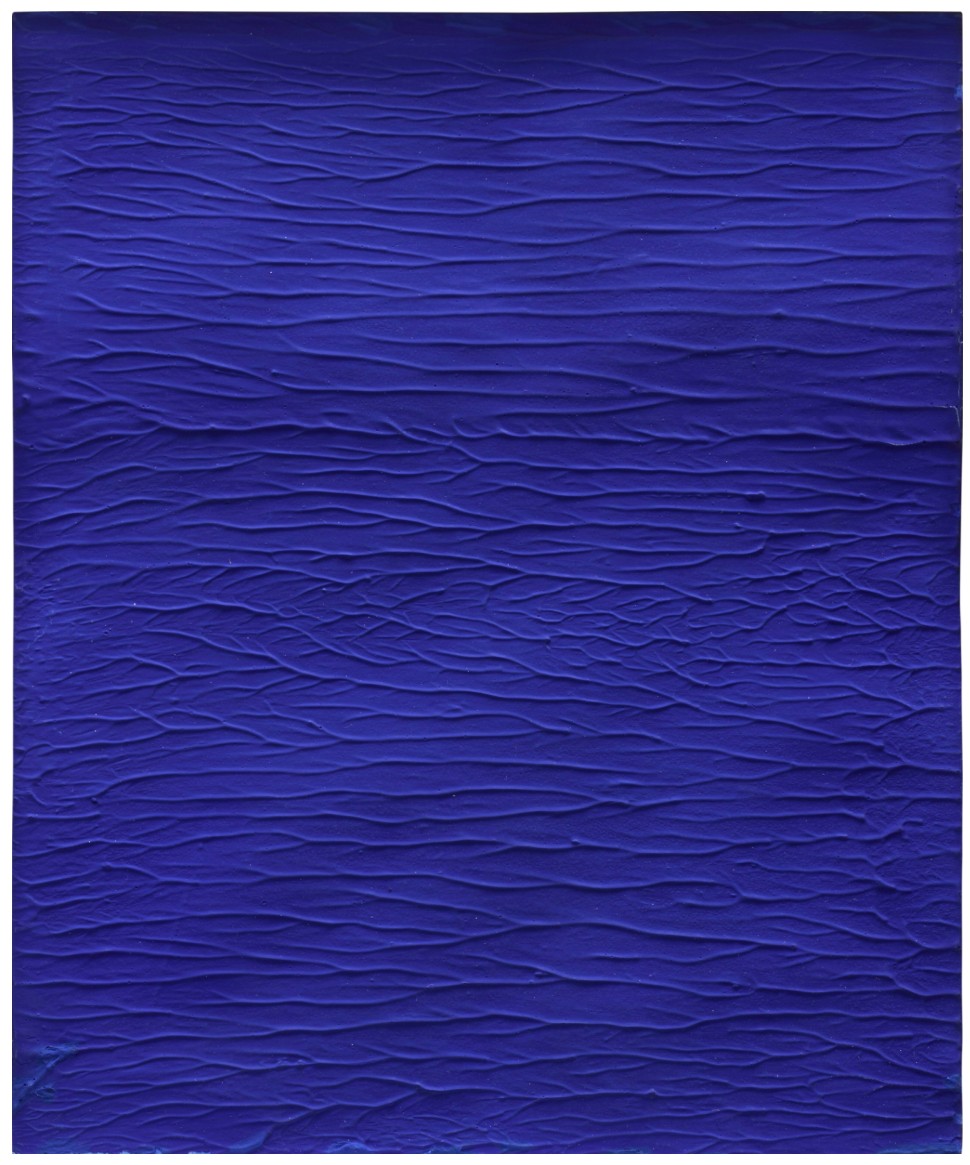
YVES KLEIN (1928 – 1962)
Monochrome IKB, 1959
Pigment and resin on card
21.5 x 18.8 cm (8-1/2 x 7 inches)
This work is one of 60 unique examples created for the deluxe edition of Yves Klein’s manifesto Le depassement de la problematique de l’art
Published by Editions de Montbliart
2025 Auction Results
FOR PAINTINGS & SCULPTURES ONLY
#1. California, (IKB 71), 1961
Property from a Distinguished American Private Collector
Christie’s Paris: 23 October 2025
Estimate on Request
EUR 18,375,000 / USD 21,328,265
Yves Klein (1928-1962), California, (IKB 71) | Christie’s
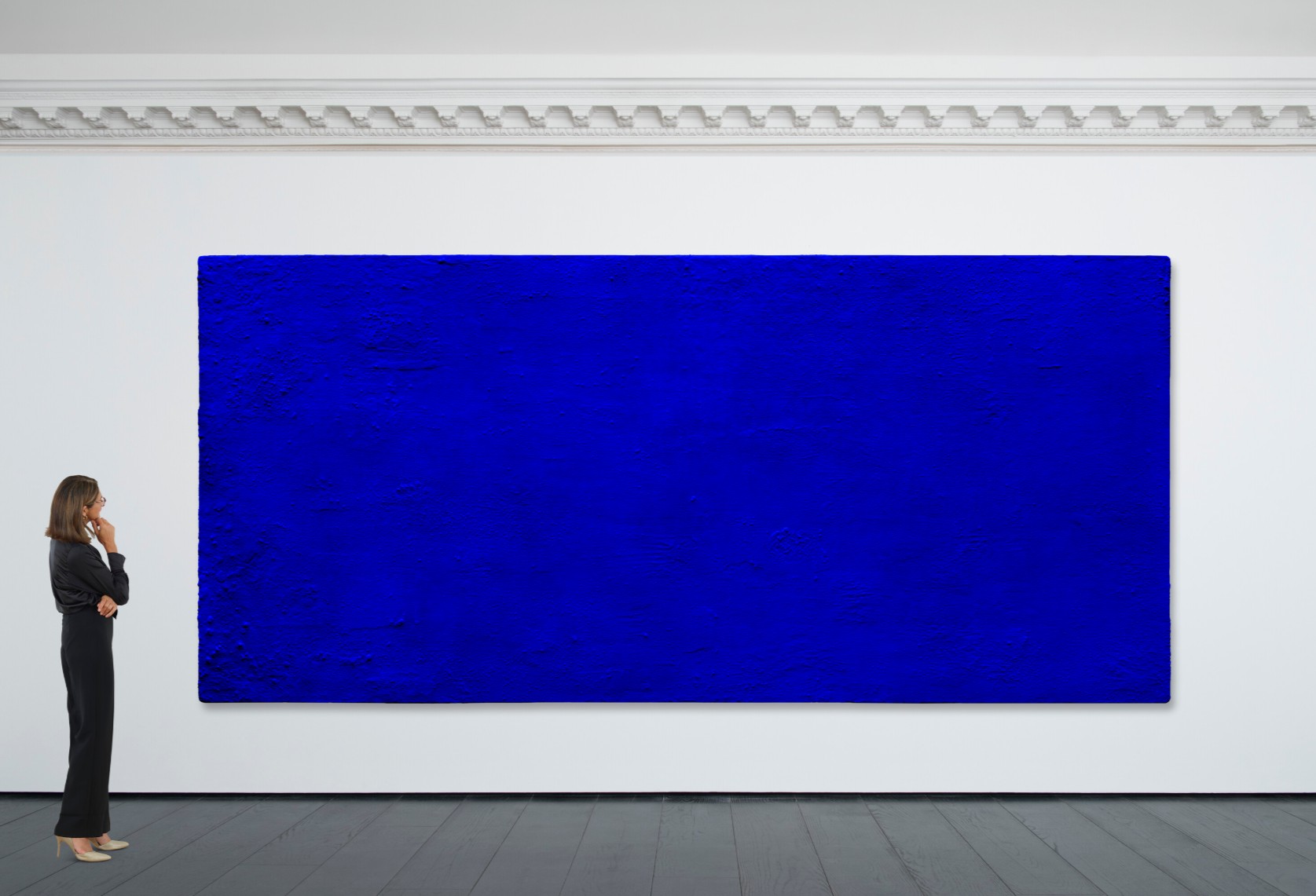
YVES KLEIN (1928-1962)
California, (IKB 71), 1961
Dry pigment and synthetic resin on canvas mounted on panel
196×421 cm (77-1/8 x 165-3/4 inches)
Signed, dated, titled and located ‘Yves Klein le monochrome Paris 1961 ”California”’ (on the reverse)
Titled ”California” (on the stretcher)
#2. Sculpture éponge bleue sans titre (SE 167), circa 1959
Property from the Durand-Ruel Family Collection, Paris
Sotheby’s New-York: 18 November 2025
Estimated: USD 14,000,000 – 18,000,000
USD 19,060,000
Yves Klein | Sculpture éponge bleue sans titre (SE 167) | The Now &
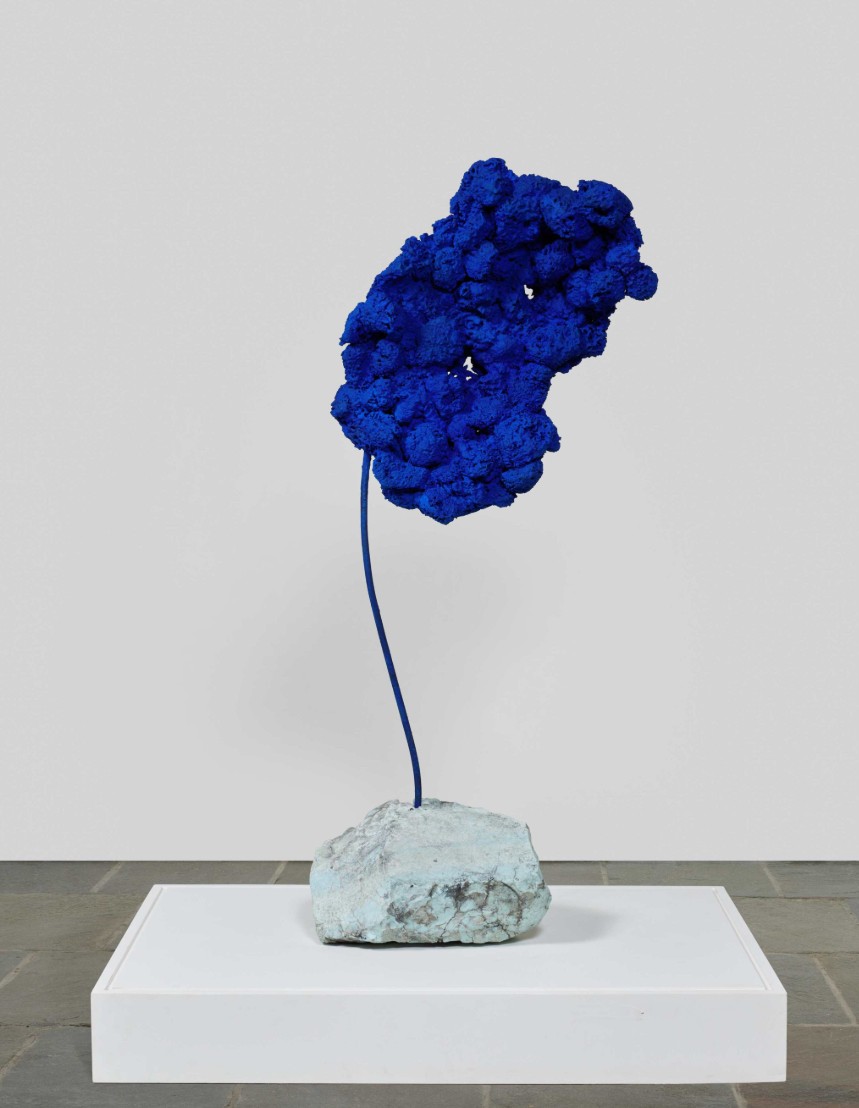
YVES KLEIN (1928 – 1962)
Sculpture éponge bleue sans titre (SE 167), circa 1959
Dry pigment and synthetic resin on natural sponge on a metal rod mounted on stone
138.4 x 69.9 x 54 cm (54-1/2 x 27-1/2 x 21-1/4 inches)
#3. Untitled Fire Colour Painting (FC 28), 1962
Sotheby’s London: 16 October 2025
Estimated: GBP 1,800,000 – 2,500,000
GBP 2,602,000 / USD 3,550,440
Yves Klein | Untitled Fire Colour Painting (FC 28) | Contemporary
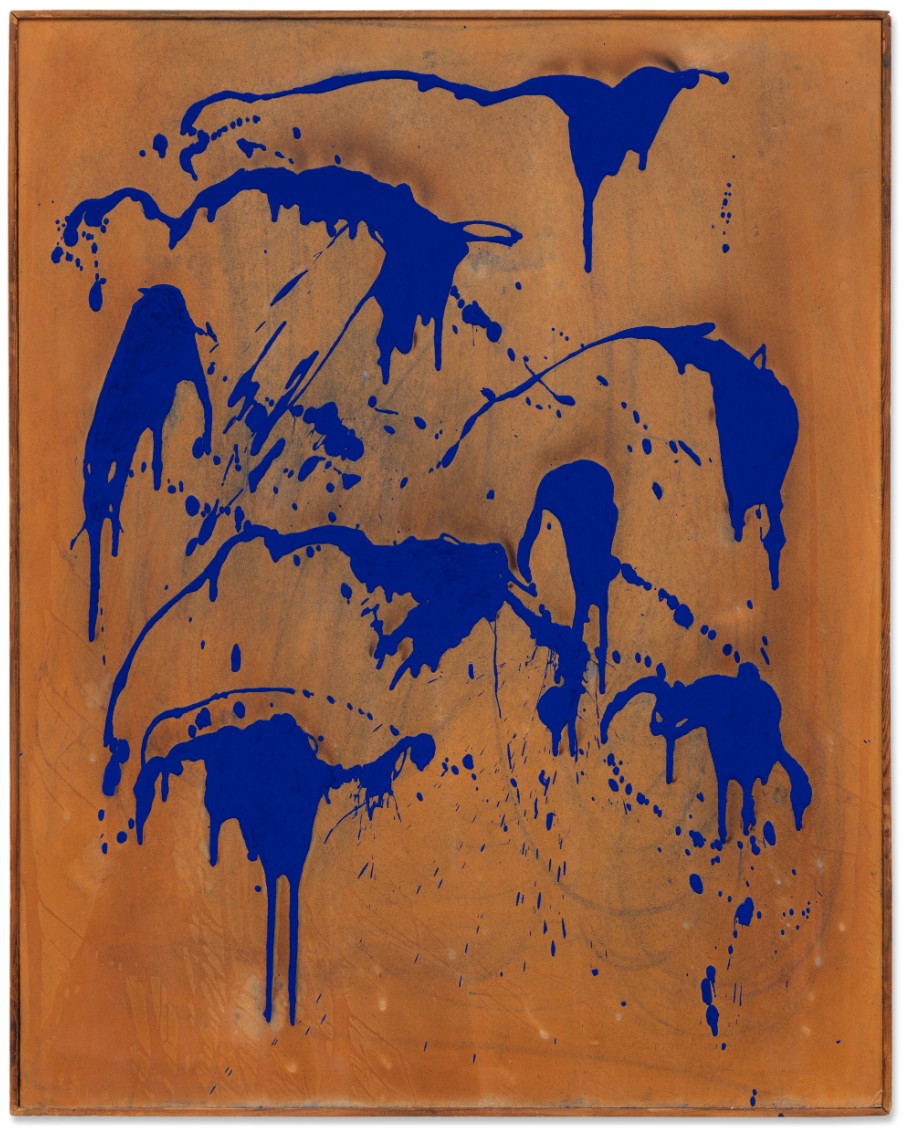
YVES KLEIN (1928 – 1962)
Untitled Fire Colour Painting (FC 28), 1962
Dry pigment and synthetic resin on burnt cardboard mounted on wood
92×73 cm (36-1/4 x 28-3/4 inches)
#4. Untitled blue monochrome, (IKB 272), 1956
Leonard & Louise Riggio: Collected Works
Christie’s New-York: 12 May 2025
Estimated: USD 2,000,000 – 3,000,000
USD 2,228,000
YVES KLEIN (1928-1962), Untitled blue monochrome, (IKB 272) | Christie’s
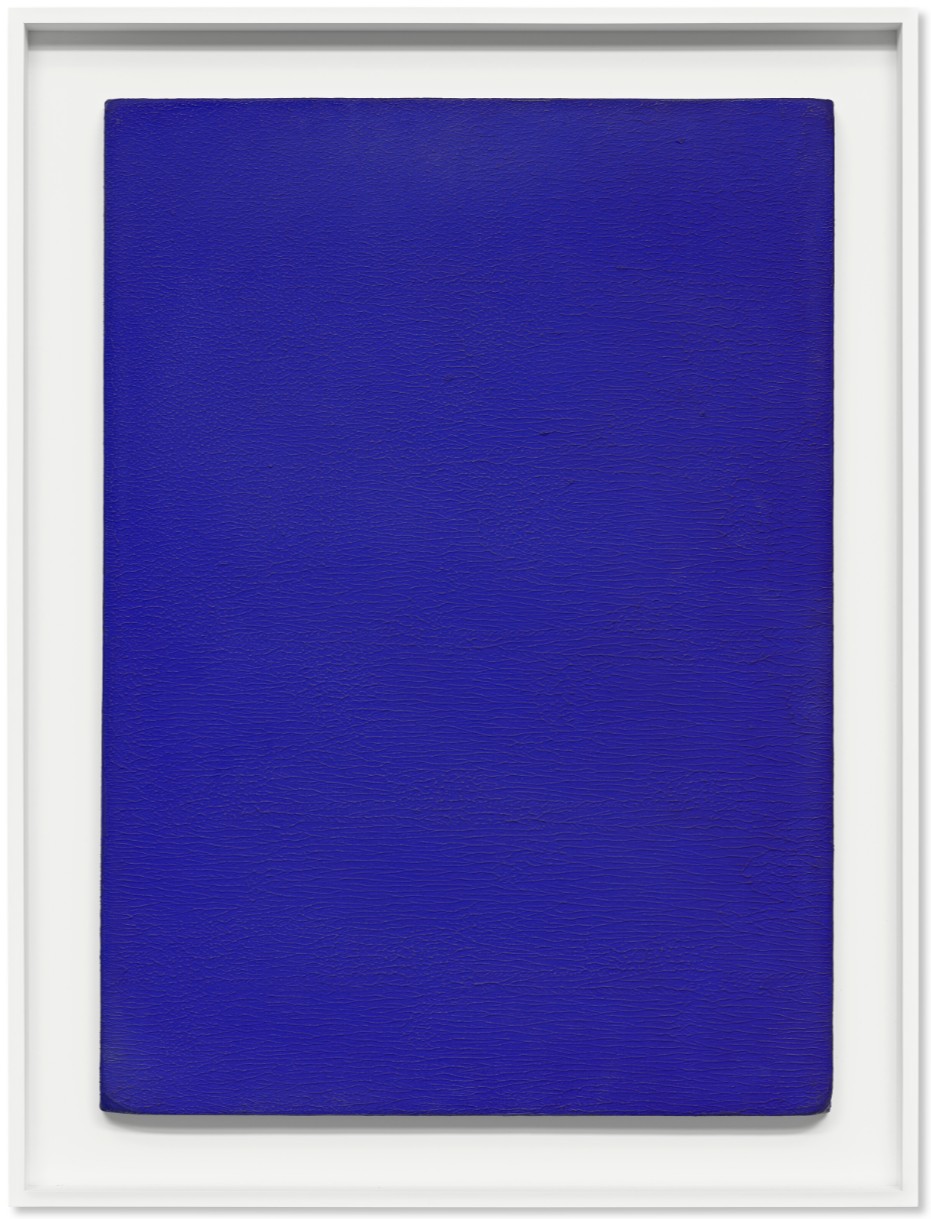
YVES KLEIN (1928-1962)
Untitled blue monochrome, (IKB 272), 1956
Dry pigment and synthetic resin on gauze mounted on panel
77.5 x 55.9 cm (30-1/2 x 22 inches)
#5. Relief Planétaire Terre (Marseille, Aix), (RP 24), 1961
Christie’s Paris: 28 May 2025
Estimated: EUR 600,000 – 800,000
EUR 1,613,000 / USD 1,828,745
Yves Klein (1928-1962), Relief Planétaire Terre (Marseille, Aix), (RP 24) | Christie’s
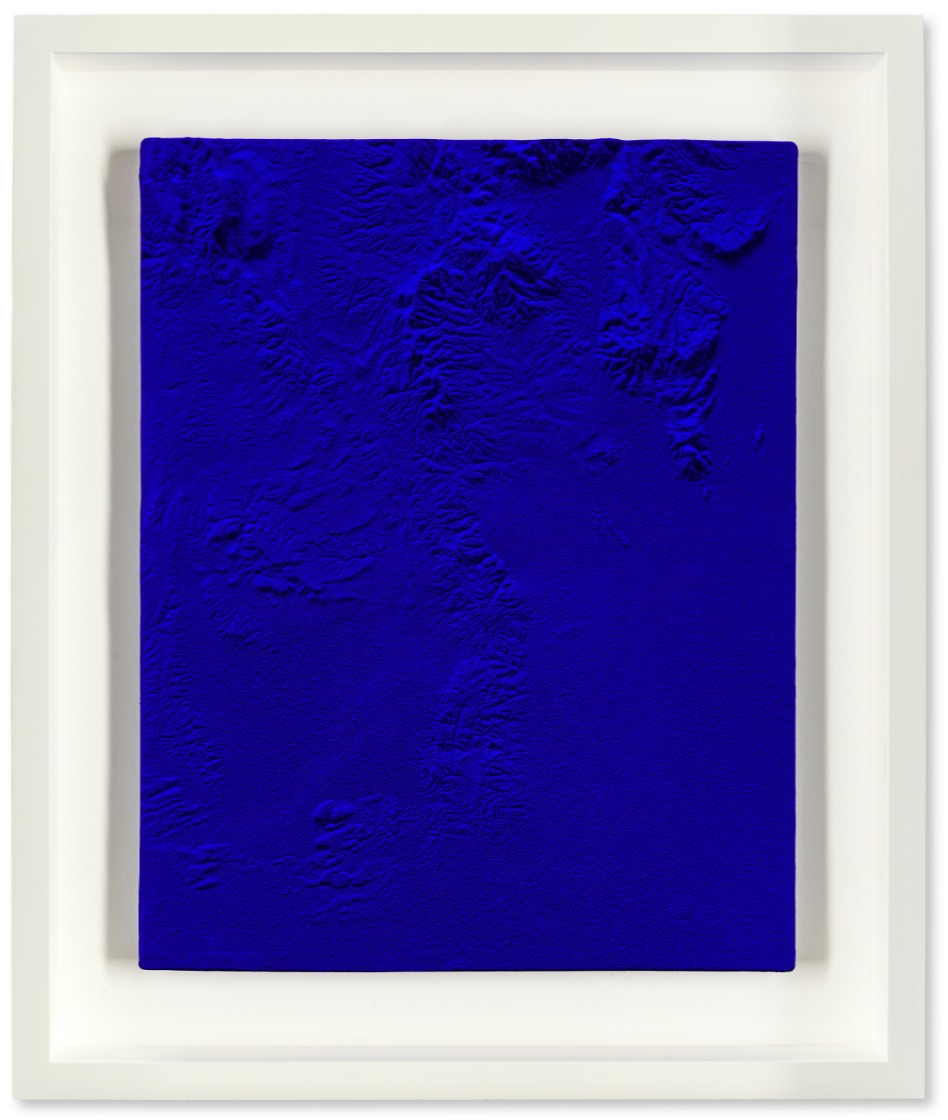
YVES KLEIN (1928-1962)
Relief Planétaire Terre (Marseille, Aix), (RP 24), 1961
IKB pigment on plaster and relief map mounted on panel
61 x 48.2 cm (24×19 inches)
Signed, titled and dated
”’Relief Planétaire Terre. (Marseille, Aix)” Yves Klein 1961′
(on the reverse)
#6. Monochrome bleu sans titre (IKB 329), 1958
Sotheby’s Paris: 24 October 2025
Estimated: EUR 1,200,000 – 1,800,000
EUR 1,506,500 / USD 1,750,130
Yves Klein | Monochrome bleu sans titre (IKB 329) | Modernités | 2025
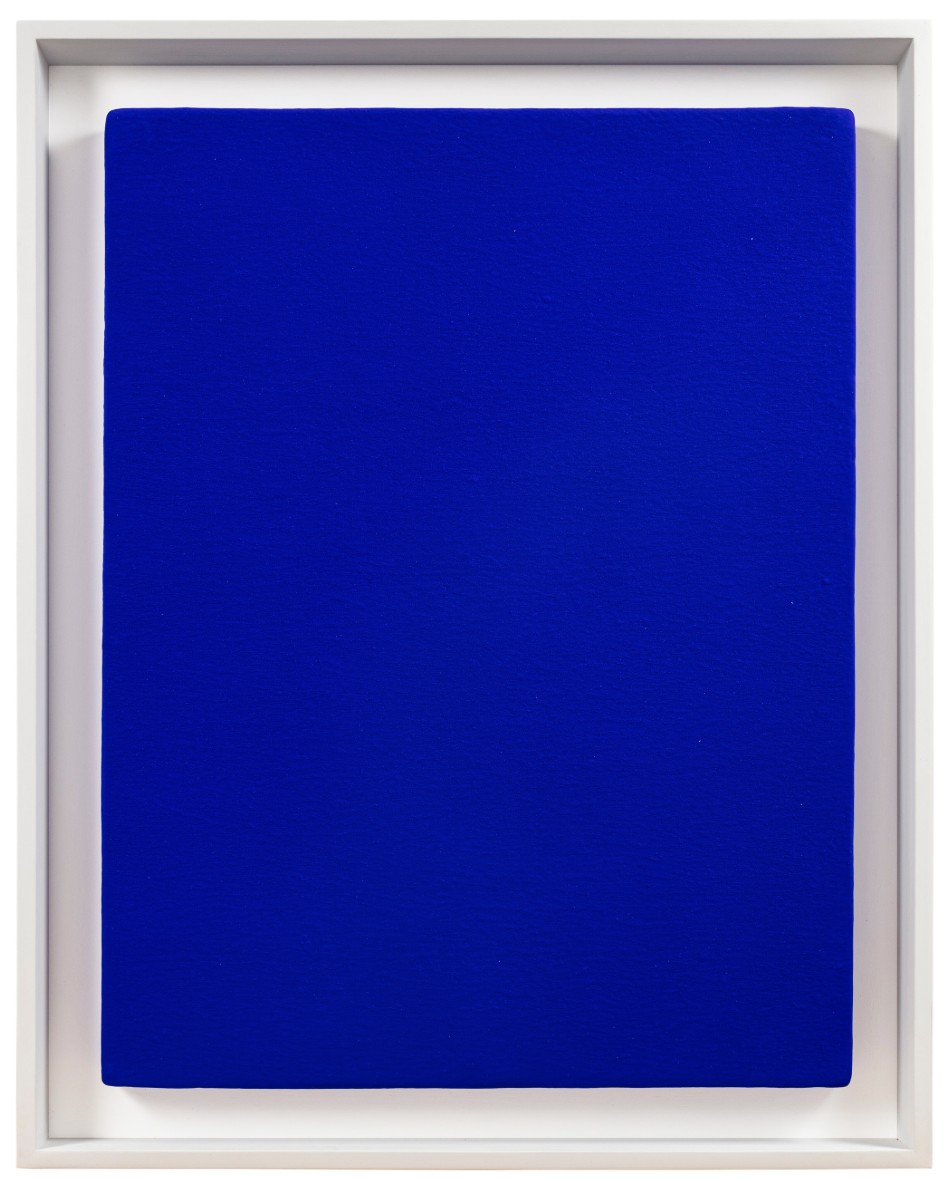
YVES KLEIN (1928 – 1962)
Monochrome bleu sans titre (IKB 329), 1958
Dry pigment and synthetic resin on canvas mounted on panel
66×51 cm (26 x 20-1/8 inches)
Signed Yves and dated 58 (on the overlap)
Registered in the Yves Klein Archives under number IKB 329
#7. Untitled blue monochrome, (IKB 296), 1959
Sotheby’s New-York: 26 February 2025
Estimated: USD 150,000 – 200,000
USD 190,500
WORK ON PAPER
Yves Klein | Untitled blue monochrome, (IKB 296) | Contemporary
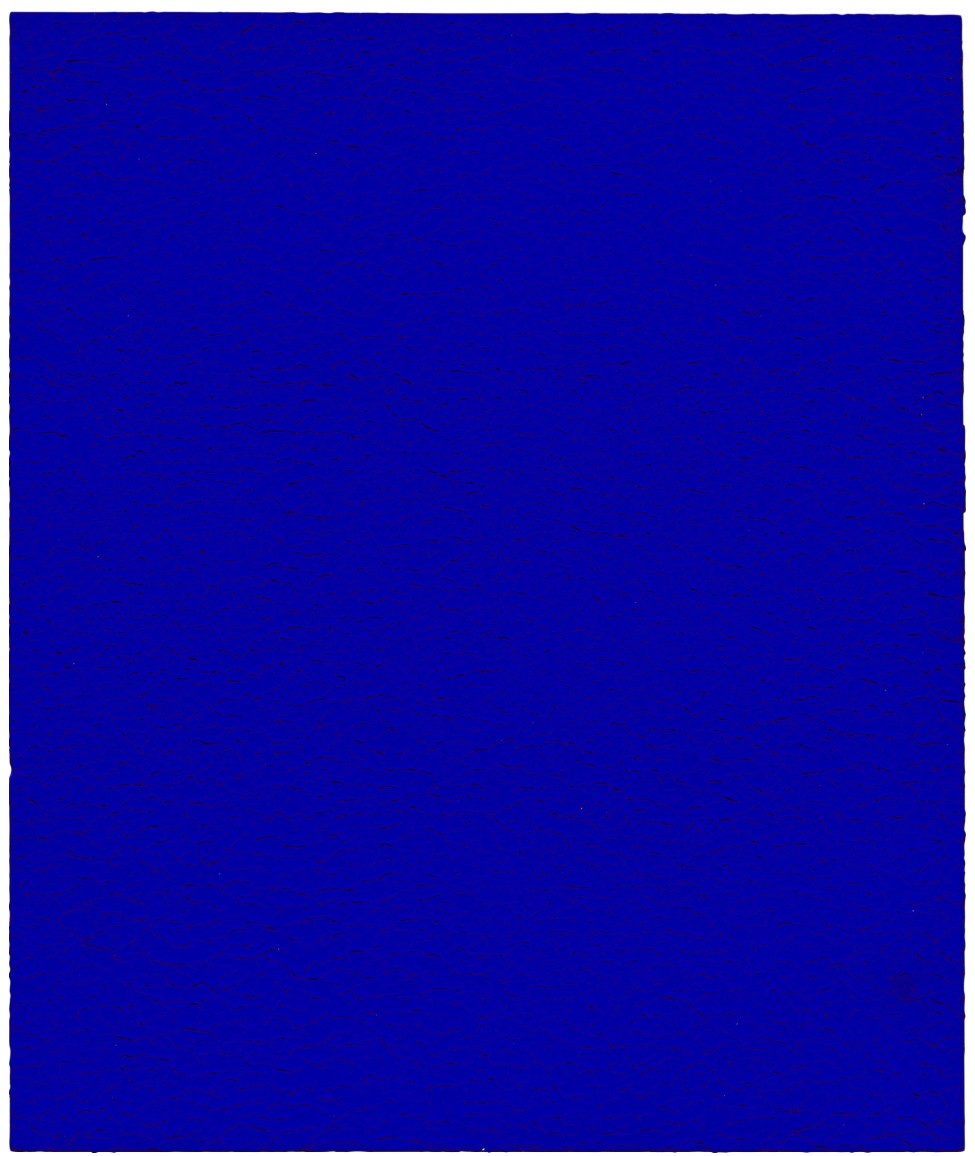
YVES KLEIN (1928 – 1962)
Untitled blue monochrome, (IKB 296), 1959
Dry pigment and synthetic resin on paper
21.5 x 18 cm (8-1/2 x 7-1/8 inches)
Accompanied by a certificate of authenticity signed by Mrs. Rotraut Klein-Moquay
2024 Auction Results
#1. Relief Éponge bleu sans titre, (RE 28), 1961
A Legacy of Beauty: The Collection of Sydell Miller Evening Auction
Sotheby’s New-York: 18 November 2024
Estimated: USD 8,000,000 – 12,000,000
USD 14,227,500
Yves Klein | Relief Éponge bleu sans titre, (RE 28) | A Legacy of
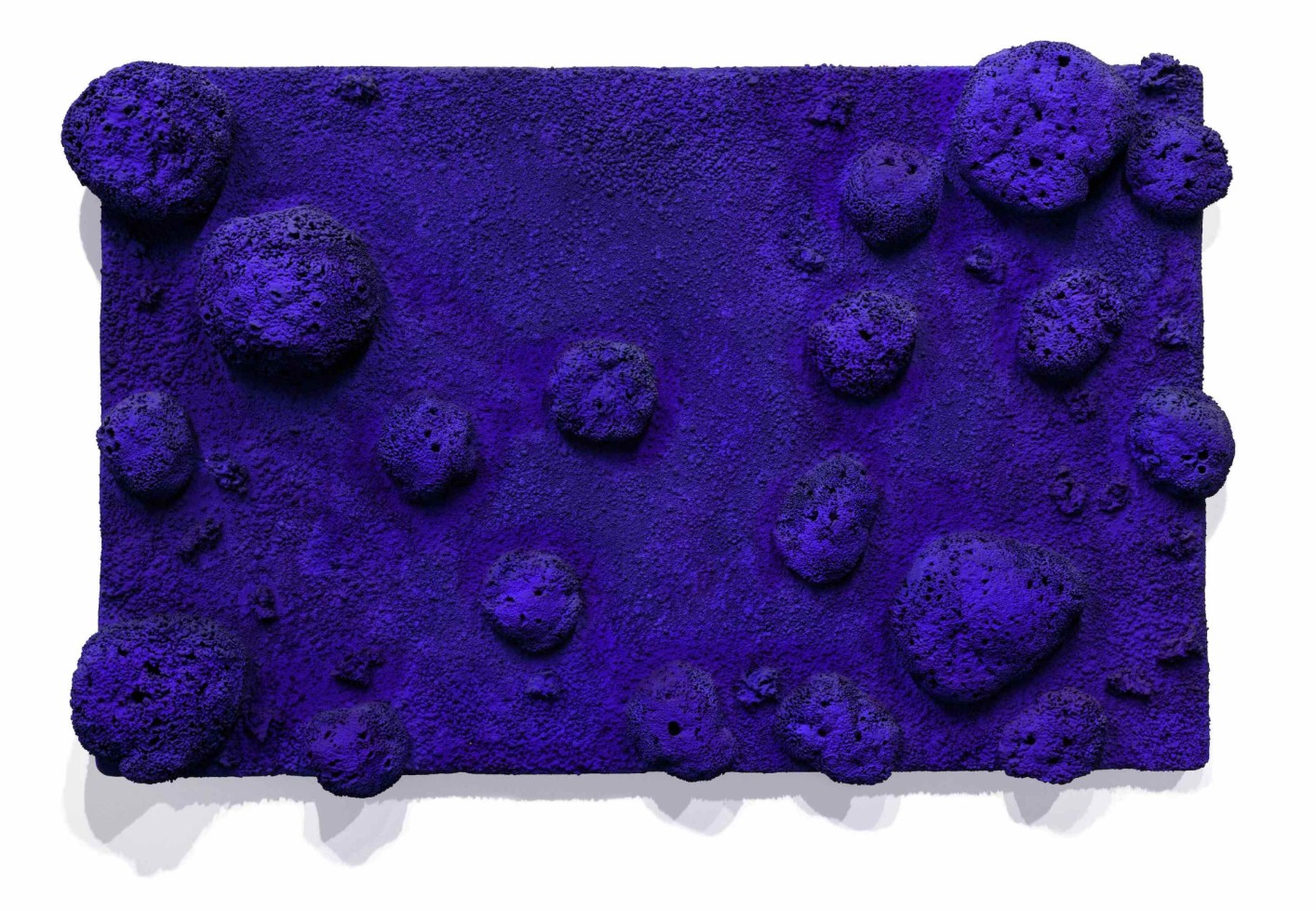
YVES KLEIN (1928 – 1962)
Relief Éponge bleu sans titre, (RE 28), 1961
Dry pigment and synthetic resin, natural sponges and pebbles on panel
78.7 x 128 cm (31 x 50-3/8 inches)
Signed with the artist’s initials YK (on the reverse)
USD 1 million
#2. Untitled Blue Sponge (SE 77), circa 1960
Farsetti Arte Milan: 1 June 2024
Estimated: EUR 350,000 – 450,000
EUR 300,000 (Hammer)
EUR 378,500 / USD 410,725
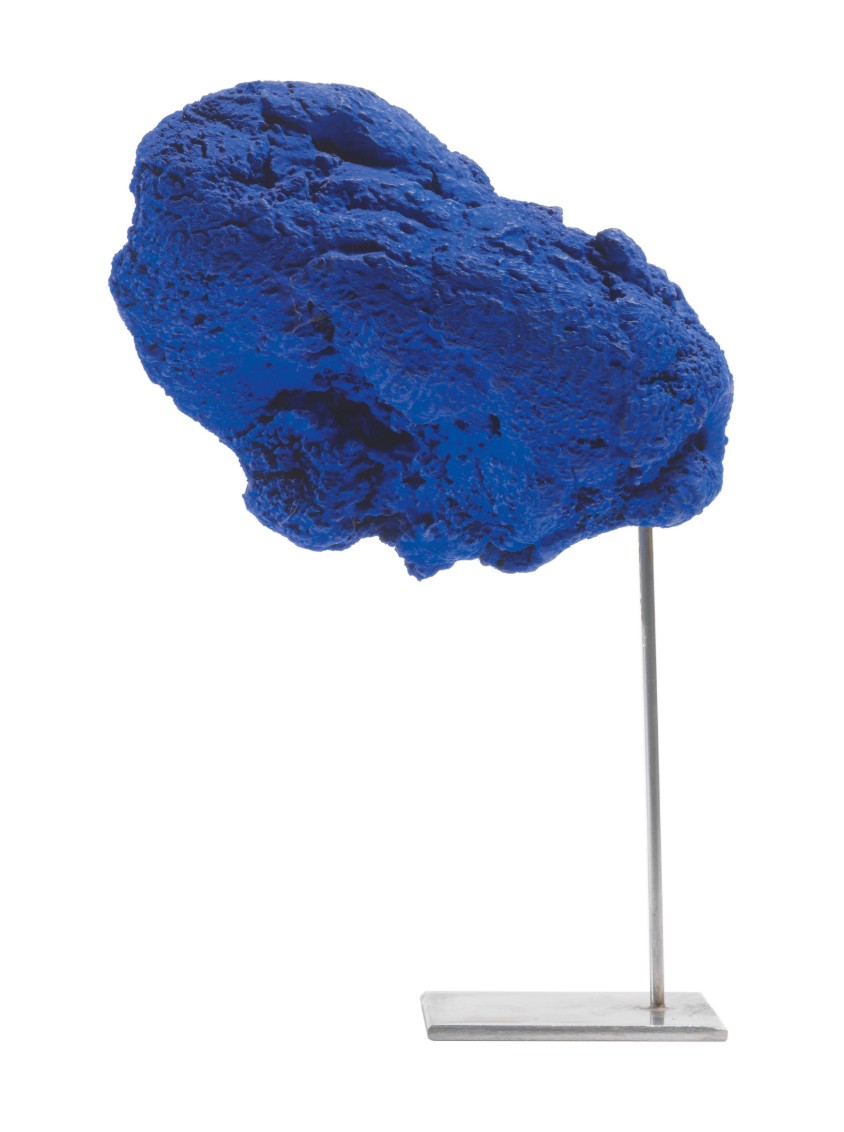
YVES KLEIN (Nice, 1928 – Paris, 1962)
Untitled Blue Sponge (SE 77), circa 1960
Pigment and synthetic resin, natural sponge, with metal base
20x12x10 cm (with base)
#3. Relief planetaire sans titre (RP 4), 1961
Sotheby’s New-York: 1 March 2024
Estimated: USD 300,000 – 400,000
USD 381,000
Yves Klein | Relief planetaire sans titre (RP 4) | Contemporary
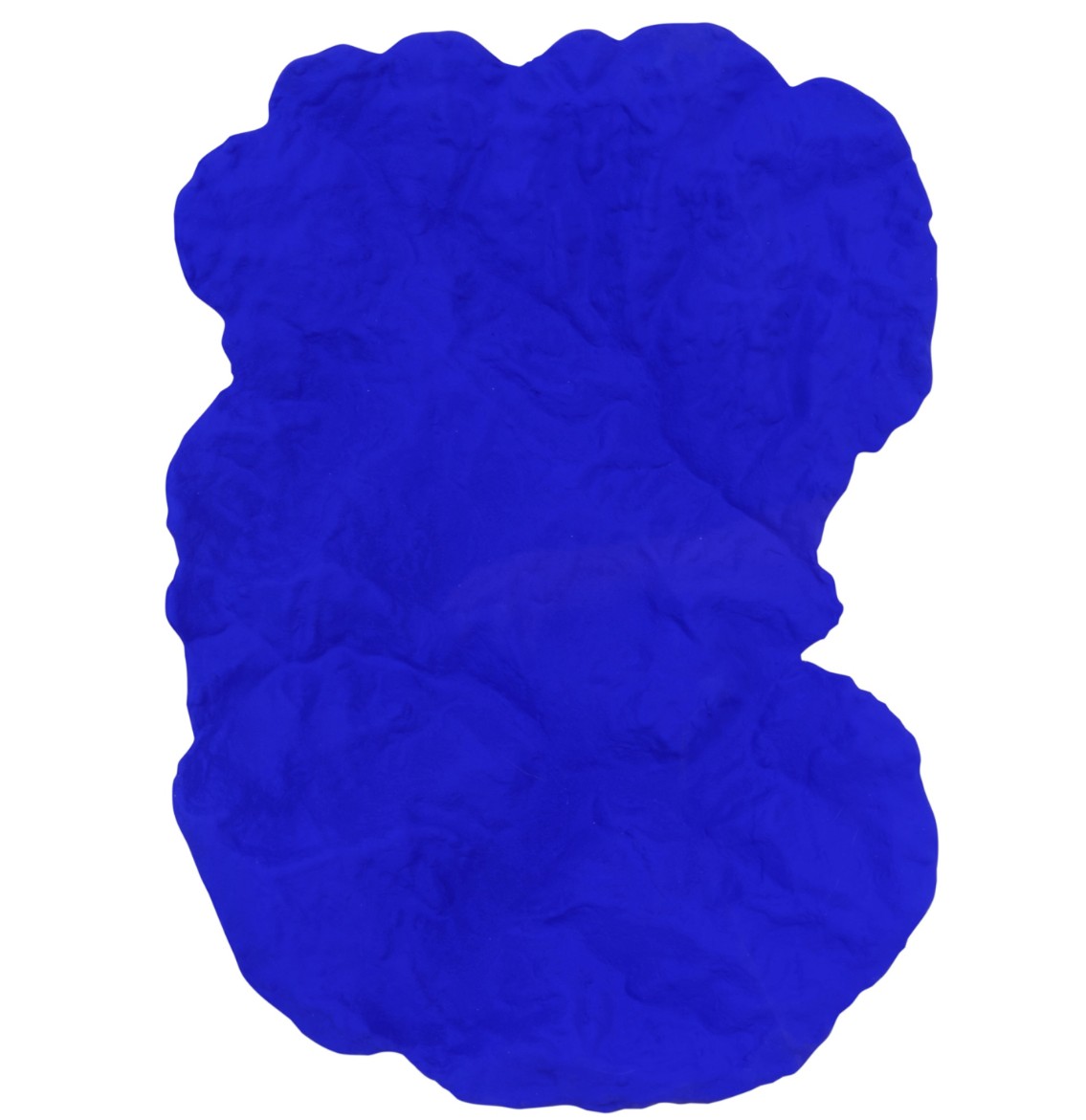
YVES KLEIN (1928 – 1962)
Relief planetaire sans titre (RP 4), 1961
Painted bronze
55 x 38 x 5.5 cm (21-5/8 x 15 x 2-1/4 inches)
Signed with the artist’s intial Y and numbered 5/6 (on the reverse)
This work is number 5 from an edition of 6, plus 2 artist’s proofs and 2 hors commerce
#4. Untitled Blue Monochrome (IKB 154), 1959
Bukowskis Stockholm: 23 October 2024
Estimated: SEK 2,000,000 – 4,000,000
SEK 2,600,000 (Hammer)
SEK 3,250,000 / USD 308,290
Yves Klein, “Untitled Blue Monochrome (IKB 154)”. – Bukowskis
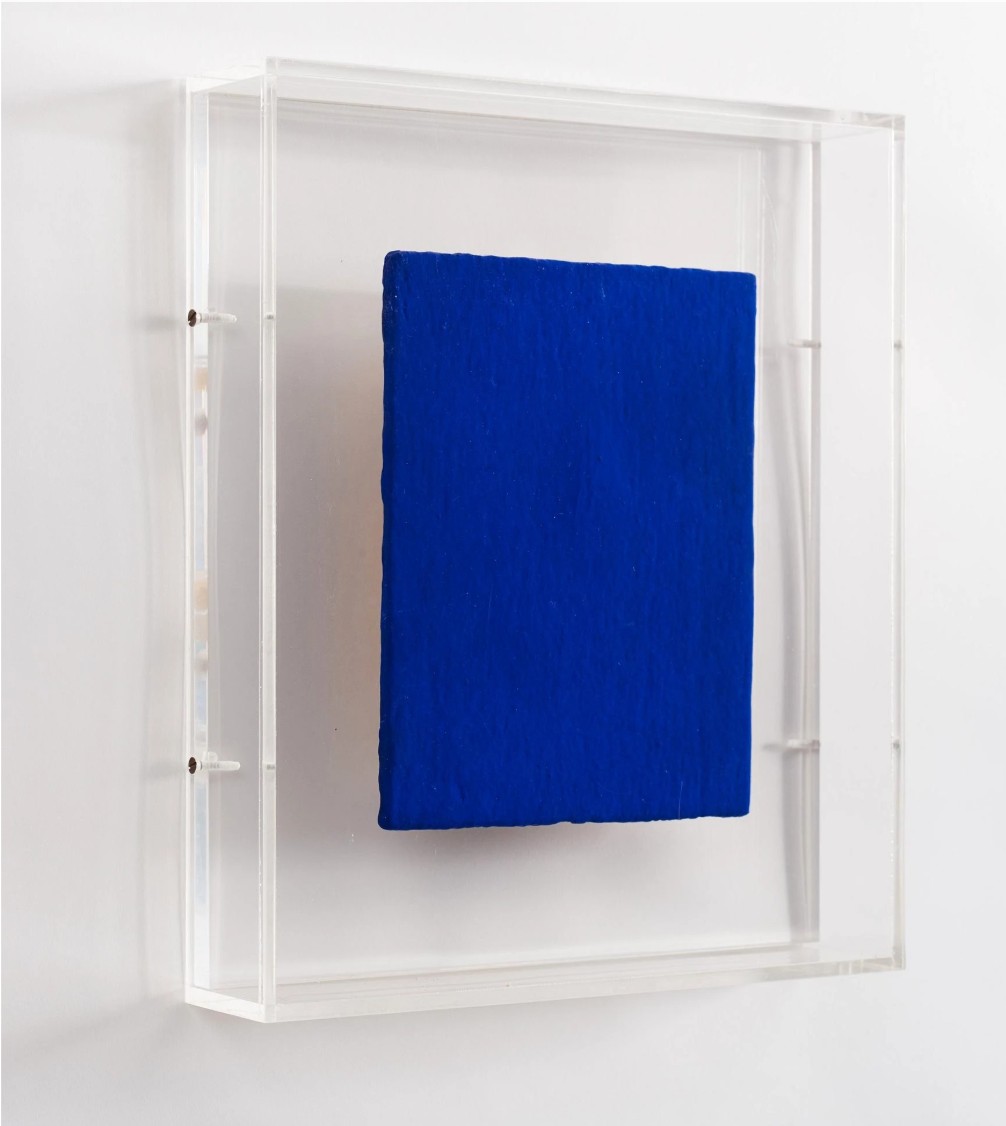
YVES KLEIN (France, 1928-1962)
“Untitled Blue Monochrome (IKB 154)”, 1959
Dry pigment and synthetic resin on gauze laid down on panel
14×18 cm
According to label verso by Mme Rotraut Klein-Moquay
Signed Yves and dated 59
Also signed with the artist’s star monogram
#5. Untitled Blue Monochrome (IKB 149), 1959
Sotheby’s London: 26 June 2024
Estimated: GBP 120,000 – 180,000
GBP 216,000 / USD 272,675
WORK ON PAPER
Yves Klein | Untitled Blue Monochrome (IKB 149) | Contemporary Day
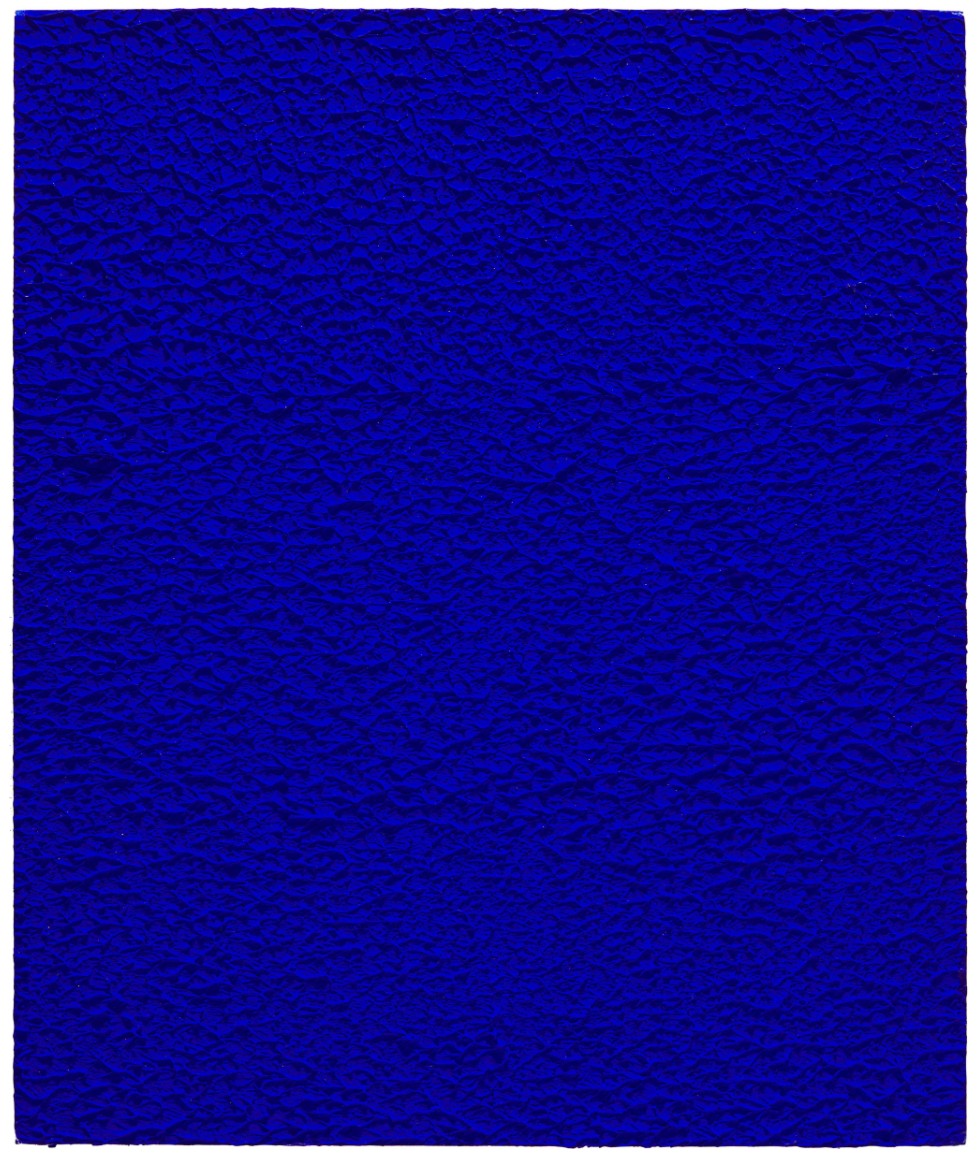
YVES KLEIN (1928 – 1962)
Untitled Blue Monochrome (IKB 149), 1959
IKB pigment and synthetic resin on paper
21.4 x 17.9 cm (8-3/8 x 7 inches)
Signed and dated 59 (on the verso)
#6. IKB 12, circa 1959
Piasa Paris: 27 November 2024
Estimated: EUR 100,000 – 150,000
EUR 221,000 / USD 233,710
Yves Klein (1928-1962) | Piasa
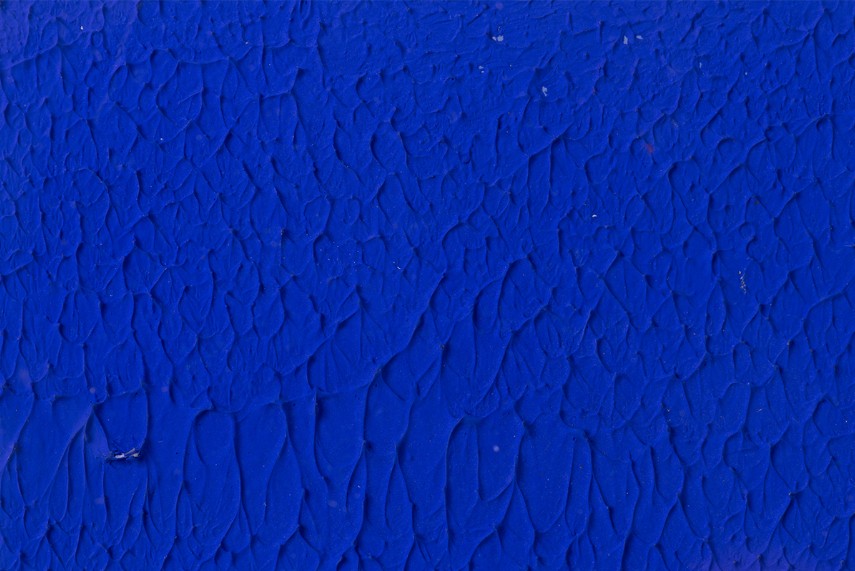
YVES KLEIN (1928-1962)
IKB 12, circa 1959
IKB pigment and synthetic resin on paper
7×10 cm
Titled on the back
#7. Untitled Blue Monochrome (IKB 327), 1959
Bukowskis Stockholm: 25 April 2024
Estimated: SEK 1,500,000 – 1,700,000
SEK 1,950,000 (Hammer)
SEK 2,437,500 / USD 223,895
Yves Klein, ‘Untitled Blue Monochrome (IKB 327)’. – Bukowskis
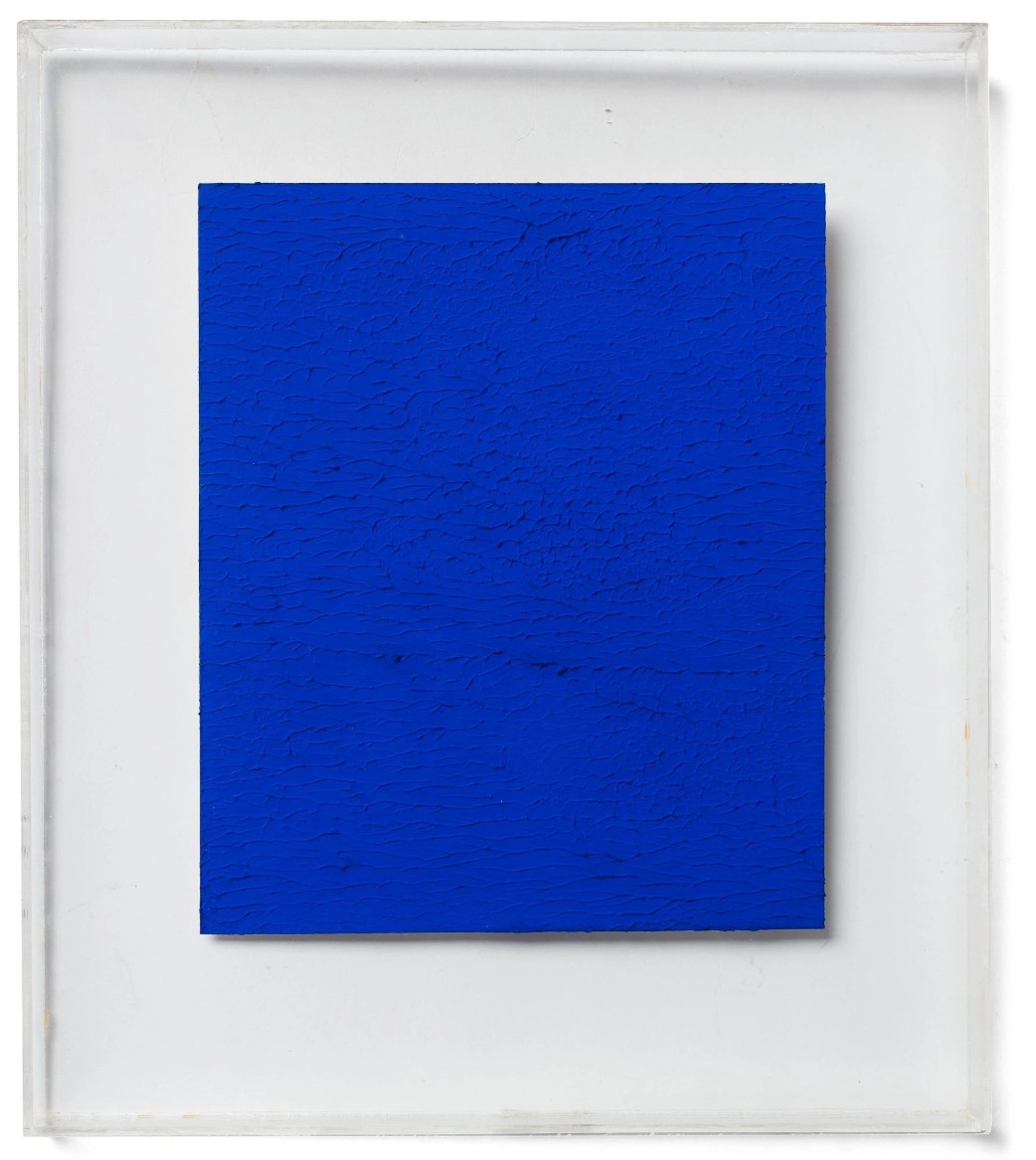
YVES KLEIN (France, 1928-1962)
‘Untitled Blue Monochrome (IKB 327)’, 1959
Pure pigment and synthetic resin on cartolin
21.5 x 18 cm
Signed Yves verso
Also stamped Iris Clert verso
#8. Monochrome bleu sans titre (IKB 326), 1959
Martini Studio d’Arte: 12 June 2024
Estimated: EUR 150,000 – 200,000
EUR 150,000 (Hammer)
EUR 187,500 / USD 201,240
Yves Klein work of art at auction: Monochrome bleu sans titre (IKB 326) ‑ Martini Studio d’Arte
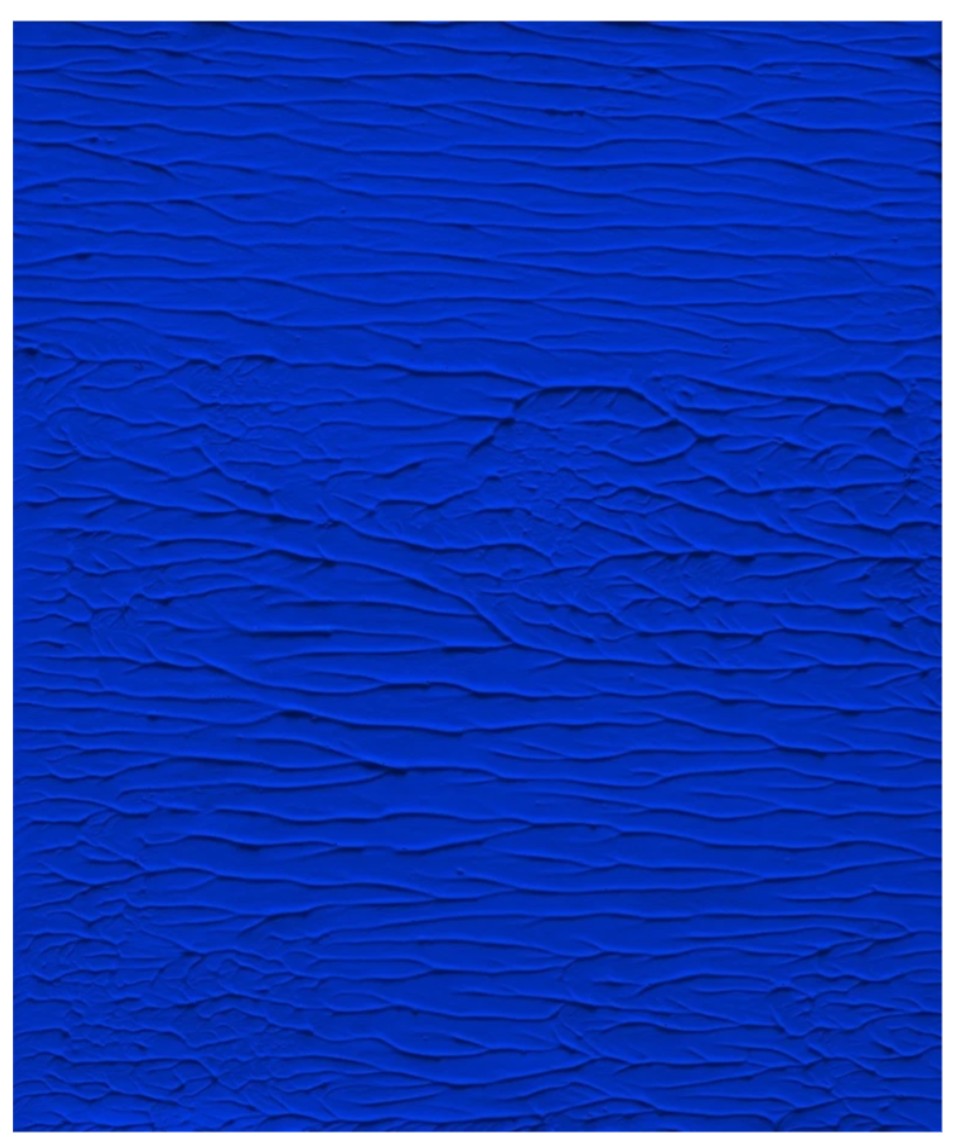
YVES KLEIN
Monochrome bleu sans titre (IKB 326), 1959
Pure pigment and synthetic resin on cartoline applied on board
21.5 x 18 cm
Galleria del Leone, Venice stamp on the back
Work registered at the Yves Klein Archive, Paris n. IKB 326
#9. Monochrome Rouge (M66), 1957
Van Ham Cologne: 27 November 2024
Estimated: EUR 80,000 – 120,000
EUR 171,600 / USD 181,095
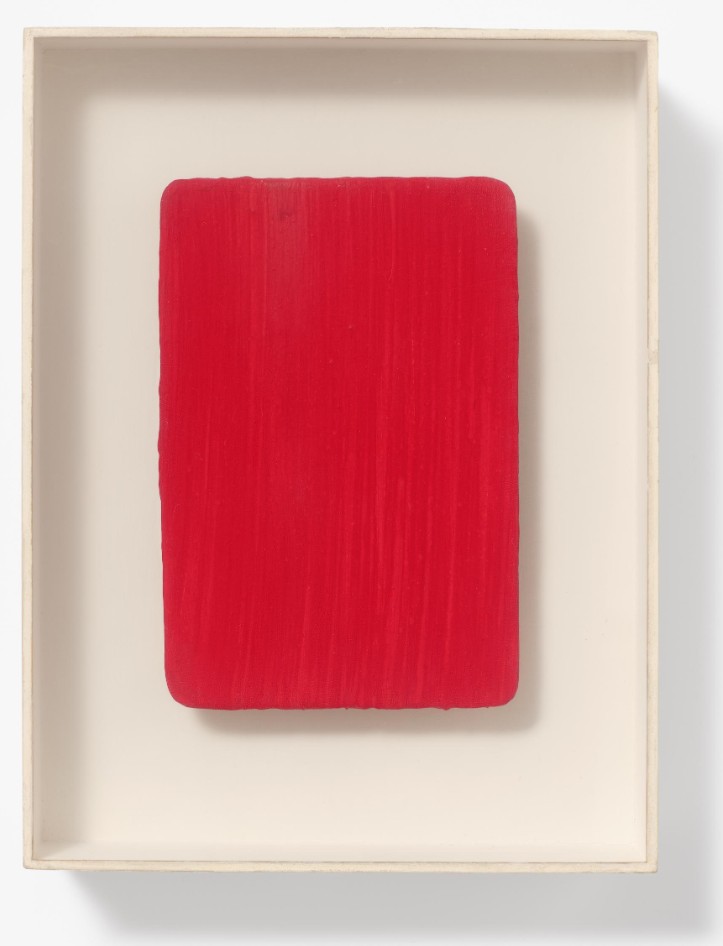
YVES KLEIN (1928 Nice – 1962 Paris)
Monochrome Rouge (M66), 1957
Mixed media on beaverboard
18×12 cm
Monogrammed and dated verso centre: YK (artist’s signet) 57
USD 100,000
#10. Untitled Blue Sponge Sculpture (SE 87), 1960
Sotheby’s London: 26 June 2024
Estimated: GBP 30,000 – 40,000
GBP 57,600 / USD 72,715
Yves Klein | Untitled Blue Sponge Sculpture (SE 87) | Contemporary
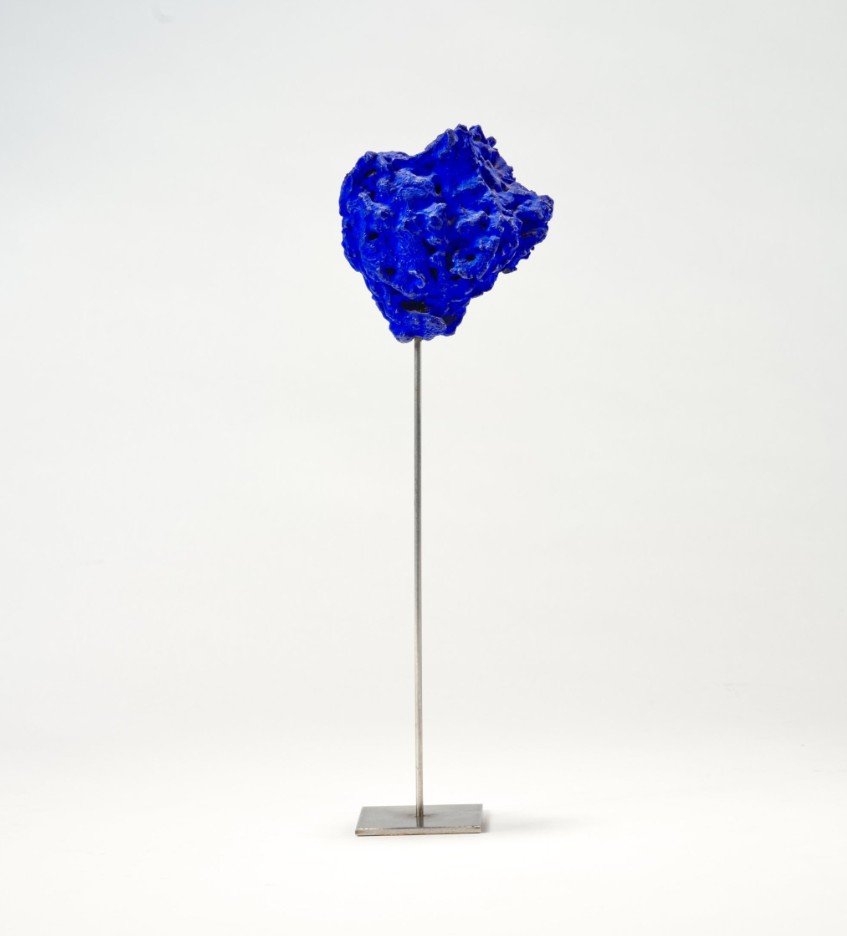
YVES KLEIN (1928 – 1962)
Untitled Blue Sponge Sculpture (SE 87), 1960
Synthetic resin pigment and natural sponge mounted on metal
Sponge: 9.5 x 9 x 6.2 cm (3-3/4 x 3-1/2 x 2-1/2 inches)
Overall: 28.7 x 8.9 x 5.3 cm (11-1/4 x 3-1/2 x 2-1/8 inches)
Registered in the Archives Yves Klein, Paris, under number SE 87
#11. Sculpture éponge bleue sans titre (SE 287), 1961
Christie’s London: 10 October 2024
Estimated: GBP 25,000 – 35,000
GBP 40,320 / USD 52,630
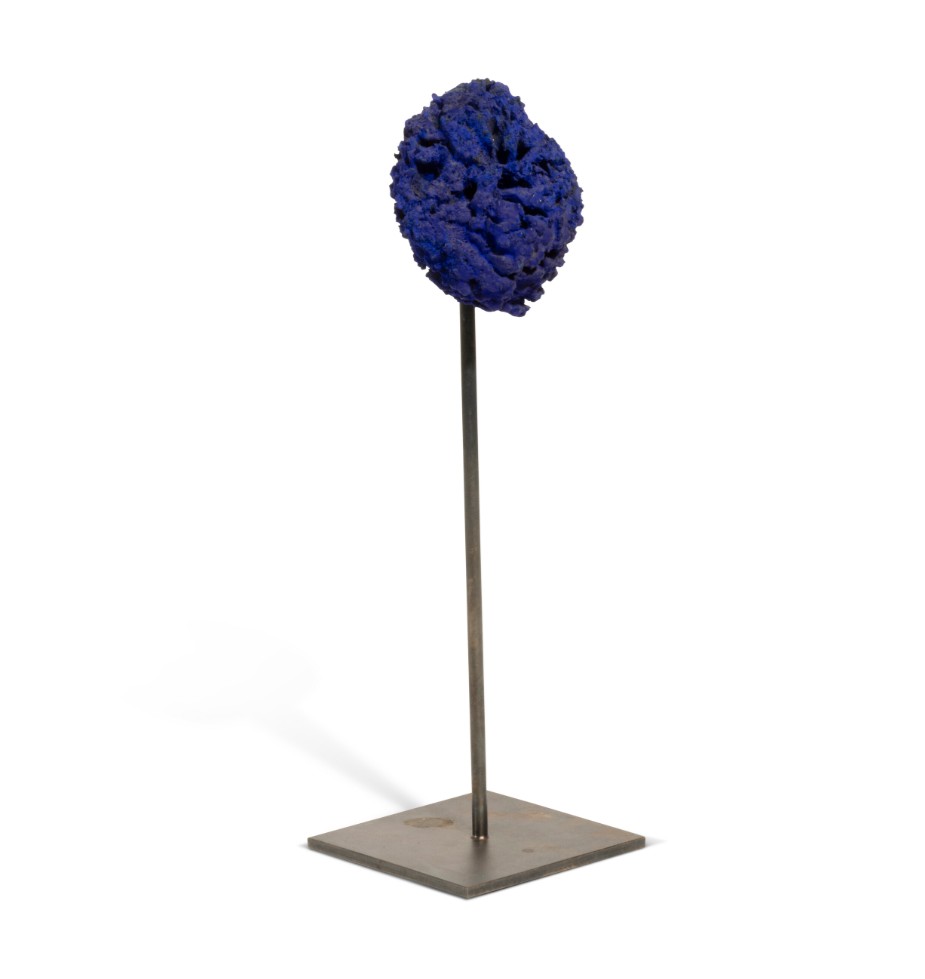
YVES KLEIN (1928-1962)
Sculpture éponge bleue sans titre (SE 287), 1961
(Untitled Blue Sponge Sculpture (SE 287))
Dry pigment and synthetic resin on natural sponge
6.5 x 7 x 4.4 cm (2-1/2 x 2-3/4 x 1-3/4 inches)
2023 Auction Results
#1. Monochrome bleu sans titre, (IKB 102), 1956
Christie’s Paris: 20 October 2023
Estimated: EUR 1,500,000 – 2,000,000
EUR 2,823,000 / USD 2,989,755
Yves Klein (1928-1962), Monochrome bleu sans titre, (IKB 102) | Christie’s
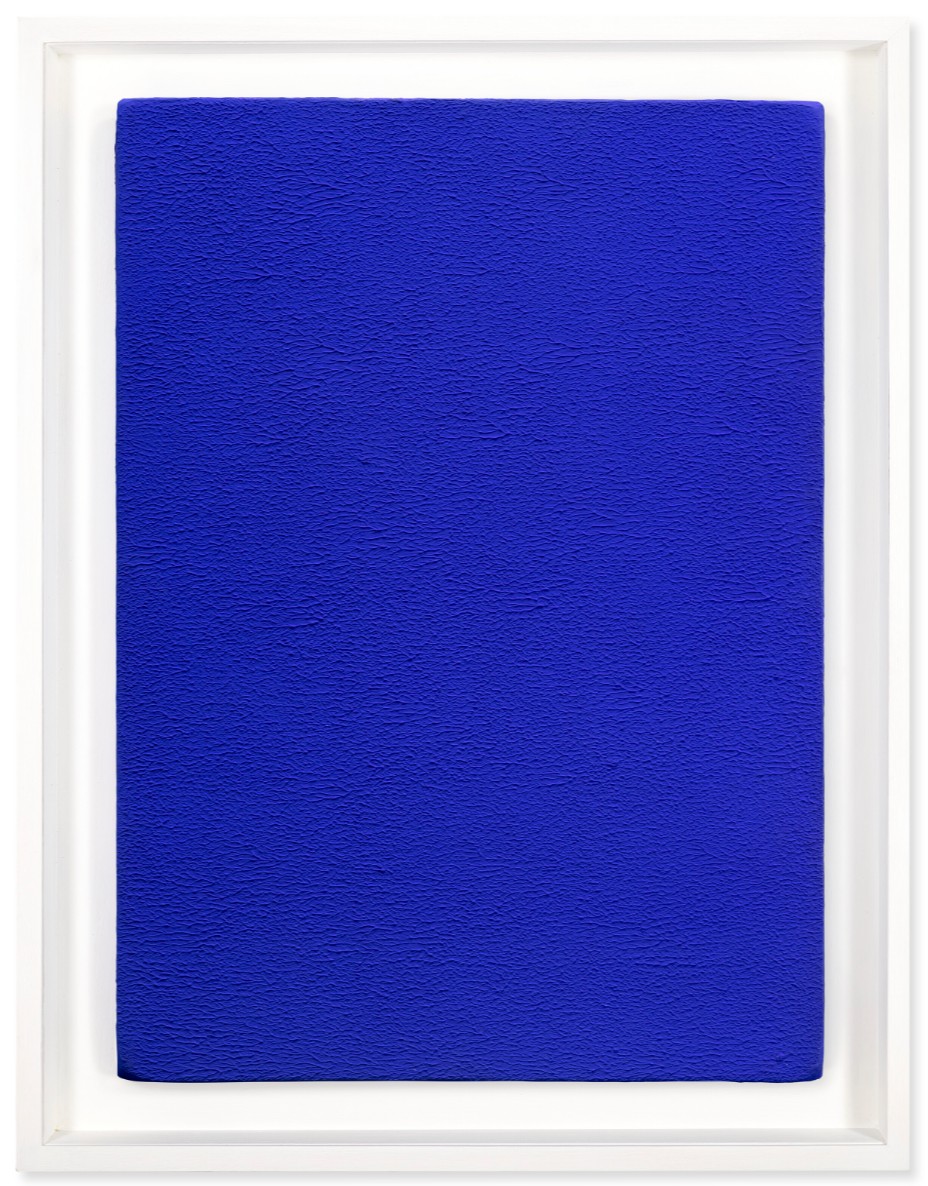
YVES KLEIN (1928-1962)
Monochrome bleu sans titre, (IKB 102), 1956
Dry pigment and synthetic resin on canvas mounted on panel
78.2 x 56.2 cm (30-3/4 x 22-1/8 inches)
Signed, signed with the star, dated and inscribed ‘Yves 56’ (on the overlap)
#2. Untitled anthropométrie (ANT 9), 1960
Property from a prestigious collection
Sotheby’s Paris: 5 June 2023
Estimated: EUR 3,000,000 – 5,000,000
EUR 2,589,000 / USD 2,768,370
Yves Klein | Untitled anthropométrie (ANT 9) | Art Contemporain
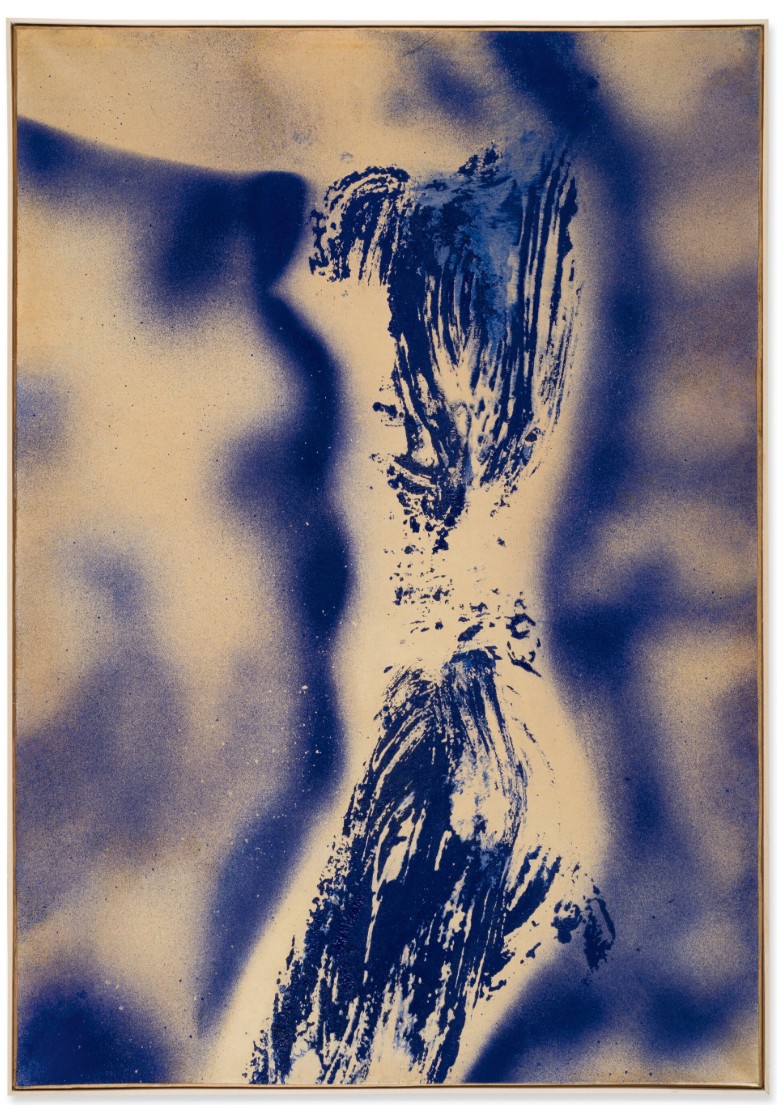
YVES KLEIN (1928 – 1962)
Untitled anthropométrie (ANT 9), 1960
IKB pigment on paper laid down on canvas
76×54 cm (29-7/8 x 21-1/4 inches)
#3. Accord Bleu (RE 52), 1958
Sotheby’s Paris: 19 October 2023
Estimated: EUR 4,000,000 – 7,000,000
EUR 2,589,000 / USD 2,736,510
Yves Klein | Accord Bleu (RE 52) | Modernités | 2023 | Sotheby’s
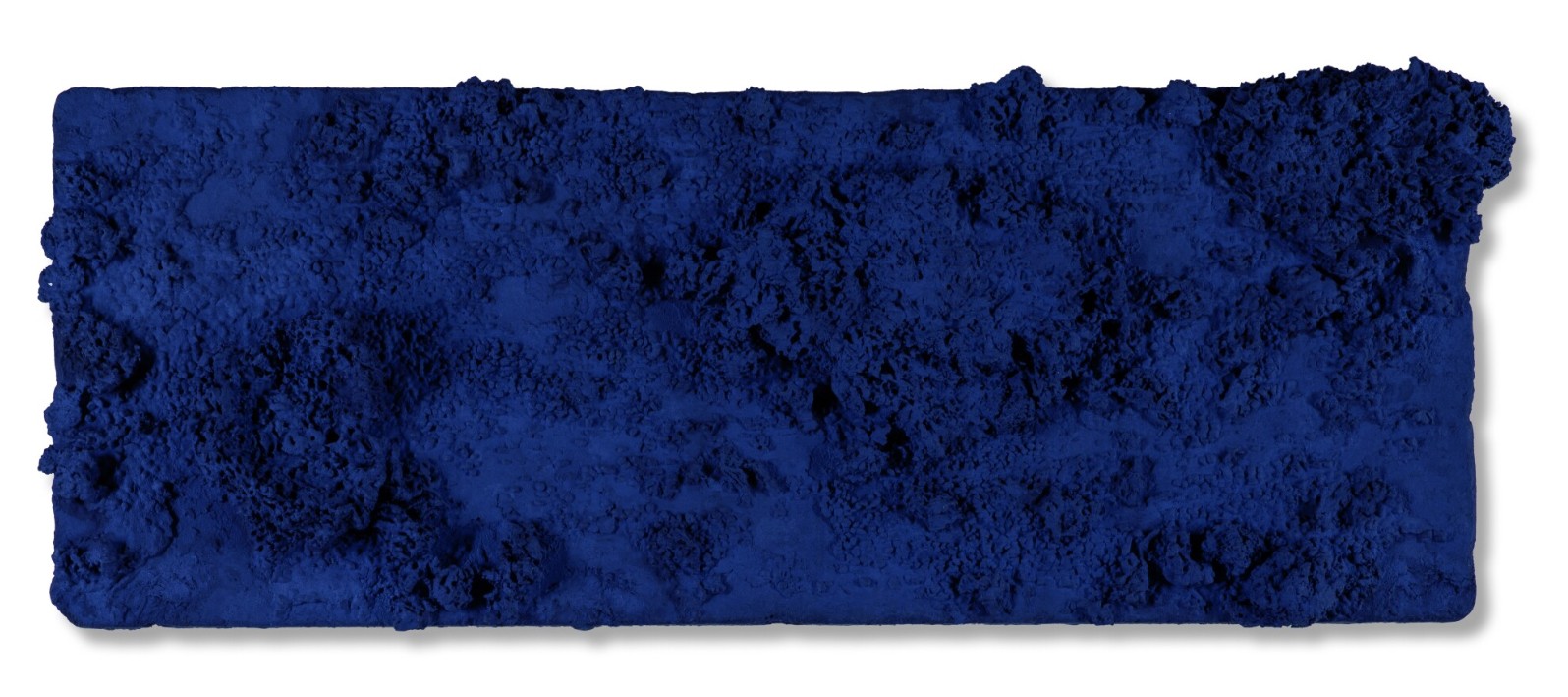
YVES KLEIN (1928 – 1962)
Accord Bleu (RE 52), 1958
Dry pigment in synthetic resin, natural sponges and pebbles on board
52 x 136.5 x 7.6 cm (20-1/2 x 53-3/4 x 3 inches)
Signed, titled, dated 58 and inscribed on the reverse
#4. Anthropométrie Sans Titre (ANT 27), 1960
Property from an Esteemed European Collection
Sotheby’s New-York: 18 May 2023
Estimated: USD 3,000,000 – 5,000,000
USD 2,601,000
Yves Klein | Anthropométrie Sans Titre (ANT 27) | Contemporary
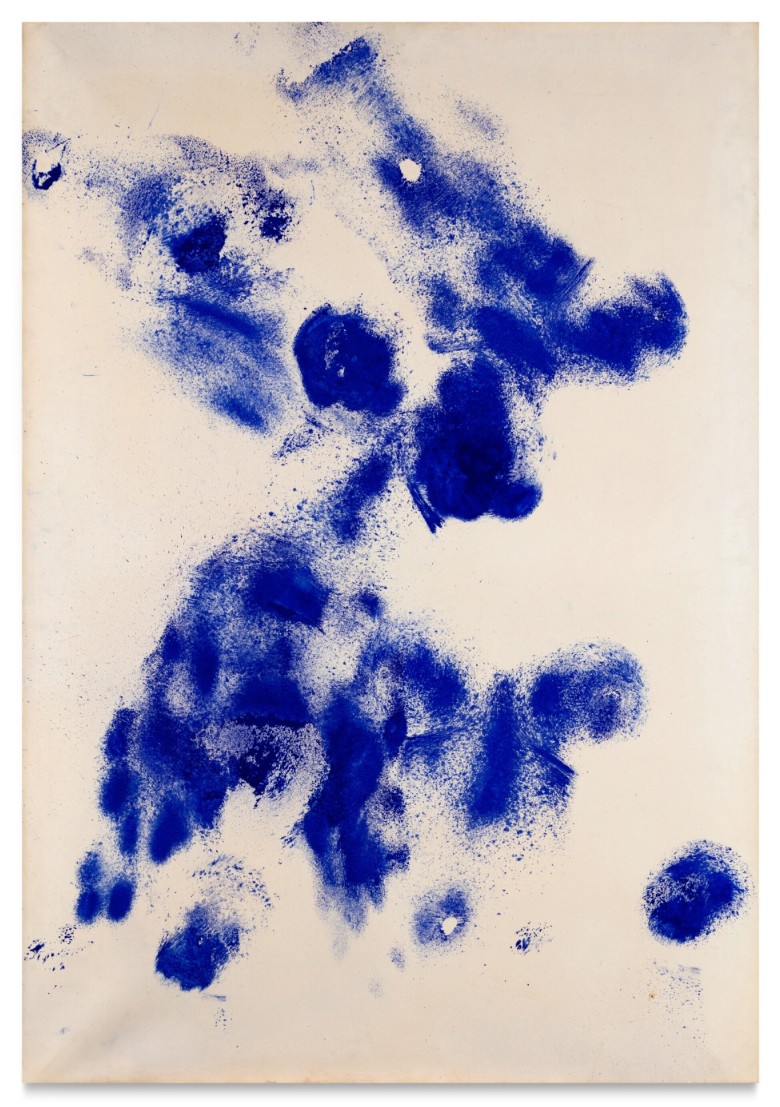 YVES KLEIN (1928 – 1962)
Anthropométrie Sans Titre (ANT 27), 1960
IKB pigment on paper laid down on canvas
108.3 x 75 cm (42-5/8 x 29-1/2 inches)
Monogrammed, signed and dated 1960 (lower right)
#5. Sculpture éponge bleue sans titre (SE 328), circa 1959
Christie’s London: 28 February 2023
Estimated: GBP 600,000 – 800,000
GBP 1,122,000 / USD 1,353,400
YVES KLEIN (1928-1962), Sculpture éponge bleue sans titre (SE 328) | Christie’s
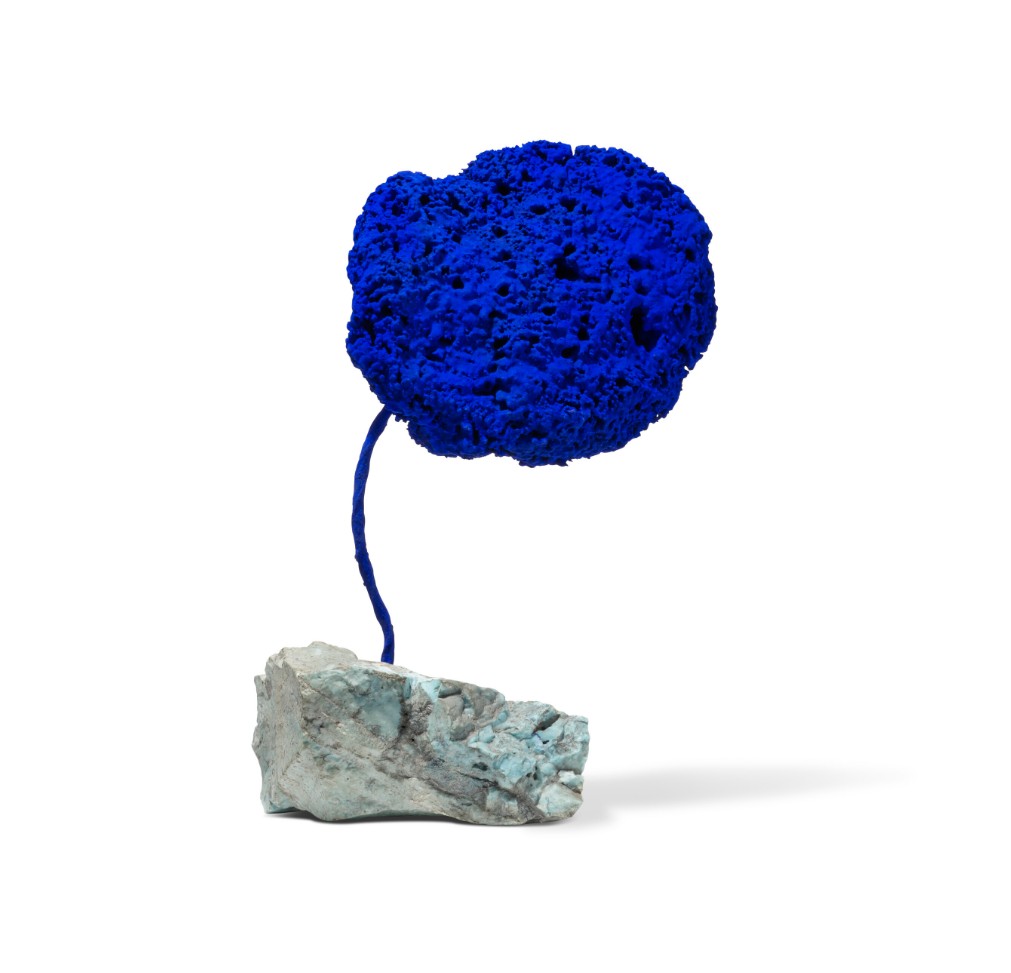
YVES KLEIN (1928-1962)
Sculpture éponge bleue sans titre (SE 328), circa 1959
Dry pigment and synthetic resin on natural sponge, metal rod and stone base
Sculpture: 35x28x12 cm (13-3/4 x 11 x 4-3/4 inches)
Base: 10.8 x 17.8 x 18 cm (4-1/4 x 7 x 7-1/8 inches)
Overall: 45.8 x 29 x 18 cm (18 x 11-3/8 x 7-1/8 inches)
Anthropométrie sans titre, (ANT 149), 1958
LIVING THE AVANT-GARDE: THE TRITON COLLECTION FOUNDATION
Phillips New-York: 14 November 2023
Estimated: USD 800,000 – 1,200,000
USD 1,016,000
Yves Klein Living the Avant-Garde: The Triton Collection Foundation, Evening Sale Part I
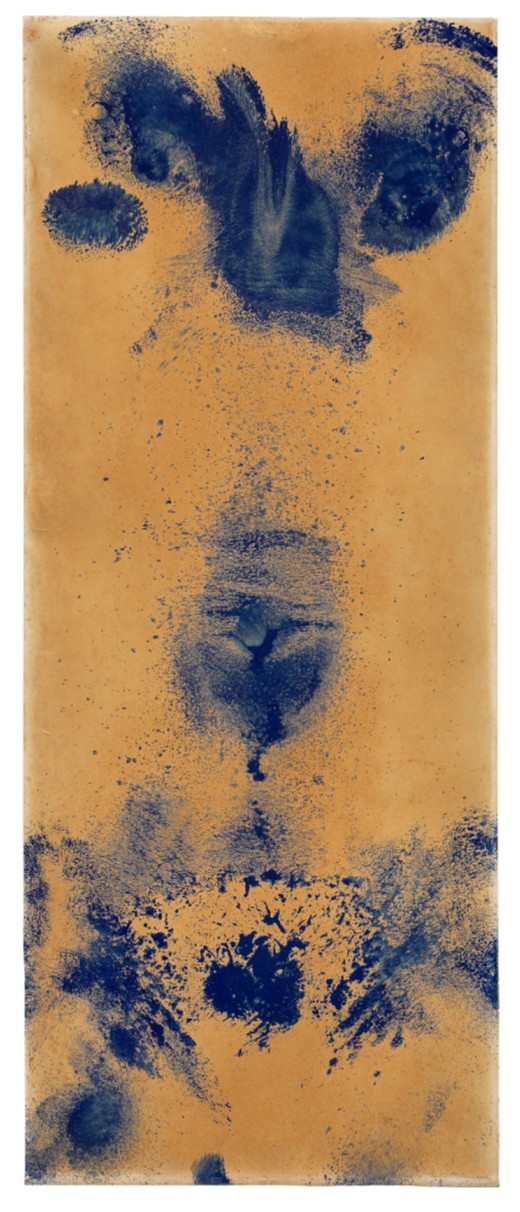
YVES KLEIN
Anthropométrie sans titre, (ANT 149), 1958
Pigment and synthetic resin on wove paper
61.9 x 25.1 cm (24-3/8 x 9-7/8 inches)
Signed “Yves Klein” on the reverse
Registered in the Yves Klein Archives under number ANT 149
FOCUS
IKB
Untitled blue monochrome, (IKB 272), 1956
Leonard & Louise Riggio: Collected Works
Christie’s New-York: 12 May 2025
Estimated: USD 2,000,000 – 3,000,000
USD 2,228,000
YVES KLEIN (1928-1962), Untitled blue monochrome, (IKB 272) | Christie’s
YVES KLEIN (1928-1962)
Untitled blue monochrome, (IKB 272), 1956
Dry pigment and synthetic resin on gauze mounted on panel
77.5 x 55.9 cm (30-1/2 x 22 inches)
Triumphantly announcing the arrival of Yves Klein’s iconic blue paintings, the artist’s Untitled blue monochrome, (IKB 272), a panel of vivid ultramarine blue exuding extra-dimensional depth, is one of the eleven original blue monochromes exhibited at Galleria Apollinaire’s legendary 1957 show Yves Klein: Proposte monochrome, Epoca Blu. This celebrated exhibition saw the first unveiling of International Klein Blue (IKB), Klein’s groundbreaking chromatic innovation which fundamentally altered the course of art history. Untitled blue monochrome, (IKB 272) potently advances Klein’s conception of color as the ultimate artistic achievement, allowing the viewer to “bathe in cosmic sensibility,” liberated from the oppressive nature of line and form (quoted in P. Karmel, “Yves Klein: Supernova,” in Yves Klein: A Career Survey, exh. cat., L&M Arts, New York, 2005, p. 11). Klein’s singular achievement in Untitled blue monochrome, (IKB 272) is announced by the noted author Dino Buzzati, who proclaimed that, “in terms of figurative renunciation, formal purity or abstractionism, we will not be able to go further for centuries” (“Blu Blu Blu: Un fenomeno alla Galleria Apollinaire,” Corriere d’Informazione, 9-10 January 1957).
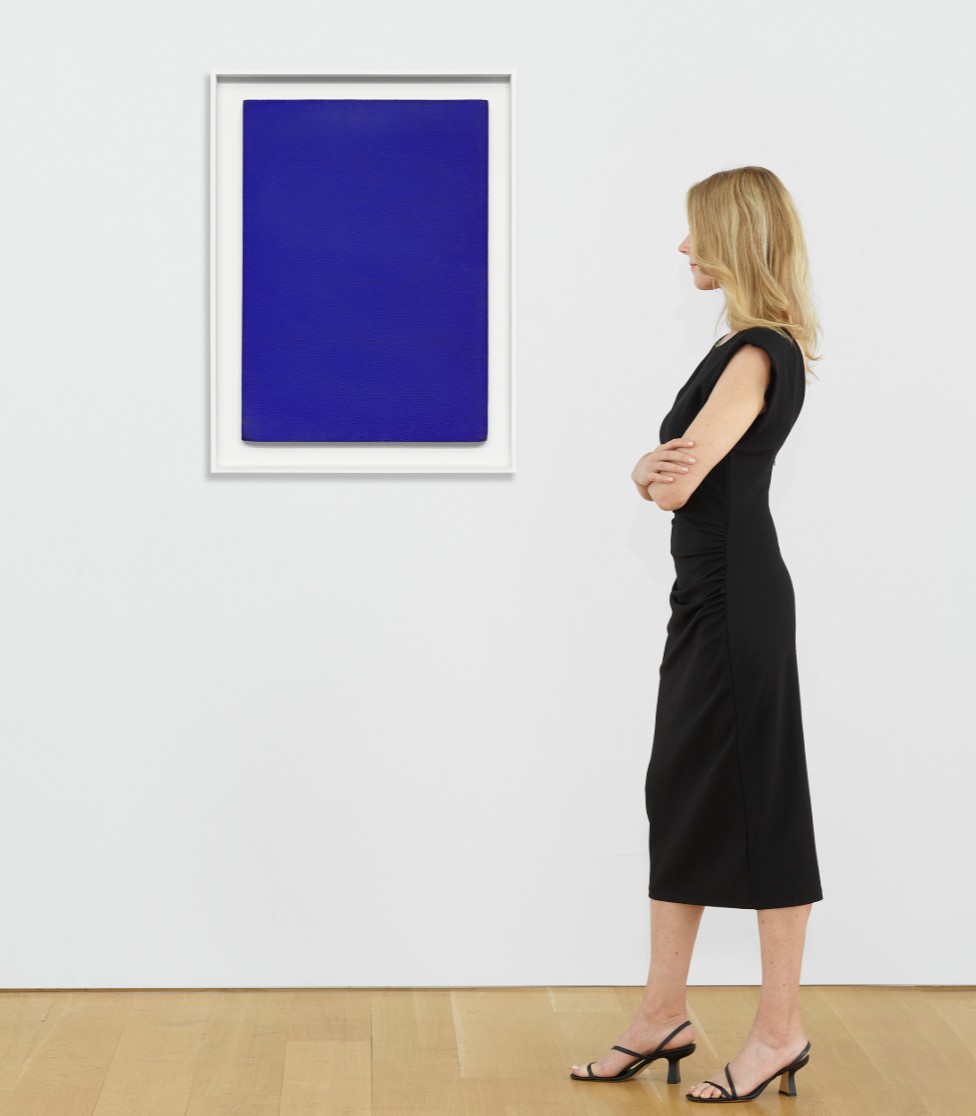
Klein conceived his solo show entirely of blue works after realizing that audiences were misinterpreting his previous exhibitions of different colored monochromes as purely decorative. The artist considered his unique blue color to have a quality closest to pure space, associating it with immateriality—evoking a spiritual silence, wherein one might find their own inner meaning. In the present work, Klein used a paint roller to apply his blue pigment over his gauze-covered wooden panel treated with casein, creating a decadent, velvety texture exhibiting an almost unearthly appearance of depth. This distinctive textured surface is exemplary of his earliest Monochromes and crucial to the work’s conceptual apparatus. The delicate ridges that occur organically across the surface ensures the picture functions as a field generating an alternative vision, preventing the viewer from seeing the work as an individualized rectangular shape and instead allowing the support to disappear, revealing the immaterial sublime.
With the present work, Klein consolidates his position at the forefront of the European avant-garde, propelling the possibilities of paint past figuration toward what he with the art critic Pierre Restany termed Nouveau Réalisme. Untitled blue monochrome, (IKB 272) in a sense goes beyond abstraction, aiming to put its viewership into a spiritual state of mind through the establishment of an immaterial void. Klein’s friend and fellow artist Jean Tinguely describes Klein as a “iconoclastic anti-painter” rebelling not just against art history, but painting itself (quoted in M. Koddenberf, Yves Klein: in/out studio, New York, 2016, p. 9).
Yet, in favoring color over form or line, Klein inserts himself in a lineage of artists leading all the way back to Giotto. Visiting Assisi in 1958, Klein wrote on a postcard sent to his gallerist Iris Clert: “In the basilica of St. Francis there are monochromes that are completely blue. It really is incredible, the imbecility of art historians who had never spotted this before. They are all signed ‘Giotto.’ What a precursor! Talk about a precursor! Long live Giotto!” (Postcard to Iris Clert, 7 April 1958, The Estate of Yves Klein). The recto image of the postcard shows a reproduction of Giotto’s fresco depicting the legend of Saint Francis, the saint’s robes colored a rich, ultramarine blue duplicated in the luminous sky.

Klein’s radical blue paintings proved an immediate sensation, enrapturing artists, critics, and the broader public. Italian artists Piero Manzoni and Lucio Fontana were both inspired by Klein’s revelatory blue paintings, directly leading Manzoni to his Achrome series of white paintings, and Fontana to purchasing a work from the exhibition, now at Fondazione Lucio Fontana. Galleria Apollinaire became a celebrated convening point for the avant-garde, attracting prominent figures including Adriano and Ada Parisot, Lutka Pink, Claude Bellegrade; collectors Italo Magliano and Peppino Palazzoli purchased works from the show, and other examples shown in the exhibition now reside in institutions including the Staatsgalerie Stuttgart and the Museu Coleção Berardo, Lisbon. Untitled blue monochrome, (IKB 272) reveals the first definitive thrust Klein made into his famous explorations in his namesake blue pigment which propelled him to worldwide acclaim. This powerful, rare work is the terminus a quo of his pivotal Blue Period, from which his Anthropométries and Archisponges claim their proud inheritance.
Reliefs planétaires
Relief Planétaire Terre (Marseille, Aix), (RP 24), 1961
Christie’s Paris: 28 May 2025
Estimated: EUR 600,000 – 800,000
EUR 1,613,000 / USD 1,828,745
Yves Klein (1928-1962), Relief Planétaire Terre (Marseille, Aix), (RP 24) | Christie’s
YVES KLEIN (1928-1962)
Relief Planétaire Terre (Marseille, Aix), (RP 24), 1961
IKB pigment on plaster and relief map mounted on panel
61 x 48.2 cm (24×19 inches)
Signed, titled and dated
”’Relief Planétaire Terre. (Marseille, Aix)” Yves Klein 1961′
(on the reverse)
“The sky is very black. The Earth is blue. Everything can be seen very clearly.” – Yuri Gagarin, 1961
On 12 April 1961, Yuri Gagarin became the first man to enter outer space, and saw our planet from afar. ‘The sky is very black’, he reported. ‘The Earth is blue. Everything can be seen very clearly.’ Humankind’s view of our place in the universe was forever changed—and Yves Klein was confirmed in his belief that the Earth was blue. Following the cosmonaut’s adventure, Klein embarked on a series of Reliefs planétaires (‘Planetary Reliefs’). An extension of his iconic monochromes, these works consist of raised-relief maps of areas of France coated in the artist’s signature IKB (‘International Klein Blue’) pigment. Relief Planetaire Terre (Marseille, Aix), (RP 24) (1961) captures the southern regions of Marseille and Aix-en-Provence. With hills, valleys, mountains and seas transformed into a mesmerising, textural expanse of blue, the work realizes Klein’s vision of a total monochromatic environment on the scale of his own country.
Klein was in New York when he heard of Gagarin’s achievement. Upon his return to France in the summer, he gleefully wrote to his friend and fellow artist Arman that the IKB impregnation of earth had been achieved. Gagarin, he said, had been the only visitor at his exhibition opening in space. Klein acquired embossed relief maps of France from the Institut Géographique National, and in August created his first Relief planétaire, a map of the Grenoble region infused with IKB. Between September and November 1961 he made approximately twenty further works in the series. Klein made plaster casts from the maps, spraying each surface with a uniform, granular coat of IKB pigment. He made additional pink reliefs that were based on the terrains of Mars and the Moon, their colour symbolizing the fires at work in the eternal genesis of the universe. A further series of galactic reliefs was planned, but their completion was intercepted by Klein’s untimely death in 1962.
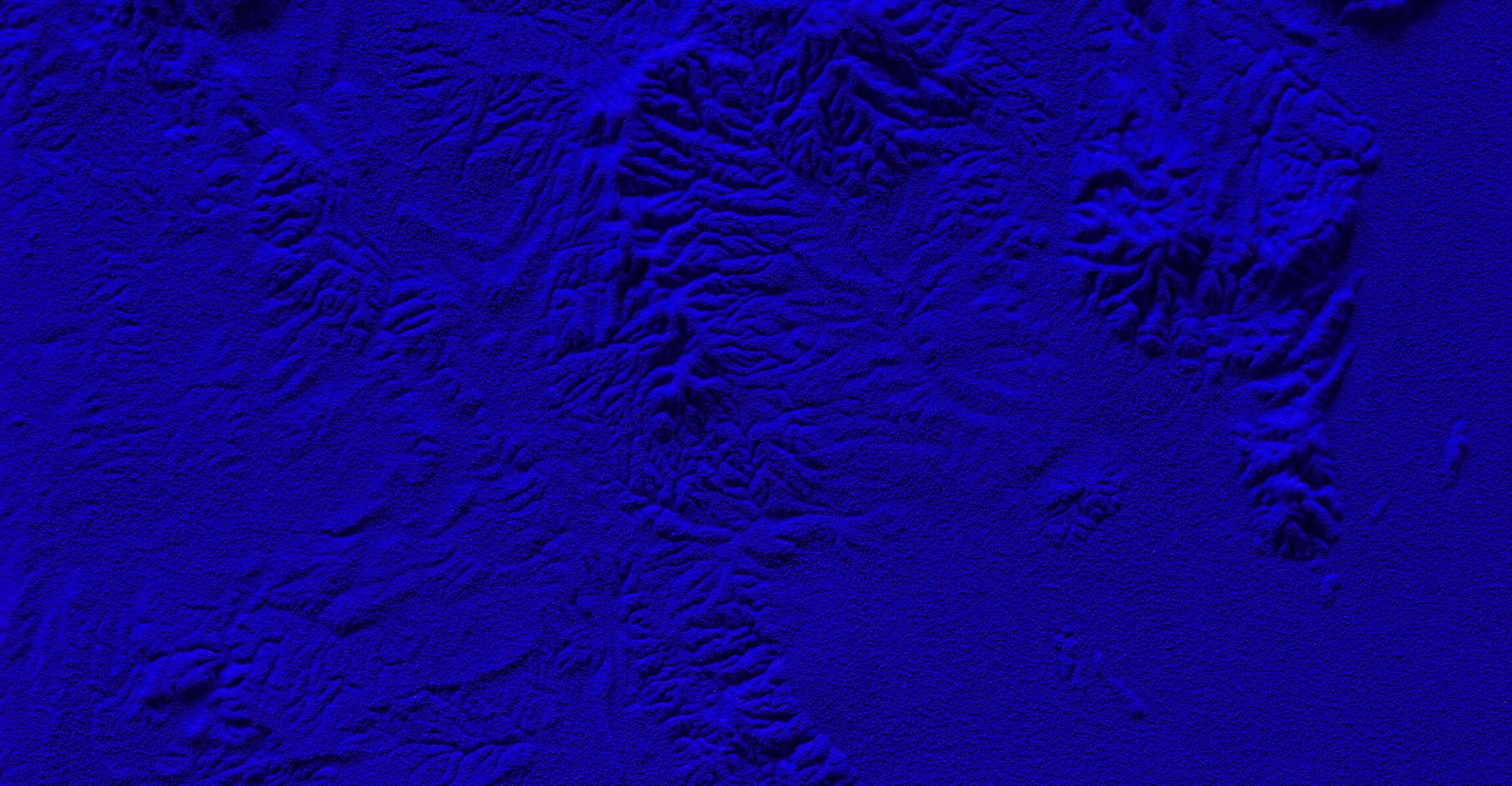
With his patented IKB pigment, Klein sought to dissolve boundaries, invoking an infinite, transcendent void where space and spirit became one. His monochromes are less paintings than sculptural objects, with their sensuous, grainy surfaces extending around the canvas edge: at the same time, they invite the viewer to take an imaginative leap into an immaterial zone. The Reliefs planétaires share this duality. While it derives from a specific landscape, the present work’s surface is also open to boundless associations. Its expansive blue recalls Klein’s claim that the Mediterranean sky outside his studio window was his first artwork. Its tactile undulations are equally evocative of seabeds, coral reefs and the raked sand of the Zen gardens that had inspired Klein during his time in Japan. That formative voyage had in fact begun in Marseille: Klein departed the port aboard the ocean liner La Marseillaise in 1952, bound for Yokohama.
“All colours bring forth associations of concrete, material, and tangible ideas, while blue evokes all the more the sea and the sky, which are what is most abstract in tangible and visible nature.”
Like the embroidered maps of Alighiero Boetti, Klein’s planetary reliefs open our eyes to new ways of seeing the world. In the present work he has changed the orientation of the map, rotating it ninety degrees to the left. This means that the terrain—which rises in an east-west direction in reality—descends vertically from the upper edge of the relief. The tongue of shallow definition at the lower centre is the Côte Bleue, the seafront that runs from the north of Marseille to Martigues. Marseille itself nestles between the limestone massifs of Étoile, Galarban and Saint-Cyr-Carpiagne towards the upper right. The well-defined wrinkle at the upper left, meanwhile, represents Mont Sainte-Victoire: the dramatic ridge made famous by the paintings of Paul Cézanne, perhaps Aix-en-Provence’s best-known resident.
In 1957 Klein had declared his desire to take all of France as his canvas and its people as his pigments, infusing the population with his immaterial sensibility. The country would be an all-encompassing artwork: ‘the richest in the world in spiritual, sensuous, natural radiance … The strength of France is art!’ (Y. Klein, quoted in K. Ottmann, Overcoming the Problematics of Art: The Writings of Yves Klein, New York, 2007, pp. xviii-xix). His representation of France in his Reliefs planétaires makes literal these ambitions. Amid the fine detail of the relief, Klein’s mystical IKB dissolves boundaries and renders geographic distinctions obsolete, with land and seas united in an infinity of blue. Klein liberates the cartographic field of the map into an immersive, borderless and transcendent realm of imagination.
Sculptures éponge
Sculpture éponge bleue sans titre (SE 167), circa 1959
Property from the Durand-Ruel Family Collection, Paris
Sotheby’s New-York: 18 November 2025
Estimated: USD 14,000,000 – 18,000,000
USD 19,060,000
Yves Klein | Sculpture éponge bleue sans titre (SE 167) | The Now &
YVES KLEIN (1928 – 1962)
Sculpture éponge bleue sans titre (SE 167), circa 1959
Dry pigment and synthetic resin on natural sponge on a metal rod mounted on stone
138.4 x 69.9 x 54 cm (54-1/2 x 27-1/2 x 21-1/4 inches)
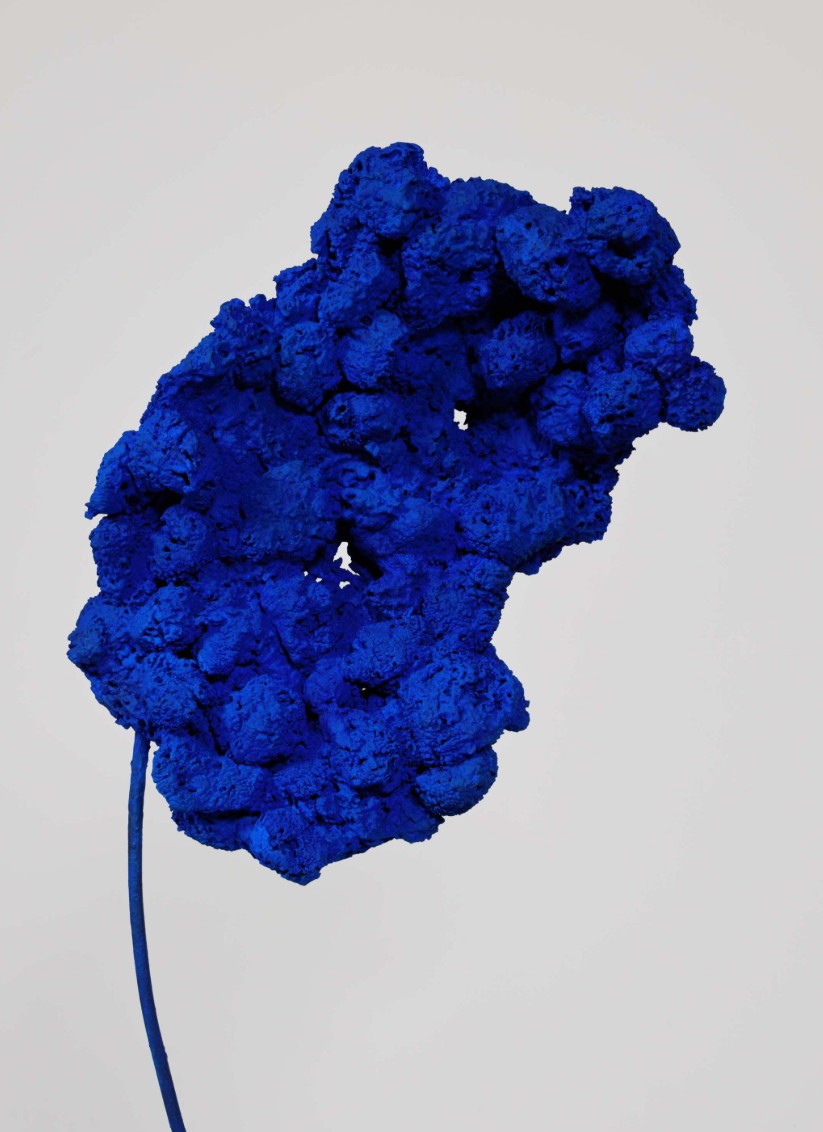
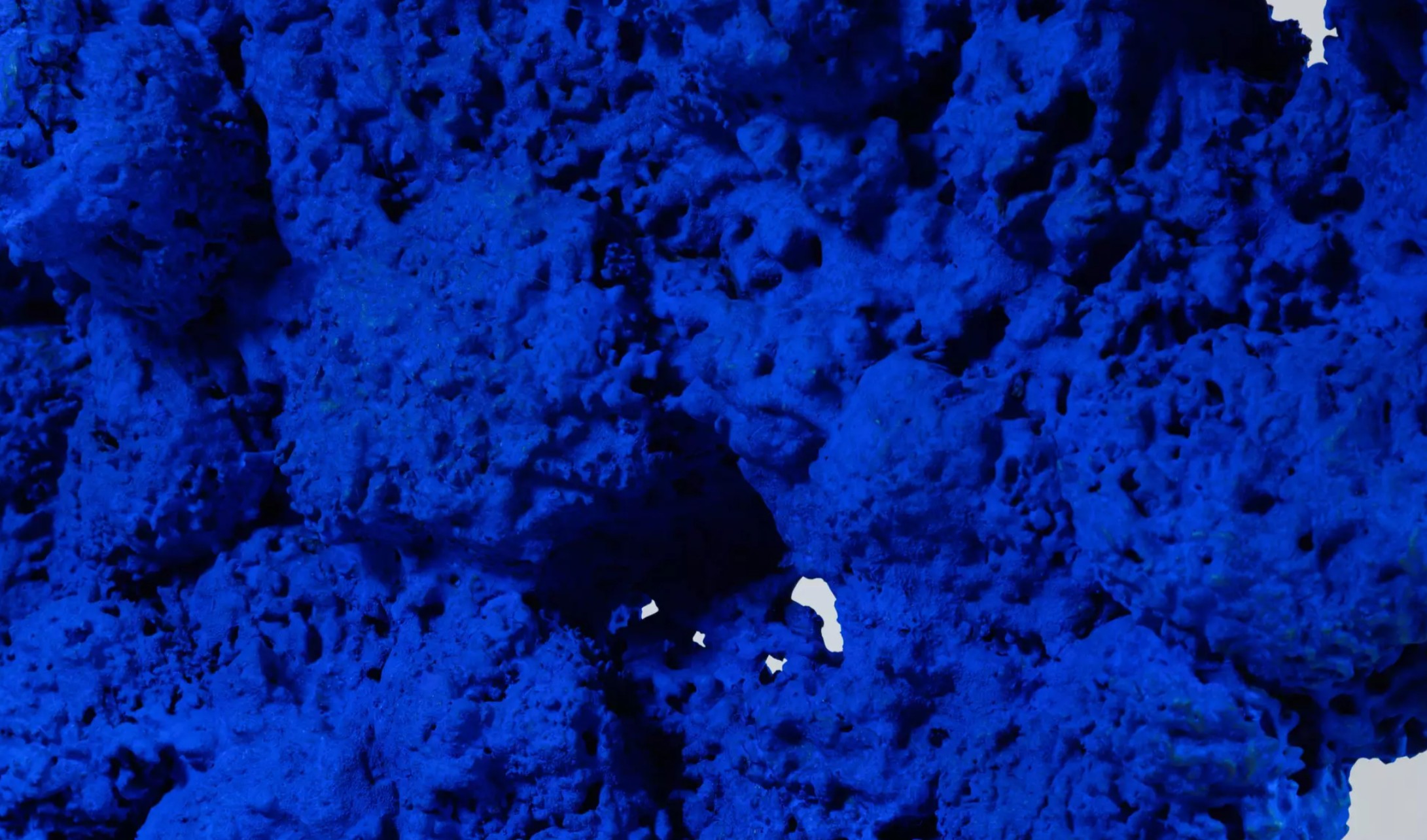
Sculpture éponge bleue sans titre (SE 167) stands as a masterpiece within Yves Klein’s visionary oeuvre. From a natural stone base rises a constellation of sea sponges, their every ridge, cavity, and aperture resplendent with a mystical ultramarine, bearing witness to Yves Klein’s most influential contribution to the annals of modern art history: the unending celebration of immaterial sensibility. The present work is among the most momentous examples of the revolutionary artist’s brief but paradigm-shifting career; at once organic and otherworldly, it is an unsullied salute to blue as a symbol of absolute freedom beyond corporeality. Executed in 1960, SE 167 is one of only six Sculptures éponges of a comparable scale, half of which reside in major institutional collections, including the Solomon R. Guggenheim Museum, New York; the Centre national d’art et de culture Georges-Pompidou, Paris; and the San Francisco Museum of Modern Art. Treasured in the same private collection for over six decades, SE 167 reveals itself to the public for the first time following Klein’s groundbreaking 1967 exhibition at The Jewish Museum.
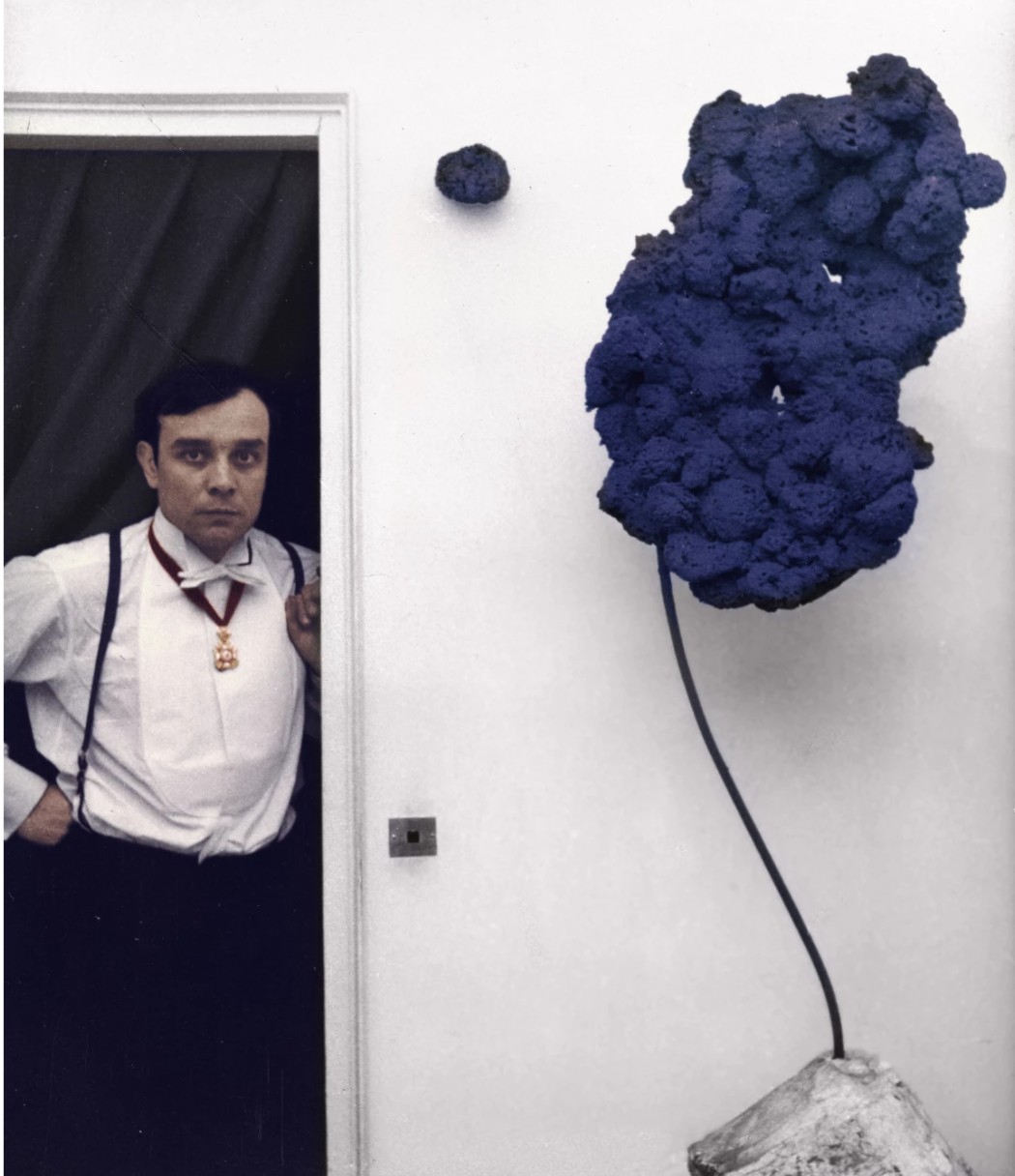
Yves Klein with the present work in his apartment at 14 rue Campagne-Première, Paris. Photograph: Shunk-Kender © J. Paul Getty Trust. Art © 2025 Artists Rights Society (ARS), New York / ADAGP, Paris
It was previously displayed only once, during his monumental 1959 exhibition Bas-reliefs dans une forêt d’éponges at Galerie Iris Clert, Paris. The present work, in its enthralling hue, gestures us to follow its path in transcending art as we know it: “We absolutely must realize—and this is no exaggeration—that we are living in the atomic age, where all physical matter can vanish from one day to the next to surrender its place to what we can envision as the most abstract. I believe that for the painter, there exists a sensuous and colored matter that is intangible. … It is no longer a question of seeing color but rather of ‘perceiving’ it.” (Yves Klein, “My position in the Battle Between Line and Color,” in: Klaus Ottman, ed., Overcoming the Problematics of Art: The Writings of Yves Klein, Putnam 2007, pp. 20-21) Radiant with chromatic intensity and suspended in a state of ethereal immateriality, the present work epitomizes the artist’s celebrated Sculptures éponges: a series that firmly established Klein as one of the most revolutionary figures in twentieth-century art.
In the summer of 1947, three young men lie down on the rocky beaches of Nice. Next to his friends Claude Pascal and Armand Pierre Fernandez (later known as Arman), Yves Klein stares upon the endless azure above, feeling himself ascend past the birds and clouds into the other side of the sky, inscribing his name into pure, unadulterated space. There, he assuredly declares: “The blue sky is my first artwork.” (the artist quoted in: Thomas McEvilley, “Yves Klein: Conquistador of the Void,” in: Exh. Cat., Houston, Institute for the Arts, Rice University, Yves Klein, 1928-1962, A Retrospective, February – May 1982, p. 28) From this visionary moment to his untimely death in 1962, Klein’s practice was a relentless dedication to capturing and portraying the immaterial, ranging from the iconic photomontage Leap into the Void to his performance Zone of Immaterial Pictorial Sensibility, and even to his unrealized schemes of buildings and cities made of air, fire, and water, titled Air Architecture. The conviction that resonates throughout Klein’s masterworks is a transcension past earthly concerns, a grasp at pure sensibility rather than a faulty representation of freedom: “And so I paint the pictorial moment that is born of an illumination by impregnation in life itself. To feel the soul without explanation, without vocabulary, and to represent that feeling… For me, the art of painting is to produce, to create freedom in the first material state.” (Yves Klein, “The Monochrome Adventure,” in: Klaus Ottman, ed., Overcoming the Problematics of Art: The Writings of Yves Klein, Putnam 2007, p. 141)
Central to this schema of immaterial freedom was the color International Klein Blue, an ultramarine resin-bound hue developed by Klein. Blue stands as the cornerstone of the artist’s visual lexicon as a representation of immateriality: “Blue has no dimensions. ‘It is’ beyond dimensions, while the other colors have some. … All colors bring forth associations of concrete, material, and tangible ideas, while blue evokes all the more the sea and the sky, which are what is most abstract in tangible and visible nature.” (Yves Klein, “Speech to the Gelsenkirchen Theater Commission,” in: Klaus Ottman, ed., Overcoming the Problematics of Art: The Writings of Yves Klein, Putnam 2007, p. 41) Klein rejects in bold defiance both the notions of traditional representational art and Abstract Expressionist aesthetics; his work refuses to box itself in by the meaning of decipherable symbols or the physical gesture of the artist, instead immersing the viewer in pure sensibility.
“Blue has no dimensions. ‘It is’ beyond dimensions, while the other colors have some. … All colors bring forth associations of concrete, material, and tangible ideas, while blue evokes all the more the sea and the sky, which are what is most abstract in tangible and visible nature.”
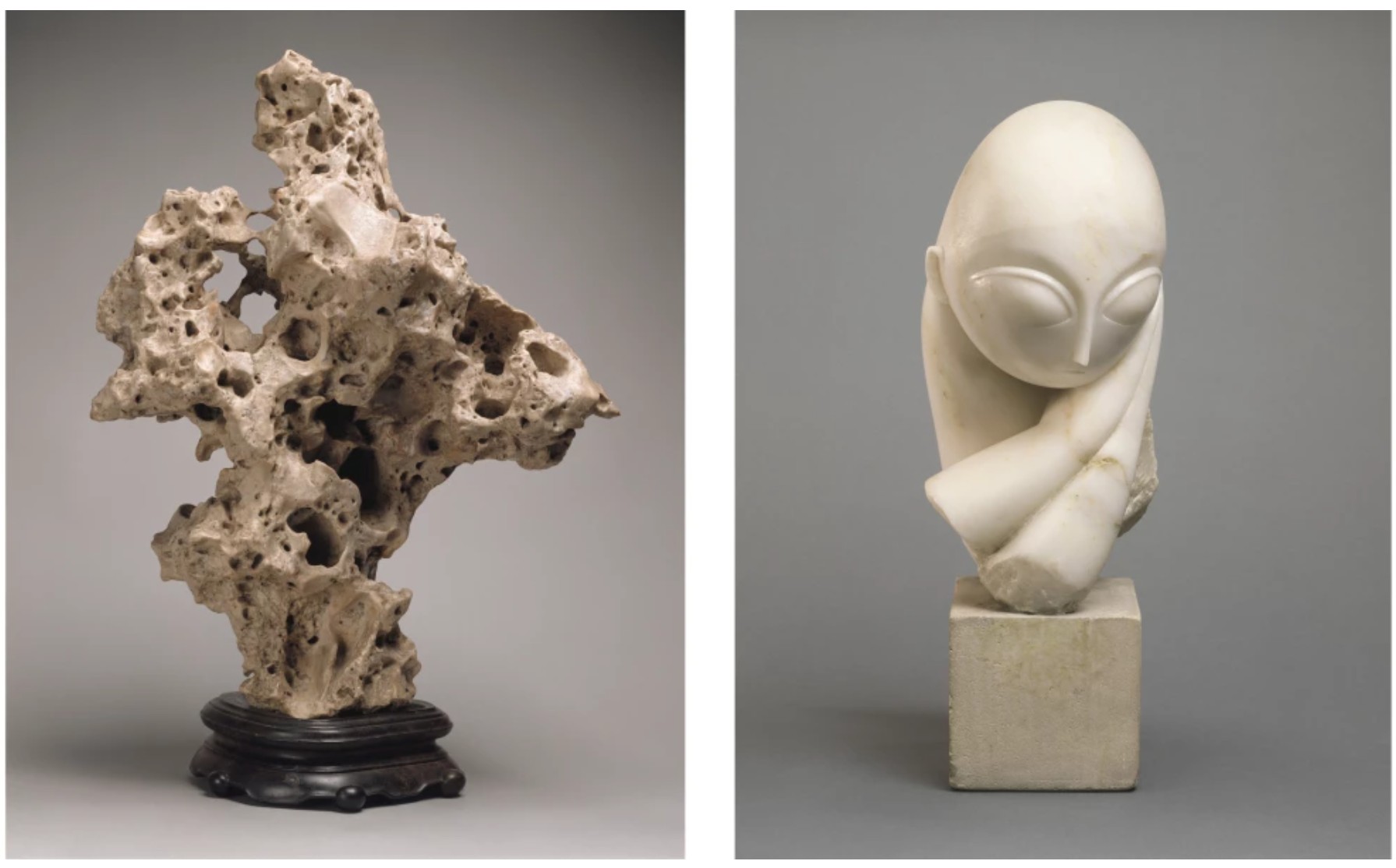
Left: Scholar’s Rock, 19th century. The Metropolitan Museum of Art, New York. Right: Constantin Brâncuși, Mademoiselle Pogany [I], 1912. Philadelphia Museum of Art. Image © The Philadelphia Museum of Art / Art Resource, NY. Art © Succession Brâncuși- All rights reserved (ARS) 2025
Ultramarine transcends beyond the artist and reaches towards, as Klein noted, “something far more important…They are about the individual looking at them and his or her experience with the immaterial caused by the blue in the painting; Klein’s work… attempt to harness a scared power that creates that ‘degree of contemplation’ that allows color to transcend ‘pure sensibility.’” (Kerry Brougher, “Involuntary Painting,” in: Exh. Cat., Washington D.C., Hirshhorn Museum and Sculpture Garden (and traveling), Yves Klein: With the Void, Full Powers, 2010, p. 31) Here, this idea of enveloping the viewer with the liberating sense of infinite dimension and scale—or to “impregnate the viewer with the void,” as he often chose to say—finds its apogee in SE 167 where unfathomable chromatic depth blossoms in a romantic expression of the artist’s brilliance. The sponge of SE 167 is both medium and proposition, rupturing the confines of dimensionality and thus invoking a stunning drama of palpable, saturated color. First used in a sculpture made in 1957 and heavily employed in his wall reliefs at the Musiktheater im Revier, Gelsenkirchen, the sponge expanded IKB into three-dimensional space. Unlike his reliefs, which depict sponges breaking out of a two-dimensional support, the present work depicts the sponge suspended in mid-air —an alluring, almost mystical conjuring of airborne pigment. Here, rather than merely covering the surface of a canvas or board, IKB penetrates the medium, coursing through the sponge’s tissue and reaching the very edges of its amorphous form, underscoring once again the significance of immersion and saturation in Klein’s artistic vocabulary. As curator Kerry Brougher acutely observes, sponges allowed for “a way of demonstrating the immaterial in something material, a means of bringing the invisible spiritual realm into the dominion of flesh. Without the artist actually having to paint, the sponge absorbed the essence of immateriality. Klein could more clearly demonstrate the immaterial and yet move even further away from the act of painting… The apparatus had become the painting.” (Kerry Brougher, “Involuntary Painting,” in: Exh. Cat., Washington D.C., Hirshhorn Museum and Sculpture Garden (and traveling), Yves Klein: With the Void, Full Powers, 2010, p. 34)
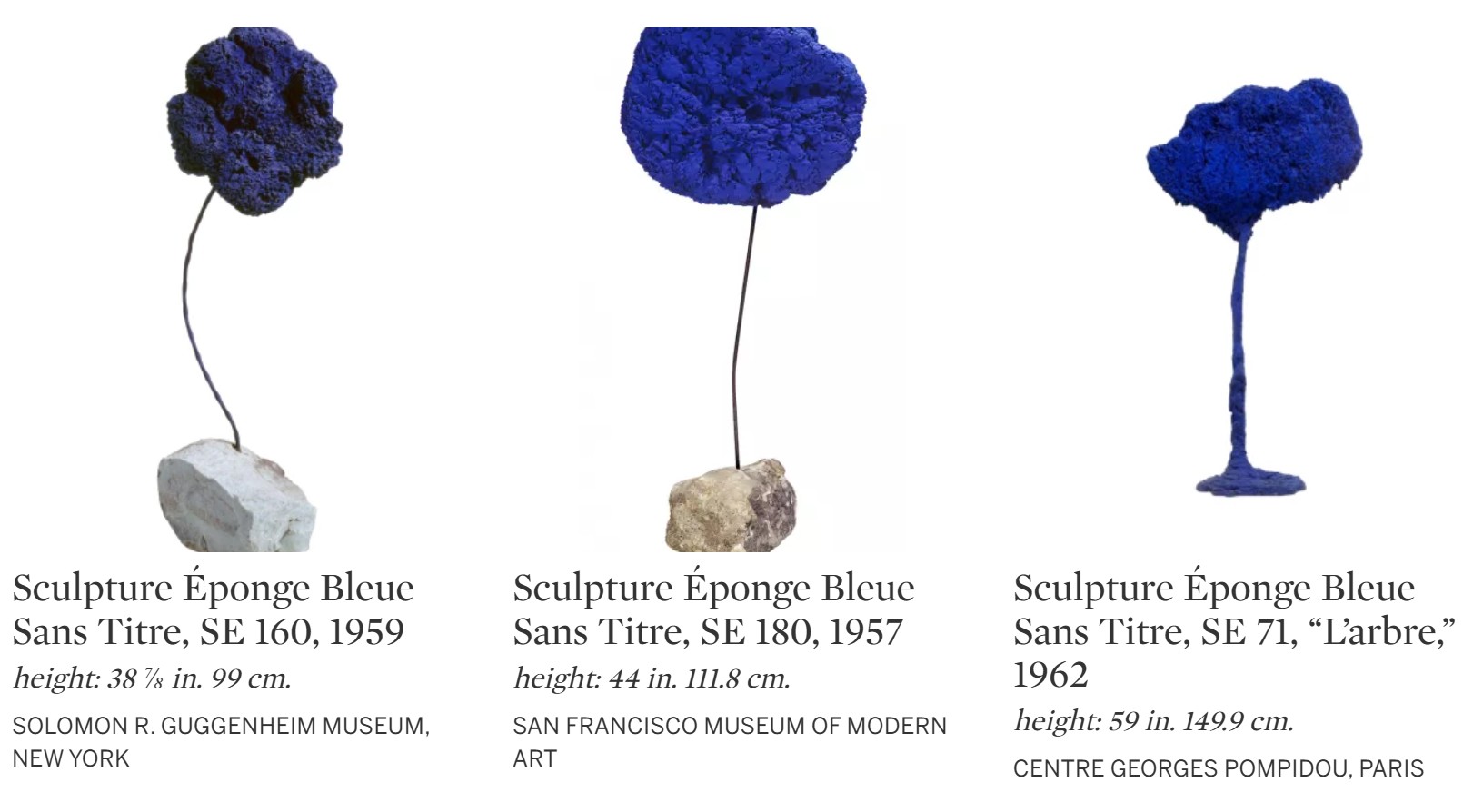
Extensive research indicates that the present work is one of just 6 known monumental sponge sculptures, measuring over 99 centimeters, with the artist’s chosen base. Testament to the immense rarity and importance of this group, half reside in prestigious institutional collections internationally. All Art © 2025 Artists Rights Society (ARS), New York / ADAGP, Paris
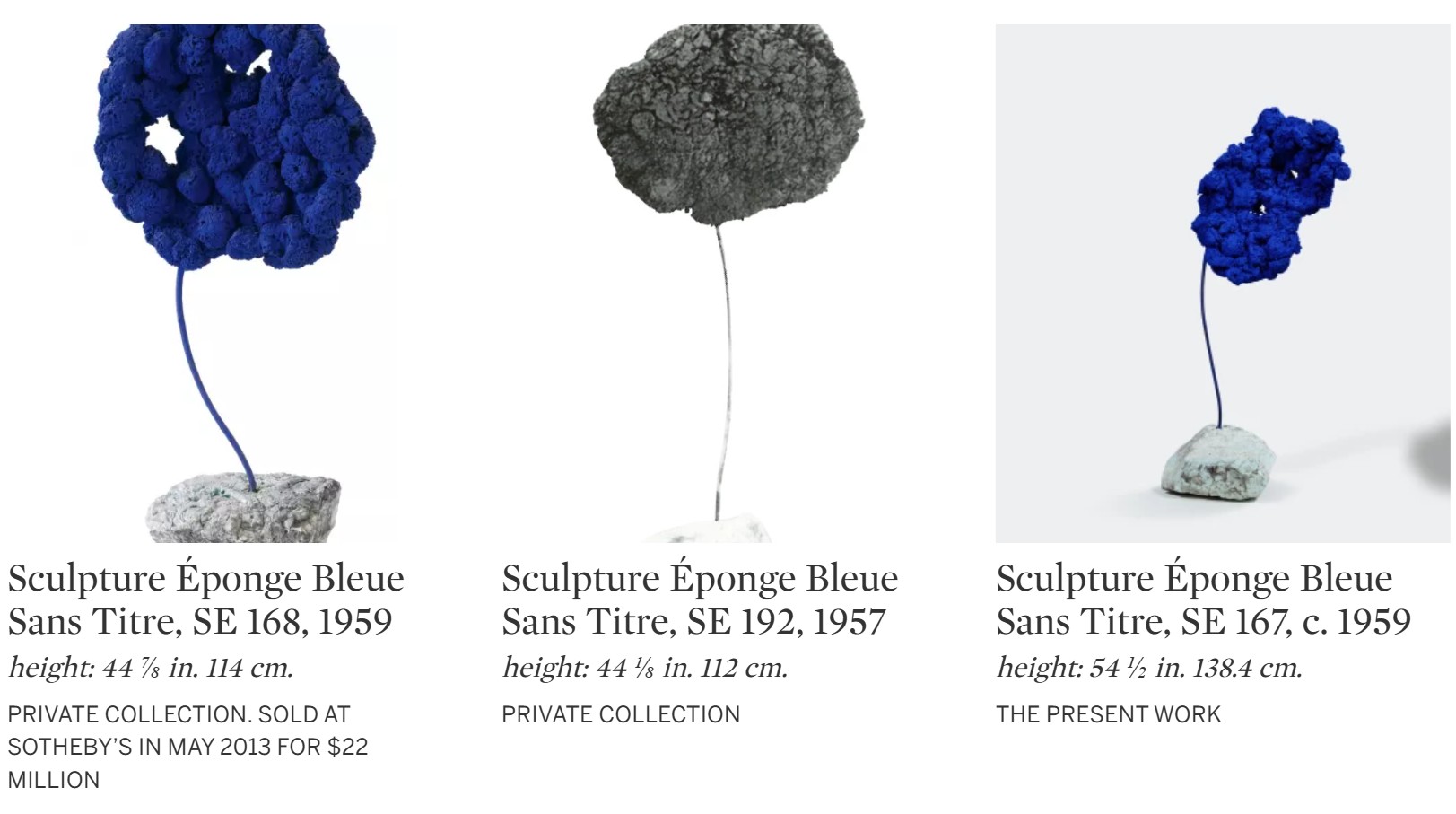
Klein also embraced the idea that the sponges signified the saturation of his ideal amongst his viewers; he anthropomorphized his freestanding sponge sculptures (organic creatures, after all) as “readers”—figures bearing witness to the transformational powers of the monochrome. SE 167, with two apertures peering into space like the eyes of a valiant sentinel, stands as a mirror to its admirers as it invites us to experience Yves Klein’s philosophy fully: “Thanks to the natural and living matter of sponges, I was able to make portraits of the readers of my monochromes, which, after having seen and traveled into the blue of my paintings, returned from them completely impregnated with sensibility just as the sponges.” (Yves Klein, “Notes on Certain Works Exhibited at the Colette Allendy Gallery,” in: Klaus Ottman, ed., Overcoming the Problematics of Art: The Writings of Yves Klein, Putnam 2007, p. 40) Klein had arrived at his singular aesthetic lexicon not only from introspective contemplation but a dedicated distillation of the paragons of masters who preceded him. Klein envisioned himself as a disciple of Eugène Delacroix, admiring the Romantic master’s call for the “liberty of art” and celebration of color. The artist’s high regard for Impressionists and Post-Impressionists stem from that sentiment, focusing on the ways in which his nineteenth-century predecessors defied the conventions of color. In his impassioned argument for his desire to carry the torch of Vincent van Gogh forward, Klein wrote: “In front of any painting, figurative or non-figurative, I felt more and more that the lines and all their consequences, the contours, the forms, the perspectives, the compositions, became exactly like the bases on the window of a prison. Far away, amidst color, life and liberty dwelt. And in front of the picture, I felt imprisoned, and I believe it is because of that same feeling of imprisonment that van Gogh exclaimed, ‘I long to be freed from I know now what horrible cage!’” (Yves Klein, Klaus Ottman, ed., Overcoming the Problematics of Art: The Writings of Yves Klein, Putnam 2007, p. 19) This desire to free himself and everyone else from the “prisoning” restrictions of convention and rational systems of thinking also find resonant counterparts in the art brut topographies and statues of Jean Dubuffet or the daring interrogations of space found in Lucio Fontana’s puncturing of space. Standing at the threshold of ingenuity alongside masters coeval and bygone, Klein through SE 167 resolutely and valiantly leaps into pure liberation from the traditions of mark-making.
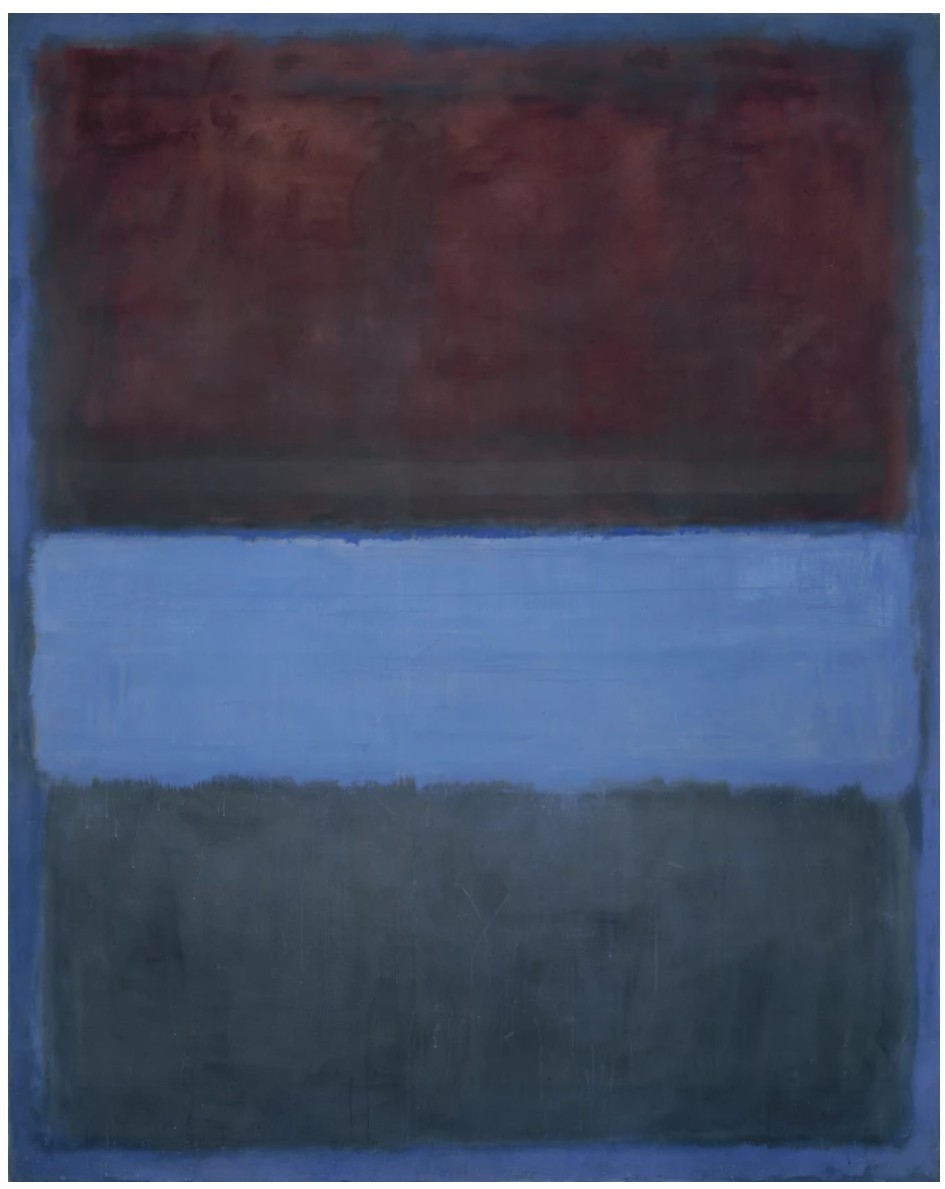
Mark Rothko, No. 61 (Rust and Blue). Museum of Contemporary Art, Los Angeles.
Image © Art Resource, NY. Art © 1998 Kate Rothko Prizel & Christopher Rothko / Artists Rights Society (ARS), New York
With his visionary eyes, Klein dreamt of a conceptual coup d’état that defies the calls for form, line, and constraint. Only unmediated, unadulterated sensibility, here seen erupting from the ultramarine crevices of Sculpture éponge bleue sans titre, SE 167, can seize freedom in its true form. Diving headfirst into the void, submerging himself in entrancing ultramarine, Klein beckons us to follow suit: “Neither missiles nor rockets nor sputniks will render man the ‘conquistador’ of space. … Man will only be able to take possession of space through the terrifying forces, the ones imprinted with peace and sensibility. He will be able to conquer space—truly his greatest desire—only after having realized the impregnation of space by his own sensibility.” (the artist quoted in: Exh. Cat., Nice, Musée d’Art moderne et d’Art Contemporain (and traveling), Yves Klein: Long Live the Immaterial, April 2000 – January 2001, p. 88)
Sculpture éponge bleue sans titre (SE 328), circa 1959
Christie’s London: 28 February 2023
Estimated: GBP 600,000 – 800,000
GBP 1,122,000 / USD 1,353,400
YVES KLEIN (1928-1962), Sculpture éponge bleue sans titre (SE 328) | Christie’s
YVES KLEIN (1928-1962)
Sculpture éponge bleue sans titre (SE 328), circa 1959
Dry pigment and synthetic resin on natural sponge, metal rod and stone base
Sculpture: 35x28x12 cm (13-3/4 x 11 x 4-3/4 inches)
Base: 10.8 x 17.8 x 18 cm (4-1/4 x 7 x 7-1/8 inches)
Overall: 45.8 x 29 x 18 cm (18 x 11-3/8 x 7-1/8 inches)
Enigmatic and otherworldly, the present work is an important example of Yves Klein’s revolutionary Sculpture-Eponges (Sponge-Sculptures). Originally held in the collection of Dr. Hanns Hülsberg, it boasts significant exhibition history, having featured in the historic show Bas-reliefs dans une forêt d’éponges at Galerie Iris Clert, Paris shortly after its creation, as well as the major exhibition Yves Klein: Monochrome und Feuer at the Museum Haus Lange, Krefeld in 1961. Saturated with ‘International Klein Blue’ (IKB)—the artist’s signature pigment—Klein’s Sculpture-Eponges were conceived as counterparts to his blue monochromes, presenting ‘portraits’ of viewers whose minds had been impregnated with his extraordinary ultramarine tone. Visible in two iconic studio photographs from the period, the present work blooms organically like a rare coral or celestial flower, light dancing in and out of its craters, ridges and grooves. Its rugged stone base—unlike the metal supports used elsewhere in the series—serves to amplify its sense of natural wonder. In this, the work chimes eloquently with examples held in the San Francisco Museum of Modern Art, the Solomon R. Guggenheim Museum, New York and the Moderna Museet, Stockholm.
Begun in 1957, Klein’s Sculpture-Eponges marked a critical stage in his engagement with IKB. Having grown up surrounded by the deep azure of the Mediterranean—where he had symbolically ‘signed’ the sky as his first artwork—he considered blue to be the most immaterial of all colours. It was a boundless, dimensionless hue, embodied in fire, water and the unearthly frescoes of Giotto. While working on his early series of IKB monochromes, Klein often used sponges to apply the pigment, relishing the uniform texture they produced on canvas. ‘One day I perceived the beauty of blue in the sponge’, he recalls; ‘this working tool all of a sudden became a primary medium for me. The sponge has that extraordinary capacity to absorb and become impregnated with whatever fluid, which was naturally very seductive to me. Thanks to the natural and living nature of sponges, I was able to make portraits to the readers of my monochromes, which, after having seen and travelled into the blue of my paintings, returned from them completely impregnated with sensibility, just as the sponges’ (Y. Klein, Overcoming the Problematics of Art: The Writings of Yves Klein, New York 2007, p. 22).
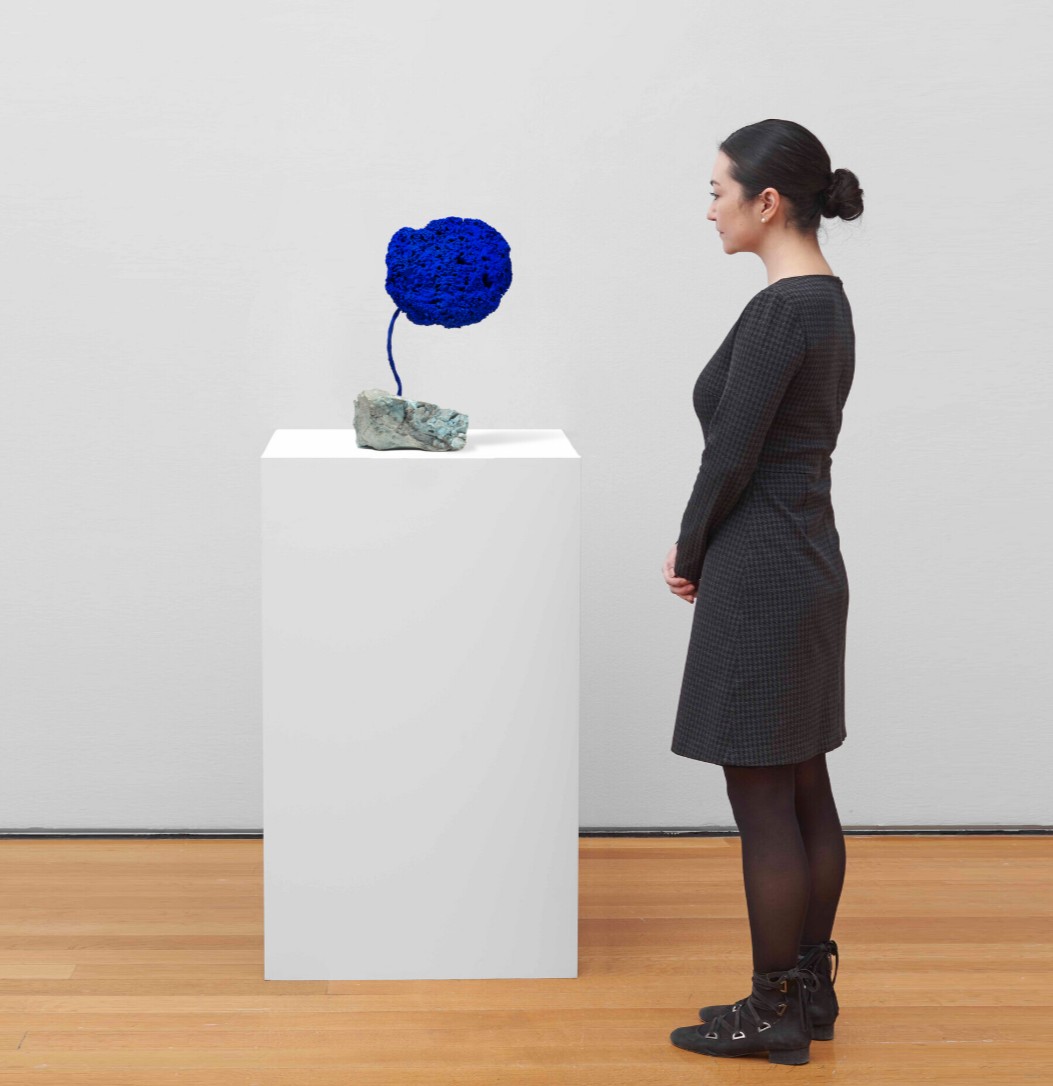
The present work’s exhibition history charts the unveiling of the series. Bas-reliefs dans une forêt d’éponges was conceived—quite literally—as a veritable forest of sponges, which were displayed alongside his monochrome paintings. The installation presented an immersive, otherworldly environment, resembling a natural landscape infused with the mysteries of the void. Monochrome und Feuer was similarly conceived as something of a total artwork, with the present work taking its place in a space dedicated solely to blue sponges and monochromes. ‘When one enters the first large space of the Museum Haus Lange in Krefeld, where Yves Klein is now exhibiting’, wrote the critic John Anthony Thwaites, ‘you think you are back on the Mediterranean … Everything is just blue … The impression of vastness is in the room, and with it, what G.K. Chesterton called “the terrible tidiness of the sea”. But already this first conceptual connection is no longer sufficient—because something ceremonial is added. Something for which the wonderful interior space of Mies van der Rohe is actually too real. One wants to extend it, to stretch out the blue series as far as the eye can see’ (J. A. Thwaites, quoted in Yves Klein Monochrome und Feuer, Ein Dokument der Avantgarde, exh. cat. Museum Haus Lange and Haus Esters, Krefeld 1994, p. 16).
Though conversant with the works of Lucio Fontana and other artists of the Space Age, Klein’s conception of blue was ultimately grounded in spiritual, metaphysical ideals. His expansion of IKB’s potential would come to be characterised as his ‘Blue Revolution’, giving rise to his Reliefs Eponges (Sponge Reliefs) and Reliefs Planétaires (Planetary Reliefs), as well as his Anthropométries, in which he used naked human bodies as vessels for his pigment. Unlike gold and madder rose—the two other components of his ‘holy chromatic trilogy’—IKB was able to absorb all visible light rays except the deepest blue. In the Sculpture-Eponges, this intense saturation invoked a dual sense of solidity and nothingness, the infinite, cosmic space of IKB colliding with the living, physical reality of the sponge. As the curator Kerry Brougher explains, ‘the zero degree of Klein’s blue monochromes gave way to an absorption into this world of the “other side”, a way of demonstrating the immaterial in something material, a means of bringing the invisible spiritual realm into the dominion of flesh’ (K. Brougher, ‘Involuntary Painting’, in Yves Klein: With the Void, Full Powers, exh. cat. Hirshhorn Museum and Sculpture Garden, Washington D. C. 2010, p. 34). The present work stands as a powerful demonstration of this capability.
Reliefs éponge
Accord Bleu (RE 52), 1958
Sotheby’s Paris: 19 October 2023
Estimated: EUR 4,000,000 – 7,000,000
EUR 2,589,000 / USD 2,736,510
Yves Klein | Accord Bleu (RE 52) | Modernités | 2023 | Sotheby’s
YVES KLEIN (1928 – 1962)
Accord Bleu (RE 52), 1958
Dry pigment in synthetic resin, natural sponges and pebbles on board
52 x 136.5 x 7.6 cm (20-1/2 x 53-3/4 x 3 inches)
Signed, titled, dated 58 and inscribed on the reverse
Exuding an unparalleled harmony and an exquisite surface brilliance that radiates through its captivatingly diverse topography, Accord bleu represents one of the earliest and most seductive examples from Yves Klein’s remarkable body of Relief-éponges. Once part of the prestigious Brooklyn Museum collection, Accord bleu was one of the few examples of the series to bear such an evocative name; the title of this spectacular work would be used again two years later for a sponge relief in the eminent collection of Amsterdam’s Stedelijk Museum.
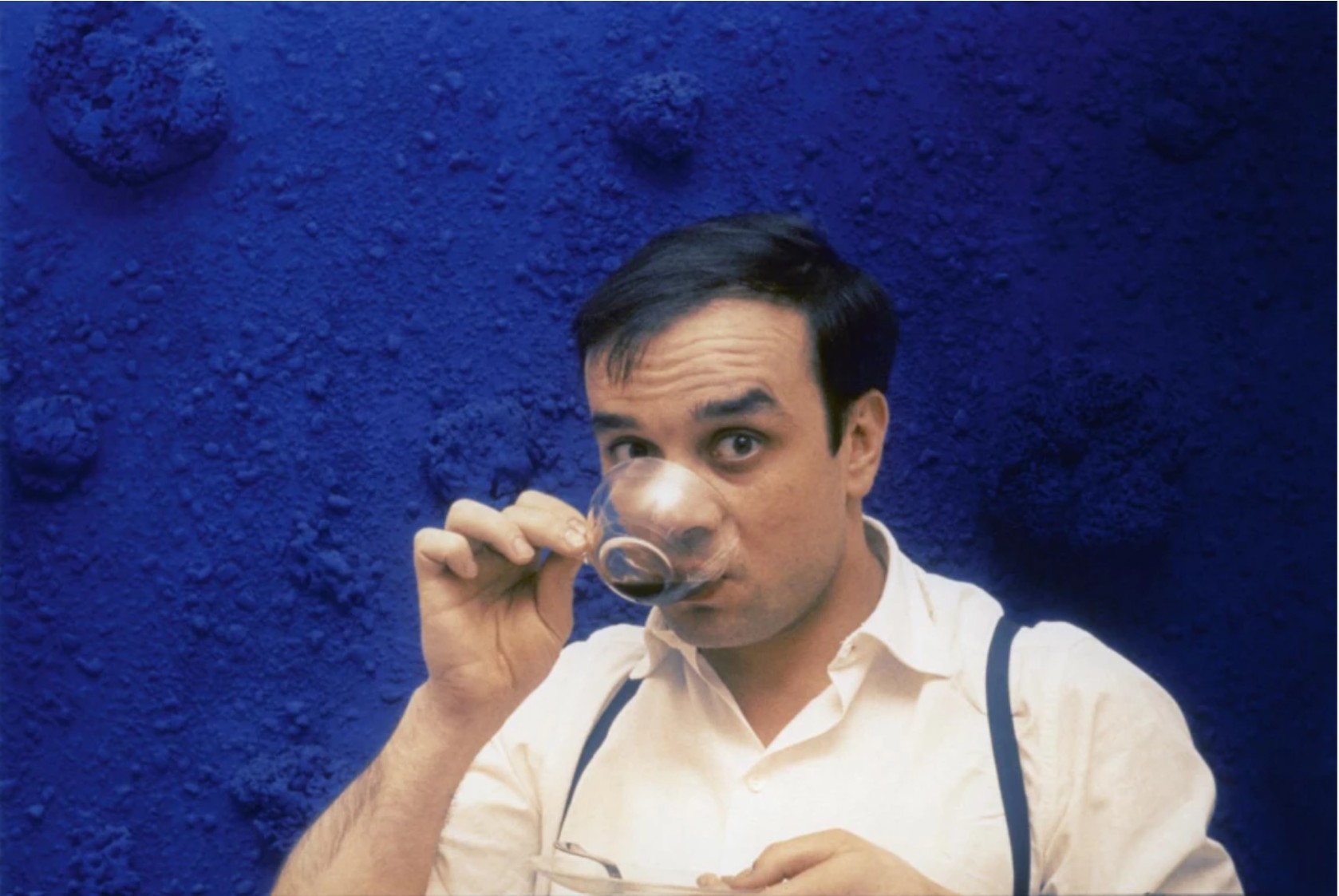
Portrait d’Yves Klein devant un Relief Éponge (RE 20) © Miltos Toscas © Succession Yves Klein c/o ADAGP, Paris 2023
The velvety, powdery blue surface of this artwork continuously transforms depending on the interplay of light, creating a captivating visual experience. While the arrangement of sponges and pebbles provides a beautiful compositional structure, their arrangement also reinforces the effect of the monochrome. In fact, the sheer powder of the International Klein Blue (IKB) pigment unifies the entire work to such an extent that the precise details of the surface can become elusive, and the mesmerizing blue occasionally subdues the boundaries between form and contour.
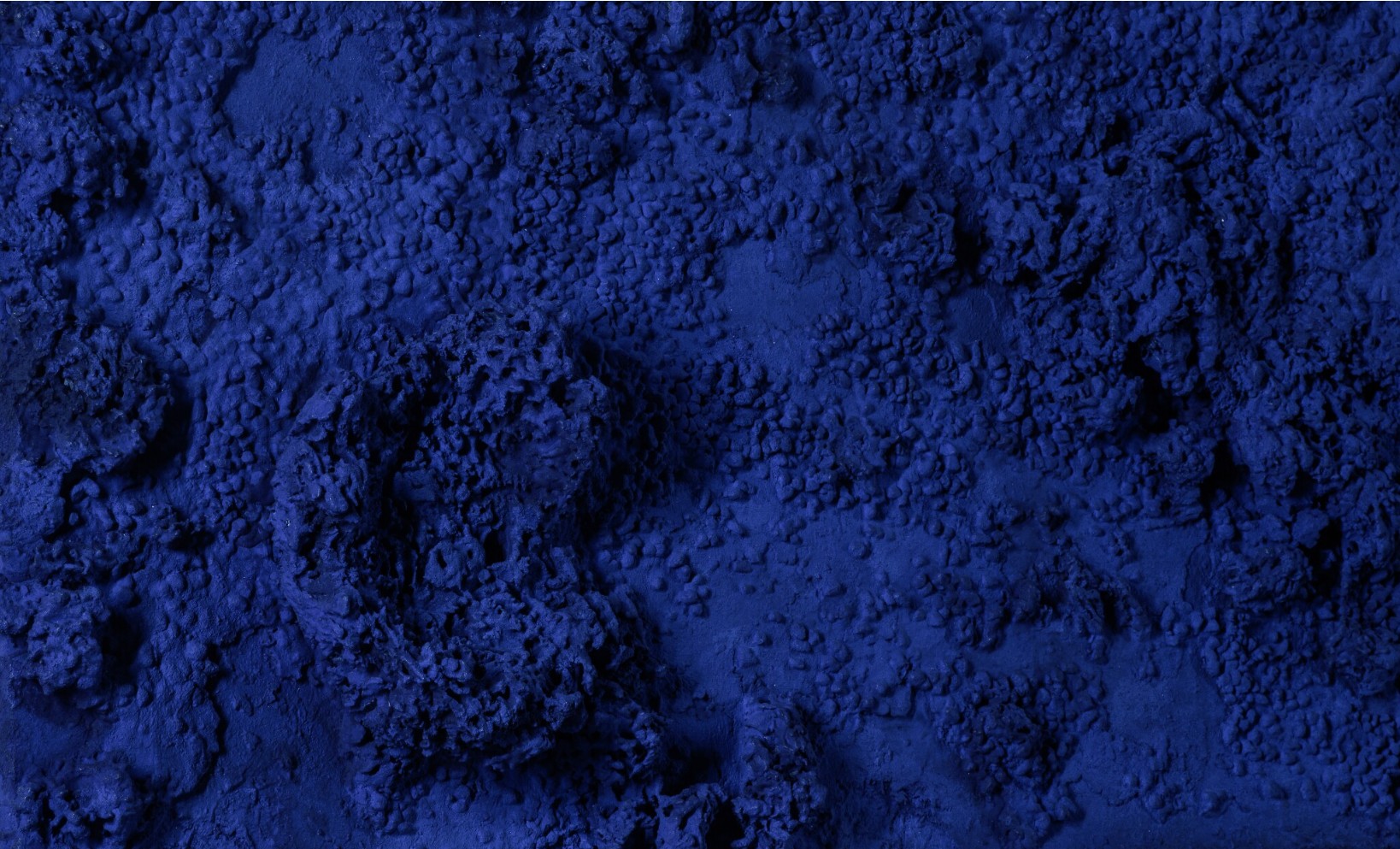
The labyrinths of minute spaces within the sponges create multifaceted schemas of light and shadow and the extraordinary potency of Yves Klein’s blue seems to fill these void matrices with a coloristic energy independent of the physical forms. Thus while the bodies of the sponge loom towards us, the myriad recesses draw our world into the infinity of Yves Klein’s blue epoch.
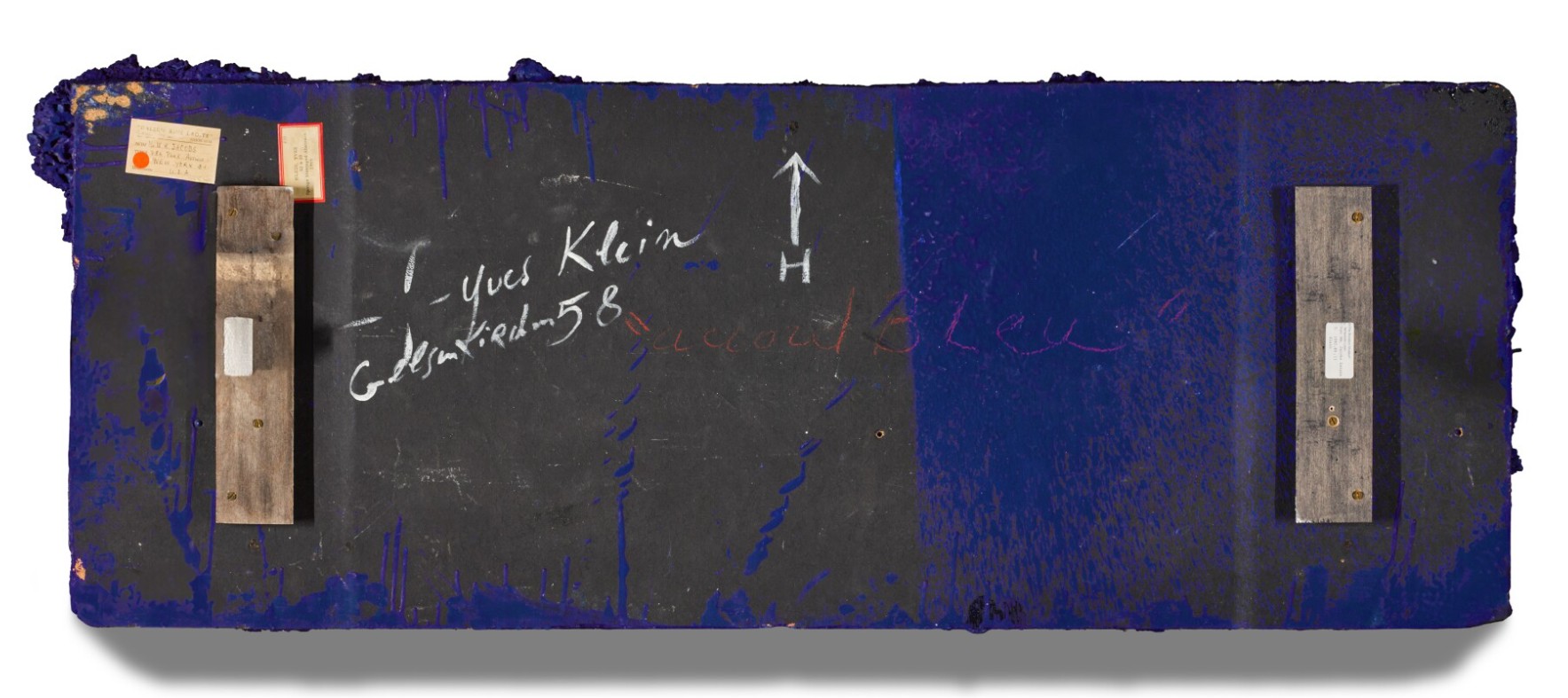
On the reverse of the work, Yves Klein inscribed the name “Gelsenkirchen,” a city in Germany that held profound significance in the artist’s career. It was in Gelsenkirchen that Yves Klein completed a historic mural commission for the town’s opera house and theater. Having won the competitive commission with an initial proposal for two murals, Yves Klein was ultimately asked to paint six. Yves Klein arrived in Gelsenkirchen in October 1958 to begin the commission, a project through which the artist began developing his group of Reliefs-éponges in earnest. While initially intending to keep his sponges soft, Yves Klein inserted resin into them to keep the surfaces solid across the large expanses of his installation, an innovative technique of suspending pigment in resin that opened the door for the creation of such resolved works as Accord bleu in the final months of 1958. This magnificently articulated marine phenomenon is truly exceptional for its spectacular scale and the intricacy of its sponge composition, signaling a critical advancement in the artist’s career during a particularly constructive period. Yves Klein’s unprecedented output has forever eluded ready categorization and this sublime sculptural relief, exceptionally rare and of incomparable quality, is the ultimate testament to an artist who was nothing less than visionary.
Yves Klein’s meteoric career was dedicated to an unwavering quest for an immaterial world beyond our own, merging a wide range of deeply held interests in aesthetics, nature, and mysticism. Among these artistic dialects the Relief-éponges evince the effective manifestation of the complex mysteries that filled the artist’s life. Forging the kernel of Yves Klein’s epoch of immateriality, these unreal masterworks deliver the crescendo promised by the IKB, gold, and rose Monochromes, and bring to life the enigmatic shadows of the Anthropométries. While the Monochromes invite the viewer into Yves Klein’s world, this Relief-éponge advances out into the world of the viewer; whereas the Anthropométries narrate the trace of transient human presence, Accord bleu absorbs ancient creatures into the depths of its fathomless and immaterial blue. Although it may be indicative of some alien planetary landscape or the deepest ocean bed, the topography of Accord bleu encapsulates the artist’s pure concept of an ethereal and intangible state.
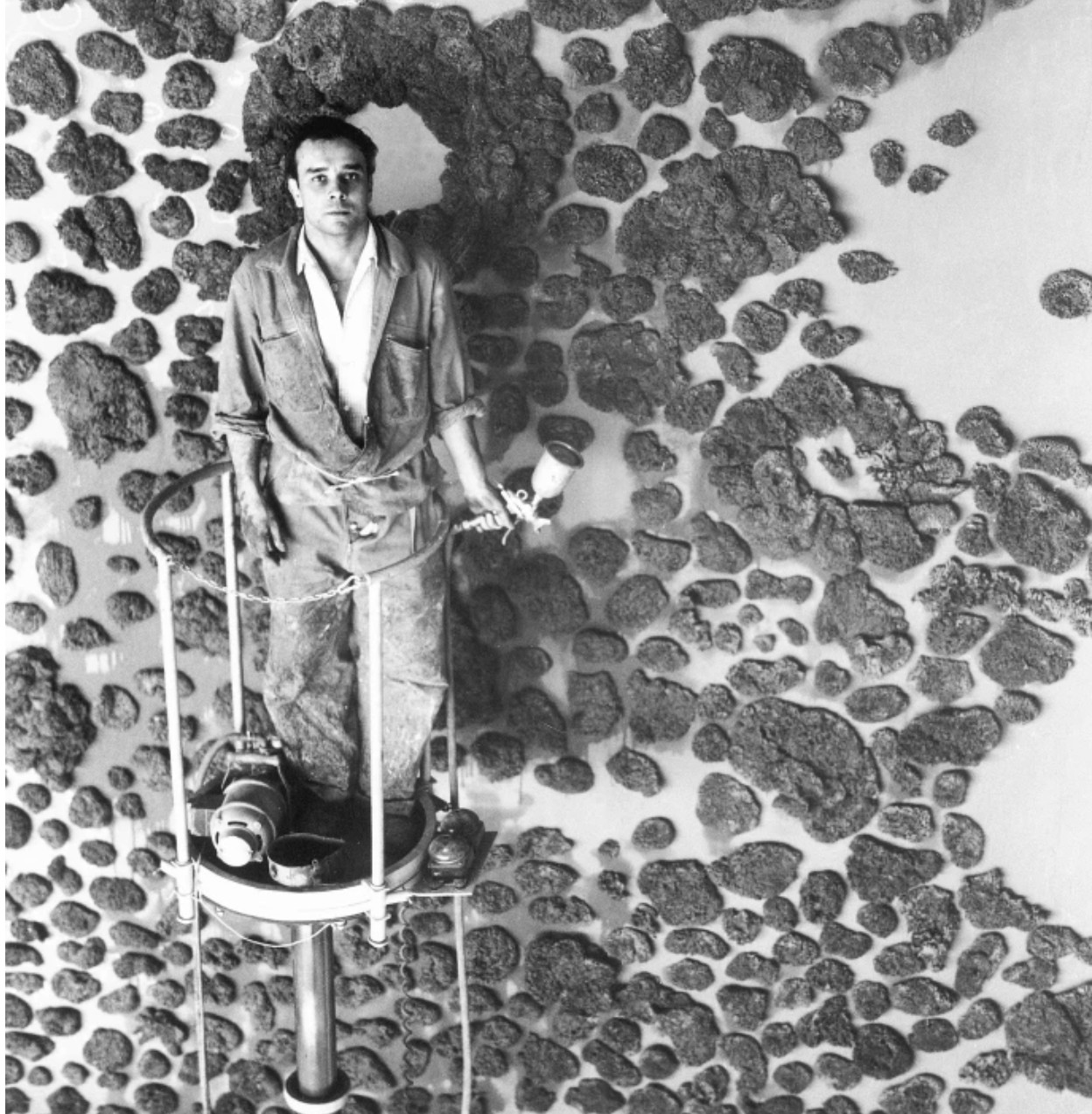
Yves Klein sur le chantier de l’Opéra-théâtre de Gelsenkirchen, 1959
Yves Klein’s fascination with pure powdered pigment, first discovered in a London art supply shop in 1949, led to his experimentation with various materials throughout the 1950s that he acquired from Edouard Adam, a chemicals and art supplies retailer in Montparnasse. From these trials, he developed the legendary International Klein Blue, a medium that preserved pigment in its pure powdered form. It was also in Adam’s shop where Yves Klein discovered sponges in 1956 the sponges, sourced from Greece and Tunisia, initially used for applying paint to his surfaces that became a pivotal material when Yves Klein soaked them in IKB. As aquatic animals, sponges have evolved over millions of years, developing maximum surface area and exceptional absorption qualities to efficiently extract nutrients and oxygen from flowing water. As a living being the shape of a sponge changes, but extracted from its life-support of plankton-filled seawater it is frozen in its final, ultimate form. In the present work these outstanding features of natural selection are profusely drenched in Yves Klein’s blue, resulting in an organic architecture of immeasurable chromatic depth. From his earliest experiments with monochromes Yves Klein was gripped by sculptural possibilities: curved edges emphasized dimensions beyond the flat rectilinear canvas and in his first blue monochromes exhibitions the works were projected away from the hanging wall so as to be suspended in space. This exploration into the prospects of hanging sculpture finds its apogee in the Relief-éponge corpus where the three-dimensional elements project forward into the space of the viewer.
“While working on my paintings in my studio, I sometimes used sponges. Evidently, they very quickly turned blue! One day I perceived the beauty of blue in the sponge; this working tool all of a sudden became a primary medium for me. The sponge has that extraordinary capacity to absorb and become impregnated with whatever fluid, which was naturally very seductive to me. Thanks to the natural and living matter of sponges, I was able to make portraits of the readers of my monochromes, which, after having seen and traveled into the blue of my paintings, returned from them completely impregnated with sensibility, just as the sponges.”
Yves Klein’s artistic contribution to contemporary culture is most frequently described as visionary, and the scope of his artistic innovations was utterly without precedent. Before they were incorporated into Yves Klein’s exclusive inventory of materials, sponges were first used in the application of pigment for Yves Klein’s famous monochrome IKB paintings executed until 1962. In realizing its highly evocative potential for the purposes of his immaterial inquiry, Yves Klein began to work directly with the sponge as a simultaneously dynamic and symbolic compositional device. With the Relief-éponge Yves Klein enlivened, ruptured and plasticized the surface of his monochrome canvases, and in so doing broke the confines of the two-dimensional picture plane. In the immeasurable aquamarine depths of Accord bleu, the viewer is thus treated to a stunning drama of palpable and spatial form within Yves Klein’s theatre of saturated color.
Anthropométries
Anthropométrie sans titre, (ANT 149), 1958
LIVING THE AVANT-GARDE: THE TRITON COLLECTION FOUNDATION
Phillips New-York: 14 November 2023
Estimated: USD 800,000 – 1,200,000
USD 1,016,000
Yves Klein Living the Avant-Garde: The Triton Collection Foundation, Evening Sale Part I
YVES KLEIN
Anthropométrie sans titre, (ANT 149), 1958
Pigment and synthetic resin on wove paper
61.9 x 25.1 cm (24-3/8 x 9-7/8 inches)
Signed “Yves Klein” on the reverse
Registered in the Yves Klein Archives under number ANT 149
A tour de force executed at the height of Yves Klein’s revolutionary eight-year career, Anthropométrie sans titre, (ANT 149), 1958 is a compelling and concise expression of the female form rendered in the artist’s signature International Klein Blue. Performative and provocative, the work results from the imprint of a nude model’s painted body, pressed against a sheet of paper. By cropping the composition in on the model’s midsection and thighs, Klein focuses Anthropométrie sans titre, (ANT 149) on the body as flesh, desirable and desiring; Anthropométrie sans titre, (ANT 149) emphasizes the emotional eroticism of the human form in a brilliant monochrome trace. The present work first belonged to Klein’s photographer, Frédéric Barzilay, who documented the artist’s innovative practice.
“Now, what a miracle, the brush returned, but this time it was alive.”
Raised by painters who worked within the abstract l’art informel and Post-Impressionist styles, but having received no formal training himself, Klein revolutionized the medium beyond its pre-war avant-garde. Claiming that the new, post-war world needed a new man, Klein rejected brushes as “too excessively psychological,” opting to instead use paint rollers that provided distance from artist’s hand. The Anthropométries marked a major advancement in Klein’s conceptual development, fully separating the artist’s hand from the work. Klein began his Anthropométries in 1958 as private experiments before staging an inaugural performance for the opening of the new Galerie internationale d’art contemporain in Paris on March 9, 1960. Executed during the experimental first year of the Anthropométries, the present example celebrates the liberated physical action.
“My pictures represent poetic events, or rather, they are immobile, silent, and static witnesses to the very essence of movement and life in freedom, which is the flame of poetry in the pictorial moment.”
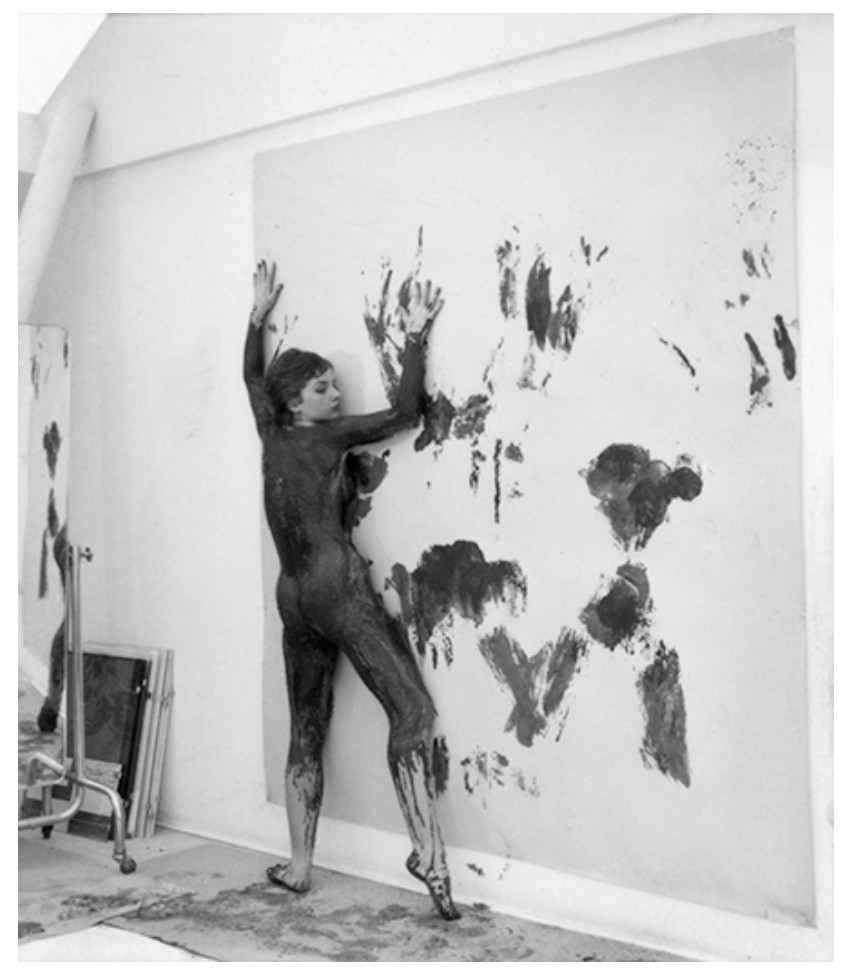
Performance of Anthropométries in the studio of Charles Wilp, with model Katja, 1961. Image: bpk Bildagentur /Charles Wilp / Art Resource, NY, Artwork: © 2023 Artists Rights Society (ARS), New York / ADAGP, Paris
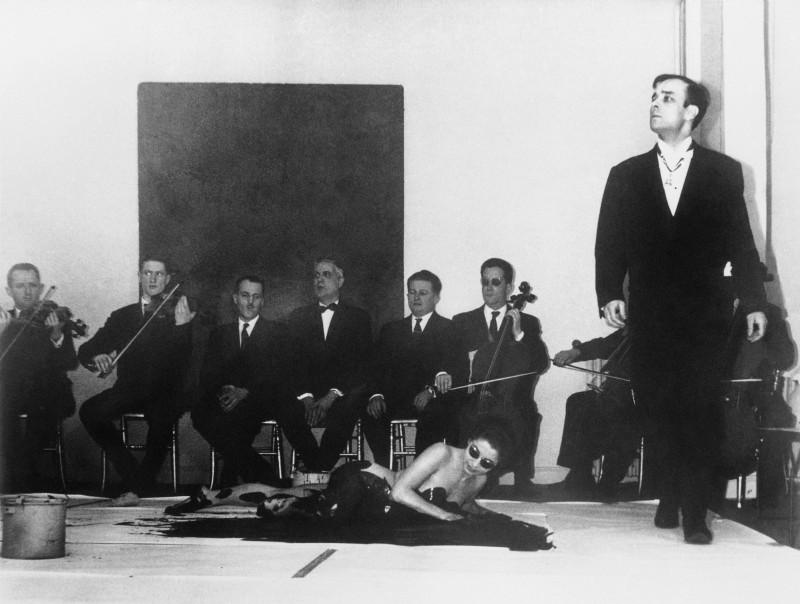
Klein pioneered a performative new type of practice by relinquishing his formal artistic tools. Reinventing the conventional artist-model relationship, Klein used nude women as “living paintbrushes” to apply paint to substrate. Klein meticulously directed the positions and movements of the blue-coated women as they made their traces onto paper, relishing “it was the flesh itself that applied the color to the canvas, under my direction, with a perfect precision, allowing me to remain constantly at an exact distance of ‘x’ from my canvas.” As he witnessed Klein creating these works, critic Pierre Restany recalled, “The marks thus left on the paper represented the central part of the body, breasts, abdomen, and thighs, in the manner of an anthropomorphic sign. I could not help exclaiming: ‘These are the anthropométries of the blue period!’” in reference to the study of human body measurements. Restany continues, “Yves, who had been waiting for just this, jumped up in triumph. He had his title: Anthropométries.”
“Blue has no dimensions…
It ‘is’ beyond the dimensions of which other colors partake.”
Klein’s blue period began the year prior to creating Anthropométrie sans titre, (ANT 149), in 1957, solidifying the artist’s longtime fixation with the ultramarine hue. Klein even claimed, according to the artist Arman, “The blue sky is my first artwork,” referencing a moment during his youth in which he wrote his name across the sky in Nice.vi The heavenly color has long been associated with the divine, not in the least due to the elusiveness of obtaining and using blue pigment. Since 1956, Klein had been experimenting with a polymer binder to stabilize and preserve the texture and appearance of ultramarine pigment; notoriously difficult to work with, the tone can easily lose its incandescence, dulling and darkening when mixed with linseed oil. With the help of Parisian art supply store owner Édouard Adam, Klein developed his signature International Klein Blue in what has become a mythologized moment in 20th century art history. In 1960, he successfully patented his IKB formula in an unheard-of thought experiment in “owning” a color, setting a precedent followed by the likes of Anish Kapoor, who acquired the rights to Vantablack in 2016, and companies such as Tiffany & Co. that have trademarked their signature colors. Klein’s Anthropométries redefined the possibilities of artmaking. Broaching the material and immaterial realms, Anthropométrie sans titre, (ANT 149) is imbued with cosmic energy amongst the smears and smatters of International Klein Blue. From an artist intrigued by the possibility of overcoming the effects of gravity, the tactile, immediate impression of flesh achieves a radiant sense of levitation.
Other Series
Monochrome Rouge (M66), 1957
Van Ham Cologne: 27 November 2024
Estimated: EUR 80,000 – 120,000
EUR 171,600 / USD 181,095
YVES KLEIN (1928 Nice – 1962 Paris)
Monochrome Rouge (M66), 1957
Mixed media on beaverboard
18×12 cm
Monogrammed and dated verso centre: YK (artist’s signet) 57
In 1957, the Italian art critic Dino Buzzati described the eccentric personality of Yves Klein, who was active in many different fields, as follows: “Born in Nice twenty-eight years ago; studied nautical science and oriental languages; trained racehorses; judo champion in Japan itself” (Buzzati, Dino: “Blu, Blu, Blu!” Corriere d’Informazione, January 9, 1957). After returning to Paris in 1955 with a black belt from Tokyo, but without the hoped-for fame, Klein turned to a career as an artist, which he pursued intensively until his premature death in 1962. He became interested early on in the psychological impact and meaning of individual colors, which he explored in his first austere monochromatic paintings, which were free of lines, figuration, and compositional constraints.
His work, imbued with philosophy and spirituality, is based on a notion of absolute abstraction that brooks no distractions from a decorative juxtaposition of different colors. In his quest for the complete dissolution of any secondary effects, Klein therefore reduced his palette until he finally concentrated on a single color: blue. This ultramarine blue, developed by him and patented in 1960 as “International Yves Klein Blue”, embodies the pure color, unbound to any object or idea, and thus completely free, appearing in the matt-glowing pigment as a physical concentration of cosmic energy.
At the age of 18, Klein created his “first infinite and immaterial painting, lying on the beach at Nice, signing the blue Mediterranean sky and declaring it his first and greatest ‘monochrome’.” (Yves Klein quoted in: Stich, Sidra: Yves Klein. Stuttgart: Cantz, 1994. p. 19) Klein was influenced by the Christian mysticism of cosmogony, which prophesied the end of the age of physical matter and the restriction of the mind by form, as well as the liberation of rational consciousness. Also influenced by judo and the teachings of Zen Buddhism, he sought to achieve states of mental emptiness and, from 1957, turned more and more consistently to the dematerialization of his painting, until it finally became perceptible only as atmospherically vibrating color, as the “full emptiness, the nothing that encompasses everything possible.” (Pierre Restany quoted in: Stich, Sidra: Yves Klein. Stuttgart: Cantz, 1994. p. 81) In his 1958 exhibition “Le Vide” at the Galerie Iris Clert in Paris, Klein took another radical step. In order to give the invisible an effect through the perceptible, he presented the completely emptied gallery space as a work, thus elevating the concept to the essence of art.
Between 1955 and 1957, Klein experimented with techniques and materials. The resulting works featured a range of colors, including red, green, orange, yellow, black, white, violet, bronze, pink, as well as vermilion, and formats that often had rounded corners and canvas stretched over the side edges, intended to enhance the impression of the expansive monochrome color space. The year of the small-format “Monochrome Rouge” coincides with the zenith of this abstraction, which Yves Klein elevated to immateriality, and marks the beginning of his exclusive use of the blue hue. In 1957, his work was shown for the first time in Germany, where it was exhibited by avant-garde gallerist Alfred Schmela. In Düsseldorf, Klein got to know the members of the ZERO group, initially Otto Piene and Heinz Mack, and later Günther Uecker, who had turned away from ideologically burdened figuration and narration and wanted to start “from scratch”. Klein also pursued the goal of creating a new sensibility by heightening our perception of reality and, together with artists such as Arman, Daniel Spoerri, and Jean Tinguely, founded the “Nouveau Réalisme” movement in 1960.
Although small in size, the power of the color effect of the penetrating red surface of “Monochrome Rouge” draws the viewer’s gaze into the depths. Klein also conceives of red as a “psychological space” that means “the fire that radiates heat” (Stich, Sidra: Yves Klein. Stuttgart: Cantz, 1994. p.78). The devout Catholic had a profound knowledge of the symbolism of color in Christian iconography and, with his use of the color triad blue, yellow and pink/red in a modification of the primary colors, blue, yellow and red, he also establishes a reference to the Holy Trinity.
Bettina Haiss.
Yves Klein Multiples
PLEASE CLICK BELOW
TO READ ABOUT YVES KLEIN MULTIPLES AND FIND HISTORICAL AUCTION RESULTS