
Roy Lichtenstein stands as one of the central figures of Pop Art and one of the most influential artists of the twentieth century. Through his distinctive visual language—characterized by bold outlines, Ben-Day dots, flat colors, and imagery drawn from popular media—Lichtenstein transformed the visual vocabulary of mass culture into one of the most recognizable artistic styles in modern art.
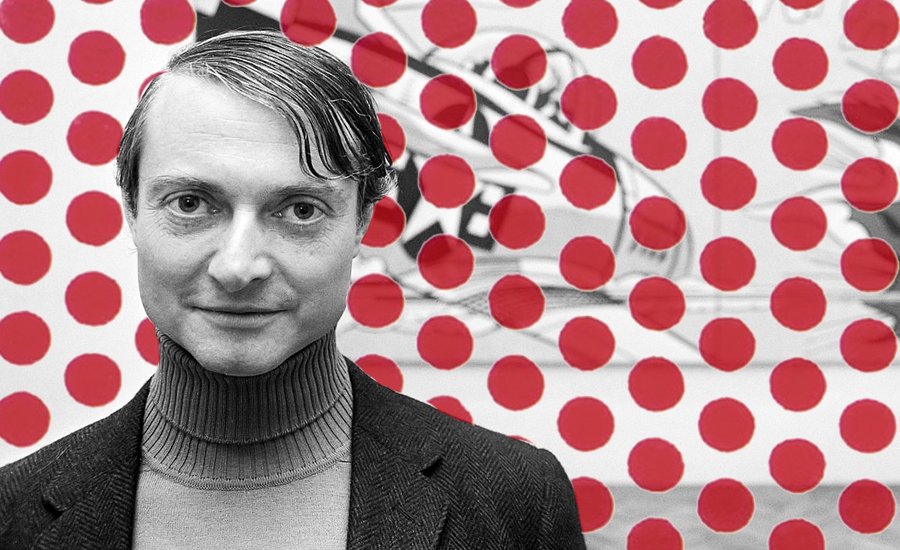
Emerging in the early 1960s, Lichtenstein’s work redefined the relationship between high art and popular imagery. Borrowing visual motifs from comic strips, advertising, and commercial printing techniques, he elevated everyday visual culture into the realm of fine art. Yet his work was never merely imitation. By isolating, enlarging, and recontextualizing images from mass media, Lichtenstein revealed the mechanisms through which modern society constructs emotion, heroism, romance, and spectacle. Over the course of four decades, Lichtenstein developed an extraordinarily diverse body of work. While he is best known for his early comic-strip paintings, his career also includes major series exploring art history, abstraction, landscape, interior spaces, and sculpture. Together these series demonstrate an artist who constantly reexamined the visual language of modern culture with both intellectual rigor and subtle humor.
Today Lichtenstein is recognized as one of the defining artists of the postwar era. His works are held in the collections of the world’s leading museums, and his imagery has become an enduring symbol of Pop Art and contemporary visual culture.
Introduction
Roy Lichtenstein was born in New York City in 1923. Raised in an upper-middle-class family, he developed an early interest in both art and music. After studying at the Art Students League of New York as a teenager, he enrolled at Ohio State University, where he received formal training in fine art. His early work in the 1950s experimented with various styles, including Abstract Expressionism and figurative painting. However, it was not until the early 1960s that Lichtenstein discovered the artistic language that would define his career.
In 1961 he began producing paintings inspired by comic book imagery, translating the graphic techniques of commercial printing into large-scale paintings. These works quickly attracted attention and placed him at the forefront of the emerging Pop Art movement alongside artists such as Andy Warhol, Claes Oldenburg, and James Rosenquist. Throughout the 1960s Lichtenstein established himself as one of the leading figures of Pop Art. Over the following decades he continued to reinvent his practice through a series of distinct artistic explorations, each examining different aspects of visual culture and art history.
Artistic Language and Technique
Lichtenstein’s visual language is built upon the appropriation and transformation of commercial printing techniques.
The most recognizable element of his work is the Ben-Day dot, a mechanical pattern originally used in commercial printing to create shading and color variations. By painstakingly painting these dots by hand, Lichtenstein transformed an industrial reproduction technique into a painterly gesture.
His paintings typically feature: bold black outlines, flat primary colors, enlarged Ben-Day dots, simplified compositions, and dramatic cropping inspired by comics and advertising. This visual strategy allowed Lichtenstein to create images that appear mechanically produced while actually being meticulously hand-painted. The tension between mechanical reproduction and traditional painting lies at the core of his artistic project.
Major Series
Comic Strip Paintings (Early 1960s)
The comic strip paintings represent Lichtenstein’s most famous and historically significant body of work. Beginning in 1961, the artist appropriated imagery from romance and war comic books, enlarging small panels into monumental canvases. Works such as Whaam! (1963) and Drowning Girl (1963) exemplify this approach.
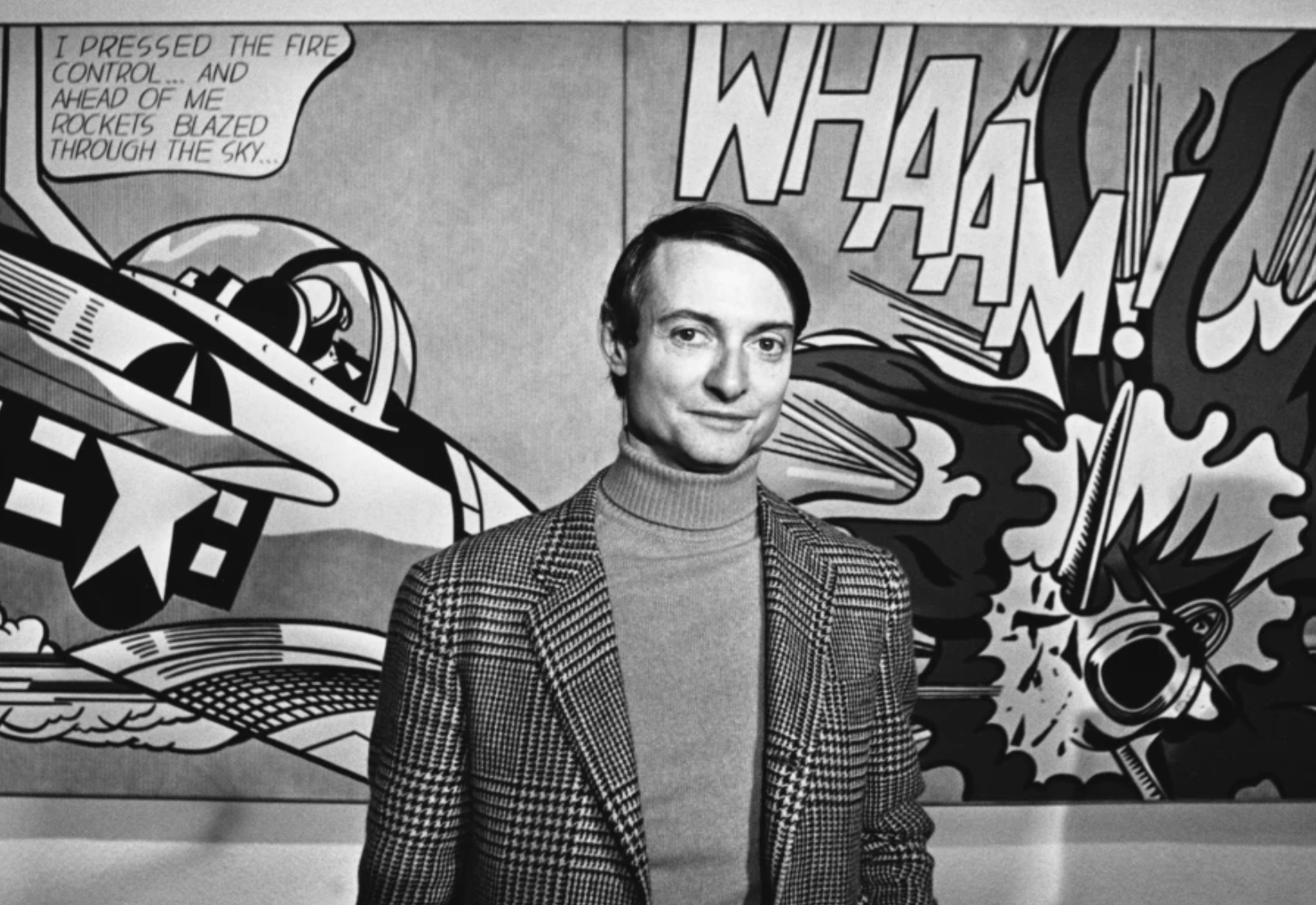
These paintings often depict moments of dramatic emotional tension—a fighter plane explosion, a tearful romantic confession, or a moment of heartbreak. By isolating these scenes and removing them from their original narrative context, Lichtenstein transformed mass-produced images into powerful visual icons.
The result is both humorous and analytical. The exaggerated emotional language of comic books becomes a reflection of how popular culture constructs melodrama and sentimentality. These works remain the most iconic examples of Pop Art and continue to define Lichtenstein’s public image.
War Comics
Closely related to the romance paintings are the war comic paintings, which draw imagery from military comics of the early 1960s. Paintings such as Whaam! depict fighter jets, explosions, and combat scenes rendered with graphic clarity and bold color. These works echo the heroic imagery of wartime propaganda while simultaneously exposing its artificiality. The use of dramatic onomatopoeic text—“WHAAM!” or “BRATATAT!”—reinforces the theatrical nature of these images, turning violent action into stylized visual spectacle.
Brushstroke Series (Mid-1960s)
In the mid-1960s Lichtenstein began exploring the concept of the brushstroke itself as a subject. The Brushstroke paintings parody the expressive gestures associated with Abstract Expressionism. Instead of spontaneous painterly marks, Lichtenstein renders brushstrokes as rigid, stylized forms outlined in black and filled with Ben-Day dots.
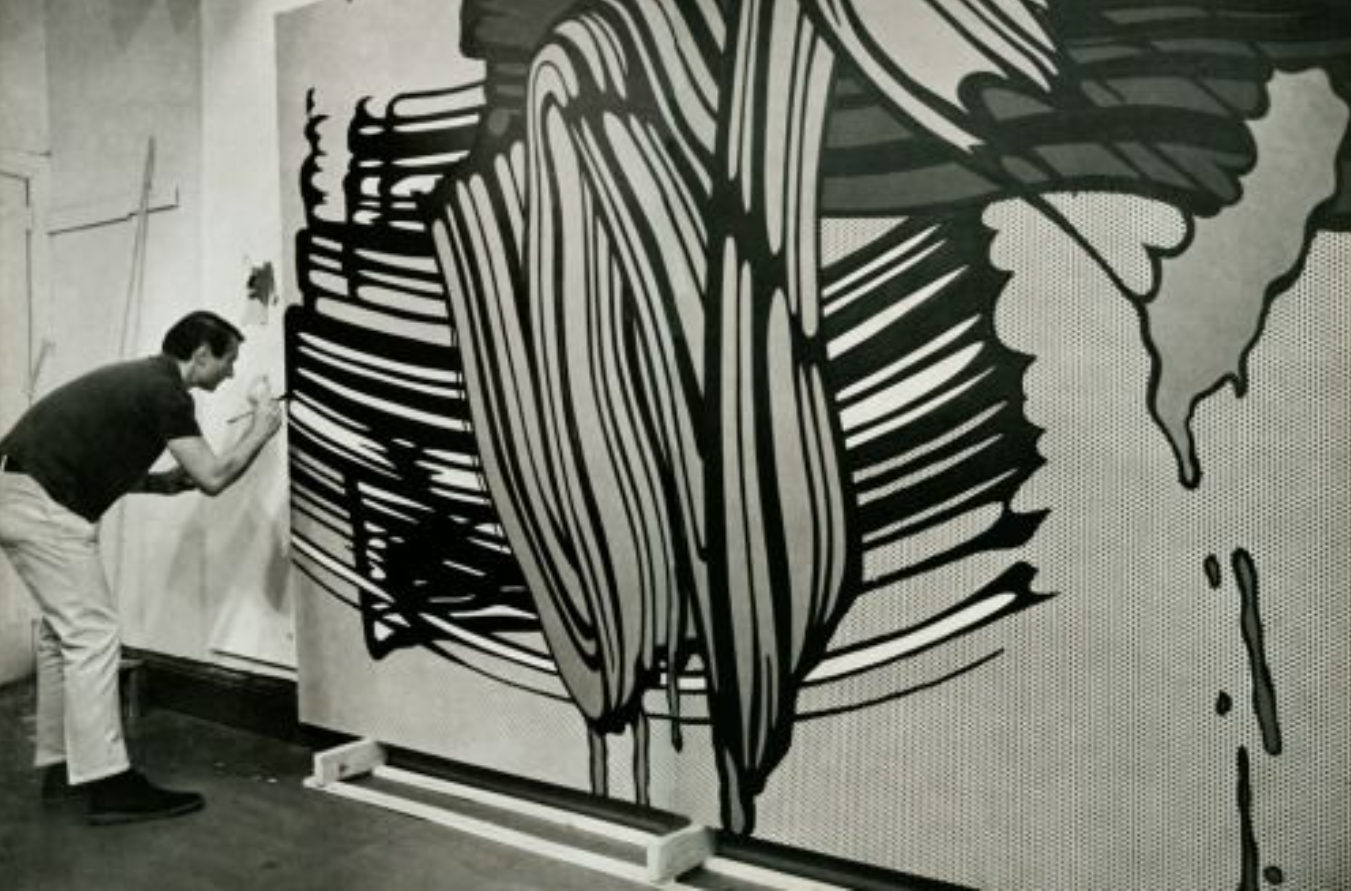
These works cleverly critique the myth of artistic spontaneity that dominated postwar painting. By transforming the expressive gesture into a graphic symbol, Lichtenstein reveals how even the most emotional forms of painting can become stylized conventions.
Modern Paintings
In the late 1960s Lichtenstein began referencing the history of modern art directly. The Modern Paintings series draws inspiration from artists such as Picasso, Mondrian, and Léger. Rather than copying specific works, Lichtenstein translated the visual language of modernism into his Pop vocabulary. This series demonstrates his deep engagement with art history and his ability to reinterpret modernist abstraction through the lens of contemporary visual culture.
Mirrors (Late 1960s–1970s)
The Mirror series represents one of Lichtenstein’s most conceptually intriguing bodies of work. These paintings depict mirrors, yet the reflections themselves are abstract graphic shapes rather than realistic images. The result is a paradox: paintings of mirrors that cannot reflect anything.
Through these works Lichtenstein explores the nature of representation, illusion, and perception. The mirror becomes a visual metaphor for painting itself—a surface that suggests reflection but ultimately remains flat.
Entablatures (1970s)
During the 1970s Lichtenstein created the Entablature series, inspired by classical architectural elements found on New York buildings. These works translate architectural ornamentation into flat, graphic compositions. By isolating fragments of decorative facades, Lichtenstein turns architectural detail into abstract visual patterns. The entablatures demonstrate his continuing interest in the relationship between architecture, ornament, and visual abstraction.
Landscapes
In the mid-1960s and later periods Lichtenstein also produced a series of landscapes. These works reinterpret traditional landscape painting through the language of Pop Art. Mountains, sunsets, and oceans are rendered with simplified shapes and Ben-Day dots, transforming natural scenery into graphic compositions. Rather than romantic depictions of nature, these landscapes emphasize the artificiality of visual representation.
Interiors (1990s)
One of Lichtenstein’s final major bodies of work is the Interiors series, created during the 1990s. These paintings depict domestic spaces filled with modern furniture, artworks, and decorative objects. The compositions often reference both modern design and art historical imagery. The interiors function almost like visual puzzles, combining different stylistic languages within a single composition. They demonstrate Lichtenstein’s ability to synthesize decades of artistic exploration into richly layered images.
Sculpture
Beginning in the late 1960s Lichtenstein also developed an important sculptural practice. His sculptures translate the graphic qualities of his paintings into three-dimensional form. Many of these works appear almost two-dimensional despite being physical objects, reinforcing the illusionistic play between flatness and volume. Later sculptures—including large public installations—expand this visual language into monumental scale.
Museum Collections and Institutional Presence
Roy Lichtenstein’s works are in the permanent collections of the world’s most celebrated museums including The Broad Museum, Los Angeles; Museum of Fine Arts, Boston; The Metropolitan Museum of Art, New York; The Museum of Modern Art, New York; The Museum of Fine Arts, Houston; Museum Ludwig, Cologne; Stedelijk Museum, Amsterdam; Museo Nacional Centro de Arte Reina Sofia, Madrid and many others.
Lichtenstein was the subject of a 2012-2013 retrospective at the Art Institute of Chicago that then traveled to the National Gallery of Art, Washington, D.C. and the Tate Modern, London. Throughout his career he was honored with major institutional retrospectives including ones at the Tate Gallery, London (becoming the first American to exhibit there), the Solomon R. Guggenheim Museum, New York, The Museum of Modern Art, New York, and after his passing at the Art Institute of Chicago, the Centre Pompidou, Paris and the National Gallery, Washington, D.C., amongst others. These institutional exhibitions have reinforced Lichtenstein’s position as one of the most important artists of the twentieth century.
Gallery Representation
During his lifetime Lichtenstein worked with some of the most influential galleries in the contemporary art world.
Today his estate is represented internationally by Gagosian Gallery, which continues to organize exhibitions and manage the placement of major works. Gagosian’s representation reflects Lichtenstein’s position among the most important artists of the postwar era.
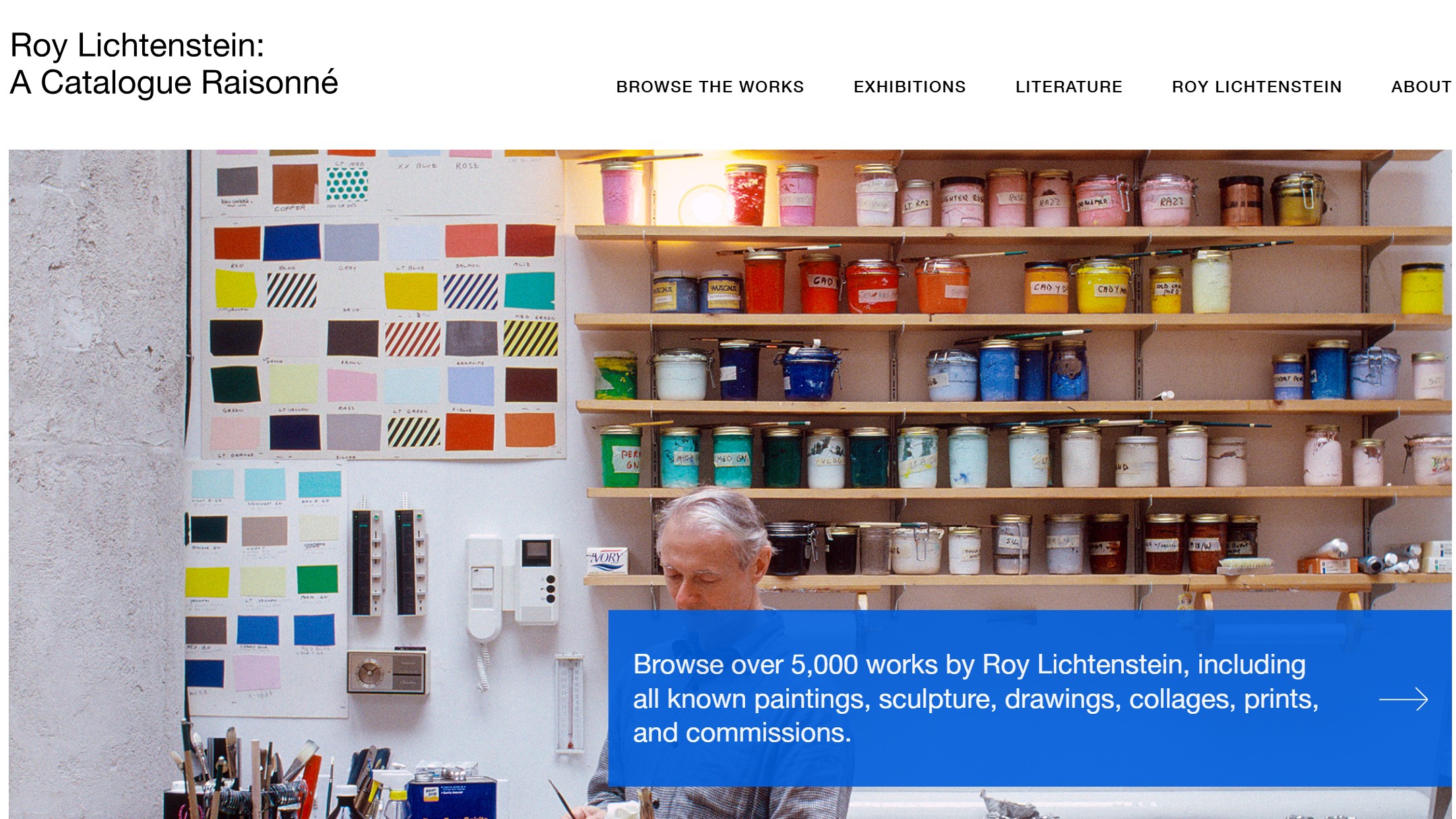

Roy Lichtenstein fundamentally changed the relationship between art and popular culture. By transforming comic book imagery, advertising graphics, and printing techniques into monumental paintings, he challenged traditional distinctions between high art and mass media. At the same time, his work offered a sharp commentary on how modern society produces and consumes images.
More than half a century after the emergence of Pop Art, Lichtenstein’s visual language remains instantly recognizable. His paintings continue to influence artists, designers, and visual culture worldwide. Through humor, precision, and intellectual clarity, Lichtenstein created a body of work that remains central to the story of modern and contemporary art.
PART I: SUMMARY
Auction Market Overview
2025 AUCTION STATISTICS
Turnover: USD 143,359,892
+137.9% vs. 2024
# Lots sold: 148
Sell-Through Rate: 98%
MARKET SEGMENTATION
Paintings (37.8%) / Studies & WoP (37.1%) / Sculptures (25.1%)
New-York (94%) / Hong-Kong (6%)
(by value)
Highest Price achieved at Auction:
USD 95,365,000
(8 November 2015)
Auction Summary
2025 Auction Highlights
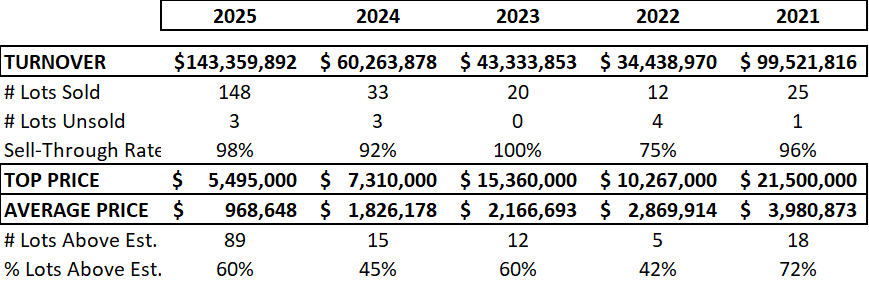
148 lots sold at auction in 2025, for a total turnover of USD 143,359,892. With 3 lots failing to sell, the sell-through rate is 98%. 2025 is a record year for Roy Lichtenstein at auction, driven by the sale of numerous works from The Collection of Dorothy and Roy Lichtenstein.
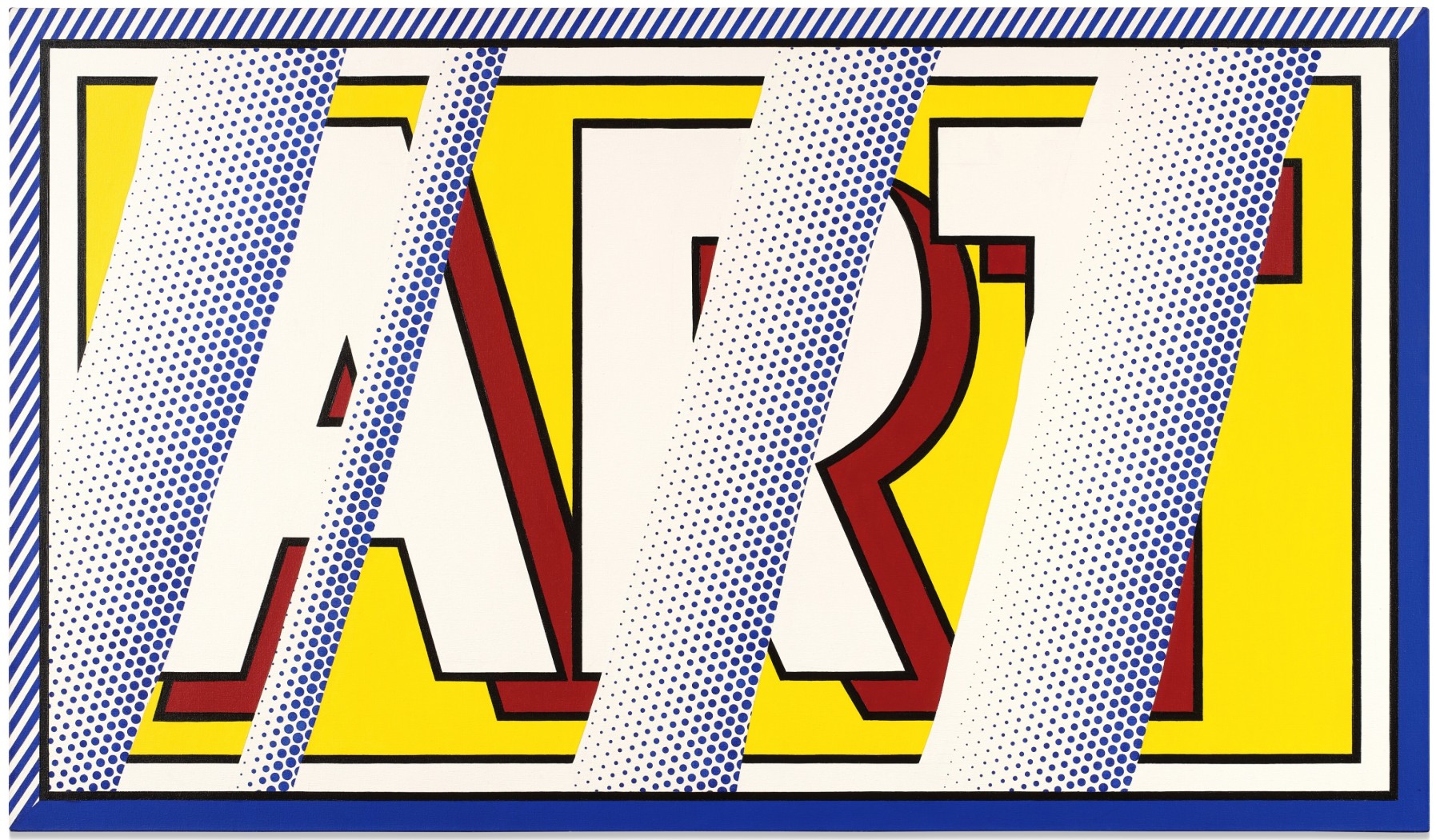
30 Paintings sold at auction in 2025 for a total turnover of USD 54,124,989. With no lot failing to sell, the sell-through rate is 100%. This includes 24 lots from The Collection of Dorothy and Roy Lichtenstein contributing USD 51,328,069, or 94.8% to the total so far. The highest price was achieved by Reflections: Art, a painting from the Collection of Dorothy and Roy Lichtenstein, that sold at Sotheby’s in New-York, on 15 May 2025 for USD 5,479,000. 20 lots sold for more than USD 1 million, generating a cumulative turnover of USD 49,784,549, representing 92% of the total turnover for 2025.
2025 Top 3 Lots
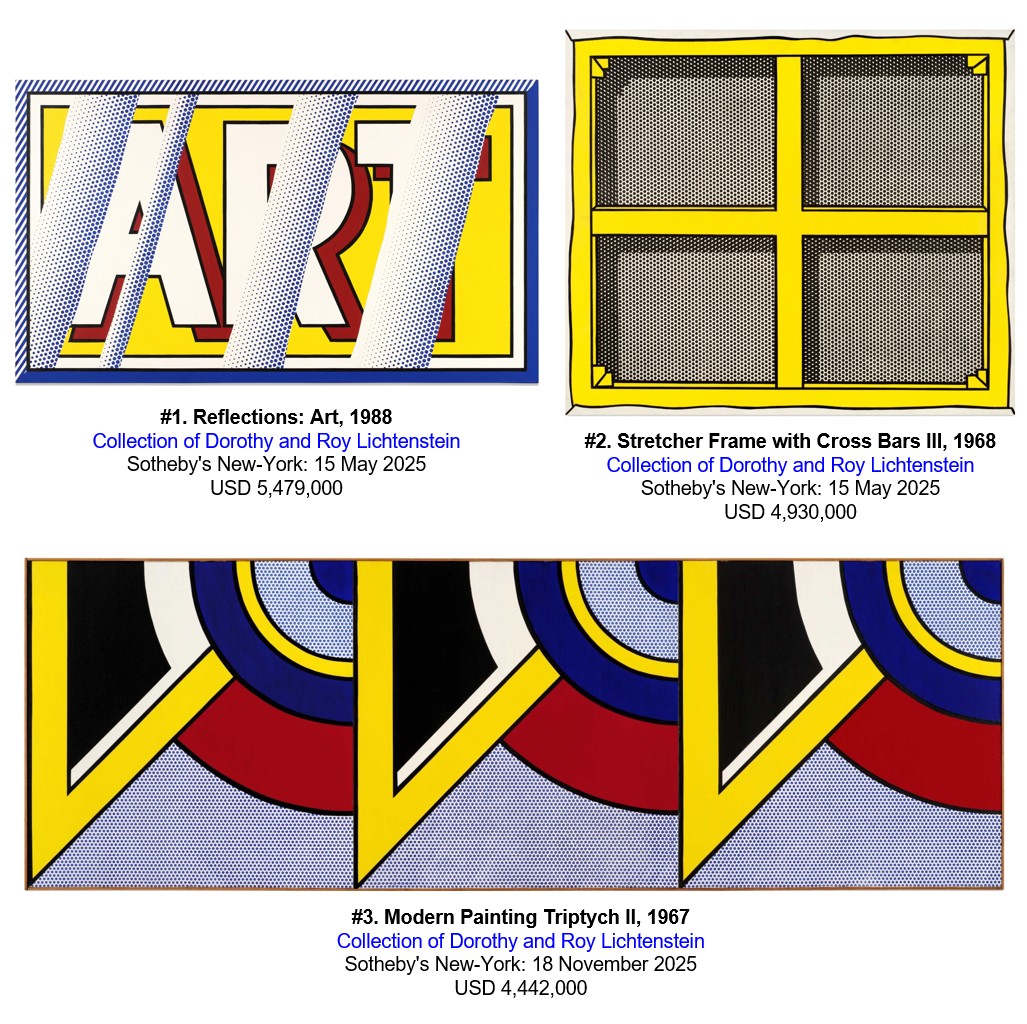
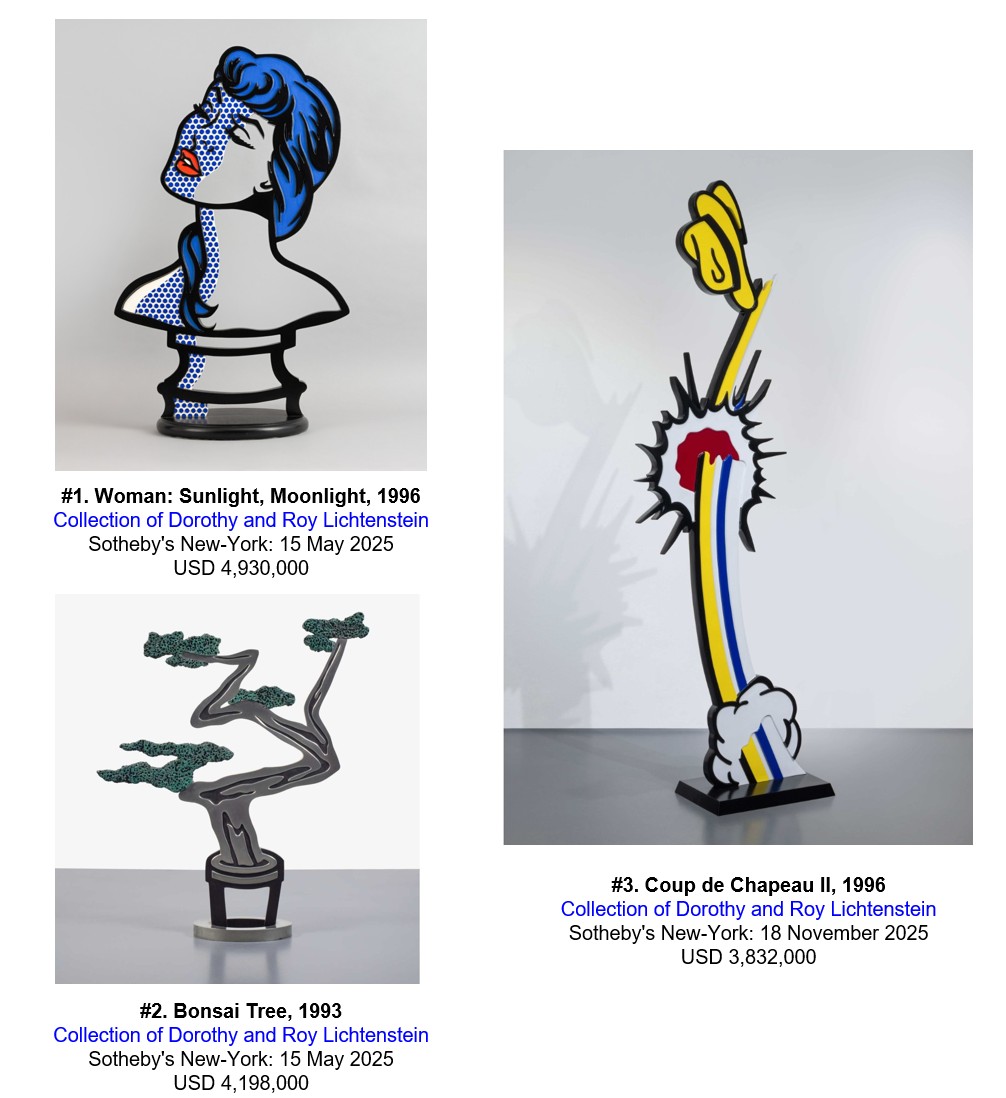
31 Sculptures sold at auction in 2025 for a total turnover of USD 35,978,447. With 1 lot failing to sell, the sell-through rate is 97%. The highest price was achieved by Woman: Sunlight, Moonlight, a gorgeous sculpture on wood, that sold at Sotheby’s in New-York, 0n 15 May 2025, for USD 4,930,000. That includes 28 lots from the Collection of Dorothy and Roy Lichtenstein generating a total turnover of USD 33,832,447, representing 94% of the total turnover in 2025. 11 lots sold for more than USD 1 million, generating a cumulative turnover of USD 26,125,990, representing 72.6% of the total turnover for 2025.
2025 Top 3 Lots
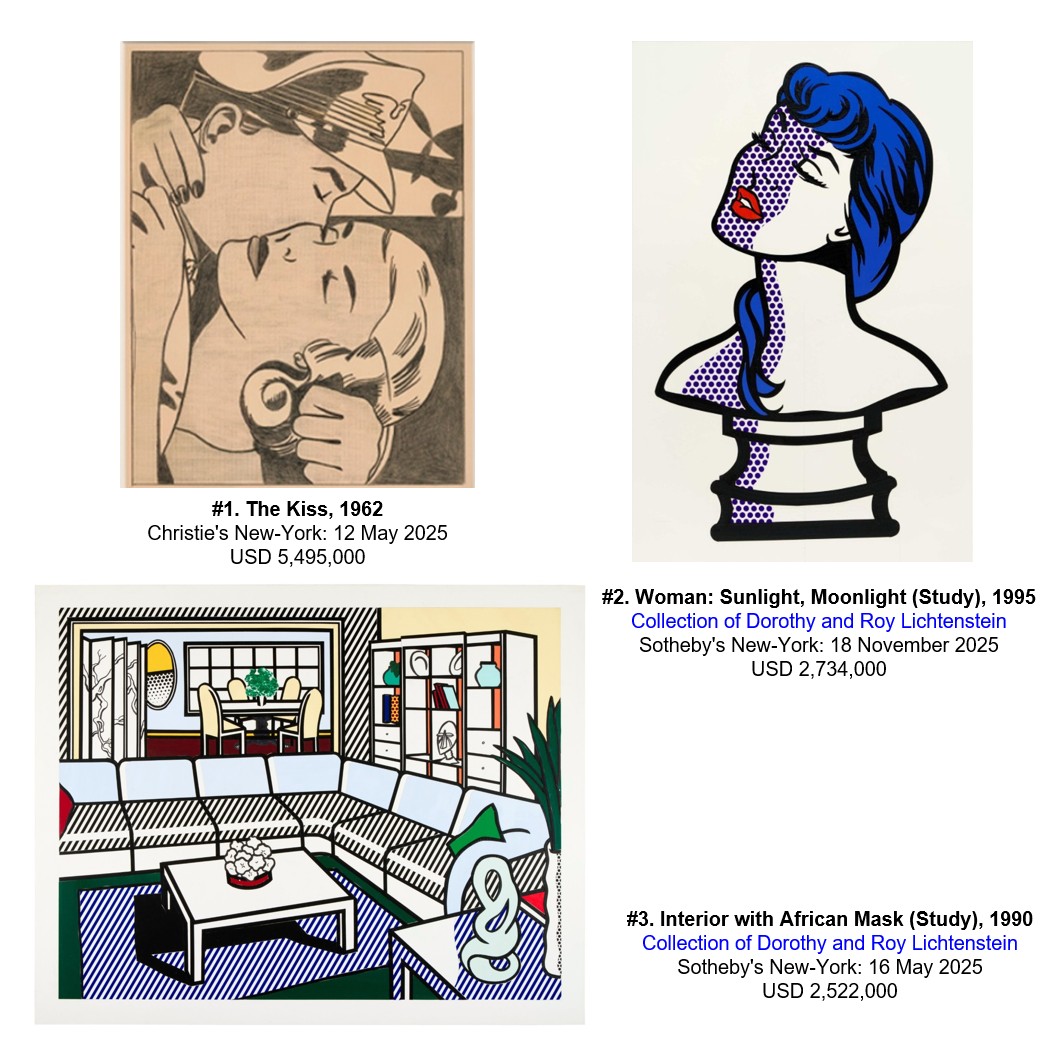
87 Studies/Works on Paper sold at auction in 2025 for a total turnover of USD 53,256,456. With 2 lot failing to sell, the sell-through rate is 98%. This includes 81 lots from The Collection of Dorothy and Roy Lichtenstein sold for a total turnover of USD 33,579,480. The top lot from this category is The Kiss, a work on paper, sold at Christie’s in New-York, on 12 May 2025, for USD 5,495,000. The second lot from the category, and the top lot for Studies from The Collection of Dorothy and Roy Lichtenstein is Woman: Sunlight, Moonlight (Study), a Study dated 1995, that sold at Sotheby’s in New-York, on 18 November 2025, for USD 2,734,000. 15 lots sold for more than USD 1 million, generating a cumulative turnover of USD 29,336,575, representing 55.1% of the total turnover for this category in 2025.
2025 Top 3 Lots
2024 Auction Highlights
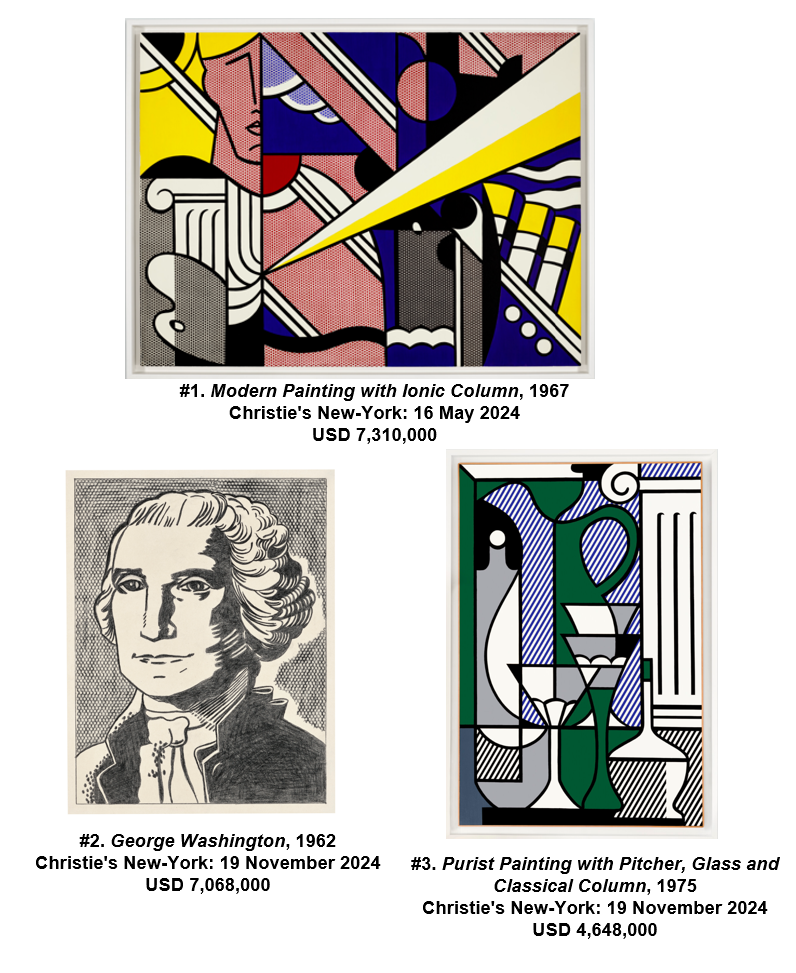
33 lots sold at auction in 2024 for a total turnover of USD 60,263,878. With 3 lots failing to sell, the sell-through rate is 92%. The highest price was achieved at Christie’s in New-York on 16 May 2024, when Modern Painting with Ionic Column, a painting dated 1967, sold for USD 7,310,000.
2024 Top 3 Lots
19 lots sold for more than USD 1 million, generating a turnover of USD 55,275,728, representing 91.7% of the total for 2024.
2023 Auction Highlights
20 lots sold in 2023 for a total turnover of USD 43,333,853. With no lot failing to sell, the sell-through rate is a perfect 100%. The top price was achieved at Christie’s in New-York on 11 May 2023 for Rouen Cathedral, Set IV from 1969 that sold for USD 15,360,000.
2023 Top 3 Lots
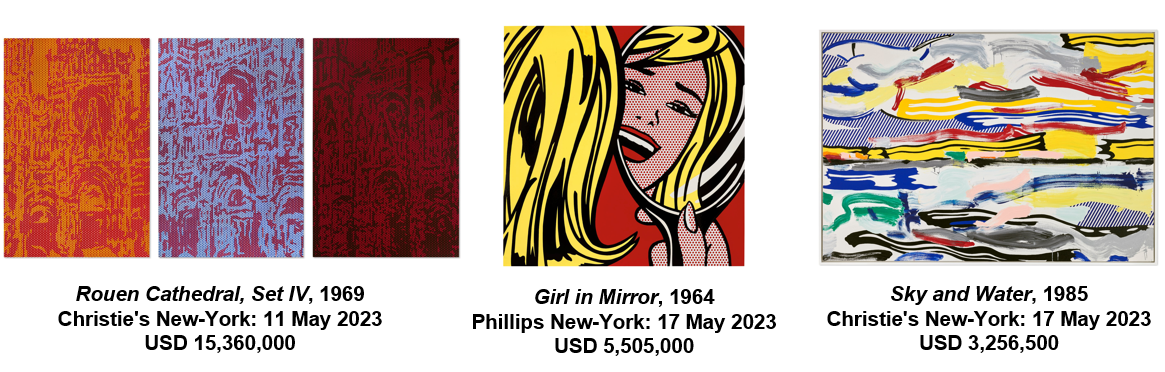
The top 3 lots generated a cumulative turnover of USD 24,121,500, contributing 55.7% to the total turnover for 2023. 11 lots sold for more than USD 1 million, generating a cumulative turnover of USD 41,875,599, representing 96.6% of the total turnover for 2023. All lots sold in the US, except 1 in Hong-Kong, and another in Zurich.
2022 Auction Highlights
12 lots sold at auction in 2022 for a total turnover of USD 34,438,970. With 4 lots failing to sell, the sell-through rate is 75%. The highest price has been achieved by Nude, a painting dated 1997, that sold for USD 10,267,000 at Phillips in New-York on 18 May 2022. Only one painting sold for a price over USD 10 million.
2022 Top 3 Lots
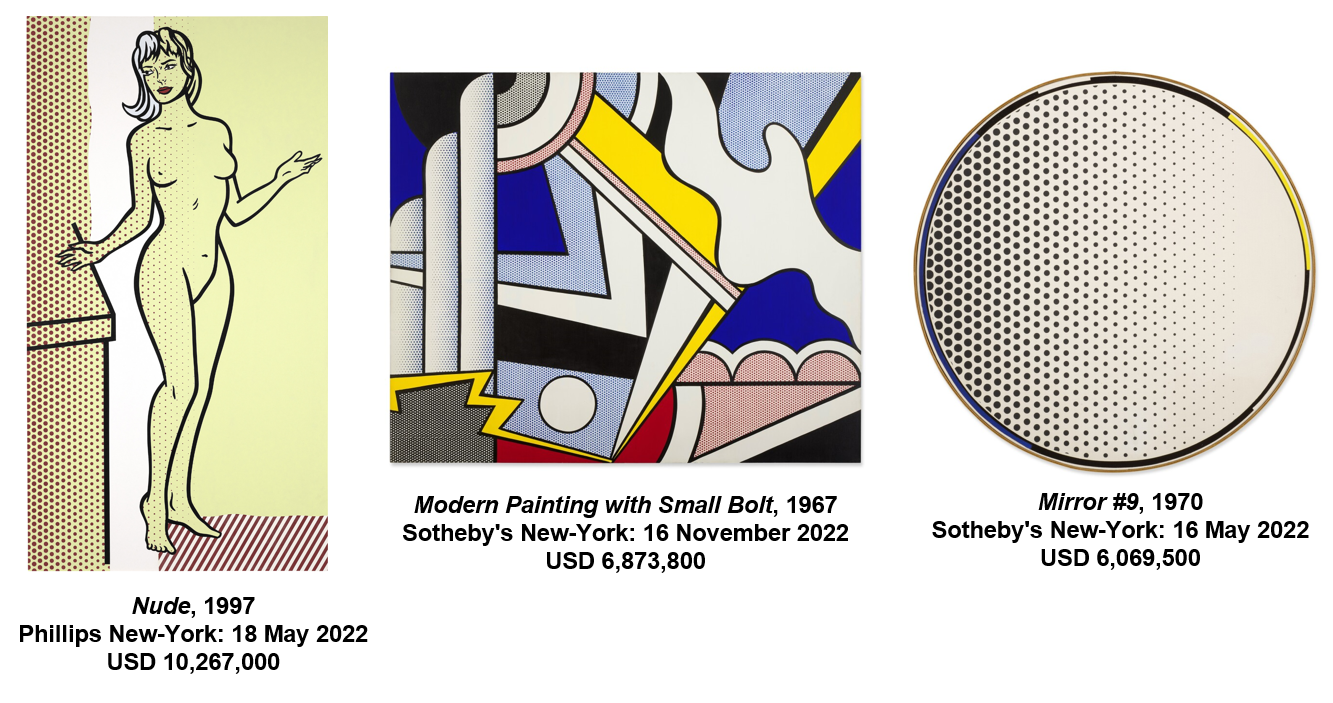
The top 3 lots generated a cumulative turnover of USD 23,210,300, contributing 67.4% to the total turnover of 2022. 8 lots sold for more than USD 1 million, generating a cumulative turnover of USD 34,007,300, representing 98.7% of the total turnover for 2022. All lots sold in New-York.
2021 Auction Highlights
25 lots sold at auction in 2021 for a total turnover of USD 99,521,816. With 1 lot failing to sell, the sell-through rate is 96%. 4 lots sold for over USD 10 million. Together, they generated a cumulative turnover of USD 70,096,712, representing 70.4% of the total turnover of 2021.
2021 Top 3 Lots
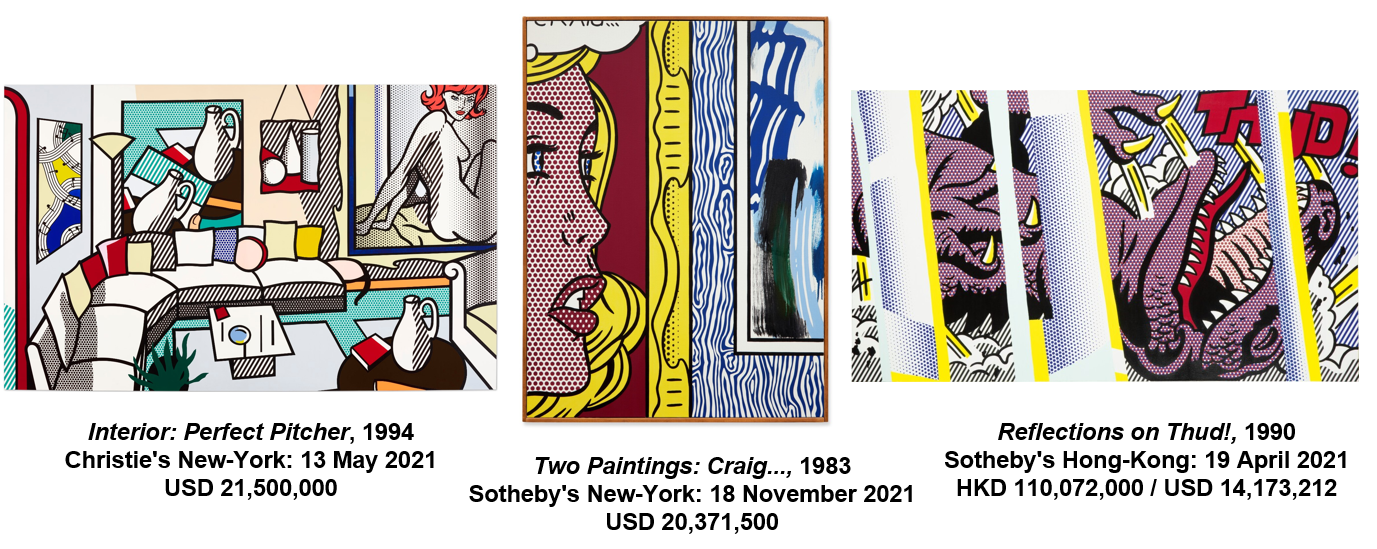
13 lots sold for more than USD 1 million, generating a cumulative turnover of USD 96,849,786, representing 97.3% of the total turnover for 2021. 4 sculptures sold in 2021, and if most lots sold in the US, it is noted that Sotheby’s sold two paintings from the Reflections series in Hong-Kong.
Top Lots
PLEASE CLICK ON ANY PICTURE TO ACCESS CATALOGUE ENTRIES
The auction record for Lichtenstein dates from 8 November 2015, when Nurse, a masterpiece dated 1964, sold at Christie’s in New-York for USD 95,365,000. The aggregate turnover for the top 10 lots amounts to USD 461,056,250. 8 paintings are from the 1960’s, however 2 paintings included in the top 10 are from the artist’s late series of Nudes.
#1. Nurse, 1964
Christie’s New-York: 8 November 2015
Estimate on Request
USD 95,365,000
Roy Lichtenstein (1923-1997) (christies.com)
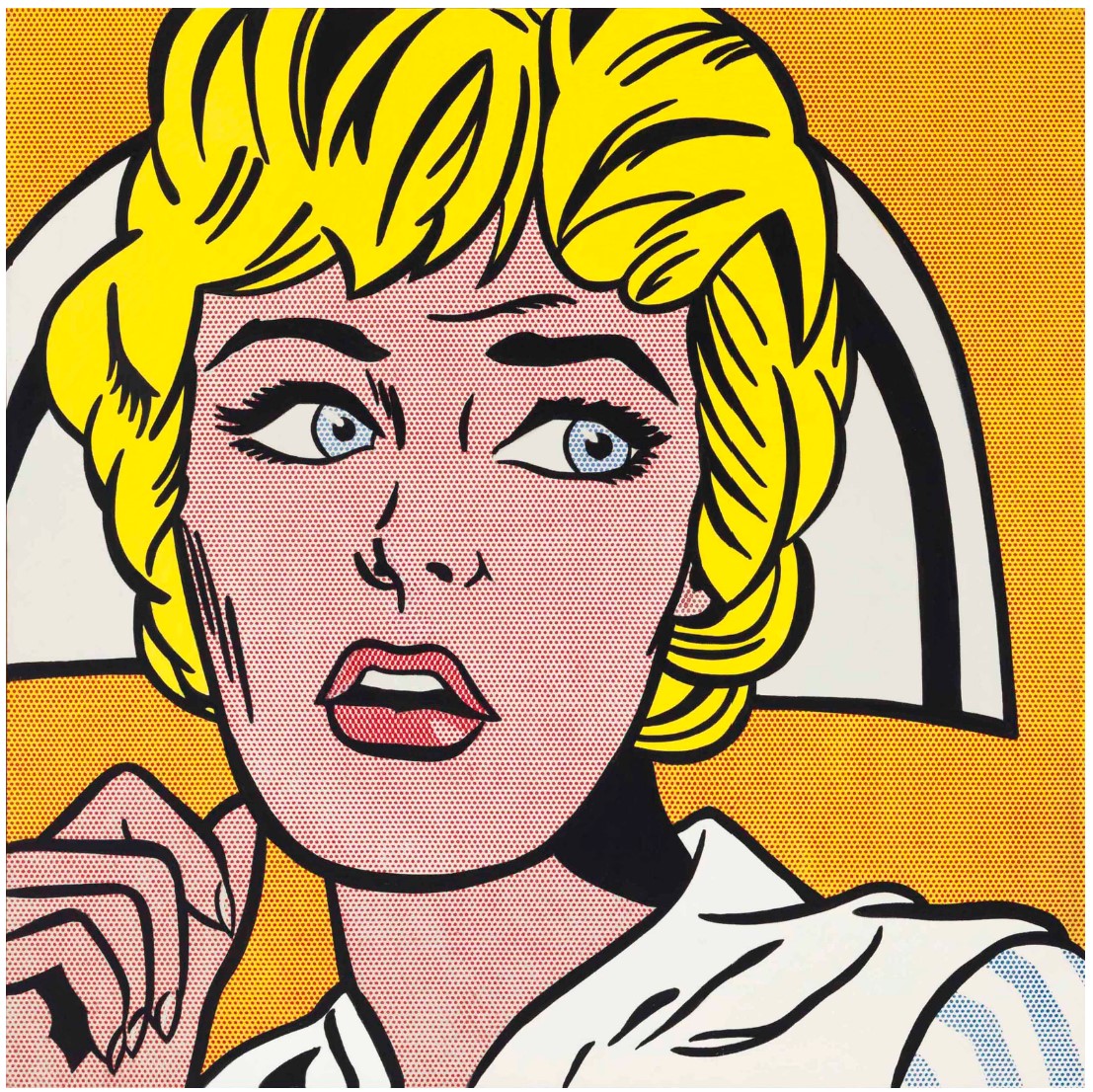
ROY LICHTENSTEIN (1923-1997)
Nurse, 1964
Oil and Magna on canvas
48×48 inches (121.9 x 121.9 cm)
Signed and dated ‘rf Lichtenstein ’64’ (on the reverse)
#2. Woman with Flowered Hat, 1963
Christie’s New-York: 14 May 2013
Estimate on Request
USD 56,123,750
Roy Lichtenstein (1923-1997) (christies.com)
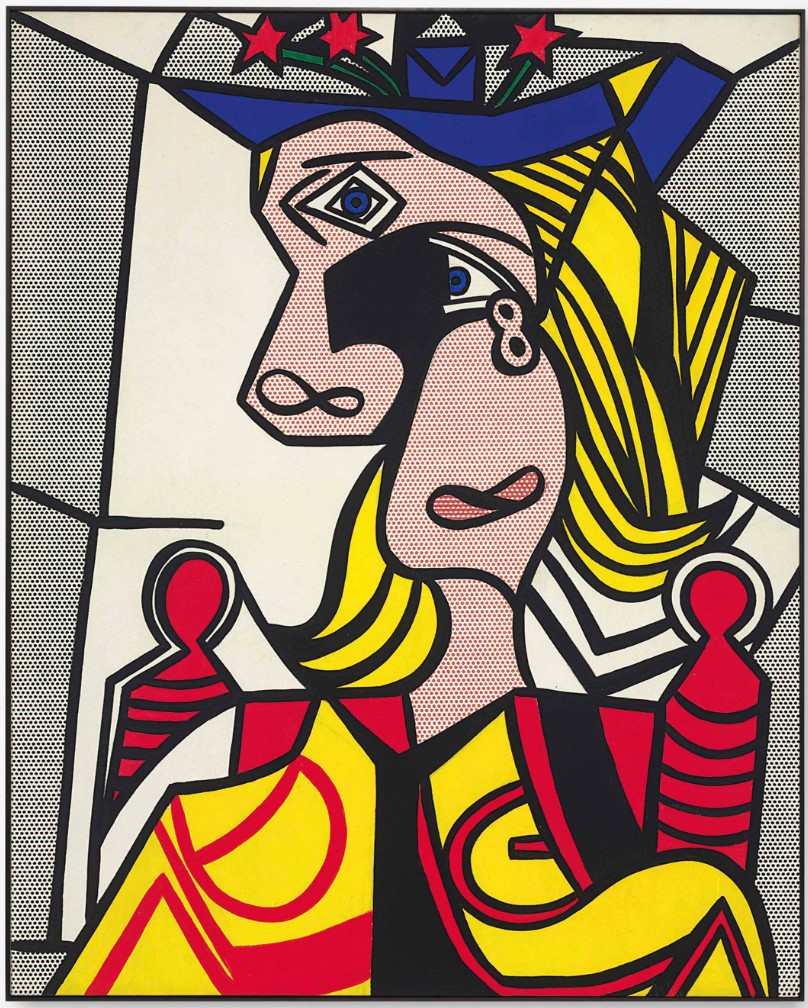
ROY LICHTENSTEIN (1923-1997)
Woman with Flowered Hat, 1963
Magna on canvas
50 1/8 x 40 ¼ inches (127.3 x 102.2 cm)
Signed and dated ‘rf Lichtenstein ’63’ (on the reverse)
#3. Nude with Joyous Painting, 1994
Christie’s New-York: 9 July 2020
Estimate on Request
USD 46,242,500
Roy Lichtenstein (1923-1997) (christies.com)
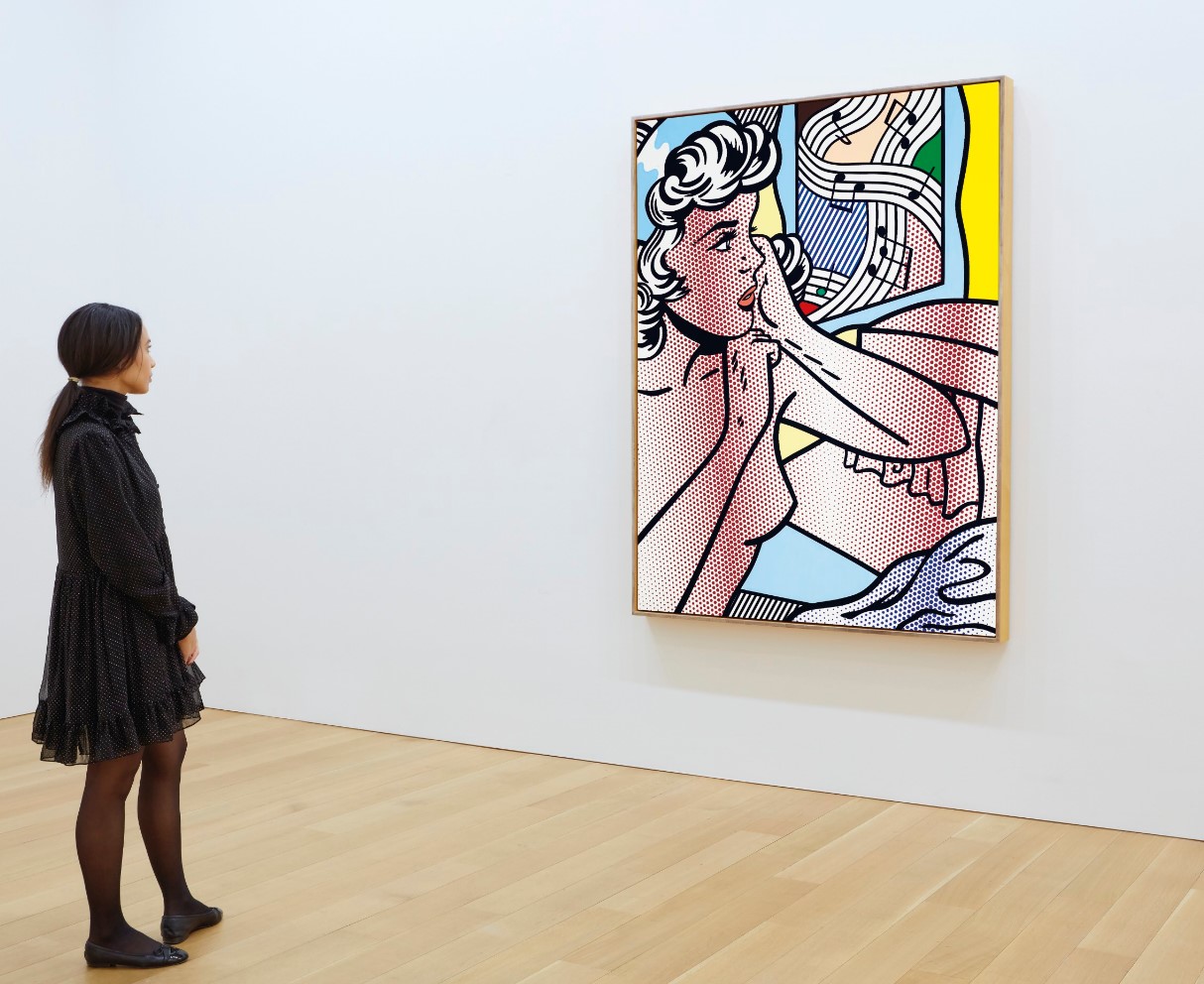
ROY LICHTENSTEIN (1923-1997)
Nude with Joyous Painting, 1994
Oil and Magna on canvas
70×53 inches (177.8 x 134.6 cm)
Signed and dated ‘rf Lichtenstein ’94’ (on the reverse)
#4. Sleeping Girl, 1964
Sotheby’s New-York: 9 May 2012
Estimated: USD 30,000,000 – 40,000,000
USD 44,882,500
(#16) Roy Lichtenstein (sothebys.com)
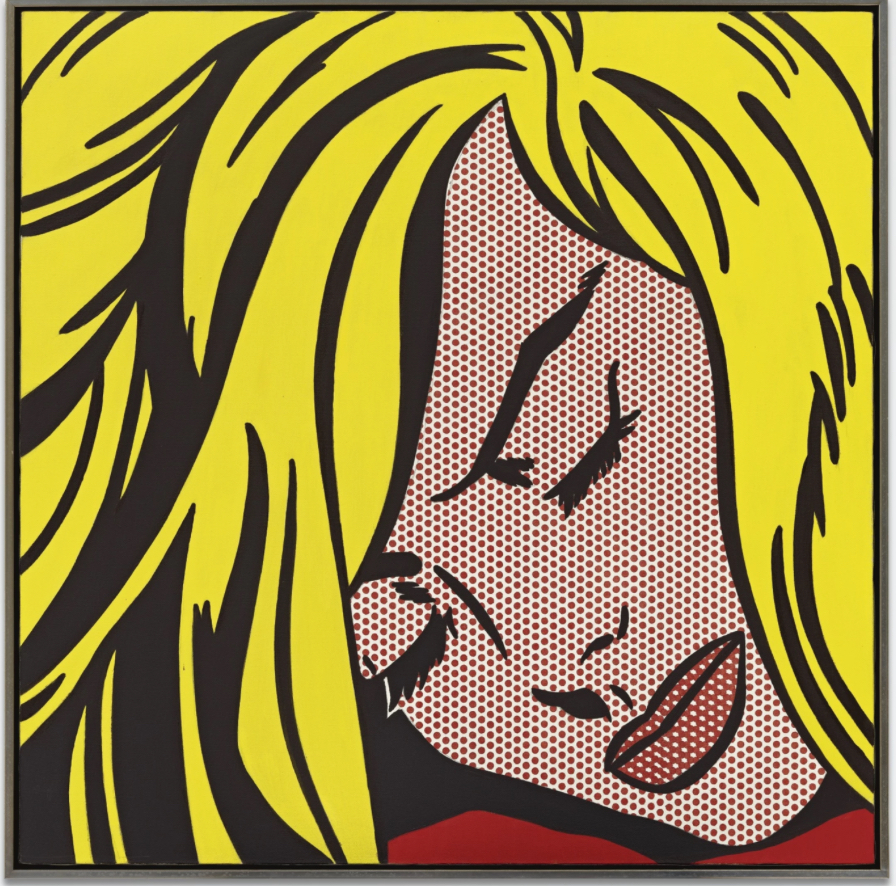
ROY LICHTENSTEIN
Sleeping Girl, 1964
Oil and Magna on canvas
36×36 inches (91.5 x 91.5 cm)
Signed and dated ’64 on the reverse
#5. I Can See the Whole Room!…and There’s Nobody in it!, 1961
Christie’s New-York: 8 November 2011
Estimated: USD 35,000,000 – 45,000,000
USD 43,202,500
Roy Lichtenstein (1923-1997) (christies.com)
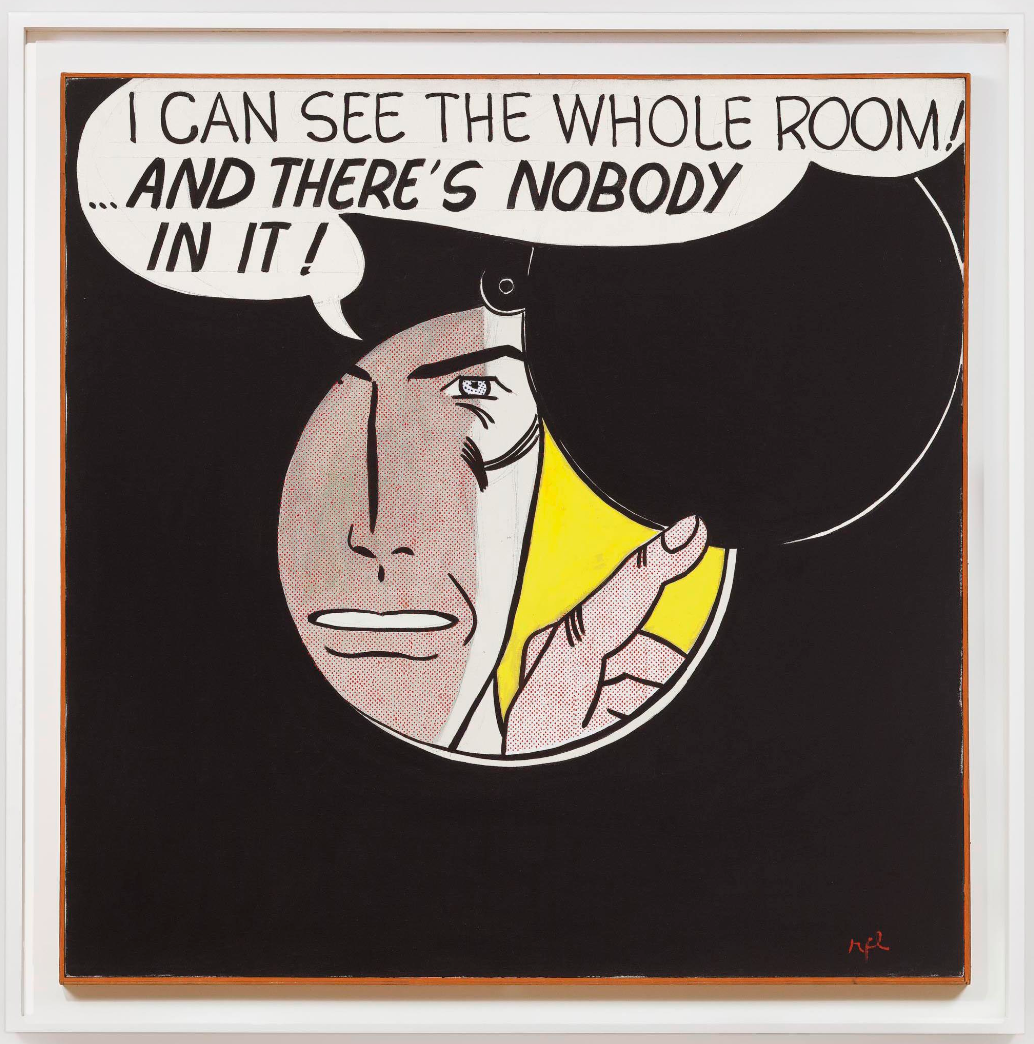
ROY LICHTENSTEIN (1923-1997)
I Can See the Whole Room!…and There’s Nobody in it!, 1961
Oil and graphite on canvas
48×48 inches (121.9 x 121.9 cm)
Signed ‘rfl’ (lower right)
#6. Ohhh…Alright…, 1964
Christie’s New-York: 10 November 2010
Estimate on Request
USD 42,642,500
Roy Lichtenstein (1923-1997) (christies.com)
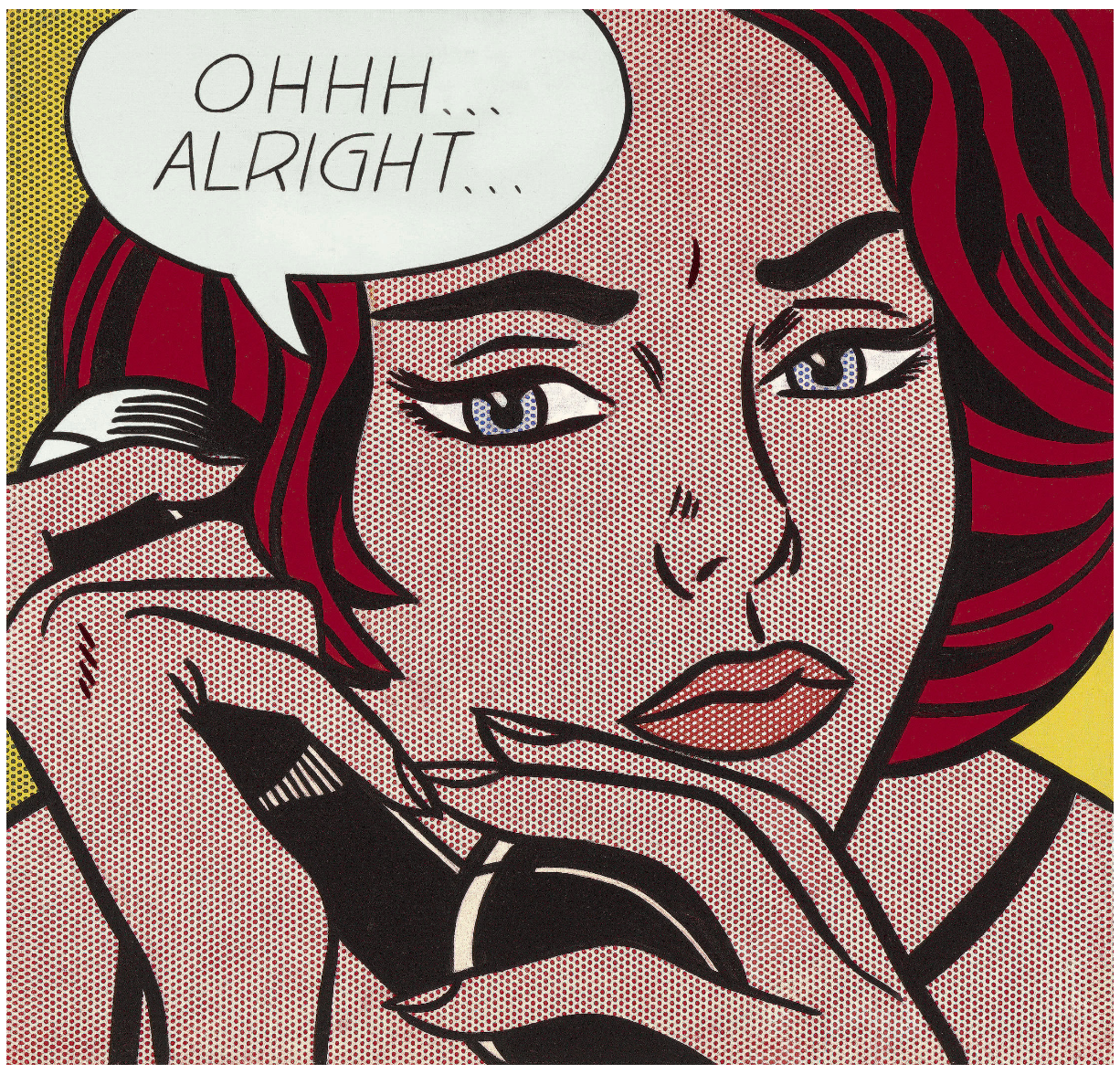
Roy Lichtenstein (1923-1997)
Ohhh…Alright…, 1964
Oil and magna on canvas
36 1/2 x 38 inches (90.2 x 96.5 cm)
Signed and dated ‘rf Lichtenstein ’64’ (on the reverse)
#7. The Ring (Engagement), 1962
Sotheby’s New-York: 11 May 2015
Estimate on Request
USD 41,690,000
(#15) Roy Lichtenstein (sothebys.com)
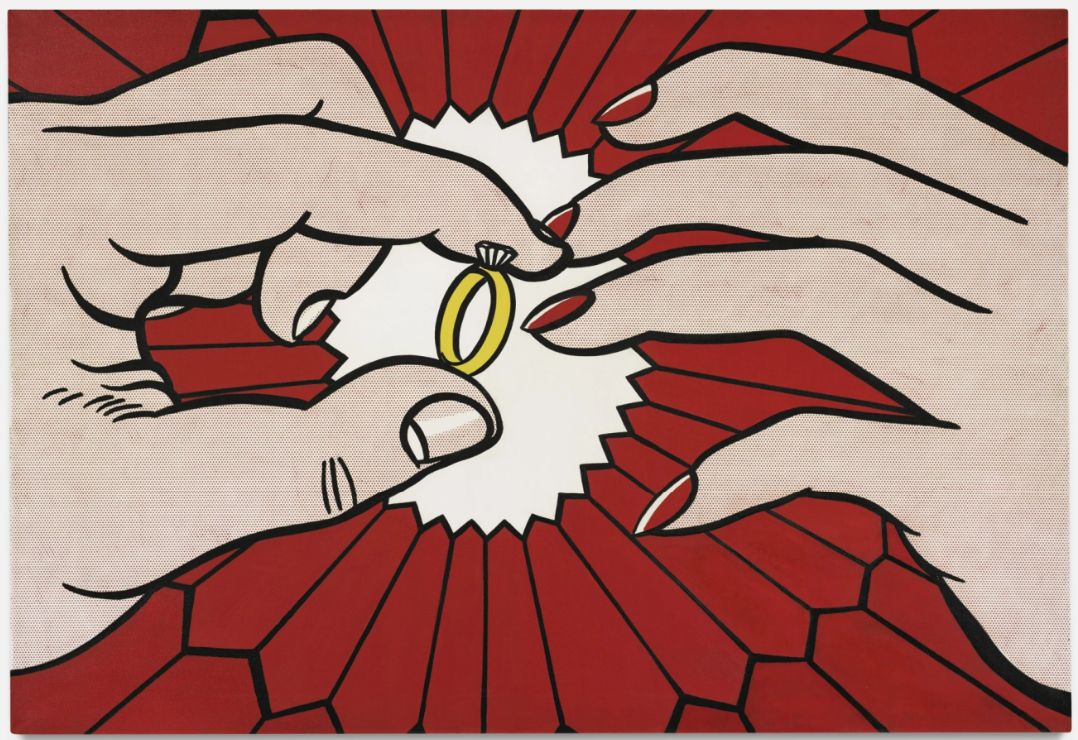
ROY LICHTENSTEIN
The Ring (Engagement), 1962
Oil on canvas
48 1/4 x 70 inches (122.5 x 177.8 cm)
Signed and dated ’62 on the reverse; titled on the stretcher
#8. Seductive Girl, 1996
Christie’s New-York: 12 November 2013
Estimated: USD 22,000,000 – 28,000,000
USD 31,525,000
Roy Lichtenstein (1923-1997) (christies.com)
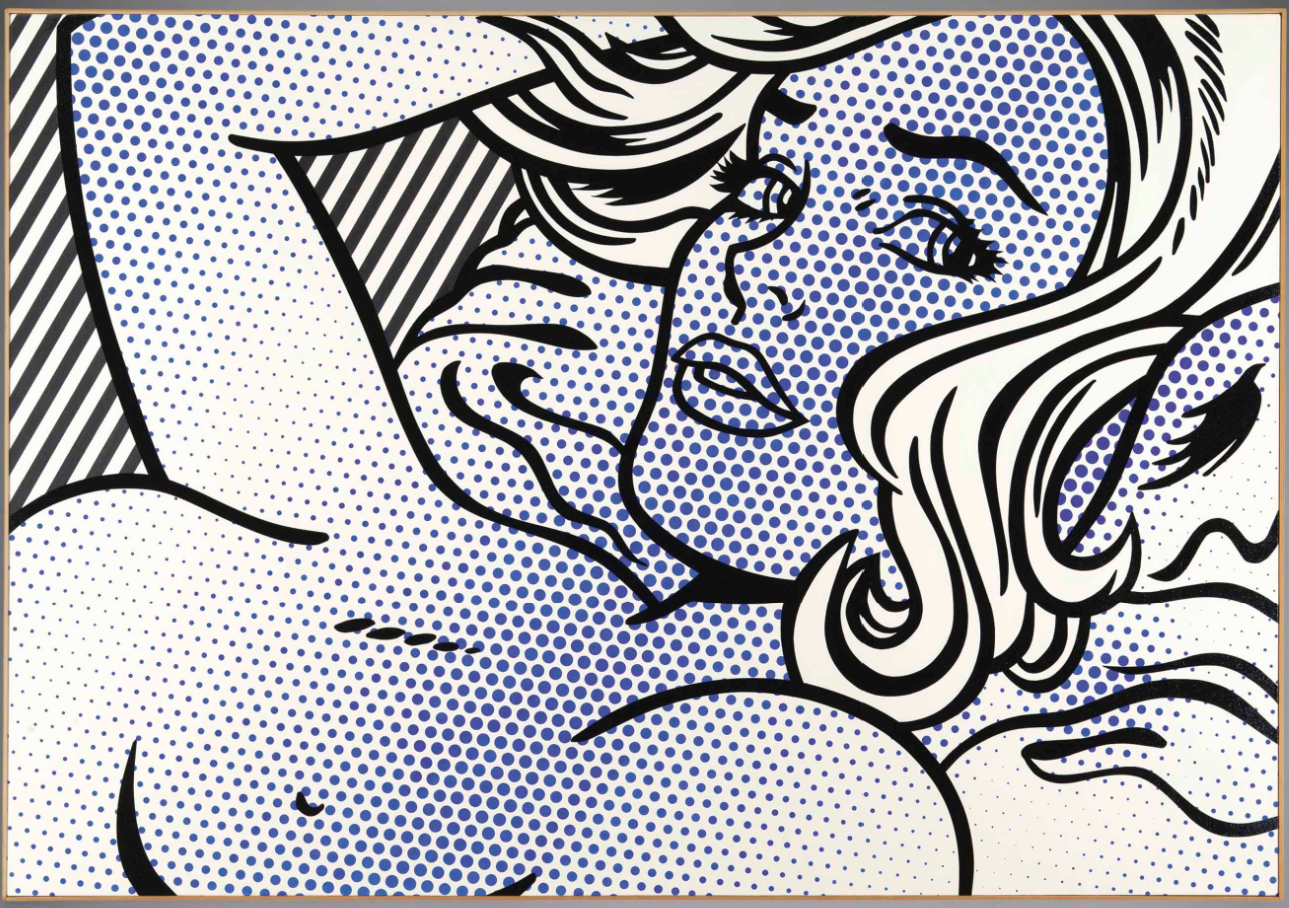
Roy Lichtenstein (1923-1997)
Seductive Girl, 1996
Oil and Magna on canvas
50×72 inches (127 x 182.8 cm)
Signed and dated ‘rf Lichtenstein ’96’ (on the reverse)
#9. Kiss III, 1962
Christie’s New-York: 15 May 2019
Estimated: USD 30,000,000 – 50,000,000
USD 31,135,000
Roy Lichtenstein (1923-1997) (christies.com)
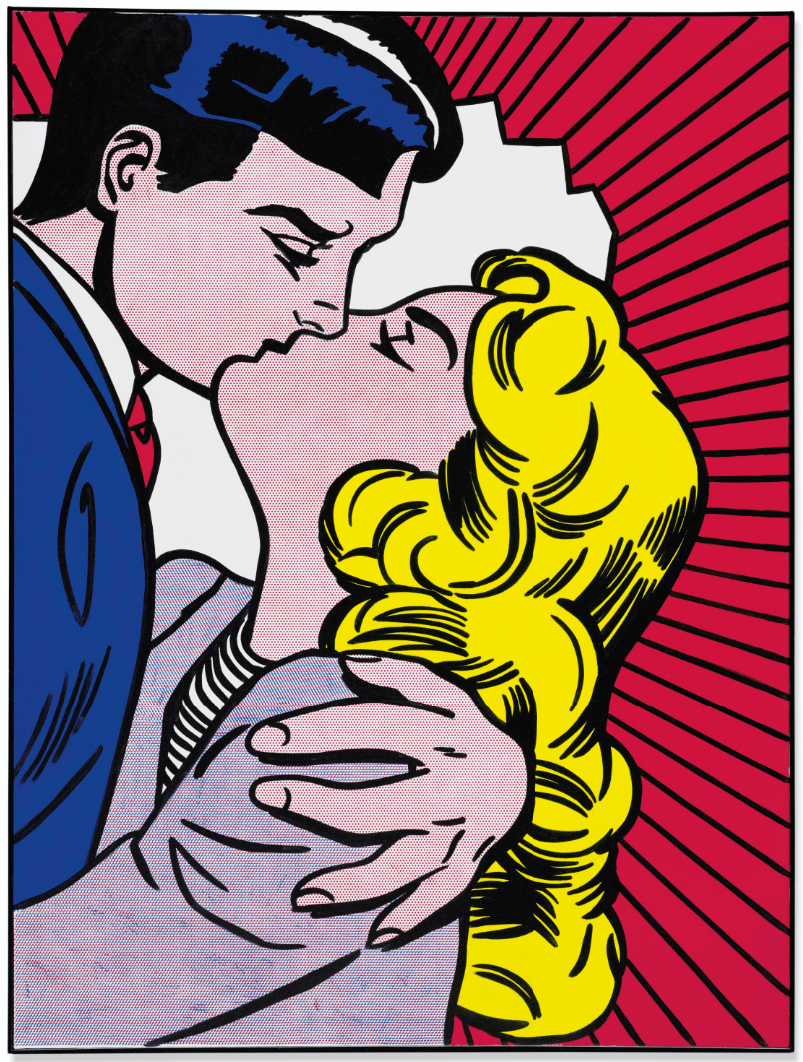
Roy Lichtenstein (1923-1997)
Kiss III, 1962
Magna on canvas
64×48 inches (162.6 x 121.9 cm)
Signed and dated ‘rf Lichtenstein ’62’ (on the reverse)
#10. Red and White Brushstrokes, 1965
Christie’s New-York: 17 May 2017
Estimated: USD 25,000,000 – 35,000,000
USD 28,247,500
Roy Lichtenstein (1923-1997) (christies.com)
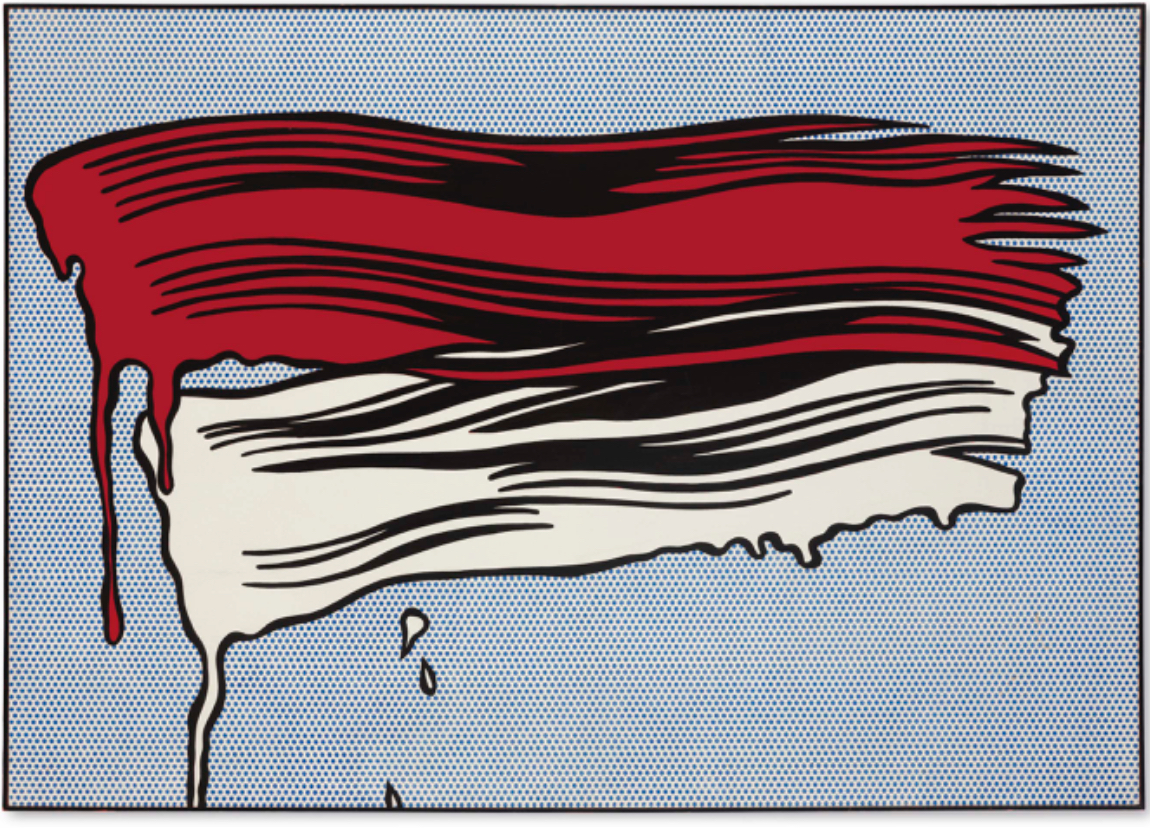
Roy Lichtenstein (1923-1997)
Red and White Brushstrokes, 1965
Oil and Magna on canvas
48×68 inches (121.9 x 172.7 cm)
Signed and dated ‘rf Lichtenstein ’65’ (on the reverse)
FIND MORE AUCTION RESULTS
PART II: AUCTION RESULTS
2026 Upcoming Lots
Still Life with Attaché Case, 1976
Seoul Auction: 30 March 2026
Estimated: KRW 6,000,000,000 – 8,000,000,000
USD 4,100,000 – 5,500,000
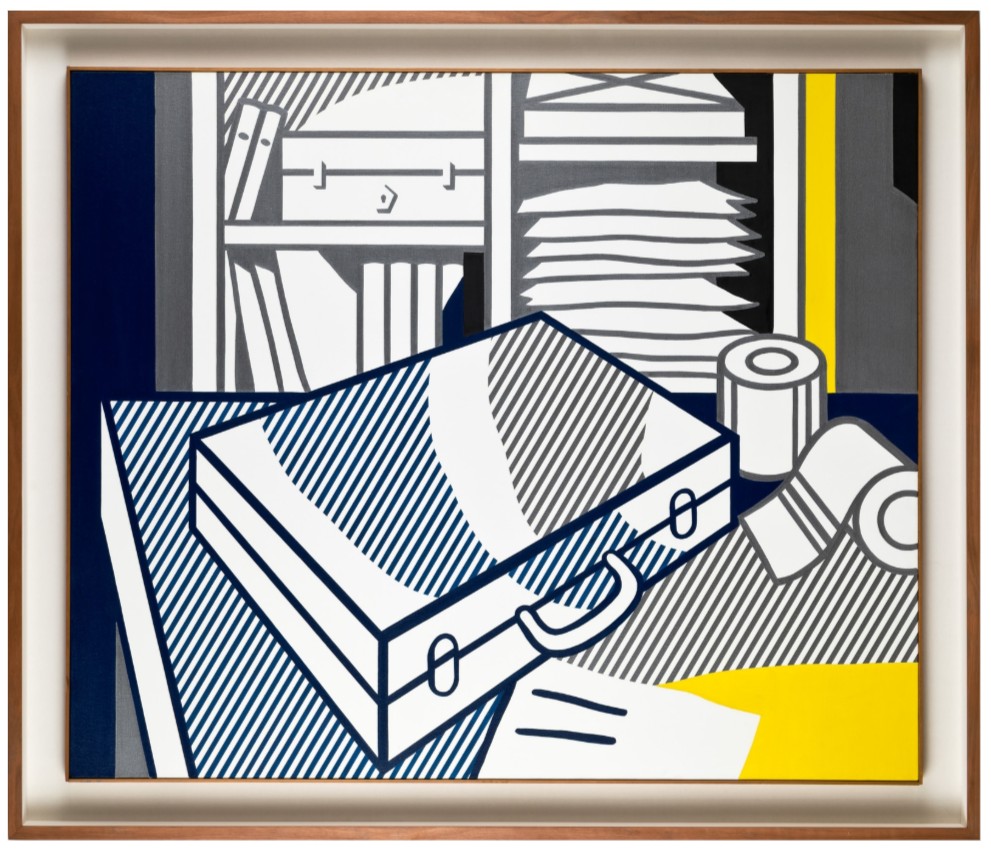
ROY LICHTENSTEIN (1923 ~ 1997 | American)
Still Life with Attaché Case, 1976
Acrylic, oil and graphite pencil on canvas
50 x 59 7/8 inches (127 x 152.2 cm)
Signed and dated on the reverse
2026 Auction Results
PRELIMINARY AUCTION RESULTS
As of 1 June 2026
1. Paintings
#1. Anxious Girl, 1964
Christie’s New-York: 18 May 2026
Estimated: USD 40,000,000 – 60,000,000
USD 46,060,000
ROY LICHTENSTEIN (1923-1997), Anxious Girl | Christie’s
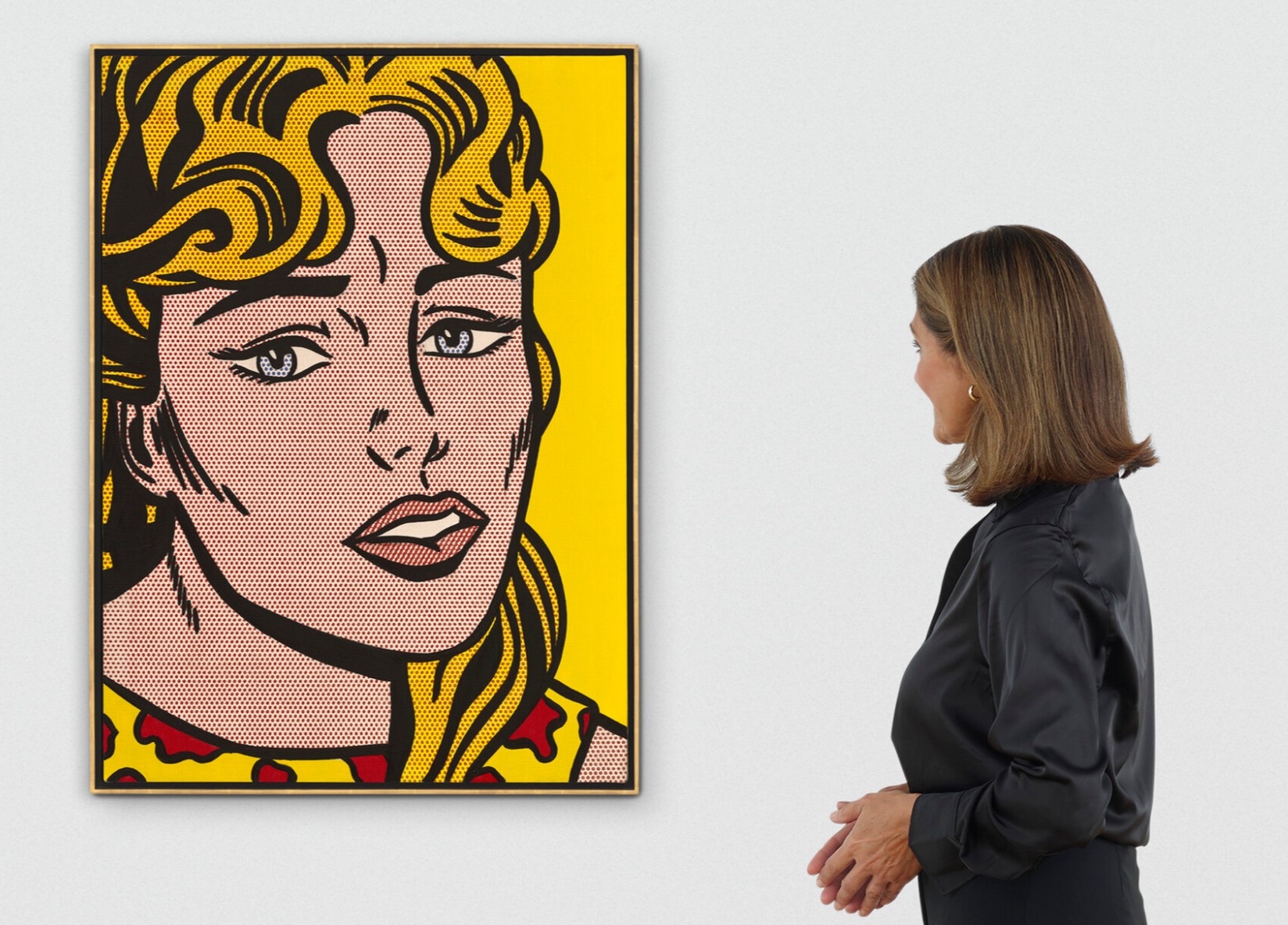
ROY LICHTENSTEIN (1923-1997)
Anxious Girl, 1964
Magna and graphite on canvas
36×26 inches (91.4 x 66 cm)
Signed and dated ‘rf Lichtenstein ’64’ (on the reverse)
#2. Half Face with Collar, 1963
Sotheby’s New-York: 14 May 2026
Estimated: USD 10,000,000 – 15,000,000
USD 12,985,000
Roy Lichtenstein | Half Face with Collar | The Now & Contemporary
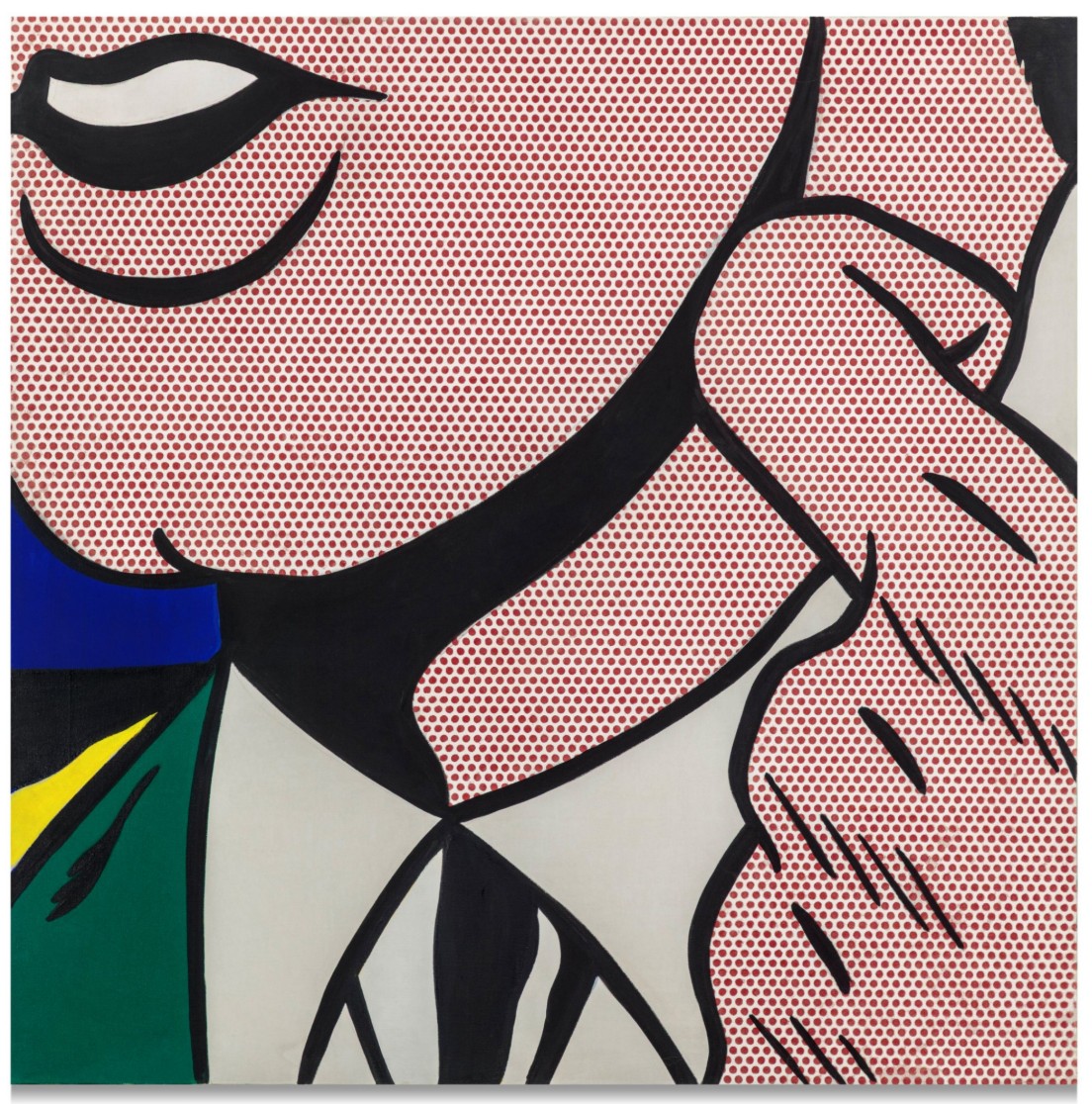
ROY LICHTENSTEIN (1923 – 1997)
Half Face with Collar, 1963
Oil, acrylic and graphite on canvas
48 x 47-3/4 inches (121.9 x 121.3 cm)
Signed and dated ‘63 (on the reverse)
#3. Girl in Mirror, 1964
Property from a Distinguished Private Collection
Sotheby’s New-York: 15 May 2026
Estimated: USD 5,000,000 – 7,000,000
USD 6,220,000
Roy Lichtenstein | Girl in Mirror | Contemporary Day Auction | 2026 |
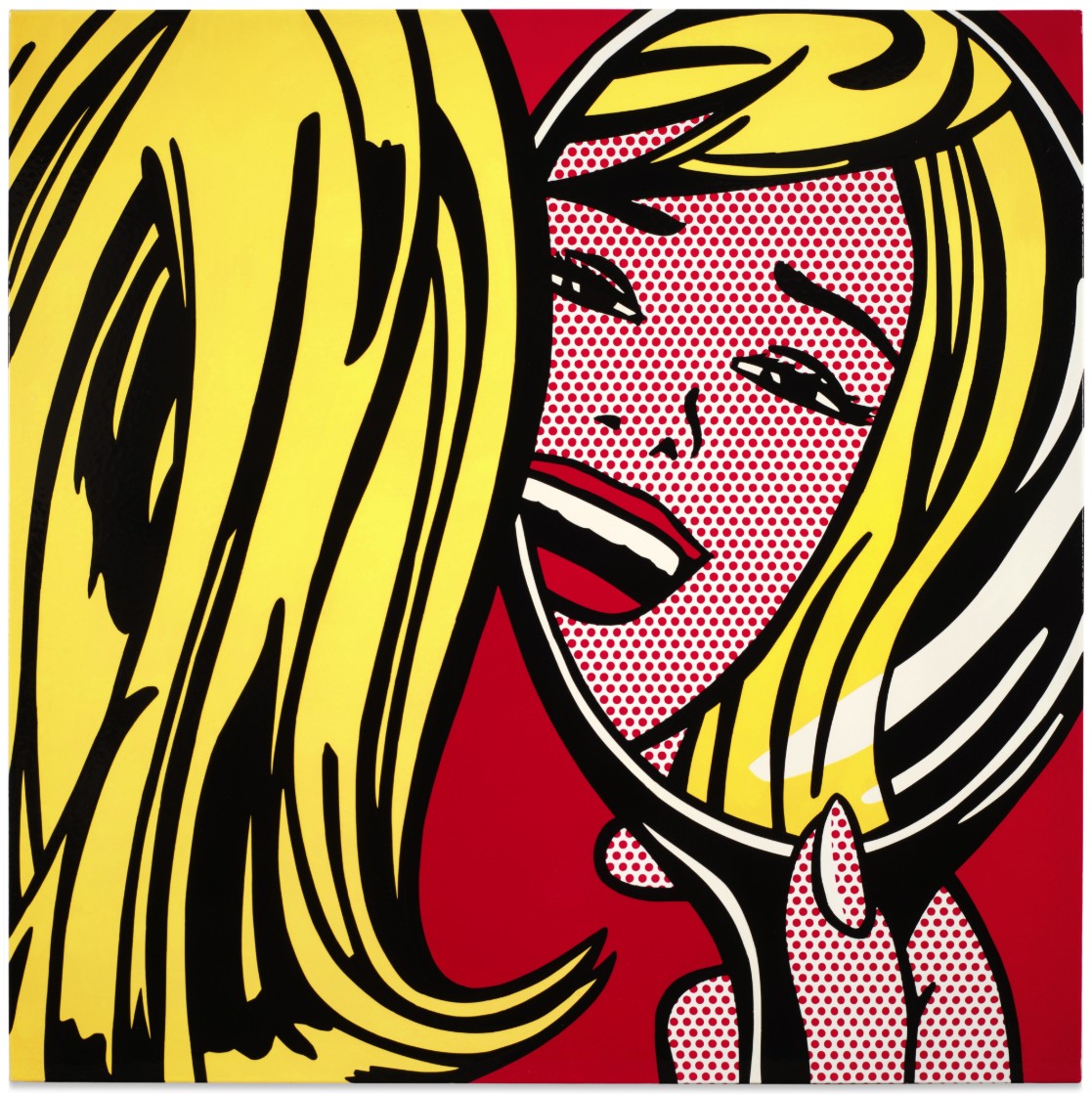
ROY LICHTENSTEIN (1923 – 1997)
Girl in Mirror, 1964
Porcelain enamel on steel
42×42 inches (106.7 x 106.7 cm)
Signed, dated 1964 and numbered 5/8 (on the reverse)
This work is number 5 from an edition of 8 plus 2 artist’s proofs
#4. Voodoo Lily, 1961
Masterpieces: The Private Collection of S.I. Newhouse
Christie’s New-York: 18 May 2026
Estimated: USD 6,000,000 – 8,000,000
USD 5,565,000
ROY LICHTENSTEIN (1923-1997), Voodoo Lily | Christie’s
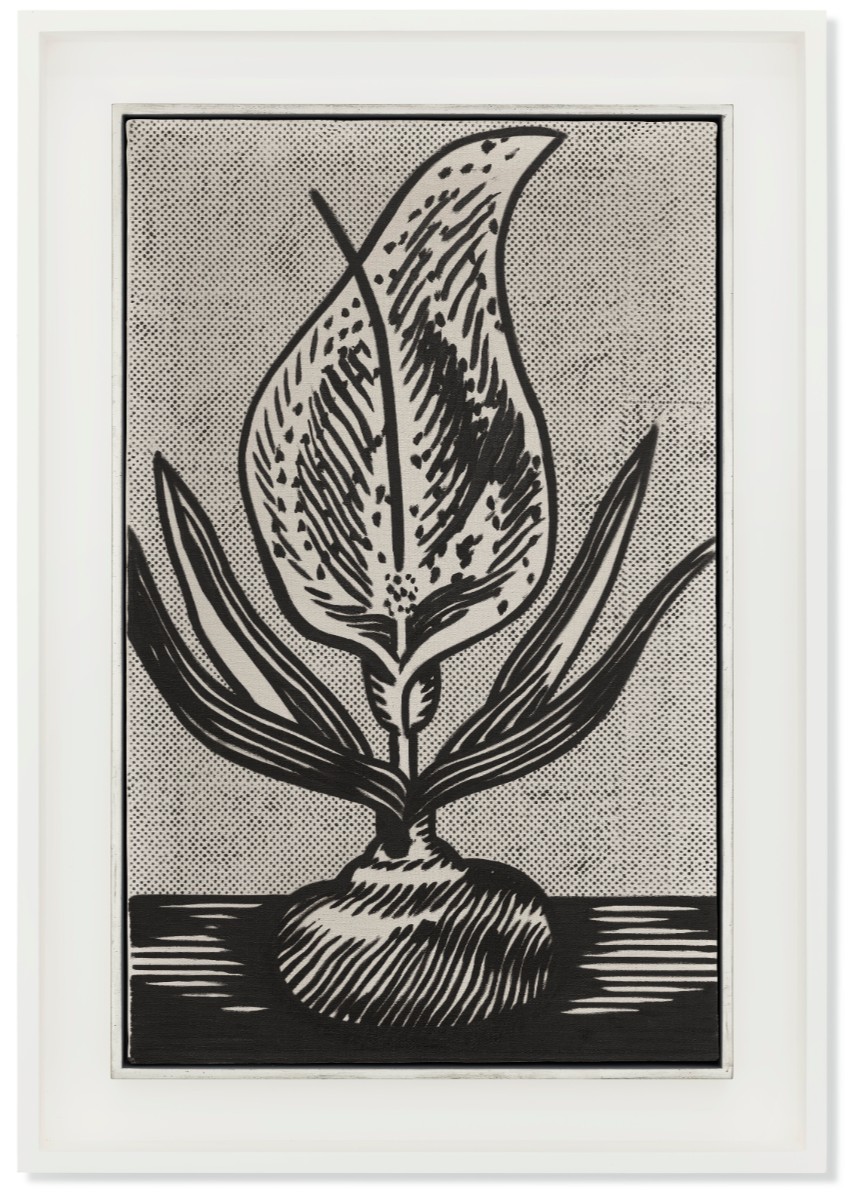
ROY LICHTENSTEIN (1923-1997)
Voodoo Lily, 1961
Oil on canvas
32-1/8 x 20 inches (81.6 x 50.8 cm)
Signed, signed with the artist’s initials, dated and titled ‘rf Lichtenstein ’61 VOO-DOO LILY rfl’ (on the reverse)
#5. Sitting Pretty, 1978
Property from the Collection of Annabelle and Bernard Fishman
Sotheby’s New-York: 14 May 2026
Estimated: USD 4,000,000 – 6,000,000
USD 4,756,000
Roy Lichtenstein | Sitting Pretty | The Now & Contemporary Evening
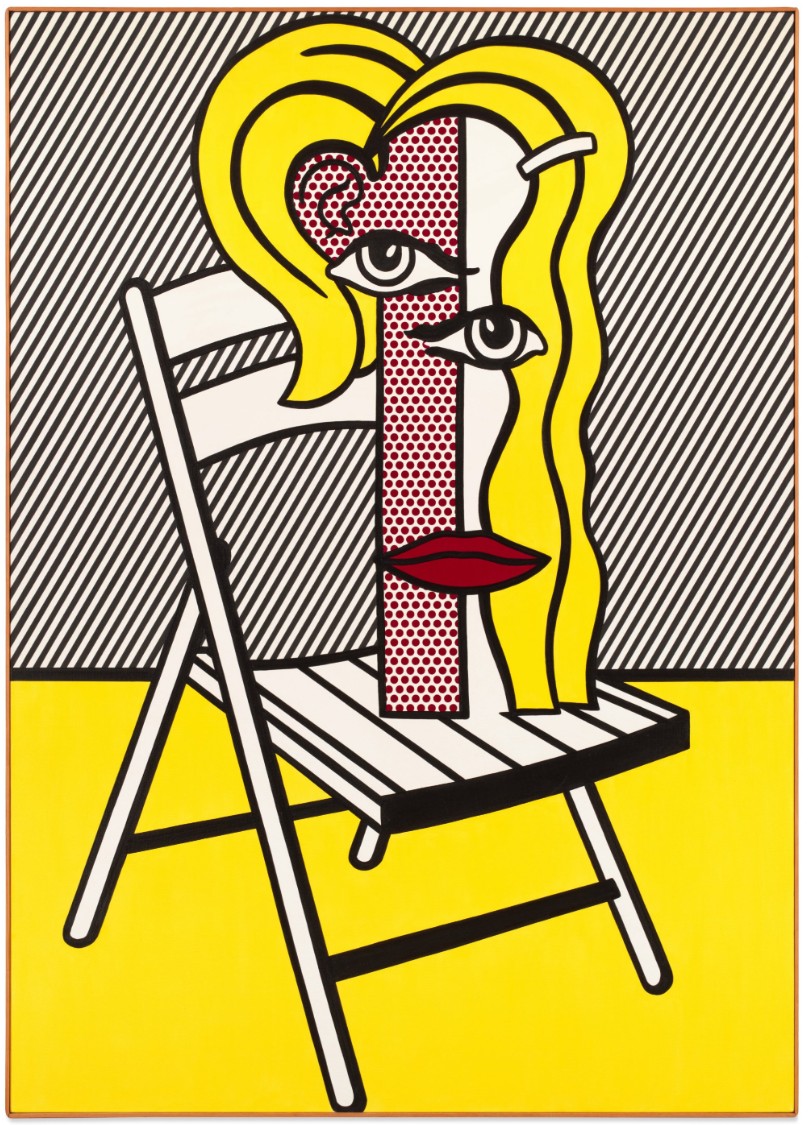
ROY LICHTENSTEIN (1923 – 1997)
Sitting Pretty, 1978
Acrylic, oil and graphite on canvas
70×50 inches (177.8 x 127 cm)
Signed and dated ’78 (on the reverse)
#6. Imperfect Painting, 1986
Property from an Esteemed Private Collection
Sotheby’s London: 4 March 2026
Estimated: GBP 1,000,000 – 1,500,000
GBP 1,981,000 / USD 2,646,420
Imperfect Painting | Modern & Contemporary Evening Auction | 2026 | Sotheby’s
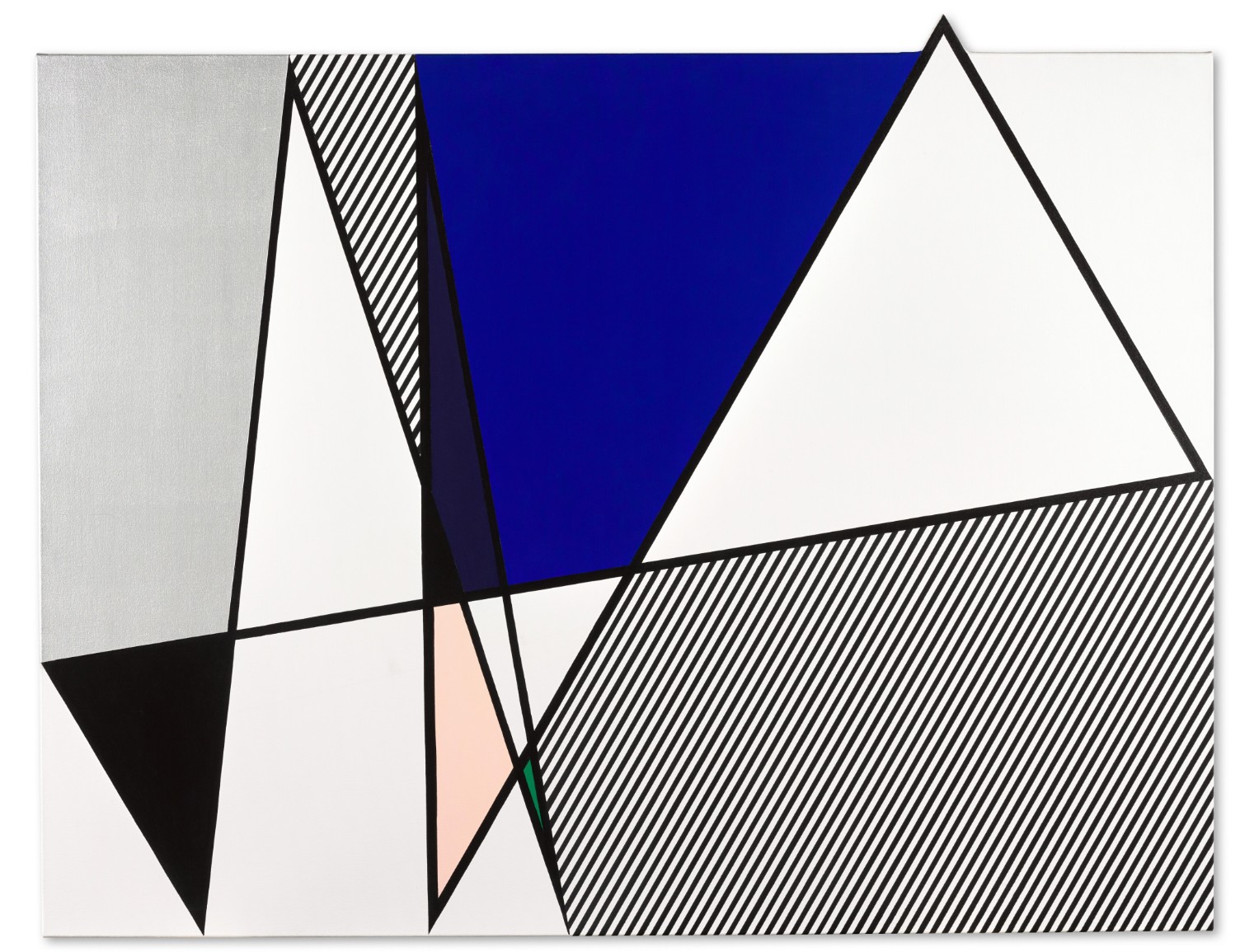
ROY LICHTENSTEIN (1923 – 1997)
Imperfect Painting, 1986
Acrylic, oil and pencil on shaped canvas
62-3/4 x 80 inches (159.5 x 203.2 cm)
Signed and dated ’86 (on the reverse)
#7. Mirror #5 (24″), 1970
Christie’s New-York: 18 May 2026
Estimated: USD 1,800,000 – 2,500,000
USD 2,271,000
ROY LICHTENSTEIN (1923-1997), Mirror #5 (24″) | Christie’s
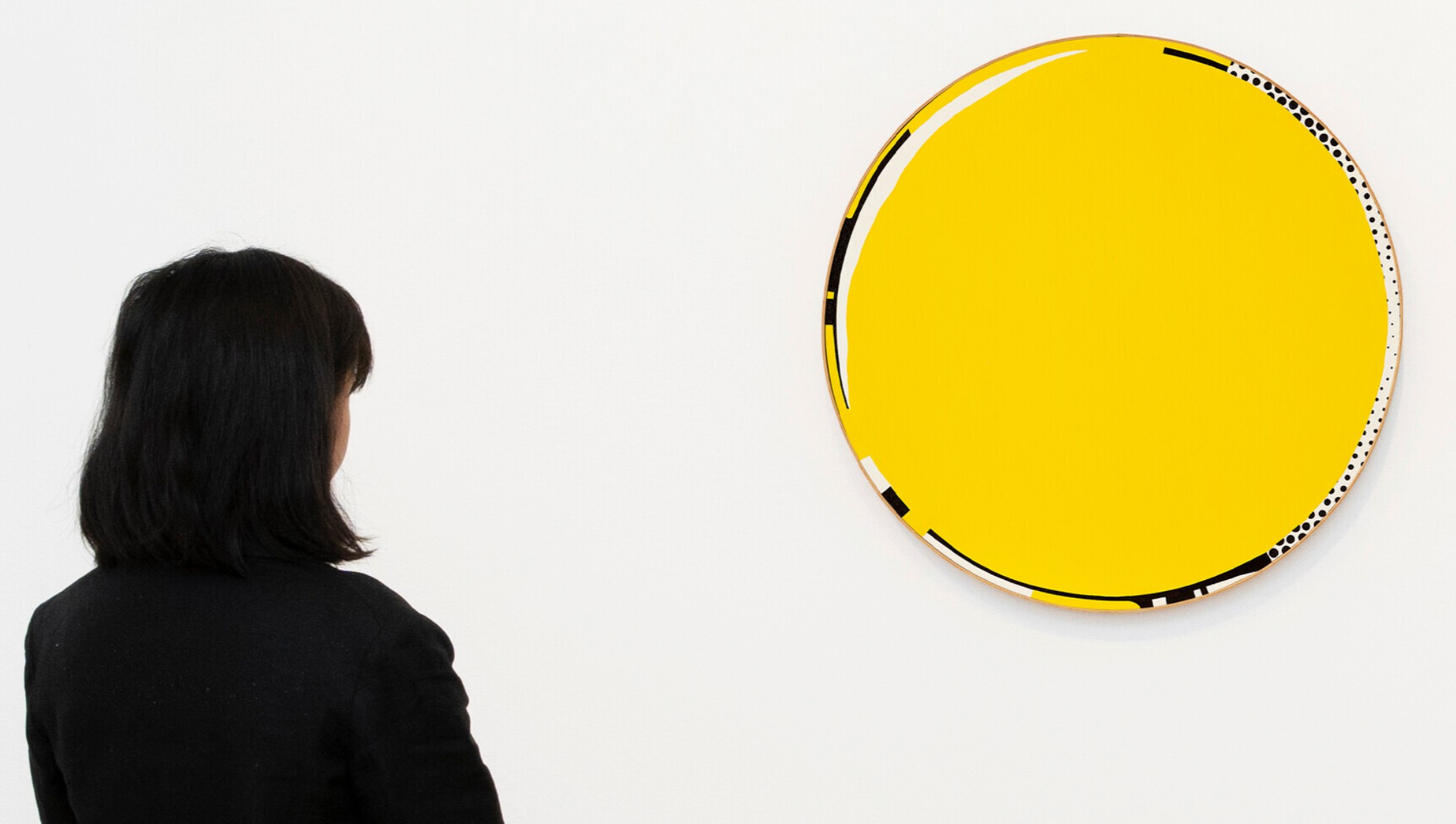
ROY LICHTENSTEIN (1923-1997)
Mirror #5 (24″), 1970
Magna, oil and graphite on shaped canvas
Diameter: 24 inches (61 cm)
Signed and dated ‘rf Lichtenstein ’70’ (on the reverse)
#8. Portrait, 1986
Christie’s New-York: 26 February 2026
Estimated: USD 700,000 – 1,000,000
USD 1,130,300
ROY LICHTENSTEIN (1923-1997), Portrait | Christie’s
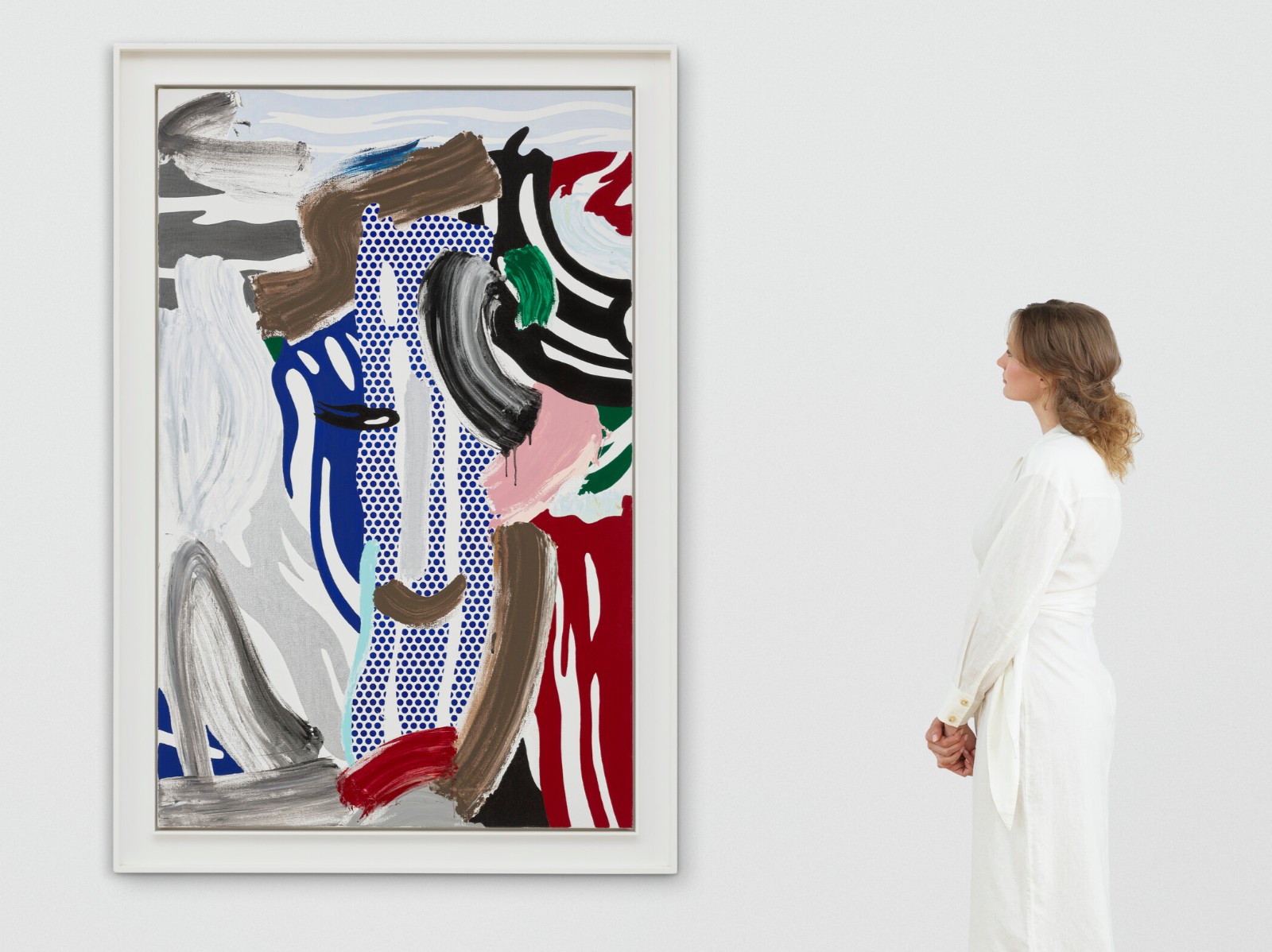
ROY LICHTENSTEIN (1923-1997)
Portrait, 1986
Acrylic, oil and graphite on canvas
56-1/8 x 36 inches (142.6 x 91.4 cm)
Signed and dated ‘rf Lichtenstein ’86’ (on the reverse)
#9. Entablature, 1974
New Vista: The David and Shoshanna Wingate Collection
Sotheby’s New-York: 20 May 2026
Estimated: USD 600,000 – 800,000
USD 1,024,000
Roy Lichtenstein | Entablature | A New Vista: The David and Shoshanna
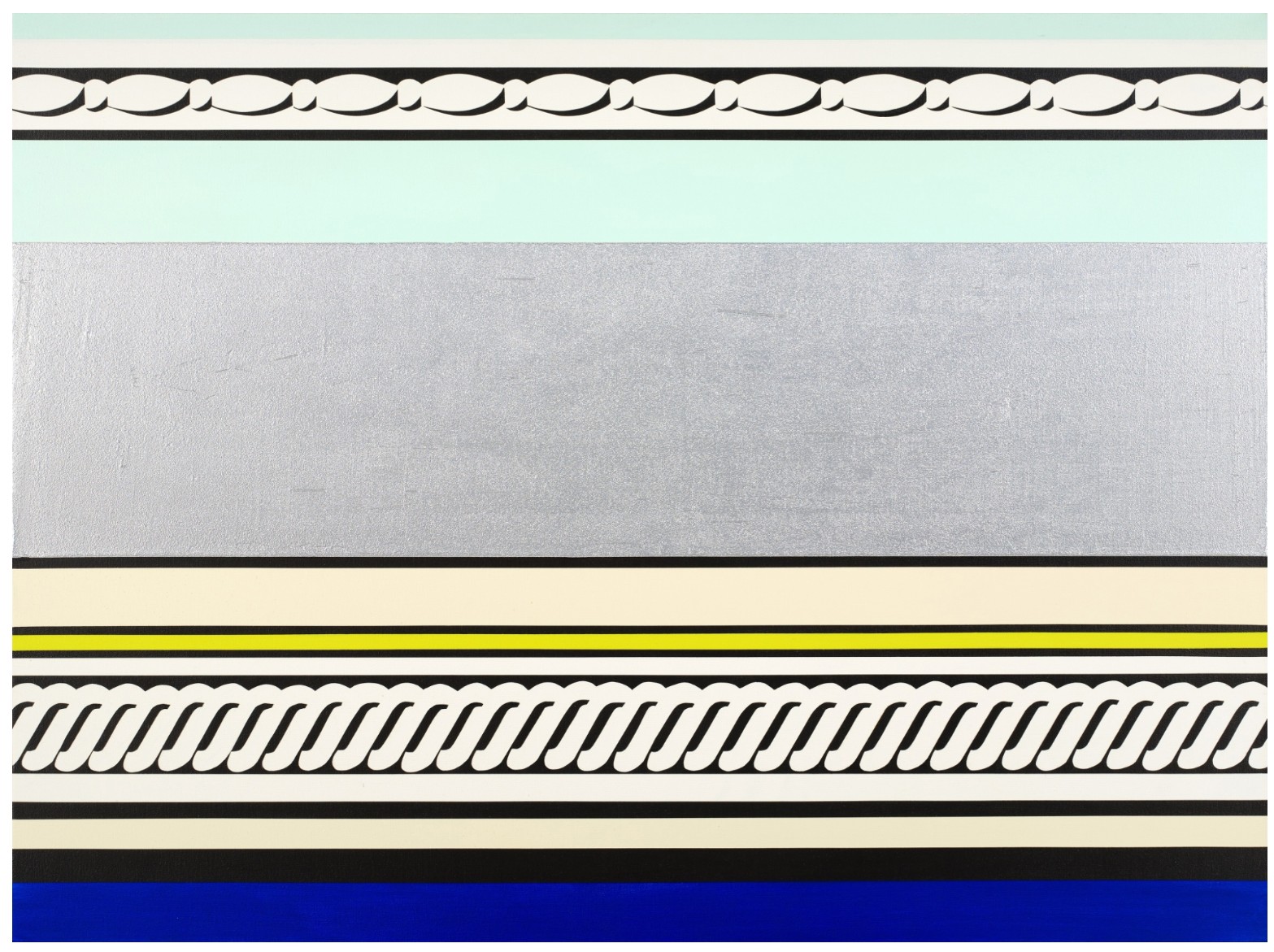
ROY LICHTENSTEIN (1923 – 1997)
Entablature, 1974
Acrylic, sand and graphite on canvas
40-1/2 x 54-3/4 inches (102.9 x 139.1 cm)
Signed and dated ’74 (on the reverse)
#10. Untitled, 1958
Christie’s New-York: 26 February 2026
Estimated: USD 70,000 – 100,000
USD 76,200
ROY LICHTENSTEIN (1923-1997), Untitled | Christie’s
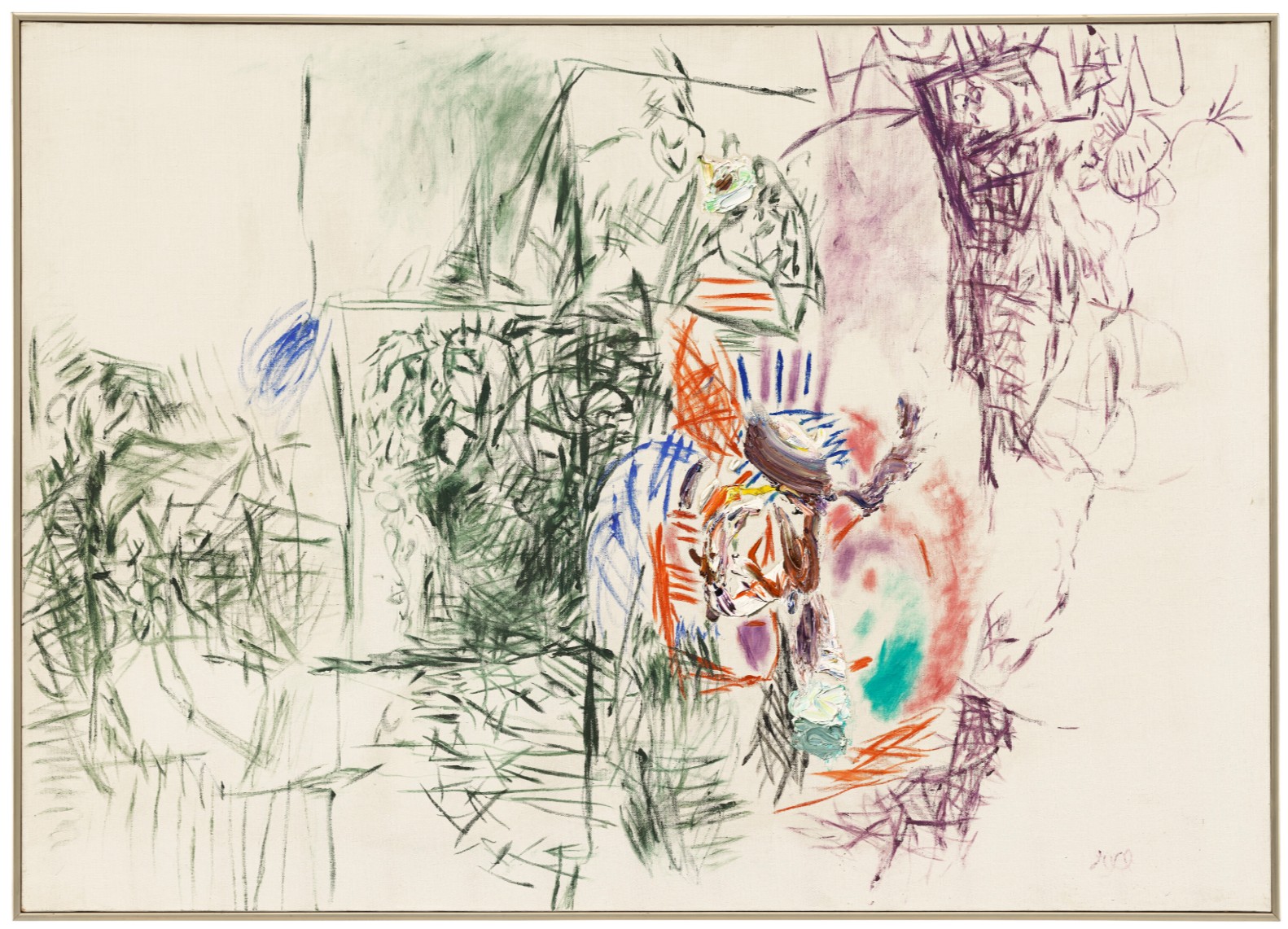
ROY LICHTENSTEIN (1923-1997)
Untitled, 1958
Oil on canvas
34-1/4 x 48-1/8 inches (87 x 122.3 cm)
Signed with the aritst’s initials ‘rfl’ (lower right)
2. Sculptures
#1. Double Glass, 1979
Christie’s New-York: 18 May 2026
Estimated: USD 800,000 – 1,200,000
USD 1,905,000
ROY LICHTENSTEIN (1923-1997), Double Glass | Christie’s
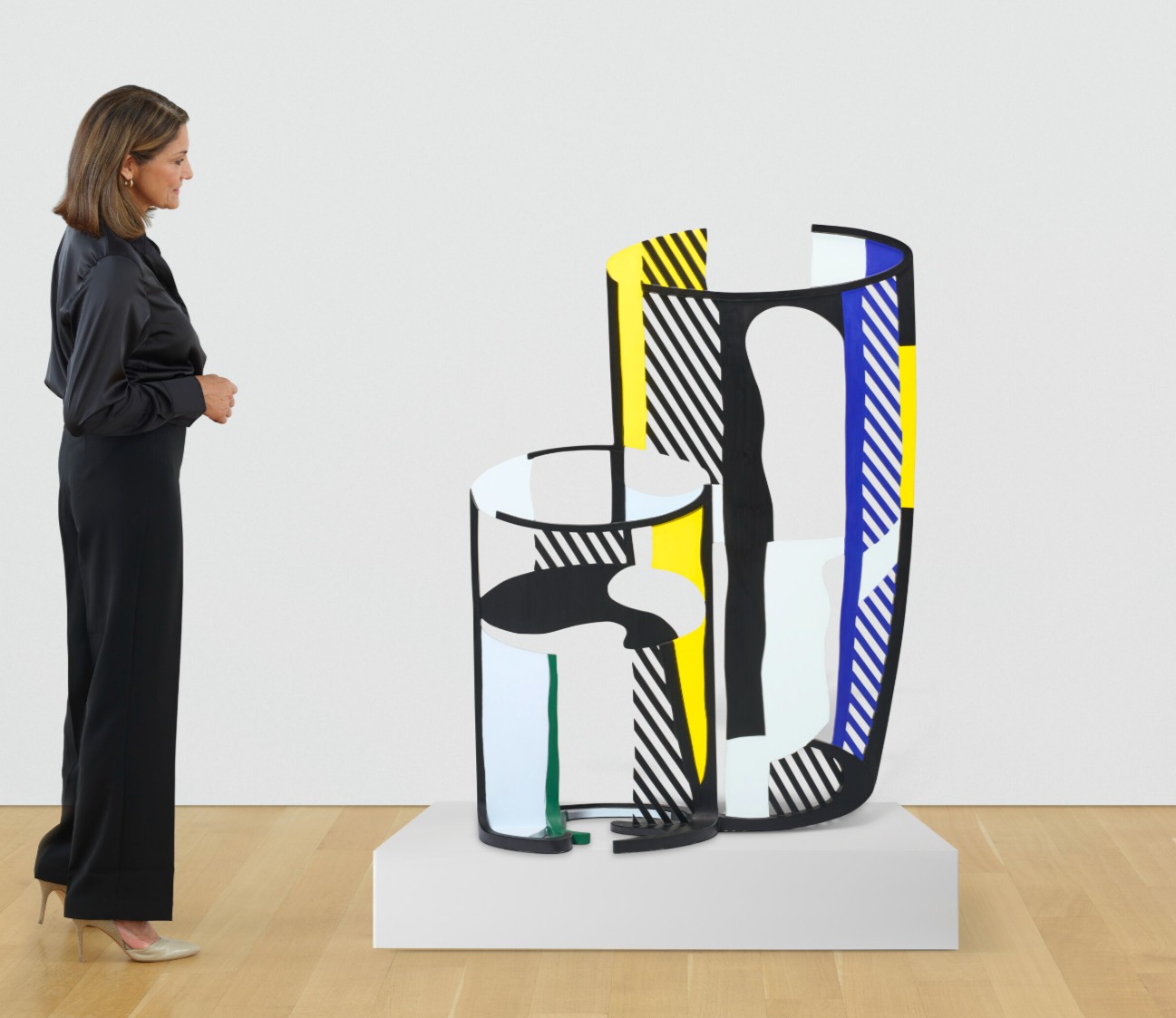
ROY LICHTENSTEIN (1923-1997)
Double Glass, 1979
Painted bronze
56x42x17 inches (142.2 x 106.7 x 43.2 cm)
Incised with the artist’s signature
Number and date ‘3⁄3 rf Lichtenstein ’79’ (lower edge)
This work is number three from an edition of three
#2. Glass II, 1976
Works from the Collection of Jannine and Robert MacDonnell
Sotheby’s New-York: 15 May 2026
Estimated: USD 600,000 – 800,000
USD 1,600,000
Roy Lichtenstein | Glass II | Contemporary Day Auction | 2026 |
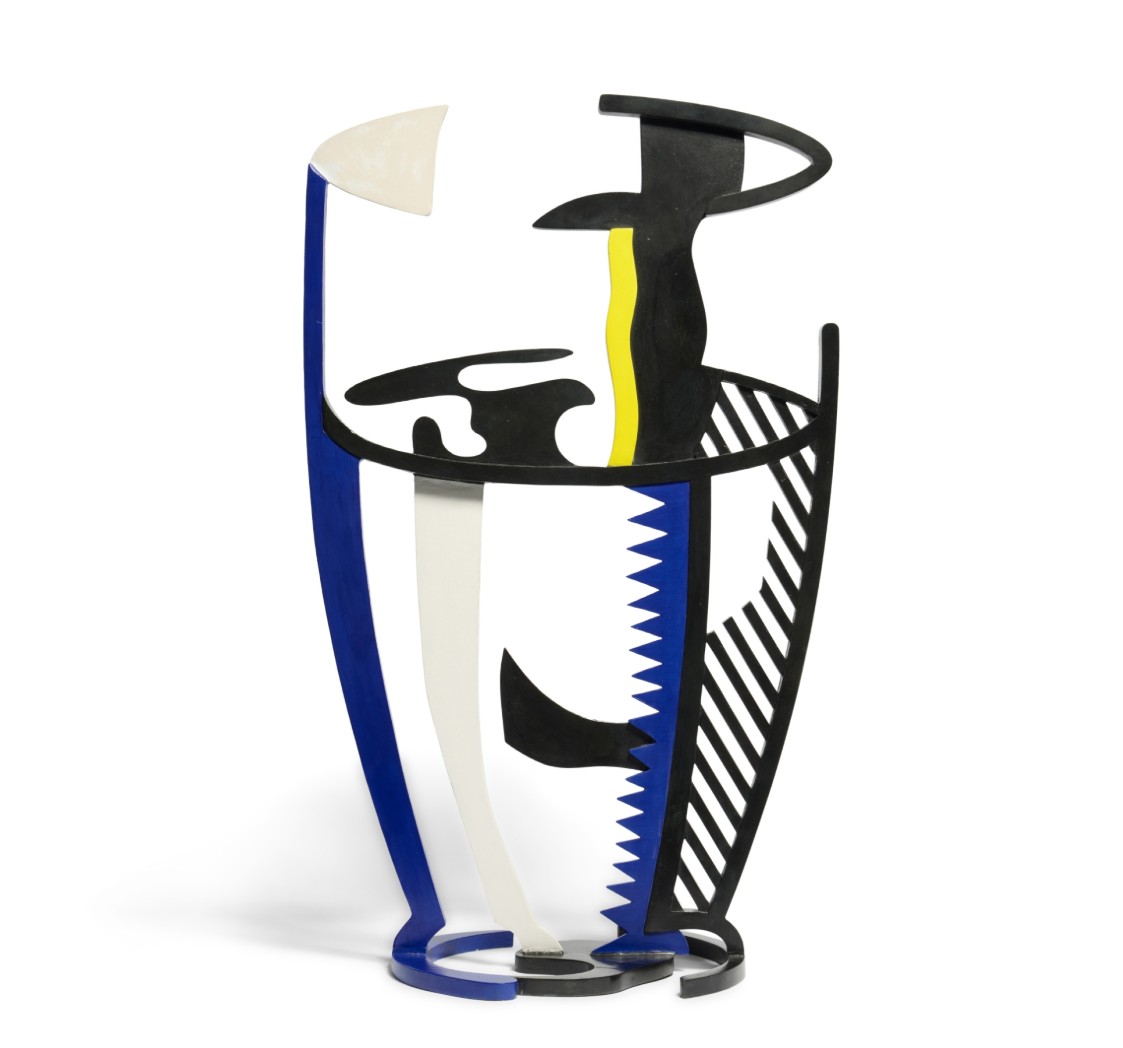
ROY LICHTENSTEIN (1923 – 1997)
Glass II, 1976
Painted and patinated bronze
36-1/2 x 22-1/2 x 14-3/8 inches (92.7 x 57.2 x 36.5 cm)
Incised with the artist’s signature, date ’77 and number 1/3 (on the base)
This work is number 1 from an edition of 3, plus 1 artist’s proof
#12. Small Wall Explosion, 1965
Estimated: USD 500,000 – 700,000
USD 645,000
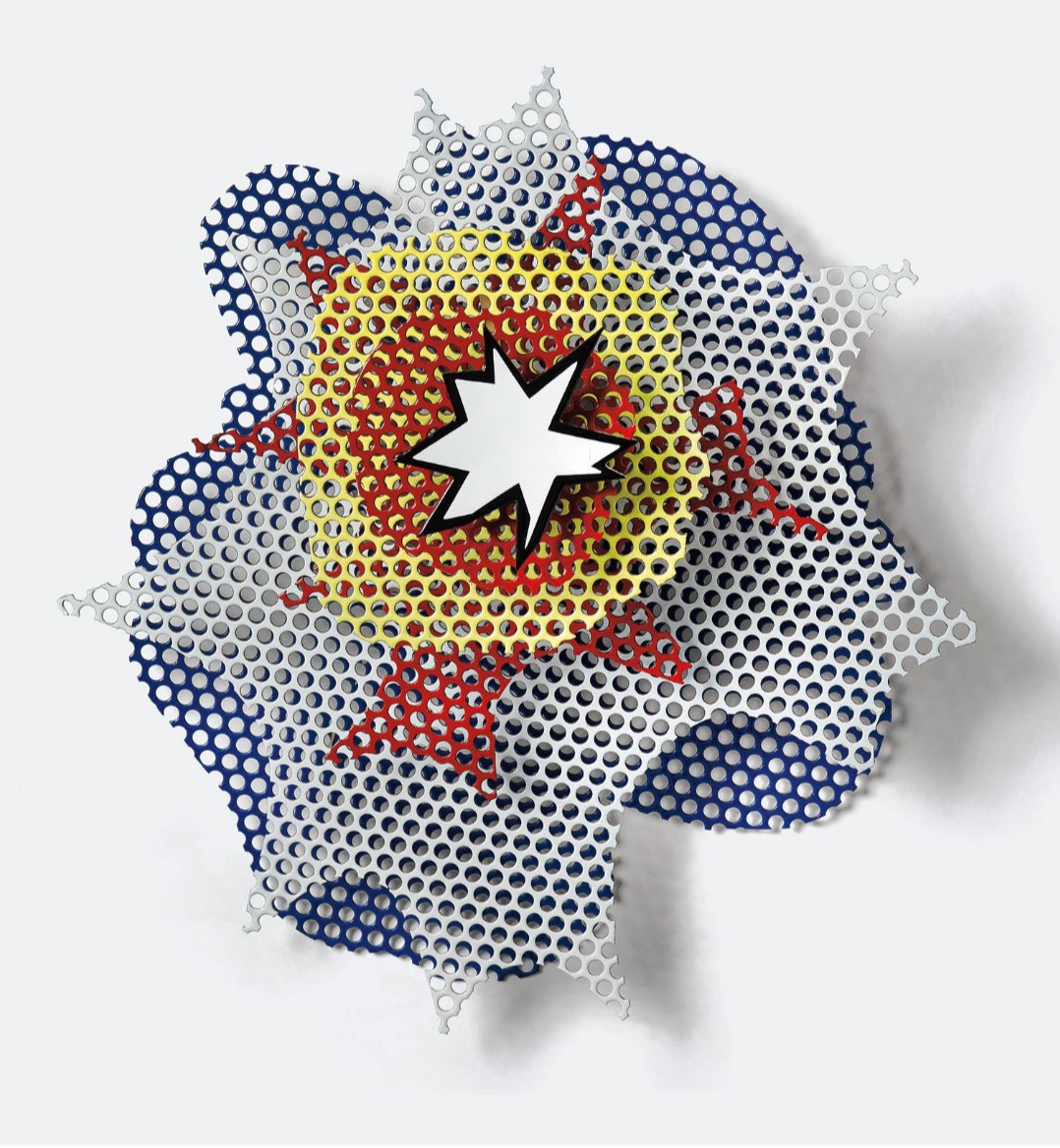
Porcelain enamel on perforated steel
20 1/4 x 21 1/2 x 7 1/4 inches (51.4 x 54.6 x 18.4 cm)
This work is number 4 from an edition of 6
Mobile IV, 1990-91
Property from the Collection of Dorothy and Roy Lichtenstein
Sotheby’s Riyadh: 31 January 2026
Estimated: USD 150,000 – 200,000
USD 152,400
Mobile IV | Origins II | 2026 | Sotheby’s
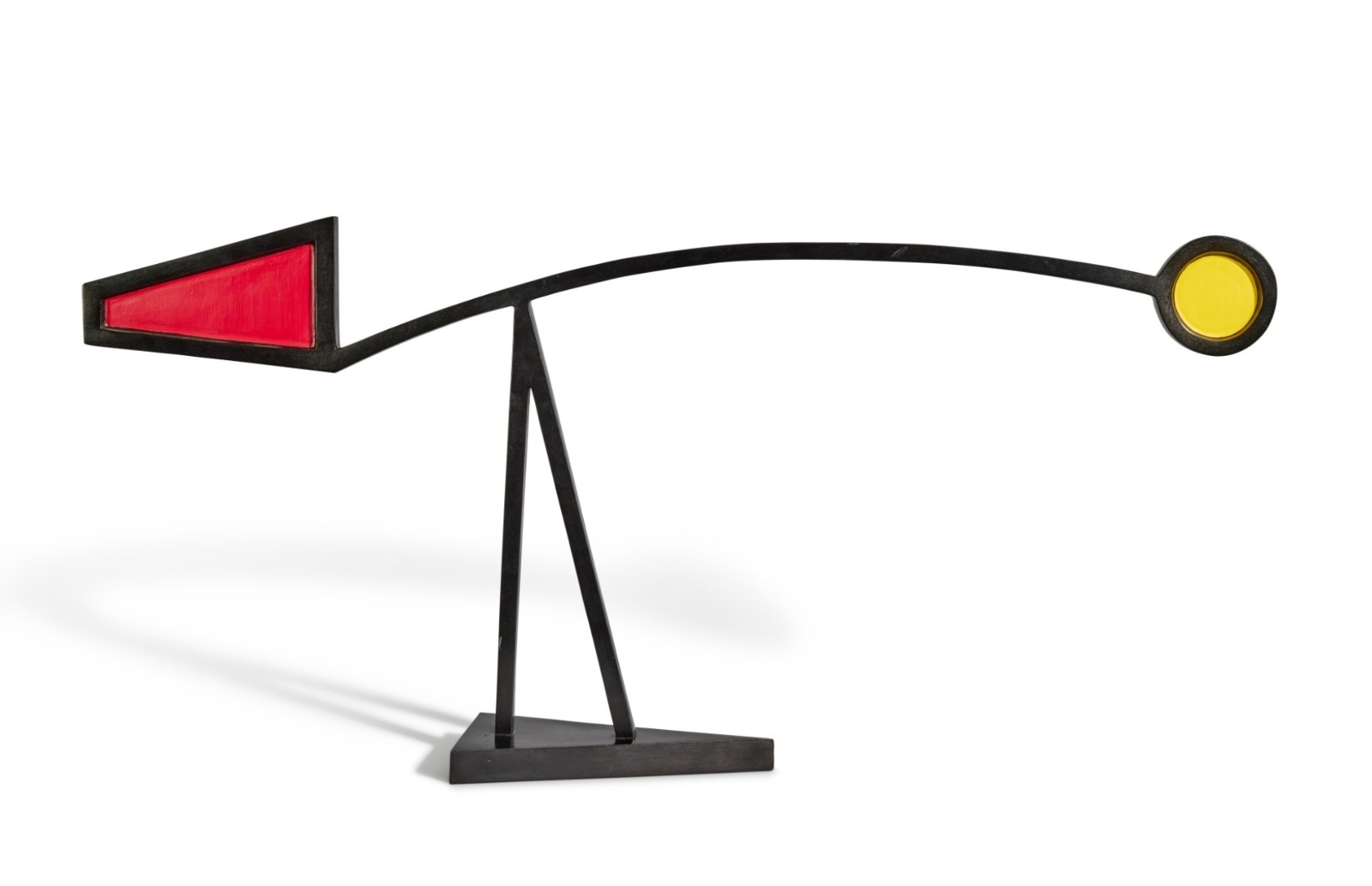
ROY LICHTENSTEIN (1923 – 1997)
Mobile IV, 1990-91
Painted and patinated bronze
16-1/8 x 34-5/8 x 5-1/8 inches (41 x 87.9 x 13 cm)
Incised with the artist’s signature R. Lichtenstein, date ’90 and number 0/6 (on the lower edge)
This work is the artist’s proof from an edition of 6 plus 1 artist’s proof
3. Studies / Works on Paper
#1. Interior with Ajax (Study), 1997
Property from the Collection of Dorothy and Roy Lichtenstein
Sotheby’s Riyadh: 31 January 2026
Estimated: USD 600,000 – 800,000
USD 889,000
Interior with Ajax (Study) | Origins II | 2026 | Sotheby’s
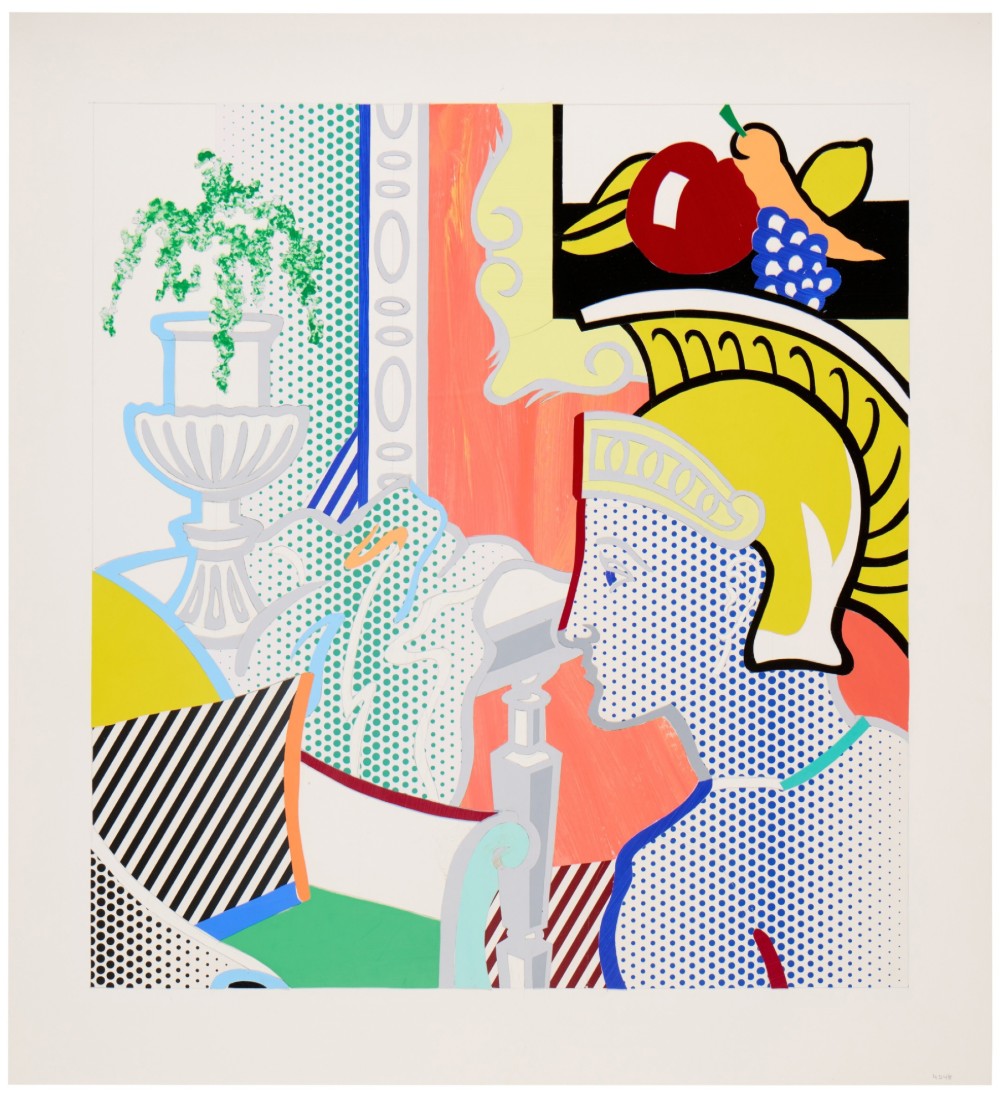
ROY LICHTENSTEIN (1923 – 1997)
Interior with Ajax (Study), 1997
Cut painted and printed paper and graphite on paperboard
Image: 26 7/8 x 25 inches (68.2 x 63.4 cm)
Paperboard: 32 3/4 x 30 inches (83.2 x 76.2 cm)
Signed R. Lichtenstein and dated ’97 (on the reverse)
#2. Road Before the Forest (Study), 1984
Sotheby’s New-York: 15 May 2026
Estimated: USD 400,000 – 600,000
USD 870,400
Roy Lichtenstein | Road Before the Forest (Study) | Contemporary Day
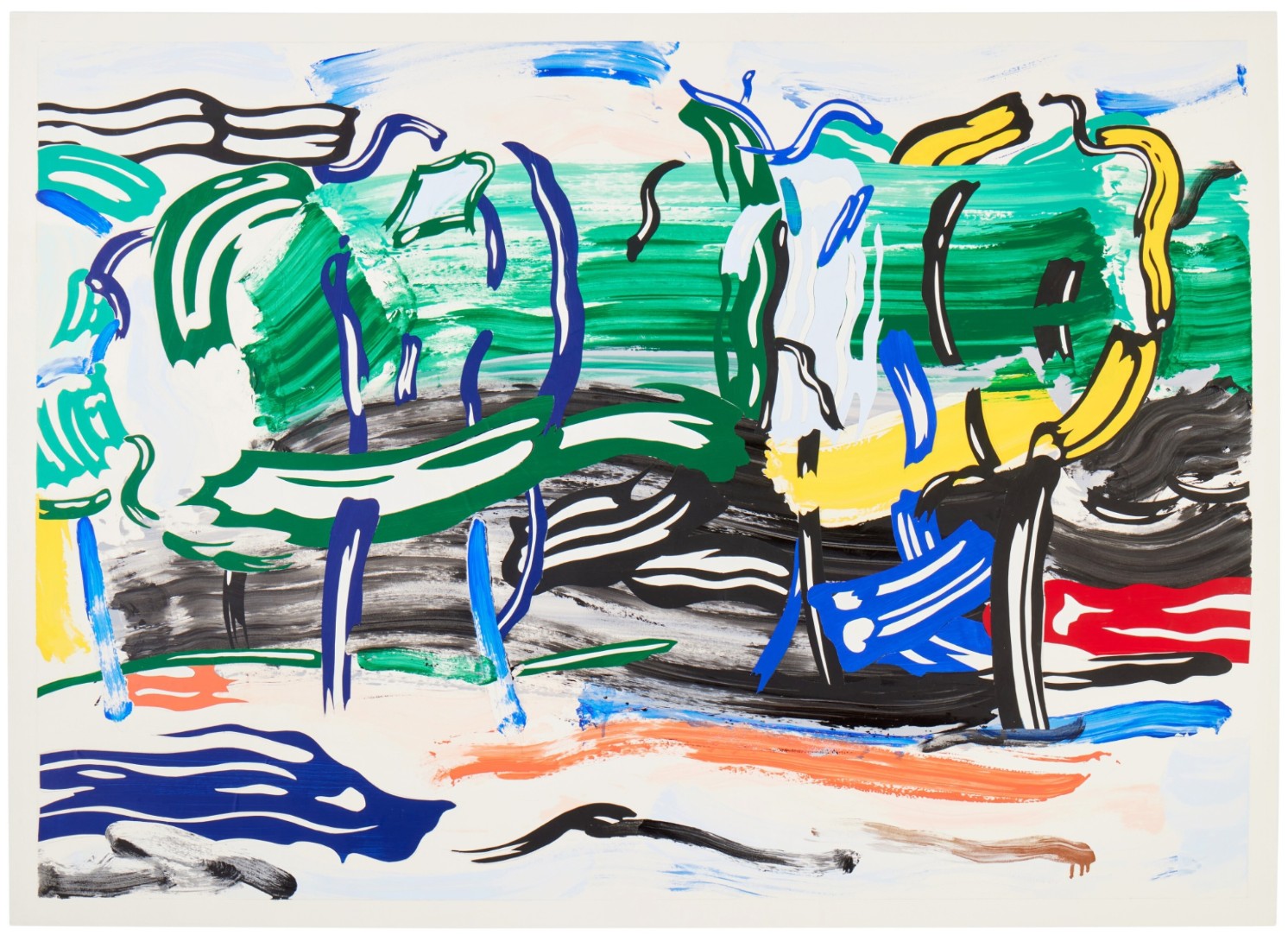
ROY LICHTENSTEIN (1923 – 1997)
Road Before the Forest (Study), 1984
Cut painted and printed paper, acrylic and graphite on paperboard
Image: 37 x 52-1/2 inches (94 x 133.4 cm)
Sheet: 39-1/2 x 55-1/8 inches (100.3 x 140 cm)
Signed and dated ’84 (on the verso)
#3. Still Life with Coffee Pot and Flower Pot (Study), 1973
Sotheby’s New-York: 20 May 2026
Estimated: USD 600,000 – 800,000
USD 512,000
Roy Lichtenstein | Still Life with Coffee Pot and Flower Pot (Study)
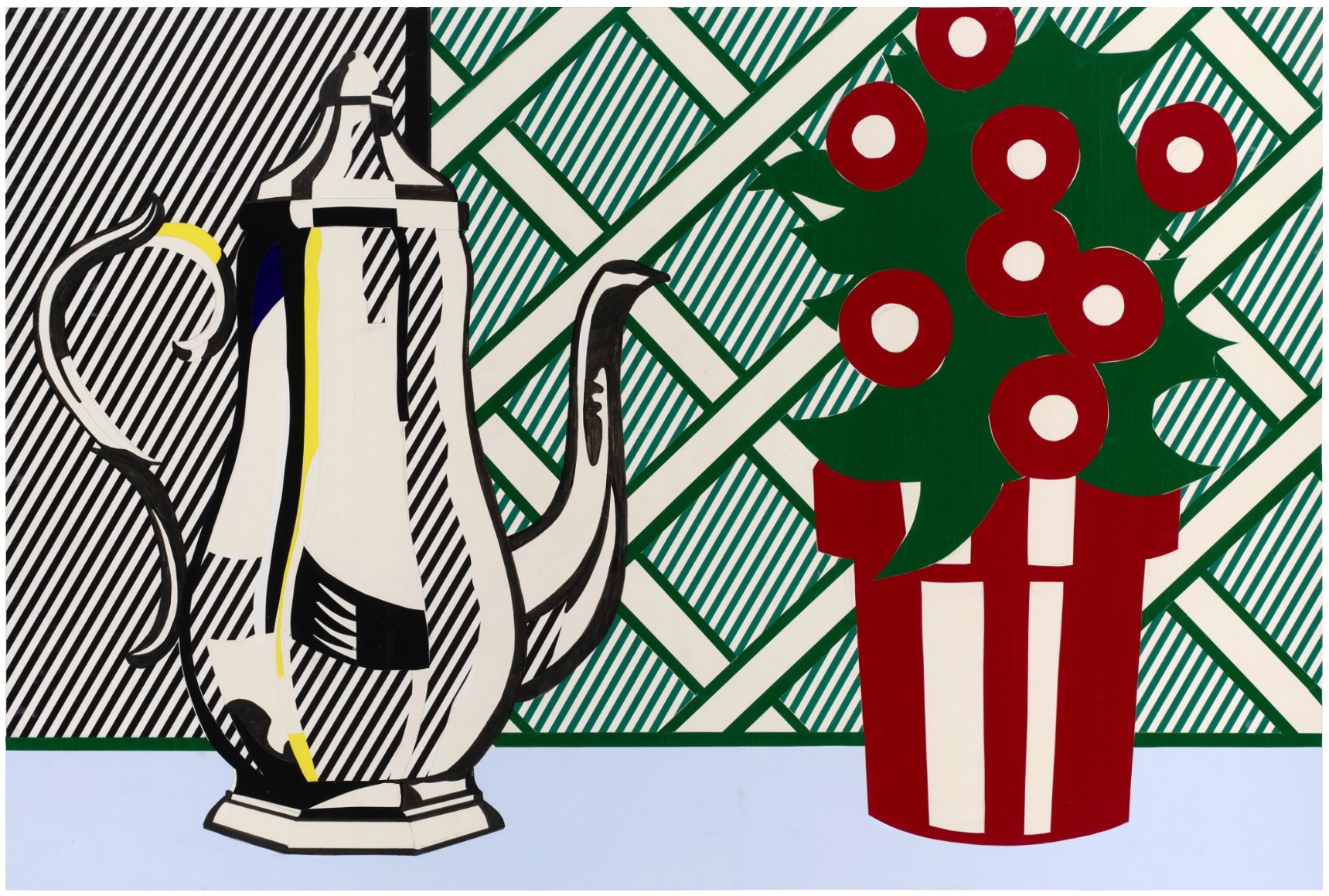
ROY LICHTENSTEIN (1923 – 1997)
Still Life with Coffee Pot and Flower Pot (Study), 1973
Cut painted and printed paper, marker and graphite on paperboard
Image: 30-1/2 x 45-5/8 inches (77.5 x 123.5 cm)
Sheet: 33-1/2 x 48-1/2 inches (85.1 x 123.2 cm)
#4. The Great Pyramid Banner (Study), circa 1977-78
Property from the Collection of Dorothy and Roy Lichtenstein
Sotheby’s Riyadh: 31 January 2026
Estimated: USD 150,000 – 200,000
USD 495,300
The Great Pyramid Banner (Study) | Origins II | 2026 | Sotheby’s
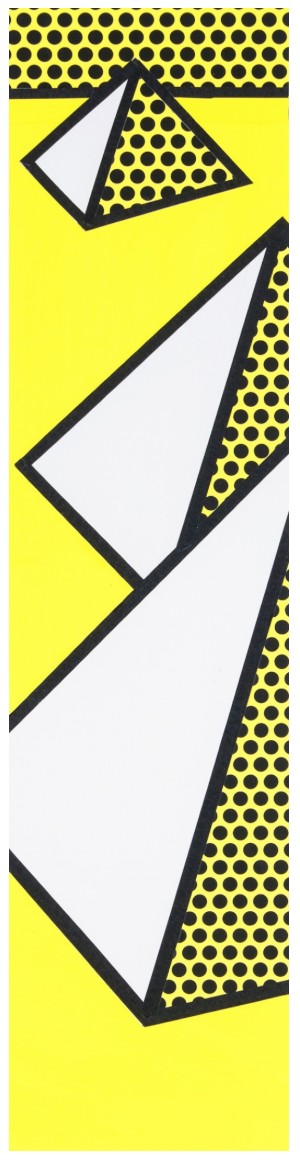
ROY LICHTENSTEIN (1923 – 1997)
The Great Pyramid Banner (Study), circa 1977-78
Cut painted and printed paper, tape and graphite on paperboard
Image: 29×7 inches (73.6 x 17.8 cm)
Board: 40×17 inches (101.6 x 43.2 cm)
Signed R. Lichtenstein and dated ’80 (on the reverse)
#5. Brushstroke Still Life with Box (Study), 1996
Estimated: USD 250,000 – 350,000
USD 396,800
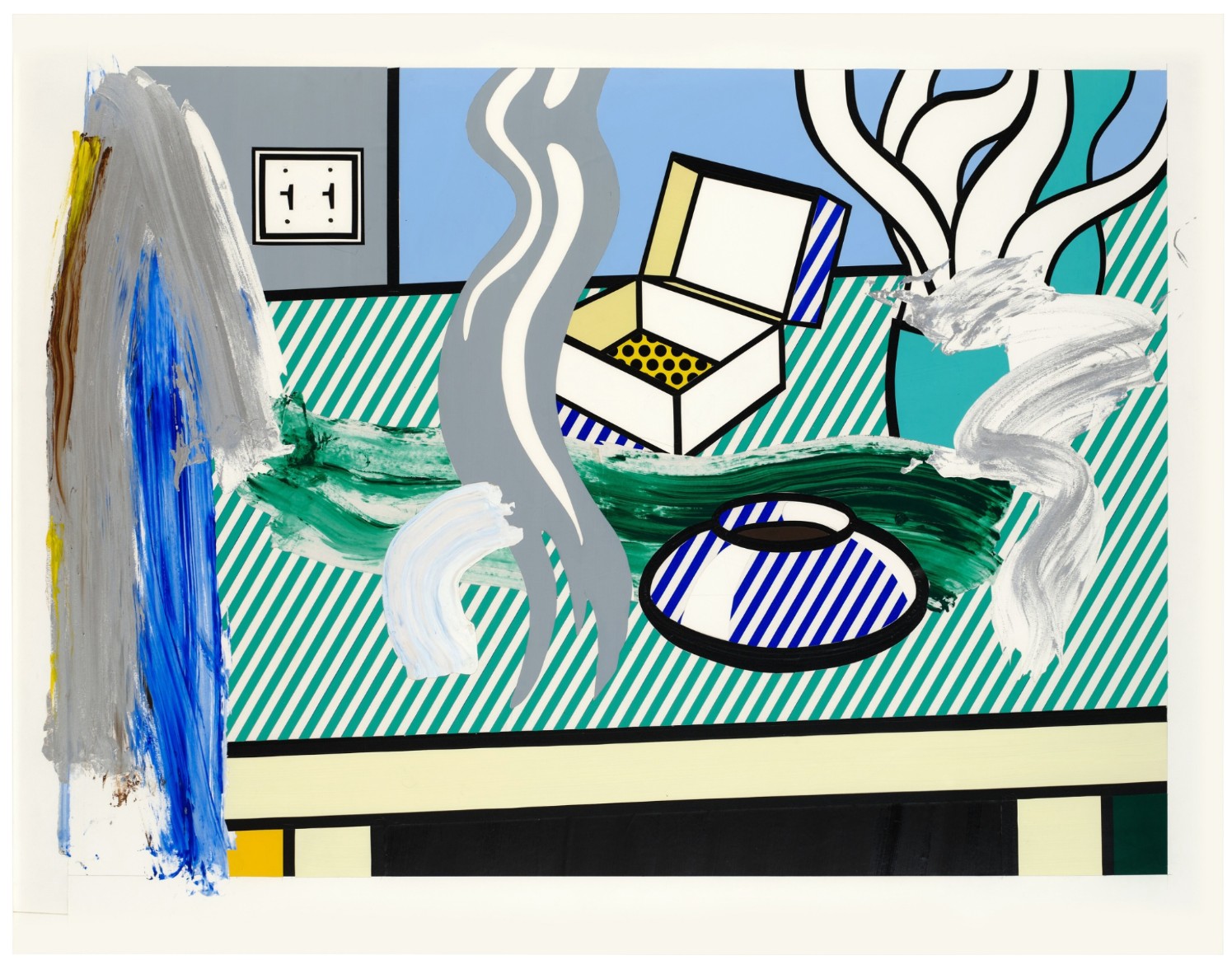
ROY LICHTENSTEIN (1923 – 1997)
Brushstroke Still Life with Box (Study), 1996
Cut painted and printed paper, tape, acrylic and graphite on paperboard
Image: 33-1/2 x 46-3/4 inches (85.1 x 118.7 cm)
Sheet: 39-1/2 x 50-5/8 inches (100.3 x 128.6 cm)
Signed and dated Dorothy Lichtenstein ’98 posthumously by Dorothy Lichtenstein (on the verso)
#6. Portrait (Study), 1987
Property from a Distinguished Private Collection
Sotheby’s New-York: 25 February 2026
Estimated: USD 200,000 – 300,000
USD 396,800
Portrait (Study) | Contemporary Curated | 2026 | Sotheby’s
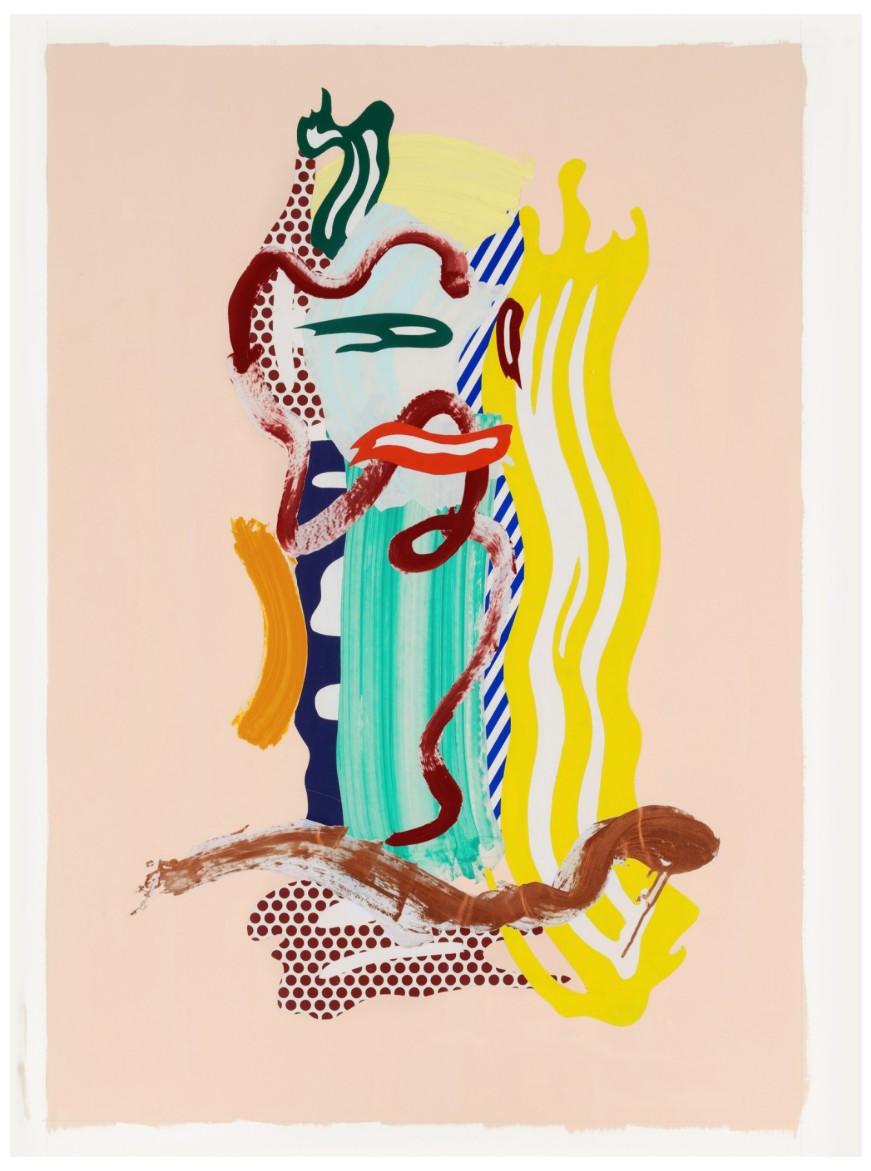
ROY LICHTENSTEIN (1923 – 1997)
Portrait (Study), 1987
Cut painted paper, cut printed paper, acrylic and pencil on paperboard
Image: 50 x 35-1/8 inches (127 x 89.4 cm)
Paperboard: 54 x 40-3/8 inches (137 x 102.6 cm)
Signed and dated ’87 (on the verso)
#7. Reflections: Half Face with Collar (Study), 1988
Estimated: USD 150,000 – 200,000
USD 248,000
WORK ON PAPER
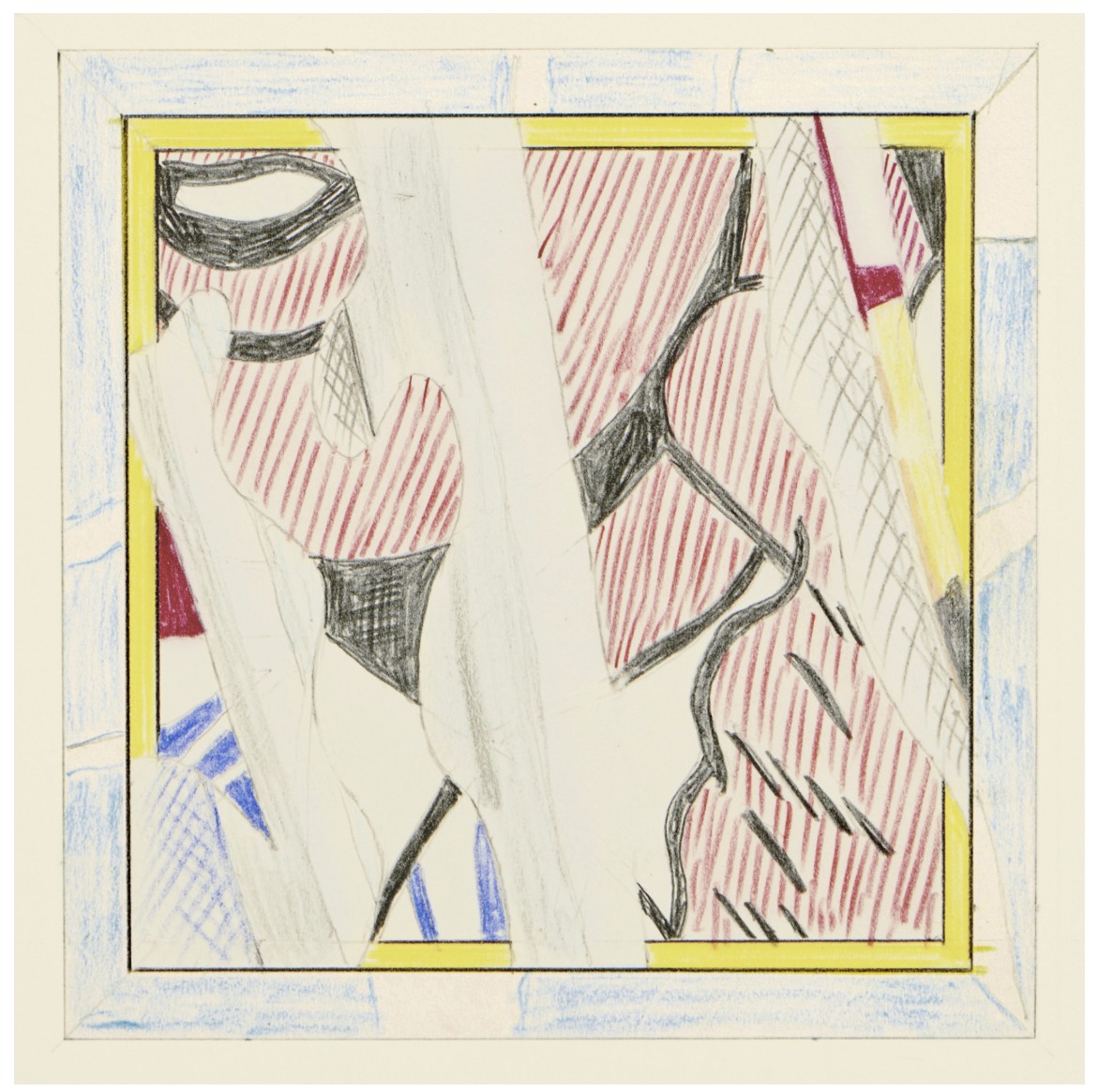
ROY LICHTENSTEIN (1923 – 1997)
Reflections: Half Face with Collar (Study), 1988
Colored pencil and graphite on paper
Image: 6-3/8 x 6-3/8 inches (16.2 x 16.2 cm)
Sheet: 10-1/8 x 13-1/8 inches (25.7 x 33.3 cm)
Signed and dated ’88 (on the verso)
#8. Modern Painting with Ionic Column (Study), 1967
Sotheby’s New-York: 15 May 2026
Estimated: USD 300,000 – 500,000
USD 230,400
WORK ON PAPER
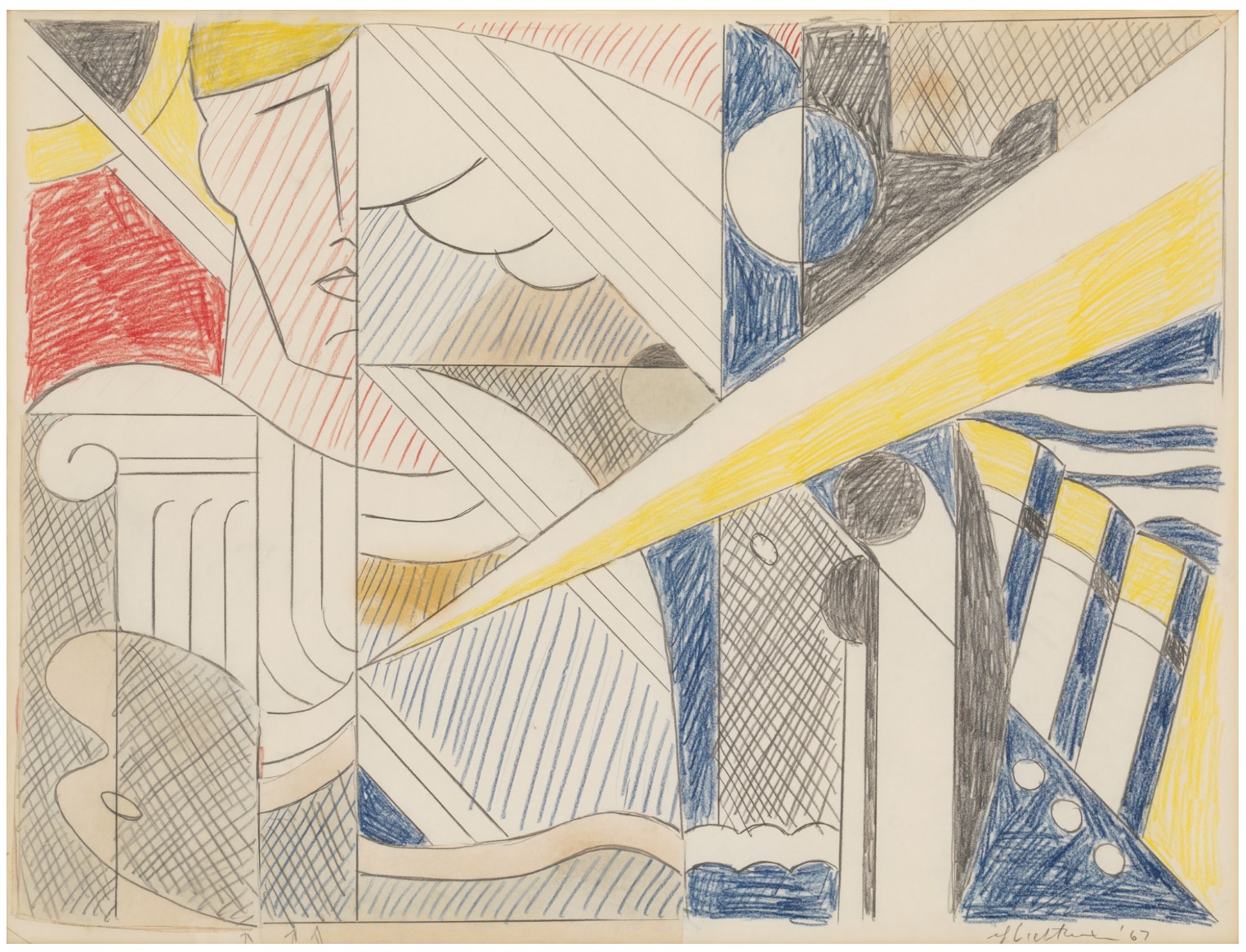
ROY LICHTENSTEIN (1923 – 1997)
Modern Painting with Ionic Column (Study), 1967
Colored pencil, graphite and cut paper on paper
25-3/8 x 33-1/8 inches (64.5 x 84.1 cm)
Signed and dated ’67 (lower right)
#9. House I (Study), circa 1996
Property from a Distinguished Private Collection
Sotheby’s New-York: 25 February 2026
Estimated: USD 120,000 – 180,000
USD 230,400
House I (Study) | Contemporary Curated | 2026 | Sotheby’s
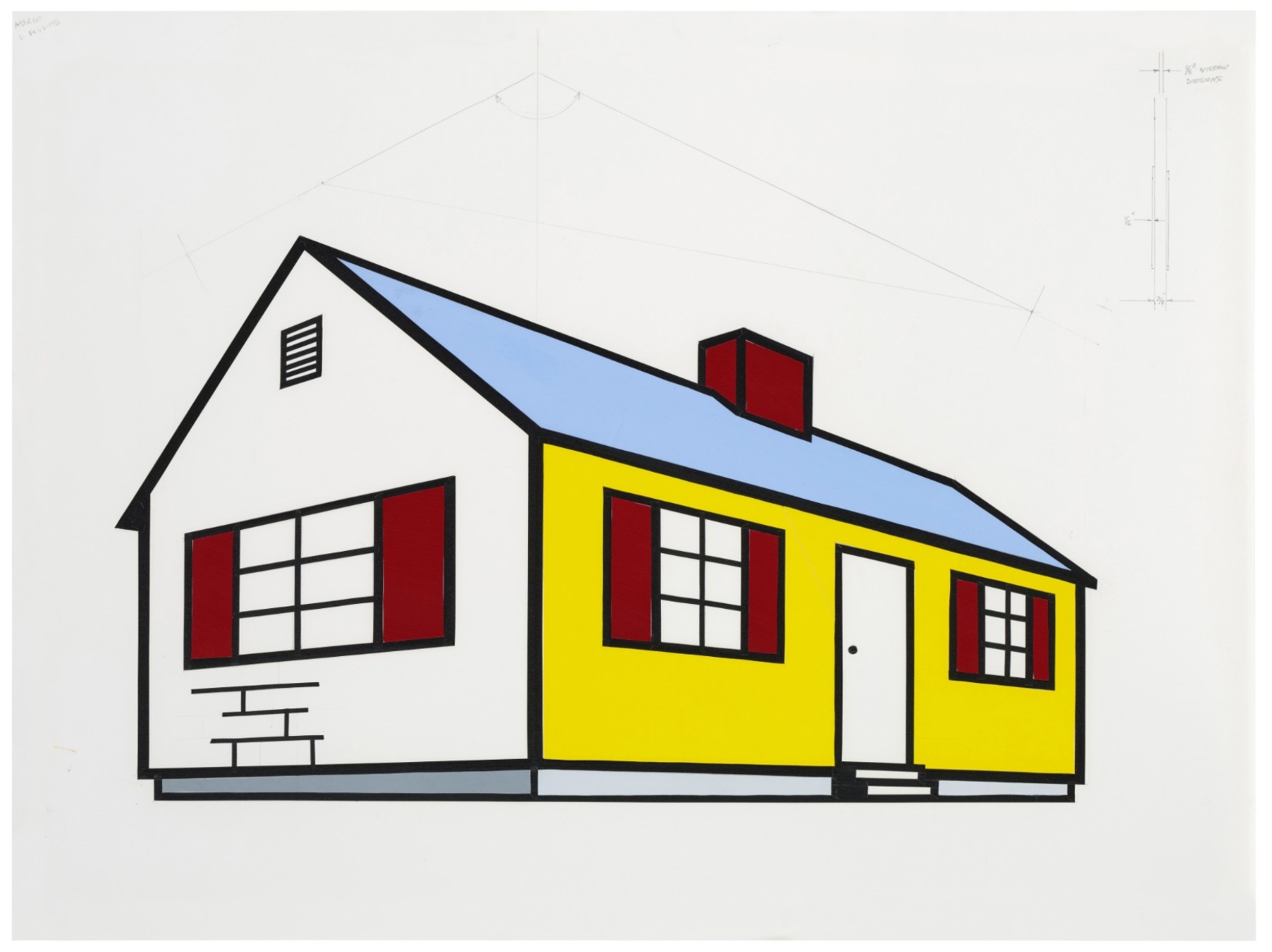
ROY LICHTENSTEIN (1923 – 1997)
House I (Study), circa 1996
Tape, cut painted paper, marker and pencil on paperboard
29-7/8 x 40 inches (75.9 x 101.6 cm)
#10. Varoom (Study), circa 1965
Sotheby’s New-York: 15 May 2026
Estimated: USD 100,000 – 150,000
USD 186,000
WORK ON PAPER
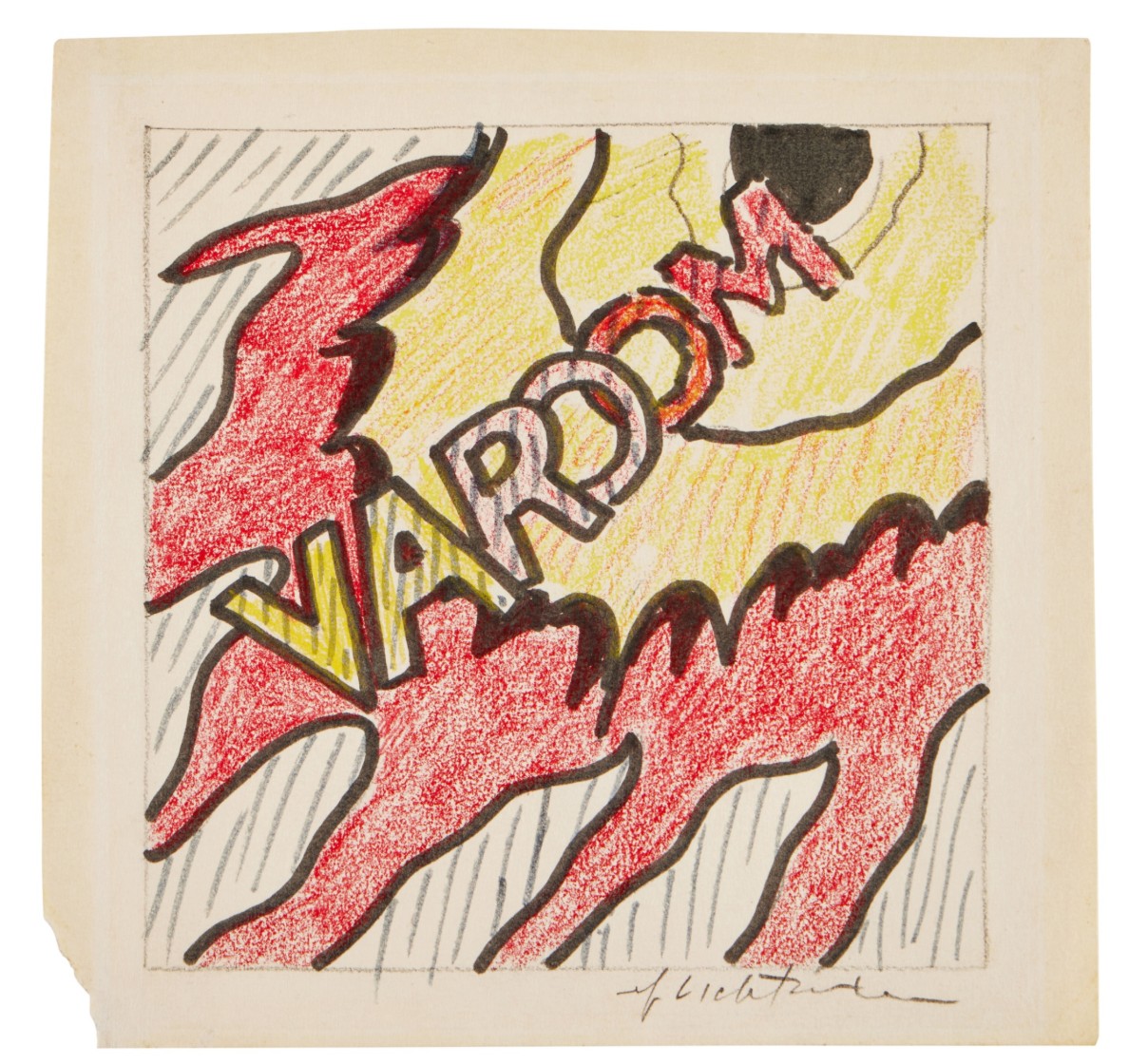
ROY LICHTENSTEIN (1923 – 1997)
Varoom (Study), circa 1965
Colored pencil, crayon, marker and graphite on paper
Image: 4-3/4 x 4-3/4 inches (12.1 x 12.1 cm)
Sheet: 5-3/4 x 5-7/8 inches (14.6 x 14.9 cm)
Signed (lower right)
#11. Red and Yellow Apple (Study), 1982
Property from a Distinguished Private Collection
Sotheby’s New-York: 25 February 2026
Estimated: USD 120,000 – 180,000
USD 166,400
Red and Yellow Apple (Study) | Contemporary Curated | 2026 | Sotheby’s
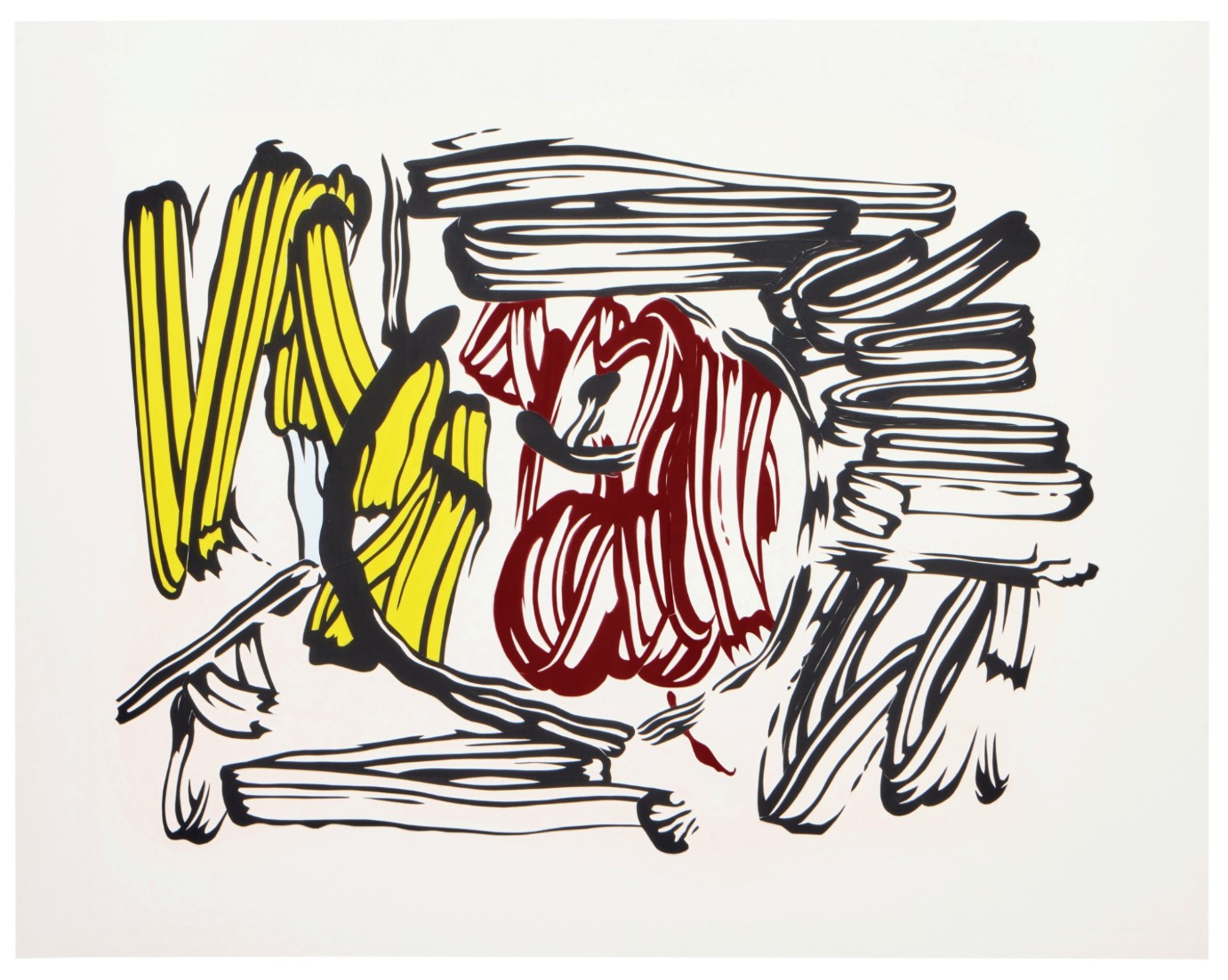
ROY LICHTENSTEIN (1923 – 1997)
Red and Yellow Apple (Study), 1982
Cut painted paper, acrylic and pencil on paperboard
29-3/8 x 37-3/8 inches (74.6 x 94.9 cm)
Signed and dated ’82 (on the verso)
#12. Entablature (Study), circa 1976
Property from the Collection of Dorothy and Roy Lichtenstein
Sotheby’s Riyadh: 31 January 2026
Estimated: USD 120,000 – 180,000
USD 165,100
Entablature (Study) | Origins II | 2026 | Sotheby’s
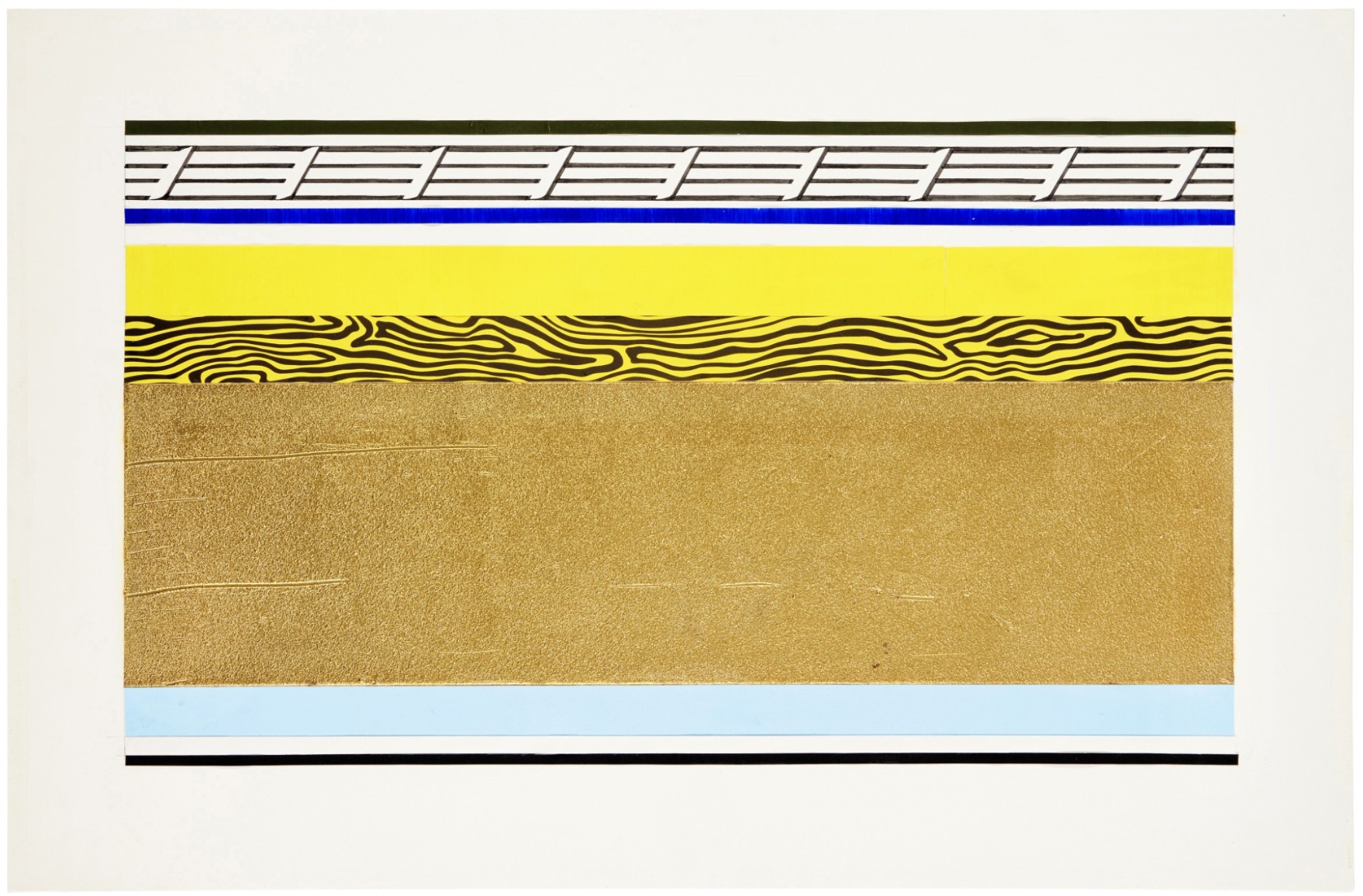
ROY LICHTENSTEIN (1923 – 1997)
Entablature (Study), circa 1976
Cut painted and printed paper, sand, brush and ink, marker, gouache and graphite on board
Image: 22 x 38 1/8 inches (55.9 x 96.8 cm)
Board: 30 x 45 7/8 inches (76.2 x 116.5 cm)
#13. Still Life with Picasso (Study), circa 1973
Property from the Collection of Dorothy and Roy Lichtenstein
Sotheby’s Riyadh: 31 January 2026
Estimated: USD 100,000 – 150,000
USD 127,000
WORK ON PAPER
Still Life with Picasso (Study) | Origins II | 2026 | Sotheby’s
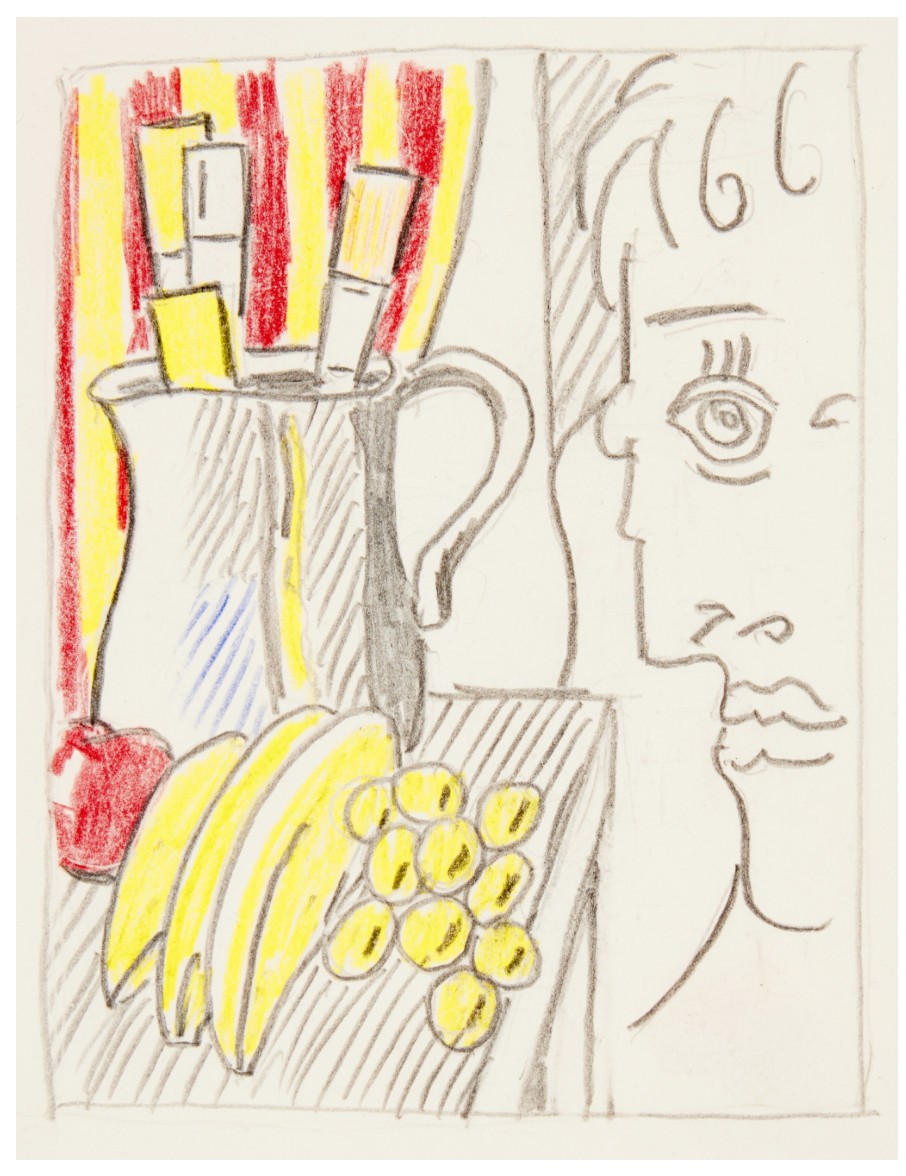
ROY LICHTENSTEIN (1923 – 1997)
Still Life with Picasso (Study), circa 1973
Graphite and colored pencil on paper
Image: 5-1/2 x 4-1/8 inches (13.8 x 10.5 cm)
Sheet: 8-1/4 x 5 inches (21 x 12.9 cm)
Signed R. Lichtenstein (on the verso)
#14. Sinking Sun (Study), 1964
Christie’s London: 7 March 2026
Estimated: GBP 60,000 – 80,000
GBP 50,800 / USD 67,865
WORK ON PAPER
ROY LICHTENSTEIN (1923-1997), Sinking Sun (Study) | Christie’s
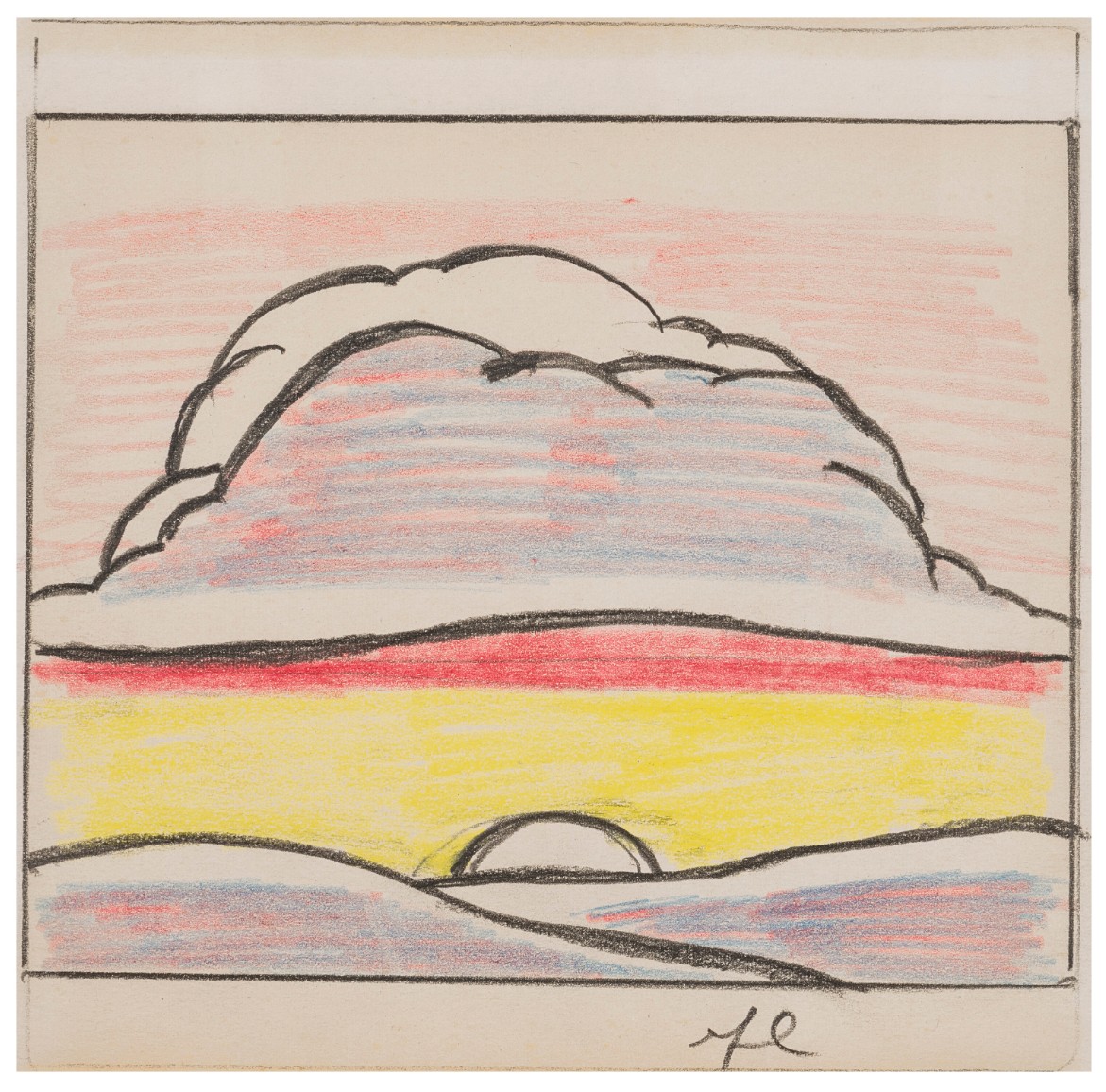
ROY LICHTENSTEIN (1923-1997)
Sinking Sun (Study), 1964
Graphite and colored pencil on paper
Image: 4-3/4 x 4-3/4 inches (12.1 x 12.2 cm)
Sheet: 5-7/8 x 5-3/8 inches (14.9 x 13.8 cm)
Signed with the artist’s initials ‘rfl’ (lower right)
#15. Modern Head Pendant (Study), circa 1968
Sotheby’s New-York: 27 February 2026
Estimated: USD 50,000 – 70,000
USD 51,200
WORK ON PAPER
Modern Head Pendant (Study) | Contemporary Discoveries | 2026 | Sotheby’s
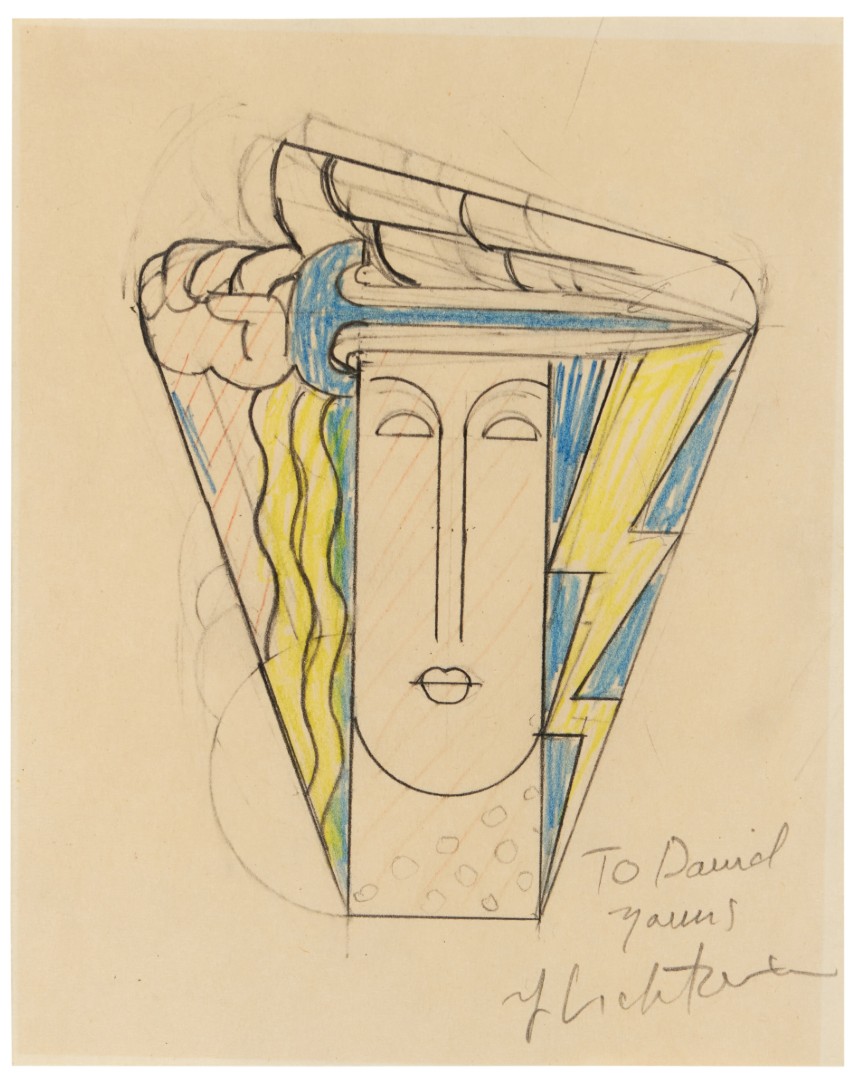
ROY LICHTENSTEIN (1923-1997)
Modern Head Pendant (Study), circa 1968
Colored pencil and graphite on paper
6 x 4-3/4 inches (15.2 x 12.1 cm)
Signed and dedicated To David (lower right)
#16. Woman III (Study), circa 1982
Christie’s New-York: 26 February 2026
Estimated: USD 60,000 – 80,000
USD 40,640
WORK ON PAPER
ROY LICHTENSTEIN (1923-1997), Woman III (Study) | Christie’s
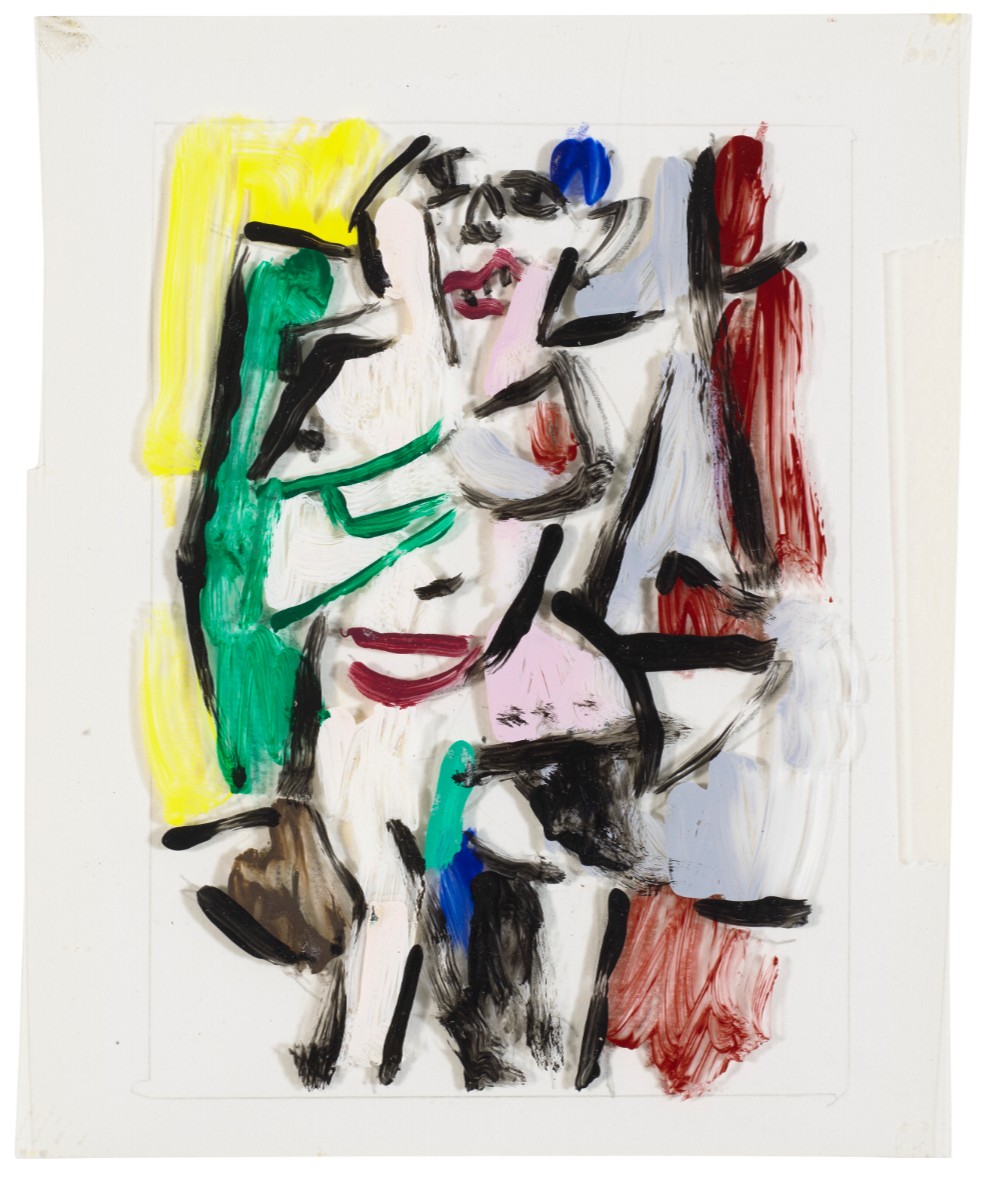
ROY LICHTENSTEIN (1923-1997)
Woman III (Study), circa 1982
Painted acetate collage, tape, colored pencil and graphite on paper
Image: 5-1/4 x 3-3/4 inches (13.3 x 9.5 cm)
Sheet: 10-3/8 x 7-1/8 inches (26.4 x 18.1 cm)
2025 Auction Results
148 lots sold at auction in 2025, for a total turnover of USD 143,359,892. With 3 lots failing to sell, the sell-through rate is 98%.
Paintings
30 lots sold at auction in 2025 for a total turnover of USD 54,124,989. With no lot failing to sell, the sell-through rate is 100%. This includes 24 lots from The Collection of Dorothy and Roy Lichtenstein contributing USD 51,328,069, or 94.8% to the total so far.
2025 Top 3 Lots
The highest price was achieved by Reflections: Art, a painting from the Collection of Dorothy and Roy Lichtenstein, that sold at Sotheby’s in New-York, on 15 May 2025 for USD 5,479,000. 20 lots sold for more than USD 1 million, generating a cumulative turnover of USD 49,784,549, representing 92% of the total turnover for 2025.
Sculptures
31 lots sold at auction in 2025 for a total turnover of USD 35,978,447. With 1 lot failing to sell, the sell-through rate is 97%. The highest price was achieved by Woman: Sunlight, Moonlight, a gorgeous sculpture on wood, that sold at Sotheby’s in New-York, 0n 15 May 2025, for USD 4,930,000.
2025 Top 3 Lots
That includes 28 lots from the Collection of Dorothy and Roy Lichtenstein generating a total turnover of USD 33,832,447, representing 94% of the total turnover in 2025. 11 lots sold for more than USD 1 million, generating a cumulative turnover of USD 26,125,990, representing 72.6% of the total turnover for 2025.
Studies / Works on Paper
87 lots sold at auction in 2025 for a total turnover of USD 53,256,456. With 2 lot failing to sell, the sell-through rate is 98%. This includes 81 lots from The Collection of Dorothy and Roy Lichtenstein sold for a total turnover of USD 33,579,480.
2025 Top 3 Lots
The top lot from this category is The Kiss, a work on paper, sold at Christie’s in New-York, on 12 May 2025, for USD 5,495,000. The second lot from the category, and the top lot for Studies from The Collection of Dorothy and Roy Lichtenstein is Woman: Sunlight, Moonlight (Study), a Study dated 1995, that sold at Sotheby’s in New-York, on 18 November 2025, for USD 2,734,000. 15 lots sold for more than USD 1 million, generating a cumulative turnover of USD 29,336,575, representing 55.1% of the total turnover for this category in 2025.

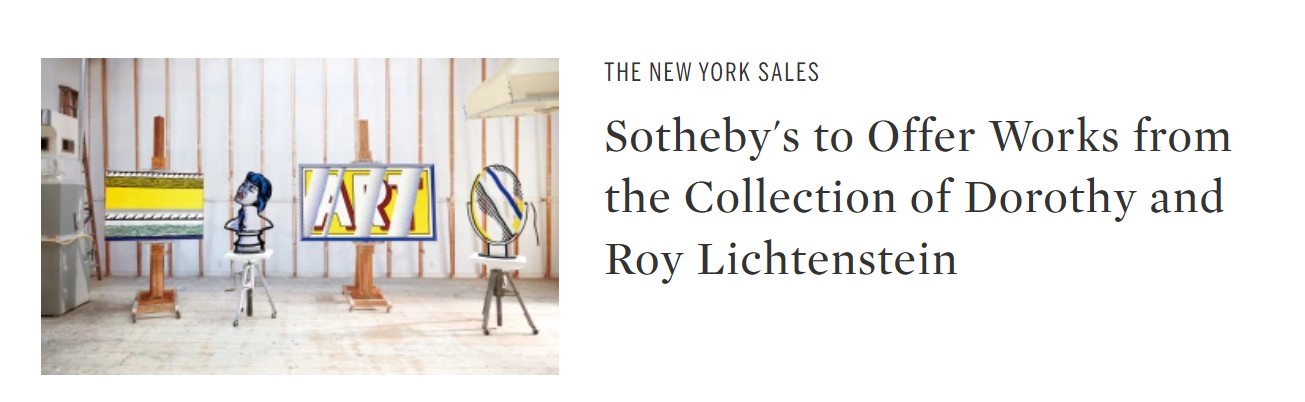
Celebrated as one of the defining figures of the Pop art movement, Roy Lichtenstein’s dynamic practice expanded beyond his famous comic strip works, spanning a wide range of styles, media and themes. Following the sale of a select group of works from the Collection of Dorothy and Roy Lichtenstein at Sotheby’s in November 2024, Sotheby’s is pleased to partner with the Lichtenstein family to offer an expanded trove of more than 40 works by the American Pop icon at auction this May. Coming to auction for the first time after remaining in their personal collection for decades, the group of works charts four decades of Lichtenstein’s practice, following his shift from abstract expressionism to Pop art in the 60s, to his exploration of modern art in the 70s, through to his celebrated Reflections series from the 80s, and culminating in his famous interiors and nudes of the 90s. Together, “Roy’s Lichtensteins” form a throughline of the artist’s most introspective examinations of his life and practice: the metaphorical reflections on his own oeuvre, his reflections on other artists and the art historical canon, and his formal explorations of rendering reflections in his work.
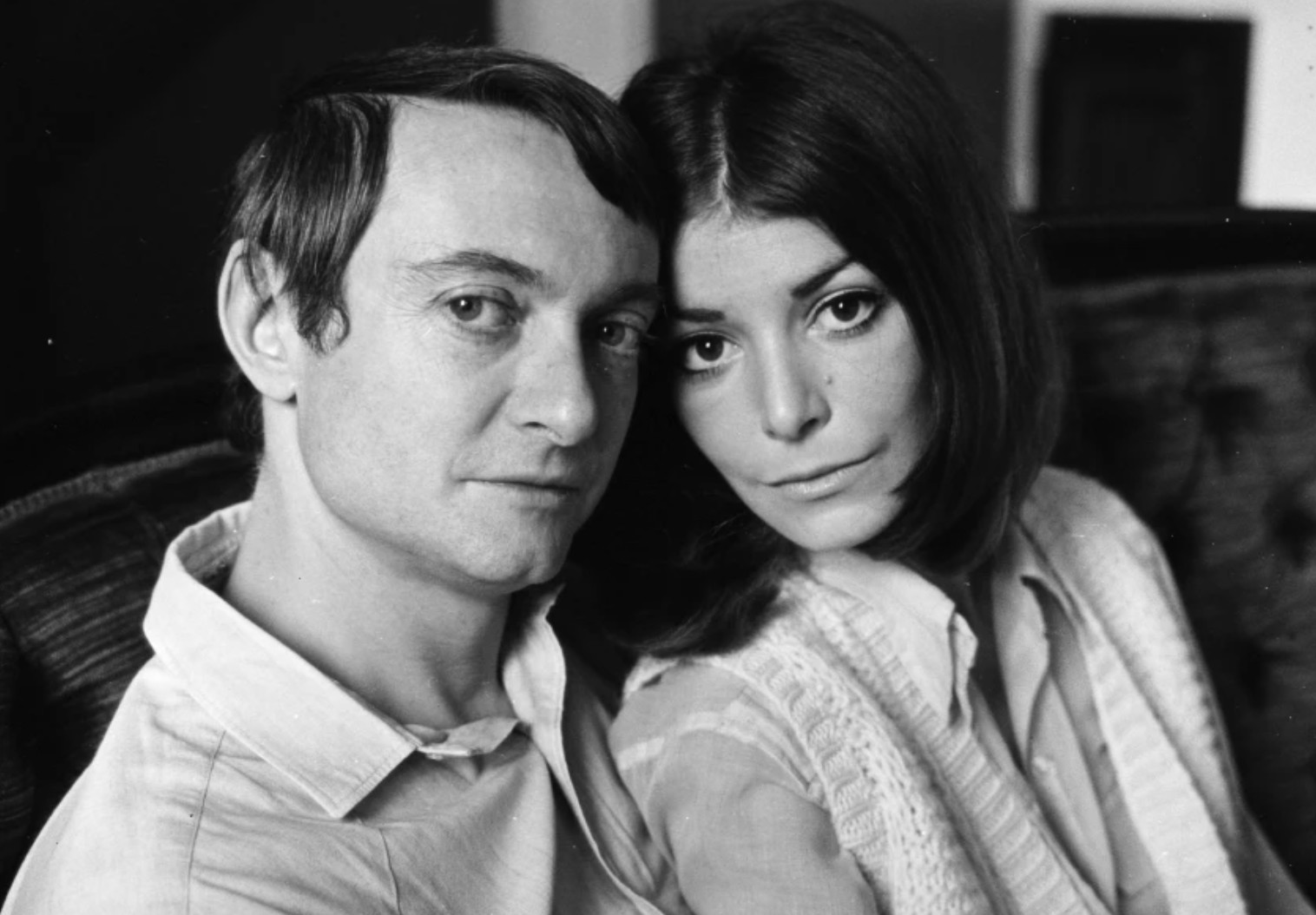
A remarkable grouping of the artist’s output across various media, the group comprises paintings, drawings, sculpture and prints. Among the works on offer are the artist’s investigation of the work of the modernists, surrealists, and others, such as Picasso, Monet, Calder, subjecting them all to his own aesthetic and asserting his place in art history.
A common thread of Lichtenstein’s distinct humor and joie de vivre is woven throughout. Works highlight his more literal takes on reflection and plays on illusion, and elsewhere, drawings and studies mark the genesis for Lichtenstein’s most iconic paintings. Estimated to achieve in excess of $35 million, highlights from the collection will travel to Hong Kong from 18-23 April before returning to New York for pre-sale exhibition ahead of Sotheby’s Contemporary Evening and Day sales this May.
TO READ MORE CLICK BELOW
1. Paintings
#1. Reflections: Art, 1988
Works from the Collection of Dorothy and Roy Lichtenstein
Sotheby’s New-York: 15 May 2025
Estimated: USD 4,000,000 – 6,000,000
USD 5,479,000
Reflections: Art | The Now and Contemporary Evening Auction | 2025 | Sotheby’s
ROY LICHTENSTEIN (1923 – 1997)
Reflections: Art, 1988
Acrylic, oil and graphite on canvas
44 1/2 x 76 1/4 inches (113 x 193.7 cm)
Signed and dated ’88 (on the reverse)
USD 5 million
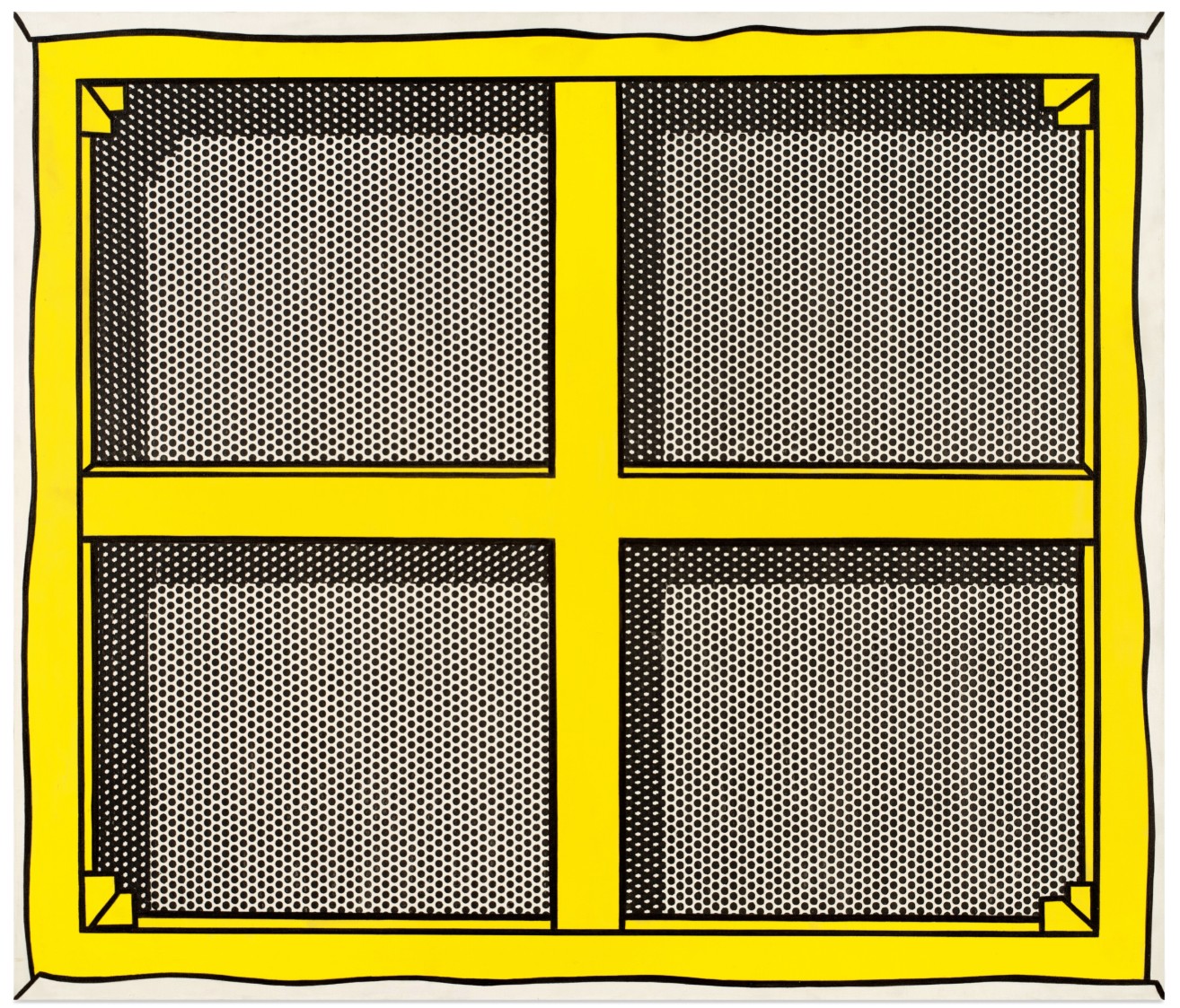
#2. Stretcher Frame with Cross Bars III, 1968
Works from the Collection of Dorothy and Roy Lichtenstein
Sotheby’s New-York: 15 May 2025
Estimated: USD 2,500,000 – 3,500,000
USD 4,930,000
Stretcher Frame with Cross Bars III | The Now and Contemporary Evening Auction | 2025 | Sotheby’s
ROY LICHTENSTEIN (1923 – 1997)
Stretcher Frame with Cross Bars III, 1968
Acrylic, oil and graphite on canvas
48 x 56 1/4 inches (121.9 x 142.9 cm)
Signed and dated ’68 (on the reverse)
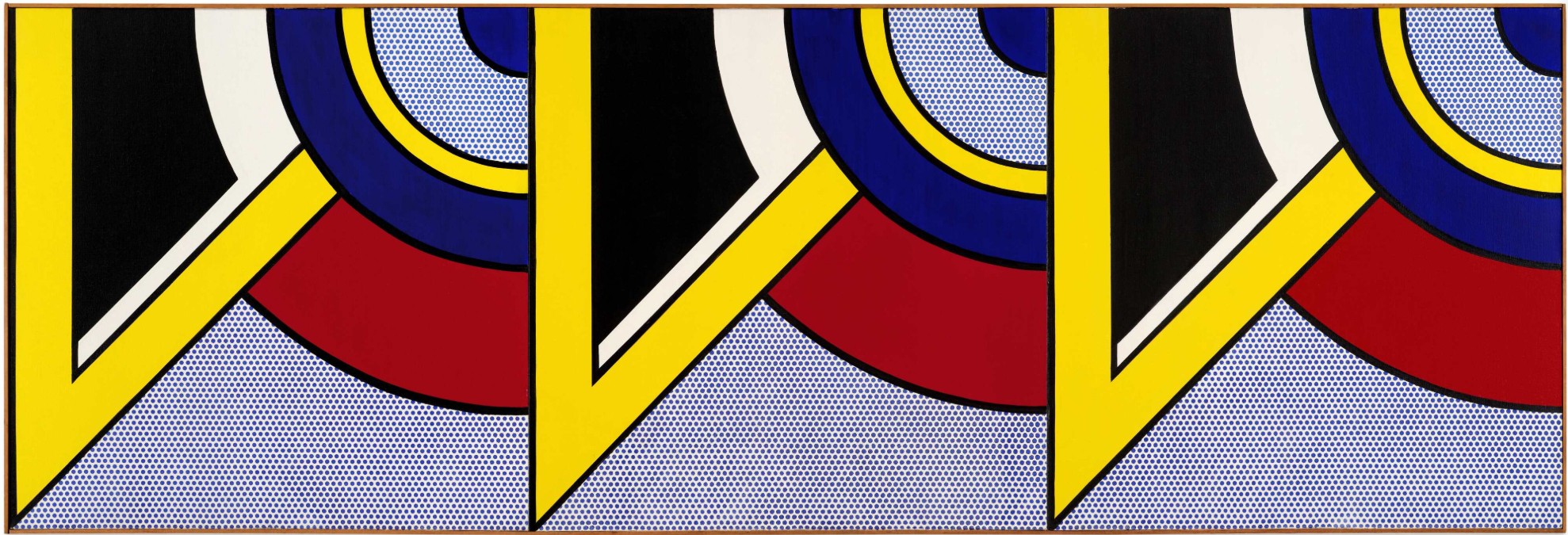
#3. Modern Painting Triptych II, 1967
A Legacy Reimagined: Works from the Collection of Dorothy and Roy Lichtenstein
Sotheby’s New-York: 18 November 2025
Estimated: USD 3,500,000 – 4,500,000
USD 4,442,000
Modern Painting Triptych II | The Now & Contemporary Evening Auction | 2025 | Sotheby’s
ROY LICHTENSTEIN (1923 – 1997)
Modern Painting Triptych II, 1967
Acrylic, oil and graphite on canvas, in three parts
Each: 36×36 inches (91.4 x 91.4 cm)
Overall: 36×108 inches (91.4 x 274.3 cm)
Signed and dated ‘67 (on the reverse)
#4. Purist Still Life with Pitcher, 1975
Works from the Collection of Dorothy and Roy Lichtenstein
Sotheby’s London: 24 June 2025
Estimated: GBP 2,500,000 – 3,500,000
GBP 3,151,000 / USD 4,253,850
Purist Still Life with Pitcher | Modern & Contemporary Evening Auction | 2025 | Sotheby’s
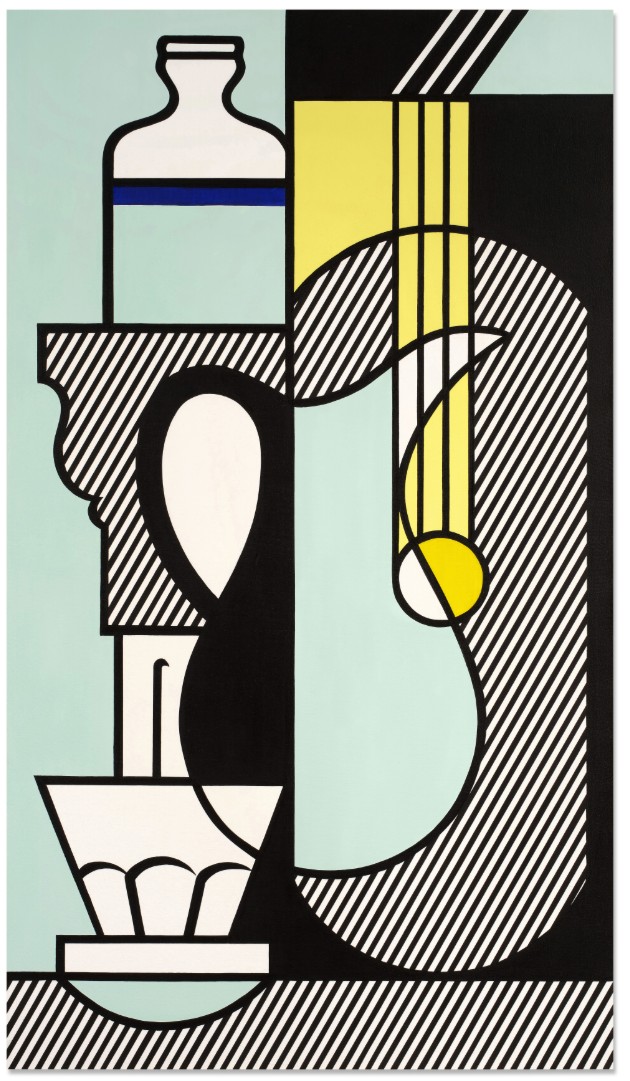
ROY LICHTENSTEIN (1923 – 1997)
Purist Still Life with Pitcher, 1975
Acrylic, oil and graphite on canvas
69 7/8 x 40 1/8 inches (177.6 x 101.9 cm)
Signed and dated ’75 (on the reverse)
#5. Vista with Bridge, 1996
Roy’s Lichtensteins: Works from The Collection of Dorothy and Roy Lichtenstein
Sotheby’s Hong-Kong: 28 September 2025
Estimated: HKD 28,000,000 – 35,000,000
HKD 30,875,000 / USD 3,968,510
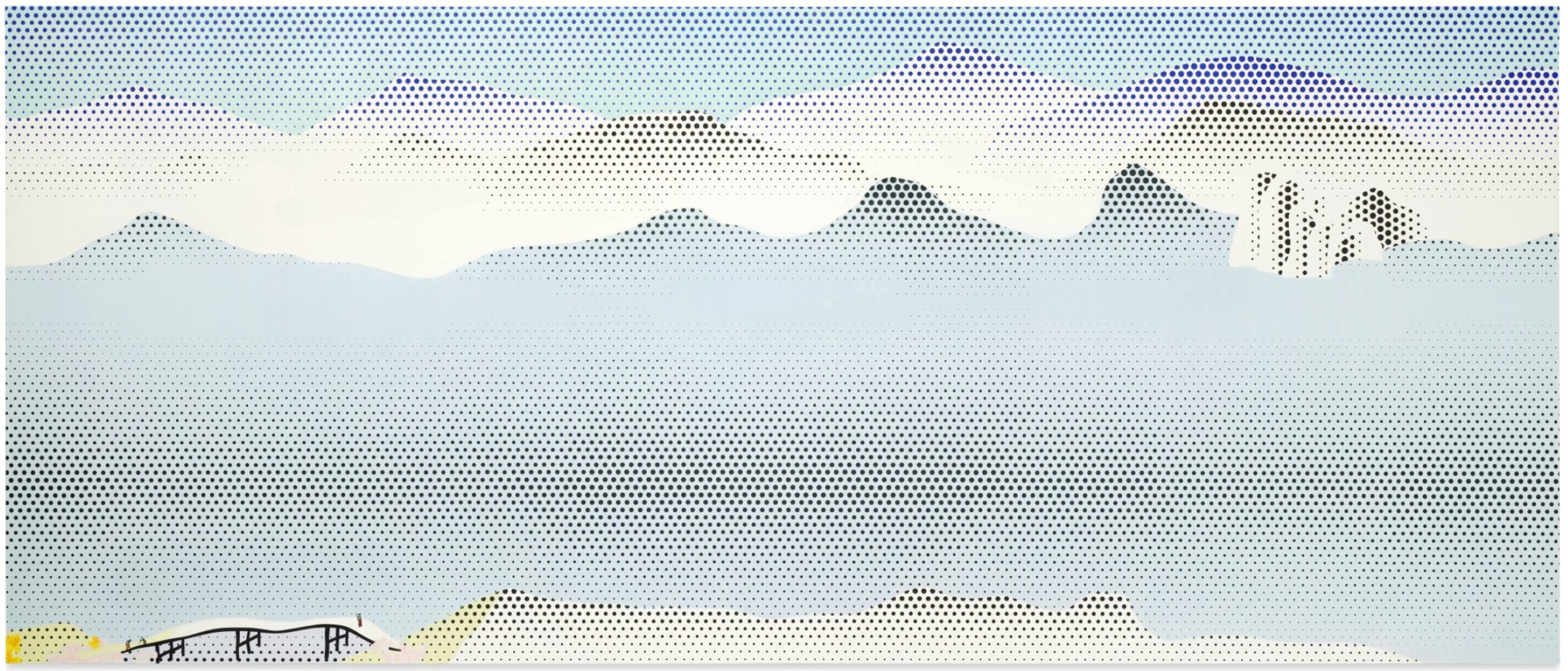
ROY LICHTENSTEIN (1923 – 1997)
Vista with Bridge, 1996
Acrylic, oil and graphite on canvas
75 x 178 1/4 inches (190.5 x 452.8 cm)
Signed and dated ’96 (on the reverse)
#6. Cubist Still Life with Vase and Flowers, 1973
A Legacy Reimagined: Works from the Collection of Dorothy and Roy Lichtenstein
Sotheby’s New-York: 18 November 2025
Estimated: USD 4,o00,000 – 6,000,000
USD 3,025,000
Cubist Still Life with Vase and Flowers | The Now & Contemporary Evening Auction | 2025 | Sotheby’s
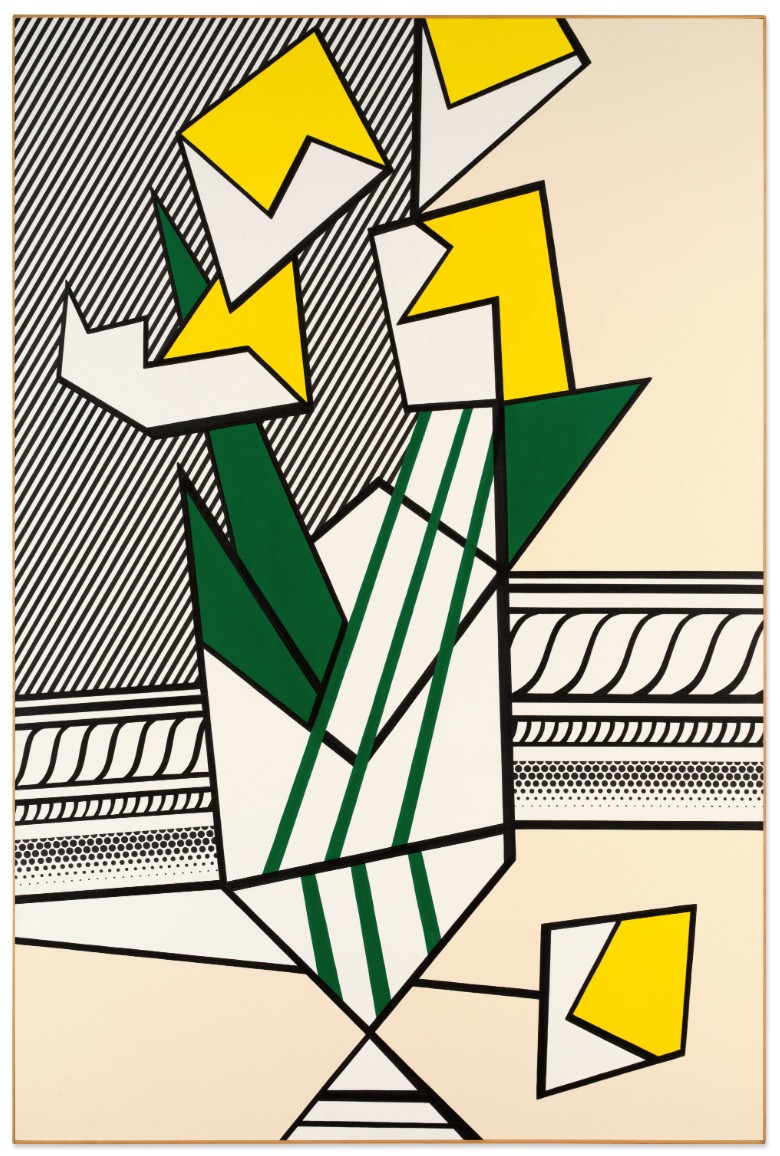
ROY LICHTENSTEIN (1923 – 1997)
Cubist Still Life with Vase and Flowers, 1973
Acrylic, oil and graphite on canvas
90 1/4 x 60 inches (229.2 x 152.4 cm)
Signed and dated ‘73 (on the reverse)
#7. Reflections: Wimpy I, 1988
Reflections on Pop: Works from the Collection of Dorothy and Roy Lichtenstein
Sotheby’s New-York: 26 September 2025
Estimated: USD 1,000,000 – 1,500,000
USD 2,856,000
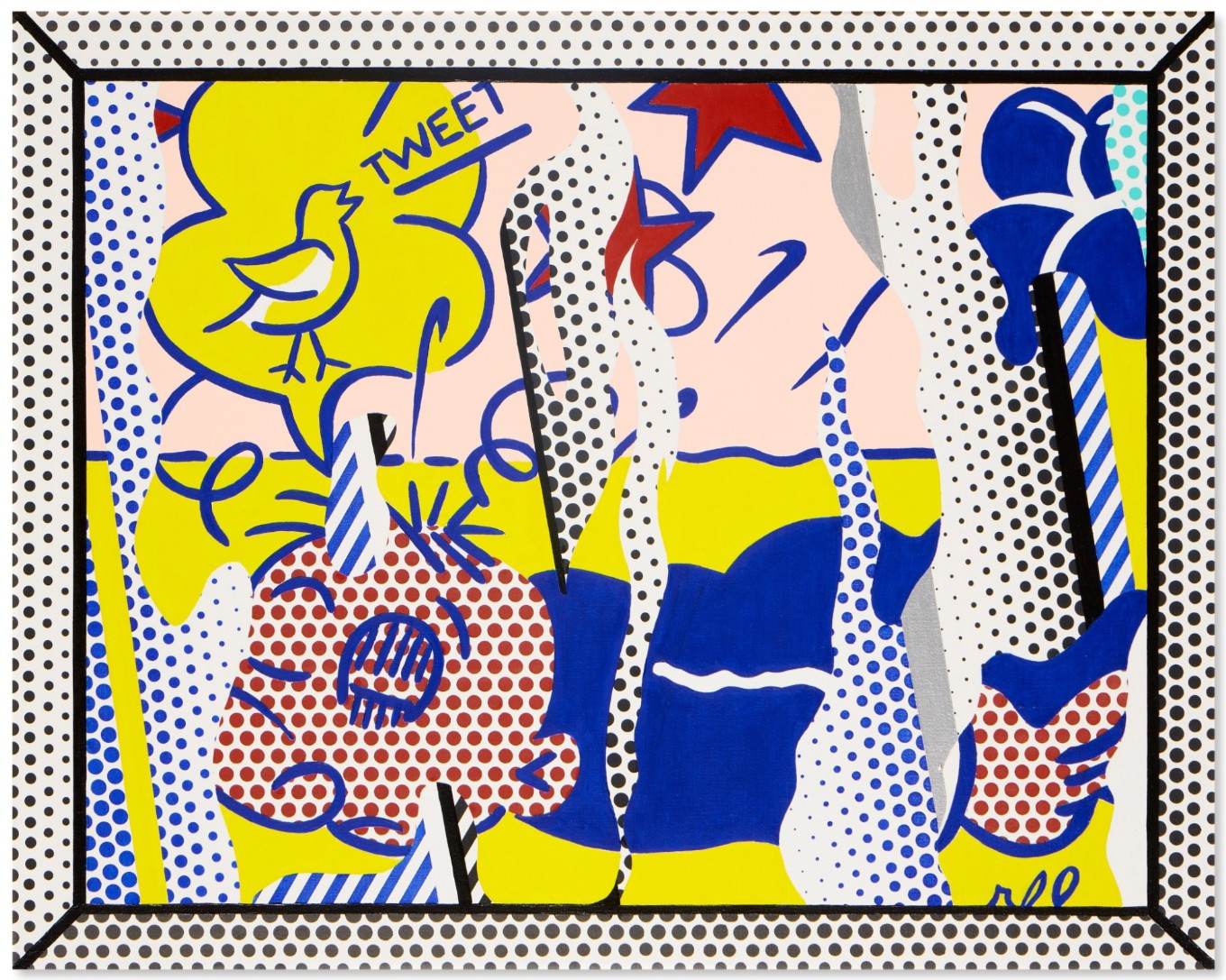
ROY LICHTENSTEIN (1923 – 1997)
Reflections: Wimpy I, 1988
Acrylic, oil and graphite on canvas
32×40 inches (81.3 x 101.6 cm)
Signed and dated ’88 (on the reverse)
#8. Interior with Shadow, 1993
Roy’s Lichtensteins: Works from the Collection of Dorothy and Roy Lichtenstein
Sotheby’s Paris: 24 October 2025
Estimated: EUR 2,500,000 – 3,500,000
EUR 2,299,500 / USD 2,671,370
Interior with Shadow | Modernités | 2025 | Sotheby’s
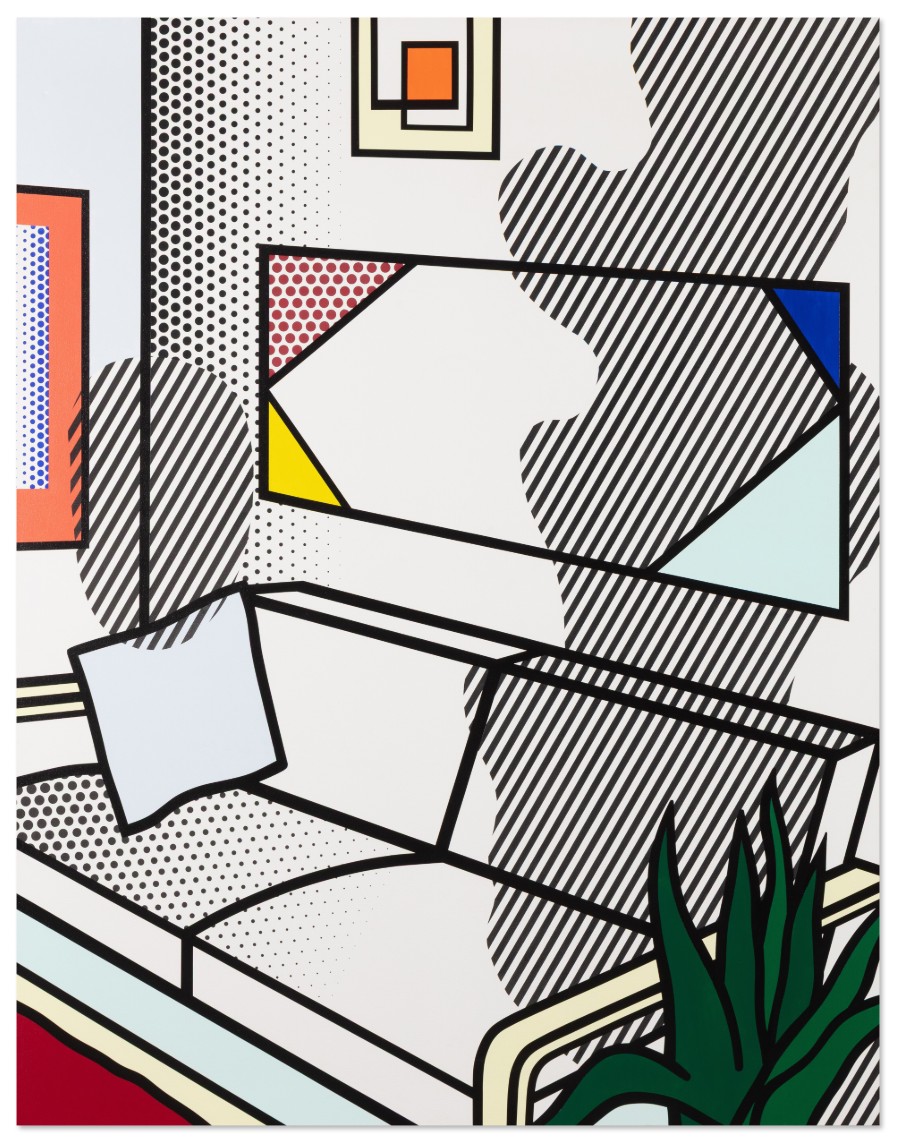
ROY LICHTENSTEIN (1923 – 1997)
Interior with Shadow, 1993
Acrylic, oil and graphite pencil on canvas
82 1/8 x 64 1/8 inches (208.5 x 162.8 cm)
Signed and dated ’93 (on the reverse)
#9. Eclipse of the Sun II, 1975
Reflections on Pop: Works from the Collection of Dorothy and Roy Lichtenstein
Sotheby’s New-York: 26 September 2025
Estimated: USD 2,500,000 – 3,500,000
USD 2,576,000
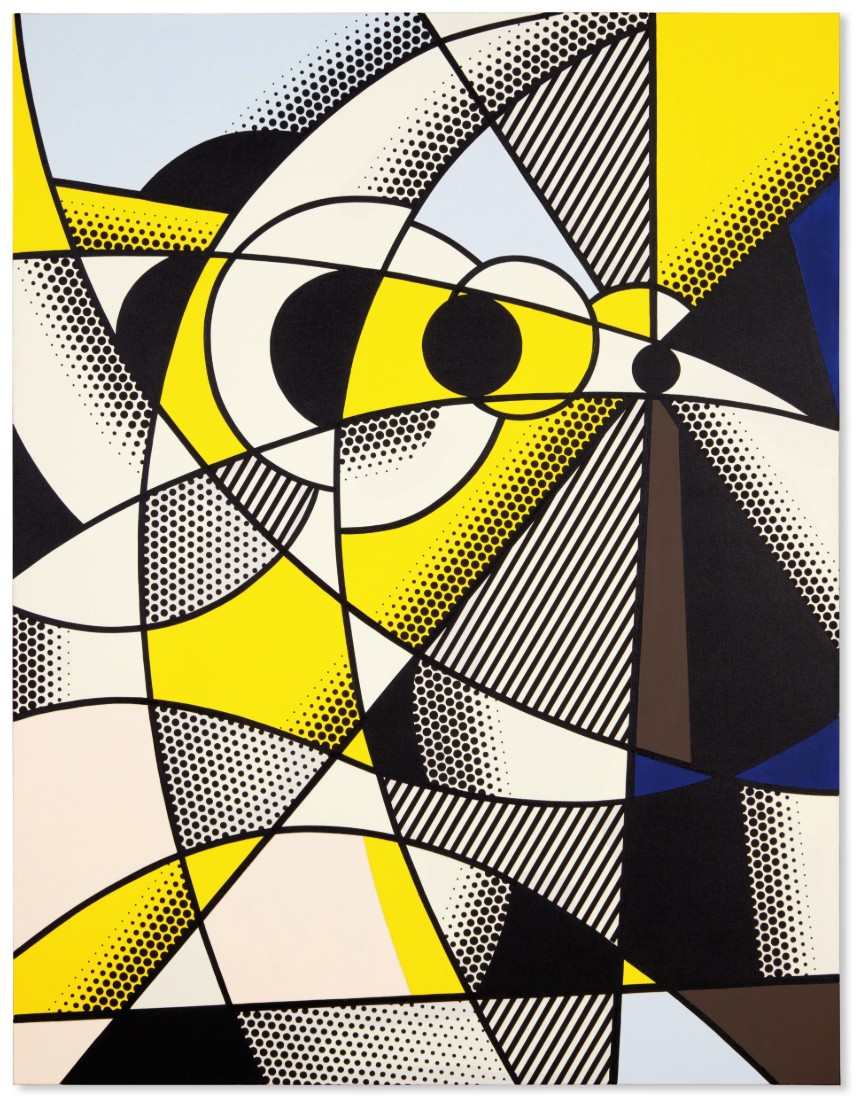
ROY LICHTENSTEIN (1923 – 1997)
Eclipse of the Sun II, 1975
Acrylic, oil and graphite on canvas
70×54 inches (177.8 x 137.2 cm)
Signed and dated ’75 (on the reverse)
#10. Reflections: Wimpy III, 1988
A Legacy Reimagined: Works from the Collection of Dorothy and Roy Lichtenstein
Sotheby’s New-York: 19 November 2025
Estimated: USD 1,000,000 – 1,500,000
USD 2,002,000
Reflections: Wimpy III | Contemporary Day Auction | 2025 | Sotheby’s
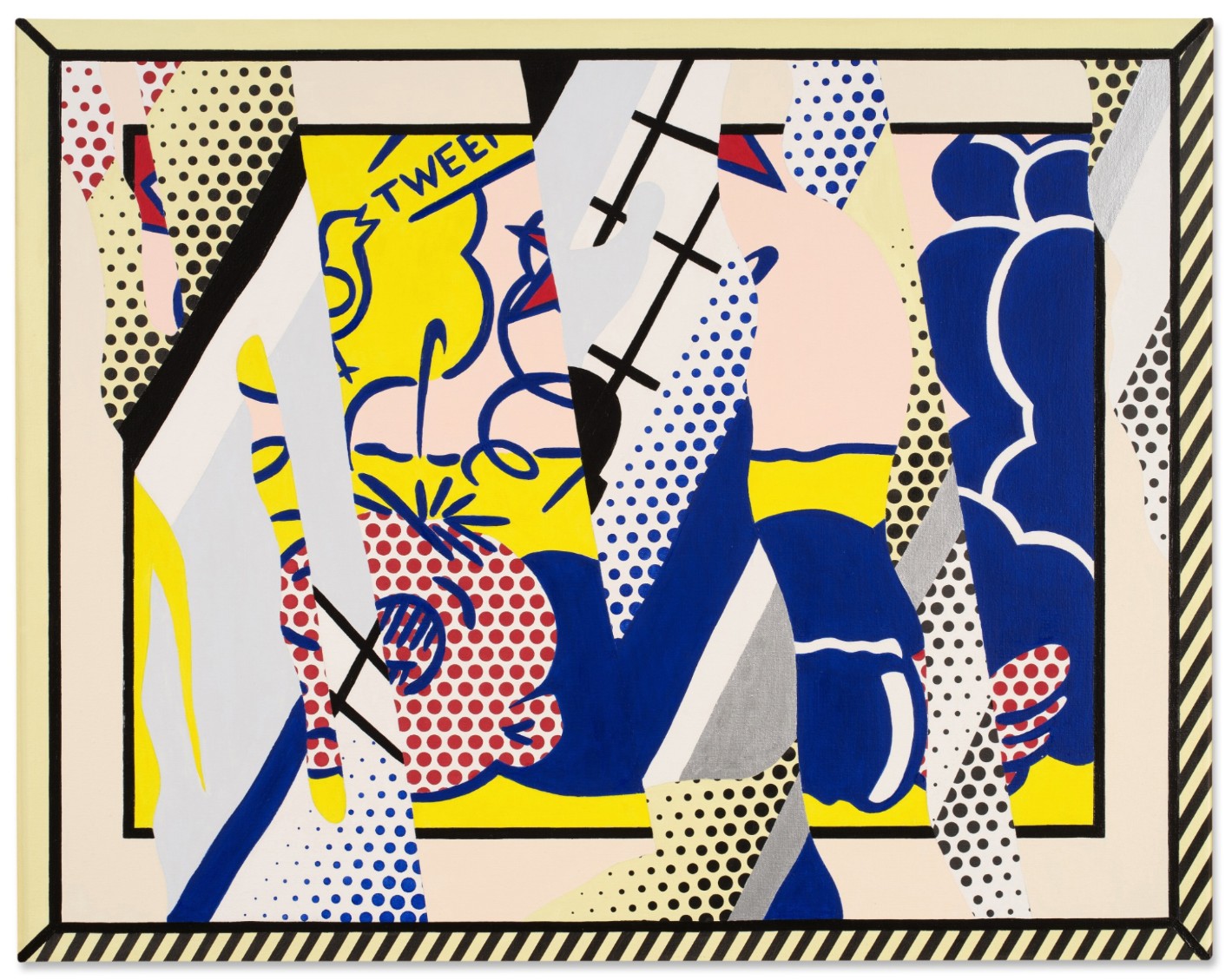
ROY LICHTENSTEIN (1923 – 1997)
Reflections: Wimpy III, 1988
Acrylic, oil and graphite on canvas
32×40 inches (81.3 x 101.6 cm)
Signed and dated ’88 (on the reverse)
#11. Atomic Landscape, 1966
Works from the Collection of Dorothy and Roy Lichtenstein
Sotheby’s New-York: 15 May 2025
Estimated: USD 700,000 – 1,000,000
USD 1,636,000
Atomic Landscape | The Now and Contemporary Evening Auction | 2025 | Sotheby’s
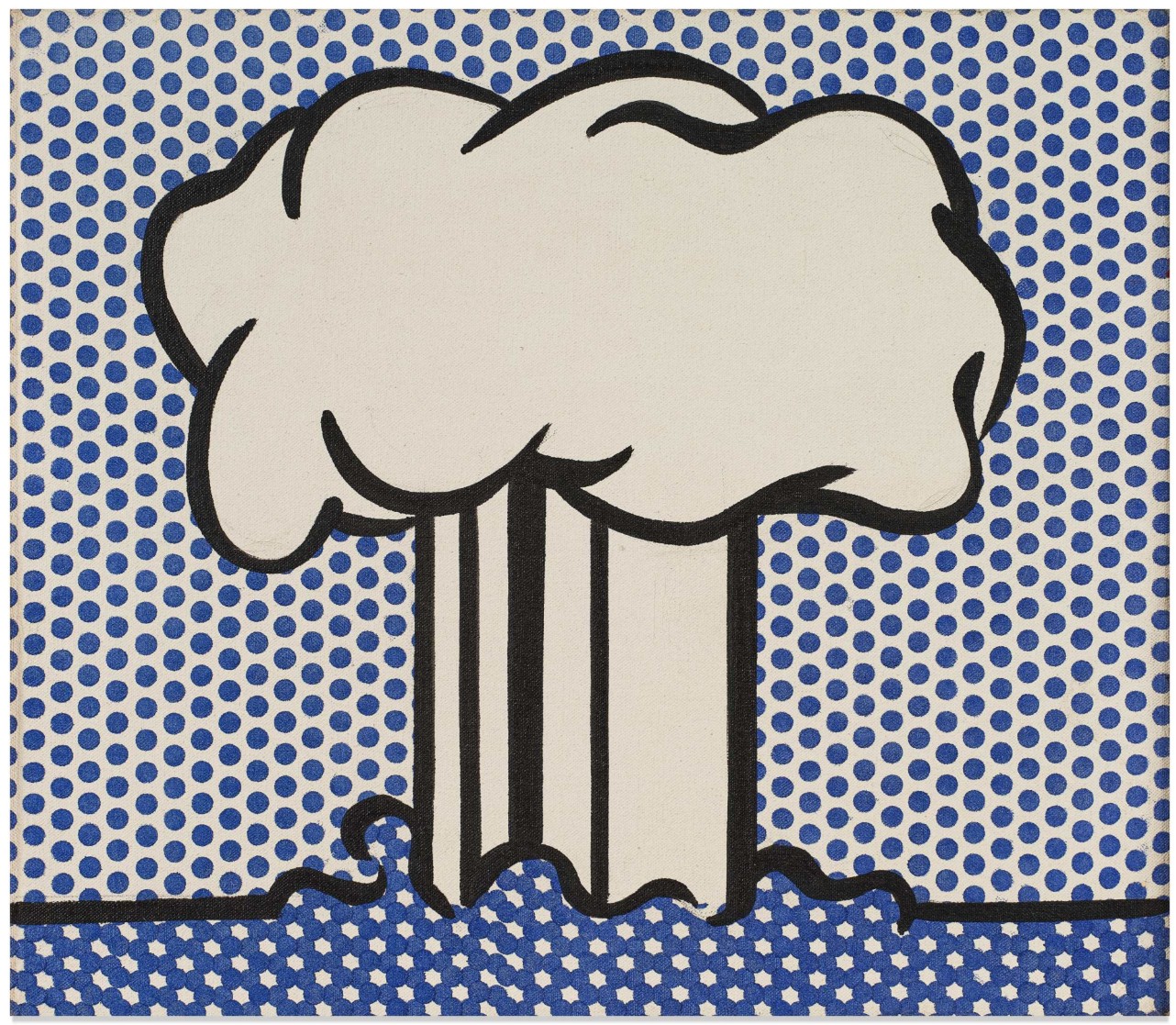
ROY LICHTENSTEIN (1923 – 1997)
Atomic Landscape, 1966
Acrylic, oil and graphite on canvas
14 x 16 1/8 inches (35.6 x 41 cm)
Signed and dated ’66 (on the reverse)
#12. Flower with Bamboo, 1996
A Legacy Reimagined: Works from the Collection of Dorothy and Roy Lichtenstein
Sotheby’s New-York: 18 November 2025
Estimated: USD 2,000,000 – 3,000,000
USD 1,514,000
Flower with Bamboo | The Now & Contemporary Evening Auction | 2025 | Sotheby’s
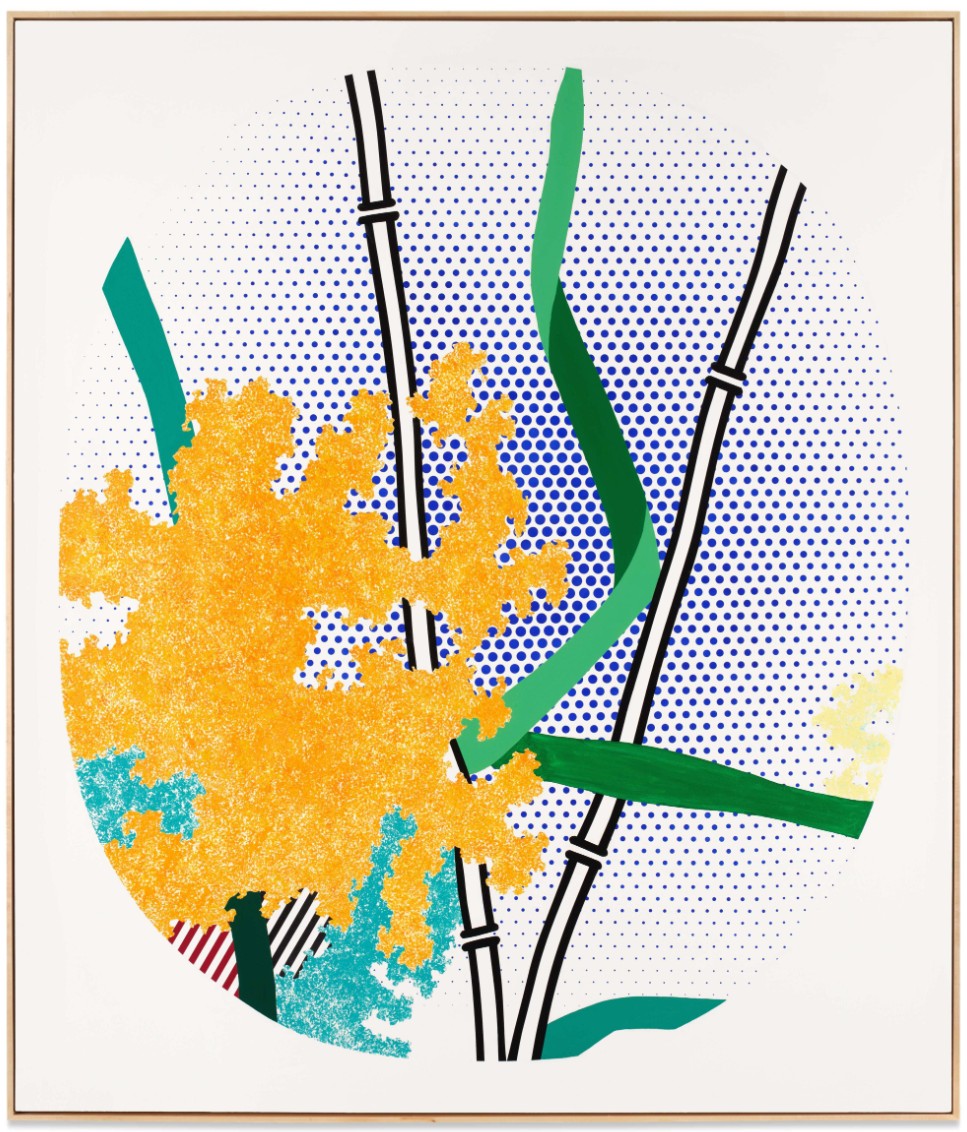
ROY LICHTENSTEIN (1923 – 1997)
Flower with Bamboo, 1996
Acrylic, oil and graphite on canvas
77 x 66 1/8 inches (195.6 x 168 cm)
Signed and dated ‘96 (on the reverse)
#13. Haystacks, 1968
Works from the Collection of Dorothy and Roy Lichtenstein
Sotheby’s New-York: 16 May 2025
Estimated: USD 400,000 – 600,000
USD 1,392,000
Haystacks | Contemporary Day Auction | 2025 | Sotheby’s
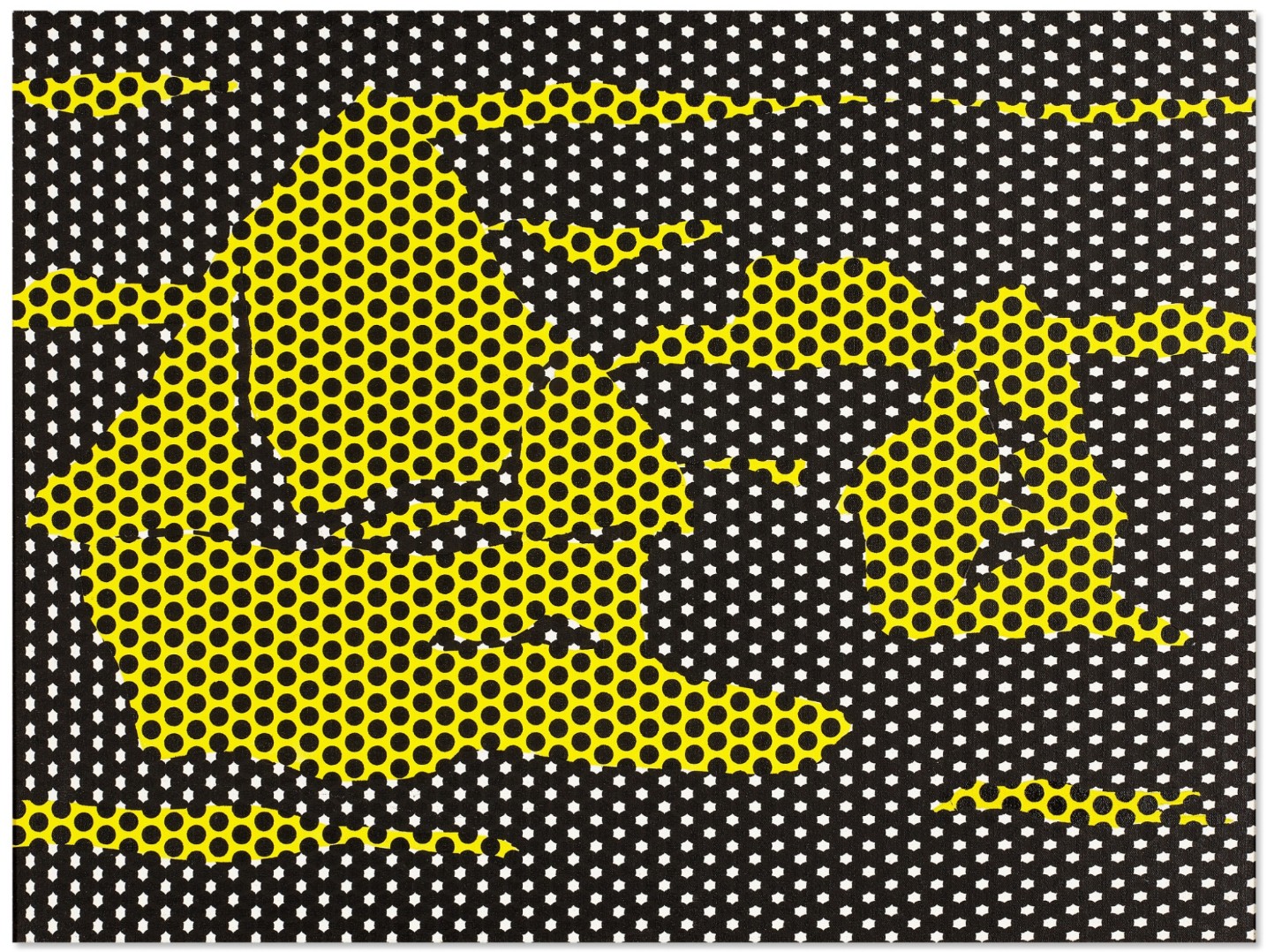
ROY LICHTENSTEIN (1923 – 1997)
Haystacks, 1968
Oil, acrylic and graphite on canvas
18×24 inches (45.7 x 60.9 cm)
Signed, dated ’68 and variously inscribed (on the reverse)
#14. Unfurled (After Morris Louis), 1973
Works from the Collection of Dorothy and Roy Lichtenstein
Sotheby’s New-York: 16 May 2025
Estimated: USD 1,000,000 – 1,500,000
USD 1,392,000
Unfurled (After Morris Louis) | Contemporary Day Auction | 2025 | Sotheby’s
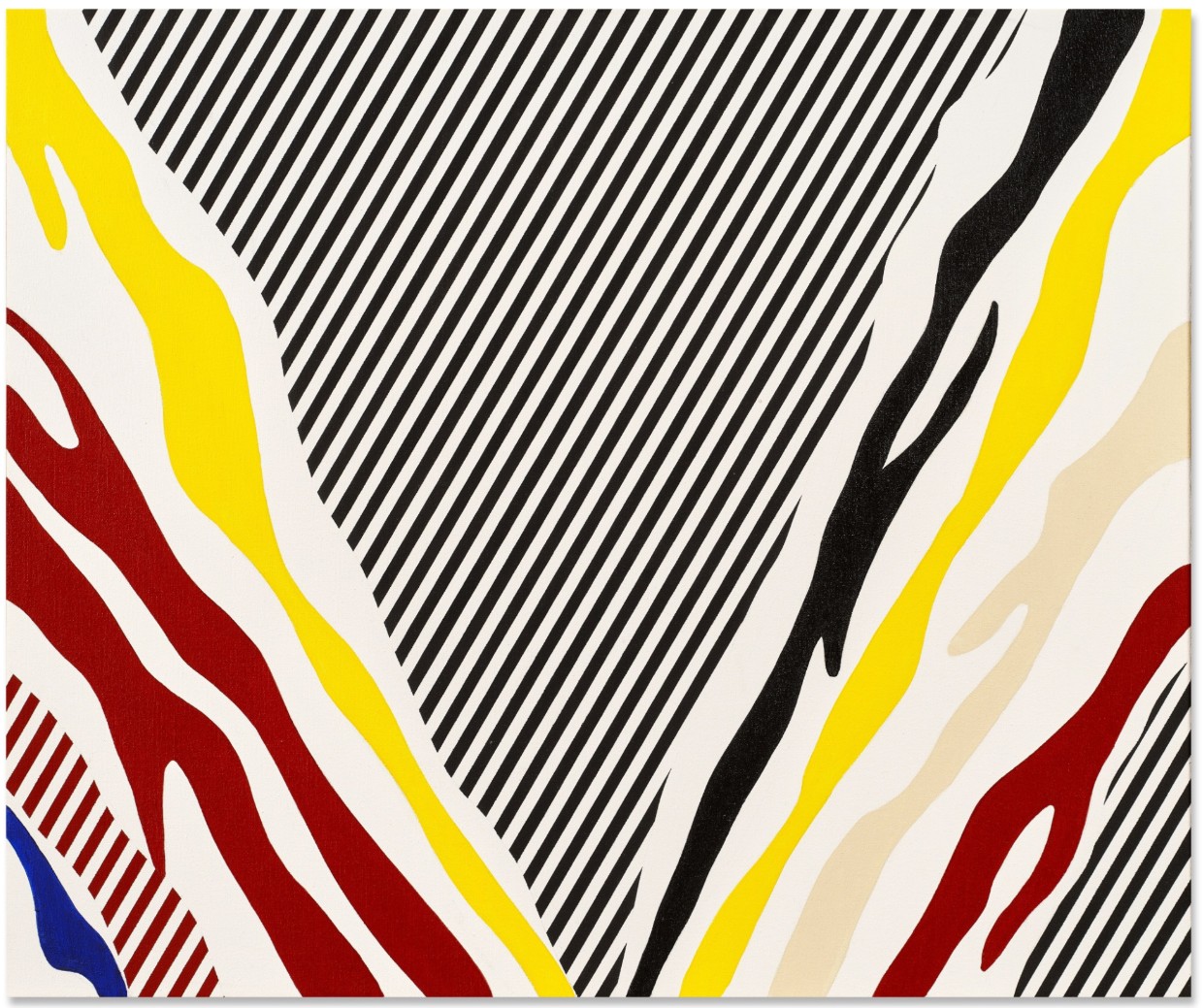
ROY LICHTENSTEIN (1923 – 1997)
Unfurled (After Morris Louis), 1973
Acrylic, oil and graphite on canvas
30 x 36 1/8 inches (76.4 x 91.8 cm)
Signed and dated ’73 (on the reverse)
#15. Reflections on Brushstrokes, 1990
A Legacy Reimagined: Works from the Collection of Dorothy and Roy Lichtenstein
Sotheby’s New-York: 19 November 2025
Estimated: USD 1,200,000 – 1,800,000
USD 1,392,000
Reflections on Brushstrokes | Contemporary Day Auction | 2025 | Sotheby’s
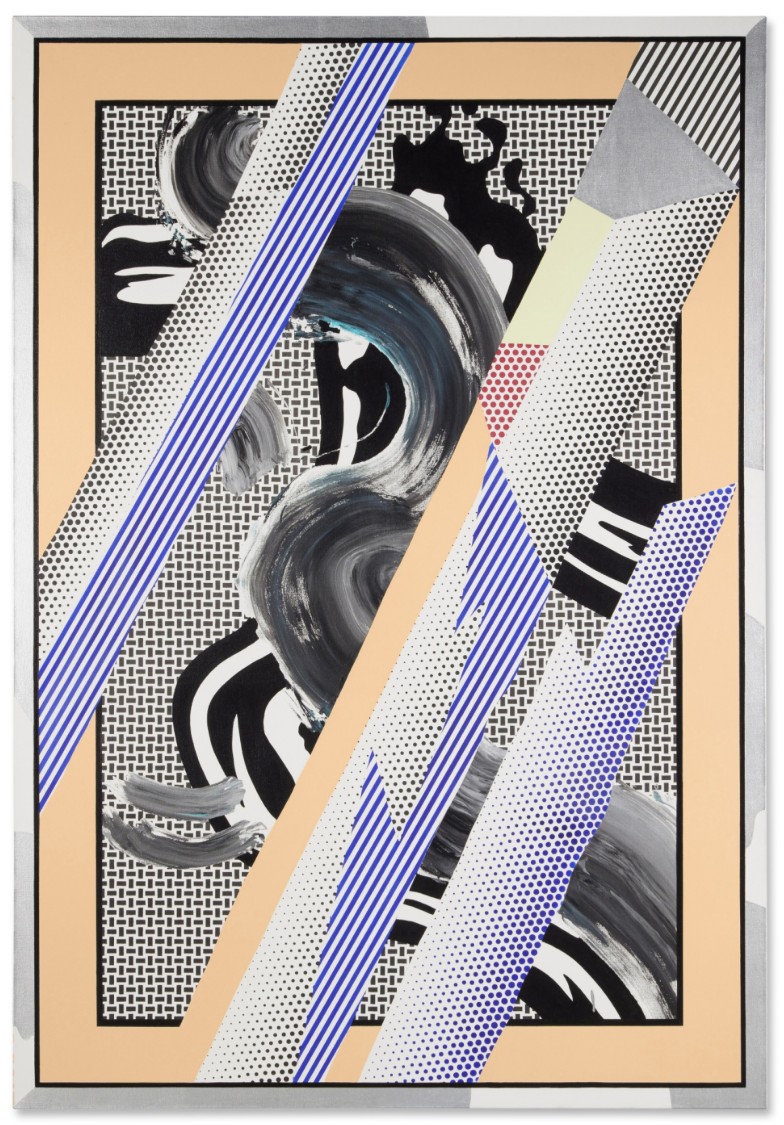
ROY LICHTENSTEIN (1923 – 1997)
Reflections on Brushstrokes, 1990
Acrylic, oil and graphite on canvas
87 1/4 x 60 inches (221.6 x 152.4 cm)
Signed and dated ‘90 (on the reverse)
#16. Entablature, 1974
Reflections on Pop: Works from the Collection of Dorothy and Roy Lichtenstein
Sotheby’s New-York: 26 September 2025
Estimated: USD 700,000 – 1,000,000
USD 1,331,000
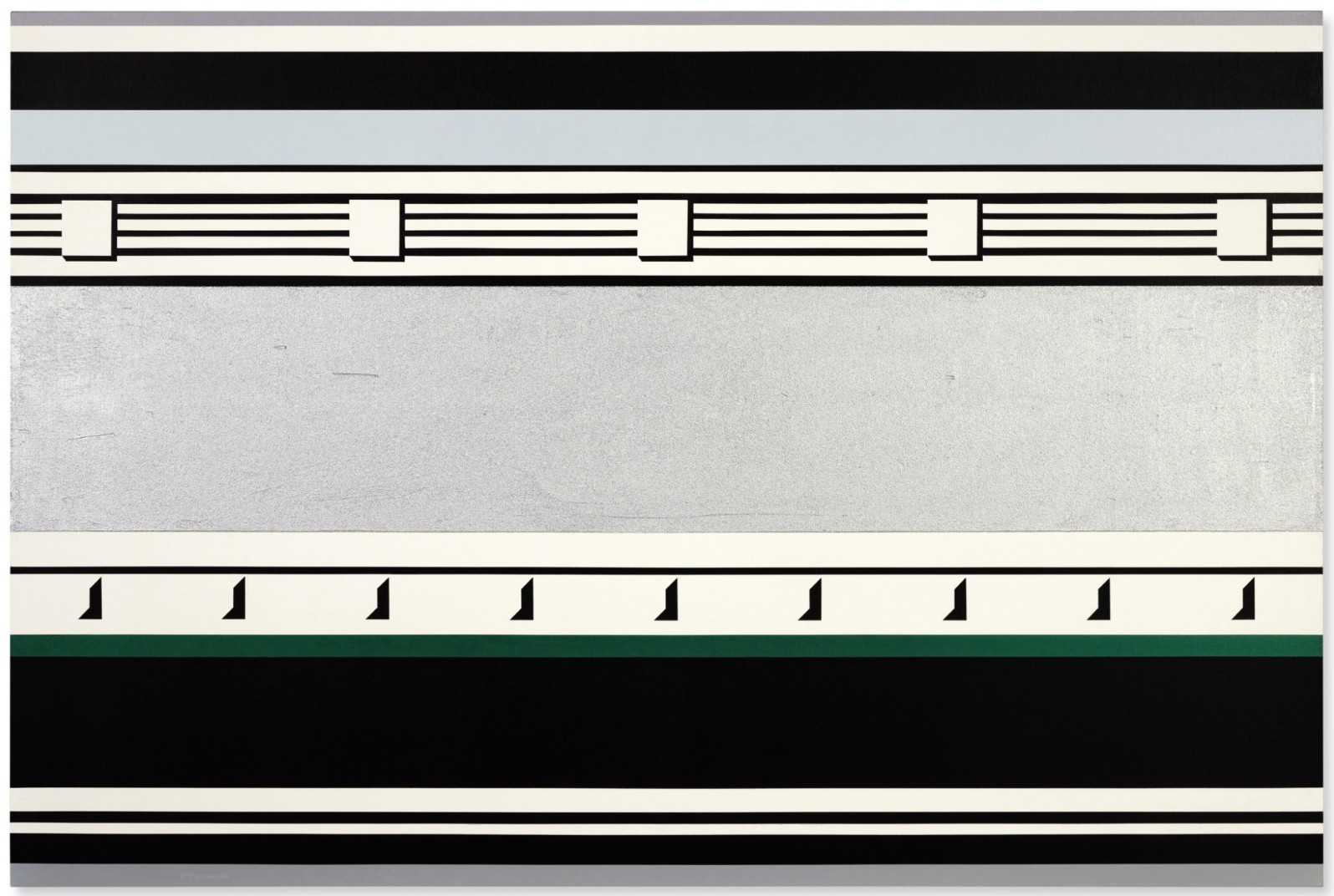
ROY LICHTENSTEIN (1923 – 1997)
Entablature, 1974
Acrylic, sand and graphite on canvas
60×90 inches (152.4 x 228.6 cm)
Signed and dated ’74 (on the reverse)
#17. Peanut Butter Cup, 1962
Sotheby’s New-York: 4 March 2025
Estimated: GBP 1,000,000 – 1,500,000
GBP 1,019,000 / USD 1,304,320
Peanut Butter Cup | Modern & Contemporary Evening Auction | 2025 | Sotheby’s
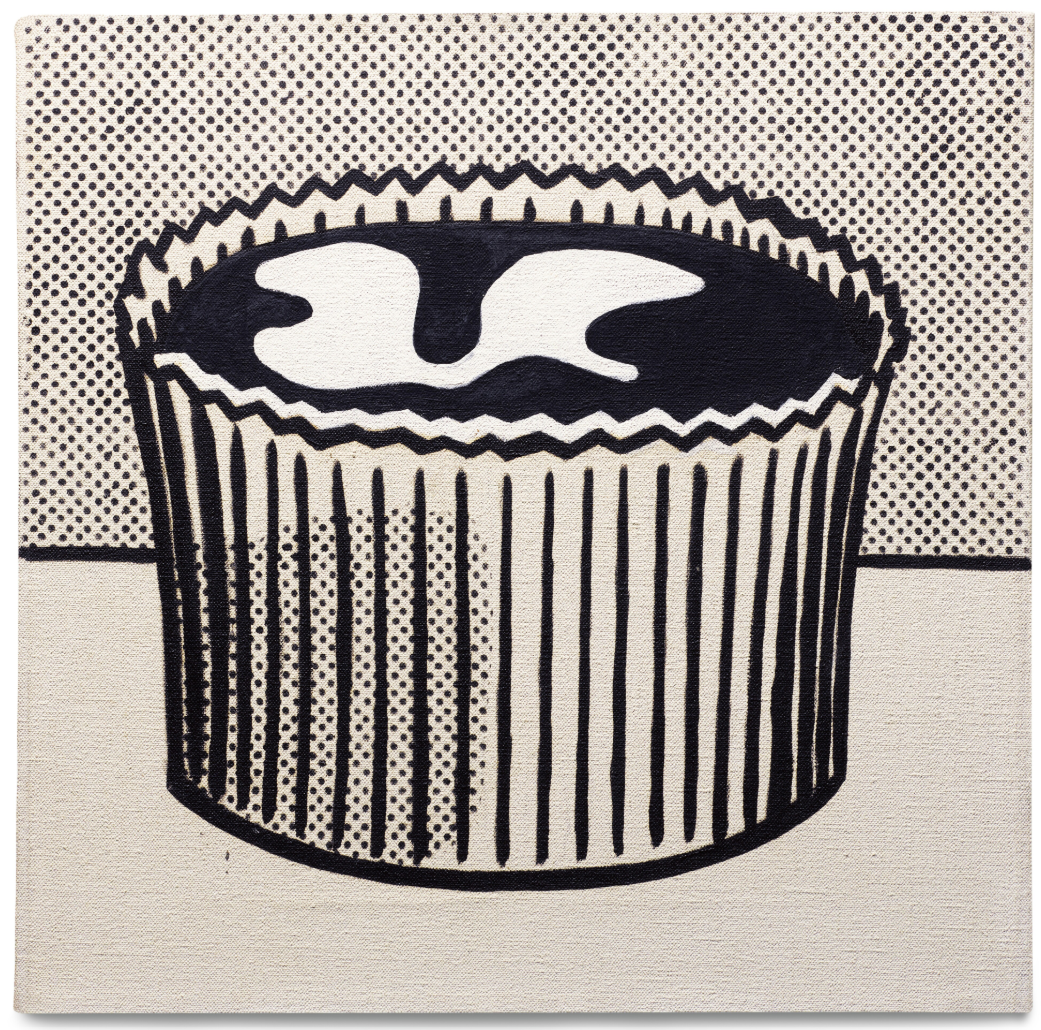
ROY LICHTENSTEIN (1923 – 1997)
Peanut Butter Cup, 1962
Oil on canvas
14×14 inches (35.6 x 35.6 cm)
Titled (on the overlap)
Signed and dated ’62 (on the reverse)
#18. Still Life with Two Grapefruits, 1994
A Legacy Reimagined: Works from the Collection of Dorothy and Roy Lichtenstein
Sotheby’s New-York: 19 November 2025
Estimated: USD 800,000 – 1,200,000
USD 1,270,000
Still Life with Two Grapefruits | Contemporary Day Auction | 2025 | Sotheby’s
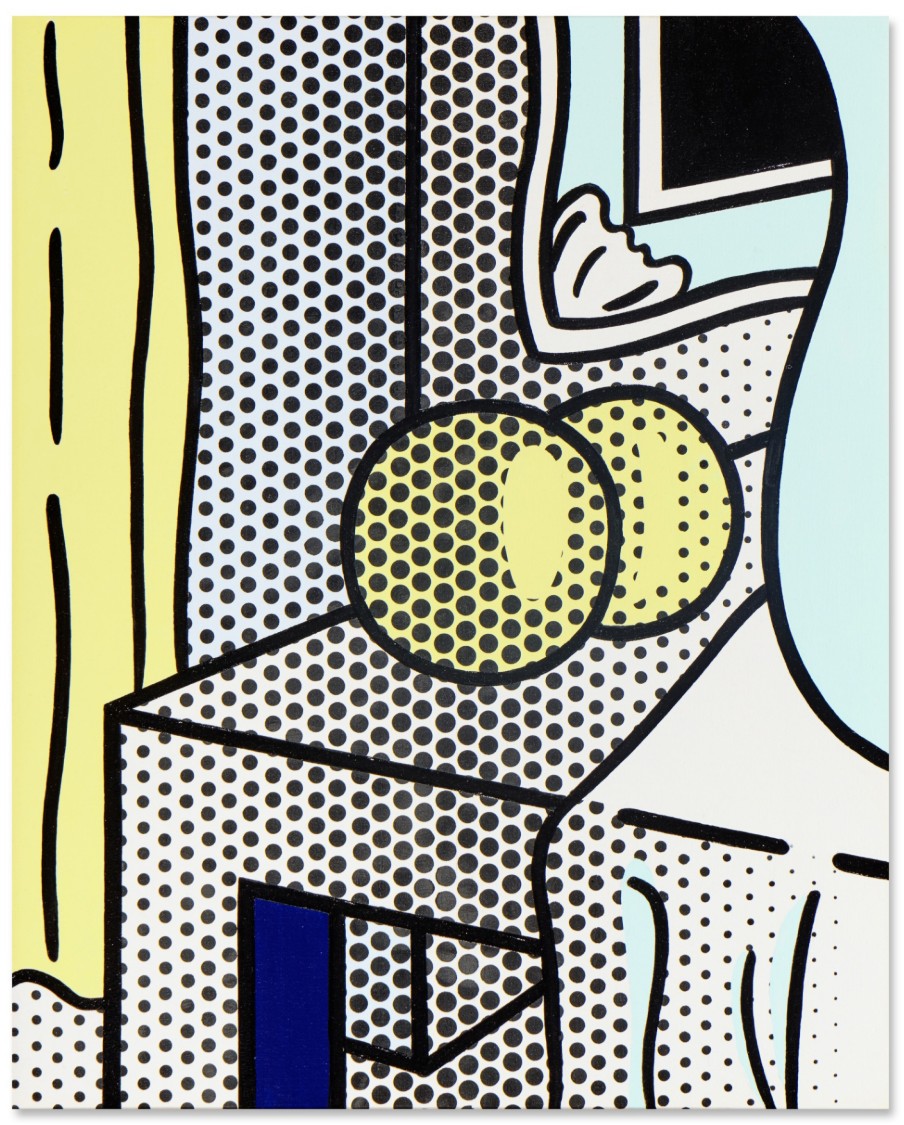
ROY LICHTENSTEIN (1923 – 1997)
Still Life with Two Grapefruits, 1994
Acrylic, oil and graphite on canvas
30 1/8 x 24 1/8 inches (76.5 x 61.2 cm)
Signed and dated ’94 (on the reverse)
#19. Entablature, 1974
A Legacy Reimagined: Works from the Collection of Dorothy and Roy Lichtenstein
Sotheby’s New-York: 19 November 2025
Estimated: USD 800,000 – 1,200,000
USD 1,270,000
Entablature | Contemporary Day Auction | 2025 | Sotheby’s
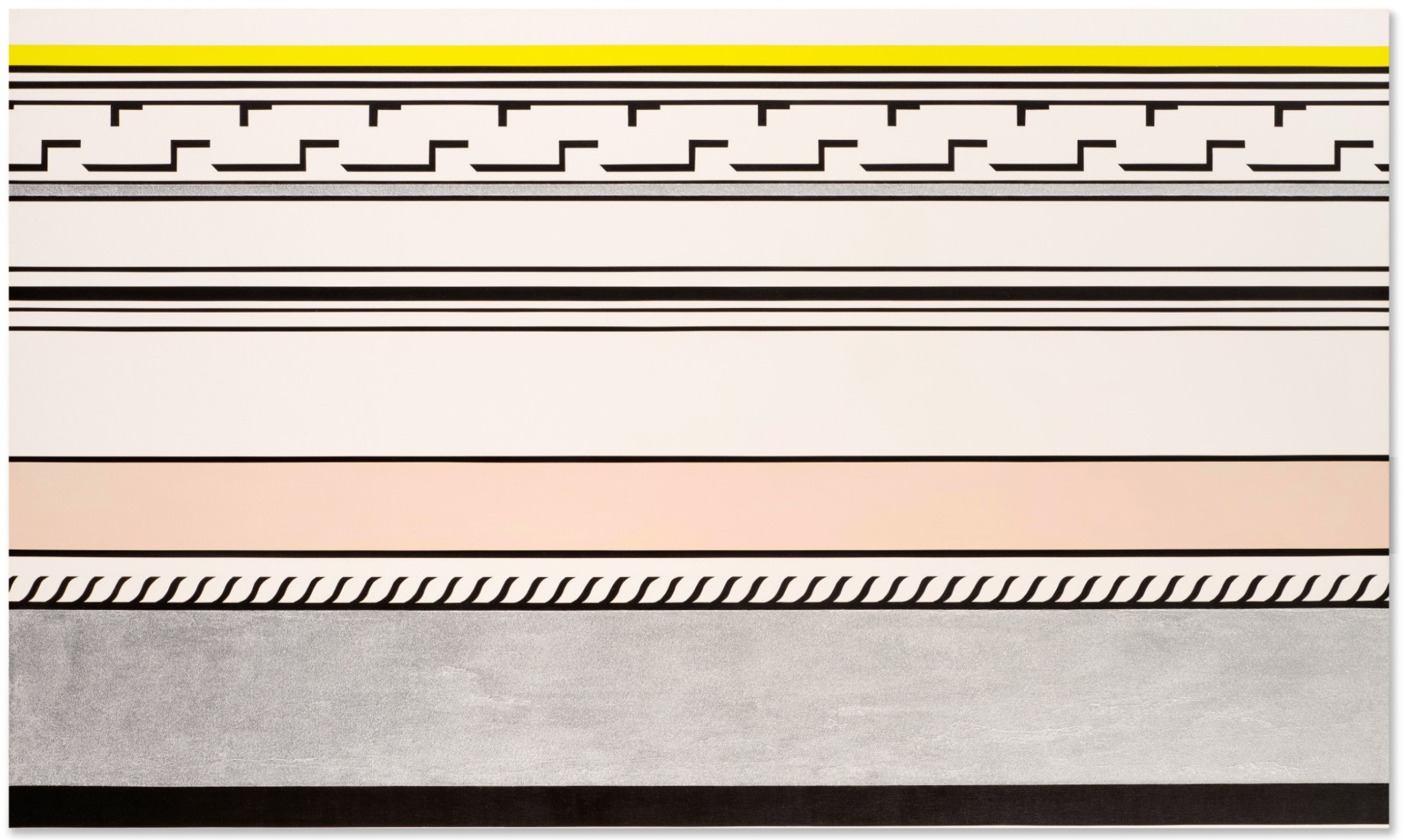
ROY LICHTENSTEIN (1923 – 1997)
Entablature, 1974
Acrylic, sand and graphite on canvas
60 x 100 1/8 inches (152.4 x 254.3 cm)
Signed and dated ‘74 (on the reverse)
#20. Entablature, 1975
Works from the Collection of Dorothy and Roy Lichtenstein
Sotheby’s New-York: 16 May 2025
Estimated: USD 500,000 – 700,000
USD 1,079,500
Entablature | Contemporary Day Auction | 2025 | Sotheby’s
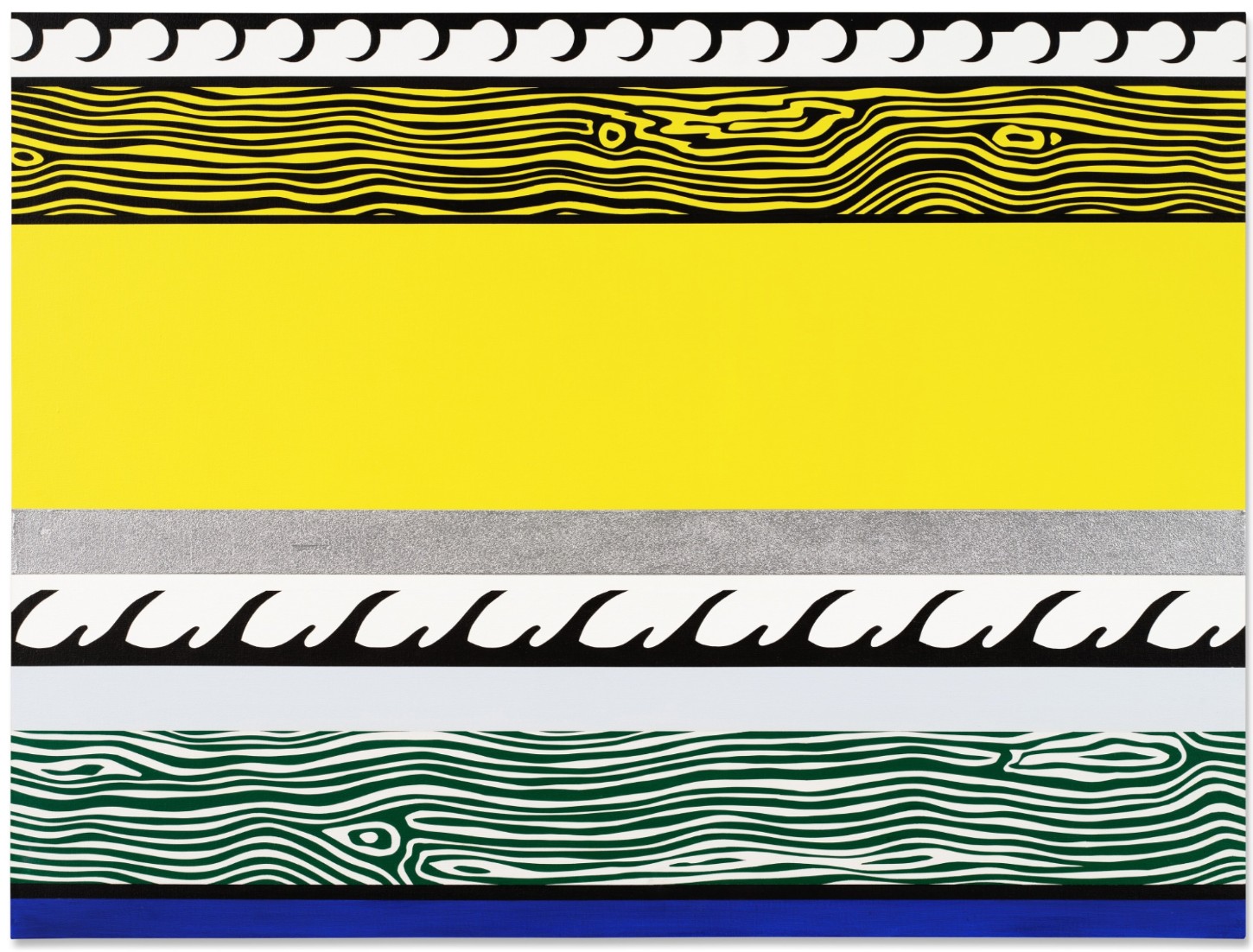
ROY LICHTENSTEIN (1923 – 1997)
Entablature, 1975
Acrylic, sand and graphite on canvas
36 x 48 1/4 inches (96.5 x 122.6 cm)
Signed and dated ’75 (on the reverse)
USD 1 million
#21. Haystacks, 1969
Christie’s New-York: 20 November 2025
Estimated: USD 500,000 – 700,000
USD 787,400
ROY LICHTENSTEIN (1923-1997), Haystacks | Christie’s
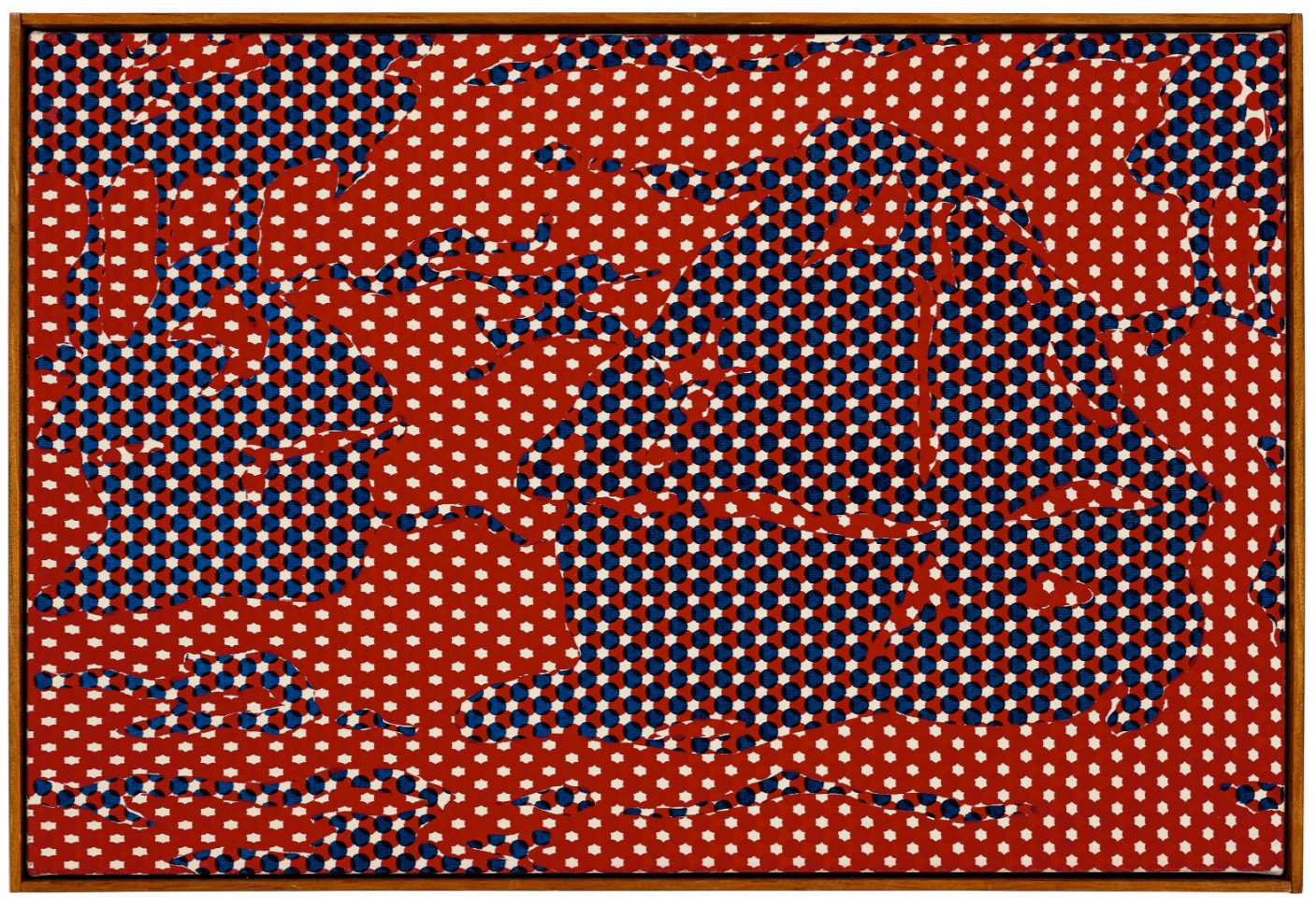
ROY LICHTENSTEIN (1923-1997)
Haystacks, 1969
Oil and acrylic on canvas
16×24 inches (40.6 x 61 cm)
Signed and dated ‘rf Lichtenstein ’69’ (on the reverse)
#22. Untitled, 1960
Works from the Collection of Dorothy and Roy Lichtenstein
Sotheby’s New-York: 16 May 2025
Estimated: USD 200,000 – 300,000
USD 698,500
Untitled | Contemporary Day Auction | 2025 | Sotheby’s
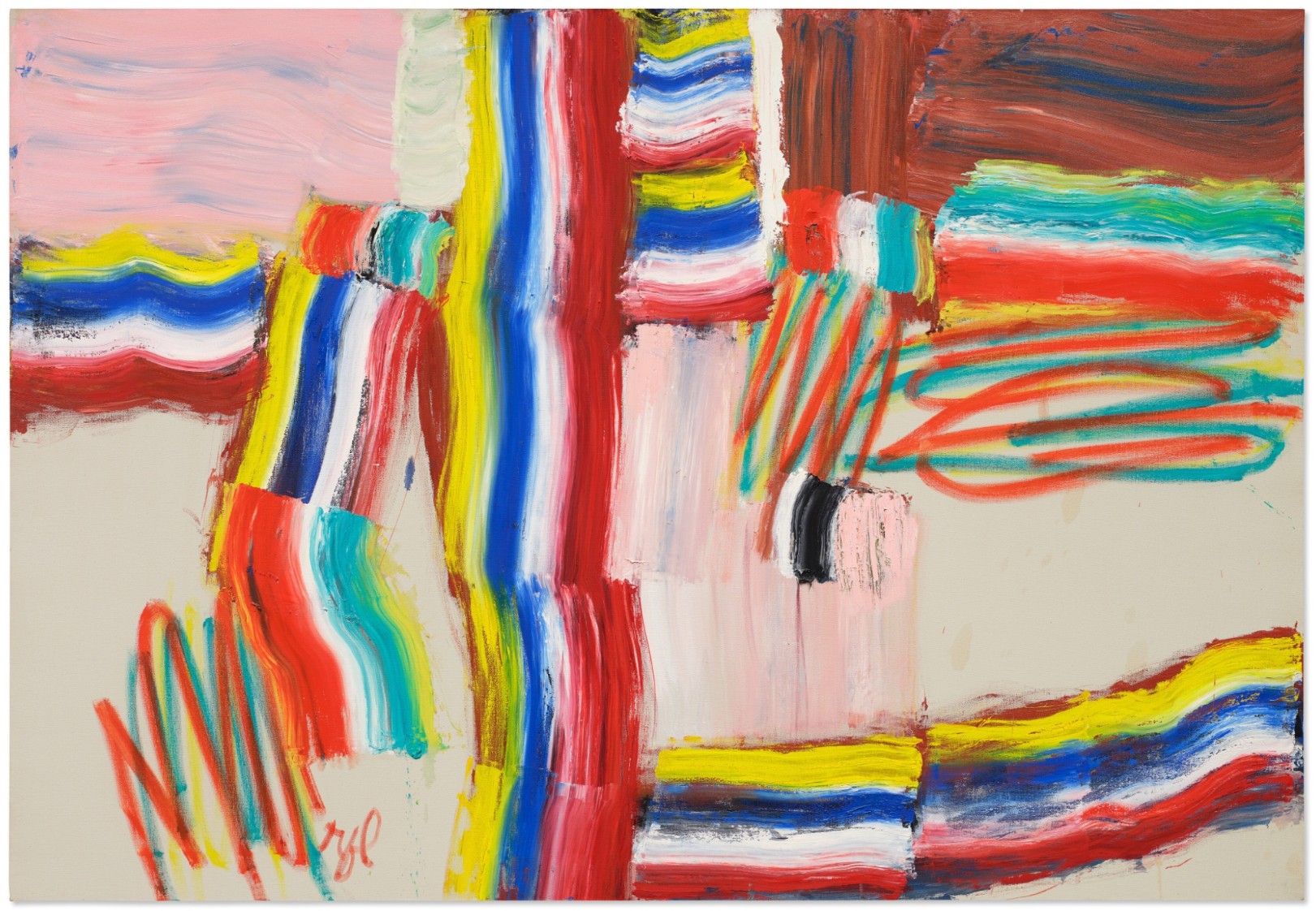
ROY LICHTENSTEIN (1923 – 1997)
Untitled, 1960
Oil and coffee on canvas
48 x 70 1/4 inches (121.9 x 178.4 cm)
Signed with the artist’s initials (lower left)
Dated 1960 (on the reverse)
#23. Untitled Reflection, 1989
Reflections on Pop: Works from the Collection of Dorothy and Roy Lichtenstein
Sotheby’s New-York: 26 September 2025
Estimated: USD 300,000 – 400,000
USD 609,600
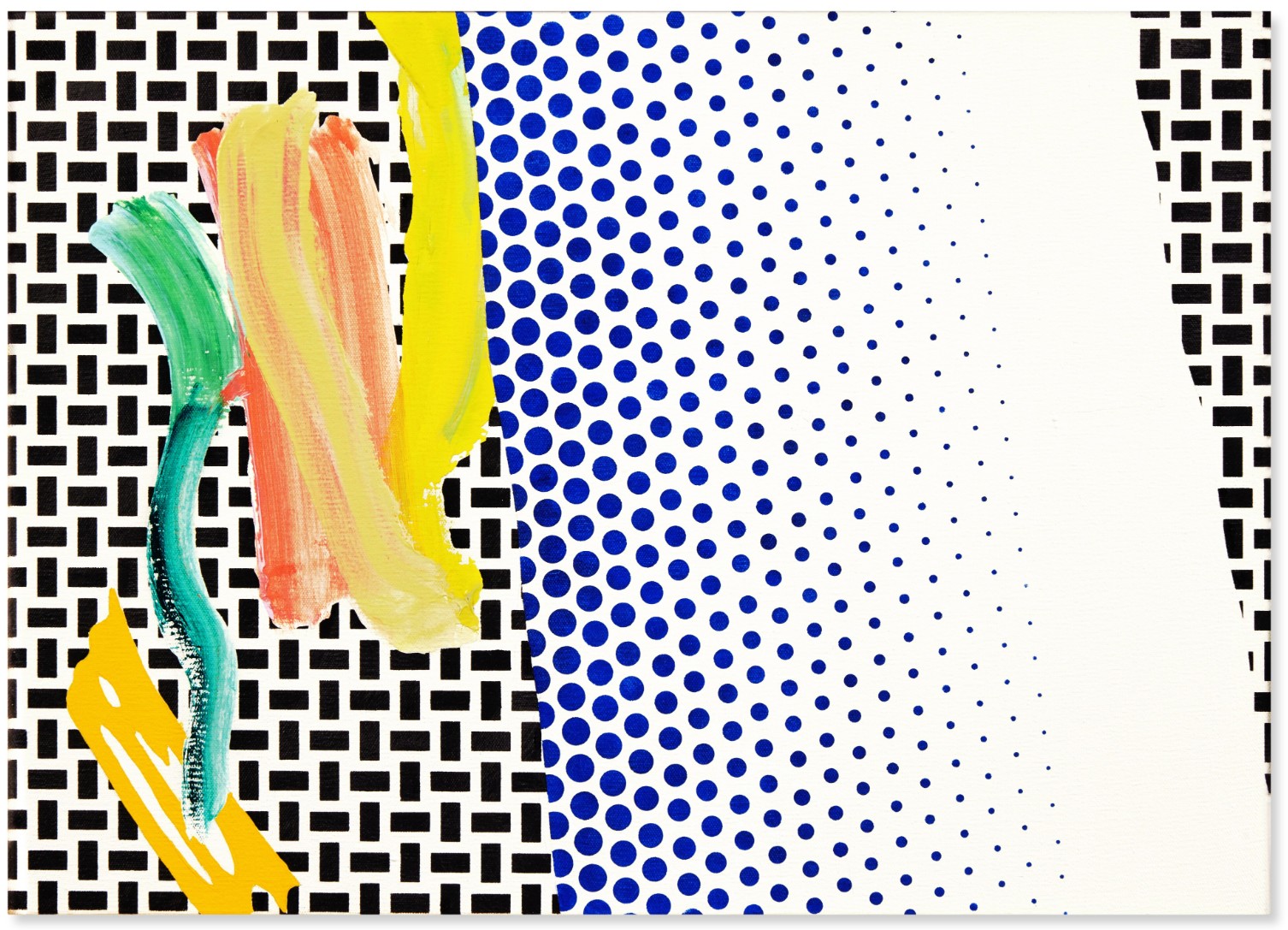
ROY LICHTENSTEIN (1923 – 1997)
Untitled Reflection, 1989
Acrylic, oil and graphite on canvas
17 1/8 x 24 1/8 inches (43.5 x 61.2 cm)
Signed and dated ’89 (on the reverse)
#24. Untitled Reflection, 1989
Works from the Collection of Dorothy and Roy Lichtenstein
Sotheby’s London: 25 June 2025
Estimated: GBP 120,000 – 180,000
GBP 444,400 / USD 599,940
Untitled Reflection | Contemporary Day Auction | 2025 | Sotheby’s
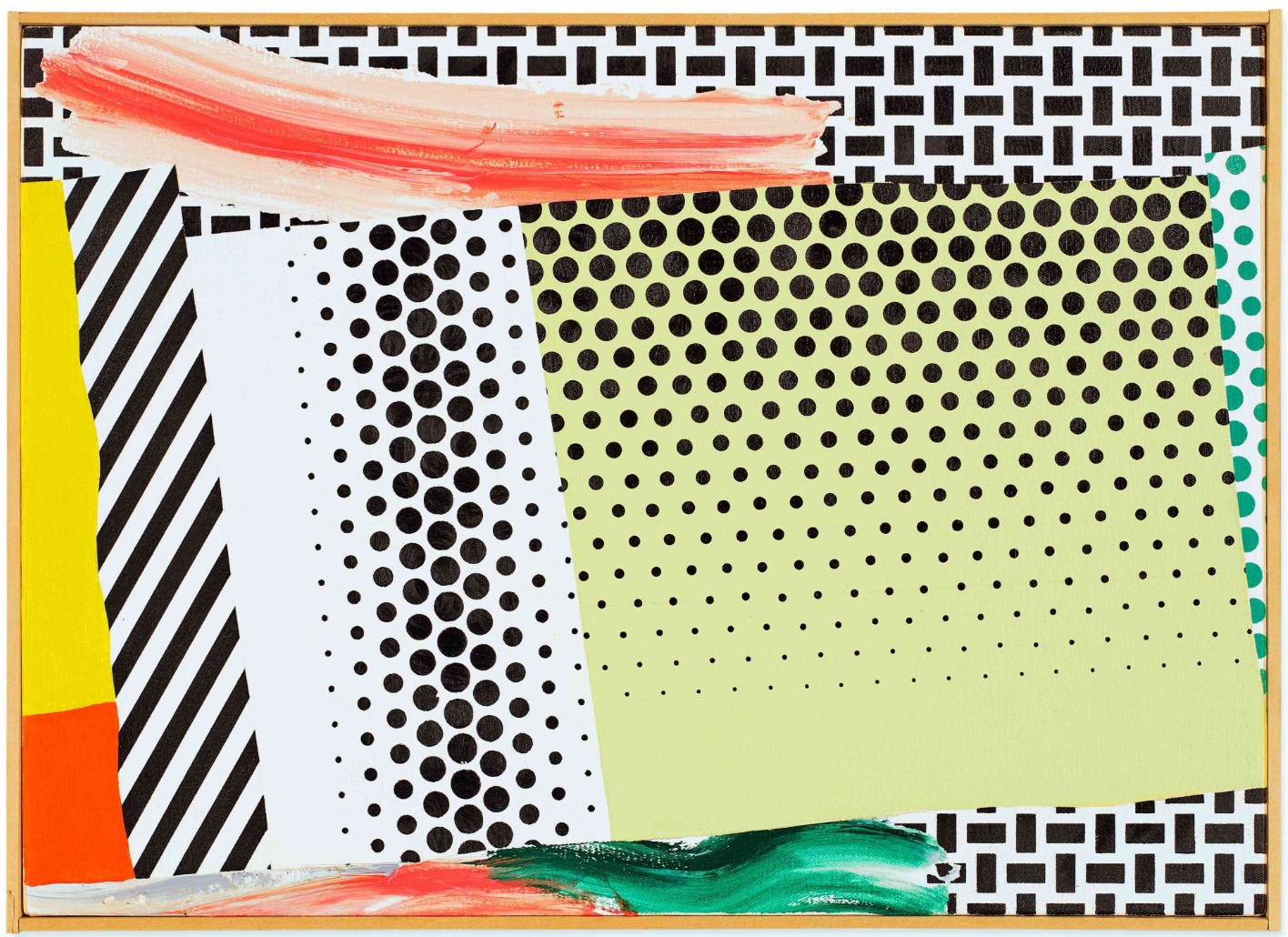
ROY LICHTENSTEIN (1923 – 1997)
Untitled Reflection, 1989
Acrylic, oil and graphite on canvas
17 1/8 x 24 inches (43.5 x 61 cm)
Signed and dated ‘89 (on the reverse)
#25. Brushstroke Abstraction II, 1996
A Legacy Reimagined: Works from the Collection of Dorothy and Roy Lichtenstein
Sotheby’s New-York: 18 November 2025
Estimated: USD 180,000 – 250,000
USD 533,400
Brushstroke Abstraction II | Contemporary Day Auction | 2025 | Sotheby’s
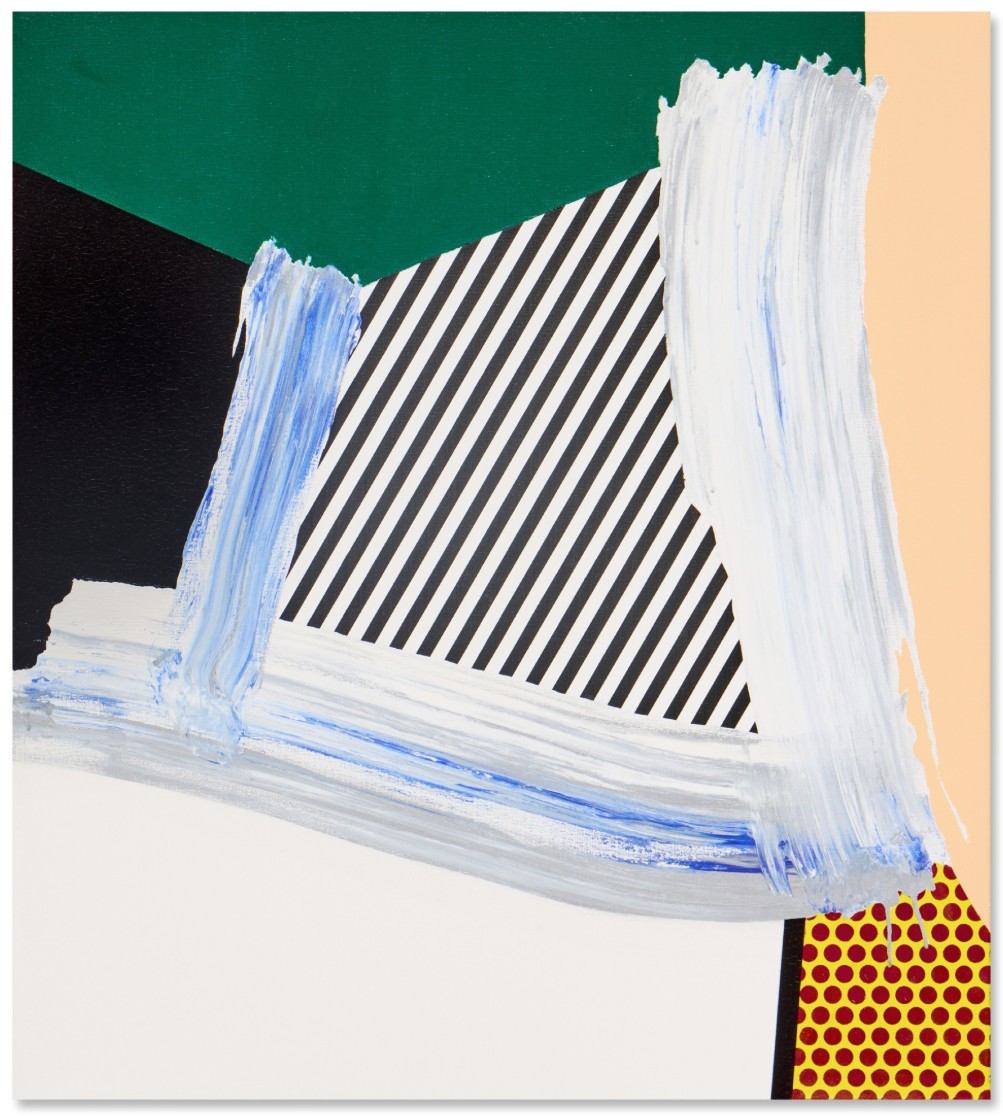
ROY LICHTENSTEIN (1923 – 1997)
Brushstroke Abstraction II, 1996
Acrylic, oil and graphite on canvas
30 1/8 x 27 1/8 inches (76.5 x 68.9 cm)
Signed and dated ’96 (on the reverse)
#26. Brushstroke with Still Life II, 1996
Property from the Estate of Joan and Kenneth Goldglit
Christie’s New-York: 20 November 2025
Estimated: USD 300,000 – 500,000
USD 444,500
ROY LICHTENSTEIN (1923-1997), Brushstroke with Still Life II | Christie’s
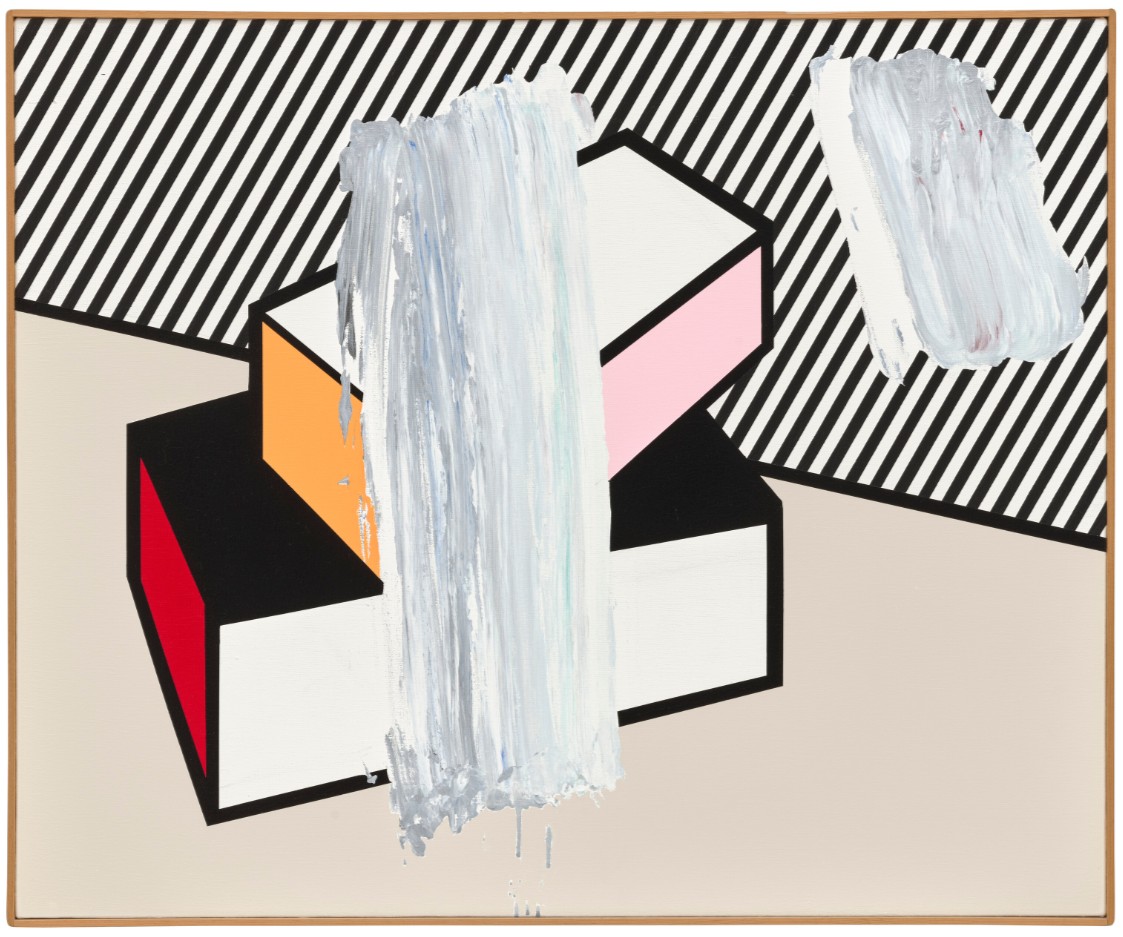
ROY LICHTENSTEIN (1923-1997)
Brushstroke with Still Life II, 1996
Acrylic, oil and graphite on canvas
28×34 inches (71.1 x 86.4 cm)
Signed and dated ‘rf Lichtenstein ’96’ (on the reverse)
#27. Plus and Minus VI, 1988
A Legacy Reimagined: Works from the Collection of Dorothy and Roy Lichtenstein
Sotheby’s New-York: 18 November 2025
Estimated: USD 350,000 – 450,000
USD 406,400
Plus and Minus VI | Contemporary Day Auction | 2025 | Sotheby’s
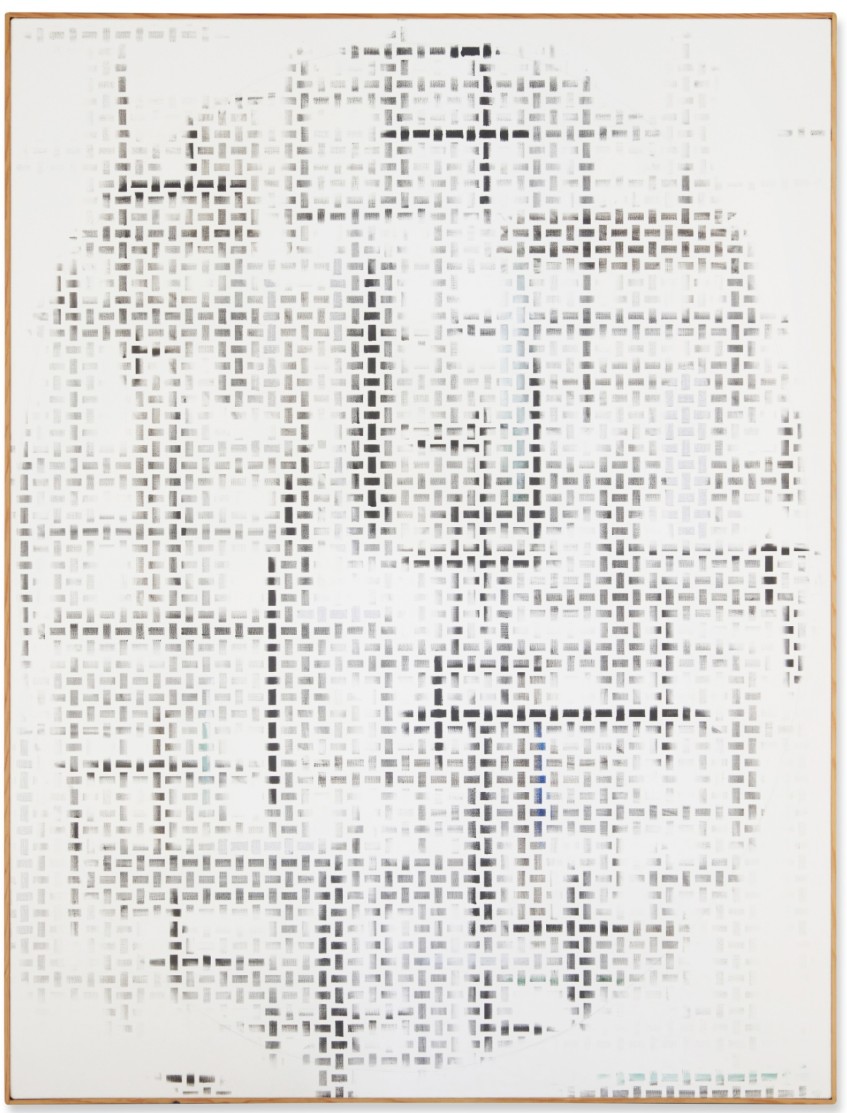
ROY LICHTENSTEIN (1923-1997)
Plus and Minus VI, 1988
Acrylic, oil and graphite on canvas
50×38 inches (127 x 96.5 cm)
Signed and dated ‘88 (on the reverse)
#28. Figure in Garden, circa 1949
Property from a Private Collection, Indianapolis
Sotheby’s New-York: 18 November 2025
Estimated: USD 60,000 – 80,000
USD 101,600
Figure in Garden | Contemporary Day Auction | 2025 | Sotheby’s
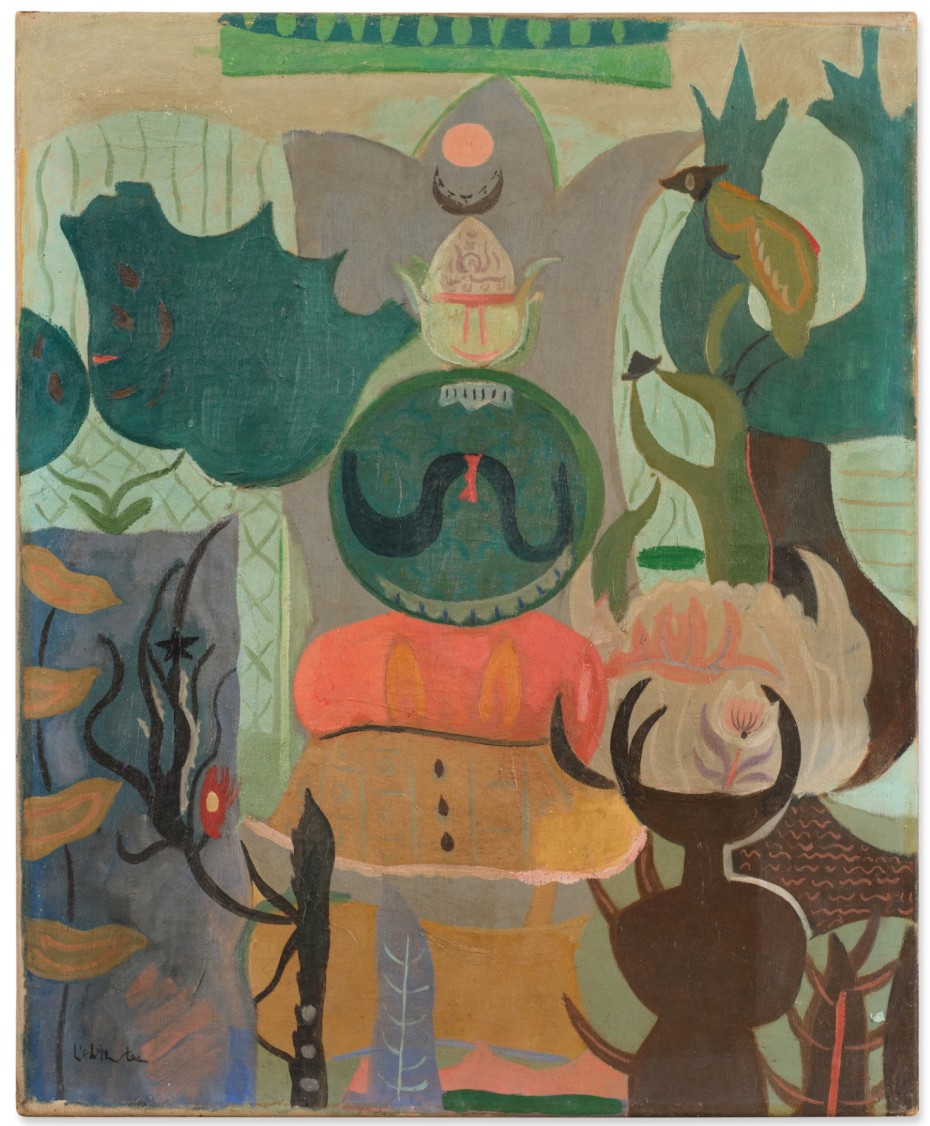
ROY LICHTENSTEIN (1923-1997)
Figure in Garden, circa 1949
Oil on canvas
24 1/4 x 19 3/4 inches (61.6 x 50.2 cm)
Signed (lower left)
#29. Alice in Wonderland, circa 1948
Sotheby’s New-York: 16 May 2025
Estimated: USD 60,000 – 70,000
USD 114,300
Alice in Wonderland | Contemporary Day Auction | 2025 | Sotheby’s
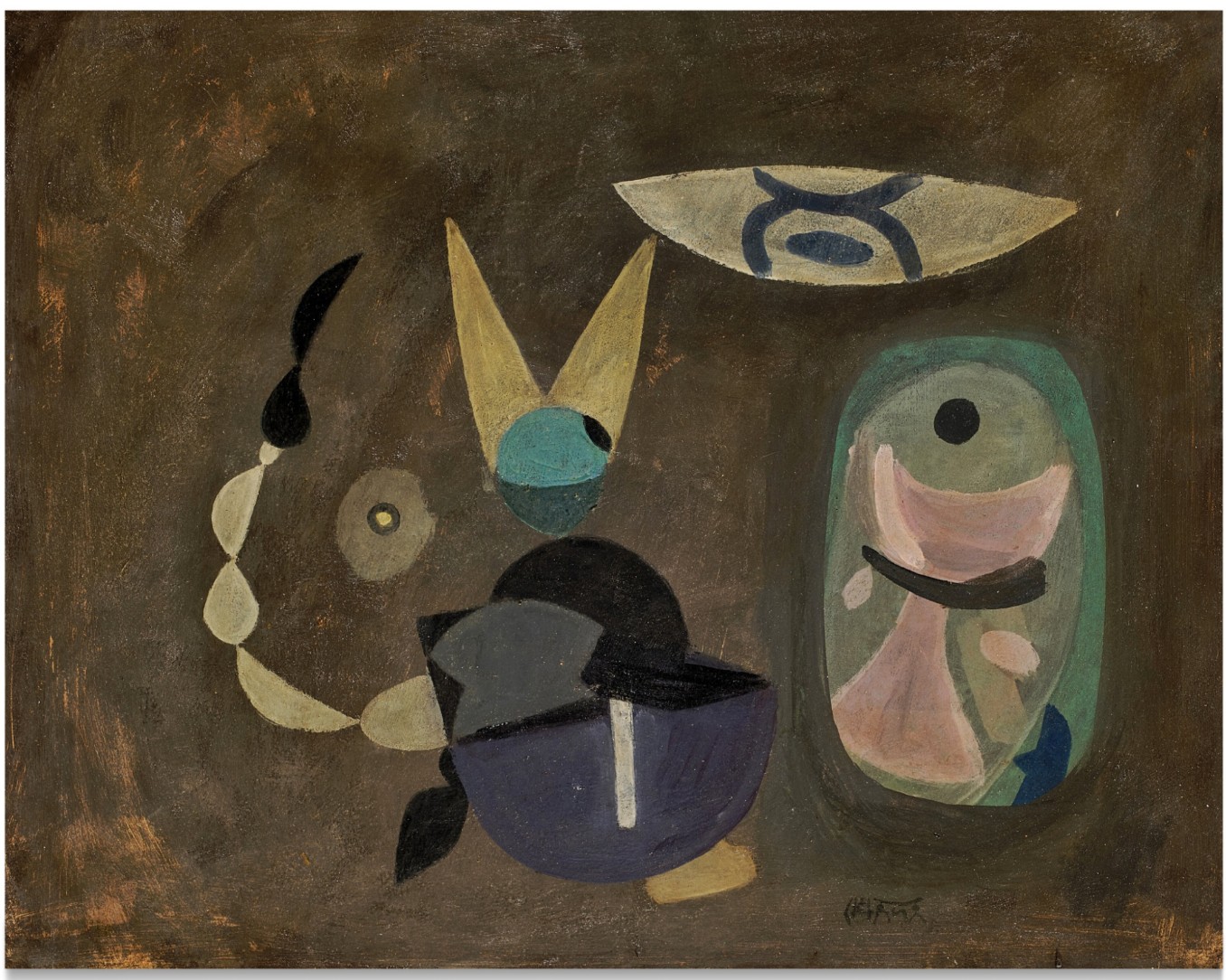
ROY LICHTENSTEIN (1923 – 1997)
Alice in Wonderland, circa 1948
Oil on board
16×20 inches (40.6 x 50.8 cm)
Signed (lower right)
Signed and titled (on the reverse)
#30. Two Figures with Hats, 1947
Bonhams New-York: 15 May 2025
Estimated: USD 20,000 – 30,000
USD 44,800
Bonhams : ROY LICHTENSTEIN (1923-1997) Two Figures with Hats
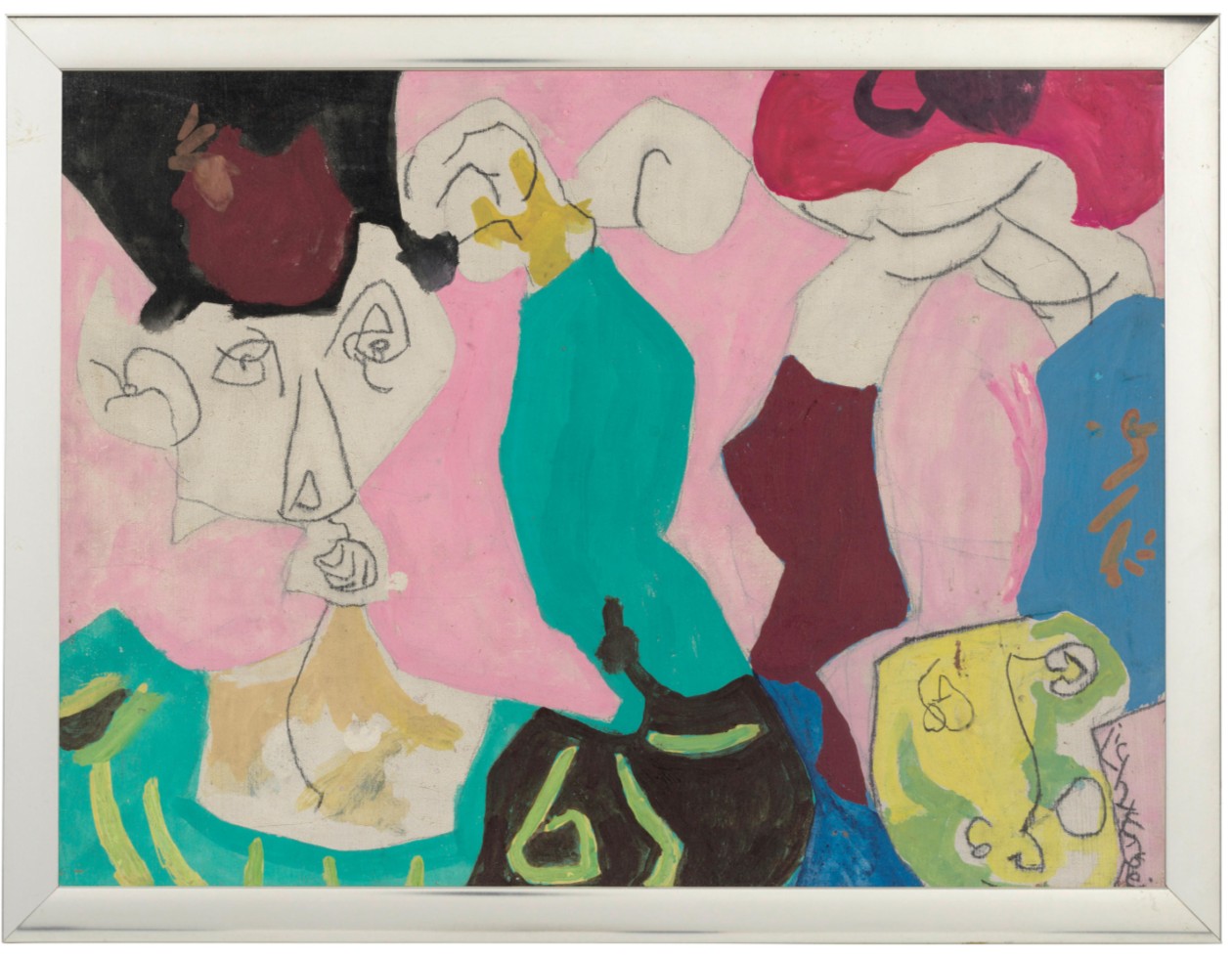
Acrylic and graphite on gessoed board
12 x 15 7/8 inches (30.4 x 40.4 cm)
Signed ‘Lichtenstein’ (lower right)
Signed and dated ‘1947 ROY LICHTENSTEIN’ (on the reverse)
2. Sculptures
#1. Woman: Sunlight, Moonlight, 1996
Works from the Collection of Dorothy and Roy Lichtenstein
Sotheby’s New-York: 15 May 2025
Estimated: USD 4,000,000 – 6,000,000
USD 4,930,000
Woman: Sunlight, Moonlight | The Now and Contemporary Evening Auction | 2025 | Sotheby’s
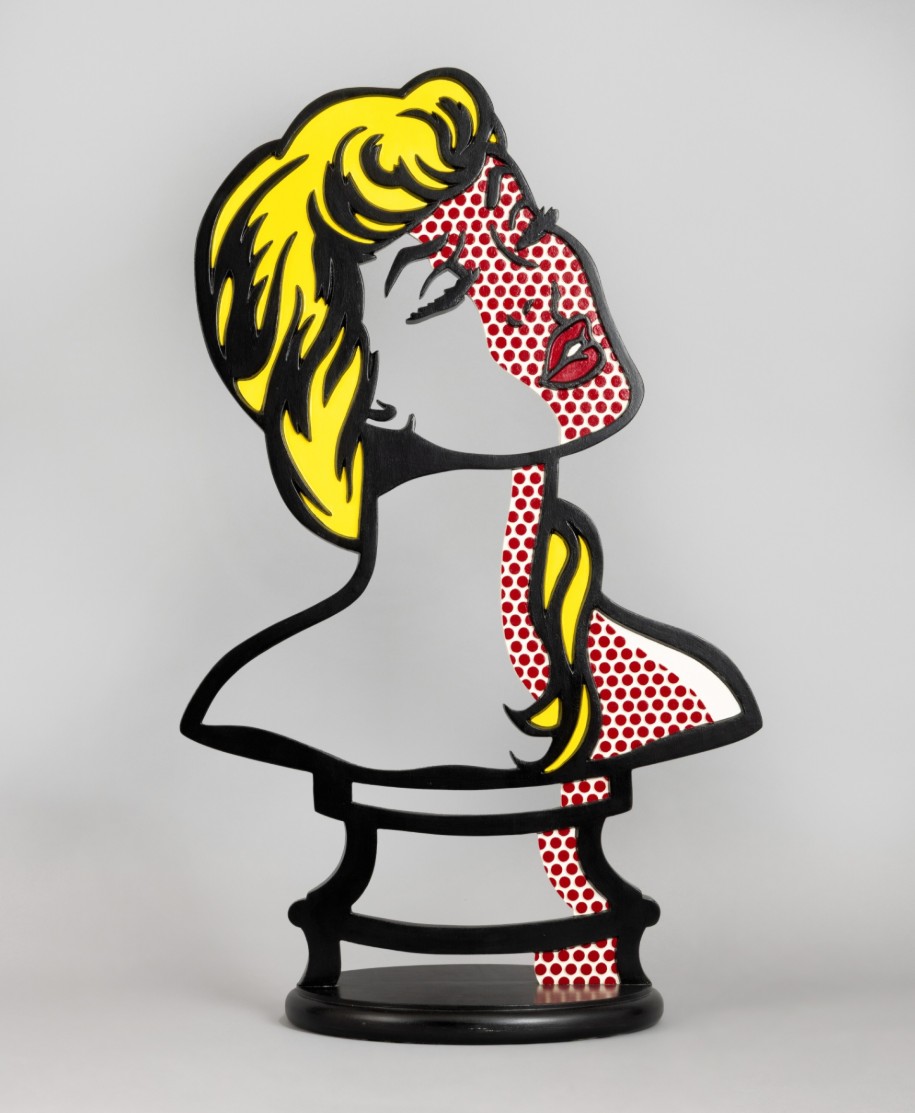
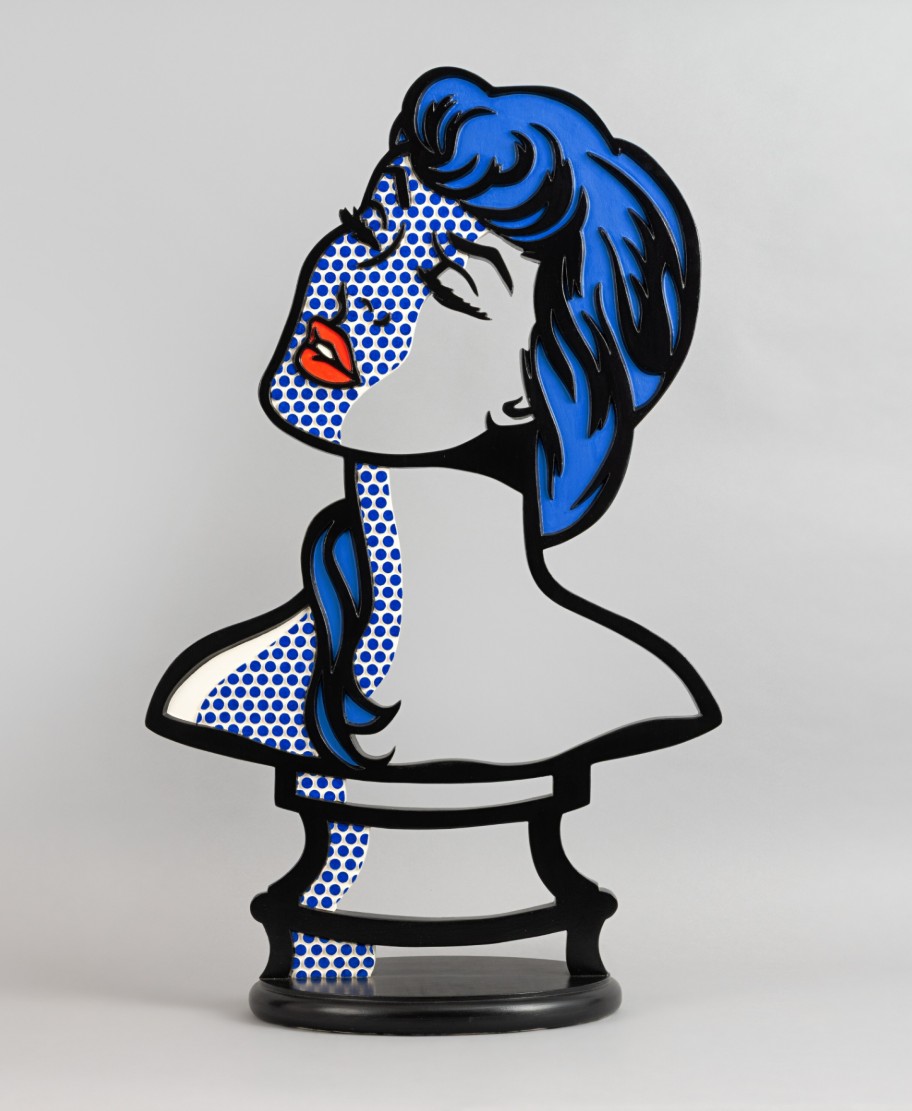
ROY LICHTENSTEIN (1923 – 1997)
Woman: Sunlight, Moonlight, 1996
Acrylic on wood
42 3/4 x 26 x 13 5/8 inches (108.6 x 66 x 35.6 cm)
#2. Bonsai Tree, 1993
Works from the Collection of Dorothy and Roy Lichtenstein
Sotheby’s New-York: 15 May 2025
Estimated: USD 1,500,000 – 2,000,000
USD 4,198,000
Bonsai Tree | The Now and Contemporary Evening Auction | 2025 | Sotheby’s
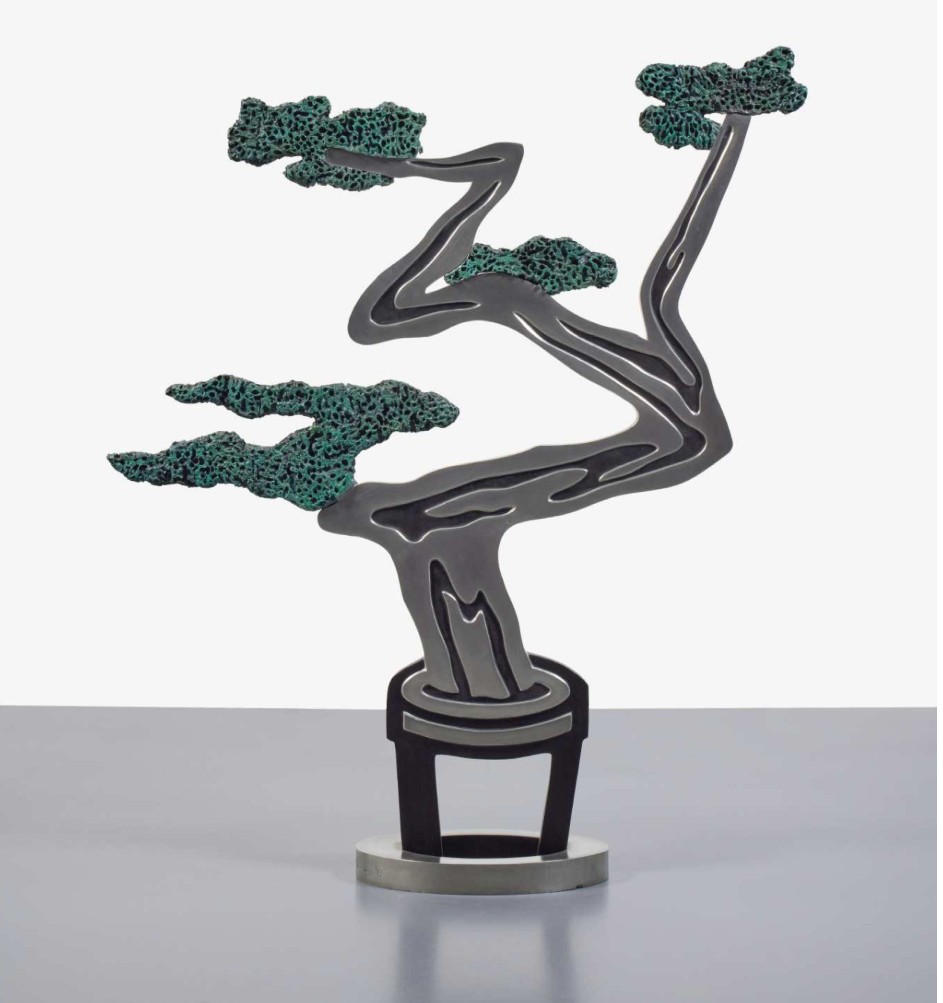
ROY LICHTENSTEIN (1923 – 1997)
Bonsai Tree, 1993
Painted pewter, patinated bronze
50 3/4 x 38 1/2 x 10 1/2 inches (128.9 x 97.8 x 26.7 cm)
Incised with the artist’s signature, numbered 6/6 and dated ’93 (lower edge)
This work is number 6 from an edition of 6 plus 1 artist’s proof
#3. Coup de Chapeau II, 1996
A Legacy Reimagined: Works from the Collection of Dorothy and Roy Lichtenstein
Sotheby’s New-York: 18 November 2025
Estimated: USD 1,500,000 – 2,000,000
USD 3,832,000
Coup de Chapeau II | The Now & Contemporary Evening Auction | 2025 | Sotheby’s
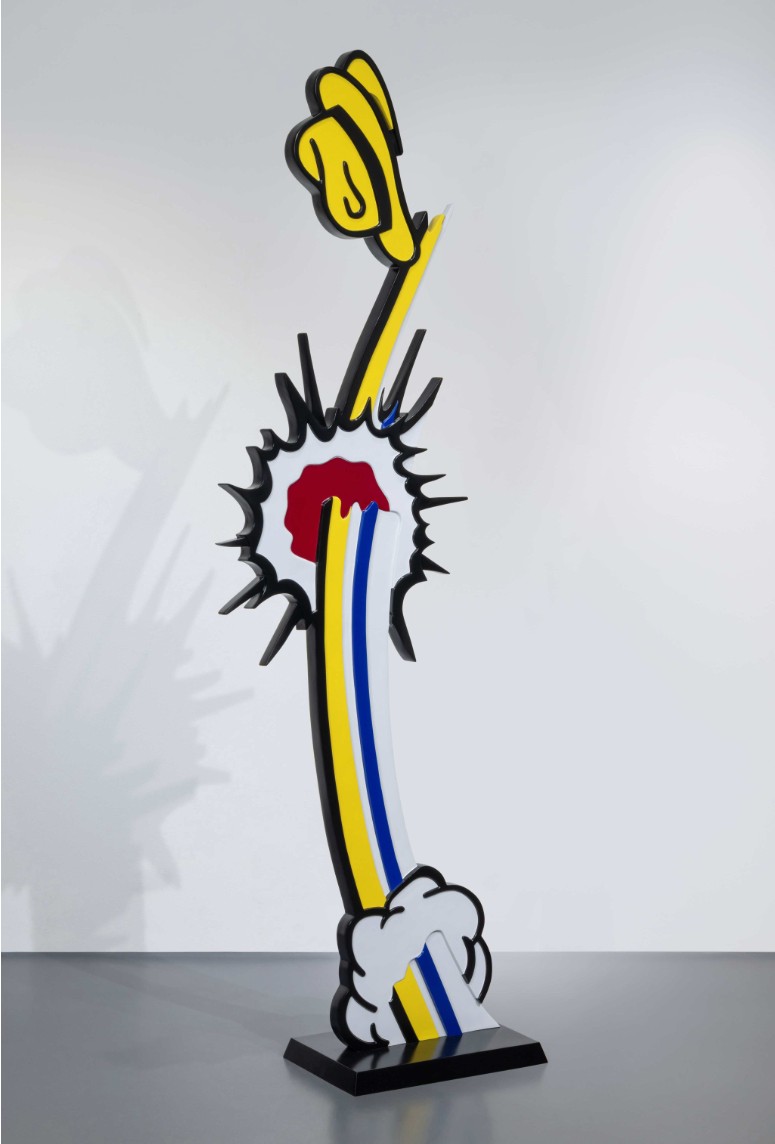
ROY LICHTENSTEIN (1923 – 1997)
Coup de Chapeau II, 1996
Painted bronze
89 x 32 x 13 1/8 inches (226.1 x 81.3 x 33.3 cm)
Incised with the artist’s signature, numbered 0/6 and dated ‘96 (lower edge)
This work is the artist’s cast from an edition of 6 plus 1 artist’s cast
#4. Brushstrokes, 1996-2001
A Legacy Reimagined: Works from the Collection of Dorothy and Roy Lichtenstein
Sotheby’s New-York: 18 November 2025
Estimated: USD 4,o00,000 – 6,000,000
USD 3,100,000
Brushstrokes | The Now & Contemporary Evening Auction | 2025 | Sotheby’s
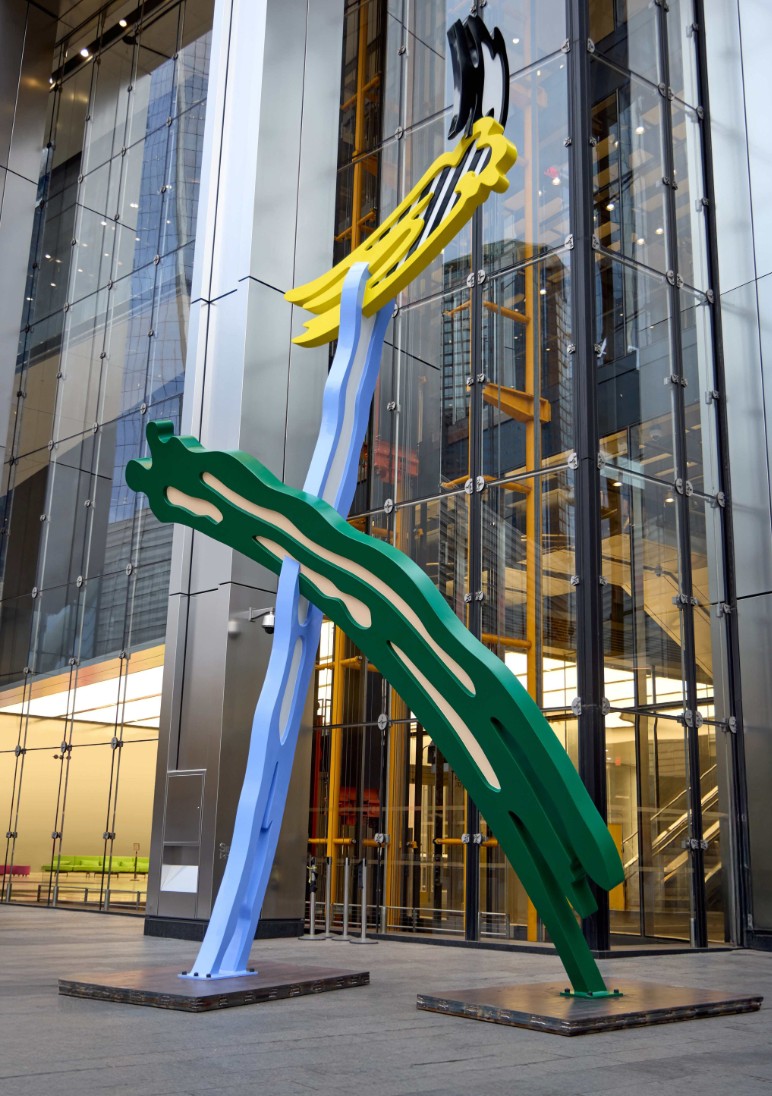
ROY LICHTENSTEIN (1923 – 1997)
Brushstrokes, 1996-2001
Painted aluminum
353 1/4 x 162 x 90 inches (897.3 x 411.5 x 228.6 cm)
Incised with the artist’s signature, dated ‘96 and numbered AP (lower edge)
Incised © Estate of Roy Lichtenstein and dated 2001 (lower edge)
Conceived in 1996 and cast in 2001, this work is the artist’s proof from an edition of 1 plus 1 artist’s proof
#5. Galatea, 1989-90
Reflections on Pop: Works from the Collection of Dorothy and Roy Lichtenstein
Sotheby’s New-York: 26 September 2025
Estimated: USD 800,000 – 1,200,000
USD 2,185,000
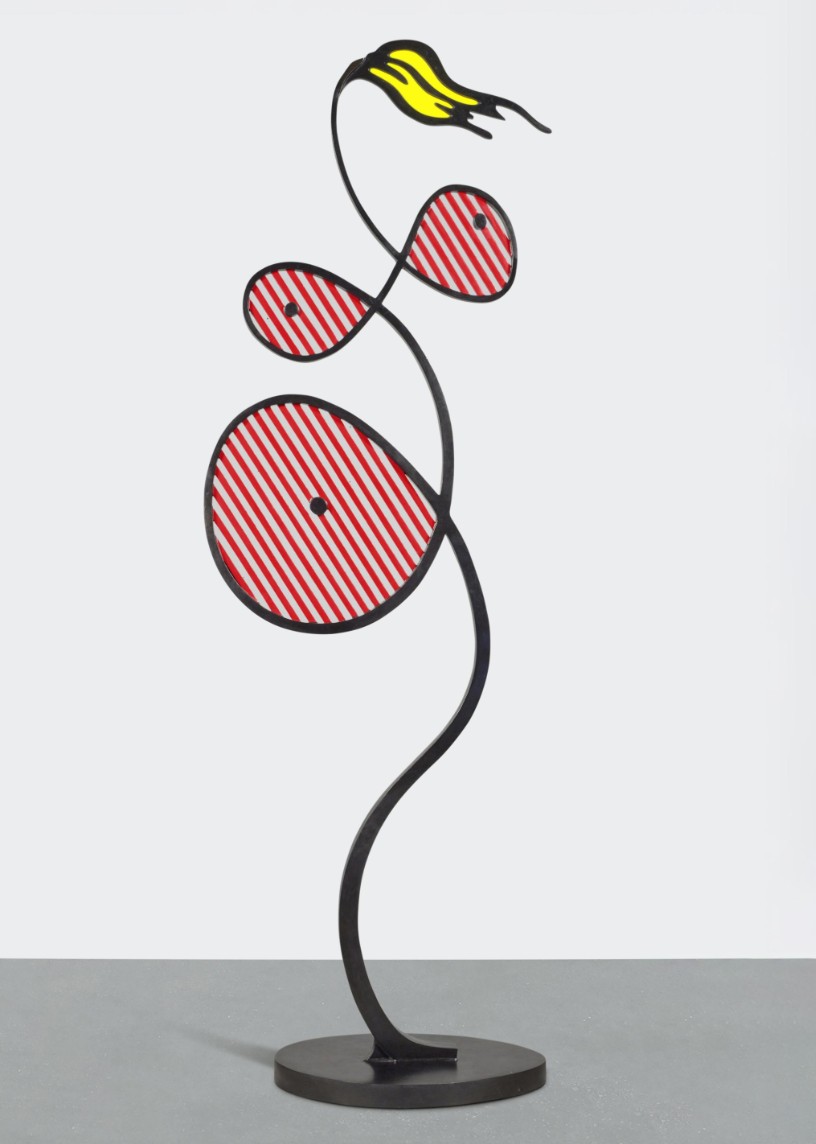
ROY LICHTENSTEIN (1923 – 1997)
Galatea, 1989-90
Painted and patinated bronze
90x31x19 inches (228.6 x 78.7 x 48.3 cm)
Inscribed with the artist’s signature, number 1/6 and date ’90 (on the base)
Conceived in 1989 and cast in 1990
This work is number 1 from an edition of 6 plus 1 artist’s proof
#6. Setting Sun and Sea, 1964
Works from the Collection of Dorothy and Roy Lichtenstein
Sotheby’s New-York: 16 May 2025
Estimated: USD 250,000 – 350,000
USD 1,758,000
Setting Sun and Sea | Contemporary Day Auction | 2025 | Sotheby’s
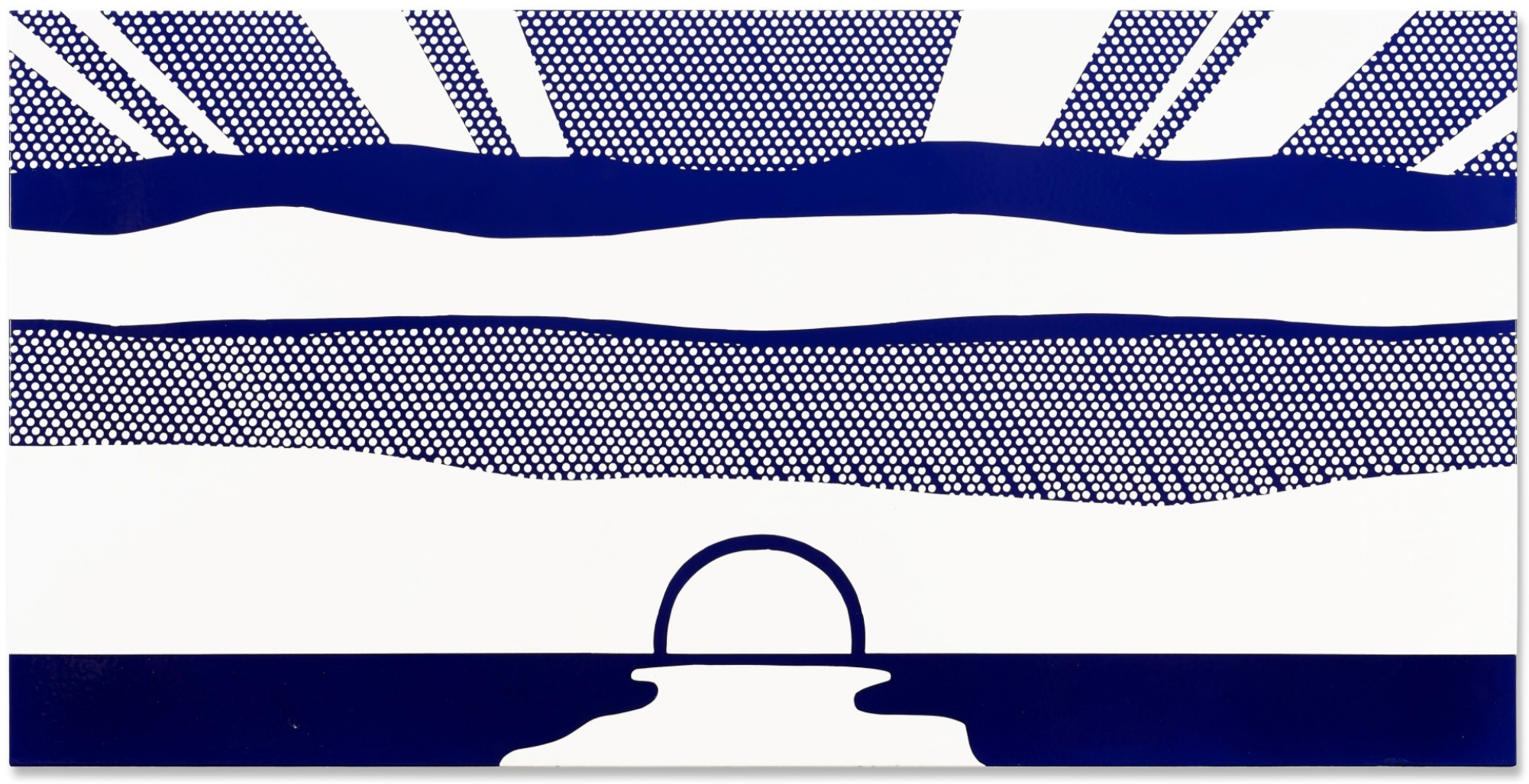
ROY LICHTENSTEIN (1923 – 1997)
Setting Sun and Sea, 1964
Porcelain enamel on steel
36×72 inches (91.4 x 182.9 cm)
Signed (on the reverse)
This work is number 4 from an edition of 5
#7. Woman Contemplating a Yellow Cup, 1995
Works from the Collection of Dorothy and Roy Lichtenstein
Sotheby’s New-York: 16 May 2025
Estimated: USD 1,000,000 – 1,500,000
USD 1,758,000
Woman Contemplating a Yellow Cup | Contemporary Day Auction | 2025 | Sotheby’s
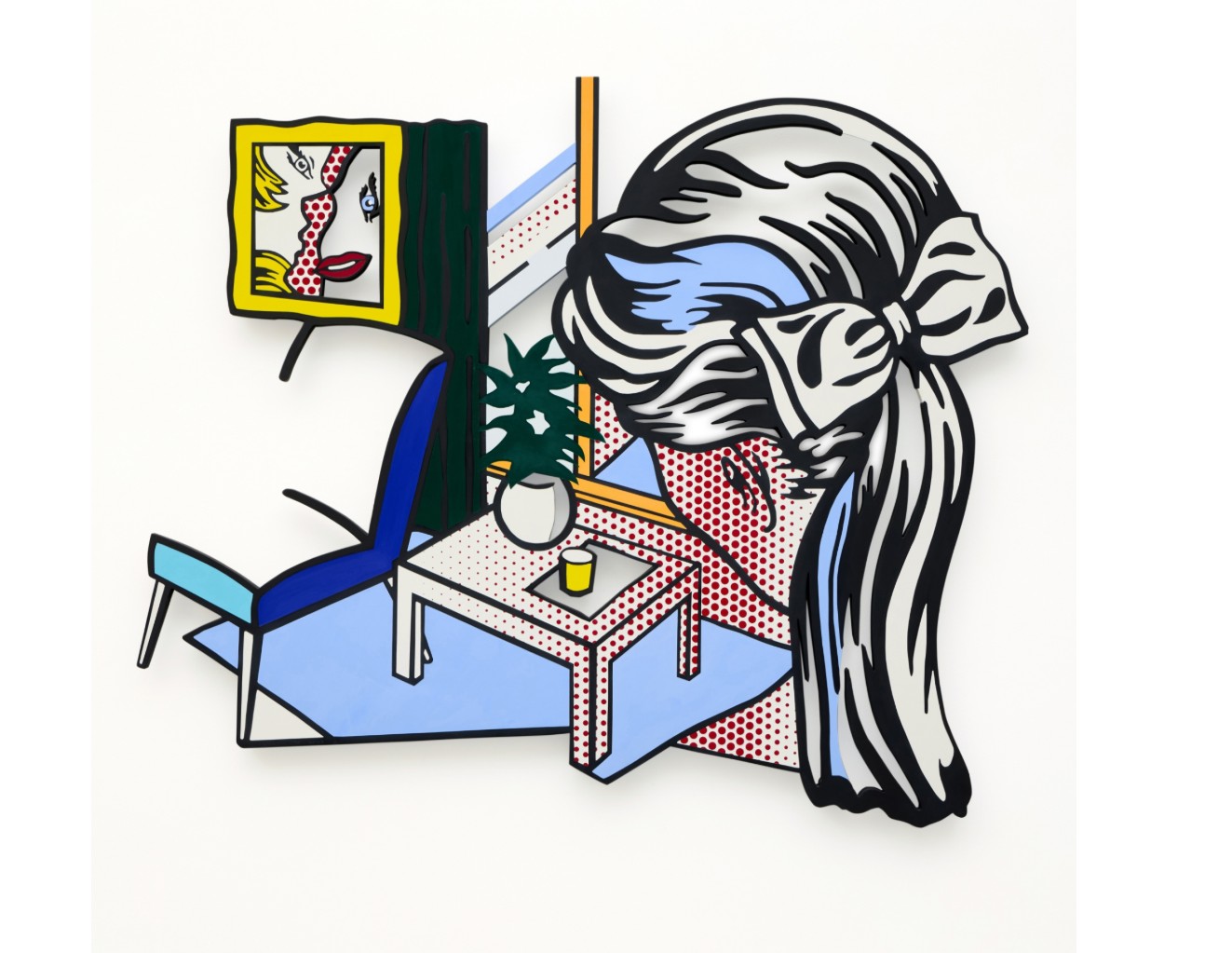
ROY LICHTENSTEIN (1923 – 1997)
Woman Contemplating a Yellow Cup, 1995
Acrylic and pigmented wax on aluminum
71 3/4 x 84 inches (182.2 x 213.4 cm)
Incised with the artist’s signature, date ’95 and number AP 1/2 (lower left)
This work is artist proof 1 of 2 from an edition of 6 plus 2 artist proofs
#8. Small House, 1996
A Legacy Reimagined: Works from the Collection of Dorothy and Roy Lichtenstein
Sotheby’s New-York: 19 November 2025
Estimated: USD 180,000 – 250,000
USD 1,206,500
Small House | Contemporary Day Auction | 2025 | Sotheby’s
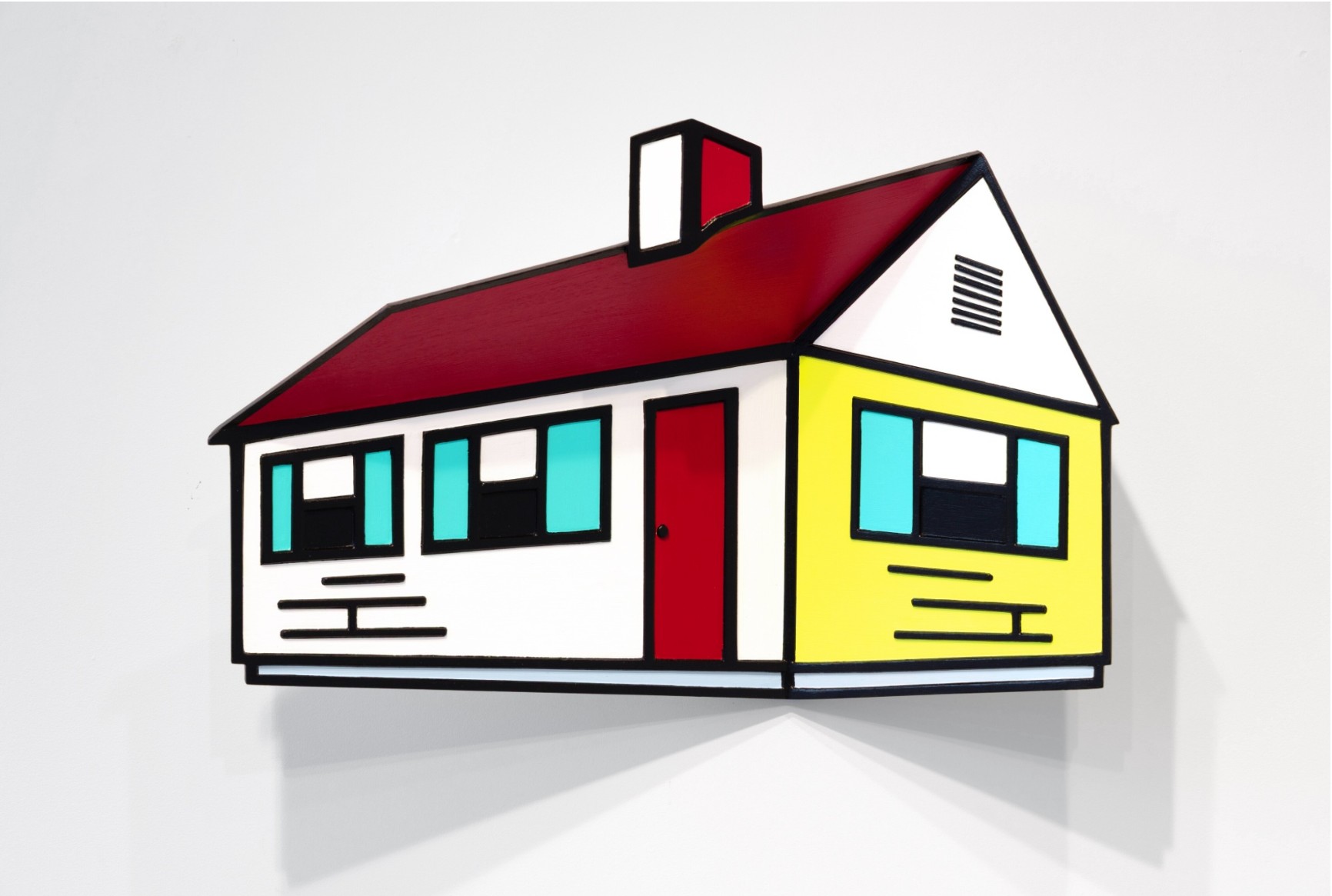
ROY LICHTENSTEIN (1923-1997)
Small House, 1996
Acrylic on wood
16 3/8 x 26 1/2 x 10 3/4 inches (41.6 x 67.3 x 27.3 cm)
Executed in 1996, this work is unique
#9. Landscape Mobile, 1990
A Legacy Reimagined: Works from the Collection of Dorothy and Roy Lichtenstein
Sotheby’s New-York: 19 November 2025
Estimated: USD 350,000 – 450,000
USD 1,079,500
Landscape Mobile | Contemporary Day Auction | 2025 | Sotheby’s
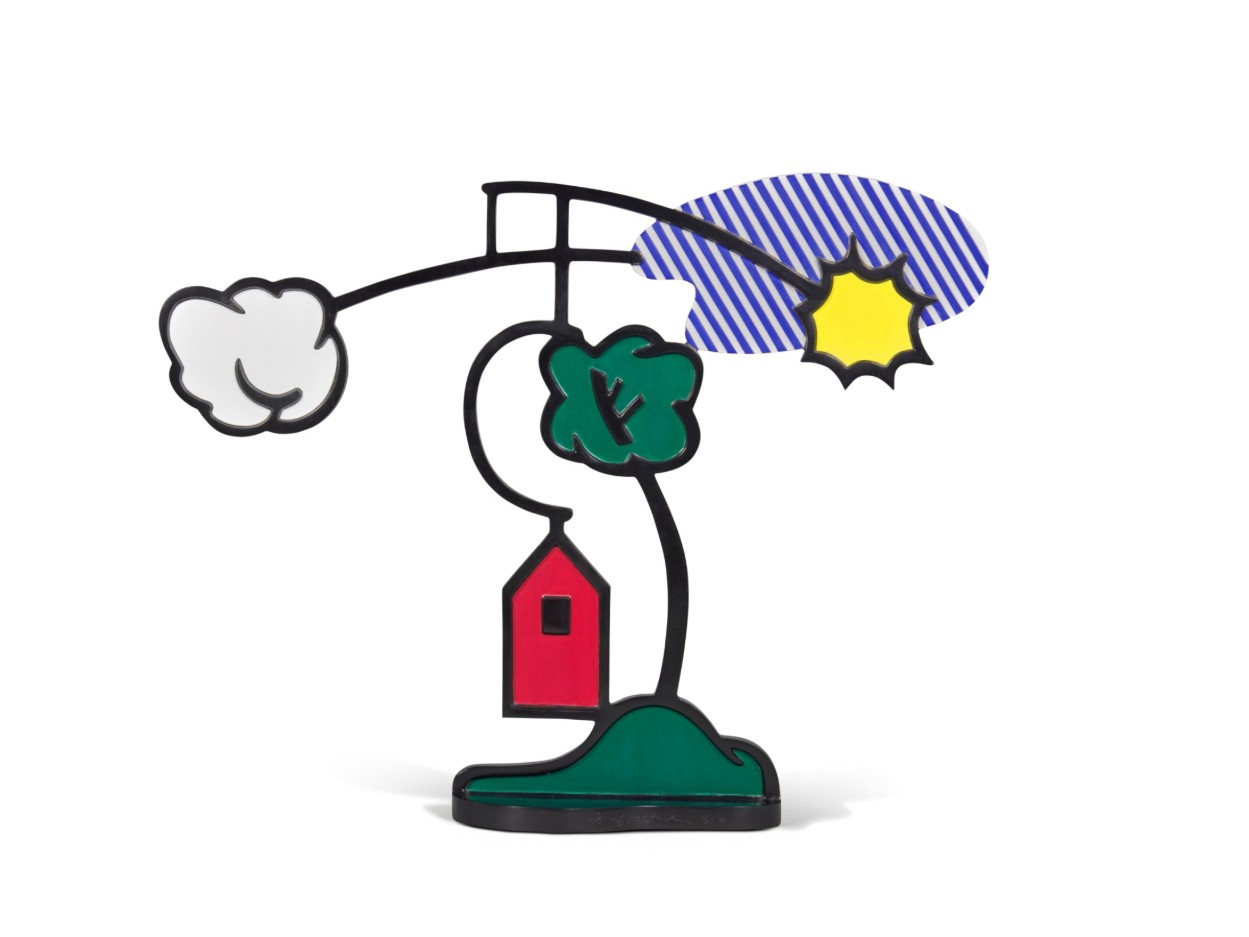
ROY LICHTENSTEIN (1923-1997)
Landscape Mobile, 1990
Painted and patinated bronze
29 1/8 x 8 3/8 x 36 3/4 inches (74 x 21.3 x 93.3 cm)
Incised with the artist’s signature, date ‘91 and number 0/6 (on the base)
This work is the artist’s proof from an edition of 6 plus 1 artist’s proof
#10. New Born, 1988
Works from the Collection of Dorothy and Roy Lichtenstein
Sotheby’s London: 25 June 2025
Estimated: GBP 150,000 – 200,000
GBP 787,400 / USD 1,062,990
New Born | Contemporary Day Auction | 2025 | Sotheby’s
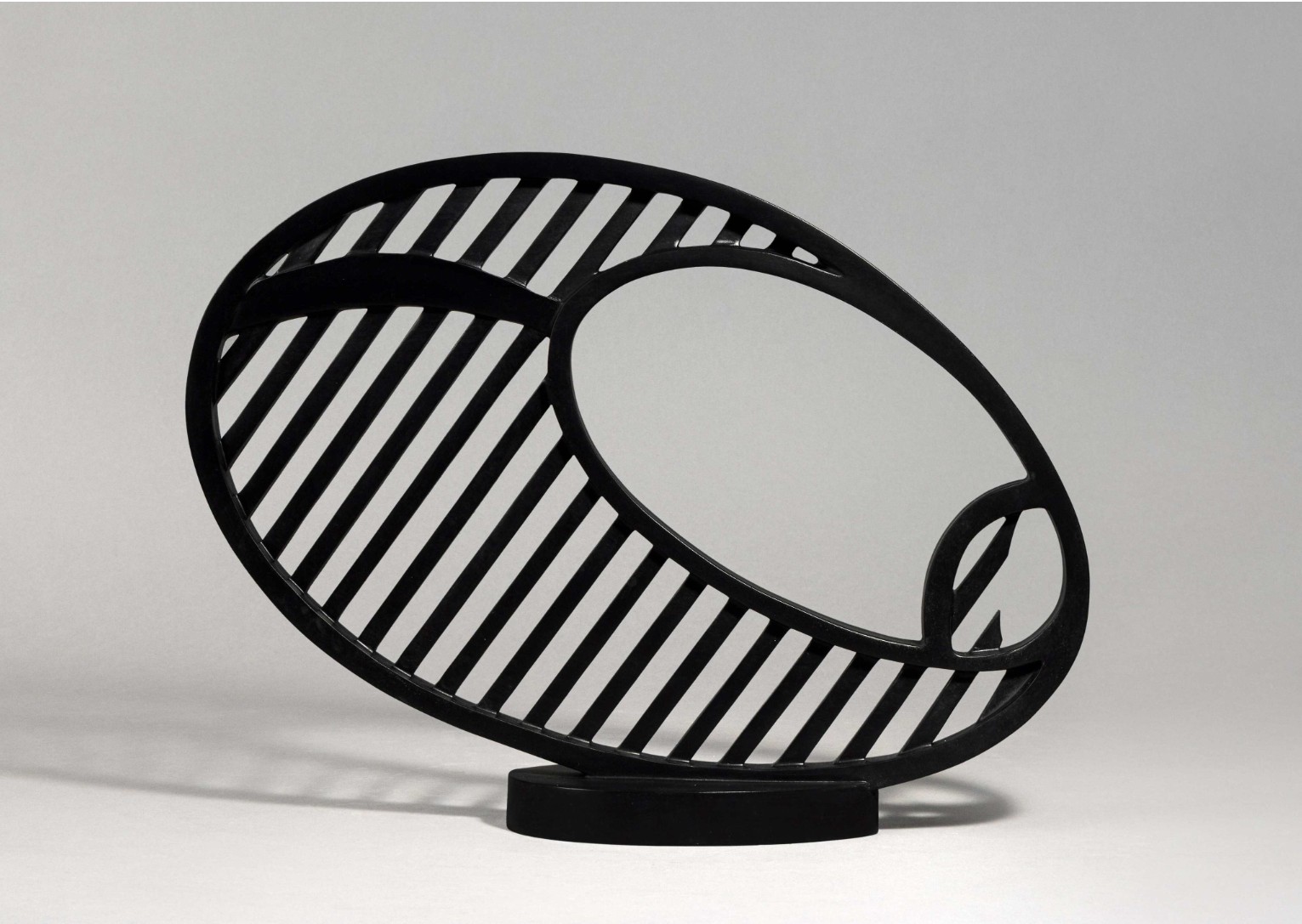
ROY LICHTENSTEIN (1923 – 1997)
New Born, 1988
Patinated bronze
12 1/4 x 16 1/8 x 3 3/4 inches (31 x 41 x 9.6 cm)
Incised with the artist’s signature, dated ’88 and numbered 0/6 (on the base)
Executed in 1988 and fabricated in 1989, this work is the artist’s proof aside from the edition of 6
#11. Mirror I, 1976
Works from the Collection of Dorothy and Roy Lichtenstein
Sotheby’s New-York: 15 May 2025
Estimated: USD 1,000,000 – 1,500,000
USD 1,016,000
Mirror I | The Now and Contemporary Evening Auction | 2025 | Sotheby’s
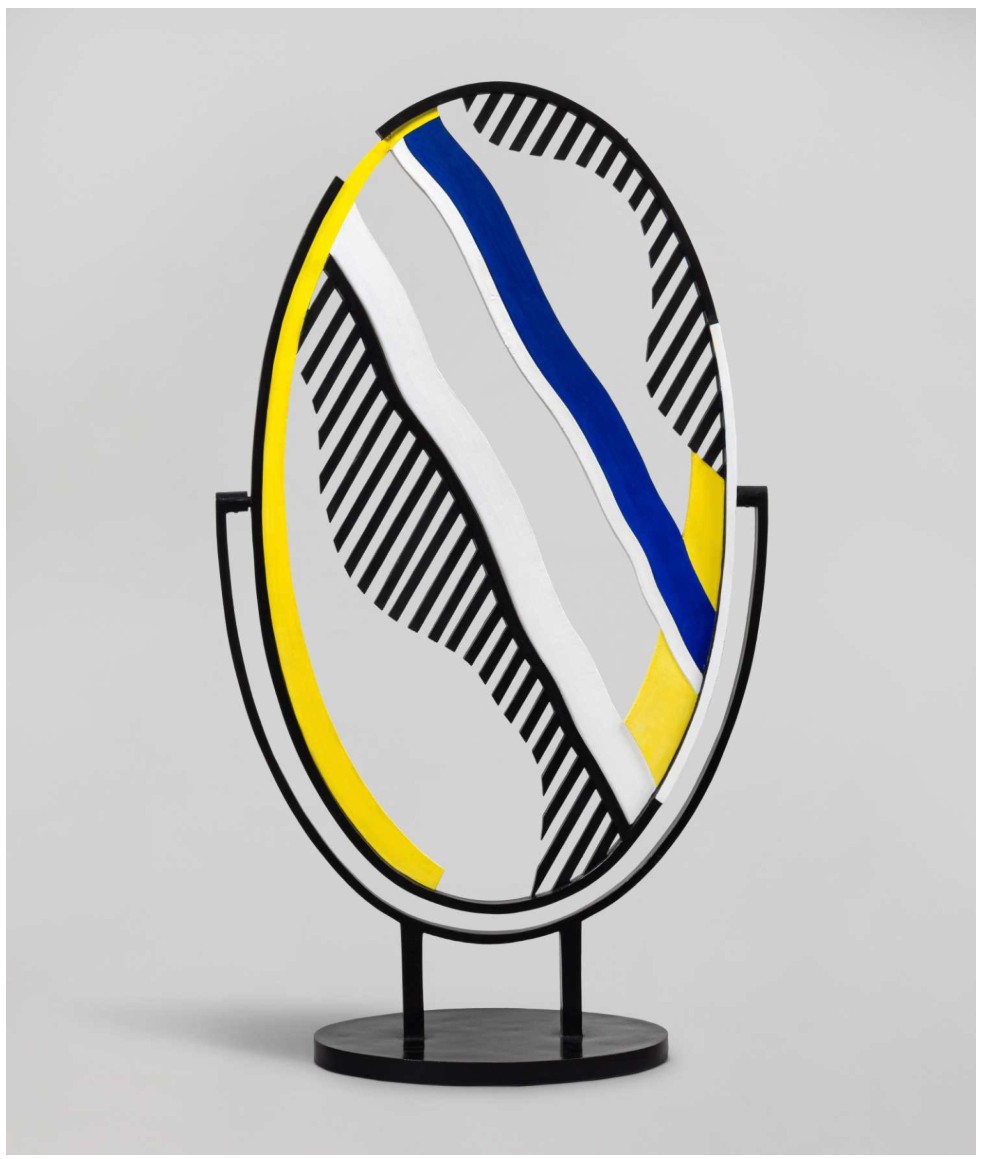
ROY LICHTENSTEIN (1923 – 1997)
Mirror I, 1976
Painted and patinated bronze
44 1/2 x 25 x 11 5/8 inches (113 x 63.5 x 29.5 cm)
Incised with the artist’s signature, numbered 2/3 and dated ’76 (lower edge)
This work is number 2 from an edition of 3 plus 1 posthumous cast
USD 1 million
#12. Brushstrokes in Flight, 1983
Christie’s New-York: 15 May 2025
Estimated: USD 700,000 – 1,000,000
USD 882,000
ROY LICHTENSTEIN (1923-1997), Brushstrokes in Flight | Christie’s
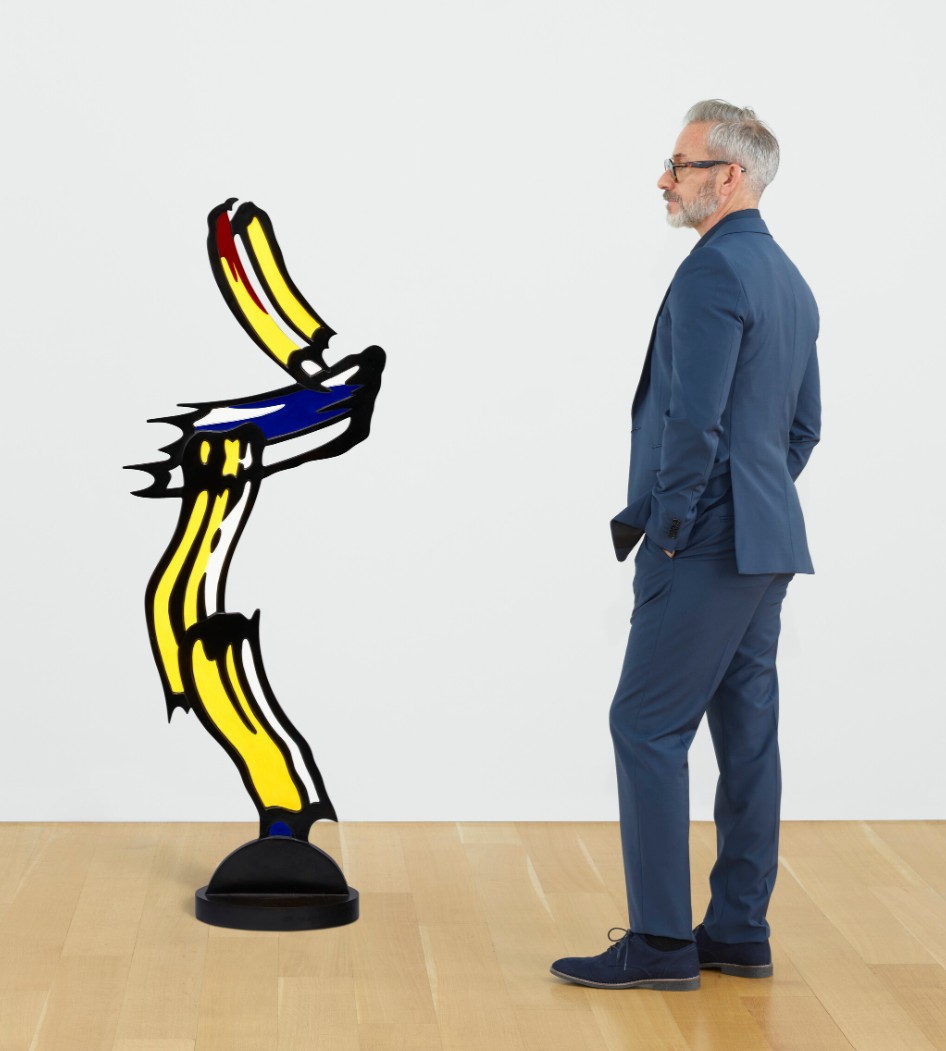
ROY LICHTENSTEIN (1923-1997)
Brushstrokes in Flight, 1983
Painted and patinated bronze
55 1/4 x 21 x 10 inches (140.3 x 53.3 x 25.4 cm)
Incised with the artist’s signature, number and date ‘5⁄6 rf Lichtenstein ’83’ (on the base)
This work is number five from an edition of six plus one posthumous cast
#13. Small Wall Explosion, 1965
Works from the Collection of Dorothy and Roy Lichtenstein
Sotheby’s New-York: 16 May 2025
Estimated: USD 400,000 – 600,000
USD 812,800
Small Wall Explosion | Contemporary Day Auction | 2025 | Sotheby’s
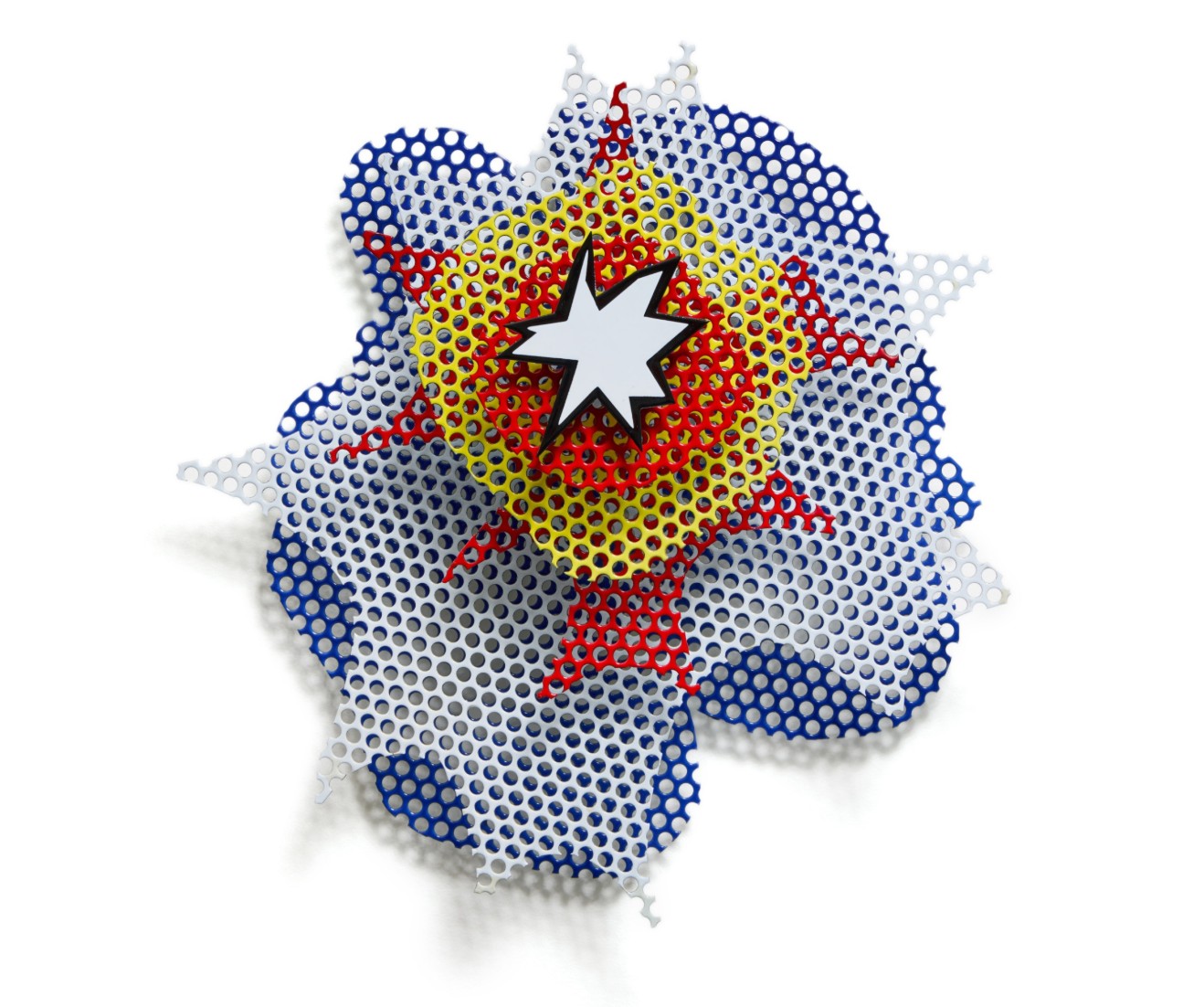
ROY LICHTENSTEIN (1923 – 1997)
Small Wall Explosion, 1965
Porcelain enamel on steel and perforated steel
21 7/8 x 20 1/2 x 7 3/8 inches (55.6 x 52.1 x 18.7 cm)
Signed, dated ’65 and numbered 6/6 (on the reverse)
This work is number 6 from an edition of 6
#14. Ritual Mask, 1992
WORKS FROM THE COLLECTION OF DOROTHY AND ROY LICHTENSTEIN
Sotheby’s London: 24 October 2025
Estimated: EUR 550,000 – 650,000
EUR 698,500 / USD 811,460
Ritual Mask | Surrealism and Its Legacy | 2025 | Sotheby’s
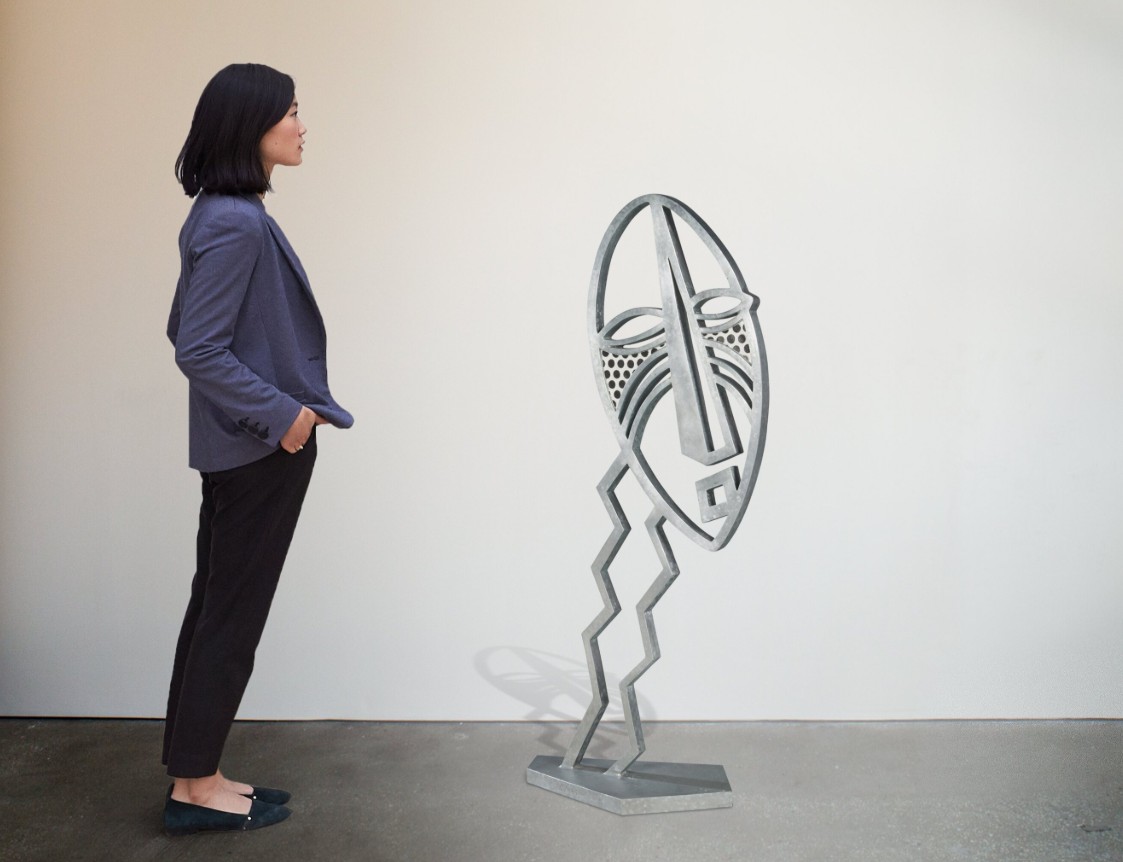
ROY LIHTENSTEIN (1923 – 1997)
Ritual Mask, 1992
Painted galvanized steel
51 1/8 x 23 5/8 x 11 3/8 inches (129.9 x 60 x 28.9 cm)
Incised with the artist’s signature rf Lichtenstein, dated ’92, and numbered 0/6
This work is the artist’s proof from an edition of 6 plus 1 artist’s proof
#15. Brushstroke Head IV, 1987-1988
Christie’s New-York: 15 May 2025
Estimated: USD 600,000 – 800,000
USD 756,000
ROY LICHTENSTEIN (1923-1997), Brushstroke Head IV | Christie’s
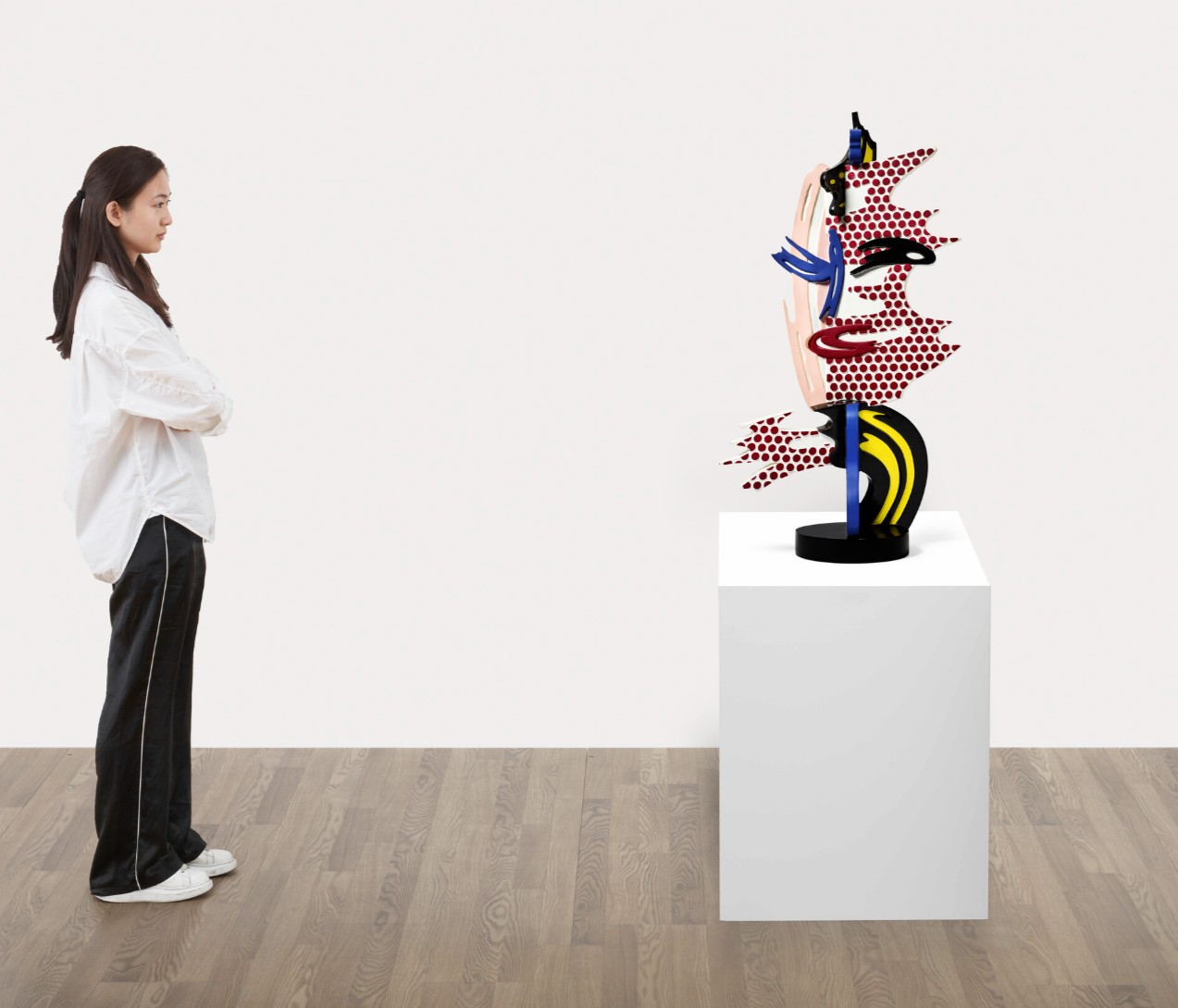
ROY LICHTENSTEIN (1923-1997)
Brushstroke Head IV, 1987-1988
Painted and patinated bronze
43 1/4 x 23 5/8 x 11 3/4 inches (110 x 60 x 29.9 cm)
Incised with the artist’s signature, number, date and foundry mark ‘1⁄6 rf Lichtenstein 87’ (on the base)
Conceived in 1987 and cast in 1988, this work is number one from an edition of six plus one artist’s proof
#16. Cup and Saucer I (Prototype), circa 1976
A Legacy Reimagined: Works from the Collection of Dorothy and Roy Lichtenstein
Sotheby’s New-York: 19 November 2025
Estimated: USD 300,000 – 500,000
USD 635,000
Cup and Saucer I (Prototype) | Contemporary Day Auction | 2025 | Sotheby’s
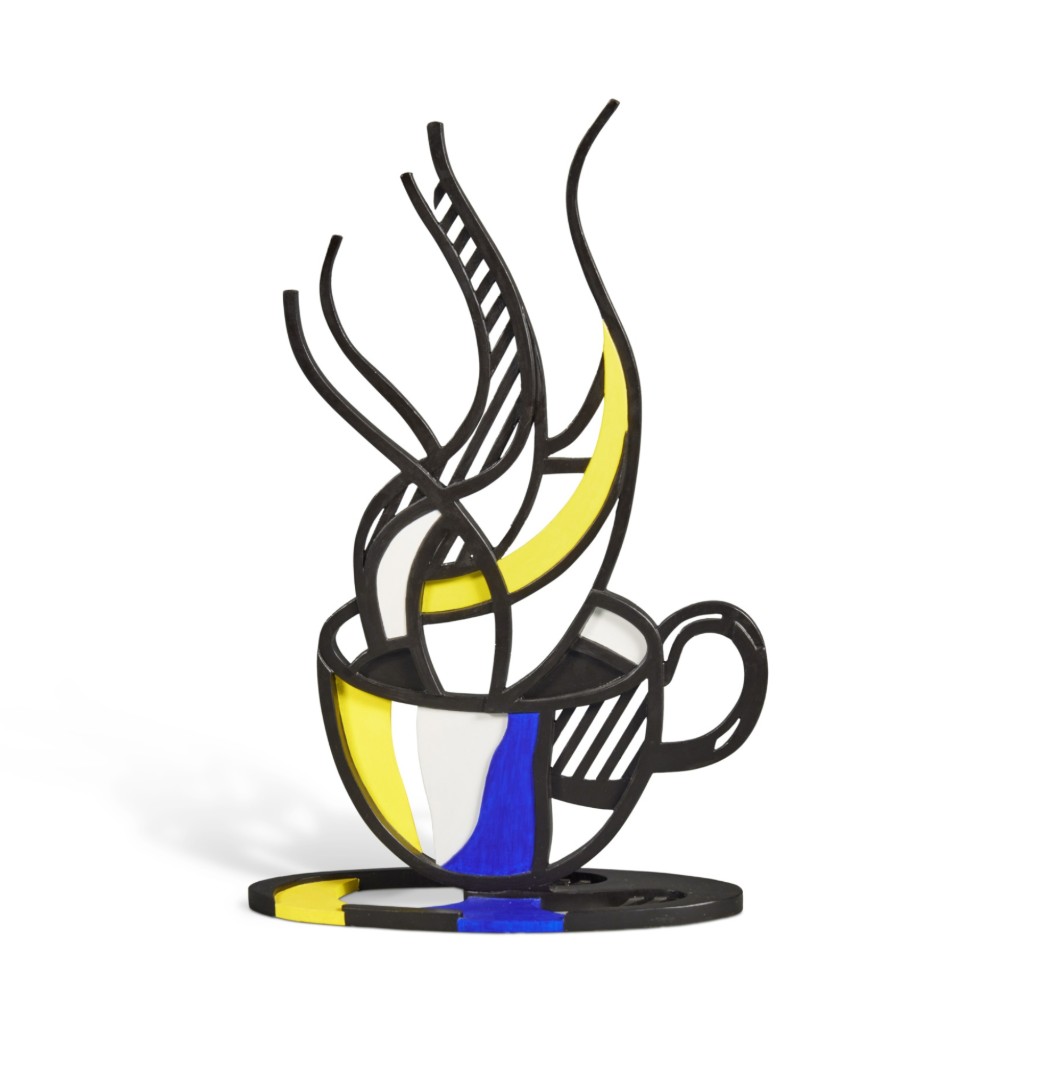
ROY LICHTENSTEIN (1923-1997)
Cup and Saucer I (Prototype), circa 1976
Acrylic on wood
30 1/8 x 18 3/4 x 6 3/4 inches (76.5 x 47.6 x 17.1 cm)
Executed circa 1976, this work is unique
#17. Metallic Brushstroke Head, 1993
A Legacy Reimagined: Works from the Collection of Dorothy and Roy Lichtenstein
Sotheby’s New-York: 19 November 2025
Estimated: USD 700,000 – 1,000,000
USD 635,000
Metallic Brushstroke Head | Contemporary Day Auction | 2025 | Sotheby’s
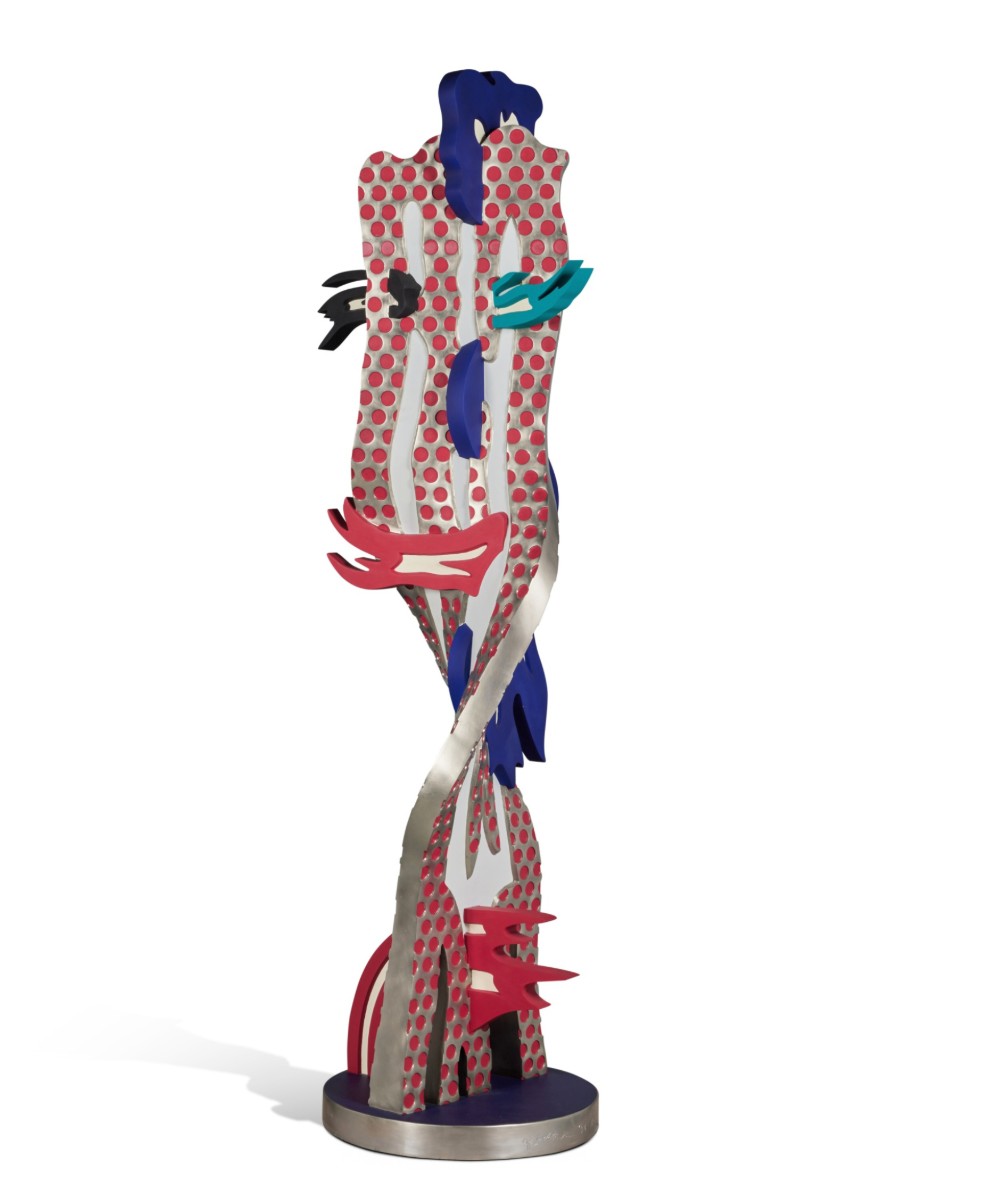
ROY LICHTENSTEIN (1923-1997)
Metallic Brushstroke Head, 1993
Painted nickel-plated bronze
83 x 24 1/2 x 24 1/2 inches (210.8 x 62.2 x 62.2 cm)
Incised with the artist’s signature, date ‘94 and number AP 2/2 (on the base)
This work is artist’s proof 2 of 2 from an edition of 6 plus 2 artist’s proofs
#18. Woman with Mirror, 1996
Works from the Collection of Dorothy and Roy Lichtenstein
Sotheby’s London: 24 June 2025
Estimated: GBP 300,000 – 400,000
GBP 444,500 / USD 600,075
Woman with Mirror | Modern & Contemporary Evening Auction | 2025 | Sotheby’s
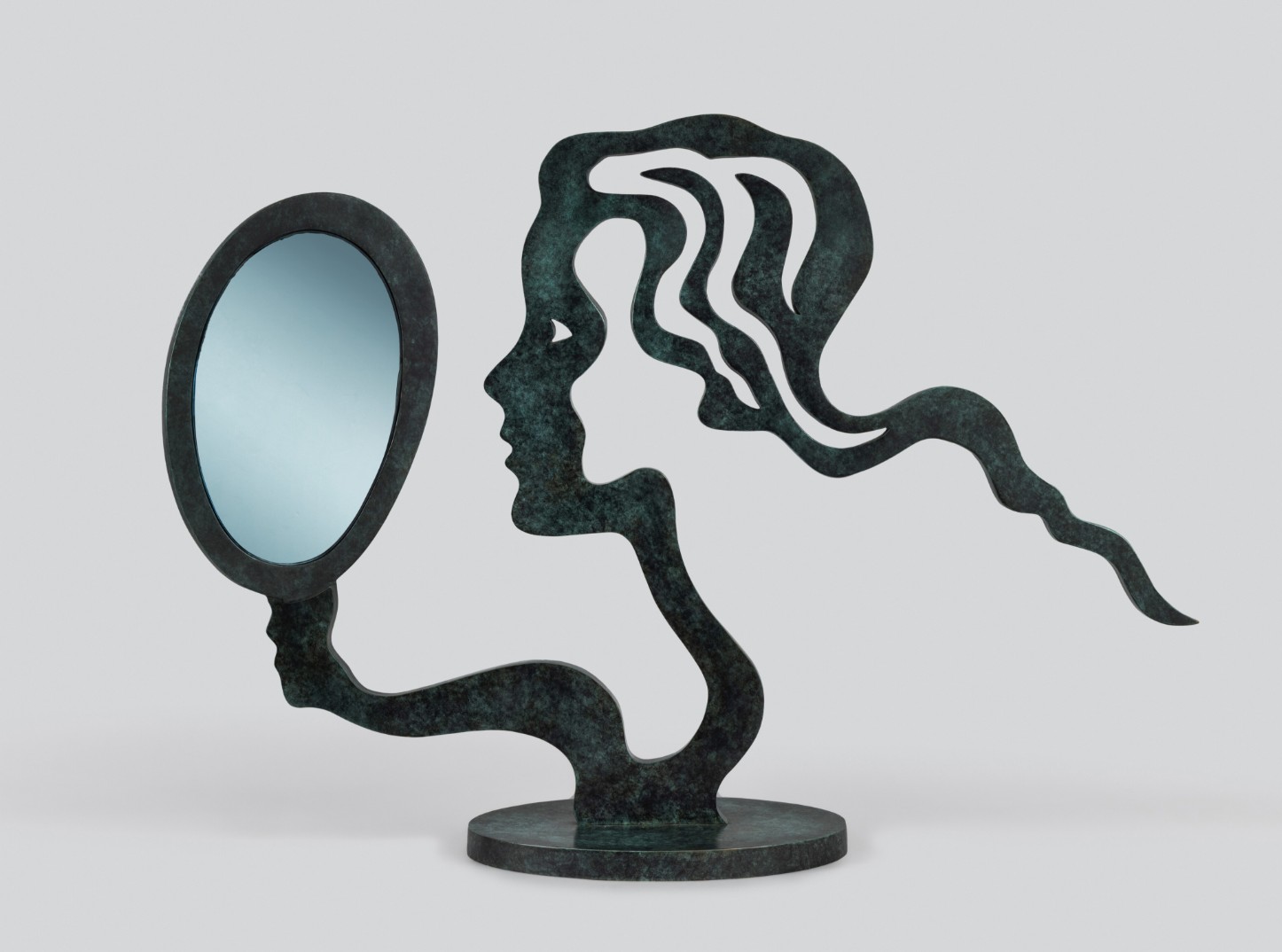
ROY LICHTENSTEIN (1923 – 1997)
Woman with Mirror, 1996
Patinated bronze and colored mirror
28 3/8 x 38 7/8 x 12 inches (72 x 98.6 x 30.5 cm)
Incised with the artist’s signature, dated ’96 and numbered 2/6 (on the side of the base)
This work is number 2 from an edition of 6 plus 1 artist’s proof
#19. Cityscape, 1995
Reflections on Pop: Works from the Collection of Dorothy and Roy Lichtenstein
Sotheby’s New-York: 26 September 2025
Estimated: USD 200,000 – 300,000
USD 571,500
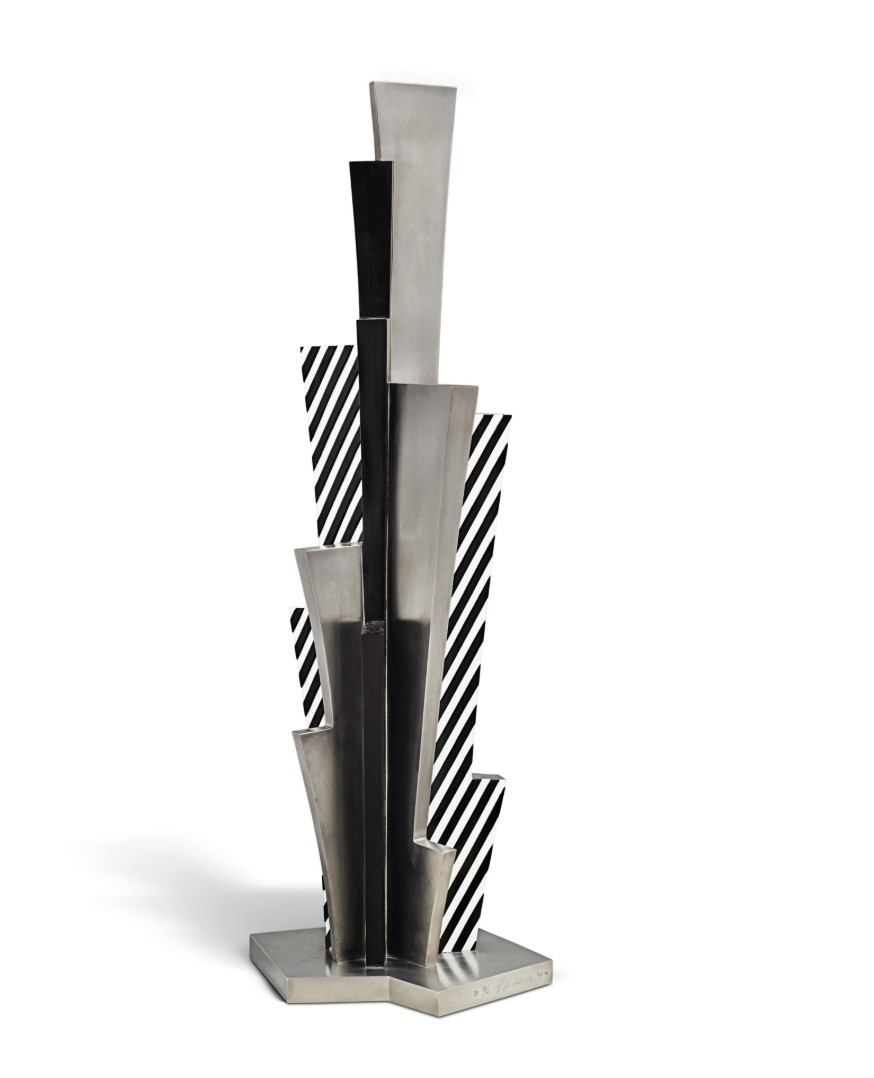
ROY LICHTENSTEIN (1923 – 1997)
Cityscape, 1995
Painted nickel
36 1/2 x 13 x 13 3/4 inches (93.3 x 33 x 34.9 cm)
Incised with the artist’s signature, number 0/6, date ’95 and the copyright notice (on the edge of the base)
This work is the artist’s proof from an edition of 6 plus 1 artist’s proof
#20. Surrealist Head II, 1988
Works from the Collection of Dorothy and Roy Lichtenstein
Sotheby’s New-York: 16 May 2025
Estimated: USD 700,000 – 1,000,000
USD 533,400
Surrealist Head II | Contemporary Day Auction | 2025 | Sotheby’s

ROY LICHTENSTEIN (1923 – 1997)
Surrealist Head II, 1988
Painted and patinated bronze
35 1/8 x 14 1/4 x 5 7/8 inches (89.2 x 36.2 x 14.9 cm)
Incised with the artist’s signature, date ’88 and number 0/6 (on the base)
This work is the artist proof from an edition of 6 plus 1 artist proof
#21. Mobile I, 1989
Works from the Collection of Dorothy and Roy Lichtenstein
Sotheby’s New-York: 16 May 2025
Estimated: USD 400,000 – 600,000
USD 533,400
Mobile I | Contemporary Day Auction | 2025 | Sotheby’s
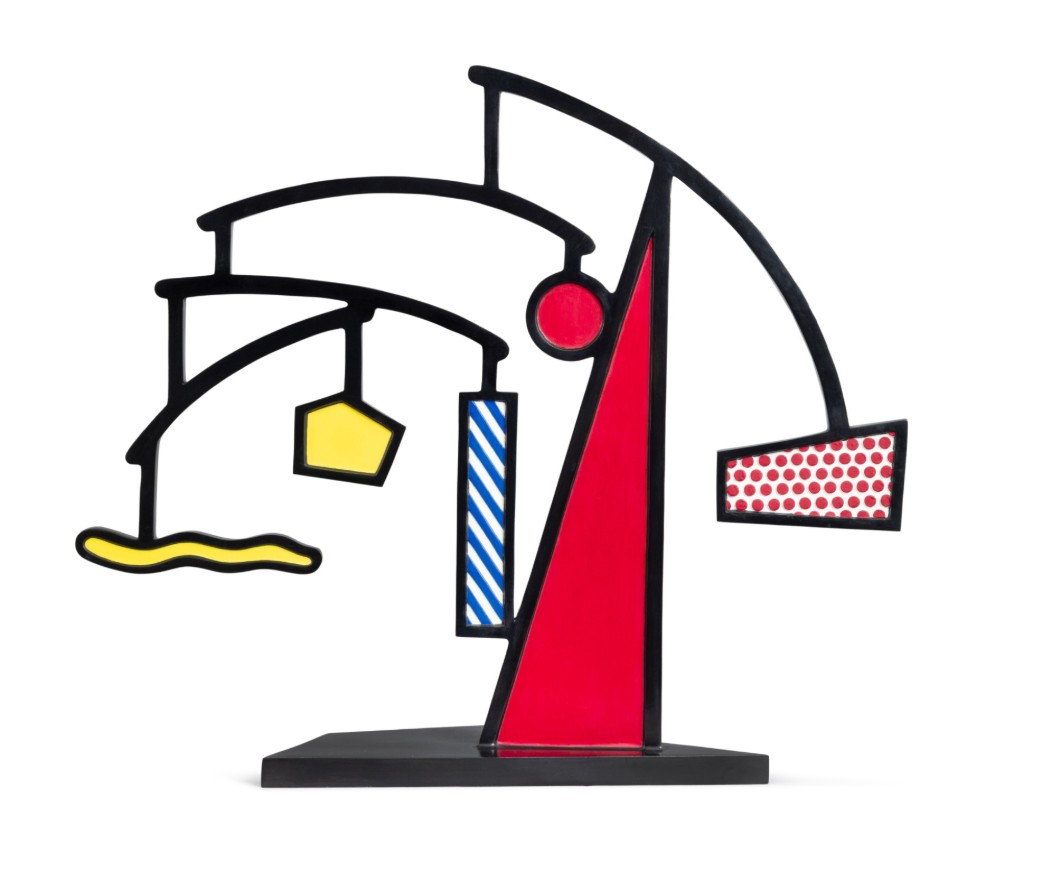
ROY LICHTENSTEIN (1923 – 1997)
Mobile I, 1989
Painted and patinated bronze
30 1/8 x 36 x 10 1/2 inches (76.5 x 91.4 x 26.7 cm)
Incised with the artist’s signature, date ’89 and number 0/6 (on the base)
This work is the artist proof from an edition of 6 plus 1 artist proof
#22. Archaic Head, 1988
A Legacy Reimagined: Works from the Collection of Dorothy and Roy Lichtenstein
Sotheby’s New-York: 19 November 2025
Estimated: USD 600,000 – 800,000
USD 533,400
Archaic Head | Contemporary Day Auction | 2025 | Sotheby’s
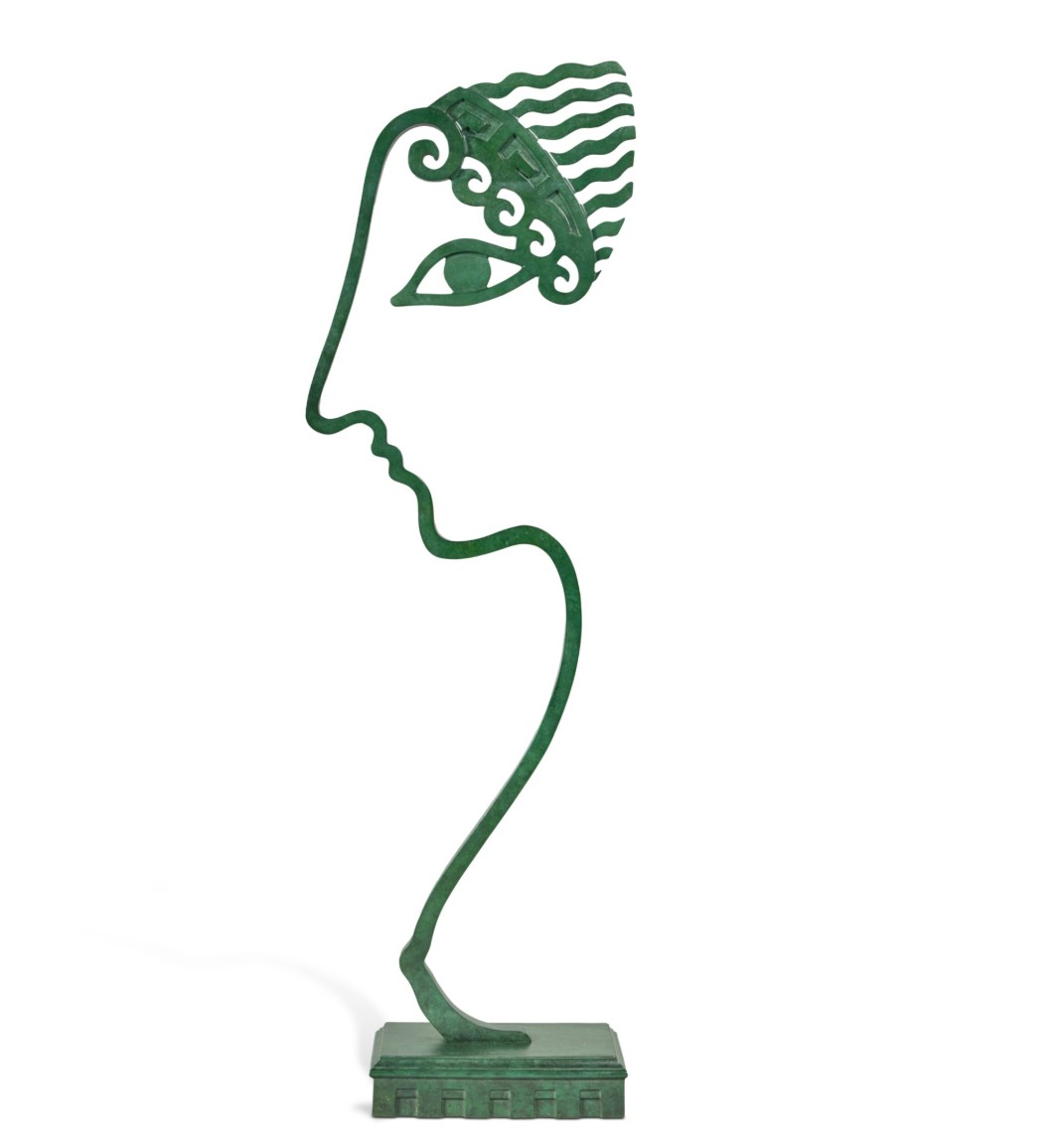
ROY LICHTENSTEIN (1923-1997)
Archaic Head, 1988
Patinated bronze
58 1/4 x 19 x 10 1/4 inches (148 x 48.3 x 26 cm)
Incised with the artist’s signature, date ’88 and number 0/6 (on the base)
This work is the artist’s proof from an edition of 6 plus 1 artist’s proof
#23. Metallic Brushstroke Head, 1994
Christie’s New-York: 20 November 2025
Estimated: USD 800,000 – 1,200,000
USD 508,000
ROY LICHTENSTEIN (1923-1997), Metallic Brushstroke Head | Christie’s
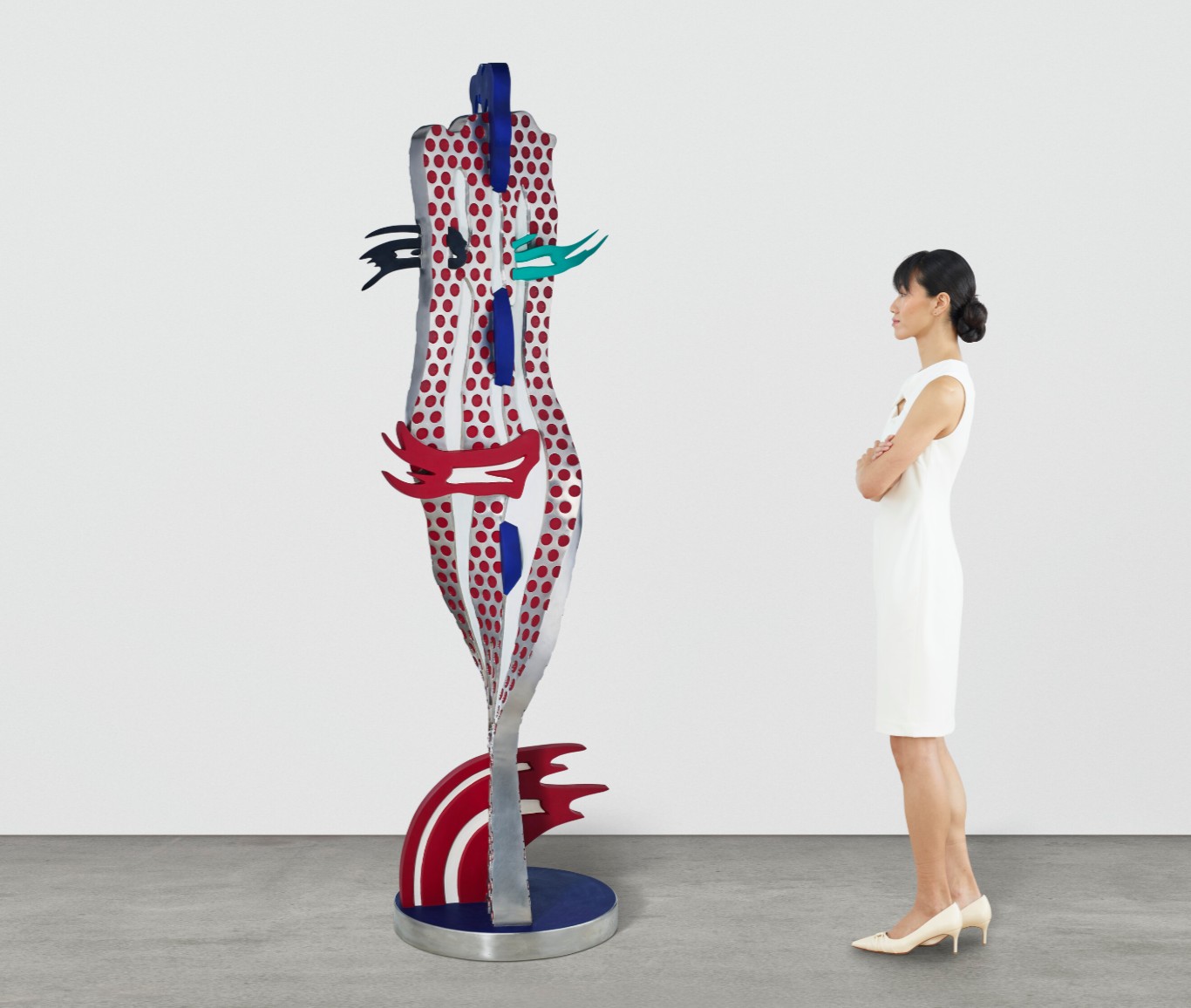
ROY LICHTENSTEIN (1923-1997)
Metallic Brushstroke Head, 1994
Painted nickel-plated bronze
82 3/4 x 24 1/2 x 24 1/2 inches (210.2 x 61 x 61 cm)
Incised with the artist’s signature, number, date and stamped with the foundry mark ‘rf Lichtenstein ’94 AP 1⁄2’
(on the base)
This work is the first artist’s proof from an edition of six plus two artist’s proofs
USD 500,000
#24. Modern Painting in Porcelain, circa 1967
A Legacy Reimagined: Works from the Collection of Dorothy and Roy Lichtenstein
Sotheby’s New-York: 19 November 2025
Estimated: USD 70,000 – 100,000
USD 482,600
Modern Painting in Porcelain | Contemporary Day Auction | 2025 | Sotheby’s
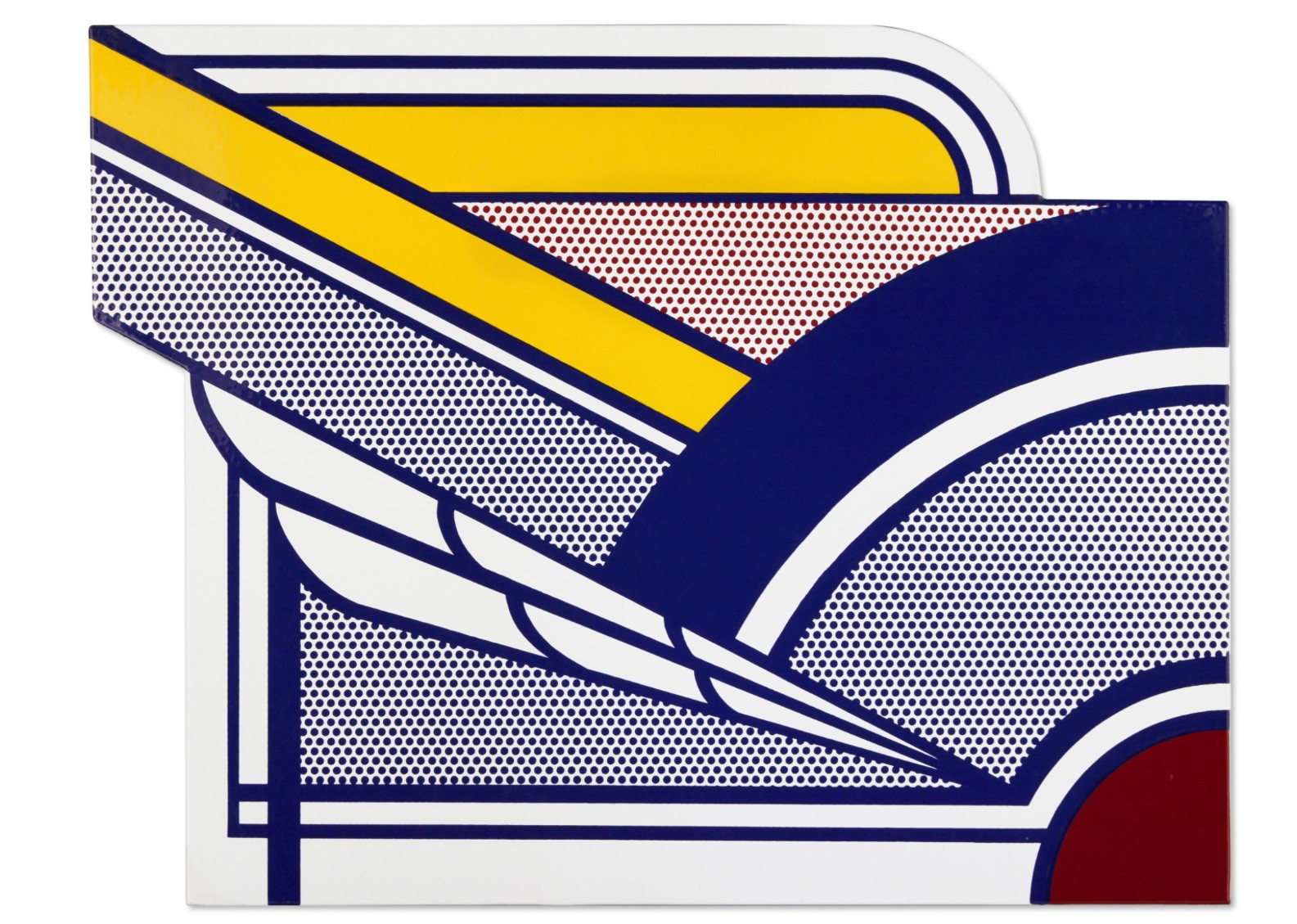
ROY LICHTENSTEIN (1923-1997)
Modern Painting in Porcelain, circa 1967
Porcelain enamel on steel
34 1/2 x 45 inches (87.6 x 114.3 cm)
Signed (on the reverse)
This work is from an edition of 6 plus 2 artist’s proofs
#25. Petite coups de pinceau, 1988
Reflections on Pop: Works from the Collection of Dorothy and Roy Lichtenstein
Sotheby’s New-York: 26 September 2025
Estimated: USD 500,000 – 700,000
USD 444,500
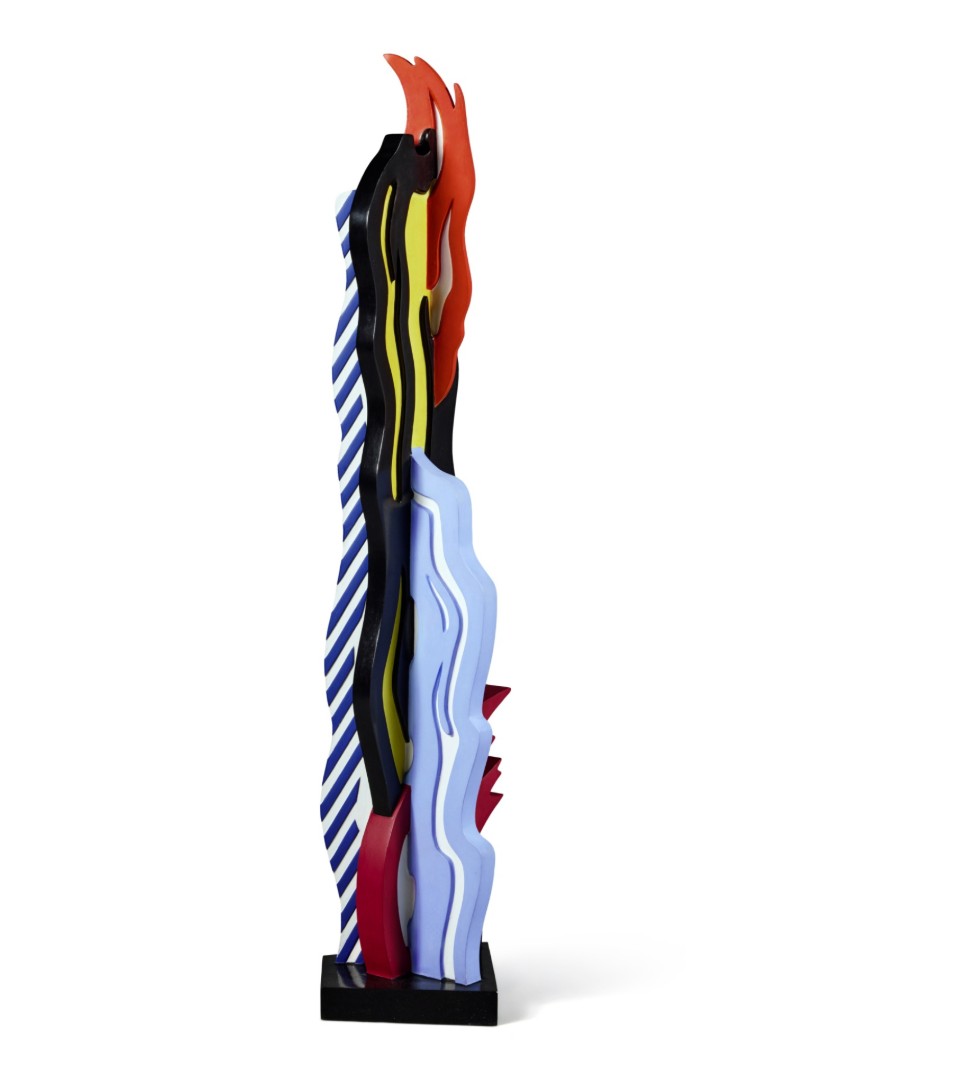
ROY LICHTENSTEIN (1923 – 1997)
Petite coups de pinceau, 1988
Painted and patinated bronze
40 ½ x 12 x 10 inches (102.9 x 30.5 x 25.4 cm)
Incised with the artist’s signature, number 1/3 and date ’88 (on the edge of the base)
#26. Imperfect Sculpture, 1994-95
Reflections on Pop: Works from the Collection of Dorothy and Roy Lichtenstein
Sotheby’s New-York: 26 September 2025
Estimated: USD 200,000 – 300,000
USD 381,000
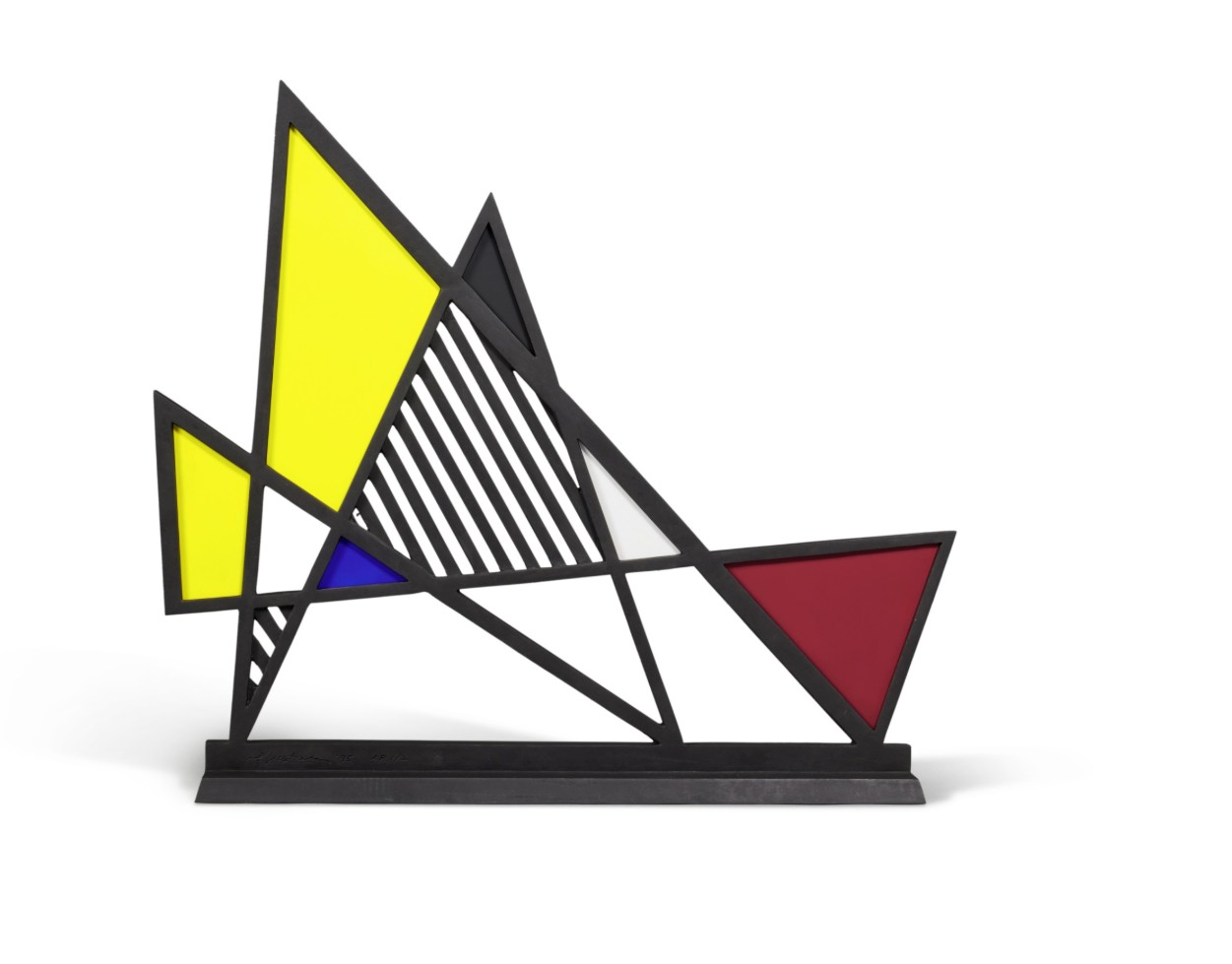
ROY LICHTENSTEIN (1923 – 1997)
Imperfect Sculpture, 1994-95
Stained cast iron and painted stainless steel
30 3/4 x 34 3/4 x 5 inches (78.1 x 88.3 x 12.7 cm)
Incised with the artist’s signature, number AP 1/2 and date ’95 (along the lower edge of the sculpture)
Conceived in 1994 and cast in 1995
This work is artist proof 1 from an edition 6 plus 2 artist’s proofs
#27. Chair, Table and Flower Pot, 1993-95
Reflections on Pop: Works from the Collection of Dorothy and Roy Lichtenstein
Sotheby’s New-York: 26 September 2025
Estimated: USD 250,000 – 350,000
USD 241,300
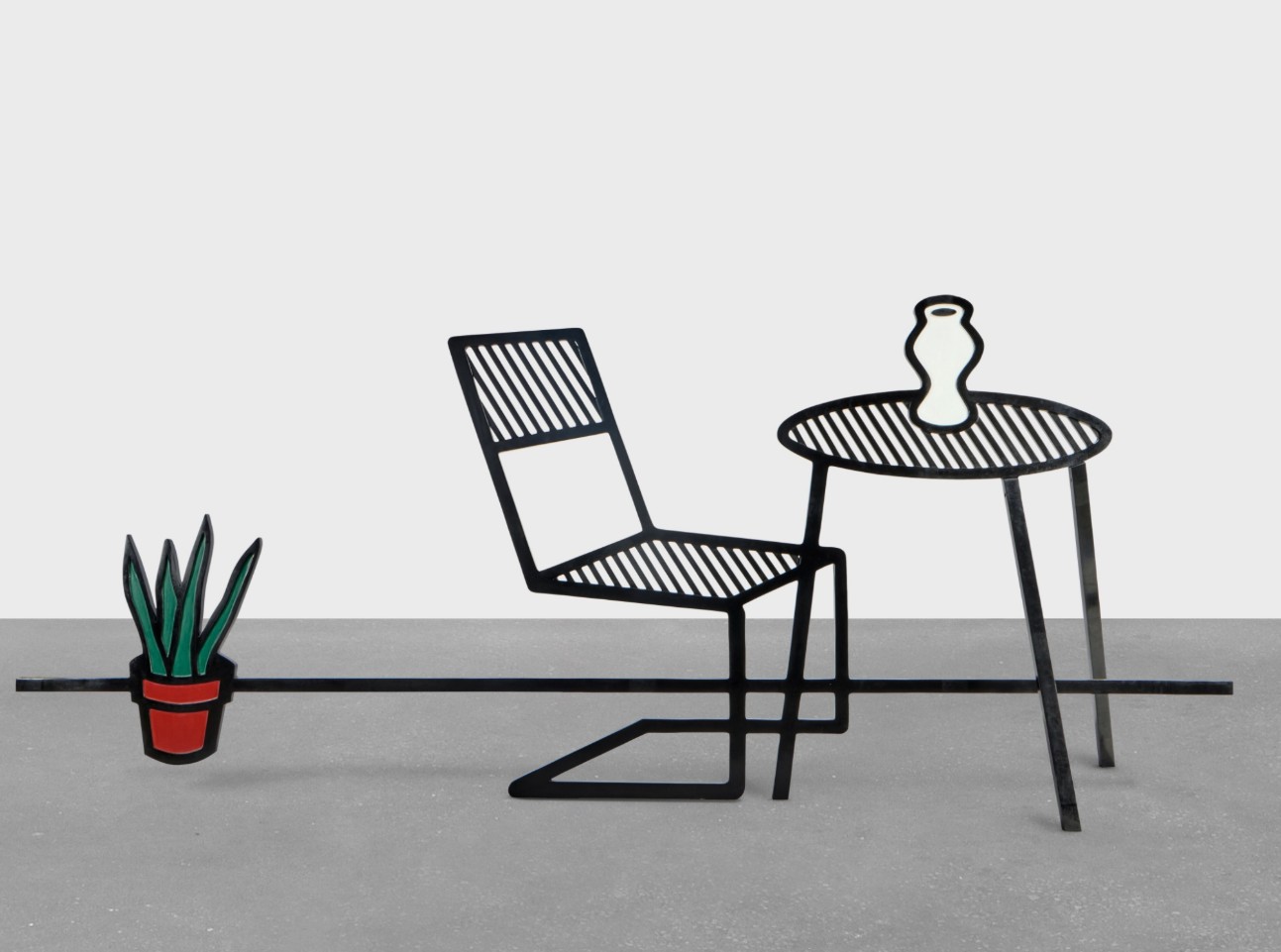
ROY LICHTENSTEIN (1923 – 1997)
Chair, Table and Flower Pot, 1993-95
Painted and patinated bronze
62 1/2 x 153 1/2 x 37 inches (158.8 x 389.9 x 94 cm)
Incised with the artist’s signature, number 1/3 and date ‘95 (on the horizontal element)
Conceived in 1993 and cast in 1995
This work is number 1 from an edition of 3 plus 1 posthumous edition
#28. Scholar’s Rock, 1997
Sotheby’s Hong-Kong: 28 September 2025
Estimated: HKD 1,000,000 – 1,500,000
HKD 1,651,000 / USD 212,210

ROY LICHTENSTEIN (1923 – 1997)
Scholar’s Rock, 1997
Painted stainless steel
28 x 17 1/8 x 8 3/4 inches (71.1 x 43.5 x 22.2 cm)
Incised with the artist’s signature, numbered 0/6 and dated ‘97 (lower edge)
This work is the artist’s cast from an edition of 6
#29. Wall Pyramid, 1997-2002
Reflections on Pop: Works from the Collection of Dorothy and Roy Lichtenstein
Sotheby’s New-York: 26 September 2025
Estimated: USD 80,000 – 200,000
USD 127,000

ROY LICHTENSTEIN (1923 – 1997)
Wall Pyramid, 1997-2002
Painted aluminum
21 3/8 x 25 1/2 x 6 inches (54.3 x 64.8 x 15.2 cm)
Incised with the artist’s signature, number 0/8, date’96 and the copyright notice (on the reverse)
Conceived in 1997 and cast in 2002
This work is the artist proof from an edition of 8 plus 1 artist’s proof
All of which were executed posthumously
#30. Modern Love Waltz (Music Box), 1991-92
Reflections on Pop: Works from the Collection of Dorothy and Roy Lichtenstein
Sotheby’s New-York: 26 September 2025
Estimated: USD 80,000 – 120,000
USD 107,950
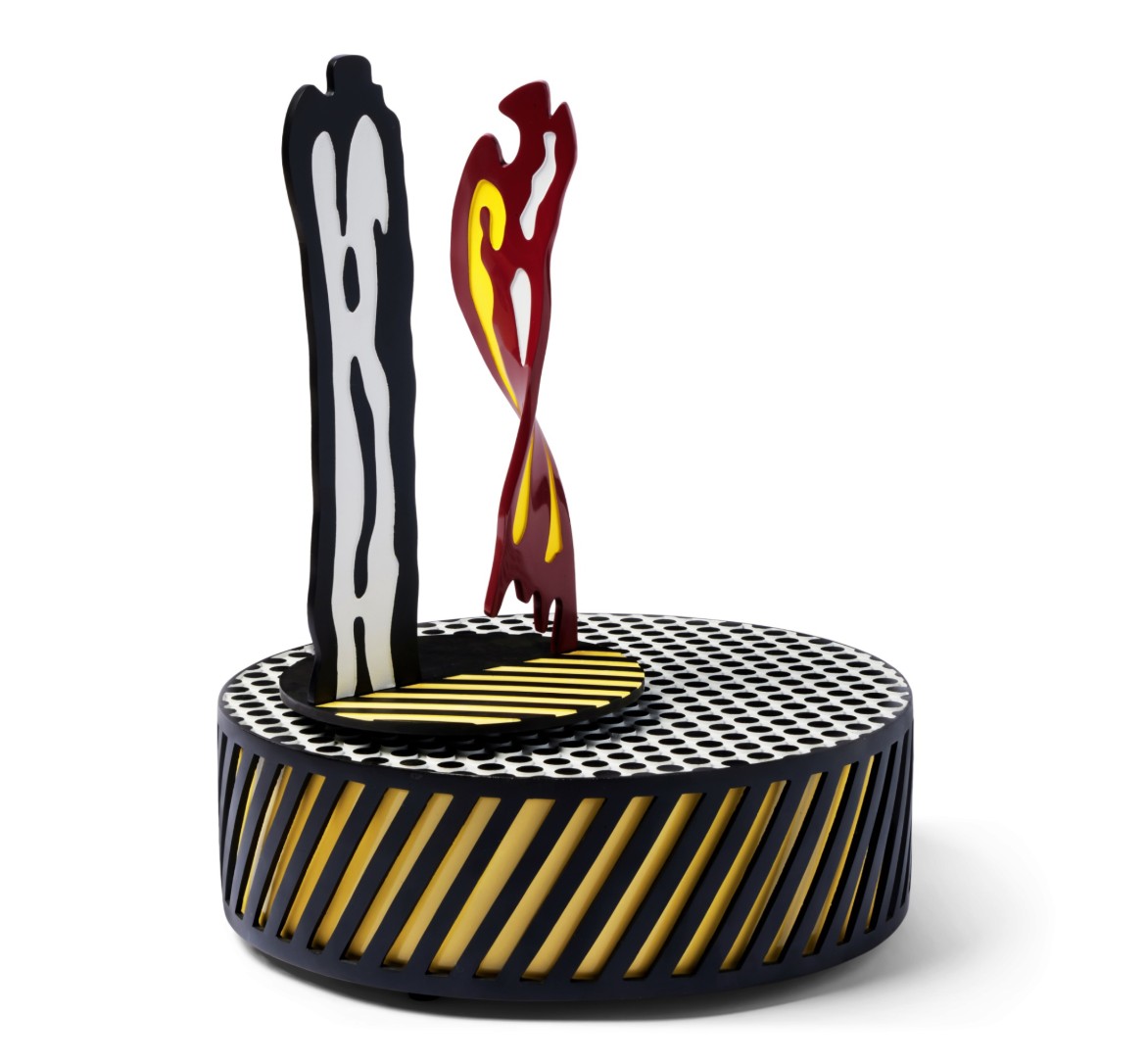
ROY LICHTENSTEIN (1923 – 1997) and PHILIP GLASS (b. 1937)
Modern Love Waltz (Music Box), 1991-92
Painted bronze, aluminum, wood and spring-wound mechanical music player
16 1/2 x 13 x 13 inches (41.9 x 33 x 33 cm)
Signed by both artists, numbered AP 1/5 and marked with the copyright notice (on the underside)
This work is number 1 of 5 artist’s proofs from an intended edition of 100 plus 5 artist’s proofs, 5 composer proofs, and 5 publisher proofs, of which no more than 10 plus 2 artist’s proofs were fabricated
USD 100,000
#31. Untitled Head II (Prototype), circa 1970
Works from the Collection of Dorothy and Roy Lichtenstein
Sotheby’s London: 25 June 2025
Estimated: GBP 10,000 – 15,000
GBP 32,490 / USD 43,860
Untitled Head II (Prototype) | Contemporary Day Auction | 2025 | Sotheby’s
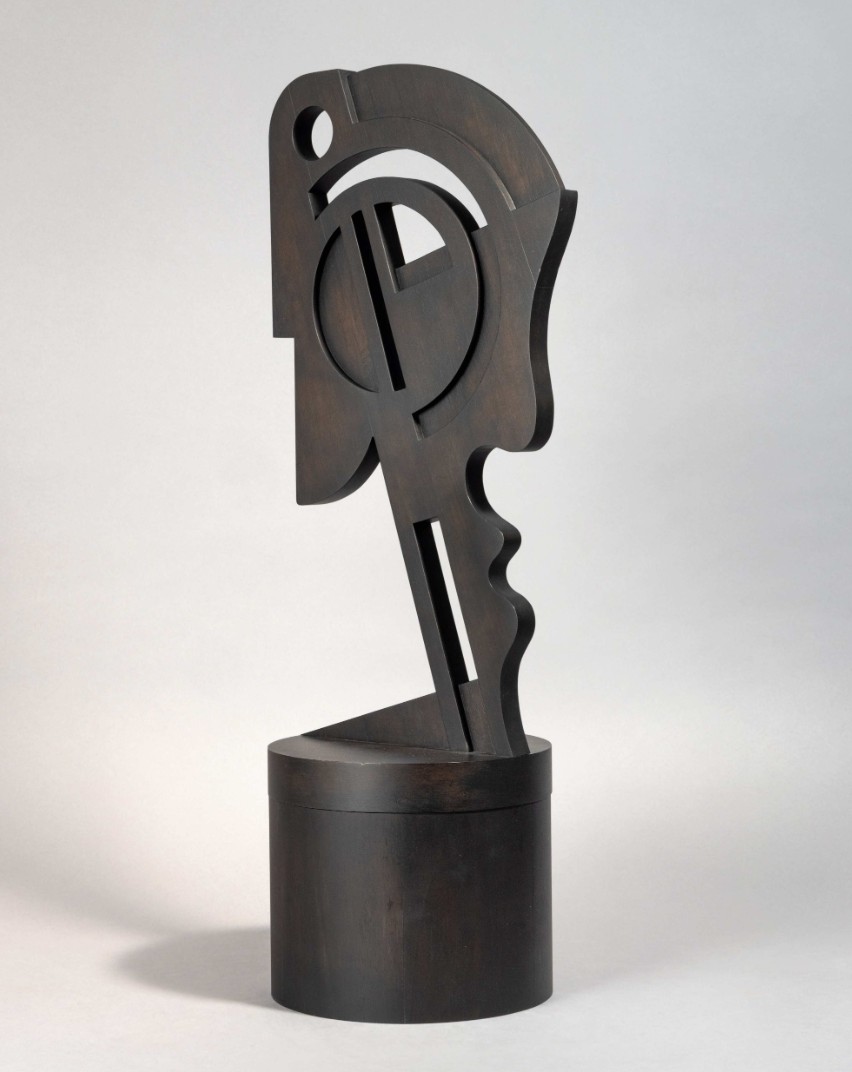
ROY LICHTENSTEIN (1923 – 1997)
Untitled Head II (Prototype), circa 1970
Stained California English walnut wood
30 x 12 x 9 1/4 inches (76.2 x 30.5 x 23.5 cm)
Lots Passed
Double Glass, 1979
Christie’s New-York: 20 November 2025
Estimated: USD 1,500,000 – 2,000,000
PASSED
ROY LICHTENSTEIN (1923-1997), Double Glass | Christie’s
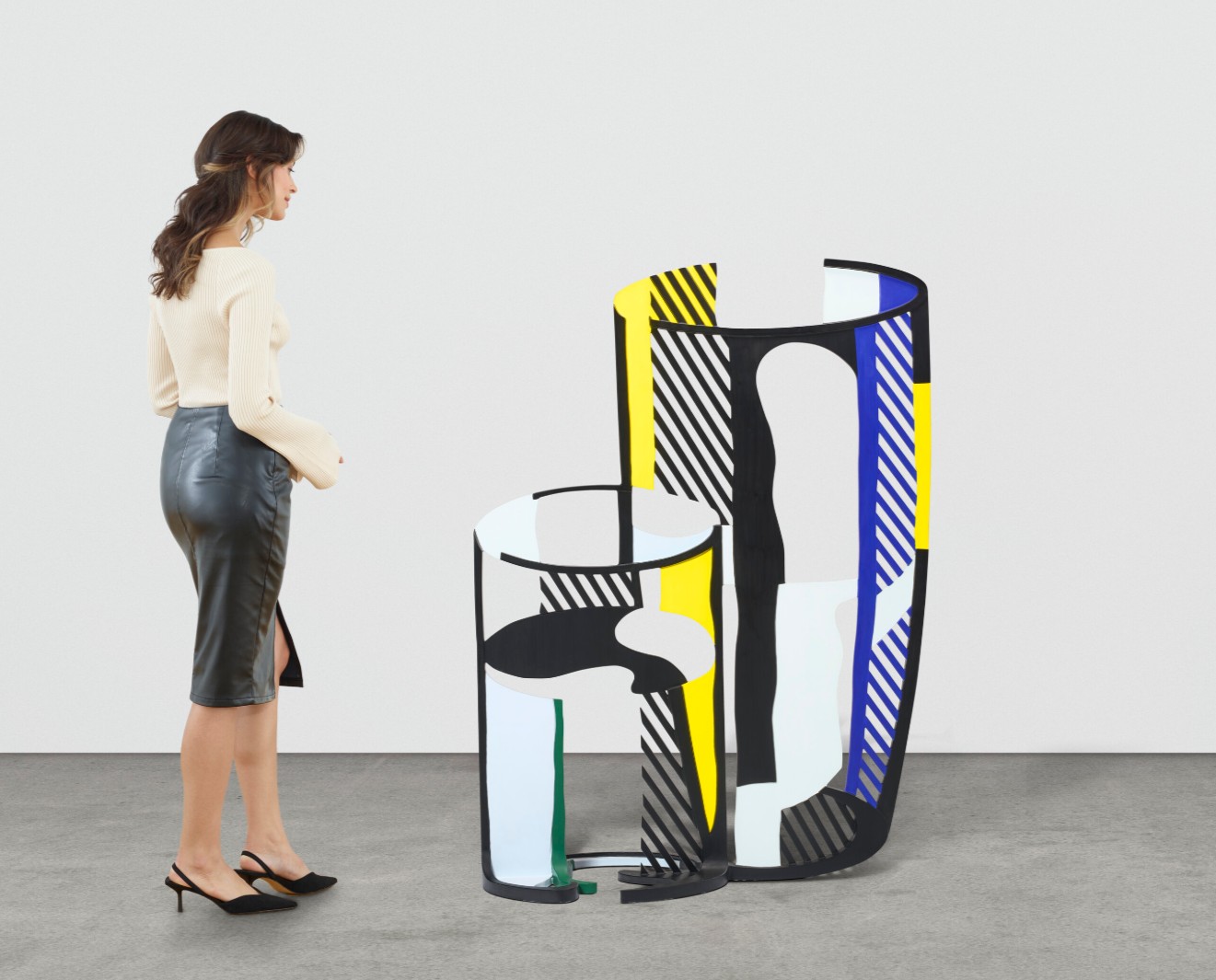
ROY LICHTENSTEIN (1923-1997)
Double Glass, 1979
Painted bronze
56x42x17 inches (142.2 x 106.7 x 43.2 cm)
Incised with the artist’s signature, number and date ‘3⁄3 rf Lichtenstein ’79’ (lower edge)
This work is number three from an edition of three
3. Studies / Works on Paper
#1. The Kiss, 1962
Christie’s New-York: 12 May 2025
Estimated: USD 7,000,000 – 9,000,000
USD 5,495,000
WORK ON PAPER
ROY LICHTENSTEIN (1923-1997), The Kiss | Christie’s
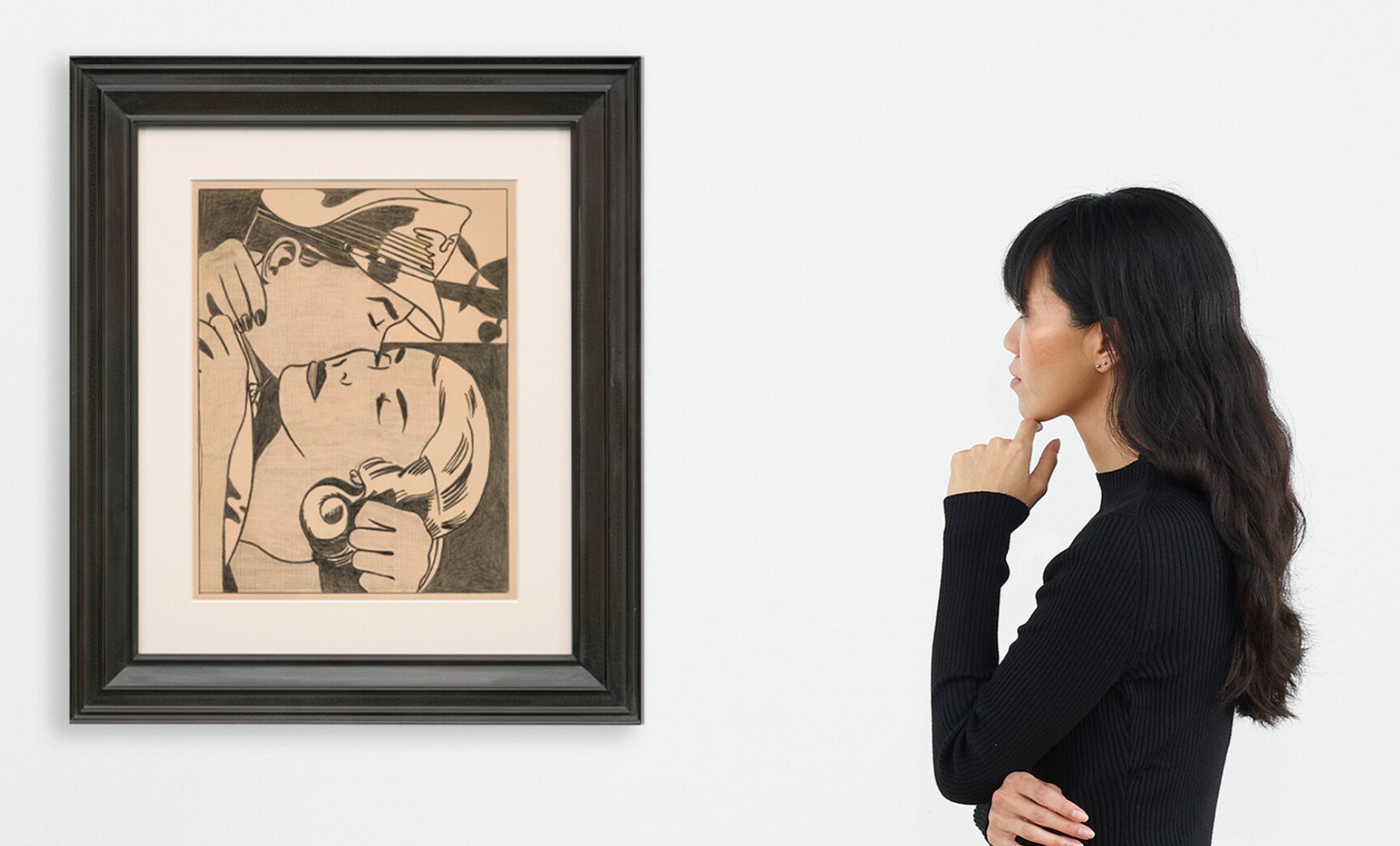
ROY LICHTENSTEIN (1923-1997)
The Kiss, 1962
Graphite on paper
Image: 18 1/2 x 14 inches (47 x 35.6 cm)
Sheet: 21 x 16 1/4 inches (53.3 x 41.2 cm)
Signed and dated ‘rf Lichtenstein ’62’ (on the reverse)
USD 5 million
#2. Woman: Sunlight, Moonlight (Study), 1995
A Legacy Reimagined: Works from the Collection of Dorothy and Roy Lichtenstein
Sotheby’s New-York: 18 November 2025
Estimated: USD 1,500,000 – 2,000,000
USD 2,734,000
Woman: Sunlight, Moonlight (Study) | The Now & Contemporary Evening Auction | 2025 | Sotheby’s
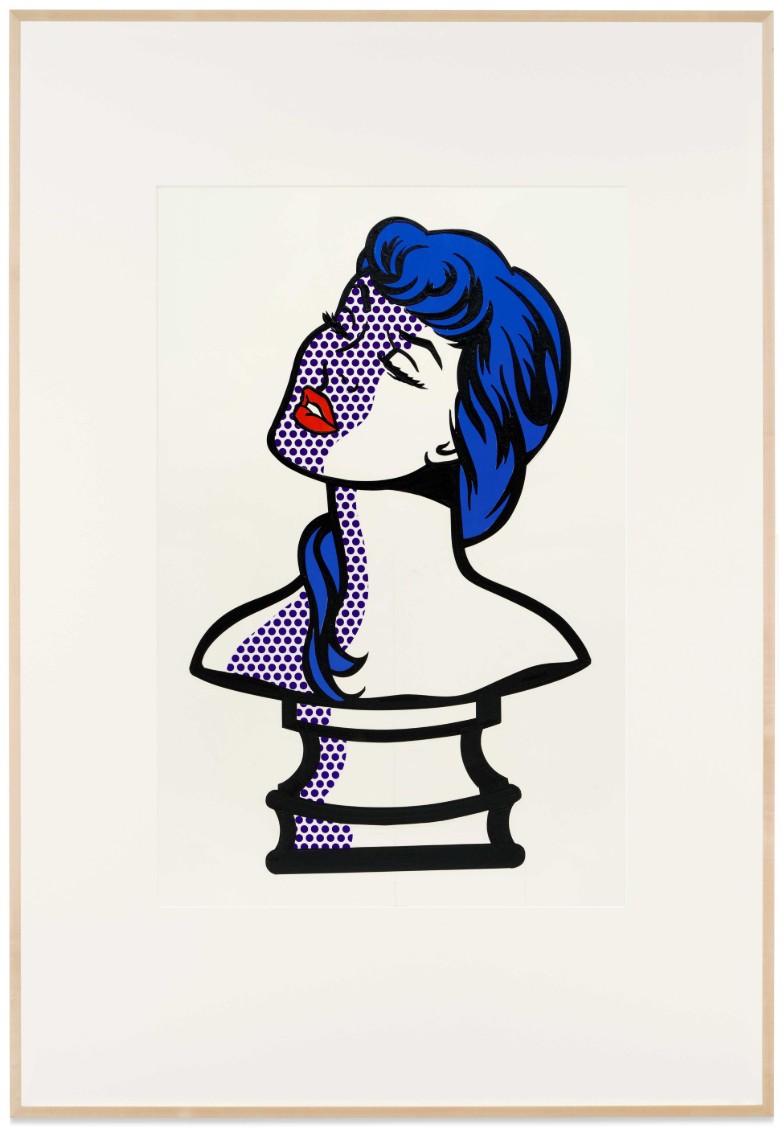
ROY LICHTENSTEIN (1923 – 1997)
Woman: Sunlight, Moonlight (Study), 1995
Tape, cut painted paper, cut printed paper and graphite on board
60×36 inches (152.4 x 91.4 cm)
Signed and dated ‘95 (on the reverse)
#3. Interior with African Mask (Study), 1990
Works from the Collection of Dorothy and Roy Lichtenstein
Sotheby’s New-York: 16 May 2025
Estimated: USD 800,000 – 1,200,000
USD 2,522,o00
Interior with African Mask (Study) | Contemporary Day Auction | 2025 | Sotheby’s
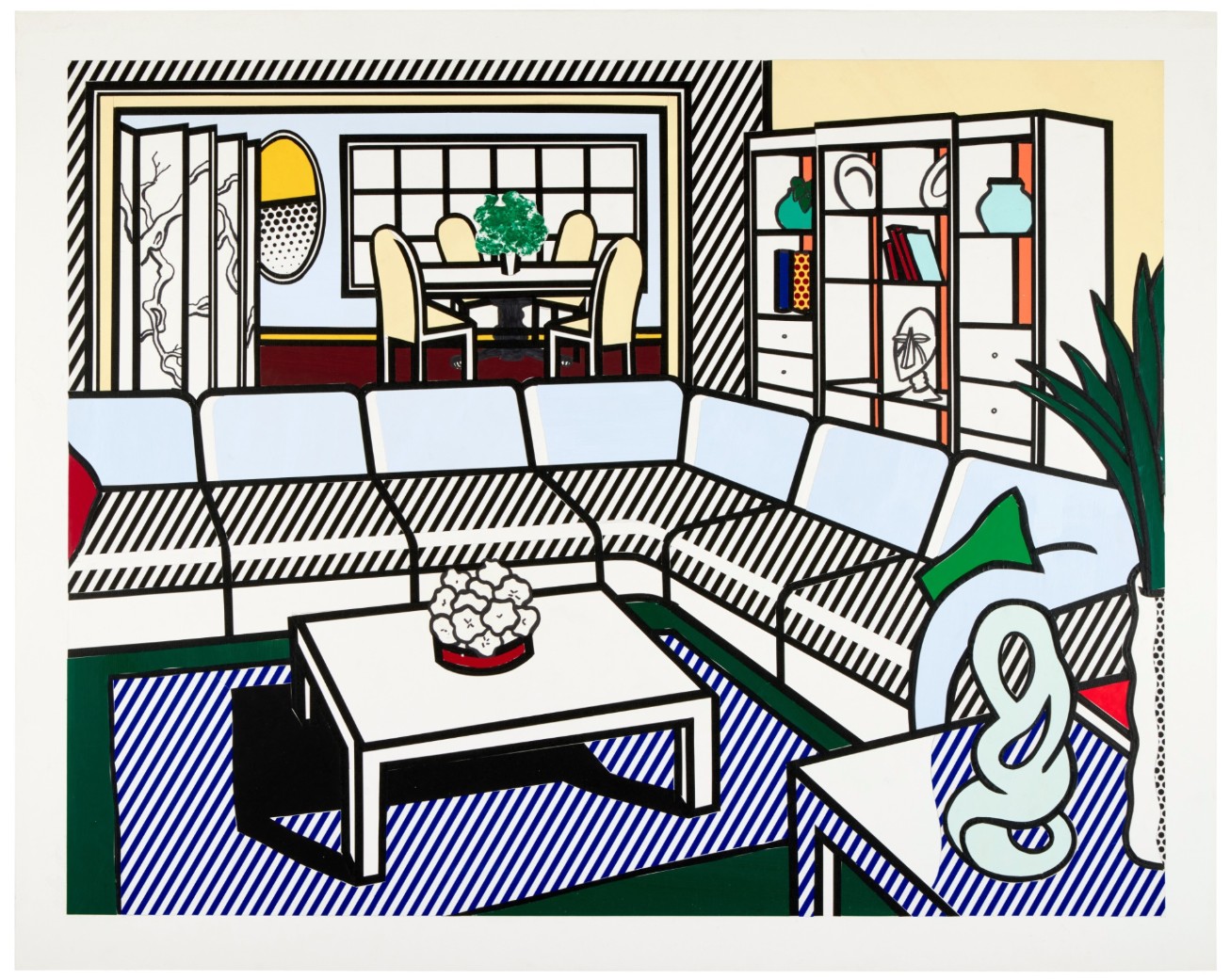
ROY LICHTENSTEIN (1923 – 1997)
Interior with African Mask (Study), 1990
Sut painted paper, cut printed paper, tape, marker and graphite on board
Image: 34 1/4 x 44 inches (86.8 x 111.8 cm)
Sheet: 38 1/2 x 48 1/4 inches (97.6 x 122.6 cm)
#4. Nudes in Mirror (Study), 1994
Works from the Collection of Dorothy and Roy Lichtenstein
Sotheby’s New-York: 16 May 2025
Estimated: USD 1,000,000 – 1,500,000
USD 2,405,o00
Nudes in Mirror (Study) | The Now and Contemporary Evening Auction | 2025 | Sotheby’s
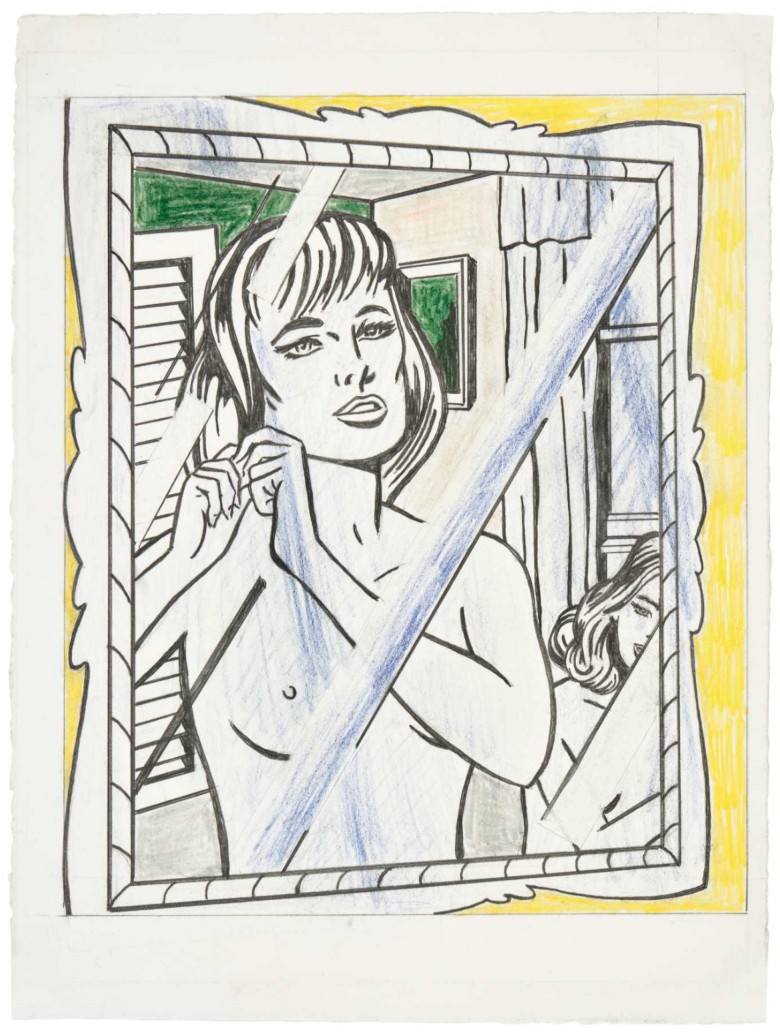
ROY LICHTENSTEIN (1923 – 1997)
Nudes in Mirror (Study), 1994
Colored pencil and graphite on paper
Image: 12 1/4 x 10 1/4 inches (31.1 x 26 cm)
Sheet: 15 1/4 x 11 3/8 inches (38.7 x 28.9 cm)
Signed and dated ’94 (on the reverse)
#5. Portrait Triptych (Studies), 1974
Works from the Collection of Dorothy and Roy Lichtenstein
Sotheby’s New-York: 16 May 2025
Estimated: USD 1,500,000 – 2,000,000
USD 2,246,000
Portrait Triptych (Studies) | The Now and Contemporary Evening Auction | 2025 | Sotheby’s
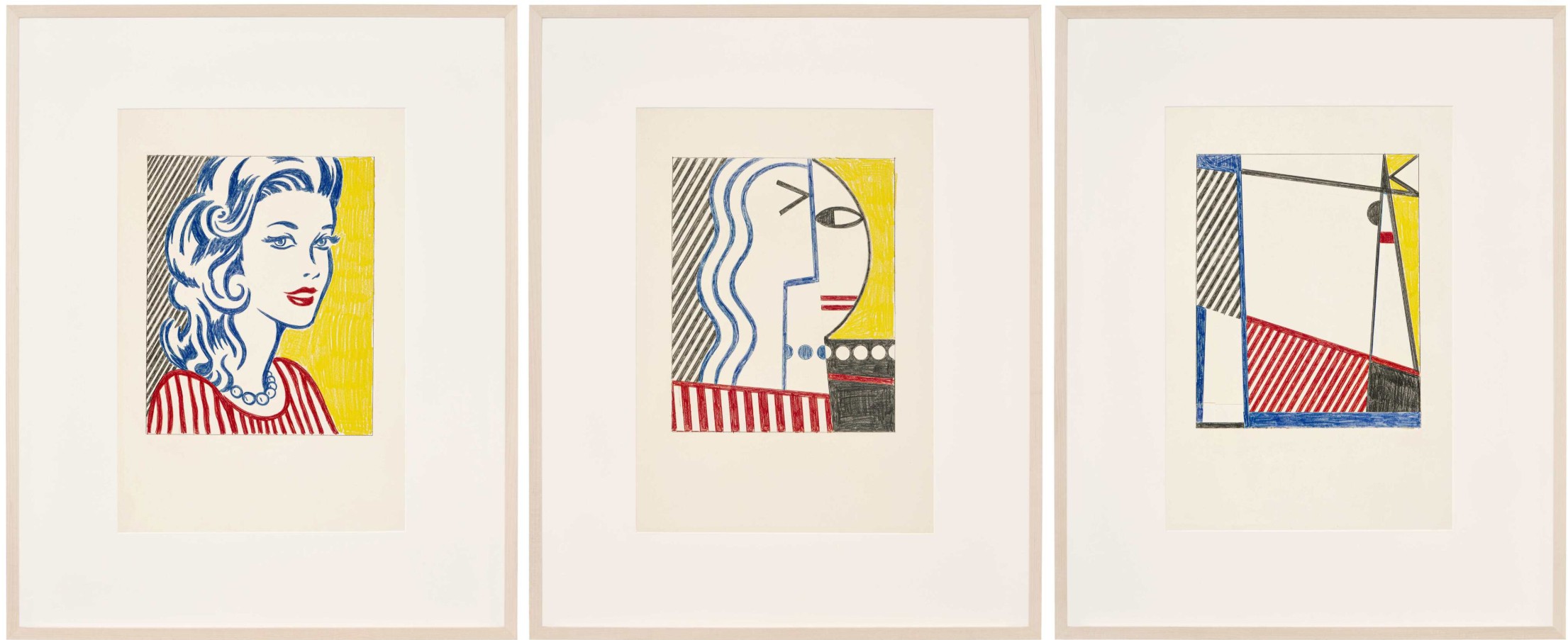
ROY LICHTENSTEIN (1923 – 1997)
Portrait Triptych (Studies), 1974
Left and center sheets: colored pencil and graphite on paper
Right sheet: colored pencil, graphite and paper collage on paper
Each sheet: 22×15 inches (55.9 x 37.9 cm)
Each image: approx. 13 1/2 x 10 3/4 inches (34.3 x 27.3 cm)
Each: signed and dated ’74 (on the reverse)
#6. Still Life Tapestry (Study), 1973
Works from the Collection of Dorothy and Roy Lichtenstein
Sotheby’s New-York: 15 May 2025
Estimated: USD 1,000,000 – 1,500,000
USD 2,063,000
Still Life Tapestry (Study) | The Now and Contemporary Evening Auction | 2025 | Sotheby’s
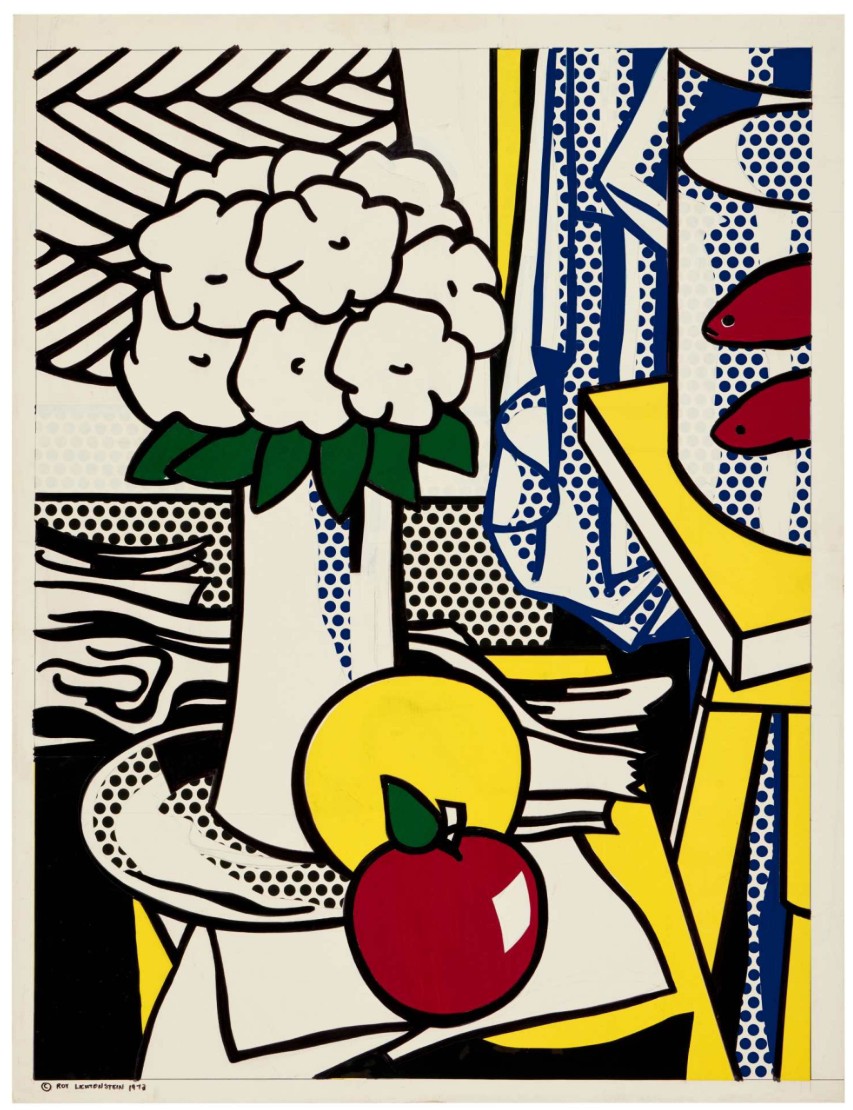
ROY LICHTENSTEIN (1923 – 1997)
Still Life Tapestry (Study), 1973
Cut painted paper, cut printed paper, marker on cut paper, cut paper, marker and graphite on board
Image: 32 5/8 x 24 1/2 inches (82.9 x 62.2 cm)
Board: 34 3/8 x 26 1/4 inches (87.3 x 66.7 cm)
Signed and dated 1973 (lower left)
#7. Water Lily Pond with Reflections (Study), 1992
Works from the Collection of Dorothy and Roy Lichtenstein
Sotheby’s New-York: 16 May 2025
Estimated: USD 500,000 – 700,000
USD 1,941,000
Water Lily Pond with Reflections (Study) | Contemporary Day Auction | 2025 | Sotheby’s
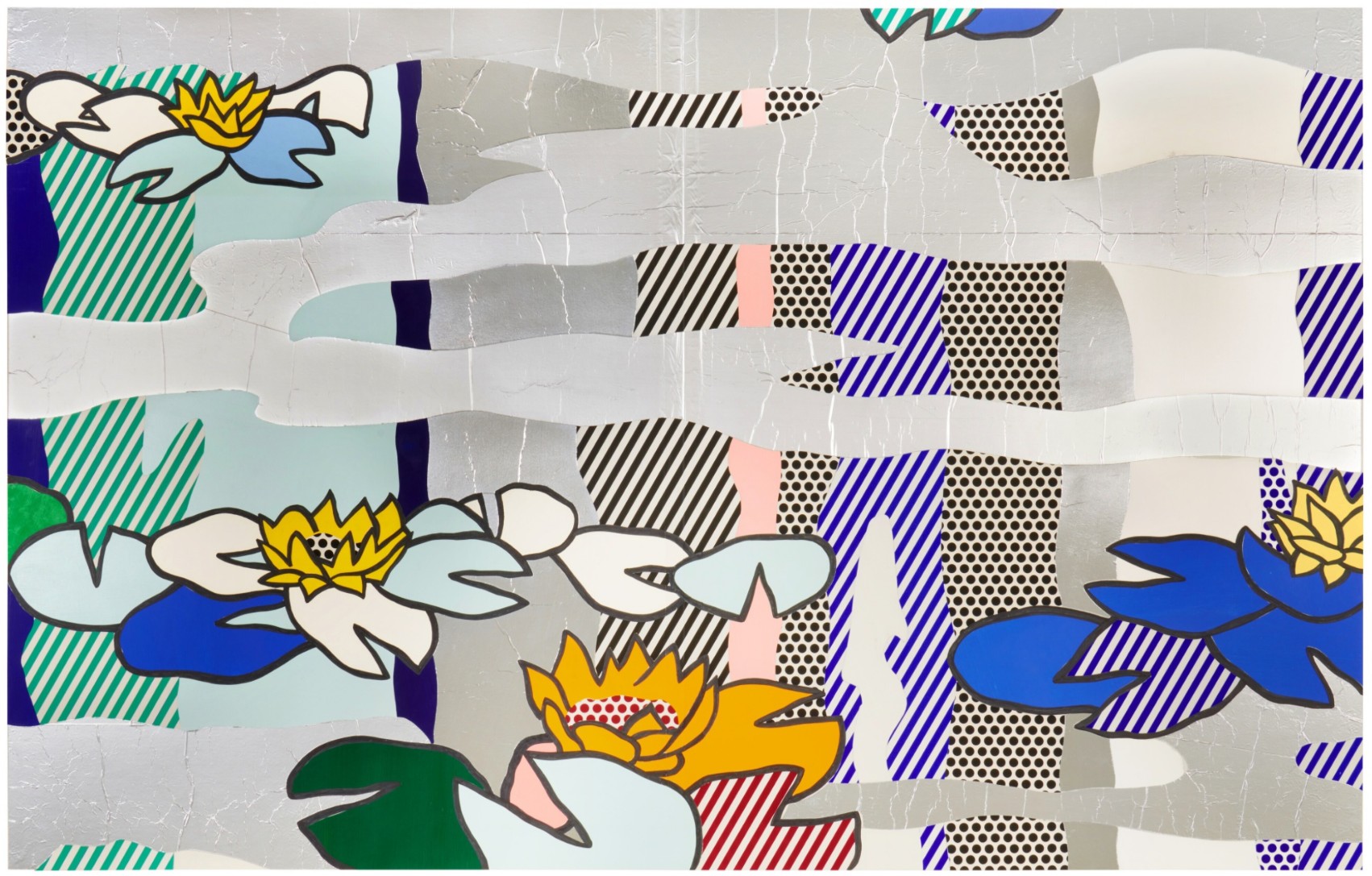
ROY LICHTENSTEIN (1923 – 1997)
Water Lily Pond with Reflections (Study), 1992
Cut painted paper, cut printed paper, aluminum foil, tape, marker and graphite on 2 joined boards
Image: 46 1/8 x 72 1/4 inches (117.2 x 183.5 cm)
Sheet: 60 x 80 1/4 inches (152.4 x 204 cm)
#8. Interior with Mirrored Wall (Study), 1990
A Legacy Reimagined: Works from the Collection of Dorothy and Roy Lichtenstein
Sotheby’s New-York: 19 November 2025
Estimated: USD 500,000 – 700,000
USD 1,638,000
Interior with Mirrored Wall (Study) | Contemporary Day Auction | 2025 | Sotheby’s
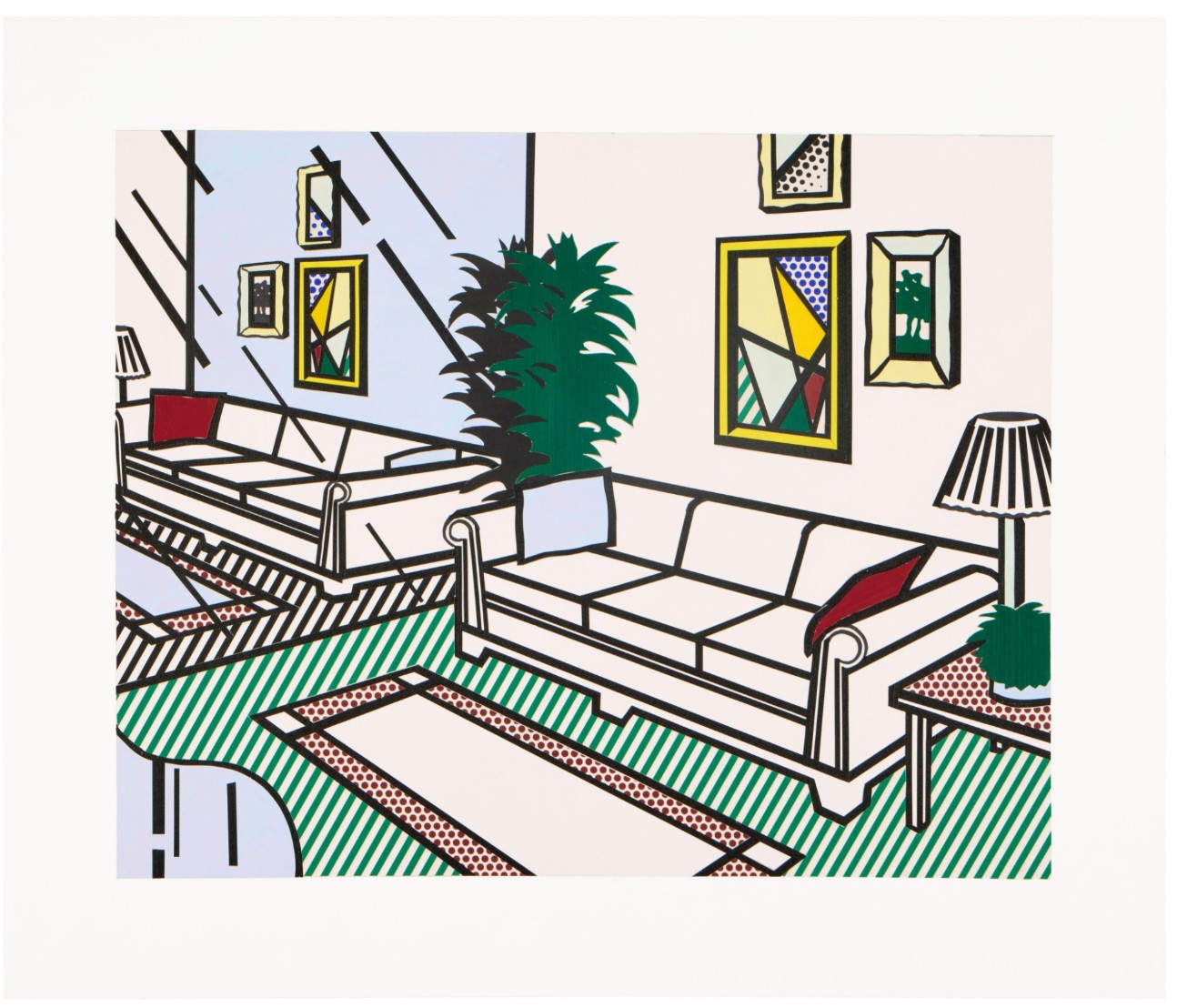
ROY LICHTENSTEIN (1923 – 1997)
Interior with Mirrored Wall (Study), 1990
Cut painted and printed paper, tape and graphite on board
Image: 26 1/2 x 33 inches (67.3 x 83.8 cm)
Board: 34 1/2 x 40 3/4 inches (87.6 x 103.5 cm)
Signed and dated ’90 (on the verso)
#9. Large Interior with Three Reflections (Mural Panel) (Study), 1993
A Legacy Reimagined: Works from the Collection of Dorothy and Roy Lichtenstein
Sotheby’s New-York: 18 November 2025
Estimated: USD 1,000,000 – 1,500,000
USD 1,575,000
WORK ON PAPER
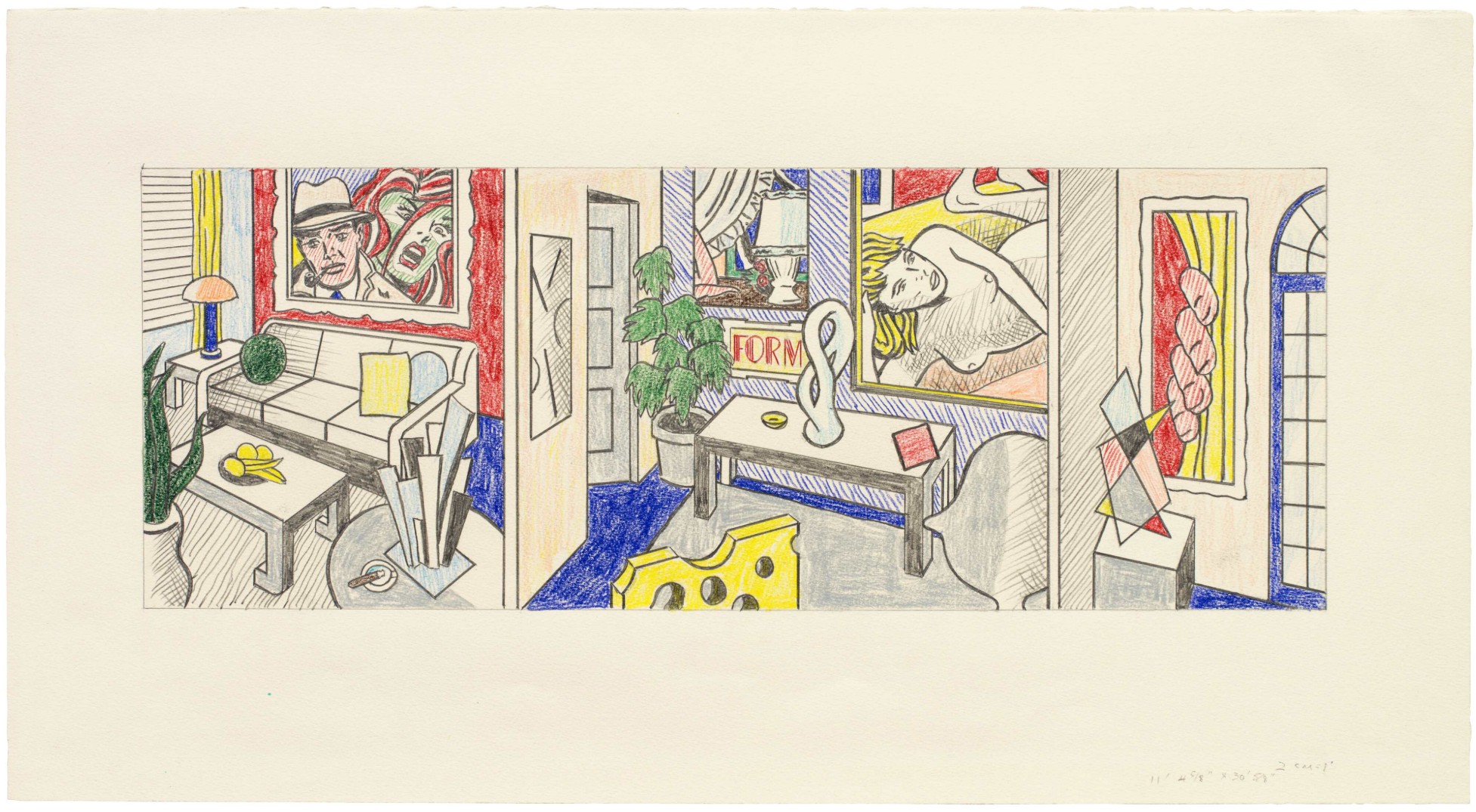
ROY LICHTENSTEIN (1923 – 1997)
Large Interior with Three Reflections (Mural Panel) (Study), 1993
Colored pencil and graphite on paper
Image: 9 1/8 x 24 1/4 inches (23 x 61.6 cm)
Sheet: 16 1/4 x 30 1/8 inches (41.3 x 76.4 cm)
#10. Seductive Girl (Study), 1996
Works from the Collection of Dorothy and Roy Lichtenstein
Sotheby’s London: 24 June 2025
Estimated: GBP 500,000 – 700,000
GBP 952,500 / USD 1,285,875
Seductive Girl (Study) | Modern & Contemporary Evening Auction | 2025 | Sotheby’s
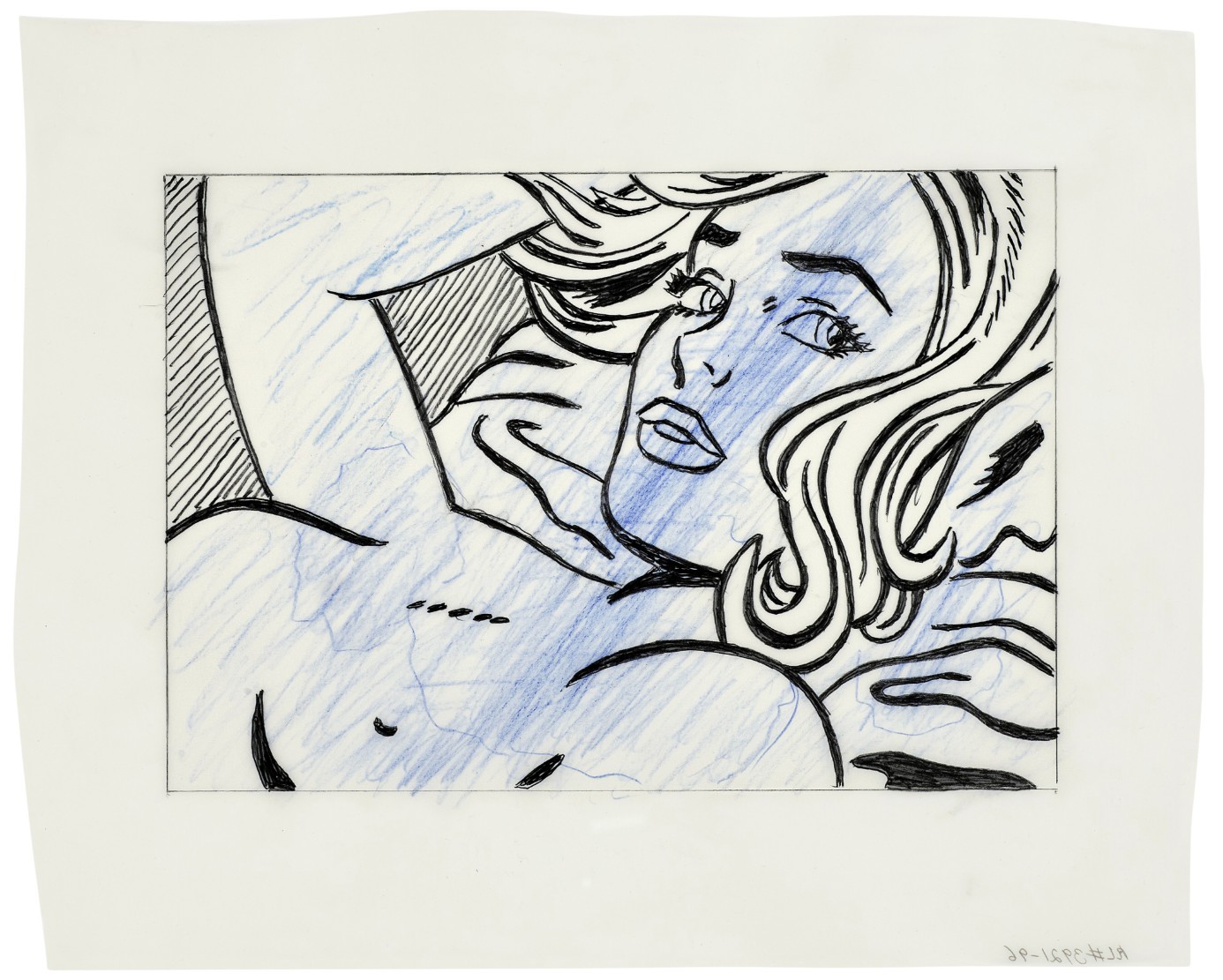
ROY LICHTENSTEIN (1923 – 1997)
Seductive Girl (Study), 1996
Graphite and coloured pencil on Denril
Image: 6 3/4 x 9 1/2 inches (17.1 x 24.1 cm)
Sheet:10 3/8 x 12 7/8 inches (26.4 x 32.6 cm)
#11. Cover Image for Guggenheim Magazine (Study), 1993
A Legacy Reimagined: Works from the Collection of Dorothy and Roy Lichtenstein
Sotheby’s New-York: 19 November 2025
Estimated: USD 800,000 – 1,200,000
USD 1,255,000
Cover Image for Guggenheim Magazine (Study) | Contemporary Day Auction | 2025 | Sotheby’s
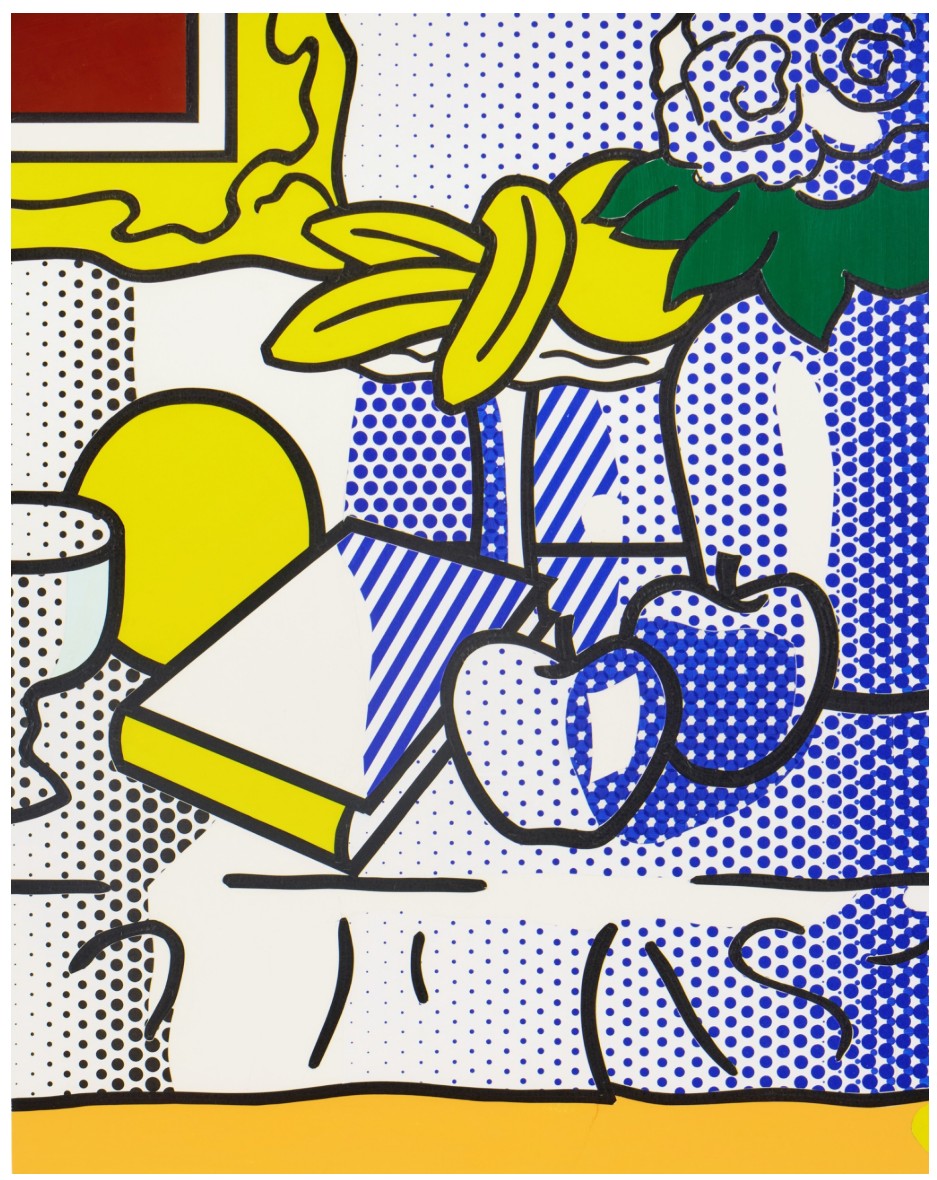
ROY LICHTENSTEIN (1923 – 1997)
Cover Image for Guggenheim Magazine (Study), 1993
Graphite, tape, cut painted and printed paper on board
Image: 40 1/2 x 31 7/8 inches (102.9 x 81 cm)
Board: 48 5/8 x 40 inches (123.5 x 101.6 cm)
Signed and dated ’93 (on the verso)
#12. Nude (Study), 1997
Reflections on Pop: Works from the Collection of Dorothy and Roy Lichtenstein
Sotheby’s New-York: 26 September 2025
Estimated: USD 800,000 – 1,200,000
USD 1,079,500
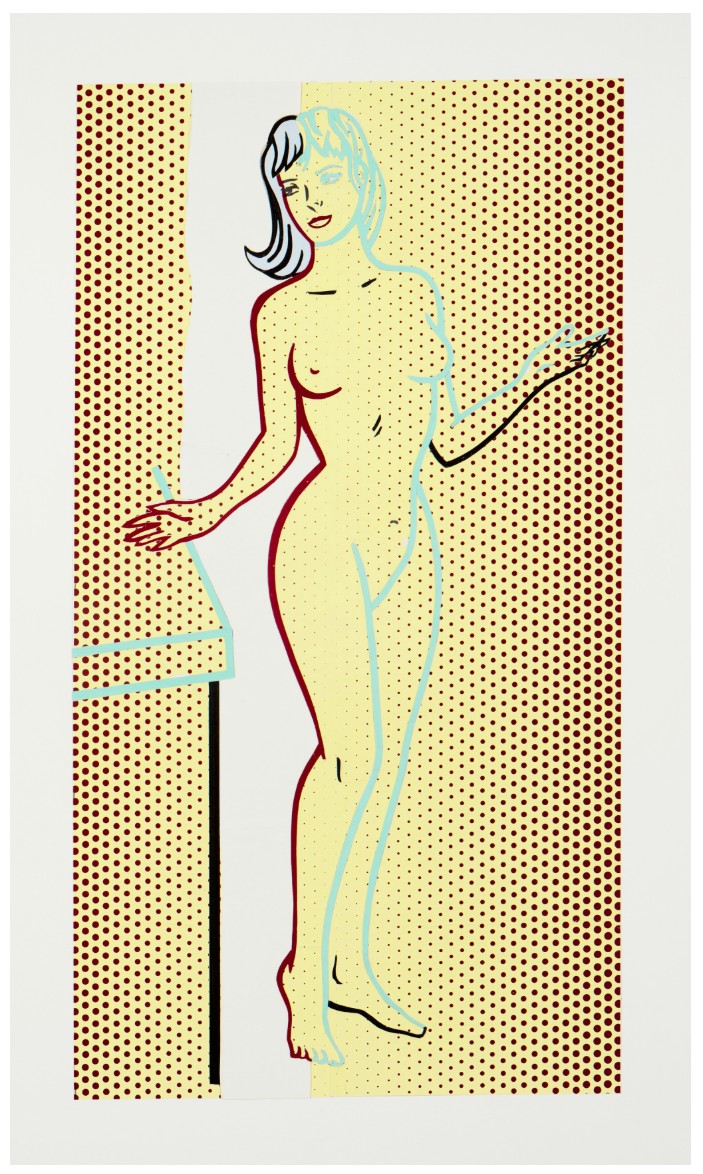
ROY LICHTENSTEIN (1923 – 1997)
Nude (Study), 1997
Tape, cut painted paper, cut printed paper, cut paper, marker and graphite on paperboard
Image: 41 3/8 x 22 1/4 inches (105.1 x 56.5 cm)
Paperboard: 51×32 inches (129.5 x 81.3 cm)
#13. Interior (Study), 1991
Reflections on Pop: Works from the Collection of Dorothy and Roy Lichtenstein
Sotheby’s New-York: 26 September 2025
Estimated: USD 700,000 – 1,000,000
USD 1,079,500
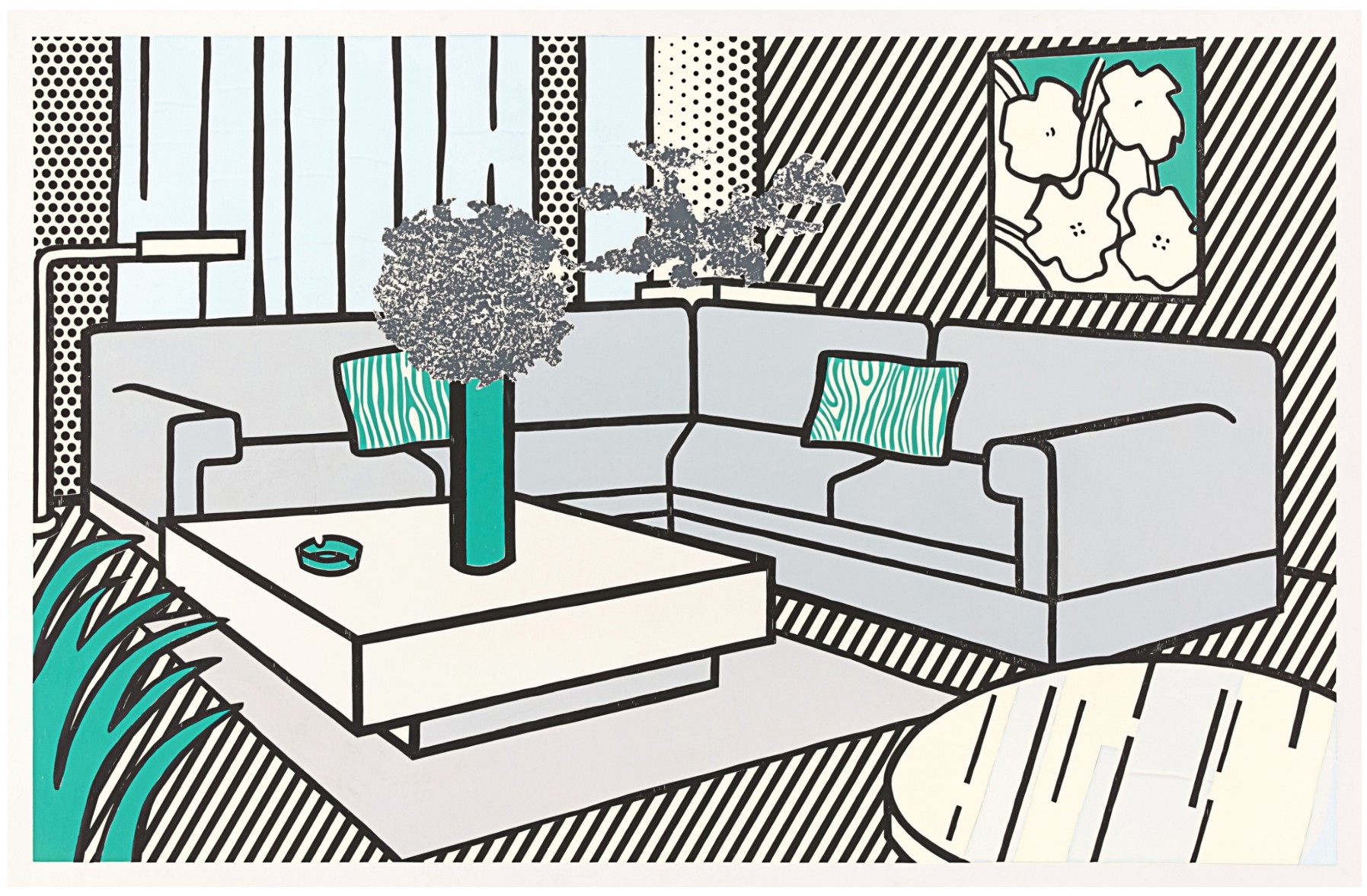
ROY LICHTENSTEIN (1923 – 1997)
Interior (Study), 1991
Tape, cut painted paper, cut paper on printed paperboard
Image: 49 3/4 x 78 3/8 inches (126.4 x 199.1 cm)
Paperboard: 55 3/4 x 84 1/4 inches (141.6 x 214 cm)
#14. Still Life with Portrait (Study), 1973
Property from the Estate of Joan and Kenneth Goldglit
Christie’s New-York: 20 November 2025
Estimated: USD 1,000,000 – 1,500,000
USD 1,016,000
ROY LICHTENSTEIN (1923-1997), Still Life with Portrait (Study) | Christie’s
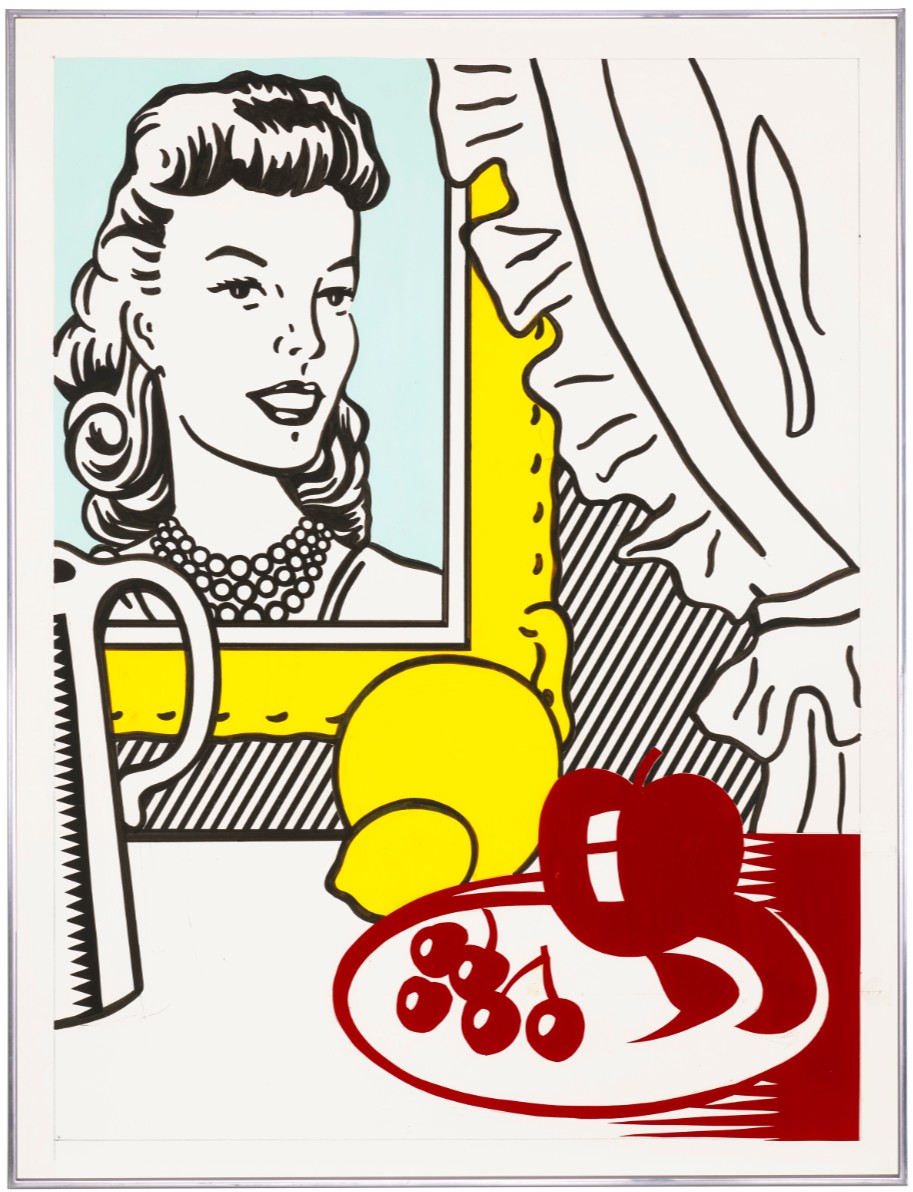
ROY LICHTENSTEIN (1923-1997)
Still Life with Portrait (Study), 1973
Printed paper collage, acrylic, felt-tip pen and graphite on paperboard
42×32 inches (106.7 x 81.3 cm)
Signed and dated ‘rf Lichtenstein ’73’ (on the reverse)
#15. Interior with Painting of House (Study), 1997
Works from the Collection of Dorothy and Roy Lichtenstein
Sotheby’s London: 24 June 2025
Estimated: GBP 500,000 – 700,000
GBP 742,000 / USD 1,001,700
Interior with Painting of House (Study) | Modern & Contemporary Evening Auction | 2025 | Sotheby’s
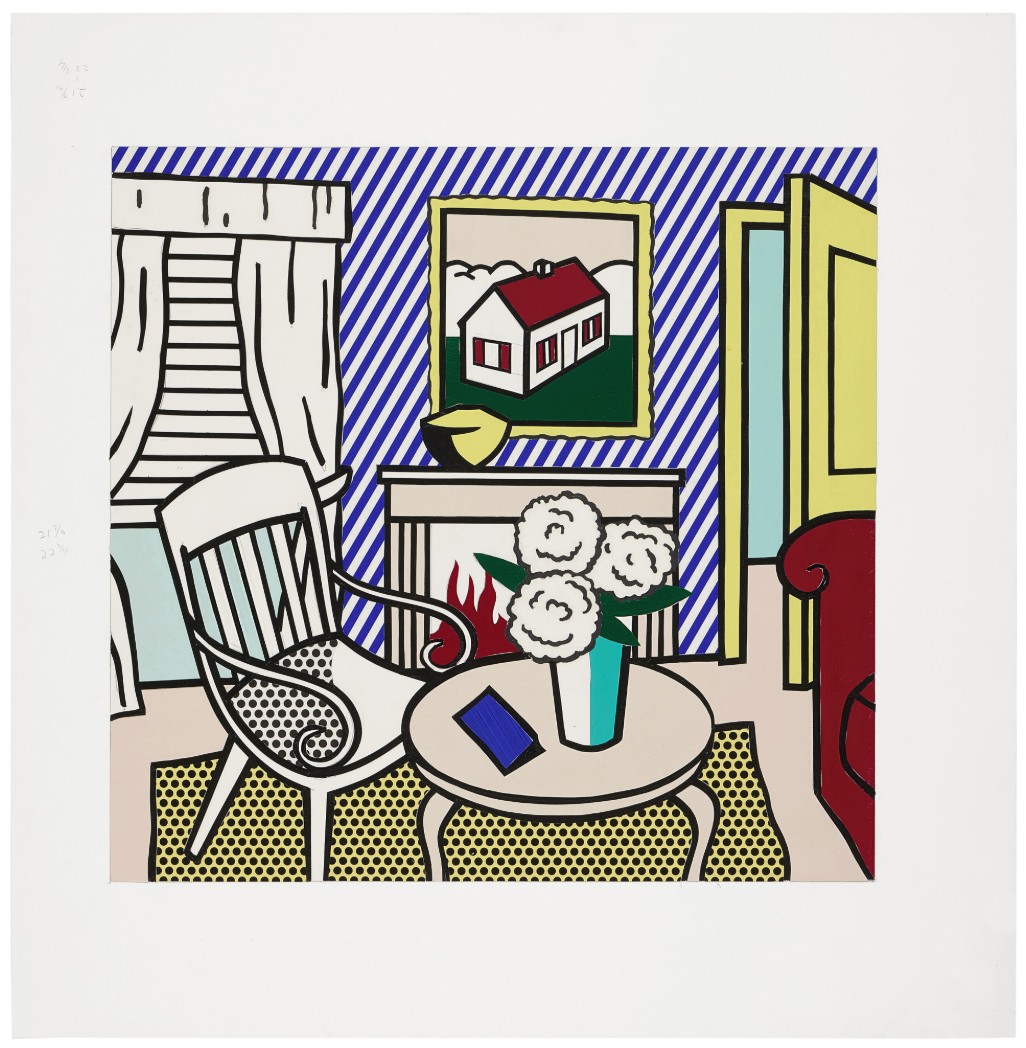
ROY LICHTENSTEIN (1923 – 1997)
Interior with Painting of House (Study), 1997
Cut painted paper, cut printed paper, tape, marker and graphite on board
Image: 21 7/8 x 22 3/4 inches (55.6 x 57.9 cm)
Board: 30 5/8 x 29 7/8 inches (77.8 x 75.9 cm)
USD 1 million
#16. Reflections on Señorita (Study), circa 1990
A Legacy Reimagined: Works from the Collection of Dorothy and Roy Lichtenstein
Sotheby’s New-York: 19 November 2025
Estimated: USD 400,000 – 600,000
USD 952,500
WORK ON PAPER
Reflections on Señorita (Study) | Contemporary Day Auction | 2025 | Sotheby’s
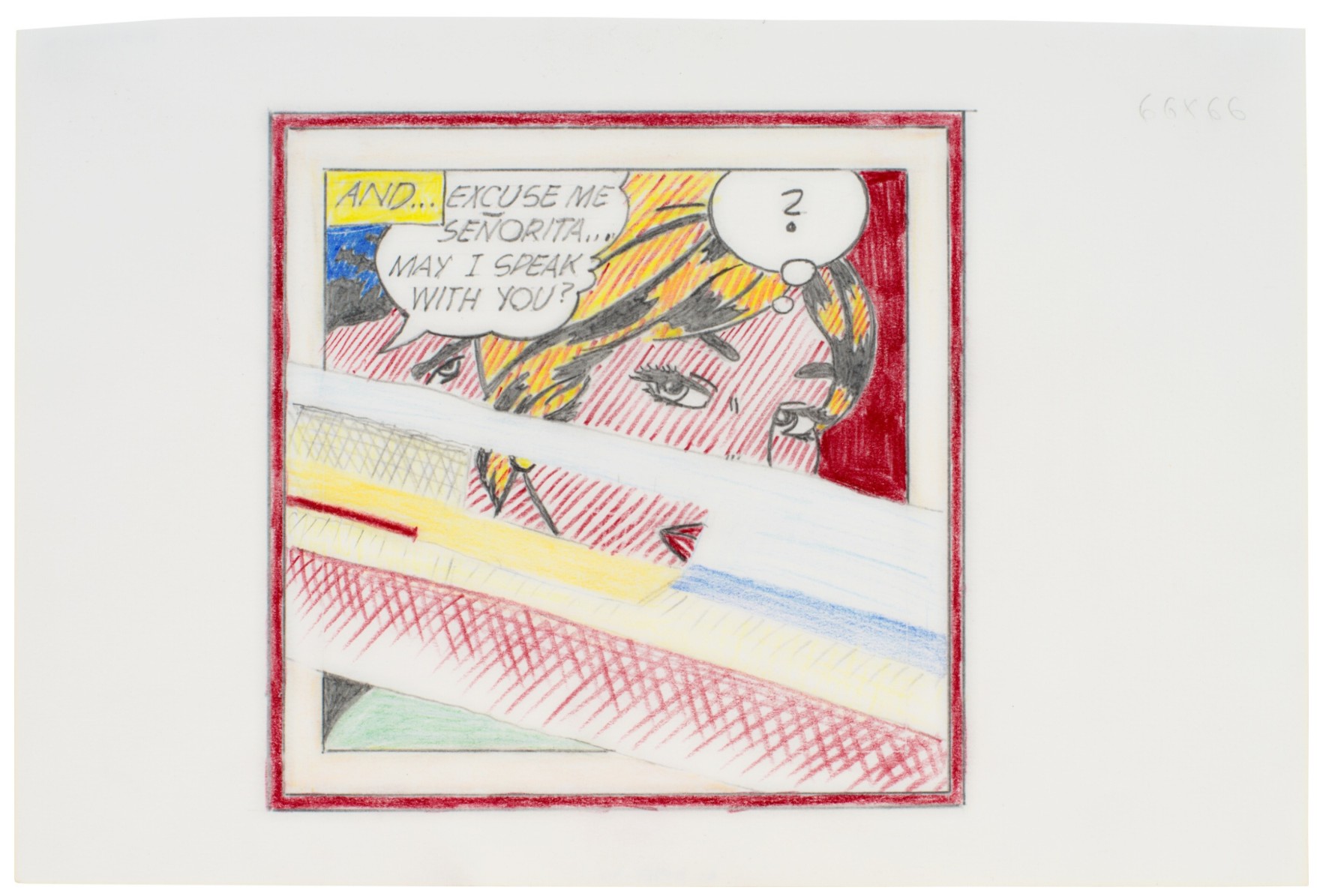
ROY LICHTENSTEIN (1923 – 1997)
Reflections on Señorita (Study), circa 1990
Colored pencil and graphite on paper
Image: 6 5/8 x 6 5/8 inches (16.8 x 16.8 cm)
Sheet: 8 1/4 x 12 1/4 inches (21 x 31.1 cm)
“I was very excited about and interested in the highly emotional content yet detached, impersonal handling of love, hate, war etc., in these cartoon images…
It is an intensification a stylistic intensification of the excitement which the subject matter has for me; but the style is, as you say, cool.
One of the things a cartoon does is to express violent emotion and passion in a completely mechanical and removed style.”
#17. Yellow and Black Brushstroke (Eat Art) (Study), 1970
Works from the Collection of Dorothy and Roy Lichtenstein
Sotheby’s New-York: 16 May 2025
Estimated: USD 400,000 – 600,000
USD 889,000
Yellow and Black Brushstroke (Eat Art) (Study) | Contemporary Day Auction | 2025 | Sotheby’s
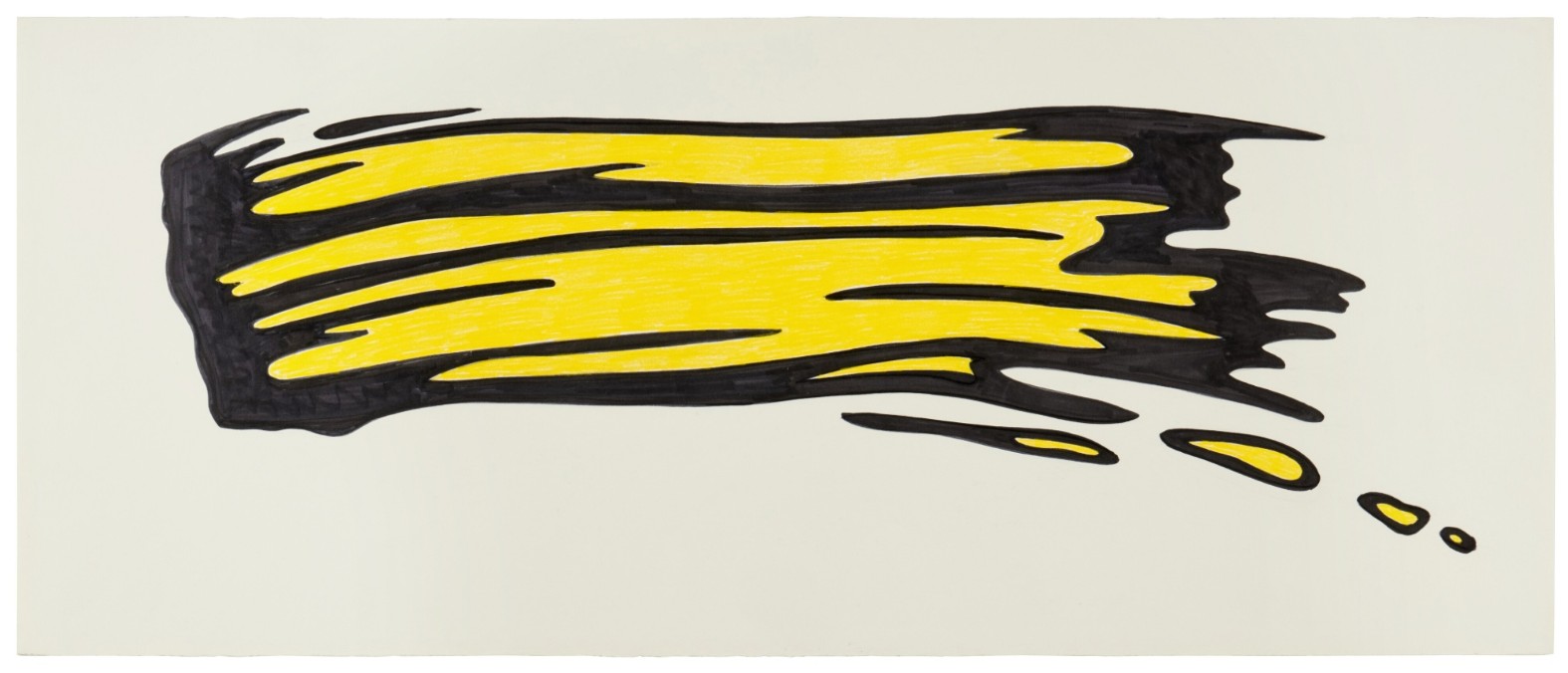
ROY LICHTENSTEIN (1923 – 1997)
Yellow and Black Brushstroke (Eat Art) (Study), 1970
Marker, colored pencil and graphite on paper
17 1/4 x 41 1/2 inches (43.8 x 105.4 cm)
#18. Nude with Bust (Study), 1995
Reflections on Pop: Works from the Collection of Dorothy and Roy Lichtenstein
Sotheby’s New-York: 26 September 2025
Estimated: USD 400,000 – 600,000
USD 825,500
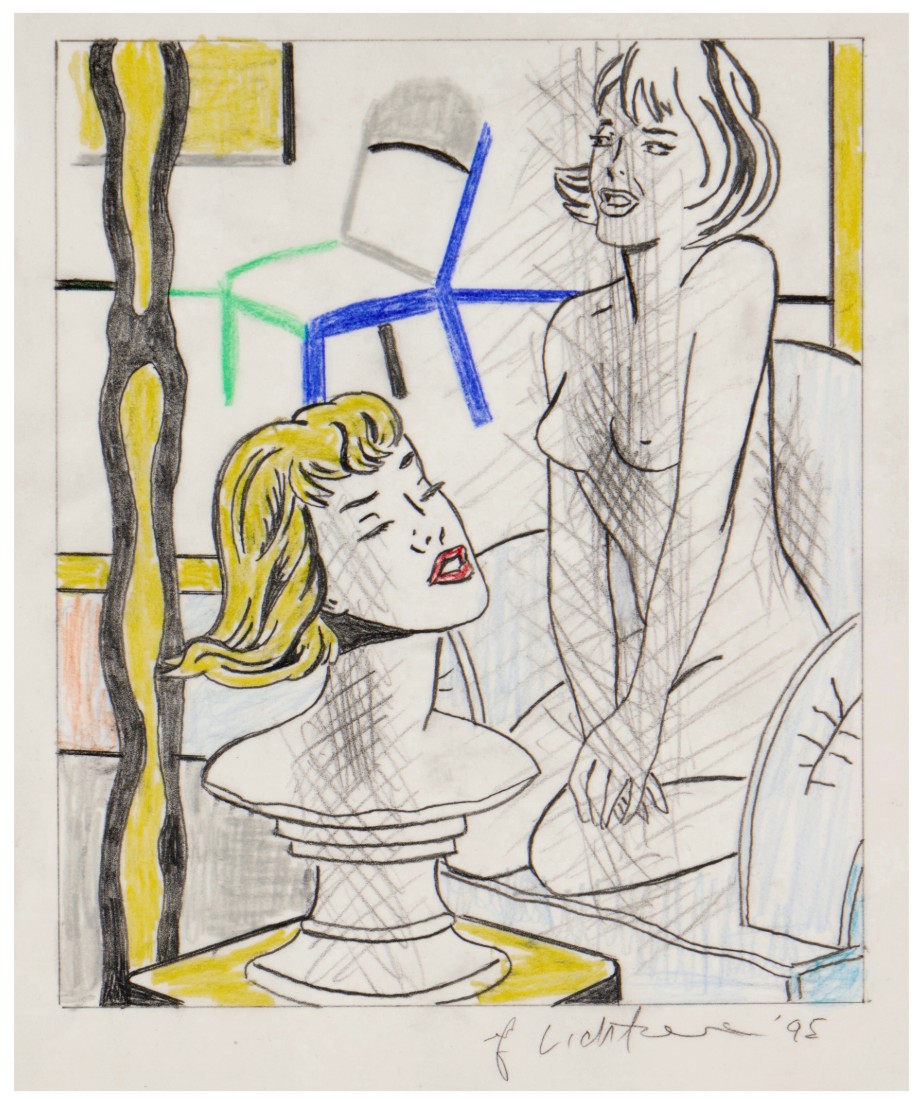
ROY LICHTENSTEIN (1923 – 1997)
Nude with Bust (Study), 1995
Colored pencil and graphite on Denril
Image: 9 7/8 x 8 1/4 inches (25.1 x 21 cm)
Sheet: 15 5/8 x 9 3/8 inches (39.7 x 23.8 cm)
Signed and dated ’95 (lower right)
#19. Interior with Swimming Pool Painting (Study), 1992
Works from the Collection of Dorothy and Roy Lichtenstein
Sotheby’s New-York: 16 May 2025
Estimated: USD 400,000 – 600,000
USD 762,000
Interior with Swimming Pool Painting (Study) | Contemporary Day Auction | 2025 | Sotheby’s
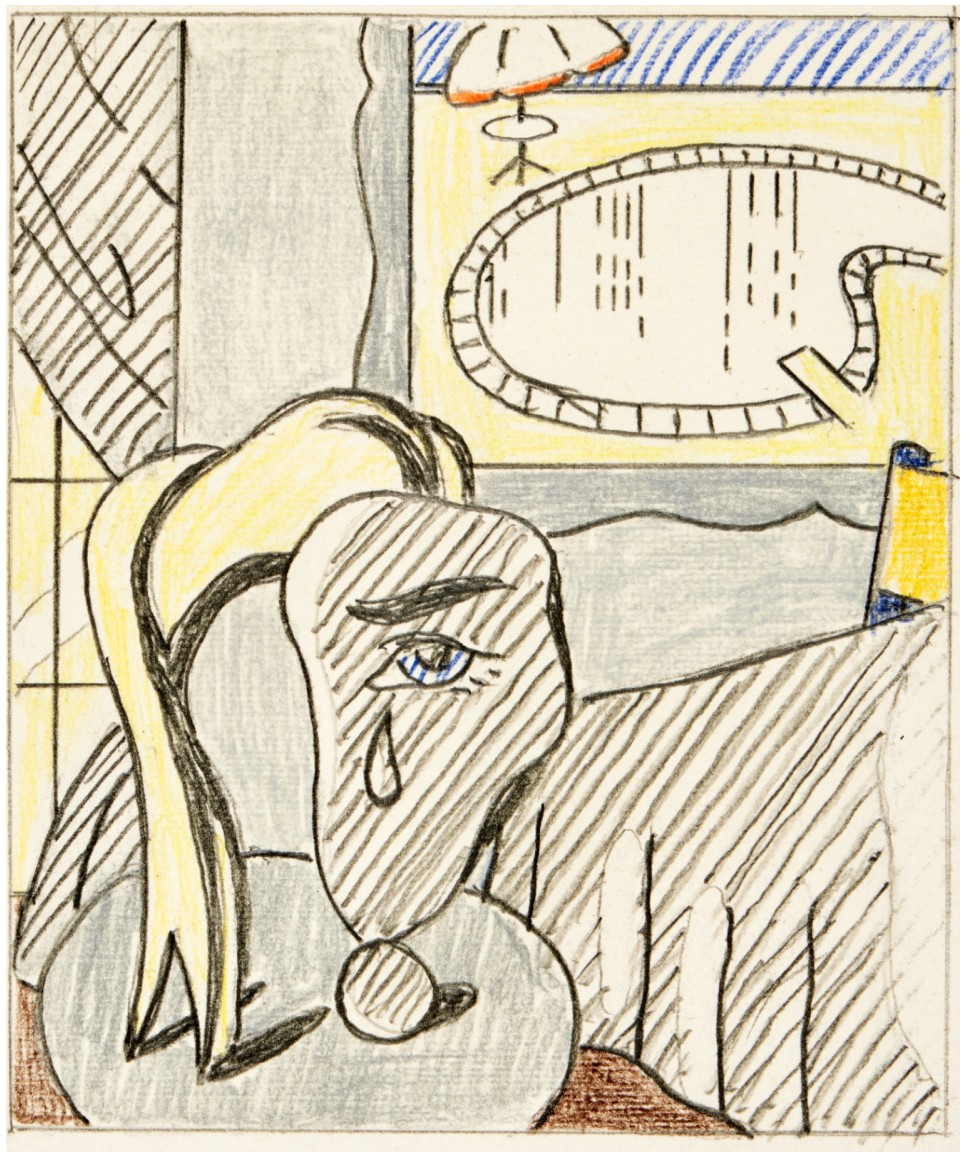
ROY LICHTENSTEIN (1923 – 1997)
Interior with Swimming Pool Painting (Study), 1992
Colored pencil and graphite on paper
Image: 6×5 inches (15.2 x 12.7 cm)
Sheet: 9 7/8 x 6 3/4 inches (25.1 x 17.1 cm)
Signed and dated ’92 (on the verso)
#20. The Sower (Study), 1984
Reflections on Pop: Works from the Collection of Dorothy and Roy Lichtenstein
Sotheby’s New-York: 26 September 2025
Estimated: USD 400,000 – 600,000
USD 698,500
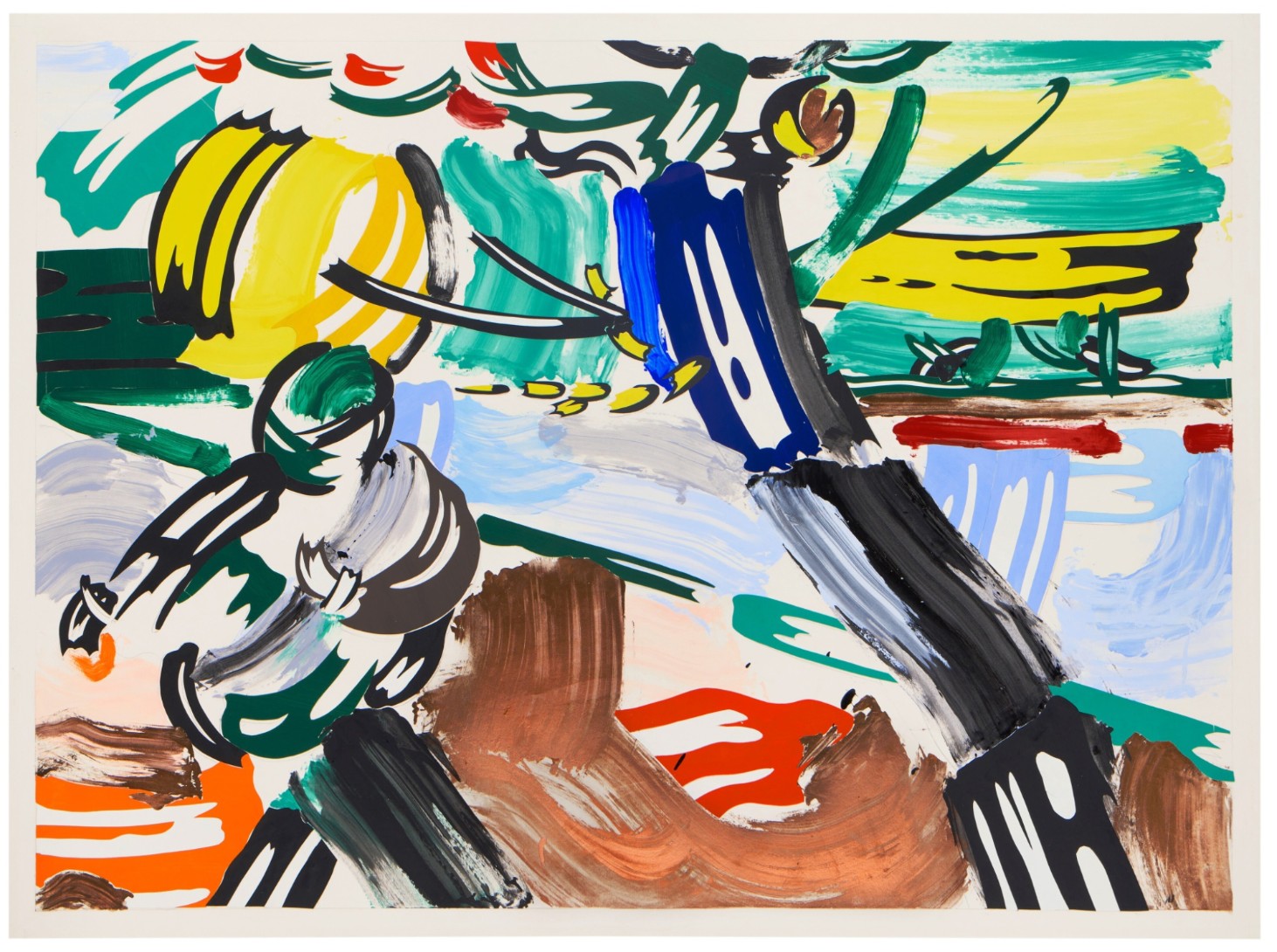
ROY LICHTENSTEIN (1923 – 1997)
The Sower (Study), 1984
Cut painted paper, cut printed paper, cut paper, acrylic and graphite on paperboard
Image: 38 1/4 x 52 1/2 inches (97.2 x 133.3 cm)
Paperboard: 40 3/4 x 55 1/8 inches (103.5 x 140 cm)
Signed and dated ’84 (on the verso)
#21. Reflections: Whaaam! (Study), circa 1990
Works from the Collection of Dorothy and Roy Lichtenstein
Sotheby’s New-York: 16 May 2025
Estimated: USD 250,000 – 350,000
USD 660,400
Reflections: Whaaam! (Study) | Contemporary Day Auction | 2025 | Sotheby’s
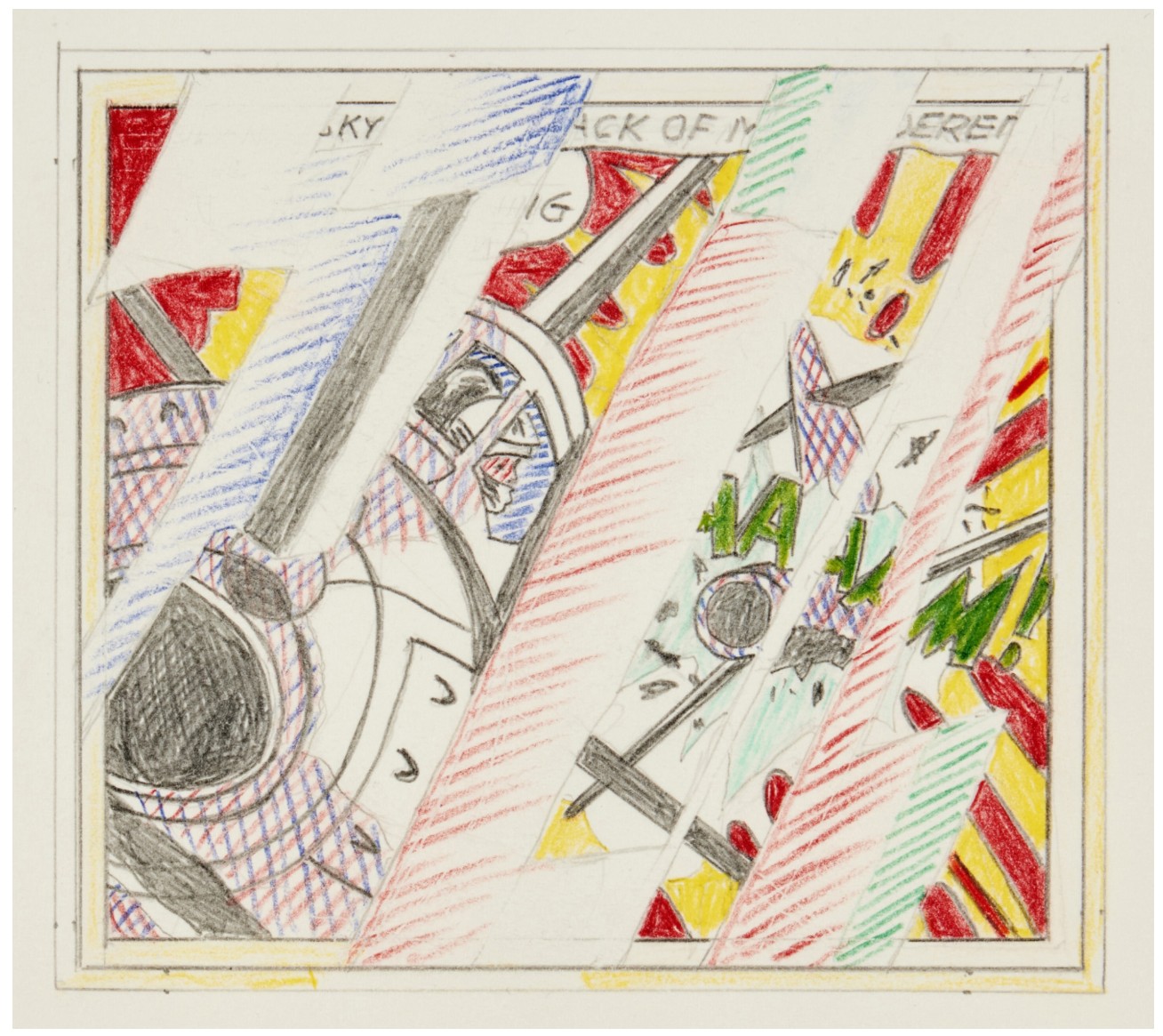
ROY LICHTENSTEIN (1923 – 1997)
Reflections: Whaaam! (Study), circa 1990
Colored pencil and graphite on paper
Image: 5 1/4 x 5 7/8 inches (13.3 x 14.9 cm)
Sheet: 7 1/2 x 10 1/2 inches (19.1 x 26.7 cm)
#22. Cover Image for Art About Art Book (Study), 1978
Works from the Collection of Dorothy and Roy Lichtenstein
Sotheby’s New-York: 16 May 2025
Estimated: USD 300,000 – 400,000
USD 635,000
Cover Image for Art About Art Book (Study) | Contemporary Day Auction | 2025 | Sotheby’s
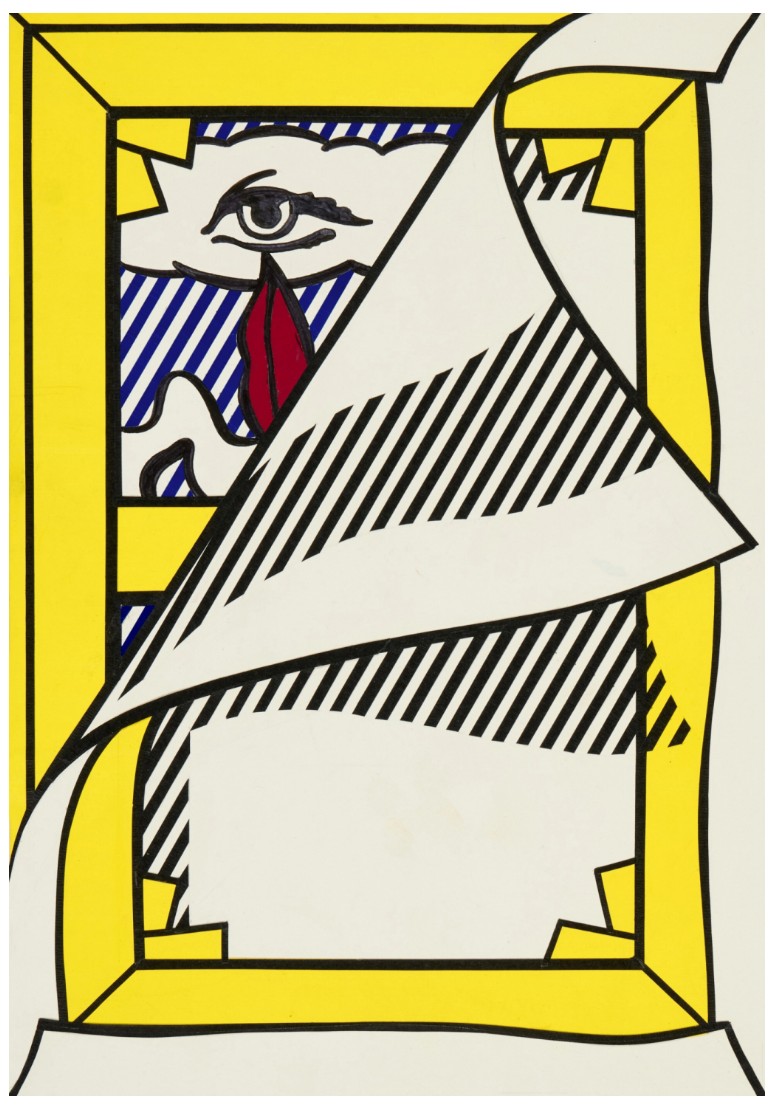
ROY LICHTENSTEIN (1923 – 1997)
Cover Image for Art About Art Book (Study), 1978
Sut painted paper, cut printed paper, tape, marker, colored pencil and graphite on board
22 5/8 x 17 1/8 inches (57.5 x 43.5 cm)
#23. Roommates (Study), 1993
Works from the Collection of Dorothy and Roy Lichtenstein
Sotheby’s New-York: 16 May 2025
Estimated: USD 600,000 – 800,000
USD 609,600
Roommates (Study) | Contemporary Day Auction | 2025 | Sotheby’s
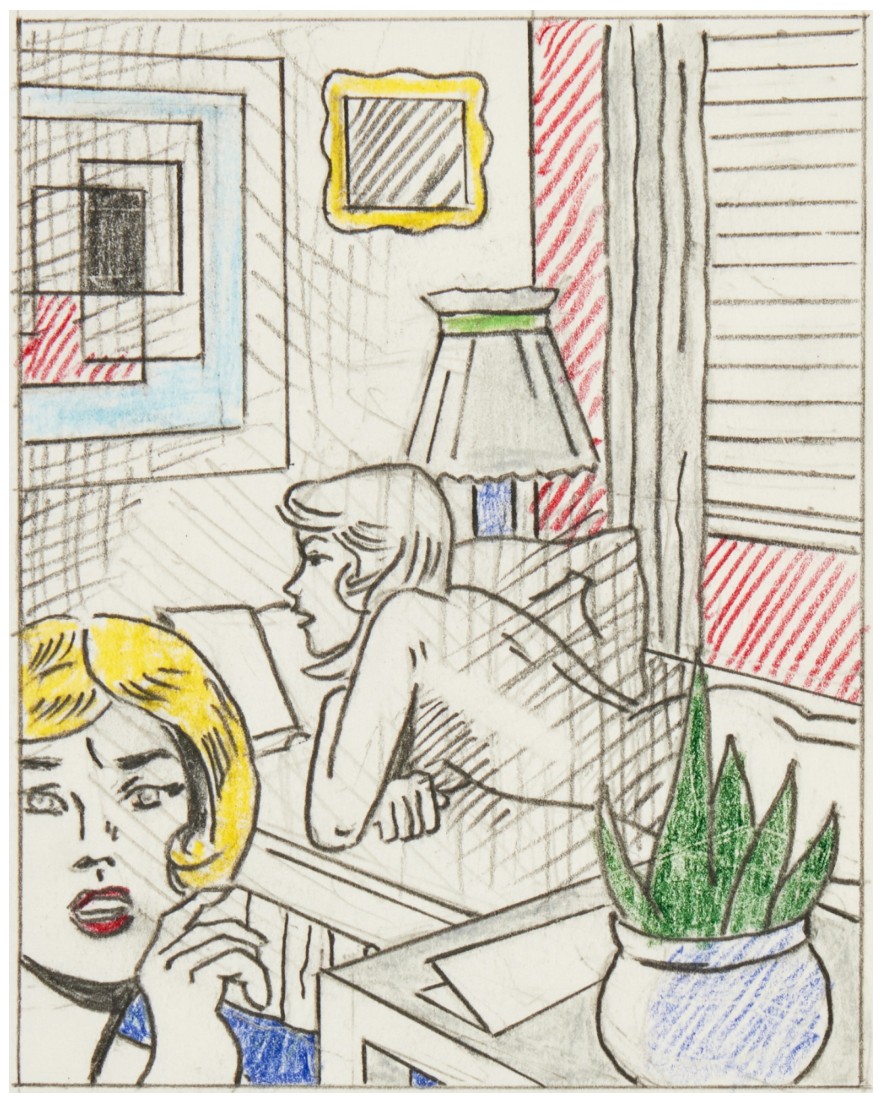
ROY LICHTENSTEIN (1923 – 1997)
Roommates (Study), 1993
Colored pencil and graphite on paper
Image: 4 7/8 x 3 3/4 inches (12.5 x 9.7 cm)
Sheet: 9 5/8 x 8 inches (24.4 x 20.3 cm)
Signed and dated ’93 (on the verso)
#24. Water Lilies – Pink Flower (Study), 1992
Works from the Collection of Dorothy and Roy Lichtenstein
Sotheby’s London: 25 June 2025
Estimated: GBP 300,000 – 400,000
GBP 444,500 / USD 600,075
Water Lilies – Pink Flower (Study) | Modern & Contemporary Evening Auction | 2025 | Sotheby’s
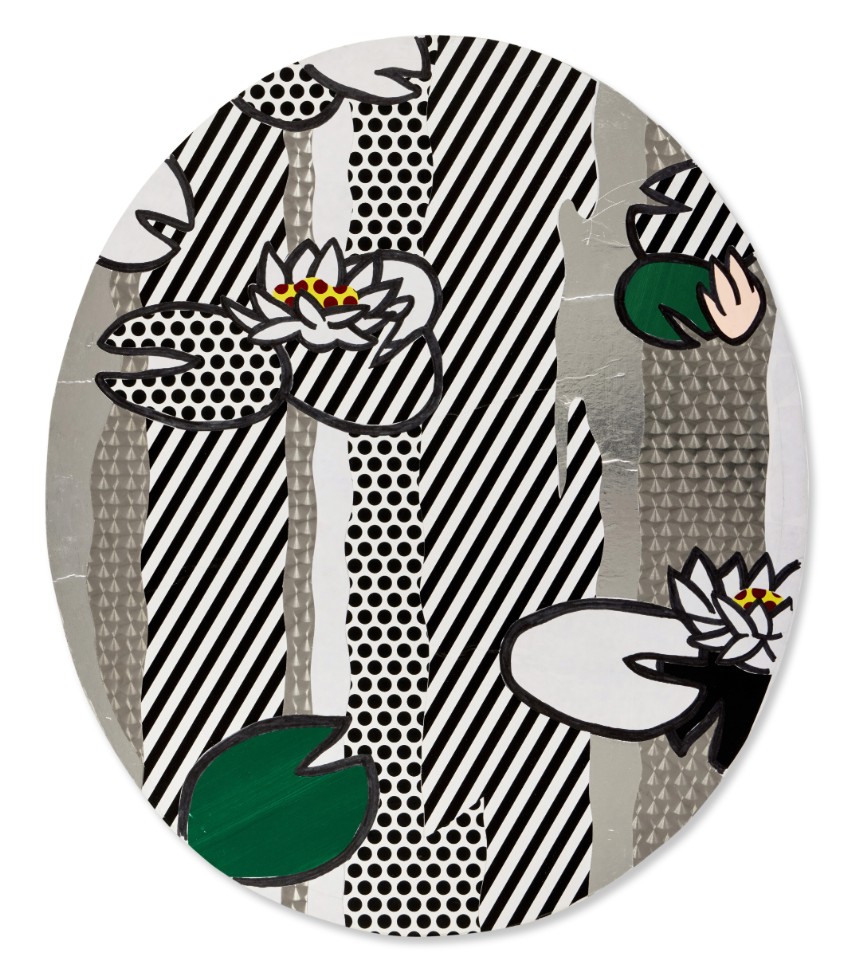
ROY LICHTENSTEIN (1923 – 1997)
Water Lilies – Pink Flower (Study), 1992
Cut painted paper, cut printed paper, marker, graphite on paper and aluminum foil on processed and swirled stainless steel
30 3/4 x 26 inches (78.1 x 66.2 cm)
#25. Temple (Study), circa 1964
Works from the Collection of Dorothy and Roy Lichtenstein
Sotheby’s New-York: 16 May 2025
Estimated: USD 350,000 – 450,000
USD 571,500
Temple (Study) | Contemporary Day Auction | 2025 | Sotheby’s
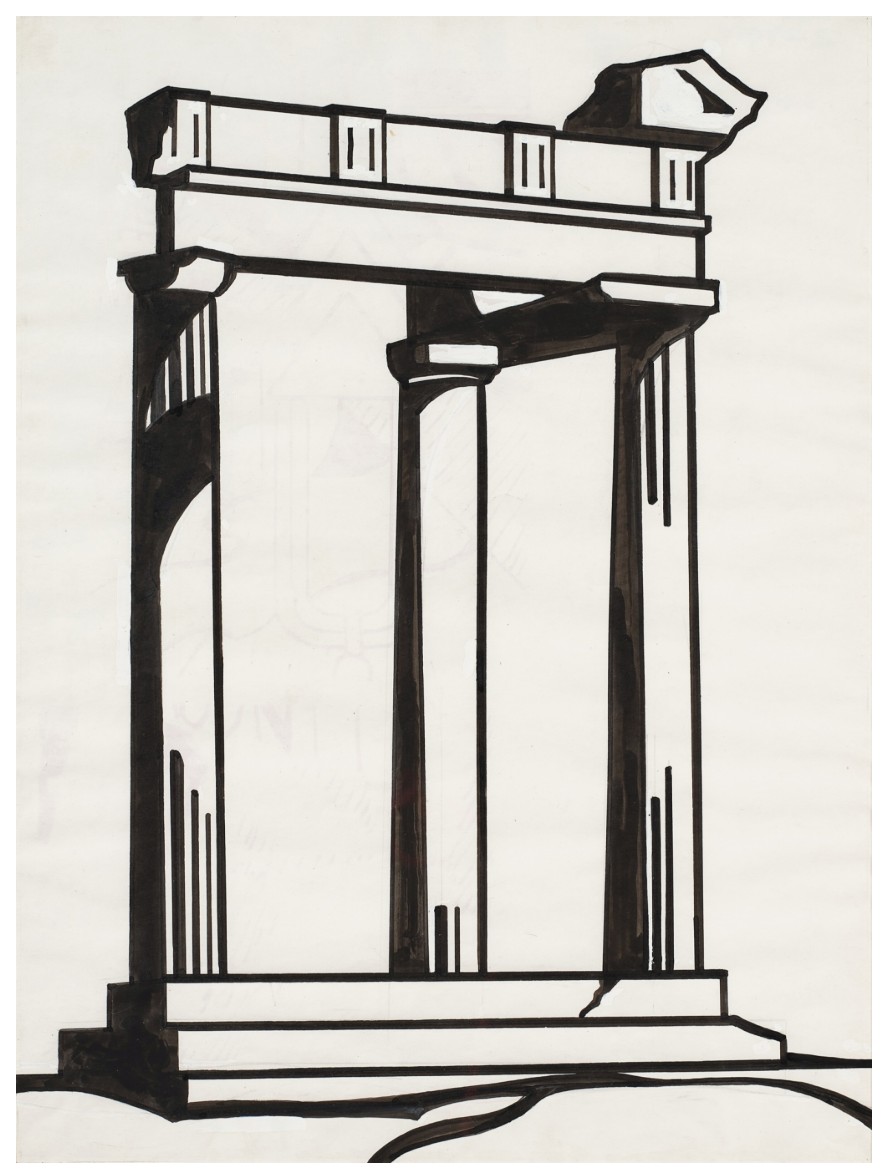
ROY LICHTENSTEIN (1923 – 1997)
Temple (Study), circa 1964
Marker, brush and ink, graphite and gouache on paper
23 7/8 x 17 7/8 inches (60.6 x 45.4 cm)
#26. Cubist Cello (Study), 1997
Roy’s Lichtensteins: Works from the Collection of Dorothy and Roy Lichtenstein
Sotheby’s Paris: 24 October 2025
Estimated: EUR 400,000 – 600,000
EUR 482,600 / USD 560,645
Cubist Cello (Study) | Modernités | 2025 | Sotheby’s
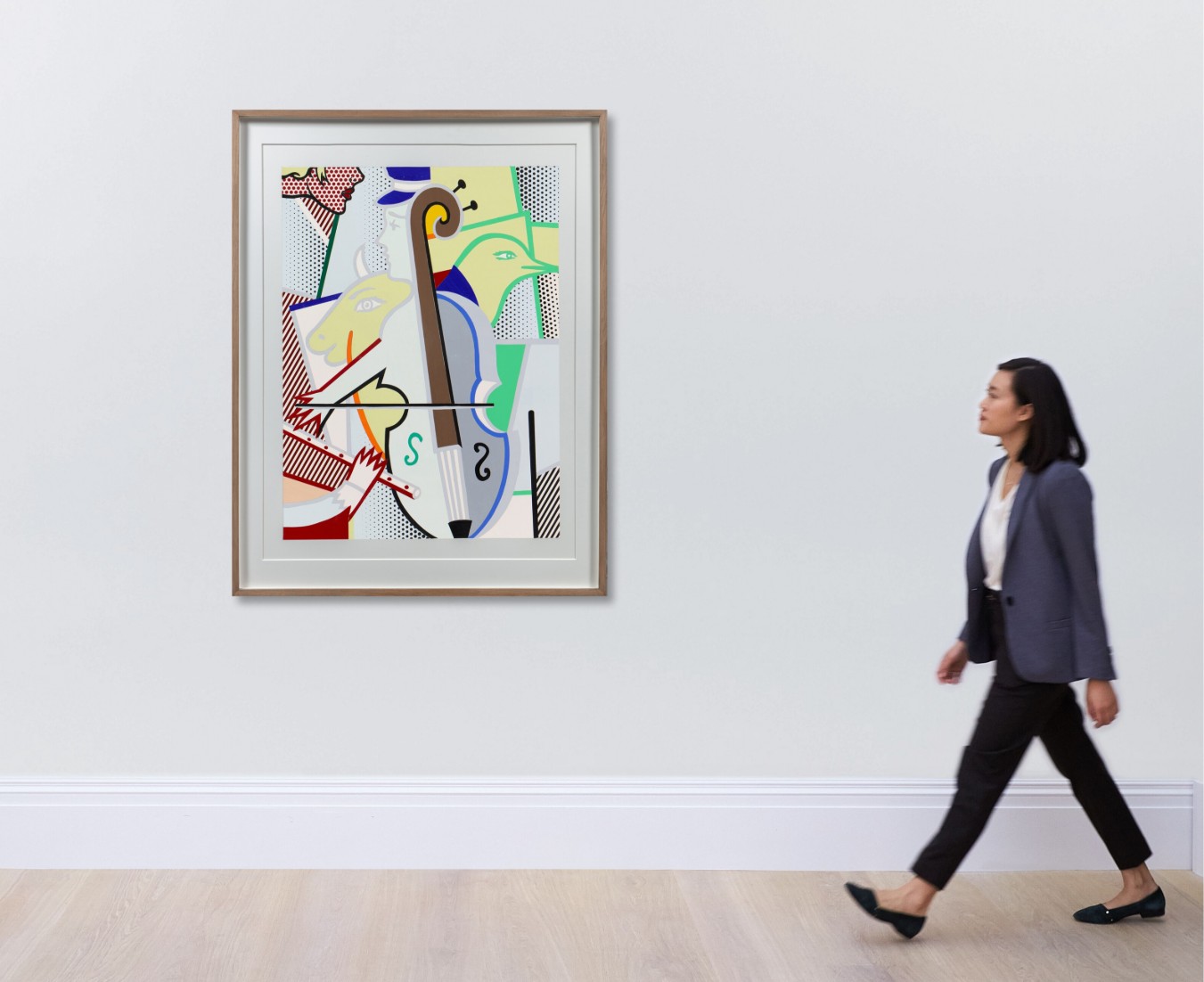
ROY LICHTENSTEIN (1923 – 1997)
Cubist Cello (Study), 1997
Cut painted paper, cut printed paper and graphite pencil on board
Sheet : 47 3/8 x 36 1/2 inches (120.4 x 92.6 cm)
Image: 40 7/8 x 30 1/2 inches (103.7 x 77.5 cm)
#27. Treetops Through the Fog (Study), 1996
Reflections on Pop: Works from the Collection of Dorothy and Roy Lichtenstein
Sotheby’s New-York: 26 September 2025
Estimated: USD 400,000 – 600,000
USD 551,500
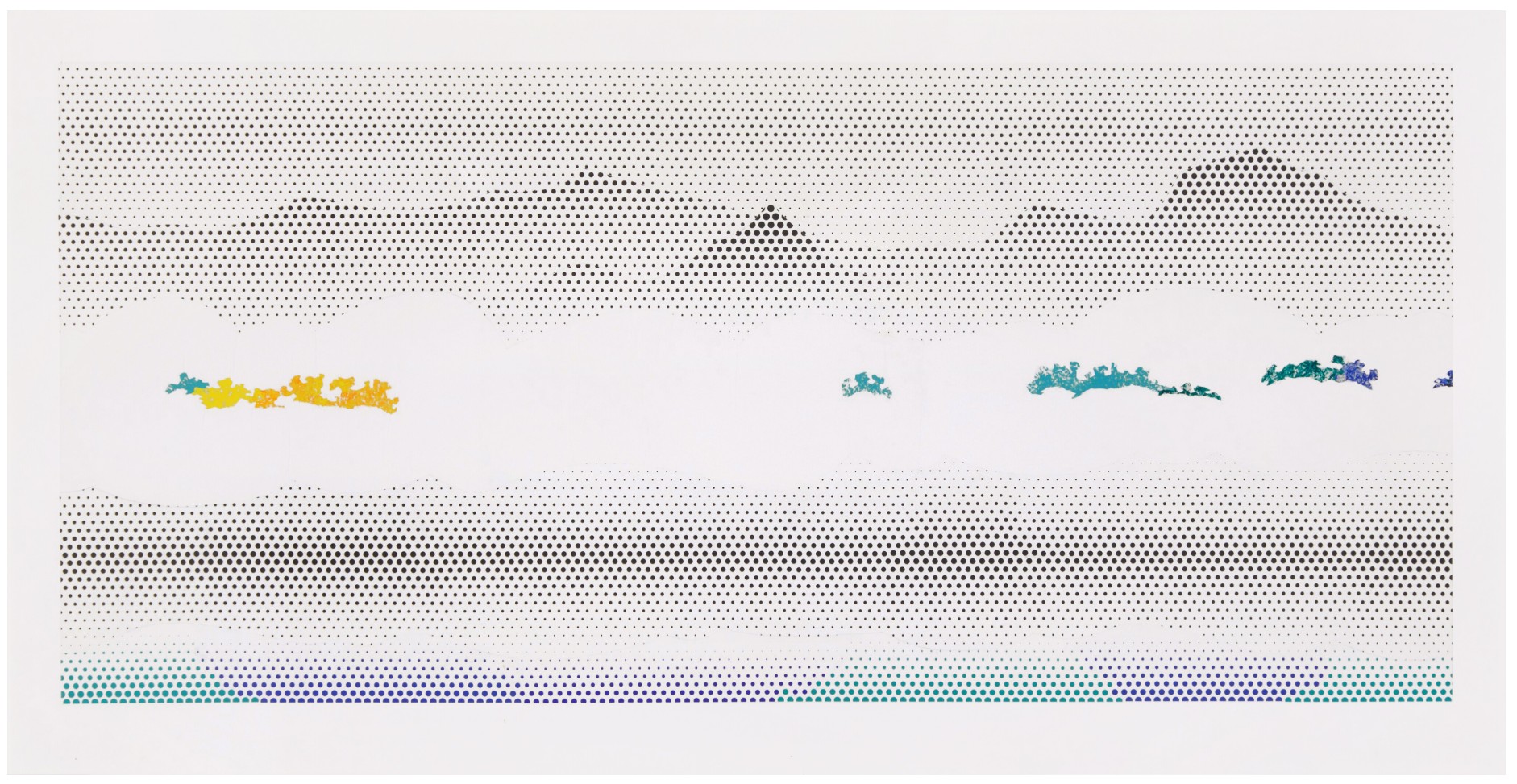
ROY LICHTENSTEIN (1923 – 1997)
Treetops Through the Fog (Study), 1996
Cut printed paper, cut sponge-painted paper, cut paper and graphite on paperboard
Image: 35 1/8 x 76 3/4 inches (89.2 x 194.9 cm)
Paperboard: 42 x 82 3/4 inches (106.7 x 210.2 cm)
#28. Titled (Study), 1996
Works from the Collection of Dorothy and Roy Lichtenstein
Sotheby’s New-York: 16 May 2025
Estimated: USD 400,000 – 600,000
USD 533,400
Titled (Study) | Contemporary Day Auction | 2025 | Sotheby’s
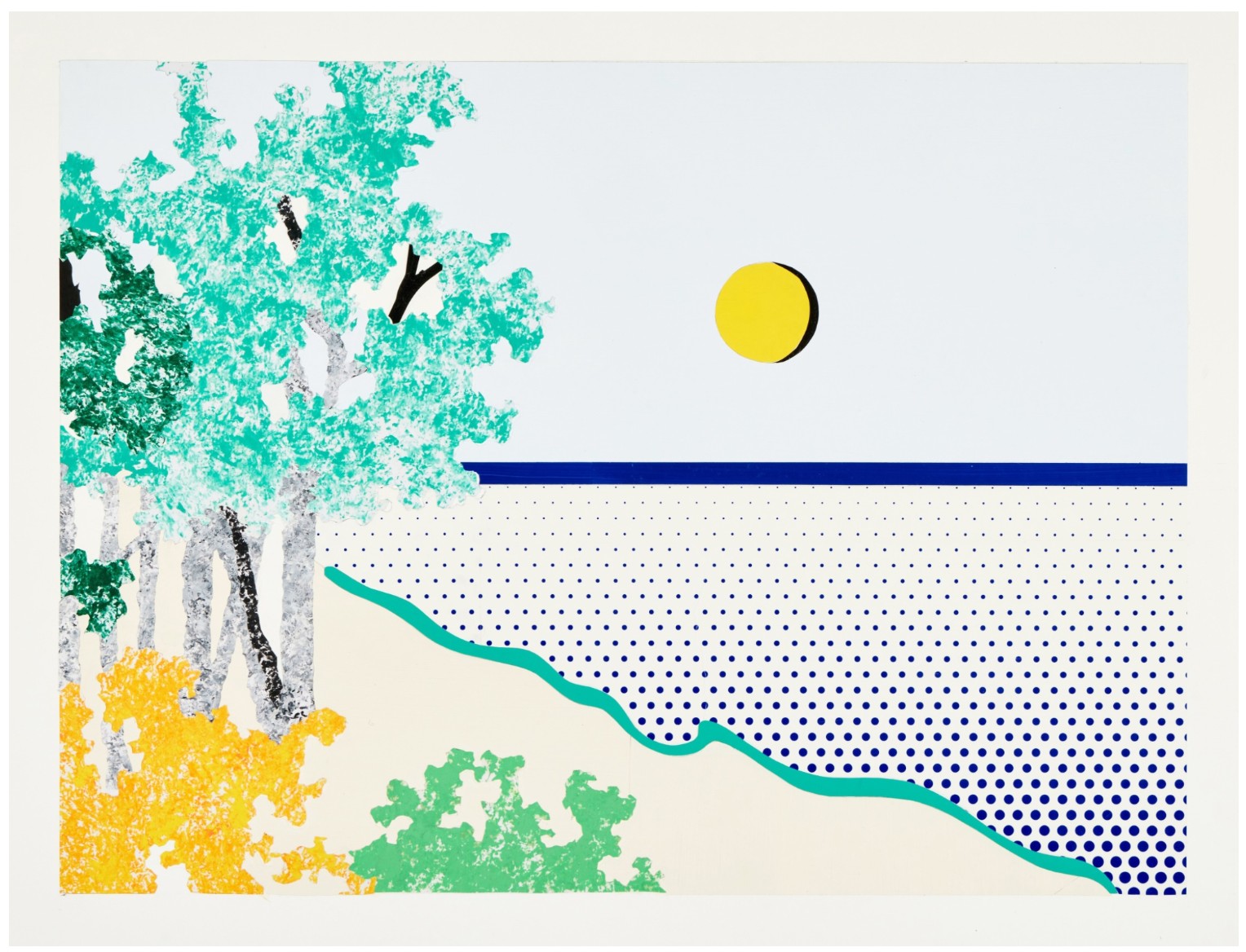
ROY LICHTENSTEIN (1923 – 1997)
Titled (Study), 1996
Cut painted paper, cut printed paper, tape and graphite on board
Image: 24 x 32 1/2 inches (61 x 82.6 cm)
Sheet: 33 1/2 x 42 7/8 inches (85.1 x 108.9 cm)
#29. Yellow Still Life (Study), 1973
Works from the Collection of Dorothy and Roy Lichtenstein
Sotheby’s New-York: 16 May 2025
Estimated: USD 300,000 – 400,000
USD 533,400
Yellow Still Life (Study) | Contemporary Day Auction | 2025 | Sotheby’s
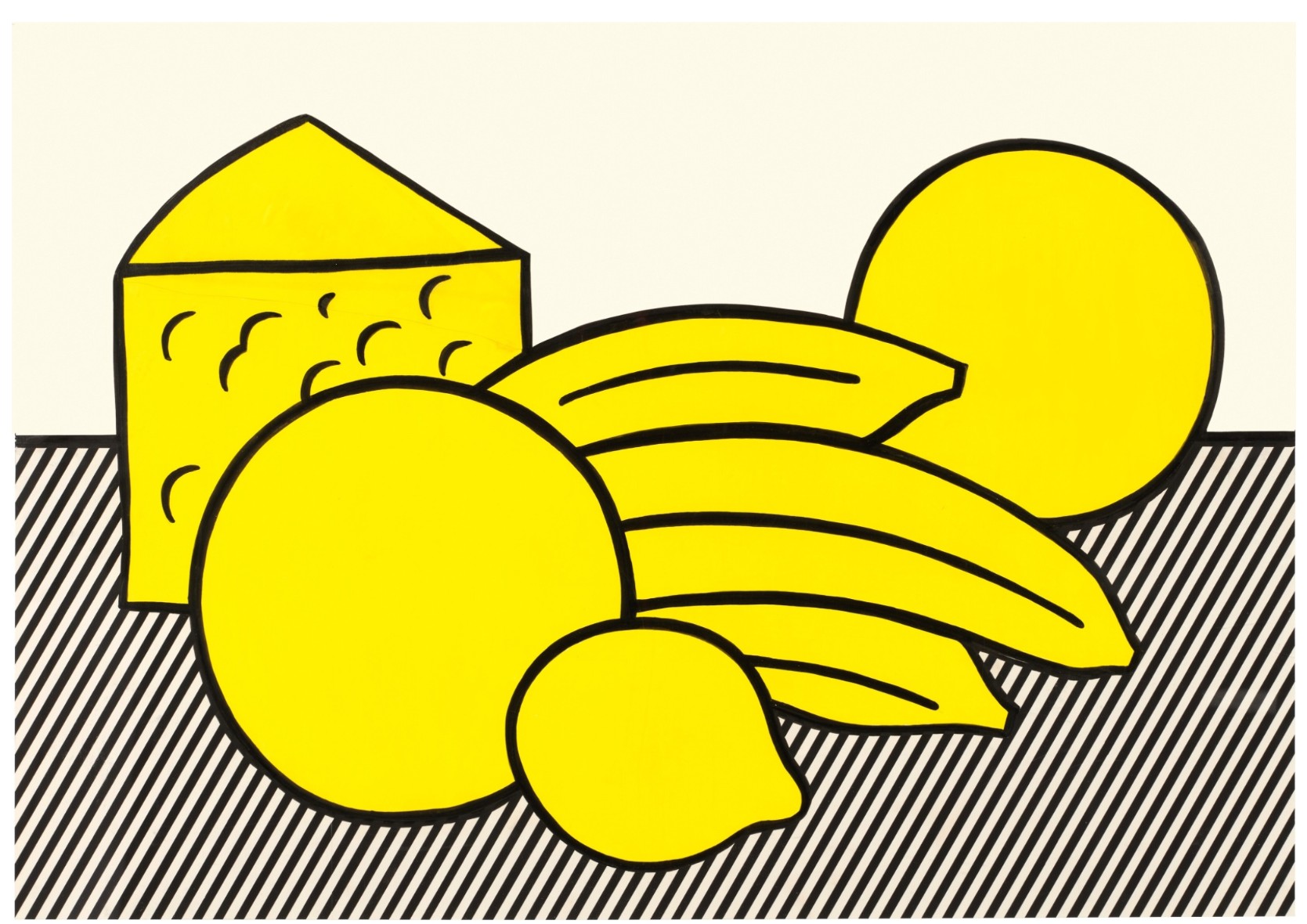
ROY LICHTENSTEIN (1923 – 1997)
Yellow Still Life (Study), 1973
Cut painted paper, acrylic, brush and ink, marker and graphite on board
Image: 25 1/4 x 36 1/2 inches (64.1 x 92.9 cm)
Sheet: 28 1/2 x 39 3/4 inches (72.4 x 101 cm)
Signed and dated ’73 (on the reverse)
#30. Cover Image (The Gun in America)
for Time Magazine (Study), circa 1968
Works from the Collection of Dorothy and Roy Lichtenstein
Sotheby’s New-York: 16 May 2025
Estimated: USD 200,000 – 300,000
USD 533,400
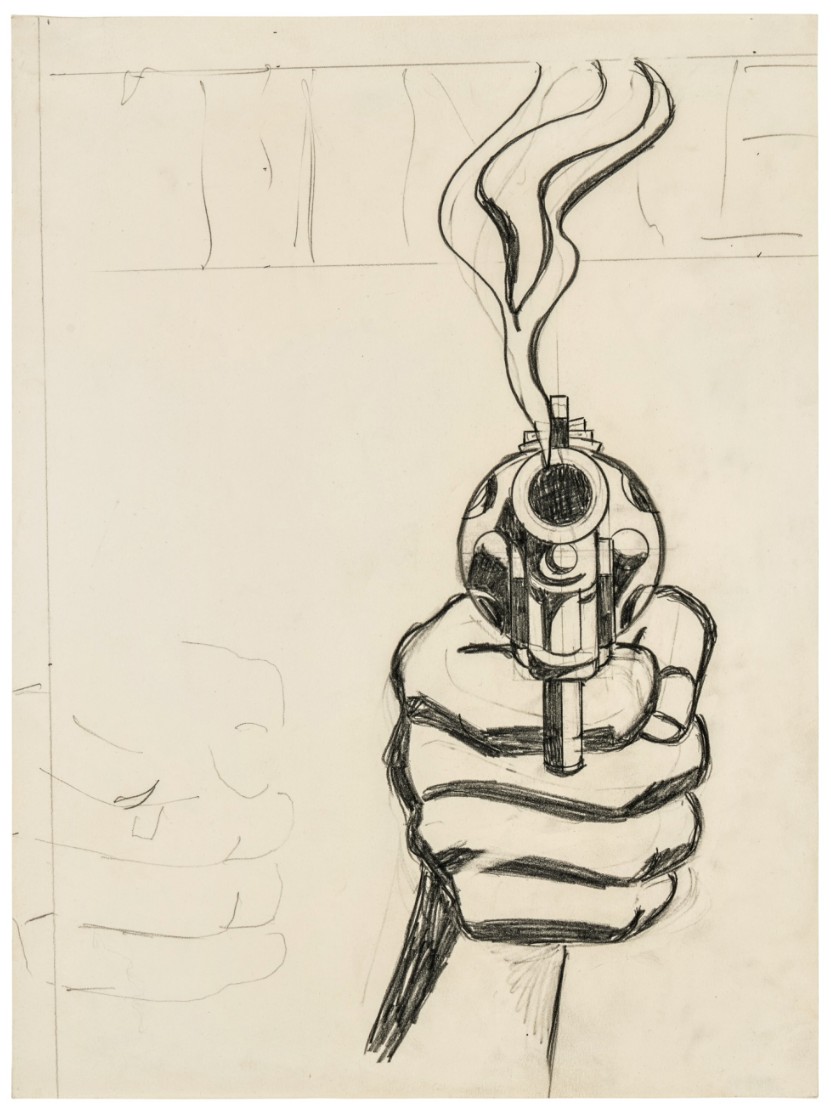
ROY LICHTENSTEIN (1923 – 1997)
Cover Image (The Gun in America) for Time Magazine (Study), circa 1968
Graphite on paper
16 1/4 x 12 1/4 inches (41.3 x 31.1 cm)
#31. Cup and Saucer I (Study), circa 1976
Sotheby’s New-York: 16 May 2025
Estimated: USD 200,000 – 300,000
USD 508,000
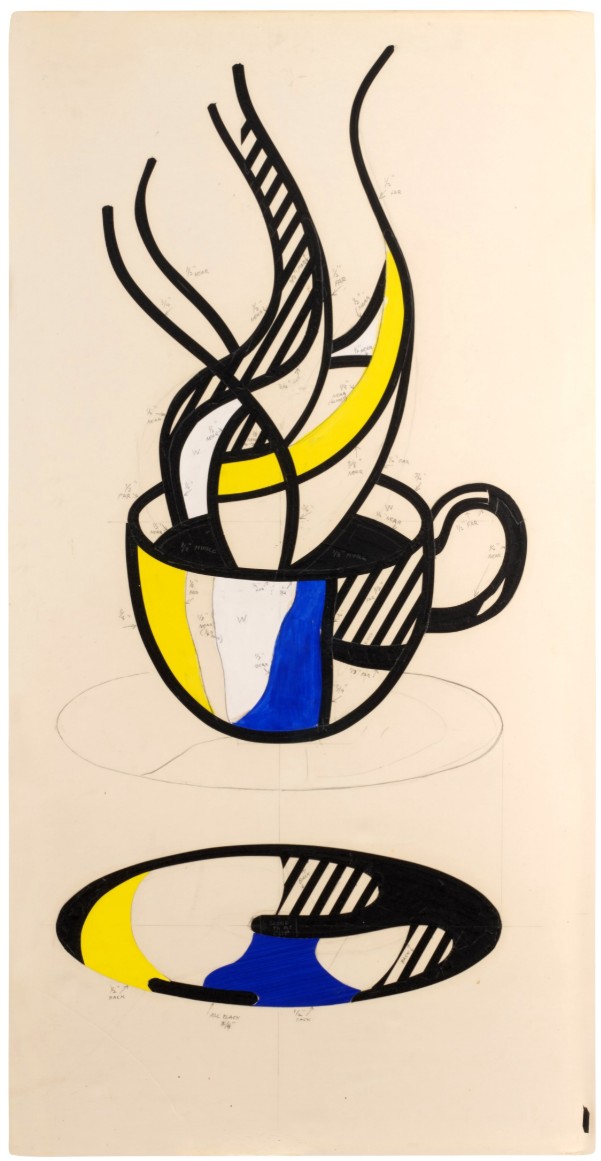
ROY LICHTENSTEIN (1923 – 1997)
Cup and Saucer I (Study), circa 1976
Cut painted paper, acrylic, tape and graphite on foamcore
47 3/4 x 24 1/2 inches (121.3 x 61.9 cm)
#32. Von Karp, 1962
Works from the Collection of Dorothy and Roy Lichtenstein
Sotheby’s New-York: 16 May 2025
Estimated: USD 200,000 – 300,000
USD 508,000
Von Karp | Contemporary Day Auction | 2025 | Sotheby’s
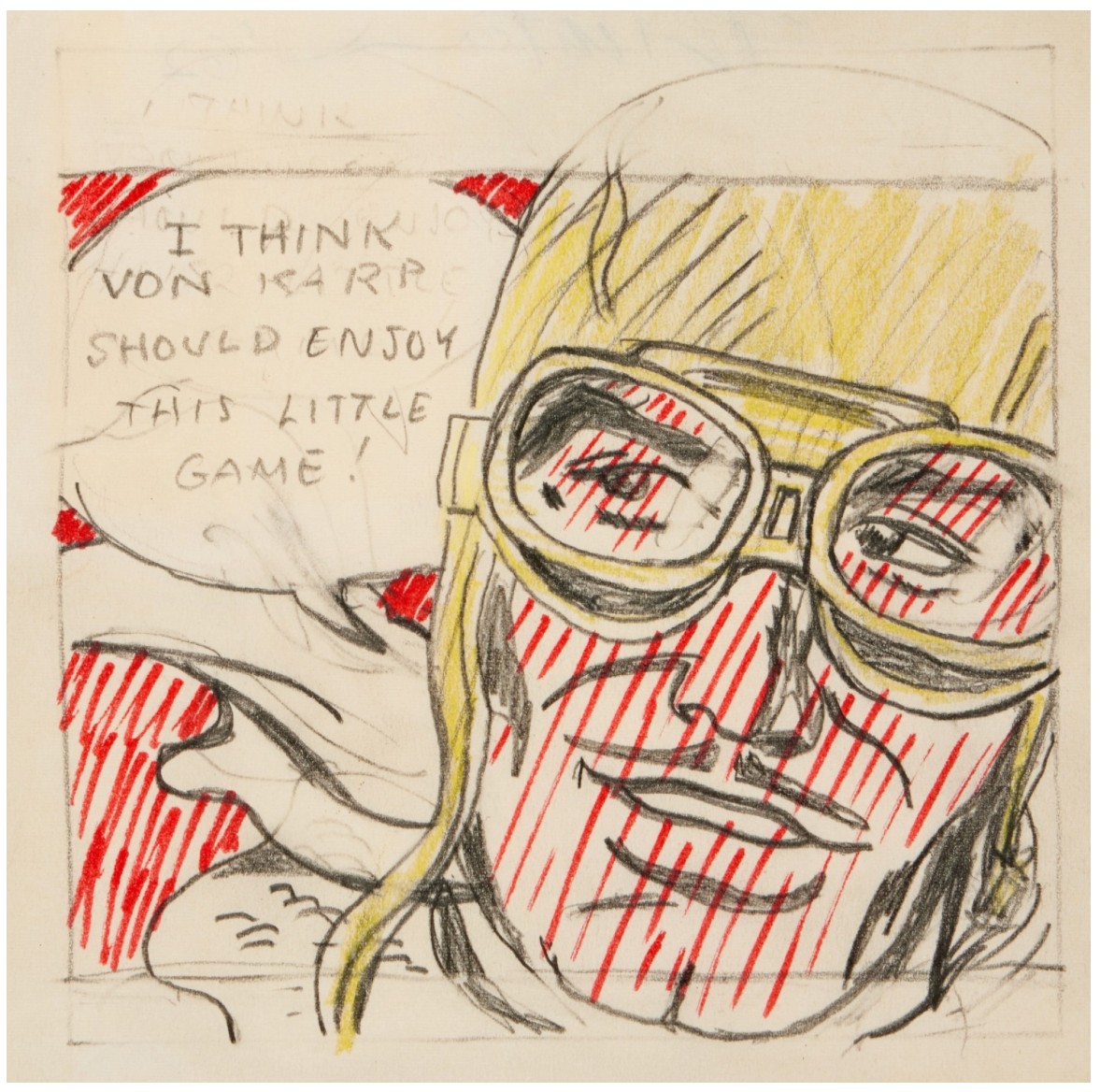
ROY LICHTENSTEIN (1923 – 1997)
Von Karp, 1962
Marker, colored pencil and graphite on paper
Image: 4 7/8 x 4 7/8 inches (12.4 x 12.4 cm)
Sheet: 5 3/4 x 5 5/8 inches (14.6 x 14.3 cm)
Signed and dated ’62 (on the verso)
#33. La Sortie (Study), 1990
Reflections on Pop: Works from the Collection of Dorothy and Roy Lichtenstein
Sotheby’s New-York: 26 September 2025
Estimated: USD 300,000 – 400,000
USD 508,000
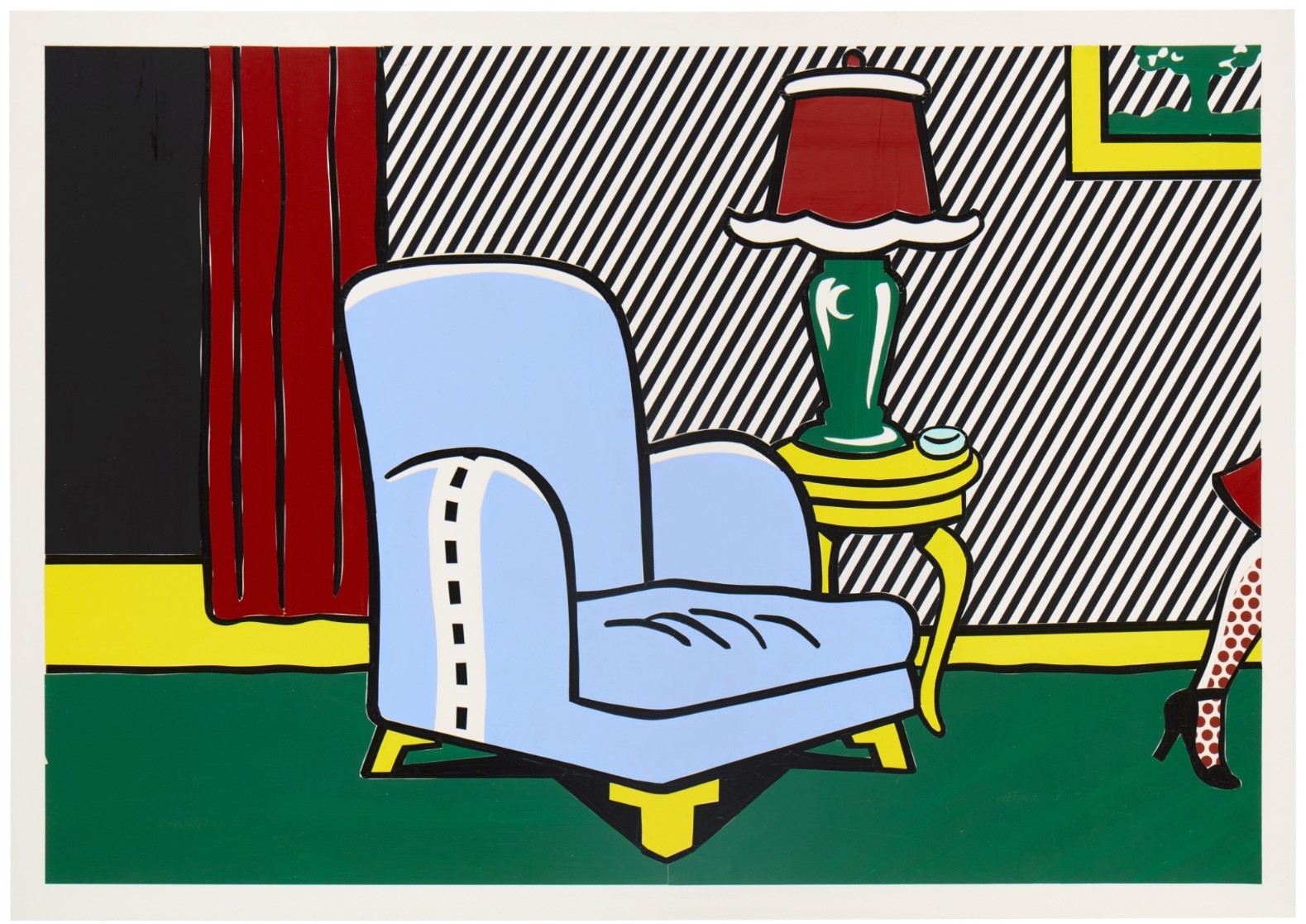
ROY LICHTENSTEIN (1923 – 1997)
La Sortie (Study), 1990
Tape, cut painted paper, cut printed paper and graphite on paperboard
Image: 35 3/4 x 53 1/4 inches (90.8 x 135.3 cm)
Paperboard: 39 3/4 x 56 1/4 inches (101 x 142.9 cm)
Signed and dated ’90 (on the reverse)
#34. Sound of Music (Study), circa 1963-64
A Legacy Reimagined: Works from the Collection of Dorothy and Roy Lichtenstein
Sotheby’s New-York: 19 November 2025
Estimated: USD 800,000 – 1,200,000
USD 508,000
WORK ON PAPER
Sound of Music (Study) | The Now & Contemporary Evening Auction | 2025 | Sotheby’s
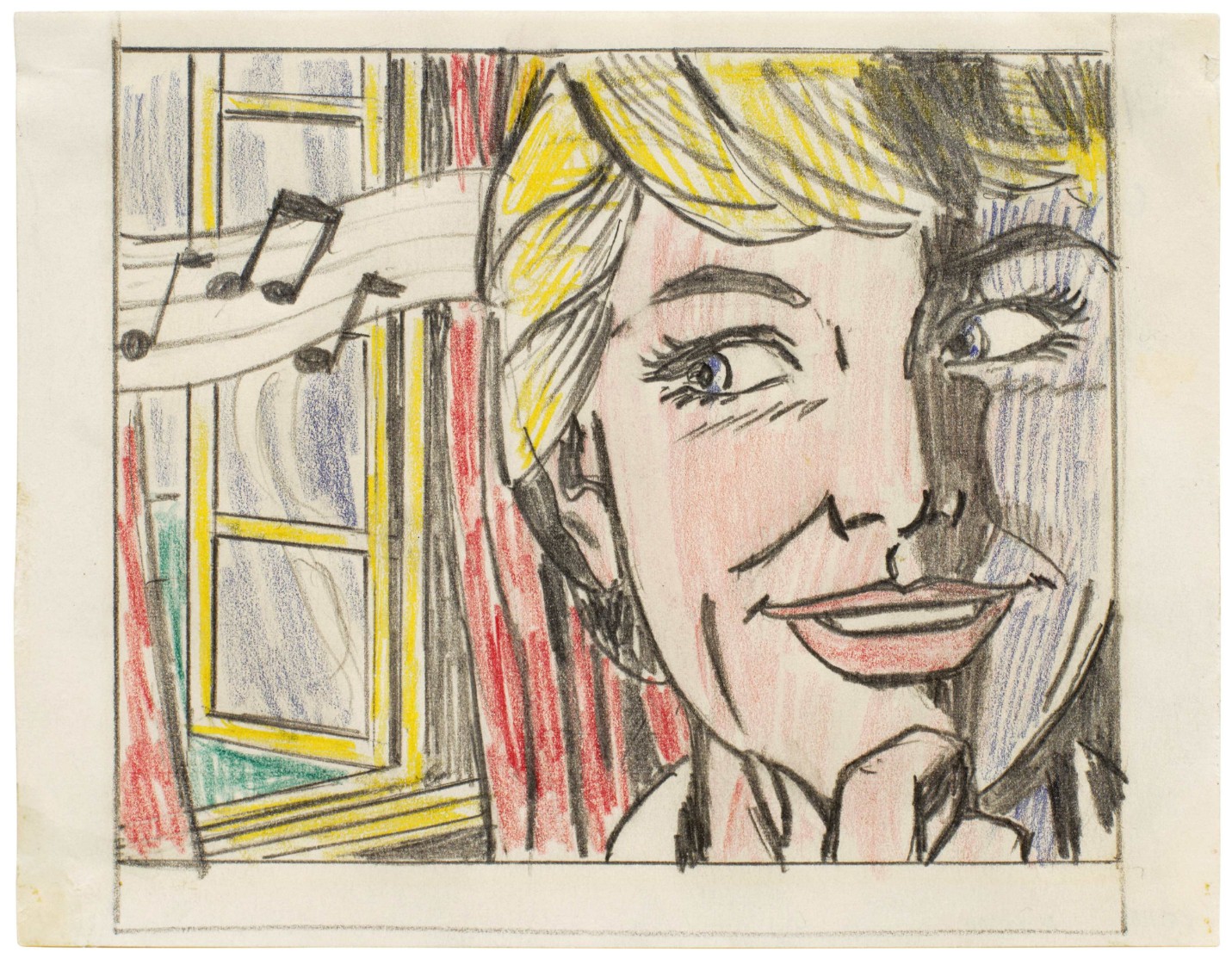
ROY LICHTENSTEIN (1923 – 1997)
Sound of Music (Study), circa 1963-64
Colored pencil and graphite on paper
Image: 4 x 4 3/4 inches (10.2 x 12.1 cm)
Sheet: 4 1/2 x 5 3/4 inches (11.4 x 14.6 cm)
USD 500,000
#35. Reflections on Expressionist Painting (Study), 1990
Reflections on Pop: Works from the Collection of Dorothy and Roy Lichtenstein
Sotheby’s New-York: 26 September 2025
Estimated: USD 350,000 – 450,000
USD 492,000
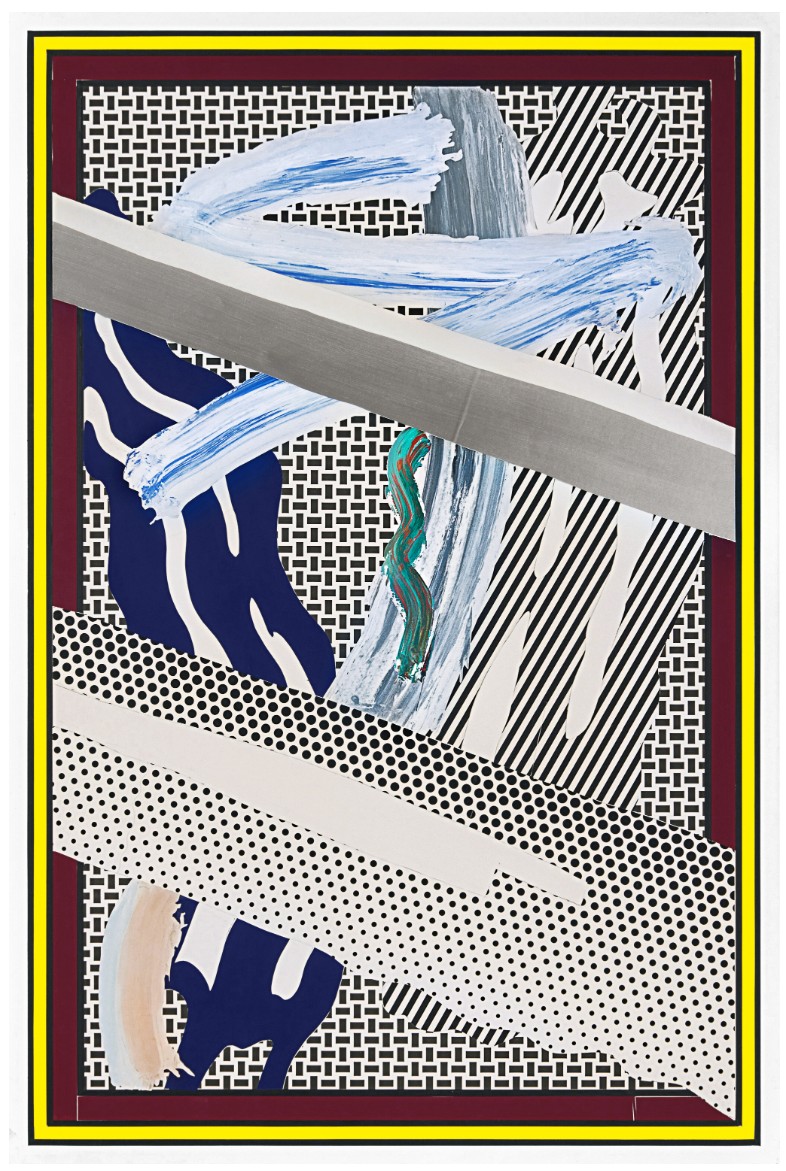
ROY LICHTENSTEIN (1923 – 1997)
Reflections on Expressionist Painting (Study), 1990
Tape, cut printed paper, acrylic on cut paper and graphite on paperboard
Image: 57 7/8 x 38 inches (147.2 x 96.5 cm)
Paperboard: 60×40 inches (152.4 x 101.6 cm)
Signed and dated ’90 (on the verso)
#36. Modern Tapestry (Study), 1967
Sotheby’s New-York: 4 March 2025
Estimated: GBP 300,000 – 400,000
GBP 381,000 / USD 487,680
Modern Tapestry (Study) | Modern & Contemporary Evening Auction | 2025 | Sotheby’s
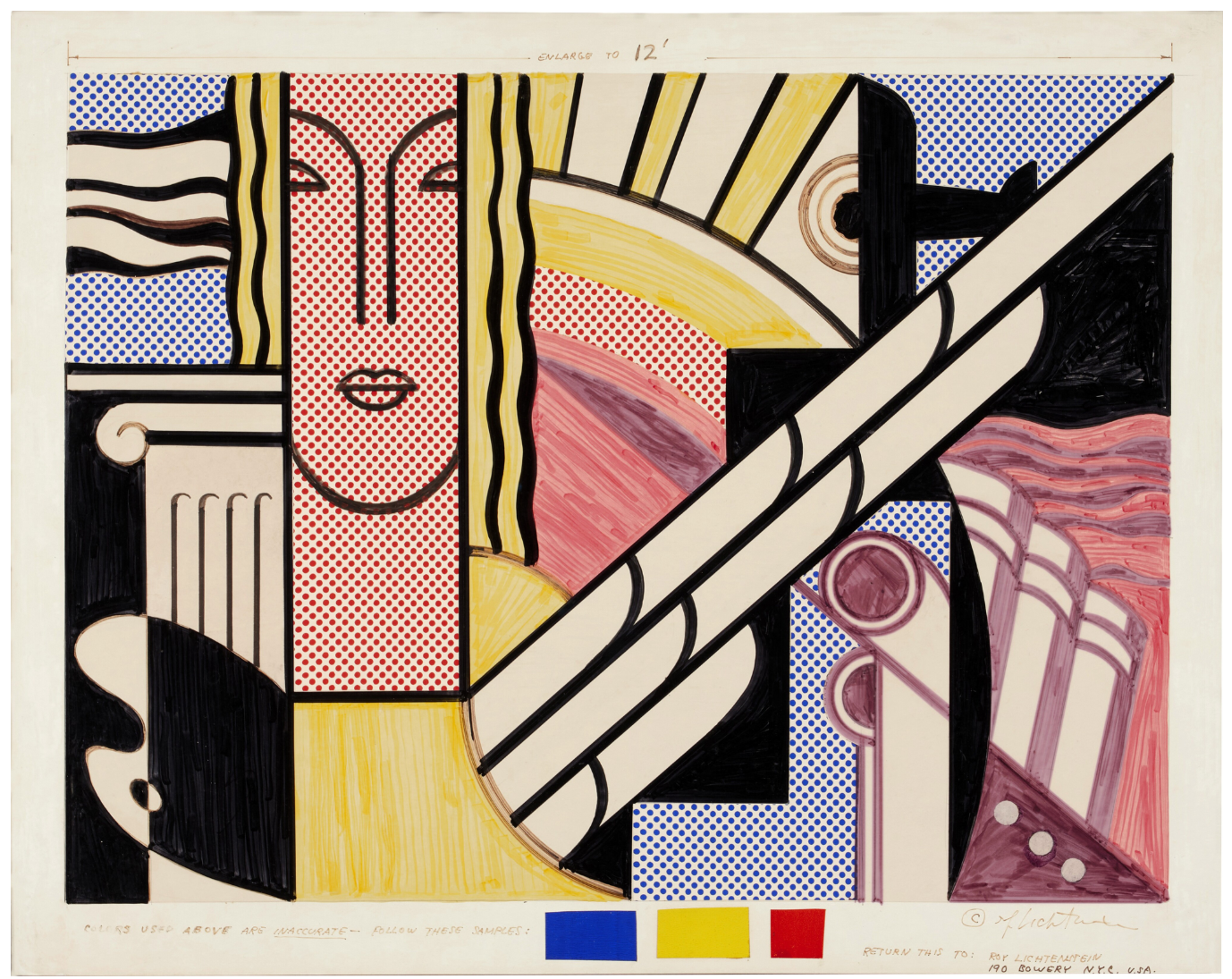
ROY LICHTENSTEIN (1923 – 1997)
Modern Tapestry (Study), 1967
Printed paper, marker, ink, graphite, and paint color swatches on board
21 x 26 3/8 inches (53.5 x 67 cm)
Signed (lower right)
Variously inscribed (in the margins)
#37. Reflections on Thud! (Study), 1990
A Legacy Reimagined: Works from the Collection of Dorothy and Roy Lichtenstein
Sotheby’s New-York: 19 November 2025
Estimated: USD 250,000 – 350,000
USD 482,600
WORK ON PAPER
Reflections on Thud! (Study) | Contemporary Day Auction | 2025 | Sotheby’s
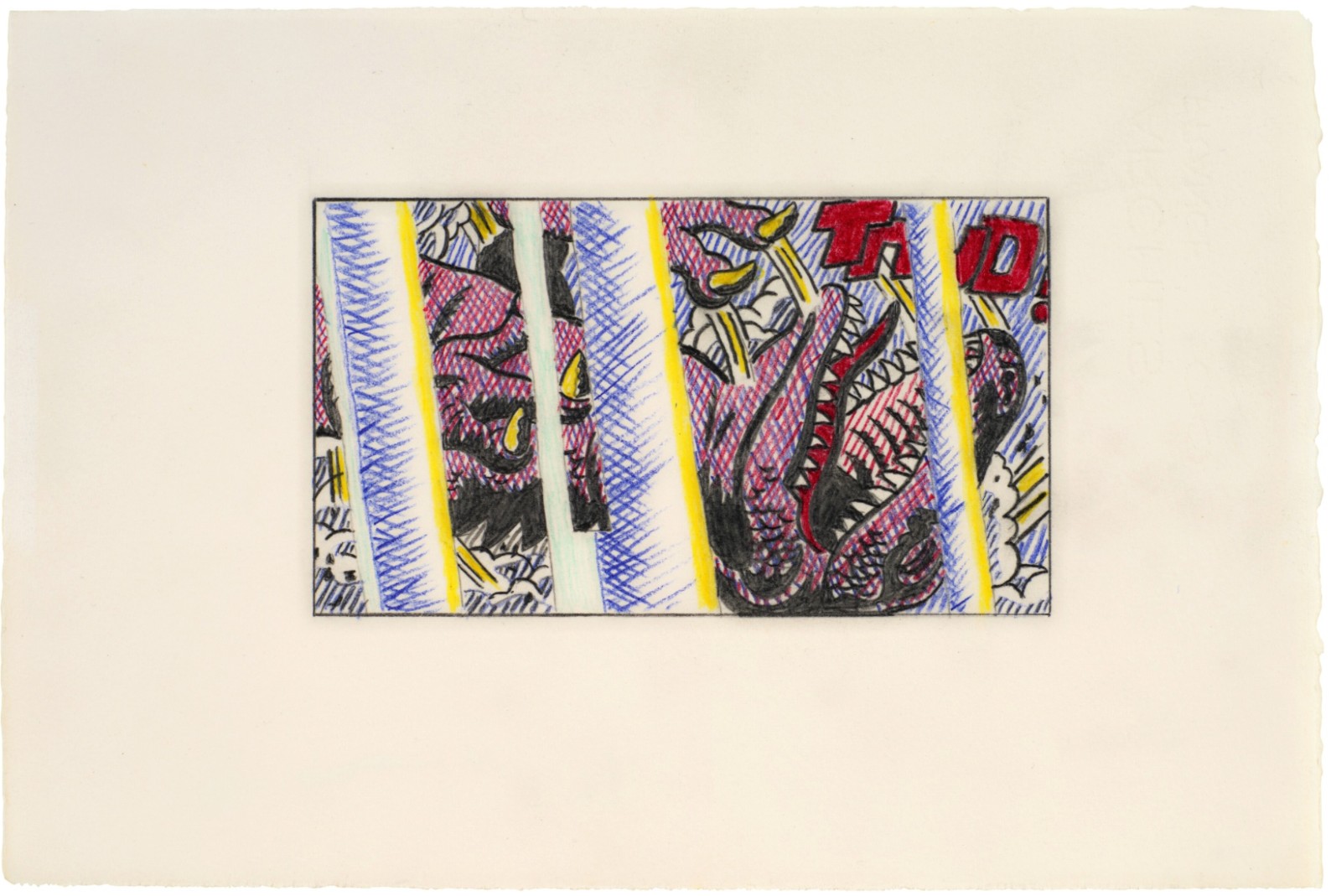
ROY LICHTENSTEIN (1923 – 1997)
Reflections on Thud! (Study), 1990
Colored pencil and graphite on paper
Image: 3 5/8 x 6 1/4 inches (9.2 x 15.9 cm)
Sheet: 7 1/2 x 11 1/8 inches (19 x 28.3 cm)
Signed and dated ‘90 (on the verso)
“I had been interested in the comic strip as a visual medium for a long time… This technique is a perfect example of an industrial process that developed as a direct result of the need for inexpensive and quick color-printing. These printed symbols attain perfection in the hands of commercial artists through the continuing idealization of the image made compatible with commercial considerations.”
#38. Piano, 1964
A Legacy Reimagined: Works from the Collection of Dorothy and Roy Lichtenstein
Sotheby’s New-York: 19 November 2025
Estimated: USD 300,000 – 400,000
USD 455,600
WORK ON PAPER
Piano | Contemporary Day Auction | 2025 | Sotheby’s
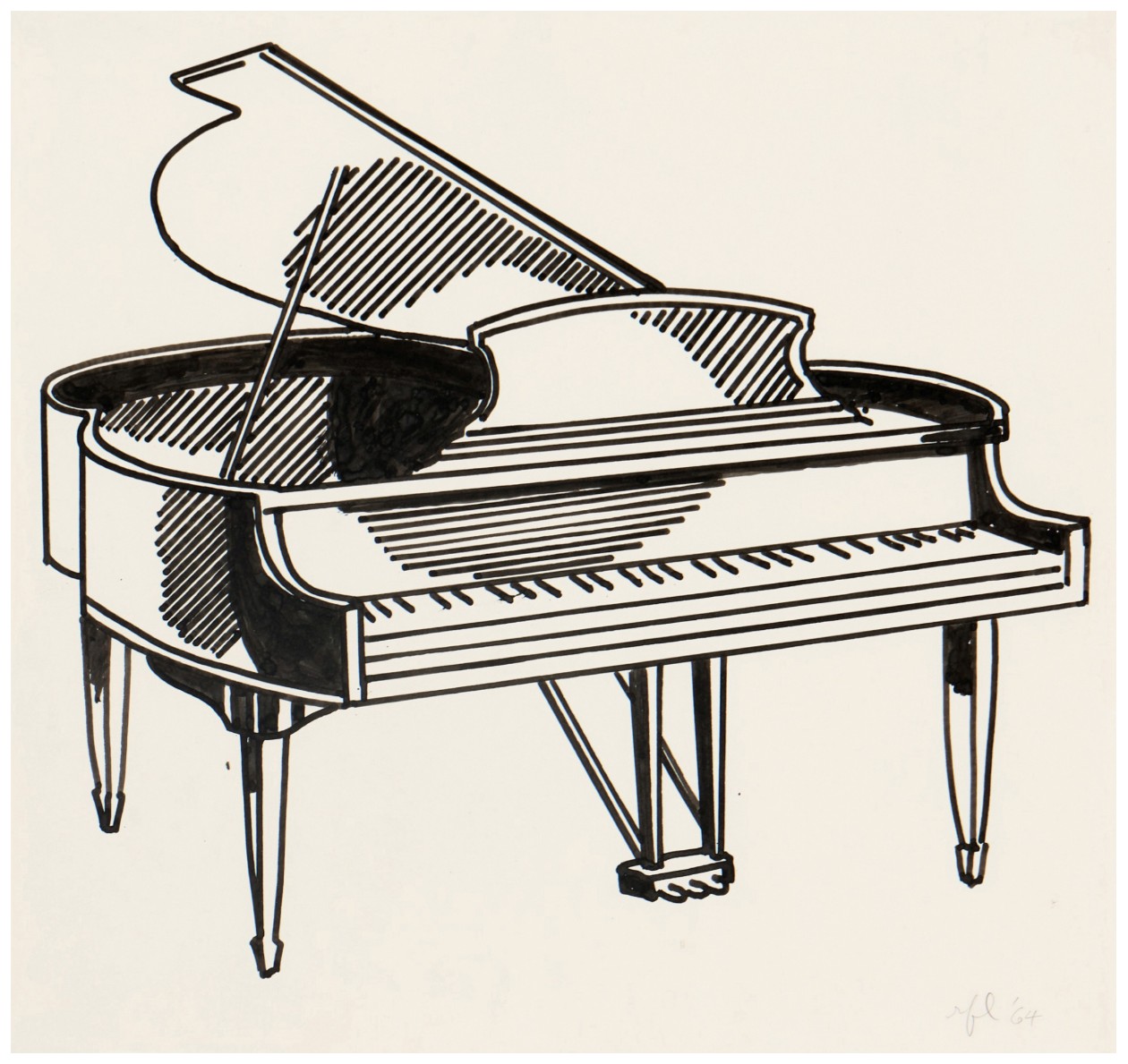
ROY LICHTENSTEIN (1923 – 1997)
Piano, 1964
Marker on paper
14 7/8 x 15 3/4 inches (37.8 x 40 cm)
Signed with the artist’s initials and dated ’64 (lower right)
“You know, as you compose music, you’re just off in your own world. You have no idea where reality is, so to have an idea of what people think is pretty hard.”
#39. Landscape with Silver River (Study), 1996
Works from the Collection of Dorothy and Roy Lichtenstein
Sotheby’s London: 25 June 2025
Estimated: GBP 220,000 – 280,000
GBP 330,200 / USD 445,770
Landscape with Silver River (Study) | Contemporary Day Auction | 2025 | Sotheby’s
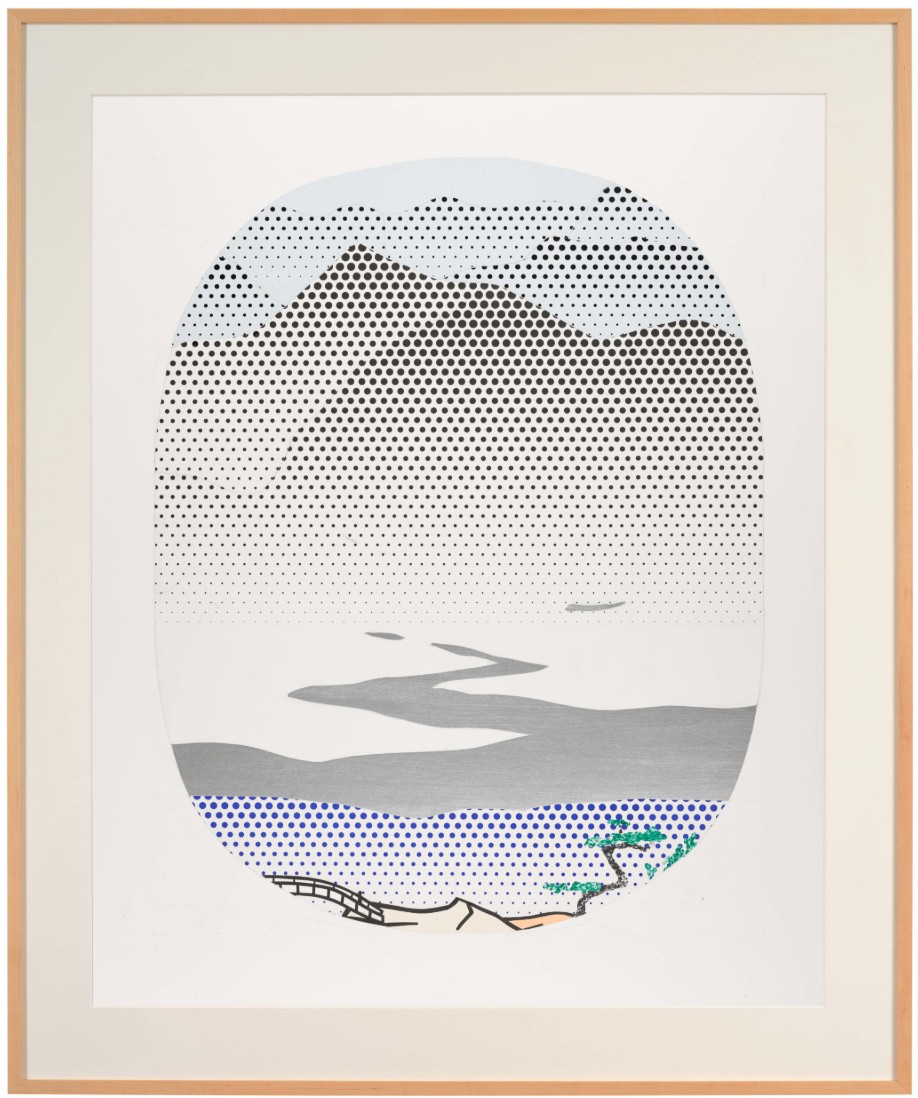
ROY LICHTENSTEIN (1923 – 1997)
Landscape with Silver River (Study), 1996
Acrylic, graphite, tape and paper collage on card
44 3/4 x 36 5/8 inches (113.7 x 93 cm)
#40. Cathedral (Study), 1968
Roy’s Lichtensteins: Works from the Collection of Dorothy and Roy Lichtenstein
Sotheby’s Paris: 24 October 2025
Estimated: EUR 250,000 – 350,000
EUR 355,600 / USD 413,105
Cathedral (Study) | Modernités | 2025 | Sotheby’s
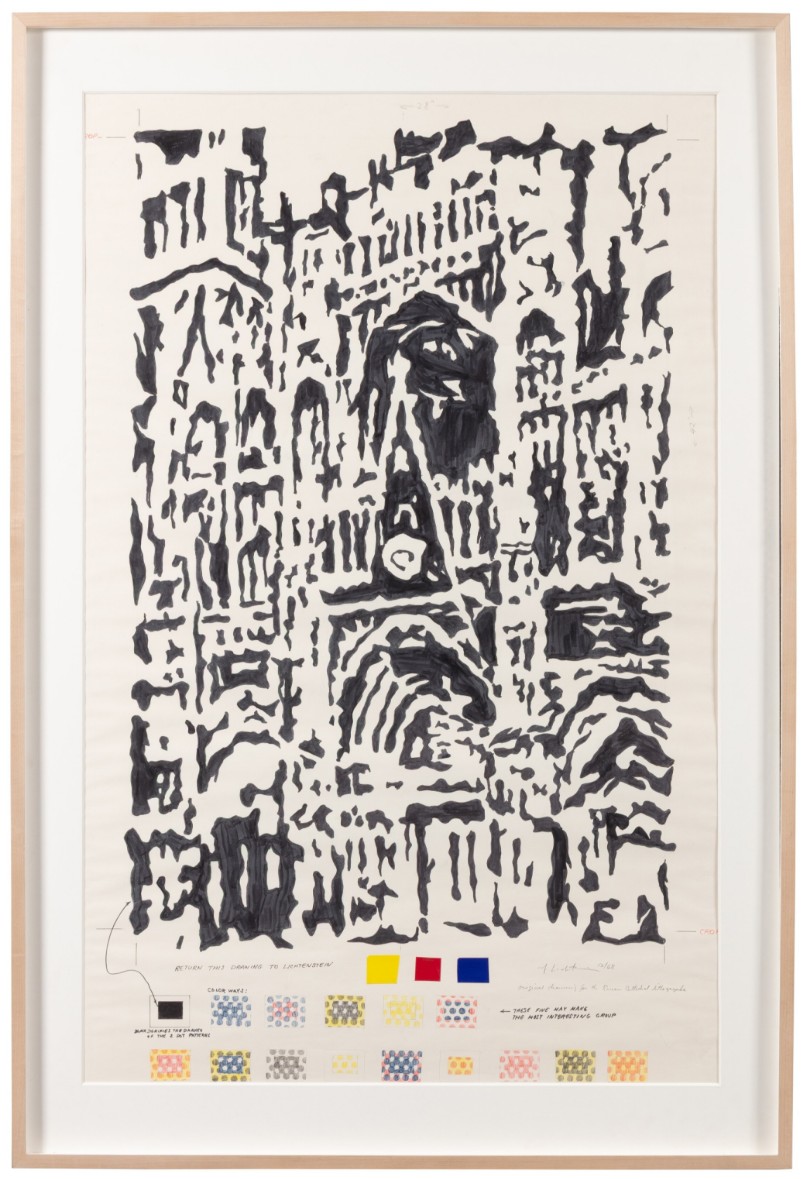
ROY LICHTENSTEIN (1923 – 1997)
Cathedral (Study), 1968
Marker, colored pencil, graphite pencil, cut painted paper color swatches and cut printed paper color swatches on paper
54 1/2 x 35 1/2 inches (138.5 x 90.1 cm)
Signed and dated 12/68 (lower right)
#41. Reflections on Girl (Study), circa 1989
Works from The Collection of Dorothy and Roy Lichtenstein
Sotheby’s Hong-Kong: 28 September 2025
Estimated: HKD 2,000,000 – 3,000,000
HKD 3,175,000 / USD 408,100
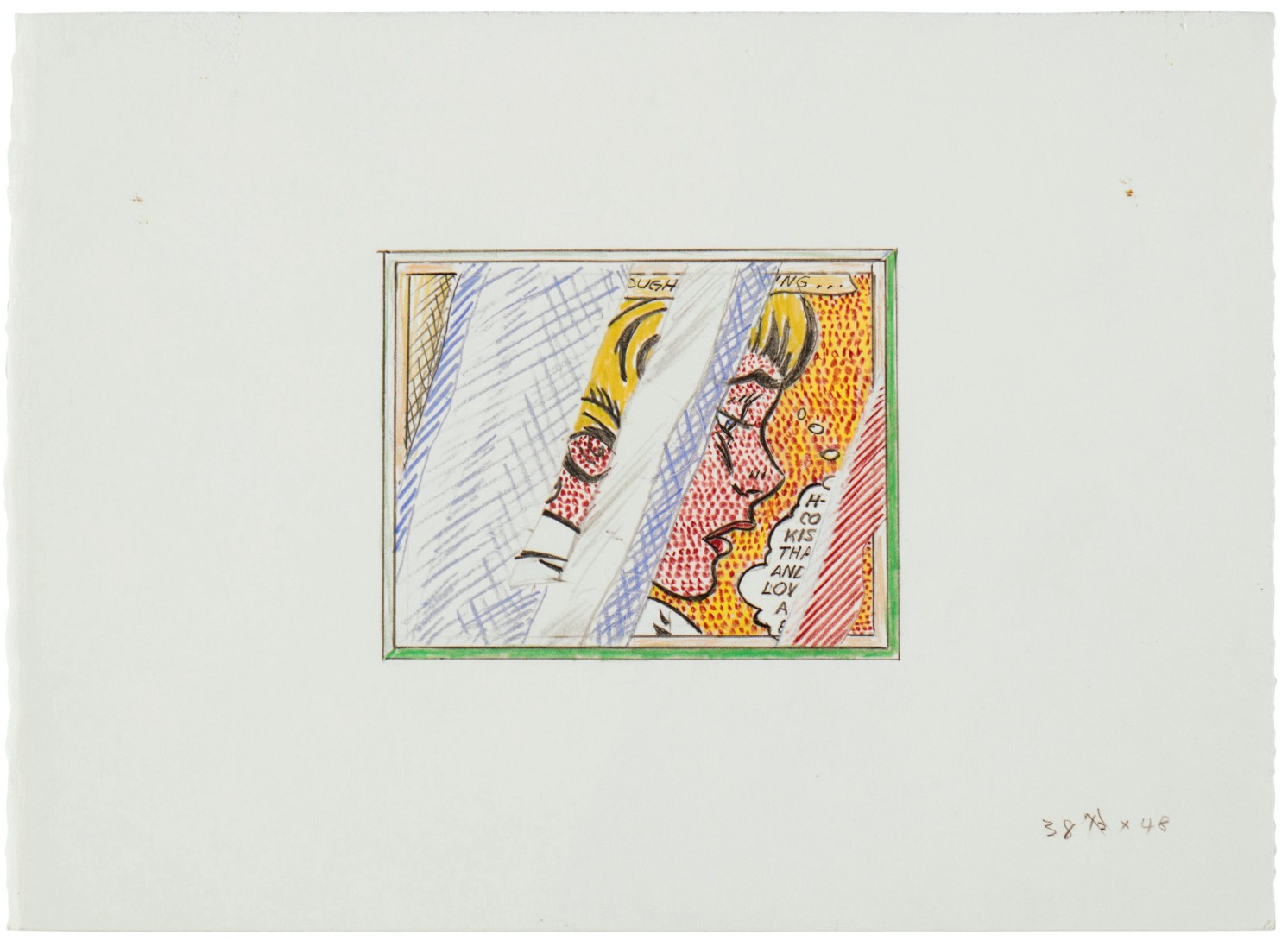
ROY LICHTENSTEIN (1923 – 1997)
Reflections on Girl (Study), circa 1989
Colored pencil and graphite on paper
Image: 4 1/2 x 5 5/8 inches (11.4 x 14.3 cm)
Sheet: 10 x 13 3/4 inches (25.4 x 34.9 cm)
#42. Still Life Tapestry (Study), 1973
Works from the Collection of Dorothy and Roy Lichtenstein
Sotheby’s New-York: 16 May 2025
Estimated: USD 100,000 – 150,000
USD 406,400
Still Life Tapestry (Study) | Contemporary Day Auction | 2025 | Sotheby’s
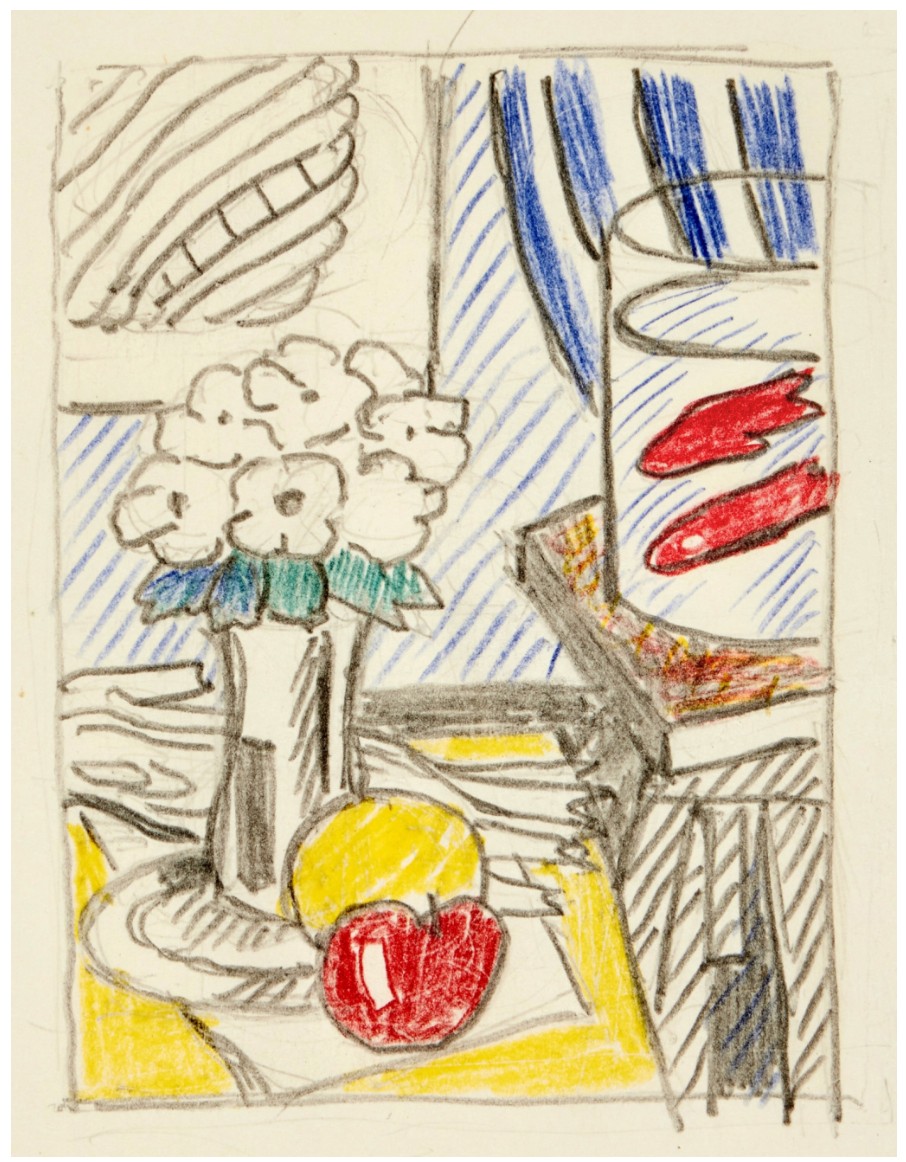
ROY LICHTENSTEIN (1923 – 1997)
Still Life Tapestry (Study), 1973
Colored pencil and graphite on paper
Image: 4 1/4 x 3 1/8 inches (10.8 x 7.9 cm)
Sheet: 8 1/4 x 5 inches (21 x 12.7 cm)
Signed and dated ’73 (on the verso)
USD 400,000
#43. Bonsai Tree (Study), 1992
Works from The Collection of Dorothy and Roy Lichtenstein
Sotheby’s Hong-Kong: 28 September 2025
Estimated: HKD 2,000,000 – 3,000,000
HKD 3,048,000 / USD 391,775
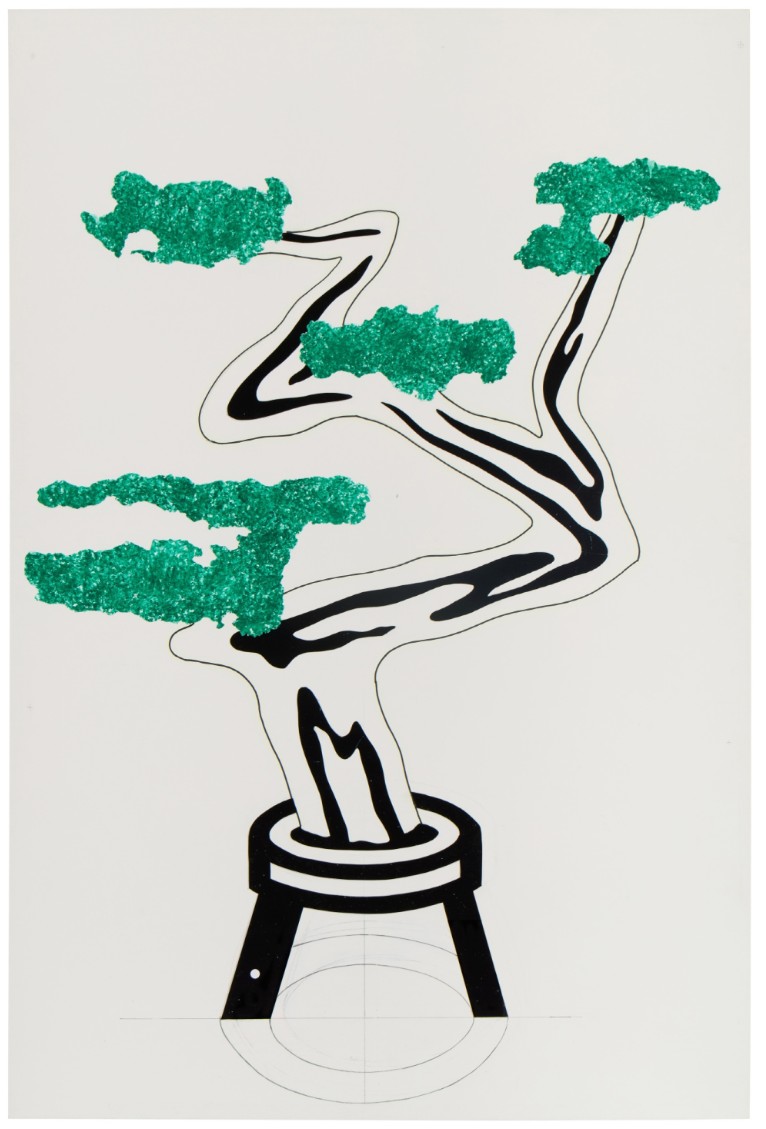
ROY LICHTENSTEIN (1923 – 1997)
Bonsai Tree (Study), 1992
Cut painted paper, acrylic, marker and graphite on foamcore
60 x 40 1/8 inches (152.4 x 101.9 cm)
Signed and dated ‘92 (on the reverse)
#44. Reflections: Art (Study), 1988
Works from the Collection of Dorothy and Roy Lichtenstein
Sotheby’s New-York: 16 May 2025
Estimated: USD 150,000 – 200,000
USD 381,000
Reflections: Art (Study) | Contemporary Day Auction | 2025 | Sotheby’s
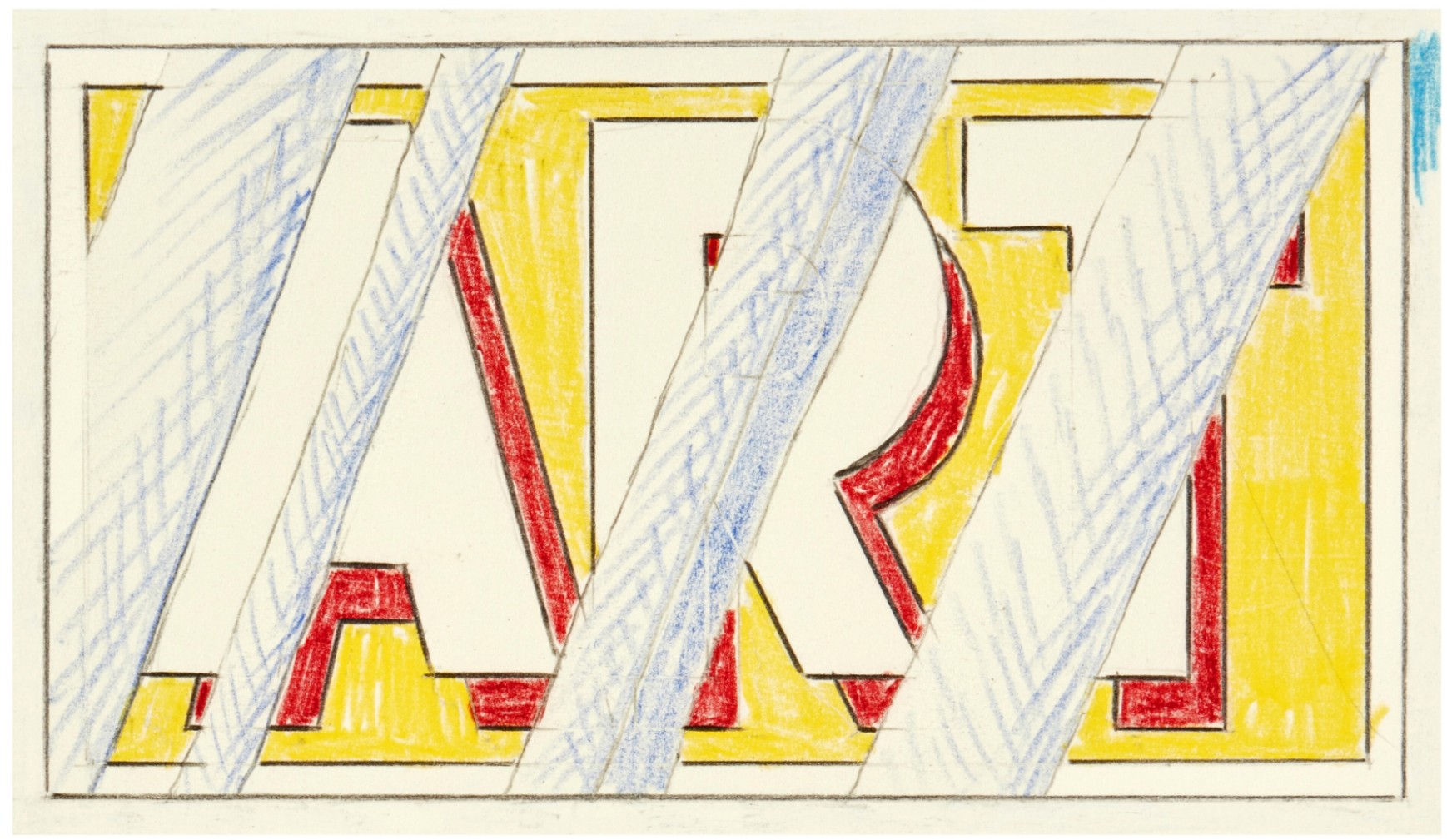
ROY LICHTENSTEIN (1923 – 1997)
Reflections: Art (Study), 1988
Colored pencil and graphite on paper
Image: 4 5/8 x 8 inches (11.7 x 20.3 cm)
Sheet: 10×13 inches (25.4 x 33 cm)
Signed and dated ’88 (on the verso)
#45. Mirror #8 (Study), 1970
Works from the Collection of Dorothy and Roy Lichtenstein
Sotheby’s New-York: 16 May 2025
Estimated: USD 350,000 – 450,000
USD 355,600
Mirror #8 (Study) | Contemporary Day Auction | 2025 | Sotheby’s
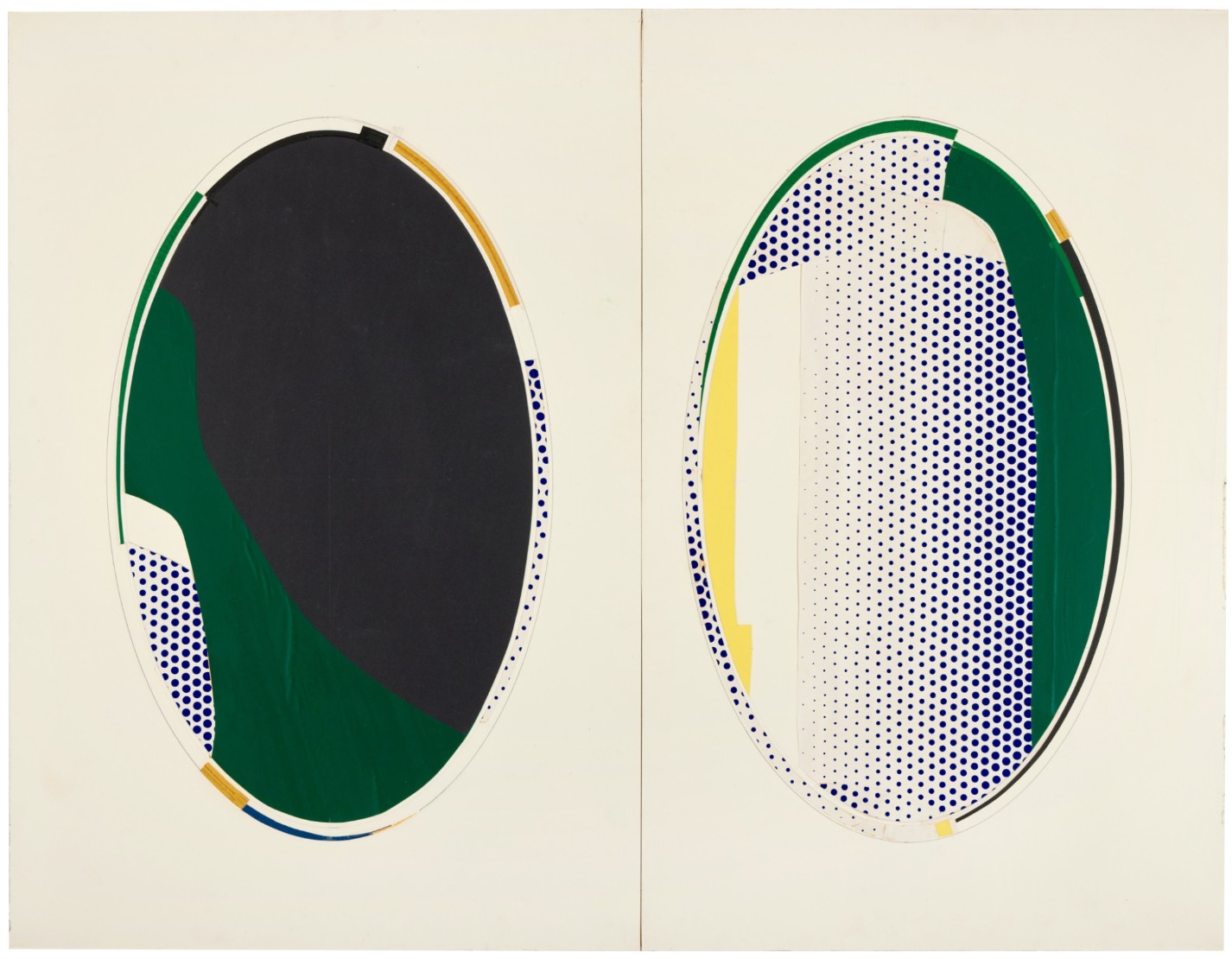
ROY LICHTENSTEIN (1923 – 1997)
Mirror #8 (Study), 1970
Cut painted paper, cut printed paper, cut paper, tape and graphite on 2 joined boards
Overall: 38 7/8 x 50 1/2 inches (98.7 x 128.3 cm)
Signed, dated 1970 and inscribed Two oval mirrors (on the verso)
#46. At the Beach (Study), 1978
Roy’s Lichtensteins: Works from the Collection of Dorothy and Roy Lichtenstein
Sotheby’s Paris: 24 October 2025
Estimated: EUR 300,000 – 500,000
EUR 304,800 / USD 354,090
WORK ON PAPER
At the Beach (Study) | Surrealism and Its Legacy | 2025 | Sotheby’s
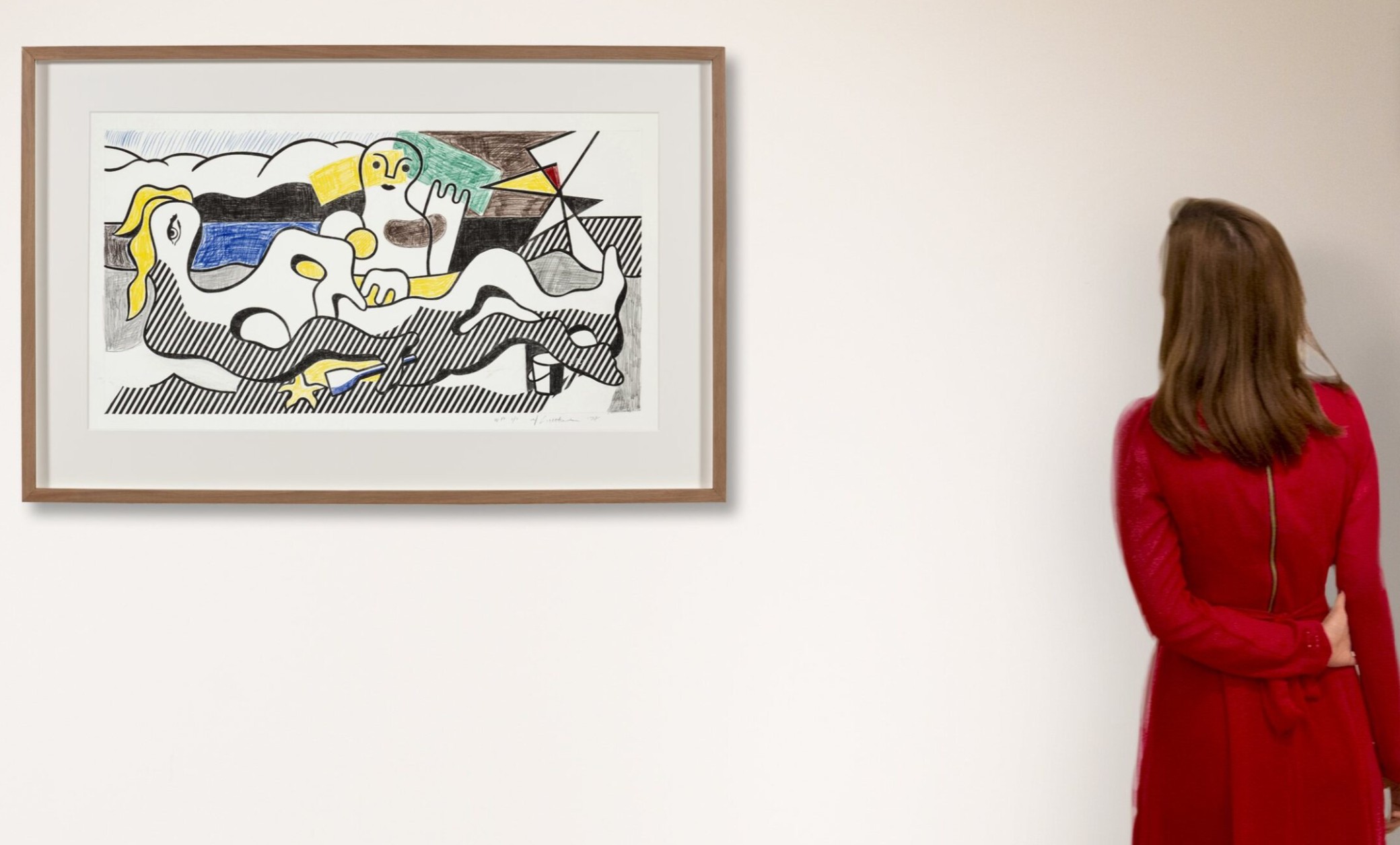
ROY LICHTENSTEIN (1923 – 1997)
At the Beach (Study), 1978
Colored pencil, graphite, and collage on print on paper
Image: 17 3/4 x 33 7/8 inches (45×86 cm)
Sheet: 25 7/8 x 42 inches (65.8 x 106.7 cm)
Signed rf Lichtenstein, dated ’78 and inscribed WP 1/1 (lower right)
#47. Water Lily (Study), 1992
Works from the Collection of Dorothy and Roy Lichtenstein
Sotheby’s New-York: 16 May 2025
Estimated: USD 100,000 – 150,000
USD 342,900
Water Lily (Study) | Contemporary Day Auction | 2025 | Sotheby’s
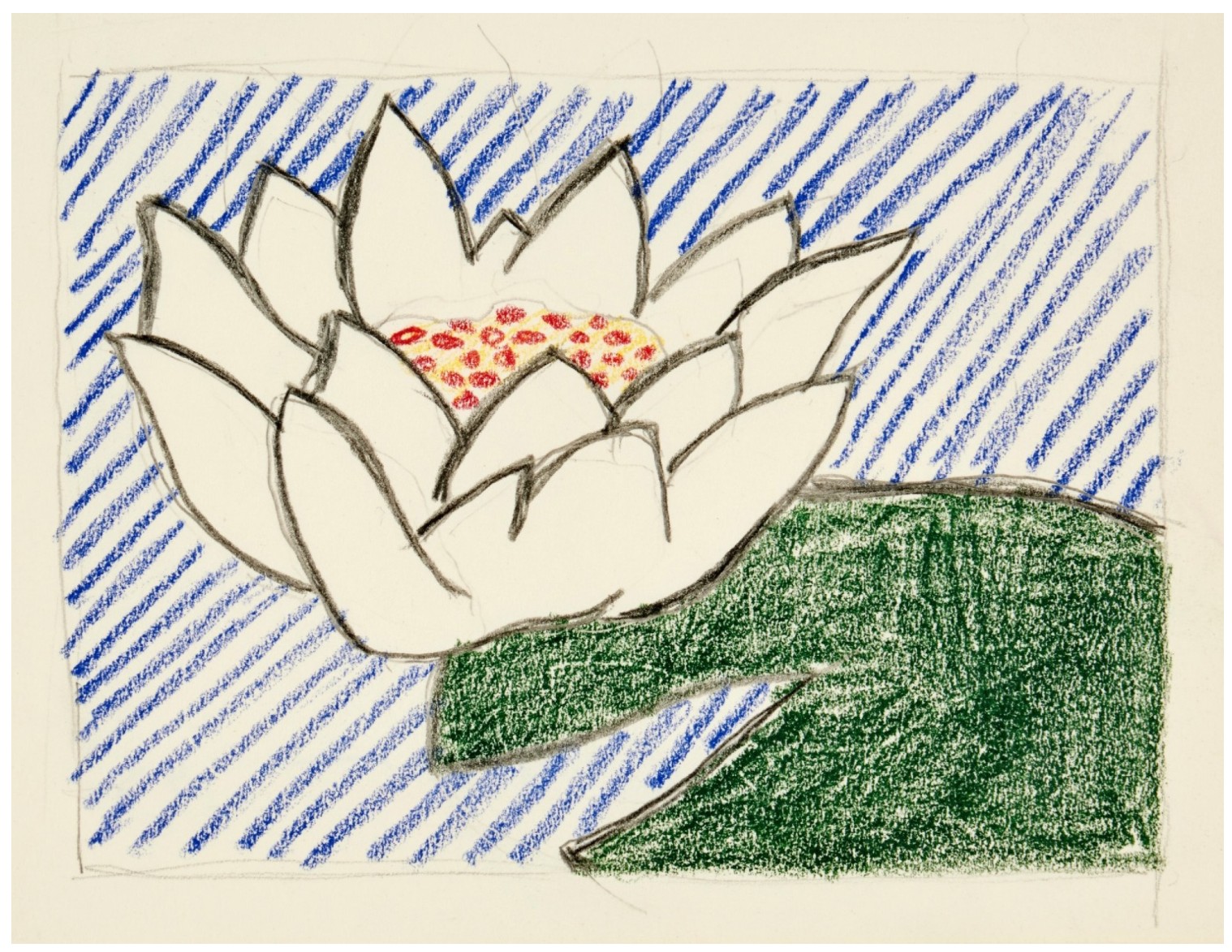
ROY LICHTENSTEIN (1923 – 1997)
Water Lily (Study), 1992
Colored pencil and graphite on paper
Image: 4 1/2 x 6 inches (10.8 x 15.2 cm)
Sheet: 6×8 inches (15.2 x 20.3 cm)
Signed and dated ’92 (on the verso)
#48. Beach Scene with Starfish (Study), 1995
Works from the Collection of Dorothy and Roy Lichtenstein
Sotheby’s London: 25 June 2025
Estimated: GBP 300,000 – 400,000
GBP 254,000 / USD 342,900
Beach Scene with Starfish (Study) | Modern & Contemporary Evening Auction | 2025 | Sotheby’s
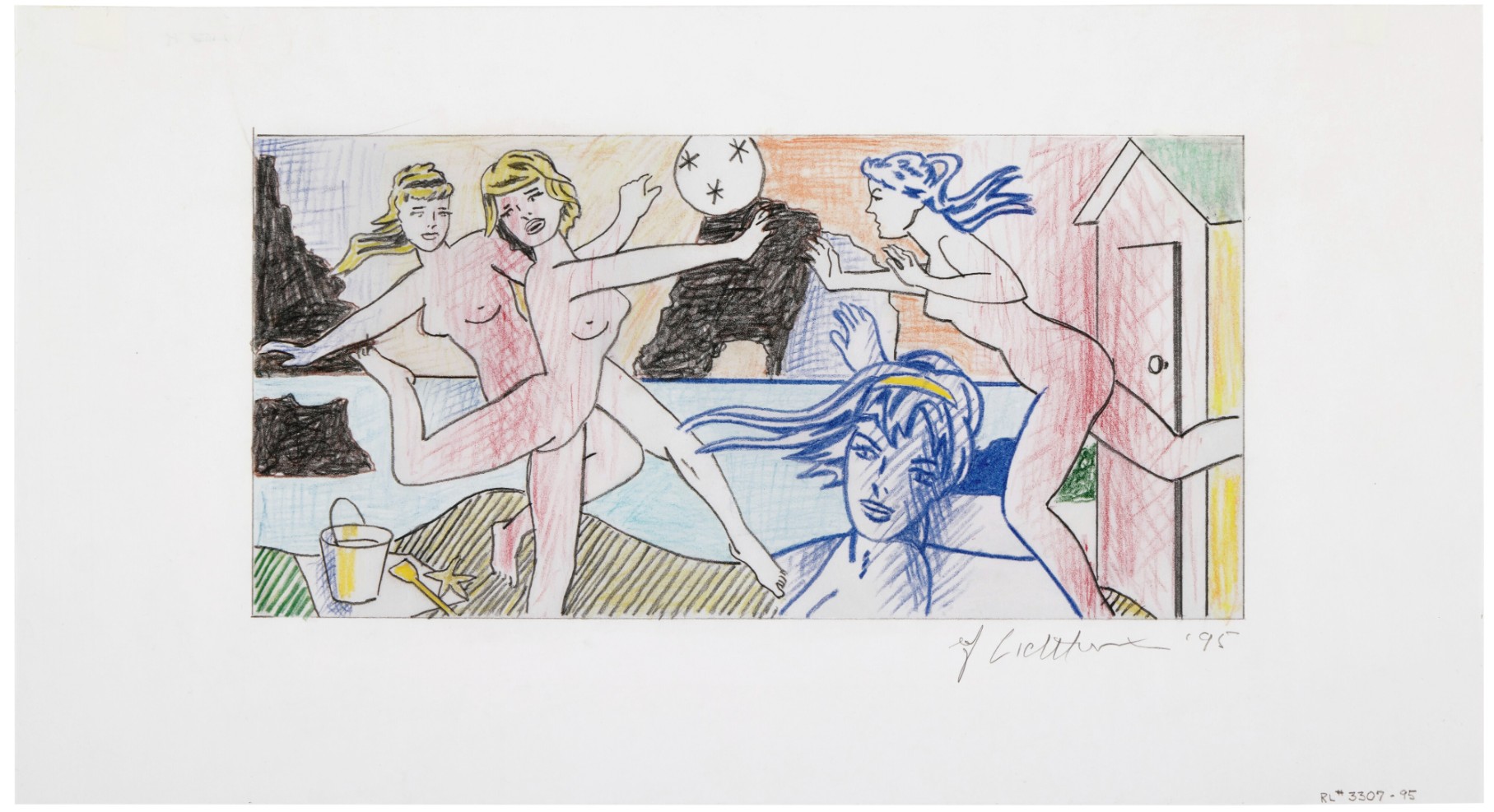
ROY LICHTENSTEIN (1923 – 1997)
Beach Scene with Starfish (Study), 1995
Colored pencil and graphite on paper
Image: 5 1/2 x 11 1/4 inches (13.9 x 28.4 cm)
Sheet: 9 1/8 x 16 3/4 inches (23.1 x 42.6 cm)
Signed and dated ’95 (lower right)
#49. Homage to Max Ernst (Study), 1975
Works from the Collection of Dorothy and Roy Lichtenstein
Sotheby’s London: 25 June 2025
Estimated: GBP 100,000 – 150,000
GBP 254,000 / USD 342,900
Homage to Max Ernst (Study) | Contemporary Day Auction | 2025 | Sotheby’s
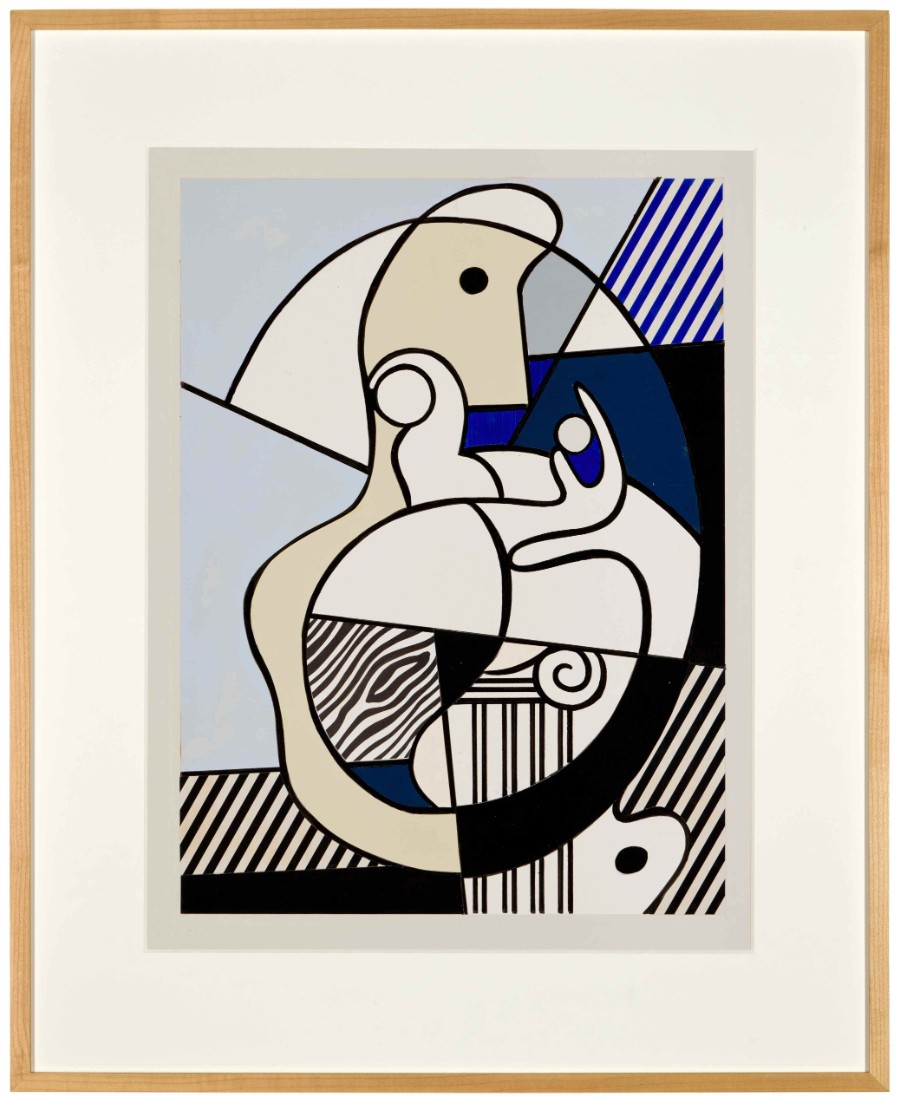
ROY LICHTENSTEIN (1923 – 1997)
Homage to Max Ernst (Study), 1975
Acrylic, marker, graphite, correction fluid and paper collage on card
26 x 19 7/8 inches (66 x 50.5 cm)
Signed and dated ’75 (on the verso)
#50. Rain Forest (Study), 1991
Reflections on Pop: Works from the Collection of Dorothy and Roy Lichtenstein
Sotheby’s New-York: 26 September 2025
Estimated: USD 500,000 – 700,000
USD 279,400
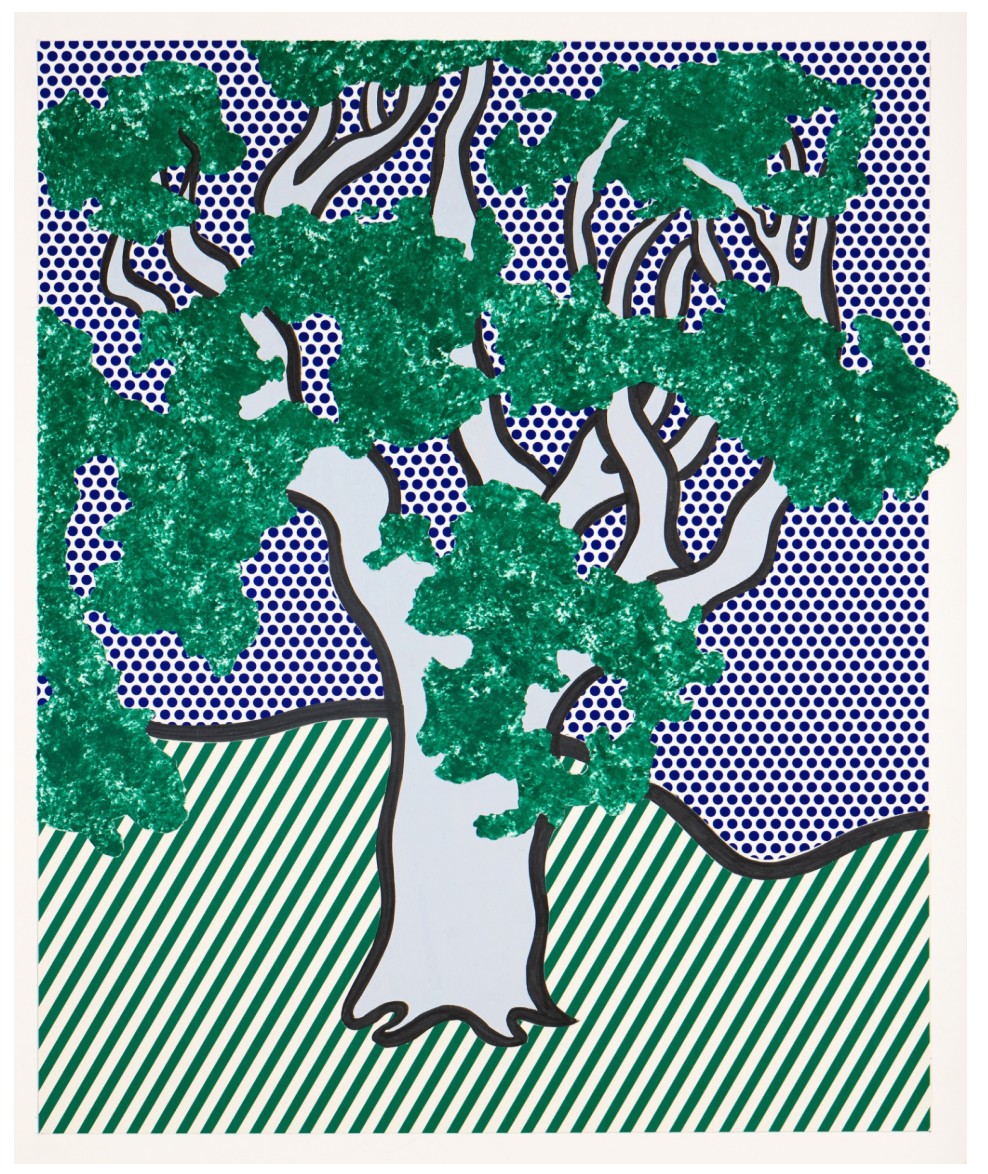
ROY LICHTENSTEIN (1923 – 1997)
Rain Forest (Study), 1991
Cut printed paper, cut painted paper, sponged acrylic, marker and graphite on paperboard
Image: 25 5/8 x 20 3/4 inches (65.1 x 52.7 cm)
Paperboard: 30 x 22 3/4 inches (76.2 x 57.8 cm)
Signed and dated ’91 (on the verso)
#51. Study for Large Red Barn (Study), 1969
Sotheby’s New-York: 19 November 2025
Estimated: USD 180,000 – 250,000
USD 279,400
WORK ON PAPER
Study for Large Red Barn (Study) | Contemporary Day Auction | 2025 | Sotheby’s
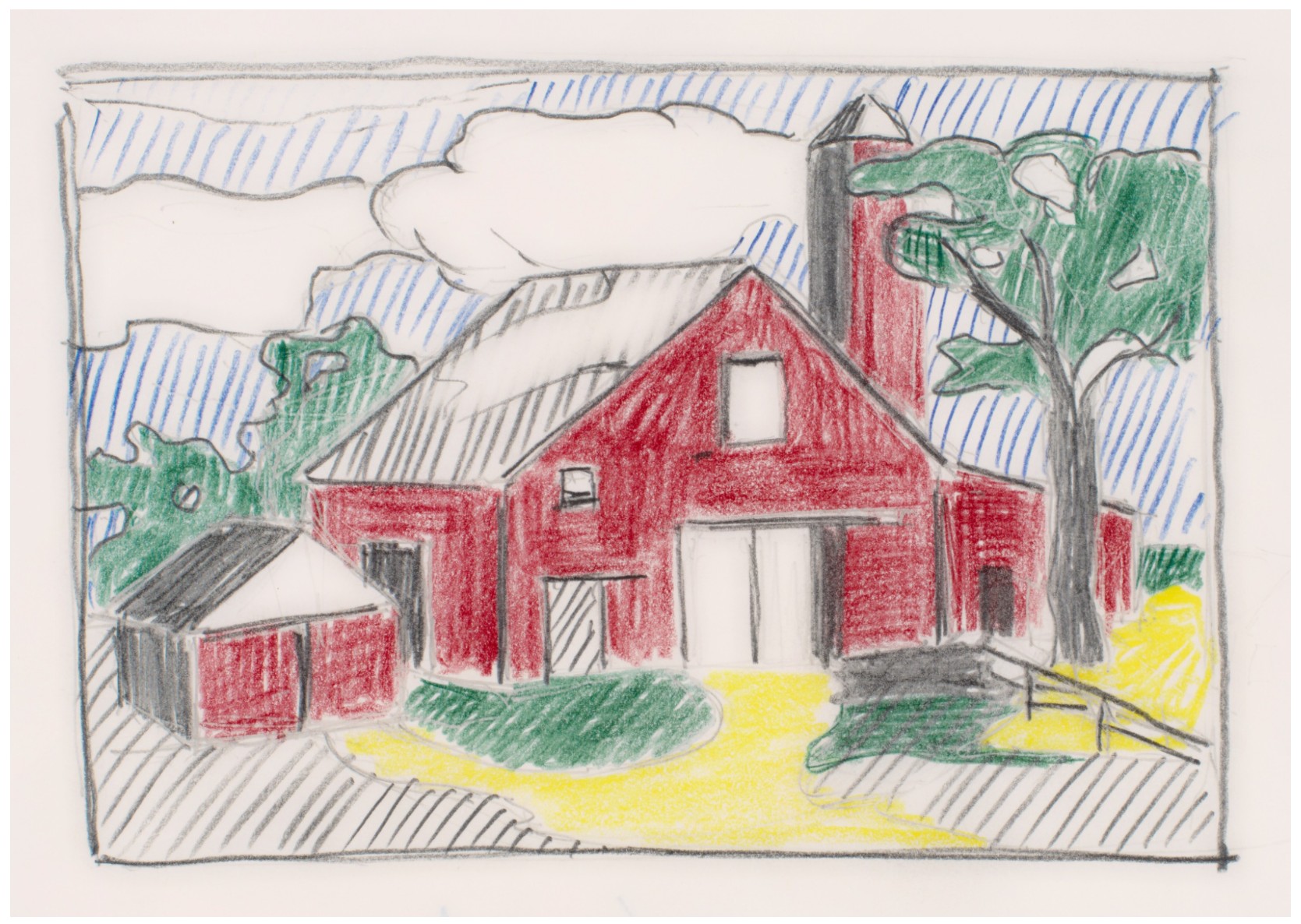
ROY LICHTENSTEIN (1923 – 1997)
Study for Large Red Barn (Study), 1969
Colored pencil and graphite on paper
Image: 4 x 5 3/4 inches (10.2 x 14.6 cm)
Sheet: 8 3/8 x 8 1/2 inches (21.3 x 21.6 cm)
Signed and dated ‘69 (on the verso)
#52. Mirror #1 (Study), 1970
Sotheby’s New-York: 19 November 2025
Estimated: USD 250,000 – 350,000
USD 279,400
Mirror #1 (Study) | Contemporary Day Auction | 2025 | Sotheby’s
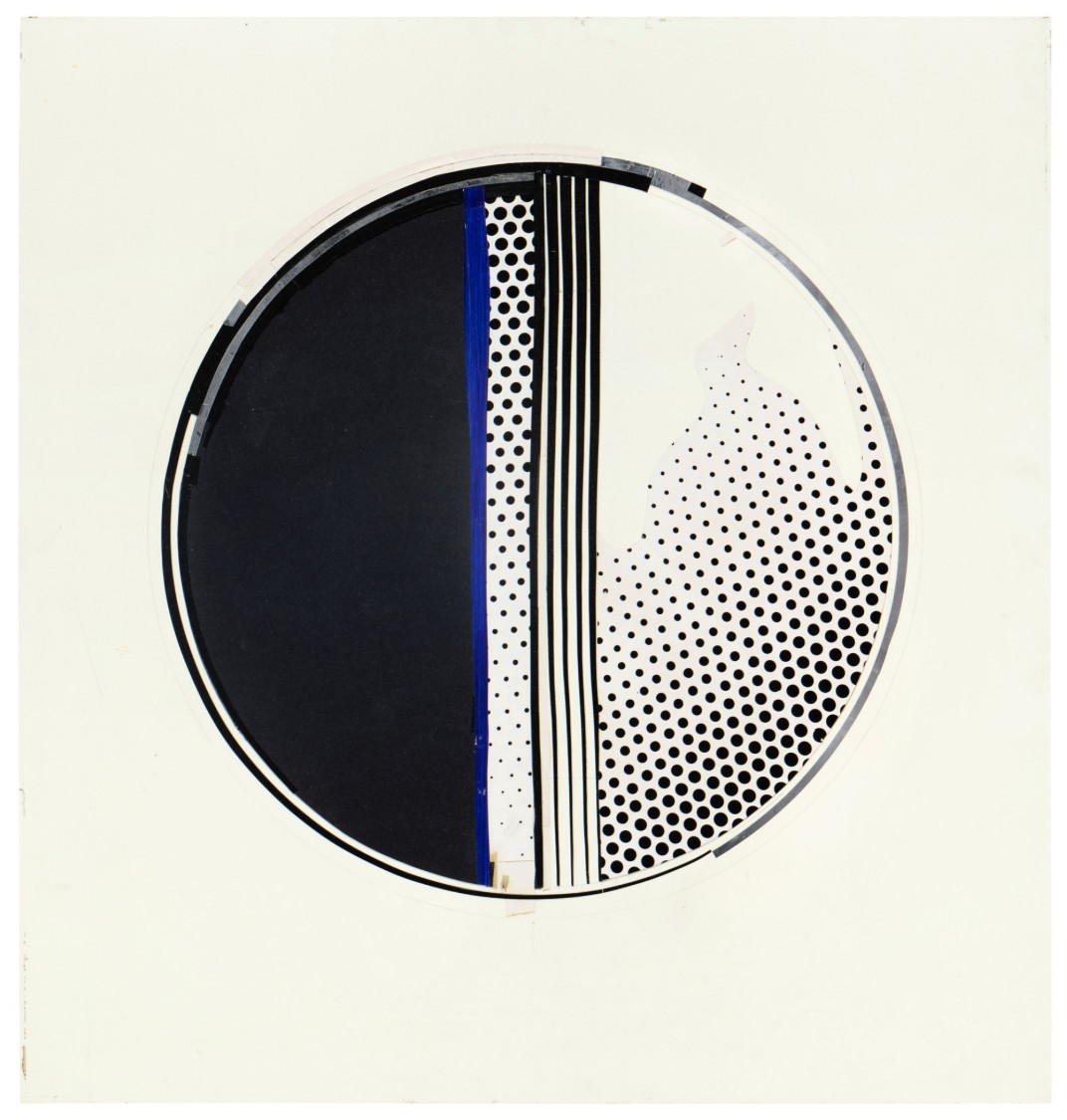
ROY LICHTENSTEIN (1923 – 1997)
Mirror #1 (Study), 1970
Cut painted and printed paper, tape, aluminum foil and graphite on board
Image diameter: 21 inches (53.3 cm)
Board: 29 3/8 x 28 inches (74.6 x 71.1 cm)
Signed and dated ’70 (on the verso)
#53. Reflections on Wonder Woman (Study), circa 1989
Reflections on Pop: Works from the Collection of Dorothy and Roy Lichtenstein
Sotheby’s New-York: 26 September 2025
Estimated: USD 150,000 – 200,000
USD 254,000
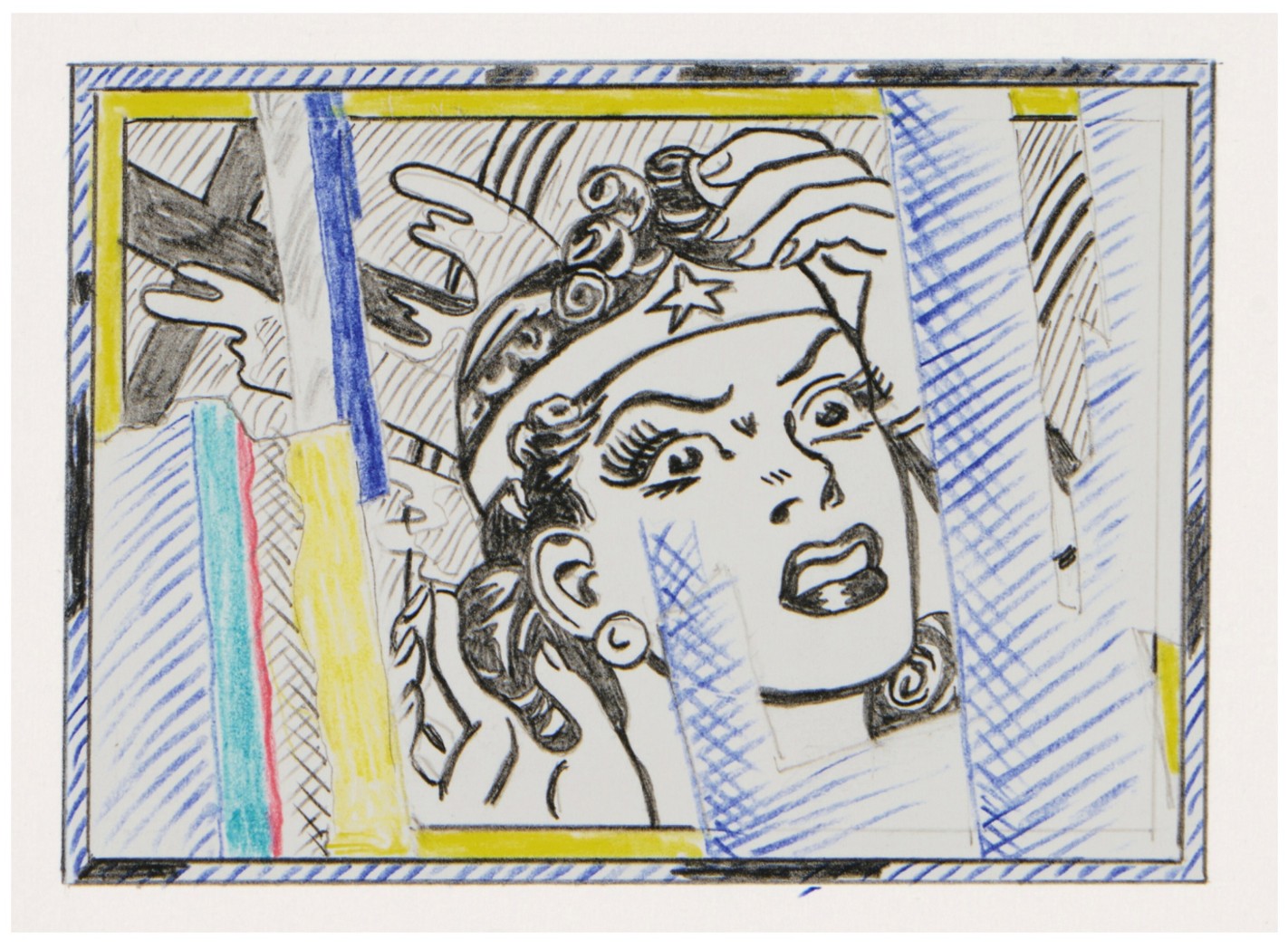
ROY LICHTENSTEIN (1923 – 1997)
Reflections on Wonder Woman (Study), circa 1989
Colored pencil and graphite on paper
Image: 3 7/8 x 5 1/2 inches (9.8 x 14 cm)
Sheet: 10 1/8 x 13 7/8 inches (25.7 x 35.2 cm)
#54. Temple II (Study), 1965
A Legacy Reimagined: Works from the Collection of Dorothy and Roy Lichtenstein
Sotheby’s New-York: 19 November 2025
Estimated: USD 150,000 – 200,000
USD 254,000
WORK ON PAPER
Temple II (Study) | Contemporary Day Auction | 2025 | Sotheby’s
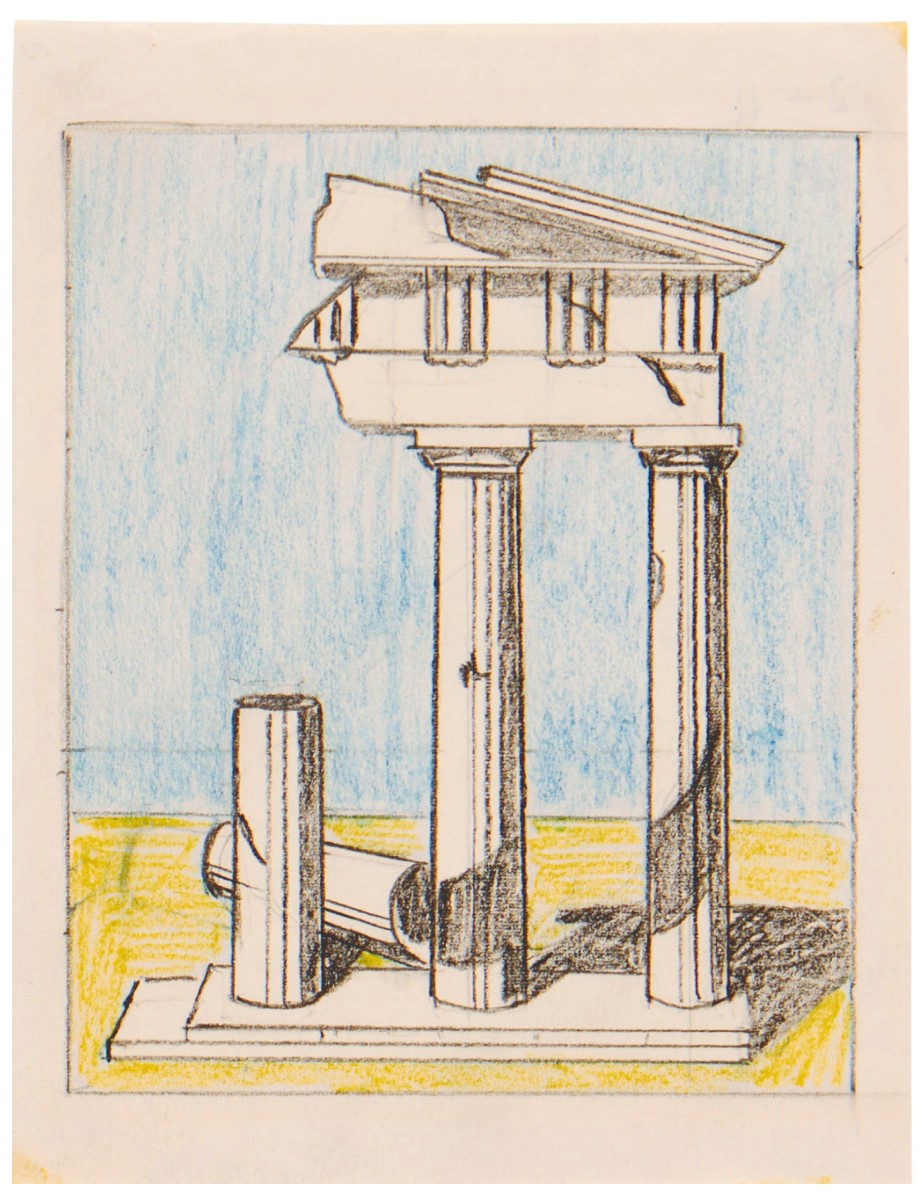
ROY LICHTENSTEIN (1923 – 1997)
Temple II (Study), 1965
Colored pencil and graphite on paper
Image: 4 3/4 x 3 7/8 inches (12.1 x 9.8 cm)
Sheet: 5 3/4 x 4 1/2 inches (14.6 x 11.4 cm)
#55. Mirror #4 (Study), 1970
Reflections on Pop: Works from the Collection of Dorothy and Roy Lichtenstein
Sotheby’s New-York: 26 September 2025
Estimated: USD 150,000 – 200,000
USD 244,000
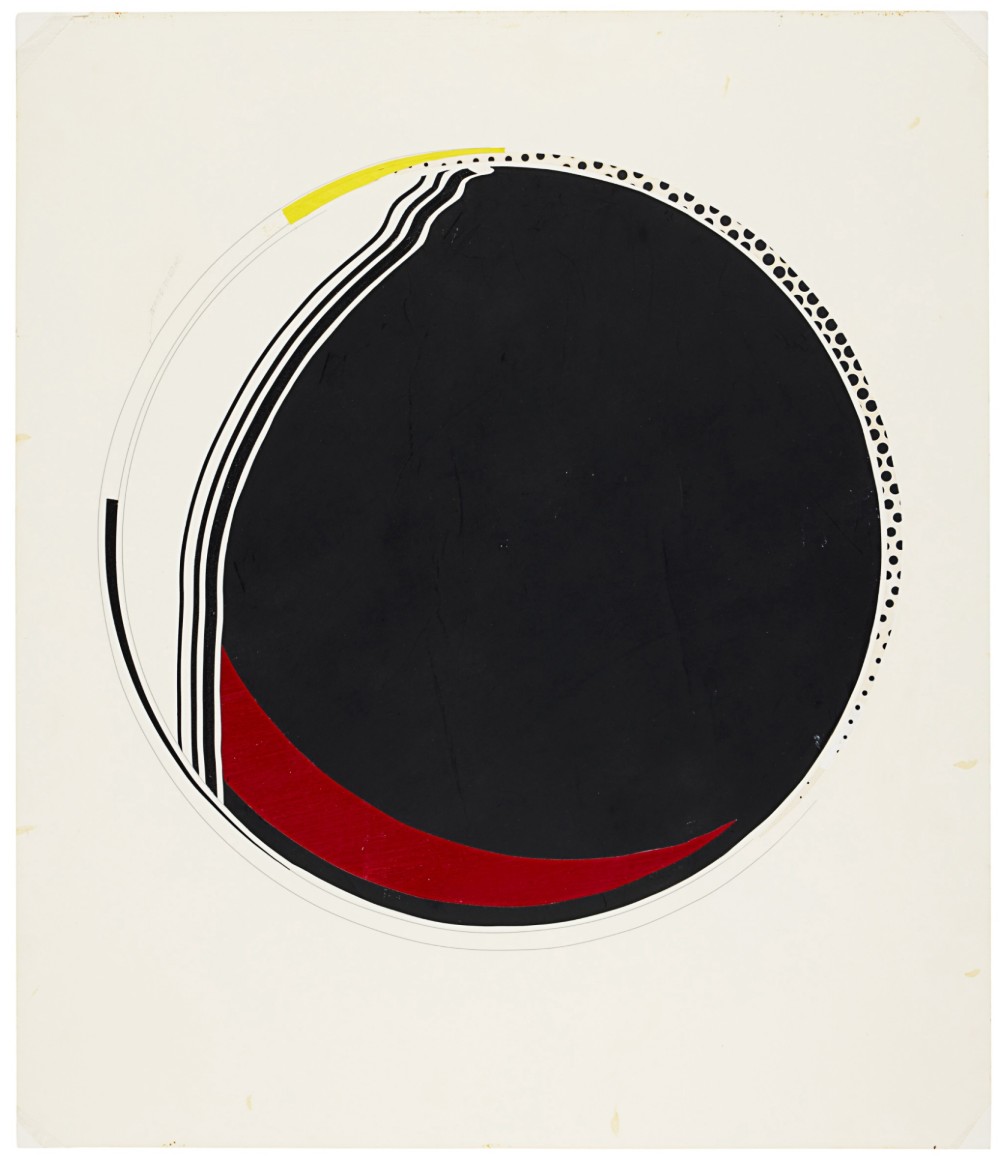
ROY LICHTENSTEIN (1923 – 1997)
Mirror #4 (Study), 1970
Tape, cut printed paper, cut painted paper, correction fluid and graphite on paperboard
Image diameter: 24 1/2 inches (62.2 cm)
Paperboard: 35×30 inches (88.9 x 76.2 cm)
Signed and dated 1970 (on the verso)
#56. Explosion (Study), 1965
Sotheby’s New-York: 16 May 2025
Estimated: USD 80,000 – 120,000
USD 234,950
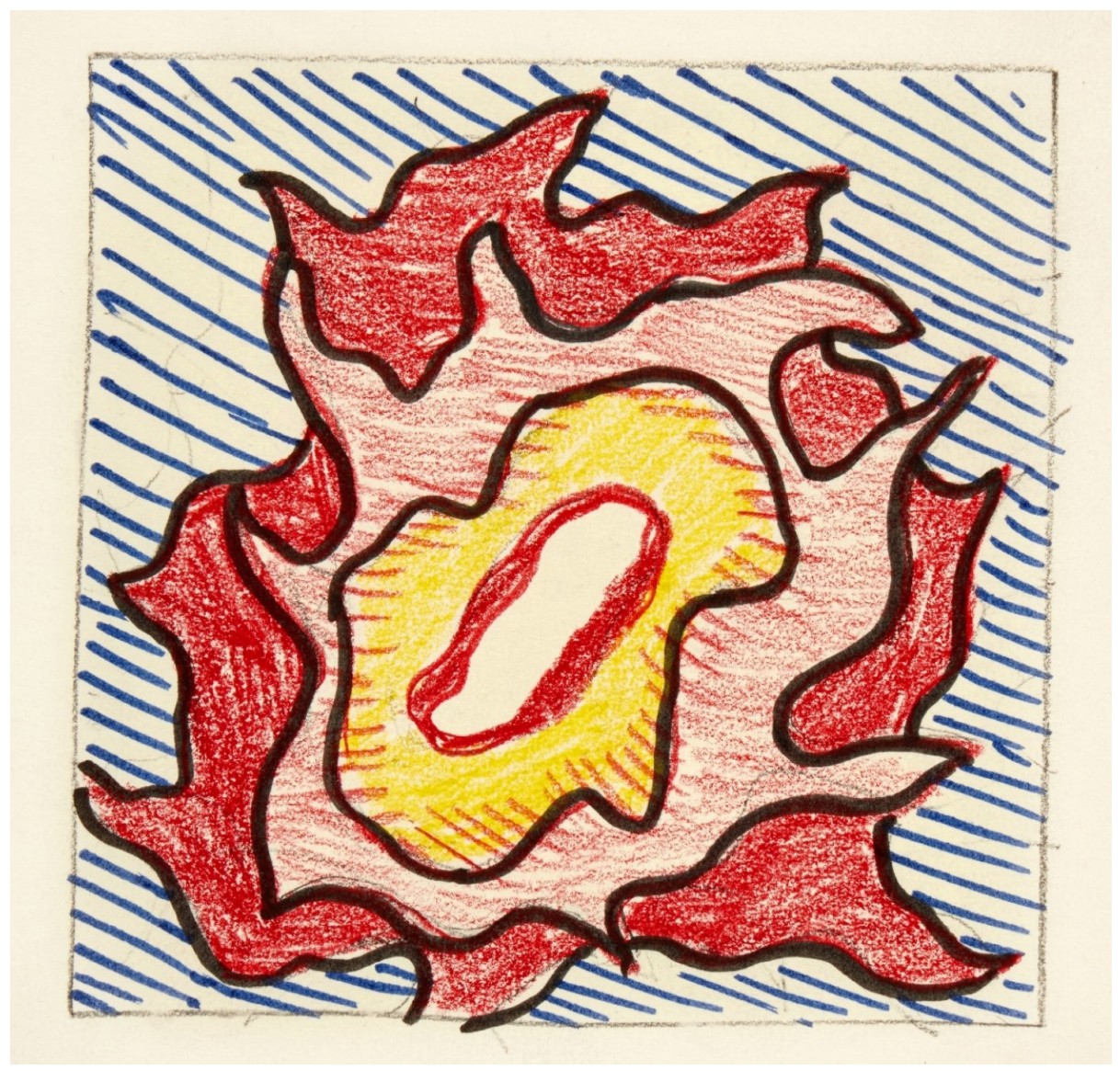
Explosion (Study), 1965
Marker, colored pencil and graphite on paper
Image: 4 3/4 x 4 3/4 inches (12.1 x 12.1 cm)
Sheet: 9×6 inches (22.9 x 15.2 cm)
#57. Reflections on the Prom (Study), 1990
Reflections on Pop: Works from the Collection of Dorothy and Roy Lichtenstein
Sotheby’s New-York: 26 September 2025
Estimated: USD 150,000 – 200,000
USD 228,600
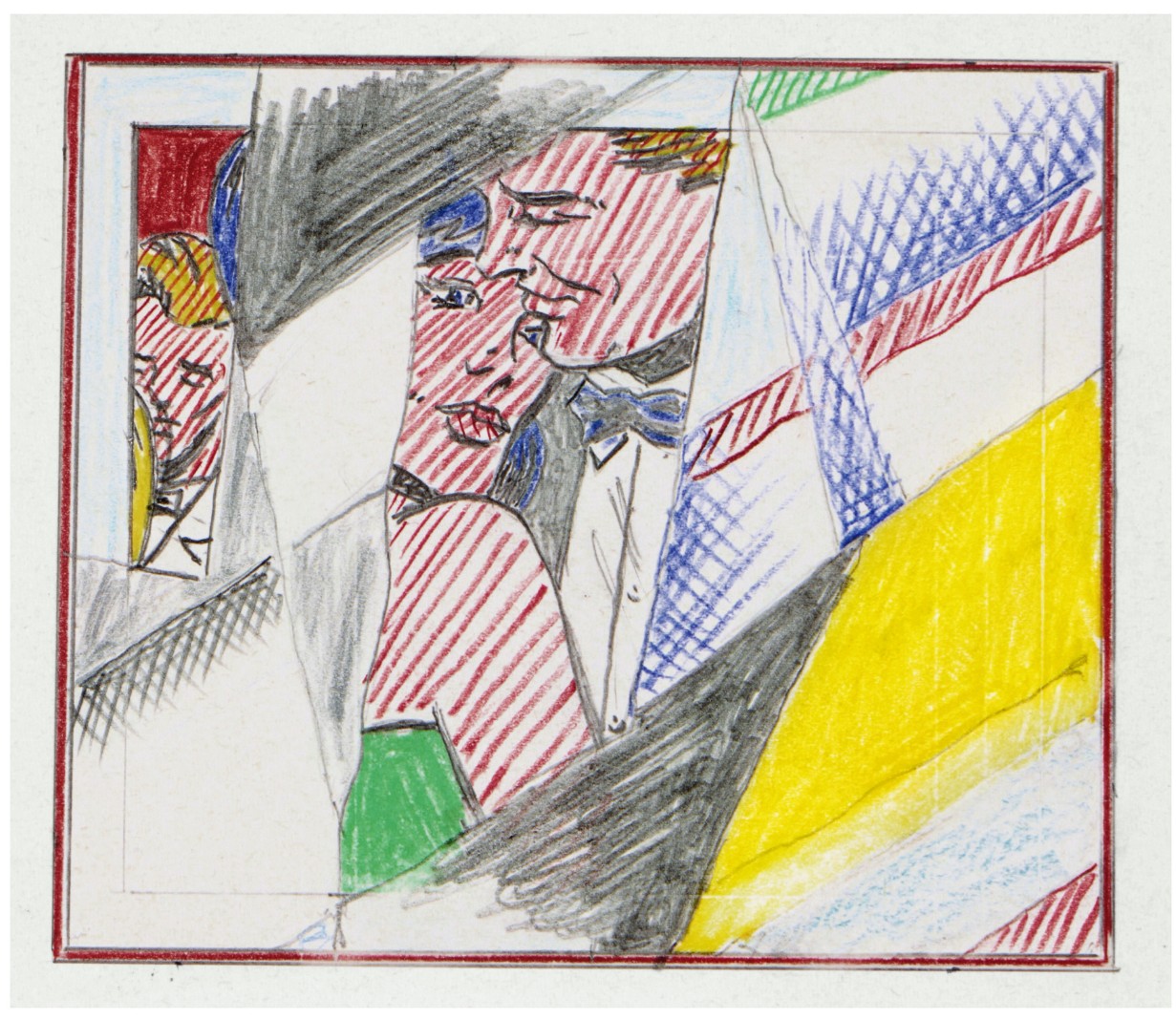
ROY LICHTENSTEIN (1923 – 1997)
Reflections on the Prom (Study), 1990
Colored pencil and graphite on paper
Image: 4 1/2 x 5 1/4 inches (11.4 x 13.3 cm)
Sheet: 6 1/2 x 9 3/8 inches (16.5 x 23.8 cm)
Dated ’90 (on the verso)
#58. Hologram Interior (Study), 1996
Works from the Collection of Dorothy and Roy Lichtenstein
Sotheby’s New-York: 16 May 2025
Estimated: USD 70,000 – 100,000
USD 215,900
Hologram Interior (Study) | Contemporary Day Auction | 2025 | Sotheby’s
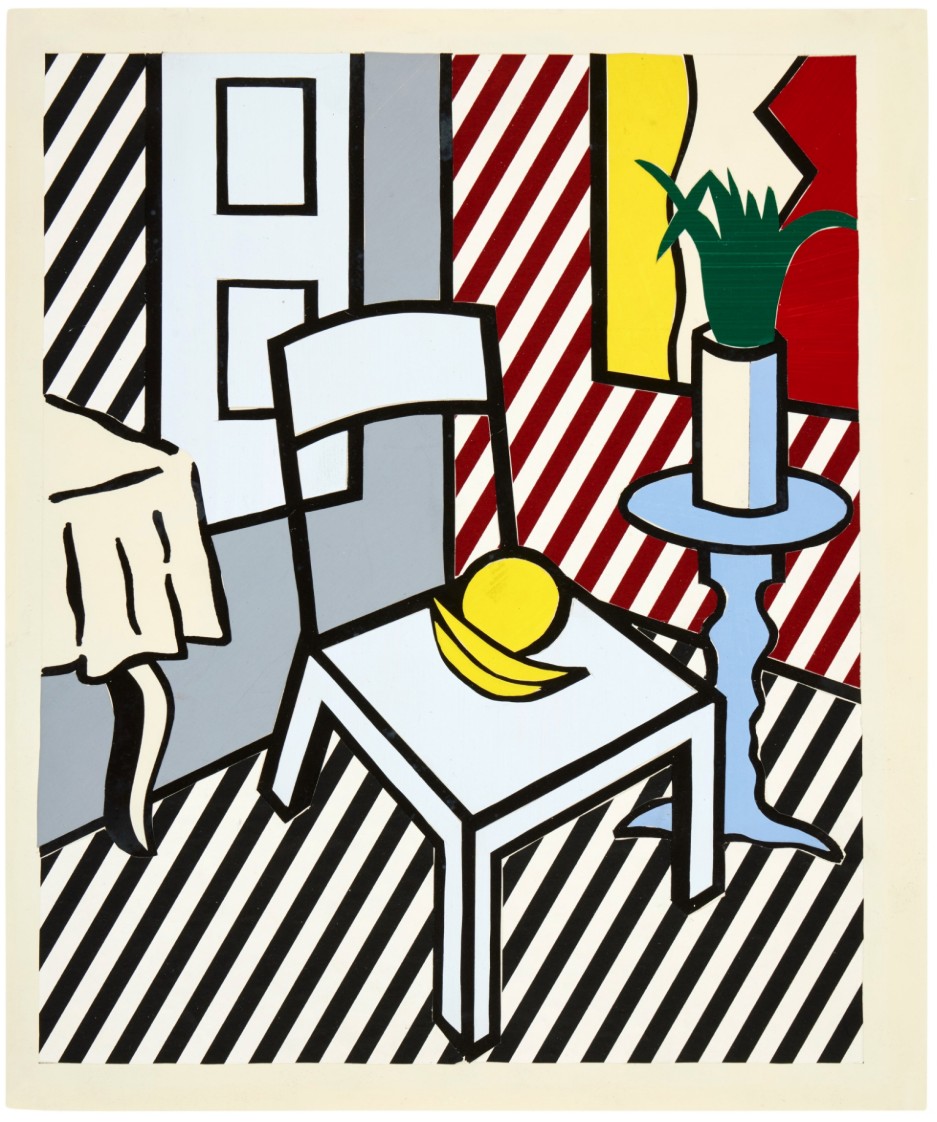
ROY LICHTENSTEIN (1923 – 1997)
Hologram Interior (Study), 1996
Cut painted paper and cut printed paper on printed paper
13 5/8 x 11 1/4 inches (34.6 x 28.6 cm)
#59. Leda and the Swan (Bathtub Panels) (Study), 1968
Works from the Collection of Dorothy and Roy Lichtenstein
Sotheby’s London: 25 June 2025
Estimated: GBP 80,000 – 120,000
GBP 152,400 / USD 205,740
Leda and the Swan (Bathtub Panels) (Study) | Contemporary Day Auction | 2025 | Sotheby’s
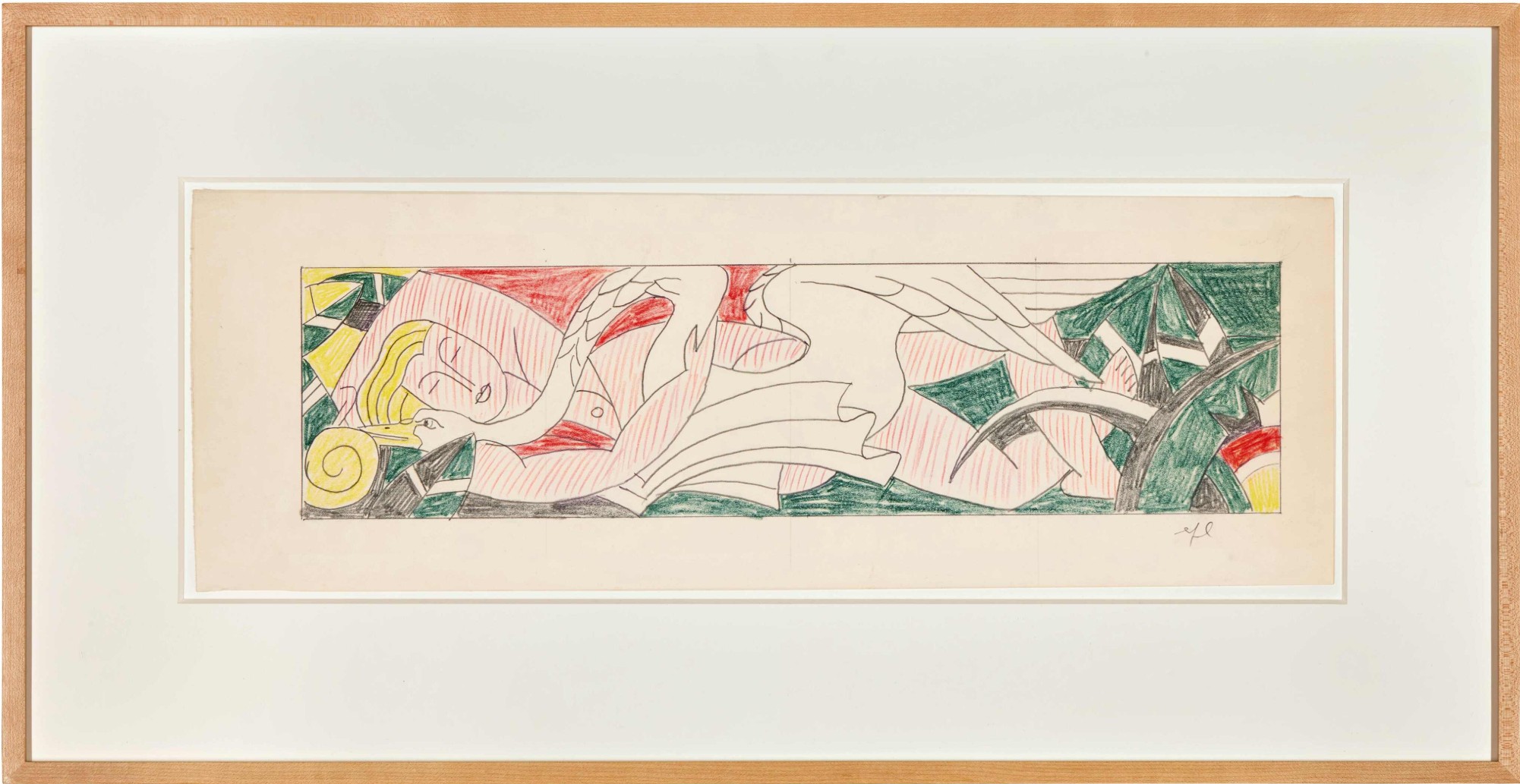
ROY LICHTENSTEIN (1923 – 1997)
Leda and the Swan (Bathtub Panels) (Study), 1968
Graphite and colored pencil on paper
7 5/8 x 22 5/8 inches (19.5 x 57.5 cm)
Signed with the artist’s initials (lower right)
#60. Yellow Apple (Study), 1980
Christie’s New-York: 30 September 2025
Estimated: USD 180,000 – 250,000
USD 203,200
ROY LICHTENSTEIN (1923-1997), Yellow Apple (Study) | Christie’s
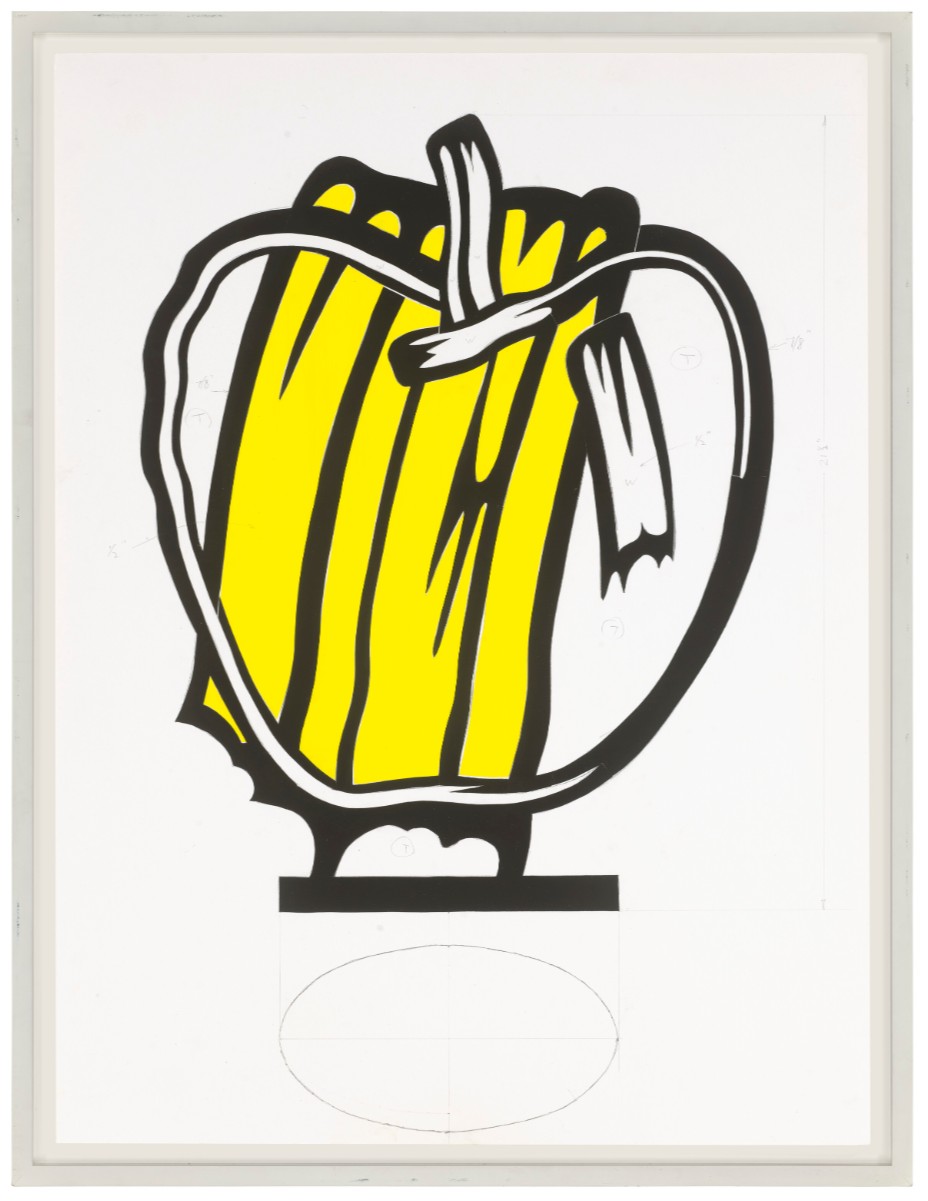
ROY LICHTENSTEIN (1923-1997)
Yellow Apple (Study), 1980
Tape, painted paper collage and graphite on paperboard
29 1/4 x 21 7/8 inches (74.3 x 55.6 cm)
Signed and dated ‘rf Lichtenstein ’80’ (on the reverse)
#61. Figures with Rope (Study), 1978
Works from the Collection of Dorothy and Roy Lichtenstein
Sotheby’s London: 25 June 2025
Estimated: GBP 120,000 – 180,000
GBP 139,700 / USD 188,595
Figures with Rope (Study) | Contemporary Day Auction | 2025 | Sotheby’s
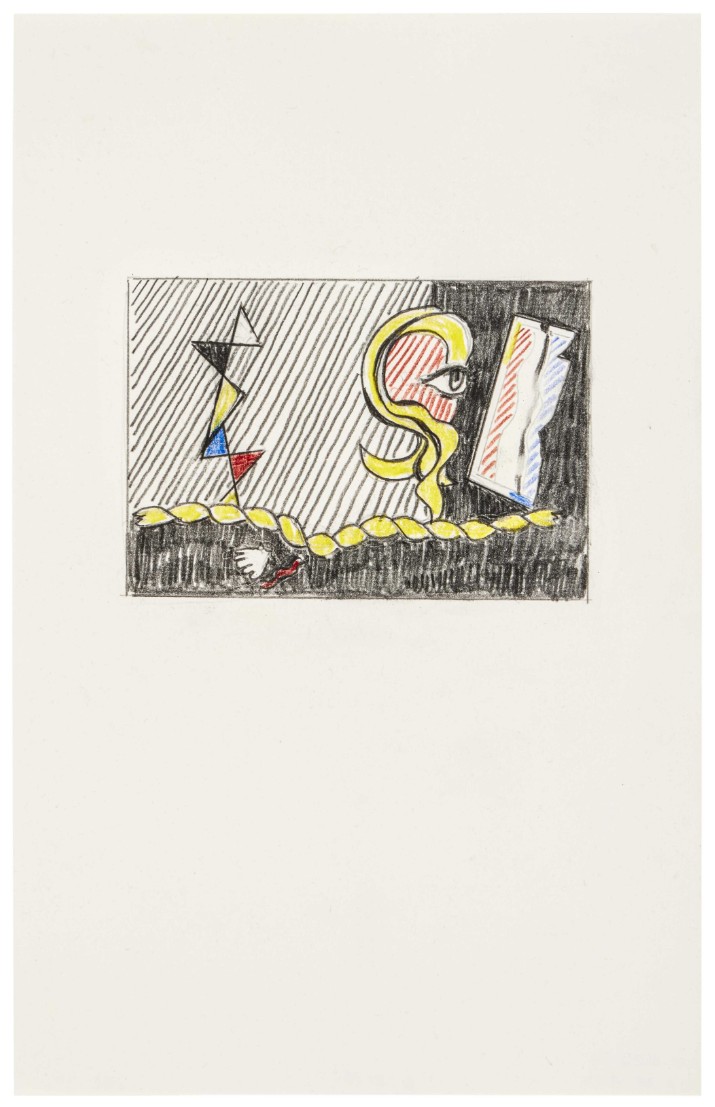
ROY LICHTENSTEIN (1923 – 1997)
Figures with Rope (Study), 1978
Graphite and colored pencil on paper
11 1/2 x 7 3/8 inches (29.3 x 18.6 cm)
Signed and dated ’78 (on the verso)
#62. Red Apple (Study), 1980
Christie’s Hong-Kong: 26 September 2025
Estimated: HKD 1,400,000 – 2,400,000
HKD 1,397,000 / USD 179,565
ROY LICHTENSTEIN (1923-1997), Red Apple (Study) | Christie’s
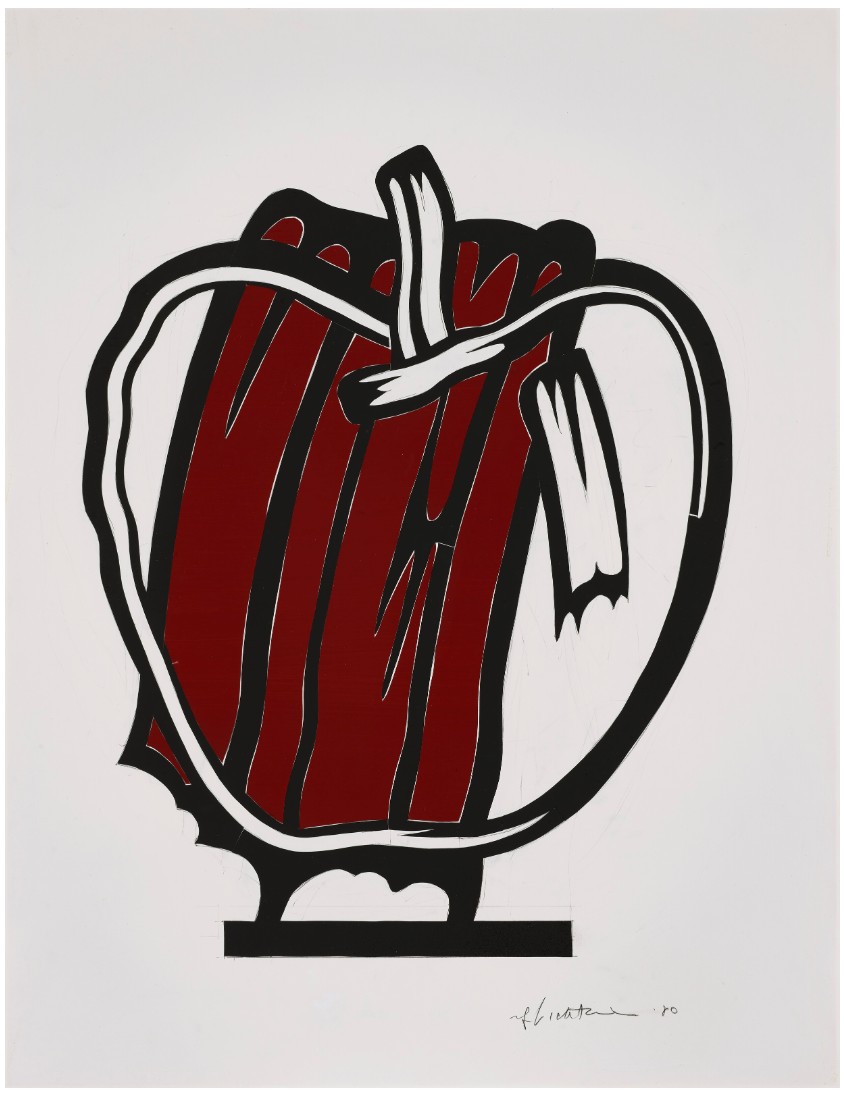
ROY LICHTENSTEIN (1923-1997)
Red Apple (Study), 1980
Cut painted paper, cut printed paper, correction fluid or opaque watercolor, graphite pencil on paper
28 1/2 x 22 inches (72.4 x 55.9 cm)
Signed and dated ‘rf Lichtenstein ’80’ (lower right)
Signed and dated again ‘rf Lichtenstein ’80’ (on the reverse)
#63. Imperfect Sculpture (Study), 1993
Reflections on Pop: Works from the Collection of Dorothy and Roy Lichtenstein
Sotheby’s New-York: 26 September 2025
Estimated: USD 150,000 – 200,000
USD 177,800
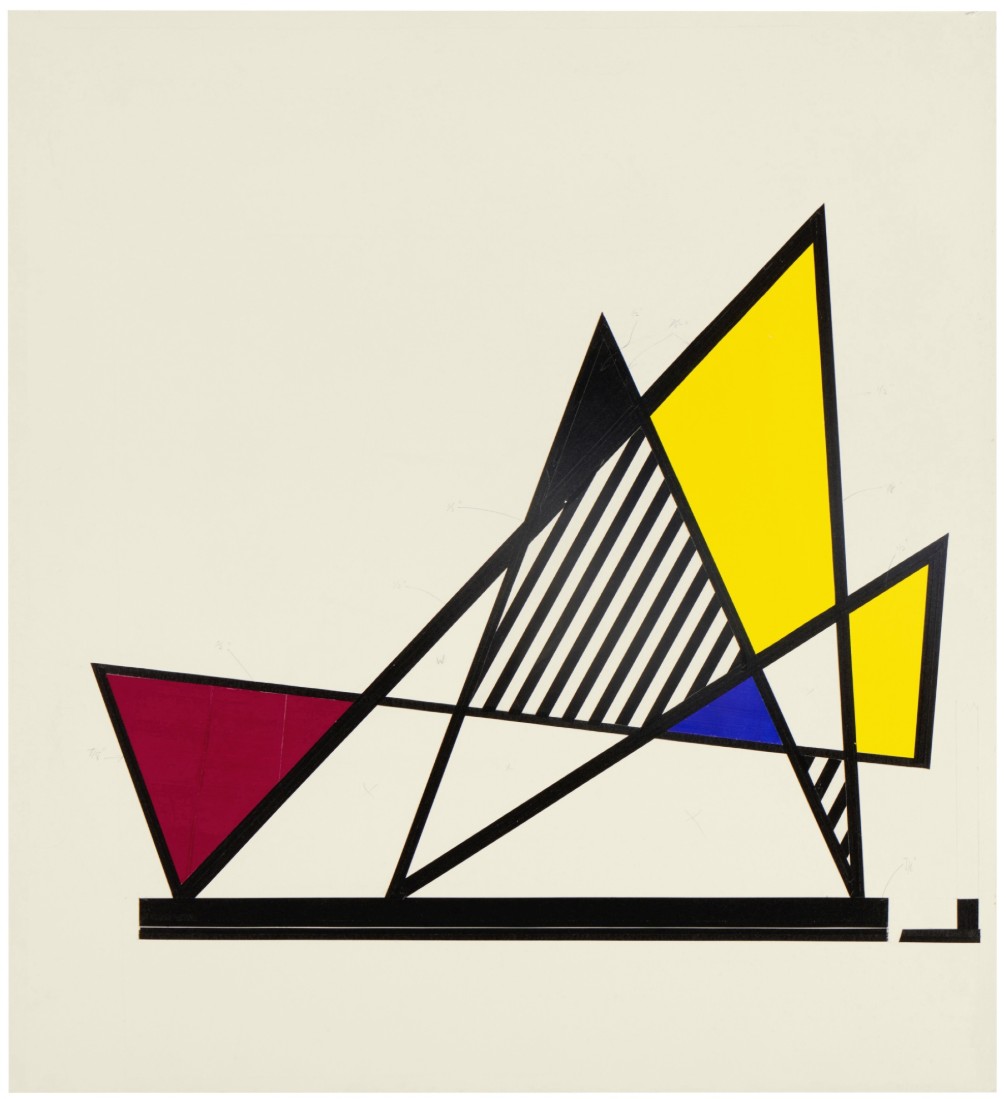
ROY LICHTENSTEIN (1923 – 1997)
Imperfect Sculpture (Study), 1993
Tape, cut painted paper, cut printed paper, acrylic and graphite on paperboard
43 3/4 x 40 inches (111.1 x 101.6 cm)
#64. Slam, 1989
Reflections on Pop: Works from the Collection of Dorothy and Roy Lichtenstein
Sotheby’s New-York: 26 September 2025
Estimated: USD 100,000 – 150,000
USD 177,800
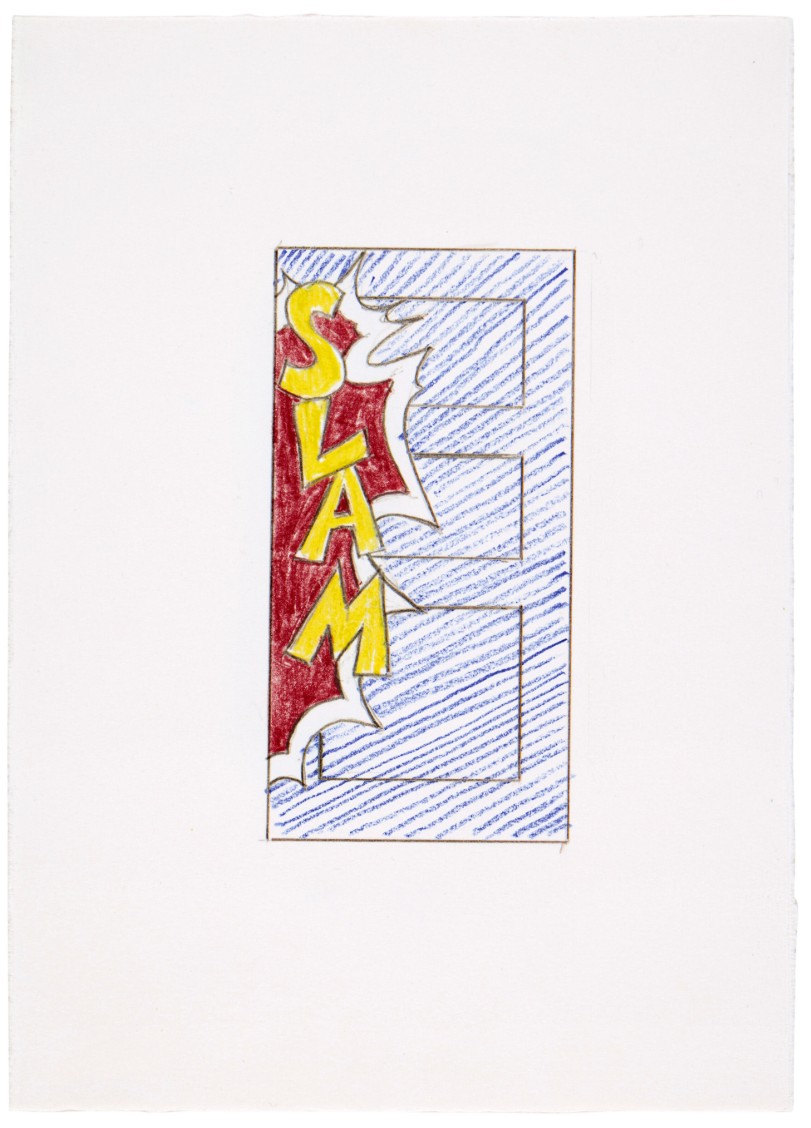
ROY LICHTENSTEIN (1923 – 1997)
Slam, 1989
Colored pencil and graphite on paper
Image: 5 5/8 x 2 7/8 inches (14.3 x 7.3 cm)
Sheet: 10 3/8 x 7 3/8 inches (26.4 x 18.7 cm)
Signed with the artist’s initials and dated ’89 (on the verso)
#65. Trompe l’Oeil with Léger Head and Paintbrush (Study), 1973
A Legacy Reimagined: Works from the Collection of Dorothy and Roy Lichtenstein
Sotheby’s New-York: 19 November 2025
Estimated: USD 100,000 – 150,000
USD 177,800
WORK ON PAPER
Trompe l’Oeil with Léger Head and Paintbrush (Study) | Contemporary Day Auction | 2025 | Sotheby’s
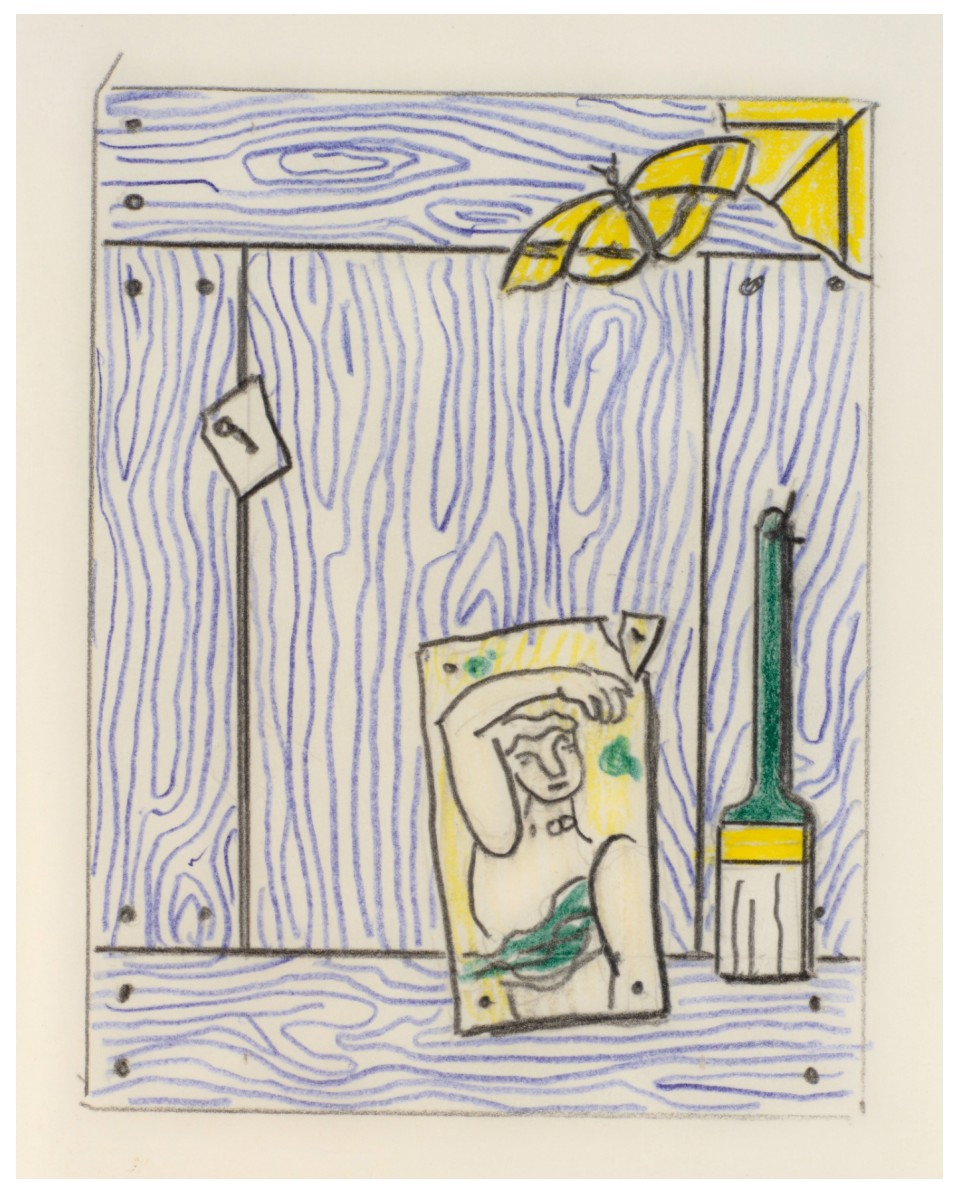
ROY LICHTENSTEIN (1923 – 1997)
Trompe l’Oeil with Léger Head and Paintbrush (Study), 1973
Colored pencil and graphite on paper
Image: 4 3/4 x 3 3/4 inches (12.1 x 9.5 cm)
Sheet: 8 1/4 x 5 inches (21 x 12.6 cm)
Signed and dated ‘73 (on the verso)
#66. Interior (Study), 1989
Christie’s New-York: 20 N0vember 2025
Estimated: USD 80,000 – 120,000
USD 165,100
WORK ON PAPER
ROY LICHTENSTEIN (1923-1997), Interior (Study) | Christie’s
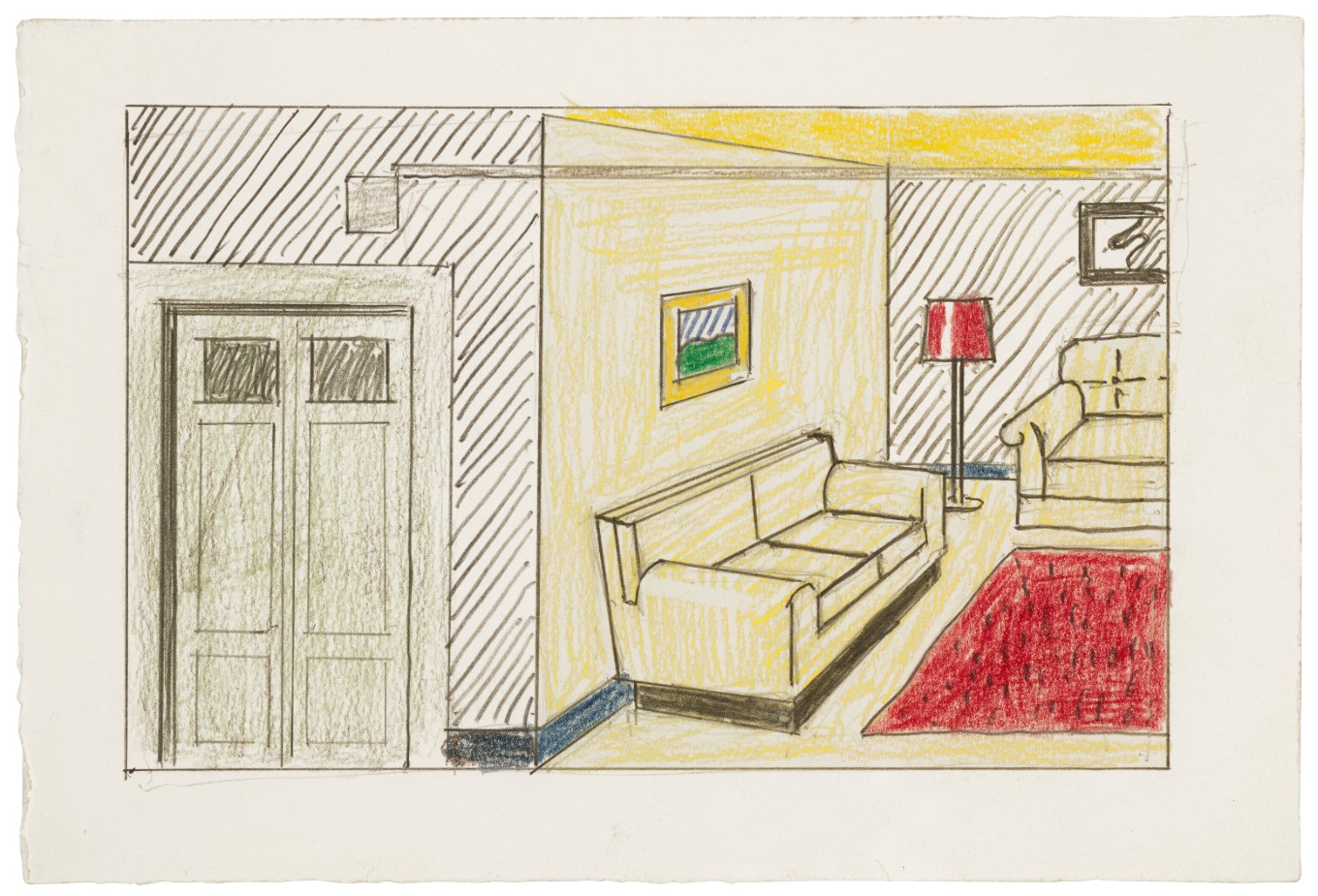
ROY LICHTENSTEIN (1923-1997)
Interior (Study), 1989
Colored pencil and graphite on paper
Image: 5 3/4 x 9 inches (14.6 x 22.9 cm)
Sheet: 7 1/2 x 11 1/8 inches (19.1 x 28.2 cm)
Signed and dated ‘r.f. Lichtenstein ’89’ (on the reverse)
#67. Modern Head #1, Modern Head #5 and Modern Head Relief (Studies), 1970
Reflections on Pop: Works from the Collection of Dorothy and Roy Lichtenstein
Sotheby’s New-York: 26 September 2025
Estimated: USD 100,000 – 150,000
USD 165,100
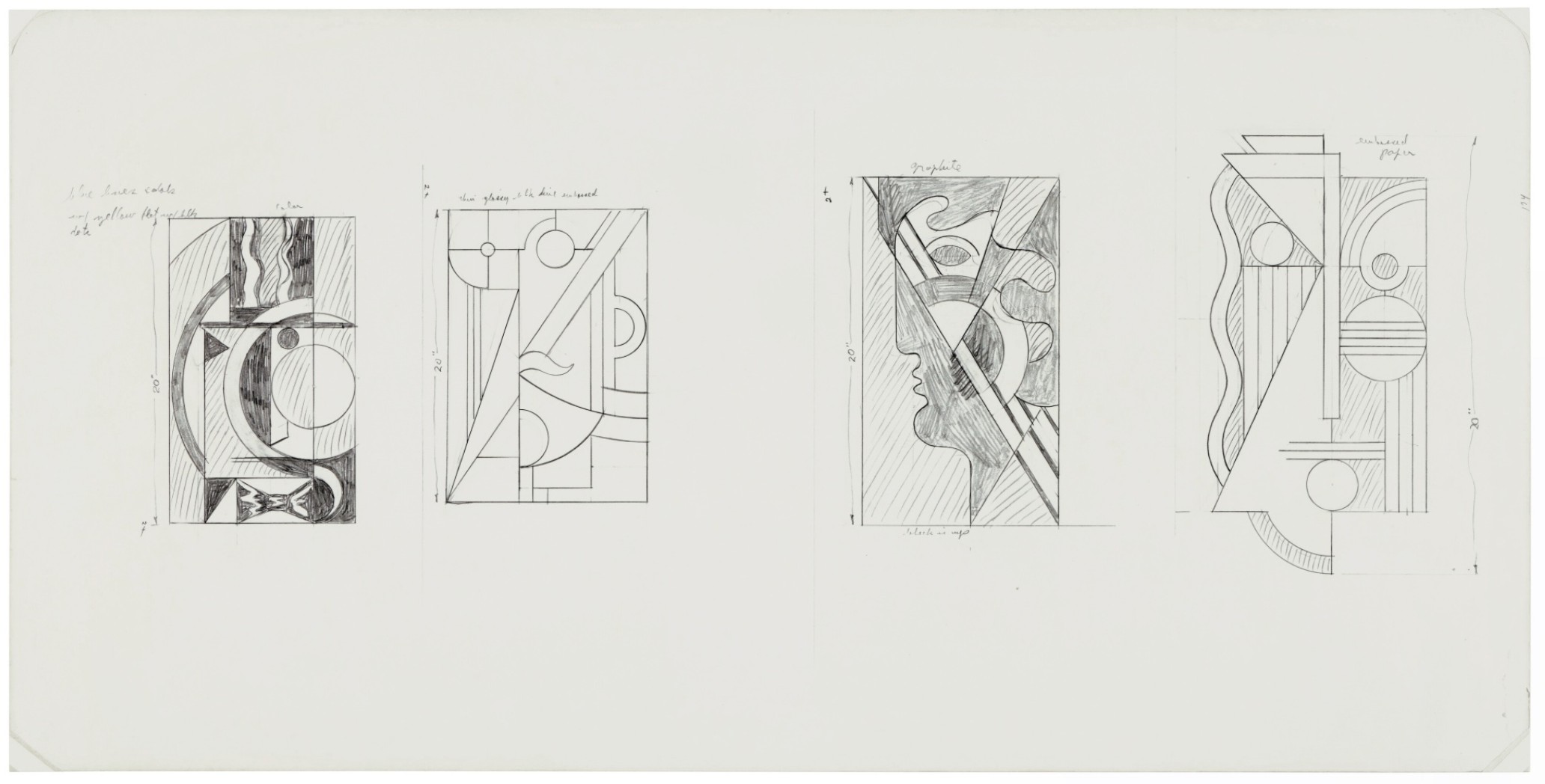
ROY LICHTENSTEIN (1923 – 1997)
Modern Head #1, Modern Head #5 and Modern Head Relief (Studies), 1970
Graphite on paper
20 x 39 7/8 inches (50.8 x 101.3 cm)
Signed and dated ’70 (on the verso)
#68. Two Apples (Study), 1982
Reflections on Pop: Works from the Collection of Dorothy and Roy Lichtenstein
Sotheby’s New-York: 26 September 2025
Estimated: USD 180,000 – 250,000
USD 152,400
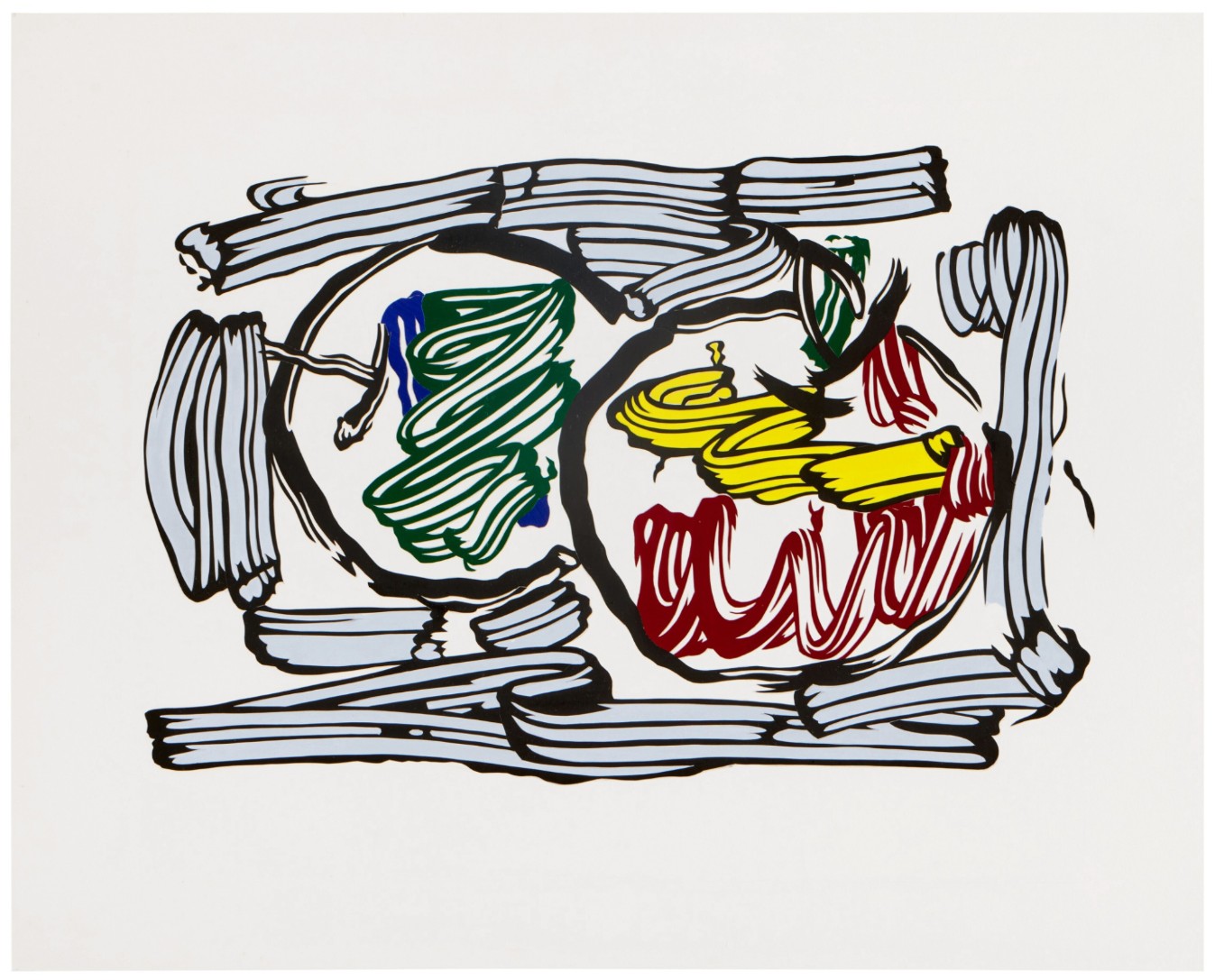
ROY LICHTENSTEIN (1923 – 1997)
Two Apples (Study), 1982
Cut painted paper, acrylic and graphite on paperboard
32 1/4 x 40 inches (81.9 x 101.6 cm)
Signed and dated ’82 (on the verso)
#69. Entablature VI (Study), 1975
Reflections on Pop: Works from the Collection of Dorothy and Roy Lichtenstein
Sotheby’s New-York: 26 September 2025
Estimated: USD 120,000 – 180,000
USD 152,400
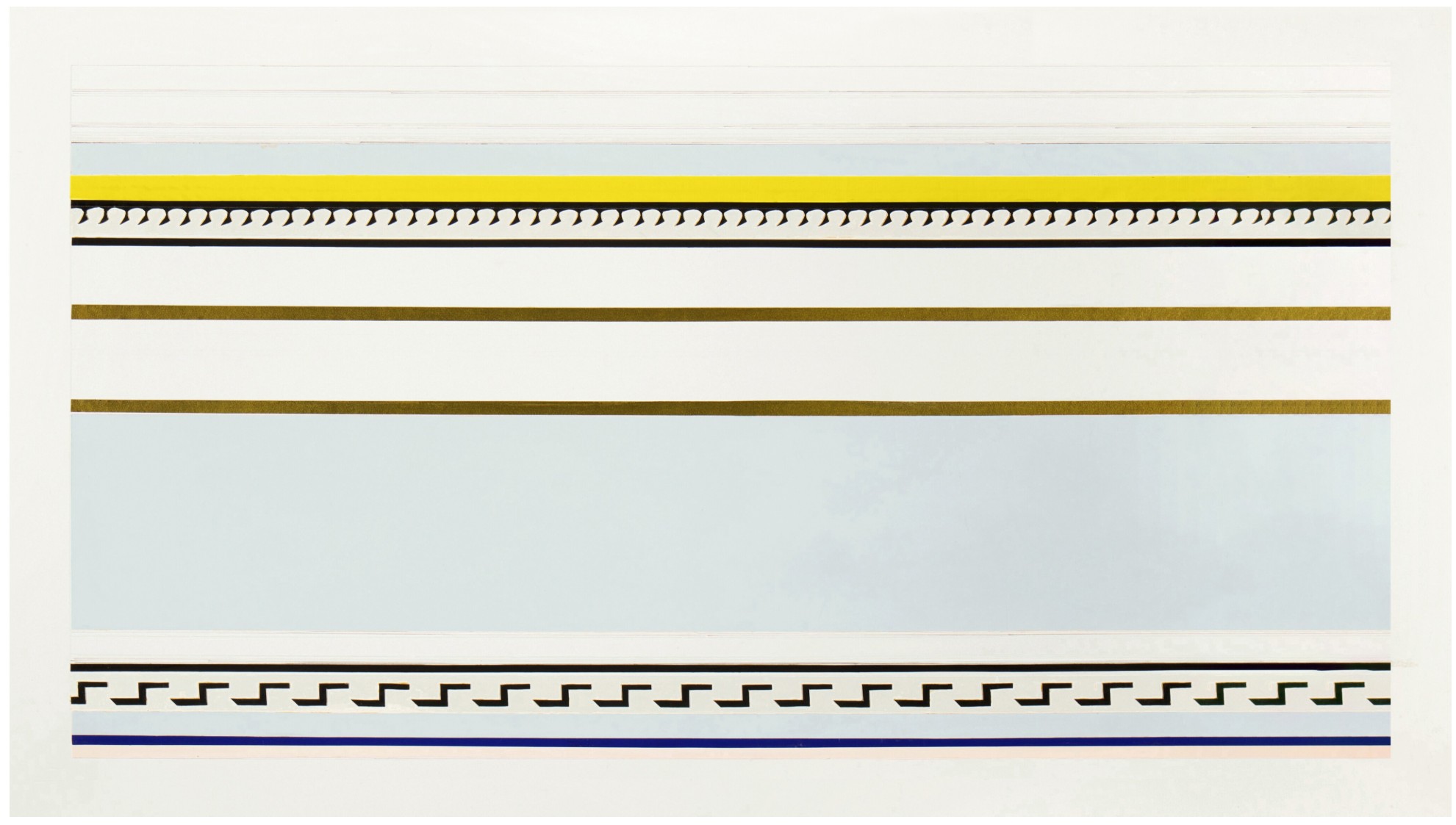
ROY LICHTENSTEIN (1923 – 1997)
Entablature VI (Study), 1975
Cut painted paper, cut printed paper, cut paper and graphite on paperboard
Image: 23×38 inches (58.4 x 96.5 cm)
Paperboard: 28 1/8 x 43 1/2 inches (71.4 x 110.5 cm)
Signed and dated ’75 (on the reverse)
#70. Chapel of the Eucharist Mural (Study) and Interior with Chair (Study) [Double-Sided Work], 1997
Reflections on Pop: Works from the Collection of Dorothy and Roy Lichtenstein
Sotheby’s New-York: 26 September 2025
Estimated: USD 80,000 – 120,000
USD 139,700
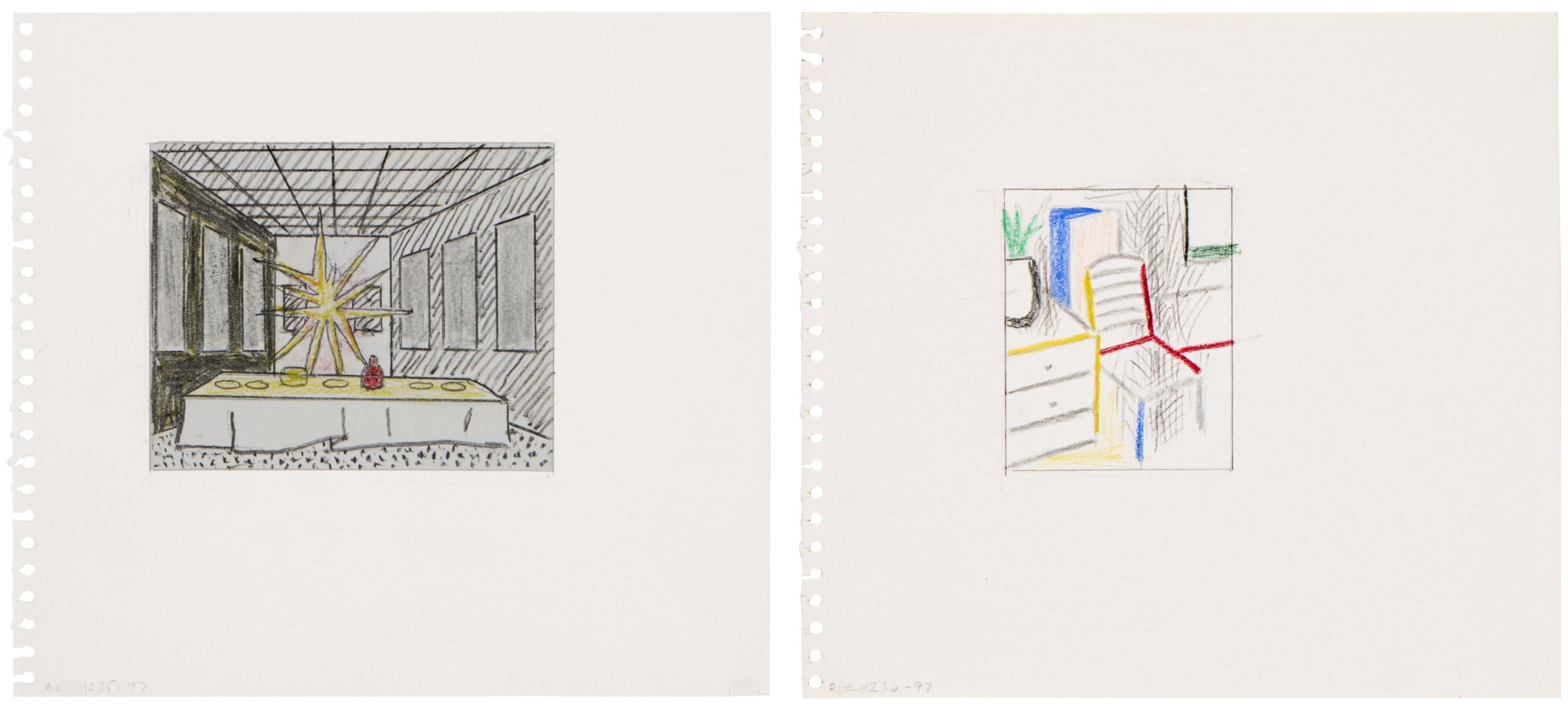
ROY LICHTENSTEIN (1923 – 1997)
Chapel of the Eucharist Mural (Study) and Interior with Chair (Study) [Double-Sided Work], 1997
Colored pencil and graphite on paper
Chapel of the Eucharist Mural Study
Image: 3 7/8 x 4 3/4 inches (10 x 12.4 cm)
Interior with Chair Study
Image: 3 1/4 x 2 3/4 inches (8.3 x 7 cm)
Sheet: 8 x 8 7/8 inches (20.2 x 22.5 cm)
#71. It Is You (Study), 1993
Reflections on Pop: Works from the Collection of Dorothy and Roy Lichtenstein
Sotheby’s New-York: 26 September 2025
Estimated: USD 80,000 – 120,000
USD 139,700
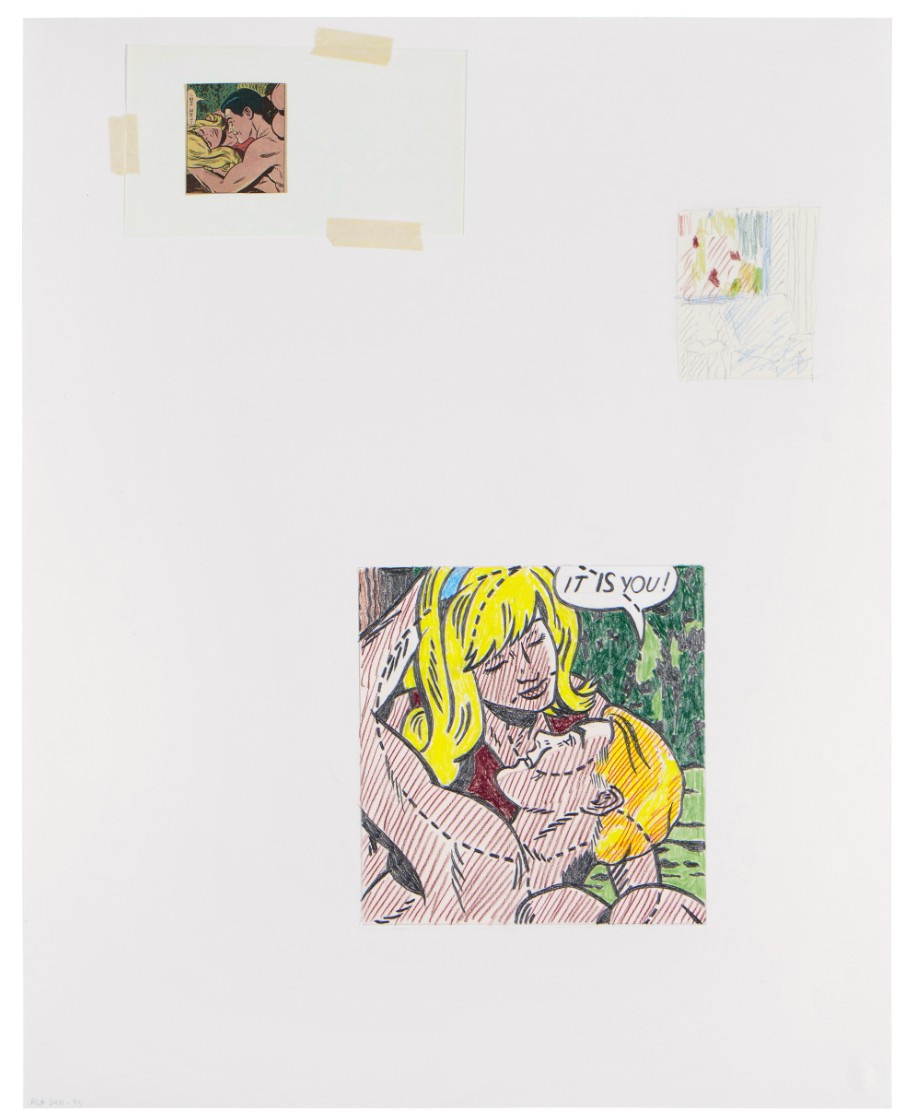
ROY LICHTENSTEIN (1923 – 1997)
It Is You (Study), 1993
Colored pencil, graphite, cut paper, tape and printed paper clipping on paper
28 7/8 x 23 inches (73.3 x 58.4 cm)
#72. Reflections of “Large Interior” (Study), 1993
A Legacy Reimagined: Works from the Collection of Dorothy and Roy Lichtenstein
Sotheby’s New-York: 19 November 2025
Estimated: USD 400,000 – 600,000
USD 139,700
WORK ON PAPER
Reflections of “Large Interior” (Study) | Contemporary Day Auction | 2025 | Sotheby’s
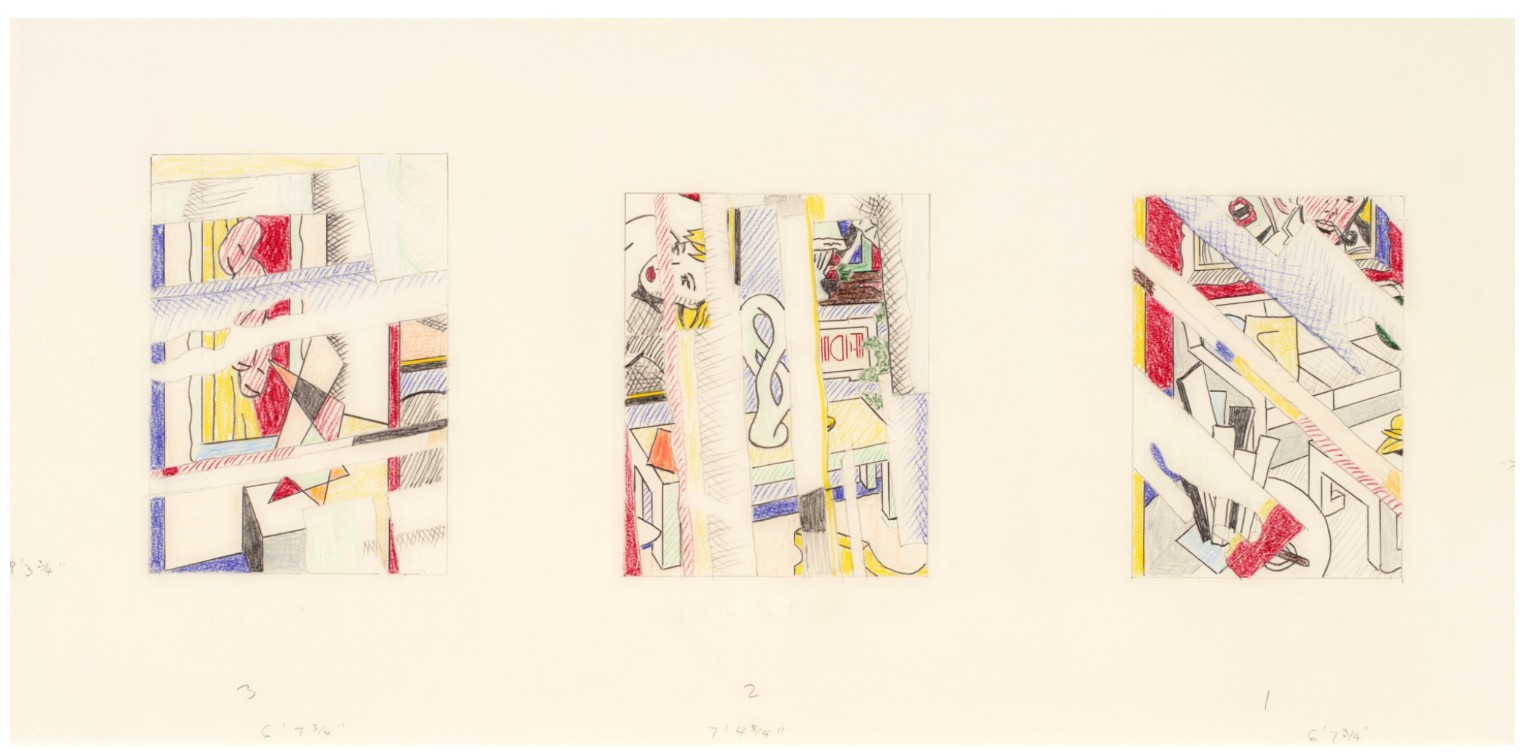
ROY LICHTENSTEIN (1923 – 1997)
Reflections of “Large Interior” (Study), 1993
Colored pencil and graphite on paper
Sheet: 15 1/8 x 30 inches (38.4 x 76.2 cm)
#73. Airplane (Study), 1989
A Legacy Reimagined: Works from the Collection of Dorothy and Roy Lichtenstein
Sotheby’s New-York: 19 November 2025
Estimated: USD 40,000 – 60,000
USD 127,200
WORK ON PAPER
Airplane (Study) | Contemporary Day Auction | 2025 | Sotheby’s
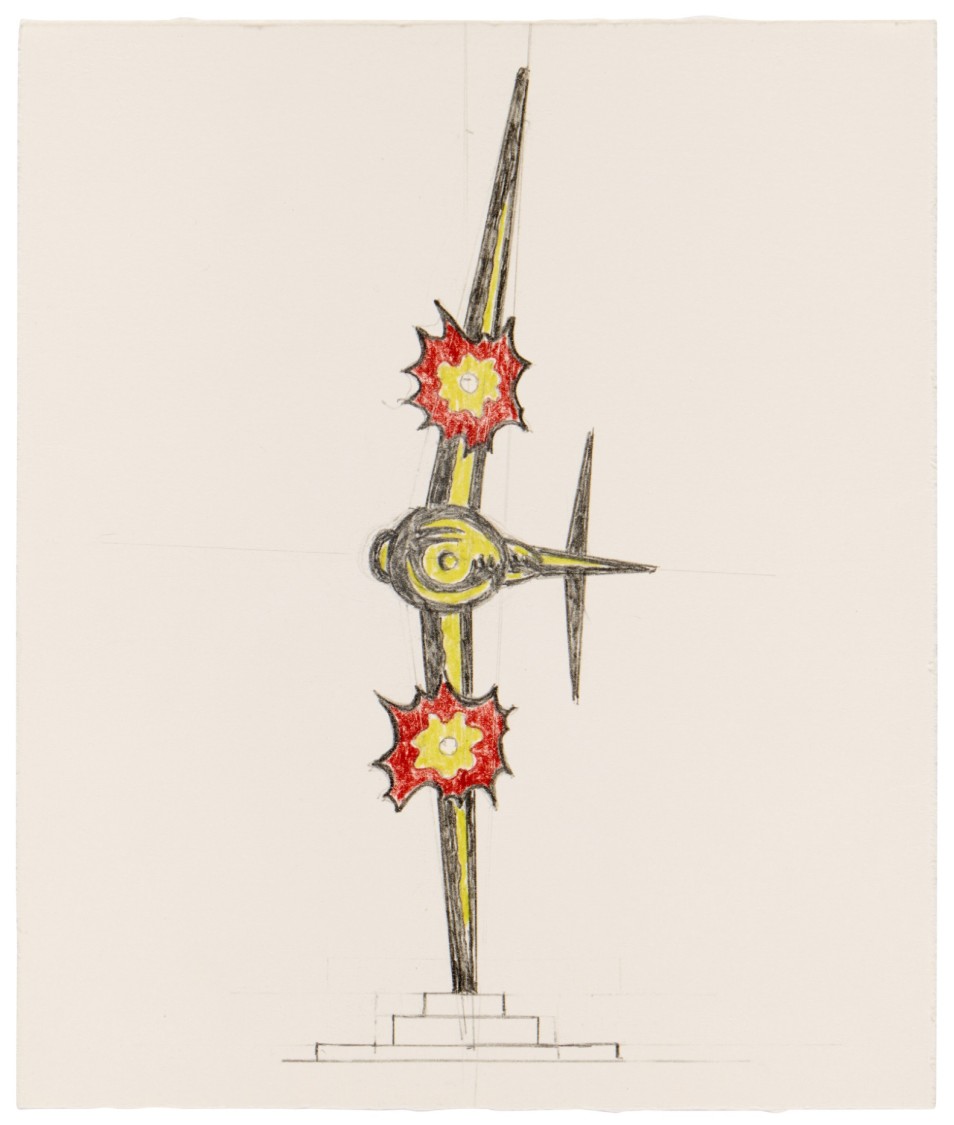
ROY LICHTENSTEIN (1923 – 1997)
Airplane (Study), 1989
Colored pencil and graphite on paper
9 x 7 1/2 inches (22.9 x 19.1 cm)
Dated ‘89 (on the verso)
#74. Composition (Washbasin Panel) (Study), 1965
A Legacy Reimagined: Works from the Collection of Dorothy and Roy Lichtenstein
Sotheby’s New-York: 19 November 2025
Estimated: USD 300,000 – 400,000
USD 127,000
WORK ON PAPER
Composition (Washbasin Panel) (Study) | Contemporary Day Auction | 2025 | Sotheby’s
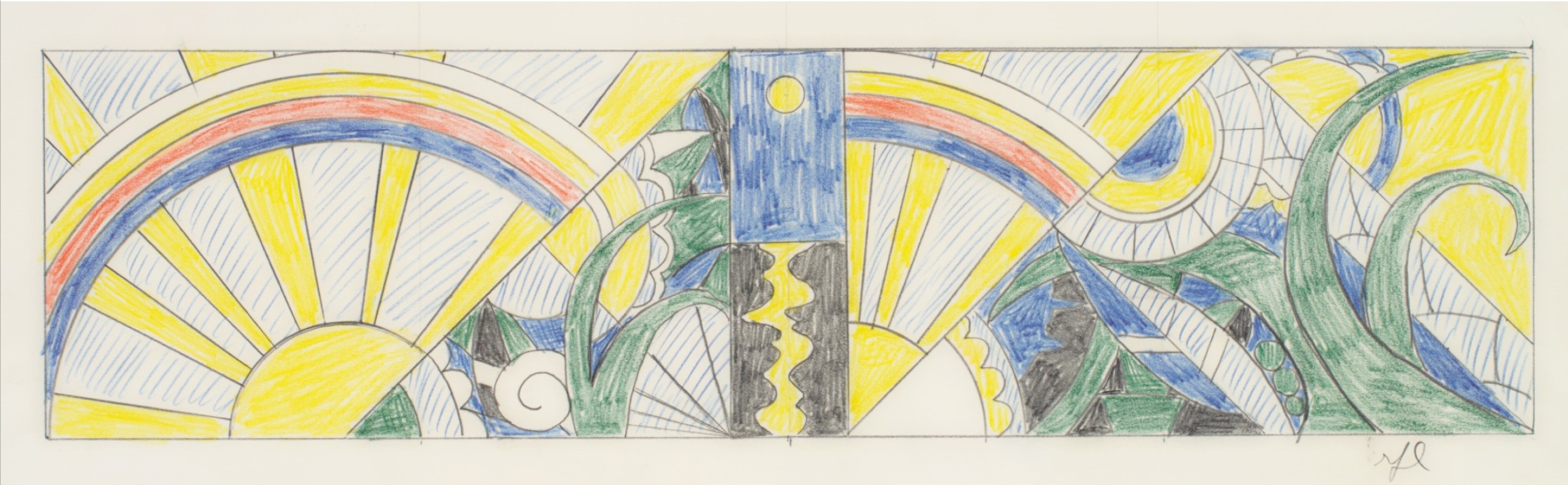
ROY LICHTENSTEIN (1923 – 1997)
Composition (Washbasin Panel) (Study), 1965
Colored pencil and graphite on paper
Image: 5 1/8 x 19 1/4 inches (12.9 x 48.9 cm)
Sheet: 9 1/4 x 22 7/8 inches (23.5 x 58.1 cm)
Signed with the artist’s initials (lower right)
#75. Modular Painting with Nine Panels (Study), circa 1968
Reflections on Pop: Works from the Collection of Dorothy and Roy Lichtenstein
Sotheby’s New-York: 26 September 2025
Estimated: USD 70,000 – 100,000
USD 114,300
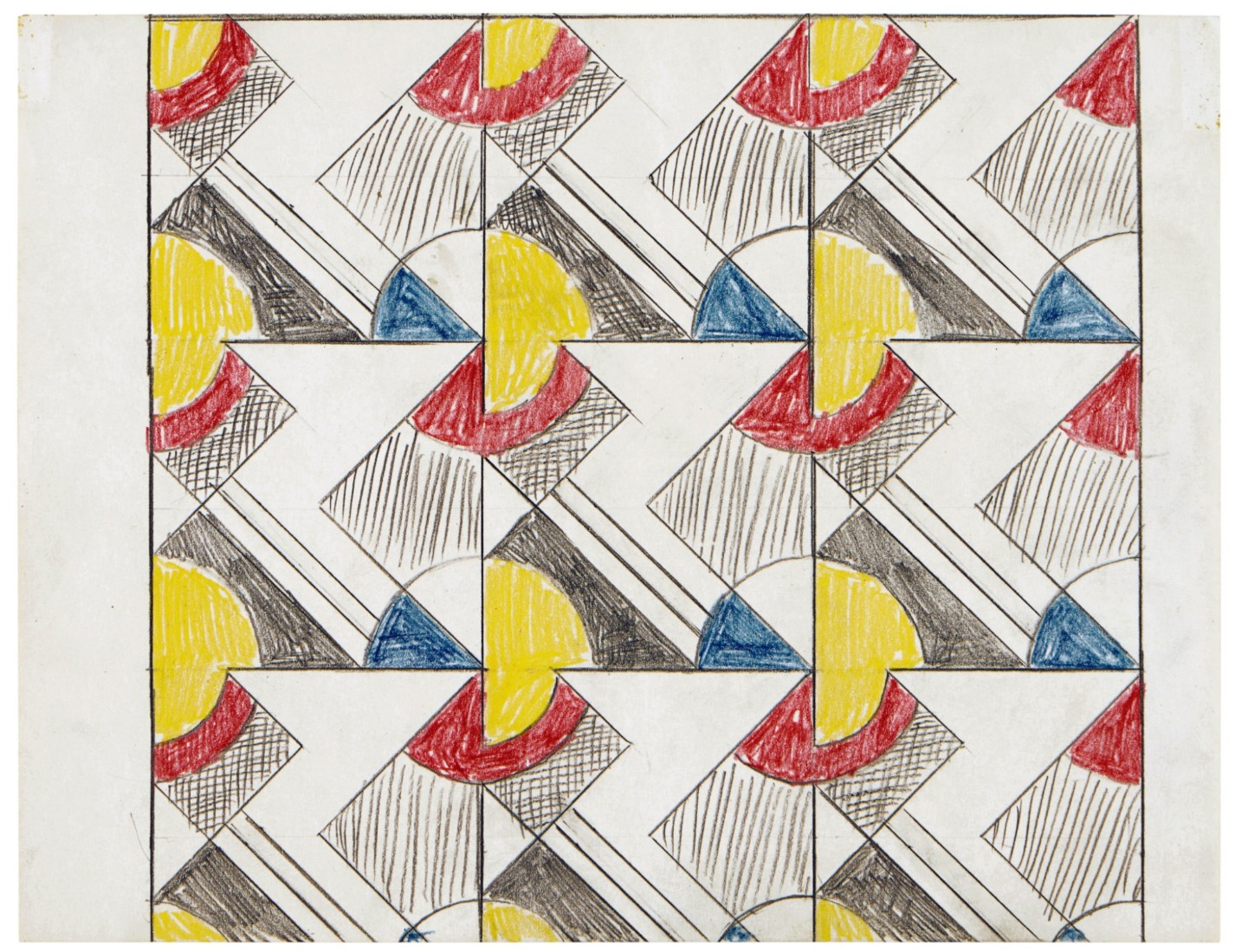
ROY LICHTENSTEIN (1923 – 1997)
Modular Painting with Nine Panels (Study), circa 1968
Colored pencil and graphite on paper
Image: 8 3/8 x 9 inches (21.3 x 22.9 cm)
Sheet: 8 3/8 x 11 inches (21.3 x 27.9 cm)
#76. DreamWorks Logo (Study), 1996
Reflections on Pop: Works from the Collection of Dorothy and Roy Lichtenstein
Sotheby’s New-York: 26 September 2025
Estimated: USD 50,000 – 70,000
USD 112,800
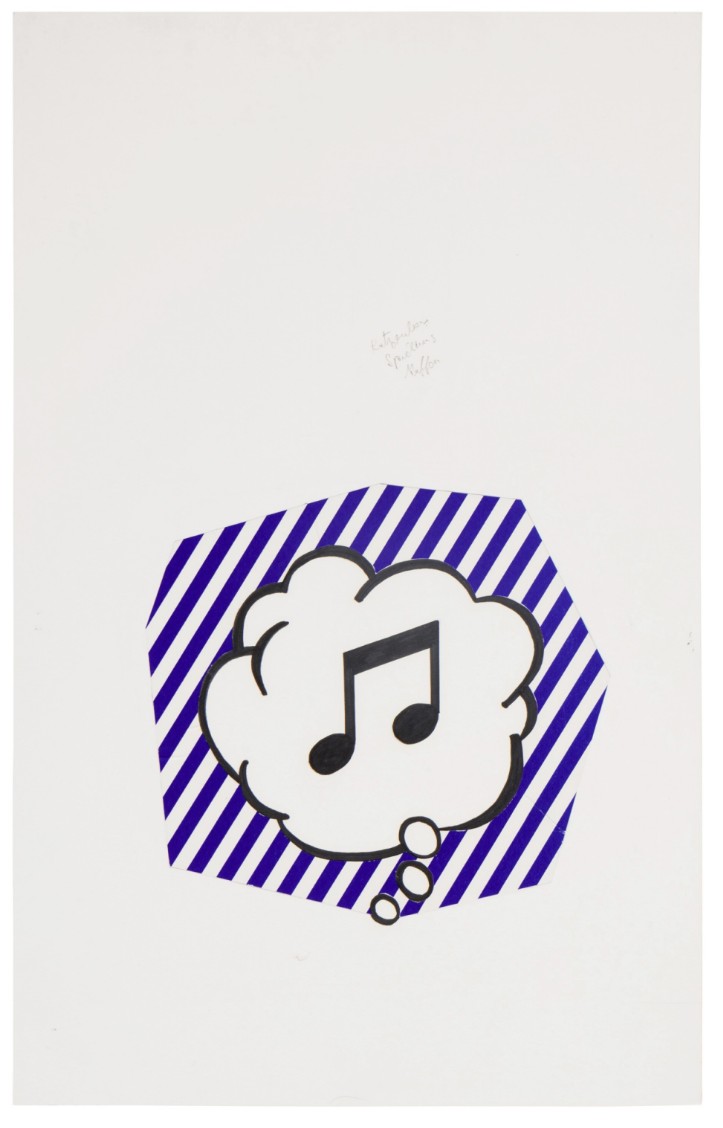
ROY LICHTENSTEIN (1923 – 1997)
DreamWorks Logo (Study), 1996
Cut printed paper, marker and graphite on paperboard
28 1/8 x 17 5/8 inches (71.4 x 44.8 cm)
USD 100,000
#77. New Born (Study), circa 1988
A Legacy Reimagined: Works from the Collection of Dorothy and Roy Lichtenstein
Sotheby’s New-York: 19 November 2025
Estimated: USD 50,000 – 70,000
USD 88,900
New Born (Study) | Contemporary Day Auction | 2025 | Sotheby’s
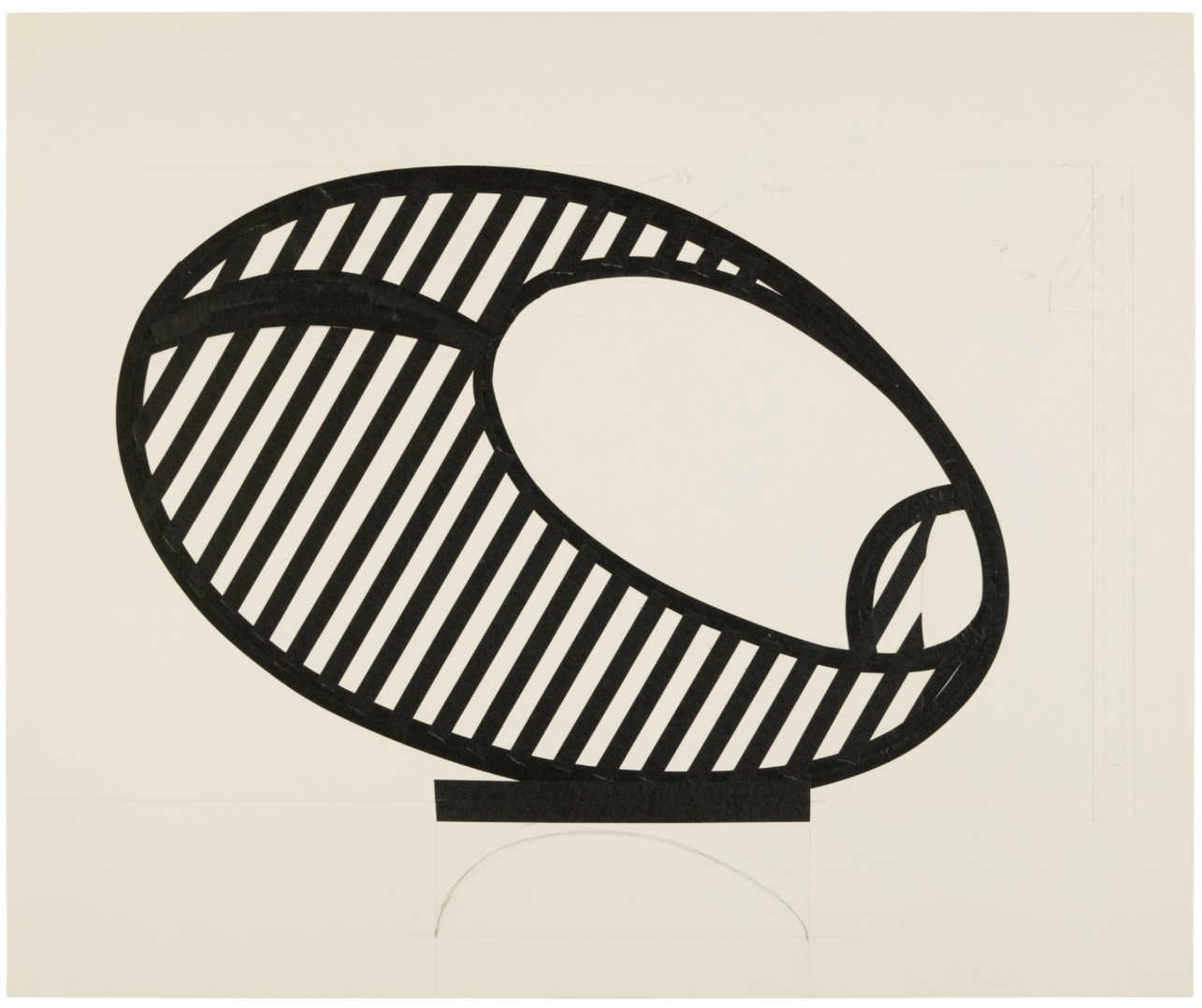
ROY LICHTENSTEIN (1923 – 1997)
New Born (Study), circa 1988
Graphite and tape on board
18 1/4 x 22 inches (46.3 x 55.9 cm)
Signed and dated ‘89 (on the verso)
#78. Cubist Still Life (Study), 1974
Christie’s New-York: 20 November 2025
Estimated: USD 70,000 – 100,000
USD 88,900
WORK ON PAPER
ROY LICHTENSTEIN (1923-1997), Cubist Still Life (Study) | Christie’s
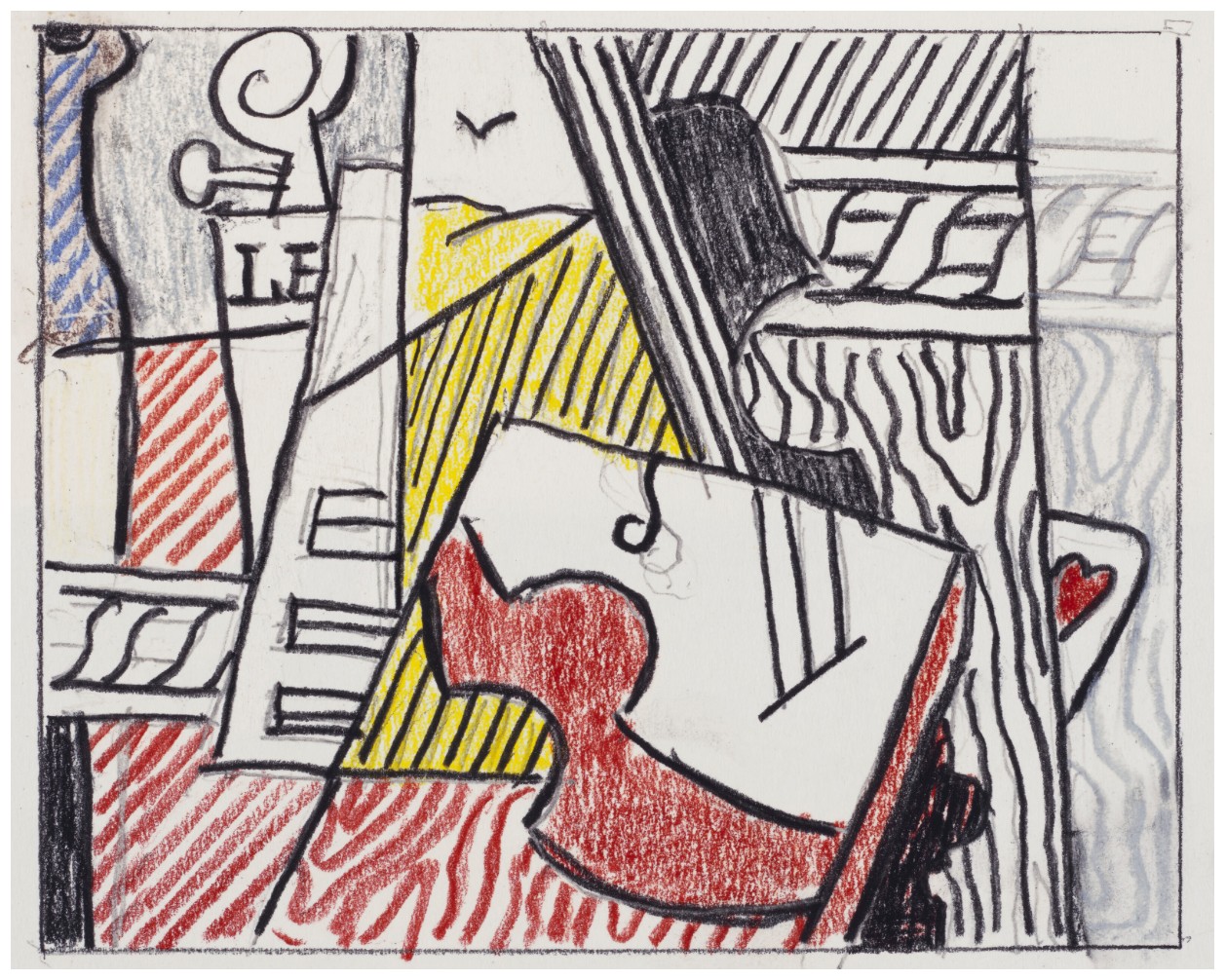
ROY LICHTENSTEIN (1923-1997)
Cubist Still Life (Study), 1974
Colored pencil and graphite on paper
Image: 3 3/4 x 4 5/8 inches (9.5 x 11.7 cm)
Sheet: 7 1/8 x 9 inches (17.9 x 22.9 cm)
Signed and dated ‘rf Lichtenstein ’74’ (on the reverse)
#79. Water Lilies with Japanese Bridge (Study), 1992
Reflections on Pop: Works from the Collection of Dorothy and Roy Lichtenstein
Sotheby’s New-York: 26 September 2025
Estimated: USD 120,000 – 180,000
USD 76,200
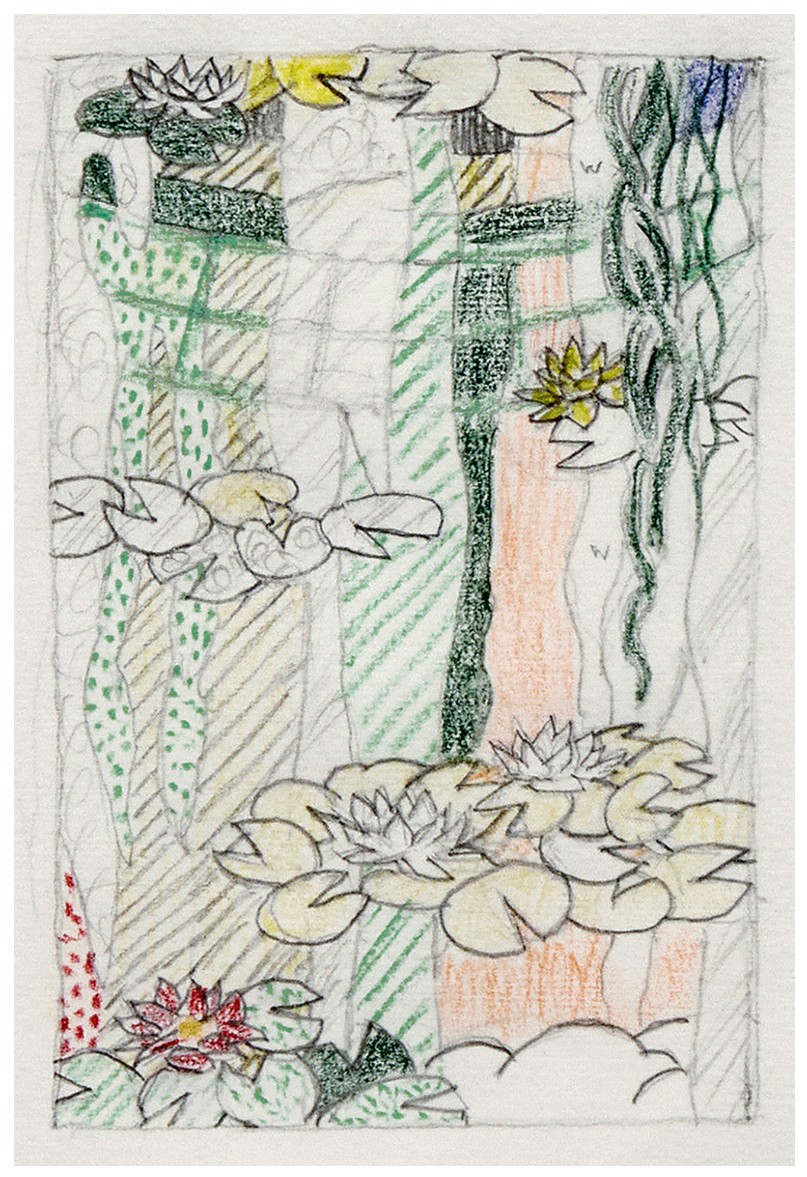
ROY LICHTENSTEIN (1923 – 1997)
Water Lilies with Japanese Bridge (Study), 1992
Colored pencil and graphite on paper
Image: 6×4 inches (15.2 x 10.1 cm)
Sheet: 9 7/8 x 6 5/8 inches (25.1 x 17 cm)
Signed and dated ’92 (on the verso)
#80. Girl with Beach Ball II (Study), 1976
A Legacy Reimagined: Works from the Collection of Dorothy and Roy Lichtenstein
Sotheby’s New-York: 19 November 2025
Estimated: USD 100,000 – 150,000
USD 76,200
Girl with Beach Ball II (Study) | Contemporary Day Auction | 2025 | Sotheby’s
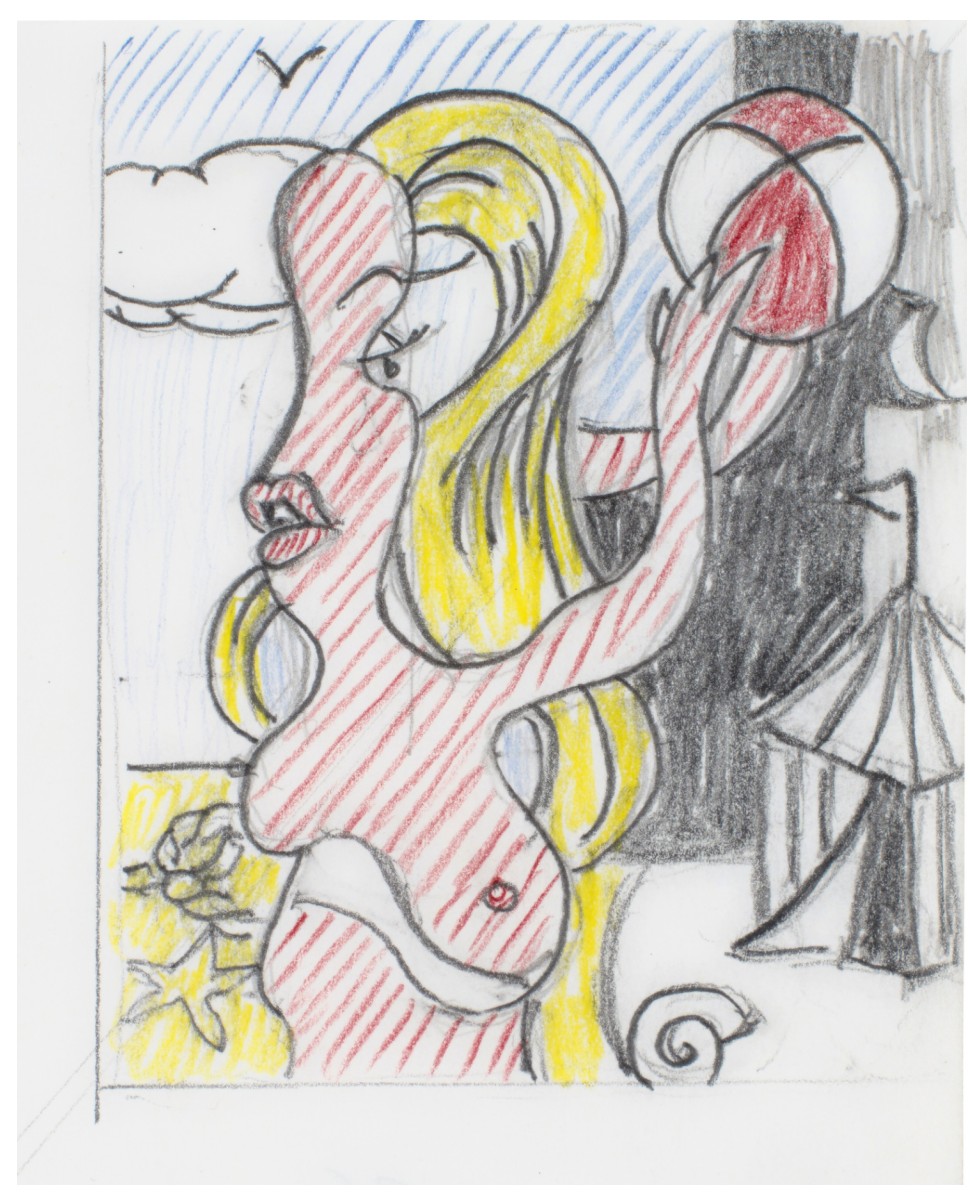
ROY LICHTENSTEIN (1923 – 1997)
Girl with Beach Ball II (Study), 1976
Colored pencil and graphite on paper
Image: 3 5/8 x 2 7/8 inches (9.2 x 7.3 cm)
Sheet: 5 7/8 x 3 5/8 inches (14.9 x 9.2 cm)
Signed, titled and dated 76 (on the verso)
#81. Purist Painting with Pitcher,
Glass and Classical Column (Study), 1975
Works from the Collection of Dorothy and Roy Lichtenstein
Sotheby’s London: 25 June 2025
Estimated: GBP 50,000 – 70,000
GBP 53,340 / USD 72,010
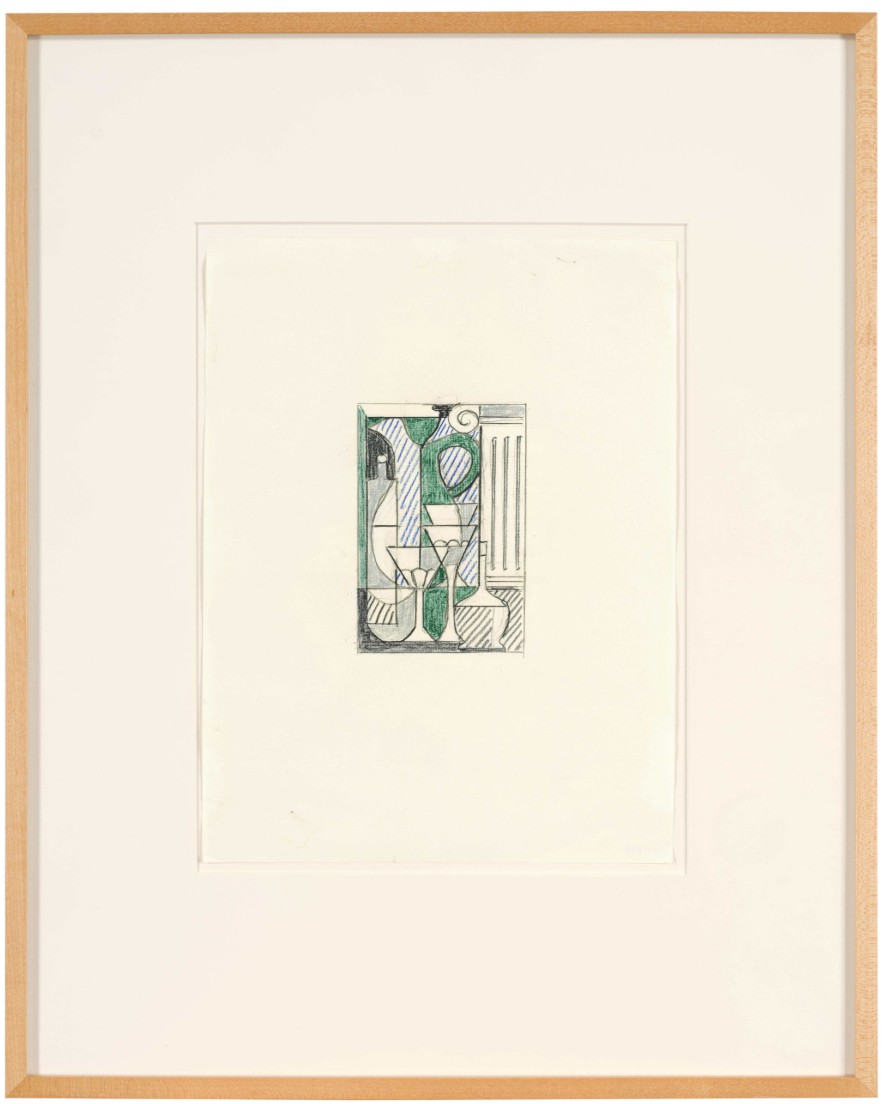
ROY LICHTENSTEIN (1923 – 1997)
Purist Painting with Pitcher, Glass and Classical Column (Study), 1975
Graphite and colored pencil on paper
11 3/4 x 8 7/8 inches (30 x 22.7 cm)
#82. Modern Painting with Zigzag (Study), 1967
Reflections on Pop: Works from the Collection of Dorothy and Roy Lichtenstein
Sotheby’s New-York: 26 September 2025
Estimated: USD 80,000 – 120,000
USD 69,850
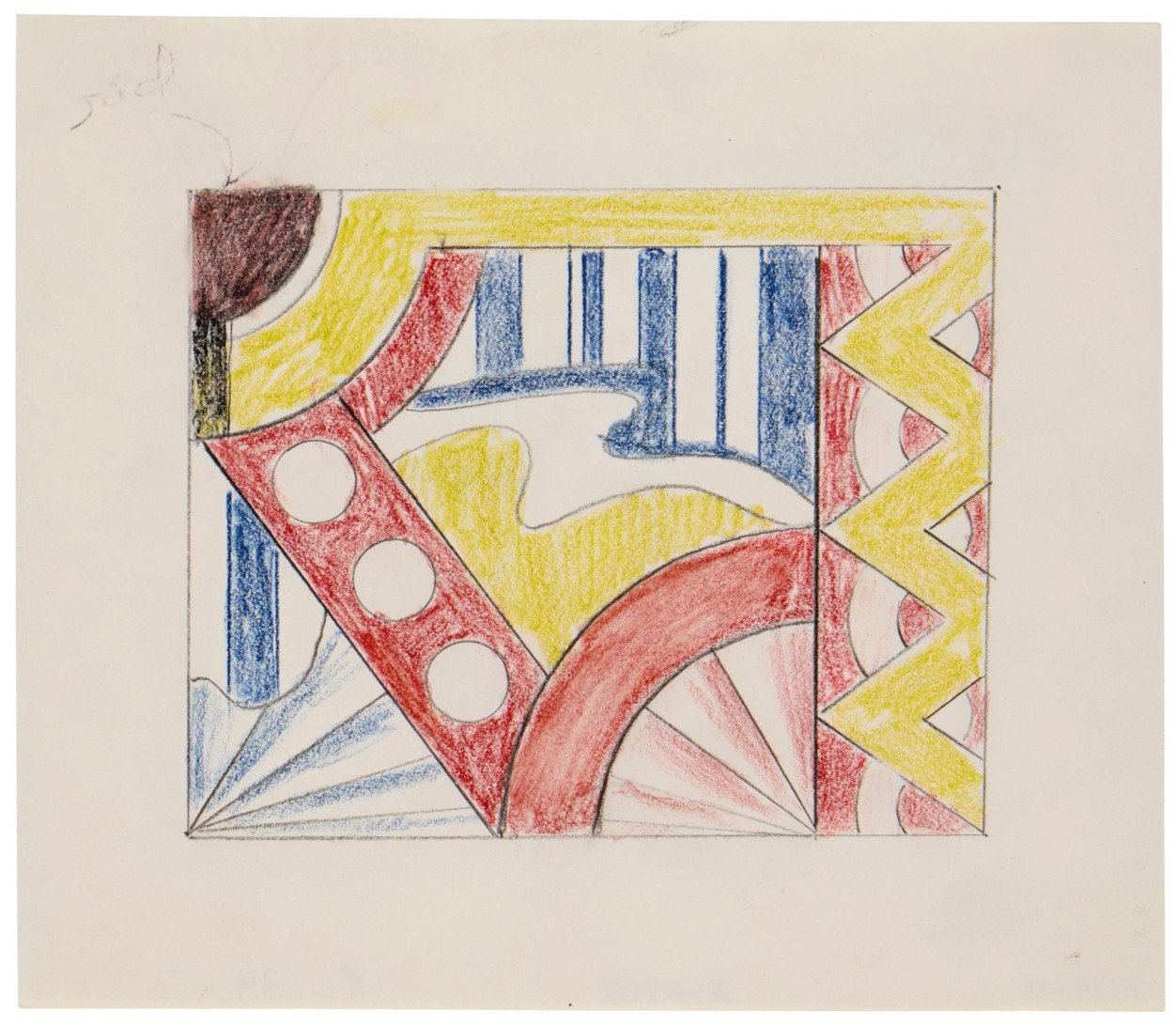
ROY LICHTENSTEIN (1923 – 1997)
Modern Painting with Zigzag (Study), 1967
Colored pencil and graphite on paper
Image: 3 7/8 x 4 5/8 inches (9.8 x 11.9 cm)
Sheet: 5 3/4 x 6 3/4 inches (14.6 x 17.1 cm)
#83. Still Life with Portrait of a Woman (Study), 1997
A Legacy Reimagined: Works from the Collection of Dorothy and Roy Lichtenstein
Sotheby’s New-York: 19 November 2025
Estimated: USD 80,000 – 120,000
USD 63,500
Still Life with Portrait of a Woman (Study) | Contemporary Day Auction | 2025 | Sotheby’s
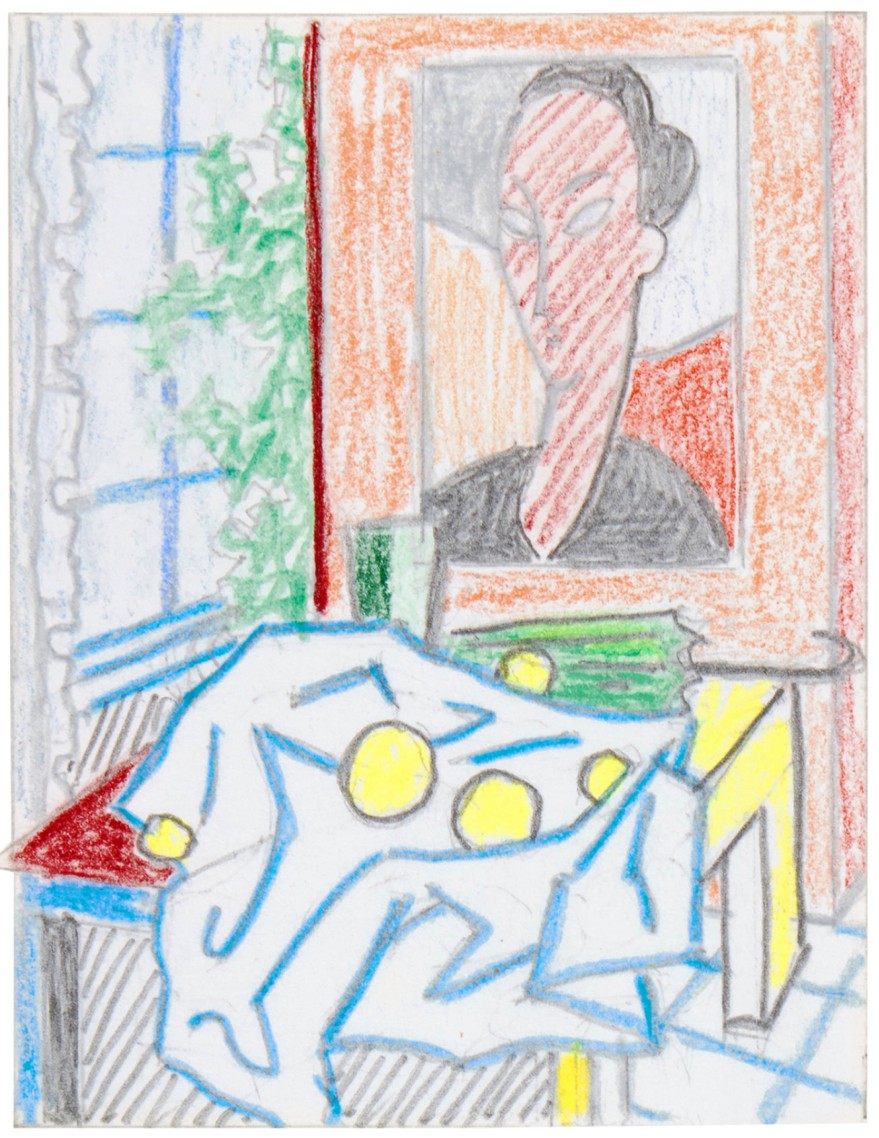
ROY LICHTENSTEIN (1923 – 1997)
Still Life with Portrait of a Woman (Study), 1997
Colored pencil and graphite on paper
Image: 4 7/8 x 3 3/4 inches (12.4 x 9.5 cm)
Sheet: 12 1/8 x 9 inches (30.8 x 22.9 cm)
#84. Entablature #5, 1971
Christie’s New-York: 27 February 2025
Estimated: USD 60,000 – 80,000
USD 63,000
ROY LICHTENSTEIN (1923-1997), Entablature #5 | Christie’s
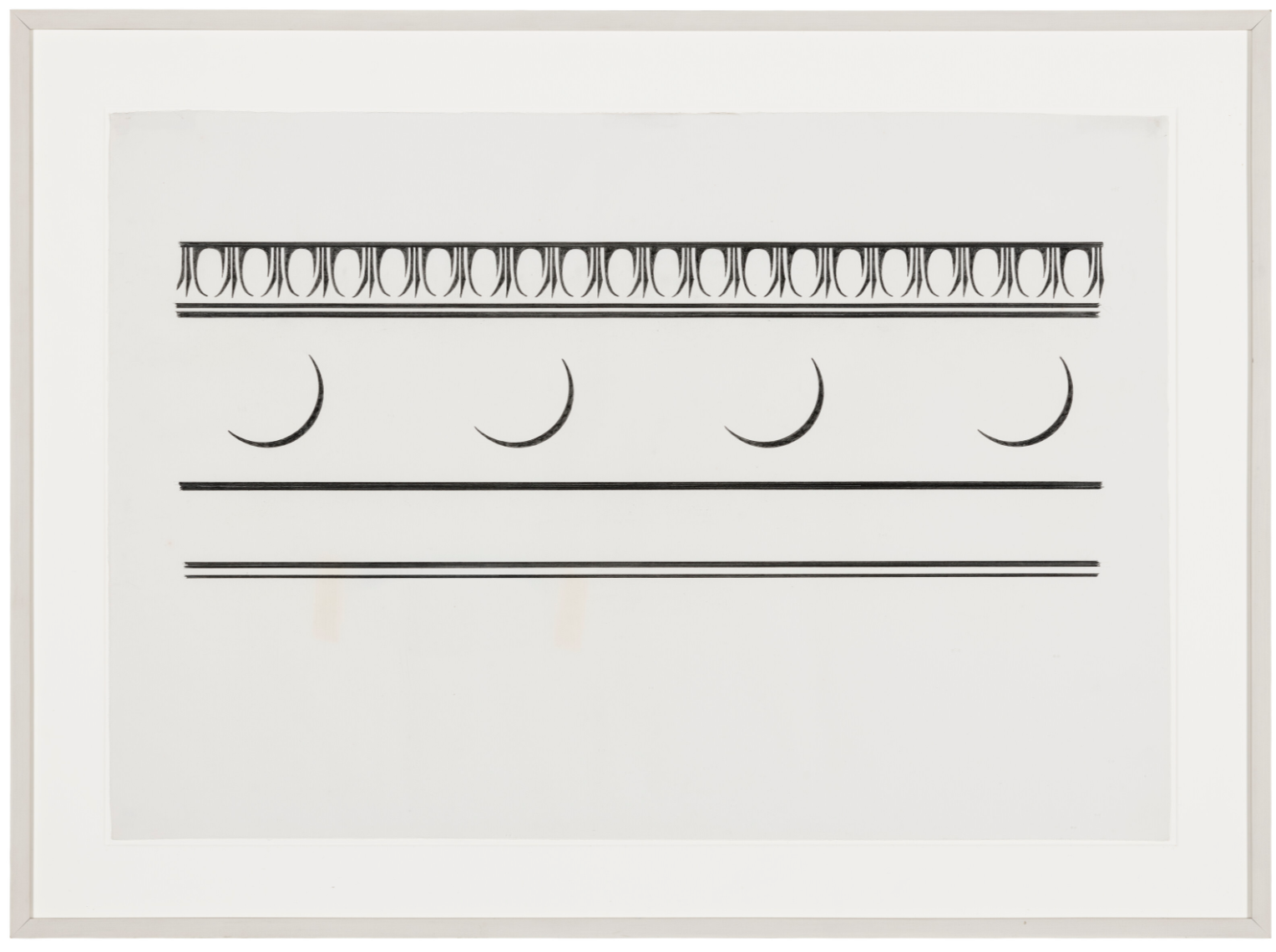
ROY LICHTENSTEIN (1923-1997)
Entablature #5, 1971
Graphite on paper
28 1/8 x 41 inches (71.4 x 104.1 cm)
Signed and dated ‘rf Lichtenstein ’71’ (on the reverse)
#85. Modern Painting with Black Sun (Study), circa 1967
A Legacy Reimagined: Works from the Collection of Dorothy and Roy Lichtenstein
Sotheby’s New-York: 19 November 2025
Estimated: USD 40,000 – 60,000
USD 53,340
WORK ON PAPER
Modern Painting with Black Sun (Study) | Contemporary Day Auction | 2025 | Sotheby’s
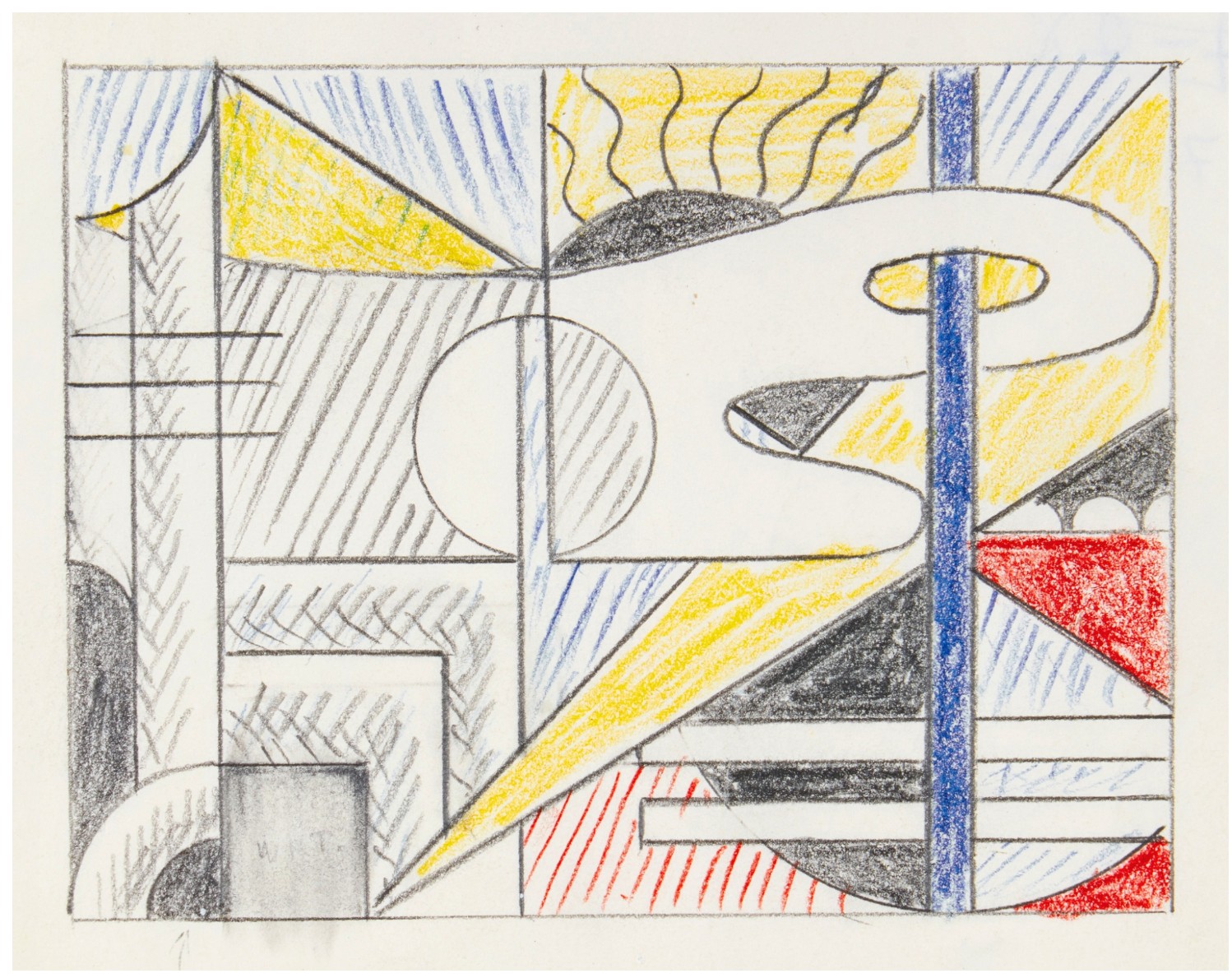
ROY LICHTENSTEIN (1923 – 1997)
Modern Painting with Black Sun (Study), circa 1967
Solored pencil and graphite on paper
Image: 3 1/2 x 4 1/2 inches (8.9 x 11.4 cm)
Sheet: 4 5/8 x 6 1/2 inches (11.7 x 16.5 cm)
#86. Untitled Shirt (Study), circa 1979
A Legacy Reimagined: Works from the Collection of Dorothy and Roy Lichtenstein
Sotheby’s New-York: 19 November 2025
Estimated: USD 40,000 – 60,000
USD 50,800
Untitled Shirt (Study) | Contemporary Day Auction | 2025 | Sotheby’s
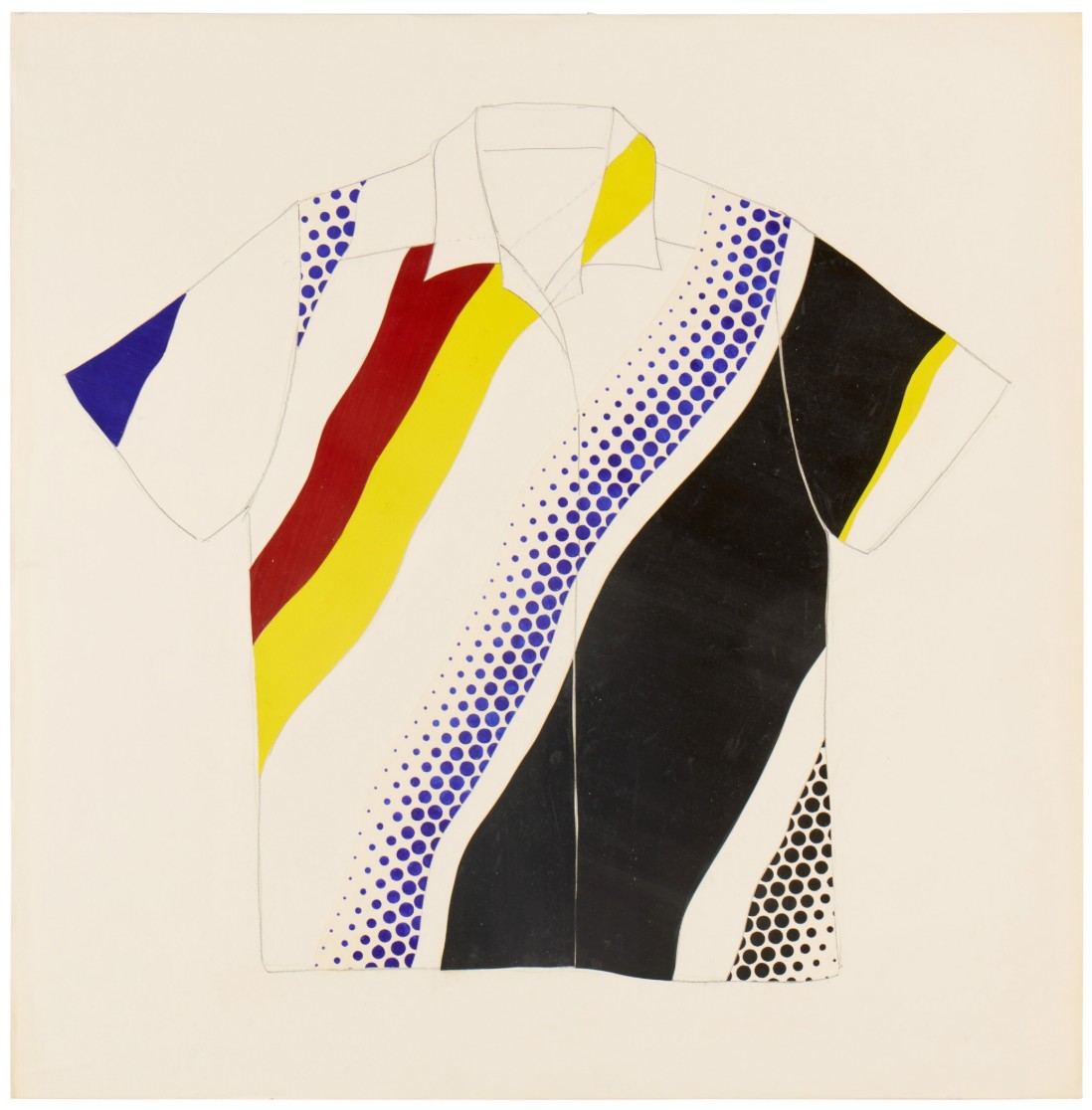
ROY LICHTENSTEIN (1923 – 1997)
Untitled Shirt (Study), circa 1979
Cut painted paper, colored pencil and graphite on board
40 3/4 x 40 1/4 inches (103.5 x 102.2 cm)
#87. Eclipse of the Sun and Eclipse of the Sun II (Studies), 1975
Reflections on Pop: Works from the Collection of Dorothy and Roy Lichtenstein
Sotheby’s New-York: 26 September 2025
Estimated: USD 80,000 – 120,000
USD 50,800
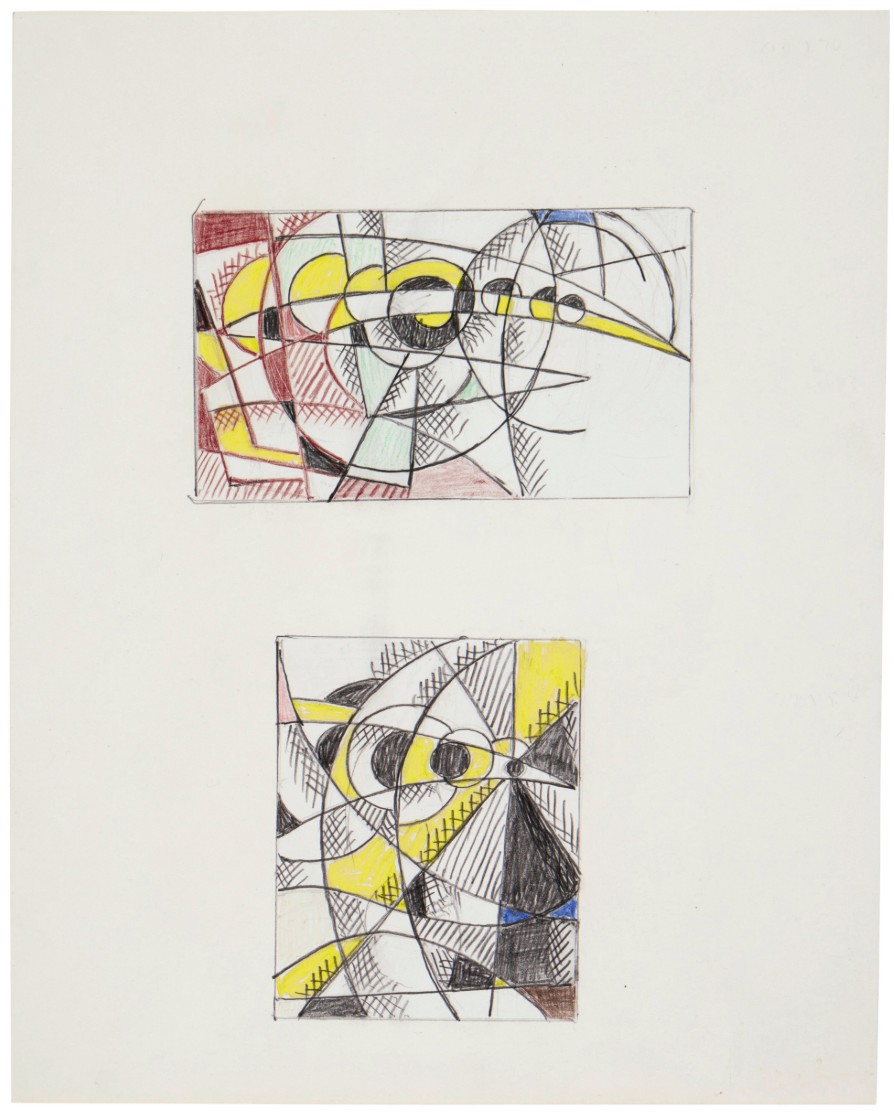
ROY LICHTENSTEIN (1923 – 1997)
Eclipse of the Sun and Eclipse of the Sun II (Studies), 1975
Colored pencil and graphite on paper
Upper image: 3 1/2 x5 3/4 inches (8.9 x 14.6 cm)
Lower image: 4 1/2 x 3 3/4 inches (11.4 x 9.5 cm)
Sheet: 13 x 10 1/4 inches (33×26 cm)
Signed and dated ’75 (on the verso)
Lots Passed
Entablature V (Study), 1976
A Legacy Reimagined: Works from the Collection of Dorothy and Roy Lichtenstein
Sotheby’s New-York: 19 November 2025
Estimated: USD 120,000 – 180,000
PASSED
Entablature V (Study) | Contemporary Day Auction | 2025 | Sotheby’s
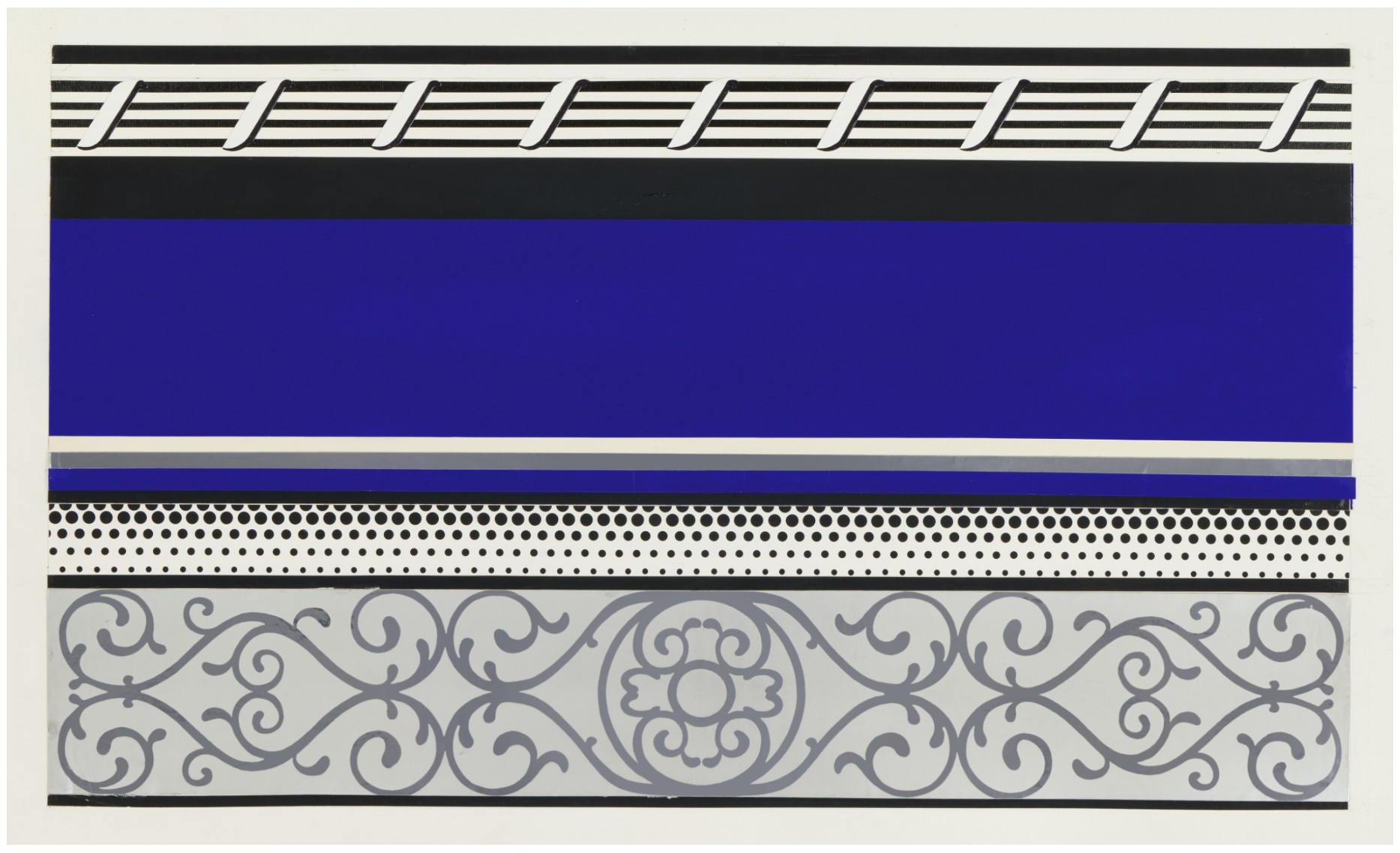
ROY LICHTENSTEIN (1923 – 1997)
Entablature V (Study), 1976
Cut printed paper, cut paper, tape, marker, aluminum foil and graphite on board
Image: 22 1/4 x 38 inches (56.5 x 96.5 cm)
Board: 28 1/4 x 44 1/4 inches (71.8 x 112.4 cm)
Signed and dated ’76 (on the verso)
2024 Auction Results
33 lots sold at auction in 2024 for a total turnover of USD 60,263,878.
With 3 lots failing to sell, the sell-through rate is 92%. The highest price was achieved at Christie’s in New-York on 16 May 2024, when Modern Painting with Ionic Column, a painting dated 1967, sold for USD 7,310,000. 19 lots sold for more than USD 1 million, generating a turnover of USD 55,275,728, representing 91.7% of the total for 2024.
2024 Top 3 Lots
#1. Modern Painting with Ionic Column, 1967
Christie’s New-York: 16 May 2024
Estimated: USD 6,000,000 – 8,000,000
USD 7,310,000
ROY LICHTENSTEIN (1923-1997), Modern Painting with Ionic Column | Christie’s (christies.com)

ROY LICHTENSTEIN (1923-1997)
Modern Painting with Ionic Column, 1967
Acrylic, oil and graphite on canvas
62 x 82 1/8 inches (157.5 x 208.6 cm)
Signed and dated ‘rf Lichtenstein ‘67’ (on the reverse)
#2. George Washington, 1962
Christie’s New-York: 19 November 2024
Estimated: USD 7,000,000 – 10,000,000
USD 7,068,000
ROY LICHTENSTEIN (1923-1997), George Washington | Christie’s
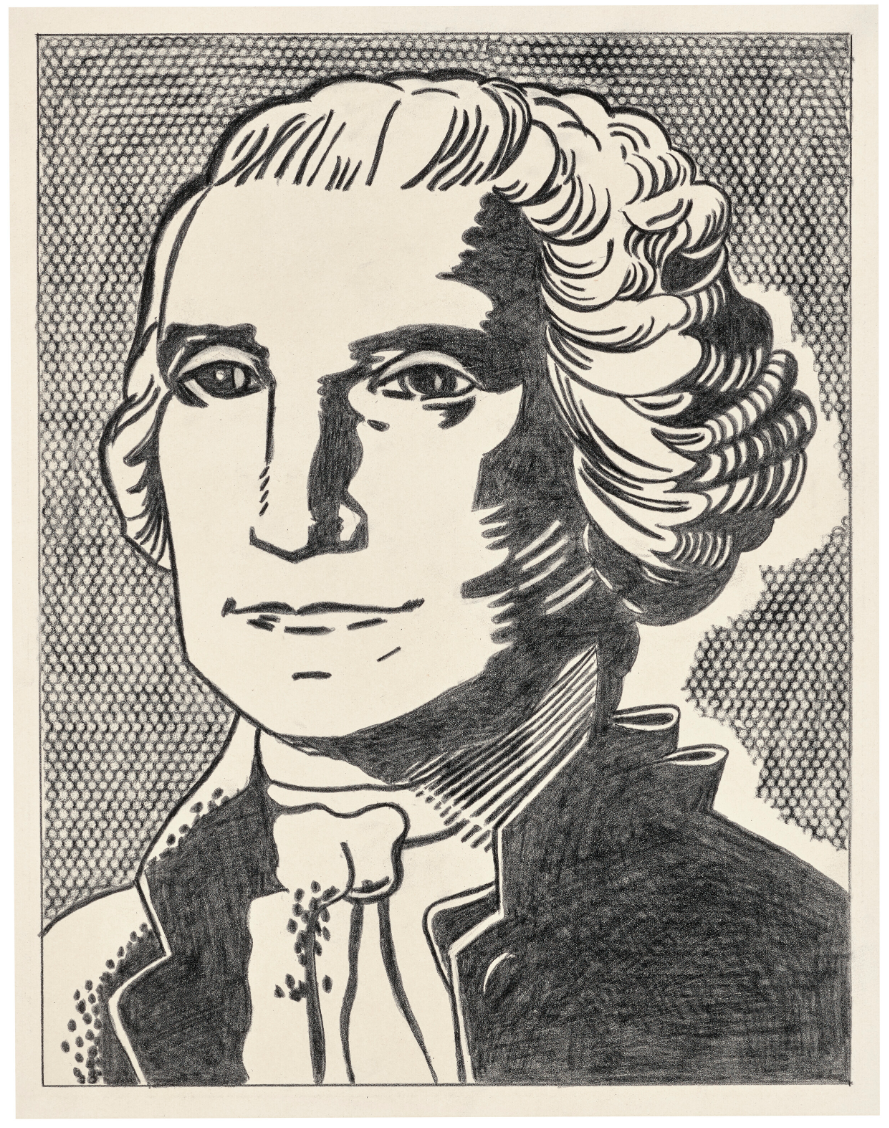
ROY LICHTENSTEIN (1923-1997)
George Washington, 1962
Graphite and graphite rubbing on paper
Image: 14 1/2 x 11 1/4 inches (36.8 x 28.6 cm)
Sheet: 18 2/4 x 14 1/2 inches (47.6 x 36.8 cm)
Signed and dated ‘rf Lichtenstein ‘62’ (on the reverse)
USD 5 million
#3. Purist Painting with Pitcher, Glass and Classical Column, 1975
Christie’s New-York: 19 November 2024
Estimated: USD 4,000,000 – 6,000,000
USD 4,648,000
ROY LICHTENSTEIN (1923-1997), Purist Painting with Pitcher, Glass and Classical Column | Christie’s
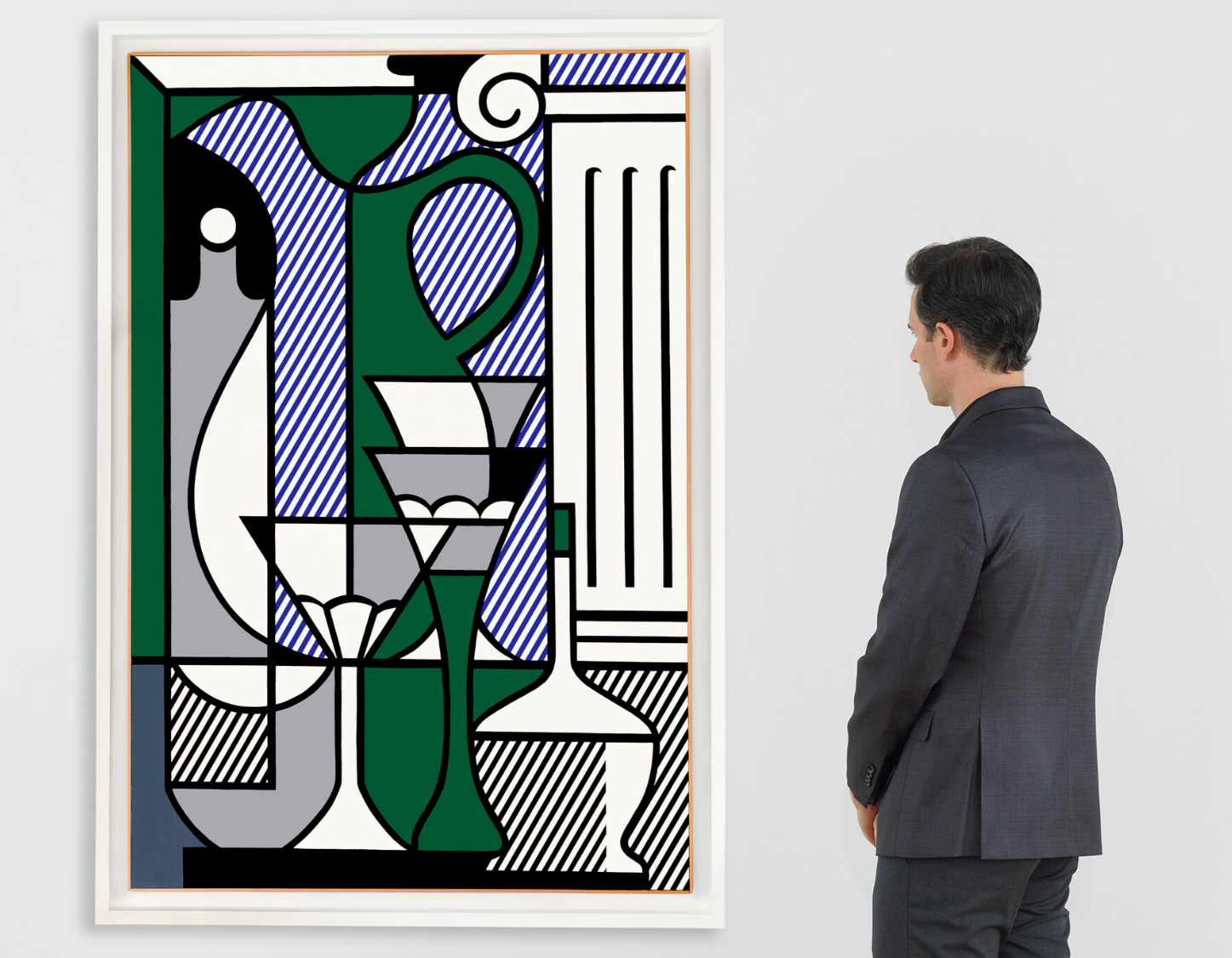
ROY LICHTENSTEIN (1923-1997)
Purist Painting with Pitcher, Glass and Classical Column, 1975
Acrylic, oil and graphite on canvas
60×40 inches (152.4 x 101.6 cm)
Signed and dated ‘rf Lichtenstein ’75’ (on the reverse)
#4. Nude with Bust (Study), 1995
Works from the Collection of Dorothy and Roy Lichtenstein
Sotheby’s New-York: 20 November 2024
Estimated: USD 3,000,000 – 5,000,000
USD 4,560,000
Nude with Bust (Study) | The Now and Contemporary Evening Auction | 2024 | Sotheby’s
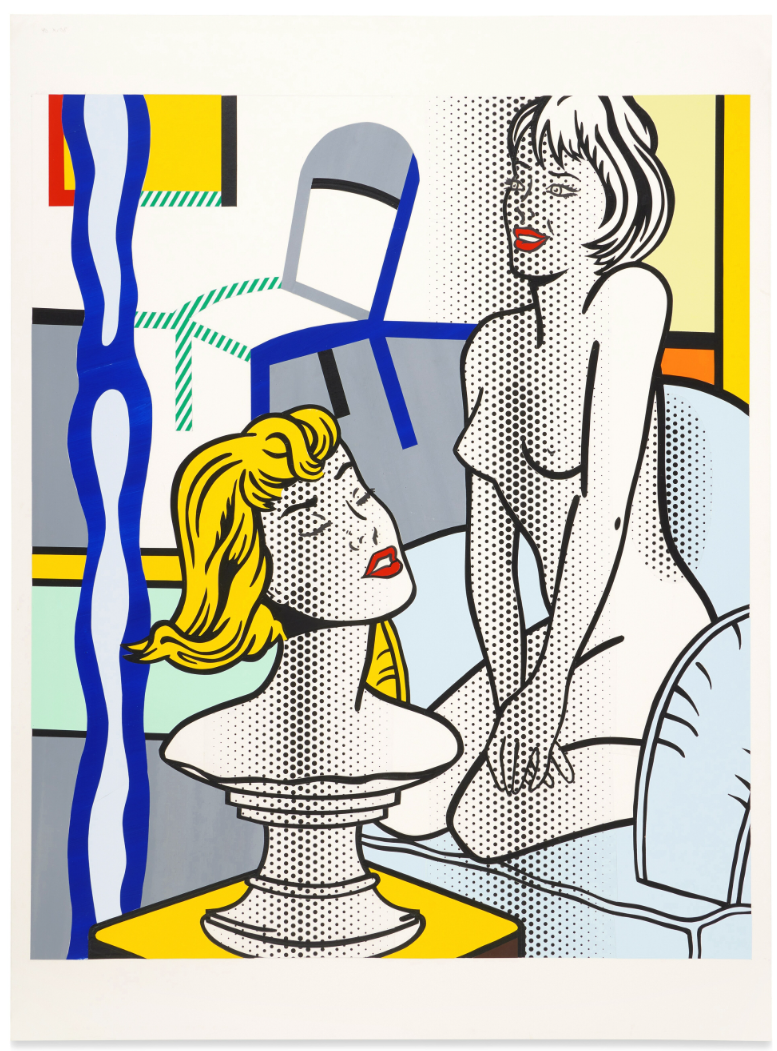
ROY LICHTENSTEIN (1923 – 1997)
Nude with Bust (Study), 1995
Tape, cut painted paper, cut printed paper, marker and graphite on board
Image: 53 7/8 x 45 inches (136.8 x 114.3 cm)
Board: 63 7/8 x 47 1/2 inches (162.2 x 120.7 cm)
#5. Sleeping Muse, 1983
Works from the Collection of Dorothy and Roy Lichtenstein
Sotheby’s New-York: 20 November 2024
Estimated: USD 2,000,000 – 3,000,000
USD 4,440,000
Sleeping Muse | The Now and Contemporary Evening Auction | 2024 | Sotheby’s
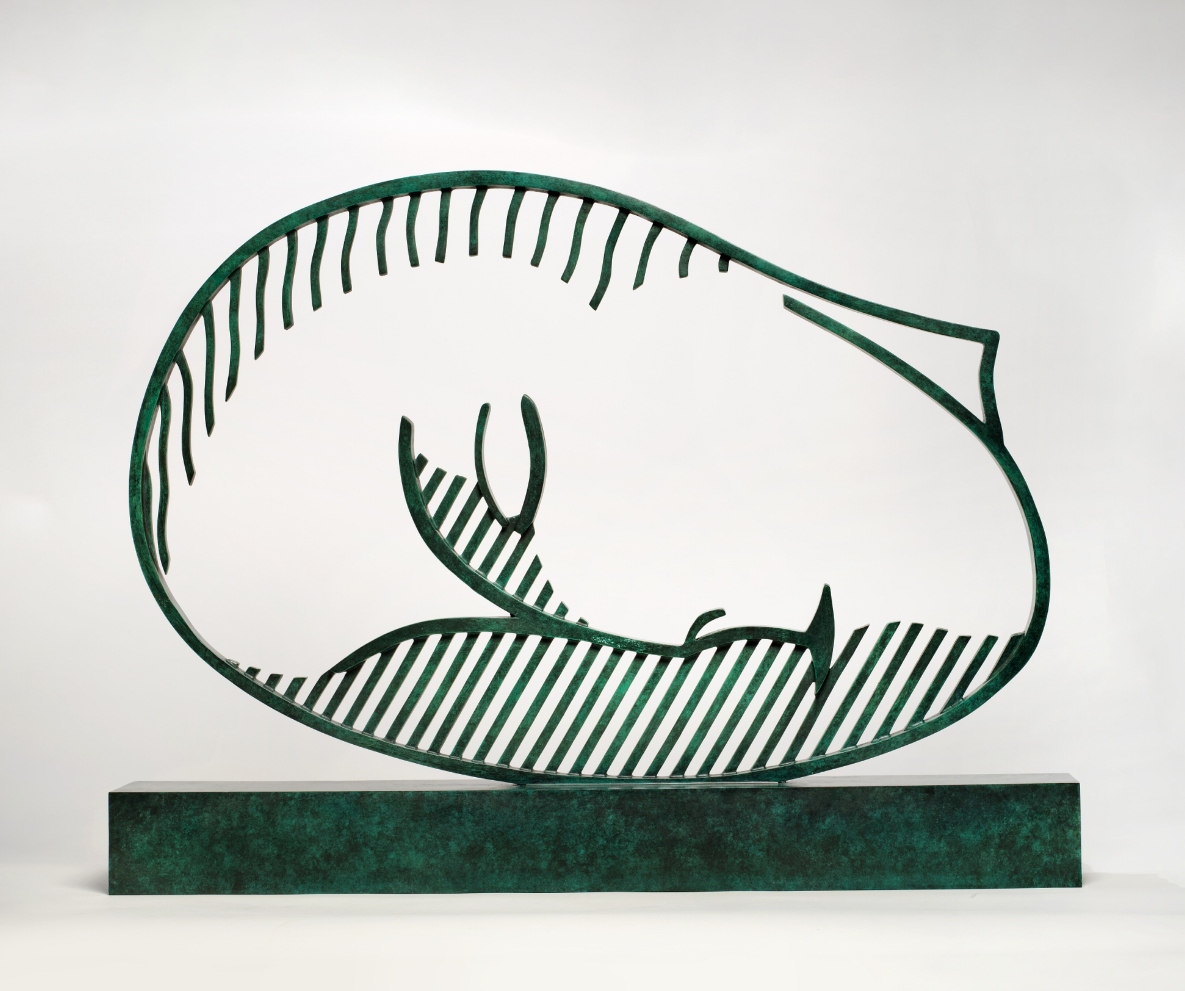
ROY LICHTENSTEIN (1923 – 1997)
Sleeping Muse, 1983
Patinated bronze
25 3/4 x 34 1/4 x 4 inches (65.4 x 87 x 10.2 cm)
Incised with the artist’s signature, numbered 1/6, dated ’83 and stamped with the foundry mark (lower edge)
This work is number 1 from an edition of 6 plus 1 posthumous cast
#6. Oval Office (Study), 1992
Works from the Collection of Dorothy and Roy Lichtenstein
Sotheby’s New-York: 20 November 2024
Estimated: USD 1,000,000 – 1,500,000
USD 4,200,000
Oval Office (Study) | The Now and Contemporary Evening Auction | 2024 | Sotheby’s
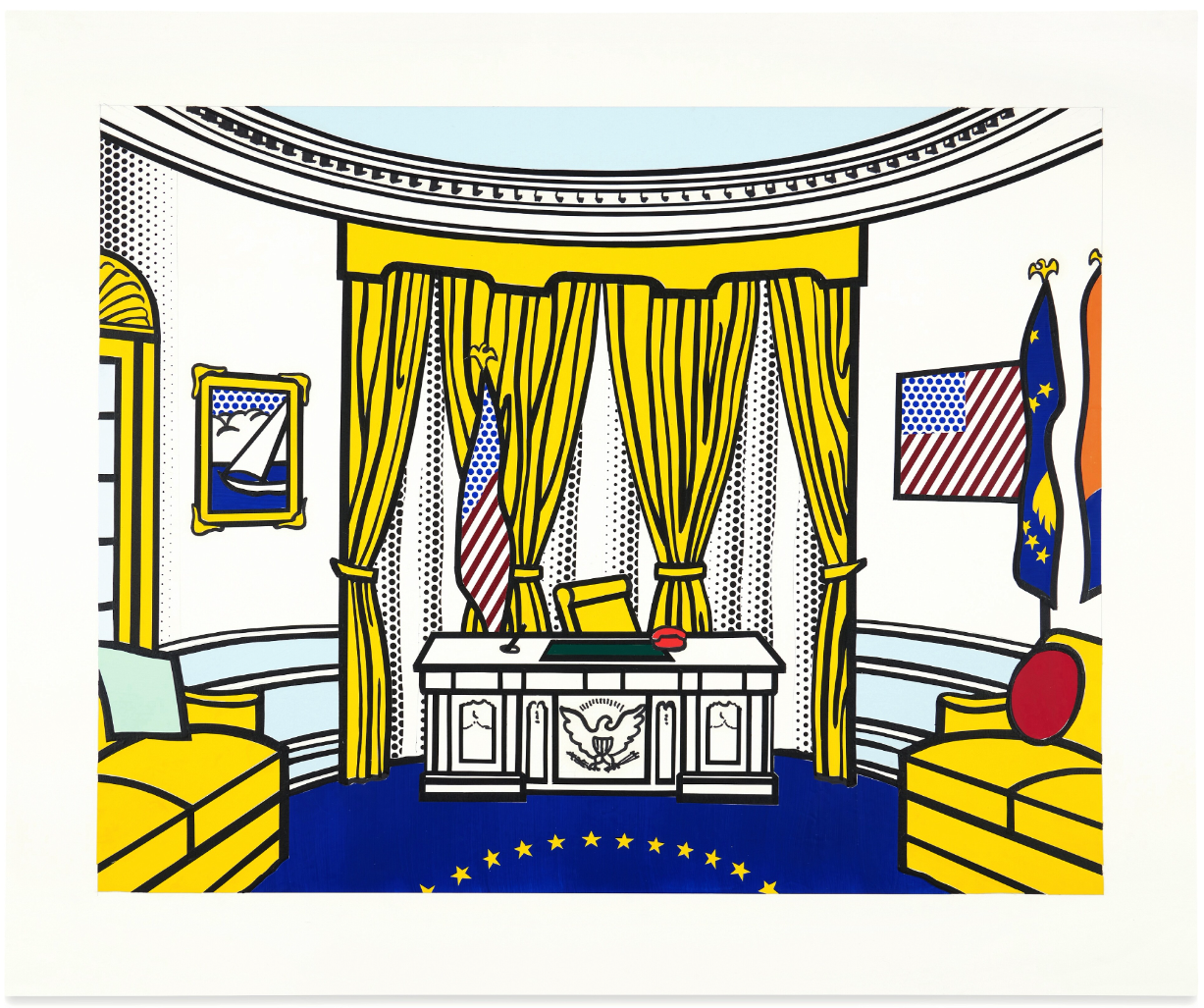
ROY LICHTENSTEIN (1923 – 1997)
Oval Office (Study), 1992
Tape, cut painted paper, cut printed paper, marker and graphite on board
Image: 29 1/4 x 37 3/8 inches (74.3 x 94.9 cm)
Board: 36 3/4 x 44 1/4 inches (93.3 x 112.4 cm)
Signed and dated ‘92 (on the reverse)
#7. Purple Range, 1966
Sotheby’s New-York: 13 May 2024
Estimated: USD 3,000,000 – 4,000,000
USD 3,690,000
Purple Range | Contemporary Evening Auction | 2024 | Sotheby’s (sothebys.com)

ROY LICHTENSTEIN (1923 – 1997)
Purple Range, 1966
Acrylic, oil and graphite on canvas
36×48 inches (91.4 x 121.9 cm)
Signed and dated ’66 (on the reverse)
#8. Still Life with Picasso (Study), 1973
Works from the Collection of Dorothy and Roy Lichtenstein
Sotheby’s New-York: 20 November 2024
Estimated: USD 800,000 – 1,200,000
USD 2,400,000
Still Life with Picasso (Study) | The Now and Contemporary Evening Auction | 2024 | Sotheby’s
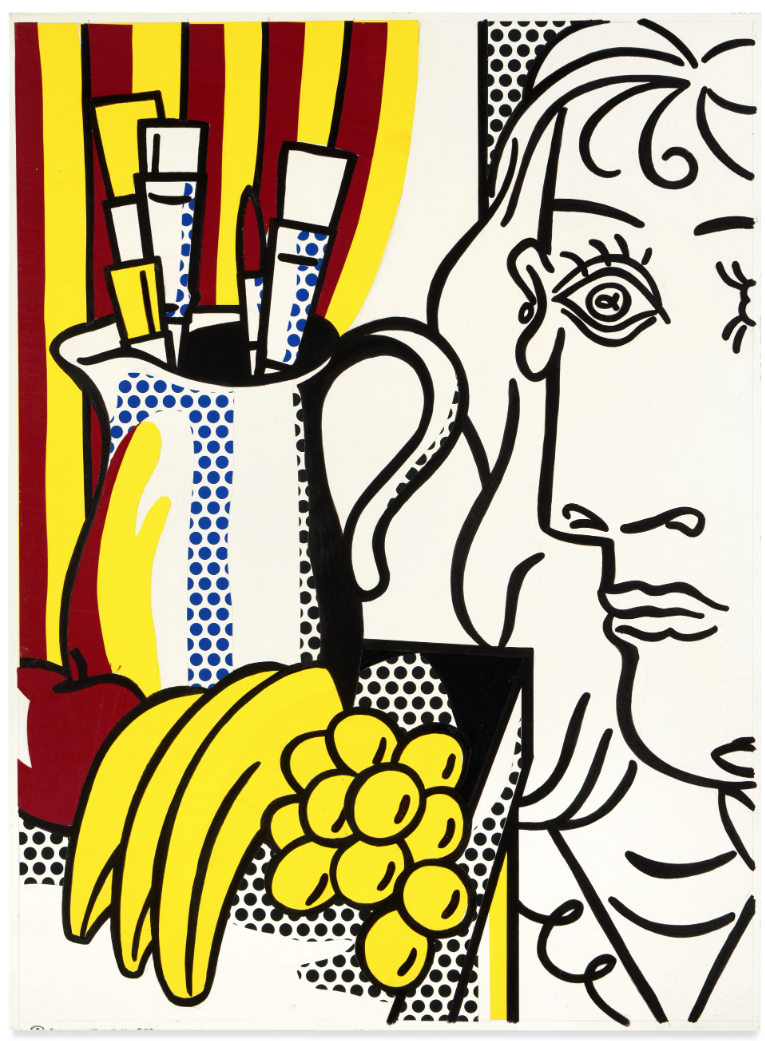
ROY LICHTENSTEIN (1923 – 1997)
Still Life with Picasso (Study), 1973
Tape, cut painted paper, cut printed paper, marker and graphite on board
Image: 28 1/2 x 21 inches (68.5 x 53.3 cm)
Board: 29 x 21 1/2 inches (73.7 x 54.6 cm)
Signed and dated ‘73 (on the reverse)
#9. I Love Liberty (Study), 1981
Christie’s New-York: 17 May 2024
Estimated: USD 600,000 – 800,000
USD 2,349,000
ROY LICHTENSTEIN (1923-1997), I Love Liberty (Study) | Christie’s (christies.com)

ROY LICHTENSTEIN (1923-1997)
I Love Liberty (Study), 1981
Painted and printed paper collage and graphite on paperboard
Image: 25 3/4 x 17 inches (65.4 x 43.2 cm)
Sheet: 34×25 inches (86.4 x 63.5 cm)
Signed and dated ‘rf Lichtenstein ’81’ (lower right)
Signed again and dated again ‘rf Lichtenstein ’81’ (on the reverse)
#10. Apple, Grapes, Grapefruit, 1974
Christie’s Hong-Kong: 28 May 2024
Estimated: HKD 15,800,000 – 25,800,000
HKD 17,557,000 / USD 2,247,728
Apple, Grapes, Grapefruit (christies.com)

ROY LICHTENSTEIN (1923-1997)
Apple, Grapes, Grapefruit, 1974
Acrylic, oil, and graphite on canvas
40 1/8 x 54 inches (101.9 x 137.2 cm)
Signed and dated ‘rf Lichtenstein ‘74’ (on the reverse)
#11. Nude with Pyramid (Study), 1994
Works from the Collection of Dorothy and Roy Lichtenstein
Sotheby’s New-York: 20 November 2024
Estimated: USD 1,000,000 – 1,500,000
USD 2,040,000
Nude with Pyramid (Study) | The Now and Contemporary Evening Auction | 2024 | Sotheby’s
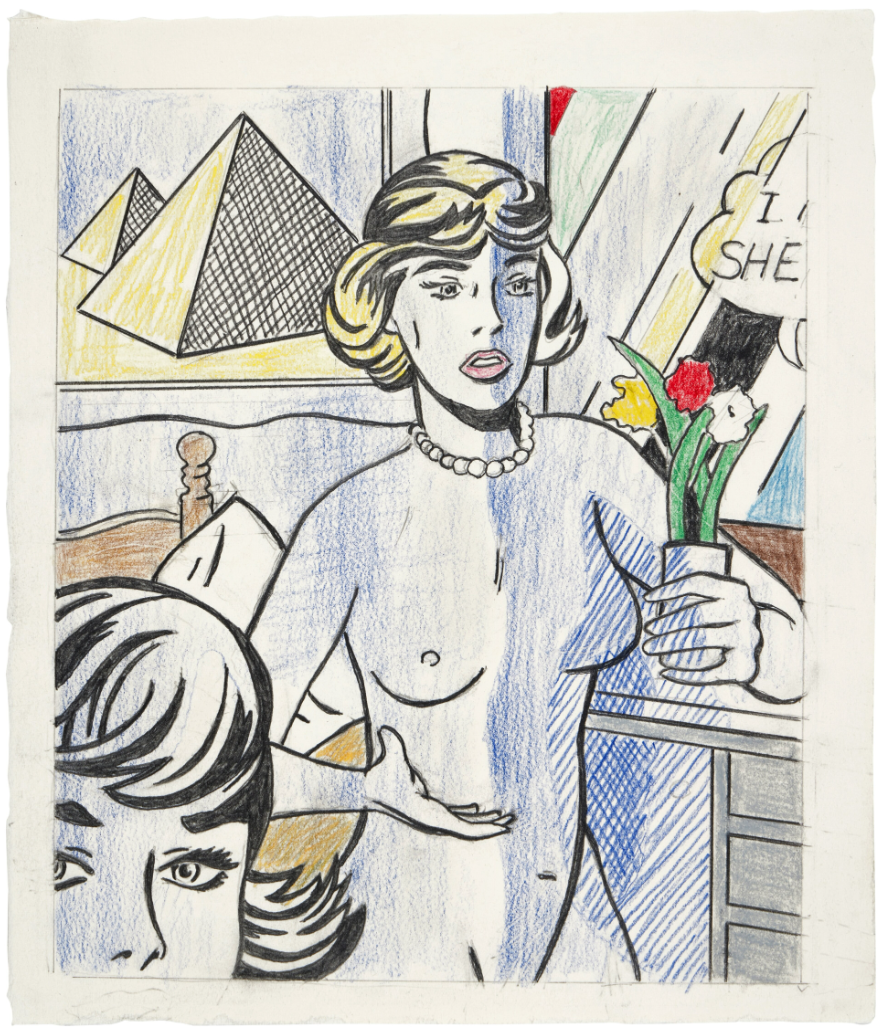
ROY LICHTENSTEIN (1923 – 1997)
Nude with Pyramid (Study), 1994
Colored pencil and graphite on paper
Image: 11 3/8 x 9 1/2 inches (28.9 x 24.1 cm)
Sheet: 13 1/8 x 11 1/8 inches (33.3 x 28.3 cm)
Signed and dated ‘94 (on the reverse)
#12. Cubist Still Life, 1974
Sotheby’s New-York: 14 May 2024
Estimated: USD 700,000 – 1,000,000
USD 1,996,000
Cubist Still Life | Contemporary Day Auction | 2024 | Sotheby’s (sothebys.com)

ROY LICHTENSTEIN (1923 – 1997)
Cubist Still Life, 1974
Acrylic, oil, sand and graphite on canvas
20×24 inches (51 x 61.1 cm)
Signed and dated ’74 (on the reverse)
#13. Water Lily Pond with Reflections, 1992
Works from the Collection of Dorothy and Roy Lichtenstein
Sotheby’s New-York: 21 November 2024
Estimated: USD 400,000 – 600,000
USD 1,440,000
Water Lily Pond with Reflections | Contemporary Day Auction | 2024 | Sotheby’s
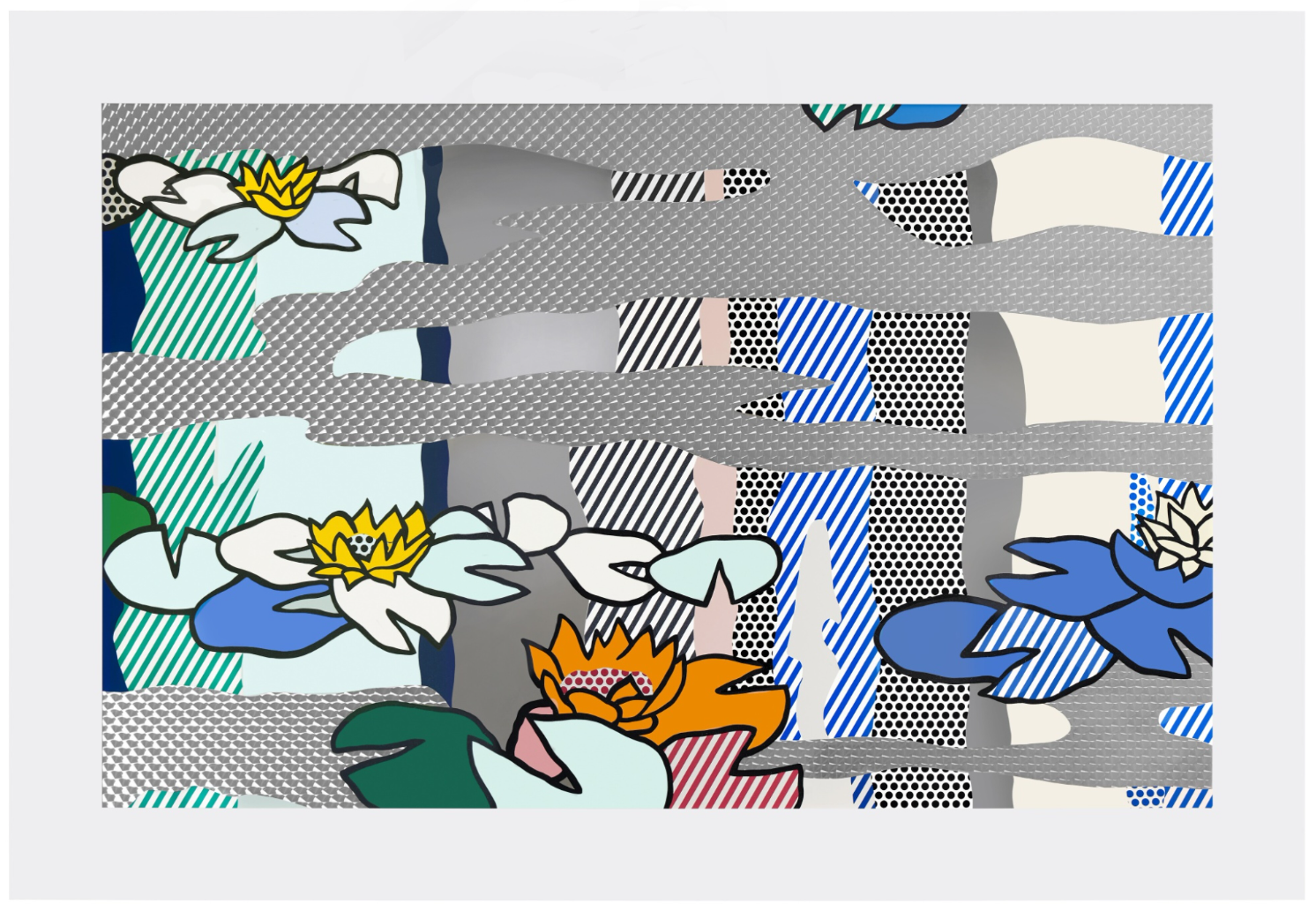
ROY LICHTENSTEIN (1923 – 1997)
Water Lily Pond with Reflections, 1992
Screenprinted enamel in colors on processed and swirled stainless steel, with painted wood frame
Overall: 58 x 84 1/2 inches (147.3 x 214.6 cm)
Signed in felt-tip pen, dated ’92 and inscribed AP 2/7 (on the verso)
This work is one of 7 artist’s proofs aside from the numbered edition of 23, published by Saff Tech Arts
#14. Roommates, 1994
Works from the Collection of Dorothy and Roy Lichtenstein
Sotheby’s New-York: 21 November 2024
Estimated: USD 250,000 – 350,000
USD 1,200,000
Roommates | Contemporary Day Auction | 2024 | Sotheby’s
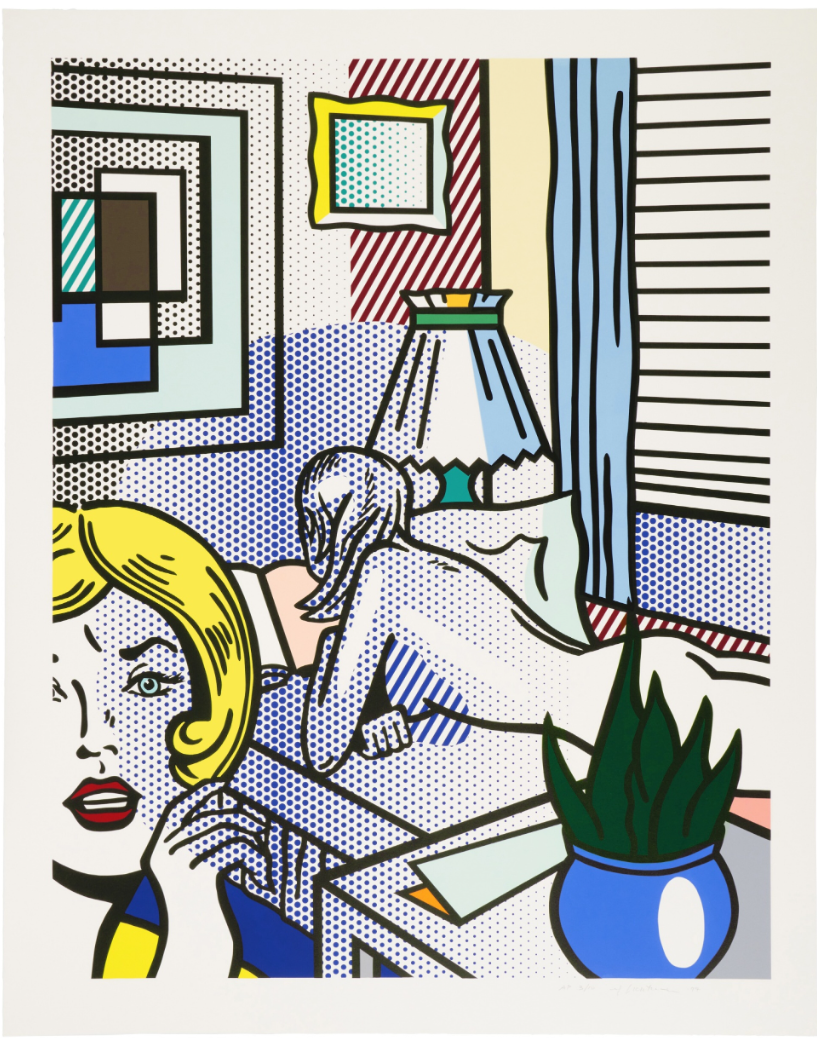
ROY LICHTENSTEIN (1923 – 1997)
Roommates, 1994
Relief print in colors on Rives BFK mold-made paper
Image: 57 1/2 x 45 inches (146.1 x 114.5 cm)
Sheet: 64 1/4 x 51 1/8 inches (163.1 x 129.7 cm)
Signed in pencil, dated ’94 and inscribed AP 3/10 (lower right)
This impression is one of ten artist’s proofs aside from the numbered edition of 40
#15. Nude with Yellow Pillow, 1994
Works from the Collection of Dorothy and Roy Lichtenstein
Sotheby’s New-York: 21 November 2024
Estimated: USD 250,000 – 350,000
USD 1,2o0,000
Nude with Yellow Pillow | Contemporary Day Auction | 2024 | Sotheby’s
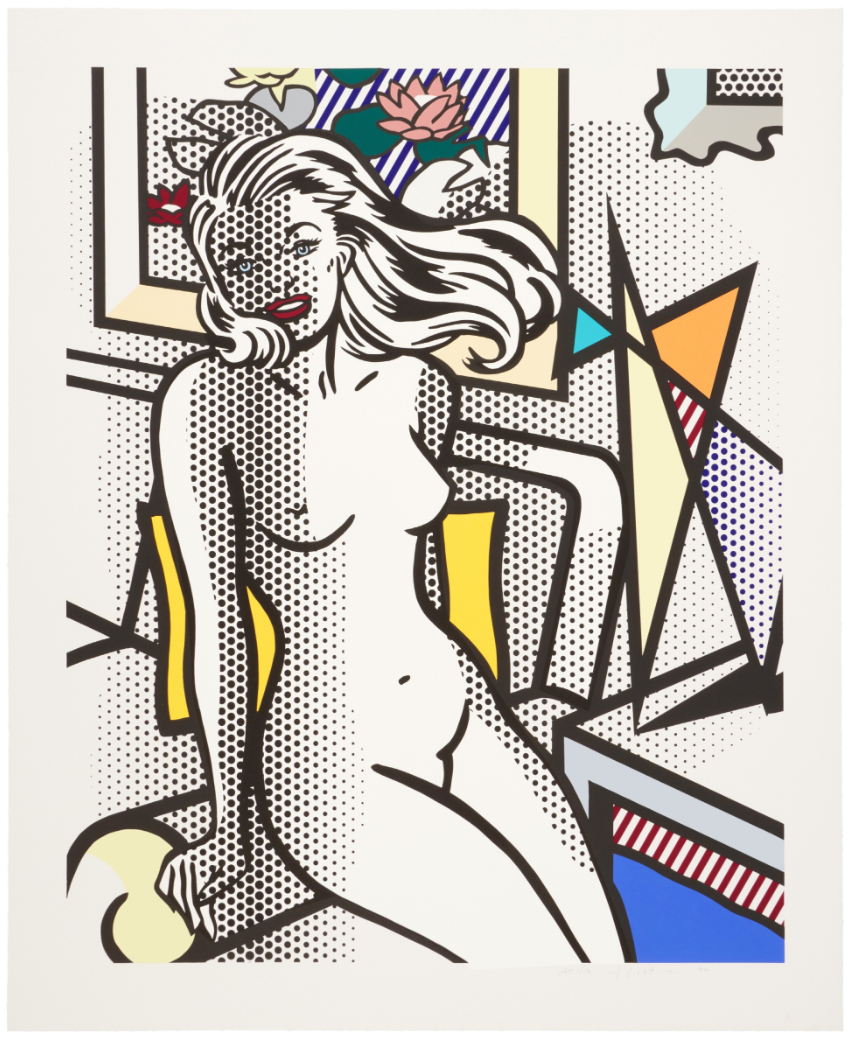
ROY LICHTENSTEIN (1923 – 1997)
Nude with Yellow Pillow, 1994
Relief print in colors on Rives BFK mold-made paper
Image: 46×37 inches (117×94 cm)
Sheet: 52 5/8 x 43 1/8 inches (113.3 x 109.4 cm)
Signed in pencil, dated ’94 and inscribed AP 1/12 (lower right)
This impression is one of 12 artist’s proofs aside from the numbered edition of 60
#16. Painting: Silver Frame, 1984
Christie’s New-York: 17 May 2024
Estimated: USD 1,000,000 – 1,500,000
USD 1,197,000
ROY LICHTENSTEIN (1923-1997), Painting: Silver Frame | Christie’s (christies.com)

ROY LICHTENSTEIN (1923-1997)
Painting: Silver Frame, 1984
Acrylic and graphite on canvas
54×60 inches (137.2 x 152.4 cm)
Signed and dated ‘Lichtenstein ’84’ (on the reverse)
#17. Small House, 1996
Works from the Collection of Dorothy and Roy Lichtenstein
Sotheby’s New-York: 21 November 2024
Estimated: USD 600,000 – 800,000
USD 1,140,000
Small House | Contemporary Day Auction | 2024 | Sotheby’s

ROY LICHTENSTEIN (1923 – 1997)
Small House, 1996
painted and cast aluminum
17 7/8 x 26 1/2 x 8 1/2 inches (45.4 x 67.2 x 21.6 cm)
Incised with the artist’s signature and date ’97 (on the reverse)
This work is the artist’s cast from an edition of 8 plus 1 artist’s cast
#18. Flowers, 1981
Christie’s New-York: 22 November 2024
Estimated: USD 1,000,000 – 1,500,000
USD 1,134,000
ROY LICHTENSTEIN (1923-1997), Flowers | Christie’s
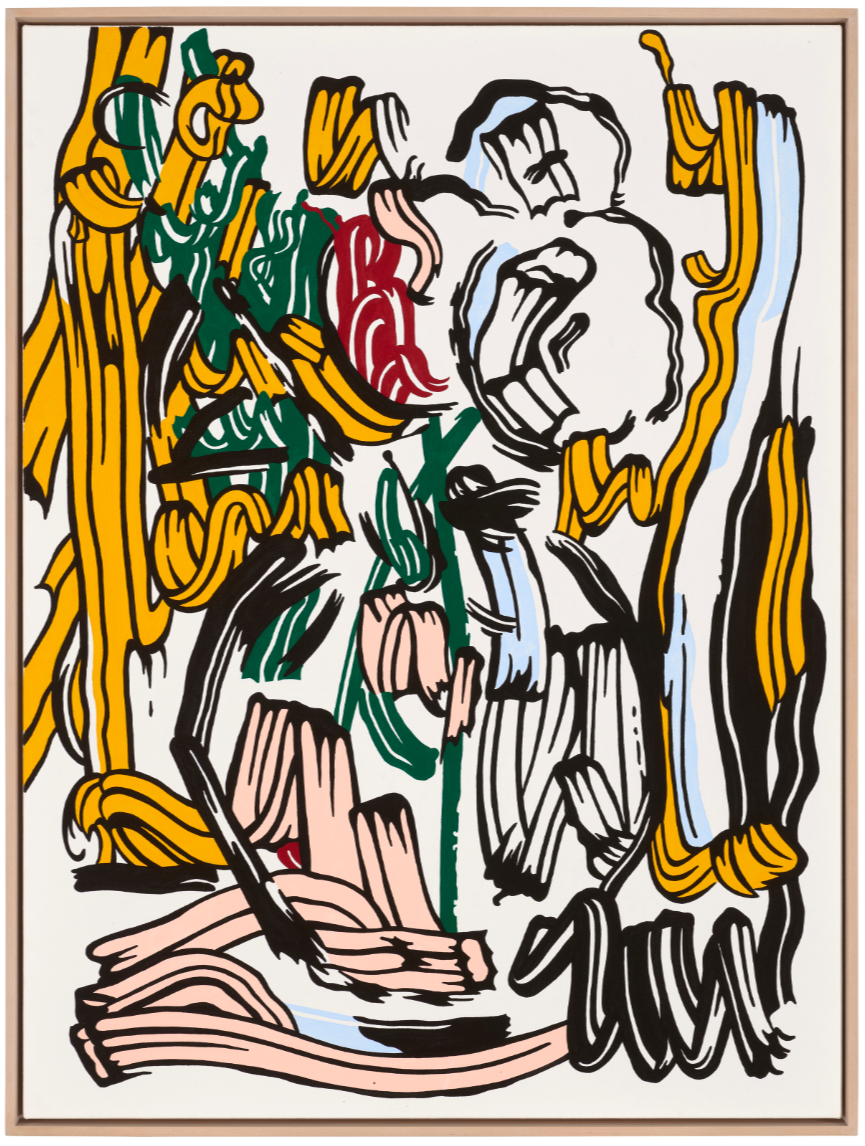
ROY LICHTENSTEIN (1923-1997)
Flowers, 1981
Acrylic and graphite on canvas
48 1/8 x 36 inches (122.3 x 91.4 cm)
Signed and dated ‘rf Lichtenstein ’81’ (on the reverse)
#19. Yellow Abstraction, 1968
Sotheby’s New-York: 14 May 2024
Estimated: USD 500,000 – 700,000
USD 1,016,000
Yellow Abstraction | Contemporary Day Auction | 2024 | Sotheby’s (sothebys.com)

ROY LICHTENSTEIN (1923 – 1997)
Yellow Abstraction, 1968
Acrylic and oil on canvas with brass, in 4 joined parts
Overall: 48 1/4 x 131 3/4 inches (122.6 x 334.6 cm)
Signed and dated ’68 (on the reverse)
USD 1 million
#20. Nude with Blue Hair, 1994
Works from the Collection of Dorothy and Roy Lichtenstein
Sotheby’s New-York: 20 November 2024
Estimated: USD 350,000 – 450,000
USD 960,000
Nude with Blue Hair | The Now and Contemporary Evening Auction | 2024 | Sotheby’s
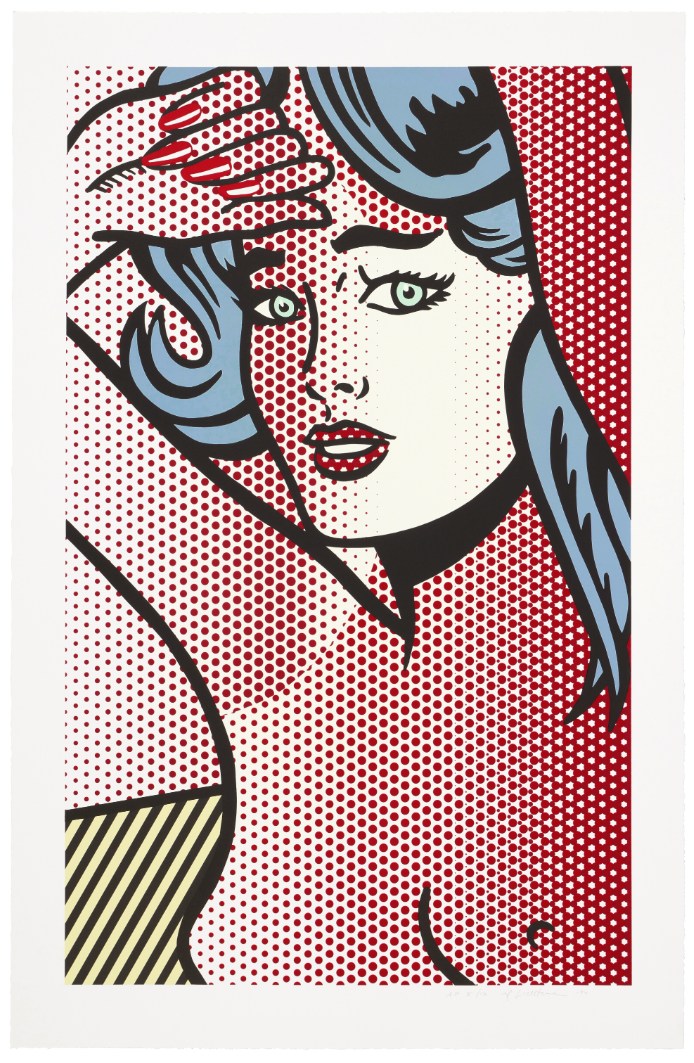
ROY LICHTENSTEIN (1923 – 1997)
Nude with Blue Hair, 1994
Relief print in colors on Rives BFK mold-made paper
Image: 51 1/2 x 31 3/4 inches (130 x 80.2 cm)
Sheet: 57 7/8 x 37 5/8 inches (146.7 x 95.3 cm)
Signed, dated ’94 and inscribed AP 5/12 (lower right)
This impression is one of 12 artist’s proofs aside from the numbered edition of 40
#21. Still Life – Red Apples, 1993
Christie’s New-York: 22 November 2024
Estimated: USD 500,000 – 700,000
USD 793,800
ROY LICHTENSTEIN (1923-1997), Still Life – Red Apples | Christie’s
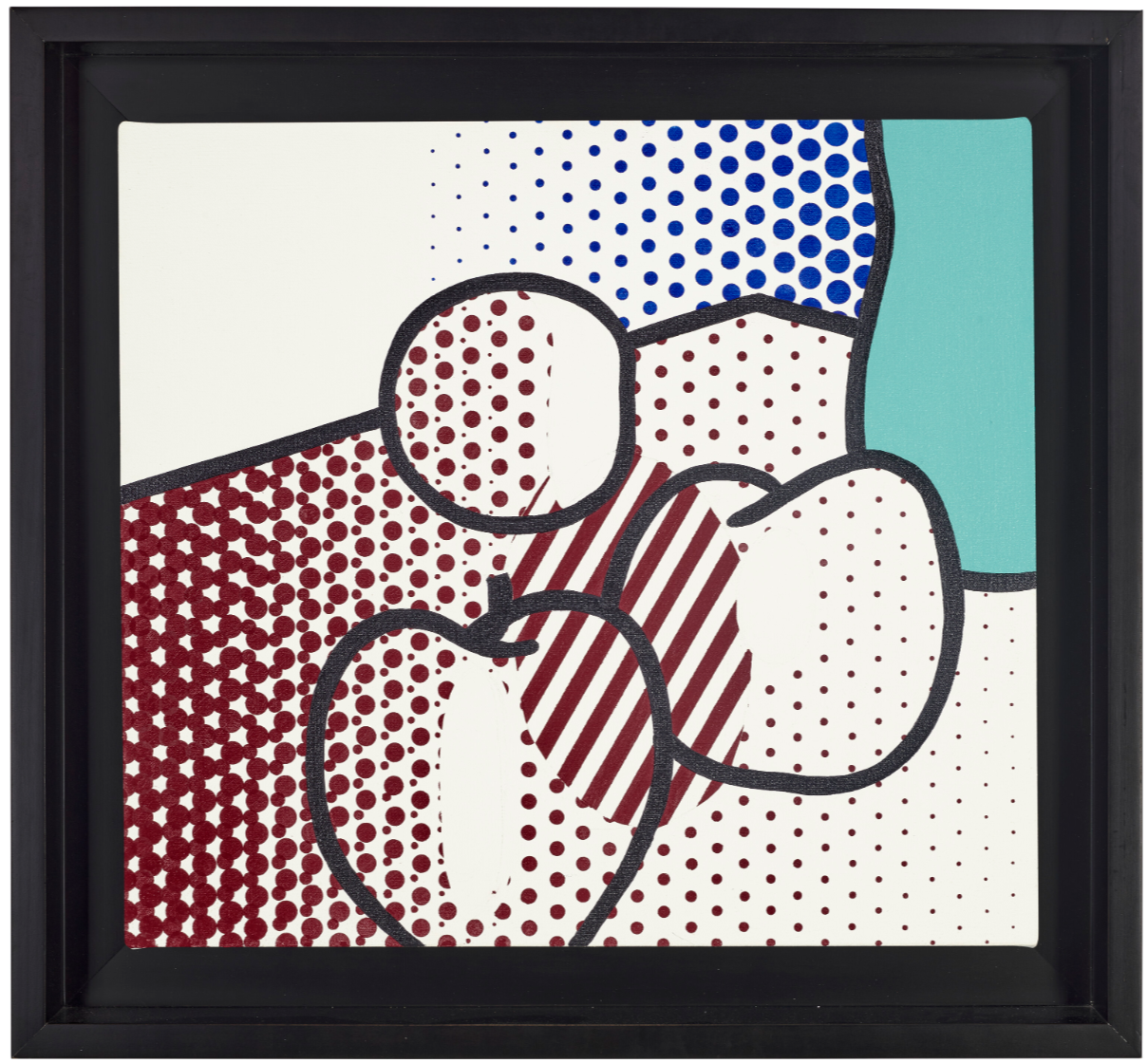
ROY LICHTENSTEIN (1923-1997)
Still Life – Red Apples, 1993
Acrylic, oil and graphite on canvas
18×20 inches (45.7 x 50.8 cm)
Signed and dated ‘rf Lichtenstein ’93’ (on the reverse)
#22. I Love Liberty (Study), circa 1982
Works from the Collection of Dorothy and Roy Lichtenstein
Sotheby’s New-York: 21 November 2024
Estimated: USD 350,000 – 450,000
USD 780,000
I Love Liberty (Study) | Contemporary Day Auction | 2024 | Sotheby’s
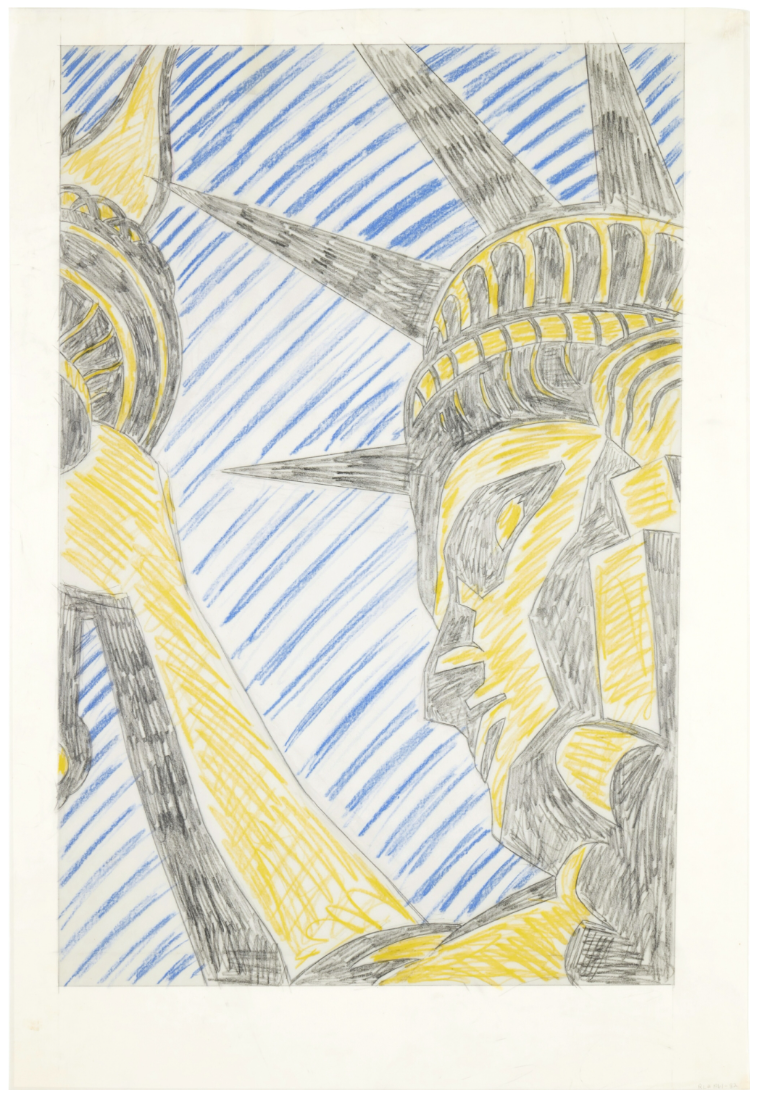
ROY LICHTENSTEIN (1923 – 1997)
I Love Liberty (Study), circa 1982
Colored pencil and graphite on tracing paper
Image: 26×17 inches (66 x 43.2 cm)
Sheet: 30 x 20 1/2 inches (76.2 x 52.1 cm)
#23. The Conversation, 1984
Sotheby’s New-York: 21 November 2024
Estimated: USD 700,000 – 1,000,000
USD 720,000
The Conversation | Contemporary Day Auction | 2024 | Sotheby’s
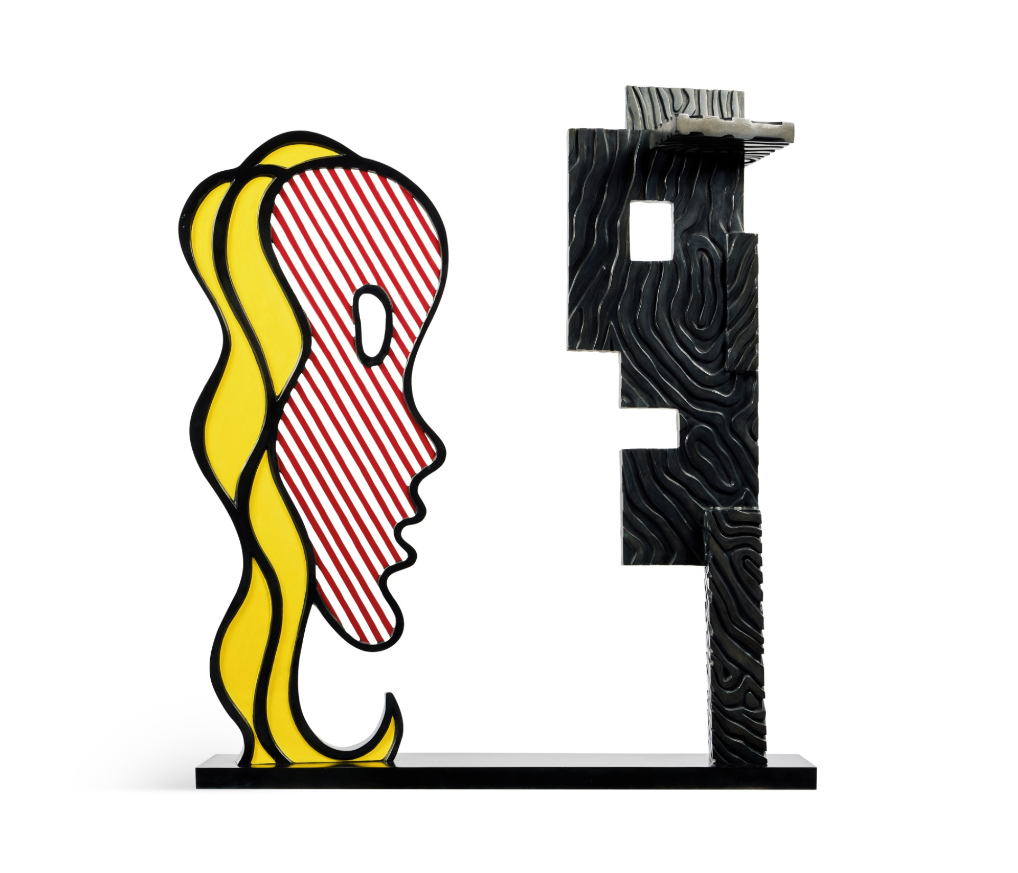
ROY LICHTENSTEIN (1923 – 1997)
The Conversation, 1984
Painted and patinated bronze
48 1/4 x 42 x 10 inches (122.6 x 106.7 x 25.4 cm)
This work is number 3 from an edition of 6
#24. Modern Painting with Yellow Arrow, 1967
Sotheby’s New-York: 27 September 2024
Estimated: USD 450,000 – 650,000
USD 660,000
Modern Painting with Yellow Arrow | Contemporary Curated | 2024 | Sotheby’s (sothebys.com)
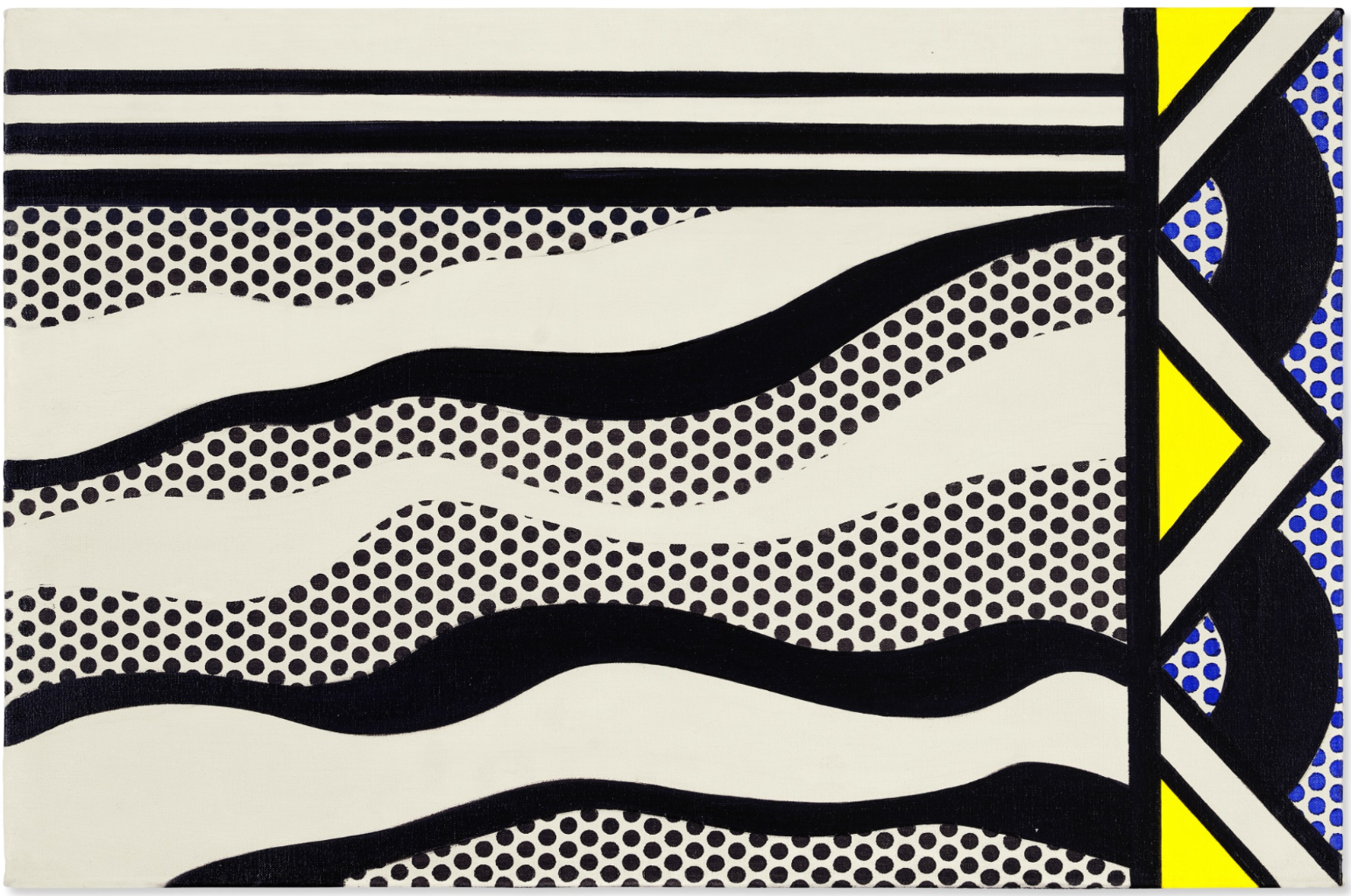
ROY LICHTENSTEIN (1923 – 1997)
Modern Painting with Yellow Arrow, 1967
Acrylic, oil and graphite on canvas
16 x 24 1/4 inches (40.6 x 61.6 cm)
Signed and dated ’67 (on the reverse)
#25. Brushstroke Still Life with Lamp, 1997
Christie’s New-York: 22 November 2024
Estimated: USD 250,000 – 350,000
USD 453,600
ROY LICHTENSTEIN (1923-1997), Brushstroke Still Life with Lamp | Christie’s
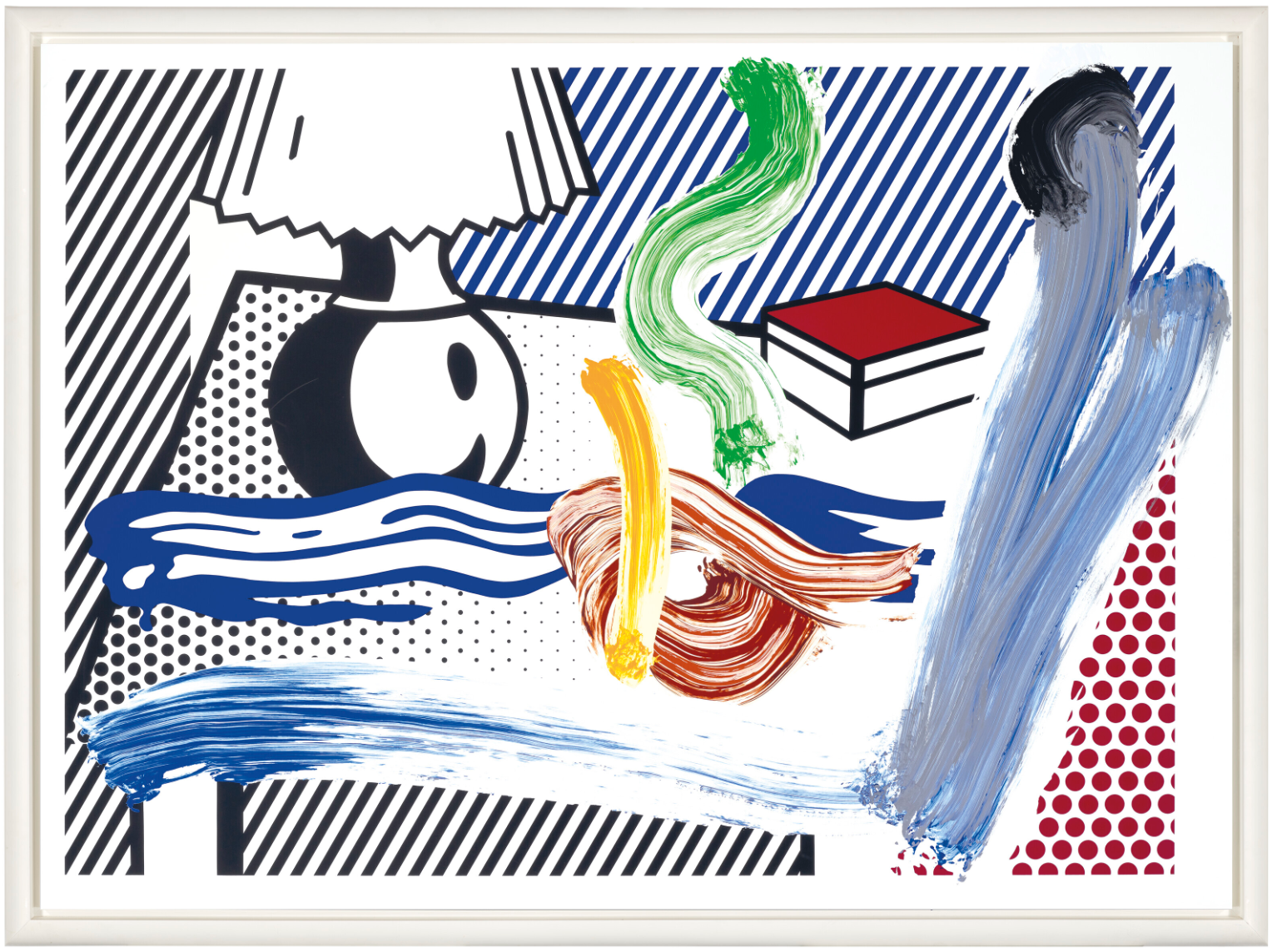
ROY LICHTENSTEIN (1923-1997)
Brushstroke Still Life with Lamp, 1997
Screenprint with hand-painted Magna on honeycomb-core aluminum panel, in artist’s frame
Aluminum panel: 49 1/2 x 68 inches (124.7 x 172.7 cm)
Overall: 54 x 72 1/2 inches (137.2 x 184.2 cm)
Signed, numbered and dated ’23⁄24 rf Lichtenstein ’97’ (on the right edge)
This work is number twenty-three from an edition of twenty-four plus eight artist’s proofs
#26. Brushstroke III, 1985-1986
Christie’s New-York: 13 March 2024
Estimated: USD 150,000 – 200,000
USD 151,200
ROY LICHTENSTEIN (1923-1997), Brushstroke III | Christie’s
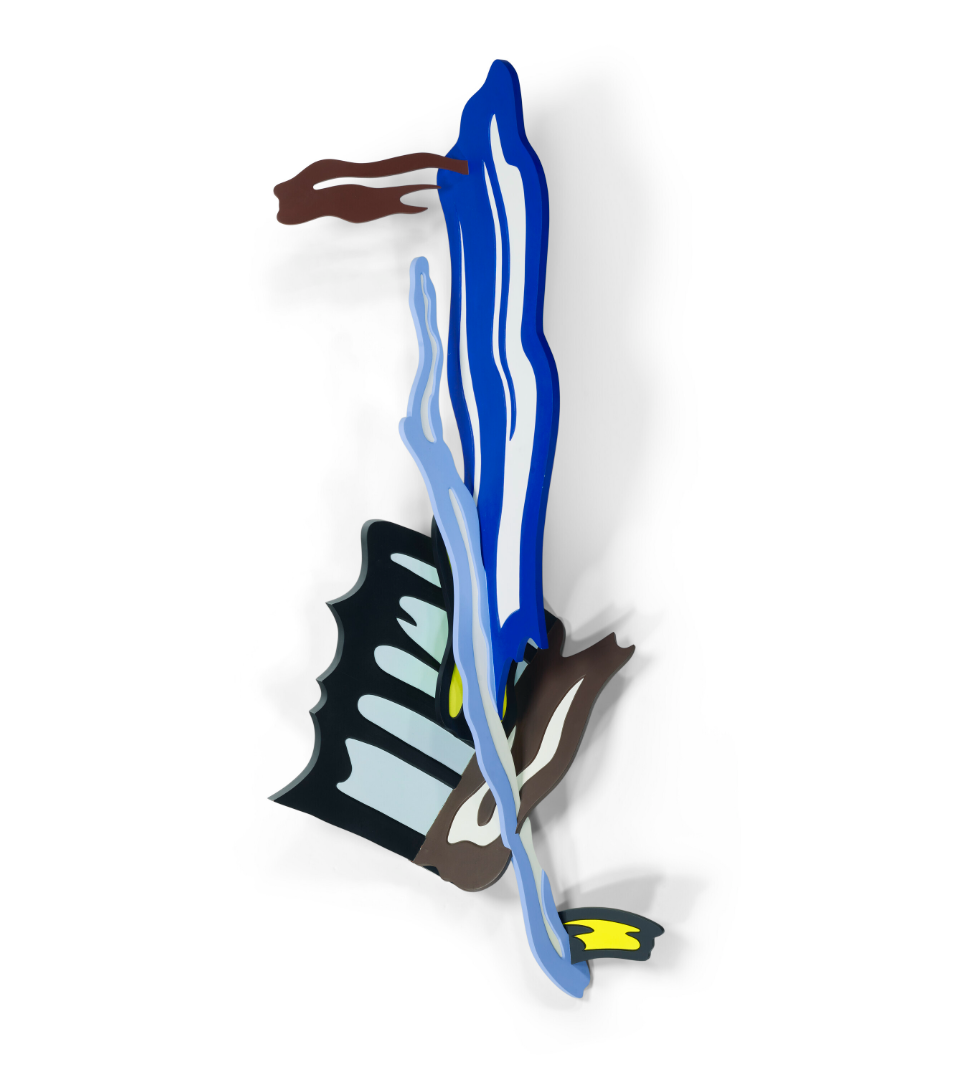
ROY LICHTENSTEIN (1923-1997)
Brushstroke III, 1985-1986
Painted cherry wood
64 x 27 x 11 3/4 inches (162.6 x 68.6 x 29.8 cm)
Signed ‘rf Lichtenstein’ (on the reverse)
Numbered ‘5/10’ (on a plate affixed to the reverse)
#27. Untitled (5874), 1957
Hindman Chicago: 11 December 2024
Estimated: USD 80,000 – 120,000
USD 107,950
ROY LICHTENSTEIN (American, 1923–1997)
Untitled (5874), 1957
Oil on canvas
30 x 40 1/4 inches
Signed Lichtenstein (lower right)
Dated with Lichtenstein’s date code (lower left)
#28. Self-Portrait (Study), 1975
Christie’s New-York: 13 March 2024
Estimated: USD 100,000 – 150,000
USD 100,800
ROY LICHTENSTEIN (1923-1997), Self-Portrait (Study) | Christie’s (christies.com)
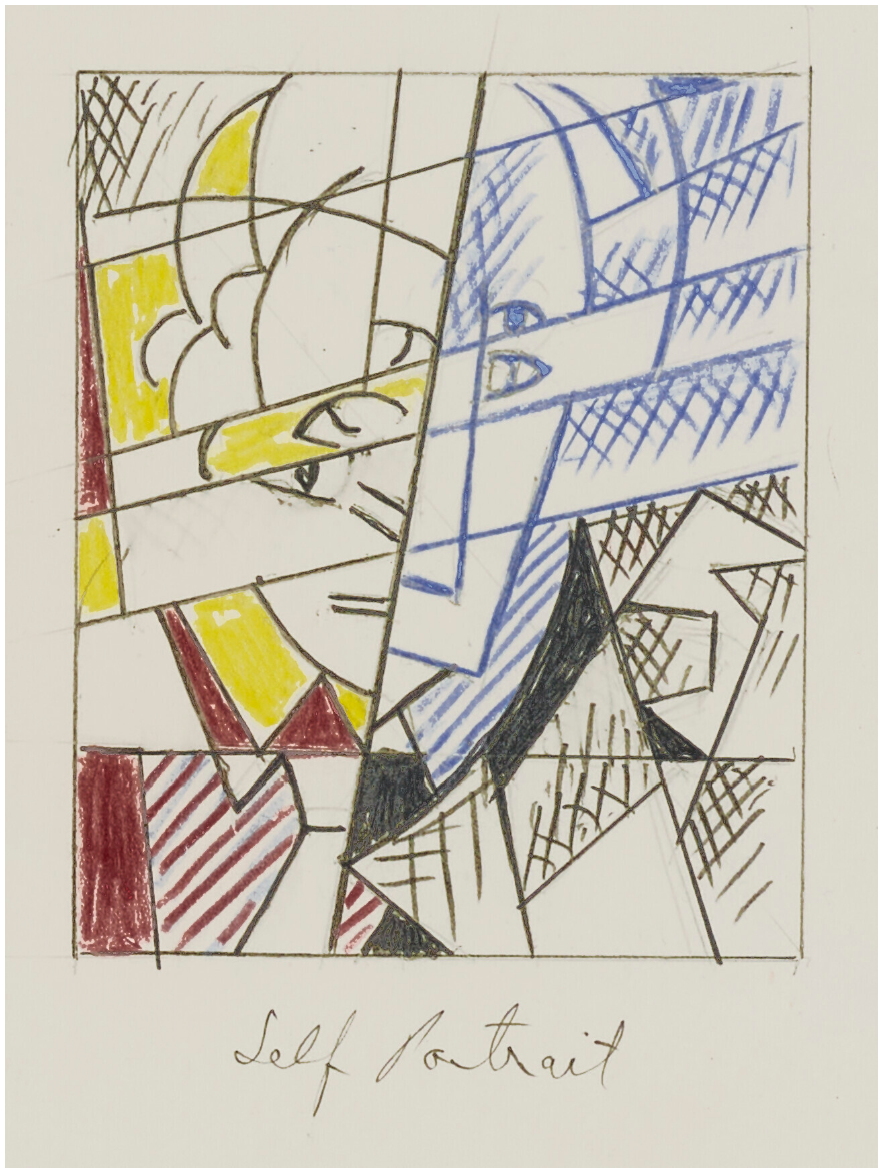
ROY LICHTENSTEIN (1923-1997)
Self-Portrait (Study), 1975
Colored pencil and graphite on paper
Image: 4 x 3 3/8 inches (10.2 x 8.6 cm)
Sheet: 13 1/4 x 11 inches (33.7 x 27.9 cm)
Titled ‘Self Portrait’ (center); signed and dated ‘rf Lichtenstein ’75’ (on the reverse)
#29. Still Life with Book, Grapes and Apple (Study), 1971
Sotheby’s New-York: 14 May 2024
Estimated: USD 60,000 – 80,000
USD 63,500
Still Life with Book, Grapes and Apple | Contemporary Day Auction | 2024 | Sotheby’s (sothebys.com)
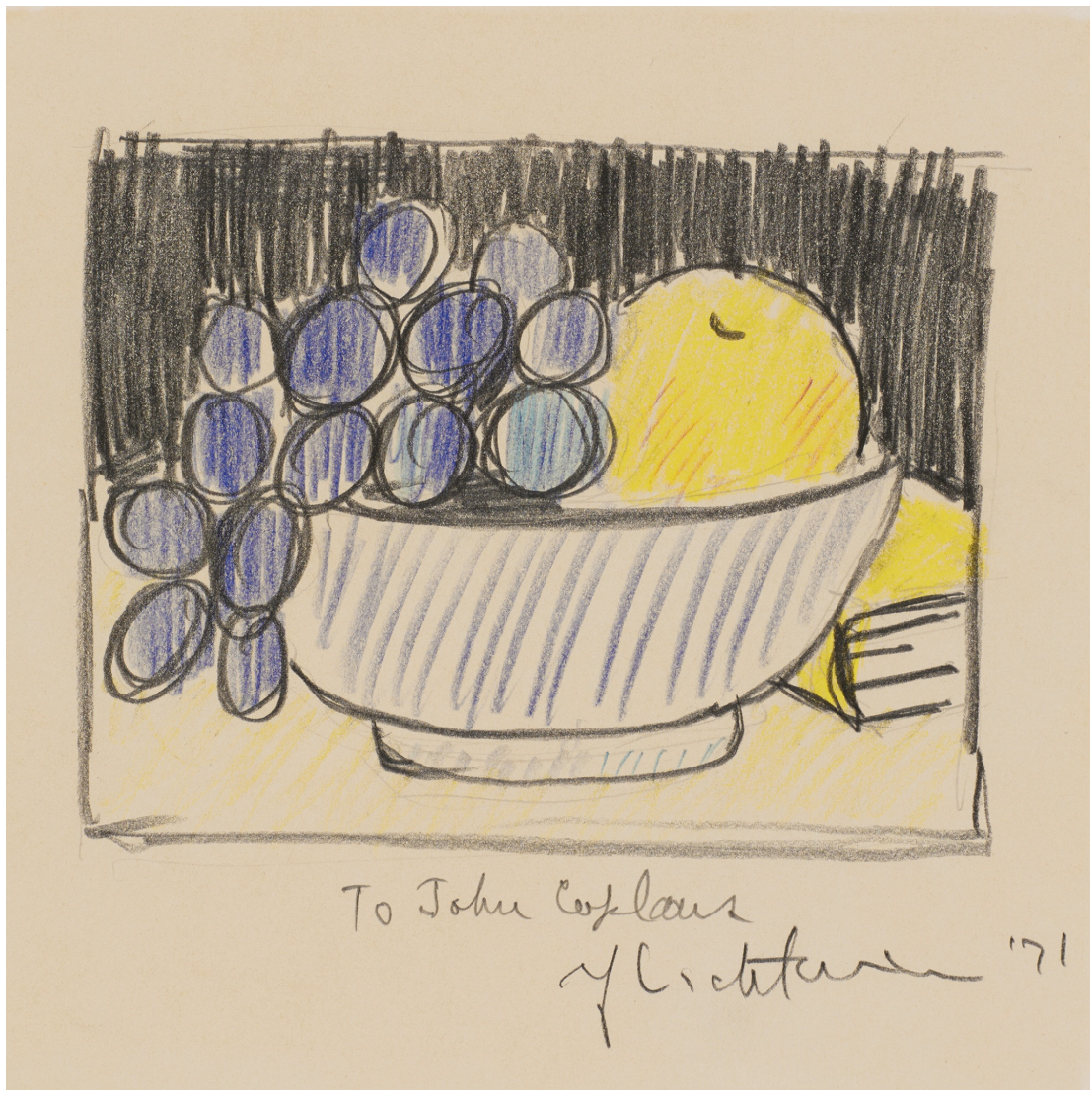
ROY LICHTENSTEIN (1923 – 1997)
Still Life with Book, Grapes and Apple (Study), 1971
Colored pencil and graphite on paper
Image: 5 1/2 x 5 1/2 inches (14by14 cm)
Sheet: 11 1/4 x 10 inches (27.9 by 25.4 cm)
Signed, dedicated To John Coplans and dated ’71 (lower right)
#30. Landscape, 1965
Phillips New-York: 12 March 2024
Estimated: USD 70,000 – 100,000
USD 63,500
Roy Lichtenstein – New Now New York Lot 29 March 2024 | Phillips
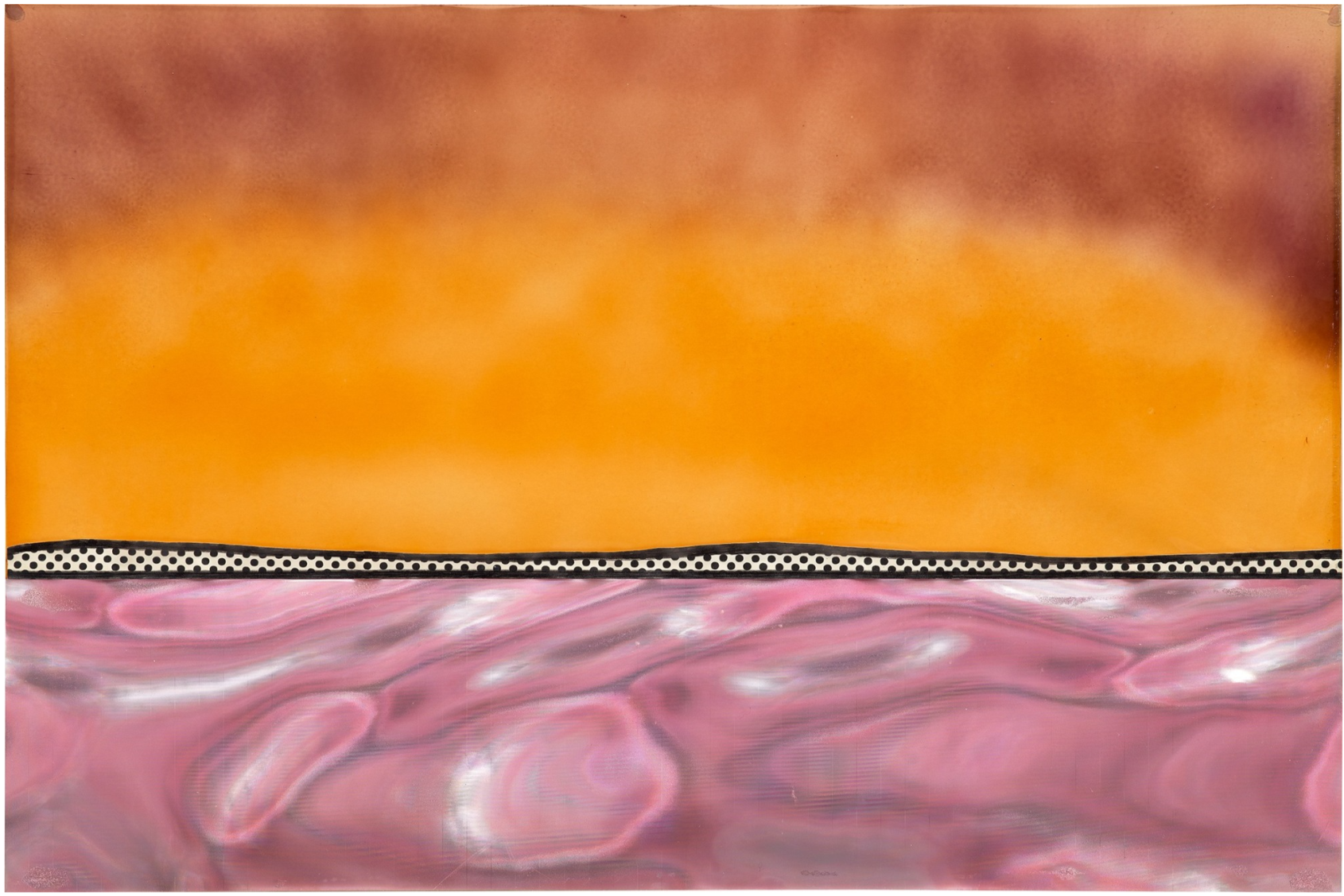
ROY LICHTENSTEIN
Landscape, 1965
Rowlux collage on board
14 x 20 7/8 inches (35.6 x 53 cm)
Signed and dated “rf Lichtenstein 1965” on the reverse
#31. Reflections: Handshake (Study), 1988
Christie’s New-York: 13 March 2024
Estimated: USD 80,000 – 120,000
USD 52,920
ROY LICHTENSTEIN (1923-1997), Reflections: Handshake (Study) | Christie’s (christies.com)
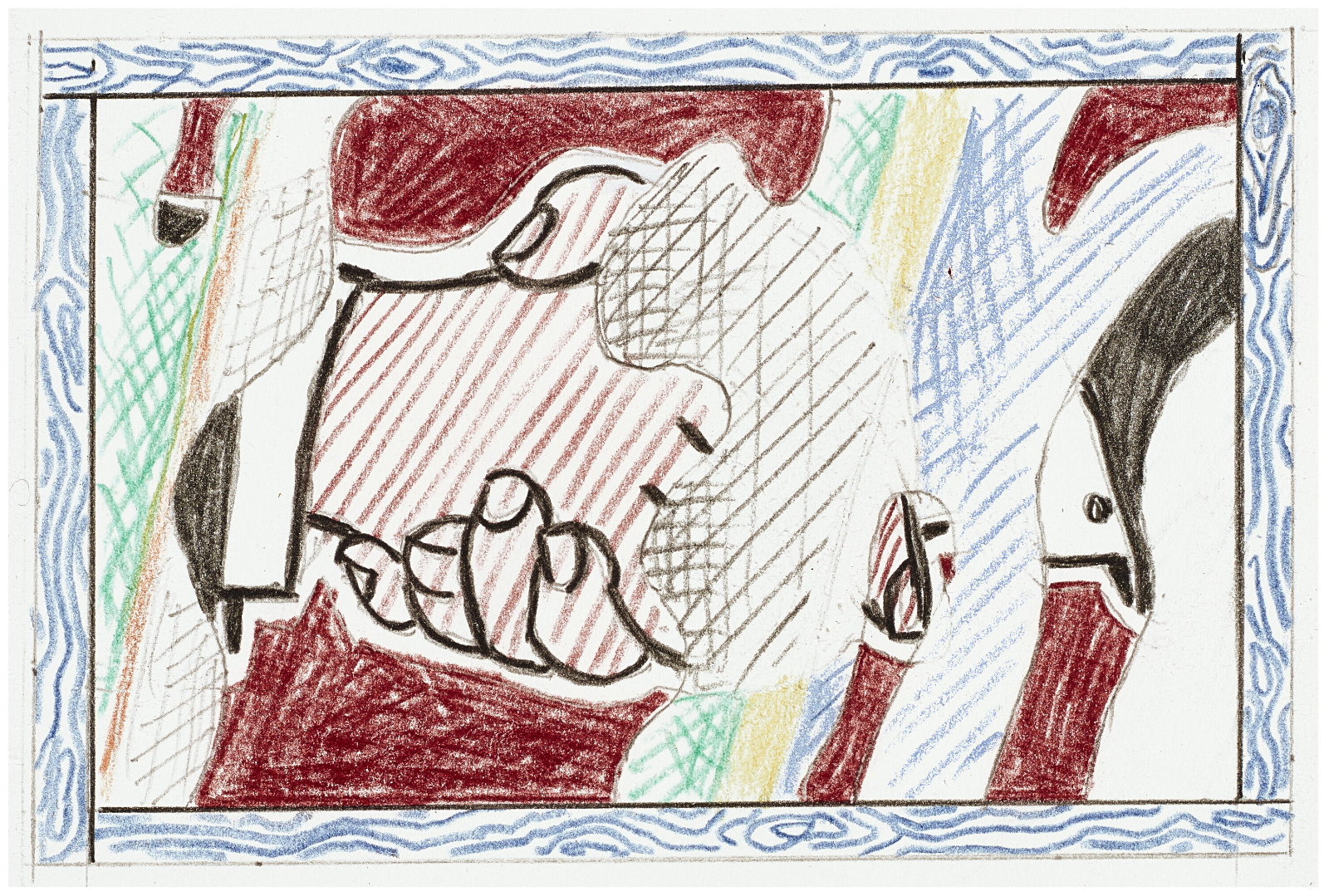
ROY LICHTENSTEIN (1923-1997)
Reflections: Handshake (Study), 1988
Graphite and colored pencil on paper
Image: 3 1/2 x 5 1/2 inches (8.9 x 14 cm)
Sheet: 8 3/8 x 9 5/8 inches (21.3 x 24.4 cm)
Signed and dated ‘rf Lichtenstein ’88’ (on the reverse)
Lots Passed
Woman Reading, 1980
Sotheby’s New-York: 13 May 2024
Estimated: USD 5,000,000 – 7,000,000
PASSED
Woman Reading | Contemporary Evening Auction | 2024 | Sotheby’s (sothebys.com)

ROY LICHTENSTEIN (1923 – 1997)
Woman Reading, 1980
Oil and acrylic on canvas
54×70 inches (137.2 x 177.8 cm)
Signed and dated ’80 (on the reverse)
Brushstroke Head II, 1987
Sotheby’s New-York: 14 May 2024
Estimated: USD 500,000 – 700,000
PASSED
Brushstroke Head II | Contemporary Day Auction | 2024 | Sotheby’s (sothebys.com)

ROY LICHTENSTEIN (1923 – 1997)
Brushstroke Head II, 1987
Painted bronze
29x17x14 inches (74 x 43.2 x 35.6 cm)
Incised with the artist’s signature, date ’87 and number 5/6 (on the base)
Figure with Banner, 1978
Christie’s New-York: 19 November 2024
Estimated: USD 3,000,000 – 5,000,000
WITHDRAWN
ROY LICHTENSTEIN (1923-1997), Figure with Banner | Christie’s
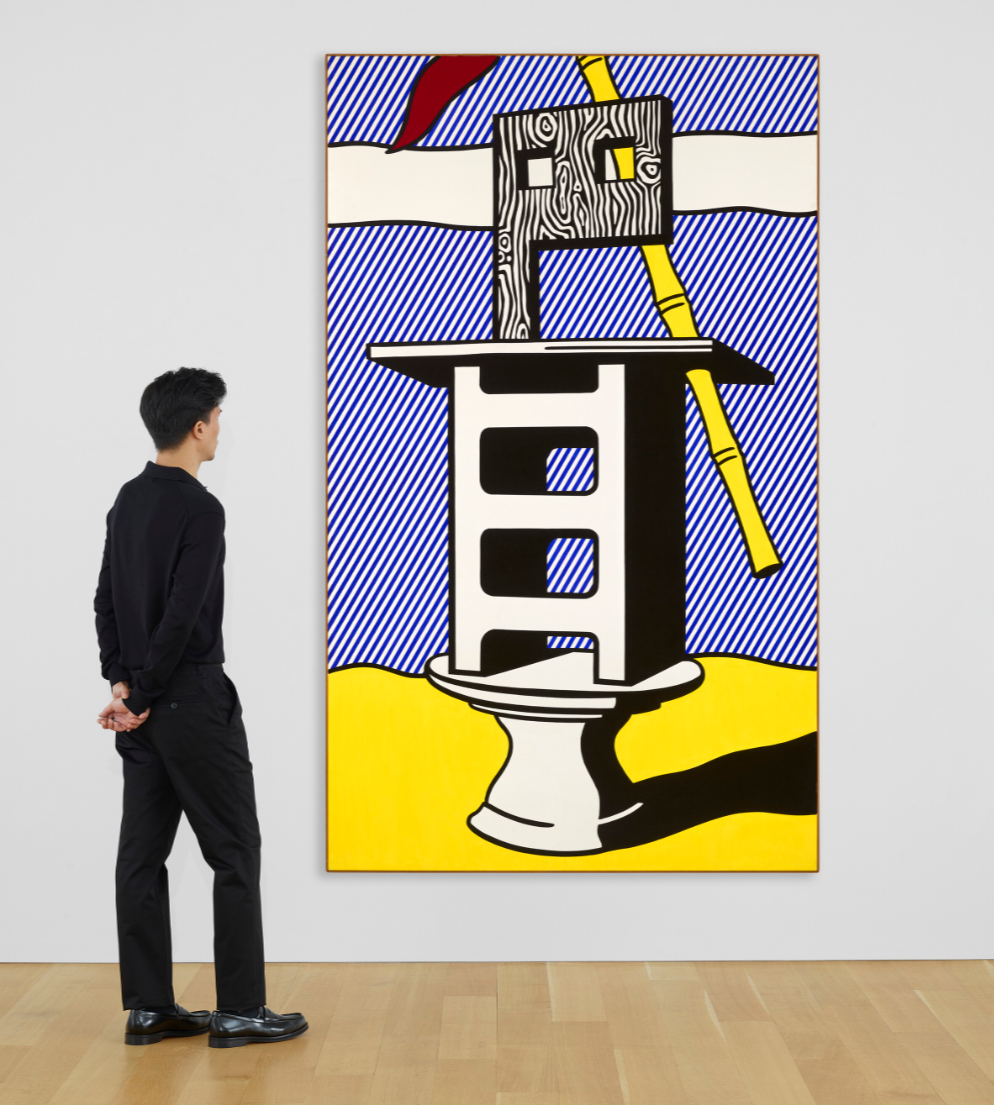
ROY LICHTENSTEIN (1923-1997)
Figure with Banner, 1978
Acrylic, oil and graphite on canvas
100×60 inches (254 x 152.4 cm)
Signed and dated ‘© rf Lichtenstein ‘78’ (on the reverse)
2023 Auction Results
20 lots sold in 2023 for a total turnover of USD 43,333,853.
With no lot failing to sell, the sell-through rate is a perfect 100%. The top price was achieved at Christie’s in New-York on 11 May 2023 for Rouen Cathedral, Set IV from 1969 that sold for USD 15,360,000. The top 3 lots generated a cumulative turnover of USD 24,121,500, contributing 55.7% to the total turnover for 2023. 11 lots sold for more than USD 1 million, generating a cumulative turnover of USD 41,875,599, representing 96.6% of the total turnover for 2023. All lots sold in the US, except 1 in Hong-Kong, and another in Zurich.
2023 Top 3 Lots
#1. Rouen Cathedral, Set IV, 1969
Christie’s New-York: 11 May 2023
Estimated: USD 18,000,000 – 25,000,000
USD 15,360,000
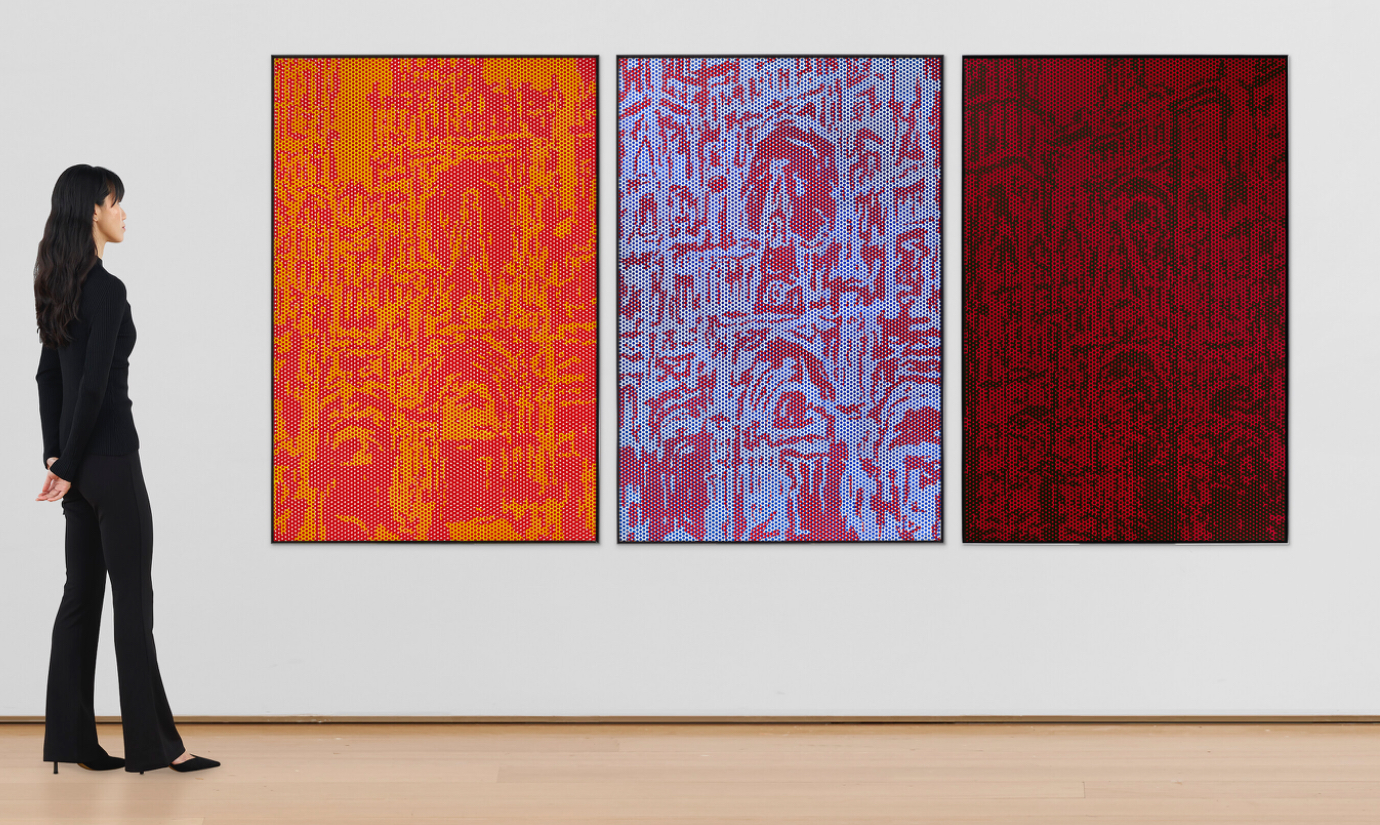
ROY LICHTENSTEIN (1923-1997)
Rouen Cathedral, Set IV, 1969
Oil and Magna on canvas tryptich
Each: 63×42 inches (160 x 106.7 cm)
Signed and dated ‘rf Lichtenstein ’69’ (on the reverse of each canvas)
#2. Girl in Mirror, 1964
Phillips New-York: 17 May 2023
Estimated: USD 4,500,000 – 5,500,000
USD 5,505,000
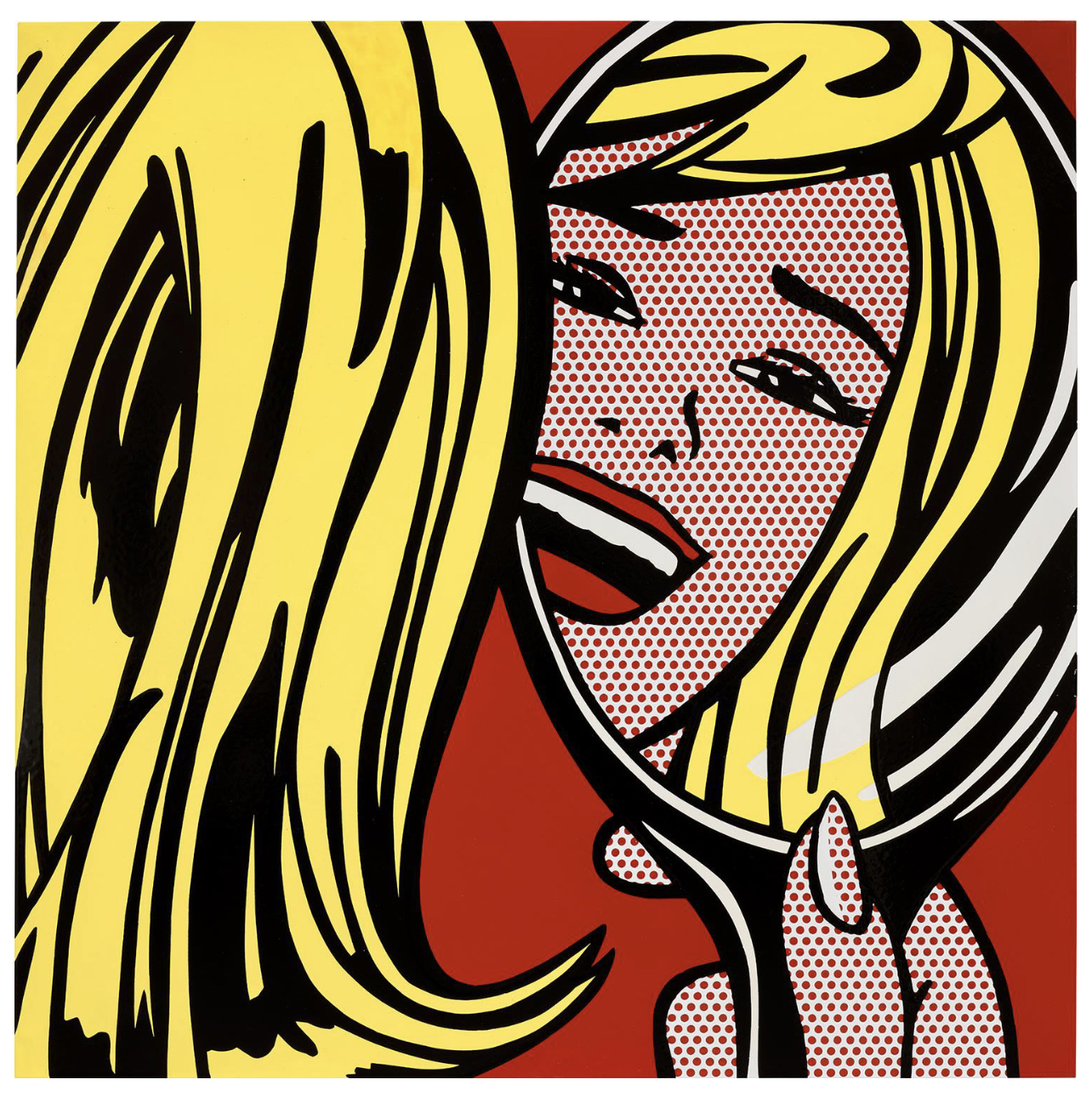
ROY LICHTENSTEIN
Girl in Mirror, 1964
Porcelain enamel on steel
41 7/8 x 41 7/8 x 1 1/8 inches (106.4 x 106.4 x 2.9 cm)
Signed and dated “rf Lichtenstein 1964” on the reverse
This work is number 1 from an edition of 8 plus 2 artist’s proofs
#3. Sky and Water, 1985
Christie’s New-York: 17 May 2023
Estimated: USD 4,000,000 – 6,000,000
USD 3,256,500
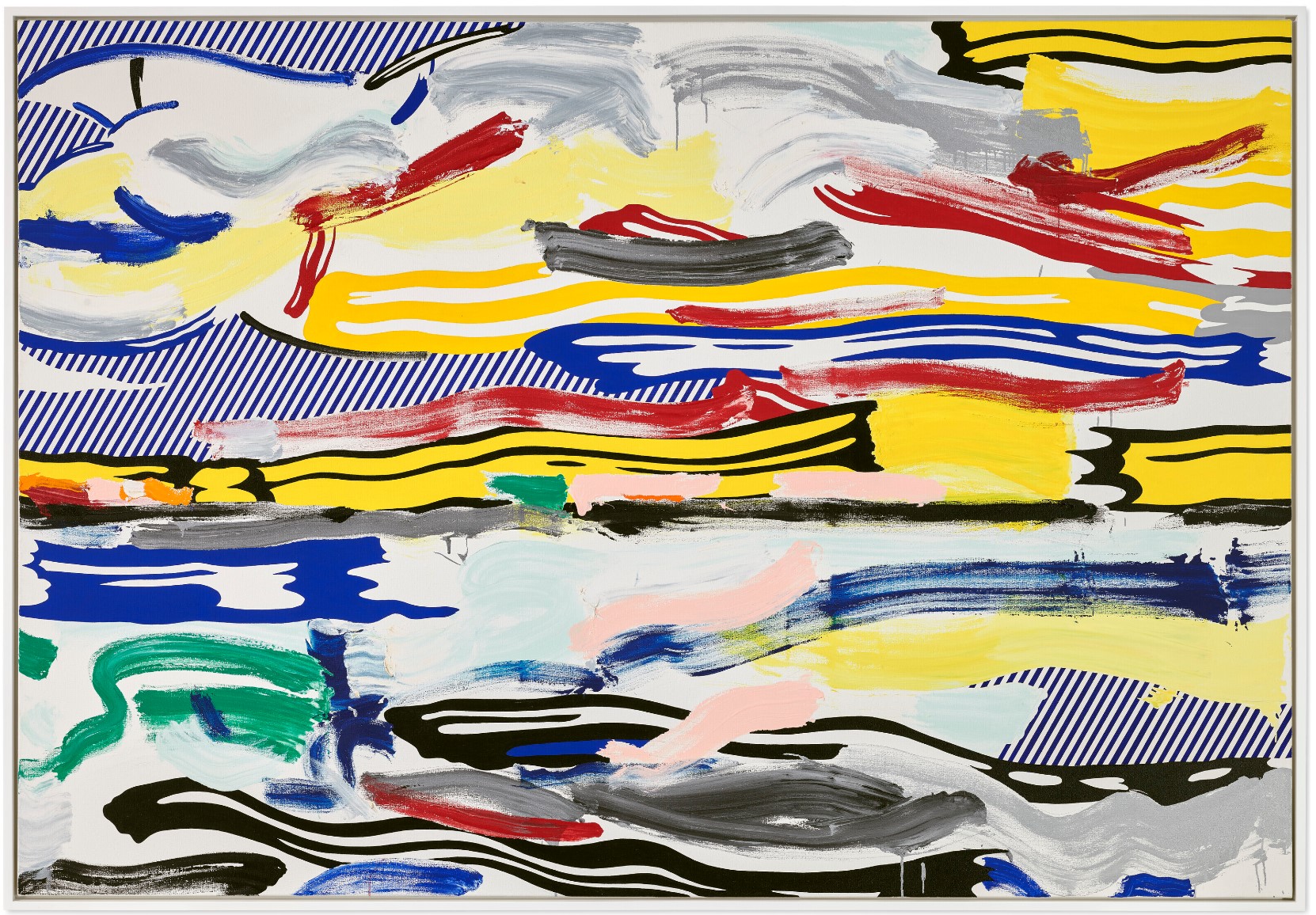
ROY LICHTENSTEIN (1923-1997)
Sky and Water, 1985
Oil and Magna on canvas
66×96 inches (167.6 x 243.8 cm)
Signed, inscribed and dated ‘© rf Lichtenstein ’85’ (on the reverse)
#4. Forms in Space, 1985
Sotheby’s New-York: 15 November 2023
Estimated: USD 1,500,000 – 2,000,000
USD 2,964,000
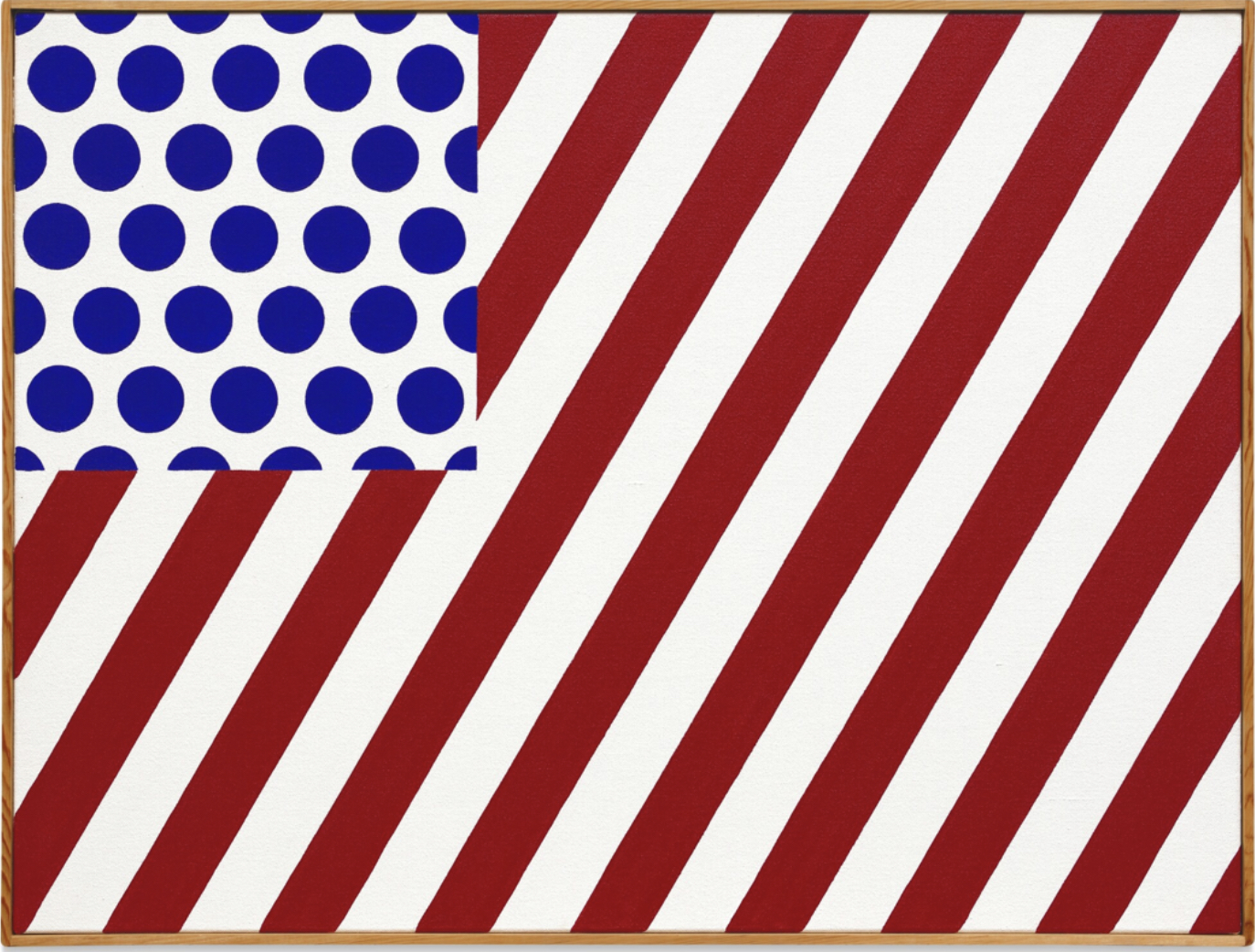
ROY LICHTENSTEIN (1923 – 1997)
Forms in Space, 1985
Acrylic, oil, graphite pencil on canvas
24 1/8 x 32 1/8 inches (61.3 x 81.6 cm)
Signed and dated ‘85 (on the reverse)
#5. Leda and the Swan (Study), 1968
Sotheby’s New-York: 16 May 2023
Estimated: USD 1,500,000 – 2,000,000
USD 2,903,500
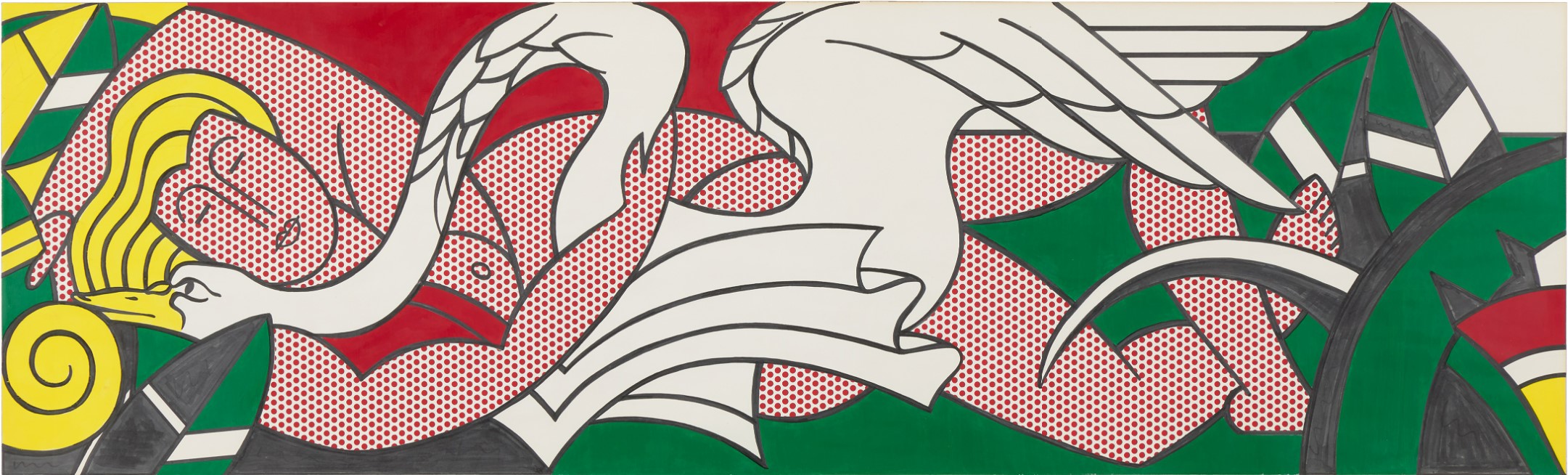
ROY LICHTENSTEIN (1923 – 1997)
Leda and the Swan (Study), 1968
Acrylic, oil, felt tip pen and graphite on paper
Image: 23 5/8 x 78 1/2 inches (60 x 198.8 cm)
Sheet: 34 3/4 x 84 inches (88.3 x 213.4 cm)
Signed and dated ’68 (lower right); variously inscribed (upper right)
#6. Mirror #7, 1971
Phillips New-York: 17 May 2023
Estimated: USD 3,000,000 – 4,000,000
USD 2,843,000
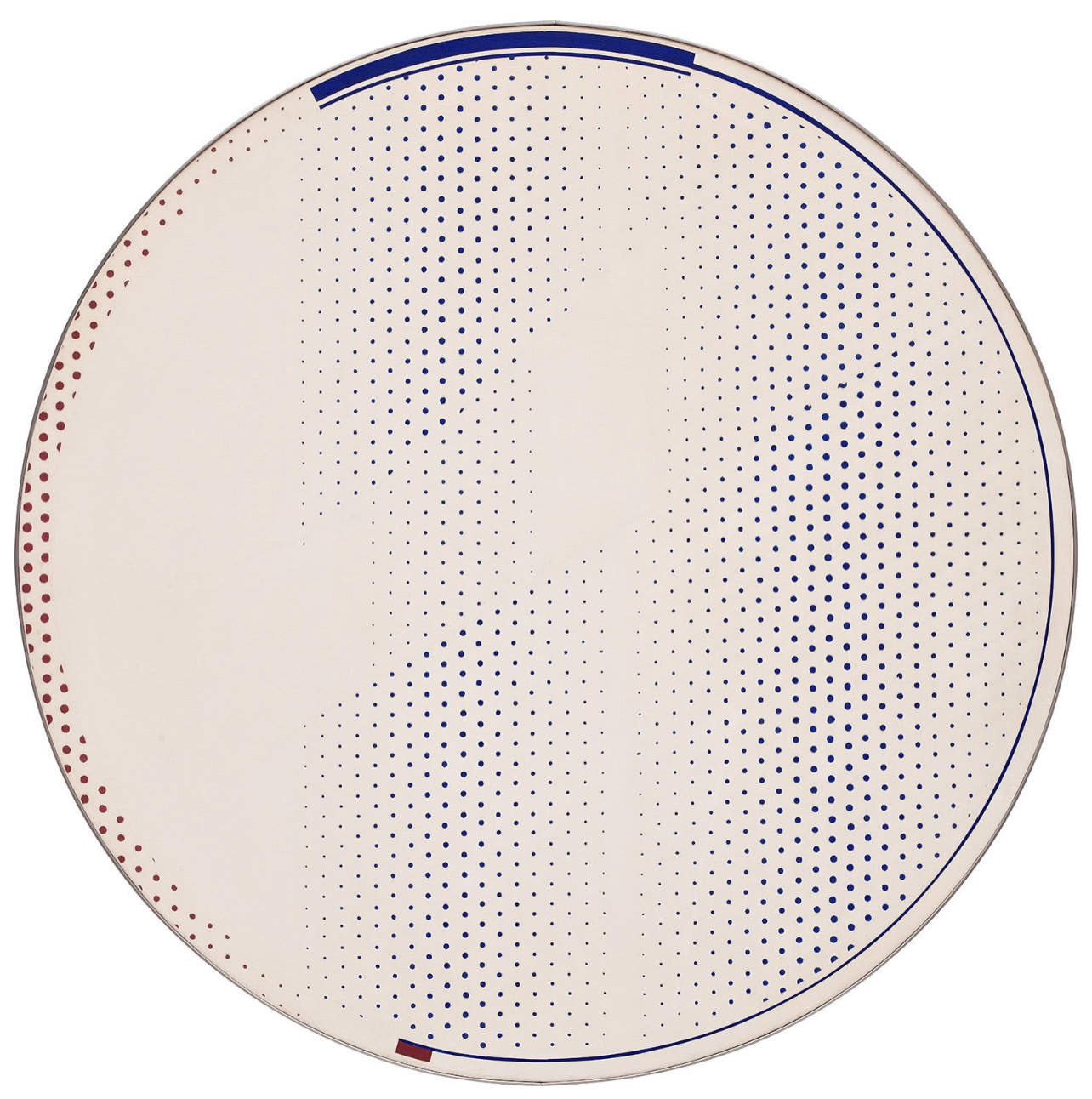
ROY LICHTENSTEIN
Mirror #7, 1971
Oil and Magna on canvas
Diameter: 36 inches (91.4 cm)
Signed and dated “rf Lichtenstein ‘71” on the reverse
#7. Reflections on Brushstrokes, 1990
Phillips Hong-Kong: 30 March 2023
Estimated: HKD 14,000,000 – 19,000,000
HKD 19,810,000 / USD 2,523,599
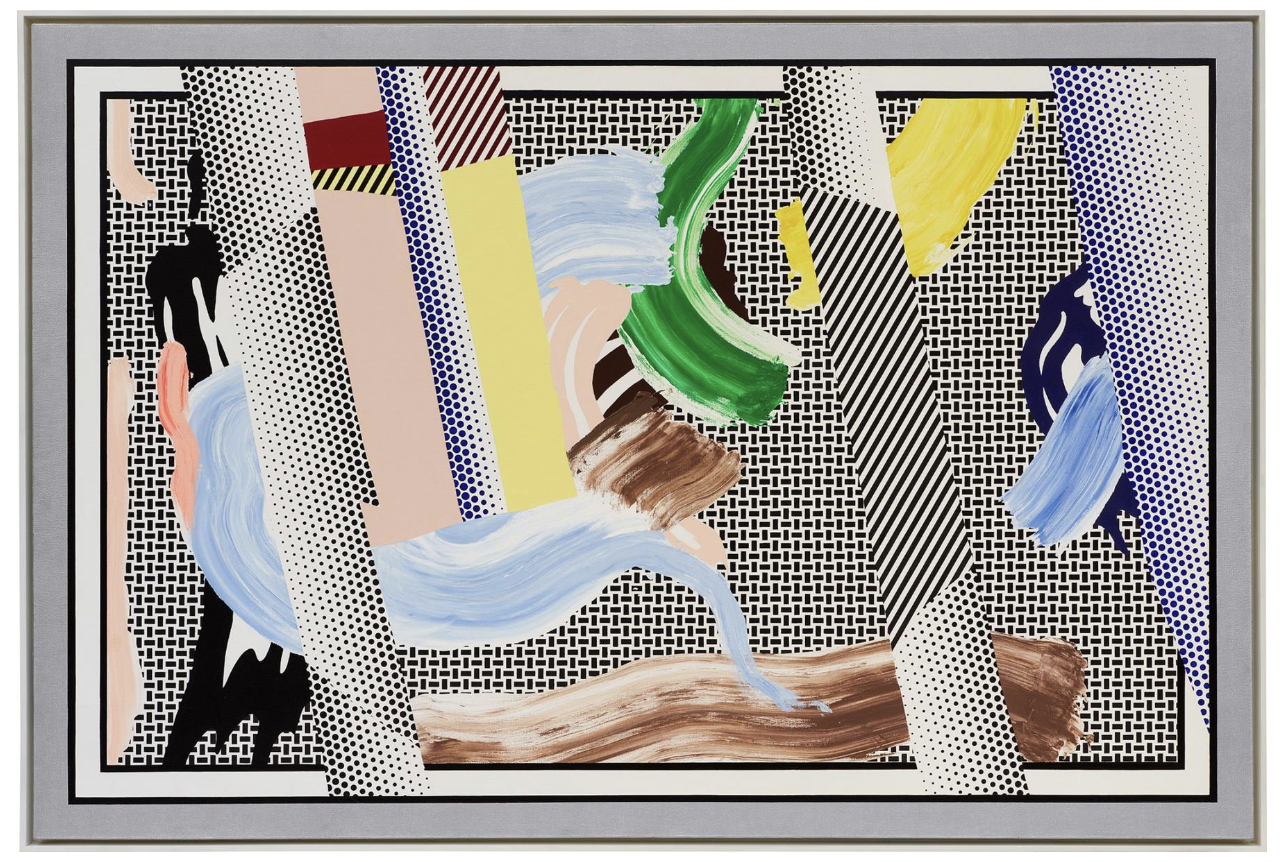
ROY LICHTENSTEIN
Reflections on Brushstrokes, 1990
Oil and magna on canvas
148.3 x 222.4 cm (58 3/8 x 87 1/2 inches)
Signed and dated ‘R. Lichtenstein 90’ on the reverse
#8. Woman Contemplating a Yellow Cup (Study), 1994
Phillips New-York: 14 November 2023
Estimated: USD 1,500,000 – 2,000,000
USD 1,996,000
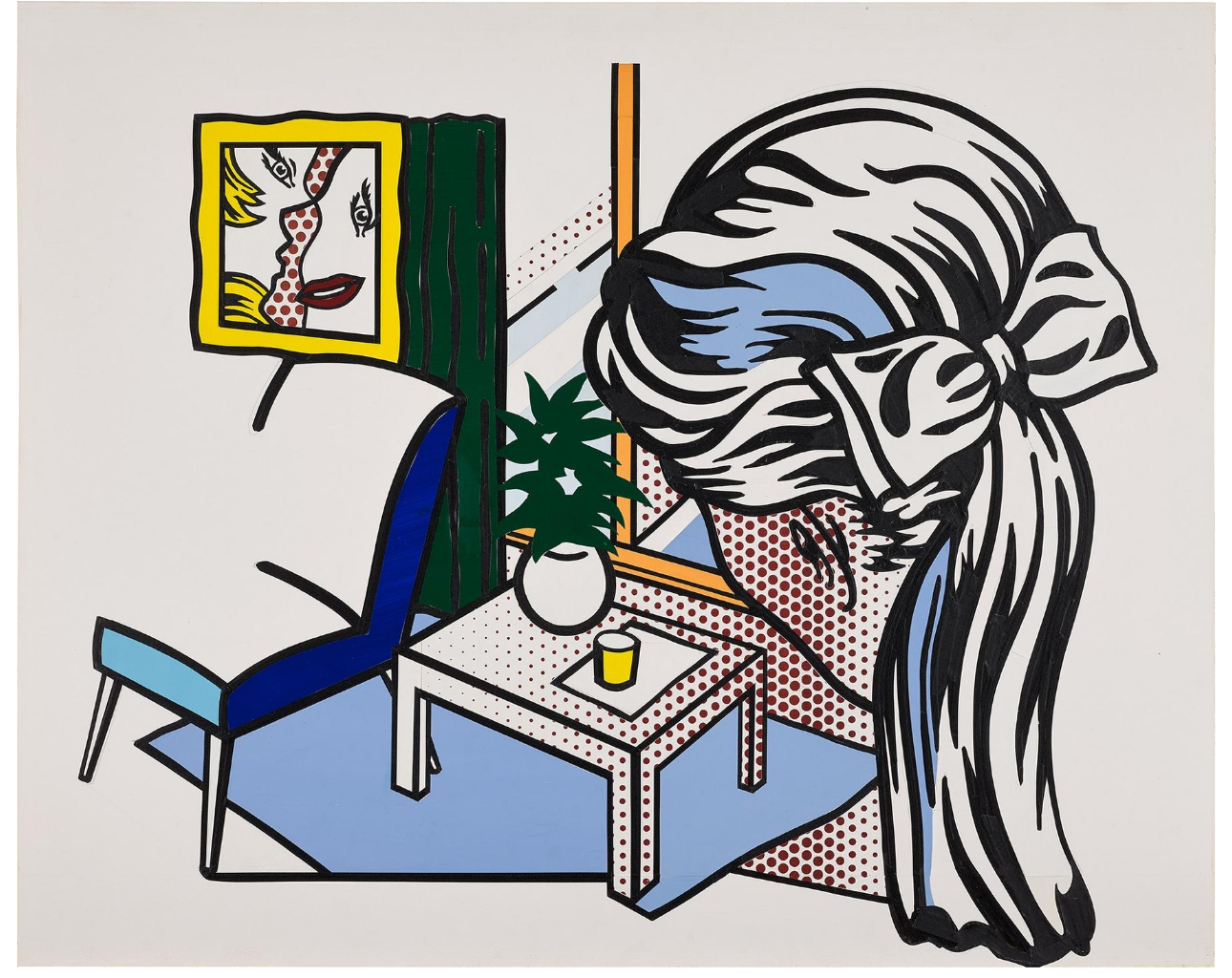
ROY LICHTENSTEIN
Woman Contemplating a Yellow Cup (Study), 1994
Tape, cut painted paper, cut printed paper and graphite pencil on board
36 1/8 x 44 3/4 inches (91.8 x 113.7 cm)
Signed and dated “Rf Lichtenstein ’94” on the reverse
#9. Woman Contemplating Yellow Cup, 1995
Sotheby’s New-York: 16 November 2023
Estimated: USD 1,200,000 – 1,800,000
USD 1,996,000
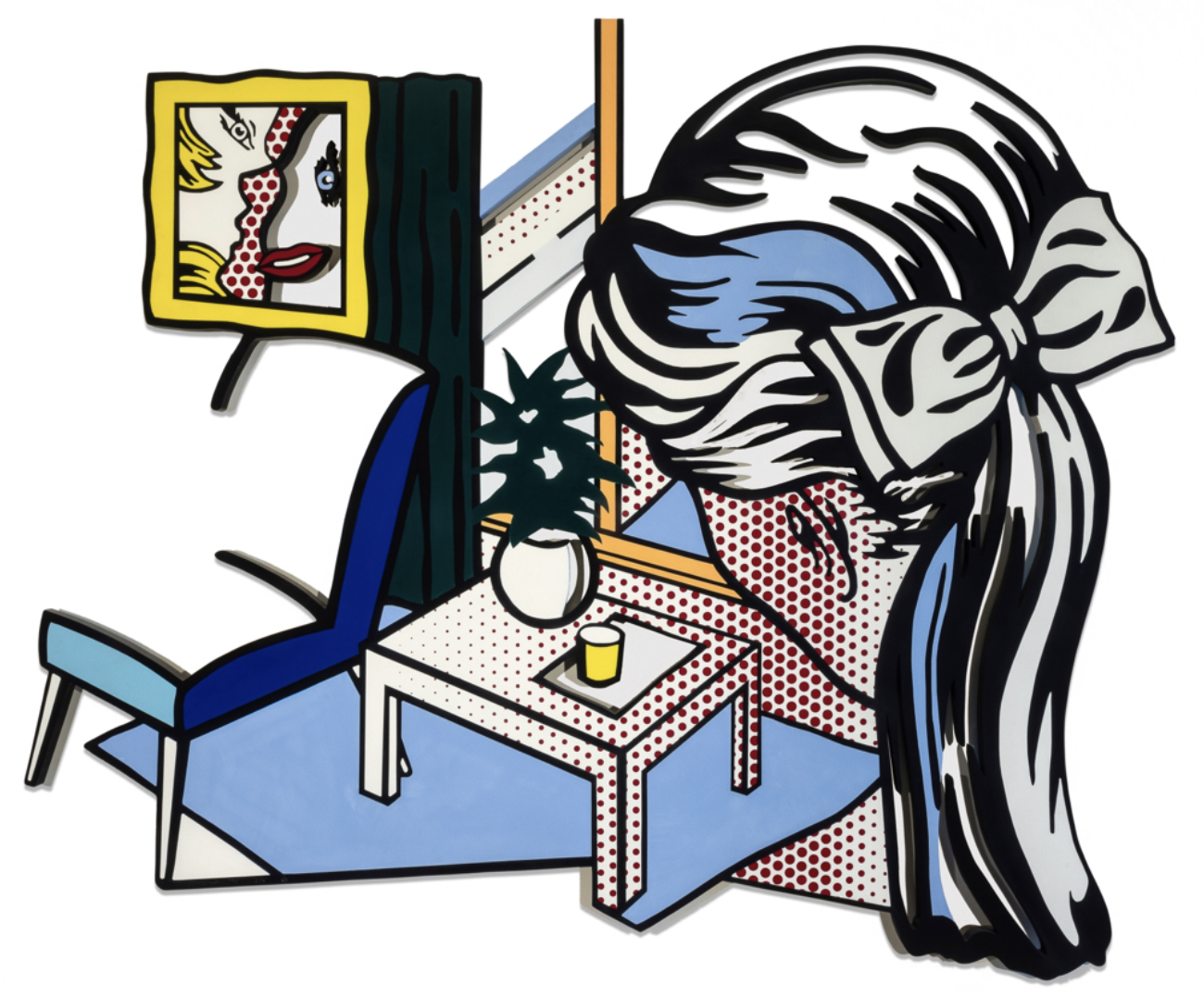
ROY LICHTENSTEIN (1923 – 1997)
Woman Contemplating Yellow Cup, 1995
Paint and pigmented wax on aluminum
71 3/4 x 84 x 1 1/2 inches (182.2 x 213.4 x 3.8 cm)
Incised with the artist’s signature, date ’95 and number 3/6 (lower left)
This work is number 3 from an edition of 6
#10. Glass III, 1976
Sotheby’s New-York: 19 May 2023
Estimated: USD 350,000 – 450,000
USD 1,512,000
Glass III | Contemporary Day Auction | 2023 | Sotheby’s (sothebys.com)
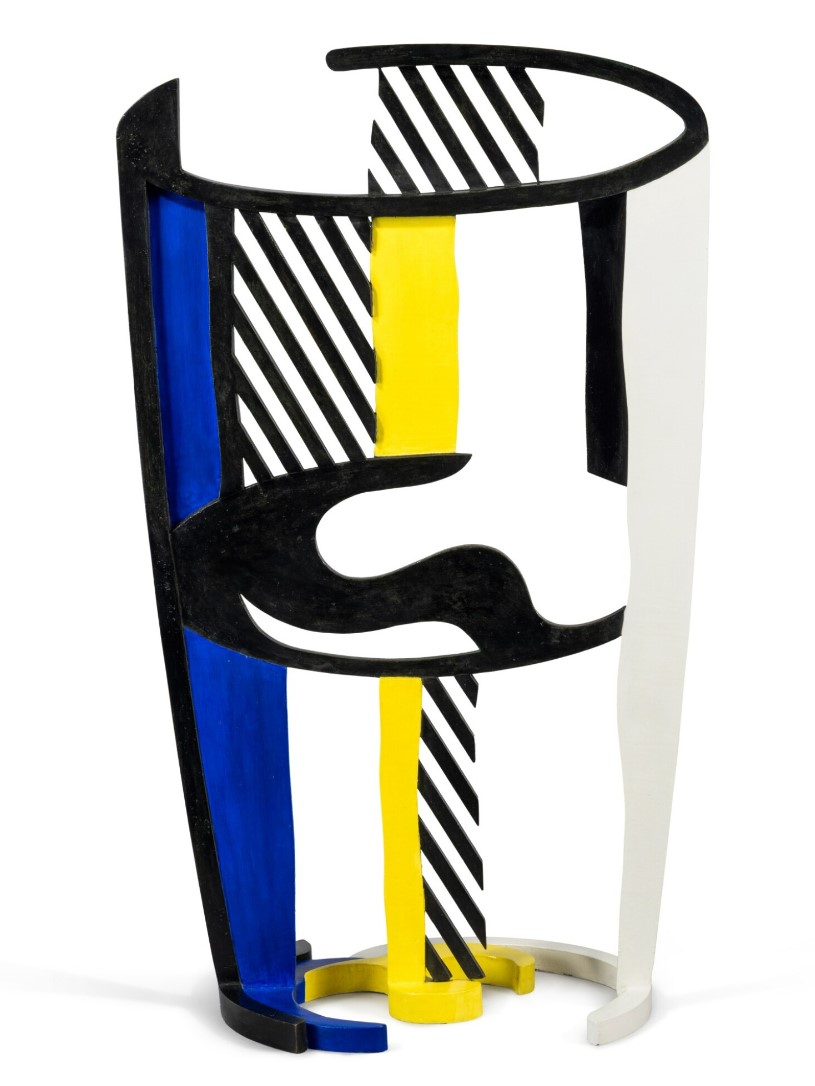
ROY LICHTENSTEIN (1923 – 1997)
Glass III, 1976
Painted and patinated bronze
33 1/8 x 19 3/4 x 10 1/2 inches (84.1 x 50.2 x 26.7 cm)
Incised with the artist’s signature and number 1/3 (lower edge)
This work is number 1 from an edition of 3
#11. Brushstroke Sculpture, 1982
Phillips New-York: 16 May 2023
Estimated: USD 500,000 – 700,000
USD 1,016,000
Roy Lichtenstein – 20th Century & Conte… Lot 117 May 2023 | Phillips
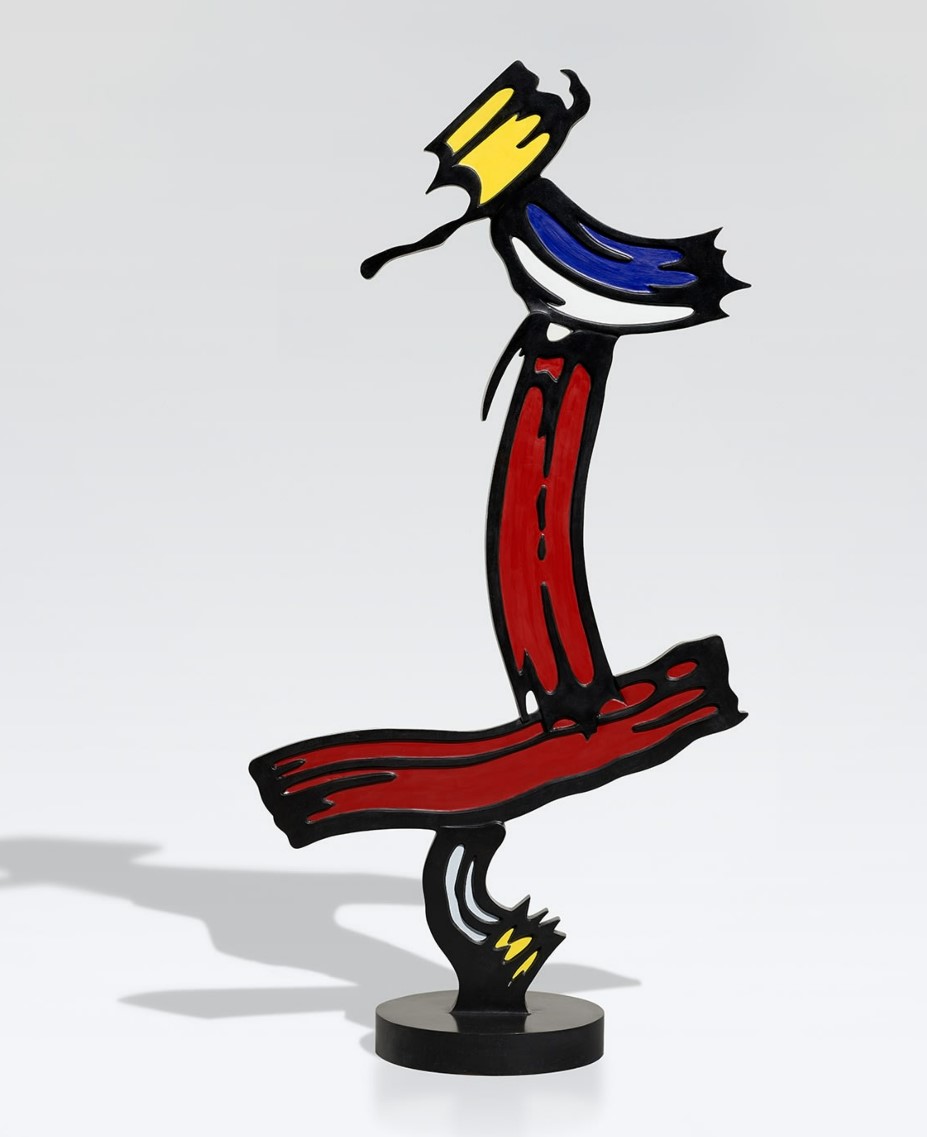
ROY LICHTENSTEIN
Brushstroke Sculpture, 1982
Paint on patinated bronze
54 1/4 x 27 1/2 x 11 inches (137.8 x 69.9 x 27.9 cm)
Incised with the artist’s signature, number, foundry mark and date “6/6 rf Lichtenstein ’82” on the base
This work is number 6 from an edition of 6
USD 1 million
#12. Haystacks, 1969
Christie’s New-York: 10 March 2023
Estimated: USD 500,000 – 700,000
USD 579,600
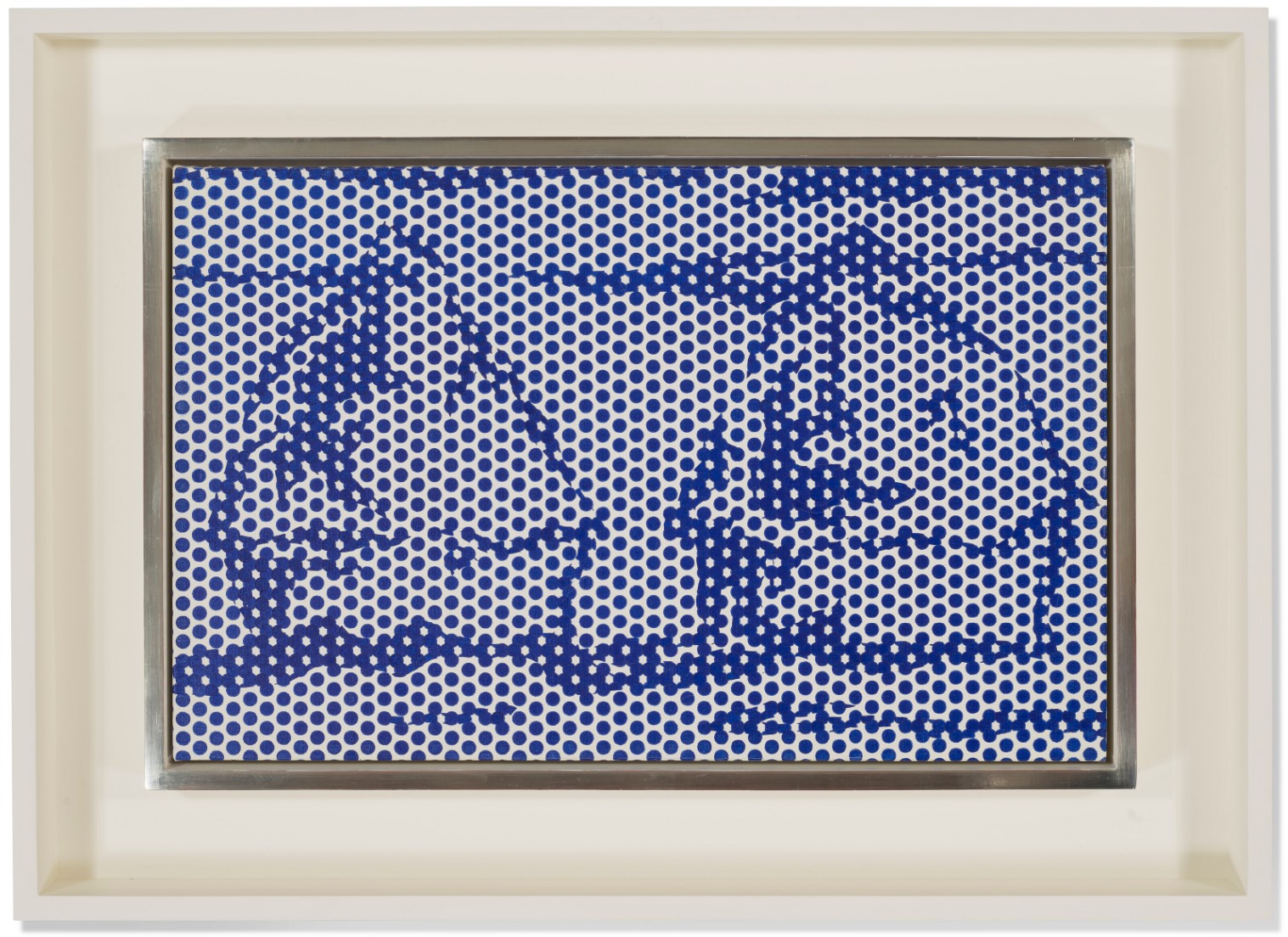
ROY LICHTENSTEIN (1923-1997)
Haystacks, 1969
Oil and Magna on canvas
15 1/4 x 24 inches (38.7 x 61 cm)
Signed, dated and inscribed ‘rf Lichtenstein ’69 PANEL #2 OF 5 PANELS’ (on the reverse)
#13. Landscape, 1964
Rago: 23 May 2023
Estimated: USD 60,000 – 80,000
USD 239,400
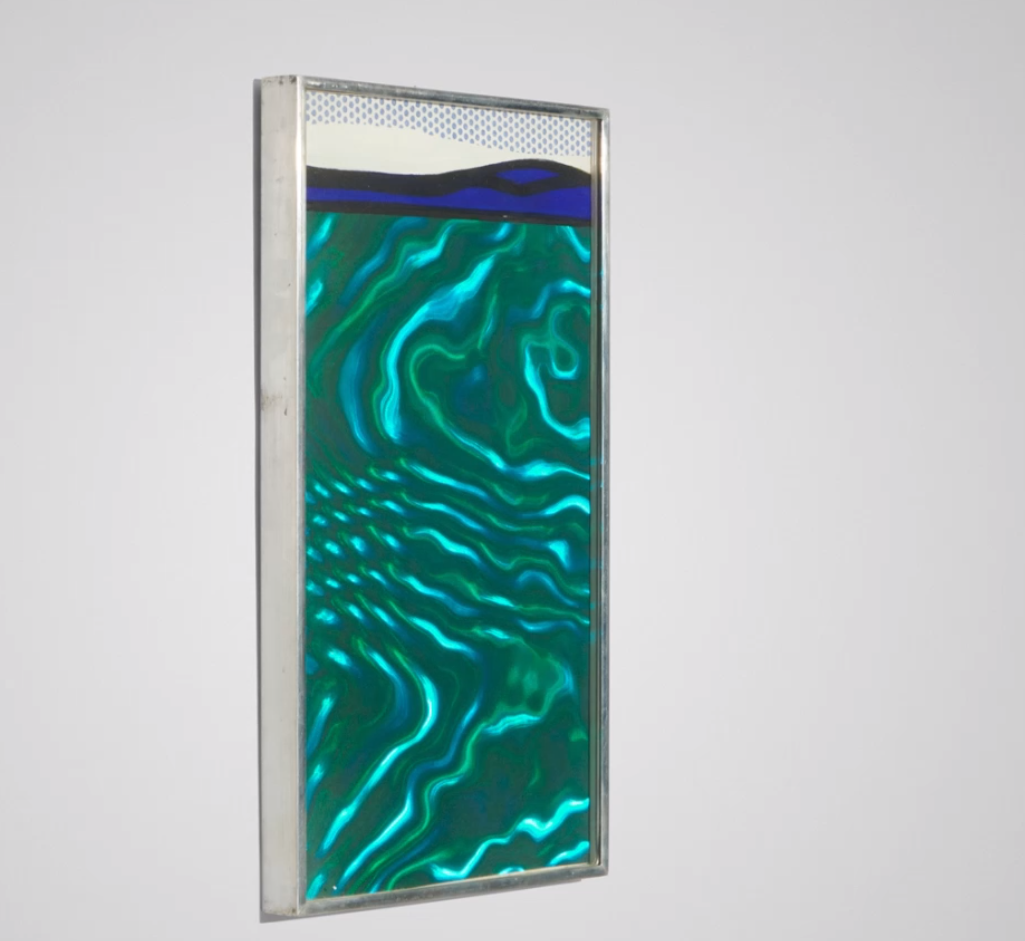
ROY LICHTENSTEIN (1923–1997)
Landscape, 1964
Rowlux, acrylic
20 x 11 1/4 inches (51×29 cm)
Signed and dated to verso ‘rf Lichtenstein ’64’
#14. Interior with Perfect Painting, 1992
Christie’s New-York: 12 May 2023
Estimated: USD 60,000 – 80,000
USD 170,100
ROY LICHTENSTEIN (1923-1997), Interior with Perfect Painting | Christie’s (christies.com)
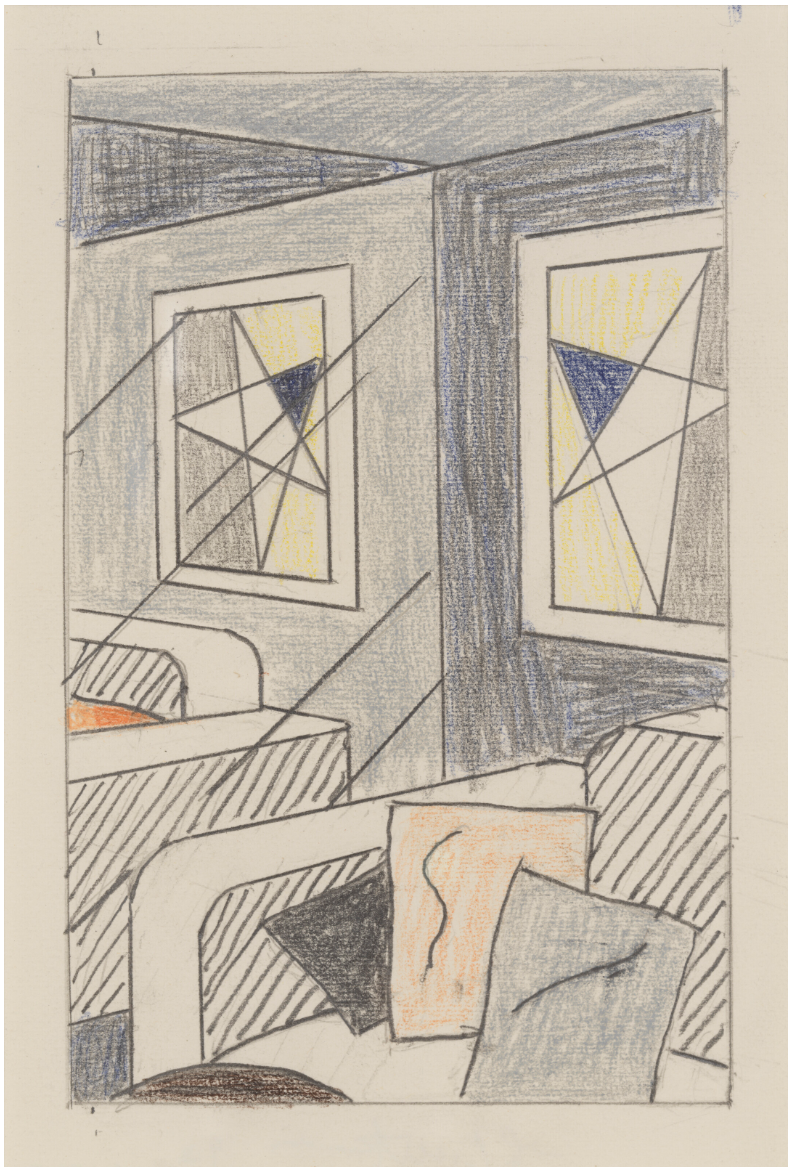
ROY LICHTENSTEIN (1923-1997)
Interior with Perfect Painting, 1992
Colored pencil and graphite on paper
Sheet: 9 7/8 x 6 1/2 inches (24.9 x 16.5 cm)
Image: 7 3/4 x 5 inches (18.5 x 12.7 cm)
Signed and dated ‘R. Lichtenstein ’92’ (on the reverse)
#15. Gallant Scene II, 1957
Sotheby’s New-York: 19 July 2023
Estimated: USD 100,000 – 150,000
USD 139,700
Gallant Scene II | Contemporary Discoveries | 2023 | Sotheby’s (sothebys.com)
ROY LICHTENSTEIN (1923 – 1997)
Gallant Scene II, 1957
Oil on canvas
47 1/2 x 69 1/2 inches (120.7 x 176.5 cm)
Signed (lower right)
#16. Collage for Seascape, 1964
Phillips New-York: 16 May 2023
Estimated: USD 70,000 – 100,000
USD 101,600
Roy Lichtenstein – 20th Century & Conte… Lot 161 May 2023 | Phillips
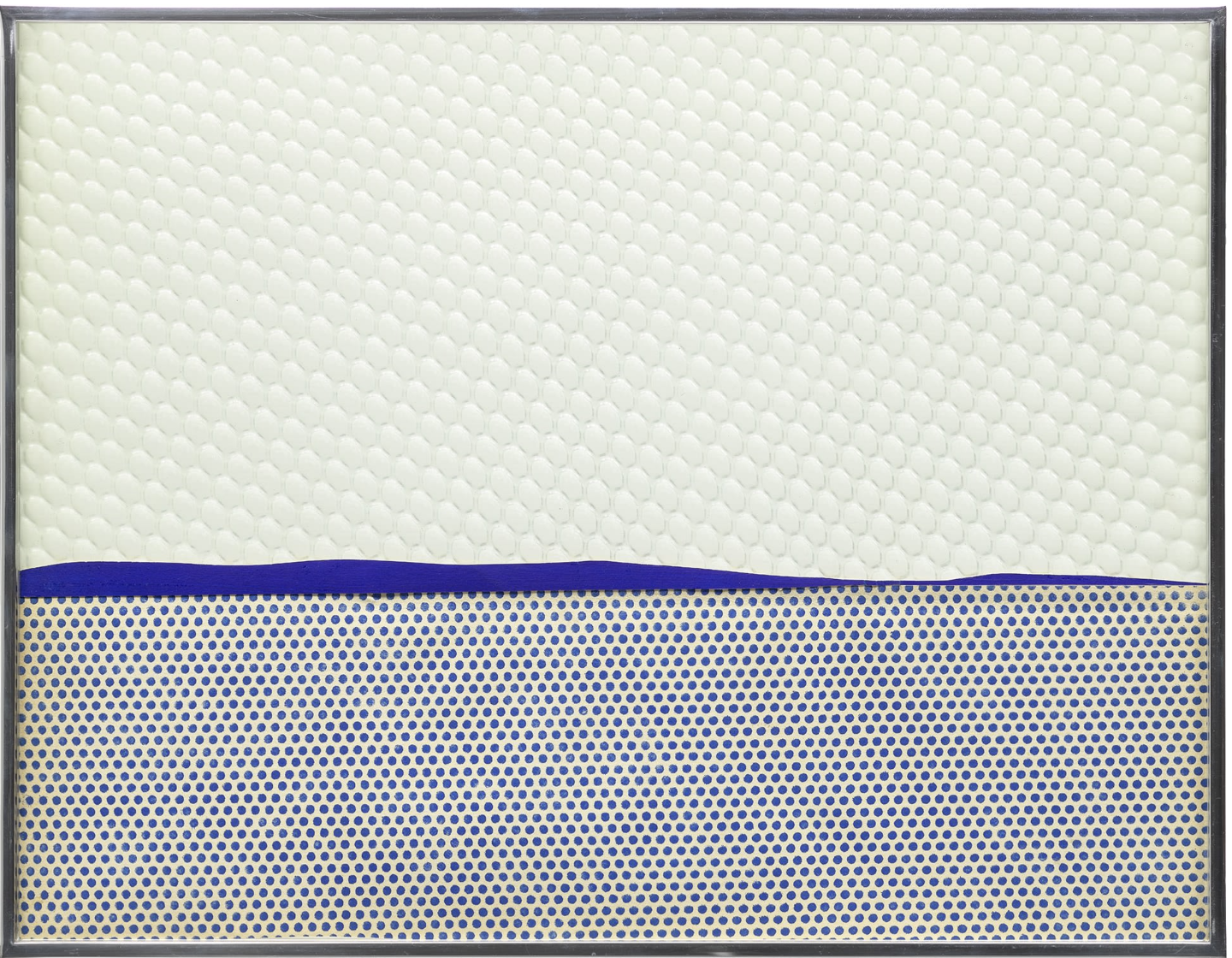
ROY LICHTENSTEIN
Collage for Seascape, 1964
Rowlux and painted paper collage
17×22 inches (43.2 x 55.9 cm)
Signed and dated “rf Lichtenstein 1964” on the reverse of the painted sheet
This work is the original study for Roy Lichtenstein’s print Seascape from the New York Ten portfolio
#17. Chief Before the Teepee, circa 1952
Christie’s New-York: 29 September 2023
Estimated: USD 60,000 – 80,000
USD 94,500
ROY LICHTENSTEIN (1923-1997) (christies.com)
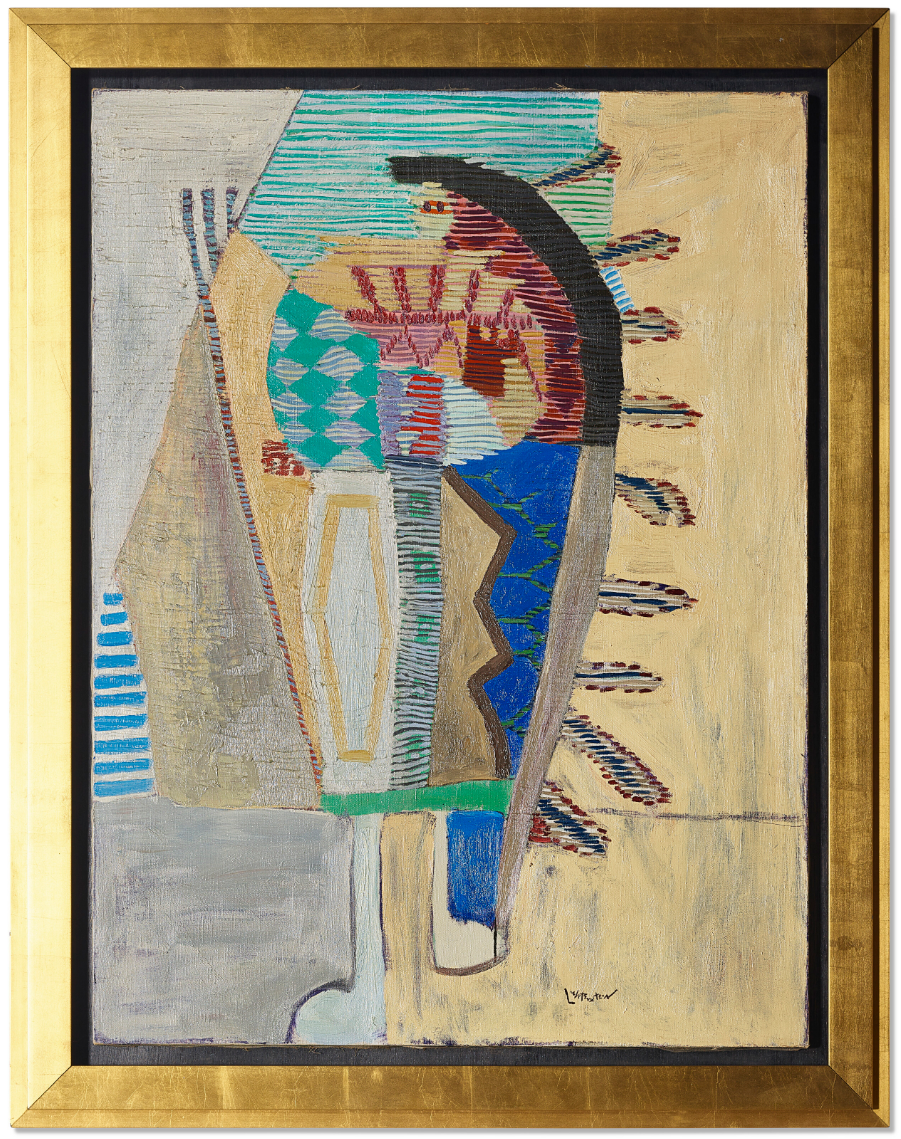
ROY LICHTENSTEIN (1923-1997)
Chief Before the Teepee, circa 1952
Oil on canvas
40×30 inches (101.6 x 76.2 cm)
Signed ‘Lichtenstein’ (lower right)
#18. Untitled (Seascape), 1966
Sotheby’s Zurich: 21 November 2023
Estimated: EUR 70,000 – 100,000
EUR 76,200 / USD 82,754
Untitled (Seascape) | Modern & Contemporary Auction | 2023 | Sotheby’s (sothebys.com)
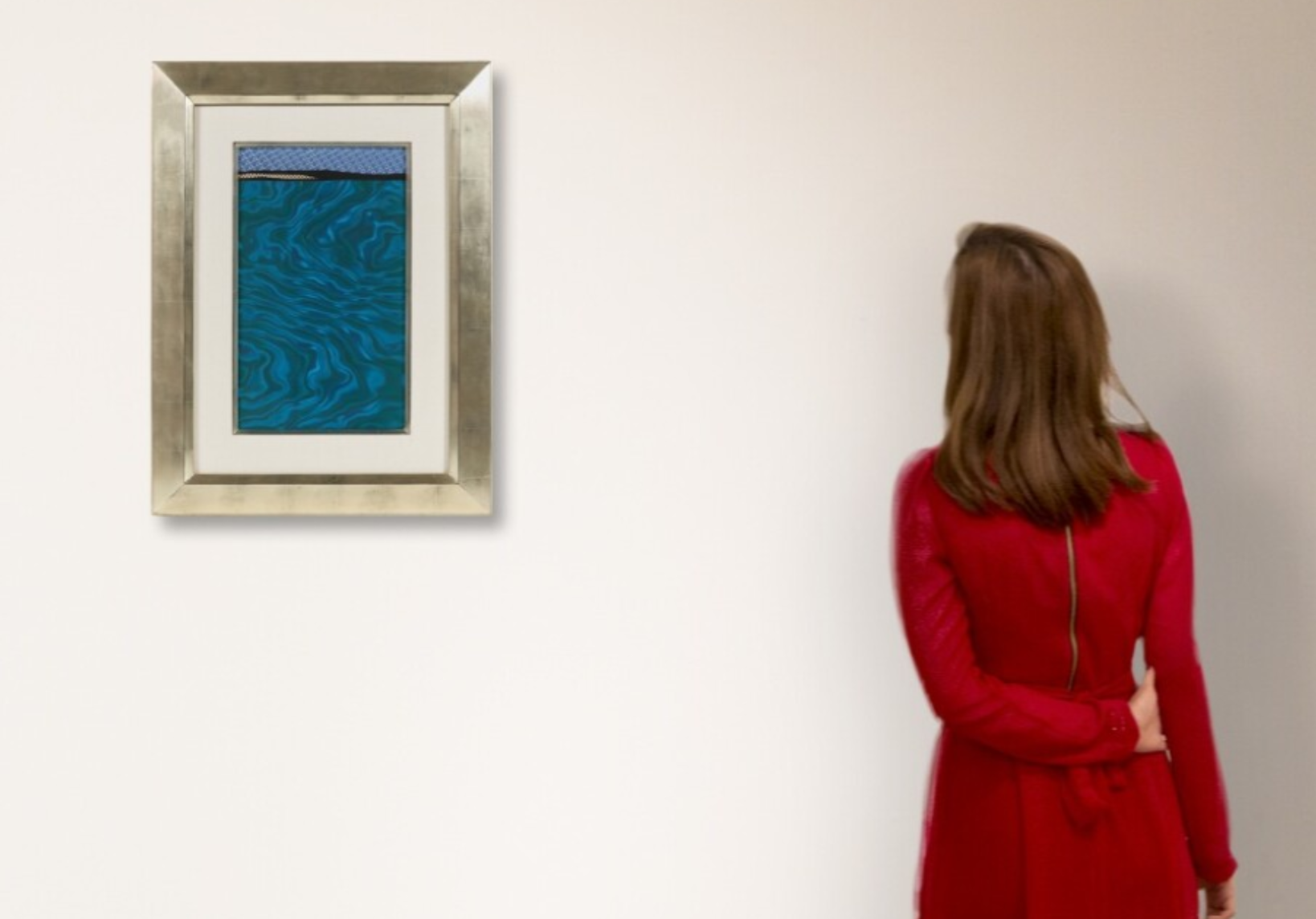
ROY LICHTENSTEIN (1923 – 1997)
Untitled (Seascape), 1966
Rowlux, paper collage and acrylic, laid down on board
19 1/2 x 11 3/4 inches (49.6 x 29.9 cm)
Signed R. Lichtenstein and dedicated with Love (lots) Roy (on the reverse)
#19. Virtual Interior (Study), 1995
Sotheby’s New-York: 28 September 2023
Estimated: USD 25,000 – 35,000
USD 25,400
Virtual Interior (Study) | Contemporary Curated | 2023 | Sotheby’s (sothebys.com)
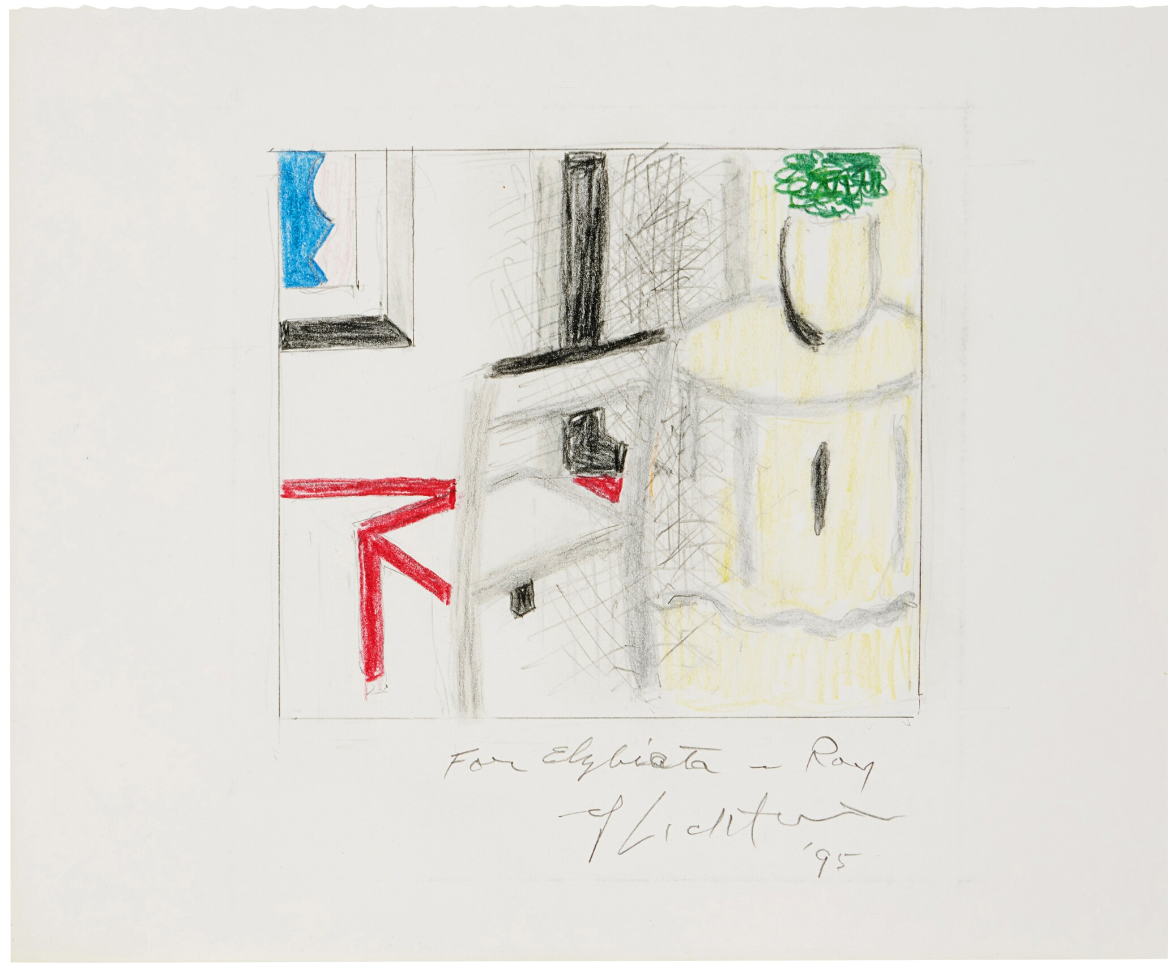 ROY LICHTENSTEIN (1923 – 1997)
Virtual Interior (Study), 1995
Colored pencil and graphite on paper
Sheet: 7 7/8 x 9 1/2 inches (20.3 x 24.1 cm)
Signed, dated ’95, and dedicated For Elizabieta—Roy (lower edge)
#20. Untitled (Landscape), 1965
Hindman Chicago: 14 December 2023
Estimated: USD 30,000 – 50,000
USD 25,200
Untitled (Landscape), 1965 (hindmanauctions.com)
ROY LICHTENSTEIN (American, 1923-1997)
Untitled (Landscape), 1965
Rowlux collage on board
22 1/4 x 22 7/8 inches
Signed Roy Lichtenstein and dated (verso)
2022 Auction Results
12 lots sold at auction in 2022 for a total turnover of USD 34,438,970.
With 4 lots failing to sell, the sell-through rate is 75%. The highest price has been achieved by Nude, a painting dated 1997, that sold for USD 10,267,000 at Phillips in New-York on 18 May 2022. Only one painting sold for a price over USD 10 million. The top 3 lots generated a cumulative turnover of USD 23,210,300, contributing 67.4% to the total turnover of 2022. 8 lots sold for more than USD 1 million, generating a cumulative turnover of USD 34,007,300, representing 98.7% of the total turnover for 2022. All lots sold in New-York.
2022 Top 3 Lots
#1. Nude, 1997
Phillips New-York: 18 May 2022
Estimated: USD 8,000,000 – 12,000,000
USD 10,267,000
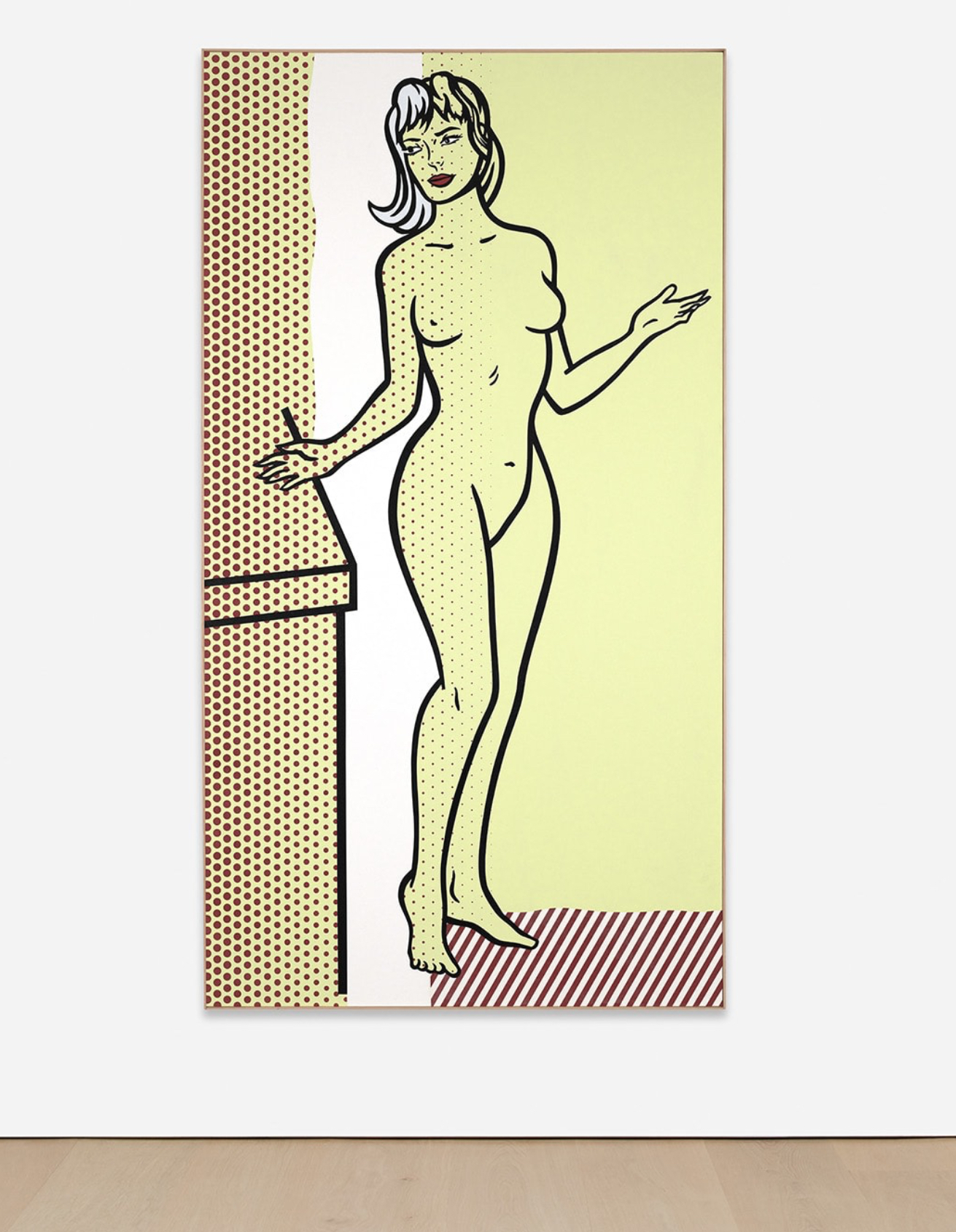
ROY LICHTENSTEIN
Nude, 1997
Oil and Magna on canvas
82 1/2 x 45 inches (209.6 x 114.3 cm)
#2. Modern Painting with Small Bolt, 1967
Sotheby’s New-York: 16 November 2022
Estimated: USD 6,000,000 – 8,000,000
USD 6,873,800
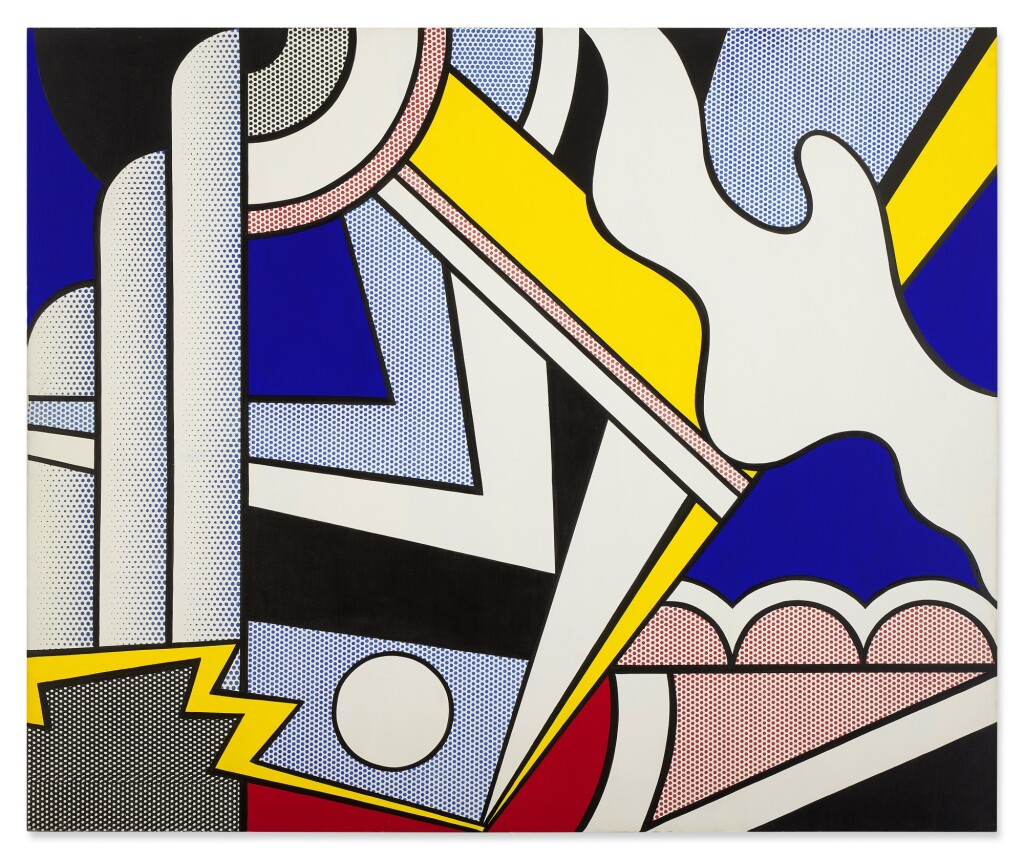
ROY LICHTENSTEIN (1923-1997)
Modern Painting with Small Bolt, 1967
Oil and Magna on canvas
68 ⅜ x 82 ⅛ inches (173.7 x 208.6 cm)
Signed rf Lichtenstein and dated ‘67 (on the reverse)
#3. Mirror #9, 1970
Sotheby’s New-York: 16 May 2022
Estimated: USD 1,500,000 – 2,000,000
USD 6,069,500
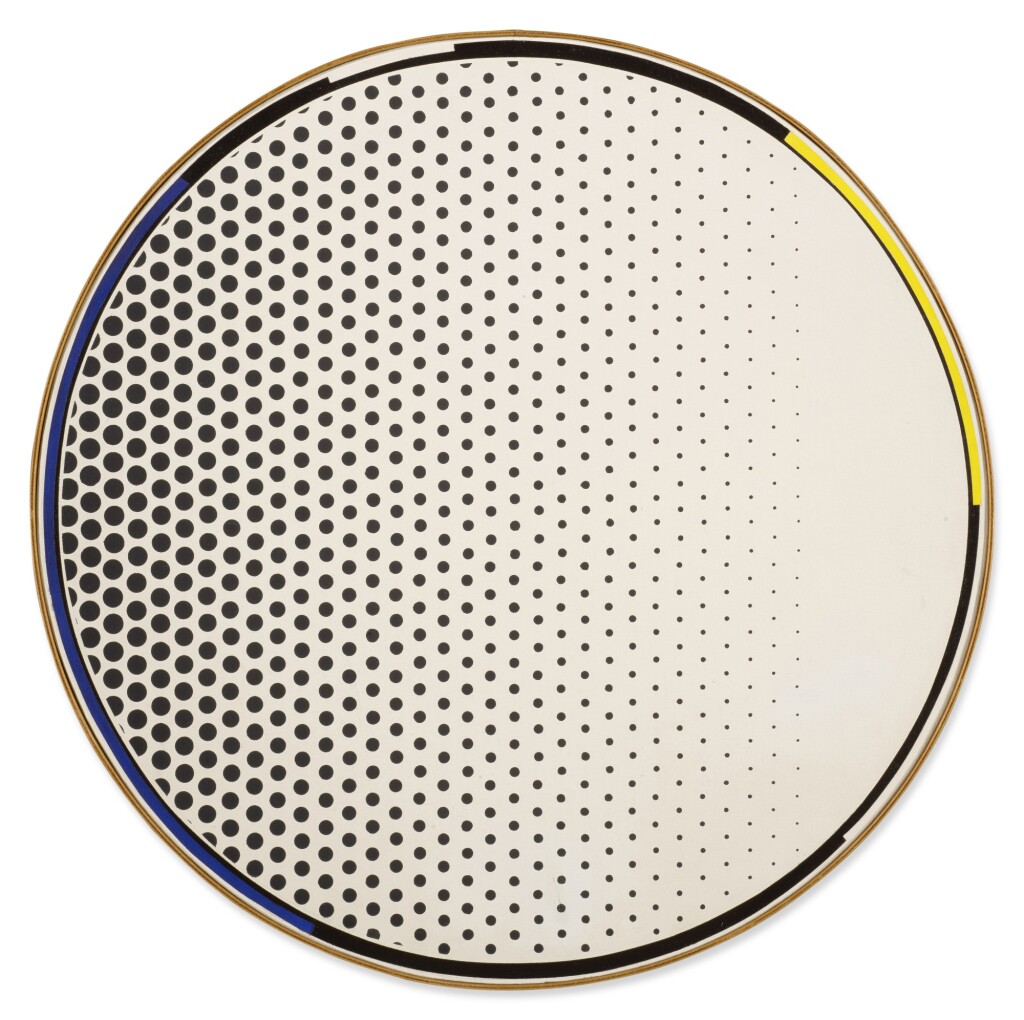
ROY LICHTENSTEIN (1923 – 1997)
Mirror #9, 1970
Oil and Magna on canvas
Diameter: 24 inches (61 cm)
Signed and dated ’70 on the reverse
#4. Mirror #5, 1970
Christie’s New-York: 17 November 2022
Estimated: USD 3,500,000 – 5,500,000
USD 3,180,000
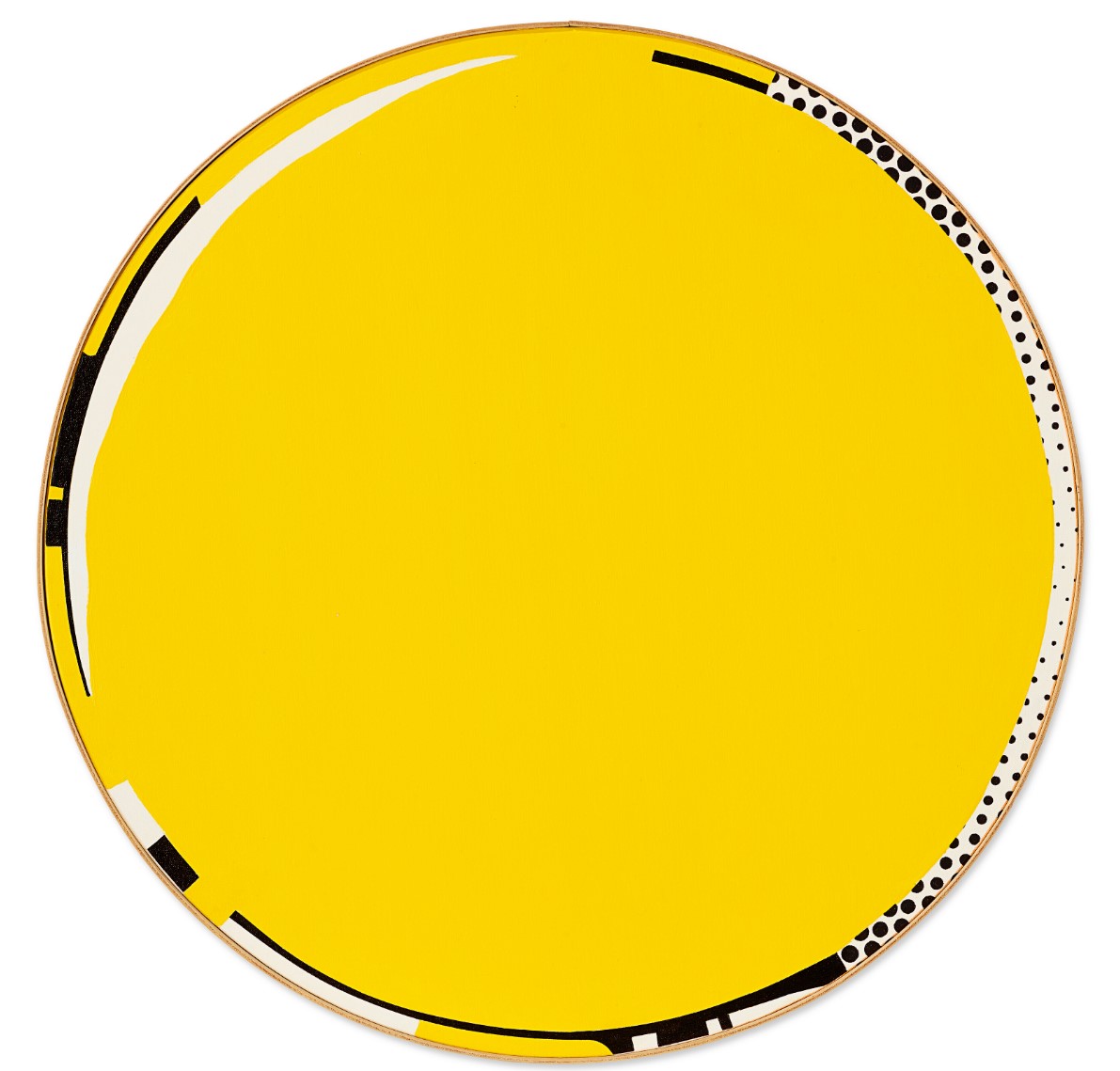
ROY LICHTENSTEIN (1923-1997)
Mirror #5, 1970
Oil and Magna on canvas
Diameter: 24 inches (61 cm)
Signed and dated ‘rf Lichtenstein ’70’ (on the reverse)
#5. Cubist Still Life, 1974
Christie’s New-York: 16 November 2022
Estimated: USD 3,000,000 – 5,000,000
USD 2,700,000
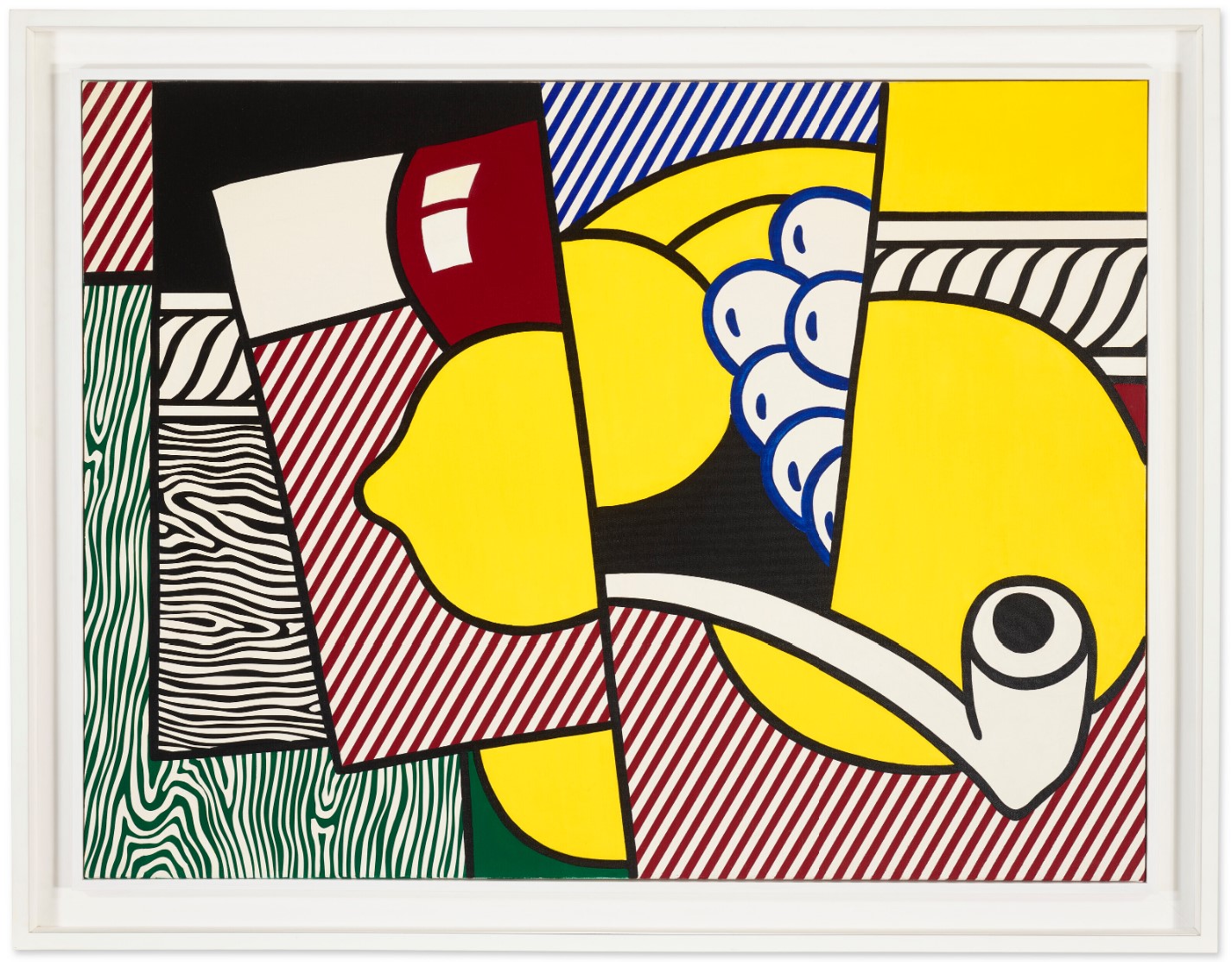
ROY LICHTENSTEIN (1923-1997)
Cubist Still Life, 1974
Oil and Magna on canvas
36×48 inches (91.5 x 121.9 cm)
Signed and dated ‘rf Lichtenstein ’74’ (on the reverse)
#6. Head with Braids, 1979
Estimated: USD 2,000,000 – 3,000,000
USD 2,340,000
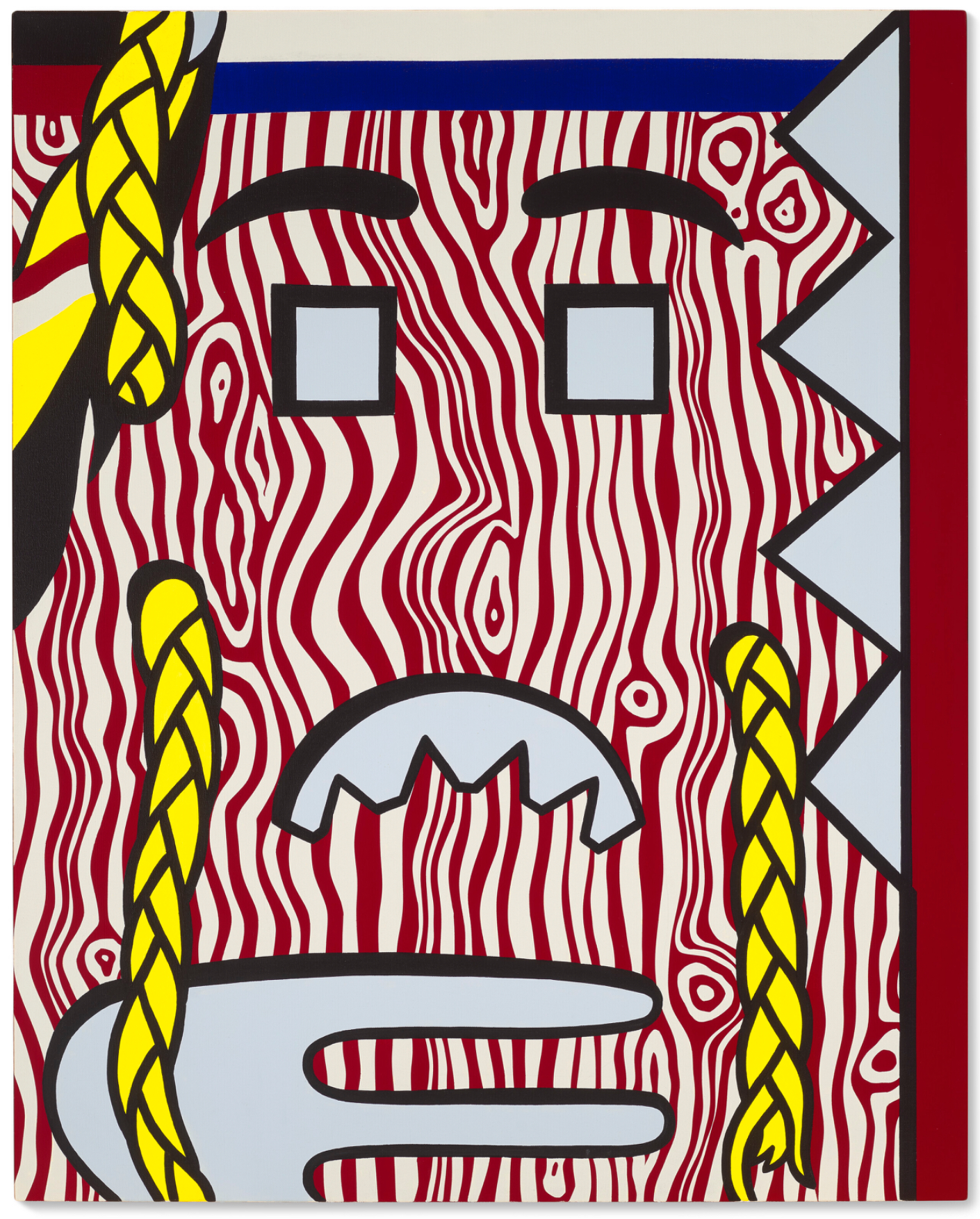
ROY LICHTENSTEIN (1923-1997)
Head with Braids, 1979
Oil and Magna on canvas
50×40 inches (127 x 101.6 cm)
Signed and dated ‘© rf Lichtenstein ’79’ (on the reverse)
#7. Eventide, 1964
Christie’s New-York: 10 November 2022
Estimated: USD 600,000 – 800,000
USD 1,380,000
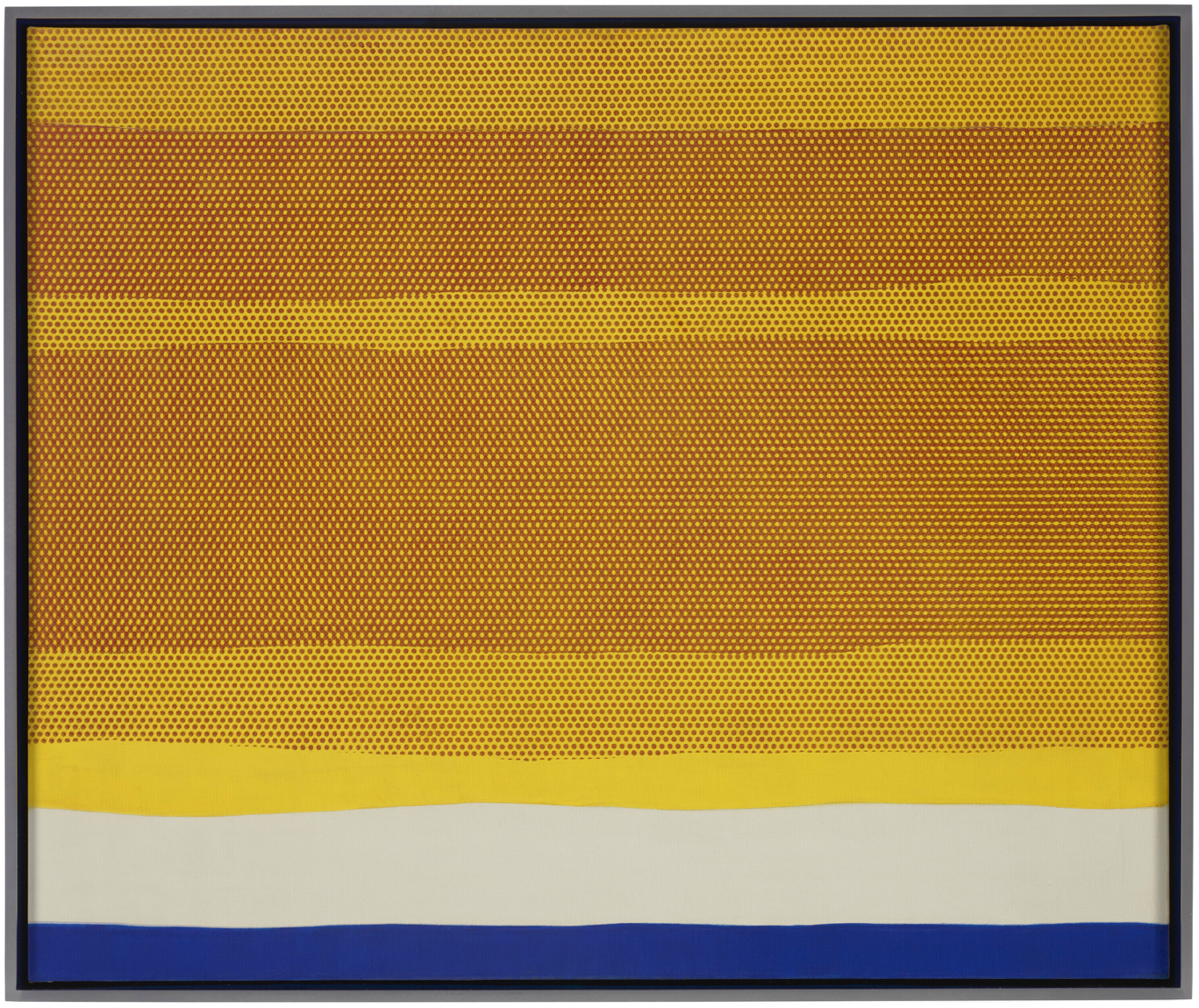
ROY LICHTENSTEIN (1923-1997)
Eventide, 1964
Oil and Magna on canvas
30 x 35 7/8 inches (76.2 x 91.1 cm)
Signed and dated ‘rf Lichtenstein ’64’ (on the reverse)
#8. Imperfect Painting, 1986
Sotheby’s New-York: 17 November 2022
Estimated: USD 1,000,000 – 1,500,000
USD 1,197,000
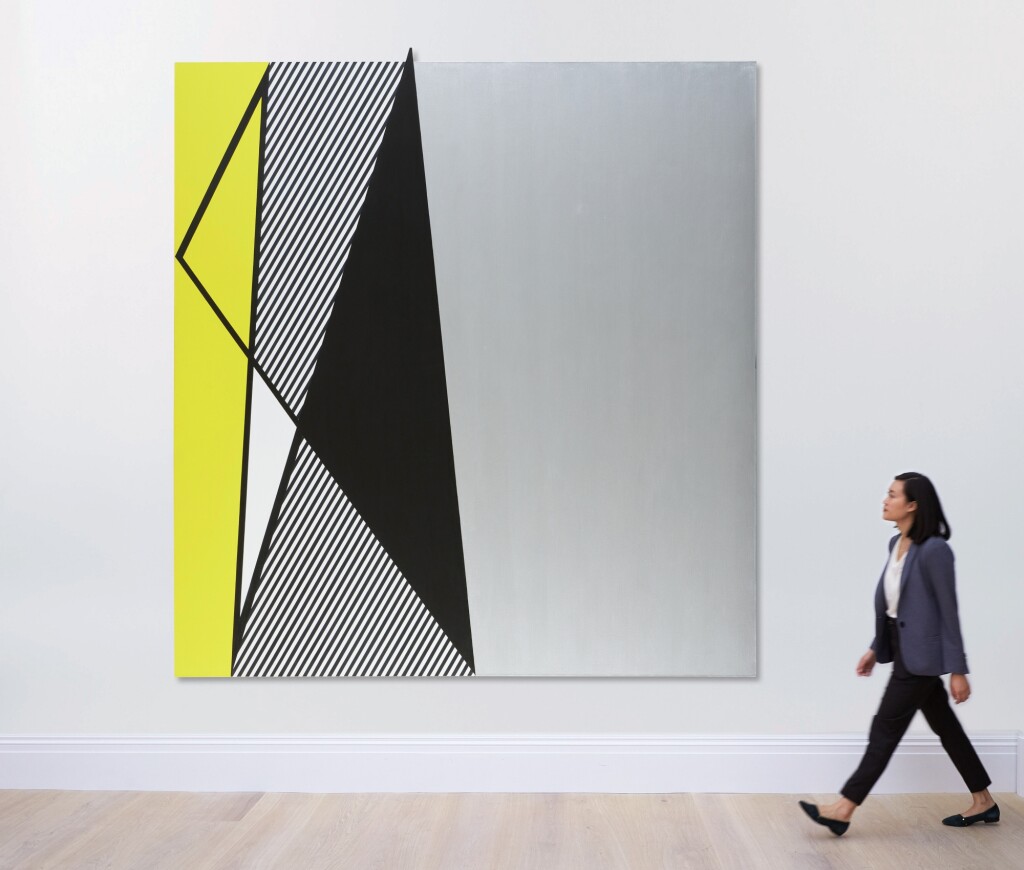
ROY LICHTENSTEIN (1923 – 1997)
Imperfect Painting, 1986
Oil and Magna on shaped canvas
111 ½ x 102 inches (283.2 x 259.1 cm)
Signed and dated ’86 (on the reverse)
#9. Collage for CARE Poster, 1993
Christie’s New-York: 13 May 2022
Estimated: USD 200,000 – 300,000
USD 176,400
ROY LICHTENSTEIN (1923-1997), Collage for CARE Poster | Christie’s (christies.com)
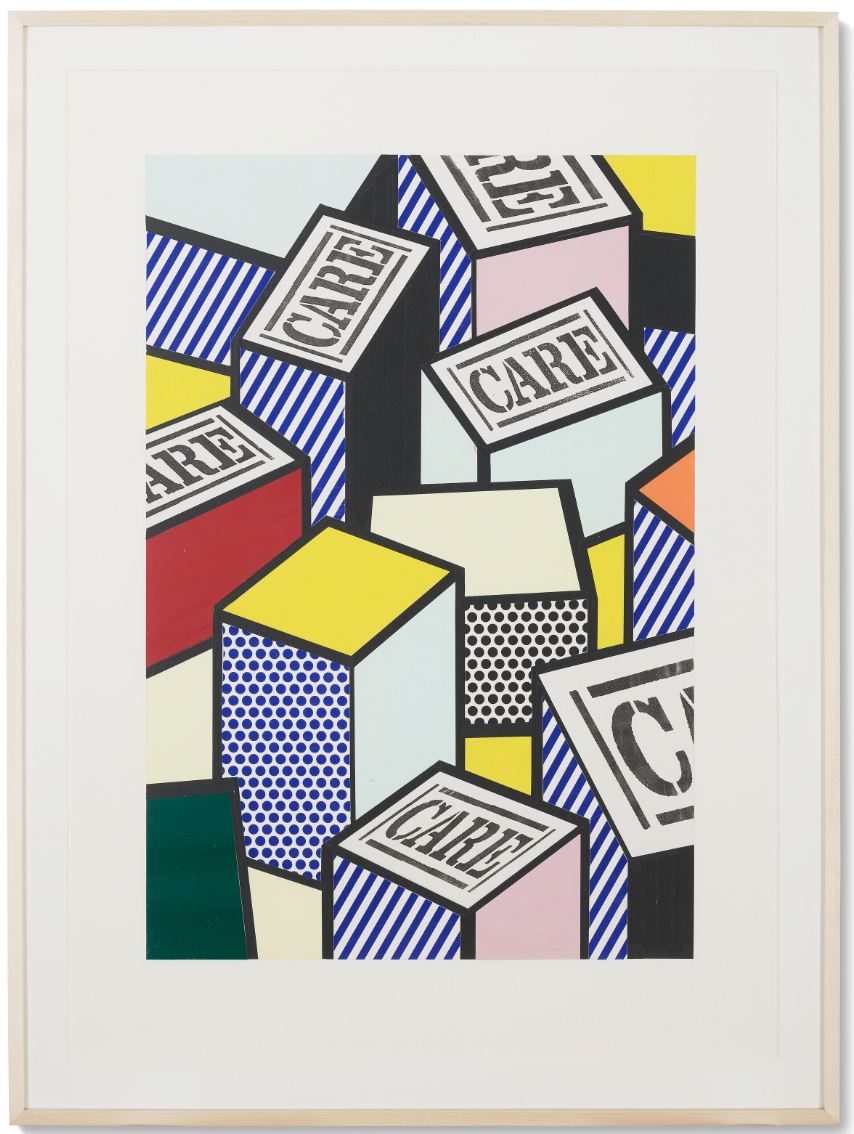
ROY LICHTENSTEIN (1923-1997)
Collage for CARE Poster, 1993
Acrylic, tape and printed paper collage on board
Sheet: 52 x 38 1/8 inches (132.1 x 96.8 cm)
Signed and dated ‘rf Lichtenstein ’93’ (on the reverse)
#10. Death of Jane McCrea, 1951
Bonhams New-York: 16 November 2022
Estimated: USD 70,000 – 100,000
USD 113,775
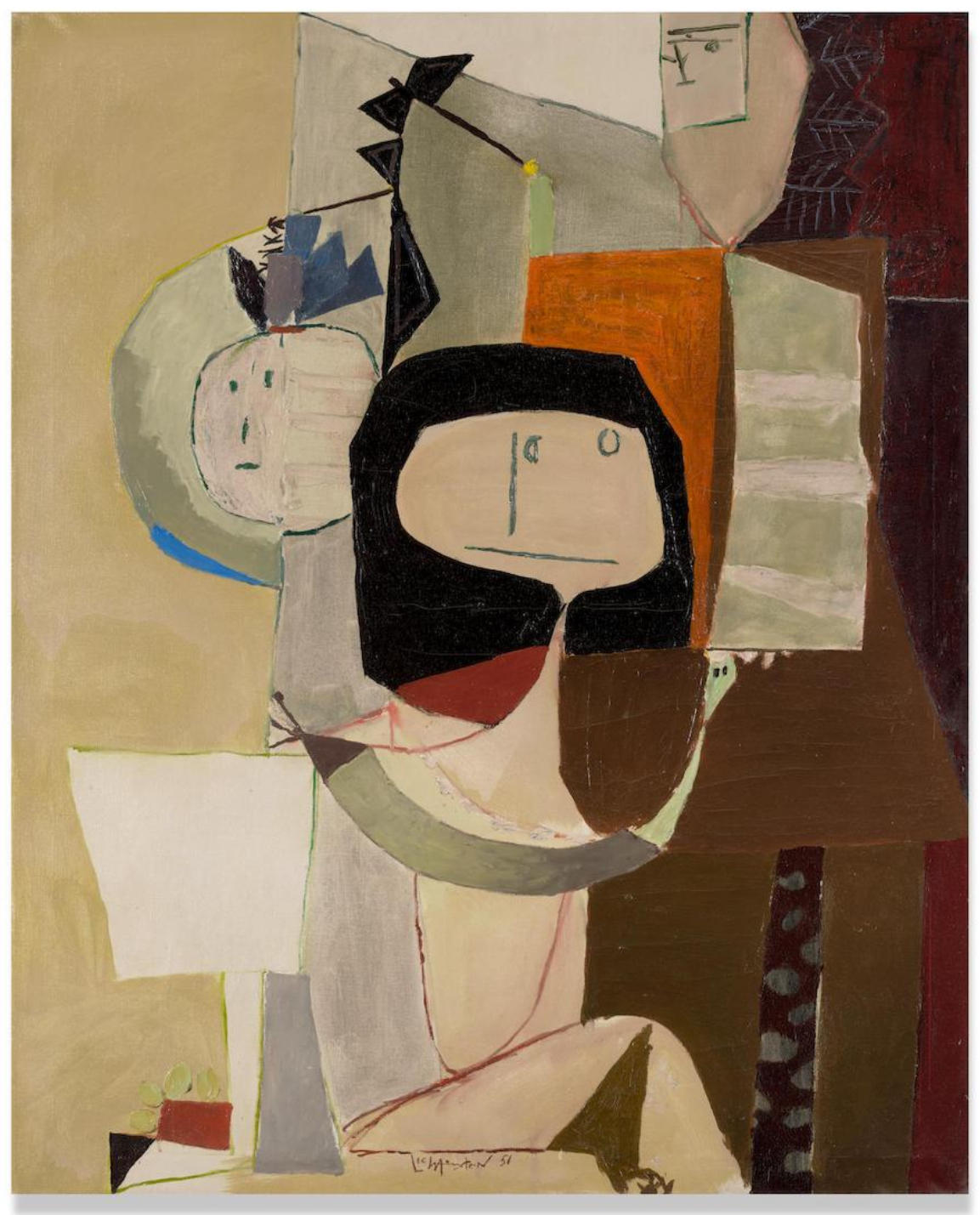
Oil on canvas
42×34 inches (106.7 x 86.4 cm)
Signed and dated 51
#11. Untitled (Two Chippewa Building Canoe), circa 1952
Estimated: USD 50,000 – 70,000
USD 75,600
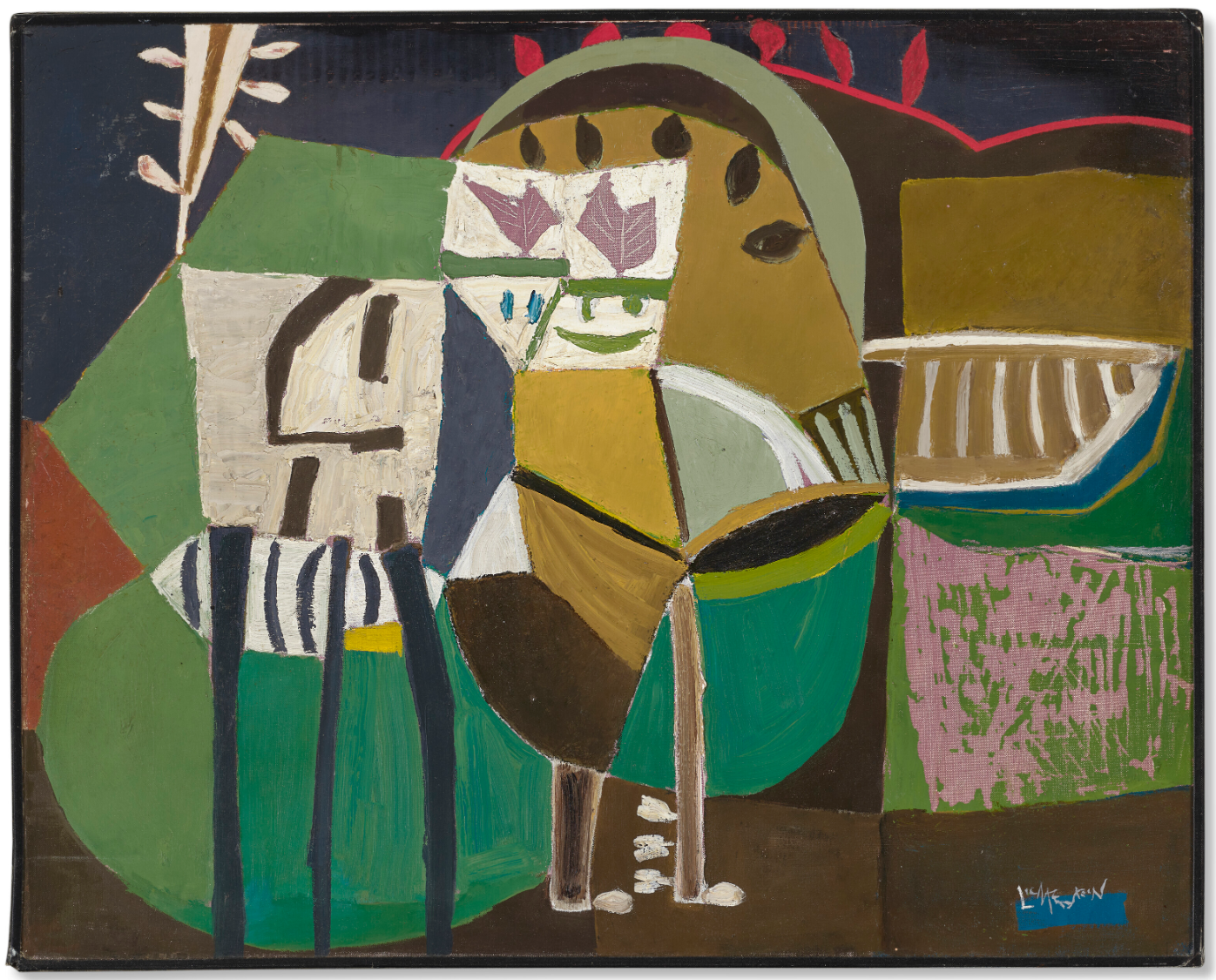
Untitled (Two Chippewa Building Canoe), circa 1952
Oil on canvas
24×30 inches (61 x 75.8 cm)
Signed ‘Lichtenstein’ (lower right)
#12. Unknown (Dancing Indian?), circa 1952
Bonhams New-York: 16 November 2022
Estimated: USD 40,000 – 60,000
USD 65,895
Bonhams : ROY LICHTENSTEIN (1923-1997) Unknown (Dancing Indian) circa 1952
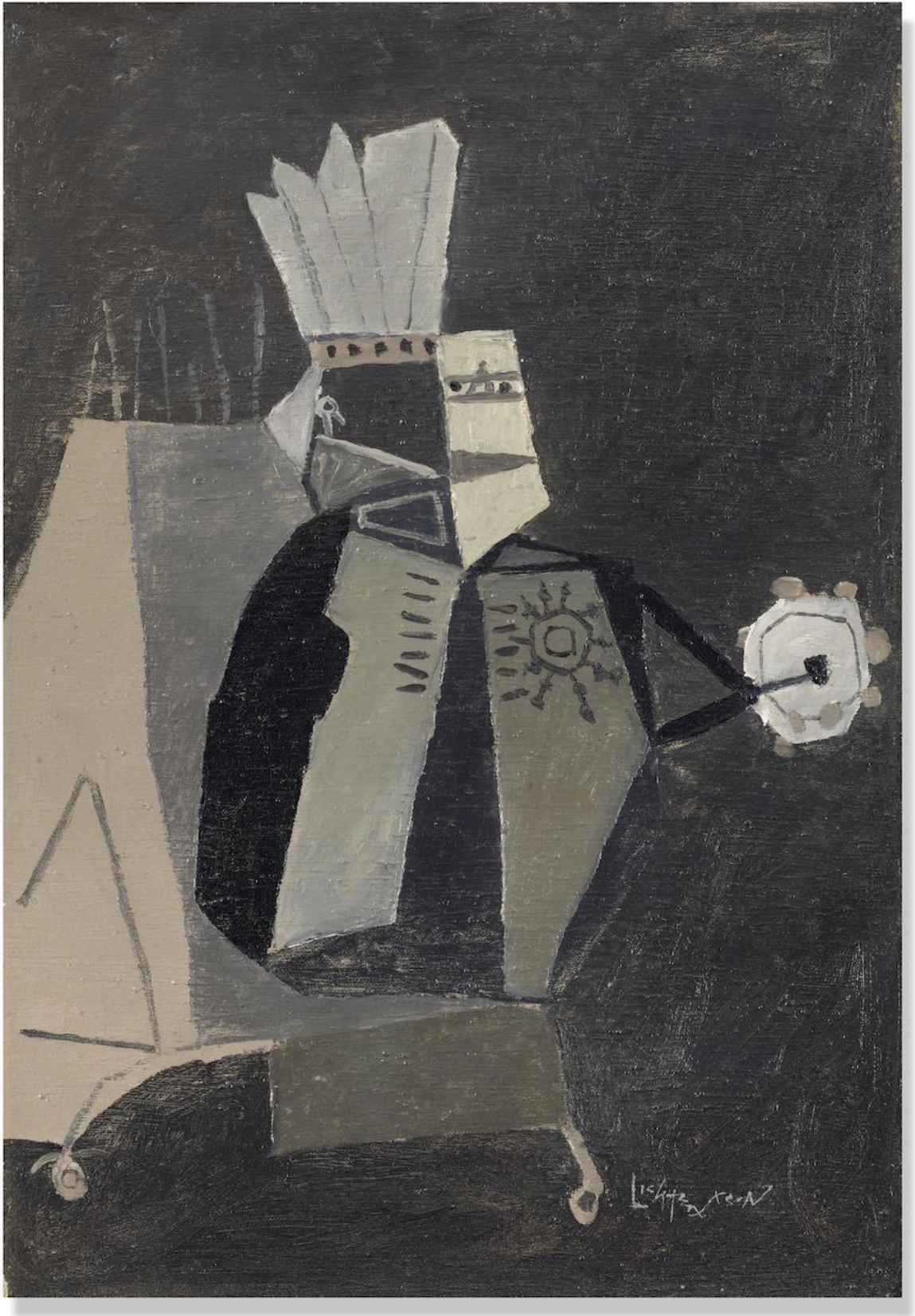
Oil on canvas
20×14 inches (50.8 x 35.6 cm)
Signed
2021 Auction Results
25 lots sold at auction in 2021 for a total turnover of USD 99,521,816.
With 1 lot failing to sell, the sell-through rate is 96%. 4 lots sold for over USD 10 million. Together, they generated a cumulative turnover of USD 70,096,712, representing 70.4% of the total turnover of 2021. 13 lots sold for more than USD 1 million, generating a cumulative turnover of USD 96,849,786, representing 97.3% of the total turnover for 2021. 4 sculptures sold in 2021, and if most lots sold in the US, it is noted that Sotheby’s sold two paintings from the Reflections series in Hong-Kong.
2021 Top 3 Lots
#1. Interior: Perfect Pitcher, 1994
Christie’s New-York: 13 May 2021
Estimated: USD 20,000,000 – 30,000,000
USD 21,500,000
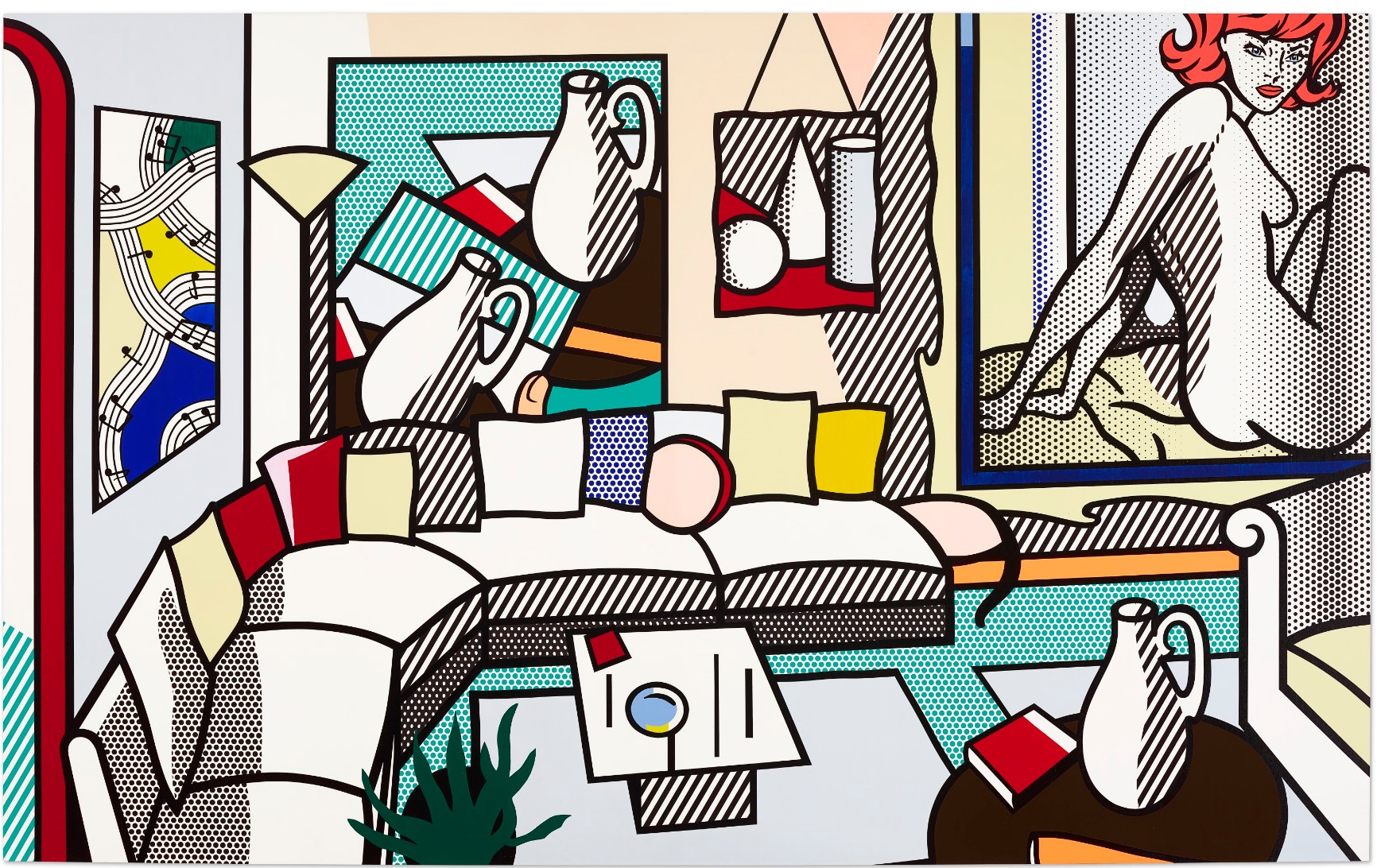
ROY LICHTENSTEIN (1923-1997)
Interior: Perfect Pitcher, 1994
Oil and Magna on canvas
120 ½ x 194 inches (306.1 x 492.8 cm)
#2. Two Paintings: Craig…, 1983
Sotheby’s New-York: 18 November 2021
Estimated: USD 12,000,000 – 18,000,000
USD 20,371,500
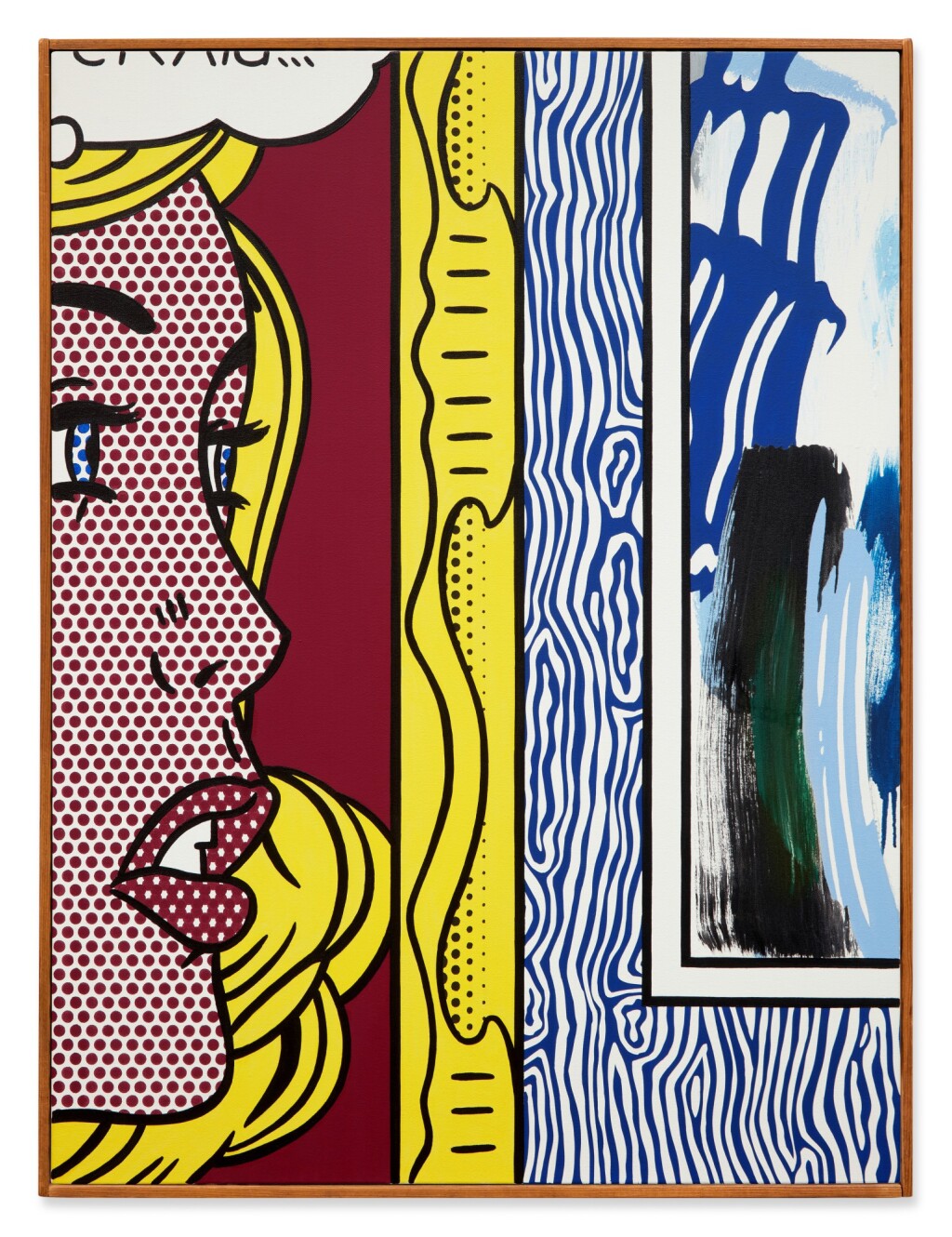
ROY LICHTENSTEIN (1923 – 1997)
Two Paintings: Craig…, 1983
Oil and Magna on canvas
48×36 inches (121.9 x 91.4 cm)
Signed Roy Lichtenstein and dated ’83 (on the reverse)
#3. Reflections on Thud!, 1990
Sotheby’s Hong-Kong: 19 April 2021
Estimated: HKD 78,000,000 – 108,000,000
HKD 110,072,000 / USD 14,173,212
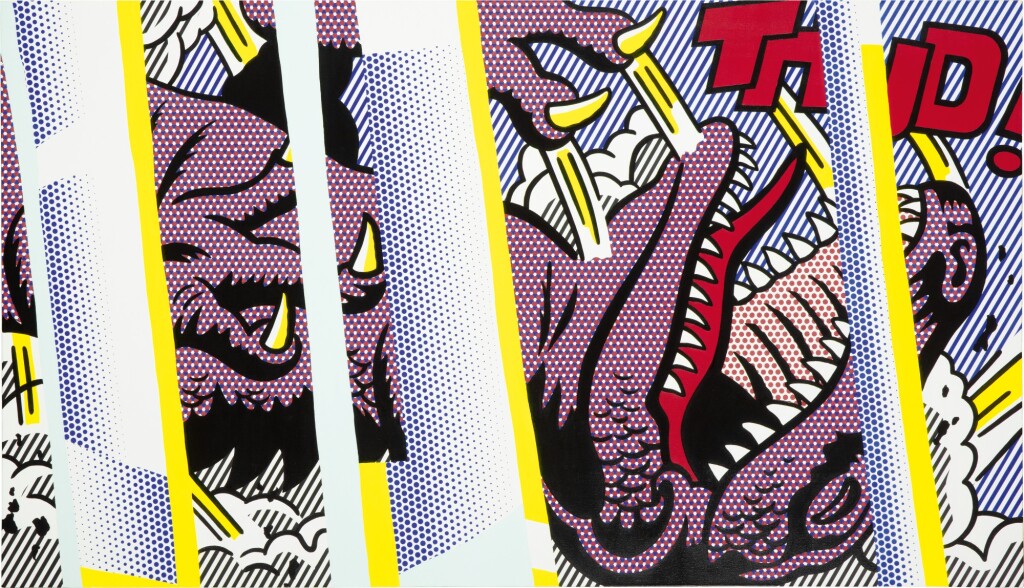
ROY LICHTENSTEIN (1923 – 1997)
Reflections on Thud!, 1990
Oil and magna on canvas
55×96 inches (139.7 x 244 cm)
Signed and dated 90 on the reverse
#4. Girl with Beach Ball II, 1977
Sotheby’s New-York: 12 May 2021
Estimated: USD 12,000,000 – 18,000,000
USD 14,052,000
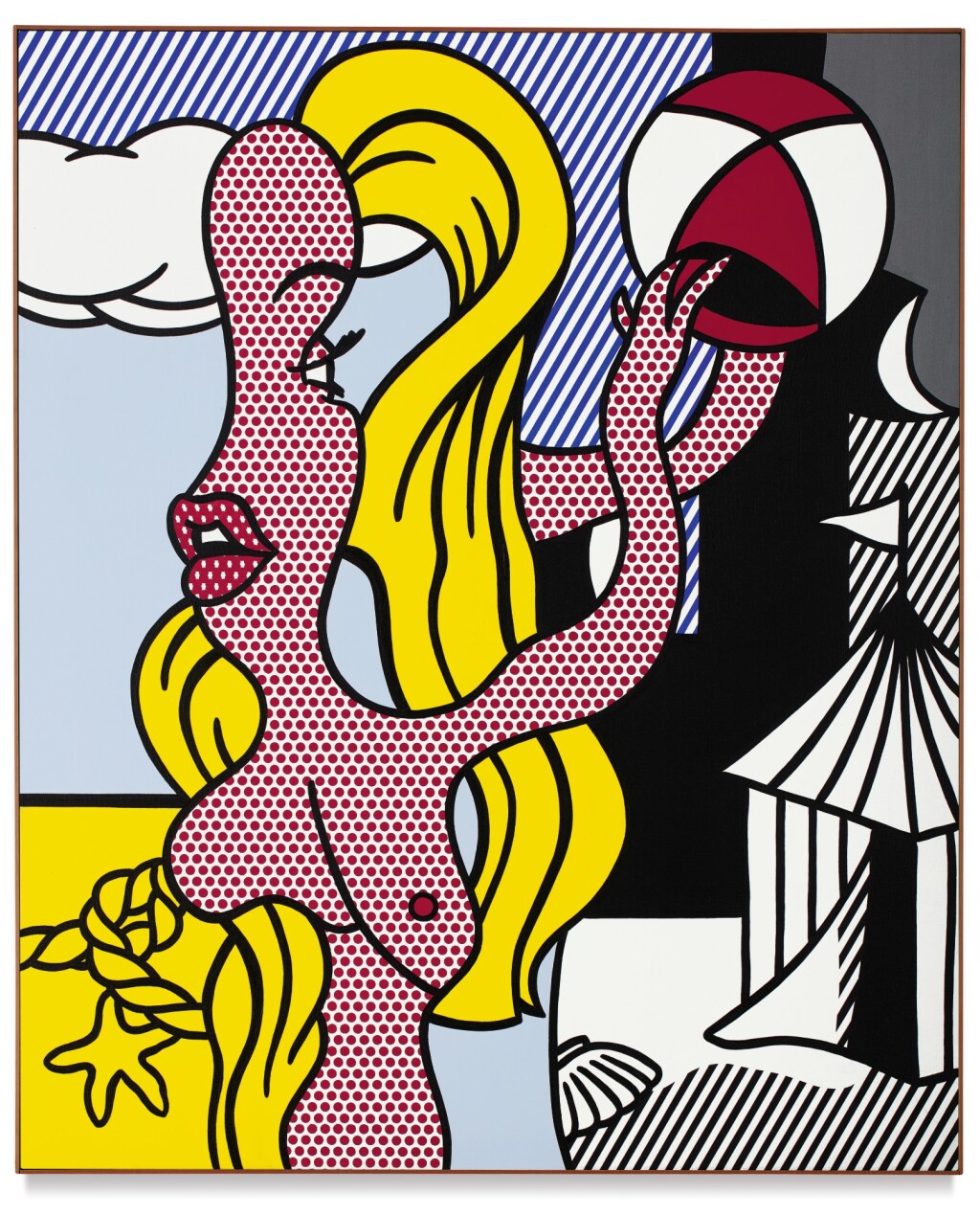
ROY LICHTENSTEIN (1923 – 1997)
Girl with Beach Ball II, 1977
Oil and Magna on canvas
60×50 inches (152.4 x 127 cm)
Signed and dated 77 on the reverse
#5. Reflections: Mystical Painting, 1989
Sotheby’s Hong-Kong: 9 October 2021
Estimated: HKD 30,000,000 – 45,000,000
HKD 48,026,000 / USD 6,169,281
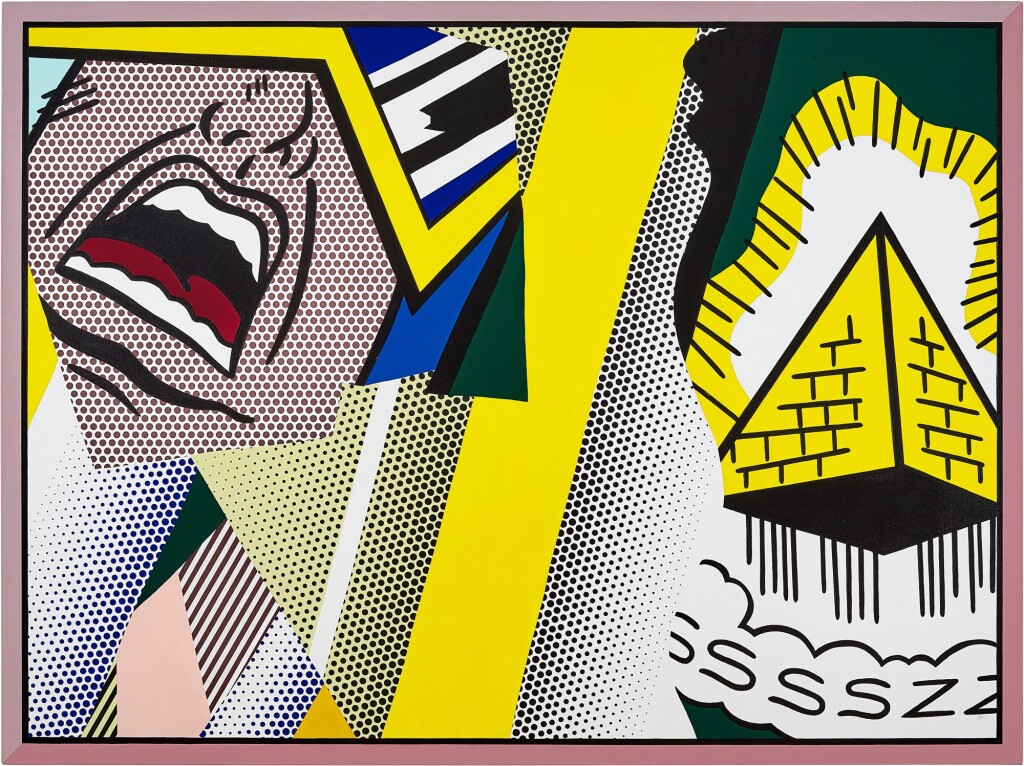
ROY LICHTENSTEIN (1923 – 1997)
Reflections: Mystical Painting, 1989
Oil and magna on canvas
56 ⅛ x 75 inches (142.5 x 190.5 cm)
Signed and dated 89 on the reverse
#6. Mirror #1, 1969
Sotheby’ New-York: 18 November 2021
Estimated: USD 1,800,000 – 2,500,000
USD 4,618,000
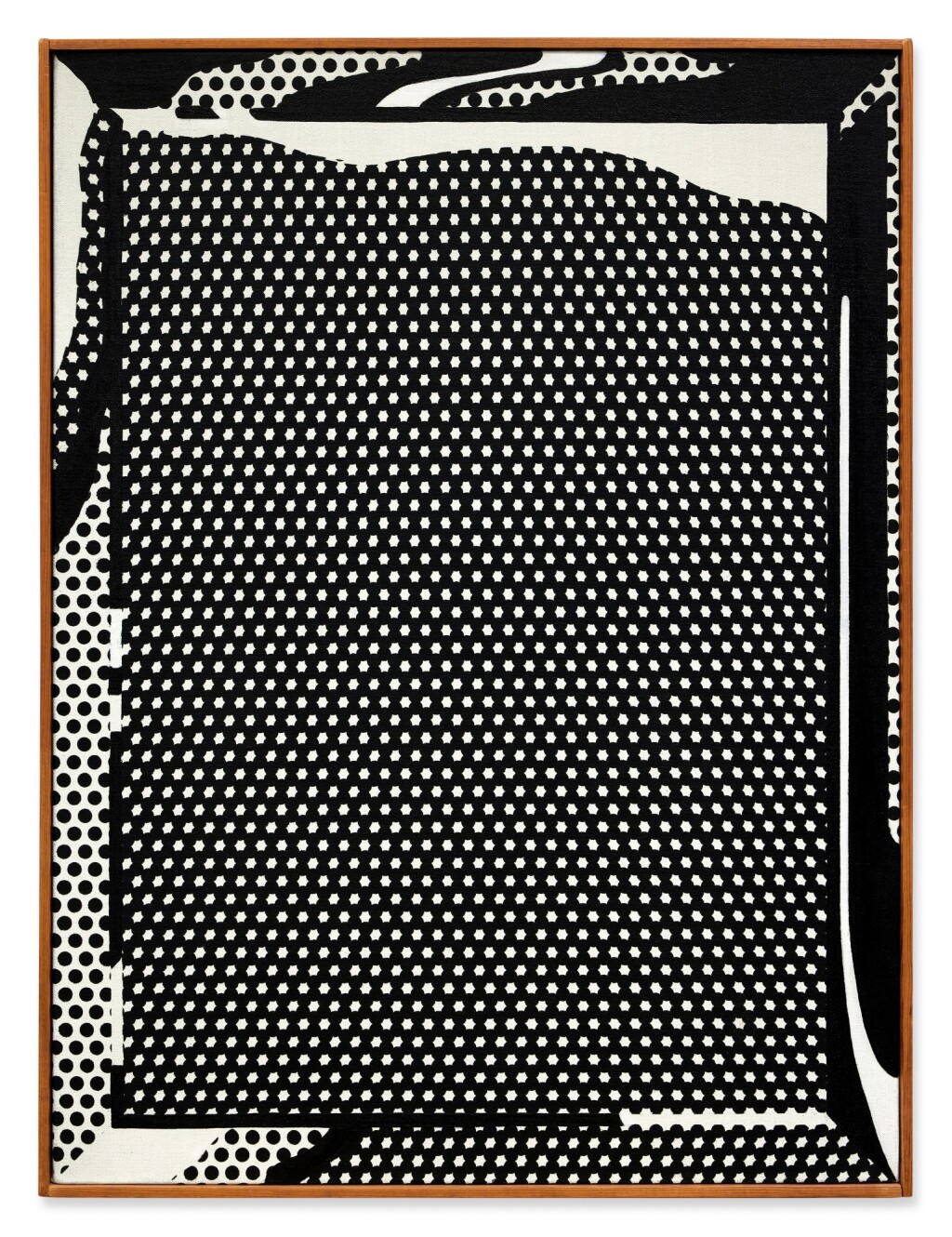
ROY LICHTENSTEIN (1923 – 1997)
Mirror #1, 1969
Oil and Magna on canvas
24×18 inches (61 x 45.7 cm)
Signed Roy Lichtenstein and dated ’69 (on the reverse)
#7. Bedroom at Arles (Study), 1992
Sotheby’s New-York: 18 November 2021
Estimated: USD 900,000 – 1,200,000
USD 4,255,000
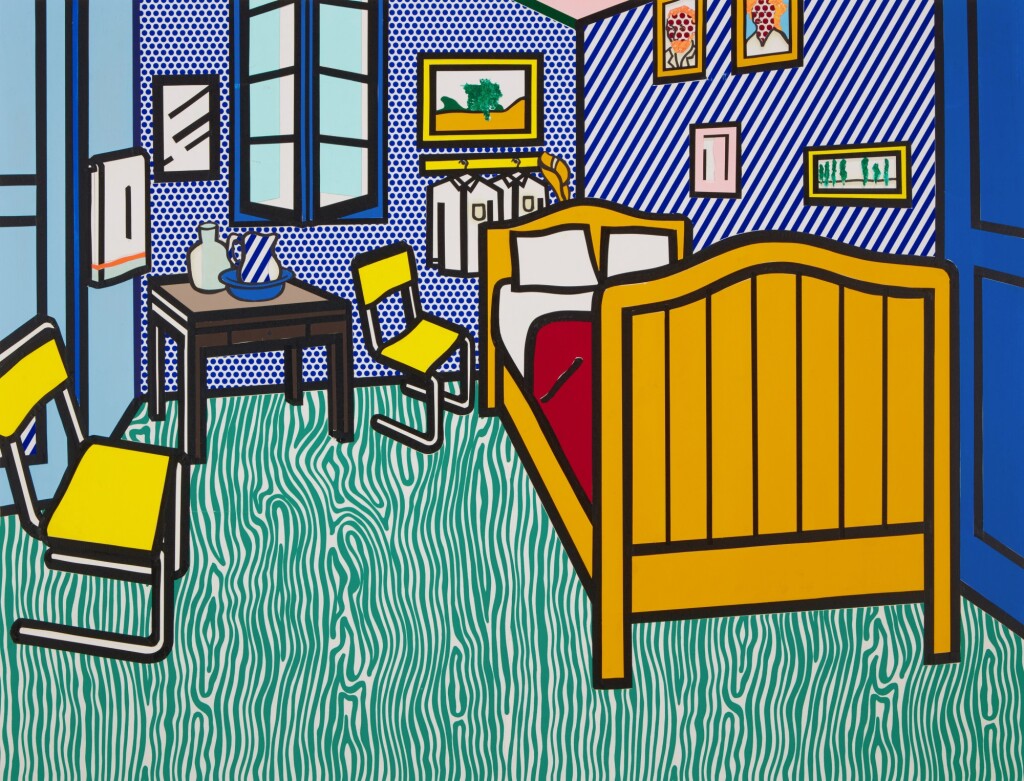
ROY LICHTENSTEIN (1923 – 1997)
Bedroom at Arles (Study), 1992
Tape, cut painted paper, cut printed paper, graphite on board
34 ½ x 45 ¼ inches (87.5 x 115 cm)
Signed Roy Lichenstein and dated ’92 (on the verso)
#8. Imperfect Painting, 1986
Sotheby’s New-York: 19 November 2021
Estimated: USD 700,000 – 1,000,000
USD 2,682,000
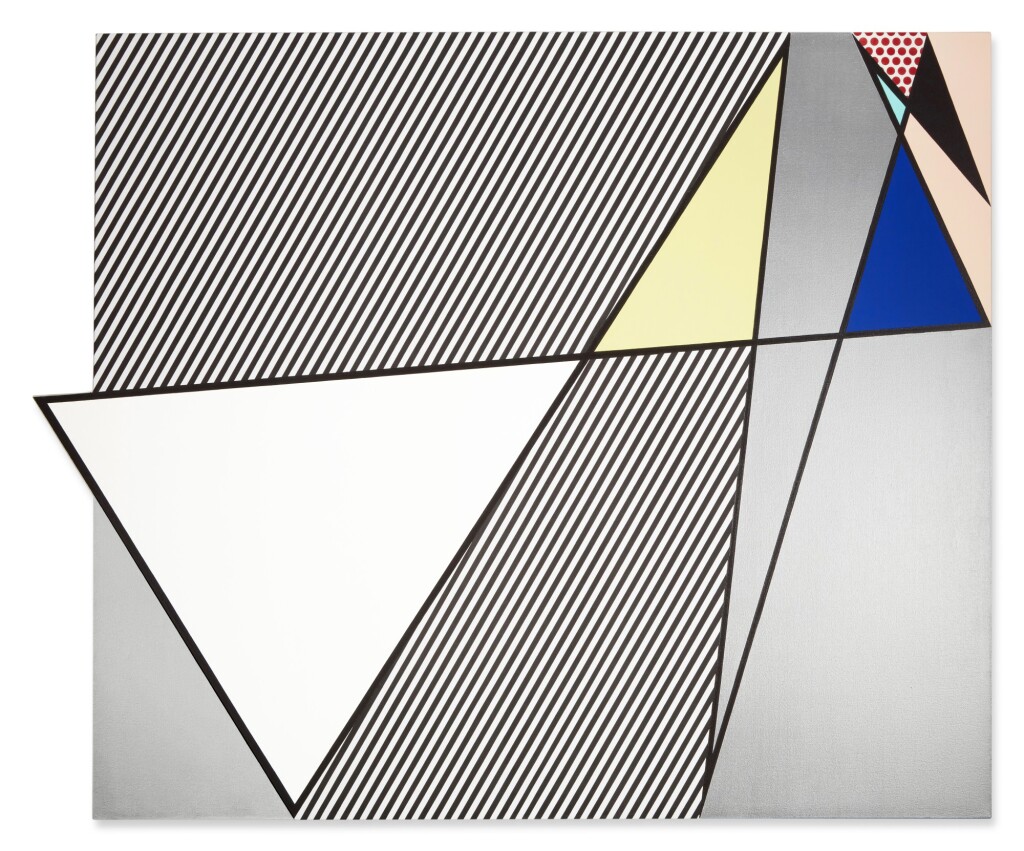
ROY LICHTENSTEIN (1923 – 1997)
Imperfect Painting, 1986
Oil and Magna on canvas
70x 85 ½ inches (177.8 x 217.2 cm)
Signed rf Lichtenstein and dated ’86 (on the reverse)
#9. Expressionist Head, 1980
Christie’s New-York: 11 November 2021
Estimated: USD 2,500,000 – 3,500,000
USD 2,670,000
ROY LICHTENSTEIN (1923-1997) (christies.com)
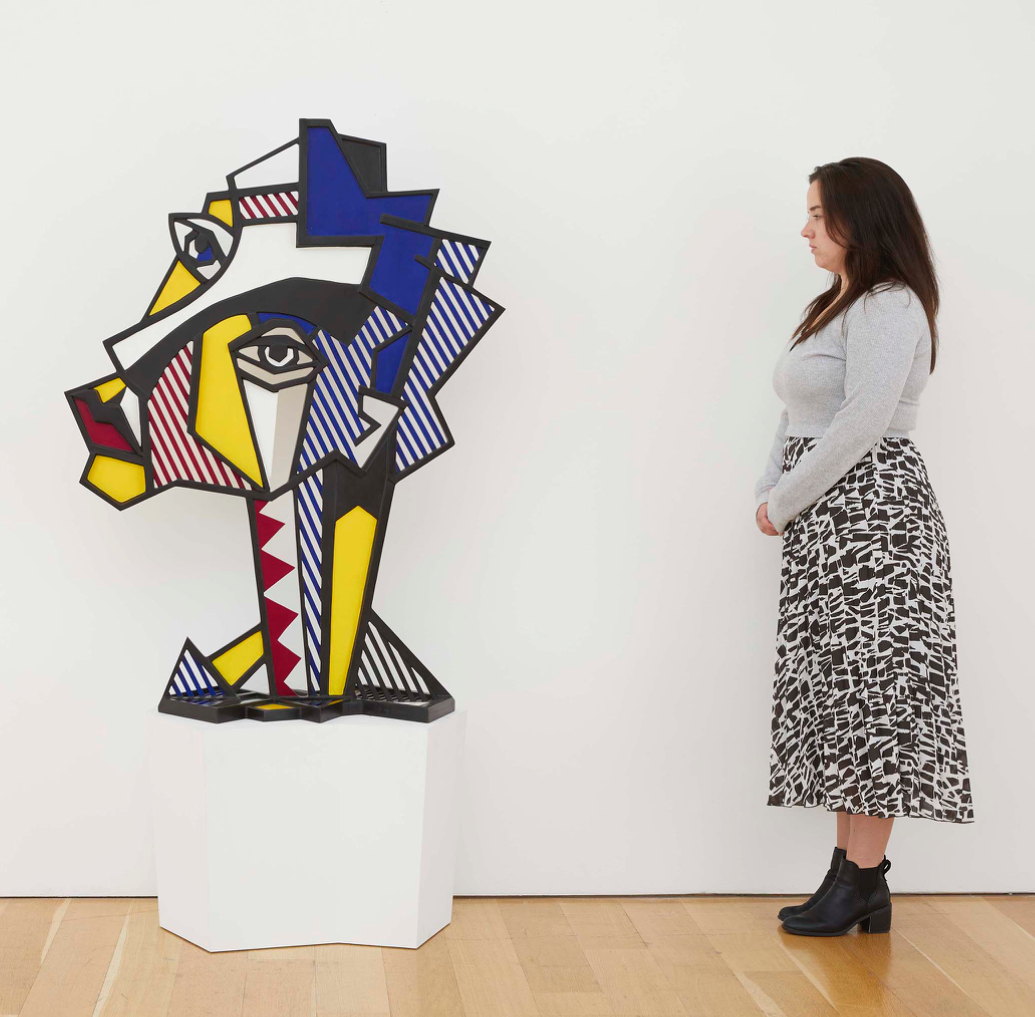
ROY LICHTENSTEIN (1923-1997)
Expressionist Head, 1980
Painted and patinated bronze with painted wooden base
Sculpture: 55 1/8 x 40 3/8 x 18 inches (140 x 102.6 x 45.7 cm)
Overall: 75 7/8 x 24 x 30 inches (192.7 x 61 x 76.2 cm)
Incised with the artist’s signature, number and date ‘1/6 rf Lichtenstein ’80’ (lower edge)
This work is number one from an edition of six
#10. Cup and Saucer II, 1977
Christie’s London: 23 March 2021
Estimated: GBP 450,000 – 650,000
GBP 1,126,500 / USD 1,553,793
ROY LICHTENSTEIN (1923-1997) (christies.com)

ROY LICHTENSTEIN (1923-1997)
Cup and Saucer II, 1977
Painted bronze
43 3/4 x 25 3/4 x 10 inches (111.1 x 65.4 x 25.4 cm)
Signed, numbered and dated ‘2/3 Roy Lichtenstein ’77’ (on the base)
This work is number two from an edition of three
#11. Small House, 1997
Sotheby’s New-York: 18 November 2021
Estimated: USD 600,000 – 800,000
USD 1,472,000
Small House | Contemporary Evening Auction | 2021 | Sotheby’s (sothebys.com)
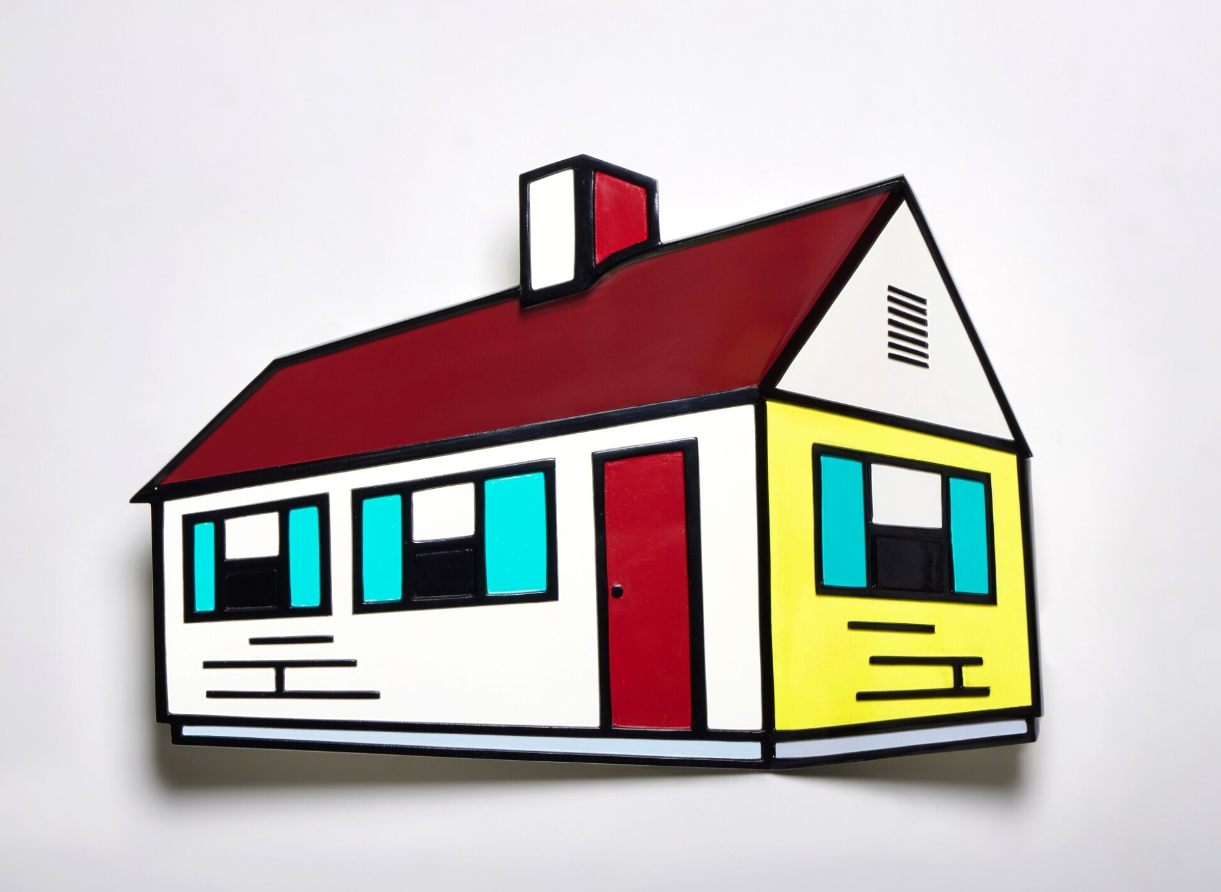
ROY LICHTENSTEIN (1923 – 1997)
Small House, 1997
Painted and cast aluminum
17 7/8 x 26 1/2 x 8 1/2 inches (45.4 x 67.2 x 21.6 cm)
Etched 2/8 rf Lichtenstein ‘97; stamped TALLIX
This work is number 2 from an edition of 8
#12. Collage for Interior with Painting and Still Life, 1997
Phillips New-York: 24 June 2021
Estimated: USD 800,000 – 1,200,000
USD 1,421,500
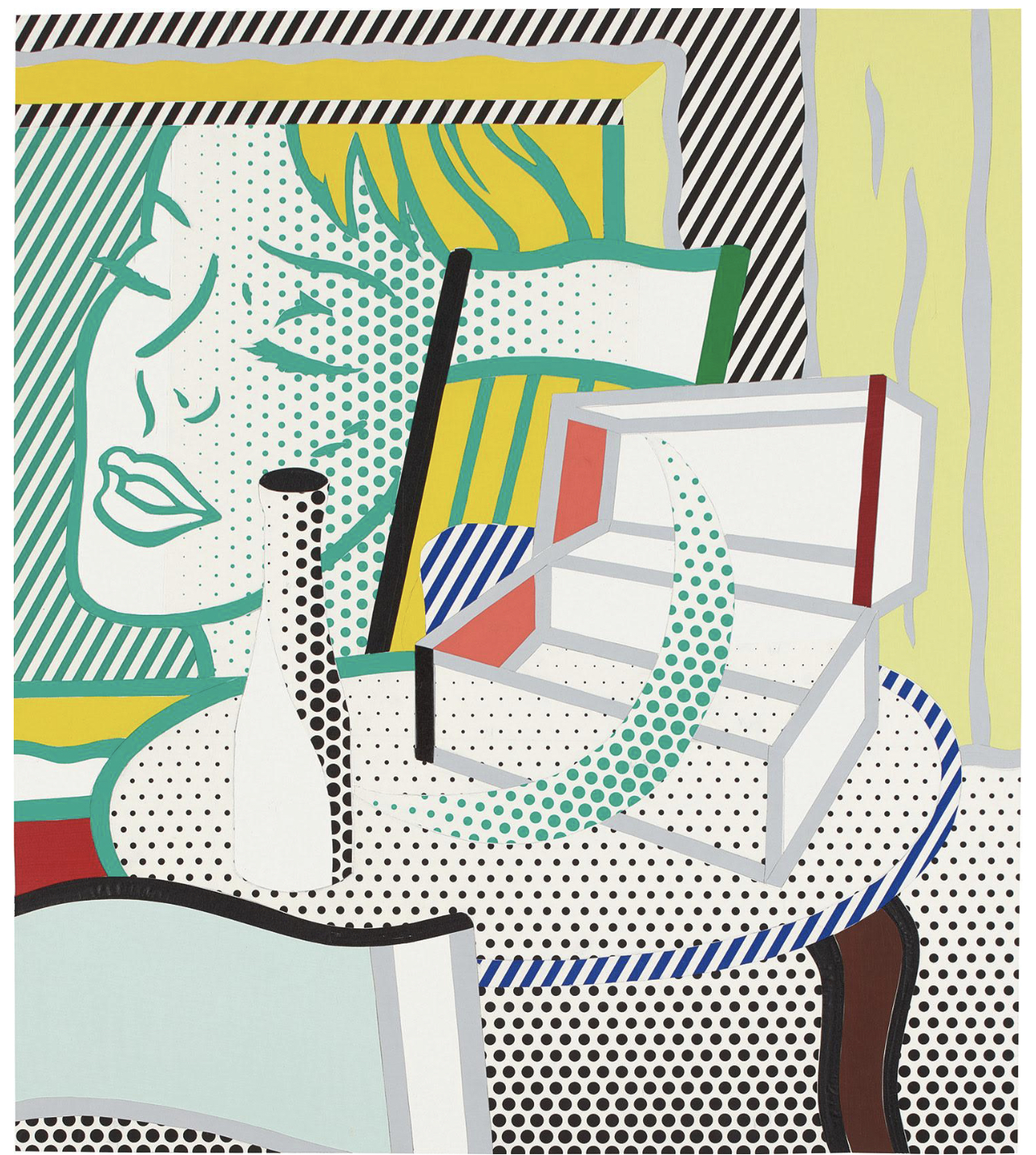
ROY LICHTENSTEIN
Collage for Interior with Painting and Still Life, 1997
Tape, graphite, painted and printed paper collage on board
Image: 31 3/4 x 27 7/8 inches (80.6 x 70.8 cm)
Board 38 1/2 x 33 7/8 inches (97.8 x 86 cm)
Signed and dated “rf Lichtenstein ’97” on the reverse
#13. Mirror Pair, 1971-1972
Sotheby’s New-York: 19 November 2021
Estimated: USD 600,000 – 800,000
USD 1,411,500
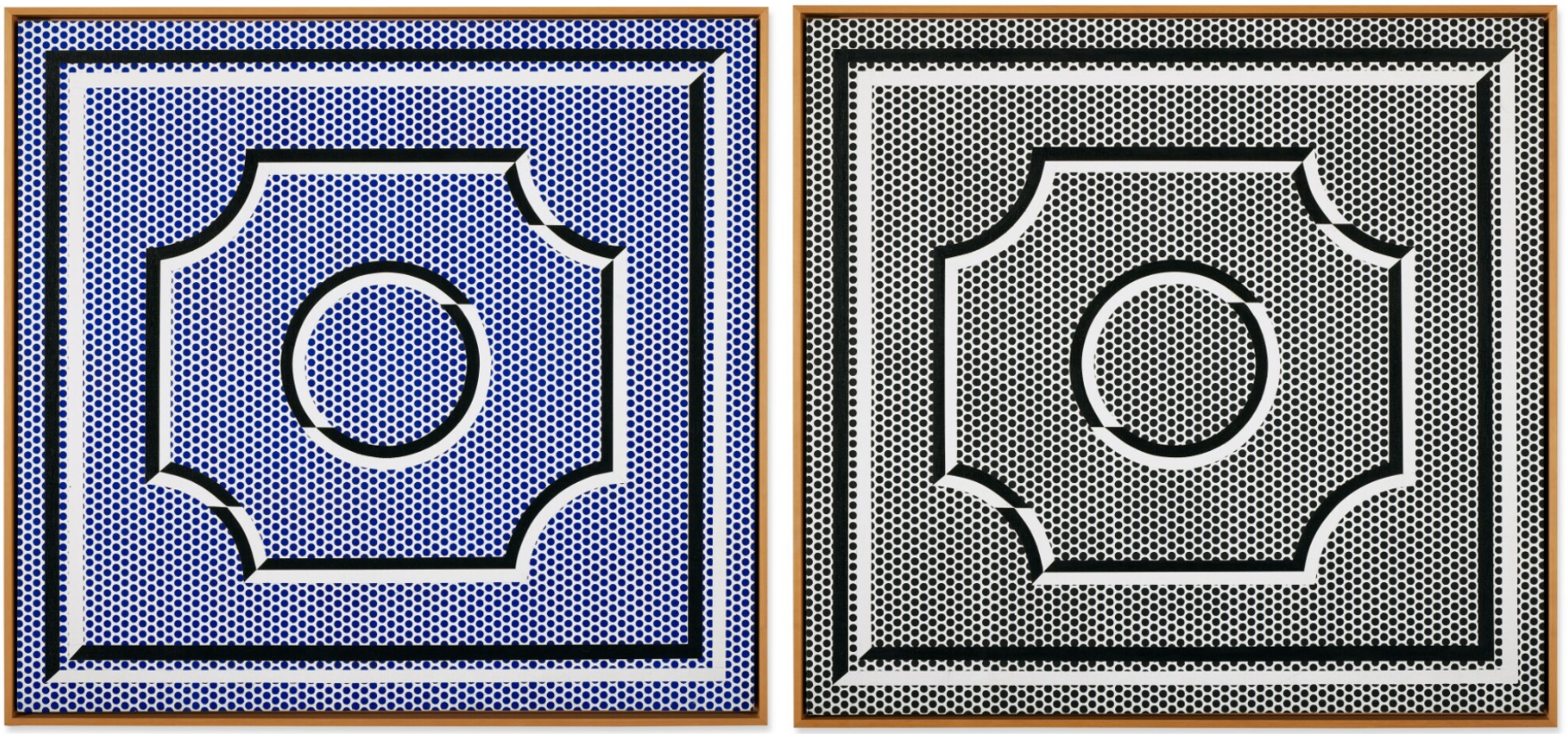
ROY LICHTENSTEIN (1923 – 1997)
Mirror Pair, 1971-1972
Oil and Magna on canvas, in 2 parts
Each: 34×36 inches (86.4 x 91.4 cm)
Signed rf Lichtenstein anddated ’71-’72 (on the reverse of the left canvas)
#14. Untitled, 1959
Estimated: USD 70,000 – 100,000
USD 562,500
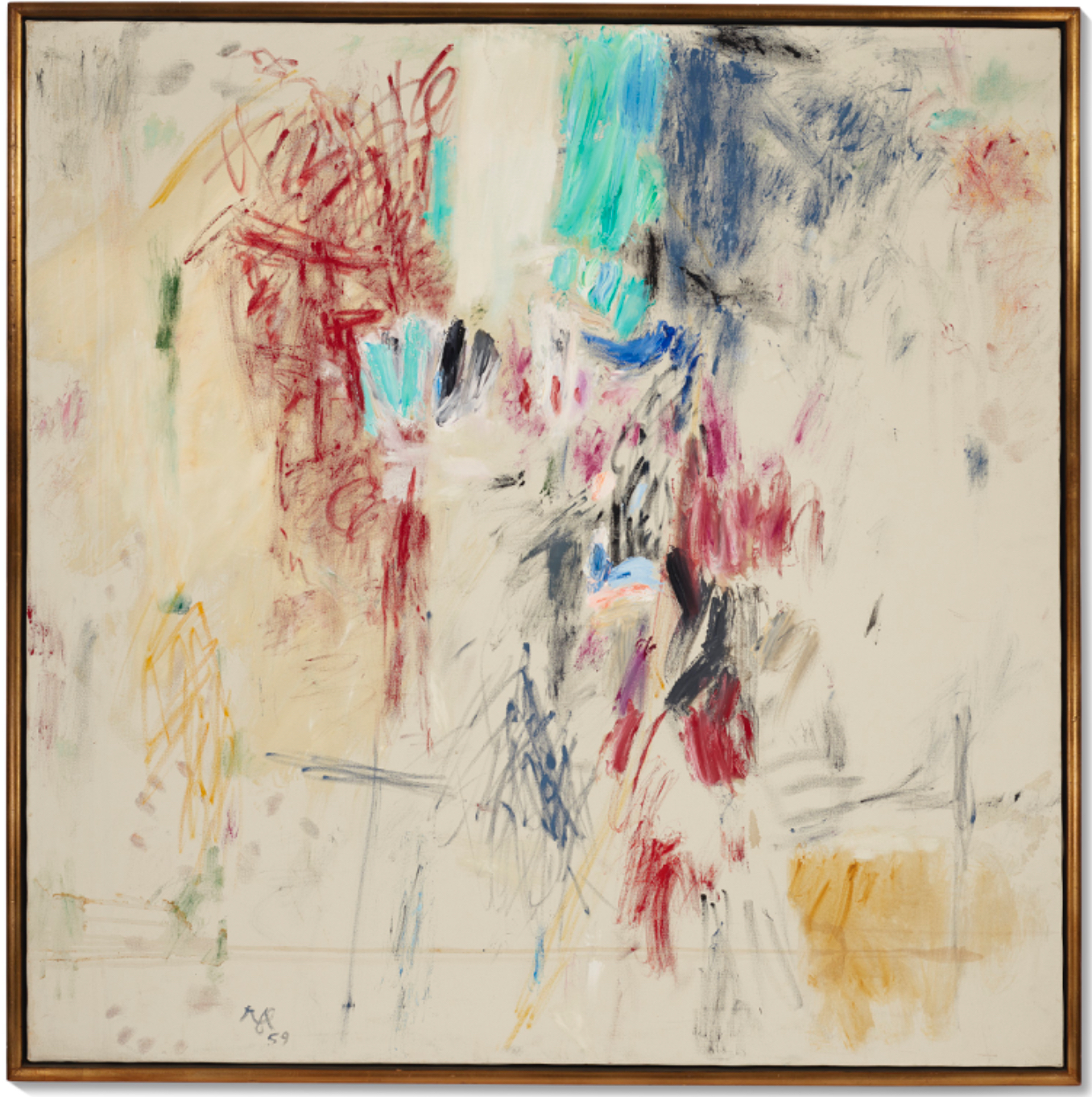
Untitled, 1959
Oil on canvas
48×48 inches (121.9 x 121.9 cm)
Signed with the artist’s initials and dated ‘rfl 59’ (lower left)
#15. The Red Horseman (Study), 1974
Christie’s New-York: 12 November 2021
Estimated: USD 500,000 – 700,000
USD 562,500
ROY LICHTENSTEIN (1923-1997), The Red Horseman (Study) | Christie’s (christies.com)
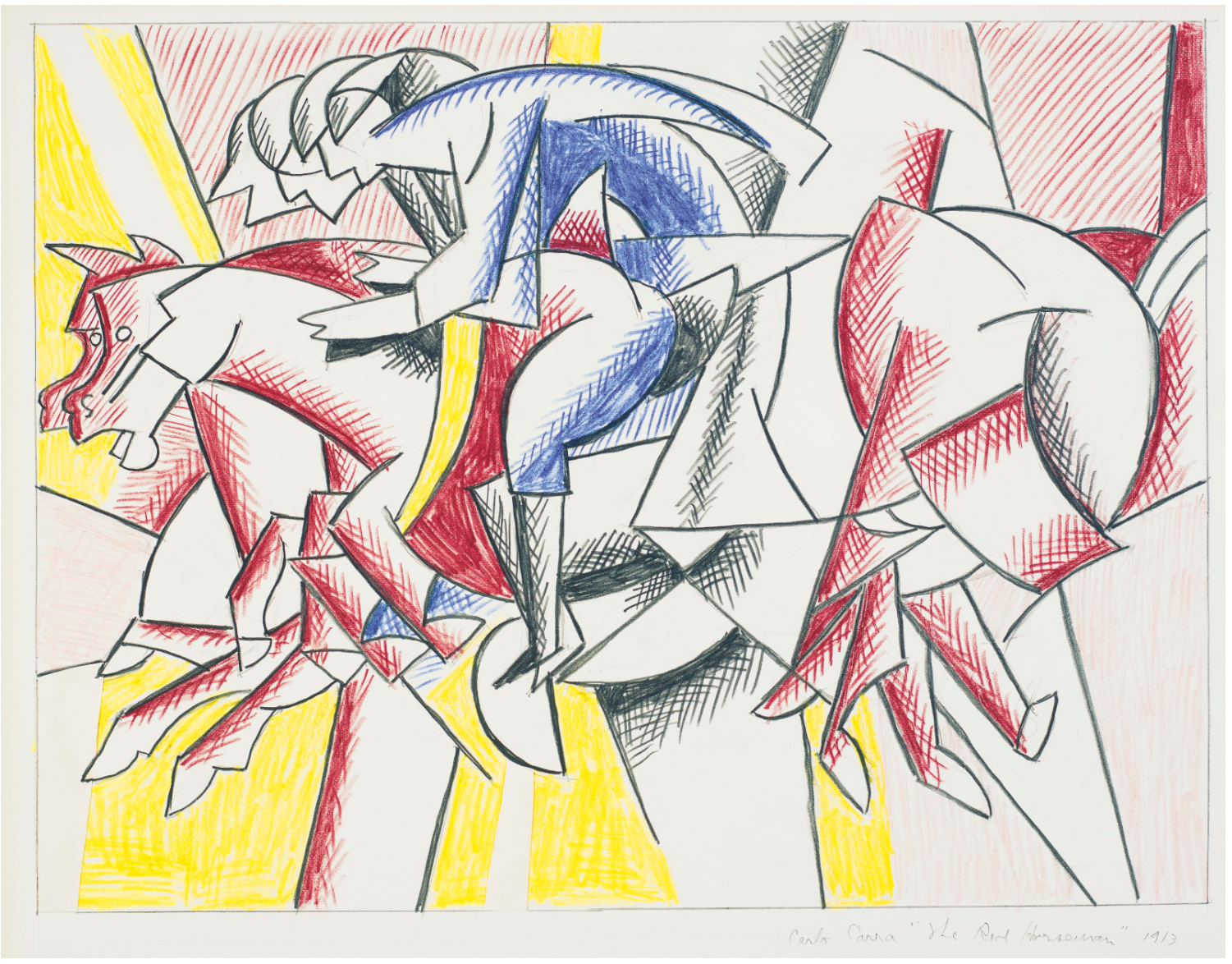
ROY LICHTENSTEIN (1923-1997)
The Red Horseman (Study), 1974
Colored pencil, graphite and paper collage on paper
Image: 14 3/4 x 19 1/2 inches (36.8 x 49.5 cm)
Sheet: 20 3/8 x 23 1/2 inches (51.8 x 59.7 cm)
Titled and inscribed ‘Carlo Carra “The Red Horseman” 1913’ (lower right)
Signed and dated ‘R Lichtenstein ’74’ (on the reverse)
#16. Plus and Minus V, 1988
Sotheby’s New-York: 19 November 2021
Estimated: USD 600,000 – 800,000
USD 528,200
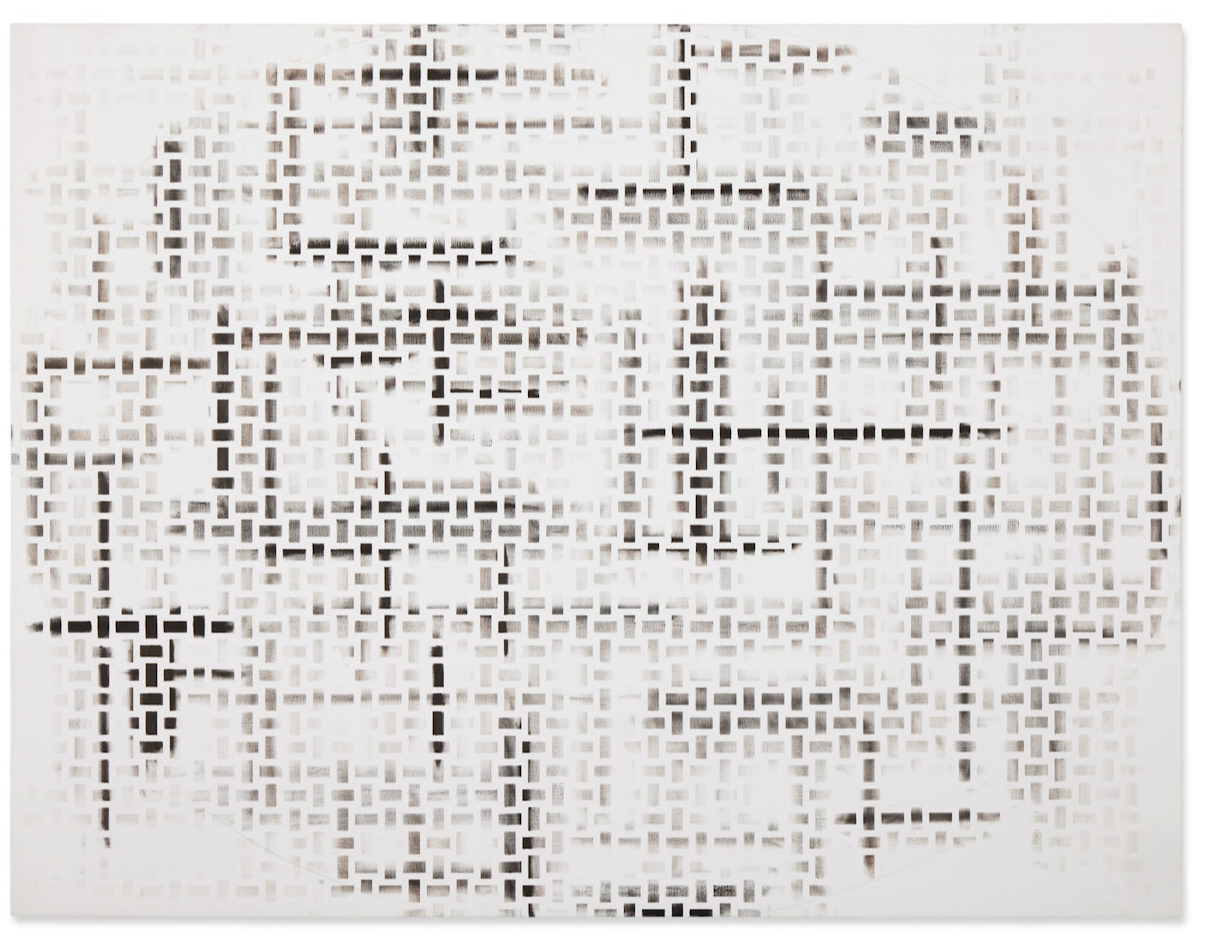
ROY LICHTENSTEIN (1923-1997)
Plus and Minus V, 1988
Oil and magna on canvas
38×50 inches (96.5 x 127 cm)
Signed and dated on the reverse
#17. Brushstroke III, 1986
LA Modern: 24 October 2021
Estimated: USD 150,000 – 180,000
USD 212,500
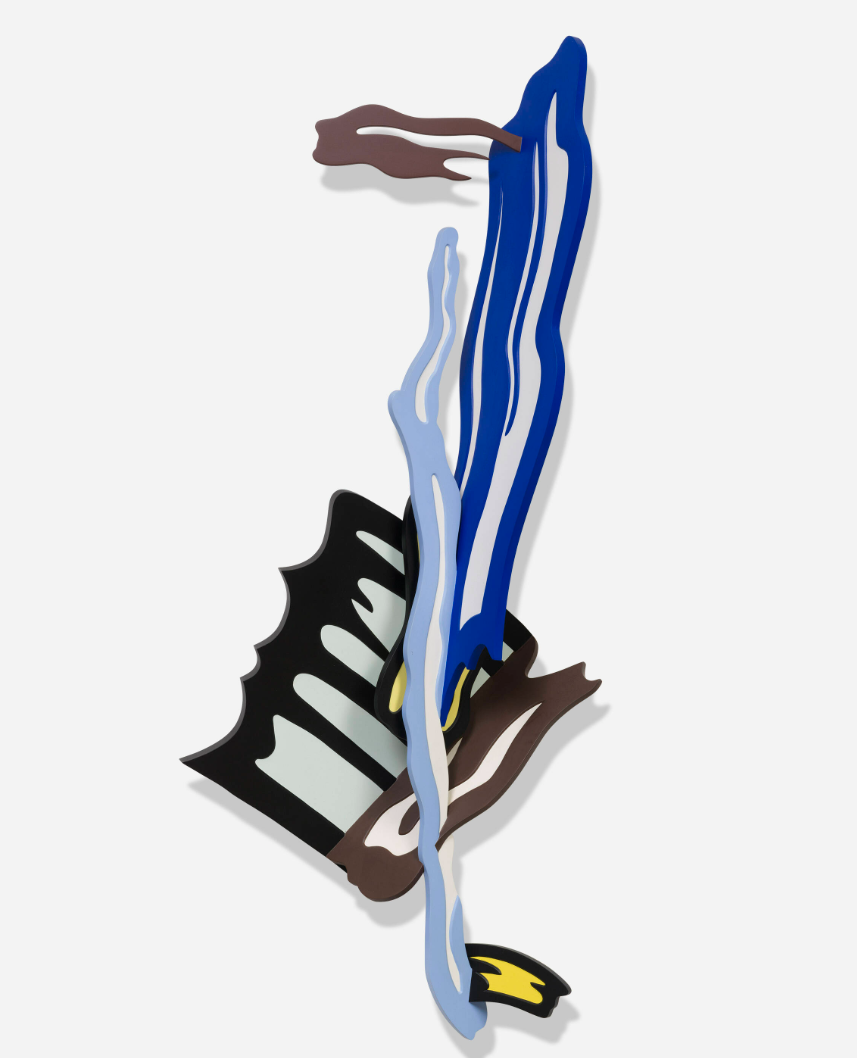
ROY LICHTENSTEIN (1923–1997)
Brushstroke III, 1986
Epoxy paint, acrylic lacquer, and acrylic paint on cherry wood
63 × 27 × 11 1/2 inches (160×69×29 cm)
Signed and inscribed to verso ‘rf Lichtenstein III C-9’
Numbered to brass label on verso ‘10/10’
This work is number 10 from the edition of 10 published and fabricated by Tyler Graphics Ltd., Mount Kisco
#18. Water Lily Pond with Reflections (Study), 1992
Sotheby’s New-York: 19 November 2021
Estimated: USD 70,000 – 100,000
USD 151,200
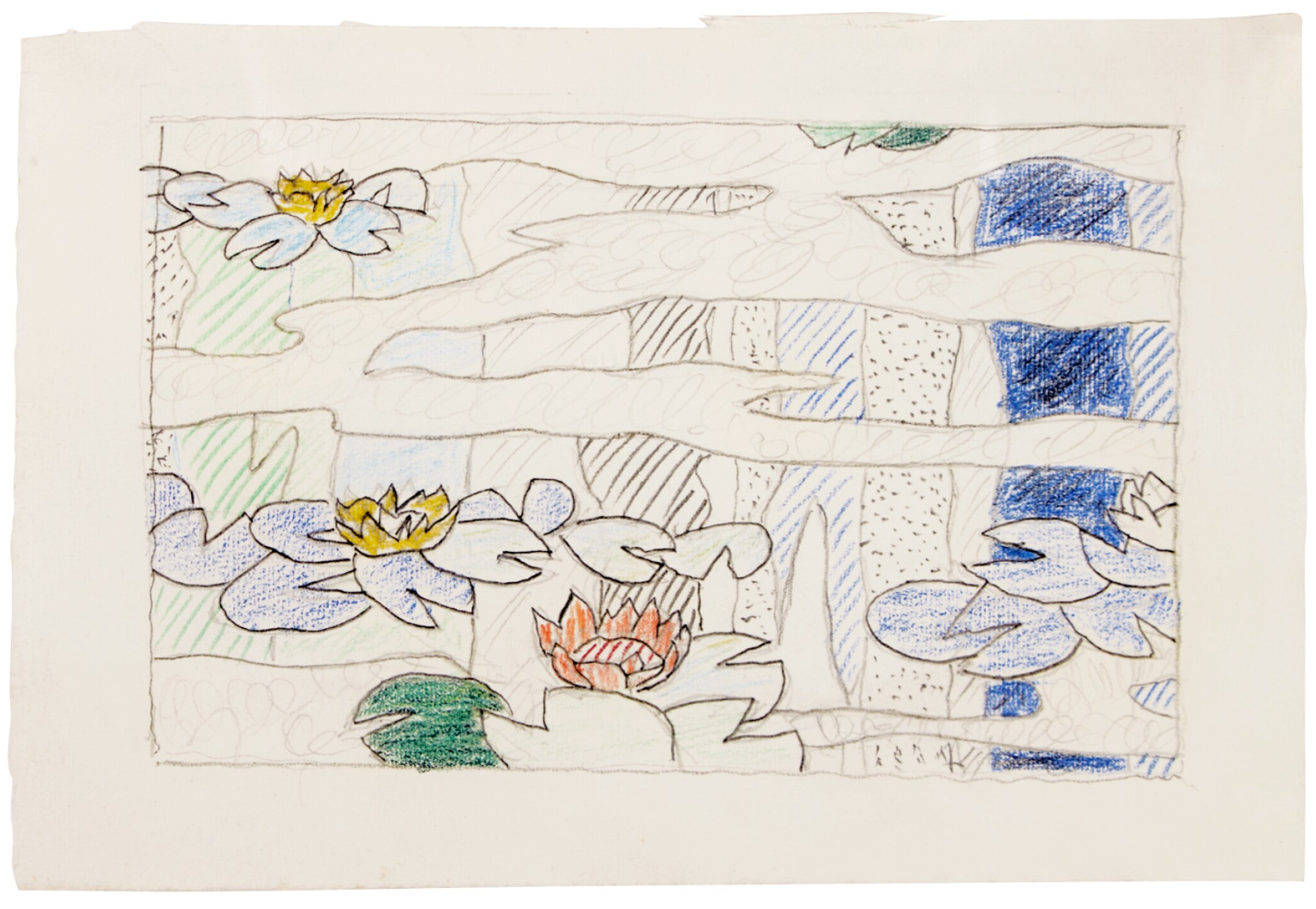
ROY LICHTENSTEIN (1923 – 1997)
Water Lily Pond with Reflections (Study), 1992
Colored pencil and graphite on paper
6 3/4 x 9 7/8 inches (17.1 x 25.1 cm)
Signed rf Lichtenstein and dated 5/92 (on the verso)
#19. Untitled, 1979
Koller Zurich: 1 July 2021
Estimated: CHF 80,000 – 120,000
CHF 134,500 / USD 145,358
ROY LICHTENSTEIN (1923 New York City 1997) (kollerauktionen.ch)
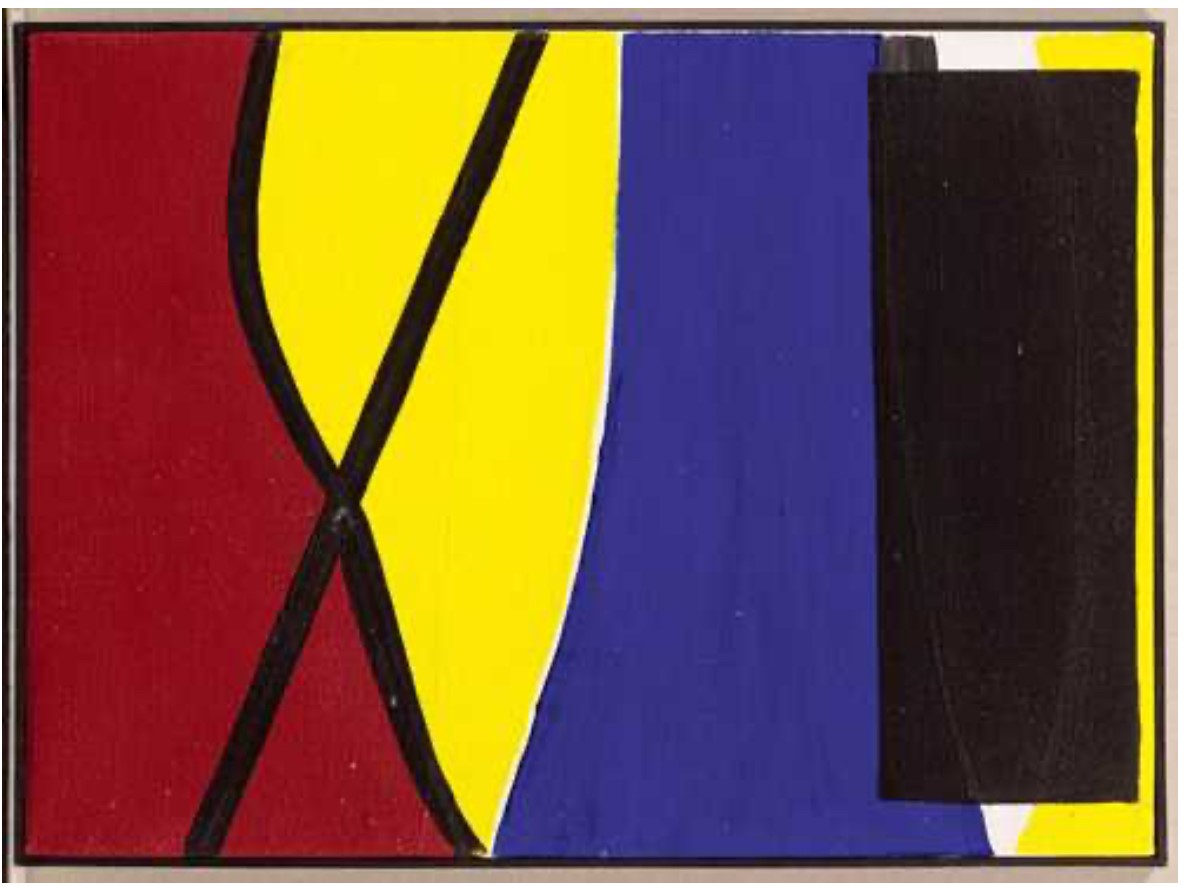
ROY LICHTENSTEIN (1923 New York City 1997)
Untitled, 1979
Oil on canvas
31.5 x 42.5 cm
Signed, dedicated and dated on the reverse: for Nana & Novarro with love. Southhampton 1979. Roy L.
#20. House with Gray Roof (Study), 1997
Sotheby’s New-York: 19 November 2021
Estimated: USD 60,000 – 80,000
USD 138,600
House with Gray Roof (Study) | Contemporary Day Auction | 2021 | Sotheby’s (sothebys.com)
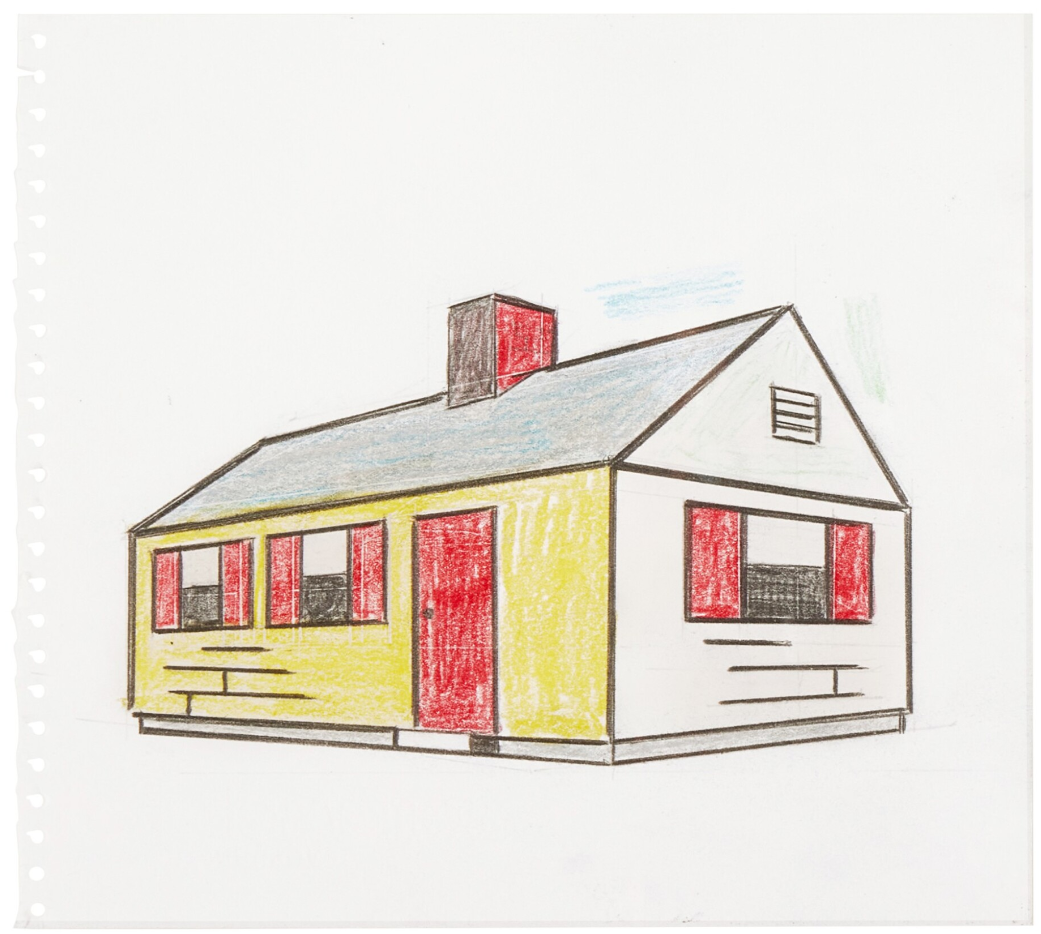
ROY LICHTENSTEIN (1923 – 1997)
House with Gray Roof (Study), 1997
Colored pencil and graphite on paper
8 x 8 3/4 inches (20.3 x 22.2 cm)
Signed rf Lichtenstein and dated 97 (on the verso)
#21. Brushstroke I, 1986
Sotheby’s New-York: 13 May 2021
Estimated: USD 100,000 – 150,000
USD 126,000
Brushstroke I | Contemporary Art Day Auction | 2021 | Sotheby’s (sothebys.com)
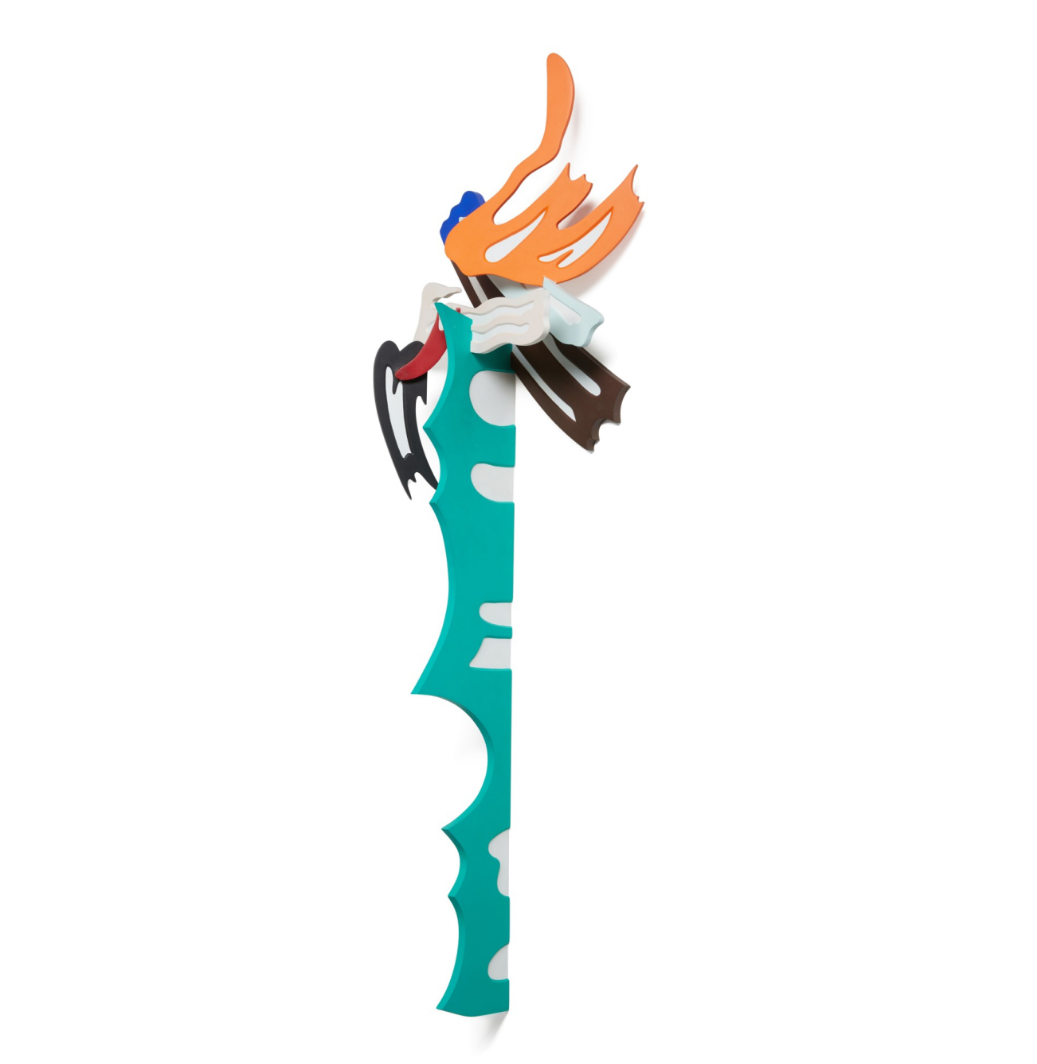
ROY LICHTENSTEIN (1923 – 1997)
Brushstroke I, 1986
Acrylic and epoxy on cherry wood
52x16x8 inches (132.1 x 40.6 x 20.3 cm)
Signed on the reverse
This work is number 8 from an edition of 10, plus 1 artist’s proof and 1 publisher’s proof
#22. Seascape #16, 1966
Phillips Hong-Kong: 7 June 2021
Estimated: HKD 550,000 – 750,000
HKD 693,000 / USD 89,313
Roy Lichtenstein – 20th Century & Cont… Lot 187 June 2021 | Phillips
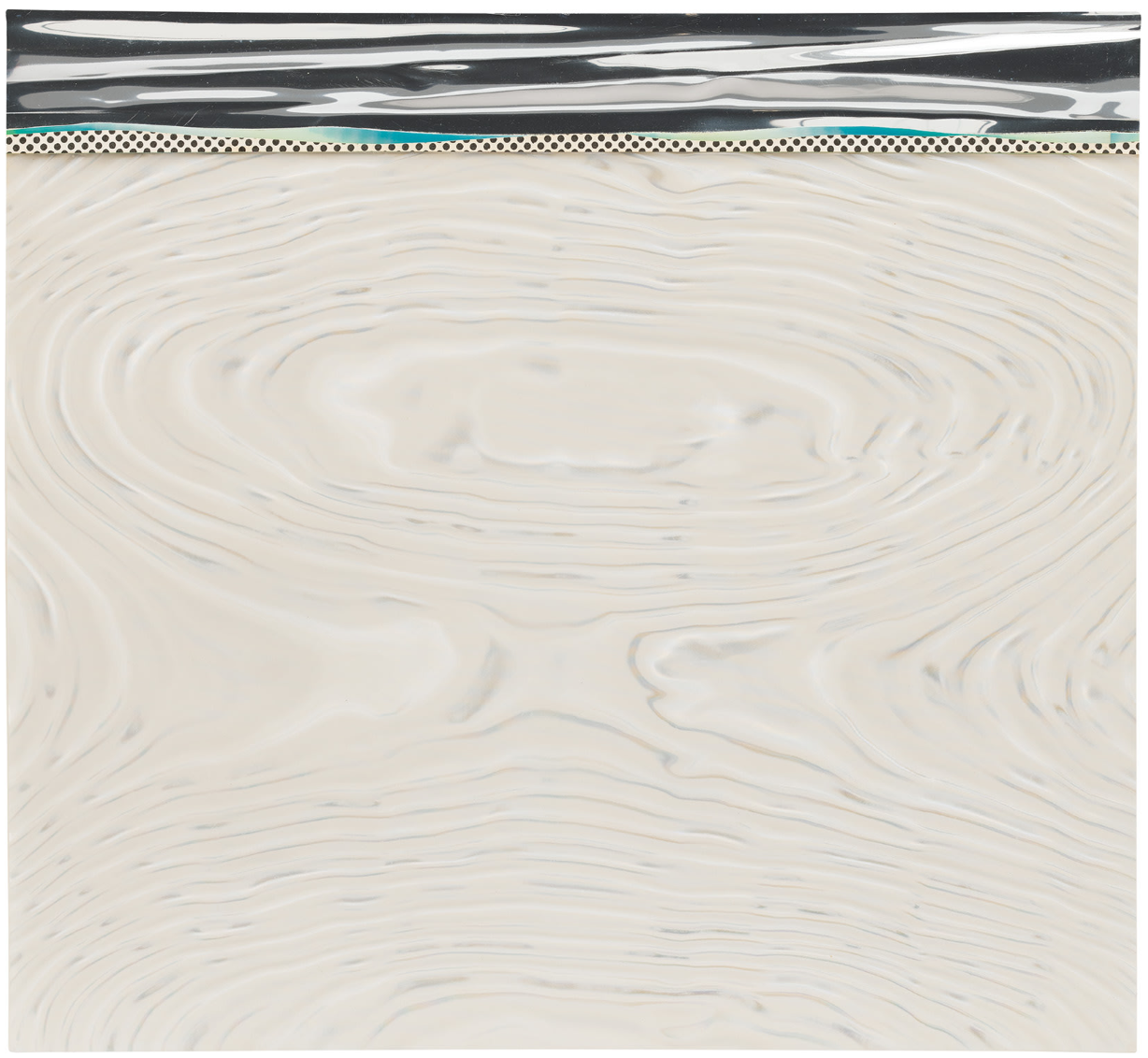
ROY LICHTENSTEIN
Seascape #16, 1966
Rowlux, Mylar and cut-and-pasted printed paper on board, originally with motorised lamp
22×24 inches (56×61 cm)
Signed and dated ‘rf Lichtenstein ’66’ on the reverse
#23. High Gear, 1954
Christie’s New-York: 9 March 2021
Estimated: USD 40,000 – 60,000
USD 68,750
Roy Lichtenstein (1923-1997), High Gear | Christie’s (christies.com)
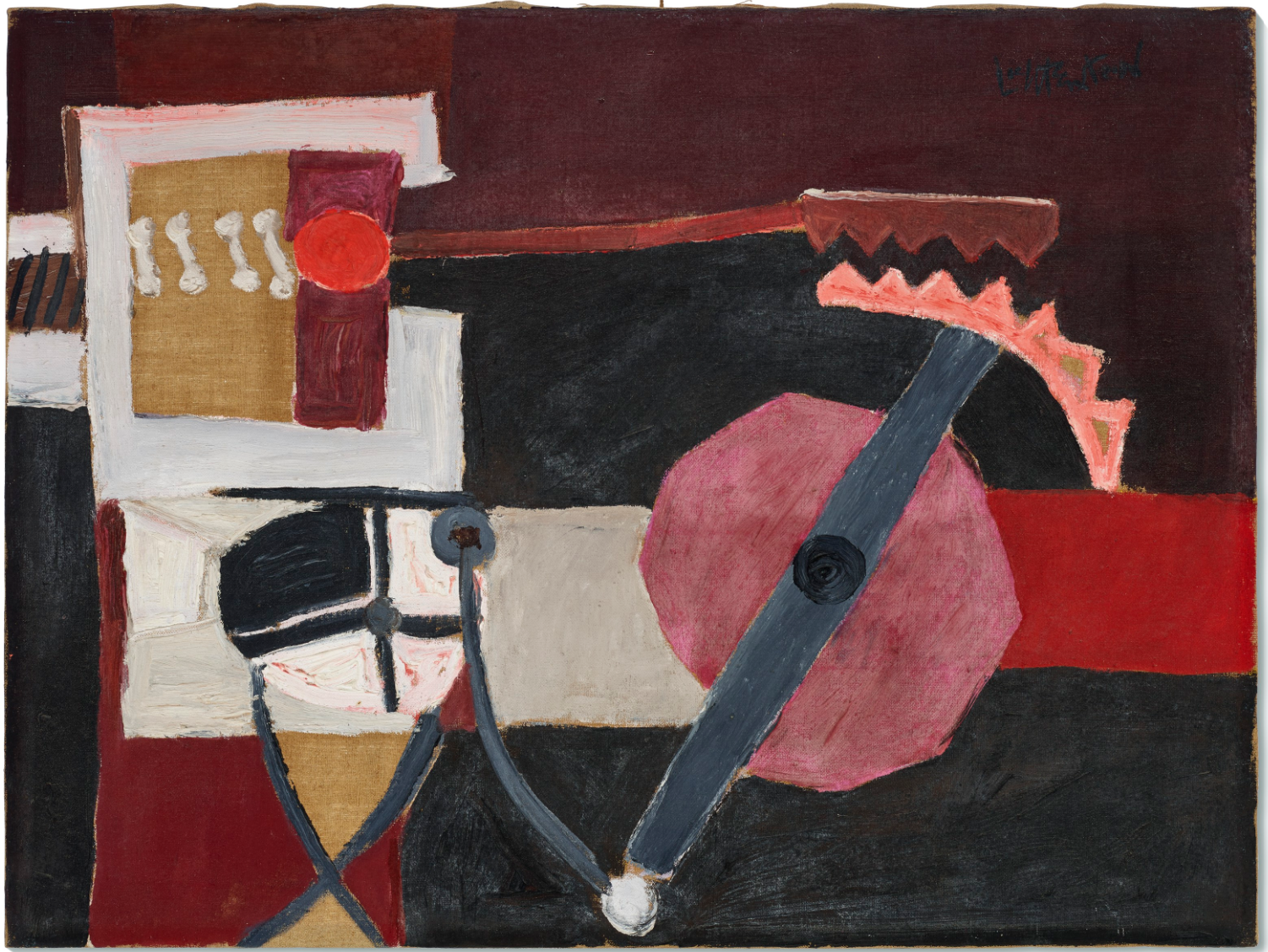
ROY LICHTENSTEIN (1923-1997)
High Gear, 1954
Oil on canvas
18×24 inches (45.7 x 61 cm)
Signed ‘Lichtenstein’ (upper right)
#24. Still Life with Dossier (Study), 1976
Sotheby’s Zurich: 14 December 2021
Estimated: CHF 26,000 – 35,000
CHF 47,880 / USD 51,829
Still Life with Dossier (Study), 1976 | The Swiss Fine Art Sale | 2021 | Sotheby’s (sothebys.com)
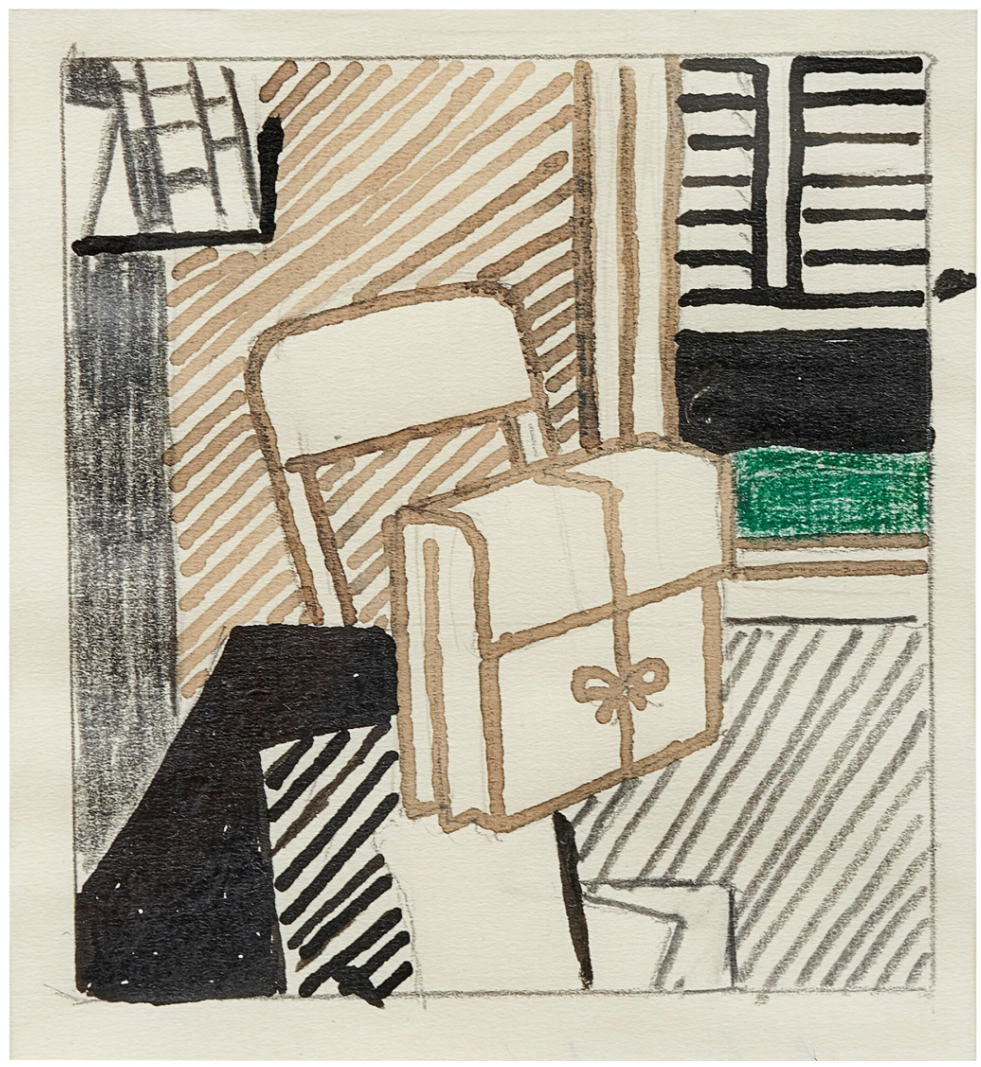
ROY LICHTENSTEIN (1923 – 1997)
Still Life with Dossier (Study), 1976
Ink, pencil and coloured pencil on paper
Sheet: 28.8 x 22.7 cm
Signed, dated and inscribed C12-76-78 on the reverse
This work was executed prior to the oil on canvas Still Life with Dossier from the Office Still Life series
#25. Interior without Ashtray (Study), 1996
Sotheby’s New-York: 4 October 2021
Estimated: USD 25,000 – 35,000
USD 35,280
Interior without Ashtray (Study) | Contemporary Art | 2021 | Sotheby’s (sothebys.com)
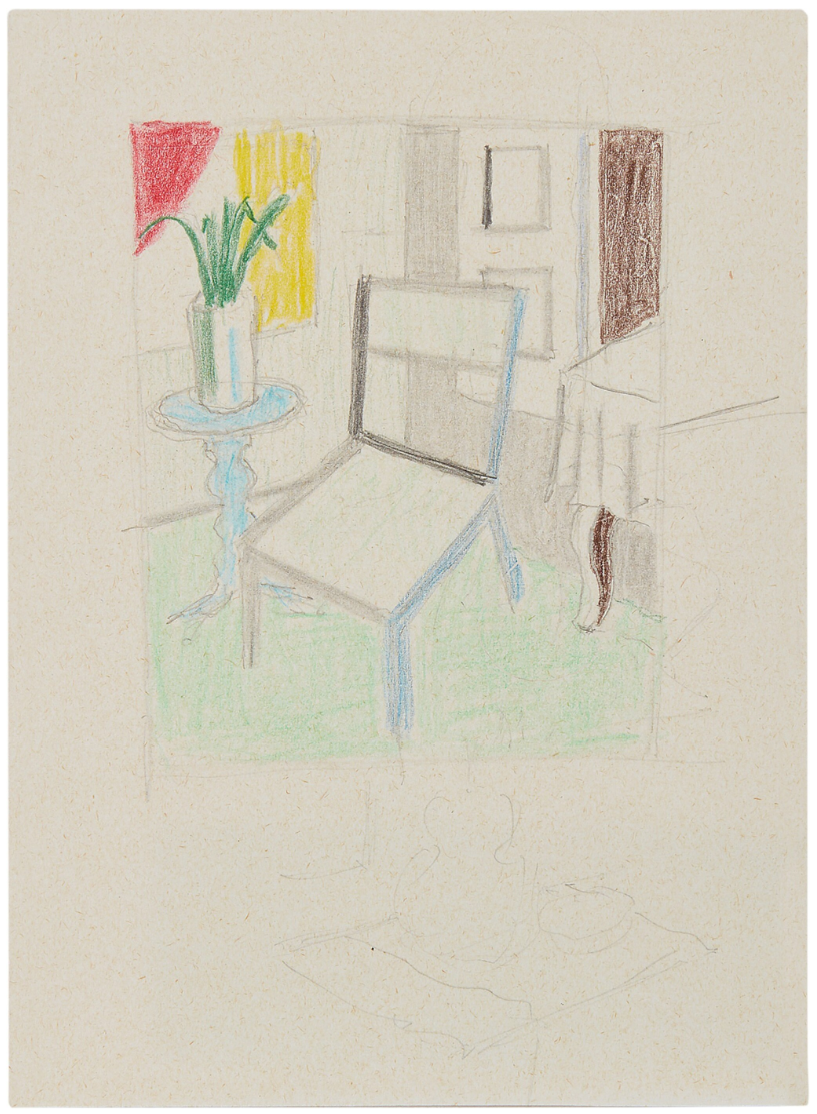
ROY LICHTENSTEIN (1923 – 1997)
Interior without Ashtray (Study), 1996
Graphite and colored pencil on paper
Sheet: 9 3/8 x 6 1/2 inches (23.8 x 16.5 cm)
Signed and dated ’96 on the reverse
PART III: FOCUS
Landscapes in The Chinese Style, 1991-96
Landscapes in the Chinese Style is a powerful series of works inspired by Song dynasty painting. Created in the year preceding the artist’s death, this group of paintings represent Lichtenstein’s final series. Simultaneously grand and subtle, bold and sublime, Lichtenstein here uses his signature Pop technique and irreverent sense of humor, both to pay homage to a cultural tradition, and to shed light upon the frequent generalization of Eastern motifs by Western painters for centuries.
READ ABOUT LANDSCAPES IN THE CHINESE STYLE
FIND ALL HISTORICAL AUCTION RESULTS
PLEASE CLICK ON ANY PICTURE BELOW
TO ACCESS THE CATALOGUE ENTRY
Flower with Bamboo, 1996
A Legacy Reimagined: Works from the Collection of Dorothy and Roy Lichtenstein
Sotheby’s New-York: 18 November 2025
Estimated: USD 2,000,000 – 3,000,000
USD 1,514,000
Flower with Bamboo | The Now & Contemporary Evening Auction | 2025 | Sotheby’s
ROY LICHTENSTEIN (1923 – 1997)
Flower with Bamboo, 1996
Acrylic, oil and graphite on canvas
77 x 66 1/8 inches (195.6 x 168 cm)
Signed and dated ‘96 (on the reverse)
Bonsai Tree (Study), 1992
Works from The Collection of Dorothy and Roy Lichtenstein
Sotheby’s Hong-Kong: 28 September 2025
Estimated: HKD 2,000,000 – 3,000,000
HKD 3,048,000 / USD 391,775
ROY LICHTENSTEIN (1923 – 1997)
Bonsai Tree (Study), 1992
Cut painted paper, acrylic, marker and graphite on foamcore
60 x 40 1/8 inches (152.4 x 101.9 cm)
Signed and dated ‘92 (on the reverse)
Vista with Bridge, 1996
Works from The Collection of Dorothy and Roy Lichtenstein
Sotheby’s Hong-Kong: 28 September 2025
Estimated: HKD 28,000,000 – 35,000,000
HKD 30,875,000 / USD 3,968,510
ROY LICHTENSTEIN (1923 – 1997)
Vista with Bridge, 1996
Acrylic, oil and graphite on canvas
75 x 178 1/4 inches (190.5 x 452.8 cm)
Signed and dated ’96 (on the reverse)
Treetops Through the Fog (Study), 1996
Reflections on Pop: Works from the Collection of Dorothy and Roy Lichtenstein
Sotheby’s New-York: 26 September 2025
Estimated: USD 400,000 – 600,000
USD 551,500
ROY LICHTENSTEIN (1923 – 1997)
Treetops Through the Fog (Study), 1996
Cut printed paper, cut sponge-painted paper, cut paper and graphite on paperboard
Image: 35 1/8 x 76 3/4 inches (89.2 x 194.9 cm)
Paperboard: 42 x 82 3/4 inches (106.7 x 210.2 cm)
Rain Forest (Study), 1991
Reflections on Pop: Works from the Collection of Dorothy and Roy Lichtenstein
Sotheby’s New-York: 26 September 2025
Estimated: USD 500,000 – 700,000
USD 279,400
ROY LICHTENSTEIN (1923 – 1997)
Rain Forest (Study), 1991
Cut printed paper, cut painted paper, sponged acrylic, marker and graphite on paperboard
Image: 25 5/8 x 20 3/4 inches (65.1 x 52.7 cm)
Paperboard: 30 x 22 3/4 inches (76.2 x 57.8 cm)
Signed and dated ’91 (on the verso)
Landscape with Silver River (Study), 1996
Works from the Collection of Dorothy and Roy Lichtenstein
Sotheby’s London: 25 June 2025
Estimated: GBP 220,000 – 280,000
GBP 330,200 / USD 445,770
Landscape with Silver River (Study) | Contemporary Day Auction | 2025 | Sotheby’s
ROY LICHTENSTEIN (1923 – 1997)
Landscape with Silver River (Study), 1996
Acrylic, graphite, tape and paper collage on card
44 3/4 x 36 5/8 inches (113.7 x 93 cm)
Titled (Study), 1996
Works from the Collection of Dorothy and Roy Lichtenstein
Sotheby’s New-York: 16 May 2025
Estimated: USD 400,000 – 600,000
USD 533,400
Titled (Study) | Contemporary Day Auction | 2025 | Sotheby’s
ROY LICHTENSTEIN (1923 – 1997)
Titled (Study), 1996
Cut painted paper, cut printed paper, tape and graphite on board
Image: 24 x 32 1/2 inches (61 x 82.6 cm)
Sheet: 33 1/2 x 42 7/8 inches (85.1 x 108.9 cm)
“By stressing the artificiality of the comic-strip derived landscape, Lichtenstein proposed a new form of landscape painting. The predetermined fiction of the comic strip enabled him to present the illusionistic image of the landscape in terms that confirm the fictive reality of the picture plane.”
Nudes, 1993-1995
Roy Lichtenstein’s celebrated Nudes series, with comic imagery once again at the center of his oeuvre, marked the artist’s career coming full circle. As the first series Lichtenstein undertook following his comprehensive survey in 1993 at the Solomon R. Guggenheim museum, the Nudes elegantly encapsulated many of the recurring themes found throughout the artist’s career. The Nudes mark Roy Lictenstein’s majestic return to the comic-book heroines that propelled him to fame in the early 1960s and together, they rank among his most significant bodies of work. Culled from his prodigious archive of vintage comics, the Nudes marry Lichtenstein’s Pop Art sensibility with the most storied subject in the history of Western art—the female nude.
READ ABOUT NUDES
FIND ALL HISTORICAL AUCTION RESULTS
CLICK ON ANY VISUAL BELOW TO ACCESS THE CATALOGUE ENTRY
Woman: Sunlight, Moonlight (Study), 1995
A Legacy Reimagined: Works from the Collection of Dorothy and Roy Lichtenstein
Sotheby’s New-York: 18 November 2025
Estimated: USD 1,500,000 – 2,000,000
USD 2,734,000
Woman: Sunlight, Moonlight (Study) | The Now & Contemporary Evening Auction | 2025 | Sotheby’s
ROY LICHTENSTEIN (1923 – 1997)
Woman: Sunlight, Moonlight (Study), 1995
Tape, cut painted paper, cut printed paper and graphite on board
60×36 inches (152.4 x 91.4 cm)
Signed and dated ‘95 (on the reverse)
Nude with Bust (Study), 1995
Reflections on Pop: Works from the Collection of Dorothy and Roy Lichtenstein
Sotheby’s New-York: 26 September 2025
Estimated: USD 400,000 – 600,000
USD 825,500
ROY LICHTENSTEIN (1923 – 1997)
Nude with Bust (Study), 1995
Colored pencil and graphite on Denril
Image: 9 7/8 x 8 1/4 inches (25.1 x 21 cm)
Sheet: 15 5/8 x 9 3/8 inches (39.7 x 23.8 cm)
Signed and dated ’95 (lower right)
Nude (Study), 1997
Reflections on Pop: Works from the Collection of Dorothy and Roy Lichtenstein
Sotheby’s New-York: 26 September 2025
Estimated: USD 800,000 – 1,200,000
USD 1,079,500
ROY LICHTENSTEIN (1923 – 1997)
Nude (Study), 1997
Tape, cut painted paper, cut printed paper, cut paper, marker and graphite on paperboard
Image: 41 3/8 x 22 1/4 inches (105.1 x 56.5 cm)
Paperboard: 51×32 inches (129.5 x 81.3 cm)
Seductive Girl (Study), 1996
Works from the Collection of Dorothy and Roy Lichtenstein
Sotheby’s London: 24 June 2025
Estimated: GBP 500,000 – 700,000
GBP 952,500 / USD 1,285,875
Seductive Girl (Study) | Modern & Contemporary Evening Auction | 2025 | Sotheby’s
ROY LICHTENSTEIN (1923 – 1997)
Seductive Girl (Study), 1996
Graphite and coloured pencil on Denril
Image: 6 3/4 x 9 1/2 inches (17.1 x 24.1 cm)
Sheet:10 3/8 x 12 7/8 inches (26.4 x 32.6 cm)
Roommates (Study), 1993
Works from the Collection of Dorothy and Roy Lichtenstein
Sotheby’s New-York: 16 May 2025
Estimated: USD 600,000 – 800,000
USD 609,600
Roommates (Study) | Contemporary Day Auction | 2025 | Sotheby’s
ROY LICHTENSTEIN (1923 – 1997)
Roommates (Study), 1993
Colored pencil and graphite on paper
Image: 4 7/8 x 3 3/4 inches (12.5 x 9.7 cm)
Sheet: 9 5/8 x 8 inches (24.4 x 20.3 cm)
Signed and dated ’93 (on the verso)
Nudes in Mirror (Study), 1994
Works from the Collection of Dorothy and Roy Lichtenstein
Sotheby’s New-York: 16 May 2025
Estimated: USD 1,000,000 – 1,500,000
USD 2,405,o00
Nudes in Mirror (Study) | The Now and Contemporary Evening Auction | 2025 | Sotheby’s
ROY LICHTENSTEIN (1923 – 1997)
Nudes in Mirror (Study), 1994
Colored pencil and graphite on paper
Image: 12 1/4 x 10 1/4 inches (31.1 x 26 cm)
Sheet: 15 1/4 x 11 3/8 inches (38.7 x 28.9 cm)
Signed and dated ’94 (on the reverse)
Nude with Bust (Study), 1995
Works from the Collection of Dorothy and Roy Lichtenstein
Sotheby’s New-York: 20 November 2024
Estimated: USD 3,000,000 – 5,000,000
USD 4,560,000
Nude with Bust (Study) | The Now and Contemporary Evening Auction | 2024 | Sotheby’s
ROY LICHTENSTEIN (1923 – 1997)
Nude with Bust (Study), 1995
Tape, cut painted paper, cut printed paper, marker and graphite on board
Image: 53 7/8 x 45 inches (136.8 x 114.3 cm)
Board: 63 7/8 x 47 1/2 inches (162.2 x 120.7 cm)
Nude with Pyramid (Study), 1994
Works from the Collection of Dorothy and Roy Lichtenstein
Sotheby’s New-York: 20 November 2024
Estimated: USD 1,000,000 – 1,500,000
USD 2,040,000
Nude with Pyramid (Study) | The Now and Contemporary Evening Auction | 2024 | Sotheby’s
ROY LICHTENSTEIN (1923 – 1997)
Nude with Pyramid (Study), 1994
Colored pencil and graphite on paper
Image: 11 3/8 x 9 1/2 inches (28.9 x 24.1 cm)
Sheet: 13 1/8 x 11 1/8 inches (33.3 x 28.3 cm)
Signed and dated ‘94 (on the reverse)
Nude with Blue Hair, 1994
Works from the Collection of Dorothy and Roy Lichtenstein
Sotheby’s New-York: 20 November 2024
Estimated: USD 350,000 – 450,000
USD 960,000
Nude with Blue Hair | The Now and Contemporary Evening Auction | 2024 | Sotheby’s
ROY LICHTENSTEIN (1923 – 1997)
Nude with Blue Hair, 1994
Relief print in colors on Rives BFK mold-made paper
Image: 51 1/2 x 31 3/4 inches (130 x 80.2 cm)
Sheet: 57 7/8 x 37 5/8 inches (146.7 x 95.3 cm)
Signed, dated ’94 and inscribed AP 5/12 (lower right)
This impression is one of 12 artist’s proofs aside from the numbered edition of 40
Roommates, 1994
Works from the Collection of Dorothy and Roy Lichtenstein
Sotheby’s New-York: 21 November 2024
Estimated: USD 250,000 – 350,000
USD 1,200,000
Roommates | Contemporary Day Auction | 2024 | Sotheby’s
ROY LICHTENSTEIN (1923 – 1997)
Roommates, 1994
Relief print in colors on Rives BFK mold-made paper
Image: 57 1/2 x 45 inches (146.1 x 114.5 cm)
Sheet: 64 1/4 x 51 1/8 inches (163.1 x 129.7 cm)
Signed in pencil, dated ’94 and inscribed AP 3/10 (lower right)
This impression is one of ten artist’s proofs aside from the numbered edition of 40
Nude with Yellow Pillow, 1994
Works from the Collection of Dorothy and Roy Lichtenstein
Sotheby’s New-York: 21 November 2024
Estimated: USD 250,000 – 350,000
USD 1,2o0,000
Nude with Yellow Pillow | Contemporary Day Auction | 2024 | Sotheby’s
ROY LICHTENSTEIN (1923 – 1997)
Nude with Yellow Pillow, 1994
Relief print in colors on Rives BFK mold-made paper
Image: 46×37 inches (117×94 cm)
Sheet: 52 5/8 x 43 1/8 inches (113.3 x 109.4 cm)
Signed in pencil, dated ’94 and inscribed AP 1/12 (lower right)
This impression is one of 12 artist’s proofs aside from the numbered edition of 60
Woman Contemplating a Yellow Cup (Study), 1994
Phillips New-York: 14 November 2023
Estimated: USD 1,500,000 – 2,000,000
USD 1,996,000
Roy Lichtenstein – Living the Avant… Lot 15 November 2023 | Phillips
ROY LICHTENSTEIN
Woman Contemplating a Yellow Cup (Study), 1994
Tape, cut painted paper, cut printed paper and graphite pencil on board
36 1/8 x 44 3/4 inches (91.8 x 113.7 cm)
Signed and dated “Rf Lichtenstein ’94” on the reverse
Woman Contemplating Yellow Cup, 1995
Sotheby’s New-York: 16 November 2023
Estimated: USD 1,200,000 – 1,800,000
USD 1,996,000
Woman Contemplating Yellow Cup | Contemporary Day Auction | 2023 | Sotheby’s (sothebys.com)
ROY LICHTENSTEIN (1923 – 1997)
Woman Contemplating Yellow Cup, 1995
Paint and pigmented wax on aluminum
71 3/4 x 84 x 1 1/2 inches (182.2 x 213.4 x 3.8 cm)
Incised with the artist’s signature, date ’95 and number 3/6 (lower left)
This work is number 3 from an edition of 6
Nude, 1997
Phillips New-York: 18 May 2022
Estimated: USD 8,000,000 – 12,000,000
USD 10,267,000
Roy Lichtenstein – 20th Century & Contem… Lot 19 May 2022 | Phillips
ROY LICHTENSTEIN
Nude, 1997
Oil and Magna on canvas
82 1/2 x 45 inches (209.6 x 114.3 cm)
Interiors, 1990-1994
Lichtenstein created some of his best paintings during the last decade of his career. Thoughtful, virtuosic, many times layered with meaning, the paintings of this era witnessed a prolific artist at the height of his powers. Coming of age in the 1960s, Lichtenstein defined himself against the prevailing aesthetic of Abstract Expressionism, a style that had devolved into a second generation of imitative copycats, one that many artists felt derivative and lifeless. Crisp, cool, seemingly devoid of the messy, gestural emotion of the Abstract Expressionists, Lichtenstein’s Pop Art propelled him to fame seemingly overnight, but as early as the 1970s, the artist realized even his own work was in danger of being repetitive. Lichtenstein’s answer to this, an artist’s most daunting challenge, was to seek innovation while continuing to work within his signature style. A series of thoughtful still life paintings emerged, in which Lichtenstein engaged with the great Modernist masters, from Matisse to Picasso and Braque, only to evolve into the more complex and masterful Artist’s Studio series. In the 1990s, Lichtenstein’s Interiors were born of this continued pursuit. Infused with the sardonic in-jokes that only an artist of his stature could pull off, the Interiors are witty, knowing paintings that are some of Lichtenstein’s best, most accomplished work.
READ ABOUT INTERIORS
FIND ALL HISTORICAL AUCTION RESULTS
PLEASE CLICK ON ANY PICTURE BELOW
TO ACCESS THE CATALOGUE ENTRY
1. Paintings
Interior with Shadow, 1993
Roy’s Lichtensteins: Works from the Collection of Dorothy and Roy Lichtenstein
Sotheby’s Paris: 24 October 2025
Estimated: EUR 2,500,000 – 3,500,000
EUR 2,299,500 / USD 2,671,370
Interior with Shadow | Modernités | 2025 | Sotheby’s
ROY LICHTENSTEIN (1923 – 1997)
Interior with Shadow, 1993
Acrylic, oil and graphite pencil on canvas
82 1/8 x 64 1/8 inches (208.5 x 162.8 cm)
Signed and dated ’93 (on the reverse)
Interior: Perfect Pitcher, 1994
Christie’s New-York: 13 May 2021
Estimated: USD 20,000,000 – 30,000,000
USD 21,500,000
Roy Lichtenstein (1923-1997) (christies.com)
ROY LICHTENSTEIN (1923-1997)
Interior: Perfect Pitcher, 1994
Oil and Magna on canvas
120 ½ x 194 inches (306.1 x 492.8 cm)
Collage for Interior with Painting and Still Life, 1997
Phillips New-York: 24 June 2021
Estimated: USD 800,000 – 1,200,000
USD 1,421,500
Roy Lichtenstein – 20th Century & Cont… Lot 112 June 2021 | Phillips
ROY LICHTENSTEIN
Collage for Interior with Painting and Still Life, 1997
Tape, graphite, painted and printed paper collage on board
Image: 31 3/4 x 27 7/8 inches (80.6 x 70.8 cm)
Board 38 1/2 x 33 7/8 inches (97.8 x 86 cm)
Signed and dated “rf Lichtenstein ’97” on the reverse
2. Studies
Interior with Mirrored Wall (Study), 1990
A Legacy Reimagined: Works from the Collection of Dorothy and Roy Lichtenstein
Sotheby’s New-York: 19 November 2025
Estimated: USD 500,000 – 700,000
USD 1,638,000
Interior with Mirrored Wall (Study) | Contemporary Day Auction | 2025 | Sotheby’s
ROY LICHTENSTEIN (1923 – 1997)
Interior with Mirrored Wall (Study), 1990
Cut painted and printed paper, tape and graphite on board
Image: 26 1/2 x 33 inches (67.3 x 83.8 cm)
Board: 34 1/2 x 40 3/4 inches (87.6 x 103.5 cm)
Signed and dated ’90 (on the verso)
Large Interior with Three Reflections (Mural Panel) (Study), 1993
A Legacy Reimagined: Works from the Collection of Dorothy and Roy Lichtenstein
Sotheby’s New-York: 18 November 2025
Estimated: USD 1,000,000 – 1,500,000
USD 1,575,000
WORK ON PAPER
ROY LICHTENSTEIN (1923 – 1997)
Large Interior with Three Reflections (Mural Panel) (Study), 1993
Colored pencil and graphite on paper
Image: 9 1/8 x 24 1/4 inches (23 x 61.6 cm)
Sheet: 16 1/4 x 30 1/8 inches (41.3 x 76.4 cm)
Interior (Study), 1991
Reflections on Pop: Works from the Collection of Dorothy and Roy Lichtenstein
Sotheby’s New-York: 26 September 2025
Estimated: USD 700,000 – 1,000,000
USD 1,079,500
ROY LICHTENSTEIN (1923 – 1997)
Interior (Study), 1991
Tape, cut painted paper, cut paper on printed paperboard
Image: 49 3/4 x 78 3/8 inches (126.4 x 199.1 cm)
Paperboard: 55 3/4 x 84 1/4 inches (141.6 x 214 cm)
Interior with Painting of House (Study), 1997
Works from the Collection of Dorothy and Roy Lichtenstein
Sotheby’s London: 24 June 2025
Estimated: GBP 500,000 – 700,000
GBP 742,000 / USD 1,001,700
Interior with Painting of House (Study) | Modern & Contemporary Evening Auction | 2025 | Sotheby’s
ROY LICHTENSTEIN (1923 – 1997)
Interior with Painting of House (Study), 1997
Cut painted paper, cut printed paper, tape, marker and graphite on board
Image: 21 7/8 x 22 3/4 inches (55.6 x 57.9 cm)
Board: 30 5/8 x 29 7/8 inches (77.8 x 75.9 cm)
Interior with African Mask (Study), 1990
Works from the Collection of Dorothy and Roy Lichtenstein
Sotheby’s New-York: 16 May 2025
Estimated: USD 800,000 – 1,200,000
USD 2,522,o00
Interior with African Mask (Study) | Contemporary Day Auction | 2025 | Sotheby’s
ROY LICHTENSTEIN (1923 – 1997)
Interior with African Mask (Study), 1990
Sut painted paper, cut printed paper, tape, marker and graphite on board
Image: 34 1/4 x 44 inches (86.8 x 111.8 cm)
Sheet: 38 1/2 x 48 1/4 inches (97.6 x 122.6 cm)
Interior with Swimming Pool Painting (Study), 1992
Works from the Collection of Dorothy and Roy Lichtenstein
Sotheby’s New-York: 16 May 2025
Estimated: USD 400,000 – 600,000
USD 762,000
Interior with Swimming Pool Painting (Study) | Contemporary Day Auction | 2025 | Sotheby’s
ROY LICHTENSTEIN (1923 – 1997)
Interior with Swimming Pool Painting (Study), 1992
Colored pencil and graphite on paper
Image: 6×5 inches (15.2 x 12.7 cm)
Sheet: 9 7/8 x 6 3/4 inches (25.1 x 17.1 cm)
Signed and dated ’92 (on the verso)
Hologram Interior (Study), 1996
Works from the Collection of Dorothy and Roy Lichtenstein
Sotheby’s New-York: 16 May 2025
Estimated: USD 70,000 – 100,000
USD 215,900
Hologram Interior (Study) | Contemporary Day Auction | 2025 | Sotheby’s
ROY LICHTENSTEIN (1923 – 1997)
Hologram Interior (Study), 1996
Cut painted paper and cut printed paper on printed paper
13 5/8 x 11 1/4 inches (34.6 x 28.6 cm)
Water Lilies, 1992
Water Lilies – Pink Flower (Study), 1992
Works from the Collection of Dorothy and Roy Lichtenstein
Sotheby’s London: 25 June 2025
Estimated: GBP 300,000 – 400,000
GBP 444,500 / USD 600,075
Water Lilies – Pink Flower (Study) | Modern & Contemporary Evening Auction | 2025 | Sotheby’s
ROY LICHTENSTEIN (1923 – 1997)
Water Lilies – Pink Flower (Study), 1992
Cut painted paper, cut printed paper, marker, graphite on paper and aluminum foil on processed and swirled stainless steel
30 3/4 x 26 inches (78.1 x 66.2 cm)
In a compelling synthesis of precision and playfulness, Roy Lichtenstein’s Water Lilies – Pink Flower (Study) pays homage to Claude Monet’s renowned series of Nymphéas. Executed in 1992, in the final decade of Lichtenstein’s celebrated career, this collaged work transforms the soft, ethereal quality of Monet’s paintings of his Giverny garden into sharp, mechanically precise interpretations. At once dismantling and reimagining Impressionist aesthetics, Lichtenstein’s singular ability to underscore the mediated visual experiences of the late 20th century is embodied in the present work. Affirming the importance of this series within Lichtenstein’s oeuvre, three Water Lily works are held in the collection of the Tate, London. Bearing exceptional provenance, the present work comes from the esteemed personal collection of Dorothy and Roy Lichtenstein, where it has resided since its creation.
“When I did paintings based on Monet’s I realized everyone would think that Monet was someone I could never do because his work has no outlines and it’s so Impressionistic. It’s laden with incredible nuance and a sense of the different times of day and it’s just completely different from my art. So, I don’t know, I smiled at the idea of making a mechanical Monet.”
Claude Monet, Nymphéas bleus, 1981. Image © Musée d’Orsay, Dist. RMN-Grand Palais / Patrice Schmidt.
Created as a preparatory collage for a series of screenprints on aluminium completed the same year, Water Lilies – Pink Flower (Study) demonstrates Lichtenstein’s characteristically meticulous working process. His iconic Ben-Day dots and sharp-edged stripes with their systematic order and repetition are paired with a distinctly metallic palette, achieved through aluminium foil and the mesmerising patterns of swirled stainless steel. Lichtenstein punctuates the monochrome and metallic with bursts of vivid color: the titular, singular pink flower in the upper left, the yellow and red Ben-Day water lilies and verdant green lily pads. By incorporating metallic materials, Lichtenstein mimics the reflective sheen of his final screenprint. Constituting one of six fully realized compositions in his Water Lilies series, Lichtenstein worked in collaboration with master printmaker Donald Saff. It was at Saff’s studio, Saff Tech, that Lichtenstein was able to produce the swirled stainless steel of the present work that he remembered from the metal dashboards of automobiles from the 1920s and 30s. The studio at Saff Tech individually created each swirl with a drill press in a time-consuming process, creating a dynamic surface that continually catches and redirects light. Here, the maker’s hands are visible through the taped edges, cut contours, and layers of collage – a contrast to the mechanical polish of his fully realized works.
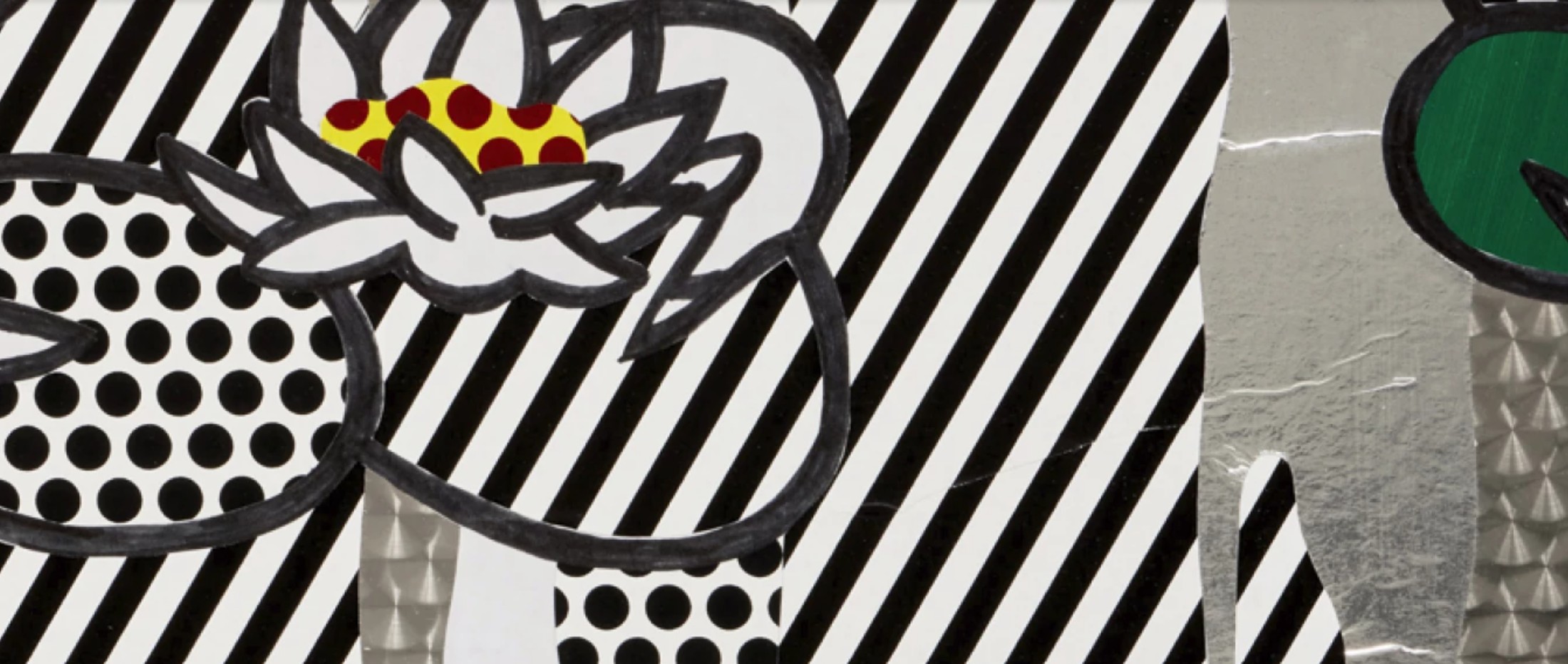
Executed nearly a century after Monet’s Nymphéas, Lichtenstein’s Water Lilies – Pink Flower (Study) places the two art historical giants in conversation. Where Monet dissolved form into light and atmosphere, in the present work, Lichtenstein reconstructs nature into stylized symbols using the language of Pop abstraction. In doing so, Lichtenstein synthesizes two important themes in his career: the appropriation of art history and the tension between hand and machine. Lichtenstein has repeatedly found influence in Monet’s oeuvre, from the Haystacks to the Rouen Cathedrals; the Water Lilies stand as his most persistent and recognizable tribute. In a syncretic melding of homage and high craft, Water Lilies – Pink Flower (Study) presents in Lichtenstein’s typical Pop aesthetic, a reminder of how mechanized processes mediate our perception of the natural world.
Water Lily Pond with Reflections (Study), 1992
Works from the Collection of Dorothy and Roy Lichtenstein
Sotheby’s New-York: 16 May 2025
Estimated: USD 500,000 – 700,000
USD 1,941,000
Water Lily Pond with Reflections (Study) | Contemporary Day Auction | 2025 | Sotheby’s
ROY LICHTENSTEIN (1923 – 1997)
Water Lily Pond with Reflections (Study), 1992
Cut painted paper, cut printed paper, aluminum foil, tape, marker and graphite on 2 joined boards
Image: 46 1/8 x 72 1/4 inches (117.2 x 183.5 cm)
Sheet: 60 x 80 1/4 inches (152.4 x 204 cm)
A captivating fusion of precision, playfulness, and homage, Roy Lichtenstein’s Water Lily Pond with Reflections (Study) from 1992 reveals the artist’s meticulous working process and deep conceptual engagement with art history. As a preparatory collage for a series of Water Lily screenprints on aluminum, the study embodies the dual meaning of the term “reflections”: both as an optical phenomenon—light shimmering off a pond—and as a gesture of looking back at the legacy of painting itself, specifically that of Claude Monet.
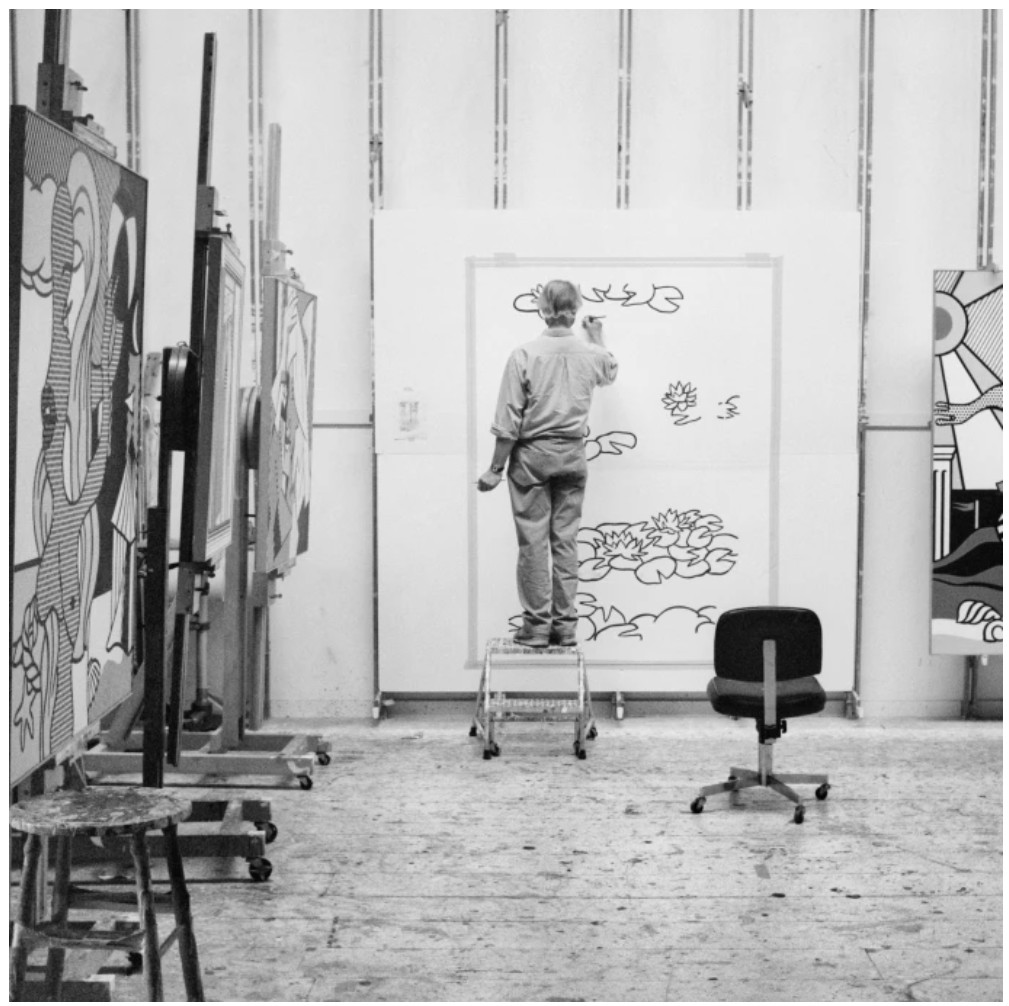
Roy Lichtenstein working on Water Lilies with Japanese Bridge, 1992. Photo © Laurie Lambrecht. Art © Estate of Roy Lichtenstein
Rendered in cut painted paper, aluminum foil, marker, and graphite, this large-scale work demonstrates Lichtenstein’s layered approach to composition. Far from being a spontaneous sketch, the collage is an architected surface, in which each wave, shadow, and abstracted lily pad is placed with deliberation. The inclusion of aluminum foil—which mimics the reflective sheen of the final prints—adds a literal brilliance, creating a dynamic surface that catches and redirects ambient light, enhancing the theme of reflection both physically and conceptually. The present work, coming directly from the artist’s estate, offers not only outstanding provenance but also a rare insight into Lichtenstein’s studio practice in the final decade of his life. Here, the hand is visible through the taped edges, cut contours, and layers of collage—a contrast to the mechanical polish of his finished aluminum panels. It reminds us that Lichtenstein, often associated with the cool detachment of Pop Art, was in fact a meticulous craftsman who maintained deep respect for the act of making.
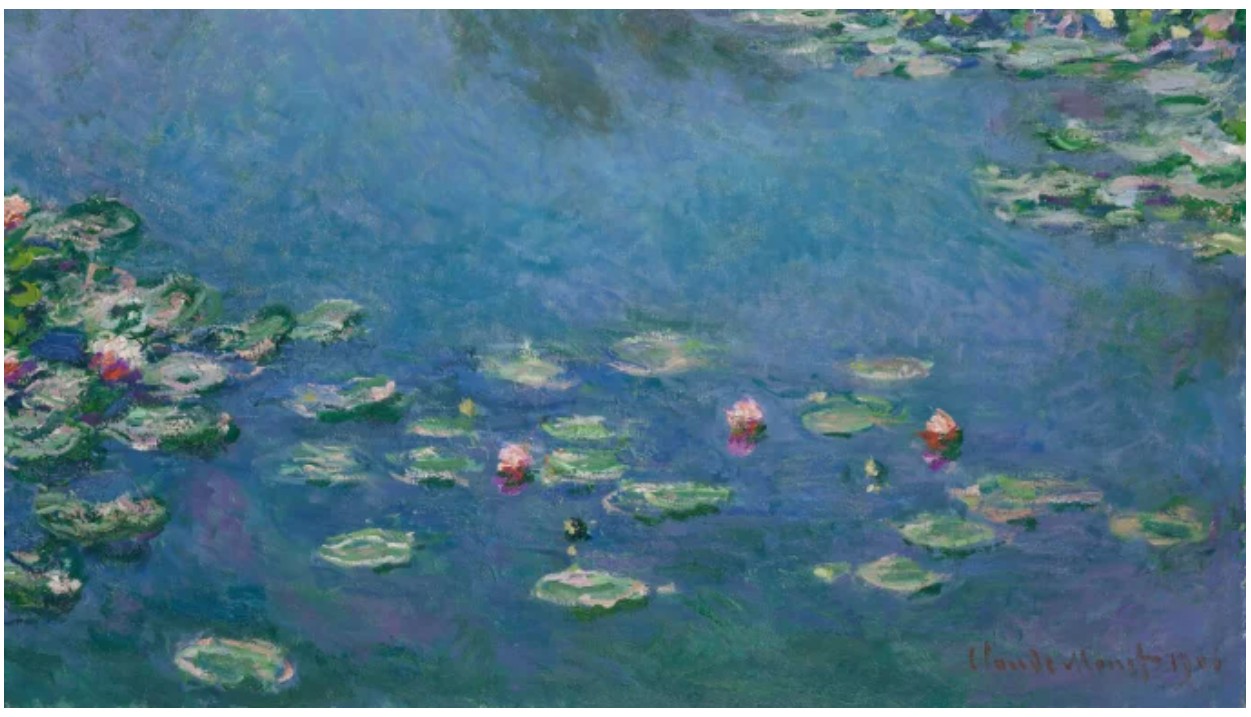
Detail of Claude Monet, Water Lilies, 1906, Art Institute of Chicago.
With Water Lily Pond with Reflections (Study), Lichtenstein enters into a transhistorical dialogue with Monet, whose own Nymphéas canvases represent one of the most iconic achievements in Impressionism. Where Monet dissolved form into light and atmosphere, Lichtenstein reconstructs nature into stylized symbols: the water surface becomes a grid of waves, the lilies sharp-edged motifs, the ripples mathematically clean. Yet this is no parody. Rather, it is an affectionate reinterpretation that celebrates the sensual qualities of light, surface, and visual pleasure through the language of Pop abstraction.
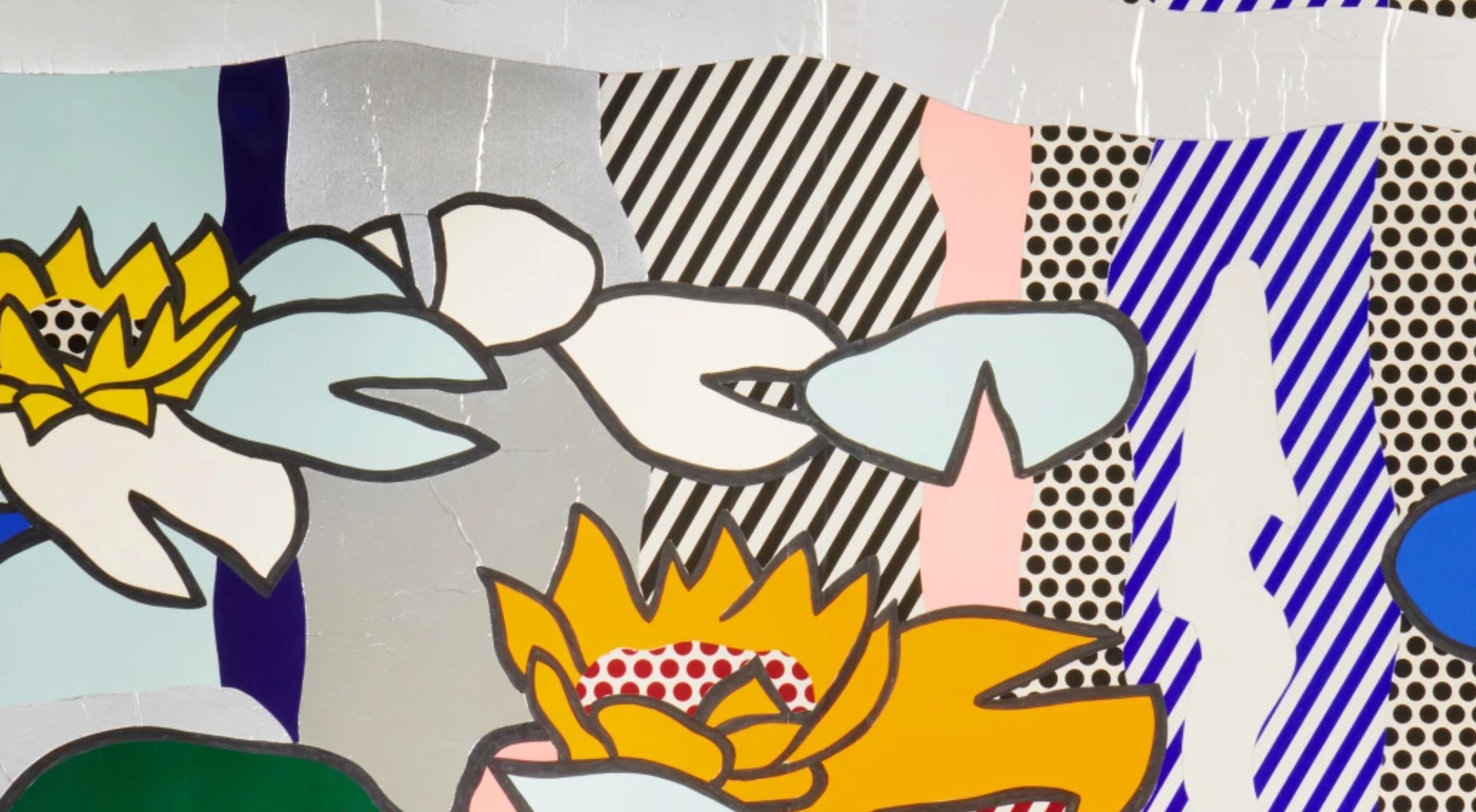
As with other late collages and print studies, the painting synthesizes several key threads in Lichtenstein’s career: the appropriation of art historical source material, the tension between hand and machine, and the transformation of painterly gesture into sign. In this case, his palette—bright yellows, blues, and greens—feels both natural and artificial, echoing both commercial graphics and the vibrant palettes of Monet’s garden at Giverny. Ultimately, Water Lily Pond with Reflections (Study) is a brilliant meditation on seeing and translating. It showcases Lichtenstein’s ability to abstract nature into visual codes while honoring the emotional resonance of the natural world. At once a preparatory work and a finished aesthetic object in its own right, it reflects the artist’s late-career mastery, bringing together humor, homage, and high craft into perfect harmony.
Water Lily (Study), 1992
Works from the Collection of Dorothy and Roy Lichtenstein
Sotheby’s New-York: 16 May 2025
Estimated: USD 100,000 – 150,000
USD 342,900
Water Lily (Study) | Contemporary Day Auction | 2025 | Sotheby’s
ROY LICHTENSTEIN (1923 – 1997)
Water Lily (Study), 1992
Colored pencil and graphite on paper
Image: 4 1/2 x 6 inches (10.8 x 15.2 cm)
Sheet: 6×8 inches (15.2 x 20.3 cm)
Signed and dated ’92 (on the verso)
“When I did paintings based on Monet’s I realized everyone would think that Monet was someone I could never do because his work has no outlines and it’s so Impressionistic. It’s laden with incredible nuance and a sense of the different times of day and it’s just completely different from my art. So, I don’t know, I smiled at the idea of making a mechanical Monet.”
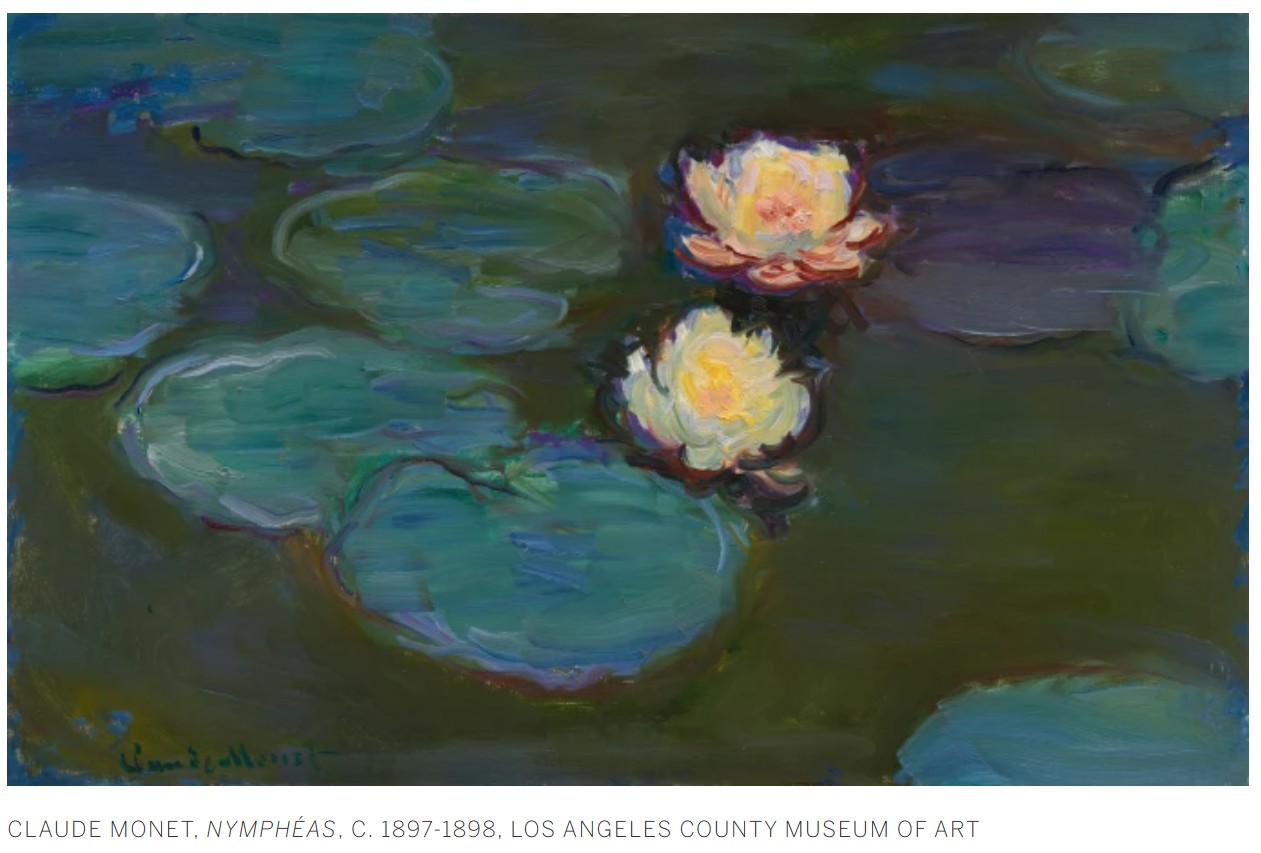
Water Lily Pond with Reflections, 1992
Works from the Collection of Dorothy and Roy Lichtenstein
Sotheby’s New-York: 21 November 2024
Estimated: USD 400,000 – 600,000
USD 1,440,000
Water Lily Pond with Reflections | Contemporary Day Auction | 2024 | Sotheby’s
ROY LICHTENSTEIN (1923 – 1997)
Water Lily Pond with Reflections, 1992
Screenprinted enamel in colors on processed and swirled stainless steel, with painted wood frame
Overall: 58 x 84 1/2 inches (147.3 x 214.6 cm)
Signed in felt-tip pen, dated ’92 and inscribed AP 2/7 (on the verso)
This work is one of 7 artist’s proofs aside from the numbered edition of 23, published by Saff Tech Arts
In a delightful homage to Claude Monet’s series of Water Lilies, Roy Lichtenstein’s Water Lily Pond with Reflections exemplifies a profound dialogue between artistic traditions, challenging viewers to reconsider the boundaries between impressionist painting and modern visual culture. Created late in Lichtenstein’s career, the present work emerges as a sophisticated meditation on artistic representation, drawing direct inspiration from Monet’s iconic water lily paintings while simultaneously dismantling and reimagining the impressionist aesthetic. Lichtenstein’s approach transforms the soft, ethereal quality of Monet’s original works into a sharp, mechanically precise interpretation that speaks to the increasingly mediated visual experiences of the late 20th century for which he is best known.
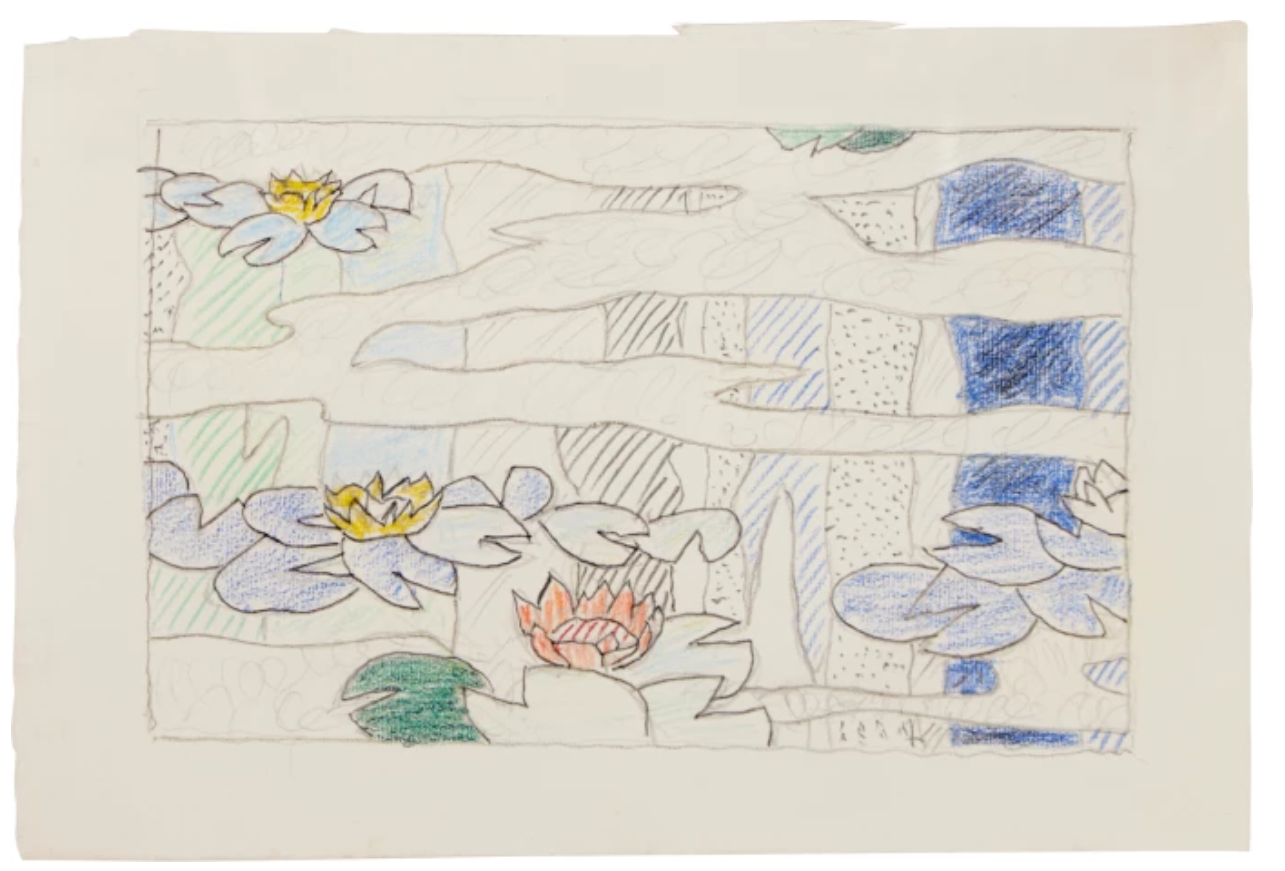
Roy Lichtenstein, Water Lily Pond with Reflections (Study), 1992.
Sold at Sotheby’s New York in November 2021 for $151,200. Private Collection. Art © Roy Lichtenstein 2024
Lichtenstein’s iconic Benday dots and stripes are here paired with swirling patterns on the reflective surface, creating a visual tension that both reference Monet’s original works yet defy traditional notions of impressionist painting. These uniform, precise dots and lines replace the fluid, organic brushstrokes of Monet’s Water Lilies, creating a rhythmic motif that deconstructs the natural landscape into a grid of mechanical reproduction. Where Monet sought to capture the ephemeral play of light and water, Lichtenstein instead presents a structured, almost mathematical interpretation of natural beauty. The dots vary in size and density, creating depth and texture that paradoxically both flatten and expand the image’s visual complexity, challenging viewers to consider how technological processes mediate our perception of the natural world. As Lichtenstein noted, “when I did paintings based on Monet’s I realized everyone would think that Monet was someone I could never do because his work has no outlines and it’s so Impressionistic. It’s laden with incredible nuance and a sense of the different times of day and it’s just completely different from my art. So, I don’t know, I smiled at the idea of making a mechanical Monet” (Roy Lichtenstein quoted in Michael Kimmelman, Portraits: Talking with Artists at the Met, The Modern, The Louvre and Elsewhere, New York 1988, p. 93).
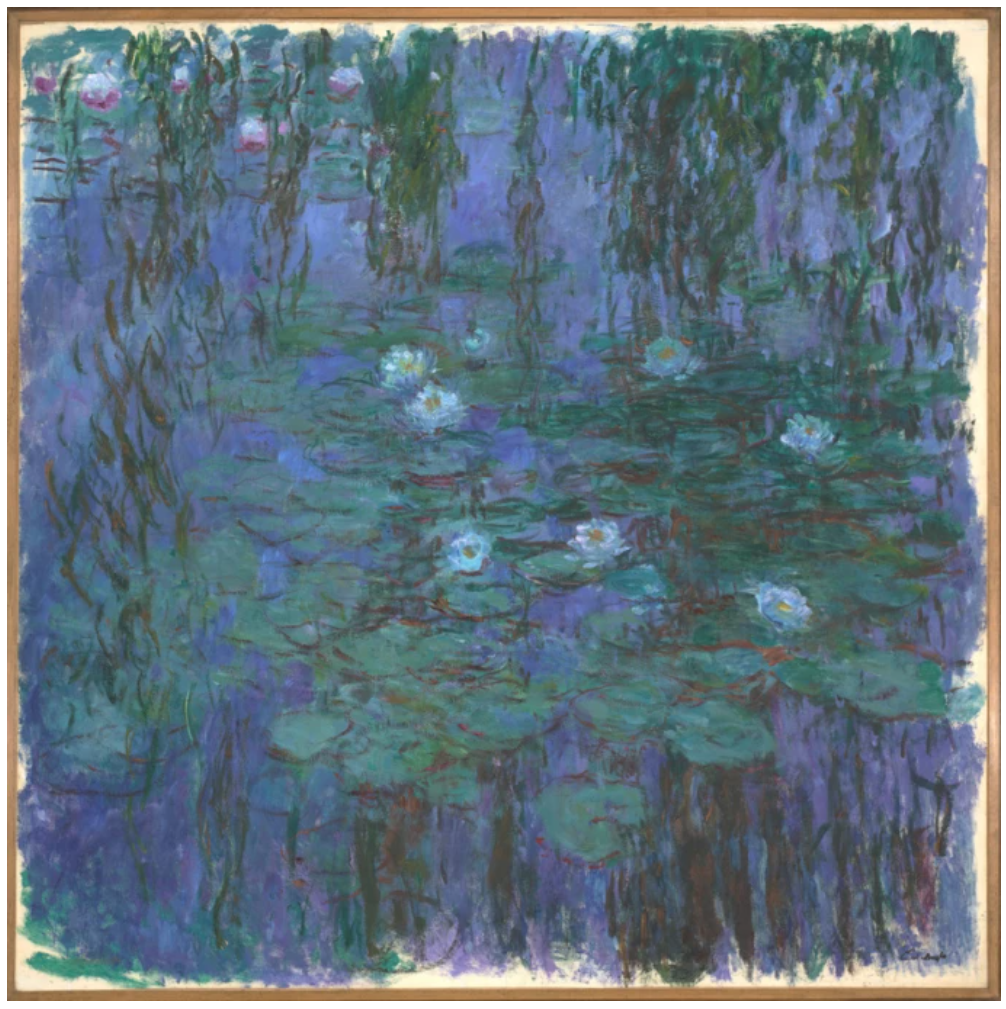
Claude Monet, Nymphéas bleus, 1981. Image © Musée d’Orsay, Dist. RMN-Grand Palais / Patrice Schmidt.
In addition to the primary colors commonly associated with Lichtenstein’s early Pop artworks, Water Lily Pond with Reflections introduces a wider tonal range, with greens, as well as orange, peach, and light blue. The solid blocks of color, created in sign painter’s enamel on the stainless steel, have a collage-like appearance and deconstruct concepts of landscape painting. While Monet’s canvases envelop the viewer in soft, painterly strokes, the present work immerses the viewer with its mirrored stainless steel surface, constantly reflecting different planes of light. Lichtenstein manages to create a visual experience that is at once reminiscent of Monet’s original water lily paintings and completely distinct from them, a testament to his ability to simultaneously honor and challenge artistic traditions.
Water Lily Pond with Reflections, 1992
Sotheby’s New-York: 19 May 2023
Estimated: USD 300,000 – 400,000
USD 1,875,000
Water Lily Pond with Reflections | Contemporary Day Auction | 2023 | Sotheby’s (sothebys.com)
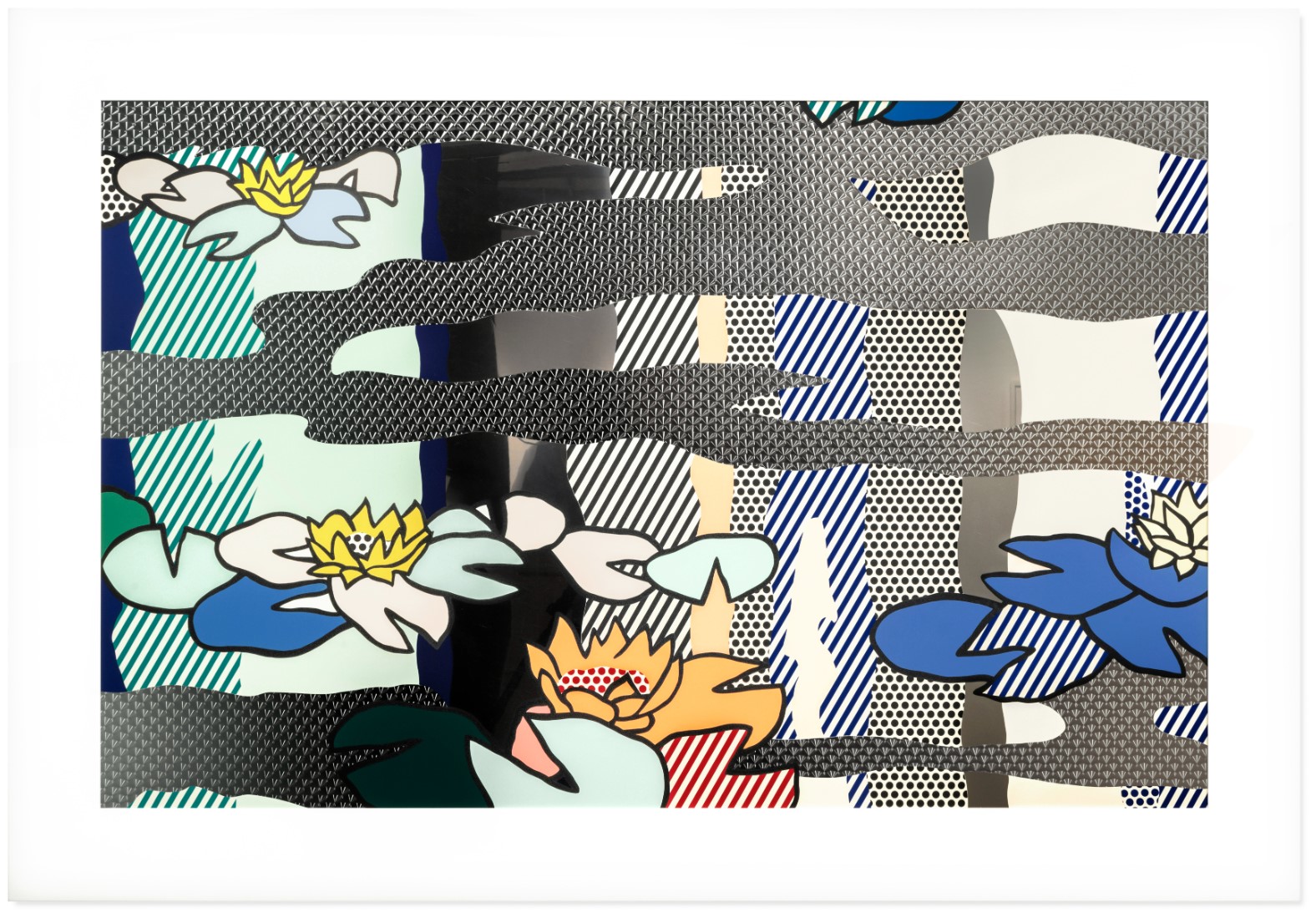
ROY LICHTENSTEIN (1923 – 1997)
Water Lily Pond with Reflections, 1992
Screen-printed enamel on processed and swirled stainless steel, in painted artist’s frame
57 3/4 x 84 1/4 inches (146.7 x 214 cm)
Signed, dated ’92 and numbered PP IV (on the reverse)
This work is presentation proof 4
An edition of 23 plus 7 artist’s proofs, 1 bon à tirer, 4 presentation proofs, 1 NGA and 2 STA.
“[W]hen I did paintings based on Monet’s I realized everyone would think that Monet was someone I could never do because his work has no outlines and it’s so Impressionistic. It’s laden with incredible nuance and a sense of the different times of day and it’s just completely different from my art. So, I don’t know, I smiled at the idea of making a mechanical Monet.”
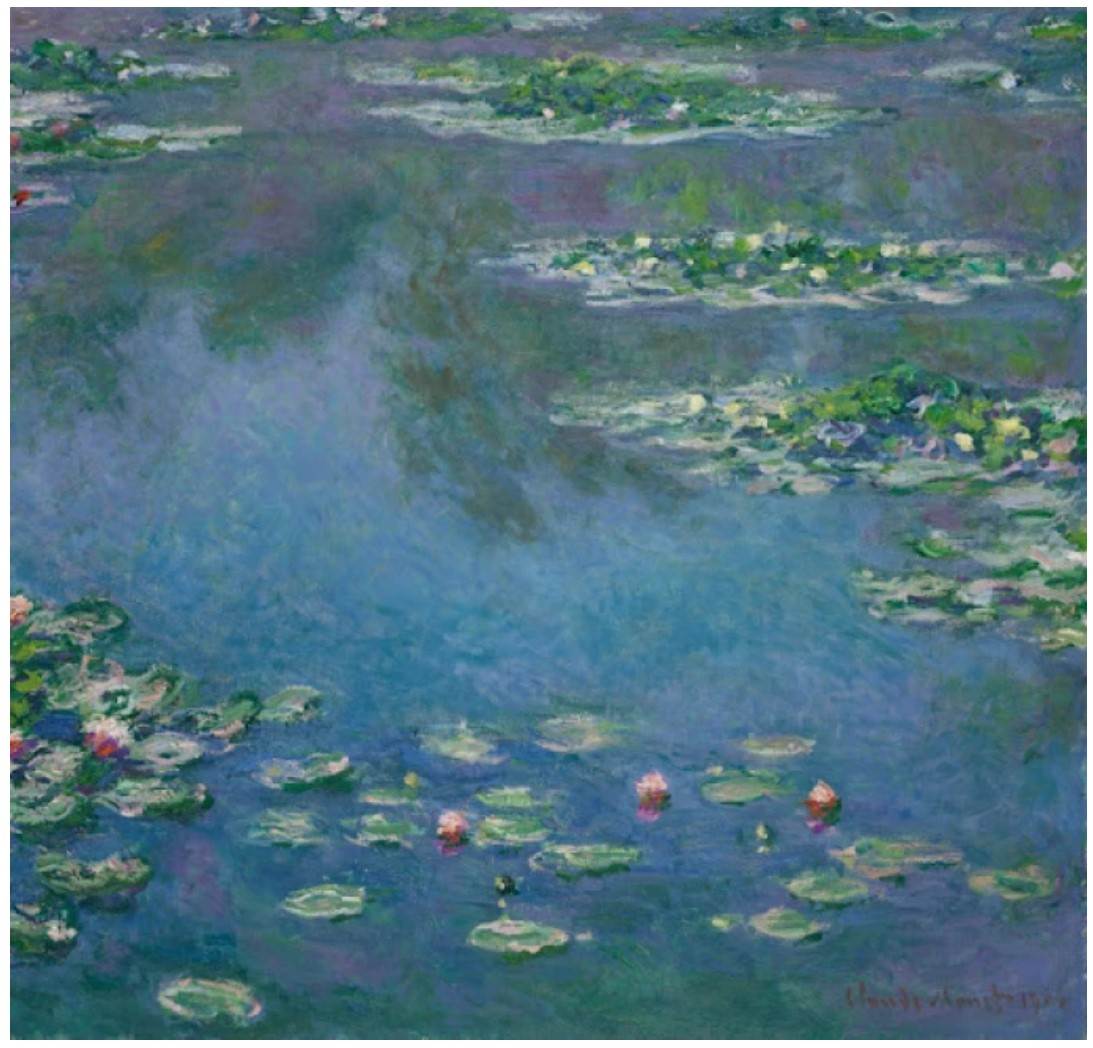
CLAUDE MONET, WATER LILIES, 1906. ART INSTITUTE OF CHICAGO. IMAGE © THE ART INSTITUTE OF CHICAGO / ART RESOURCE, NY
Imperfect Paintings, 1986
Roy Lichtenstein is widely known for his paintings based on material sourced from popular culture, creating prosaic images that are ironic in their tone. Created in 1986, Imperfect Paintings form part of an important late series in the artist’s oeuvre, in which he extended his exploration of the reduction of form at a time when ‘neo-geo’ painting was reaching its ascendancy. With this series, the painter took a playful approach to geometric abstraction, reflecting his ability to continually re-evaluate the strictures of art historical models and bring new meaning to the sign systems of mass culture.
READ ABOUT IMPERFECT PAINTINGS
FIND ALL HISTORICAL RESULTS
PLEASE CLICK ON ANY PICTURE BELOW TO ACCESS THE CATALOGUE ENTRY
Imperfect Painting, 1986
Sotheby’s New-York: 17 November 2022
Estimated: USD 1,000,000 – 1,500,000
USD 1,197,000
Imperfect Painting | Contemporary Day Auction | | Sotheby’s (sothebys.com)
ROY LICHTENSTEIN (1923 – 1997)
Imperfect Painting, 1986
Oil and Magna on shaped canvas
111 ½ x 102 inches (283.2 x 259.1 cm)
Signed and dated ’86 (on the reverse)
Imperfect Painting, 1986
Sotheby’s New-York: 19 November 2021
Estimated: USD 700,000 – 1,000,000
USD 2,682,000
Imperfect Painting | Contemporary Day Auction | | Sotheby’s (sothebys.com)
ROY LICHTENSTEIN (1923 – 1997)
Imperfect Painting, 1986
Oil and Magna on canvas
70x 85 ½ inches (177.8 x 217.2 cm)
Signed rf Lichtenstein and dated ’86 (on the reverse)
Paintings Series, 1983-1984
Painting: Silver Frame, 1984
Christie’s New-York: 17 May 2024
Estimated: USD 1,000,000 – 1,500,000
USD 1,197,000
ROY LICHTENSTEIN (1923-1997), Painting: Silver Frame | Christie’s (christies.com)
ROY LICHTENSTEIN (1923-1997)
Painting: Silver Frame, 1984
Acrylic and graphite on canvas
54×60 inches (137.2 x 152.4 cm)
Signed and dated ‘Lichtenstein ’84’ (on the reverse)
Two Paintings: Craig…, 1983
Sotheby’s New-York: 18 November 2021
Estimated: USD 12,000,000 – 18,000,000
USD 20,371,500
Two Paintings: Craig… | Contemporary Evening Auction | | Sotheby’s (sothebys.com)
ROY LICHTENSTEIN (1923 – 1997)
Two Paintings: Craig…, 1983
Oil and Magna on canvas
48×36 inches (121.9 x 91.4 cm)
Signed Roy Lichtenstein and dated ’83 (on the reverse)
Reflections, 1988-1990
In 1988, Roy Lichtenstein began working on a series of paintings in which he would return to his roots as a Pop artist while at the same time reinforcing his reputation as one of the most progressive artists of his generation. In his Reflections series, he re-investigates the comic book genre that, three decades earlier, had solidified his fame as a Pop Art master.
READ ABOUT REFLECTIONS
FIND ALL HISTORICAL AUCTION RESULTS
PLEASE CLICK ON ANY VISUAL
TO ACCESS THE CATALOGUE ENTRY
1. Paintings
Reflections on Brushstrokes, 1990
A Legacy Reimagined: Works from the Collection of Dorothy and Roy Lichtenstein
Sotheby’s New-York: 19 November 2025
Estimated: USD 1,200,000 – 1,800,000
USD 1,392,000
Reflections on Brushstrokes | Contemporary Day Auction | 2025 | Sotheby’s
ROY LICHTENSTEIN (1923 – 1997)
Reflections on Brushstrokes, 1990
Acrylic, oil and graphite on canvas
87 1/4 x 60 inches (221.6 x 152.4 cm)
Signed and dated ‘90 (on the reverse)
Reflections: Wimpy III, 1988
A Legacy Reimagined: Works from the Collection of Dorothy and Roy Lichtenstein
Sotheby’s New-York: 19 November 2025
Estimated: USD 1,000,000 – 1,500,000
USD 2,002,000
Reflections: Wimpy III | Contemporary Day Auction | 2025 | Sotheby’s
ROY LICHTENSTEIN (1923 – 1997)
Reflections: Wimpy III, 1988
Acrylic, oil and graphite on canvas
32×40 inches (81.3 x 101.6 cm)
Signed and dated ’88 (on the reverse)
Reflections: Wimpy I, 1988
Reflections on Pop: Works from the Collection of Dorothy and Roy Lichtenstein
Sotheby’s New-York: 26 September 2025
Estimated: USD 1,000,000 – 1,500,000
USD 2,856,000
ROY LICHTENSTEIN (1923 – 1997)
Reflections: Wimpy I, 1988
Acrylic, oil and graphite on canvas
32×40 inches (81.3 x 101.6 cm)
Signed and dated ’88 (on the reverse)
Untitled Reflection, 1989
Reflections on Pop: Works from the Collection of Dorothy and Roy Lichtenstein
Sotheby’s New-York: 26 September 2025
Estimated: USD 300,000 – 400,000
USD 609,600
ROY LICHTENSTEIN (1923 – 1997)
Untitled Reflection, 1989
Acrylic, oil and graphite on canvas
17 1/8 x 24 1/8 inches (43.5 x 61.2 cm)
Signed and dated ’89 (on the reverse)
Untitled Reflection, 1989
Works from the Collection of Dorothy and Roy Lichtenstein
Sotheby’s London: 25 June 2025
Estimated: GBP 120,000 – 180,000
GBP 444,400 / USD 599,940
Untitled Reflection | Contemporary Day Auction | 2025 | Sotheby’s
ROY LICHTENSTEIN (1923 – 1997)
Untitled Reflection, 1989
Acrylic, oil and graphite on canvas
17 1/8 x 24 inches (43.5 x 61 cm)
Signed and dated ‘89 (on the reverse)
Reflections: Art, 1988
Works from the Collection of Dorothy and Roy Lichtenstein
Sotheby’s New-York: 15 May 2025
Estimated: USD 4,000,000 – 6,000,000
USD 5,479,000
Reflections: Art | The Now and Contemporary Evening Auction | 2025 | Sotheby’s
ROY LICHTENSTEIN (1923 – 1997)
Reflections: Art, 1988
Acrylic, oil and graphite on canvas
44 1/2 x 76 1/4 inches (113 x 193.7 cm)
Signed and dated ’88 (on the reverse)
Reflections on Brushstrokes, 1990
Phillips Hong-Kong: 30 March 2023
Estimated: HKD 14,000,000 – 19,000,000
HKD 19,810,000 / USD 2,523,599
Roy Lichtenstein – 20th Century & Cont… Lot 18 March 2023 | Phillips
ROY LICHTENSTEIN
Reflections on Brushstrokes, 1990
Oil and magna on canvas
148.3 x 222.4 cm (58 3/8 x 87 1/2 inches)
Signed and dated ‘R. Lichtenstein 90’ on the reverse
Reflections on Thud!, 1990
Sotheby’s Hong-Kong: 19 April 2021
Estimated: HKD 78,000,000 – 108,000,000
HKD 110,072,000 / USD 14,173,212
Roy Lichtenstein 羅伊・李奇登斯坦 | Reflections on Thud! | Contemporary Art Evening Sale | | Sotheby’s (sothebys.com)
ROY LICHTENSTEIN (1923 – 1997)
Reflections on Thud!, 1990
Oil and magna on canvas
55×96 inches (139.7 x 244 cm)
Signed and dated 90 on the reverse
Reflections: Mystical Painting, 1989
Sotheby’s Hong-Kong: 9 October 2021
Estimated: HKD 30,000,000 – 45,000,000
HKD 48,026,000 / USD 6,169,281
Roy Lichtenstein 羅伊・李奇登斯坦 | Reflections: Mystical Painting 反射系列:神秘的繪畫 | Contemporary Art Evening Sale | | Sotheby’s (sothebys.com)
ROY LICHTENSTEIN (1923 – 1997)
Reflections: Mystical Painting, 1989
Oil and magna on canvas
56 ⅛ x 75 inches (142.5 x 190.5 cm)
Signed and dated 89 on the reverse
2. Studies
Reflections on Thud! (Study), 1990
A Legacy Reimagined: Works from the Collection of Dorothy and Roy Lichtenstein
Sotheby’s New-York: 19 November 2025
Estimated: USD 250,000 – 350,000
USD 482,600
WORK ON PAPER
Reflections on Thud! (Study) | Contemporary Day Auction | 2025 | Sotheby’s
ROY LICHTENSTEIN (1923 – 1997)
Reflections on Thud! (Study), 1990
Colored pencil and graphite on paper
Image: 3 5/8 x 6 1/4 inches (9.2 x 15.9 cm)
Sheet: 7 1/2 x 11 1/8 inches (19 x 28.3 cm)
Signed and dated ‘90 (on the verso)
Reflections on Señorita (Study), circa 1990
A Legacy Reimagined: Works from the Collection of Dorothy and Roy Lichtenstein
Sotheby’s New-York: 19 November 2025
Estimated: USD 400,000 – 600,000
USD 952,500
WORK ON PAPER
Reflections on Señorita (Study) | Contemporary Day Auction | 2025 | Sotheby’s
ROY LICHTENSTEIN (1923 – 1997)
Reflections on Señorita (Study), circa 1990
Colored pencil and graphite on paper
Image: 6 5/8 x 6 5/8 inches (16.8 x 16.8 cm)
Sheet: 8 1/4 x 12 1/4 inches (21 x 31.1 cm)
Reflections on Girl (Study), circa 1989
Works from The Collection of Dorothy and Roy Lichtenstein
Sotheby’s Hong-Kong: 28 September 2025
Estimated: HKD 2,000,000 – 3,000,000
HKD 3,175,000 / USD 408,100
WORK ON PAPER
ROY LICHTENSTEIN (1923 – 1997)
Reflections on Girl (Study), circa 1989
Colored pencil and graphite on paper
Image: 4 1/2 x 5 5/8 inches (11.4 x 14.3 cm)
Sheet: 10 x 13 3/4 inches (25.4 x 34.9 cm)
Reflections on the Prom (Study), 1990
Reflections on Pop: Works from the Collection of Dorothy and Roy Lichtenstein
Sotheby’s New-York: 26 September 2025
Estimated: USD 150,000 – 200,000
USD 228,600
WORK ON PAPER
ROY LICHTENSTEIN (1923 – 1997)
Reflections on the Prom (Study), 1990
Colored pencil and graphite on paper
Image: 4 1/2 x 5 1/4 inches (11.4 x 13.3 cm)
Sheet: 6 1/2 x 9 3/8 inches (16.5 x 23.8 cm)
Dated ’90 (on the verso)
Reflections on Wonder Woman (Study), circa 1989
Reflections on Pop: Works from the Collection of Dorothy and Roy Lichtenstein
Sotheby’s New-York: 26 September 2025
Estimated: USD 150,000 – 200,000
USD 254,000
WORK ON PAPER
ROY LICHTENSTEIN (1923 – 1997)
Reflections on Wonder Woman (Study), circa 1989
Colored pencil and graphite on paper
Image: 3 7/8 x 5 1/2 inches (9.8 x 14 cm)
Sheet: 10 1/8 x 13 7/8 inches (25.7 x 35.2 cm)
Reflections: Whaaam! (Study), circa 1990
Works from the Collection of Dorothy and Roy Lichtenstein
Sotheby’s New-York: 16 May 2025
Estimated: USD 250,000 – 350,000
USD 660,400
WORK ON PAPER
Reflections: Whaaam! (Study) | Contemporary Day Auction | 2025 | Sotheby’s
ROY LICHTENSTEIN (1923 – 1997)
Reflections: Whaaam! (Study), circa 1990
Colored pencil and graphite on paper
Image: 5 1/4 x 5 7/8 inches (13.3 x 14.9 cm)
Sheet: 7 1/2 x 10 1/2 inches (19.1 x 26.7 cm)
Surrealist Paintings, 1976-78
Roy Lichtenstein’s Surrealist Paintings of belong to a brief, highly structured moment in his career when the subject of his work shifts from popular imagery to art history as a primary source. Rather than quoting comics and advertisements, Lichtenstein turns to the visual repertory of twentieth-century modernism, especially Surrealism, and treats it as a set of compositional devices that can be isolated, recombined, and tested against his own pictorial language. What distinguishes this series from Surrealism in its historical sense is methodological. Classical Surrealism valued automatism, psychic association, and the production of images tied to the unconscious. Lichtenstein, by contrast, approaches Surrealism as an external vocabulary: foreshortened horizons, destabilized space, improbable juxtapositions, “symbolically functioning” objects, and dislocated figures. The “dream” is not discovered; it is constructed.
READ ABOUT SURREALIST PAINTINGS
FIND ALL HISTORICAL AUCTION RESULTS
PLEASE CLICK ON ANY PICTURE BELOW TO ACCESS THE CATALOGUE ENTRY
Figures with Rope (Study), 1978
Works from the Collection of Dorothy and Roy Lichtenstein
Sotheby’s London: 25 June 2025
Estimated: GBP 120,000 – 180,000
GBP 139,700 / USD 188,595
WORK ON PAPER
Figures with Rope (Study) | Contemporary Day Auction | 2025 | Sotheby’s
ROY LICHTENSTEIN (1923 – 1997)
Figures with Rope (Study), 1978
Graphite and colored pencil on paper
11 1/2 x 7 3/8 inches (29.3 x 18.6 cm)
Signed and dated ’78 (on the verso)
Girl with Beach Ball II, 1977
Sotheby’s New-York: 12 May 2021
Estimated: USD 12,000,000 – 18,000,000
USD 14,052,000
Girl with Beach Ball II | American Visionary: The Collection of Mrs. John L. Marion | | Sotheby’s (sothebys.com)
ROY LICHTENSTEIN (1923 – 1997)
Girl with Beach Ball II, 1977
Oil and Magna on canvas
60×50 inches (152.4 x 127 cm)
Signed and dated 77 on the reverse
I
Entablature, 1974-75
The Entablature series, produced between 1971 and 1976, represented a striking departure from the heroic narratives of his 1960s Pop. Where earlier works drew from comic books, advertisements, and the vocabulary of Abstract Expressionism, here Lichtenstein looked instead to the façades of classical and Beaux-Arts buildings. Translating cornices, moldings, and friezes into his distinctive idiom of flat color and bold outlines, he elevated ornament itself to the subject of painting. What had traditionally been the embellishment of structure became, in Lichtenstein’s hands, a structural subject in its own right.
READ ABOUT ENTABLATURE SERIES
FIND ALL HISTORICAL AUCTION RESULTS
PLEASE CLICK ON ANY PICTURE BELOW TO ACCESS THE CATALOGUE ENTRY
Entablature, 1974
A Legacy Reimagined: Works from the Collection of Dorothy and Roy Lichtenstein
Sotheby’s New-York: 19 November 2025
Estimated: USD 800,000 – 1,200,000
USD 1,270,000
Entablature | Contemporary Day Auction | 2025 | Sotheby’s
ROY LICHTENSTEIN (1923 – 1997)
Entablature, 1974
Acrylic, sand and graphite on canvas
60 x 100 1/8 inches (152.4 x 254.3 cm)
Signed and dated ‘74 (on the reverse)
Entablature, 1974
Reflections on Pop: Works from the Collection of Dorothy and Roy Lichtenstein
Sotheby’s New-York: 26 September 2025
Estimated: USD 700,000 – 1,000,000
USD 1,331,000
ROY LICHTENSTEIN (1923 – 1997)
Entablature, 1974
Acrylic, sand and graphite on canvas
60×90 inches (152.4 x 228.6 cm)
Signed and dated ’74 (on the reverse)
Entablature, 1975
Works from the Collection of Dorothy and Roy Lichtenstein
Sotheby’s New-York: 16 May 2025
Estimated: USD 500,000 – 700,000
USD 1,079,500
Entablature | Contemporary Day Auction | 2025 | Sotheby’s
ROY LICHTENSTEIN (1923 – 1997)
Entablature, 1975
Acrylic, sand and graphite on canvas
36 x 48 1/4 inches (96.5 x 122.6 cm)
Signed and dated ’75 (on the reverse)
Mirrors, 1971
In the latter half of the 1960s, Lichtenstein devoted his practice to reinterpreting icons of art history through his signature Pop Art lexicon, rooted in the aesthetic strategies of twentieth-century mass production and consumer branding. After exploring canonical art historical periods, such as Classical Antiquity, Impressionism, and Cubism, Lichtenstein considered one of the most iconic and technically challenging motifs of Western painting since the Renaissance: the mirror.
READ ABOUT MIRRORS
FIND ALL HISTORICAL AUCTION RESULTS
PLEASE CLICK ON ANY PICTURE BELOW TO ACCESS THE CATALOGUE ENTRY
Mirror #7, 1971
Phillips New-York: 17 May 2023
Estimated: USD 3,000,000 – 4,000,000
USD 2,843,000
Roy Lichtenstein – 20th Century & Contem… Lot 18 May 2023 | Phillips
ROY LICHTENSTEIN
Mirror #7, 1971
Oil and Magna on canvas
Diameter: 36 inches (91.4 cm)
Signed and dated “rf Lichtenstein ‘71” on the reverse
Mirror #9, 1970
The Macklowe Collection
Sotheby’s New-York: 16 May 2022
Estimated: USD 1,500,000 – 2,000,000
USD 6,069,500
Mirror #9 | The Macklowe Collection | | Sotheby’s (sothebys.com)
ROY LICHTENSTEIN (1923 – 1997)
Mirror #9, 1970
Oil and Magna on canvas
Diameter: 24 inches (61 cm)
Signed and dated ’70 on the reverse
Mirror #5, 1970
Christie’s New-York: 17 November 2022
Estimated: USD 3,500,000 – 5,500,000
USD 3,180,000
ROY LICHTENSTEIN (1923-1997) (christies.com)
ROY LICHTENSTEIN (1923-1997)
Mirror #5, 1970
Oil and Magna on canvas
Diameter: 24 inches (61 cm)
Signed and dated ‘rf Lichtenstein ’70’ (on the reverse)
Mirror #1, 1969
Sotheby’ New-York: 18 November 2021
Estimated: USD 1,800,000 – 2,500,000
USD 4,618,000
Mirror #1 | Contemporary Evening Auction | | Sotheby’s (sothebys.com)
ROY LICHTENSTEIN (1923 – 1997)
Mirror #1, 1969
Oil and Magna on canvas
24×18 inches (61 x 45.7 cm)
Signed Roy Lichtenstein and dated ’69 (on the reverse)
Mirror Pair, 1971-1972
Sotheby’s New-York: 19 November 2021
Estimated: USD 600,000 – 800,000
USD 1,411,500
Mirror Pair | Contemporary Day Auction | 2021 | Sotheby’s (sothebys.com)
ROY LICHTENSTEIN (1923 – 1997)
Mirror Pair, 1971-1972
Oil and Magna on canvas, in 2 parts
Each: 34×36 inches (86.4 x 91.4 cm)
Signed rf Lichtenstein and dated ’71-’72 (on the reverse of the left canvas)
Modern Paintings, 1967
In 1967, Lichtenstein expanded the parameters of his Pop Art vernacular to come face-to-face with the illustrious history of modern art. Broadening both his scope and ambition, the celebrated Pop artist now tackled the great “isms” of the Western canon. He called this series “Modern Paintings.” These beloved paintings proved to be some of his most radical and groundbreaking to date, with examples now found in prestigious museum collections around the world, including the Stedelijk Museum, Amsterdam, the Museum of Modern Art, New York, and the Hirshhorn Museum and Sculpture Garden in Washington, D.C.
READ ABOUT MODERN PAINTINGS
FIND ALL HISTORICAL AUCTION RESULTS
PLEASE CLICK ON ANY PICTURE BELOW TO ACCESS THE CATALOGUE ENTRY
Modern Painting Triptych II, 1967
A Legacy Reimagined: Works from the Collection of Dorothy and Roy Lichtenstein
Sotheby’s New-York: 18 November 2025
Estimated: USD 3,500,000 – 4,500,000
USD 4,442,000
Modern Painting Triptych II | The Now & Contemporary Evening Auction | 2025 | Sotheby’s
ROY LICHTENSTEIN (1923 – 1997)
Modern Painting Triptych II, 1967
Acrylic, oil and graphite on canvas, in three parts
Each: 36×36 inches (91.4 x 91.4 cm)
Overall: 36×108 inches (91.4 x 274.3 cm)
Signed and dated ‘67 (on the reverse)
Modern Painting with Yellow Arrow, 1967
Sotheby’s New-York: 27 September 2024
Estimated: USD 450,000 – 650,000
USD 660,000
Modern Painting with Yellow Arrow | Contemporary Curated | 2024 | Sotheby’s (sothebys.com)
ROY LICHTENSTEIN (1923 – 1997)
Modern Painting with Yellow Arrow, 1967
Acrylic, oil and graphite on canvas
16 x 24 1/4 inches (40.6 x 61.6 cm)
Signed and dated ’67 (on the reverse)
Modern Painting with Ionic Column, 1967
Christie’s New-York: 16 May 2024
Estimated: USD 6,000,000 – 8,000,000
USD 7,310,000
ROY LICHTENSTEIN (1923-1997), Modern Painting with Ionic Column | Christie’s (christies.com)
ROY LICHTENSTEIN (1923-1997)
Modern Painting with Ionic Column, 1967
Acrylic, oil and graphite on canvas
62 x 82 1/8 inches (157.5 x 208.6 cm)
Signed and dated ‘rf Lichtenstein ‘67’ (on the reverse)
Modern Painting with Small Bolt, 1967
Sotheby’s New-York: 16 November 2022
Estimated: USD 6,000,000 – 8,000,000
USD 6,873,800
Modern Painting with Small Bolt | Contemporary Evening Auction | | Sotheby’s (sothebys.com)
ROY LICHTENSTEIN (1923-1997)
Modern Painting with Small Bolt, 1967
Oil and Magna on canvas
68 ⅜ x 82 ⅛ inches (173.7 x 208.6 cm)
Signed rf Lichtenstein and dated ‘67 (on the reverse)
Modern Painting with Zigzag (Study), 1967
Reflections on Pop: Works from the Collection of Dorothy and Roy Lichtenstein
Sotheby’s New-York: 26 September 2025
Estimated: USD 80,000 – 120,000
USD 69,850
ROY LICHTENSTEIN (1923 – 1997)
Modern Painting with Zigzag (Study), 1967
Colored pencil and graphite on paper
Image: 3 7/8 x 4 5/8 inches (9.8 x 11.9 cm)
Sheet: 5 3/4 x 6 3/4 inches (14.6 x 17.1 cm)
Modular Painting with Nine Panels (Study), circa 1968
Reflections on Pop: Works from the Collection of Dorothy and Roy Lichtenstein
Sotheby’s New-York: 26 September 2025
Estimated: USD 70,000 – 100,000
USD 114,300
ROY LICHTENSTEIN (1923 – 1997)
Modular Painting with Nine Panels (Study), circa 1968
Colored pencil and graphite on paper
Image: 8 3/8 x 9 inches (21.3 x 22.9 cm)
Sheet: 8 3/8 x 11 inches (21.3 x 27.9 cm)
Modern Tapestry (Study), 1967
Sotheby’s New-York: 4 March 2025
Estimated: GBP 300,000 – 400,000
GBP 381,000 / USD 487,680
Modern Tapestry (Study) | Modern & Contemporary Evening Auction | 2025 | Sotheby’s
ROY LICHTENSTEIN (1923 – 1997)
Modern Tapestry (Study), 1967
Printed paper, marker, ink, graphite, and paint color swatches on board
21 x 26 3/8 inches (53.5 x 67 cm)
Signed (lower right)
Variously inscribed (in the margins)
Brushstrokes Sculptures
Roy Lichtenstein’s Brushstroke Sculptures sit at one of the most intelligent fault lines in postwar American art: the point where gesture, the sacred currency of Abstract Expressionism, gets translated into an image, then into an object, and finally into a kind of public monument. They are not simply “Pop in 3D”, they are a sustained argument about what painting means once it has become style, and what sculpture becomes once it starts behaving like a diagram of painting.
READ ABOUT BRUSHSTROKE SCULPTURES
FIND ALL AUCTION RESULTS
Coup de Chapeau II, 1996
A Legacy Reimagined: Works from the Collection of Dorothy and Roy Lichtenstein
Sotheby’s New-York: 18 November 2025
Estimated: USD 1,500,000 – 2,000,000
USD 3,832,000
Coup de Chapeau II | The Now & Contemporary Evening Auction | 2025 | Sotheby’s
ROY LICHTENSTEIN (1923 – 1997)
Coup de Chapeau II, 1996
Painted bronze
89 x 32 x 13 1/8 inches (226.1 x 81.3 x 33.3 cm)
Incised with the artist’s signature, numbered 0/6 and dated ‘96 (lower edge)
This work is the artist’s cast from an edition of 6 plus 1 artist’s cast
Brushstrokes, 1996-2001
A Legacy Reimagined: Works from the Collection of Dorothy and Roy Lichtenstein
Sotheby’s New-York: 18 November 2025
Estimated: USD 4,o00,000 – 6,000,000
USD 3,100,000
Brushstrokes | The Now & Contemporary Evening Auction | 2025 | Sotheby’s
ROY LICHTENSTEIN (1923 – 1997)
Brushstrokes, 1996-2001
Painted aluminum
353 1/4 x 162 x 90 inches (897.3 x 411.5 x 228.6 cm)
Incised with the artist’s signature, dated ‘96 and numbered AP (lower edge)
Incised © Estate of Roy Lichtenstein and dated 2001 (lower edge)
Conceived in 1996 and cast in 2001, this work is the artist’s proof from an edition of 1 plus 1 artist’s proof
Metallic Brushstroke Head, 1993
A Legacy Reimagined: Works from the Collection of Dorothy and Roy Lichtenstein
Sotheby’s New-York: 19 November 2025
Estimated: USD 700,000 – 1,000,000
USD 635,000
Metallic Brushstroke Head | Contemporary Day Auction | 2025 | Sotheby’s
ROY LICHTENSTEIN (1923-1997)
Metallic Brushstroke Head, 1993
Painted nickel-plated bronze
83 x 24 1/2 x 24 1/2 inches (210.8 x 62.2 x 62.2 cm)
Incised with the artist’s signature, date ‘94 and number AP 2/2 (on the base)
This work is artist’s proof 2 of 2 from an edition of 6 plus 2 artist’s proofs
Metallic Brushstroke Head, 1994
Christie’s New-York: 20 November 2025
Estimated: USD 800,000 – 1,200,000
USD 508,000
ROY LICHTENSTEIN (1923-1997), Metallic Brushstroke Head | Christie’s
ROY LICHTENSTEIN (1923-1997)
Metallic Brushstroke Head, 1994
Painted nickel-plated bronze
82 3/4 x 24 1/2 x 24 1/2 inches (210.2 x 61 x 61 cm)
Incised with the artist’s signature, number, date and stamped with the foundry mark ‘rf Lichtenstein ’94 AP 1⁄2’
(on the base)
This work is the first artist’s proof from an edition of six plus two artist’s proofs
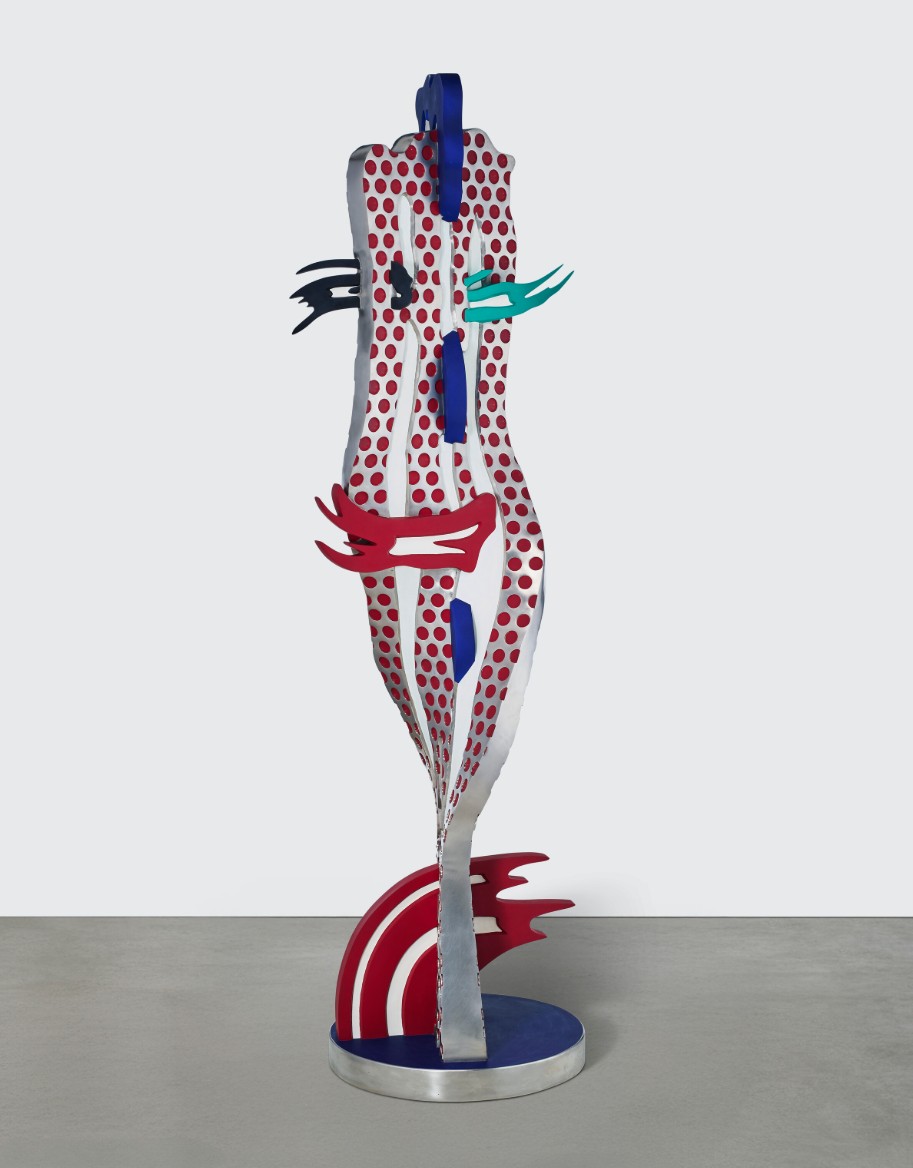
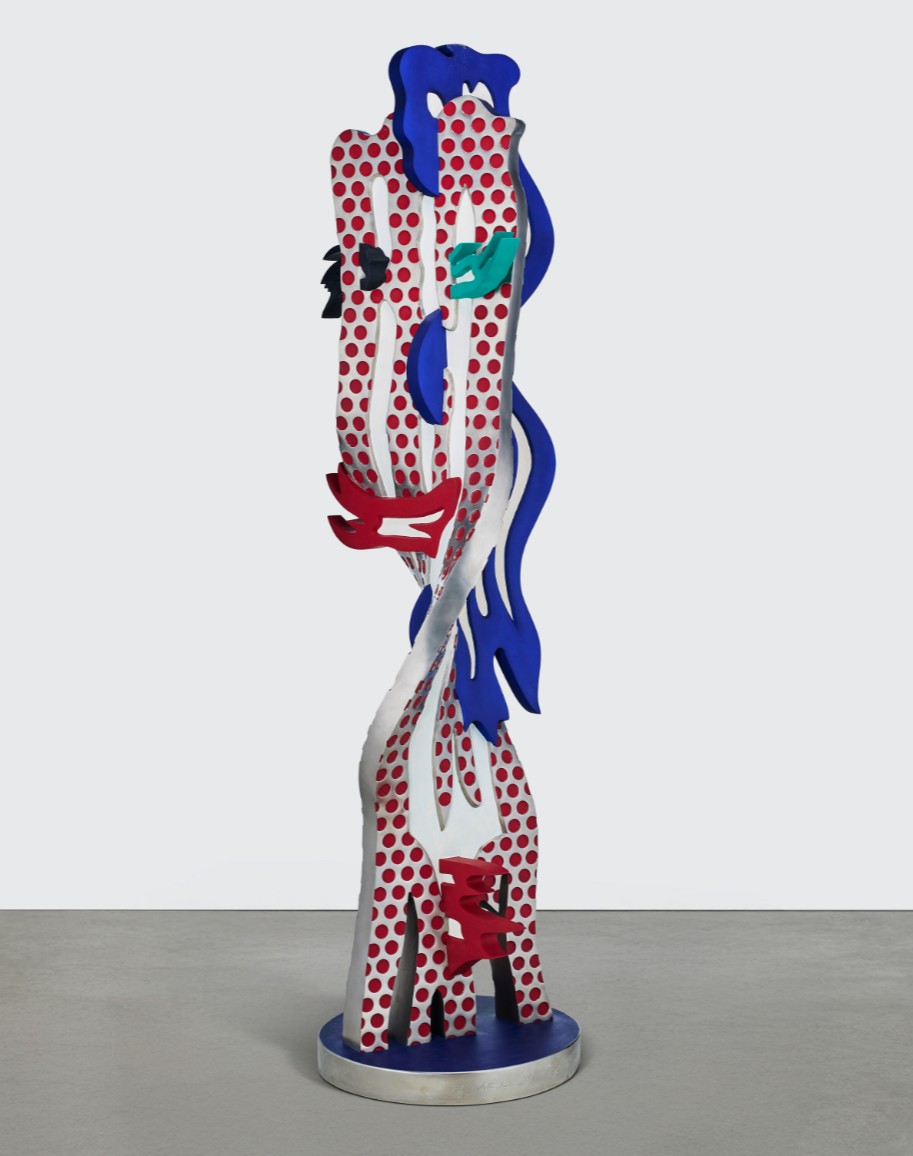
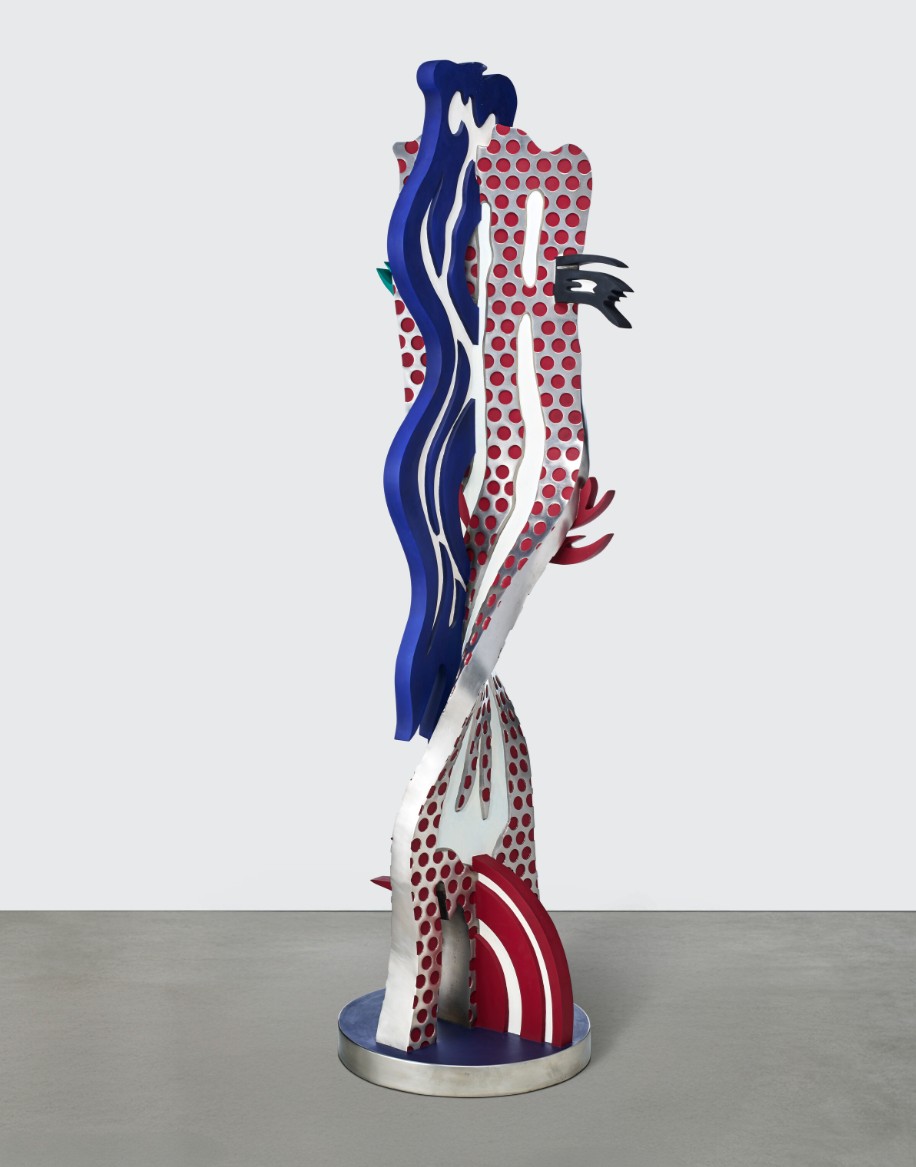
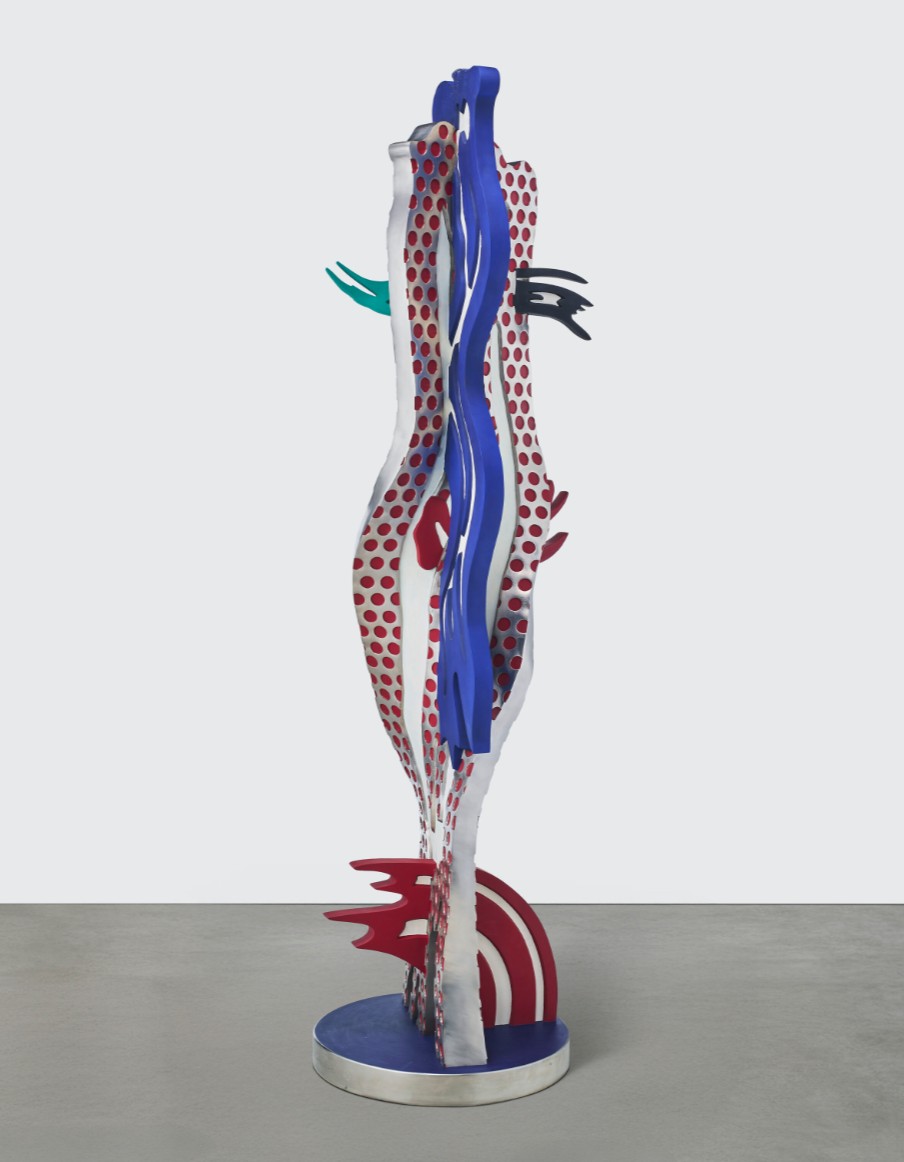
Petite coups de pinceau, 1988
Reflections on Pop: Works from the Collection of Dorothy and Roy Lichtenstein
Sotheby’s New-York: 26 September 2025
Estimated: USD 500,000 – 700,000
USD 444,500
ROY LICHTENSTEIN (1923 – 1997)
Petite coups de pinceau, 1988
Painted and patinated bronze
40 ½ x 12 x 10 inches (102.9 x 30.5 x 25.4 cm)
Incised with the artist’s signature, number 1/3 and date ’88 (on the edge of the base)
Brushstrokes in Flight, 1983
Christie’s New-York: 15 May 2025
Estimated: USD 700,000 – 1,000,000
USD 882,000
ROY LICHTENSTEIN (1923-1997), Brushstrokes in Flight | Christie’s
ROY LICHTENSTEIN (1923-1997)
Brushstrokes in Flight, 1983
Painted and patinated bronze
55 1/4 x 21 x 10 inches (140.3 x 53.3 x 25.4 cm)
Incised with the artist’s signature, number and date ‘5⁄6 rf Lichtenstein ’83’ (on the base)
This work is number five from an edition of six plus one posthumous cast
Brushstroke Head IV, 1987-1988
Christie’s New-York: 15 May 2025
Estimated: USD 600,000 – 800,000
USD 756,000
ROY LICHTENSTEIN (1923-1997), Brushstroke Head IV | Christie’s
ROY LICHTENSTEIN (1923-1997)
Brushstroke Head IV, 1987-1988
Painted and patinated bronze
43 1/4 x 23 5/8 x 11 3/4 inches (110 x 60 x 29.9 cm)
Incised with the artist’s signature, number, date and foundry mark ‘1⁄6 rf Lichtenstein 87’ (on the base)
Conceived in 1987 and cast in 1988, this work is number one from an edition of six plus one artist’s proof
Brushstroke Sculpture, 1982
Phillips New-York: 16 May 2023
Estimated: USD 500,000 – 700,000
USD 1,016,000
Roy Lichtenstein – 20th Century & Conte… Lot 117 May 2023 | Phillips
ROY LICHTENSTEIN
Brushstroke Sculpture, 1982
Paint on patinated bronze
54 1/4 x 27 1/2 x 11 inches (137.8 x 69.9 x 27.9 cm)
Incised with the artist’s signature, number, foundry mark and date “6/6 rf Lichtenstein ’82” on the base
This work is number 6 from an edition of 6
Brushstroke III, 1986
LA Modern: 24 October 2021
Estimated: USD 150,000 – 180,000
USD 212,500
ROY LICHTENSTEIN (1923–1997)
Brushstroke III, 1986
Epoxy paint, acrylic lacquer, and acrylic paint on cherry wood
63 × 27 × 11 1/2 inches (160×69×29 cm)
Signed and inscribed to verso ‘rf Lichtenstein III C-9’
Numbered to brass label on verso ‘10/10’
This work is number 10 from the edition of 10 published and fabricated by Tyler Graphics Ltd., Mount Kisco
Brushstroke I, 1986
Sotheby’s New-York: 13 May 2021
Estimated: USD 100,000 – 150,000
USD 126,000
Brushstroke I | Contemporary Art Day Auction | 2021 | Sotheby’s (sothebys.com)
ROY LICHTENSTEIN (1923 – 1997)
Brushstroke I, 1986
Acrylic and epoxy on cherry wood
52x16x8 inches (132.1 x 40.6 x 20.3 cm)
Signed on the reverse
This work is number 8 from an edition of 10, plus 1 artist’s proof and 1 publisher’s proof
(Cubist) Still Lifes, 1973-94
In 1972, Lichtenstein began a series of large scale Still Life paintings. Over the next four years he would combine this traditional form of composition with his own distinctive style to explore the deceptive simplicity and subtle complexities of pictorial form. Lichtenstein continued to explore the genre by incorporating an increasing number of art historical styles, including abstraction and cubism, into his work – testing the boundaries of his art with an increasingly rich variety of visual techniques.
READ ABOUT STILL LIFES
FIND ALL HISTORICAL AUCTION RESULTS
PLEASE CLICK ON ANY PICTURE BELOW TO ACCESS THE CATALOGUE ENTRY
Cubist Still Life with Vase and Flowers, 1973
A Legacy Reimagined: Works from the Collection of Dorothy and Roy Lichtenstein
Sotheby’s New-York: 18 November 2025
Estimated: USD 4,o00,000 – 6,000,000
USD 3,025,000
Cubist Still Life with Vase and Flowers | The Now & Contemporary Evening Auction | 2025 | Sotheby’s
ROY LICHTENSTEIN (1923 – 1997)
Cubist Still Life with Vase and Flowers, 1973
Acrylic, oil and graphite on canvas
90 1/4 x 60 inches (229.2 x 152.4 cm)
Signed and dated ‘73 (on the reverse)
Still Life with Two Grapefruits, 1994
A Legacy Reimagined: Works from the Collection of Dorothy and Roy Lichtenstein
Sotheby’s New-York: 19 November 2025
Estimated: USD 800,000 – 1,200,000
USD 1,270,000
Still Life with Two Grapefruits | Contemporary Day Auction | 2025 | Sotheby’s
ROY LICHTENSTEIN (1923 – 1997)
Still Life with Two Grapefruits, 1994
Acrylic, oil and graphite on canvas
30 1/8 x 24 1/8 inches (76.5 x 61.2 cm)
Signed and dated ’94 (on the reverse)
Cover Image for Guggenheim Magazine (Study), 1993
A Legacy Reimagined: Works from the Collection of Dorothy and Roy Lichtenstein
Sotheby’s New-York: 19 November 2025
Estimated: USD 800,000 – 1,200,000
USD 1,255,000
Cover Image for Guggenheim Magazine (Study) | Contemporary Day Auction | 2025 | Sotheby’s
ROY LICHTENSTEIN (1923 – 1997)
Cover Image for Guggenheim Magazine (Study), 1993
Graphite, tape, cut painted and printed paper on board
Image: 40 1/2 x 31 7/8 inches (102.9 x 81 cm)
Board: 48 5/8 x 40 inches (123.5 x 101.6 cm)
Signed and dated ’93 (on the verso)
Still Life with Portrait (Study), 1973
Property from the Estate of Joan and Kenneth Goldglit
Christie’s New-York: 20 November 2025
Estimated: USD 1,000,000 – 1,500,000
USD 1,016,000
ROY LICHTENSTEIN (1923-1997), Still Life with Portrait (Study) | Christie’s
ROY LICHTENSTEIN (1923-1997)
Still Life with Portrait (Study), 1973
Printed paper collage, acrylic, felt-tip pen and graphite on paperboard
42×32 inches (106.7 x 81.3 cm)
Signed and dated ‘rf Lichtenstein ’73’ (on the reverse)
Still Life Tapestry (Study), 1973
Works from the Collection of Dorothy and Roy Lichtenstein
Sotheby’s New-York: 15 May 2025
Estimated: USD 1,000,000 – 1,500,000
USD 2,063,000
Still Life Tapestry (Study) | The Now and Contemporary Evening Auction | 2025 | Sotheby’s
ROY LICHTENSTEIN (1923 – 1997)
Still Life Tapestry (Study), 1973
Cut painted paper, cut printed paper, marker on cut paper, cut paper, marker and graphite on board
Image: 32 5/8 x 24 1/2 inches (82.9 x 62.2 cm)
Board: 34 3/8 x 26 1/4 inches (87.3 x 66.7 cm)
Signed and dated 1973 (lower left)
Still Life Tapestry (Study), 1973
Works from the Collection of Dorothy and Roy Lichtenstein
Sotheby’s New-York: 16 May 2025
Estimated: USD 100,000 – 150,000
USD 406,400
Still Life Tapestry (Study) | Contemporary Day Auction | 2025 | Sotheby’s
ROY LICHTENSTEIN (1923 – 1997)
Still Life Tapestry (Study), 1973
Colored pencil and graphite on paper
Image: 4 1/4 x 3 1/8 inches (10.8 x 7.9 cm)
Sheet: 8 1/4 x 5 inches (21 x 12.7 cm)
Signed and dated ’73 (on the verso)
Yellow Still Life (Study), 1973
Works from the Collection of Dorothy and Roy Lichtenstein
Sotheby’s New-York: 16 May 2025
Estimated: USD 300,000 – 400,000
USD 533,400
Yellow Still Life (Study) | Contemporary Day Auction | 2025 | Sotheby’s
ROY LICHTENSTEIN (1923 – 1997)
Yellow Still Life (Study), 1973
Cut painted paper, acrylic, brush and ink, marker and graphite on board
Image: 25 1/4 x 36 1/2 inches (64.1 x 92.9 cm)
Sheet: 28 1/2 x 39 3/4 inches (72.4 x 101 cm)
Signed and dated ’73 (on the reverse)
Flowers, 1981
Christie’s New-York: 22 November 2024
Estimated: USD 1,000,000 – 1,500,000
USD 1,134,000
ROY LICHTENSTEIN (1923-1997), Flowers | Christie’s
ROY LICHTENSTEIN (1923-1997)
Flowers, 1981
Acrylic and graphite on canvas
48 1/8 x 36 inches (122.3 x 91.4 cm)
Signed and dated ‘rf Lichtenstein ’81’ (on the reverse)
Still Life – Red Apples, 1993
Christie’s New-York: 22 November 2024
Estimated: USD 500,000 – 700,000
USD 793,800
ROY LICHTENSTEIN (1923-1997), Still Life – Red Apples | Christie’s
ROY LICHTENSTEIN (1923-1997)
Still Life – Red Apples, 1993
Acrylic, oil and graphite on canvas
18×20 inches (45.7 x 50.8 cm)
Signed and dated ‘rf Lichtenstein ’93’ (on the reverse)
Brushstroke Still Life with Lamp, 1997
Christie’s New-York: 22 November 2024
Estimated: USD 250,000 – 350,000
USD 453,600
ROY LICHTENSTEIN (1923-1997), Brushstroke Still Life with Lamp | Christie’s
ROY LICHTENSTEIN (1923-1997)
Brushstroke Still Life with Lamp, 1997
Screenprint with hand-painted Magna on honeycomb-core aluminum panel, in artist’s frame
Aluminum panel: 49 1/2 x 68 inches (124.7 x 172.7 cm)
Overall: 54 x 72 1/2 inches (137.2 x 184.2 cm)
Signed, numbered and dated ’23⁄24 rf Lichtenstein ’97’ (on the right edge)
This work is number twenty-three from an edition of twenty-four plus eight artist’s proofs
Apple, Grapes, Grapefruit, 1974
Christie’s Hong-Kong: 28 May 2024
Estimated: HKD 15,800,000 – 25,800,000
HKD 17,557,000 / USD 2,247,728
Apple, Grapes, Grapefruit (christies.com)
ROY LICHTENSTEIN (1923-1997)
Apple, Grapes, Grapefruit, 1974
Acrylic, oil, and graphite on canvas
40 1/8 x 54 inches (101.9 x 137.2 cm)
Signed and dated ‘rf Lichtenstein ‘74’ (on the reverse)
Cubist Still Life, 1974
Sotheby’s New-York: 14 May 2024
Estimated: USD 700,000 – 1,000,000
USD 1,996,000
Cubist Still Life | Contemporary Day Auction | 2024 | Sotheby’s (sothebys.com)
ROY LICHTENSTEIN (1923 – 1997)
Cubist Still Life, 1974
Acrylic, oil, sand and graphite on canvas
20×24 inches (51 x 61.1 cm)
Signed and dated ’74 (on the reverse)
Cubist Still Life, 1974
Christie’s New-York: 16 November 2022
Estimated: USD 3,000,000 – 5,000,000
USD 2,700,000
ROY LICHTENSTEIN (1923-1997) (christies.com)
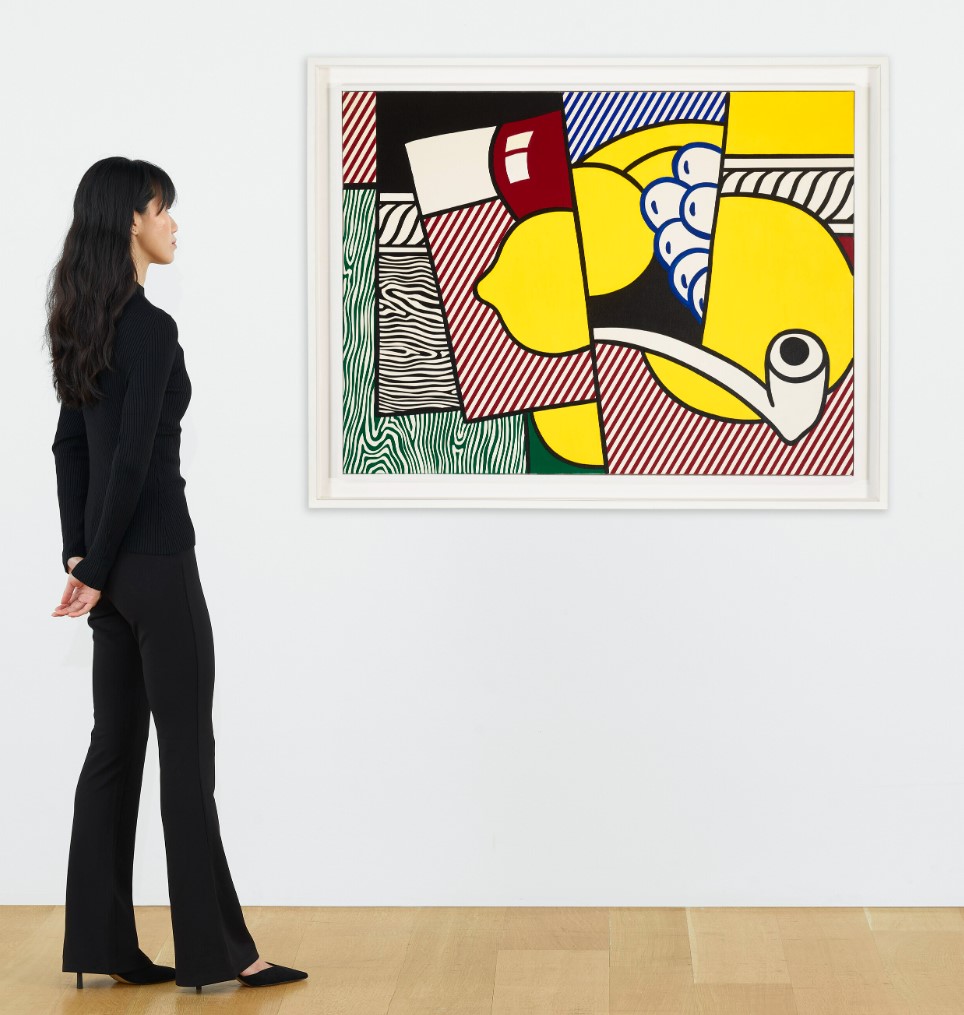
ROY LICHTENSTEIN (1923-1997)
Cubist Still Life, 1974
Oil and Magna on canvas
36×48 inches (91.5 x 121.9 cm)
Signed and dated ‘rf Lichtenstein ’74’ (on the reverse)
Purist Paintings, 1975
Championed by Le Corbusier, Fernand Léger, and Amédée Ozenfant, Purism arose in the 1920s, in the aftermath of Cubism as a movement that espoused an aesthetic tabula rasa. Seeking out everyday objects such as bottles and glasses as the subject matter for their still life compositions, Purism celebrated the functional quality of these utilitarian items by paring them down their most elemental form. Once seen as controversial, the Purist interest in flattening the images of the everyday became absorbed in the discourse of Modern Art. Informed both by the Purist interest in ubiquitous objects, and Pop’s engagement with generic consumer good advertisements, Lichtenstein’s Purist Pictures unite the mutual ambition of both movements to distil a composition to one which is immediately recognizable.
READ ABOUT PURIST PAINTINGS
FIND HISTORICAL AUCTION RESULTS
PLEASE CLICK ON ANY PICTURE BELOW TO ACCESS THE CATALOGUE ENTRY
Purist Still Life with Pitcher, 1975
Works from the Collection of Dorothy and Roy Lichtenstein
Sotheby’s London: 24 June 2025
Estimated: GBP 2,500,000 – 3,500,000
GBP 3,151,000 / USD 4,253,850
Purist Still Life with Pitcher | Modern & Contemporary Evening Auction | 2025 | Sotheby’s
ROY LICHTENSTEIN (1923 – 1997)
Purist Still Life with Pitcher, 1975
Acrylic, oil and graphite on canvas
69 7/8 x 40 1/8 inches (177.6 x 101.9 cm)
Signed and dated ’75 (on the reverse)
Purist Painting with Pitcher, Glass and Classical Column, 1975
Christie’s New-York: 19 November 2024
Estimated: USD 4,000,000 – 6,000,000
USD 4,648,000
ROY LICHTENSTEIN (1923-1997), Purist Painting with Pitcher, Glass and Classical Column | Christie’s
ROY LICHTENSTEIN (1923-1997)
Purist Painting with Pitcher, Glass and Classical Column, 1975
Acrylic, oil and graphite on canvas
60×40 inches (152.4 x 101.6 cm)
Signed and dated ‘rf Lichtenstein ’75’ (on the reverse)
Art History
Eclipse of the Sun II, 1975
Reflections on Pop: Works from the Collection of Dorothy and Roy Lichtenstein
Sotheby’s New-York: 26 September 2025
Estimated: USD 2,500,000 – 3,500,000
USD 2,576,000
ROY LICHTENSTEIN (1923 – 1997)
Eclipse of the Sun II, 1975
Acrylic, oil and graphite on canvas
70×54 inches (177.8 x 137.2 cm)
Signed and dated ’75 (on the reverse)
Executed in 1975, Eclipse of the Sun II stands as a pivotal achievement in Roy Lichtenstein’s career, showcasing his ability to transform historical and cultural imagery into the bold, graphic language of Pop Art while highlighting his sustained engagement with the dialogue between past and contemporary visual culture. As curator Diane Waldman observes, Eclipse of the Sun II opens up a transhistorical dialogue with the twentieth century movement of Futurism: “Giacomo Balla’s Mercury Passing in Front of the Sun as Seen through a Telescope, 1914, is the antecedent for Eclipse of the Sun II, 1975. In this painting, Lichtenstein has captured the centrifugal force, the intersecting arcs, the energy and thrust of the original and… made his own stylistic interpretation of the innovations that catapulted the Futurists into a prominent position among the early twentieth-century Modernists.” (Exh. Cat., New York, Solomon R. Guggenheim Museum (and traveling), Roy Lichtenstein: A Retrospective, 1993, p. 241). This monumental work unites Cubist and Futurist concerns of perspective and space with Lichtenstein’s practice of reflection, appropriation, and reimagination, all rendered in the precise, graphic style of his Pop vernacular. Returning to public view for the first time since the watershed exhibition Roy Lichtenstein: A Retrospective organized at the Solomon R. Guggenheim Museum, New York, Eclipse of the Sun II witnesses Roy Lichtenstein’s creativity at its peak.
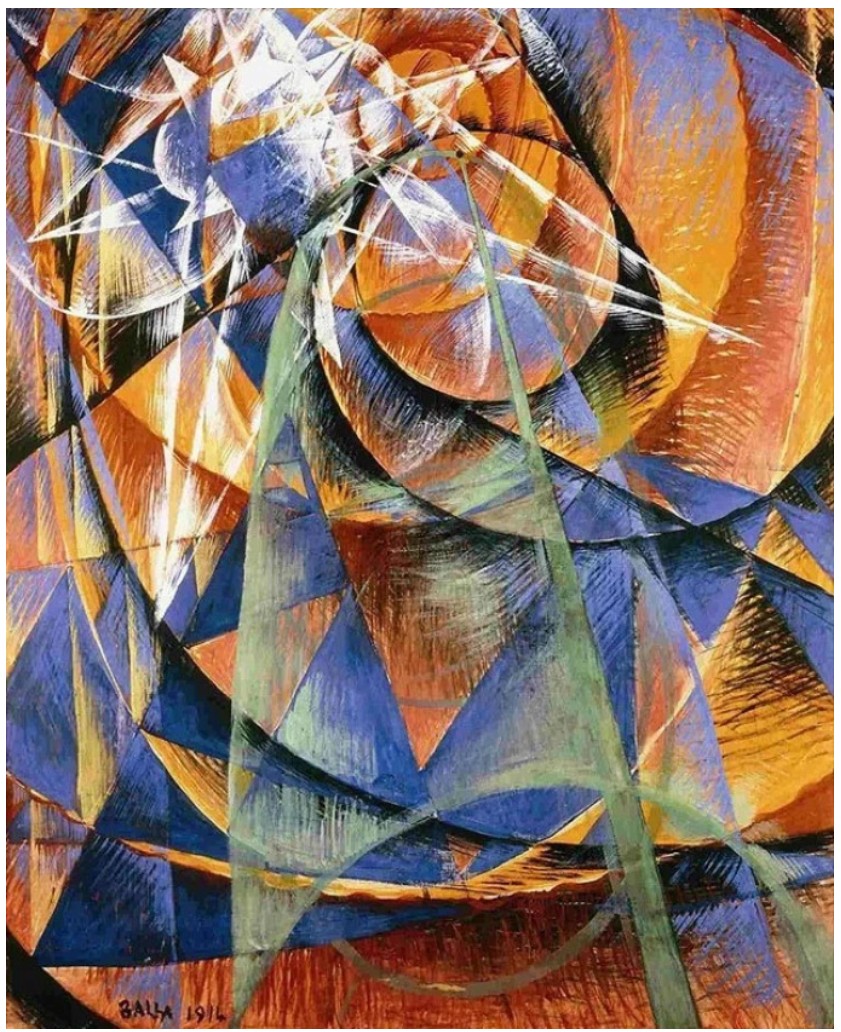
Giacomo Balla, Mercury Passing in Front of the Sun as Seen Through a Telescope, 1914.
Private Collection. Art © 2025 Artists Rights Society (ARS), New York / SIAE, Rome
Balla’s Mercury Passing in Front of the Sun as Seen through a Telescope is a series of paintings depicting the artist’s observation of the Transit of Mercury through a telescope, juxtaposing bright colors, overlapping spirals, and jagged angular motifs to capture a fleeting, transitional moment with a distinct optical dynamism. Central to his intellectual project was the Italian Futurist obsession with portraying movement, speed, motion, and energy, to make an art fit for a new world that opened up by the advent of the twentieth century. After observing the Transit of Mercury on November 7, 1914, Balla created these paintings that strongly reflect the assertions of the Futurist manifesto: “We declare that the splendor of the world has been enriched with a new form of beauty, the beauty of speed. … We will sing the praises of man holding the fly-wheel of which the ideal steering-post traverses the earth impelled itself around the circuit of its own orbit. The poet must spend himself with warmth, brilliancy and prodigality to augment the fervour of the primordial elements.” (Filippo Tommaso Marinetti, “Declaration of Futurism,” Poesia, vol. 5, no. 6, April 1909, p.1)
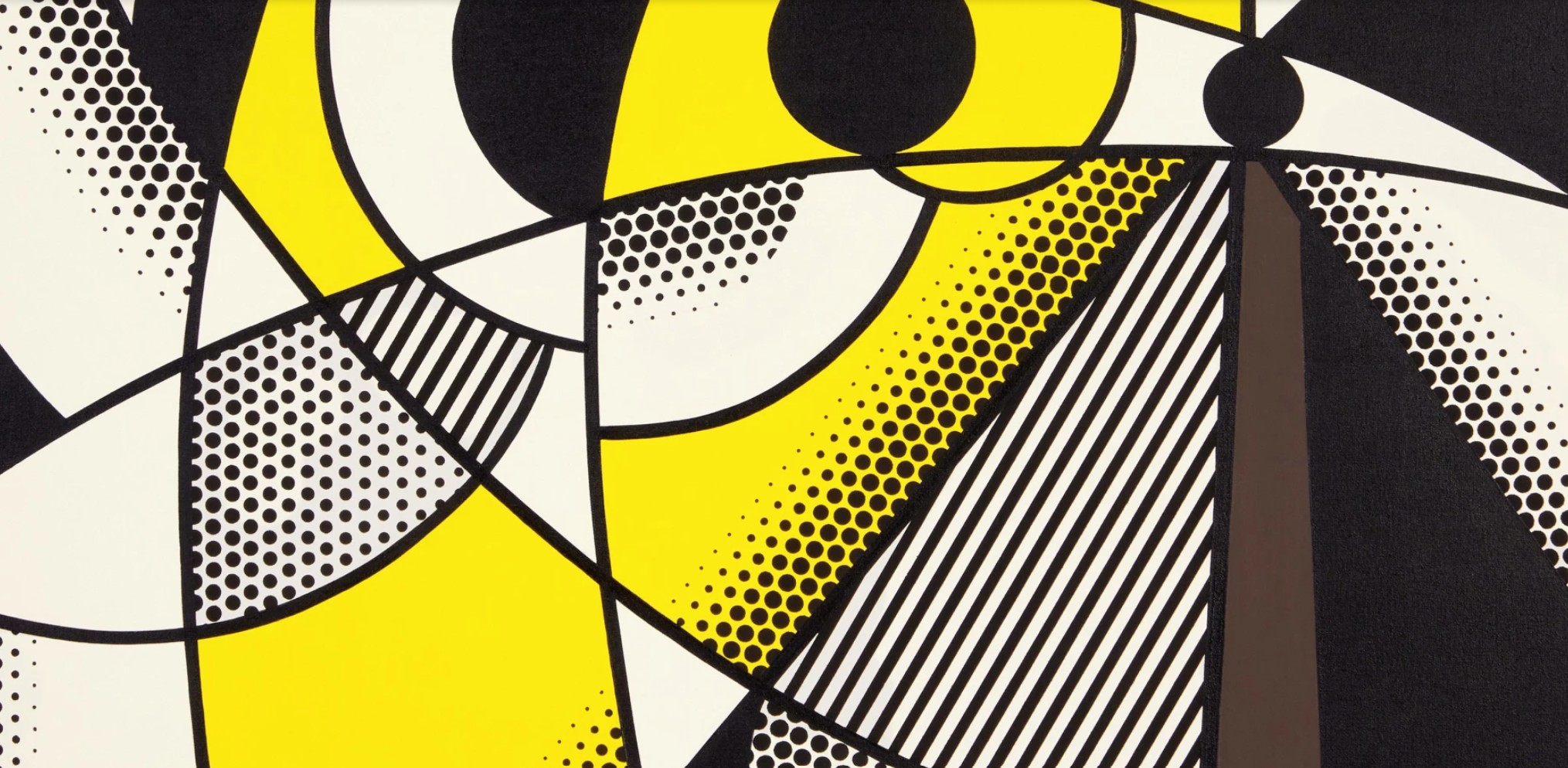
“I am nominally copying, but I am really restating the copied thing in other terms. In doing that, the original acquires a totally different texture. It isn’t thick or thin brushstrokes, it’s dots and flat colors and unyielding lines.”
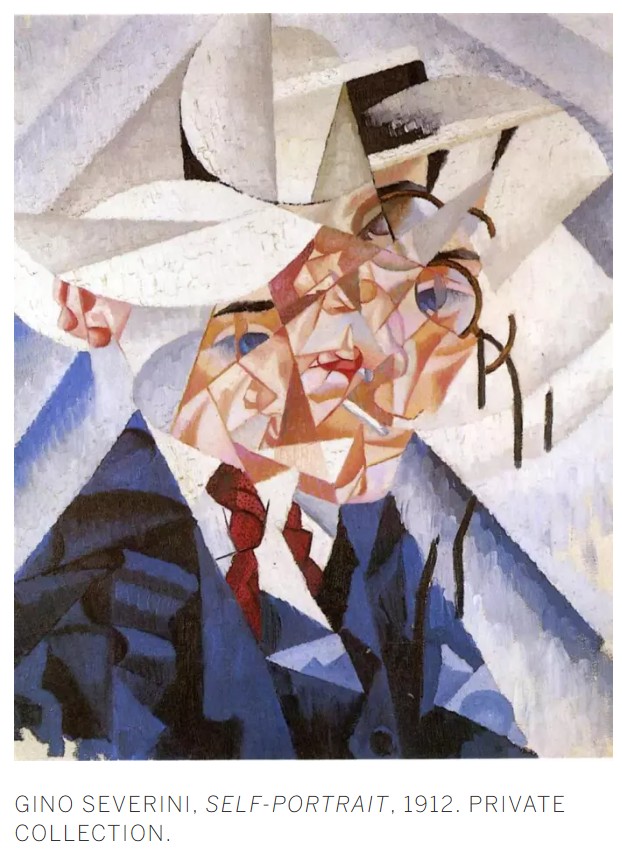
While remaining faithful to Balla’s composition, Lichtenstein boldly reimagines the stellar phenomenon in his own singular vision. In Eclipse of the Sun II, a black circle arcs across the composition, suggesting Mercury passing in front of the Sun. Bright yellow planes evoke sunlight, while shadows appear in black, navy, and dark brown. From these rays, the artist’s iconic Ben-Day dots and diagonal lines add further nuance to the scene’s fractured optical complexities.
Lichtenstein’s invocation of Balla’s work in his characteristic Pop style immediately complicates the dichotomy between “high” culture of avant-garde art and the “low” aesthetics of commercial imagery. Here, the artist’s contention with art historical precedent at once honors the legacy of artistic forebears while brilliantly blurring the boundaries of art.
Eclipse of the Sun II represents Lichtenstein at the height of his intellectual and artistic rigor, interrogating notions of originality, authorship, and meaning while engaging with the visual language of earlier Modern masters. His precise, almost industrial brushwork creates a sense of stillness and permanence, contrasting with the dynamism of Balla’s original Futurist strokes. In doing so, Lichtenstein transforms the expressive gestures of Italian Futurism into his own system of mechanized mark-making, elevating the source material from simple reference to a site of critical play. Mercury Passing in Front of the Sun as Seen through a Telescope is no longer a radical spectacle of nature but a codified image, reinterpreted and recontextualized. Where Balla’s work invited viewers to experience the cosmic event anew, Lichtenstein extends that engagement a step further: appropriation twice removed, from nature to Balla, from Balla to Lichtenstein.
Alma Thomas, The Eclipse, 1970. Smithsonian American Art Museum. Art © 2025 Alma Thomas
Eclipse of the Sun II is a seminal example of Lichtenstein’s career-long engagement with paragons of the art historical canon through his distinctive Pop idiom. At its crux a painting about painting, the present work is a bold statement on the constructed nature of vision, the portability of style, the interlockings of art history, and the enduring dialogue between innovation and imitation. The present work and its sister work, Eclipse of the Sun from 1975, together shed light on Lichtenstein’s perspective on Futurism and the legacies of its visual dynamism. Its strategies of appropriation underscore the conceptual depth lying behind his artistic legacy of making art about art, rewriting art history in his singular sensibilities. Coming directly from the artist’s estate, Eclipse of the Sun II—with its conceptual depth and refined composition—stands at the center of Lichtenstein’s celebrated legacy.
Beach Scene with Starfish (Study), 1995
Works from the Collection of Dorothy and Roy Lichtenstein
Sotheby’s London: 25 June 2025
Estimated: GBP 300,000 – 400,000
GBP 254,000 / USD 342,900
Beach Scene with Starfish (Study) | Modern & Contemporary Evening Auction | 2025 | Sotheby’s
ROY LICHTENSTEIN (1923 – 1997)
Beach Scene with Starfish (Study), 1995
Colored pencil and graphite on paper
Image: 5 1/2 x 11 1/4 inches (13.9 x 28.4 cm)
Sheet: 9 1/8 x 16 3/4 inches (23.1 x 42.6 cm)
Signed and dated ’95 (lower right)
Executed in 1995, Roy Lichtenstein’s Beach Scene with Starfish (Study) encapsulates the artist’s career-long dialogue with the unprecedented creativity of Pablo Picasso in striking clarity. Through his characteristically bold colours and graphic logic, Lichtenstein renders a dynamic tableau at the water’s edge. In direct compositional reference to Picasso’s iconic Baigneuses au Ballon, Lichtenstein reimagines the beach scene through his revered Pop Art lens, crafting a billet-doux – at once playful, irreverent, and intellectually astute – to the modernist master he so admired. Executed just two years before Lichtenstein’s death, Beach Scene with Starfish (Study) marks the culmination of his ongoing engagement with the bather motif – one he revisited and reimagined throughout his career. Affirming the work’s importance in Lichtenstein’s oeuvre, the fully realised Beach Scene with Starfish, painted later that same year, is held in the esteemed collection of the Fondation Beyeler, Switzerland. With exceptional provenance, the present work comes from the personal collection of Dorothy and Roy Lichtenstein, where it has remained since its creation.
Archival materials pictured in Roy Lichtenstein’s studio. Photo by Laurie Lambrecht. Art © Estate of Roy Lichtenstein
Beach Scene with Starfish (Study) presents an outstanding example of the artist’s sustained investigations into the aesthetic sensibility of American consumption and commercialism. Demonstrating his artistic process, Lichtenstein’s colored shading in the present work is transformed into Ben-Day dots in the fully realized painting. In his contributions to the art historical genre of bathers, Lichtenstein based his depictions of women on the DC comics and advertisements that he collected and scoured. In so doing, Lichtenstein confronts his audience with the idealised vision and sexualisation of women as broadcast in popular culture. In the present work, the erotic mythology and formal vocabulary of Picasso’s Marie-Thérèse years is recontextualized by Lichtenstein’s aesthetic vocabulary. Lichtenstein’s depiction of a beach hut in the present work directly references the same secluded structure Picasso often painted, where he and Marie-Thérèse would meet for their clandestine rendezvous. Recalling the joyous scene Henri Matisse depicted in La Danse I, housed in the Museum of Modern Art, Lichtenstein similarly draws a composition with remarkable fluidity and dynamic movement.
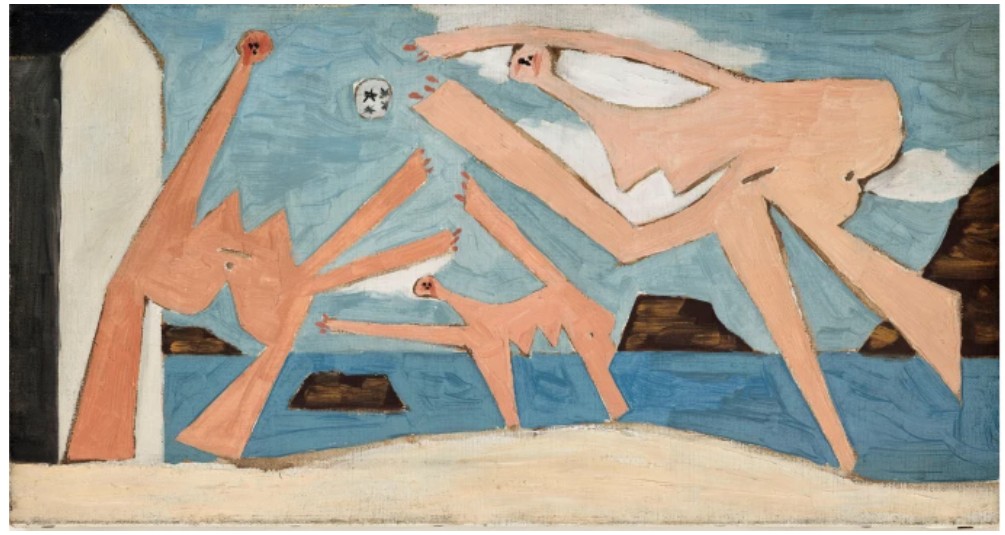
Pablo Picasso, Baigneuses au Ballon, 1920. Musée Picasso, Paris.
Image: © DeAgostini Picture Library/Scala, Florence. Artwork: © Succession Picasso / DACS, London 2025
While still heavily referencing Picasso, the present work no longer bears the weight of surrealist imagery that Lichtenstein interrogated in the 1970s. Instead, Lichtenstein’s deliberately iconographic encoding of pointed allusions to Picasso is paired with a Pop sensibility that distinguishes his 1990s Nudes as markedly different from his previous work. Lichtenstein’s earliest foray into the subject is marked by his iconic Girl with Ball (1961), held in the Museum of Modern Art, New York, which distilled the visual codes of post-war advertising into a tightly composed Pop image. Lichtenstein’s second series of bathers emerged in 1977, comprising a body of surrealist-inflected beach scenes, each filtered through the narrative lens of Picasso. While other titans of art history – such as Paul Cézanne, with his lifelong preoccupation with bathers, and Salvador Dalí, with his biomorphic nudes – also served as touchstones, Picasso’s profound influence on Lichtenstein extended beyond mere subject matter.
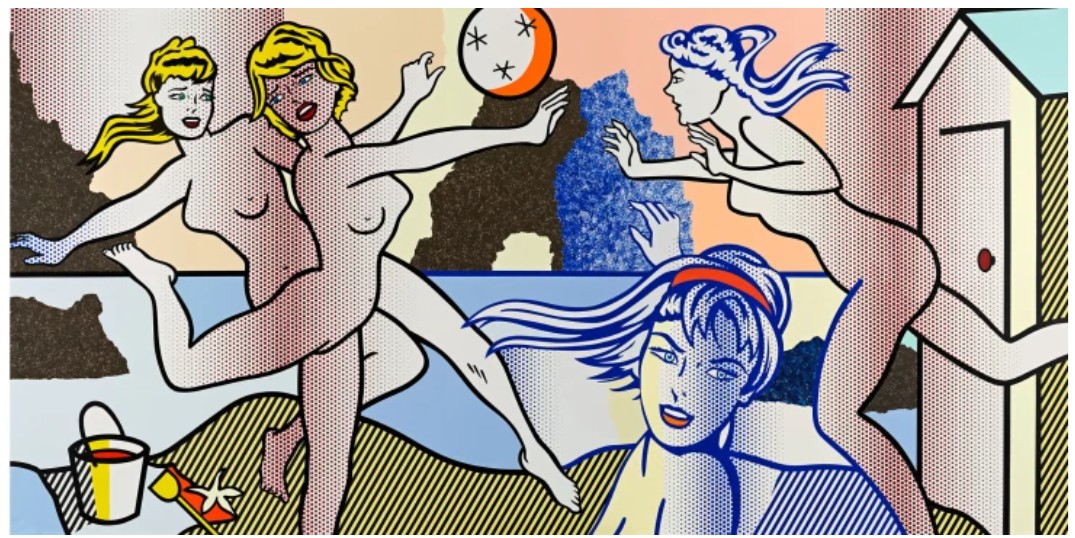
Roy Lichtenstein, Beach Scene with Starfish, 1995. Fondation Beyeler, Riehen/Basel, Beyeler Collection.
Artwork: © Estate of Roy Lichtenstein / DACS 2025
A tour de force of late Lichtenstein, Beach Scene with Starfish (Study) encapsulates the artist’s singular ability to distil high modernism through the seductive vernacular of Pop. At once homage and critique, the work demonstrates Lichtenstein’s deep reverence for Picasso while asserting his own place within the canon of twentieth-century art. Rich in historical allusion, conceptual wit, and visual vitality, this radiant composition stands not only as a culminating statement in Lichtenstein’s celebrated bather series, but as a testament to his lifelong ambition: to make pictures that both reflect and reshape the cultural imagery of his time.
Homage to Max Ernst (Study), 1975
Works from the Collection of Dorothy and Roy Lichtenstein
Sotheby’s London: 25 June 2025
Estimated: GBP 100,000 – 150,000
GBP 254,000 / USD 342,900
Homage to Max Ernst (Study) | Contemporary Day Auction | 2025 | Sotheby’s
ROY LICHTENSTEIN (1923 – 1997)
Homage to Max Ernst (Study), 1975
Acrylic, marker, graphite, correction fluid and paper collage on card
26 x 19 7/8 inches (66 x 50.5 cm)
Signed and dated ’75 (on the verso)
The present Homage to Max Ernst (Study) is an early example of Roy Lichtenstein’s forays into Surrealism. The work was commissioned for the print portfolio titled Bonjour Max Ernst (1975), which featured works by 24 artists. each paying tribute to the German Dadaist and Surrealist. Other artists in the portfolio included Man Ray, Joan Miró, Henry Moore, Dorothea Tanning and Niki de Sain-Phalle. The late 1970s marked a period of transition for Lichtenstein, as he moved away from his earlier comic-inspired imagery toward a deeper engagement with art history and stylistic conventions, producing a significant body of Surrealist-inspired works. Executed in 1975, the present work is an early example from this Surrealist phase, combining Lichtenstein’s signature formal characteristics with stylistic references to Ernst. In particular, the present work bears a striking resemblance to The Kiss from 1927, housed in the Peggy Guggenheim collection. Significantly, The Kiss itself also alludes to Ernst’s forebearers, specifically to Renaissance compositions of The Virgin and Child with Saint Anne by Leonardo da Vinci (1503–19).
Max Ernst, The Kiss, 1927
The Solomon R. Guggenheim Foundation, Peggy Guggenheim Collection, Venice
Artwork: © ADAGP, Paris and DACS, London 2025
By the 1940s, when Lichtenstein attended art school at Ohio State University, Surrealism had gained significant acclaim in the United States, with major exhibitions and surveys taking place across the country. Prominent figures such as Peggy Guggenheim championed European Surrealism, while institutional shows like Abstract and Surrealist Art in America helped cement the movement’s popularity among American audiences and artists. Indeed, Lichtenstein’s paintings, drawings, and sculptures from the late 1940s and early 1950s often contain Surrealist elements, populated by biomorphic plants and dreamlike, nocturnal creatures. As a pioneer of the Dada movement and an influential figure within Surrealism, Ernst would have been well known to Lichtenstein during this formative period. In the present composition, a curvilinear form spirals inward, evoking a nautilus shell. Superimposed on this central shape is a heart-like form with two atria, flanked by hand-like appendages seemingly grasping a circular object. This ambiguous biological motif is further complicated by fragmented forms and layered colors and patterns, echoing Ernst’s Cubist compositions and Surrealist subjects. In the lower right corner, an Ionic Greek column emerges – a recurring motif throughout Lichtenstein’s oeuvre. Classical Greek art and architecture served as rich symbolic and visual sources, allowing Lichtenstein to explore the interplay between antiquity and modernity, tradition and innovation, and to invoke Classical “high” art within the context of modernist abstraction. This juxtaposition mirrors Ernst’s own fusion of disparate visual languages.
“I’d like to use the term ‘dealing with’ than ‘parody’. I’m sure there are certain aspects of irony, but I get really involved in making the paintings when I’m working on them, and I think to just make parodies or to be ironic about something in the past is much too much of a joke for that to carry trout work as a work of art.”
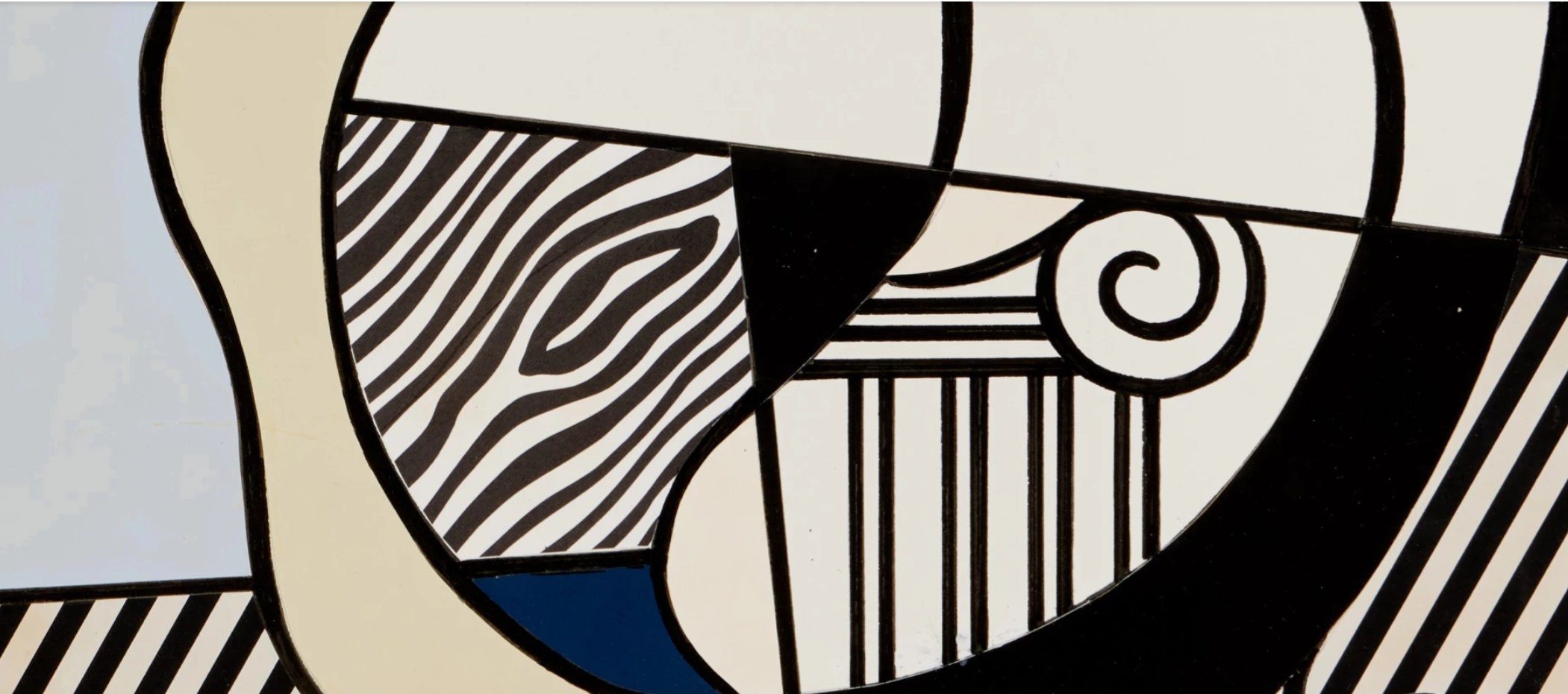
The faux-wood pattern in the centre of the composition also nods to Ernst’s frottage technique, in which he would place paper over various textured surfaces such as woodboards, wire mesh or crumpled paper, and then rub over it with a pencil or crayon. By meticulously rendering the wood pattern in this present work, Lichtenstein offers a playful subversion of Ernst’s embrace of chance and automatism. Indeed, whilst Ernst delved into the irrational and the subconscious through techniques like frottage and collage, Lichtenstein’s work is strictly pre-meditated and characterized by calculated precision and a focus on the mechanical reproduction of images. Lichtenstein’s interest in art historical motifs resulted in many works that reference Cubism, Futurism, Abstract Expressionism and Surrealism. During the mid-to-late 1970s, he frequently drew upon Surrealist imagery, featuring archetypal Surrealist tropes such as dreamlike landscapes with Lichtenstein’s distinctive style, weaving himself into the art historical canon. By engaging with the motifs and aesthetics of past movements, Lichtenstein not only paid homage to his predecessors but also challenged viewers to re-examine the history of art through a new lens.
Leda and the Swan (Bathtub Panels) (Study), 1968
Works from the Collection of Dorothy and Roy Lichtenstein
Sotheby’s London: 25 June 2025
Estimated: GBP 80,000 – 120,000
GBP 152,400 / USD 205,740
Leda and the Swan (Bathtub Panels) (Study) | Contemporary Day Auction | 2025 | Sotheby’s
ROY LICHTENSTEIN (1923 – 1997)
Leda and the Swan (Bathtub Panels) (Study), 1968
Graphite and colored pencil on paper
7 5/8 x 22 5/8 inches (19.5 x 57.5 cm)
Signed with the artist’s initials (lower right)
Leda and the Swan (Study) from 1968 in an extraordinary example of Roy Lichtenstein’s early explorations of Greek mythology within his iconic Pop aesthetic. The work depicts Leda, the Queen of Sparta, seduced by the god Zeus in the form of a swan. As the referenced myth culminates in the birth of Helen of Troy, Lichtenstein renders the bird and female figure with striking elegance and vivid detail. This intimate study captures the inventive vision of an artist on the brink of a groundbreaking career, with a dynamic interplay of color and form that draws the viewer into its captivating narrative.
Left: Leonardo, Leda and the Swan, 1505, Chatsworth
Right: Michelangelo, Leda and the Swan, 1530, The National Gallery, London
Engaging in a timeless dialogue with his artistic predecessors, Lichtenstein subverts the conventions of twentieth-century modernism, blending these influences with his own pioneering style and distinctive graphic aesthetic. In the present work, Lichtenstein’s fascination with Modern art is evident, with simplified forms echoing the figures of Henri Matisse and Pablo Picasso, and the foliage reminiscent of the dense landscapes in Henri Rousseau’s works. Liechtenstein drew inspiration from Renaissance and Baroque masters like Rembrandt and Michelangelo, often reinterpreting their compositions. Lichtenstein’s Leda and the Swan reinterprets a mythological narrative through his signature bold, provocative style. The classical tale is rendered using his distinctive visual language—rooted in mechanical reproduction techniques and evocative of his Modern Paintings series. The composition features a nude woman reclining amidst lush greenery, her body entwined with the serpentine form of a swan. Drawing heavily from advertising and mass media, Lichtenstein transforms Greek mythology into a striking, hyperreal vision. Lichtenstein’s work balances dual appeal—bridging the worlds of fine art and commercial design.
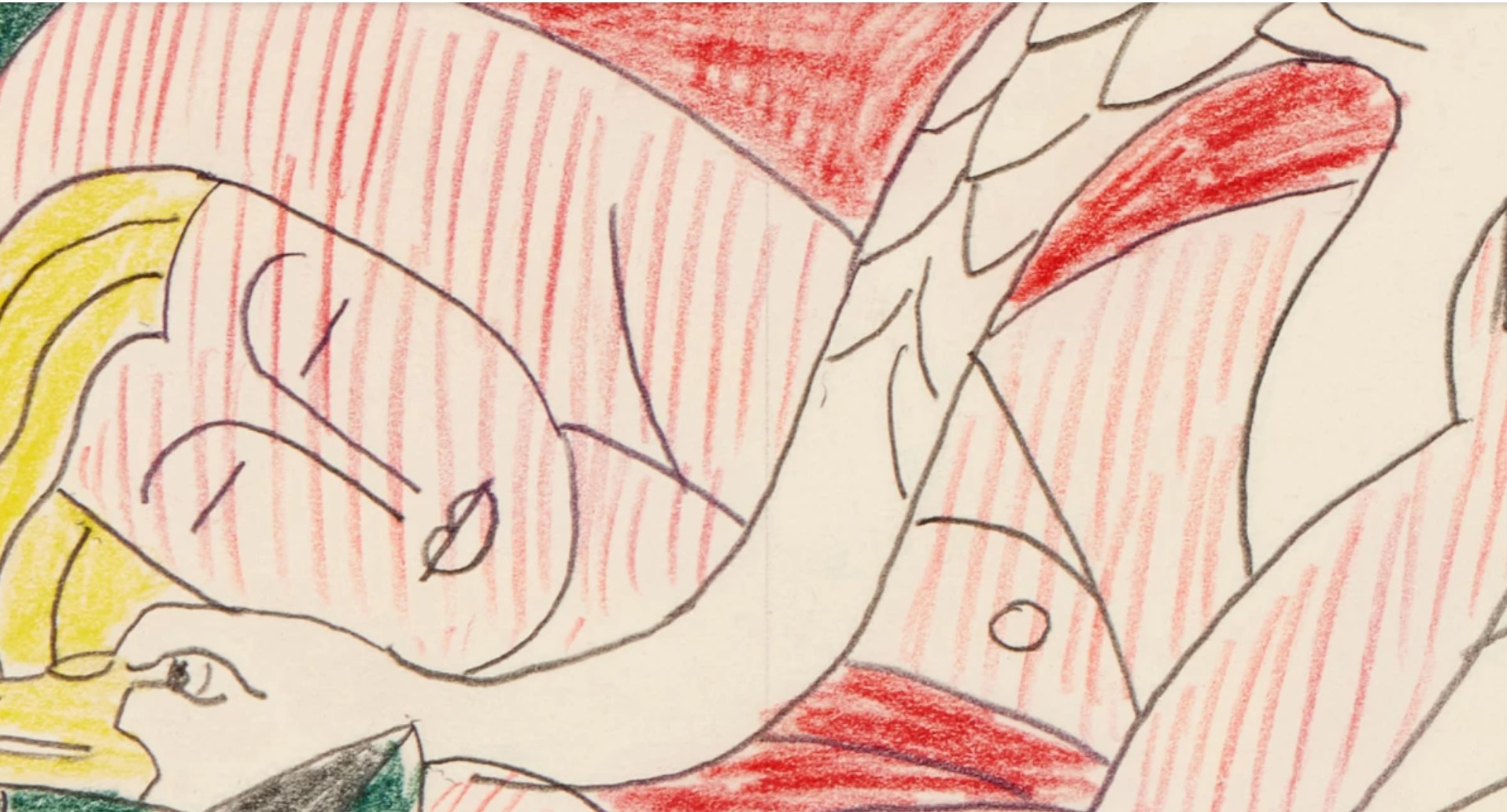
Partly inspired by a building façade adorned with an ornate relief of swans in flight, Leda and the Swan (Study) elegantly integrates Art Deco motifs and stylistic patterns. The piece reflects Lichtenstein’s fascination with modernist ideologies, particularly the visual language that shaped material culture in the 1920s and 1930s. It subtly critiques the decorative excess and commercialization of Art Deco design, as advanced by contemporary architects and industrial designers. Through signature elements such as bold outlines, crisp geometric forms, and color-blocking, Lichtenstein transforms three-dimensional architectural cues into a stylized, two-dimensional plane. The composition playfully navigates between illustration and abstraction, capturing a vivid sense of movement and visual rhythm.
André Lavrillier, Relief plaquette, 1921
The Art Deco influence in this work is particularly significant given that it is one of several studies for Leda and the Swan (Bathtub Panels), which were commissioned by Gunter Sach’s Palace Hotel penthouse in St. Moritz, Switzerland. The German filmmaker, photographer, and industrialist was granted an extended lease on the penthouse after he financially supported the restoration of the tower following a devastating fire in 1967. He quickly transformed the space into a bold showcase of contemporary art, filling it with works by friends and leading avant-garde artists such as Andy Warhol, Yves Klein, Michelangelo Pistoletto, and Roy Lichtenstein. In its final form, installed as a bathtub panel in Sachs’s lavish and hedonistic residence, Leda and the Swan takes on a layered significance: the myth of seduction and transformation aligns seamlessly with Sachs’s cultivated image as a playboy and figure of luxurious indulgence, making the classical theme all the more fitting in its decadent surroundings. Stunning in both its formal complexity and its layered cultural references, Leda and the Swan (Study) fuses ancient mythology with Lichtenstein’s own graphic lexicon and a wealth of art historical allusions. The result is a compelling tribute to the past, rendered with the artist’s hallmark wit and precision. With its enchanting visual energy and nuanced material language, the work stands as a quintessential example of Lichtenstein’s enduring and innovative practice.
Unfurled (After Morris Louis), 1973
Works from the Collection of Dorothy and Roy Lichtenstein
Sotheby’s New-York: 16 May 2025
Estimated: USD 1,000,000 – 1,500,000
USD 1,392,000
Unfurled (After Morris Louis) | Contemporary Day Auction | 2025 | Sotheby’s
ROY LICHTENSTEIN (1923 – 1997)
Unfurled (After Morris Louis), 1973
Acrylic, oil and graphite on canvas
30 x 36 1/8 inches (76.4 x 91.8 cm)
Signed and dated ’73 (on the reverse)
A vivid exercise in homage and transformation, Unfurled (After Morris Louis) reimagines the iconic language of Color Field painting through the lens of Roy Lichtenstein’s distinctive Pop vernacular. Referencing Morris Louis’s celebrated Unfurled series of the early 1960s, Lichtenstein distills the expressive immediacy of poured pigment into a strikingly refined and composed canvas. Executed in 1973, at the height of his post-Pop investigations into the very language of painting, the present work exemplifies Lichtenstein’s strategy of appropriating canonical modernist imagery and recasting it with cool, graphic precision. Testifying to its position as a touchstone within the artist’s mature production, Unfurled (After Morris Louis) was included in the landmark retrospective Roy Lichtenstein: A Retrospective organized by the Art Institute of Chicago and traveling to the Tate Modern and Centre Pompidou. Further confirming the work’s singular significance within the artist’s oeuvre, the present work bears exceptional provenance, coming directly from the estate of the artist.
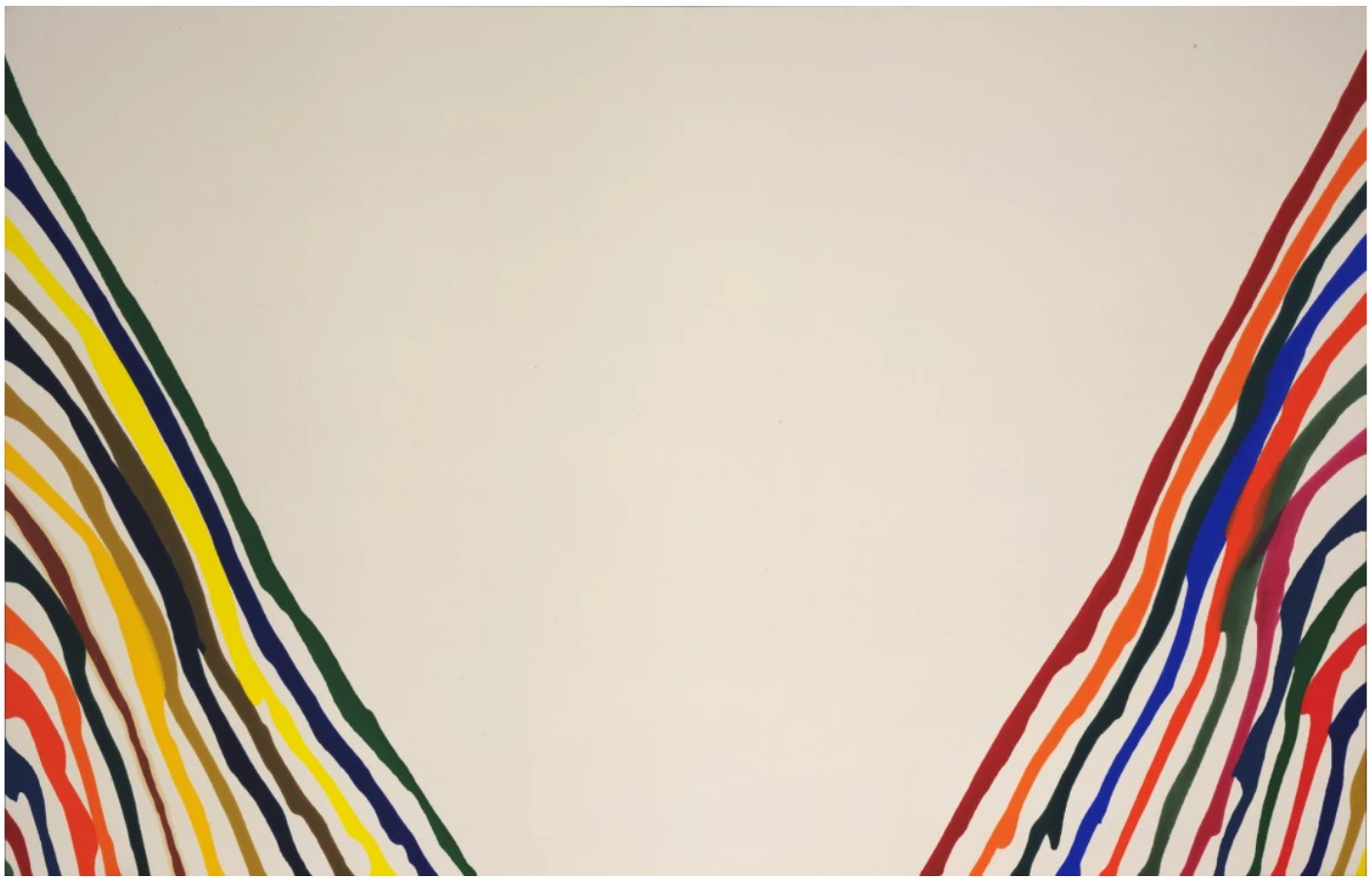
Morris Louis, Beta Lambda, 1961. Museum of Modern Art, New York.
In Unfurled (After Morris Louis), Lichtenstein emulates the sweeping gestures of Louis’s stain technique but replaces their spontaneity with a stylized exactitude. Where Louis allowed thinned acrylic to bleed organically into raw canvas, Lichtenstein renders his painted ribbons with mechanical clarity, imposing order on expression. The background of diagonally arrayed black stripes functions like a screen—a literal and metaphorical ground against which the fluid movement of Color Field painting is held in suspension, reimagined as image. Here, Lichtenstein performs a double maneuver. On one hand, he renders homage, meticulously referencing a landmark of mid-century American abstraction. On the other, he reclaims the gesture through his own syntax of mechanized mark-making. In doing so, he recasts the expressive authenticity of Abstract Expressionism as a codified image—a citation, no longer an act. This act of visual quotation situates Unfurled (After Morris Louis) in direct dialogue with Lichtenstein’s fellow Pop artists like Andy Warhol and Richard Pettibone, who similarly elevated found imagery and art historical source material into the domain of critical play.
Visually, the composition of Unfurled (After Morris Louis) is taut and dynamic. The painting is bisected by two wide vertical arcs of vivid, undulating forms in red, yellow, black, and beige. These forms extend inward from either side of the canvas, framing a dense field of black and white stripes at center. The effect is a visual tension between order and chaos, flatness and illusion, movement and stasis. The tightly controlled palette and Lichtenstein’s signature use of bold outlines transform what was once ethereal into something resolutely graphic, almost architectural. The use of graphite in the work is a subtle yet revealing detail. It evidences Lichtenstein’s underlying draftsmanship and his careful construction of form, even in a piece that ultimately masquerades as effortless.
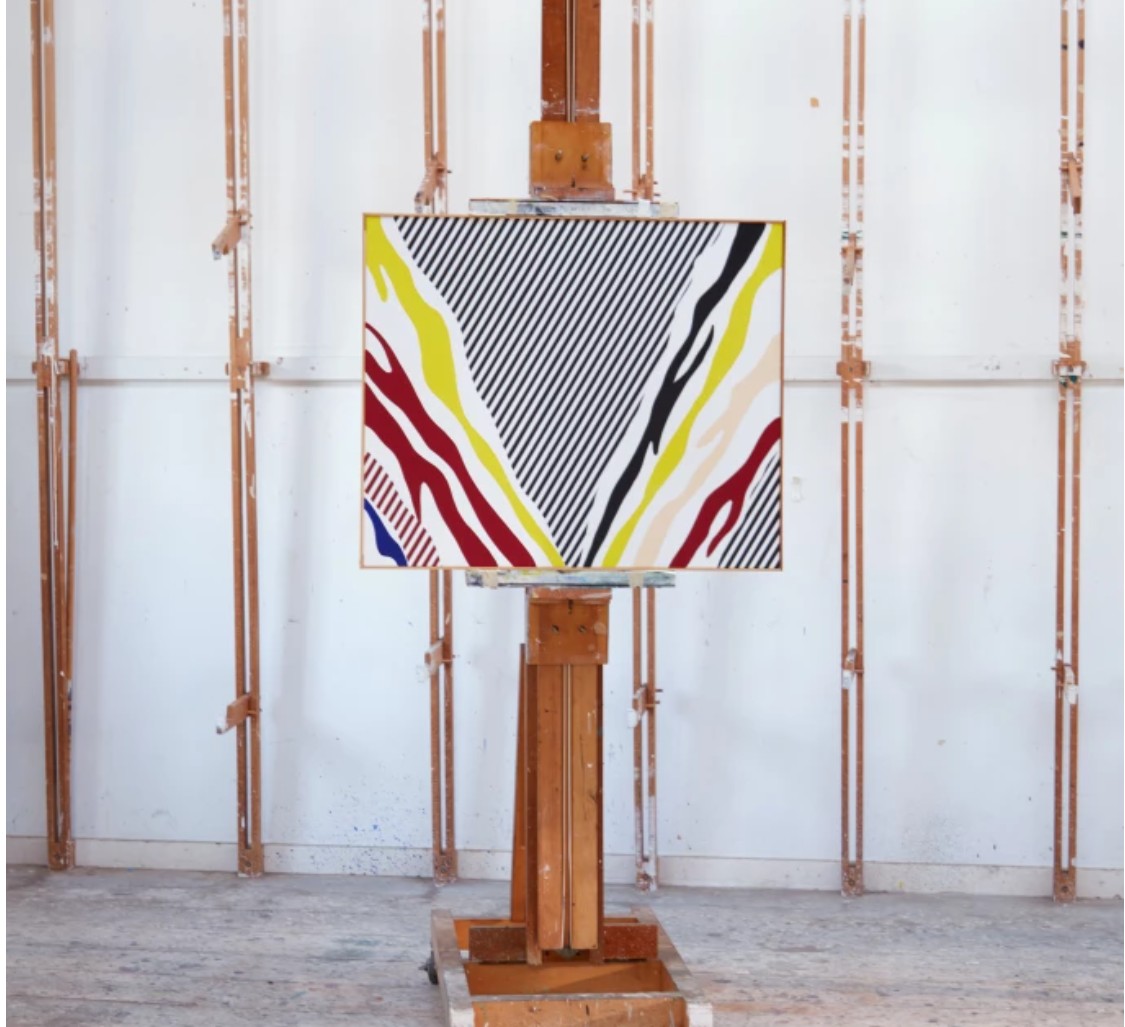
The present work in Lichtenstein’s studio. Art © Estate of Roy Lichtenstein.
Crucially, Lichtenstein’s citations were not merely ironic. They reflected a genuine engagement with his predecessors—a desire to interrogate the myths of originality, authorship, and meaning that undergirded modernist art. Long before he became synonymous with Pop Art, Lichtenstein was an abstract painter, working alongside artists like Willem de Kooning and Franz Kline. This early engagement with gestural abstraction never fully disappeared but was rechanneled, refracted through the lens of satire, semiotics, and cool distance. In Unfurled (After Morris Louis), he both honors and dissects the act of painting. His invocation of Louis is affectionate but forensic, collapsing the divide between reverence and critique. That a small scale canvas could bear so much conceptual weight speaks to the precision and ambition of Lichtenstein’s vision during this period.
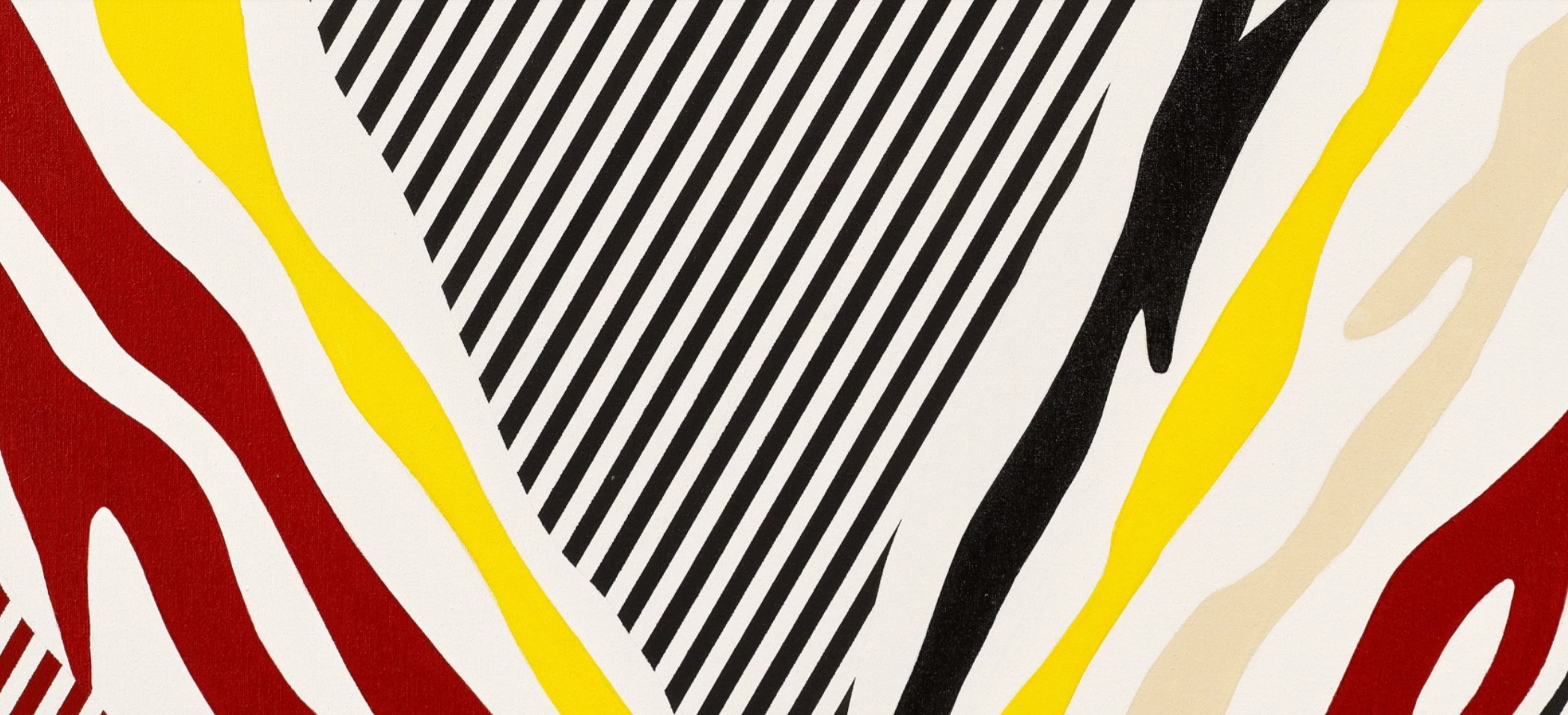
The choice to reinterpret a grand, immersive Louis painting on an intimate scale is also significant. In doing so, Lichtenstein democratizes the sublime, transforming the high drama of Color Field abstraction into something portable, accessible, and stylized. The monumental becomes modular. What was once intended to overwhelm now invites inspection. The reduction in scale acts as a philosophical statement as much as a compositional one: a critique of grandiosity in favor of wry introspection. Ultimately, Unfurled (After Morris Louis) is not merely an image of another painting—it is a painting about painting. It is a statement on the constructed nature of vision, the portability of style, and the enduring dialogue between innovation and imitation. Coming directly from the artist’s estate, this work offers a rare and compelling glimpse into the intellectual rigor and aesthetic wit that defined Lichtenstein’s later practice. In this tightly composed composition, one sees not only a response to Morris Louis, but also an argument for the lasting power of reimagined histories.
Still Life with Picasso (Study), 1973
Works from the Collection of Dorothy and Roy Lichtenstein
Sotheby’s New-York: 20 November 2024
Estimated: USD 800,000 – 1,200,000
USD 2,400,000
Still Life with Picasso (Study) | The Now and Contemporary Evening Auction | 2024 | Sotheby’s
ROY LICHTENSTEIN (1923 – 1997)
Still Life with Picasso (Study), 1973
Tape, cut painted paper, cut printed paper, marker and graphite on board
Image: 28 1/2 x 21 inches (68.5 x 53.3 cm)
Board: 29 x 21 1/2 inches (73.7 x 54.6 cm)
Signed and dated ‘73 (on the reverse)
An arresting composition of bold colors and compacted forms, Still Life with Picasso (Study) is an extraordinary embodiment of Roy Lichtenstein’s career-long engagement with one of the most significant art historical icons of the twentieth century, Pablo Picasso. Executed as a response to Picasso’s passing in 1973, Lichtenstein created the present work as a study for a series of prints, Still Life with Picasso, which he contributed to a six-volume celebration of the late Cubist master and his work. Unquestionably one of Lichtenstein’s foremost influences, the thread of Picasso’s legacy is vitally and intimately woven throughout Lichtenstein’s storied career – as exemplified by Still Life with Picasso (Study), Lichtenstein continuously reimagined and recontextualized Picasso’s imagery within his own works, reveling in his ever-expanding Pop lexicon and ultimately painting himself into art history through appropriation. Testifying to significance of the present work, Still Life with Picasso (Study) has been exhibited widely at institutions such as the Centre National d’Art Contemporain, Paris; the Museum of Modern Art, New York; the Museo de Arte Abstracto Español, Cuenca, Spain; and the Nationalgalerie, Staatliche Museen Preussischer Kulturbesitz, Berlin. One of few works that Dorothy and Roy Lichtenstein retained for their personal collection, Still Life with Picasso (Study), alongside the other choice examples from their collection, provides a rare glimpse into Roy’s process and artistic development. The very first time that these treasured works have been available on the public market, their presentation this fall represents a remarkable and unprecedented opportunity to acquire masterworks from pivotal moments in Roy’s practice, and the works he and Dorothy cherished most.
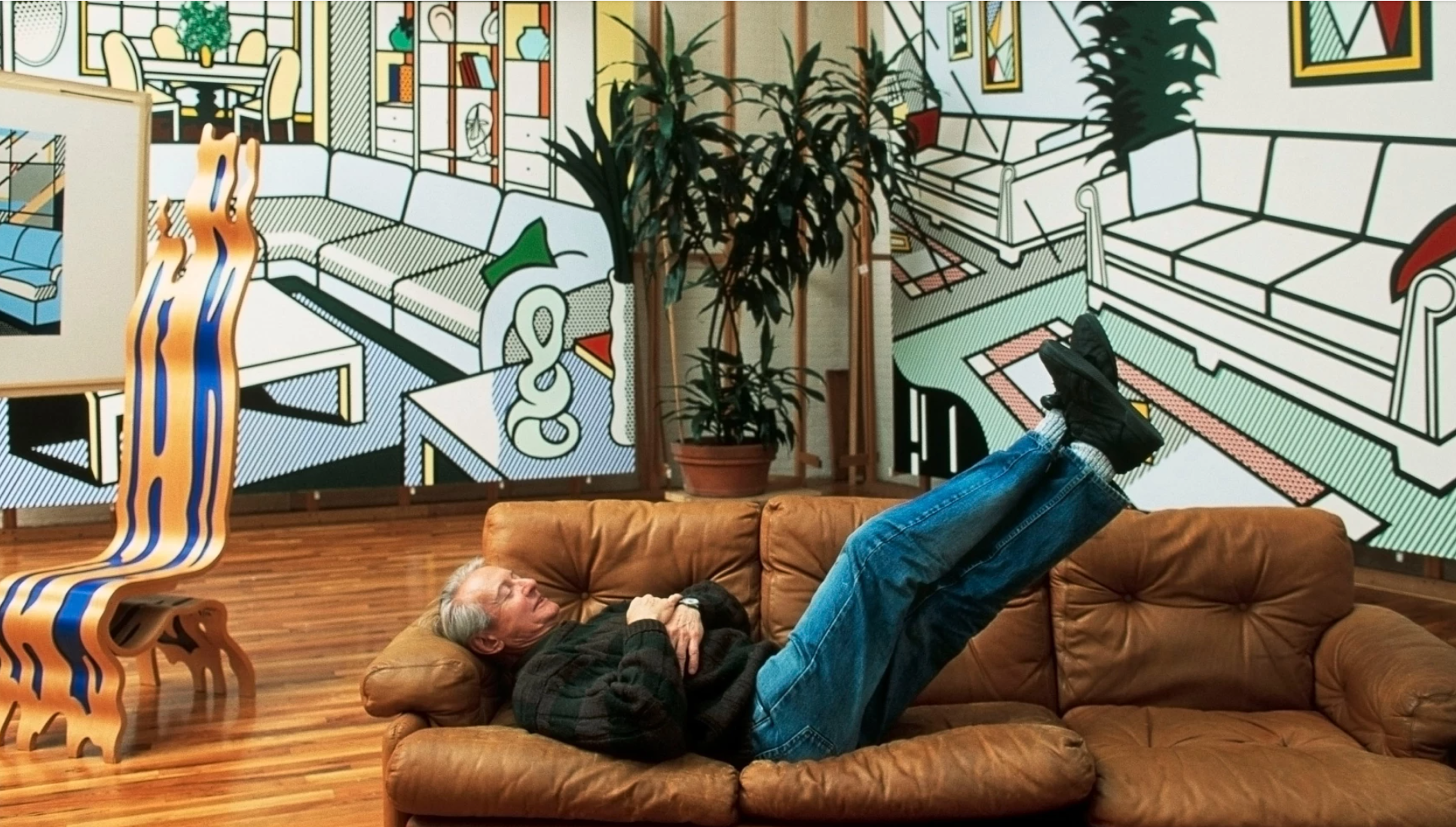
The artist in his studio. Photo © Thomas Hoepker/Magnum Photos. Art © Estate of Roy Lichtenstein
Still Life with Picasso (Study) juxtaposes a pitcher of paint brushes and an array of fruit with Picasso’s 1938 portrait of Dora Maar, titled Tête de Femme, effectively creating a simulacrum of an artist’s studio that makes direct reference to Lichtenstein’s own artistic forebears whilst acknowledging Picasso’s works as their own brand of Pop object. Both Lichtenstein and Picasso shared an interest in depicting the artifice of art – to them, the space of the artist’s studio represented the center of creation and, by extension, the world. An interrogation of creativity, the presence of paintbrushes and the arrangement of fruits in Still Life with Picasso (Study) allowed Lichtenstein to highlight the tools of the artist’s trade and the process of transforming everyday objects into works of art. Ironically, these trappings of the traditional painter are rendered by Lichtenstein in a mode intended to evoke the process of mechanical reproduction, with the artist’s hand in absentia. Rendered in Lichtenstein’s trademark graphic lines and Ben-Day dots, the present work’s foreshortened perspectival space recalls modes of consumer advertising while strengthening formal principles and pictorial conventions native to early Modernism. Moreover, as a compositional and chromatic study, the rigidity of line and flatness of shape that the collage medium demanded proved invaluable to Lichtenstein, who turned to collaging in order to ensure the utmost precision in his series of prints.
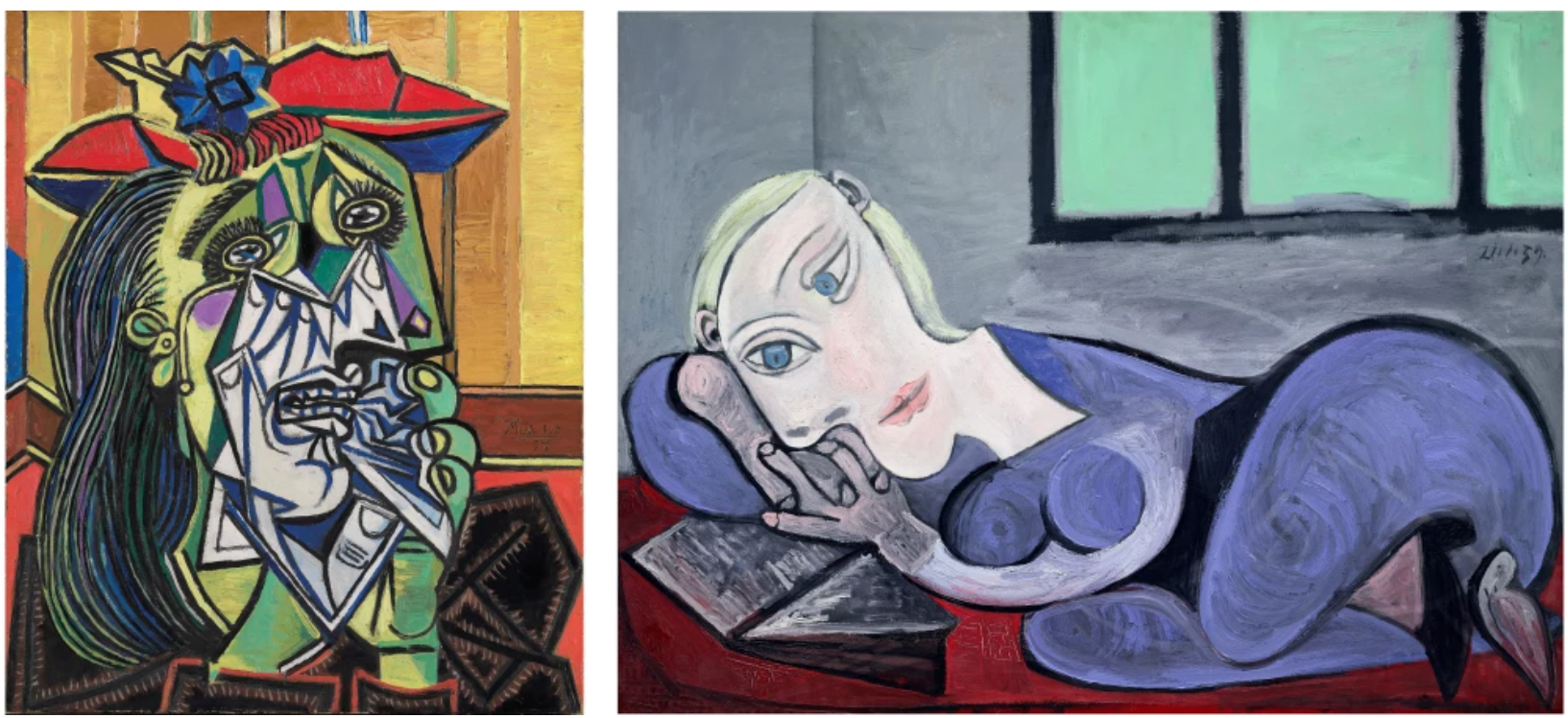
Left: Pablo Picasso, Weeping Woman, 1937. Tate Gallery, London. Image © Tate Modern, London. Art © 2024 Estate of Pablo Picasso / Artists Rights Society (ARS), New York.
Right: Pablo Picasso, Woman Reclining Reading, 1939. Image © Succession Picasso/DACS, London 2024 / Bridgeman Images. Art © 2024 Estate of Pablo Picasso / Artists Rights Society (ARS), New York
The work and legacy of Pablo Picasso bore immeasurable significance to Lichtenstein’s artistic project and ethos from the very outset of his career. After creating his first variation on Picasso in 1943 – a version of Portrait of Gertrude Stein – Lichtenstein embarked on a series of four Picasso paintings from 1962-64 immediately following his first comic book paintings. These works served as the primary counterweight to his involvement in commercial imagery and established the breadth of his ambitions, becoming the genesis of a decades-long dialogue with the Modern master. By 1973, the year of the present work’s execution, Picasso had taken on a celebrity-like status amongst the American public’s imagination.
“A Picasso has become a kind of popular object – one has the feeling there should be a reproduction of Picasso in every home.”
Contemporaries of Lichtenstein’s, such as Jasper Johns, Andy Warhol, and Tom Wesselmann, certainly shared similar sentiments as evidenced by their respective reimaginings of Picasso’s work, though none sustained as prolific and prolonged a fascination with the artist as Lichtenstein. His invocation of Picasso’s work in his characteristic Pop style complicated the contentious and perhaps vacuous dichotomy between what constituted “high” versus “low” culture, exploring the distinction between fine art and commercial imagery. Lichtenstein instinctively understood the phenomenal potential of popular imagery, and more than any artist of his generation, realigned the cipher of that imagery to unveil verities behind popular culture.
Andy Warhol, The Last Supper, 1985. Private Collection.
Image © HIP / Art Resource, NY. Art © 2024 Andy Warhol Foundation for the Visual Arts / Artists Rights Society (ARS), New York
As evinced in Still Life with Picasso (Study), Lichtenstein specifically turned to Picasso’s 1938 drawing Tête de Femme as a metonym for both Picasso and Modernism at large throughout his oeuvre, notably using it in his monumental, site-specific, Greene Street Mural (1983). In the present work, the Picasso head dominates the frame, appearing as the backdrop to Lichtenstein’s still life grouping. Here, the viewer takes on the role of the artist, gazing upon the present display of artistic subjects and influences. By appropriating Picasso’s Tête de Femme and situating it within the present composition, Lichtenstein not only engages in treating Picasso’s imagery as a kind of popular object, in the vein of Andy Warhol’s Mona Lisas, but also places his artistic abilities on par with Picasso’s. Tête de Femme’s placement within Lichtenstein’s version of an artist’s studio seems to announce that he, too, is capable of producing – even updating – a Picasso.
“I think Picasso is the best artist of this century […] it is interesting to do an oversimplified Picasso – to misconstrue the meaning of his shapes and still produce art.”
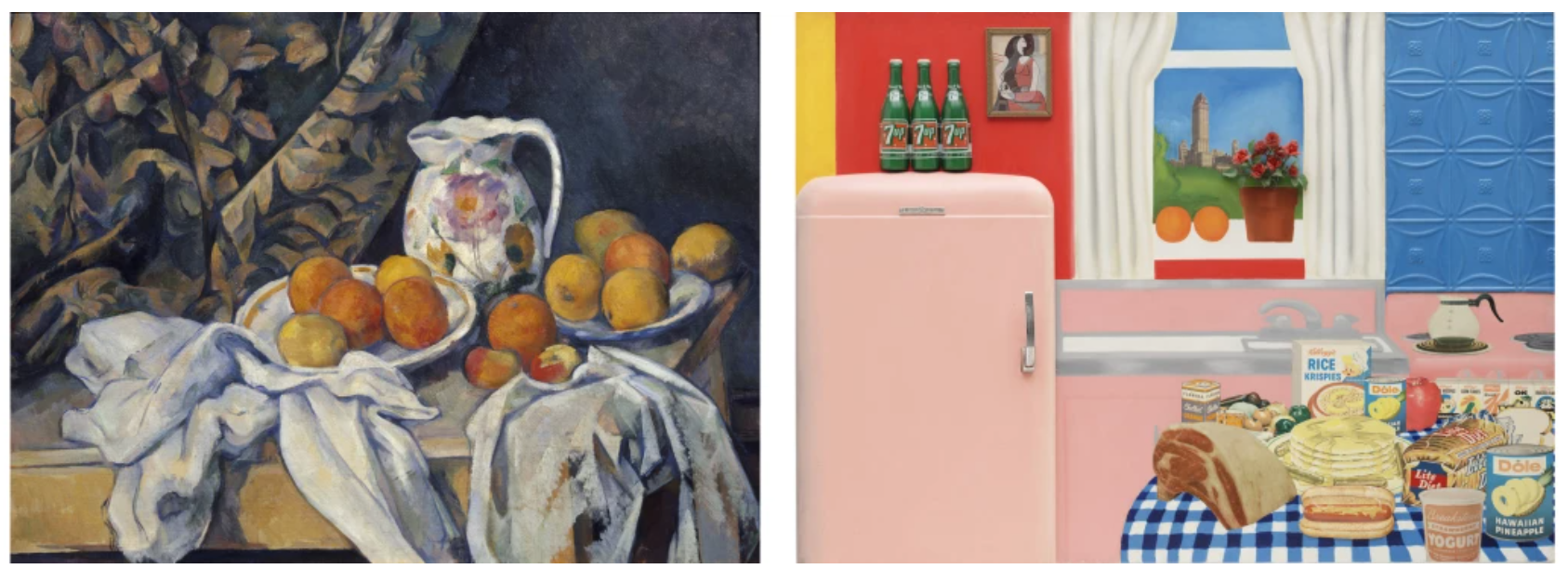
Left: Paul Cézanne, Still Life on the Curtain, 1895. State Hermitage Museum, St. Petersburg. Image © Photo Josse / Bridgeman Images. Right: Tom Wesselmann, Still Life #30, 1963. The Museum of Modern Art, New York. Image © The Museum of Modern Art/Licensed by SCALA / Art Resource, NY. Art © Tom Wesselmann/Licensed by VAGA, New York, NY
Formidable in the scope of its referential vernacular, Still Life with Picasso (Study) presents Lichtenstein’s deep fascination and leverage of art historical references, culminating in a captivating homage to the past. A thrilling encapsulation of Lichtenstein’s technical process and conceptual ambition, the stark color palette and striking composition of Still Life with Picasso (Study) epitomizes Lichtenstein’s timeless oeuvre rich with material nuance, and the evolution of his definitive style, an aesthetic which locates him as one of the most celebrated artists of the 20th century.
Leda and the Swan (Study), 1968
Sotheby’s New-York: 16 May 2023
Estimated: USD 1,500,000 – 2,000,000
USD 2,903,500
ROY LICHTENSTEIN (1923 – 1997)
Leda and the Swan (Study), 1968
Acrylic, oil, felt tip pen and graphite on paper
Image: 23 5/8 x 78 1/2 inches (60 x 198.8 cm)
Sheet: 34 3/4 x 84 inches (88.3 x 213.4 cm)
Signed and dated ’68 (lower right); variously inscribed (upper right)
A striking composition of saturated colors and entwined forms, Leda and the Swan (Study) from 1968 is an extraordinary example of Roy Lichtenstein’s early depictions of Greek mythology in his iconic Pop aesthetic. Executed during a pivotal decade for Lichtenstein’s artistic emergence, this study for Leda and the Swan preempted an important panel commission for Gunter Sachs’ legendary Pop Art apartment in St. Moritz. The work fabulously illustrates the Queen of Sparta, Leda, seduced by the god Zeus in the form of a swan. As the story results in the birth of Helen of Troy, believed to be the most beautiful woman in the world, Lichtenstein presents the bird and female figure with utmost elegance and extravagance. A chromatic vision of overlapping flora, fauna, and figure, Leda and the Swan (Study) showcases the inventive mind of an artist on the cusp of his extraordinary career.
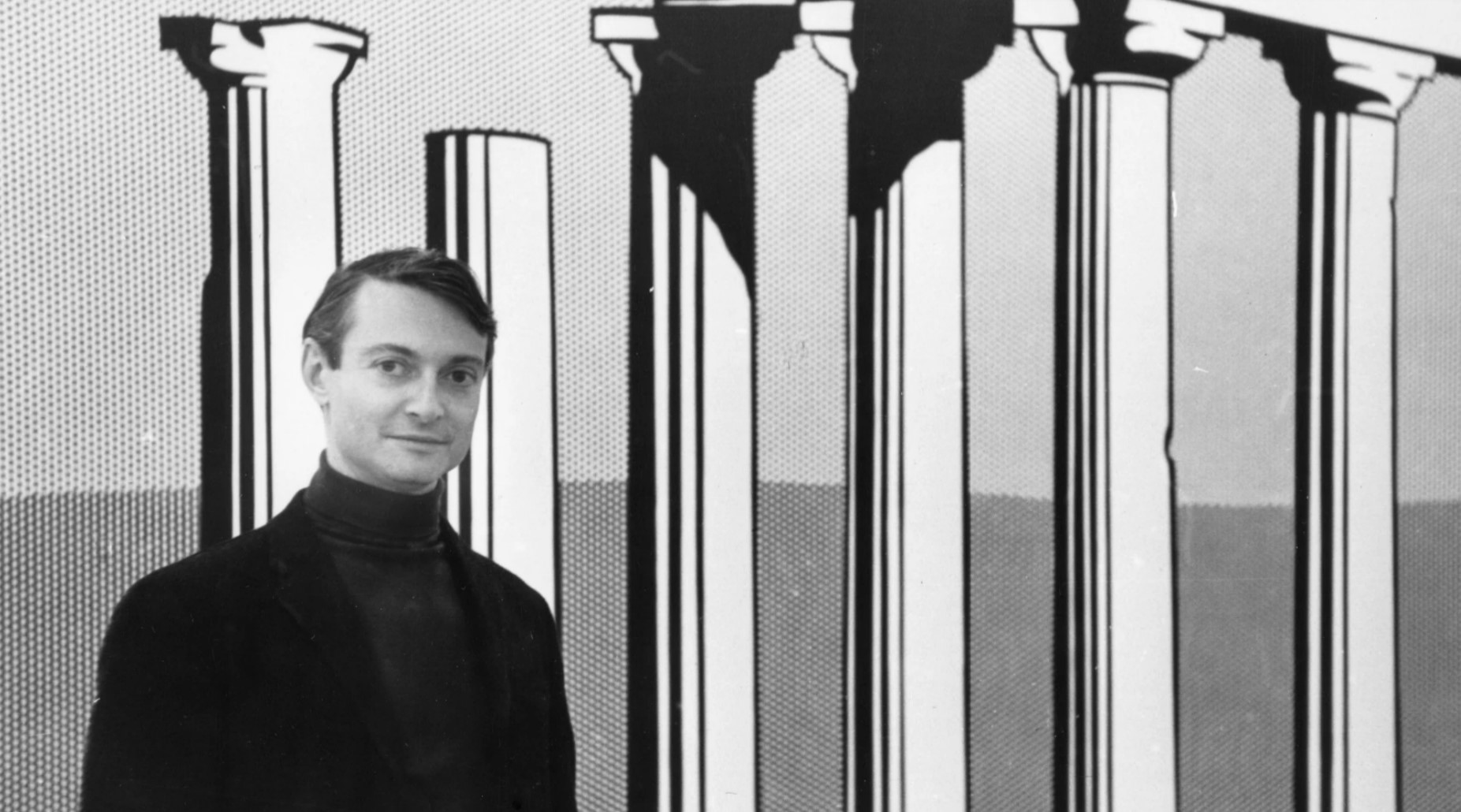
ROY LICHTENSTEIN AT LEO CASTELLI GALLERY, NEW YORK, 1964. PHOTO BY FRED W. MCDARRAH/MUUS COLLECTION VIA GETTY IMAGES. ART © 2023 ESTATE OF ROY LICHTENSTEIN
Engaging in and contributing to a timeless dialogue with his art historical forebears, Roy Lichtenstein subverts the tenets and tropes of twentieth century modernism, weaving these archetypes with his own distinctive pioneering style and signature graphic aesthetic. Lichtenstein’s ongoing fascination with the work of Modern artists is demonstrated in Leda and the Swan (Study), with simplified ligaments reminiscent of Henri Matisse and Pablo Picasso’s figures and obstructing leaves recalling the forests of Henri Rousseau. Lichtenstein was also an admirer of canonical Renaissance and Baroque painters, such as Rembrandt and Michelangelo, whose compositions he often mimicked and manipulated with the inclusion of his trademark Ben-Day dot technique. Developed in the late 19th century, the small colored dots emphasized Lichtenstein’s esteem for commercial art and aspiration to elevate the genre to the level of high art with inventive, lively compositions.
Bedroom at Arles (Study), 1992
Sotheby’s New-York: 18 November 2021
Estimated: USD 900,000 – 1,200,000
USD 4,255,000
Bedroom at Arles (Study) | Contemporary Evening Auction | | Sotheby’s (sothebys.com)
ROY LICHTENSTEIN (1923 – 1997)
Bedroom at Arles (Study), 1992
Tape, cut painted paper, cut printed paper, graphite on board
34 ½ x 45 ¼ inches (87.5 x 115 cm)
Signed Roy Lichenstein and dated ’92 (on the verso)
With abundant reference to his most seminal bodies of work as well as the history of Modernism, Bedroom at Arles (Study) from 1992 represents a pivotal moment in Roy Lichtenstein’s career-long investigation of the art and artifice of twentieth-century society. Meticulously composed and exquisitely rendered, the present collage predates a larger painting of the same subject, Bedroom at Arles, which resides in the highly esteemed Robert and Jane Meyerhoff Collection. Lichtenstein’s work pays homage to Vincent van Gogh’s Bedroom in Arles from 1889, held in the Vincent van Gogh Museum, which is undoubtedly one of the most iconic and recognizable paragons of art history. In his rendition, Lichtenstein masterfully fuses references to a diverse range of artists and mediums, deconstructing the arbitrary boundaries between twentieth-century consumer culture and Modernism and offering a new lens into the semiotic systems that construct our reality. Bedroom at Arles and its present study exhibit an impeccable example of Lichtenstein’s ability to simultaneously engage with and subvert the tenets and tropes of twentieth-century Modernism, while weaving in his pioneering Pop Art aesthetic.
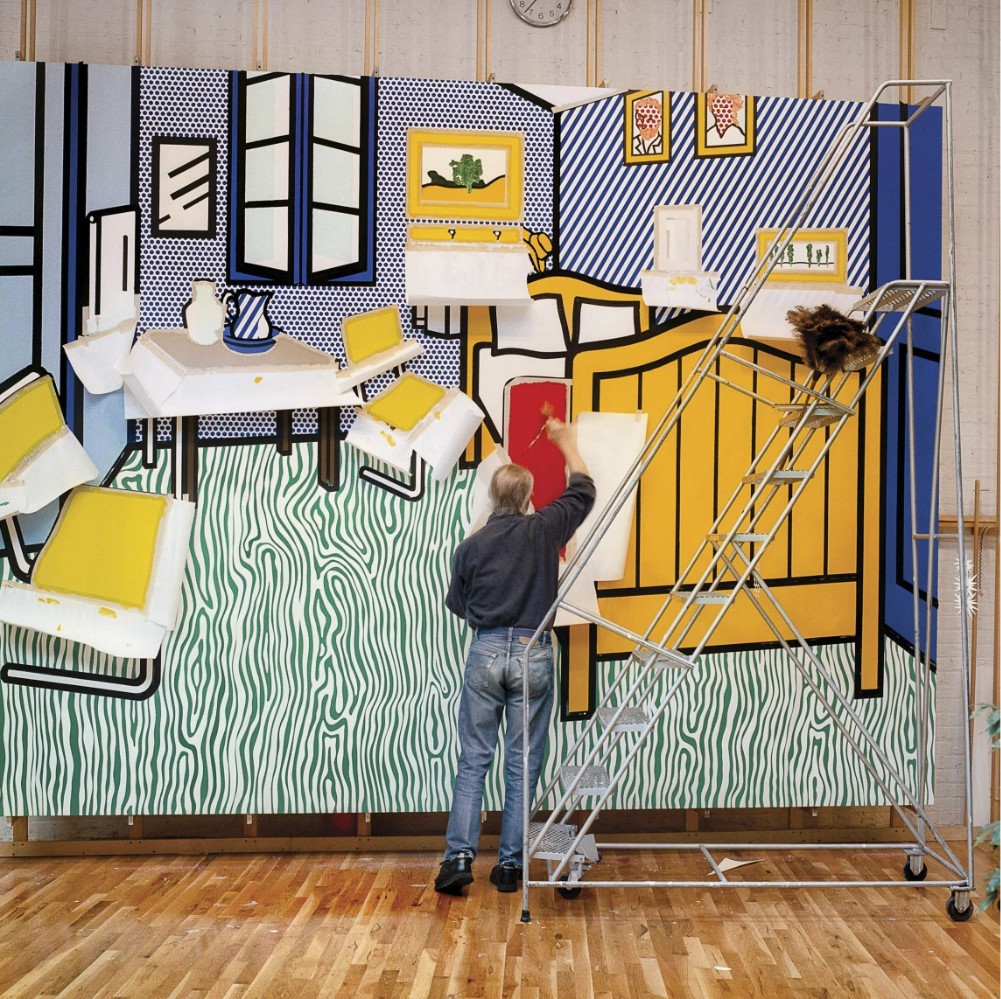
ROY LICHTENSTEIN PAINTING BEDROOM AT ARLES, 1992. PHOTO © LAURIE LAMBRECHT. ART © ESTATE OF ROY LICHTENSTEIN
Bedroom at Arles and its collage study are situated within a limited suite of Interiors, a series Lichtenstein produced between 1991 and 1993 in which he contends with the commercialization and banality of domestic life publicized in contemporary home furnishing advertisements. Amongst the Interiors, the Bedroom at Arles works are singular in their art historical import. In others from the series, Lichtenstein embeds art historical references through small vignettes in the composition – for example, positioning an Yves Klein sponge on a side table, an Andy Warhol flower print on the wall, an Alexander Calder mobile in a bedroom suite, or a Claude Monet waterlilies painting framed above a dresser. Uniquely, in Bedroom at Arles (Study), Lichtenstein completely reinterprets an iconic Modern painting through the lens of Pop Art. In his impressively detailed collage, Lichtenstein incorporates emblematic components of his oeuvre – such as Ben Day dots, hard-edge lines, still life vignettes, and reflective mirrors – into the compositional program of one of the most recognizable works of art from the master of twentieth-century Post-Impressionism, Vincent van Gogh.
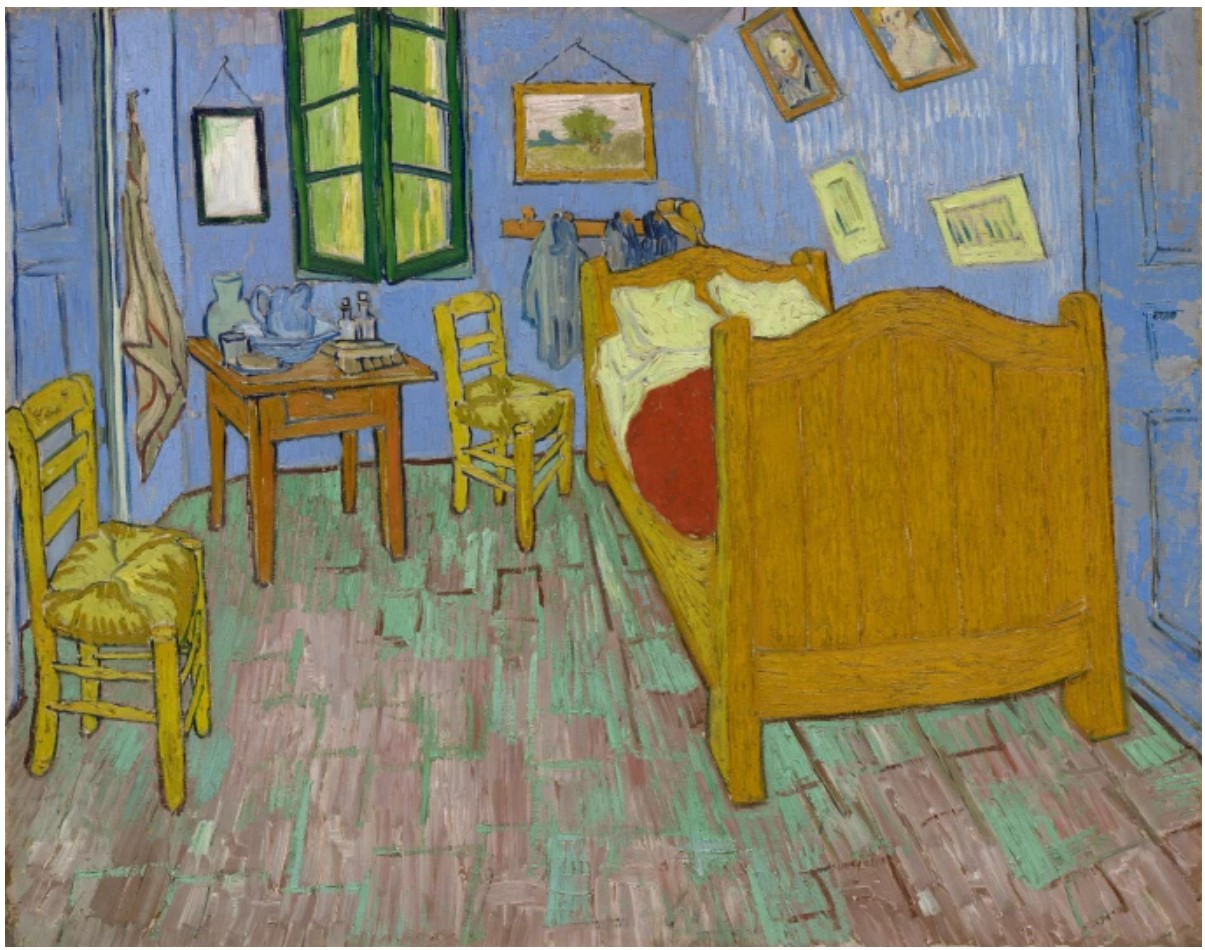
VINCENT VAN GOGH, THE BEDROOM, 1889
IMAGE © THE ART INSTITUTE OF CHICAGO / ART RESOURCE, NY
The Interiors were instantly recognized for their importance as a culminating project that synthesized some of Lichtenstein’s most profound and recognizable periods. As The New York Times critic Roberta Smith noted upon the first public exhibition of the Interiors in February 1992, Lichtenstein had “resoundingly affirmed” his “nearly inexhaustible talent for putting his best-known visual strategies to fresh uses” Roberta Smith, “Inviting (if Fanciful Rooms from the View of Roy Lichtenstein,” The New York Times, Friday February 7, 1992, p. 74. For almost every monumental Interior painting – some of which extend over 10-feet by 13-feet, Lichtenstein first created a preparatory collage. Using a variety of materials, including tape and paper, Lichtenstein developed the original composition which he would enlarge into a painting in a proportion of about one to four. Through the initial collages, Lichtenstein developed the compositional schema and theoretical challenges of the work – playing with perspective and art historical references. Then, by enlarging the composition beyond human scale, the artist confronts the viewer’s conception of real life and artifice.
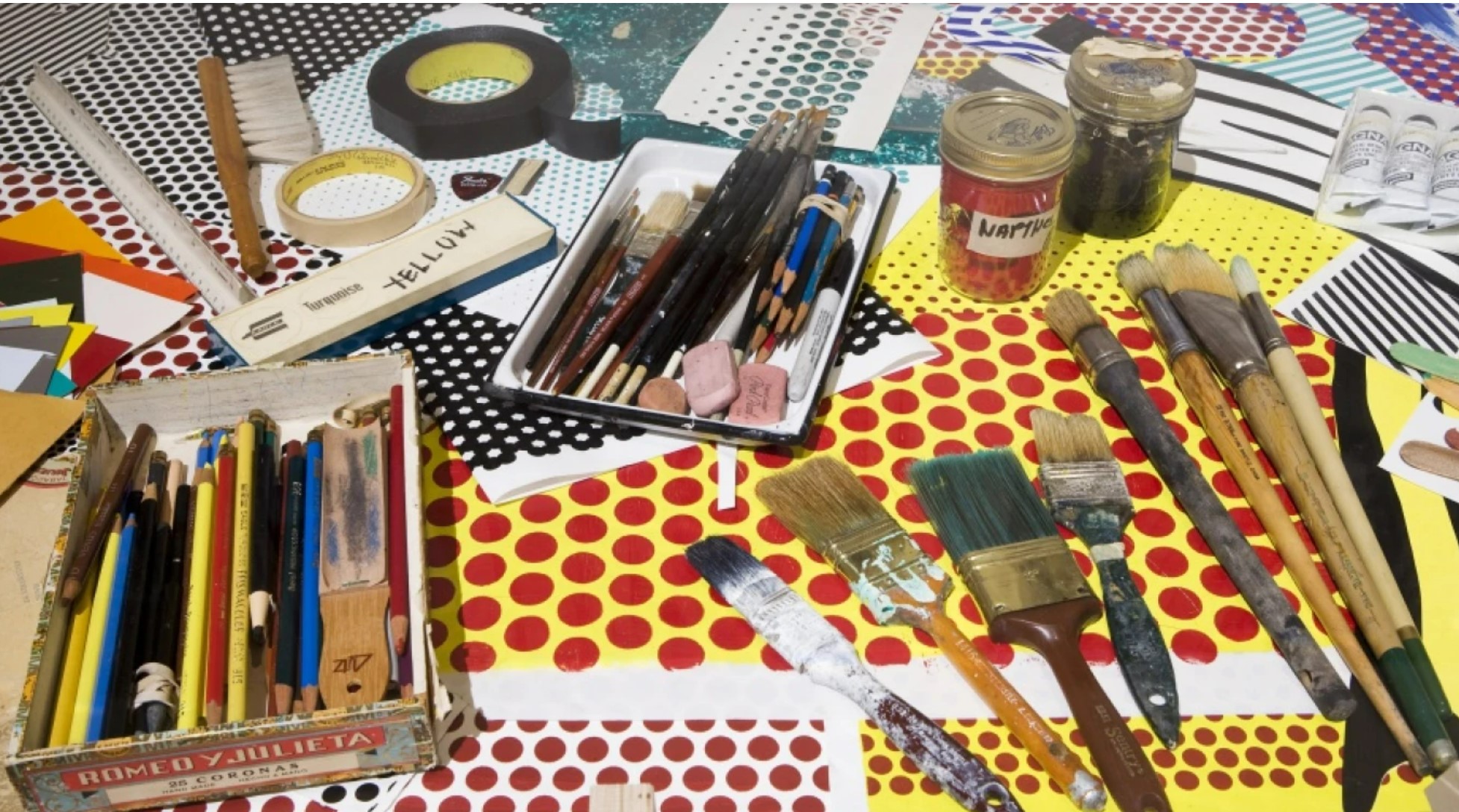
Lichtenstein found inspiration for his Bedroom at Arles not directly from van Gogh’s painting, but rather a consumer reproduction on the cover of a 1993 calendar published by Graphique de France. Lichtenstein’s adaptation of van Gogh’s work responds to the ways in which the twentieth-century public interacts with art history through consumer products. In Bedroom at Arles (Study), Lichtenstein maintains the well-known compositional organization of the nineteenth-century masterpiece, but imaginatively reinvents the work as an enrapturing twentieth-century scene. Lichtenstein includes the twin bed, set of chairs, wash table, and wall hangings, but uses saturated color, his signature patterning, and references to Modern furniture advertisements to transport the viewer into a cartoon-like reality. The artist replaces van Gogh’s French farmhouse chairs with a bright yellow set recalling the sleek style of Ludwig Mies van der Rohe’s iconic MR Side Chair design, exchanges the rusticated wash table with a fashionable angular piece, and reimagines the draping towel and wrinkled shirts hanging on hooks as corporate white button-downs and a clean, terrycloth towel.
Haystacks & Cathedrals, 1968
Fresh from the success of his groundbreaking paintings inspired by comic books, in 1969 the artist turned his attention to the celebrated paintings of Claude Monet, one of the most visionary artists of the late nineteenth and early twentieth centuries.
READ ABOUT ROUEN CATHEDRAL AND HAYSTACKS
FIND ALL HISTORICAL RESULTS
Haystacks, 1969
Christie’s New-York: 20 November 2025
Estimated: USD 500,000 – 700,000
USD 787,400
ROY LICHTENSTEIN (1923-1997), Haystacks | Christie’s
ROY LICHTENSTEIN (1923-1997)
Haystacks, 1969
Oil and acrylic on canvas
16×24 inches (40.6 x 61 cm)
Signed and dated ‘rf Lichtenstein ’69’ (on the reverse)
Haystacks, 1968
Works from the Collection of Dorothy and Roy Lichtenstein
Sotheby’s New-York: 16 May 2025
Estimated: USD 400,000 – 600,000
USD 1,392,000
Haystacks | Contemporary Day Auction | 2025 | Sotheby’s
ROY LICHTENSTEIN (1923 – 1997)
Haystacks, 1968
Oil, acrylic and graphite on canvas
18×24 inches (45.7 x 60.9 cm)
Signed, dated ’68 and variously inscribed (on the reverse)
Rouen Cathedral, Set IV, 1969
Christie’s New-York: 11 May 2023
Estimated: USD 18,000,000 – 25,000,000
USD 15,360,000
ROY LICHTENSTEIN (1923-1997) (christies.com)
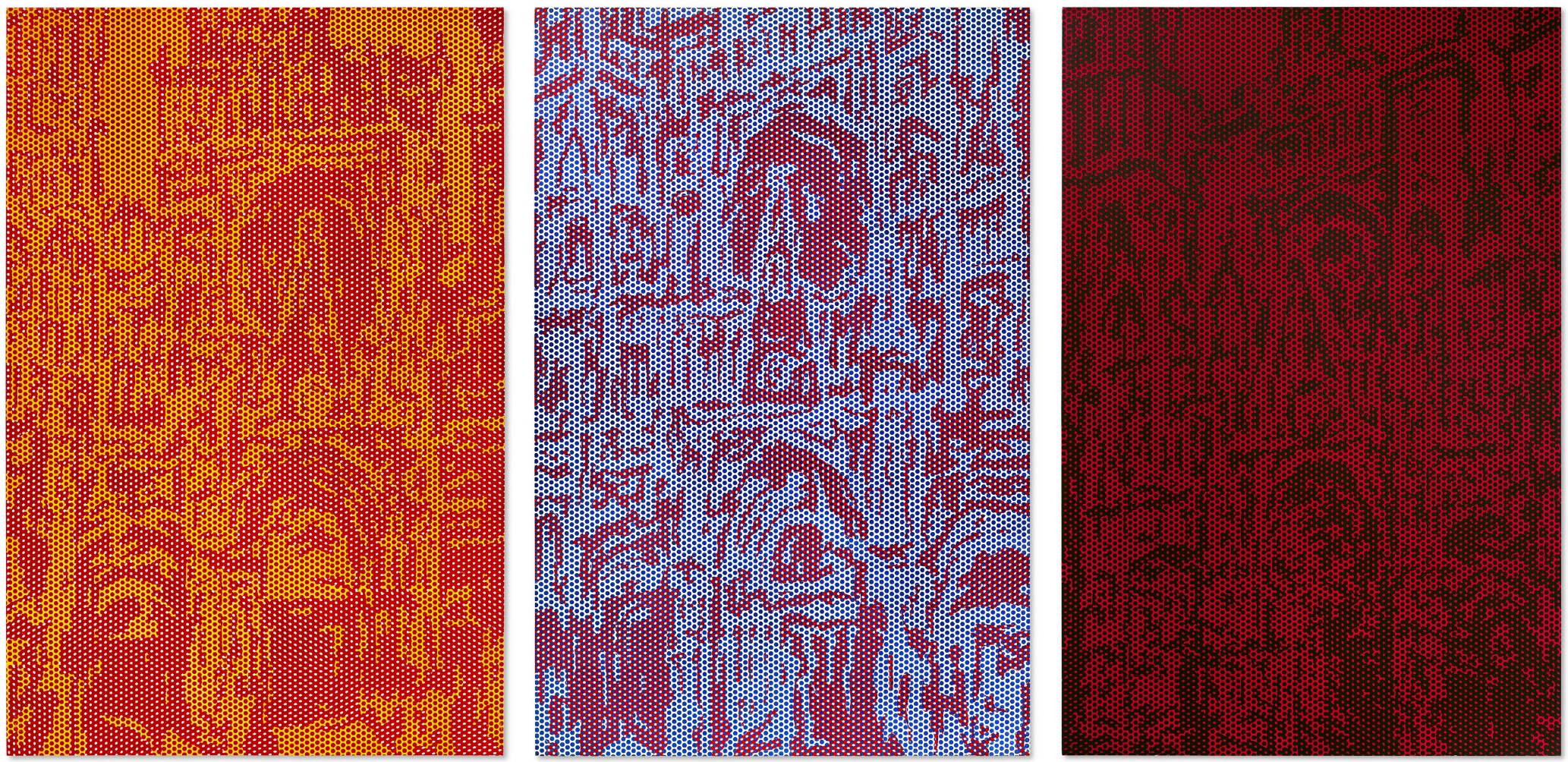
ROY LICHTENSTEIN (1923-1997)
Rouen Cathedral, Set IV, 1969
Oil and Magna on canvas tryptich
Each: 63×42 inches (160 x 106.7 cm)
Signed and dated ‘rf Lichtenstein ’69’ (on the reverse of each canvas)
Haystacks, 1969
Christie’s New-York: 10 March 2023
Estimated: USD 500,000 – 700,000
USD 579,600
ROY LICHTENSTEIN (1923-1997) (christies.com)
ROY LICHTENSTEIN (1923-1997)
Haystacks, 1969
Oil and Magna on canvas
15 1/4 x 24 inches (38.7 x 61 cm)
Signed, dated and inscribed ‘rf Lichtenstein ’69 PANEL #2 OF 5 PANELS’ (on the reverse)
America
Cover Image (The Gun in America) for Time Magazine (Study), circa 1968
Works from the Collection of Dorothy and Roy Lichtenstein
Sotheby’s New-York: 16 May 2025
Estimated: USD 200,000 – 300,000
USD 533,400
ROY LICHTENSTEIN (1923 – 1997)
Cover Image (The Gun in America) for Time Magazine (Study), circa 1968
Graphite on paper
16 1/4 x 12 1/4 inches (41.3 x 31.1 cm)
Executed at the height of Roy Lichtenstein’s mature period, Cover Image (the Gun in America) [Study] is a rare and profoundly resonant work on paper that captures the artist’s response to one of the most turbulent moments in modern American history. Commissioned by Time Magazine in June 1968, in the immediate aftermath of the assassinations of Martin Luther King Jr. and Robert F. Kennedy, this graphite study was the genesis for one of Lichtenstein’s most politically charged images. Presented here is the artist’s preparatory drawing for what would become the cover of Time’s June 1968 issue—a stark and jarring depiction of a revolver aimed directly at the viewer, symbolic of the national reckoning with gun violence and its grip on the American psyche.
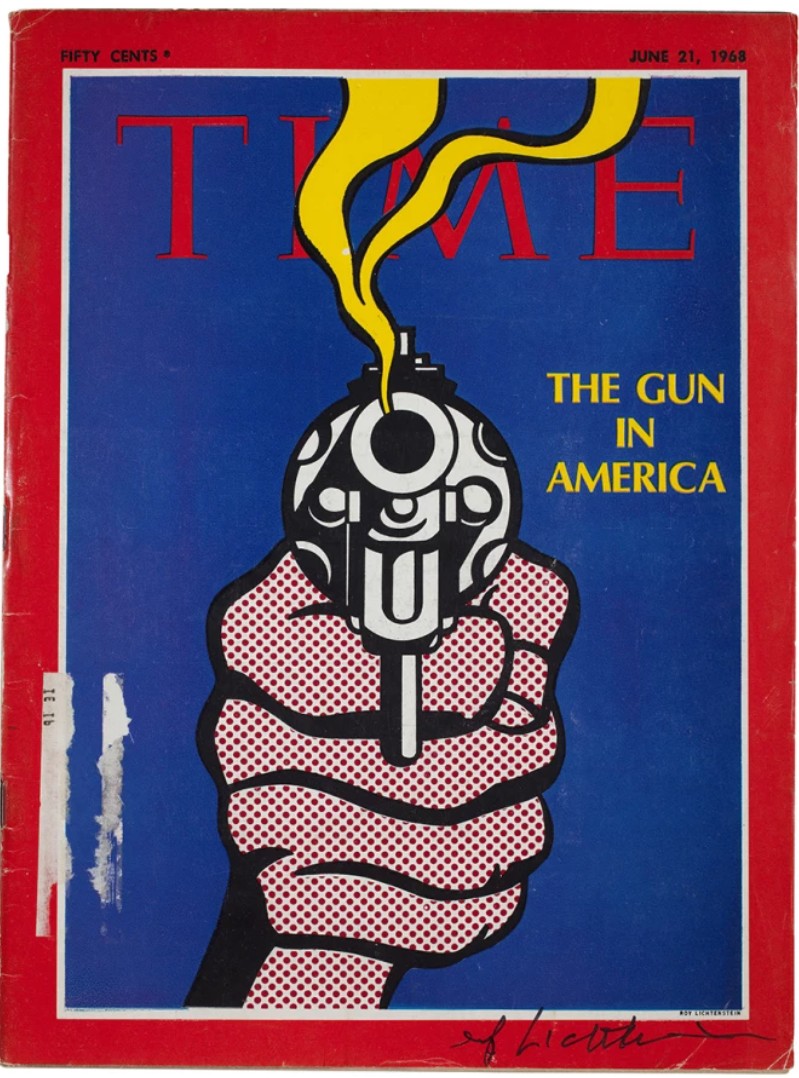
Cover Image (The Gun in America) for Time Magazine, 1968. Art © Estate of Roy Lichtenstein.
The present work is rendered with the formal clarity and compositional economy that define Lichtenstein’s practice, here distilled to its most visceral and confrontational essence. The exaggerated hand, clenched tightly around the revolver, thrusts forward in dramatic foreshortening—a dynamic visual device that places the viewer uncomfortably in the line of fire. Wisps of smoke rise in stylized arcs from the barrel, evoking both the fleeting aftermath of violence and Lichtenstein’s deep-rooted interest in the visual language of comic books and commercial printing. Yet unlike the detached irony of his earlier works, this image is charged with immediacy and urgency, its raw linework amplifying the intensity of the subject.
Lichtenstein’s choice to address the subject of gun violence—rare in a body of work more typically associated with pop culture, romance comics, and art historical pastiche—marks a critical moment in his oeuvre. Cover Image (the Gun in America) [Study] stands apart as a searing commentary on contemporary social unrest, drawing visual parallels to agitational propaganda as well as the frontal monumentality of Baroque religious painting.
The enduring relevance of this image was affirmed thirty years later, when Time Magazine reprised Lichtenstein’s composition for the cover of its July 6, 1998 issue, under the headline “Still Under the Gun.” As both a work of remarkable graphic power and a document of its time, this study encapsulates Lichtenstein’s singular ability to merge high art with mass communication. A rare and historically significant work on paper, it stands as a testament to the artist’s critical engagement with the cultural and political fabric of the American experience.
I Love Liberty (Study), circa 1982
Works from the Collection of Dorothy and Roy Lichtenstein
Sotheby’s New-York: 21 November 2024
Estimated: USD 350,000 – 450,000
USD 780,000
I Love Liberty (Study) | Contemporary Day Auction | 2024 | Sotheby’s
ROY LICHTENSTEIN (1923 – 1997)
I Love Liberty (Study), circa 1982
Colored pencil and graphite on tracing paper
Image: 26×17 inches (66 x 43.2 cm)
Sheet: 30 x 20 1/2 inches (76.2 x 52.1 cm)
Capturing one of America’s most enduring symbols, I Love Liberty sees Pop Art pioneer Roy Lichtenstein distilling the aesthetic and ideological ambitions that define his oeuvre. Executed in 1982, the present work embodies Pop Art’s foundational ethos of blurring the boundaries between high and low culture through a refined semiotic examination of contemporary visual culture. Created as a study for a promotional poster and screenprint to be published in conjunction to the ABC patriotic broadcast of the same name created by Norman Lear and his advocacy group People for the American Way, I Love Liberty engages with American national symbolism, presenting a nuanced exploration of identity, commodification, and the spectacle of representation in a media-saturated age. Testifying to the present work’s significance within the artist’s acclaimed oeuvre, screenprints of I Love Liberty are housed in the permanent collections of such prestigious American institutions as the National Gallery of Art in Washington D.C., the Whitney Museum of American Art, the Pennsylvania Academy of Fine Arts, among others. Further attesting to its singular importance within the artist’s prolific oeuvre, the present work bears exceptional provenance, emerging from the esteemed Collection of Dorothy and Roy Lichtenstien.
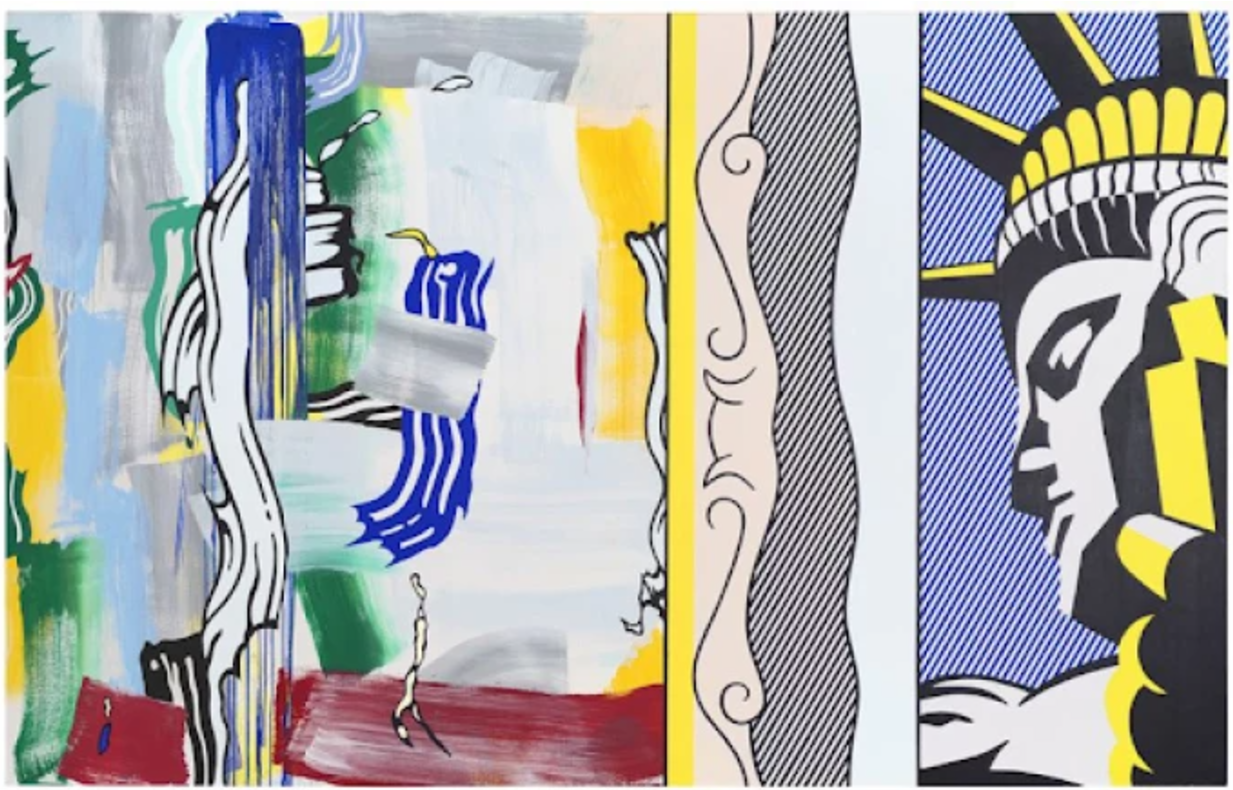
Roy Lichtenstein, Painting with Statue of Liberty, 1983. The National Gallery of Art, Washington DC. © Estate of Roy Lichtenstein
The composition of the present work guides the viewer’s gaze upward towards a monumentalized visage of Lady Liberty, rendered in a strikingly bold yellow that disrupts traditional representations of the statue’s patina, imbuing her with an almost artificial, constructed vibrancy. This vibrant hue, juxtaposed against sweeping diagonals of blue, echoes the structure of the American flag while simultaneously abstracting it. In this work, Lichtenstein elevates the Statue of Liberty beyond conventional patriotic iconography, transforming her into a layered semiotic symbol steeped in historical resonance and cultural reflection.
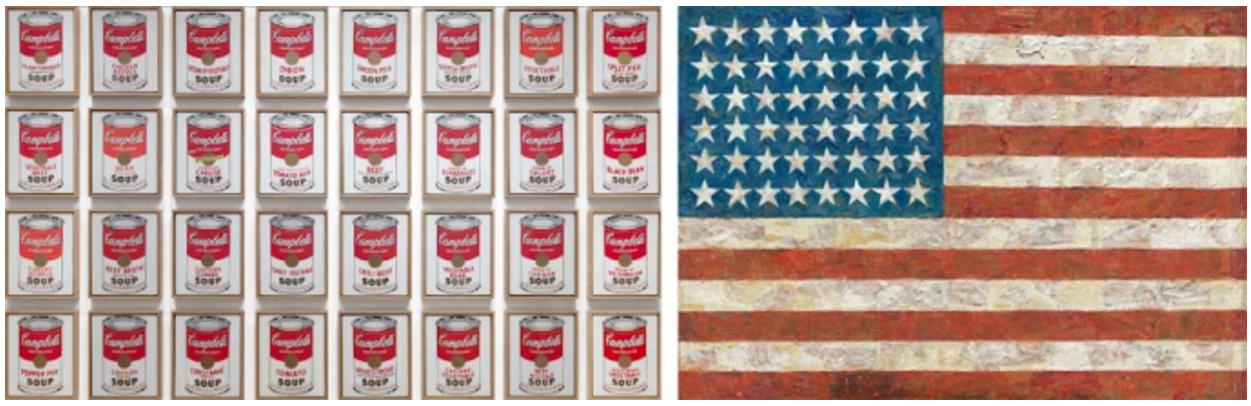
Left: Andy Warhol, Campbell’s Soup Cans, 1962. The Museum of Modern Art, New York. © 2024 Andy Warhol Foundation / ARS, NY / ™ Licensed by Campbell’s Soup Co. All rights reserved.
Right: Jasper Johns, Flag, 1954-55. The Museum of Modern Art, New York. © 2024 Jasper Johns / Licensed by VAGA at Artists Rights Society (ARS), NY
Lichtenstein’s I Love Liberty exemplifies the artist’s masterful ability to vacillate between traditional techniques and mechanical methods, leveraging his own unique visual lexicon to bridge the divide between print media and art history to recontextualize American iconography within a Pop Art framework. His process combines hand drawn elements with a precise, mechanical appearance of flattened color fields and graphic outlines, marrying the aesthetic of mass produced imagery with the nuance of painterly intervention. The subject work offers a rare glimpse into Lichtenstein’s technical process, as the study forgoes Lichtenstein’s typical sharp, clean and purely mechanical finished compositions. In the subject work, Lichtenstein’s application of flattened planes and stark, graphic outlines, amplifies the statue’s visual power while simultaneously, subtly diminishes her symbolic gravitas – framing her as a consumable image within the visual lexicon of twentieth-century America. In positioning Lady Liberty as both a revered icon and a reflection on idealism shaped by media and consumer aesthetics, Lichtenstein brilliantly bridges the individual and collective American experience. I Love Liberty, which so deftly balances both reverence and critical reflection, draws from influences spanning American visual culture, print media, and art historical iconography, situating Lichtenstein within the broader lineage of artists who interrogate the evolving role of symbols in the public consciousness.
Oval Office (Study), 1992
Works from the Collection of Dorothy and Roy Lichtenstein
Sotheby’s New-York: 20 November 2024
Estimated: USD 1,000,000 – 1,500,000
USD 4,200,000
Oval Office (Study) | The Now and Contemporary Evening Auction | 2024 | Sotheby’s
ROY LICHTENSTEIN (1923 – 1997)
Oval Office (Study), 1992
Tape, cut painted paper, cut printed paper, marker and graphite on board
Image: 29 1/4 x 37 3/8 inches (74.3 x 94.9 cm)
Board: 36 3/4 x 44 1/4 inches (93.3 x 112.4 cm)
Signed and dated ‘92 (on the reverse)
At once immediately recognizable, rigorously elegant, and vibrantly subversive, Oval Office (Study) from 1992 is exemplary of Roy Lichtenstein’s prodigious exploration of commercial art styles and popular cultural imagery. With abundant reference both to one of the most iconic spaces in modern American history – the Oval Office at the White House – and his own art historical legacy – as seen in his reproduction of Forms in Space of 1985 – the present work embodies the concepts and techniques behind Roy Lichtenstein’s career-long investigation of the art and artifice of twentieth-century society. Meticulously composed and exquisitely rendered, the present work predates a larger painting of the subject and screenprints of a similar design, held in a major private collection. One of few works that Dorothy and Roy Lichtenstein retained for their personal collection, Oval Office (Study), alongside the other choice examples from their collection, provides a rare glimpse into Roy’s process and artistic development. The very first time that these treasured works have been available on the public market, their presentation this fall represents a remarkable and unprecedented opportunity to acquire masterworks from pivotal moments in Roy’s practice, and the works he and Dorothy cherished most.
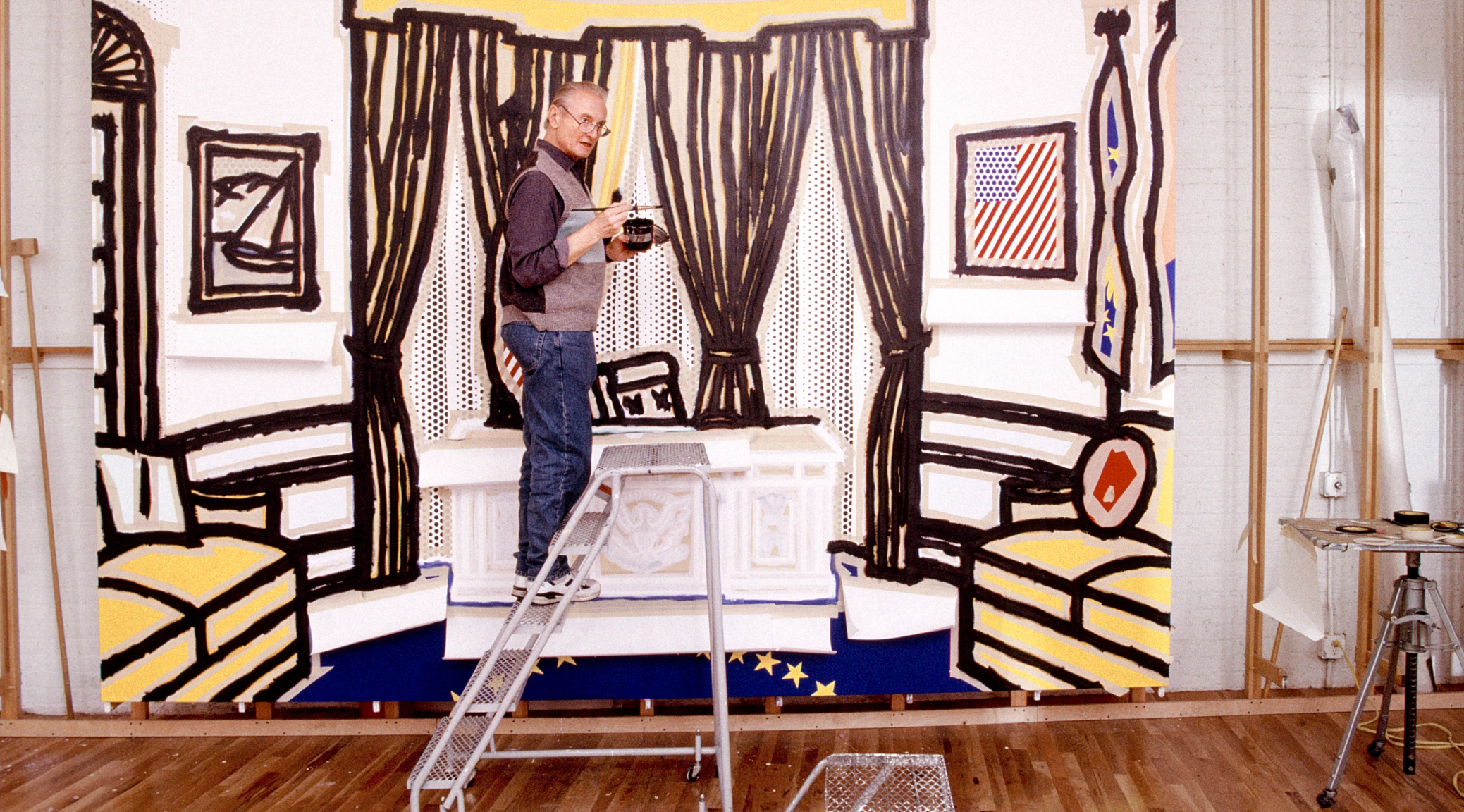
Roy Lichtenstein working on Oval Office, 1993. Photo © Bob Adelman. Art © Estate of Roy Lichtenstein
“I was interested in anything I could use as a subject that was emotionally strong—usually love, war, or something that was highly charged and emotional subject matter. Also, I wanted the subject matter to be opposite to the removed and deliberate painting techniques.”
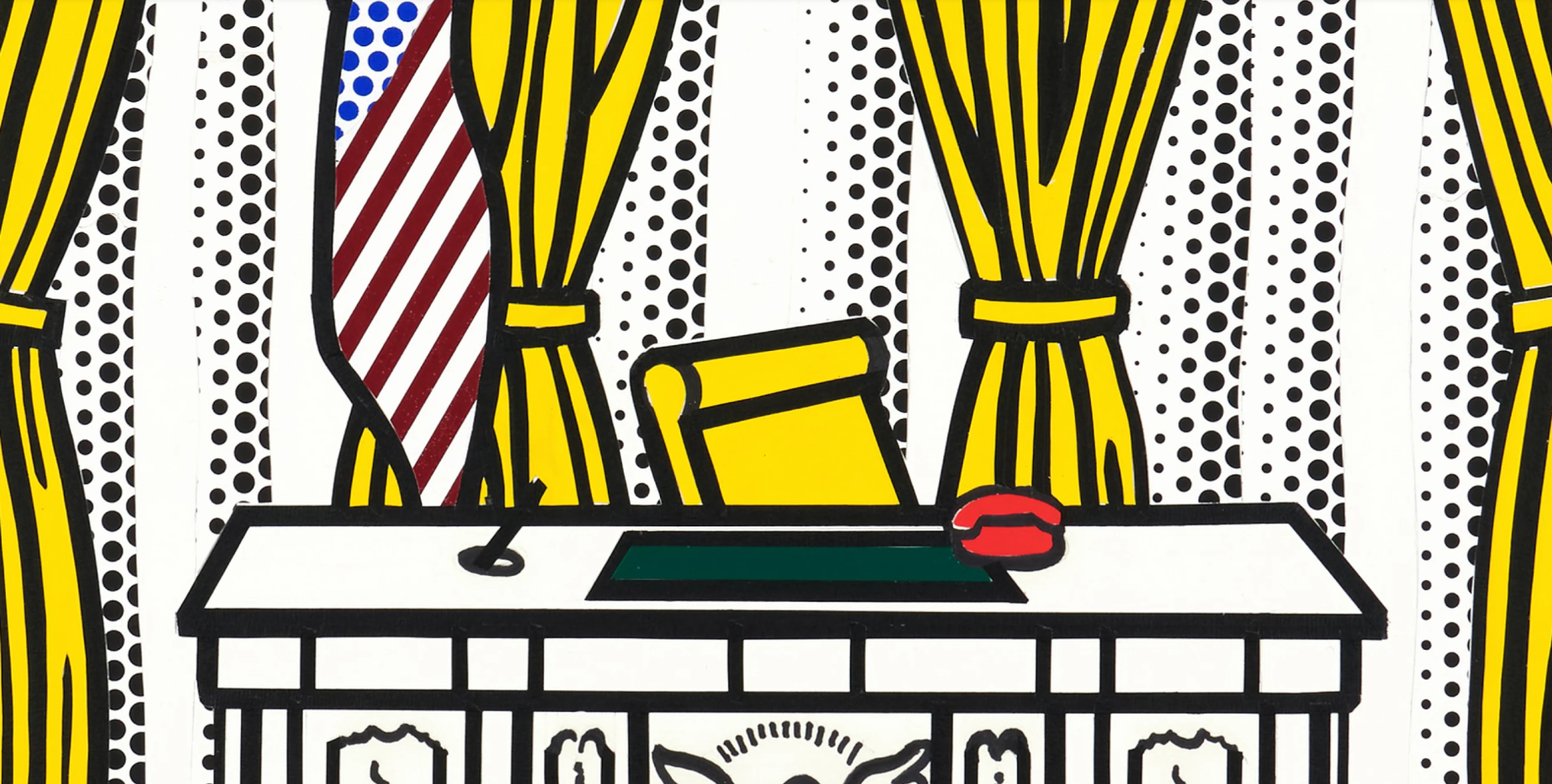
Considering this, it comes as no surprise that Lichtenstein wanted to explore the Oval Office as subject matter; few interior spaces are more recognizable, deeply American, and emotionally complex as the President’s working quarters. Combining the highest seat of power in the United States of America with the “low” connotations of Lichtenstein’s Pop expression is an extension of the artist’s career-long efforts to complicate the contentious dichotomy between what constitutes “high” and “low culture. A commission by the Democratic National Committee ahead of the Clinton-Gore ticket of 1992 led to Lichtenstein’s creation of his Oval Office prints, one of the six commemorative inaugural posters, and the campaign buttons for the election. The fact that the artist returned to the motif, as seen in the present work and the later-created Oval Office painting, suggests his enthusiasm for the themes unlocked at the intersection of the subject matter and his style.
Roy Lichtenstein, Forms in Space, 1985. Private Collection.
Sold at Sotheby’s New York in November 2023 for $3 million. Art © Estate of Roy Lichtenstein
Upon closer inspection of Oval Office (Study), Lichtenstein’s careful and attentive studying of the Oval Office’s archival images shines through in the details he selected. Many captured in the present work suggest that Lichtenstein was referencing John F. Kennedy’s office. To begin with, Kennedy introduced the Resolute Desk to the White House, resulting in the iconic images of his son playing behind the eagle-adorned hinged front panel. Lichtenstein also inserts a simplified painting of boats on the left side of the picture plane, based on paintings such as United States versus the Macedonia or Constituion-Guerriere that Kennedy – famously a sailing enthusiast – had displayed in his office during his presidency. The portrayal of the flags standing behind the Resolute Desk and hung on the right-hand side is a nod to Lichtenstein’s own painting Forms in Space of 1985, which disrupted the formal qualities of the star-spangled banner with Ben-Day dots and diagonal stripes. Referencing the visual language of traditionally venerated paintings, presidential interiors, and the American flag, Lichtenstein combines his unique visual language with an unmistakably American subject matter to create a visually arresting super-reality.
I Love Liberty (Study), 1981
Christie’s New-York: 17 May 2024
Estimated: USD 600,000 – 800,000
USD 2,349,000
ROY LICHTENSTEIN (1923-1997), I Love Liberty (Study) | Christie’s (christies.com)

ROY LICHTENSTEIN (1923-1997)
I Love Liberty (Study), 1981
Painted and printed paper collage and graphite on paperboard
Image: 25 3/4 x 17 inches (65.4 x 43.2 cm)
Sheet: 34×25 inches (86.4 x 63.5 cm)
Signed and dated ‘rf Lichtenstein ’81’ (lower right)
Signed again and dated again ‘rf Lichtenstein ’81’ (on the reverse)
Undoubtedly one of the most recognizable names in American Pop, Roy Lichtenstein’s seemingly autonomous style reframed commercial imagery and print media in an effort to fully entwine the aesthetics of popular culture with the formalist concerns of mid-century Modernism. I Love Liberty (Study) is a key illustration of Lichtenstein’s ability to vacillate between traditional techniques and mechanical methods as he leverages his own visual vocabulary.
“My use of evenly repeated dots and diagonal lines and uninflected color areas suggest that my work is right where it is, right on the canvas, definitely not a window into the world.”
Bringing attention to the surface of the work and the abstract qualities of simplified shading and pattern, he narrowed the divide between print media and the annals of art history.
Rendered in a vertical orientation, I Love Liberty (Study) features a close crop of America’s most patriotic figure: the Statue of Liberty. Featuring a side profile of the crowned woman, a glimpse of her left hand and tablet, and part of her right hand holding the iconic flaming torch, Lichtenstein’s subject is immediately apparent. Set against an even, ordered background of diagonal blue and white stripes, the artist has simplified the scene down to blocks of black, white, and yellow with a touch of red in the torch’s fire. The sharp edges of the cut paper and Lichtenstein’s own bold painting style line up perfectly so that the entire composition exudes a dynamic, optically imposing air. By doing so, he separates the subject matter from reality and pushes it toward the realm of symbolism.

Roy Lichtenstein, Painting with Statue of Liberty, 1983. National Gallery of Art, Washington, DC. © Estate of Roy Lichtenstein. Photo: National Gallery of Art.
The present example is a rare look into Lichtenstein’s meticulous working process. Though his finished compositions were sharp, clean, and had all the finish of a mechanically printed page, the artist often carefully hand-cut and rendered his works to mimic the precision of commercial processes, and I Love Liberty (Study) is made up of various collaged paper elements. Executed by the artist for Norman Lear’s I Love Liberty TV special in 1982 (produced to mark George Washington’s 250th birthday) the sharpness and vivid presence of Lady Liberty is thanks to Lichtenstein’s painstaking preparatory work.

Promotional poster for “I Love Liberty,” ABC TV, 1982
I Love Liberty (Study) is a poignant addition to Lichtenstein’s oeuvre as it takes a familiar image and reframes it in his own signature manner. “I don’t think the importance of the art has anything to do with the importance of the subject matter,” the artist once noted. “I think importance resides more in the unity of the composition and in the inventiveness of perception” (Ibid., p. 128). Recasting Lady Liberty in blocks of color against a striped background that vibrates in our vision, the artist asks for a reconsideration of the American symbol and forces us to reexamine something we might think we already know.
Forms in Space, 1985
Sotheby’s New-York: 15 November 2023
Estimated: USD 1,500,000 – 2,000,000
USD 2,964,000
Forms in Space | Contemporary Evening Auction | 2023 | Sotheby’s (sothebys.com)
ROY LICHTENSTEIN (1923 – 1997)
Forms in Space, 1985
Acrylic, oil, graphite pencil on canvas
24 1/8 x 32 1/8 inches (61.3 x 81.6 cm)
Signed and dated ‘85 (on the reverse)
An elegantly rendered icon of American pop, Forms in Space from 1985 embodies Roy Lichtenstein’s prodigious exploration of commercial art and popular culture. Lichtenstein’s hallmark Ben-Day dots, primary hues, and bold lines are instantly within the present work, encapsulating the enduring potency of the artist’s signature pop aesthetic and visual language. Few symbols are as visually commanding and well-known as the American flag, which Lichtenstein examines alongside fellow Pop artists Jasper Johns and Andy Warhol as the most iconic symbol of American national identity. Through the diagonal stripes and dotted stars, Lichtenstein explores the mechanisms of perception itself, as the title suggests, examining the symbolic nature of form, space and color. Attesting to the rarity of the present work, Forms in Space is one of a series of only four canvases Lichtenstein produced inspired by the American flag within his oeuvre. Bearing exceptional provenance, the painting was held in the estate of the artist for decades, before being acquired directly from Leo Castelli Gallery by the present owner. A striking composition of saturated colors and searing forms, Forms in Space is a magnificent realization of Lichtenstein’s pioneering investigation into form, content, and semiotics.
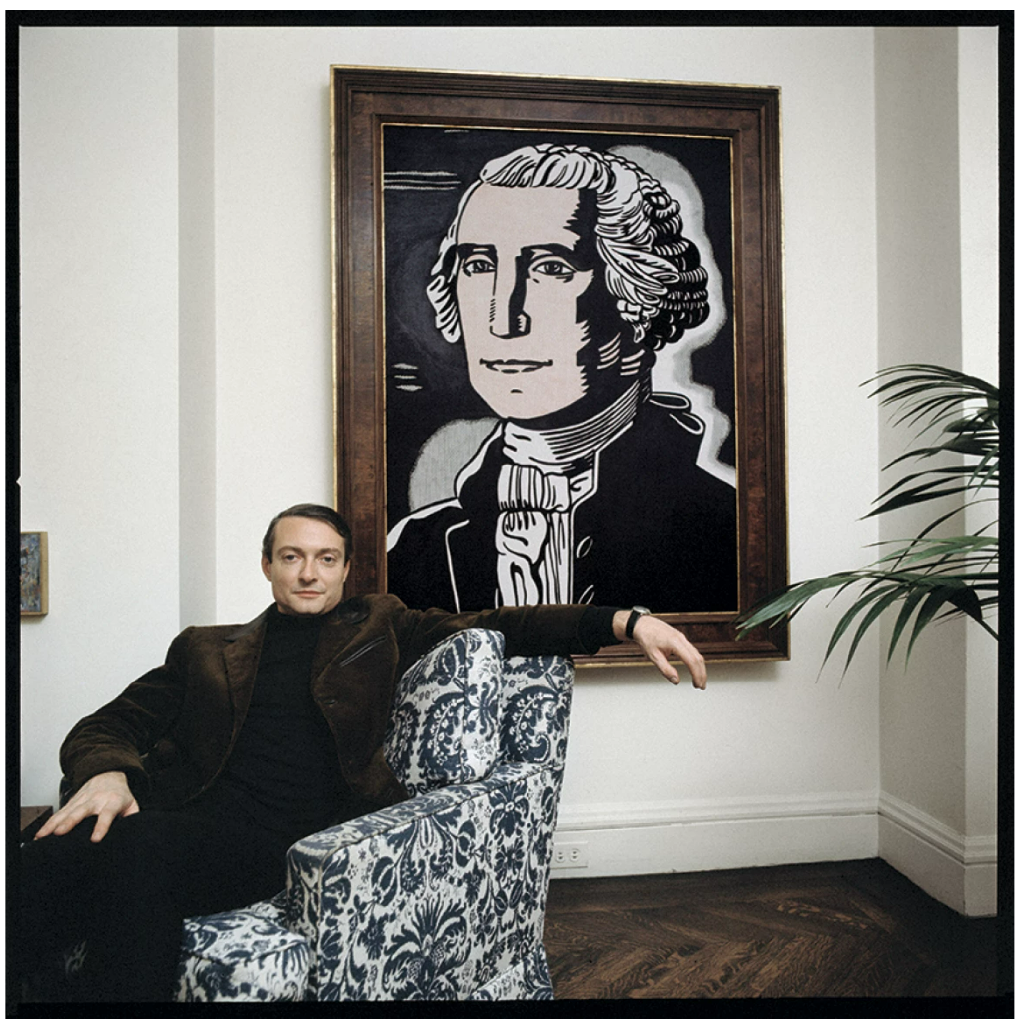
ROY LICHTENSTEIN IN NEW YORK, 1964. PHOTO UGO MULAS/ UGO MULAS HEIRS. ART © 2023 ROY LICHTENSTEIN
Taking the American flag as a point of departure, Lichtenstein examines and disrupts the flag’s formal qualities, questioning its essence as a symbol. Forms in Space poignantly encapsulates Lichtenstein’s unparalleled ability to examine the American psyche through the signs and symbols of twentieth-century consumer culture and, in doing so, raise complex conceptual questions about art and systems of representation. Lichtenstein’s oeuvre is predicated on a semiotic investigation of the ways in which systems of representation allow us to conceptualize and interpret the world around us. Like in his 1960s paintings, which appropriated images from popular war comics, Lichtenstein here examines a defiantly American subject matter rendered in a detached commercial style. As Lichtenstein described, “I was interested in anything I could use as a subject that was emotionally strong – usually love, war, or something that was highly-charged and emotional subject matter. Also, I wanted the subject matter to be opposite to the removed and deliberate painting techniques.” (The artist quoted in John Coplans, ‘Interview with Roy Lichtenstein’, Artforum, May 1967, p. 36)
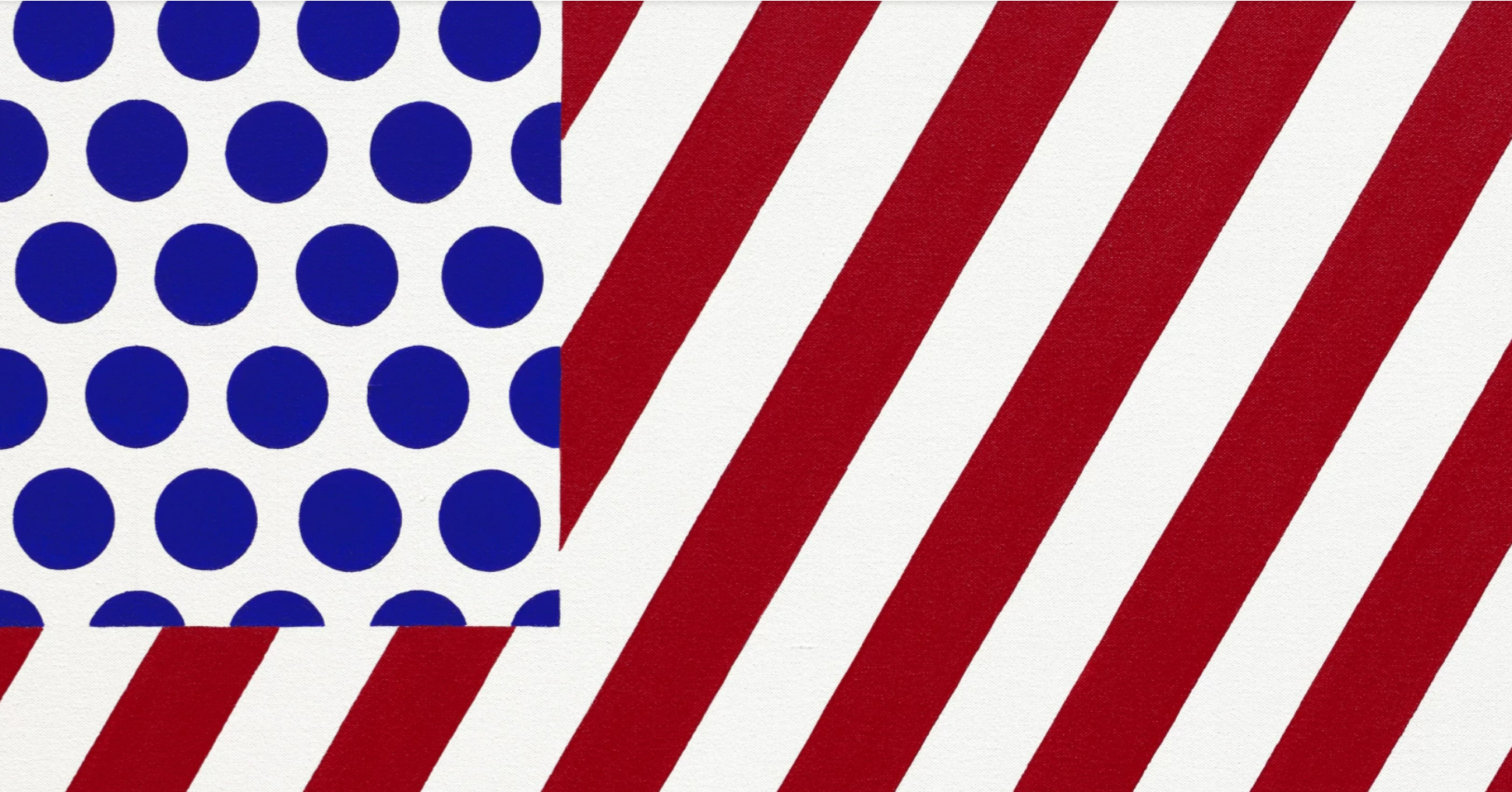
By appropriating the visual language of machine-printed comic strips in the uniform Ben-Day dots which comprise the surface of Forms in Space, thick, Lichtenstein conflates the culturally resonant mass-produced commercial image of a flag with the traditionally venerated medium of oil painting. Forms in Space sees Lichtenstein culling inspiration from everyday quotidian Americana to create a visually arresting super-reality. Although Lichtenstein’s compositions are most obviously rooted in twentieth-century commercial aesthetic norms, the artist also engaged in a dialogue with canonical art historical conventions. Exhibiting a geometric simplicity and vibrant palette, Lichtenstein’s abstracted forms recall the radical compositions of Piet Mondrian or Kazimir Malevich as much as those of his Pop contemporaries. Through mining art historical precedents and some of the most recognizable symbols within American visual culture, Lichtenstein questions the nature of representation and art itself. Meticulously interspersing his signature Ben-Day dots and diagonal lines to replace the stars and stripes of the American flag, Lichtenstein explores the artifice of perspective, toying with the mechanics of perception. Even when abstracted in Lichtenstein’s signature pop aesthetic, the red, white and blue of the flag triggers an infallible sense of recognition and unerring certainty within the viewer, which challenges our associations and reflexes.
“My use of evenly repeated dots and diagonal lines and uninflected color areas suggest that my work is right where it is, right on the canvas, definitely not a window into the world.”
Here, the profusion of dots and lines seeks not to mirror reality, but instead offers witty commentary on perception and the role of the artist, toying with the dichotomy between reality and illusion. Epigrammatic and playful, Lichtenstein’s Forms in Space defiantly embodies the underlying concerns of Lichtenstein’s career: to examine the signs and symbols that give meaning to contemporary life. Executed in 1985, Forms in Space is emblematic of Lichtenstein’s iconic visual style which has since become synonymous with Pop art itself.
Early Landscapes, 1964-66
In 1964, Roy Lichtenstein began painting landscapes. This important turning point marked the first of his concerted efforts in producing a series. Indeed, his landscapes–time-honored art historical traditions in themselves–afforded him the opportunity to explore its depiction as an artificial construct, using the formal devices he had introduced in his early comic strip paintings. Contrary to historical conventions, Lichtenstein’s landscapes questioned the fundamental verity of landscape as genre, and denied nature’s reality altogether, offering instead a different view of landscape–as a product of the mass media.
READ ABOUT EARLY LANDSCAPES
FIND ALL HISTORICAL RESULTS
Atomic Landscape, 1966
Works from the Collection of Dorothy and Roy Lichtenstein
Sotheby’s New-York: 15 May 2025
Estimated: USD 700,000 – 1,000,000
USD 1,636,000
Atomic Landscape | The Now and Contemporary Evening Auction | 2025 | Sotheby’s
ROY LICHTENSTEIN (1923 – 1997)
Atomic Landscape, 1966
Acrylic, oil and graphite on canvas
14 x 16 1/8 inches (35.6 x 41 cm)
Signed and dated ’66 (on the reverse)
Purple Range, 1966
Sotheby’s New-York: 13 May 2024
Estimated: USD 3,000,000 – 4,000,000
USD 3,690,000
Purple Range | Contemporary Evening Auction | 2024 | Sotheby’s (sothebys.com)
ROY LICHTENSTEIN (1923 – 1997)
Purple Range, 1966
Acrylic, oil and graphite on canvas
36×48 inches (91.4 x 121.9 cm)
Signed and dated ’66 (on the reverse)
Landscape, 1965
Phillips New-York: 12 March 2024
Estimated: USD 70,000 – 100,000
USD 63,500
Roy Lichtenstein – New Now New York Lot 29 March 2024 | Phillips
ROY LICHTENSTEIN
Landscape, 1965
Rowlux collage on board
14 x 20 7/8 inches (35.6 x 53 cm)
Signed and dated “rf Lichtenstein 1965” on the reverse
Collage for Seascape, 1964
Phillips New-York: 16 May 2023
Estimated: USD 70,000 – 100,000
USD 101,600
Roy Lichtenstein – 20th Century & Conte… Lot 161 May 2023 | Phillips
ROY LICHTENSTEIN
Collage for Seascape, 1964
Rowlux and painted paper collage
17×22 inches (43.2 x 55.9 cm)
Signed and dated “rf Lichtenstein 1964” on the reverse of the painted sheet
This work is the original study for Roy Lichtenstein’s print Seascape from the New York Ten portfolio
Eventide, 1964
Christie’s New-York: 10 November 2022
Estimated: USD 600,000 – 800,000
USD 1,380,000
ROY LICHTENSTEIN (1923-1997) (christies.com)
ROY LICHTENSTEIN (1923-1997)
Eventide, 1964
Oil and Magna on canvas
30 x 35 7/8 inches (76.2 x 91.1 cm)
Signed and dated ‘rf Lichtenstein ’64’ (on the reverse)
Seascape #16, 1966
Phillips Hong-Kong: 7 June 2021
Estimated: HKD 550,000 – 750,000
HKD 693,000 / USD 89,313
Roy Lichtenstein – 20th Century & Cont… Lot 187 June 2021 | Phillips
ROY LICHTENSTEIN
Seascape #16, 1966
Rowlux, Mylar and cut-and-pasted printed paper on board, originally with motorised lamp
22×24 inches (56×61 cm)
Signed and dated ‘rf Lichtenstein ’66’ on the reverse
Early Paintings
Chief Before the Teepee, circa 1952
Christie’s New-York: 29 September 2023
Estimated: USD 60,000 – 80,000
USD 94,500
ROY LICHTENSTEIN (1923-1997) (christies.com)
ROY LICHTENSTEIN (1923-1997)
Chief Before the Teepee, circa 1952
Oil on canvas
40×30 inches (101.6 x 76.2 cm)
Signed ‘Lichtenstein’ (lower right)
Gallant Scene II, 1957
Sotheby’s New-York: 19 July 2023
Estimated: USD 100,000 – 150,000
USD 139,700
Gallant Scene II | Contemporary Discoveries | 2023 | Sotheby’s (sothebys.com)
ROY LICHTENSTEIN (1923 – 1997)
Gallant Scene II, 1957
Oil on canvas
47 1/2 x 69 1/2 inches (120.7 x 176.5 cm)
Signed (lower right)
Uniquely revelatory of the inventive development of Roy Lichtenstein’s legendary artistic practice, Gallant Scene II is situated poignantly at the genesis of his revolutionary Pop vernacular. The largest painting of Lichtenstein’s early Rococo era, Gallant Scene II from 1957 epitomizes his increasing integration of appropriative source material in his artistic production.
Featured in the unprecedented, paradigm-shifting 2021-2023 exhibition Roy Lichtenstein: History in the Making, 1948-1960, which traveled to four major American museums including Colby College Museum of Art and Columbus Museum of Art and illuminates how Lichtenstein’s early artistic production led to the emergence of Pop Art, the present work is a testament to the artist’s radical stylistic evolution. A jigsawed whirlwind of colorful shapes and frenetic brushstrokes coalescing into a scene of two figures kissing, Gallant Scene II expresses a significant shift in Lichtenstein’s early style and iconography.
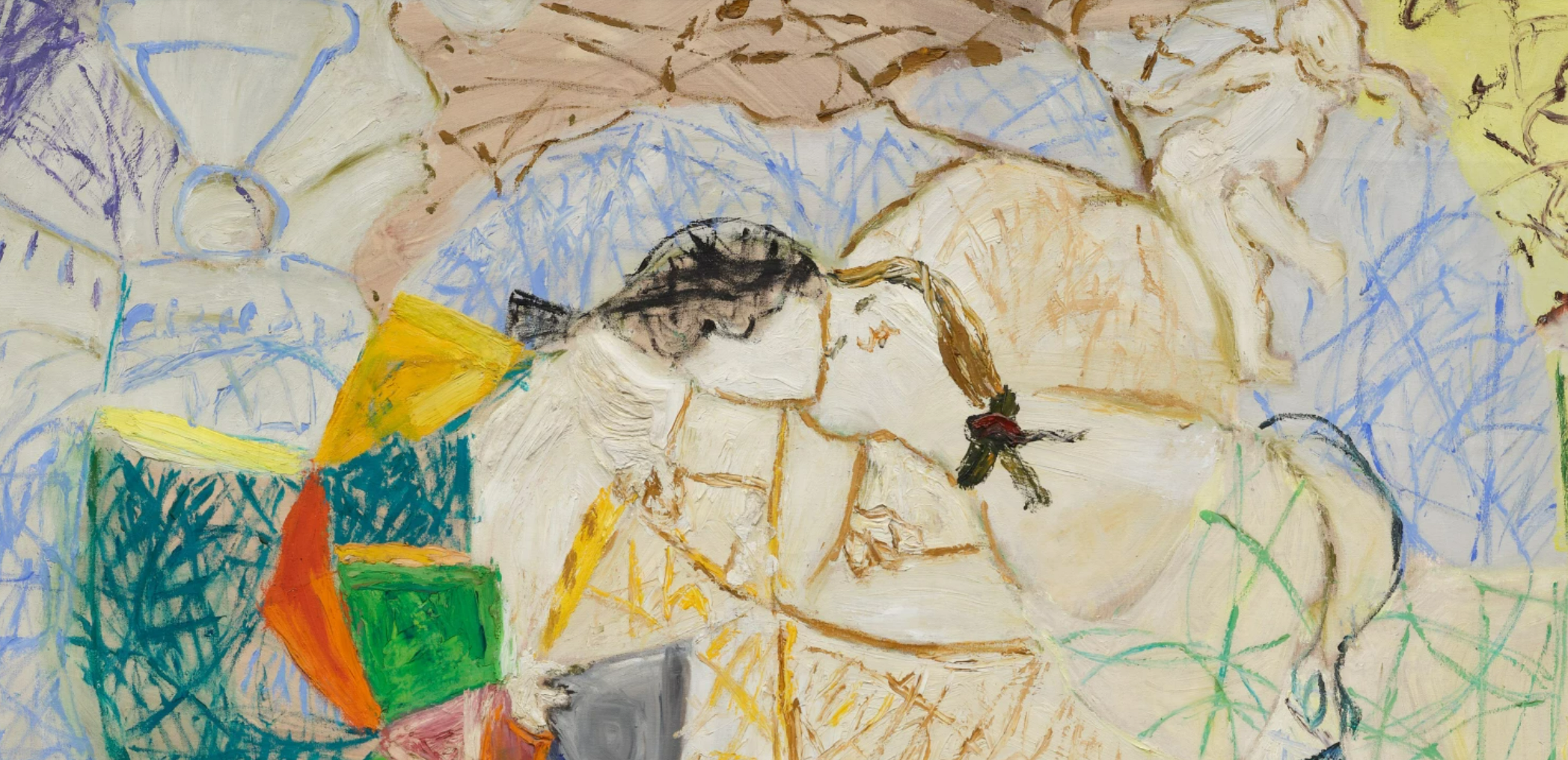
Before fashioning his art historical niche within his iconic Pop art style of the 1960s, Lichtenstein’s artistic practice was largely experimental: he embarked on innumerable artistic escapades, including a jaunt with abstraction, a foray with American history illustrations, and even a quick excursion into rococo. While Lichtenstein primarily created Modernist renditions of scenes from American history throughout the late 1940s and early 1950s, Gallant Scene II is sourced from scenes of lovers produced in early modern France, particularly Jean-Honore Fragonard’s The Stolen Kiss from 1756-61. Fragonard’s painting captures a fleeting moment of passion between two young lovers engaged in a secret romance—a beautiful scene of idealized love. In his Gallant Scene II, Lichtenstein similarly adopts this Romantic idealism, illustrating it with playful, potentially satirical expressiveness and designating it with a title that connotes the scene as heroic or courageous. Such cliche, romantic tropes are foundational in Lichtenstein’s oeuvre, forming the conceptual and aesthetic grounds for later Pop compositions that would appropriate the romance comics popular in the 1950s and 60s.
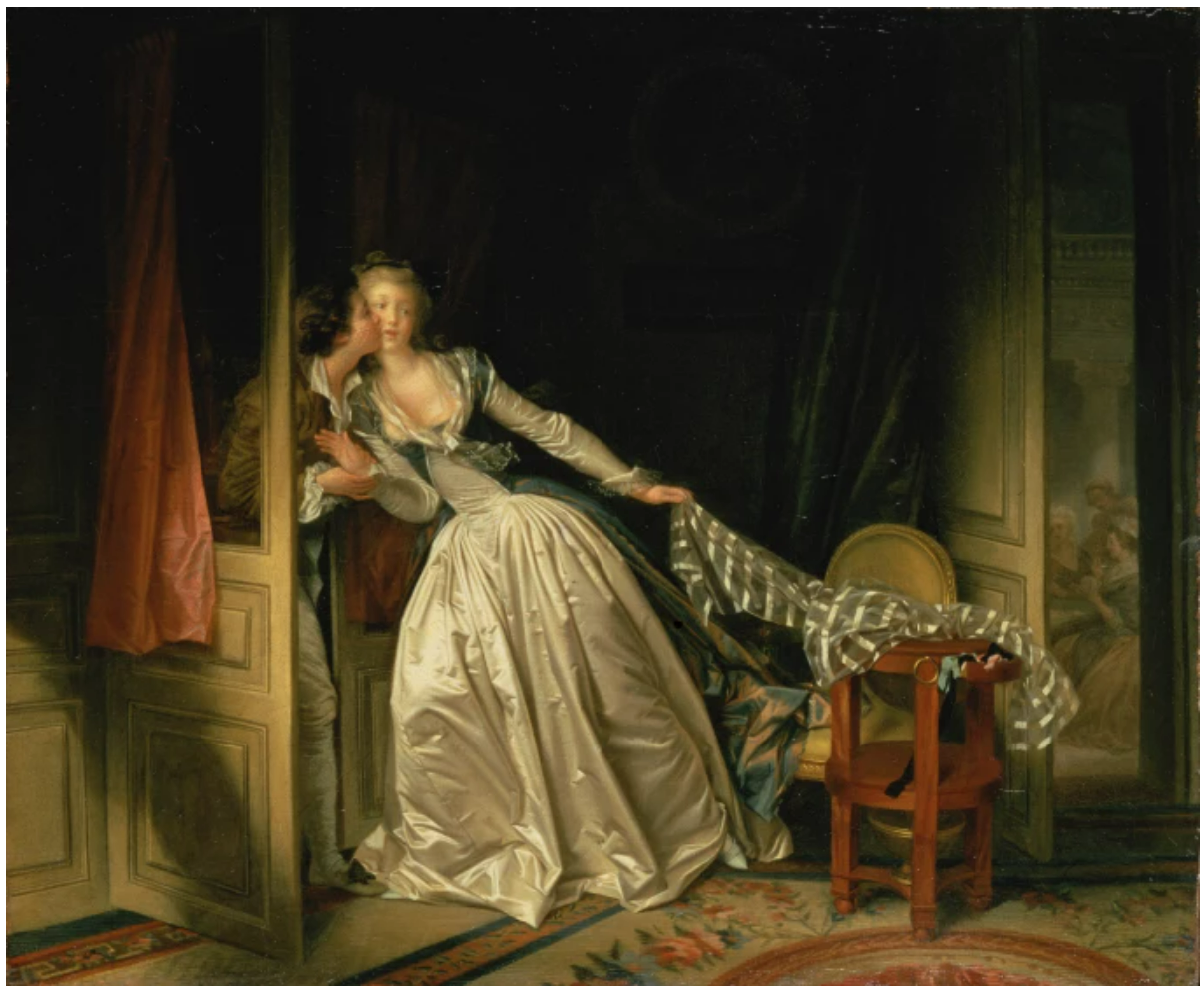
JEAN-HONORE FRAGONARD, THE STOLEN KISS, 1756-1761. STATE HERMITAGE MUSEUM, ST. PETERSBURG
In Gallant Scene II, Lichtenstein conjures a striking aesthetic and narrative intensity by borrowing the Byzantine-like gold coloration and mosaic-like geometric patterning of Gustav Klimt’s The Kiss from 1907-1908, now housed in Österreichische Galerie Belvedere, Vienna. The kissing figures in Gallant Scene II dissolve into the flattened, fragmented expanse surrounding them, recalling the superficial dimensionality and destabilized perspective seen in The Kiss.
“I liked the idea of turning those paintings into what I thought of then as my own style”
Meanwhile, Lichtenstein also combines inspiration from his contemporary Andy Warhol in the motif of a heartening and playful cherub, echoing Warhol’s many illustrations of angels executed during this same time. In Gallant Scene II, both the flat representation and use of caricature remained foundational to Lichtenstein’s work as it evolved into the Ben-day dot comic-inspired Pop representations of the blonde bombshells for which he is best known.
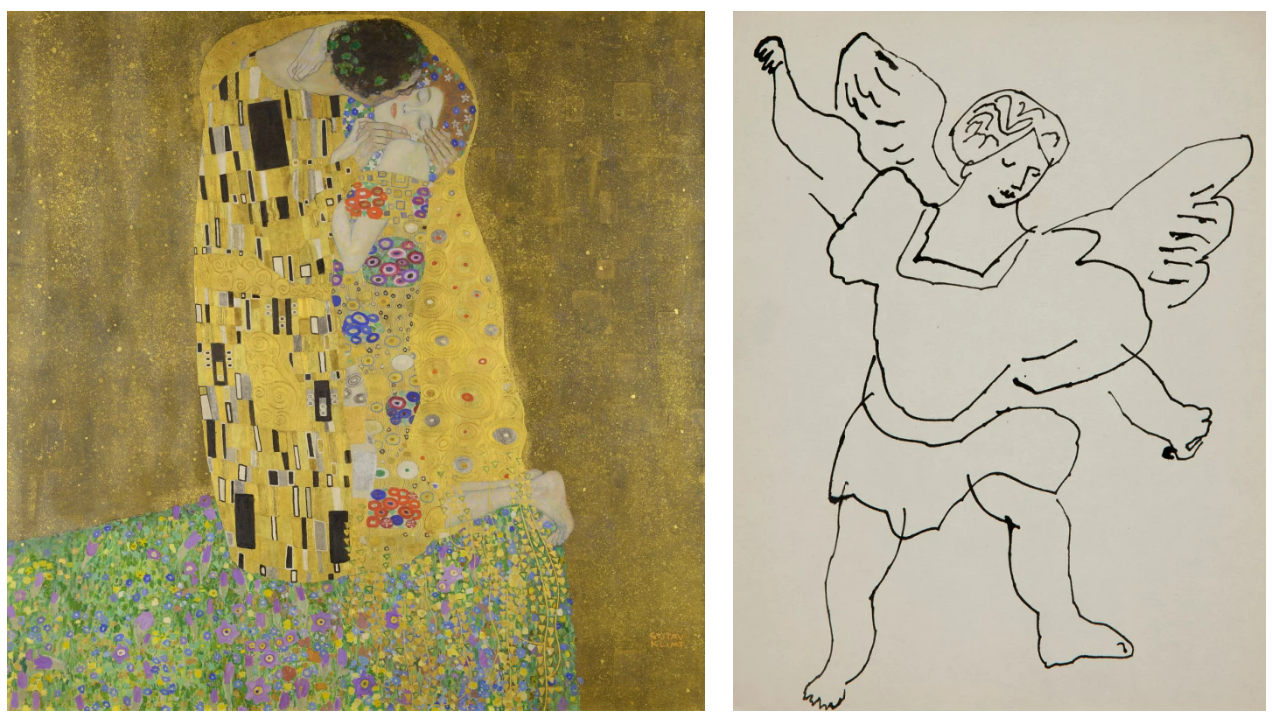
LEFT: GUSTAV KLIMT, THE KISS, 1907-1908. ÖSTERREICHISCHE GALERIE BELVEDERE, VIENNA. RIGHT: ANDY WARHOL, ANGEL, C.1954. PRIVATE COLLECTION. IMAGE © BRIDGEMAN IMAGES. ART © 2023 THE ANDY WARHOL FOUNDATION FOR THE VISUAL ARTS, INC. / LICENSED BY DACS, LONDON
A monumental kaleidoscope of brilliant colors and surging forms, Gallant Scene II is a paradigm of Lichtenstein’s seminal painterly experimentation with figurative representation and perspective. Within the fractured realm of the present work, abstraction and figuration collide with thrilling velocity before the viewer’s eyes to conjure the Romantic image of two lovers entwined, overseen and blessed by a neighboring darling cherub. Lichtenstein’s multi-sourced borrowing and painterly expressive interpretation indicate his utmost concern for contemporary stylization while foreshadowing his upcoming artistic evolution. Not long after Gallant Scene II, Lichtenstein’s borrowing from artistic sources develops into his appropriation of popular mainstream culture — the essence of his Pop practice. An early testament to Lichtenstein’s development into the vanguard of post-war American contemporary art, Gallant Scene II recreates an art historical trope into a playfully exciting new context.
Death of Jane McCrea, 1951
Bonhams New-York: 16 November 2022
Estimated: USD 70,000 – 100,000
USD 113,775
Bonhams : ROY LICHTENSTEIN (1923-1997) Death of Jane McCrea 1951
Oil on canvas
42×34 inches (106.7 x 86.4 cm)
Signed and dated 51
The present works by Roy Lichtenstein from the Collection of H. Lee Turner showcase the foundations of the artist’s prolific career as one of the pioneers of American Pop Art. After serving in the American infantry in World War II, Lichtenstein stayed in Europe to study French language and civilization and was subsequently inspired heavily by the works of European artists including Pablo Picasso and Paul Klee. Lichtenstein returned to Cleveland shortly thereafter and took this inspiration to create his own interpretations through a uniquely American lens. Lichtenstein would take motifs and imagery including Native American figures and symbols from 19th century American genre painting and create cubist configurations as a modern interpretation. Lot 41, Death of Jane McCrea, draws from John Vanderlyn’s The Murder of Jane McCrea from 1804 (Wadsworth Antheneum Museum of Art, Hartford, Connecticut) but the cubist figures and composition create a whimsical rendering of a traditionally gruesome subject. Lichtenstein would use this same idea of appropriation and transformation in his iconic comic inspired paintings that solidified his position in the art historical canon.
Unknown (Dancing Indian?), circa 1952
Bonhams New-York: 16 November 2022
Estimated: USD 40,000 – 60,000
USD 65,895
Bonhams : ROY LICHTENSTEIN (1923-1997) Unknown (Dancing Indian) circa 1952
Oil on canvas
20×14 inches (50.8 x 35.6 cm)
Signed
Untitled (Two Chippewa Building Canoe), circa 1952
Estimated: USD 50,000 – 70,000
USD 75,600
Untitled (Two Chippewa Building Canoe), circa 1952
Oil on canvas
24×30 inches (61 x 75.8 cm)
Signed ‘Lichtenstein’ (lower right)
Untitled, 1959
Estimated: USD 70,000 – 100,000
USD 562,500
Untitled, 1959
Oil on canvas
48×48 inches (121.9 x 121.9 cm)
Signed with the artist’s initials and dated ‘rfl 59’ (lower left)
Other Series
The Great Pyramid Banner (Study), circa 1977-78
Property from the Collection of Dorothy and Roy Lichtenstein
Sotheby’s Riyadh: 31 January 2025
Estimated: USD 150,000 – 200,000
USD 495,300
The Great Pyramid Banner (Study) | Origins II | 2026 | Sotheby’s
ROY LICHTENSTEIN (1923 – 1997)
The Great Pyramid Banner (Study), circa 1977-78
Cut painted and printed paper, tape and graphite on paperboard
Image: 29×7 inches (73.6 x 17.8 cm)
Board: 40×17 inches (101.6 x 43.2 cm)
Signed R. Lichtenstein and dated ’80 (on the reverse)
Executed circa 1977 to 1978, Roy Lichtenstein’s The Great Pyramid Banner (Study) epitomizes a refined moment in the artist’s engagement with geometric form and architectural symbolism. Moving beyond the comic-book vernacular that established his early fame, Lichtenstein in the 1970s explored increasingly abstract yet referential motifs. The Pyramid works, including this elegant vertical study, reflect his interest in how geometric structures can gain new meaning when filtered through the lens of his Pop lexicon. Pyramids were a constant in Lichtenstein’s vast oeuvre from the late 1960s until his passing in 1997, and he focused on this subject for longer than many others. Given the artist’s fascination with classical forms, as seen in other series such as his Entablatures, his pyramids reveal an enduring commitment to analyzing and reinterpreting architecture across media.
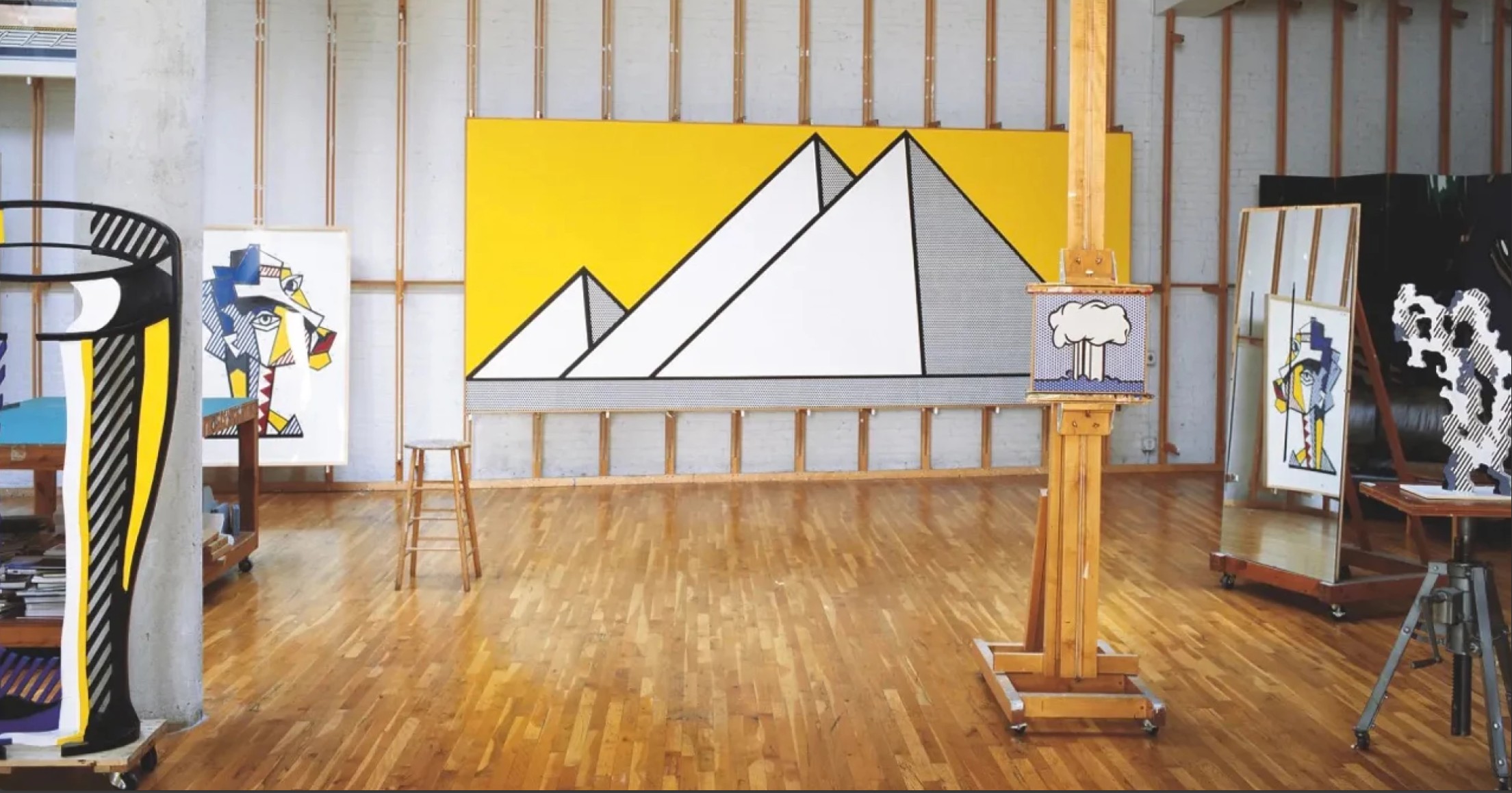
Roy Lichtenstein’s studio, 2004. Photo © Eric Boman. Art © Estate of Roy Lichtenstein
The banner from which this study resulted was commissioned to embellish the entrance to the record-breaking 1978 exhibition titled “Treasures of Tutankhamun” at the Los Angeles County Museum of Art, which presented artifacts from the Egyptian pharaoh King Tut and responded to popular fascination with Ancient Egypt.
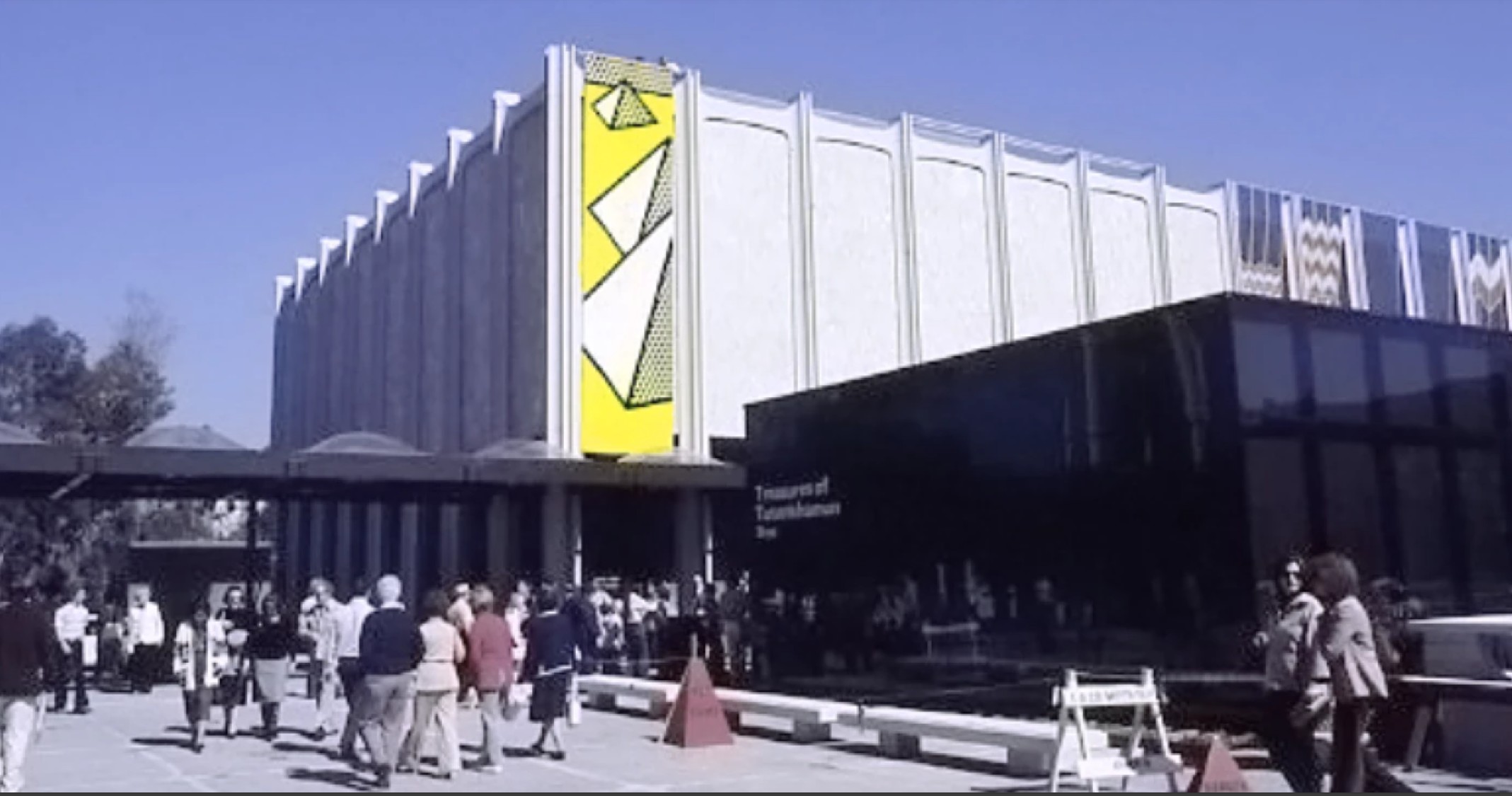
Roy Lichtenstein, The Great Pyramid Banner, c. 1977. Installed on the south facade of LACMA’s Frances and Armand Hammer Wing to mark the temporary entrance to the exhibition “Treasures of Tutankhamun,” February 15-June 15, 1978.
In The Great Pyramid Banner (Study), Lichtenstein reduces the ancient form of the pyramid to crisp, interlocking triangles outlined in black. These shapes hover within a tall, narrow field of vivid yellow, punctuated by passages of Ben-Day dots. The composition is both playful and sharp: the pyramids tilt, overlap, and seem to shift in perspective, while the geometry grounds the work in the disciplined visual logic of the period. This oscillation between formal restraint and graphic dynamism encapsulates Lichtenstein’s ability to merge high-modernist abstraction with the bold immediacy of commercial design.
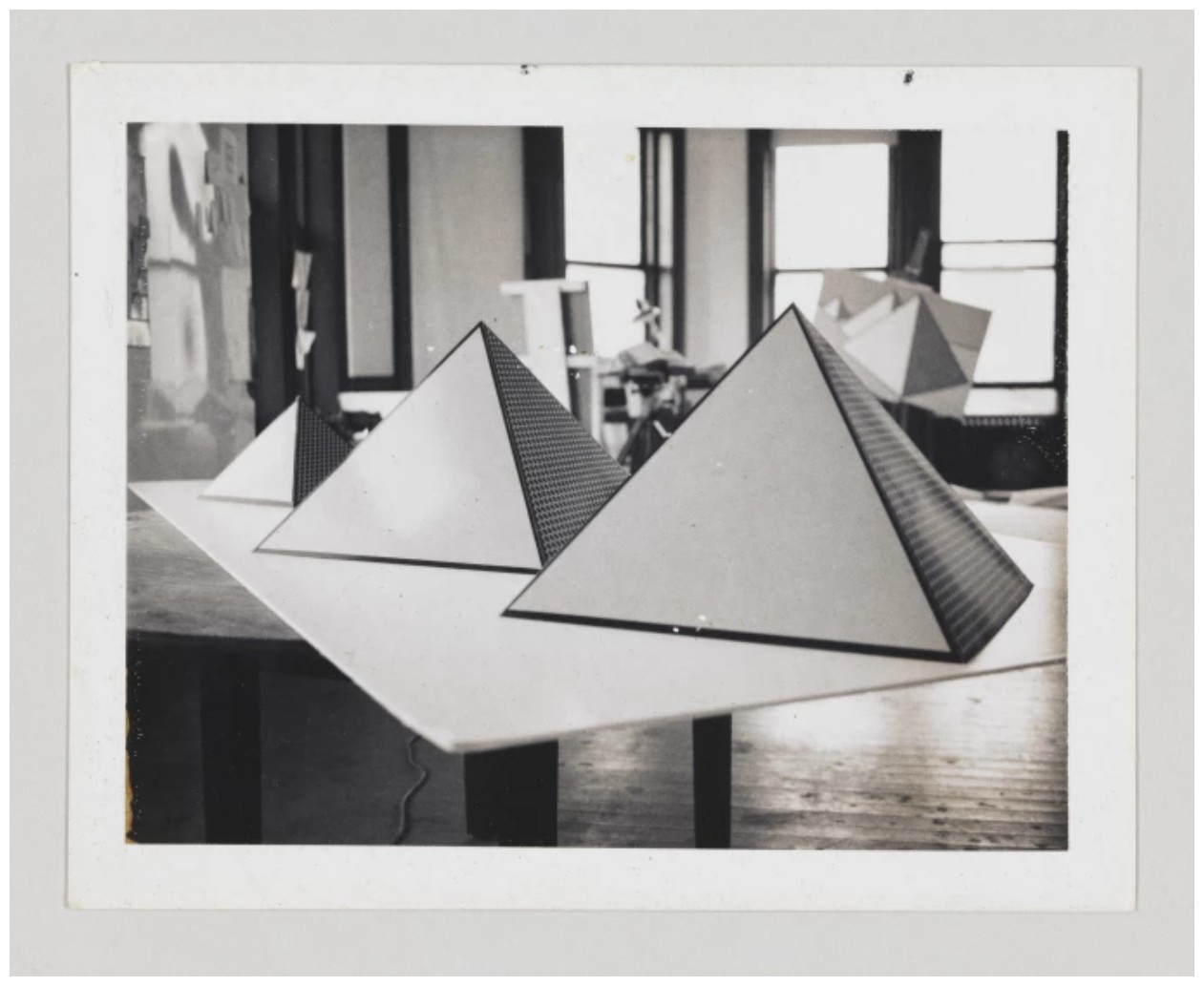
Roy Lichtenstein, Untitled [pyramid], c. 1970. The Whitney Museum of American Art, New York. Art © Estate of Roy Lichtenstein.
Lichtenstein did not turn to the pyramidal form at random. Pyramids were popular amongst the 1960s minimalists such as Dan Flavin, Sol Lewitt and Robert Morris. Yet, as with Dan Flavin whose luminous constructions often evoked spatial and architectural experience, Lichtenstein was working in a fundamentally representational manner in the Pyramids series. His forms are not merely exercises in abstract geometry; with their yellow monochromatic ground and passages of grisaille that suggest shadow and sky, they become graphic reductions of architectonic landscapes. Lichtenstein distills the pyramid to its most essential planar components, but the work still resonates as an evocation of place and structure. In this regard, The Great Pyramid Banner (Study) participates in a broader twentieth-century artistic conversation in which the Pyramids served as a potent, universal subject.
Gerhard Richter, for example, created paintings of pyramids in 1964 and 1966 in his idiosyncratic photo-painting style. Like Lichtenstein, he discovered that the iconic nature of the Egyptian pyramids allowed for total recognizability even when refracted through conceptually advanced painterly strategies. Their monumental form becomes a kind of visual constant—legible even when stylistically transformed. In the years following Lichtenstein’s engagement with the theme, Keith Haring also deployed pyramids regularly, valuing their symbolic resonance. In American culture of the 1960s through the 1980s, pyramids were entangled with burgeoning UFO mythology and “Ancient Astronaut” conspiracy theories, which speculated that sites such as Giza were constructed by extraterrestrial visitor.
Gerhard Richter, Pyramide, 1966. Private Collection. © 2025 Gerhard Richter
Against this rich backdrop, Lichtenstein’s study becomes more than a formal experiment—it is a distilled, symbolic encounter with the pyramid as an icon shaped by art history, mass culture, and collective imagination. Its sleek composition bridges antiquity and contemporary visual culture, demonstrating how Lichtenstein transformed recognizable forms into modern pictorial puzzles. The Great Pyramid Banner (Study) stands as a sophisticated example of the artist’s late-1970s experimentation, revealing how iconic structures could be reimagined through his trademark line, pattern, and wit, while simultaneously situating his work within a larger lineage of twentieth-century artists captivated by the charged, enduring image of the pyramid.
Slam, 1989
Reflections on Pop: Works from the Collection of Dorothy and Roy Lichtenstein
Sotheby’s New-York: 26 September 2025
Estimated: USD 100,000 – 150,000
USD 177,800
ROY LICHTENSTEIN (1923 – 1997)
Slam, 1989
Colored pencil and graphite on paper
Image: 5 5/8 x 2 7/8 inches (14.3 x 7.3 cm)
Sheet: 10 3/8 x 7 3/8 inches (26.4 x 18.7 cm)
Signed with the artist’s initials and dated ’89 (on the verso)
Executed in 1989, Slam belongs to Roy Lichtenstein’s highly refined late period, when he revisited and celebrated the comic-inspired imagery that first established him as an icon of Pop Art in the 1960s. Slam channels the energy of his early breakthroughs while revealing the sophistication of his mature style, affirming Lichtenstein’s enduring ability to transform a single, dynamic instant into a powerful and timeless image.
“I had been interested in the comic strip as a visual medium for a long time… This technique is a perfect example of an industrial process that developed as a direct result of the need for inexpensive and quick color-printing. These printed symbols attain perfection in the hands of commercial artists through the continuing idealization of the image made compatible with commercial considerations.”
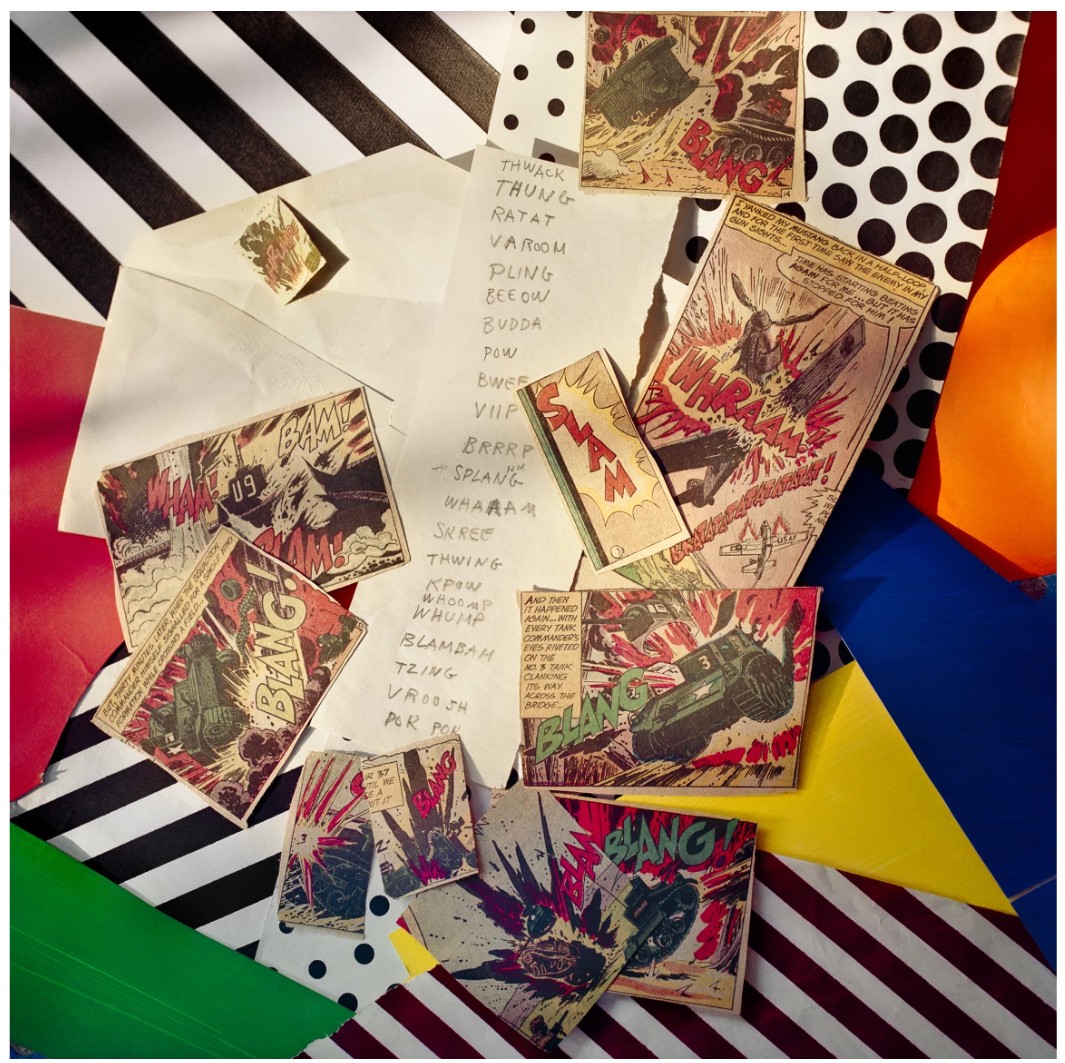
Explosion, Slam, photo composition of Roy Lichtenstein’s Hand Written Word List and comic book clipping source material, made in the artist’s studio between 1990 and 1992. Photo © Laurie Lambrecht. Art © Estate of Roy Lichtenstein
The present work consciously recalls Lichtenstein’s pioneering canvases of the early 1960s, where onomatopoeic exclamations like Wham! and Varoom! burst across the surface of the canvases. Those works announced his arrival on the Pop scene, redefining the role of painting through the visual language of mass media. Nearly three decades later, Slam distills that vocabulary into a bold form, condensing the graphic punch of his early imagery into a composition of striking clarity and focus.
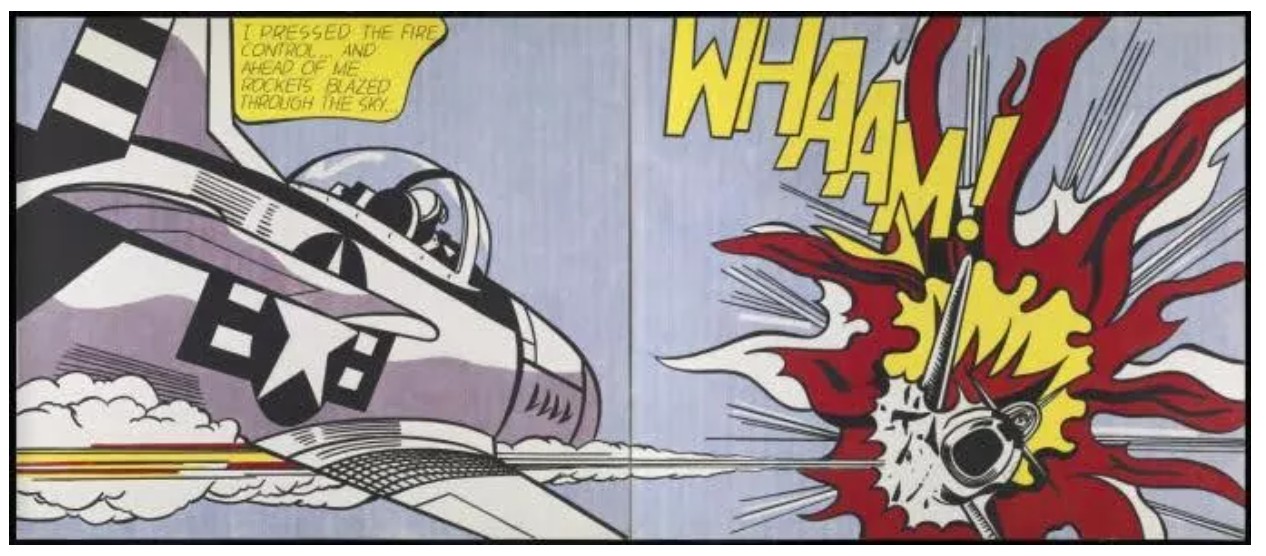
Roy Lichtenstein, Whaam!, 1963. Tate Modern, London. Art © Estate of Roy Lichtenstein
Slam exemplifies Lichtenstein’s unique ability to translate the visual language of comic books into fine art. Executed with bold hues, the work captures an action-packed moment in a compact and striking composition. The jagged white burst around the yellow “Slam” against a deep red ground conveys both motion and sound, while blue diagonal hatching evokes the texture of commercial print. By isolating this fragment, Lichtenstein elevates a fleeting comic panel into a lasting commentary on mass media and the power of words.
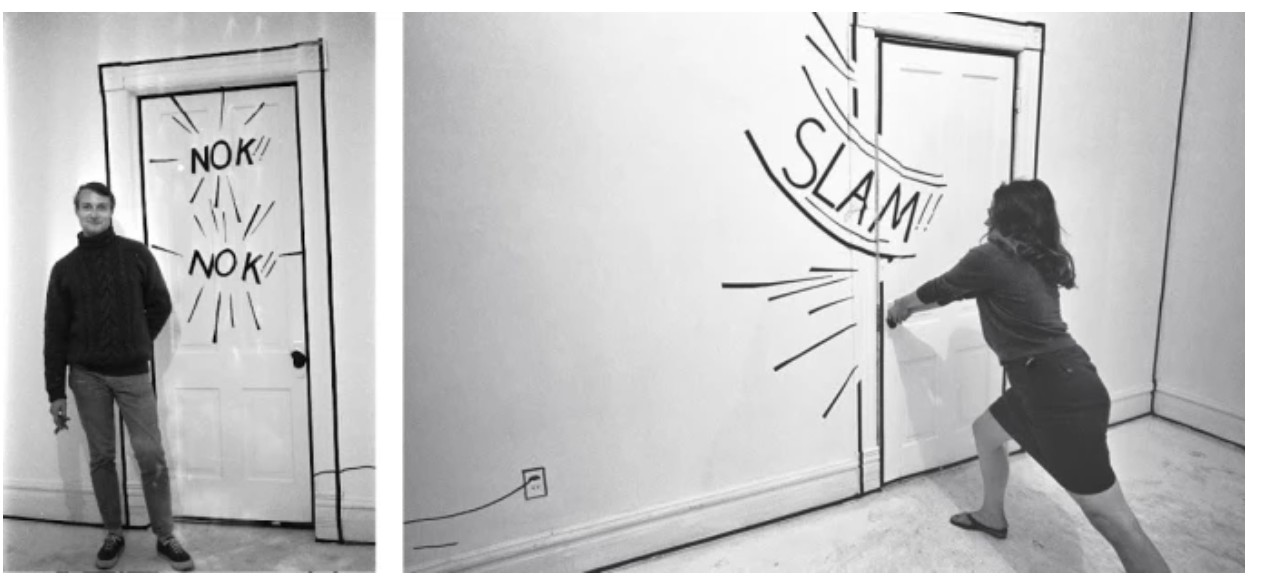
Left to Right: Roy Lichtenstein, Room in Aspen, 1967. Art © Estate of Roy Lichtenstein
In Slam, Lichtenstein plays with the viewer’s perception of space and action. The partially visible door anchors the word within a tangible setting, hinting at the unseen cause of the loud impact. This contrast between a static, schematic background and an explosive textual element amplifies the tension between stillness and movement. As in much of his work, the present work blurs the boundaries between high art and popular culture, transforming an everyday visual trope into a sophisticated reflection on how images and words shape our experience of events.
It Is You (Study), 1993
Reflections on Pop: Works from the Collection of Dorothy and Roy Lichtenstein
Sotheby’s New-York: 26 September 2025
Estimated: USD 80,000 – 120,000
USD 139,700
ROY LICHTENSTEIN (1923 – 1997)
It Is You (Study), 1993
Colored pencil, graphite, cut paper, tape and printed paper clipping on paper
28 7/8 x 23 inches (73.3 x 58.4 cm)
It Is You (Study) from 1993 looks back to the imagery that first defined Roy Lichtenstein’s place in Pop history: his Girl paintings of the early 1960s. Drawn from romance comics and characterized by blonde heroines, bold outlines, and heightened emotional drama, these works cemented Lichtenstein’s reputation as a Pop icon. In the present work, Lichtenstein returns to this subject with renewed vigor, transforming a 1962 comic-book panel into a powerful exploration of image-making. At the upper left, Lichtenstein affixes a clipped panel from a 1962 issue of Girls’ Romances, while below he reinterprets the image in an exquisitely colorful drawing. The heroine’s blue hairband, the man’s blond hair, and the revised exclamation “It is you!” sharpen the emotional intensity and transform a fleeting comic vignette into a scene charged with the clarity.
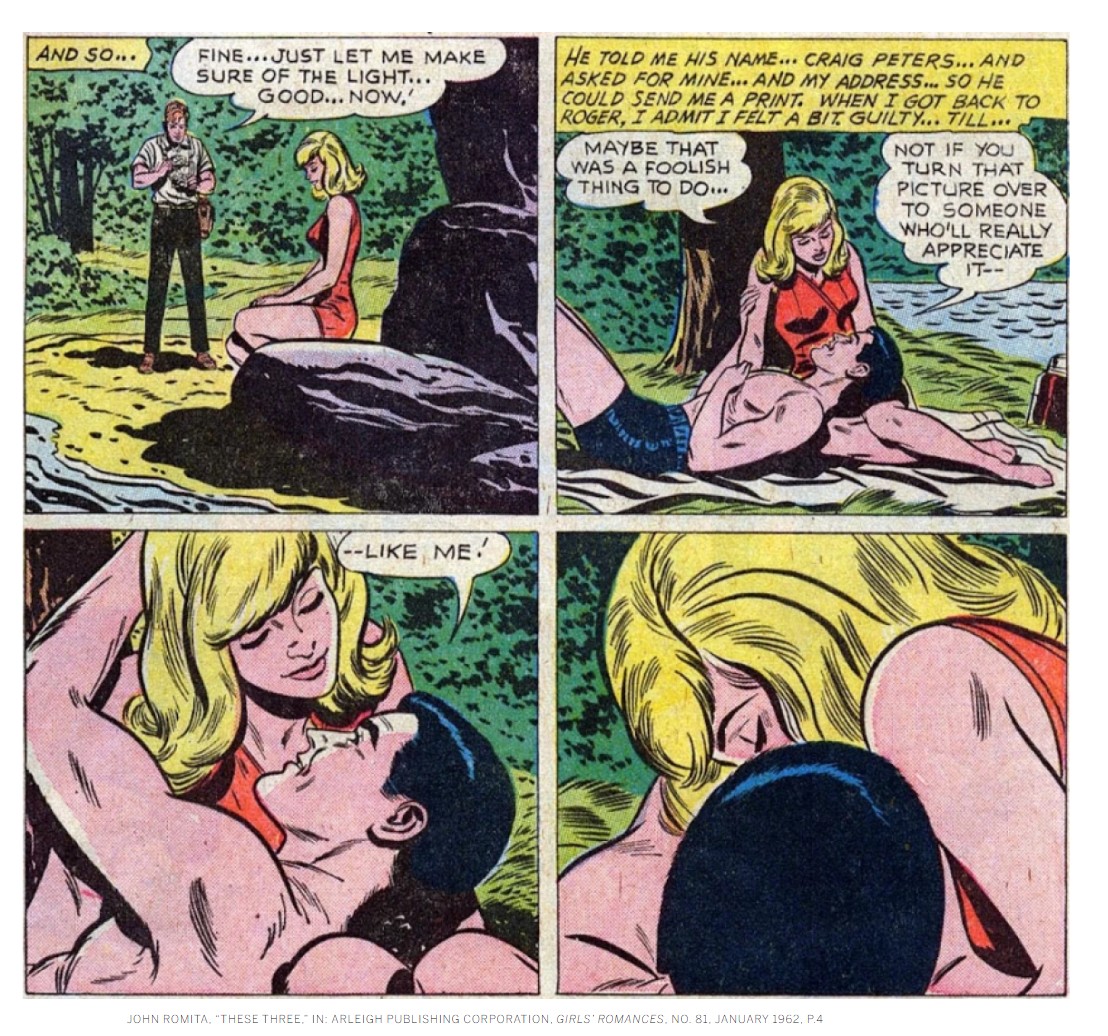
John Romita, “These Three,” in: Arleigh Publishing Corporation, Girls’ Romances, no. 81, January 1962, p.4
By revisiting this subject three decades later, Lichtenstein acknowledges the central role of the Girl paintings within his career while also reframing them through the lens of his late practice. The present work is not only about appropriation but also about process: the taped comic clipping, the carefully worked drawing, and the small sketch of an interior scene at the upper right together map the artist’s method of absorbing, transforming, and redeploying source imagery. The inclusion of the interior sketch also points toward his 1990s Interiors series, where domestic spaces became sites for layering art-historical and popular references alike.
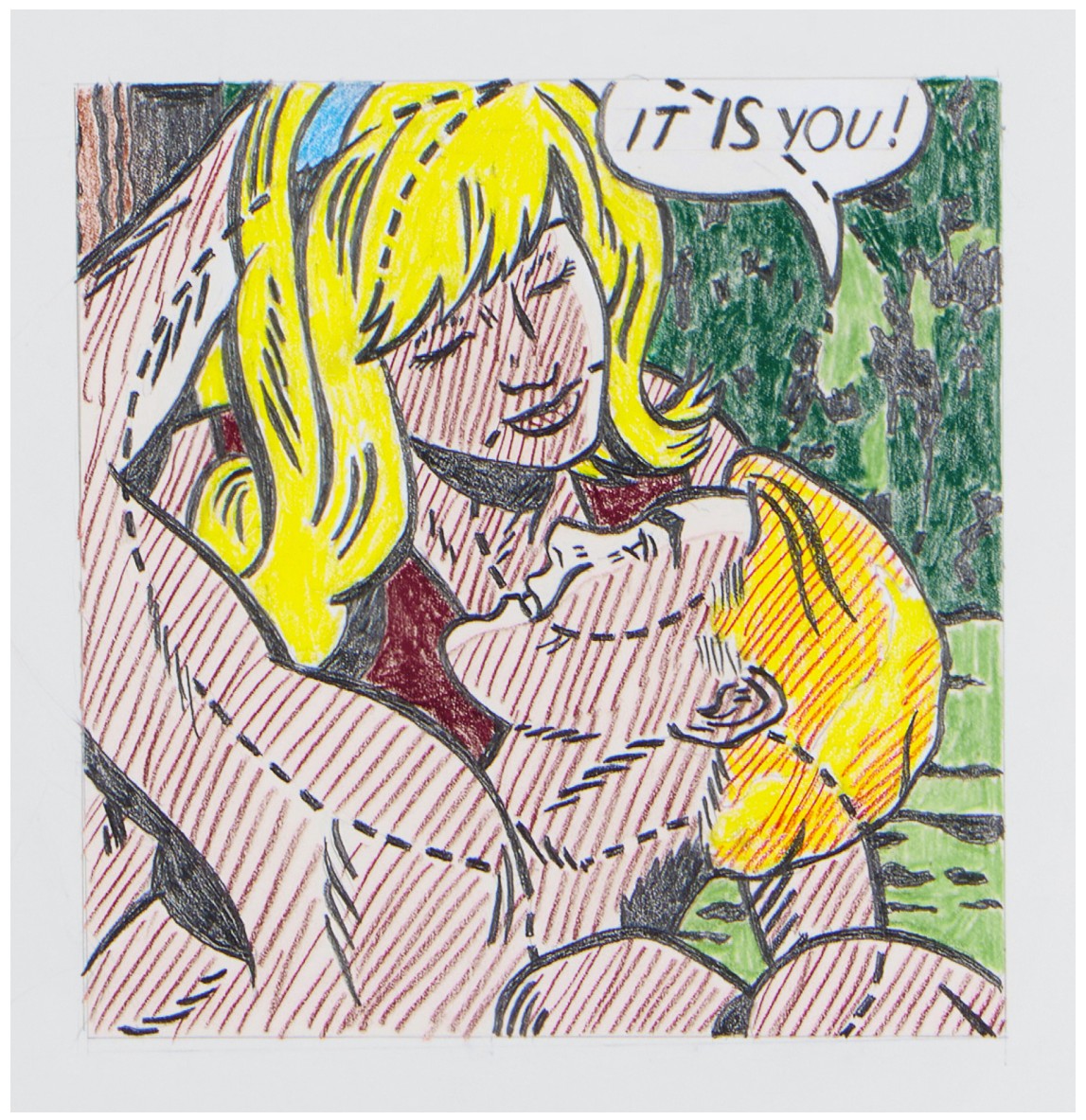
In bridging his 1960s heroines with the more expansive concerns of his later work, It Is You (Study) underscores Lichtenstein’s enduring dialogue with popular culture, gendered imagery, and the mechanics of representation. It situates the iconic heroine who made him famous not only as emblems of Pop’s beginnings but also as enduring touchstones in a career that continued to probe the tension between mass media and high art.
Portrait Triptych (Studies), 1974
Works from the Collection of Dorothy and Roy Lichtenstein
Sotheby’s New-York: 15 May 2025
Estimated: USD 1,500,000 – 2,000,000
USD 2,246,000
Portrait Triptych (Studies) | The Now and Contemporary Evening Auction | 2025 | Sotheby’s
ROY LICHTENSTEIN (1923 – 1997)
Portrait Triptych (Studies), 1974
Left and center sheets: colored pencil and graphite on paper
Right sheet: colored pencil, graphite and paper collage on paper
Each sheet: 22×15 inches (55.9 x 37.9 cm)
Each image: approx. 13 1/2 x 10 3/4 inches (34.3 x 27.3 cm)
Each: signed and dated ’74 (on the reverse)
Roy Lichtenstein’s Portrait Triptych is a sophisticated and deeply reflective 1970s work that reaffirms his position as one of the most innovative and conceptually rigorous artists of the postwar era. Often associated with comic book aesthetics and popular culture, Lichtenstein is here revealed not simply as a painter of Pop, but as a visual thinker profoundly engaged with the history of representation.
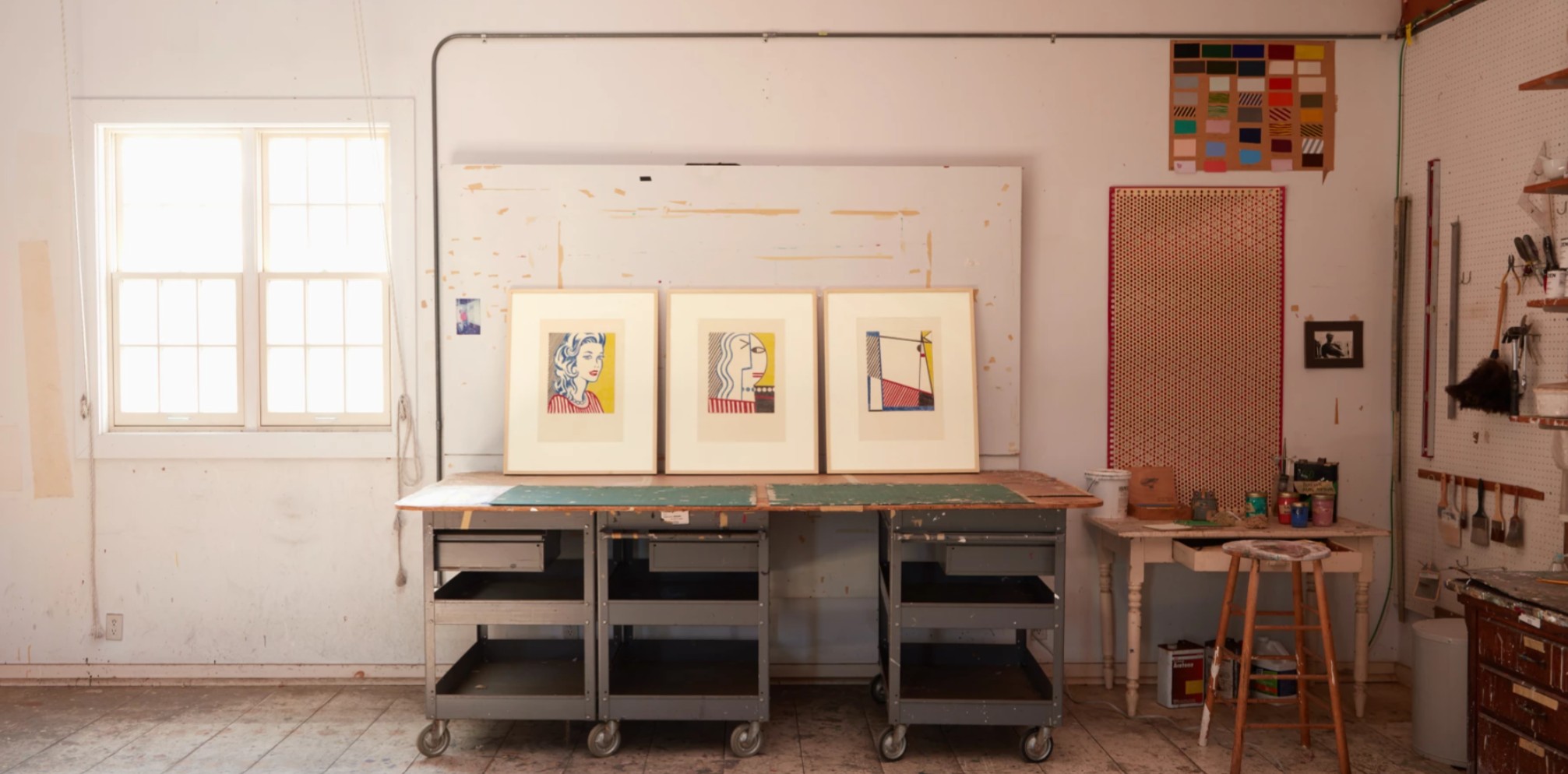
The present work in the artist’s studio, Southampton, New York, 2025. Art © Estate of Roy Lichtenstein
In Portrait Triptych, he revisits one of the most enduring themes in art, the human figure, exploring how it functions as an image. Through a visually striking and intellectually layered progression, Lichtenstein draws on influences ranging from Picasso to Mondrian, from mass media to modernism, reasserting the figure as a site of formal experimentation.
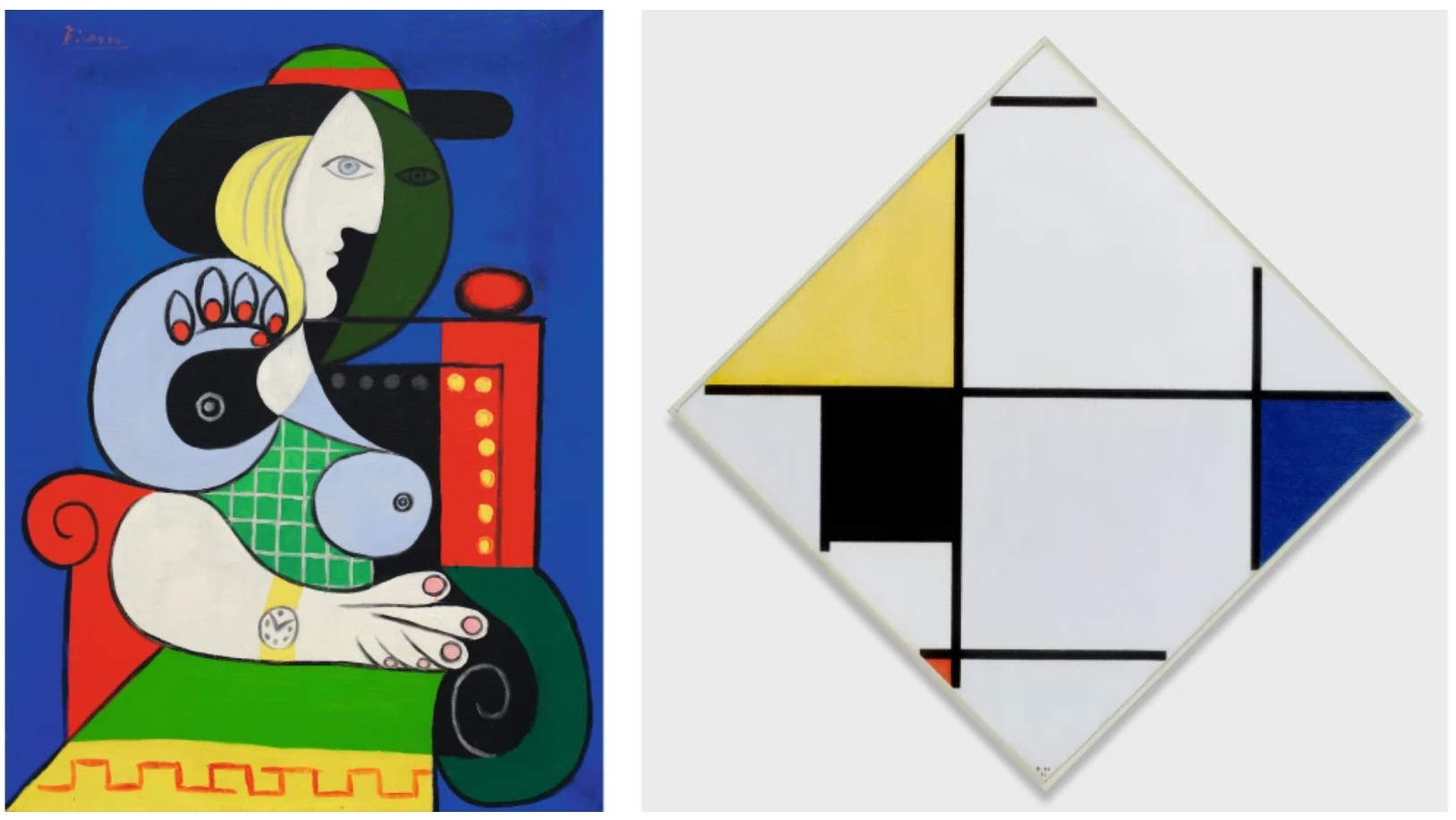
Left: Pablo Picasso, Femme à la montre, 1932. Private Collection. Sold at Sotheby’s New York in November 2023 for $139.4 million. Art © 2025 Estate of Pablo Picasso / Artists Rights Society (ARS), New York. Right: Piet Mondrian, Lozenge Composition with Yellow, Black, Blue, Red, and Gray, 1921. The Art Institute of Chicago. Image © The Art Institute of Chicago / Art Resource, NY
Each of the three panels marks a different stage in the visual deconstruction of the female portrait, a subject that had defined much of Lichtenstein’s early Pop imagery. The left panel features the quintessential Lichtenstein blonde: wide-eyed, red-lipped, framed in graphic lines and Ben-Day dots. She is immaculate, polished, and familiar, a nod to both postwar advertising and golden age Hollywood glamour. In the present work, as in his early 1960s comic-inspired works, Lichtenstein walks a fine line between seduction and critique, presenting the female face as both icon and artifact. The central panel signals a conceptual and formal shift, drawing from Lichtenstein’s sustained engagement with the legacy of Cubism. The face, once whole, is now fragmented: hair rendered in stylized waves, a geometric eye, the line of a nose intersecting with curved planes. The figure becomes a diagram, echoing Picasso’s synthetic portraits while maintaining the clarity and cleanliness of Lichtenstein’s graphic style. In this moment of transition, Lichtenstein invites the viewer to see the portrait not as a representation of a person but as a composition of visual cues.
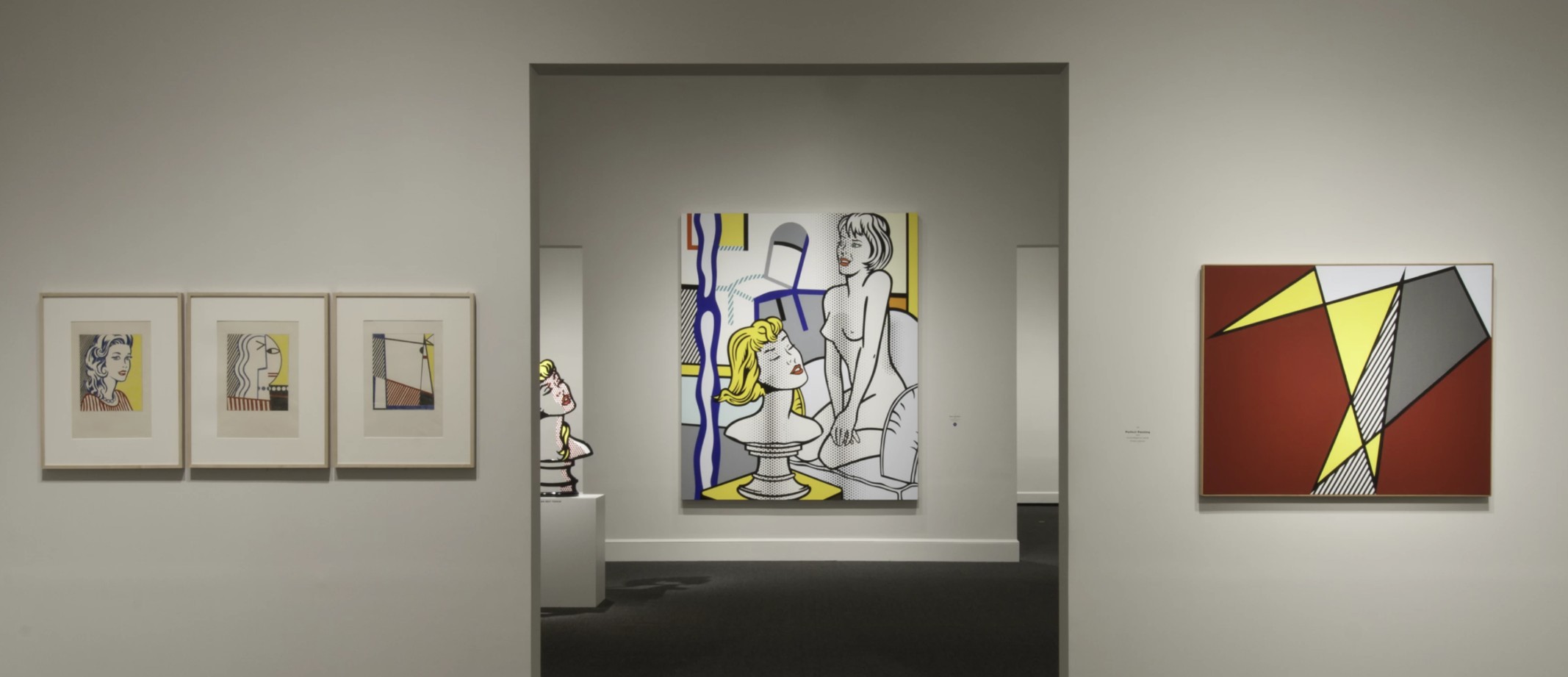
The present work installed in Roy Lichtenstein: A Retrospective at the National Gallery of Art, Washington D.C., October 2012 – January 2013. Photo © National Gallery of Art Archives. Events Images – Exhibitions and Installations. Photograph by Rob Shelley. Courtesy of the National Gallery of Art Archives. Art © Estate of Roy Lichtenstein
By the final panel, the image has fully transformed into abstraction. There is no face or body, only bold diagonal lines, color blocks, and the residual rhythm of the figure. This echoes the logic of the earlier Cow Triptych and Pitcher Triptych, works in which Lichtenstein similarly deconstructs a familiar subject across three stages. These works were directly inspired by Theo van Doesburg’s progressive abstractions, such as Composition VII (The Cow), which in turn linked back to the visual ideals of De Stijl and Mondrian. However, unlike Mondrian’s quest for spiritual equilibrium through pure abstraction, Lichtenstein’s forms carry the ghost of representation: the red stripes recall a blouse, the slanted angles hint at a shoulder or a jawline, and the compositional rhythm continues to echo the body. The idea of transformation through form would take on new life in Lichtenstein’s subsequent Perfect/Imperfect paintings created in the 1980s. These works, which play with the boundaries of the picture plane and the tension between systematic structure and compositional disruption, continue the themes set forth in the triptychs: how images are built, how logic can unravel, and how visual systems can both define and defy expectations.
Mark Tansey, A Short History of Modern Painting (Triptych), 1982. Private Collection. Art © 2025 Mark Tansey
This movement from figuration to abstraction mirrors not just a conceptual investigation but the trajectory of Lichtenstein’s own career. The blonde stands as a uniquely striking exemplar of his early Pop period, while the Cubist inflection in the center panel reveals his deep engagement with the modernist canon. The final panel, abstract but referential, foreshadows his late-career interest in the mechanics of image-making. As Hal Foster writes, Lichtenstein “provides an illusionistic image and tricks the eye, but he also breaks the illusion and exposes the trick” (Hal Foster quotes in: Exh. Cat., New York, Gagosian, Roy Lichtenstein: Sculpture, September – October 2005, p. 11). This duality between surface and structure runs through Portrait Triptych. It is not just a portrait of a woman, but a portrait of the image itself.
Yellow Abstraction, 1968
Sotheby’s New-York: 14 May 2024
Estimated: USD 500,000 – 700,000
USD 1,016,000
Yellow Abstraction | Contemporary Day Auction | 2024 | Sotheby’s (sothebys.com)
ROY LICHTENSTEIN (1923 – 1997)
Yellow Abstraction, 1968
Acrylic and oil on canvas with brass, in 4 joined parts
Overall: 48 1/4 x 131 3/4 inches (122.6 x 334.6 cm)
Signed and dated ’68 (on the reverse)
Roy Lichtenstein’s Yellow Abstraction exemplifies the artist’s profound engagement and conceptual exploration of the painted medium, capturing his innovative approach to combining materials within the context of his iconic and immediately recognizable style. Executed during a period of deep introspection, this artwork showcases Lichtenstein’s enduring interest in redefining conventional artistic boundaries. During the late 1960’s, Lichtenstein’s vision underwent a transformative phase marked by a fusion of graphic elements, bold colors, and a playful yet calculated deconstruction of traditional artistic forms.

Yellow Abstraction, with its acrylic and oil on canvas presented in four parts, reflects Lichtenstein’s keen sense of composition and materiality. The incorporation of brass and wood into the canvas underscores Lichtenstein’s willingness to challenge artistic norms and venture into multidimensional artistic expressions. The artwork is characterized by a meticulous arrangement of angular and rectilinear forms. The yellow tones, with their myriad gradients, and thick black outlines, load the piece with a particular luminous and radiant element, making it vibrate, exerting a restless energy to the viewer observing the piece.
In 1960’s, Lichtenstein’s work demonstrated a nuanced balance between representation and abstraction. While rooted in his comic-inspired style, this period saw Lichtenstein exploring new ways of rendering subjects through simplified forms and vivid colors. Yellow Abstraction, with its title suggestive of a departure from literal representation towards a more interpretative realm, invites viewers to engage with the artwork on multiple levels.

The piece pushes against the traditional boundaries of canvas and composition as its patterns reach out as if to escape the confines of their two-dimensional world. The artwork rejects symmetry, inviting the viewer’s gaze to wander through its layered labyrinths. At such an impressive scale, the lack of focal point creates a mesmerizing and almost emotive experience for the viewer. Its commanding presence does not create dismay, but rather invites viewers to get closer and question the significance of the artist’s interplay between its color and form.
Crucially, Yellow Abstraction is not a singular, uninterrupted canvas but an assemblage of four distinct parts, each a fragment that contributes to a coherent whole. This format allows the work to inhabit space in a modular fashion, suggesting a versatility and adaptability in how it might be perceived.
The interplay of straight edges and sharp corners conjures a sense of geometric rigor. Coupled with a playful monochromatic color scheme, this work of art is a vivid exploration of visual harmony and contrast. It skillfully balances the austerity of its form with a lively, engaging simplicity that invites the viewer to consider the subtle complexities hidden within its stark palette. Yellow Abstraction challenges viewers to explore the boundaries between abstraction and representation, solidifying Lichtenstein’s enduring impact on modern art.
Sculptures
Ritual Mask, 1992
WORKS FROM THE COLLECTION OF DOROTHY AND ROY LICHTENSTEIN
Sotheby’s London: 24 October 2025
Estimated: EUR 550,000 – 650,000
EUR 698,500 / USD 811,460
Ritual Mask | Surrealism and Its Legacy | 2025 | Sotheby’s
ROY LIHTENSTEIN (1923 – 1997)
Ritual Mask, 1992
Painted galvanized steel
51 1/8 x 23 5/8 x 11 3/8 inches (129.9 x 60 x 28.9 cm)
Incised with the artist’s signature rf Lichtenstein, dated ’92, and numbered 0/6
This work is the artist’s proof from an edition of 6 plus 1 artist’s proof
Standing just over four feet high, Ritual Mask showcases Lichtenstein’s ability to transform historical and cultural imagery into the bold, graphic language of Pop Art while highlighting his sustained engagement with the dialogue between past and contemporary visual culture. It presents a stylized mask form, reduced to flat planes and bold outlines. The features are simplified: eyes, mouth, and contours are suggested through angular surfaces and painted shapes rather than carved volume. Painted fields of solid color, accented with Lichtenstein’s signature Ben-Day dots, animate the structure, while deliberate voids leave sections of the form open to the air. These absences are not oversights, but essential parts of the design: they force the viewer to complete the image, filling the gaps with imagination.
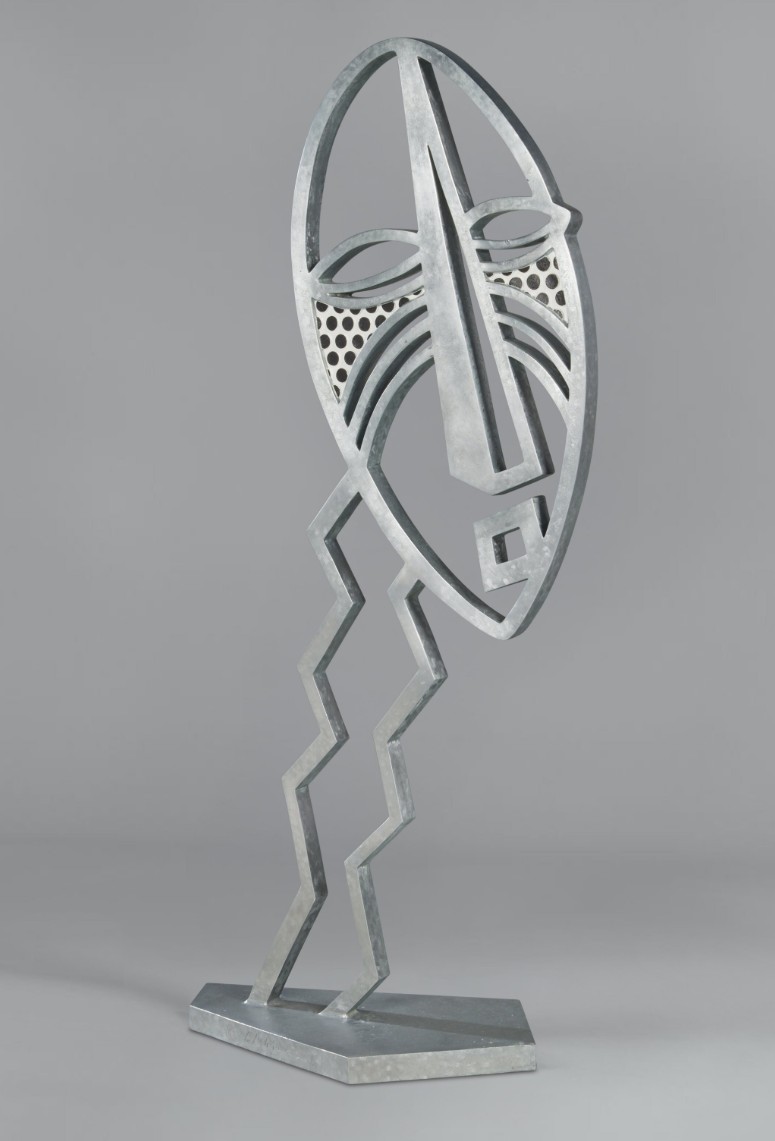
Placed against this Pop reinterpretation, one might recall the striking Mahongwé – Ngaré mask from the celebrated Barbier-Mueller collection, exhibited in the United States during the 1970s. That mask, with its shimmering hammered copper plates laid over a wooden core, embodies the Mahongwé’s role as a reliquary guardian: it was created not as an aesthetic object but as a mediator between the living community and the ancestral realm. Its radically abstracted, almost geometric features, reduced to oval planes, incised patterns, and gleaming surfaces, testify to the way African artists distilled spiritual and symbolic weight into formal clarity.
In Lichtenstein’s case, the formal resemblance to such sources is displaced into another register: what in the Mahongwé mask conveyed ancestral presence becomes, in Pop idiom, a play of flatness, color, and mechanical dots. The aura of sacred protection and ritual efficacy is replaced by graphic immediacy and reproducibility. Where the Barbier-Mueller mask’s material, metal reflecting light, created a shimmering, otherworldly presence, Lichtenstein substitutes industrial paint, synthetic color, and the polished neutrality of fabrication.
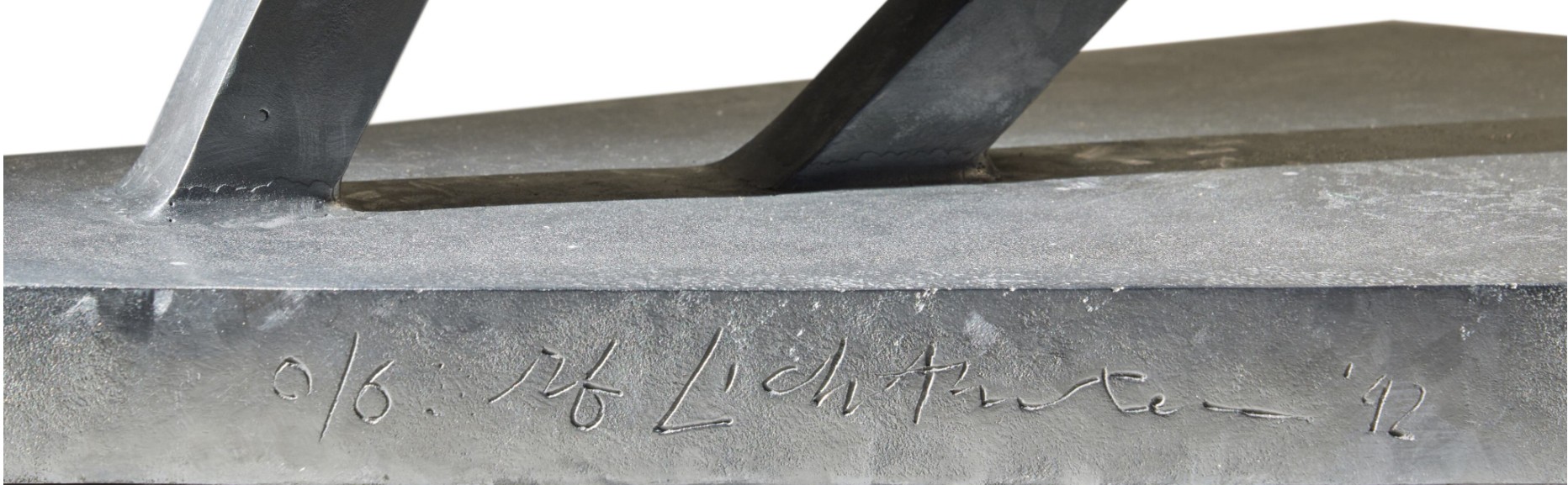
This tension resonates with a much broader history. Since the early twentieth century, Western modernism had rediscovered and taken inspiration from African and so-called “tribal” art, with Picasso’s engagement with Fang and Grebo masks marking a decisive rupture in the development of Cubism. What had once been ritual instruments were re-read as signs of radical formal innovation, fueling the avant-garde’s search for new idioms of expression. Yet this modernist “revival” of tribal art was also a process of abstraction and dislocation, removing works from their ceremonial context and re-situating them within studios, salons, and museums. Lichtenstein inherits that history, but his Ritual Mask subjects it to Pop’s deadpan logic of replication and display, laying bare the ironies of cultural borrowing in an age of mass media.
Masque Mahongwé – Ngaré, collection Barbier-Mueller collection
The sculpture exemplifies Lichtenstein’s effort in the late 1980s and early 1990s to translate his Pop vocabulary from painting into three dimensions. What once belonged to the flat space of comics or advertisements is re-staged here as an object in the round. The bold lines and crisp colours assert the same graphic clarity as his canvases, yet the sculpture occupies real space, casting shadows and demanding movement around it. It is both painting and object, surface and volume. The title points to a deeper irony. A “ritual mask” traditionally carries cultural or spiritual weight, as in the Mahongwé example, but Lichtenstein’s version is manufactured, editioned, and destined for galleries rather than ceremonies. In this sense, it acknowledges the long history of modern artists borrowing from African art, Picasso most famously, but subjects that inheritance to Pop’s cool logic of reproduction. It is a mask that cannot be worn, only displayed; its ritual is one of art, commerce, and spectatorship.
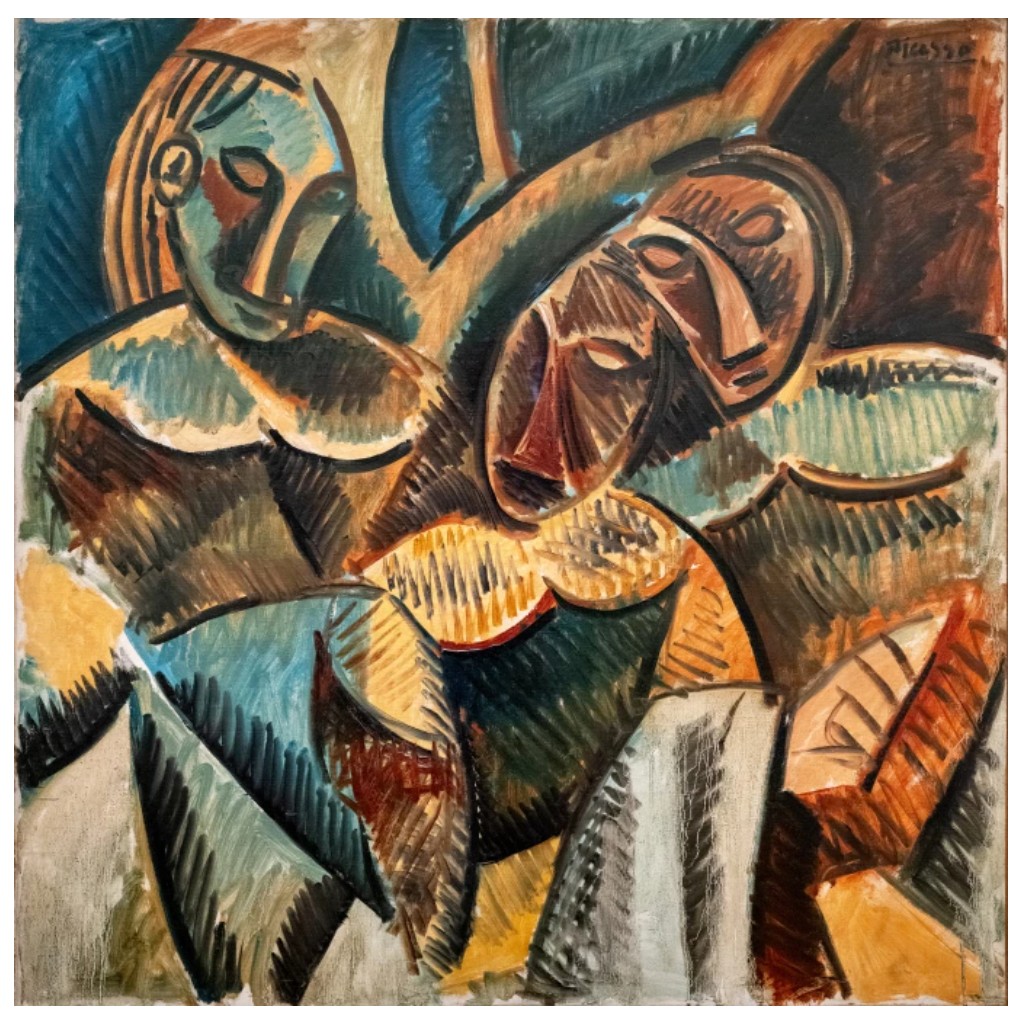
Picasso, Pablo (1881-1973), Trois figures sous un arbre, 1907-1908, Musée National Picasso, Paris © Pablo Picasso / DACS
The work belongs to a fertile phase of Lichtenstein’s career, when he turned increasingly toward sculptural experiments and to the re-examination of art historical motifs. It resonates with his 1991 painting Interior with African Mask, where a mask appears as a decorative object within a domestic scene. In Ritual Mask, that motif is isolated, enlarged, and made autonomous. The result is a work that raises questions about authenticity, appropriation, and the tension between visibility and concealment. What makes Ritual Mask compelling is the way it condenses opposites. It is a mask that reveals as much as it hides, a ritual object emptied of ritualistic qualities, a Pop sculpture that gestures toward both tradition and parody. Like much of Lichtenstein’s art, it is witty, ironic, and unsettlingly clear: an image made solid, a symbol made strange.
Archaic Head, 1988
A Legacy Reimagined: Works from the Collection of Dorothy and Roy Lichtenstein
Sotheby’s New-York: 19 November 2025
Estimated: USD 600,000 – 800,000
USD 533,400
Archaic Head | Contemporary Day Auction | 2025 | Sotheby’s
ROY LICHTENSTEIN (1923-1997)
Archaic Head, 1988
Patinated bronze
58 1/4 x 19 x 10 1/4 inches (148 x 48.3 x 26 cm)
Incised with the artist’s signature, date ’88 and number 0/6 (on the base)
This work is the artist’s proof from an edition of 6 plus 1 artist’s proof
Imposing in scale and striking in its stylization, Archaic Head (1988) exemplifies Roy Lichtenstein’s late sculptural practice, in which the artist reimagined the language of Pop through the enduring forms of art history. Cast in bronze, the work transforms the gravitas of an ancient sculptural head into the graphic idiom that had long defined Lichtenstein’s oeuvre. The result is a sculpture that is at once monumental and playful, a Pop translation of antiquity into the vocabulary of the twentieth century.
Roy and Dorothy Lichtenstein with Archaic Head, c. 1992. Art © Estate of Roy Lichtenstein. Image © Christine de Grancy.
Created in 1988, the work belongs to a fertile period of Lichtenstein’s late career. Following the intense decades of the 1960s and 1970s, the 1980s saw the artist revisiting and expanding his motifs with new ambition. Sculpture in particular became a field of major experimentation, allowing him to test how his two-dimensional idiom could operate in three dimensions. Works such as Archaic Head reveal his ability to translate not only the language of mass culture but also the gravitas of art history into his unmistakable style.
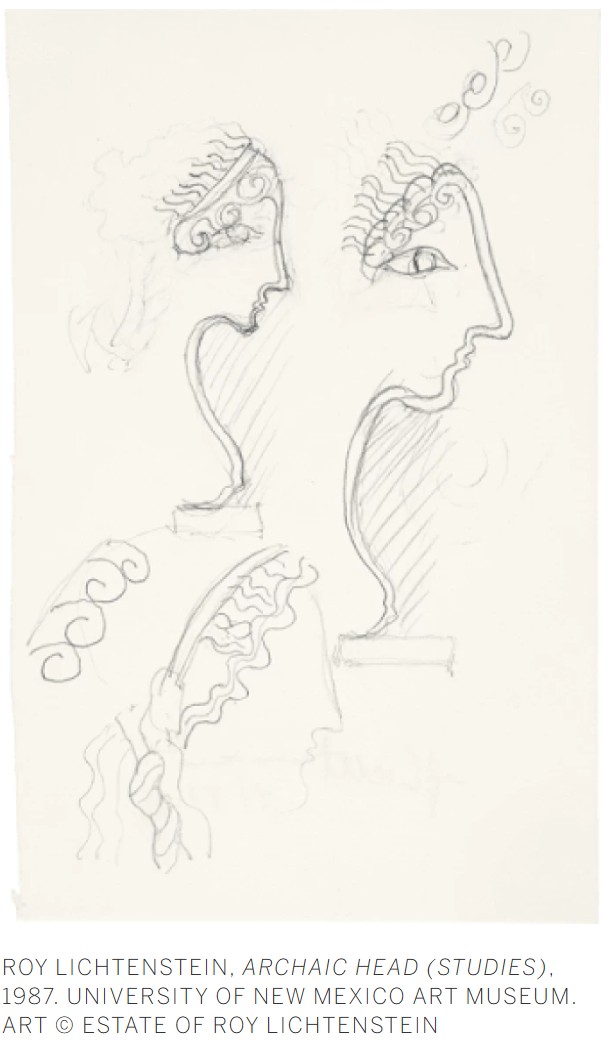
Lichtenstein’s engagement with the classical world was neither accidental nor superficial. Throughout the 1980s and 1990s, he repeatedly returned to motifs drawn from the history of art—nudes, interiors, mirrors, and, as here, the archetype of ancient sculpture—subjecting them to his unique process of stylization. In Archaic Head, the serene form of a timeworn bust is reduced to a sequence of bold contours, schematic planes, and simplified volumes. The calm, frontal face is immediately recognizable as a reference to Greco-Roman antiquity, yet its translation into Lichtenstein’s vocabulary of crisp outline and industrial finish renders it unmistakably contemporary.
The use of bronze is especially telling. Traditionally associated with permanence and cultural gravitas, bronze lends Archaic Head a weight and durability befitting its reference to antiquity. Yet Lichtenstein disrupts tradition by applying painted surfaces and patination in vivid contrast, effectively flattening the sculptural volume into the realm of image. In this tension between material heft and graphic surface lies much of the work’s power. The head is at once archaic and modern, timeless and mediated, an object that resists settling fully into either category.
The Townley Venus, AD 100s. The British Museum.
This transformation of the past into Pop idiom mirrors Lichtenstein’s broader project of reinterpreting the canon of art. Just as his Brushstrokes parodied the gestures of Abstract Expressionism and his Still Lifes recast the conventions of Cézanne or Matisse, so Archaic Head engages the long sculptural tradition. Rather than mimicking the subtleties of weathered marble or bronze, he seizes upon the archetype—the essential sign of the classical head—and reduces it to bold graphic shorthand. Antiquity becomes image, history becomes sign, the weight of tradition reframed within the logic of Pop. The verticality and scale of Archaic Head enhance its effect. At over life-size, the work asserts itself as both sculpture and monument, commanding the viewer’s space while retaining a clarity of design that resists heaviness. The simplicity of its contours and the frontality of its gaze evoke the timelessness of archaic prototypes, yet its stylized finish ensures that it belongs as much to the twentieth century as to antiquity.
In its conceptual and formal qualities, Archaic Head is emblematic of Lichtenstein’s late sculptural triumphs. It is a work that acknowledges tradition while remaking it, that embodies the endurance of the classical past while insisting on the mediated surfaces of Pop. Both reverent and ironic, playful and solemn, it demonstrates Lichtenstein’s ability to transform the most venerable of subjects into a work that is wholly his own. With its scale, material authority, and conceptual clarity, Archaic Head stands as a landmark of Lichtenstein’s sculptural oeuvre—a Pop monument to antiquity, and a reminder of his extraordinary capacity to reinvent the language of art for the modern age.
#9. Modern Painting in Porcelain, circa 1967
A Legacy Reimagined: Works from the Collection of Dorothy and Roy Lichtenstein
Sotheby’s New-York: 19 November 2025
Estimated: USD 70,000 – 100,000
USD 482,600
Modern Painting in Porcelain | Contemporary Day Auction | 2025 | Sotheby’s
ROY LICHTENSTEIN (1923-1997)
Modern Painting in Porcelain, circa 1967
Porcelain enamel on steel
34 1/2 x 45 inches (87.6 x 114.3 cm)
Signed (on the reverse)
This work is from an edition of 6 plus 2 artist’s proofs
Double Glass, 1979
Christie’s New-York: 20 November 2025
Estimated: USD 1,500,000 – 2,000,000
PASSED
ROY LICHTENSTEIN (1923-1997), Double Glass | Christie’s
ROY LICHTENSTEIN (1923-1997)
Double Glass, 1979
Painted bronze
56x42x17 inches (142.2 x 106.7 x 43.2 cm)
Incised with the artist’s signature, number and date ‘3⁄3 rf Lichtenstein ’79’ (lower edge)
This work is number three from an edition of three
Few artists are able to reinvigorate history, culture and iconography as electrifyingly as Roy Lichtenstein, his hand so strong that is had the capacity to cast every image, every period, every medium through his lens. Examples like Double Glass are indicative of this very point, nodding referentially to the canon of 17th century Dutch still life painting while completely redefining it altogether. The present work projects the static nature of this lineage into a play between two and three dimensional space, the work simultaneously occupying and seemingly evading space depending on one’s vantage point.
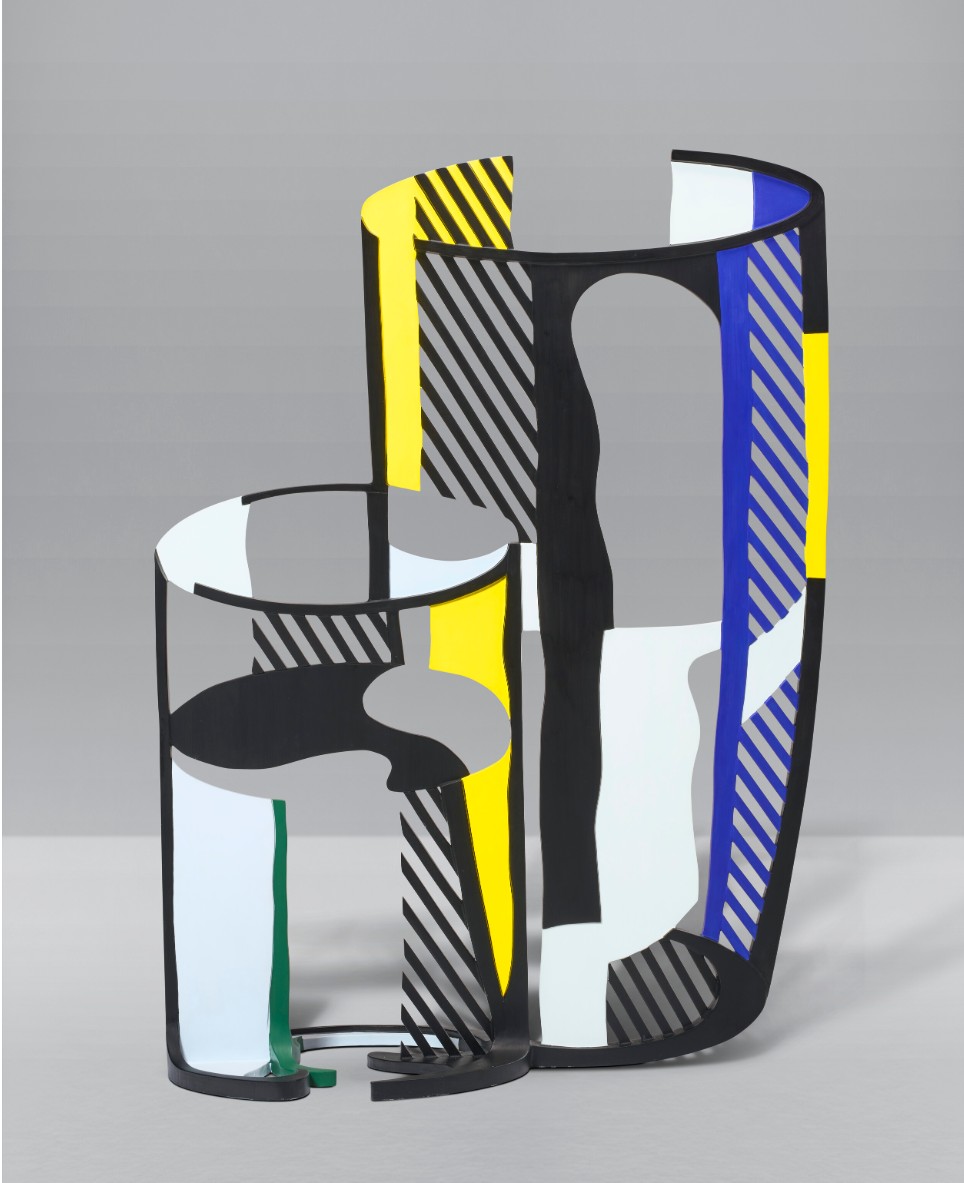
“I think that … the sense is almost an affinity of two-dimensional points of view. A sculpture from any viewpoint should work the way a drawing works, which is a two-dimensional thing.”
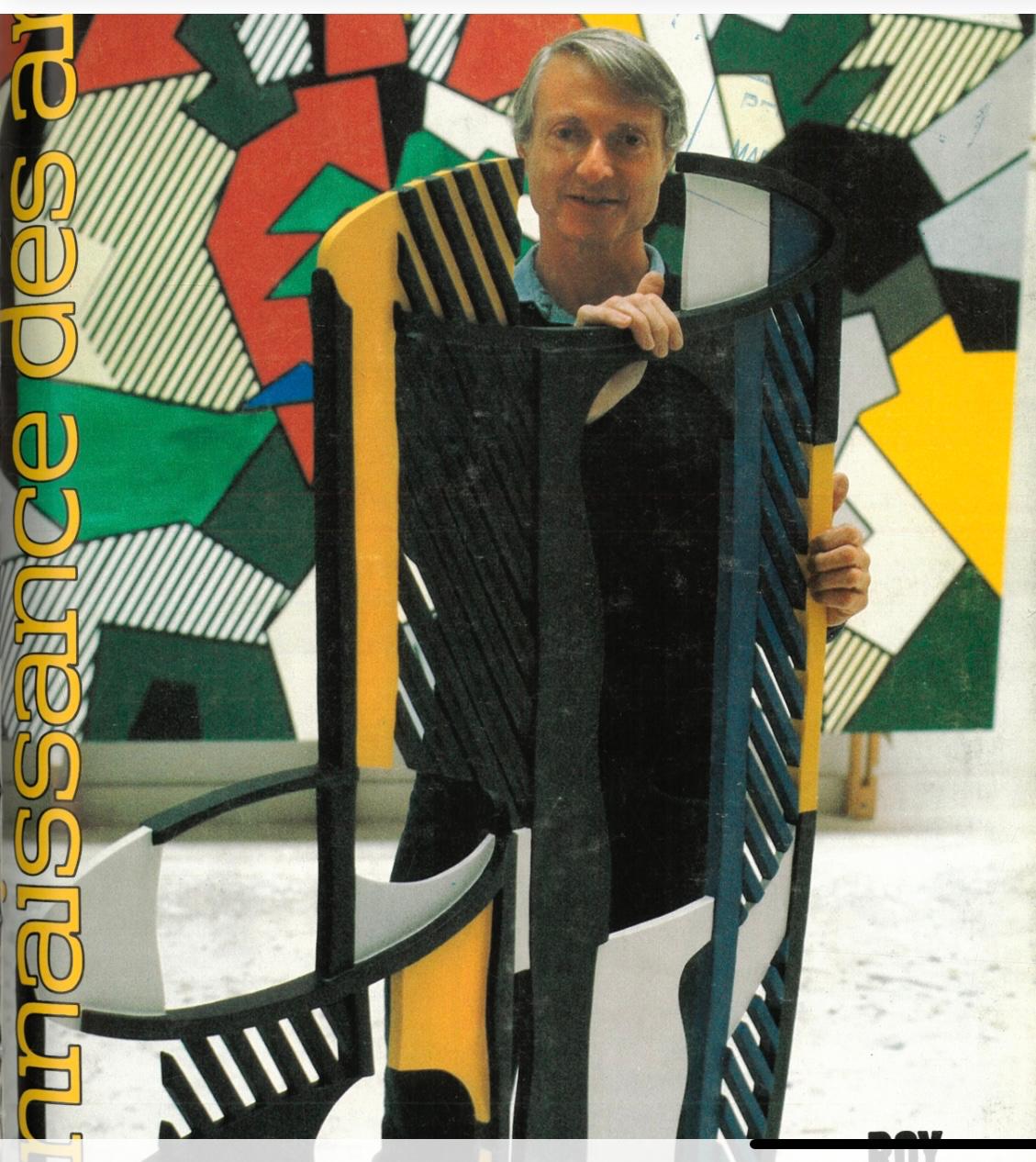
Roy Lichtenstein photographed in his New York studio, c. 1981, on the cover of Connaissance des arts, Paris, 1981.
Photo: Pascal Hinous. Artwork: © Estate of Roy Lichtenstein.
Lichtenstein sparks this history with his distinct visual language. Where one might expect a still life to be meticulously painted and deliciously lifelike, Lichtenstein does the complete opposite, rendering the forms down to color and line. Fine brushwork is replaced with both colors and cartoonish gestures. Across all of Lichtenstein’s oeuvre is a universal language which is both so varied and expansive yet instantly recognizable. Lichtenstein achieved a new visual lexicon that was so full and complete that it could be translated several times over and still feel distinctly his. The present work is a testament to that, with focus resting less on the composition itself and rather on the means by which the artist is able to translate his personal language to the history of painting.
Willem Claesz Heda, Still Life with Oysters, a Silver Tazza, and Glassware, 1635. Metropolitan Museum of Art, New York
The 1970s represent an impressive turning point in the artist’s career. By this time, Lichtenstein looked less to comic book iconography as source material for his compositions and rather chose to present himself with boundless challenges to test the elasticity of his artistic voice. This shift coincides with the artist’s move from the Bowery to Southampton, New York, where perhaps it was the quiet of the Long Island shore which inspired the artist’s practice away from Pop iconography, looking both inward and beyond the contemporary moment to the history of art. It is during this time that he started quoting various art-historical genres, rendering subjects in Expressionist and Cubist styles, always with his signature hand. He also excavated the work of the masters like Gris, Léger, Peale and the 19th century deception paintings of Harnett for still life motifs, stripping them of their gravitas in favor of a cartoonish flair. Through these examples, the artist began diversifying his mark-making, introducing spikes, crosshatches and stripes into his works. Here, dappled accents of white, green, blue and yellow play against negative space to elicit the subtle highlights of water suspended in glass, and quick stripes define the curvature of the glasses.
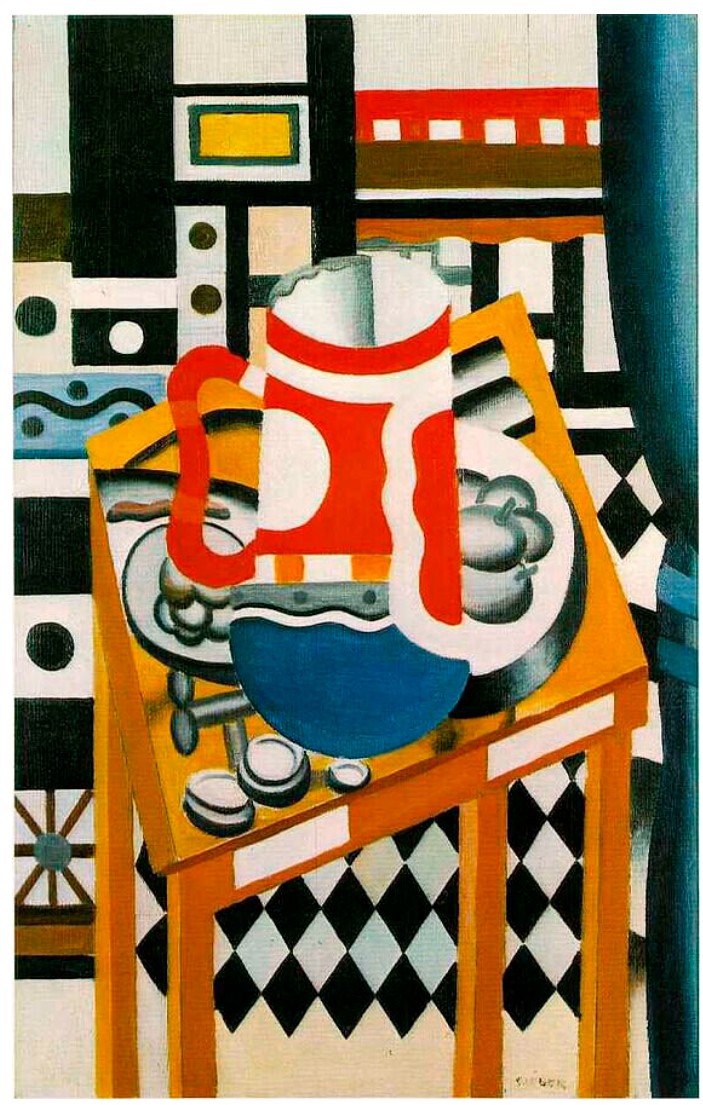
Fernand Léger, Still Life with a Beer Mug, 1921-1922. Tate, London.
Though a departure in some ways from his earlier practice, the tenets of Pop remain ever-present in Double Glass. Lichtenstein would still turn to commercial advertisements, rendering the meticulous illustrations of different tableware, edible goods, vases, and even supplies from his own studio with his signature hand. Whereas a still life painter may have preferred to place their easel before the objects themselves, Lichtenstein would reference a reproduction or an advertisement—a cornerstone of his Pop aesthetic and artistic practice. Rather than delving further into his commerciality, Lichtenstein uses the still life to depart from that important period in his career, while his contemporaries like Andy Warhol leaned in, repeating motifs of commercial products like Campbell’s soup cans or Brillo boxes.
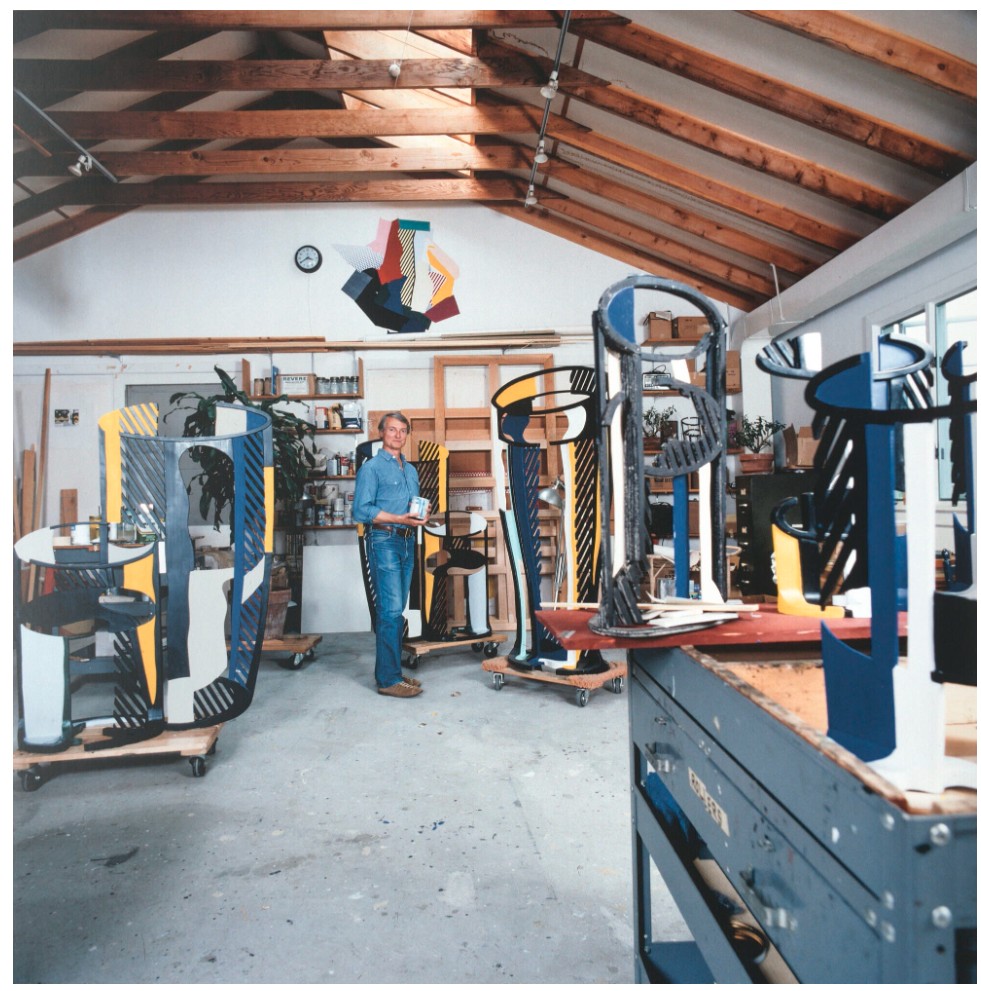
Roy Lichtenstein in his studio, c. 1980, Southampton. Photo: Hans Namuth. Courtesy Center for Creative Photography, University of Arizona © 1991 Hans Namuth Estate. Artwork: © Estate of Roy Lichtenstein
It also during this time that the artist begins his famed Mirror works, which merge the figurative with the abstract, Lichtenstein translating his signature style into various reflections, fragmentations and abstractions. This cerebral exercise of his own innovative technique is demonstrative of an artist at the peak of his oeuvre, where confidence inspires expansion and technical innovation. Another example from this edition is held in the Nasher Sculpture Center in Dallas, reflecting the work’s recognized importance within the canon of modern sculpture and affirming the work’s institutional significance.
Small House, 1996
A Legacy Reimagined: Works from the Collection of Dorothy and Roy Lichtenstein
Sotheby’s New-York: 19 November 2025
Estimated: USD 180,000 – 250,000
USD 1,206,500
Small House | Contemporary Day Auction | 2025 | Sotheby’s
ROY LICHTENSTEIN (1923-1997)
Small House, 1996
Acrylic on wood
16 3/8 x 26 1/2 x 10 3/4 inches (41.6 x 67.3 x 27.3 cm)
Executed in 1996, this work is unique
“These pieces exist between painting and sculpture in terms not only of genre but also of structure; where Minimalist objects are neither painting nor sculpture… Pop objects tend to be both-and. If most representational painting is a two-dimensional encoding of three dimensional objects, Lichtenstein reverses the process here, and freezes it somewhere in between”
Hal Foster, “Pop Pygmalion,” Exh. Cat., London, Gagosian Gallery, (and traveling), Roy Lichtenstein Sculpture, 2005, p. 10
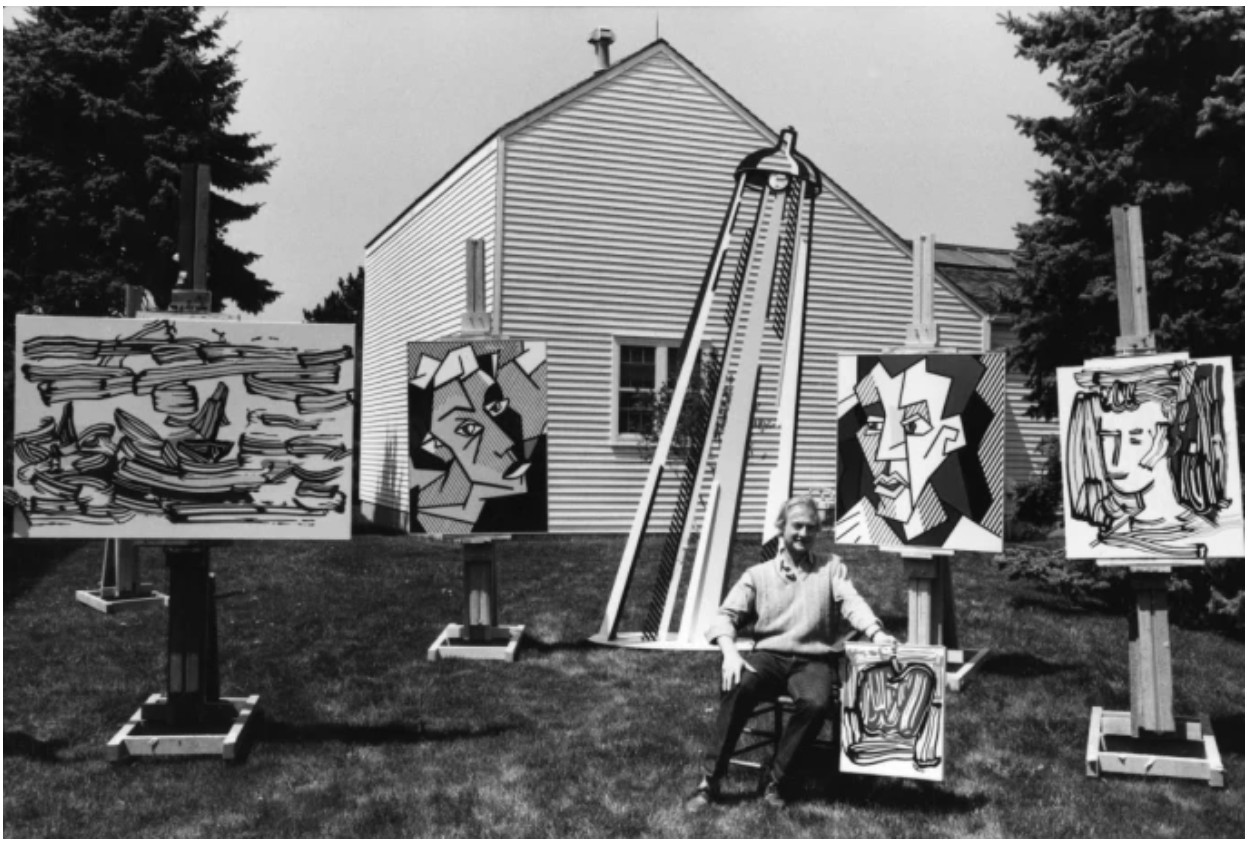
Roy Lichtenstein sitting outside his Southampton studio, New York, 1981.
Image © Arthur Schatz/Getty Images. Art © Estate of Roy Lichtenstein
Landscape Mobile, 1990
A Legacy Reimagined: Works from the Collection of Dorothy and Roy Lichtenstein
Sotheby’s New-York: 19 November 2025
Estimated: USD 350,000 – 450,000
USD 1,079,500
Landscape Mobile | Contemporary Day Auction | 2025 | Sotheby’s
ROY LICHTENSTEIN (1923-1997)
Landscape Mobile, 1990
Painted and patinated bronze
29 1/8 x 8 3/8 x 36 3/4 inches (74 x 21.3 x 93.3 cm)
Incised with the artist’s signature, date ‘91 and number 0/6 (on the base)
This work is the artist’s proof from an edition of 6 plus 1 artist’s proof
“It might be that Lichtenstein only appears to conform to this old model of sculpture, in part to complicate it, even to refashion it for his own ends… Yet in Lichtenstein there is no stable, a priori ground—it is often, quite literally, a void, an empty space—and meaning accrues through the image alone.’”
Hal Foster, “Pop Pygmalion,” Exh. Cat., London (and traveling), Gagosian Gallery, Roy Lichtenstein: Sculpture, 2005, p. 11
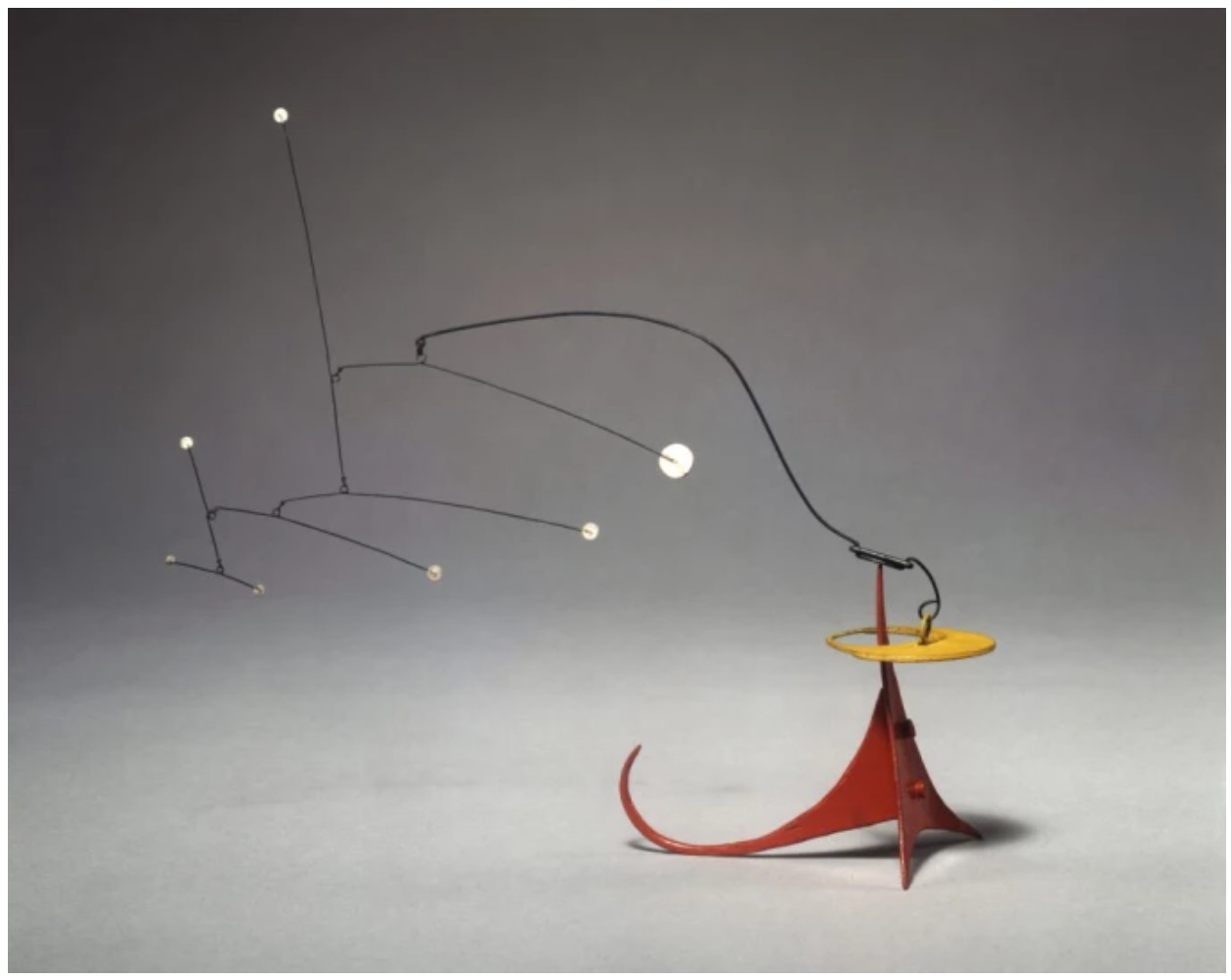
Alexander Calder, Little Pierced Disk, c. 1947. The Calder Foundation, New York.
Art © 2025 Calder Foundation, New York / Artists Rights Society (ARS), New York
Modern Love Waltz (Music Box), 1991-92
Reflections on Pop: Works from the Collection of Dorothy and Roy Lichtenstein
Sotheby’s New-York: 26 September 2025
Estimated: USD 80,000 – 120,000
USD 107,950
ROY LICHTENSTEIN (1923 – 1997) and PHILIP GLASS (b. 1937)
Modern Love Waltz (Music Box), 1991-92
Painted bronze, aluminum, wood and spring-wound mechanical music player
16 1/2 x 13 x 13 inches (41.9 x 33 x 33 cm)
Signed by both artists, numbered AP 1/5 and marked with the copyright notice (on the underside)
This work is number 1 of 5 artist’s proofs from an intended edition of 100 plus 5 artist’s proofs, 5 composer proofs, and 5 publisher proofs, of which no more than 10 plus 2 artist’s proofs were fabricated
Roy Lichtenstein first worked with the minimalist composer and musician Philip Glass in 1987, when Glass adapted a seven-minute-long composition to be looped and played within Lichtenstein’s Luna Luna Pavilion. The artist and composer formed a friendly relationship after the project, and in 1991, they collaborated again to create Modern Love Waltz, a music box featuring a Swiss-made, spring-wound movement that played a piece of music composed by Glass while Lichtenstein’s small brushstroke sculptures rotated and “danced.”
Galatea, 1989-90
Reflections on Pop: Works from the Collection of Dorothy and Roy Lichtenstein
Sotheby’s New-York: 26 September 2025
Estimated: USD 800,000 – 1,200,000
USD 2,185,000
ROY LICHTENSTEIN (1923 – 1997)
Galatea, 1989-90
Painted and patinated bronze
90x31x19 inches (228.6 x 78.7 x 48.3 cm)
Inscribed with the artist’s signature, number 1/6 and date ’90 (on the base)
Conceived in 1989 and cast in 1990
This work is number 1 from an edition of 6 plus 1 artist’s proof
Galatea brings Lichtenstein’s lifelong engagement with art history to a culmination—drawing on mythology, filtered through Pop, and realized with his distinctive sculptural style. Executed in 1989, the work revisits the myth of Pygmalion’s statue brought to life, but instead of classical marble, Lichtenstein reimagines the figure in industrial enamel and painted bronze, uniting centuries of artistic tradition in a striking contemporary form.
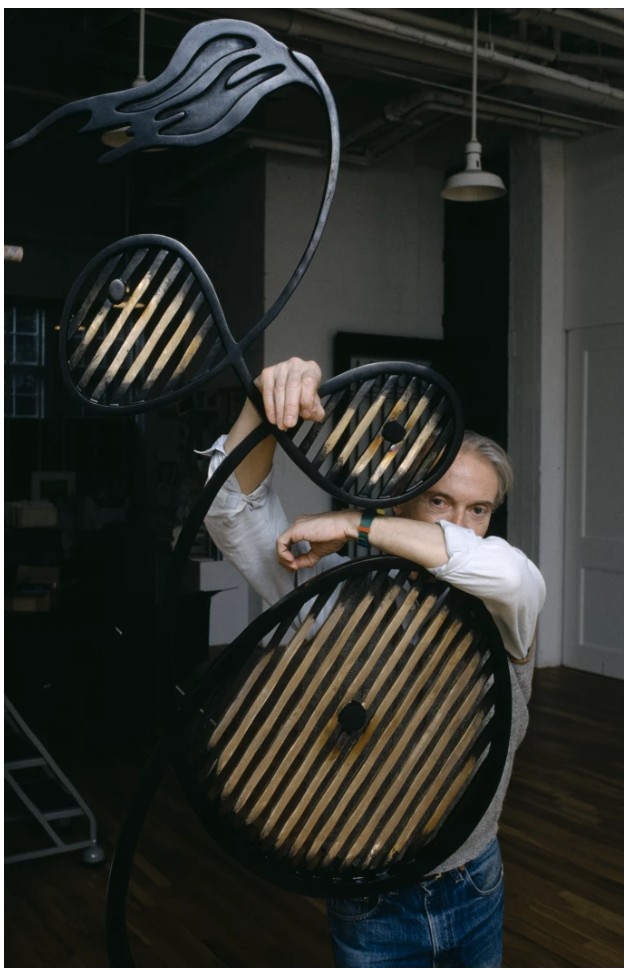
Roy Lichtenstein with Galatea (in progress), 1989. Photo © Bob Adelman. Art © Estate of Roy Lichtenstein
Harkening back to his comic bombshells of the 1960s such as Crying Girl or Girl with Ball, Lichtenstein draws inspiration from iconic motifs that have come to define his distinct style. The present work boldly disrupts sculptural convention with its flat, two-sided profile while reflecting on the evolution of contemporary popular imagery and Lichtenstein’s signature iconography of the stylized brushstroke.
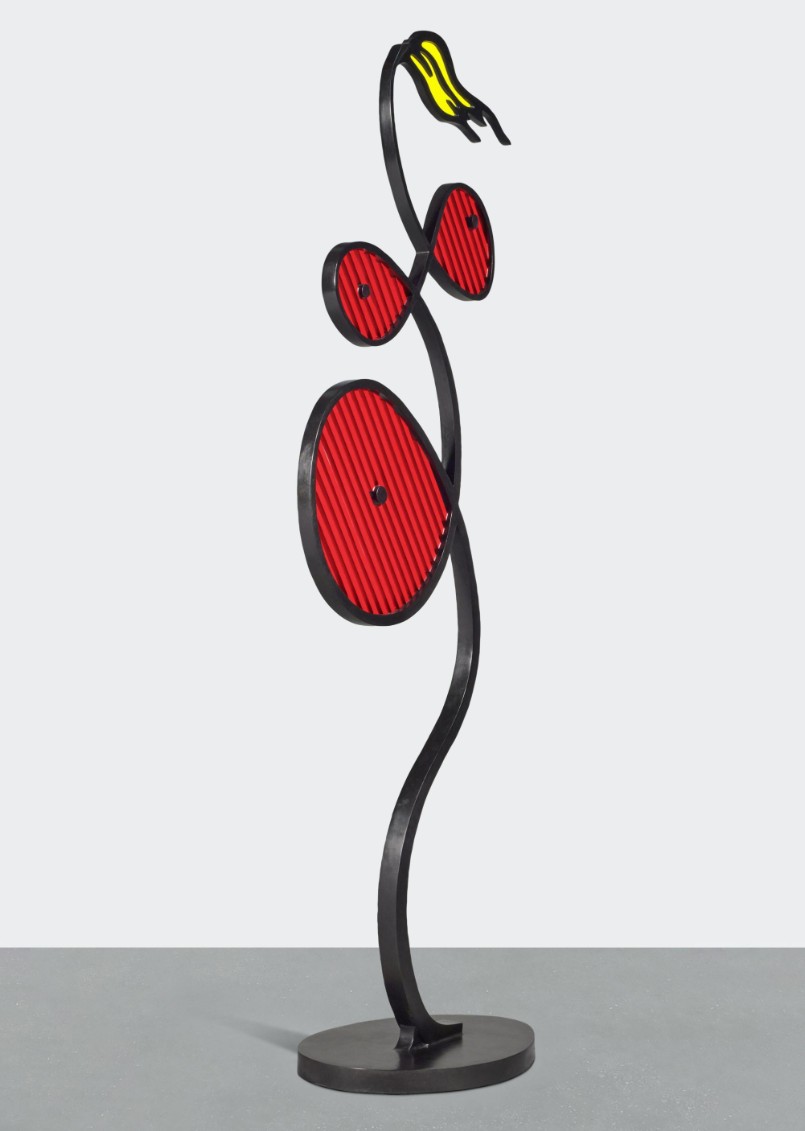
The sinuous outline of Galatea evokes the contrapposto elegance of Botticelli’s Birth of Venus with its serene curve and poised posture. Yet, where Botticelli’s Venus floats ethereally upon the sea, Lichtenstein’s Galatea asserts corporeal weight in the gallery space—substantial, graphic, yet softly anthropomorphic. This tension between weightless myth and stylized mass is part of its beguiling charm.
Pablo Picasso, Bather with Beach Ball, 1932. The Museum of Modern Art, New York. Image © The Museum of Modern Art/Licensed by SCALA / Art Resource, NY. Art © 2025 Estate of Pablo Picasso / Artists Rights Society (ARS), New York
When viewed through his Pop‑informed lens, the work also hums with dialogue with Picasso. The subtle abstraction of Galatea’s form—reduced to ovals, a stylized brushstroke of hair and her abstract yet womanly figure, all shaded with engraved red lines—recalls the 1932 Picasso painting Bather with Beach Ball. Lichtenstein’s treatment nods to Picasso’s legacy not by imitation but by reinvention: he embraces Picasso’s forms. Picasso’s incomparable legacy has been present in Lichtenstein’s artistic ethos from the nascent stages of his career; in 1943 he painted a variation on Picasso’s Portrait of Gertrude Stein, while embarking on a series of four Picasso paintings from 1962-64, and making a series of prints following Picasso’s passing in 1973. Lichtenstein’s invocation of the modern master furthers the career-long interrogation of “high” versus “low” culture, not only in the juxtaposition of cerebral Cubist deconstruction with commercial-inspired imagery, but also in Picasso’s works dual existence as perennial masterpieces and ever-reproduced, nearly ubiquitous images.
Expanding beyond Picasso, one might also perceive echoes of Cy Twombly’s lush, painterly Triumph of Galatea. Though Lichtenstein’s Pop vocabulary is antithetical to Twombly’s romantic Abex gestures, the shared subject becomes a bridge—Twombly’s emotional flourish and classical fantasia, transported into Lichtenstein’s cool, conceptual precision. The juxtaposition adds subtle irony: two Galateas, one dreamy and visceral, one taut and tongue‑in‑cheek.
Galatea, in its elegance, wit, and intellectual rigor, is a stunning homage to the artist’s most enduring motifs rendered with a masterful sense of visual acuity.
Woman with Mirror, 1996
Works from the Collection of Dorothy and Roy Lichtenstein
Sotheby’s London: 24 June 2025
Estimated: GBP 300,000 – 400,000
GBP 444,500 / USD 600,075
Woman with Mirror | Modern & Contemporary Evening Auction | 2025 | Sotheby’s
ROY LICHTENSTEIN (1923 – 1997)
Woman with Mirror, 1996
Patinated bronze and colored mirror
28 3/8 x 38 7/8 x 12 inches (72 x 98.6 x 30.5 cm)
Incised with the artist’s signature, dated ’96 and numbered 2/6 (on the side of the base)
This work is number 2 from an edition of 6 plus 1 artist’s proof
Characteristically bold and stylized, Roy Lichtenstein’s Woman with Mirror brings together two enduring motifs that fascinated the Pop-art pioneer from the earliest days of his career: the female form and the mirror. In consolidating these two threads with his signature graphic precision, Lichtenstein presents a profound meditation on mass media’s portrayal of feminine beauty through his pioneering flat-profile sculptures of the 1990s. Woman with Mirror shatters sculptural norms and heralds the return of the female form in the artist’s late oeuvre, marking the apex of Lichtenstein’s sculptural output. Affirming the work’s importance, the present edition was exhibited in Roy Lichtenstein: Recognisable Images that travelled across North America and Europe from 1998 to 2000. Belonging to an edition of six, another cast is held in the esteemed Broad Collection, Los Angeles, while the present example was retained by Dorothy and Roy Lichtenstein, for their personal collection, where it has resided since its creation.
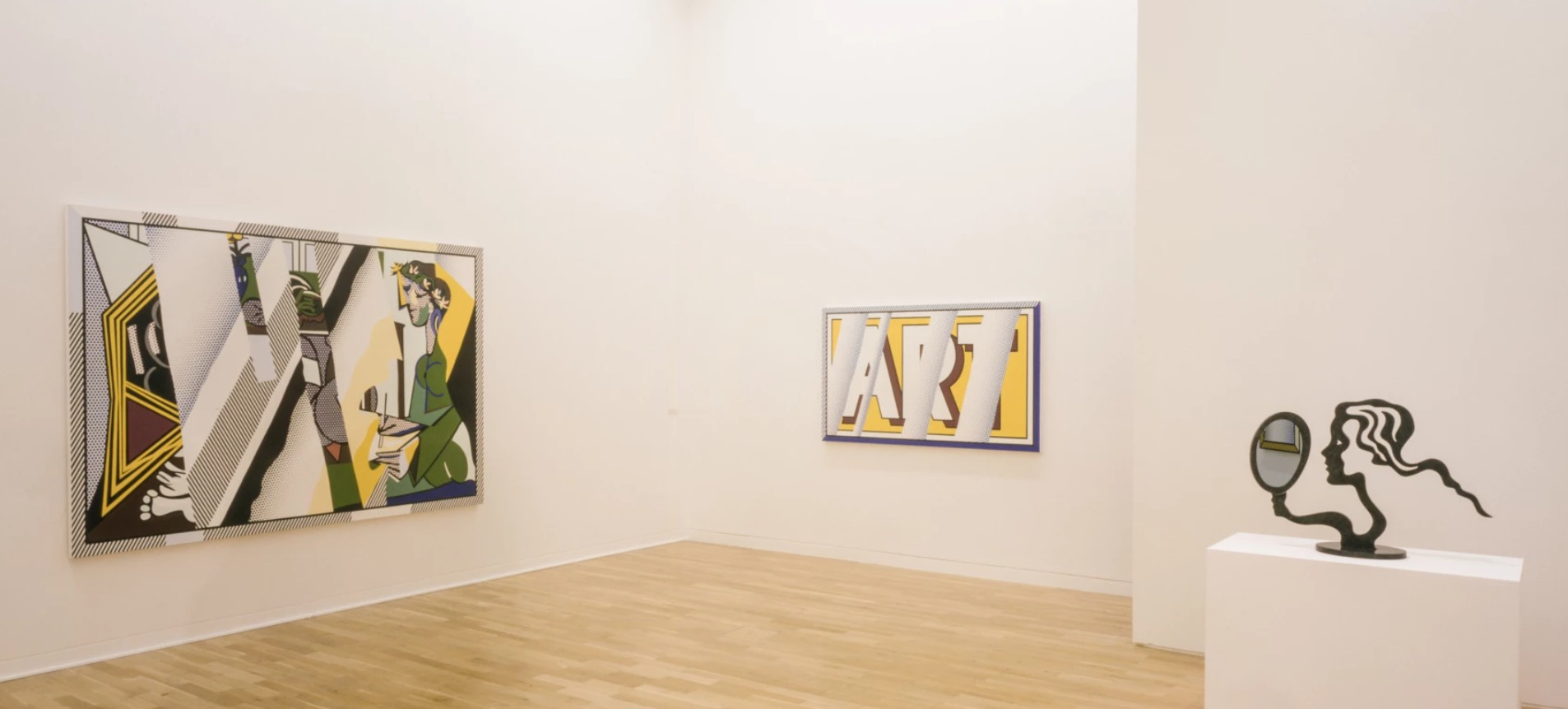
Another edition installed in Roy Lichtenstein: Spiegelbilder 1963-1997, Kunstmuseum Wolfsburg, 2000. Photo © Nic Tenwiggenhorn. Artwork: © Estate of Roy Lichtenstein/DACS 2025
Cast in 1996, just one year prior to the artist’s death, Woman with Mirror encapsulates Lichtenstein’s lauded ability to (re)interpret his own celebrated oeuvre. Looking to the comic-strip and advertising references that directly inspired his iconic War and Romance paintings from the 1960s, by the 1990s, Lichtenstein was turning their reductive and binary depictions of women on its head for a new generation. Lichtenstein’s refreshing simplicity of representation is here harnessed to depict the bust of a woman as she holds up a mirror to observe herself. Lichtenstein’s mirror in the present work does not reflect the work’s subject but instead faces forward toward us – the observer. Representing his subject with a fluidity much akin to his Brushstrokes series, Lichtenstein’s Woman with Mirror serves as commentary on the self-objectification and voyeurism prevalent in mass media of the late 20th century. While the advertisements of Lichtenstein’s era reinforced parochial attitudes toward the role of women in contemporary society, the artist challenged viewers to question their role as observer in these dynamics.
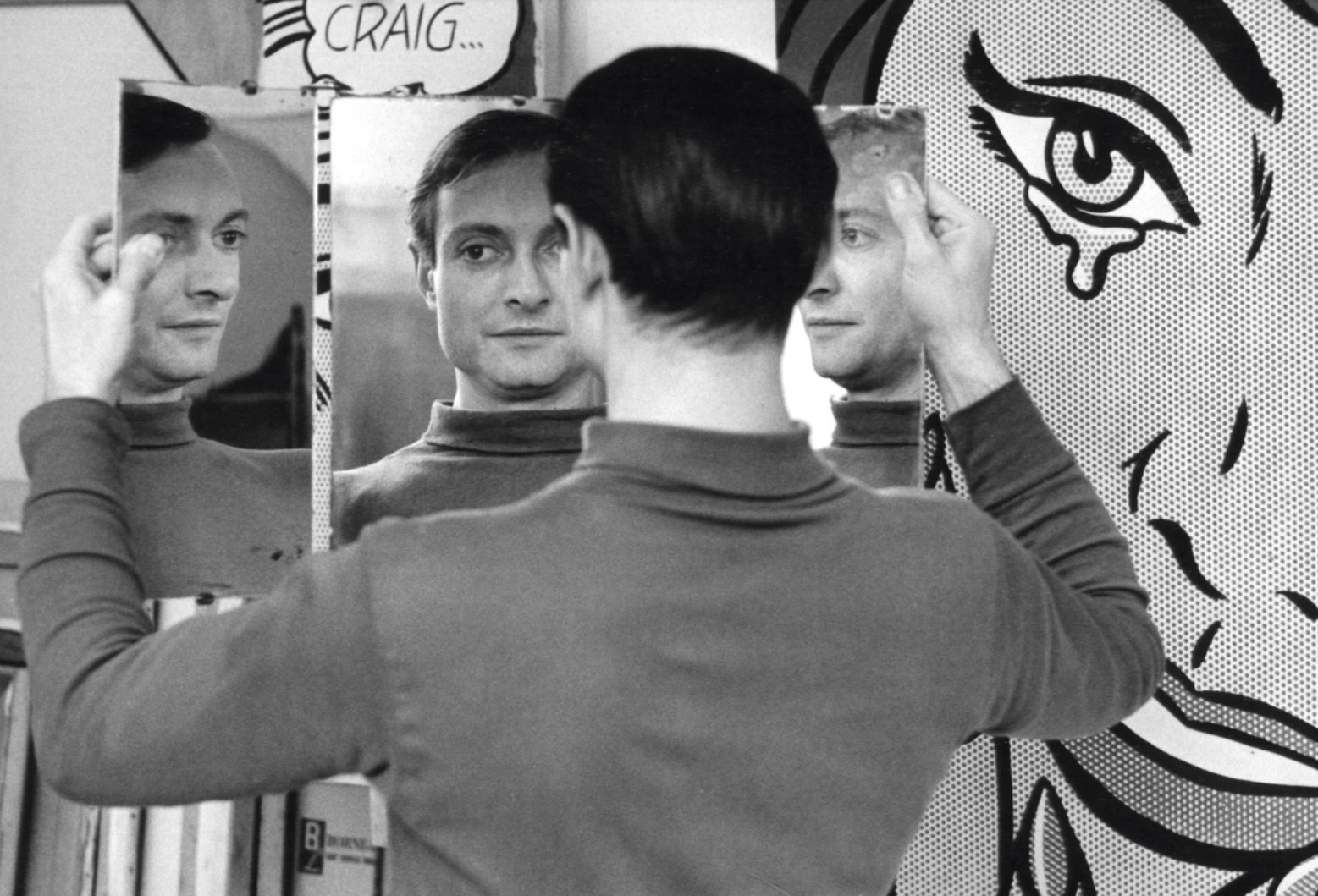
Roy Lichtenstein in his studio, New York, 1964. Photo © Ken Heyman. Art © 2025 Estate of Roy Lichtenstein / DACS 2025
A pioneer of the Pop Art movement, Lichtenstein first gained popularity and acclaim for his Girls series in the early 1960s that appropriated the cliched archetypes of female beauty propagated in comic books and magazines. Lichtenstein’s self-referential impulse is keenly felt in the present work, from his iconic painting Girl in Mirror from 1964 to his Mirrors of 1966-71, he draws a continuous thread through his own output. In contrast to the pictorial strategies employed in these earlier works, Woman with Mirror notably incorporates a literal mirror as opposed to a pictorial conceit as in his earlier works, blurring the line between representation and reality. In doing so, it implicates the viewer directly, drawing attention to the act of looking and the constructed nature of identity. The present sculpture’s ability to question the duality of women’s inner self and outer appearance draws unmistakable parallels to Picasso’s Girl Before a Mirror from 1932. Lichtenstein’s life-long fascination with Picasso fueled a continuous dialogue with Cubism, exemplifying his ability to contend with art historical precedent and contemporary pop culture vernacular.
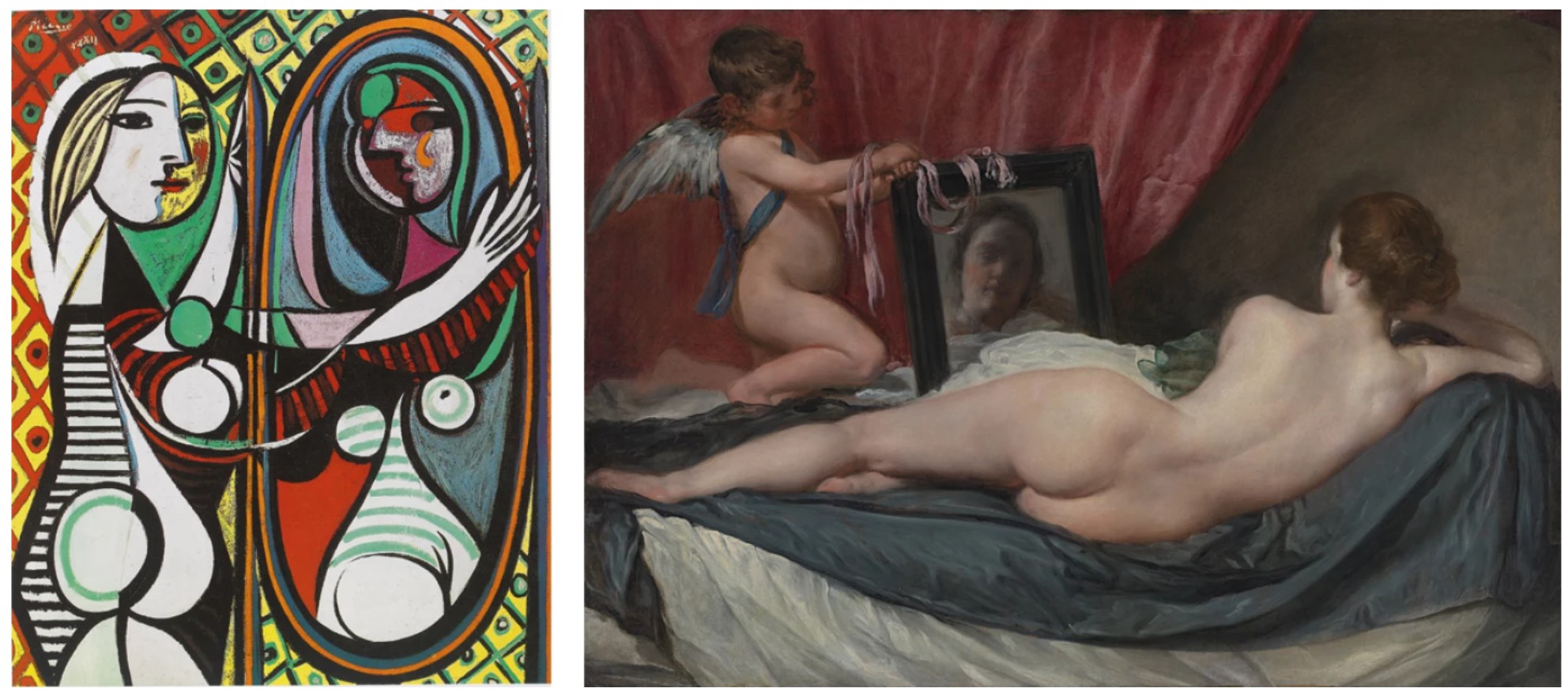
Left: Pablo Picasso, Girl Before a Mirror, 1932. Museum of Modern Art, New York. © Succession Picasso/DACS, London 2025
Right: Diego Velázquez, The Toilet of Venus, 1647-51. National Gallery, London
In Woman with Mirror, Lichtenstein’s visual lexicon is deftly transposed from the canvas to three-dimensional space. From certain angles, the figure appears almost like a cut-out, a drawing sprung into space; from others, the figure’s profile sharpens into uncanny dimensionality. Lichtenstein transforms a traditionally volumetric medium into a site of pictorial experimentation: sharp outlines of animated figures that at once disintegrate and reanimate space. Woman with Mirror furthers the boundaries of the medium, challenging the very substance and definition of sculpture as a necessarily three-dimensional form of expression. As art historian Hal Foster describes, “these pieces exist between painting and sculpture in terms not only of genre but also of structure; where Minimalist objects are neither painting nor sculpture… Pop objects tend to be both – and if most representational painting is a two-dimensional encoding of three-dimensional objects, Lichtenstein reverses the process here, and freezes it somewhere in between” (Hal Foster, “Pop Pygmalion,” in: Exh. Cat., London, Gagosian Gallery, Roy Lichtenstein: Sculpture, 2005, p. 10). With its rhythmic contours and conceptual clarity, the present work distils a lifetime of formal inquiry into a singular, commanding object that stands as a thrilling exploration of gendered representation. Woman with Mirror exemplifies the enduring relevance of Lichtenstein’s practice to affirm his place as one of the most visionary artists of the 20th century.
New Born, 1988
Works from the Collection of Dorothy and Roy Lichtenstein
Sotheby’s London: 25 June 2025
Estimated: GBP 150,000 – 200,000
GBP 787,400 / USD 1,062,990
New Born | Contemporary Day Auction | 2025 | Sotheby’s
ROY LICHTENSTEIN (1923 – 1997)
New Born, 1988
Patinated bronze
12 1/4 x 16 1/8 x 3 3/4 inches (31 x 41 x 9.6 cm)
Incised with the artist’s signature, dated ’88 and numbered 0/6 (on the base)
Executed in 1988 and fabricated in 1989, this work is the artist’s proof aside from the edition of 6
Roy Lichtenstein’s New Born stands as a masterful testament to the artist’s engagement with sculptural form and his dialogue with art historical precedents. The work exemplifies Lichtenstein’s exploration of the interplay between two-dimensional imagery and three-dimensional form, a theme that permeates his sculptural practice. The title New Born alludes to Constantin Brancuși’s seminal sculpture Le Nouveau-Né (1915), reflecting the dialogue with his early modernist forebearers and exemplifying Lichtenstein’s ability to reimagine the artistic idioms of the past.
“Brancuși’s purity of form was revolutionary, but what interests me is how his ‘essentials’ can become part of our visual language today – through irony, through Pop, through making it new again.”
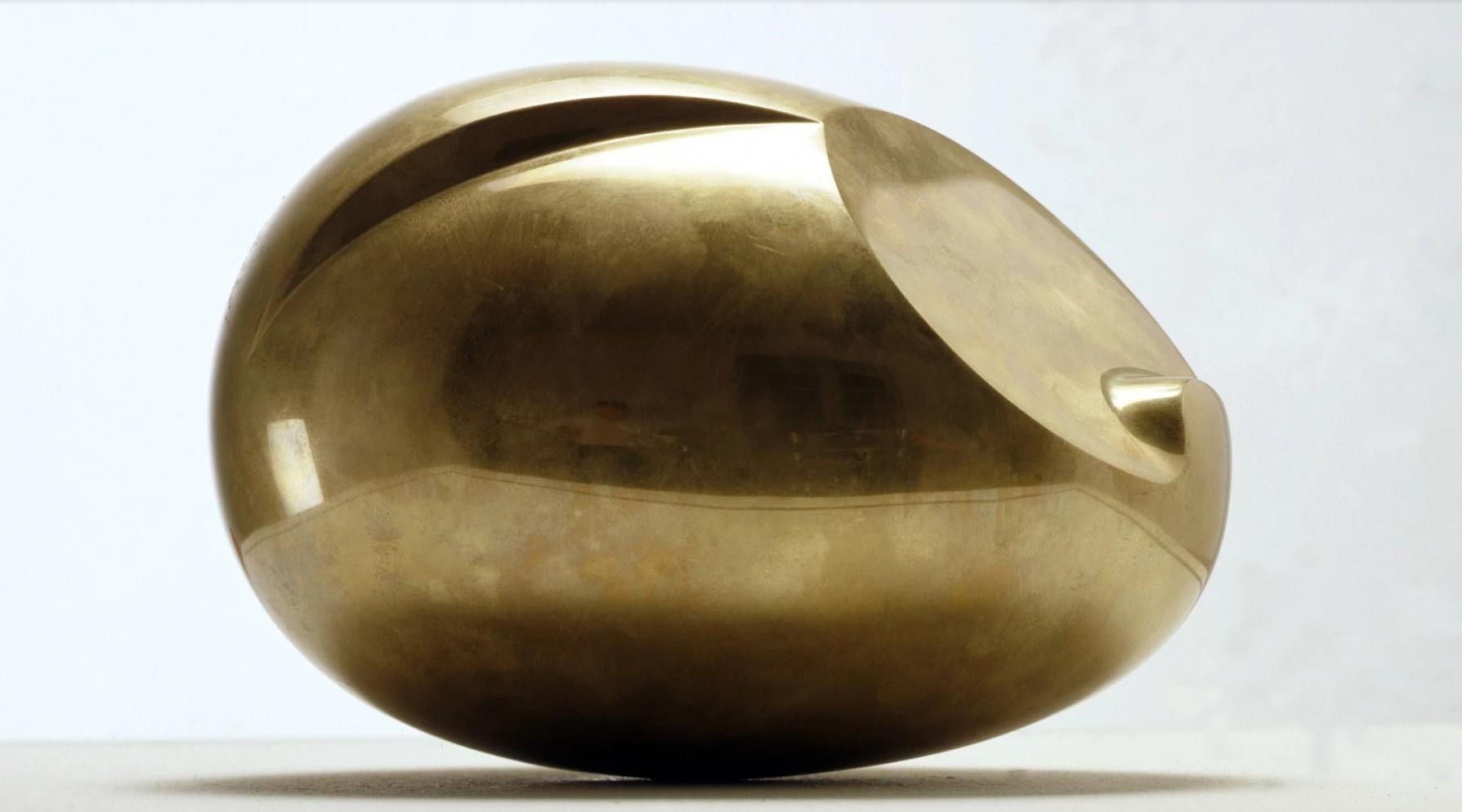
Constantin Brancusi, Le nouveau né, 1925
Centre Pompidou, Paris
Image: © White IMages/Scala, Florence
Artwork: © Succession Brâncuși – All rights reserved. ADAGP, Paris and DACS, London 2025
Throughout his career, Lichtenstein was known for translating motifs from his paintings into sculptural forms, challenging the boundaries between mediums. Working in a similar process to his paintings, Lichtenstein’s sculptures often began as sketches, which would then be developed into paper collages and subsequently into full-scale maquettes. These maquettes would then serve as the basis for casting in bronze. The present work was first conceived as a sketch dating back to 1982. In subsequent pages in the same sketchbook, Lichtenstein also sketched Brancusi’s Torso d’un jeune homme (1923) and Sleeping Muse (1910), the latter of which he would also transform into a bronze sculpture. The present work, alongside the Sleeping Muse, is one of rare examples in which Lichtenstein patinated the bronze as opposed to painting, following the material process and the traditional techniques of bronze casting in contrast to his radical challenging of the sculptural form itself.
“People think Pop is just about comics and ads, but my mirrors, my brushstrokes, my sculptures – they’re all talking to Matisse, to Picasso, to Brâncuși. The dialogue never stops.”
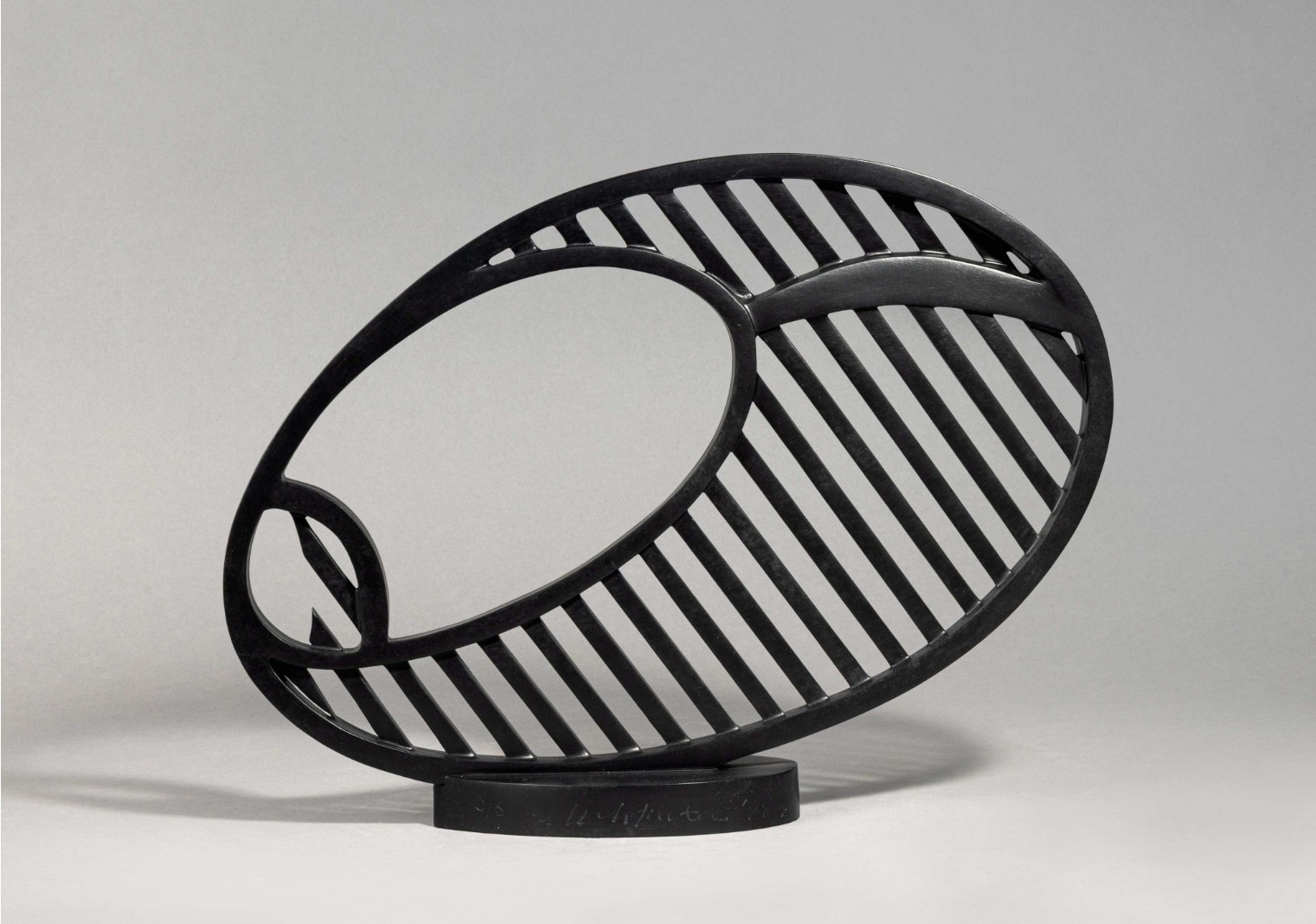
Celebrated for his abstraction and reduction of form to the very essential qualities, Brâncuși’s works contained many qualities that resonated with Lichtenstein’s aesthetic and artistic interests of the 1980s. Indeed, this decade is marked by a continued investigation into the language of abstraction and the conventions of representation, as he made many of his most seminal sculptural works, such as Sleeping Muse (1983) and the Brushstroke Head series (1987), which fused the gestural brushstrokes of Abstract Expressionism with stylized facial features. Lichtenstein’s sculptural work often played with the illusion of dimensionality, much like his paintings. In the present work, the smooth, curvilinear planes and simplified contours suggest a figurative essence while also remaining resolutely abstract, imbuing the solemnity of modernist sculpture with a playful, almost cartoonish vitality. As noted by art historian Nancy Spector, his sculptures are “concrete versions of the artist’s basic graphic painting techniques,” wherein “Lichtenstein’s signature lines become three-dimensional and concrete” (Nancy Spector, Exh. Cat., Washington, D.C., National Gallery of Art, Lichtenstein: Sculpture and Drawings, 1999, p. 33). This observation is particularly pertinent to New Born, which, despite its three-dimensionality, retains a sense of flatness and graphic clarity reminiscent of Lichtenstein’s paintings.
“I’m interested in the kind of drawing that looks as if it’s been mechanically done…even in sculpture, I want it to have that impersonal look, as though it were made by machine.”
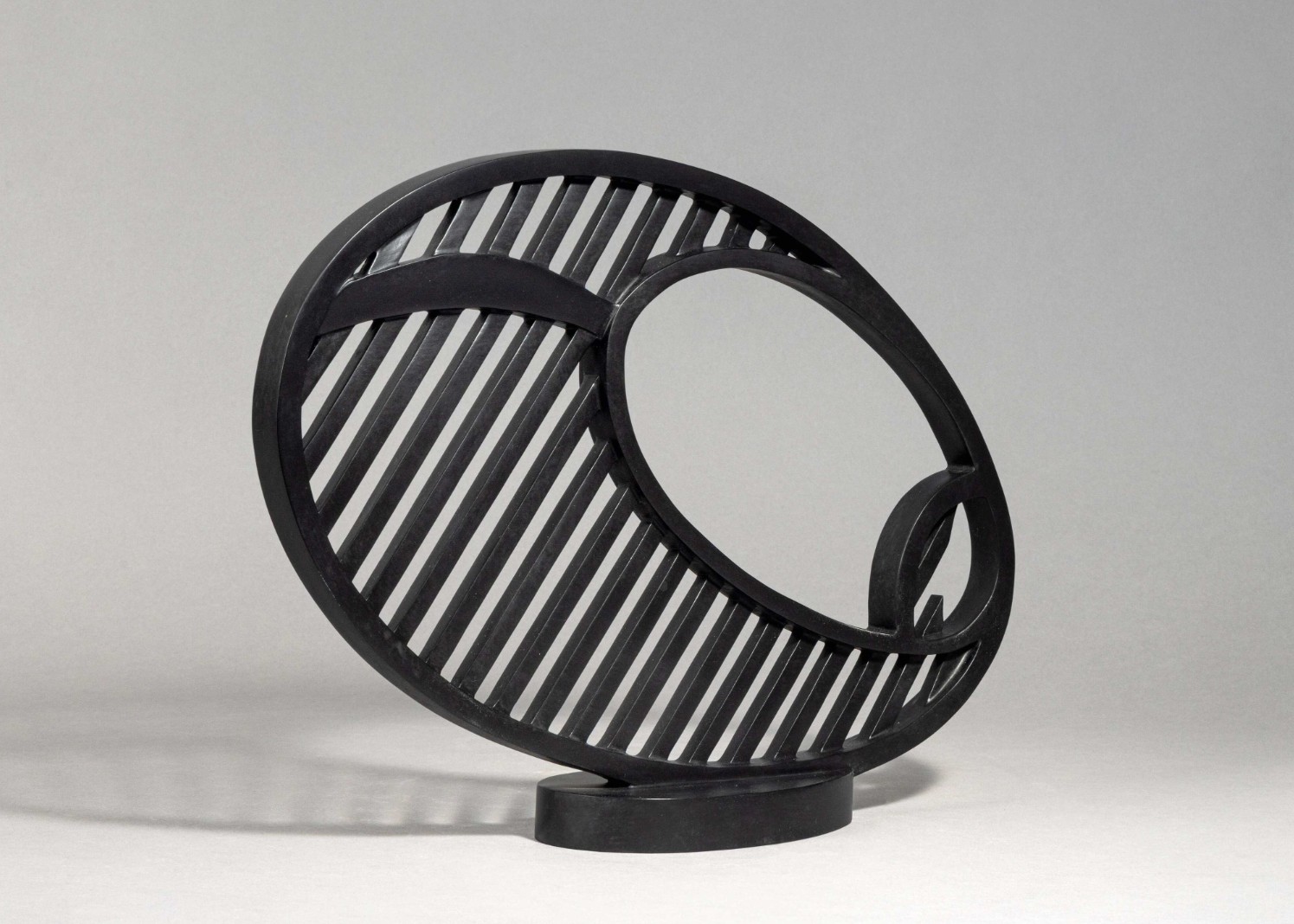
The act of appropriation was not mere pastiche but a deliberate strategy, one that underscored Lichtenstein’s broader practice of reworking existing imagery, whether from comics, advertisements, or art history. Just as he had transformed comic strip panels into high art, he now transformed Brâncuși’s avant-garde innovations through the lens of Pop, collapsing the boundaries between reverence and reinvention. By invoking Brâncuși, Lichtenstein positions New Born within a lineage of sculptural innovation, while simultaneously infusing it with his characteristic Pop sensibility. By synthesizing references to modernist sculpture, employing a rigorous process of translation from sketch to bronze, and maintaining his distinctive graphic style, Lichtenstein created a work that is both a homage to artistic tradition and a testament to his unique vision.
Woman: Sunlight, Moonlight, 1996
Works from the Collection of Dorothy and Roy Lichtenstein
Sotheby’s New-York: 15 May 2025
Estimated: USD 4,000,000 – 6,000,000
USD 4,930,000
Woman: Sunlight, Moonlight | The Now and Contemporary Evening Auction | 2025 | Sotheby’s
ROY LICHTENSTEIN (1923 – 1997)
Woman: Sunlight, Moonlight, 1996
Acrylic on wood
42 3/4 x 26 x 13 5/8 inches (108.6 x 66 x 35.6 cm)
Daring in its conceptual wit and dazzling in execution, Woman: Sunlight, Moonlight stands as a defining statement of Roy Lichtenstein’s sculptural oeuvre and a profound meditation on image, illusion, and form. Executed in 1996, just one year prior to the artist’s unexpected death, Woman: Sunlight, Moonlight is a seminal artwork in the groundbreaking series of flat profile sculptures pioneered by Lichtenstein in the 1990s and is one of two unique examples of the form executed in wood in preparation for the bronze edition of six, the second of which currently resides in the collection of the Whitney Museum of American Art, New York.
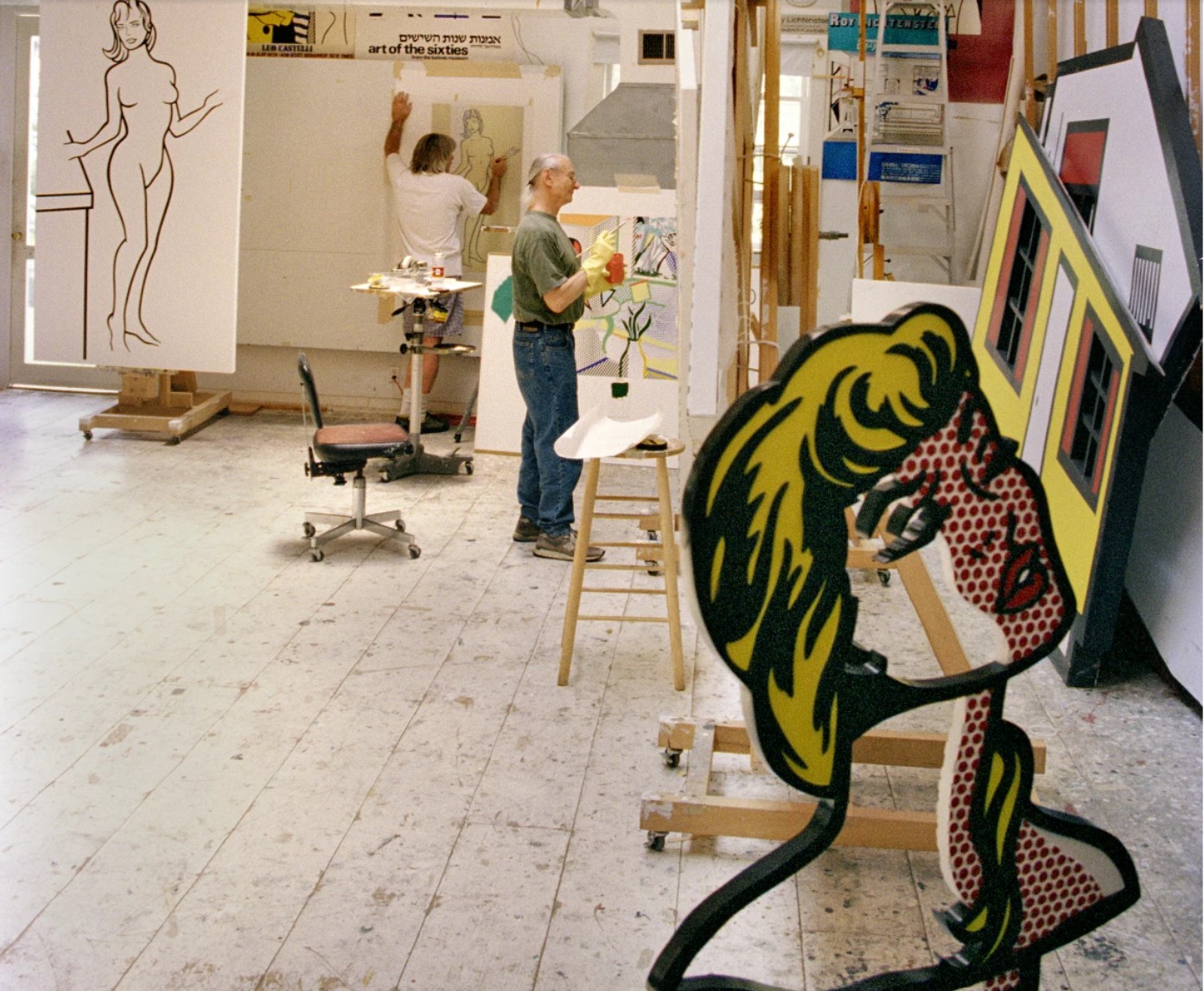
Roy Lichtenstein in his studio. Photo © Bob Adelman. Art © Estate of Roy Lichtenstein
Examples from the bronze edition are held in esteemed collections including The Broad in Los Angeles and have been included in over nine major exhibitions including Lichtenstein’s landmark retrospective at the Art Institute of Chicago and the National Gallery of Art, Washington D.C. Bearing exceptional provenance, the present work has remained in the collection of Dorothy and Roy Lichtenstein since its creation. Presented to the public market for the very first time, Woman: Sunlight, Moonlight is a thrilling evocation of Roy Lichtenstein’s singular process and a remarkable opportunity to acquire an innovative and unprecedented masterpiece.
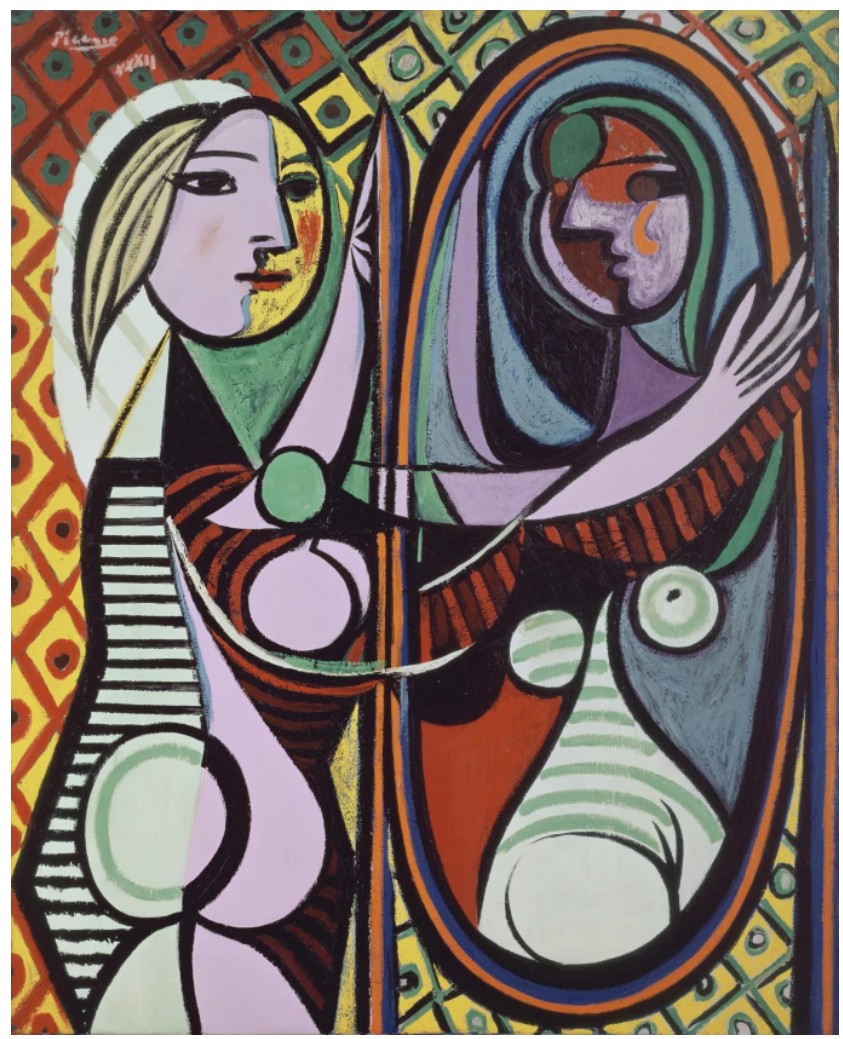
Pablo Picasso, Girl Before a Mirror, 1932. Museum of Modern Art, New York. Image © Succession Picasso/DACS, London 2025 / Bridgeman Images. Art © 2025 Estate of Pablo Picasso / Artists Rights Society (ARS), New York
Executed with Lichtenstein’s signature graphic precision, Woman: Sunlight, Moonlight is a thrilling exploration of the female figure in the artist’s late career as part of his reinterpretation of art history, blending his own celebrated output to create new works of art. Woman: Sunlight, Moonlight presents a stylized female bust rendered in a flat two-sided profile that boldly disrupts sculptural convention. Drawn from the visual vocabulary of 1960s romance comics, in this case the popular romance comic book Secret Hearts, the subject in Woman: Sunlight, Moonlight is at once iconic and archetypal, embodying Lichtenstein’s enduring exploration of mass media’s portrayal of feminine beauty. A pioneer of the Pop Art movement, Lichtenstein gained popularity and acclaim in the early 1960s for his “Girl Paintings” in which he appropriated the cliched archetypes of female beauty from comic books and magazines, brilliantly blurring the boundaries of high and low art. Woman: Sunlight, Moonlight is a triumphant re-emergence of the female figure in the artist’s work after a lengthy period away from the comic-book inspired motif and exemplifies Lichtenstein’s ability to not only contend with art historical precedent and the contemporary pop culture vernacular, but also to reflect upon his own practice across media and time. Woman: Sunlight, Moonlight reimagines its melancholic heroine as a luminous dual sided bust. Split along a central axis, her visage fractures into two distinct moods or opposing atmospheres, one face radiating the warm tones of daylight with vivid reds and canary yellows, and the other immersed in the cool blues of moonlight. Striking and alluring, she is Lichtenstein’s timeless muse, forever poised between the rising sun and the falling night.
“A sculpture from any viewpoint should work the way a drawing works, which is a two-dimensional thing.”
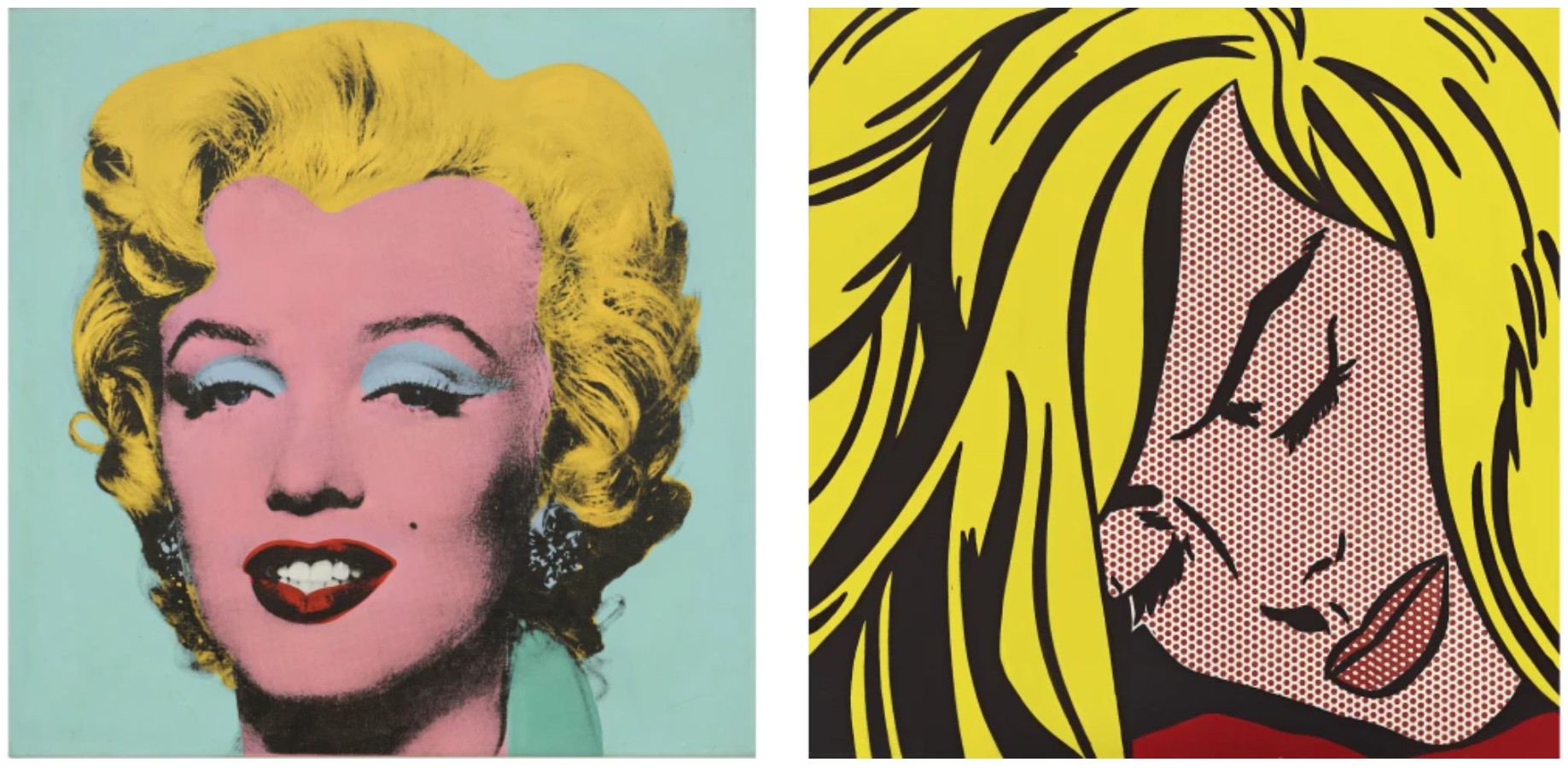
Left: Andy Warhol, Shot Sage Blue Marilyn, 1964. Private Collection. Image © Christie’s Images / © 2025 The Andy Warhol Foundation for the Visual Arts, Inc. / Licensed by DACS, London / Bridgeman Images. Art © 2025 Andy Warhol Foundation for the Visual Arts / Artists Rights Society (ARS), New York. Right: Roy Lichtenstein, Sleeping Girl, 1964. Sold at Sotheby’s New York in May 2012 for $44.9 million. Art © Estate of Roy Lichtenstein
Precise contours and graphic angles animate the surface of Woman: Sunlight, Moonlight with electric tension. Through his iconic Ben-Day dots, bold outlines and graphic color, the artist’s unmistakable visual lexicon is deftly transposed from the canvas to three-dimensional space. From certain angles, the figure appears almost like a cut-out, a drawing sprung into space; while from others, the figure’s profile sharpens into uncanny dimensionality. As the artist himself described, “a sculpture from any viewpoint should work the way a drawing works, which is a two-dimensional thing.” (the artist quoted in: Richard Calvocoressi, Roy Lichtenstein Sculptor, 2013, p. 42) Lichtenstein transforms a traditionally volumetric medium into a site of pictorial experimentation: sharp outlines and clusters of diagonal lines prompt the viewer to conjure depth and mass, suggesting a sense of three-dimensionality despite inherent flatness of the form. Disintegrating and reanimating space simultaneously, Woman: Sunlight, Moonlight furthers the boundaries of the medium, challenging the very substance and definition of sculpture as a necessarily three-dimensional form of expression. As Hal Foster describes, “these pieces exist between painting and sculpture in terms not only of genre but also of structure; where Minimalist objects are neither painting nor sculpture…Pop objects tend to be both-and if most representational painting is a two-dimensional encoding of three-dimensional objects, Lichtenstein reverses the process here, and freezes it somewhere in between.” (Hal Foster, ‘Pop Pygmalion, in: Exh. Cat., London, Gagosian Gallery, Roy Lichtenstein Sculpture, 2005, p. 10) Through exacting precision and controlled simplicity, Lichtenstein collapses the traditional boundaries of painting, drawing, and sculpture into a unified, hybrid form.
Constantin Brâncuși, Mademoiselle Pogany, 1912. Philadelphia Museum of Art. Image © Philadelphia Museum of Art / Gift of Mrs. Rodolphe Meyer de Schauensee, 1933 / Bridgeman Images. Art © Succession Brancusi – All rights reserved (ARS) 2025
Across media and form, Roy Lichtenstein has probed the semiotics of space and perspective, volume and mass, through his distinctive visual lexicon of color and line. A tour de force of visual wit and technical innovation, Woman: Sunlight, Moonlight is both an homage to and an evolution of Lichtenstein’s most enduring motifs rendered with a masterful sense of visual acuity. Flat yet full of volume, light yet monumental in presence, Woman: Sunlight, Moonlight is a triumph of paradox, simultaneously image and object, illusion and structure.A striking meditation on duality, perception, and the language of image-making, Woman: Sunlight, Moonlight is more than a mere translation of two-dimensional imagery, urging the viewer not just to reflect on the material object, but the act of viewing itself.
Bonsai Tree, 1993
Works from the Collection of Dorothy and Roy Lichtenstein
Sotheby’s New-York: 15 May 2025
Estimated: USD 1,500,000 – 2,000,000
USD 4,198,000
Bonsai Tree | The Now and Contemporary Evening Auction | 2025 | Sotheby’s
ROY LICHTENSTEIN (1923 – 1997)
Bonsai Tree, 1993
Painted pewter, patinated bronze
50 3/4 x 38 1/2 x 10 1/2 inches (128.9 x 97.8 x 26.7 cm)
Incised with the artist’s signature, numbered 6/6 and dated ’93 (lower edge)
This work is number 6 from an edition of 6 plus 1 artist’s proof
Serene and refined, Bonsai Tree elegantly evokes the iconic Japanese practice of cultivating serpentine trees in striking forms, embodying Roy Lichtenstein’s career-long synthesis of cross-cultural influences through his distinctive Pop sensibility. The history and masterful artistry of Bonsai in Japan and the similar Chinese tradition of Penjing, which originated approximately 1300 years ago, represent a form of rarefied, controlled beauty through sustained patience and care. Through economy of line and striking three-dimensional composition, Lichtenstein echoes the graceful contours of the Japanese artform in Bonsai Tree. Simultaneously majestic and subtle, expressive and tranquil, Lichtenstein here uses his signature Pop technique and irreverent inquiry both to pay homage to a cultural tradition and to illuminate the frequent generalization of Eastern motifs by Western artists for centuries. In the 1990s, Lichtenstein embarked on his final two major series, Landscapes in the Chinese Style and his Interiors, through both of which he would continue his career-long investigation and reinterpretation of art history and contemporary culture through his distinctive Pop vernacular. Situated between these two series, Bonsai Tree is an exemplar of Lichtenstein’s mature practice and exploration of three-dimensional expression, embodying the radical inquiry and masterful invention of his oeuvre.
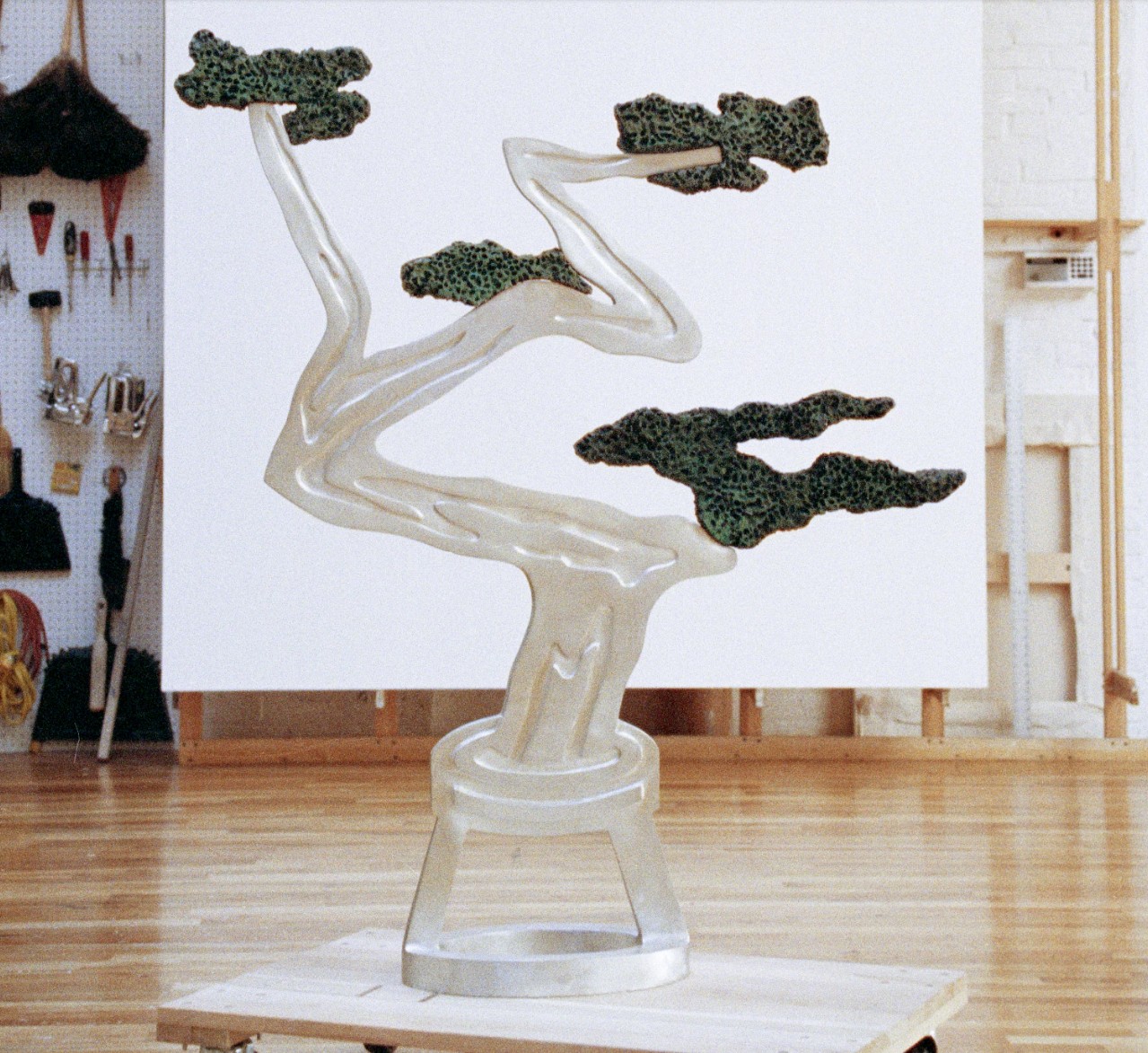
An edition of the present work in progress in the artist’s studio, 1993. Photo © Bob Adelman. Art © Estate of Roy Lichtenstein
In the 1960s, Lichtenstein began his probe of the art historical canon, contending with a range of influences from Pablo Picasso’s Cubism to Piet Mondrian’s abstracted picture planes and the architectural monuments of ancient Egypt and Greece. Lichtenstein reinterpreted and reevaluated these visual icons through the representational systems of contemporary mass media. Applying the visual strategies of comic books and advertisements, Lichtenstein developed his compositions using Ben-Day Dots, bold contour lines, and flat planes of color. In each case, Lichtenstein played with a representational cliche of an artist or cultural iconography, responding to the commodification and proliferation of art as a symbol in the image-saturated culture of the Post-War era.
Vincent van Gogh, Branch of an Almond Tree in Blossom, 1890. Van Gogh Museum, Amsterdam. Image © Art Resource, NY
In 1991, Lichtenstein turned his focus to East Asian art, developing a series of paintings, collages, works on paper and sculptures inspired by the visual tropes of East Asian art in the Western imagination. Lichtenstein’s interest in Chinese art though began almost five decades prior. Stationed in London during World War II, twenty-one-year-old Lichtenstein wrote home to his parents: “I bought a book on Chinese painting, which I could have gotten in New York half the price. I’ll probably send it home with my collection of African masks, as my duffle bag now weighs more than I do, with all the art supplies.” (the artist cited in: Exh. Cat., Hong Kong, Gagosian Gallery, Roy Lichtenstein: Landscapes in the Chinese Style, 2011, p. 7) Later, when Lichtenstein returned to Ohio State University to complete his undergraduate and graduate degrees after the war, he enrolled in classes on East Asian art history. Lichtenstein recalled: “The thing that interested me was the mountains in front of mountains in front of mountains, and huge nature with little people… We all have a vague idea of what Chinese landscape look like—that sense of grandeur the Chinese felt about nature.” (the artist quoted in: Calvin Tomkins, “The Good China,” The New Yorker, 30 September 30 1996 (online))
David Hockney, L’Arbois, Sainte-Maxime, 1968. Private Collection.
Sold at Sotheby’s London in October 2024 for £13.2 million ($17.2 million). Art © 2025 David Hockney
Lichtenstein’s pursuit of East Asian visual tropes through his Landscapes in the Chinese Style series developed in parallel with his iconic Interiors series. Inspired by the domestic interiors illustrated in the Yellow Pages, Lichtenstein’s Interiors featured living rooms, bedrooms and kitchens, which frequently included miniature versions of his own artworks or those from art history. Both series would occupy the artist in his final decade, representing the artist’s continued quest for reinvention and reflection in his mature practice. The present work sits at the nexus of these two seminal series. The image of the Bonsai tree first appears in Lichtenstein’s oeuvre in 1991 in his painting, Interior with Bonsai Tree. Throughout the series, Lichtenstein sought to insert instantly recognizable art historical and cultural symbols in his compositions, creating layered dimensionality and reflecting upon both the canon and his own practice.
“The thing that interested me was the mountains in front of mountains in front of mountains… And the huge nature with little people. We all have a vague idea of what Chinese landscapes look like–that sense of grandeur the Chinese felt about nature. In my paintings, it’s not nature, of course, it’s just dots. But it wasn’t nature when they did it, either. Any painting is so far from the real look. It’s a symbol that reminds you of reality, sometimes, if it does.”
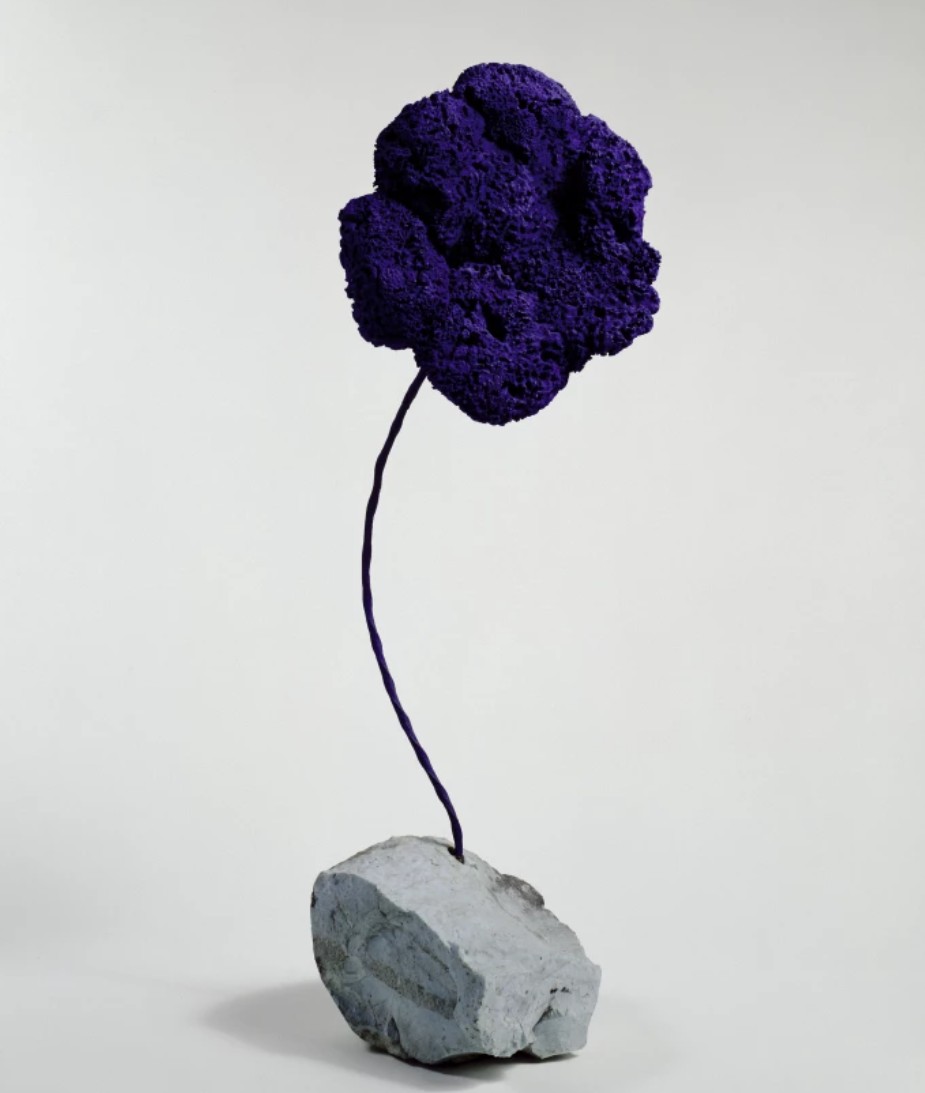
Yves Klein, Blue Sponge, 1959. Solomon R. Guggenheim Museum, New York.
Image © The Solomon R. Guggenheim Foundation / Art Resource, NY. Art © 2025 Artists Rights Society (ARS), New York / ADAGP, Paris
Lichtenstein’s quotations from visual culture are inherent reproductions—reductive representations which stimulate the viewer’s recognition through sparse means. Through refined lines and a voided space, Lichtenstein evokes the presence of the potted Bonsai tree and profoundly disrupts the basis of the sculptural form. Lichtenstein’s Bonsai Tree retains the planar, comic-book-like two-dimensionality of his paintings and drawings but exists as a three-dimensional form. The sponge-like application of pigment in his painting Interior with Bonsai takes on a three-dimensional presence in the present work. The artist blurs the boundaries of the sculptural medium, challenging its very substance and definition. He renders space and volume through absence; in transposing his visual systems and cues, such as bold contours used to convey depth and volume. Bonsai Tree is a superlative example of Lichtenstein’s acclaimed mature sculptural practice, embodying the central artistic explorations of his final decade.
Woman Contemplating a Yellow Cup, 1995
Works from the Collection of Dorothy and Roy Lichtenstein
Sotheby’s New-York: 16 May 2025
Estimated: USD 1,000,000 – 1,500,000
USD 1,758,000
Woman Contemplating a Yellow Cup | Contemporary Day Auction | 2025 | Sotheby’s
ROY LICHTENSTEIN (1923 – 1997)
Woman Contemplating a Yellow Cup, 1995
Acrylic and pigmented wax on aluminum
71 3/4 x 84 inches (182.2 x 213.4 cm)
Incised with the artist’s signature, date ’95 and number AP 1/2 (lower left)
This work is artist proof 1 of 2 from an edition of 6 plus 2 artist proofs
Radiant in color, crisp in line, and striking in scale, Woman Contemplating a Yellow Cup is a masterwork from Roy Lichtenstein’s final decade, in which the Pop icon pushed the boundaries of sculpture with the same formal daring that revolutionized his painting in the 1960s. Translating the graphic clarity of his canvases into a three-dimensional form, the present work exemplifies Lichtenstein’s genius for spatial illusion and narrative suggestion. The composition is a fusion of sculptural relief and pictorial tableau, combining stylized fragments of a woman, a domestic setting, and an implied gaze. His iconic blonde female figure, rendered in profile with her hair tied in a dramatic bow, leans forward into the picture plane—or perhaps into our space—her attention focused on a single yellow cup poised on a pristine white table. Executed in 1995, this work bears exceptional provenance, coming directly from the collection of Dorothy and Roy Lichtenstein.
Lichtenstein’s paints in his studio.
Crafted on shaped aluminum, the work projects outward from the wall, flattening sculptural form into a shallow, illusionistic scene while simultaneously emphasizing its objecthood. It is both a picture and an object. The composition compresses spatial cues—perspective lines, shadows, furniture planes—into a puzzle-like array of contours and Ben-Day dots, a nod to the printing processes of mass media that defined Lichtenstein’s signature aesthetic. The table’s angled legs, the chair’s crisp silhouette, and the stylized foliage in the vase all sit in jarring, stylized harmony with the flatly rendered curtain and window frame.
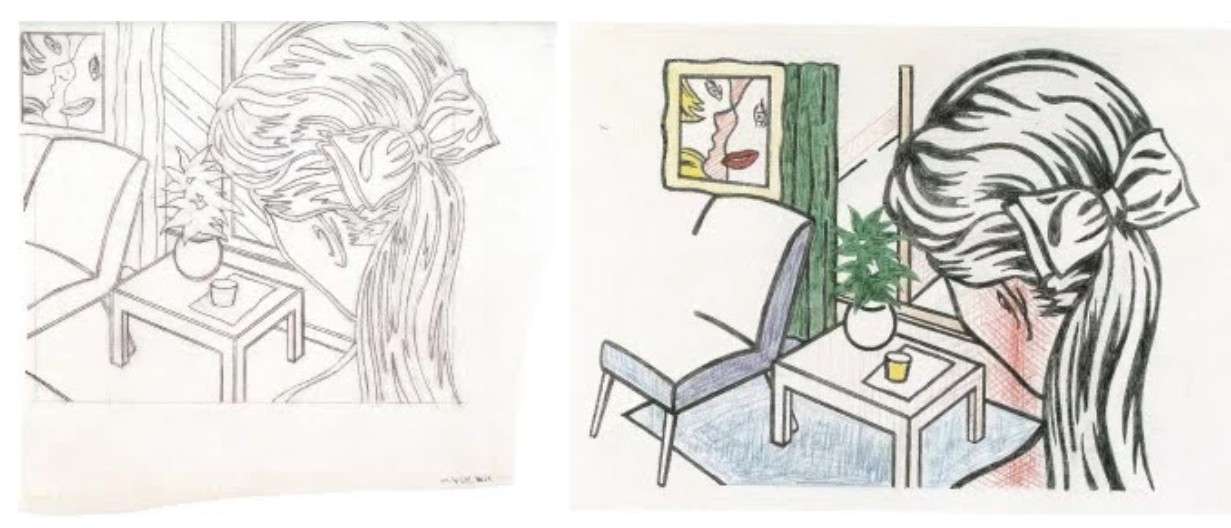
Left: Woman Contemplating a Yellow Cup (Study), 1994. Private Collection. Art © Estate of Roy Lichtenstein. Right: Woman Contemplating a Yellow Cup (Study), 1994. Private Collection.Art © Estate of Roy Lichtenstein.
At the heart of the image, the titular yellow cup gleams like a beacon of domestic stillness and meditative pause. It draws the eye with subtle force, a minimalist gesture around which the entire composition seems to orbit. Like the apple in a Morandi still life or the mirror in a Vermeer interior, the cup becomes a surrogate for contemplation, a quiet object imbued with psychological weight. The woman’s gaze—though we see only its orientation, not her eyes—transforms the scene from passive decor to charged encounter. This blend of psychological nuance and formal stylization was a hallmark of Lichtenstein’s late work, especially his portrayals of women. Revisiting the tropes of 1960s romance comics that catapulted him to fame, Lichtenstein reimagines the female figure not as a caricature of longing or heartbreak but as a complex, self-contained presence. In Woman Contemplating a Yellow Cup, the woman’s interiority is suggested rather than spelled out; she is thoughtful, absorbed, private.
Giorgio Morandi, Still Life, 1946. Tate Modern, London. Art © 2025 Artists Rights Society (ARS), New York/SIAE, Rome/
While the work references 20th-century advertising tropes and interior design imagery, it also draws from a deeper lineage of modernist art history. The crisp angles and compositional play evoke the precision of Fernand Léger, while the motif of a woman seated in contemplation recalls Picasso’s figures from the 1930s. Simultaneously, the spatial dislocation and pictorial fragmentation situate the work squarely within the postmodern condition, where subjectivity is filtered through mediated image culture.
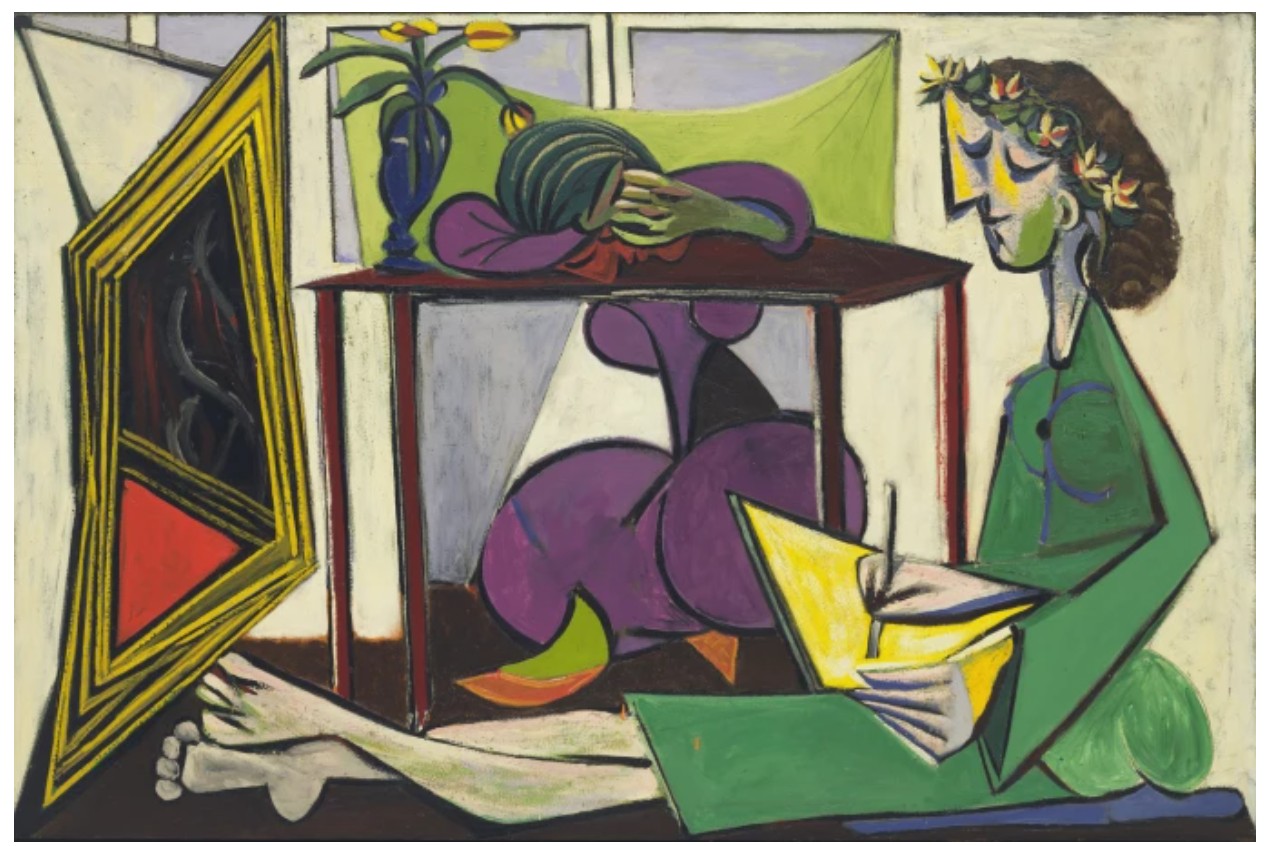
Pablo Picasso, Interior with a Girl Drawing, February 1935.
Museum of Modern Art. © 2025 Estate of Pablo Picasso / Artists Rights Society (ARS), New York
Woman Contemplating a Yellow Cup exemplifies the technical precision and surface perfection that characterized Lichtenstein’s sculptural production. The artist had long experimented with shaped canvases and relief constructions, but these aluminum sculptures from the 1990s mark a culmination of that formal inquiry—rigid, polished, and resolutely graphic. The use of pigmented wax over acrylic adds a subtly lustrous depth, enhancing the visual energy of the surface without compromising its schematic flatness. Standing as both a summation and evolution of Roy Lichtenstein’s extraordinary visual language, Woman Contemplating a Yellow Cup captures Lichtenstein’s enduring fascination with perception, image-making, and the emotional resonance of the everyday object. At once playful and profound, it is a sculpture that mirrors our gaze back at us—inviting us to ponder, to pause, and perhaps, like the woman it depicts, to simply take a moment to contemplate.
Setting Sun and Sea, 1964
Works from the Collection of Dorothy and Roy Lichtenstein
Sotheby’s New-York: 16 May 2025
Estimated: USD 250,000 – 350,000
USD 1,758,000
Setting Sun and Sea | Contemporary Day Auction | 2025 | Sotheby’s
ROY LICHTENSTEIN (1923 – 1997)
Setting Sun and Sea, 1964
Porcelain enamel on steel
36×72 inches (91.4 x 182.9 cm)
Signed (on the reverse)
This work is number 4 from an edition of 5
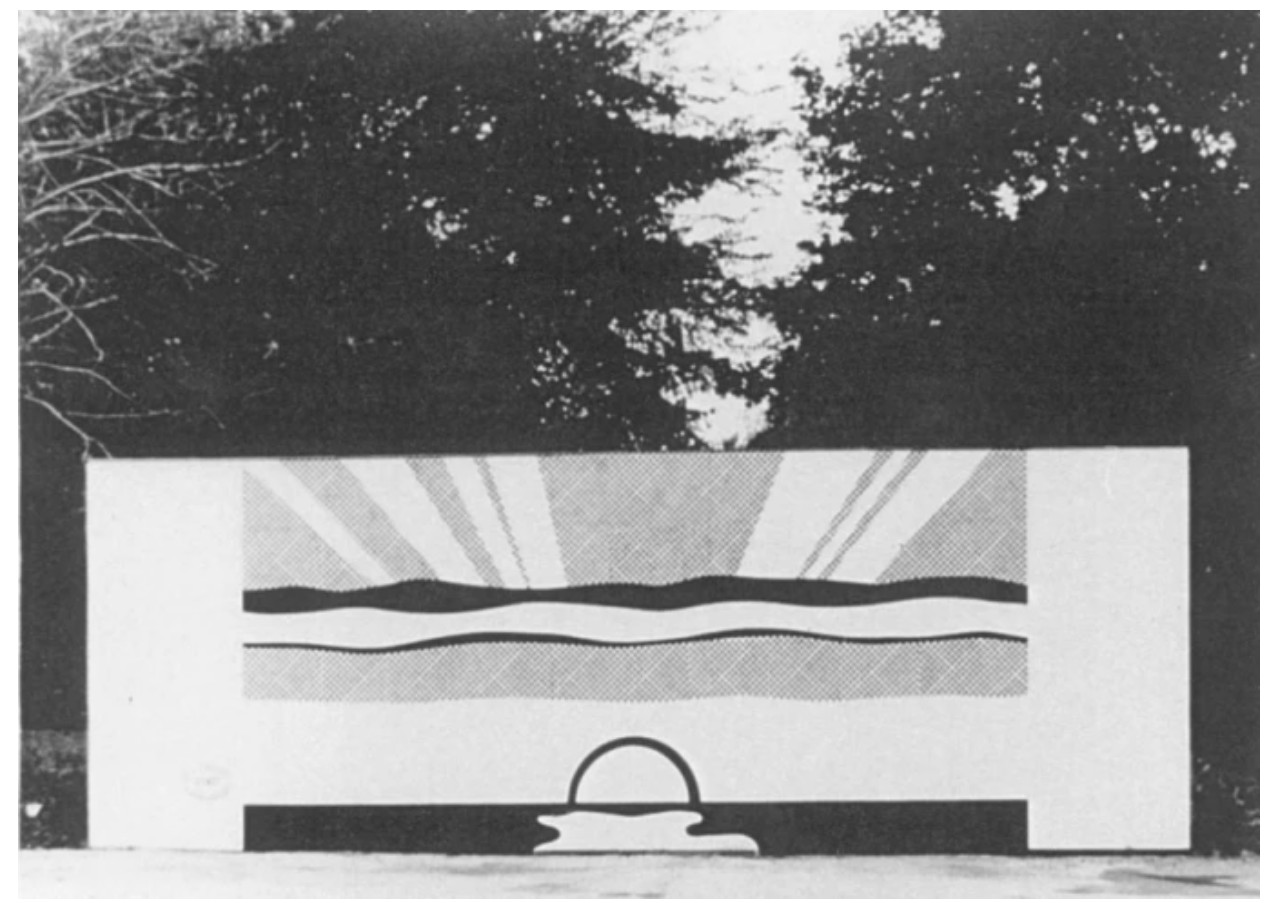
Roy Lichtenstein, Super Sunset Billboard, 1967. Art © Estate of Roy Lichtenstein
“Lichtenstein’s land and seascapes were not simply parodies of commercial sensibilities. They do not pretend to be imaginary, nor did they aspire to simulate. Rather, these works function as phenomena, the playground where seeing and knowing collide, and the place where Lichtenstein situated his practice.”
Clare Bell
Mirror I, 1976
Works from the Collection of Dorothy and Roy Lichtenstein
Sotheby’s New-York: 15 May 2025
Estimated: USD 1,000,000 – 1,500,000
USD 1,016,000
Mirror I | The Now and Contemporary Evening Auction | 2025 | Sotheby’s
ROY LICHTENSTEIN (1923 – 1997)
Mirror I, 1976
Painted and patinated bronze
44 1/2 x 25 x 11 5/8 inches (113 x 63.5 x 29.5 cm)
Incised with the artist’s signature, numbered 2/3 and dated ’76 (lower edge)
This work is number 2 from an edition of 3 plus 1 posthumous cast
A masterful example of Roy Lichtenstein’s career-long investigation of the art and artifice of image-making, Mirror I from 1976 is an elegant manifestation of the artist’s iconic Pop idiom in three-dimensional space. Lichtenstein’s oeuvre is predicated on a semiotic investigation of the ways in which systems of representation allow us to conceptualize and interpret the world around us. Between 1969-72, Lichtenstein produced a limited suite of Mirror paintings, through which he employed his signature visual vernacular to convey reflective surfaces in paint, parodying tropes of mirrored surfaces in art history and contemporary advertising. The series, which became symbolic of the inherent illusion of artistic production, was among the most significant programs of Lichtenstein’s early oeuvre. The motif and conceptual questions of the series reappeared in the artist’s work throughout the remainder of his life, predominantly in his seminal suite of Mirror sculptures from 1976-77, including the present work. Mirror I advances the conceptual and formal concerns of the Mirror paintings,metamorphosing Lichtenstein’s signature visual strategies from the canvas into three-dimensional space.
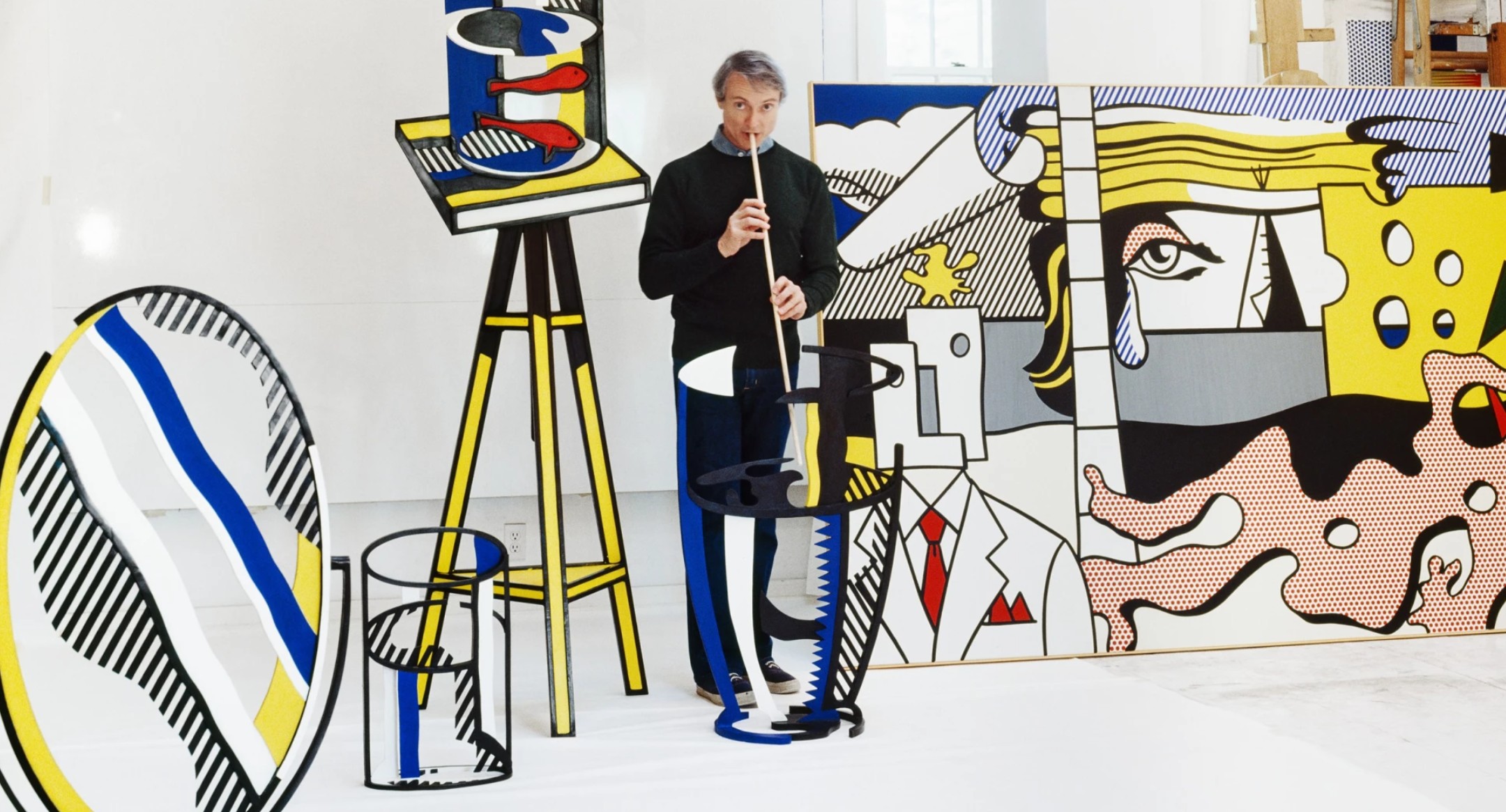
An edition of the present work with the artist in his studio in Southampton, New York, 1977. Photo © The Horst Estate © Conde Nast. For further information please contact The Horst Foundation. Art © Estate of Roy Lichtenstein
Through the 1960s, Lichtenstein contended with the art historical canon, reinterpreting and responding to the likes of Pablo Picasso, Piet Mondrian, Paul Cézanne as well as Classical Greek architecture, Abstract Expressionism, and Surrealism. However in 1969, Lichtenstein initiated an appraisal of one of the most iconic and technically challenging motifs of Western painting since the Renaissance: the mirror. The Mirror series perfectly epitomizes the conflict between reality and illusion that underpins Lichtenstein’s entire oeuvre. Lichtenstein was first inspired by the ways in which advertisers represented windows and mirrors on commercial brochures and in storefront posters, using airbrush-like shading and sharp diagonals to suggest reflections, without actually illustrating a reflection. Then, using his own menu of visual symbols, such as Ben-Day dots, flat planes of color and contour lines, Lichtenstein produced his own painted mirrors. For the artist, the mirror operated as the perfect vehicle for examining the semiotic systems of representation, allowing illusion and artifice to be the true subject matter of the work.
Andy Warhol, Shadows, 1978-79, Dia Art Foundation, New York, installed in Shadows at the Museum of Contemporary Art, Los Angeles, September 2014 – February 2015. Photo © Brian Forrest.
Art © 2025 Andy Warhol Foundation for the Visual Arts / Artists Rights Society (ARS), New York
From Lichtenstein’s earliest forays with three-dimensionality in the mid-1940s through the end of his life in 1997, sculpture occupied a critical place at the center of his oeuvre. In Mirror I, Lichtenstein propels his investigation of illusion and reflection beyond the picture plane, bringing his visual lexicon into the third dimension. In Lichtenstein’s sculptural works, such as Glass I or Goldfish Bowl, he frequently employs the space of a void to signify volume or mass. In Mirror I, Lichtenstein utilizes the space of the void to imply the reflective surface of the mirror. Employing similar visual systems as used in his paintings, such as streaks of blue and yellow alongside bold back hash lines to convey light and shadow, Lichtenstein conveys the notion of reflection. Yet here, the absences also enable the viewer to gaze through the vacant space. In doing so, Lichtenstein contends with the idea of the mirror as a window or portal to convey a new form of meaning and with each installation of the present work, the sculpture takes on a new character.
René Magritte, Le Miroir Magique, 1929. Mayor Gallery, London.
Image © Bridgeman Images. Art © 2025 C. Herscovici, Brussels / Artists Rights Society (ARS), New York
Since the Renaissance, the mirror has appeared in the works of esteemed artists as a vehicle to demonstrate mastery of formal technique as well as a form of self-portraiture. Famously, artists such as Parmigianino, Jan van Eyck, and Frida Kahlo have utilized the mirror as a means to insert themselves in the picture plane and contend with ideas of self-perception. The mirror has also operated as a conceptual indicator of the inherent illusion of the picture plane. In van Eyck’s celebrated Arnolfini Portrait from 1434 and Diego Velázquez’s renowned Las Meninas from 1656, the artists use the mirror to anchor the perspective of the viewer and, in doing so, assert the fundamental artificiality of the scene. Engaging with this subject matter, Lichtenstein inserts himself into this art historical narrative, examining the formal and conceptual history of the mirror and reinterpreting it through his own Pop idiom.
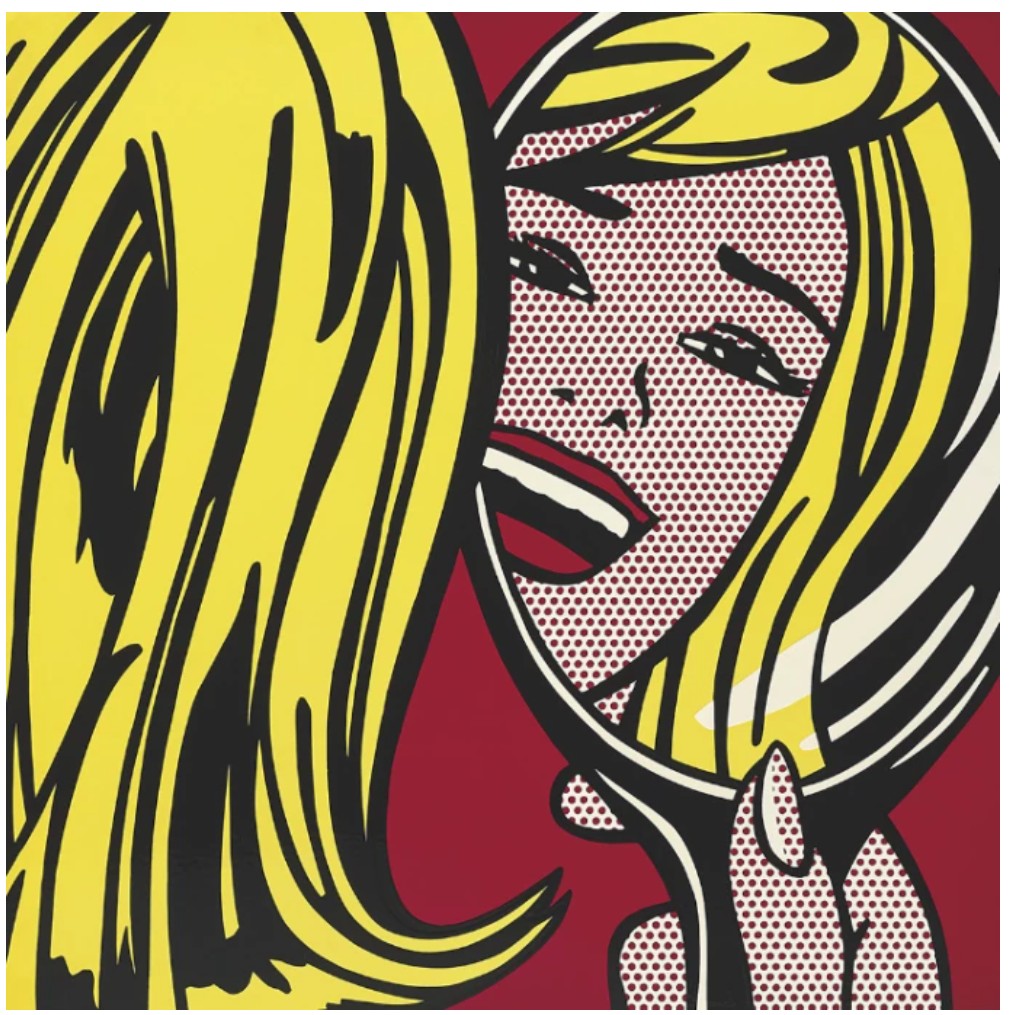
Roy Lichtenstein, Girl in Mirror, c. 1964. Private Collection. Sold at Sotheby’s London in June 2012 for £2.4 million ($3.7 million).
Art © Estate of Roy Lichtenstein
Across media and form, Lichtenstein operates to blur the boundaries and arbitrary parameters of their qualities. He probes the semiotics of space and perspective, volume and mass through his distinctive visual lexicon of color and line. In his sculptural works, he employs the signs and systems of his comic book-inspired paintings, inverting the viewer’s expectations of the medium and yet producing works that feel instantly familiar. Through the elegant contours and bold articulation of Mirror I, Lichtenstein positions himself in dialogue with art history’s canon and the illusion and artifice at its very core.
Small Wall Explosion, 1965
Works from the Collection of Dorothy and Roy Lichtenstein
Sotheby’s New-York: 16 May 2025
Estimated: USD 400,000 – 600,000
USD 812,800
Small Wall Explosion | Contemporary Day Auction | 2025 | Sotheby’s
ROY LICHTENSTEIN (1923 – 1997)
Small Wall Explosion, 1965
Porcelain enamel on steel and perforated steel
21 7/8 x 20 1/2 x 7 3/8 inches (55.6 x 52.1 x 18.7 cm)
Signed, dated ’65 and numbered 6/6 (on the reverse)
This work is number 6 from an edition of 6
Bursting from the wall with comic-book bravado, Roy Lichtenstein’s Small Wall Explosion is a visually arresting and conceptually rich object that encapsulates the artist’s pioneering shift from two-dimensional image-making to sculptural form. Executed in 1965, the work brings Lichtenstein’s fascination with mass media, industrial process, and graphic immediacy into vivid three-dimensional life. Coming directly from the artist’s estate, this rare sculpture stands as both Pop icon and sculptural innovation.
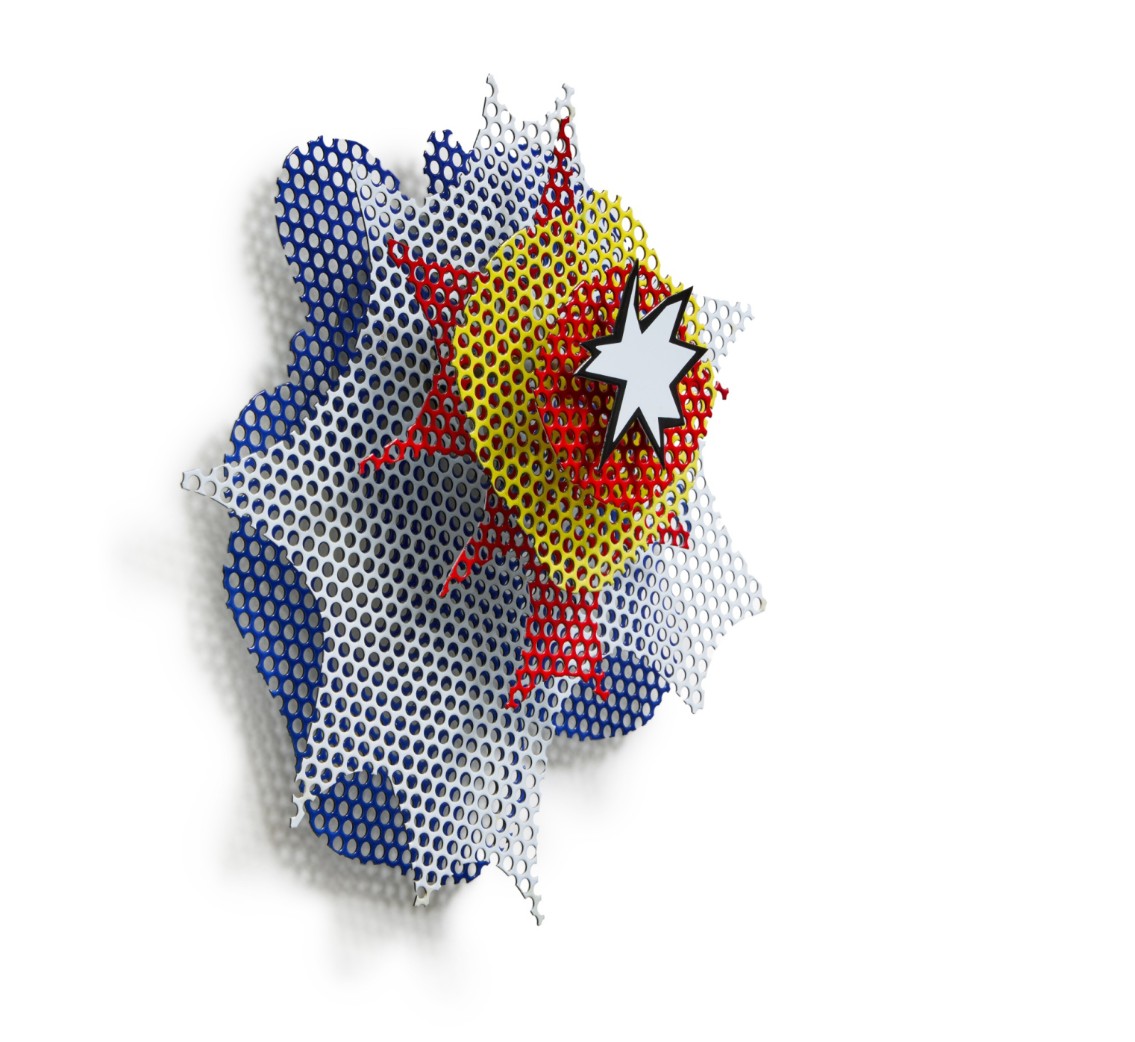
In the early 1960s, Lichtenstein began isolating explosive imagery from war comics, abstracting them into self-contained emblems of impact. By 1965, the year Small Wall Explosion was executed, he had begun transferring these compositions from canvas to sculptural materials—transforming ephemeral comic motifs into enduring objects. This edition of six is among his first forays into fabricated sculpture, translating the immediacy of print into the permanence of enamel and steel. The composition is pure Pop bravura. A jagged red-and-yellow burst radiates from a central point, encased in the bold black outlines and flat fields of color that define Lichtenstein’s visual language. Unlike his painted canvases, here the explosion literally protrudes from the wall. In turning image into object, Lichtenstein makes visible what he once described as the paradox of the comic explosion: a symbol of motion frozen mid-impact, where destruction is rendered harmless through stylization.
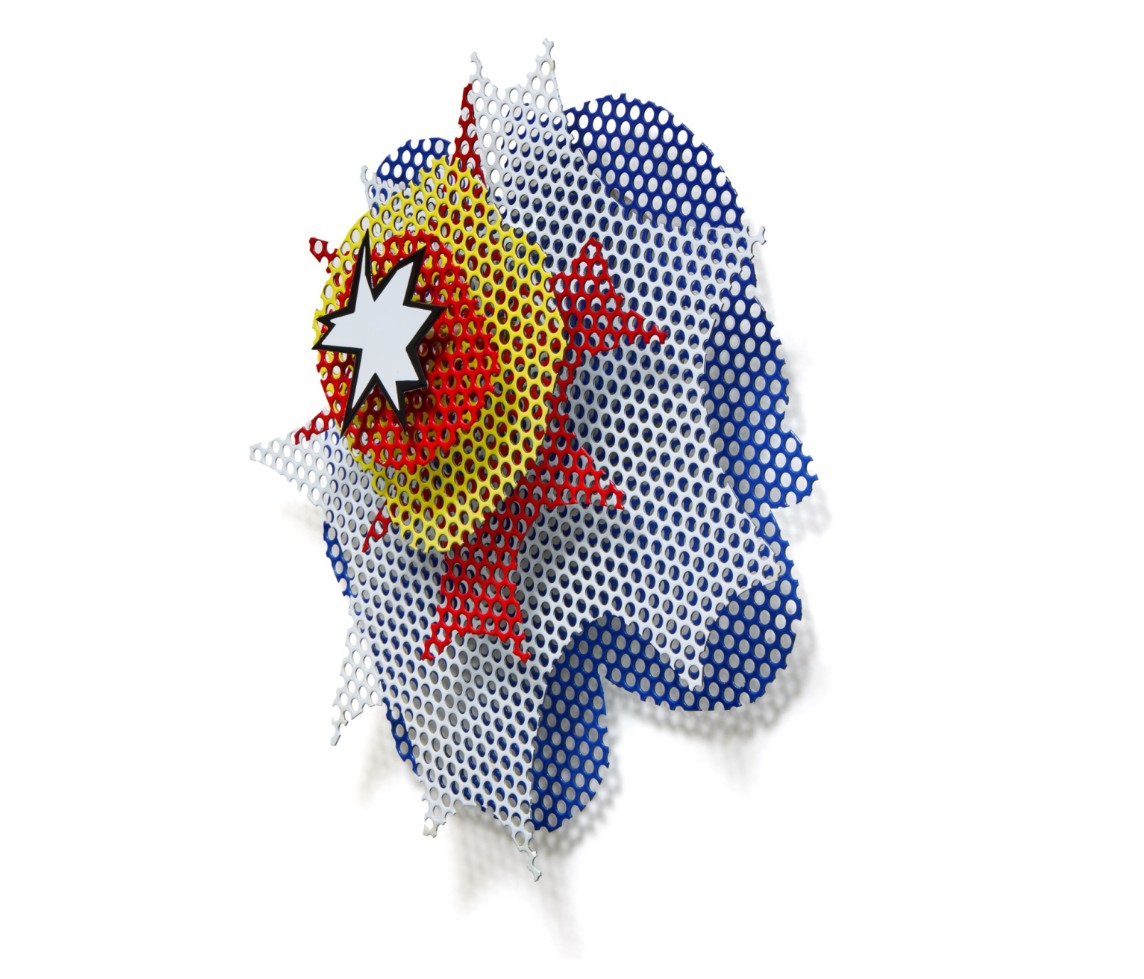
What distinguishes this work, as with all Lichtenstein’s best sculpture, is its friction between content and form. The explosion—traditionally violent, chaotic, and fleeting—is given the cool, clean execution of industrial signage. The use of porcelain enamel, typically associated with commercial displays, reinforces the work’s relationship to advertising, mechanical production, and mid-century Americana. The perforated steel background enhances the illusion of visual vibration, producing a subtle interplay between light and surface that changes as the viewer moves. Small Wall Explosion also represents Lichtenstein’s early and ongoing dialogue with the nature of sculpture itself. Rather than modeling form or mass in the traditional sense, he builds illusion in space—his sculptures are drawings made dimensional. They hover between flatness and volume, icon and object.
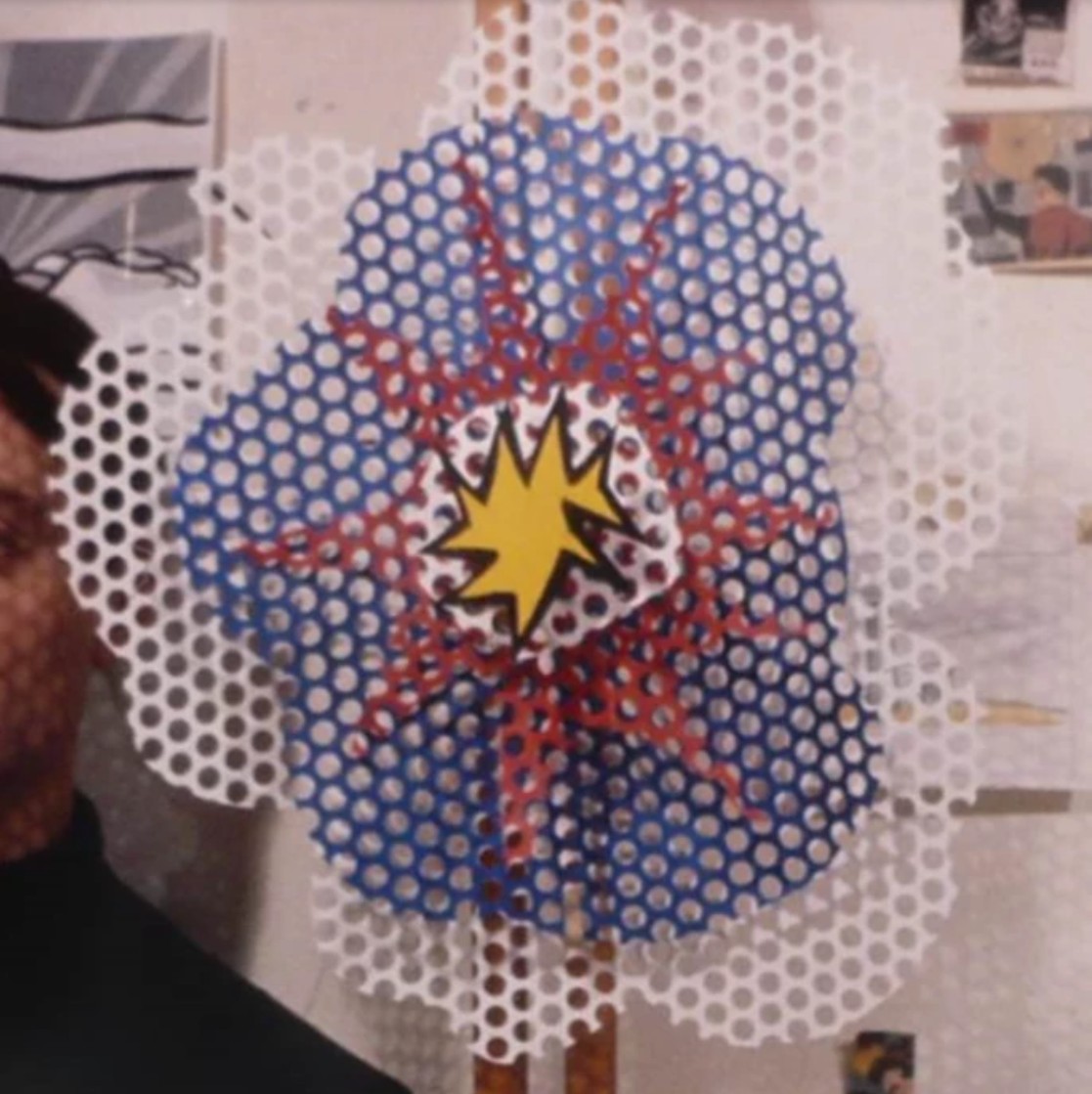
Roy Lichtenstein, Small Wall Explosion (Model), c. 1965. Art © Estate of Roy Lichtenstein.
Throughout its extensive exhibition history—including landmark retrospectives at the Guggenheim, the Corcoran, and the Fondazione Vedova—Small Wall Explosion has been celebrated as a pivotal work in the evolution of Pop sculpture. It is a rare moment where painting, drawing, and sculpture converge into a singular visual statement. With its bold visual language, innovative materials, and seminal status, Small Wall Explosion is a quintessential Lichtenstein object: compact yet powerful, playful yet philosophically resonant. Coming from the artist’s own estate, it offers not just outstanding provenance, but a direct link to the studio innovations that helped define an era of American art.
Explosion (Study), 1965
Sotheby’s New-York: 16 May 2025
Estimated: USD 80,000 – 120,000
USD 234,950
WORK ON PAPER
Explosion (Study), 1965
Marker, colored pencil and graphite on paper
Image: 4 3/4 x 4 3/4 inches (12.1 x 12.1 cm)
Sheet: 9×6 inches (22.9 x 15.2 cm)
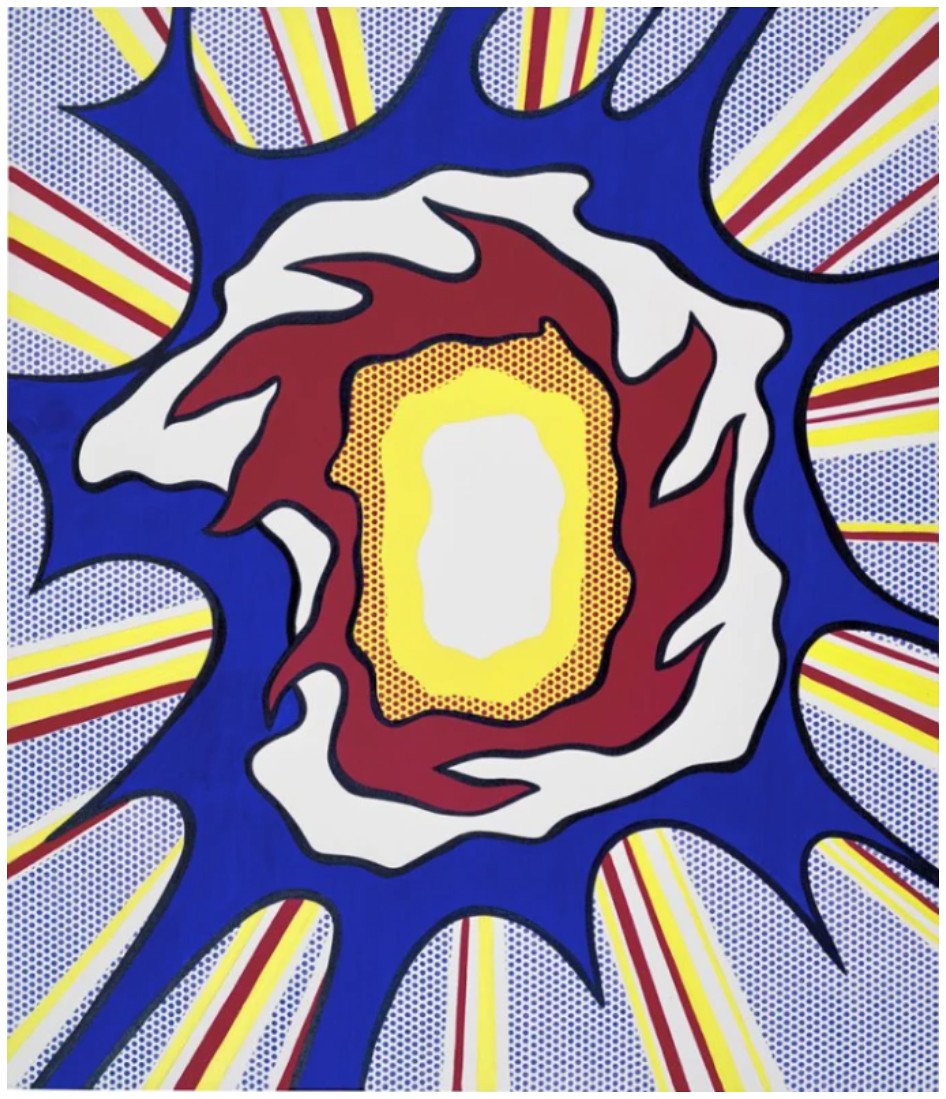
Surrealist Head II, 1988
Works from the Collection of Dorothy and Roy Lichtenstein
Sotheby’s New-York: 16 May 2025
Estimated: USD 700,000 – 1,000,000
USD 533,400
Surrealist Head II | Contemporary Day Auction | 2025 | Sotheby’s
ROY LICHTENSTEIN (1923 – 1997)
Surrealist Head II, 1988
Painted and patinated bronze
35 1/8 x 14 1/4 x 5 7/8 inches (89.2 x 36.2 x 14.9 cm)
Incised with the artist’s signature, date ’88 and number 0/6 (on the base)
This work is the artist proof from an edition of 6 plus 1 artist proof
Brimming with graphic vitality and formal sophistication, Surrealist Head II exemplifies Roy Lichtenstein’s masterful engagement with form at the apex of his sculptural practice. Executed in 1988, the work belongs to a powerful body of three-dimensional explorations that marked the artist’s late career and represents a striking synthesis of his decades-long investigation into style, perception, and art history. Characteristically bold and stylized, Surrealist Head II testifies to Lichtenstein’s enduring fascination with the female form—a subject that served as a recurring touchstone throughout his career and a vital conduit through which he refracted evolving dialogues around representation, desire, and archetype.

Reprising one of his most iconic motifs, the female face here is rendered with elegant, schematic efficiency: a crisp profile view composed entirely of fluid, exaggerated linework and sweeping spiral forms. Unlike the weeping heroines of his early 1960s comic-book paintings, this woman is abstracted to the point of ornament—her jaw sharply zigzagged, her lips a pointed triangle, her coiffure coiled into a sequence of rhythmic golden spirals. At once stylized and exuberant, the yellow silhouette of her hair pulses with energy, offset by the deep black patina of the bronze structure. The contrast evokes the illusion of a flat illustration, yet the physicality of the sculpture grounds it firmly in space.
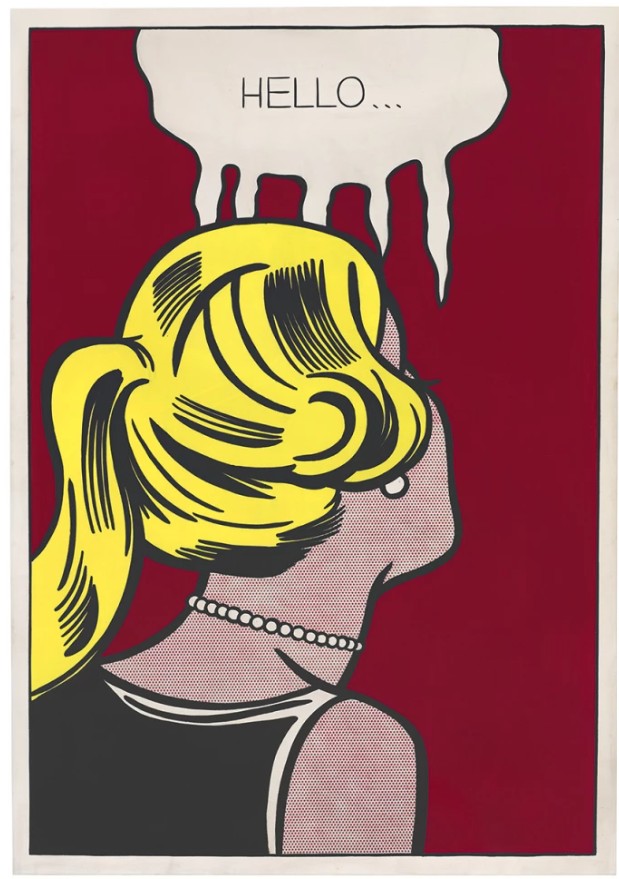
Roy Lichtenstein, Cold Shoulder, 1963. Los Angeles County Museum of Art. Art © Estate of Roy Lichtenstein.
What is most remarkable is the way in which Lichtenstein transforms the volume and mass of a traditional bust into a drawing in space. Surrealist Head II operates less as a three-dimensional object and more as a graphic cutout—its silhouette delineated with such clarity that the sculpture reads like a cartoon glyph extruded into the real world. This playful flatness is central to Lichtenstein’s practice, where the legibility and reproducibility of signs often take precedence over illusionistic depth. The flat yellow plane—painted onto the interior of the hair’s silhouette—becomes a vibrant foil to the black curvilinear armature, casting shadows that subtly animate the surface and recalling the artist’s lifelong fascination with the intersection of light, contour, and perception.
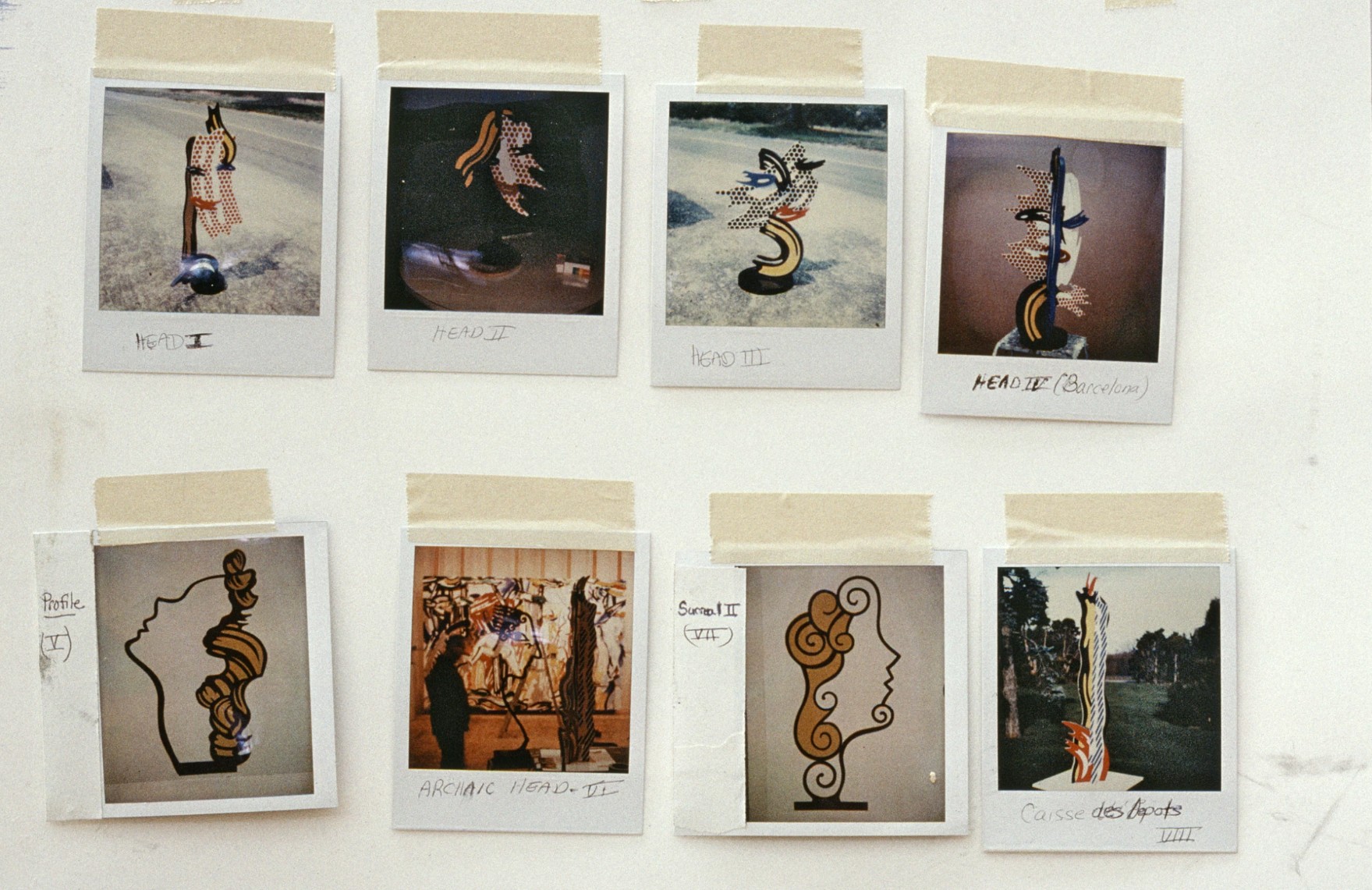
The present work photographed and taped on the wall in Roy Lichtenstein’s studio.
Photo © Bob Adelman. Art © Estate of Roy Lichtenstein.
Throughout the 1980s and early 1990s, Lichtenstein turned to bronze—traditionally the most venerated sculptural medium—to elevate his Pop idiom into a dialogue with classical and modernist tradition. But with Surrealist Head II, he subverts the gravitas of bronze by treating it like a drawn line—supple, looped, and cartoon-like. In doing so, he collapses distinctions between drawing and sculpture, between high and low, between timelessness and trend. While Lichtenstein’s women of the 1960s mined the vernacular of pulp romance and mass media to interrogate the emotional shorthand of pop culture, his late female busts draw on a broader and deeper artistic heritage. With its sculptural contours and stylized elegance, Surrealist Head II echoes the influence of Brancusi’s Sleeping Muse, the classical repose of ancient Greek Kore statues, and the biomorphic eccentricity of Picasso’s surrealist heads. As the title suggests, the present work is part of a dialogue with Surrealism’s inventive approach to form and identity, evoking the genre’s tendency to fracture and recompose the human figure in ways that both reveal and conceal. Yet Lichtenstein’s take is resolutely postmodern: rather than delving into the subconscious, he filters the image through the mechanisms of style and semiotics, emphasizing the aesthetic conventions that shape our collective visual memory.
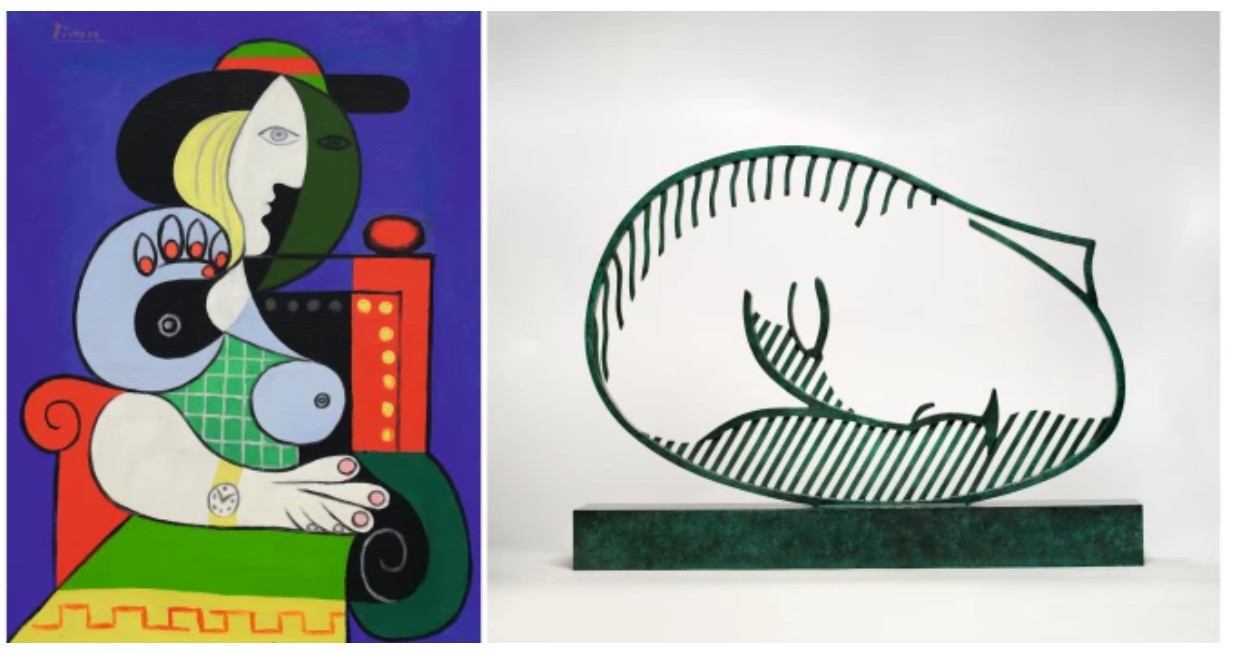
LEFT: Pablo Picasso, Femme à la montre 1932. Private Collection. Sold at Sotheby’s New York in November 2023 for $139.4 million. Art © 2025 Estate of Pablo Picasso / Artists Rights Society (ARS), New York.
RIGHT:Roy Lichtenstein, Sleeping Muse, 1983. Private Collection. Sold at Sotheby’s New York in November 2024 for $4.4 million. Art © Estate of Roy Lichtenstein.
In this light, Surrealist Head II becomes not simply a depiction of a woman, but a meditation on how the idea of “woman” has been encoded, stylized, and repeated across time. Her flowing spirals suggest both stylized hair and abstract embellishment; her sharply edged profile evokes ancient coins, Deco brooches, or 1980s fashion illustrations. It is no coincidence that the entire structure is freestanding yet two-dimensional: Lichtenstein encourages the viewer to circle the piece only to return, again and again, to its frontal graphic punch. Indeed, the stylized femininity of Surrealist Head II can be read as both homage and critique—an acknowledgment of the historical role women have played as muses, allegories, and subjects of idealized beauty in art history. In this regard, Lichtenstein’s sculpture echoes the canon while interrogating its assumptions. His heads are not portraits, but emblems: representations of representation itself. Through their graphic clarity and symbolic reduction, these works examine how far iconic features—spiraling locks, geometric profiles, symmetrical silhouettes—can be pushed into abstraction without losing their effective charge. As a sculpture that traverses eras, cultures, and stylistic boundaries, Surrealist Head II occupies a unique and compelling position within Lichtenstein’s oeuvre. It distills a lifetime of formal inquiry into a singular, commanding object—one that is at once deeply rooted in the past and unmistakably of its time. In its chromatic boldness, rhythmic contours, and conceptual clarity, Surrealist Head II exemplifies the enduring relevance of Lichtenstein’s practice and affirms his place as one of the most visionary artists of the 20th century.
Mobile I, 1989
Works from the Collection of Dorothy and Roy Lichtenstein
Sotheby’s New-York: 16 May 2025
Estimated: USD 400,000 – 600,000
USD 533,400
Mobile I | Contemporary Day Auction | 2025 | Sotheby’s
ROY LICHTENSTEIN (1923 – 1997)
Mobile I, 1989
Painted and patinated bronze
30 1/8 x 36 x 10 1/2 inches (76.5 x 91.4 x 26.7 cm)
Incised with the artist’s signature, date ’89 and number 0/6 (on the base)
This work is the artist proof from an edition of 6 plus 1 artist proof
Roy Lichtenstein’s Mobile I from 1989 is a sculptural tribute to the iconic visual language he developed over decades—but with a playful twist. Referencing Alexander Calder’s mobiles, Lichtenstein here offers a witty reinterpretation of kinetic sculpture through a Pop lens. Yet unlike Calder’s suspended and delicately balanced works, Mobile I is entirely static, its colorful forms locked in place. This purposeful stillness turns the idea of movement into illusion, transforming dynamism into symbol.
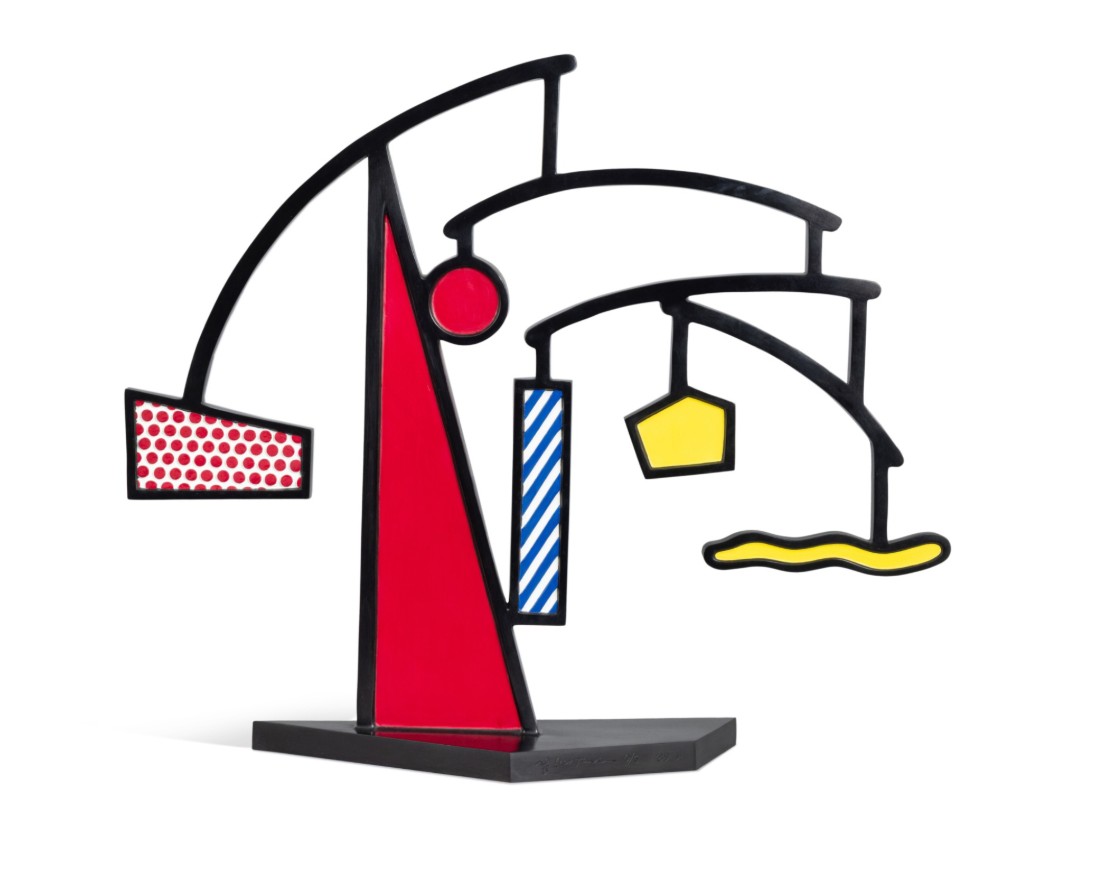
Crafted in painted and patinated bronze, the sculpture’s graphic silhouettes mimic the geometry of a mobile: curving black arms, hovering shapes, and asymmetrical balance. But Lichtenstein flattens and stylizes the composition, using bold black outlines and signature motifs like Ben-Day dots, a red triangle, and striped and wavy forms. These motifs recall not only the artist’s comic-inspired paintings, but also his ongoing interest in abstraction, design, and art historical parody.
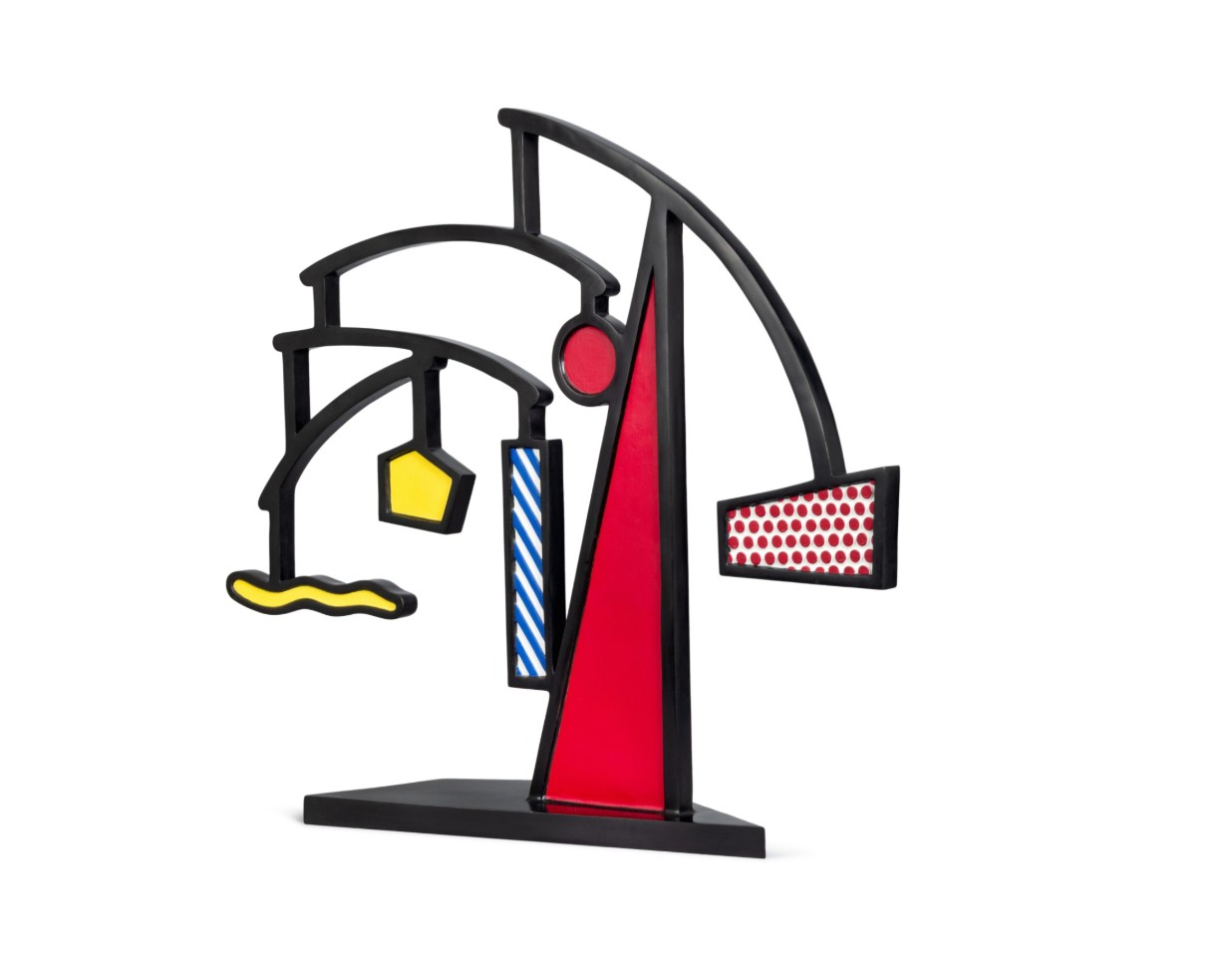
The sculpture becomes a hybrid: part homage, part critique. It celebrates the formal elegance of Calder’s mobiles while subverting their core premise—movement. By rendering a “mobile” in solid bronze, Lichtenstein underscores the theatricality of sculpture as image, turning kinetic delicacy into Pop solidity. As with many of his three-dimensional works, Mobile I functions as a drawing in space, where outline and color supersede mass and weight.
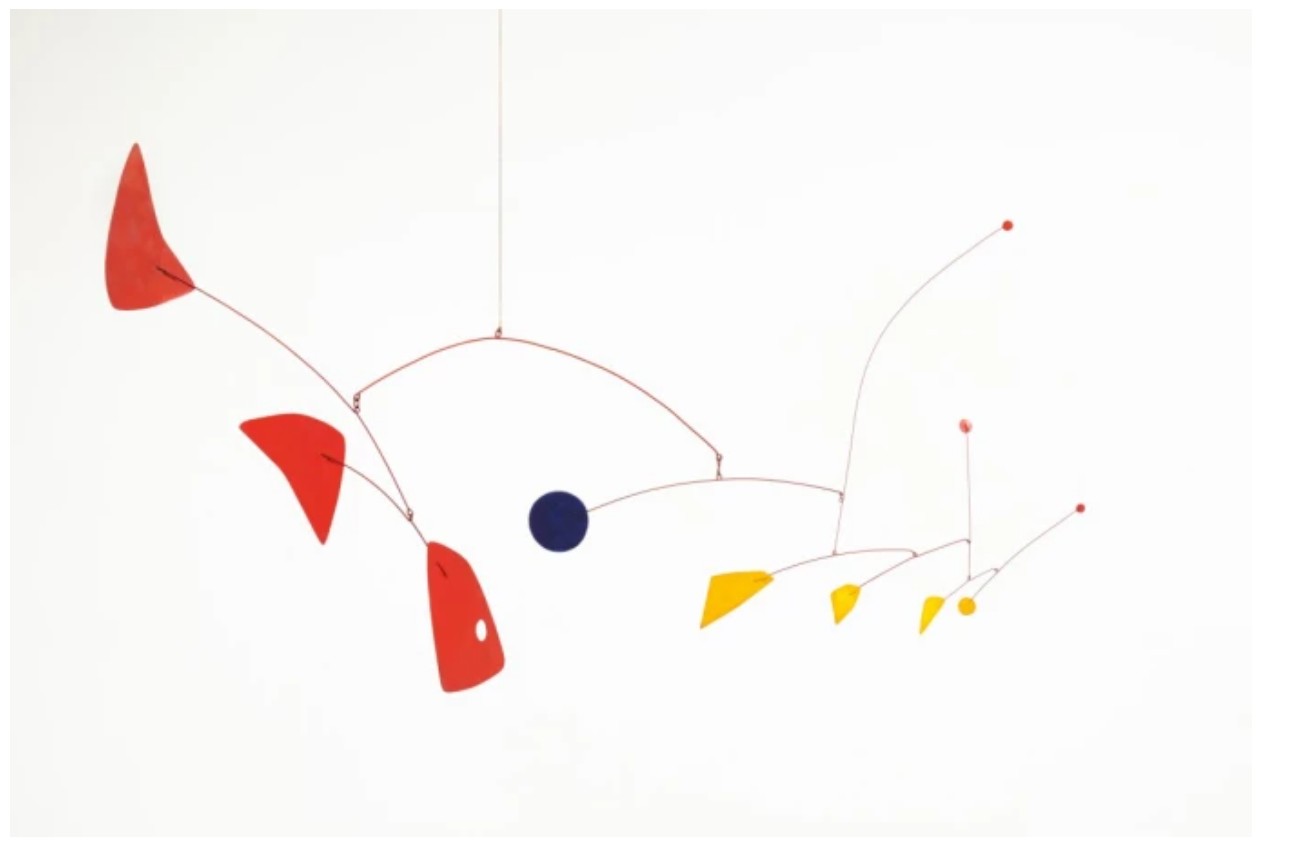
Alexander Calder, Untitled, 1958, © 2020 Calder Foundation, New York / Artists Rights Society (ARS), New York
The Ben-Day dots and color blocking are not merely decorative. They assert Lichtenstein’s ongoing interest in visual reproduction and the tension between fine art and commercial aesthetics. This is a mobile not of balance and physics, but of flatness and stylization. Coming from the estate of the artist, Mobile I has both historical and personal resonance. It represents Lichtenstein’s sculptural practice at a moment of confident late-career synthesis—a moment when past influences, personal style, and playful conceptualism came together in vivid harmony.
Small House, 1996
Works from the Collection of Dorothy and Roy Lichtenstein
Sotheby’s New-York: 21 November 2024
Estimated: USD 600,000 – 800,000
USD 1,140,000
Small House | Contemporary Day Auction | 2024 | Sotheby’s
ROY LICHTENSTEIN (1923 – 1997)
Small House, 1996
painted and cast aluminum
17 7/8 x 26 1/2 x 8 1/2 inches (45.4 x 67.2 x 21.6 cm)
Incised with the artist’s signature and date ’97 (on the reverse)
This work is the artist’s cast from an edition of 8 plus 1 artist’s cast
Roy Lichtenstein’s Small House from 1997 is a testament to the brilliance, conceptual rigor, ceaseless reinvention and creativity that defines Roy Lichtenstein’s artistic career. Utilizing the straightforward architecture of a simple, ranch-style home, the crisp white façade of Small House, delineated by rigid black lines and flat planes of red, yellow and turquoise convey Modernist geometric abstraction through Lichtenstein’s trademark Pop vernacular. Small House complicates fixed perspective through its deceivingly concave armature. In a unidirectional presentation, Small House mimics the compositional tendencies of low relief, while dramatically collapsing any visual depth or breach of surface.
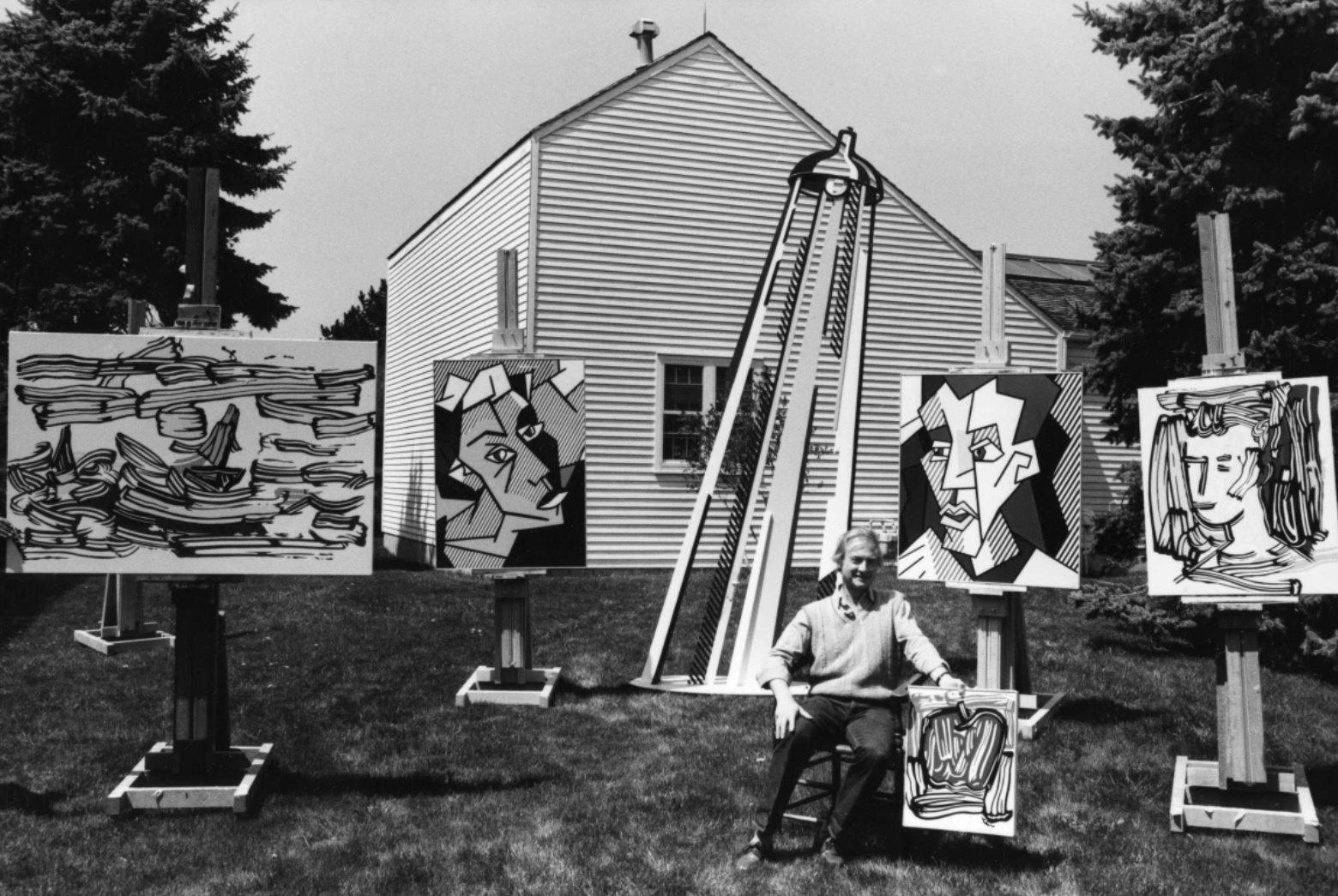
Artist Roy Lichtenstein sitting outside his Southampton studio, New York, 1981.
Image © Arthur Schatz/Getty Images. Art © Roy Lichtenstein Foundation
Nowhere else does Lichtenstein so concisely articulate the iconicity of home as it relates to the semiotics of space, volume and void. The trompe l’oeil volumetric structure of Small House is highly phenomenological, presenting the viewer with a false front while exposing its own visual ruse through charged spatial engagement and inverted structure. In a unidirectional presentation, Small House mimics the compositional tendencies of low relief, while dramatically collapsing any visual depth or breach of surface. Small House is an exploration of visual trickery, exteriority and playful exchange with the viewer.
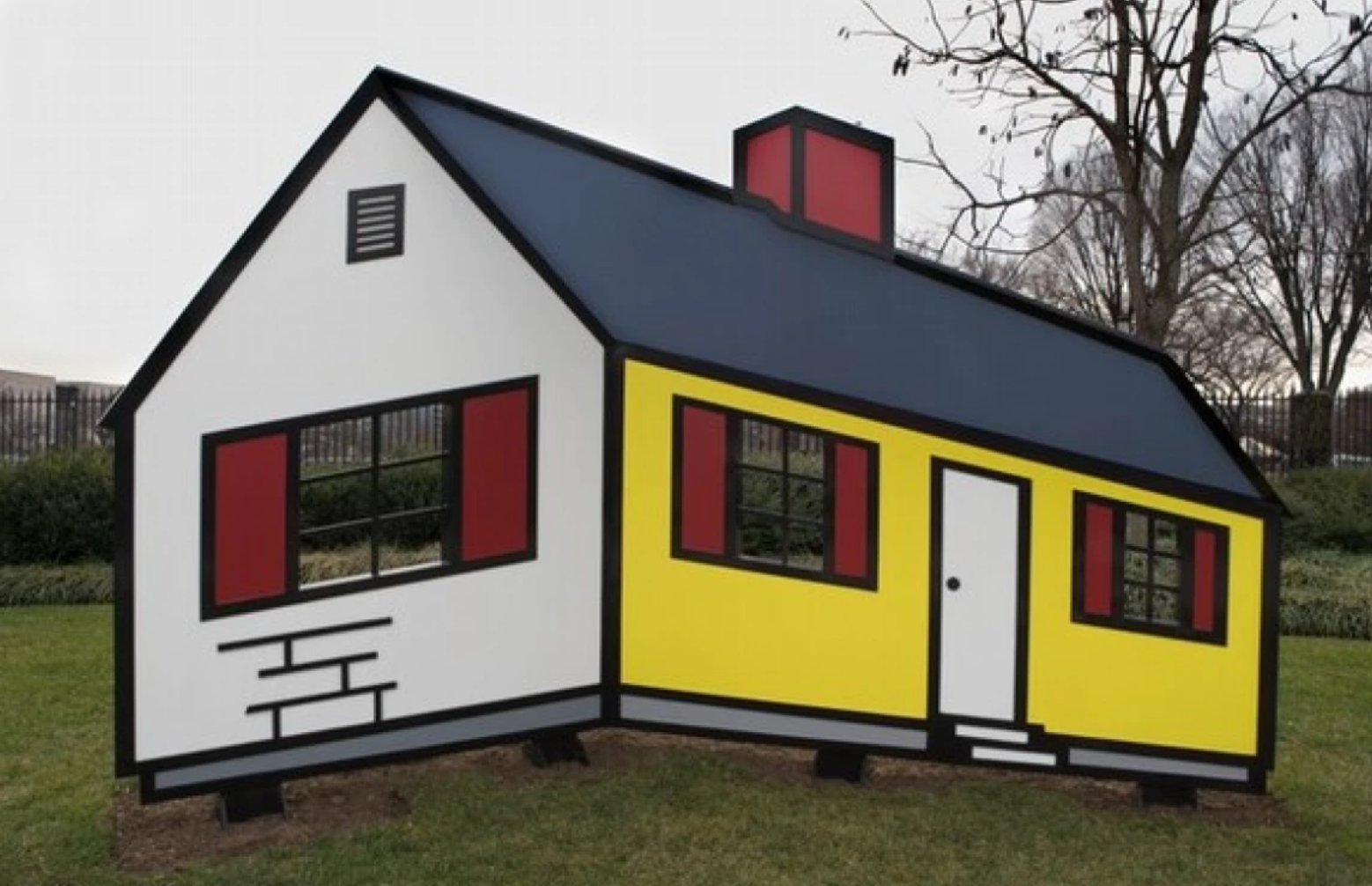
House I, model 1996, fabricated in 1998, National Gallery of Art
Image © National Gallery of Art / Gift of The Morris and Gwendolyn Cafritz Foundation Art © Estate of Roy Lichtenstein
Small House features only the essential details of windows, door, roof, and shutters. The simplicity of the subject’s details is drawn not from a life study, but is instead mediated through the artist’s collection of printed source material, often lowbrow manuals for painting and items from everyday printed media. Lichtenstein begins his sculptural process on the page, with pencil sketches and color studies, then assessing his designs in a full-scale maquette before building the final work. Utilizing the straightforward architecture of a simple, ranch-style home, the subject complicates fixed perspective through its deceivingly concave armature. An important breakthrough during a late-career moment, Small House is perhaps Lichtenstein’s most concise exploration of illusionistic perspective. Where sculpture tends to convey information through three-dimensional form, Lichtenstein breaks with tradition by sticking to pictorial representation. Small House is strongly related to Lichtenstein’s other minimal house sculptures, which range in scale from monumental structures to small interior wall pieces. Held in prestigious collections like the National Gallery of Art, Lichtenstein’s house series is a unique example of an artist producing some of his most refined and exemplary work near the end of his life. Though his legacy is most often evaluated for its contributions to the graphic arts, sculpture occupied a central position in Lichtenstein’s oeuvre from the first time he cast one of his iconic blonde heroines in glazed ceramic in 1965 until his death in 1997. Indeed, the artist’s inclination toward boundary-blurring is nowhere more successful or more apparent than in his sculpted works, whose origins are inseparable from his paintings: here the two disciplines flow freely into and out of one another.
The Conversation, 1984
Sotheby’s New-York: 21 November 2024
Estimated: USD 700,000 – 1,000,000
USD 720,000
The Conversation | Contemporary Day Auction | 2024 | Sotheby’s
ROY LICHTENSTEIN (1923 – 1997)
The Conversation, 1984
Painted and patinated bronze
48 1/4 x 42 x 10 inches (122.6 x 106.7 x 25.4 cm)
This work is number 3 from an edition of 6
There is a vital and inimitable thread of genius that runs through the most successful works of Roy Lichtenstein’s expansive career. Executed in 1984, The Conversation, captures the very heart of the artist’s long fascination with representing the manifold narratives of human relationships. Towards the end of the late 1970s, Lichtenstein began to translate forms and styles from his earlier paintings into painted bronze sculptures. His bronze sculptures typically started as sketches of imagined forms stimulated by both mass media and art history, before he created working models and maquettes. In the case of The Conversation this was certainly true with two documented preparatory drawings, the first one from as early as 1981, and a full scale maquette, which was subsequently used to create the casting mold for the sculpture. Indeed, The Conversation exists not only between a female and a male and between a cursive ideal of beauty and a reductive totem of angularity; but also between fundamental art historical idioms of representation. This intense narrative, thematic and conceptual poignancy is captured with a brilliant economy of form that truly stands as testament to Lichtenstein’s extraordinary genius.
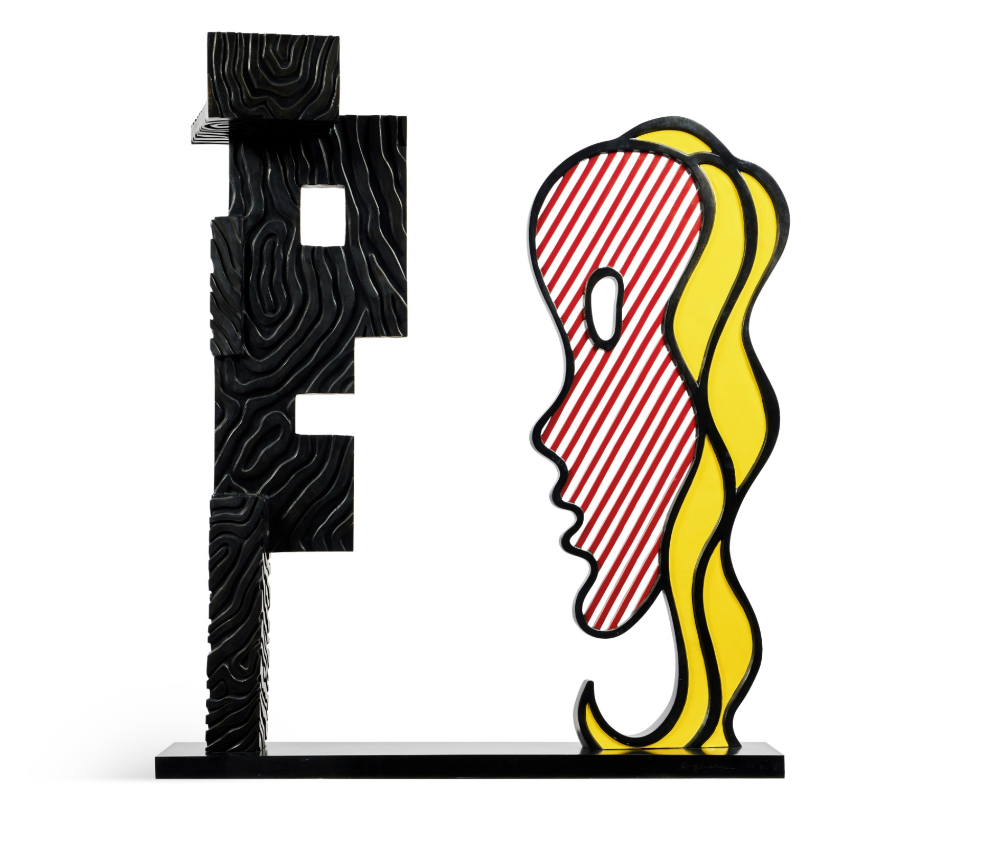
The present work brings forth various themes and genres throughout art history into a new mode of expression that is unique to Lichtenstein’s visual vocabulary. Through his incorporation of reductive sculptural planes to define the angular head rendered with a heavily stylized wood-grain, Lichtenstein pays explicit homage to Analytic and Synthetic Cubism. Meanwhile, the sinuous linearity of the floating female head borrows its idiom from the vocabulary of the high Surrealism of Salvador Dali and Rene Magritte. Finally, the starkly graphic hatching of the face cites the mechanical vernacular of mass reproduction printing methods that were the very template for Pop Art’s groundbreaking appropriation.
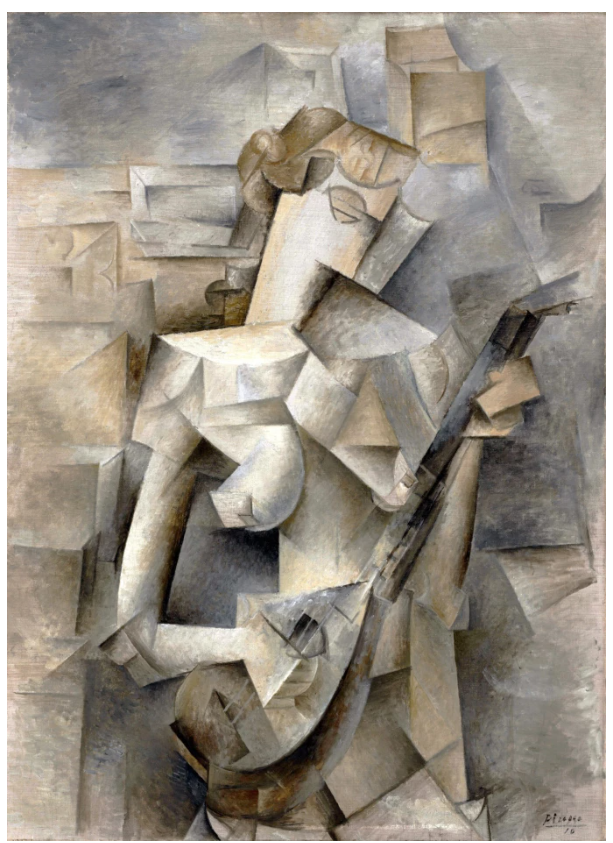
Pablo Picasso, Girl with a Mandolin (Fanny Tellier), 1910, Museum of Modern Art, New York
Ultimately, The Conversation is a poignant embodiment of Lichtenstein’s exceptional capacity to conflate spectacular innovations in thematic, conceptual, aesthetic and art historical ambitions. In her 1999 essay “Plane Talk: Notes on Lichtenstein’s Sculptures,” Naomi Spector succinctly describes the physicality of The Conversation, and how the surface of the sculpture informs its very narrative: “Along with ben-day dots, a standard graphic device for color and tone, is parallel lines, hatching. They are used to great effect in The Conversation, 1984, though now in the language of surrealism. Here the wavy outline of the woman’s face in profile is filled in with the conventional parallel red diagonal lines. When you see them head-on, the graphic device translated into three dimensions makes you smile. But as you step to the side of the nearly flat sculpture, the spaces between the lines disappear and the redness looks solid. Perhaps she is blushing! Then, as you get the reverse side, the interstices reappear. So, the viewer has it both ways. But for her partner in the conversation, the edges of the thick, dark “wood-grain” planks of his face shape up stiffly at the front edge of her outlined profile so that, two dimensionally speaking, she is invisible to him – not to mention her feelings. The possibility of chitchat between them seems unlikely. She seems all limp and wavy, with her head poised on the tip of her blond curl; and he is all stiffly angled dark bronze blocks. Amidst Lichtenstein’s general atmosphere of bright calm, this sculpture allows new readings of the phrase “side by side,” and intimates some of the tension we feel between the lines in Matisse’s painting of the same title.” (Exh. Cat., Washington, D.C., The Corcoran Gallery of Art (and traveling), Lichtenstein: Sculpture & Drawings, 1998-2000, pp. 34-35)
RENÉ MAGRITTE, LE DOUBLE SECRET, 1927. © ADAGP PARIS, 2016.
Lichtenstein’s singular ability to capture a split-second revelation or the shadow of an internal monologue as it flickers across the faces of his legendary cast of characters. Whether it is the unraveling of a truth through its hesitant utterance, from It’s…It’s not an engagement ring, is it? (1961) to Oh, Jeff…I love you, too…But… (1964) the dramatic tension of a sensational revelation is at the epicenter of Lichtenstein’s best output.
Sleeping Muse, 1983
Works from the Collection of Dorothy and Roy Lichtenstein
Sotheby’s New-York: 20 November 2024
Estimated: USD 2,000,000 – 3,000,000
USD 4,440,000
Sleeping Muse | The Now and Contemporary Evening Auction | 2024 | Sotheby’s
ROY LICHTENSTEIN (1923 – 1997)
Sleeping Muse, 1983
Patinated bronze
25 3/4 x 34 1/4 x 4 inches (65.4 x 87 x 10.2 cm)
Incised with the artist’s signature, numbered 1/6, dated ’83 and stamped with the foundry mark (lower edge)
This work is number 1 from an edition of 6 plus 1 posthumous cast
As a consummate example of Roy Lichtenstein’s masterful engagement with and reorientation of the art historical canon, Sleeping Muse from 1983 at once beautifully evokes and radically advances Constantin Brancusi’s paradigmatic Sleeping Muse from 1910. Composed of elegantly refined contours which enclose a void, Sleeping Muse achieves a sense of volume precisely through the absence of mass, probing the boundaries of the discipline of sculpture. Capturing the essence of Brancusi’s form with bold lines which evoke those of mid-century comic strips, Lichtenstein fuses the visual vernacular of pop culture with an iconic symbol of Modernism. Appearing first at Leo Castelli Gallery’s celebrated exhibition, Roy Lichtenstein: Paintings; Greene Street Mural, 1983-1984, the present work has been widely exhibited around the world, including the most significant exhibition of the artist’s lifetime: Roy Lichtenstein: A Retrospective, organized by the Solomon R. Guggenheim Museum and traveling internationally. One of few works that Dorothy and Roy Lichtenstein retained for their personal collection, Sleeping Muse, alongside the other choice examples from their collection, provides a rare glimpse into Roy’s process and artistic development. The very first time that these treasured works have been available on the public market, their presentation this fall represents a remarkable and unprecedented opportunity to acquire masterworks from pivotal moments in Roy’s practice, and the works he and Dorothy cherished most.
Constantin Brâncuși, Sleeping Muse, 1910. Art Institute of Chicago.
Image © The Art Institute of Chicago / Art Resource, NY. Art © Succession Brancusi – All rights reserved (ARS) 2018
Quoting from amongst the most celebrated and exquisite works of early Modernism, Brancusi’s seminal Sleeping Muse, Lichtenstein investigates the visual systems of sculpture. Through refined lines, framing a voided space, Lichtenstein evokes the imperative of Brancusi’s work and profoundly disrupts the basis of the sculptural form. Radical in his own right, Brancusi challenged the conventions of European sculpture, reducing his form to its most fundamental elements. Resting on its side with no base, Brancusi’s work appears to have toppled over, weighed down by gravity.
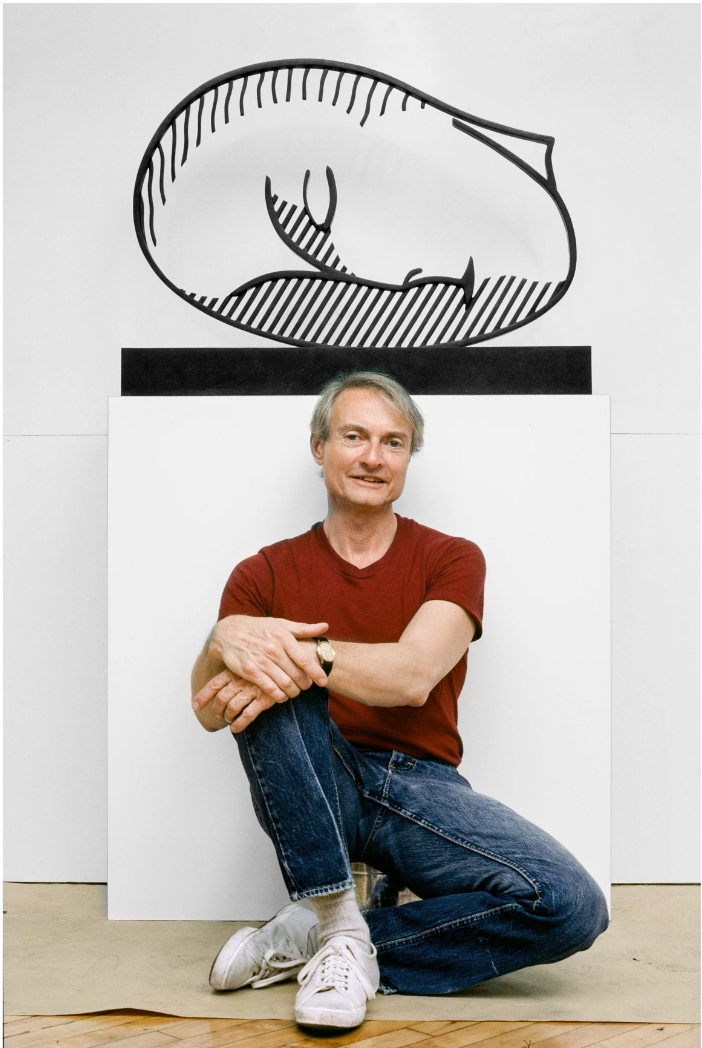
The artist pictured with an edition of the present work in his New York apartment, 1983.
Photo © Bob Adelman. Art © Estate of Roy Lichtenstein
In his exploration of Brancusi’s sculpture, Lichtenstein further blurs the boundaries of the medium, challenging the very substance and definition of sculpture as a necessarily three-dimensional form of expression. Lichtenstein renders space and volume through absence; in transposing his visual systems and cues, such as hash lines and bold contours, used to convey depth and volume in his two-dimensional works, Lichtenstein achieves a sense of mass and depth in his bronze relief. The precise contours and clusters of diagonal lines prompt the viewer to conjure depth and mass, suggesting a sense of three-dimensionality despite inherent flatness of the form.
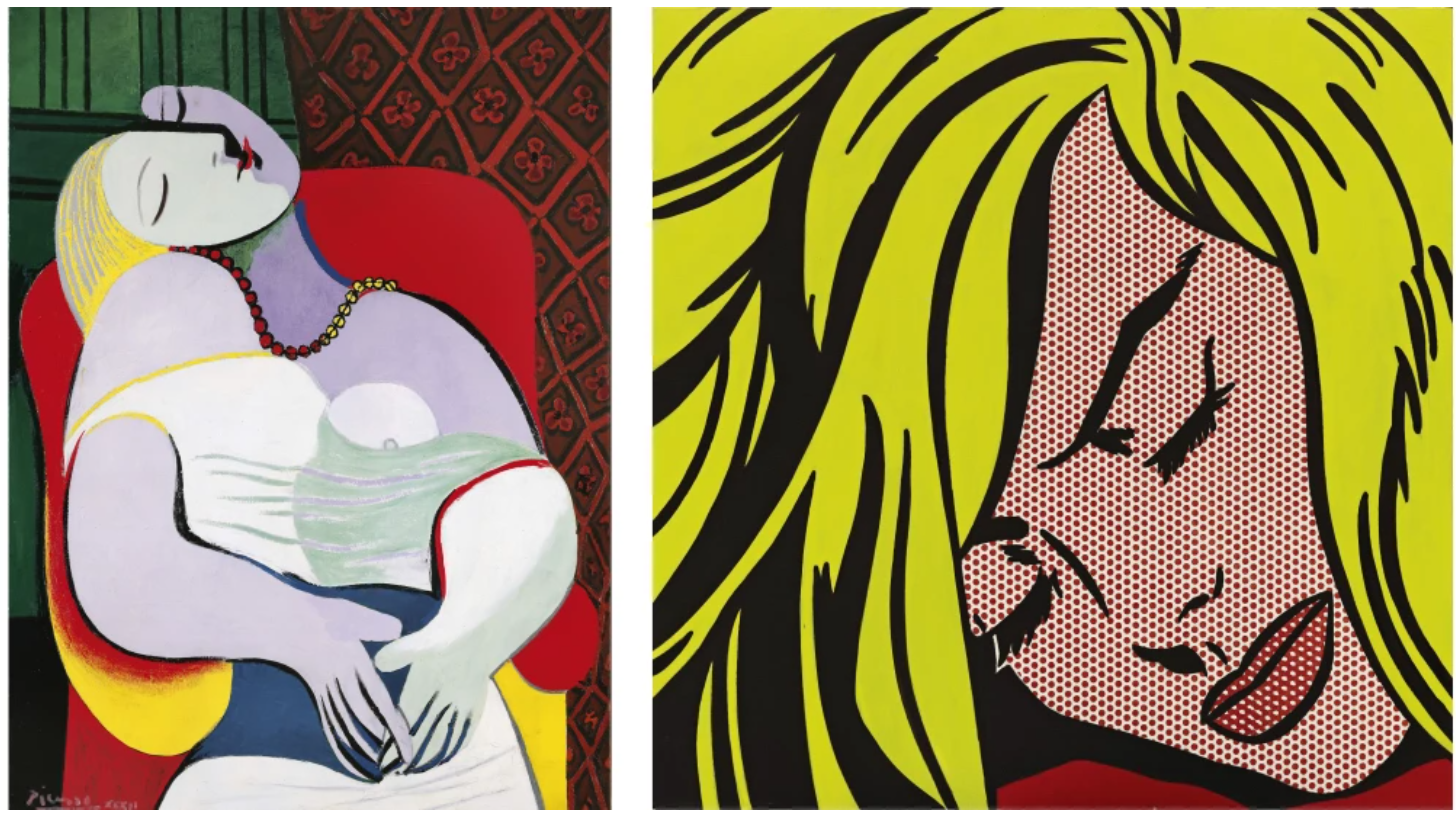
Left: Pablo Picasso, The Dream, 1932. Private Collection. Image © Christie’s Images / © Succession Picasso/DACS, London 2024 / Bridgeman Images. Art © 2024 Estate of Pablo Picasso / Artists Rights Society (ARS), New York.
Right: Roy Lichtenstein, Sleeping Girl, 1964. Private Collection. Sold at Sotheby’s New York in May 2012 for $45 million. Art © 2024 Roy Lichtenstein Foundation
Though most overtly referential to Brancusi’s iconic Modern sculpture, Lichtenstein’s Sleeping Muse is also a self-reflexive exploration, recalling his own iconic paintings of the 1960s. The subject of the sleeping figure appears in one of Lichtenstein’s most celebrated works, Sleeping Girl from 1964, in which Lichtenstein explores representation of the female heroine through a comic strip aesthetic. The present work exemplifies Lichtenstein’s ability to not only contend with art historical precedent and the contemporary pop culture vernacular, but also to reflect upon his own practice across media and time. Sculpture occupied a critical place at the center of Lichtenstein’s oeuvre, from his earliest forays with three-dimensionality in the mid-1940s through the end of his life in 1997. Across media and form, Lichtenstein operates to blur the boundaries and arbitrary parameters of their qualities. He probes the semiotics of space and perspective, volume and mass through his distinctive visual lexicon of color and line. Indeed, nowhere is this playful investigation more apparent than in his sculptures. Sleeping Muse is a seminal example of Lichtenstein’s career-long engagement with paragons of the canon and Contemporaneous visual culture through his distinctive Pop idiom and revolutionary reassessment of its form, content, and meaning.
Glass III, 1976
Sotheby’s New-York: 19 May 2023
Estimated: USD 350,000 – 450,000
USD 1,512,000
Glass III | Contemporary Day Auction | 2023 | Sotheby’s (sothebys.com)
ROY LICHTENSTEIN (1923 – 1997)
Glass III, 1976
Painted and patinated bronze
33 1/8 x 19 3/4 x 10 1/2 inches (84.1 x 50.2 x 26.7 cm)
Incised with the artist’s signature and number 1/3 (lower edge)
This work is number 1 from an edition of 3
Small House, 1997
Sotheby’s New-York: 18 November 2021
Estimated: USD 600,000 – 800,000
USD 1,472,000
Small House | Contemporary Evening Auction | 2021 | Sotheby’s (sothebys.com)
ROY LICHTENSTEIN (1923 – 1997)
Small House, 1997
Painted and cast aluminum
17 7/8 x 26 1/2 x 8 1/2 inches (45.4 x 67.2 x 21.6 cm)
Etched 2/8 rf Lichtenstein ‘97; stamped TALLIX
This work is number 2 from an edition of 8
Roy Lichtenstein’s Small House from 1997 is a testament to the brilliance, conceptual rigor, ceaseless reinvention and creativity that defines Roy Lichtenstein’s artistic career. Utilizing the straightforward architecture of a simple, ranch-style home, the crisp white façade of Small House, delineated by rigid black lines and flat planes of red, yellow and turquoise convey Modernist geometric abstraction through Lichtenstein’s trademark Pop vernacular. Small House complicates fixed perspective through its deceivingly concave armature. In a unidirectional presentation, Small House mimics the compositional tendencies of low relief, while dramatically collapsing any visual depth or breach of surface.
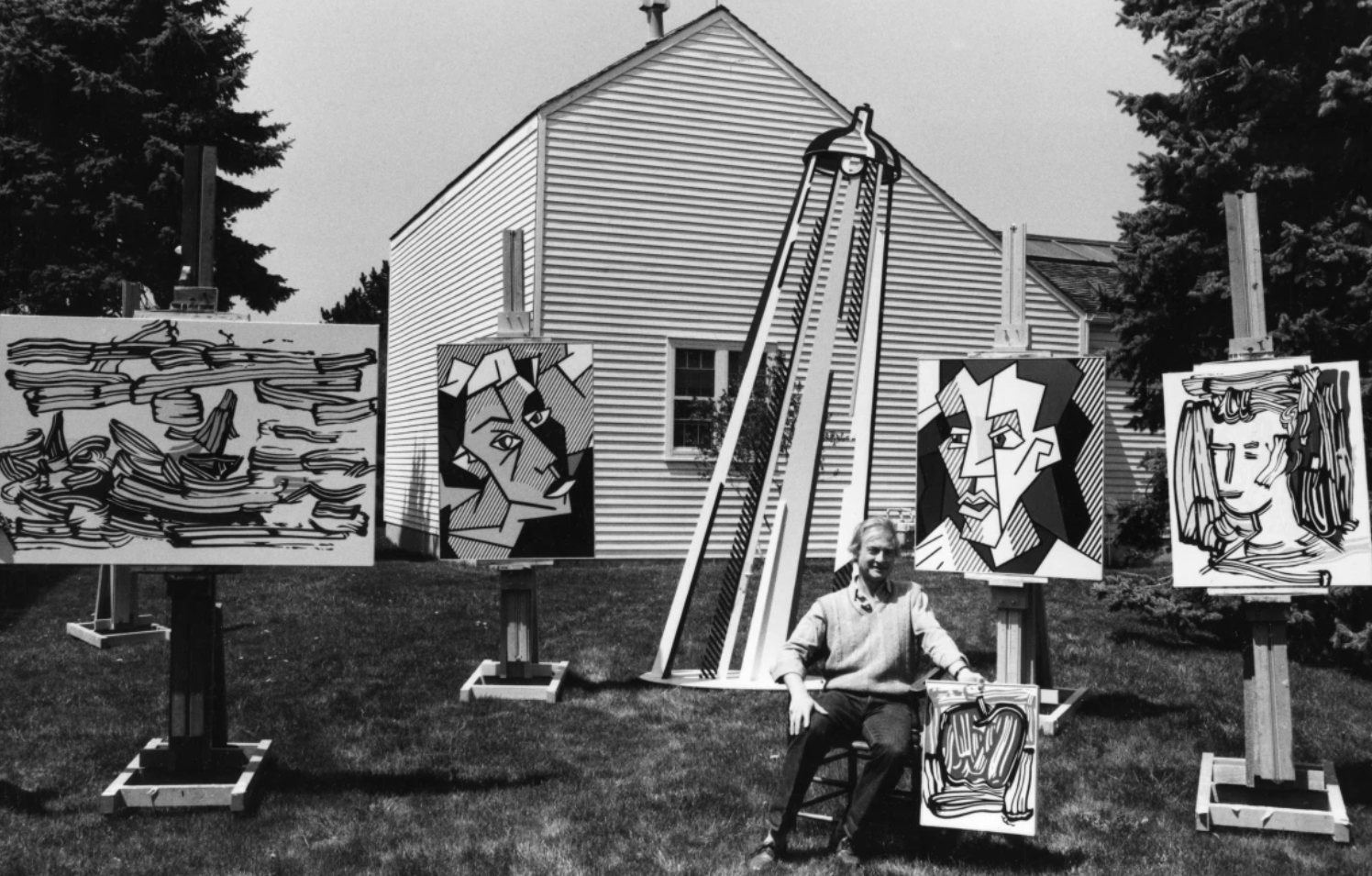
ARTIST ROY LICHTENSTEIN SITTING OUTSIDE HIS SOUTHAMPTON STUDIO, NEW YORK, 1981.
IMAGE © ARTHUR SCHATZ/GETTY IMAGES. ART © ROY LICHTENSTEIN FOUNDATION
Nowhere else does Lichtenstein so concisely articulate the iconicity of home as it relates to the semiotics of space, volume and void. The trompe l’oeil volumetric structure of Small House is highly phenomenological, presenting the viewer with a false front while exposing its own visual ruse through charged spatial engagement and inverted structure. In a unidirectional presentation, Small House mimics the compositional tendencies of low relief, while dramatically collapsing any visual depth or breach of surface. Small House is an exploration of visual trickery, exteriority and playful exchange with the viewer.
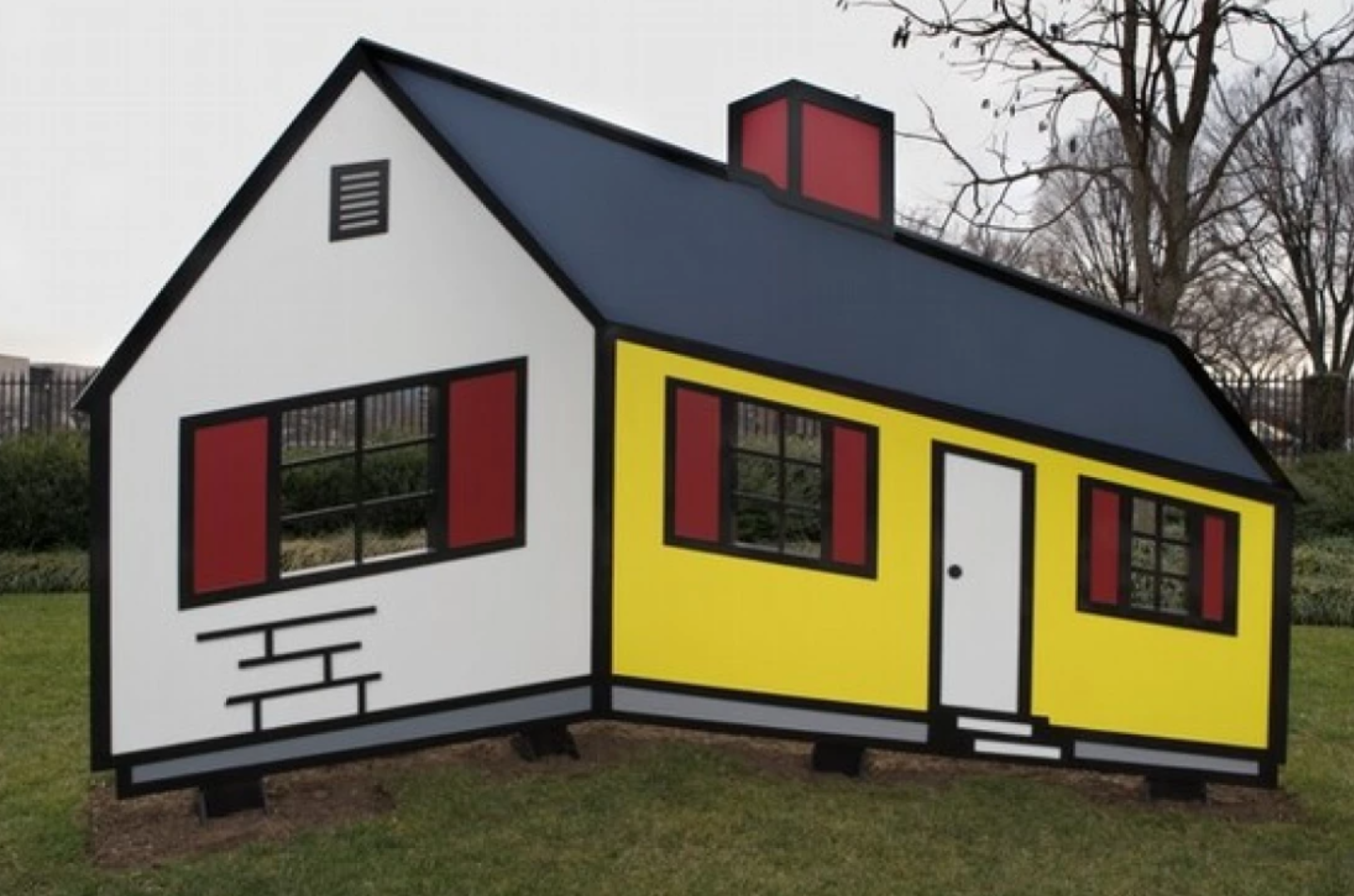
HOUSE I, MODEL 1996, FABRICATED IN 1998 / NATIONAL GALLERY OF ART
IMAGE © NATIONAL GALLERY OF ART / GIFT OF THE MORRIS AND GWENDOLYN CAFRITZ FOUNDATION
ART © ESTATE OF ROY LICHTENSTEIN
Small House features only the essential details of windows, door, roof, and shutters. The simplicity of the subject’s details is drawn not from a life study, but is instead mediated through the artist’s collection of printed source material, often lowbrow manuals for painting and items from everyday printed media. Lichtenstein begins his sculptural process on the page, with pencil sketches and color studies, then assessing his designs in a full-scale maquette before building the final work. Utilizing the straightforward architecture of a simple, ranch-style home, the subject complicates fixed perspective through its deceivingly concave armature. An important breakthrough during a late-career moment, Small House is perhaps Lichtenstein’s most concise exploration of illusionistic perspective. According to Hal Foster, Lichtenstein’s “schematic houses… exist in a no-man’s-land between painting and sculpture.” (Foster, 9) Where sculpture tends to convey information through three-dimensional form, Lichtenstein breaks with tradition by sticking to pictorial representation. Small House is strongly related to Lichtenstein’s other minimal house sculptures, which range in scale from monumental structures to small interior wall pieces. Held in prestigious collections like the National Gallery of Art, Lichtenstein’s house series is a unique example of an artist producing some of his most refined and exemplary work near the end of his life.
Expressionist Head, 1980
Christie’s New-York: 11 November 2021
Estimated: USD 2,500,000 – 3,500,000
USD 2,670,000
ROY LICHTENSTEIN (1923-1997) (christies.com)
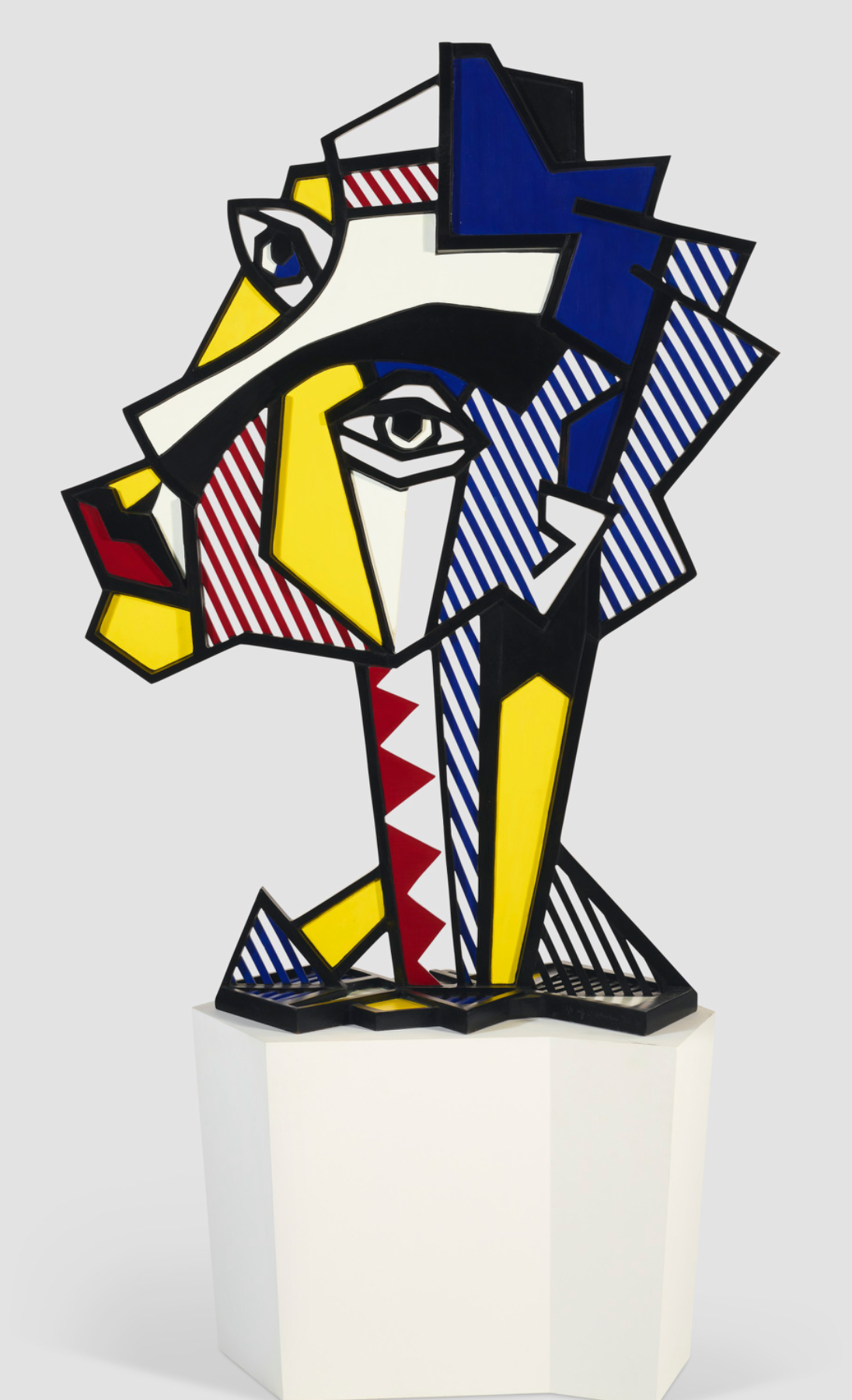
ROY LICHTENSTEIN (1923-1997)
Expressionist Head, 1980
Painted and patinated bronze with painted wooden base
Sculpture: 55 1/8 x 40 3/8 x 18 inches (140 x 102.6 x 45.7 cm)
Overall: 75 7/8 x 24 x 30 inches (192.7 x 61 x 76.2 cm)
Incised with the artist’s signature, number and date ‘1/6 rf Lichtenstein ’80’ (lower edge)
This work is number one from an edition of six
Best known for his paintings of comic book heroines, throughout his career Roy Lichtenstein was an astute surveyor of visual culture and the role it played in contemporary society. One of a select group of sculptural works that Lichtenstein worked on during his career, Expressionist Head translates his signature two-dimensional painterly language into three-dimensional form. With his use of strong colors and bold black lines, together with his clever understanding and employment of the visual language of perspective, shadowing, hatching and other tropes, this striking planer head of an expressionist woman comes alive with dynamism and visual resonance. Larger than life size, this angular head is a dazzling arrangement of color and form. Angular fields of red, yellow, and dark blue mark out various planes of the face. In the manner of the German Expressionist painters such as Ernst Ludwig Kirchner, her angular features are flattened and pushed forward, so that each plane sits on a par with the next. His clever use of stylized crosshatching juxtaposed next to solid blocks of primary color, and the inclusion of open space, are all used to ingeniously present the appearance of depth.
In a work such as this, Lichtenstein is clearly building on the visual language that he so cleverly engaged with in his comic book inspired Pop paintings of the 1960s. Along with contemporaries such as Andy Warhol and Tom Wesselmann, Lichtenstein eschewed the gestural abstractions of the previous generation of painters such as Mark Rothko, Jackson Pollock, and Willem de Kooning, and forged a new artistic language based on the burgeoning consumer culture and explosion in mass media. Like his paintings, Lichtenstein’s sculptures resulted from his preoccupation with the formal qualities of art and the complex task of representing the ephemeral quality of artistic illusionism. The present work is the result of investigating how to produce a three-dimensional object whilst still retaining the aesthetic qualities of his two-dimensional works. His unique solution was to combine the solidity and clean lines made possible by using metal together with the pure, rich color finish of paint to create a burst of three-dimensional illusionism. Roy Lichtenstein produced a complex and varied body of work, and his sculptures engage the viewer in questions of visual perception, by subverting the illusion of flatness in three-dimensions. His oeuvre resulted from his preoccupation with the formal qualities of art and the complex task of representing the ephemeral quality of artistic illusionism. Expressionist Head is the result of his dilemma of how to produce a three-dimensional object whilst still retaining the aesthetic qualities of his two dimensional work. His unique solution was to combine the solidity and clean lines and hatching with the pure, rich color pigment. The result? A burst of three-dimensional expressionistic illusionism.
Cup and Saucer II, 1977
Christie’s London: 23 March 2021
Estimated: GBP 450,000 – 650,000
GBP 1,126,500
ROY LICHTENSTEIN (1923-1997) (christies.com)
ROY LICHTENSTEIN (1923-1997)
Cup and Saucer II, 1977
Painted bronze
43 3/4 x 25 3/4 x 10 inches (111.1 x 65.4 x 25.4 cm)
Signed, numbered and dated ‘2/3 Roy Lichtenstein ’77’ (on the base)
This work is number two from an edition of three
Acquired shortly after its creation by Lord Jacobs, and held in his distinguished private collection ever since, Cup and Saucer II is a rare work from Roy Lichtenstein’s celebrated series of bronze still-life sculptures. Begun in 1976, and pursued for the next year, these works extended the language of his paintings, translating the artist’s graphic images of everyday objects into three dimensions. Standing over a metre in height, the present work is the largest of two depicting a cup and saucer, with languid curls of steam rising up from its interior like brushstrokes. Other works in the series depict mirrors, lamps, a goldfish bowl, a teapot and drinking glasses, with examples held in institutions including the Museum of Modern Art, New York and the Virginia Museum of Fine Arts. Unseen in public for over four decades, the present edition of Cup and Saucer II was last shown at the Mayor Gallery in London in 1977, with another edition exhibited simultaneously at Leo Castelli Gallery in New York.
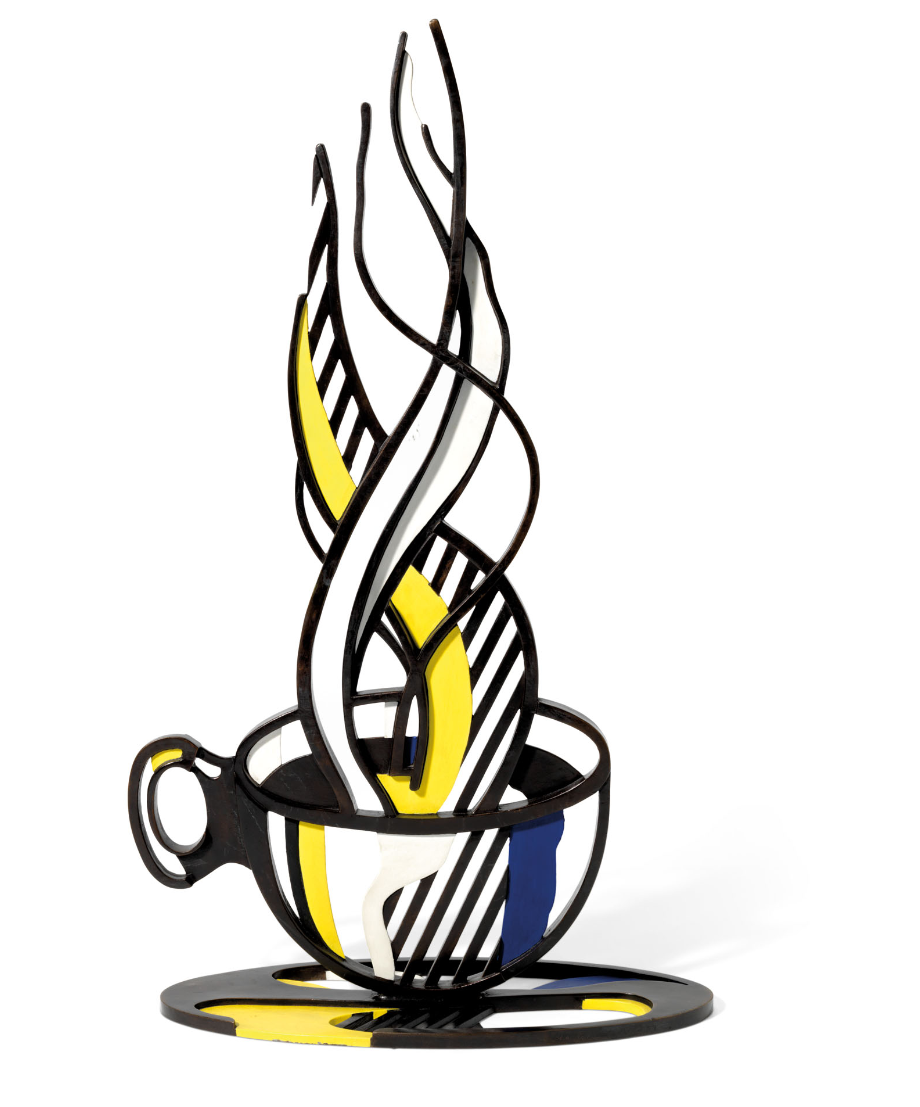
To create his bronze sculptures, Lichtenstein looked to lost wax casting. He began with studies and wooden maquettes, from which he created rubber moulds encased in ceramic. After steaming out the wax, bronze was poured into its place: once complete, the works were painted in a mixture of patinated black and polyurethane paint. Despite this semi-industrial process, Cup and Saucer II retains a decidedly painterly quality, reflecting the close connection that Lichtenstein perceived between the two media. The wispy curls of steam imbue the work with a sense of weightlessness that works in counterpoint with its solid form; their undulating curves, meanwhile, recall the aesthetic of the artist’s Brushstroke series, in which he translated Abstract Expressionist-style painterly gestures into graphic Pop icons. The work, as a result, appears caught between worlds—a humble drinking vessel, infused with lustrous, enigmatic allure.
Cup and Saucer I (Study), circa 1976
Sotheby’s New-York: 16 May 2025
Estimated: USD 200,000 – 300,000
USD 508,000
ROY LICHTENSTEIN (1923 – 1997)
Cup and Saucer I (Study), circa 1976
Cut painted paper, acrylic, tape and graphite on foamcore
47 3/4 x 24 1/2 inches (121.3 x 61.9 cm)
“Among the things most important to Lichtenstein about the sketches and studies is the sense of wholeness that is developed through repeated drawing.”
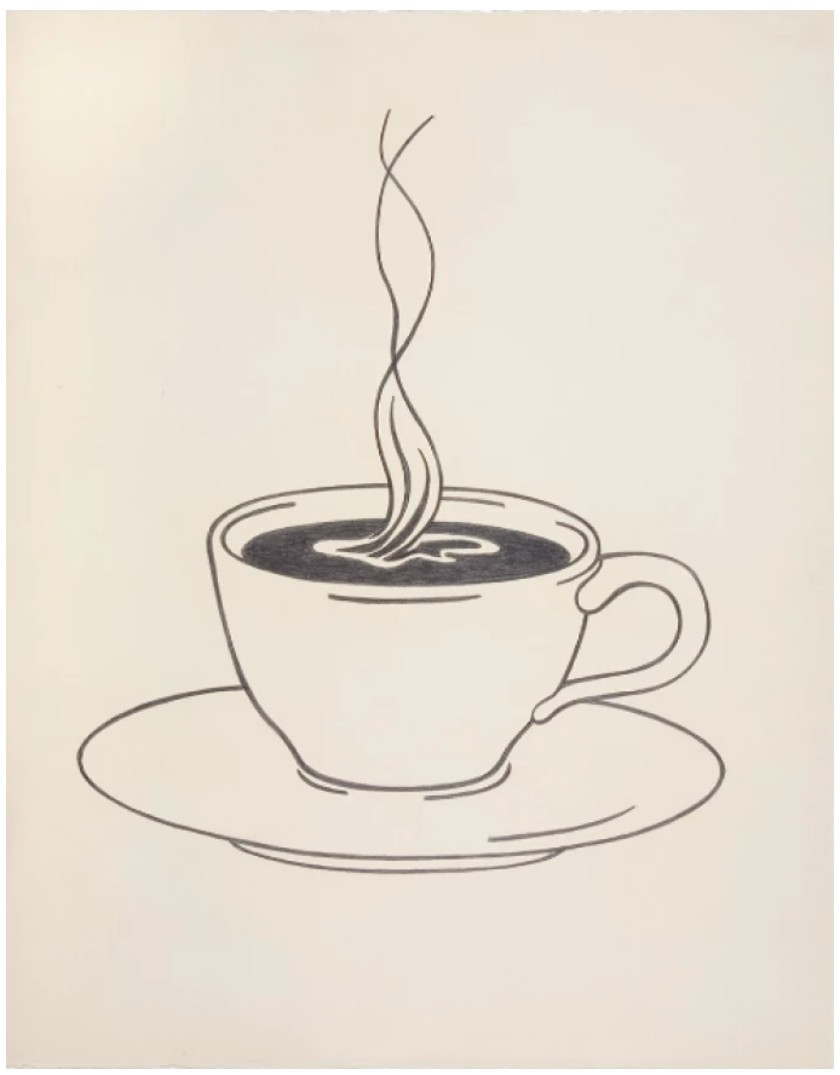
Works on Paper
Von Karp, 1962
Works from the Collection of Dorothy and Roy Lichtenstein
Sotheby’s New-York: 16 May 2025
Estimated: USD 200,000 – 300,000
USD 508,000
Von Karp | Contemporary Day Auction | 2025 | Sotheby’s
ROY LICHTENSTEIN (1923 – 1997)
Von Karp, 1962
Marker, colored pencil and graphite on paper
Image: 4 7/8 x 4 7/8 inches (12.4 x 12.4 cm)
Sheet: 5 3/4 x 5 5/8 inches (14.6 x 14.3 cm)
Signed and dated ’62 (on the verso)
“I shifted into the style of cartoon books with a more serious content such as ‘Armed Forces at War’…I was very excited about, and very interested in, the highly emotional content yet detached impersonal handling of love, hate, war, etc., in these cartoon images.”
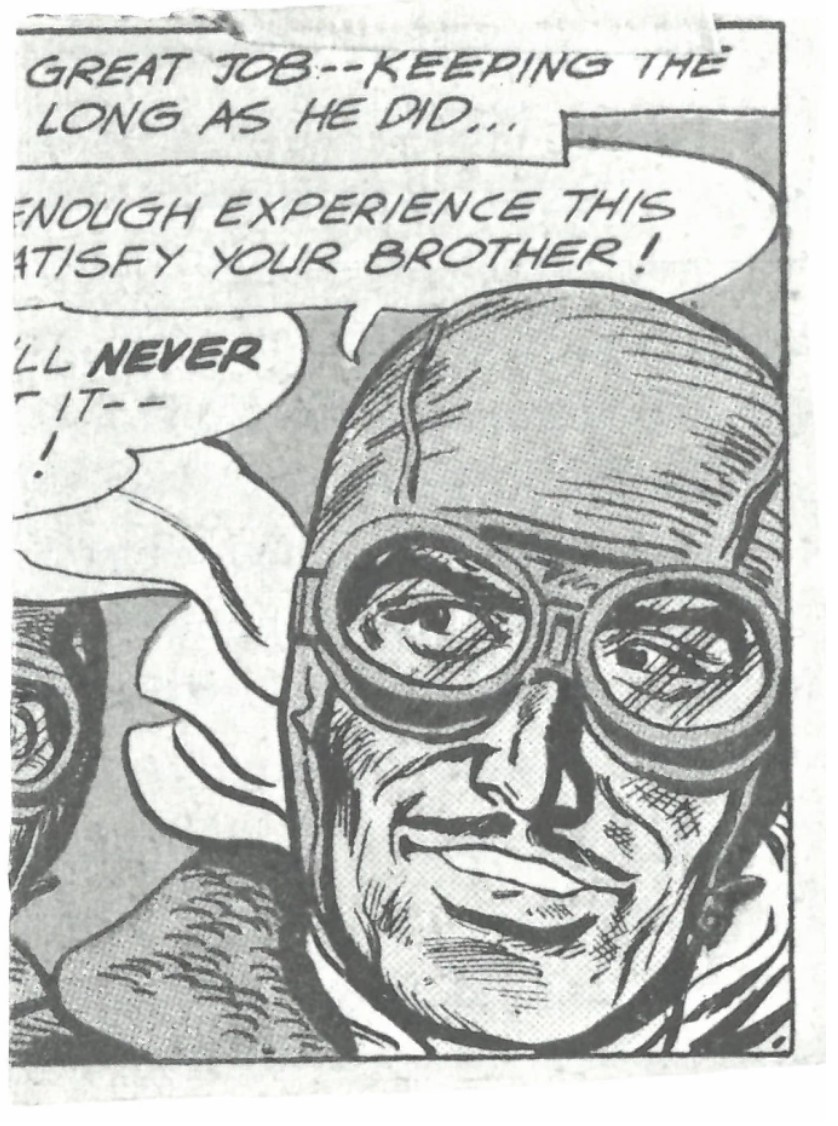
Cartoon source for the present work
The Kiss, 1962
Christie’s New-York: 12 May 2025
Estimated: USD 7,000,000 – 9,000,000
USD 5,495,000
WORK ON PAPER
ROY LICHTENSTEIN (1923-1997), The Kiss | Christie’s
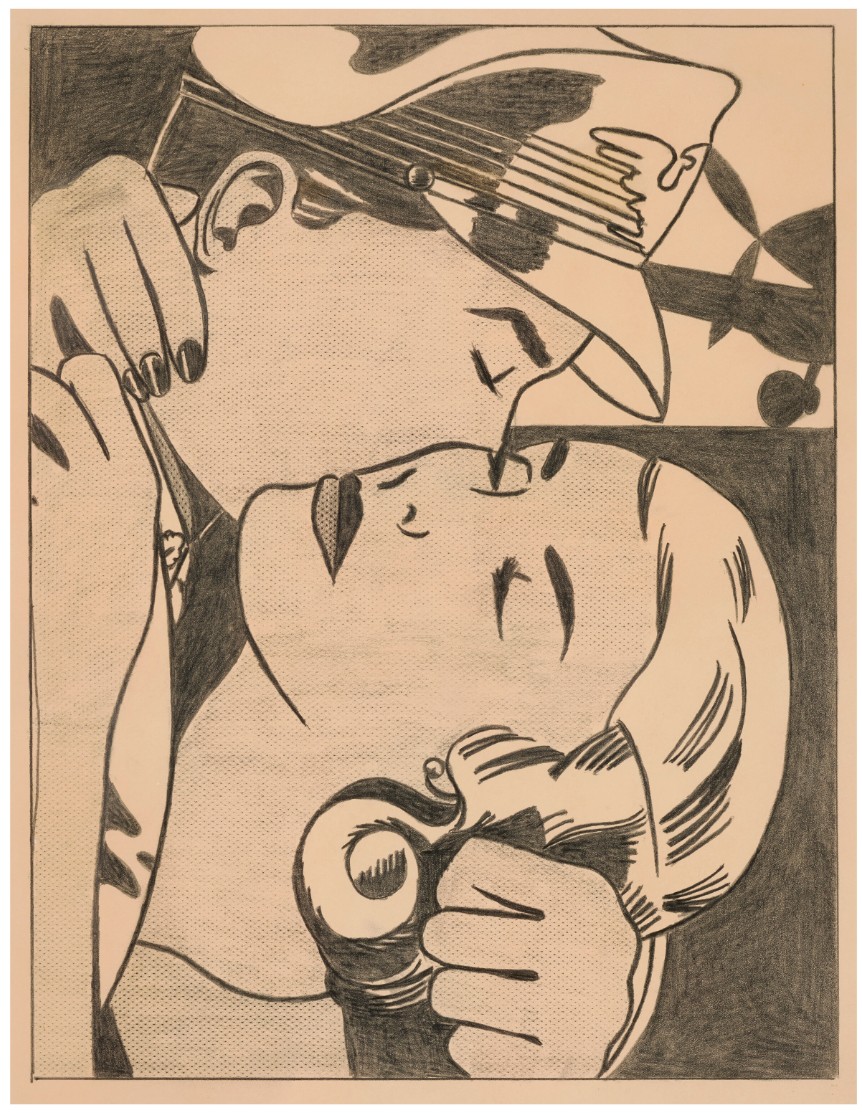
ROY LICHTENSTEIN (1923-1997)
The Kiss, 1962
Graphite on paper
Image: 18 1/2 x 14 inches (47 x 35.6 cm)
Sheet: 21 x 16 1/4 inches (53.3 x 41.2 cm)
Signed and dated ‘rf Lichtenstein ’62’ (on the reverse)
With commanding linear clarity and graphic intensity, Roy Lichtenstein’s The Kiss is a striking masterpiece heralding the beginning of the American Pop artist’s famed mature style. One of the few highly-finished independent presentation drawings made by the artist, The Kiss is also one of the first instances of Lichtenstein’s iconic Ben-Day dot patterns, magisterially used to indicate light and shadow across the couple’s faces, unveiling the artistic process which would later inform his most important works. Executed in graphite pencil, The Kiss is a rare opportunity to examine the hand of an otherwise mechanically pristine artist. Initially acquired directly from the artist by his friend, the prominent art critic and curator David Whitney, the work has been a highlight of several prestigious collections. The related painting, which follows a similar composition, has similarly been prodigiously exhibited, making the image one of the most well-known from the artist’s oeuvre. The impact of Lichtenstein’s first drawings on the art world were immediate.
The fervent embrace between the pilot and the woman is searingly rendered, the intimate moment poignantly encapsulated within the contours of the composition. Here, Lichtenstein created an entirely new system of drawing by synthesizing two apparently diametrical opposites, bringing together a parody of Pablo Picasso’s graphic drawing with the uniform representational drawing made by commercial illustrators for comic books and popular ads. Lichtenstein ingeniously translates an image taken from a comic into a complex composition, elevating the protean subject to the status of high art. The artist eliminates any extraneous detail, completely flattening the image against the paper sheet, doing without perspective or illusionistic natural space to focus intensely on the internal drama between the two figures. His carefully adjusted framing edges, compressing the composition into a cropped close-up, makes the image appear more the a film still than a cartoon.
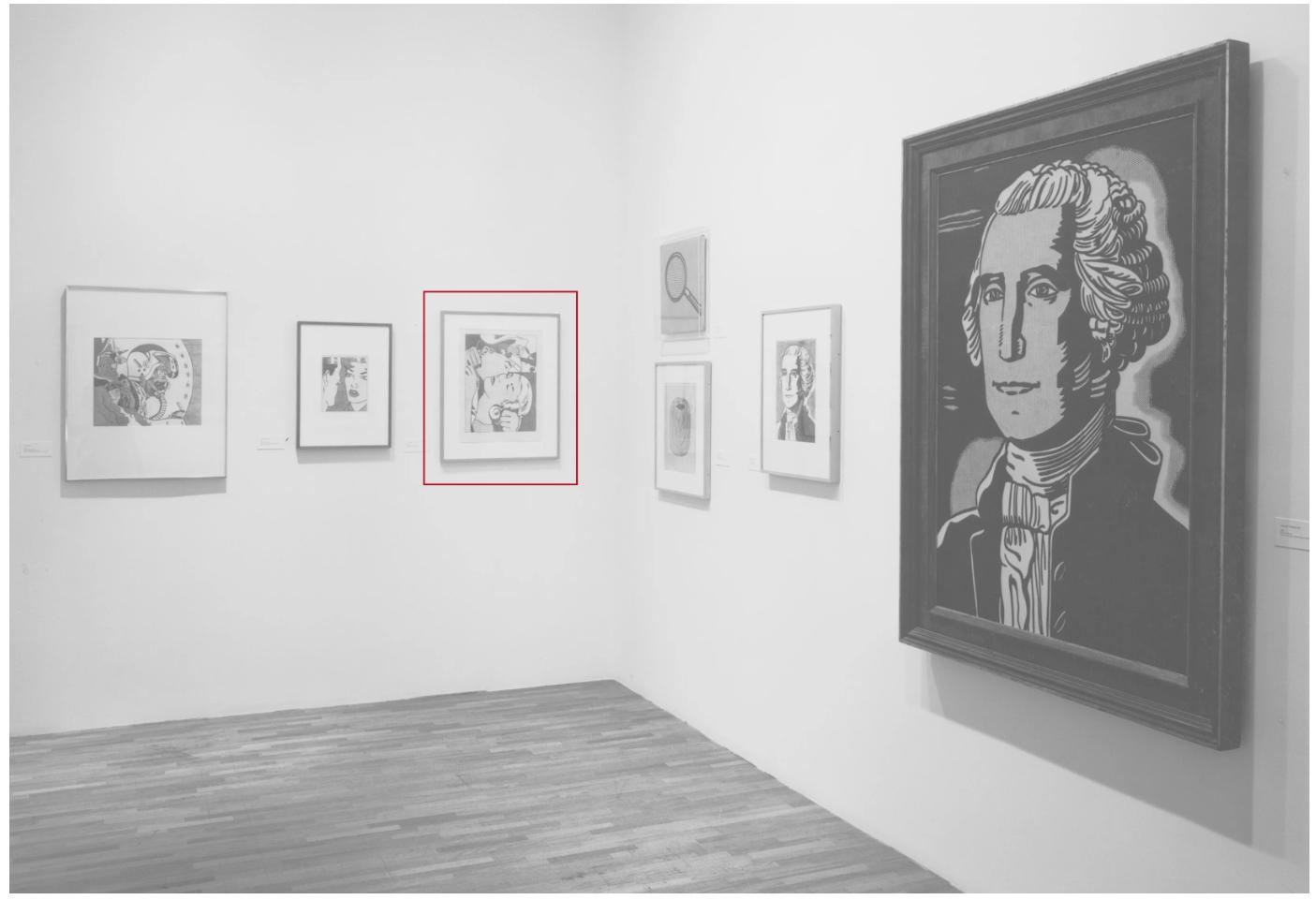
Installation view, The Drawings of Roy Lichtenstein, March-June 1987. Museum of Modern Art, New York (present lot illustrated). Photo: © The Museum of Modern Art/Licensed by SCALA / Art Resource, NY. Artwork: © Estate of Roy Lichtenstein.
Lichtenstein’s bold innovation in Pop Art reexamined representational drawing, one of the most established aspects of the Western artistic tradition, into a radical exercise, parodying the traditional forms which it illustrated with a certain ironic and humorous aloofness. The probing, hard-edge lines and sharp edges in the work reveal Lichtenstein first working out the style and technique which he would later adapt across his entire oeuvre.
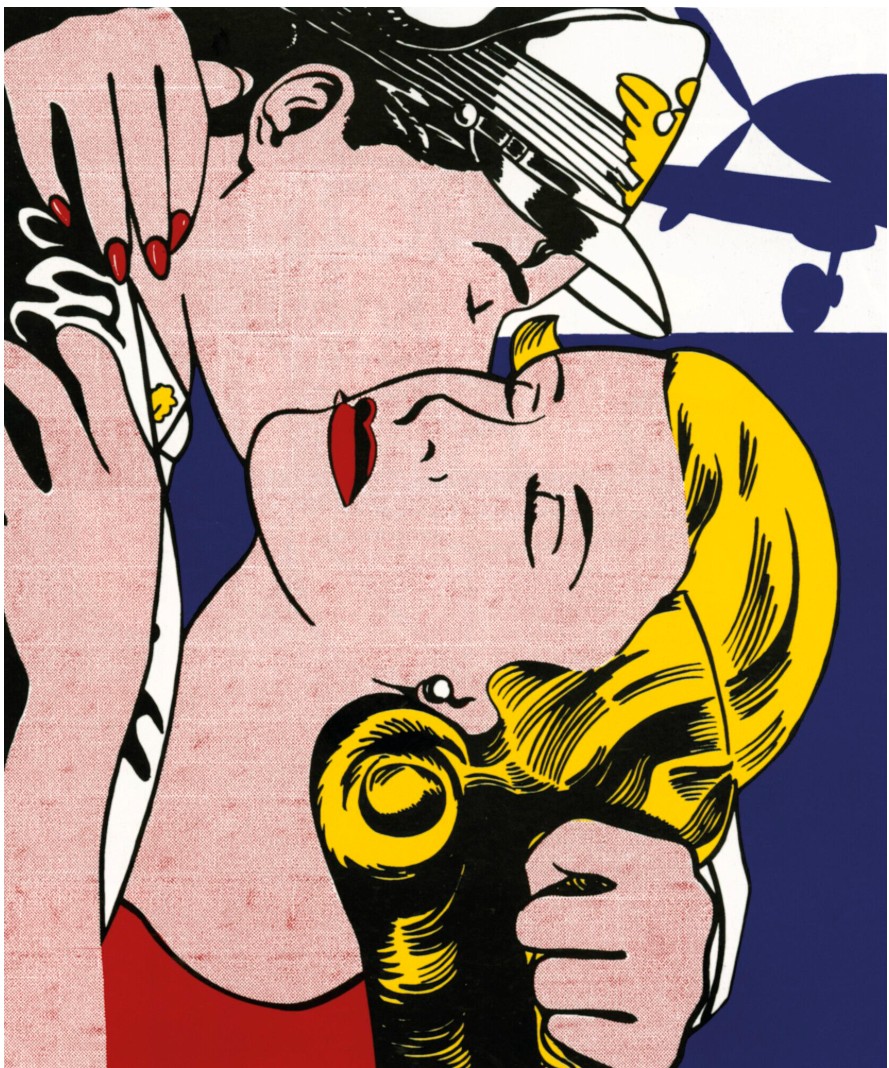
Roy Lichtenstein, The Kiss, 1961. Private collection. © Estate of Roy Lichtenstein.
Amid the many linear and textural inventions evinced in The Kiss, the tightly weaved lines and patterns spread across both visages are perhaps the most important. The artist had first experimented with recreating the Ben-Day dots from comic books the prior year, rubbing a dog-grooming brush dipped in ink over a sheet of aluminum drilled through with holes. He was discontented with his first attempts, desiring for their effect to appear less hand-made and more mechanical. His innovation here is using a frottage technique, placing the paper over a window screen and rubbing the graphite into the grains of the paper, thus creating the pattern. Varying the pressure on his tool allowed him to create subtle changes in tone, the effortless appearance of the result acquired through a great degree of precision and experimentation.
Victor Jorgensen, New York City celebrating the surrender of Japan. They threw anything and kissed anybody in Times Square, 1945. National Archives at College Park, Maryland.
The subject matter is of great import to the artist, and functions both as a broadly autobiographical gesture and as a unifying motif across several of his drawings. Lichtenstein had trained as a U.S. Army pilot during World War II before being transferred to make cartoons for the Army magazine. Pilots are a recurring motif in both his first drawings and across his career, appearing in Jet Pilot (1962, Yale University Art Gallery, New Haven), as well as the paintings Brattata (1962, Tehran Museum of Contemporary Art) and Wham! (1963, Tate Modern, London). While the other works focus more on the action of flying, The Kiss removes the pilot from his plane, seen only as a two-dimensional form barely abutting the upper right. Lichtenstein was exacting in his choice of materials, utilizing only the highest quality supplies in contrast to his cheaply produced source images. The Kiss is on neutral toned white hot pressed Arches paper, which had a smooth texture and refined finish which allowed him to create his precise images. Its thickness and quality meant that the support withstood the heavily reinforced pencil lines, scraping, and frottage which entailed his intense drawing technique.
Gustav Klimt, The Kiss (detail), 1907-1908. Österreichische Galerie Belvedere, Vienna.
The Kiss, along with Lichtenstein’s other early drawings, had a vast impact on the course of the artist’s career as well as on the development of Pop Art. The work is perhaps most important in the way that it exposes the artistry which lays latent behind all of the artist’s works, but is often obscured in his larger paintings.
George Washington, 1962
Christie’s New-York: 19 November 2024
Estimated: USD 7,000,000 – 10,000,000
USD 7,068,000
WORK ON PAPER
ROY LICHTENSTEIN (1923-1997), George Washington | Christie’s
ROY LICHTENSTEIN (1923-1997)
George Washington, 1962
Graphite and graphite rubbing on paper
Image: 14 1/2 x 11 1/4 inches (36.8 x 28.6 cm)
Sheet: 18 2/4 x 14 1/2 inches (47.6 x 36.8 cm)
Signed and dated ‘rf Lichtenstein ‘62’ (on the reverse)
With its bold, authoritative contrast and clean, crisp lines, Roy Lichtenstein’s George Washington is an important early drawing from a founding father of American Pop Art. Marking a defining moment in the artist’s career, when he fully committed to his mature Pop style—both in his subject matter and technical application—George Washington traces the American lineage of art history from Gilbert Stuart to one of the most celebrated movements in post-war art. Drawn with graphite pencil, this rare early work reveals the hand of an otherwise mechanically pristine artist, unveiling the artistic process that would both inform the larger painted canvas and stand firmly as an important artwork in its own right.
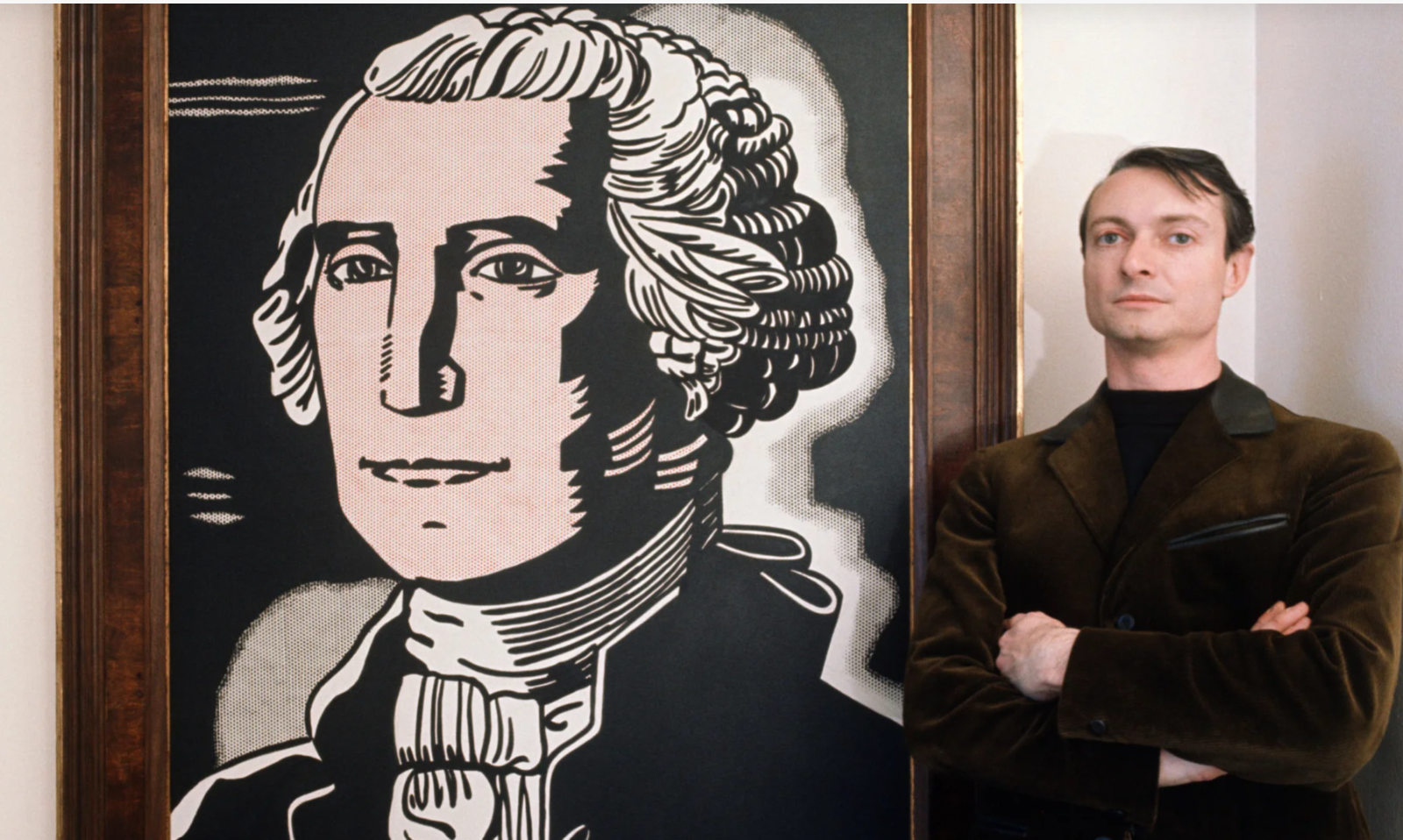
Roy Lichtenstein with George Washington (1962). Photo: Mario de Biasi / Mondadori via Getty Images. Artwork: © Estate of Roy Lichtenstein.
This period marked a momentous moment of transformation for the 38-year-old artist, who had been exhibiting his Cubist and Abstract Expressionist-style paintings across New York for a decade. Influenced by the art of Allan Kaprow, George Segal, and Claes Oldenburg, which incorporated everyday objects and popular culture, Lichtenstein turned to an entirely new imagery culled from the contemporary world of advertisements and comic books. During this period, he also began to incorporate the graphic techniques of commercial illustrators into his own practice. In 2010, Lichtenstein’s drawings, including George Washington, received a major retrospective at New York’s Morgan Library and Museum, which, for the first time, underscored the quality and significance of his drawings.
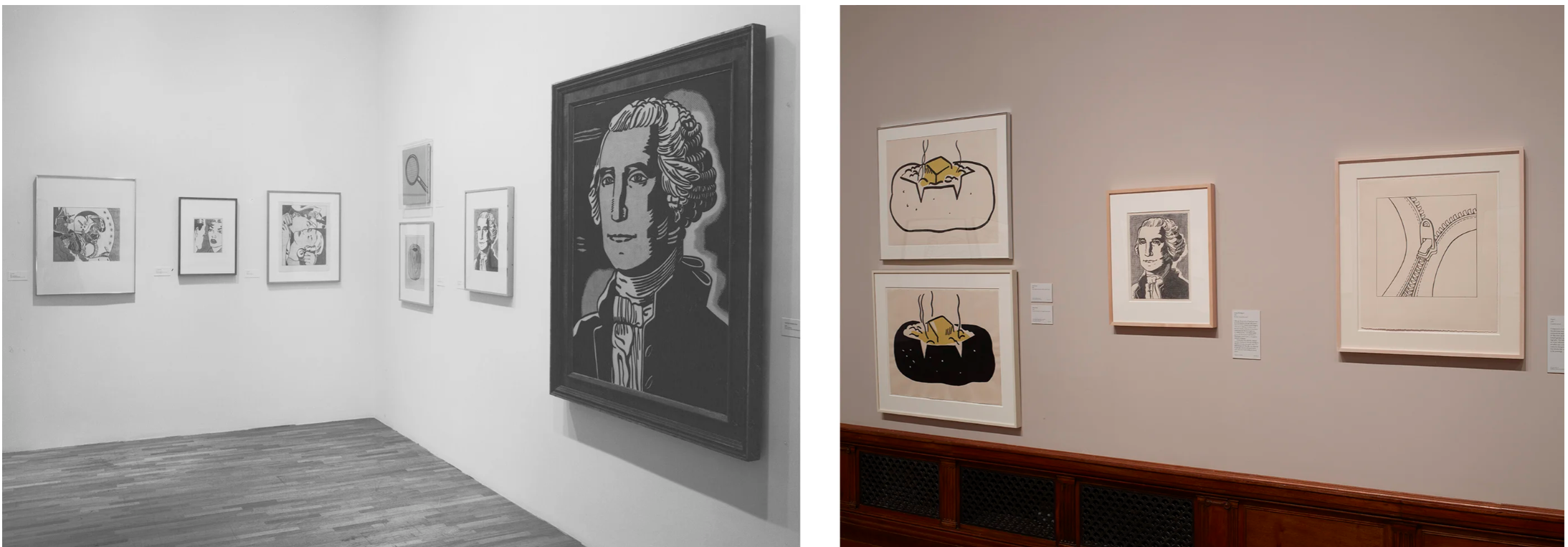
Left: Installation view, The Drawings of Roy Lichtenstein, 1987, Museum of Modern Art, New York. Photo: © The Museum of Modern Art/Licensed by SCALA / Art Resource, NY. Artwork: © Estate of Roy Lichtenstein.
Right: Installation view, Roy Lichtenstein: The Black-and-White Drawings, September 2010 – January 2011. Morgan Library & Museum, New York (present work illustrated). Artwork: © Estate of Roy Lichtenstein. Photo: The Morgan Library & Museum / Art Resource, NY.
George Washington is an early Pop work by the artist, created while he was focusing on black-and-white, single-object paintings of ordinary commercial objects, such as Curtains in the Saint Louis Museum of Art, Desk Calendar at the Museum of Contemporary Art, Los Angeles, as well as some of his earliest comic strip paintings. Based on a woodcut of a Gilbert Stuart portrait of the first American president found in a Hungarian national newspaper—which likewise recalls Stuart’s famous Athenaeum Portrait on the US one-dollar bill—the subject matter of George Washington poignantly bridges old and new in the artist’s oeuvre.
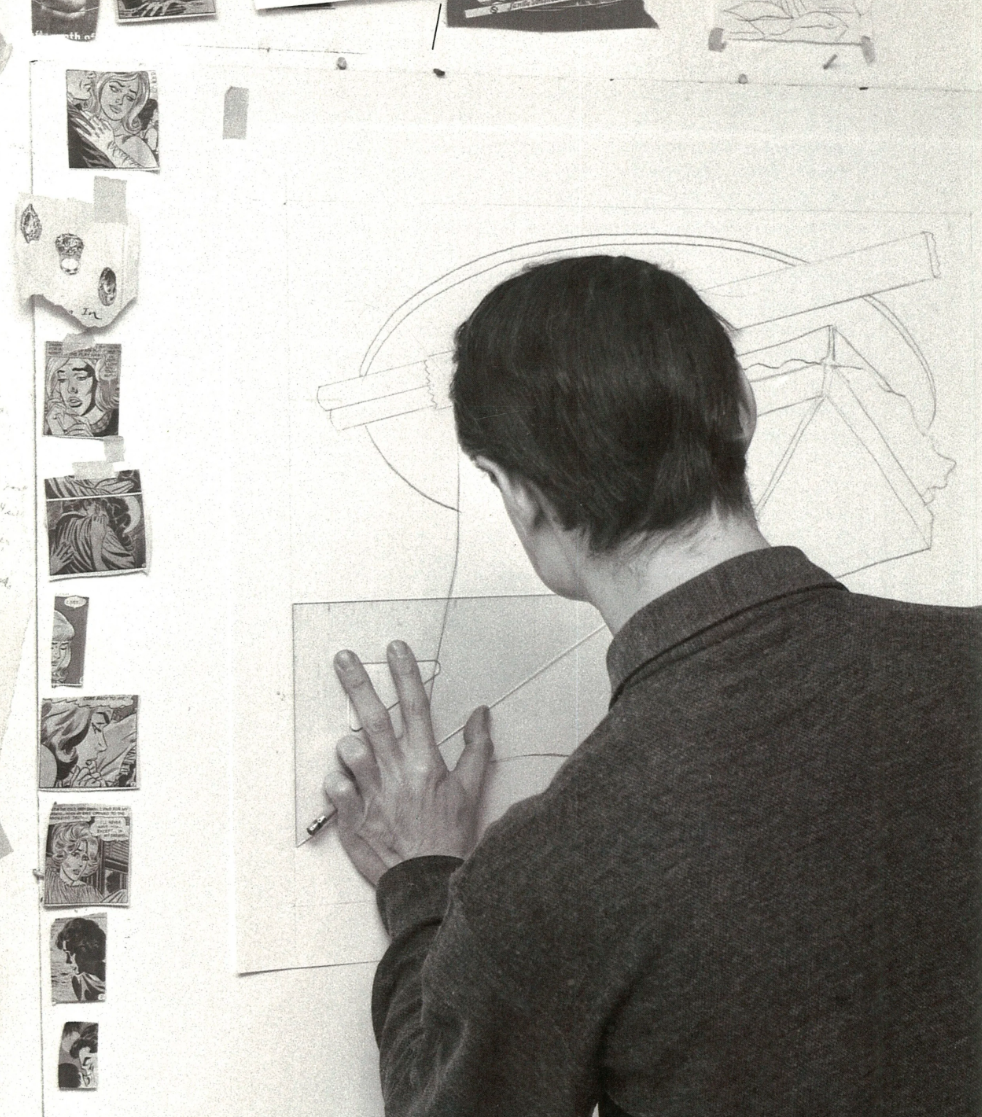
Lichtenstein sketching in his West 26th Street studio, New York, 1964. Photograph by Ken Heyman. Artwork: © Estate of Roy Lichtenstein.
Perhaps most famously during these pivotal transformative years, Lichtenstein drastically altered his style and approach to artmaking. Looking toward commercial illustrations and comic strips as subject matter for the first time, the Pop artist began to experiment stylistically, simulating commercial techniques of reproduction, including the now-iconic Ben-Day dot. During the early to mid-1960s, Lichtenstein relied on traditional graphite pencil drawings to develop and cement his mature stylistic approach. Lichtenstein’s drawings were neither sketches nor studies in the traditional sense. Rather, they acted as the initial stage in a process that resulted in his vibrantly comical large-scale paintings. In his drawings, Lichtenstein would determine the composition—and sometimes color—of his paintings, often cropping or slightly altering the original source image by bringing in the framing edge to seemingly enlarge the content of the painting. Lichtenstein used a number of different techniques to achieve the look of mechanical reproduction found in George Washington.

Roy Lichtenstein, Bratatat!, 1962. Minneapolis Institute of Art. © Estate of Roy Lichtenstein.
It is likely that, for George Washington, Lichtenstein sketched the image directly from the original woodcut reproduction, heavily penciling in his contour lines. In order to produce his trademark Ben-Day dots, he relied on a technique called frottage. This consisted of placing the paper sheet over a textured surface, then rubbing a graphite pencil across the surface. This procedure produced a series of regular dots—here shown in the negative—but also allowed traces of the artist’s hand to be seen in the shaded areas, as subtle changes in pressure during the rubbing process can be detected as Lichtenstein moved his hand across the surface of the work. Lichtenstein employed this particular technique for only a short period during 1962, but it saw him producing some of his most exquisite drawings, including Bratatat! in the Minneapolis Institute of Art and Foot Medication in the Menil Collection, Houston.
Water Lily Pond with Reflections (Study), 1992
Sotheby’s New-York: 19 November 2021
Estimated: USD 70,000 – 100,000
USD 151,200
WORK ON PAPER
ROY LICHTENSTEIN (1923 – 1997)
Water Lily Pond with Reflections (Study), 1992
Colored pencil and graphite on paper
6 3/4 x 9 7/8 inches (17.1 x 25.1 cm)
Signed rf Lichtenstein and dated 5/92 (on the verso)
House with Gray Roof (Study), 1997
Sotheby’s New-York: 19 November 2021
Estimated: USD 60,000 – 80,000
USD 138,600
WORK ON PAPER
House with Gray Roof (Study) | Contemporary Day Auction | 2021 | Sotheby’s (sothebys.com)
ROY LICHTENSTEIN (1923 – 1997)
House with Gray Roof (Study), 1997
Colored pencil and graphite on paper
8 x 8 3/4 inches (20.3 x 22.2 cm)
Signed rf Lichtenstein and dated 97 (on the verso)
Roy Lichtenstein Prints
PLEASE CLICK BELOW FOR A DETAILED AUCTION ANALYSIS OF ROY LICHTENSTEIN PRINTS