WORK IN PROGRESS
Born Robert Clark in New Castle, Indiana in 1928, the artist displayed an early sensibility to graphic signs and the formal language of advertising, later recalling his fascination with a Phillips 66 sign at the service station where his father worked. After moving to New York in 1954, Indiana declared himself to be ‘an American painter of signs.’ Seeking to replicate the satisfaction he derived from his surrounding cultural ephemera, the artist himself explained:
‘It’s always been a matter of impact; the relationship of color to color and word to shape and word to complete piece … I’m most concerned with the force of its impact. I’ve never found attractive things that are delicate or soft or subtly nuanced’
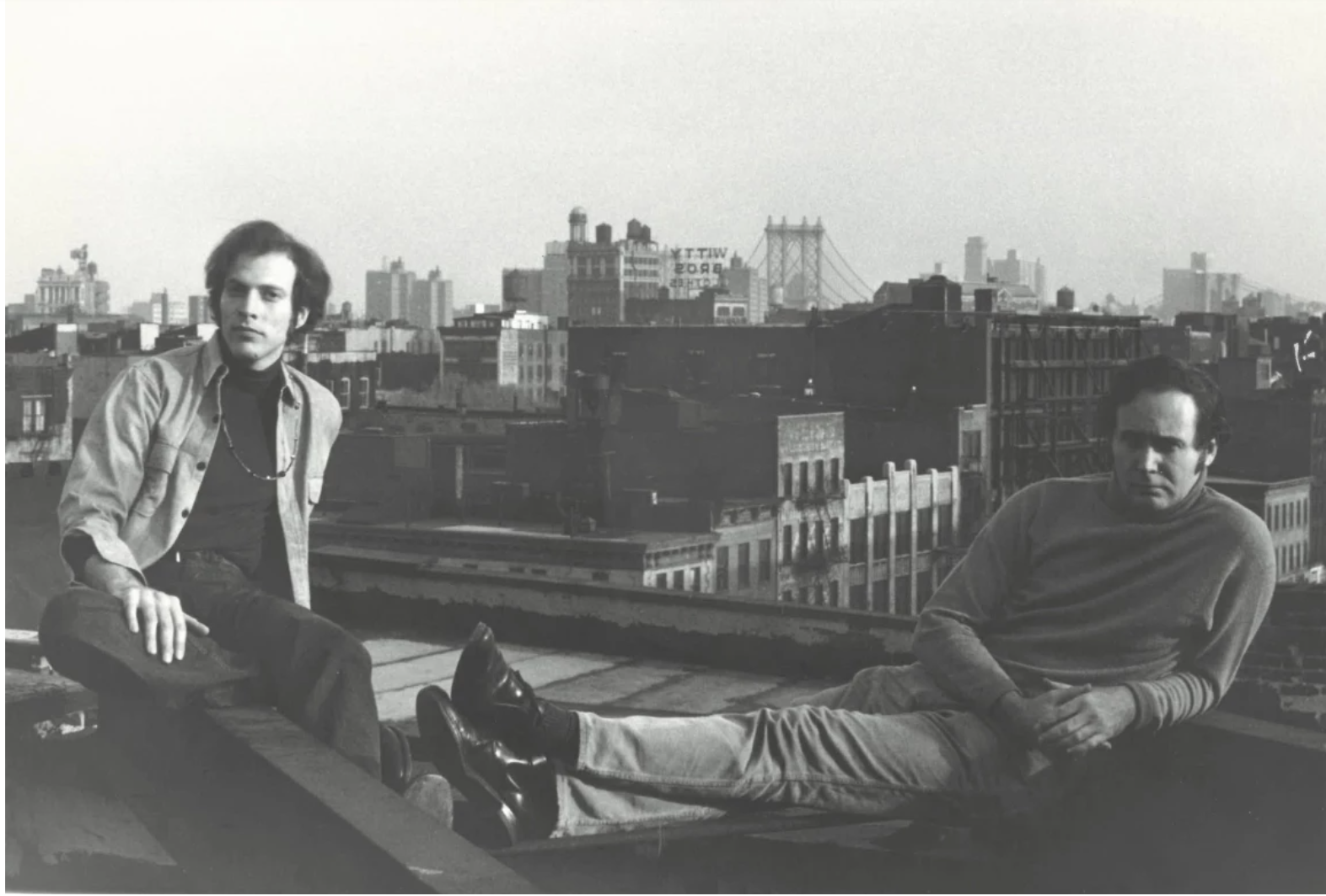
Robert Clark burst upon the New York art scene in 1954 and settled at 31 Coenties Slip in Manhattan, joining a small group of artists that included Ellsworth Kelly, Agnes Martin, Lenore Tawney and Jack Youngerman. These artists were bound by a commitment to form and the relationships between space, curves and edges in abstract shapes. Coenties Slip proved a fertile environment for these artists who found inspiration in the raw, industrial materials and commercial signage that were so prevalent in the area.
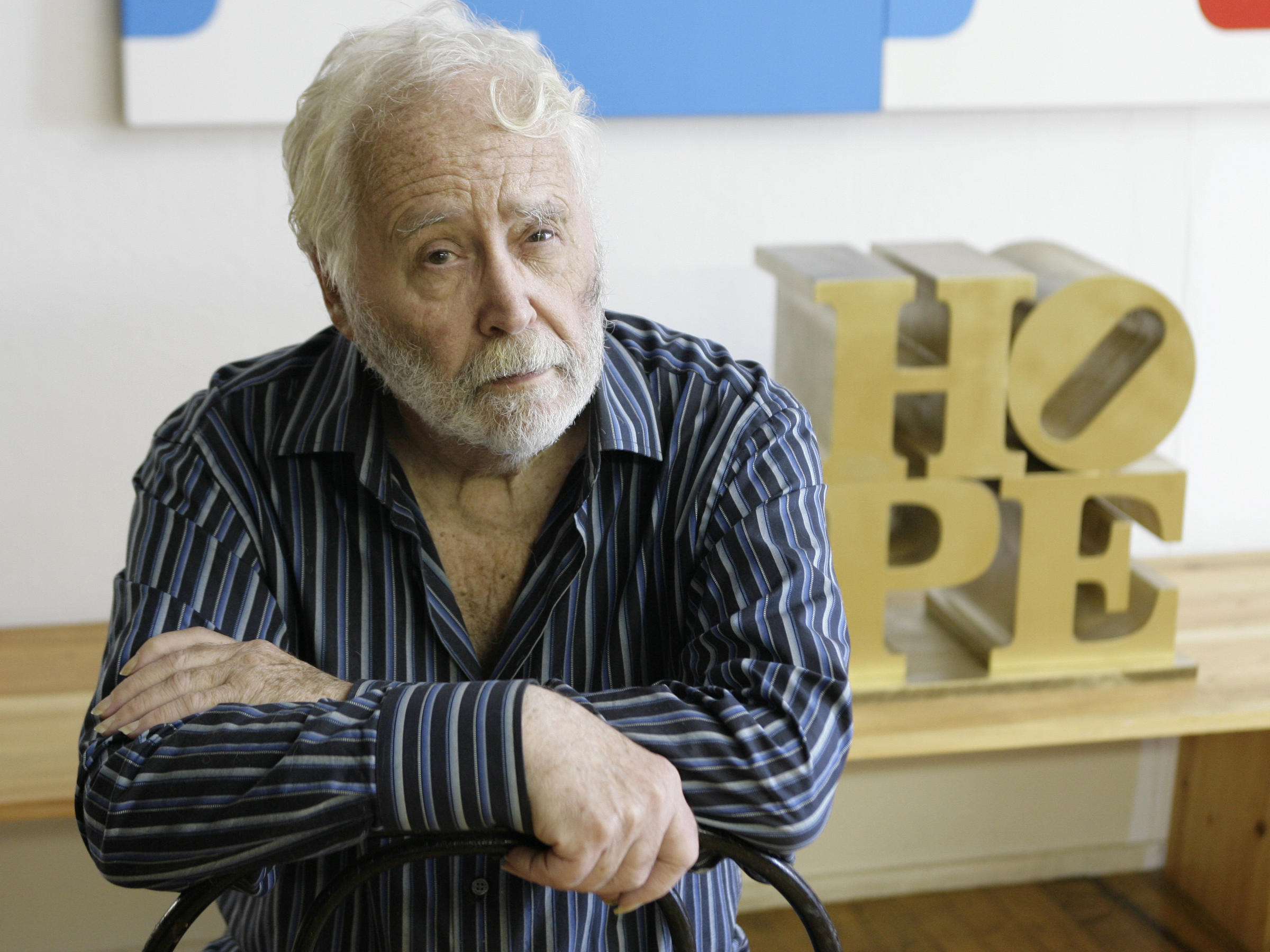
“In a sense, I got down to the subject matter of my work … the subject is defined by its expression in the word itself … LOVE is purely a skeleton of all that word has meant in all the erotic and religious aspects of the theme, and to bring it down to the actual structure of calligraphy [is to reduce it] to the bare bone.”
Indiana’s LOVE paintings and sculptures had humble beginnings. Having seen the word “love” in multiple guises, written in Christian Science books, imprinted on the spare walls of his church, the artist spent decades thinking through its possible meanings. Artistically first conceived in 1958 as a shaped poem after Apollinaire and other early modernists, including Gertrude Stein, Indiana stacked VE over LO, the O canted slyly to one side. Eight years on, Indiana transposed this configuration to a block of aluminum, carved out for the Stable Gallery (1966). A request from the Museum of Modern Art to use the artwork for Christmas cards followed shortly. Originally made up in a range of colors from black and white to up to five colors, the museum chose the three-color version, red, green, and blue. The trajectory toward global appropriation of this image and its incorporation into the cultural lexicon has been, however, too much isolated from its art-historical credentials.
The Love motif first appeared in Indiana’s output in 1966, quickly achieving immense popularity amid the rise of hippie culture and the corresponding liberation of traditional social formalities. Following the ‘free love’ zeitgeist that characterized the 1960s and 1970s, Indiana’s Love endures as a timeless emblem of a universal concept, one that continues to inspire and delight.
When recalling the birth of the Love series, the artist referred to memories of his childhood in Indiana, the state whose name he adopted in 1958. His early church attendance provided a crucial source of inspiration: “The reason I became so involved in [it] is that it was so much a part of the peculiar American environment, particularly in my own background, which was Christian Scientist. ‘God is Love’ is spelled out in every church.” (Robert Indiana quoted in Theresa Brakely, ed., Robert Indiana, New York, 1990, p. 154) Indeed, in the first appearance of the word Love within Indiana’s oeuvre – a painting entitled Love is God from 1964 – Indiana cleverly inverted the religious message that had made such a powerful impression on him as a young artist. Shortly thereafter, the quadrilateral Love motif emerged within Indiana’s work, rapidly becoming emblematic of the ‘Love Generation.’

Public Collections
Indeed, Indiana’s variations on Love across mediums reside in public parks and permanent museum collections, including the Museum of Modern Art in New York, the San Francisco Museum of Art, the Whitney Museum of American Art in New York and the Hirshhorn Museum and Sculpture Garden in Washington, D.C.
Artist’s Website
PART I: SUMMARY
Auction Market Overview
2025 Auction Highlights
14 lots sold at auction in 2025 for a total turnover of USD 5,658,285. With 7 lots failing to sell, the sell-through rate is 67%. 5 sculptures passed in Seoul, South Korea. One lot was withdrawn by Phillips in New-York on 13 May 2025. The highest price was achieved by ONE Through ZERO (The Ten Numbers), a set of sculptures dated 1978-2003, sold at Christie’s in London, on 15 October 2025, for GBP 889,000 (USD 1,191,260).
2025 Top 3 Lots
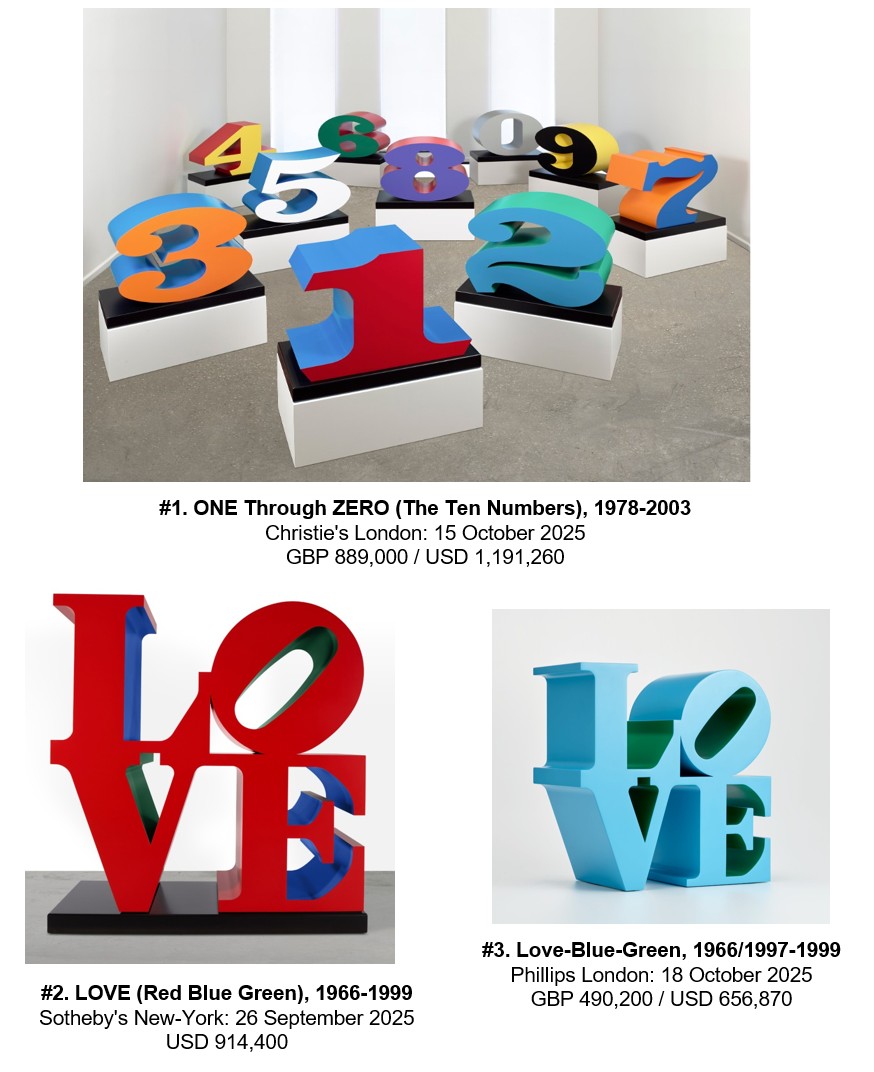
Only one lot sold for more than USD 1 million. 5 lots sold for more than USD 500,000, generating a cumulative turnover of USD 3,833,528, representing 67.8% of the total turnover for 2025.
2024 Auction Highlights
14 lots sold at auction in 2024 for a total turnover of USD 7,072,213. With 4 lots failing to sell, the sell-through rate is 74%. The highest price has been achieved at Sotheby’s in London on 26 June 2024, when a 72-inch all red LOVE sculpture sold for GBP 1,260,000 (USD 1,597,680).
2024 Top 3 Lots
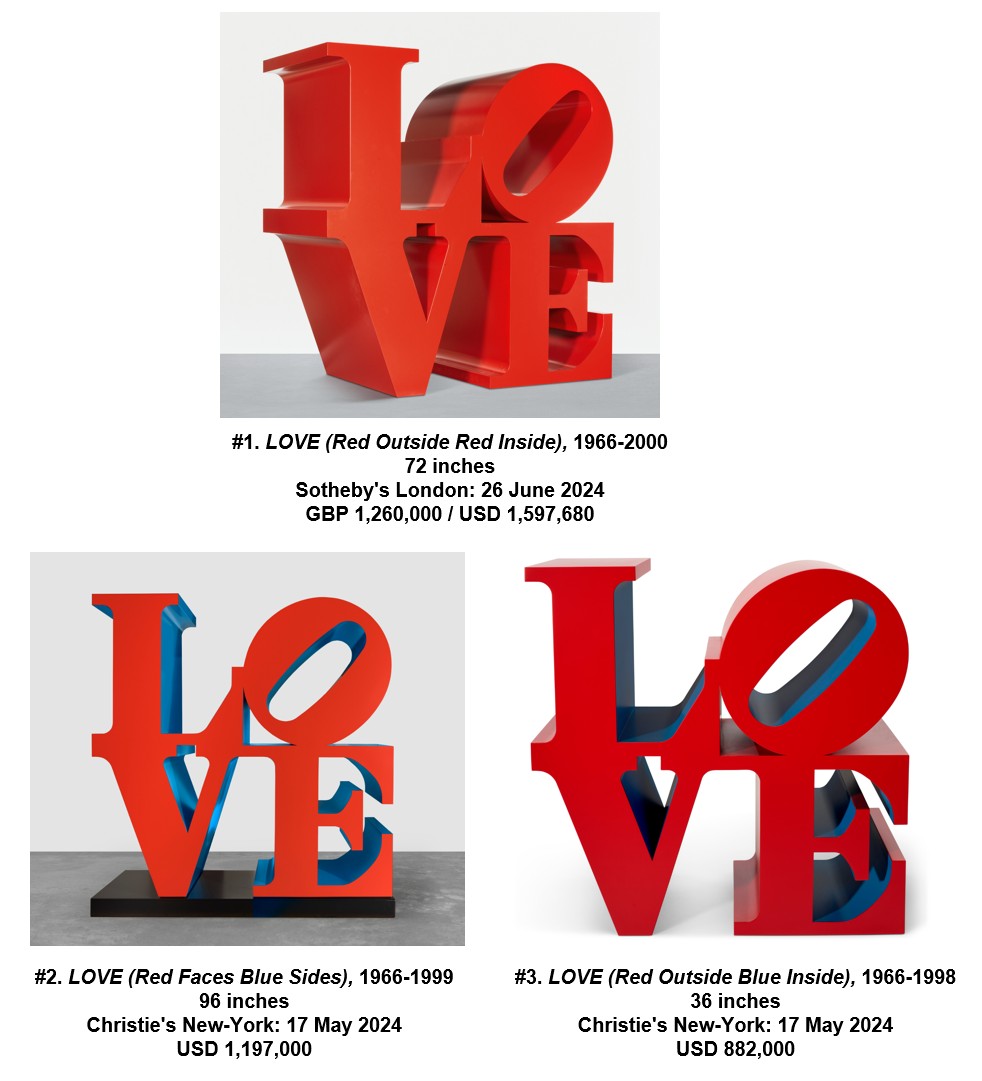
5 lots sold for more than USD 500,000, generating a cumulative turnover of USD 5,278,680, representing 74.6% of the total turnover for 2024.
2023 Auction Highlights
9 lots sold at auction in 2023 for a total turnover of USD 3,197,065. With 6 lots failing to sell, the sell-through rate is 60%. Of note, 6 lost were passed with K Auction and Seoul Auction, the two main auction houses in South-Korea. The highest price has been achieved at Christie’s in New-York on 10 November 2023, when a 36-inch LOVE sculpture sold for USD 957,600.
2023 Top 3 Lots
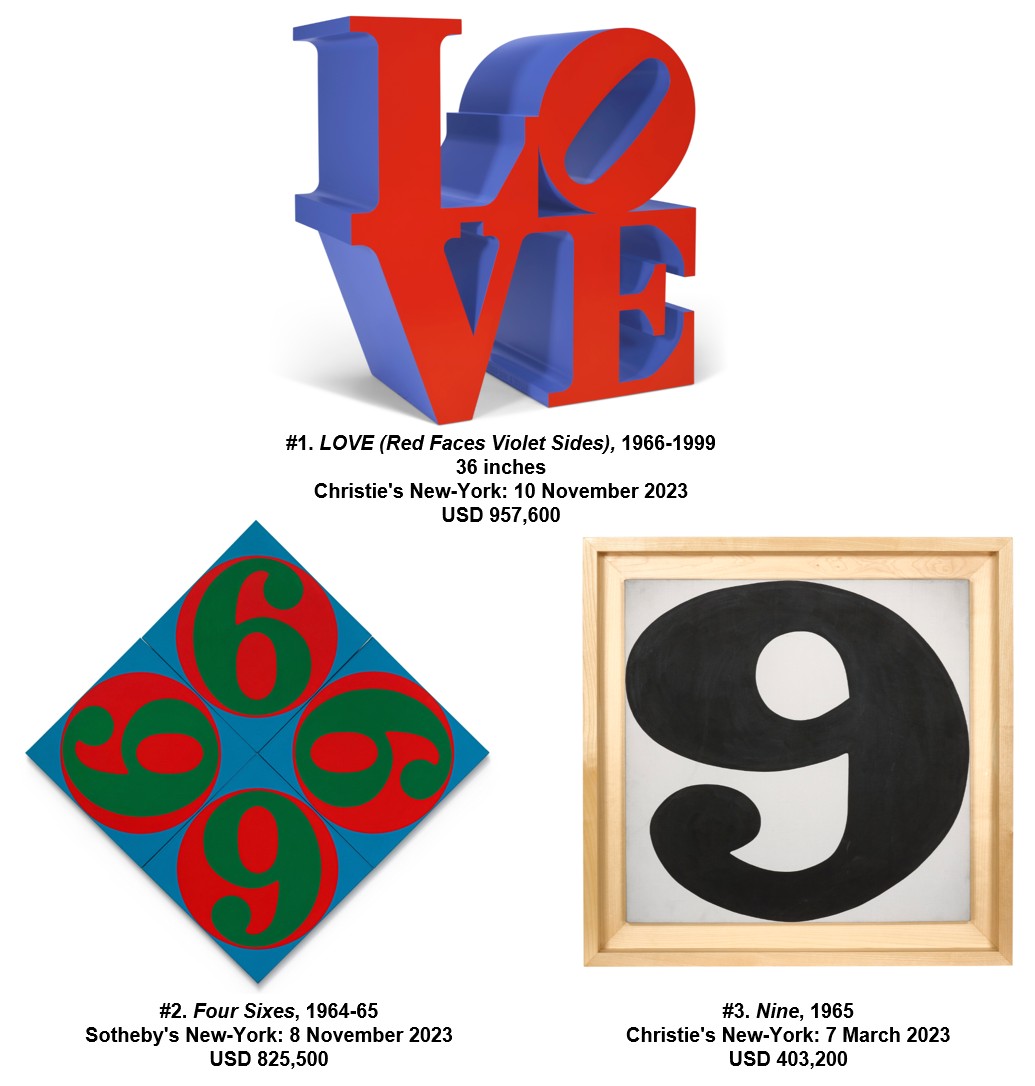
2 lots sold for more than USD 500,000, generating a cumulative turnover of USD 1,783,100, representing 55.8% of the total turnover for 2023.
Top Lots
#1. Love Red/Blue, 1990
Christie’s New-York: 12 May 2011
Estimated: USD 2,000,000 – 3,000,000
USD 4,114,500
Robert Indiana (b. 1928) , Love Red/Blue | Christie’s (christies.com)
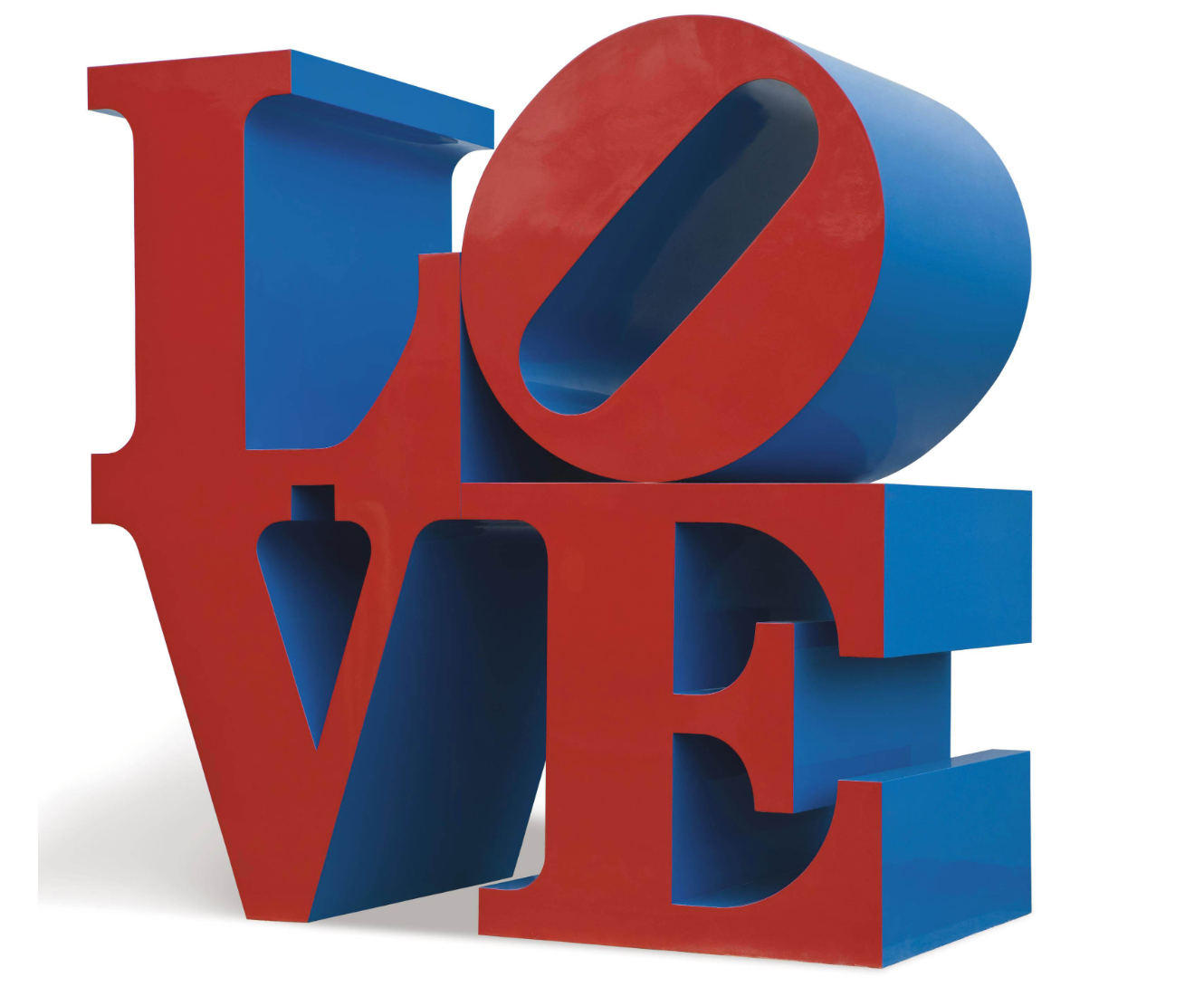
ROBERT INDIANA (b. 1928)
Love Red/Blue, 1990
Painted aluminum
144x144x72 inches (366x366x183 cm)
Stamped with signature, number and date ‘ROBERT INDIANA 1/3 (c) 1990’ (on the inside of the edge of the “E”)
Executed in 1990, this work is number one from an edition of three
#2. The Great American LOVE (Love Wall), 1972
Sotheby’s New-York: 16 November 2017
Estimated: USD 3,500,000 – 5,000,000
USD 3,555,000
(#54) Robert Indiana (sothebys.com)
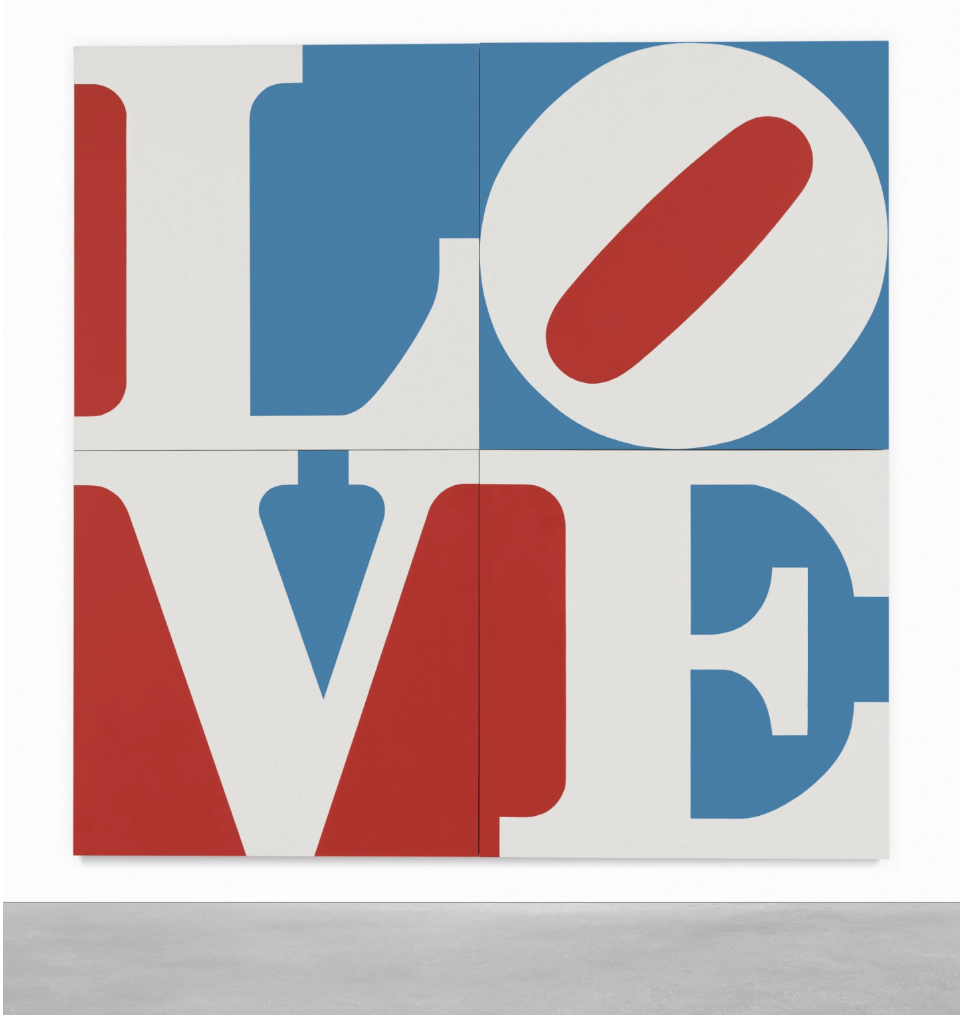
ROBERT INDIANA
The Great American LOVE (Love Wall), 1972
Oil on canvas, in 4 parts
Each: 72×72 inches (182.9 x 182.9 cm)
Overall: 144×144 inches (365.8 x 365.8 cm)
Stenciled with the artist’s name, dated NEW YORK 1972 and inscribed 2 SPRING on the reverse of the ‘E’ canvas Numbered 1 of 4 in stencil on the reverse of each canvas
#3. Love, 1966-1998
Christie’s New-York: 14 November 2007
Estimated: USD 1,000,000 – 1,500,000
USD 3,513,000
Robert Indiana (b. 1928) , Love | Christie’s (christies.com)
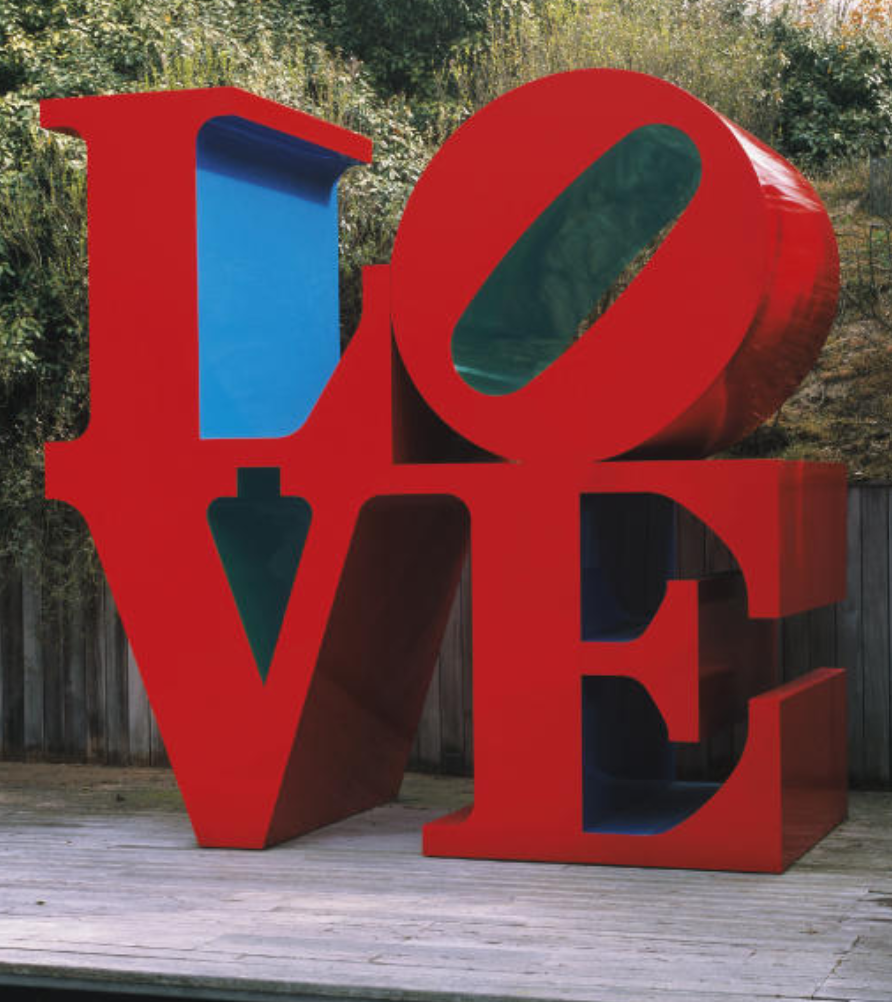
ROBERT INDIANA (b. 1928)
Love, 1966-1998
Painted aluminum
144x144x72 inches (365.8 x 365.8 x 182.9 cm)
Stamped with signature, number and date ‘1966-1998 R. INDIANA 3/03’ (on the serif of the E)
Conceived in 1966 and executed in 1998, this work is number three from an edition of three
#4. Love, 1967
Sotheby’s New-York: 13 November 2018
Estimated: USD 3,000,000 – 5,000,000
USD 3,495,000
(#28) ROBERT INDIANA | Love (sothebys.com)
REPEAT SALE
#6. Love, 1967
Sotheby’s London: 15 October 2015
Estimated: GBP 1,000,000 – 1,500,000
GBP 1,565,000 / USD 2,420,175
(#21) Robert Indiana (sothebys.com)
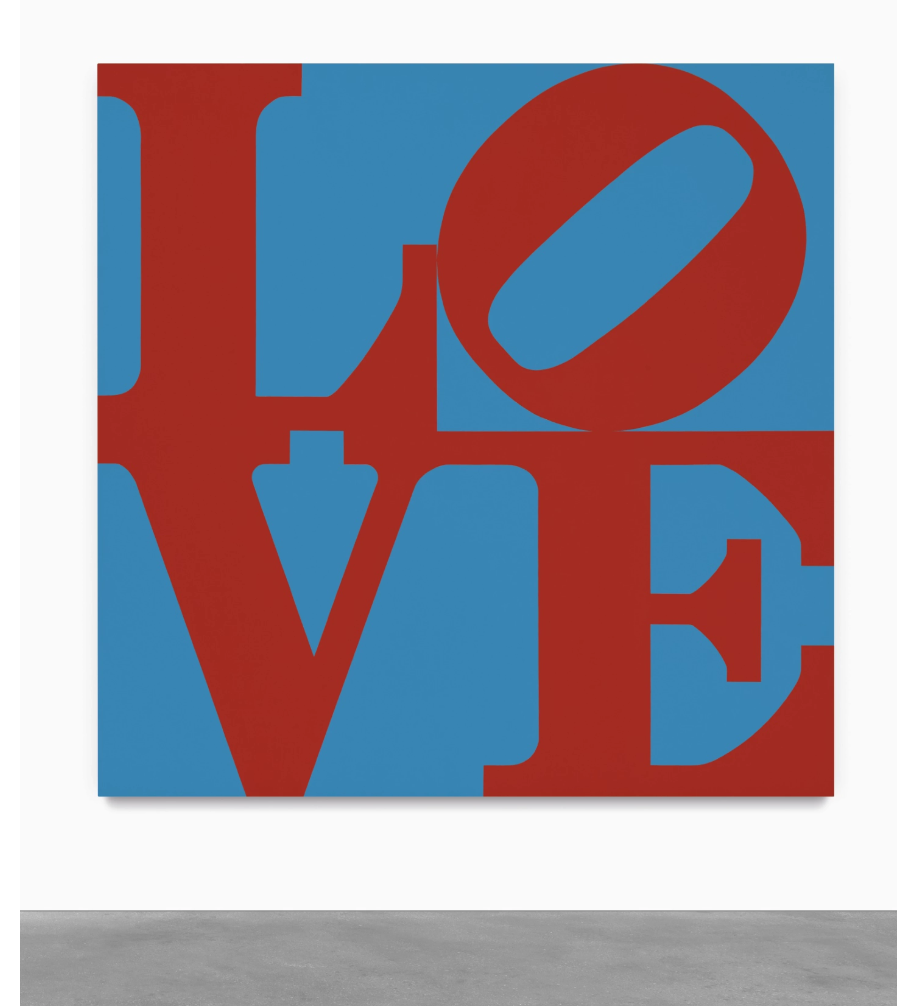
ROBERT INDIANA
Love, 1967
Oil on canvas
72 1/8 x 72 1/8 inches (183.2 x 183.2 cm)
Stenciled with the artist’s name, dated SPRING 1967, inscribed NEW YORK and numbered 2 on the reverse
#5. Love Wall (Red Green Blue), 1966
Sotheby’s New-York: 15 May 2008
Estimated: USD 2,500,000 – 3,500,000
USD 2,841,000
(#52) Robert Indiana (sothebys.com)
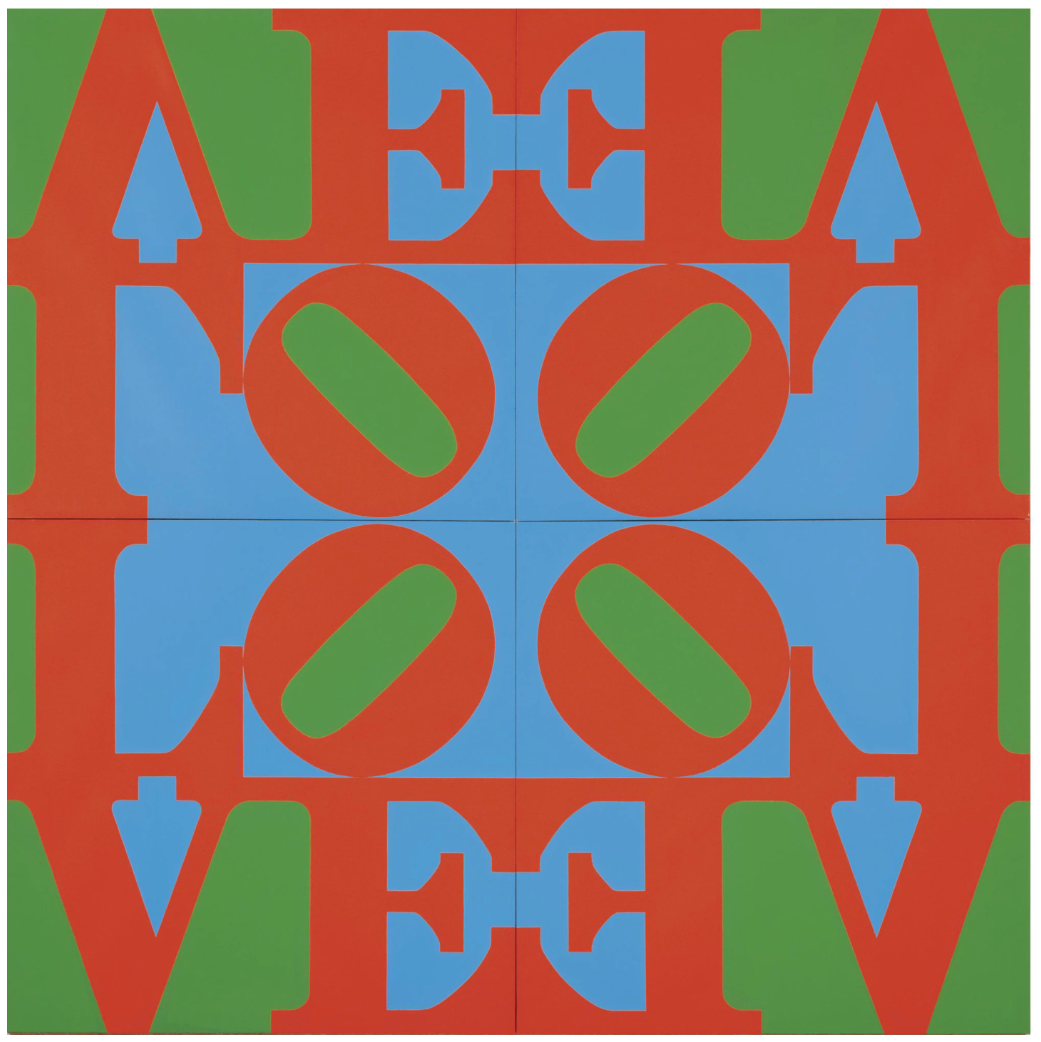
ROBERT INDIANA
Love Wall (Red Green Blue), 1966
Oil on canvas, in four parts
120 1/2 x 120 1/2 inches (306×306 cm)
Stamped on the reverse
#7. One Through Zero (The Ten Numbers), 1978-2003
Sotheby’s New-York: 14 November 2019
Estimated: USD 1,500,000 – 2,000,000
USD 2,060,000
(#133) ROBERT INDIANA | One Through Zero (The Ten Numbers) (sothebys.com)
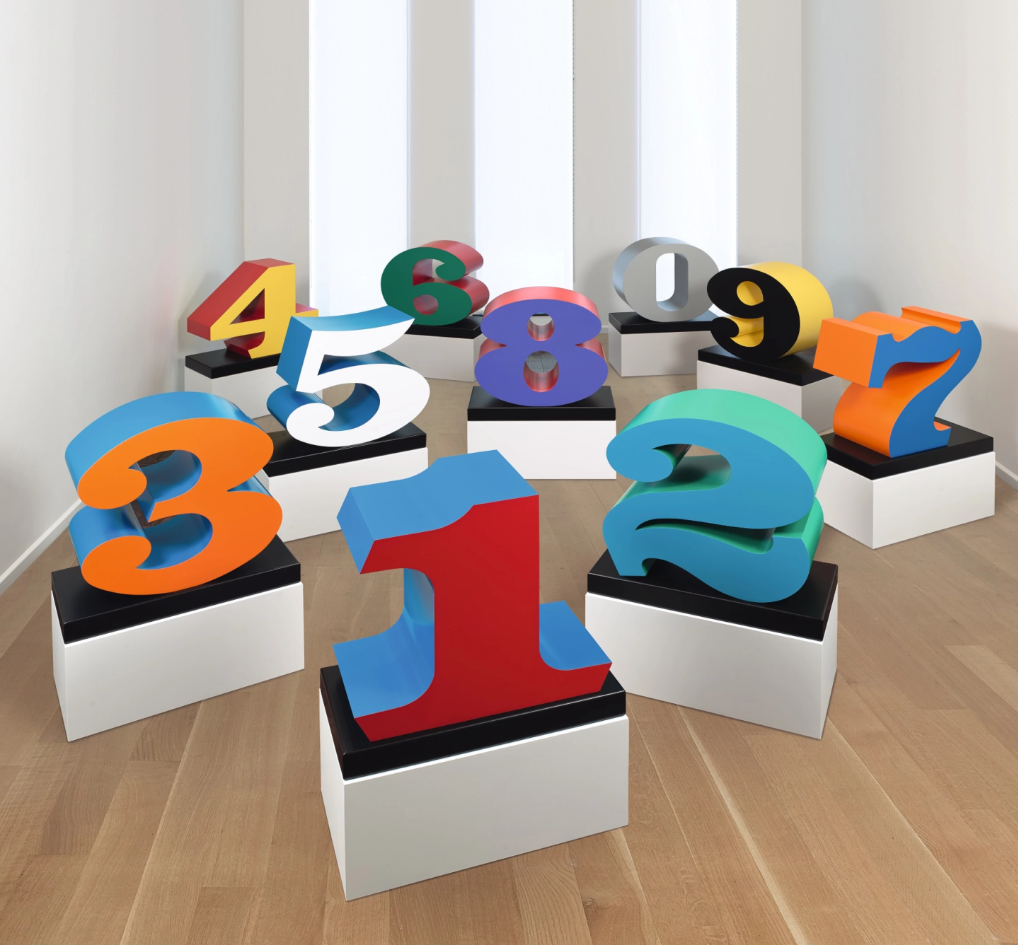
ROBERT INDIANA
One Through Zero (The Ten Numbers), 1978-2003
Polychrome aluminum on painted aluminum base, in 10 parts
Each, including base: 33 1/4 x 33 1/4 x 17 inches (84.5 x 84.5 x 43.2 cm)
Each stamped with the artist’s signature, date 1978-2003 and number AP 1/2
Conceived in 1978 and executed in 2003, this work is artist’s proof number 1 from an edition of 3 plus 2 artist’s proofs
#8. Love, 1969
Sotheby’s New-York: 18 May 2017
Estimated: USD 500,000 – 700,000
USD 2,052,500
(#25) Robert Indiana (sothebys.com)
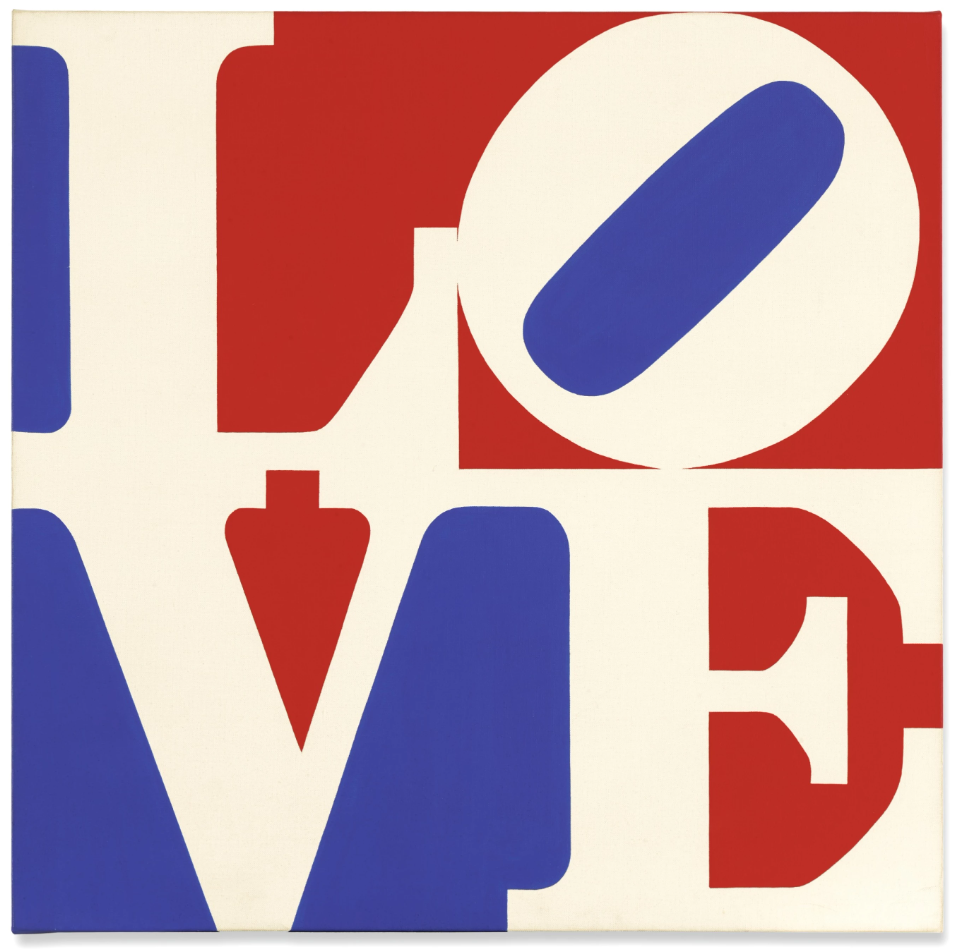
ROBERT INDIANA
Love, 1969
Oil on canvas
24×24 inches (61×61 cm)
Stenciled with the artist’s name, dated NEW YORK 69 and dedication FOR MAYOR LINDSAY on the reverse
#9. LOVE, 1966-1998
Christie’s New-York: 16 November 2018
Estimated: USD 1,000,000 – 1,500,000
USD 1,872,500
Robert Indiana (1928-2018), LOVE | Christie’s (christies.com)
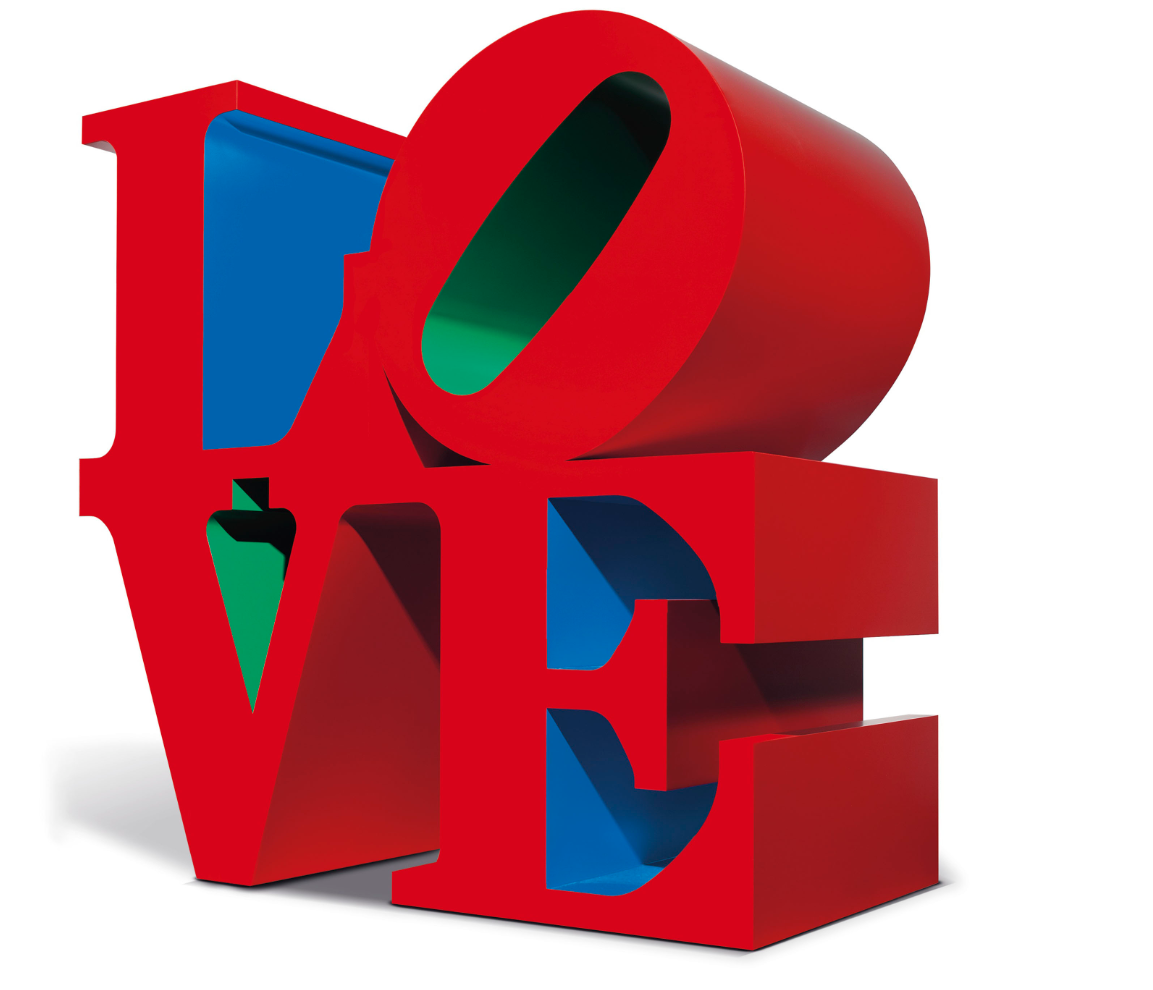
ROBERT INDIANA (1928-2018)
LOVE, 1966-1998
Polychromed aluminum
96x96x48 inches (243.8 x 243.8 x 121.9 cm)
Stamped with the artist’s signature, number and date ‘© 1966-1998 R INDIANA AP 1/2’
(on the interior edge of the ‘E’)
Conceived in 1966 and executed in 1998, this work is an artist’s proof from an edition of five plus two artist’s proofs
#10. USA 666, The 6th American Dream, 1964-1966
Christie’s New-York: 13 May 2008
Estimated: USD 1,500,000 – 3,000,000
USD 1,833,000
Robert Indiana (b. 1928) , USA 666, The 6th American Dream | Christie’s (christies.com)
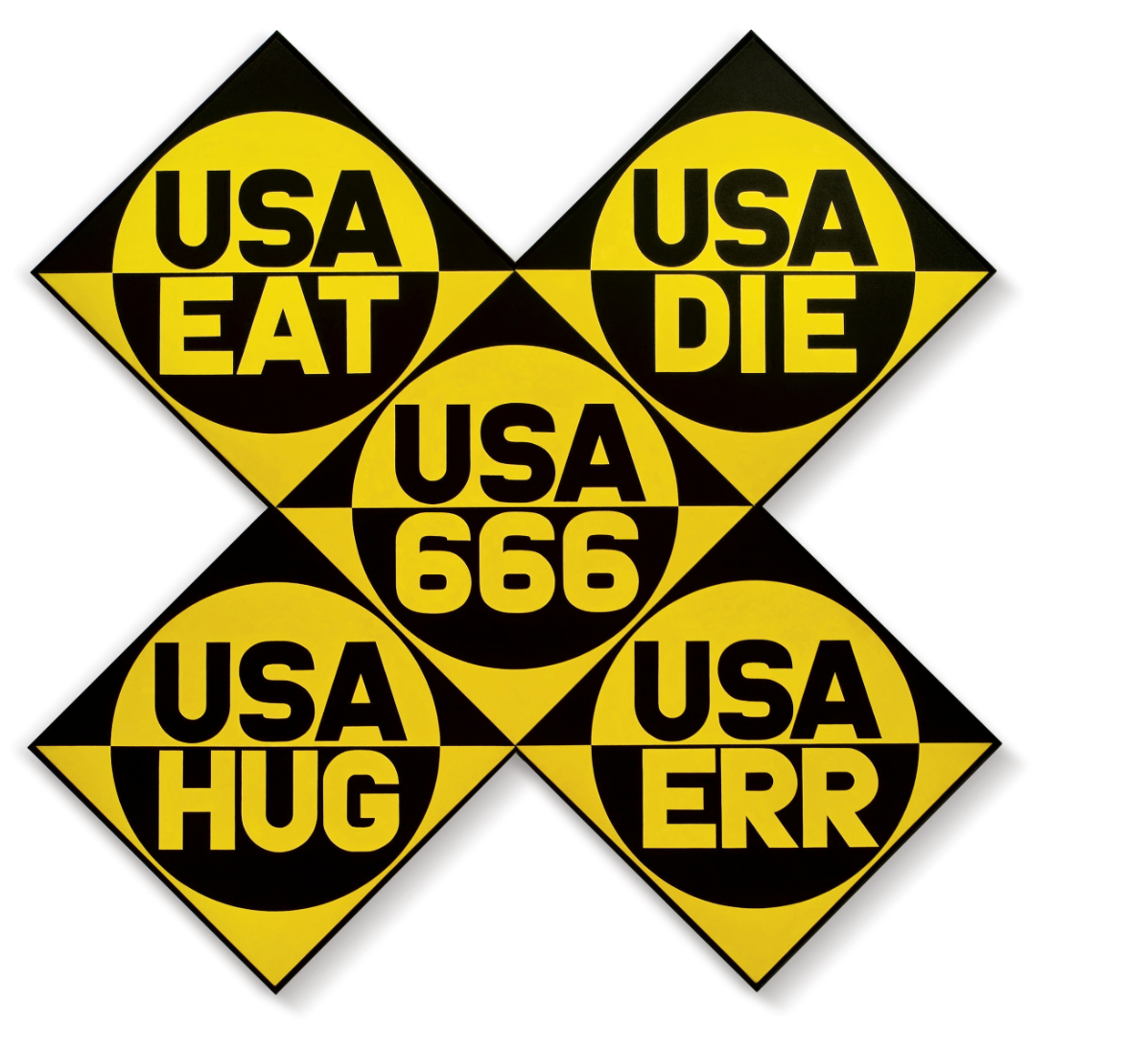
ROBERT INDIANA (b. 1928)
USA 666, The 6th American Dream, 1964-1966
Oil on canvas
105×105 inches (266.7 x 266.7 cm)
PART II: AUCTION RESULT
2026 Auction Results
LOVE (Red/Blue), 1966-1999
K Auction Seoul: 18 January 2026
Estimated: KRW 510,000,000 – 1,110,000,000
KRW 510,000,000 (Hammer)
KRW 586,500,000 / USD 409,375
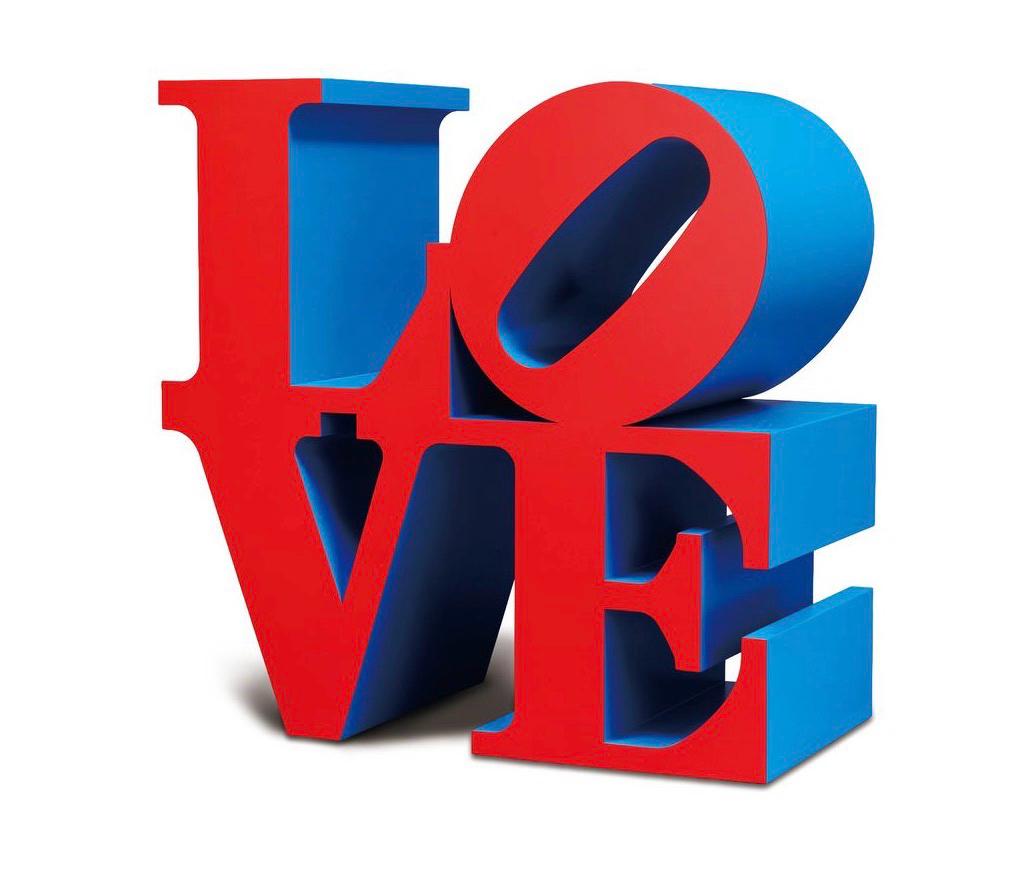
ROBERT INDIANA (1928 – 2018)
LOVE (Red/Blue), 1966-1999
Polychromed aluminum
36x36x18 inches (91.4 x 45.7 x 91.4 cm)
Edition: 6/6
LOVE (Red Outside Blue Inside), 1966-1999
Sotheby’s London: 5 March 2026
Estimated: GBP 200,000 – 300,000
GBP 256,000 / USD 341,990
LOVE (Red Outside Blue Inside) | Contemporary Day Auction | 2026 | Sotheby’s
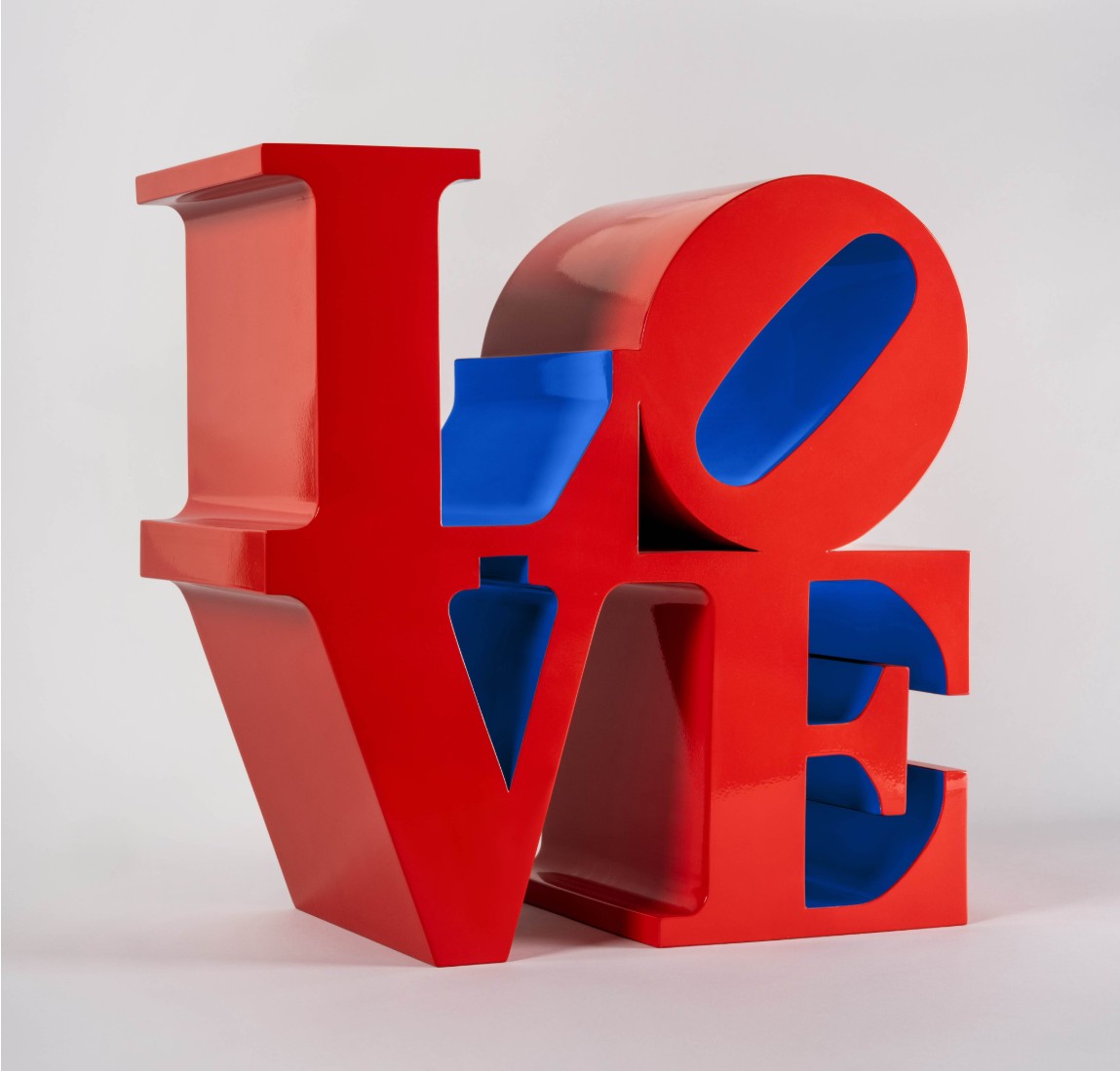
ROBERT INDIANA (1928 – 2018)
LOVE (Red Outside Blue Inside), 1966-1999
Polychromed aluminum
18x18x9 inches (45.6 x 45.3 x 23 cm)
Stamped with the artist’s signature, dated 1966-1999 and numbered 5/8 (on the inside of the ‘V’)
This work is number 5 from an edition of 8, plus 2 artist’s proofs
Chief, 1962-1991
Monte Carlo Auction House: 4 February 2026
Estimated: EUR 140,000 – 180,000
EUR 140,000 (Hammer)
EUR 175,000 / USD 206,550
ROBERT INDIANA (1928-2018) | Hôtel Des Ventes De Monte-Carlo
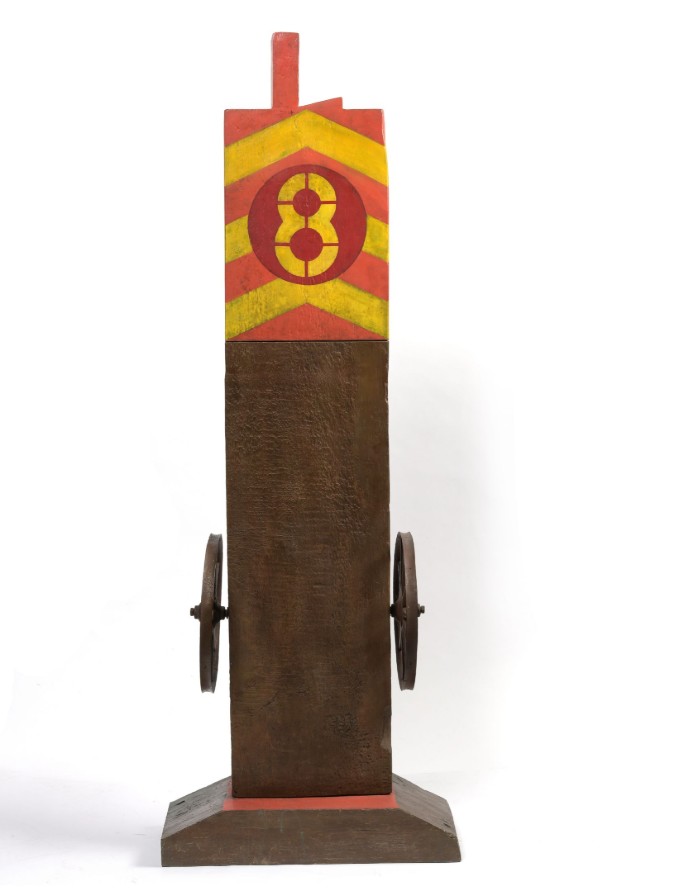
ROBERT INDIANA (1928-2018)
Chief, 1962-1991
Painted bronze and steel wheels
Signed, dated and numbered 3/8 under the base
Model from 1962, cast from 1991
Height: 63 inches
Base: 23×9 inches
The Four Sixes, 2002
Sotheby’s New-York: 25 February 2026
Estimated: USD 200,000 – 300,000
USD 192,000
The Four Sixes | Contemporary Curated | 2026 | Sotheby’s
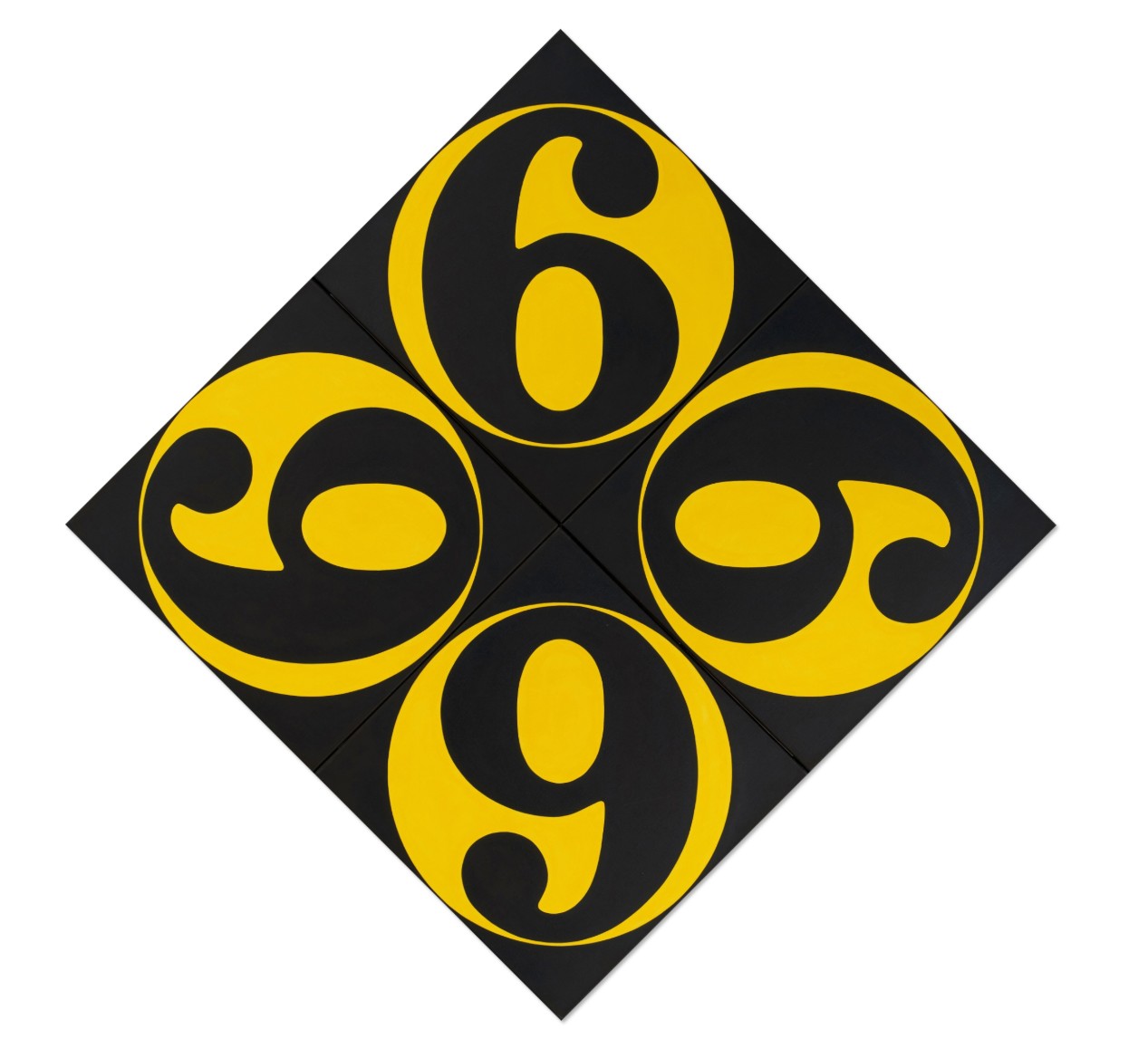
ROBERT INDIANA (1928 – 2018)
The Four Sixes, 2002
Oil on canvas
68×68 inches (172.7 x 172.7 cm)
Stenciled with the artist’s name and date 2002 (on the reverse)
HOPE (Red/Yellow), 2009-2013
LLB Auction Luxembourg: 1 March 2026
Estimated: EUR 100,000 – 200,000
EUR 90,200 / USD 106,465
LOT 42. HOPE (Red/Yellow) (2009-2013) | by Robert Indiana | Lot 042 | LLB Auction
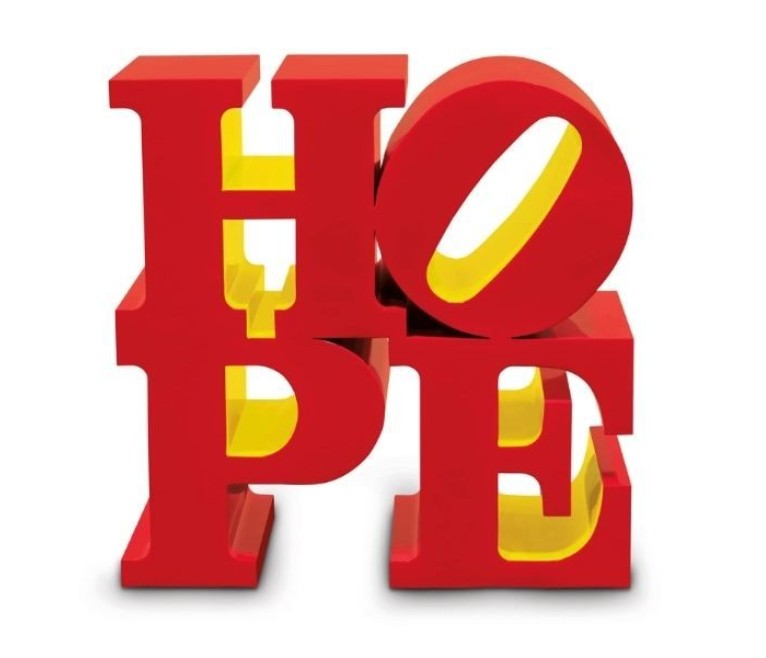
ROBERT INDIANA
HOPE (Red/Yellow), 2009-2013
Polychrome aluminum
18x18x9 inches (45.6 x 45.3 x 23 cm)
Signed by the artist
From the edition of 9
2025 Auction Results
14 lots sold at auction in 2025 for a total turnover of USD 5,658,285. With 7 lots failing to sell, the sell-through rate is 67%. 5 sculptures passed in Seoul, South Korea. One lot was withdrawn by Phillips in New-York on 13 May 2025. The highest price was achieved by ONE Through ZERO (The Ten Numbers), a set of sculptures dated 1978-2003, sold at Christie’s in London, on 15 October 2025, for GBP 889,000 (USD 1,191,260).
2025 Top 3 Lots
Only one lot sold for more than USD 1 million. 5 lots sold for more than USD 500,000, generating a cumulative turnover of USD 3,833,528, representing 67.8% of the total turnover for 2025.
XXXXXXXXXX
#1. ONE Through ZERO (The Ten Numbers), 1978-2003
Christie’s London: 15 October 2025
Estimated: GBP 700,000 – 1,000,000
GBP 889,000 / USD 1,191,260
READ MORE IN FOCUS SECTION
ROBERT INDIANA (1928-2018), ONE Through ZERO (The Ten Numbers) | Christie’s
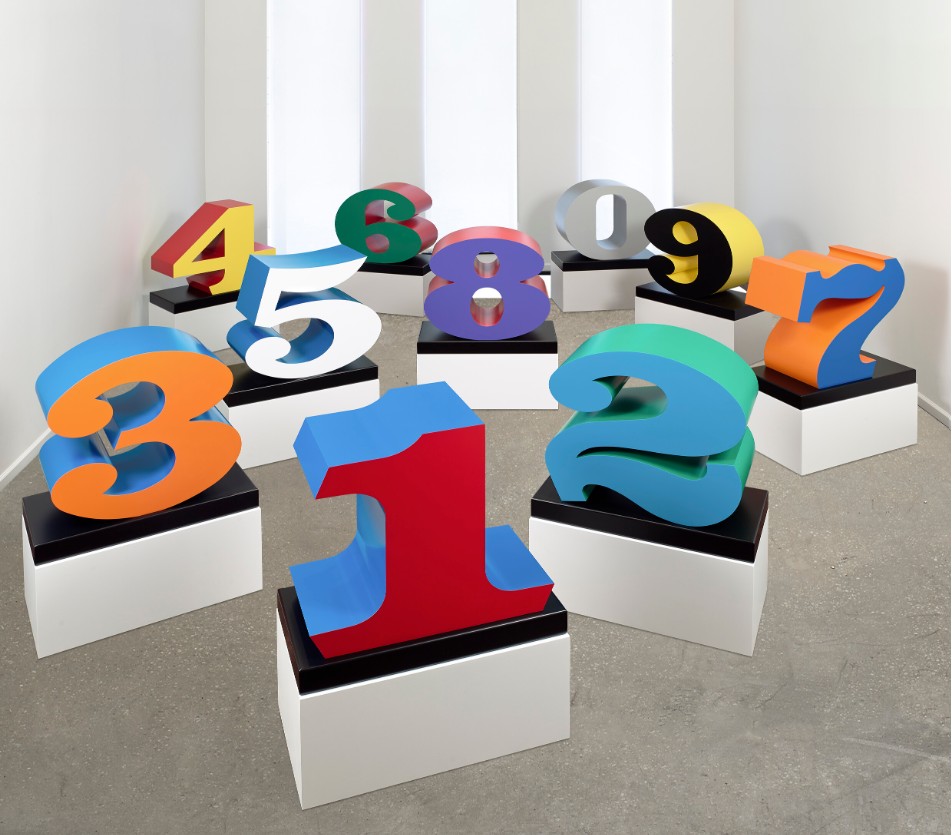
ROBERT INDIANA (1928-2018)
ONE Through ZERO (The Ten Numbers), 1978-2003
Polychrome aluminum on painted aluminum base, in ten parts
Each overall: 33 1/4 × 33 1/4 x 17 inches (84.5 × 84.5 × 43.2 cm)
Each: stamped with the artist’s signature, number and date ‘1978-2003 R INDIANA 2⁄3’ (lower side)
Conceived in 1978 and executed in 2003
This work is number two from an edition of three plus two artist’s proofs
USD 1 million
#2. LOVE (Red Blue Green), 1966-1999
Sotheby’s New-York: 26 September 2025
Estimated: USD 700,000 – 1,000,000
USD 914,400
LOVE (Red Blue Green) | Contemporary Curated | 2025 | Sotheby’s
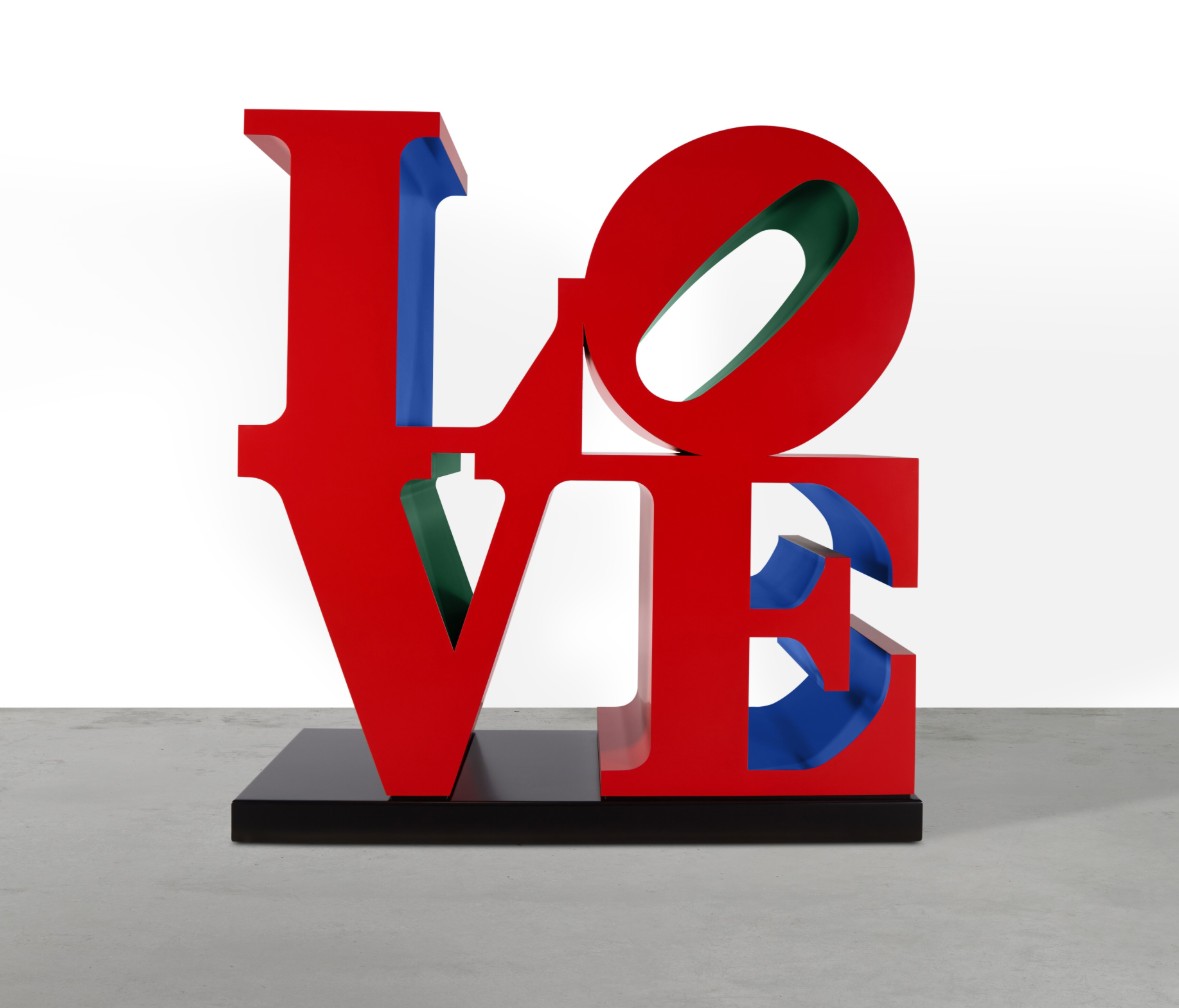
ROBERT INDIANA (1928 – 2018)
LOVE (Red Blue Green), 1966-1999
Polychrome aluminum
96 1/8 x 96 1/8 x 48 inches (244 x 244 x 121.9 cm)
Stamped with the artist’s signature, number 2/5 and date 1966-1999 (on the inside of the letter “E”)
Conceived in 1966 and executed in 1999
This work is number 2 from an edition of 5 plus 2 artist’s proofs
#3. Love-Blue-Green, 1966/1997-1999
Phillips London: 18 October 2025
Estimated: GBP 180,000 – 250,000
GBP 490,200 / USD 656,870
Robert Indiana Modern & Contemporary Art Day Sale
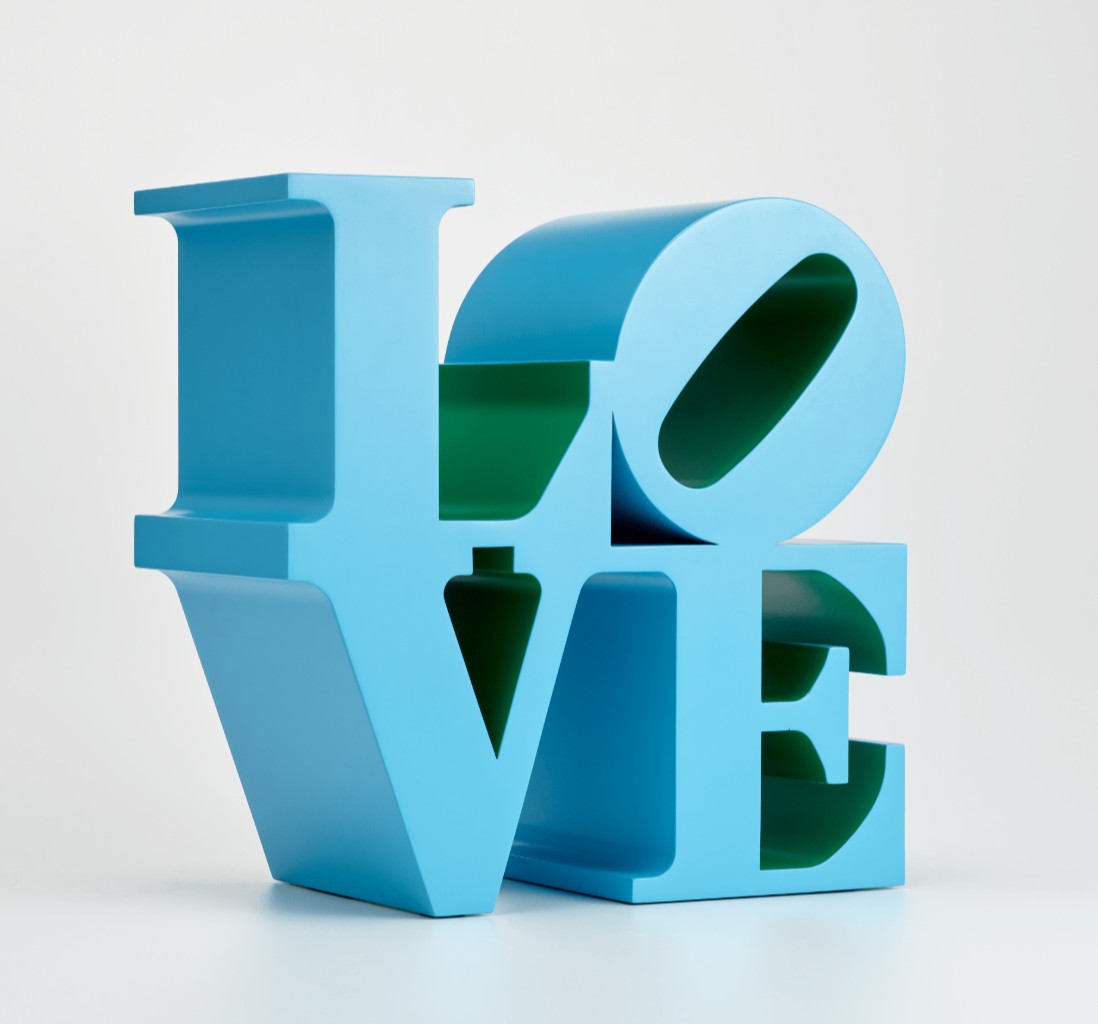
Polychrome aluminum
This work is number 6 from an edition of 8 plus 4 artist’s proofs
#4. LOVE (Red Faces Violet Sides), 1966-2000
Phillips New-York: 21 November 2025
Estimated: USD 200,000 – 300,000
USD 541,800
Robert Indiana Modern & Contemporary Art Day Sale, Morning Session
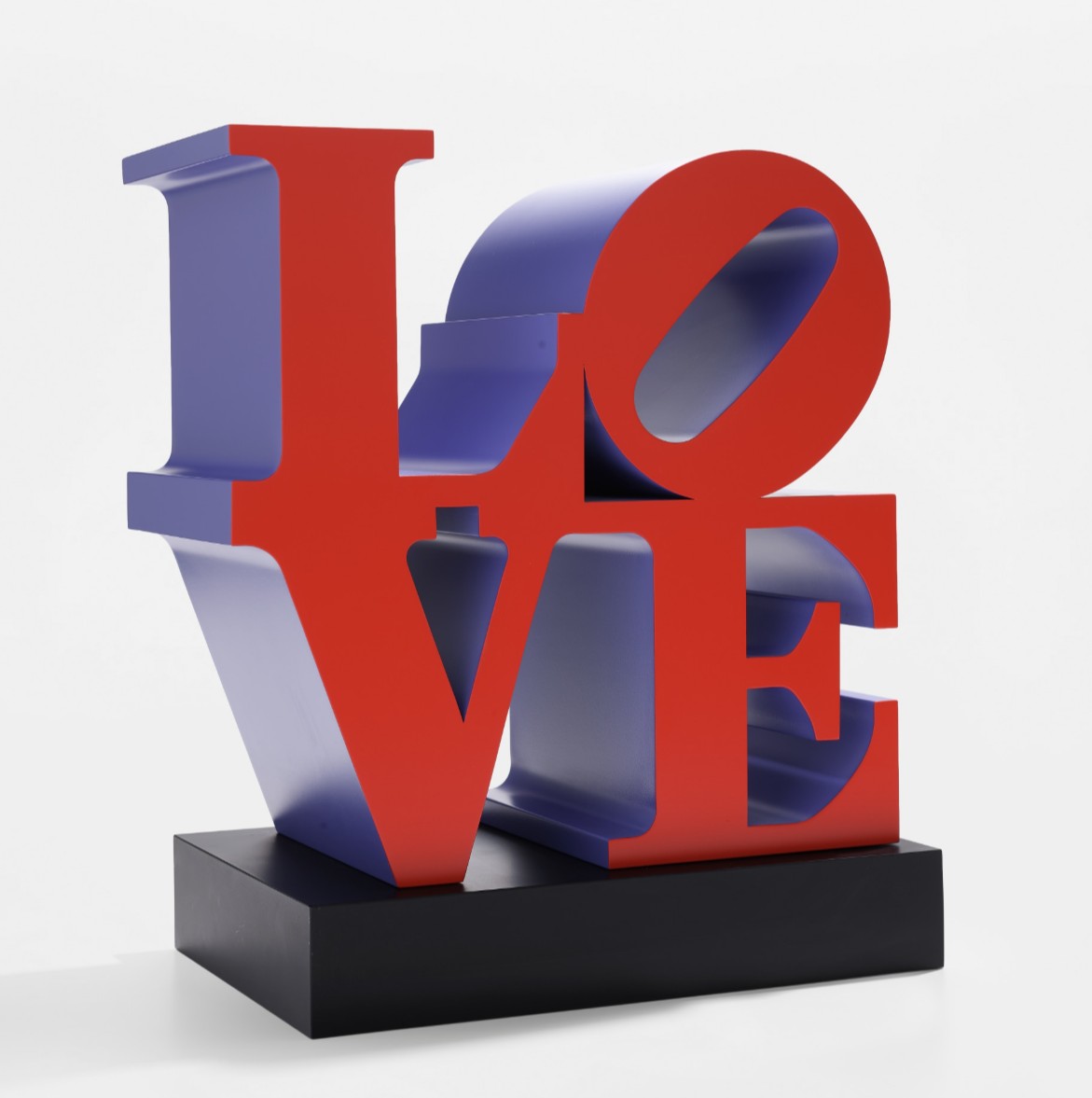
Polychromed aluminum
18x18x9 inches (45.7 x 45.7 x 22.9 cm)
Stamped with the artist’s name
Number and date “(c) 1966–2000 R INDIANA 8/8” on the lower interior edge of the “V”
Conceived in 1966 and fabricated in 2000, this work is number 8 from an edition of 8 plus 4 artist’s proofs
#5. LOVE (Red Faces Blue Sides), 1966-2000
Christie’s New-York: 15 May 2025
Estimated: USD 400,000 – 600,000
USD 529,200
ROBERT INDIANA (1928-2018), LOVE (Red Faces Blue Sides) | Christie’s
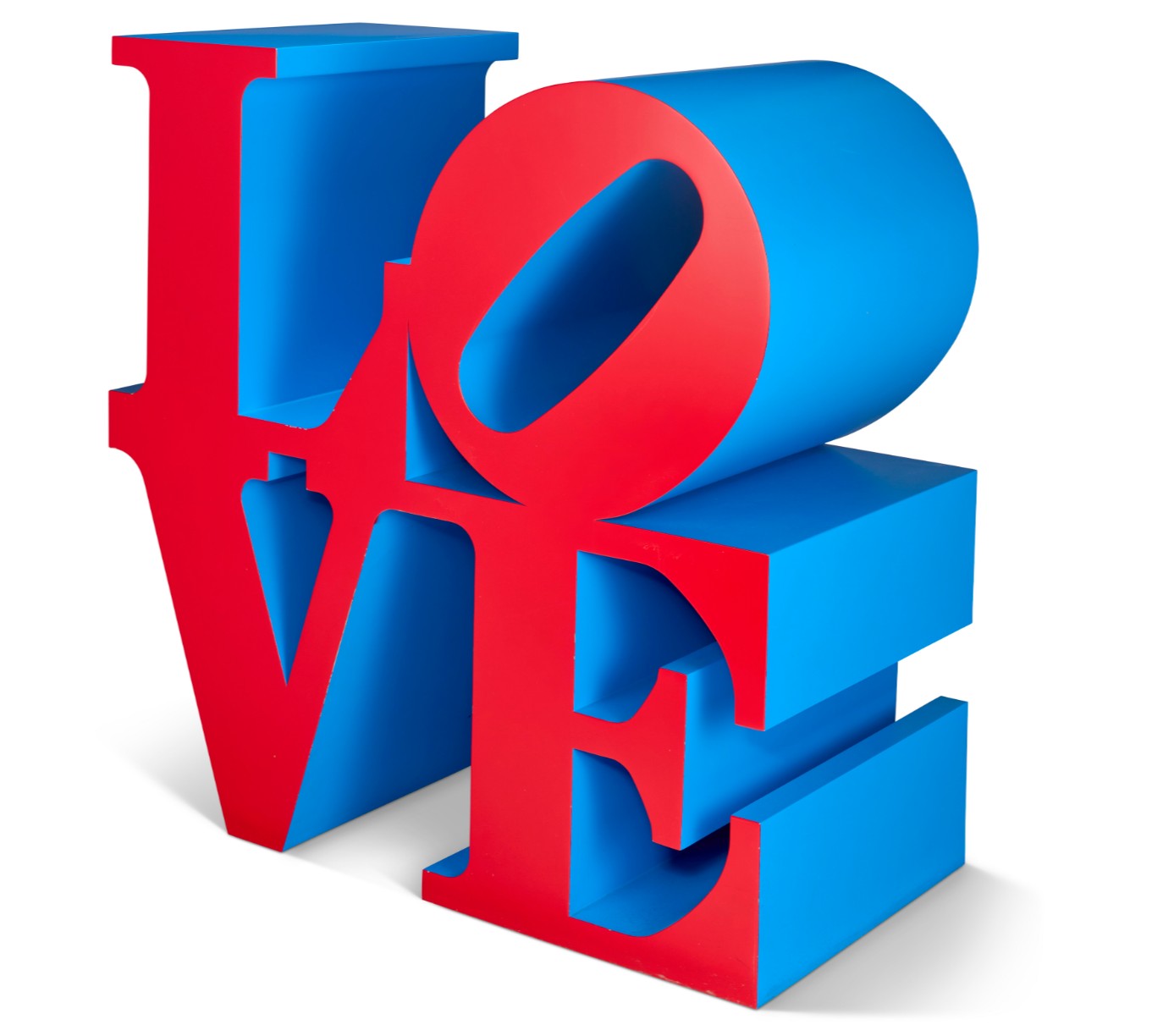
ROBERT INDIANA (1928-2018)
LOVE (Red Faces Blue Sides), 1966-2000
Polychrome aluminum
36x36x18 inches (91.4 x 91.4 x 45.7 cm)
Stamped with the artist’s name, number, date and fabricator mark ‘© 1966-2000 R INDIANA 5⁄6’
(on the interior edge of the ‘E’)
Conceived in 1966 and executed in 2000
This work is number five from an edition of six plus four artist’s proofs and two hors-commerce
USD 500,000
#6. LOVE (Gold/Blue), 1966-2000
Sotheby’s Paris: 8 July 2025
Estimated: EUR 200,000 – 300,000
EUR 304,800 / USD 357,330
LOVE (Gold/Blue) | Modern & Contemporary Discoveries | 2025 | Sotheby’s

ROBERT INDIANA (1928 – 2018)
LOVE (Gold/Blue), 1966-2000
Polychrome aluminum
18x18x9 inches (45.7 x 45.7 x 22.9 cm)
Signed, numbered AP 2/4 and dated 1966-2000 (on the right edge of the “V”)
This work is number two of four artist’s proofs, set aside from the edition of eight
#7. ART (Red/Blue), 1972-2001
Christie’s London: 26 June 2025
Estimated: GBP 300,000 – 500,000
GBP 252,000 / USD 344,990
ROBERT INDIANA (1928-2018), ART (Red/Blue) | Christie’s
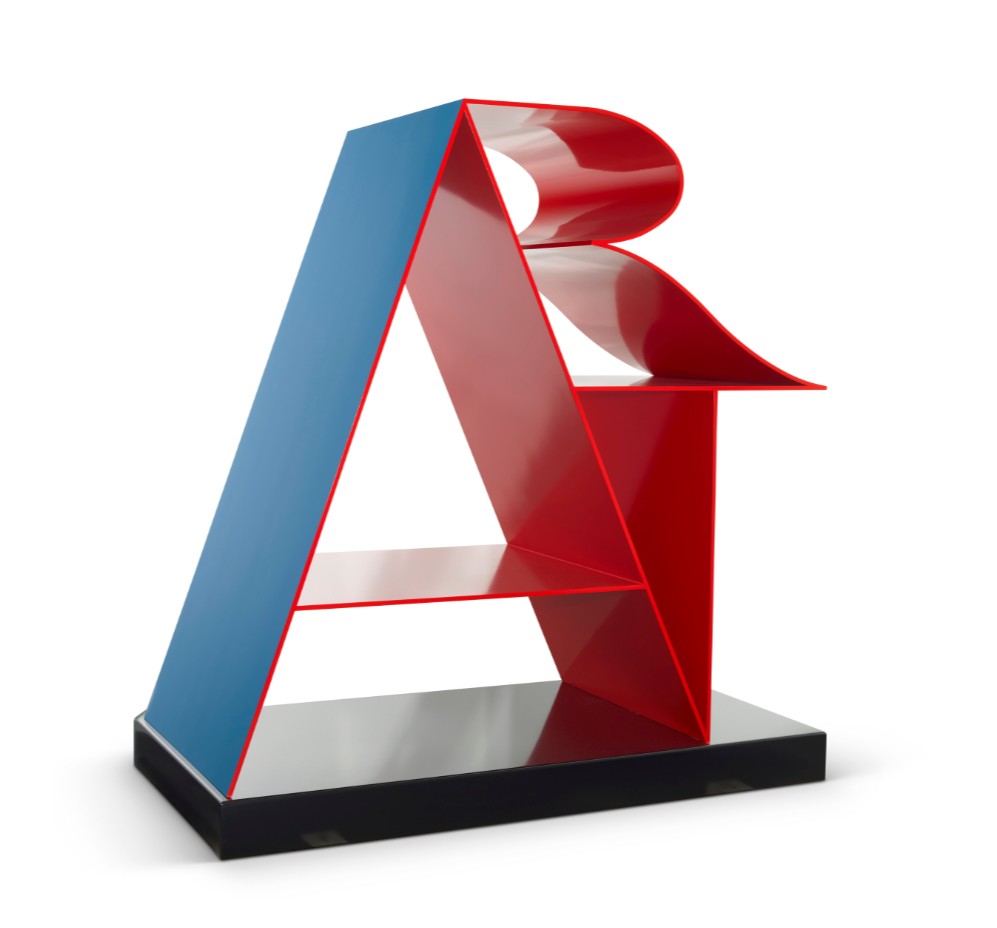
ROBERT INDIANA (1928-2018)
ART (Red/Blue), 1972-2001
Polychrome aluminum
72 x 72 x 35 5/8 inches (183 x 183 x 90.6 cm)
Stamped with the artist’s signature, number, foundry mark and date ‘© 1972-2001 R INDIANA 5⁄6’
(on the inside edge of the A)
Conceived in 1972 and executed in 2001, this work is number five from an edition of six plus four artist’s proofs
#8. Decade Autoportrait, 1971
Sotheby’s Milan: 28 May 2025
Estimated: EUR 100,000 – 150,000
EUR 254,000 / USD 287,975
Decade Autoportrait | Modern and Contemporary Art | 2025 | Sotheby’s
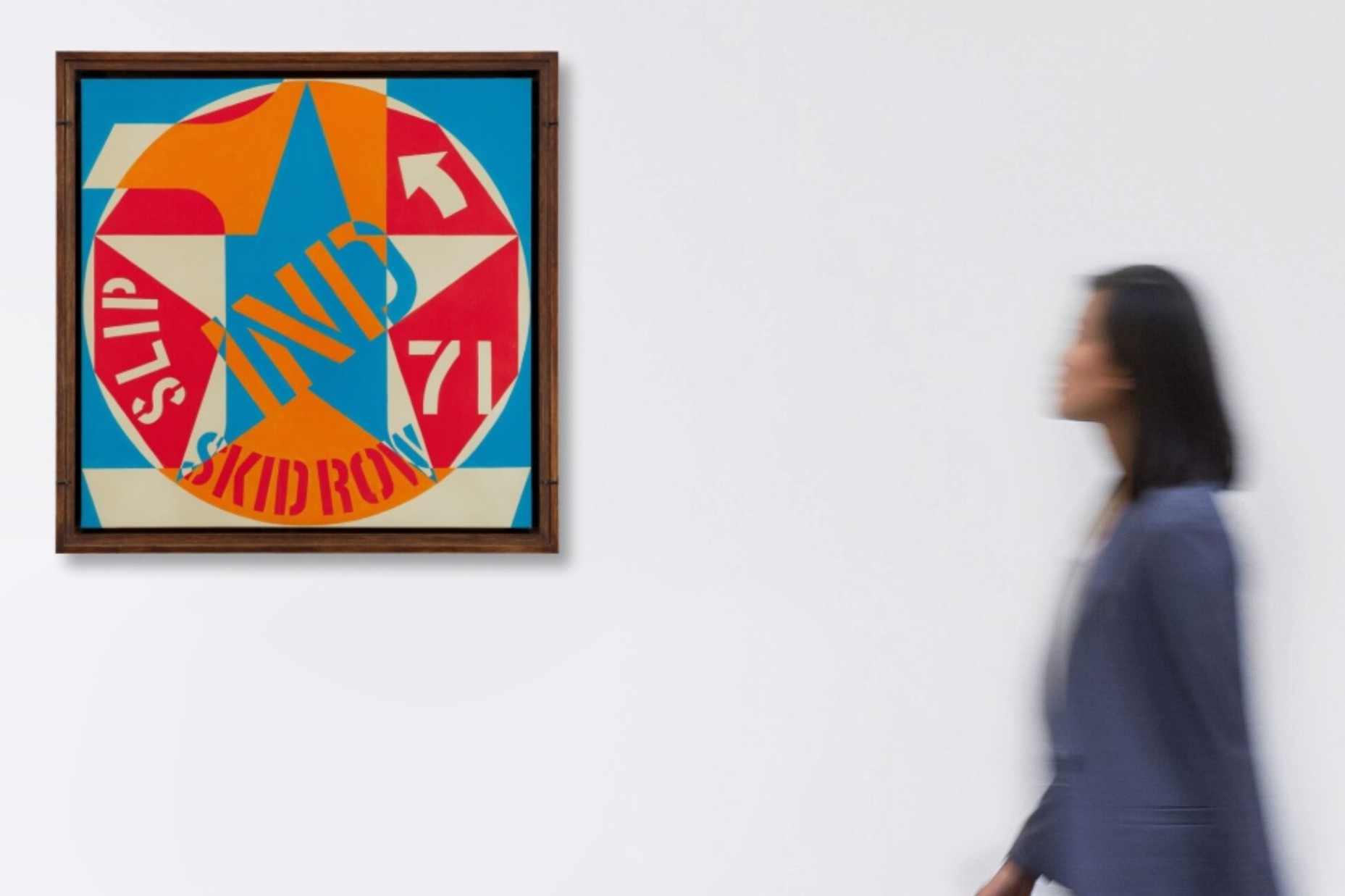
ROBERT INDIANA (1928 – 2018)
Decade Autoportrait, 1971
Oil on canvas
24×24 inches (61×61 cm)
Signed and dated 71 on the reverse
#9. AMOR (Red Blue), 1998
Sotheby’s Diriyah: 8 February 2025
Estimated: USD 220,000 – 280,000
USD 228,000
Amor (Red Blue) | Origins | 2025 | Sotheby’s
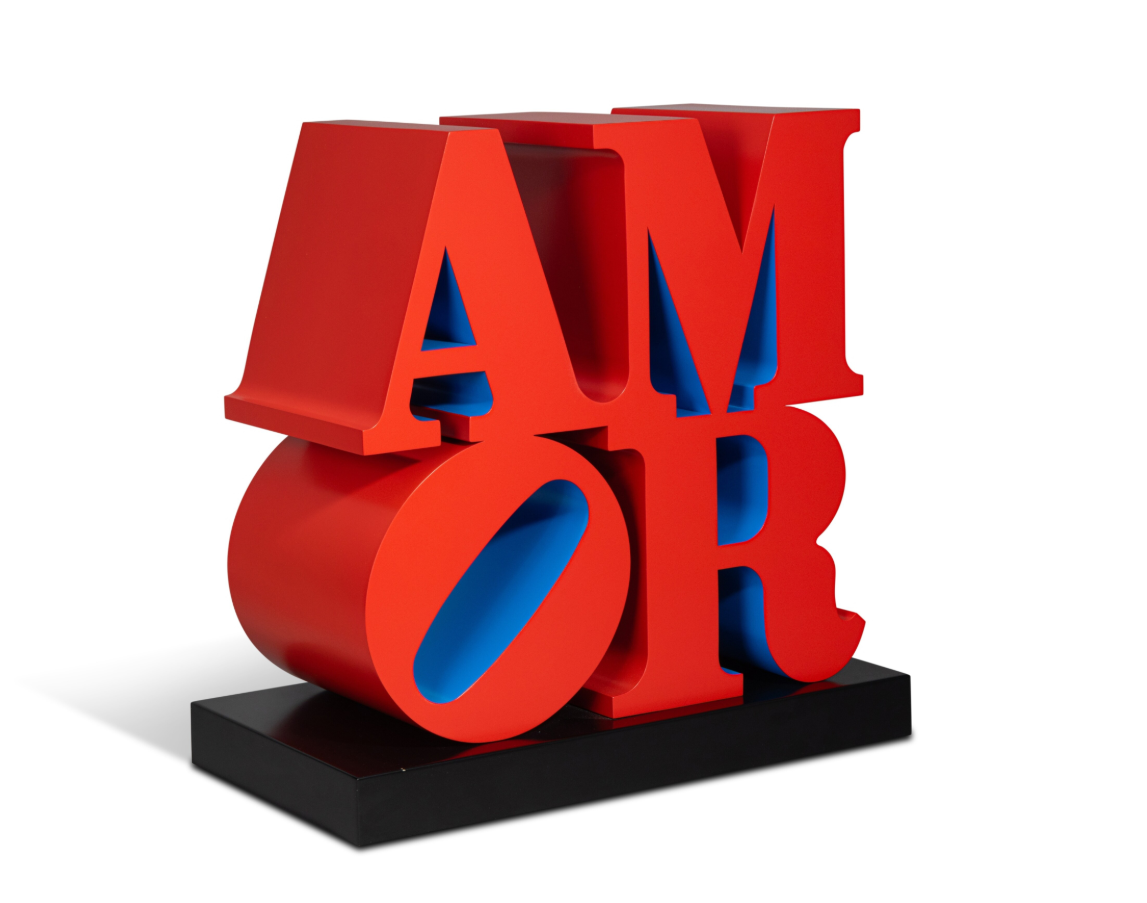
ROBERT INDIANA (1928 – 2018)
AMOR (Red Blue), 1998
Polychrome aluminum on artist base
18x18x9 inches (45.7 x 45.7 x 22.9 cm)
Stamped with the artist’s signature R INDIANA, date 1998 and number 6/8 (on the outer edge of the ‘R’)
This work is number 6 from an edition of 8 plus 2 artist’s proofs.
#10. The American LOVE (White Blue Red), 1966-2000
Sotheby’s Hong-Kong: 29 September 2025
Estimated: HKD 1,200,000 – 2,000,000
HKD 1,651,000 / USD 212,210
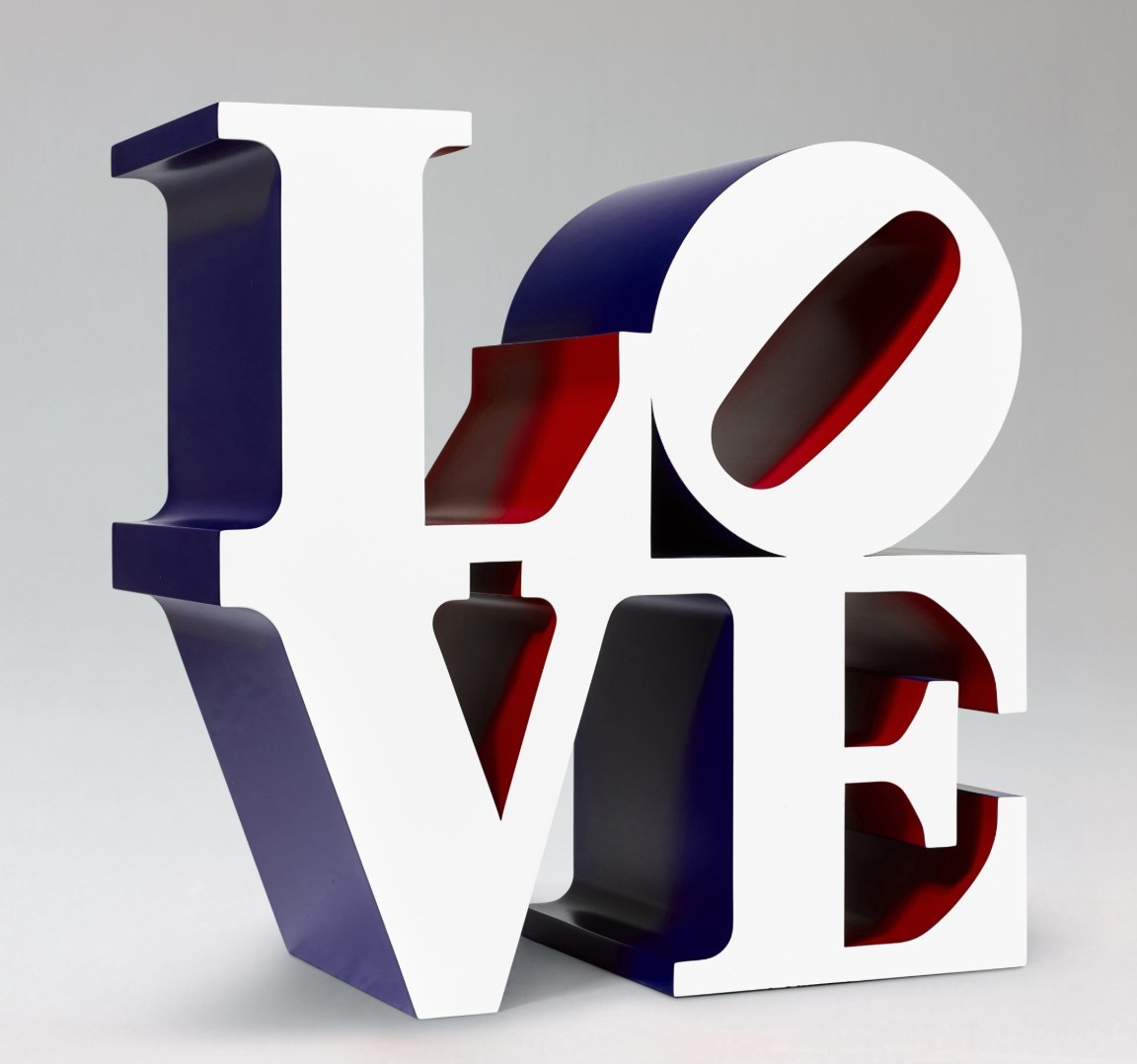
ROBERT INDIANA (1928 – 2018)
The American LOVE (White Blue Red), 1966-2000
Polychromed aluminum
17 7/8 x 17 7/8 x 9 inches (45.5 x 45.5 x 23 cm)
Stamped with the artist’s name, date 1966-2000, number 6/8 and fabricator’s copyright (at the bottom)
This work is number 6 from an edition of 8 plus 4 artist’s proofs
#11. Polygon: Pentagon, 1962
HMVC Monte Carlo: 9 July 2025
Estimated: EUR 150,000 – 200,000
EUR 145,000 (Hammer)
EUR 181,250 / USD 212,180
ROBERT INDIANA (1928-2018) | Hôtel Des Ventes De Monte-Carlo
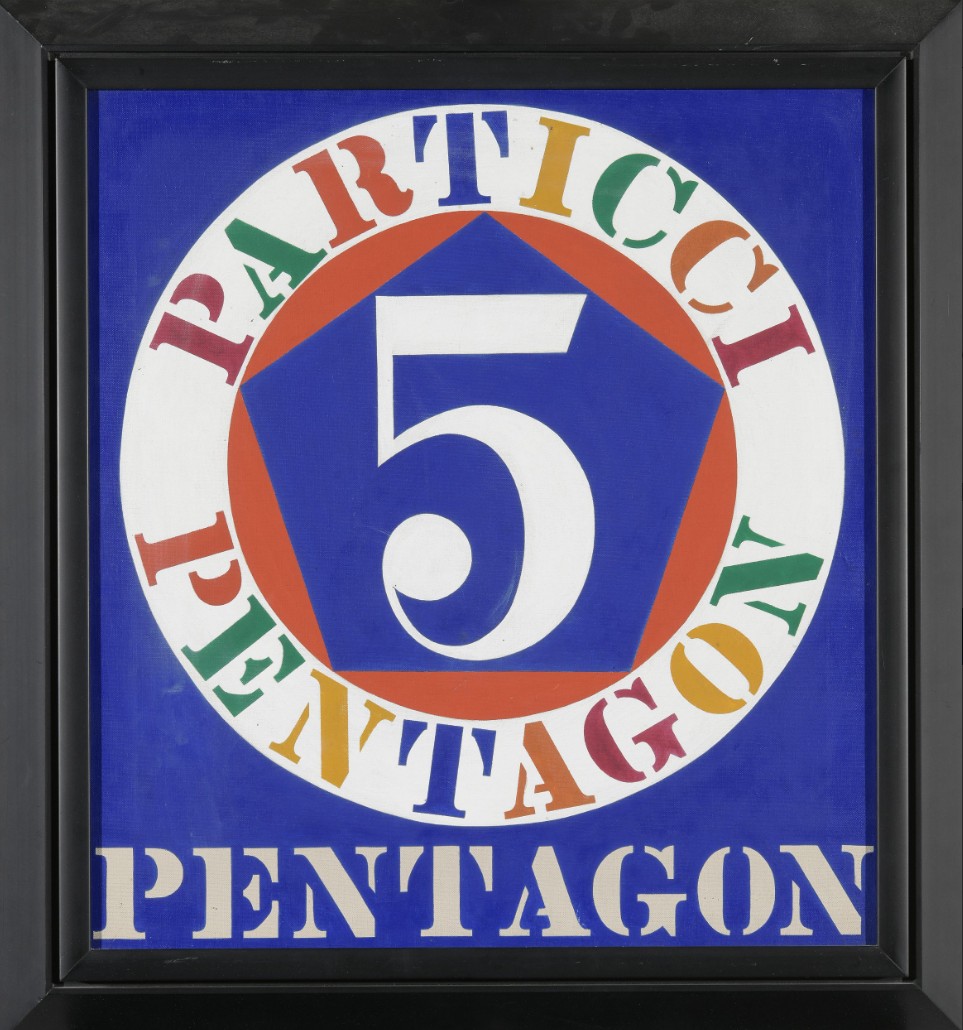
ROBERT INDIANA (1928-2018)
Polygon: Pentagon, 1962
Acrylic on canvas
24×22 inches (61×56 cm)
Signed and dated in stencil on the reverse “INDIANA / NYC / 1962”
#12. Coenties Slip Gingko, 1957
Swann Auction Galleries: 21 August 2025
Estimated: USD 12,000 – 18,000
USD 100,000
Lot – Robert Indiana Coenties Slip Gingko, oil on linen. 1957.
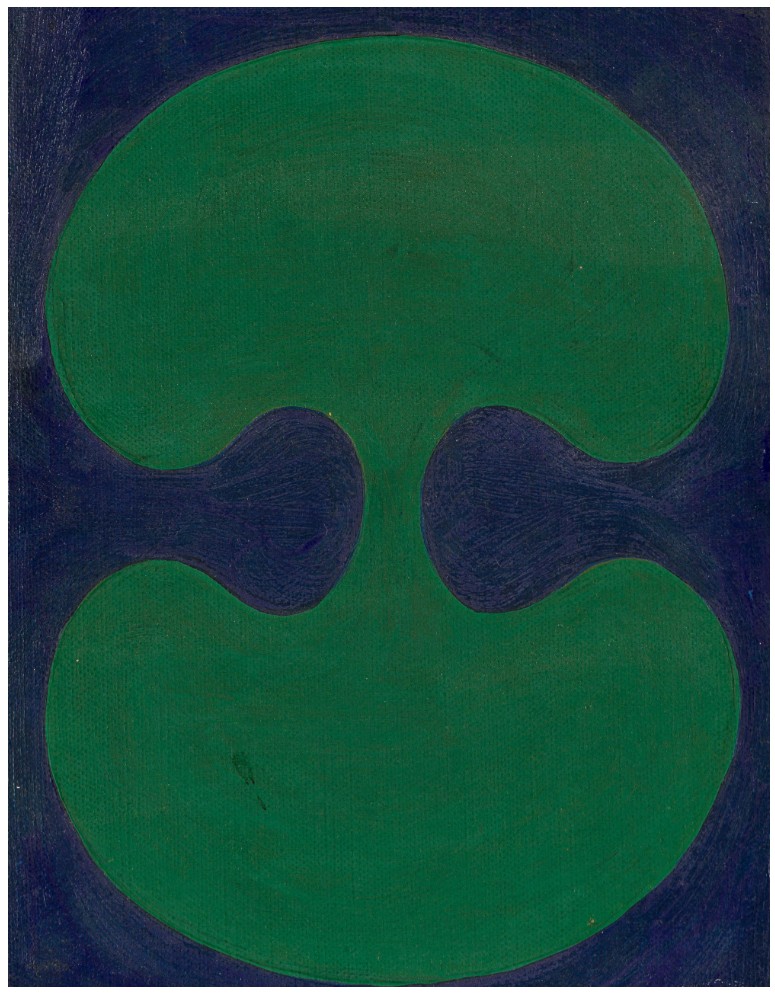
ROBERT INDIANA (1928-2018)
Coenties Slip Gingko, 1957
Oil on linen canvas
8×6 inches (20.3 x 15.2 cm)
Signed, titled, dated and inscribed in ink, on the stretcher
#13. Comma, 1960
The Collection of Norman & Lyn Lear
Christie’s online: 18 July 2025
Estimated: USD 15,000 – 20,000
USD 60,480
ROBERT INDIANA (1928-2018), Comma | Christie’s
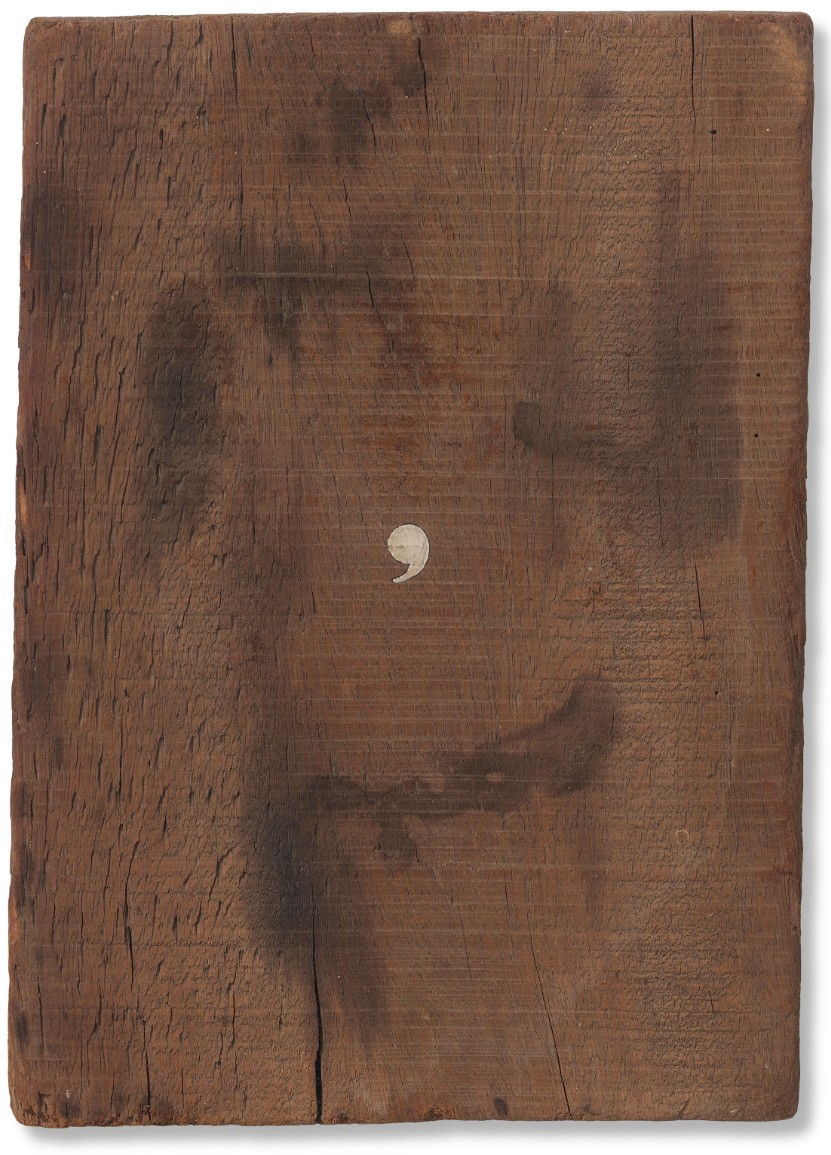
ROBERT INDIANA (1928-2018)
Comma, 1960
Gesso on wood
11x8x1 inches (27.9 x 20.3 x 2.54 cm)
#14. The Great American Dream #1, 1967
Phillips New-York: 14 May 2025
Estimated: USD 25,000 – 35,000
USD 21,590
WORK ON PAPER
Robert Indiana Modern & Contemporary Art Day Sale, Morning Session
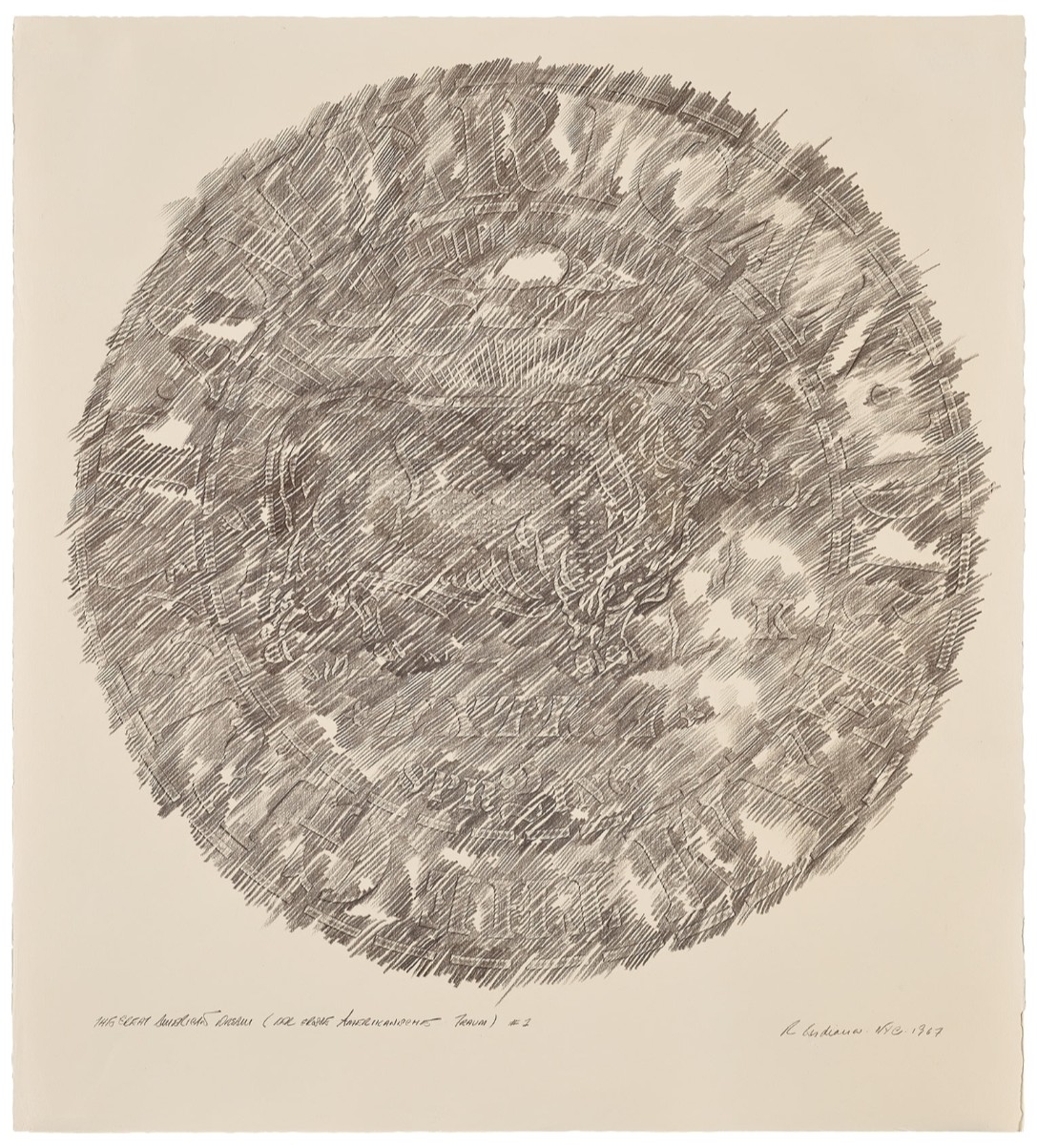
Pencil on paper
28 5/8 x 26 inches (72.7 x 66 cm)
Titled “THE GREAT AMERICAN DREAM (DER GROSSE AMERIKANISCHE TRAUM) #1” lower left
Signed, inscribed and dated “R. Indiana. NYC. 1967” lower right
Lots Passed
LOVE (Red/Blue), 1966-2000
K Auction Seoul: 29 October 2025
Estimated: KRW 560,000,000 – 1,070,000,000
USD 390,000 – 750,000
PASSED
October Auction 2025 Lot.77 Result :: KA
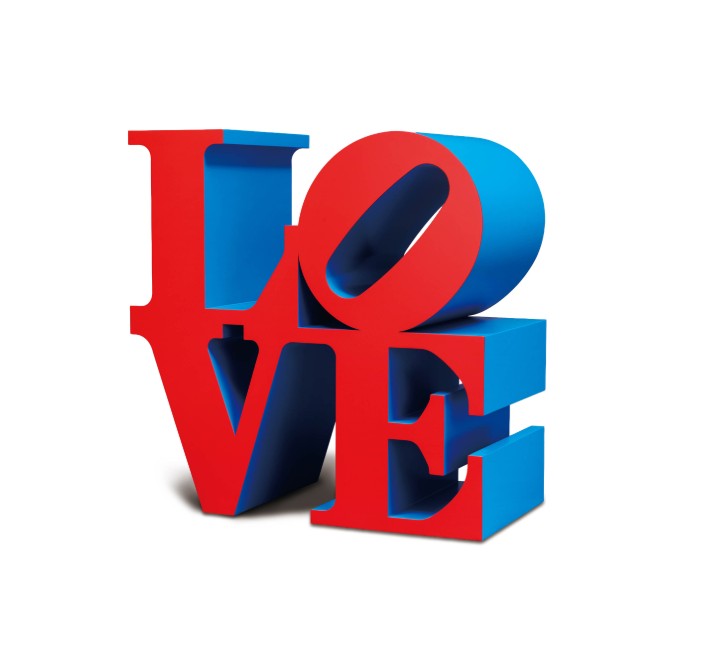
ROBERT INDIANA
LOVE (Red/Blue), 1966-2000
Polychrome Aluminum
36x19x36 inches (91.4 x 45.7 x 91.4 cm)
Stamped (c) 1966-2000 R. INDIANA 6/6 on the lower interior edge of the letter “E”
Small Diamond Hexagon 6, 1966
Phillips New-York: 21 November 2025
Estimated: USD 300,000 – 500,000
PASSED
Robert Indiana Modern & Contemporary Art Day Sale, Morning Session
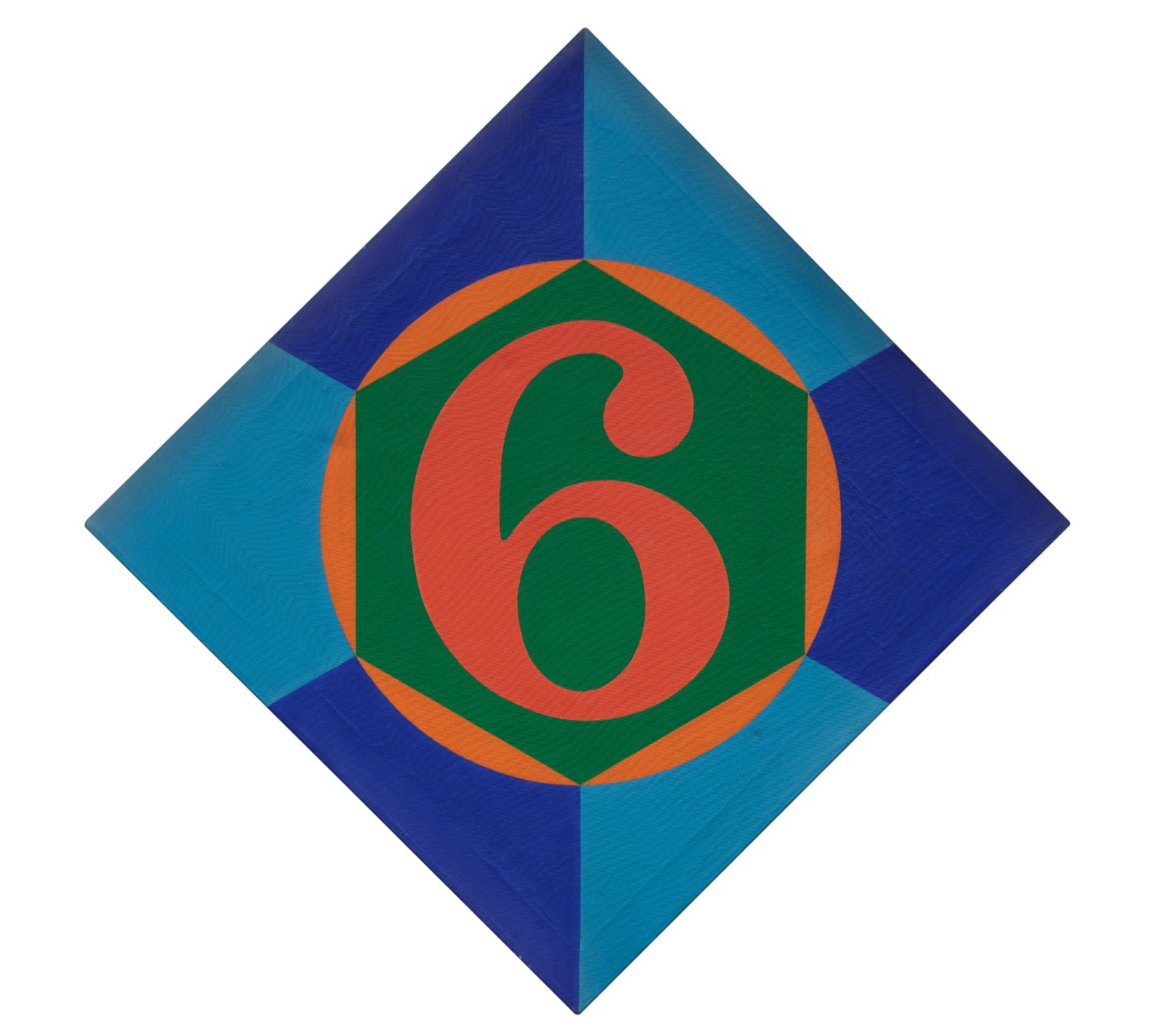
Oil on canvas
34×34 inches (86.4 x 86.4 cm)
Stenciled with the artist’s name, inscription and date “INDIANA 2 NEW YORK 66”
On the reverse
“Our lives are structured on numbers. Birthdays, age, addresses, money—everywhere you turn, there are numbers. Your shirt has six buttons. The room has four walls. Numbers surround us. It’s endless.”
Four, 1964
Phillips New-York: 21 November 2025
Estimated: USD 250,000 – 350,000
PASSED
Robert Indiana Modern & Contemporary Art Day Sale, Morning Session
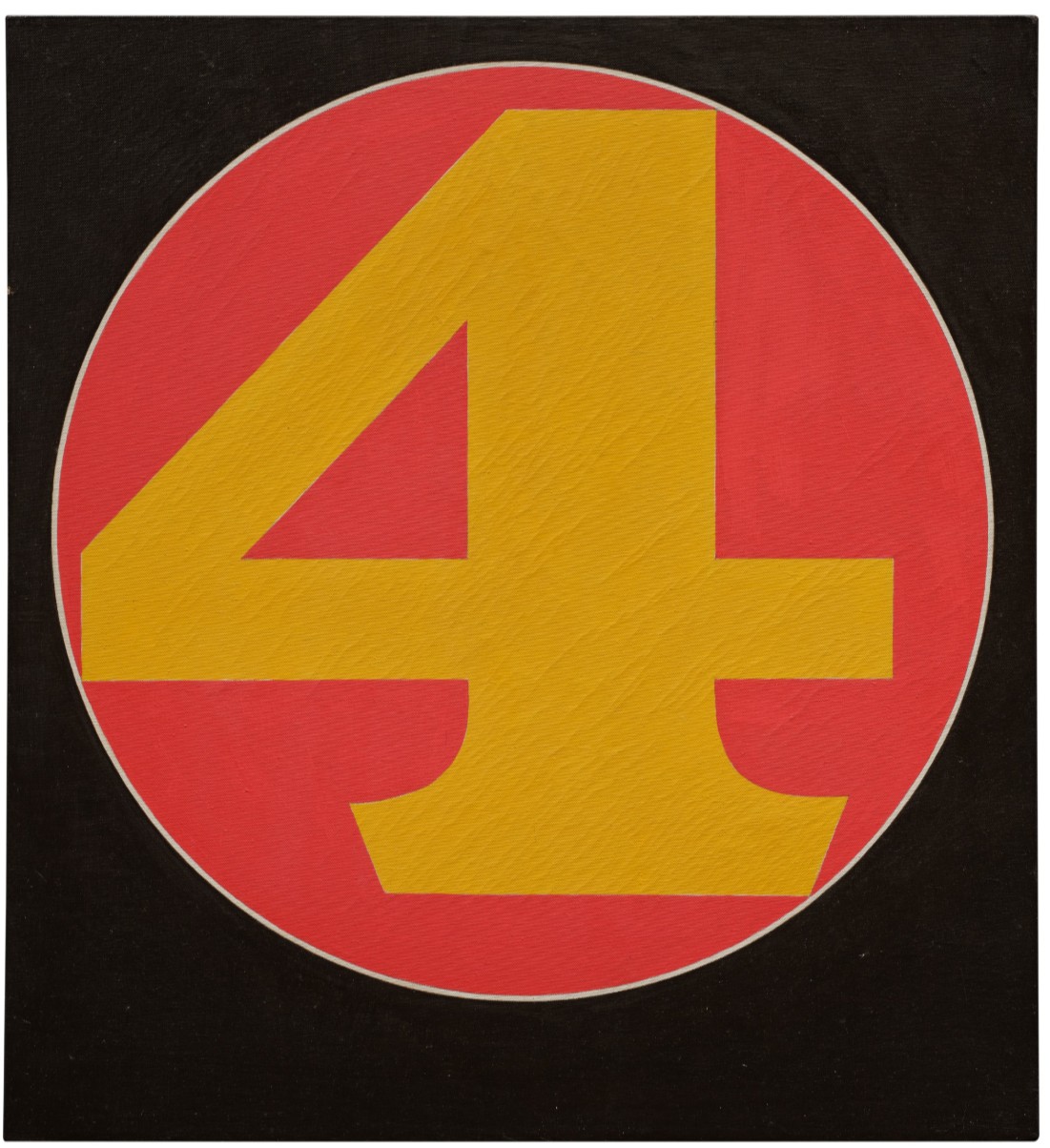
Oil on canvas
24 1/8 x 22 inches (61.3 x 55.9 cm)
Stenciled with the artist’s partial name, inscription and date “IND NYC 64” on the reverse
“I simply discovered the businessman’s calendar and thought that the numbers had a kind of robustness and a kind of, you know, crude vigor to them which I liked. And so all my numbers paintings are based on the numbers from the businessman’s calendar, a found object.”
AMOR (Red Yellow), 1998
K Auction Seoul: 24 September 2025
Estimated: KRW 250,000,000 – 550,000,000
PASSED
September Auction 2025 Lot.86 Result :: KA
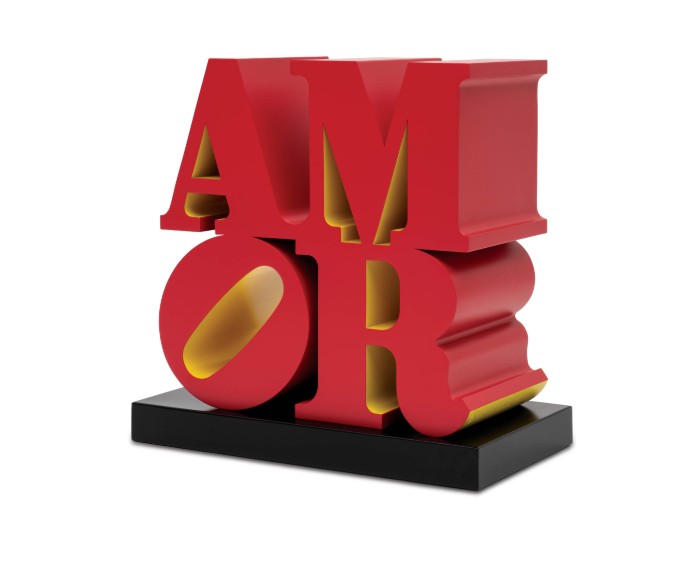
ROBERT INDIANA (1928-2018)
AMOR (Red Yellow), 1998
Polychrome aluminum
Edition 6/8
18x9x18 inches (45.7 x 22.9 x 45.7 cm)
Stamped with the artist’s name, number, date and fabricator mark ‘© 1998 R INDIANA 6/8’
On the lower interior edge of the letter “R”
LOVE (Green Outside, Blue Inside), 1966-2000
K Auction Seoul: 24 September 2025
Estimated: KRW 300,000,000 – 550,000,000
PASSED
September Auction 2025 Lot.87 Result :: KA
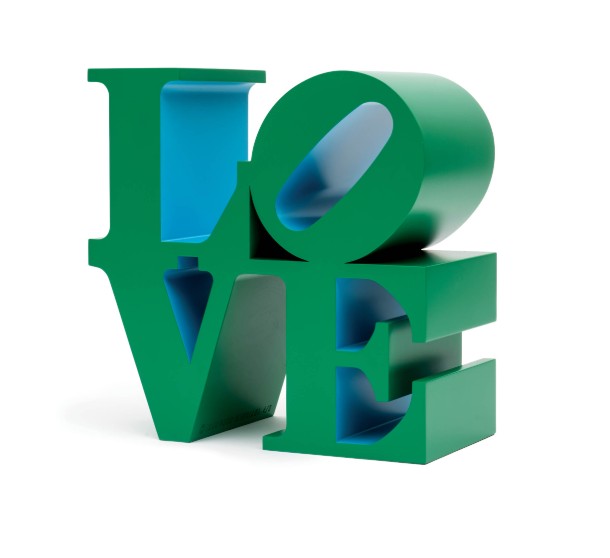
ROBERT INDIANA (1928-2018)
LOVE (Green Outside, Blue Inside), 1966-2000
Polychrome aluminum
Edition 4/8
18x9x18 inches (45.7 x 22.9 x 45.7 cm)
Stamped with the artist’s name, number, date and fabricator mark ‘© 1966-2000 R INDIANA 4/8’
On the lower interior edge of the letter “V”
LOVE (Red/Blue), 2000
K Auction Seoul: 20 August 2025
Estimated: KRW 570,000,000 – 1,040,000,000
PASSED
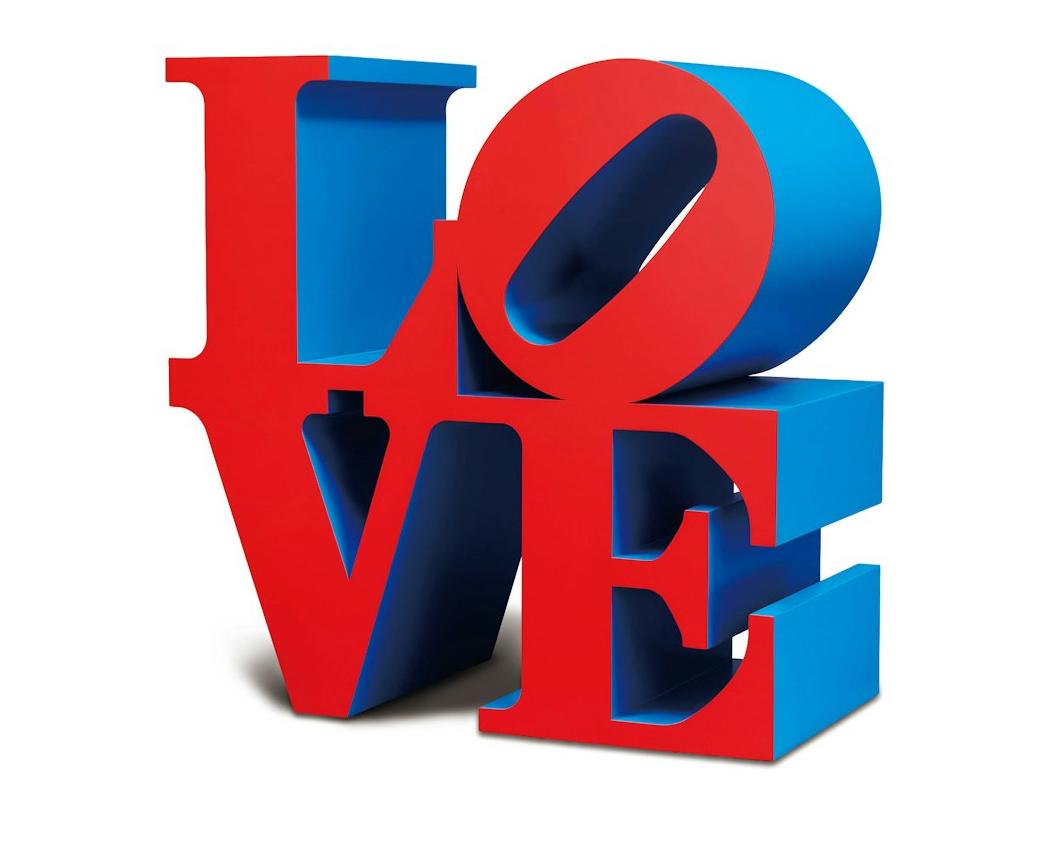
ROBERT INDIANA
LOVE (Red/Blue), 2000
Polychrome aluminum
36x36x18 inches (91.4 x 91.4 x 45.7 cm)
Stamped (c) 1966-2000 R. INDIANA 6/6′ on the lower interior edge of the letter “E”
THE AMERICAN LOVE (White/Blue/Red), 2000
Seoul Auction: 27 May 2025
Estimated: KRW 280,000,000 – 400,000,000
PASSED
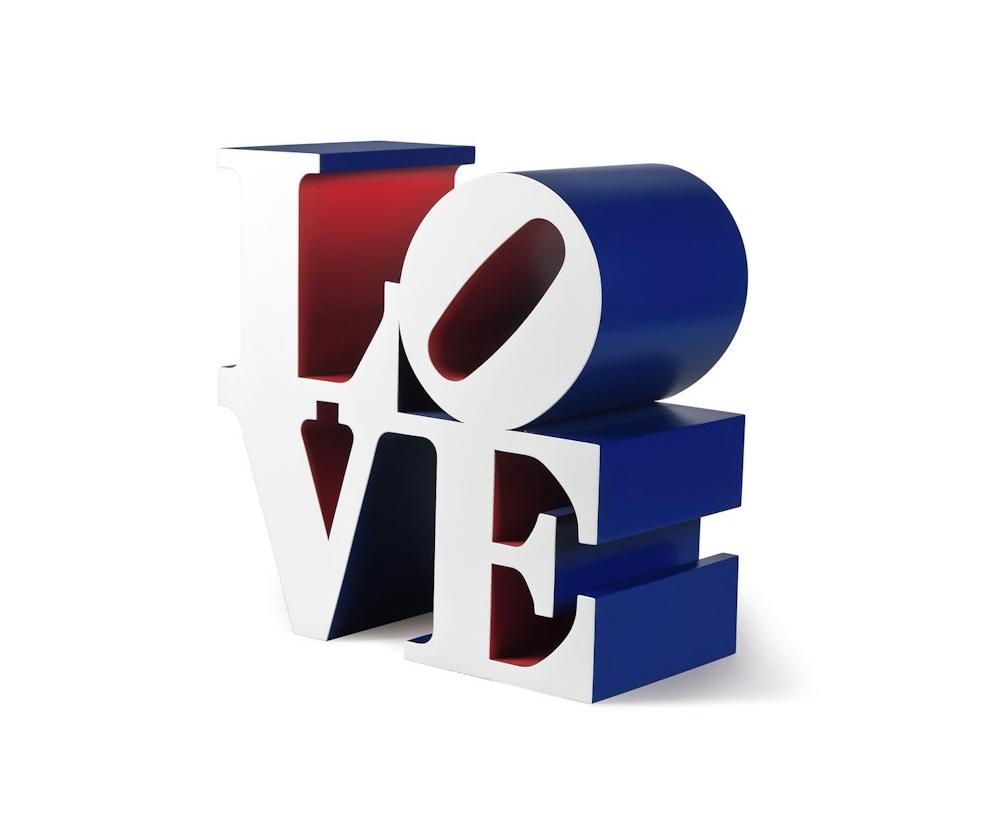
ROBERT INDIANA
THE AMERICAN LOVE (White/Blue/Red), 2000
Polychrome aluminum
18x9x18 inches (45.7 x 22.9 x 45.7 cm)
Stamped (c) 1966-2000 R. INDIANA 6/6′ on the lower interior edge of the letter “E”
Lots Withdrawn
LOVE Wall, 2007
Phillips New-York: 13 May 2025
Estimated: USD 700,000 – 1,000,000
WITHDRAWN
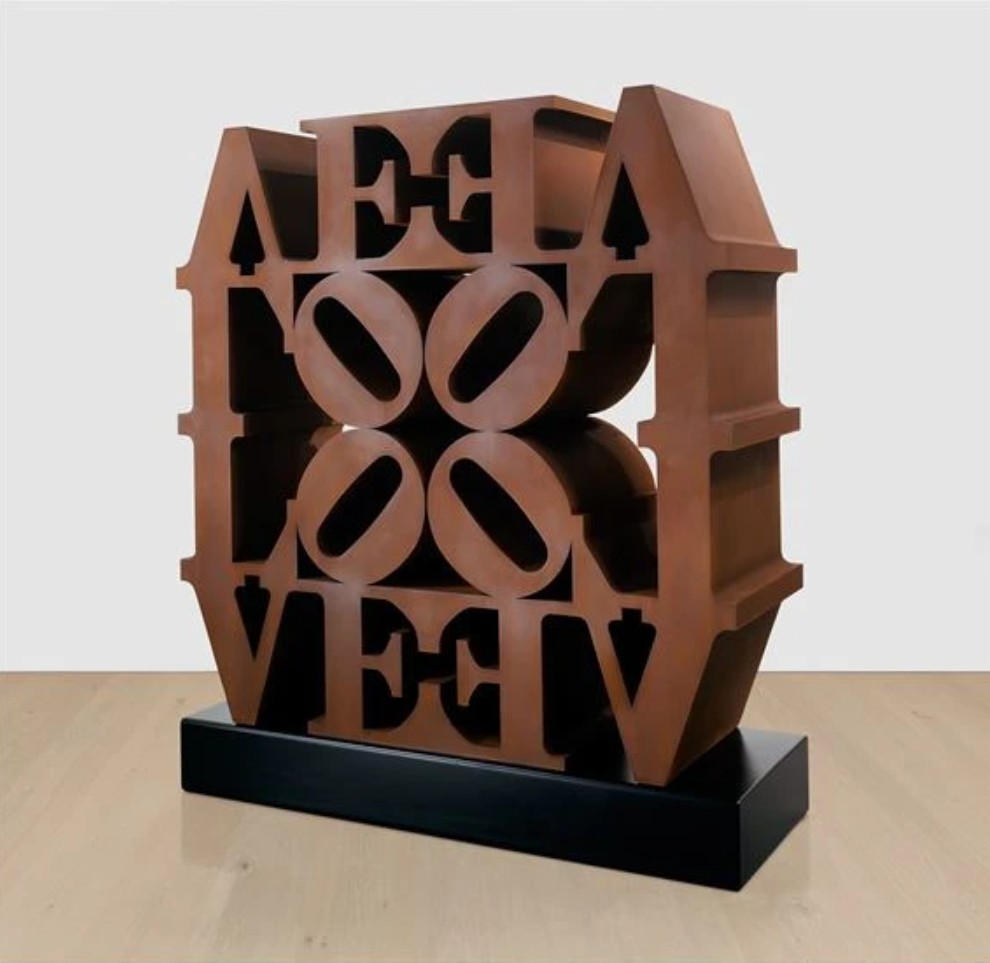
ROBERT INDIANA
LOVE Wall, 2007
Steel on painted aluminum
81 1/4 x 74 x 27 inches (206.4 x 188 x 68.6 cm)
Signed, number 2 from an edition of 3 plus 2 artist’s proofs
2024 Auction Results
14 lots sold at auction in 2024 for a total turnover of USD 7,072,213. With 4 lots failing to sell, the sell-through rate is 74%. The highest price has been achieved at Sotheby’s in London on 26 June 2024, when a 72-inch all red LOVE sculpture sold for GBP 1,260,000 (USD 1,597,680).
2024 Top 3 Lots
5 lots sold for more than USD 500,000, generating a cumulative turnover of USD 5,278,680, representing 74.6% of the total turnover for 2024.
#1. LOVE (Red Outside Red Inside), 1966-2000
Sotheby’s London: 26 June 2024
Estimated: GBP 400,000 – 600,000
GBP 1,260,000 / USD 1,597,680
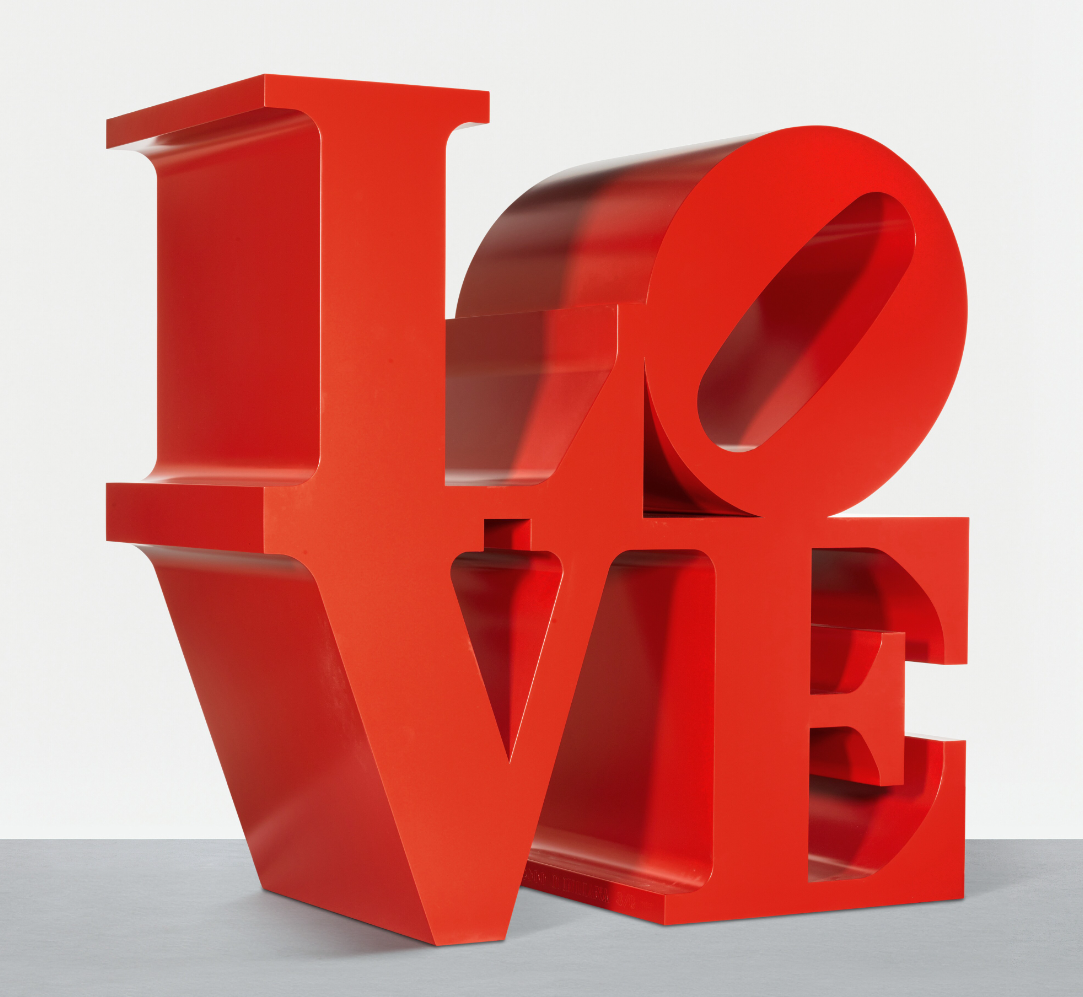
ROBERT INDIANA (1928 – 2018)
LOVE (Red Outside Red Inside), 1966-2000
Painted aluminum
72x72x36 inches (182.9 x 182.9 x 91.4 cm)
Stamped with the artist’s name, dated 1966-2000 and numbered 3/6 (towards the base)
Conceived in 1966 and executed in 2000, this work is number 3 from an edition of 6 plus 4 artist’s proofs
#2. LOVE (Red Faces Blue Sides), 1966-1999
Christie’s New-York: 17 May 2024
Estimated: USD 1,000,000 – 1,500,000
USD 1,197,000
ROBERT INDIANA (1928-2018), LOVE (Red Faces Blue Sides) | Christie’s (christies.com)
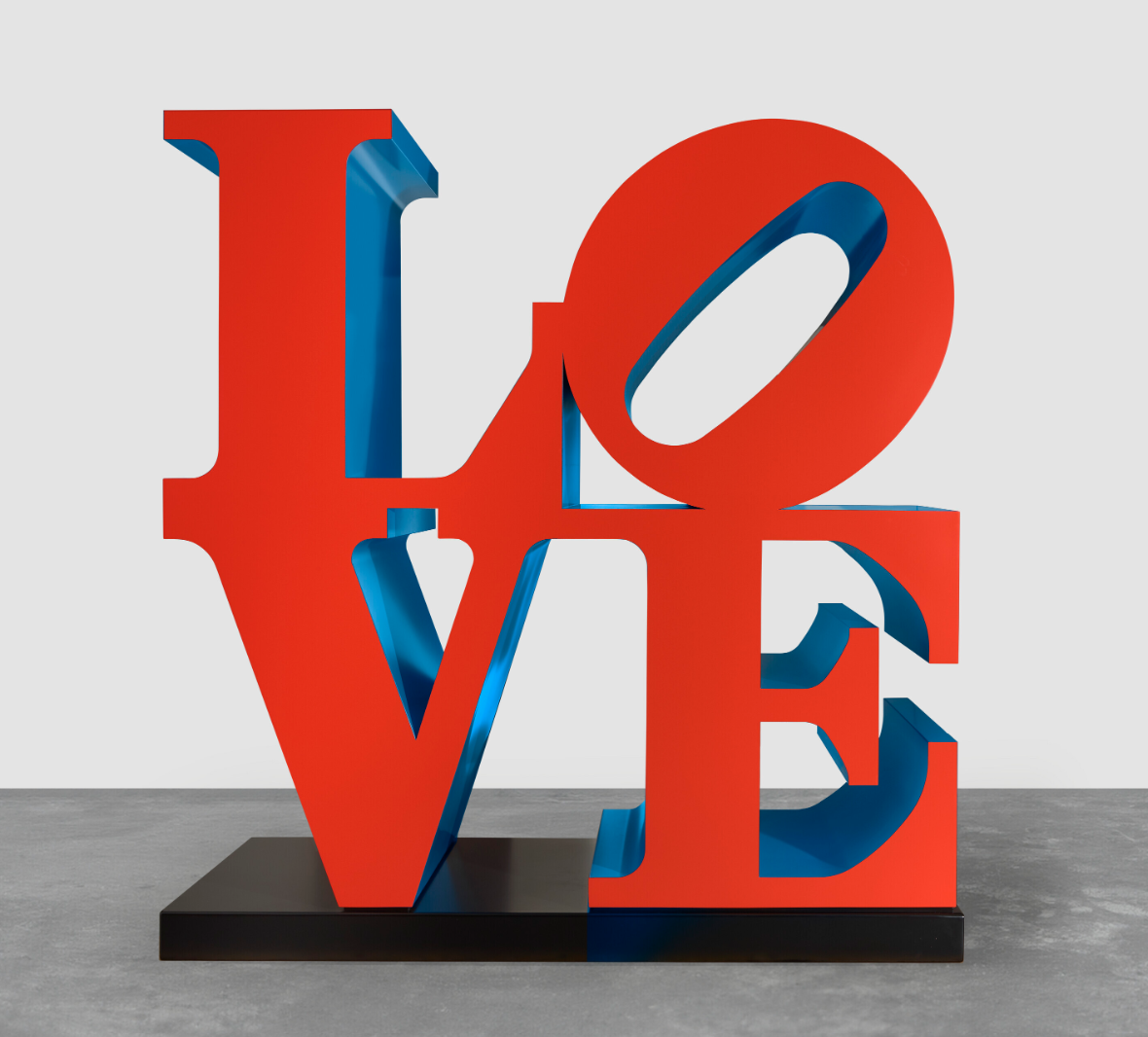
ROBERT INDIANA (1928-2018)
LOVE (Red Faces Blue Sides), 1966-1999
Polychrome aluminum
96x96x48 inches (243.8 x 243.8 x 121.9 cm)
Stamped with the artist’s name, number, date and fabricator mark ‘© 1966-1999 R INDIANA 3/5’
(on the interior edge of the ‘E’)
Conceived in 1966 and executed in 1999, this work is number three from an edition of five plus two artist’s proofs
USD 1 million
#3. LOVE (Red Outside Blue Inside), 1966-1998
Christie’s New-York: 17 May 2024
Estimated: USD 400,000 – 600,000
USD 882,000
ROBERT INDIANA (1928-2018), LOVE (Red Outside Blue Inside) | Christie’s (christies.com)
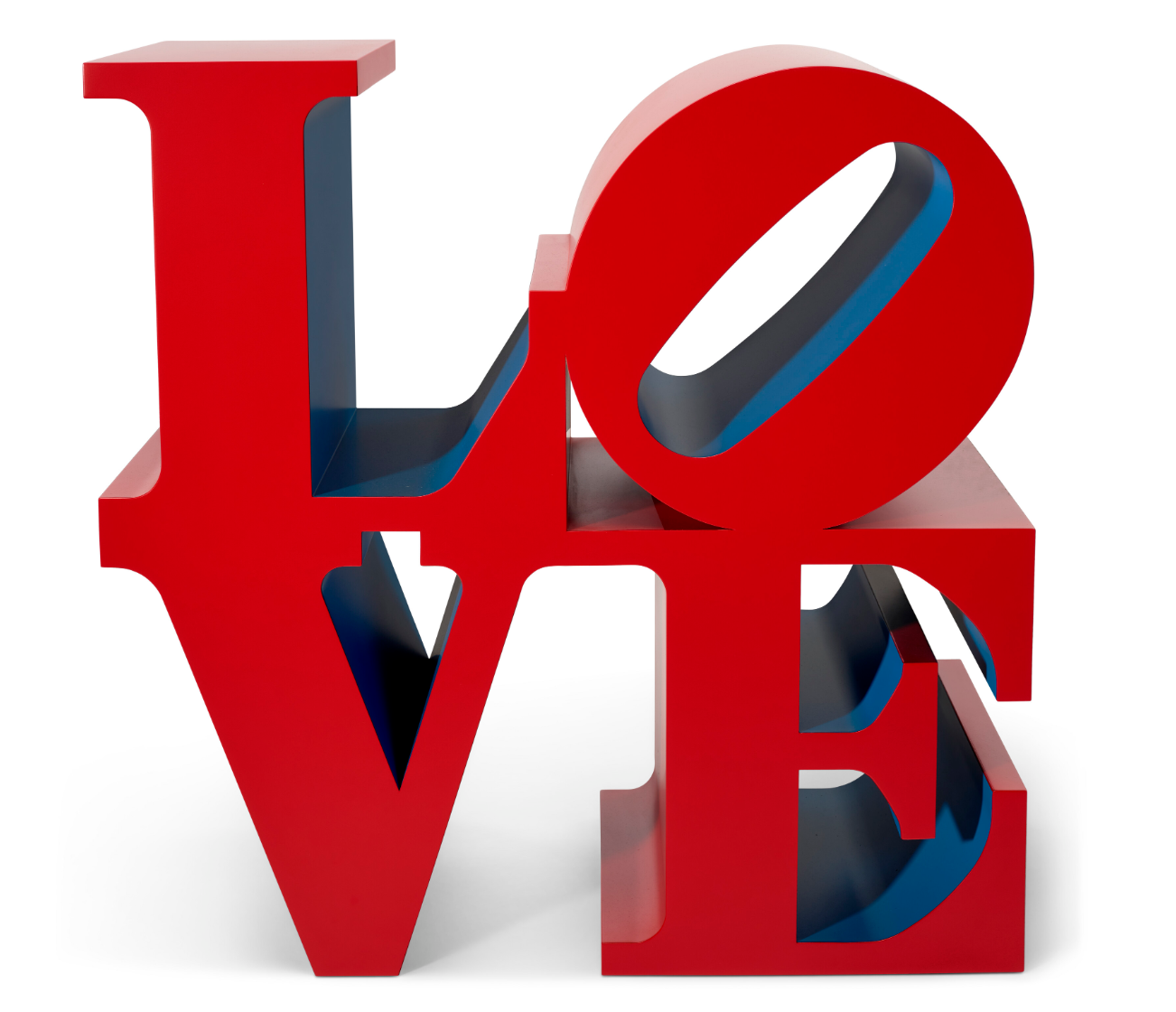
ROBERT INDIANA (1928-2018)
LOVE (Red Outside Blue Inside), 1966-1998
Polychrome aluminum
36x36x18 inches (91.4 x 91.4 x 45.7 cm)
Stamped with the artist’s name, number, date and fabricator mark ‘© 1966-1999 R INDIANA 6/6’
(on the interior edge of the ‘E’)
Conceived in 1966 and executed in 1998, this work is number six from an edition of six plus four artist’s proofs and two hors commerce
#4. LOVE (Red Outside Violet Inside), 1966-1997
Sotheby’s New-York: 21 November 2024
Estimated: USD 200,000 – 300,000
USD 840,000
LOVE (Red Outside Violet Inside) | Contemporary Day Auction | 2024 | Sotheby’s
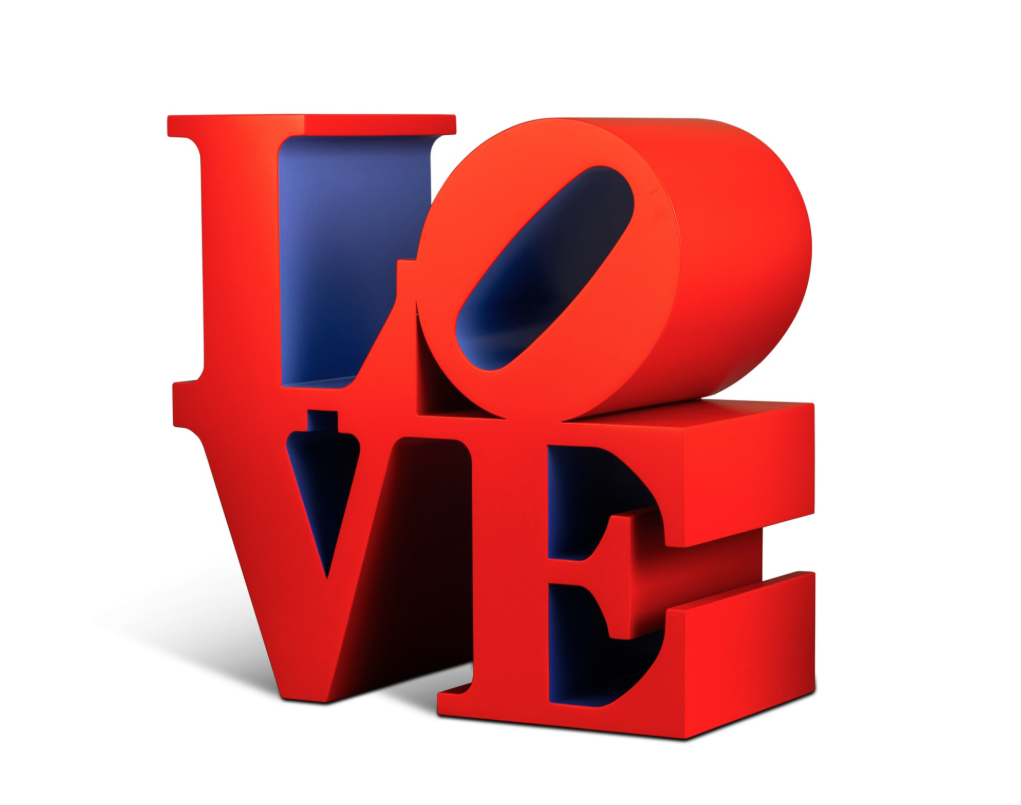
ROBERT INDIANA (1928 – 2018)
LOVE (Red Outside Violet Inside), 1966-1997
Polychromed aluminum
18x18x9 inches (45.7 x 45.7 x 22.8 cm)
Stamped with the artist’s signature, date 1966-1997 and number 1/8 (on the outside of the ‘V’)
Conceived in 1966 and fabricated in 1997, this work is number 1 from an edition of 8 plus 4 artist’s proofs
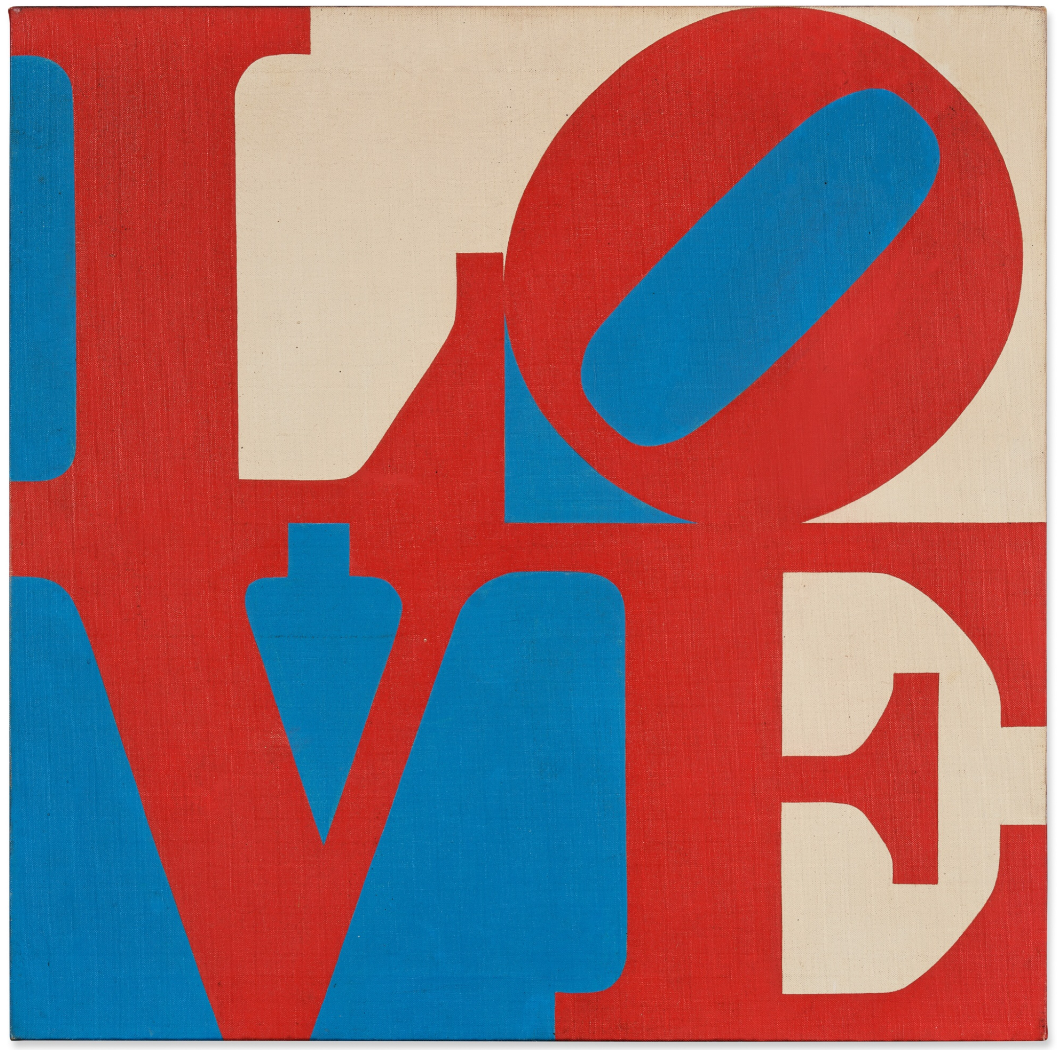
#5. Love, 1965
Sotheby’s New-York: 14 May 2024
Estimated: USD 400,000 – 600,000
USD 762,000
Love | Contemporary Day Auction | 2024 | Sotheby’s (sothebys.com)
ROBERT INDIANA (1928 – 2018)
Love, 1965
Oil on canvas
24×24 inches (61×61 cm)
Signed, titled and dated 1965 (on the reverse)
USD 500,000
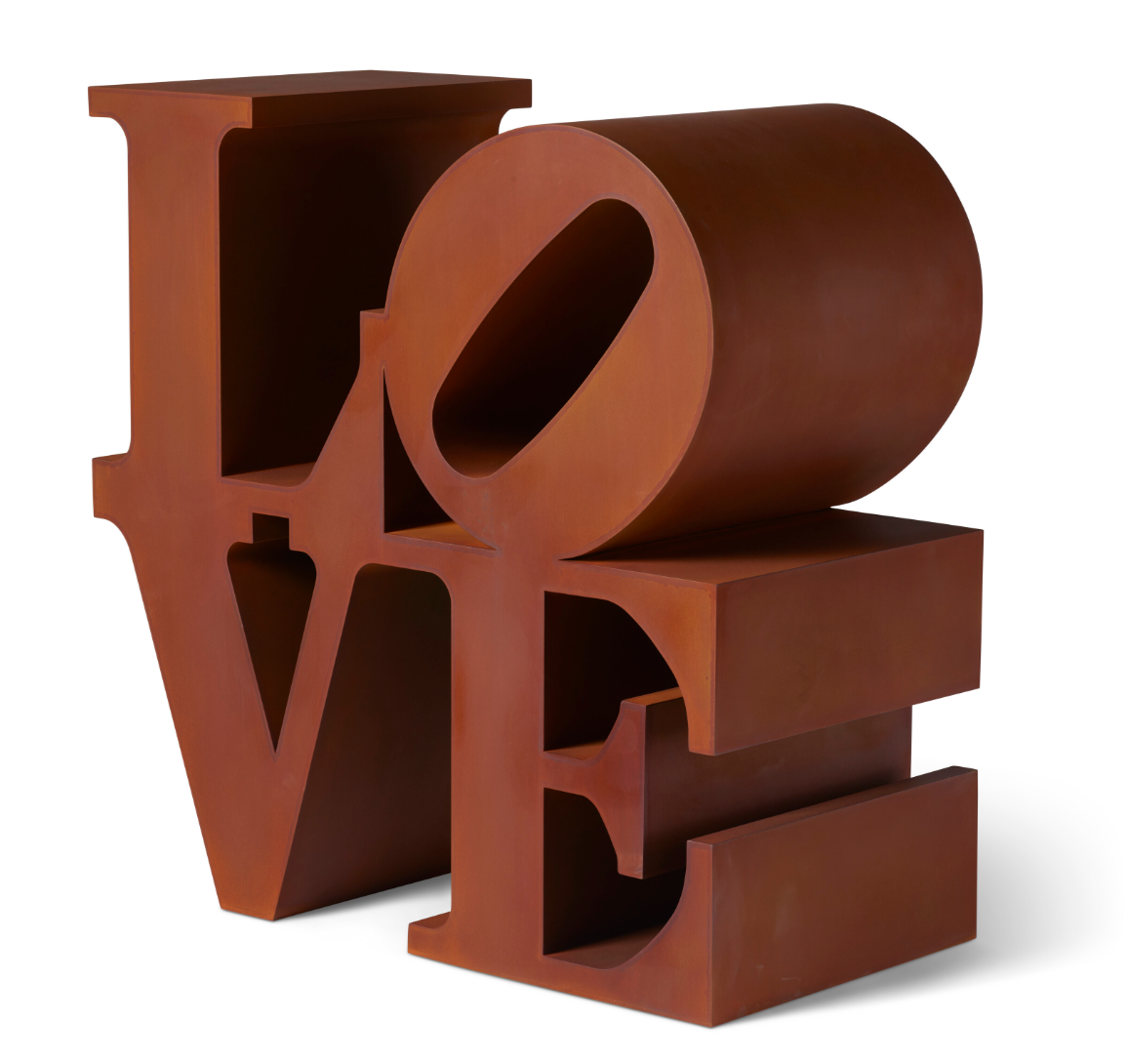
#6. LOVE, 1966-1999
Christie’s New-York: 22 November 2024
Estimated: USD 300,000 – 500,000
USD 378,000
ROBERT INDIANA (1928-2018), LOVE | Christie’s
ROBERT INDIANA (1928-2018)
LOVE, 1966-1999
Cor-ten steel
36x36x18 inches (91.4 x 91.4 x 45.7 cm)
Stamped with the artist’s name, number, date and fabricator mark ‘© 1966-1999 R INDIANA 6⁄6’
(on the interior edge of the ‘E’)
Conceived in 1966 and executed in 1999, this work is number six from an edition of six plus two artist’s proofs
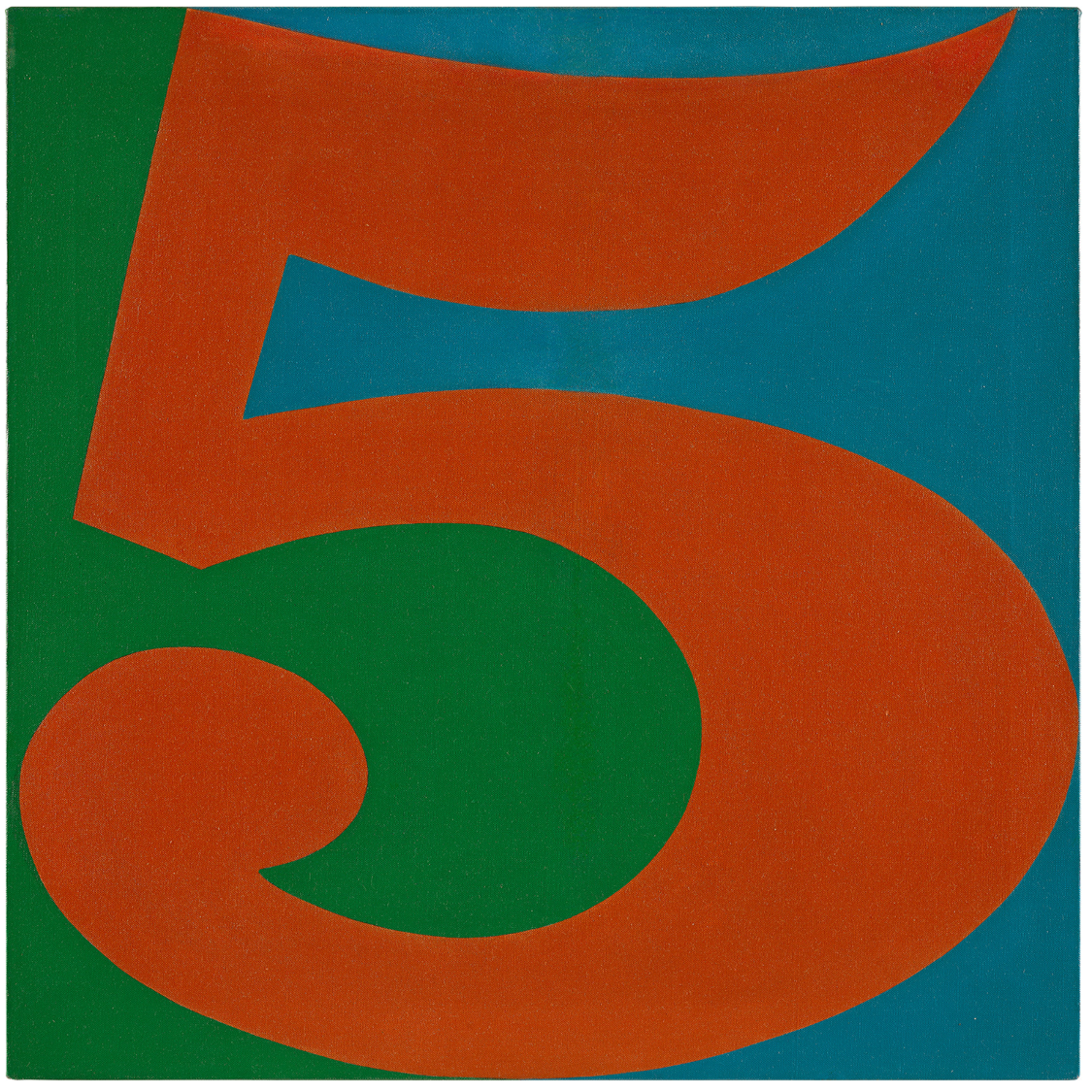
#7. Cardinal Five, 1966
Phillips New-York: 19 November 2024
Estimated: USD 200,000 – 300,000
USD 279,400
Robert Indiana – Modern & Contempor… Lot 31 November 2024 | Phillips
ROBERT INDIANA
Cardinal Five, 1966
Oil on canvas
24 x 24 1/8 inches (61 x 61.3 cm)
Stenciled with the artist’s name, inscription and date “INDIANA 2 NEW YORK 66” on the reverse
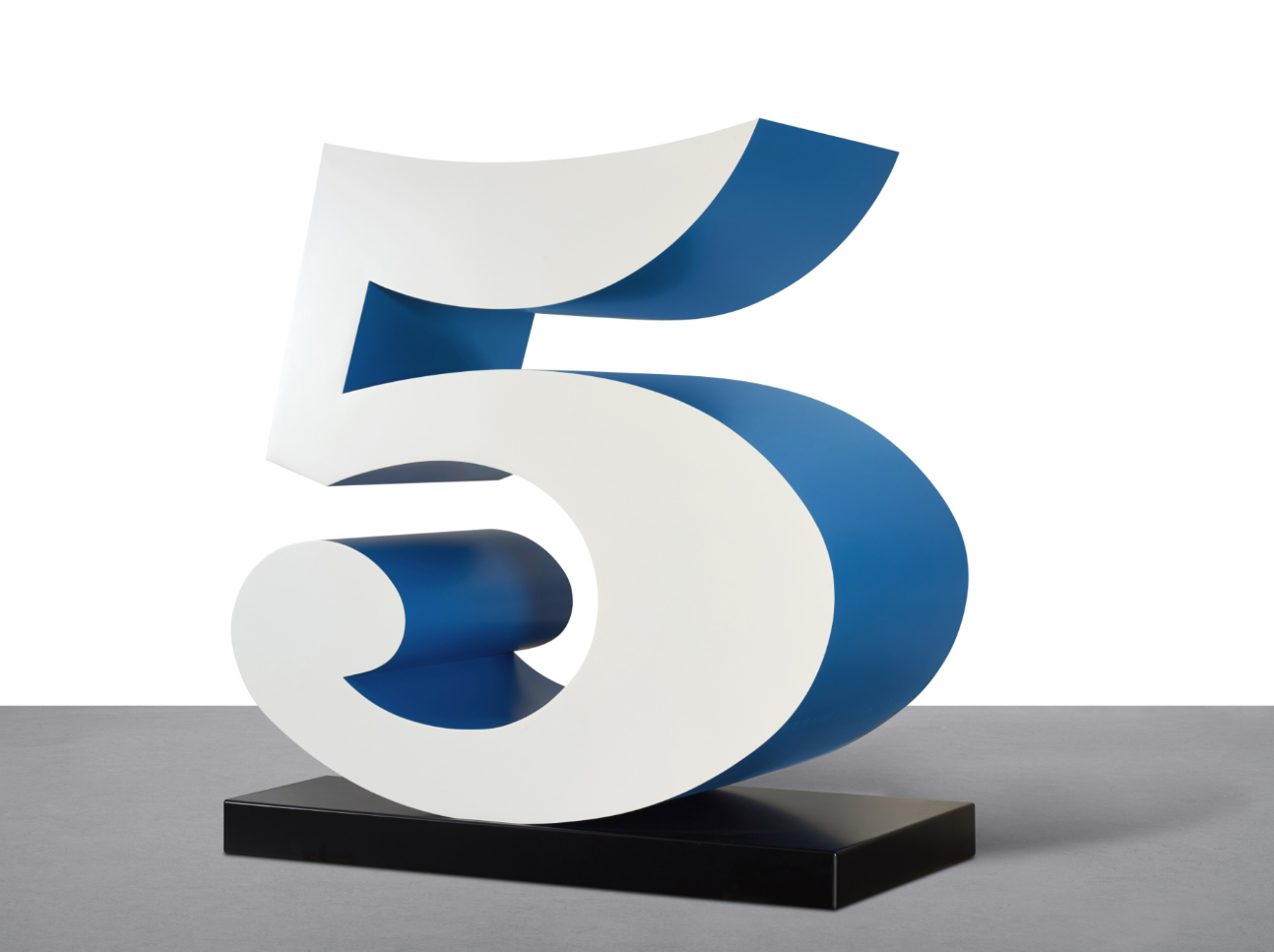
#8. Five, 1980-2001
Sotheby’s London: 7 March 2024
Estimated: GBP 150,000 – 200,000
GBP 203,200 / USD 257,658
Five | Modern & Contemporary Day Auction | 2024 | Sotheby’s (sothebys.com)
ROBERT INDIANA (1928 – 2018)
Five, 1980-2001
Polychrome aluminum on painted aluminum base
78x74x38 inches (198.1 x 188 x 96.5 cm)
Stamped with the artist’s name, dated 1980 and 2001 and numbered 3/6 (on the underside)
Conceived in 1980 and fabricated in 2001, this work is number 3 from an edition of 6 plus 2 artist’s proofs
#9. LOVE, 1966-1998
Christie’s London: 10 October 2024
Estimated: GBP 150,000 – 200,000
GBP 189,000 / USD 246,955
ROBERT INDIANA (1928-2018), LOVE | Christie’s
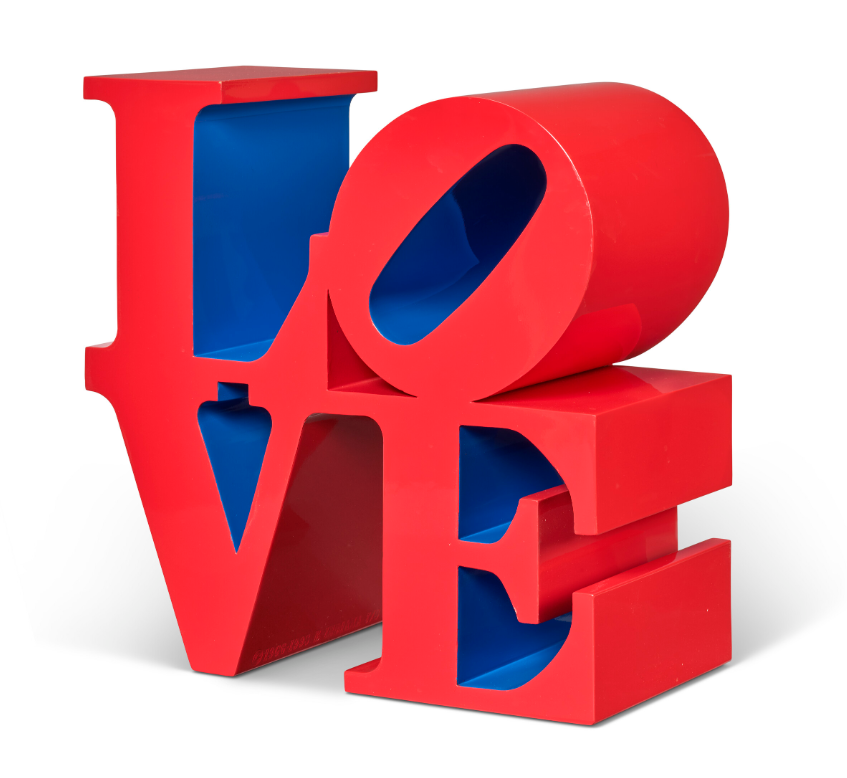
ROBERT INDIANA (1928-2018)
LOVE, 1966-1998
Polychromed aluminum
18x18x9 inches (45.7 x 45.7 x 22.8 cm)
Stamped with the artist’s name, number and date ‘© 1966-1998 R INDIANA 7⁄8’ (on the inside edge of the “V”)
Conceived in 1966 and executed in 1998, this work is number seven from an edition of eight plus four artist’s proofs
#10. LOVE (Red/Blue/Green), 1966-1999
K Auction Seoul: 26 June 2024
Estimated: KRW 290,000,000 – 400,000,000
KRW 333,500,000 / USD 239,455
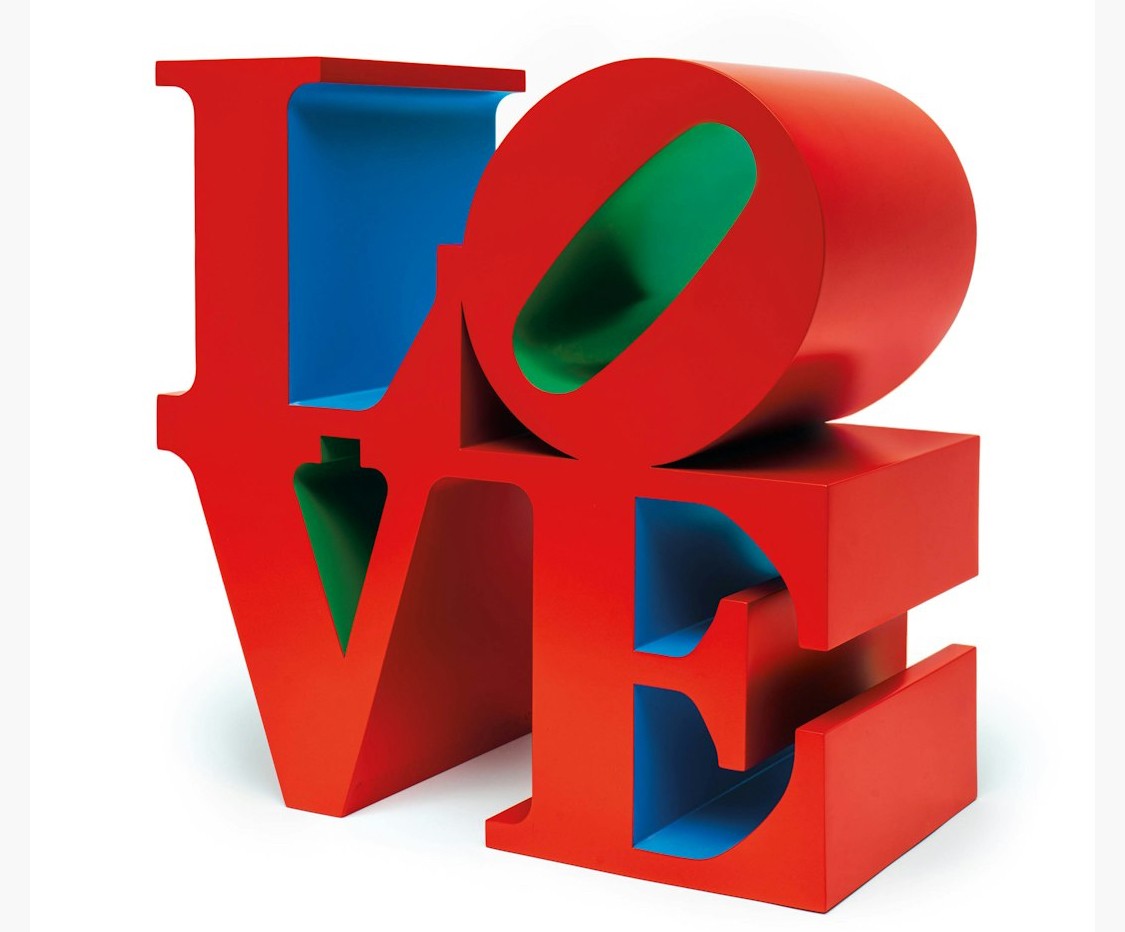
ROBERT INDIANA (1928-2018)
LOVE (Red/Blue/Green), 1966-1999
Polychrome aluminum
18x18x9 inches (45.6 x 45.6 x 22.8 cm)
Stamped with the artist’s signature, number and date ”© 1966-1999 R INDIANA AP 3/4′
(on the inside edge of the “V”)
Conceived in 1966 and executed in 1999, this work is an artist’s proof outside from an edition of eight
#11. Hope (Red/Yellow), 2009
Seoul Auction: 28 May 2024
Estimated: KRW 150,000,000 – 350,000,000
KRW 177,000,000 / USD 129,920

ROBERT INDIANA
Hope (Red/Yellow), 2009
Polychrome aluminum
18x18x9 inches (45.7 x 45.7 x 22.8 cm)
Stamped with the artist’s name, number, foundry mark and date “© R. INDIANA 2009 VIII/IX” on the lower interior edge of the P
Executed in 2009, this work is number 8 from an edition of 9
#12. ZERO, 1978-2003
Christie’s New-York: 22 November 2024
Estimated: USD 40,000 – 60,000
USD 100,800
ROBERT INDIANA (1928-2018), ZERO | Christie’s
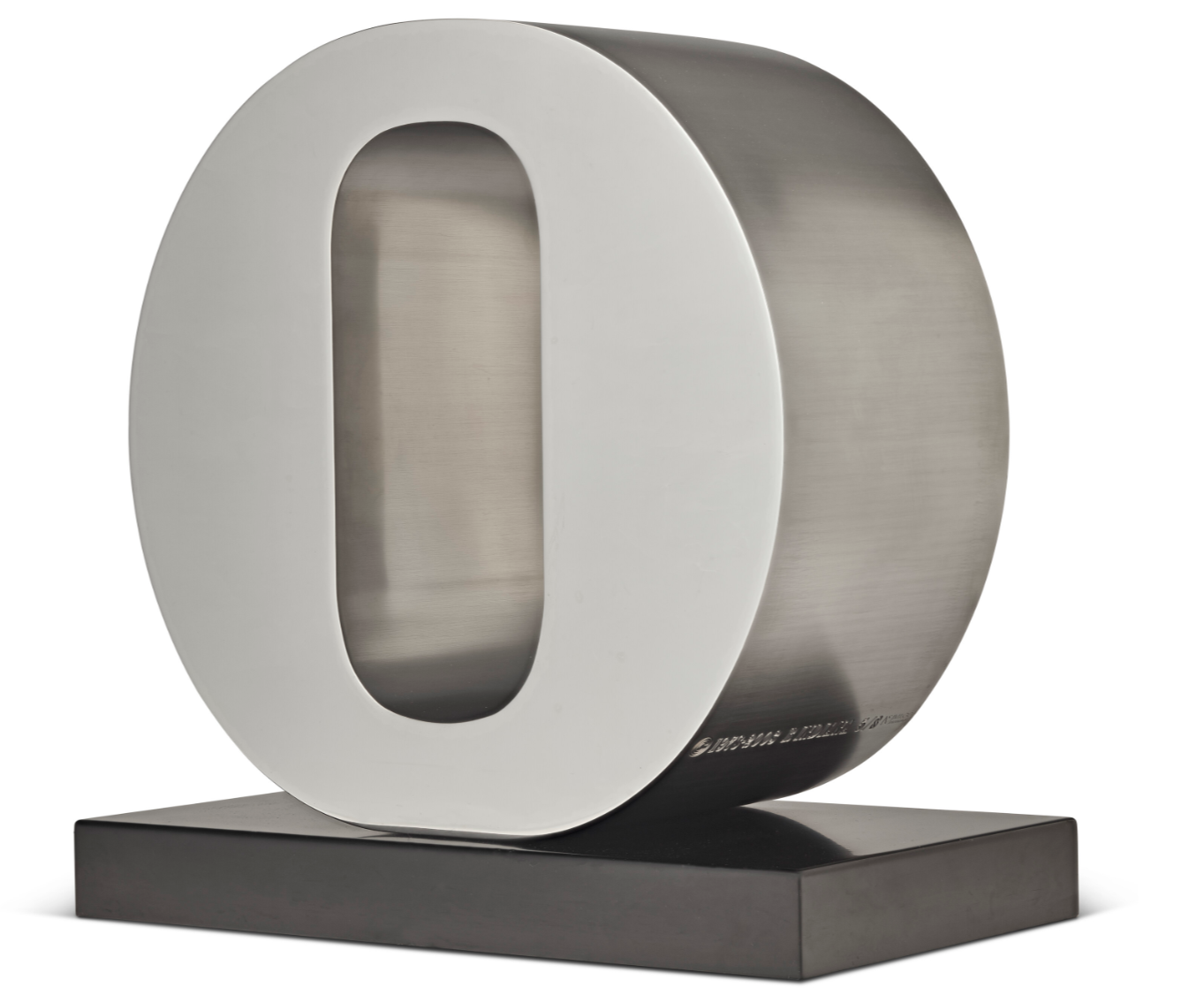
ROBERT INDIANA (1928-2018)
ZERO, 1978-2003
Stainless steel, on painted steel base
18x18x10 inches (45.7 x 45.7 x 25.4 cm)
Stamped with the artist’s name, number, date and fabricator mark ‘© 1978-2003 R INDIANA 5⁄8’ (on the lower edge)
Conceived in 1978 and executed in 2003, this work is number five from an edition of eight plus two artist’s proofs
2023 Auction Results
9 lots sold at auction in 2023 for a total turnover of USD 3,197,065.
With 6 lots failing to sell, the sell-through rate is 60%. Of note, 6 lost were passed with K Auction and Seoul Auction, the two main auction houses in South-Korea. The highest price has been achieved at Christie’s in New-York on 10 November 2023, when a 36-inch LOVE sculpture sold for USD 957,600. 2 lots sold for more than USD 500,000, generating a cumulative turnover of USD 1,783,100, representing 55.8% of the total turnover for 2023.
2023 Top 3 Lots
#1. LOVE (Red Faces Violet Sides), 1966-1999
Christie’s New-York: 10 November 2023
Estimated: USD 400,000 – 600,000
USD 957,600
ROBERT INDIANA (1928-2018), LOVE (Red Faces Violet Sides) | Christie’s (christies.com)
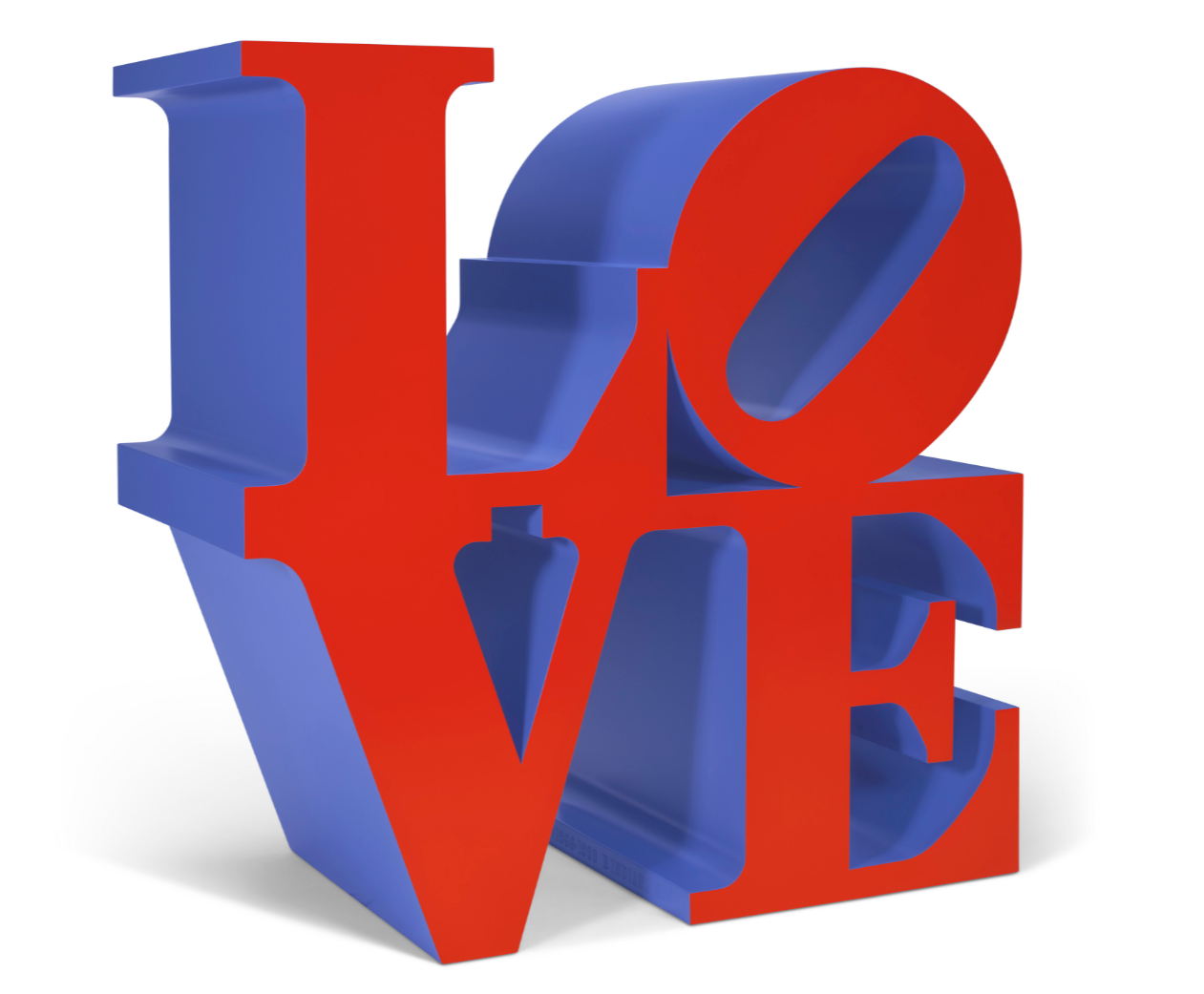
ROBERT INDIANA (1928-2018)
LOVE (Red Faces Violet Sides), 1966-1999
Polychrome aluminum
36x36x18 inches (91.4 x 91.4 x 45.7 cm)
Stamped with the artist’s name, number and date ”© 1966-1999 R INDIANA 6⁄6′ (on the interior edge of the ‘E’)
Conceived in 1966 and executed in 1999, this work is number six from an edition of six plus four artist’s proofs
#2. Four Sixes, 1964-65
Sotheby’s New-York: 8 November 2023
Estimated: USD 600,000 – 800,000
USD 825,500
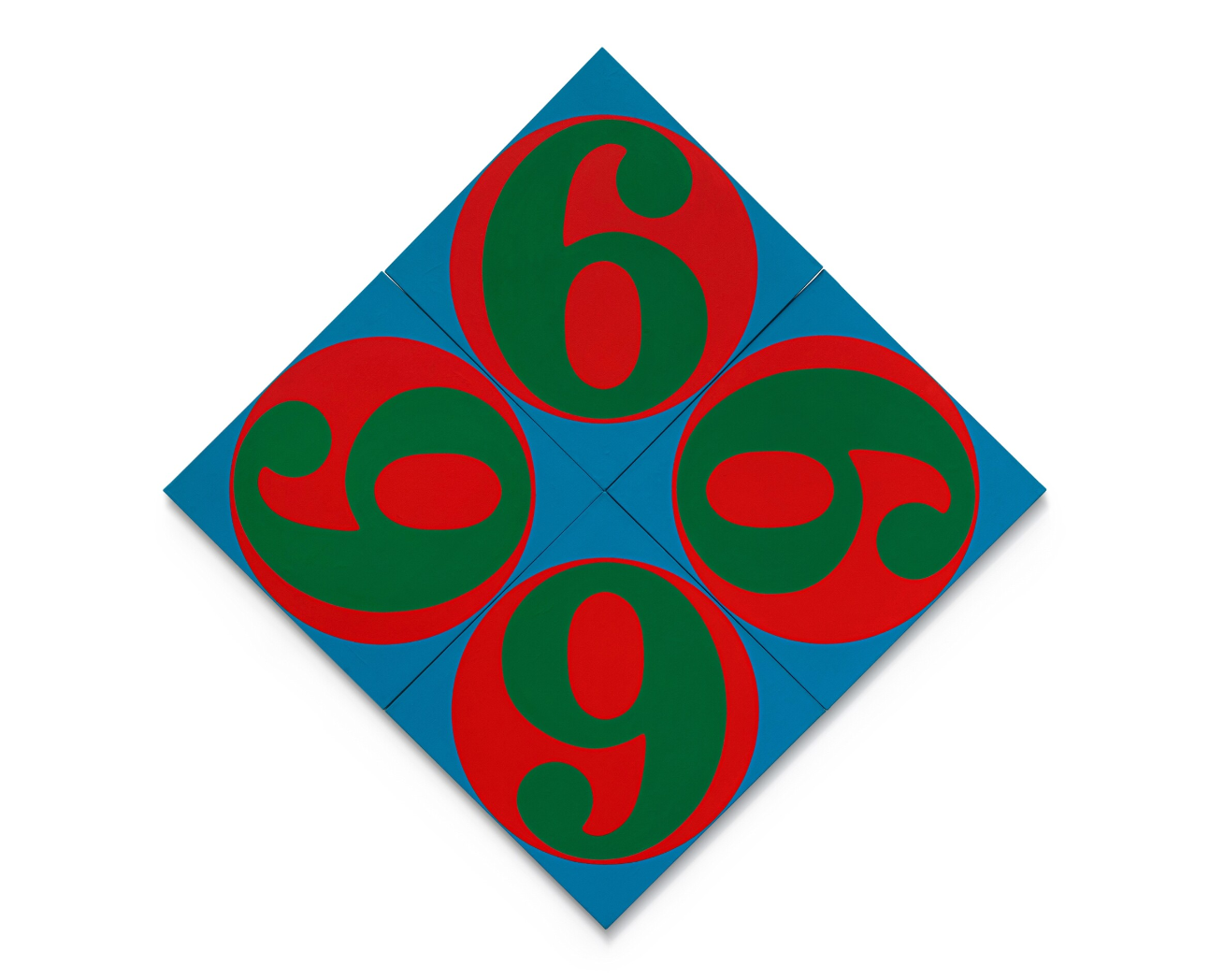
ROBERT INDIANA (1928 – 2018)
Four Sixes, 1964-65
Oil on canvas, in four parts
Overall: 68 1/4 x 68 1/4 inches (173.4 x 173.4 cm)
Upper: signed and variously inscribed (on the reverse)
Left: variously inscribed (on the reverse)
Lower: dated 1964•5 and variously inscribed (on the reverse)
Right: signed, dated 1964•5 and variously inscribed (on the overlap) and variously inscribed (on the reverse)
USD 500,000
#3. Nine, 1965
Christie’s New-York: 7 March 2023
Estimated: USD 200,000 – 300,000
USD 403,200
ROBERT INDIANA (1928-2018), Nine | Christie’s (christies.com)
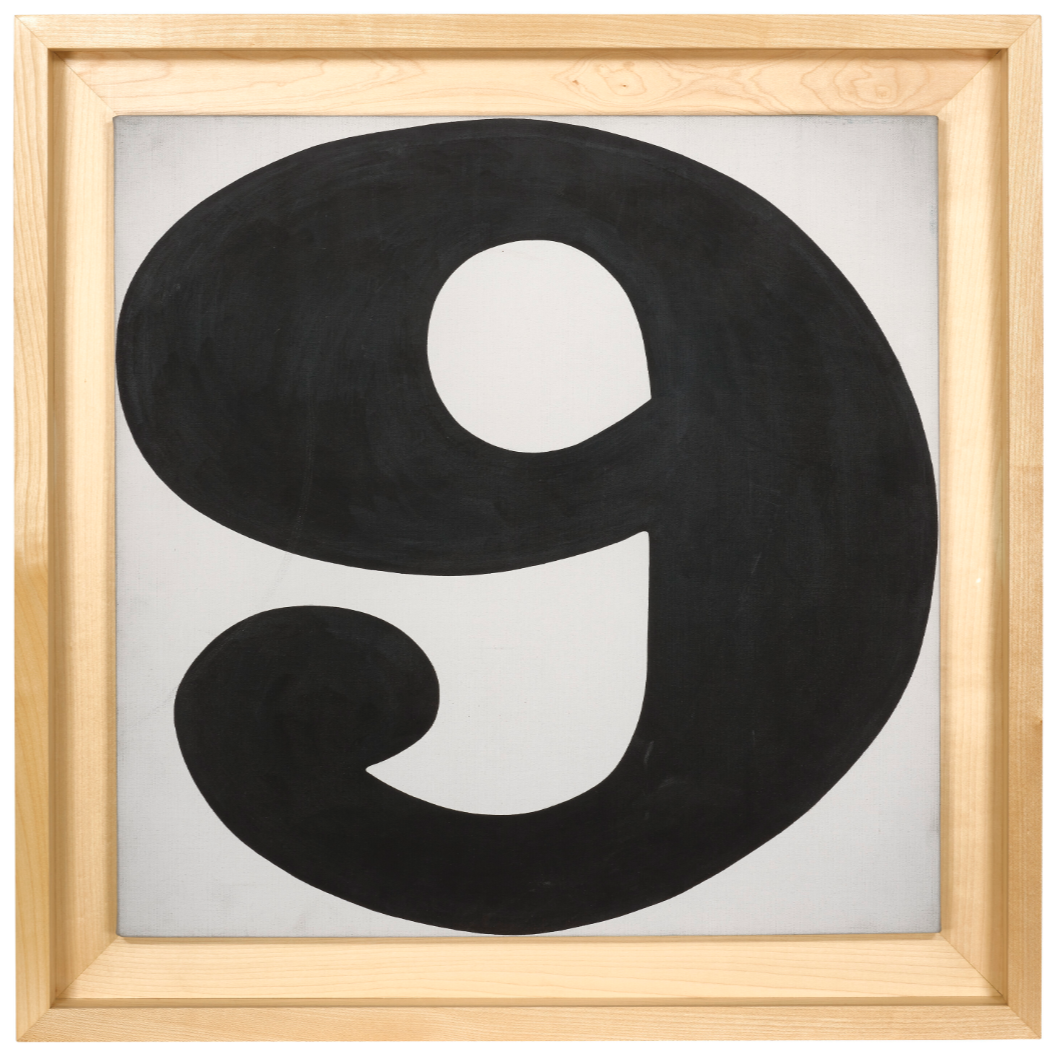
ROBERT INDIANA (1928-2018)
Nine, 1965
Oil on canvas
24×24 inches (61×61 cm)
Stenciled with the artist’s name, inscription, title and date ‘INDIANA NYC NINE 1965’ (on the reverse)
#4. One Through Zero, 2003
Christie’s New-York: 7 March 2023
Estimated: USD 250,000 – 350,000
USD 289,800
ROBERT INDIANA (1928-2018), One Through Zero | Christie’s (christies.com)

ROBERT INDIANA (1928-2018)
One Through Zero, 2003
Oil on canvas, in ten parts
Each: 6×6 inches (15.2 x 15.2 cm)
Stenciled with the artist’s initials, inscription and date ‘RI V H 03’ (on the overlap of each canvas)
#5. LOVE, 1966-1999
Christie’s London: 14 October 2023
Estimated: GBP 170,000 – 250,000
GBP 201,600 / USD 244,440
ROBERT INDIANA (1928-2018), LOVE | Christie’s (christies.com)
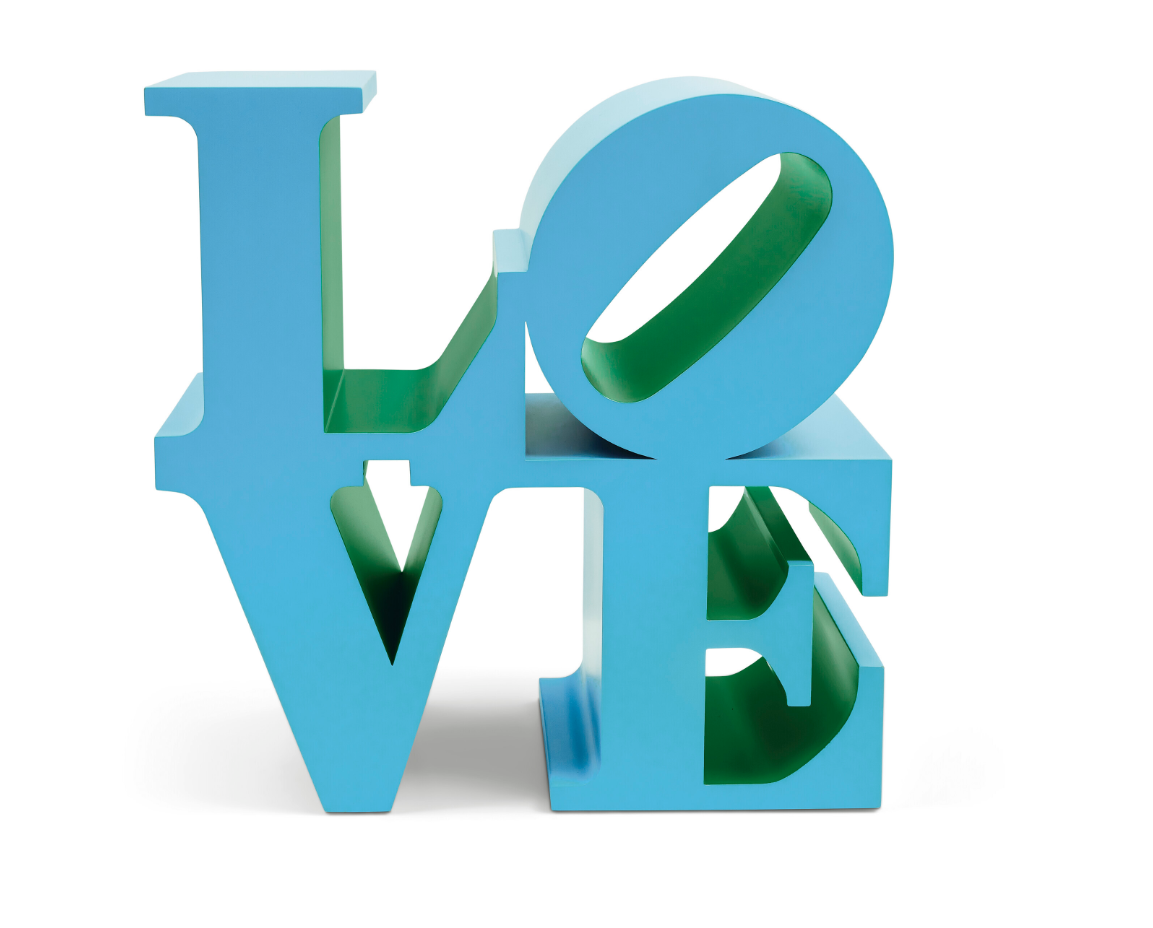
ROBERT INDIANA (1928-2018)
LOVE, 1966-1999
Polychrome aluminum
18x18x9 inches (45.6 x 45.6 x 22.8 cm)
Stamped with the artist’s signature, number and date ”© 1966-1999 R INDIANA 7⁄8′ (on the inside edge of the “V”)
Conceived in 1966 and executed in 1999, this work is number seven from an edition of eight plus four artist’s proofs
#6. Hope (Red), 2009
Phillips New-York: 27 September 2023
Estimated: USD 150,000 – 200,000
USD 165,100
Robert Indiana – New Now New York Lot 40 September 2023 | Phillips

ROBERT INDIANA
Hope (Red), 2009
Painted aluminum
36x36x18 inches (91.4 x 91.4 x 45.7 cm)
Stamped with the artist’s name, number, foundry mark and date “© R. INDIANA 2009 IV/VIII” on the lower interior edge of the P
Executed in 2009, this work is number 4 from an edition of 8
#7. Hope (Red/Blue/White), 2009
K Auction: 31 May 2023
Estimated: KRW 180,000,000 – 250,000,000
KRW 207,000,000 / USD 156,905
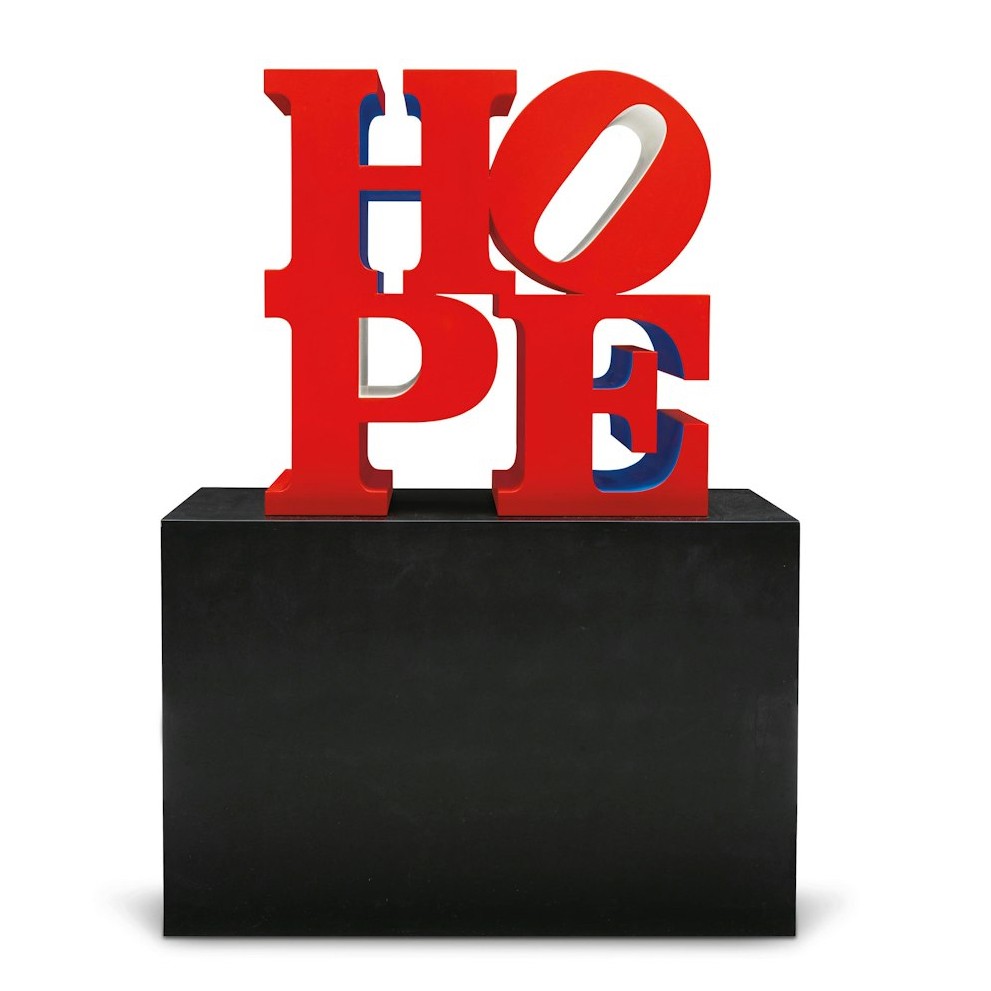
ROBERT INDIANA
Hope (Red/Blue/White), 2009
Polychrome aluminum
18x18x9 inches (45.7 x 45.7 x 22.8 cm)
Stamped with the artist’s name, number, foundry mark and date “© R. INDIANA 2009 IV/IX” on the lower interior edge of the P
Executed in 2009, this work is number 4 from an edition of 9
#8. TWO, 1996
Bonhams New-York: 18 May 2023
Estimated: USD 50,000 – 70,000
USD 101,175
Bonhams : ROBERT INDIANA (1928-2018) TWO 1996
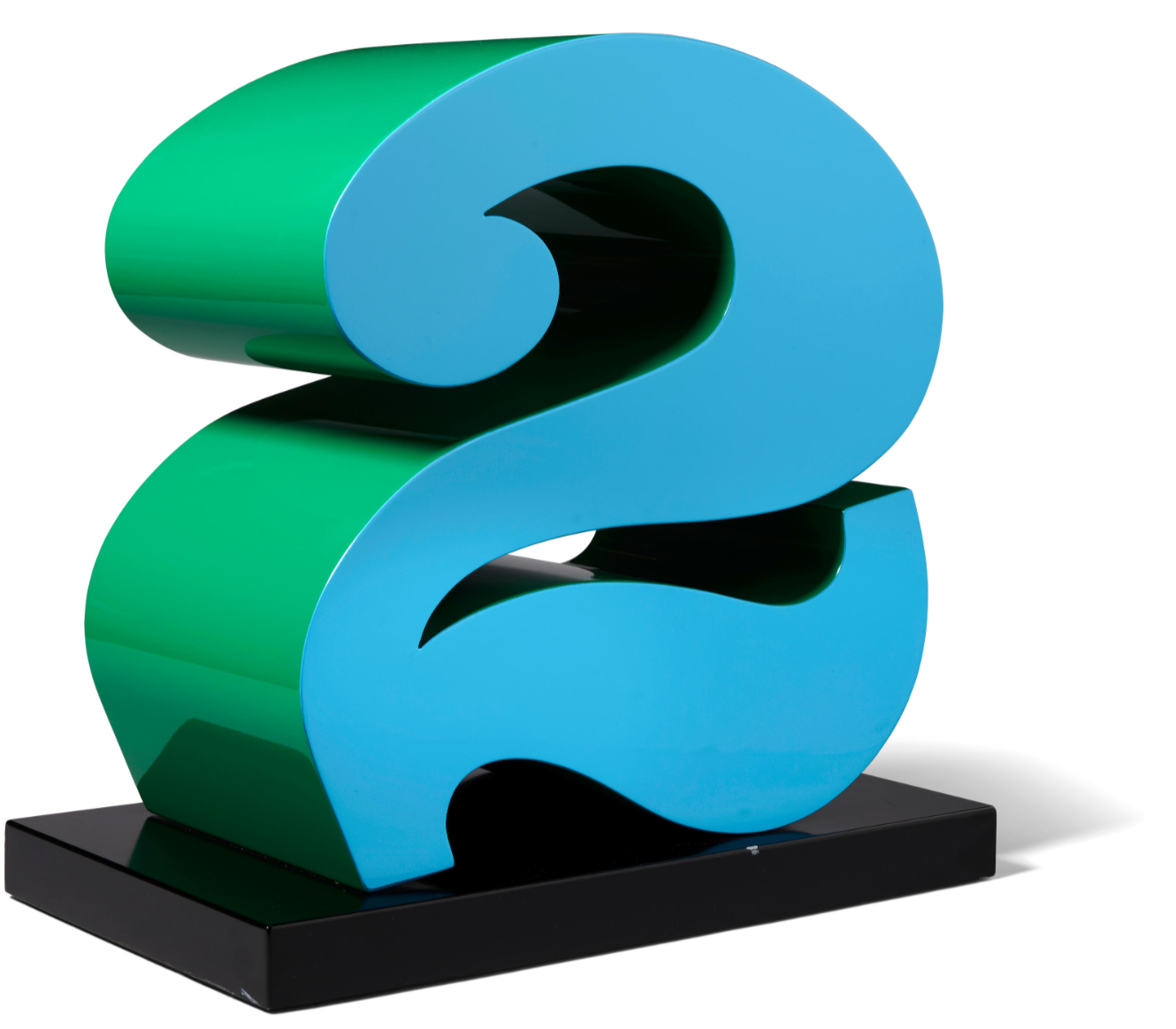
Polychrome aluminum on steel base
18x18x10 inches (45.7 x 45.7 x 25.4 cm)
Stamped with the artist’s name, date and number on the verso of the base 1996
This work is 1 of 2 artist’s proofs set aside from the edition of 8
#9. Spring Gold, 2010
Estimated: USD 30,000 – 50,000
USD 53,340
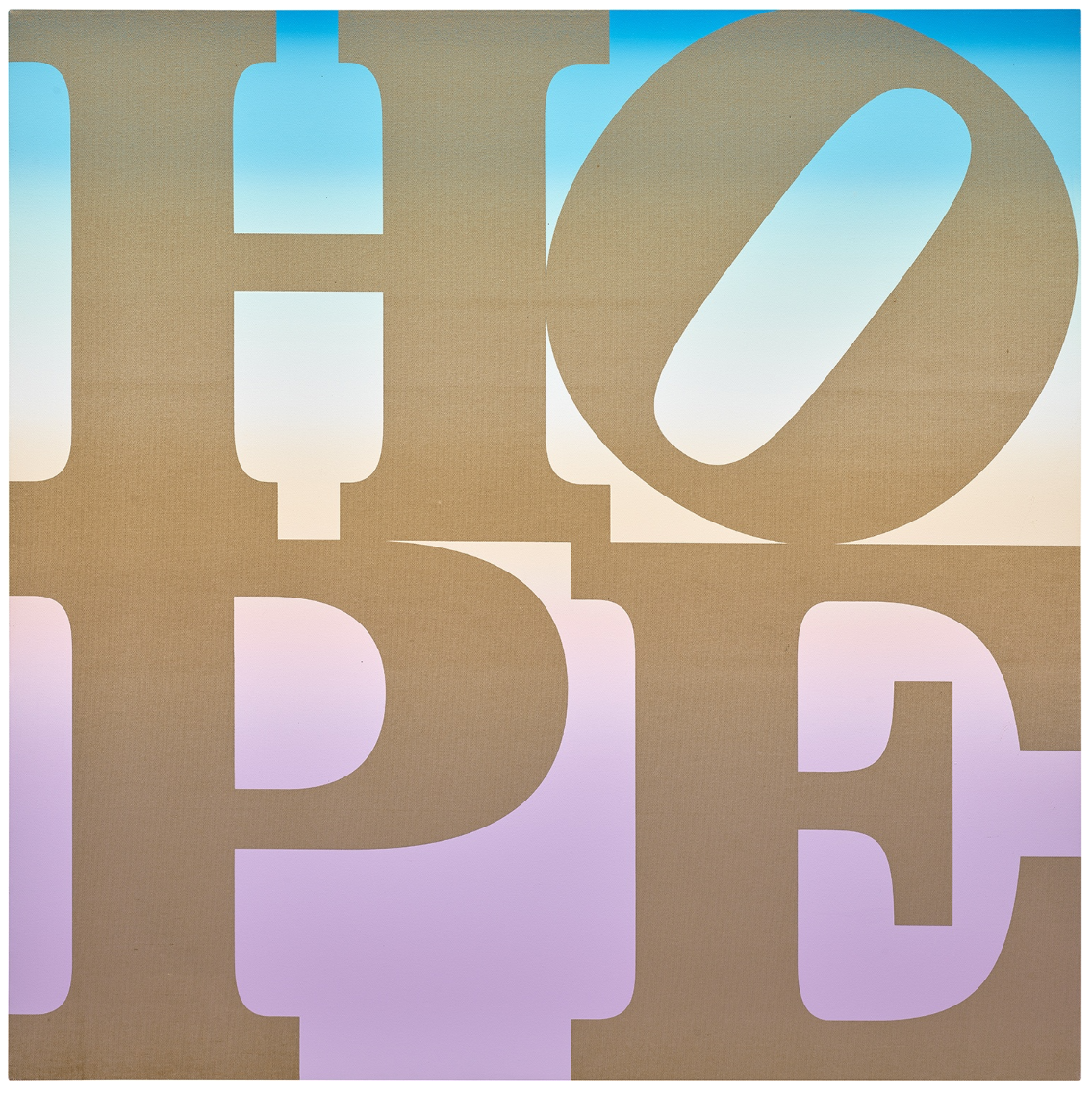
ROBERT INDIANA
Spring Gold, 2010
Silkscreen on canvas
36×36 inches (91.4 x 91.4 cm)
Inscribed “SPRING GOLD AP I Robert Indiana 2010 FOR VALERIE 25.XII.’12 Robert Indiana” on the reverse
2022 Auction Results
#1. Picasso, 1974
Phillips New-York: 19 May 2022
Estimated: USD 600,000 – 800,000
USD 1,058,500
Robert Indiana – 20th Century & Contemp… Lot 127 May 2022 | Phillips
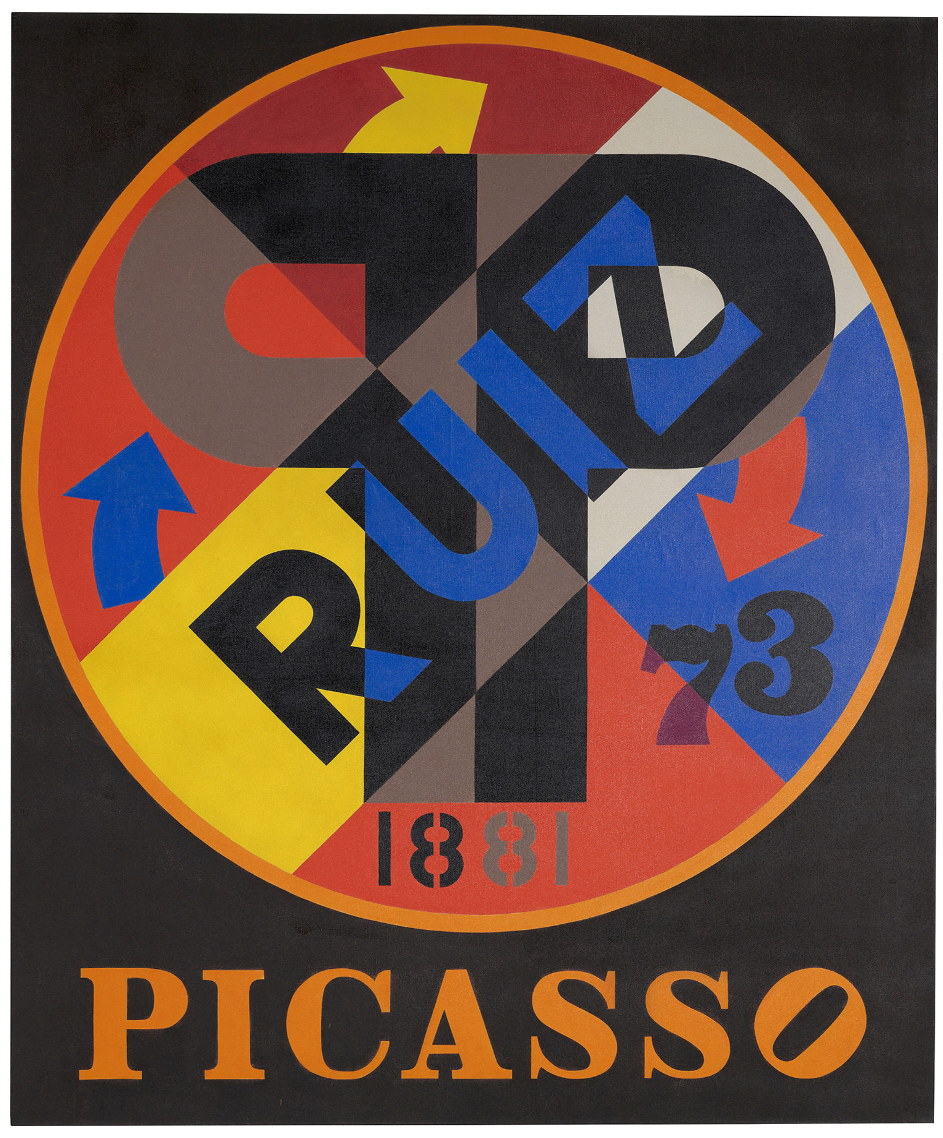
ROBERT INDIANA
Picasso, 1974
Oil on canvas
60×50 inches (152.4 x 127 cm)
Stenciled with the artist’s name, inscription and date “ROBERT INDIANA 2 NEW YORK SPRING 1974” on the reverse
#2. LOVE (Red Faces Violet Sides), 1966-1999
Christie’s London: 28 June 2022
Estimated: GBP 300,000 – 500,000
GBP 756,000 / USD 927,340
ROBERT INDIANA (1928-2018), LOVE (Red Faces Violet Sides) | Christie’s (christies.com)
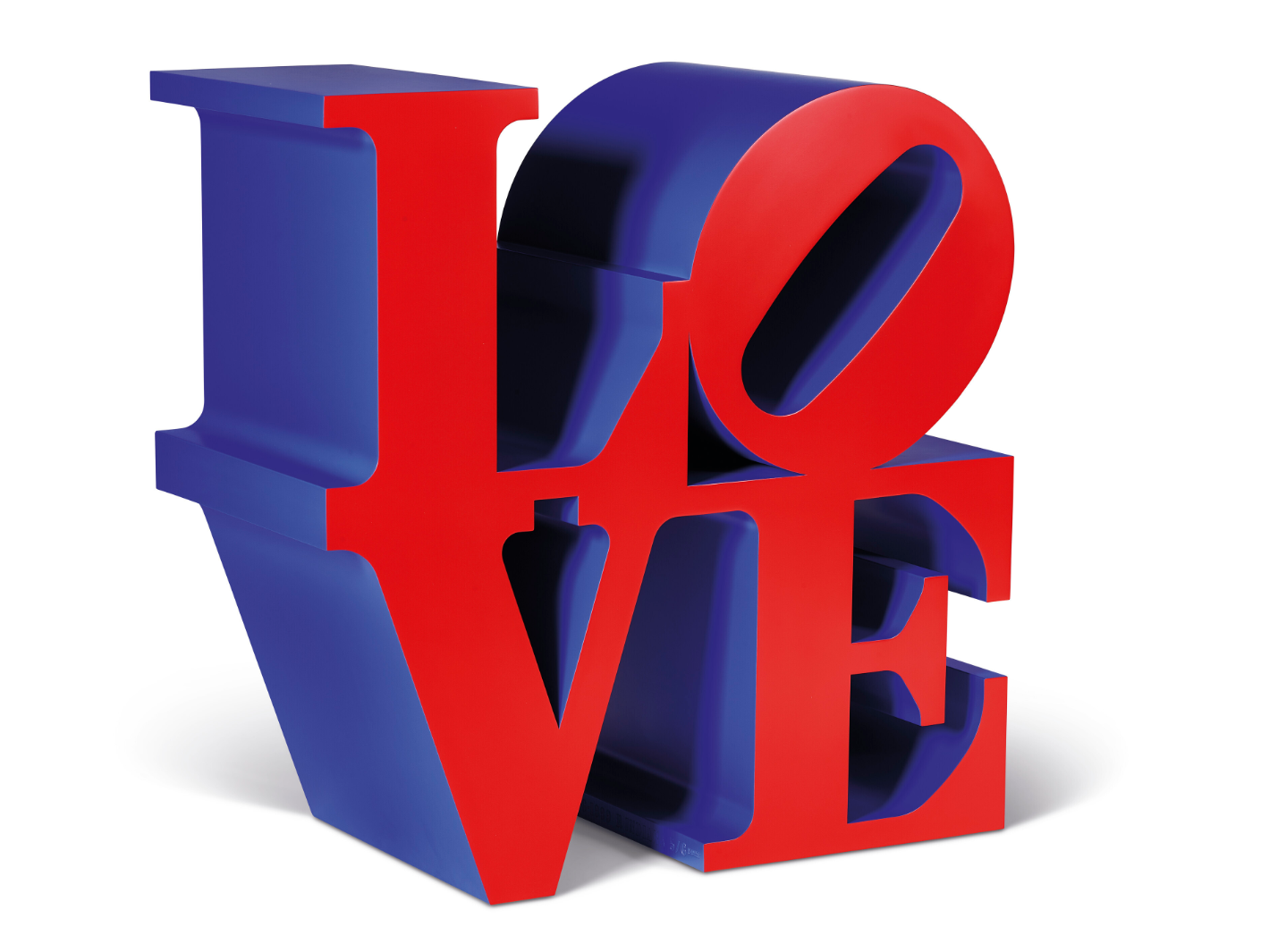
ROBERT INDIANA (1928-2018)
LOVE (Red Faces Violet Sides), 1966-1999
Polychrome aluminum
36x36x18 inches (91.4 x 91.4 x 45.7 cm)
Stamped with the artist’s signature, number, date and foundry mark ”© 1966-1999 R INDIANA 5/6′
(on the inside edge of the “E”)
Conceived in 1966 and executed in 1999, this work is number five from an edition of six plus four artist’s proofs
#3. LOVE (Violet Faces Red Sides), 1966-1999
Phillips New-York: 19 May 2022
Estimated: USD 600,000 – 800,000
USD 724,500
Robert Indiana – 20th Century & Contemp… Lot 126 May 2022 | Phillips
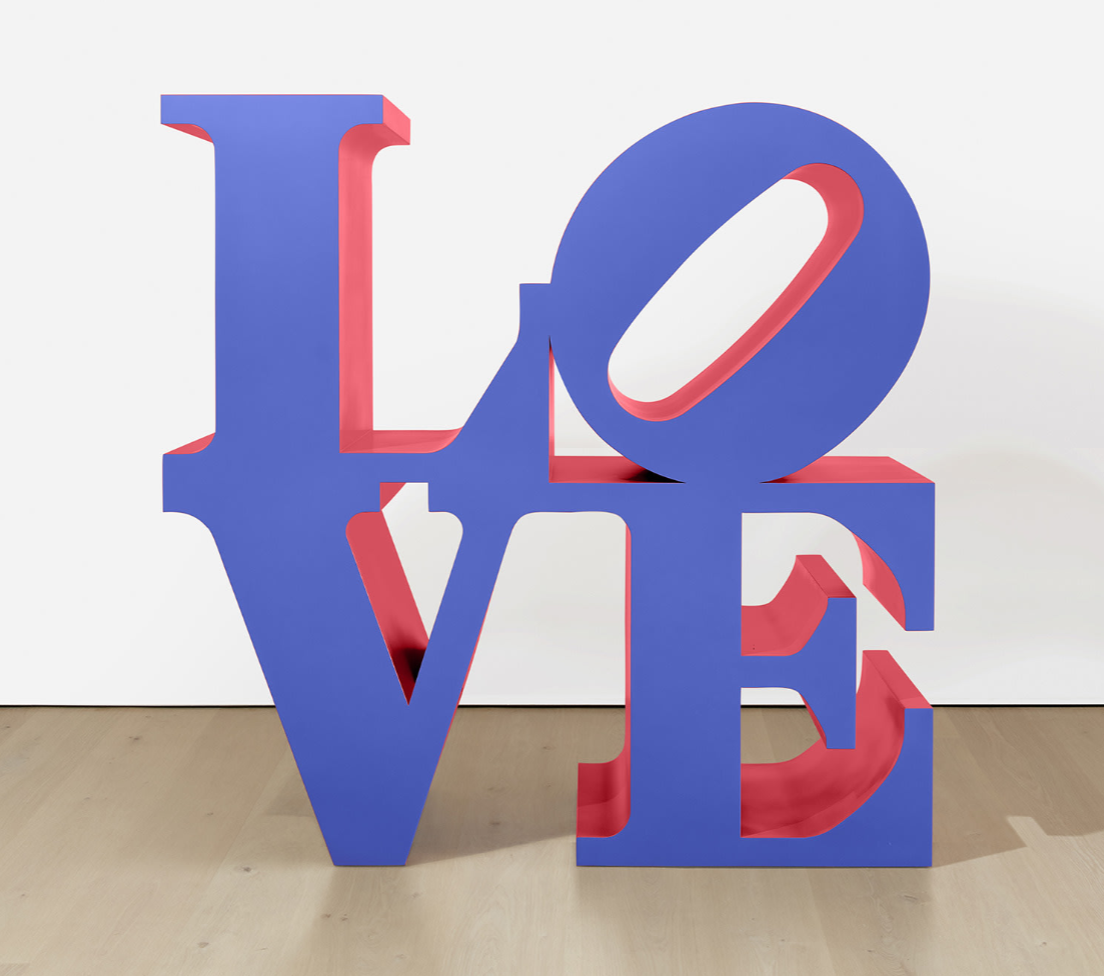
ROBERT INDIANA
LOVE (Violet Faces Red Sides), 1966-1999
Polychromed aluminum
72x72x36 inches (182.9 x 182.9 x 91.4 cm)
Stamped with the artist’s name, number and date “© 1966–1999 R INDIANA 3/6” and the Milgo/Bufkin foundry mark on the lower interior edge of the E
Conceived in 1966 and executed in 1999, this work is number 3 from an edition of 6 plus 4 artist’s proofs
#4. LOVE (Violet Faces Red Sides), 1966-2000
Sotheby’s New-York: 17 November 2022
Estimated: USD 400,000 – 600,000
USD 504,000
LOVE (Violet Faces Red Sides) | Contemporary Day Auction | 2022 | Sotheby’s (sothebys.com)
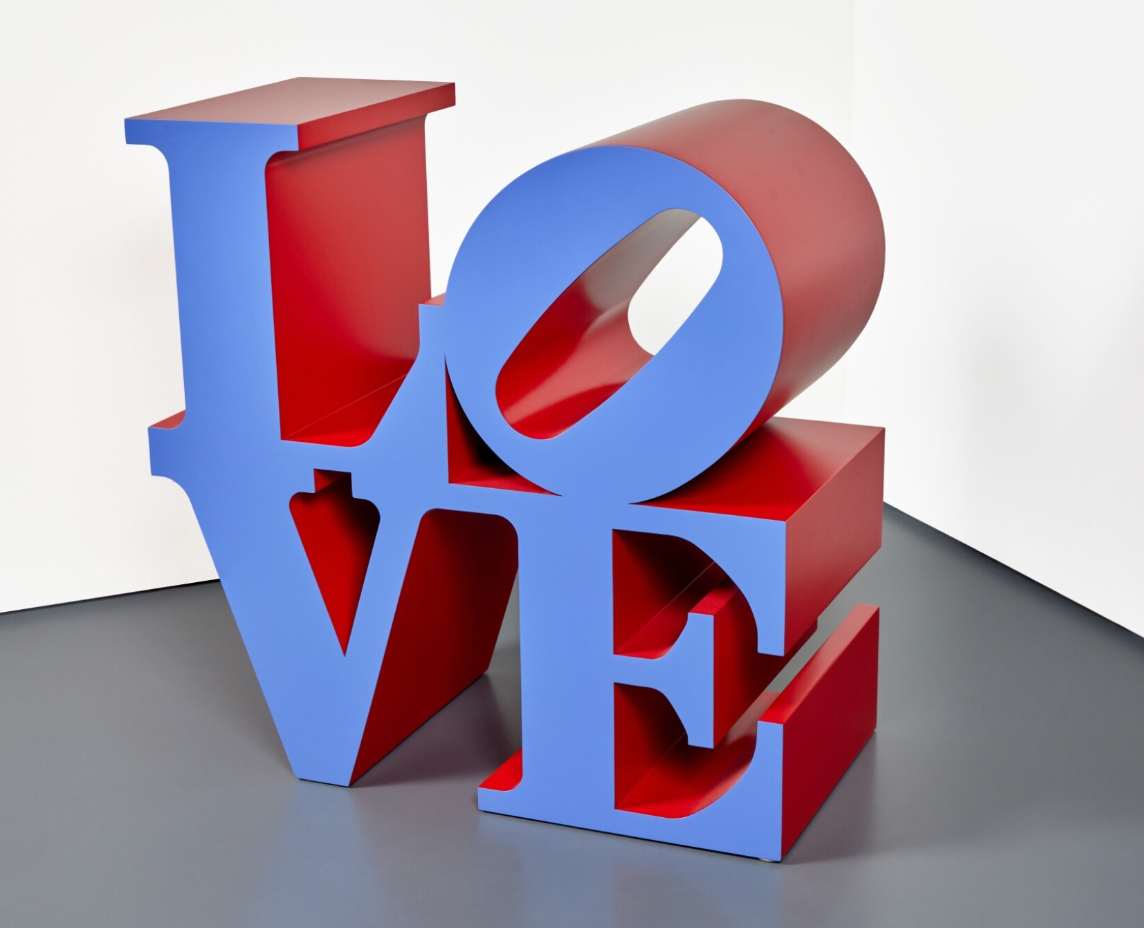
ROBERT INDIANA (1928 – 2018)
LOVE (Violet Faces Red Sides), 1966-2000
Polychromed aluminum
36x36x18 inches (91.4 x 91.4 x 45.7 cm)
Stamped ©1966-2000 R INDIANA AP 3/4 (on the lower left interior edge of the ‘E’)
Conceived in 1966 and executed in 2000, this work is artist’s proof outside of an edition of 6
#5. LOVE (Blue Faces Red Sides), 1966-1998
Sotheby’s Hong-Kong: 15 December 2022
Estimated: HKD 3,200,000 – 4,500,000
HKD 3,528,000 / USD 455,115
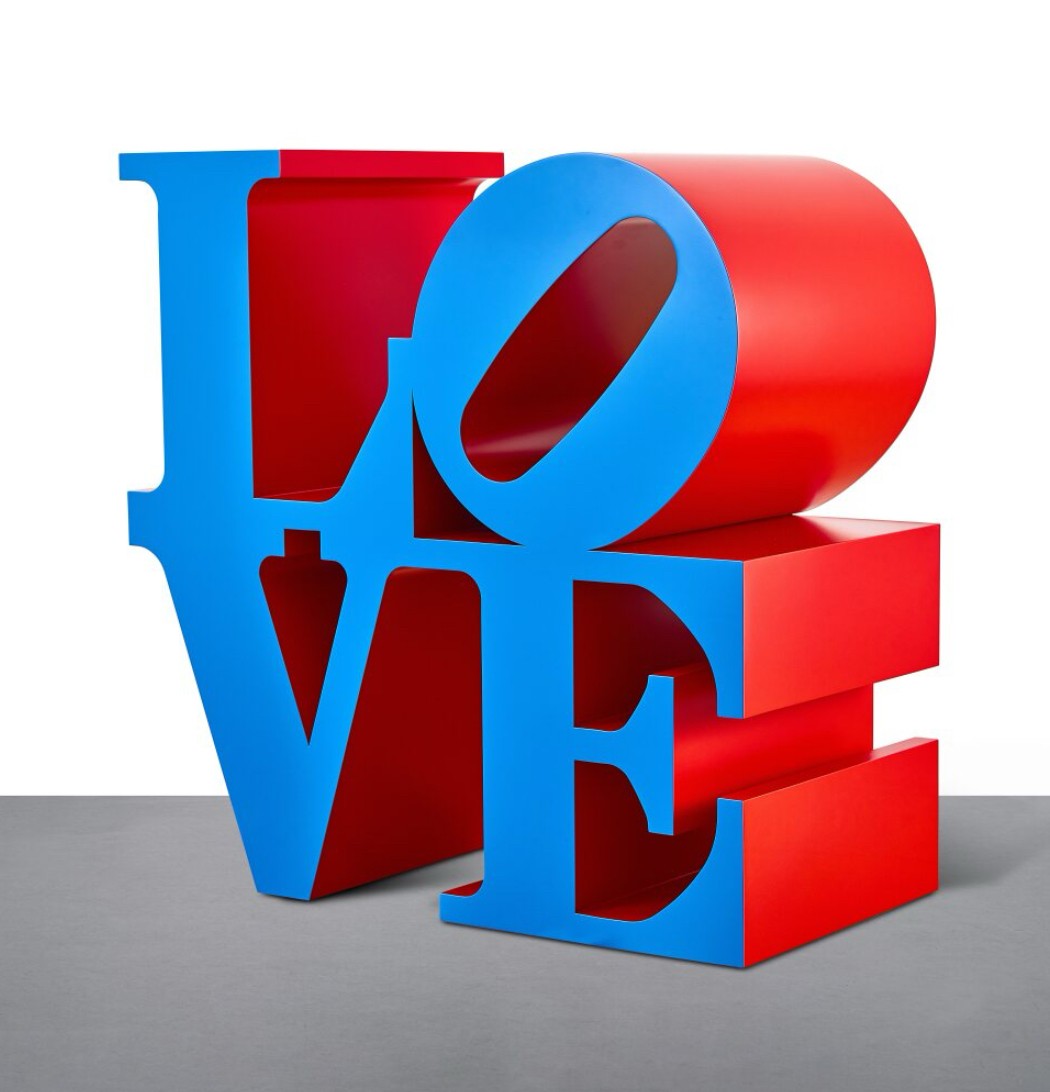
ROBERT INDIANA (b.1928)
LOVE (Blue Faces Red Sides), 1966-1998
Polychromed aluminum
35 7/8 x 35 7/8 x 18 inches (91.2 x 91.2 x 45.7 cm)
Stamped with the artist’s name, date 1966-1998, number AP 2/4 and fabricator’s copyright
Conceived in 1966 and executed in 1998, this work is artist’s proof 2 from an edition of 6 plus 4 artist’s proofs
#6. Ahava, 1977-2021
Sotheby’s New-York: 18 May 2022
Estimated: USD 250,000 – 350,000
USD 315,000
Ahava | Contemporary Day Auction | 2022 | Sotheby’s (sothebys.com)
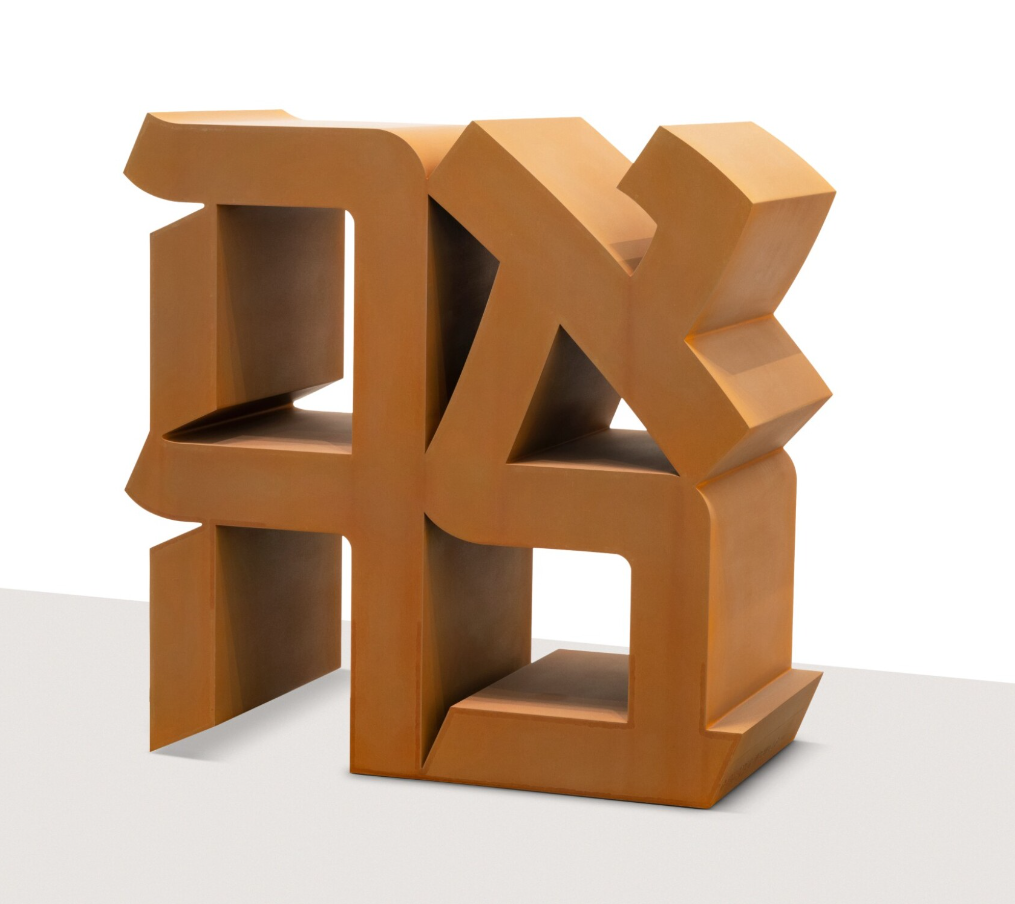
ROBERT INDIANA (1928 – 2018)
Ahava, 1977-2021
Cor-ten steel
37x36x18 inches (94 x 91.4 by 45.7 cm)
Stamped ©1977-2021 R INDIANA 1/6 (on the lower exterior edge of the ‘V’)
Conceived in 1977 and cast in 2021, this work is number 1 from an edition of 6, plus 2 artist’s proofs.
#7. LOVE, 1966-2001
Christie’s New-York: 13 May 2022
Estimated: USD 200,000 – 300,000
USD 302,400
ROBERT INDIANA (1928-2018), LOVE | Christie’s (christies.com)
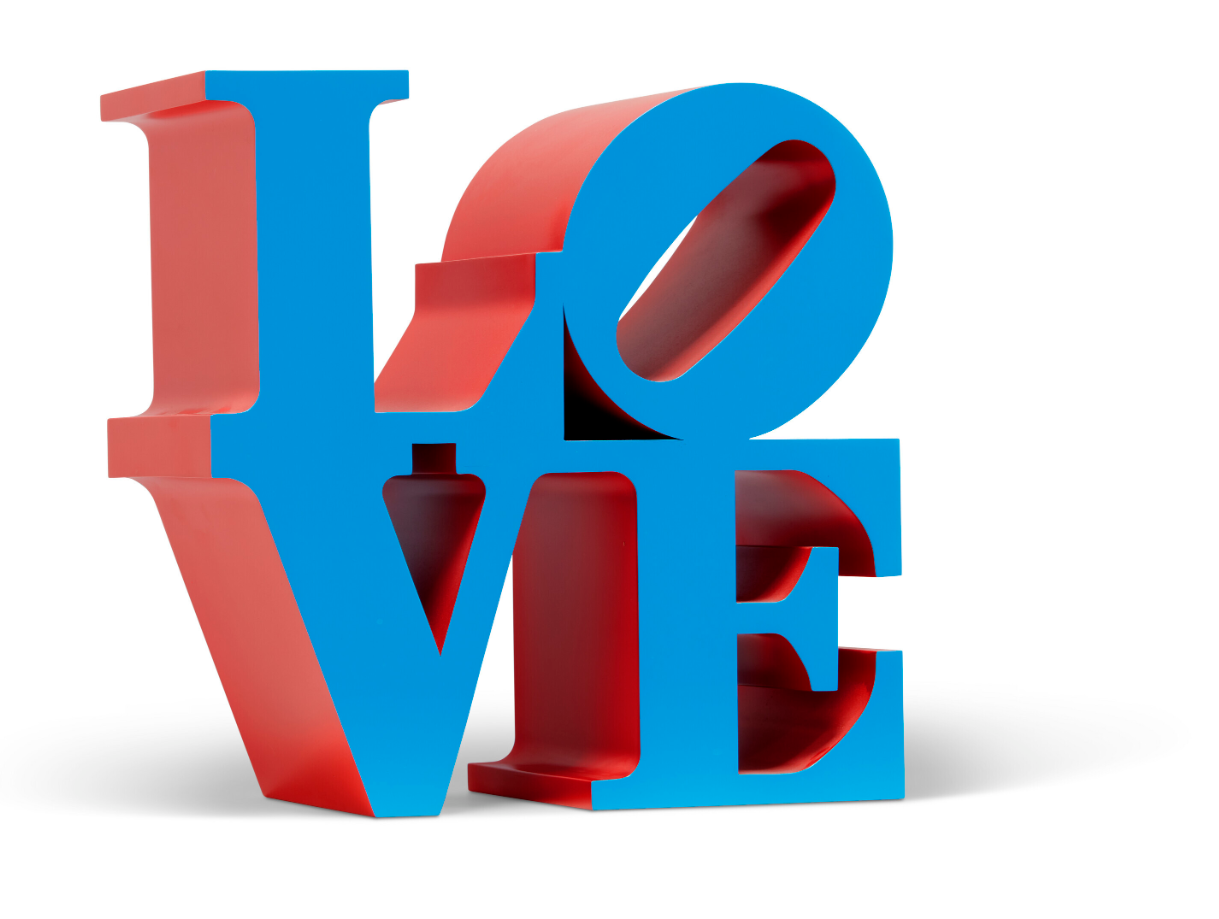
ROBERT INDIANA (1928-2018)
LOVE, 1966-2001
Polychromed aluminum
18x18x9 inches (45.7 x 45.7 x 22.9 cm)
Stamped with the artist’s signature, number, date and foundry mark ‘© 1966-2001 R Indiana 4⁄8’
(on the inside edge of the “V”)
Conceived in 1966 and executed in 2001, this work is number four from an edition of eight plus four artist’s proofs
#8. Hope, 2009
Bonhams New-York: 19 May 2022
Estimated: USD 150,000 – 250,000
USD 252,375
Bonhams : ROBERT INDIANA (1928-2018) Hope 2009

Polychrome aluminum
36x36x18 inches (91.4 x 91.4 x 45.7 cm
This work is number 1 from an edition of 9
#9. Hope (Red/Yellow), 2009
K Auction Seoul: 23 February 2022
Estimated: KRW 250,000,000 – 350,000,000
KRW 264,500,000 / USD 222,220

ROBERT INDIANA
Hope (Red/Yellow), 2009
Polychrome aluminum
18x18x9 inches (45.7 x 45.7 x 22.8 cm)
Stamped with the artist’s name, number, foundry mark and date “© R. INDIANA 2009 VIII/IX” on the lower interior edge of the P
Executed in 2009, this work is number 8 from an edition of 9
#10. Nine, 1996
Sotheby’s New-York: 16 March 2022
Estimated: USD 30,000 – 50,000
USD 50,400
Nine | Contemporary Discoveries | 2022 | Sotheby’s (sothebys.com)
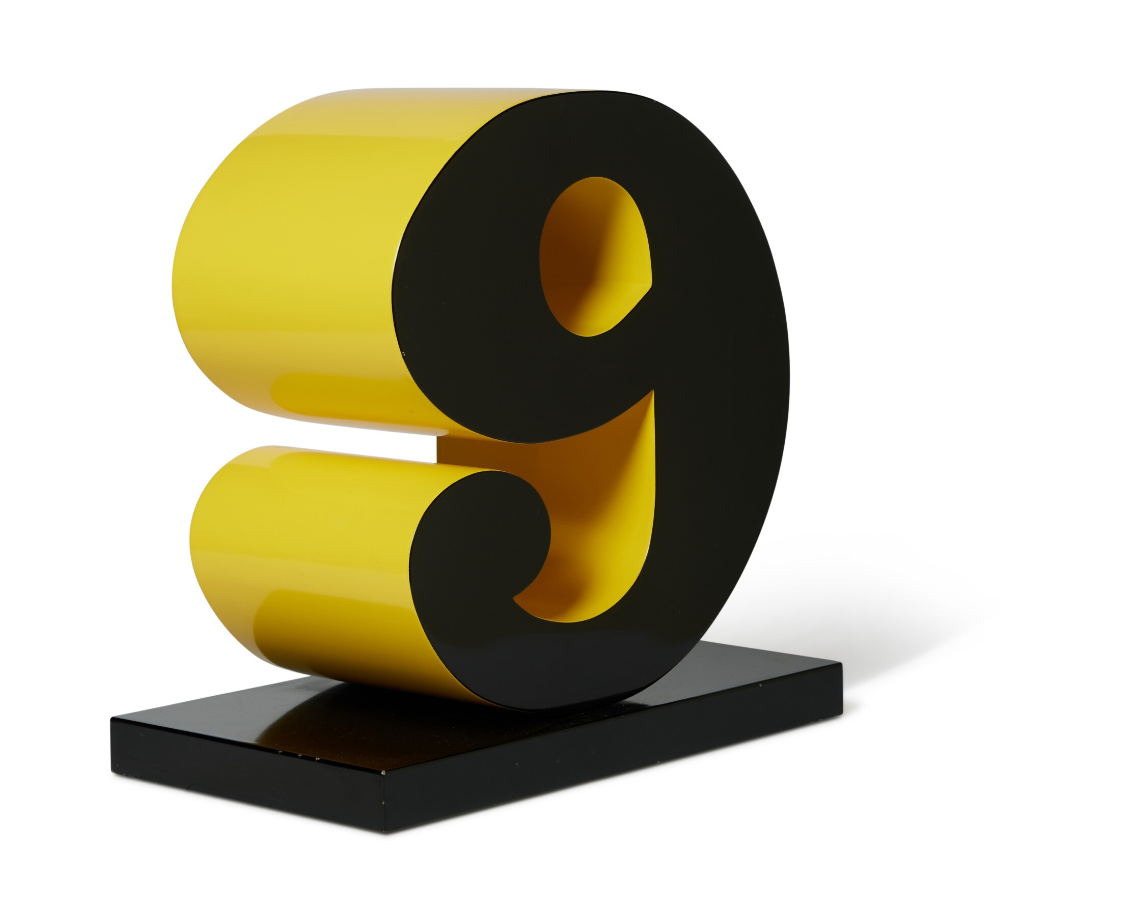
ROBERT INDIANA (1928 – 2018)
Nine, 1996
Enamel on steel
18 x 10 x 17 1/2 inches (45.7 x 25.4 x 44.5 cm)
Stamped © 1996 R INDIANA AP 1/2 (on the base)
Executed in 1996, this example is 1 of 2 artist’s proofs aside from an edition of 8
2021 Auction Results
#1. Decade Autoportrait, 1971
Sotheby’s New-York: 19 November 2021
Estimated: USD 280,000 – 350,000
USD 1,290,500
Decade Autoportrait | Contemporary Day Auction | 2021 | Sotheby’s (sothebys.com)
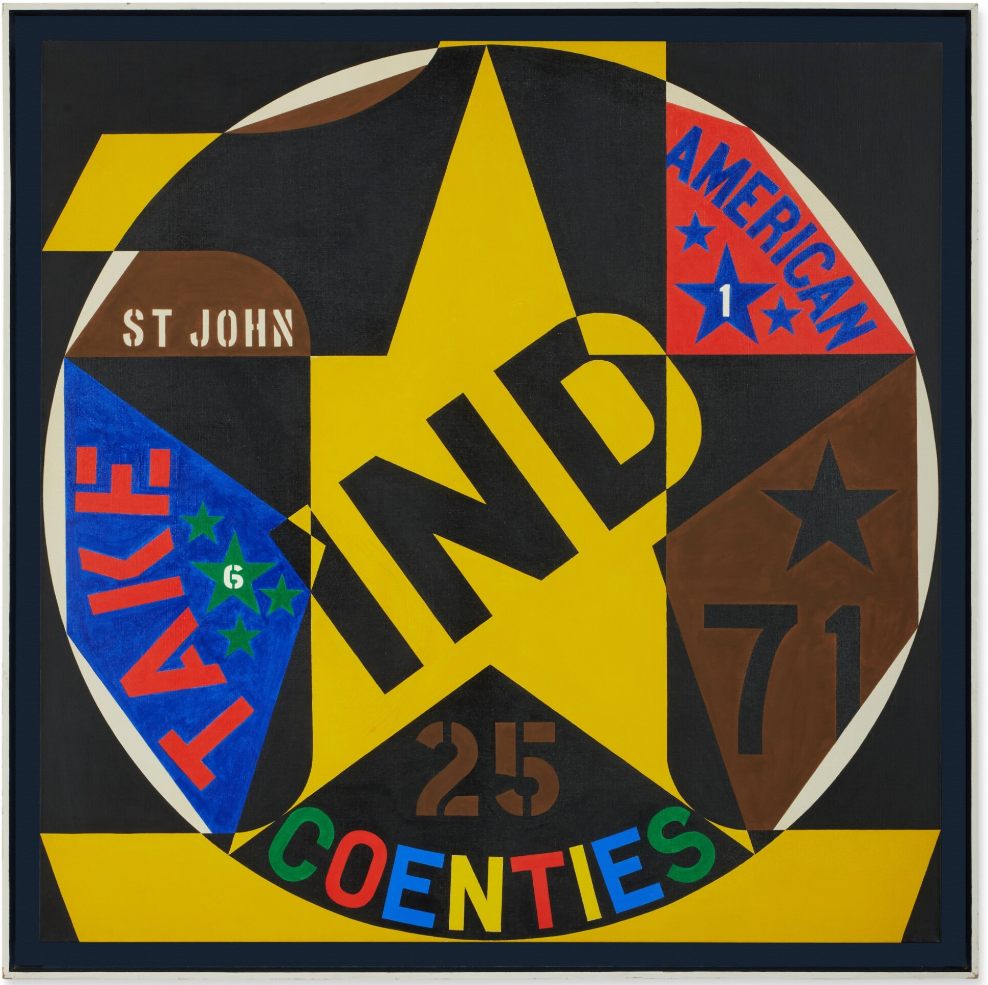
ROBERT INDIANA (1928 – 2018)
Decade Autoportrait, 1971
Oil on canvas
48×48 inches (121.9 x 121.9 cm)
Stenciled Indiana New York 1971 (on the reverse)
#2. Love (Purple/ Red), 1966-2000
Sotheby’s New-York: 19 November 2021
Estimated: USD 400,000 – 600,000
USD 794,400
Love | Contemporary Day Auction | 2021 | Sotheby’s (sothebys.com)
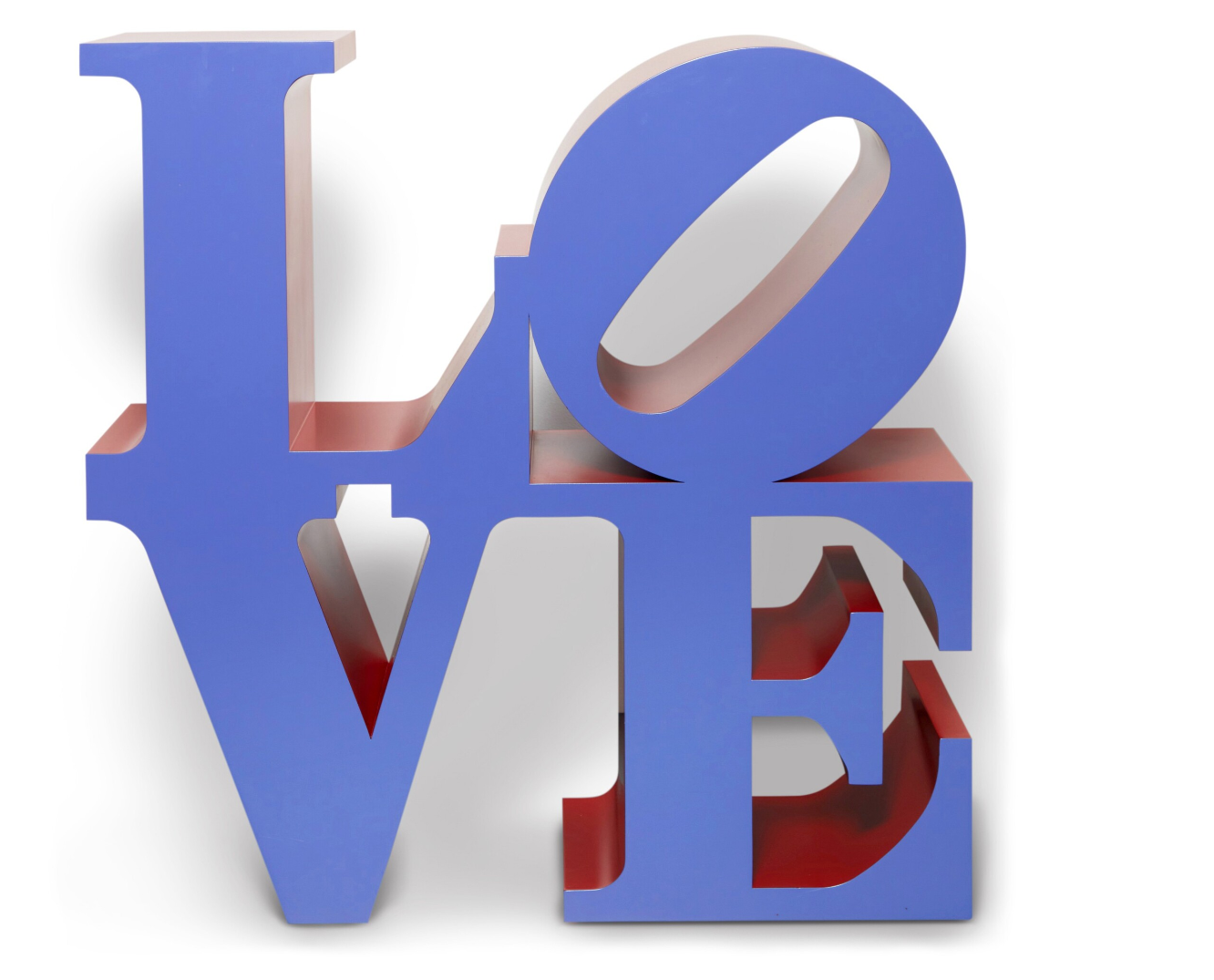
ROBERT INDIANA (1928 – 2018)
Love (Purple/ Red), 1966-2000
Polychromed aluminum
36x36x18 inches (91.4 x 91.4 x 44.7 cm)
Stamped 1966-2000R INDIANA AP 1/4 (on the interior)
Conceived in 1966 and executed in 2000, this work is artist’s proof number 1 from an edition of 6, plus 4 artist’s proofs
#3. LOVE (Blue Faces Red Sides), 1966-1998
Phillips New-York: 18 November 2021
Estimated: USD 400,000 – 600,000
USD 567,000
Robert Indiana – 20th Century & Co… Lot 139 November 2021 | Phillips
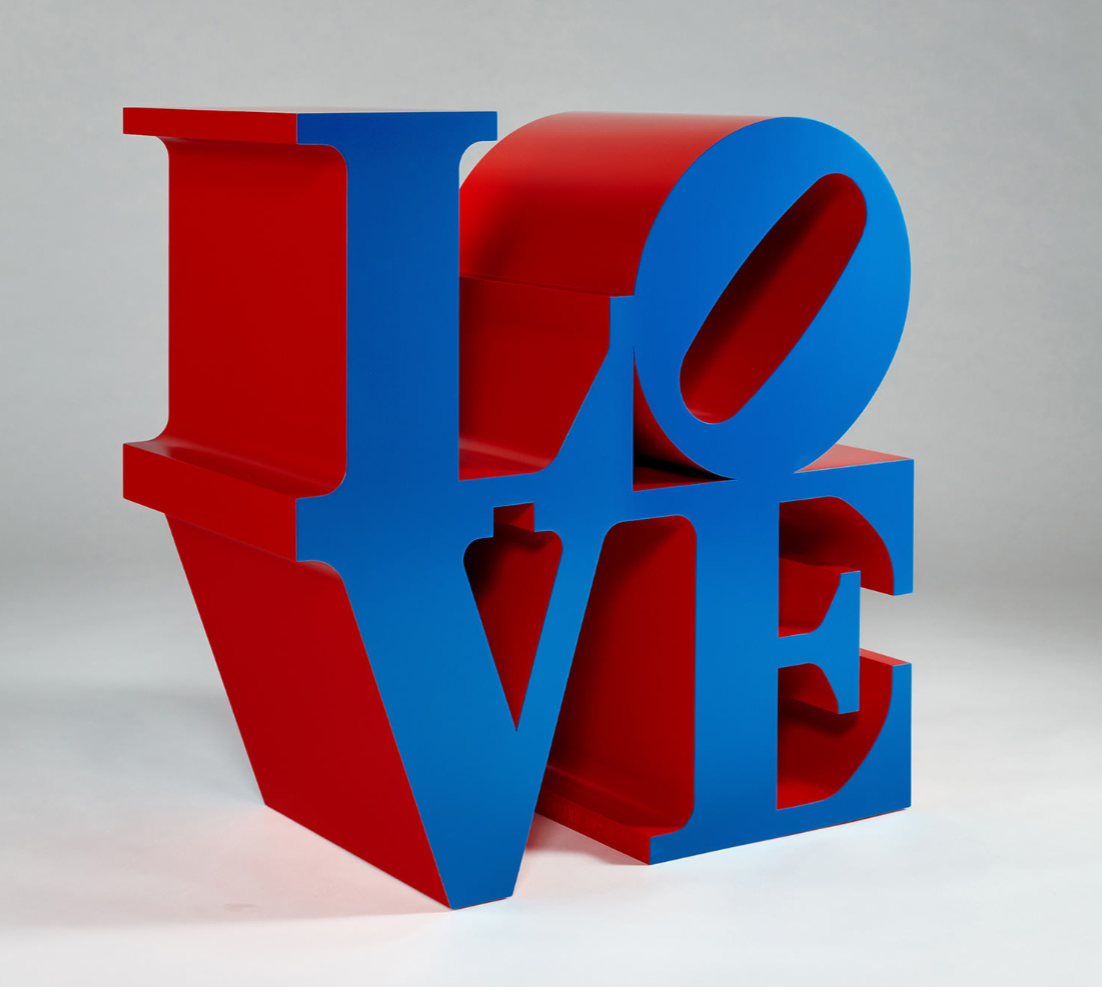
ROBERT INDIANA
LOVE (Blue Faces Red Sides), 1966-1998
Polychromed aluminum
36x36x18 inches (91.4 x 91.4 x 45.7 cm)
Stamped with the artist’s name, number, date and the Milgo Bufkin, Brooklyn mark “© 1966–1998 R INDIANA AP2/4” along the lower interior edge of the E
Conceived in 1966 and executed in 1998, this work is artist’s proof 2 from an edition of 6 plus 4 artist’s proofs
#4. 5, 1964
Sotheby’s New-York: 18 November 2021
Estimated: USD 250,000 – 350,000
USD 528,200
5 | Contemporary Evening Auction | 2021 | Sotheby’s (sothebys.com)
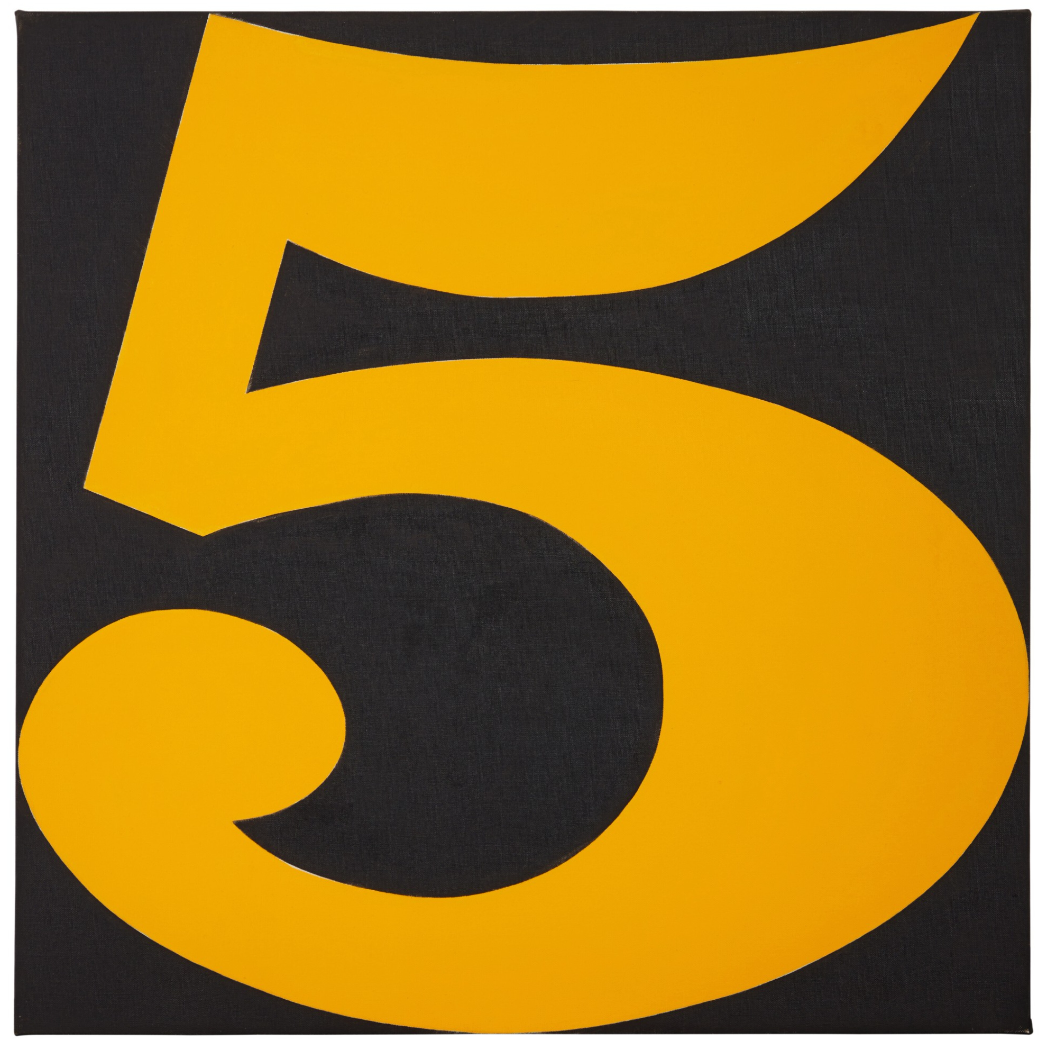
ROBERT INDIANA (1928 – 2018)
5, 1964
Oil on canvas
24 1/8 x 24 1/8 inches (61.3 x 61.3 cm)
Signed Robert Indiana and inscribed Coenties Slip (on the reverse)
#5. LOVE, 1966
Christie’s London: 25 March 2021
Estimated: GBP 120,000 – 180,000
GBP 375,000 / USD 514,215
ROBERT INDIANA (1928-2018), LOVE | Christie’s (christies.com)
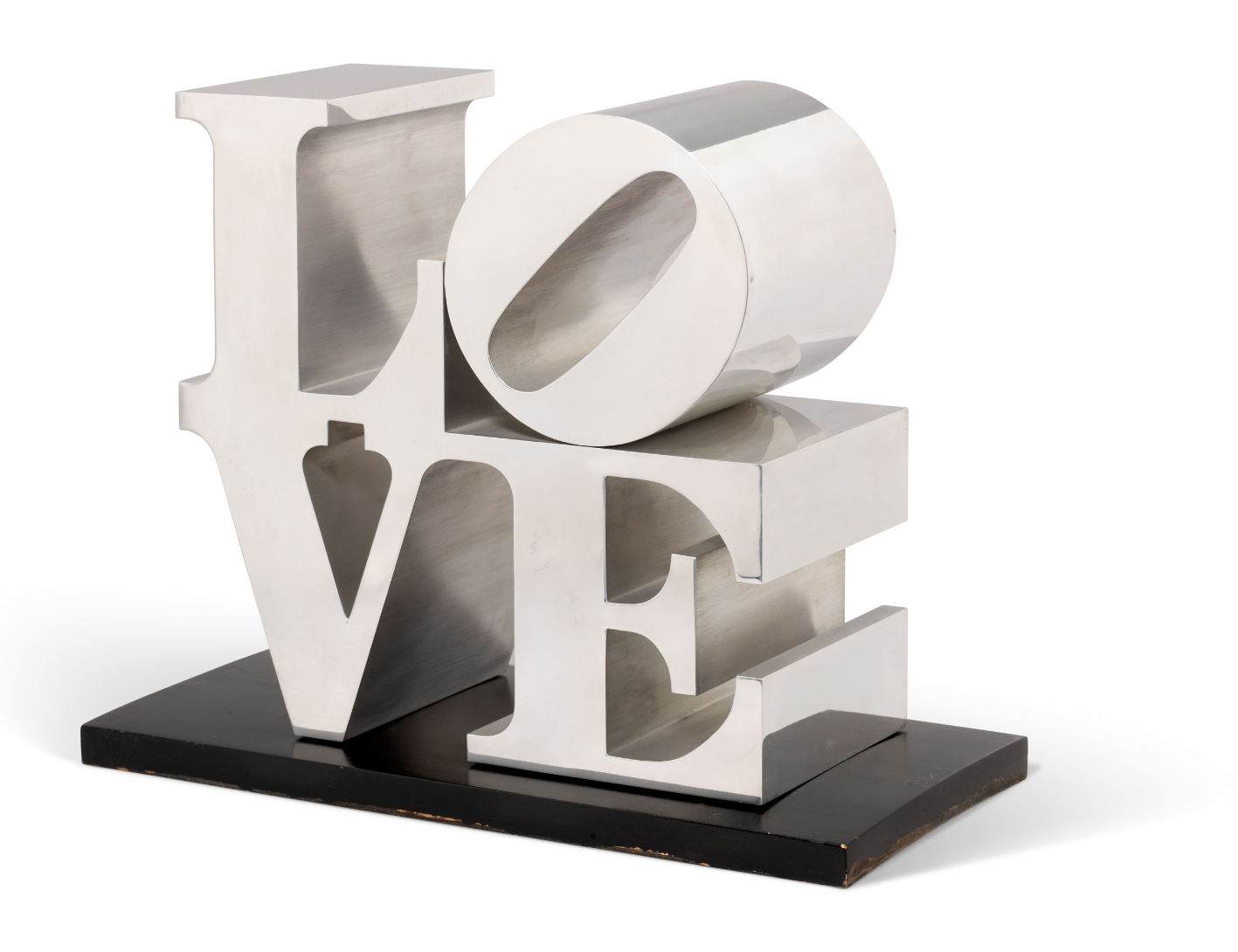
ROBERT INDIANA (1928-2018)
LOVE, 1966
Polished aluminum
11 7/8 x 11 7/8 x 5 7/8 inches (30.2 x 30.2 x 15 cm)
Incised with the artist’s name, number and date ‘Indiana 66 2/6’ and stamped with the foundry mark
(on the underside)
Executed in 1966, this work is number two from an edition of six
#6. LOVE (Gold Faces Red Sides), 1966-2002
Phillips New-York: 24 June 2021
Estimated: USD 250,000 – 350,000
USD 315,000
Robert Indiana – 20th Century & Contem… Lot 149 June 2021 | Phillips
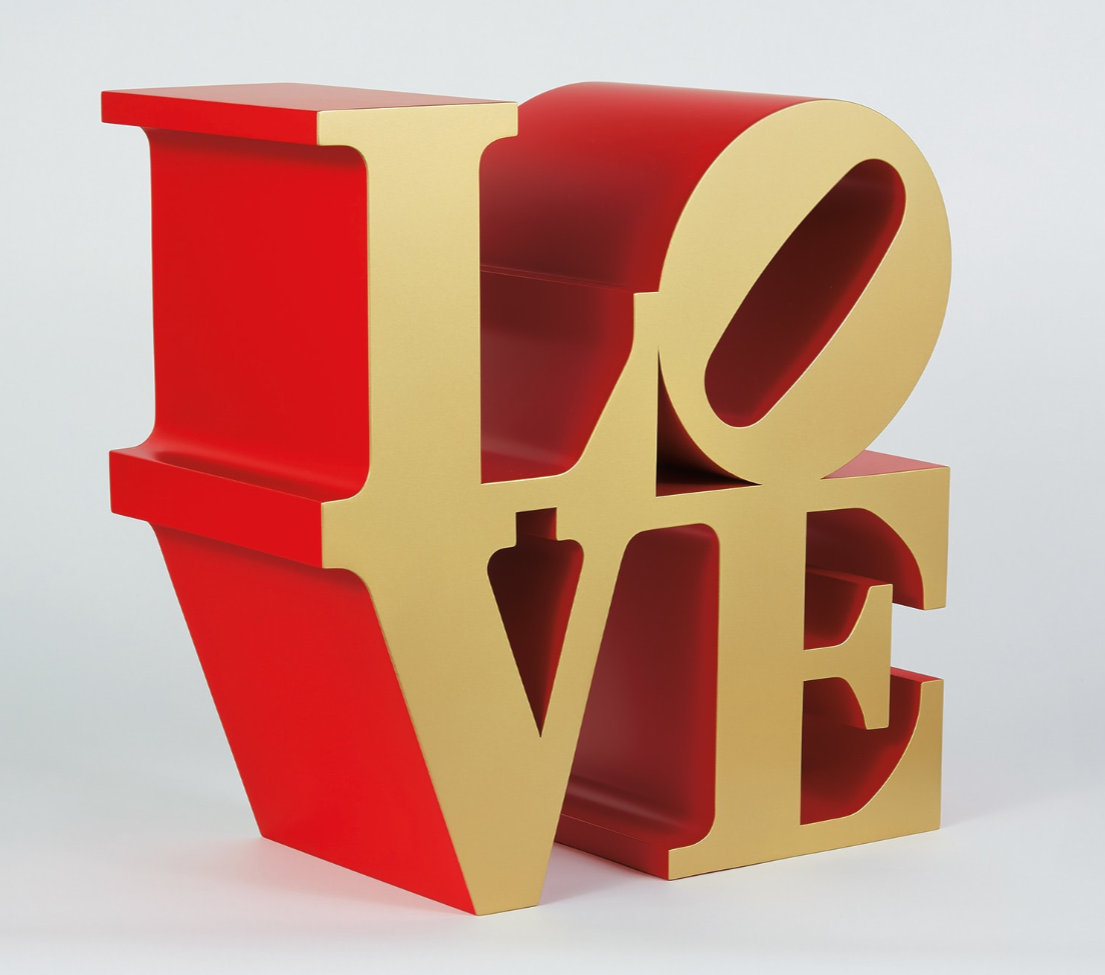
ROBERT INDIANA
LOVE (Gold Faces Red Sides), 1966-2002
Polychromed aluminum
17 5/8 x 17 7/8 x 9 inches (44.8 x 45.4 x 22.9 cm)
Stamped with the artist’s name, number and date “© 1966–2002 R INDIANA 8/8” and the foundry mark on the lower interior edge of the E
Conceived in 1966 and executed in 2002, this work is number 8 from an edition of 8
#7. Love, 1969
Sotheby’s New-York: 18 November 2021
Estimated: USD 150,000 – 250,000
USD 315,000
Love | Contemporary Evening Auction | 2021 | Sotheby’s (sothebys.com)
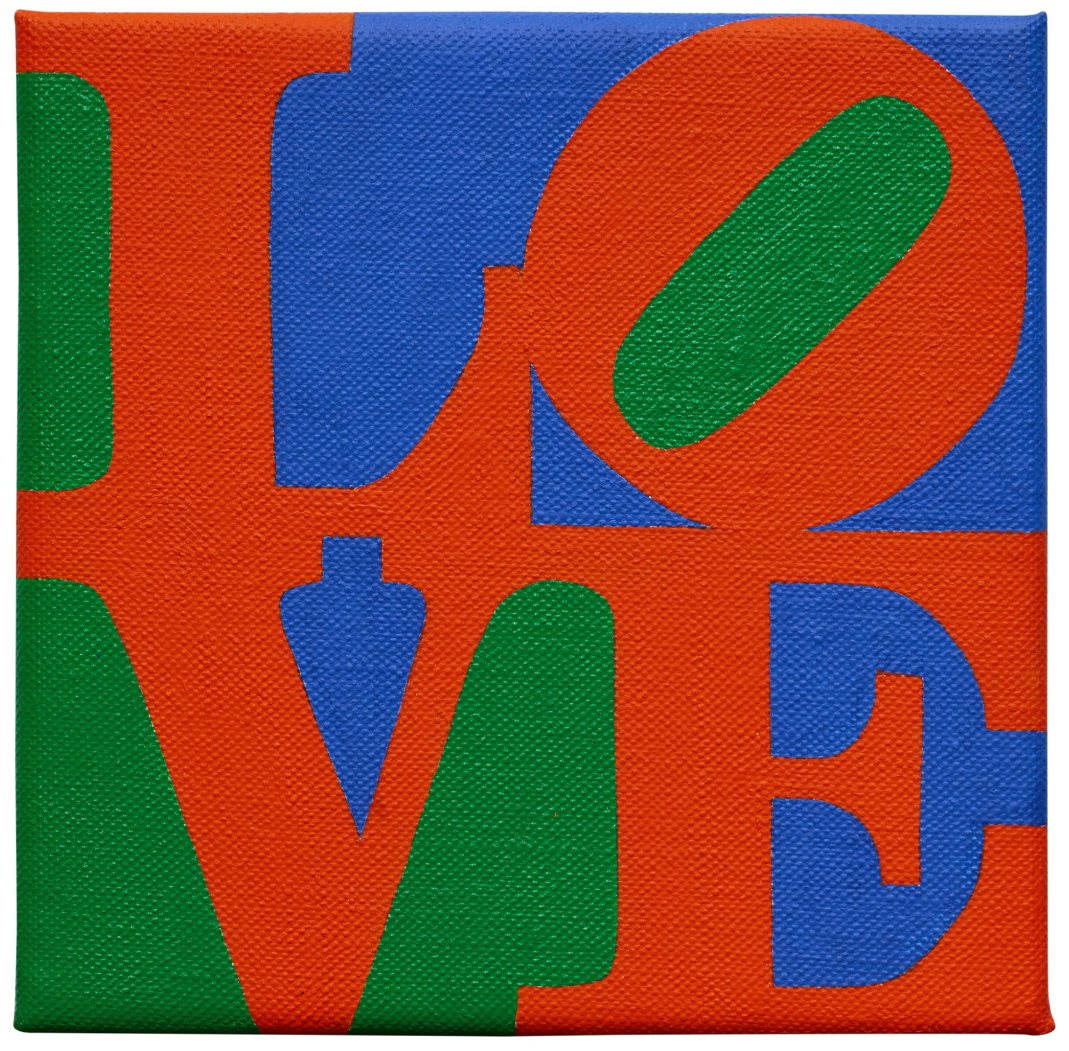
ROBERT INDIANA (1928 – 2018)
Love, 1969
Oil on canvas
5 1/8 x 5 1/8 inches (13×13 cm)
Signed IND. and dated 1969 (on the reverse)
PART III: FOCUS
LOVE (Sculptures)
First conceived in 1965 as a Christmas card design commissioned by the Museum of Modern Art, New York, LOVE has since become an instantly recognizable iconography. An emblem of the 1960s idealism, Indiana’s masterful graphics align with the giants of Pop art such as Ed Ruscha and Roy Lichtenstein, embracing the ideas of repetition and seriality that came to define the era. The present work, casted in an edition of 6, is executed in its classic red color, one of the most striking renditions of this iconic series.
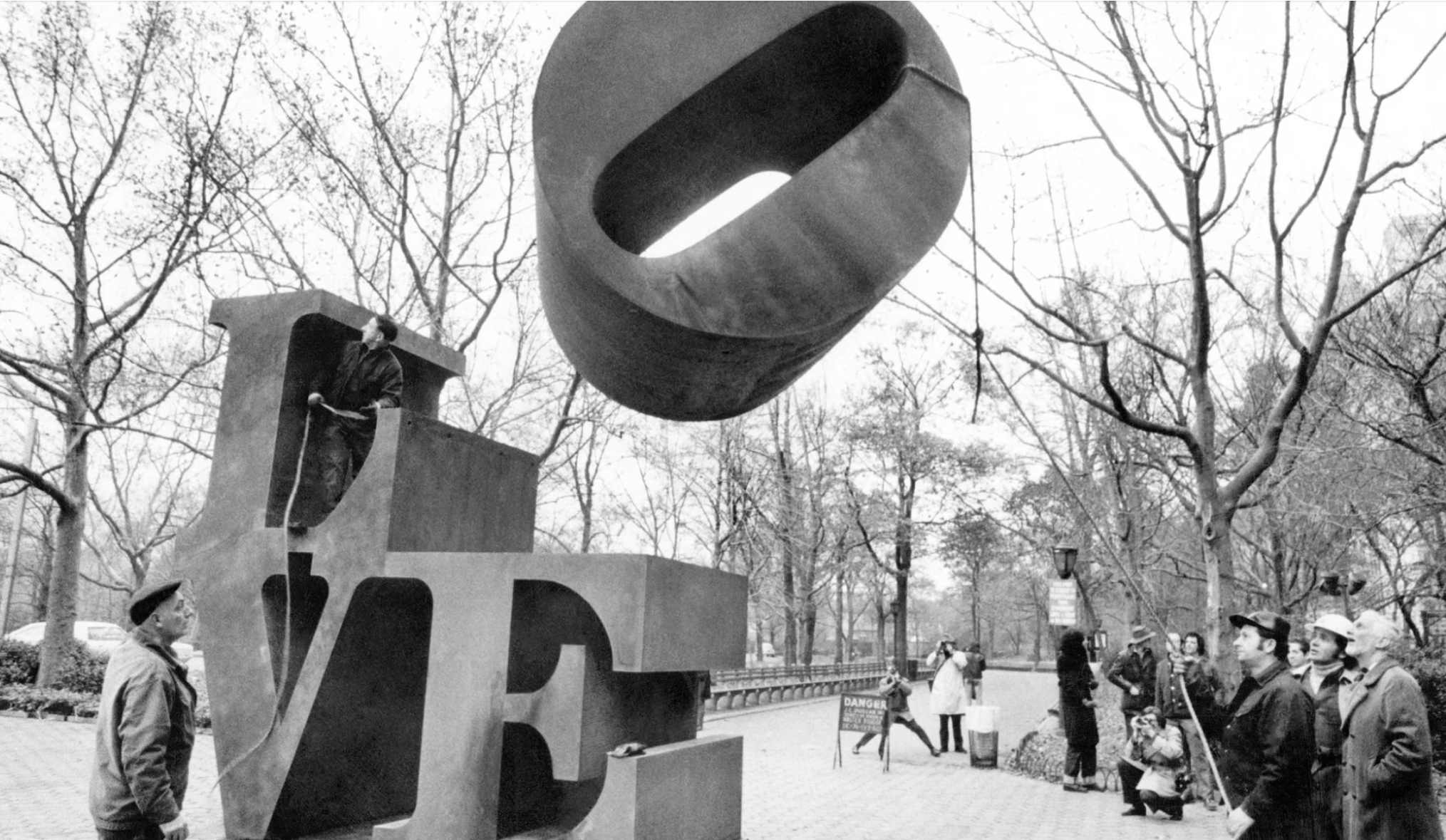
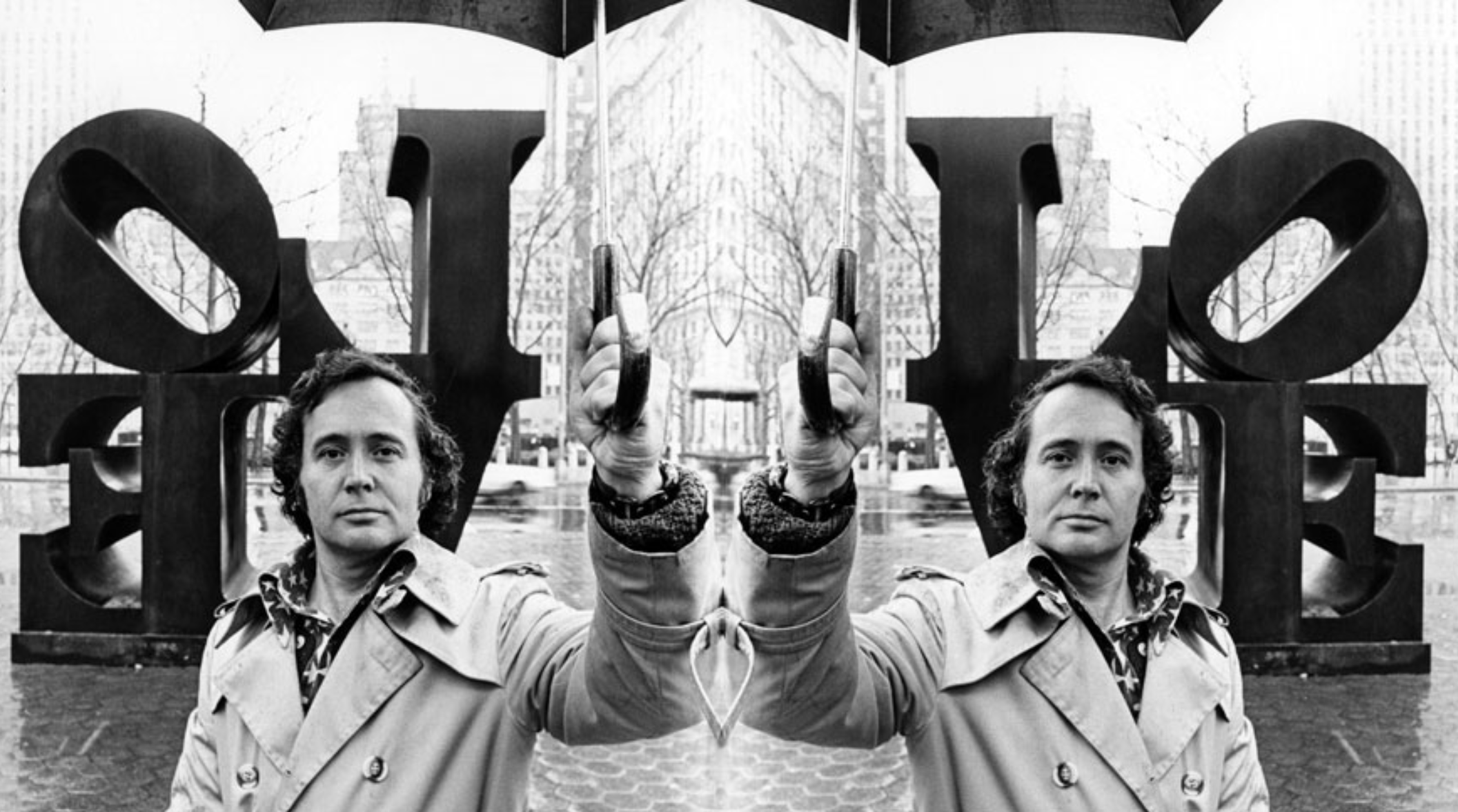
ROBERT INDIANA WITH HIS LOVE SCULPTURE IN CENTRAL PARK, NEW YORK CITY, IN 1971.
IMAGE: © GETTY IMAGES / JACK MITCHELL
ARTWORK: © 2024 MORGAN ART FOUNDATION LTD. / ARTISTS RIGHTS SOCIETY (ARS), NEW YORK
Throughout his career, Indiana has been fascinated by the importance of signs within American visual culture and their ability to encapsulate intangible meanings, desires, and emotions through language reduced to the subtle placement of minimal but straightforward and accessible words. Realizing the potential of language in graphic art, Indiana sought to emulate this simplicity of transmission within his own work, condensing his personal experiences into contemporary signage. LOVE is the first instance in which the artist edited the subject of his art to a single word, yet the immediacy and directness of this commanding message does not preclude a wealth of possible meanings and connotations; its simplicity belies that signs are never neutral, nor empty.
Often looking at commercial signage for inspiration, the present work was inspired by the stenciled lettering seen on the packaging and billboards of Indiana’s childhood. Having spent his early years moving from town to town and spending much of that time on the road, the road-signs of the highways left a lasting impression on the artist. Looking at the ways graphic letters and numbers acquire beauty as shapes and silhouettes when separated from their meaning, LOVE brings to focus the weight, balance and shape of each letter as they are neatly stacked on top of each other in a bold topographical design. The expressive red is used here not just for its symbolic association with love and passion but, when combined with Indiana’s typeface, graphic design and simplified stacked format, to communicate the universal emotion tied to a single word in an immediate and direct way, becoming an icon of contemporary art in the process.
The word ‘Love’ initially surfaced in Indiana’s work in his 1958 poem ‘Wherefore the Punctuation of the Heart’ which revealed his admiration of E.E. Cummings and Gertrude Stein. Its first appearance in painted form came six years later when the artist traced ‘Love is God’ onto a diamond shaped canvas, inverting a common church motto of his youth.
“In a sense, I got down to the subject matter of my work … the subject is defined by its expression in the word itself … LOVE is purely a skeleton of all that word has meant in all the erotic and religious aspects of the theme, and to bring it down to the actual structure of calligraphy [is to reduce it] to the bare bone.”

A commission from the Museum of Modern Art followed for a painting to be reproduced on a greetings card. Indiana had by then distilled his concept and its image to its essence and presented a canvas comprising the four red letters of ‘Love’ stacked against a blue and green background. Rejecting linear display, the artist assembled the word in a square block, with one letter in each quadrant.
An iconic subject of both Robert Indiana’s body of work and the Pop art movement as a whole, the artist’s LOVE series has in effect become its own artistic phenomenon. These four letters arranged in a grid is “almost a universal signifier” and “has become a culturally owned image that no longer signifies its author,” said Susan Elizabeth in her biography on the artist. Indiana’s LOVE has achieved global recognition since its conception in 1966, and versions of the work have been installed in esteemed public and private collections across the United States, as well as in Canada, Europe, South America, Asia, and Israel. Like the monumental sculpture which currently welcomes visitors to the artist’s first major exhibition in the United Kingdom in Yorkshire Sculpture Park, which opened earlier this year, LOVEillustrates Indiana’s use of text-based imagery as a way to transcend the boundaries of Minimalism and Pop art, resulting in a universal symbol that has become timeless.
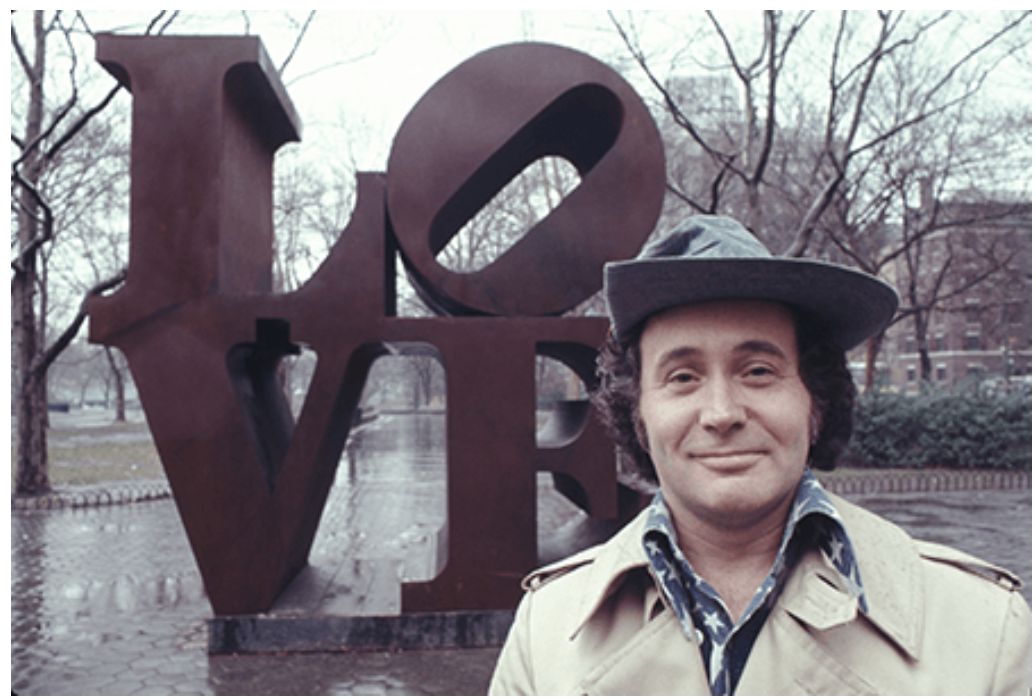
Robert Indiana with his LOVE sculpture in Central Park, New York City, 1971, Image: Jack Mitchell / Getty Images, Artwork: © 2022 Morgan Art Foundation Ltd./ Artists Rights Society (ARS), New York
The immediate recognizability of Indiana’s LOVE is even more powerful in the age of new media and the incredible potential of image circulation. As Aaron Ott noted, “LOVE is capable of holding meaning in a variety of histories. It was created in the shadow of hippie culture but powerful enough to escape that orbit in order to resonate in numerous contemporary and personalized contexts.” LOVE crystallizes many of the major themes that Robert Indiana has investigated throughout his career, and one of the most fascinating aspects of this work is its ability to remain timeless and contemporary at the same time.
A cardinal symbol of Pop art, LOVE is a quintessential example of Robert Indiana’s ability to use text and language to transcend conventional distinctions between Minimalism, Pop art, and modernism. Indiana orientates the four letters that constitute the word over a strict cruciform axis, the gridding of which he only jeopardizes with the playful energy emitted from the tilted “O”. Radiating with its vibrant and distinct color combination, LOVE serves as an homage to the artist’s father who worked at a Phillips 66 gas station in the Midwestern United States during the Great Depression: at once deeply personal and emblematic of the American experience, the work echoes the red logo set against a cerulean Indiana sky. Indiana’s LOVE has achieved global recognition since its conception in 1966, and versions of the work have been installed in public and private collections across the United States as well as in Canada, Europe, South America, Asia, and Israel. Ascribed to the sculpture’s vibrant palette and instantaneous impact, LOVE has become an iconic Pop motif that takes its place in the pantheon of imagery alongside Andy Warhol’s soup cans and Roy Lichtenstein’s Ben-Day dots.
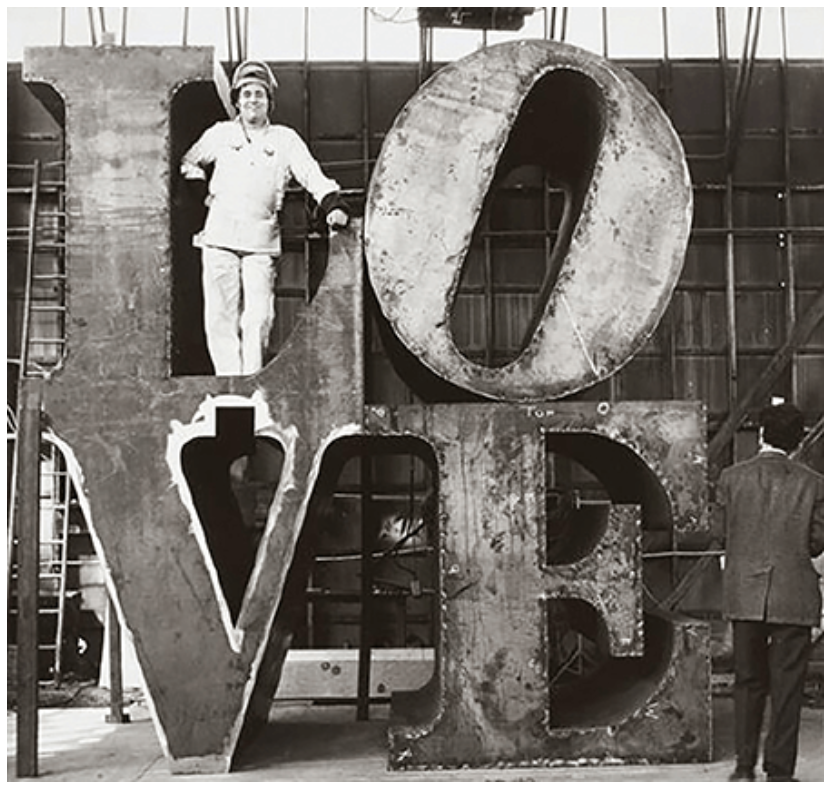
Robert Indiana in North Haven, Connecticut, 1970. Photographed by Tom Rummler,
Artwork © 2021 Morgan Art Foundation Ltd./Artists Rights Society (ARS), New York
Perhaps what makes the work so evocative is its perennial ability to remain timeless. The imagery was already identified as emblematic of the Pop movement when The Museum of Modern Art in New York selected the image for their annual Christmas card in 1965. As Aaron Ott noted, “LOVE is capable of holding meaning in a variety of histories. It was created in the shadow of hippie culture but powerful enough to escape that orbit in order to resonate in numerous contemporary and personalized contexts.” LOVE crystallizes many of the major themes that Robert Indiana has investigated throughout his career, and one of the most fascinating aspects of this work is its ability to remain timeless and contemporary at the same time. More than 50 years has passed since its conception, and it is clear that having served as inspiration whether directly or indirectly to a younger generation of artists, Indiana’s LOVE persists in a profound manner.
Arriving in vibrant blue and green, the present work is a bold sculptural example of one of the best-known forms in twentieth-century art: Robert Indiana’s LOVE. Realized in polychrome aluminum in 1999, its titular letters are stacked in a two by two square, its ‘O’ nudged 45-degrees to rest at its iconic, jaunty angle. The three-dimensional serif type is faced in blue and has green interior sides, heightening its graphic impact. Indiana created his first LOVE painting in 1964, and the following year, the Museum of Modern Art requested to use the artwork for its gift-shop Christmas cards. In 1966, Indiana held an entire show of prints, paintings and sculptures featuring the motif at New York’s Stable Gallery.
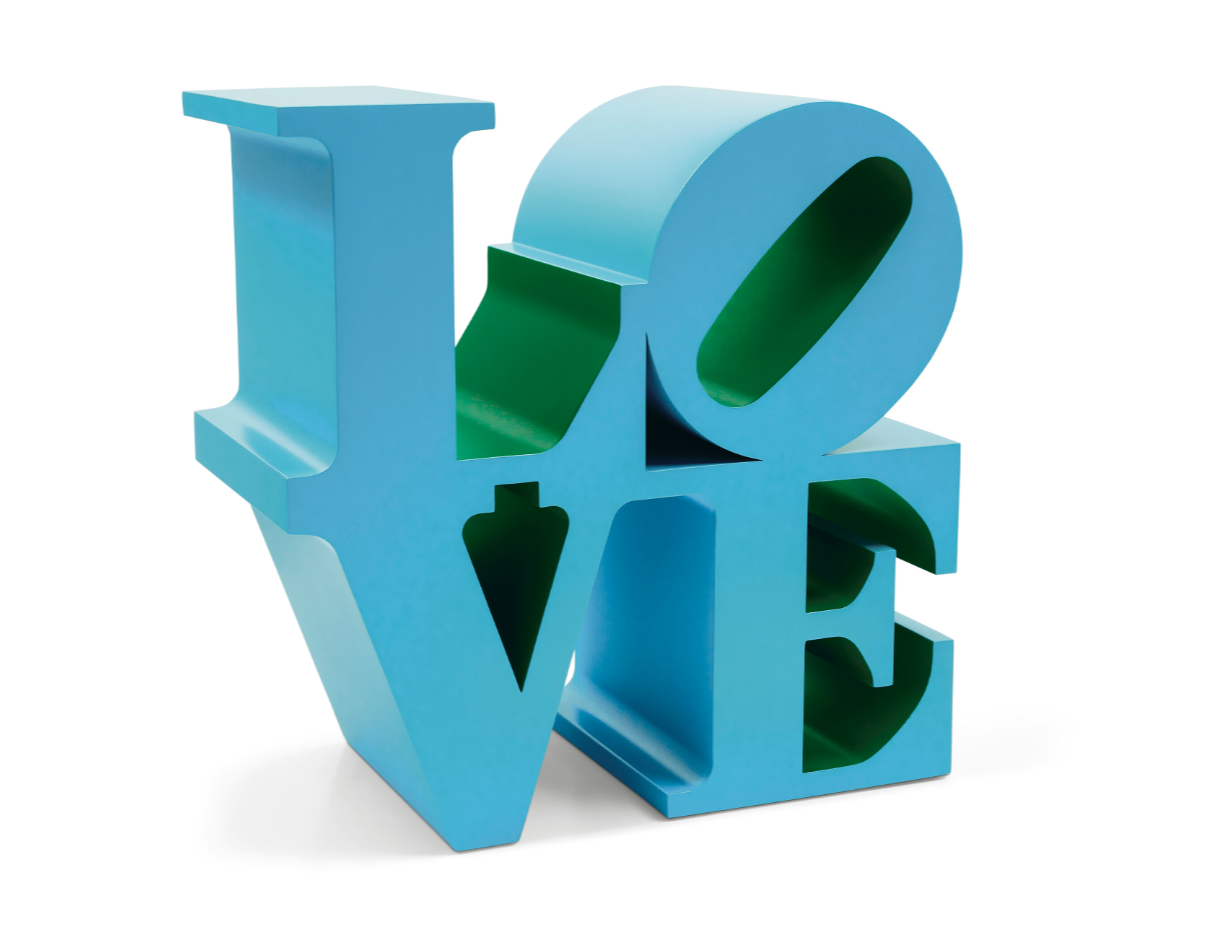
Wildly popular, his four-letter word became an American Pop icon, joining the ranks of Warhol’s soup cans and Lichtenstein’s comic-characters. Indiana continued to revisit the form in different formats and scales throughout his career. Some of its most-celebrated iterations include as a beloved Valentine’s Day stamp, first issued by the US Postal Service in 1973, and monumental sculptures which are displayed in public parks and plazas globally. Indiana was recently the subject of a major retrospective at the Yorkshire Sculpture Park, where a twelve-foot version of LOVE (Red Blue Green) greets visitors at the entrance. Indiana’s bold use of color—blues, greens and reds—was greatly inspired by his own lover, the abstract painter Ellsworth Kelly. Merging pictorial and lexical vocabularies in his career-defining series, his striking statement remains relevant today.
Love Red/Blue, 1990
Christie’s New-York: 12 May 2011
Estimated: USD 2,000,000 – 3,000,000
USD 4,114,500
Robert Indiana (b. 1928) , Love Red/Blue | Christie’s (christies.com)
ROBERT INDIANA (b. 1928)
Love Red/Blue, 1990
Painted aluminum
144x144x72 inches (366x366x183 cm)
Stamped with signature, number and date ‘ROBERT INDIANA 1/3 (c) 1990’ (on the inside of the edge of the “E”)
Executed in 1990, this work is number one from an edition of three
Monumental in scale, ubiquitous in recognition value, and emblematic for American Pop Art culture, Robert Indiana’s iconic LOVE sculptures are a global phenomena. LOVE (Red/Blue), conceived in 1966 and executed in 1990, with its vivid, hard-edged stencil-style contours and dazzling unmodulated patina, shares its scale and dual color with that on New York’s 6th Avenue and 55th Street. Conceived as a serial process, versions of which exist in a variety of materials and sizes, none can match the visual impact and pulsating high-keyed chromatism of the present version. Both a formal abstract configuration and a shaped poem, its dual nature as both imperative utterance and artwork, what Indiana himself described as a ‘verbal-visual” act, fires an extraordinary sonic and optical intensity. The letters themselves, nestled, rubbing together, insinuate a physicality and tactility that resonate with the intended affect. As a visual image, it is emblematic of a time and place in American socio-political history even as it derives from a torrent of art-historical influences. Finding one’s artistic style in 1950s New York would be a struggle for any artist and Indiana acknowledges as much when of his hard-edged reductive geometry for LOVE.
1. Love (96-inch)
LOVE (Red Faces Blue Sides), 1966-1999
Christie’s New-York: 17 May 2024
Estimated: USD 1,000,000 – 1,500,000
USD 1,197,000
ROBERT INDIANA (1928-2018), LOVE (Red Faces Blue Sides) | Christie’s (christies.com)
ROBERT INDIANA (1928-2018)
LOVE (Red Faces Blue Sides), 1966-1999
Polychrome aluminum
96x96x48 inches (243.8 x 243.8 x 121.9 cm)
Stamped with the artist’s name, number, date and fabricator mark ‘© 1966-1999 R INDIANA 3/5’
(on the interior edge of the ‘E’)
Conceived in 1966 and executed in 1999, this work is number three from an edition of five plus two artist’s proofs
2. Love (72-inch)
LOVE (Red Outside Red Inside), 1966-2000
Sotheby’s London: 26 June 2024
Estimated: GBP 400,000 – 600,000
GBP 1,260,000 / USD 1,597,680
ROBERT INDIANA (1928 – 2018)
LOVE (Red Outside Red Inside), 1966-2000
Painted aluminum
72x72x36 inches (182.9 x 182.9 x 91.4 cm)
Stamped with the artist’s name, dated 1966-2000 and numbered 3/6 (towards the base)
Conceived in 1966 and executed in 2000, this work is number 3 from an edition of 6 plus 4 artist’s proofs
LOVE (Red Inside Red Outside) is an iconic example from Robert Indiana’s most celebrated body of work.
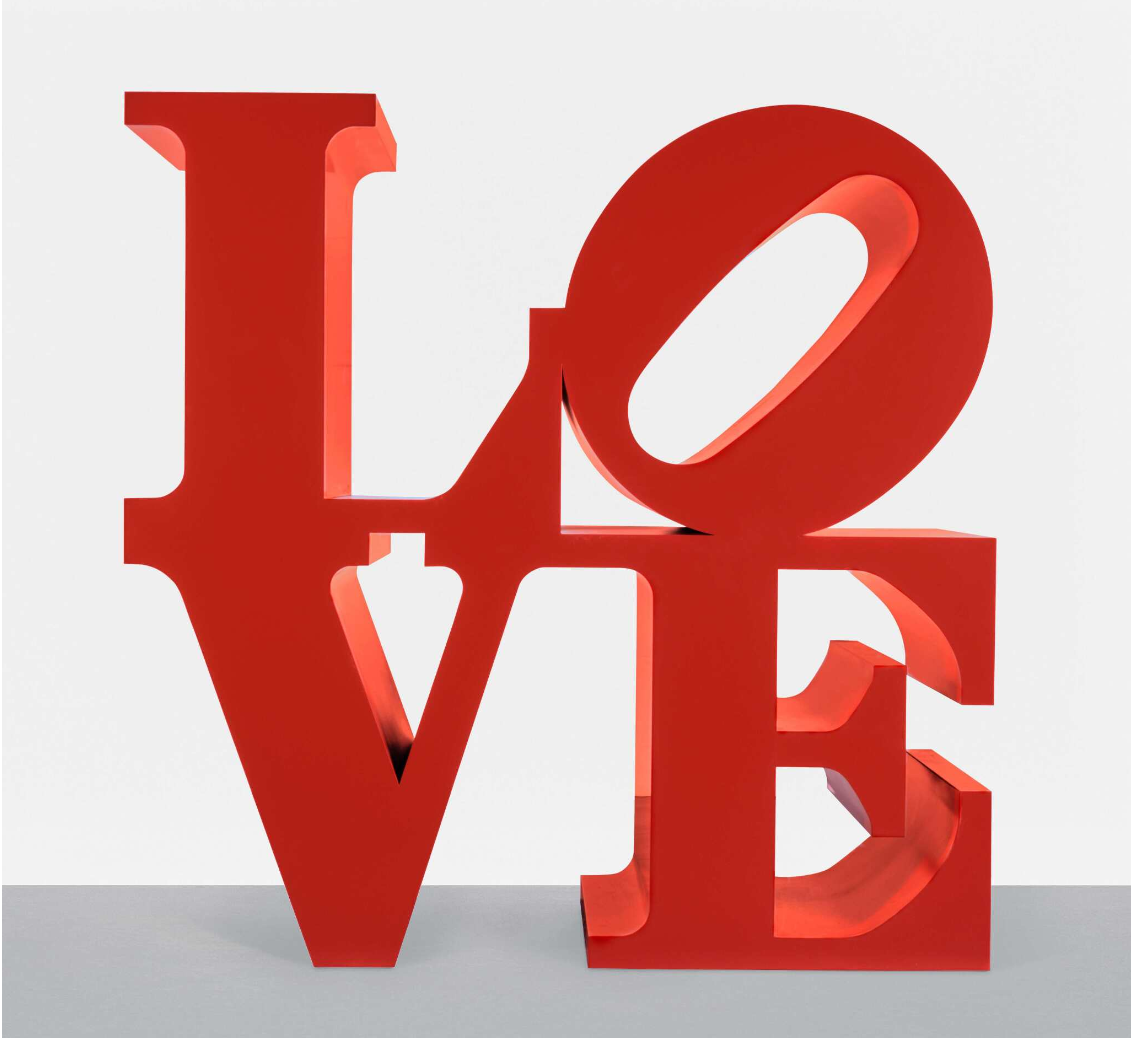
LOVE (Violet Faces Red Sides), 1966-1999
Phillips New-York: 19 May 2022
Estimated: USD 600,000 – 800,000
USD 724,500
Robert Indiana – 20th Century & Contemp… Lot 126 May 2022 | Phillips
ROBERT INDIANA
LOVE (Violet Faces Red Sides), 1966-1999
Polychromed aluminum
72x72x36 inches (182.9 x 182.9 x 91.4 cm)
Stamped with the artist’s name, number and date “© 1966–1999 R INDIANA 3/6” and the Milgo/Bufkin foundry mark on the lower interior edge of the E
Conceived in 1966 and executed in 1999, this work is number 3 from an edition of 6 plus 4 artist’s proofs
3. Love (36-inch)
LOVE (Red Outside Blue Inside), 1966-1998
Christie’s New-York: 17 May 2024
Estimated: USD 400,000 – 600,000
USD 882,000
ROBERT INDIANA (1928-2018), LOVE (Red Outside Blue Inside) | Christie’s (christies.com)
ROBERT INDIANA (1928-2018)
LOVE (Red Outside Blue Inside), 1966-1998
Polychrome aluminum
36x36x18 inches (91.4 x 91.4 x 45.7 cm)
Stamped with the artist’s name, number, date and fabricator mark ‘© 1966-1999 R INDIANA 6/6’
(on the interior edge of the ‘E’)
Conceived in 1966 and executed in 1998, this work is number six from an edition of six plus four artist’s proofs and two hors commerce
LOVE, 1966-1999
Christie’s New-York: 22 November 2024
Estimated: USD 300,000 – 500,000
USD 378,000
ROBERT INDIANA (1928-2018), LOVE | Christie’s
ROBERT INDIANA (1928-2018)
LOVE, 1966-1999
Cor-ten steel
36x36x18 inches (91.4 x 91.4 x 45.7 cm)
Stamped with the artist’s name, number, date and fabricator mark ‘© 1966-1999 R INDIANA 6⁄6’
(on the interior edge of the ‘E’)
Conceived in 1966 and executed in 1999, this work is number six from an edition of six plus two artist’s proofs
LOVE (Red Faces Violet Sides), 1966-1999
Christie’s New-York: 10 November 2023
Estimated: USD 400,000 – 600,000
USD 957,600
ROBERT INDIANA (1928-2018), LOVE (Red Faces Violet Sides) | Christie’s (christies.com)
ROBERT INDIANA (1928-2018)
LOVE (Red Faces Violet Sides), 1966-1999
Polychrome aluminum
36x36x18 inches (91.4 x 91.4 x 45.7 cm)
Stamped with the artist’s name, number and date ”© 1966-1999 R INDIANA 6⁄6′ (on the interior edge of the ‘E’)
Conceived in 1966 and executed in 1999, this work is number six from an edition of six plus four artist’s proofs
LOVE (Blue Faces Red Sides), 1966-1998
Sotheby’s Hong-Kong: 15 December 2022
Estimated: HKD 3,200,000 – 4,500,000
HKD 3,528,000 / USD 455,115
ROBERT INDIANA (b.1928)
LOVE (Blue Faces Red Sides), 1966-1998
Polychromed aluminum
35 7/8 x 35 7/8 x 18 inches (91.2 x 91.2 x 45.7 cm)
Stamped with the artist’s name, date 1966-1998, number AP 2/4 and fabricator’s copyright
Conceived in 1966 and executed in 1998, this work is artist’s proof 2 from an edition of 6 plus 4 artist’s proofs
LOVE (Violet Faces Red Sides), 1966-2000
Sotheby’s New-York: 17 November 2022
Estimated: USD 400,000 – 600,000
USD 504,000
LOVE (Violet Faces Red Sides) | Contemporary Day Auction | 2022 | Sotheby’s (sothebys.com)
ROBERT INDIANA (1928 – 2018)
LOVE (Violet Faces Red Sides), 1966-2000
Polychromed aluminum
36x36x18 inches (91.4 x 91.4 x 45.7 cm)
Stamped ©1966-2000 R INDIANA AP 3/4 (on the lower left interior edge of the ‘E’)
Conceived in 1966 and executed in 2000, this work is artist’s proof outside of an edition of 6
LOVE (Red Faces Violet Sides), 1966-1999
Christie’s London: 28 June 2022
Estimated: GBP 300,000 – 500,000
GBP 756,000 / USD 927,340
ROBERT INDIANA (1928-2018), LOVE (Red Faces Violet Sides) | Christie’s (christies.com)
ROBERT INDIANA (1928-2018)
LOVE (Red Faces Violet Sides), 1966-1999
Polychrome aluminum
36x36x18 inches (91.4 x 91.4 x 45.7 cm)
Stamped with the artist’s signature, number, date and foundry mark ”© 1966-1999 R INDIANA 5/6′
(on the inside edge of the “E”)
Conceived in 1966 and executed in 1999, this work is number five from an edition of six plus four artist’s proofs
LOVE (Blue Faces Red Sides), 1966-1998
Phillips New-York: 18 November 2021
Estimated: USD 400,000 – 600,000
USD 567,000
Robert Indiana – 20th Century & Co… Lot 139 November 2021 | Phillips
ROBERT INDIANA
LOVE (Blue Faces Red Sides), 1966-1998
Polychromed aluminum
36x36x18 inches (91.4 x 91.4 x 45.7 cm)
Stamped with the artist’s name, number, date and the Milgo Bufkin, Brooklyn mark “© 1966–1998 R INDIANA AP2/4” along the lower interior edge of the E
Conceived in 1966 and executed in 1998, this work is artist’s proof 2 from an edition of 6 plus 4 artist’s proofs
4. Love (18-inch)
LOVE (Red Outside Violet Inside), 1966-1997
Sotheby’s New-York: 21 November 2024
Estimated: USD 200,000 – 300,000
USD 840,000
LOVE (Red Outside Violet Inside) | Contemporary Day Auction | 2024 | Sotheby’s
ROBERT INDIANA (1928 – 2018)
LOVE (Red Outside Violet Inside), 1966-1997
Polychromed aluminum
18x18x9 inches (45.7 x 45.7 x 22.8 cm)
Stamped with the artist’s signature, date 1966-1997 and number 1/8 (on the outside of the ‘V’)
Conceived in 1966 and fabricated in 1997, this work is number 1 from an edition of 8 plus 4 artist’s proofs
LOVE, 1966-1998
Christie’s London: 10 October 2024
Estimated: GBP 150,000 – 200,000
GBP 189,000 / USD 246,955
ROBERT INDIANA (1928-2018), LOVE | Christie’s
ROBERT INDIANA (1928-2018)
LOVE, 1966-1998
Polychromed aluminum
18x18x9 inches (45.7 x 45.7 x 22.8 cm)
Stamped with the artist’s name, number and date ‘© 1966-1998 R INDIANA 7⁄8’ (on the inside edge of the “V”)
Conceived in 1966 and executed in 1998, this work is number seven from an edition of eight plus four artist’s proofs
LOVE (Red/Blue/Green), 1966-1999
K Auction Seoul: 26 June 2024
Estimated: KRW 290,000,000 – 400,000,000
KRW 333,500,000 / USD 239,455
ROBERT INDIANA (1928-2018)
LOVE (Red/Blue/Green), 1966-1999
Polychrome aluminum
18x18x9 inches (45.6 x 45.6 x 22.8 cm)
Stamped with the artist’s signature, number and date ”© 1966-1999 R INDIANA AP 3/4′
(on the inside edge of the “V”)
Conceived in 1966 and executed in 1999, this work is an artist’s proof outside from an edition of eight
LOVE, 1966-1999
Christie’s London: 14 October 2023
Estimated: GBP 170,000 – 250,000
GBP 201,600 / USD 244,440
ROBERT INDIANA (1928-2018), LOVE | Christie’s (christies.com)
ROBERT INDIANA (1928-2018)
LOVE, 1966-1999
Polychrome aluminum
18x18x9 inches (45.6 x 45.6 x 22.8 cm)
Stamped with the artist’s signature, number and date ”© 1966-1999 R INDIANA 7⁄8′ (on the inside edge of the “V”)
Conceived in 1966 and executed in 1999, this work is number seven from an edition of eight plus four artist’s proofs
LOVE, 1966-2001
Christie’s New-York: 13 May 2022
Estimated: USD 200,000 – 300,000
USD 302,400
ROBERT INDIANA (1928-2018), LOVE | Christie’s (christies.com)
ROBERT INDIANA (1928-2018)
LOVE, 1966-2001
Polychromed aluminum
18x18x9 inches (45.7 x 45.7 x 22.9 cm)
Stamped with the artist’s signature, number, date and foundry mark ‘© 1966-2001 R Indiana 4⁄8’
(on the inside edge of the “V”)
Conceived in 1966 and executed in 2001, this work is number four from an edition of eight plus four artist’s proofs
Translations
AMOR (Red Blue), 1998
Sotheby’s Diriyah: 8 February 2025
Estimated: USD 220,000 – 280,000
USD 228,000
Amor (Red Blue) | Origins | 2025 | Sotheby’s
ROBERT INDIANA (1928 – 2018)
AMOR (Red Blue), 1998
Polychrome aluminum on artist base
18x18x9 inches (45.7 x 45.7 x 22.9 cm)
Stamped with the artist’s signature R INDIANA, date 1998 and number 6/8 (on the outer edge of the ‘R’)
This work is number 6 from an edition of 8 plus 2 artist’s proofs
AMOR extends the spirit of his LOVE sculpture into a new language, a new territory, proving that Indiana’s sculptures are not just symbols of America, but of the world. Over the course of his career, Indiana experimented with LOVE in numerous languages including Spanish, Chinese, Hebrew and Sanskrit. Rendering each version with his instantly identifiable style serves to further abstract the word itself, asking us to push beyond its physical presentation and consider the deeper meaning.
“In a sense… I got down to the subject matter of my work… The subject is defined by its expression in the word itself… Love is purely a skeleton of all that word has meant in all the erotic and religious aspects of the theme, and to bring it down to the actual structure of the calligraphy [is to reduce it] to the bare bones”
Looking at the ways graphic letters and numbers acquire beauty as shapes and silhouettes when separated from their meaning, AMOR brings to focus the weight, balance and shape of each letter as they are neatly stacked on top of each other in a bold topographical design. The expressive red is used here not just for its symbolic association with love and passion but, when combined with Indiana’s typeface, graphic design and simplified stacked format, to communicate the universal emotion tied to a single word in an immediate and direct way, becoming an icon of contemporary art in the process.
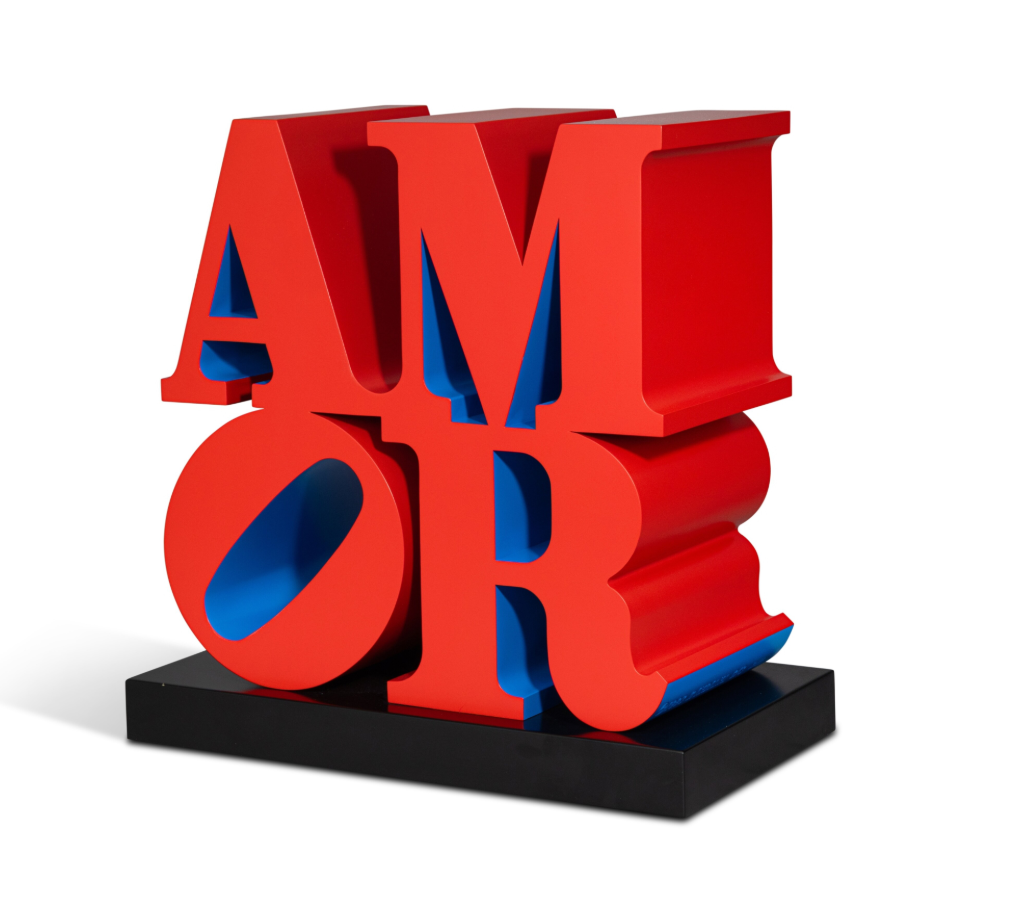
Throughout his career, Indiana was fascinated by the potential of symbols and signs; his LOVE sculptures and paintings, in this sense, are the artist’s explorations of semantic possibilities. As Carl J. Weinhardt argues, Indiana’s practice elevates the word to new graphic and semiotic potential: “When [Indiana] carried some of the words (and eventually the numerals) that occupied him as a painter (LOVE, ART) into the sculptural dimension, he became literally a wordsmith, fashioning the logos in metal.” (Theresa Brakely, ed., Robert Indiana, New York, 1990, pp. 9-10.) Through AMOR (Red Blue), Indiana merges the loftiness of love with the physicality of metal, presenting the word “AMOR” in its multifaceted possibilities and beckoning viewers to unlock the myriad meanings behind it. Even devoid of any kind of anchoring context, AMOR (Red Blue) takes on the combination of sinuous curves, sharp lines, and the playfully tilted oblong form of the letter “O” to create an object that exudes a sense of exquisite grace despite its material solidity.
Ahava, 1977-2021
Sotheby’s New-York: 18 May 2022
Estimated: USD 250,000 – 350,000
USD 315,000
Ahava | Contemporary Day Auction | 2022 | Sotheby’s (sothebys.com)
ROBERT INDIANA (1928 – 2018)
Ahava, 1977-2021
Cor-ten steel
37x36x18 inches (94 x 91.4 by 45.7 cm)
Stamped ©1977-2021 R INDIANA 1/6 (on the lower exterior edge of the ‘V’)
Conceived in 1977 and cast in 2021, this work is number 1 from an edition of 6, plus 2 artist’s proofs.
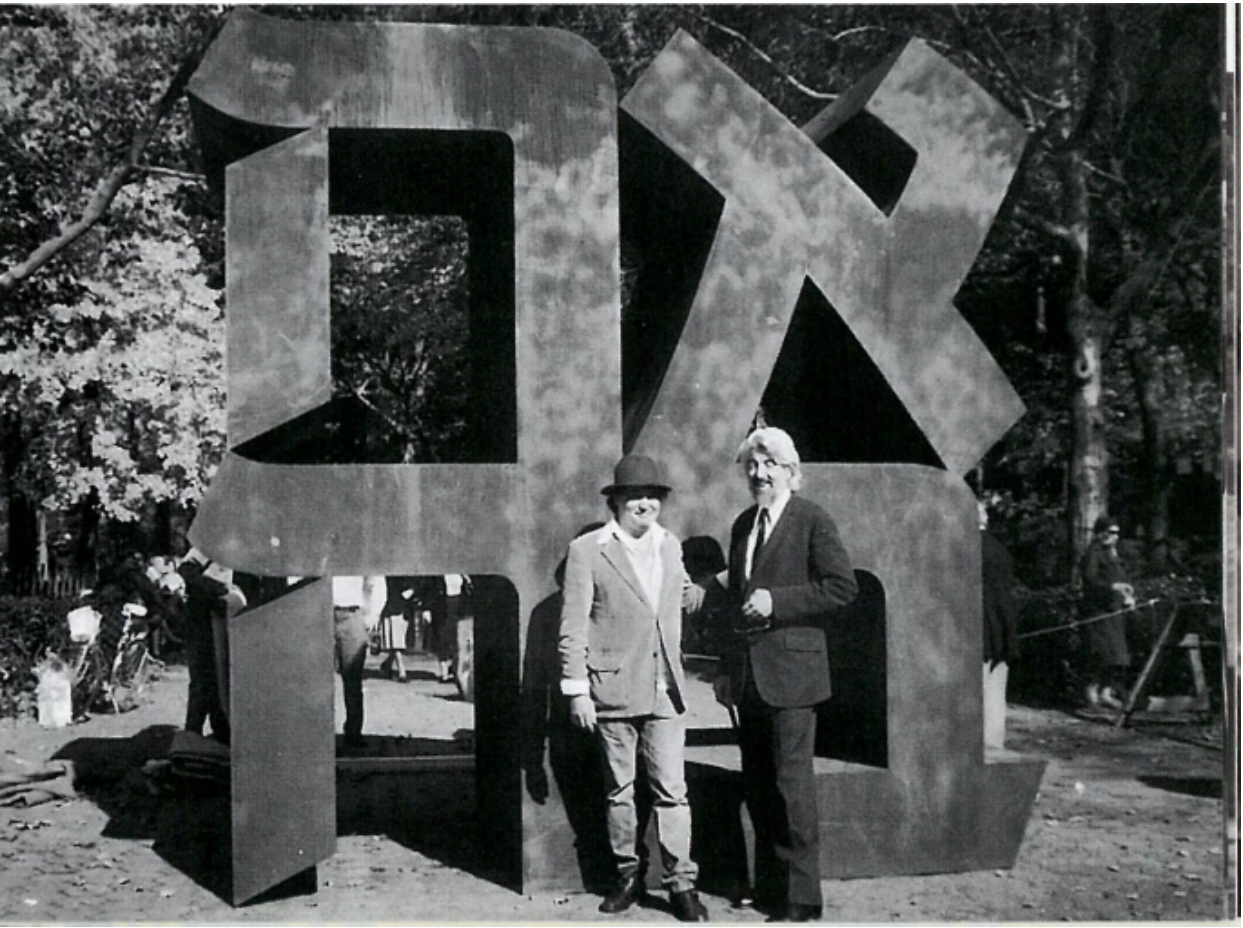
INDIANA AND ROBERT TOBIN, RENOWN ART COLLECTOR AND PATRON, PICTURED 1977. AHAVA THE HEBREW VERSION OF LOVE, EXHIBITED IN CENTRAL PARK, NEW YORK, LATER ACQUIRED BY THE ISRAEL MUSEUM, WHERE IT HAS BEEN IN PERMANENT DISPLAY ON THE BILLY ROSE SCULPTURE GARDEN. © 2006 ROBERT INDIANA
LOVE (Paintings)
Love, 1965
Sotheby’s New-York: 14 May 2024
Estimated: USD 400,000 – 600,000
USD 762,000
Love | Contemporary Day Auction | 2024 | Sotheby’s (sothebys.com)
ROBERT INDIANA (1928 – 2018)
Love, 1965
Oil on canvas
24×24 inches (61×61 cm)
Signed, titled and dated 1965 (on the reverse)
Instantly recognizable and universally beloved for its power as an immutable symbol of grace and goodwill, Robert Indiana’s LOVE stands as a superlative paragon within the artist’s distinguished body of work. Dating to 1965, the present work is the very first Love painting made by Robert Indiana making it a historic and seminal work in the artist’s storied career.
The Love motif first appeared in Indiana’s output in 1965, quickly garnering immense popularity during the heyday of the hippie movement and the corresponding liberation of traditional social formalities. Following the ‘free love’ zeitgeist that characterized the 1960s and 1970s, Indiana’s Love persists as an enduring emblem of a universally understood sentiment, continuing to serve as a perpetual source of inspiration and joy. Testament to their singular importance within Indiana’s oeuvre, variations on Love across mediums reside in public parks and permanent museum collections, including the Museum of Modern Art in New York, the San Francisco Museum of Art, the Whitney Museum of American Art in New York and the Hirshhorn Museum and Sculpture Garden in Washington, D.C. Furthermore, a true embodiment of Indiana’s original intention, the present work was bestowed as a heartfelt wedding gift and has remained cherished within the family collection ever since.
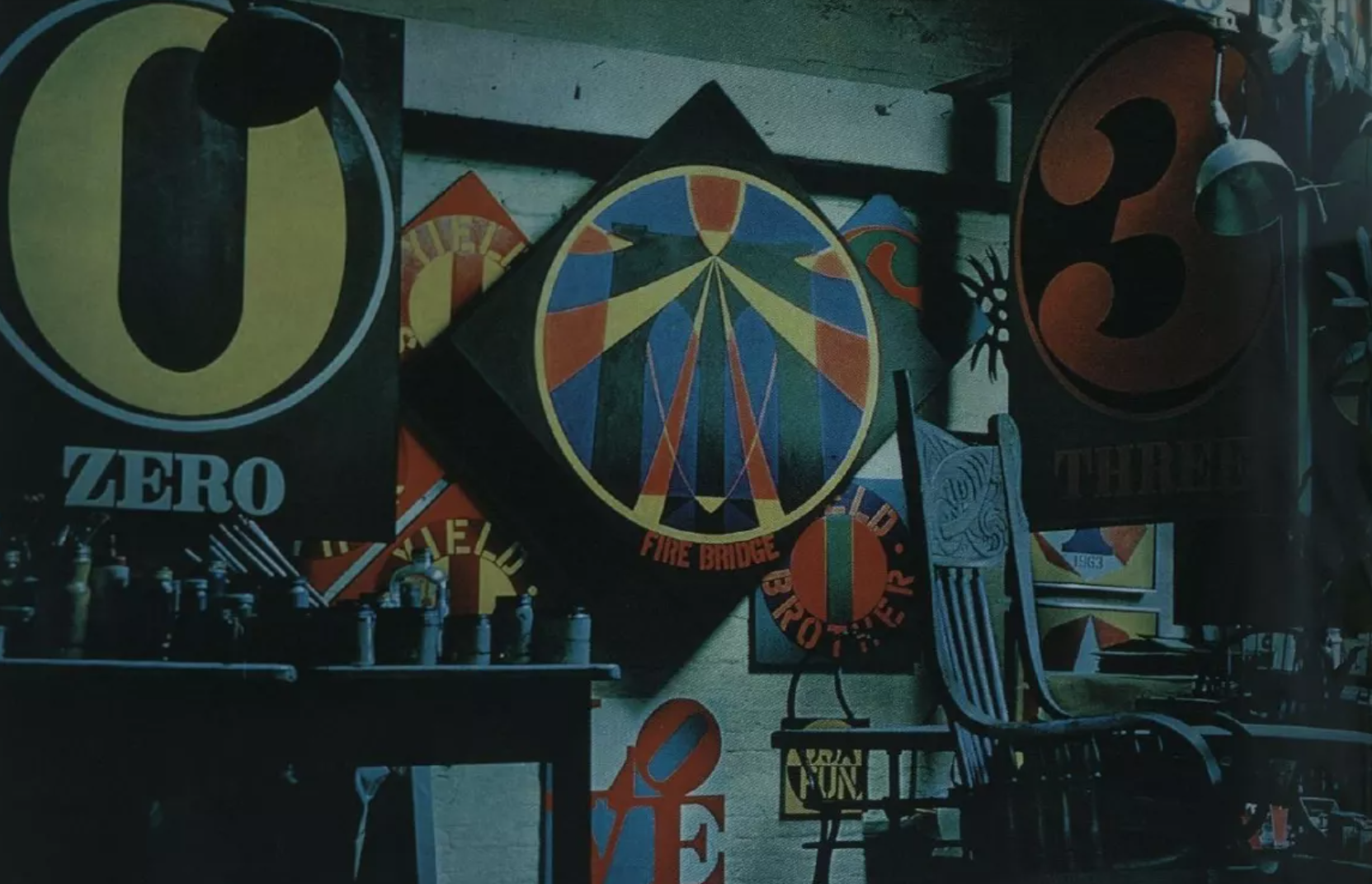
THE PRESENT WORK IN ROBERT INDIANA’S STUDIO. © 2024 MORGAN ART FOUNDATION LTD. / ARTISTS RIGHTS SOCIETY (ARS), NEW YORK
Indiana first conceived the present work’s iconic compositional arrangement of the letters L.O.V.E. in 1965 when commissioned to create a Christmas card by the Museum of Modern Art in New York. Through its bold typographical design, Love brings to fruition the architectural weight of the compositional form. Its stacked letters with the signature slanted O commit to a square format in this iconic painting. The hard-edge surface and the chromatic decisions pay homage to the formulaic principles of Indiana’s mentor and lover of some time, Ellsworth Kelly, while the masterful separation of the semantic from the graphic aligns Indiana with luminaries of Pop art, notably Ed Ruscha. With LOVE and all its variants, Indiana captured the zeitgeist of the countercultural movement which culminated in the Summer of Love of 1967 and distilled the aspirations into a timeless artistic expression that resonates as powerfully today as it did over half a century ago.
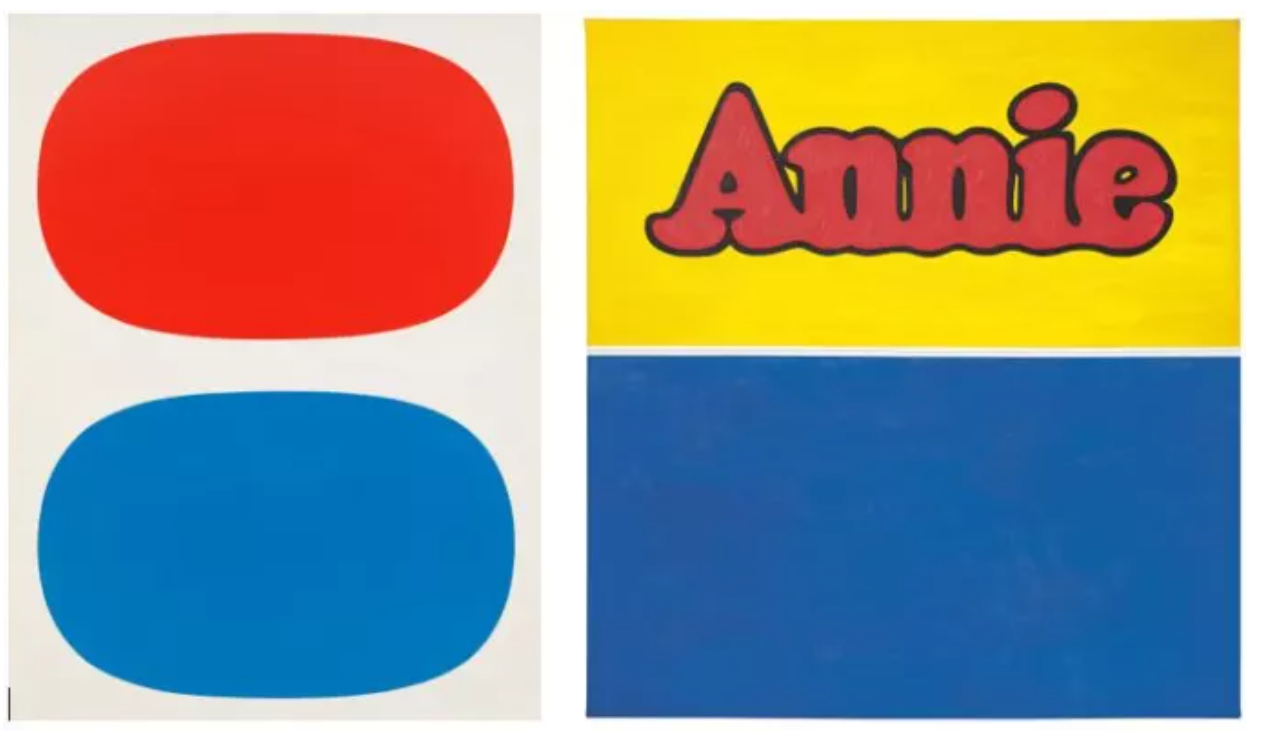
LEFT: ELLSWORTH KELLY, RED, WHITE AND BLUE, 1961. WHITNEY MUSEUM OF AMERICAN ART, NEW YORK; GIFT OF BETTY PARSONS © ELLSWORTH KELLY
RIGHT: EDWARD RUSCHA. ANNIE. 1962. COLLECTION LARRY GAGOSIAN. © 2023 ED RUSCHA
Indiana’s nomadic upbringing, marked by constant relocation until the age of seventeen, profoundly influenced his artistic vision. Growing up moving from town to town until the age of seventeen, Indiana spent much time on the road, with nothing more permanent than the family car to call home. The road signs by the motorways were constant companions to the boy on his travels and left a lasting impression. Towering above the highway, they provided direction to the pseudo-nomadic family, instilling in their migrations a sense of purpose. Reflecting on the proliferation of signage in the American landscape, Indiana astutely observed:
“In Europe trees grow everywhere; in America, signs grow like trees; signs are more common than trees.”
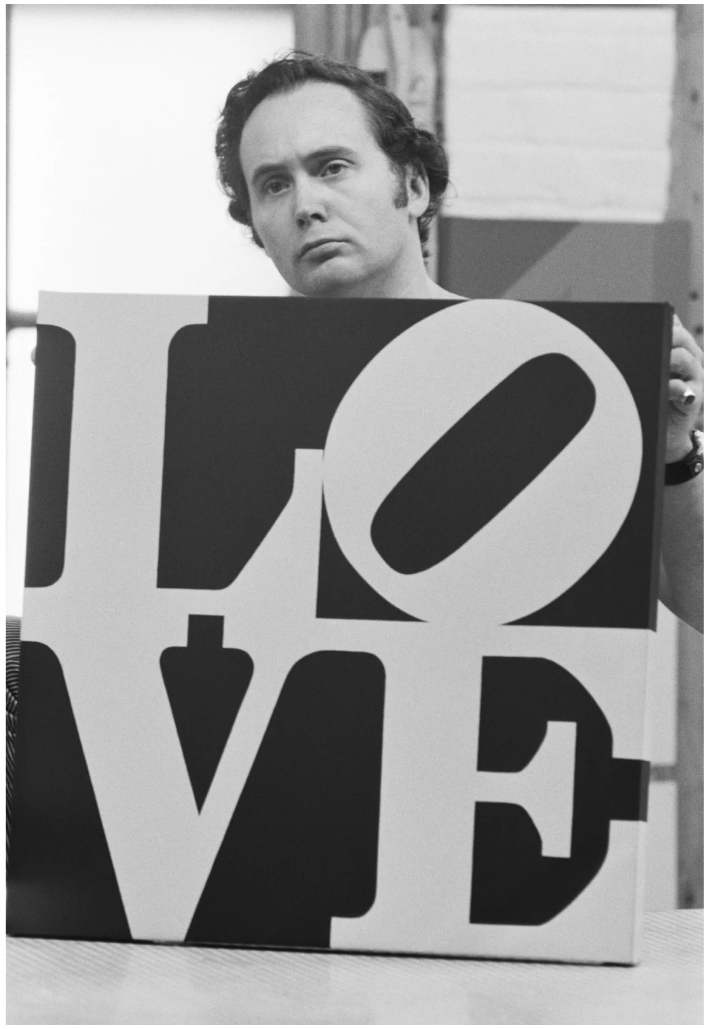
ROBERT INDIANA WITH A “LOVE” PAINTING AT HIS COENTIES SLIP STUDIO IN THE 1960S.CREDIT…WILLIAM JOHN KENNEDY, VIA KIWI ARTS GROUP. ARTWORK © 2024 MORGAN ART FOUNDATION LTD. / ARTISTS RIGHTS SOCIETY (ARS), NEW YORK
Moreover, the vibrant red and the light blue employed in Indiana’s LOVE works carry profound autobiographical significance for Indiana, evoking memories of the Phillips 66 gasoline company logo, where Indiana’s father once worked during the Great Depression. With regards to the genesis of what Indiana calls a ‘one-word poem’, he illuminates:
“The reason I became so involved in Love is that it is so much a part of the peculiar American environment, particularly in my own background, which was Christian Science. God is Love is spelled out in every church.”
Thus, beneath the seemingly straightforward and pristine exterior of LOVE lies a tapestry of personal narratives culled from the artist’s own life experiences. The linguistic simplicity and striking geometry have become part of our cultural lexicon for one of the most complex core emotions of humanity.
Love, 1969
Sotheby’s New-York: 18 November 2021
Estimated: USD 150,000 – 250,000
USD 315,000
Love | Contemporary Evening Auction | 2021 | Sotheby’s (sothebys.com)
ROBERT INDIANA (1928 – 2018)
Love, 1969
Oil on canvas
5 1/8 x 5 1/8 inches (13×13 cm)
Signed IND. and dated 1969 (on the reverse)
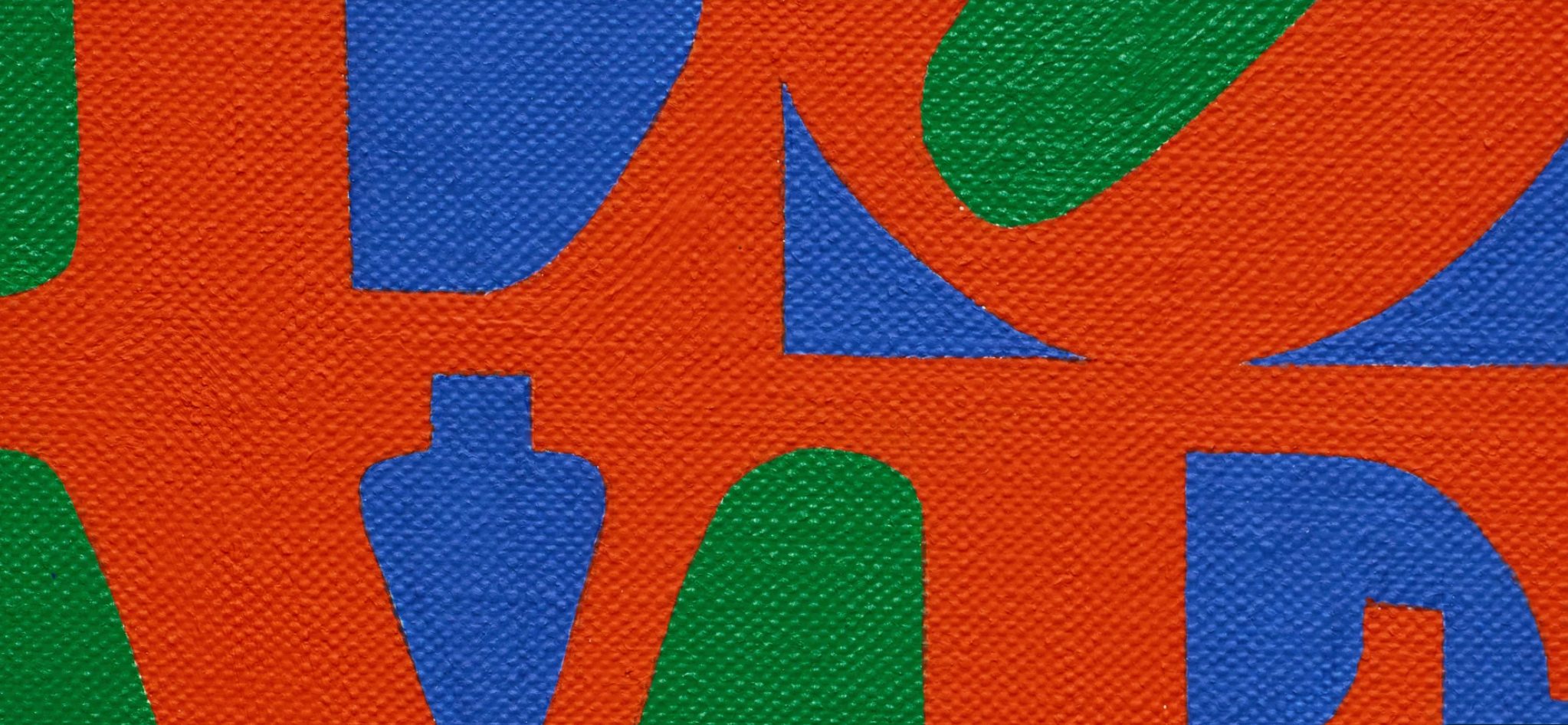
Robert Indiana’s gem-like LOVE canvas from 1969 is an outstanding example of the artists most famous and iconic series. Both visually refined and conceptually enthralling LOVE typifies the most exemplary components of the artists oeuvre on an intimate and delightful scale. The strict and engrossing geometry of this work is interrupted by the O, which cants outward in a note of jaunty discordance. Upon deeper visual engagement, the audience can relinquish its grasp on the legibility of the word, instead turning to the purity of the blue and green ‘negative spaces’ that resolve into elegant shapes in and of themselves.
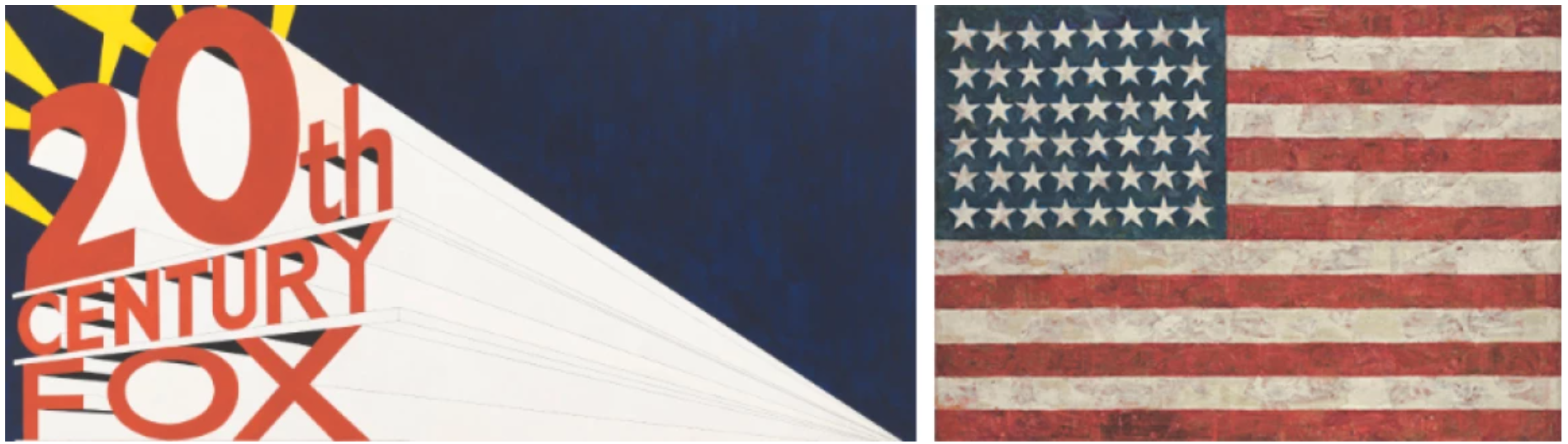
LEFT: ED RUSCHA, LARGE TRADEMARK WITH EIGHT SPOTLIGHTS, 1962 / DIGITAL IMAGE © WHITNEY MUSEUM OF AMERICAN ART, NEW YORK / ART © 2018 EDWARD RUSCHA
RIGHT: JASPER JOHNS, FLAG, 1954-1955 / DIGITAL IMAGE © THE MUSEUM OF MODERN ART / LICENSED BY SCALA / ART RESOURCE, NY / ART © 2017 JASPER JOHNS / LICENSED BY VAGA, NEW YORK, NY
The scale of this work is tremendously rare in Indiana’s series of LOVE paintings with only six examples in the palette of Red, Blue and Green painted by Indiana as a single panel- the largest of which is held in the collection of the Indianapolis Museum of Art. Indiana’s LOVE remains a timeless symbol of a universal concept, one to which the entire condition of humanity continues to aspire. Indeed, testifying to their power and importance Indiana’s sculptural iterations reside are in public and private collections, worldwide including the Museum of Modern Art in New York, the San Francisco Museum of Art, the Whitney Museum of American Art in New York and the Hirshhorn Museum and Sculpture Garden in Washington, D.C.
The present work comes from the remarkable Collection of Bill Katz who has charted his legacy as a designer, taste-making architect and an aesthetic adviser to many of the world’s most creative luminaries including artists Anselm Kiefer, Agnes Martin, Cy Twombly and Jasper Johns. After graduating from Johns Hopkins, Katz moved to New York City, where he met Robert Indiana, Agnes Martin, Marisol and Andy Warhol. He became lifelong friends with Agnes Martin and Robert Indiana both of whom gifted him the works on offer the year they were created. Indiana gifted Katz two paintings in 1969—both gems and icons of the artist’s practice.
Indiana, like some of his fellow artists, scavenged the area’s abandoned warehouses for materials, creating sculptural assemblages from old wooden beams, rusted metal wheels, and other remnants of the shipping trade that had thrived in Coenties Slip. The discovery of 19th century brass stencils led to the incorporation of brightly colored numbers and short emotionally charged words into these sculptures as well as canvases, and became the basis of his new painterly vocabulary.
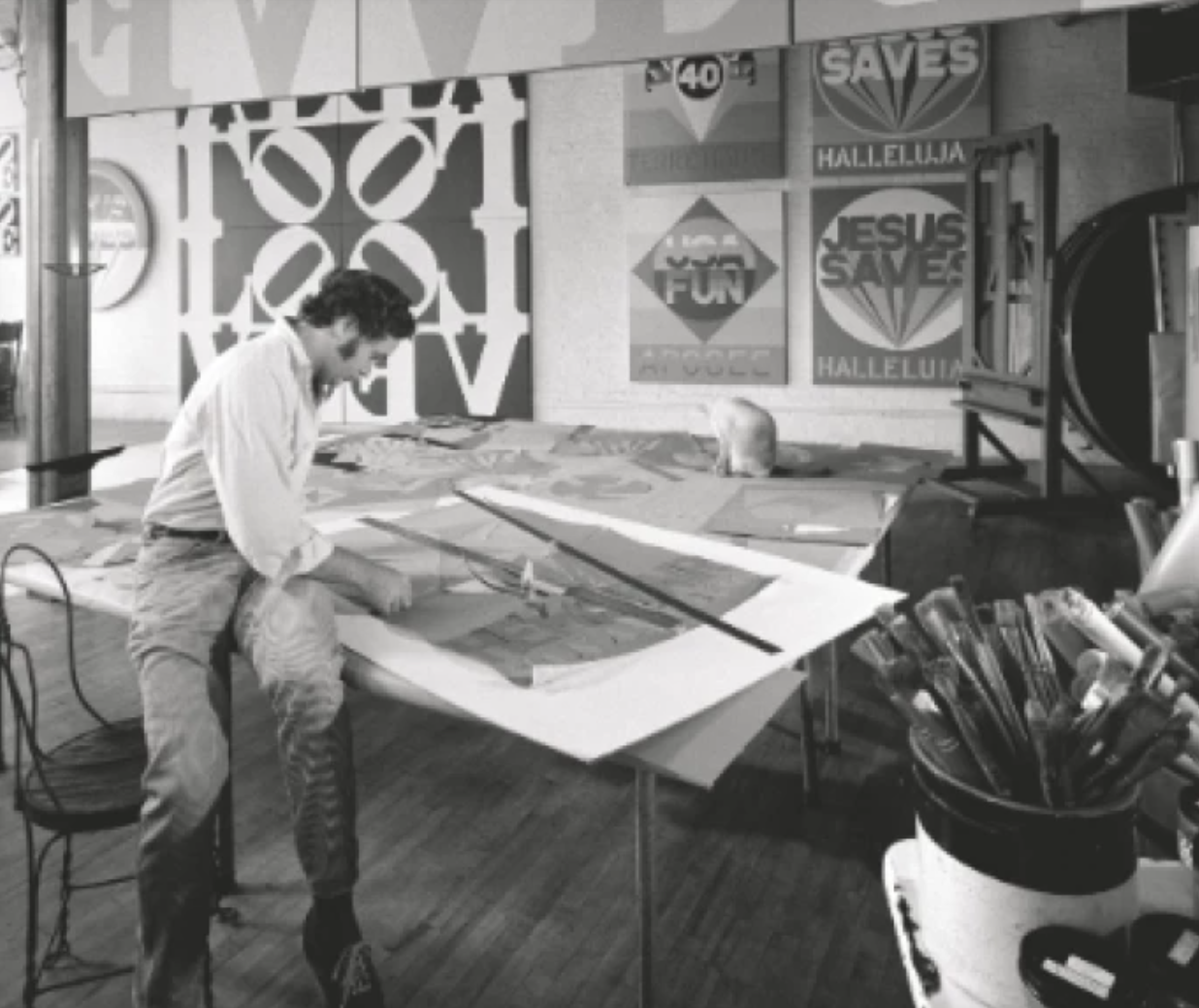
ROBERT INDIANA WORKING IN HIS STUDIO ON BOWERY, NEW YORK, C. 1968-1970. PHOTO © HANS NAMUTH
UNIVERSITY OF ARIZONA © 1991 HANS NAMUTH ESTATE
ART © 2021 MORGAN ART FOUNDATION LTD. / ARTISTS RIGHTS SOCIETY (ARS), NEW YORK
Divorced from their everyday meaning by prolonged study and removed from their original context, numbers and letters acquired a form of artistic beauty as shapes and silhouettes in their own right. Viewed in this light, LOVE becomes almost abstract in nature, a bold stamp of sinuous curves deployed in conjunction with sharp straight lines to create an object of lyrical beauty and harmonious balance. Ed Ruscha forms a worthy artistic comparison, an artist who similarly allows text to drift apart from its symbolic meaning and to carry weight as much as an aesthetic motif of formalist beauty as a linguistic symbol of emotive import. In LOVE, the viewer is encouraged to contemplate the inherent beauty of the curves and lines that compose each letter, lending the word ‘love’ a higher order meaning divorced from its everyday connotations.
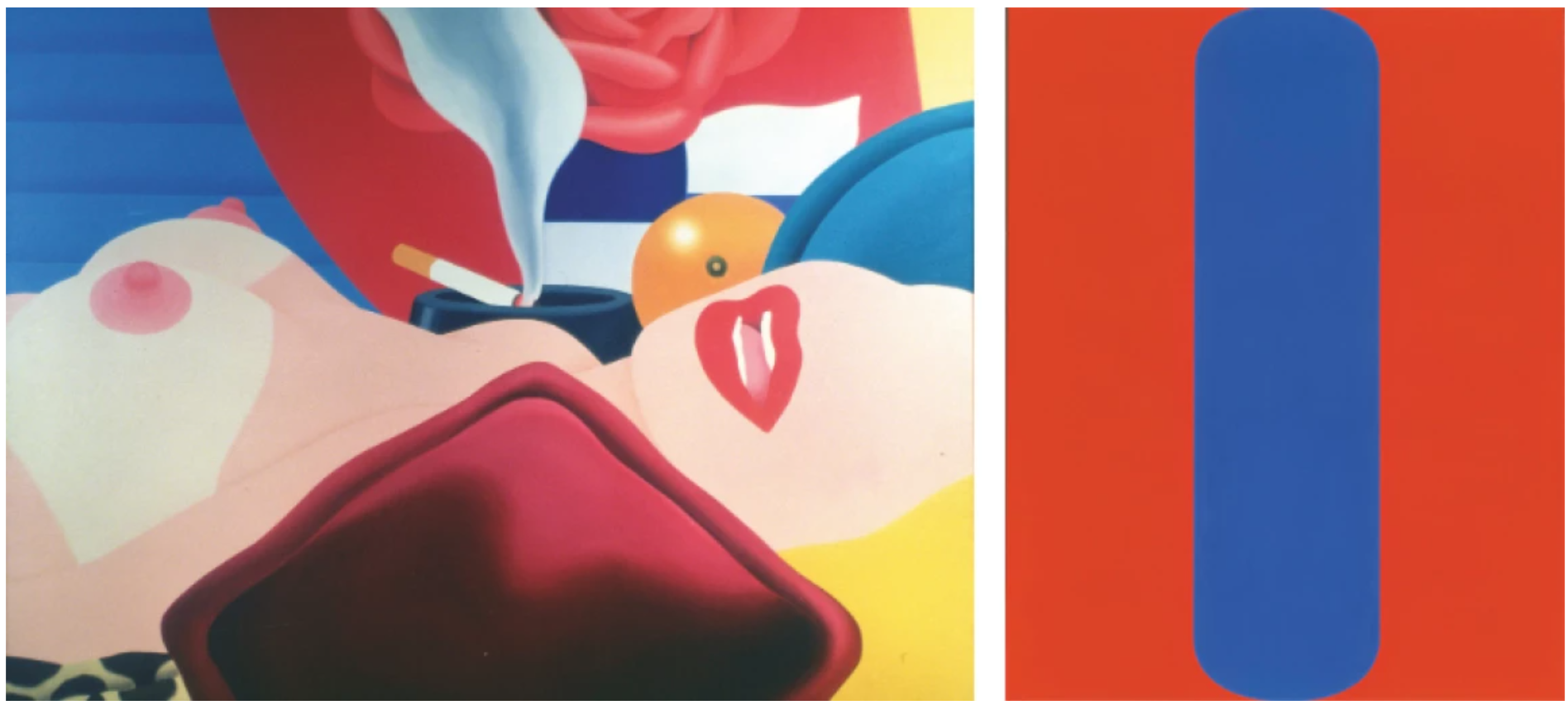
LEFT: TOM WESSELMANN, GREAT AMERICAN NUDE NO. 99, 1968 / PRIVATE COLLECTION / BRIDGEMAN IMAGES
ART © TOM WESSELMANN / LICENSED BY VAGA, NEW YORK, NY
RIGHT: ELLSWORTH KELLY, BLUE RED, 1964 / IMAGE © DETROIT INSTITUTE OF ARTS, USA / FOUNDERS SOCIETY PURCHASE, W. HAWKINS FERRY FUND / BRIDGEMAN IMAGES / ART © ELLSWORTH KELLY FOUNDATION, COURTESY MATTHEW MARKS GALLERY
In 1966 Indiana embarked on translating the image into three dimensional format in creating what has become undoubtedly his most iconic work, LOVE (1966), an aluminum sculpture of the word with a tilted “O.” Examples of these works have been installed worldwide. With a career spanning six decades, this painting is a prime example of Indiana’s mastery of color and form.
Love, 1967
Sotheby’s New-York: 13 November 2018
Estimated: USD 3,000,000 – 5,000,000
USD 3,495,000
(#28) ROBERT INDIANA | Love (sothebys.com)
REPEAT SALE
Sotheby’s London: 15 October 2015
Estimated: GBP 1,000,000 – 1,500,000
GBP 1,565,000 / USD 2,420,175
(#21) Robert Indiana (sothebys.com)
ROBERT INDIANA
Love, 1967
Oil on canvas
72 1/8 x 72 1/8 inches (183.2 x 183.2 cm)
Stenciled with the artist’s name, dated SPRING 1967, inscribed NEW YORK and numbered 2 on the reverse
Robert Indiana’s Love, an instantly recognizable image worldwide, stands as one of the most iconic works of the Twentieth Century. Indiana’s painting charms viewers with its undeniable sense of optimism by virtue of its flat, brightly stenciled letters which together spell out a word that seems to possess universal credence. The graphic quality of the work also reveals an attractive matter-of-factness that contrasts beautifully with the eternal transcendence of this powerful, emblematic word. In Indiana’s Love, the written word becomes the central subject, existing in its own world as a reality unto itself. This piece thus exemplifies Indiana’s lifelong preoccupation with signage, language and abstraction.
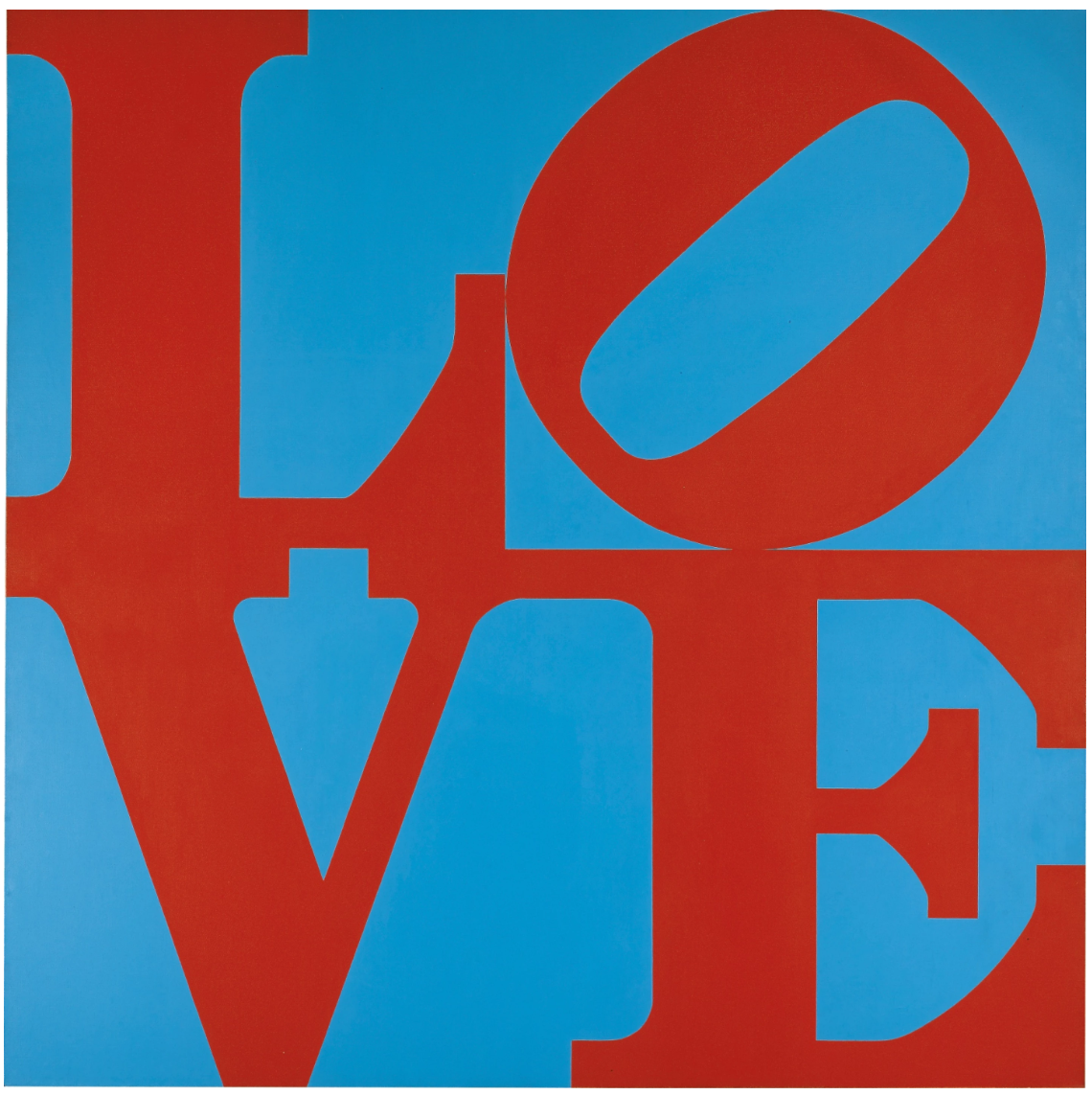
The present work is entirely unique, with only two other sister paintings executed in the same scale, but in different colors: one resides in the collection of the Indianapolis Museum of Art and the other is in a private collection. Of the only 55 Love paintings Indiana executed throughout his career, the vast majority are either 12 by 12 inches or 24 by 24 inches, making the present example a particularly special, rare, and large exemplar from this iconic series, one of only 11 Love paintings executed in sizes greater than 24 inches. Moreover, the sister painting to the present work, which resides in the Indianapolis Museum of Art, was reproduced on a 1973 postage stamp, heightening its visibility and popularity as one of the most instantly recognizable icons of the past half century. Love, produced in 1967, also marks a turning point in Indiana’s artistic development as it was part of a renowned series that simultaneously attracted critical attention and permeated wider popular culture. In other words, Indiana’s Love series seemed to occupy a rare critical position between Pop Art, Conceptual Art and even Minimalism due to its commercially informed, reductive playfulness.
The Great American LOVE (Love Wall), 1972
Sotheby’s New-York: 16 November 2017
Estimated: USD 3,500,000 – 5,000,000
USD 3,555,000
(#54) Robert Indiana (sothebys.com)
ROBERT INDIANA
The Great American LOVE (Love Wall), 1972
Oil on canvas, in 4 parts
Each: 72×72 inches (182.9 x 182.9 cm)
Overall: 144×144 inches (365.8 x 365.8 cm)
Stenciled with the artist’s name, dated NEW YORK 1972 and inscribed 2 SPRING on the reverse of the ‘E’ canvas Numbered 1 of 4 in stencil on the reverse of each canvas
Instantly recognizable and universally appealing for its power as an immutable symbol of grace and goodwill, Robert Indiana’s The Great American LOVE (Love Wall) stands proudly as a monumental and superlative example from the artist’s iconic oeuvre. The present work was included in several important exhibitions and remained in Indiana’s private collection for over a decade, underscoring the deeply personal significance of this larger-than-life archetypal apotheosis. Although the letters are easily understood as spelling the word Love, there is a hard-edged and abstract beauty in the composition of the white serif letters asserting themselves against the flat, chromatic background of bright blue and vivid red. Four six-foot square panels of blue and red form an even grid that seduces and overwhelms the audience in its pure physical presence and scale. The strict 90 degree angles of L and E anchor the composition solidly in the upper left and lower right corner. V thrusts upward to meet the lower corner of L and sweep smoothly into E. The strict geometry of this work is interrupted by O, which cants outward in a note of jaunty discordance. Upon deeper visual engagement, the audience can relinquish its grasp on the legibility of the word, instead turning to the purity of the blue and red ‘negative spaces’ that resolve into elegant shapes in and of themselves. The tension between the ‘background’ or ‘foreground’ of startling color and precisely executed forms creates an endlessly engaging and dynamic visual experience. The Great American LOVE (Love Wall) also reveals a Pop Art sensibility in its graphic impact and sign-like quality that recalls both New York artists such as Andy Warhol and West Coast artists like Ed Ruscha. The central agenda of the Pop Art phenomenon is brilliantly illustrated here by Indiana’s usage of industrial craftsmanship and razor sharp precision in order to configure an emblem that has become a sensational brand unto itself.
Numbers (Paintings)
Cardinal Five, 1966
Phillips New-York: 19 November 2024
Estimated: USD 200,000 – 300,000
USD 279,400
Robert Indiana – Modern & Contempor… Lot 31 November 2024 | Phillips
ROBERT INDIANA
Cardinal Five, 1966
Oil on canvas
24 x 24 1/8 inches (61 x 61.3 cm)
Stenciled with the artist’s name, inscription and date “INDIANA 2 NEW YORK 66” on the reverse
Robert Indiana’s Cardinal Five, painted in 1966, belongs to the artist’s seminal Cardinal Numbers series, which reflect his lifelong dedication to “signscapes” as an artistic language. The hard-edged, minimalist number “5” stretches from edge to edge, filling the canvas entirely with a limited palette of red, green, and blue. Originally part of Indiana’s personal collection, the present work was featured in a 1970 issue of House Beautiful alongside a studio profile of the artist. The painting later entered the collection of Indiana’s friend and patron, Herbert Lust, a self-described “farm boy from Indiana” who went on to amass one of the most important collections of Modern and Contemporary art of his generation.
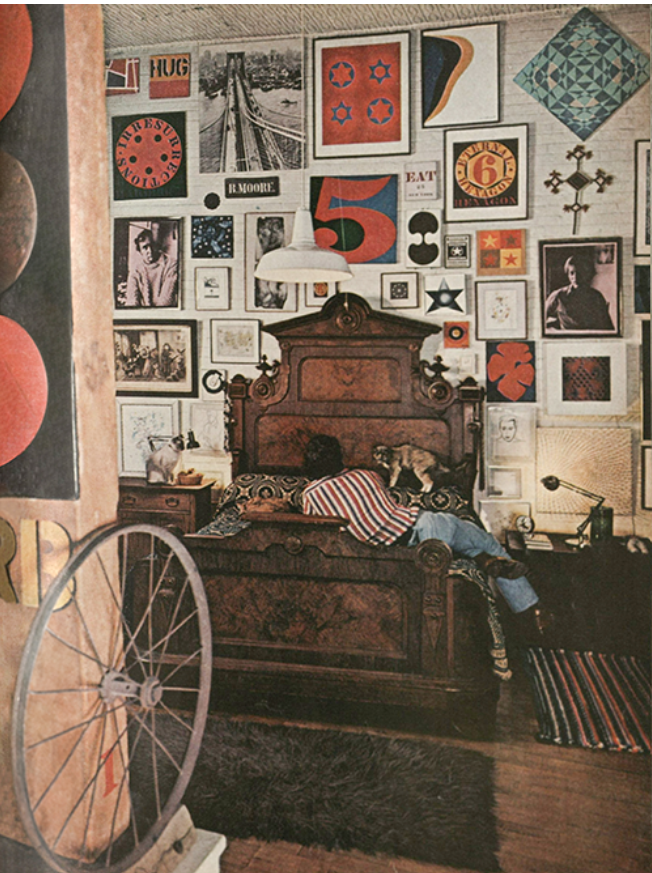
The present work shown in the artist’s loft, as pictured in “Robert Indiana… a loft life in New York city” in House Beautiful, Volume 112, Number 2, February 1970. Artwork: © 2024 Morgan Art Foundation Ltd / Artists Rights Society (ARS), New York
Indiana’s Cardinal Numbers series depicts the numbers zero through nine and consists of ten 12-inch square paintings, ten 24-inch square paintings, and ten 60 by 50-inch canvases constituting a single work, The Cardinal Numbers. The entire series made its debut in Indiana’s 1966 solo show, what became known as the “LOVE Show,” at the Stable Gallery, New York. The number paintings and the artist’s first LOVE paintings, shown alongside one another, were painted in red, green, and blue, a color combination Indiana associated with his father, Earl Clark, who had been employed by the American energy company Phillips 66. Ingrained in his mind was the company’s red and green neon sign, which stood out boldly against a blue Indianapolis sky. In an interview with Barbaralee Diamonstein, published in 1979 in Inside New York’s Art World, Indiana explained:
“In the thirties, my father worked for Phillips 66, when all the Phillips 66 gasoline stations were red and green . . . when I was a kid, my mother used to drive my father to work in Indianapolis, and I would see, practically every day of my young life, a huge Phillips 66 sign. So it is the red and green of that sign against the blue Hoosier sky.”
A year later, in 1967, Indiana was invited to participate in American Painting Now, curated by Alan Solomon and showcased in the American Pavilion at Expo ’67 in Montreal. The pavilion, a massive glass dome, provided space for works of unprecedented scale. Indiana was asked to contribute a large painting and proposed a variation on his Cardinal Numbers, this time arranged vertically as a countdown, measuring over fifty feet in height. While the Cardinal Numbers series from the 1966 Stable Gallery show—including the present work—was intentionally divided and sold as individual pieces to emphasize each number as a standalone work, the 1967 Cardinal Numbers remained intact. This version was later featured at Documenta 4 in Kassel and exhibited horizontally at the Horticultural Hall in Boston from 1967 to 1968.
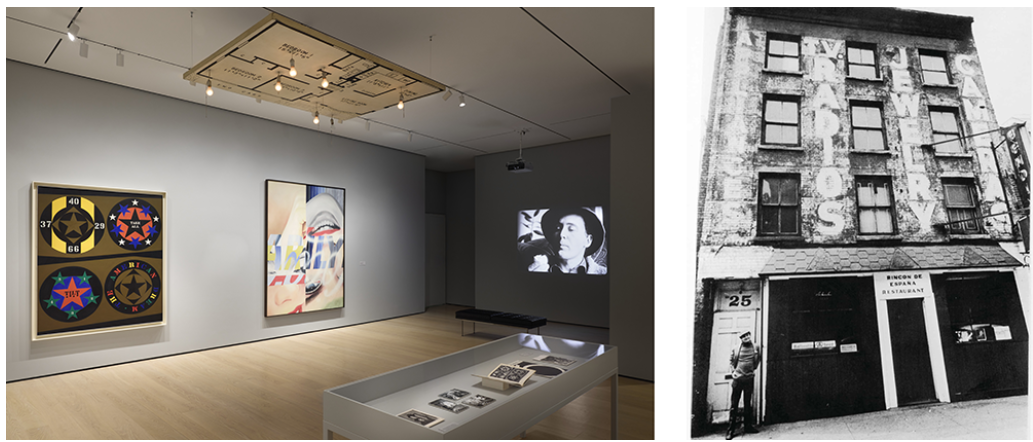
[Left] Installation view of the gallery “The Artists of Coenties Slip” in the exhibition Collection 1880s–1940s, October 4, 2024–ongoing. Museum of Modern Art, New York. Image: © The Museum of Modern Art/Licensed by SCALA / Art Resource, NY, Artwork: © James Rosenquist Foundation / Licensed by Artists Rights Society (ARS), NY. Used by permission. All rights reserved and © 2024 Morgan Art Foundation Ltd / Artists Rights Society (ARS), New York
[Right] Robert Indiana outside 25 Coenties Slip, New York, 1965. Image: © 2024 Morgan Art Foundation Ltd / Artists Rights Society (ARS), New York
In the 1950s and ‘60s, Indiana found inspiration and community in a small enclave of artists living around Coenties Slip, an out-of-the-way area at the southernmost tip of Manhattan. This secluded neighborhood, named after an inlet that once served as a bustling marketplace and dock, was transitioning from a maritime hub to a financial center by the mid-20th century. Attracted by low rents, open floor plans, and the quiet isolation, Indiana—along with fellow postwar art luminaries like Ellsworth Kelly, Agnes Martin, James Rosenquist, and Lenore Tawney—made the Slip his home for a brief but formative period. It was here, in this artistically rich yet ephemeral community, that Indiana stumbled upon die-cut brass stencils left behind in his and Tawney’s lofts. These stencils would lead him to incorporate letters and numbers into his paintings, shaping the visual language for which he would become renowned. Additionally, the vertical arrangement of letters along the studio’s façade—a daily sight for Indiana—made a lasting impression, influencing his evolving approach to typography. Though the artist community at Coenties Slip would largely disappear by the early 1970s, swept away by corporate development, the impact of this period on Indiana’s work endured. As Indiana wrote in a 1963 artist statement:
“It is 25 which is emblazoned with signs of words over its entire façade that paradoxically became a daily confrontation with the format my work has assumed. Not only this, but every ship that passed on the river, every tug, every barge, every railroad car on every flatboat, every truck that passes below—on Slip, on South, on Front, on Water and on Pearl Streets—and every helicopter that now lands at the heliport a stone’s throw from my building—for progress pushes its way onto the obsolete waterfront, as sure to go as the artists collected by its rotting piers—carries those marks and legends that have set the style of my painting. The commercial brass stencils found in the deserted lofts—of numbers, of sail names, of the names of 19th century companies (THE AMERICAN GAS WORKS) became matrix and substance for my painting and drawing. So then did all things weave together.”
For Indiana, numbers held deep personal significance. Beyond their numeric definitions, each Arabic numeral symbolized a memory or moment from his life. Indiana was drawn to the stability of numbers—unchanging symbols that could be endlessly rearranged to create new meanings. In his Cardinal Numbers series, he viewed the digits zero through nine as representing the stages of human life, with one symbolizing birth and zero representing death. This system, to Indiana, was both symbolic and autobiographical. The smooth lines, calligraphic curves, and geometric precision of this composition reflect more than just the aesthetics of the number; they convey Indiana’s understanding of five as a symbol of human life, drawing on Platonic and Pythagorean traditions where three represents the male principle, two the female, and five their union, symbolizing marriage and human existence. At the same time, Cardinal Five connects to Indiana’s artistic lineage, particularly the early American modernism of Marsden Hartley and Charles Demuth. Demuth’s 1928 painting The Figure 5 in Gold at the Metropolitan Museum of Art was one of Indiana’s favorite works, inspiring him to create his own homage in 1963 through a series of five paintings, including The Demuth Five, The Figure 5, The Small Diamond Demuth Five, The Demuth American Dream No. 5, and The X-5.
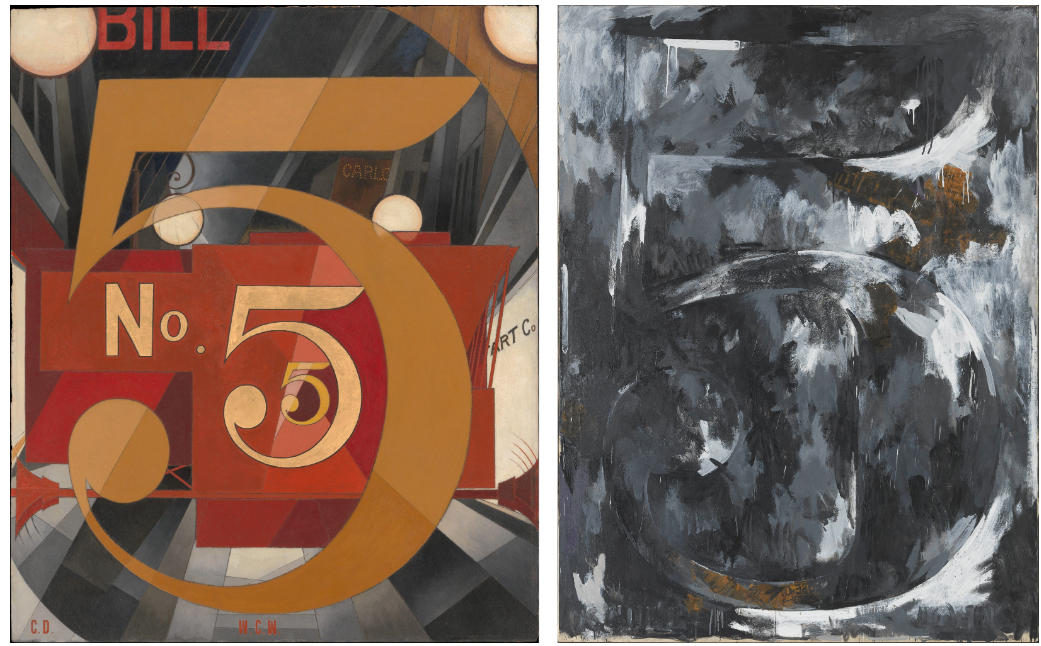
[Left] Charles Demuth, I Saw the Figure 5 in Gold, 1928. The Metropolitan Museum of Art, New York. Image: Album / Alamy Stock Photo
[Right] Jasper Johns, Figure 5, 1960. Centre Pompidou, Paris. Image: © CNAC/MNAM, Dist. RMN-Grand Palais / Art Resource, NY, Artwork: © 2024 Jasper Johns / Licensed by VAGA at Artists Rights Society (ARS), New York
Indiana was captivated by the legibility and symbolic flexibility of numbers, which could shift between mystical significance and pure form without altering their shape. Numbers were a defining feature of his childhood in Indiana, the state from which he took his artistic moniker. Growing up during the Great Depression, Indiana moved 21 times by the age of 17. A pivotal memory was the towering, neon Philips 66 gas station sign that dominated the route his father took to work. Indiana described it as “the one most fascinating visual object in [his] entire youth.” This iconic image, coupled with the commercial stencils he discovered in his Coenties Slip studio, profoundly influenced Cardinal Five and the bold, hard-edged visual language that became his hallmark. In the 1960s and 70s, Indiana’s transformation of stenciled typography, vibrant color, and commercial layouts helped shape Pop Art and New York’s creative culture. He turned these elements into a new, distinctly American artistic vernacular—one that he would refine and expand upon throughout his career.
Four Sixes, 1964-65
Sotheby’s New-York: 8 November 2023
Estimated: USD 600,000 – 800,000
USD 825,500
ROBERT INDIANA (1928 – 2018)
Four Sixes, 1964-65
Oil on canvas, in four parts
Overall: 68 1/4 x 68 1/4 inches (173.4 x 173.4 cm)
Upper: signed and variously inscribed (on the reverse)
Left: variously inscribed (on the reverse)
Lower: dated 1964•5 and variously inscribed (on the reverse)
Right: signed, dated 1964•5 and variously inscribed (on the overlap) and variously inscribed (on the reverse)
Radiating with colorful vitality and geometric complexity, Four Sixes is a masterful example of the timeless and experimental visual lexicon that cements Robert Indiana as an icon of Pop Art. Fascinated by American culture, the artist drew his motifs from captivating advertising campaigns and insignia that populate quotidian life, employing basic shapes like diamonds, circles, and squares to ground his works in a familiar geometric framework. However, Indiana defamiliarizes this common visual language and masterfully elevates it to a symbolic commentary on the banalities and vicissitudes of a contemporary American experience. Executed in 1964, Four Sixes appropriates the ubiquitous number 6, a favorite number of the artist’s, as a self-referential vehicle of expression for the greater American identity. Attesting to its importance, the present work has been notably featured in several major retrospective exhibitions. Furthermore, Four Sixes has exceptional provenance, having been installed in the artist’s Spring Street studio, it was gifted to the artist’s lifelong friend Bill Katz in 1968. Emily Fisher Landau later acquired the work directly from her close friend Katz who assisted her with building her collection in 1990 where it has remained for the past three decades. A quintessential example of Indiana’s iconographic practice, Four Sixes bears all the hallmarks of the radical lexicon of visual appropriation that has solidified the artist’s legacy as a titan of 20th century art history.
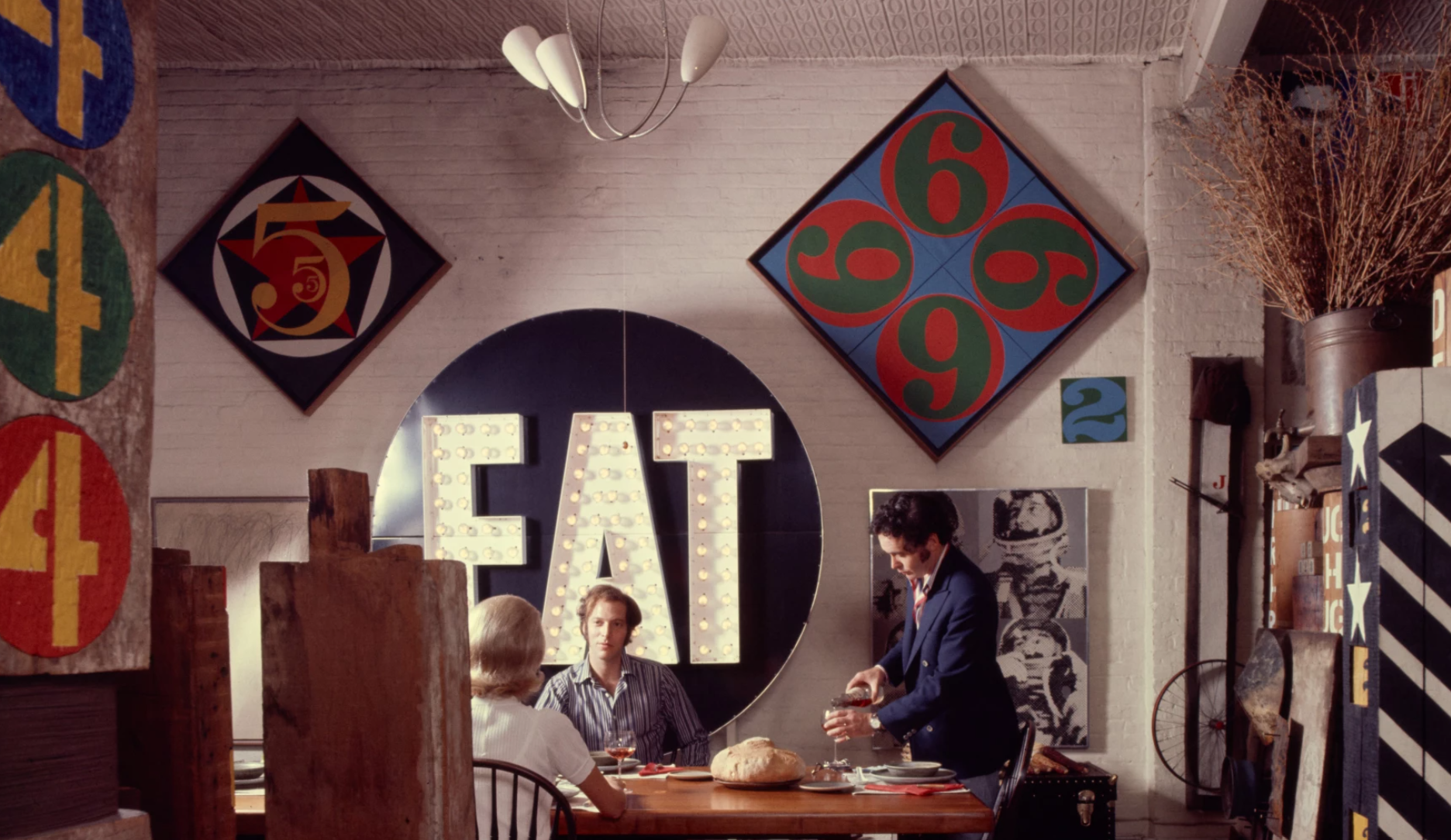
ROBERT INDIANA, BILL KATZ, AND FRIEND IN INDIANA’S SPRING STREET STUDIO, NEW YORK, C. 1969, WITH THE PRESENT WORK INSTALLED BEHIND THEM. PHOTO © HANS NAMUTH. ART © 2023 MORGAN ART FOUNDATION LTD. / ARTISTS RIGHTS SOCIETY (ARS), NEW YORK
The 1960s bore witness to a veritable assault of images—printed, painted, photographed, stenciled, and copied—that introduced a new set of signs, symbols, and imagery into the cultural canon. Pop artists set out to incorporate this shared visual experience into their work. Although the essence of Indiana’s work quotes the same bright colors and urban elements, his literary quality, coded poetry, and repeated geometry distinguishes his work from his Pop contemporaries. In the early 1960s, Indiana chose to concentrate on abstract quotidian signs, such as highway markers—or in the case of the present work, a business calendar found in an office supply store—as a key component of his visual vocabulary. Fascinated by the universality of minimalist forms as accepted shorthand for complex concepts, he often subverted this recognition by altering the color or orientation of these forms to present them with new significance, both highlighting their original meanings and offering fresh interpretations. Indiana incorporates all these elements in Four Sixes. Here, the number 6 is continuously rotated 90 degrees on each of the four panels, creating a hypnotic sense of never-ending movement, or of being caught in a state of constant cyclical motion.
The number 6 bore particular significance to Indiana; as he has explained, “I’m particularly interested in two because it takes a couple of people to make love, and six because my father was born into a family of six members in the month of June, he worked for Phillips 66, and he went west on Highway 66 when he left my mother, passing all those little signs on farmers’ fences that say “use 666,” which is also the sign of the devil – that’s how my mother felt about him because he had left her, you see. And it’s a nice number. I’m not fond of all numbers, but I’m very fond of two and six” (the artist quoted in Jan Garden Castro, “More Famous than John Dillinger: A Conversation with Robert Indiana,” Sculpture 28, no. 2, 2009, p. 45).
Further evidence of his numerical obsession, Indiana assigned numbers zero through nine to the various stages of life, quantifying clandestine manifestations of his spiritual reaction to past experiences. Within these parameters, Indiana leaves room for interpretation, bestowing upon his viewers the ability to craft their own associations with the explosively polychromatic works. In displacing the number six and removing its context, the artist asks his viewer to examine the number for its form, rather than its meaning. The number is a stylistic element, a curved shape ensconced within a red circle tucked inside a vibrant blue square. Colors, like numbers, had special meaning to the artist: green and red signified the prime of life for Indiana, while blue typically represented life’s later years. The merging of these colors and their subsequent associations with a number that represents a shift toward old age, Indiana has created a synergistic work that radiates with kinetic energy. Indiana was a master at selecting disparate elements and assembling them into a singular, mesmerizing work of art.
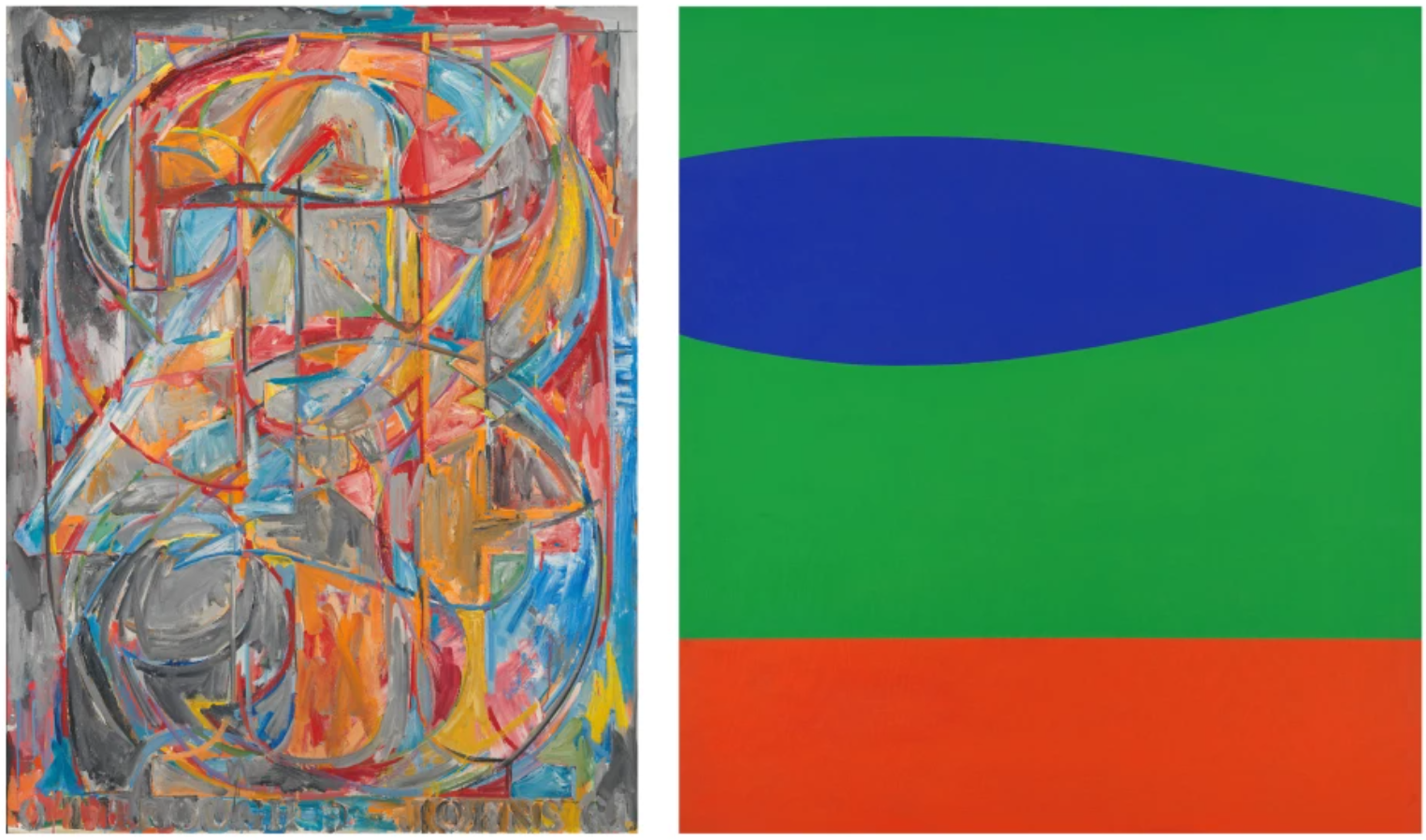
LEFT: JASPER JOHNS, 0 THROUGH 9, 1961. WHITNEY MUSEUM OF AMERICAN ART, NEW YORK. IMAGE: ART RESOURCE, NY. ART © 2023 JASPER JOHNS / LICENSED BY VAGA AT ARTISTS RIGHTS SOCIETY (ARS), NY. RIGHT: ELLSWORTH KELLY, BLUE GREEN RED, 1963. IMAGE © THE METROPOLITAN MUSEUM OF ART. IMAGE SOURCE: ART RESOURCE, NY. ART © 2023 ELLSWORTH KELLY
The present work was originally a gift from the artist to his lifelong friend Bill Katz, and was installed in the artist’s studio on Spring Street. After graduating from Johns Hopkins University, Katz moved to New York City, where he befriended numerous artists of the Pop generation, including icons Robert Indiana and Andy Warhol. Katz became lifelong friends with Indiana, a friendship that can be traced by numerous gifts, including Four Sixes. Katz was also a close friend of Emily Fisher Landau, he assisted her with building her collection throughout the many years of their friendship and she acquired the work from him in 1990. This provenance is testament to the piece’s important place within the art historical canon.
In works like Four Sixes, Indiana takes the language and visual imagery of mass media and transforms it into something specific and meaningful, creating a connection between his individual experience and the anonymous everyman. The dramatic and chromatic Four Sixes transfixes the viewer, creating a call to consciousness of the ways that symbols appear in everyday life. Unifying the graphic tone of Pop with the intellectual content of Conceptualism, Indiana pushed the possibilities of artistic expression, cementing his legacy as one of the most influential artists in the canon of American art history.
Nine, 1965
Christie’s New-York: 7 March 2023
Estimated: USD 200,000 – 300,000
USD 403,200
ROBERT INDIANA (1928-2018), Nine | Christie’s (christies.com)
ROBERT INDIANA (1928-2018)
Nine, 1965
Oil on canvas
24×24 inches (61×61 cm)
Stenciled with the artist’s name, inscription, title and date ‘INDIANA NYC NINE 1965’ (on the reverse)
5, 1964
Sotheby’s New-York: 18 November 2021
Estimated: USD 250,000 – 350,000
USD 528,200
5 | Contemporary Evening Auction | 2021 | Sotheby’s (sothebys.com)
ROBERT INDIANA (1928 – 2018)
5, 1964
Oil on canvas
24 1/8 x 24 1/8 inches (61.3 x 61.3 cm)
Signed Robert Indiana and inscribed Coenties Slip (on the reverse)
Bursting with life and colorful authority, Five is a masterful example of the timeless and poetically subtle signage that established Robert Indiana as a Pop Art icon. Drawing from the striking memorability of advertising and insignia, Indiana here appropriates a ubiquitous number as a self-referential vehicle of expression for the greater American experience. Recognizing the innate power behind iconography, Indiana crafted rich, formal complexities that integrated design, color, and lettering to convey a myriad of sentiments. Invoking a relationship with his viewers through a common language, Indiana laid bare his experience within the realm of banalities to facilitate discussions on the vicissitudes of our contemporary American identity. This singular vocabulary, a lasting influence on modern Abstraction, has established him as one of the most preeminent figures in American art.
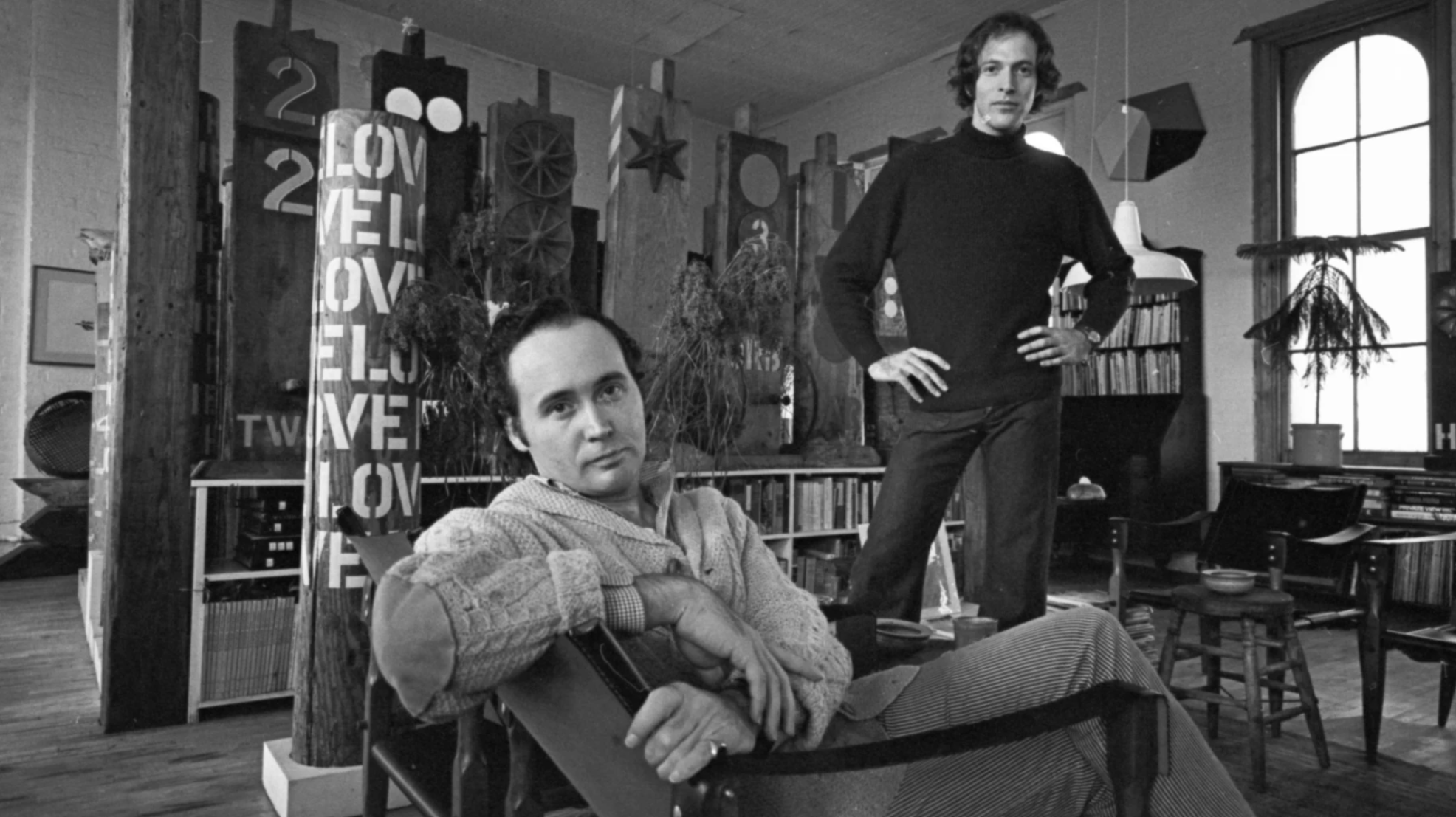
ROBERT INDIANA / PHOTOGRAPH BY HANS NAMUTH / COURTESY CENTER FOR CREATIVE PHOTOGRAPHY,
UNIVERSITY OF ARIZONA © 1991 HANS NAMUTH ESTATE
ART © 2018 MORGAN ART FOUNDATION LTD. / ARTISTS RIGHTS SOCIETY (ARS), NEW YORK
Numbers had been featured in Indiana’s work since the early 1960s but in summer of 1964 the artist meaningfully turned toward these numeric subjects as a central focus. It was also at this moment that Indiana began a series of ten paintings which feature Arabic numerals one through zero. The numerals themselves, based on a business calendar found in an office supply store, are modified to fit the format of his canvases. The number five holds particular significance for Indiana, the inspiration of which pertains to his exploration of Charles Demuth’s work and he focused on using this number within his paintings in 1963, including in The Demuth 5 and The Figure 5, The Demuth American Dream No. 5 and the X-5 .
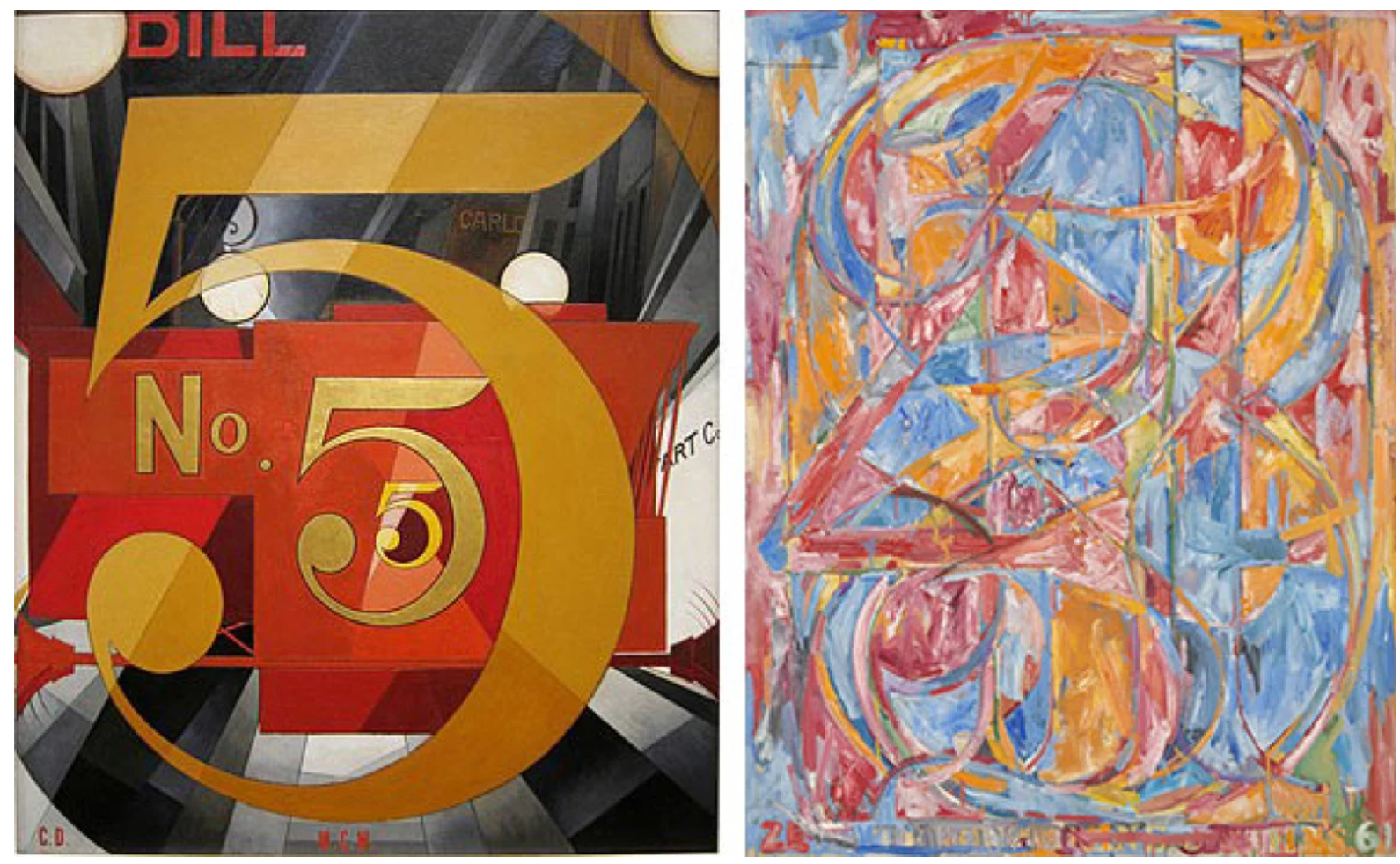
LEFT: CHARLES DEMUTH, I SAW THE FIGURE 5 IN GOLD, 1928 / IMAGE COPYRIGHT © THE METROPOLITAN MUSEUM OF ART. IMAGE SOURCE: ART RESOURCE, NY
RIGHT: JASPER JOHNS, 0 THROUGH 9, 1961 / IMAGE © TATE, LONDON / ART RESOURCE, NY
ART © 2021 JASPER JOHNS / LICENSED BY VAGA AT ARTISTS RIGHTS SOCIETY (ARS), NEW YORK
The present works comes from the remarkable Collection of Bill Katz who has charted his legacy as a designer, taste-making architect and an aesthetic adviser to many of the world’s most creative luminaries including artists Anselm Kiefer, Agnes Martin, Cy Twombly and Jasper Johns. After graduating from Johns Hopkins, Katz moved to New York City, where he met Robert Indiana, Agnes Martin, Marisol and Andy Warhol. He became lifelong friends with Agnes Martin and Robert Indiana both of whom gifted him the works on offer the year they were created. Indiana gifted Katz two paintings in 1969—both gems and icons of the artist’s practice.
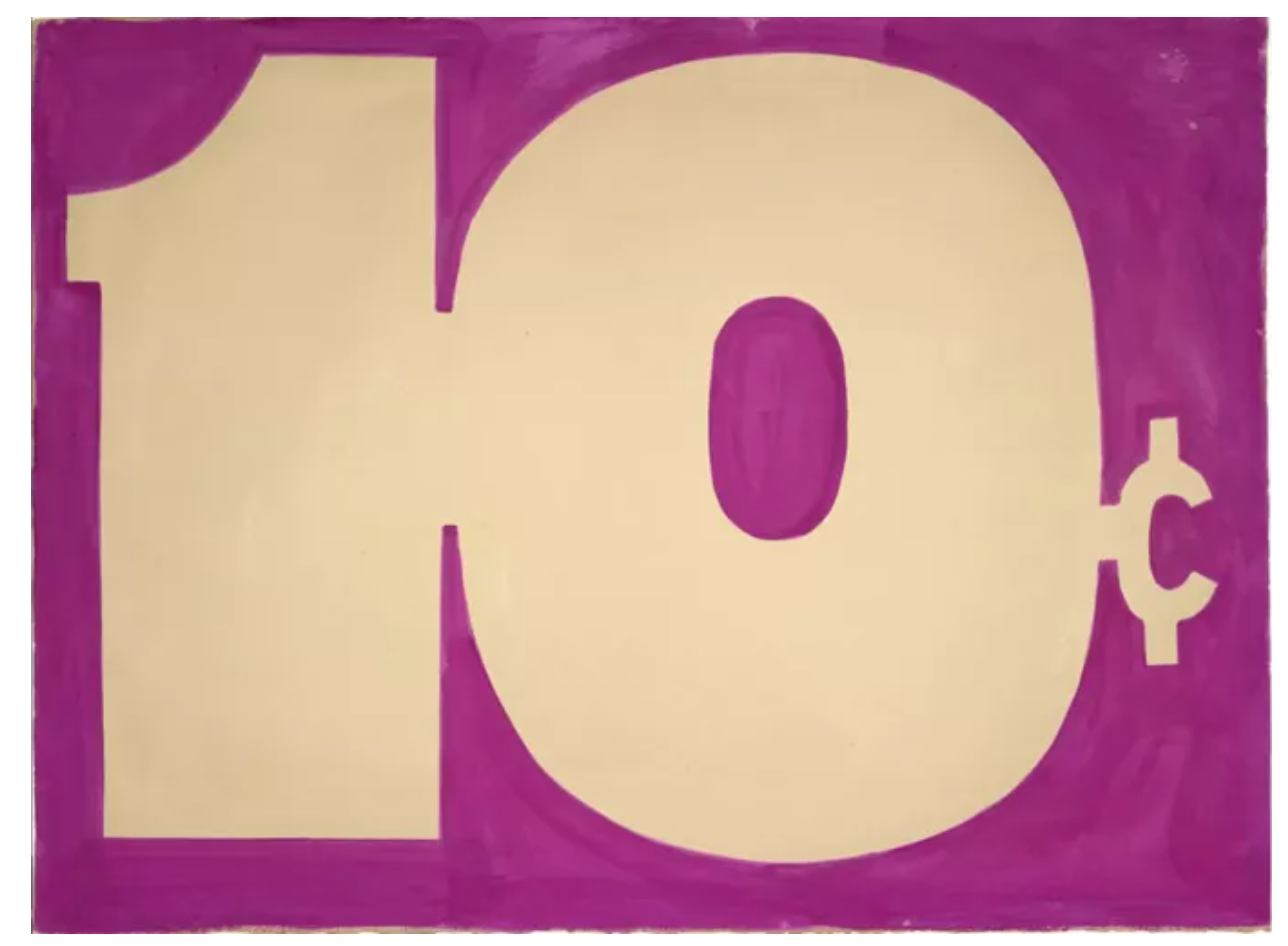
ROY LICHTENSTEIN, 10¢, 1961
ART © ESTATE OF ROY LICHTENSTEIN
An admirer of early-twentieth century American modernism, Indiana often reflected on the questions of identity posed by predecessors such as Charles Demuth and Edward Hopper. Adapting numbers for their vast potency in reflection, Five encapsulates a spectrum of Indiana’s sentiments. Numerals hold a particular poignancy to Indiana; impacted by The Depression, Indiana moved over 21 times during the tumultuous transience of his youth. The figures and digits of this restless epoch, seen in road signs, imagery, and addresses, struck him deeply. Clandestine manifestations of his spiritual and emotional reaction to his surroundings and his past, Indiana delegated his Numbers varied tasks such as homage, memoir, praise, prophesy- while deliberately sustaining their enigmatic ubiquity. This allows viewers the privilege of forming connections and meanings of their own. Characterized by its sharp, conscious-seizing imagery and terrified by its black backdrop, Five is a masterful execution of Indiana’s artistic faculties; he not only utilizes his chosen symbol to convey facets of himself but as a testament to the expressionist capabilities of a reductive visual language.
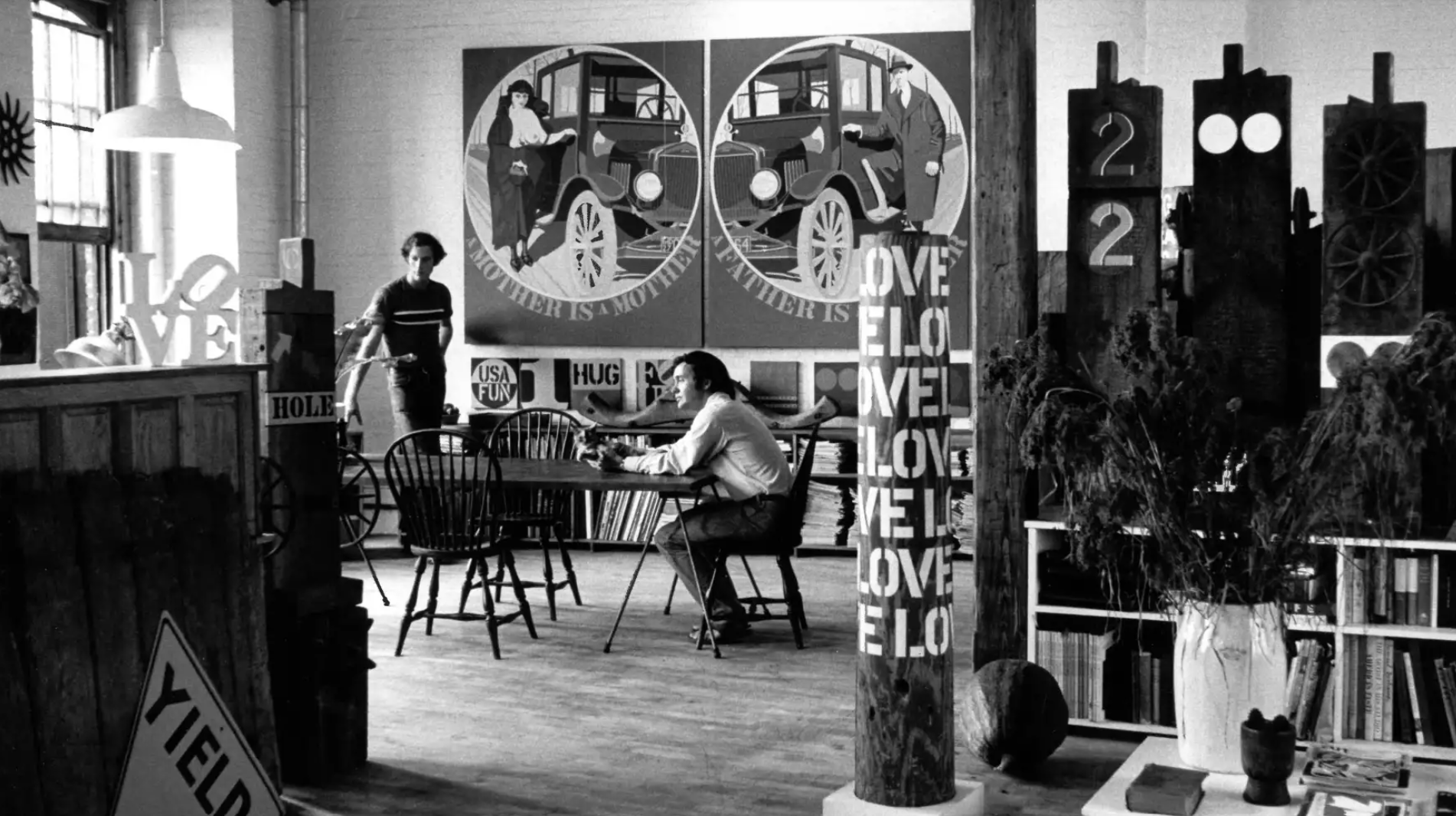
ROBERT INDIANA AND PARTNER WILLIAM KATZ IN NOVEMBER 1967. PHOTO © JACK MITCHELL/GETTY IMAGES. ART © 2021 MORGAN ART FOUNDATION LTD. / ARTISTS RIGHTS SOCIETY (ARS), NEW YORK
It was the universal nature of Indiana’s vocabulary that allowed him to manipulate their relativity so deeply in works such as the dramatic, chromatic, and elusive Five. Unifying the tone of Pop with this language-based Conceptualism, Indiana pushed the possibilities of American art by probing the disquieting subtext of everyday life. One of the most preeminent artists in American Art, Indiana’s legacy has unquestionably influenced the greater narrative of the Western art canon.
Numbers (Sculptures)
ONE Through ZERO (The Ten Numbers), 1978-2003
Christie’s London: 15 October 2025
Estimated: GBP 700,000 – 1,000,000
GBP 889,000 / USD 1,191,260
ROBERT INDIANA (1928-2018), ONE Through ZERO (The Ten Numbers) | Christie’s
ROBERT INDIANA (1928-2018)
ONE Through ZERO (The Ten Numbers), 1978-2003
Polychrome aluminum on painted aluminum base, in ten parts
Each overall: 33 1/4 × 33 1/4 x 17 inches (84.5 × 84.5 × 43.2 cm)
Each: stamped with the artist’s signature, number and date ‘1978-2003 R INDIANA 2⁄3’ (lower side)
Conceived in 1978 and executed in 2003
This work is number two from an edition of three plus two artist’s proofs
Robert Indiana’s longstanding fascination with numbers comes to the fore in ONE Through ZERO (The Ten Numbers), which depicts the ten essential numerical digits in brilliant technicolor. The raw materials of language and communication propelled Indiana’s celebrated oeuvre. He was interested in numbers and letters as signifiers, reveling in the meanings and associations they conjure in the mind of the viewer. In ONE Through ZERO (The Ten Numbers), traditionally two-dimensional numbers assume mass and form, leaping out into space. Each of the work’s sculptural elements is painted in one color on the flat planes and a second on its curving contours. The inaugural eight-foot version of this work was executed for a special commission in Indianapolis, and now resides in the Indianapolis Museum of Art.
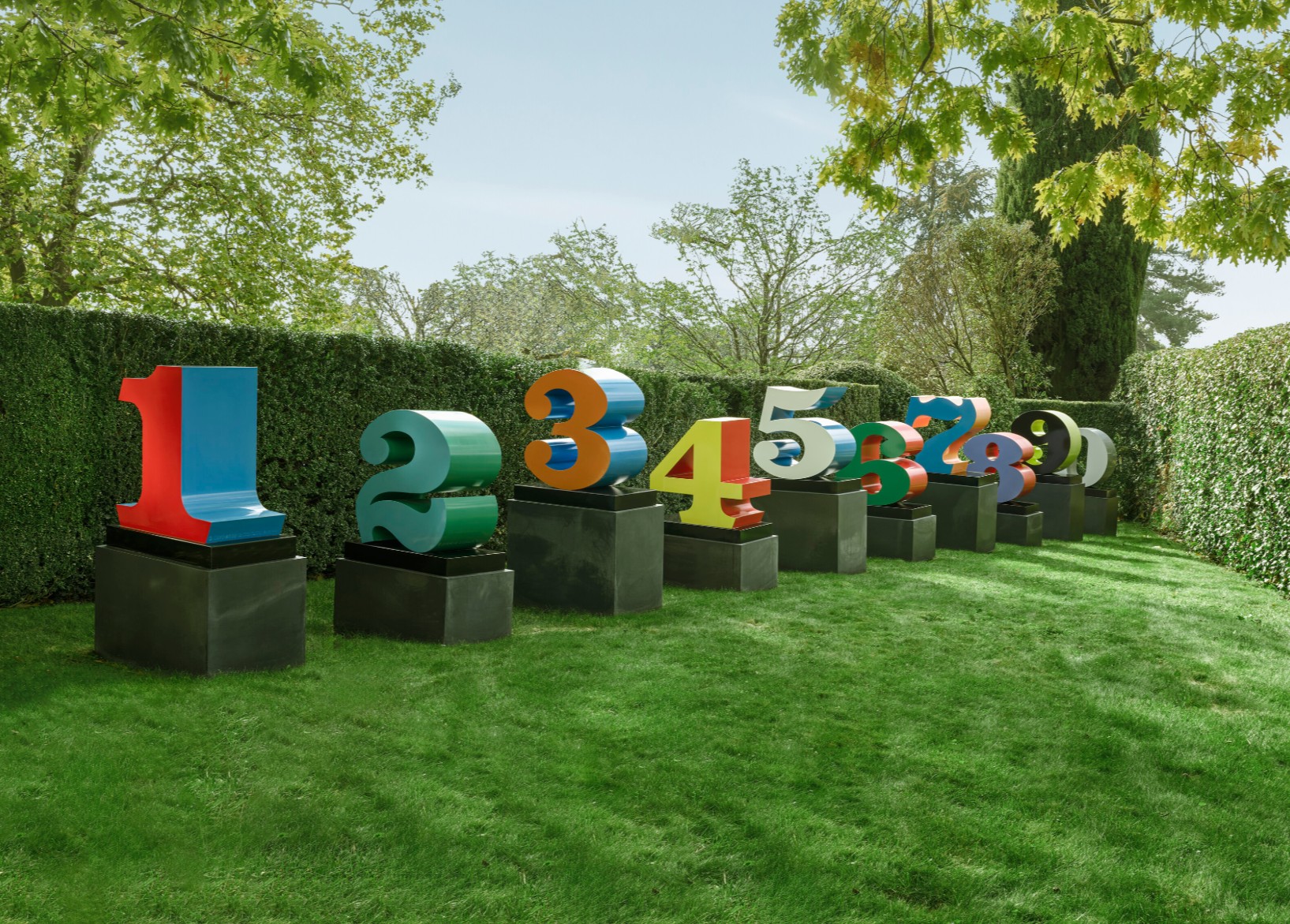
Born Robert Clark, Indiana’s adoption of the name of his native state took up a long-held artistic tradition followed by artists including Leonardo da Vinci. The choice also reflected an unabashed embrace of Americana. As a child, he had been fascinated by the Phillips 66 sign at the service station where his father worked, and later announced himself to be ‘an American painter of signs’. Indiana’s stark, stylized letters and numbers are characterized by bold chromatic impact, glossy patinas and clean lines. His sculpted works have become emblems of American Pop, commensurate with Andy Warhol’s soup cans and Roy Lichtenstein’s comic-book blondes. Indiana began to incorporate numbers into his sculptural assemblages and paintings in the early 1960s, and by the middle of the decade numbers had become a central motif. As with many of his most iconic works, such as LOVE, the development of two-dimensional painting into three-dimensional sculpture is another hallmark of Indiana’s practice.
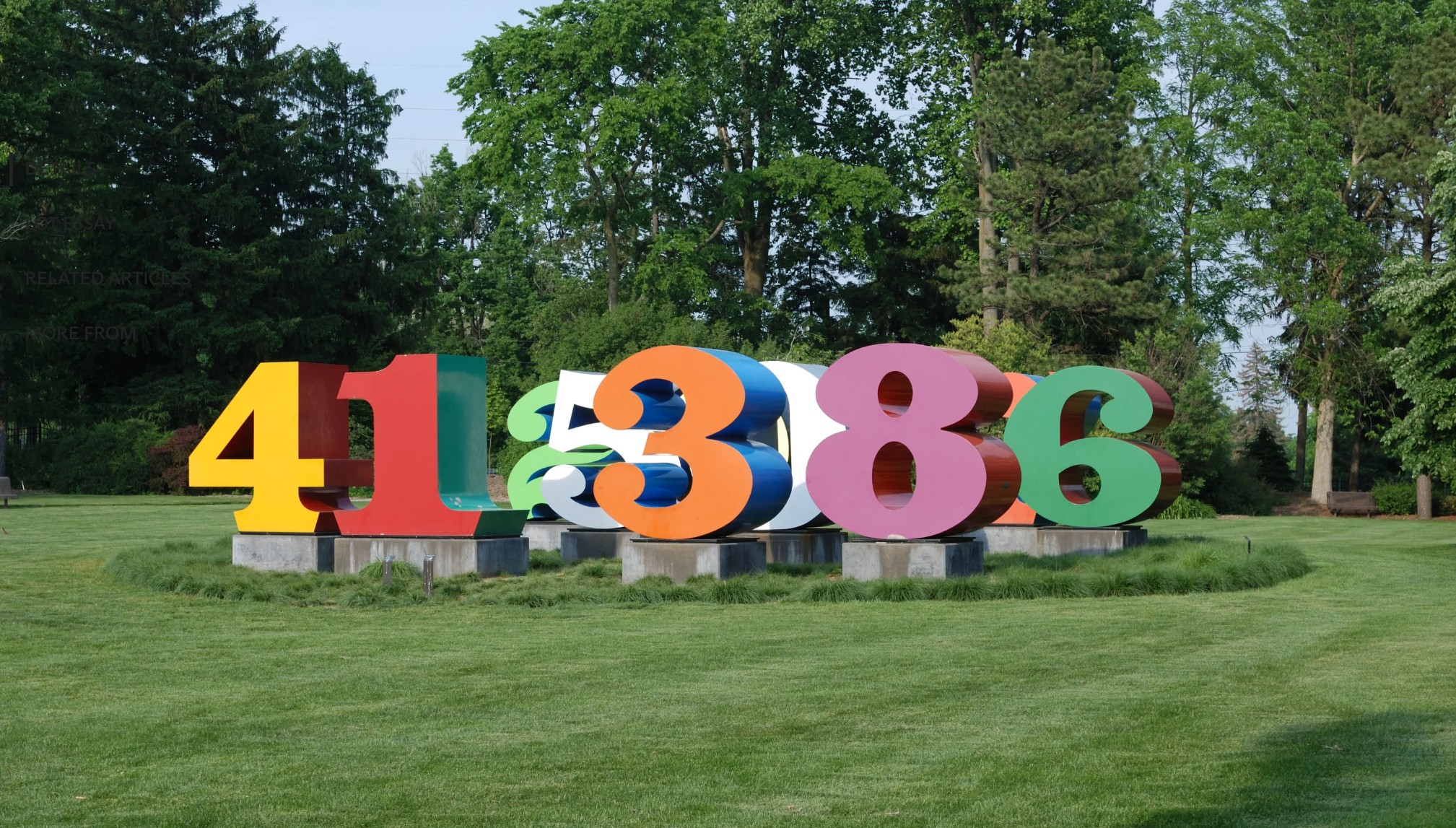
Robert Indiana, Numbers 1-0, 1980-1983. Indianapolis Museum of Art.
Artwork: © Robert Indiana, DACS 2025. Photo: Alamy/Artur Apresyan.
ONE Through ZERO (The Ten Numbers) evidences Indiana’s interest in the formal aspect of sign systems. The work’s numerical elements are approximately half as wide as they are tall, foregrounding each as something solid and autonomous. Indiana’s chosen color palette is also loaded with symbolism. As explained by the artist: ‘red and blue are associated with birth in ONE; green and blue signify infancy in TWO; orange and blue represent youth in THREE; yellow and red are connected with adolescence in FOUR; white and blue signify the pre-prime of life in FIVE; green and red signify the prime of life in SIX; blue and orange suggest early autumn of life in SEVEN; purple and red signal autumn in EIGHT; black and yellow convey a sense of warning in NINE; and shades of grey signal the end of the life cycle in ZERO’ (R. Indiana, quoted at artist’s website).
“Numbers fill my life. They fill my life even more than love. We are immersed in numbers from the moment we’re born.”
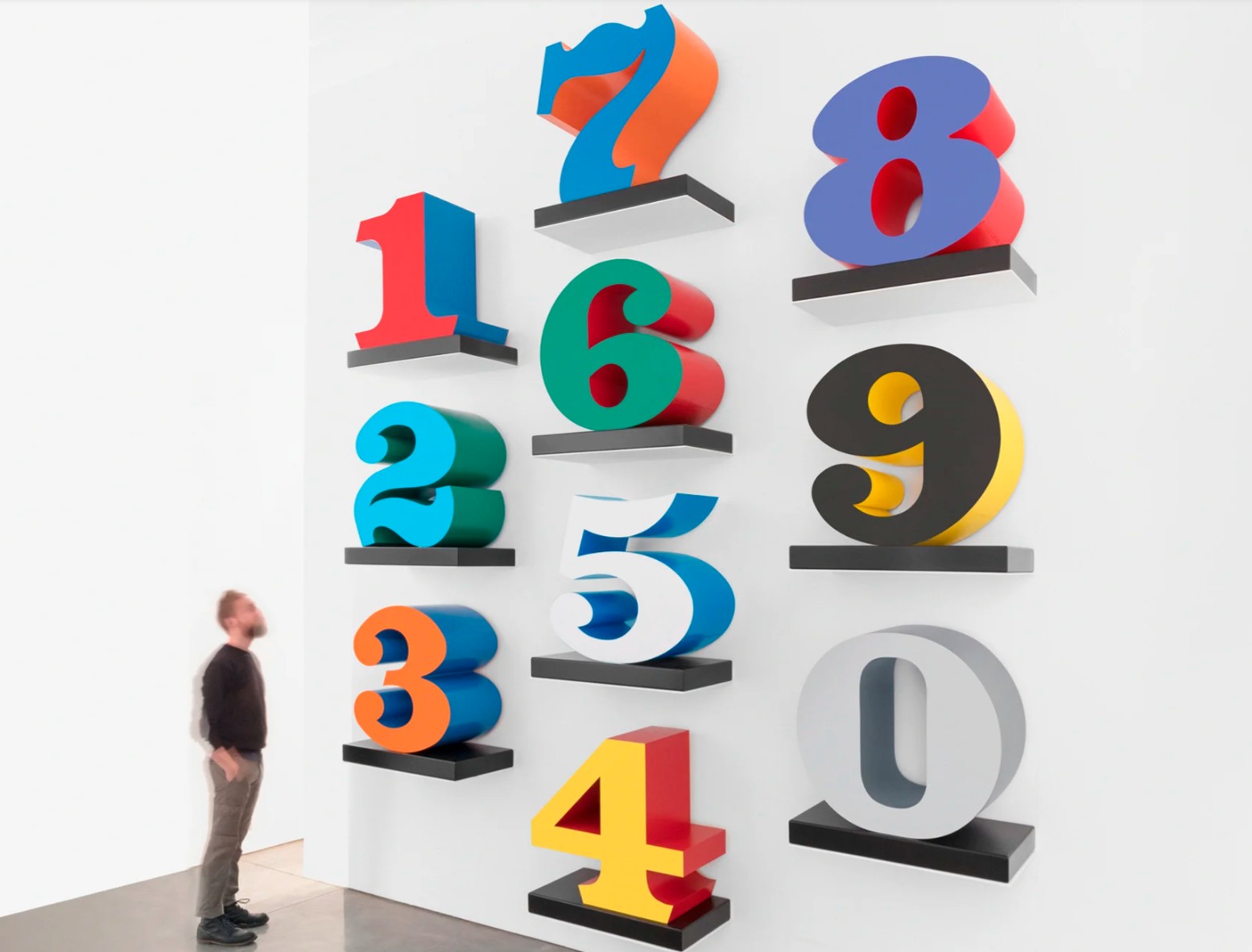
Indiana’s enduring interest in numbers can be traced back to formative childhood experiences. He saw vast networks of significance and meaning embedded in their regular, recognizable forms. He attached them to particular life events and experiences, in the form of ages marked by birthdays, highway routes, or the number of buildings in which he lived: he moved home multiple times as a child, living in twenty-one different homes by the age of seventeen.
One Through Zero (The Ten Numbers), 1978-2003
Sotheby’s New-York: 14 November 2019
Estimated: USD 1,500,000 – 2,000,000
USD 2,060,000
(#133) ROBERT INDIANA | One Through Zero (The Ten Numbers) (sothebys.com)
ROBERT INDIANA
One Through Zero (The Ten Numbers), 1978-2003
Polychrome aluminum on painted aluminum base, in 10 parts
Each, including base: 33 1/4 x 33 1/4 x 17 inches (84.5 x 84.5 x 43.2 cm)
Each stamped with the artist’s signature, date 1978-2003 and number AP 1/2
Conceived in 1978 and executed in 2003, this work is artist’s proof number 1 from an edition of 3 plus 2 artist’s proofs
For Robert Indiana, beloved American painter of signs and symbols, numbers had a deeply personal significance. Beside their self-referential numeric definitions, each Arabic numeral represented a moment or memory in Indiana’s life, and the artist took great interest in a system whose symbols never changed but could be endlessly rearranged to create new meanings. One Through Zero (The Ten Numbers) is immediately recognizable as pure Indiana: simultaneously biographical and universal, the monumental sculptural forms are carefully fabricated in his characteristic typography and bright colors.
“People don’t stop to think about how beautiful numbers really are, perhaps for the same reason people don’t stop to think about how beautiful words are…it is the role of the artist—my particular role, if you will—to make words and numbers very, very special.”
Numbers began appearing as a standalone motif in Indiana’s oeuvre in the 1960s, but never on such a large scale as the One Through Zero (The Ten Numbers) series. He was fascinated by their easy legibility and their ability to shapeshift between a semi-mystical significance and pure form without ever changing shape. Numbers defined the artist’s childhood. Growing up in Indiana, the state from which he adapted his “nom de brush,”during the Great Depression, he had lived in 21 houses by the age of 17. A red and green Philips 66 gas station sign loomed over the route his father took to work each day; inspiring him to later assign those colors to the sculptural Six. He called the ten-story, neon sign “the one most fascinating visual object in [his] entire youth;” the sign, combined with commercial stencils he found in his studio in New York, would lead to the creation of the hard-edged, colorful visual language that made him so famous (the artist in “Oral History Interview with Robert Indiana,” Archives of American Art, Smithsonian Institution, September 12 – November 7 1963, n.p.).
Robert Indiana’s polychromed numbers sculptures are, beyond their plump, sinuous forms and vibrant color combinations, a monument to the life-cycle of mankind. With his cycle of numbers from One Through Zero, a theme Indiana first essayed in a series of paintings in 1964-65, the artist conceived the cardinal numbers as marking the stages of life from birth (One) to death (Zero). Indiana deployed numbers frequently in his sculptures and paintings prior to that time, but with this painting series of the mid-sixties, he assigned specific color combinations to each number. These same combinations would subsequently be used in the polychromed numbers sculptures that Indiana conceived in 1978 and executed decades later, such as this set completed in 2003.
In Indiana’s imagination, each color combination has significance. For example, Four, representing adolescence, is assigned the “most raucous and unruly color combination” of red and yellow. The red and green of Six are the colors of the Phillips 66 sign of Indiana’s childhood; Indiana’s father, who was born in June (the sixth month), worked for the company and habitually travelled Route 66. Eight features the rich colors of fall season; the black and yellow caution stripes of Nine signify ‘caution, death is near’; and the ashen grisaille of Zero represents death. One needn’t understand the rich web of biographical and symbolic associations of the sculptural series or its numbered parts to appreciate Indiana’s playfully straightforward but meticulously crafted aesthetic, but, as with much of Indiana’s art, there is much more than initially meets the eye in this deceptively simple Pop masterpiece.
The curving surface of each number shifts and changes as one moves around the sculpture, giving the numerals expressive loops and waves that give life to the heavy aluminum. The two-color combinations pop when viewed from the side, emphasizing “the graphic essence of his forms while giving his sculptures vibrant three-dimensional life” (Ibid.). The aesthetic success of the Number series can be seen in the “Indiana style” typography popular today in contemporary design and advertising and used in the fields of fashion, technology, finance and beyond.
Indiana valued double-association in his work, frequently exploring verbal-visual themes such as the number 66, which he liked both for its visual pattern and its connection to his childhood. A self-proclaimed painter of signs, he followed Pop Art’s embrace of fabrication and commercialization while rejecting the academicism of Abstract Expressionism. Along with the signs of his youth, Indiana combined the geometric, colorful flatness of Ellsworth Kelly’s works with the themes of Andy Warhol and Jasper Johns to create his own unique style. One Through Zero (The Ten Numbers) monumentalizes one of the most important motifs of Indiana’s oeuvre. Their playful color and appealingly commercial typography are intriguingly complicated by their potential for recreation; by arranging and rearranging their order, one may place oneself in dialogue with Indiana and form new meanings from symbols hundreds of years old.
Other Series
Coenties Slip Gingko, 1957
Swann Auction Galleries: 21 August 2025
Estimated: USD 12,000 – 18,000
USD 100,000
Lot – Robert Indiana Coenties Slip Gingko, oil on linen. 1957.
ROBERT INDIANA (1928-2018)
Coenties Slip Gingko, 1957
Oil on linen canvas
8×6 inches (20.3 x 15.2 cm)
Signed, titled, dated and inscribed in ink, on the stretcher
The ginkgo motif in Coenties Slip refers to the well referenced leaf in the works of Robert Indiana, and his relation to his time spent living and working in Coenties Slip in the mid-20th century. Inspired by the ginkgo trees in Jeannette Park, which were visible from Indiana’s loft in Coenties Slip, he incorporated the distinctive double ginkgo leaf design into various artworks, including paintings like The Sweet Mystery and sculptures like Slip. For Indiana, the double ginkgo leaf symbolized his relationship with artist Ellsworth Kelly, with whom he shared proximity and companionship at Coenties Slip. The ginkgo leaf design was a key element in Indiana’s development of his distinctive hard-edge style, characterized by bold, geometric shapes and colors. Robert Indiana lived and worked in Coenties Slip, a former shipping slip, in the late 1950s after moving to New York City and being recommended by his partner and colleague Ellsworth Kelly. A neighborhood in transition, became a creative haven for artists like Kelly, Indiana, Agnes Martin, James Rosenquist, and Jack Youngerman.
Polygon: Pentagon, 1962
HMVC Monte Carlo: 9 July 2025
Estimated: EUR 150,000 – 200,000
EUR 145,000 (Hammer)
EUR 181,250 / USD 212,180
ROBERT INDIANA (1928-2018) | Hôtel Des Ventes De Monte-Carlo
ROBERT INDIANA (1928-2018)
Polygon: Pentagon, 1962
Acrylic on canvas
24×22 inches (61×56 cm)
Signed and dated in stencil on the reverse “INDIANA / NYC / 1962”
This work belongs to Robert Indiana’s 1962 Polygon series, a group of small paintings depicting a number from 3 to 12 placed inside a polygon with the corresponding number of sides (i.e., 3-Triangle, 4-Square, etc.). The series features numerous wordplays, with playful, personal, literary, and alliterative references. The serial nature of these works and their small scale allowed Indiana to experiment with new and bold color combinations, previously unseen in his work. In Polygon: Pentagon, the word Pentagon appears at the bottom of the composition in white and again around the circle, which reads “Particci Pentagon.” For an American, the first association with the word “Pentagon” would be with the headquarters of the Department of Defense in Washington, D.C., which explains why the predominant colors in the work are red, white, and blue. Indiana, however, also brought personal associations to the term, as Particci was the name of his cat.
Picasso, 1974
Phillips New-York: 19 May 2022
Estimated: USD 600,000 – 800,000
USD 1,058,500
Robert Indiana – 20th Century & Contemp… Lot 127 May 2022 | Phillips
ROBERT INDIANA
Picasso, 1974
Oil on canvas
60×50 inches (152.4 x 127 cm)
Stenciled with the artist’s name, inscription and date “ROBERT INDIANA 2 NEW YORK SPRING 1974” on the reverse
“I am an American painter of signs charting the course.
I would be a people’s painter as well as a painter’s painter.”
Robert Indiana’s Picasso was painted during the peak of the artist’s acclaimed career as one of the preeminent figures in Post-War American art. A quintessential example of the artist’s Pop compositions, here Indiana has rendered a series of hard-edged geometries with brilliant colors to commemorate the illustrious career of Pablo Picasso. Through his keen use of signs, numbers, and letters, Indiana pays homage to the legendary Modern masters, relying on his own distinctive visual language that he refined since the early 1960s. In an effort to differentiate his work from Post-War European traditions in favor of a distinctly American style, Indiana initially aligned himself with Pop artists like Andy Warhol and Roy Lichtenstein by drawing inspiration from the culture of consumerism that emerged in the United States following World War II. The plethora of billboards, street signs and logos across the country captivated Indiana in his formative years as an artist.
“In Europe trees grow everywhere; in America, signs grow like trees; signs are more common than trees.”
Proclaiming himself to be a “painter of signs,” the influence of American logos and advertisements is at the core of Indiana’s artistic practice. His engagement with consumerist culture is manifested in the crisp geometries and the chromatic intensity of Picasso that conjure up memories of American highway signs and advertisements.
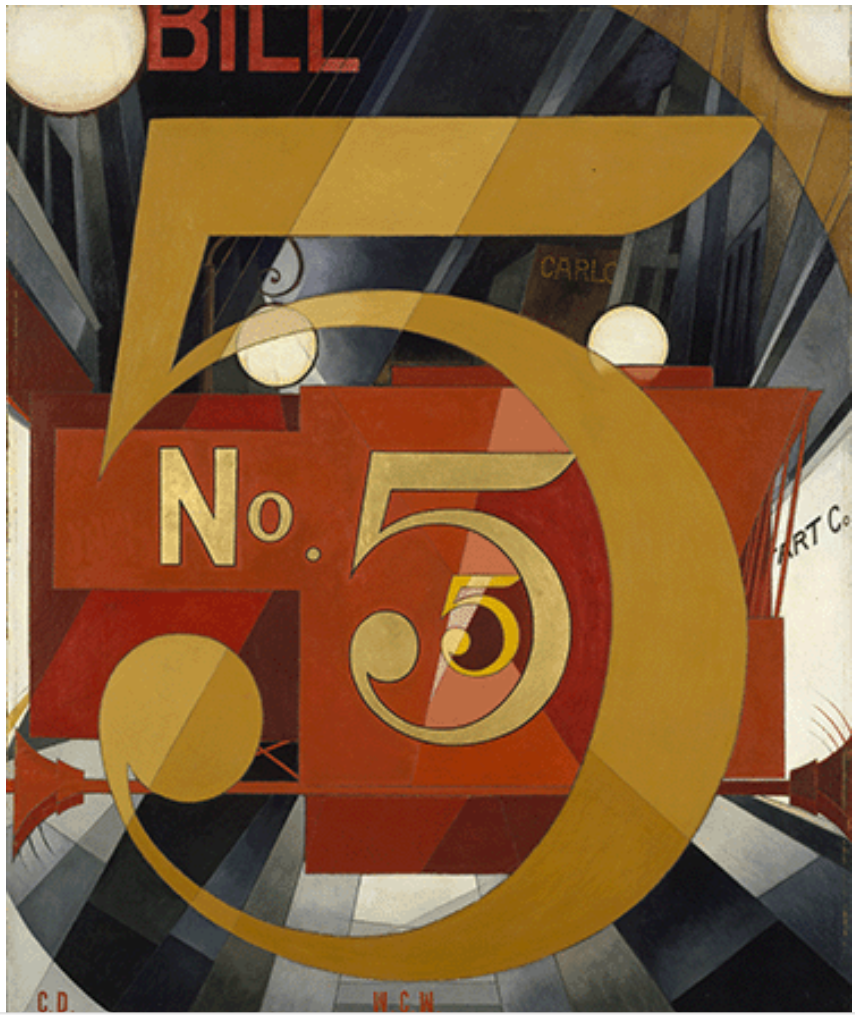
Charles Demuth, I Saw the Figure 5 in Gold, 1928. Alfred Stieglitz Collection, 1949, Image: © The Metropolitan Museum of Art / Art Resource, NY
In the 1970s, Indiana began to distance himself from Pop Art and embrace his American Modernist predecessors as a major source of inspiration. Precisionist artists such as Charles Demuth, Charles Sheeler and Ralston Crawford left a lasting impression on Indiana with their delineated lines and geometric planes used to depict the American industrial landscape. The artist’s fascination with these early American painters comes to full fruition in the sharply demarcated planes that compose Picasso. Indiana’s decision to pay homage to Pablo Picasso through his bold use of signs and numbers harkens back to the “poster portraits” that Charles Demuth painted in the 1920s, each inspired by a different artist, which Indiana saw in Chicago. Much like Demuth’s poster portrait I Saw the Figure 5 in Gold, 1928, Alfred Stieglitz Collection, which was an homage to the poet William Carlos Williams, Indiana’s Picasso portrays the Spanish master by means of recognizable symbols, letters and numbers. This includes block letters of his initials, “PP,” placed back-to-back in a symmetrical format, with the artist’s middle name “RUIZ” emblazoned diagonally across. Other markers including his birth and death dates, and the title of one of his most famous paintings Ma Jolie, are placed around the center of the circular composition. By using text-based imagery, like Demuth, Indiana reinvents and pushes the boundaries of traditional, representational portraiture. The product is an homage to Picasso unlike any other that unites the painterly traditions championed by the Precisionist painters with Pop ideology.
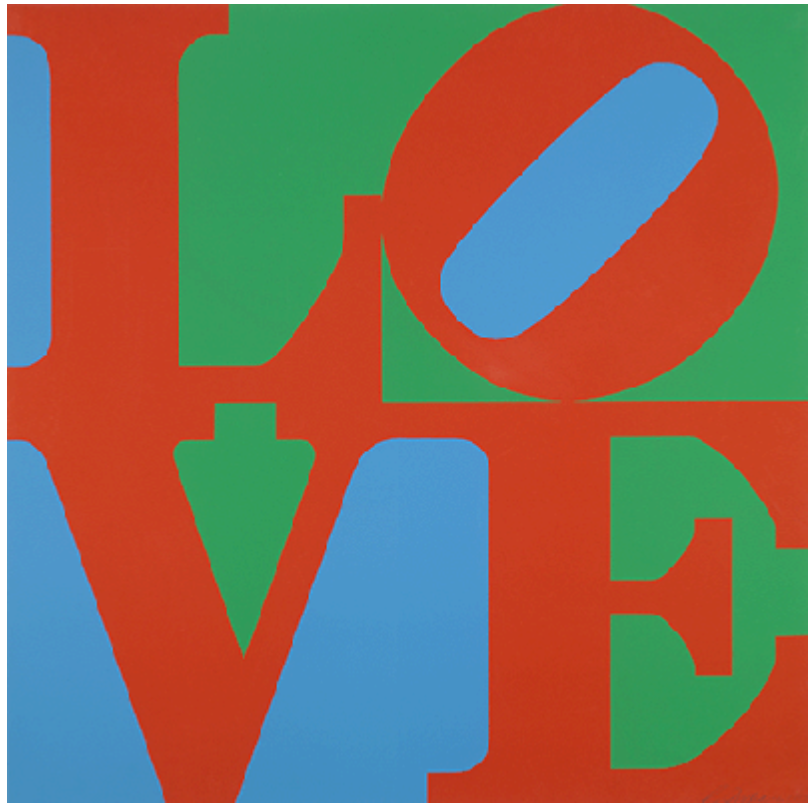
Robert Indiana, LOVE, 1967. The Museum of Modern Art, New York, © The Museum of Modern Art/Licensed by SCALA / Art Resource, NY
By placing his own trademark slanted “O,” as it appears in his iconic LOVE motif, Indiana inserts his own identity into the narrative of Picasso’s. By paying tribute to his predecessor in this way, Indiana uses the lens of an homage to further his own practice. Signifying the importance of this work, Indiana included a print of the painting in his iconic American Dream Portfolio set of screenprints in 1997, making this one of the most recognizable images in the artist’s oeuvre.
Decade Autoportrait, 1971
Sotheby’s New-York: 19 November 2021
Estimated: USD 280,000 – 350,000
USD 1,290,500
Decade Autoportrait | Contemporary Day Auction | 2021 | Sotheby’s (sothebys.com)
ROBERT INDIANA (1928 – 2018)
Decade Autoportrait, 1971
Oil on canvas
48×48 inches (121.9 x 121.9 cm)
Stenciled Indiana New York 1971 (on the reverse)
Decade Autoportrait is a quintessential reflection of Robert Indiana’s coalescence of the most pivotal artistic shifts of the twentieth century. Blurring the lines between Pop Art and Hard Edge, Indiana – iconically known as the ‘American Painter of Signs’ – presents a cerebral and personal deviation from his iconic practice. A rare shift from the timeless and poetically subtle signage that established him as a Pop Art icon, Decade Autoportrait is an astonishing glimpse past Indiana’s iconography into his American experience.
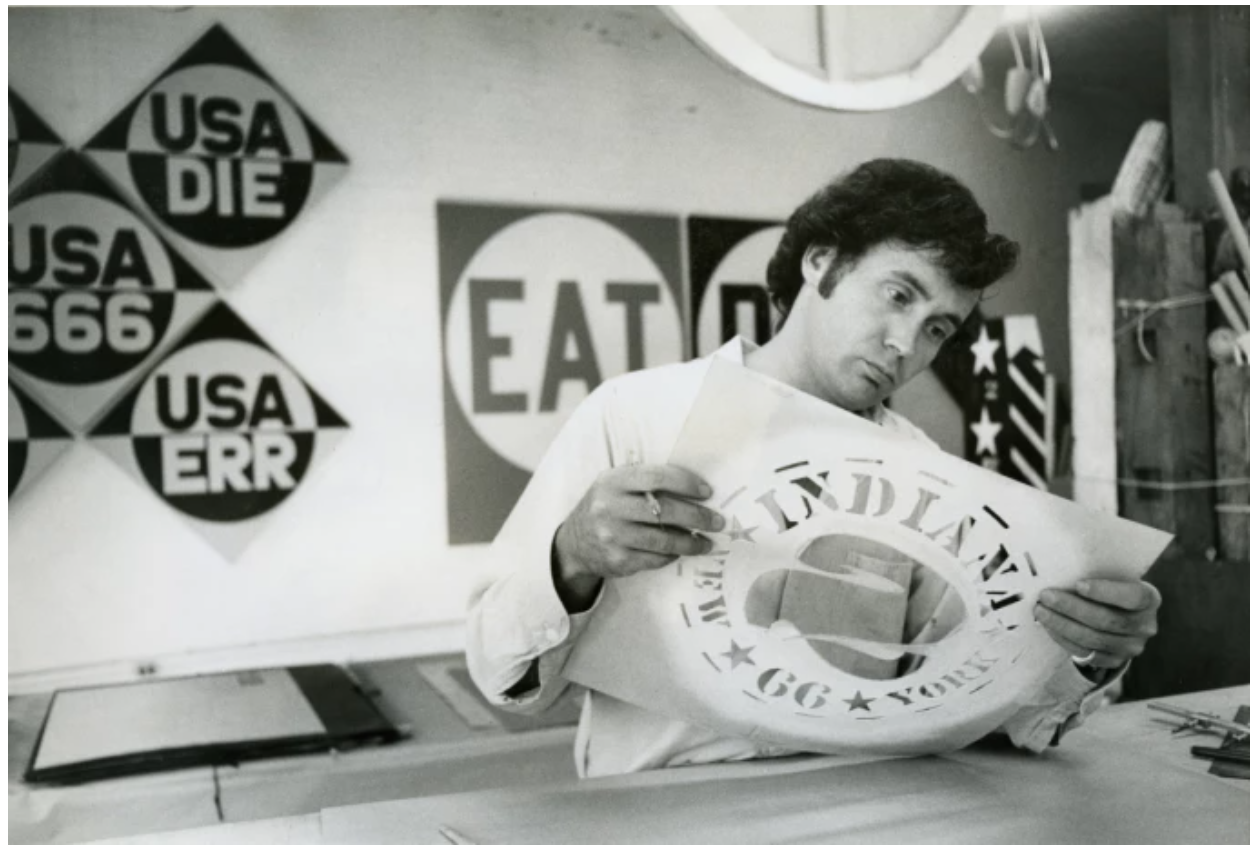
ROBERT INDIANA IN HIS SPRING STREET STUDIO, 1966.
PHOTOGRAPH © THE ESTATE OF BASIL LANGTON/RI CATALOGUE RAISONNÉ LLC.
A weave of personal references, the present work joins together an assortment of commercial symbols and phrases – all receding and advancing on varying planes – in the creation of a ‘self-portrait’. An intimate work painted during deep reflection on the shifting artistic landscape of the West, Autoportrait effectively serves as a pictorial memoir of Indiana’s experience at the epicenter of a new, emerging identity in American art. The present work is emblematic of Indiana’s nostalgia; presented as an amalgamated visual recollection, the dissonance of the composition captures the artist’s broad spectrum of emotions. With Autoportrait, Indiana utilizes his signature signage, factory stenciling, and commercial ideography to represent his internal likeness.
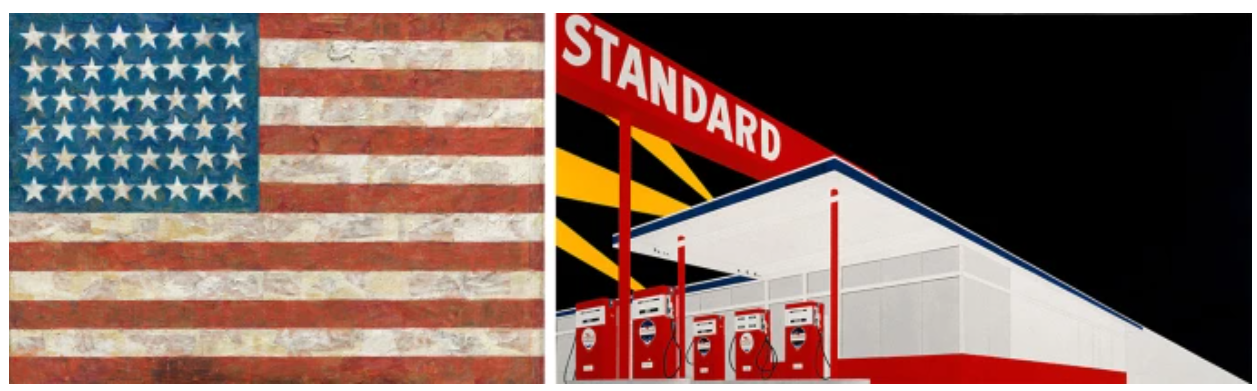
LEFT: JASPER JOHNS, FLAG, 1954-55 / THE MUSEUM OF MODERN ART, NEW YORK
© 2021 JASPER JOHNS / LICENSED BY VAGA, NEW YORK, NY
RIGHT: ED RUSCHA, STANDARD STATION, AMARILLO, TEXAS, 1963 / HOOD MUSEUM OF ART, DARTMOUTH COLLEGE, HANOVER © ED RUSCHA
Indiana masks these symbols behind each other, inundating the surface with signifiers of alarming hues. His omnipresent five-pointed star is clasped by a monolithic number one, while hues of oxidized red, blue, gold and bronze coat the surrounding forms. Interspersed amongst these layers are strings of poached text, delineating Indiana’s enigmatic visual vocabulary. Each color, number and motif, meticulously included, is charged with his experiences in their autobiographical choreography. Both self-referential and accessible in its collectively familiar symbols, forms, and expression, Autoportrait serves not only as a succinct reflection on the Western lifestyle, but as a geographic record of Indiana’s own life. Psychologically complex, the present work requires a different perspective from the work that grouped Indiana with his fellow Pop icons. Perplexed by the ‘American Dream,’ Indiana conveyed his personal experiences by re-interpreting them within the realm of words, shapes and numbers – in other words, a codified and self-reflective lexicon. Unifying the tone of Pop with this language-based Conceptualism, Indiana pushed the possibilities of Western, specifically American art, by probing the disquieting subtext of everyday life. One of the most preeminent artists in American Art, Indiana’s legacy has unquestionably influenced the greater narrative of the Western art canon.
USA 666, The 6th American Dream, 1964-1966
Christie’s New-York: 13 May 2008
Estimated: USD 1,500,000 – 3,000,000
USD 1,833,000
Robert Indiana (b. 1928) , USA 666, The 6th American Dream | Christie’s (christies.com)
ROBERT INDIANA (b. 1928)
USA 666, The 6th American Dream, 1964-1966
Oil on canvas
105×105 inches (266.7 x 266.7 cm)
To catch a glimpse of this self professed American painter of signs, one must make their way through a coded universe built up from a variety of references and reflections. Executed between 1965 and 1966, USA 666 (The Sixth American Dream) is a major example of Robert Indiana’s early work and the only one from the 1960s remaining in private hands. A recurrent theme within his oeuvre, the suite of American Dream paintings references the very notion of a society that offers individuals the opportunity to prosper without limits.
Beginning his series of American Dreams in 1960, which he numbered 1 through 9, Indiana completed these paintings over several decades. With their rotating, repetitive infrastructures, the Dreams (as referred to by the artist) reflect “Steinian imagery: kaleidoscopic circles, and, short concrete words and numbers,” (S. Ryan, Robert Indiana: Figures of Speech, New Haven and London, p.128) and all contain multiple signifiers of his adoptive parents. Subsequent to his first American Dream, which curator Alfred Barr, Jr., called “spellbinding,” Indiana highlighted the true landscape of American life in his dreams 2 through 6. Incorporating a distinctive shape of canvas, the 5 diamond panels of USA 666 create an equal-armed cross symbolic of the X motif of the circular railroad-crossing caution sign. This format also seen in Indiana’s X-5 (the second part of the Fifth American Dream), is unique to the 5th and 6th American Dreams. Painted in black and yellow, emblematic of the warning signs seen on the highway, indicate a change in the journey ahead. With its unsettling optical illusion, USA 666 is separated by time and consistency of detail from the other dreams. An autobiographical and deeply personal painting, this piece is rendered more explicit because it is the only dream for which Indiana wrote an explanation for.
Part of Indiana’s so called “road literature,” USA 666 exists in two versions, one red and green, the original colors of Phillips 66(the company his father worked for), and this piece painted first, in yellow and black, the colors associated with the yield sign and other cautionary road signs. “If it’s a subject I feel intensely about then it will mostly certainly contain the color black” (R. Indiana quoted in S. Ryan, Robert Indiana: Figures of Speech, New Haven and London, p.128). Combining the saturated stark color black with bright yellow Indiana once wrote, “Yellow is my color, especially in its darker form. Expansive and ardent, yellow is a male color, at the edge of blackness in its relation to sulfur.”
Nicknamed a “father painting,” by Indiana USA 666 was initially begun in 1965, and completed following the death of his adoptive father Earl Clarke. Each panel of the USA 666 has a bi-level message. In the center of this work in a circular form, a reference to movement and the wheels of an automobile (a significant subject for Indiana and a true emblem of the American Dream), USA (the place of the American Dream) is paired with the number 666. A direct reference to Earl, who was born in the sixth month, June, Indiana also recalls the Phillips 66 sign and the famous highway leading to the West (Route 66), by which Earl abandoned his mother and himself. Combined with the four key words, EAT, DIE, HUG, and ERR, Indiana presents the cycle of life in the American Dream. Like the Demuth American Dream # 5, USA 666 does not have a central void that can be seen in the other dream paintings.
Indiana’s ‘sign’ paintings of the sixties, though often grouped together with Pop art, refer to an entirely different order of reality from the commodity orientated genre. Transmitting something more intellectual and psychological, his work requires a different mode of looking than does the satiny photographic realism of Rosenquist’s canvases or the commodity and media graphics of Warhol. The closest Indiana comes to Pop art, his dream paintings are like “Pop poetry of highway culture.”(L. Alloway, ‘Highway Culture: Man at the Wheel’ Arts Magazine, 41, no.4, February 1967, pp.28-33) But these paintings, such as USA 666 are self-involved poetry, the word’s meanings are fractured, shifting, and vastly over determined. They represent Indiana’s own mobile childhood, the interminable moves and auto trips in cars more familiar than homes, driven by one or both parents. With a magnetic charge, USA 666 dazzles with its color and formal clarity.
Prints
The Book of Love, 1996
Estimated: GBP 70,000 – 90,000
GBP 101,600 / USD 124,895
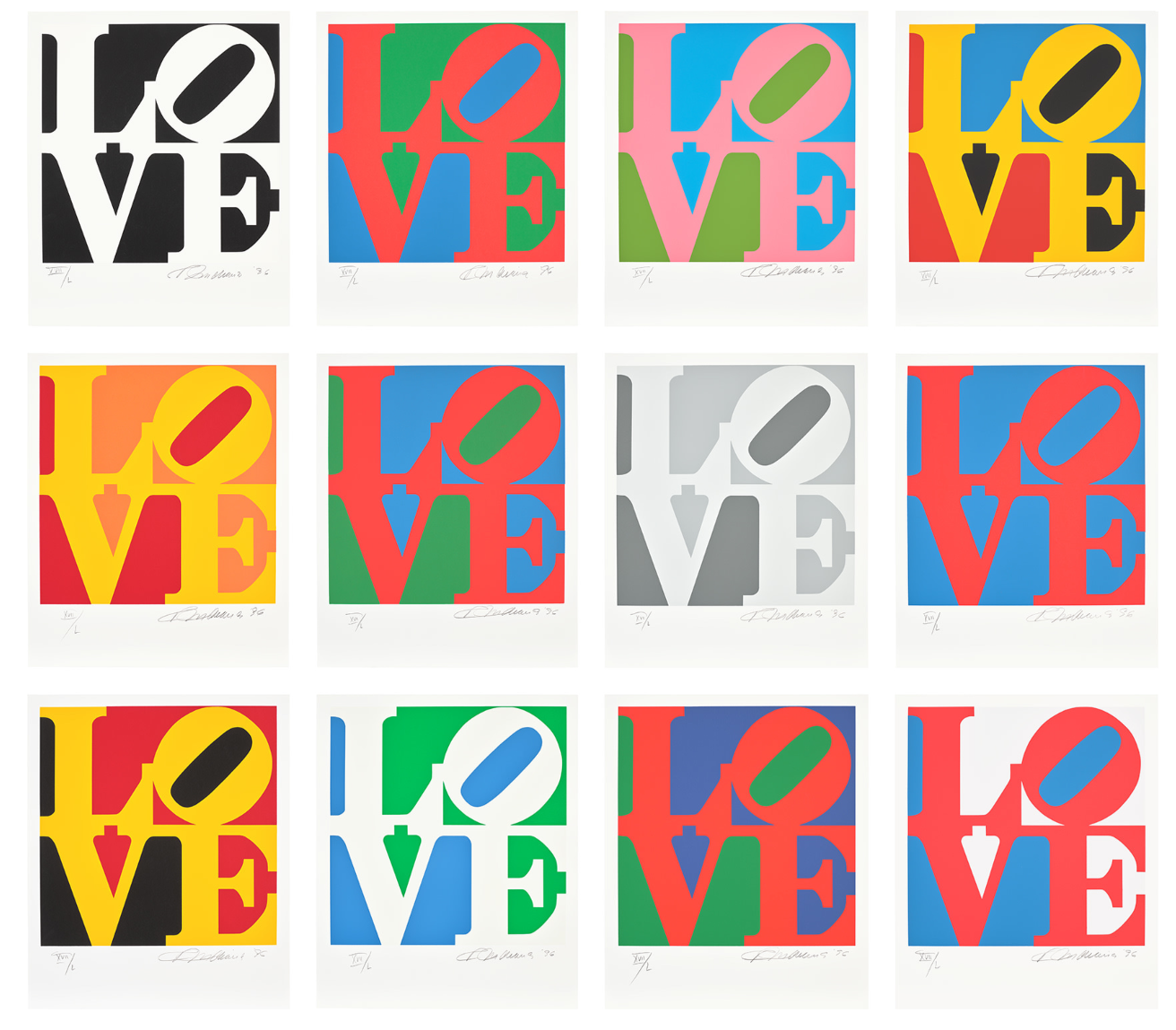
The Book of Love, 1996
The complete set of 12 screenprints in colours and 12 accompanying poems with embossing, on A.N.W. Crestwood Museum paper
All contained in the original beige paper-covered folio with printed title.
Image: 18×18 inches (45.9 x 45.9 cm)
Sheet: 24×20 inches (61 x 50.8 cm)
The prints all signed, dated, and numbered ‘XVII/L’ in pencil
The poems and colophon all signed and numbered ‘XVII/L’ in pencil
One of 50 sets in Roman numerals, there were also 200 sets and 15 artist’s proof sets in Arabic numerals)
Published by American Image Editions, New York
“Love is a noun and a verb and so one must decide what my love is. It’s a command, love, and it’s a subject, love. It is an exercise, and grammar is one of my favorite subjects.”
Bold, vibrant and deceptively simple, Robert Indiana’s ‘LOVE’ composition is one of the most recognizable artistic arrangements of the twentieth century. Consisting of four capital letters stacked in a perfectly square format with a distinctively tilted ‘O’, this singular motif has come to define the prominent American Pop artist and it features repeatedly across his prints, paintings and public sculptures.
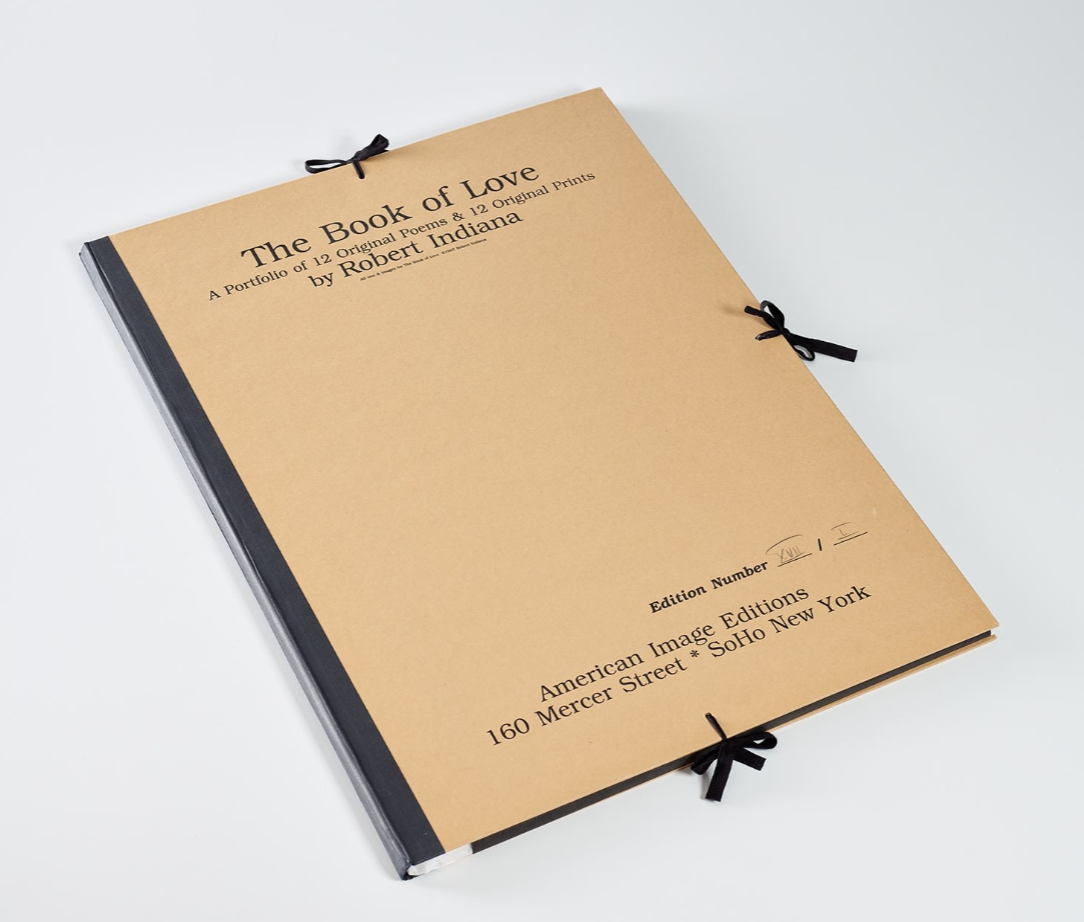
Indiana began to explore the power of language in his artworks during the early 1960s. ‘LOVE’ first featured in a 1961 painting titled 4-Star Love, with the text stenciled across the bottom of the canvas in a linear fashion. Clearly fascinated with the creative possibilities offered by the word, the artist continued to experiment with the arrangement of the four letters in informal rubbings of red colored pencil on paper. In 1965, the now-instantly recognizable composition was finalized and first disseminated to the public as a Christmas card commissioned by the Museum of Modern Art. Rendered in Indiana’s signature hard-edged style of block colors and sharp lines – an aesthetic inspired by his partner at the time, the artist Ellsworth Kelly – the design subsequently became one of the museum’s most lucrative cards and the image was informally adopted as an emblem of the ‘Love Generation’.
“…what I’m doing is equating my paintings with my poetry. In other words they are concrete. The LOVE is a concrete poem as far as I’m concerned. Just a one word poem.”
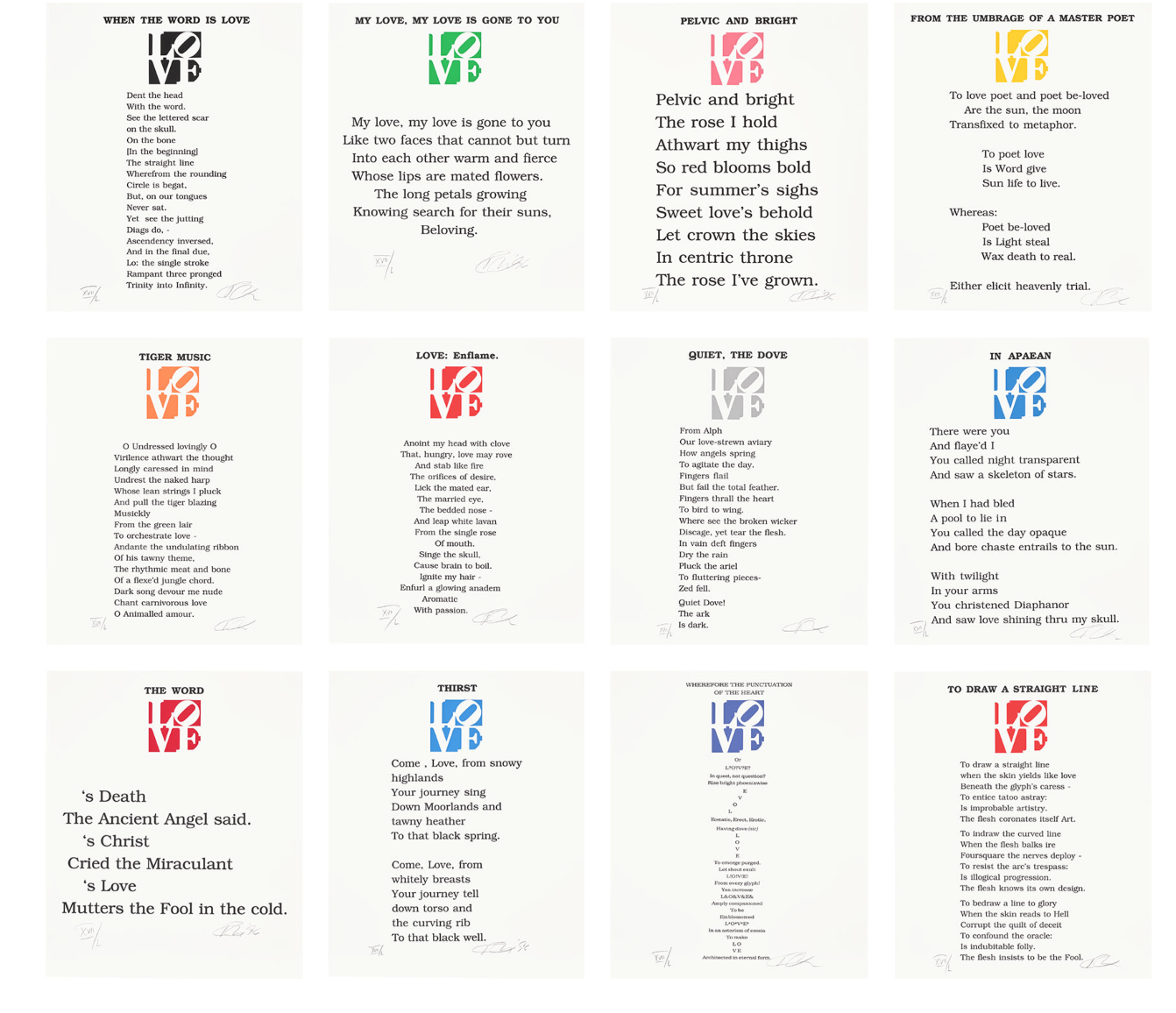
The Book of Love, created in 1996, is Indiana’s most elaborate project focused on this iconic motif, with the artist reworking the image through a total of twelve different colourways, each accompanied by a poem written by the artist. Bestowed with titles such as “When the Word is Love”, “To Draw a Straight Line”, and “Wherefore the Punctuation of the Heart”, Indiana’s poems are an ekphrastic description of love: the noun, the verb, the screenprints. Displayed together, the artist manifests love as object and idea, with his screenprints and poems perfectly encapsulating Indiana’s lifelong fascination with symbols and language.
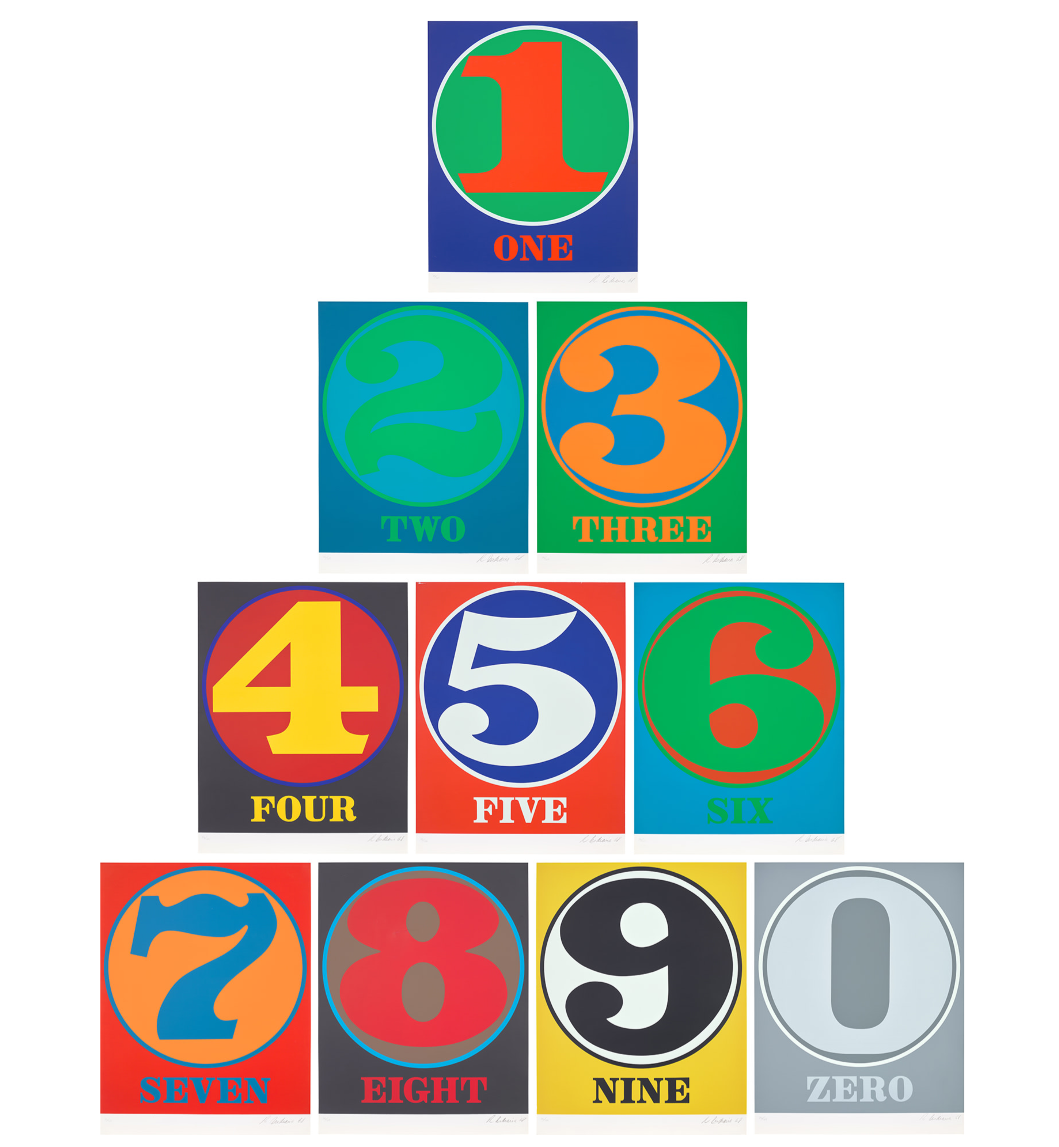
ROBERT INDIANA
Numbers (S. 46-55), 1968
The complete set of 10 screenprints in colors on Arches paper
Sheet: 25 1/2 x 19 5/8 inches (64.8 x 49.8 cm)
All signed, dated and numbered 75/125 in pencil (there were also 35 artist’s proofs in Roman numerals)
Co-published by Edition Domberger, Stuttgart, and Galerie Schmela, Düsseldorf
“I’ve always been fascinated by numbers.”
Famed for his strikingly simple and extremely bold compositions, Robert Indiana’s eye-catching Numbers portfolio is comprised of ten screenprints. Featuring the digits 0 to 9, each number is rendered in a block colour and contained within a contrasting geometric circle, with the corresponding word spelt out in capital letters below. Combining the artist’s love of text with the curvature of Arabic numerals, Indiana’s composition encourages a viewer to approach these digits in a multitude of ways; as visual shorthand for the words they symbolise, as simple geometric forms, and as signifiers of autobiographical milestones or vessels of personal experiences. Oscillating between symbol and shape, Indiana’s Numbers demonstrates the artist’s long-standing fascination with simplified signage and how these signifiers are perceived on an individual basis.
“I Saw the Figure 5 in Gold by Charles Henry Demuth is my favourite American painting in New York City’s Metropolitan Museum.” —Robert Indiana
Robert Indiana was a central figure in the Pop art movement in the United States, which rose to prominence in the 1960s. Inspired by mass-culture and advertising, Pop art sought to develop a distinct visual language that complemented contemporary society, ushering in the ‘American Century’. Regularly relying on text to form the mainstay of his artworks – as exemplified in his renowned ‘LOVE’ compositions – Indiana also incorporated numbers into his designs with increasing frequency. Inspired by one of his favourite paintings, I Saw The Figure Five In Gold (1928) by Charles Demuth, the Pop artist experimented with the incorporation of Arabic numerals in his work. Demuth was a pioneer of Precisionism – an artistic movement that gained traction in the United States throughout the 1920s and ‘30s, characterised by clean lines and sleek, geometric forms. Developed as a distinct style that aimed to convey ‘The Machine Age’ of American industrial expansion, Demuth’s Precisionism draws both aesthetic and conceptual parallels to Indiana’s hard-edged Pop approach. Interestingly, it was the same pursuit of a uniquely American language that proved to be the driving force behind the work of William Carlos Williams – the poet who composed The Great Figure, a 32-word poem which served as the initial inspiration behind Demuth’s painting. Endeavouring to create work uninfluenced by European or Classical literature, Carlos Williams preferred to write in colloquial American English. Widely acknowledged to be the poem’s visual equivalent, Demuth’s Precisionist approach echoes Carlos Williams’ desire to find a uniquely American form of expression. By referencing Demuth and, in doing so, recalling the poetry of William Carlos Williams, Indiana enters into a multi-layered and cross-disciplinary search for a distinctly American idiom which culminates in his Pop art Numbers portfolio.
Aside from the complex references at play in Numbers, the incorporation of digits into the artist’s wider oeuvre also carried a very personal significance for Indiana. Adopted as an infant, Indiana spent his childhood moving frequently through his namesake state, living in 21 different houses before the age of 17. As a pastime, the artist would often revisit these houses, counting them as he went. For Indiana, each house represented a specific number. These formative experiences shaped Indiana’s understanding of how people related to numbers, and the artist continued to explore the power of numbers across paintings, prints and sculpture throughout his career.