
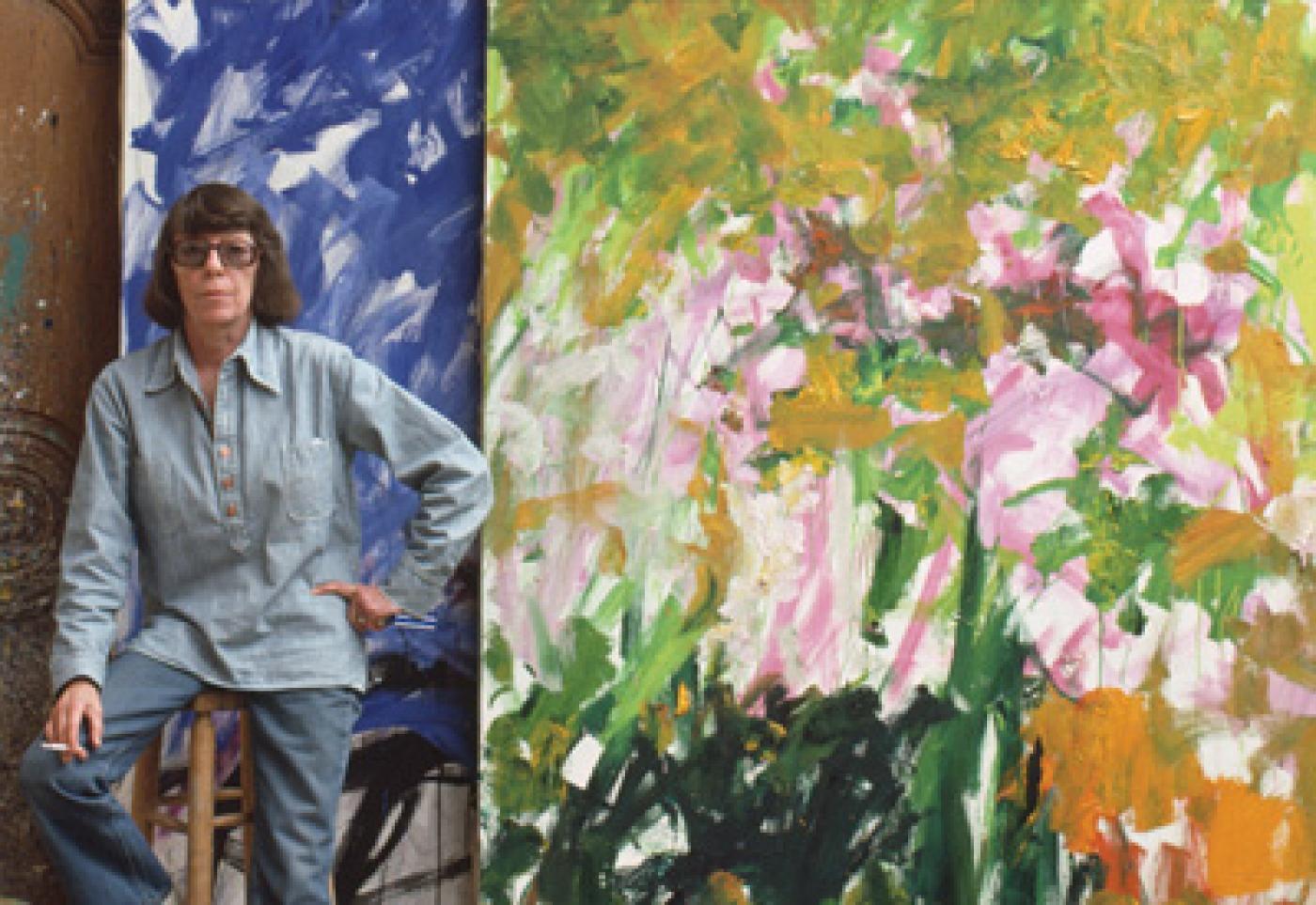
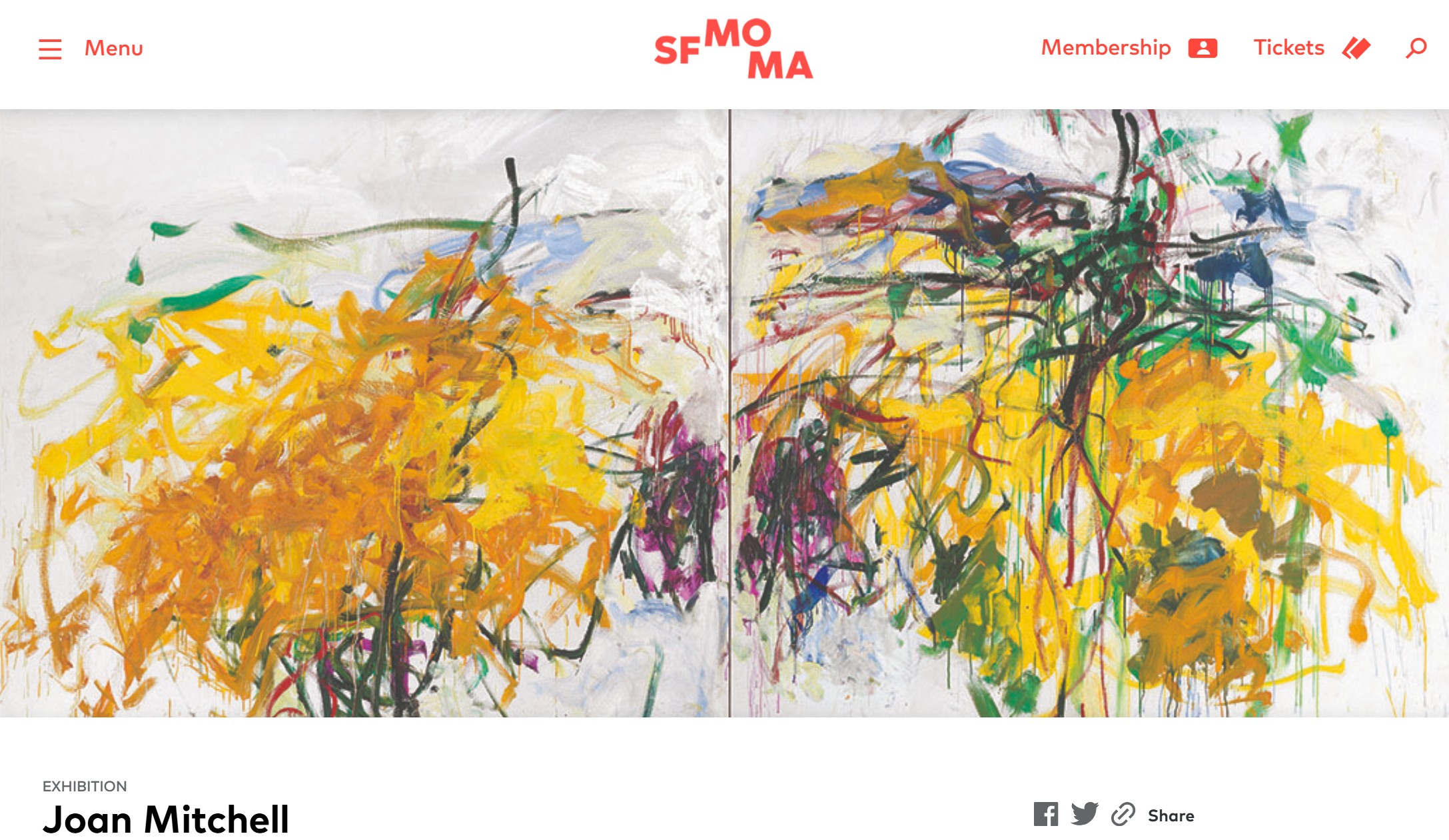
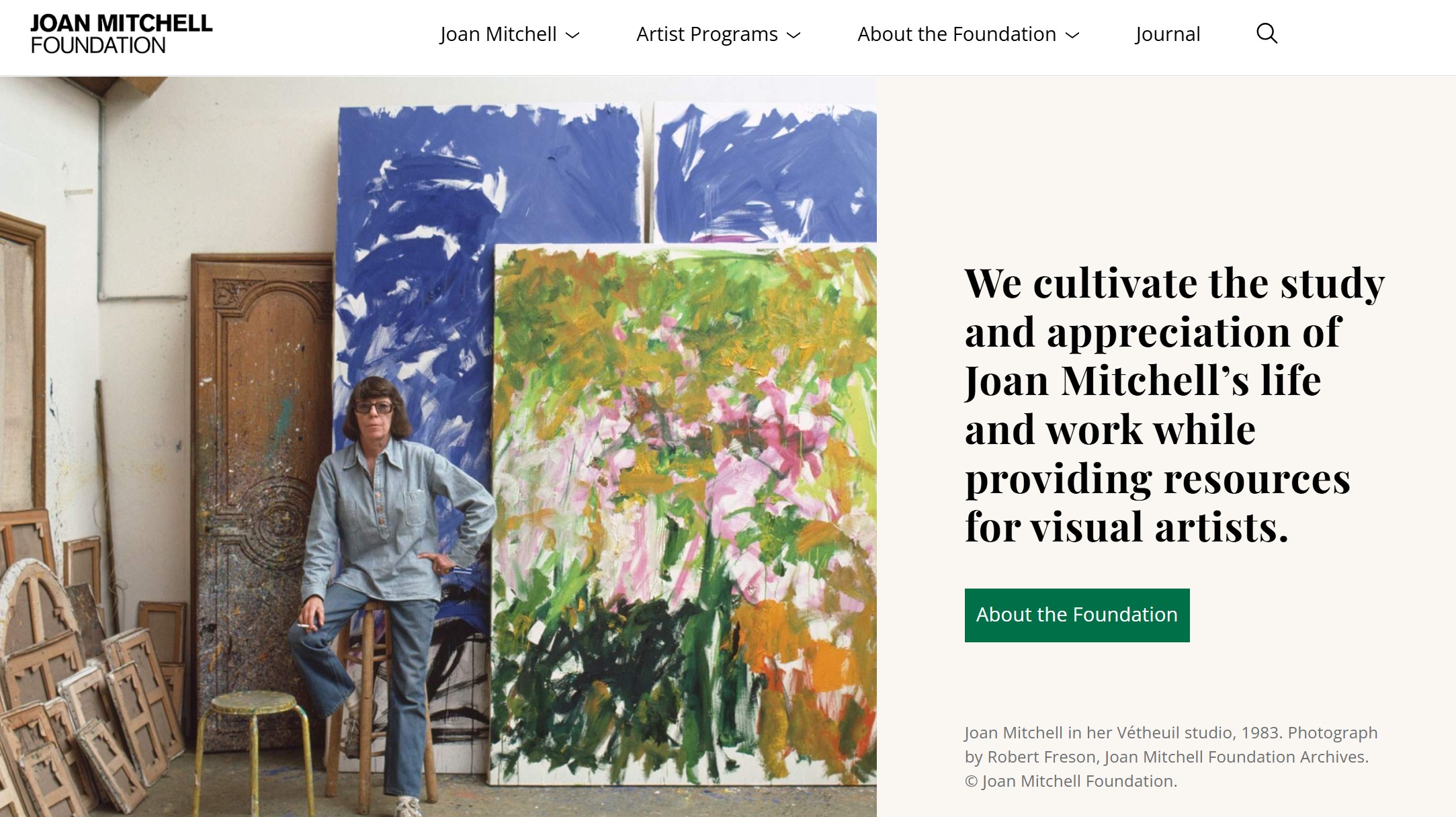
Joan Mitchell (1925–1992) stands as one of the most powerful and singular voices within postwar painting, bridging the New York School and a deeply personal, transatlantic practice rooted in both American abstraction and the landscapes of France. Born in Chicago and later active in New York, she was closely associated with the circle of Willem de Kooning, Franz Kline, and Jackson Pollock, yet her work quickly distinguished itself through its lyrical intensity and structural clarity.
PART I: SUMMARY
Auction Market Overview
2025 Auction Highlights
16 lots sold at auction in 2025 for a total turnover of USD 56,101,610. With 1 lot failing to sell, the sell-through rate is 94.1%. The highest price of 2025 was achieved by Sunflower V, a painting dated 1969, that sold at Christie’s, in New-York, on 17 November 2025, for USD 16,735,000.
2025 Top 3 Lots
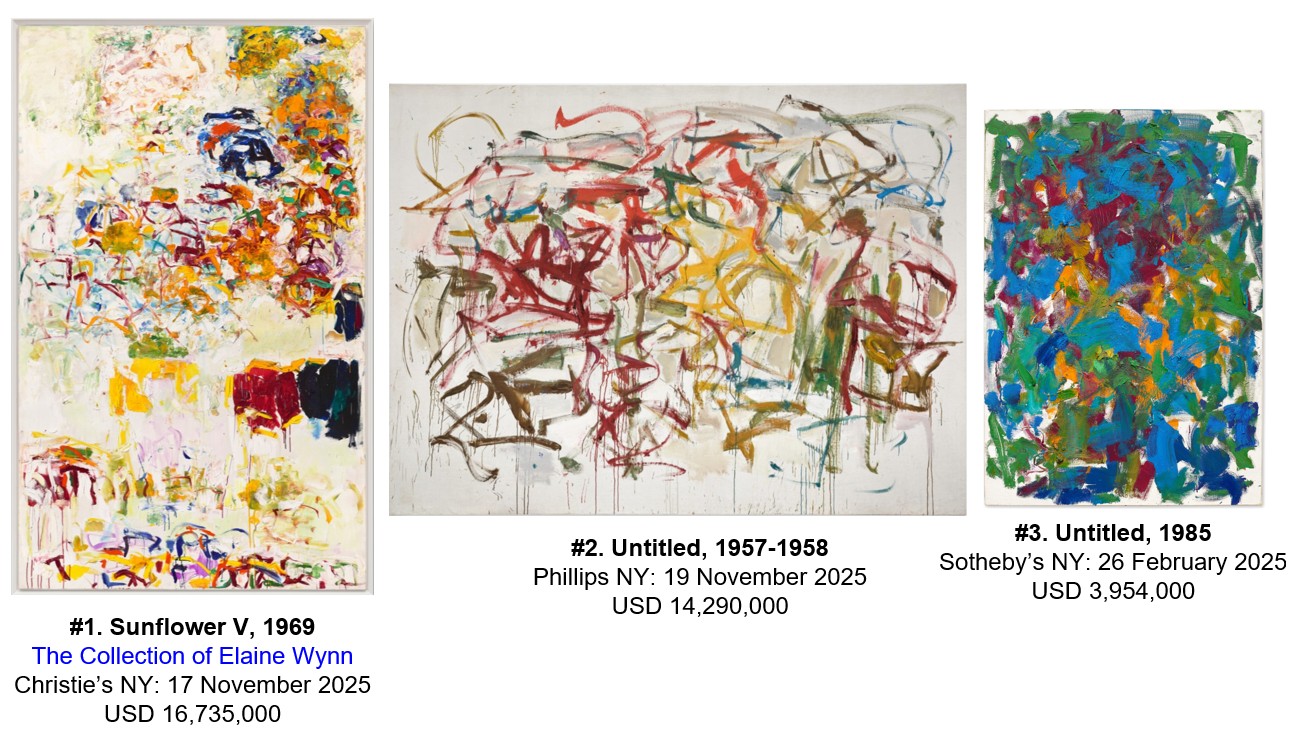
2 lots sold for more than USD 10 million, generating a cumulative turnover of USD 31,225,000, representing 56% of the total turnover of 2025. 11 lots sold for more than USD 1 million, generating a cumulative turnover of USD 53,599,710, representing 95.5% of the total turnover of 2025.
Furthermore, 10 Works on Paper sold at auction in 2025 for a total turnover of USD 3,056,900. With 1 lot failing to sell, the sell-through rate is 94.1%. The highest price so far was achieved by an untitled work on paper dated 1983, that sold at Christie’s in New-York, on 20 November 2025, for USD 698,500.
2025 Top 3 Lots
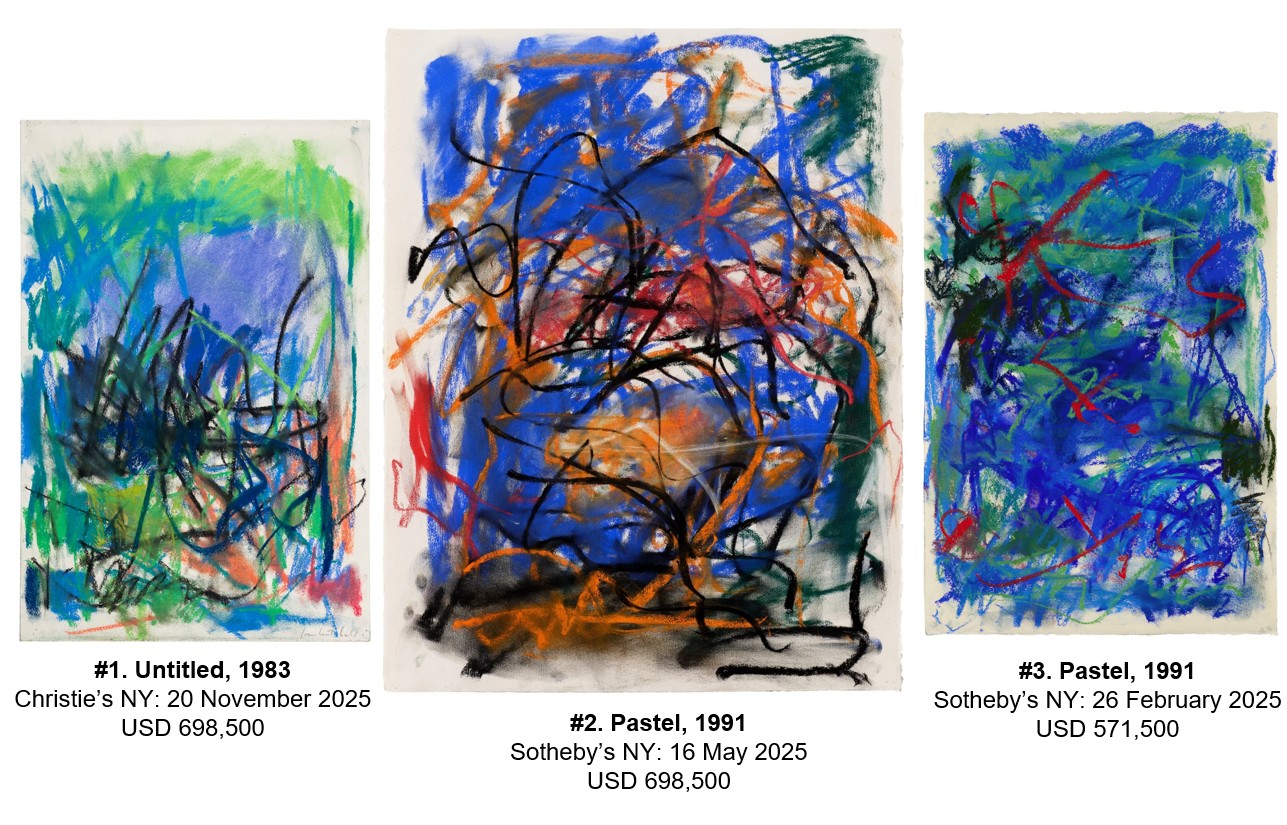
7 lots sold for more than USD 100,000, generating a cumulative turnover of USD 2,853,700, representing 93.4% of the total turnover of 2025.
2024 Auction Highlights
17 lots sold at auction in 2024 for a total turnover of USD 99,992,855. With 1 lot failing to sell, the sell-through rate is 94.4%. The highest price has been achieved at Sotheby’s in New-York, on 13 May 2024, when Noon, a painting dated circa 1969, sold for USD 22,615,400.
2024 Top 3 Lots
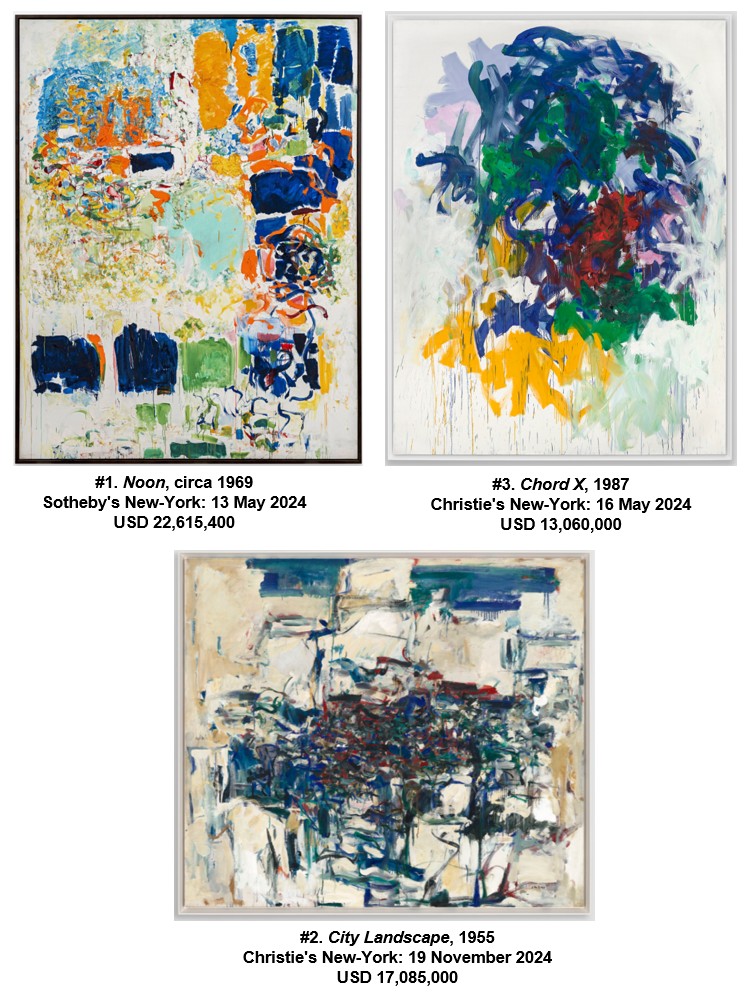
12 lots sold for more than USD 1 million, generating a cumulative turnover of USD 96,460,280, representing 96.5% of the total for 2024.
2023 Auction Highlights
18 lots sold at auction in 2023 for a total turnover of USD 110,349,458. With no lot failing to sell, the sell-through rate is 100%. The highest price has been achieved at Christie’s in New-York on 9 November 2023, when an untitled painting from 1959 sold for USD 29,160,000, setting a new world record at auction for the artist.
2023 Top 3 Lots
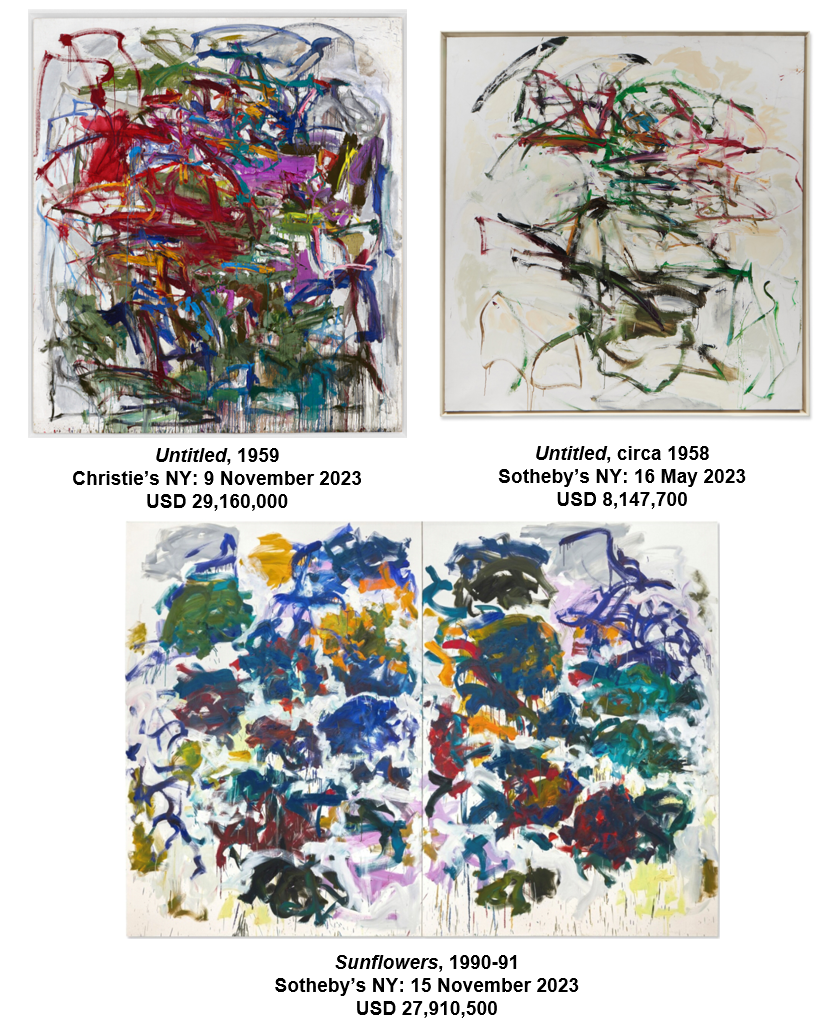
2 lots sold for more than USD 20 million, generating a cumulative turnover of USD 57,070,500, representing 51.7% of the total turnover for 2023. 12 lots sold for more than USD 1 million, generating a cumulative turnover of USD 107,275,158, representing 97.2% of the total turnover for 2023. Most of the lots sold in the US, 2 in Paris.
2022 Auction Highlights
14 lots sold at auction in 2022 for a total turnover of USD 66,584,702. With no lot failing to sell, the sell-through rate is 100%. The highest price of USD 14,130,000 was achieved at Christie’s in New-York on 17 November 2022 by an untitled painting dated 1989.
2022 Top 3 Lots
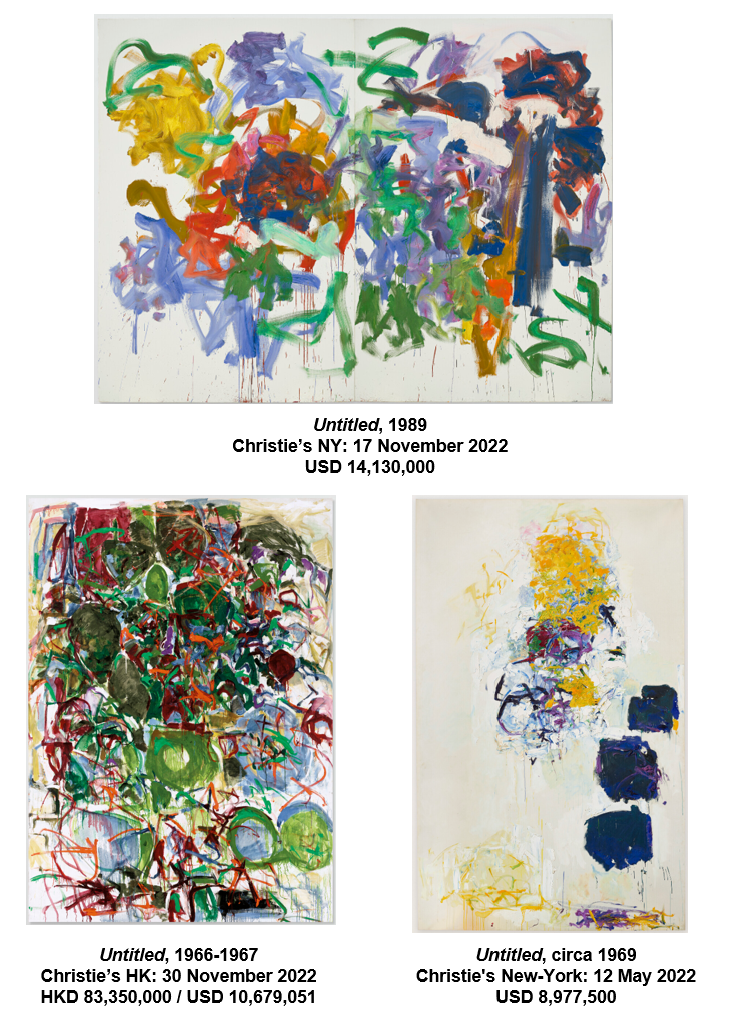
2 lots sold for more than USD 10 million, generating a cumulative turnover of USD 24,809,051, representing 37.3% of the total turnover for 2022.
Top Lots
#1. Untitled, 1959
Christie’s New-York: 9 November 2023
Estimated: USD 25,000,000 – 35,o00,000
USD 29,160,000
NEW WORLD RECORD FOR THE ARTIST
JOAN MITCHELL (1925-1992) (christies.com)
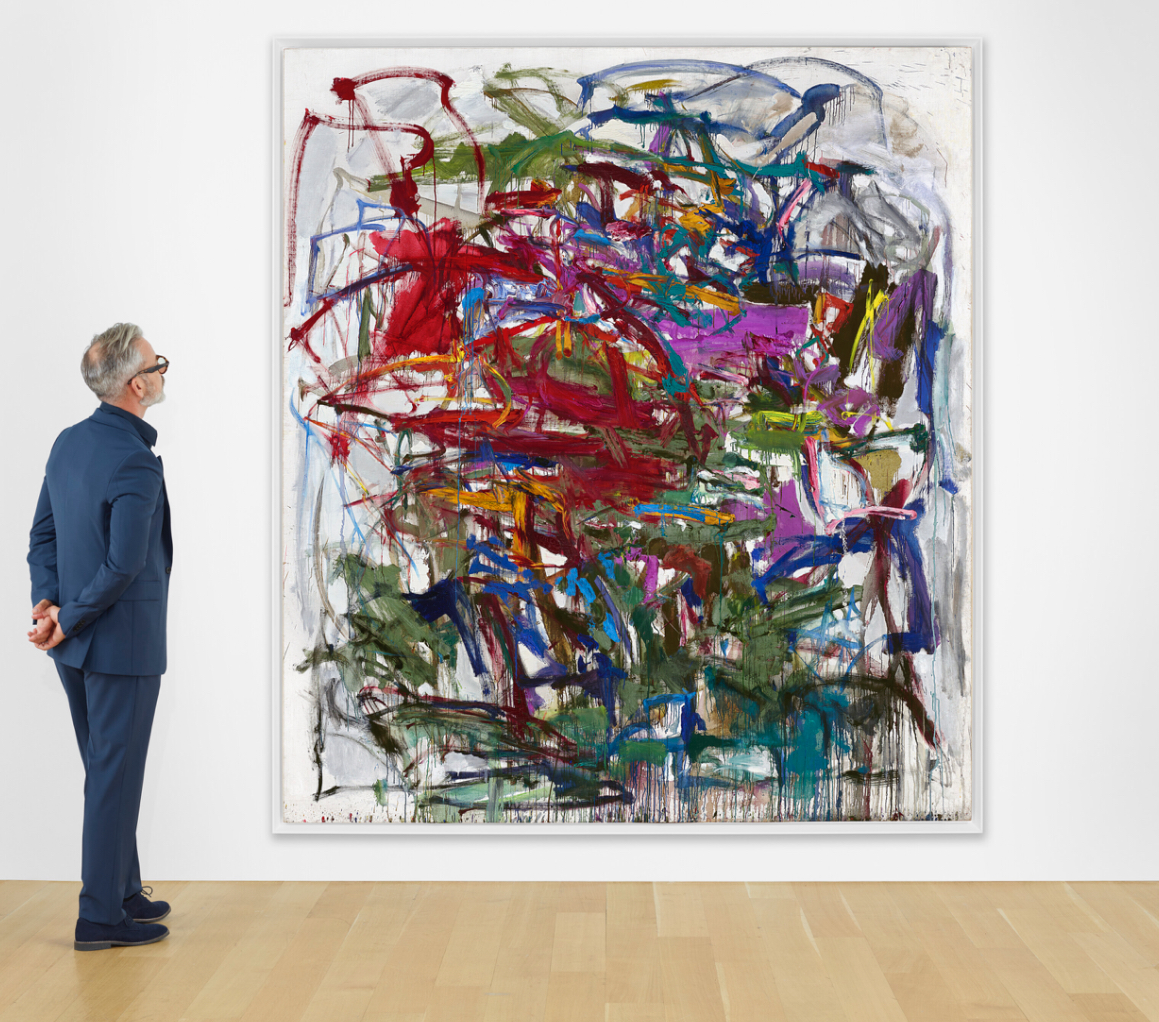
JOAN MITCHELL (1925-1992)
Untitled, 1959
Oil on canvas
97 1/2 x 86 1/2 inches (247.7 x 219.7 cm)
#2. Sunflowers, 1990-91
Sotheby’s New-York: 15 November 2023
Estimated: USD 20,000,000 – 30,000,000
USD 27,910,500
Sunflowers | Contemporary Evening Auction | 2023 | Sotheby’s (sothebys.com)
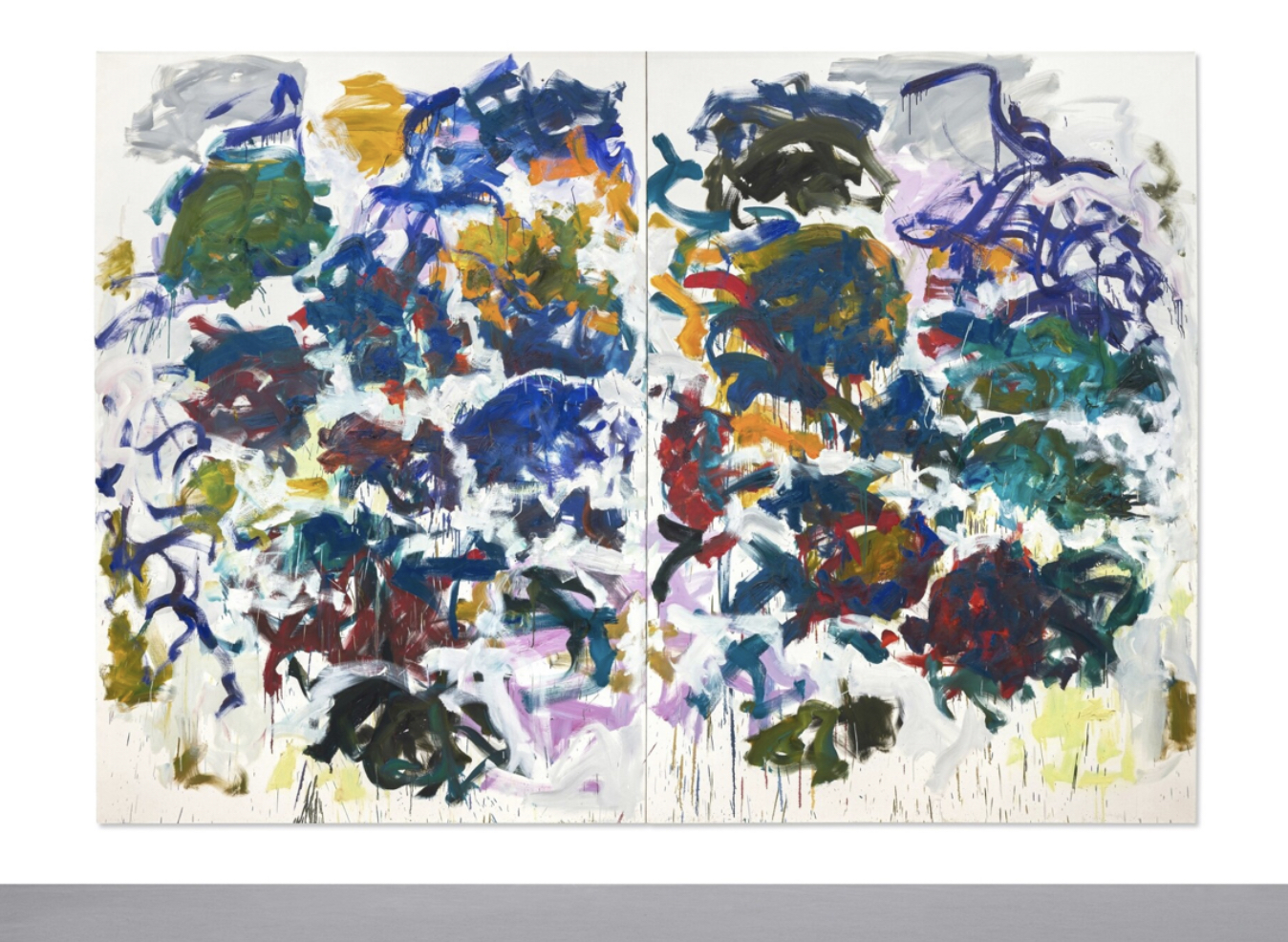
JOAN MITCHELL (1925 – 1992)
Sunflowers, 1990-91
Oil on canvas, in two parts
Overall: 280×400 cm (110 1/4 x 157 1/2 inches)
Signed (right panel, lower right)
#3. Noon, circa 1969
Sotheby’s New-York: 13 May 2024
Estimated: USD 15,000,000 – 20,000,000
USD 22,615,400
Noon | Contemporary Evening Auction | 2024 | Sotheby’s (sothebys.com)

JOAN MITCHELL (1925 – 1992)
Noon, circa 1969
Oil on canvas
102×79 inches (259.1 x 200.7 cm)
Signed (lower left); signed and titled (on the reverse)
#4. City Landscape, 1955
Christie’s New-York: 19 November 2024
Estimated: USD 15,000,000 – 20,000,000
USD 17,085,000
JOAN MITCHELL (1925-1992), City Landscape | Christie’s
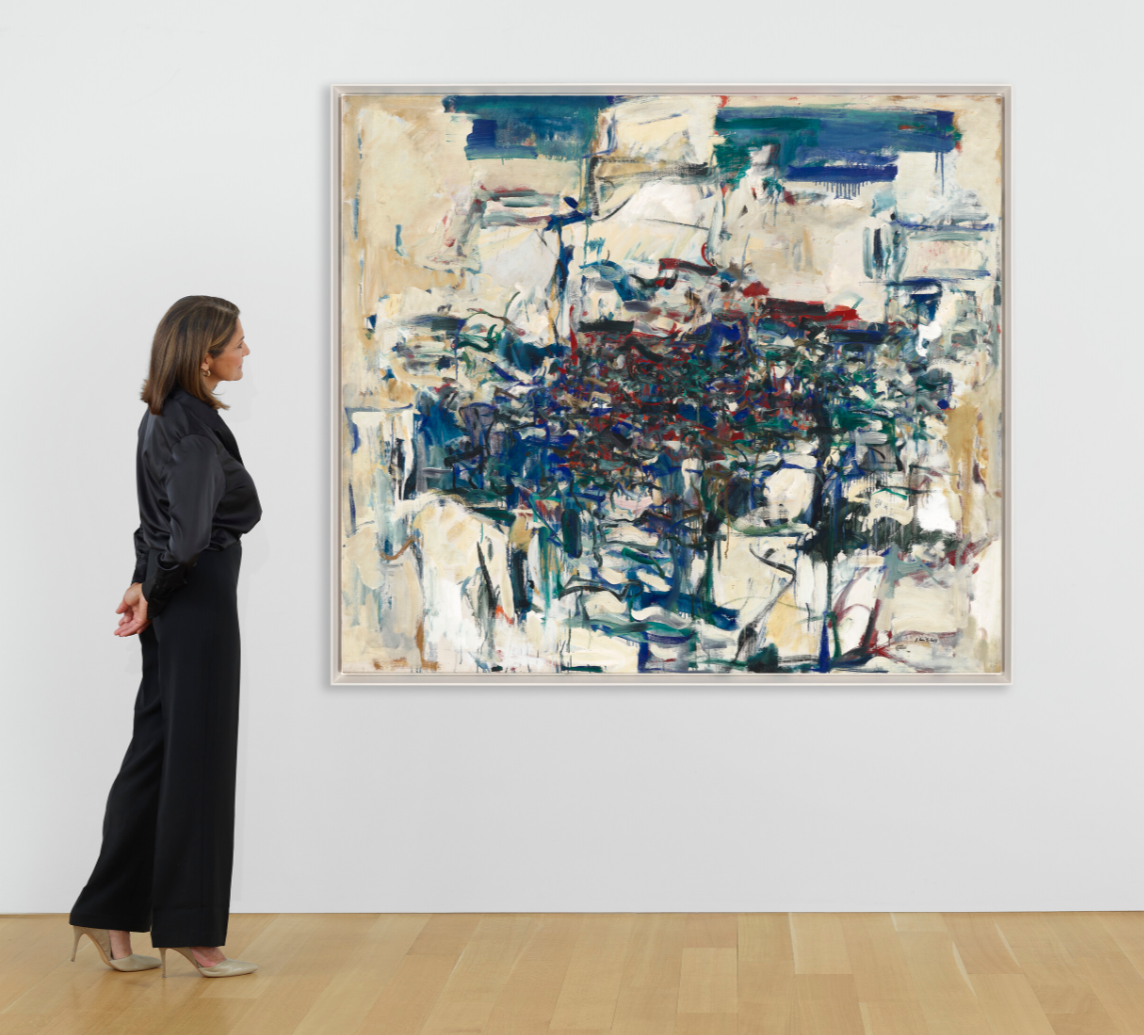
JOAN MITCHELL (1925-1992)
City Landscape, 1955
Oil on canvas
64 1/2 x 73 1/2 inches (163.8 x 186.7 cm)
Signed ‘J. Mitchell’ (lower right)
#5. Blueberry, 1969
Christie’s New-York: 17 May 2018
Estimated: USD 5,000,000 – 7,000,000
USD 16,625,000
Joan Mitchell (1925-1992), Blueberry | Christie’s
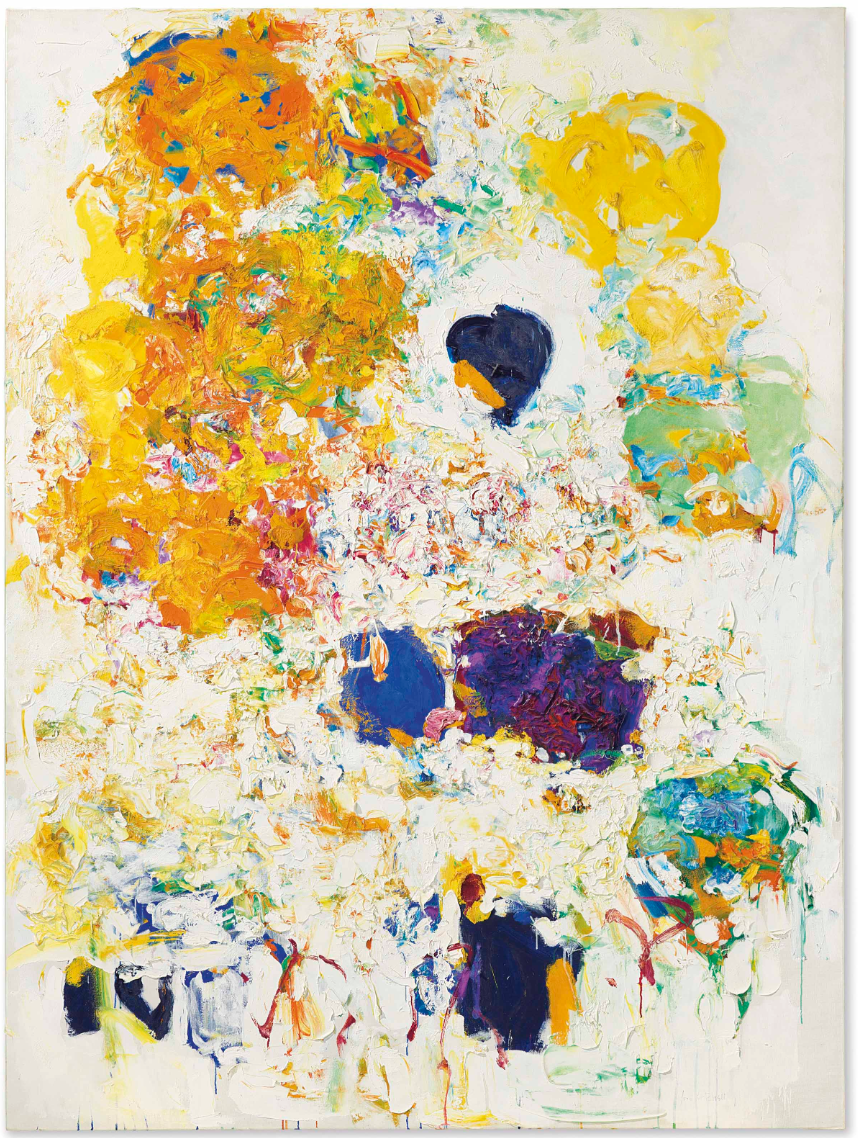
JOAN MITCHELL (1925-1992)
Blueberry, 1969
Oil on canvas
78 7/8 x 59 inches (200×150 cm)
Signed ‘Joan Mitchell’ (lower right)
Signed again and titled ‘Mitchell Blueberry’ (on the reverse)
#6. La Grande Vallée VII, 1983
Sotheby’s Hong-Kong: 29 March 2026
Estimated: HKD 110,000,000 – 300,000,000
HKD 129,100,000 / USD 16,487,865
Joan Mitchell 瓊・米切爾 | La Grande Vallée VII 大峽谷(第七號) | Modern &
REPEAT SALE
Christie’s New-York: 10 July 2020
Estimated: USD 10,000,000 – 15,000,000
USD 14,462,500
Joan Mitchell (1925-1992), La Grande Vallée VII | Christie’s
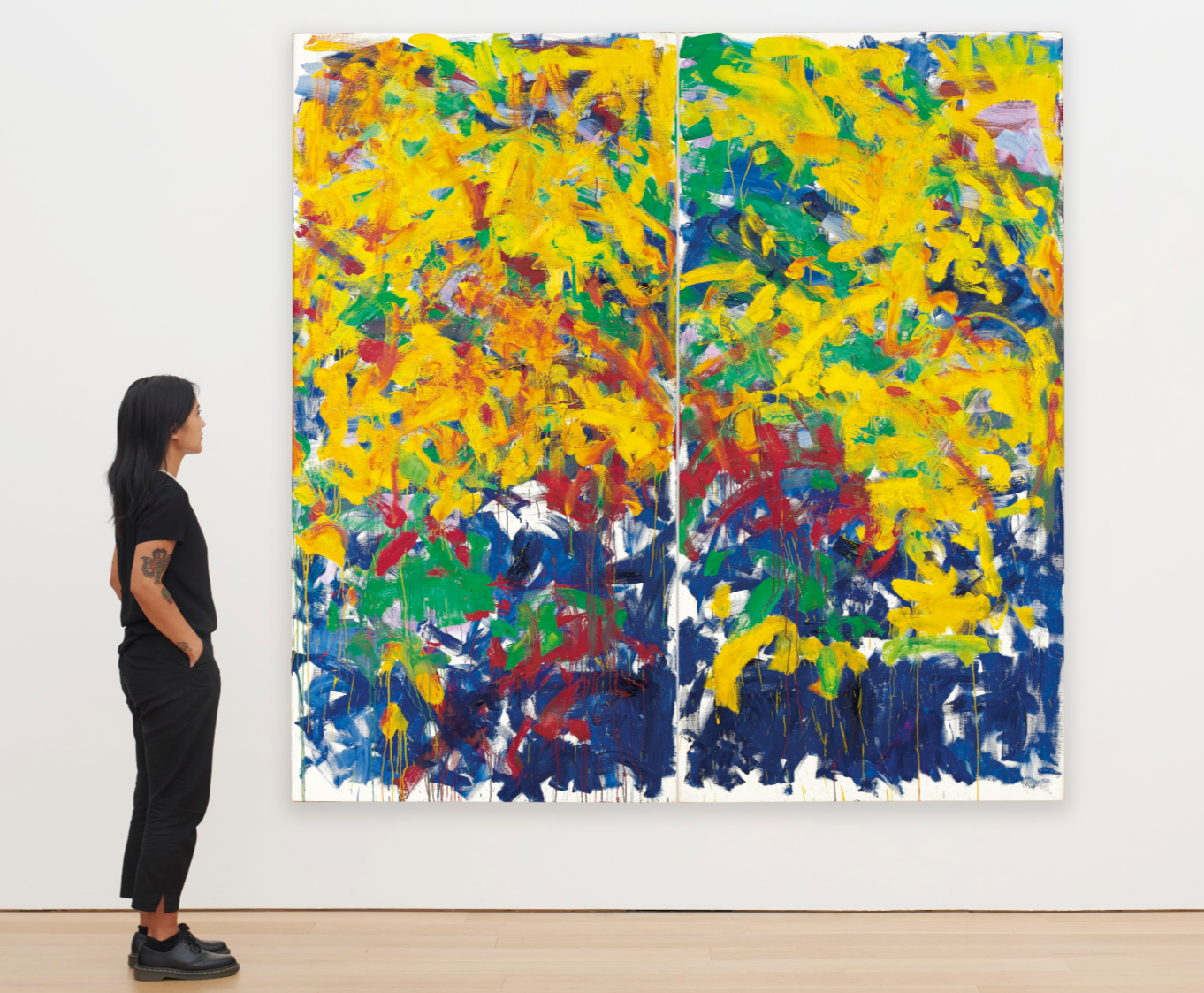
JOAN MITCHELL (1925-1992)
La Grande Vallée VII, 1983
Oil on canvas, in two parts
Overall: 102-3/8 x 102-5/8 inches (260.3 x 260.7 cm)
PART II: AUCTION RESULTS
2026 Auction Results
FOR PAINTINGS ONLY
PRELIMINARY AUCTION RESULTS
As of 15 June 2026
#1. La Grande Vallée VII, 1983
Sotheby’s Hong-Kong: 29 March 2026
Estimated: HKD 110,000,000 – 300,000,000
HKD 129,100,000 / USD 16,487,865
Joan Mitchell 瓊・米切爾 | La Grande Vallée VII 大峽谷(第七號) | Modern &
REPEAT SALE
Christie’s New-York: 10 July 2020
Estimated: USD 10,000,000 – 15,000,000
USD 14,462,500
Joan Mitchell (1925-1992), La Grande Vallée VII | Christie’s
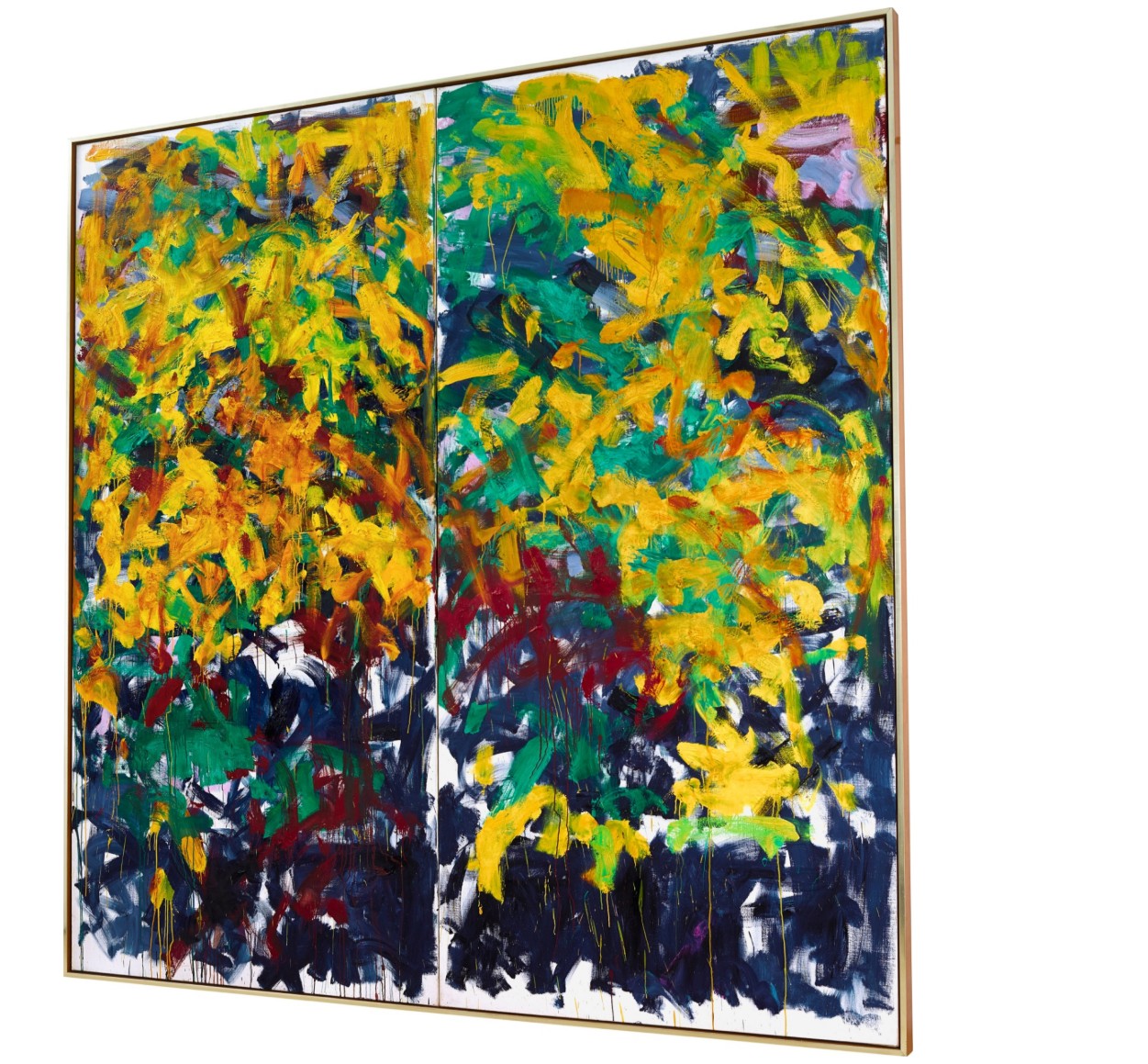
JOAN MITCHELL (1925-1992)
La Grande Vallée VII, 1983
Oil on canvas, in two parts
Overall: 102-3/8 x 102-5/8 inches (260.3 x 260.7 cm)
#2. Cherchez l’aiguille, 1958
The Arc of Abstraction: Masterpieces from a Private European Collection
Christie’s New-York: 18 May 2026
Estimated: USD 10,000,000 – 15,000,000
USD 12,135,000
JOAN MITCHELL (1925-1992), Cherchez l’aiguille | Christie’s
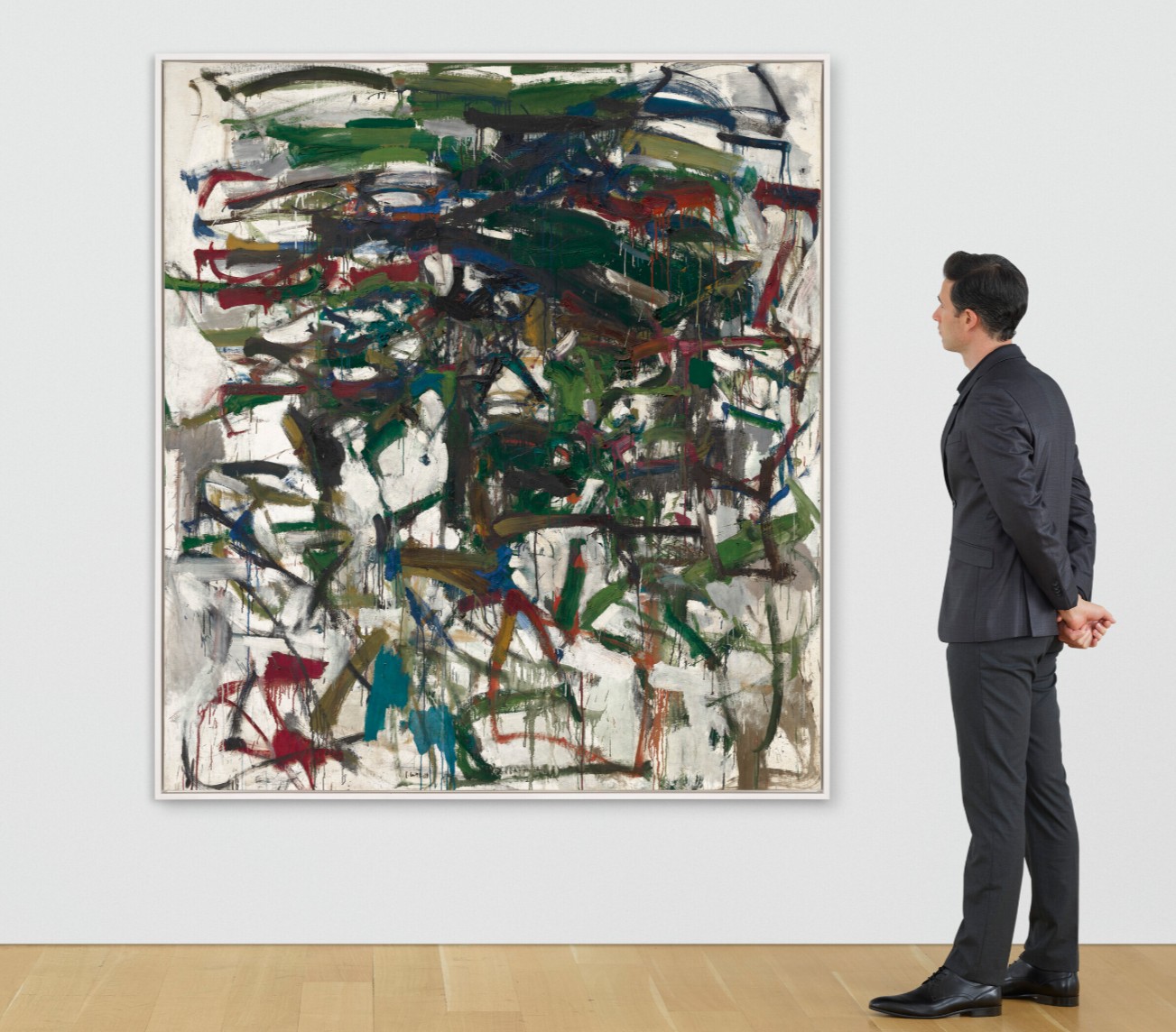
JOAN MITCHELL (1925-1992)
Cherchez l’aiguille, 1958
Oil on canvas
76-1/2 x 69 inches (194.3 x 175.3 cm)
Signed ‘J. Mitchell’ (lower center)
#3. Loom II, 1976
Property from the Collection of Jennifer Gilbert Sold to Benefit Lumana Detroit
Sotheby’s New-York: 14 May 2026
Estimated: USD 5,000,000 – 7,000,000
USD 7,806,000
Joan Mitchell | Loom II | The Now & Contemporary Evening Auction |
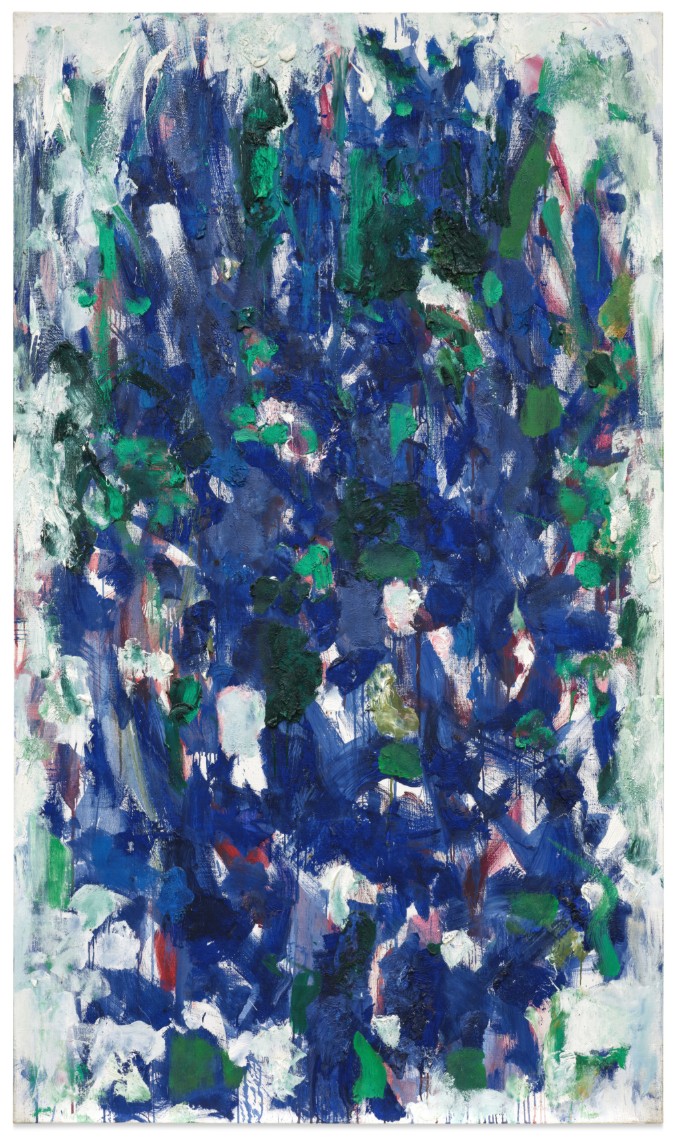
JOAN MITCHELL (1925 – 1992)
Loom II, 1976
Oil on canvas
77 x 44-7/8 inches (195.6 x 114 cm)
Signed (lower right)
#4. Plain, 1989
A Life in Color: Property from the Estate of Tina Hills
Phillips New-York: 19 May 2026
Estimated: USD 5,000,000 – 7,000,000
USD 6,850,000
Joan Mitchell Modern & Contemporary Art Evening Sale
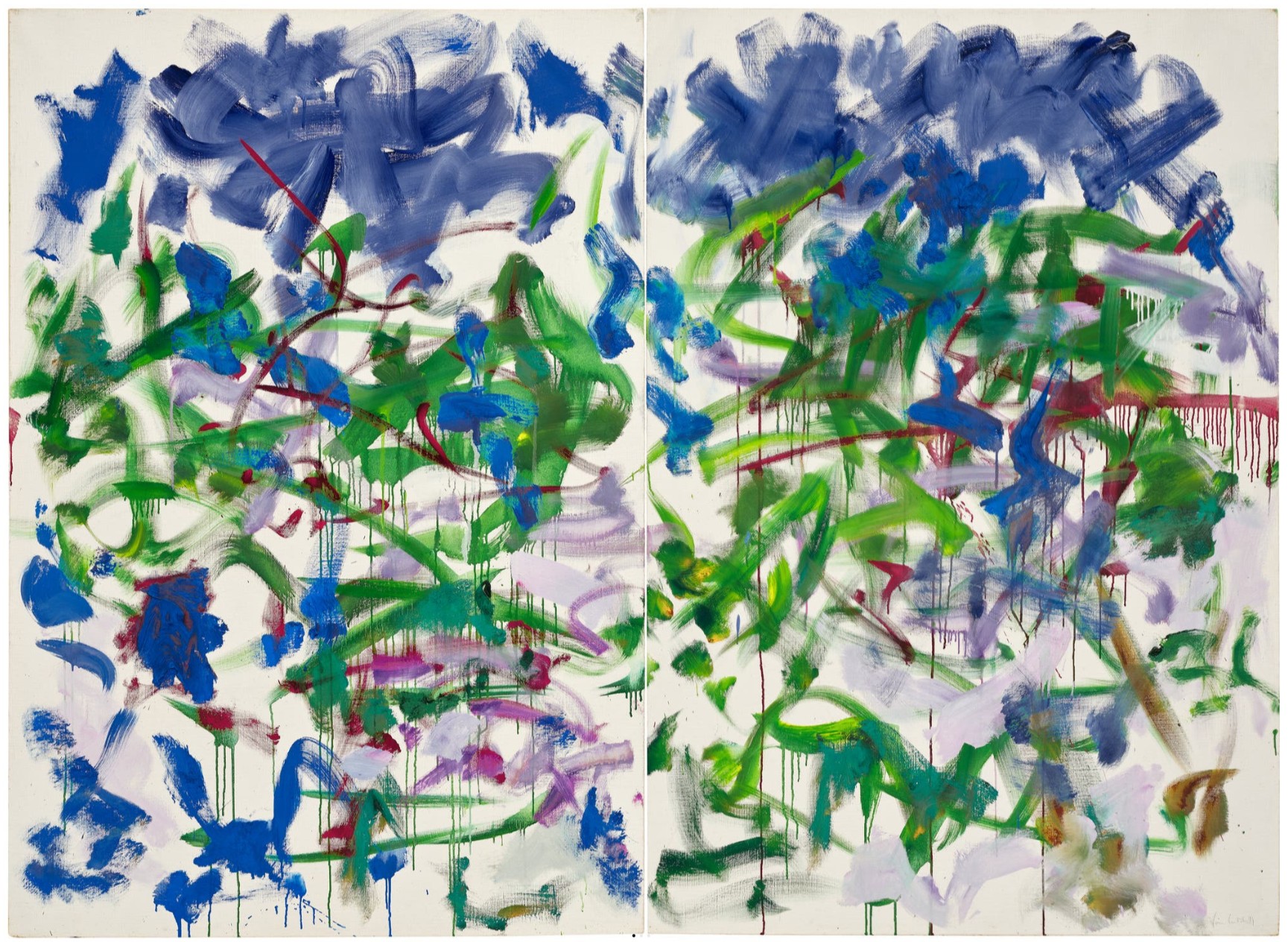
JOAN MITCHELL
Plain, 1989
Oil on canvas, diptych
Each: 51×35 inches (129.5 x 88.9 cm)
Overall: 51 x 70-1/2 inches (129.5 x 179.1 cm)
Signed “Joan Mitchell” lower right
#5. Untitled, 1965
Property from a Private New Jersey Collection
Christie’s New-York: 21 May 2026
Estimated: USD 4,000,000 – 6,000,000
USD 5,382,000
JOAN MITCHELL (1925-1992), Untitled | Christie’s
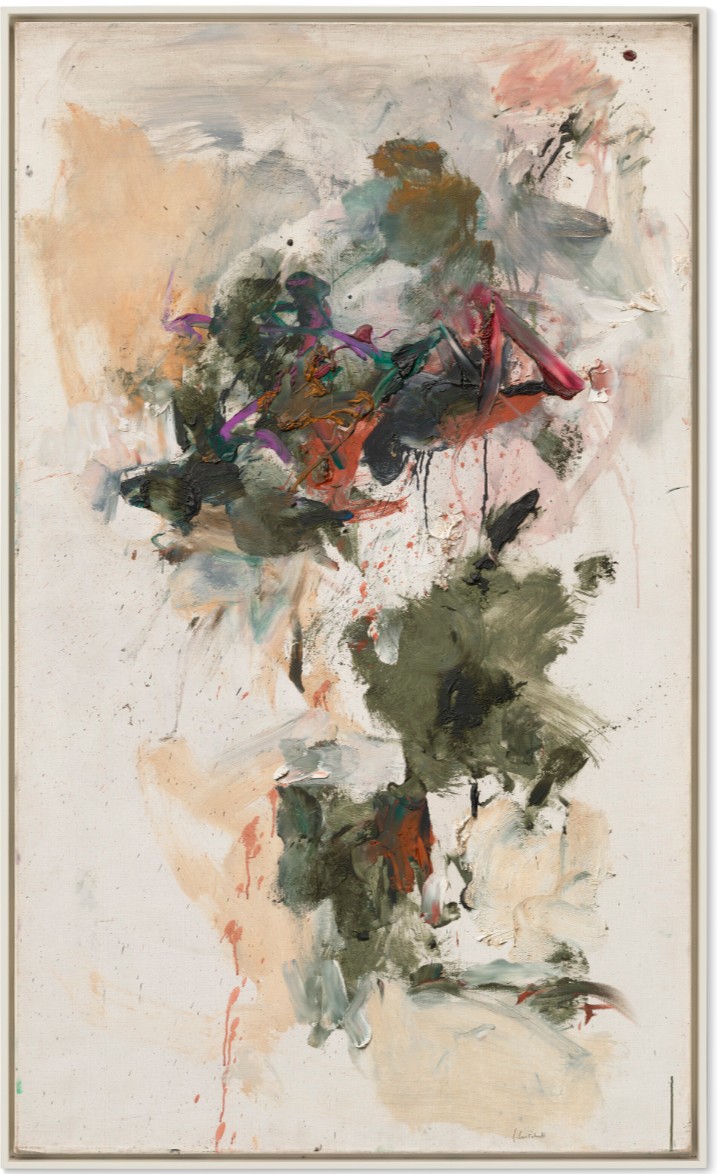
JOAN MITCHELL (1925-1992)
Untitled, 1965
Oil on canvas
64 x 38-1/4 inches (162.6 x 97.2 cm)
Signed ‘J. Mitchell’ (lower right)
Signed again ‘Mitchell’ (on the reverse)
2025 Auction Results
FOR PAINTINGS ONLY
16 lots sold at auction in 2025 for a total turnover of USD 56,101,610. With 1 lot failing to sell, the sell-through rate is 94.1%. The highest price of 2025 was achieved by Sunflower V, a painting dated 1969, that sold at Christie’s, in New-York, on 17 November 2025, for USD 16,735,000.
2025 Top 3 Lots
2 lots sold for more than USD 10 million, generating a cumulative turnover of USD 31,225,000, representing 56% of the total turnover of 2025. 11 lots sold for more than USD 1 million, generating a cumulative turnover of USD 53,599,710, representing 95.5% of the total turnover of 2025.
XXXXXXXXXX
#1. Sunflower V, 1969
Elaine: The Collection of Elaine Wynn
Christie’s New-York: 17 November 2025
Estimated: USD 12,000,000 – 18,000,000
USD 16,735,000
JOAN MITCHELL (1925-1992), Sunflower V | Christie’s
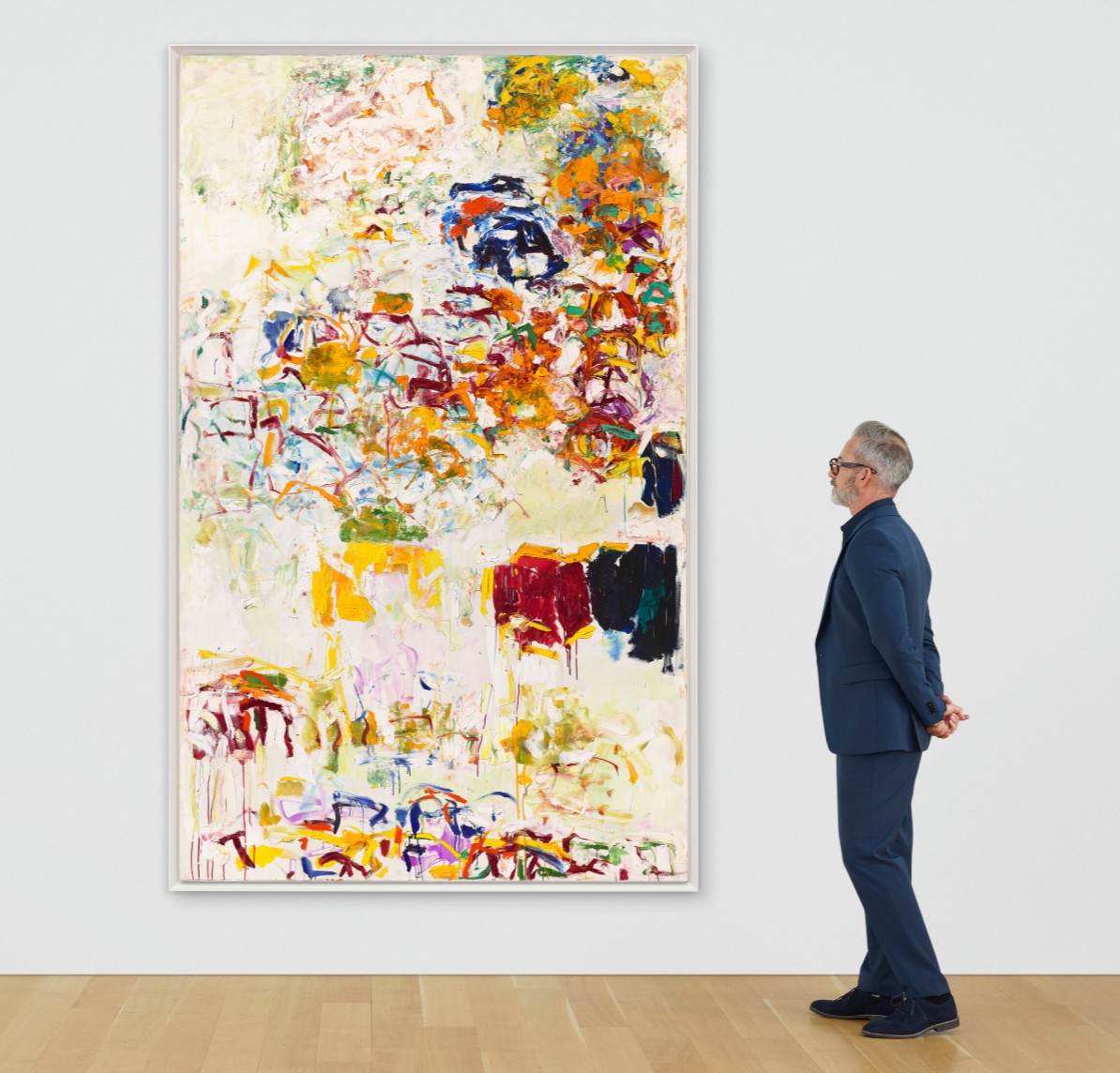
JOAN MITCHELL (1925-1992)
Sunflower V, 1969
Oil on canvas
102 1/2 x 63 inches (260.4 x 160 cm)
Signed ‘J. Mitchell’ (lower right)
#2. Untitled, 1957-1958
Estimated: USD 10,000,000 – 15,o00,000
USD 14,290,000
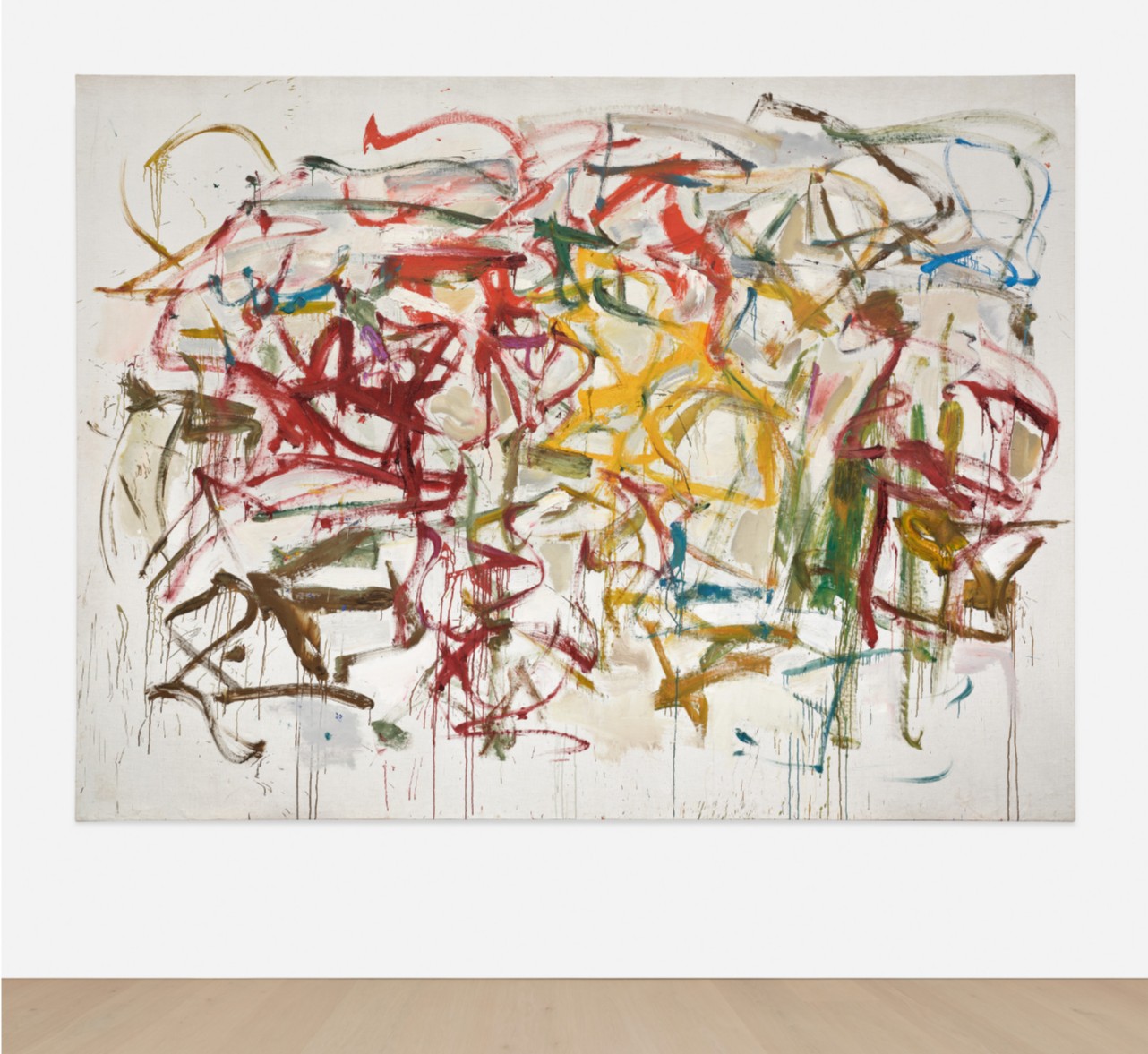
Untitled, 1957-1958
Oil on canvas
81 1/4 x 108 1/2 inched (206.4 x 275.6 cm)
USD 10 million
#3. Untitled, 1985
Sotheby’s New-York: 26 February 2025
Estimated: USD 3,000,000 – 5,000,000
USD 3,954,000
Untitled | Contemporary Curated | 2025 | Sotheby’s
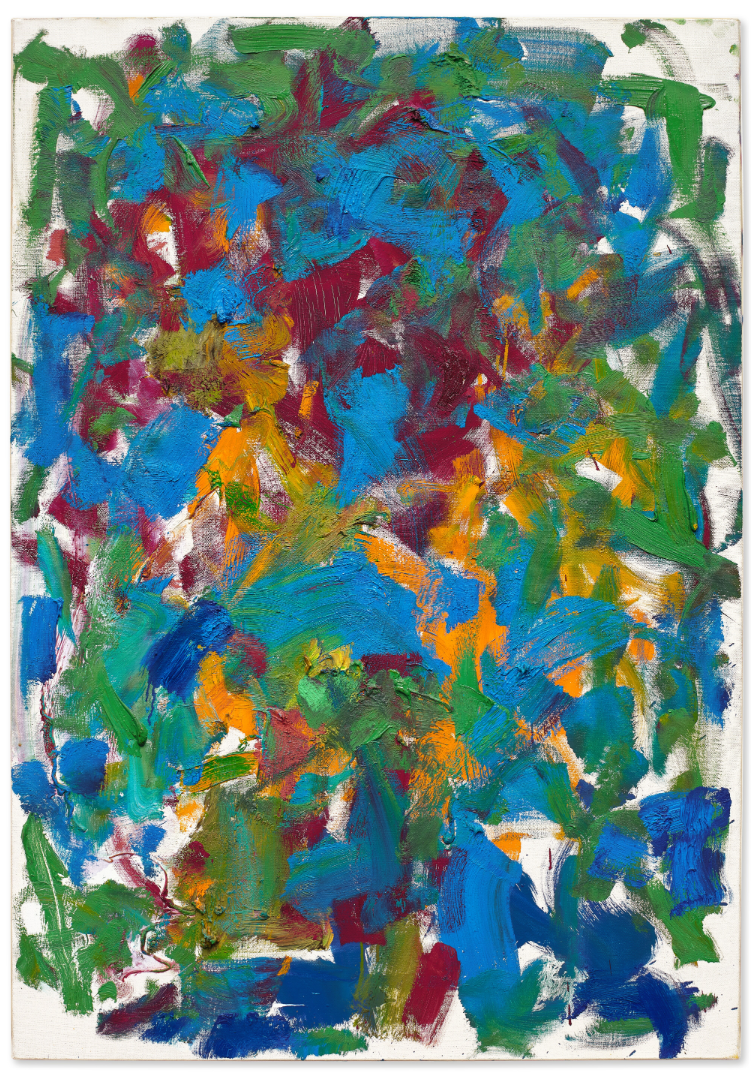
JOAN MITCHELL (1925 – 1992)
Untitled, 1985
Oil on canvas
45 5/8 x 31 7/8 inches (116×81 cm)
#4. Canada II, 1975
Phillips London: 6 March 2025
Estimated: GBP 3,000,000 – 5,000,000
GBP 2,710,000 / USD 3,468,800
Joan Mitchell – Modern & Contemporary A… Lot 9 March 2025 | Phillips
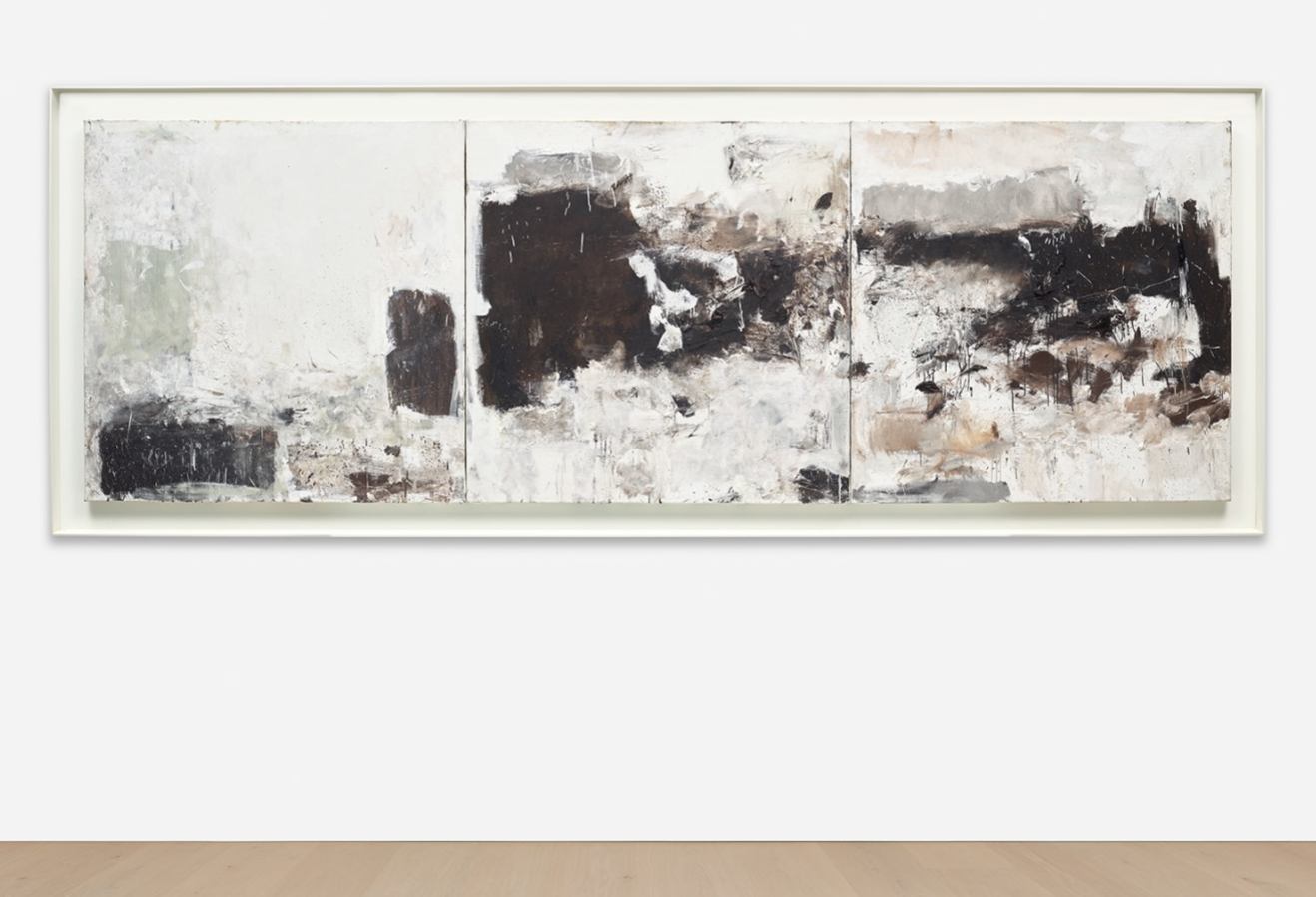
JOAN MITCHELL
Canada II, 1975
Oil on canvas, triptych
Overall 100 x 300.4 cm (39 3/8 x 118 1/4 in.)
Signed ‘Joan Mitchell’ lower right of the third part
#5. Petit Matin, 1982
Christie’s New-York: 15 May 2025
Estimated: USD 2,500,000 – 3,500,000
USD 3,075,000
JOAN MITCHELL (1925-1992), Petit Matin | Christie’s
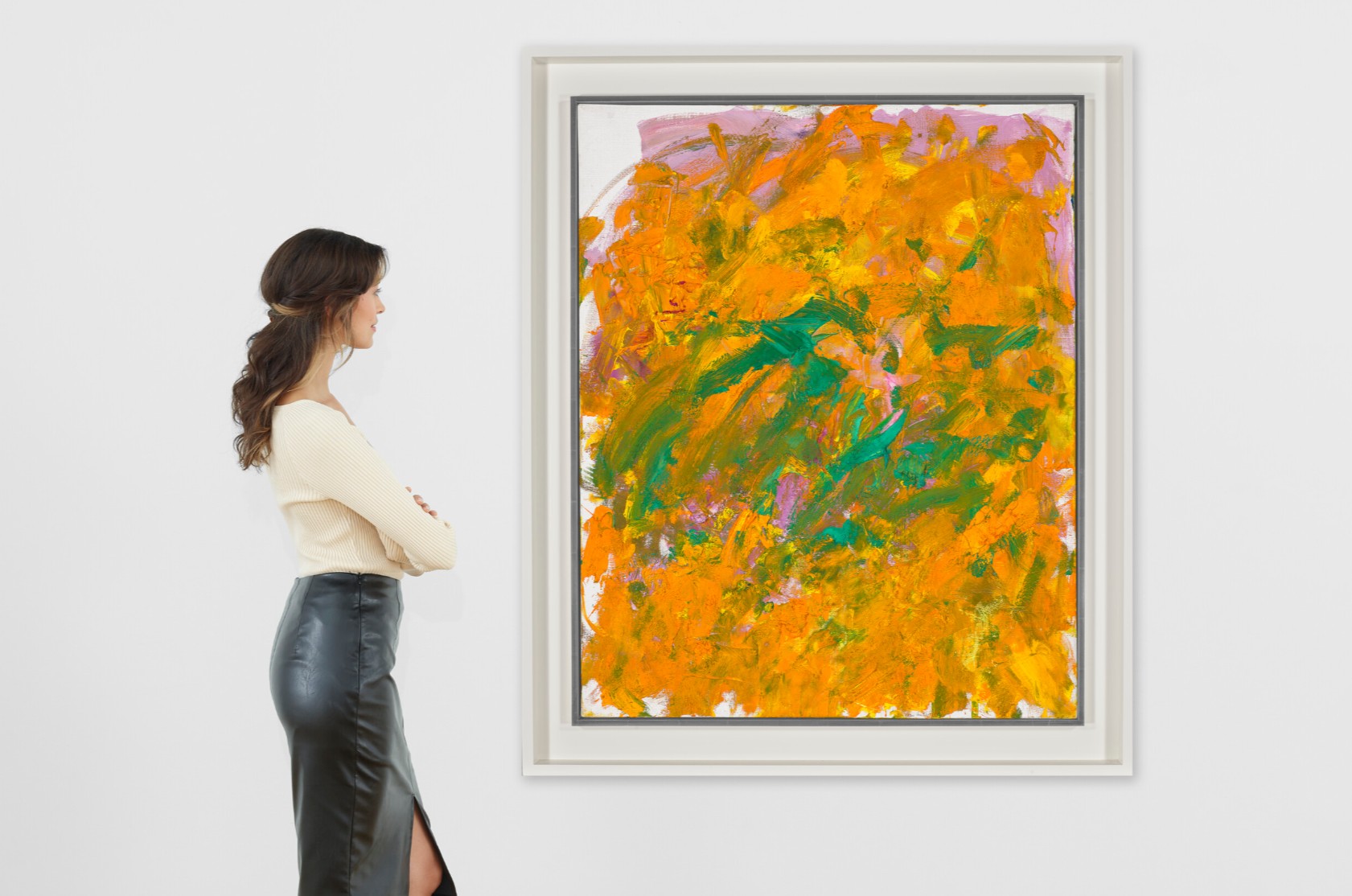
JOAN MITCHELL (1925-1992)
Petit Matin, 1982
Oil on canvas
100×80 cm (39 1/4 x 31 3/4 inches)
Signed ‘Joan Mitchell’ (lower right)
#6. Untitled, 1978-1979
American Visionaries: Property from an Important Private Collection
Christie’s New-York: 20 November 2025
Estimated: USD 2,000,000 – 3,000,000
USD 2,759,000
JOAN MITCHELL (1925-1992), Untitled | Christie’s
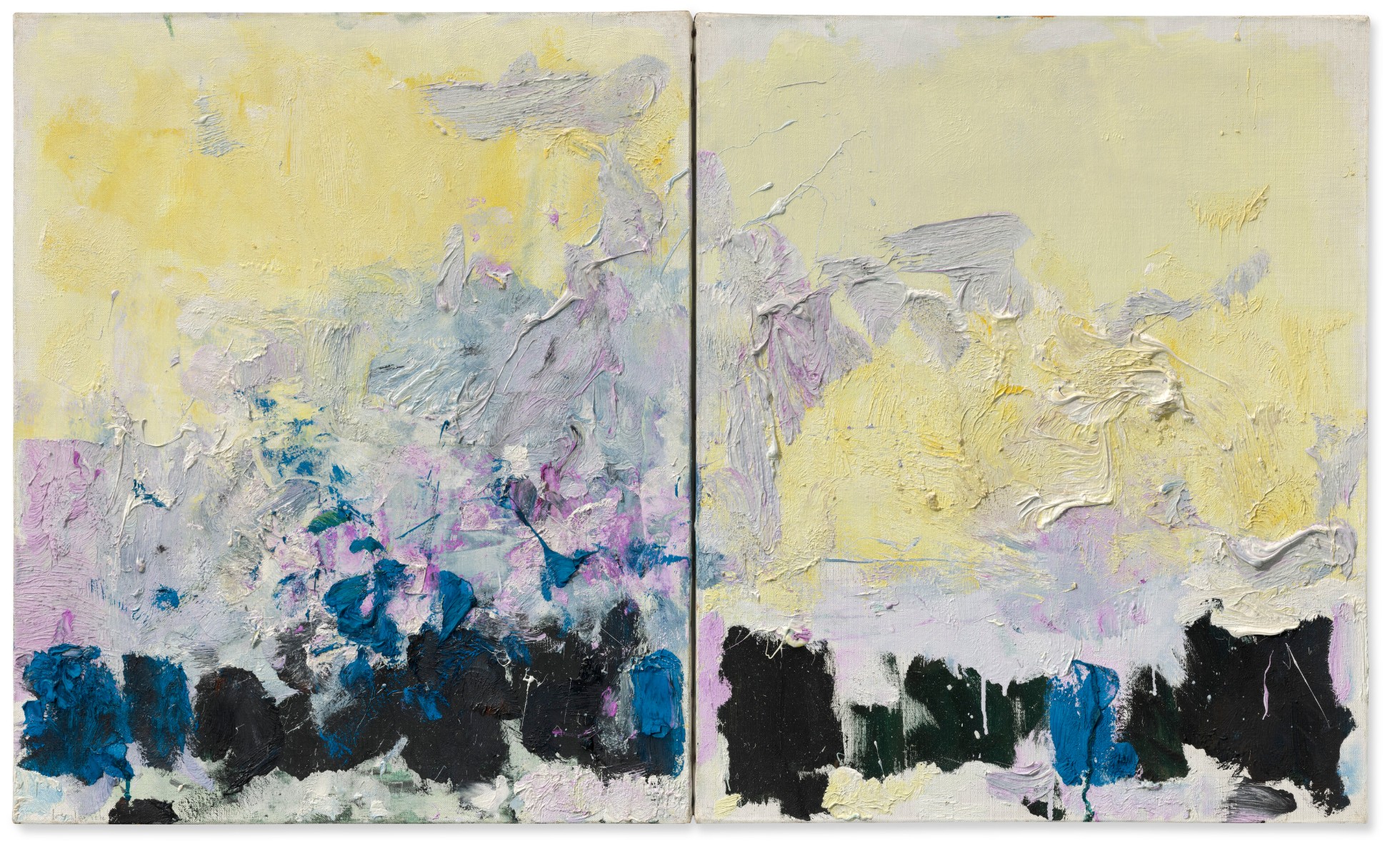
JOAN MITCHELL (1925-1992)
Untitled, 1978-1979
Diptych—oil on canvas
Overall: 25 5/8 x 42 7/8 inches (65.1 x 108.9 cm)(2)
Signed ‘Joan Mitchell’ (lower left)
Signed again twice and dedicated ‘Pour Philippe Piguet Joan Mitchell Joan Mitchell’ (on the stretcher)
Signed again ‘Mitchell’ (on the reverse)
#7. Peinture II, 1964
Joie de Vivre: Works from the Collection of Vivian Fusillo
Christie’s New-York: 30 September 2025
Estimated: USD 2,500,000 – 3,500,000
USD 2,759,000
JOAN MITCHELL (1925-1992), Peinture II | Christie’s
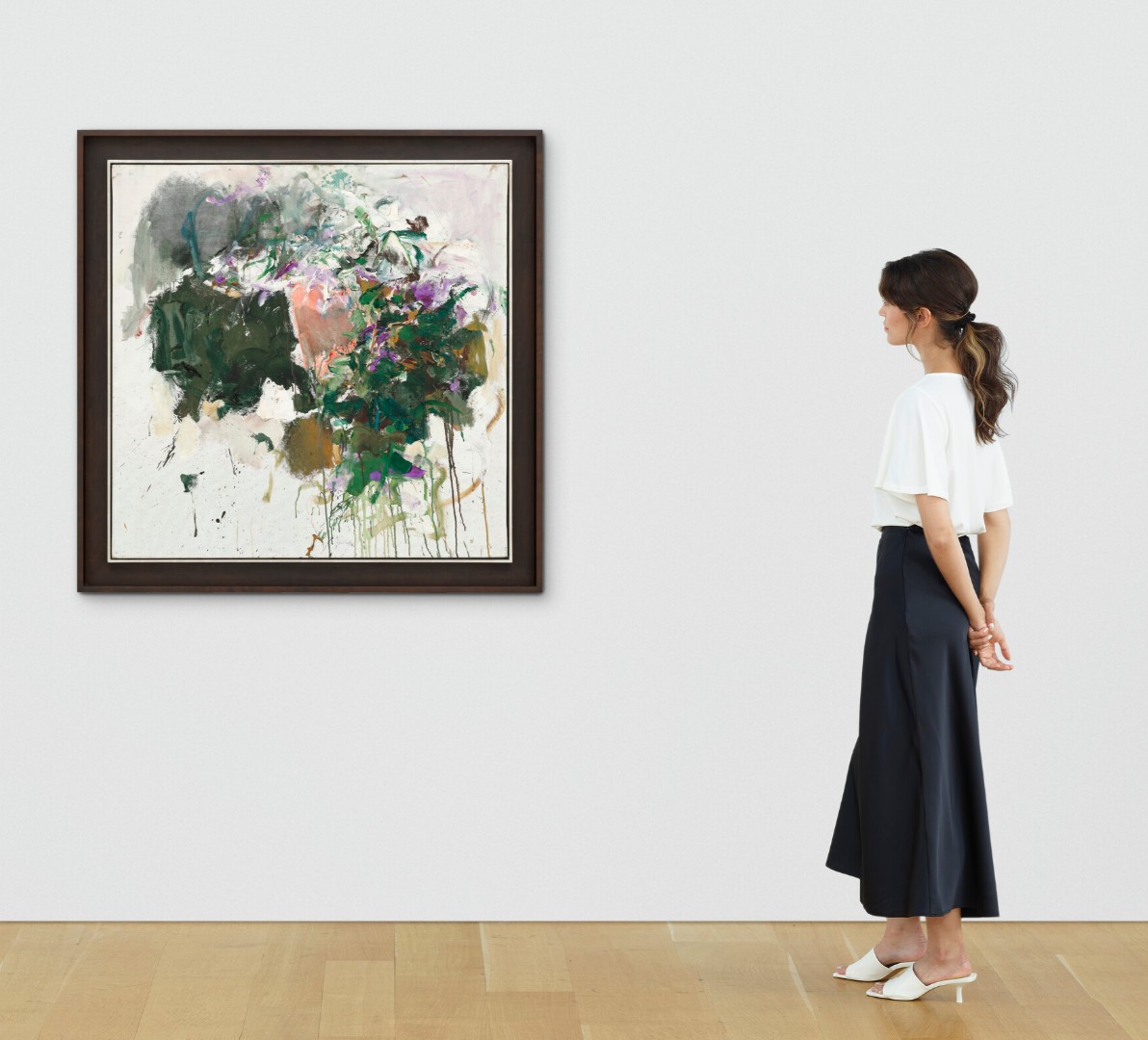
JOAN MITCHELL (1925-1992)
Peinture II, 1964
Oil on canvas
39 1/8 x 39 1/2 inches (99.3 x 100.3 cm)
Signed ‘J. Mitchell’ (lower center)
Signed again, titled and dated ‘JOAN MITCHELL PEINTURE II 1964’ (on the stretcher)
#8. Petit Matin, 1982
Sotheby’s New-York: 16 May 2025
Estimated: USD 1,000,000 – 1,500,000
USD 2,002,000
Petit Matin | Contemporary Day Auction | 2025 | Sotheby’s
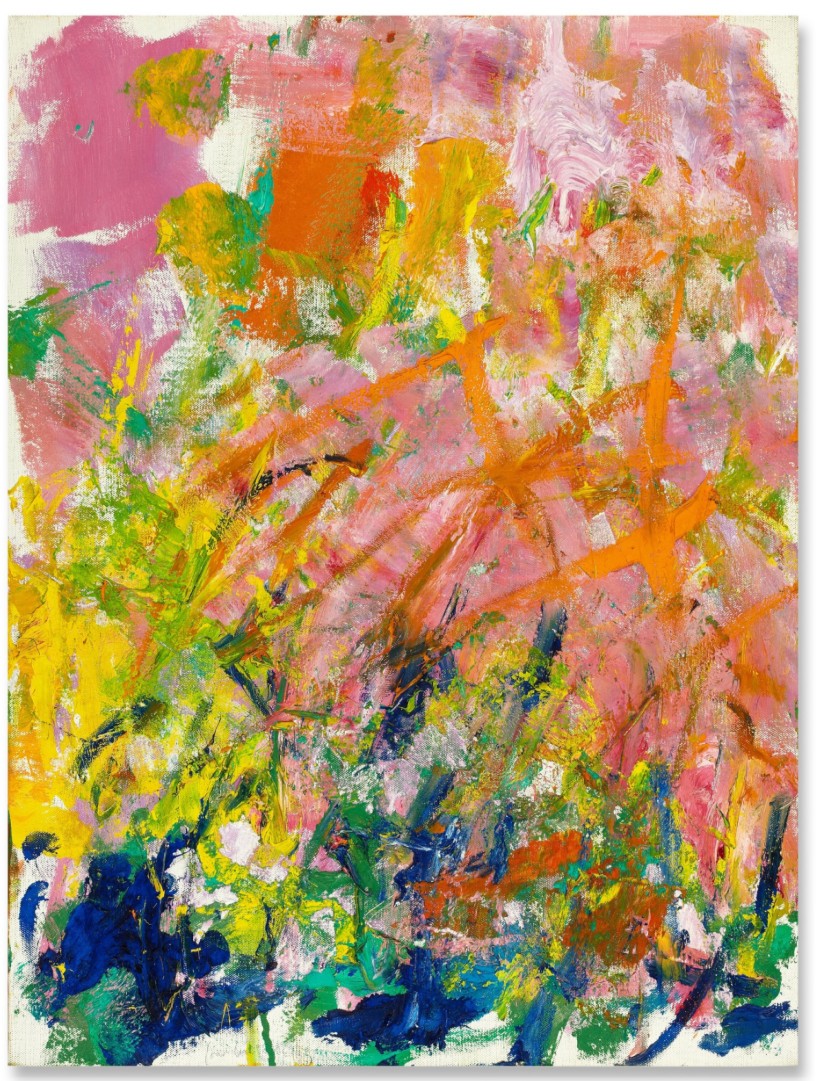
JOAN MITCHELL (1925 – 1992)
Petit Matin, 1982
Oil on canvas
24×18 inches (61 x 45.7 cm)
Signed (lower left)
#9. Untitled, 1965
Center Stage: The Collection of Jacquelyn Littlefield
Sotheby’s New-York: 26 September 2025
Estimated: USD 1,000,000 – 1,500,000
USD 1,636,000
Untitled | Contemporary Curated | 2025 | Sotheby’s
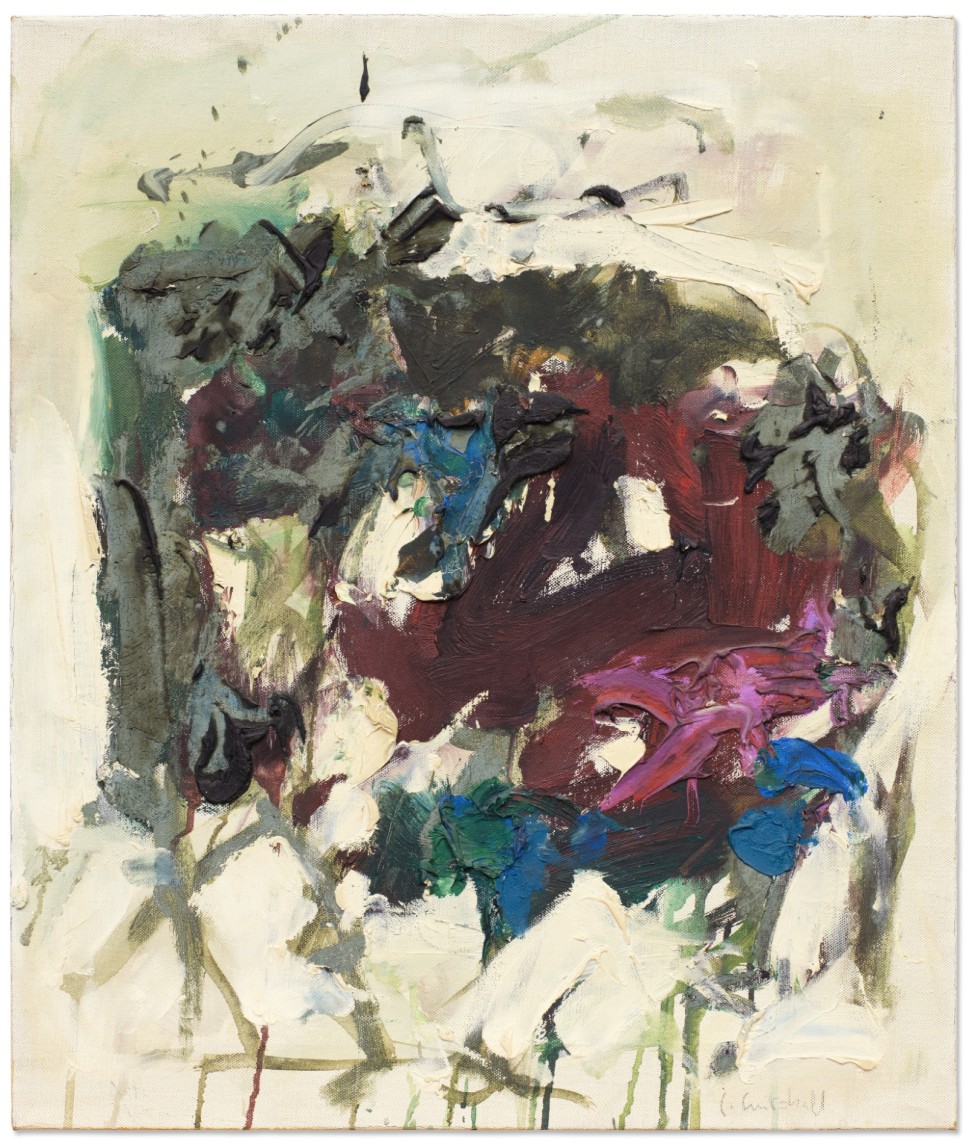
JOAN MITCHELL (1925 – 1992)
Untitled, 1965
Oil on canvas
20×17 inches (50.8 x 43.2 cm)
Signed (lower right)
#10. Sans titre, 1956
Christie’s Paris: 23 October 2025
Estimated: EUR 700,000 – 1,000,000
EUR 1,206,500 / USD 1,400,410
Joan Mitchell (1925-1992), Sans titre | Christie’s
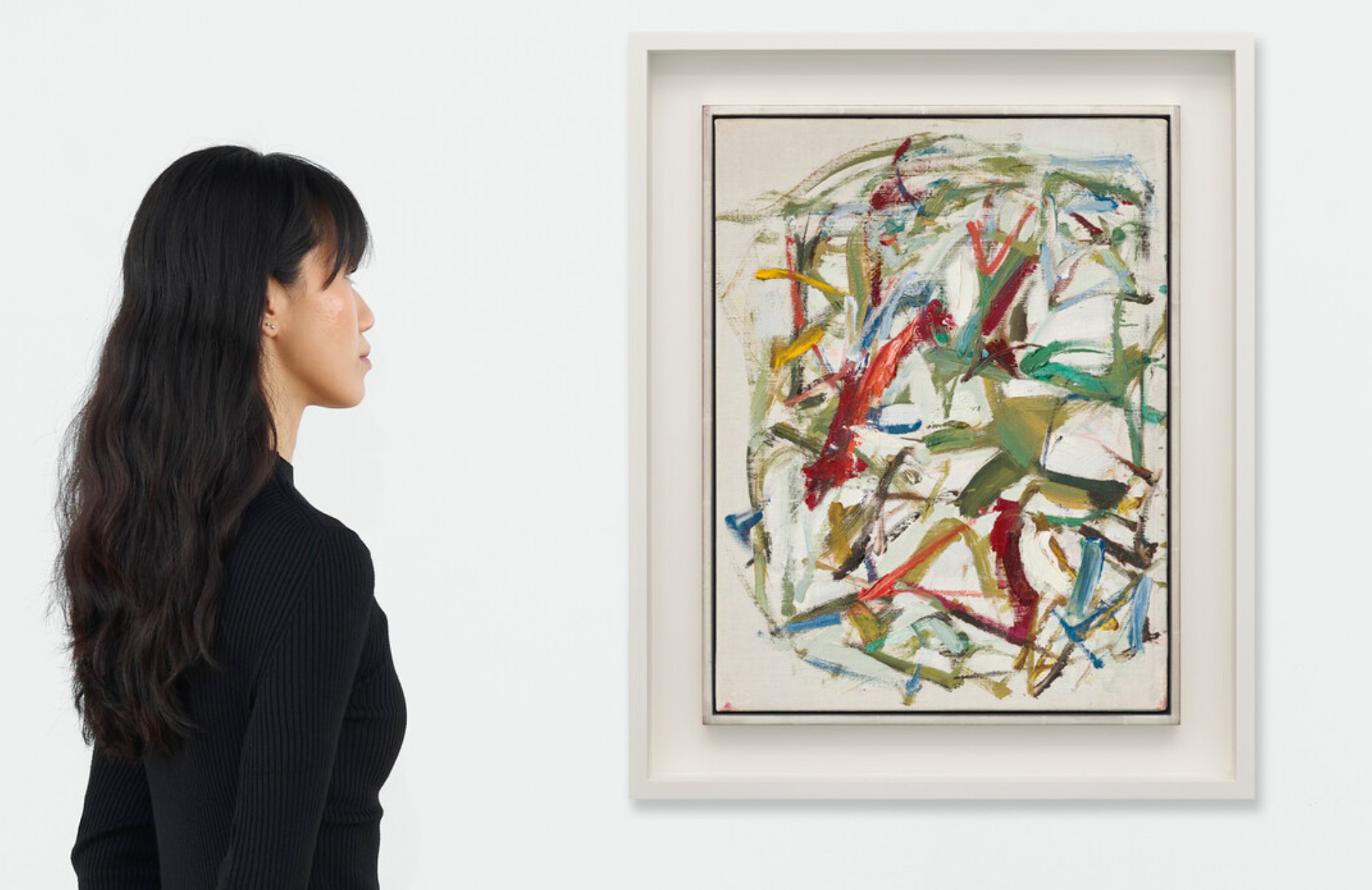
JOAN MITCHELL (1925-1992)
Sans titre, 1956
Oil on canvas
23 1/2 x 17 5/8 inches (59.6 x 44.7 cm)
#11. Series July 25 (V), 1966
Christie’s New-York: 14 May 2025
Estimated: USD 500,000 – 700,000
USD 1,320,700
JOAN MITCHELL (1925-1992), Series July 25 (V) | Christie’s
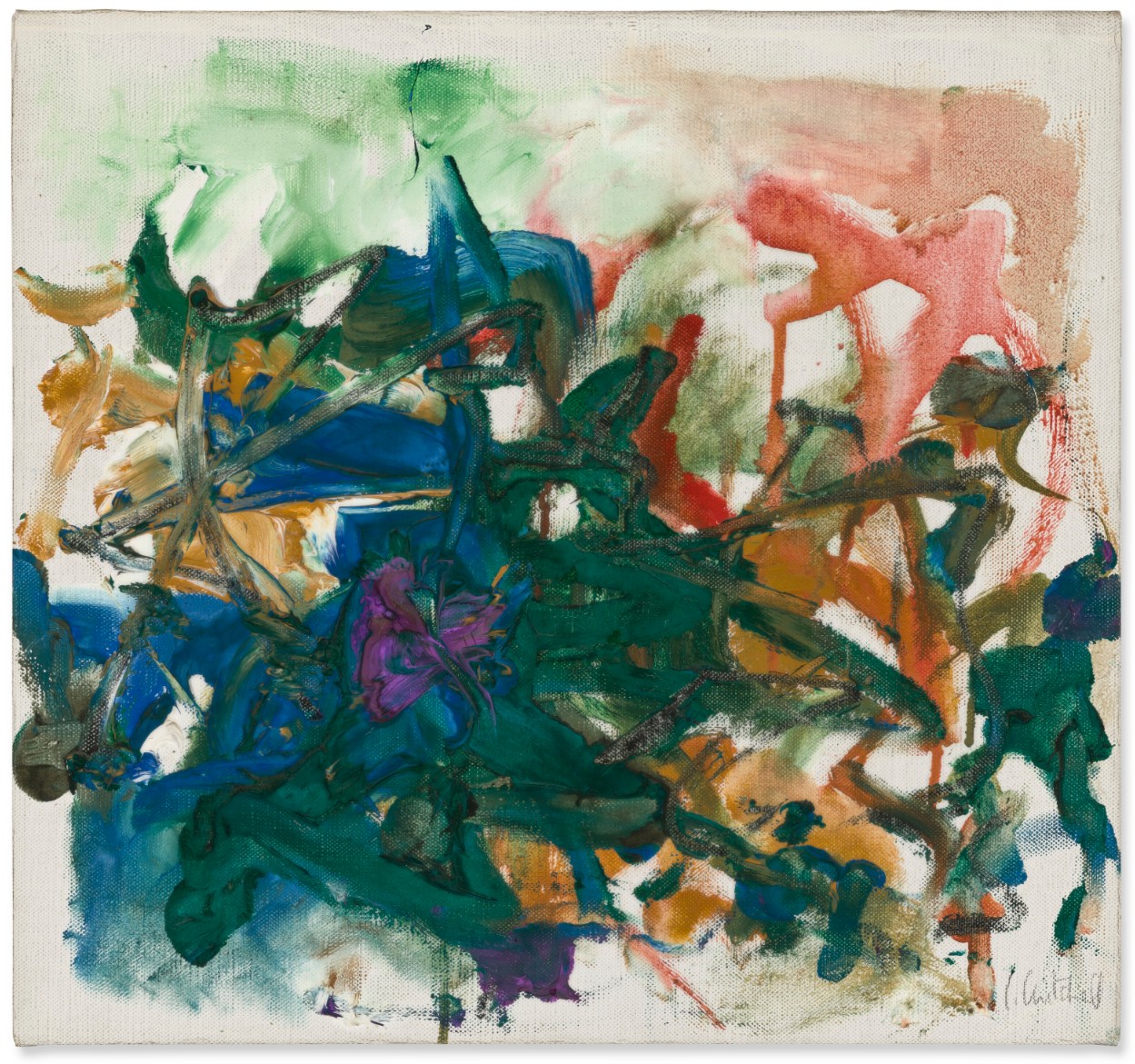
JOAN MITCHELL (1925-1992)
Series July 25 (V), 1966
Oil on canvas
13×14 inches (33 x 35.5 cm)
Signed ‘J. Mitchell’ (lower right)
USD 1 million
#12. Untitled, 1950
Sotheby’s New-York: 16 May 2025
Estimated: USD 600,000 – 800,000
USD 635,000
Untitled | Contemporary Day Auction | 2025 | Sotheby’s
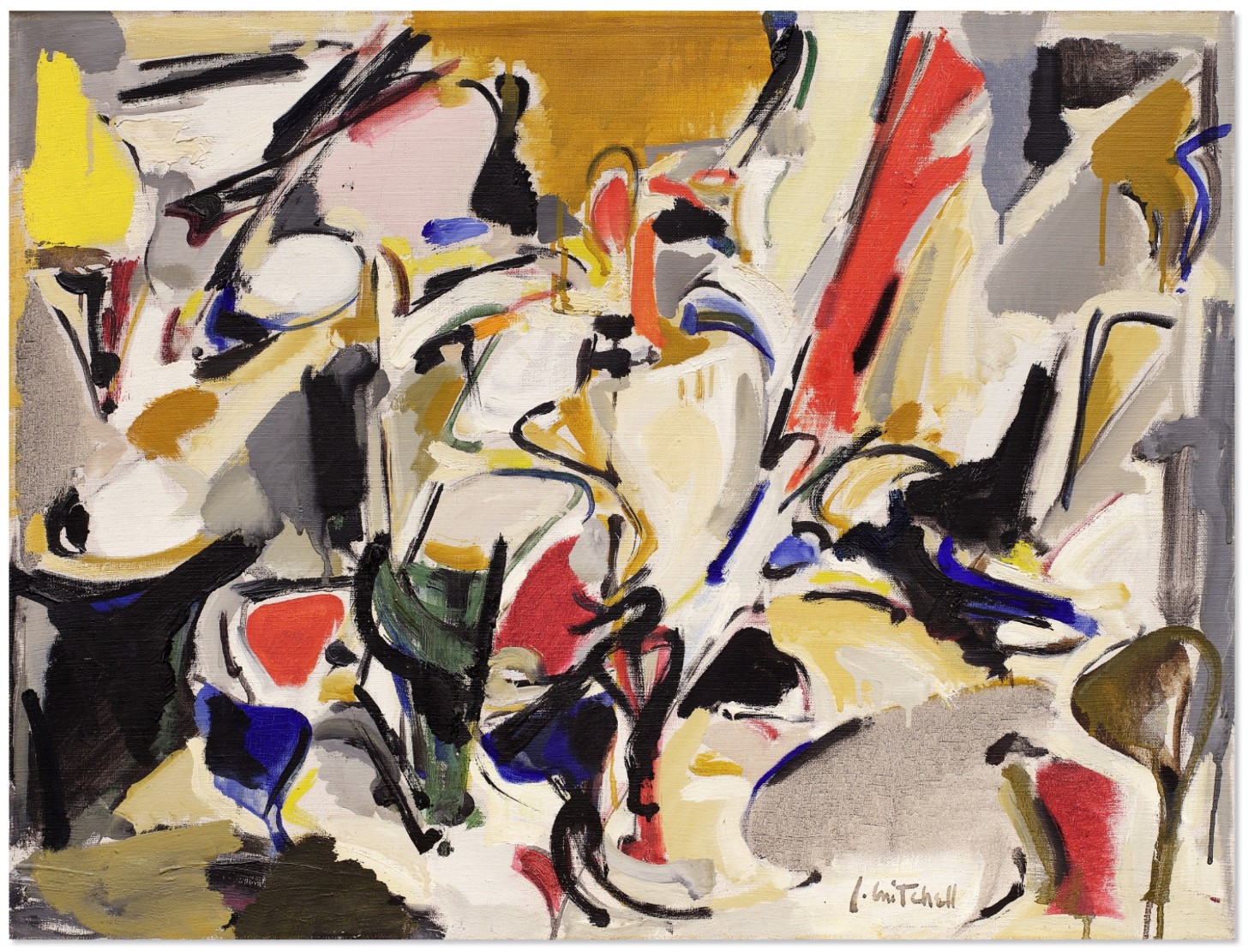
JOAN MITCHELL (1925 – 1992)
Untitled, 1950
Oil on canvas
18×24 inches (45.7 x 61 cm)
Signed (lower right)
#13. Untitled (Triptych), circa 1976
Sotheby’s New-York: 16 May 2025
Estimated: USD 500,000 – 700,000
USD 571,500
Untitled (Triptych) | Contemporary Day Auction | 2025 | Sotheby’s
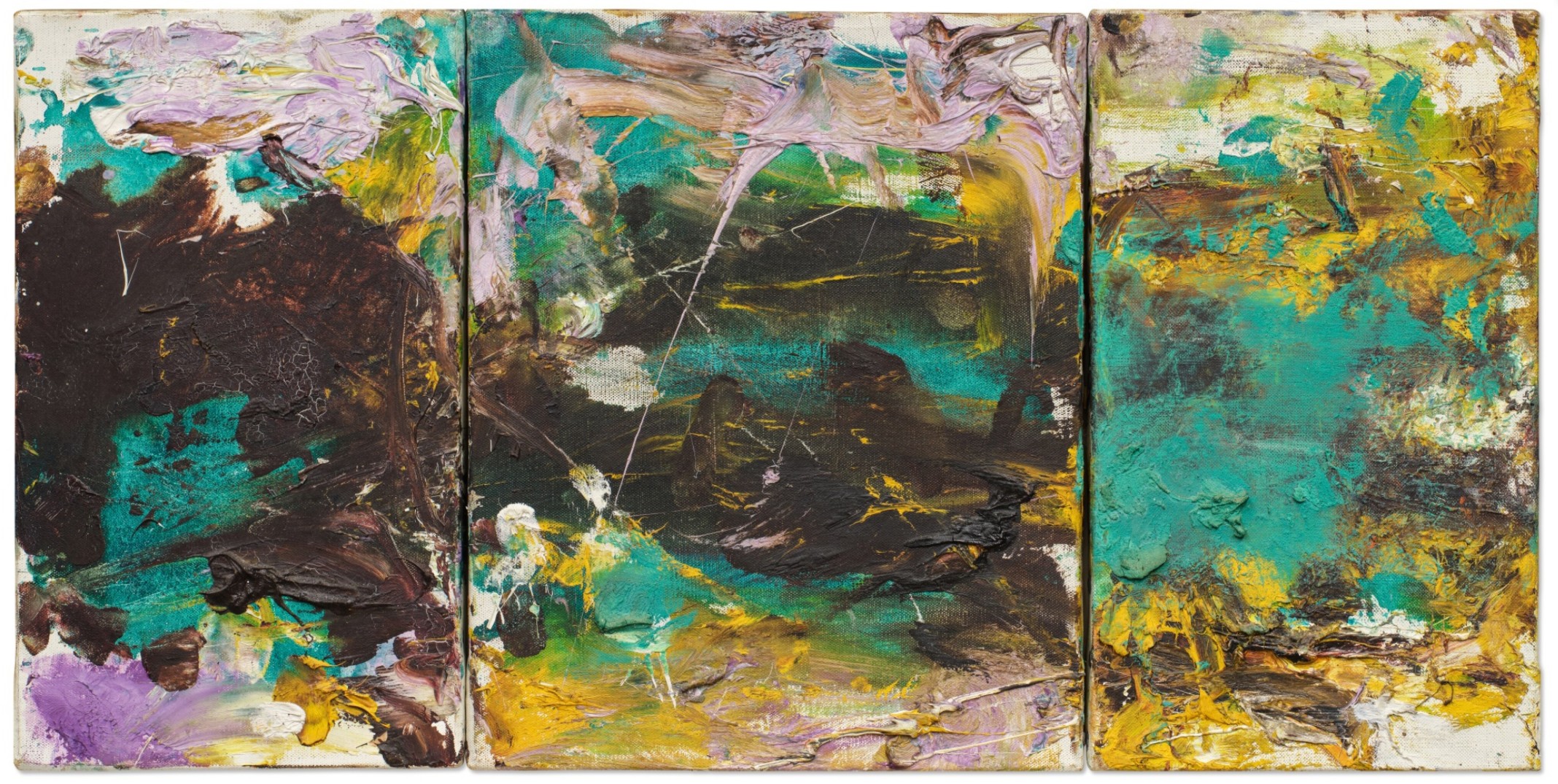
JOAN MITCHELL (1925 – 1992)
Untitled (Triptych), circa 1976
Oil on 3 canvases
Overall: 10 3/4 x 21 3/4 inches (27.3 x 55.2 cm)
“I paint from a distance. I decide what I am going to do from a distance. The freedom in my work is quite controlled. I don’t close my eyes and hope for the best. If I can get into the act of painting, and be free in the act, then I want to know what my brush is doing.”
#14. Untitled, circa 1975-1980
Sotheby’s New-York: 26 September 2025
Estimated: USD 400,000 – 600,000
USD 558,800
Untitled | Contemporary Curated | 2025 | Sotheby’s
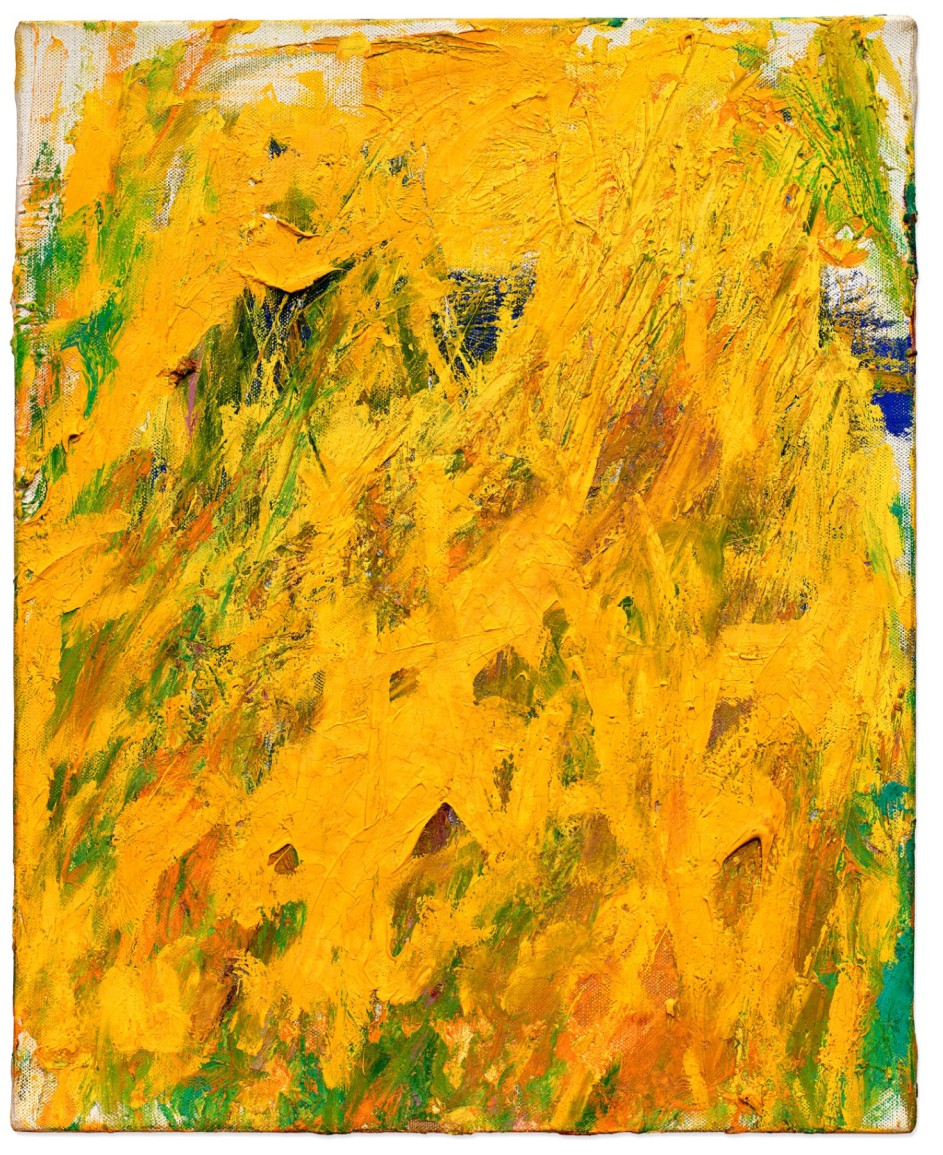
JOAN MITCHELL (1925 – 1992)
Untitled, circa 1975-1980
Oil on canvas
16×13 inches (40.6 x 33 cm)
Signed (on the stretcher)
#15. Untitled, 1991
Property from a Private New Jersey Collection
Christie’s New-York: 20 November 2025
Estimated: USD 400,000 – 600,000
USD 508,000
JOAN MITCHELL (1925-1992), Untitled | Christie’s
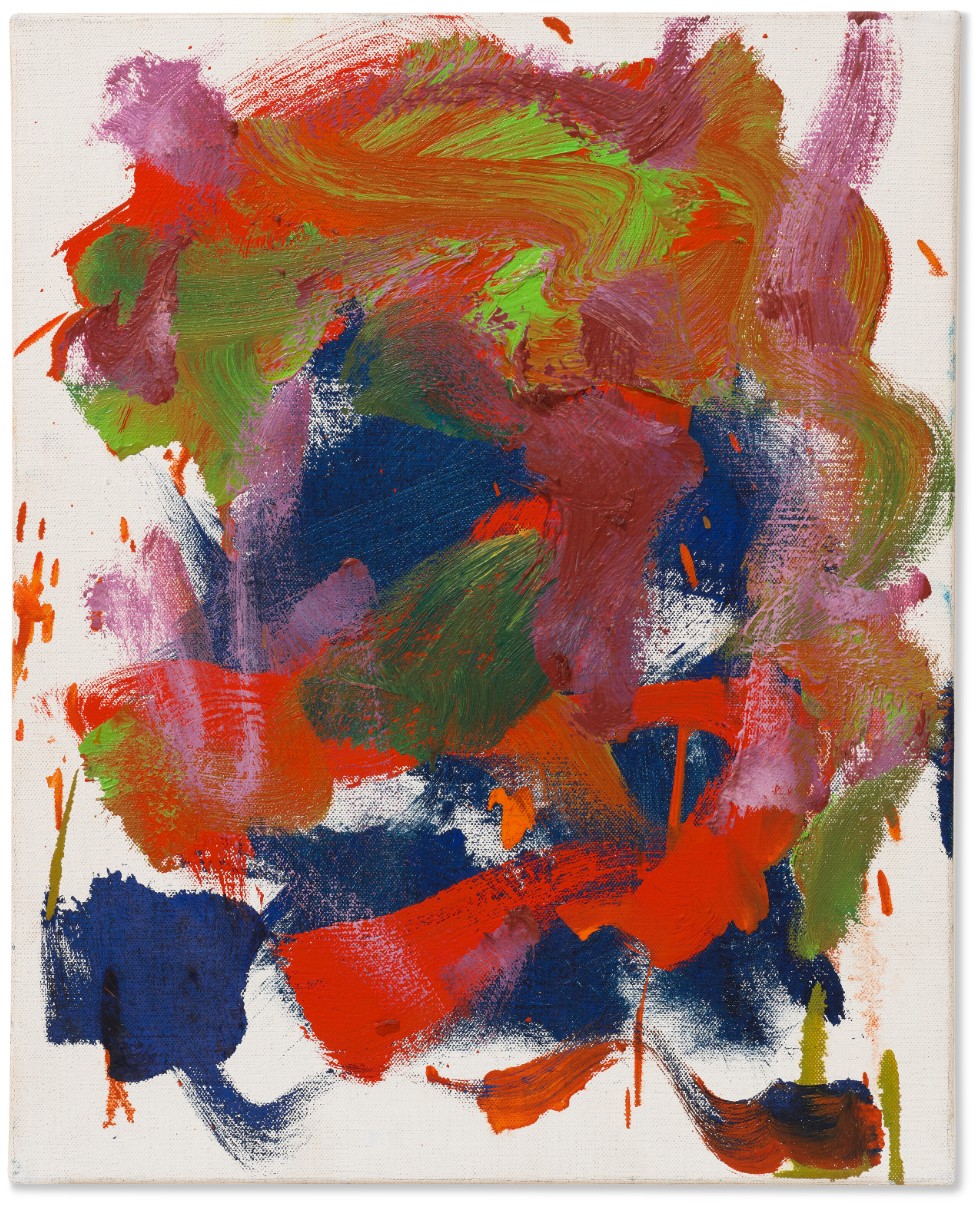
JOAN MITCHELL (1925-1992)
Untitled, 1991
Oil on canvas
16 1/4 x 13 1/8 inches (41.3 x 33.3 cm)
#16. Untitled, circa 1949
Sotheby’s New-York: 26 February 2025
Estimated: USD 200,000 – 300,000
USD 228,600
Untitled | Contemporary Curated | 2025 | Sotheby’s
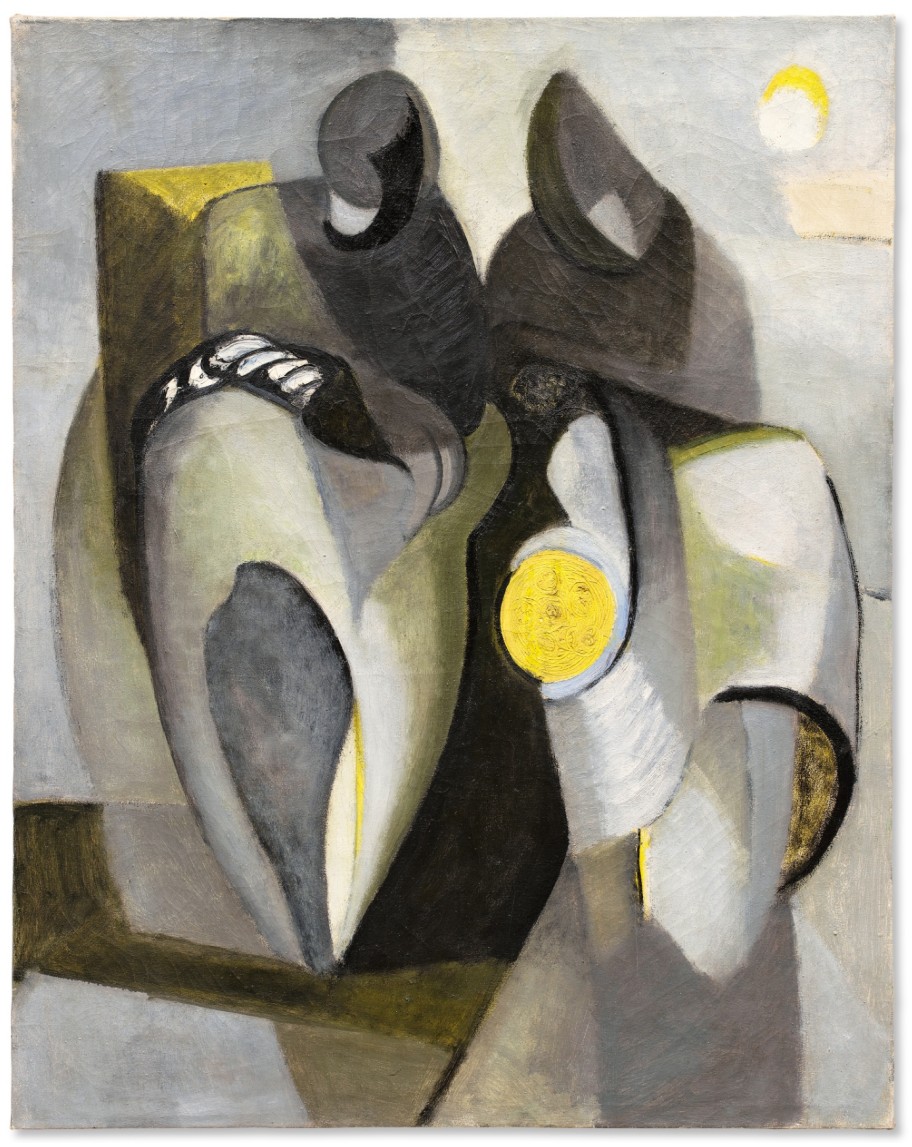
JOAN MITCHELL (1925 – 1992)
Untitled, circa 1949
Oil on canvas
47 x 37 1/4 inches (119.4 x 94.6 cm)
Lots Passed
Untitled, 1975
Property from a European Private Collection
Sotheby’s Paris: 24 October 2025
Estimated: EUR 4,000,000 – 6,000,000
PASSED
Untitled | Modernités | 2025 | Sotheby’s
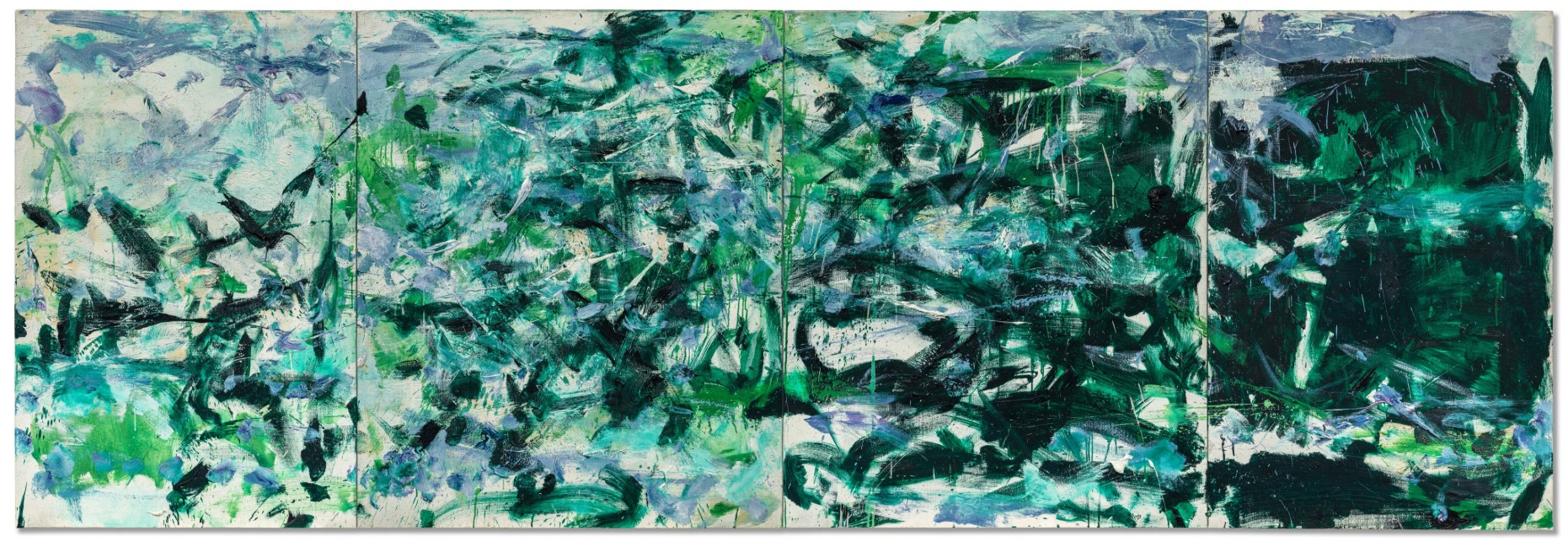
JOAN MITCHELL (1925 – 1992)
Untitled, 1975
Oil on canvas, in four parts
Overall dimensions: 100×292 cm (39 3/8 x 115 inches)
Panel 1 and 4 : 100x 5 cm (39 3/8 x 25 5/8 inches)
Panel 2 and 3 : 100×81 cm (39 3/8 x 31 7/8 inches)
2024 Auction Results
FOR PAINTINGS ONLY
17 lots sold at auction in 2024 for a total turnover of USD 99,992,855. With 1 lot failing to sell, the sell-through rate is 94.4%. The highest price has been achieved at Sotheby’s in New-York, on 13 May 2024, when Noon, a painting dated circa 1969, sold for USD 22,615,400.
2024 Top 3 Lots
12 lots sold for more than USD 1 million, generating a cumulative turnover of USD 96,460,280, representing 96.5% of the total for 2024.
XXXXXXXXXX
#1. Noon, circa 1969
Sotheby’s New-York: 13 May 2024
Estimated: USD 15,000,000 – 20,000,000
USD 22,615,400
Noon | Contemporary Evening Auction | 2024 | Sotheby’s (sothebys.com)
JOAN MITCHELL (1925 – 1992)
Noon, circa 1969
Oil on canvas
102×79 inches (259.1 x 200.7 cm)
Signed (lower left); signed and titled (on the reverse)
#2. City Landscape, 1955
Christie’s New-York: 19 November 2024
Estimated: USD 15,000,000 – 20,000,000
USD 17,085,000
JOAN MITCHELL (1925-1992), City Landscape | Christie’s
JOAN MITCHELL (1925-1992)
City Landscape, 1955
Oil on canvas
64 1/2 x 73 1/2 inches (163.8 x 186.7 cm)
Signed ‘J. Mitchell’ (lower right)
#3. Chord X, 1987
Christie’s New-York: 16 May 2024
Estimated: USD 10,000,000 – 15,000,000
USD 13,060,000
JOAN MITCHELL (1925-1992), Chord X | Christie’s (christies.com)

JOAN MITCHELL (1925-1992)
Chord X, 1987
Oil on canvas
102 ½ x 78 5/8 inches (260.4 x 199.7 cm)
Signed ‘Joan Mitchell’ (lower right)
#4. Ground, 1989
Sotheby’s New-York: 13 May 2024
Estimated: USD 12,000,000 – 18,000,000
USD 10,101,000
Ground | Contemporary Evening Auction | 2024 | Sotheby’s (sothebys.com)
GUARANTEED

JOAN MITCHELL (1925 – 1992)
Ground, 1989
Oil on canvas, in two parts
Overall: 86 5/8 x 155 1/2 inches (220×395 cm)
Signed (lower right)
#5. Untitled, circa 1955
Estimated: USD 8,000,000 – 12,000,000
USD 10,101,000

JOAN MITCHELL (1925 – 1992)
Untitled, circa 1955
Oil on canvas
55 x 73 3/4 inches (139.7 x 187.3 cm)
Signed (lower right)
USD 10 million
#6. Untitled, 1955
Christie’s New-York: 19 November 2024
Estimated: USD 9,000,000 – 12,000,000
USD 9,380,000
JOAN MITCHELL (1925-1992), Untitled | Christie’s
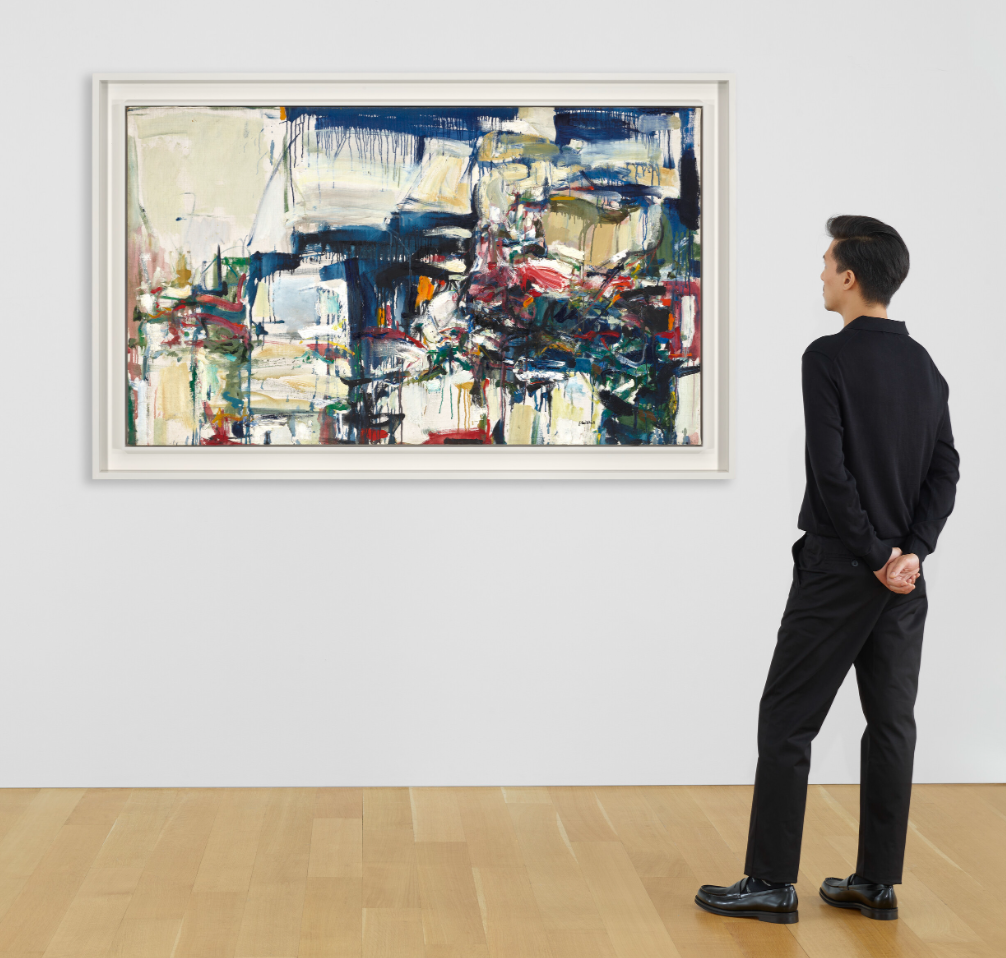
JOAN MITCHELL (1925-1992)
Untitled, 1955
Oil on canvas
37×63 inches (94×160 cm)
Signed ‘J. Mitchell’ (lower right)
#7. Untitled, circa 1960
Christie’s Paris: 18 October 2024
Estimated: EUR 3,200,000 – 5,000,000
EUR 4,275,000 / USD 4,629,540
Joan Mitchell (1925-1992), Sans titre | Christie’s
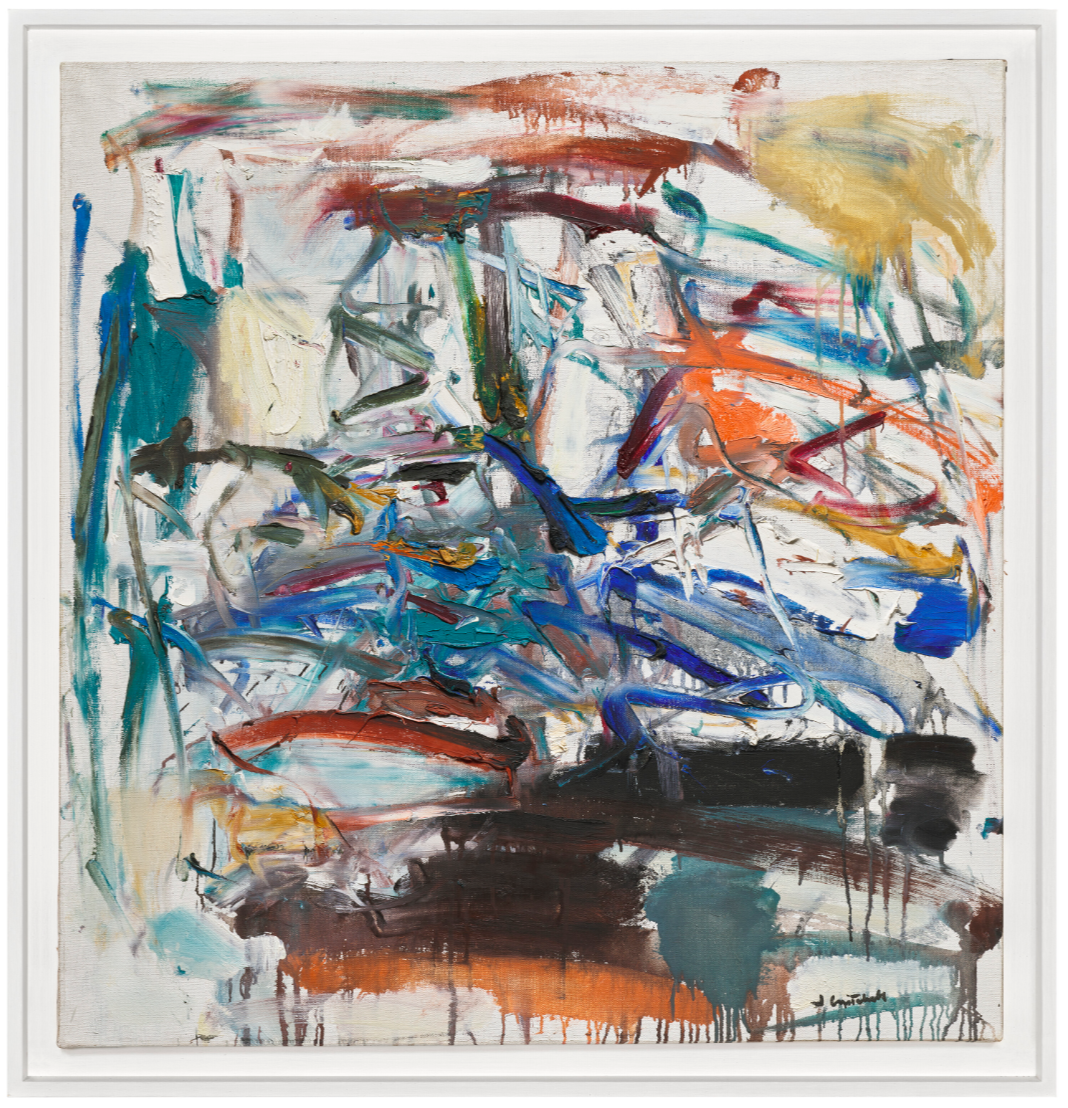
JOAN MITCHELL (1925-1992)
Untitled, circa 1960
Oil on canvas
37 3/8 x 35 5/8 inches (95 x 90.6 cm)
Signed ”J. mitchell’ (lower right)
#8. Untitled, circa 1973
Sotheby’s New-York: 13 May 2024
Estimated: USD 1,000,000 – 1,500,000
USD 2,380,000
Untitled | Contemporary Evening Auction | 2024 | Sotheby’s
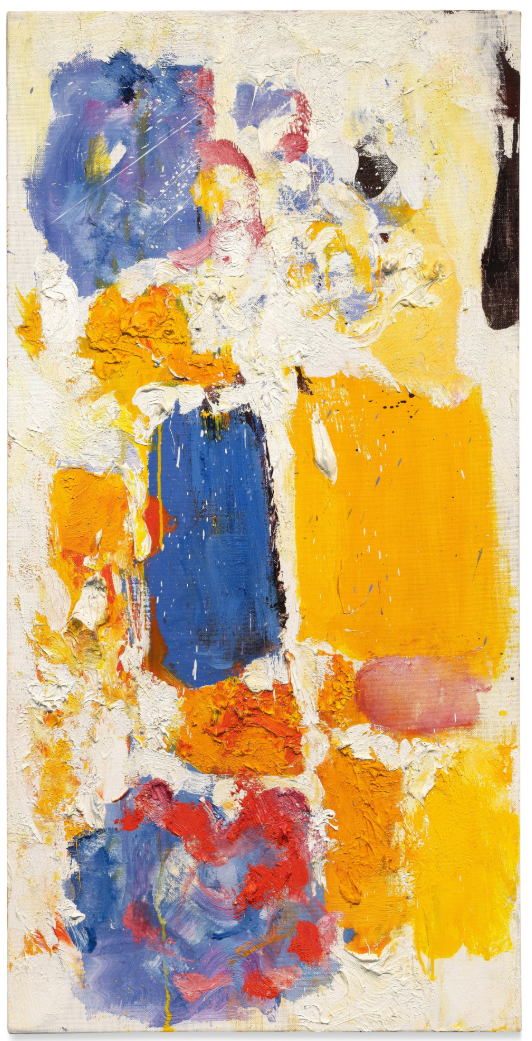
JOAN MITCHELL (1925 – 1992)
Untitled, circa 1973
Oil on canvas
31 1/2 x 15 3/4 inches (80×40 cm)
#9. Champs, 1990
Christie’s Paris: 12 December 2024
Estimated: EUR 600,000 – 800,000
EUR 2,097,000 / USD 2,203,475
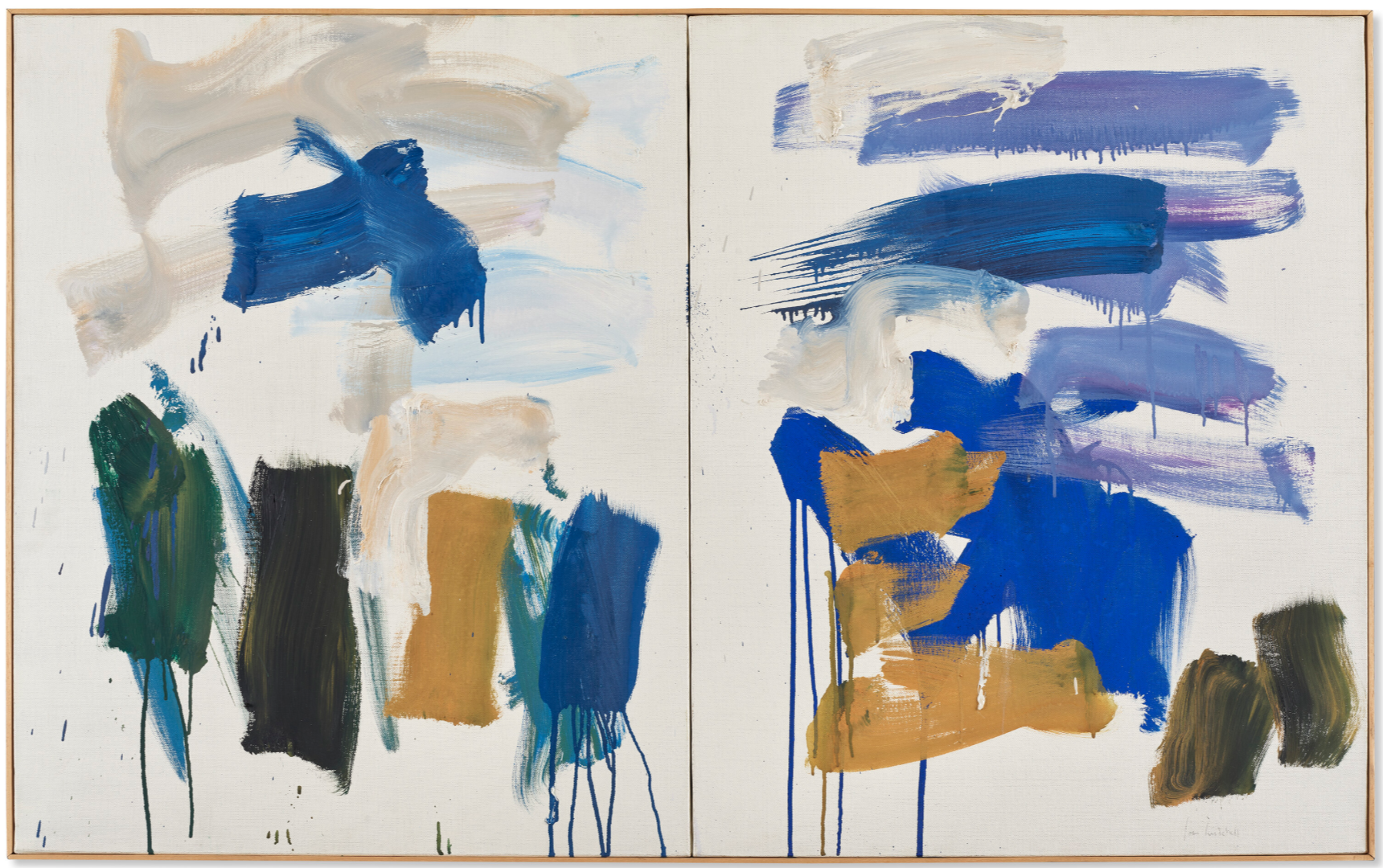
JOAN MITCHELL (1925-1992)
Champs, 1990
Oil on canvas – diptych
31 3/4 x 51 3/8 inches (80.8 x 130.5 cm)
Signed ‘Joan Mitchell’ (lower right)
#10. Untitled, 1956
Christie’s Paris: 12 December 2024
Estimated: EUR 1,500,000 – 2,000,000
EUR 1,855,000 / USD 1,949,185
Joan Mitchell (1925-1992), Sans titre | Christie’s
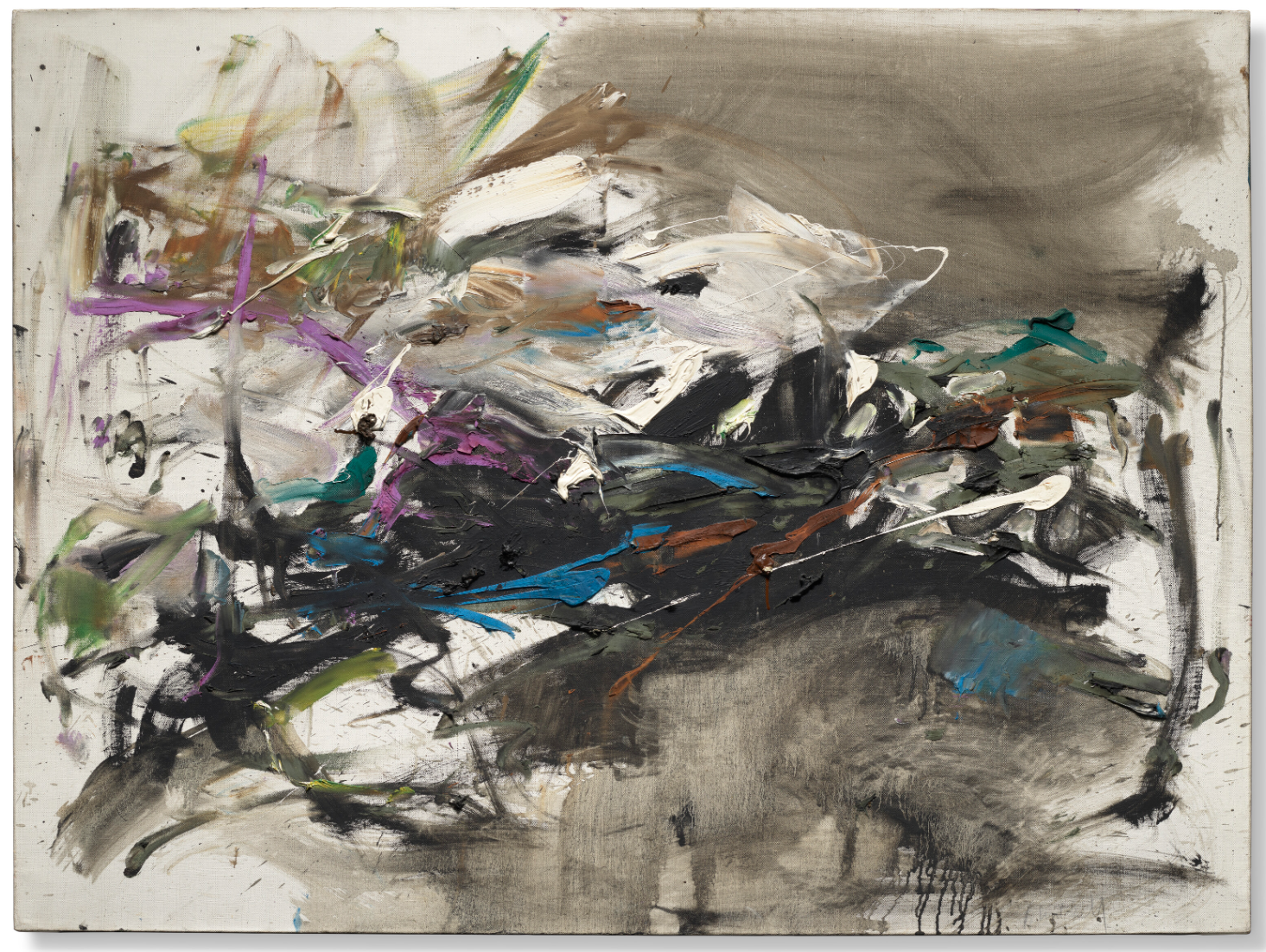
JOAN MITCHELL (1925-1992)
Untitled, 1956
Oil on canvas
38 1/4 x 51 1/8 inches (97×130 cm)
Signed ‘J. Mitchell’ (lower right); dedicated ‘Pour Jean’ (on the reverse)
#11. Untitled, 1987
Christie’s Paris: 12 December 2024
Estimated: EUR 600,000 – 800,000
EUR 1,431,500 / USD 1,504,180
Joan Mitchell (1925-1992), Sans titre | Christie’s
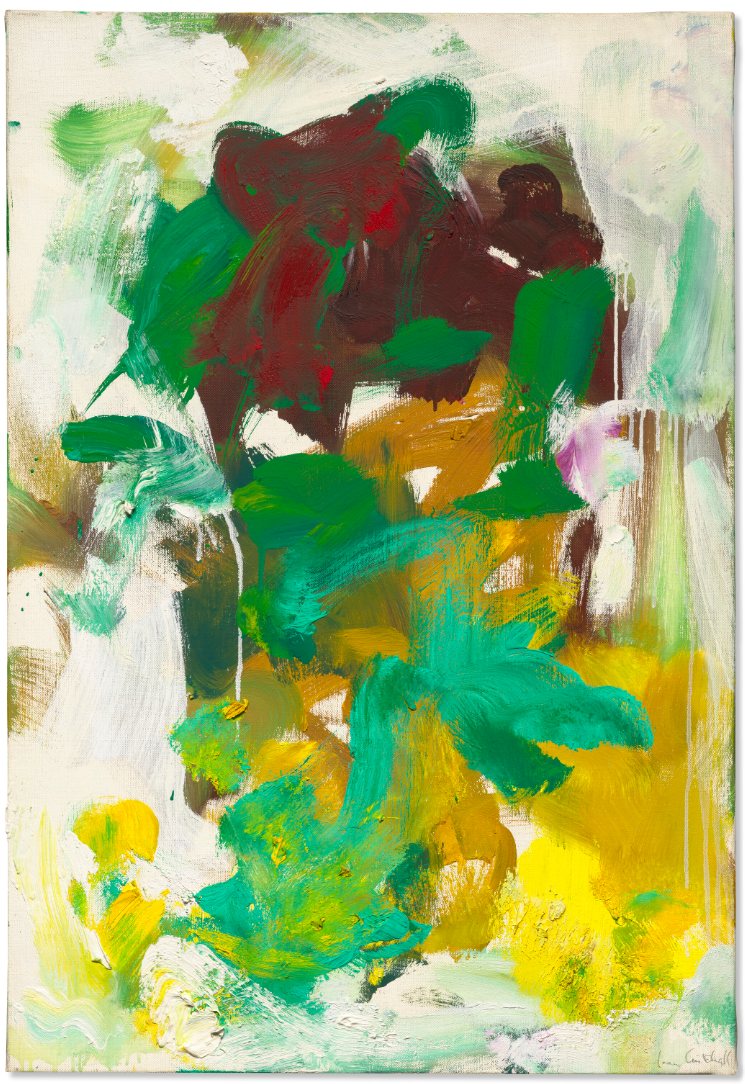
JOAN MITCHELL (1925-1992)
Untitled, 1987
Oil on canvas
28 3/4 x 19 3/4 inches (73×50 cm)
Signed ‘Joan Mitchell’ (lower right)
#12. La Plage, 1973
Sotheby’s New-York: 14 May 2024
Estimated: USD 1,000,000 – 1,500,000
USD 1,451,500
La Plage | Contemporary Day Auction | 2024 | Sotheby’s (sothebys.com)

JOAN MITCHELL (1925 – 1992)
La Plage, 1973
Oil on canvas, in 2 parts
Overall: 29 1/2 x 59 1/4 inches (74.9 x 150.5 cm)
USD 1 million
#13. Untitled, circa 1960
Phillips New-York: 19 November 2024
Estimated: USD 900,000 – 1,200,000
USD 990,600
Joan Mitchell – Modern & Contempora… Lot 12 November 2024 | Phillips
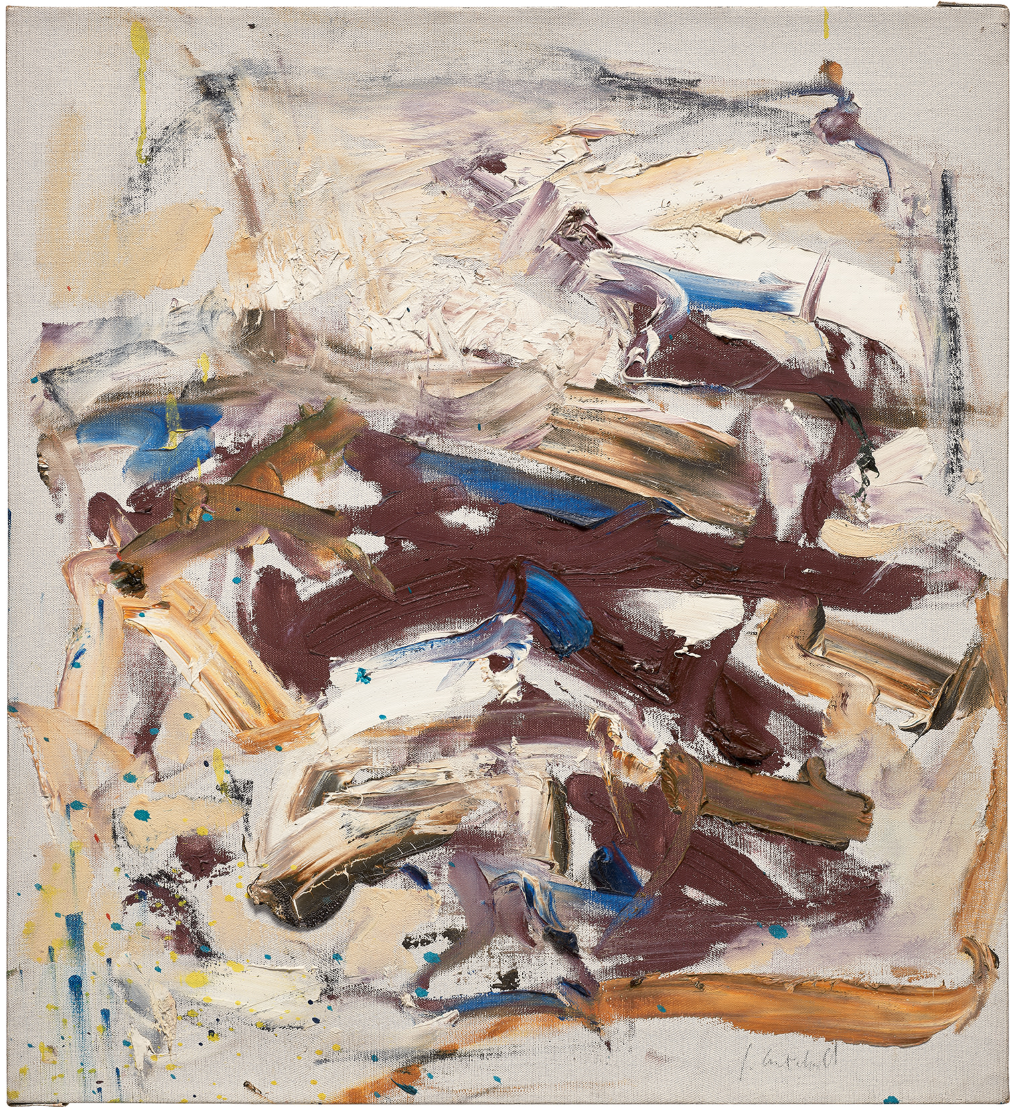
JOAN MITCHELL
Untitled, circa 1960
Oil on canvas
23×21 inches (58.4 x 53.3 cm)
Signed “J. Mitchell” lower right
#14. Untitled, 1959
Christie’s Paris: 7 June 2024
Estimated: EUR 600,000 – 800,000
EUR 730,800 / USD 795,885
Joan Mitchell (1925-1992), Sans titre | Christie’s
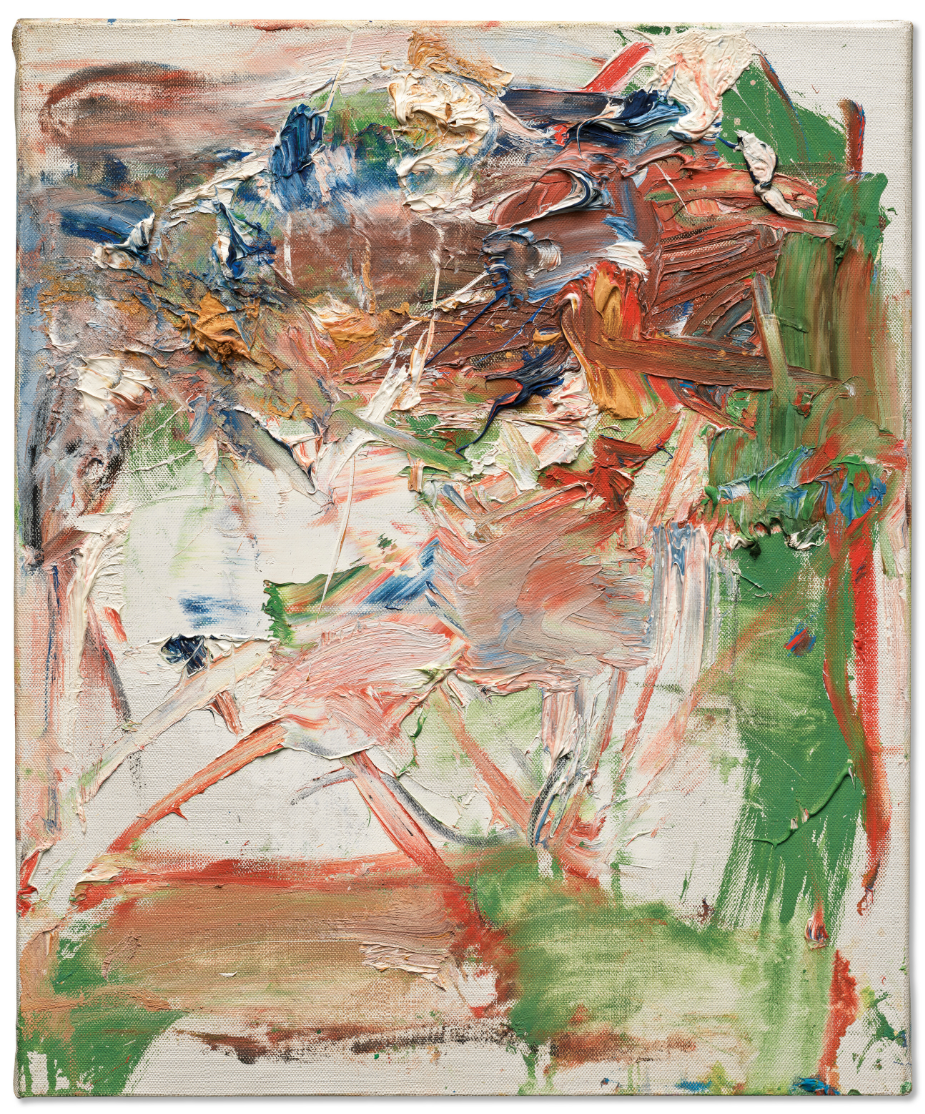
Joan Mitchell (1925-1992)
Untitled, 1959
Oil on canvas
18 1/8 x 15 1/8 inches (46 x 38.5 cm)
Signed and dated ‘mitchell 59’ (on the stretcher)
#15. Composition, circa 1970
Christie’s New-York: 17 May 2024
Estimated: USD 400,000 – 600,000
USD 680,400
JOAN MITCHELL (1925-1992), Composition | Christie’s (christies.com)

JOAN MITCHELL (1925-1992)
Composition, circa 1970
Oil on canvas
13 3/4 x 10 1/2 inches (34.9 x 26.7 cm)
Signed and dedicated ‘To Bellum with all my love & deep thanks love Joan’ (on the stretcher)
#16. Untitled, circa 1975
Phillips New-York: 15 May 2024
Estimated: USD 350,000 – 550,000
USD 584,200
Joan Mitchell – Modern & Contemporary A… Lot 138 May 2024 | Phillips
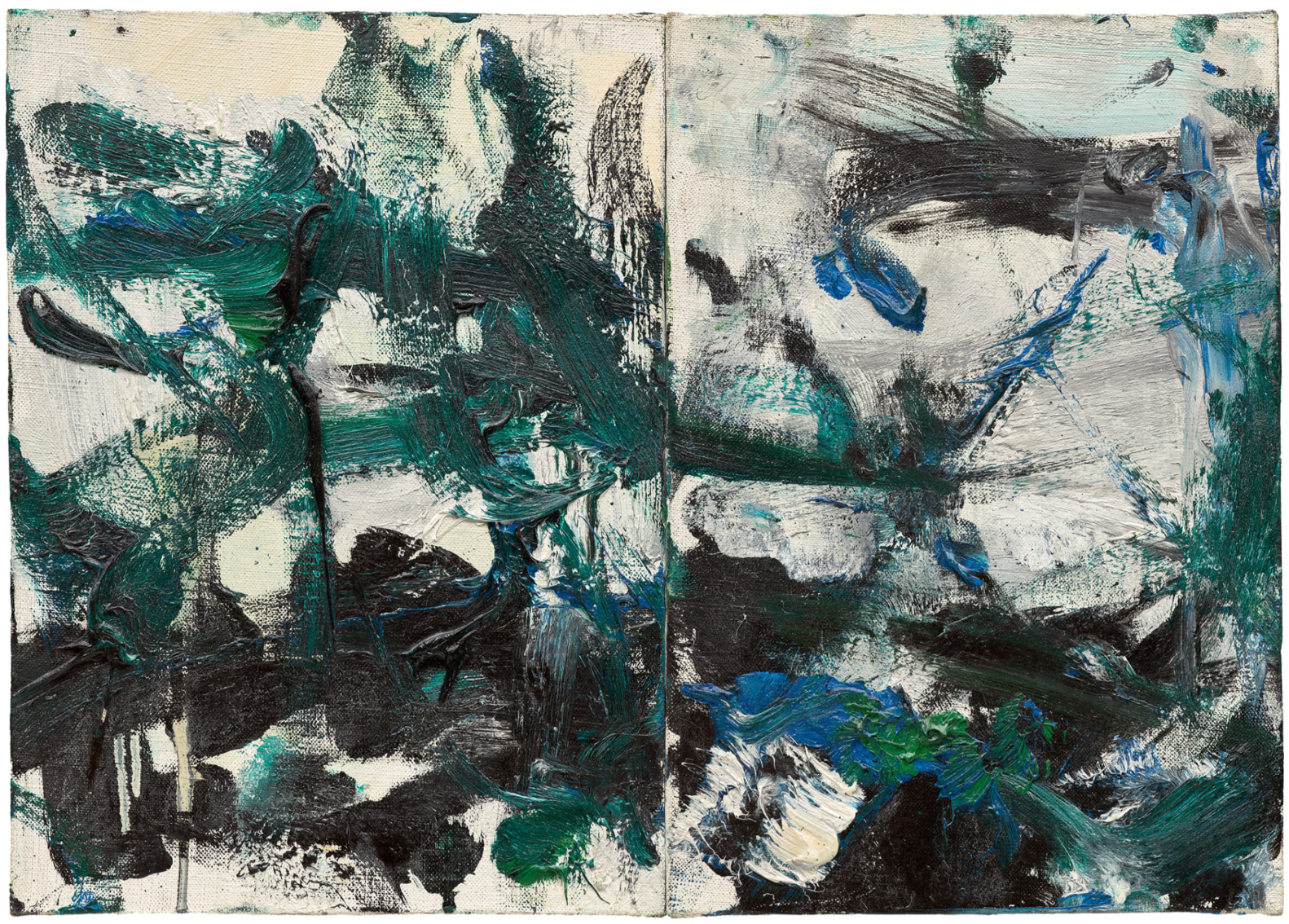
JOAN MITCHELL
Untitled, circa 1975
Oil on canvas, diptych
Left: 13 1/8 x 9 1/2 inches (33.3 x 24.1 cm)
Right: 13 1/8 x 8 3/4 inches (33.3 x 22.2 cm)
Overall: 13 1/8 x 18 3/8 inches (33.3 x 46.7 cm)
#17. Untitled
Artcurial: 28 October 2024
Estimated: EUR 350,000 – 550,000
EUR 472,320 / USD 511,490
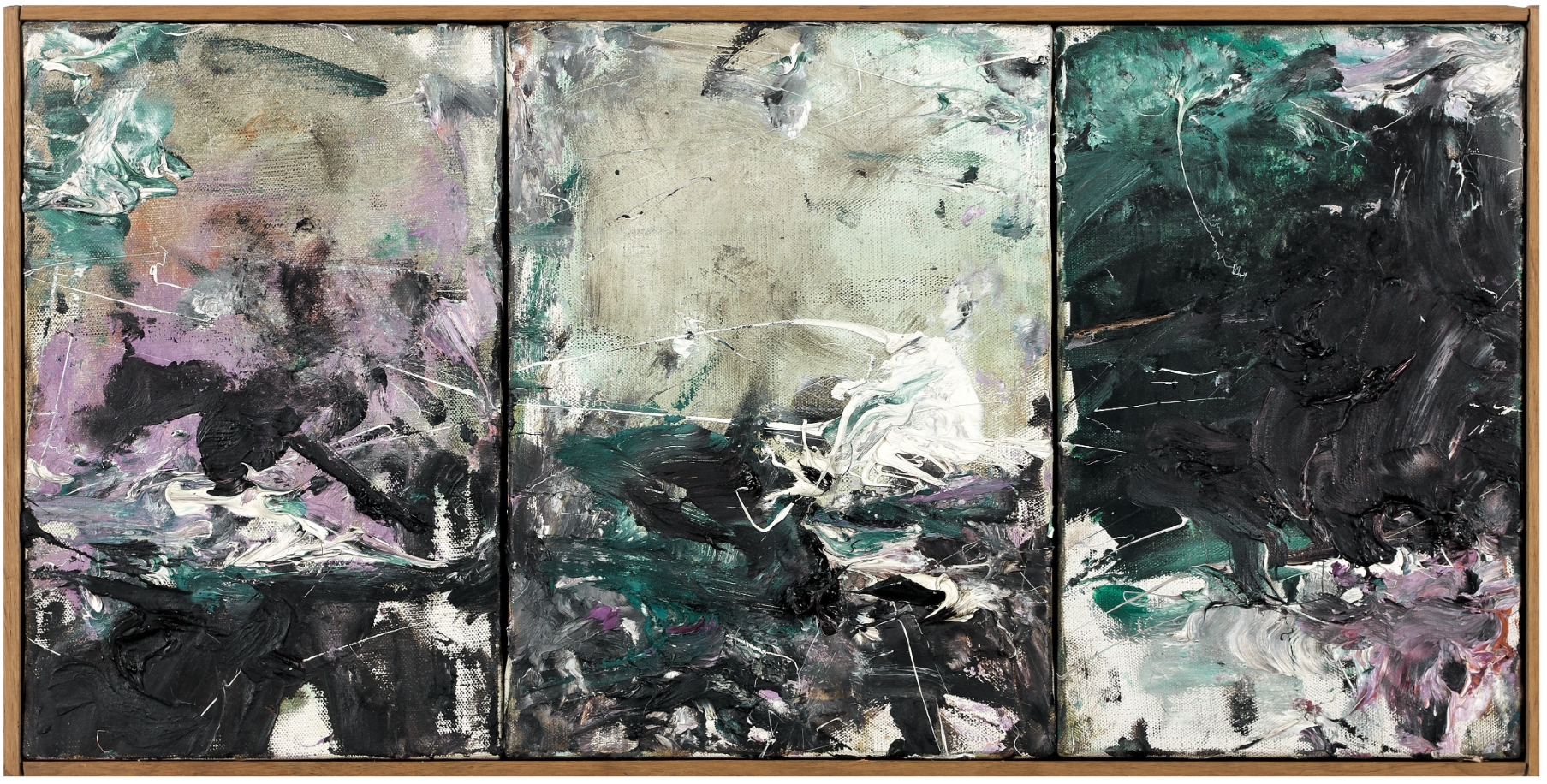
JOAN MITCHELL
Untitled
Oil on canvas (triptych)
8 5/8 x 17 1/2 inches (44.5 x 22 cm)
Signed and dedicated on the reverse on the stretcher
Lots Passed
Crow Hill, 1966
Christie’s New-York: 16 May 2024
Estimated: USD 7,000,000 – 10,000,000
PASSED
JOAN MITCHELL (1925-1992), Crow Hill | Christie’s (christies.com)

JOAN MITCHELL (1925-1992)
Crow Hill, 1966
Oil on canvas
76 3/4 x 51 inches (195 x 129.5 cm)
Signed ‘Mitchell’ (on the reverse)
2023 Auction Results
18 lots sold at auction in 2023 for a total turnover of USD 110,349,458. With no lot failing to sell, the sell-through rate is 100%. The highest price has been achieved at Christie’s in New-York on 9 November 2023, when an untitled painting from 1959 sold for USD 29,160,000, setting a new world record at auction for the artist. 2 lots sold for more than USD 20 million, generating a cumulative turnover of USD 57,070,500, representing 51.7% of the total turnover for 2023. 12 lots sold for more than USD 1 million, generating a cumulative turnover of USD 107,275,158, representing 97.2% of the total turnover for 2023. Most of the lots sold in the US, 2 in Paris.
2023 Top 3 Lots
#1. Untitled, 1959
Christie’s New-York: 9 November 2023
Estimated: USD 25,000,000 – 35,o00,000
USD 29,160,000
NEW WORLD RECORD FOR THE ARTIST
JOAN MITCHELL (1925-1992) (christies.com)
JOAN MITCHELL (1925-1992)
Untitled, 1959
Oil on canvas
97 1/2 x 86 1/2 inches (247.7 x 219.7 cm)
#2. Sunflowers, 1990-91
Sotheby’s New-York: 15 November 2023
Estimated: USD 20,000,000 – 30,000,000
USD 27,910,500
Sunflowers | Contemporary Evening Auction | 2023 | Sotheby’s (sothebys.com)
JOAN MITCHELL (1925 – 1992)
Sunflowers, 1990-91
Oil on canvas, in two parts
Overall: 280×400 cm (110 1/4 x 157 1/2 inches)
Signed (right panel, lower right)
USD 20 million
#3. Untitled, circa 1958
Sotheby’s New-York: 16 May 2023
Estimated: USD 7,000,000 – 10,000,000
USD 8,147,700
Untitled | The Mo Ostin Collection Evening Auction | 2023 | Sotheby’s (sothebys.com)
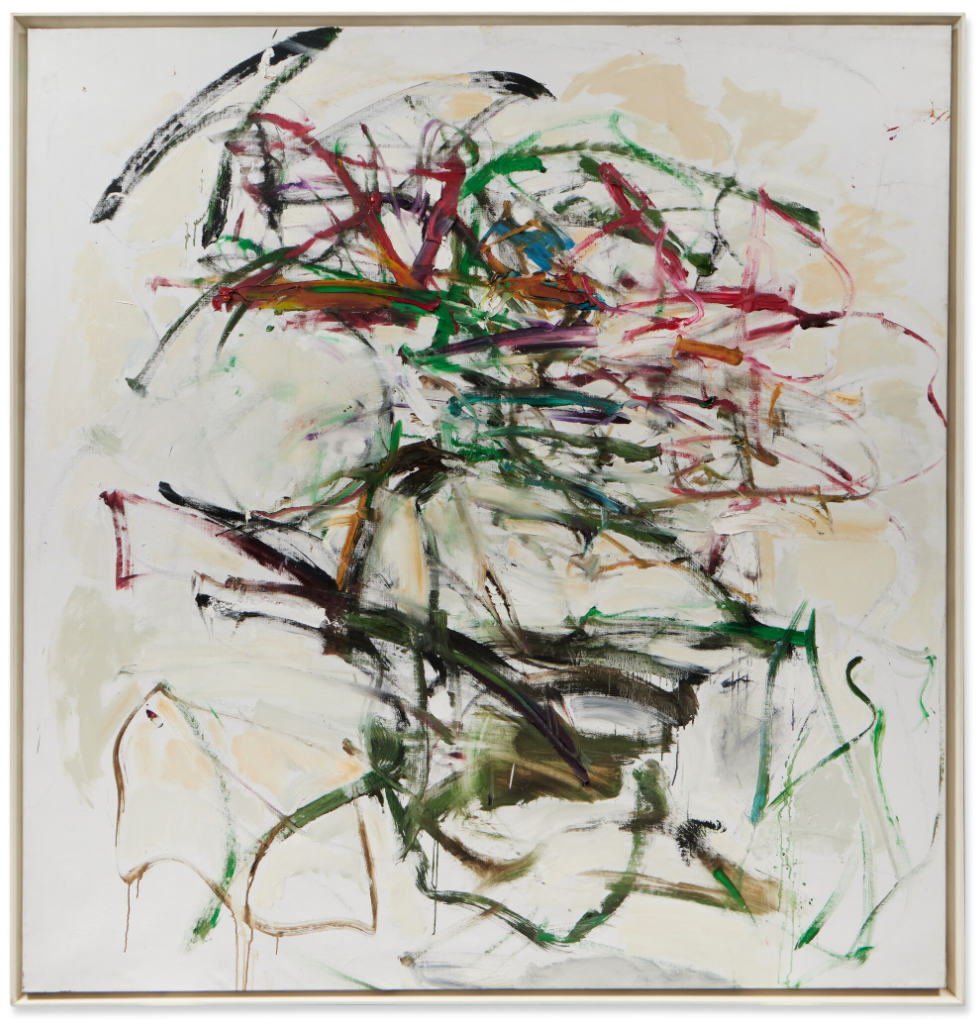
JOAN MITCHELL (1925 – 1992)
Untitled, circa 1958
Oil on canvas
75×71 inches (190.5 x 180.3 cm)
#4. Untitled, 1953
Phillips New-York: 14 November 2023
Estimated: USD 4,000,000 – 6,000,000
USD 7,892,500
Joan Mitchell – Living the Avant-Ga… Lot 20 November 2023 | Phillips
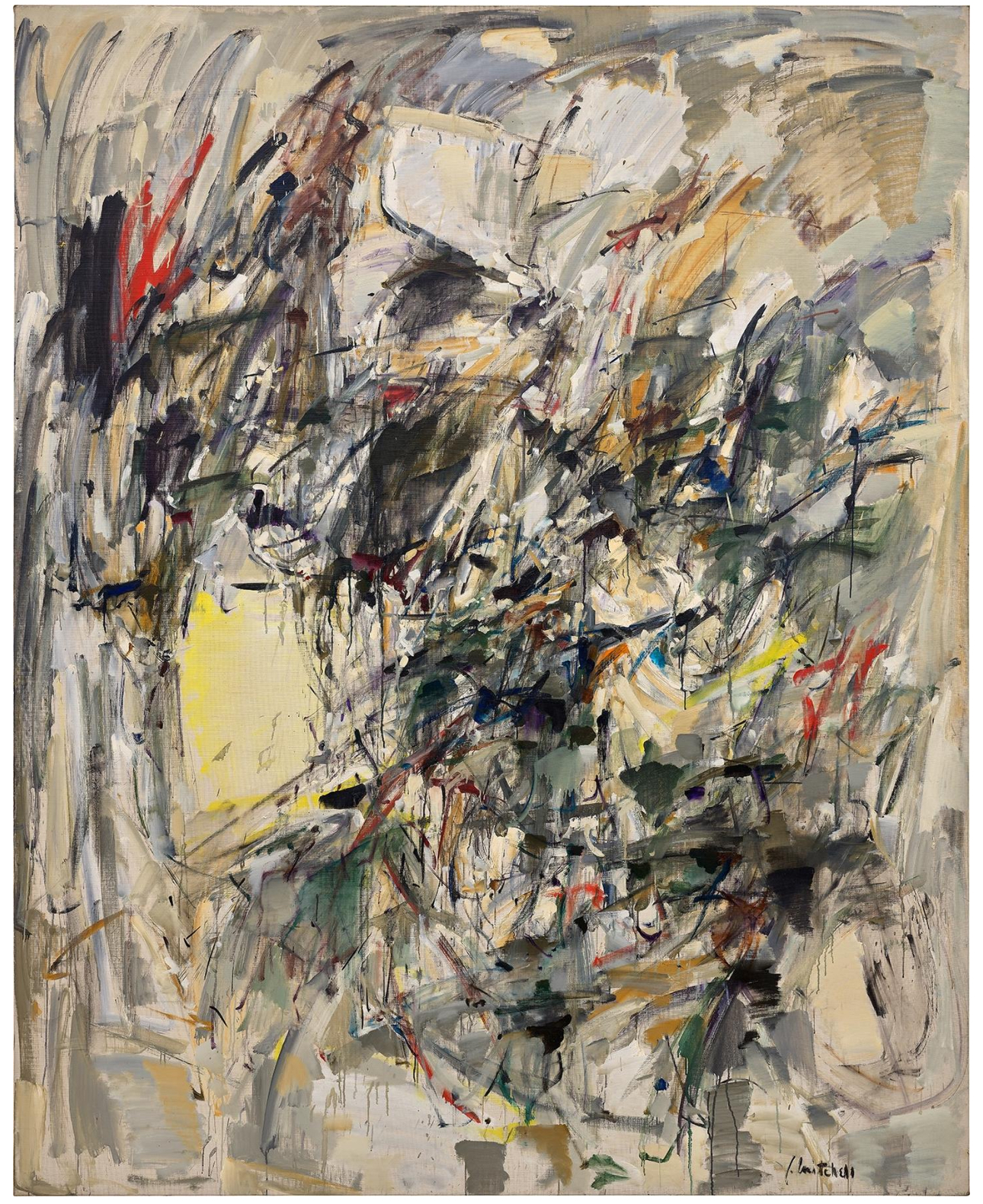
JOAN MITCHELL
Untitled, 1953
Oil on canvas
96 1/8 x 77 1/4 inches (244.2 x 196.2 cm)
Signed “J. Mitchell” lower right
#5. Untitled, circa 1958
Christie’s New-York: 17 May 2023
Estimated: USD 6,000,000 – 8,000,000
USD 6,584,000
JOAN MITCHELL (1925-1992) (christies.com)
JOAN MITCHELL (1925-1992)
Untitled, circa 1958
Oil on canvas
77 3/4 x 68 1/2 inches (195.6 x 174 cm)
#6. Sans titre, circa 1958
Christie’s Paris: 20 October 2023
Estimated: EUR 5,000,000 – 7,000,000
EUR 5,800,000 / USD 6,142,766
Joan Mitchell (1925-1992), Sans titre | Christie’s (christies.com)
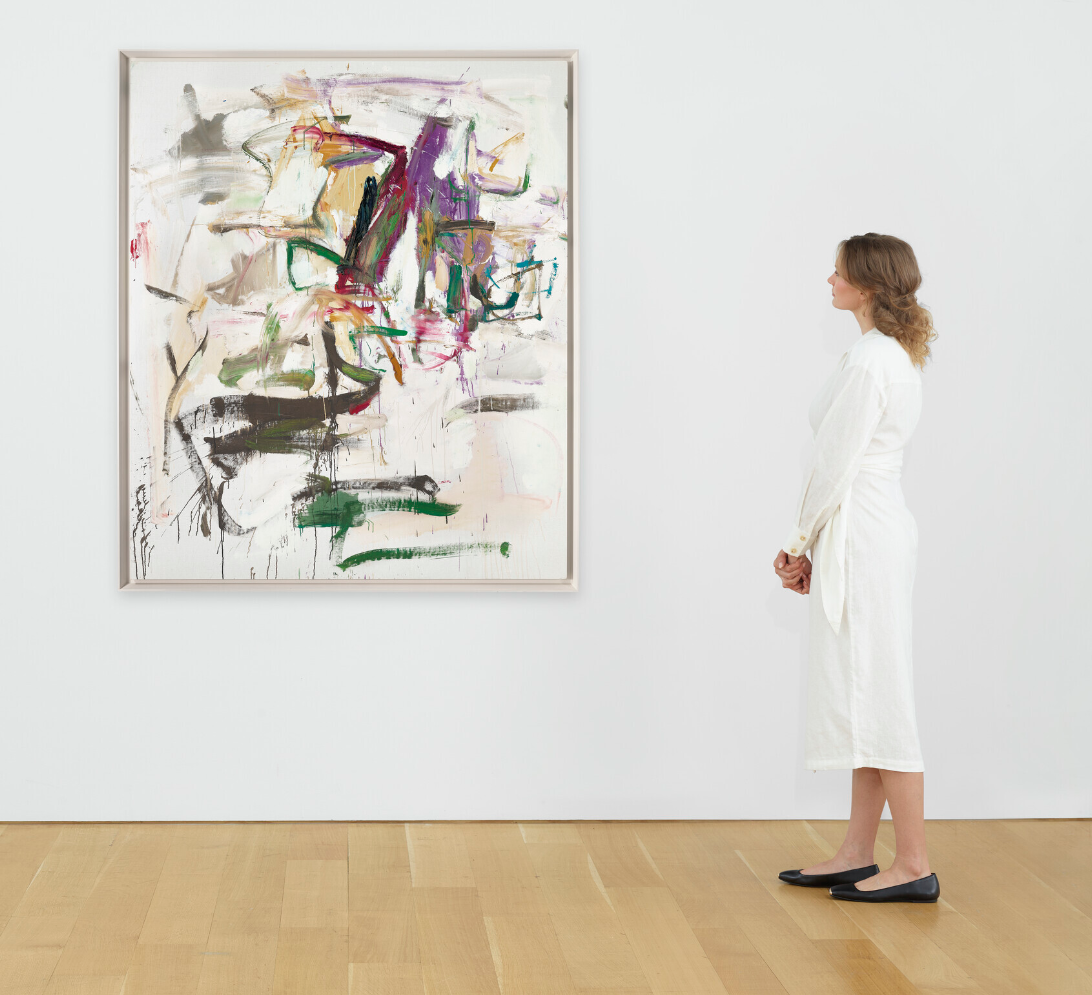
JOAN MITCHELL (1925-1992)
Sans titre, circa 1958
Oil on canvas
67 1/4 x 56 3/4 inches (170.7 x 144 cm)
#7. Sunflowers, circa 1991
Christie’s New-York: 9 November 2023
Estimated: USD 5,000,000 – 7,000,000
USD 6,100,000
JOAN MITCHELL (1925-1992), Sunflowers | Christie’s (christies.com)
JOAN MITCHELL (1925-1992)
Sunflowers, circa 1991
Oil on canvas in two parts
Overall: 51 x 76 1/4 inches (129.5 x 193.7 cm)
Signed ‘Joan Mitchell’ (lower right)
#8. Untitled, 1959
Christie’s New-York: 12 May 2023
Estimated: USD 3,000,000 – 5,000,000
USD 5,132,000
JOAN MITCHELL (1925-1992), Untitled | Christie’s (christies.com)
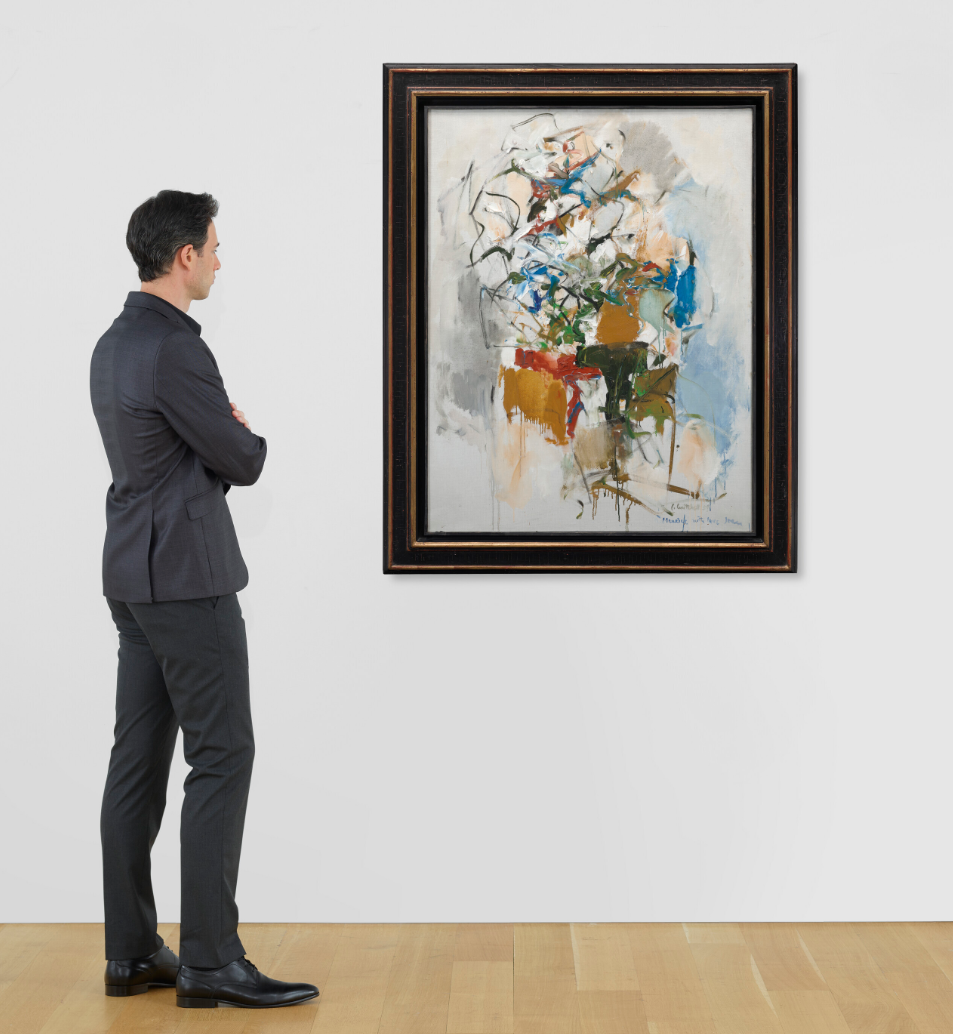
JOAN MITCHELL (1925-1992)
Untitled, 1959
Oil on canvas
45 1/2 x 34 7/8 inches (115.5 x 88.5 cm)
Signed, dedicated and dated ‘J. Mitchell 59 A Maurice with love Joan’ (lower right)
Signed again and dated again ‘Mitchell 59’ (on the reverse)
#9. Hours, 1989
Christie’s New-York: 11 May 2023
Estimated: USD 3,000,000 – 5,000,000
USD 4,043,000
JOAN MITCHELL (1925-1992), Hours | Christie’s (christies.com)
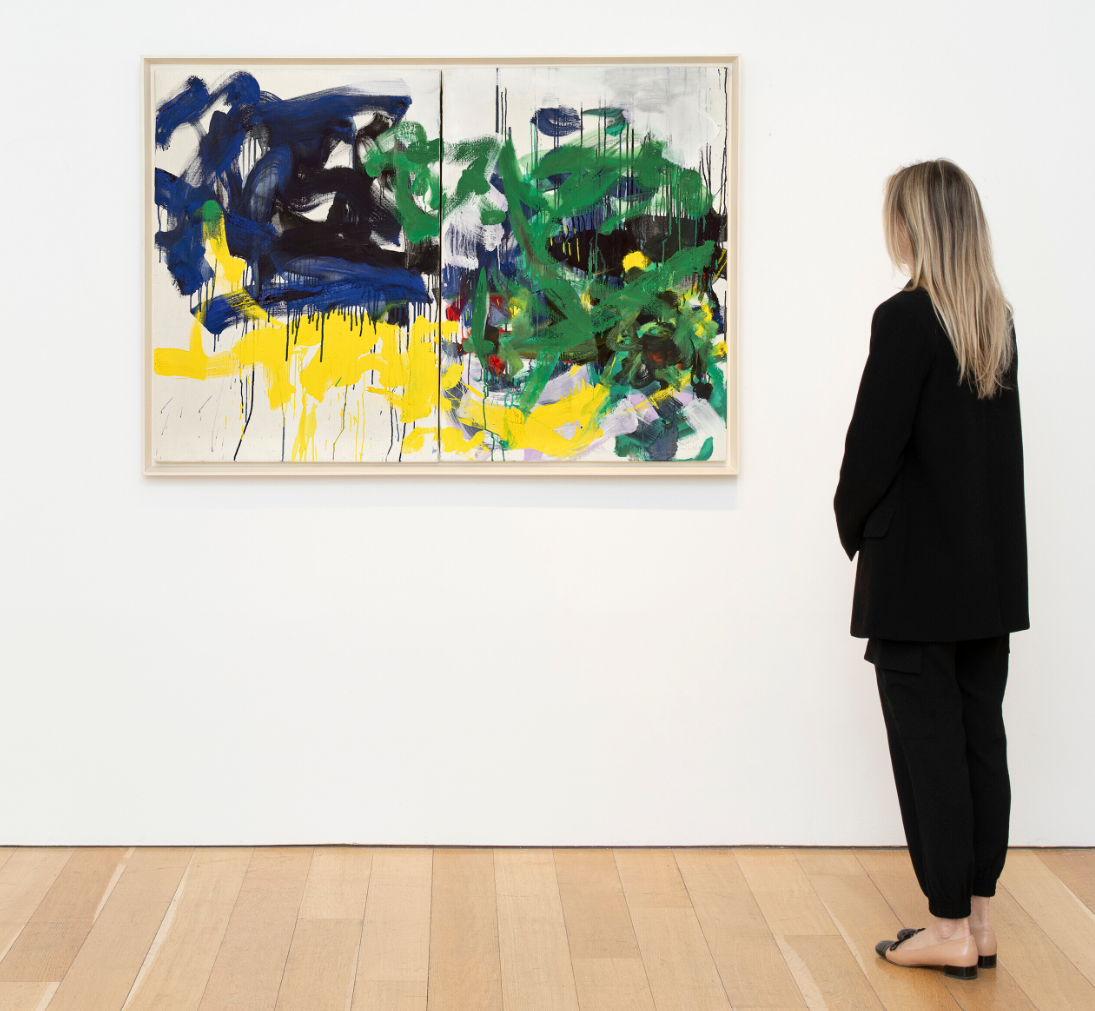
JOAN MITCHELL (1925-1992)
Hours, 1989
Oil on canvas, in two parts
Overall: 39 3/8 x 57 1/4 inches (100 x 130.2 cm)
Signed ‘Joan Mitchell’ (lower right)
#10. Untitled, 1960
Sotheby’s New-York: 16 November 2023
Estimated: USD 2,800,000 – 3,500,000
USD 3,811,000
Untitled | Contemporary Day Auction | 2023 | Sotheby’s (sothebys.com)
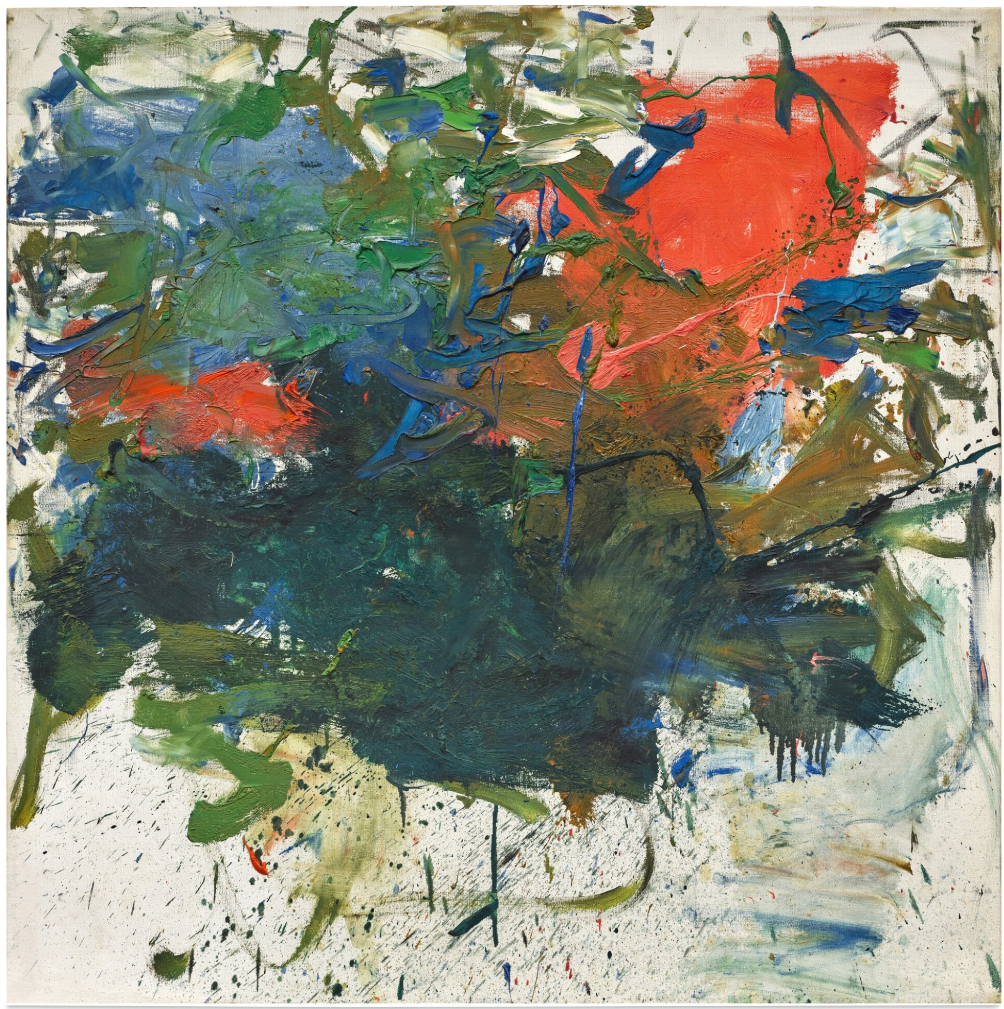
JOAN MITCHELL (1925 – 1992)
Untitled, 1960
Oil on canvas
39 3/8 x 39 3/8 inches (100×100 cm)
#11. Sans titre, circa 1955
Christie’s Paris: 7 June 2023
Estimated: EUR 1,000,000 – 1,500,000
EUR 1,189,500 / USD 1,272,192
Joan Mitchell (1925-1992), Sans titre | Christie’s (christies.com)
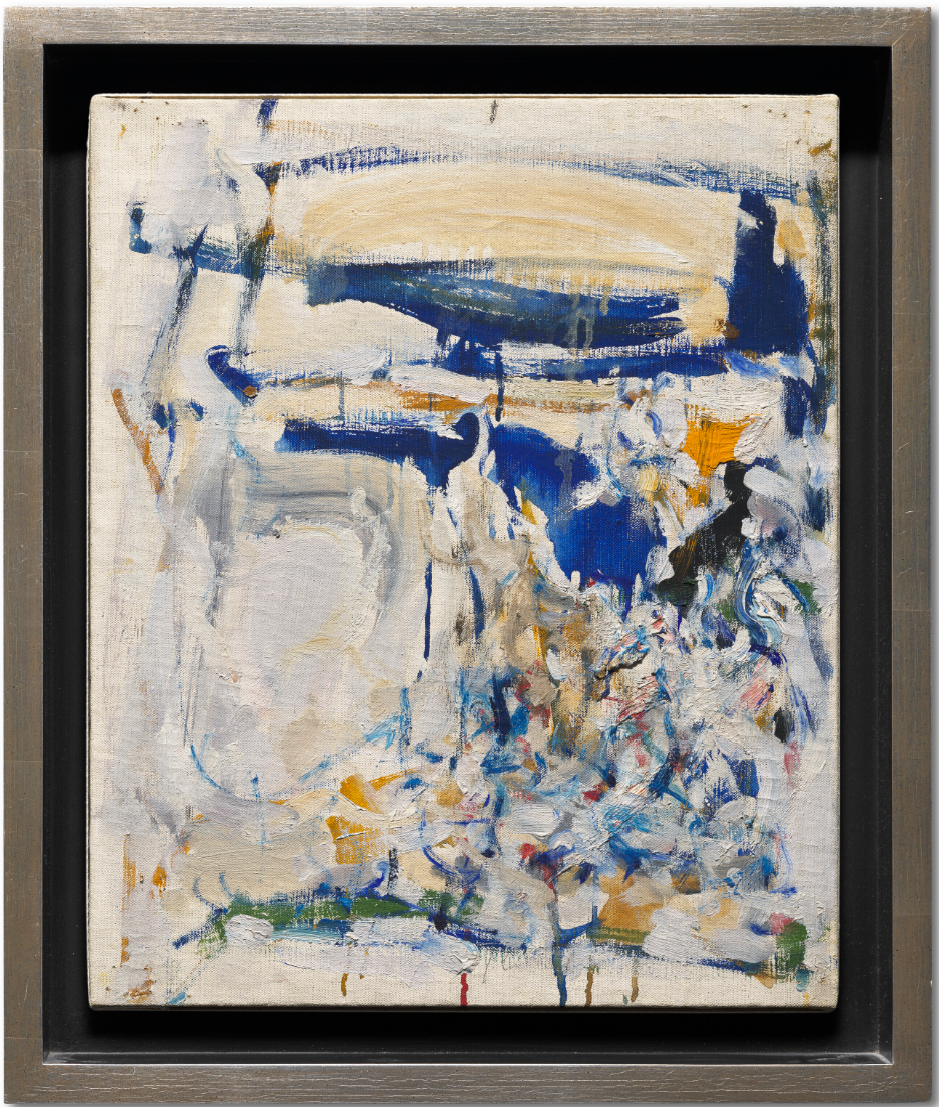
JOAN MITCHELL (1925-1992)
Sans titre, circa 1955
Oil on canvas
17 3/4 x 14 5/8 inches (45×37 cm)
Signed indistinctly ‘Mitchell’ (lower center)
#12. Untitled, 1974
Sotheby’s New-York: 19 May 2023
Estimated: USD 1,000,000 – 1,500,000
USD 1,079,500
Untitled | Contemporary Day Auction | 2023 | Sotheby’s (sothebys.com)
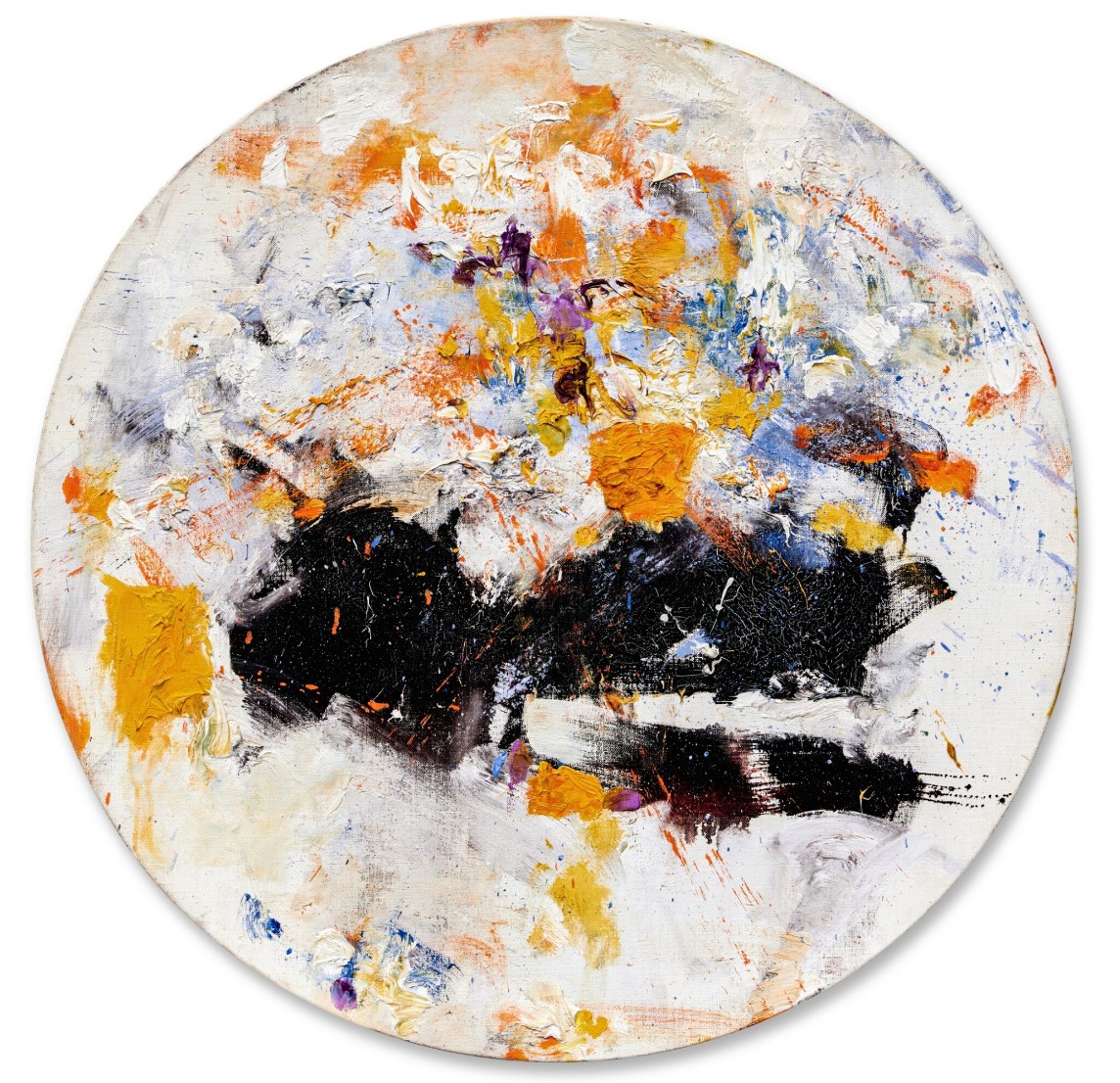
JOAN MITCHELL (1925 – 1992)
Untitled, 1974
Oil on canvas
Diameter: 31 1/4 inches (79.4 cm)
USD 1 million
#13. Untitled, circa 1957
Phillips New-York: 16 May 2023
Estimated: USD 300,000 – 500,000
USD 825,500
Joan Mitchell – 20th Century & Contempo… Lot 106 May 2023 | Phillips
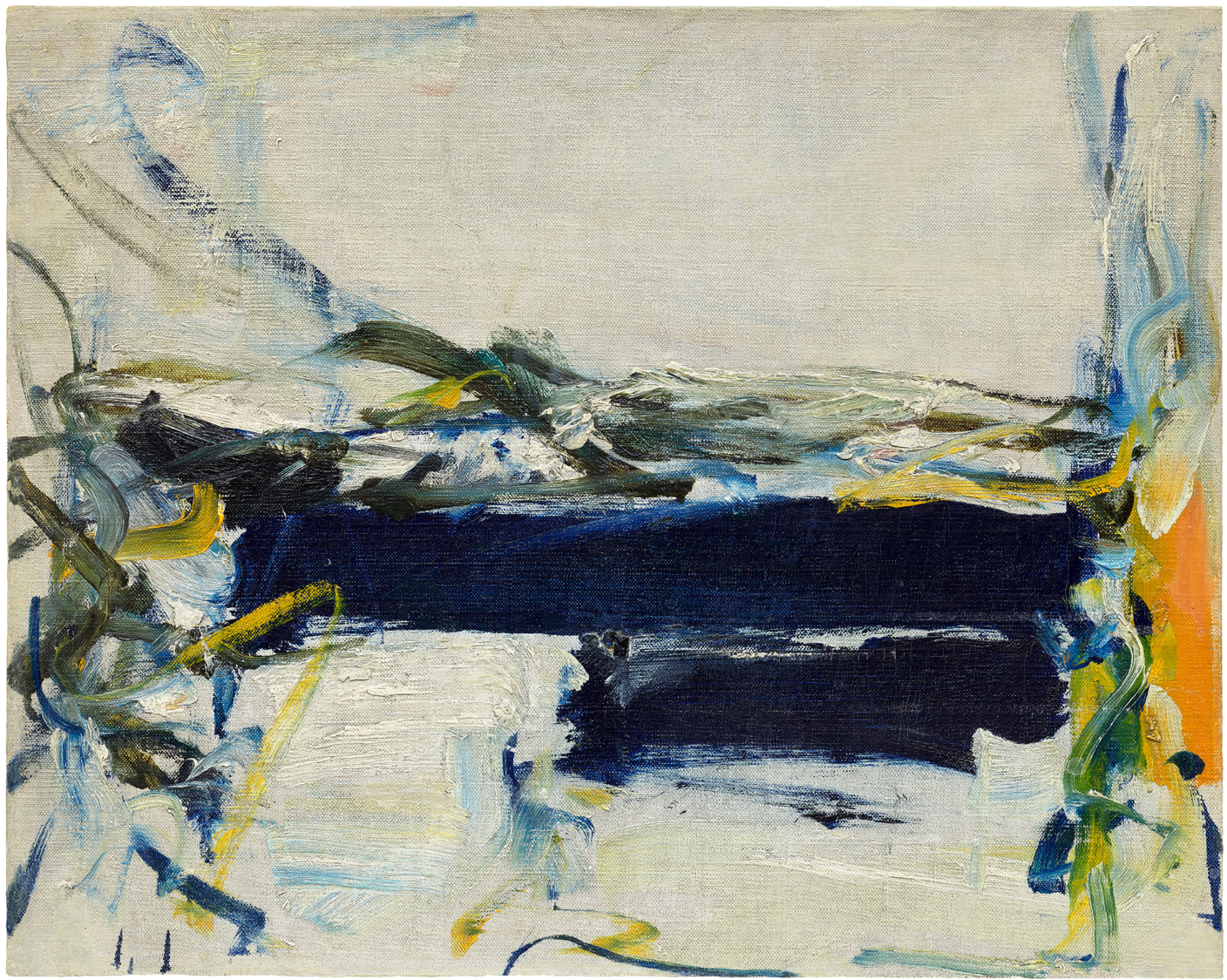
JOAN MITCHELL
Untitled, circa 1957
Oil on canvas
16×20 inches (40.6 x 50.8 cm)
#14. Untitled, 1958
Rago: 23 May 2023
Estimated: USD 600,000 – 800,000
USD 819,000
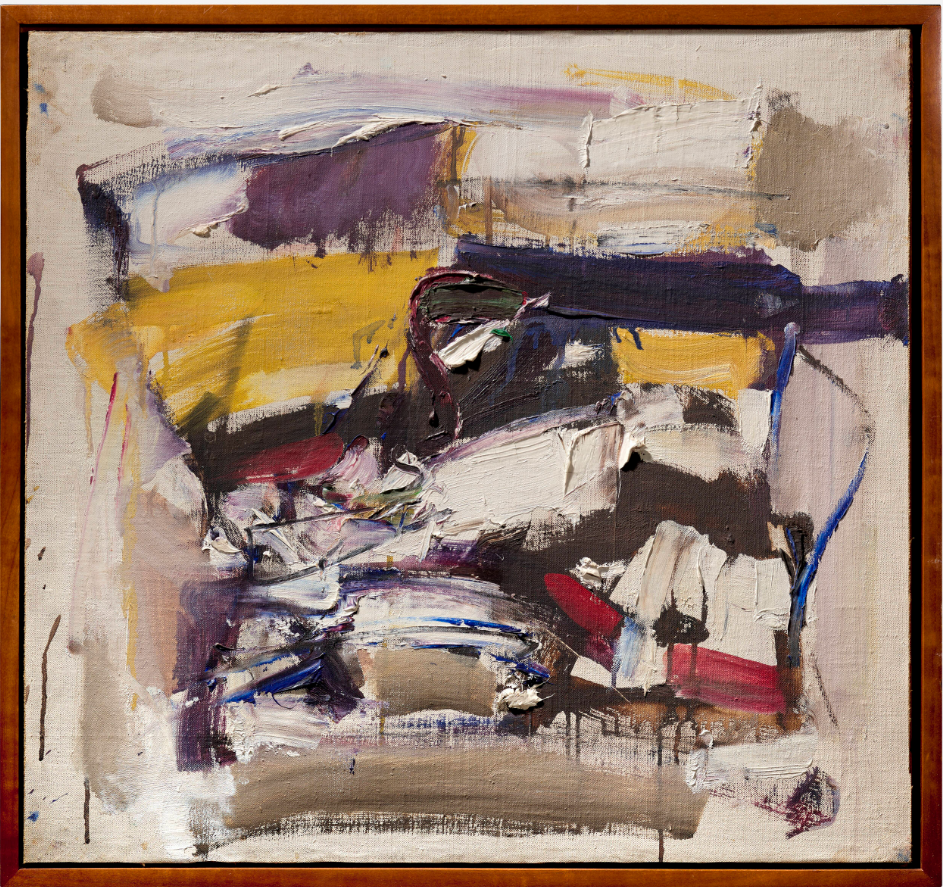
JOAN MITCHELL (1925–1992)
Untitled, 1958
Oil on canvas
20 × 21 1/4 inches (51×54 cm)
#15. Untitled, circa 1955
Christie’s New-York: 18 May 2023
Estimated: USD 600,000 – 800,000
USD 756,000
JOAN MITCHELL (1925-1992), Untitled | Christie’s (christies.com)
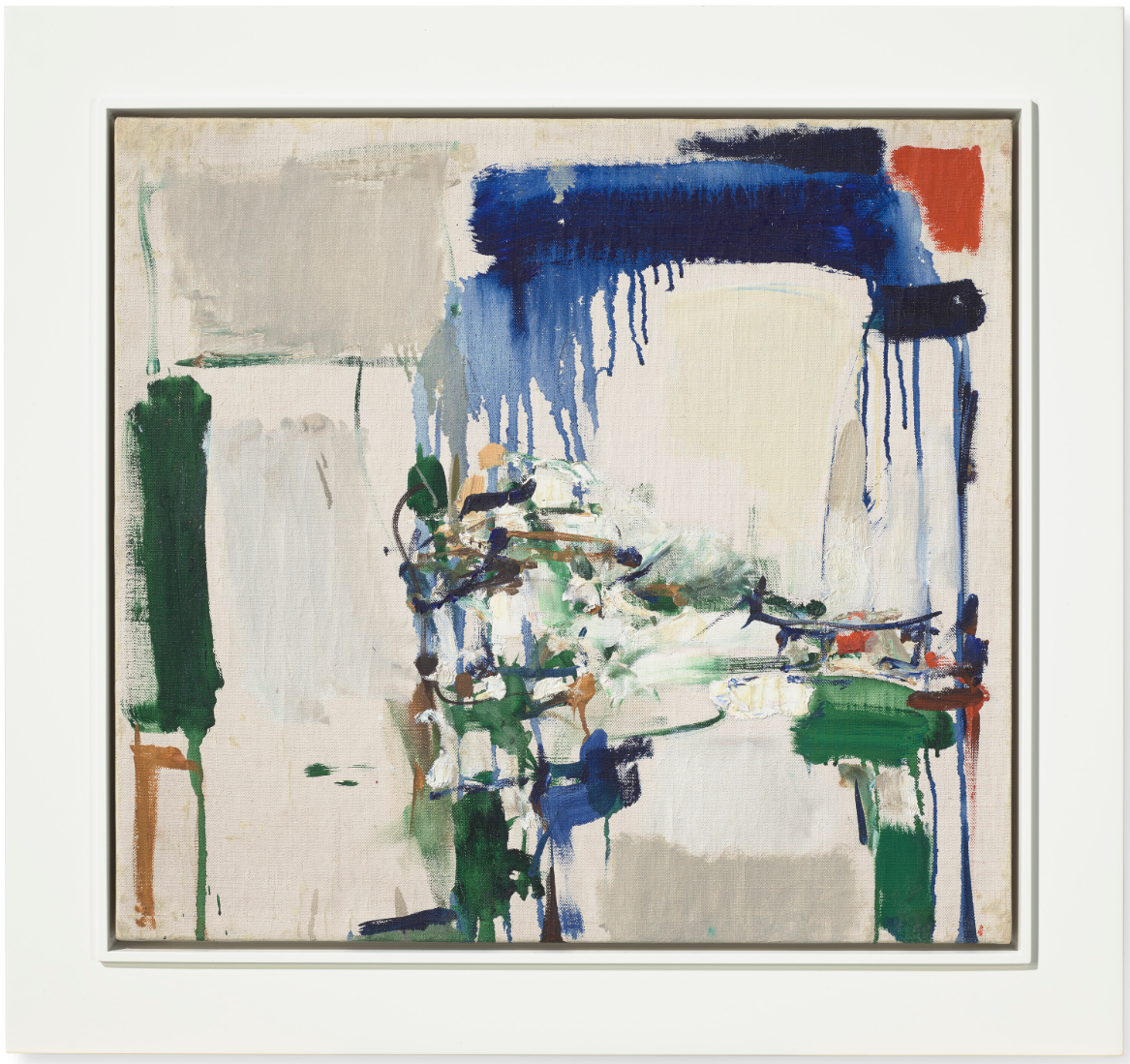
JOAN MITCHELL (1925-1992)
Untitled, circa 1955
Oil on canvas
20 5/8 x 22 1/2 inches (52.3 x 57.2 cm)
#16. Untitled, circa 1957
Christie’s York: 29 September 2023
Estimated: USD 300,000 – 500,000
USD 428,400
JOAN MITCHELL (1925-1992), Untitled | Christie’s (christies.com)
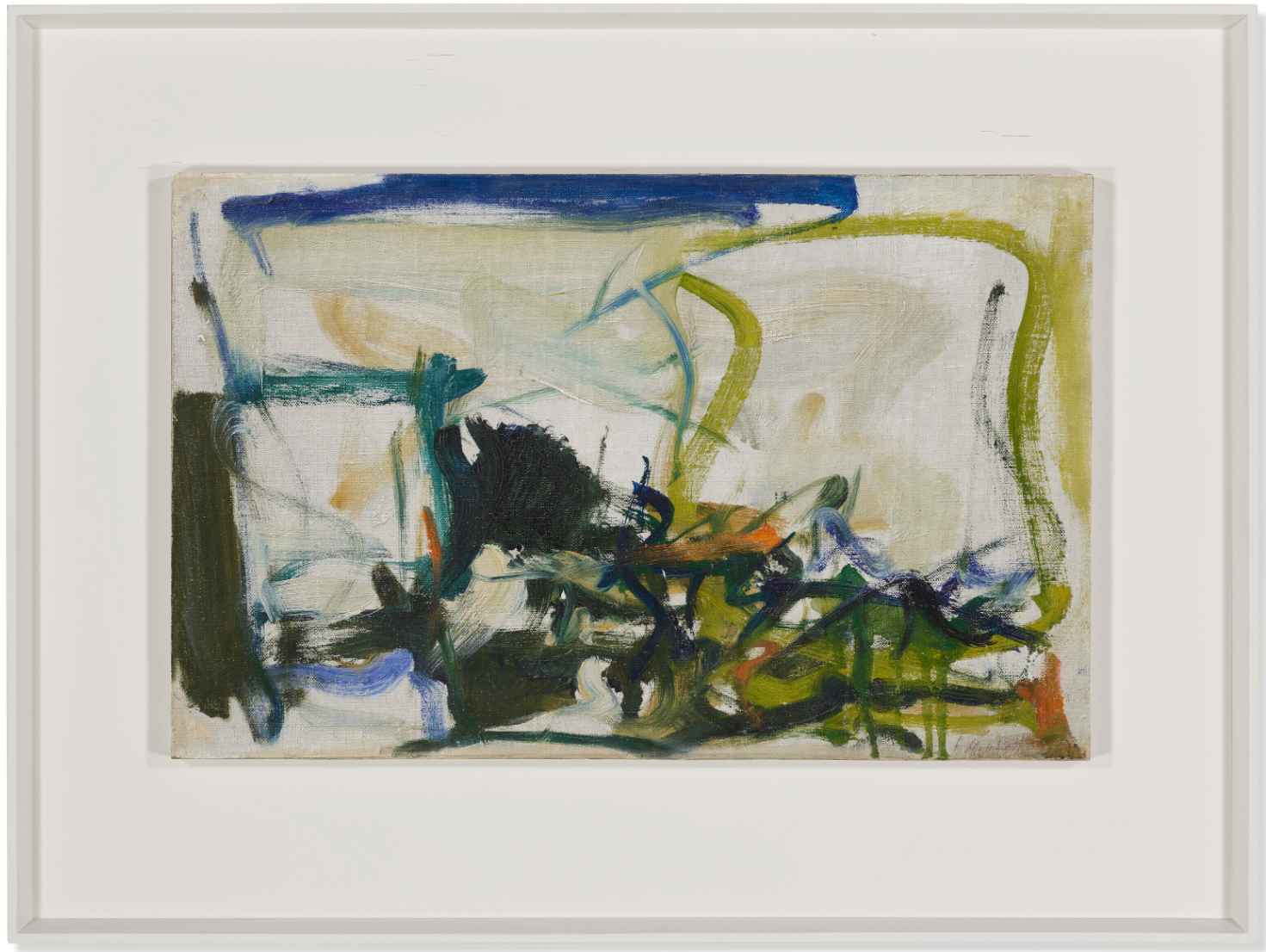
JOAN MITCHELL (1925-1992)
Untitled, circa 1957
Oil on canvas laid down on linen
12 3/8 x 19 3/8 inches (31.4 x 49.2 cm)
Signed ‘J Mitchell’ (lower right)
#17. Landscape #150, circa 1949
Shapiro: 8 April 2023
Estimated: USD 300,000 – 400,000
USD 195,000
JOAN MITCHELL (AMERICAN 1925-1992) — FINE & DECORATIVE ART – Shapiro Auctions
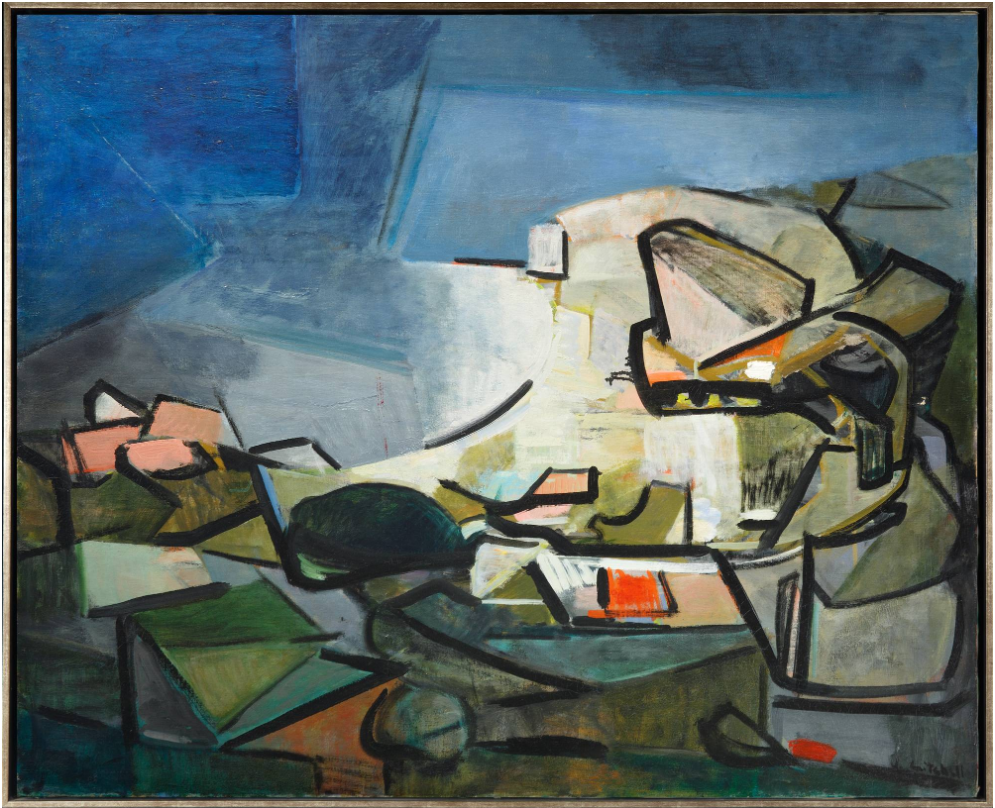
JOAN MITCHELL (AMERICAN 1925-1992)
Landscape #150, circa 1949
Oil on canvas
31 7/8 x 39 3/8 in (81×100 cm)
Signed lower right
#18. Untitled, circa 1947
Rago: 23 May 2023
Estimated: USD 20,000 – 30,000
USD 50,400
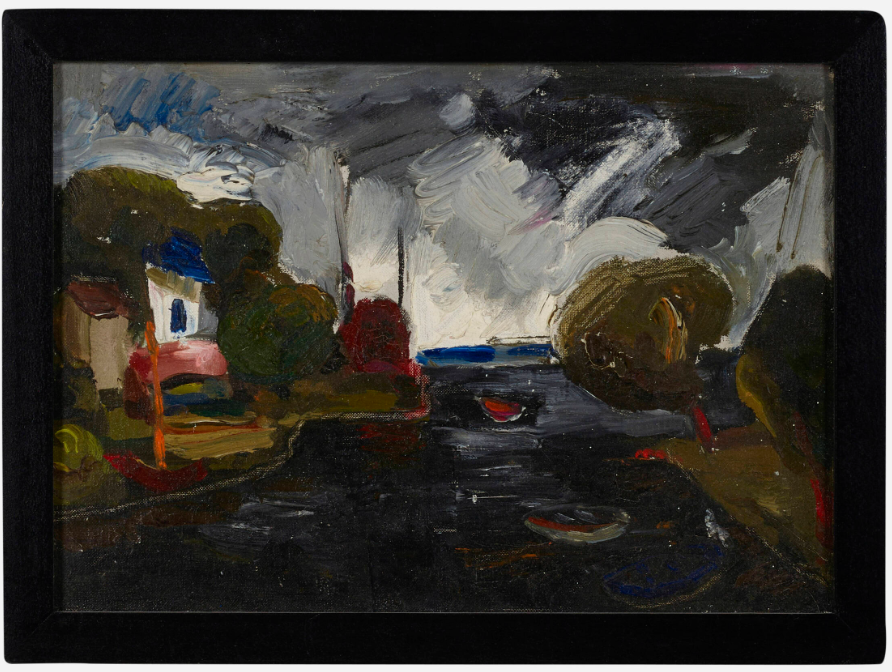
JOAN MITCHELL (1925–1992)
Untitled, circa 1947
Oil on canvas
10×14 inches (25×36 cm)
Signed to verso ‘Joan Mitchell’
Signed and dated to stretcher ‘J. Mitchell 1947’
Works on Paper
Pastel, 1991
A Life of Beauty: The Collection of John Cheim
Sotheby’s New-York: 16 November 2023
Estimated: USD 250,000 – 350,000
USD 825,500
Pastel | Contemporary Day Auction | 2023 | Sotheby’s
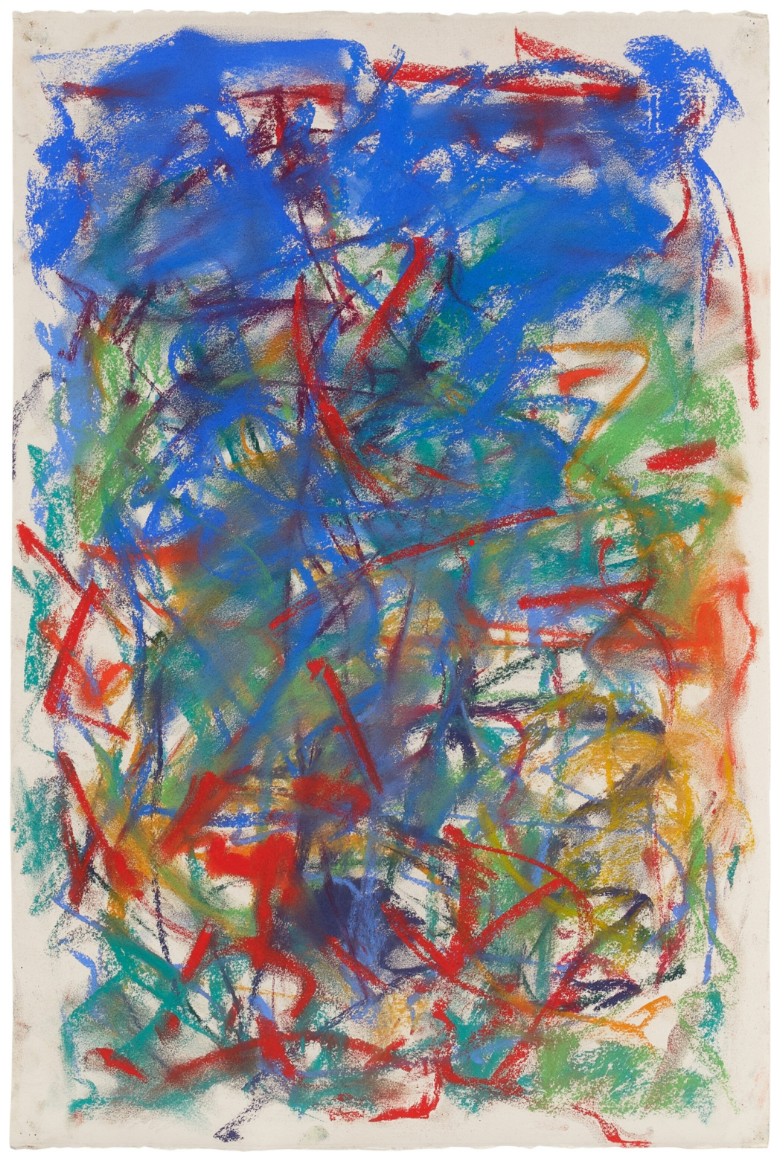
JOAN MITCHELL (1925 – 1992)
Pastel, 1991
Pastel on paper
22 3/4 x 15 1/4 inches (57.8 x 38.7 cm)
2022 Auction Results
14 lots sold at auction in 2022 for a total turnover of USD 66,584,702. With no lot failing to sell, the sell-through rate is 100%. The highest price of USD 14,130,000 was achieved at Christie’s in New-York on 17 November 2022 by an untitled painting dated 1989. 2 lots sold for more than USD 10 million, generating a cumulative turnover of USD 24,809,051, representing 37.3% of the total turnover for 2022.
2022 Top 3 Lots
#1. Untitled, 1989
Christie’s New-York: 17 November 2022
Estimated: USD 10,000,000 – 15,000,000
USD 14,130,000
JOAN MITCHELL (1925-1992), Untitled | Christie’s (christies.com)
JOAN MITCHELL (1925-1992)
Untitled, 1989
Oil on canvas, in two parts
Each: 76 3/4 x 51 1/4 inches (194.9 x 130.2 cm)
Overall: 76 3/4 x 102 7/8 inches (194.9 x 260.7 cm)
#2. Untitled, 1966-1967
Christie’s Hong-Kong: 30 November 2022
Estimated: HKD 80,000,000 – 120,000,000
HKD 83,350,000 / USD 10,679,051
JOAN MITCHELL (1925-1992), Untitled | Christie’s (christies.com)
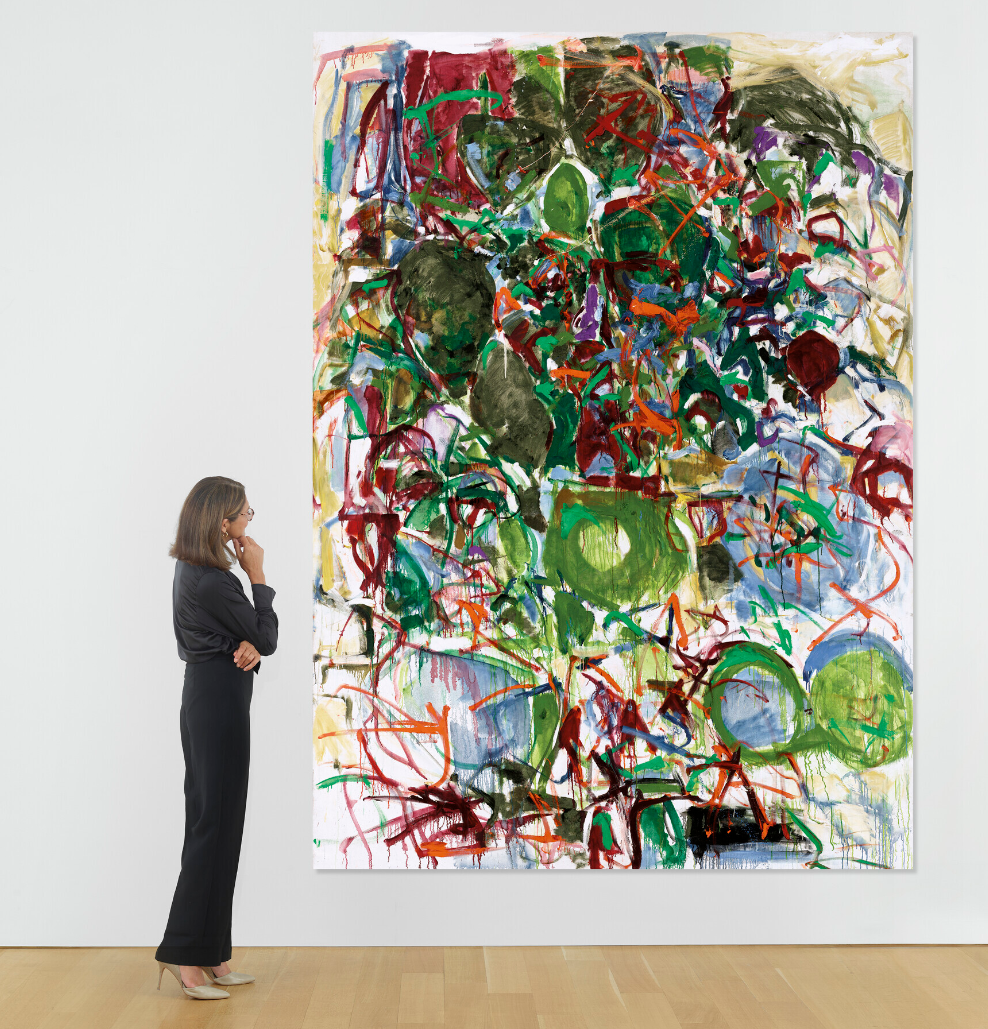
JOAN MITCHELL (1925-1992)
Untitled, 1966-1967
Oil on canvas
109 1/2 x 78 3/8 inches (278×199 cm)
#3. Untitled, circa 1969
Christie’s New-York: 12 May 2022
Estimated: USD 7,000,000 – 10,000,000
USD 8,977,500
JOAN MITCHELL (1925-1992), Untitled | Christie’s (christies.com)
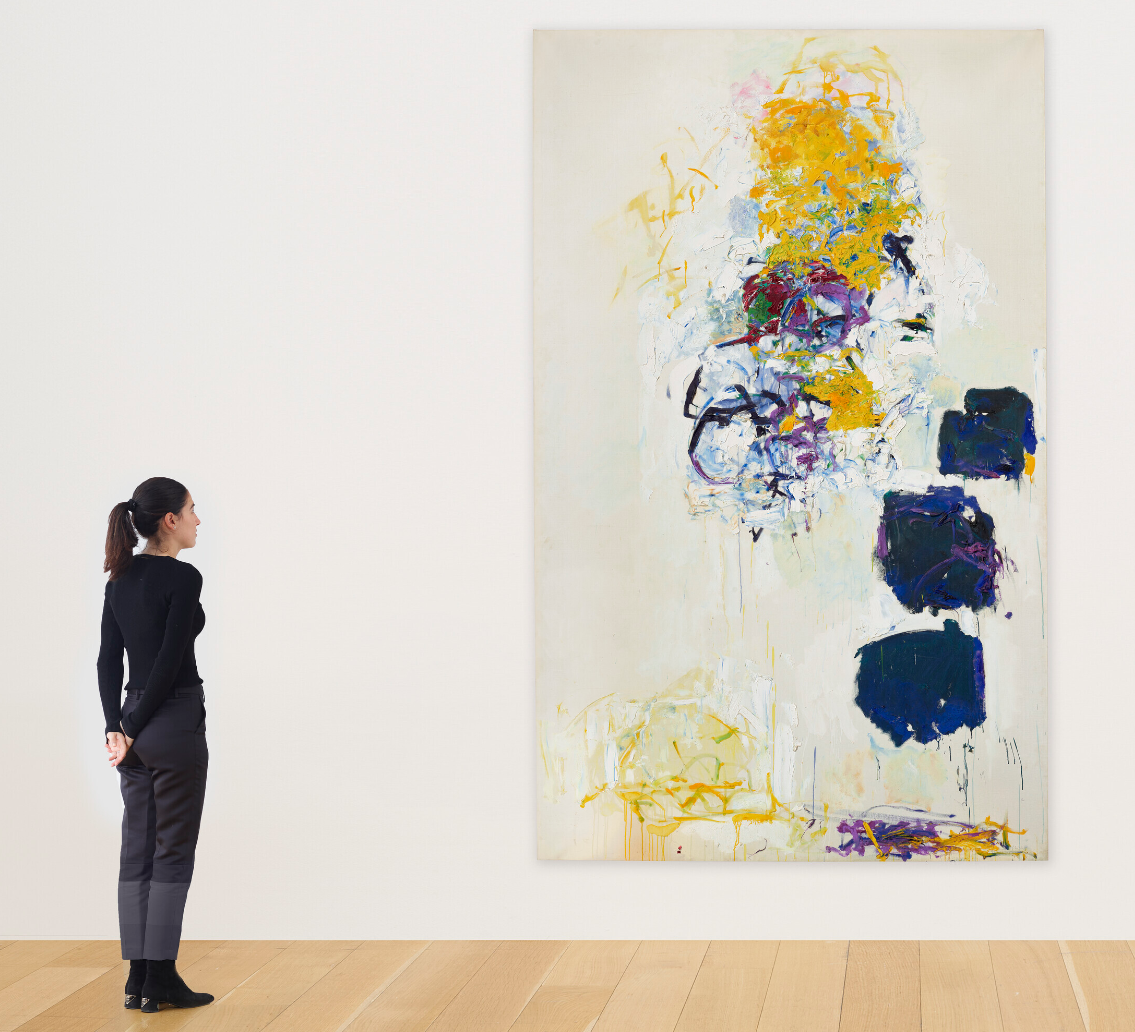
JOAN MITCHELL (1925-1992)
Untitled, circa 1969
Oil on canvas
102×63 inches (259.1 x 160 cm)
Signed ‘J. Mitchell’ (lower right)
Signed again ‘Mitchell’ (on the reverse)
#4. Sans titre, 1992
Christie’s Paris: 20 October 2022
Estimated: EUR 4,000,000 – 6,000,000
EUR 4,722,000 / USD 4,638,506
Joan Mitchell (1925-1992), Sans titre | Christie’s (christies.com)
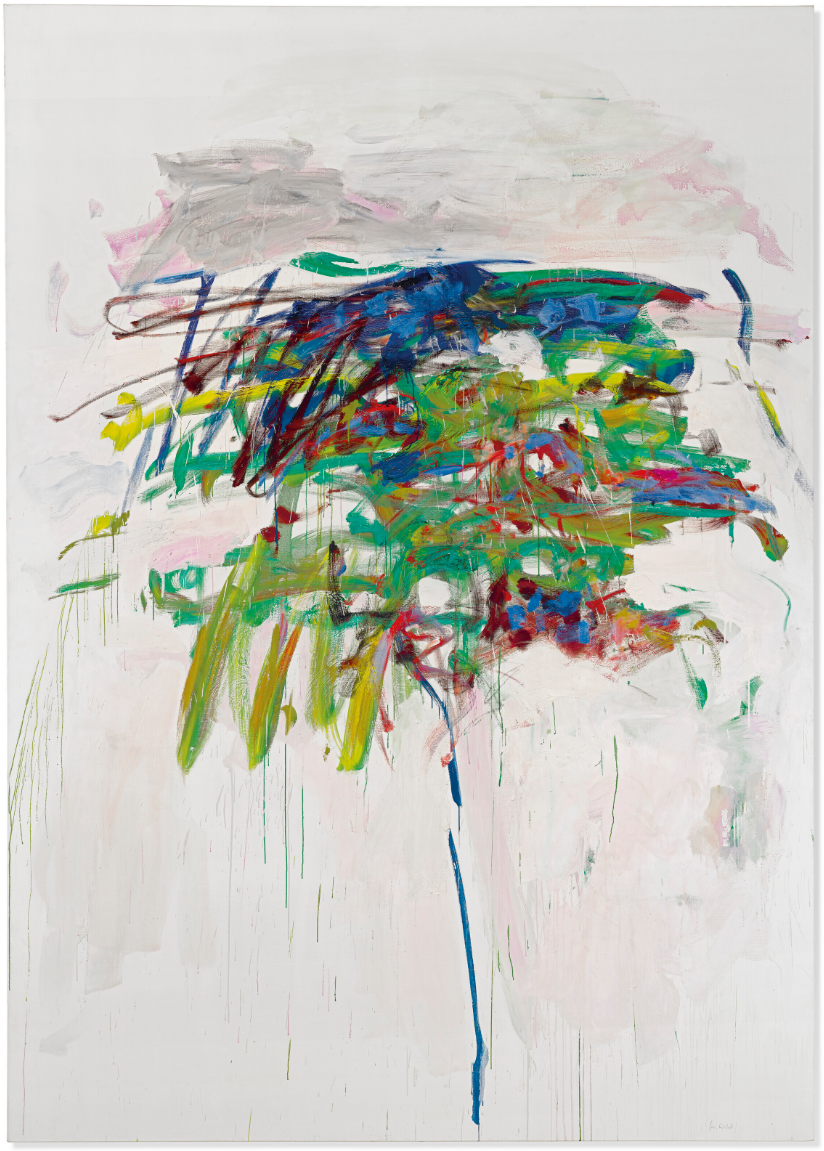
JOAN MITCHELL (1925-1992)
Sans titre, 1992
Oil on canvas
110 1/4 x 78 7/8 inches (280 x 200.4 cm)
Signed ‘Joan Mitchell’ (lower right)
#5. Bottom Yellow, 1981
Sotheby’s New-York: 16 November 2022
Estimated: USD 3,000,000 – 4,000,000
USD 3,801,000
Bottom Yellow | Contemporary Evening Auction | 2022 | Sotheby’s (sothebys.com)
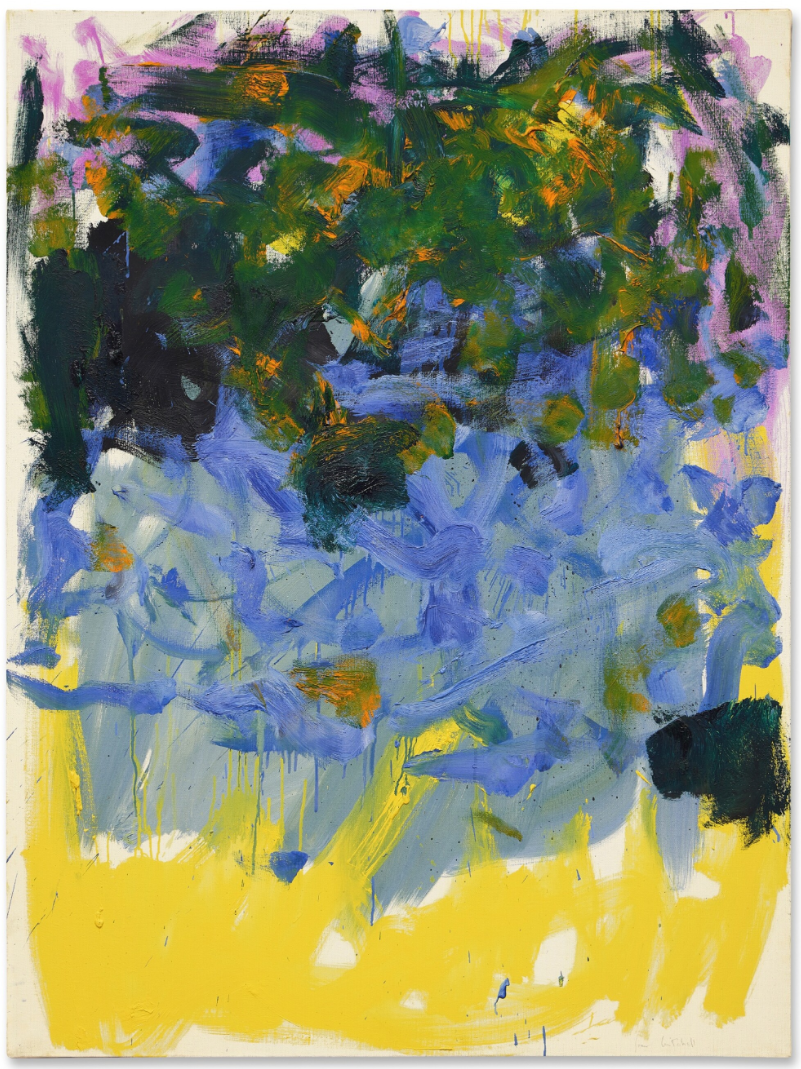
JOAN MITCHELL (1925 – 1992)
Bottom Yellow, 1981
Oil on canvas
51 x 38 1/4 inches (130×97 cm)
Signed Joan Mitchell (bottom right)
Signed Mitchell and titled Bottom Yellow (on the stretcher)
#6. Conte Bleu, circa 1962
Christie’s New-York: 18 November 2022
Estimated: USD 2,500,000 – 3,500,000
USD 3,420,000
JOAN MITCHELL (1925-1992), Conte Bleu | Christie’s (christies.com)
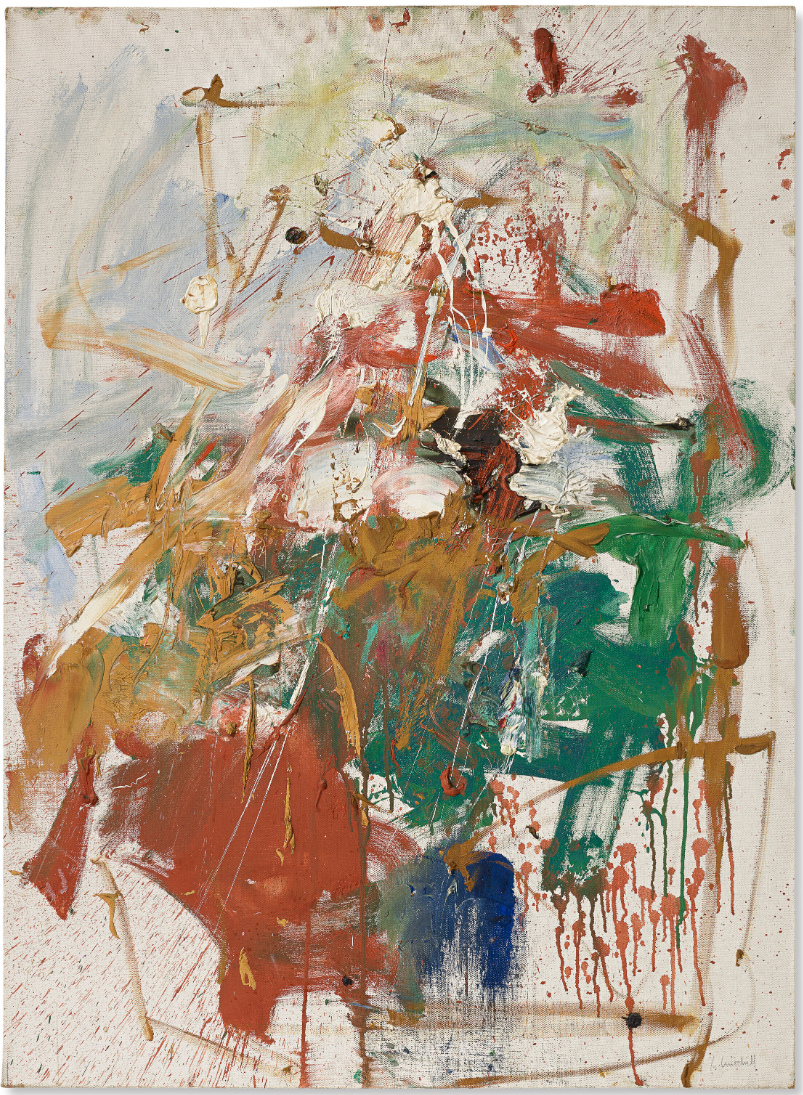
JOAN MITCHELL (1925-1992)
Conte Bleu, circa 1962
Oil on canvas
39 1/4 x 28 3/4 inches (99.2 x 71.8 cm)
Signed ‘J Mitchell’ (lower right)
Signed again and titled ‘Conte Bleu Mitchell’ (on the stretcher)
#7. Cobalt, 1981
Phillips New-York: 15 November 2022
Estimated: USD 3,000,000 – 4,000,000
USD 3,418,000
Joan Mitchell – 20th Century & Cont… Lot 32 November 2022 | Phillips
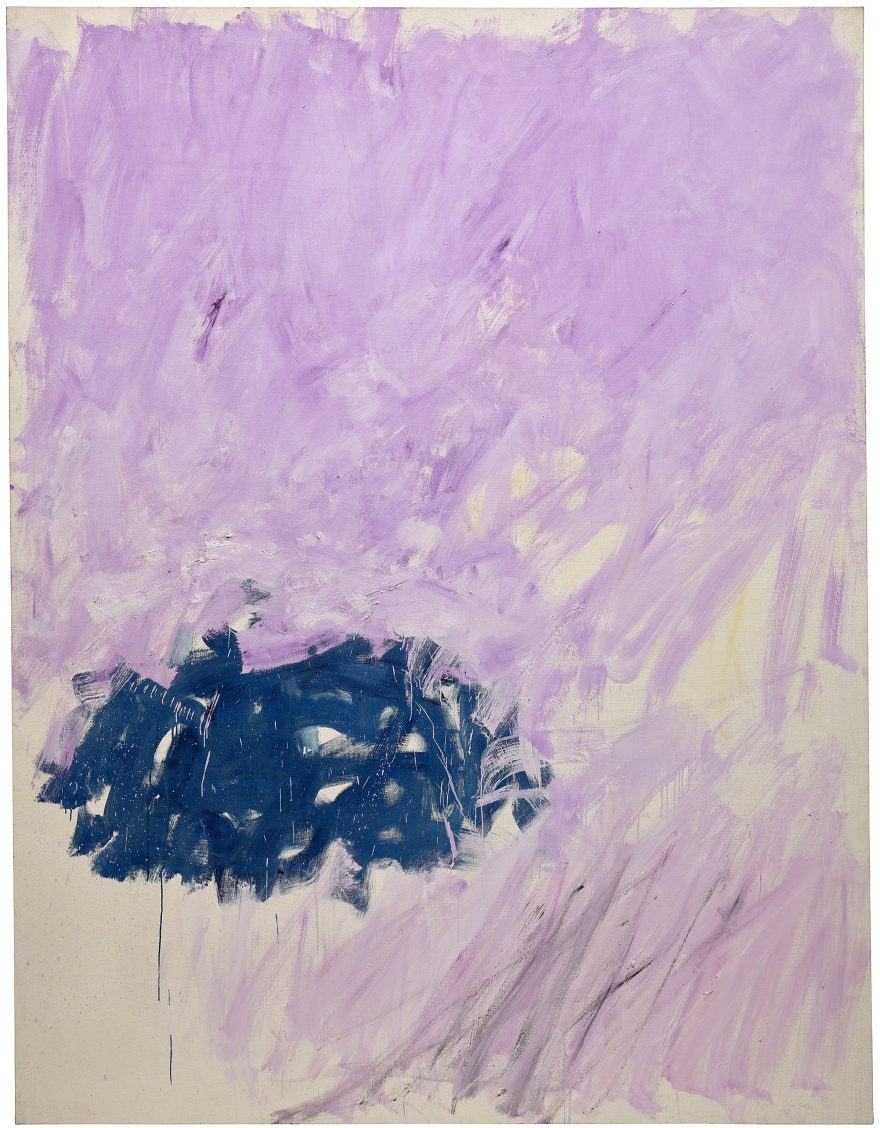
JOAN MITCHELL
Cobalt, 1981
Oil on canvas
102 3/8 x 78 7/8 inches (260 x 200.3 cm)
Signed “Joan Mitchell” lower right
#8. Allo, Amélie, 1973
Sotheby’s New-York: 11 March 2022
Estimated: USD 2,500,000 – 3,500,000
USD 3,388,000
Allo, Amélie | Contemporary Curated | 2022 | Sotheby’s (sothebys.com)
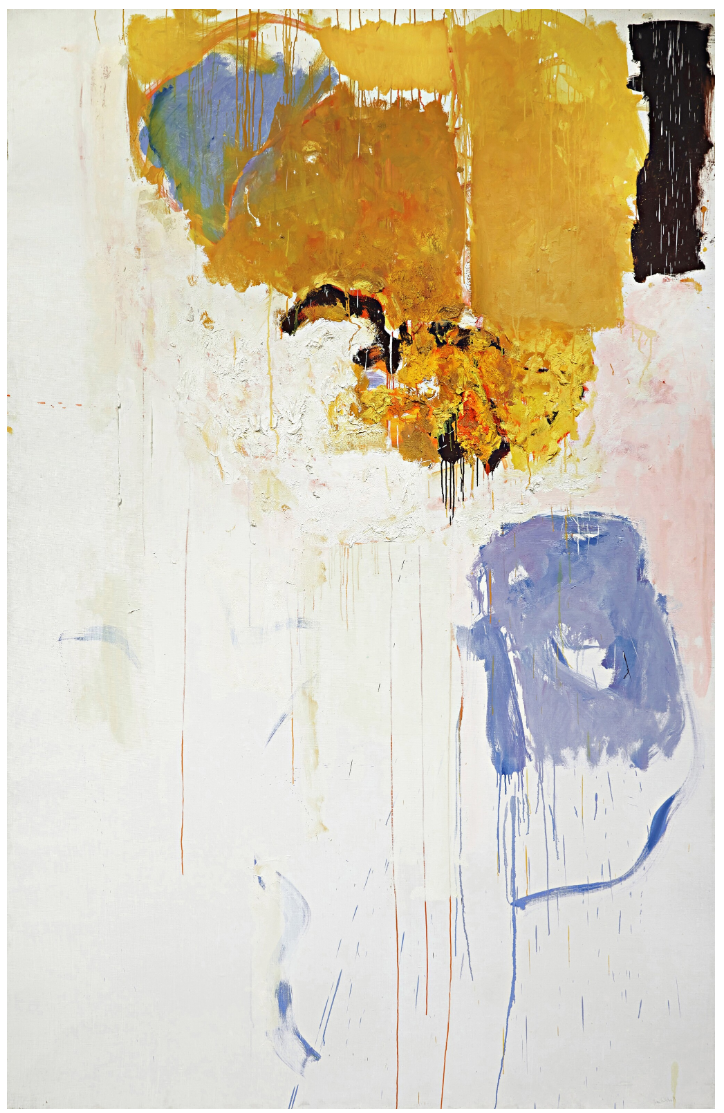
JOAN MITCHELL (1925 – 1992)
Allo, Amélie, 1973
Oil on canvas
110 1/2 x 71 1/2 inches (280.6 x 181.6 cm)
Signed Joan Mitchell (lower right)
#9. Untitled, circa 1956
Sotheby’s New-York: 16 November 2022
Estimated: USD 1,500,000 – 2,000,000
USD 3,196,000
Untitled | Contemporary Evening Auction | 2022 | Sotheby’s (sothebys.com)
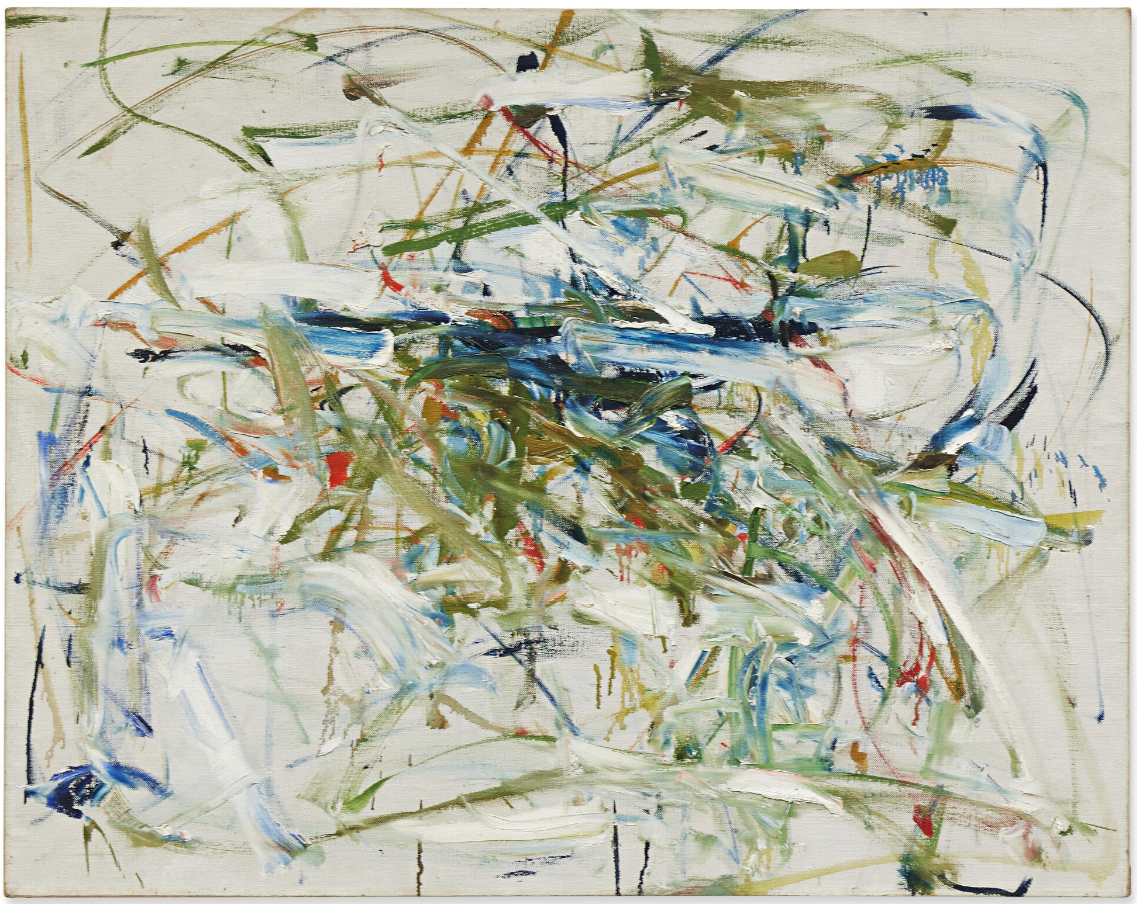
JOAN MITCHELL (1925 – 1992)
Untitled, circa 1956
Oil on canvas
26×33 inches (66 x 83.8 cm)
#10. Untitled, circa 1956
Sotheby’s New-York: 20 May 2022
Estimated: USD 700,000 – 1,000,000
USD 2,712,000
Untitled | Contemporary Day Auction | 2022 | Sotheby’s (sothebys.com)
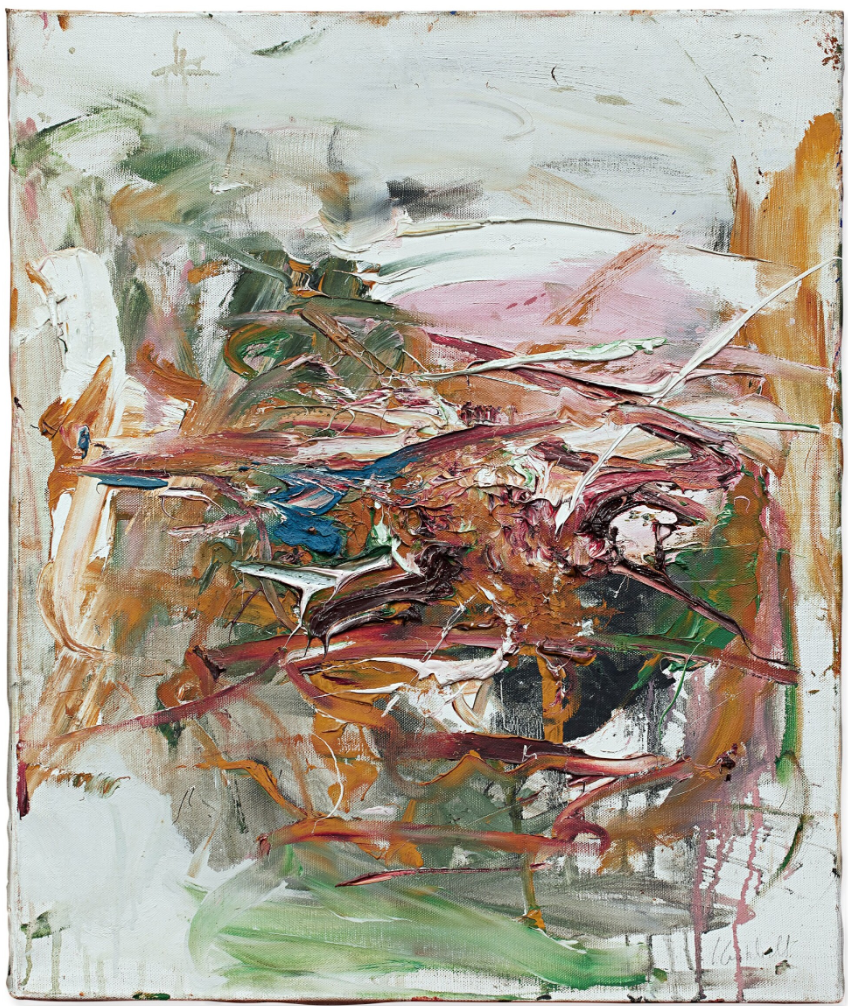
JOAN MITCHELL (1925 – 1992)
Untitled, circa 1956
Oil on canvas
21 5/8 x 18 1/8 inches (55 x 46.2 cm)
Signed J Mitchell (lower right)
#11. Untitled, circa 1964
Sotheby’s New-York: 17 November 2022
Estimated: USD 1,000,000 – 1,500,000
USD 2,530,000
Untitled | Contemporary Day Auction | 2022 | Sotheby’s (sothebys.com)
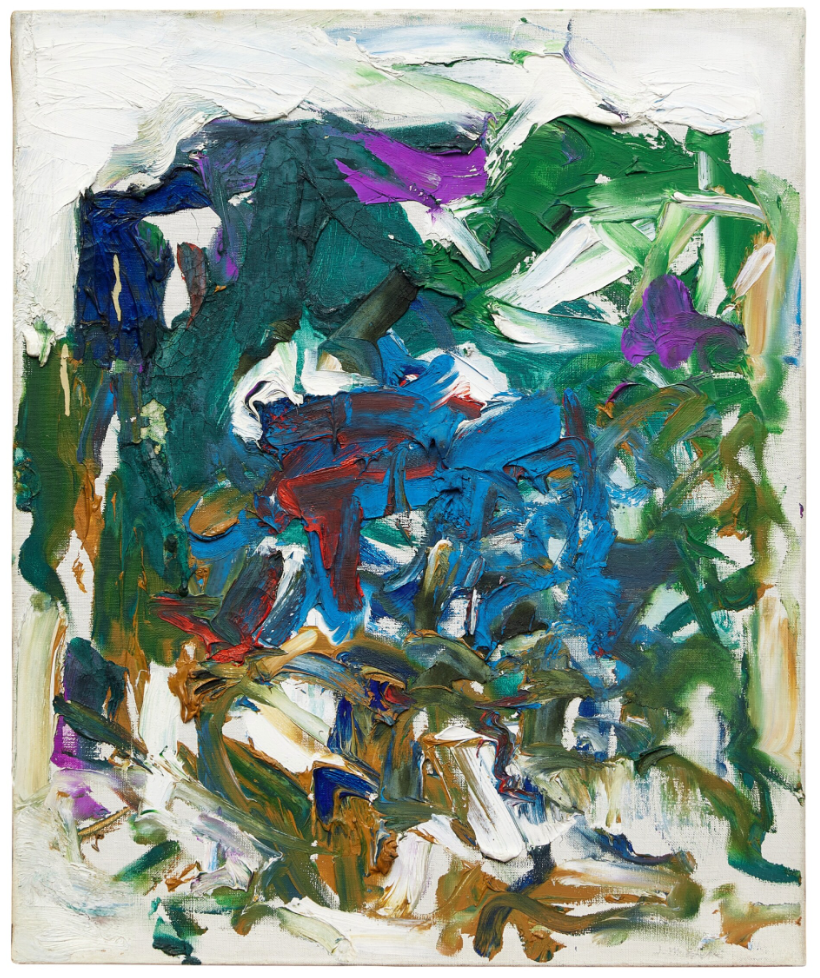
JOAN MITCHELL (1925 – 1992)
Untitled, circa 1964
Oil on canvas
18 1/4 x 15 inches (46.4 x 38.1 cm)
Signed J. Mitchell (lower right)
PART III: FOCUS
Early Paintings
Untitled, 1965
Property from a Private New Jersey Collection
Christie’s New-York: 21 May 2026
Estimated: USD 4,000,000 – 6,000,000
USD 5,382,000
JOAN MITCHELL (1925-1992), Untitled | Christie’s
JOAN MITCHELL (1925-1992)
Untitled, 1965
Oil on canvas
64 x 38-1/4 inches (162.6 x 97.2 cm)
Signed ‘J. Mitchell’ (lower right)
Signed again ‘Mitchell’ (on the reverse)
Painted at an inflection point in Joan Mitchell’s career, Untitled shows an artist at the peak of her powers, deftly developing her own mode of painterly expression. Demonstrating her mastery of color, gesture and movement, this assured abstract composition exemplifies the unique formal language that earned Mitchell the reputation as one of the foremost American painters of her generation.
“I paint from remembered landscapes that I carry with me – and remembered feelings of them, which of course become transformed. I would rather leave nature to itself. I would like more to paint what it leaves me with.”
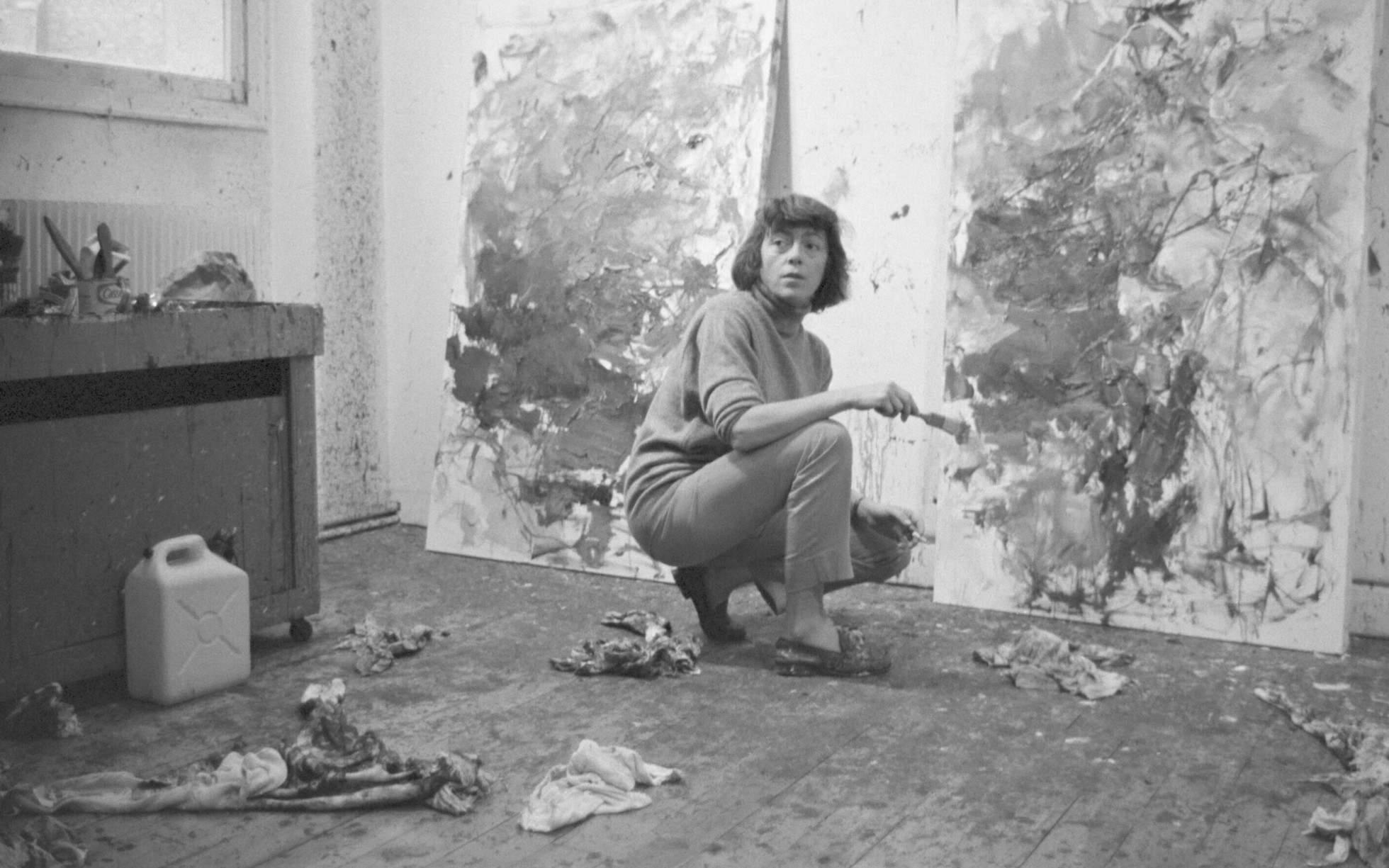
Joan Mitchell in her studio, 1962. Photo: BIOT Jean-Pierre / Paris Match via Getty Images. © Estate of Joan Mitchell.
Painted in 1965, Untitled is characteristic of a group of paintings executed in the first half of the decade that Mitchell described as the ‘new black’ pictures, adding “although there’s no black in any of them.” (J. Mitchell, quoted in J. Ashbery, “An Expressionist in Paris,” ArtNews, April 1965, p. 63). Indeed, the palette is far from monochrome, drawing inspiration from the artist’s lived experience of nature. Vigorous areas of silvery-green emerge against a dusty-white ground, awash with ethereal hints of stoney-grays, peach-pinks and sunset-orange. Cascading down the center of the canvas, tangles of violet and rusty-red brushstrokes interplay with somber hues of cool blue-greens. The gestures are complex and innovative: paint has been flung, smeared, sprayed and washed across the canvas to create a textured terrain that only intensifies the sense of physicality exuding from its surface.
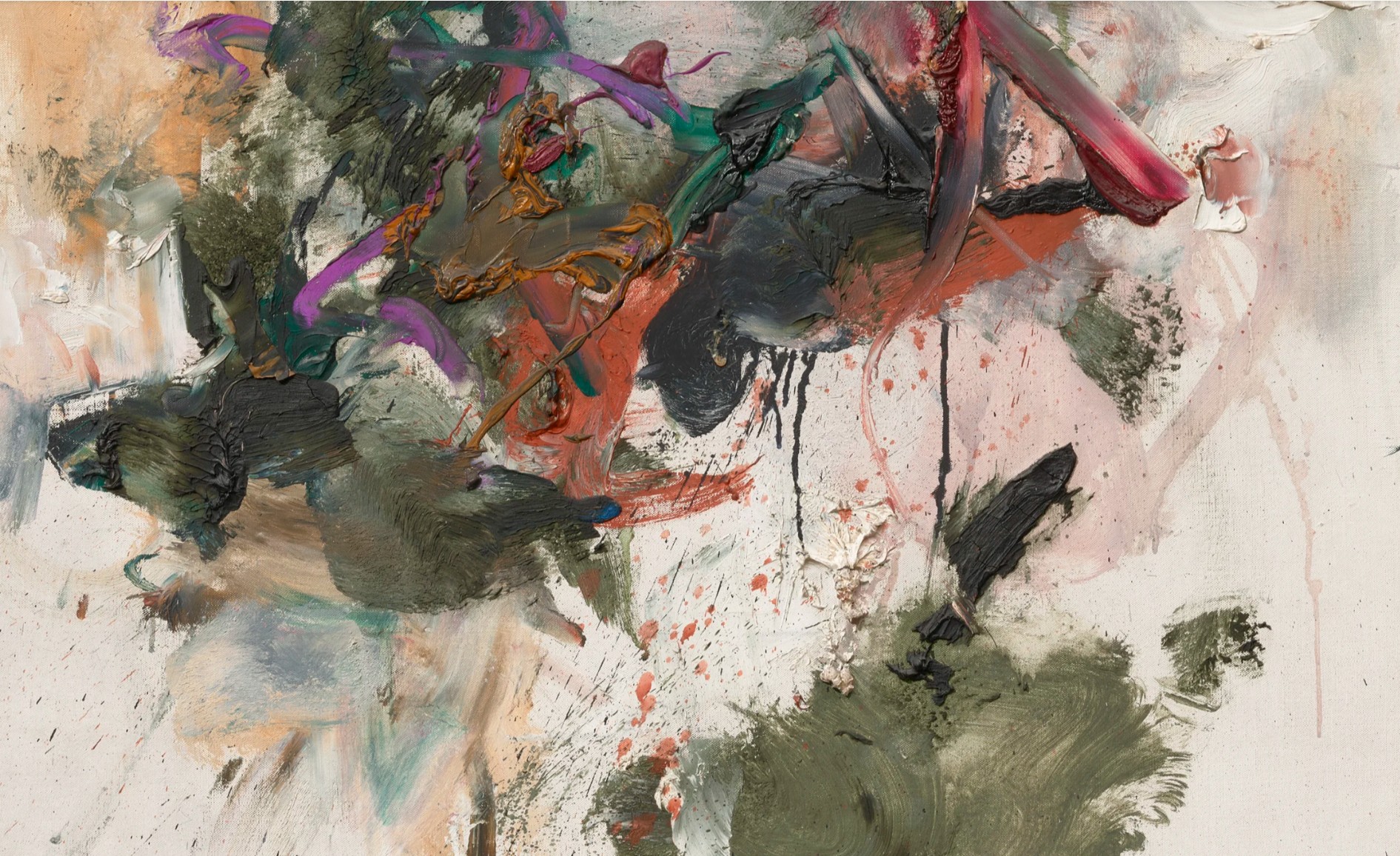
“Joan’s paintings of the mid-sixties,” writes her biographer Patricia Albers, “oppose scruffy atmospheric whiteish areas to hovering of thalo greens, dusty silver greens, cerulean blues, and red violets. Emphatically tactile, they evoke dusk-strangled terrains where light sensuously clings to a green, liquifies a blue, untarnishes a silver. The whole weight of some paintings hangs to one side. Edges are complicated. Here and there heavy bright whites sidle up to greens or blues as if to infringe upon them, yet, for once in Joan’s work, the relationship between figure and ground feels unambivalent” (P. Albers, Joan Mitchell: Lady Painter, New York, 2011, p. 303). Despite the apparent spontaneity of the mark-making, the paintings from this period derive from a contemplative process that belies their energetic brushwork. In contrast to many of her Abstract-Expressionist peers, each gesture was deliberate and highly controlled: after each stroke, she would step back and study it, before moving on.
“I paint from a distance. I decide what I’m going to do from a distance. The freedom in my work is quite controlled; I don’t close my eyes and hope for the best.”
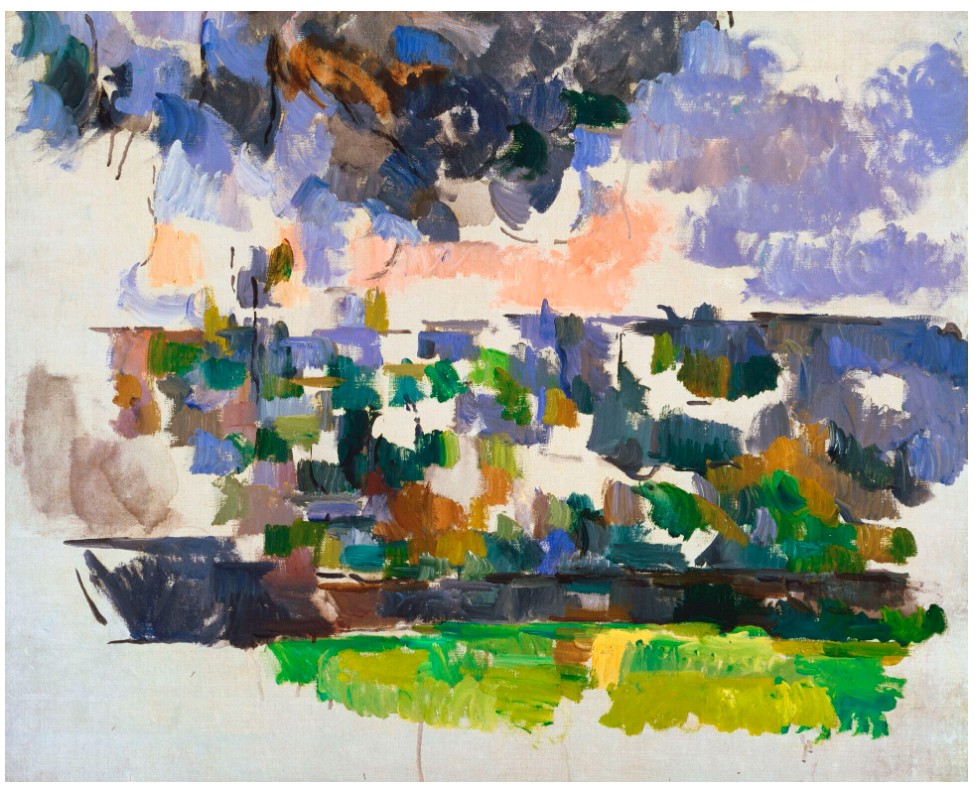
Paul Cezanne, The Garden at Le Lauves, 1906. Phillips Collection, Washington, D.C.
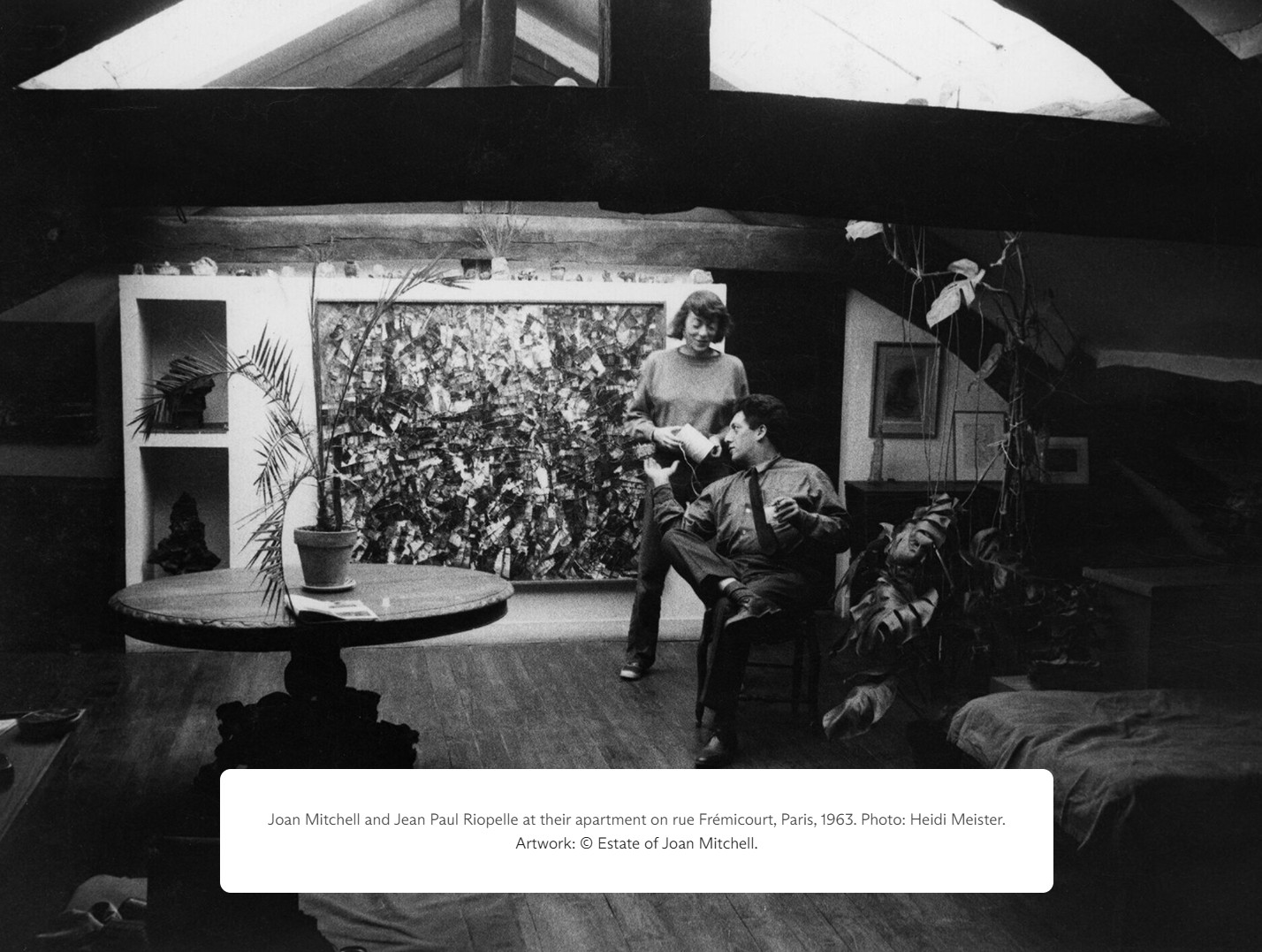
While these ‘new black paintings’ are enlivened with color and a palpable vitality, there is an intensity and seriousness to them that reflects the transitional nature of this period of Mitchell’s life. In 1960, her mother was diagnosed with the cancer that was to take her life six years later, while Mitchell’s father died in 1963. It was also a time when Mitchell was shifting her life away from the U.S., where she was born and raised, towards France, where she would live until her death in 1992. In 1955, she boarded an ocean liner for Europe, planning on spending the summer in Paris. She soon became integrated into a group of artists, authors and poets including the painter Jean-Paul Riopelle, with whom she began a relationship with that would last for over two decades.
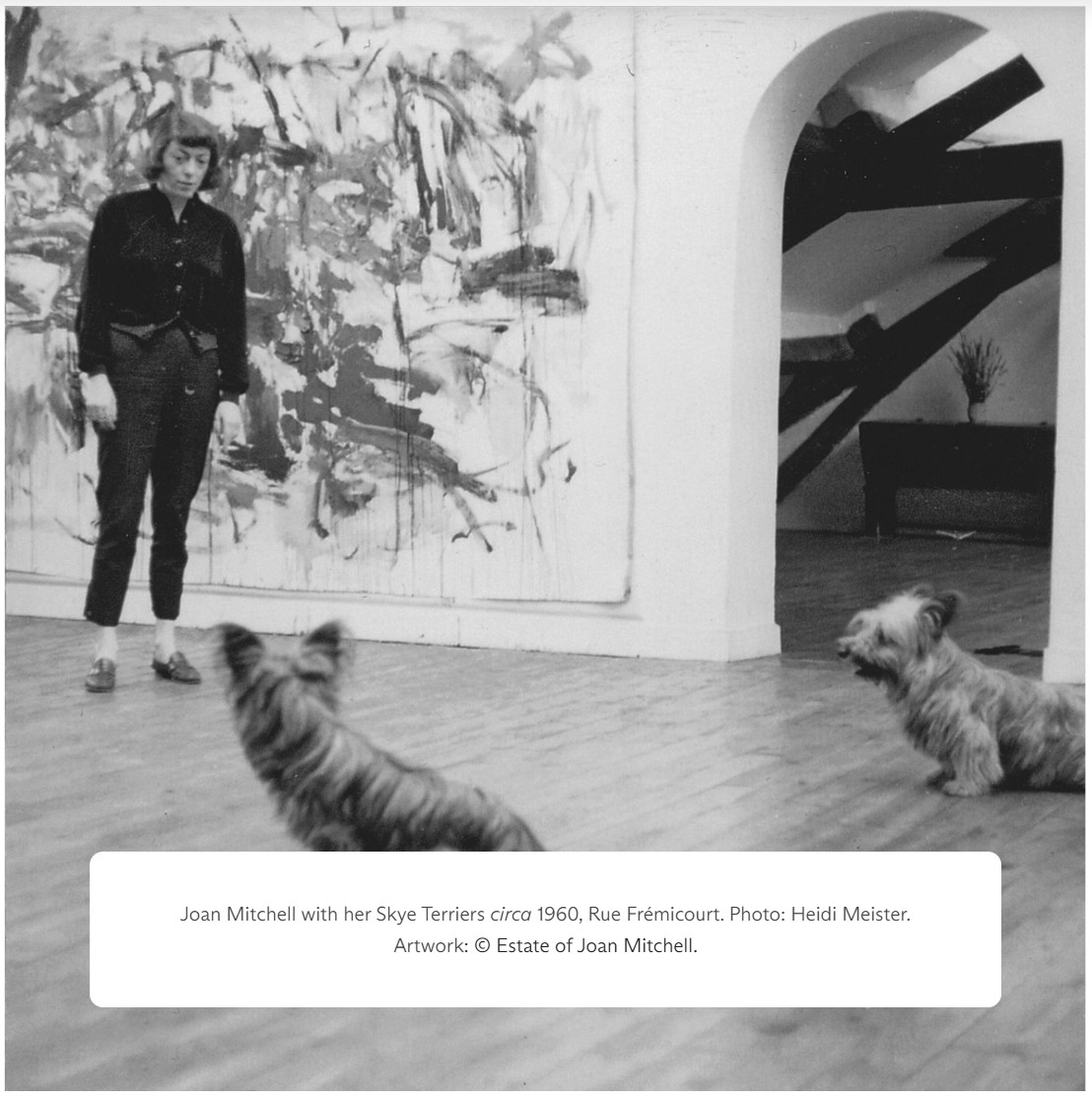
During the late-1950s, Mitchell began to spend her summers on the Cote d’Azur, or sailing on Riopelle’s yacht in the Mediterranean. She would not work while away from her studio but would store up rich visual memories that she would then draw upon in the studio, calling up a sensation that she would then strive to recreate on canvas. It was around this time that she stated that her aim was to capture “that particular thing I want can’t be verbalized…I’m trying for something more specific than movies of my everyday life: To define a feeling.” (J. Mitchell, quoted in J. Ashbery, “An Expressionist in Paris,” ArtNews, April 1965, p. 63)
In 1959, Mitchell decided to move to Paris permanently, taking a studio on Rue Fremicourt in the fifteenth arrondissement – where it is likely this painting was made. The apartment appealed because of its similarity to the loft spaces she had become accustomed to in New York; its spaciousness allowed her to work on several canvases at once. In Paris, distanced from the New York scene and the Abstract Expressionist painters with whom she had socialized and exhibited, Mitchell’s work grew increasingly ambitious and experimental. She would pour, rub, wash and flick paint onto her canvases, conjuring central, colored forms from pale and ghostly surroundings. She was defiantly independent: when asked by art historian Dorothy Seckler about these central dark masses, she replied, “Clement Greenberg said there never should be a central image so I decided to make one.” (Interview of Joan Mitchell, conducted by Dorothy Seckler for the Archives of American Art, Smithsonian Institution, in New York, on May 21, 1965).
In 1965, the year that the present work was painted, Mitchell was the subject of an essay in Art News by the acclaimed American poet and critic John Ashbery. He reflects upon Mitchell’s unwavering commitment to painting at a time when the Pop art was at its height in New York, admiring the fact that she seemed impervious to whichever culture milieu she found herself. “She does not talk much about her work,” he observed, “perhaps not out of reticence, but because the paintings are meaning and therefore do not have a residue of meaning which can be talked about. The recent upsurge of “intellectual” art and the resultant downgrading of Abstract-Expressionism do not particularly surprise or alarm her. Working in Paris, she has always been fairly independent of her fellow artists, American or French, and intends to go on as before” (J. Ashbery, “An Expressionist in Paris,” ArtNews, April 1965, p. 63)
“There’ll always be painters around…It’ll take more than Pop or Op to discourage them—they’ve never been encouraged anyway. So we’re back where we started from. There have always been very few people who really like painting—like poetry.”
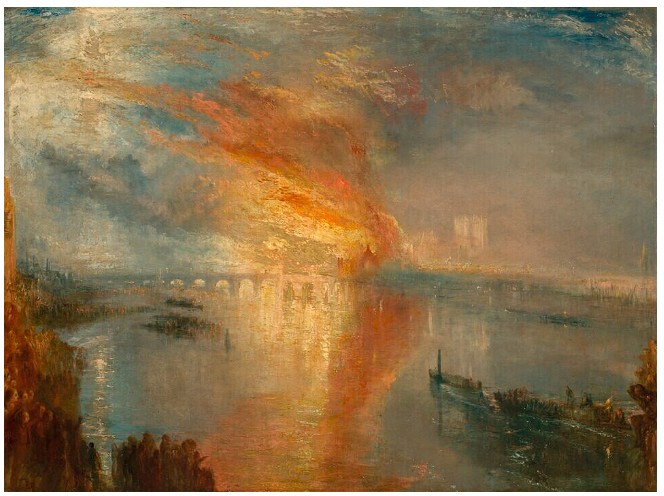
Joseph Mallord William Turner, The Burning of the Houses of Lords and Commons, 16 October 1834, 1835. Cleveland Museum of Art.
Mitchell’s poetic analogy is apt. As Ashbery himself points out, these are not legible paintings in any traditional sense, and yet they manage to convey distinct moods and atmospheres that are timeless evocations of lived feeling and experience. As he puts it, “we move in and out of these episodes, coherent or enigmatic ones, always with a sense of feeling at home with the painter’s language, of understanding what she is saying even when we could not translate it” (J. Ashbery, “An Expressionist in Paris,” ArtNews, April 1965, p. 63). In this respect, Mitchell continues in the tradition of the greatest landscape painters of the past, such as the 19th century painter J.M.W. Turner, who were not interested in making faithful replications of what they saw before them, but rather strove to imbue the painting with a sense of the feeling certain places evoked. As Mitchell once described, “I would rather leave Nature to itself. It is quite beautiful enough as it is. I don’t want to improve it, I certainly never mirror it. I would like more to paint what it leaves me with” (J. Mitchell, quoted in J.I.H. Baur, Nature in Abstraction, exh. cat., Whitney Museum of American Art, New York, 1958, p. 75).
Cherchez l’aiguille, 1958
The Arc of Abstraction: Masterpieces from a Private European Collection
Christie’s New-York: 18 May 2026
Estimated: USD 10,000,000 – 15,000,000
USD 12,135,000
JOAN MITCHELL (1925-1992), Cherchez l’aiguille | Christie’s
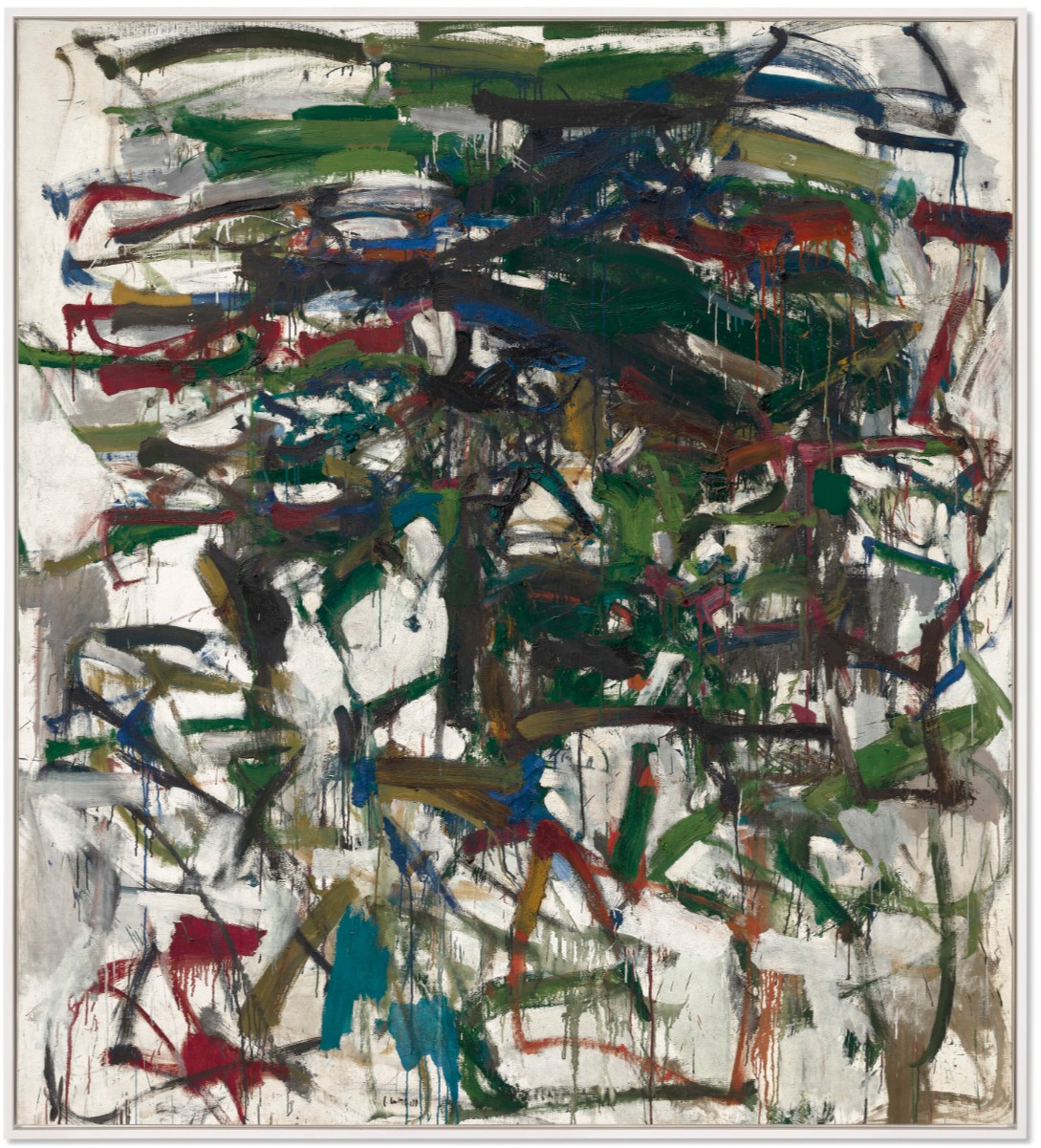
JOAN MITCHELL (1925-1992)
Cherchez l’aiguille, 1958
Oil on canvas
76-1/2 x 69 inches (194.3 x 175.3 cm)
Signed ‘J. Mitchell’ (lower center)
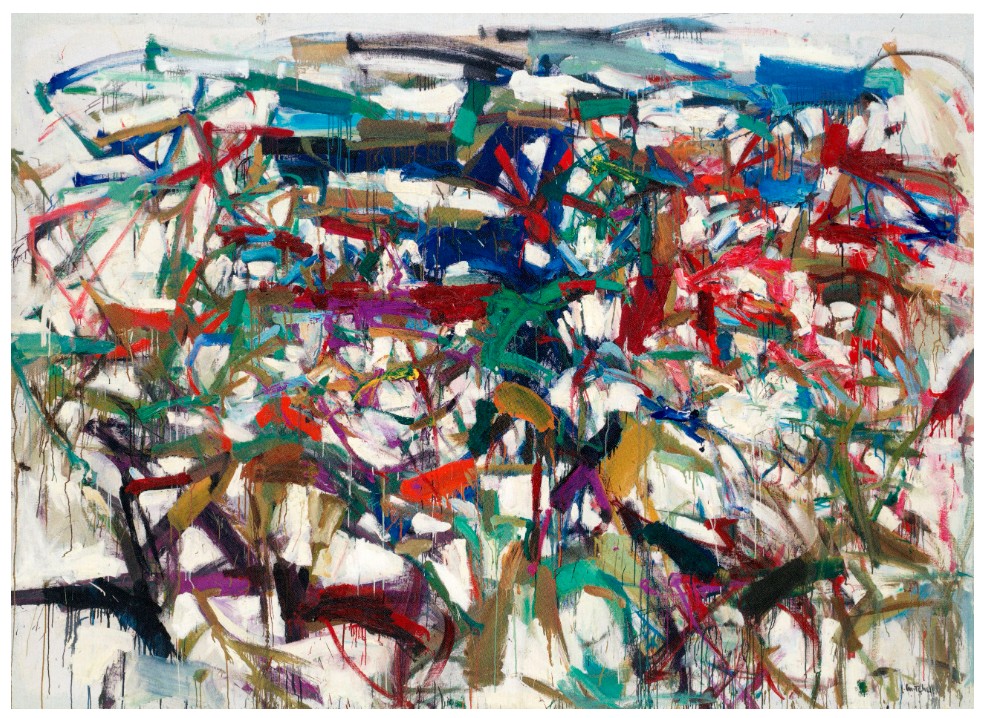
Joan Mitchell’s Cherchez l’aiguille is a remarkable painterly tour de force dating from the critical juncture when the American artist was beginning to fully embrace her adopted French environment. Mitchell’s first voyage to France, in 1947, witnessed her first development into an abstract idiom, incorporating the lessons of Cezanne into her work. Her deep engagement with fellow Abstract Expressionists in New York at the beginning of the 1950s crystallized her approach to painting, as she befriended artists Willem de Kooning and Franz Kline at the Cedar Tavern. Mitchell mastered her technique and consolidated her reputation in the middle of the decade, showing annually at Stable Gallery. As Jane Livingston writes, at the time, “most of her fellow painters felt that Mitchell’s best work of the 1950s established a new high mark in Abstract Expressionist painting” (The Paintings of Joan Mitchell, exh cat., Whitney Museum of American Art, New York, 2002, p. 23). Cherchez l’aiguille reveals Mitchell at the height of her abstract idiom, incorporating her new French influence into her New York School foundations to achieve an exceptional result. Cherchez l’aiguille is a masterpiece of Mitchell’s energetic Abstract Expressionist style, created just before her transition into a more delicate and lyrical style and withdrawn palette that would demarcate her paintings of the 1960s.
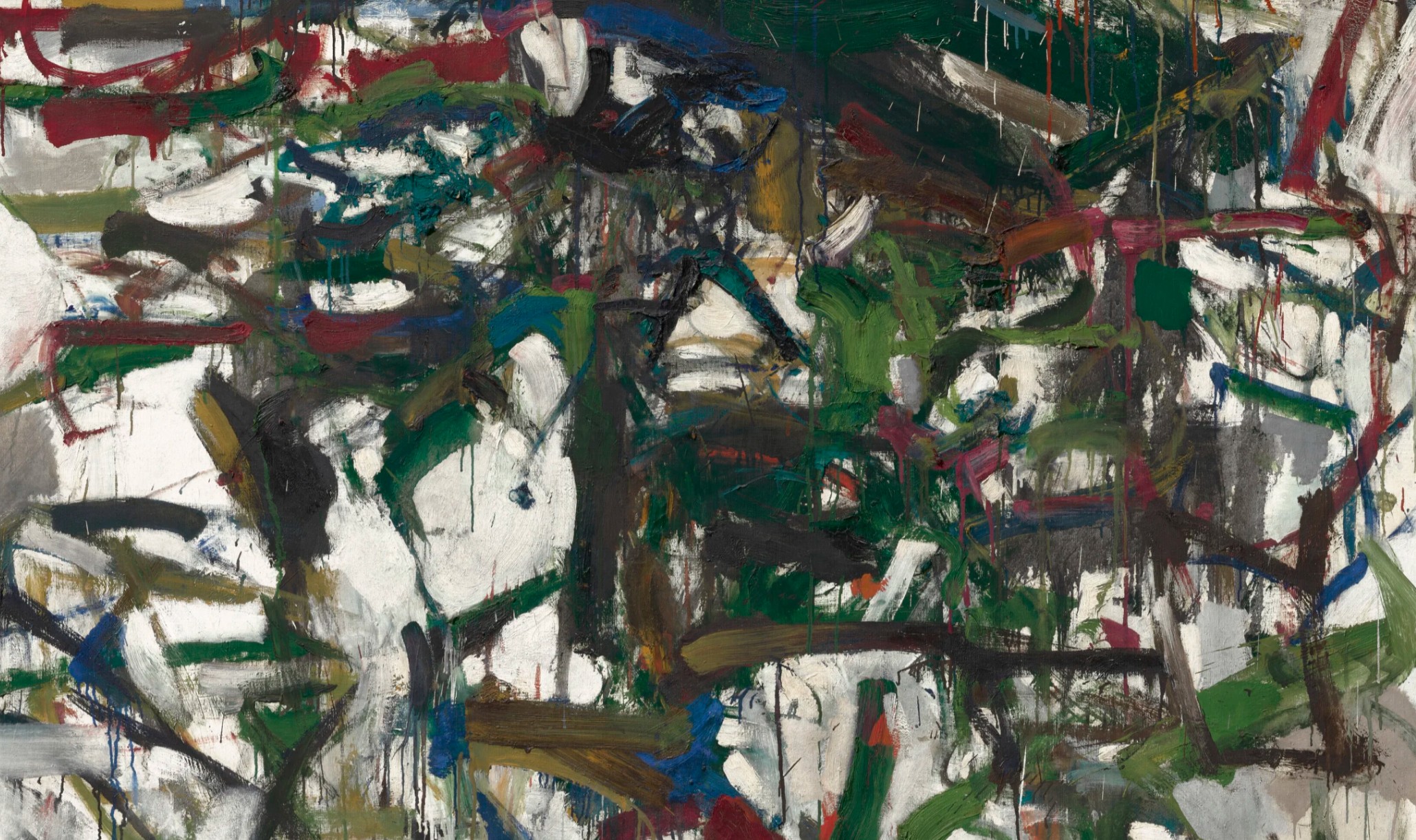
Lyrical ribbons of paint stretch horizontally across the surface of the canvas, building up into a crescendo of pure, unmitigated color. Verdant greens mingle with vibrant reds and bold blues to create a palimpsest of pigments, each stroke a bold thread weaving a rich polychromatic tapestry of paint. The density of strokes is weighted toward the top of canvas, achieving a perfect counterbalance with the more fluid brushwork in the work’s foreground, executed in more diluted paint. The frenzied timbre of Mitchell’s brushwork belies the methodical undertaking of her compositions: as Leo Steinberg comments on the artist’s formal structures: “the artist’s stroke—like a cat’s paw on a truant mouse—descends again to score triumphantly for the willed act as against chance effect” (quoted in J. E. Bernstock, Joan Mitchell, exh. cat., Corcoran Gallery of Art, Washington, D.C., 1988, p. 29). Cherchez l’aiguille builds upon Mitchell’s architectonic expressionism developed earlier in the decade, the work’s forceful brushstrokes now broader and built up in a latticed structure, functioning as lines as well as forms. As the art historian Sarah Roberts writes of Mitchell’s paintings of this period, “these compositions begin to contract toward the center, with leggy right-angle marks creating a sense of spiraling or oscillation” (“Frémicourt,” in Joan Mitchell, exh. cat., San Francisco Museum of Modern Art, 2020, p. 98).
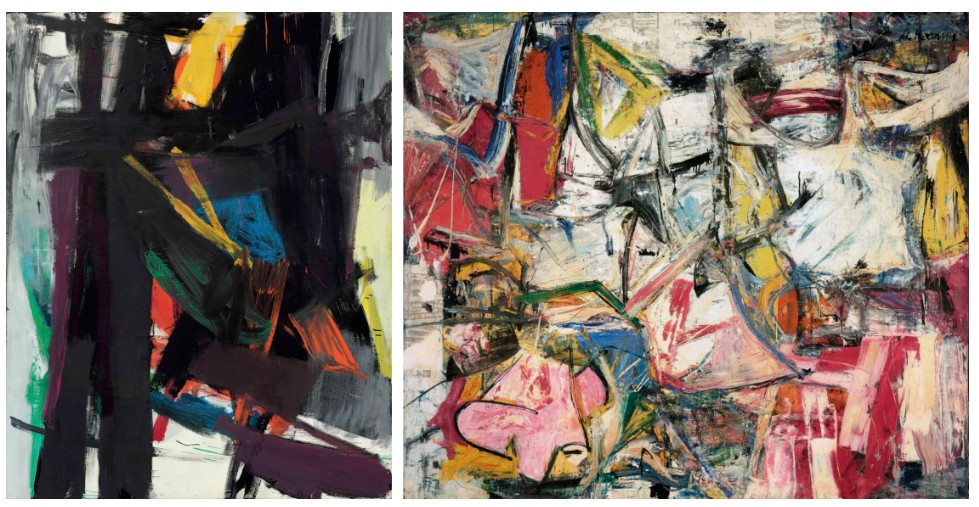
Left: Franz Kline, King Oliver, 1958. Private collection. © 2026 The Franz Kline Estate / Artists Rights Society (ARS), New York.
Right: Willem de Kooning, Gotham News, 1955. Buffalo AKG Museum. © 2026 The Willem de Kooning Foundation / Artists Rights Society (ARS), New York.
The scholar Klaus Kertess identifies 1957, the year prior to Cherchez l’aiguille, as an essential moment in the formation of Mitchell’s mature abstraction: “Mitchell’s mastery was taking full flight into the eclipse of gestural painting. Her work was receiving support that was hardly inconsequential, but the art public’s gaze was more and more shifting elsewhere” (Joan Mitchell, New York, 1997, p. 26). As Kertess acknowledges, as the decade waned, Abstract Expressionism was losing currency in the New York art world, with second- and third-generation abstract painters executing tired derivations of the work of Jackson Pollock, Willem de Kooning, and Franz Kline. Mitchell avoided this aesthetic exhaustion through her determined exposure to new sources of inspiration, most significantly in France. The art critic William Rubin noted in his review of the School of New York: Some Younger Artists exhibition at Stable Gallery, which opened in December of 1959, how “the only really refreshing painter working in this vein [Abstract Expressionism]… is Joan Mitchell and it may be significant that this exception is a painter who for some years has lived in Paris… her work retains a freshness that one misses in her near counterparts in New York” (quoted in É. De Chassey, “A Country of Her Own: Joan Mitchell and France, 1948-1967,” in Joan Mitchell, op. cit., 2020, p. 94).
The present work was the centerpiece of Joan Mitchell’s first European exhibition, at Galerie Neufville in 1960, following its tour in the seminal traveling group exhibition Vitalità nell’arte—originating at Palazzo Grassi in Venice before touring to the Stedelijk Museum, Amsterdam and the Kunsthalle, Recklinghausen—which was one of the first public exhibitions of international abstraction in Europe. This exhibition was co-curated by Willem Sandberg and Count Paolo Marinotti, and is considered one of the first curated exhibitions of contemporary art in Europe and “a significant event in the postwar art world” (K. Handberg, “Vitalitá nell’arte: An Entry into the Trans-European Birth of the Contemporary Art Exhibition?,” Konsthistorisk tidskrift, vol. 81, no. 1, 2020, p. 2). Beyond his curatorial contributions, Marinotti was an art collector and dealer, becoming an early champion of Abstract Expressionism in Europe and eventually holding one of the most significant collections in Europe. The count had just acquired Cherchez l’aiguille, along with another work by Joan Mitchell, Mephisto (1958; Centre Pompidou, Paris), and included both in the exhibition, along with two Jackson Pollocks from his collection. Marinotti, along with his social companion, Princess Ira von Fürstenberg, lived with the present work for decades alongside masterpieces by Pollock, Roy Lichtenstein, and Mark Rothko.
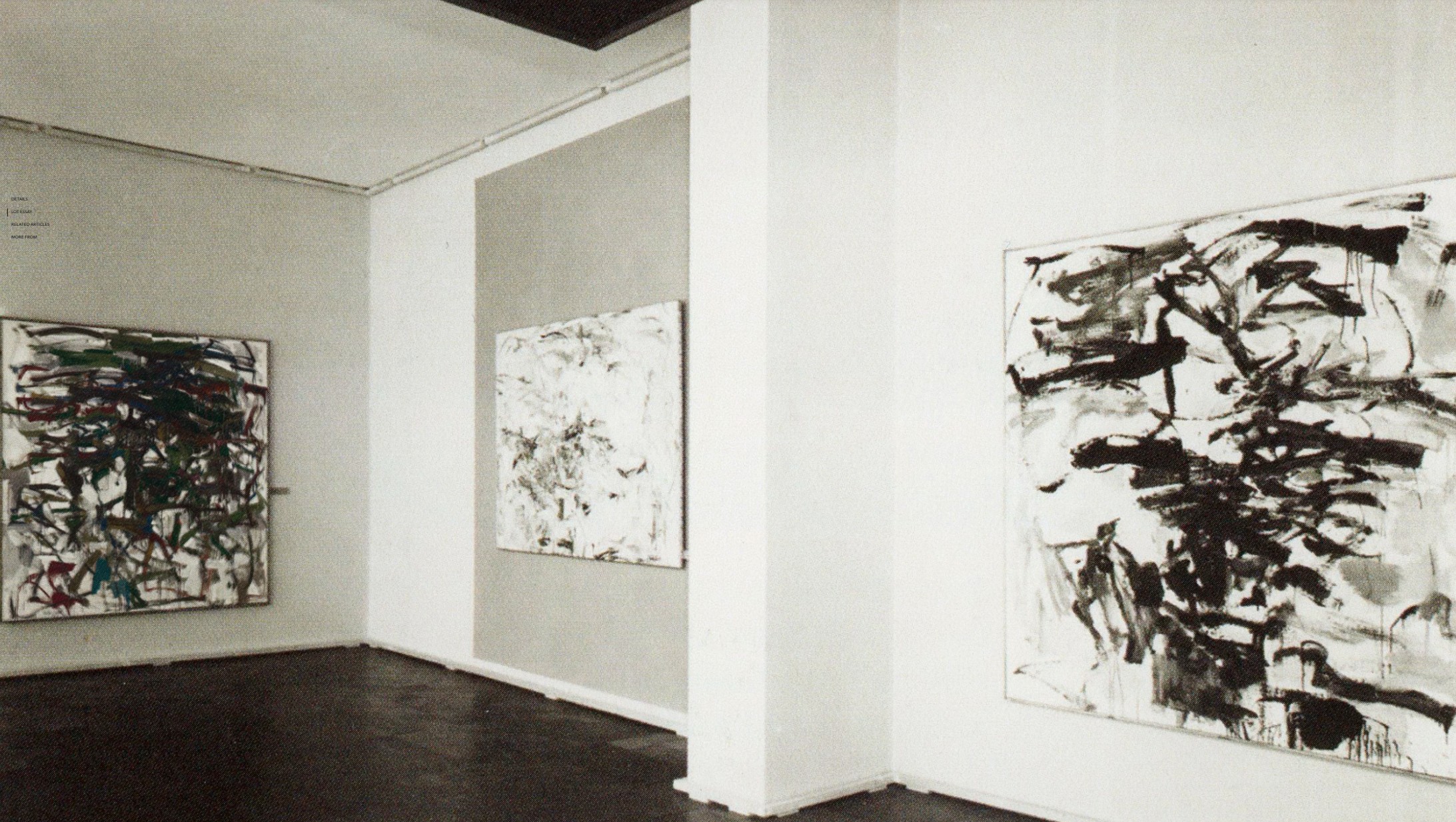
Installation view, Centro internazionale delle arti e del costume, August 1959 – January 1960. Palazzo Grassi, Venice.
Far left, the present work; far right, Mephisto, 1958, Centre Pompidou, Paris. Artwork: © Estate of Joan Mitchell.
Cherchez l’aiguille epitomizes Mitchell’s embrace of French influences, particularly that of the ‘non-figuration’ school which sought to express grounded, worldly experiences through abstraction. Mitchell here concentrates her gestural color through broader, more economic strokes on a neutral background, revealing an affinity to the work of the French artist Simon Hantaï. The present work similarly reveals the potent influence of her most significant French interlocutor, the Québécois painter Jean-Paul Riopelle. After meeting in Paris in 1955, the two artists became lovers and close collaborators, incorporating the other’s style into their own work. This dual influence is revealed in a letter which Mitchell sent to Riopelle around the time the present work was made in 1958: “last night I painted eight pictures on paper… some were grey and dark [and] had an influence of someone I know in Paris—including a palette knife” (quoted in ibid., p. 90).
Joan Mitchell, Ladybug, 1957. Museum of Modern Art, New York. © Estate of Joan Mitchell.
After years of determined effort, the thirty-three-year-old American finally received her first solo show at Galerie Neufville in 1960, with Cherchez l’aiguille as its centerpiece. Joan Mitchell, curated by the gallery’s owner, Laurence Rubin—whose brother William Rubin reviewed Mitchell’s New York shows so favorably—established the artist’s reputation as one of the leading lights of abstract painting across the continent. The esteemed critic Pierre Restany praised Mitchell for being so distinct from the “anonymous crowd of New York Action painters,” thanks to her virtuoso orchestration of color and harnessing of the spontaneity of gesture with a measure of control. Restany concluded by praising Mitchell’s “organic consistency and internal order rarely equaled in Abstract Expressionism” (quoted in S. Roberts, op. cit., p. 98). The anonymous reviewer in Connaissance des arts similarly celebrated Mitchell as a “painter of gesture,” whose painting “suggests landscapes through intertwined lines and colors of soft light” (“Les expositions à Paris,” Connaissance des arts 98, April 1960, p. 41). The review mentions only Cherchez l’aiguille by name, remarking on the work’s “humorous title” and its connection to Claude Monet and Vincent van Gogh by the title’s association with haystacks (ibid.).
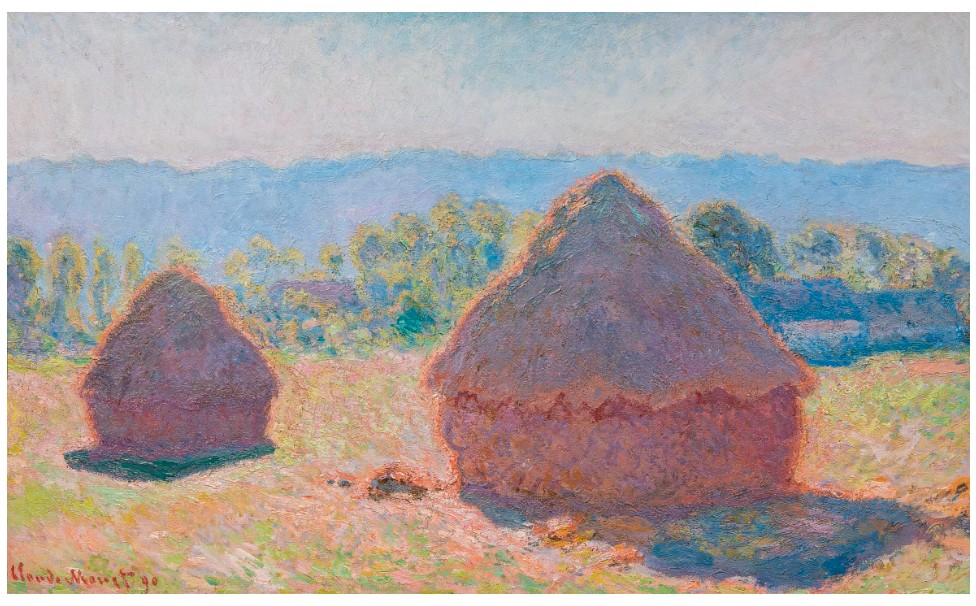
Claude Monet, Grainstacks in bright Sunlight, 1890. Hill-Stead Museum, Farmington, Connecticut.
Cherchez l’aiguille, translating to the imperative phrase “find the needle,” is taken after the common French figurative expression “chercher une aiguille dans une botte de foin,” meaning to look for a needle in a haystack. Conjuring the sense of futility in the titular phrase, Mitchell turns the expression into a demand, exercising her reader to delve into the depths of her dense brushstrokes and mesmeric colors. Pondering the meaning of Mitchell’s titles, the philosopher and critic Linda Nochlin writes: “Almost all of Mitchell’s canvases were titled after the fact, not before. Far from being a painter who worked sur le motif, like Monet or Cezanne, one might say that Mitchell was a painter who worked the motif in after. She discovered analogies to some thing, place, idea or feeling after she completed the work, not before. Many of the titles are facetious or arcane… Some of them are flatly descriptive… but all of them are aware of what art critic Barbara Rose denominated the ‘struggle between coherence and wild rebellion.’ That is, if anything, what Mitchell’s paintings are ‘about’” (“Joan Mitchell: A Rage to Paint,” in J. Livingston, The Paintings of Joan Mitchell, exh cat., Whitney Museum of American Art, New York, 2002, p. 58). Finding her footing in France, Mitchell was able to look into the present work to see the future path of her stylistic development; finding the needle out from the haystack, she takes her first steps toward the stylistic shifts which would mark the remainder of her career.
Untitled, 1957-1958
Estimated: USD 10,000,000 – 15,o00,000
USD 14,290,000
Untitled, 1957-1958
Oil on canvas
81 1/4 x 108 1/2 inched (206.4 x 275.6 cm)
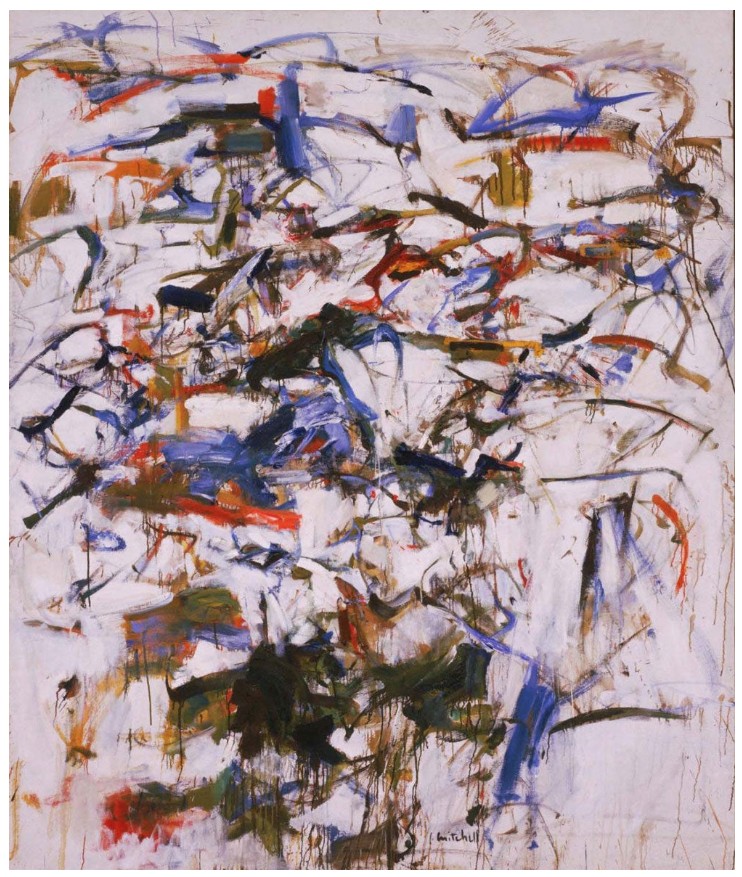
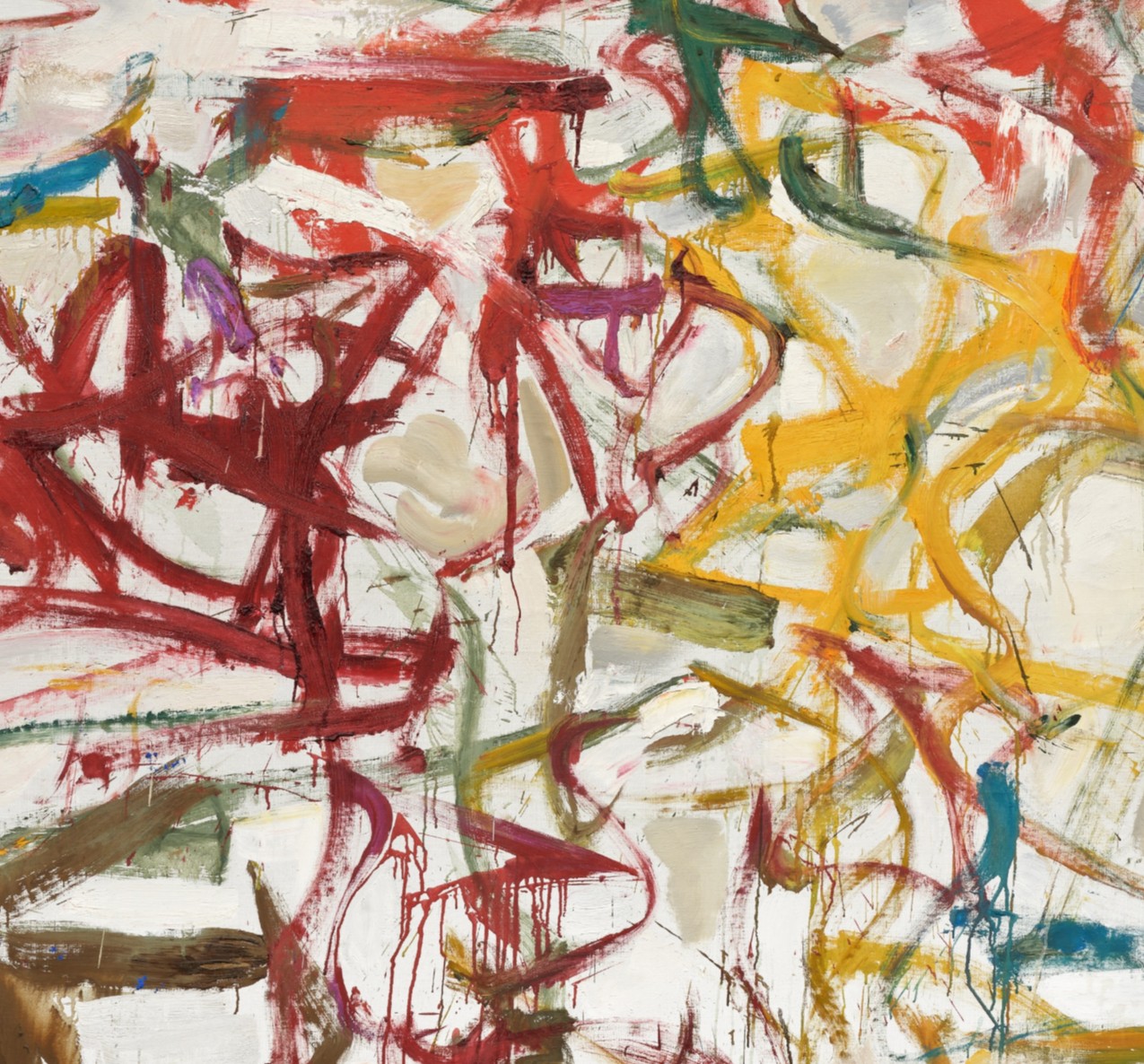
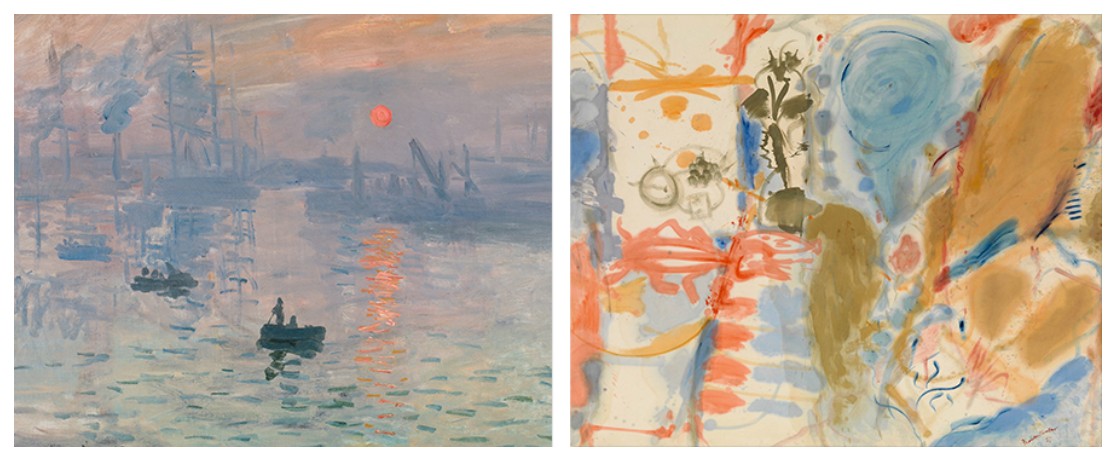
[Right] Helen Frankenthaler, Western Dream, 1957. The Metropolitan Museum of Art, New York. Artwork: © 2025 Helen Frankenthaler Foundation, Inc. / Artists Rights Society (ARS), New York
“I am very much influenced by nature as you define it. However, I do not necessarily distinguish it from ‘man-made’ nature—a city is as strange as a tree… I could certainly never mirror nature. I would like more to paint what it leaves me with.”
“I paint from a distance. The freedom in my work is quite controlled.”
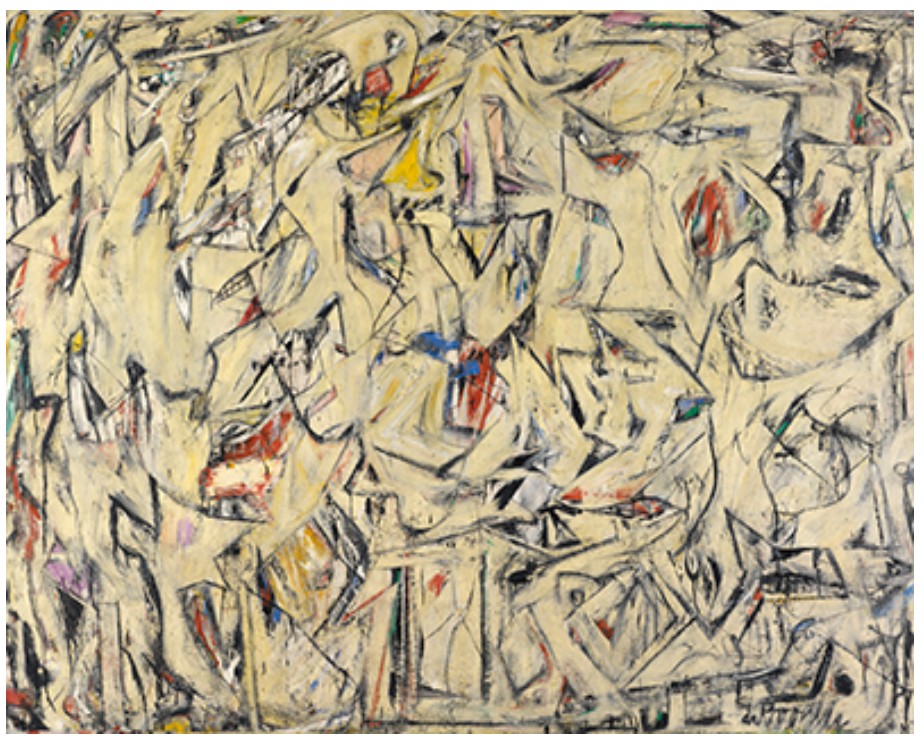
Artwork: © 2025 The Willem de Kooning Foundation/Artists Rights Society (ARS), New York
Although geographic distance separated her from the American art scene, Mitchell’s reputation endured and grew. Untitled embodies both ferocity and grace, chaos and composure. In its charged equilibrium, it captures the essence of Mitchell’s art: a fusion of intellect and instinct, memory and motion, rendered in paint as alive and immediate as the world it evokes.
Untitled, 1950
Sotheby’s New-York: 16 May 2025
Estimated: USD 600,000 – 800,000
USD 635,000
Untitled | Contemporary Day Auction | 2025 | Sotheby’s
JOAN MITCHELL (1925 – 1992)
Untitled, 1950
Oil on canvas
18×24 inches (45.7 x 61 cm)
Signed (lower right)
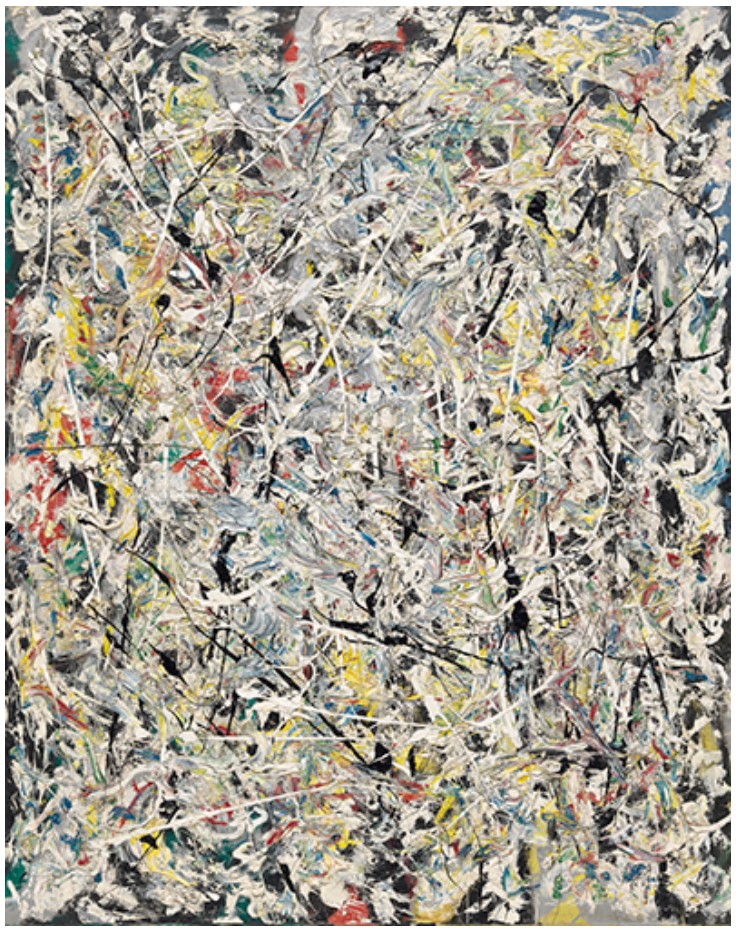
A superlative example of Joan Mitchell’s earliest explorations into abstraction, Untitled from 1950 captures the unfettered energy and raw, painterly spirit that would come to define her career. Acquired directly from the artist after its creation as a gift to her close friend Joanne Von Blon, with whom Mitchell shared a deep and enduring bond, Untitled has remained in the same family collection ever since. Further testifying to the importance of the work in Mitchell’s oeuvre, Untitled was exhibited at the Walker Art Center’s 1999 exhibition The Nature of Abstraction: Joan Mitchell Paintings, Drawings and Prints. Offering a rare example of the artist’s formative period in New York City and the enduring influence of the Abstract Expressionist that Mitchell spun into a style entirely her own, Untitled is an enduring testament to the language of abstraction that Mitchell championed as one of the foremost icons of twentieth century art.
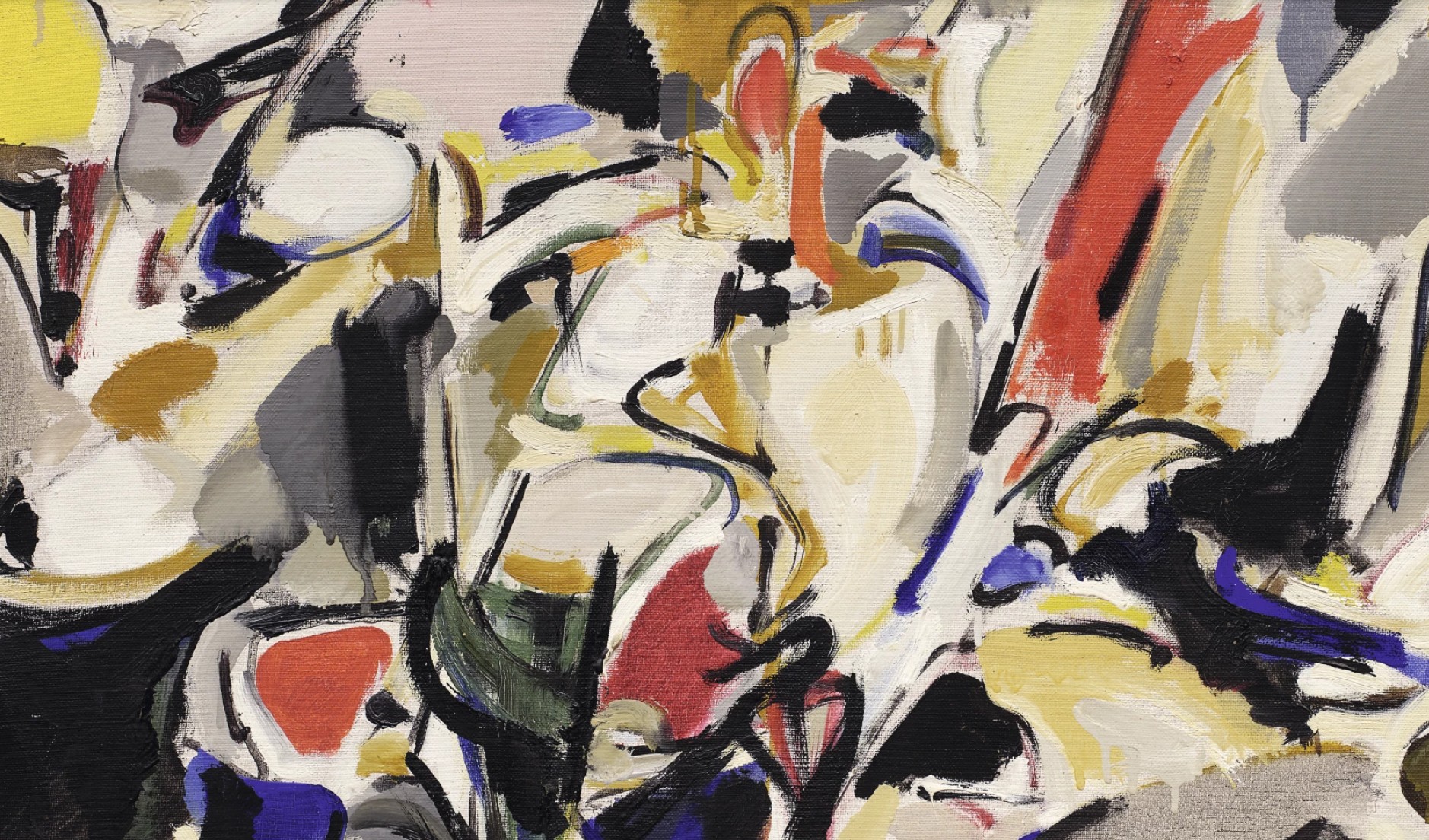
Executed shortly after Mitchell completed her studies at the School of the Art Institute of Chicago and spent time in Paris on a fellowship, Untitled reveals a young painter already immersed in the language of gestural abstraction. Although Mitchell would go on to establish her own distinctive vocabulary—characterized by lush fields of color and calligraphic brushwork—here we see her grappling with the lessons of her contemporaries and forebears after becoming immersed in the New York scene. The painting’s dynamic surface, populated by looping lines, abrupt bursts of color, and moments of bare canvas, speaks to the influence of early Abstract Expressionism, yet also signals Mitchell’s refusal to be constrained by any single movement or school.
In Untitled, passages of vibrant red, deep cobalt, moss green, and ochre punctuate an airy ground, animated by swift, decisive brushstrokes. Forms appear and dissolve with rhythmic vitality, suggesting the fleeting impressions of a remembered landscape or the turbulence of internal emotion. Black arcs and slashes carve through the composition, anchoring the more ethereal elements and imparting a sense of underlying structure. The relatively intimate scale of the work—unusual for an artist later celebrated for her monumental canvases—heightens the immediacy and physicality of Mitchell’s mark-making. Each gesture feels urgent, alive, and distinctly personal.
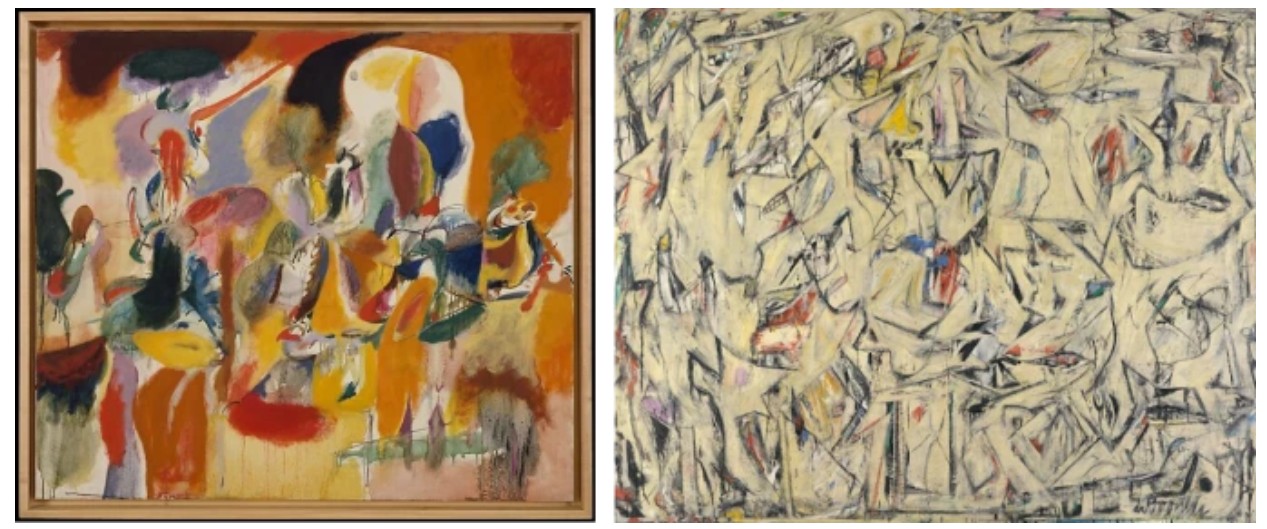
Left: Arshile Gorky, Water of the Flowery Mill, 1944. The Metropolitan Museum of Art, New York. Art © 2025 The Arshile Gorky Foundation / Artists Rights Society (ARS), New York.
Right: Willem de Kooning, Excavation, 1950. The Art Institute of Chicago. Art © 2025 The Willem de Kooning Foundation / Artists Rights Society (ARS), New York
This early painting is particularly remarkable for the clarity with which it anticipates themes that would resonate throughout Mitchell’s later work: a profound engagement with nature, an insistence on the emotional force of color and gesture, and an abiding tension between spontaneity and compositional control. Unlike the heavy impasto associated with her later French paintings, here Mitchell allows the texture of the canvas itself to play an active role in the composition, creating a dynamic interplay between painted and unpainted surfaces. This openness of ground would remain a key aspect of her work well into the 1950s and early 1960s.
The year 1950 marks a critical threshold in Mitchell’s life and career. Having returned to New York from her European travels, she was quickly absorbed into the vibrant milieu of the downtown scene, forging connections with leading figures of the New York School. Yet even as she absorbed the influence of artists such as Willem de Kooning and Franz Kline, Mitchell’s work remained singularly her own, marked by a lyricism and emotional directness that set her apart from her peers. Untitled offers rare and compelling evidence of Mitchell’s vision at this early juncture, balancing the bravura brushwork of the emerging Abstract Expressionist movement with a sensitivity to light, space, and memory that would become hallmarks of her mature style.
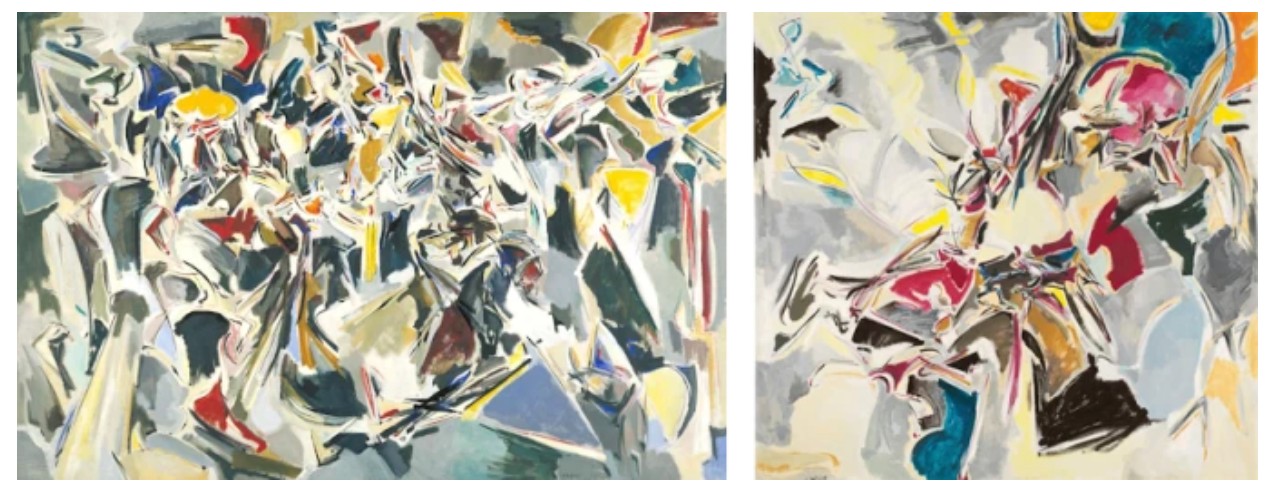
Left: Joan Mitchell, Cross Section of a Bridge, 1951. Nakanoshima Museum of Art, Osaka.
Right: Joan Mitchell, Lyric, 1951. Frances Lehman Loeb Art Center, Vassar College, Poughkeepsie. Art © Estate of Joan Mitchell
Coming from the distinguished collection of Joanne Von Blon, where it has remained since being gifted by the artist just after its conception for nearly 75 years, Untitled stands as one of the most significant paintings to emerge from the collection of one of Mitchell’s closest friends and a lifelong and passionate supporter of the arts. Their friendship, which blossomed during their college years and endured across decades, was marked by a shared love of literature, music, and the natural world—sources of inspiration that would continually inform Mitchell’s practice. Untitled stands as a rare and luminous record of an artist on the cusp of her radiant exploration into the language of abstraction. Full of the restless energy and searching spirit that characterize Mitchell’s finest work, it offers collectors a unique opportunity to engage with one of the 20th century’s most formidable talents at a pivotal moment of artistic discovery.
Series July 25 (V), 1966
Christie’s New-York: 14 May 2025
Estimated: USD 500,000 – 700,000
USD 1,320,700
JOAN MITCHELL (1925-1992), Series July 25 (V) | Christie’s
JOAN MITCHELL (1925-1992)
Series July 25 (V), 1966
Oil on canvas
13×14 inches (33 x 35.5 cm)
Signed ‘J. Mitchell’ (lower right)
This beautiful painting is one of five known works from a series titled Series July 25, which Joan Mitchell painted in 1966 following the untimely passing of Frank O’Hara. O’Hara’s death, after being struck by a car on Fire Island, was a devastating loss to the artistic community in New York City. Not only was he the leading poet of the New York School, he was also an influential art critic for Art News, and a curator of paintings and sculpture at the Museum of Modern Art. As Larry Rivers said in his eulogy for O’Hara, at the poet’s funeral two days after his passing, “Frank O’Hara was my best friend. There are at least sixty people in New York who thought Frank O’Hara was their best friend.” In many ways, Joan Mitchell likely considered herself part of that sixty.
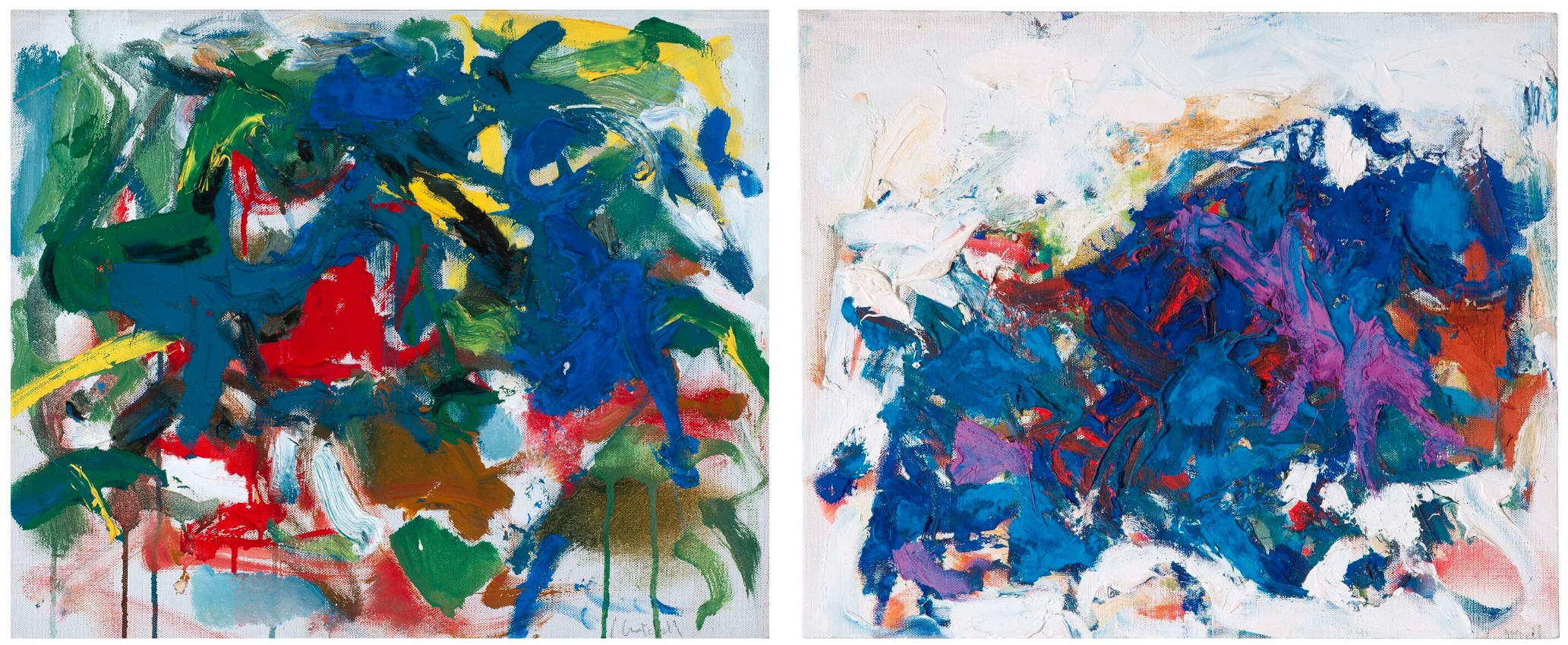
Left: Joan Mitchell, Series July 25 I, 1966. Gibbes Museum, Charleston. © Estate of Joan Mitchell, New York. Image courtesy of The Gibbes Museum of Art / Carolina Art Association.
Right: Joan Mitchell, Series July 25 IV, 1966. © Estate of Joan Mitchell, New York.
Since they first met in the early 1950s, O’Hara was a constant inspiration to Joan Mitchell. They were artists in arms, intellectual companions, and close friends. Mitchell titled numerous paintings after poems by O’Hara, before and after his death, including Crow Hill (1966) and To the Harbormaster (1957). Joan grew up in the society of poets, thanks to her mother, and she felt clearly comfortable in the proximity of O’Hara’s wit and intellect. As Patricia Albers wrote in her biography of Mitchell, “Frank was as devoted to painting, including Joan’s, as Joan was to poetry, very much including that of ‘Genius Frank’. His selfless generosity and marvelous outpourings of affection touched her. In some ways they were alike: both drank prodigiously, adored New York, relished playing the irritator, and shifted the energy of a room when they entered” (P. Albers, Joan Mitchell: Lady Painter, New York, 2011, p. 308).
The Series July 25 paintings are all approximately the same size, and at one point or another passed through Martha Jackson Gallery, where Joan began showing in 1968 after breaking away from Eleanor Ward’s Stable Gallery. Other examples include Series July 25 (I), which resides in the collection of The Gibbes Museum of Art, and Series July 25 (IV), which sold at Sotheby’s in 2016.
City Landscape, 1955
Christie’s New-York: 19 November 2024
Estimated: USD 15,000,000 – 20,000,000
USD 17,085,000
JOAN MITCHELL (1925-1992), City Landscape | Christie’s
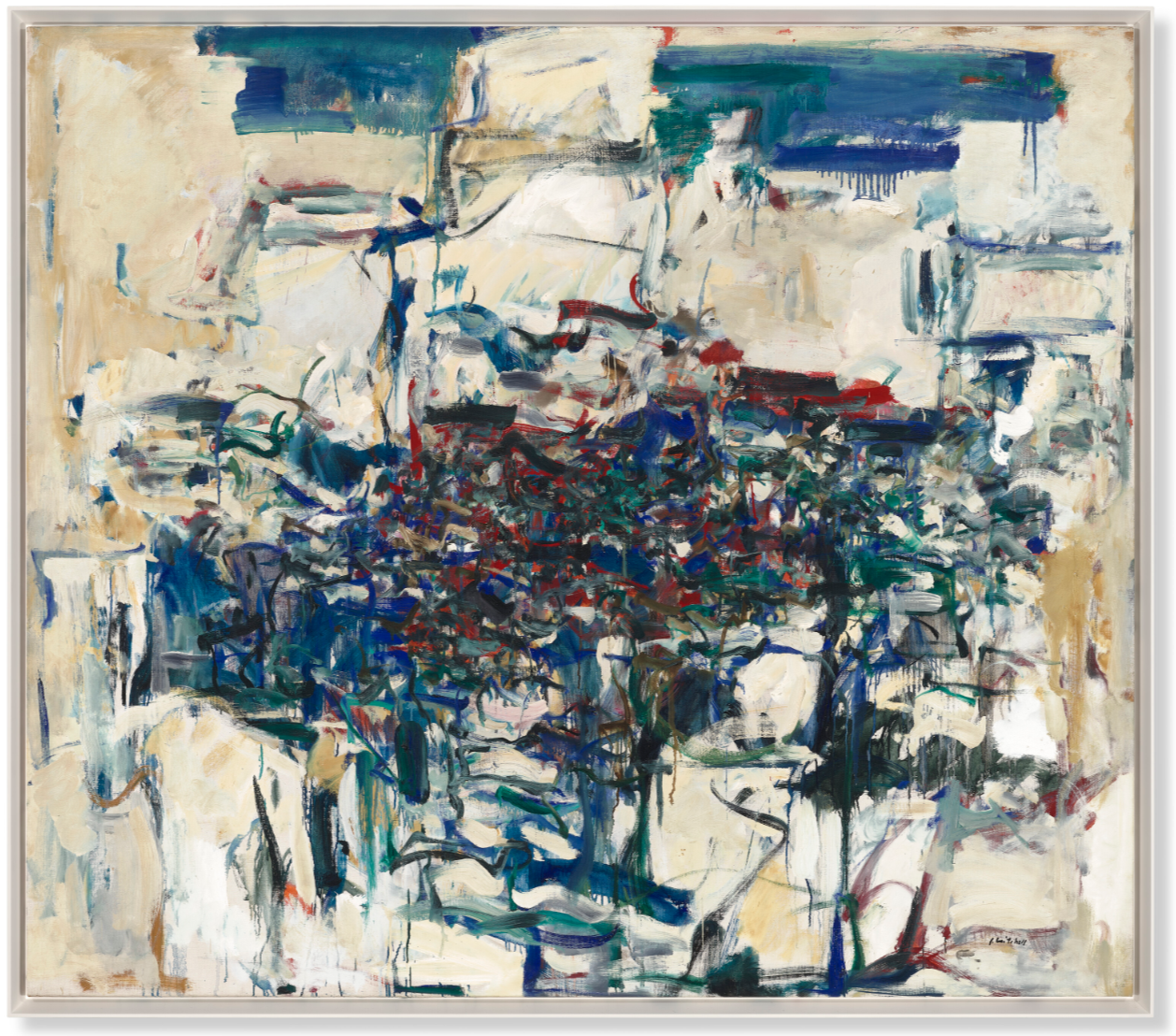
JOAN MITCHELL (1925-1992)
City Landscape, 1955
Oil on canvas
64 1/2 x 73 1/2 inches (163.8 x 186.7 cm)
Signed ‘J. Mitchell’ (lower right)
Painted in 1955, Joan Mitchell’s City Landscape is an iconic masterpiece from a pivotal period in the artist’s oeuvre. Two years earlier, the artist was still searching for her nascent style and had limited herself to a palette of muted grays, but by the time she executed the present work the intensity of her painterly powers was in full force. City Landscape contains the most significant colors of her arsenal: cobalt blue, scarlet red, teal, turquoise, and black, which cluster at the center and are swathed on all sides by passages of pearlescent white. Together with Hudson River Day Line (1955, McNay Art Museum, San Antonio) and The Lake (1955, Shizuoka Prefectural Museum of Art), the present work ranks among the best paintings from this important period and a structurally similar painting, also titled City Landscape, now resides in the Art Institute of Chicago.
This exceptional and rare painting was acquired directly from Eleanor Ward’s Stable Gallery in 1958 by David Rockefeller who, in conjunction with the legendary curator Dorothy Miller, and Museum of Modern Art director Alfred H. Barr, had started to build an art collection for Rockefeller University in New York. Working closely with the architect Wallace Harrison, who had been involved with the development of Rockefeller Center, the United Nations, and the Metropolitan Opera, Rockefeller was determined to create an environment that encouraged innovation and collaboration amongst students and staff. Encouraged by Barr and Miller, Rockefeller sought out work by artists who challenged convention and City Landscape fulfilled the brief perfectly. It became one of their most significant acquisitions and stood as a cornerstone of the collection for over fifty years.
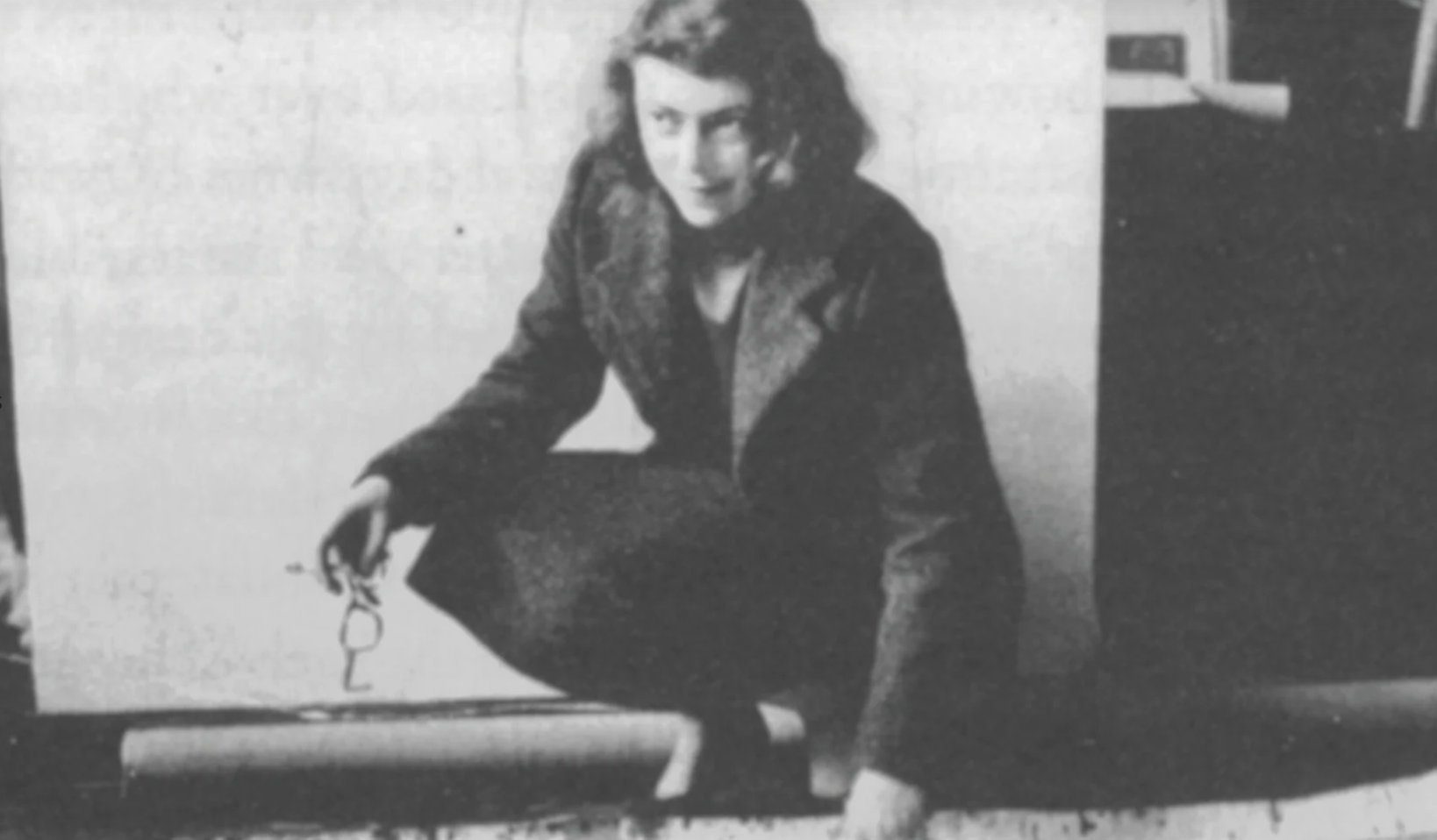
Joan Mitchell in Paris, 1955. Photo: Sam Francis. © 2024 Sam Francis Foundation, California / Artists Rights Society (ARS), New York. Artwork: © Estate of Joan Mitchell.
Rockefeller felt strongly that striving for excellence should drive all who worked at the University, professors and students alike, and should be reflected in all areas, both academic and physical. The present painting is one of the foremost examples of Joan Mitchell’s mid-century paintings, standing today as a vivid reflection of Rockefeller’s deeply held belief. It remains a testament to the visionary aims that have long defined what is a truly remarkable institution.
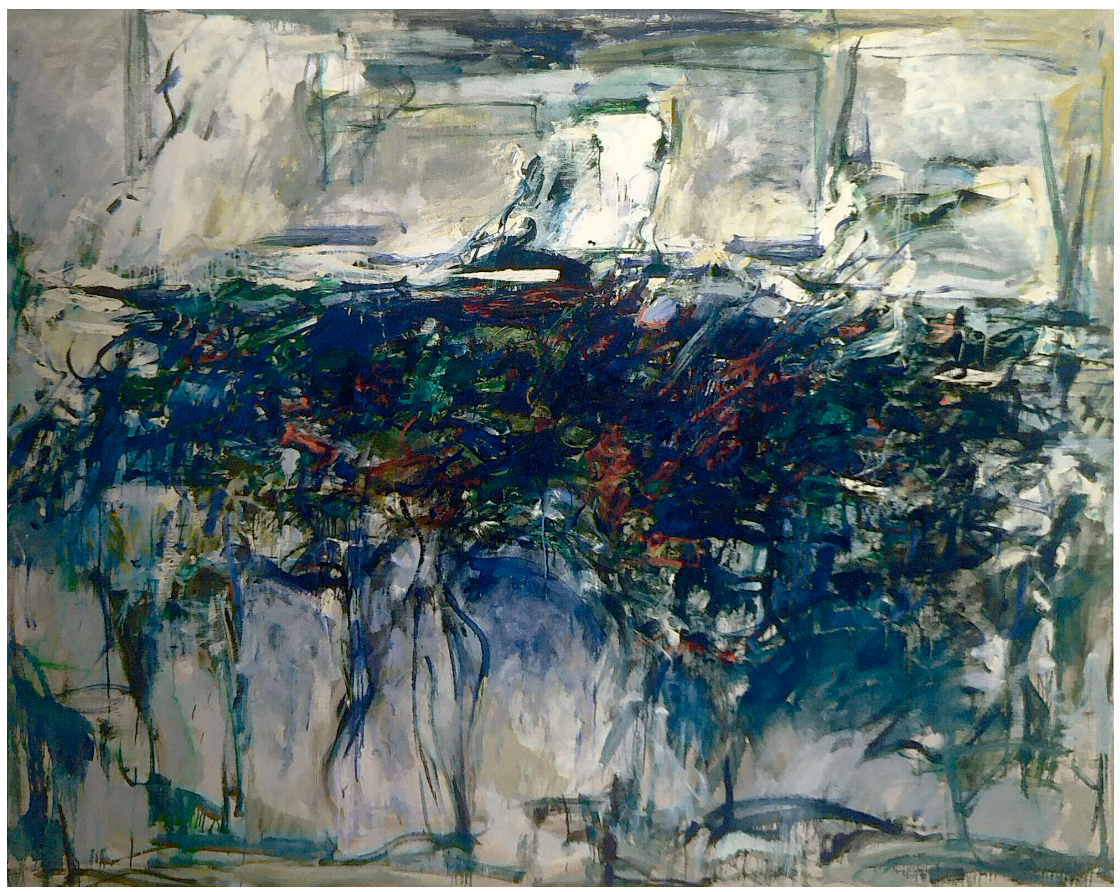
Joan Mitchell, The Lake, 1954. Shizuoka Prefectural Museum of Art, Shizuoka. © Estate of Joan Mitchell.
Indeed, City Landscape is a striking painting, one that’s teeming with an astonishing variety of colors, gestures and marks. Gathered toward the center is a riotous, light-filled area, made by layering red, blue, teal, green, black, and white. Here, v-shaped marks made decisively with a forceful movement of the hand are met with horizontal strokes. In the lower register, a thin brush has been used to create oscillating, undulating lines, giving the effect of watery reflections, or a towering metropolis shimmering at a distance. At this time, Mitchell prized the figure-ground relationship, and by organizing the imagery toward the center of the composition, she establishes a sight line that prevails despite the painting’s resolute abstraction. The overall effect conveys what Mitchell prized most, that when a painting works, it’s like “motion is made still, like a fish trapped in ice” (J. Mitchell, quoted in Joan Mitchell Retrospective: Her Life and Paintings, exh. cat. Museum Ludwig, Cologne, 2015, p. 55).
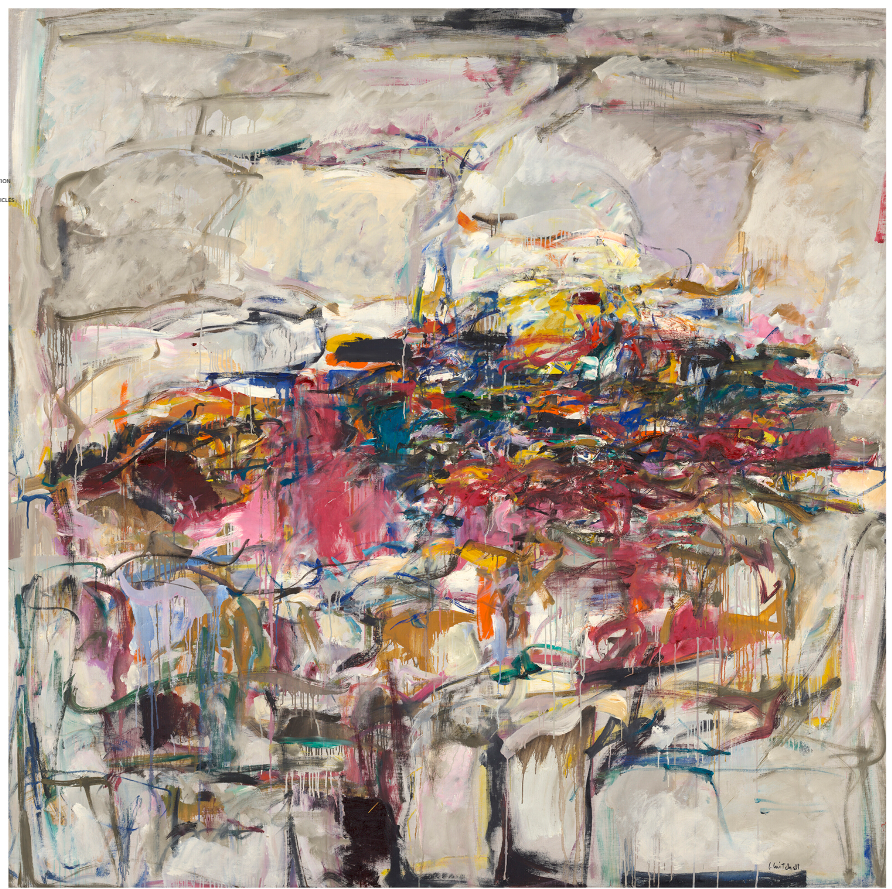
Joan Mitchell, City Landscape, 1955. Art Institute of Chicago.
© Estate of Joan Mitchell. Photo: The Art Institute of Chicago / Art Resource, NY.
City Landscape shows an artist triumphantly claiming her place in the New York art world, one whose feelings and memories were embedded in the very warp and weft of her paintings. As its title suggests, City Landscape evokes a wintry, watery world, conjuring views of a river or lake, as seen through a rain-splattered window. From her childhood home on the shores of Lake Michigan to her view of the East River in downtown New York, and later the Seine as seen from her home at Vétheuil, water became a powerful emotional signifier.
Untitled, 1955
Christie’s New-York: 19 November 2024
Estimated: USD 9,000,000 – 12,000,000
USD 9,380,000
JOAN MITCHELL (1925-1992), Untitled | Christie’s
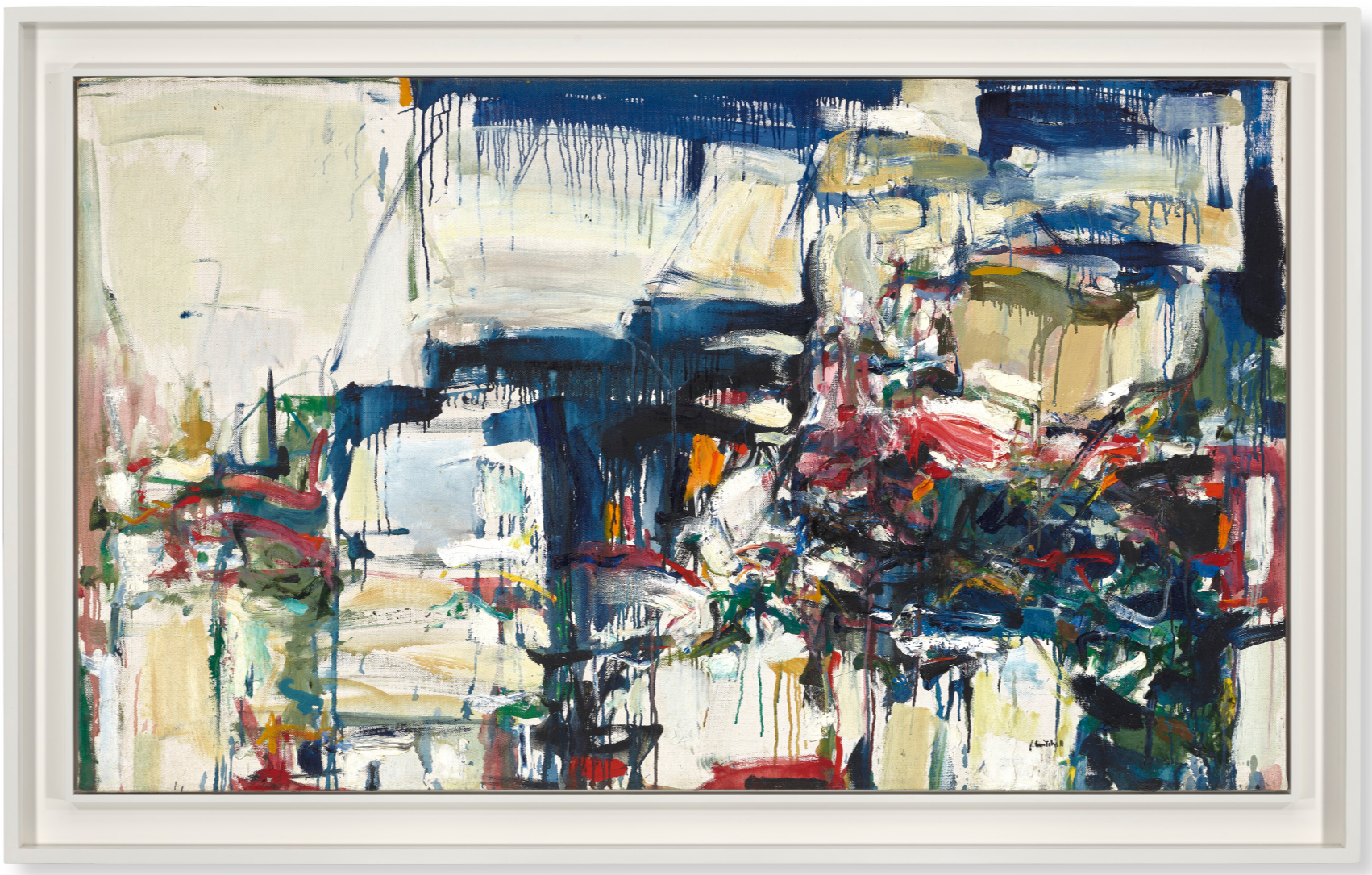
JOAN MITCHELL (1925-1992)
Untitled, 1955
Oil on canvas
37×63 inches (94×160 cm)
Signed ‘J. Mitchell’ (lower right)
Joan Mitchell’s Untitled is a tour-de-force of Abstract Expressionism. This intense, visceral painting exemplifies the tenacity and fearlessness of the young artist, having been executed two years before she was featured in the now famous “Mitchell Paints a Picture” article in Artnews, a rare accolade at that time for a female painter. In the present work we see Mitchell as a perceptive and resourceful colorist, organizing a taut canvas where passages of bright white provide the backdrop for powerful, sensational colors. Splitting her time between New York and Paris, Untitled displays the influence of the new friendships with artists, poets and writers that she cultivated at the time, and demonstrating her ever more complex usage of both color and impasto, it becomes an important work from the highpoint of twentieth-century painting.
In 1958, Untitled was acquired by the visionary art collector David Rockefeller direct from Eleanor Ward’s Stable Gallery. As part of the expansion and modernization of Rockefeller University in the 1950s, Rockefeller wanted to embody the spirit of bold discovery and imaginative freedom that defined the ethos of the University in an art collection that he hoped would inspire both students and staff. On the advice of his friend Alfred H. Barr, Jr., the founding director of the Museum of Modern Art, and the pioneering curator Dorothy Miller, Rockefeller acquired the present work as an example of the innovative thinking that he hoped to promote at the university.
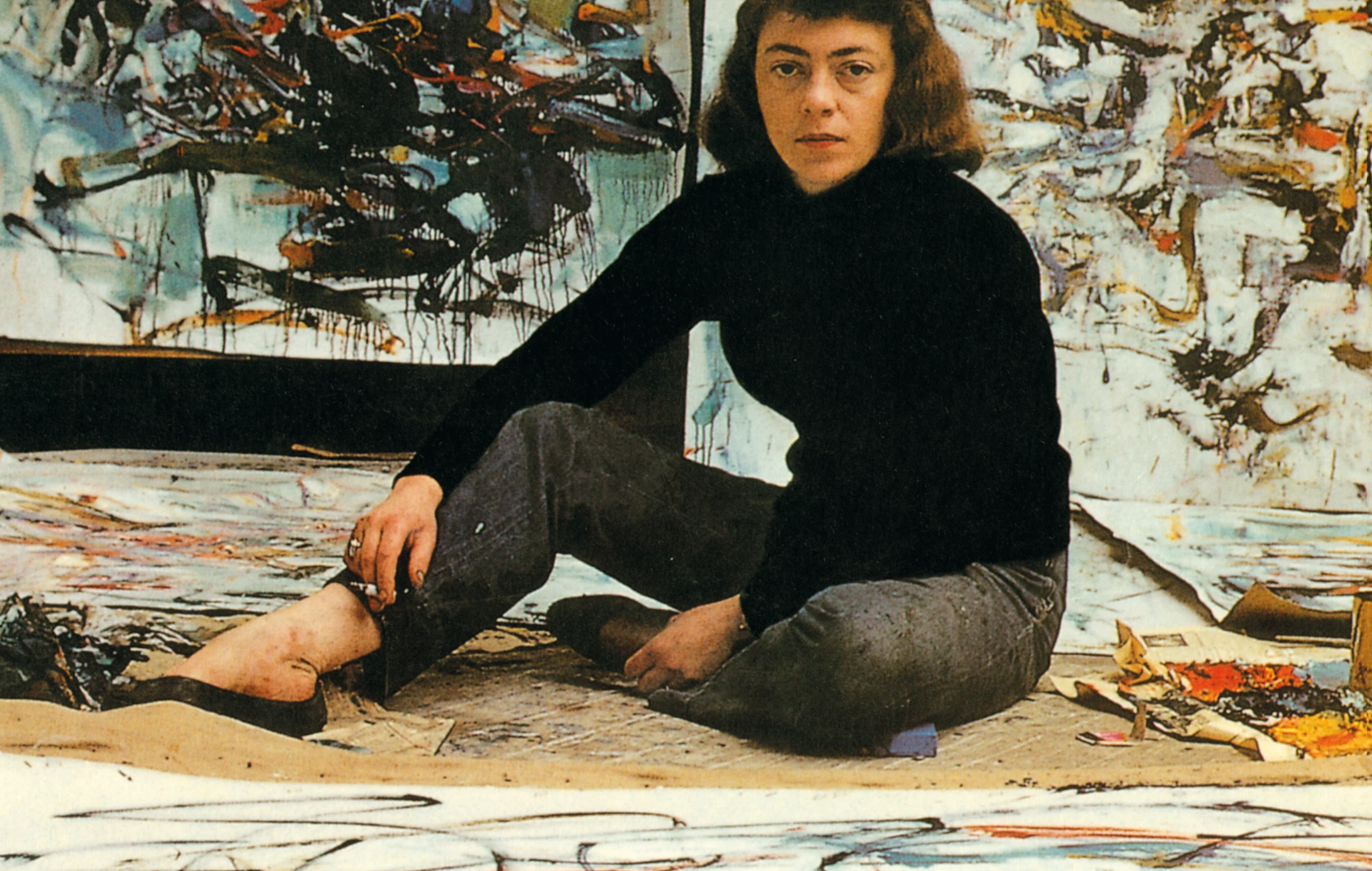
Joan Mitchell in her studio, Paris, 1956.
Photo: Loomis Dean / The LIFE Picture Collection / Shutterstock. Artwork: © Estate of Joan Mitchell.
Painted in 1955, Untitled embodies the excitement and freedom evident in her life and work at this time. A profusion of unique and beautiful painterly marks have been executed with incredible variety. Some have been painted wet-on-wet in forceful daubs of a fully-loaded brush, whereas others have been thinned-down with turpentine, creating stunning curtains of rivulets and drips. The painting is loosely grouped into three registers, with the calmer, light-filled area at the left, where the paint is thinner and more atmospheric. Along the right side, the tumultuous energy is intense, filled with a barrage of brushstrokes bubbling up like a volcano. The middle section seems to bridge the two, where a series of stepped-up blue brushstrokes act like a footstep or bridge connecting them both. The bridge motif was an important and long-running theme in Mitchell’s work. So, too, was the triptych format, which seems to be germinating before our eyes.
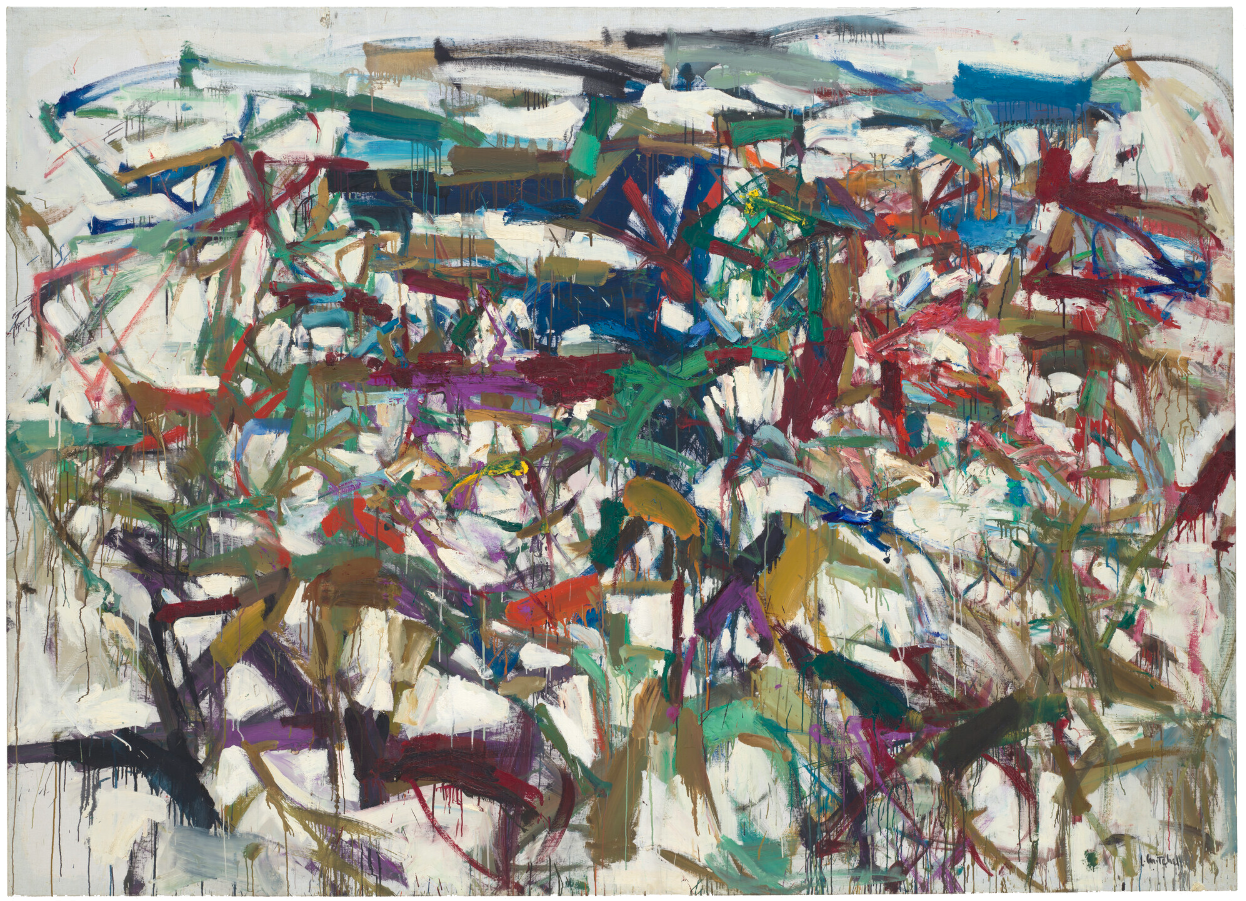
Joan Mitchell, Ladybug, 1957. Museum of Modern Art, New York. © Estate of Joan Mitchell.
This was also the beginning of a period during which Mitchell often utilized a horizontal format, as she would do in Ladybug (1957, Museum of Modern Art, New York), To the Harbormaster (1957), and Piano mécanique (1957, National Gallery of Art, Washington, D.C.). The precedent for this horizontal configuration was most likely her early, Cubist-derived paintings, such as Cross Section of a Bridge (1951, Nakanoshima Museum of Art, Osaka), a work that visually vibrates with broken shards of color and a liberal use of gray tones, all within a horizontal format. Mitchell often worked cyclically, and her use of the horizontal alignment in Untitled gives the sensation of landscape, especially given the beautiful blue passages along the upper edge, where one would expect to find the sky. In several passages we see Mitchell’s horizontal brushstrokes arranged in a sophisticated layering process. It is probably not surprising, then, that she titled a similar horizontal painting after the Italian word for “layers” — Strata (circa 1960), in the Minnesota Museum of Art.
Untitled, circa 1960
Phillips New-York: 19 November 2024
Estimated: USD 900,000 – 1,200,000
USD 990,600
Joan Mitchell – Modern & Contempora… Lot 12 November 2024 | Phillips
JOAN MITCHELL
Untitled, circa 1960
Oil on canvas
23×21 inches (58.4 x 53.3 cm)
Signed “J. Mitchell” lower right
Painted c. 1960 in her Paris studio at 10 rue Frémicourt, Joan Mitchell’s Untitled captures the intensity of a time marked by both the highs of artistic experimentation and international success, as well as the lows of profound personal loss. Her mother’s cancer diagnosis in 1960, coupled with the loss of her friend and mentor Franz Kline in 1962 and her father in 1963, imbued Mitchell’s work with a deep emotional resonance. Simultaneously, her relationship with fellow artist Jean-Paul Riopelle remained tumultuous, filled with passionate highs and destructive lows. Yet, amidst this storm of grief and conflict, Mitchell produced some of her most potent and visually arresting works. Pieces from this transformative period are celebrated in institutions such as the Museum of Modern Art, New York and the Smithsonian American Art Museum in Washington, D.C., highlighting the lasting significance of this epoch in her career. Emblematic of key developments in her practice at this time, the present work reflects an extraordinary blend of gestural abstraction, marked by both explosive intensity and lyrical grace. One of her “suitcase paintings”—as Mitchell referred to the intimately-scaled works she favored for their portability—Untitled perfectly exemplifies her command of this duality, capturing the viewer’s attention with a riveting interplay between calm and chaos, control and spontaneity, emotion and form.
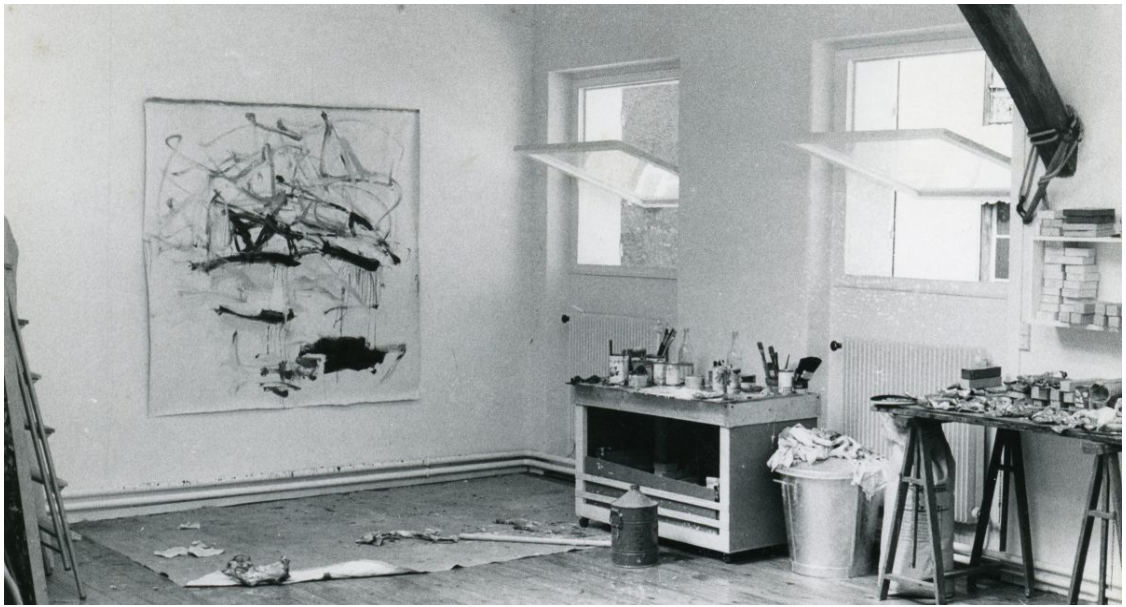
Joan Mitchell’s studio at 10 rue Frémicourt, 1959. Image: Photo by Walter Silver. © The Miriam and Ira D. Wallach Division of Art, Prints and Photographs: The Photograph Collection, The New York Public Library.
Mitchell’s use of color was an essential element of her visual language, and in Untitled, the palette reflects the intense emotions she was grappling with. The canvas radiates with a centrifugal force, typical of her early 1960s work, creating a sense of movement and uncontainable energy. The viewer’s eye is drawn into the electric interplay of forms in the center of the canvas, which gradually unravel into softer, more open spaces. At the time of Untitled’s creation, Mitchell was deeply influenced by both American and European artistic traditions. The emotional depth and immediacy of Abstract Expressionism—particularly the work of figures like Franz Kline, Philip Guston, and Willem de Kooning—are evident in the near-sculptural application of paint. Mitchell applied the paint directly from the tube in many places, using both brushes and palette knives to layer impasto with force and precision. The result is a textured surface that feels almost alive, as if the paint itself is in motion. This evolution is palpable in Untitled, where each stroke of color pulses with life and energy, revealing a harmonious blend of Mitchell’s influences—from the visceral intensity of her New York contemporaries to the luminous, impressionistic sensibilities of French Modernism.
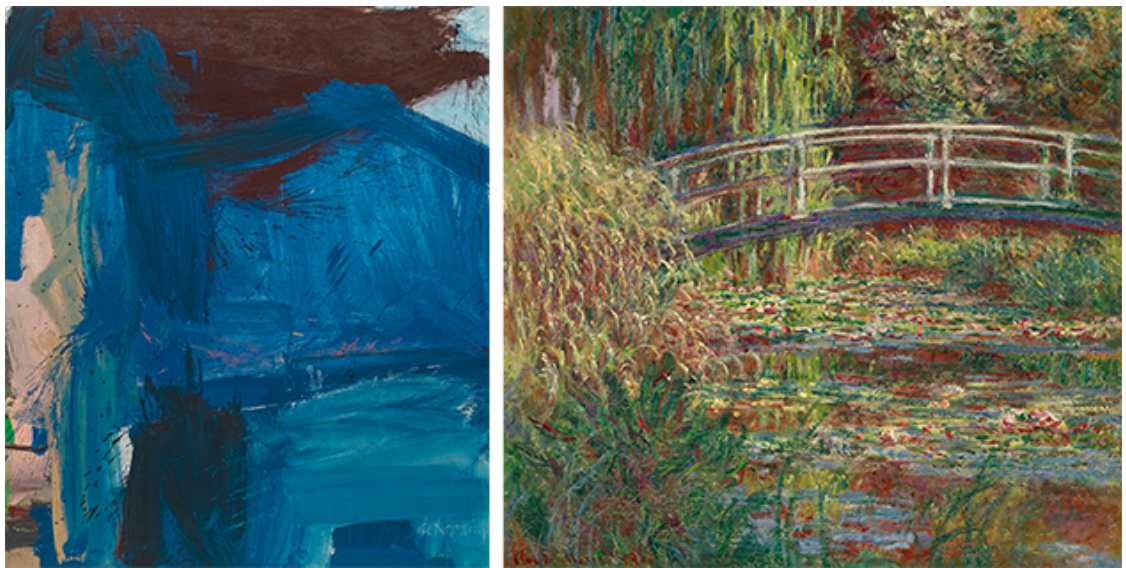
[Left] Willem de Kooning, A Tree in Naples, 1960. The Museum of Modern Art, New York.
[Right} Claude Monet, The Waterlily Pond, Harmony in Pink, 1900.
Particularly striking in this painting is Mitchell’s use of blue, which punctuates the composition, creating luminous moments of contrast against the darker, more earthy tones. These flashes of blue evoke both the serenity and the intensity of the natural world—a recurring theme in Mitchell’s work—and reflects her deep engagement with European modernist traditions, particularly the landscapes of Claude Monet and the gestural intensity of Vincent van Gogh. Although fundamentally abstract, Untitled is infused with a deep sense of place and memory. Careful looking reveals a sense of natural rhythms, as if the brushstrokes mimic the forces of wind, water, or light. “I carry my landscape around with me,” Mitchell famously declared, emphasizing that her paintings were not literal depictions but emotional and sensory responses to the natural world. In Untitled, this influence is clear: the painting evokes a sense of movement and atmosphere reminiscent of a stormy landscape, but it remains resolutely non-representational. Mitchell’s lines are free and uninhibited, capturing the essence of motion and light without becoming confined to a specific form. While the gestures appear spontaneous, they are the result of careful deliberation, balancing the raw immediacy of her emotions with a controlled compositional structure. Mitchell’s process was deeply considered; she often stood back to survey her work from a distance, carefully assessing the weight and impact of each brushstroke. “I paint from a distance,” she explained. “The freedom in my work is quite controlled.” This deliberate approach is evident in the way Mitchell has layered color in the present work, creating an effect that is simultaneously explosive and contained, a testament to her structured yet instinctive method of creation.
Untitled showcases the fervent energy that came to define Mitchell’s signature style; her masterful control of tension and symmetry, orchestrated in subtle washes and thick daubs of pure color. The painting’s composition is anchored by deep purples and rich earthy tones that burst from the canvas, offset by the artist’s poignant use of blue, flecks of honeyed gold, and bright electric yellow. Mitchell’s use of a neutral, white ground, which remains visible in areas, emphasizes the physicality of her brushwork, and lends the piece an atmospheric openness. Her explosive colors seem to strain against these edges, as if barely containable. Pointing out the visual tension that characterizes Mitchell’s work from this period, her biographer Patricia Albers described the paintings as being “as delectable as they are raw,” positing that they “court chaos with their sweeps of disrupted syntax, surpassing the viewer’s ability to process them in a conscious way.” In Untitled, Mitchell captures something visceral and transcendent, embodying the dualities that defined her life and art in a vivid example of her ability to translate powerful emotions into a visual language that is as compelling as it is complex. The work conveys a palpable, tactile presence, exemplifying Mitchell’s deft handling of paint. Her methods range from delicate, almost dry brush lines to slabs of dense color and slashing, vigorous strokes of impasto. She employed these techniques with a deliberate yet uninhibited spirit, embodying a language of line and gesture that was both abstract and deeply evocative. As art historian Marcia Tucker once observed, Mitchell’s work is “brilliantly conceived, flawlessly executed, [and] shows us the extent to which a tradition can be made viable by excellence.” In Untitled, Mitchell masterfully transforms the canvas into a vivid exploration of contrasts: light and dark, warm and cool, buoyant and dense.
Untitled, circa 1960
Christie’s Paris: 18 October 2024
Estimated: EUR 3,200,000 – 5,000,000
EUR 4,275,000 / USD 4,629,540
Joan Mitchell (1925-1992), Sans titre | Christie’s
JOAN MITCHELL (1925-1992)
Untitled, circa 1960
Oil on canvas
37 3/8 x 35 5/8 inches (95 x 90.6 cm)
Signed ”J. mitchell’ (lower right)
‘’Painting is a means of feeling ‘living.’ … Music takes time to listen to and ends, writing takes time and ends, movies end, ideas and even sculpture take time. Painting does not. It never ends, it is the only thing that is both continuous and still.’’
Joan Mitchell’s Untitled (1960) is a maelstrom of paint, color, and line. Deep blue, black, teal, terracotta, olive, cream, and burgundy oil pigments drip, loop, build and crash over a pale white canvas that spans almost one metre in height. Its tempestuous vigour reflects a pivotal moment in the artist’s practice. In 1959, Mitchell settled in Paris in a spacious studio at 10 rue Frémicourt in the fifteenth arrondissement, which she shared with French painter Jean-Paul Riopelle. Here, her abstraction took new strides towards the unbounded lyricism that has come to define her oeuvre. Her brushwork—boldly exposed over neutral grounds—erupts into vivid and entangled skeins of colour; each marking is an incisive gesture of liveliness, a meditation on the nature of paint itself. The present work was among several paintings purchased by the Parisian art dealer Jacques Dubourg, whose respected gallery hosted shows by the likes of Nicolas de Staël, Riopelle, André Lanskoy and Sam Francis in the 1960s. The son of a picture framer who had been a friend of Renoir and Camille Pissarro, Dubourg was a key promoter of Mitchell’s art in Europe: his show of her paintings in 1962 at his gallery drew fantastic critical reception and commercial success. The present work, a vision of formal conviction, remained within his collection for the rest of his lifetime.
‘’Jacques Dubourg was a darling.’’
Mitchell was born in Chicago in 1925, and after graduating from the School of the Art Institute of Chicago, she moved to New York in 1950 where she quickly rose to fame among a second generation of Abstract Expressionist painters. Mitchell was respected by her fellow downtown painters such as Willem de Kooning, Franz Kline and Phillip Guston. She held her own within the city’s competitive, male-dominated art world, and refused to be defined by the New York School or indeed any other aesthetic label. She felt an affinity to a long lineage of painters across the Atlantic—from Henri Matisse to Claude Monet, Paul Cézanne and Vincent van Gogh—identifying with their elemental sensibilities and shimmering responses to the natural world. From the summer of 1955, Mitchell travelled frequently between New York and Paris, slowly releasing her personal and aesthetic ties to the United States. She honed her painterly abstraction as an intuited response to place, feeling, landscape and memory, rather than a system of esoteric and subjective signs.
‘’I paint from remembered landscapes that I carry with me—and remembered feelings of them, which of course become transformed. I could certainly never mirror nature. I would like more to paint what it leaves me with.’’
Mitchell swiftly found new stylistic confidence after her permanent relocation to France in at the end of the ’50s. Her tumultuous romance with Riopelle, summer sailing trips through the Mediterranean, and Paris’ thriving ‘abstraction lyrique’ provided rich inspiration for complex and expansive compositions. Evenings were often spent at the Café du Dome in Montparnasse drinking with Samuel Beckett and Alberto Giacometti. At rue Frémicourt—which Mitchell described as ‘the closest thing to a loft that exists in Paris’—she and Riopelle welcomed a vibrant cast of painters, poets, writers, and gallerists, hosting two or three lunches a week (J. Mitchell quoted in ibid. p. 98). Among them was Jacques Dubourg. The larger studio, with its expansive spaces and moveable partition walls, afforded Mitchell newfound freedom in her working methods. Here, she could work on multiple canvases at once, move fluidly between paintings in loose series and thematic suites, and pause on a work to later return to it. This cyclical process would become a mainstay of her practice for the remainder of her career. The present work displays Mitchell’s invigorated approach to making, in which she embraced paint not so much as something to wield, but something to respond and surrender to: a physical, capricious, and self-determining material in its own right. Here, her unabashed experimentalism gleams through striking clusters of impasto, streams of downwards drips and torrents of broad brushstrokes. Mitchell alternates the pressure of application, as well as the saturation of pigment and viscosity of her medium with finesse. The work’s intensity is tempered and considered, reflecting her increasing reputation as a meditator between order and chaos, beauty and disaster. Fusing expressive idioms from America and France with her own, distinctly personal language of feeling, Mitchell brings painting to life.
Untitled, circa 1955
Estimated: USD 8,000,000 – 12,000,000
USD 10,101,000
JOAN MITCHELL (1925 – 1992)
Untitled, circa 1955
Oil on canvas
55 x 73 3/4 inches (139.7 x 187.3 cm)
Signed (lower right)
Lush torrents of jewel-toned pigment burst from the canvas in Joan Mitchell’s Untitled, producing a symphony of fuschia, violet, and cobalt that coalesces with the artist’s quintessential vision. Executed circa 1955, the onset of the most formative and celebrated period of Mitchell’s career, Untitled initiates a nuanced dialogue between representation and abstraction; memory and emotion; gesture and color with its unrestrained painterly vocabulary. Comparable masterworks that Mitchell produced in the 1950s are today regarded as her first mature body of work, with many belonging to some of the world’s most renowned institutions including City Landscape, 1955 in the Art Institute of Chicago, which bears a similar handling of paint and palette as the present work. Untitled emerges from a critical time in Mitchell’s career: following a trip to Paris in 1955 – around the time she executed the present work – Mitchell continued to return from New York, eventually moving there outright in 1959, drawn to the landscapes that would foster within her endless inspiration. Across the monumental expanse of Untitled, Mitchell expresses her distinct Abstract Expressionist voice with resplendent lyricism: the immense scale, dynamic clusters of feathery brushstrokes, and modulating intensity of paint distinguish Untitled as a paragon not only of Mitchell’s prolific career, but also of the heroic sensibilities inherent to Abstract Expressionism.

WALTER SILVER, JOAN MITCHELL, C. 1958. THE WALTER SILVER COLLECTION, THE NEW YORK PUBLIC LIBRARY. IMAGE © COPYRIGHT NY PUBLIC LIBRARY
In Untitled, vivid ribbons of fuschia weave and writhe between streaks of deep violet and lapis, performing an enthralling dance of pure chroma that is punctuated by shocks of white and burnt umber. From central bodies of concentrated line and pigment, tendrils of color spiral outwards in controlled vortexes of pure expression, lending the painting an extraordinary dynamism. By combining the gestural flair of her contemporaries with the ferocious variability of the natural world, Mitchell marries the visual languages of abstraction and landscape amidst a maelstrom of pigment. Alongside this masterful command of her palette, Mitchell employs an incredible range of gestures: weighty peaks of impasto, carnal smears of pigment, delicate passages of thinly washed paint. Indeed, Mitchell’s mark-making is defined by deep reverence and devotion to raw gesture – whether calligraphic, spilled, or dotted; thinned, blurred, smudged, or scraped – and its ability to convey the power of memories and experiences, all themes she professed as the fundamental basis of her painting.

LEFT: WILLEM DE KOONING, ASHEVILLE, 1948. IMAGE © THE PHILLIPS COLLECTION, WASHINGTON, USA / ACQUIRED 1952 / BRIDGEMAN IMAGES. ART © 2024 THE WILLEM DE KOONING FOUNDATION / ARTISTS RIGHTS SOCIETY (ARS), NEW YORK. RIGHT: ARSHILE GORKY, GOOD AFTERNOON, MRS. LINCOLN, 1944. PRIVATE COLLECTION. ART © 2024 THE ARSHILE GORKY FOUNDATION / ARTISTS RIGHTS SOCIETY (ARS), NEW YORK
Mitchell embarked upon her artistic training almost a decade prior in 1947 at the Art Institute of Chicago, where she first encountered the works of such artists as Vincent Van Gogh, Paul Cézanne and Henri Matisse, the canonical masters who would inspire her work throughout her career. Upon moving to New York in 1952, Mitchell distinguished herself as a rare, female presence in the otherwise male-centric world of the New York School. She moved in the same avant-garde circles as Jackson Pollock, Franz Kline, and Hans Hofmann, and was prominently included in the seminal Ninth Street Show organized by Leo Castelli in 1951.


Untitled witnesses Mitchell at the climax of her transition towards full-fledged abstraction in the 1950s, during which she channeled Jackson Pollock in her technique to apply thick layers of paint on the canvas with broad arm strokes and splashing drips from her paintbrush. Mitchell’s mark-making, however, was “more calculating, more consciously in search of beauty than her predecessors,” artists like Jackson Pollock who allowed his drips to be unqualified, spontaneous expressions of his inner creative drive. (Klaus Kertess, Joan Mitchell, New York, 1997, p. 22) She methodically sketched before she started painting, and she was constantly evaluating and judging her canvases throughout her process. Further, Mitchell never adopted Pollock’s practice of laying his canvases on the floor while applying paint; instead, Mitchell stood her canvases upright, allowing gravity to influence the downward flow of paint, resulting in the smudges, drips and pools of color that lend Untitled its remarkably dynamic surface.

A sumptuous composition punctuated by tempests of chromatic brilliance of fuschia and azure, Untitled is an early masterpiece from Joan Mitchell that veritably humming with artistic fervor. Beneath her brush, the canvas of Untitled transforms into a lush spectacle in which concentrated passages of unbridled expression are conjured from stormy and sensual eddies of paint. As scholar Richard Marshall writes, “Throughout her evolution as an abstract painter, Mitchell consistently sought to converge her interests in nature, emotion, and painting. Her subjects were landscape, color, and light and their interaction on a painterly field, and her energetic physical gestures were filled with a romantic sensibility.” (Richard D. Marshall, “Joan Mitchell: The Last Decade, 1982—1992” in: Exh. Cat., New York, Gagosian Gallery, Joan Mitchell: The Last Decade, 2010, p. 8) Breathtaking in its painterly bravura, Untitled constitutes a remarkable sensory engagement with nature unbound, revealing Mitchell’s artistic fervor and providing a glimpse into the endlessly dynamic visual experience that would come to define the rest of her oeuvre.
Untitled, 1959
Christie’s New-York: 9 November 2023
Estimated: USD 25,000,000 – 35,o00,000
USD 29,160,000
NEW WORLD RECORD FOR THE ARTIST
JOAN MITCHELL (1925-1992) (christies.com)
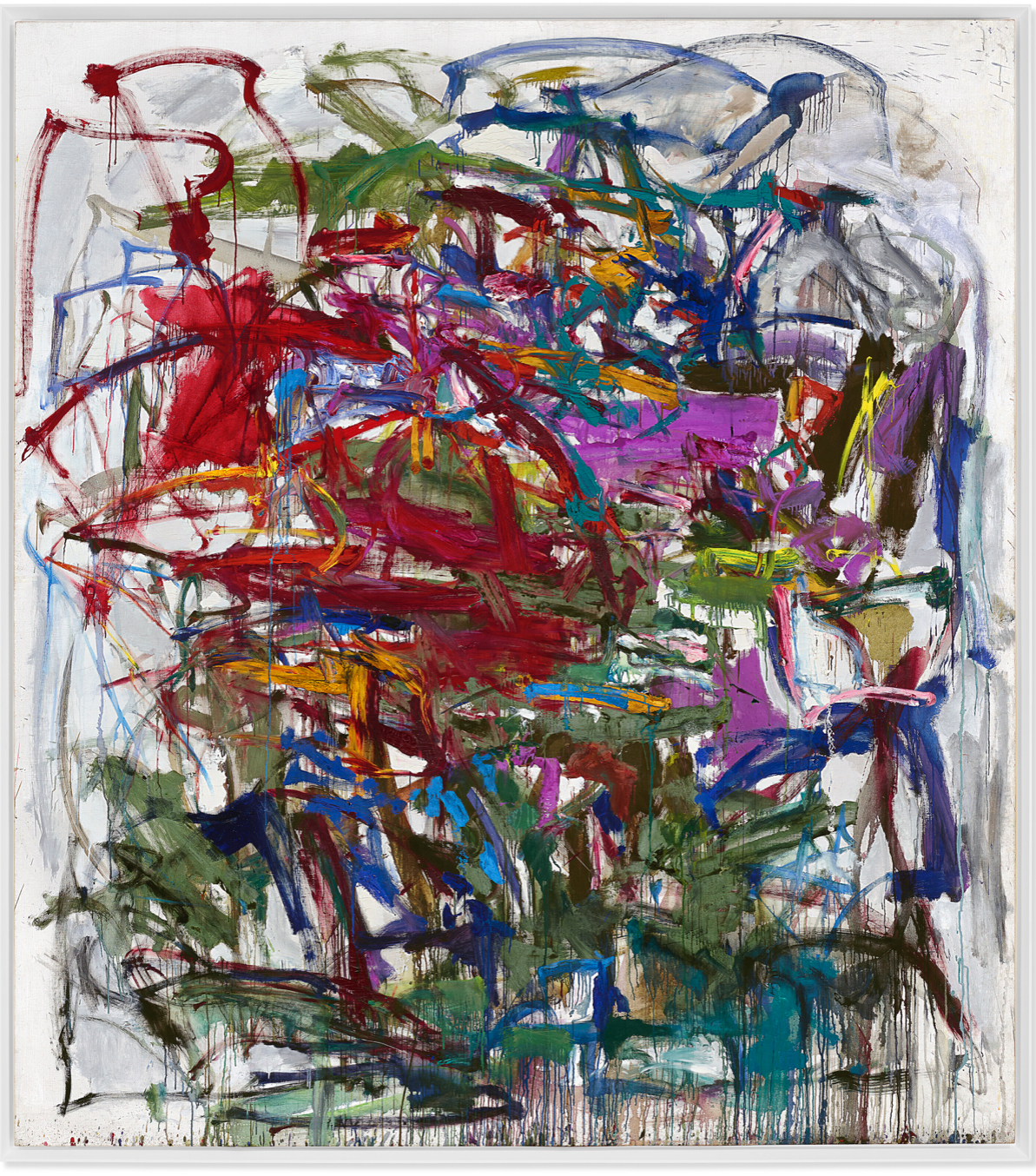
JOAN MITCHELL (1925-1992)
Untitled, 1959
Oil on canvas
97 1/2 x 86 1/2 inches (247.7 x 219.7 cm)
A majestic tour-de-force teeming with fierce, muscular brushstrokes, and a kaleidoscopic display of the most powerful colors in her arsenal, Joan Mitchell’s Untitled, circa 1959, boasts all of the hallmarks of her most celebrated pictures, making it a true masterpiece from the most pivotal decade of her career. Bolstered by mounting critical and commercial success, by 1959 Mitchell had established herself amongst the vanguard of New York’s Abstract Expressionist elite. In October 1959, she appeared in a multi-page photographic essay in Art News called “Mitchell Paints a Picture,” for which she was interviewed by Irving Sandler. (This recurring article was reserved for Abstract Expressionist heavyweights and had previously featured Jackson Pollock and Willem de Kooning).
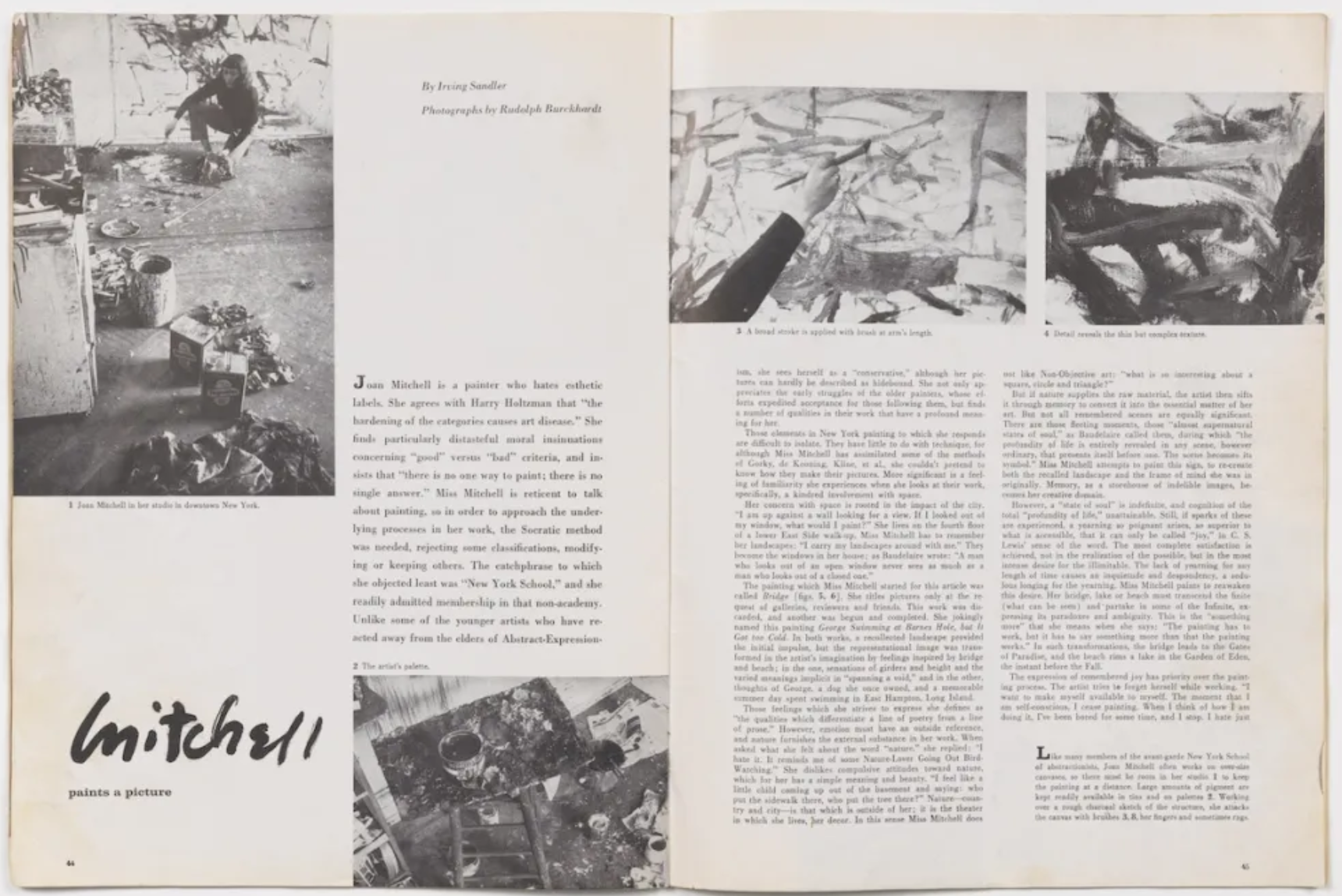
It was rapidly becoming clear that Mitchell’s talent was being ranked by some enlightened critics as being on a par with her male peers. By the end of the 1950s, several important museums had acquired her work, with City Landscape (1954-55) going to the Art Institute of Chicago, Ladybug purchased by MoMA and Hemlock acquired by the Whitney. As the 1950s progressed, her visual vocabulary became more assertive and sophisticated, distinguishing from her contemporaries for her singular style that melds bravura with grace.
Untitled is an audacious painting, a powerful declaration of Mitchell’s almost preternatural understanding of color and the fearlessness with which she wielded her brush. Using broad, arcing brushstrokes that involved the full length of her body, Mitchell brushed, stabbed, swiped and dragged the pigment across the vast canvas, creating an enormous, churning maelstrom that envelops the viewer in its seven-foot expanse. The eye roams ceaselessly across its highly animated surface, only coming to rest in the airy perimeter, where lyrical, whiplash strokes of burgundy and cobalt offer a poetic coda to the tumultuous interior made up of dashes of sage, spectacular purple, teal and indigo, with flickers of brilliant blue and white. Typical of this highpoint in Mitchell’s career, she embraces a litany of opposites—thick, heavy pigment is paired with nearly translucent washes; crowded webs in the center give way to emptiness along the edge; and darker colors recede whereas brighter ones advance. Mitchell’s paintings were almost athletic events; using the full reach of her arms and often standing on tiptoe, she attacked the canvas with a relentless determination. At this time, it seems the towering scale of her paintings was only outmatched by the limitless scale of her ambition.
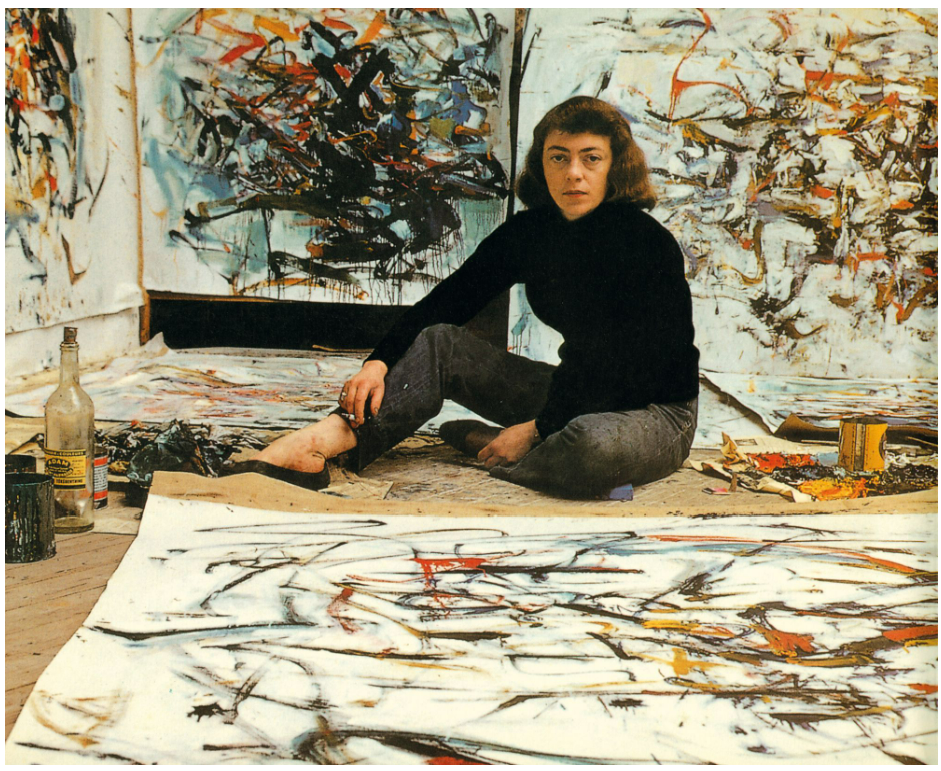
Joan Mitchell in her studio, 1956. Photographer unknown. Artwork: © Estate of Joan Mitchell.
For Joan Mitchell, the 1950s were a time of rapid development and energetic flux. By the late 1950s, Mitchell’s mastery over her craft was unparalleled, evidenced in seminal paintings like Ladybug (1957, Museum of Modern Art, New York) and Piano mécanique (1958, National Gallery of Art, Washingston, D.C.). Her lyrical abstractions brim with lush, unfettered colors infused with a powerful sense of light and atmosphere. As in Untitled, these paintings were comprised of linear elements known as “whiplash” strokes, which were held in taut suspension with the bare ground of canvas. As the decade progressed, these linear elements would proliferate and multiply, creating a veritable explosion of riotous color, texture and form. 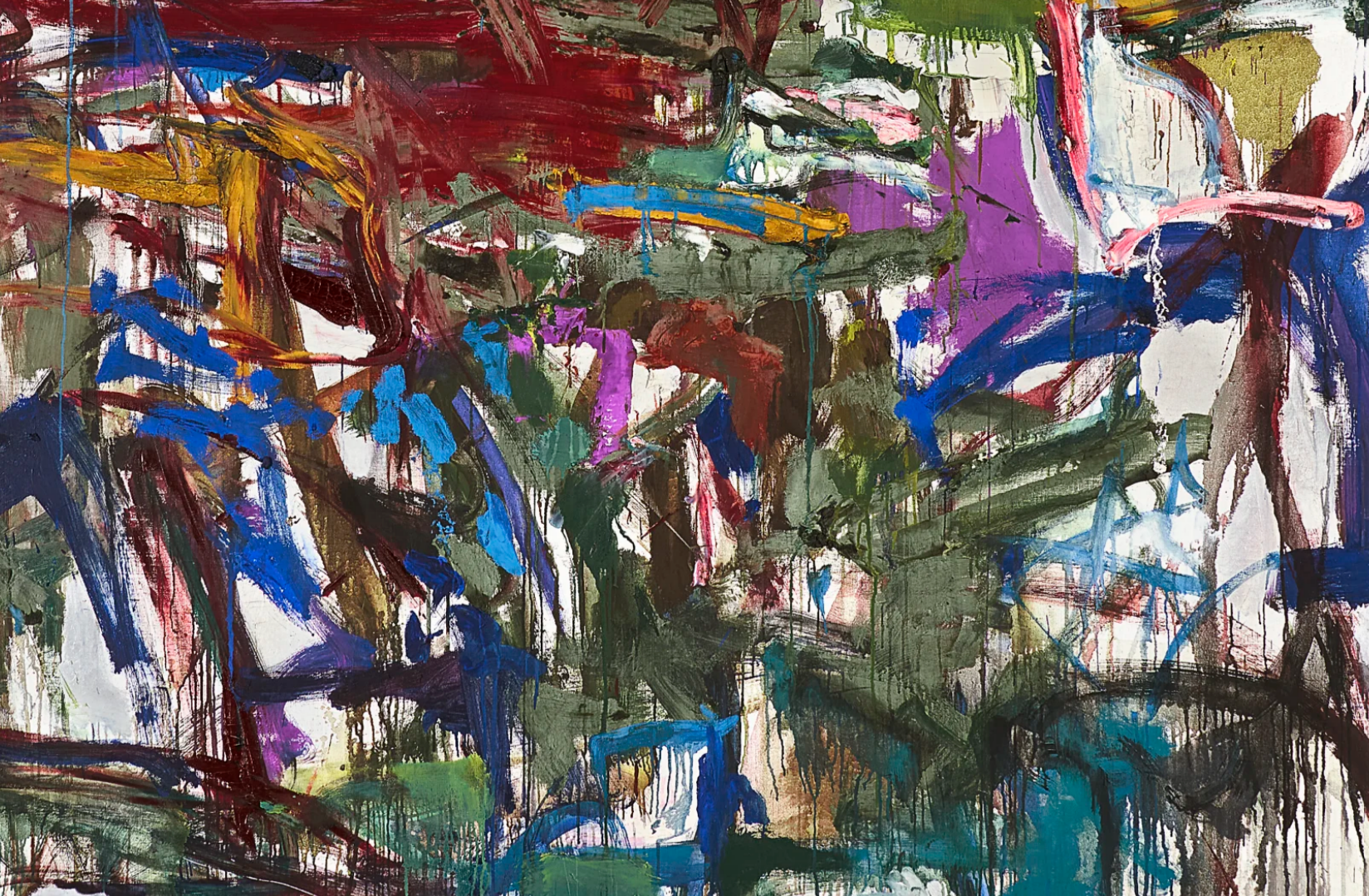
Notably in Untitled, Mitchell’s keen and judicious pairing of disparate colors, such as teal with crimson, forest green with bright ochre, and yellow with lavender, evidences the care and precision with which she arranged each stroke. Mitchell then infused this colorful structure with wedges of white and inflections of subtle metallics—either parts of blank canvas or areas of overpainting. This creates a kind of prism effect, in which shards of color and light break apart and multiply, yielding a powerful sense of restless energy and allover movement to the piece. It is here that the artist’s intense bond with her Abstract Expressionist peers is revealed, calling to mind the lyricism of Pollock’s drip paintings seen in Convergence (1952; Albright-Knox Art Gallery), the angular, abstract web of de Kooning’s Excavation (1950; Art Institute of Chicago), and the sturdy architectural line of Franz Kline’s Mahoning (1956; Whitney Museum of American Art, New York). At a time when women were largely sidelined by a male-dominated art world, Joan Mitchell was able to carve out a niche all her own. In the tradition of women painters such as Sofonisba Anguissola and Artemisia Gentileschi, Mitchell had to fight long and hard for the recognition that was due to her. She succeeded by inventing a forceful, yet lyrical, form of gestural abstraction based on her memories and feelings of the natural world. “I paint from remembered landscapes that I carry with me,” she said. “I could certainly never mirror nature. I would more like to paint what it leaves me with” (J. Mitchell, interview with J. I. H. Baur, Nature in Abstraction, exh. cat., Whitney Museum of American Art, New York, 1958, p. 73). Indeed, the natural world would prove to be Mitchell’s greatest and longest-running muse.
Untitled, circa 1958
Sotheby’s New-York: 16 May 2023
Estimated: USD 7,000,000 – 10,000,000
USD 8,147,700
Untitled | The Mo Ostin Collection Evening Auction | 2023 | Sotheby’s (sothebys.com)
JOAN MITCHELL (1925 – 1992)
Untitled, circa 1958
Oil on canvas
75×71 inches (190.5 x 180.3 cm)
Bursting forth in a torrent of fiercely expressive brushstrokes and lush jewel tones, Joan Mitchell’s captivatingly atmospheric Untitled towers as a transcendent icon, expressing the absolute quintessence of the artist’s painterly vernacular. Across a six-foot expanse of canvas, Mitchell’s unrestrained gestural vocabulary initiates a nuanced dialogue between representation and abstraction, memory and emotion, gesture and color. Executed circa 1958, during what is widely considered the most formative period in the artist’s career, the present work represents the pinnacle of Mitchell’s unique brand of Abstract Expressionism. A period characterized by critically lauded and commercially successful gallery shows, Mitchell’s paintings of the late 1950s mark the development of her signature mode of abstraction, articulated to magnificent effect within the present work, which has distinguished her as amongst the foremost artists of her generation. Testament to its superlative quality, comparable paintings from the same year belong to some of the world’s most renowned institutions, including Centre Pompidou, Paris; San Francisco Museum of Modern Art; and the Cleveland Museum of Art. The immense scale, dynamic composition, and fervent activity evident in this maelstrom of pigment distinguish Untitled as an outstanding example not only of Mitchell’s prolific career, but also of the heroic sensibilities inherent to Abstract Expressionism.
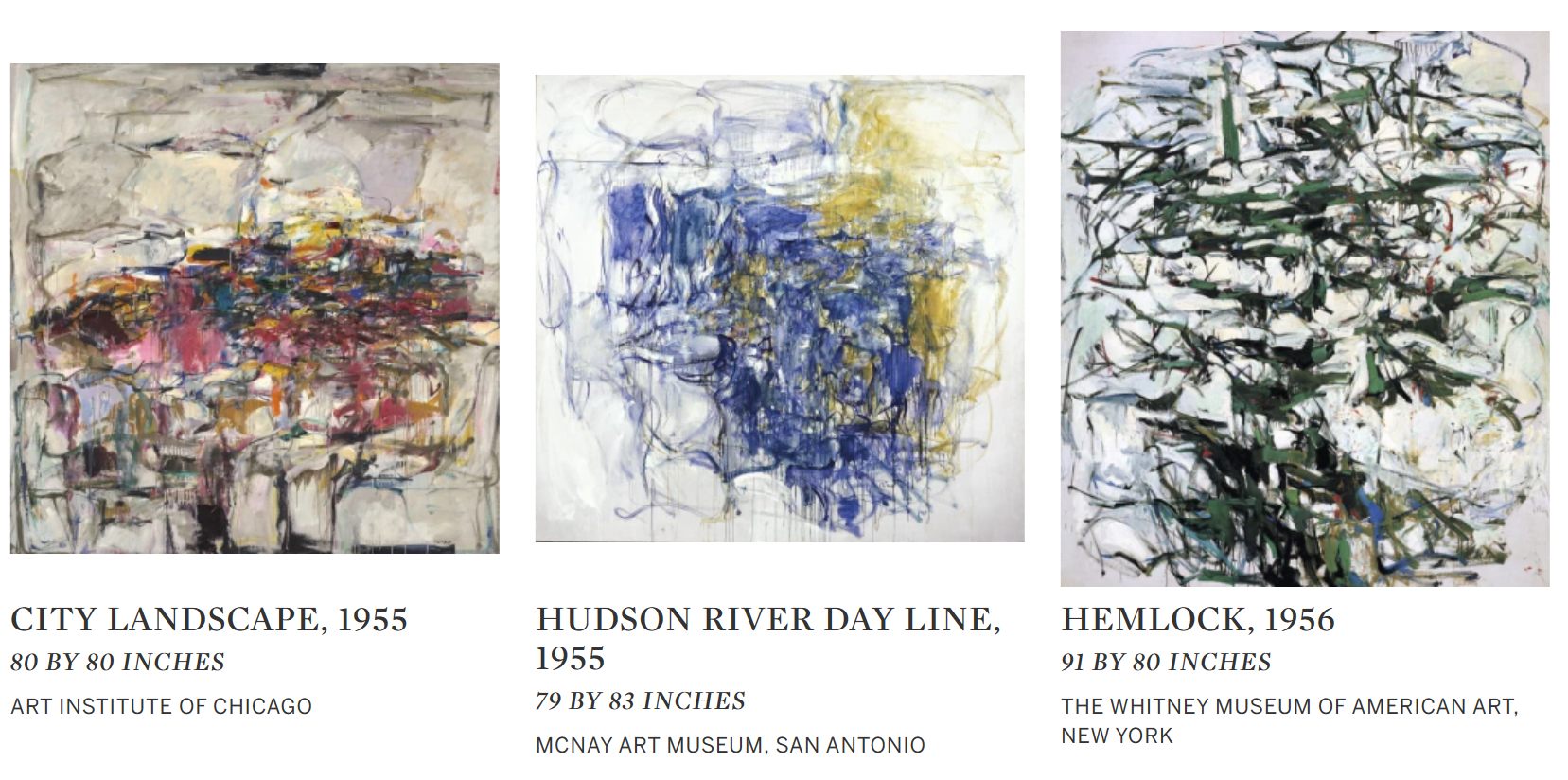
Mitchell embarked upon her artistic training in 1947 at the Art Institute of Chicago, where she first encountered the works of such artists as Vincent Van Gogh, Paul Cézanne and Henri Matisse, the masters who would inspire her work throughout her career. Upon moving to New York in 1952, Mitchell was a rare female presence in the otherwise male-centric world of the New York School. She moved in the same avant-garde circles as Jackson Pollock, Franz Kline, and Hans Hofmann, and was included in the seminal Ninth Street Show organized by Leo Castelli in 1951. Beginning in 1952, with her first solo exhibition at the New Gallery, Mitchell entered the artistic discourse surrounding Abstract Expressionism as an important leading voice, described as “one of America’s most brilliant ‘Action-Painters.’ At a time when many young artists are withdrawing introspectively from the bold experimentation of their elders … her art expands in the wake of her generous energy.” (Irving Sandler, “Young Moderns and Modern Masters: Joan Mitchell,” ArtNews, March 1957, p. 32) This moment heralded a transformative period in Mitchell’s career, during which she moved back and forth between New York and Paris, seamlessly blending the expressive abstract machismo of the New York School with an elegant European fidelity to nature.
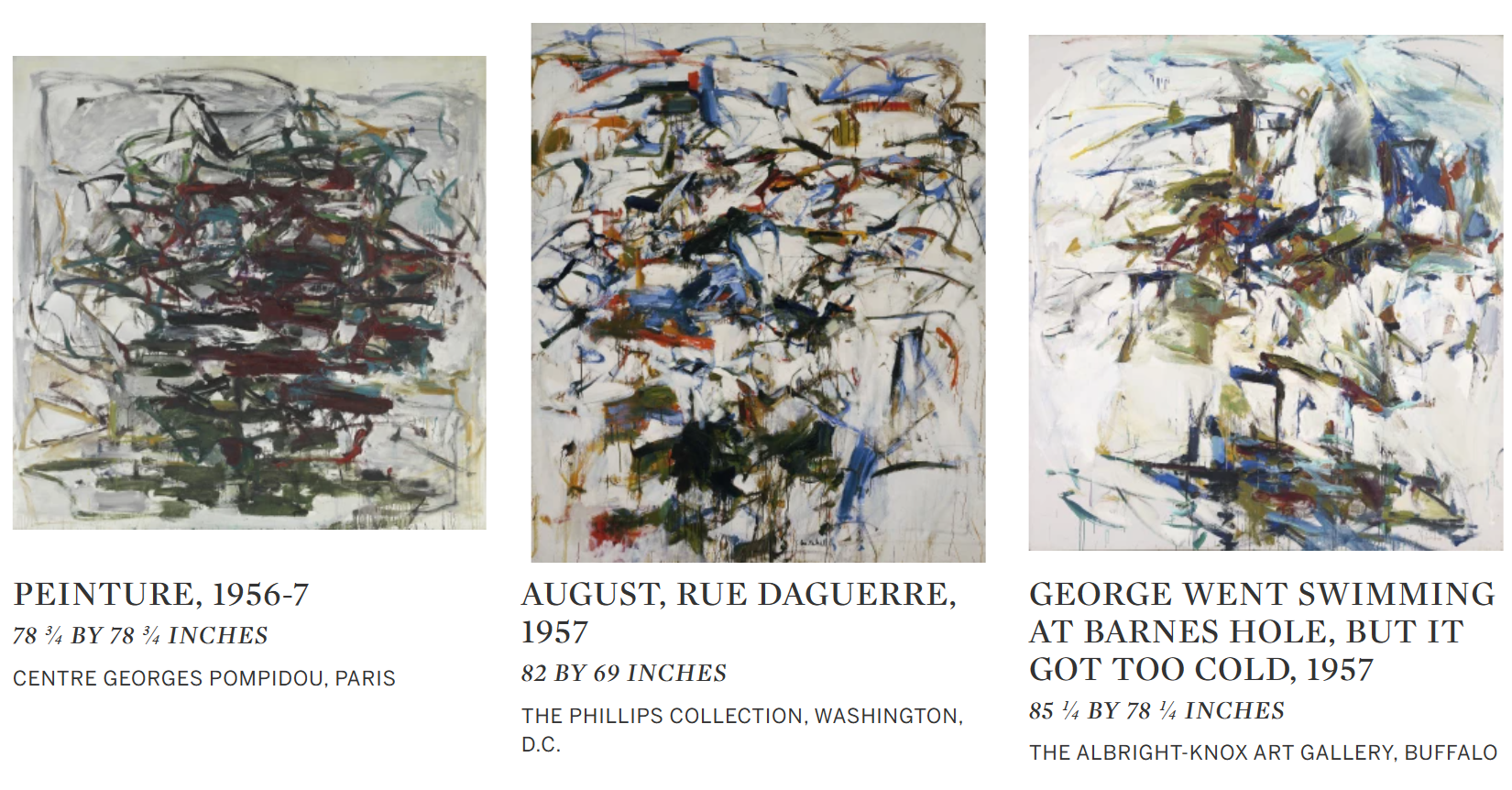
The complex graphic nature of Mitchell’s technique, like that of Cy Twombly, possesses indisputable communicative powers. Wholly abstract, and entirely unencumbered by figuration, Untitled does, nonetheless, convey the clear and forceful message of Mitchell’s undeniable mastery of the art of abstraction, and her irrefutable status as the foremost female painter of the heroic generation of Abstract Expressionist artists.
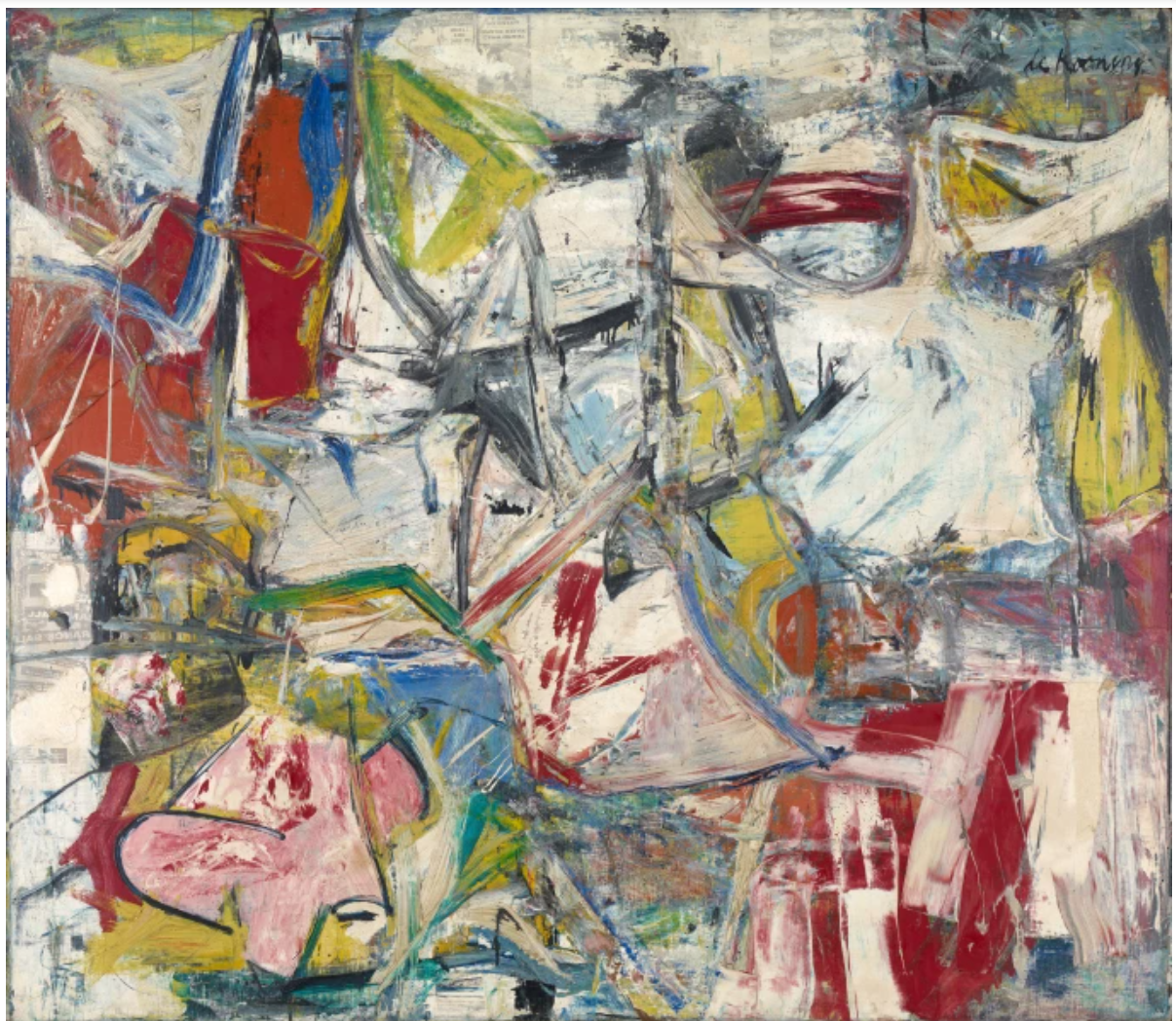
WILLEM DE KOONING, GOTHAM NEWS, 1955. BUFFALO AKG ART MUSEUM. ART © 2023 THE WILLEM DE KOONING FOUNDATION / ARS, NEW YORK
During this seminal period, Mitchell drew influence from the vague figurations of Wassily Kandinsky, Arshile Gorky, and Willem de Kooning, but over time she grew increasingly fascinated and challenged by the bold abstraction of Jackson Pollock. When Mitchell eventually transitioned to full-fledged abstraction in the 1950s, she channeled Pollock in her technique, applying thick layers of paint on the canvas with broad arm strokes and splashing drips from her paintbrush. She methodically sketched before she started painting, and she was constantly evaluating and judging her canvases throughout her process. Further, Mitchell never adopted Pollock’s practice of laying his canvases on the floor while applying paint; instead, Mitchell stood her canvases upright, allowing gravity to influence the downward flow of paint, resulting in the smudges, drips and pools of color that lend Untitled its remarkably dynamic surface.
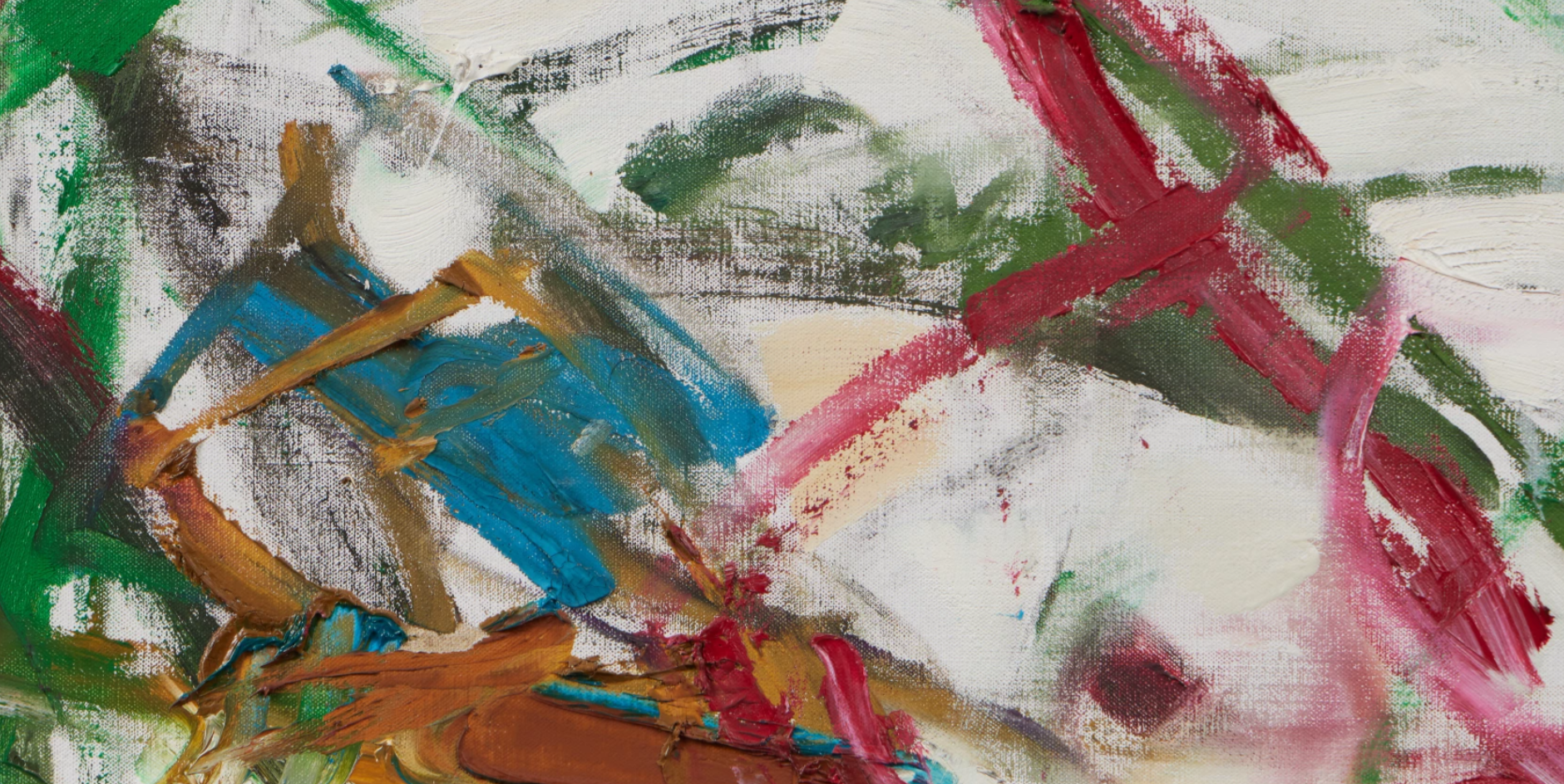
An airy composition anchored around a central tornado of passion-laden brushstrokes, Untitled veritably hums with artistic fervor. Slashes and smears of emerald, ruby, and amber swirl and gravitate around a vertical axis, while longer tendrils of ebony and umber flare dramatically outward to the edges like visual whip cracks, punctuated by staccato notes of cerulean, plum, and brightest. These concentrated passages of unbridled expression are balanced by strategically placed swathes of soft tawny and cream, lending an unexpected balance to this initially stormy vortex of paint. Alongside this masterful command of her palette, Mitchell employs an incredible range of gestures, from weighty peaks of impasto, to carnal smears of pigment, to delicate passages of thin wash. Indeed, Mitchell’s mark-making is defined by a deep reverence and devotion to gesture – whether as calligraphic, spilled, dotted, thinned, blurred, smudged, or scraped – and its ability to convey the power of memories and experiences, themes she professed as the basis of her painting.
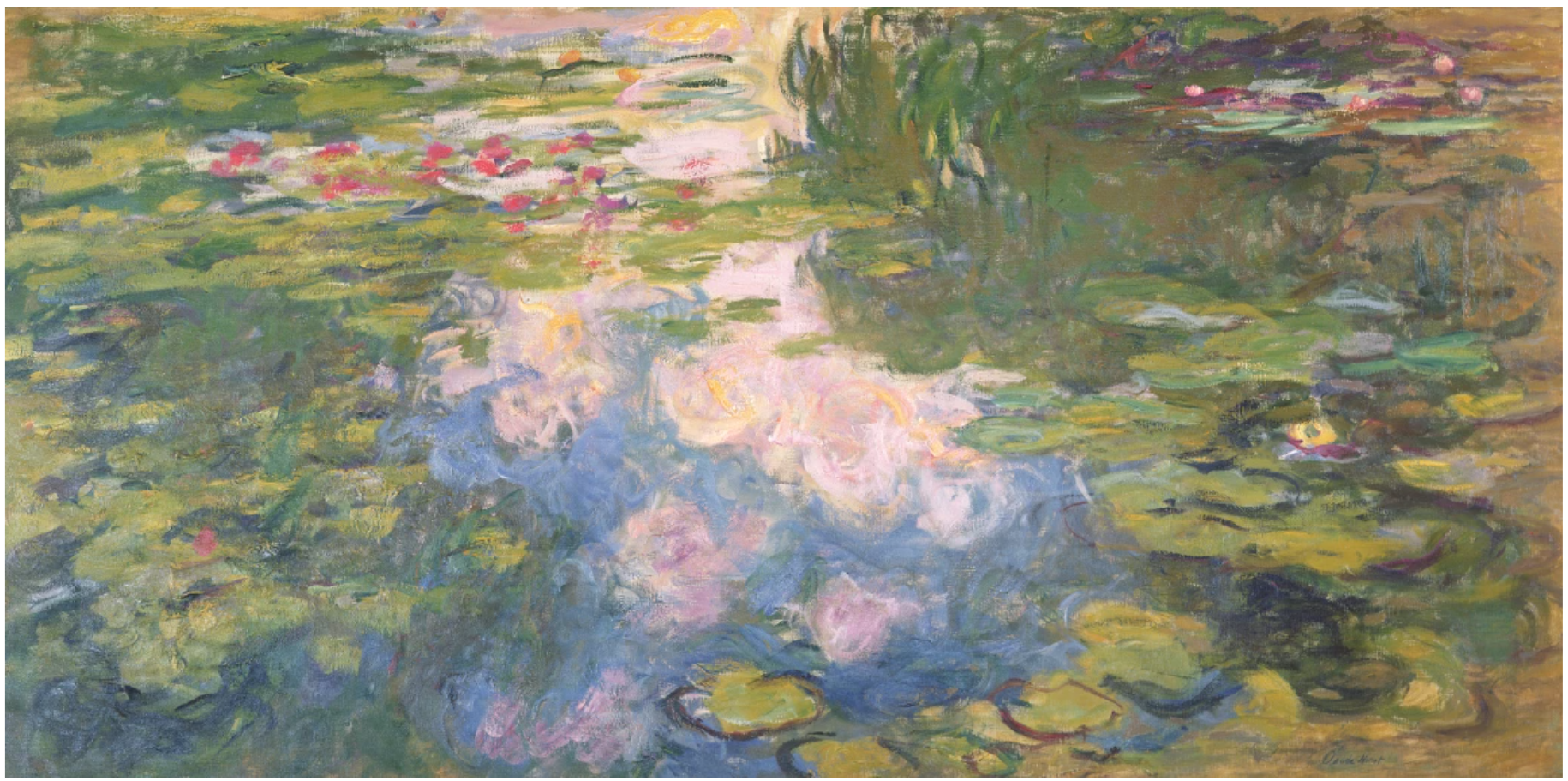
CLAUDE MONET, LE BASSIN AUX NYMPHEAS, 1917-19. PRIVATE COLLECTION
Within the present work, one senses the same sumptuousness of palette and exquisite awareness of light, color, and air articulated in the captivating en plein air paintings of Claude Monet. Sumptuously layered and smeared upon the gem-like canvas, Mitchell’s saturated strokes invoke a lush density reminiscent of Monet’s late renderings of his rose garden at Giverny; rather than striving to emulate a specific landscape, the present work powerfully combines allusions to nature and memory within an entirely abstract painterly idiom. Beneath Mitchell’s brush, the canvas of Untitled transforms into a performative arena in which she has staged a furiously orchestrated symphony of chromatic activity. Breathtaking in its painterly bravura, Untitled constitutes a remarkable sensory engagement with nature, revealing Mitchell’s artistic fervor and personal turmoil, and providing an endlessly engrossing and dynamic visual experience.
Untitled, 1953
Phillips New-York: 14 November 2023
Estimated: USD 4,000,000 – 6,000,000
USD 7,892,500
Joan Mitchell – Living the Avant-Ga… Lot 20 November 2023 | Phillips
JOAN MITCHELL
Untitled, 1953
Oil on canvas
96 1/8 x 77 1/4 inches (244.2 x 196.2 cm)
Signed “J. Mitchell” lower right
Dynamic and vivid, Untitled, c. 1953, encapsulates the stylistic innovations forged by Joan Mitchell in a transformative period of her career. This early, large-scale masterpiece dates to the brief time in which the artist lived in Manhattan and established herself as a strong new voice amongst her predominately male Abstract Expressionist peers. With Untitled, Mitchell engages the practices and techniques of Willem de Kooning and Franz Kline, while pushing her own idiosyncratic, impassioned brushstroke to ever greater heights. Untitled sees an artist coming into her own: it functions as a bridge between Mitchell’s earliest canvases and the brightly colored, explosive compositions that she would go on to create in France.
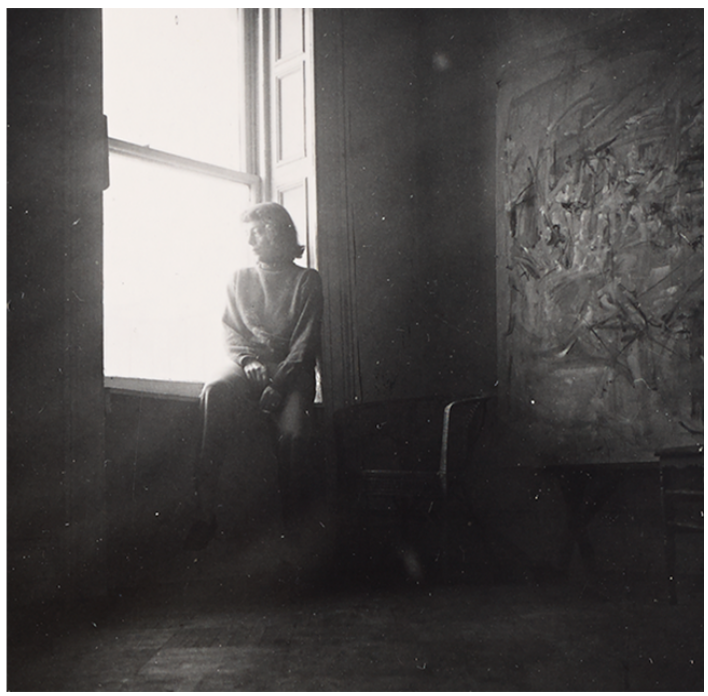
Joan Mitchell in her St. Mark’s Place studio, c. 1954. Image: Photo by Walter Silver. © The Miriam and Ira D. Wallach Division of Art, Prints and Photographs: The Photograph Collection, The New York Public Library
Painted circa 1953, Untitled belongs to a body of work which scholars have identified as one of the most critical in Mitchell’s entire career; the work was one of just three selected to represent this essential year in Mitchell’s posthumous retrospective at the Whitney Museum of American Art, New York, in 2002. As Nils Ohlsen explains, “a fundamental change occurred in Mitchell’s painting in the year 1952. By taking a decisive step away from the painted form to the autonomous brushstroke or gesture, she appeared to be expressing a radically changed view of what painting is… Color and composition no longer served Mitchell as a means of creating illusions in a very abstracted form, but instead became the actual purpose of the painting. The organization of the painted plane was identical with the spontaneous and direct form of artistic expression.”
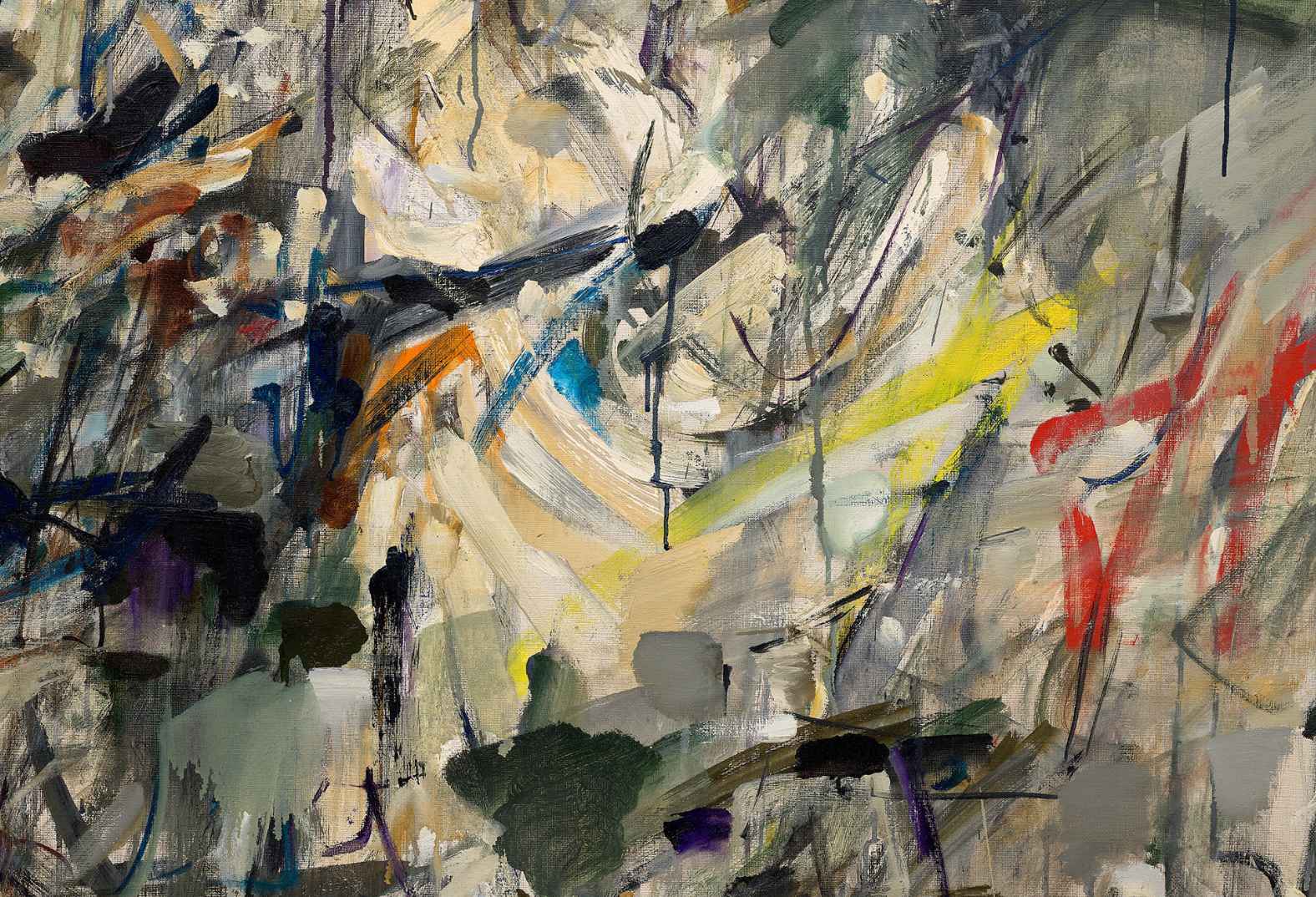
This fundamentally changed organizational principle for painting is clearly evident in the composition of Untitled. The work, as a bright, whirling mass of layered brushstrokes, is a painted record of Mitchell’s embodied, emotive practice. The composition trails along an x-shaped structure, with quick, thin, darker marks tracking from lower left to upper right, and a cascade of looser, grey and green marks from upper left to lower right. At the massive scale of Untitled, these brushstrokes express the widest reach of Mitchell’s body and paintbrush, emphasizing the full-body experience of painting.
Untitled, circa 1958
Christie’s New-York: 17 May 2023
Estimated: USD 6,000,000 – 8,000,000
USD 6,584,000
JOAN MITCHELL (1925-1992) (christies.com)
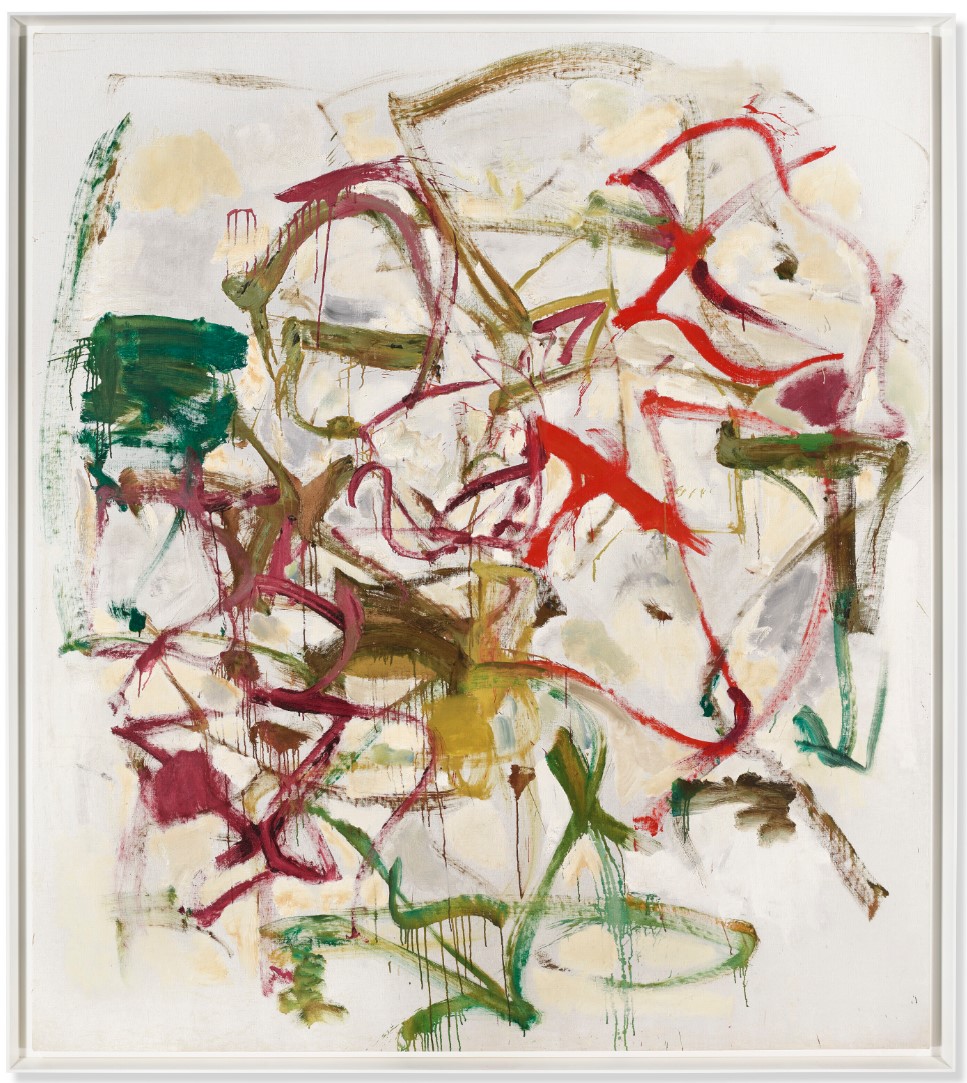
JOAN MITCHELL (1925-1992)
Untitled, circa 1958
Oil on canvas
77 3/4 x 68 1/2 inches (195.6 x 174 cm)
A particularly lyrical example of Joan Mitchell’s early output, Untitled presents the artist at her most gestural. Emphasizing the brushstroke as an emblem of action and the individual artist’s hand, this composition leverages a dense working of paint with negative space in order to create a visual conversation that clearly illustrates Mitchell’s dynamic range. Painted the year before she permanently expatriated to France, Untitled shows the artist grappling with American advancements in painting and a yearning for the French Masters who had come before. Combining her observations of nature and the hum of the city with Transatlantic travel and close connections with artists like Jackson Pollock, Mitchell forged her own singular style that has influenced countless generations.
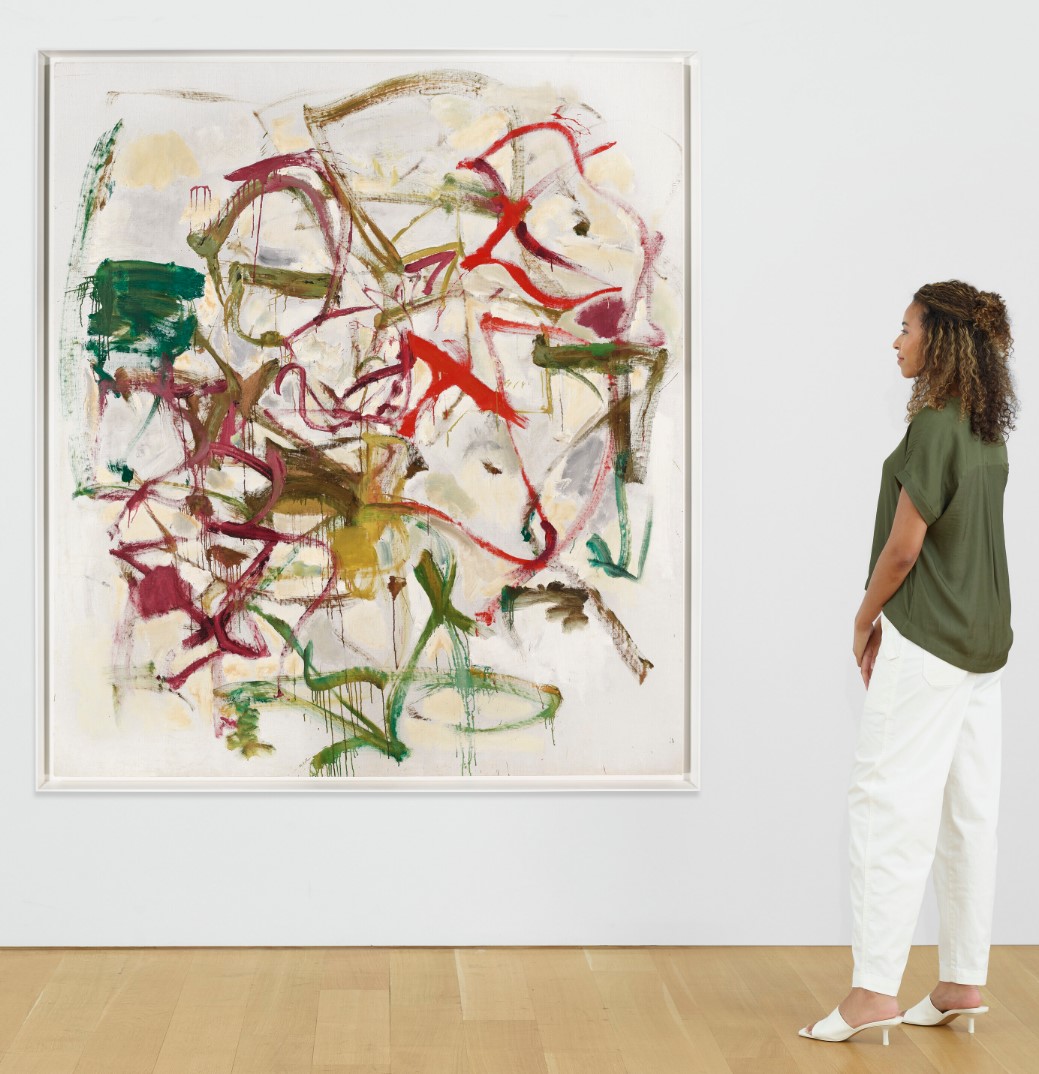
Rendered on a monumental canvas, in keeping with the bold scale of her colleagues at the time, Untitled is a riot of calligraphic strokes that tumbles and storms over the painting’s surface. On the right, several vivid red marks burst from a cloud of cream and a jumble of smaller earthen and green tangles. The left side draws focus with a thick, rounded-off square of verdant green atop a lattice of dripping burgundy. These elements expand and stretch over the rest of the canvas where they intermingle with gold, brown, and white. This white ground, a calling card of Mitchell’s oeuvre, never takes center stage but is nonetheless essential to the compositional power on display in works like Untitled. In this case, the artist’s brush seems to dance around the edges of the canvas, only sometimes touching the outermost boundary for a brief moment. Acting as an enclosing element, the rectangular surface strains to contain the active marks within. They swirl and cavort in a cloud of activity that is both wholly chaotic and simultaneously lyrical and complex.
Early Vétheuil
Loom II, 1976
Property from the Collection of Jennifer Gilbert Sold to Benefit Lumana Detroit
Sotheby’s New-York: 14 May 2026
Estimated: USD 5,000,000 – 7,000,000
USD 7,806,000
Joan Mitchell | Loom II | The Now & Contemporary Evening Auction |
JOAN MITCHELL (1925 – 1992)
Loom II, 1976
Oil on canvas
77 x 44-7/8 inches (195.6 x 114 cm)
Signed (lower right)
Tall, sweeping strokes and liberal clusters of cerulean, violet, ultramine, and emerald green dance across the towering surface of Loom II, a vital, verdant canvas that brings to life the lush plenitude of her beloved Vétheuil. Executed in 1976, the critical year Mitchell began her career-defining partnership with dealer Xavier Fourcade, Loom II hails from the esteemed collection of Jennifer Gilbert, presenting a magnificent, monumental translation of the surrounding French countryside, Here, we see Mitchell evolve out of the dense, cellular compositional forms of her works from the 1960s, exuberantly blooming into the loose and lyrical gestures that would dominate her final decade.
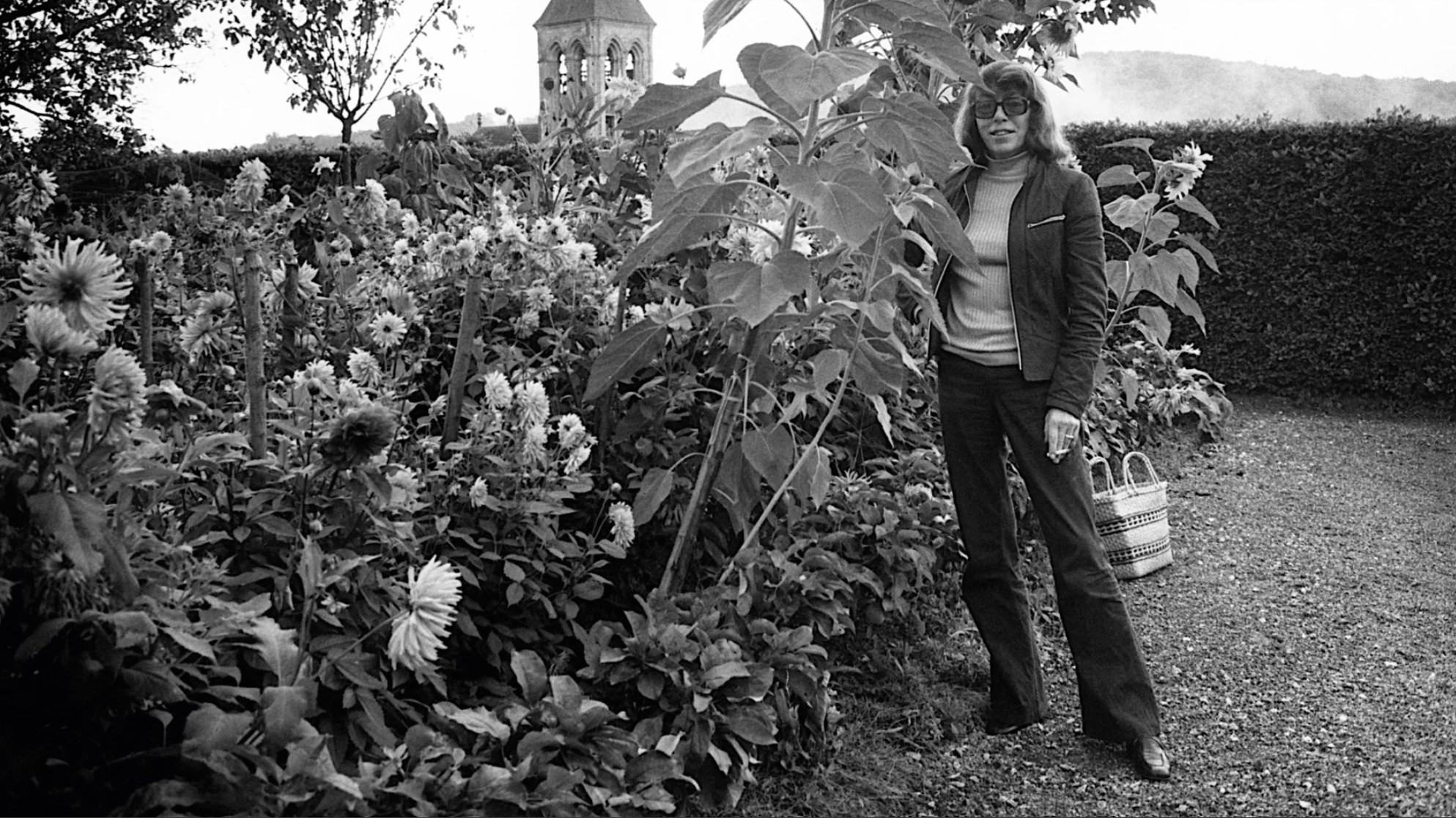
JOAN MITCHELL PHOTOGRAPHED IN VÉTHEUIL, FRANCE, 1972. PHOTO © NANCY CRAMPTON
Possibly referring to the weaver paintings created by Vincent van Gogh in Nuenen, The Netherlands, the present work and its sister painting, Loom, proffers Mitchell’s own impression of light, land, and vegetation, composed meticulously and vigorously, thread by thread, woven together in pastose oil. Testament to the importance of the rare and pivotal works from this period, other paintings from 1976 are held in museum collections around the world, including The Museum of Modern Art, New York; Fondation Louis Vuitton, Paris; and Museum of Fine Arts, Houston, among others.
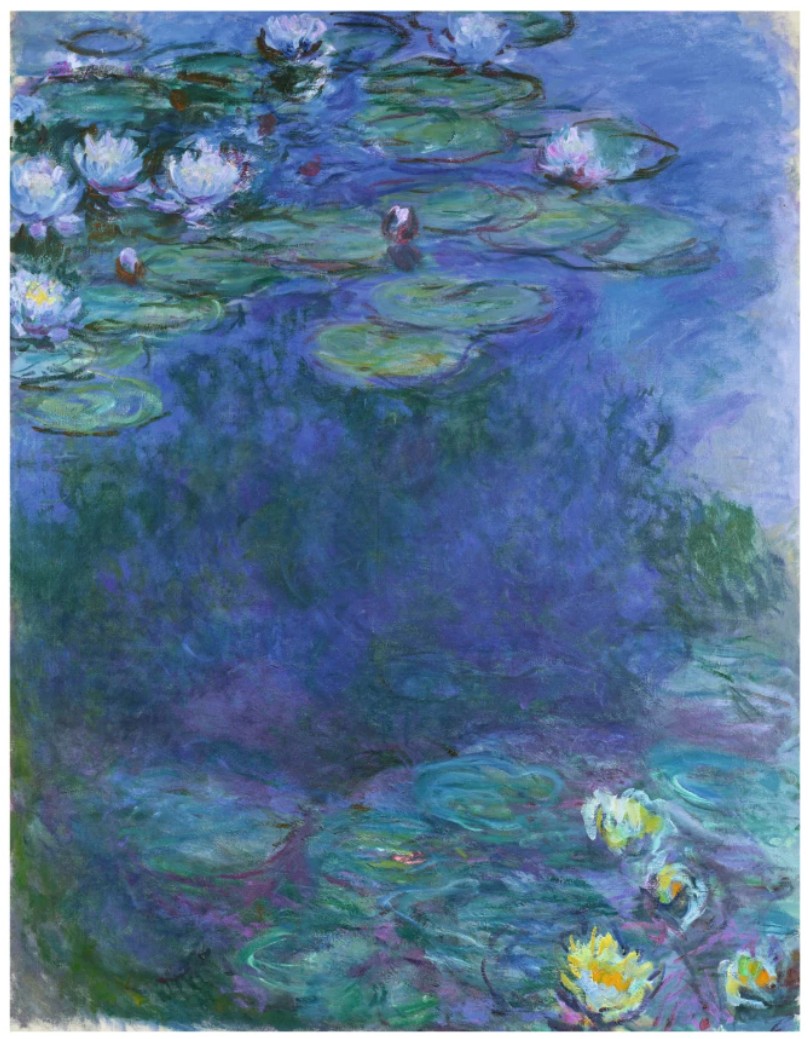
Claude Monet, Nymphéas, 1914-1917. Private Collection. Sold at Sotheby’s New York in November 2024 for $65.5 million
As a student at the School of the Art Institute of Chicago, Mitchell reveled in the magisterial canvases by Claude Monet and Vincent van Gogh housed at the Art Institute’s galleries. Indeed, Klaus Kertess described Mitchell’s life in Vétheuil as a series of moments rife with “celebrating and declaring her connections to French culture – that of its soil as well as that of its art.” (Klaus Kertess, Joan Mitchell, New York, 1997, p. 33) Fittingly, in 1968, Mitchell would permanently settle on a sprawling rural estate in Vétheuil, a town once home to Claude Monet.
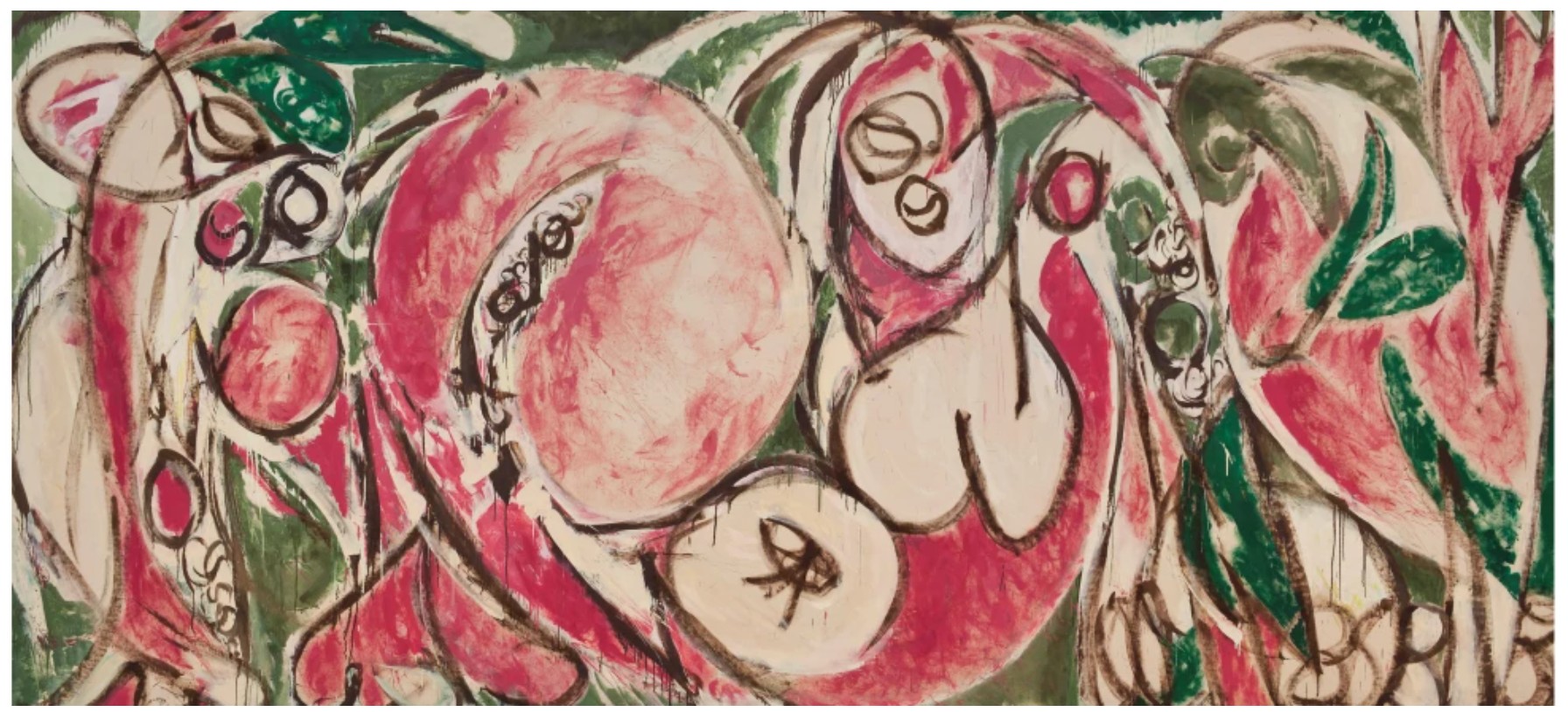
Lee Krasner, The Seasons, 1957. Whitney Museum of American Art, New York. Image © Whitney Museum of American Art / Licensed by Scala / Art Resource, NY. Art © 2026 Pollock-Krasner Foundation / Artists Rights Society (ARS), New York
There, secluded from the Abstract Expressionist milieu in which she was so enmeshed, Mitchell’s paintings adopted the same sumptuous palette and acute sensitivity to light articulated in Monet’s plein air paintings of Vétheuil years earlier. Ariella Budick observes: “She felt free to indulge in a grand botanical abstraction. She painted canvases of majestic size that didn’t so much copy nature as plumb her sensual, emotional and mythological terroir. When she gazed out of the window or went for a walk, she saw a fiercely animated psychic landscape.” (Ariella Budick, “Joan Mitchell at Baltimore Museum of Art – an immersive symphony of color,” The Financial Times, 6 April 2022 (online))
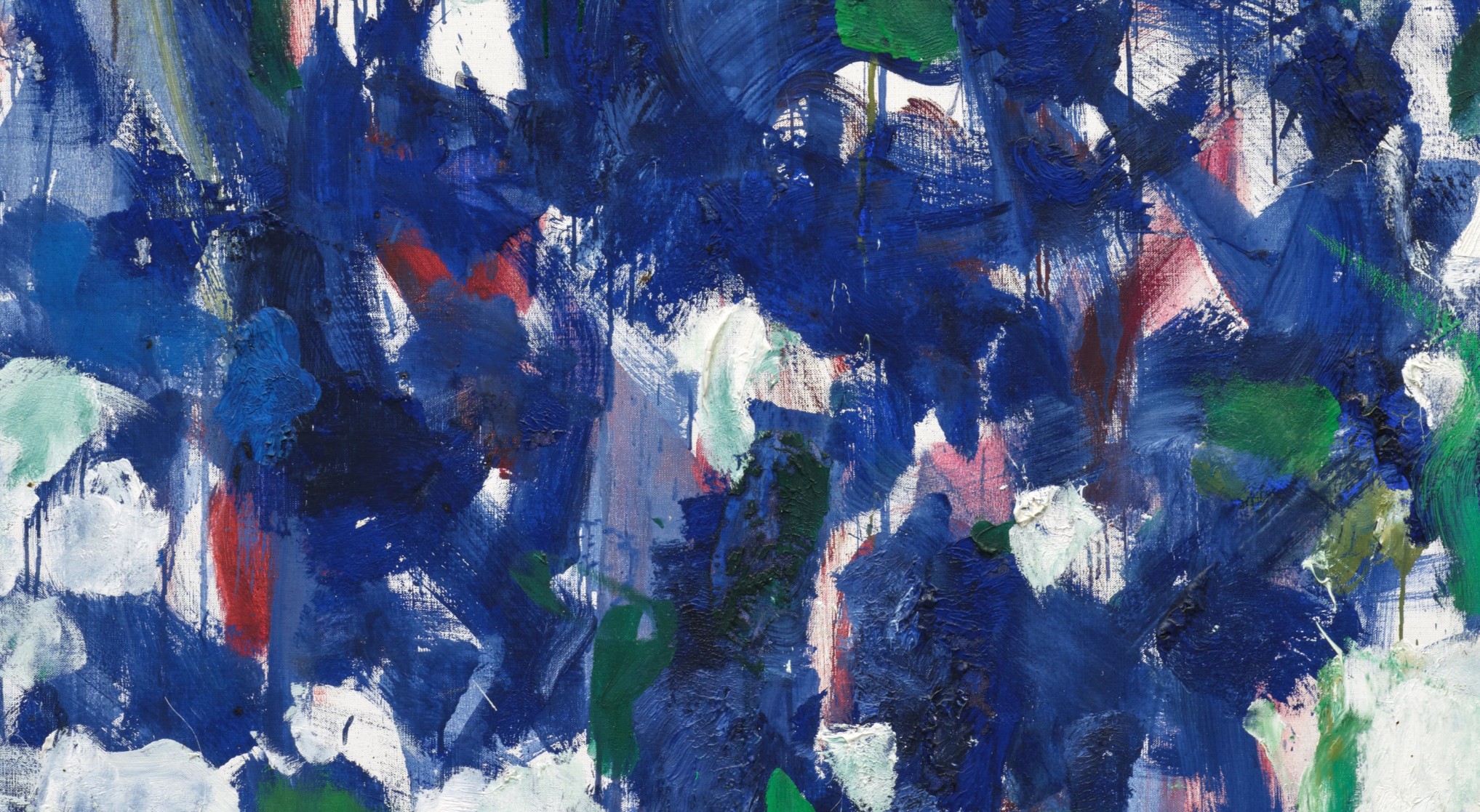
Indeed, all the French countryside had to offer her planted itself in her consciousness, and she reaped the wealth Vétheuil had to offer, and her canvases likewise continued to stretch upwards and outwards, reaching to meet the vaulted ceilings of her studio. Here, the alabaster field counterbalances the wild and overgrown panoply of royal blues and pine greens, punctuated by glimpses of scarlet; Loom II absorbs its viewer in its poetic translation of bursting, uncompromising light, color, and form. The confidence with which Mitchell poetically translates her paradisiac environs into paint reveals the height of Mitchell’s powers. Executed two years after Mitchell’s monumental mid-career retrospective at the Whitney Museum of American Art in New York, Loom II testifies to the profundity of Mitchell’s encounters with the natural world: the riches of color, space, and light, the exacting specificity in this moment in a life shaped by place, directed by gesture, and documented rigorously by brush. Asserting the full range and plasticity of oil’s material properties, Mitchell tells the story of the world around her, from planar fields, to abundant foliage, to fallen fruit, to the extraordinary brilliance of her garden.
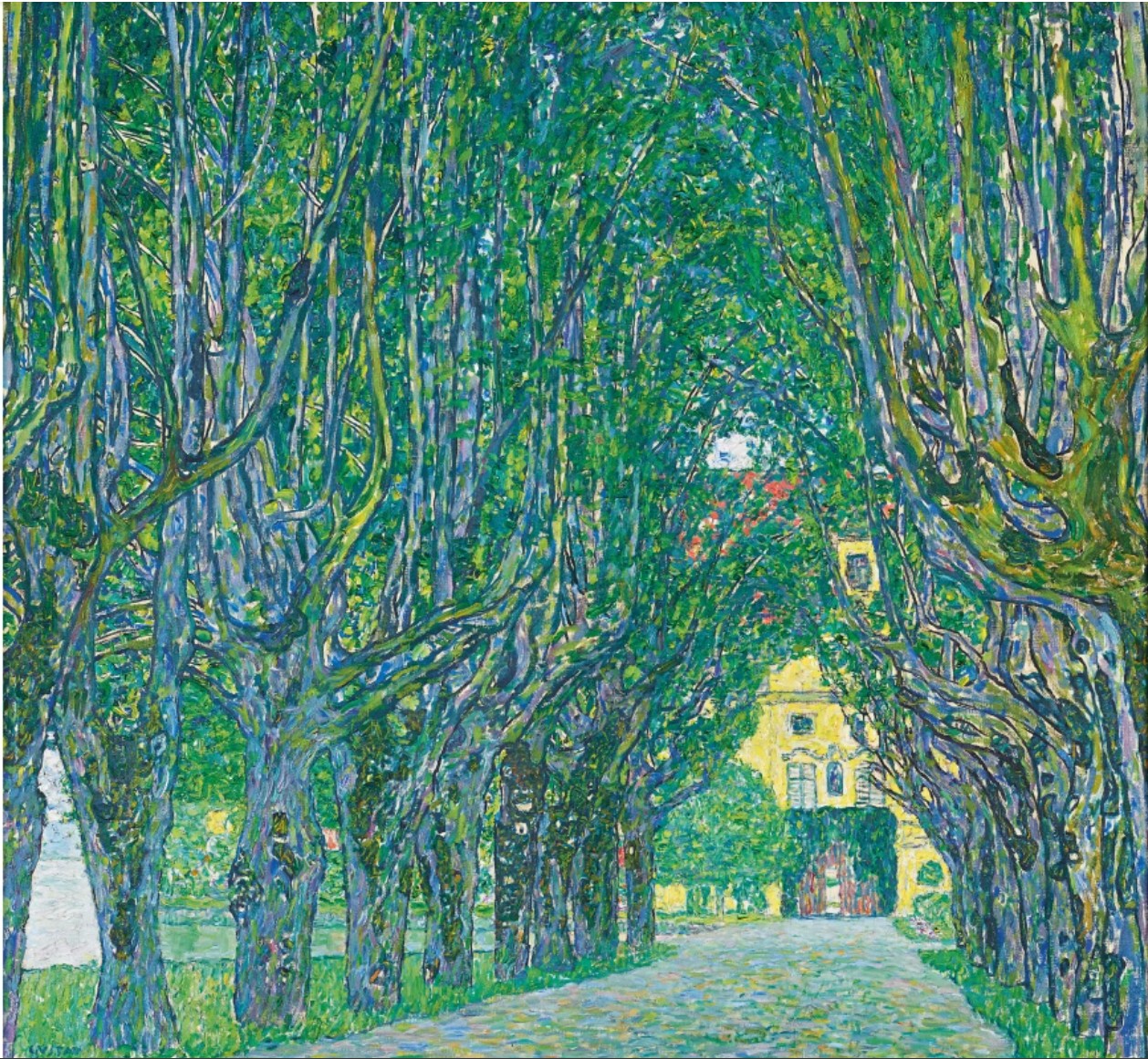
Gustav Klimt, Avenue of Schloss Kammer Park, 1912. Osterreichische Galerie Belvedere, Vienna. Image © Bridgeman Images
Marrying the ephemeral with the physical, muscular and balletic, felt and seen, Mitchell’s steadfast commitment to the language of abstraction and her inimitable ability to channel place and memory through color and gesture alone is laid manifest in the spectacular theater contained in Loom II. Sumptuously layered, Loom II presents a powerful and affecting memorial to the landscape she tirelessly captured and concretized on canvas.
Sunflower V, 1969
Elaine: The Collection of Elaine Wynn
Christie’s New-York: 17 November 2025
Estimated: USD 12,000,000 – 18,000,000
USD 16,735,000
JOAN MITCHELL (1925-1992), Sunflower V | Christie’s
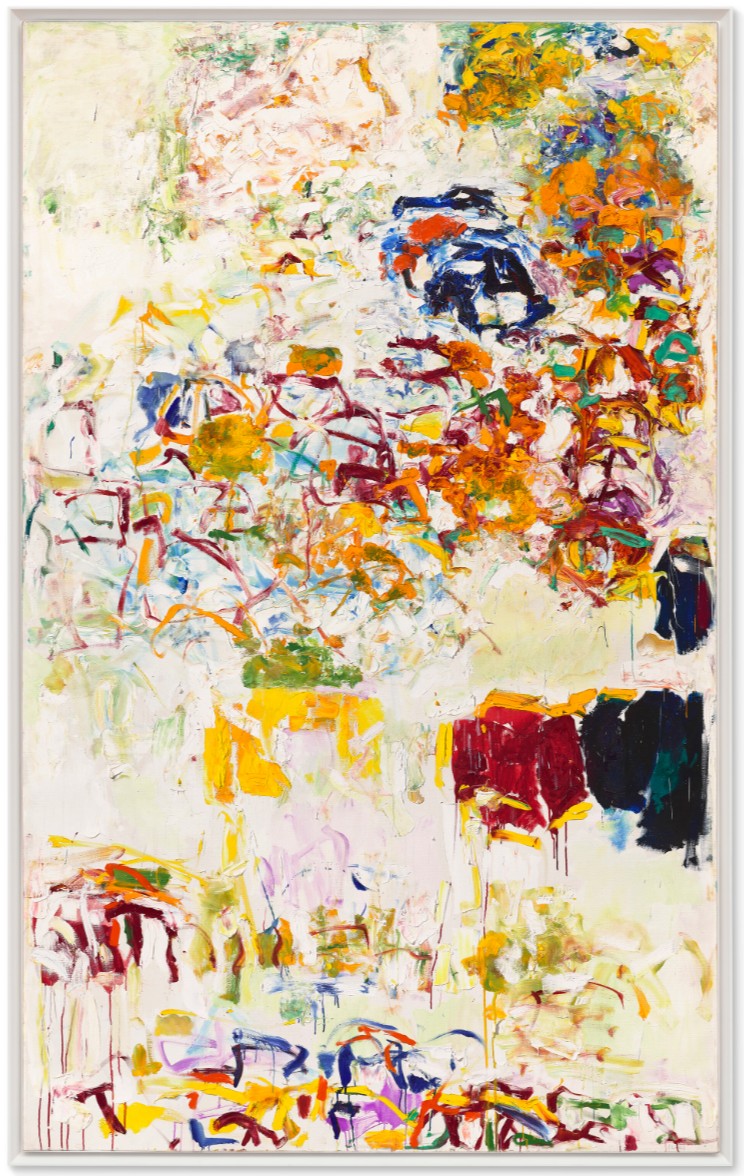
JOAN MITCHELL (1925-1992)
Sunflower V, 1969
Oil on canvas
102 1/2 x 63 inches (260.4 x 160 cm)
Signed ‘J. Mitchell’ (lower right)
Joan Mitchell’s colossal Sunflower V is a stirring visual poem wrought from the great Abstract Expressionist’s athletic brushstrokes and energetic paints, articulating simultaneously the splendid grandeur and the macabre of the natural world witnessed by the artist upon her arrival in 1967 to Vétheuil, the small village just outside Paris where she would remain for the rest of her life. Immersing herself within her newfound arcadian garden and embracing the poignant legacy of her artistic forebearers, Mitchell’s style and outlook changed considerably from her early architectonic abstract renderings of New York’s urbanity and her more mournful Calvi and Black Paintings made in Paris in the earlier part of the 1960s. Sunflower V marks the definitive fulcrum for the artist, Mitchell here embracing the natural world newly surrounding her, while accommodating her American inheritance with the vibrant French artistic tradition. Among the depictions of sunflowers made by the artist, Mitchell would continue to explore the subject in a variety of media—paintings, drawings, lithographs, and prints—until the very end of her life, making a monumental diptych celebrating this favored form just a year before her death with Sunflowers (1990-1991). Her continued engagement with sunflowers denotes their deeply personal, even autobiographical, significance for Mitchell.
“Sunflowers are something I feel intensely. They look so wonderful when young and they are so very moving when they are dying.”
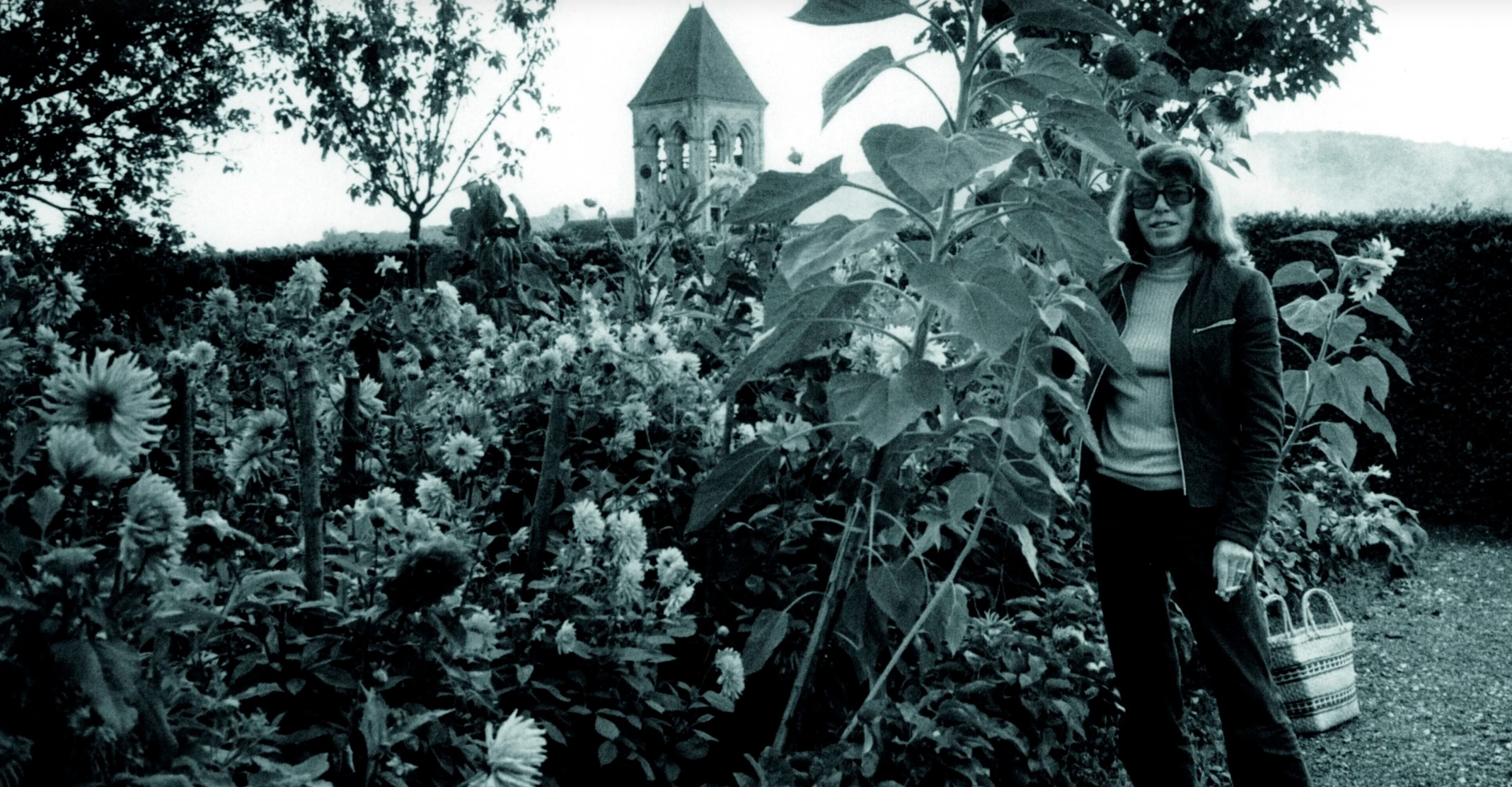
Joan Mitchell in her garden at La Tour, Vétheuil, 1972. Photo: © Nancy Crampton. All rights reserved.
Standing two meters high, Sunflower V monumentalizes the vertical format favored by Old Master and Impressionist painters of flower still-lifes, expanding and exploring their vernacular at a revolutionary scale. Here, Mitchell suggestively paints a sunflower majestically unfurling from the top register down towards the bottom of the picture, the scale of the tableau capturing the true size of the massive sunflowers growing just outside her home in Vétheuil. The work manifests a detailed rendition of the bright blossom tossed high in the air, then careening downward through space in brilliant myriad melodies composed in shades of orange, red, thin washes of lavender and rich blues intermixed with the prominent dapples of white and yellow tones of cadmium and orpiment.
The alternating dense and thin passages of impastoed paint parallel and magnify her almost impressionistic brushwork at a stunning scale, capturing the atmospheric light surrounding and penetrating the petals, stems, and leaves which constitute the sunflower. Mitchell varies her brushstrokes, developing in certain areas—notably in the central zone—the poignant, linear strokes which recall her earlier 1950s works, and in other areas dense fields of interlocking gestural passages and blocky forms which Mitchell will go on to further develop through the next decade. The compositional plane is similarly expansive in Sunflower V, with the artist leaving less white space within her picture, nodding towards the allover paintings which she would develop later in life.
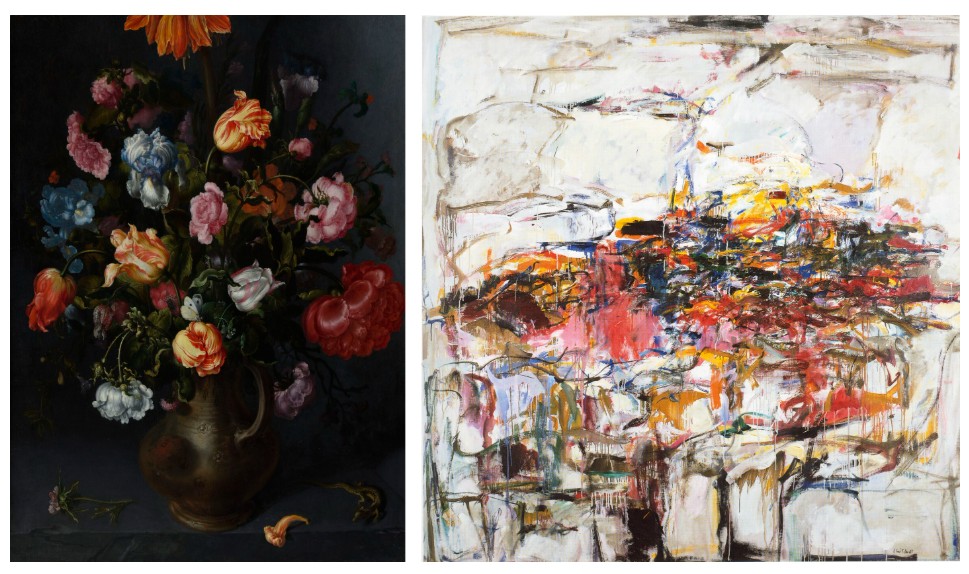
Left: Jacob Vosmaer, A Vase with Flowers, circa 1613. Metropolitan Museum of Art, New York.
Right: Joan Mitchell, City Landscape, 1955. Art Institute of Chicago. © Estate of Joan Mitchell.
Sunflower V manifests a deep emotional complexity, capturing both the flower’s magnificent first bloom down through its collapsing death in a sweeping narrative played out across the canvas. Art critic Dave Hickey gracefully describes how “Mitchell’s sunflowers bloom for us in their glory, singly and in floral banks, they reward us in the fullness of their moment, which is not much longer than the painter takes to re-imagine them, but they die dead. Mitchell insists that they do… They turn ugly and forbidding, rot and burn away” (D. Hickey, “Joan Mitchell: Epigrammata,” in Joan Mitchell: Sunflowers, exh. cat., Cheim & Read, New York, 2008, p. 2). Hickey aligns Mitchell’s Sunflowers with the classical epigram, both poems and paintings intertwining petulance and grandeur to capture and express the quotidian experience of living and breathing, but in their psychological complexity and enduring power Mitchell also expresses the existentialist laments of writers including Charles Baudelaire, Albert Camus, and Samuel Beckett, the former two residing on her bookshelf and the later a dear friend. Mitchell aligns herself aesthetically with this thoroughly French tradition of philosophizing death by elevating joy and despair onto equal planes, both expressions finding purchase amid her meticulous brushstrokes and vibrant variants of color. While other artists, notably Vincent van Gogh, have captured the bloom and subsequent decay of sunflowers across a series of canvases, Mitchell’s innovation here is to include one flower’s entire life cycle in a singular plane.
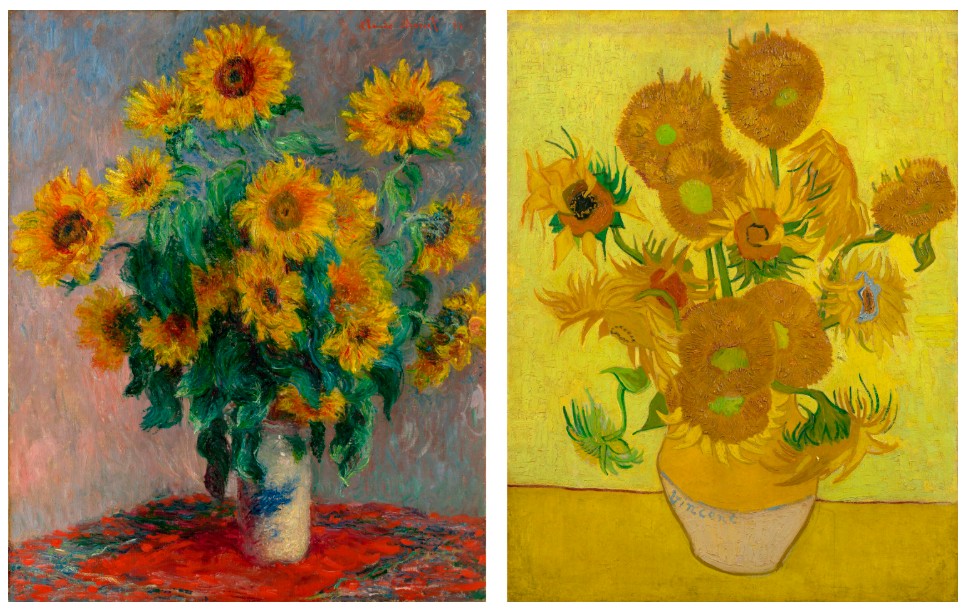
Left: Claude Monet, Bouquet of Sunflowers, 1881. Metropolitan Museum of Art, New York.
Right: Vincent van Gogh, Sunflowers, 1889. Van Gogh Museum, Amsterdam.
Van Gogh famously chose sunflowers for his most iconic subject, painting the buds’ lifecycle across a series of seven canvases. Mitchell had assiduously studied and admired the great master’s paintings while training at the Art Institute of Chicago, and her embrace of the same subject mirrors her forebearer. Van Gogh’s Sunflowers were among the first paintings the artist made upon his arrival to Arles in the south of France, fleeing the rigors and tribulations of Paris. The Dutch artist rejoiced enthusiastically in the joyous expression of the flowers, writing in a letter to his brother Theo in 1888 that “I’m painting with the gusto of a Marseillais eating bouillabaisse, which won’t surprise you when it’s a question of painting large SUNFLOWERS” (V. van Gogh, “No. 666: To Theo van Gogh. Arles, Tuesday, 21 or Wednesday, 22 August 1888,” Van Gogh Museum: The Letters, Online, accessed 3 June, 2025, emphasis original). Mitchell similarly alighted from the French metropolis for the bucolic idyll of Vétheuil, seeking to remove herself from the chaos of the city and to find new artistic inspiration. Acquiring La Tour, a house which prominently overlooked both the village and the river Siene, Mitchell and her partner, the Québécois painter Jean-Paul Riopelle, developed and maintained a magnificent garden on her terrace, with Riopelle planting the Russian Mammoth Sunflowers which appear in her paintings.
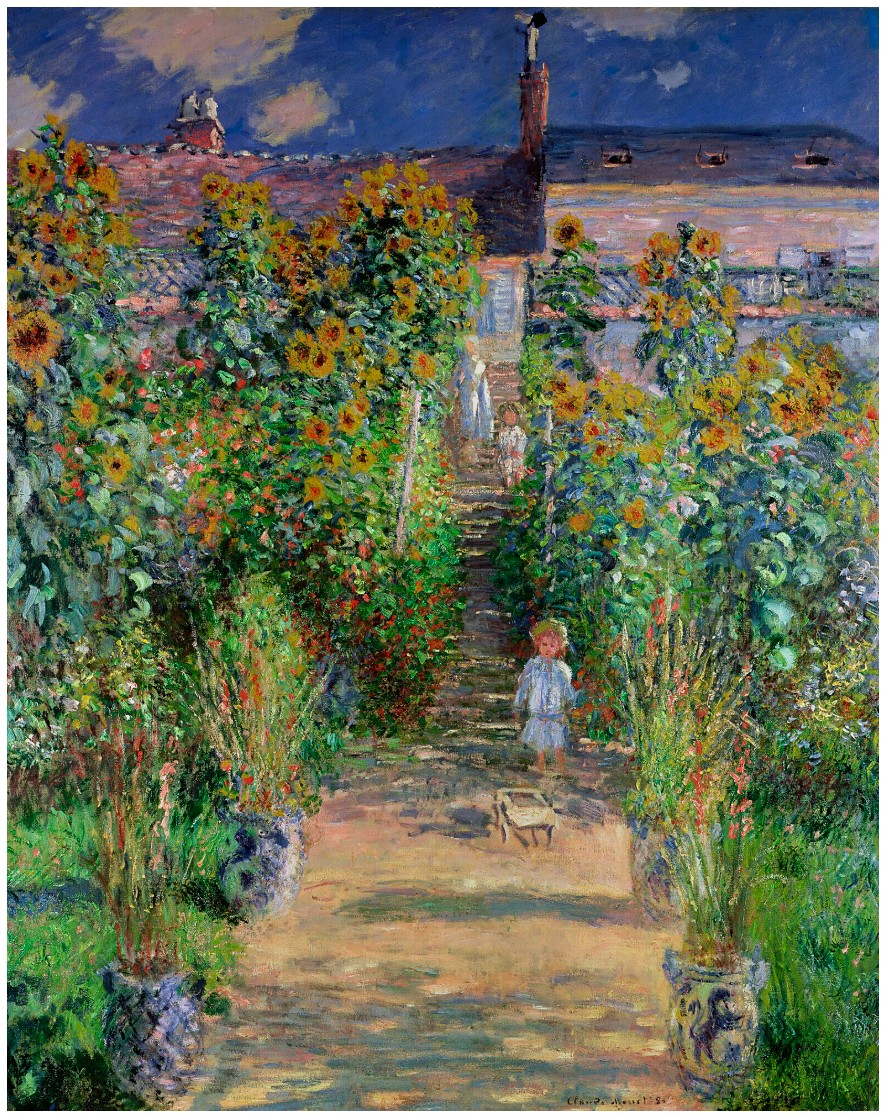
Claude Monet, The Artist’s Garden at Vétheuil, 1881. National Gallery of Art, Washington, D.C.
Mitchell had chosen the same village which Claude Monet had moved to almost a century before, Riopelle sowing the same sunflowers which the Impressionist master had painted so stunningly in a series of paintings from 1881. Both Monet’s and Mitchell’s moves out from Paris allowed an important self-reinvention permitted by their removal from the Parisian art world, both artists developing extraordinary lyrical compositions which exude unparalleled optimism and energy. Mitchell’s house overlooked the home which housed Monet and his family, providing an intimate proximity to the Impressionist’s legacy.
“I live in it, I walk in it. It’s fabulous. The garden, the trees, the church… the fields behind where Monet did his Poppy things… the Seine right below.”
La Tour also provided an important space for Mitchell to expand her work, both through its immersion within the French countryside and due to the property’s size, permitting her standalone studio to be her largest yet, allowing her to paint her large compositions such as Sunflower V on stretched canvases for the first time in her career. The relocation most importantly influenced Mitchell’s practice, however, by propelling her directly into the legacy of van Gogh and Monet, adducing a flavor of France’s artistic patrimony into her American abstractions. Considering Mitchell’s Sunflower paintings, the great French art historian Pierre Schneider proclaimed her as “the last heir to the grand tradition,” writing with elegant ekphrasis how her paintings were “a purely abstract space suddenly interrupted by a yellow literally taken from a sunflower” (P. Schneider, “Mitchell: la conscience et la terre,” L’Express, August-September 1982, p. 19).
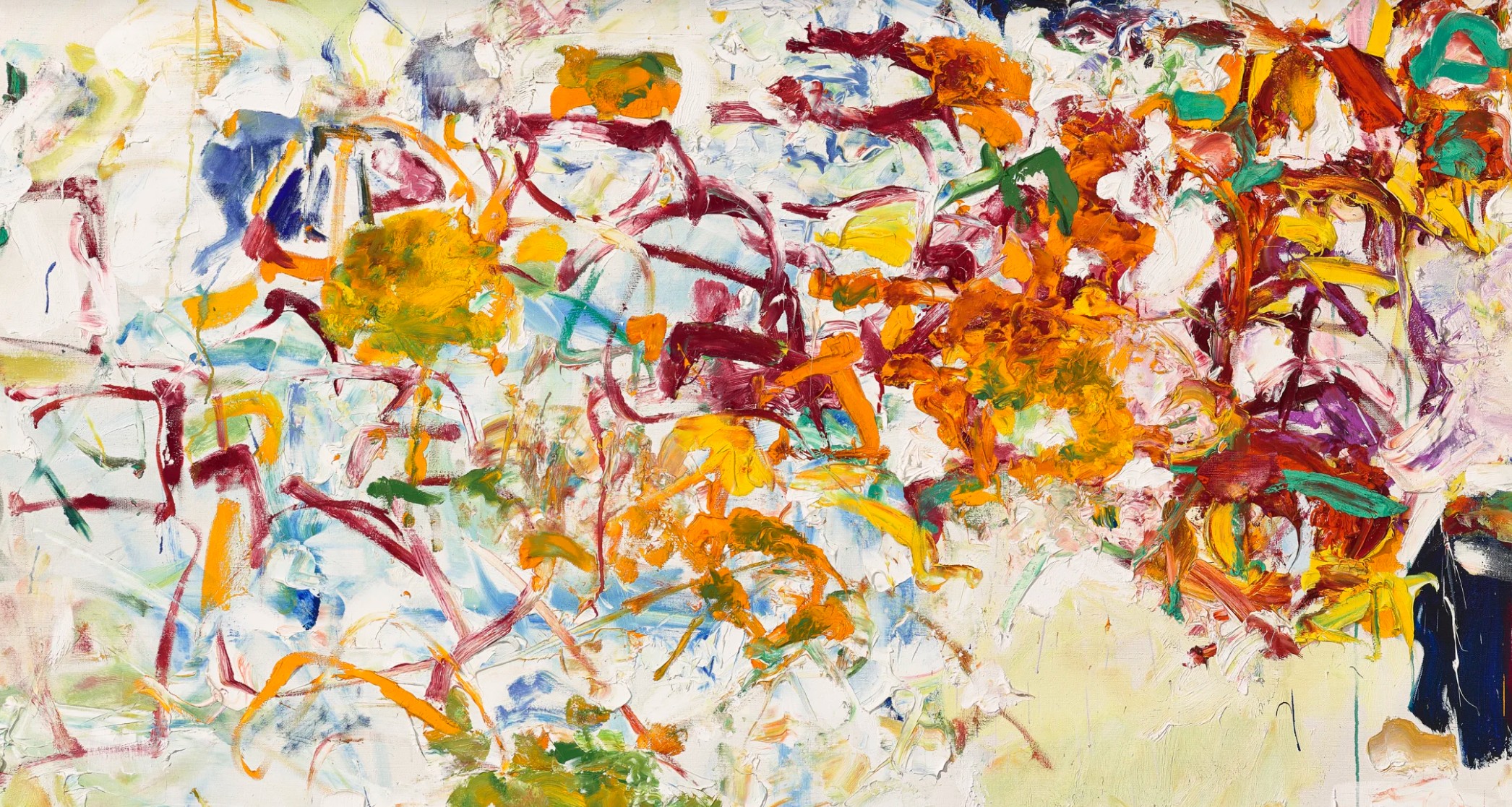
As Monet and van Gogh inspired Mitchell in her Sunflower paintings, Mitchell in turn has proved an important influence on successive generations of artists. Of signal importance to Joan Mitchell, other examples of her early Sunflowers are held in institutional collections including the Metropolitan Museum of Art, New York, the Smithsonian American Art Museum, Washington D.C., and the Williams College Museum of Art, Williamstown, Massachusetts. Mitchell would continue to be preoccupied by the motif until just before her death, continuing her exploration of the brilliant bloom and dramatic wilting of the flower. Drawing upon the tradition inaugurated by Monet and van Gogh, Mitchell triumphantly announces her permanence in her adopted home with Sunflower V, bridging American abstraction with the French tradition to formulate an entirely new and utterly beguiling expression of the natural world.
Noon, circa 1969
Sotheby’s New-York: 13 May 2024
Estimated: USD 15,000,000 – 20,000,000
USD 22,615,400
Noon | Contemporary Evening Auction | 2024 | Sotheby’s (sothebys.com)
JOAN MITCHELL (1925 – 1992)
Noon, circa 1969
Oil on canvas
102×79 inches (259.1 x 200.7 cm)
Signed (lower left); signed and titled (on the reverse)
Thick rectangles of marigold, violet, and verdant green join feathery, impastoed daubs of paint in Joan Mitchell’s Noon, a masterpiece which triumphantly announces the artist’s full confidence in the medium. Executed circa 1969, Noon emerges from the year after she relocated to Vétheuil, a town in the French countryside once home to Claude Monet. This move would mark a decisive turn in her career, as her canvases became larger and the stimulation afforded by the bucolic splendors of her surroundings proved immensely generative. Shifting away from the academic concerns of her earlier output, by the late 1960s, Mitchell had entered a new era, one which sees her brushwork at its most diverse and self-assured.

JOAN MITCHELL PHOTOGRAPHED IN VÉTHEUIL, FRANCE, 1972. PHOTO © NANCY CRAMPTON
Towering at over eight feet tall, Noon’s surface absorbs its viewer into its poetic translation of the landscape into bursting, uncompromising color and form. This is a painting that reveals a mature artist at her absolute height: in 1972, the Everson Museum in Syracuse would organize the first major solo survey of Mitchell’s work – in which the present work was notably exhibited – and just two years later, she would be honored with a monumental retrospective at the Whitney Museum of American Art. Undoubtedly among the best examples from this celebrated period, Noon testifies to the profundity of Mitchell’s encounter with the natural world: its wealth of color, space, and light find home on Mitchell’s early Vétheuil canvases with exacting specificity, vestiges of a life shaped by place, directed by gesture, and documented by brush.

LEFT: SAM FRANCIS, UNTITLED, 1958. IMAGE © THE MUSEUM OF MODERN ART/LICENSED BY SCALA / ART RESOURCE, NY. © 2024 SAM FRANCIS FOUNDATION, CALIFORNIA / ARTISTS RIGHTS SOCIETY (ARS), NEW YORK. RIGHT: CLAUDE MONET, WATERLILIES, 1916-1919. MUSÉE MARMOTTAN-CLAUDE MONET, PARIS, FRANCE. IMAGE © ERICH LESSING / ART RESOURCE, NY
In 1968, Mitchell permanently settled on a sprawling rural estate in Vétheuil. There, secluded from the dominant narrative of Abstract Expressionism, her paintings begin to exhibit the same sumptuousness of palette and acute sensitivity to light articulated in the captivating plein air paintings of Claude Monet, who painted the landscapes of Vétheuil years before. In her work, she accepted all of Vétheuil’s offerings: her palette took on the region’s ultramarines, sunny yellows, and tangerines, all of which would comprise her signature palette until her death. Opening like portals into the expansive world around her, doused in rich, exuberant light, her paintings communicated a brightness not unlike Henri Matisse’s Open Window, Collioure, which extends the chromatic vivacity of the outdoors beyond the representational and into the experiential. Likewise, her canvases continued to stretch outwards, reaching out to meet the vaulted ceilings of her studio.

The paintings that poured out of her initial years in France revealed not only Mitchell’s full chromatic expression but also her rich personal associations with the land and the artists it has inspired. As a student at the School of the Art Institute of Chicago, she reveled in the magisterial canvases by Monet and van Gogh housed at the Art Institute’s galleries, artists whom she’d venerated in youth and would go on to establish a kinship through place.

LEFT: VINCENT VAN GOGH, ROAD TO SAINT-REMY, 1890. PRIVATE COLLECTION, LUGANO, SWITZERLAND IMAGE © ERICH LESSING / ART RESOURCE, NY. RIGHT: CHAIM SOUTINE, LANDSCAPE, 1919. PRIVATE COLLECTION. IMAGE © BRIDGEMAN IMAGES. ART © 2024 ARTISTS RIGHTS SOCIETY (ARS), NEW YORK / ADAGP, PARIS
Her evocations of the world around, however, do not merely situate Mitchell in a lineage of artists in the same pursuit: unlike Mondrian, whose grids systematically distilled the natural world, or Kandinsky, whose resplendent geometries found their inspiration in music, Mitchell concerned herself – or submitted herself, rather – to affect. Dancing between deliberation and immediacy, abstraction and allusionism, her definitively nonrepresentational vocabulary remains encoded with figurative, illusory vestiges charged with feeling. The present work’s title speaks to this – Mitchell, who rose at midday and worked late into the evenings, titled Noon after the earliest, hottest point in her day. At noon, the light is its clearest and most direct, and, befittingly, Noon sees the artist utterly lucid, triumphant in the apex of her creative powers.
“I would rather leave Nature to itself. It is quite beautiful enough as it is.
I don’t want to improve it…I certainly never mirror it.
I would like more to paint what it leaves me with.”
Cacophonous yet sonorous, Mitchell exercises the whole of her technical proficiency and derives inspiration from the place she loved most. Noon suffuses its viewer in aqueous, animated glory, and the painterly force contained therein would direct the tenor and cadence of the rest of her prolific years in Vétheuil.
Late Paintings
Plain, 1989
A Life in Color: Property from the Estate of Tina Hills
Phillips New-York: 19 May 2026
Estimated: USD 5,000,000 – 7,000,000
USD 6,850,000
Joan Mitchell Modern & Contemporary Art Evening Sale
JOAN MITCHELL
Plain, 1989
Oil on canvas, diptych
Each: 51×35 inches (129.5 x 88.9 cm)
Overall: 51 x 70-1/2 inches (129.5 x 179.1 cm)
Signed “Joan Mitchell” lower right
Painted in 1989, Plain belongs to the final and most distilled phase of Joan Mitchell’s career, when the artist’s painterly language achieved a remarkable synthesis of gesture, color, and remembered landscape. Acquired from the Robert Miller Gallery in New York just two days after Mitchell’s debut solo exhibition with the gallery opened on 25 October 1989, the painting has remained in the distinguished collection of the Miami-based collectors Lee and Argentina “Tina” Hills and is now offered publicly for the first time. A pioneering media executive, philanthropist, and arts patron—and the first woman president of the Inter American Press Association—Tina Hills, together with her husband, Pulitzer Prize–winning editor Lee Hills, helped shape downtown Miami’s cultural arts plaza and played a key role in transforming the Miami Art Museum of Dade County, now the Pérez Art Museum Miami, into a leading cultural institution through their philanthropy and the creation of the Museum Loan Network.
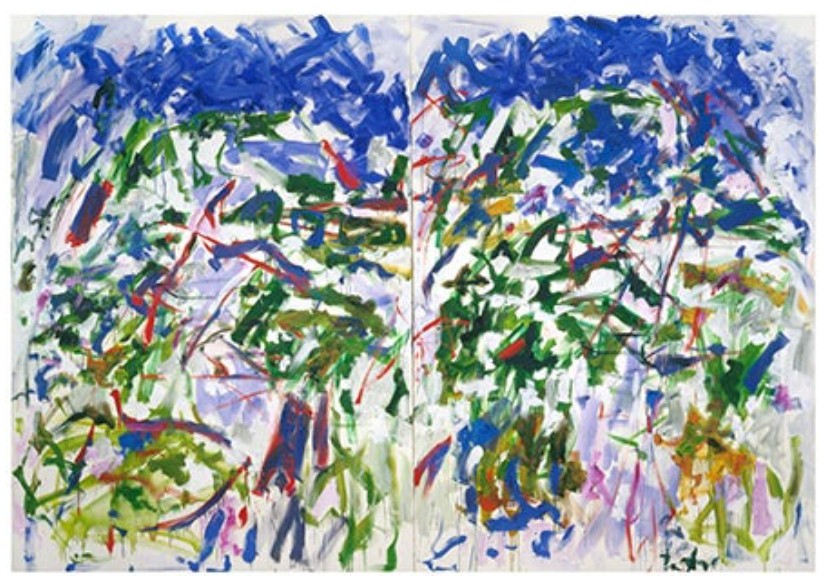
Joan Mitchell, Land, 1989. National Gallery of Art, Washington, D. C. Image/Artwork: © Joan Mitchell Estate
Cerulean and ultramarine blues mingle with passages of grassy and viridian green across the diptych, punctuated by slashing accents of crimson and rose that pirouette across its monumental surface. Muscular yet balletic, these marks articulate the mature visual vocabulary Mitchell forged over decades—one rooted in the gestural freedom of Abstract Expressionism yet profoundly attuned to the sensory memory of landscape. Executed during the final years of her life, Plain demonstrates the extraordinary vitality of Mitchell’s late practice, its saturated color and painterly force belying the artist’s declining health.
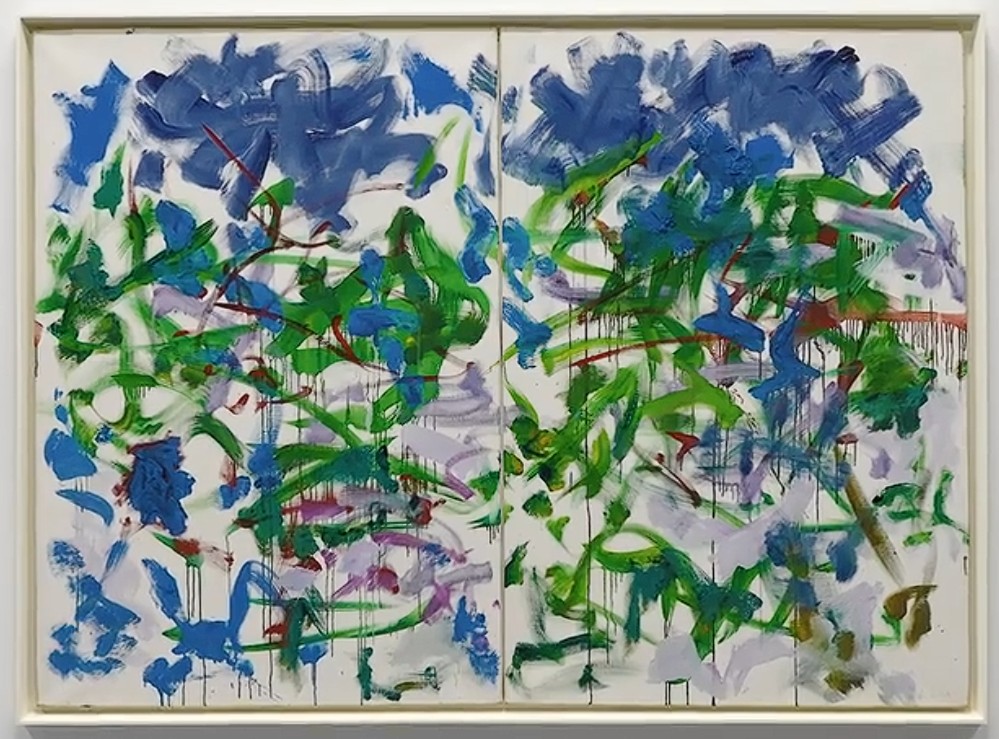
The painting’s binocular format plays a crucial role in its physical and perceptual impact. Since the early 1960s Mitchell had frequently joined multiple canvases together to achieve panoramic scale, using the vertical breaks between panels to activate the gaze. In Plain, dense clusters of gestural marks surge across both panels, with passages of heightened activity answered by corresponding bursts of color on the opposite side. The result is a loose equilibrium: a continuous field of movement that resists strict symmetry while sustaining a rhythmic exchange between the two halves. The format amplifies the bodily dimension of Mitchell’s process, inviting the viewer to scan laterally across the surface as if moving through space.
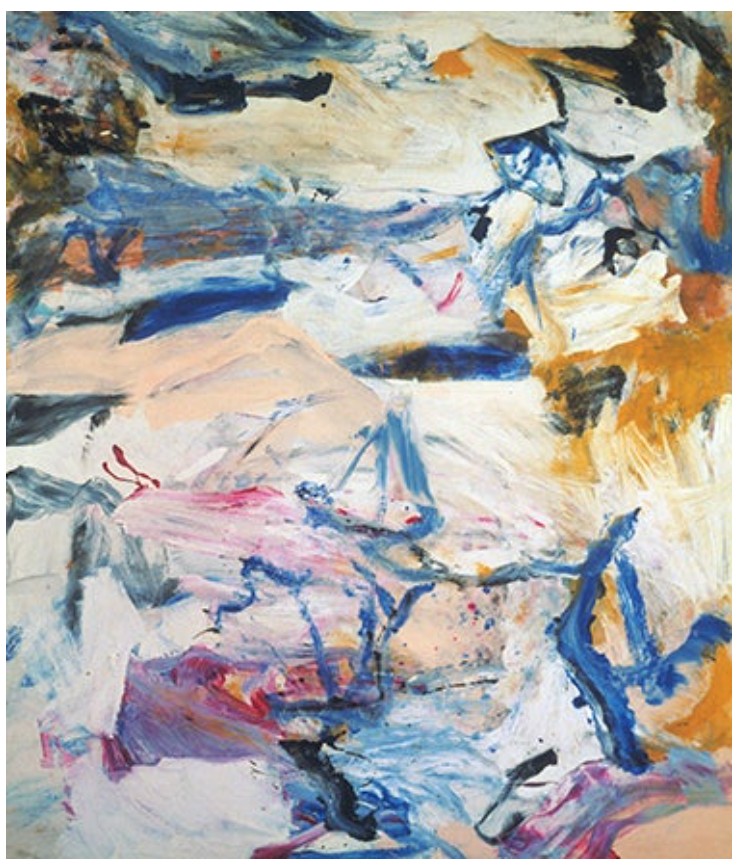
Willem de Kooning, North Atlantic Light, 1977. Stedelijk Museum, Amsterdam.
Image: Art Resource, NY, Artwork: © 2026 The Willem de Kooning Foundation/Artists Rights Society (ARS), New York
Works of this scale and ambition occupy a central place within Mitchell’s mature oeuvre. Other large-scale multi-panel paintings from the late 1980s until her death in 1992 are now held in major international collections, including the Fondation Louis Vuitton, Paris; Joan Mitchell Foundation, New York; Museum of Modern Art, New York; National Gallery of Art, Washington, D.C.; National Gallery of Victoria, Melbourne; Saint Louis Art Museum; San Francisco Museum of Modern Art; and Walker Art Center, Minneapolis, among others. These works represent the culmination of decades of formal experimentation, distilling Mitchell’s painterly vocabulary into gestures of remarkable clarity and force. As Michel Waldberg observed, “the magnificence of painting reaches its zenith, in the already considerable oeuvre of Joan Mitchell, from the 1980s. As if something, in her, had come to surface, as if freedom had at last been conquered… Never has color been more delicate, more sumptuous; never the gesture more independent, more audacious.”
“I don’t set out to achieve a specific thing, perhaps to catch a motion or to catch a feeling. […] I try to make it exact. My painting is not an allegory or a story. It is more of a poem.”
Mitchell emerged in the late 1940s as one of few prominent women within the predominantly male circle of New York’s Abstract Expressionists, developing alongside figures such as Willem de Kooning and Franz Kline a dynamic, gesture-driven approach to paint. Yet unlike many of her contemporaries, Mitchell never abandoned landscape as a conceptual point of departure. Her abstractions, however, are not depictions of nature but translations of its internalized sensations. “I am very much influenced by nature as you define it,” Mitchell once explained. “I paint from remembered landscapes that I carry with me – and remembered feelings of them, which of course become transformed.” In Plain, these impressions emerge in lyrical tangles of brushwork and tonal variation set against the exposed ground. The forms remain deliberately indeterminate, less descriptive than experiential, evoking shifting fields of sensation rather than fixed geography. The emphasis on bodily movement is central to this effect. Mitchell’s heavily loaded brush produces strokes that retain the immediacy of her gesture, appearing suspended across a luminous white expanse. Color functions not merely as light but as a trace of motion—the residue of the painter’s physical engagement with the canvas.
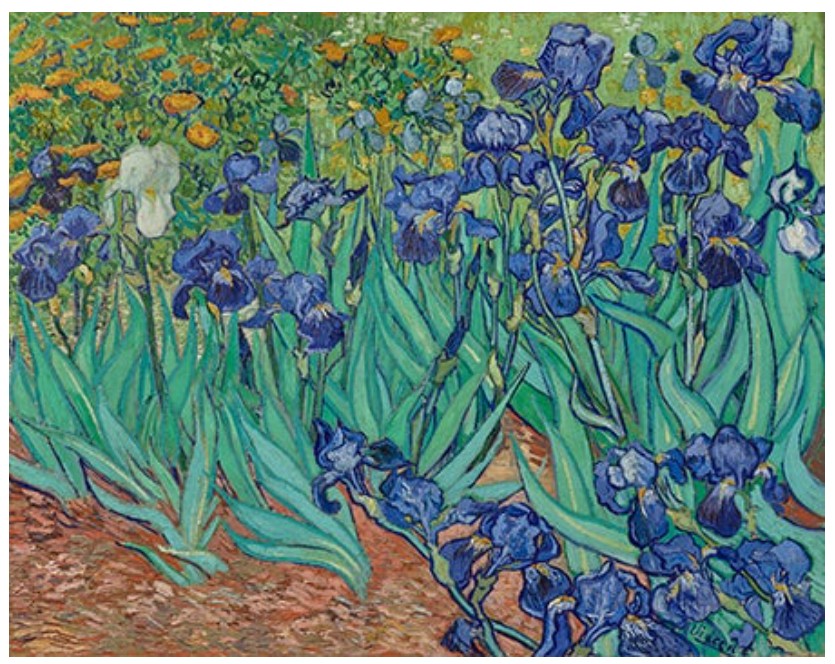
Vincent Van Gogh, Irises, 1889. J. Paul Getty Museum, Los Angeles. Image: Digital image courtesy of Getty’s Open Content Program
The orchestration of color in Plain is inseparable from the landscape surrounding Mitchell’s estate at Vétheuil, where she lived and worked from 1968 until her death in 1992. Her property at La Tour, perched on a hillside overlooking the Seine valley, was surrounded by gardens, orchards, and expansive fields that informed the sensibility of her late paintings. Though Mitchell generally worked at night in her studio—its windows covered with burlap and illuminated by what she described as “electric light”—the terrain around Vétheuil remained a persistent reservoir of visual memory. The title Plain quietly evokes this environment, suggesting both the open fields visible from the property and the painting’s wide horizontal span.
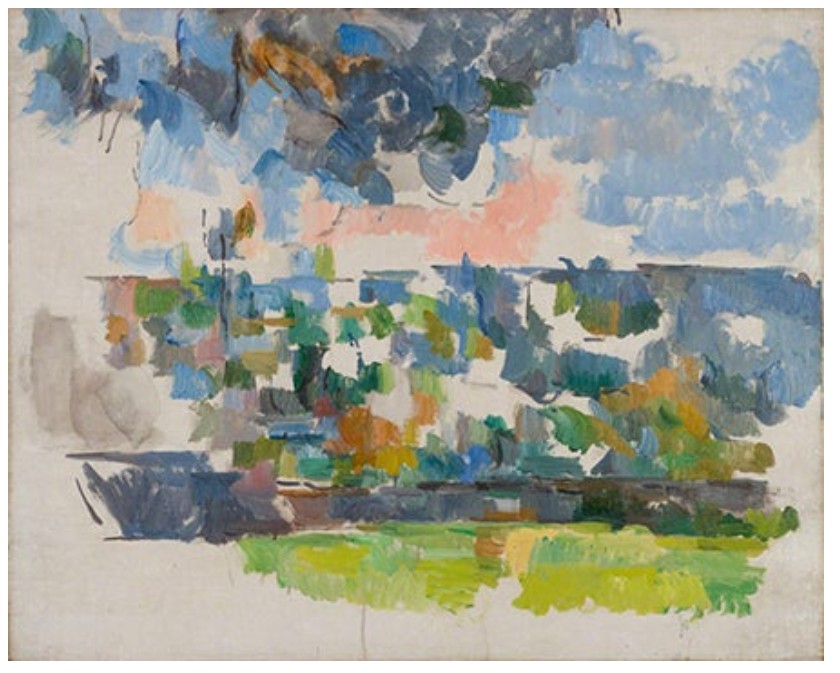
Paul Cézanne, Le Jardin des Lauves, 1906. The Phillips Collection, Washington, D.C.
Vétheuil also carries a particular resonance within the history of modern landscape painting: Claude Monet lived and worked there between 1878 and 1881, producing a series of canvases that explored the shifting light and atmosphere of the Seine valley. In Plain, Mitchell approaches that legacy obliquely, translating the Impressionist sensitivity to light and color into a gestural and resolutely abstract idiom. At the same time, the painting’s interlocking passages of color recall the chromatic architecture of Paul Cézanne’s landscapes, while the directional force of its brushwork finds an affinity with the charged surfaces of Vincent van Gogh’s painted fields. In Plain, these precedents register not as quotation but as lineage—an extension of the European landscape tradition through Mitchell’s physical, improvisational language of paint.
Despite being produced during a period when Mitchell’s health was increasingly fragile, the works of the late 1980s possess an unmistakable bravura. As Klaus Kertess observed of Mitchell’s paintings of 1989, “Each stroke is responsive to the color, light, shape, and directionality of those surrounding it and becomes a unit of intuited liquid architecture. An ecstatic agitation courses through these paintings, as much from the pleasures of mark making as the remembrances of landscape.”v
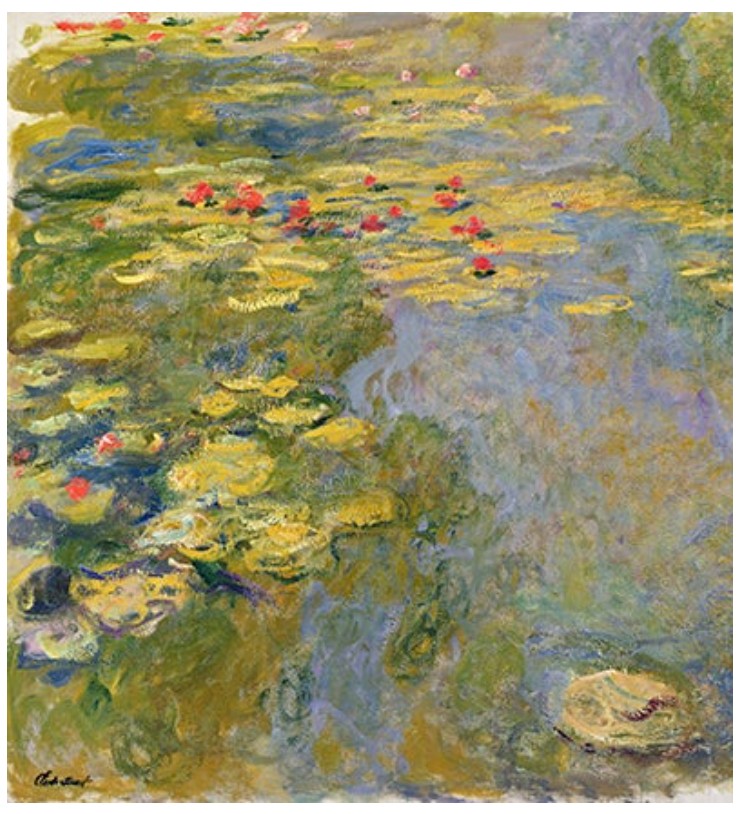
Claude Monet, Le Bassin aux nymphéas, 1917-1919. Musée Monet-Marmottan, Paris. Image: Bridgeman Images
In Plain, that “ecstatic agitation” courses across the diptych in a vivid orchestration of gesture and color, transforming remembered landscape into a field of painterly intensity. Unfolding across a nearly six-foot-wide canvas, the composition reflects the confidence and ambition of Mitchell’s practice following her move to Vétheuil, its scale allowing her to engage the full force of her body in swift, vigorous gestures. At once rooted in the expansive landscapes of her Midwestern childhood and shaped by the painterly traditions she absorbed in France, Plain unites an outsized Americanness with the refined European sensibility that defines Mitchell’s most powerful late paintings.
Untitled, 1978-1979
American Visionaries: Property from an Important Private Collection
Christie’s New-York: 20 November 2025
Estimated: USD 2,000,000 – 3,000,000
USD 2,759,000
JOAN MITCHELL (1925-1992), Untitled | Christie’s
JOAN MITCHELL (1925-1992)
Untitled, 1978-1979
Diptych—oil on canvas
Overall: 25 5/8 x 42 7/8 inches (65.1 x 108.9 cm)(2)
Signed ‘Joan Mitchell’ (lower left)
Signed again twice and dedicated ‘Pour Philippe Piguet Joan Mitchell Joan Mitchell’ (on the stretcher)
Signed again ‘Mitchell’ (on the reverse)
Creamy strokes of yellow, lilac, and violet sway lyrically from one panel to the other as an explosion of dark rectangular forms emerge from the foreground. Joan Mitchell’s diptych Untitled (1978-1979) reveals the full ripeness of the artist’s maturity, each brushstroke denoting a furious intimacy as the artist imbues her composition with metaphysical depth. After having a celebrated retrospective at the Whitney Museum of American Art in 1974 and signing on with Xavier Fourcade the following year, the artist launched a renewed campaign waged against fear and rage as she simultaneously continued to deepen her connection to the natural world. Surrounded by her gardens at La Tour in Vétheuil, responding to the twin legacies of Monet and van Gogh, many of Mitchell’s works from the latter half of the decade allude to vegetation and the landscape.
“The field disappearing… a different space but there’s a field with a sky and—and an homage to Vincent perhaps.”
Striking in its deep and atmospheric engagement with the French landscape, Untitled is likewise remarkable in its anticipation of Mitchell’s later painterly development. Accentuating the work’s connection to Vétheuil and the French countryside, the artist gifted the present work to her close friend Philippe Piguet, a great-grandson of Claude Monet as well as an art historian, critic, and gallerist, who thereafter held onto the painting for almost two decades before the painting was acquired by the present owner.
Joan Mitchell’s garden at La Tour, Vétheuil, France, 1991. Photo: Christopher Campbell.
The palette employed in Untitled is deeply tied to Mitchell’s experience in rural France after moving to Vétheuil in 1967.
“Yellow comes from [Vétheuil]. I used very little yellow in New York or Paris. It is rapeseed, sunflowers… one sees a lot of yellow in the country. Purple too… it is abundant in the morning; the morning especially very early is violet… when I go out in the morning, it is violet.”
Mitchell’s deepfelt experience of color allows Untitled to be granted a temporal and geographical specificity, the vibrant yellows evoking the French countryside and the vivid violets placing the scene in the very early morning. The lilac tones suggest the spring—the same colors appear in her majestic four-panel La Vie en Rose, painted a year after the present work.
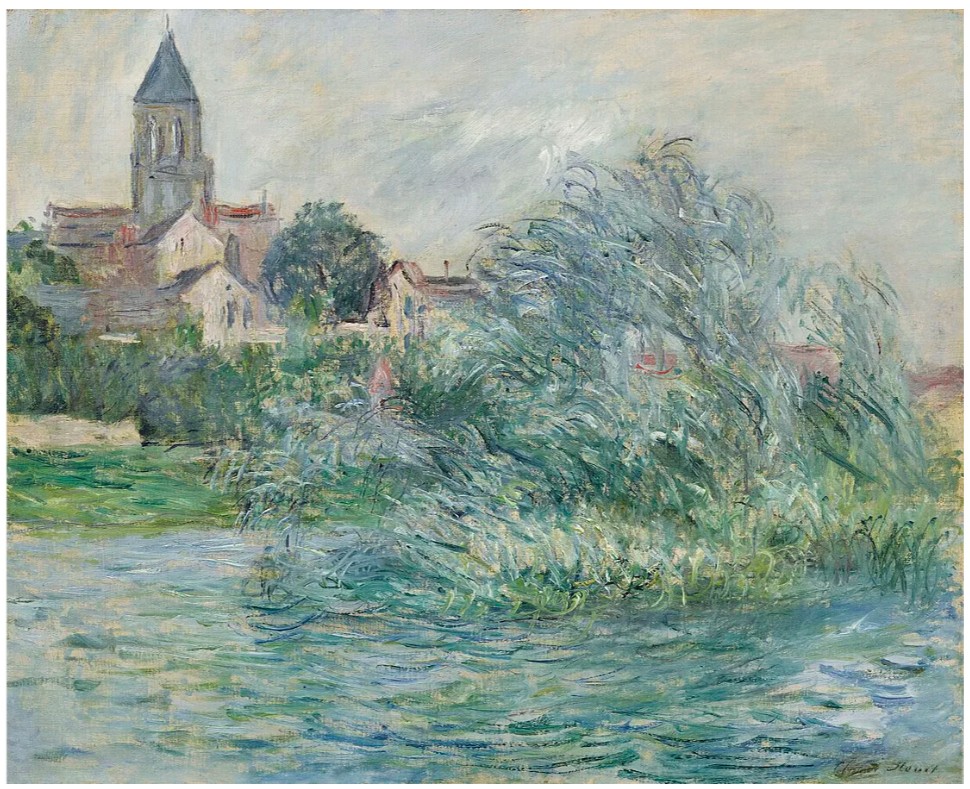
Claude Monet, L’église à Vétheuil, 1881.
Mitchell foregrounds Untitled with a series of rectangular black blocks from which the rest of the composition expands out. This dark foundation, interspersed with shots of cobalt blue, grounds the more airy elements which emanate across the remainder of the canvases. In the left panel, an explosion of blue propels outward from this base into the nuanced atmospheric zone of layered violets, greys, and yellows, establishing a linear, thrusting structure which moves up and then flows rightward across the picture plane. Through the middle ground of both panels, Mitchell establishes an expanse of lavender veiled with darker pigments and dotted with areas of white.
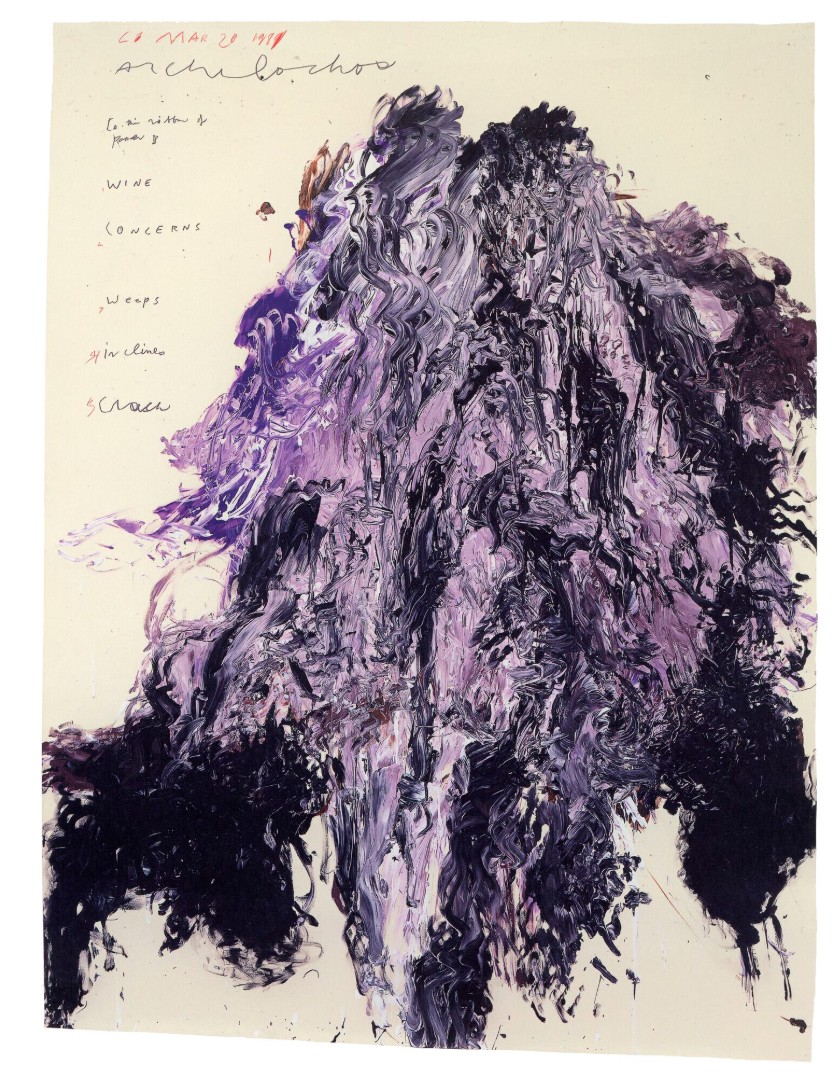
Cy Twombly, Untitled (Gaeta), 1989. © Cy Twombly Foundation.
The period from which Untitled emerges was a difficult one for the artist. Amid a deteriorating relationship with her partner, the Québécois painter Jean-Paul Riopelle, and following a decade of significant personal losses, including the death of her mother to cancer, in April 1978 Mitchell lost a dear friend and protégée when the young artist Phyllis Hailey tragically perished in a car crash. Mitchell would have begun painting Untitled with her heart heavy from this loss, recalling the mournful Calvi and Black Paintings series she made over a decade prior while mourning the deaths of her parents and her close friends Franz Kline and Frank O’Hara. In the present work, Mitchell pursues her emotional intensity structurally through a series of oppositions, evoking light versus dark, lightness and substance, with the gridded order of the lower register juxtaposed against the flowing freedom of brushstrokes across the upper register.
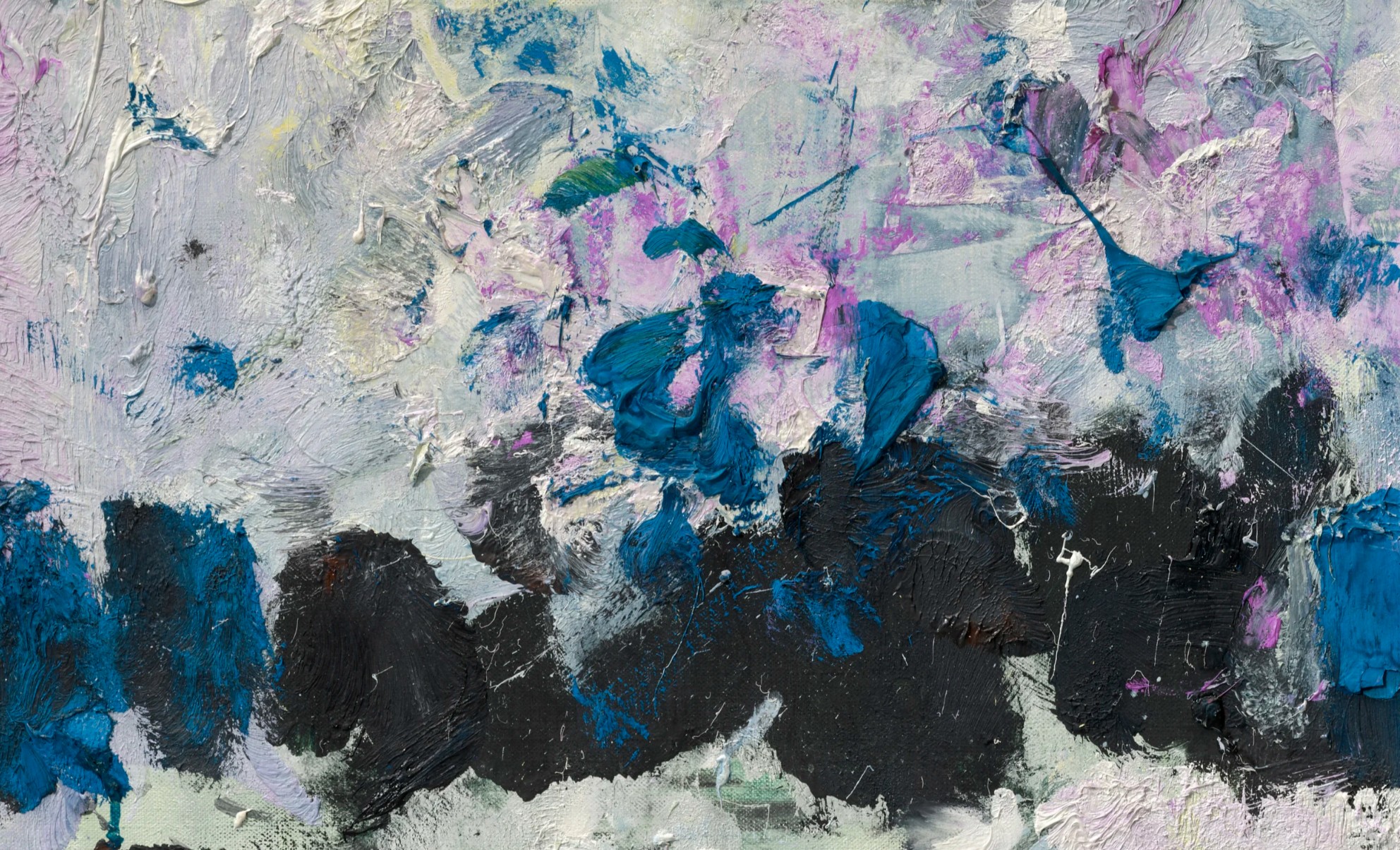
Philippe Piguet, the grandson of Claude Monet’s stepdaughter, first met Joan Mitchell earlier in the decade through a cousin living in Giverny, close to Mitchell’s residence in Vétheuil. Throughout the decade, he spent many weekends at Mitchell’s house and the two became close friends. Long, passionate conversations with the artist ignited a passion for the arts in Piguet, who became a gallerist then an art historian and critic, curating the 2014 exhibition Joan Mitchell: Mémoires de paysage at the Musée des Beaux-Arts de Caen. Piguet evocatively recalls the time he received the present work: “It was one evening when we were in the studio, discussing a thousand things about art and life, as usual. I suddenly saw her looking for something. She put the two panels together and asked me what I thought of it. I told her it was like a ‘baby’ of the large paintings she did. Then she told me it was for me, and I went home to Paris that night, overjoyed at the idea of having a work by her” (P. Piguet, personal correspondence, 4 October 2025).
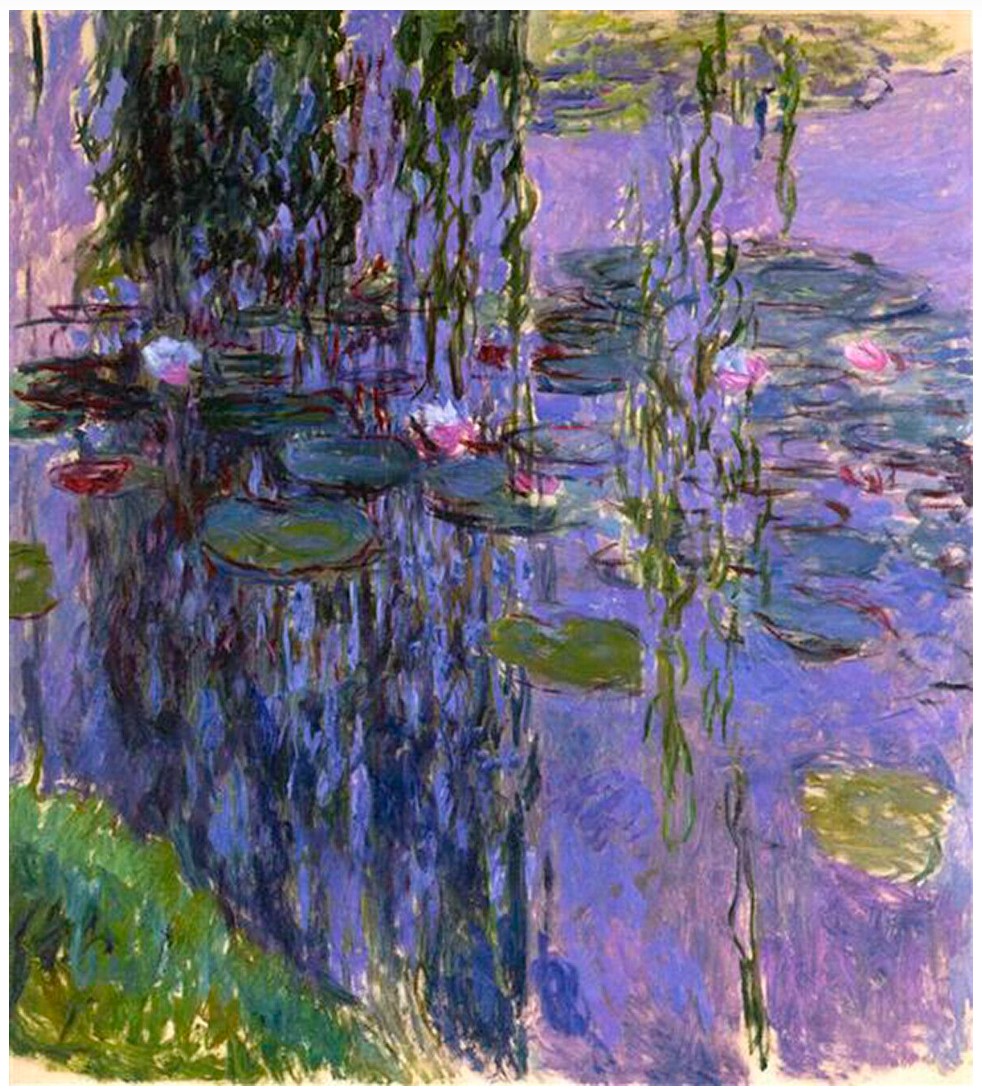
Claude Monet, Nympheas, 1916-1919. Musée Marmottan Monet, Paris.
While Mitchell produced several important diptychs over the course of the decade, including Weeds (1976, Hirshorn Museum and Sculpture Garden, Washinton, D.C.), No Rain (1976, Museum of Modern Art, New York), and Posted (1977, Walker Art Center, Minneapolis), the present work points forward stylistically to her monumental quadriptychs of 1979 on onward. In her use of yellows and dark foundational blocks, the work corresponds with Salut Tom (1978, National Gallery of Art, Washington, D.C.), while in terms of palette and composition, Untitled is essentially a study for Mitchell’s masterpiece La Vie en Rose (1979, Metropolitan Museum of Art, New York).
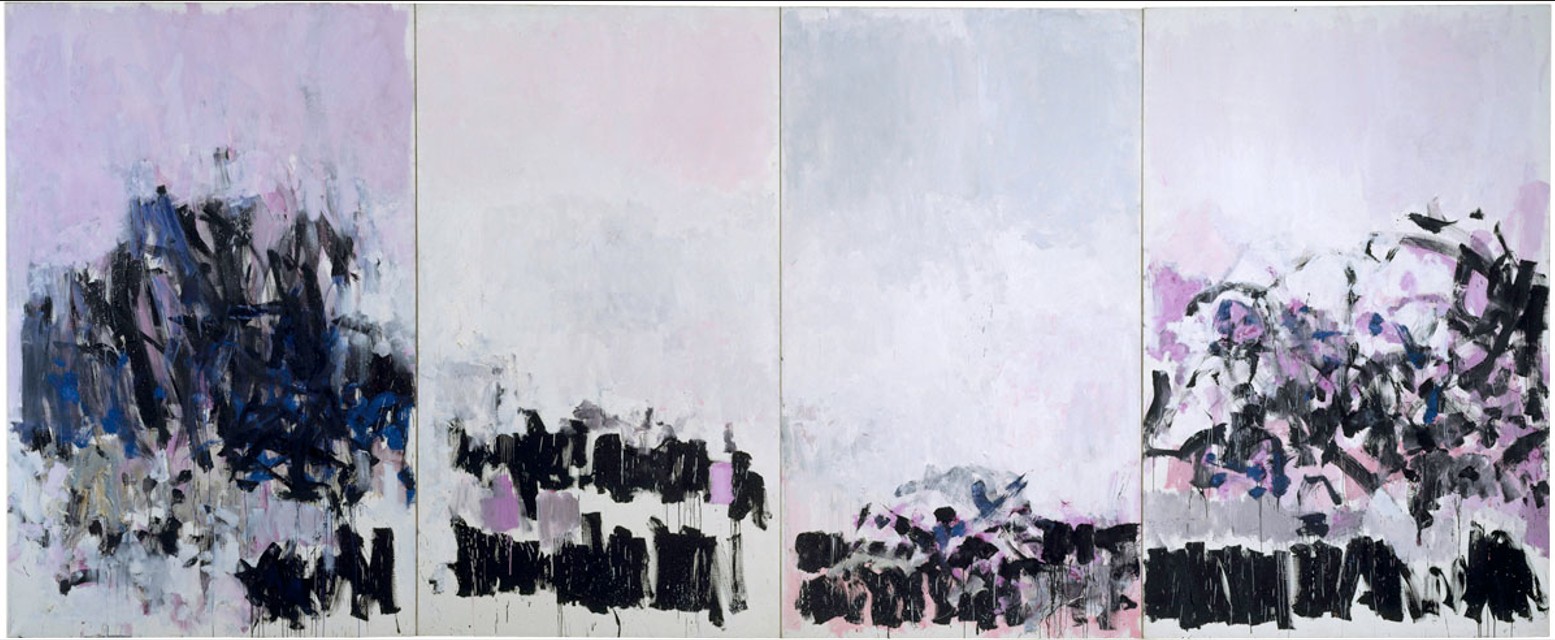
This pivotal picture is where Mitchell shifts styles from her favoring of vertical strokes and modulated opacity to a more organically energized field of accumulated brushstrokes, paving the path for her celebrated late paintings. Painted after Riopelle left her, La Vie en Rose depicts “creamy, beautifully modulated dusty pinks and soft blue-gray atop the four planes” which are “invaded by a determined brigade of black rectangularities, in a scumbled march across the bottom of all four panels” a composition which is first explored with Untitled (K. Kertess, Joan Mitchell, New York, 1997, p. 36). Anticipating and preparing for her stylistic shift the next year, Untitled is an important record of Mitchell’s evolution as an artist as she was developing her renowned late style.
Untitled, 1991
Property from a Private New Jersey Collection
Christie’s New-York: 20 November 2025
Estimated: USD 400,000 – 600,000
USD 508,000
JOAN MITCHELL (1925-1992), Untitled | Christie’s
JOAN MITCHELL (1925-1992)
Untitled, 1991
Oil on canvas
16 1/4 x 13 1/8 inches (41.3 x 33.3 cm)
“I paint from a distance. I decide what I am going to do from a distance. The freedom in my work is quite controlled. I don’t close my eyes and hope for the best. If I can get into the act of painting, and be free in the act, then I want to know what my brush is doing.”
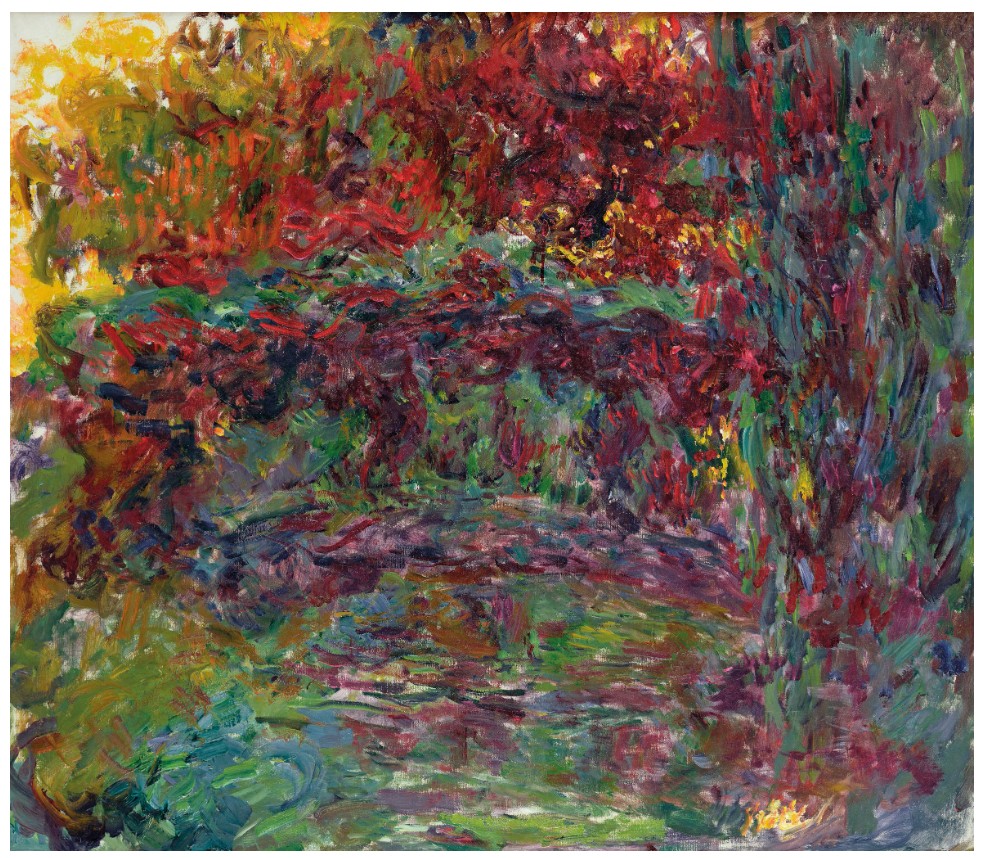
Claude Monet, The Japanese Footbridge, circa 1920-1922. Musée Marmottan, Paris.
Photo: Musee Marmottan Monet, Paris, France / Bridgeman Images.
Petit Matin, 1982
Sotheby’s New-York: 16 May 2025
Estimated: USD 1,000,000 – 1,500,000
USD 2,002,000
Petit Matin | Contemporary Day Auction | 2025 | Sotheby’s
JOAN MITCHELL (1925 – 1992)
Petit Matin, 1982
Oil on canvas
24×18 inches (61 x 45.7 cm)
Signed (lower left)
Explosive, luminous, and emotionally charged, Petit Matin is a resounding example of Joan Mitchell’s late-career mastery and a testament to her place among the most important figures of postwar abstraction. Part of the series that bears the same title, Petit Matin belongs to a group of canvases that Mitchell painted in France during the latter part of her life, works that reflect both a deepening lyricism and an unrelenting formal rigor. Recently included in the landmark retrospective of Mitchell’s work organized by the San Francisco Museum of Modern Art and the Baltimore Museum of Art, this painting epitomizes the explosive beauty and emotional depth that have come to define her legacy. Executed in 1982, this particular iteration of Petit Matin is remarkable not only for its painterly vigor but also for its gem-like scale. The compresses the emotional sweep and gestural power typical of Mitchell’s monumental canvases into an intimate, concentrated format. The reduced scale encourages close looking and rewards it: color, line, and texture are deployed with exquisite sensitivity and control.
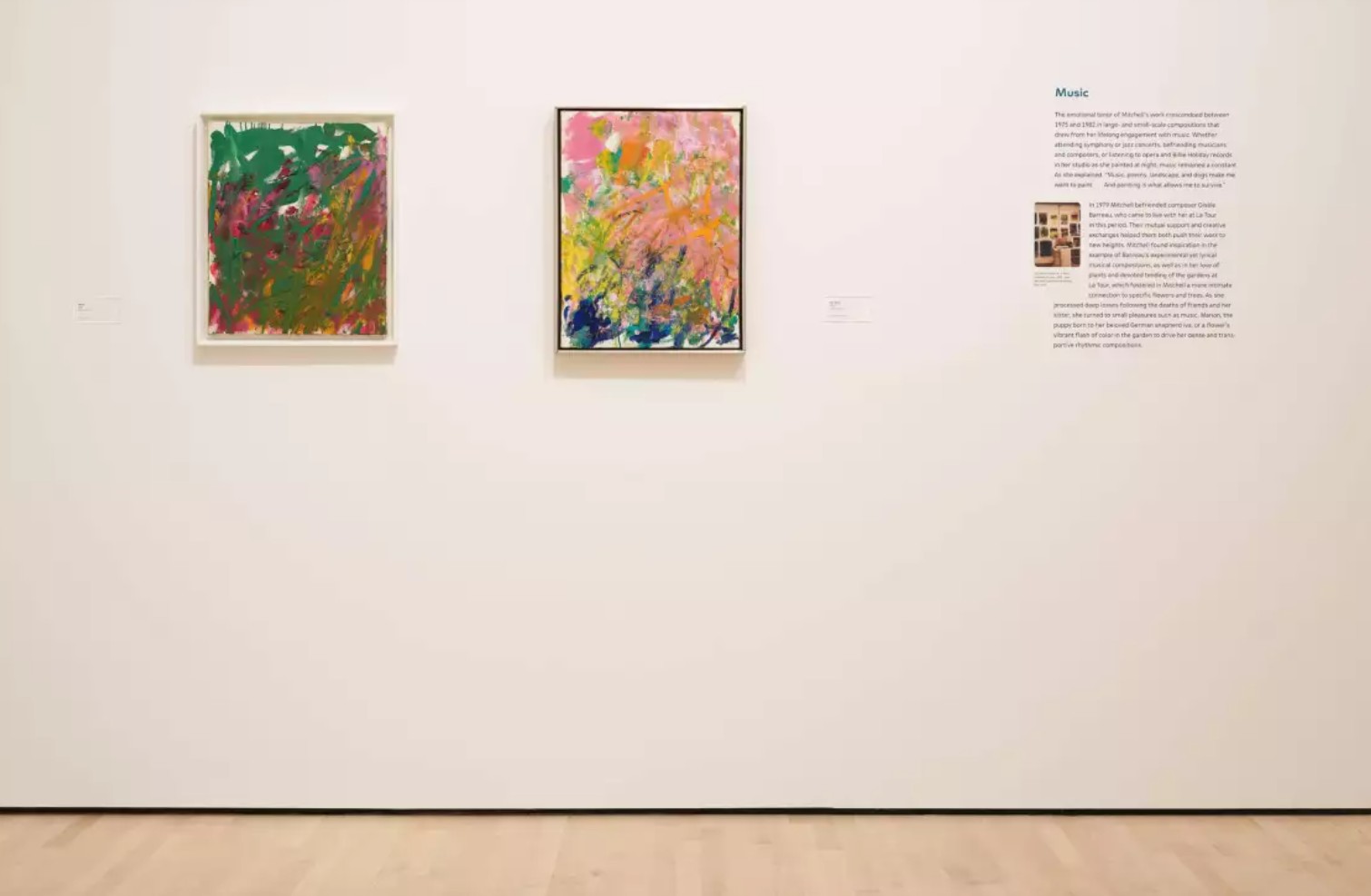
The present worked installed in the San Francisco Museum of Modern Art, Joan Mitchell, 2021-2022. Art © Estate of Joan Mitchell
The Petit Matin series emerged during Mitchell’s years at her estate in Vétheuil, a small town northwest of Paris where Claude Monet once lived and painted. Far from the noise of New York, Mitchell immersed herself in the light, landscape, and solitude of rural France. These works are imbued with a sense of early morning stillness and awakening, their surfaces vibrating with luminous color and energetic gesture. Petit Matin stands out within this series for its radiant palette—sweeps of blush pink, acid yellow, deep blue, emerald green, and fiery orange erupt across the canvas, drawing the viewer into a tempest of chromatic emotion. While Mitchell’s works are frequently compared to landscapes, they are never mere depictions. She herself insisted that her paintings were not abstracted from nature, but rather parallel to it.
“I paint from remembered landscapes that I carry with me — and remembered feelings of them, which of course become transformed. I could certainly never mirror nature. I would more like to paint what it leaves with me.”
In Petit Matin, we witness not a scene but a sensation: the moment when day first breaks and light begins to bloom across the sky and earth. The painting radiates with that transitional energy—neither night nor day, neither fully still nor yet in motion. Importantly, Petit Matin reflects Mitchell’s enduring dialogue with the French painting tradition, particularly with the late work of Monet. Just as Monet’s Water Lilies dissolve form into shimmering pools of light and color, Mitchell dissolves pictorial hierarchy into painterly sensation. But whereas Monet’s touch is often ethereal, Mitchell’s is corporeal—her brushstrokes retain the tension of the body, the urgency of lived experience.
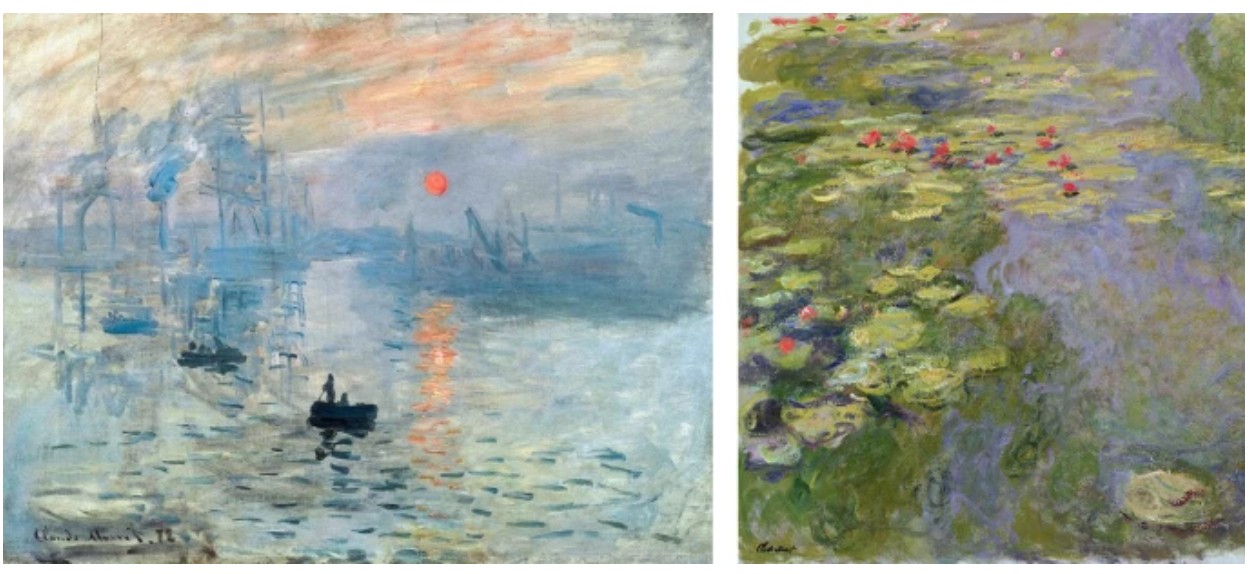
LEFT: Claude Monet, Impression, Soleil Levant (Rising Sun), 1872. Musée Marmottan Monet, Paris.
RIGHT. Claude Monet, Le Bassin aux Nympheas, 1917-19. Musée Marmottan Monet, Paris.
This duality lies at the heart of Mitchell’s work. While many of her male contemporaries in the Abstract Expressionist movement relied on scale and assertive gesture to project control, Mitchell’s paintings engage in a more complex and often more vulnerable dialogue with emotion and memory. In Petit Matin, the tension between control and spontaneity is palpable. Thick, forceful strokes of orange and yellow cut across the surface in diagonal sweeps, while hazy clouds of pink and lavender provide counterbalance. In the lower half of the canvas, blue and green pigments churn with density and gravity, anchoring the otherwise airy composition with an earthy weight. The work also reveals Mitchell’s supreme technical finesse. Unlike some of her early works, where her brushwork is fiercely turbulent, Petit Matin displays a mature compositional sensibility: colors are layered with thoughtful precision, and the rhythm of the mark-making unfolds with a musicality that feels orchestrated, even as it remains emotionally spontaneous. The canvas is alive with competing speeds—fast, flickering gestures juxtaposed with slow, deliberate build-ups of pigment. These contrasts create a sense of spatial and temporal depth, as if the painting itself were unfolding in real time.
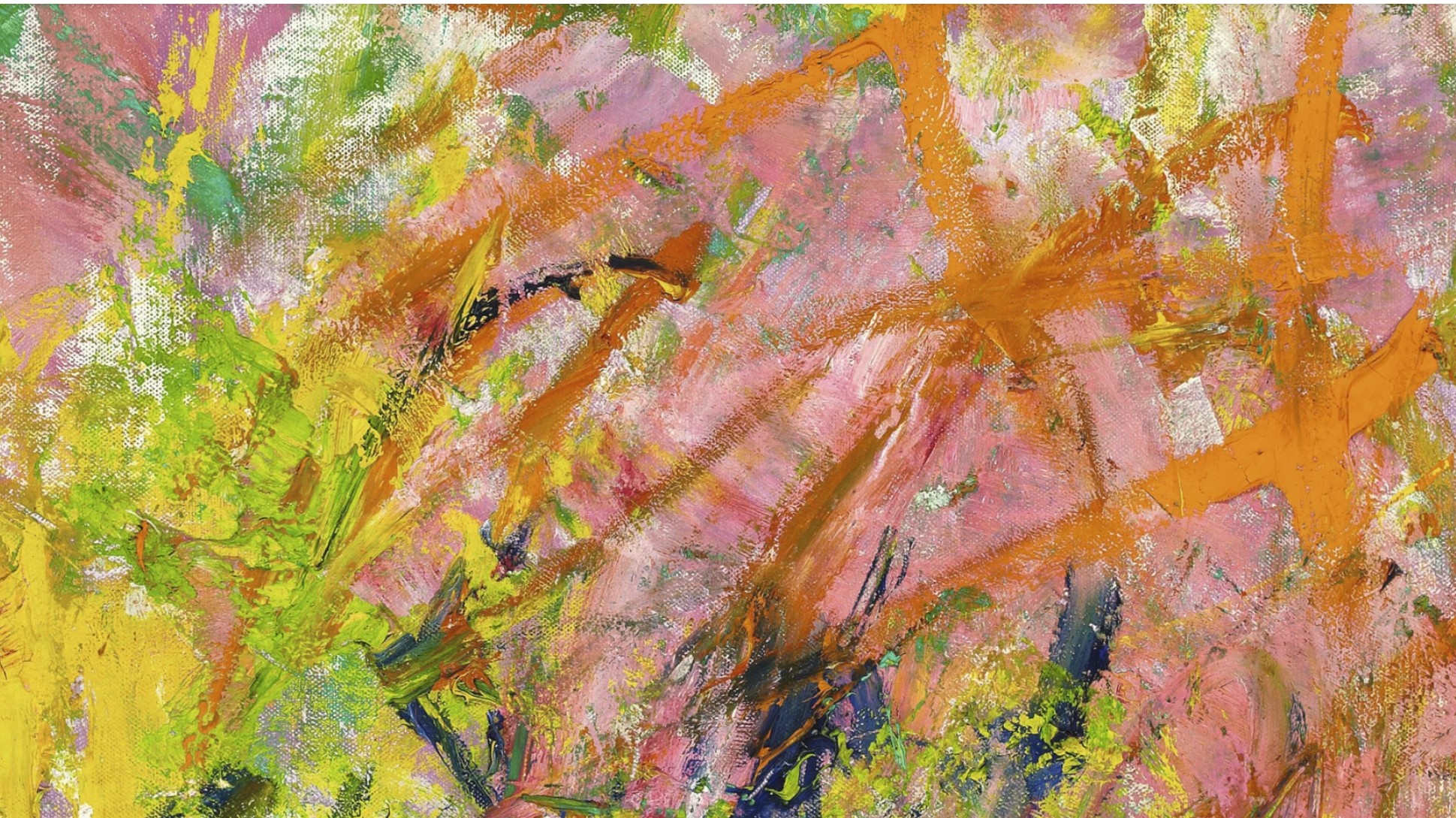
This emphasis on embodiment also aligns Mitchell with the legacy of Abstract Expressionism, though her work often transcended the machismo and formal bravado associated with that school. While her contemporaries such as de Kooning and Kline pursued abstraction as an existential struggle, Mitchell’s work leaned toward affect and memory. In Petit Matin, Joan Mitchell offers a vision of painting as both a physical act and a psychological landscape. The canvas is a field of memory, sensation, and emotional depth—a space where color speaks louder than language, and form follows feeling. Through its rich layering of brushstrokes and colors, it captures the quiet miracle of morning not as a time of day but as an inner state of becoming. It is a work that beckons the viewer to look, to feel, and ultimately, to remember.
Petit Matin, 1982
Christie’s New-York: 15 May 2025
Estimated: USD 2,500,000 – 3,500,000
USD 3,075,000
JOAN MITCHELL (1925-1992), Petit Matin | Christie’s
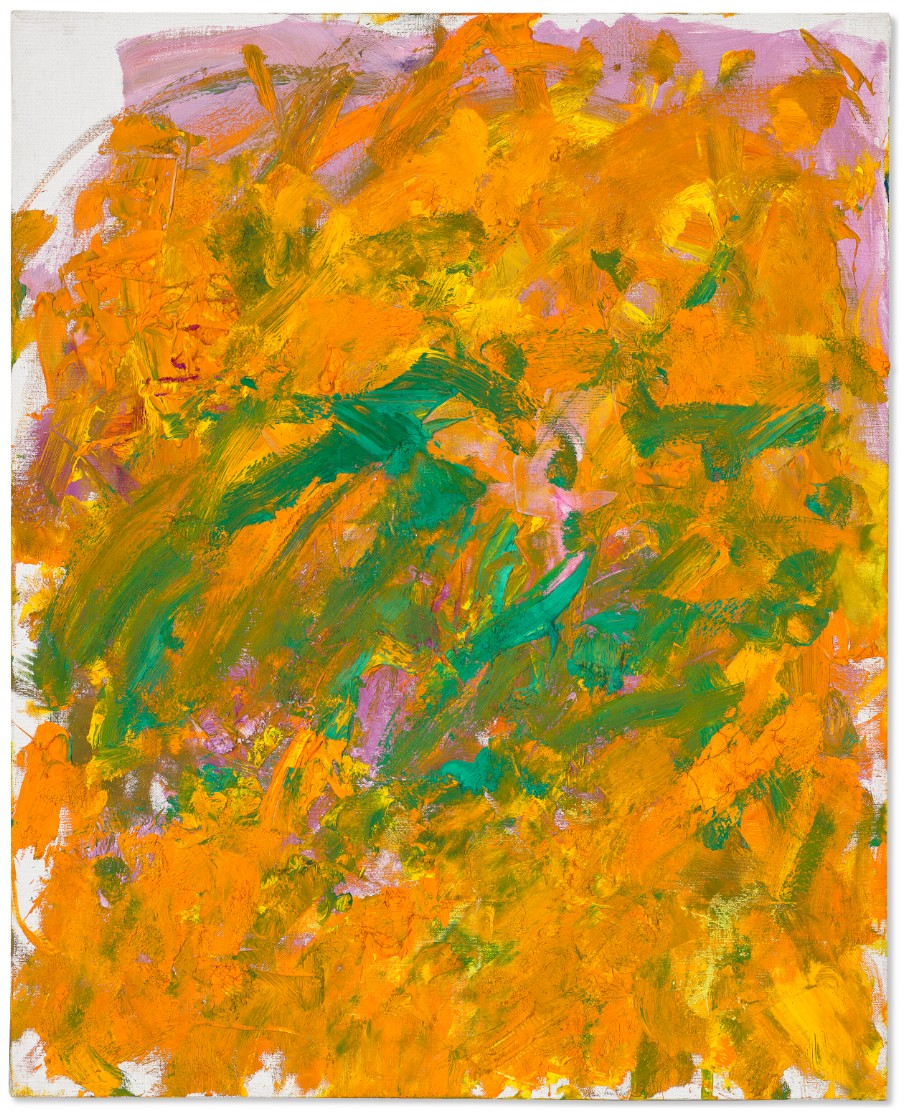
JOAN MITCHELL (1925-1992)
Petit Matin, 1982
Oil on canvas
100×80 cm (39 1/4 x 31 3/4 inches)
Signed ‘Joan Mitchell’ (lower right)
Held in the same private collection for over thirty years, Joan Mitchell’s Petit Matin (1982) is a dazzling breakthrough work, brimming with the radiant oranges, lush greens and bursts of fuchsia that characterize the vibrant, colorful palette that she adopted in the early 1980s. This densely painted composition is a masterclass in Joan Mitchell’s unique language of color and gestural lyricality—distinct characteristics which would come to define the artist’s most ambitious and visually arresting paintings. Absorbed in the daily rhythms of life at La Tour, her sprawling French country estate, the bucolic splendor of Vétheuil is keenly felt in her palette.
“Petit Matin” refers to the early morning hours when the sun cracks over the horizon with first light. As an artist who routinely painted long into the wee hours of the night accompanied by Mozart’s melodies, Mitchell spent many “blue dawns” watching the sunrise at La Tour. In 1982, she devoted a small series to the subject, which she titled Petit Matin. This body of work in many ways anticipates the Grande Vallée suite that would emerge the following year. As the curator Katy Siegel has called them, these “exquisite small canvases” rank among “the most sheerly beautiful of her career” (K. Siegel, “La Vie en Rose,” in Joan Mitchell, exh. cat., San Francisco Museum of Modern Art, 2020, p. 296).
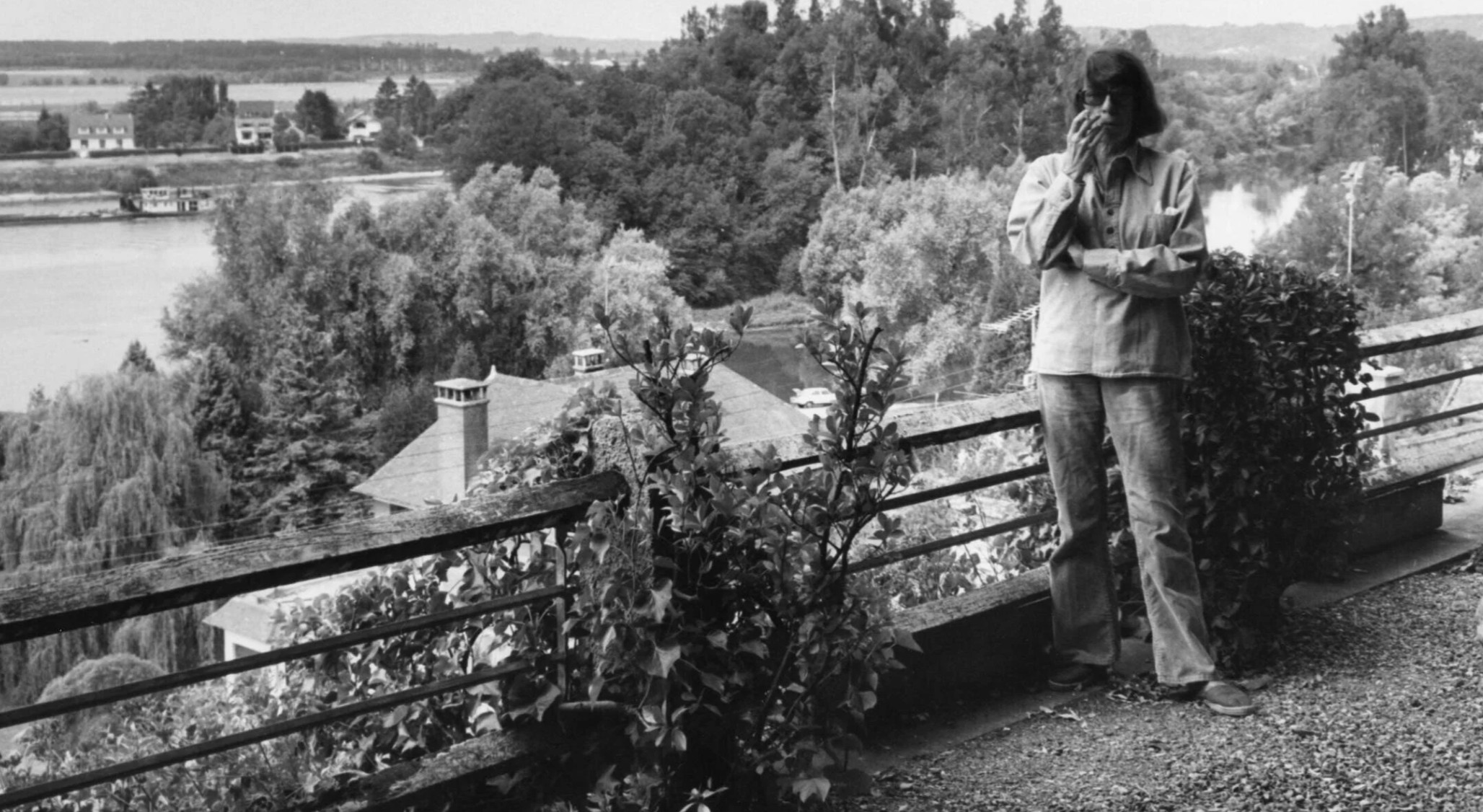
Joan Mitchell at La Tour, Vétheuil, 1984. Photo: Édouard Boubat. © Estate of Édouard Boubat / Artists Rights Society (ARS), New York.
Brimming with a bountiful exuberance, the present lot is a renaissance of color and dynamism, evocative perhaps of a flowering garden at the height of spring on a warm, sunny day. Throughout her career, Mitchell used color symbolically, and despite the challenges that plagued her personal life, she seemed determined to turn toward the joyous colors of the natural world. In 1981, Mitchell’s beloved friend and psychiatrist, Edrita Fried, passed away, and in 1982, her sister Sally died after a prolonged battle with cancer. And yet, as stated by the French critic Michel Waldberg “The magnificence of painting reaches its zenith…in the 1980s, [it’s] as if something, in her, had come to the surface” (M. Waldberg, Joan Mitchell, Paris, 1992, p. 55). Petit Matin synthesizes a lifetime of experience and intimate personal memories. It embodies all the fullness of life—its pain and pathos, sorrows and joy—in its glistening, kaleidoscopic display.
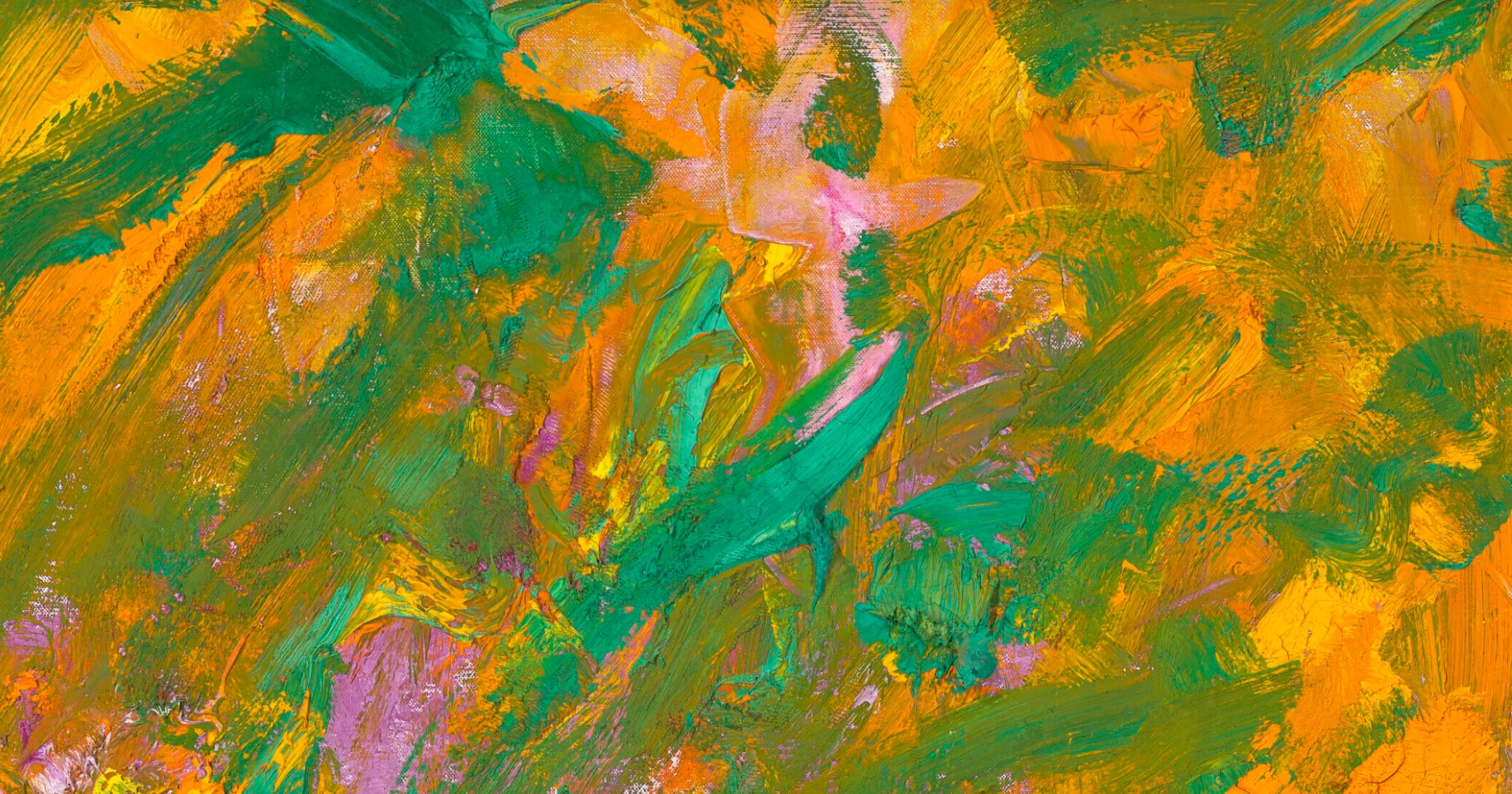
Using a loaded brush, Mitchell paints in thick, vigorous strokes, leaving visible areas of impasto as a record of her work. Beneath the orange is a violet underlayer – perhaps an allusion to the early morning dawn evoked by the painting’s title. Areas of emerald green paint have been added to the surface in flickering, light-filled strokes, which adds yet another reference to the natural world. In Mitchell’s hands, orange recalls the sunflowers that grew in her gardens in Vétheuil, and is reminiscent of her earlier Sunflower (1969), which was influenced by van Gogh, an artist Mitchell had admired since her days at the Art Institute of Chicago. In the case of the present lot, Mitchell’s almost otherworldly color sensibilities allow Petit Matin to emerge as a celebration of the natural world, with an impact that rivals only that which she achieves on larger canvases.
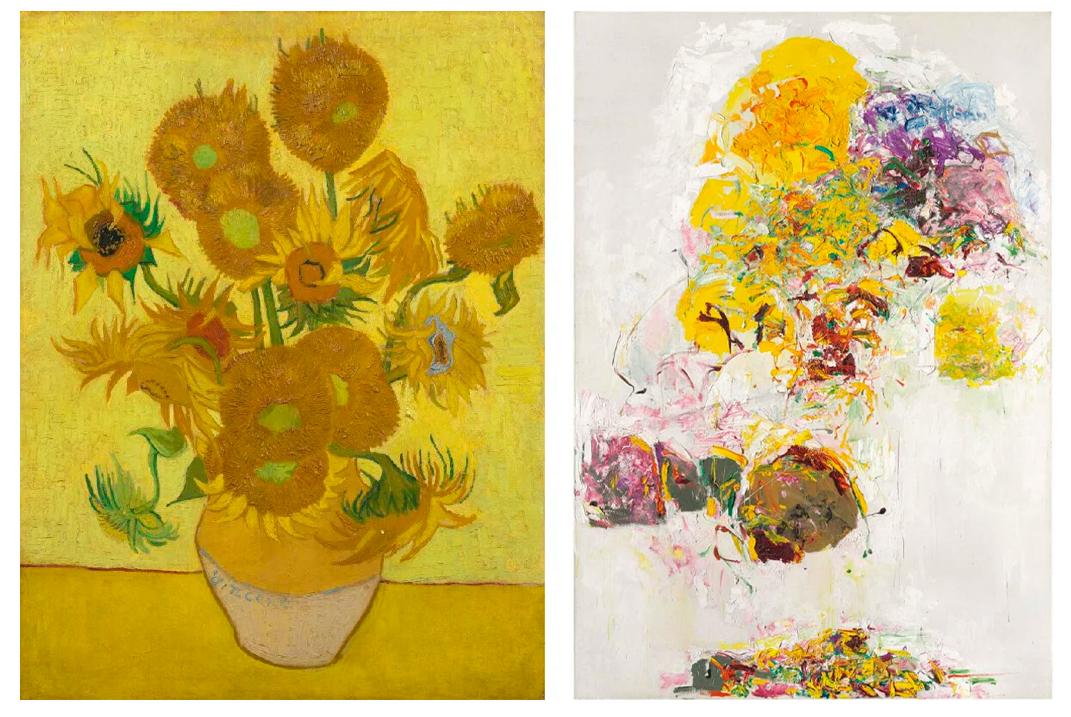
Left: Vincent van Gogh, Sunflowers, 1889. Van Gogh Museum, Amsterdam.
Right: Joan Mitchell Sunflower, 1969. Metropolitan Museum of Art. © Estate of Joan Mitchell.
Indeed, Mitchell found solace in the daily rhythms of La Tour, a lush, two-acre property, that inspired Claude Monet while he was living there between 1878 and 1881. The gentle rhythm of the seasons found their release in paintings like Petit Matin, and similarly, in paintings named after the hours of the day and the weather that punctuated them: Rain (1989); No Rain (1976); Little Rain (1989); as well as Hours (1989); Afternoon (1969-70); and Noon (c. 1970). Throughout her career, Joan Mitchell never sought to slavishly mimic nature or render its exact likeness. Instead, she aimed to capture the emotional spirit of the landscapes that were evoked in her.
“I carry my landscapes around inside me. I could certainly never mirror nature. I would like more to paint what it leaves me with.”
Indeed, her paintings of this era convey the impression of a remembered landscape, be it the sparkling blue of the Mediterranean, or the particular yellow of the sunflowers that she planted at Vétheuil, much like Twombly did in his beloved Gaeta botanical gardens. In the early 1980s Mitchell was offered her very first museum exhibition in France, which would take place at the Musée d’Art Moderne de la Ville de Paris in 1982, the same year Petit Matin was painted. Spurred on by the invitation, being the first female American artist to exhibit at the institution, Mitchell tackled the project with a new sense of confidence, made manifest in the dramatically increased scale of the paintings exhibited. This display of her work cemented her status in France and Europe, which led to numerous acquisitions of her work by French private and public institutions in the following years.
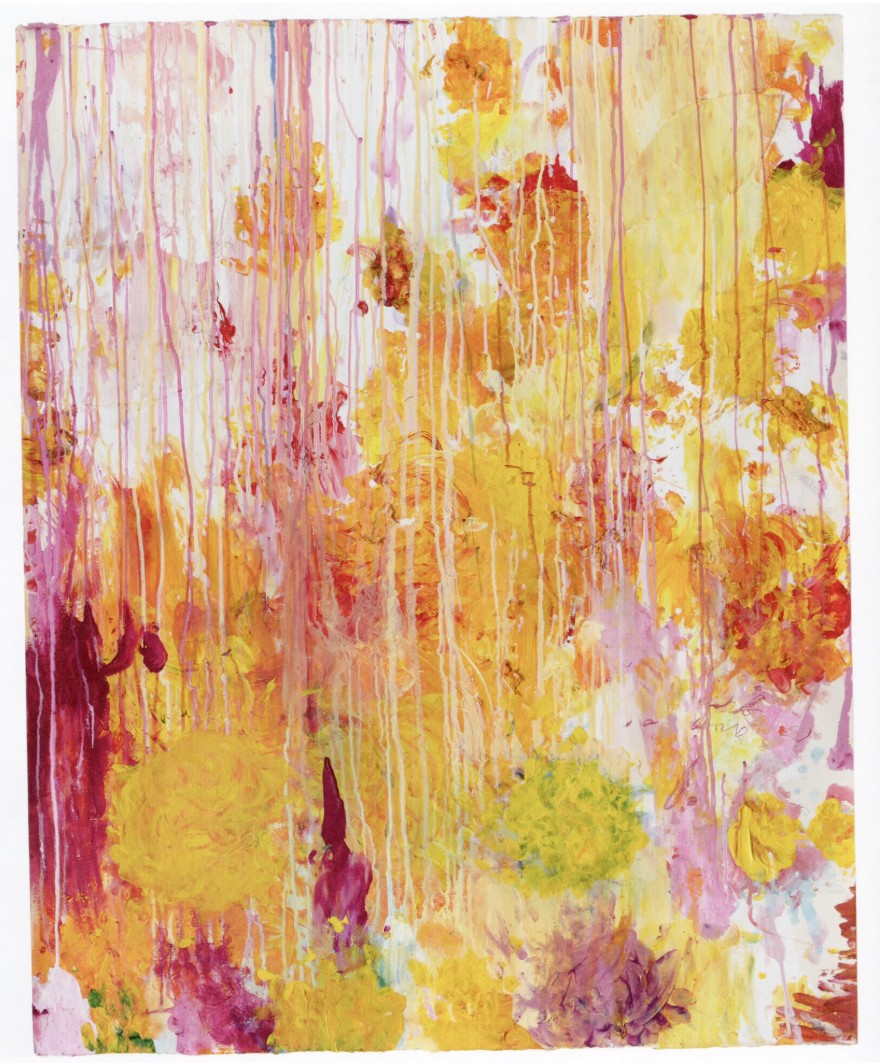
Cy Twombly, Untitled, 2001. Museum of Modern Art, New York. © Cy Twombly Foundation.
Though unmistakably abstract, the radiant oranges, emerald greens, and soft mauves dancing across the canvas in Petit Matin summon a world teeming with life, intoxicating in its beauty and energy. Yet, the energy captured within Petit Matin is not confined to the inspiration drawn from the artist’s gardens. It pulses with an inner force— with ambitious, exuberant painterly marks that sweep across the canvas with a determination and physicality that stretches far beyond the painting’s physical edge. A striking testament to Joan Mitchell’s continued artistic prowess, Petit Matin embodies her mastery over her craft and the passion with which she wielded her brush. Anticipating the triumphant body of work known as the Grande Vallée paintings of the following year, Petit Matin is a commanding display of some of the most sought-after qualities to be found in Mitchell’s paintings, especially those created during the prolific latter half of her artistic career.
Untitled, 1985
Sotheby’s New-York: 26 February 2025
Estimated: USD 3,000,000 – 5,000,000
USD 3,954,000
Untitled | Contemporary Curated | 2025 | Sotheby’s
JOAN MITCHELL (1925 – 1992)
Untitled, 1985
Oil on canvas
45 5/8 x 31 7/8 inches (116×81 cm)
Hues of cobalt blues, saffron orange, plum purples, burgundy and rich greens cascade in sweeping, calligraphic ribbons across the surface of Untitled, an exceptional example of Joan Mitchell’s 1980s oeuvre. Executed in 1985, the present painting is a radiant manifestation of Mitchell’s mastery over color and form: a vibrant culmination of her artistic pursuit to push the boundaries of abstraction. Every stroke pulsating with vitality, the composition displays a dynamic interplay of pigment and gesture. In Untitled, Mitchell effortlessly conveys a complex, layered visual experience, transforming the canvas from merely being a surface to a space where color and movement communicate both structure and fluidity. Never before seen by the public, Untitled has notably been held privately for 40 years.
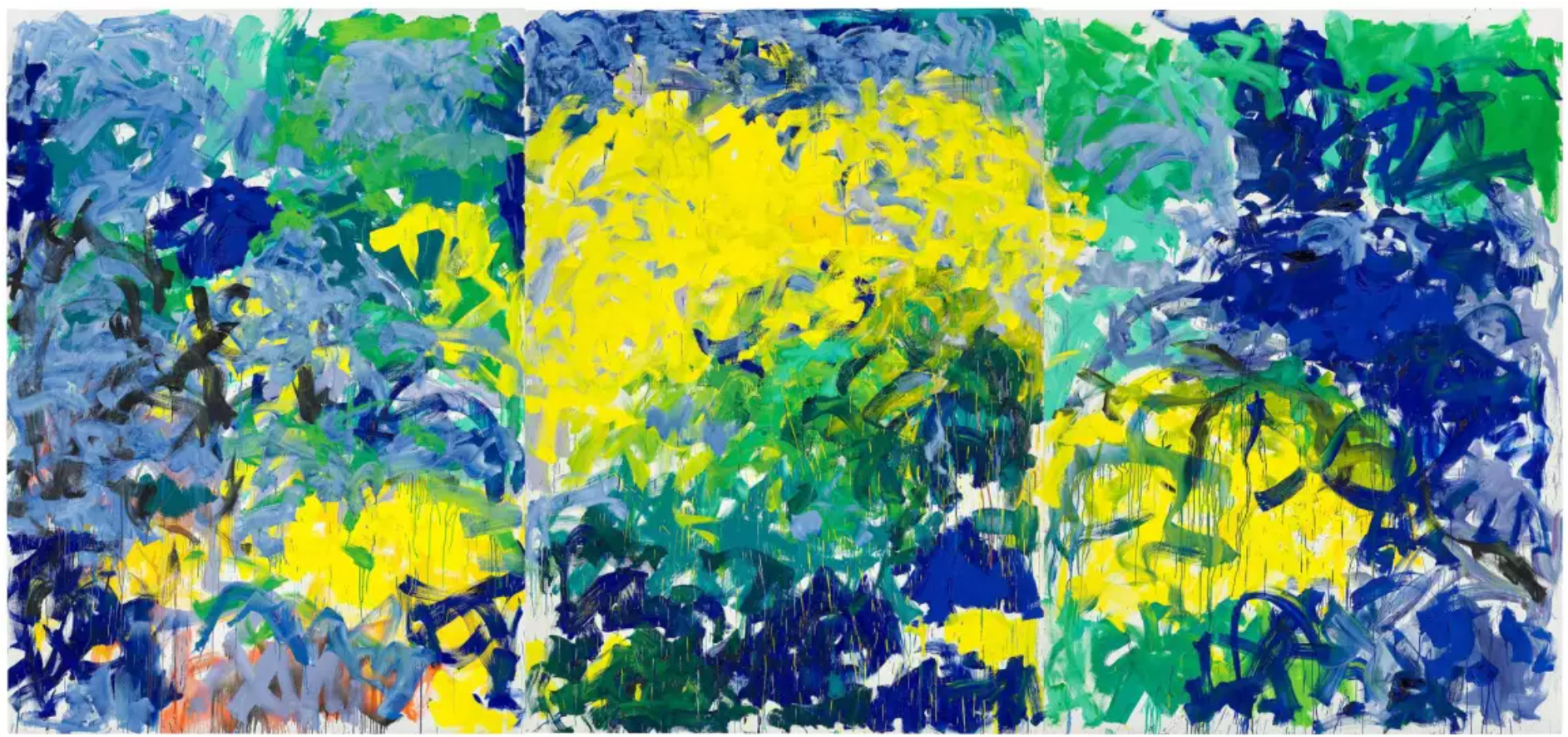
Joan Mitchell, La Grande Vallée XIV, 1983. Centre national d’art et de culture Georges-Pompidou, Paris. Image © Estate of Joan Mitchell
The 1980s marked a pivotal period in Joan Mitchell’s life and artistic career. By this time, she had gained international recognition as a leading figure in abstract painting, with her first major solo exhibition in Europe, Joan Mitchell: Choix de Peintures, 1970–1982, held at the Musée d’Art Moderne de la Ville de Paris in 1982. With this pivotal show, she became the first female American artist to be featured at the institution. However, the early part of the decade was also marked by personal and physical struggles, which undoubtedly influenced her artistic output. Nevertheless, by the mid-1980s, she had regained her vitality and embarked on her Grande Vallée series, which Jane Livingston described as “one of her finest achievements.”
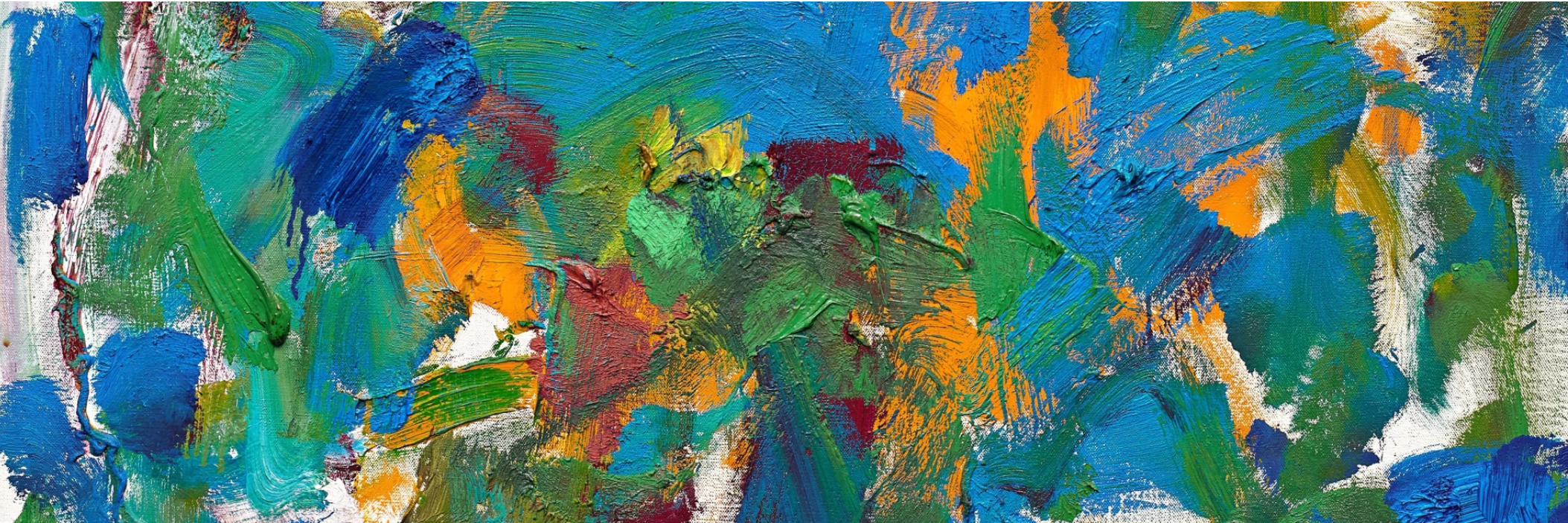
The series of paintings, painted between 1983 and 1984, and inspired by the childhood memories of her friend Gisèle Barreau—memories of both joyful play and premature loss—marked a shift in Mitchell’s approach to painting. Her canvases transitioned from simpler compositions to ones infused with greater energy. Mitchell’s exploration of paint deepened, with a new focus on light and spatial relationships. Her brushstrokes became longer, and calligraphic, creating a dynamic, chromatic sensation that brought a profound emotional depth to her work. As the present work showcases the textured surfaces and gestural strokes intensified the dreamlike quality of her paintings.
In 1985, imbued by a new sense of vitality but ongoing health challenges—including a declaration in February that she was cancer-free and a hip surgery in December—Mitchell painted very little. Yet, the works she did create, such as Untitled, were strikingly beautiful. Reflecting on that year of making, the renowned curator Katy Siegel noted, “Her mood of reflection, including invocations of Marcel Proust and Rilke (themselves touchstones from earlier moments), was colored by a vivid awareness of the cycle of life and the certainty of endings. Mitchell was listening to Richard Strauss’s Four Last Songs, whose texts by Hermann Hesse and Joseph von Eichendorff, paired with musical references to Strauss’s Death and Transfiguration, evoked an intense experience of nature and gardens, with an accepting awareness of death: ‘We are resting from our travels/ now, in the quiet countryside.’” (Katy Siegel, “La Vie en rose,” in Exh. Cat, The Baltimore Museum of Art and San Francisco Museum of Modern Art, Joan Mitchell, 2020, p. 298).
From edge to edge, the present painting bursts with vitality, as Mitchell’s broad, sweeping brushstrokes create a rhythmic and lyrical composition. Mitchell’s technical prowess is evident in the way she orchestrates her painted strokes—each movement of her hand imbued with purpose and expressiveness. These seemingly spontaneous marks are carefully controlled, allowing for both chaos and harmony to coexist within the composition. The layers of paint build up in dense textures, creating a surface that is at once tactile and full of depth, inviting the viewer to get lost in its rich, variegated layers of the work.
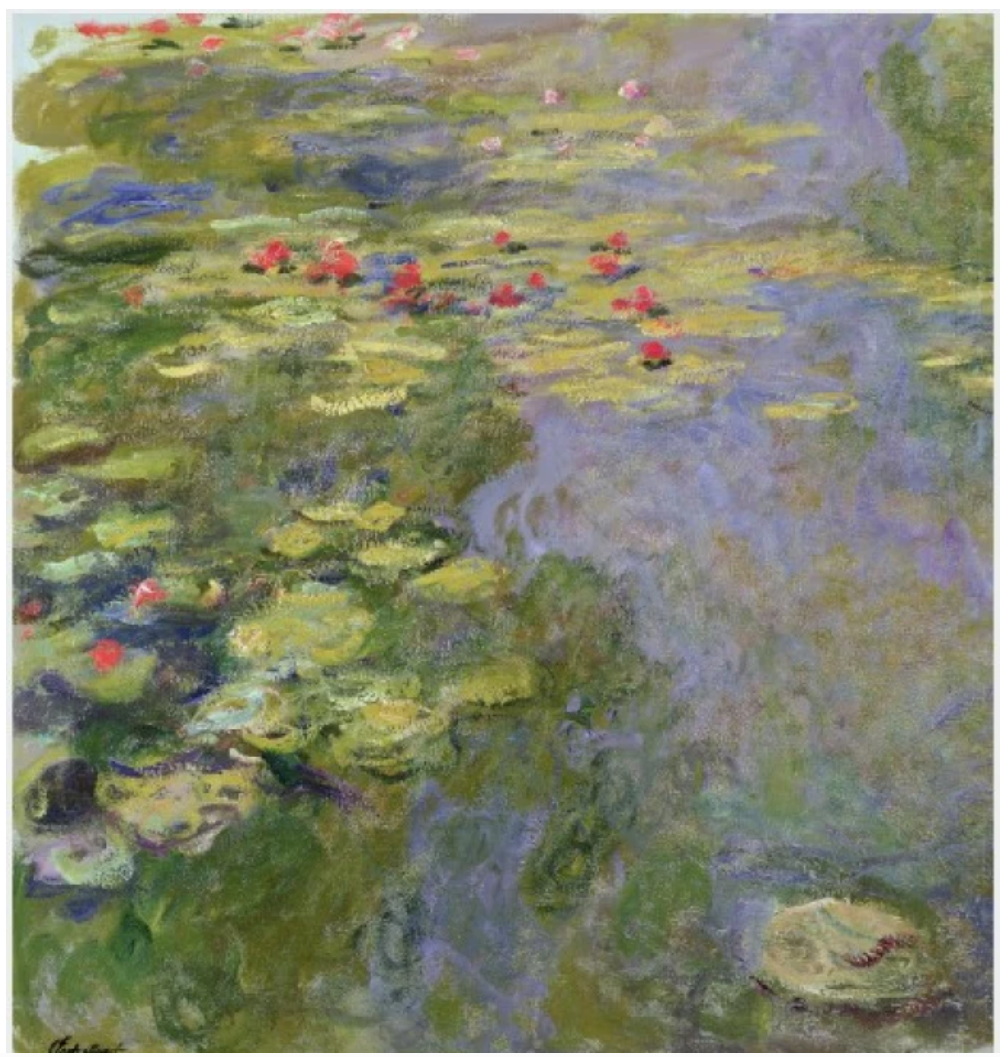
Claude Monet, Le Bassin aux nymphéas, 1917-19. Musée Monet-Marmottan, Paris.
Mitchell’s lifelong connection to landscape and nature continuously links her work to the traditions of the French Impressionists and European Post-Impressionists. After moving to Paris in 1959, she permanently settled in 1968 on a vast rural estate in the picturesque Parisian suburb of Vétheuil. Secluded from the prevailing influence of Abstract Expressionism, her paintings began to reflect the lushness of color and a keen sensitivity to light, air, and atmosphere—qualities seen in the en plein air landscapes of Claude Monet, who had painted Vétheuil’s surroundings years earlier. Her abstraction also drew inspiration from the emotional depth of Post-Impressionist masters like Van Gogh and Cézanne, whose works highlighted the expressive power of the natural world. As Richard D. Marshall notes, “Throughout her evolution as an abstract painter, Mitchell consistently sought to converge her interests in nature, emotion, and painting. Her subjects were landscape, color, and light and their interaction on a painterly field, and her energetic physical gestures were filled with a romantic sensibility.” (Richard D. Marshall, “Joan Mitchell: The Last Decade, 1982-1992” in Exh. Cat., New York, Gagosian Gallery, Joan Mitchell: The Last Decade, 2010, p. 8)
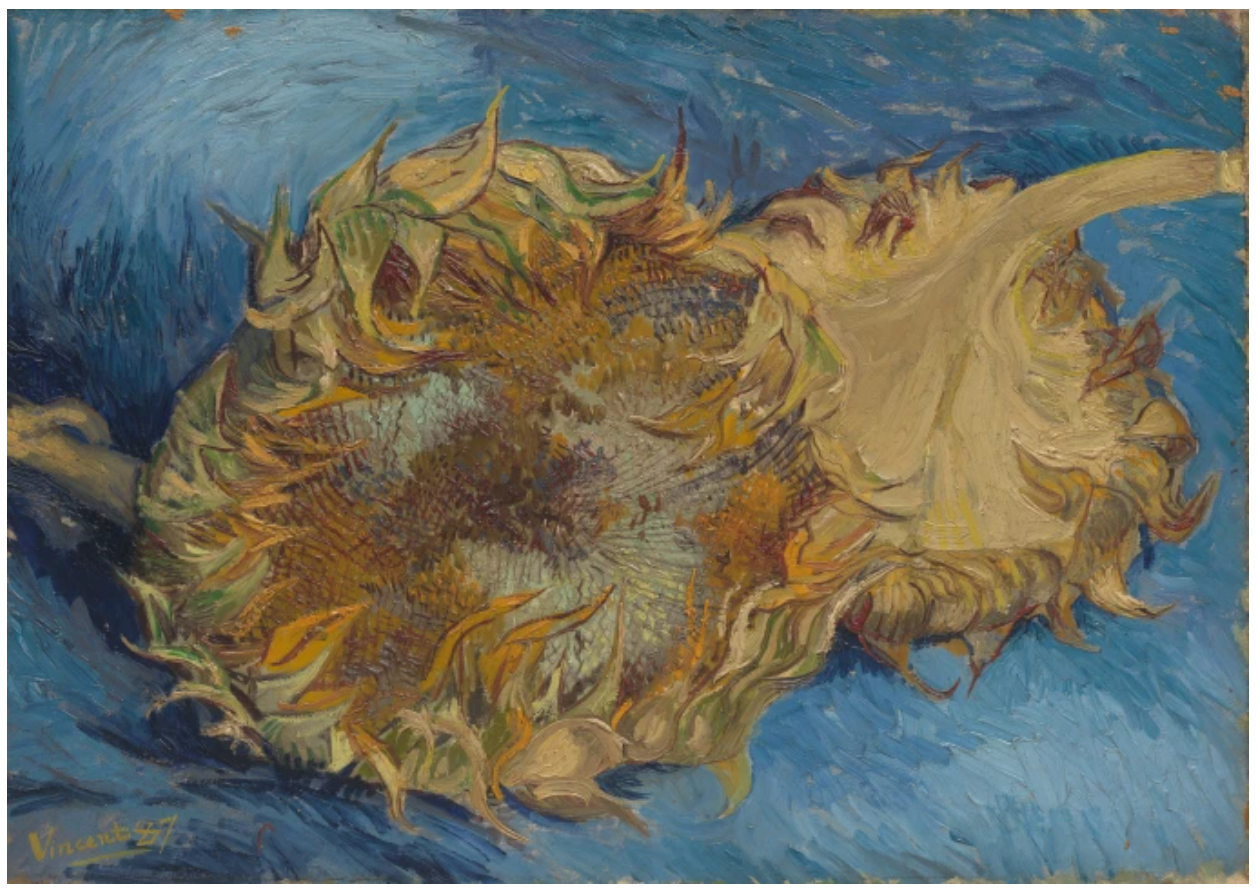
Vincent van Gogh, Sunflowers, 1887, The Metropolitan Museum of Art, New York
In the 1980s, immersed in the lush landscape of her garden after time spent in the hospital, Mitchell continued to develop a connection with the surrounding natural world and her beloved sunflowers. In Untitled the dynamic swirls of color evoke organic growth and the visceral beauty of her environment. The bold juxtaposition of colors evokes a sense of the natural world— imbued with the artist’s personal, emotional response to the landscape, the vision remains entirely abstract. The vibrant oranges and deep crimson hues within blues and greens suggest a distant vista caught in the golden light of sunset or a withered flower as was mentioned in an interview with Yves Michaud in 1986. Yet, it is ultimately the feeling of the place and not its exact representation that lingers at the core of the painting.
In Untitled, Mitchell’s ability to channel her personal experiences and surroundings into universal, abstract expressions is unmistakable. Deeply intimate and atmospheric, the present painting reflects Mitchell’s immense and unshakable passion for painting, her mastery of abstraction, and her capacity to translate the sensory experience of life into a rich visual language. With its vibrant colors, dynamic brushwork, and commanding presence, Untitled is a resounding affirmation of Mitchell’s enduring legacy and the boundless possibilities of abstract painting.
Chord X, 1987
Christie’s New-York: 16 May 2024
Estimated: USD 10,000,000 – 15,000,000
USD 13,060,000
JOAN MITCHELL (1925-1992), Chord X | Christie’s (christies.com)

JOAN MITCHELL (1925-1992)
Chord X, 1987
Oil on canvas
102 ½ x 78 5/8 inches (260.4 x 199.7 cm)
Signed ‘Joan Mitchell’ (lower right)
Painted in 1987, Joan Mitchell’s Chord X is a dazzling late career masterpiece in which a soaring cluster of beautiful, jewel-like colors provides the vehicle for the artist’s bravado brushwork. Mitchell’s Chord paintings were created in the years directly following her Grande Vallée paintings, after the artist had recovered from serious health issues and the loss of family and friends. They begin to announce a new clarity of vision that emerges in her late work, in which airy passages of white paint allow the colors in her arsenal to truly sing. Named after musical chords, in which three or more tones played together yield a more complex and sonorous sound, Mitchell’s Chord paintings also testify to her long abiding love of music, particularly Bach’s cantatas, which she listened to obsessively at this time.
In the last five years of her life, Mitchell, like fellow Abstract Expressionist, de Kooning, pared down her visual vernacular to its true essence, embracing pure colors like cobalt blue, emerald green, yellow, violet and crimson, which—in the present work—she used in a direct alla prima technique. “Mitchell lets fly with color,” the art critic Bill Berkson observed, upon viewing her 1988 retrospective at the Corcoran Gallery in Washington, D.C.,” writing: “You can watch her arranging, supervising, making the strokes and drips go securely where she wants” (B. Berkson, “In Living Chaos: Joan Mitchell,” Artforum, September 1988, p. 97).

Indeed, Mitchell has masterfully orchestrated these effects in Chord X, often pairing opposite colors side-by-side, such as green with red, or yellow with blue. Elsewhere, she pairs analogous colors like green and blue, blue and. purple, or yellow and green, which act as secondary “notes” to be played with their contrasting neighbor, yielding new tonal variations that evoke the musical “chord” that the title describes. The intensely tangled and knotted brushstrokes in Chord X can be seen as a continuation of the tightly interwoven but nevertheless lyrical and arcing brushwork of the Grande Vallée paintings. Using the full reach of her arms and legs, Mitchell used a wide brush to create the vigorous back-and-forth and up-and-down movements, adding touches of black to deepen the color relationships. The colorful, tangled and hovering cloud in Chord X is nevertheless inflected with sparkling passages of bright white, lending an airy atmosphere that evokes the fluttering, wriggling aliveness of the natural world, particularly her home in the pastoral French countryside of Vétheuil.

Henri Matisse, Dance I, 1909. The Museum of Modern Art, New York. © 2024 Succession H. Matisse / Artists Rights Society (ARS), New York. Photo: © The Museum of Modern Art / Licensed by SCALA / Art Resource, NY.
Chord X also testifies to the artist’s life-long passion for the great French Modernists, notably Vincent van Gogh, Henri Matisse, Paul Cezanne and Claude Monet. Mitchell communed with the French Masters on a daily basis at her home at La Tour, which afforded her a distant view of Monet’s cottage. Particularly in the last years of her life, she seemed to draw them in closer around her, as if she finally allowed herself the freedom to join them in their perennial quest to capture the effects of nature and the “impression” it left her with. Particularly in Chord X, Mitchell’s clever arrangement of opposing colors demonstrates what van Gogh called “the mysterious vibration of kindred tones” (V. van Gogh, quoted in P. Albers, Joan Mitchell: Lady Painter, A Life, New York, 2011, p. 391), and what is often referred to as “broken color” in Impressionist paintings describing the juxtaposition of two or more colors in a single passage.

Wassily Kandinsky, Composition Number 8, 1923. Solomon R. Guggenheim Museum, New York.
The allegorical title of the Chord series corresponds to a moment in Mitchell’s life when music proved to be both an inspirational and restorative force. A longtime music lover, whose obsession had begun in childhood, Mitchell would often accompany her father to concerts in Chicago, and her mother, a poet, invited musicians to their home. Indeed, during the mid-1980s, music was a rallying call-to-arms, spurring her on to climb the stairs to her studio and get on with the business of painting. Her favorites at the time included Bach’s Cantata 78, along with Charlie Parker, Ella Fitzgerald and Nina Simone. She also returned to Mozart’s Don Giovanni and The Magic Flute again and again.
Ground, 1989
Sotheby’s New-York: 13 May 2024
Estimated: USD 12,000,000 – 18,000,000
USD 10,101,000
Ground | Contemporary Evening Auction | 2024 | Sotheby’s (sothebys.com)
GUARANTEED
JOAN MITCHELL (1925 – 1992)
Ground, 1989
Oil on canvas, in two parts
Overall: 220×395 cm (86 5/8 x 155 1/2 inches)
Signed (lower right)
Ebullient, calligraphic ribbons of rose, cerulean, orange and emerald pirouette across the monumental surface of Joan Mitchell’s Ground, an exemplar of Mitchell’s last mature body of work. Executed in 1989, in the final years of her career, Ground sees Mitchell triumph over her ailing health, once again calling upon the diptych format to produce a composition so saturated, expansive, and self-assured that it marks the utter apex of her technical and creative powers. Muscular yet balletic, Mitchell’s late works from the 1980s remain perhaps her most powerful and affecting abstractions of the French countryside, dappling resplendent showers of light and color into a gestural vocabulary unmistakably her own.

Testament to the significance of her late diptychs in the artist’s prodigious oeuvre, other large-scale examples are held in such esteemed international institutional collections as Fondation Louis Vuitton, Paris; Museum of Modern Art, New York; National Gallery of Art, Washington, D.C.; and Centre Pompidou, Paris, among others. A confident ode to Mitchell’s resilient physicality and propulsive dedication to her medium of oil paint, Ground represents the apotheosis of the abstract vernacular she developed so tirelessly.

CLAUDE MONET, LE BASSIN AUX NYMPHÉAS, 1917-19. PRIVATE COLLECTION. SOLD AT SOTHEBY’S, NEW YORK FOR $70.3 MILLION IN MAY 2021
Ground summons a prismatic range of colors, exhibiting a more open construct: the alabaster field acts as equal partner to lilac, apricot, and shots of dark wine, all riotously tangled at the command of Mitchell’s broad brush. The frenetic, dense composition reveals the artist’s affinity for the American action painters, among whom she lived and worked in the initial decade of her mature career; as one of the few women to garner significant critical acclaim within the early days of the predominantly male Abstract Expressionist movement.

Across the face of Ground’s two canvases, Mitchell’s unencumbered hand leaves marks redolent of the animation and tactility that defied her age: Mitchell’s canvas ceases to be merely a surface, transforming instead into a performative arena in which she choreographs the ever-shifting light, colors, movements, and textures of Vétheuil. “She would open up the tenuous space of her compositions and dance ribbons of color and gesture across the surface,” Richard D. Marshall observed, “or construct compartmentalized passages of form and color that would coalesce into energized physical expressions. With apparent abandon, she threw, splashed, or forced paint onto the canvas in her distinctive colors and gestures: the paintings display her fondness for a palette of blue, green, orange, black, and white, together with her personal vocabulary of choppy vertical smears, washes of pastel hues, slashed aggressive hues, loops of joyful color, definite drips, thick globs of paint, and eccentric composition.” (Richard D. Marshall quoted in: Exh. Cat., New York, Cheim & Read, The Last Paintings, 2011, n.p.)

HENRI MATISSE, LA PERRUCHE ET LA SIRÈNE, 1952. IMAGE © PICTORIGHT AMSTERDAM/STEDELIJK MUSEUM AMSTERDAM. ART © 2024 SUCCESSION H. MATISSE / ARTISTS RIGHTS SOCIETY (ARS), NEW YORK
Though the gestural style of her American contemporaries – storied artists such as Franz Kline and Willem de Kooning – shaped her abstract painterly idiom, Mitchell’s profound appreciation for the beauty of the natural world fostered a strong connection to the French Impressionists and European Post-Impressionists. For instance, Ground’s concentrated bulbs of pigment recall Henri Matisse’s iconic cutouts, such as in La perruche et la sirène from 1952, which forgoes perspectival order in favor of emphasizing the interplay between organic form and the negative space of the canvas.

LEFT: WILLEM DE KOONING, UNTITLED V, 1982. IMAGE © THE MUSEUM OF MODERN ART/LICENSED BY SCALA / ART RESOURCE, NY. ART © 2023 THE WILLEM DE KOONING FOUNDATION / ARTISTS RIGHTS SOCIETY (ARS), NEW YORK. RIGHT: VINCENT VAN GOGH, IRISES, 1889. IMAGE © THE GETTY, LOS ANGELES
Through her last works, the transformative effects of that initial move to Vétheuil in 1968 stayed with Mitchell; there, she found the conceptual freedom to create a highly idiosyncratic painterly style which marries the ethereal with the physical, the felt with the seen. Sumptuously layered and smeared upon the soaring canvas, each coruscating stroke invokes a lush density reminiscent of Monet’s late renderings of his rose garden at Giverny. As Mitchell and Monet entered the final years of their careers, both produced canvases of startling energy that defy time and age, miraculously capturing the impermanence of light suspended in decentralized space, resulting in Ground’s concentrated bulbs of pigment. The radical experimentation that transpired every decade of Mitchell’s working life culminates in Ground: ceaseless, repeated investigations of line, color and form embody the visceral interplay between strength and sensuality, delicacy and mass, marrying the explosive freedom of her final diptychs with the disciplined compositional infrastructure of her early abstractions.
Sunflowers, 1990-91
Sotheby’s New-York: 15 November 2023
Estimated: USD 20,000,000 – 30,000,000
USD 27,910,500
Sunflowers | Contemporary Evening Auction | 2023 | Sotheby’s (sothebys.com)
JOAN MITCHELL (1925 – 1992)
Sunflowers, 1990-91
Oil on canvas, in two parts
Overall: 280×400 cm (110 1/4 x 157 1/2 inches)
Signed (right panel, lower right)
Blooming upon the canvas in a shower of expressive brushstrokes and shocks of dynamic color, the magnificent Sunflowers is a profound testament to the singular creative vision and celebrated painterly acumen which characterize Joan Mitchell’s prodigious oeuvre. Painted in 1990-91, the penultimate years of the artist’s career, the present work stands as an unequivocal masterpiece of her late period and courses with the same remarkable vigor and vibrancy that marked the greatest works from her first decades. A confident ode to the physical act of painting displayed across the artist’s cherished diptych format, Sunflowers articulates Mitchell’s fusion of disparate artistic movements to create a style that is entirely her own. Though the gestural style of her American contemporaries—storied artists such as Franz Kline and Willem de Kooning—shaped her abstract painterly idiom, Mitchell’s profound appreciation for the beauty of the natural world fostered in her a strong connection to the French Impressionists and European Post-Impressionists, whose luminous landscapes enacted an equally acute influence upon her work. In Sunflowers, Mitchell draws upon a prismatic range of colors—not unlike those of Monet’s late garden paintings—to create striking contrasts: radiant, golden ochres tangle riotously with broad strokes of sharp cobalt, while budding shafts of earthy green mix and merge with incendiary daubs and smears of scarlet and rust, all interwoven within a smoky net of white and softest grey. The texture of the work is similarly varied, as Mitchell showcases the remarkable range of an abstract vernacular she shaped and perfected over the decades of her artistic practice.
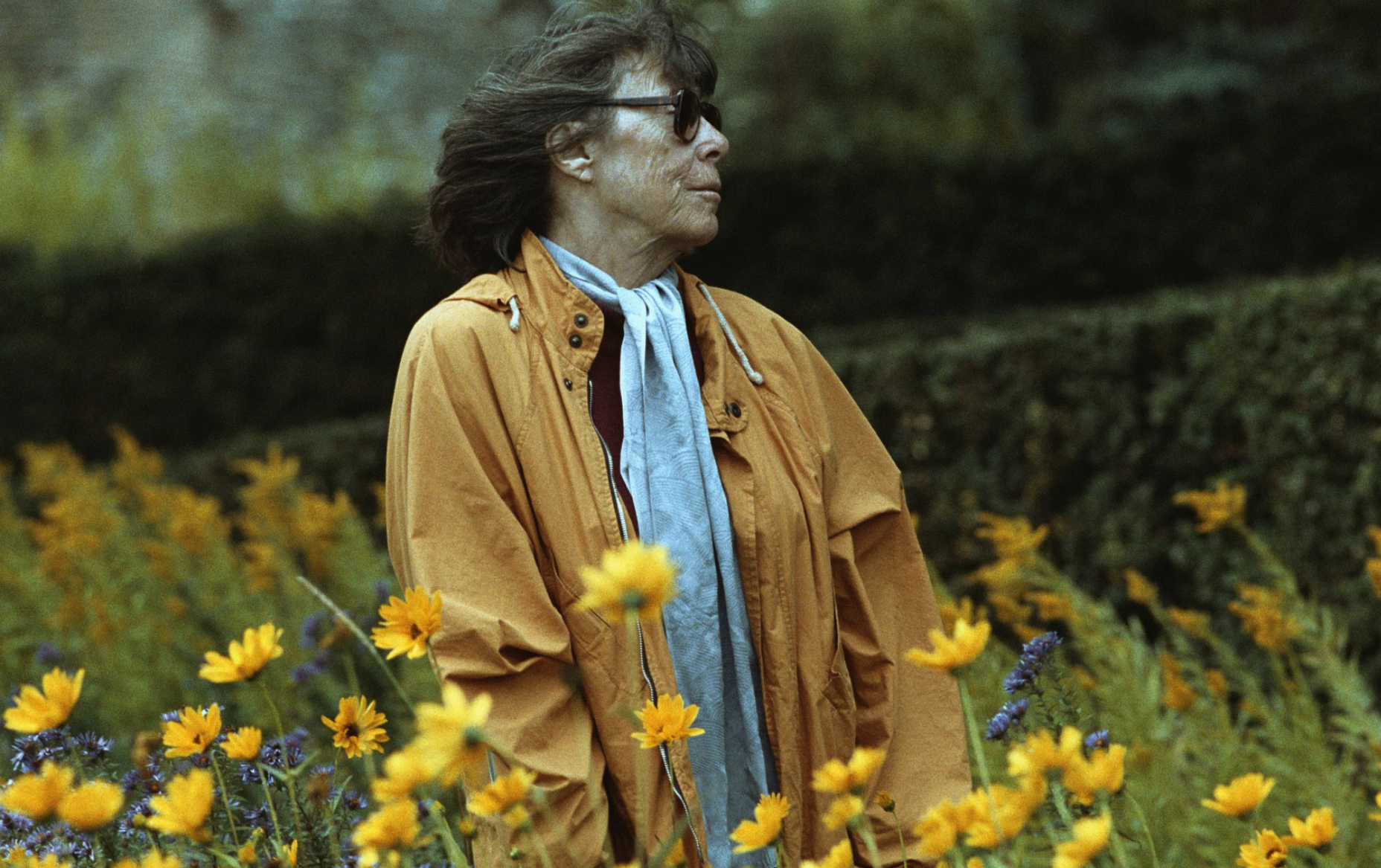
THE ARTIST IN A FIELD OF FLOWERS. PHOTO © DAVID TURNLEY / CORBIS / VCG VIA GETTY IMAGES.
Widely referenced in literature and featured in many of the artist’s most significant exhibitions – including the recent celebrated retrospective at the San Francisco Museum of Modern Art and Baltimore Museum of Art, as well as the widely acclaimed Monet-Mitchell exhibition at Fondation Louis Vuitton in Paris – Sunflowers is a rare and significant masterwork from Mitchell’s mature métier. Having remained in the collection of John Cheim for nearly three decades, since it was gifted to him by the artist, Sunflowers also represents a deep and influential friendship in Mitchell’s life. Cheim, renowned among artists for his support, generosity, and curatorial acumen, began working with Mitchell through the Robert Miller Gallery in the mid-1980s. He continued to represent her and her estate, including with his own gallery, Cheim & Read, for decades, even mounting a major exhibition dedicated to her Sunflowers paintings in 2008. The two built a close friendship over these years, often visiting each other in New York and Vetheuil: “I love your loft and I love love you – thanks so very much” Mitchell once wrote to him following a dinner in her honor. Cheim acquired several works directly from the artist, including Sunflowers, which he chose following a deal with Mitchell in which she offered him any work as a gift. Thus, the present work is at once an exquisite example of the very best within the artist’s oeuvre, and also reflects the history of an important personal and professional relationship.
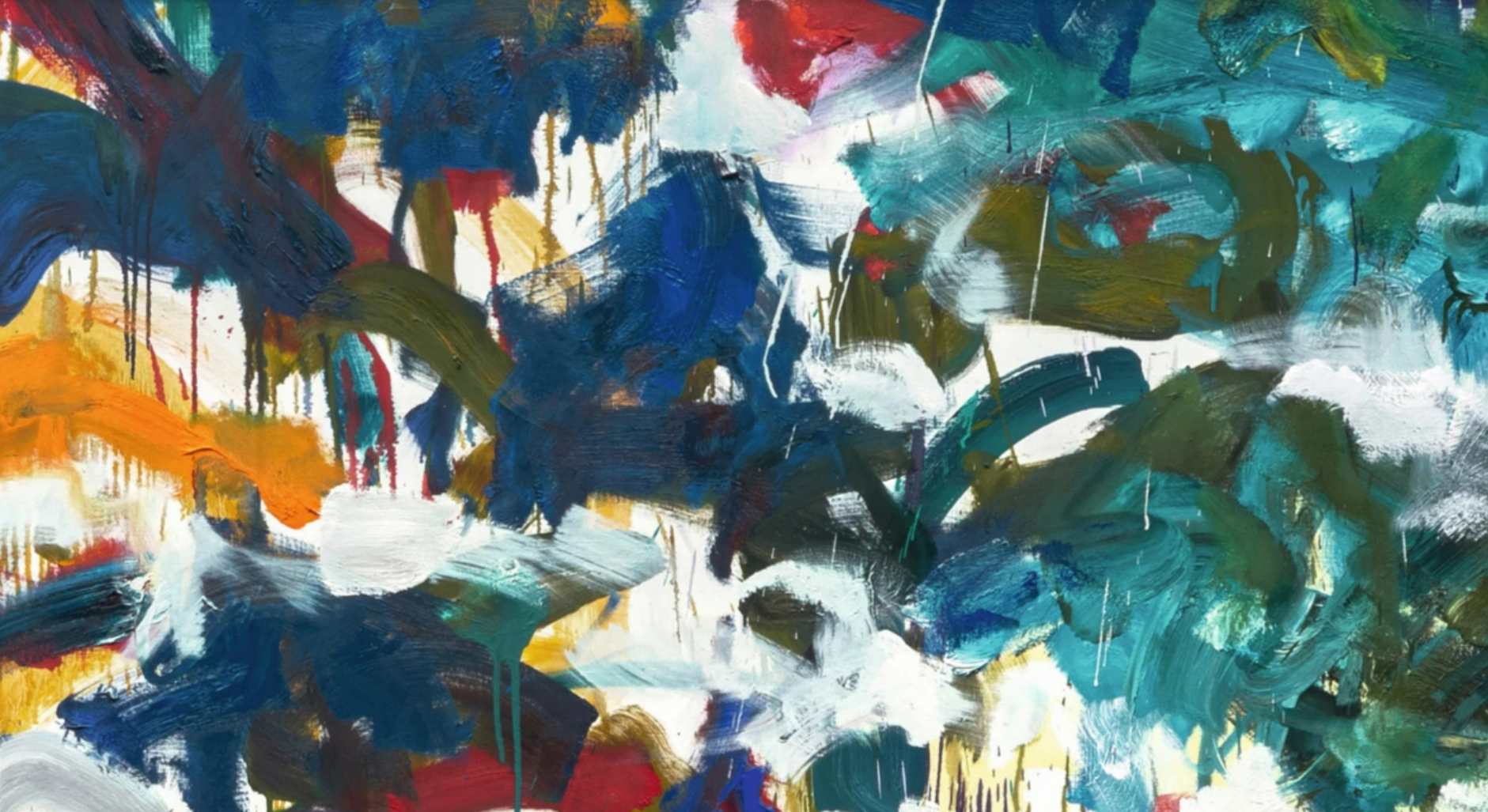
A monumentally epic composition of painterly prowess, sumptuous coloration, and ambitious mastery of scale, Sunflowers unequivocally announces itself as a glorious summation to Mitchell’s unparalleled career. The striking visual dynamism of the dense composition reveals the artist’s affinity for the American action painters, amongst whom she lived and worked in the initial decade of her career; as one of the few women to garner significant critical acclaim within the predominantly male Eighth Street Club, Mitchell is remembered by art history as the leading female voice of the Abstract Expressionist movement. Across the expansive face of Sunflowers’ dual canvases, Mitchell’s unencumbered gestural vocabulary invites the viewer to imagine the physicality of her creative process as, in bursts of physical energy and tactility that defied her ailing heath, she enacts the nuanced dialogue of her abstraction. Beneath her brush, Mitchell’s canvas ceases to be merely a surface, transforming instead into a performative arena upon which she stages a brilliantly choreographed ballet of ever-shifting light, color, movement, and texture. “She would open up the tenuous space of her compositions and dance ribbons of color and gesture across the surface, or construct compartmentalized passages of form and color that would coalesce into energized physical expressions. With apparent abandon, she threw, splashed, or forced paint onto the canvas in her distinctive colors and gestures: the paintings display her fondness for a palette of blue, green, orange, black, and white, together with her personal vocabulary of choppy vertical smears, washes of pastel hues, slashed aggressive hues, loops of joyful color, definite drips, thick orbs of paint, and eccentric composition.” (Richard D. Marshall quoted in Exh. Cat., New York, Cheim & Read, The Last Paintings, 2011, n.p.). Displaying an extraordinary synthesis of Mitchell’s earlier work and a more radical, free, and open configuration of abstract gesture, Sunflowers achieves a gestural dynamism rivaled only by the sensational, large-scale canvases of Willem de Kooning and Jackson Pollock.
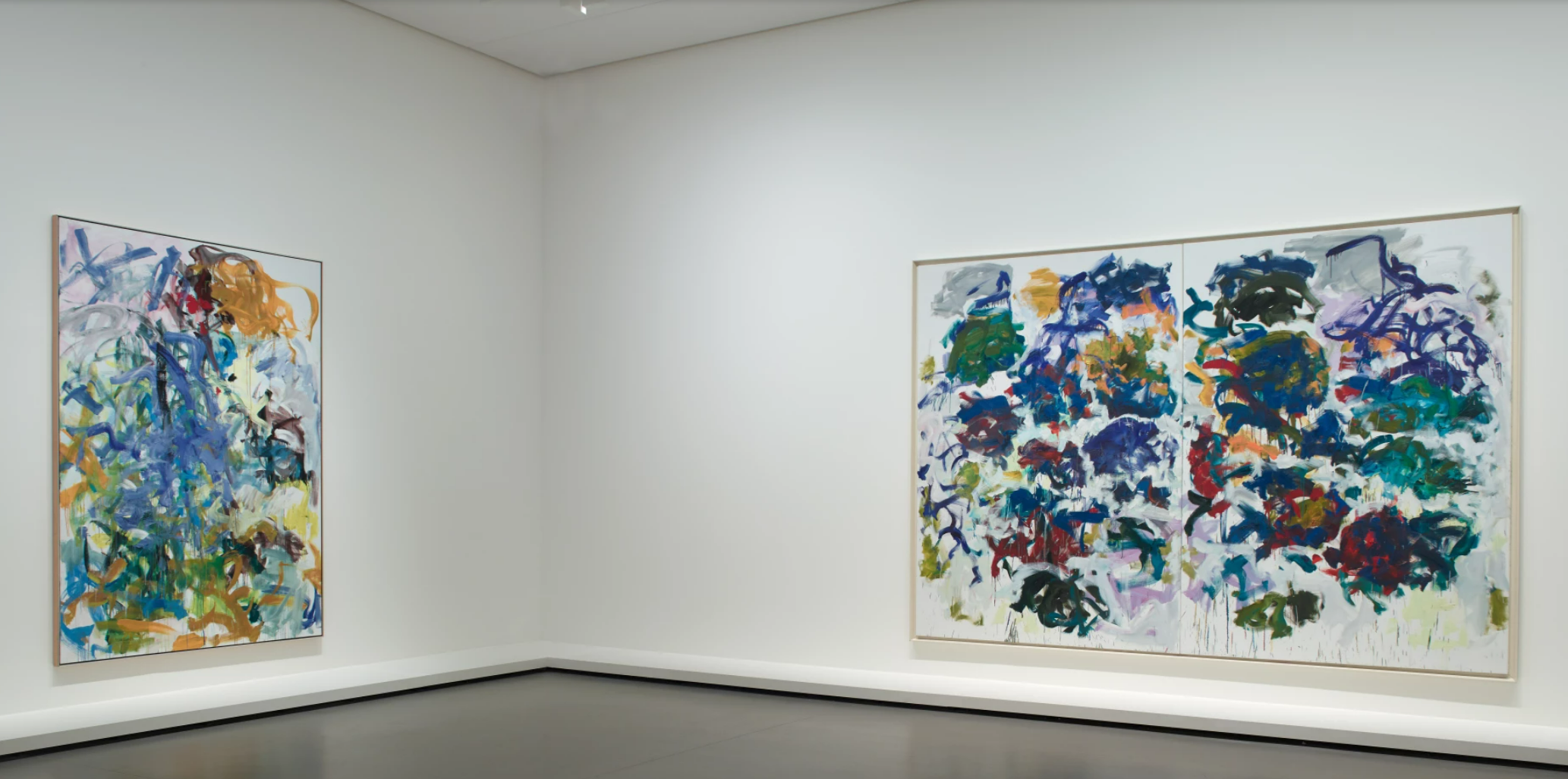
With remarkable dexterity, here Mitchell showcases the full range of her brushstroke, variously lavishing oil onto the canvas face in thick broad strokes, intricate passages of near pointillist precision, and thin sweeping veils of translucence. Unlike the often-spontaneous gestures of other Abstract Expressionist painters, Mitchell’s later brushstrokes were deliberate and calculated. Her concentrated, delineated orbs of pigment almost seem to float across the surface, reminiscent of Henri Matisse’s famed cutouts like La Gerbe (1953). Sunflowers is a visual poetry of line, a pulsating push and pull of entangled masses waltzing their way to the foreground. The painting is a series of oppositions: short sharp dashes of green and yellow condense into globes of color, while longer tendrils of blue and teal flash outward like whip cracks, and a torrent of drips and splashes rains down across the surface, creating a cumulative effect of immense energy and dynamism. Like the title and subject itself, Mitchell’s vigorous mosaics, rich in tone, pay homage to Vincent van Gogh, seeming to match the passion and abandon of the grand master of the titular flower. Yet the genius of both painters was to exercise a subtle sense of structure amidst an ostensible excess.
Sunflowers, circa 1991
Christie’s New-York: 9 November 2023
Estimated: USD 5,000,000 – 7,000,000
USD 6,100,000
JOAN MITCHELL (1925-1992), Sunflowers | Christie’s (christies.com)
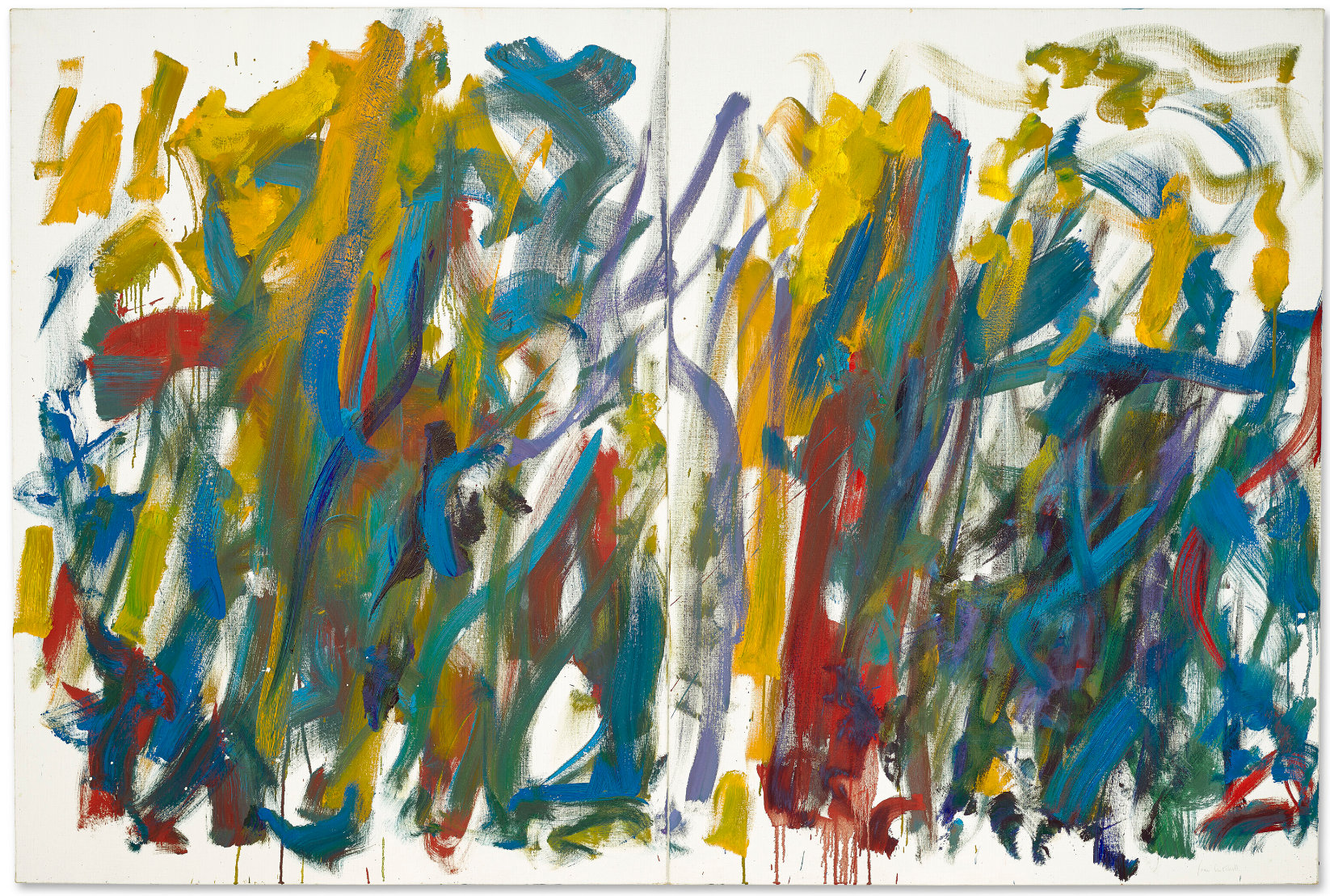
JOAN MITCHELL (1925-1992)
Sunflowers, circa 1991
Oil on canvas in two parts
Overall: 51 x 76 1/4 inches (129.5 x 193.7 cm)
Signed ‘Joan Mitchell’ (lower right)
A striking, monumental diptych from Joan Mitchell’s mature output, Sunflowers exudes uninhibited joy and is a testament to the artist’s artistic fearlessness, while representing a rare opportunity to bookend a life in painting that changed the course of twentieth-century art. The united canvases of Sunflowers span just over four feet by six feet, thereby mirroring human scale. The composition’s horizontality contrasts with Mitchell’s vertical bursts of pigment, which seem to radiate out of the canvas like a rainbow steam. Her characteristic brushstrokes and drips create a landscape that feels complex and layered, but never chaotic. What results is a vision not of a manicured still life, but instead nature as it truly is: unpredictable and wild, but filled with indescribable beauty. Interestingly, the sunflower’s characteristic yellow hue does not monopolize the scene. Rather, yellow is a part of a garden, a chorus. Maybe Mitchell’s sunflowers bloom at dusk among blue and black shadows, the last light of the day still illuminating them with gestural pigments that evoke both the opening and closing of blooms. The meeting point of the two canvases presents a fascinating visual admixture of continuity and change as well. Earthier tones meet primary colors, complemented by the artist’s judicious use of white space. Distinctly positioning Mitchell within a noble lineage of floral still life painting, Sunflowers exemplifies the shared humanist fascination with nature and its ability to inspire creativity.
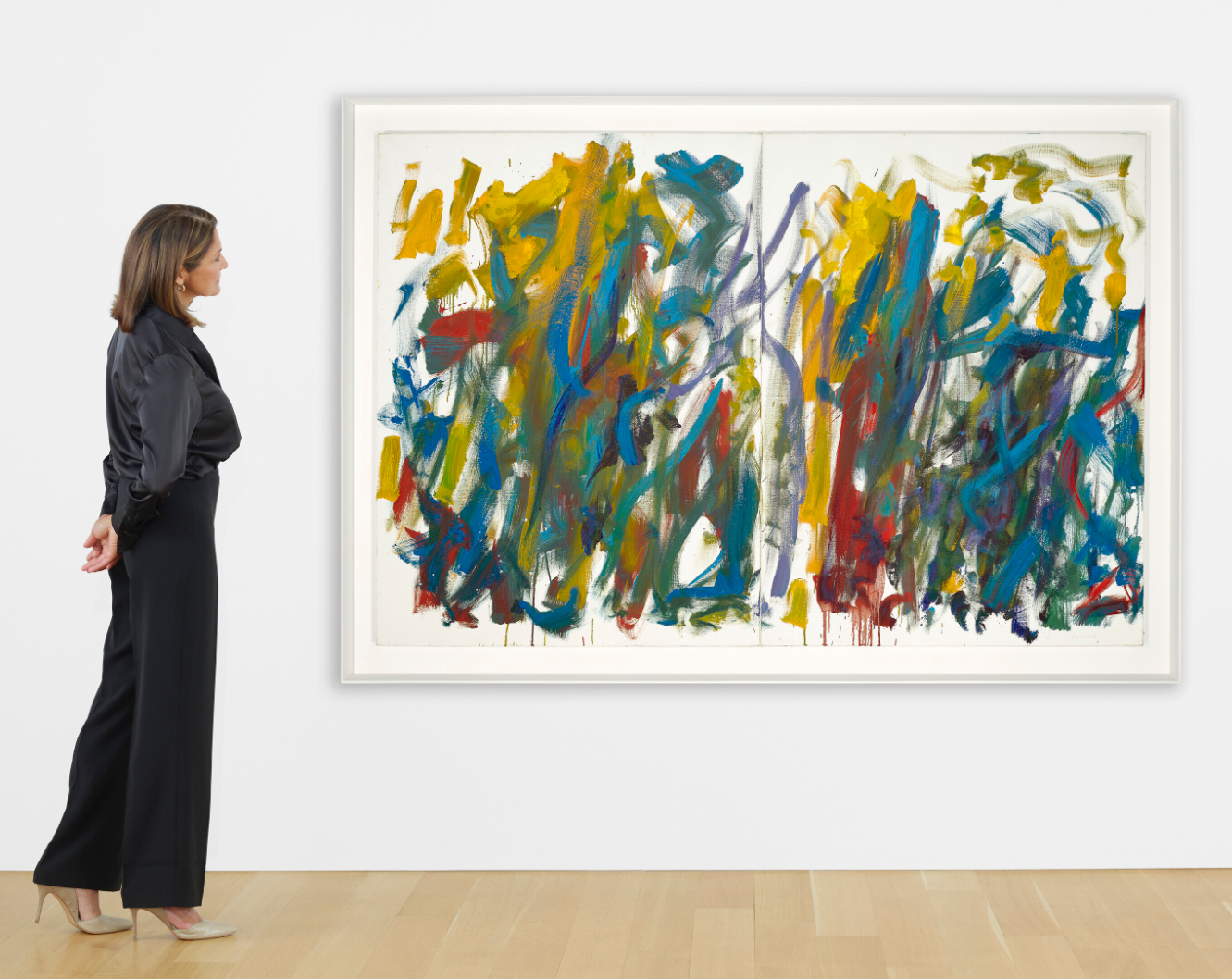
“I don’t exist at all. If I see a sunflower drooping, I can droop with it, and draw it, and feel it until its death. Because it turns it head constantly to the sun, the sunflower projects a sense of living movement and vitality…they’re these gestural things, embracing.”
Sunflowers found their way into Mitchell’s painting throughout her career, and they became hallmarks of her final years. They represented jouissance for the artist, and they allowed her to subsume herself into her paintings. Simultaneously, sunflowers could offer another bloom, another cycle of death and life, mourning and optimism. It is essential to recall other instances of abstraction as a complement, rather than an antithesis, to the genres of landscape and still life. As Mitchell confirms in Sunflowers, these oft-forgotten genres are in fact deeply rigorous and modern. The clearest comparison is of course Vincent van Gogh’s multiple iterations of Sunflowers (1888-1889), which, like Mitchell’s sunflowers, are expressive rather than purely representational. Furthermore, Henri Matisse was an important influence for Mitchell, and they both pushed the boundaries of representation. Indeed, both the Impressionists and Post-Impressionists used the natural world as a cipher with which to reconfigure painting and vision altogether, just as Mitchell did throughout her career. Like her nineteenth-century predecessors, she was a trailblazer. One of the few women included in the iconic 9th Street Art Exhibition of Paintings and Sculpture (1951), which also featured Jackson Pollock and Willem de Kooning, she carved out an indelible place for herself within the New York School, despite spending much of her career in France. Mitchell is a towering figure in the history of art, just as Sunflowers commands space and attention. Still, as with all of her work, Sunflowers is as tender and poetic as it is rigorous and muscular. It is a reminder of the splendor and brevity of life. To everything there is a season, and Mitchell was an unmatched chronicler of change within herself, and within art history. Simultaneously exuberant and wistful, Sunflowers captures the range of Mitchell’s unparalleled impact on abstract painting.
Untitled, 1989
Christie’s New-York: 17 November 2022
Estimated: USD 10,000,000 – 15,000,000
USD 14,130,000
JOAN MITCHELL (1925-1992), Untitled | Christie’s (christies.com)
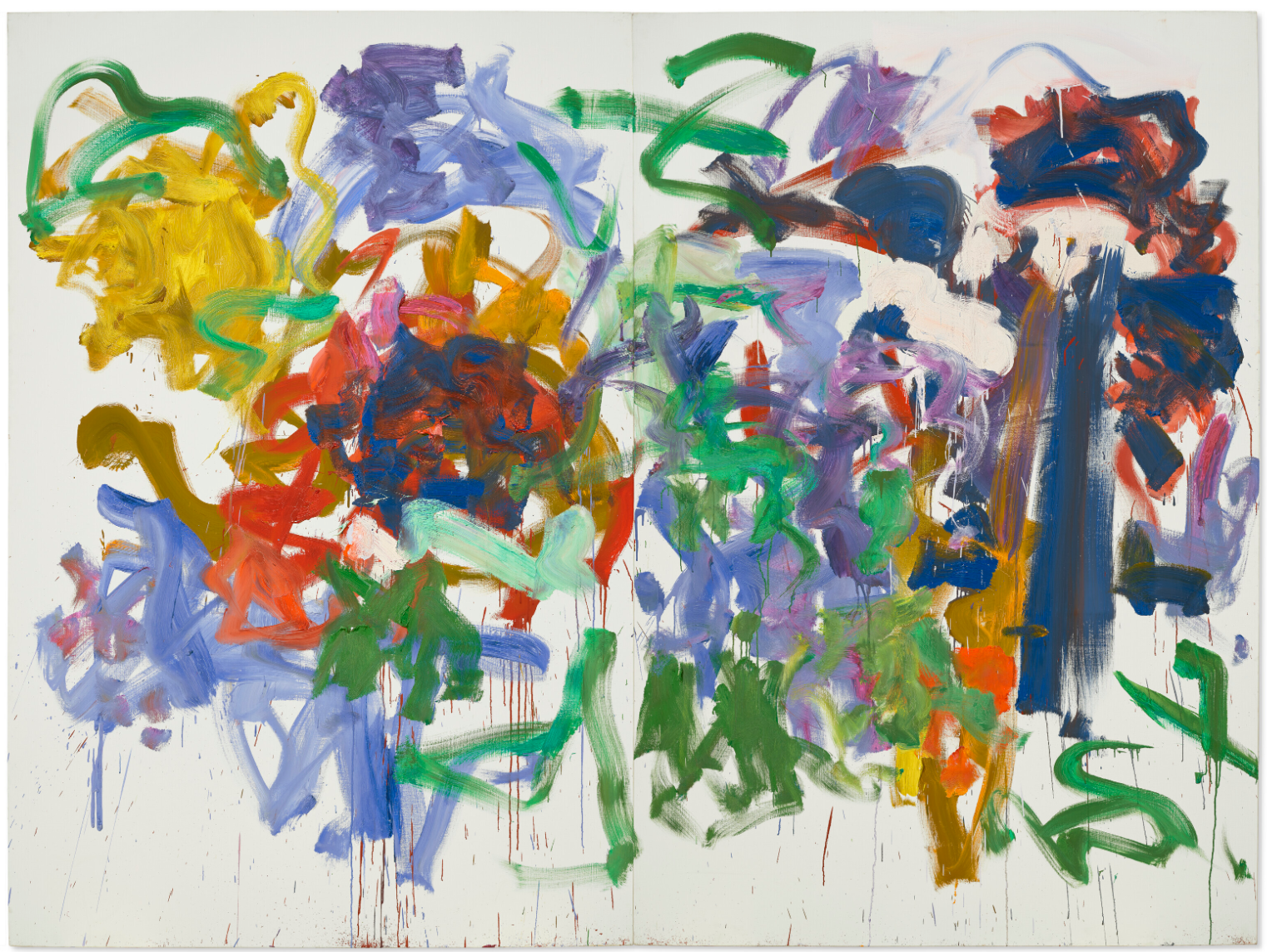
JOAN MITCHELL (1925-1992)
Untitled, 1989
Oil on canvas, in two parts
Each: 76 3/4 x 51 1/4 inches (194.9 x 130.2 cm)
Overall: 76 3/4 x 102 7/8 inches (194.9 x 260.7 cm)
Joan Mitchell painted some of her greatest work in the last years of her life. These paintings are executed on a monumental scale and demonstrate a kind of freedom and confidence not seen in her work in decades. Painted in 1989, Untitled is one such painting. An exuberant, monumentally scaled celebration of everything the artist held dear, it demonstrates the ferocity and fearlessness with which she attacked each day. Brimming with joyful, ebullient tones that hover and dance across the light-filled, airy canvas, this enormous, two-part painting is also counterbalanced with dark tones. As in life, Mitchell battled through the dark to embrace the light. Teeming with a heady array of lush, beautiful brushwork that darts and zig-zags through the canvas with a speed and ferocity not seen in her work in years, the present Untitled attests to the freedom and confidence that seized the artist at this time. She worked with a far greater variety of colors, which here encompasses green, blue, yellow, red, orange and purple, consisting of a veritable rainbow. Mitchell also retains a great deal of white ground in the work, which adds an airy lightness, infusing the colors with a kind of dazzling, prismatic light. It is perhaps not surprising that she had seen the Gothic stained-glass windows of the cathedral in Lille, and briefly considered a stained glass project for the cathedral at Nevers, around this time. She also allowed herself the freedom to use a wider brush, applying paint in strong, muscular strokes. Especially expressive is her use of green; these brushstrokes hover and dance, leading the eye up, through and across the canvas. In other places, the strokes gather together into a tangle or ball, as in the far upper left, where a cluster of yellow strokes recalls the sunflowers that grew in her garden at La Tour, and near the center, a darker nest of red, blue and orange that echoes Van Gogh’s dying sunflowers.
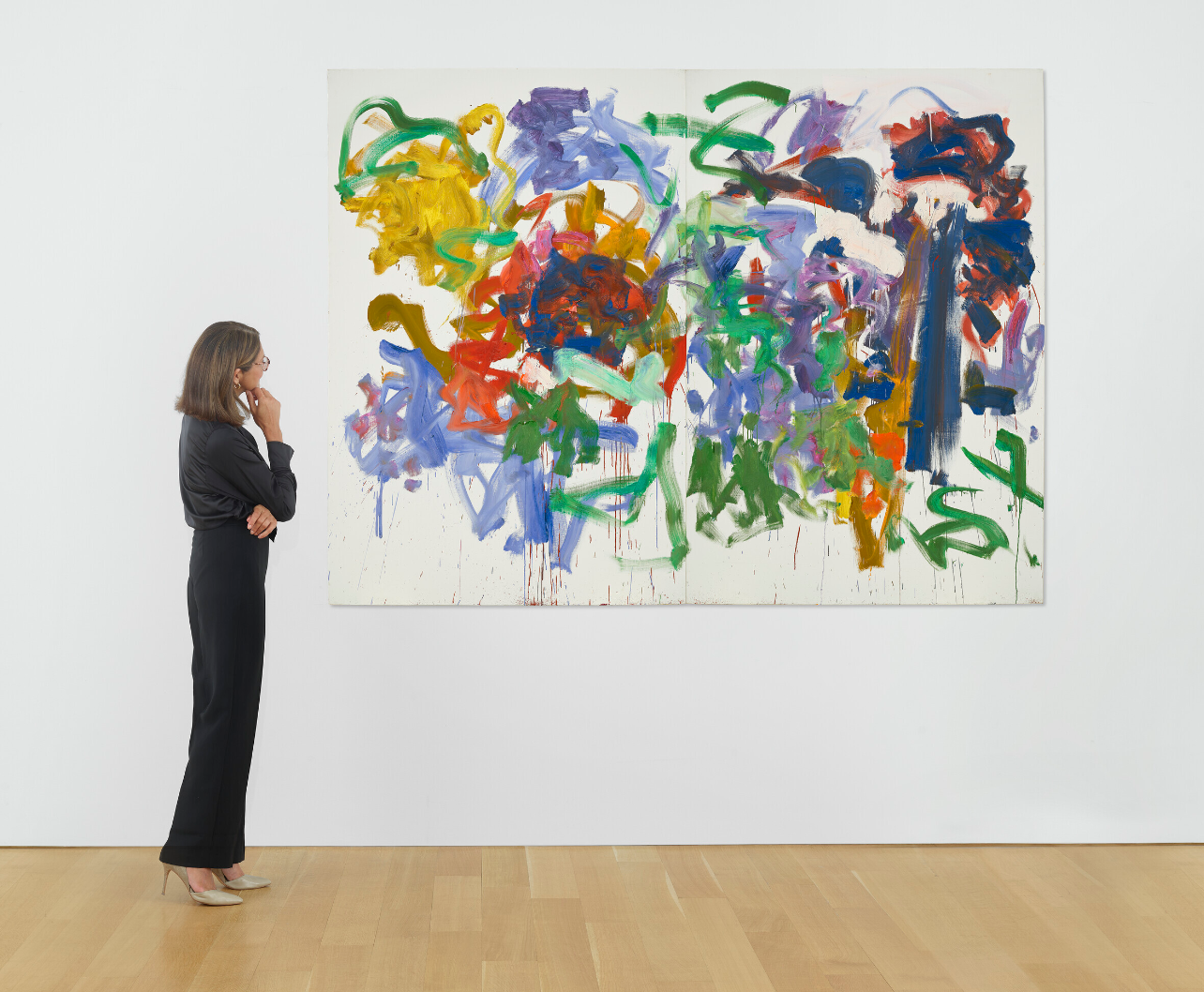
Marked by professional accolades but also physical pain, the last few years of Micthell’s life offered up a study in contrasts. On the one hand, her major museum retrospective at the Corcoran in 1988 had solidified her place in art history, and was accompanied by a 200-page monograph by the curator Judith Bernstock. That same year, she was lauded with a number of professional awards, including the Distinguished Artist Award for Lifetime Achievement from the College Art Association and was granted Commandeur des Arts et Lettres by the French Ministry of Culture. In 1989, she launched herself into preparing a major solo exhibition at the Robert Miller Gallery in New York. This was a profound opportunity for Mitchell to return to an environment that she had once deemed too toxic to sustain creativity, having moved to France full time in 1959. Despite the frailties that continued to hound her physical body, she threw herself into her work.
Hours, 1989
Christie’s New-York: 11 May 2023
Estimated: USD 3,000,000 – 5,000,000
USD 4,043,000
JOAN MITCHELL (1925-1992), Hours | Christie’s (christies.com)
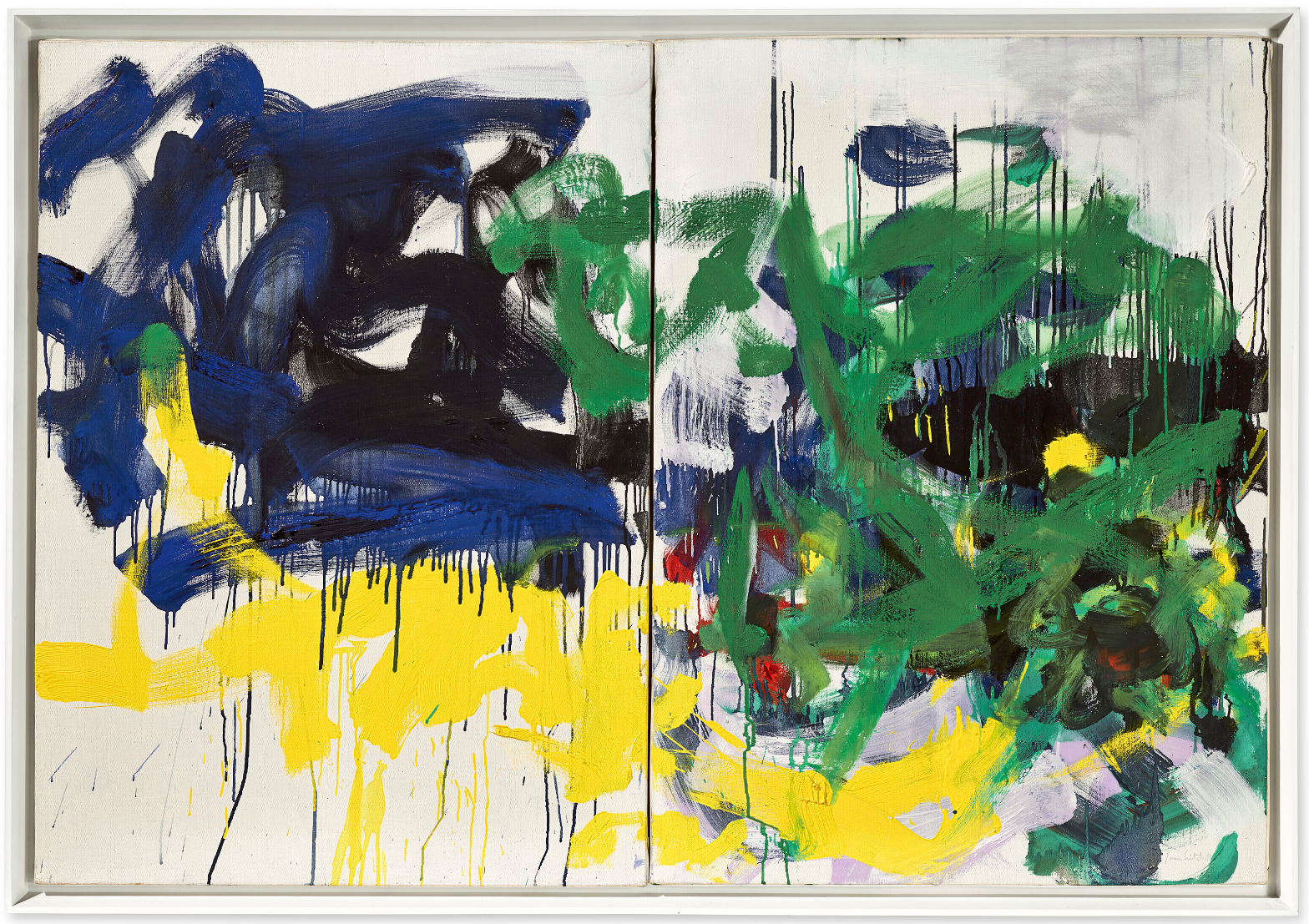
JOAN MITCHELL (1925-1992)
Hours, 1989
Oil on canvas, in two parts
Overall: 39 3/8 x 57 1/4 inches (100 x 130.2 cm)
Signed ‘Joan Mitchell’ (lower right)
One of the most critically acclaimed of the Abstract Expressionists, Joan Mitchell’s career broke new ground and has inspired countless generations of artists and viewers. An extraordinary example of her late career output, Hours clearly articulates the painter’s ability to transcend the machismo of her New York School colleagues in favor of rich lyricism that fully investigates the picture plane and its absorptive properties. Breaking from the mainstream and embracing an inspired application of thin layers, Mitchell created an immediacy that meets the viewer head-on at the very surface. Building up painterly strata while simultaneously enforcing the flatness of the canvas, her oeuvre stands out for its singular marriage of European tradition and American innovation.
Rendered across two vertical panels, Hours is full of expressive energy as Mitchell’s dynamic brushwork somersaults across the composition in a flurry of thin layers and dripping strokes. Highly concerned with the idea of all-over painting, she did away with any semblance of direction in order to explore the canvas support. On the left, a swirl of black and dark blue gestures hovers over lightning yellow that sweeps into the lower portion of the right panel. There, it collides with a hurricane of verdant green that floats atop myriad colors in a dense jumble of marks that threaten to break forth from the edges of the painting. Trails of liquid paint travel up and down, allowing us some insight into Michell’s non-traditional working process. They also serve to lift the painting across the white ground, giving our eyes a vertical traverse to follow through the storm of paint. Gravity ceases to exist within the confines of the canvas as each stroke makes itself known and then quickly joins its brethren in a powerful display. Reviewing the exhibition in which Hours was first presented, John Yau wrote for Artforum, “Her compositions are made up of specific strokes of color, each of which is a discrete unit. Her gestural notations function like staves: they present their own external form, while being used to enclose something. The unpainted white ground is, more than ever, an integral part of each painting” (J. Yau, “Joan Mitchell: Robert Miller Gallery,” Artforum, February 1990, p. 137). Mitchell established a conversation about pictorial depth and its negation in the abstract realm, allowing the primed canvas to become an equal with her colorful incursions.
Bottom Yellow, 1981
Sotheby’s New-York: 16 November 2022
Estimated: USD 3,000,000 – 4,000,000
USD 3,801,000
Bottom Yellow | Contemporary Evening Auction | 2022 | Sotheby’s (sothebys.com)
JOAN MITCHELL (1925 – 1992)
Bottom Yellow, 1981
Oil on canvas
51 x 38 1/4 inches (130×97 cm)
Signed Joan Mitchell (bottom right)
Signed Mitchell and titled Bottom Yellow (on the stretcher)
A symphony of explosive gesture and intimate emotional intent, Joan Mitchell’s Bottom Yellow from 1981 is an exceptional embodiment of the rich surface textures and masterful brushwork that define the artist’s output from this glorious phase of her career. In its cascading hues of lilac, blue, verdant green and goldenrod yellow, the present work speaks to the profound inspiration Mitchell drew from the flourishing bucolic landscape of her surroundings in Vétheuil, where she moved in 1968 after almost a decade in Paris. There, Mitchell began planting rows of sunflowers- her favorite blooms -in her beloved garden: flowers would which go on to spark a two-decade-long meditation on the motif and serve as inspiration for some of the most radiant paintings of her oeuvre. Exuberant ribbons of color leap and vault with unbridled energy across the surface of this mesmerizing painting, revealing a veritable tour de force of painterly mark-making within Bottom Yellow. Executed at the beginning of what is considered Joan Mitchell’s most formative decade, Bottom Yellow represents a pinnacle in Mitchell’s unique brand of Abstract Expressionism. Never before seen by the public, Bottom Yellow has notably been held in the esteemed collection of the Kinney family for over 40 years. Distinguished by its exceptional provenance, Bottom Yellow was selected by the family following a visit to Mitchell’s home in Vétheuil, where they first saw the present work in her studio.
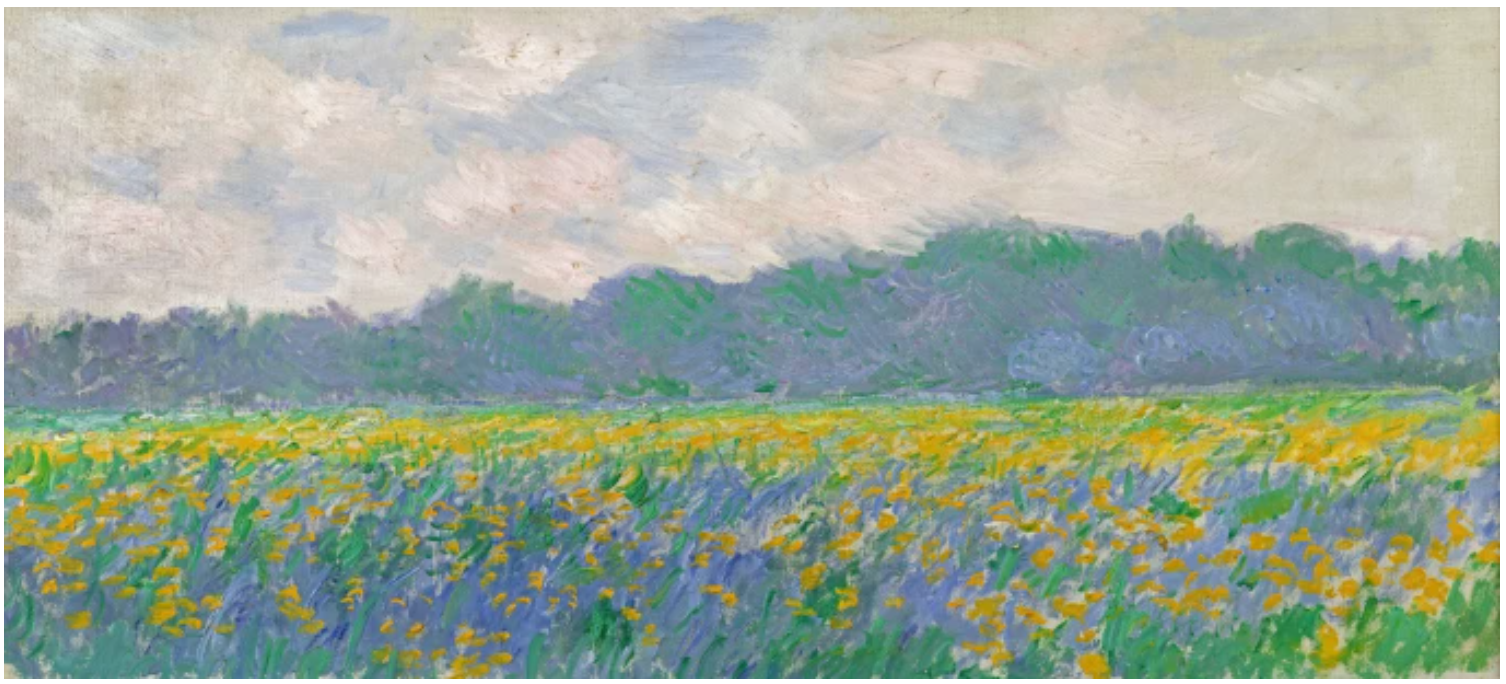
CLAUDE MONET, FIELD OF YELLOW IRISES AT GIVERNY, 1887. IMAGE © MUSEE MARMOTTAN MONET, PARIS, FRANCE / BRIDGEMAN IMAGES
Following her move to Vétheuil, Mitchell found newfound solace in her idyllic surroundings and subsequently produced some of her most vibrantly colored, luxuriously textured, and harmoniously composed canvases. The inspiration of her garden in Vétheuil and her beloved sunflowers is remarkably compelling within the present work; rather than seeking to represent her flowers in literal form, however, Mitchell deftly summons the sensation of riotous organic growth within painterly abstraction, successfully evoking the sensation of gazing upon a glorious bed of brightly-colored blooms. Although Mitchell’s life was not wholly idyllic at her countryside home, her partner Jean Riopelle left her for another woman in 1979 and she suffered profoundly from this loss; she appeared to find a renewed degree of clarity and contentment in Vétheuil that was absent from her years in Paris, which were marked by recurring depression. In the following years, she found inspiration and relief in her profoundly moving and intimate paintings from this period.
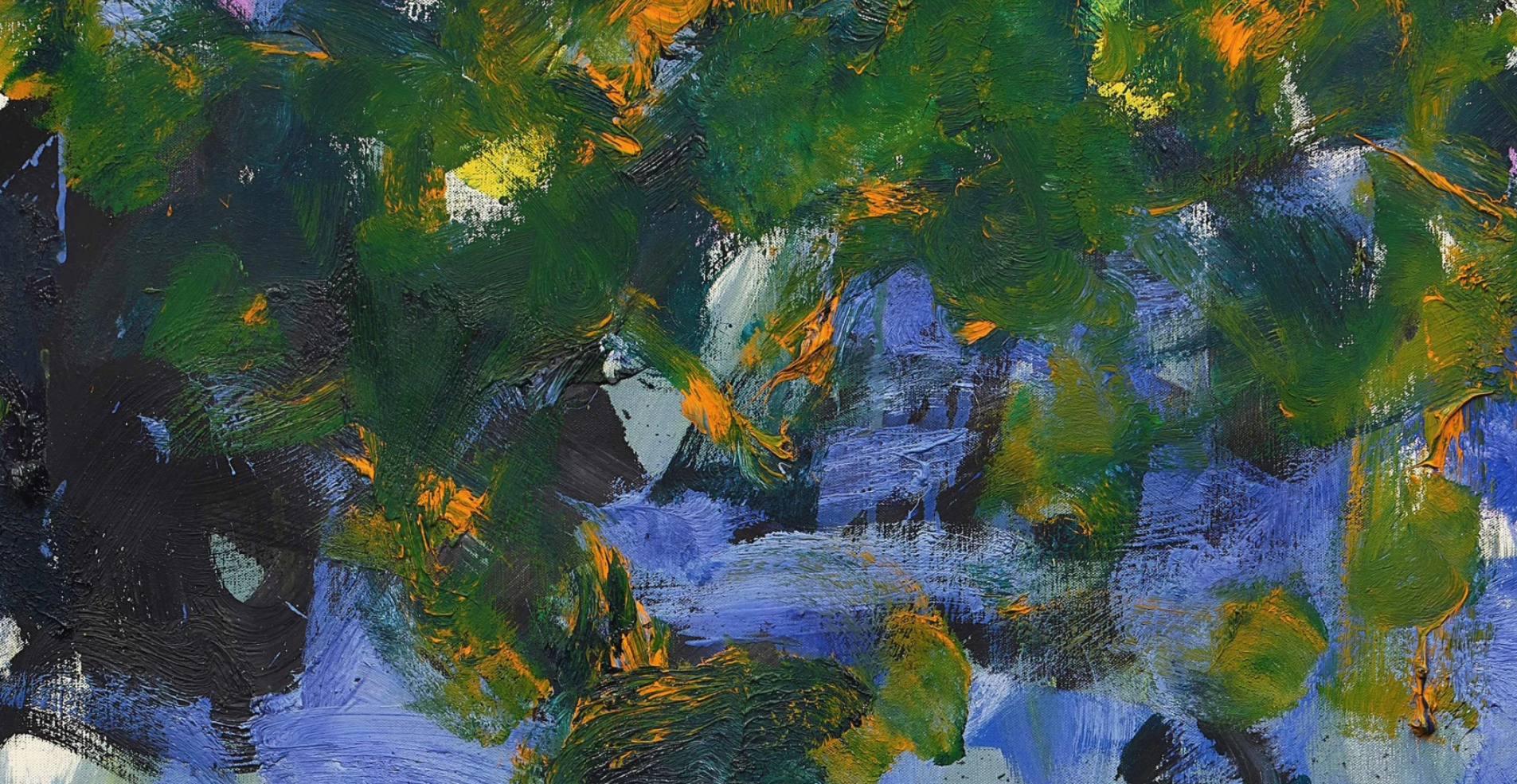
Within Bottom Yellow, Mitchell invites the viewer to imagine the physicality of her creative process through an unencumbered gestural vocabulary. The rich vitality of the present work is complemented by its intimate composition, nimble tactility and deft brushwork, all of which present an intense dialogue with her Abstract Expressionist contemporaries. Complimented by the richly textured surface and vigorous mark-making, the exquisite beauty of Bottom Yellow is further rooted in Mitchell’s profound, lifelong appreciation for the beauty of the natural world. A constant presence within her abstract painterly idiom, Mitchell’s affinity for landscape fostered in her a strong connection to the French Impressionists and European Post-Impressionists.
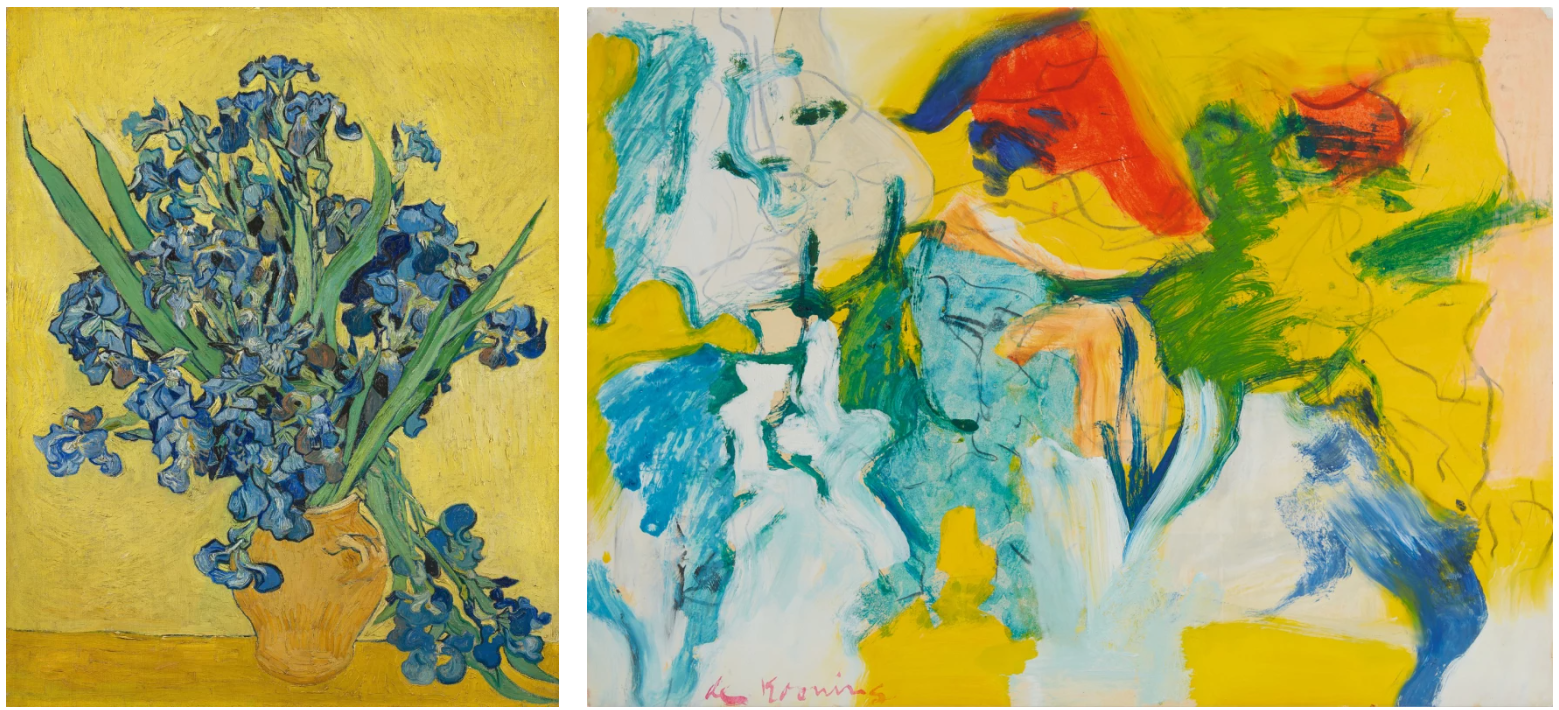
LEFT: VINCENT VAN GOGH, IRISES, 1890. IMAGE © VAN GOGH MUSEUM, AMSTERDAM, THE NETHERLANDS / BRIDGEMAN IMAGES. RIGHT: WILLEM DE KOONING, EAST HAMPTON GARDEN PARTY, 1976. PRIVATE COLLECTION. SOLD AT SOTHEBY’S NEW YORK, 2020 FOR $2.2 MILLION. ART © 2022 THE WILLEM DE KOONING FOUNDATION / ARTISTS RIGHTS SOCIETY (ARS), NEW YORK
A breathtaking example of Mitchell’s late work, Bottom Yellow endures as a beacon of lush chromatic vibrancy and visually arresting abstraction, serving as a triumphant testament to the unrivalled beauty, intimacy and profound emotion that define the very best of Mitchell’s artistic production. Captivatingly atmospheric, the present work combines the visual languages of abstraction and landscape in a maelstrom of pigment. Anchored by Mitchell’s masterful use of emphatic brushwork, the lush layers of yellow, blue, green and lilac impasto dramatically dance across the work with an exuberant dynamism, creating a composition which seems to bloom skyward before our very eyes. Deeply intimate yet defiantly abstract, Mitchell here captures the raw beauty of the landscape through a lens of color and movement.
Other Paintings
Peinture II, 1964
Joie de Vivre: Works from the Collection of Vivian Fusillo
Christie’s New-York: 30 September 2025
Estimated: USD 2,500,000 – 3,500,000
USD 2,759,000
JOAN MITCHELL (1925-1992), Peinture II | Christie’s
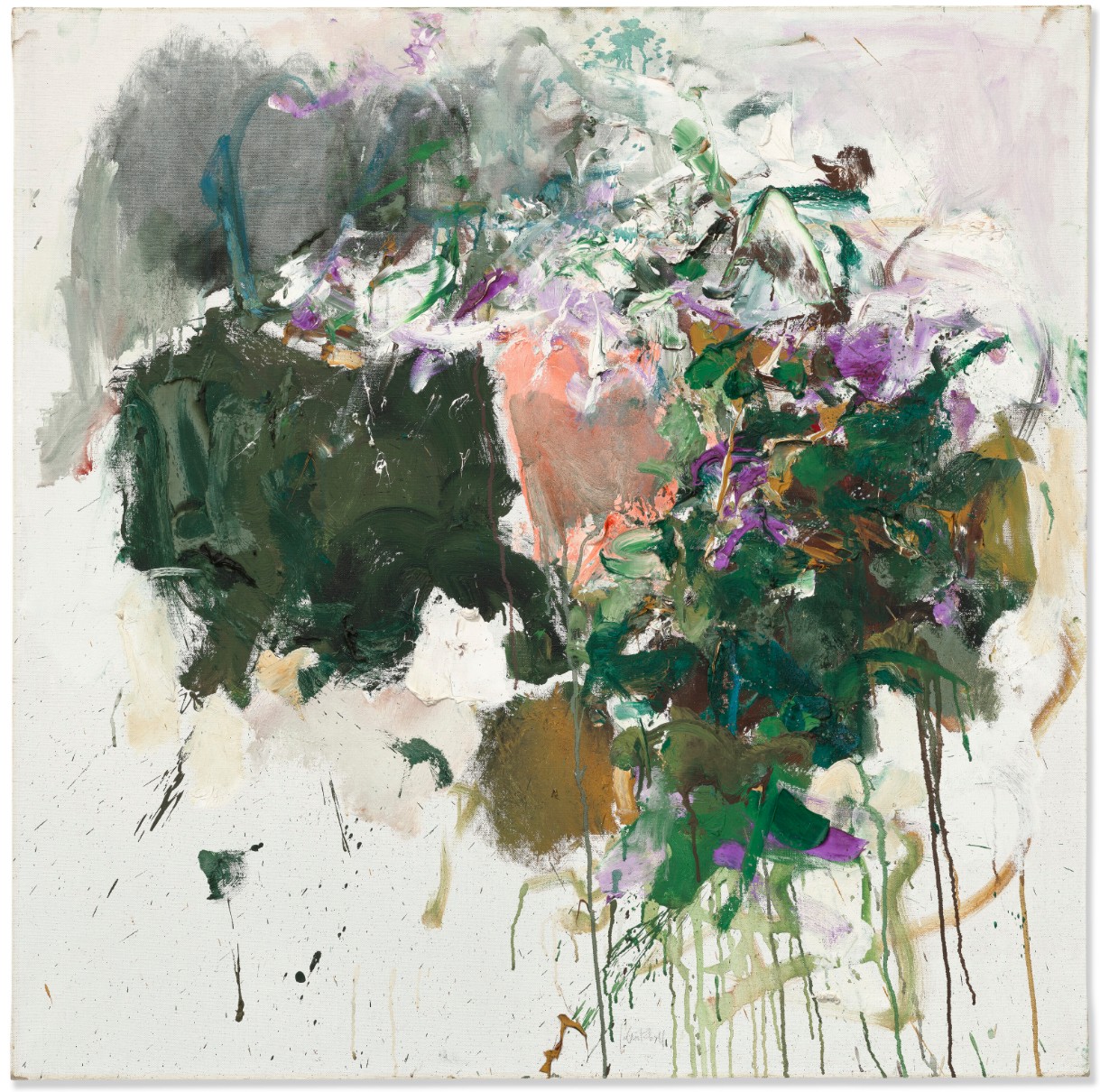
JOAN MITCHELL (1925-1992)
Peinture II, 1964
Oil on canvas
39 1/8 x 39 1/2 inches (99.3 x 100.3 cm)
Signed ‘J. Mitchell’ (lower center)
Signed again, titled and dated ‘JOAN MITCHELL PEINTURE II 1964’ (on the stretcher)
Strokes, smears and swipes of paint engulf the canvas in Joan Mitchell’s masterful 1964 painting titled Peinture II. A rhapsodic gathering of gestural forces simultaneously emerges from and submerges into the surrounding dense and earthly white fog of the picture’s ground. In the present example, the American Abstract Expressionist magisterially exhibits painterly bravado with a newfound rigor. Peinture II marks a critical, emphatic shift from the traces of urbanity embedded within her previous work towards a more somber style replete with a subdued pigmentation favoring earthy greens and bright violets. Mitchell described the series as
“my black paintings—although there’s no black in any of them”
Held in the same private collection for more than half a century, Peinture II is an exceedingly rare and ravishing example from one of the most poignant and affective periods of Mitchell’s esteemed artistic career.
Holding a psychological charge hitherto absent from Mitchell’s paintings, Peinture II reflects the artist’s response to a series of tragedies and the landscape she experienced in this period: the death of her father, the loss of her dear friend Franz Kline, and the terminal sickness of her mother, as well as the assassination of John F. Kennedy, which deeply affected the artist. Mitchell’s very real losses seep into the starkness and emotive gravity of the work, each stroke poised and contemplative. By using her fingers and rags along with her brush, Mitchell achieves an unparalleled intimacy with her materials and expands the possibilities of paint as medium. The tragic events of the mid-1960s correspond to Mitchell’s slower speed in completing works, with the artist noting in a 1965 interview that she was spending much more time on paintings which before would only have taken her one month. A seminal artistic achievement, Peinture II simultaneously achieves a personal resonance between artist and viewer, serving as a portal into Mitchell’s innermost emotions. Conceiving painting as a transmutation of multisensory experience into visible form, the artist states:
“Obviously, people paint or write music
because they can’t express some things with words”
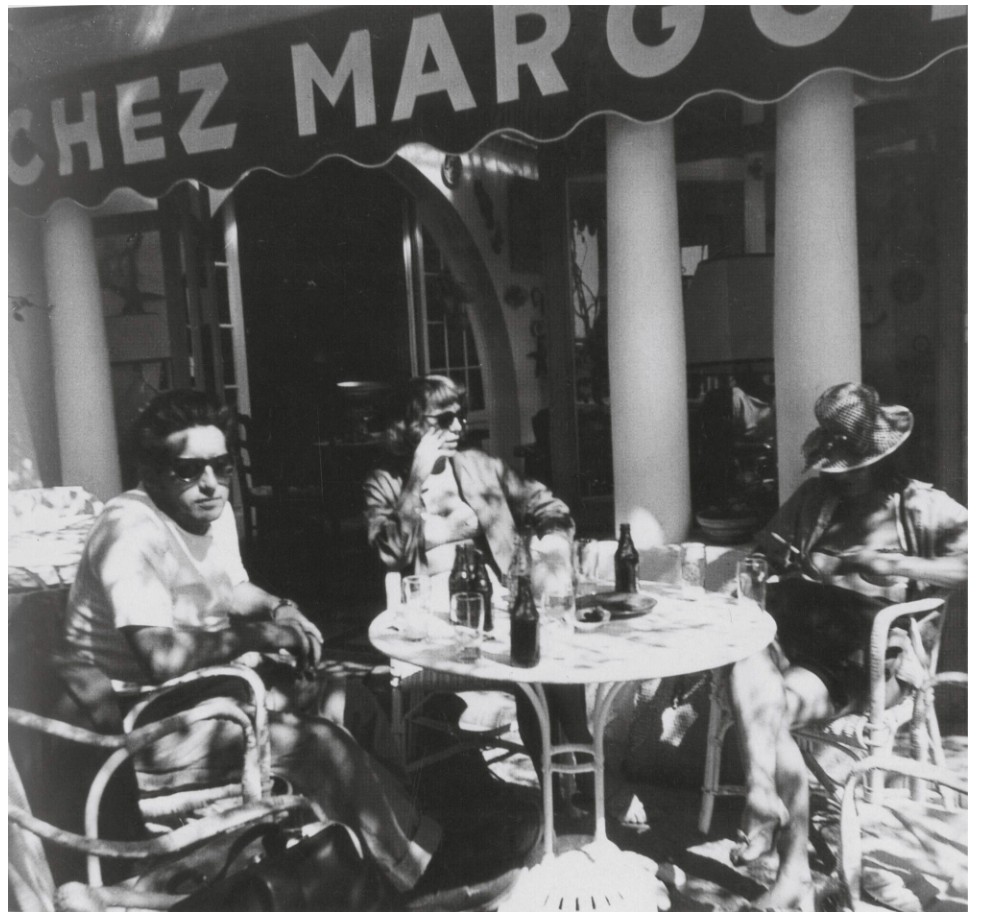
Joan Mitchell with Jean-Paul Riopelle, Golfe-Juan, circa late 1950s. Photographer unknown.
Mitchell exhumes her past onto the surface of Peinture II, combining techniques and compositional elements from previous works while integrating in new ideas gleaned from her life in France. After having moved into her Paris studio on rue Frémicourt in 1959, Mitchell had the time and spatial freedom to let loose a series of fervent experimental works, testing herself and pushing her materials to their physical limit. Mitchell shared a living space with her partner, the painter Jean-Paul Riopelle, and the couple would frequently escape the confines of Paris for sailing trips across the Mediterranean, alighting upon the Corsican, Italian, and Greek coasts. Her works from the period bear witness to these voyages, recalling the novel natural forms of the rocky coasts and the wide expanses of open sea.
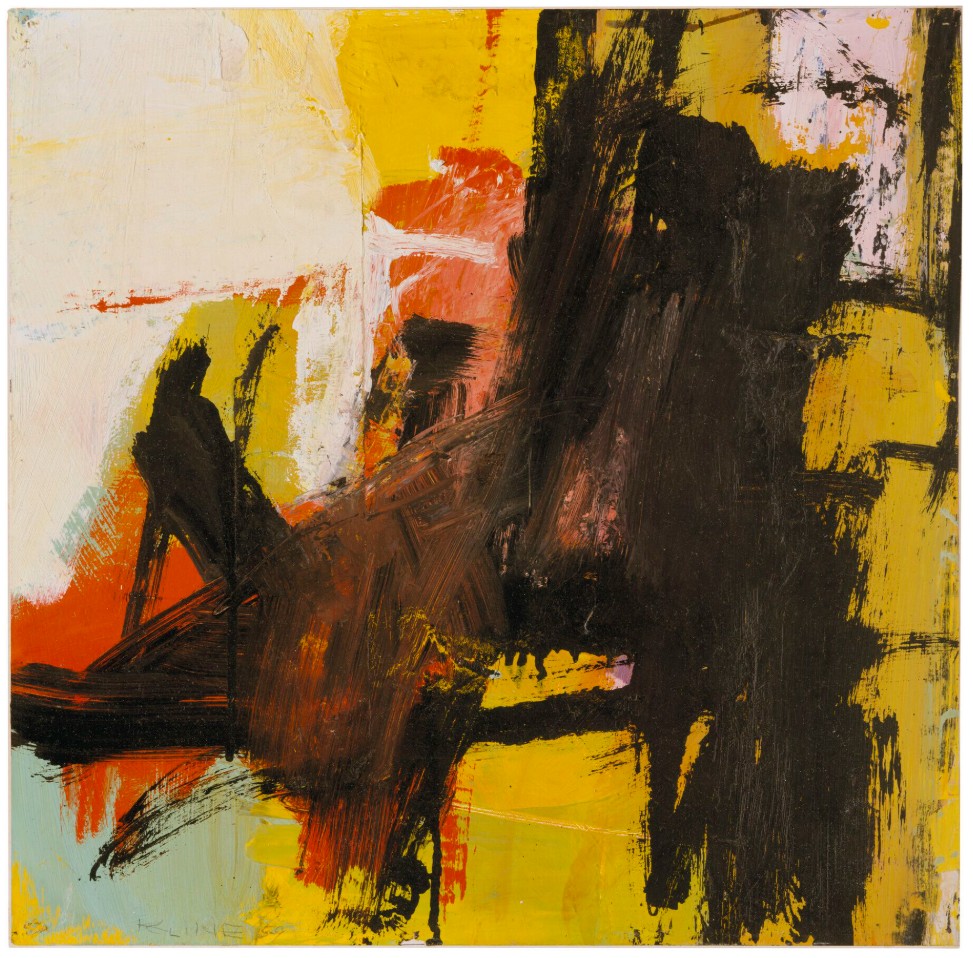
Franz Kine, Black Reflections, 1959. Metropolitan Museum of Art, New York. Artwork: © 2025 The Franz Kline Estate / Artists Rights Society (ARS), New York. Image: © Metropolitan Museum of Art via Art Resource, New York.
Peinture II exhibits a crescendo of impastoed pigment, enveloping the canvas in a centripetal composition bound by the white ground. The abstracted forms appear almost naturalistic, demonstrating Mitchell’s experimentation with a composition that focuses more deeply on the figure-ground relationship. The variegated facture in Peinture II provides the paint with a life that seems to expand beyond the composition, with thick cords of paint delivered straight from the tube to almost translucent tendrils of turpentine-diluted oil which soak into the membrane of the canvas.
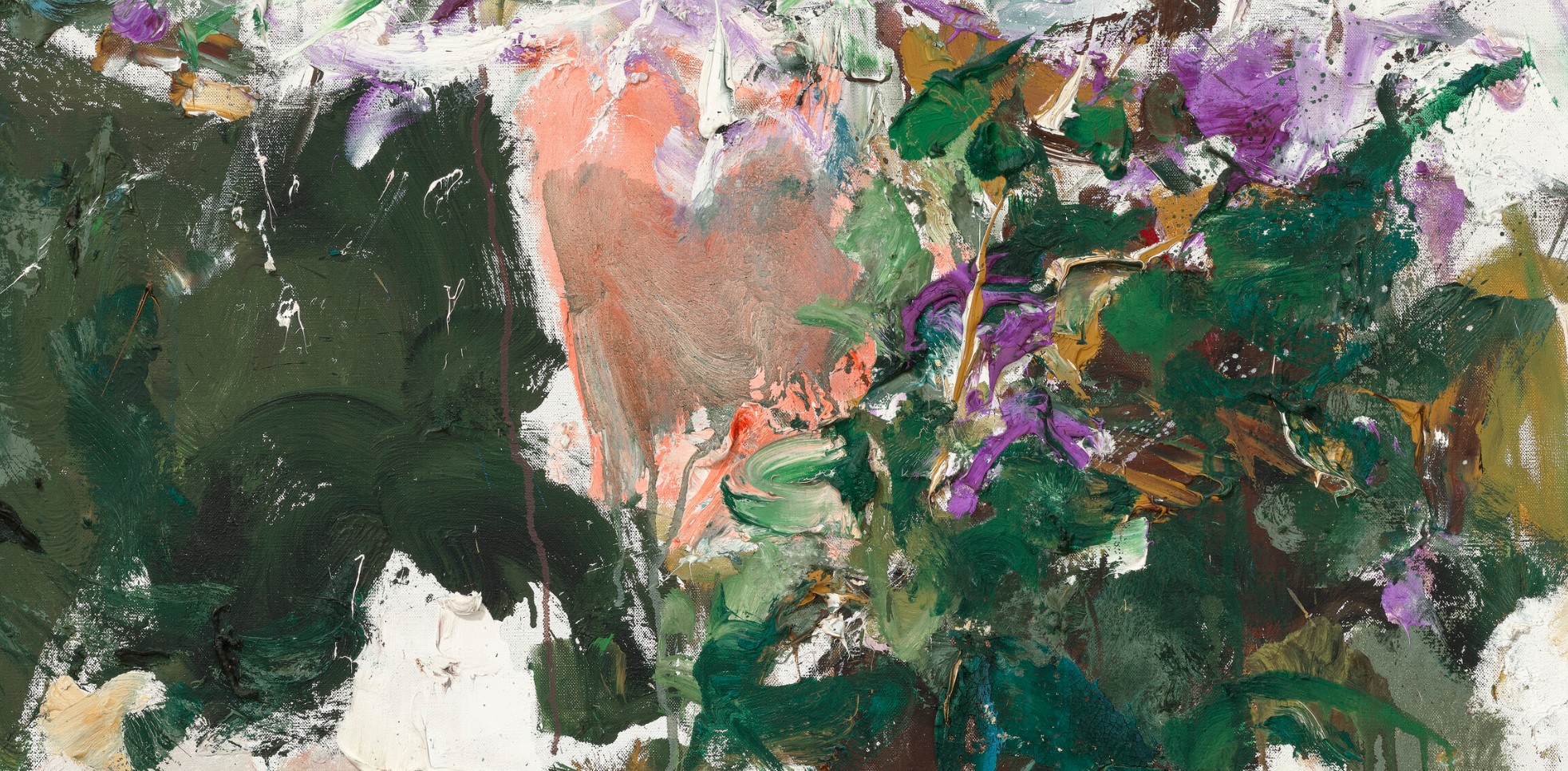
In the black paintings, Mitchell also dramatically changes the chromatic emphasis of her work. Peinture II is exemplary of this shift, eschewing a palette that emphasized the primary colors in favor of myriad shades of green and striking lavenders. Mitchell embraces a stylistic opulence verging on Rococo, reflecting her experience in France, where she experienced color in a radically new way. The highlights of brilliant purple accentuated throughout the present work’s composition reflect the artist’s experience of the French countryside:
“purple too… it is abundant in the morning especially very early, is violet…
when I go out in the morning, it is violet”
Peinture II is one of the most successful works from the series, her balance between earthen hues and passages of brilliant color achieving a poignancy and elusiveness that portend her more mature practice.
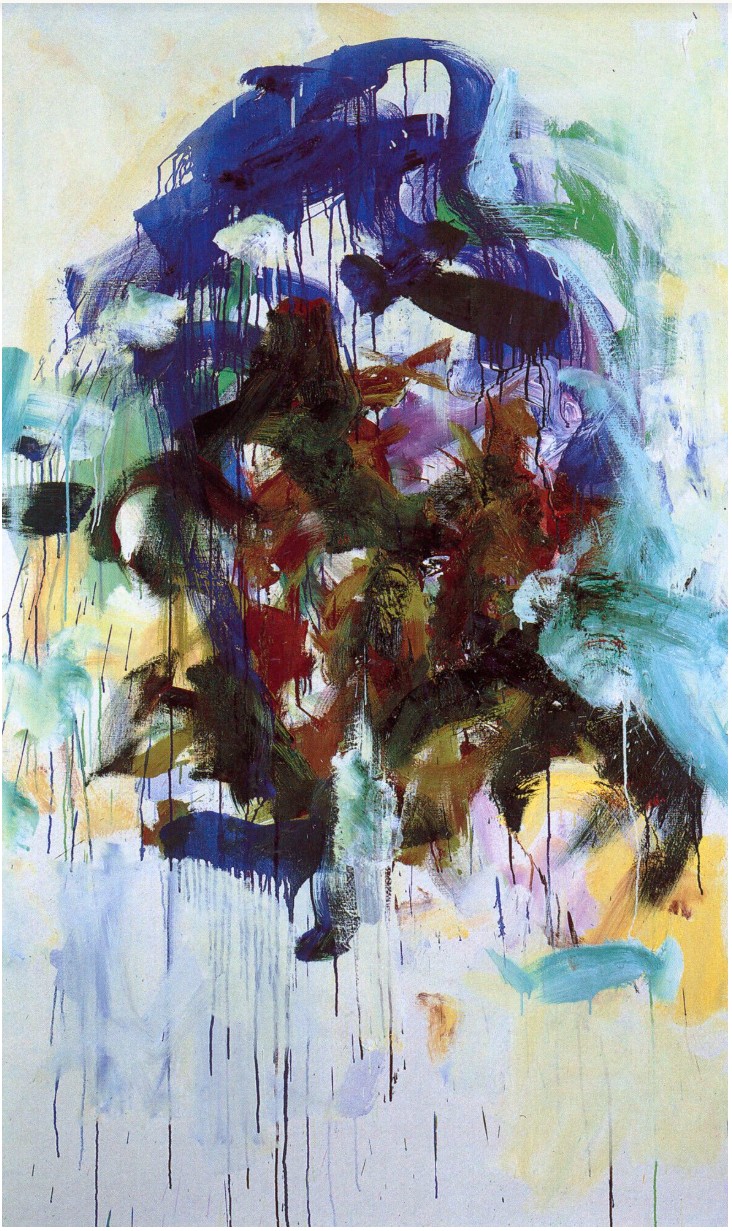
Joan Mitchell, Chord II, 1986. Tate Modern, London. Artwork: © Estate of Joan Mitchell.
Peinture II was acquired by the inimitable Vivian Fusillo soon after the work was exhibited at Gimpel Fils’ Collectors Choice XIII show in London in 1965, becoming the crowning jewel of her collection and remaining in the same hands ever since. This esteemed provenance emphasizes the work’s rarity, coming from a period when Mitchell radically slowed down her formerly frenzied pace, spending months working on a single painting. Another example of her black paintings, Blue Tree, is now in the collection of the Worcester Art Museum, while the figure-ground relationship delightfully achieved in Peinture II can also be observed in her triptych Untitled painted the same year, now at the Museum of Modern Art in New York. Mitchell would return to the compositional effects and colors achieved in the present work later in her career, the work’s influence to her broader oeuvre most evident in her acclaimed late Chord series, which reprises the centralized forms, color palette, and dripping lines of paint first explored here. Immediately preceding Peinture II, Mitchell executed a series of works from 1960 to 1962 which the artist styled as her “violent” phase. In 1964, the year she painted Peinture II, Mitchell stated that she was “trying to get out of a violent phase into something else” (quoted in L. Nochlin, op. cit., p. 49). The present work is thus as much a resolution as it is an origin, resolving personal turmoil while proposing the style and compositional effects she would work on for the rest of her career. Peinture II vividly incorporates all of Mitchell’s painterly signs together into an orchestral composition rendering her expressive psychological force onto the picture plane.
Untitled, 1965
Center Stage: The Collection of Jacquelyn Littlefield
Sotheby’s New-York: 26 September 2025
Estimated: USD 1,000,000 – 1,500,000
USD 1,636,000
14 STATIONS ON PARIS SUBWAY SERIES
Untitled | Contemporary Curated | 2025 | Sotheby’s
JOAN MITCHELL (1925 – 1992)
Untitled, 1965
Oil on canvas
20×17 inches (50.8 x 43.2 cm)
Signed (lower right)
Flurries of teal, fuchsia, cobalt blue, maroon, and mossy green sweep across the surface of Untitled, a striking example of Joan Mitchell’s oeuvre coming from the Collection of Jacquelyn Littlefield—collector, arts patron, and owner of the renowned Spreckels Theatre, San Diego. Painted in 1965 during Mitchell’s years in Paris, the present work is surmised to come from the intimately scaled “14 Stations on Paris Subway” series, a body of work that marked a pivotal moment in her career. In her 1960s canvases, Mitchell honed the visual language, technical mastery, and emotional depth that would define her legacy. The bold colors—such as the deep forest greens found in Mitchell’s masterworks like the Hemlock paintings—and the energetic yet controlled brushstrokes radiate her passion and masterful command of the medium. With its richly textured surface at the center of the canvas, Untitled highlights the physicality and conviction of Mitchell’s acclaimed 1960s paintings.
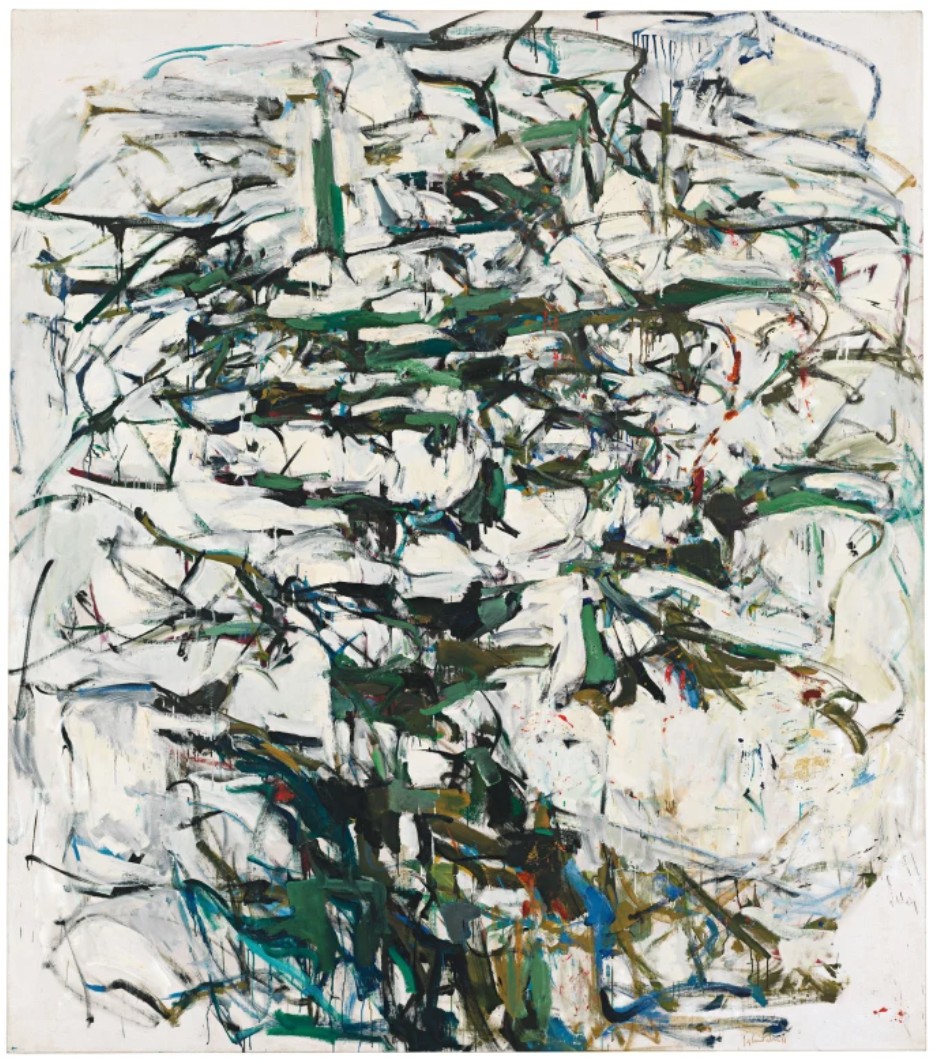
Joan Mitchell, Hemlock, 1956. Whitney Museum of American Art, New York. Art © Estate of Joan Mitchell
Untitled’s exceptional provenance, having remained in the Collection of Jacquelyn Littlefield for over five decades, also offers a resonant counterpart for Mitchell’s defiant spirit and underscores the pivotal legacy of women in the arts. Littlefield was a patron of the arts throughout her lifetime; her stewardship of San Diego’s Spreckels Theatre, the historic performance venue established in 1912, brought art, culture, and entertainment to the Californian city. This historic theater—the cornerstone of Littlefield’s generosity and dedication to artistic patronage—was where Untitled was discovered by Littlefield’s family following her passing, revealing itself to the public for the first time in over fifty years. An art major herself, Littlefield’s discerning eye shines in her exceptional collection; Littlefield was an early collector of Mitchell, purchasing Untitled and Terrain Vague by the year 1969, her passion for Mitchell’s genius and singular visual lexicon underscored by her exceptionally early patronage. The outstanding Untitled from 1965 only further highlights her dedicated stewardship for the arts, as she herself explained: “The art is really what I’m all about.” (Jacquelyn Littlefield quoted in: John Wilkens, “Jacquelyn Littlefield, longtime owner of historic Spreckels Theatre, dies at 96,” The San Diego Union-Tribune, 10 January 2019 (online)).
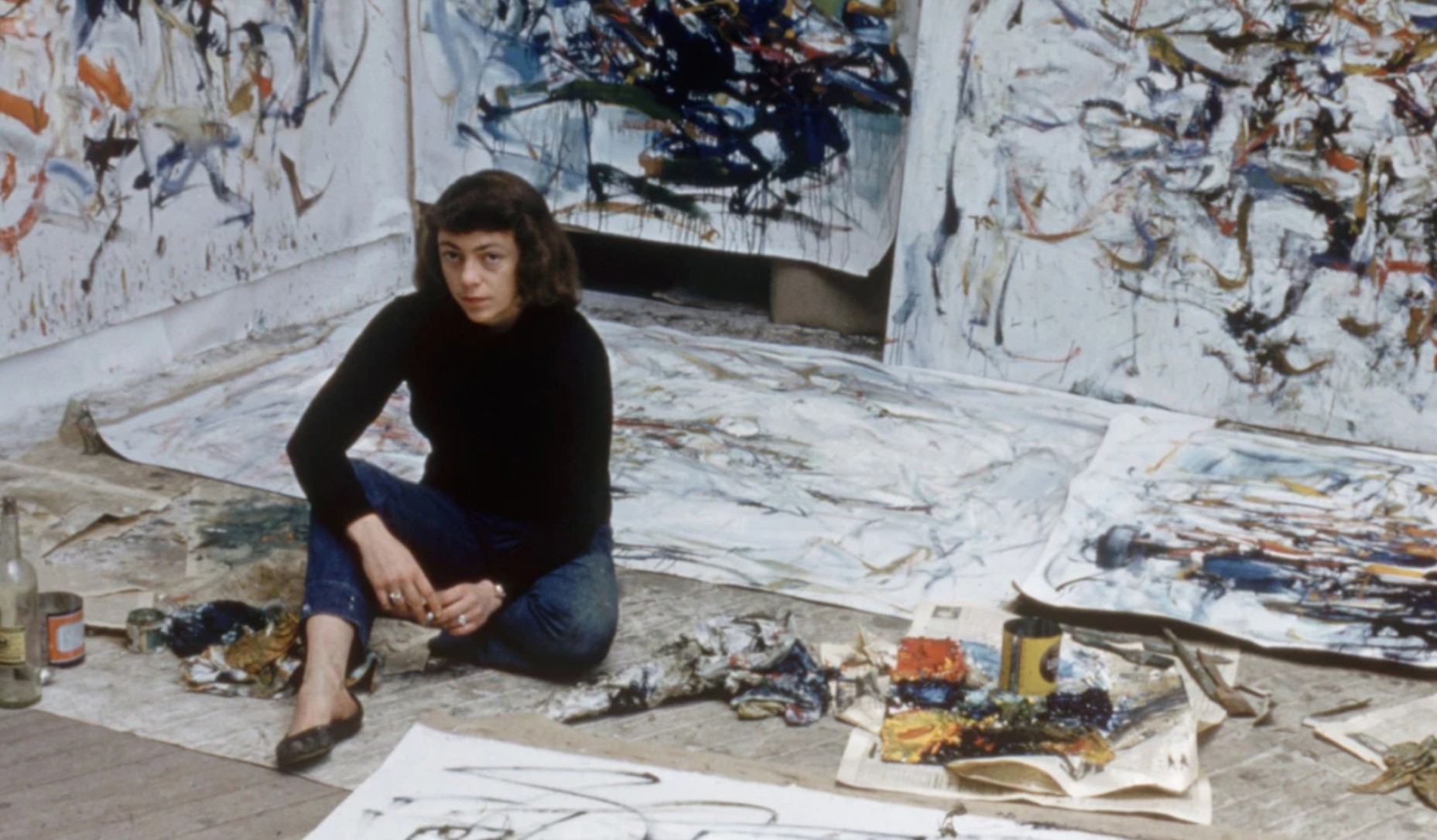
The artist in her Paris studio, 1956. Art © Estate of Joan Mitchell
The present work is likely part of a group of paintings the artist referred to as “14 Stations on Paris Subway,” a series that comprised fourteen 20 by 17 inch canvases exhibited at Stable Gallery in New York in 1965. Untitled was on consignment at the gallery until at least 1966, when it appeared on checklists of works by Mitchell in the gallery’s inventory. Paintings from this series, which reflect Mitchell’s simultaneous interest in the urban and natural worlds, are held in prominent institutions including the Yale University Art Gallery and The Kreeger Museum in Washington, D.C. Throughout the mid-1960s, Mitchell’s paintings were heavily influenced by her personal history, including those the artist referred to as “my black paintings—although there’s no black in any of them.” (the artist quoted in: Exh. Cat., New York, Robert Miller Gallery, Joan Mitchell: “my black paintings…”, October – November 1994, n.p). The emotional weight of her mother’s illness and her father’s death in 1963 can be felt in Untitled, where thick passages of muted color translate personal turmoil into lyrical expression. John Ashbery’s review of the Stable Gallery exhibition succinctly captures the poetic beauty only found in Mitchell’s paintings during these years: “the abrupt materialization of shape strikes a few echoes in other paintings, where calligraphy, sometimes flowing, sometimes congealing, continues patiently, as though in a long letter to someone.” (John Ashbery, “An Expressionist in Paris,” ARTnews, April 1965, p. 63).
The concentrated center of Untitled not only conveys deep emotion but also Mitchell’s refusal to conform to the trend of “all-over compositions.” Mitchell has explained the motivation behind the compositions of forms floating off-center found in the Paris Subway Station works and other paintings of the mid-1960s as one of resolute defiance against the expectations of the art establishment: “Clement Greenberg said there should never be a central image so I decided to make one.” (the artist quoted in: Alex Greenberger, “Joan Mitchell’s Resplendent Paintings: How the Abstract Expressionist Resolved the Unresolvable,” ARTnews, 1 September 2021 (online)). Unlike the spontaneous gestures of some contemporaries, Mitchell’s brushwork was deliberate, full of tension and rhythm. While aligned with Abstract Expressionism, her work is distinctly her own, rooted in memory, sensory experience, and nature. Untitled embodies her fierce dedication to pure expression, combining bravura painting with personal intensity.
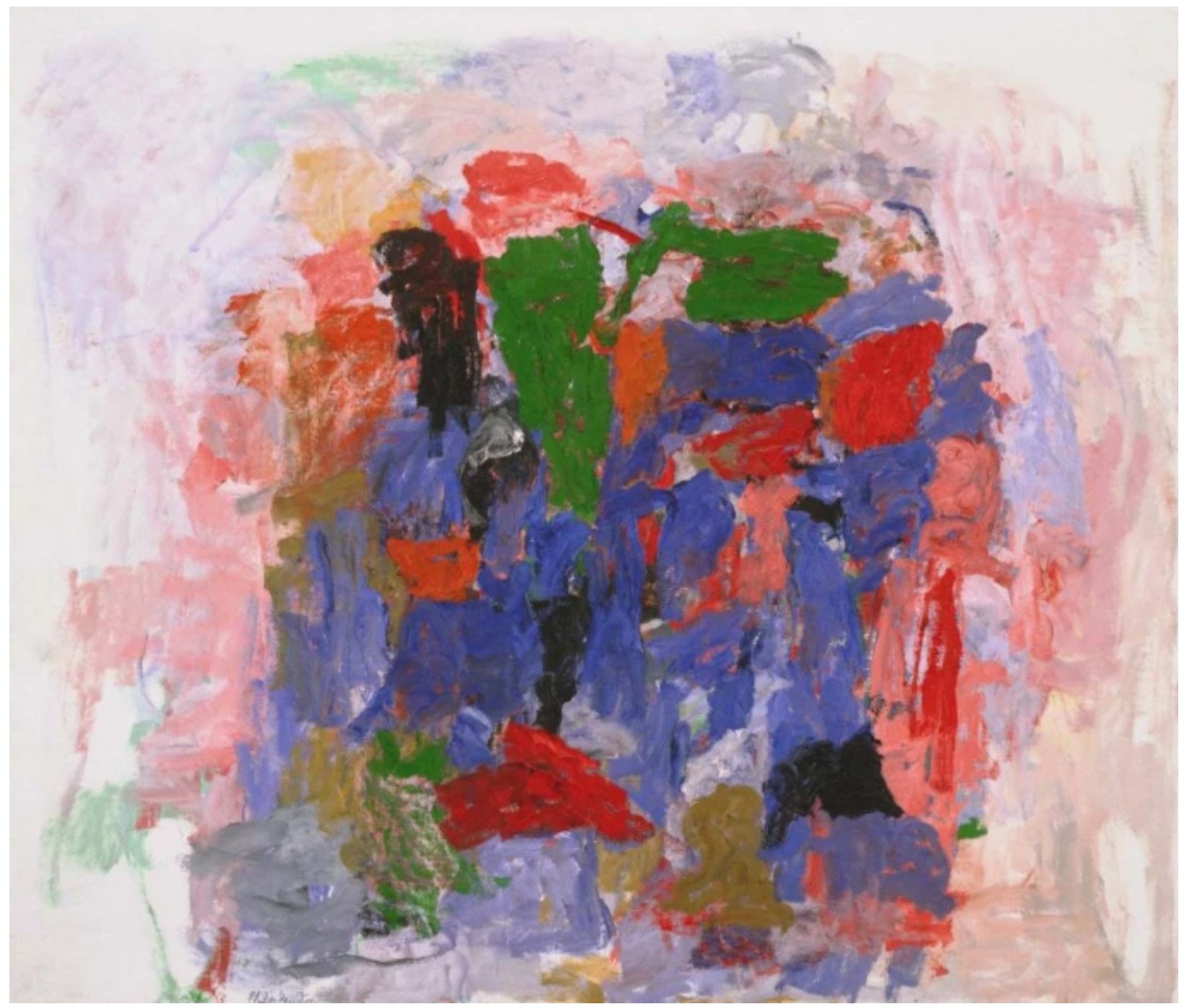
Philip Guston, Native’s Return, 1957. The Phillips Collection, Washington D.C. Art © 2025 The Estate of Philip Guston
At once personal and defiantly abstract, Untitled marks an important step in Mitchell’s artistic evolution. On this intimate canvas, she merges her Abstract Expressionist roots with a European sensibility drawn from Impressionism and Post-Impressionism. After having remained in the collection of renowned patron of the arts Jacquelyn Littlefield for over 50 years before being recently rediscovered, Untitled presents the rare opportunity to acquire a work that not only exemplifies Littlefield’s discerning collecting eye but Mitchell’s enduring legacy of abstraction.
Untitled, circa 1975-1980
Sotheby’s New-York: 26 September 2025
Estimated: USD 400,000 – 600,000
USD 558,800
Untitled | Contemporary Curated | 2025 | Sotheby’s
JOAN MITCHELL (1925 – 1992)
Untitled, circa 1975-1980
Oil on canvas
16×13 inches (40.6 x 33 cm)
Signed (on the stretcher)
Bursting with canary yellow and green, accented by teal, cobalt, and violet, Joan Mitchell’s Untitled exemplifies the artist’s late-career mastery within Abstract Expressionism. Painted in the late 1970s, the composition’s cascading gestures reflect the energy and lyricism that define Mitchell’s work. During this period, she drew profound inspiration from the landscapes of Vétheuil, the village along the Seine where she settled in 1968. Immersed in its gardens, light, and changing seasons, Mitchell translated her surroundings into explosive fields of color and movement. Sunflowers, which she planted in abundance and painted for more than two decades, became one of her most iconic motifs, embodying both vitality and transience. Executed with striking vitality on an intimate scale, the present work channels this same explosive beauty and emotional depth, hallmarks of Mitchell’s celebrated practice.
Working from her estate in Vétheuil, once home to Claude Monet, Joan Mitchell embraced the quiet rhythms of the French countryside, far from the bustle of New York and Paris. Her late paintings capture this sense of stillness and renewal, among her most vibrantly colored and richly textured works, evoking the sensation of gazing into a bed of luminous blooms. While rooted in landscape, her canvases remain resolutely abstract.
“I paint from remembered landscapes that I carry with me—and remembered feelings of them, which of course become transformed. I could certainly never mirror nature. I would more like to paint what it leaves with me.”
Untitled embodies this spirit on an intimate scale, its charged vitality reflecting both memory and nature’s enduring force.
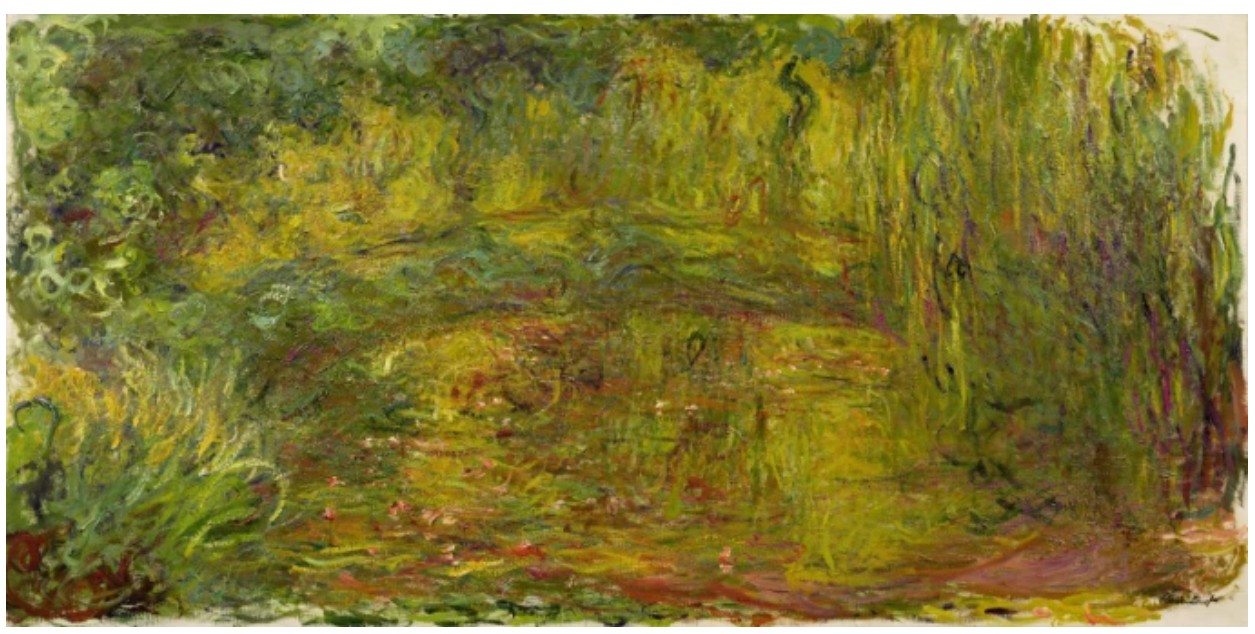
Claude Monet, Le Pont Japonais, 1918. Musée Marmottan Monet, Paris
Building on her deep mastery of color, Mitchell uses bold gestures ranging from thick impasto to luminous fields of paint, continuing her dialogue with the French painting tradition. In Untitled, her vigorous strokes recall Impressionist predecessors such as Paul Cézanne and Claude Monet, who transformed landscape into a new language of abstraction. Like Monet’s Water Lilies, where form dissolves into shimmering light and color, Mitchell breaks down pictorial hierarchy into pure painterly sensation. Yet unlike Monet’s ethereal touch, her brushwork is physical and urgent, charged with the tension of the body and lived experience. Fully aware of the weight of art history, Mitchell redefines Modernist painting through an ongoing exchange between color and depth, emotion and memory. In Untitled, Joan Mitchell brings together vivid color and bold abstraction in a powerful example of her creativity. The painting’s rich hues and energetic composition seem to rise upward, filling the gem-size canvas with intensity and control. Combining painterly force, emotional depth, and gestural clarity, the work reflects Mitchell’s enduring commitment to painting.
Canada II, 1975
Phillips London: 6 March 2025
Estimated: GBP 3,000,000 – 5,000,000
GBP 2,710,000 / USD 3,468,800
Joan Mitchell – Modern & Contemporary A… Lot 9 March 2025 | Phillips
JOAN MITCHELL
Canada II, 1975
Oil on canvas, triptych
Overall 100 x 300.4 cm (39 3/8 x 118 1/4 in.)
Signed ‘Joan Mitchell’ lower right of the third part
Combining stillness and action, tranquility and turbulence, Joan Mitchell’s expansive Canada II unfolds in symphonic waves of rolling, rising brushwork, its highly activated surface stirred by an invisible, elemental energy. Executed in 1975, just one year after Mitchell’s breakthrough solo exhibition at The Whitney Museum of American Art and the year before her first show with prominent art dealer Xavier Fourcade, the work belongs to a period of significant critical and creative growth for the artist, her reputation as one of the great masters of postwar painting secured. Breathtaking in its scale and fierce elegance, this vast triptych is the second of a suite of five numbered works known collectively as her Canada paintings – all held in private collections with the exception of Canada I, now held in the permanent collection of the Solomon R. Guggenheim Museum in New York. Testament to the artist’s deep devotion to the natural world and commitment to capturing its physical sensations, the Canada paintings draw on her memories of bright, bitterly cold winters growing up in the Midwest, and of the various trips taken with her long-term paramour the painter Jean-Paul Riopelle to his homeland. Deeply lyrical and reflective, the quieter palette of Canada II is especially evocative of Mitchell’s unique ability to communicate a polyphonic emotional cadence with precision and exactitude, her pitch-perfect control of color, shape, and gesture all making the ‘painting seem spacious, intuitively balanced, and ephemeral in feeling.’
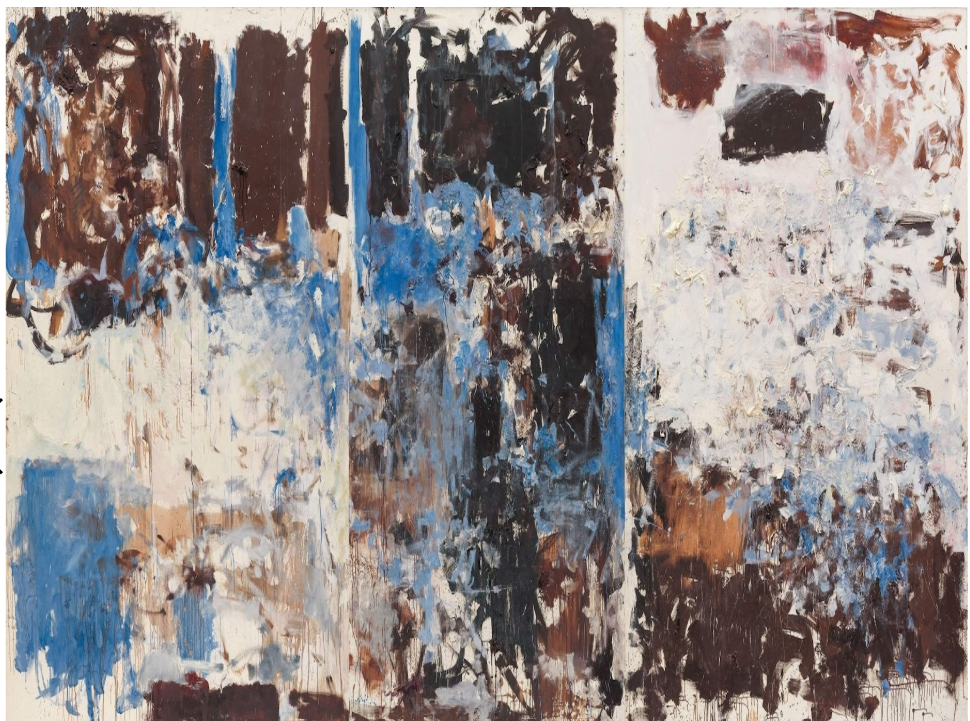
Joan Mitchell, Canada I, 1975, The Solomon R. Guggenheim Museum, New York. Image/Artwork: © Joan Mitchell Estate
Born in Chicago in 1925 and already a published poet at just ten years old, Mitchell’s young life was infused with music, art, and poetry. Although a dermatologist by trade, Mitchell’s father was himself an amateur painter, while her mother Marion Strobel was a well-regarded poet and literary editor. Against this backdrop Mitchell’s early commitment to the idea of becoming an artist seems almost inevitable, although as a highly accomplished athlete she would go on to push her painting practice into uniquely physical territory, her deeply embodied approach to mark-making and gesture seeing her working on a monumental scale that not only rivalled but even surpassed the scale and ambition of the all-over canvases produced by the first generation of Abstract Expressionists. A champion tennis player, diver, and horse rider, the young Mitchell was also a highly accomplished figure skater, even dubbed ‘Figure Skating Queen of the Midwest’ for her competitive successes in that discipline.
“I think of white as winter. Absolutely. Snow. Space. Cold. I think of the Midwest snow […] ice blue shadows.”
Supremely graceful, figure skating is physically highly demanding, involving a complex blend of speed, power, grace, and balance. Trained by retired Swiss ski-jumper Gustave Lussi, Mitchell learned to focus her attention in the core of her body, and to be deliberate and precise in her movements. In terms that foreshadow later discussions of the artist’s remarkably physical relationship to the canvas, one Chicago Tribune reporter made special mention of Mitchell’s finesse ‘floating over the ice of the Arena like a butterfly over a poppy field – making incredibly beautiful swoops.’ii While this deeply embodied sensibility would directly inform her painting practice in later years, her memories of skating were also deeply interwoven with the dramatic Canadian landscape following an intensive training program there that she undertook in the summer of 1940. She would return to Canada many years later with Riopelle, notably early in the autumn of 1956 in the early days of their long and tempestuous relationship, where the two reconciled at the holiday home of Riopelle’s dealer Gilles Corbeil following a particularly fraught period. Mitchell’s biographer Patricia Albers evokes a sense of the complex interaction between Mitchell’s own, internal emotional landscape and the terrain, detailing one episode from this ‘early-winter interlude on the edge of a dense beech, maple, and evergreen forest carpeted with ferns’ where Riopelle constructed a small cave out of ice which especially delighted Mitchell, the two climbing inside and making love in the snow.
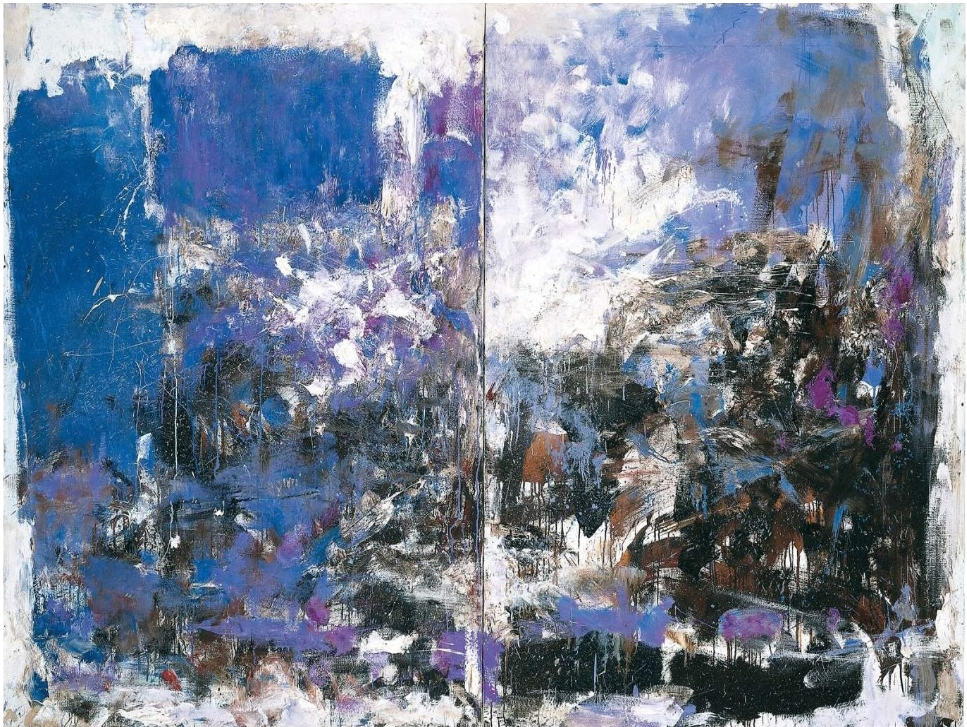
Joan Mitchell, Canada IV, 1975, Private Collection. Image/Artwork: © Joan Mitchell Estate
As Mitchell is often quoted as saying, ‘I paint from remembered landscapes that I carry with me—and remembered feelings of them, which of course become transformed.’ Rather than attempting to convey a physical likeness observed from outside of herself, Mitchell’s landscapes emerge from a more interior space, evoked through her remembrance and summoning of physical sensation such as light, movement, and sound. Bearing particular relevance to the present work and the Canada series more broadly, it was on this 1956 Canadian sojourn that Mitchell completed her magisterial Hemlock, now held in the permanent collection of The Whitney Museum of American Art. Alternating between shorter and longer brushstrokes which activate and agitate the entire surface of the work, the lyrical exchanges between deep, dark greens, pulsing flashes of brighter pigments, and the dominance of more spacious passages of opalescent whites anticipates the concentration of these spatial and tonal relationships in the Canada paintings.
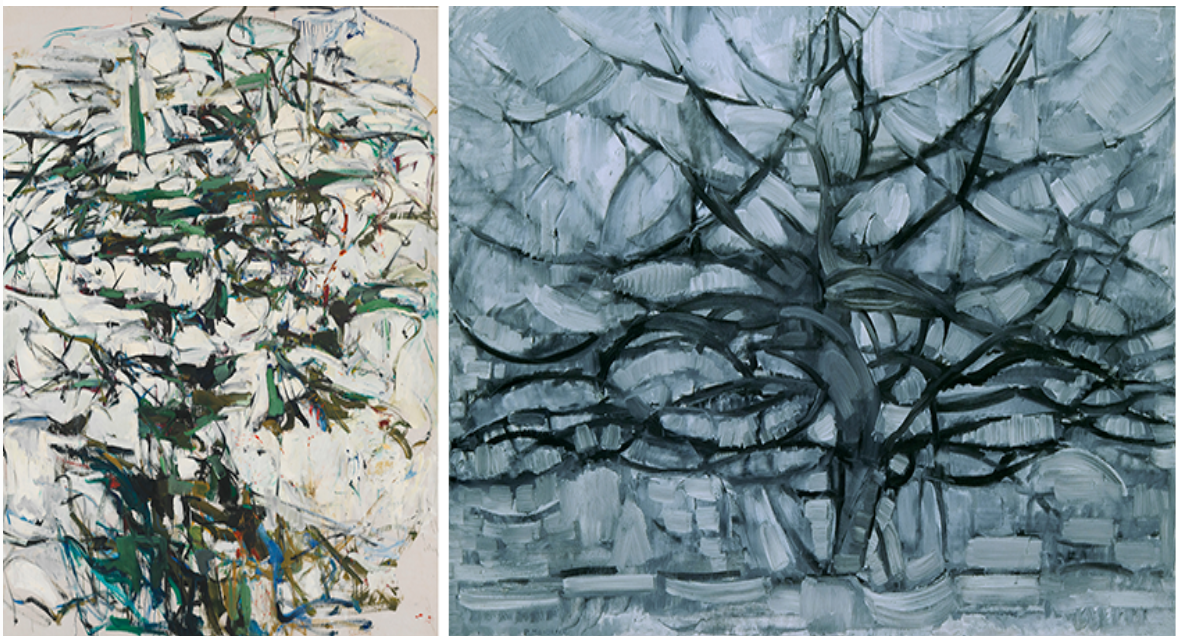
[Left] Joan Mitchell, Hemlock, 1956, The Whitney Museum of American Art, New York. Image: Whitney Museum of American Art / Licensed by Scala, Artwork: © Joan Mitchell Estate
[Right] Piet Mondrian, Grey Tree, 1911, Gemeentemuseum, The Hague. Image: Cameraphoto/Scala, Florence
Borrowing its title from Wallace Stevens’ 1916 poem ‘Domination of Black’, Hemlock visually corresponds to the reeling repetitions of Steven’s lines as inner and outer worlds collide, color, sound, and sensation tumbling together in sonorous, rhythmic unity. Visually recalling the skeletal forms of Piet Mondrian’s early tree paintings, Hemlock retains a strong architectonic structure, expanded and diffused through her gestural and rhythmic brushwork as it builds to its emotional crescendo. Drawing on the strong visual resonances between these works and Mondrian’s trees, curator Paul Schimmel went further still, his 1984 essay ‘The Lost Generation’, privileging Mitchell’s work as epitomising ‘a shift in abstract expressionism from chance, hazard and the uncontrolled freedom of the unconscious to a new direction with breath, freshness, and light within a highly structured armature.’Placing white both beneath and in front of these more dominant, darker colours Mitchell confounds any easy distinction between foreground and background here, a stylistic feature of Mitchell’s work that is radically extended across the wide horizontal expanse of Canada II which – like its sister paintings from this small series – loosen the more rigid structures of these earlier works, appearing more delicately ‘diffuse in their dissolution of forms into a luscious impasto of blues, browns, and whites.’
By the 1970s, Riopelle had started extending his Canadian visits, investing in a home and business ventures in the mountain village of Sainte-Marguerite-du-Lac-Masson. Travelling out to meet him in the autumn of 1974, Mitchell was taciturn, feeling her partner become increasingly emotionally distant. Given the close emotional connections between her lover and this rugged terrain, and her notion of landscape itself as offering her ‘enormous protection from people who were hurting me’, the breathtaking Canada paintings are especially poignant in their high-keyed lyricism. Mitchell in fact gifted one of the works – a stunning, smaller four-panel work dominated by the rhythmic interchanges between ethereal, creamy whites and softly vibrating shapes – to Riopelle, renamed Returned after his rejection of it.
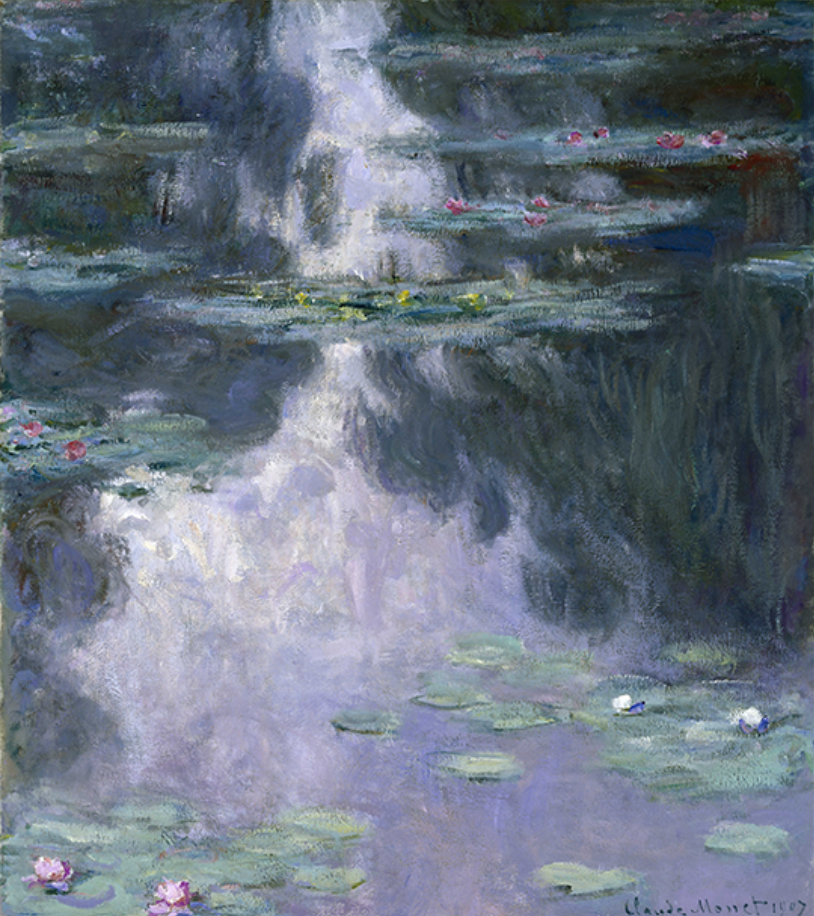
Claude Monet, Nymphéas, 1907, Museum of Fine Arts, Houston
Having spent much of her career living between France and New York, in 1967 Mitchell relocated permanently to Vétheuil, where Impressionist master Claude Monet had lived and painted between 1878 and 1881, a period especially notable for his own attempts to capture the physical sensation and distinct atmospheric effects of winter light and snow. In her enormous, light-filled studio Mitchell lived in close communion with the elements and seasons, creating vast, multi-panelled canvases that place her within a grand tradition of French landscape painting and in especially close dialogue with Monet, whose triumphant late Nymphéas operate in the same complex emotional register as Mitchell’s work from this period, recording their deeply sensitive response to the natural world and translating those sensations in paint.
Untitled, circa 1975
Phillips New-York: 15 May 2024
Estimated: USD 350,000 – 550,000
USD 584,200
Joan Mitchell – Modern & Contemporary A… Lot 138 May 2024 | Phillips
JOAN MITCHELL
Untitled, circa 1975
Oil on canvas, diptych
Left: 13 1/8 x 9 1/2 inches (33.3 x 24.1 cm)
Right: 13 1/8 x 8 3/4 inches (33.3 x 22.2 cm)
Overall: 13 1/8 x 18 3/8 inches (33.3 x 46.7 cm)
While intimately scaled, Joan Mitchell’s Untitled, circa 1975, presents the artist’s monumental mastery of color and gesture. At first viewed as spontaneous and randomly placed, each gestural brushstroke is deliberate, providing a careful examination into the painting process which would come to define Mitchell’s late career. Energetic in its composition, Untitled was painted the year following the artist’s groundbreaking exhibition at the Whitney Museum of American Art, New York. The painting was gifted originally to Dr. André Légaré in Montreal—a friend of Mitchell and her long-time partner Jean-Paul Riopelle, whom she separated from in 1979. During this period Mitchell gifted many small paintings to fellow friends and artists, often referred to by her as “suitcase” paintings, as they were small enough to carry. Moving to Vétheuil, France in 1967, Mitchell would live and work in the French countryside until her death in 1992. Living near Giverny, the village which inspired many of Claude Monet’s greatest compositions, Mitchell became fascinated with her surroundings, using the natural landscape to inform her abstract practice. Never trying to render a landscape exactly as it appears, the artist instead sought to capture the essence of her settings, creating “remembered landscapes” which would flood her oeuvre from this period. Untitled is one such painting, hinting at the landscape through the jewel-toned shades of green, blue, and black splashed across the canvas. Richer, more heavily impastoed strokes occupy the lower margin of the composition, seeming to refer to the ground. Moving upwards, the pigment becomes less densely applied, alluding to the air or sky as in a traditional landscape.
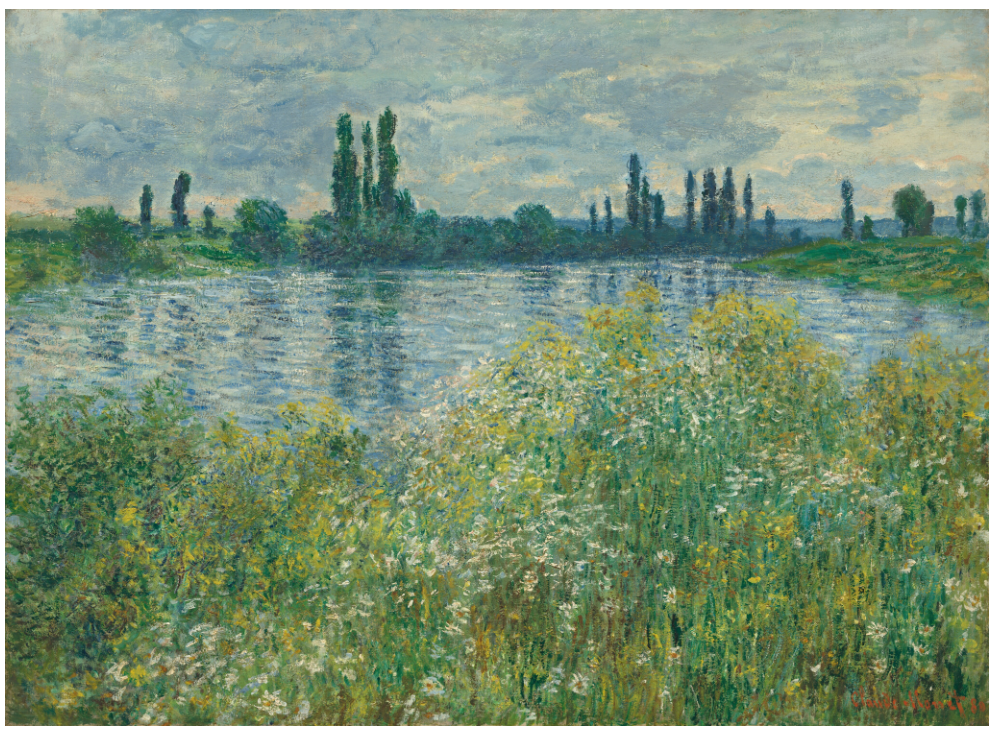
Claude Monet, Banks of the Seine, Vétheuil, 1880, National Gallery of Art, Washington, D.C.
Image: National Gallery of Art, Washington, D.C., Chester Dale Collection, 1963.10.177
The expansiveness of the French countryside around her saw Mitchell’s works play out across multiple surfaces, including diptychs, like the present work, triptychs, and polyptychs. This experimentation into the multiplicity of canvases gave way to a dialogue between movement and pigment which would persist throughout the remainder of her practice. Here, the brushstrokes spread evenly across both canvases, not stopping at the junction between the two and moving fluidly between each. As if extending past the edges of the painting, it seems as if the brushstrokes have no end. They seem to go on infinitely, well beyond the intimately sized composition, suggesting that the landscape continues on with no bounds. Indeed, Untitled suggests that its owner can carry Mitchell’s infinite, remembered landscapes with them for eternity, as the artist had intended.
La Plage, 1973
Sotheby’s New-York: 14 May 2024
Estimated: USD 1,000,000 – 1,500,000
USD 1,451,500
La Plage | Contemporary Day Auction | 2024 | Sotheby’s (sothebys.com)
JOAN MITCHELL (1925 – 1992)
La Plage, 1973
Oil on canvas, in 2 parts
Overall: 29 1/2 x 59 1/4 inches (74.9 x 150.5 cm)


Executed in 1973, La Plage emerged in the years following Mitchell’s permanent relocation to Vétheuil, a small village northwest of Paris overlooking the Seine. The countryside presented Mitchell with a proximity to nature that filled her with inspiration. The home at Vétheuil was surrounded by an expansive garden in which Mitchell planted sunflowers and other vibrant flora. Undoubtedly, Mitchell was never more in step with her predecessors – Monet, Van Gogh, and Cézanne principal among them – and her full immersion in her surroundings brought an inimitable sense of joy to the paintings she executed between late 1967 and the mid-1970s. This change in setting in Mitchell’s life infused her painting with a newfound appreciation for light and color. Across the expansive canvas, Mitchell’s uninhibited gestural vocabulary orchestrates a nuanced dialogue between color and contour, technique and abandon, intellect, and emotion. Speaking to the kinship Mitchell felt with the French Impressionists, La Plage is executed in a palette suggesting the juxtaposition of land and water. As Rosalind Krauss describes: “In this painting one finds a small-scale and tender evocation of those feelings about both landscape and painting that were the combined discoveries of Impressionism. Which is to say that there is a rehearsal of those feelings of the magical that are elicited by the paintmark’s capacity to declare and then transcend its own inert physicality. The daub of burnt umber that can be seen transforming itself into a patch of shadow or a rough outcropping of stone has about it an almost endless power to astonish us with its continual performance of metamorphosis. This quality of magic is at the same time daunted by a recognition that nature totally outdistances one’s capacities to describe or imitate it: the scale and luminosity of nature being essentially inimitable. This series of recognitions, promoted by the best of landscape painting, leaves one both trapped in and consoled by an apprehension of the limitations of consciousness.” (Rosalind Krauss, “Painting Becomes Cyclorama,” Artforum, vol. 12, issue 10, June 1974, pp. 50 – 52)

LEFT: CLAUDE MONET, ÉTRETAT: THE BEACH AND THE FALAISE D’AMONT, 1885. ART INSTUTE OF CHICAGO.
RIGHT: MAURICE PREDERGAST, BEACH SCENE, C. 1910-1913. BARNES FOUNDATION, PHILADELPHIA.
Though geographically distant from her New York contemporaries and even the Parisian art scene, Mitchell’s work always stood in vivid dialogue with the artistic cutting edge. Her familiarity with the work of Willem de Kooning, Franz Kline, and Philip Guston is apparent in her bold brushwork while her compositional rigor echoes Robert Motherwell’s Elegies to the Spanish Republic. In the present work, an embrace of the white void paired with deliberately erratic and geometric forms is particularly redolent of Cy Twombly: Mitchell’s own command of rectangles and trapezoid-like shapes echoes Twombly’s use of similar forms. As the embodiment of beauty and of the psyche, these forms exude an extremely reduced architectural language that is not grounded in the materiality of form but in psychological potential. Similar to Twombly, who himself had emigrated away from New York to seek refuge in the by-gone antique opulence of Rome, Mitchell developed a strong predilection towards landscape. Rather than expressing her emotions in figurative forms, Mitchell’s embrace of the void and whiteness echoes the dictum of French avant-garde poet Stéphane Mallarmé: “To paint, not the thing, but the effect it provides” (Georges Jean-Aubry and Henri Mondor, Eds., Stéphane Mallarmé – Œuvres completes, Paris 1945, p. 307). Just as Twombly had embraced a visual kind of Mallarméan silence, Mitchell started to engage with the white ground in a similarly evocative way. Superseding mere background, whiteness in the present work becomes an intensely enlivened part of the composition and acts as a powerful contrast to the brilliance and forcefulness of Mitchell’s use of color. As with the most quintessential examples of Mitchell’s celebrated corpus, La Plage possesses a visual authority that summons the viewer to imagine the physicality of Mitchell’s creative process while experiencing the intoxicating expressiveness of its outcome. Consistent with Mitchell’s most celebrated work of the 1970s, the mesmerizing mixture of thin, emotive swathes of paint and thicker, more spontaneous brushstrokes exhibited in the present work suggests a corresponding progression towards greater emotional depth on the part of the artist. It is in the mesmerizing coalescence of these diverse applications that La Plage derives its ultimate painterly presence.
Untitled, circa 1973
Sotheby’s New-York: 13 May 2024
Estimated: USD 1,000,000 – 1,500,000
USD 2,380,000
Untitled | Contemporary Evening Auction | 2024 | Sotheby’s
JOAN MITCHELL (1925 – 1992)
Untitled, circa 1973
Oil on canvas
31 1/2 x 15 3/4 inches (80×40 cm)
Resplendent in rich hues of azure and marigold, Untitled by Joan Mitchell is an exceptional embodiment of the impassioned brushwork that defines Mitchell’s celebrated body of work. Painted circa 1973 – just one year after her first major museum solo exhibition, My Five Years in the Country: An Exhibition of Forty-nine Paintings by Joan Mitchell at the Everson Museum of Art, Syracuse – Untitled is consistent with the best paintings from this period and reflects the artist’s evolving painterly language on an intimate scale. The present work was painted following Mitchell’s move to the French village of Vétheuil, which marked one of the most pivotal, longstanding influences to her career. Speaking to the kinship Mitchell felt with the French Impressionists, Untitled is executed in a palette suggesting the juxtaposition of land and water, florals and foliage, and harnesses the sensory imagery of her longtime influencers Claude Monet and Paul Cézanne. Heralding a personal aesthetic that blends Mitchell’s outer surroundings and inner emotions, the present work exudes the lyrical, unrestrained spirit at the heart of Mitchell’s celebrated artistic vision.
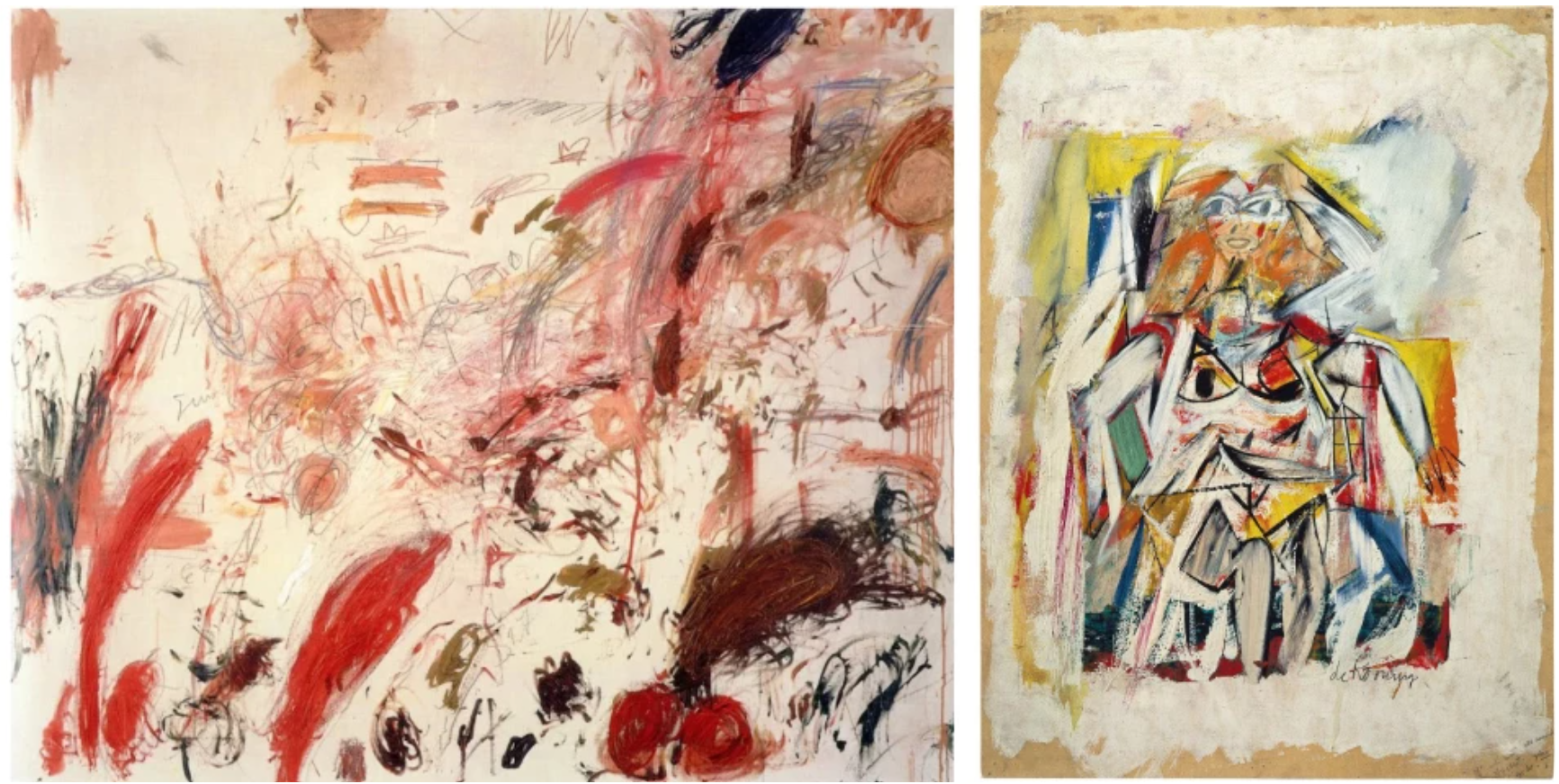
Left: Cy Twombly, Ferragosto IV, 1961. Private Collection. Art © Cy Twombly Foundation.
Right: WILLEM DE KOONING, WOMAN, CA. 1952. THE METROPOLITAN MUSEUM OF ART, NEW YORK. ART © 2022 THE WILLEM DE KOONING FOUNDATION / ARTISTS RIGHTS SOCIETY (ARS), NEW YORK
In Untitled, Mitchell’s vibrant color palette parallels the same caliber of energy communicated through her ebullient paint application. Working in a manner that is both spontaneous and yet assured, Mitchell builds up the composition with layers of dandelion yellow, creamy ivory, and lapis lazuli, creating ridges and valleys of thick impasto that make manifest her active, painterly hand. While resolutely abstract, the present composition has a clear affinity to nature as her lush forms evoke swathes of clear blue sky, golden fields, and pools of sunlight. One can make out the soft forms of a floral blossom, perhaps a peony or a rose, articulated in shades of vermillion in the lower left, while bursts of yellow and ochre bear an affinity to sunflowers, a recurrent motif in her paintings.
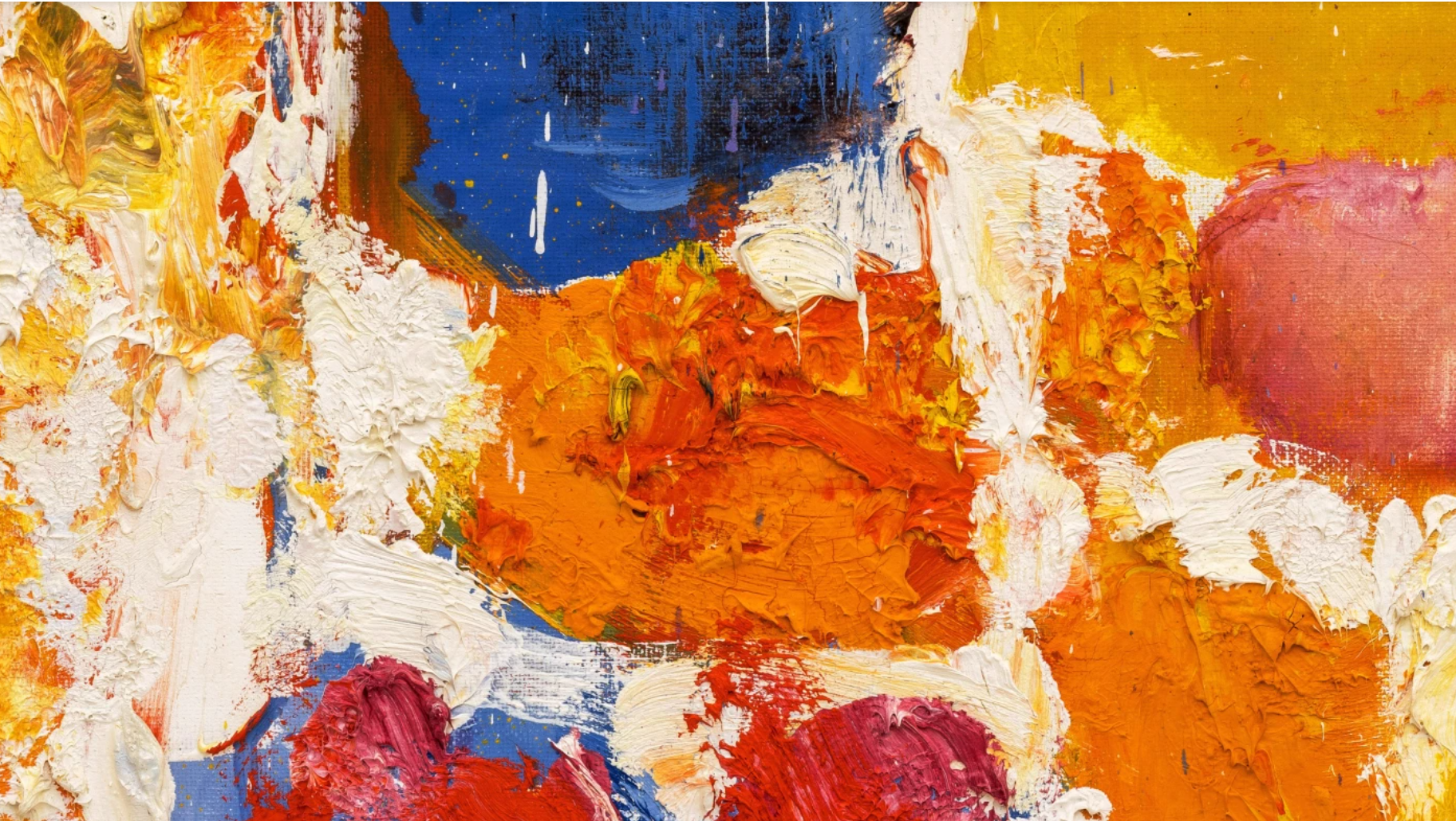
In 1967, Mitchell relocated to a two-acre estate in Vétheuil, a small village northwest of Paris overlooking the Seine. While always an admirer of French impressionists and post-impressionists, her paintings from this period began to exhibit even more so than before the same sumptuousness of palette and exquisite awareness of light, color, and air articulated in the captivating en plein air paintings of her predecessors such as Claude Monet, who painted the landscapes of Vétheuil years before. Luxuriously built up with impasto, paintings such as the present Untitled powerfully invoke Monet’s late renderings of his rose garden at Giverny.
“I don’t set out to achieve a specific thing, perhaps to catch a motion or to catch a feeling. Call it layer painting, gestural painting, easel painting or whatever you want. I paint oil on canvas – without an easel… I try to eliminate clichés, extraneous material. I try to make it exact. My painting is not an allegory or a story. It is more of a poem.”
However, while Monet remained anchored to landscape and rooted in place in his compositions, Mitchell takes the composition one step further towards abstraction. Mitchell has spoken of her intention to depict the emotional spirit of the landscapes that she observes.
“I carry my landscapes around inside me…I could certainly never mirror nature. I would like more to paint what it leaves me with.”
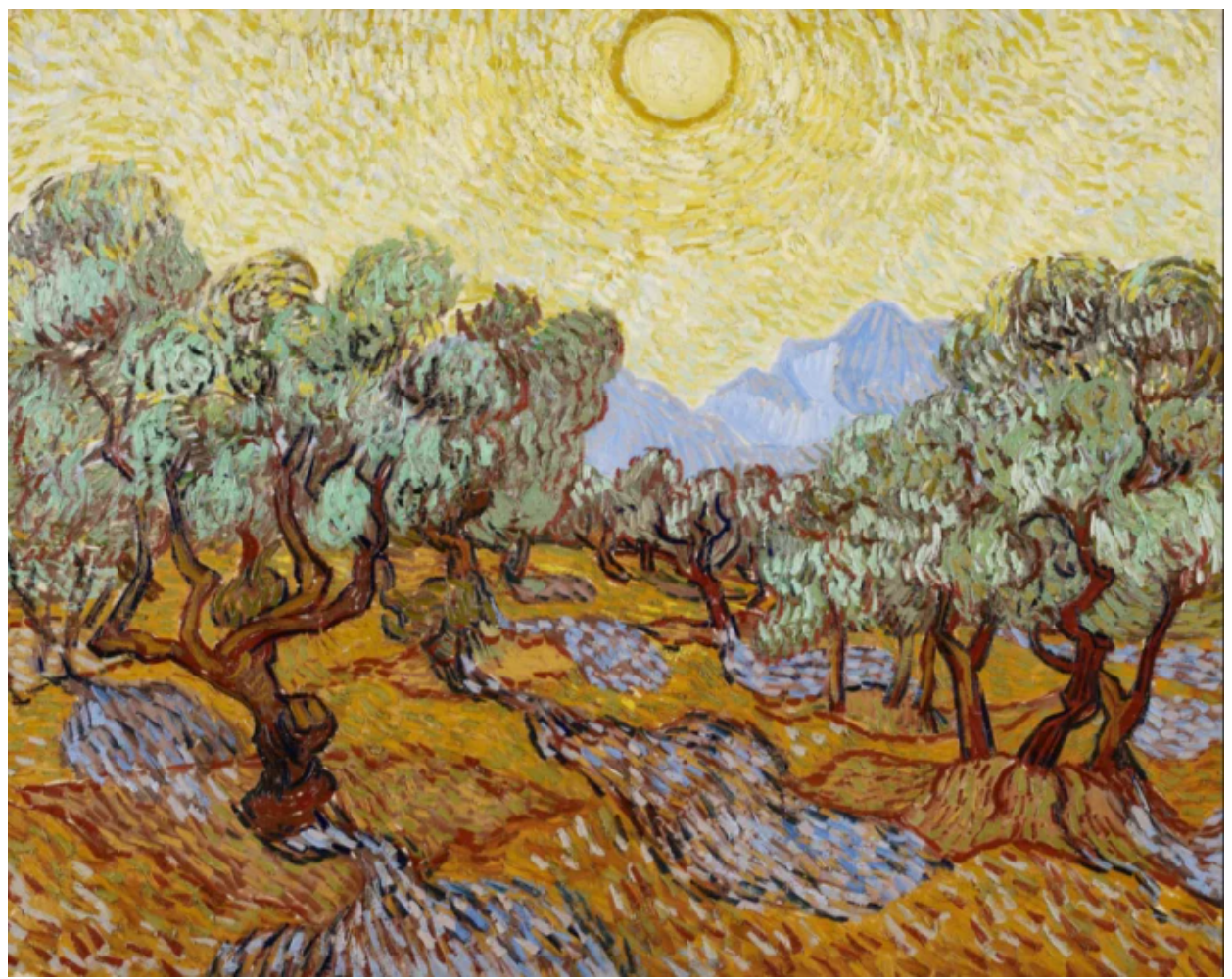
Left: Vincent van Gogh, Olive Trees, 1889. Image © Minneapolis Institute of Art / The William Hood Dunwoody Fund / Bridgeman Images
A breathtaking example of Mitchell’s mature output, Untitled stands as a beacon of lush chromatic vibrancy and visually arresting abstraction, serving as a triumphant testament to the unrivaled beauty, intimacy and profound emotion that define the very best of Mitchell’s artistic production. Joyously brilliant, the present work combines the visual languages of abstraction and landscape through the lyricism and rhythmicality of her lines and forms. Anchored by Mitchell’s masterful use of emphatic brushwork, organic forms of goldenrod, sapphire, and tangerine play off each other in a synesthetic symphony.
Crow Hill, 1966
Christie’s New-York: 16 May 2024
Estimated: USD 7,000,000 – 10,000,000
PASSED
JOAN MITCHELL (1925-1992), Crow Hill | Christie’s (christies.com)

JOAN MITCHELL (1925-1992)
Crow Hill, 1966
Oil on canvas
76 3/4 x 51 inches (195 x 129.5 cm)
Signed ‘Mitchell’ (on the reverse)
Joan Mitchell’s Crow Hill is a virtuoso painting that showcases the artist’s unique ability to choreograph lavish applications of paint in the service of evoking the most powerful human emotions. Painted in 1966, a period regarded as being one of the most seminal for the artist, the painting showcases Mitchell’s contribution to the post-war canon: combining her highly skillful brushwork, her advanced use of color, and her unrivalled understanding of compositional space. Evoking feelings of both love and empathy, Crow Hill expresses the sense of liberation that she felt in her new home in France, but also the crushing sense of loss following the death of two people close to her. These competing emotions would lay the groundwork for some of her most important paintings of the next two decades, as she began to move away from the aggressively Abstract Expressionist brushwork that dominated her canvases of the 1950s and began to evolve a wider range of more sophisticated gestures that allowed her work to develop a distinctive lyrical quality.
The surface of Crow Hill sets out a highly sophisticated arrangement of gestural elements, thick slabs of impasto, delicate trails of thinned pigment, dense pools of color, and pockets of white space all tussle for attention. The upper half of the composition is comprised of a complex lattice of interwoven painterly elements. This muscular patchwork of azure, cobalt, and Persian blues interspersed with myrtle and forest greens, and adorned with flashes of royal purple and ruby red, displays Mitchell’s skills as one of Abstract Expressionism’s pre-eminent colorists. Never overwhelming, yet always deliberate, her painterly energy manifests itself superbly across the surface of the large-scale canvas. As the eye explores, the density of the composition begins to loosen and areas of white pigment punctuate and open up the surface. The abundant brushstrokes that dominate the upper portion of the canvas become more articulated, their weighty volume dissolving into elegant lines of effervescent drips, surrounded by swathes of powdery white pigment.

Vincent Van Gogh, Wheatfield with Crows, 1890. Van Gogh Museum, Amsterdam. Photo: Art Resource, New York.
Mitchell is well-known for adopting enigmatic titles for her paintings and Crow Hill is no exception. While no direct meaning has been recorded, inferences have been drawn to the symbolic meaning of the eponymous bird in the painting’s title. In van Gogh’s famous Wheatfield with Crows (1890, Van Gogh Museum, Amsterdam) the artist’s vigorous brushwork depicts a murder of crows, often regarded as a harbinger of death, shown as a series of black forms sent against an ominous dark blue sky. Yet, although Mitchell was hugely inspired by natural forms, she was quick to remind people that she was resolutely not a referential painter.
“I paint from remembered landscapes that I carry with me, and [from] remembered feelings of them, which of course become transformed. I would rather leave nature to itself. I would like more to paint what it leaves me with.”

Joan Mitchell in her studio, 1962. Photo: BIOT Jean-Pierre / Paris Match via Getty Images. Artwork: © Estate of Joan Mitchell.

Untitled, 1974
Sotheby’s New-York: 19 May 2023
Estimated: USD 1,000,000 – 1,500,000
USD 1,079,500
Untitled | Contemporary Day Auction | 2023 | Sotheby’s (sothebys.com)
JOAN MITCHELL (1925 – 1992)
Untitled, 1974
Oil on canvas
Diameter: 31 1/4 inches (79.4 cm)
Exuberant ribbons of color leap and vault with unbridled energy across the surface of Joan Mitchell’s Untitled from 1974, a rare example of a tondo from the artist’s diverse oeuvre that reveals a veritable tour de force of painterly mark-making. Executed the same year as Mitchell’s major mid-career retrospective at the Whitney Museum in New York, the present work represents a pinnacle in Mitchell’s unique brand of Abstract Expressionism at an apex of her critical success. Captivatingly atmospheric, the present work brings together the visual languages of abstraction and landscape in a maelstrom of pigment framed within a circular canvas. Painted at an early market peak in Mitchell’s long and varied career, characterized by critically lauded and commercially successful gallery shows, the present work endures as a beacon of chromatic and textural expression, played out throughout the canvas with an entrancing sense of intimacy and urgency that is singular to the artist. Through this rhythmic and instinctual extension of the artist’s gesture, Untitled conveys the power of memory, experience, and sensory engagement with nature, themes that are at the essential core of Mitchell’s practice. Having remained in the collection of the same Chicago family since its initial acquisition the year it was executed, this rarefied treasure has never before appeared at auction. The work has been exhibited twice in Mitchell’s home town of Chicago, first at the Arts Club of Chicago in an exhibition of Recent Paintings in 1984, and then at the Art Institute of Chicago where she earned both her BFA and MFA.
Untitled, 1966-1967
Christie’s Hong-Kong: 30 November 2022
Estimated: HKD 80,000,000 – 120,000,000
HKD 83,350,000 / USD 10,679,051
JOAN MITCHELL (1925-1992), Untitled | Christie’s (christies.com)
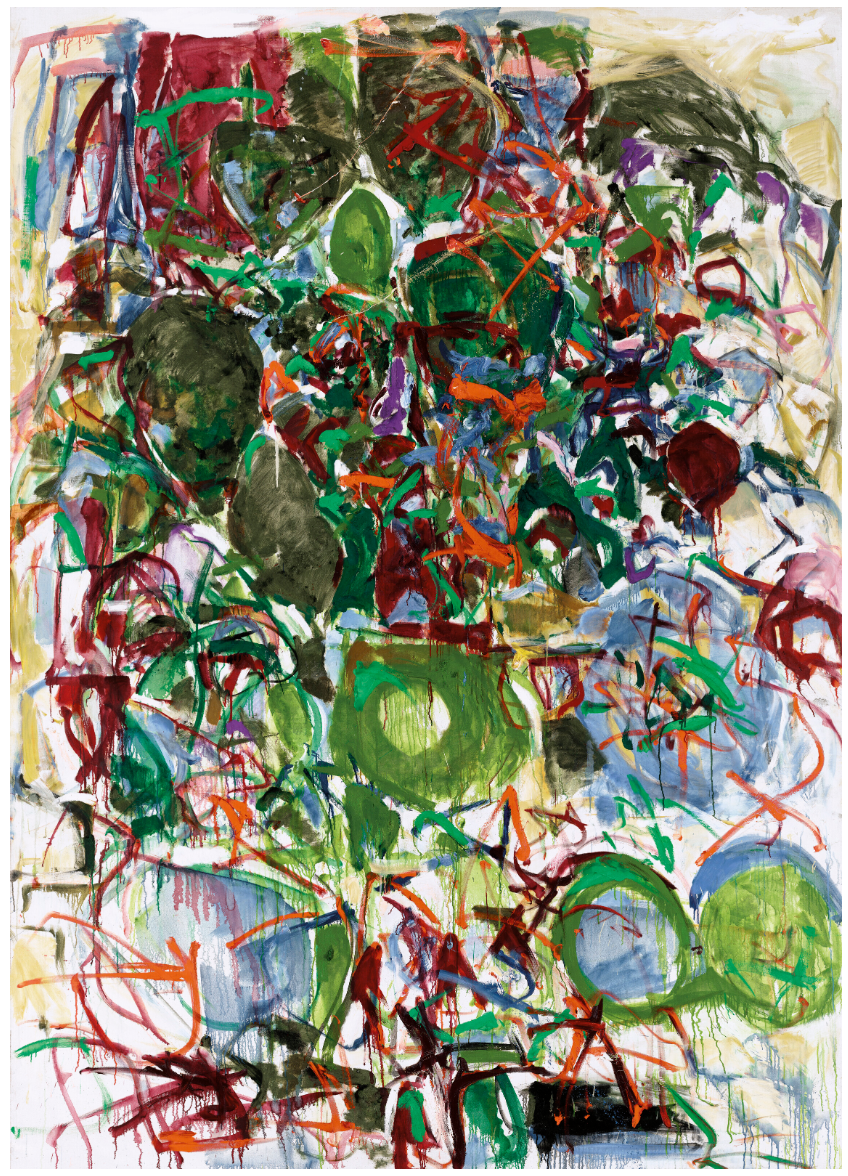
JOAN MITCHELL (1925-1992)
Untitled, 1966-1967
Oil on canvas
109 1/2 x 78 3/8 inches (278×199 cm)
A lush, radiant effusion of colour and light almost three metres high, Untitled (1966-1967) is a masterpiece from a pivotal moment in Joan Mitchell’s practice. Orbs of grassy green and aqueous blue bloom and burst across the monumental canvas, entangled with skeins of orange, purple, burgundy and sunlit yellow. Mitchell’s mark-making condenses towards the picture’s upper edge: its dense thickets of impasto cascade into open tendrils and dripping, dilute washes in the lower reaches, where brushstrokes breathe and bubble amid flashes of silvery space. The painting is alive with organic, leafy abundance, presaging the pastoral beauty of Vétheuil, a rural idyll on the banks of the Seine, where Mitchell would purchase an estate in 1967. Claude Monet had lived and painted on the same property shortly before his own move to nearby Giverny in 1883. Like Mitchell’s closely related paintings Mon Paysage (1967, Fondation Maeght, Saint-Paul-de-Vence) and My Landscape II (1967, Smithsonian American Art Museum, Washington, D.C.), the present work sees her signature abstract style—developed between New York and Paris in the 1950s and 1960s—unfurling in formal exuberance and brilliant colour as she stakes her claim on the land that would become her home.
By 1966, Mitchell already had a ground-breaking painterly career behind her. She had arrived in New York in 1950 after graduating from the School of the Art Institute of Chicago, and swiftly made a name for herself in the city’s Abstract Expressionist art world. Her large, calligraphic canvases—their gestural grandeur achieved with an athleticism honed in her youth as a competitive ice-skater—established a vocabulary of ‘abstracted landscape’, capturing in paint internal topographies of emotion, place and memory. She was hugely admired by fellow downtown painters such as Willem de Kooning, Franz Kline and Phillip Guston, and held her own as a rare female presence in this macho milieu. She drank and debated with them at the Cedar Tavern and The Club, the members-only East Eighth Street salon where the artists met for weekly discussions. Fiercely independent, however, Mitchell refused to be defined by the New York School or any other aesthetic label. Looking beyond America, she saw herself as part of a long lineage of painters that reached back from Henri Matisse to Claude Monet, Paul Cézanne and Vincent van Gogh in nineteenth-century France.
From 1955 Mitchell travelled frequently from New York to Paris, partly to spend time with the French painter Jean-Paul Riopelle. She settled there in 1959, establishing a studio on the rue Frémicourt. Fuelled by new experiences of place, friendship and romance, her paintings’ scale and complexity blossomed during this period. Summer sailing trips through the Mediterranean with Riopelle provided further inspiration for expansive compositions of fluid brushwork and bold, saturated hue. By the mid-1960s, tired of Paris and feeling sidelined by the rise of Pop and Nouveau Réalisme on the local art scene, she began to look for a new home in the countryside, whose grounds she would share with Riopelle. In the spring of 1967, she acquired a magnificent house in Vétheuil, a small village about forty miles out from the capital. Mitchell’s mother had died in March 1966, lessening her ties to the United States, and leaving her an inheritance which made the purchase possible. Known as La Tour—The Tower—the house had a magnificent direct view of the Seine, and was set amid a fertile, sun-drenched landscape that would inform Mitchell’s work for decades to come.
The present work was completed before Mitchell found La Tour—indeed, she didn’t paint there until late in 1968. Alongside works such as Mon Paysage, however, it was made during her search for a country home, and is richly evocative of water, sky and vegetation, seeming to anticipate the growth and freedom that would come with her new rural environment. Until now, her paintings had often featured dark, concentrated clusters centred in white space: in these new works, the previously massed colours diffuse, float and unfold throughout the picture, the white backdrop flashing among them like sunlight through branches. They do not refer specifically to Vétheuil but to a wider, synesthetic vision of place, memory, hope and feeling that Mitchell held within herself. As she told Irving Sandler in 1957, ‘I carry my landscapes around with me’ (J. Mitchell quoted in I. Sandler, ‘Mitchell Paints a Picture’, ARTnews, October 1957, p. 45).
The consonances between Mitchell’s work and Monet’s—presently the subject of a major comparative exhibition at the Fondation Louis Vuitton, Paris, on view through February 2023—are irresistible. The great Impressionist had stayed at La Tour itself in the late 1870s, painting a number of views of Vétheuil; in 1883 he moved to Giverny, a few miles up the river, where he would paint his celebrated series of Nymphéas or water-lilies. Monet was concerned with visible reality, and built his famous lily-pond specifically to create a subject to paint, the mirror of its surface reflecting the ephemeral, ever-changing effects of light and colour in his garden. His figurative impressions, however, would prove inspirational to many artists of the Abstract Expressionist generation. As early as the 1950s the Nymphéas were identified—by both the French artist André Masson and the American critic Clement Greenberg—as anticipating the ‘all-over’ paintings of the New York School. With their shallow depth of field, luminous colour and ethereal, almost dematerialised form, they dissolved the traditional distinction between figure and ground to make the canvas an arena for pure chromatic and gestural expression. Taken as a primordial, alluvial zone, their watery surfaces parallel the avant-garde search for a tabula rasa or new beginning for art. The streams and strokes of Mitchell’s mid-1960s works hang together in just such an open, limpid space; indeed, they sometimes appear to directly echo the ribbons of weeping willow that ripple across many of the Nymphéas.
Mitchell herself alternately embraced and denied Monet’s legacy. While admitting to admiring some of his late works, she never claimed any kinship with her predecessor. Her forms and colours were her own. ‘In the morning,’ she said of Vétheuil, ‘especially very early, it’s purple; Monet showed that already … Me, when I go out in the morning it’s purple, I am not copying Monet’ (J. Mitchell in conversation with S. Pagé and B. Parent, May 1982, in Joan Mitchell: choix de peintures 1970-1982, exh. cat. ARC Musée d’Art Moderne de la Ville de Paris, Paris 1982, n.p.). Discussing her favourite artists, she was more likely to mention Matisse or van Gogh, the influence of both of whom—by turns joyful and weightless, and saturated and intensely worked—can be felt in the variegated splendour of the present work. Unlike Monet’s, her immediate surroundings were only part of a cocktail of impulses that drove her paintings, with places refracted through time playing an equally important role. Mitchell’s blues, for example, often referred not to the French countryside but to her distant memories of Lake Michigan in Chicago. ‘The permanence of certain colours: blue, yellow, orange, goes back to my childhood’, she said. ‘… I lived in Chicago and for me blue is the lake. Yellow comes from here [Vétheuil] … It is rapeseed, sunflowers … one sees a lot of yellow in the country. Purple, too’ (J. Mitchell, quoted in ibid.).
Mitchell was unambiguous about her subject matter, and approached her work deliberately. Physically immersed in the vast space of the canvas, she built her compositions into dynamic, coherent wholes, attending carefully to conversations between colours and the weight of each mark. ‘I decide what I am going to do from a distance’, she told Sandler. ‘The freedom in my work is quite controlled. I don’t close my eyes and hope for the best’ (J. Mitchell quoted in I. Sandler, ibid., p. 45). While the present painting vibrates with suggestive colour and shape—bulbs and rushes, stems and blossoms, sunlit skies and shimmering, reflective pools—it is this dynamic, balanced orchestration that gives it its vivacious clarity and power. Peter Schjeldahl, writing in 1972, noted that the appeal of Mitchell’s works ‘in no way depends on a sentimental evocation of place. Above all, they are “New York paintings” in the classic, fifties sense, grandly assertive and full of excited life. Even at their most lyrical or when verging on an elegiac mood, they never attempt to “charm” the viewer; they win one’s assent by main force’ (P. Schjeldahl, ‘Joan Mitchell: To Obscurity And Back’, The New York Times, 30 April 1972, section D, p.23). Transcending Impressionism, Abstract Expressionism and everything in between, Mitchell’s unique way of seeing brings the painting to electrifying life. She has poured herself and the past and present places of her world into the picture, which seems to bloom and blaze before our eyes: what emerges, in all its ever-changing beauty, is a force of nature.
Untitled, circa 1969
Christie’s New-York: 12 May 2022
Estimated: USD 7,000,000 – 10,000,000
USD 8,977,500
JOAN MITCHELL (1925-1992), Untitled | Christie’s (christies.com)
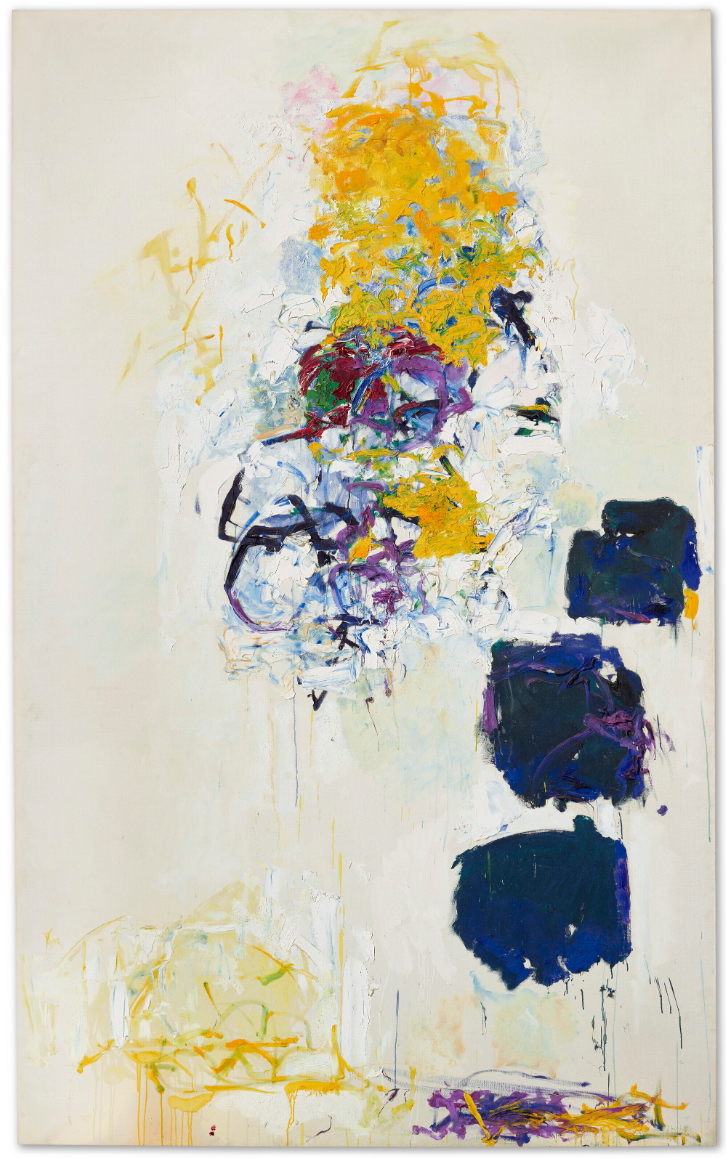
JOAN MITCHELL (1925-1992)
Untitled, circa 1969
Oil on canvas
102×63 inches (259.1 x 160 cm)
Signed ‘J. Mitchell’ (lower right)
Signed again ‘Mitchell’ (on the reverse)
Exquisitely balanced and saturated with brilliant color, Joan Mitchell’s Untitled is suffused with the sun-drenched climate of the French countryside, as she began to settle into her new home at La Tour and its daily rhythms and routines. A monumental painting measuring over eight-and-a-half feet tall, Untitled demonstrates the increase in scale facilitated by the tall doors of her new studio there, along with a burgeoning mastery of new techniques. Spontaneous passages of yellow ochre are tackled with the palette knife to create sparkling passages that hover and float, accentuated with darker areas of cobalt-blue and aubergine. Rivulets of thinned-down pigment traverse down the painting’s surface, and wide passages of soft, white light impart a palpable inner glow. Executed during the same period as her celebrated Sunflower paintings, Untitled is one of her most ethereal, light-filled paintings to date.
From intricate areas of high-peaked impasto to singular strokes of the palette-knife that verge on calligraphy to tender streams of pure liquid, Untitled illustrates the incredible dexterity with which Mitchell wielded her brush at this time. She engaged the full sweep of her body to create the towering canvas, in which pigment is applied in all directions, sweeping out over the surface of the canvas like plant tendrils searching out the light. One can feel the force with which she dragged her knife across the surface, but also the slow and careful construction of the wide, white background that might at first appear empty, but is actually comprised of a multitude of various pale, white hues. In 1968, Mitchell moved from her studio on the rue Frémicourt in the 15th arrondissement of Paris to a sprawling, pastoral estate in Vétheuil known as “La Tour.” Situated about forty miles northwest of Paris, Vétheuil was a small village made famous by Claude Monet, who once lived at La Tour before moving to Giverny. Indeed, Vétheuil connected the artist to the great French modernists and the rich heritage of their paintings—not only Claude Monet, but also Paul Cézanne, Henri Matisse and Vincent van Gogh. It also proved to be a wonderful escape from the rather toxic art scene she had felt a decade earlier in New York; the same feelings had recently been creeping into Paris, especially as the student protests gripped the city in the summer of 1968. With its rolling hills and abundant, flowering gardens and ancient trees, Vétheuil came to be a place of peace, contentment and inspiration.
Pastel / Works on Paper
Untitled, 1977
Property from the Deutsche Bank Collection
Christie’s New-York: 21 May 2026
Estimated: USD 150,000 – 200,000
USD 520,700
WORK ON PAPER
JOAN MITCHELL (1925-1992), Untitled | Christie’s
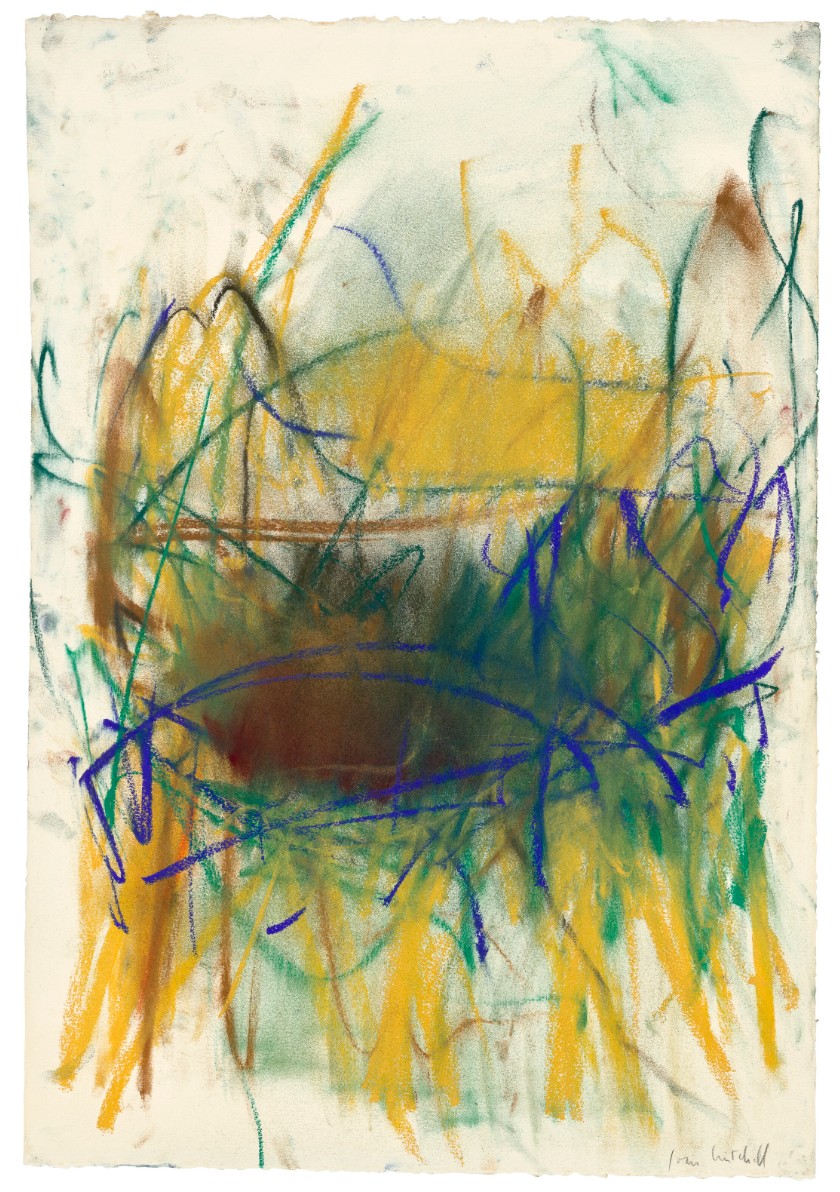
JOAN MITCHELL (1925-1992)
Untitled, 1977
Pastel on paper
22-1/2 x 15-1/2 inches (56.1 x 38.3 cm)
Signed ‘Joan Mitchell’ (lower right)
Tilleul, 1978
Property from a Private French Collection
Sotheby’s New-York: 15 May 2026
Estimated: USD 250,000 – 350,000
USD 281,600
WORK ON PAPER
Joan Mitchell | Tilleul | Contemporary Day Auction | 2026 | Sotheby’s
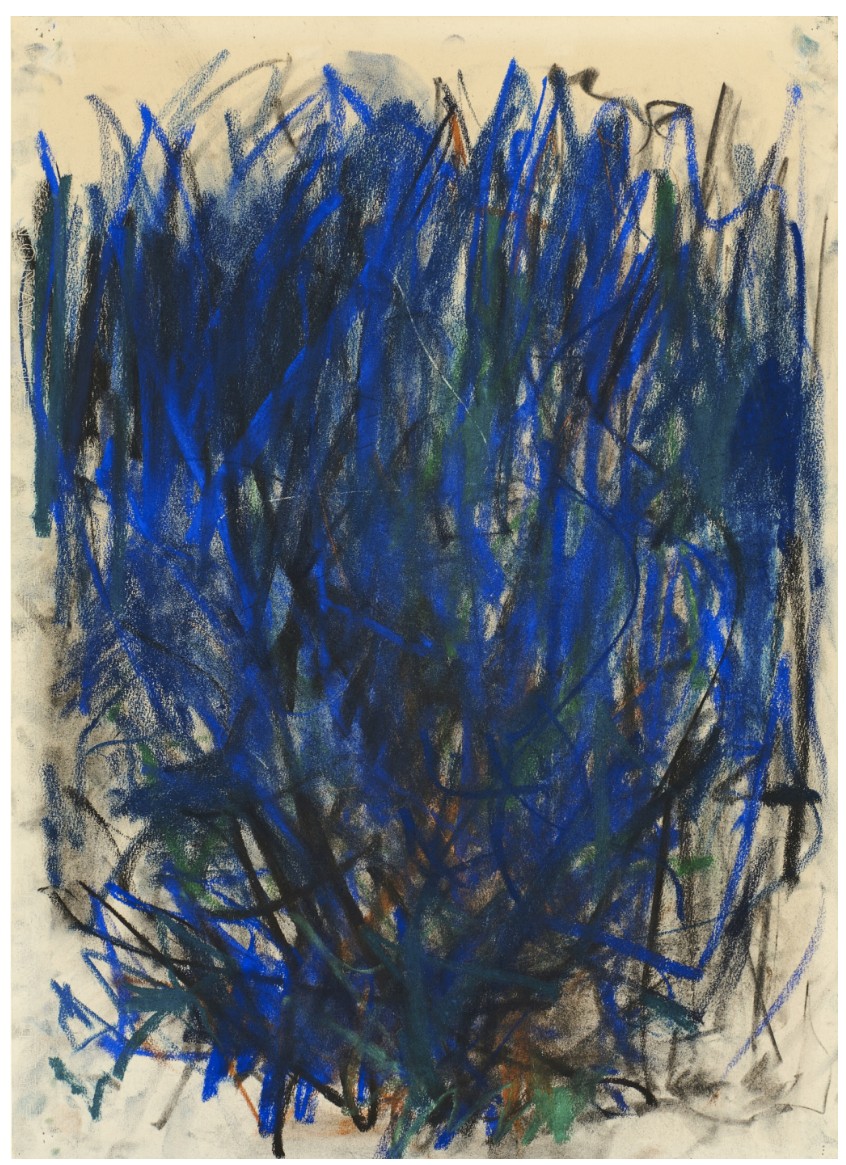
JOAN MITCHELL (1925 – 1992)
Tilleul, 1978
Pastel on paper
19-1/8 x 13-3/4 inches (48.6 x 34.9 cm)
Pastel, 1991
Sotheby’s New-York: 16 May 2025
Estimated: USD 300,000 – 500,000
USD 698,500
Pastel | Contemporary Day Auction | 2025 | Sotheby’s
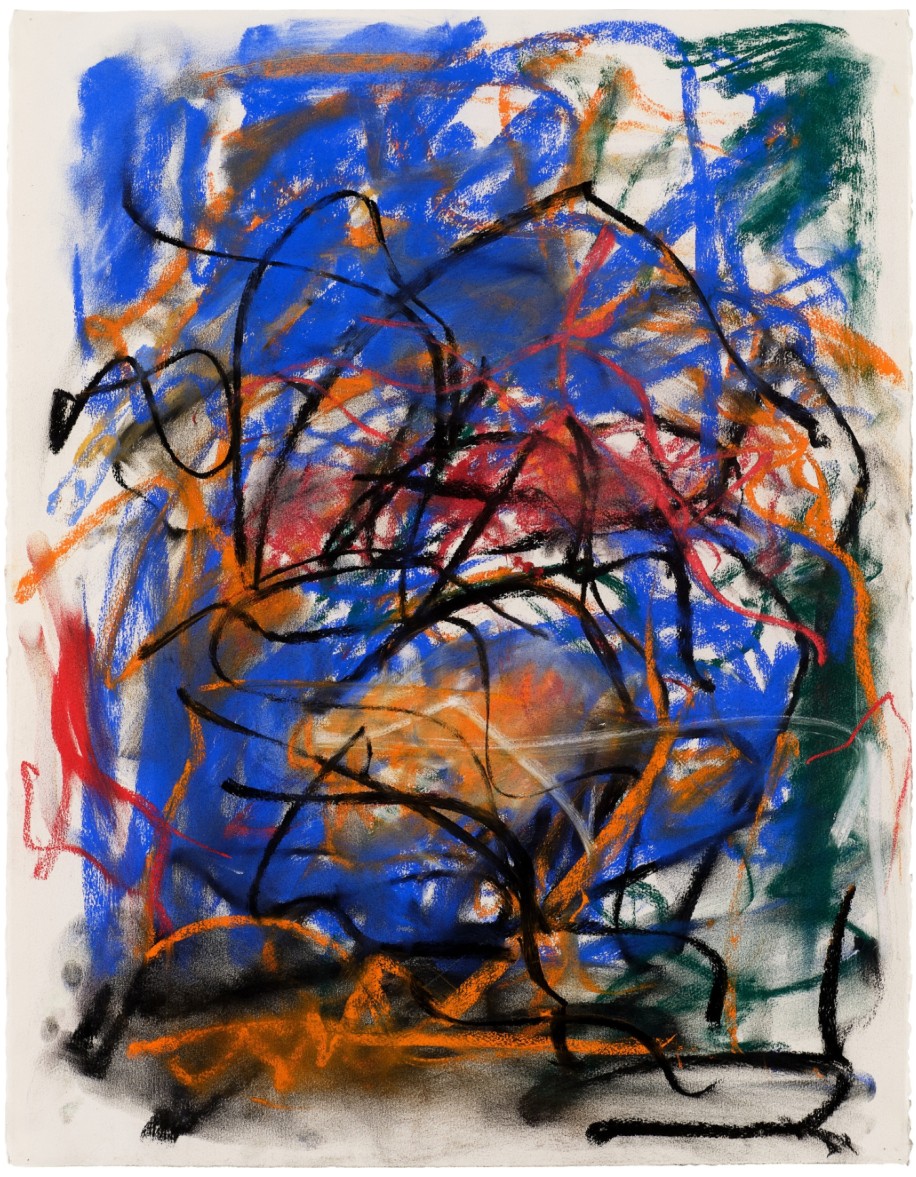
JOAN MITCHELL (1925 – 1992)
Pastel, 1991
Pastel on paper
30 x 23 1/2 inches (76.2 x 59.7 cm)
Executed in the final years of Joan Mitchell’s life, Pastel from 1991 stands among the most urgent and unbridled expressions of her mature style, a period characterized by luminous color, surging gesture, and a fearless embrace of emotional intensity. One of the most lauded and widely discussed series of works on paper in Mitchell’s career, her pastels offer a distinctive lens through which to appreciate her painterly instincts in a medium that is at once spontaneous and deliberate. Here, vibrant skeins of orange, blue, green, and red tangle across the surface in a rhythmic, chromatic cascade, intersected by sweeping arcs of black and moments of white illumination that give the composition breath. The work is a masterclass in compression and release, echoing the vitality of her large-scale paintings in a more intimate and immediate register.
Having remained in the collection of Joanne Von Blon for nearly three decades, Pastel also represents a deep and influential friendship in Mitchell’s life. Joanne von Blon first met Joan Mitchell in the 1940s at Smith College, where they lived together in Park House. Though Mitchell would leave Smith for the School of the Art Institute of Chicago after just two years, the two women remained close, forging a lifelong connection rooted in literature, music, humor, and a love of the natural world. In their correspondence, they often wrote in code or shared private jokes—Joan affectionately referred to Joanne as “Witsie,” a nod to her maiden name, Witmer, and “Black Belt,” referencing her friend’s second-degree black belt in karate. Von Blon acquired several works directly from the artist, many of which she generously donated to the Walker Art Center in Minneapolis. Thus, the present work is at once an exquisite example of the very best within the artist’s oeuvre, and also reflects the history of an important personal and professional relationship.
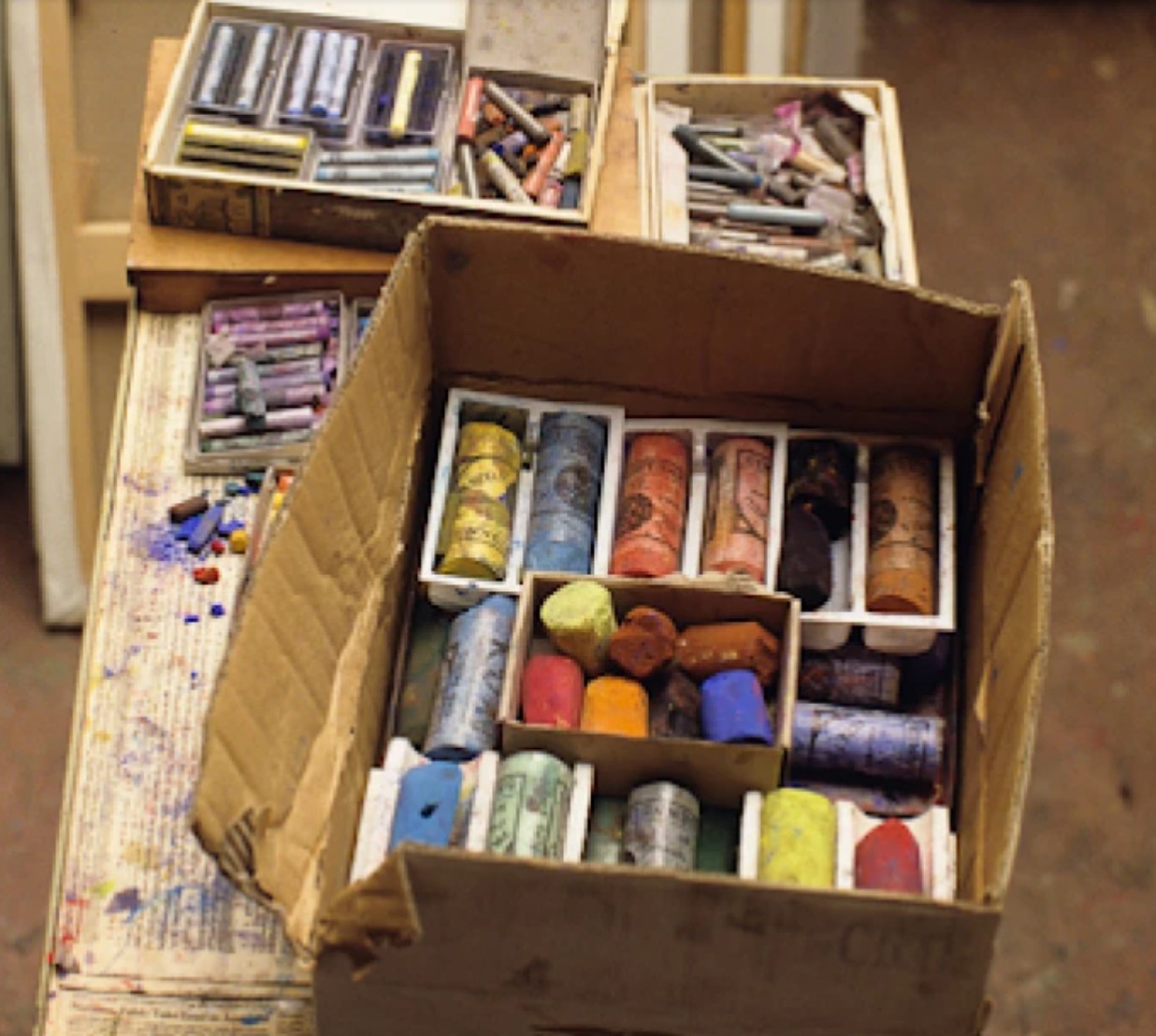
Pastels in Joan Mitchell’s Vétheuil studio. Photo © David Seidner. Image © Estate of Joan Mitchell.
Mitchell began working in pastel in the mid-1970s, but the medium reached new expressive heights in the 1990s, when her health and energy fluctuated but her artistic vision sharpened. Unlike oil paint, pastel permitted a speed and immediacy that could match her mental tempo without compromise. In this sense, the pastels of 1991 and 1992 can be seen not merely as an extension of her painting practice but as a concentrated zone of invention in their own right. In Pastel, Mitchell does not build up a surface so much as ignite it. The paper becomes a site of combustion, pulsing with energy. As Katy Siegel and Sarah Roberts note, “the pastels reveal a body in motion, fully immersed in the physical act of drawing, improvising within a framework that feels deeply musical.” Indeed, in the present work, color appears to unfold like a jazz improvisation—explosive yet controlled, discordant yet harmonic—each line responding to the last with instinctual clarity. The central blaze of cobalt and fiery orange lends the work an atmospheric depth, conjuring sensations of both interiority and landscape, abstraction and memory. While Mitchell long resisted interpretation of her work as autobiographical, she also acknowledged the emotional charge of her mark-making. I paint from remembered landscapes that I carry with me — and remembered feelings of them, which of course become transformed.” (Joan Mitchell quoted in: Exh. Cat., San Francisco Museum of Modern Art (and traveling), Joan Mitchell, 2021, p. 285).
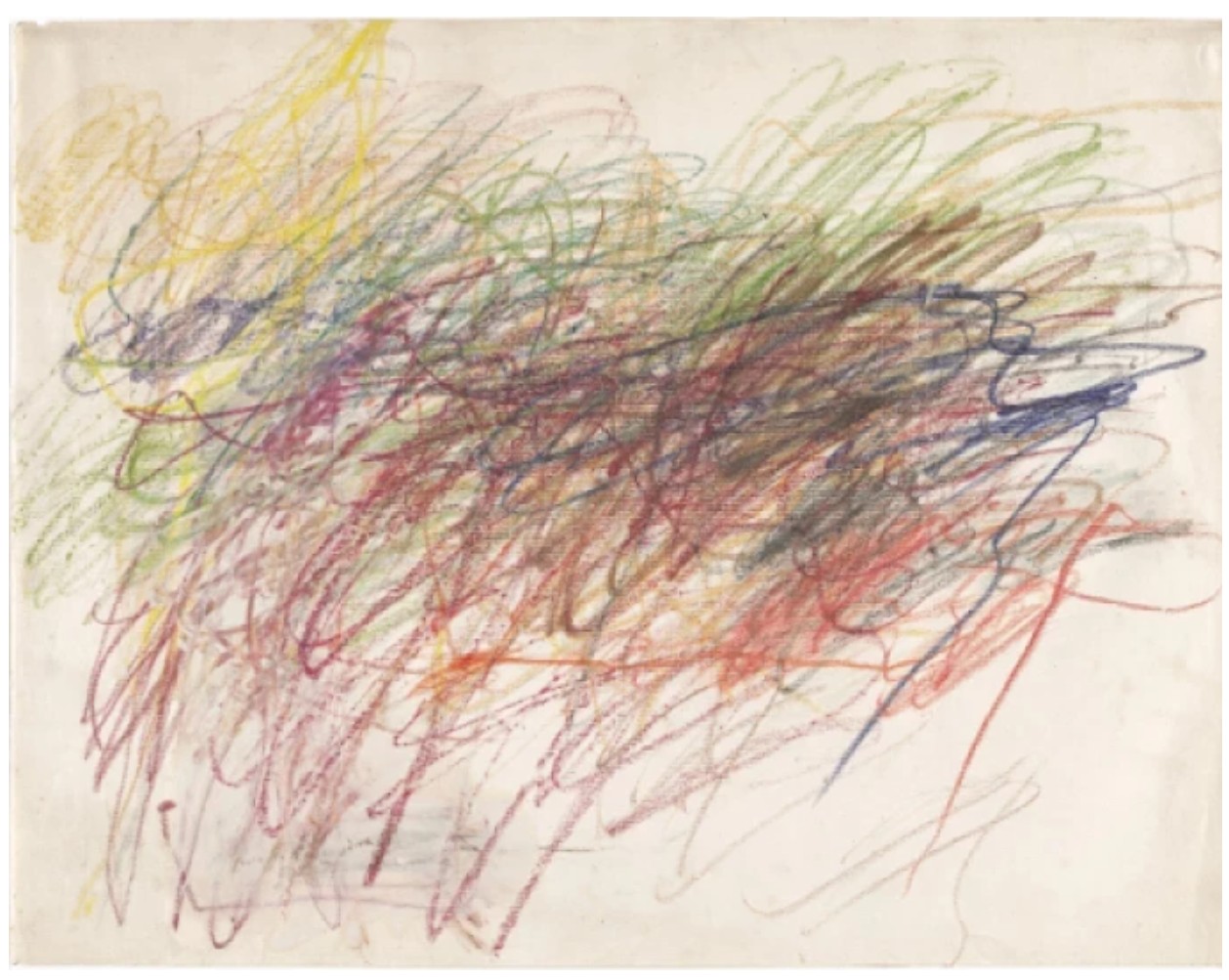
Cy Twombly, Untitled, 1952, Museum of Modern Art, New York © 2023 Cy Twombly Foundation.
The present work emerges from the collection of Joanne Von Blon, a devoted friend and early champion of Mitchell’s work, whose long-standing support of the arts in Minneapolis and beyond shaped institutions and artists alike. Mitchell and Von Blon met as undergraduates at Smith College, where they shared a deep affinity for literature, music, and a wry sense of humor. Their friendship endured for decades, grounded in mutual respect and a fierce love of art and nature. Mitchell affectionately called her “Witsie,” a nod to Von Blon’s maiden name, and often wrote to her in poetic, image-rich language, drawing on shared memories and private associations. As a collector, Von Blon was deeply attuned to the emotional cadence of Mitchell’s work, and this Pastel, acquired shortly after Mitchell’s death in 1992, testifies to the enduring resonance of that bond. Seen in this light, Pastel becomes not only a radiant example of Mitchell’s late drawing practice but also a deeply personal artifact—alive with the energy of their lifelong friendship. Its vibrancy speaks not to decline but to persistence, not to an end but to a final crescendo. With its lyrical surges of color and calligraphic intensity, Pastel echoes that poetic impulse, distilled through years of looking, feeling, and remembering. It is a work that bristles with life—testament to Mitchell’s extraordinary capacity to translate vision into gesture, memory into mark.
Pastel, 1991
Sotheby’s New-York: 26 February 2025
Estimated: USD 200,000 – 300,000
USD 571,500
Pastel | Contemporary Curated | 2025 | Sotheby’s
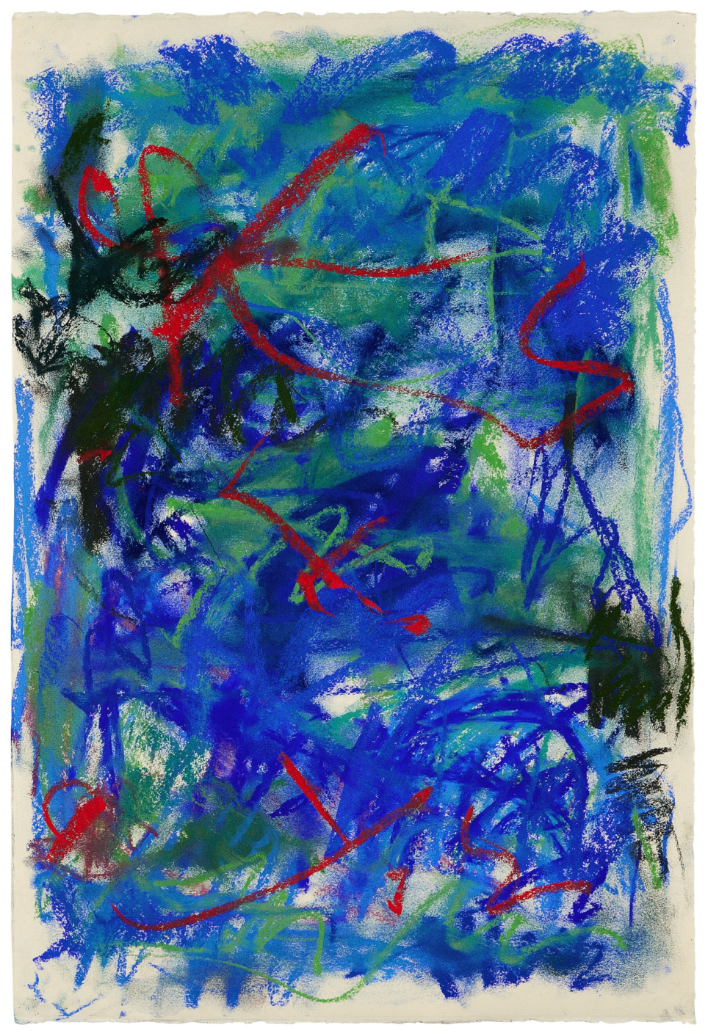
JOAN MITCHELL (1925 – 1992)
Pastel, 1991
Pastel on paper
22 7/8 x 15 3/8 inches (58.1 x 39.1 cm)
Executed in 1991, the penultimate years of Joan Mitchell’s prolific career, Pastel captures the expressive capabilities of the artist’s works on paper. Bursting with exuberant energy, Joan Mitchell’s Pastel encapsulates her mastery of abstraction through the interplay of vibrant cerulean blues, offset by hints of scarlet reds and oscillating shades of green. The work exudes dynamism, with the pastel medium lending itself to a softness that contrasts with the boldness of her gestures. The immediacy of her hand is preserved in every stroke, showcasing Mitchell’s unique ability to marry the fragility of pastel with the robust expressiveness of her artistic vision.
The surface of Pastel reveals Mitchell’s nuanced handling of the medium. Heavier deposits of pigment create saturated areas of intense color, while lighter touches blend hues with remarkable transparency, creating a dynamic tension between density and airiness. The strokes blur and coalesce, transforming into a tapestry of energy and emotion. In its complexity, the work captures the essence of Mitchell’s creative philosophy.
“I don’t set out to achieve a specific thing, perhaps to catch a motion or to catch a feeling… I try to eliminate clichés, extraneous material. I try to make it exact. My painting is not an allegory or a story. It is more of a poem.”
At the heart of Pastel is the color blue, a central motif in Mitchell’s oeuvre that embodies her profound emotional and physical connection to the natural world. Klaus Kertess aptly described this recurring element: “As always in her works, there are many blues: the blues of the sky, the blues of the water, the blues of water, the blues of flowers, the blues of the blues. The memory of a dying sunflower can be blue” (Klaus Kertess, Joan Mitchell, Pastel, New York, 1992, n.p.). In the present work, Mitchell’s blues dominate the composition, varying in tone and texture to evoke depth, movement, and emotion. For Mitchell, blue transcended its role as a color, becoming a powerful vehicle for expressing the interplay between memory, nature, and feeling—a constant thread that runs through her celebrated body of work.
Lithographs
WORK IN PROGRESS
Sunflowers III, 1992
Phillips New-York: 22 October 2024
Estimated: USD 60,000 – 80,000
USD 88,900
Joan Mitchell – Editions & Works on … Lot 30 October 2024 | Phillips
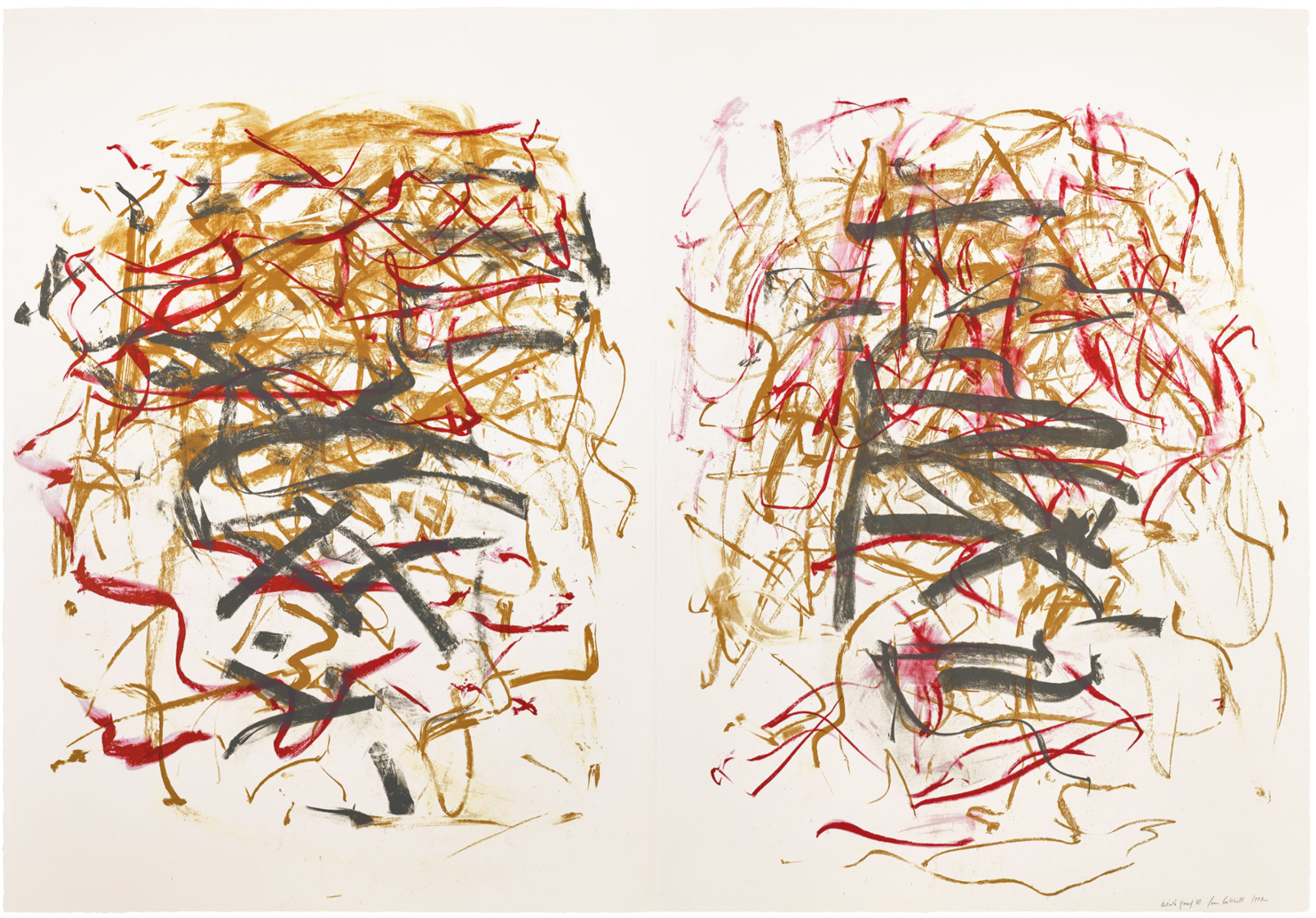
JOAN MITCHELL
Sunflowers III, 1992
Monumental lithograph in colors on two sheets of Rives BFK paper
Overall: 57 1/4 x 82 1/2 inches (145.4 x 209.6 cm)
Signed, dated and numbered ‘artist’s proof VI’ in pencil (one of 8 artist’s proofs, the edition was 34)
Published by Tyler Graphics, Ltd., Mount Kisco, New York (with their blindstamp)
“Sunflowers are something I feel very intensely. They look so wonderful when young and they are so very moving when they are dying. I don’t like fields of sunflowers. I like them alone or, of course, painted by Van Gogh.”
Belonging to the post-war, New York school of action painters, Joan Mitchell was an accomplished printmaker and made editions throughout almost every stage of her career until her death. However, it was with Tyler Graphics’ founder Kenneth Tyler in the early 1990s that Mitchell embarked on the most innovative and ambitious prints of her oeuvre. The pair first collaborated in the early 1980s, when Tyler persuaded Mitchell that her paintings could be translated beautifully into lithography. When describing her approach to lithography, Tyler remarked,
“Mitchell’s explosive mark-making meets the ethereal quality of paper, creating prints that are at once free-flowing while contained within the margins.”
—Kenneth Tyler
A printshop known for innovation, Tyler Graphics allowed Mitchell to work in more colors than ever before, creating richly colored works that rivaled the more subdued hues of the prints she had produced in years prior. Tyler was flexible, and Mitchell precise: “Ken,” she said to him in the studio, “I want to try a color like the color of dying sunflowers.” When discussing their time together working on the Sunflowers series Ken remarked that, “Her studies of Matisse, van Gogh, Cézanne and Monet…led to a mastery of color unparalleled by her contemporaries. I never worked with anyone since [Josef] Albers that had such a keen knowledge of color and how colors interacted with each other. Joan’s works are about the colors in life as she observed and recorded them…”
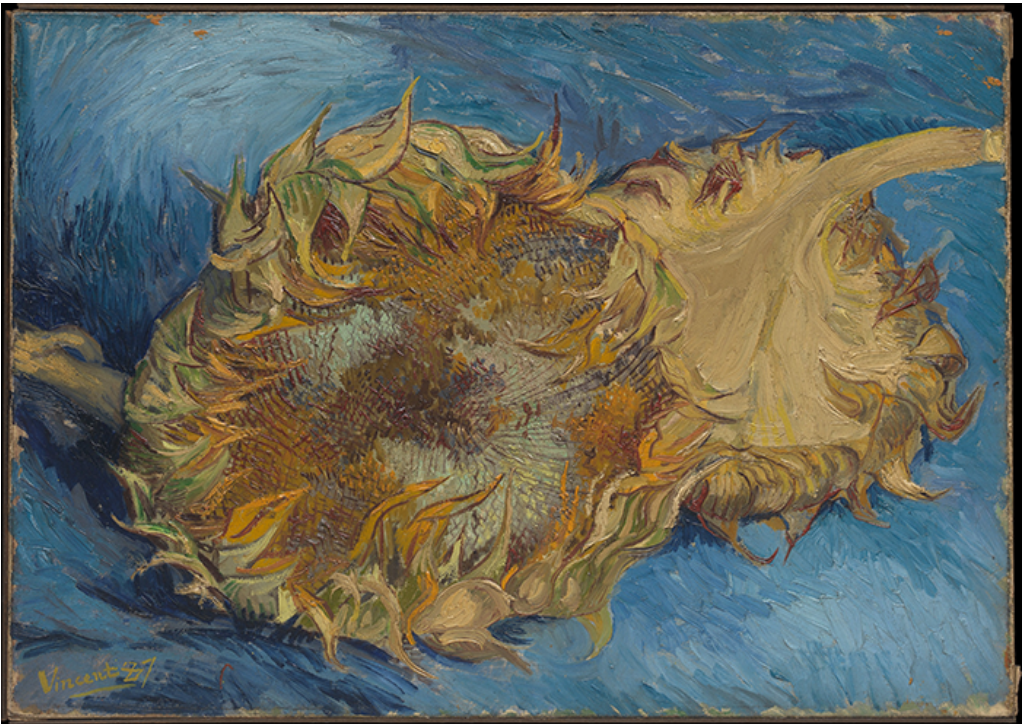
Vincent van Gogh, Sunflowers, 1887, The Metropolitan Museum of Art, New York.
Image: © The Metropolitan Museum of Art, New York, Rogers Fund, 1949, 49.41
Though her compositions may seem improvisational, Joan Mitchell’s electric gestural prints were deliberate and considered. She worked on clear mylar sheets, one for each color, revising until the composition was exactly as she wanted. Sunflowers III presents a pictorial achievement in Mitchell’s oeuvre, combining deep rich tones with the gestural marks that greatly echo the defining ethos of her career at a monumental scale that could only be produced with a fearless collaborator like Ken Tyler. Here, through color and line, disordered bouquets of sunflowers appear and disappear again to the viewer, celebrating the rich art historical past and modern techniques that are so elegantly distilled in Mitchell’s work.
Brush, from Bedford Series, 1981
Christie’s New-York: 23 July 2024
Estimated: USD 12,000 – 18,000
USD 18,900
JOAN MITCHELL (1925-1992), Brush, from Bedford Series | Christie’s
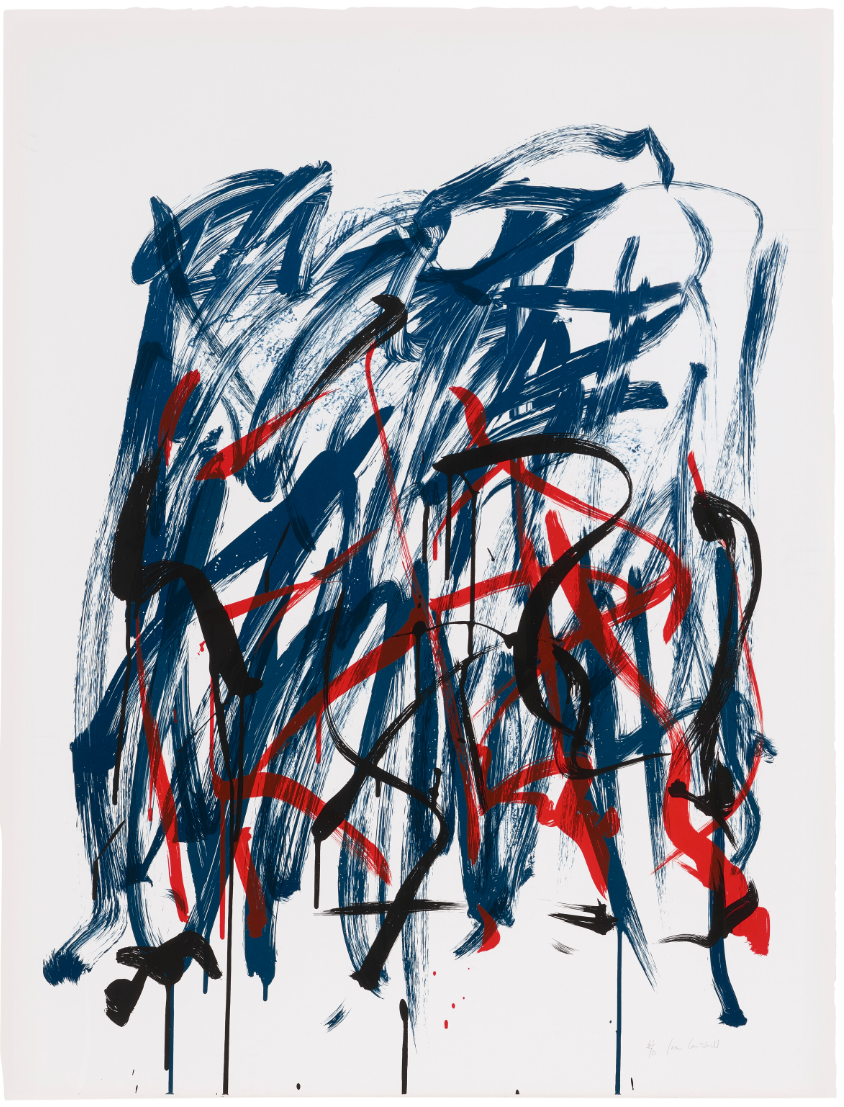
JOAN MITCHELL (1925-1992)
Brush, from Bedford Series, 1981
Lithograph in colors on Arches paper
Sheet: 42 5/8 x 32 1/2 inches (108.2 x 82.5 cm)
Signed in pencil, numbered 61/70 (there were also sixteen artist’s proofs)
Published by Tyler Graphics Ltd., Bedford, New York, with their blindstamp
Weeds I, 1992
Christie’s New-York: 23 July 2024
Estimated: USD 7,000 – 10,000
USD 27,720
JOAN MITCHELL (1925-1992), Weeds I | Christie’s
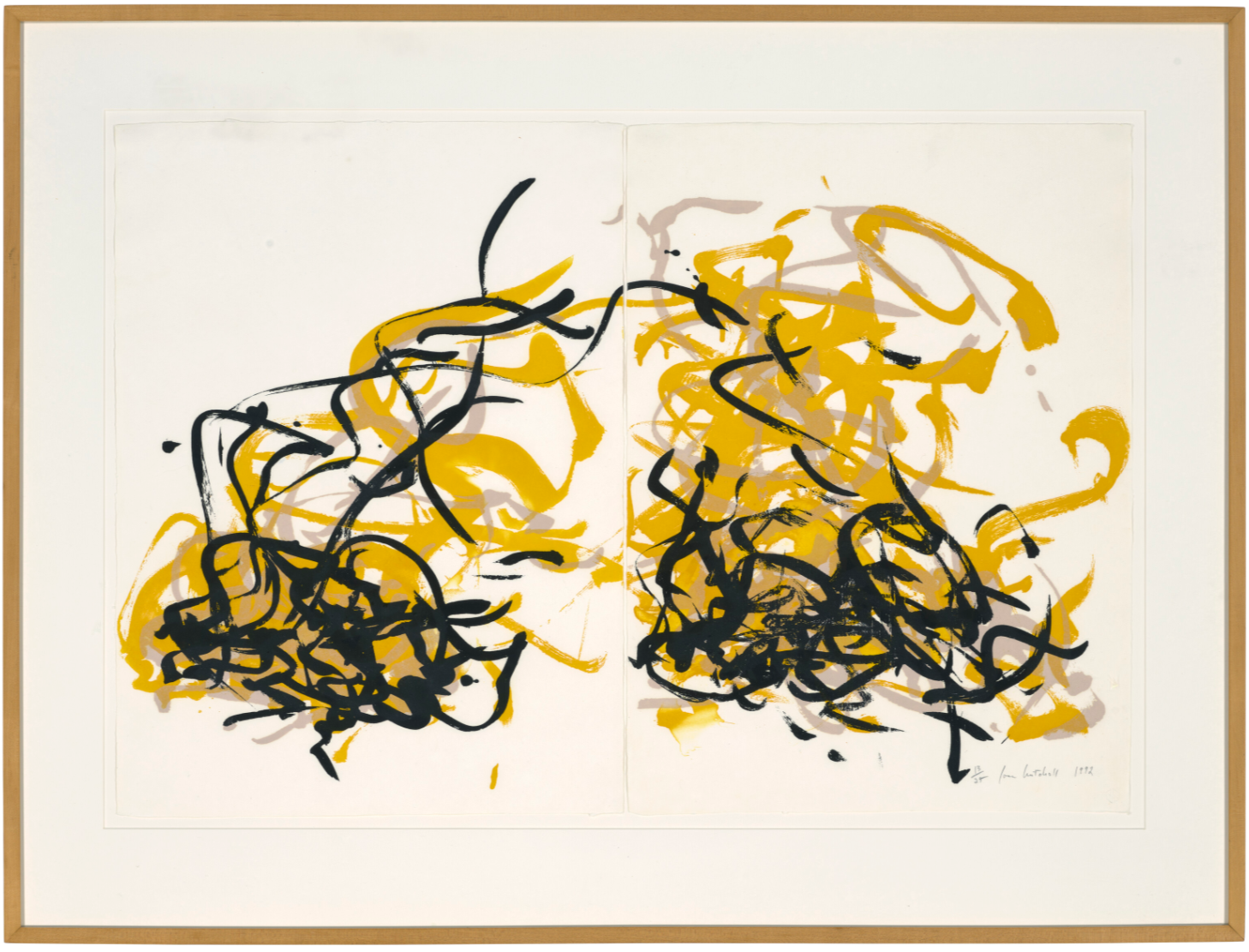
JOAN MITCHELL (1925-1992)
Weeds I, 1992
Lithograph in colors on two sheets of Rives BFK paper
Overall: 22 3/4 x 33 1/4 inches (57.8 x 84.3 cm)
Signed and dated in pencil, numbered 13/25 (there were also eight artist’s proofs)
Published by Tyler Graphics, Ltd., Mount Kisco, New York, with their blindstamp
Works on Paper
2025 Auction Results
10 lots sold at auction in 2025 for a total turnover of USD 3,056,900. With 1 lot failing to sell, the sell-through rate is 94.1%. The highest price so far was achieved by an untitled work on paper dated 1983, that sold at Christie’s in New-York, on 20 November 2025, for USD 698,500.
2025 Top 3 Lots
7 lots sold for more than USD 100,000, generating a cumulative turnover of USD 2,853,700, representing 93.4% of the total turnover of 2025.
#1. Untitled, 1983
Property from a Private New Jersey Collection
Christie’s New-York: 20 November 2025
Estimated: USD 200,000 – 300,000
USD 698,500
WORK ON PAPER
JOAN MITCHELL (1925-1992), Untitled | Christie’s
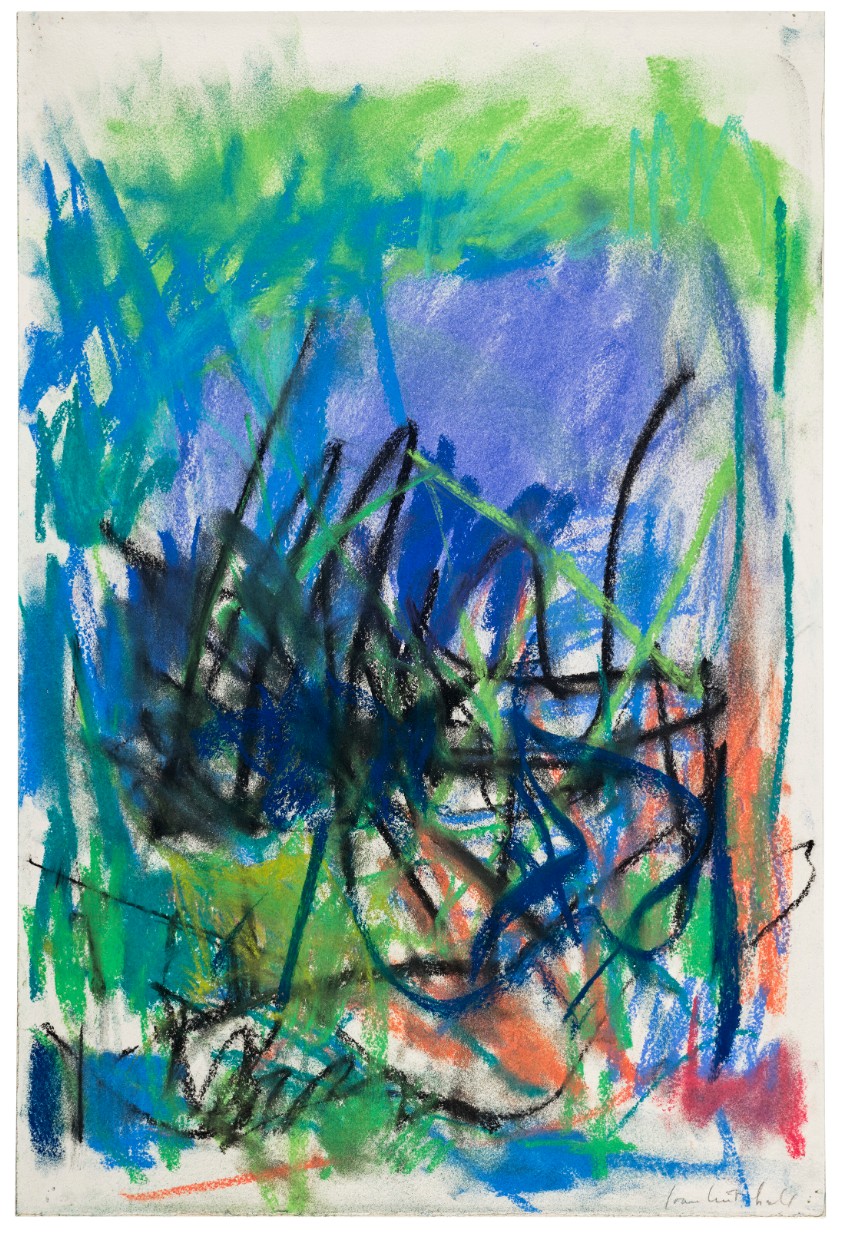
JOAN MITCHELL (1925-1992)
Untitled, 1983
Pastel on paper
22 3/4 x 15 1/4 inches (57.8 x 38.7 cm)
Signed ‘Joan Mitchell’ (lower right)
#2. Pastel, 1991
Sotheby’s New-York: 16 May 2025
Estimated: USD 300,000 – 500,000
USD 698,500
WORK ON PAPER
Pastel | Contemporary Day Auction | 2025 | Sotheby’s
JOAN MITCHELL (1925 – 1992)
Pastel, 1991
Pastel on paper
30 x 23 1/2 inches (76.2 x 59.7 cm)
#3. Pastel, 1991
Sotheby’s New-York: 26 February 2025
Estimated: USD 200,000 – 300,000
USD 571,500
WORK ON PAPER
Pastel | Contemporary Curated | 2025 | Sotheby’s
JOAN MITCHELL (1925 – 1992)
Pastel, 1991
Pastel on paper
22 7/8 x 15 3/8 inches (58.1 x 39.1 cm)
USD 500,000
#4. Untitled, 1992
Christie’s New-York: 15 May 2025
Estimated: USD 300,000 – 500,000
USD 327,600
WORK ON PAPER
JOAN MITCHELL (1925-1992), Untitled | Christie’s
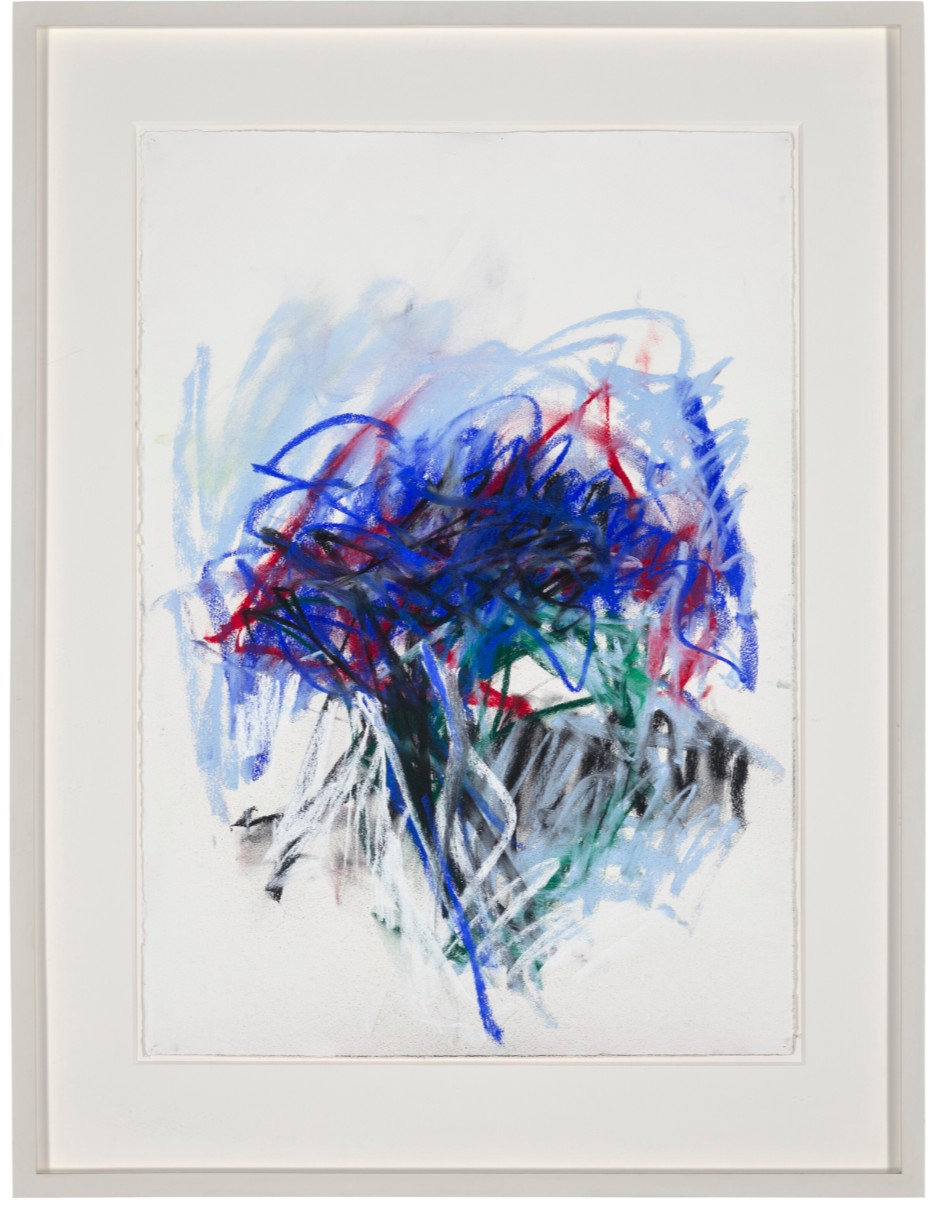
JOAN MITCHELL (1925-1992)
Untitled, 1992
Pastel on paper
29 5/8 x 20 7/8 inches (74.9 x 52.6 cm)
#5. Pastel, 1991
Christie’s New-York: 30 September 2025
Estimated: USD 80,000 – 120,000
USD 228,600
WORK ON PAPER
JOAN MITCHELL (1925-1992), Pastel | Christie’s
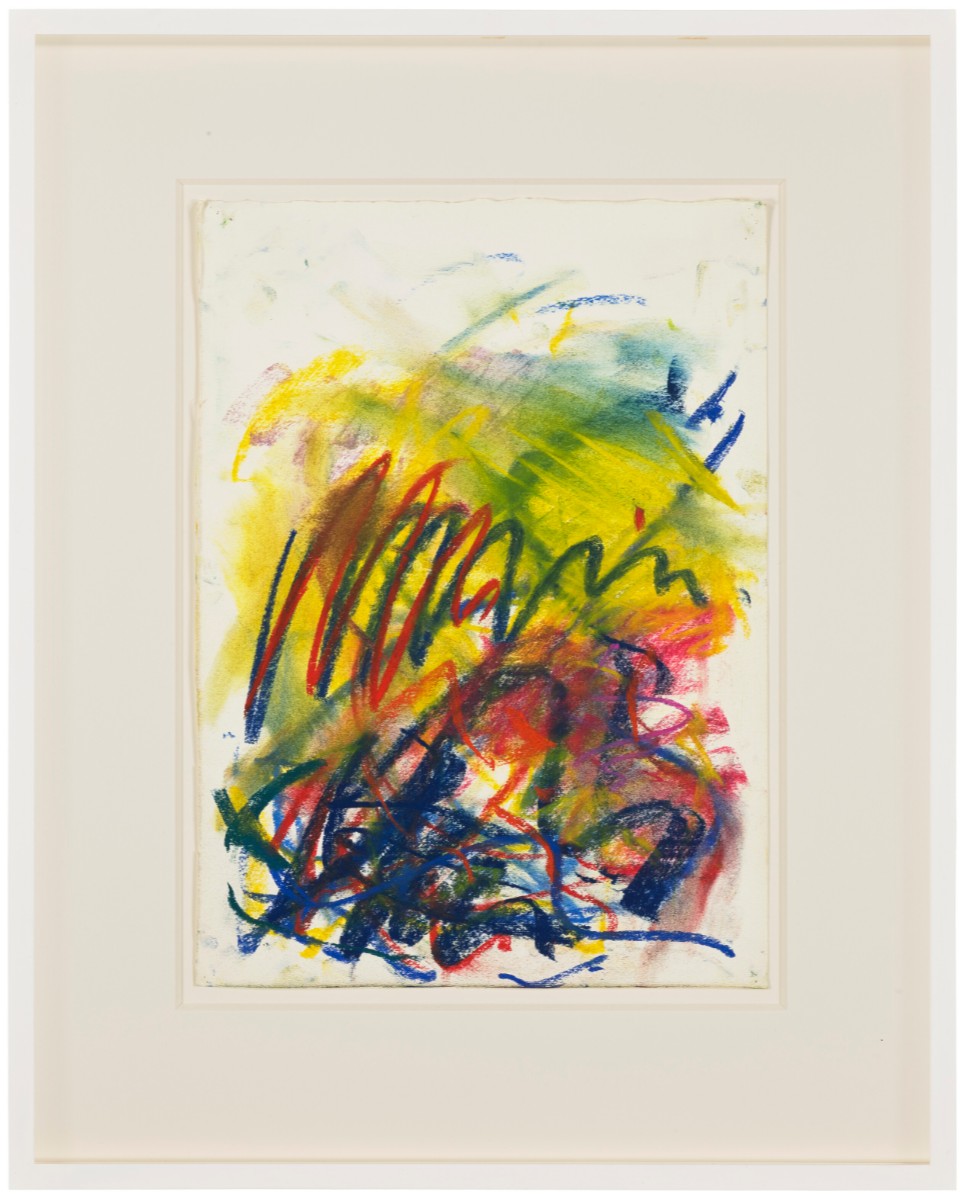
JOAN MITCHELL (1925-1992)
Pastel, 1991
Pastel on paper
15 1/4 x 11 inches (38.7 x 28 cm)
#6. Untitled, circa 1989
Sotheby’s New-York: 19 November 2025
Estimated: USD 60,000 – 80,000
USD 177,800
WORK ON PAPER
Untitled | Contemporary Day Auction | 2025 | Sotheby’s
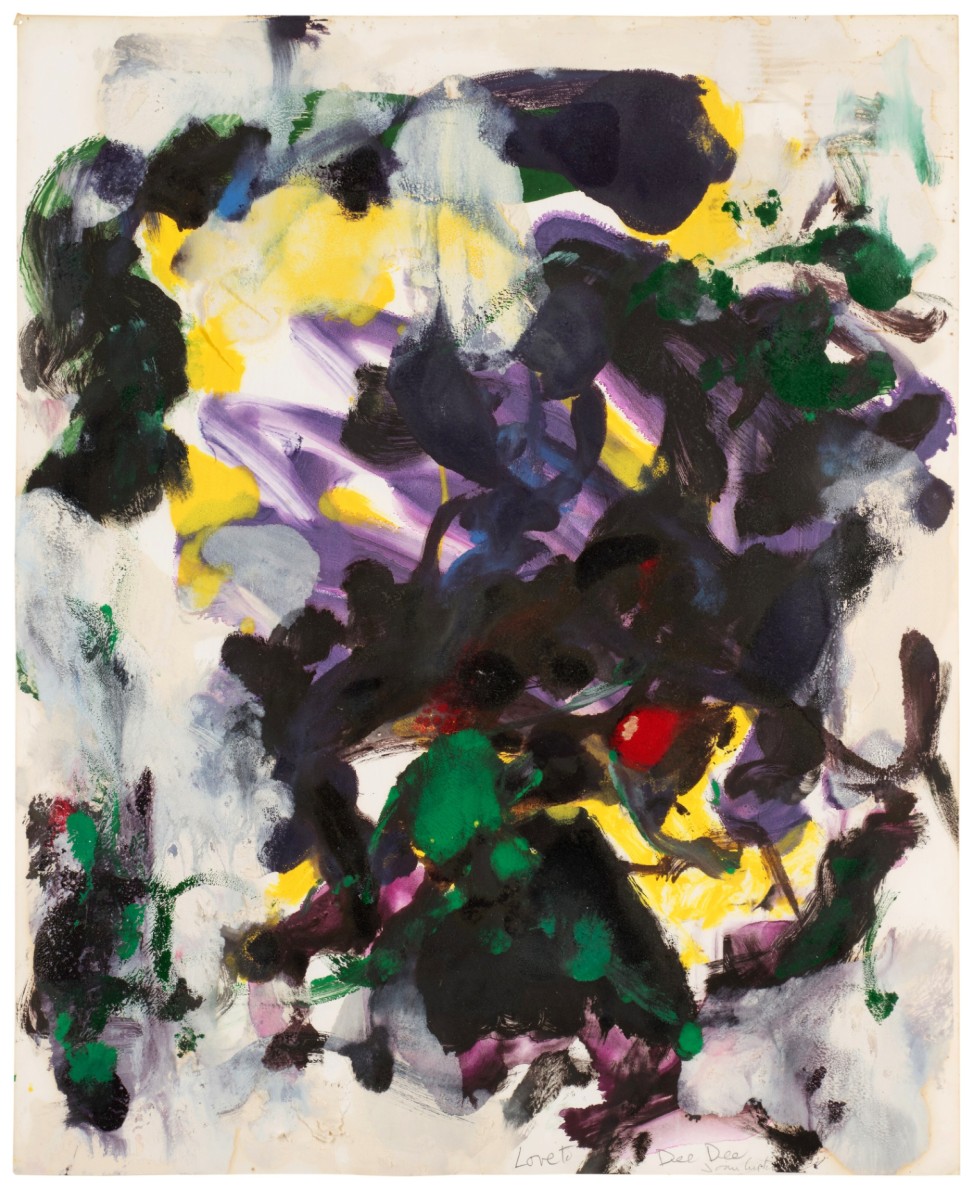
JOAN MITCHELL (1925 – 1992)
Untitled, circa 1989
Oil and acrylic monotype on paper
28 5/8 x 23 inches (72.7 x 58.4 cm)
Signed and inscribed Love to Dee Dee (lower right)
#7. Untitled, circa 1977
Christie’s New-York: 15 May 2025
Estimated: USD 60,000 – 80,000
USD 151,200
WORK ON PAPER
JOAN MITCHELL (1925-1992), Untitled | Christie’s
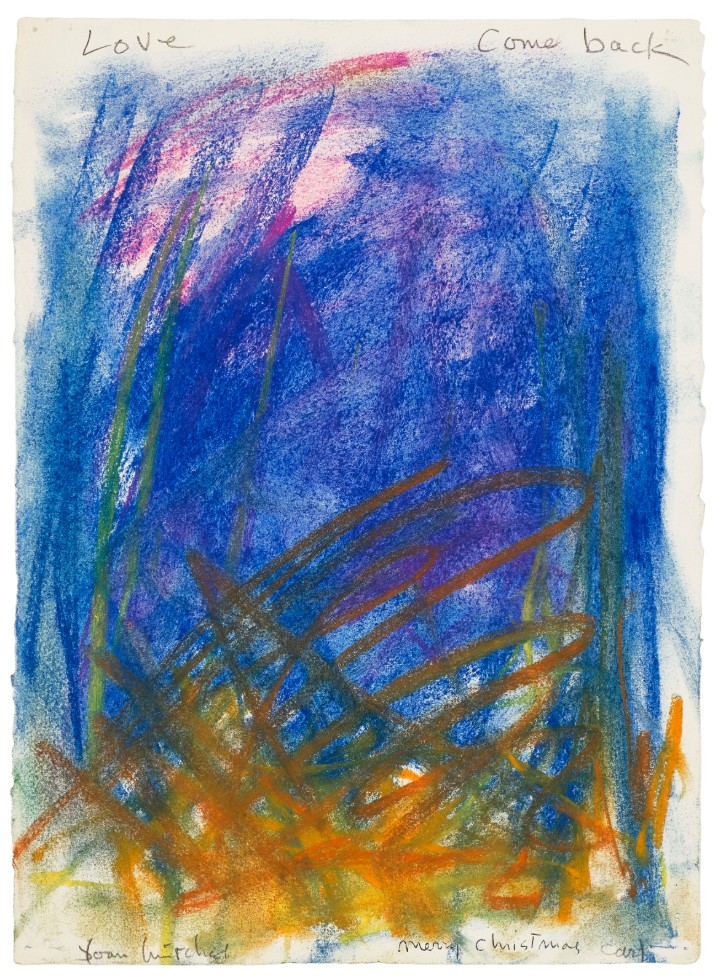
JOAN MITCHELL (1925-1992)
Untitled, circa 1977
Pastel on paper
12 5/8 x 9 1/4 inches (31.7 x 23.1 cm)
Inscribed ‘Love come back’ (upper edge)
Signed and inscribed again ‘Joan Mitchell merry christmas card’ (lower edge)
USD 100,000
#8. Untitled, 1976
Sotheby’s New-York: 19 November 2025
Estimated: USD 60,000 – 80,000
USD 88,900
WORK ON PAPER
Untitled | Contemporary Day Auction | 2025 | Sotheby’s
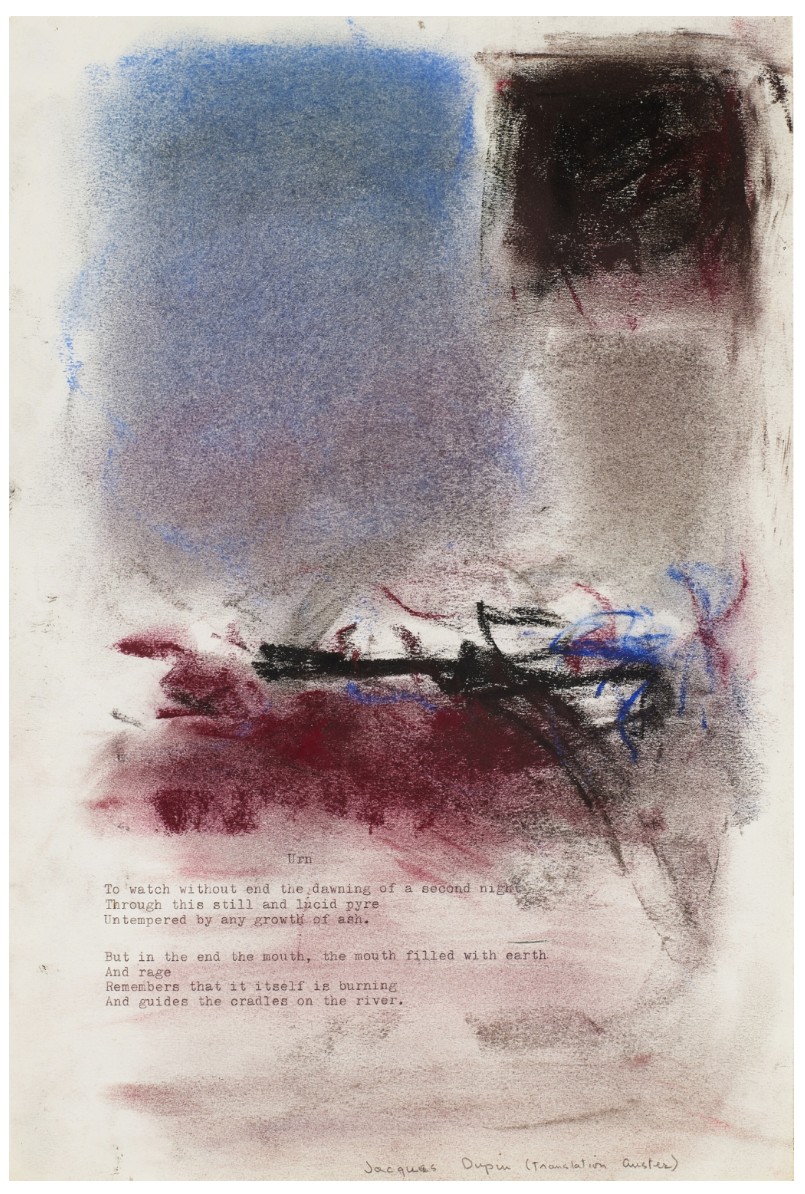
JOAN MITCHELL (1925 – 1992)
Untitled, 1976
Pastel and typewriter ink on paper
14 x 9 3/8 inches (35.6 x 23.8 cm)
#9. Untitled, 1956
A Friend of The Arts: Property from the Collection of Joanne Von Blon
Sotheby’s New-York: 16 May 2025
Estimated: USD 80,000 – 120,000
USD 76,200
WORK ON PAPER
Untitled | Contemporary Day Auction | 2025 | Sotheby’s
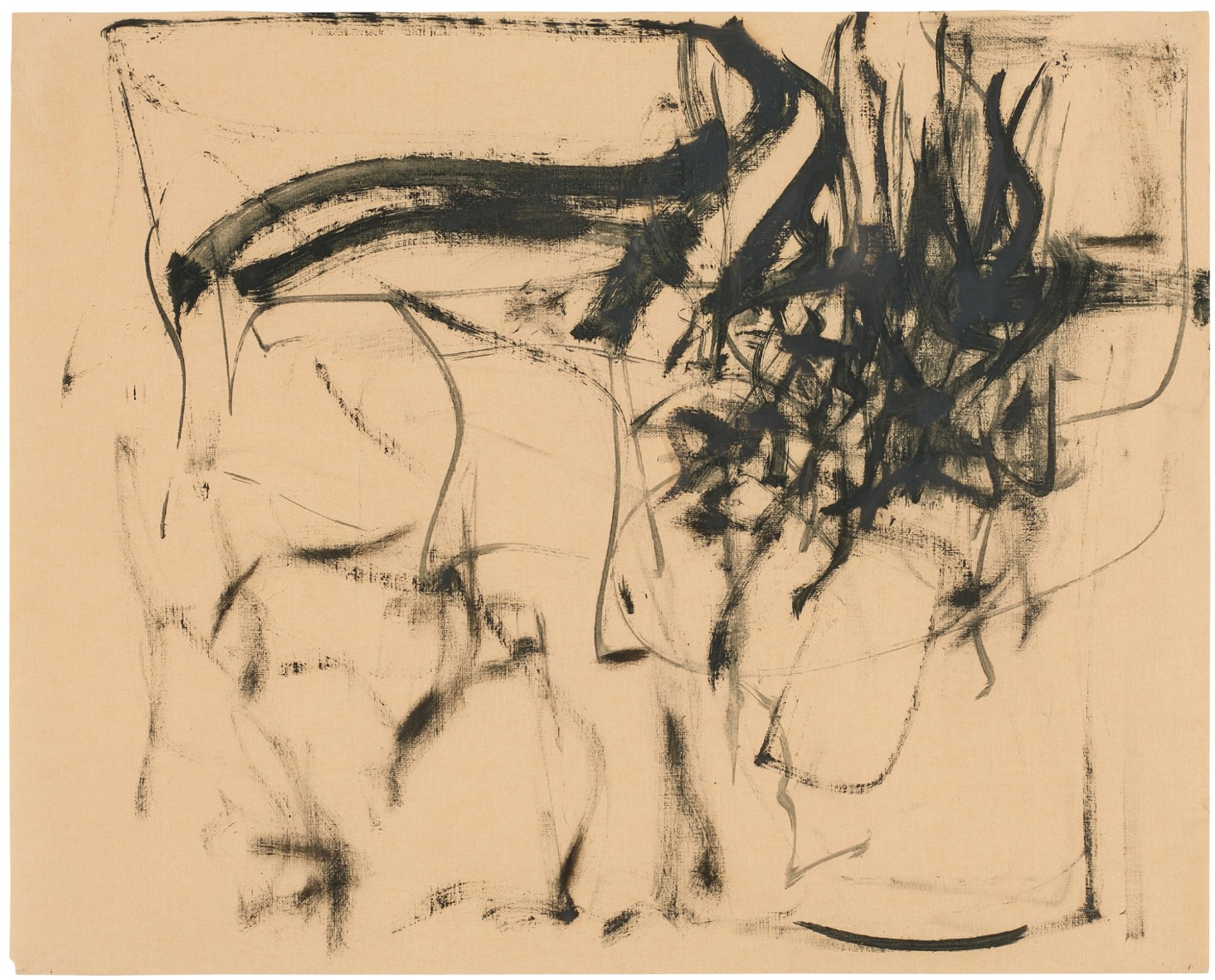
JOAN MITCHELL (1925 – 1992)
Untitled, 1956
Oil on paper
16 x 19 3/4 inches (40.6 x 50.2 cm)
#10. Untitled, 1944
A Friend of The Arts: Property from the Collection of Joanne Von Blon
Sotheby’s New-York: 16 May 2025
Estimated: USD 40,000 – 60,000
USD 38,100
WORK ON PAPER
Untitled | Contemporary Day Auction | 2025 | Sotheby’s
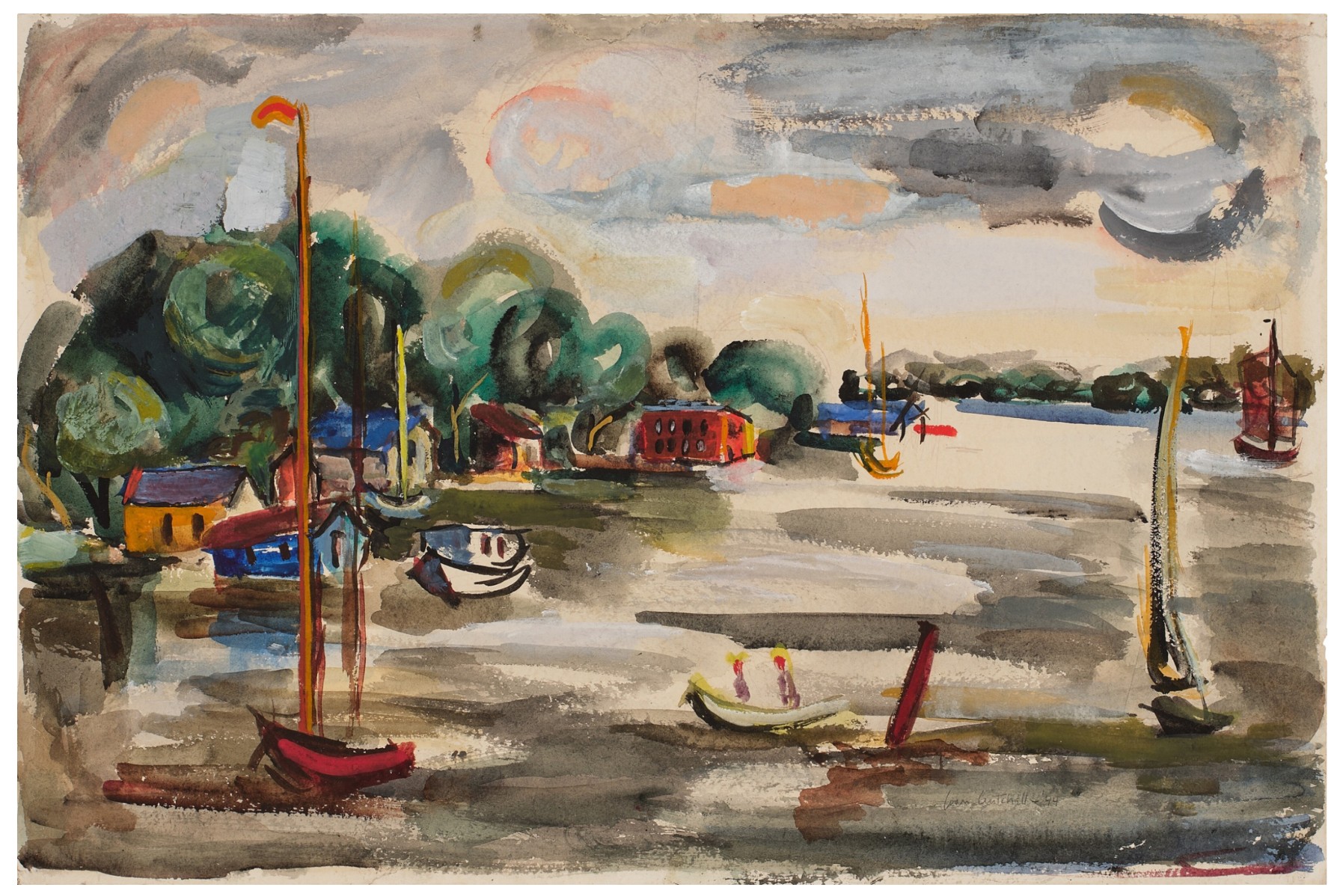
JOAN MITCHELL (1925 – 1992)
Untitled, 1944
Gouache, watercolor and graphite on paper
14 1/2 x 21 1/2 inches (36.8 x 54.6 cm)
Signed and dated ’44 (lower right)
Lots Passed
Untitled, 1991
Christie’s New-York: 20 November 2025
Estimated: USD 200,000 – 300,000
PASSED
WORK ON PAPER
JOAN MITCHELL (1925-1992), Untitled | Christie’s
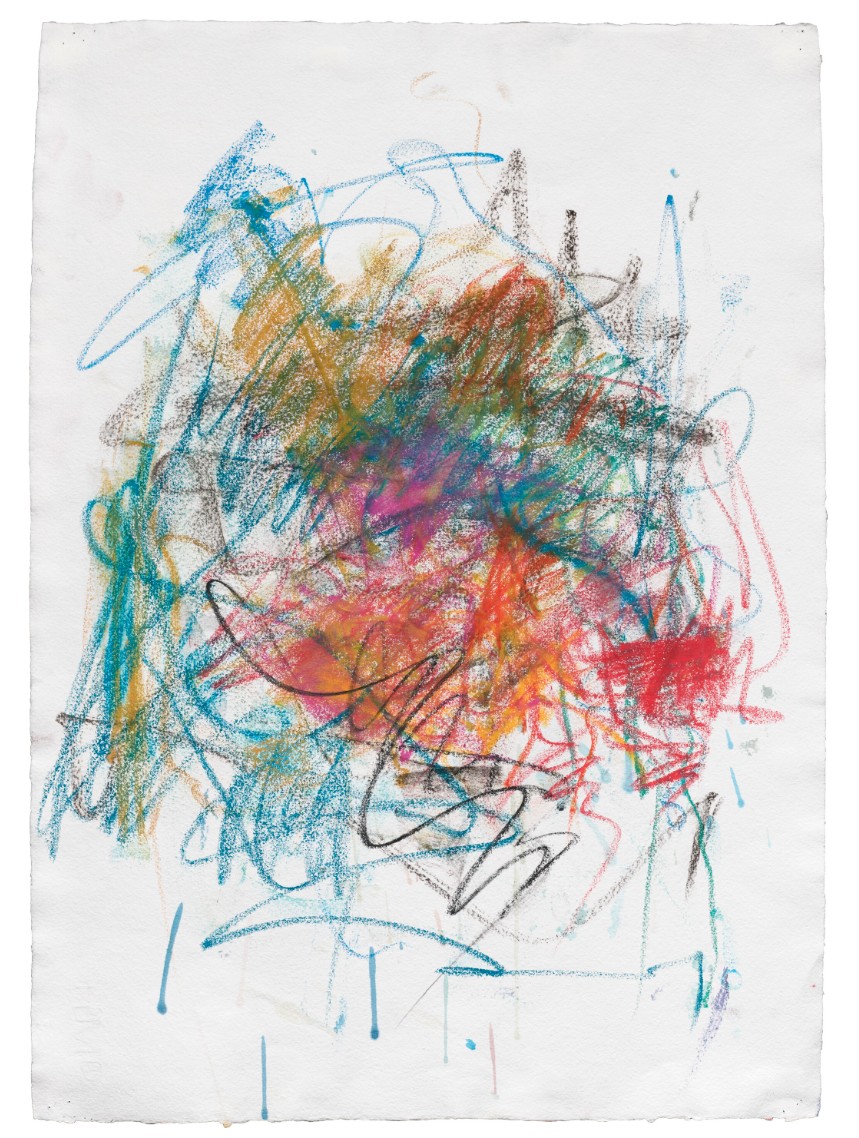
JOAN MITCHELL (1925-1992)
Untitled, 1991
Pastel, water-soluble wax crayon and watercolor on paper
24 1/4 x 17 3/8 inches (61.6 x 43.9 cm)
2024 Auction Results
6 lots sold at auction in 2024 for a total turnover of USD 1,691,900.
#1. Untitled, 1979
Sotheby’s New-York: 14 May 2024
Estimated: USD 200,000 – 300,000
USD 546,100
Untitled | Contemporary Day Auction | 2024 | Sotheby’s
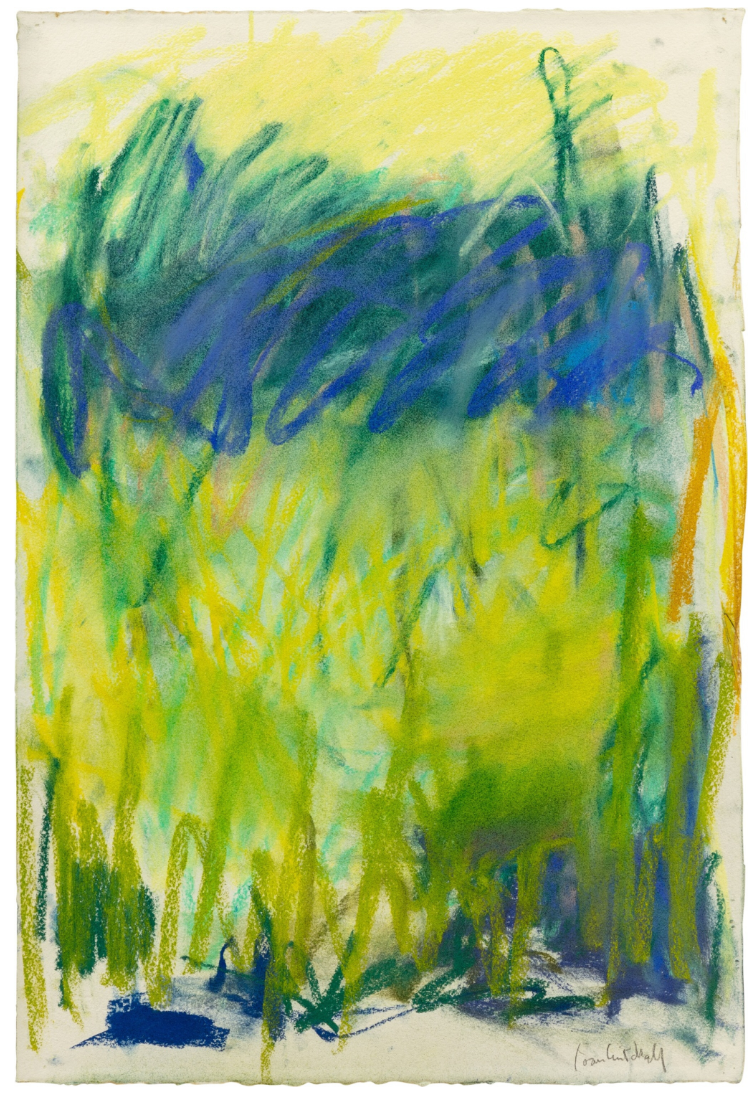
JOAN MITCHELL (1925 – 1992)
Untitled, 1979
Pastel on paper
22 7/8 x 15 1/2 inches (58.1 x 39.4 cm)
Signed (lower left)
#2. Untitled, 1979
Christie’s Paris: 18 October 2024
Estimated: EUR 180,000 – 250,000
EUR 403,200 / USD 436,640
Joan Mitchell (1925-1992), Sans titre | Christie’s
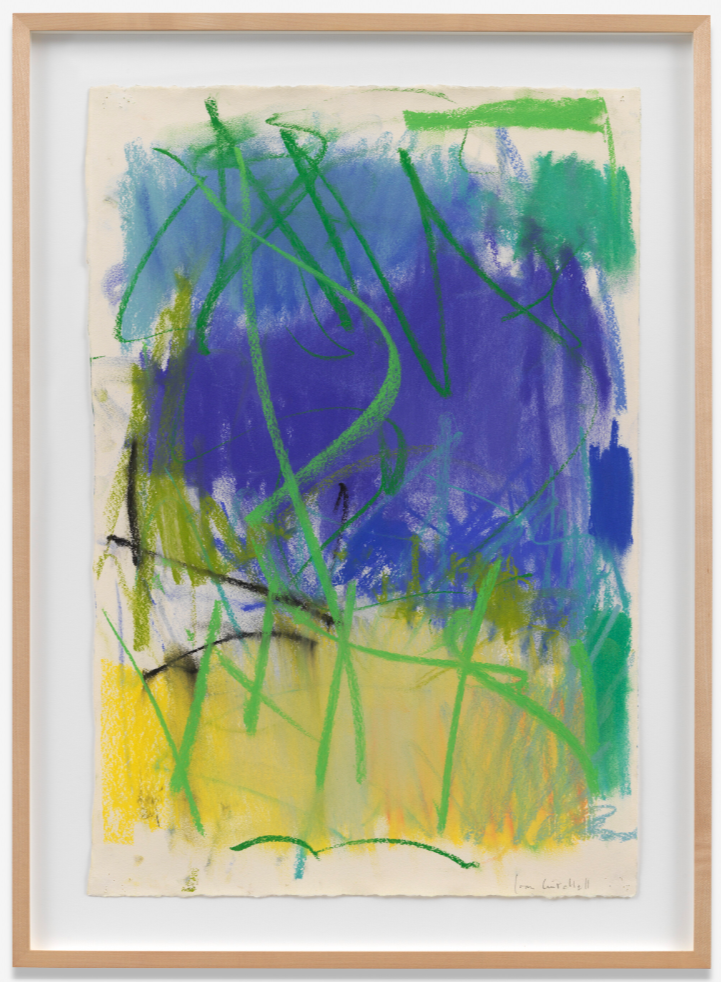
JOAN MITCHELL (1925-1992)
Untitled, 1979
Pastel and graphite on paper
22 3/4 x 15 1/2 inches (57.8 x 39.4 cm)
Signed ‘Joan Mitchell’ (lower right)
#3. Untitled, 1960
Bonhams New-York: 15 May 2024
Estimated: USD 120,000 – 180,000
USD 254,500
Bonhams : JOAN MITCHELL (1925-1992) Untitled 14 1/2 x 9 1/4 in (36.8 x 23.5 cm) (Executed in 1960)
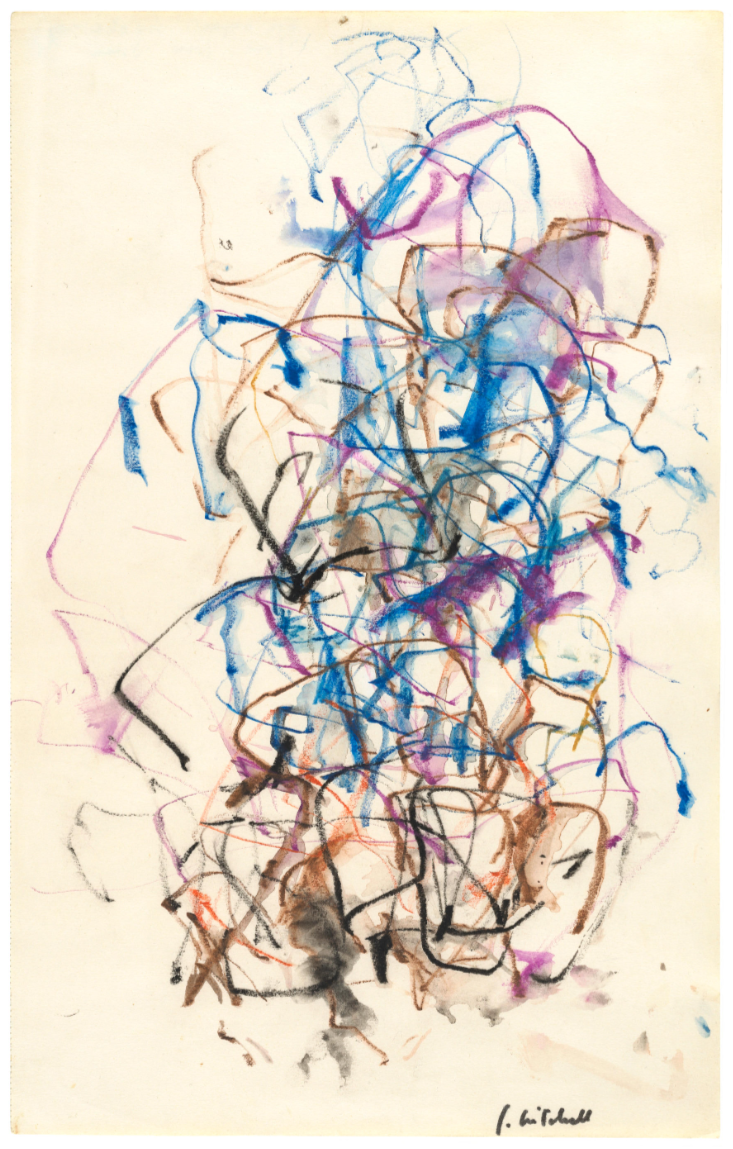
Crayon on paper
14 1/2 x 9 1/4 inches (36.8 x 23.5 cm)
Signed ‘J. Mitchell’ (lower right)
Signed again and inscribed ‘[…] love love Joan’ (verso)