
Gerhard Richter is widely regarded as one of the most important painters of the postwar period. Over a career spanning more than six decades, Richter has continuously challenged the boundaries of painting by moving freely between figuration and abstraction. His work explores the relationship between painting, photography, history, and perception, while maintaining a profound skepticism toward images and their claims to truth. Richter’s artistic practice is remarkable for its diversity. Rather than developing a single recognizable style, he has cultivated an approach based on experimentation and conceptual inquiry. Through blurred photo-paintings, austere grey monochromes, monumental abstract canvases, and works incorporating glass or photography, Richter has constructed one of the most intellectually ambitious bodies of work in contemporary art.
Introduction
Gerhard Richter was born in Dresden in 1932 and grew up during the turbulent years of Nazi Germany and the Second World War. After the war, he studied at the Academy of Fine Arts in Dresden, where he was trained within the Socialist Realist tradition that dominated art education in East Germany at the time.
In 1961, shortly before the construction of the Berlin Wall, Richter left the German Democratic Republic and moved to West Germany. This relocation proved decisive for his artistic development. He enrolled at the Kunstakademie Düsseldorf, where he encountered a radically different artistic environment and came into contact with artists who would shape the avant-garde of the postwar period. By the early 1960s, Richter had begun to develop the conceptual foundations of his work, questioning the authority of images and exploring the uncertain territory between painting and photography.
The Photo-Paintings
Richter first gained international recognition in the early 1960s through his photo-paintings, which remain among the most important works in his oeuvre. Using photographs taken from newspapers, magazines, family albums, or his own snapshots, Richter recreated these images in paint on canvas. However, he deliberately blurred the painted surface, producing a distinctive effect that became one of his artistic signatures.
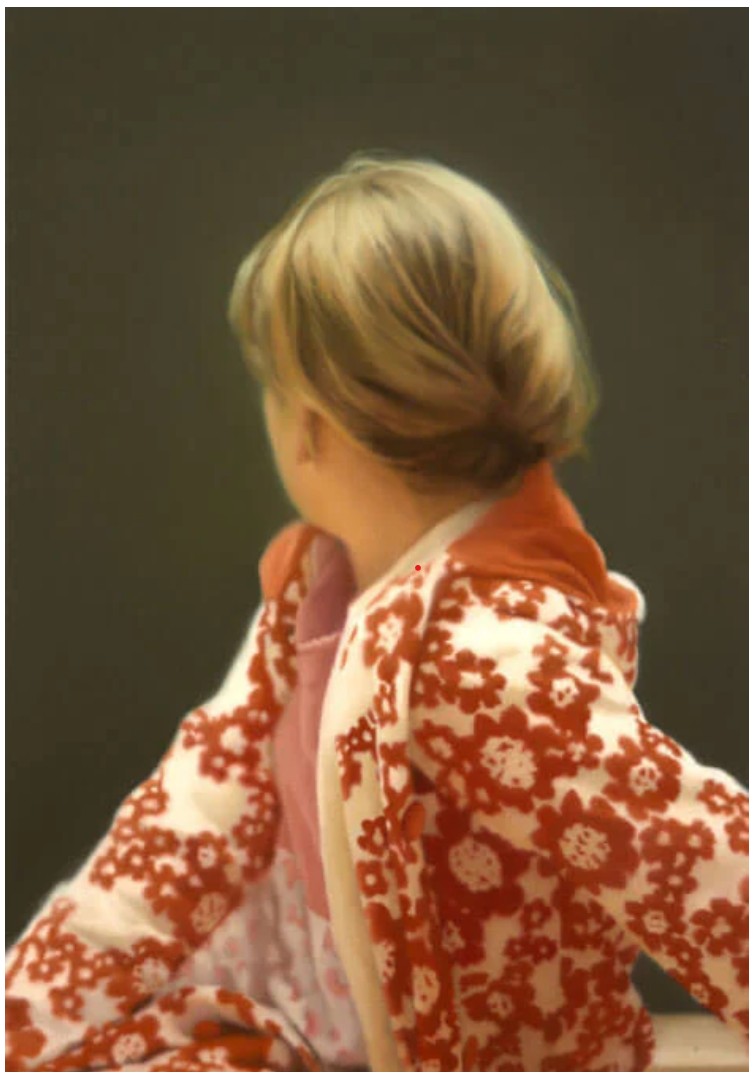
Betty, 1998 @ Ludwig Museum in Cologne, Germany
The blur serves multiple purposes. Visually, it softens the image and removes the sharp clarity associated with photography. Conceptually, it undermines the reliability of the image itself, suggesting that memory, history, and visual representation are always unstable and mediated. Many of these paintings address personal or historical subjects. Works such as Aunt Marianne or the famous portrait Betty demonstrate Richter’s ability to combine intimacy with historical reflection, often touching on themes related to Germany’s complex twentieth-century history.
Landscapes and Figurative Painting
Alongside the photo-paintings, Richter developed a significant body of landscapes, seascapes, and city views. These works often appear serene and traditional at first glance, recalling the long history of European landscape painting.
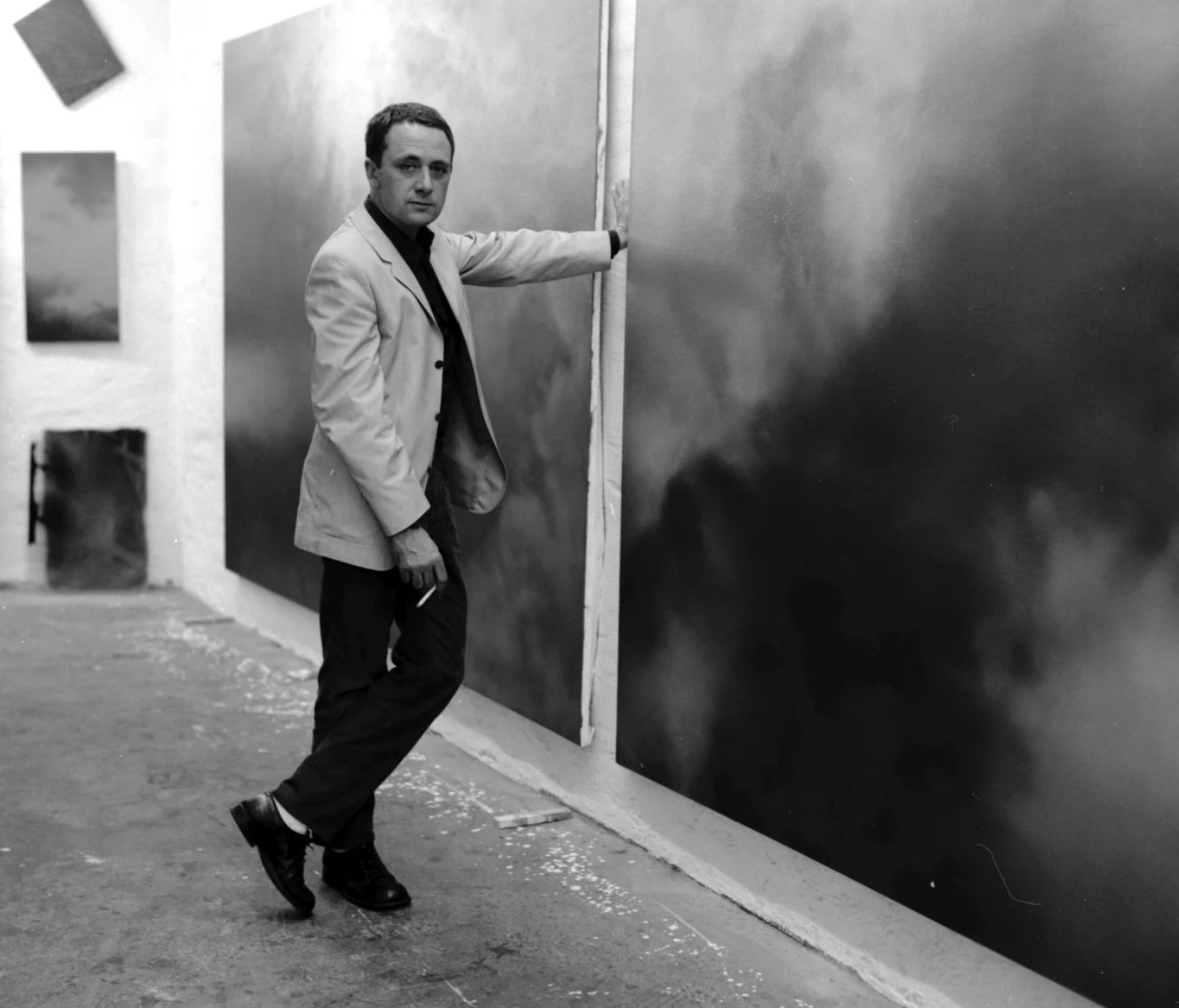
Yet even in these apparently conventional subjects, Richter maintains a critical distance. Many landscapes are based on photographic sources, and the resulting images oscillate between realism and painterly interpretation. As with his photo-paintings, the viewer is left uncertain about the status of the image: is it documentation, memory, or reconstruction?
Grey Paintings and Color Charts
During the late 1960s and 1970s, Richter explored systems of neutrality and reduction through his Grey Paintings and Color Chart series. The grey paintings consist of monochromatic surfaces that deliberately avoid expressive gestures or symbolic meaning. Richter described grey as a color without emotion or ideology, allowing painting to exist in a suspended state between image and object.
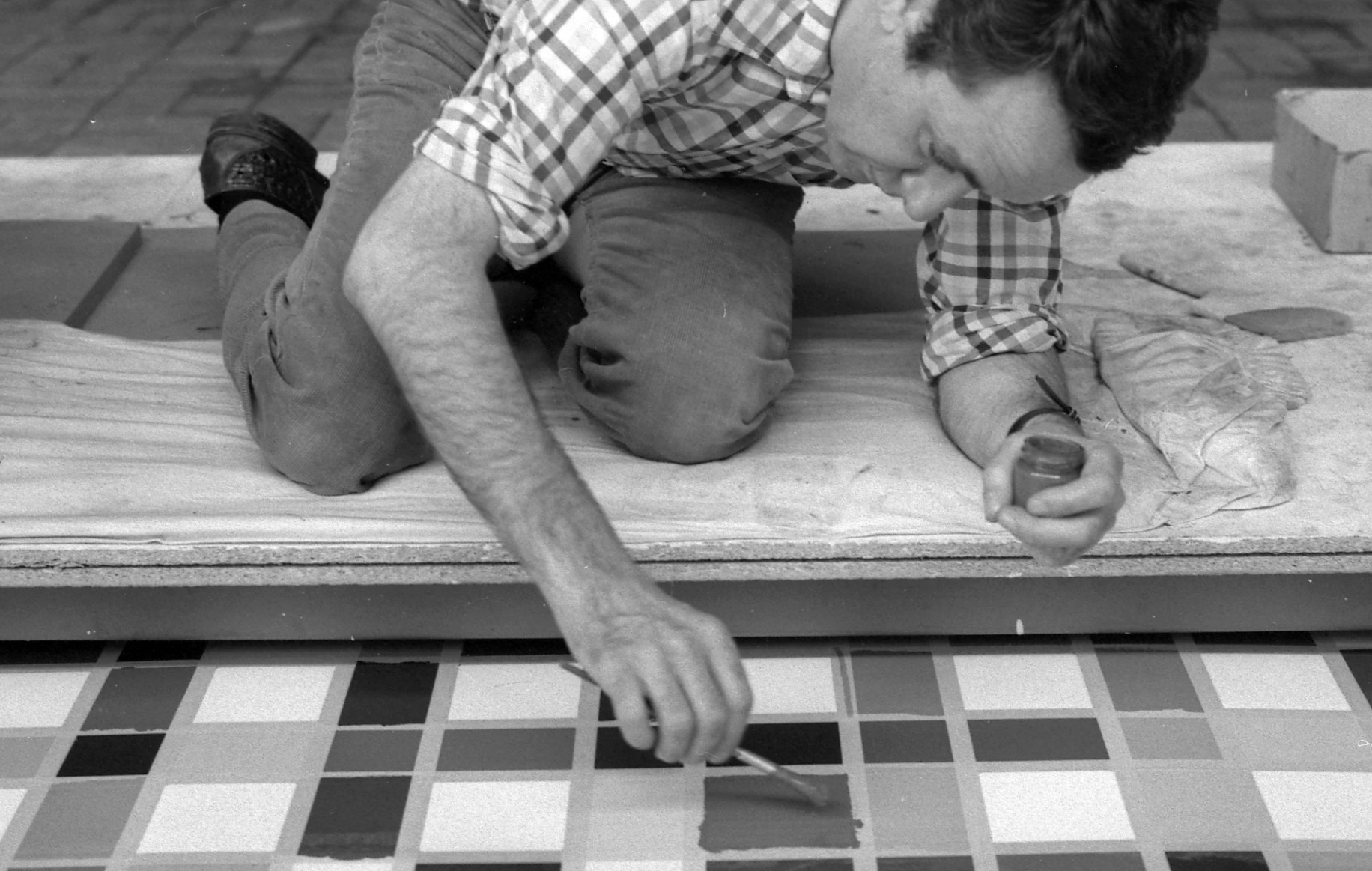
The Color Chart paintings, by contrast, are composed of grids of colored squares derived from industrial color samples. These works reflect Richter’s interest in seriality, chance, and systems of organization, while also engaging with the aesthetics of Pop art and conceptual art.
Abstract Paintings – Abstraktes Bild
From the late 1970s onward, Gerhard Richter began producing large-scale abstract paintings that would become some of the most celebrated works of his career. These works are typically titled Abstraktes Bild (“Abstract Painting”), often accompanied by a catalogue number that identifies them within Richter’s extensive oeuvre. The Abstraktes Bild paintings are created through a complex layering process. Richter applies multiple layers of oil paint onto the canvas and then drags large squeegees or blades across the surface. This technique spreads, scrapes, and partially removes the paint, revealing earlier layers beneath the surface while simultaneously obscuring others.
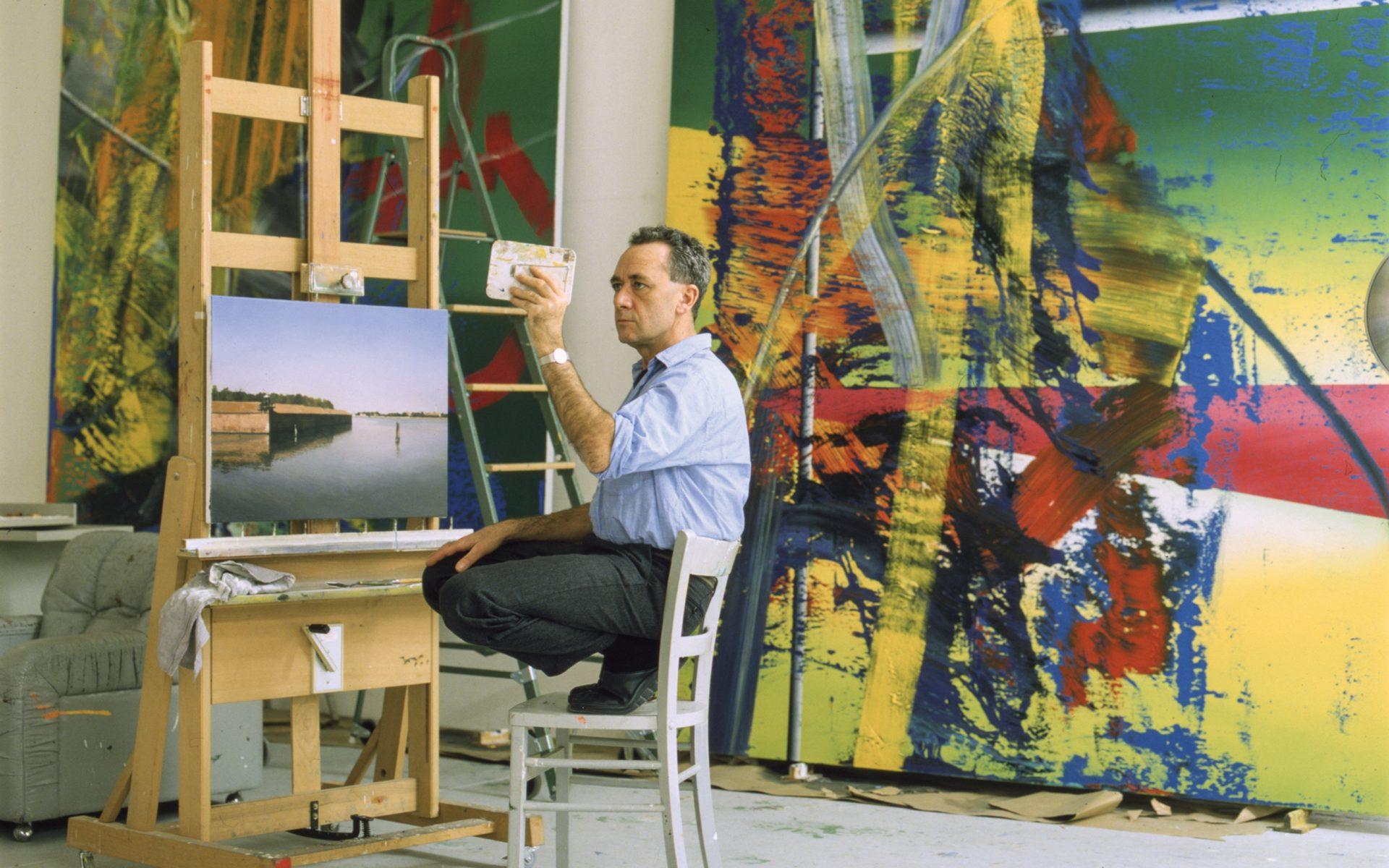
The resulting compositions combine deliberate control with elements of chance. Colors emerge, collide, and disappear beneath translucent layers of paint, producing richly textured surfaces that oscillate between structure and spontaneity. Each painting evolves through successive stages of construction and destruction until Richter determines that the work has reached its final balance.
Among the most important examples of these abstract works are the monumental Cage paintings, created in 2006. These large-scale canvases represent one of the most significant achievements of Richter’s later career and are widely regarded as major landmarks in contemporary abstract painting. From the late 1970s onward, Richter began producing large-scale abstract paintings that would become some of the most celebrated works of his career.
“I’ve never found anything to be lacking in a blurry canvas. Quite the contrary: you can see many more things in it than in a sharply focused image.”
Technique and Materials
Richter’s artistic practice is characterized by an unusually wide range of techniques and materials. While painting remains at the center of his work, he has also produced works using glass, mirrors, photography, and digitally generated imagery. His use of glass is particularly significant. Glass panels and mirror installations reflect the surrounding environment and the viewer, creating shifting visual relationships that emphasize perception and spatial awareness. Throughout his career, Richter has treated technique not as a means of demonstrating mastery, but as a tool for questioning the nature of images and representation.
Institutional Presence and Museum Collections
Gerhard Richter’s works now reside in important institutional collections around the world, including The Cleveland Museum of Art, Cleveland; the Artist Room Collection, Tate, London and National Galleries of Scotland, Edinburgh; La Caixa Foundation, Barcelona; the National Museum of Modern Art, Tokyo; and the Art Gallery of New South Wales, Sydney, Australia.
In Germany, the Gerhard Richter Archive in Dresden is dedicated to documenting and researching his life and work.
 Gerhard Richter received the Wolf Prize in Arts, Jerusalem in 1995; the Golden Lion at the 47th Venice Biennale and the Praemium Imperiale, Tokyo in 1997, and exhibited Atlas at documenta X, Kassel in the same year. In 1998, Richter was awarded a number of prizes including the Wexner Prize, a Foreign Honorary Membership of the American Academy of Arts and Letters, and the Staatspreis des Landes Nordrhein-Westfalen.
Museum Exhibitions
His prodigious artistic output has earned unparalleled international acclaim, and over the course of a fifty-year career his work has been honored with numerous retrospectives by the most prestigious institutions. In the past decade alone there have been seventy-six major solo exhibitions of Richter’s work held in over twenty countries around the world, including the United States Japan, Brazil, Switzerland, Mexico and South Korea. In recent years these have famously included shows at the Museum of Modern Art in New York, Tate Modern, London, the Musée du Louvre, and the Centre Georges Pompidou, Paris in addition to many others.
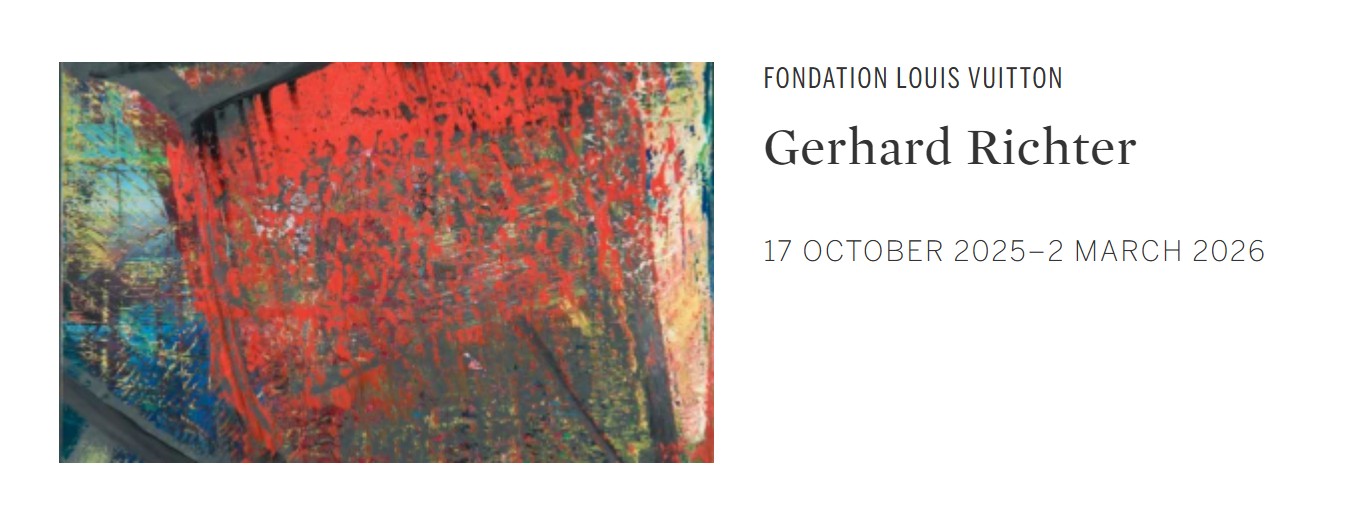
A major exhibition titled Gerhard Richter: 100 Works for Berlin has been presented at the Neue Nationalgalerie, bringing together works from the Gerhard Richter Art Foundation in a long-term installation that highlights the breadth of his career. Another significant recent exhibition is the large retrospective at the Fondation Louis Vuitton in Paris, which surveys more than six decades of Richter’s artistic production.
Gallery Representation
Gerhard Richter is currently represented by David Zwirner, one of the leading contemporary art galleries with locations in New York, London, Paris, and Hong Kong.
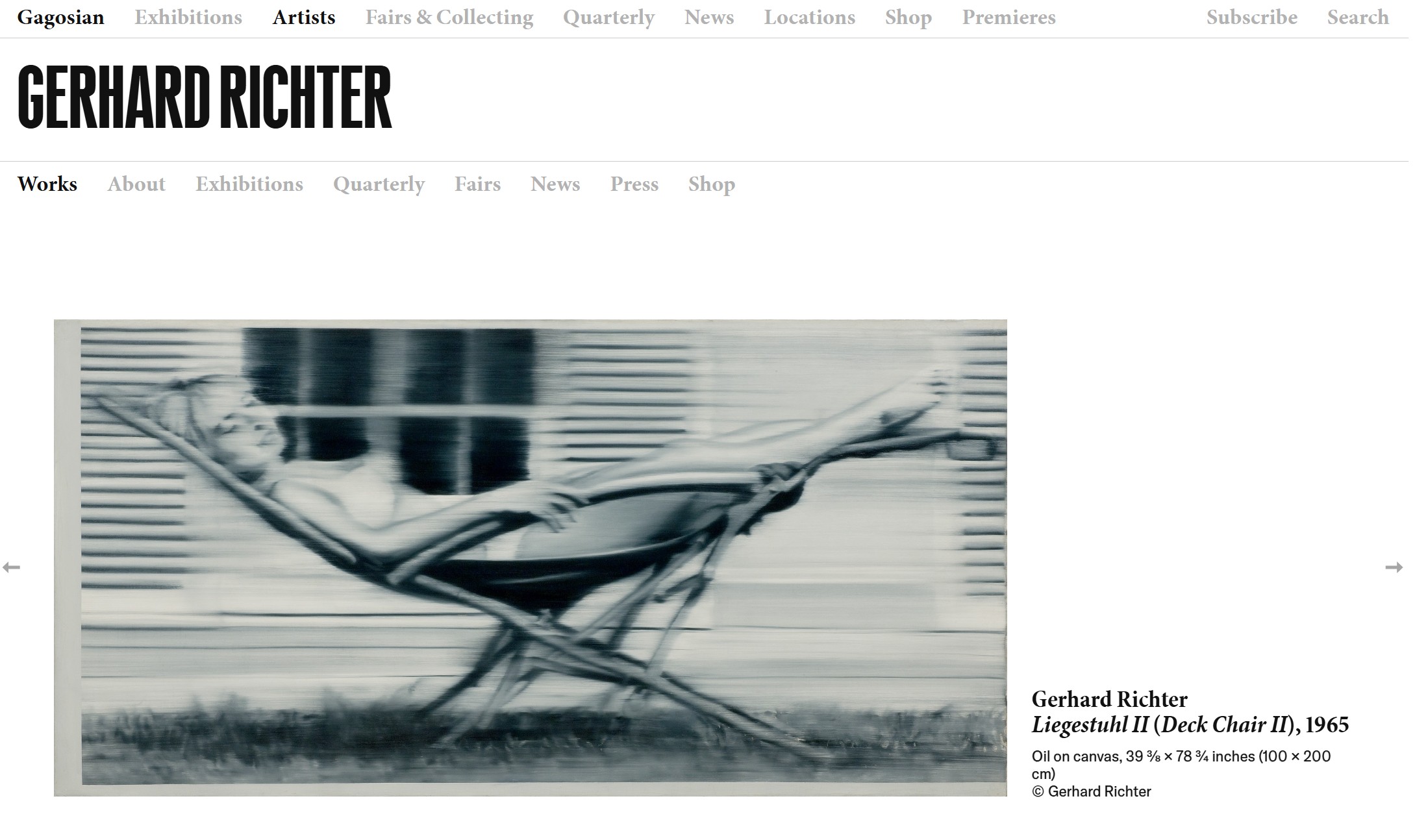
For many years, Richter worked closely with Marian Goodman Gallery, which played a crucial role in presenting his work internationally and placing major works in museum collections. In addition to these relationships, galleries such as Gagosian have organized important exhibitions of Richter’s work, particularly focusing on his large-scale abstract paintings. These exhibitions have contributed to the artist’s global visibility and to the strength of his market among major collectors.
Gerhard Richter occupies a unique position in contemporary art. Few artists have managed to combine such technical mastery with such intellectual depth. His work continually challenges viewers to question what an image is, how it functions, and how it relates to memory and history. By refusing to settle into a single style, Richter has maintained a career defined by experimentation and critical reflection. His work stands at the crossroads of painting, photography, and conceptual art, and continues to shape the discourse surrounding contemporary painting today. For collectors, curators, and historians alike, Richter remains one of the defining artists of the late twentieth and early twenty-first centuries.
PART I: SUMMARY
Auction Market Overview
2025 AUCTION STATISTICS
Turnover: USD 62,847,395
+63.7% vs. 2024
# Lots sold: 36
Sell-Through Rate: 90%
MARKET SEGMENTATION
New-York (64%) / London (21%) / Hong-Kong (11%) / Germany (4%)
Highest Price Achieved at Auction:
GBP 30,389,000 / USD 46,267,435
(@ Sotheby’s London on 10 February 2015)
Gerhard Richter occupies one of the strongest positions in the global art market among postwar and contemporary artists. Over the past three decades, his work has consistently achieved exceptional prices at auction, placing him among the most valuable living painters. Richter’s market developed gradually during the 1980s and 1990s, supported by major museum exhibitions and the international promotion of his work by leading galleries. By the early 2000s, demand for his paintings had accelerated significantly, particularly for large-scale abstract works from the Abstraktes Bild series. Today, Richter’s market is widely considered one of the most stable within the blue-chip segment of contemporary art. His works appear regularly in the major evening sales at Christie’s, Sotheby’s, and Phillips, where they attract strong interest from both private collectors and institutions.
Gerhard Richter’s current auction record was established in February 2015, when the painting Abstraktes Bild (1986) sold for GBP 30,389,000 (USD 46,267,435) at Sotheby’s in London. The work belongs to the group of large-scale squeegee paintings that dominate the upper tier of Richter’s market. These paintings are particularly prized for their scale, complex layering of paint, and their position within the artist’s most recognizable abstract series. Several other works from the Abstraktes Bild group have achieved prices above USD 30 million, confirming the strong demand for Richter’s large abstract canvases from the 1980s and 1990s.
Within Richter’s market, there is a clear distinction between different categories of works. The large abstract paintings (Abstraktes Bild) generally command the highest prices. Monumental canvases created during the late 1980s and early 1990s are particularly sought after and frequently appear in evening sales. By contrast, the photo-paintings often occupy a slightly lower price range, although important works with strong historical significance can achieve comparable prices. Paintings such as Betty or works connected to major historical themes have attracted exceptional institutional interest. Smaller abstract works, works on paper, and editions typically trade at more accessible levels, providing entry points into Richter’s market for a wider group of collectors.
Richter’s market benefits from a relatively limited supply of major works. Large paintings from key periods are held in museum collections or long-term private holdings and only appear occasionally at auction. When significant examples do come to market, competition among collectors can be intense. This scarcity contributes to the stability of Richter’s market. Prices have remained consistently strong even during periods of broader market volatility, reflecting the artist’s institutional reputation and the enduring demand for his work.
Auction Summary
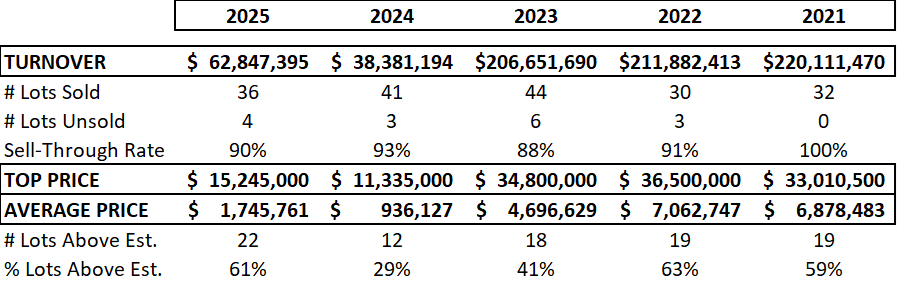
2025 Auction Highlights
36 lots sold at auction in 2025 for a total turnover of USD 62,847,395. With 4 lots failing to sell, the sell-through rate is 90%. The highest price was achieved by Korsica (Schiff), a photo-painting dated 1968, that sold at Christie’s in New-York, on 12 May 2025, for USD 15,245,000. It is the only lost that sold for more than USD 10 million in 2025.
2025 Top 3 Lots
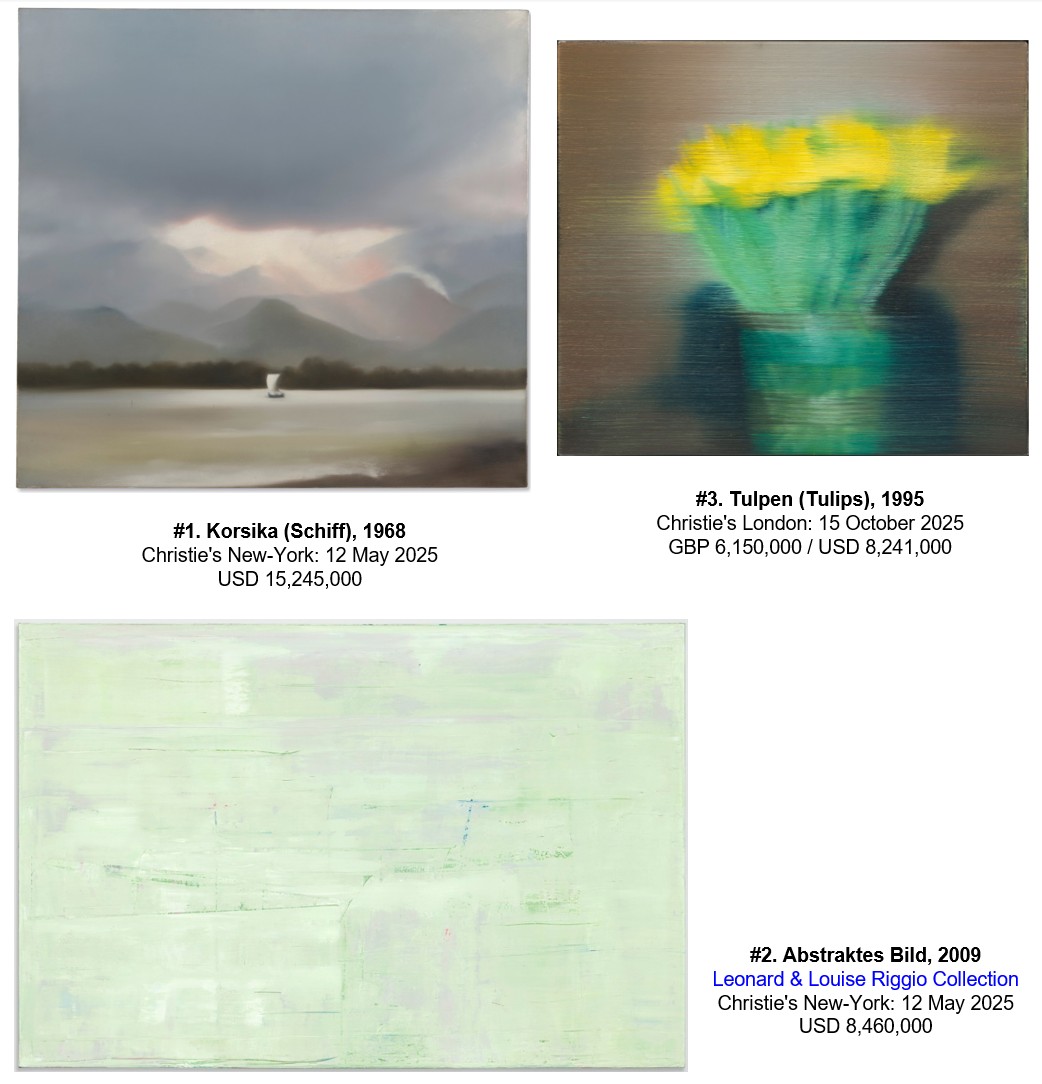
14 lots sold for more than USD 1 million, generating a cumulative turnover of USD 57,396,251, representing 91.3% of the total turnover for 2025.
2024 Auction Highlights
41 lots sold at auction in 2024 for a total turnover of USD 38,381,194. With 3 lots failing to sell, the sell-through rate is 93%. The highest price has been achieved at Christie’s in New-York on 16 May 2024, for Abstraktes Bild, dated 1988, that sold for USD 11,335,000, the only lot that sold for over USD 10 million.
2024 Top 3 Lots
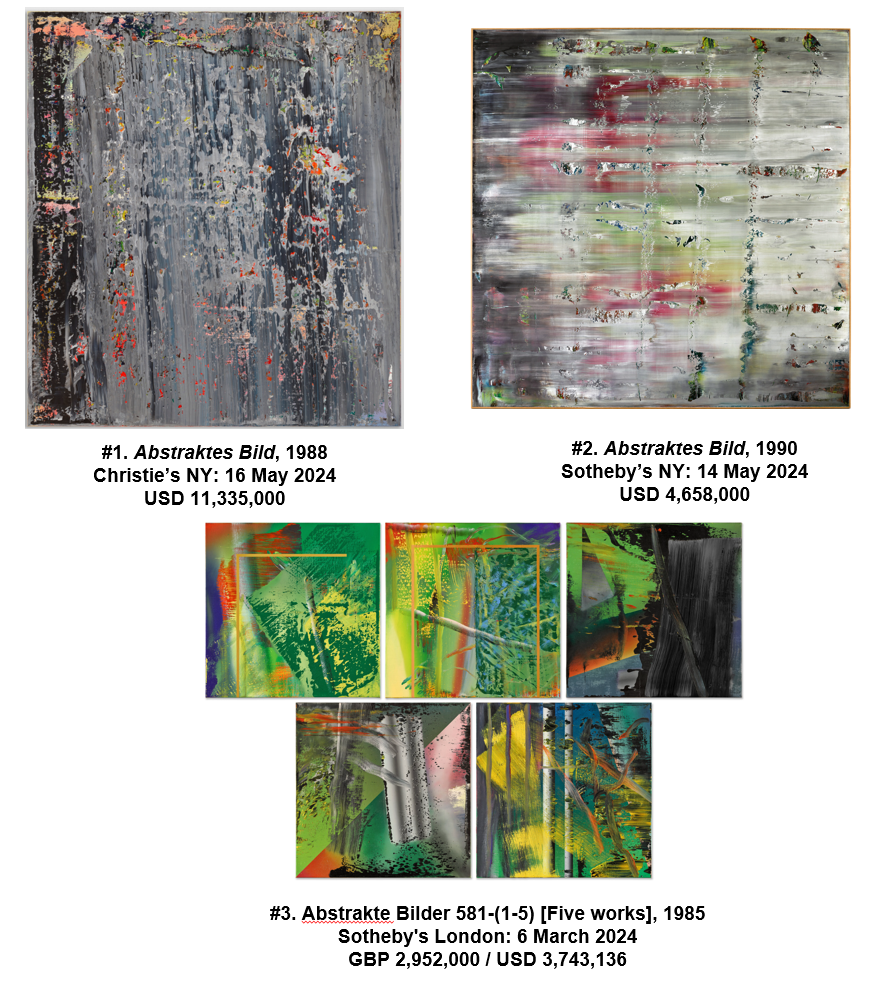
10 lots sold for more than USD 1 million, generating a turnover of USD 32,087,691, representing 83.6% of the total turnover for 2024.
2023 Auction Highlights
44 lots sold at auction in 2023 for a total turnover of USD 206,651,690. The top price was achieved at Phillips in New-York on 15 November 2023 when Abstraktes Bild (636) sold for USD 34,800,000.
2023 Top 3 Lots
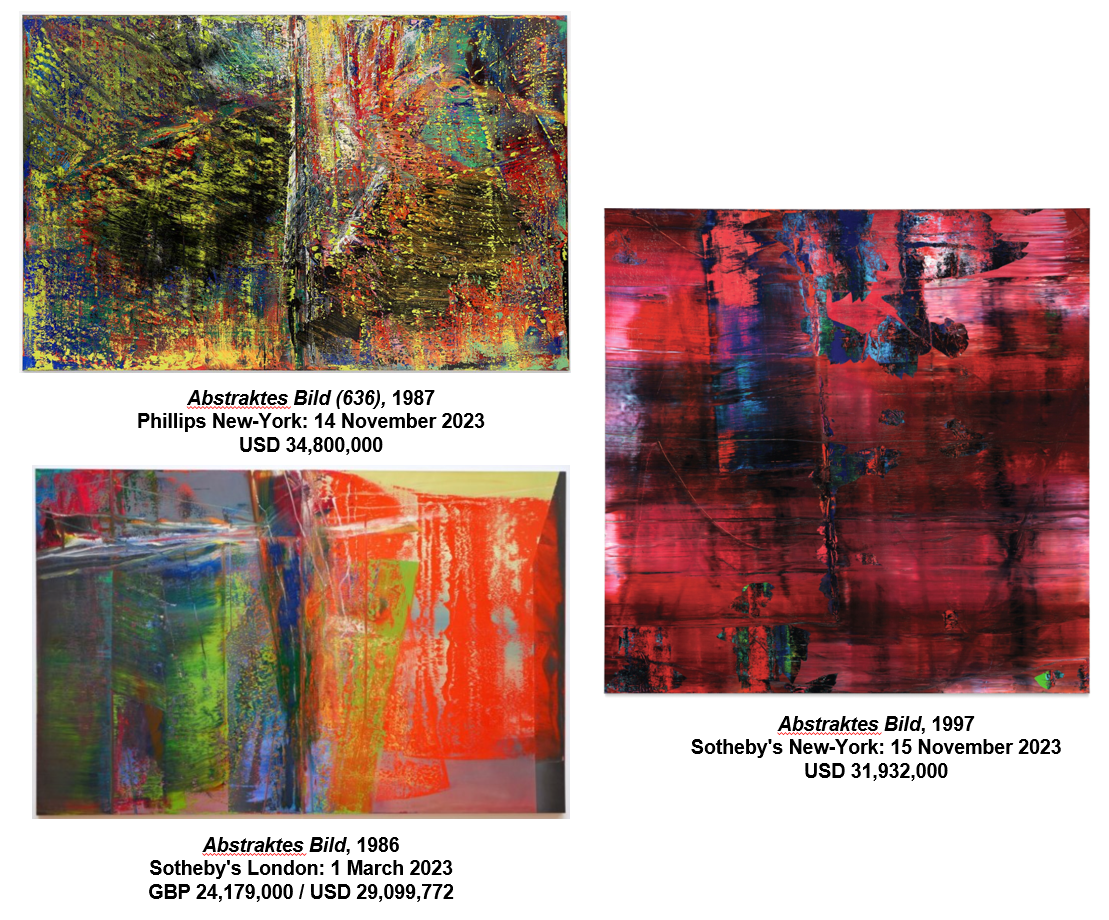
6 lots sold for over USD 10 million, generating a cumulative turnover of USD 139,792,124, contributing 67.6% to the total turnover for 2023. 22 lots sold for over USD 1 million, generating a cumulative turnover of USD 199,301,015, contributing 96.4% to the total turnover for 2023.
2022 Auction Highlights
30 lots sold at auction in 2022 for a total turnover of USD 211,882,413. The top price of USD 36,500,000 was achieved at Christie’s in New-York on 10 May 2022 for Abstraktes Bild dated 1994.
2022 Top 3 Lots
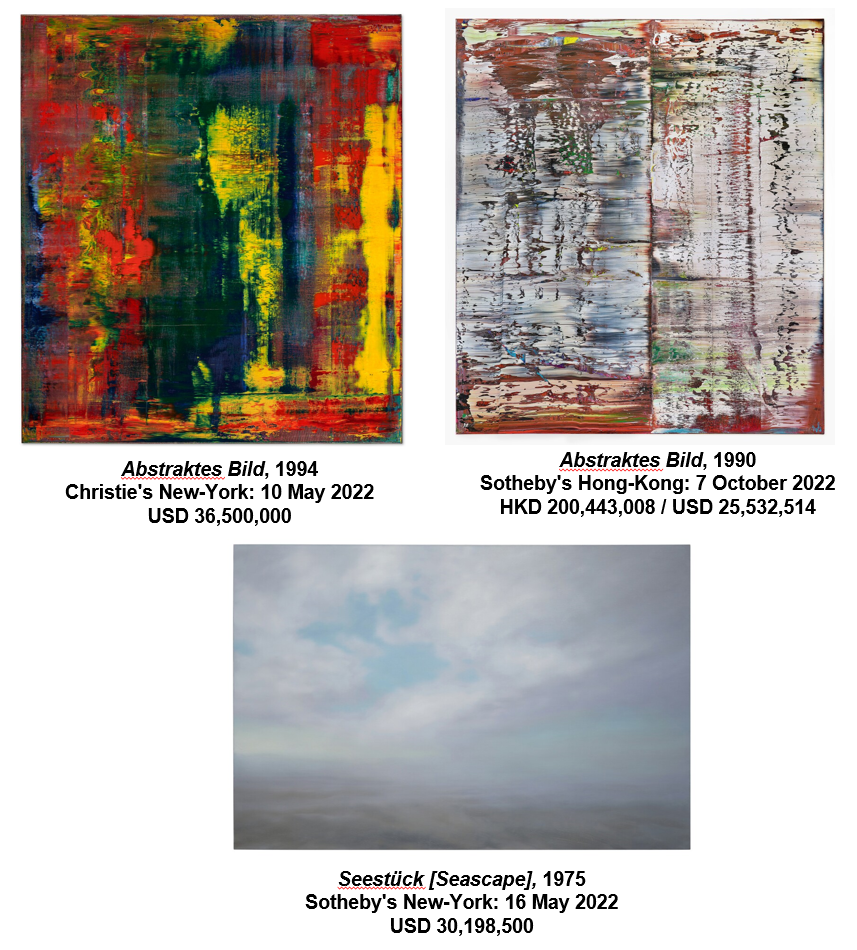
8 lots sold for over USD 10 million, generating a cumulative turnover of USD 160,631,260, contributing 75.8% to the total turnover for 2022. 20 lots sold for over USD 1 million, generating a cumulative turnover of USD 208,453,684, contributing 98.4% to the total turnover for 2022.
2021 Auction Highlights
32 lots sold at auction in 2021 for a total turnover of USD 220,111,470. The top price of USD 33,010,500 was achieved at Sotheby’s in New-York on 15 November 2021 for Abstraktes Bild dated 1993.
2021 Top 3 Lots
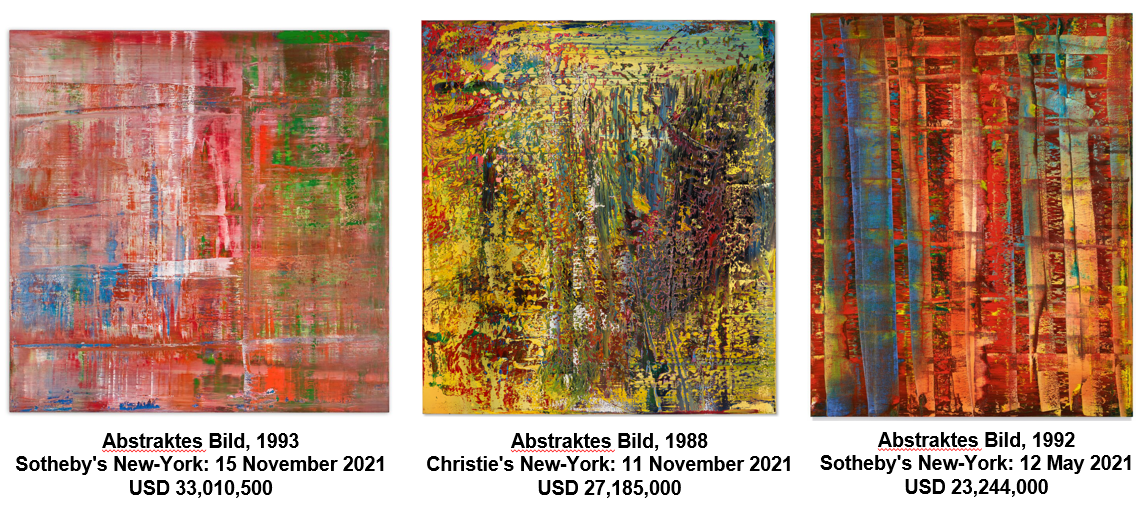
10 lots sold for over USD 10 million, generating a cumulative turnover of USD 165,973,481, contributing 75.4% to the total turnover for 2021. 21 lots sold for over USD 1 million, generating a cumulative turnover of USD 214,222,326, contributing 97.3% to the total turnover for 2021.
Top Lots
#1. Abstraktes Bild, 1986
Sotheby’s London: 10 February 2015
Estimated: GBP 14,000,000 – 18,000,000
GBP 30,389,000 / USD 46,267,435
(#37) Gerhard Richter (sothebys.com)
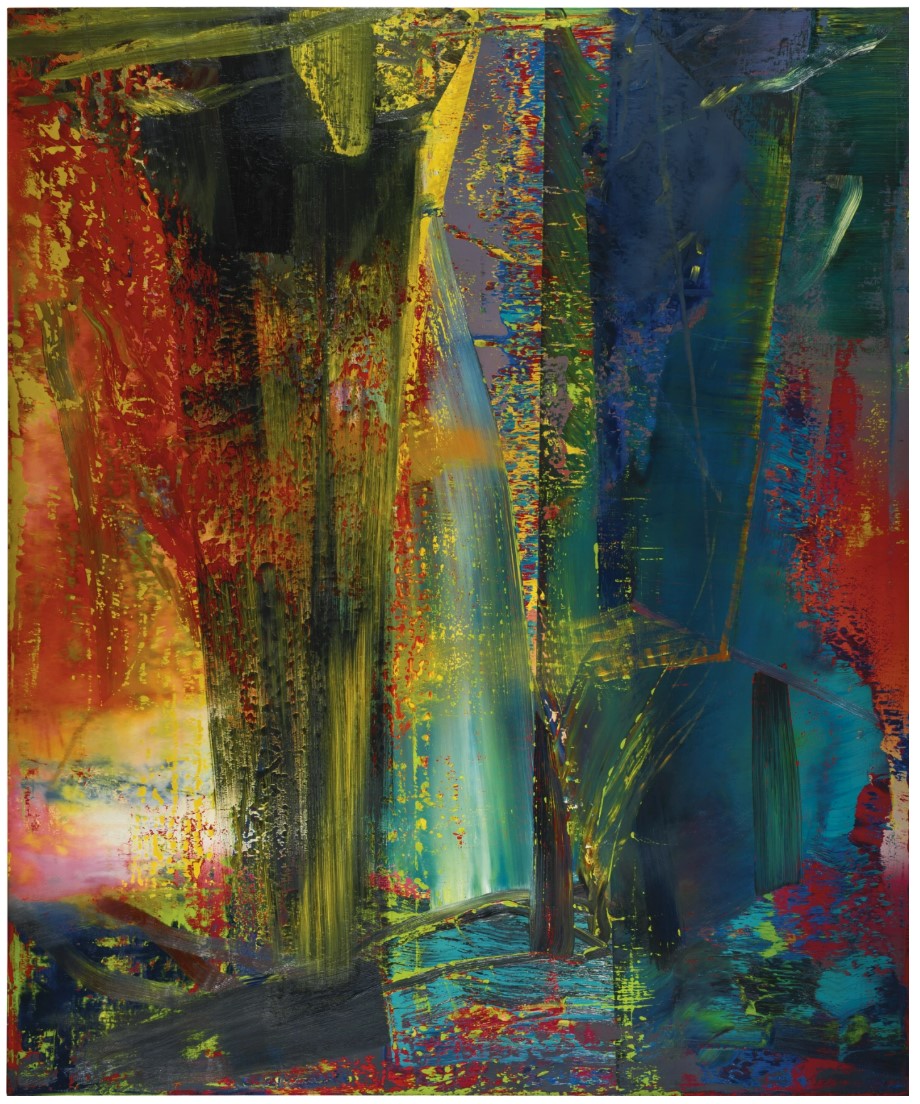
GERHARD RICHTER
Abstraktes Bild, 1986
Oil on canvas
300.5 x 250.5 cm (118 3/8 x 98 5/8 inches)
Signed, dated 1986 and numbered 599 on the reverse
#2. Domplatz, Mailand [Cathedral Square, Milan], 1968
Sotheby’s New-York: 14 May 2013
Estimated: USD 30,000,000 – 40,000,000
USD 37,125,000
(#20) Gerhard Richter (sothebys.com)
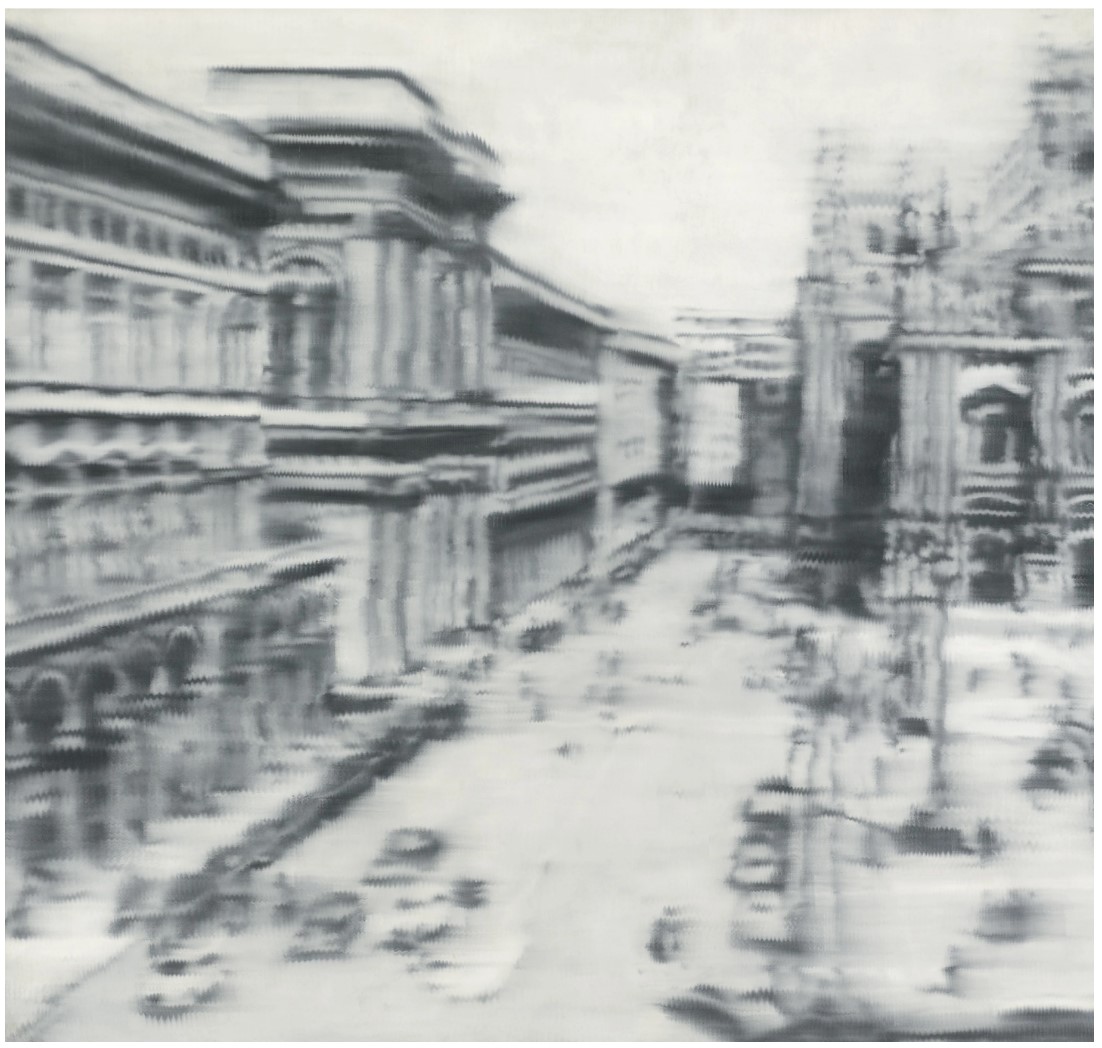
GERHARD RICHTER
Domplatz, Mailand [Cathedral Square, Milan], 1968
Oil on canvas
275×290 cm (108×114 inches)
#3. Abstraktes Bild, 1994
Christie’s New-York: 10 May 2022
Estimate on Request
USD 36,500,000
GERHARD RICHTER (B. 1932) (christies.com)
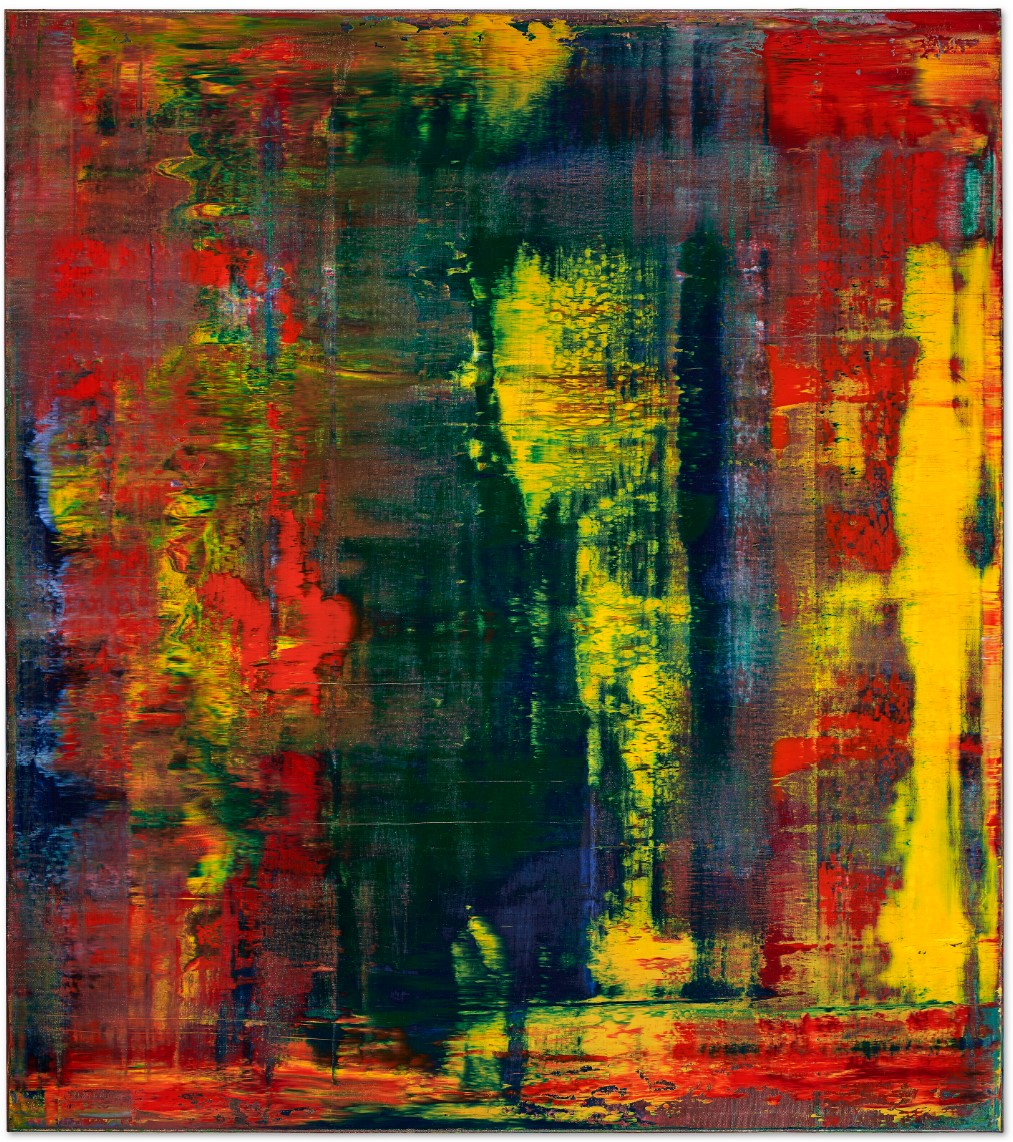
GERHARD RICHTER (B. 1932)
Abstraktes Bild, 1994
Oil on canvas
225×200 cm (88 5⁄8 x 78 3⁄4 inches)
Signed, inscribed and dated ‘809-4 Richter 1994’ (on the reverse)
#4. Abstraktes Bild (636), 1987
Phillips New-York: 14 November 2023
Estimate on Request
USD 34,800,000
Gerhard Richter – 20th Century & Co… Lot 34 November 2023 | Phillips
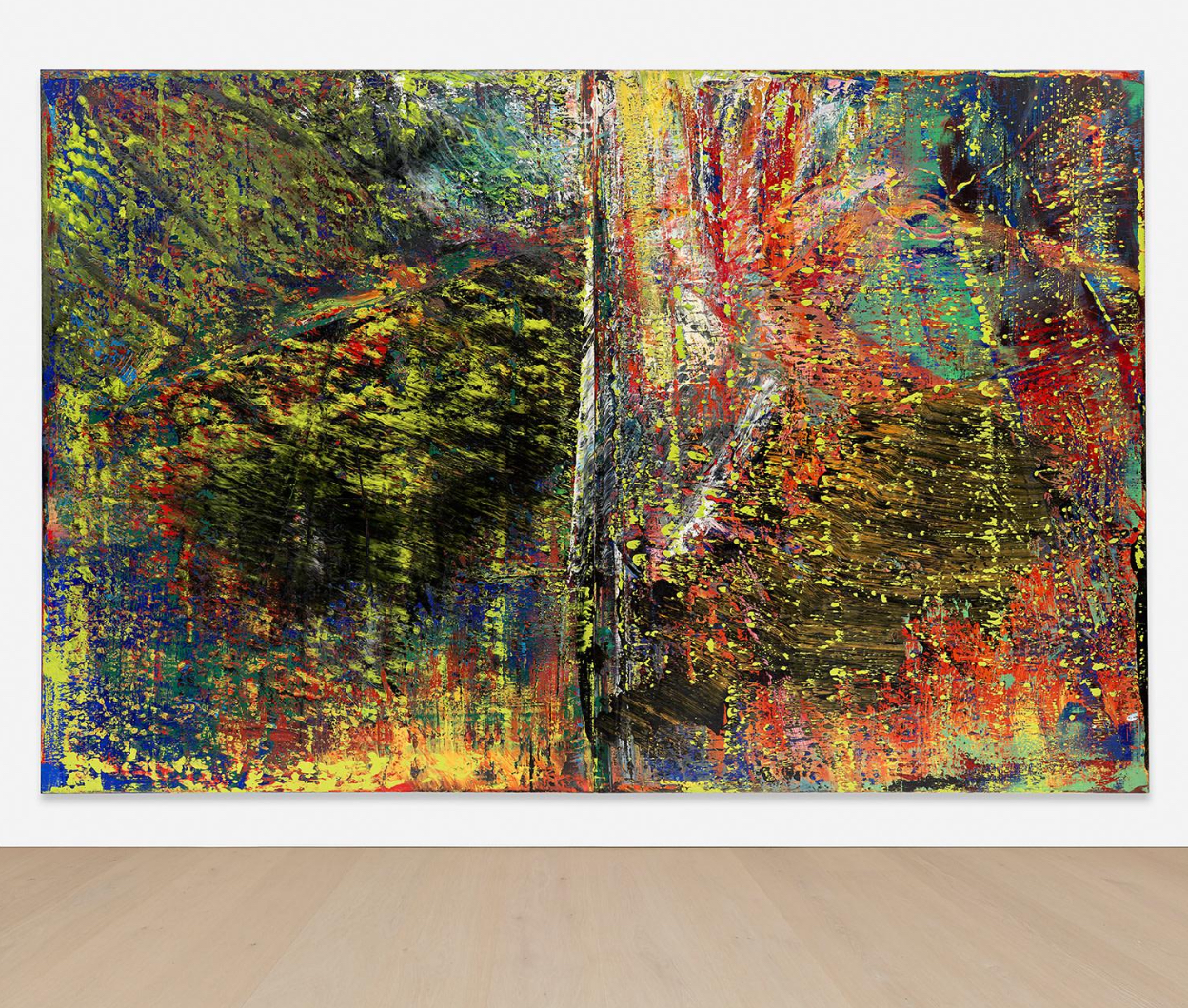
GERHARD RICHTER
Abstraktes Bild (636), 1987
Oil on canvas, in 2 parts
Each 102 1/2 x 78 7/8 in. (260.4 x 200.3 cm)
Overall 102 1/2 x 157 3/4 in. (260.4 x 400.7 cm)
Signed, inscribed and dated “636 Richter 1987” on the reverse of the left panel
Inscribed “636” on the reverse of the right panel
#5. A B, Still, 1986
Sotheby’s New-York: 18 November 2016
Estimated: USD 20,000,000 – 30,000,000
USD 33,987,500
(#13) Gerhard Richter (sothebys.com)
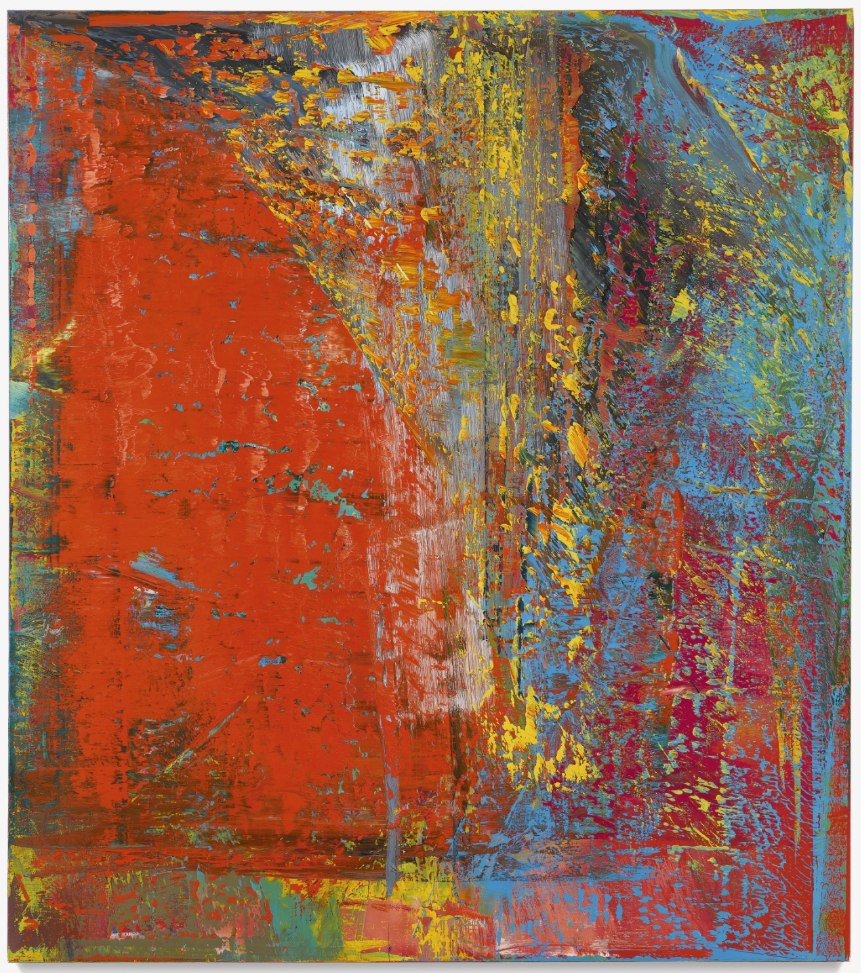
GERHARD RICHTER
A B, Still, 1986
Oil on canvas
224.8 x 200 cm (88 1/2 x 78 3/4 inches)
Signed, dated 1986 and numbered 612-4 on the reverse
#6. Abstraktes Bild, 1993
Sotheby’s New-York: 15 November 2021
Estimated: USD 20,000,000 – 30,000,000
USD 33,010,500
Abstraktes Bild | The Macklowe Collection | 2021 | Sotheby’s (sothebys.com)
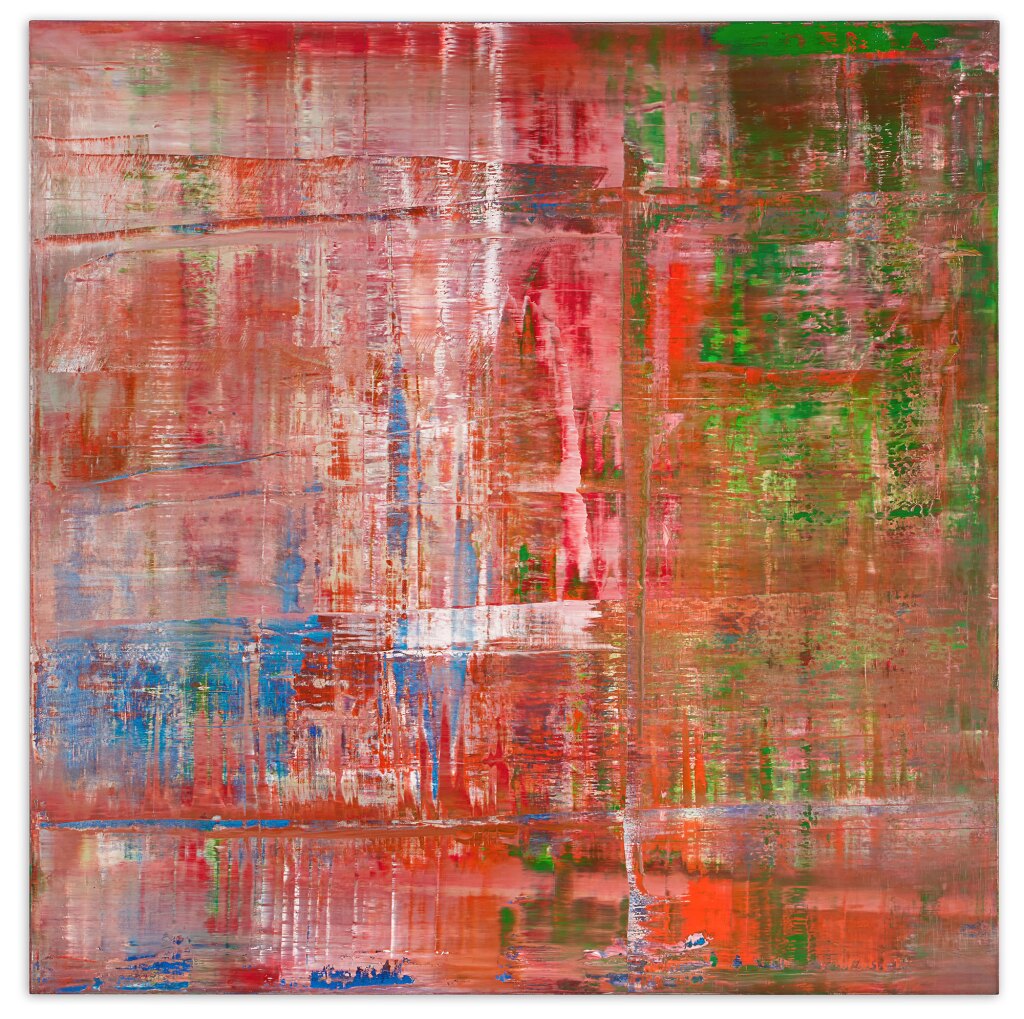
GERHARD RICHTER (b.1932)
Abstraktes Bild, 1993
Oil on canvas
240×240 cm (94 1/2 x 94 1/2 inches)
Signed, dated 1993 and numbered 797-2 on the reverse
#7. Abstraktes Bild, 1989
Christie’s London: 13 February 2014
Estimate on Request
GBP 19,570,500 / USD 32,596,746
Gerhard Richter (b. 1932) (christies.com)
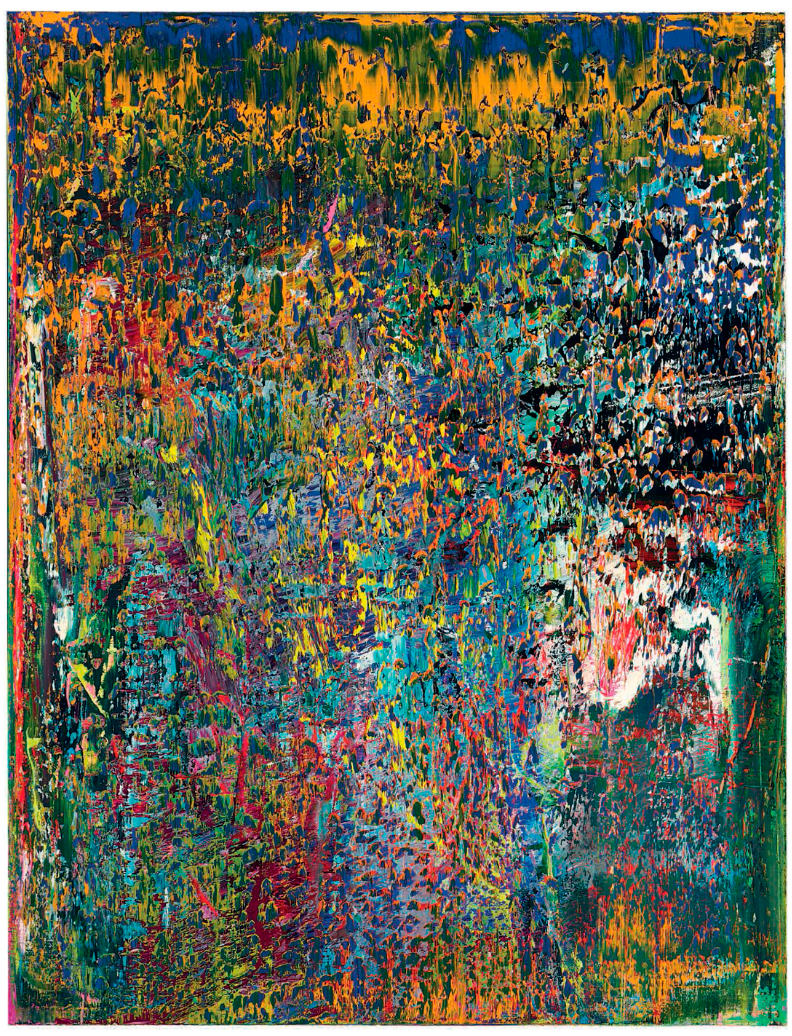
Gerhard Richter (b. 1932)
Abstraktes Bild, 1989
Oil on canvas
259.4 x 200.3 cm (102 1/8 x 78 7/8 inches)
Signed, numbered and dated ‘709 Richter 1989’ (on the reverse)
#8. Abstraktes Bild, 1997
Sotheby’s New-York: 15 November 2023
Estimated: USD 25,000,000 – 35,000,000
USD 31,932,000
Abstraktes Bild | Contemporary Evening Auction | 2023 | Sotheby’s (sothebys.com)
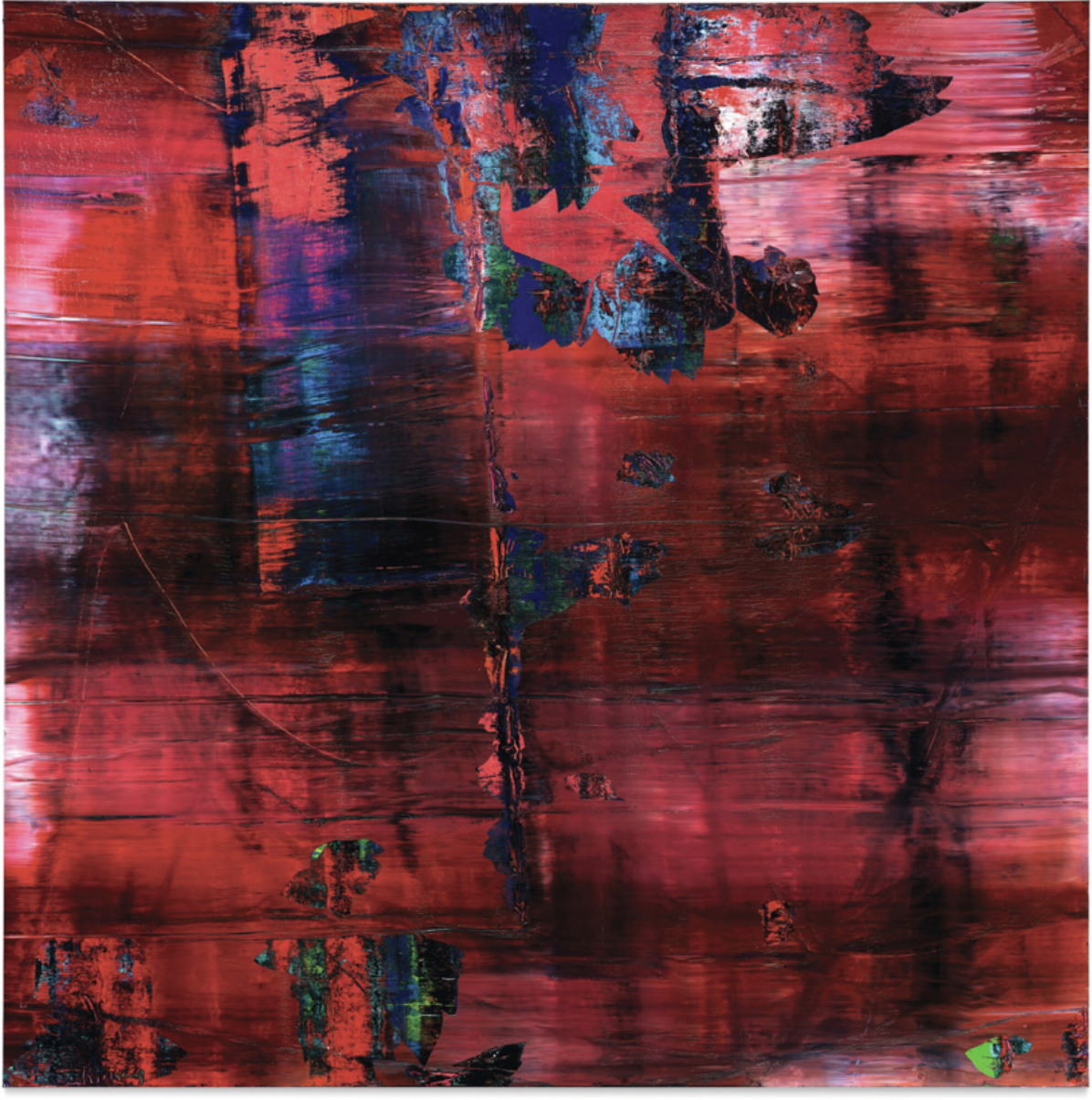
GERHARD RICHTER (b. 1932)
Abstraktes Bild, 1997
Oil on canvas
275×275 cm (108 1/4 x 108 1/4 inches)
Signed, dated 1997 and numbered 849-1 (on the reverse)
#9. Abstraktes Bild (648-3), 1987
Christie’s New-York: 12 November 2014
Estimated: USD 20,000,000 – 30,000,000
USD 31,525,000
Gerhard Richter (b. 1932) (christies.com)
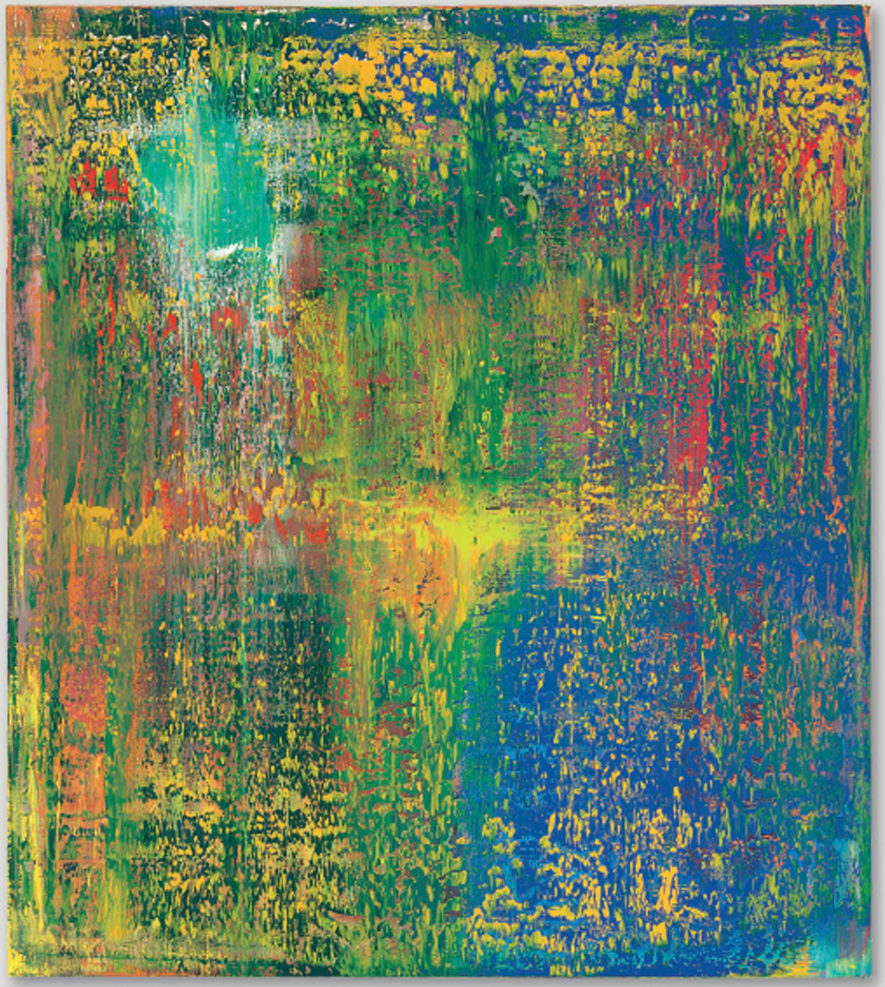
GERHARD RICHTER (b. 1932)
Abstraktes Bild (648-3), 1987
225.4 x 200 cm (88 3/4 x 78 3/4 inches)
Oil on canvas
Signed, numbered and dated ‘Richter 1987 648-3’ (on the reverse)
#10. Seestück [Seascape], 1975
Sotheby’s New-York: 16 May 2022
Estimated: USD 25,000,000 – 35,000,000
USD 30,198,500
Seestück [Seascape] | The Macklowe Collection | 2022 | Sotheby’s (sothebys.com)
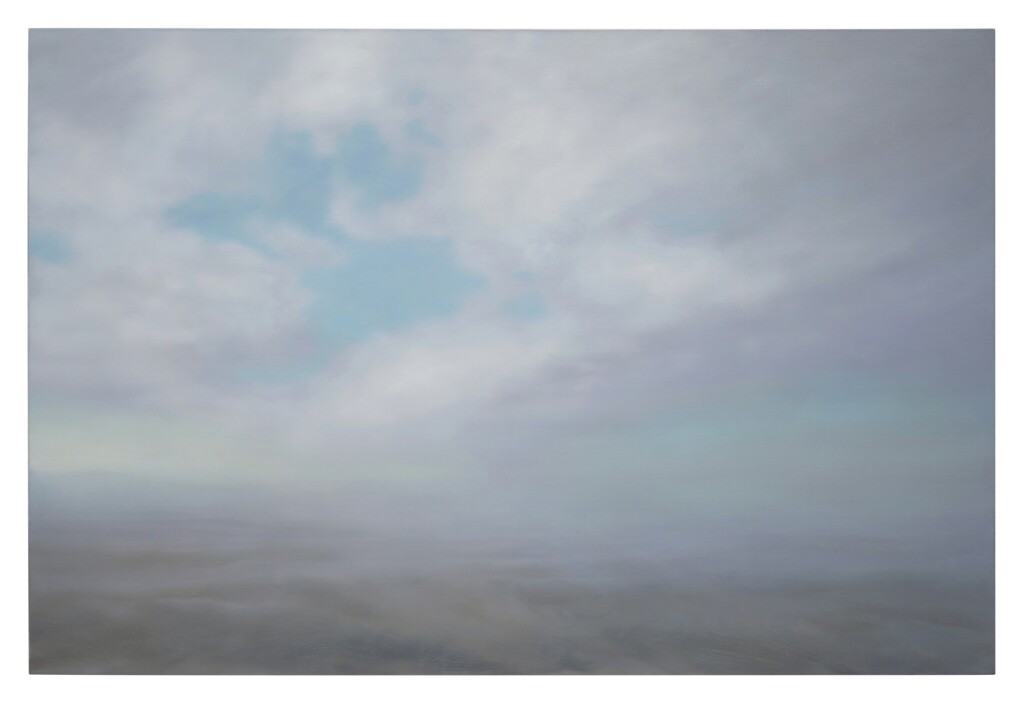
GERHARD RICHTER (b.1932)
Seestück [Seascape], 1975
Oil on canvas
199.4 x 300.4 cm (78 ½ x 118 ¼ inches)
Signed, dated 1975, and numbered 378 on the reverse
PART II: AUCTION RESULTS
2026 Upcoming Lots
MORE LOTS COMING SOON
2026 Auction Results
PRELIMINARY AUCTION RESULTS
As of 15 June 2026
#1. Kerze (Candle), 1982
Breaking Ground: The Private Collection of Marian Goodman
Christie’s New-York: 20 May 2026
Estimated: USD 35,000,000 – 50,000,000
USD 35,135,000
GERHARD RICHTER (B. 1932), Kerze (Candle) | Christie’s
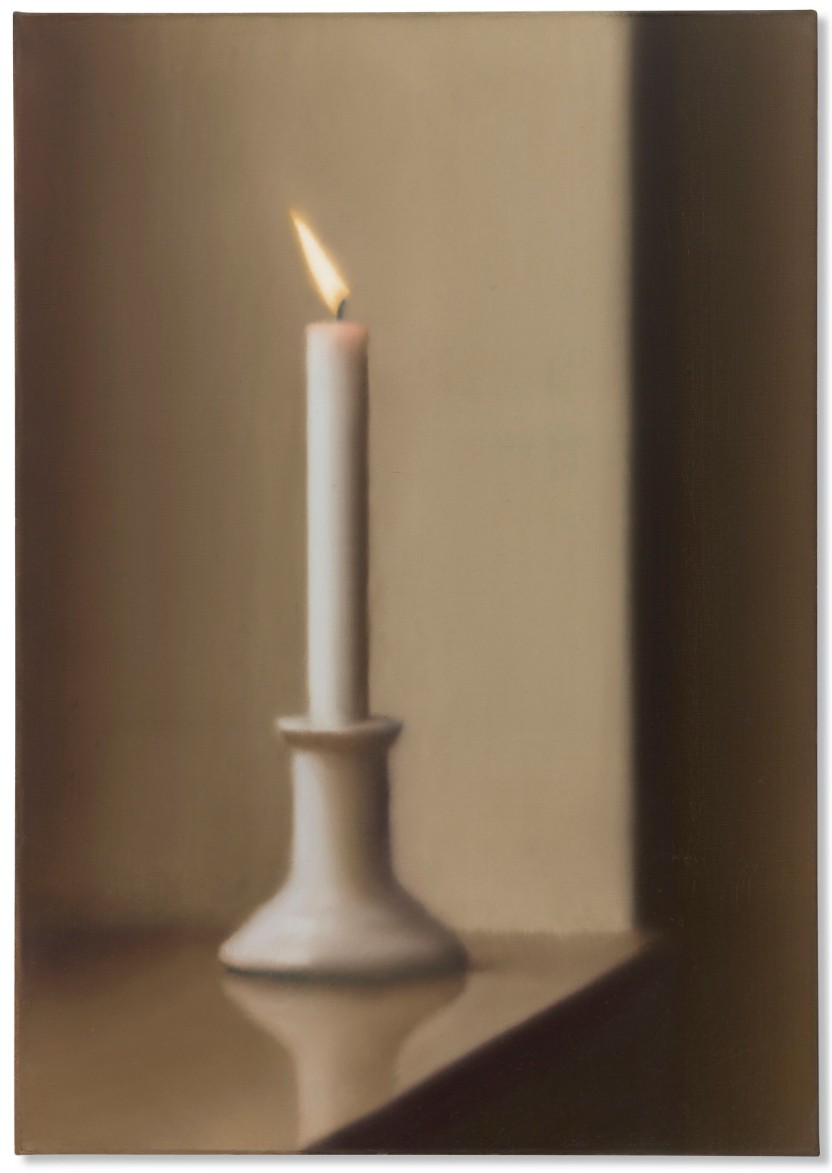
GERHARD RICHTER (B. 1932)
Kerze (Candle), 1982
Oil on canvas
100.3 x 70.5 cm (39-1/2 x 27-3/4 inches)
Signed, inscribed and dated ‘510-1 Richter 1982’ (on the reverse)
#2. Mohn (Poppy), 1995
Breaking Ground: The Private Collection of Marian Goodman
Christie’s New-York: 20 May 2026
Estimated: USD 14,000,000 – 18,000,000
USD 20,070,000
GERHARD RICHTER (B. 1932), Mohn (Poppy) | Christie’s
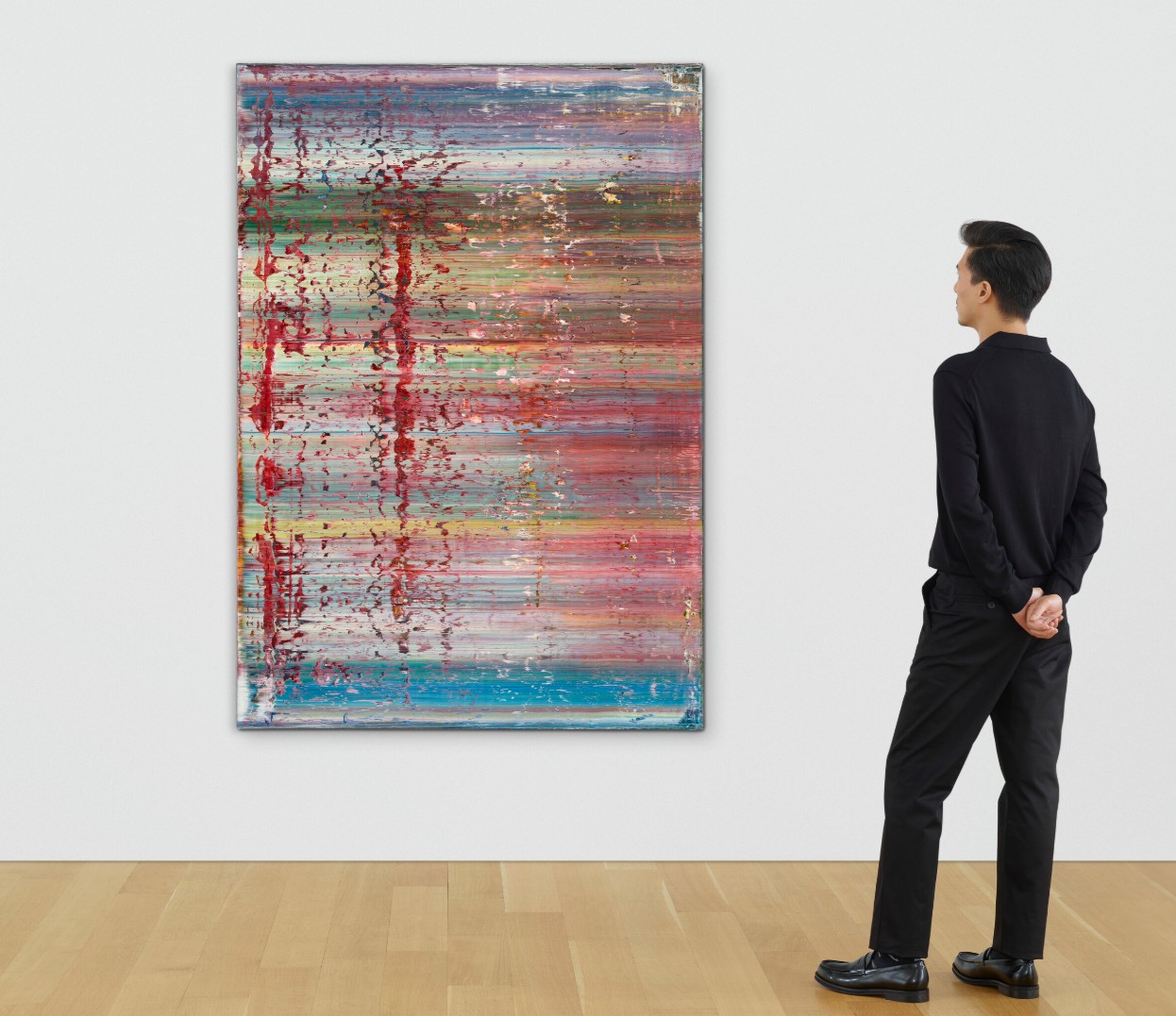
GERHARD RICHTER (B. 1932)
Mohn (Poppy), 1995
Oil on canvas
200×140 cm (78-3/4 x 55-1/8 inches)
Signed, inscribed and dated ‘830-1 Richter 1995’ (on the reverse)
#3. Abstraktes Bild, 1991
Christie’s Hong-Kong: 27 March 2026
Estimated: HKD 78,000,000 – 98,000,000
HKD 92,100,000 / USD 11,762,450
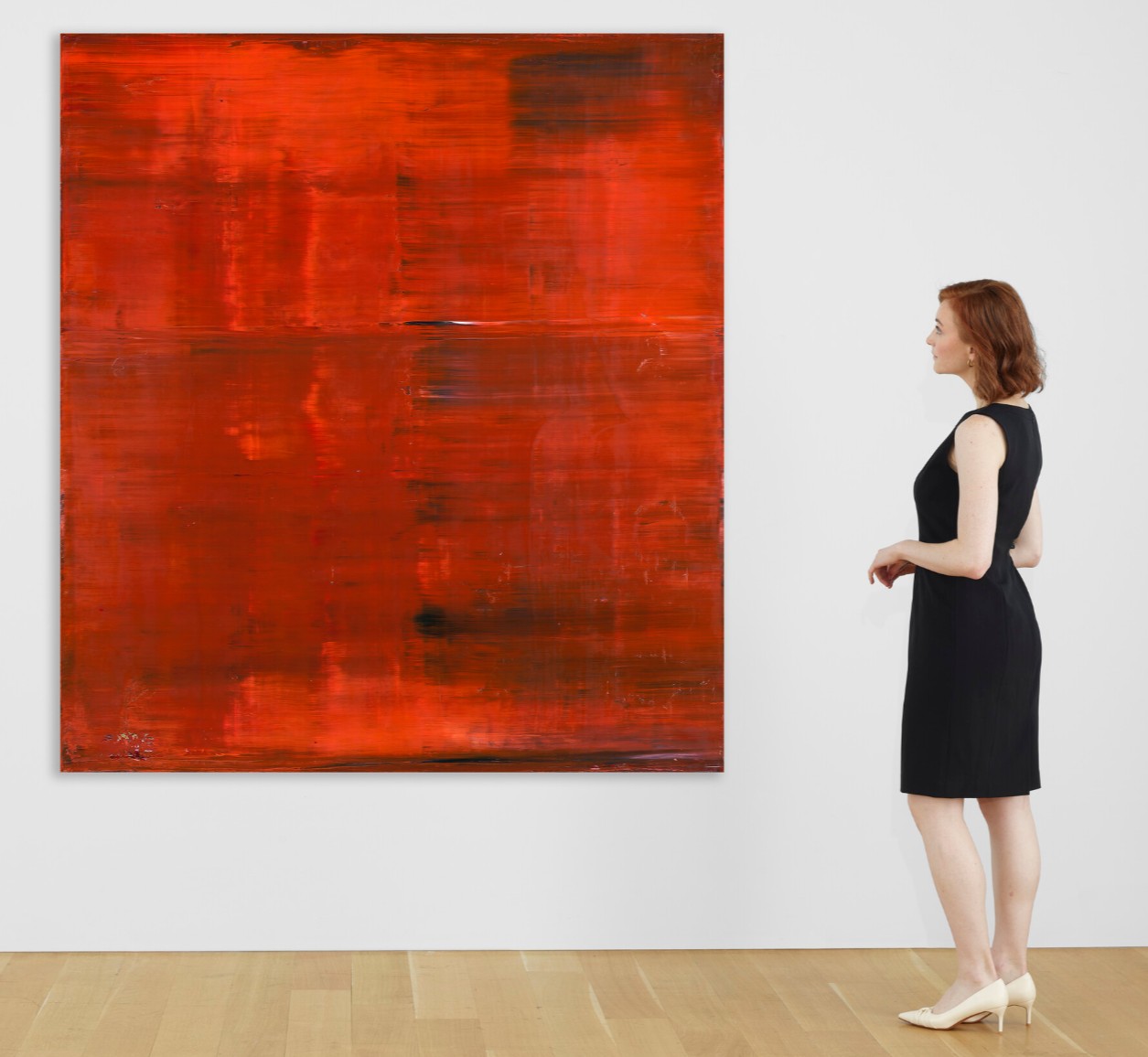
GERHARD RICHTER (B. 1932)
Abstraktes Bild, 1991
Oil on canvas
200×180 cm (78-3/4 x 70-7/8 inches)
Signed, inscribed, and dated ‘745-1 Richter 1991’ (on the reverse)
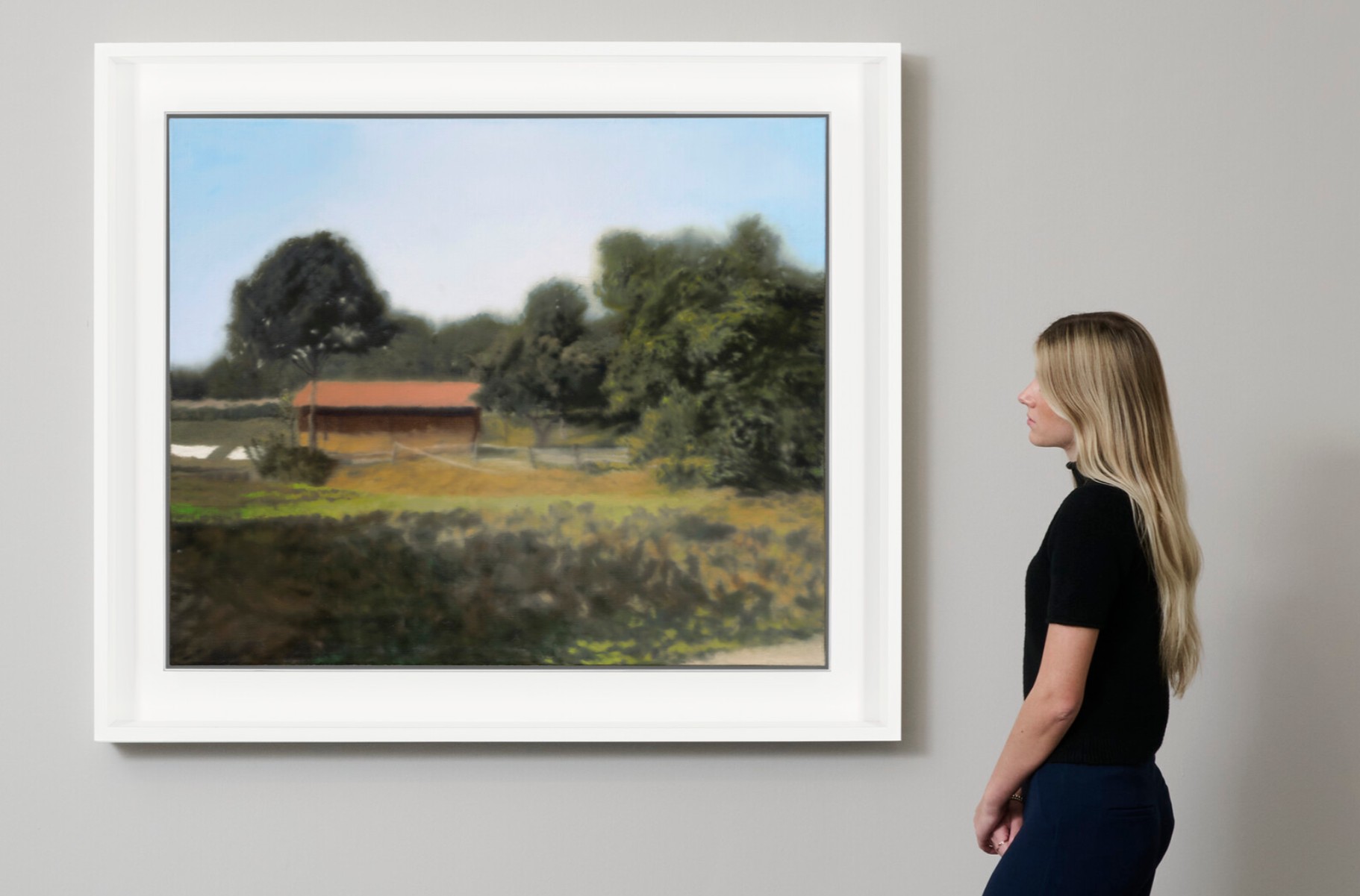
#4. Schober (Haybarn), 1984
PROPERTY FROM AN IMPORTANT PRIVATE COLLECTION
Christie’s London: 5 March 2026
Estimated: GBP 6,000,000 – 9,000,000
GBP 8,405,000 / USD 11,228,240
READ MORE IN FOCUS SECTION
GERHARD RICHTER (B. 1932), Schober (Haybarn) | Christie’s
REPEAT SALE
VISIONARIES: WORKS FROM THE EMILY AND JERRY SPIEGEL COLLECTION
Christie’s New-York: 17 May 2017
Estimated: USD 5,500,000 – 7,500,000
USD 6,967,500
Gerhard Richter (B. 1932), Schober | Christie’s
GERHARD RICHTER (B. 1932)
Schober (Haybarn), 1984
Oil on canvas
100.3 x 120 cm (39-1/2 x 47-1/4 inches)
Signed, numbered and dated ‘550-2 Richter 1984’ (on the reverse)
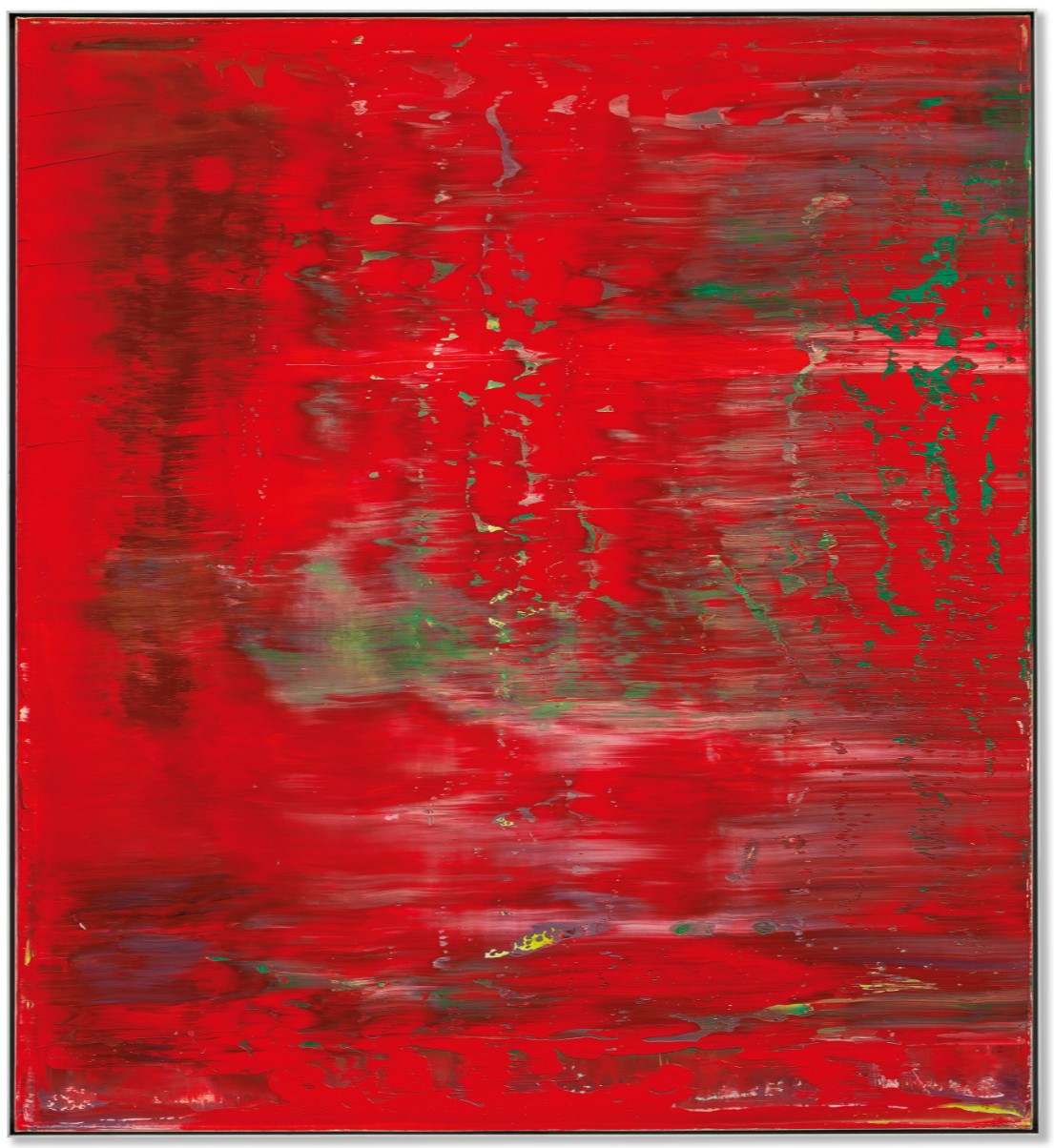
#5. Abstraktes Bild, 1991
ABSTRACT MASTERWORKS FROM AN IMPORTANT PRIVATE COLLECTION
Christie’s London: 5 March 2026
Estimated: GBP 4,500,000 – 6,500,000
GBP 7,600,000 / USD 10,152,840
GERHARD RICHTER (B. 1932), Abstraktes Bild | Christie’s
GERHARD RICHTER (B. 1932)
Abstraktes Bild, 1991
Oil on canvas
112×102 cm (44-1/8 x 40-1/8 inches)
Signed, numbered and dated ‘748-5 Richter 1991’ (on the reverse)
USD 10 million
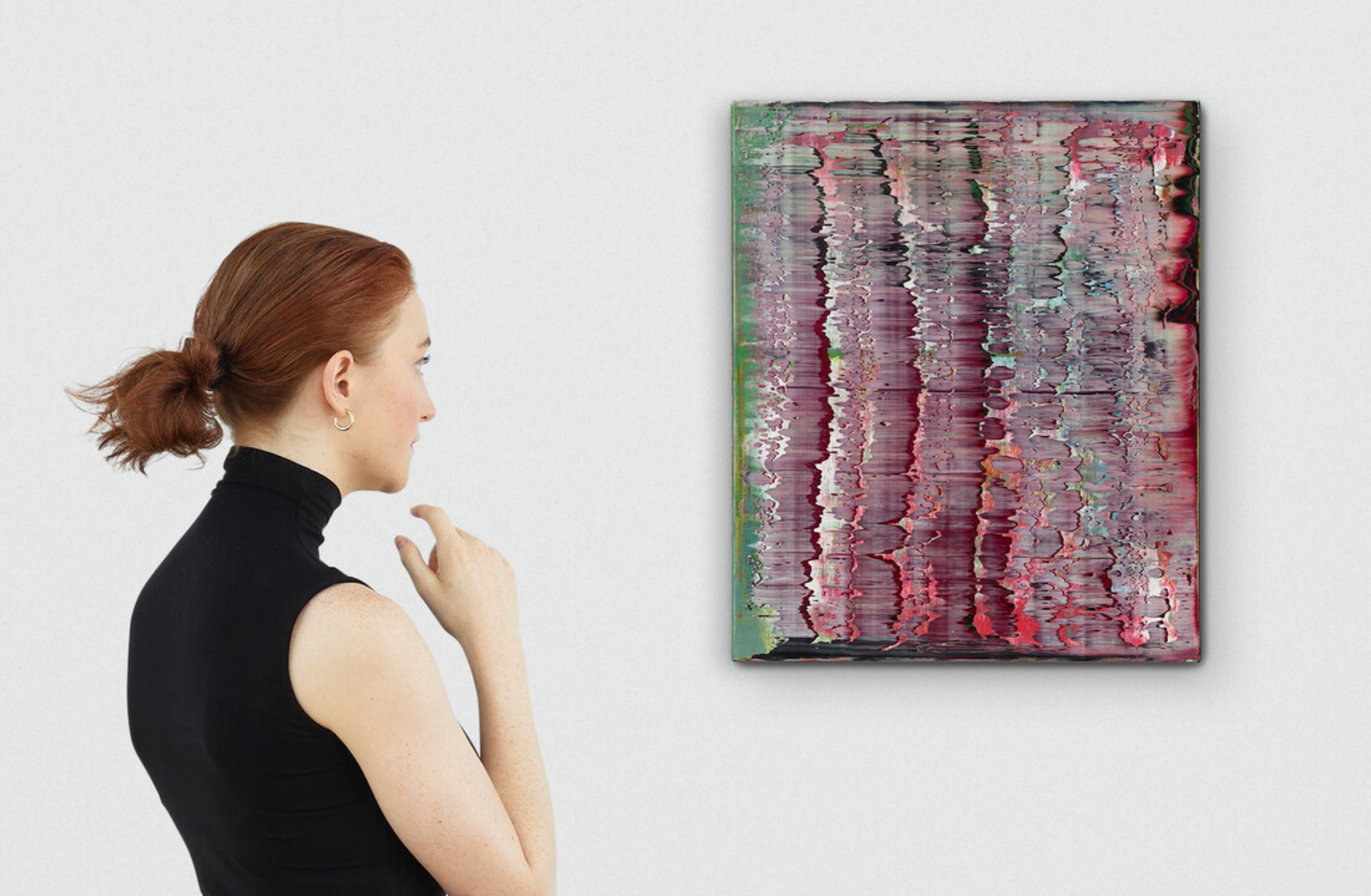
#6. Abstraktes Bild, 1995
Breaking Ground: The Private Collection of Marian Goodman
Christie’s New-York: 20 May 2026
Estimated: USD 3,000,000 – 5,000,000
USD 8,737,000
GERHARD RICHTER (B. 1932), Abstraktes Bild | Christie’s
GERHARD RICHTER (B. 1932)
Abstraktes Bild, 1995
Oil on canvas
61 x 51.1 cm (24 x 20-1/8 inches)
Signed, inscribed and dated ‘825-11 Richter 1995’ (on the reverse)
#7. Besen, 1984
Property of an Important Private Collector
Phillips New-York: 19 May 2026
Estimated: USD 6,500,000 – 8,500,000
USD 8,070,000
Gerhard Richter Modern & Contemporary Art Evening Sale
REPEAT SALE
Christie’s Hong-Kong: 26 May 2022
Estimated: 55,000,000 – 75,000,000
HKD 79,915,000 / USD 10,180,385
GERHARD RICHTER (B. 1932) (christies.com)
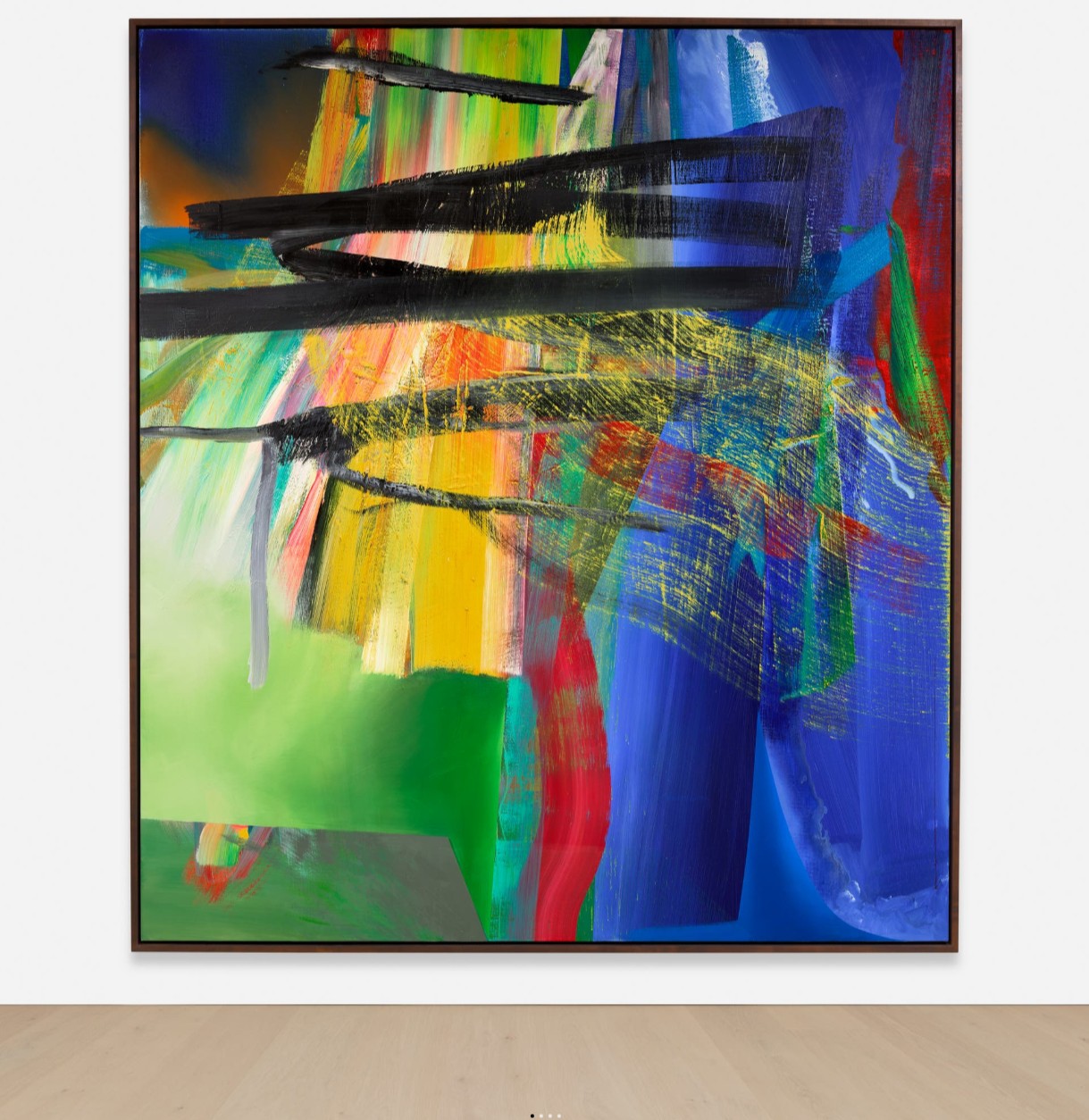
Oil on canvas
225.7 x 200.3 cm (88 7/8 x 78 7/8 inches)
Signed, inscribed and dated “Richter 1984 553-2″ on the reverse
#8. Abstraktes Bild, 2009
Breaking Ground: The Private Collection of Marian Goodman
Christie’s New-York: 20 May 2026
Estimated: USD 3,500,000 – 5,500,000
USD 6,541,000
GERHARD RICHTER (B. 1932), Abstraktes Bild | Christie’s
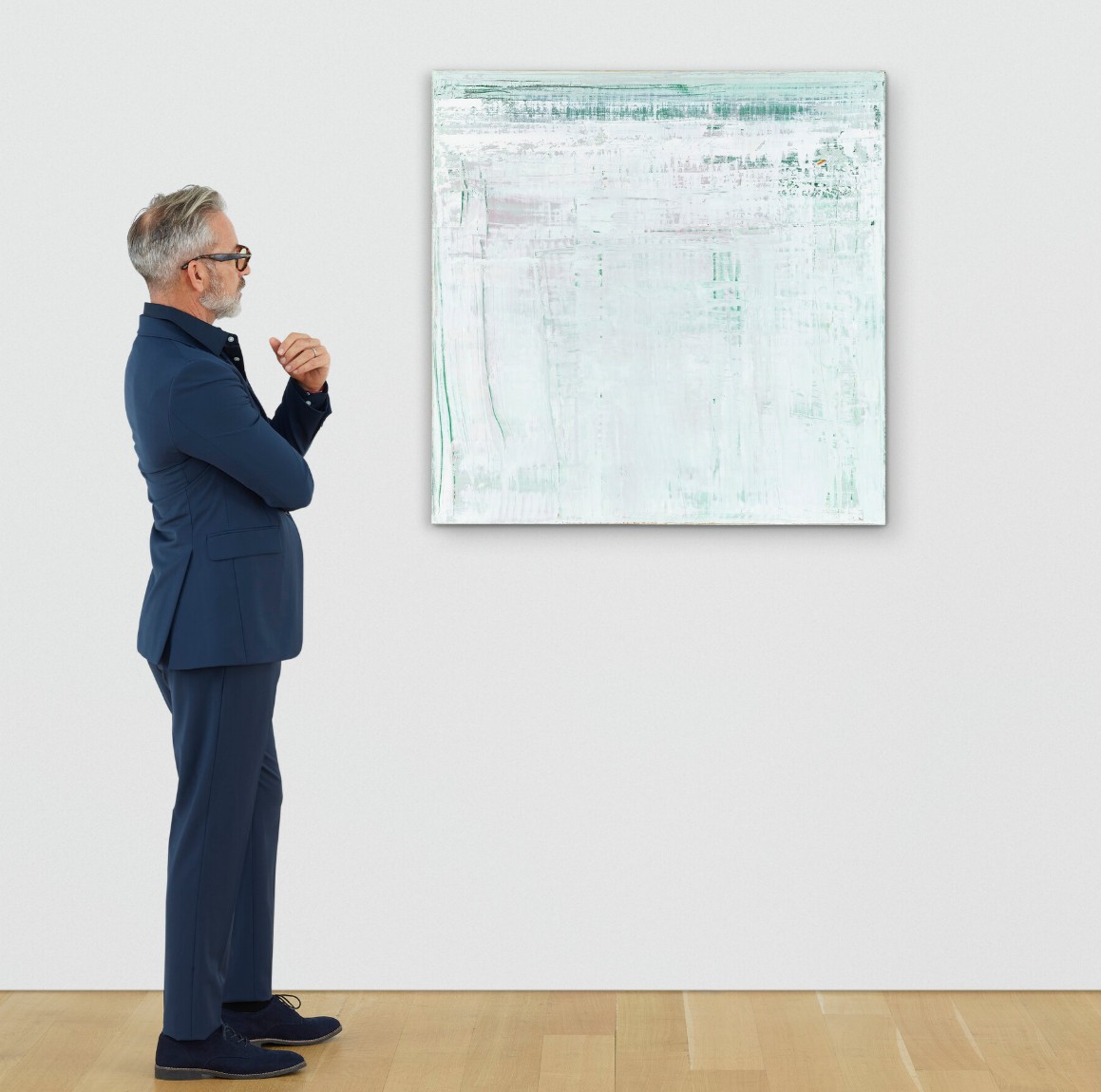
GERHARD RICHTER (B. 1932)
Abstraktes Bild, 2009
Oil on canvas
101.9 x 101.9 cm (40-1/8 x 40-1/8 inches)
Signed, inscribed and dated ‘910-5 Richter 2009’ (on the reverse)
#9. Abstraktes Bild, 2008
Breaking Ground: The Private Collection of Marian Goodman
Christie’s New-York: 20 May 2026
Estimated: USD 4,000,000 – 6,000,000
USD 5,077,000
GERHARD RICHTER (B. 1932), Abstraktes Bild | Christie’s
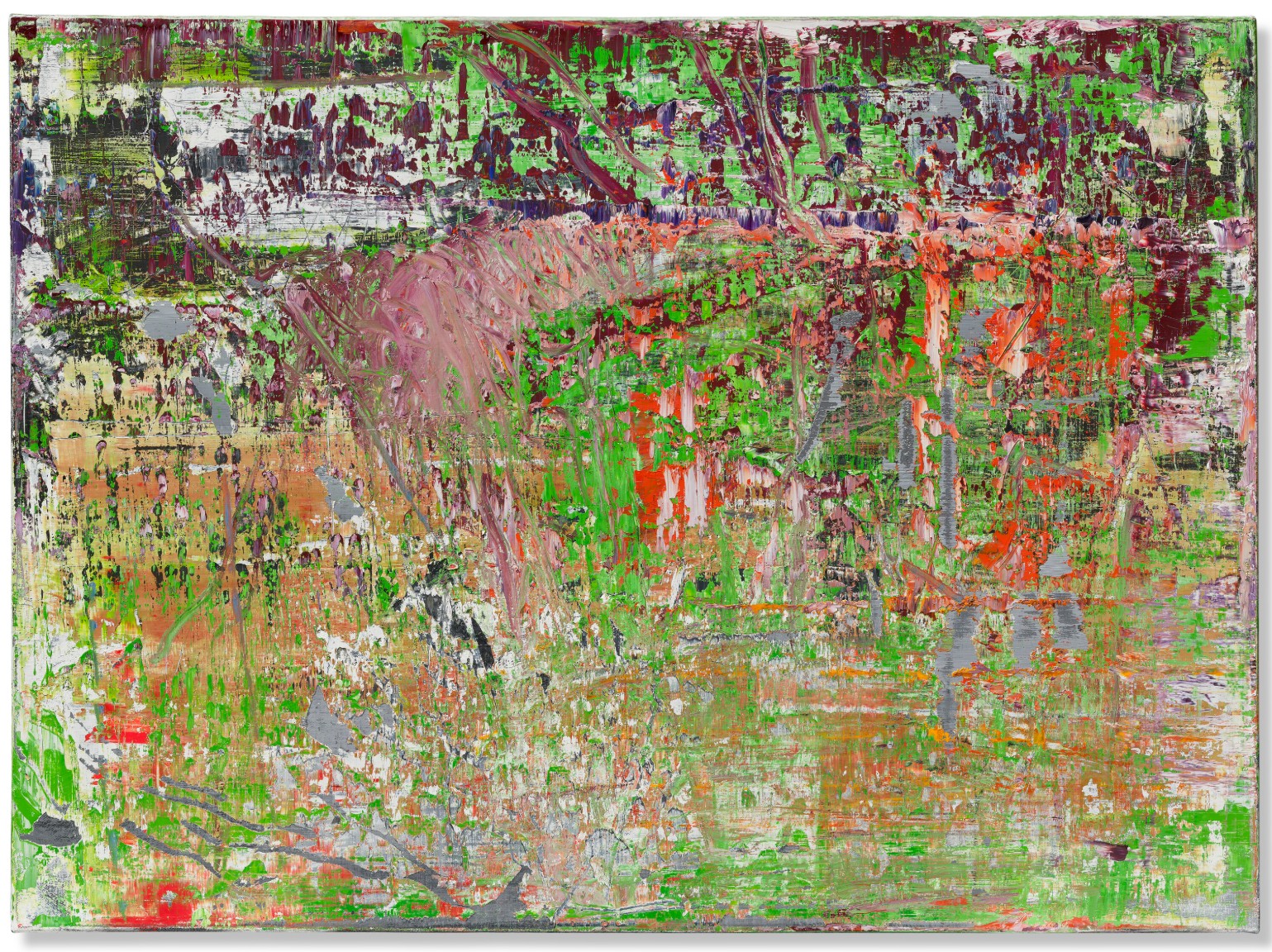
GERHARD RICHTER (B. 1932)
Abstraktes Bild, 2008
Oil on canvas
82.6 x 112.1 cm (32-1/2 x 44-1/8 inches)
Signed, inscribed and dated ‘903-6 Richter R. 2008’ (on the reverse)
#10. Abstraktes Bild, 1999
Breaking Ground: The Private Collection of Marian Goodman
Christie’s New-York: 20 May 2026
Estimated: USD 1,800,000 – 2,500,000
USD 2,881,000
GERHARD RICHTER (B. 1932), Abstraktes Bild | Christie’s
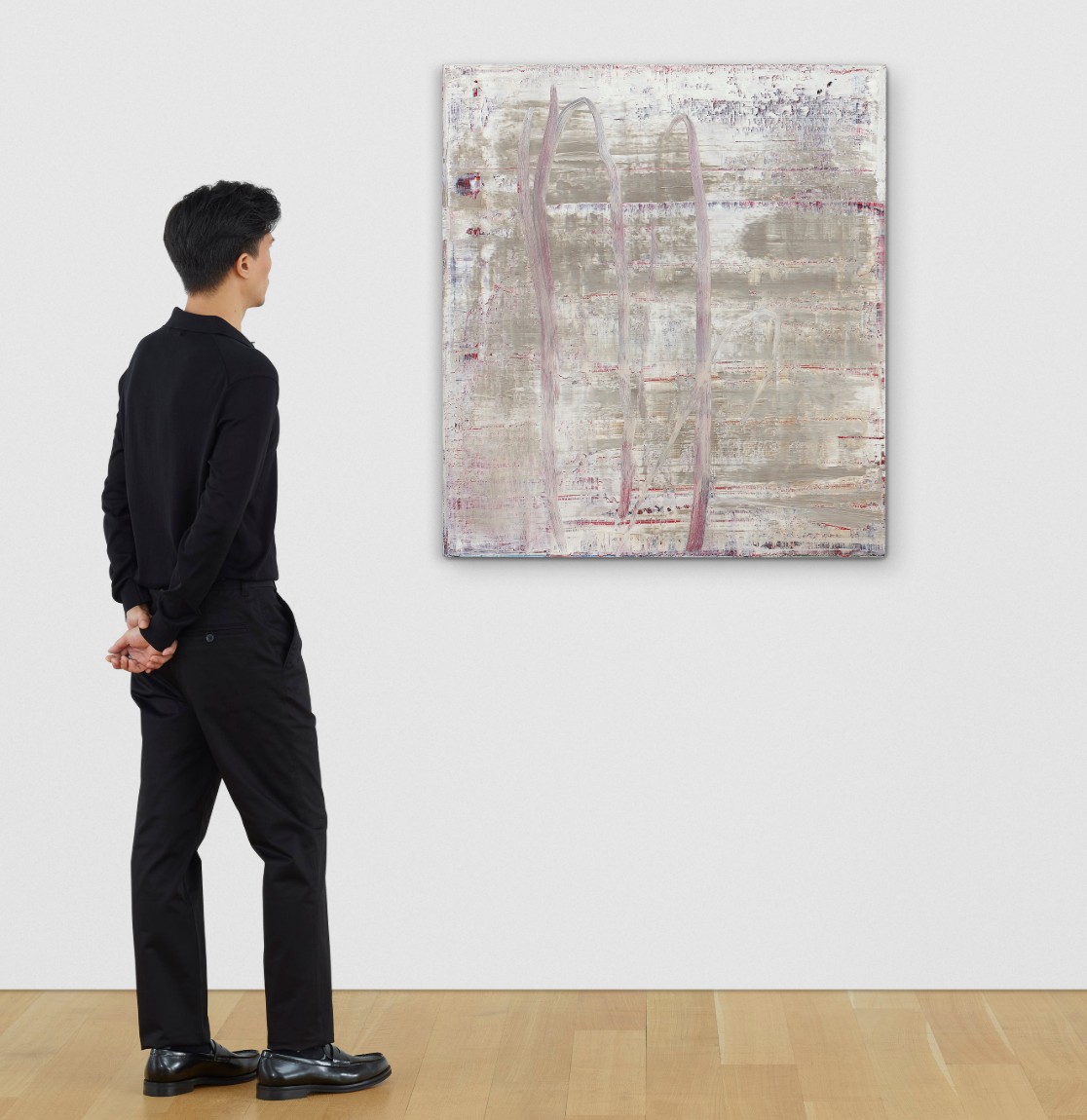
GERHARD RICHTER (B. 1932)
Abstraktes Bild, 1999
Oil on Alucobond
100×90 cm (39-3/8 x 35-3/8 inches)
Signed, inscribed and dated ‘860-8 Richter 1999’ (on the reverse)
#11. Abstraktes Bild, 1992
Christie’s Paris: 15 April 2026
Estimated: EUR 1,800,000 – 2,500,000
GBP 2,317,000 / USD 2,733,630
Gerhard Richter (né en 1932), Abstraktes Bild | Christie’s
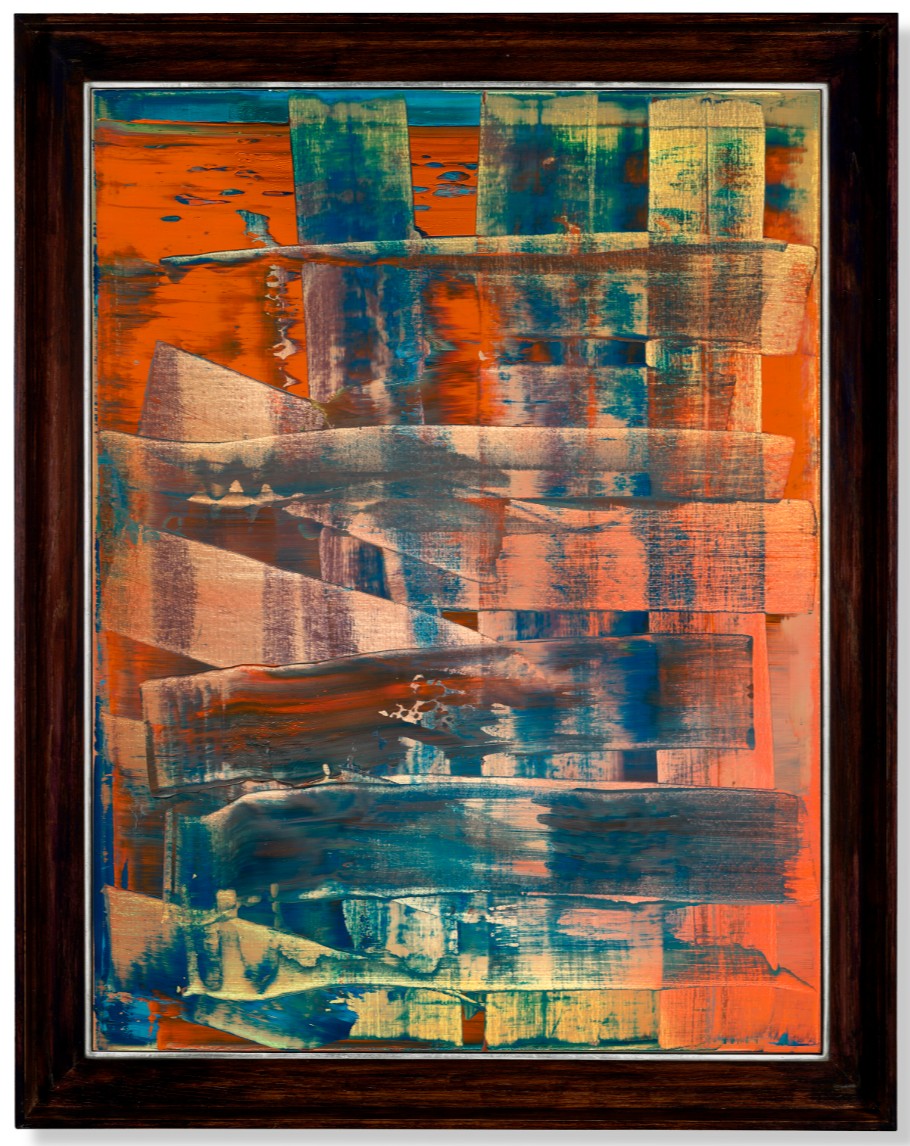
GERHARD RICHTER (born 1932)
Abstraktes Bild, 1992
Oil on canvas
82.2 x 62.3 cm (32-3/8 x 24-1/2 inches)
Signed, numbered and dated ‘761-1 Richter 1992’ (on the reverse)
#12. Strip, 2012
Christie’s New-York: 21 May 2026
Estimated: USD 800,000 – 1,200,000
USD 1,765,300
GERHARD RICHTER (B. 1932), Strip | Christie’s
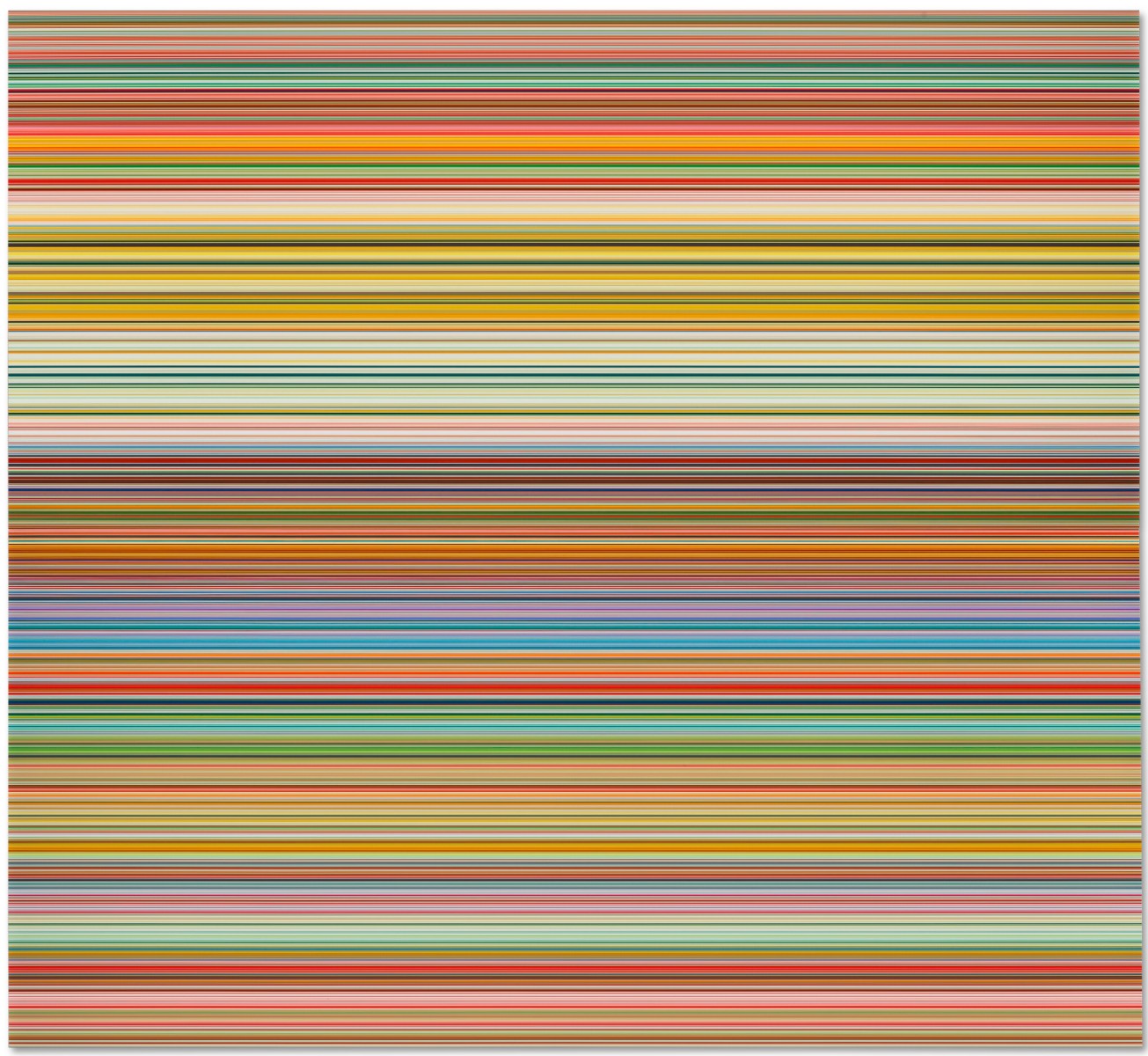
GERHARD RICHTER (B. 1932)
Strip, 2012
Digital print on paper between Alu-Dibond and perspex (Diasec), in two parts
210×230 cm (82-5/8 x 90-1/2 inches)
Signed, inscribed and dated ‘927-2 Richter 2012’ (on the reverse)
#13. Abstrakte Skizze (664-3), 1988
Christie’s Hong-Kong: 28 March 2026
Estimated: HKD 6,500,000 – 10,000,000
HKD 8,128,000 / USD 1,038,060
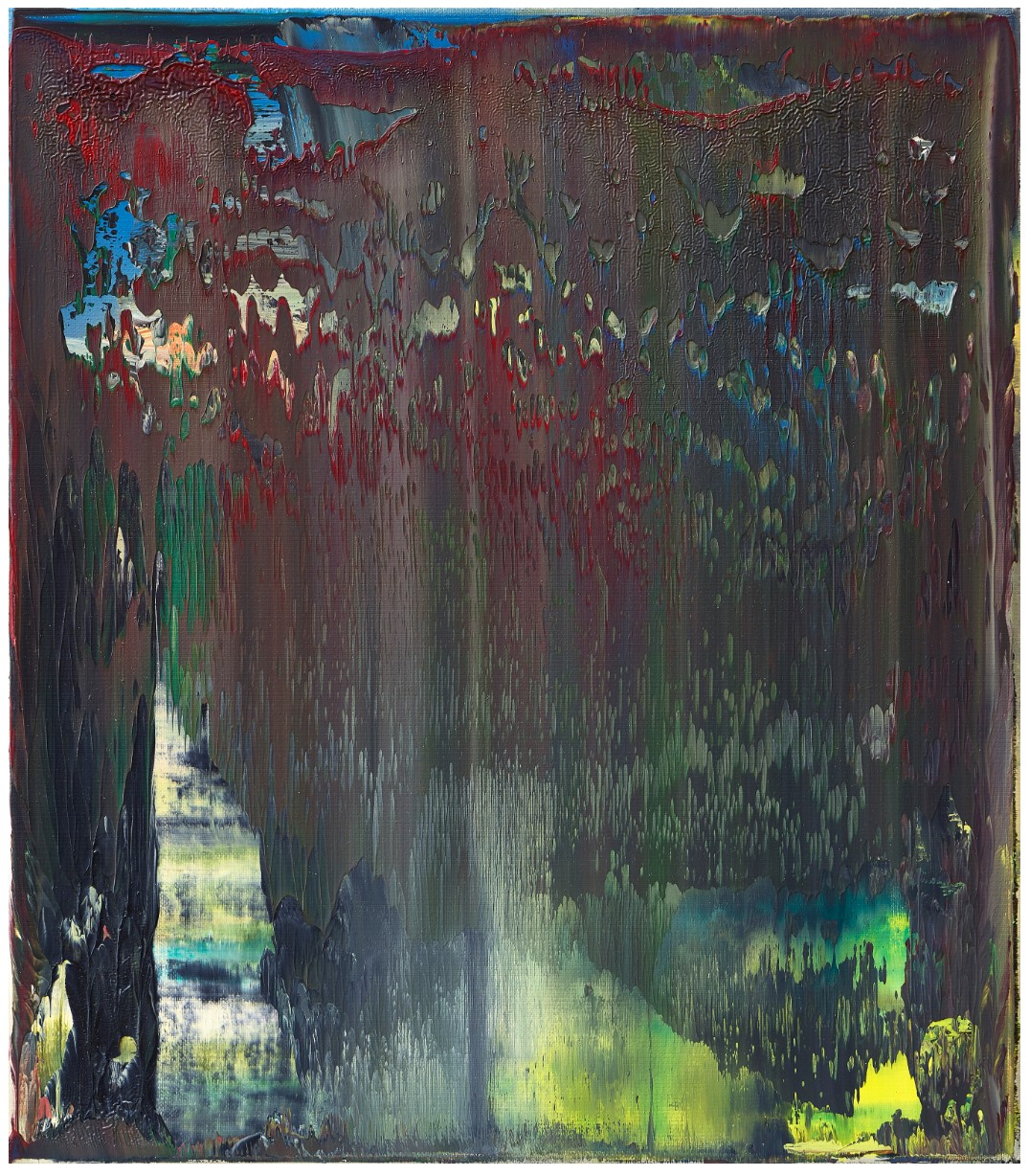
GERHARD RICHTER (B. 1932)
Abstrakte Skizze (664-3), 1988
Oil on canvas
40×35 cm (15-3/4 x 13-3/4 inches)
Signed, titled, and dated ‘664-3 Richter 1988’ (on the reverse)
USD 1 million
#14. Abstraktes Bild, 1995
Breaking Ground: The Private Collection of Marian Goodman
Christie’s New-York: 21 May 2026
Estimated: USD 750,000 – 1,000,000
USD 889,000
GERHARD RICHTER (B. 1932), Abstraktes Bild | Christie’s
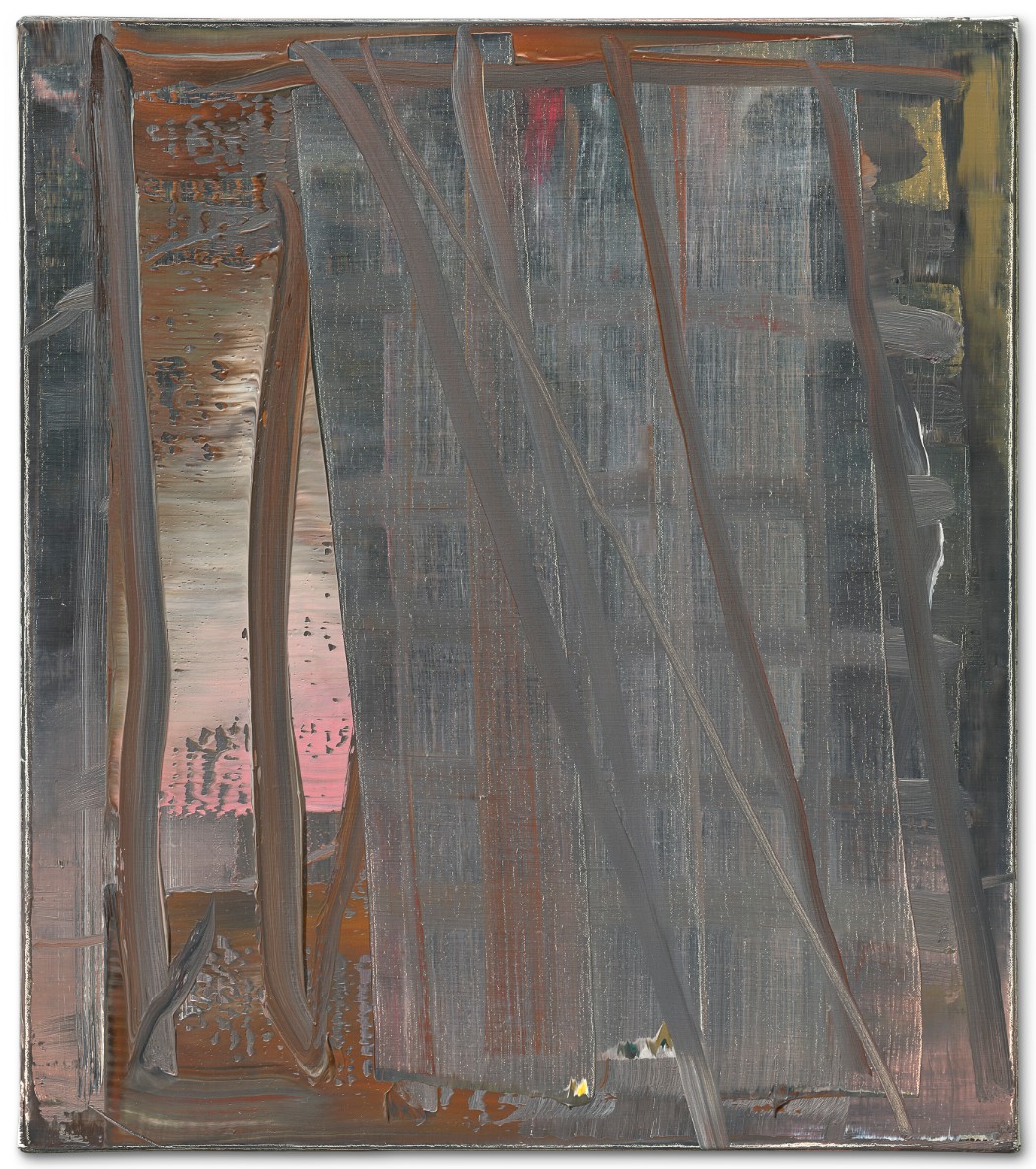
GERHARD RICHTER (B. 1932)
Abstraktes Bild, 1995
Oil on canvas
40.6 x 36 cm (16 x 14-1/8 inches)
Signed, inscribed and dated ‘833-4 Richter X.95’ (on the reverse)
#15. Cage Grid, 2011
Property from a Distinguished British Collector
Sotheby’s London: 5 March 2026
Estimated: GBP 400,000 – 600,000
GBP 512,000 / USD 683,980
Cage Grid | Contemporary Day Auction | 2026 | Sotheby’s
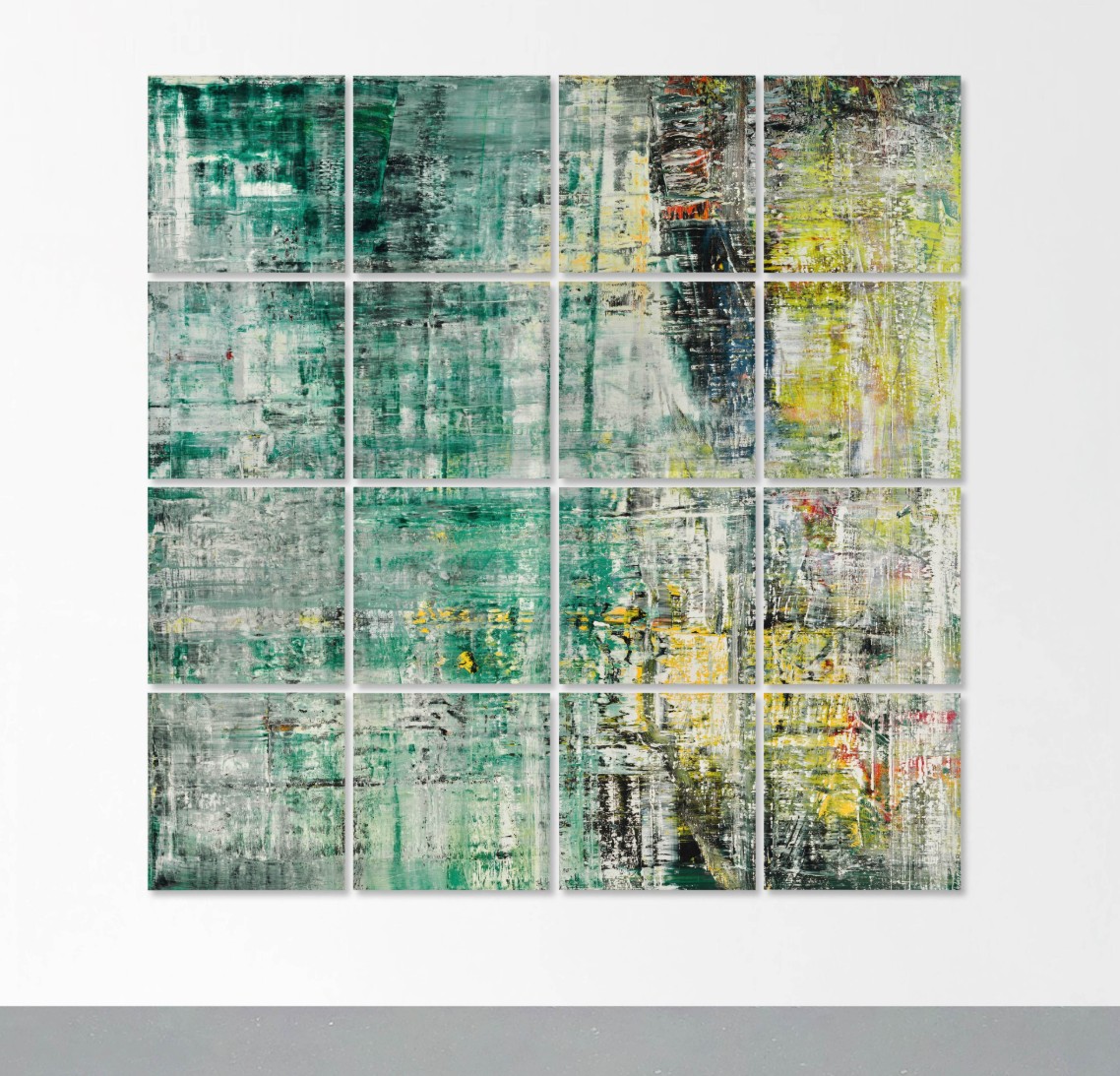
GERHARD RICHTER (b. 1932)
Cage Grid, 2011
Giclée print on paper mounted on aluminum, in sixteen parts
Each: 75×75 cm (29-1/2 x 29- 1/2 inches)
Overall: 300×300 cm (118-1/8 x 118-1/8 inches)
Each: signed with the artist’s initials and numbered 15/16 (on the reverse)
This work is number 15 from an edition of 16, plus 4 artist’s proofs
#16. Ema (Akt auf einer Treppe), 1992
Property from an Important New York Collection
Sotheby’s New-York: 15 May 2026
Estimated: USD 500,000 – 700,000
USD 588,800
Gerhard Richter | Ema (Akt auf einer Treppe) | Contemporary Day
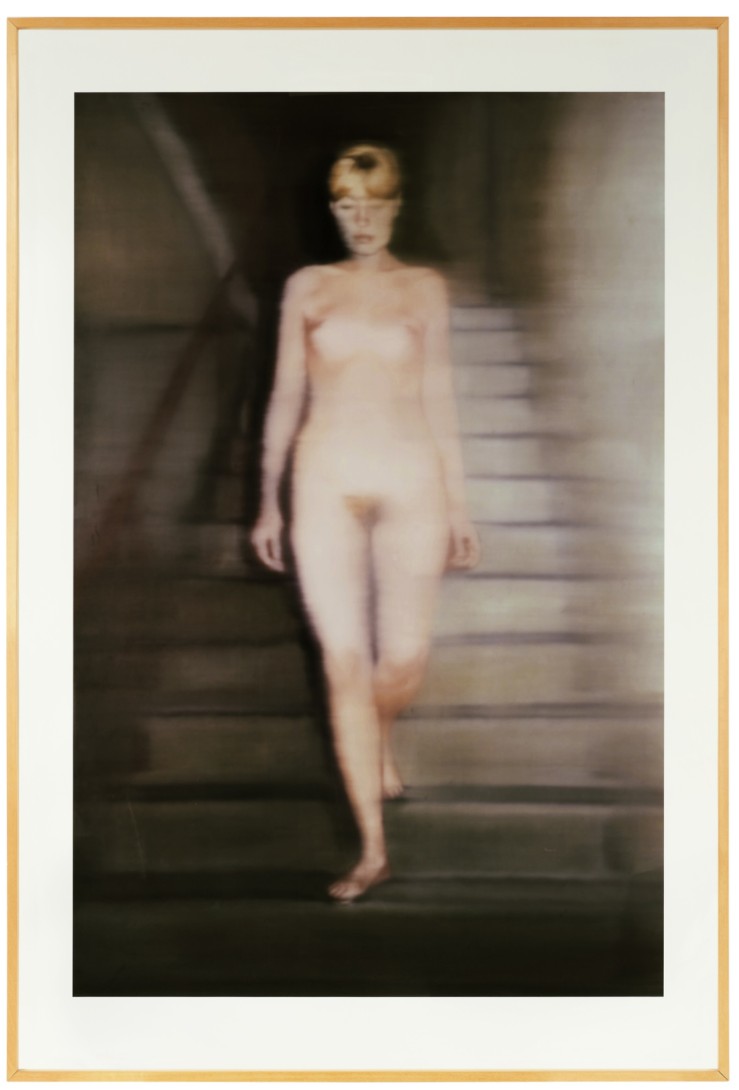
GERHARD RICHTER (b. 1932)
Ema (Akt auf einer Treppe), 1992
Cibachrome photograph mounted on Alucobond in artist’s chosen frame
Image: 194×126 cm ( 76-3/8 x 49-5/8 inches)
Overall: 224×140 cm (88-1/4 x 55-1/8 inches)
Signed, numbered 3/12 and dated ’92 (on the reverse of the frame)
This work is number 3 from an edition of 12 plus 1 artist’s proof
#17. Untitled (9. Nov. 1995), 1995
Sotheby’s Paris: 16 April 2026
Estimated: EUR 80,000 – 120,000
EUR 473,600 / USD 559,180
WORK ON PAPER
Gerhard Richter | Untitled (9. Nov. 1995) | Art Moderne et
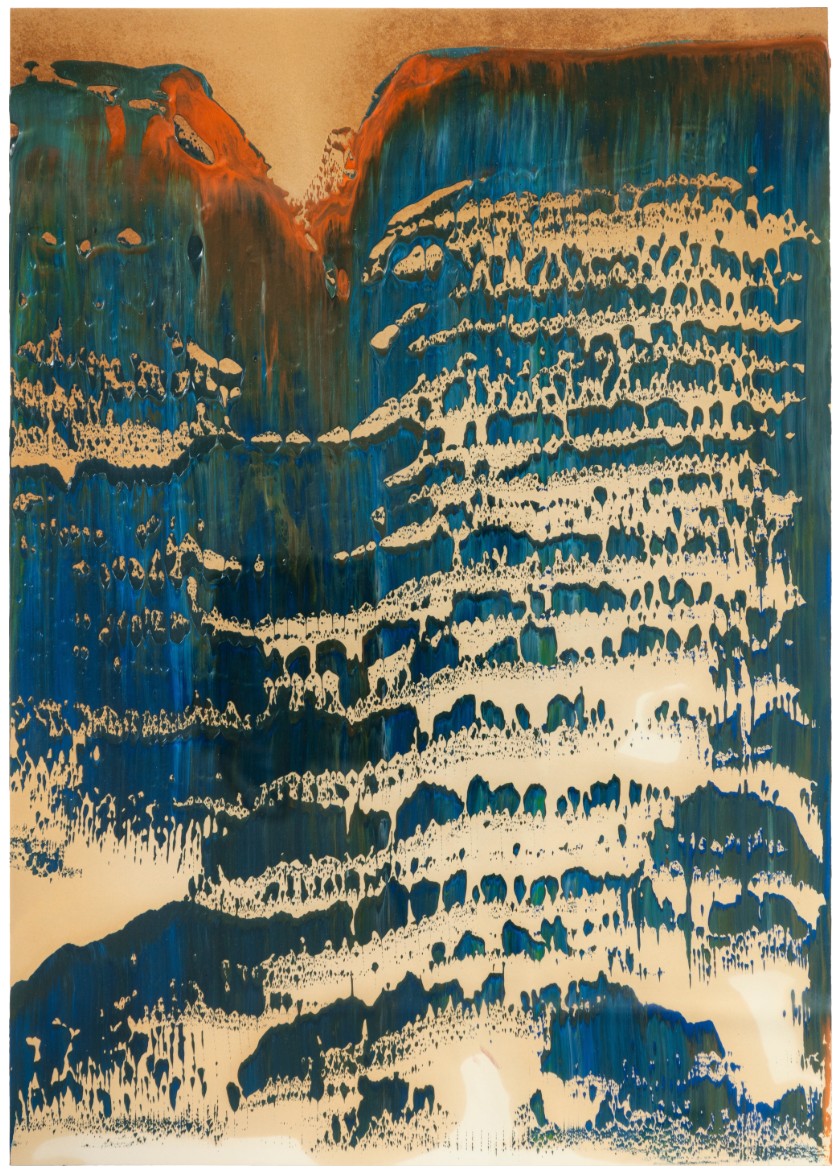
GERHARD RICHTER (b. 1932)
Untitled (9. Nov. 1995), 1995
Oil on paper laid down on paper
42 x 29.5 cm (16-1/2 x 11-1/2 inches)
Signed (lower right of the mount) and dated 9.Nov.1995 (lower left of the mount)
Signed and dated 9.Nov.1995 (on the reverse of the mount)
USD 500,000
#18. 18 December 2008, 2008
Breaking Ground: The Private Collection of Marian Goodman
Christie’s New-York: 21 May 2026
Estimated: USD 80,000 – 120,000
USD 482,600
GERHARD RICHTER (B. 1932), 18 December 2008 | Christie’s
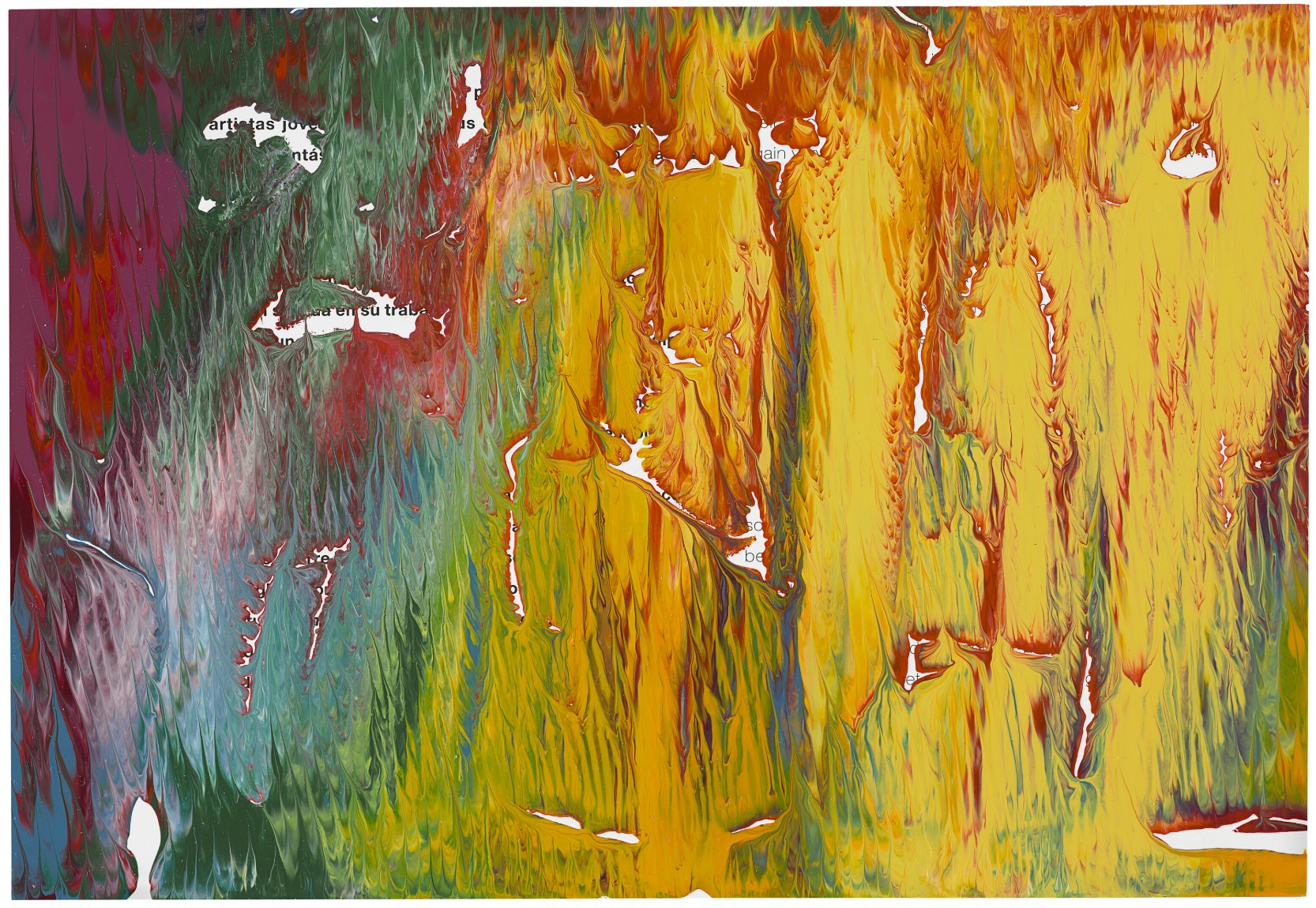
GERHARD RICHTER (B. 1932)
18 December 2008, 2008
Enameled lacquer on printed paper
13.8 x 20.6 cm (5-5/8 x 8-1/8 inches)
Signed, titled, dedicated and dated
‘Dear Marian – MERRY CHRISTMAS + HAPPY NEW YEAR + at least one nice show with me in your gallery! All best and love, yours, Gerhard 18 December 2008’
(on the reverse)
#19. Abstraktes Bild, 1992
Christie’s London: 7 March 2026
Estimated: GBP 300,000 – 500,000
GBP 355,600 / USD 475,045
GERHARD RICHTER (B. 1932), Abstraktes Bild | Christie’s
REPEAT SALE
Christie’s Paris: 30 November 2022
Estimated: EUR 450,000 – 650,000
EUR 567,000
Gerhard Richter (né en 1932), Abstraktes Bild | Christie’s
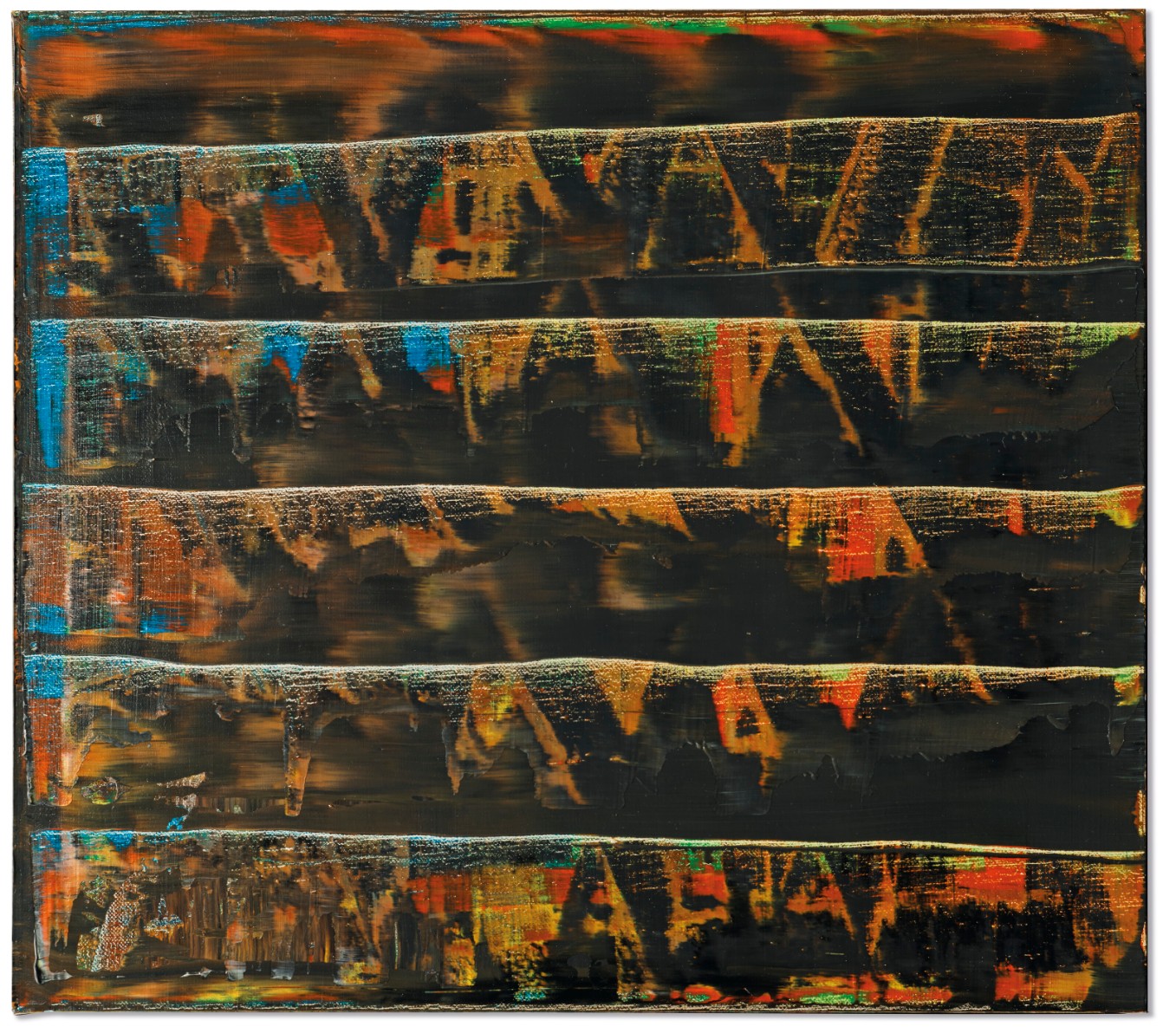
GERHARD RICHTER (B. 1932)
Abstraktes Bild, 1992
Oil on canvas
52×62 cm (20-1/2 x 24-3/8 inches)
Signed, inscribed and dated ‘Richter 92 763-7’ (on the reverse)
#20. Untitled (5.2.89), 1989
Property from a Distinguished American Collection
Sotheby’s New-York: 25 February 2026
Estimated: USD 30,000 – 50,000
USD 409,600
Gerhard Richter | Untitled (5.2.89) | Contemporary Curated | 2026 |
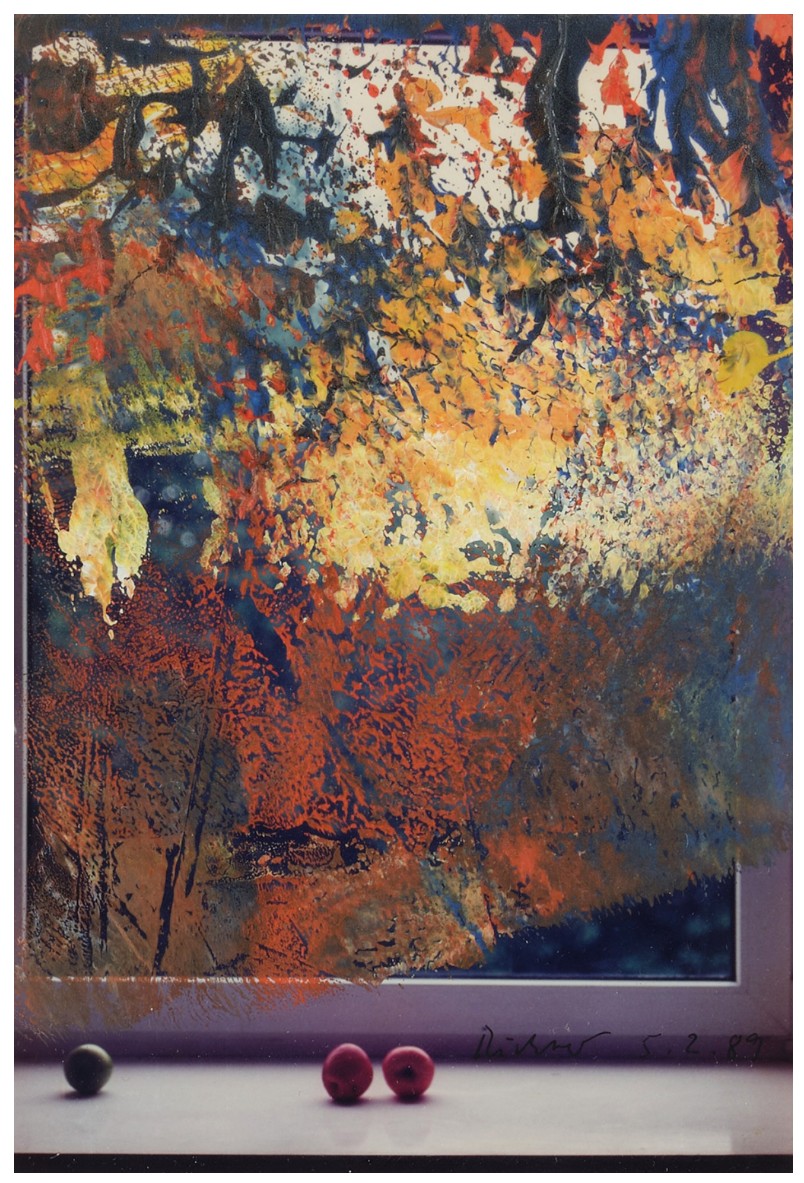
GERHARD RICHTER (b. 1932)
Untitled (5.2.89), 1989
Oil on chromogenic print
14.9 x 10.5 cm (5-7/8 x 4-1/8 inches)
Signed and dated 5.2.89 in ink (lower right)
Signed and dated 5.2.89 (on the reverse of the frame)
Executed in 1989, this work is unique
#21. Flow, 2013
Sotheby’s London: 5 March 2026
Estimated: GBP 300,000 – 500,000
GBP 281,600 / USD 376,190
Flow | Contemporary Day Auction | 2026 | Sotheby’s
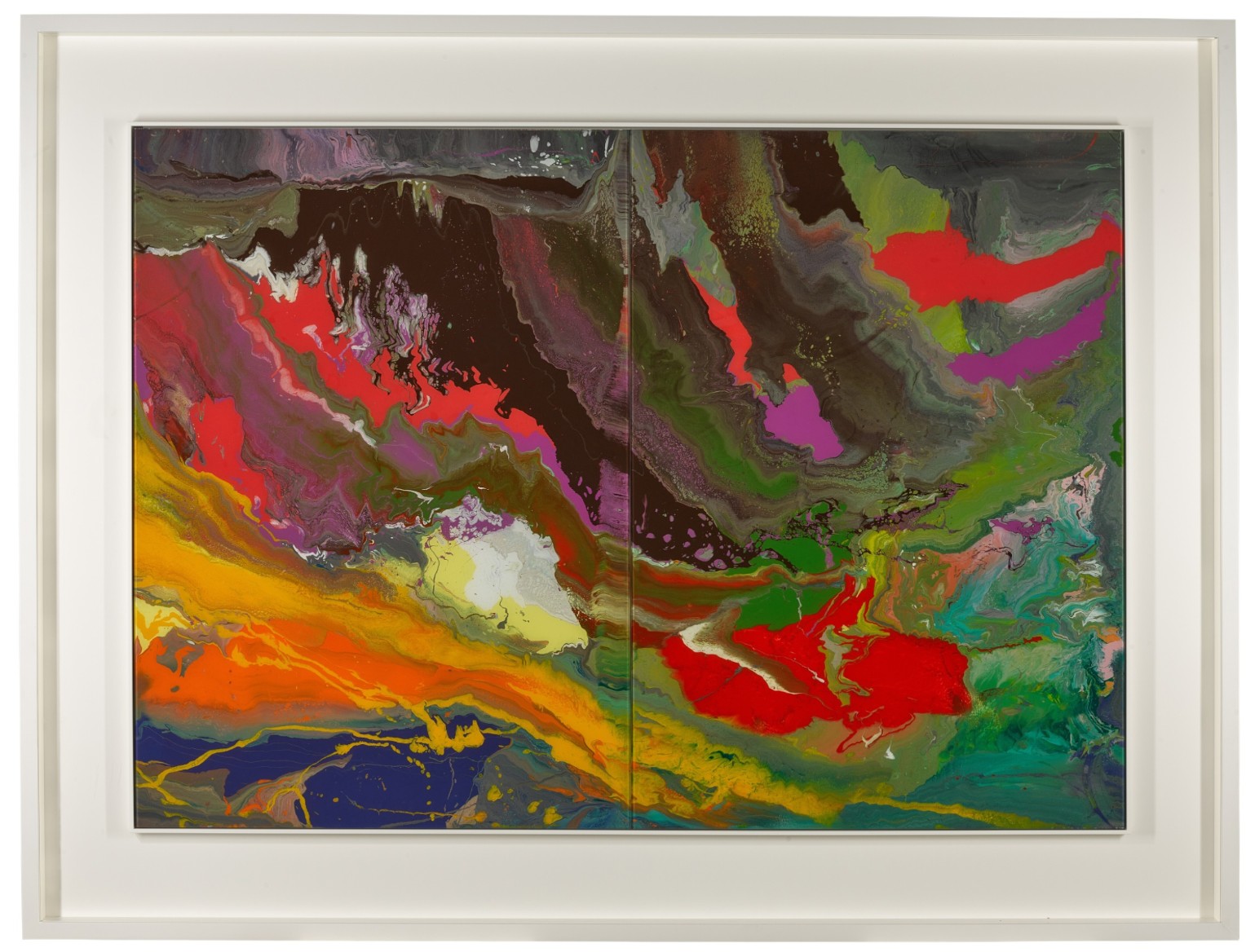
GERHARD RICHTER (b. 1932)
Flow, 2013
Lacquer behind glass mounted on Alu-Dibond
120×170 cm (47-1/4 x 66-7/8 inches)
Signed, dated 2013 and numbered 933-1 (on the reverse)
#22. Kerze III, 1989
Christie’s New-York: 21 May 2026
Estimated: USD 70,000 – 100,000
USD 368,300
GERHARD RICHTER (B. 1932), Kerze III | Christie’s
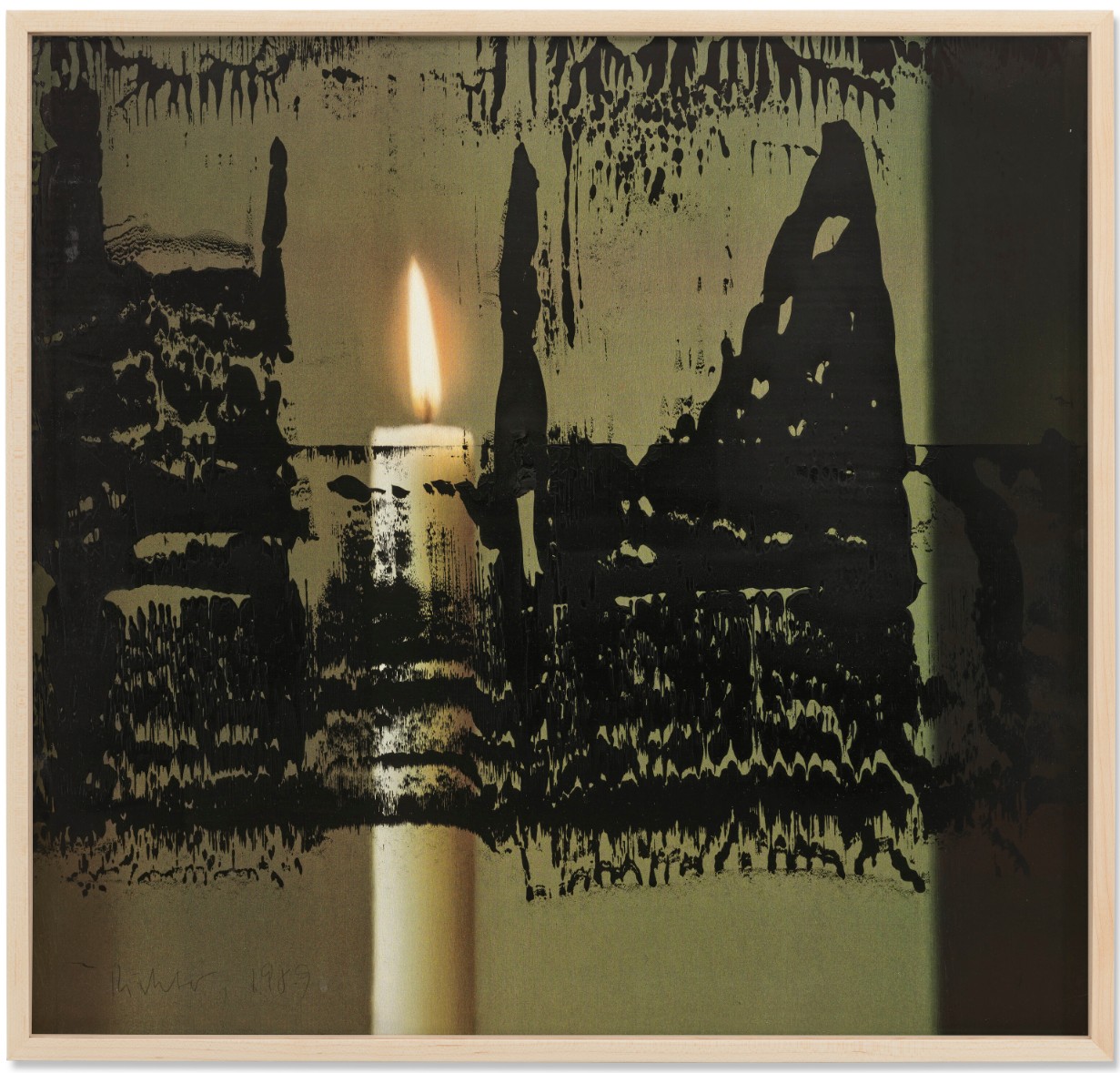
GERHARD RICHTER (B. 1932)
Kerze III, 1989
Oil on offset lithograph, flush-mounted on plastic
60.3 x 63.5 cm (23-3/4 x 25 inches)
Signed and dated ‘Richter, 1989’ (lower left)
Signed again, numbered and dated again ‘Richter, 1989 I/VIII’ (on the reverse)
This work is the first artist’s proof from an edition of 30 uniquely painted variants plus eight artist’s proofs and two unnumbered prints
#23. Green-Blue-Red, 1993
Property from a Distinguished Asian Collection
Phillips London: 16 April 2026
Estimated: GBP 200,000 – 300,000
GBP 258,000 / USD 349,255
Gerhard Richter Modern & Contemporary Art
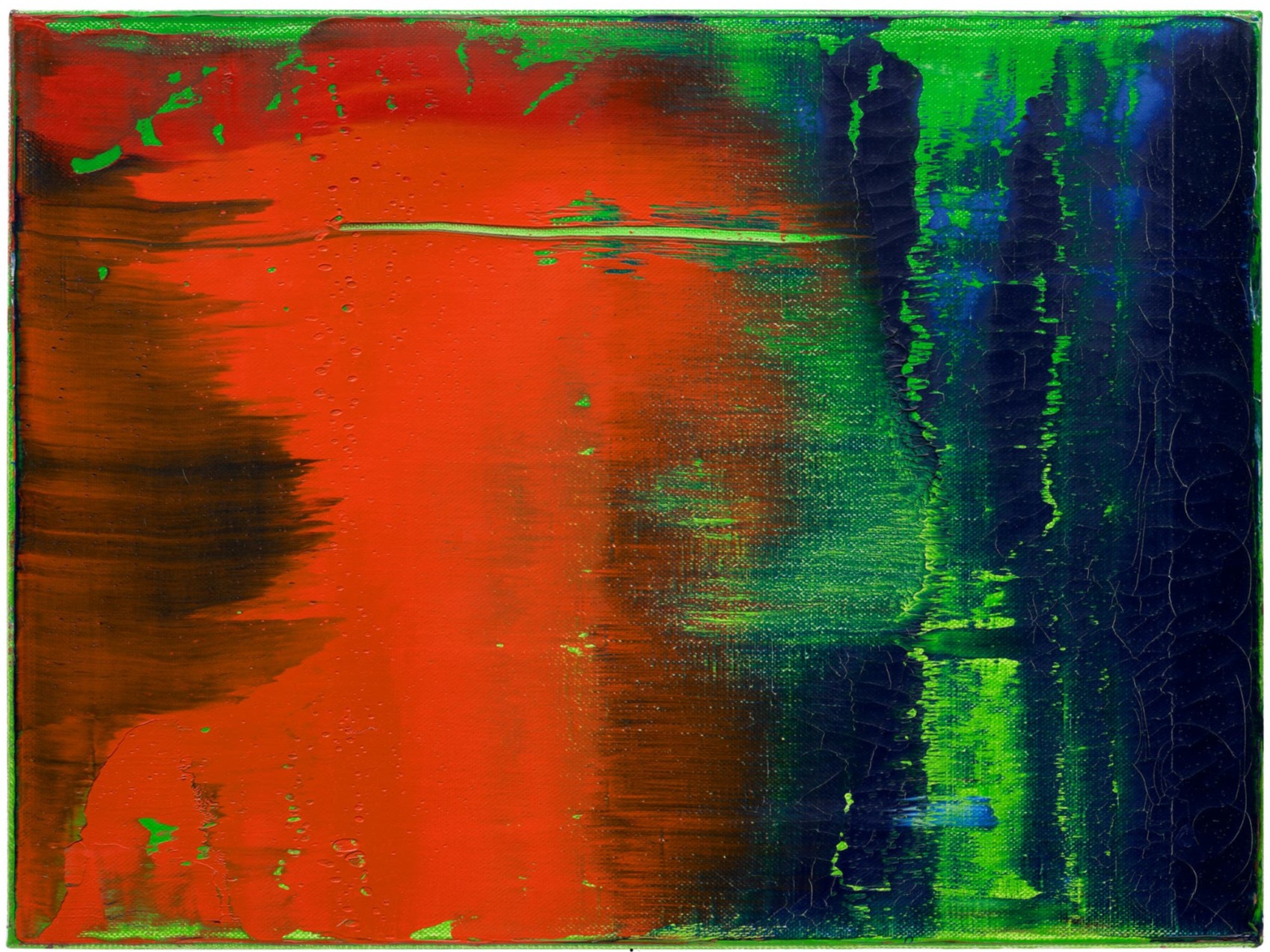
GERHARD RICHTER
Green-Blue-Red, 1993
Oil on canvas
29 x 39.5 cm (11-3/8 x 15-1/2 inches)
Signed, numbered and dated ‘789.28 Richter, 93’ on the reverse
#24. Abstraktes Bild, 1991
Christie’s New-York: 21 May 2026
Estimated: USD 180,000 – 250,000
USD 330,200
GERHARD RICHTER (B. 1932), Abstraktes Bild | Christie’s
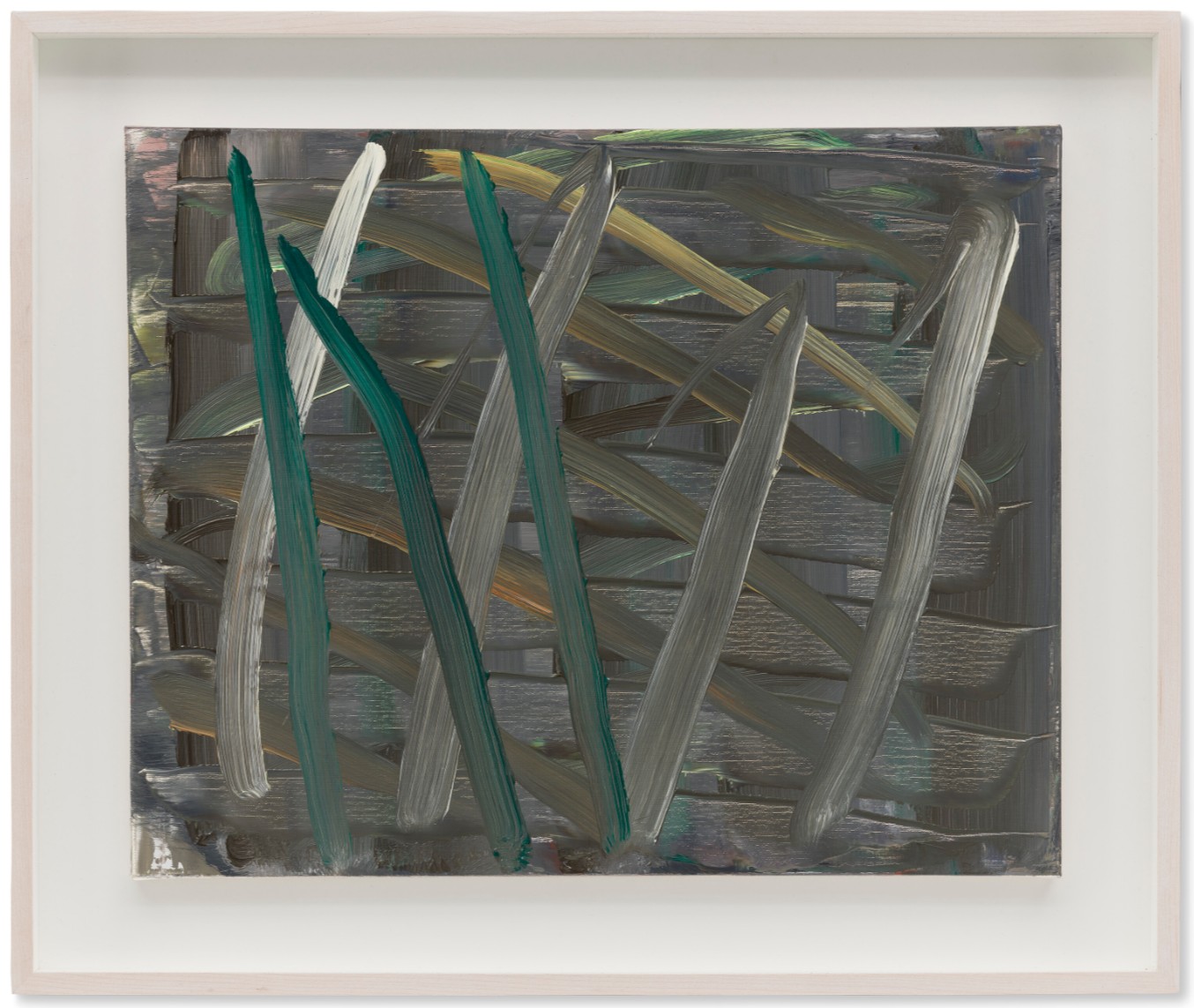
GERHARD RICHTER (B. 1932)
Abstraktes Bild, 1991
Oil on canvas
41×51 cm (16×20 inches)
Signed, inscribed and dated ‘753-1 Richter 1991’ (on the reverse)
#25. Untitled (7.2.89), 1989
Breaking Ground: The Private Collection of Marian Goodman
Christie’s New-York: 21 May 2026
Estimated: USD 60,000 – 80,000
USD 330,200
GERHARD RICHTER (B. 1932), Untitled (7.2.89) | Christie’s
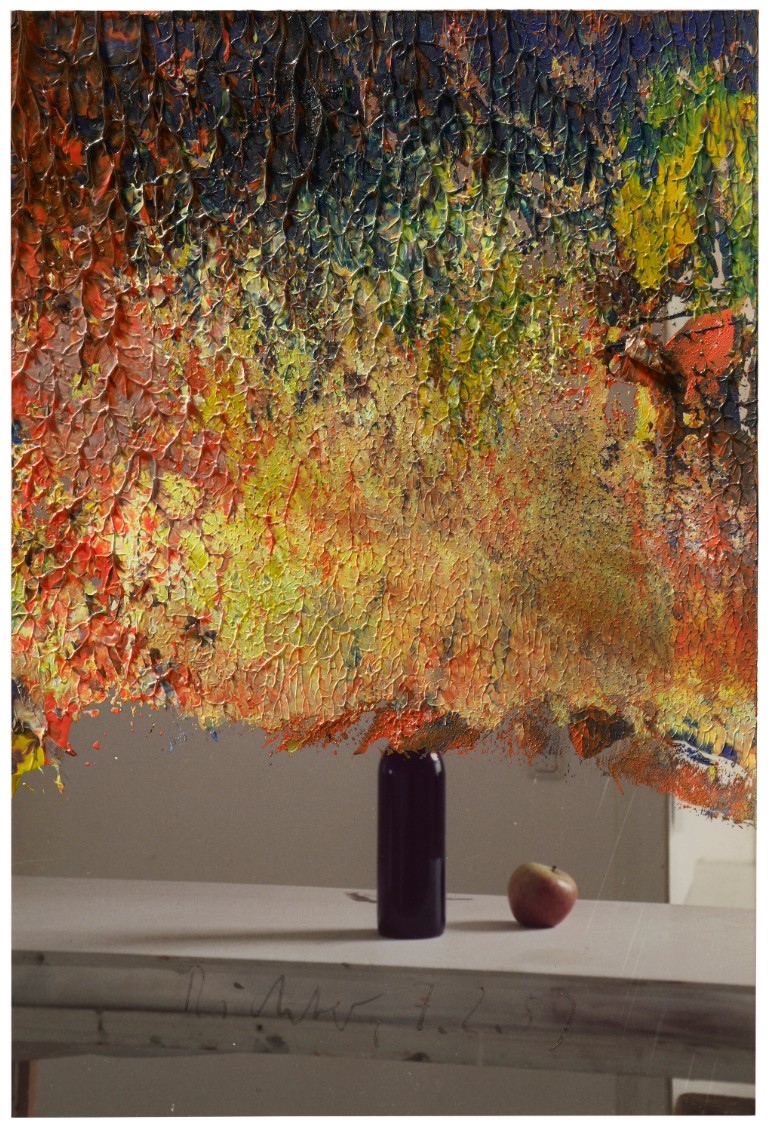
GERHARD RICHTER (B. 1932)
Untitled (7.2.89), 1989
Oil on photograph
14.6 x 10.2 cm (5-3/4 x 4 inches)
Signed and dated ‘Richter 7.2.89’ (lower edge)
Signed again and dated again ‘7.2.89 Richter’ (on the backing board)
#26. Abstraktes Bild (431-8), 1977
Property from an Important Private European Collection
Phillips London; 7 March 2026
Estimated: GBP 200,000 – 300,000
GBP 199,950 / USD 267,115
Gerhard Richter Modern & Contemporary Art
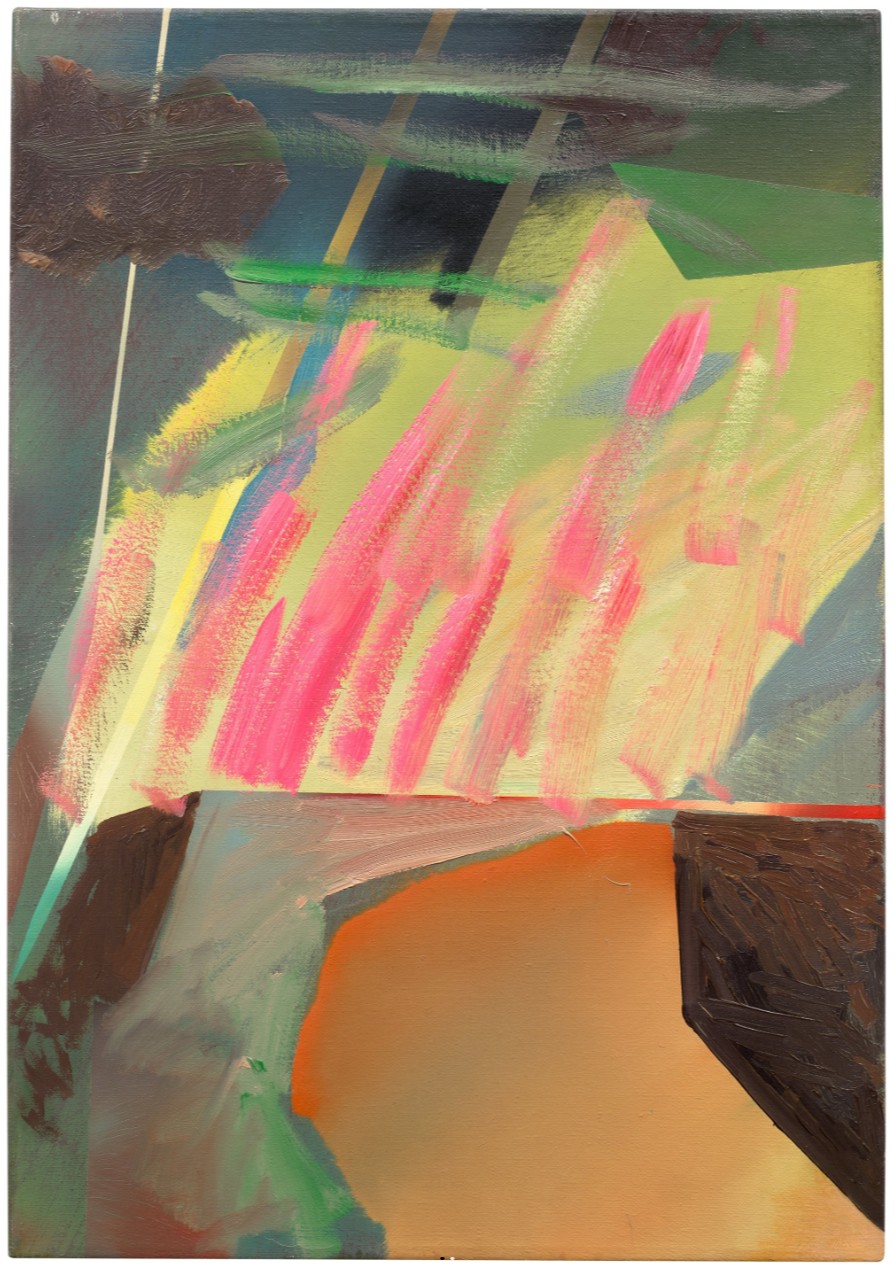
Oil on canvas
60.6 x 42.1 cm (23-7/8 x 16-5/8 inches)
Signed, titled and dated ‘Richter 1977 431-8’ on the reverse
#27. 10. Dez. 99 [Firenze], 1999
Breaking Ground: The Private Collection of Marian Goodman
Christie’s New-York: 21 May 2026
Estimated: USD 50,000 – 70,000
USD 241,300
GERHARD RICHTER (B. 1932), 10. Dez. 99 [Firenze] | Christie’s
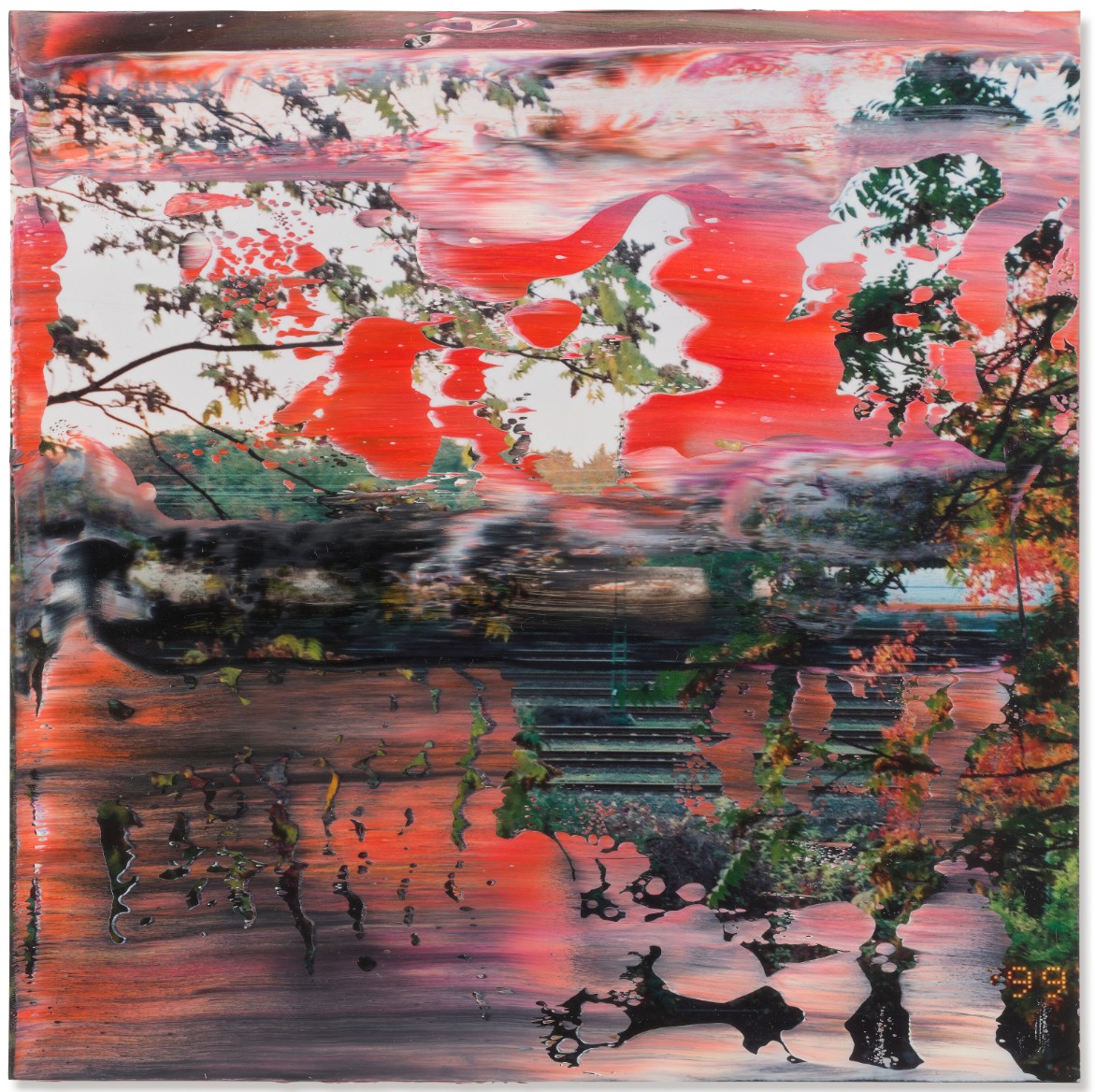
GERHARD RICHTER (B. 1932)
10. Dez. 99 [Firenze], 1999
Oil on photograph
11.7 x 11.7 cm (4-5/8 x 4-5/8 inches)
Signed and dated ’10. Dez. 99 Richter’ (on the mount)
#28. 4.4.88, 1988
Estimated: USD 100,000 – 150,000
USD 167,700
WORK ON PAPER
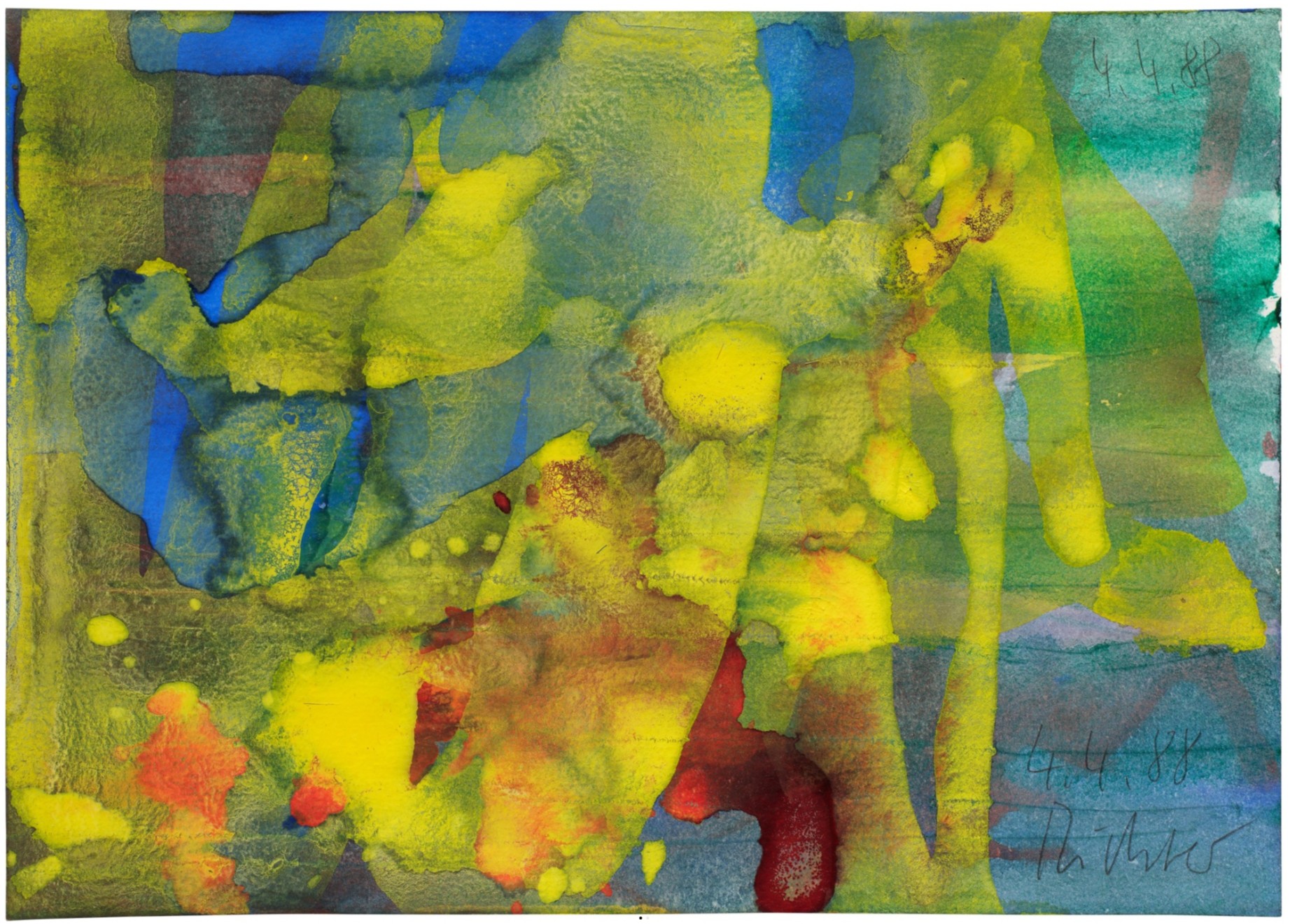
4.4.88, 1988
Watercolor and graphite on paper
17.1 x 23.5 cm (6-3/4 x 9-1/4 inches)
Titled and dated “4.4.88” upper right
Signed, titled and dated “4.4.88 Gerhard Richter” lower right
Signed, titled and dated “4.4.88 Gerhard Richter” on the reverse
Executed on April 4, 1988, in Germany
#29. 20 February 2002, 2002
Breaking Ground: The Private Collection of Marian Goodman
Christie’s New-York: 21 May 2026
Estimated: USD 30,000 – 50,000
USD 139,700
GERHARD RICHTER (B. 1932), 20 February 2002 | Christie’s
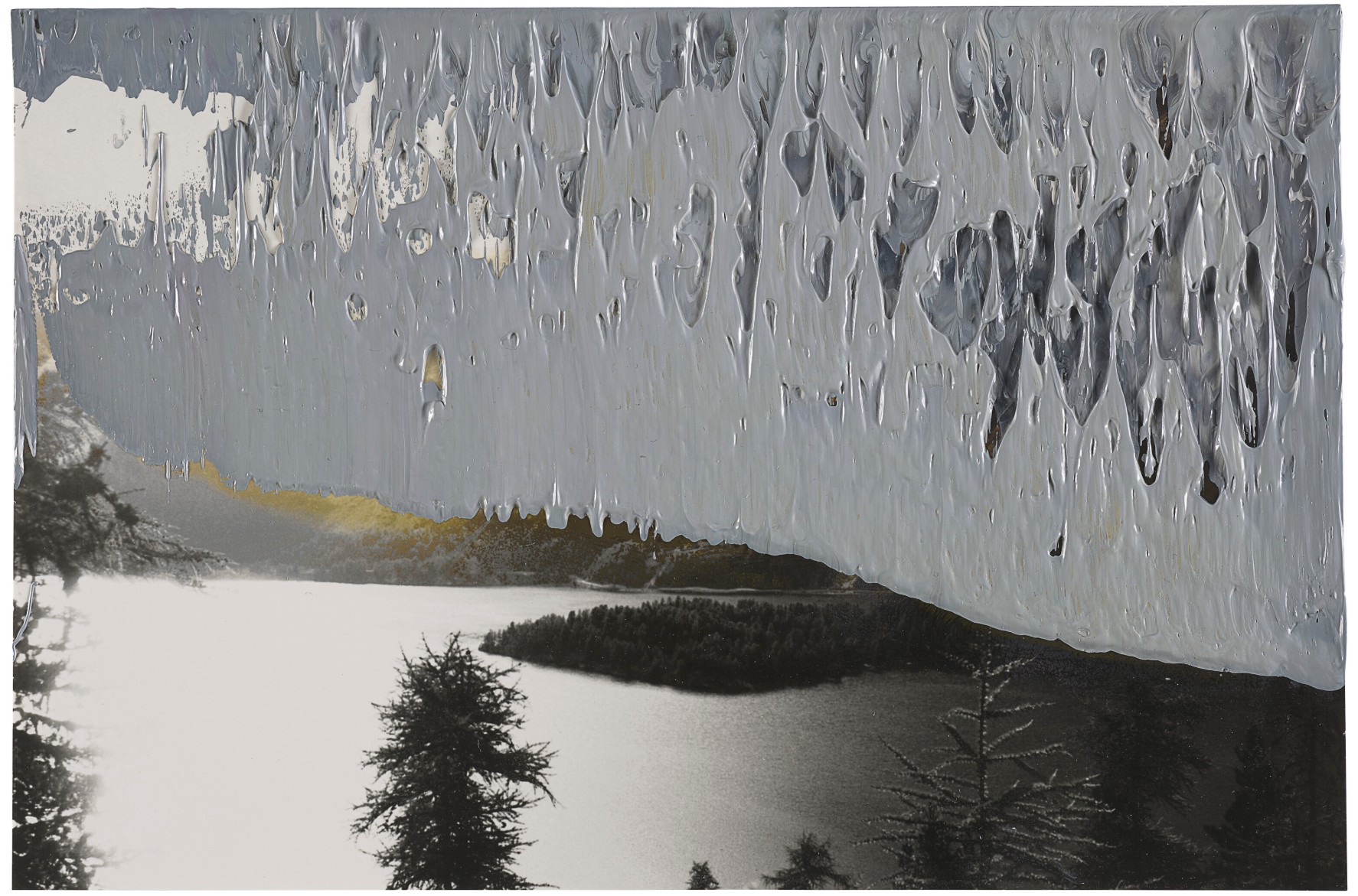
GERHARD RICHTER (B. 1932)
20 February 2002, 2002
Oil on photograph mounted on paper
Image: 11.4 x 20 cm (4-5/8 x 7-7/8 inches)
Mount: 20.6 x 29.2 cm ( 8-1/4 x 11-5/8 inches)
Signed ‘Richter’ (lower left of the mount)
Titled and dated ’20 FEB 2002′ (lower right of the mount)
USD 100,000
#30. 18. Juni 2009, 2009
Breaking Ground: The Private Collection of Marian Goodman
Christie’s New-York: 21 May 2026
Estimated: USD 30,000 – 50,000
USD 82,550
GERHARD RICHTER (B. 1932), 18. Juni 2009 | Christie’s
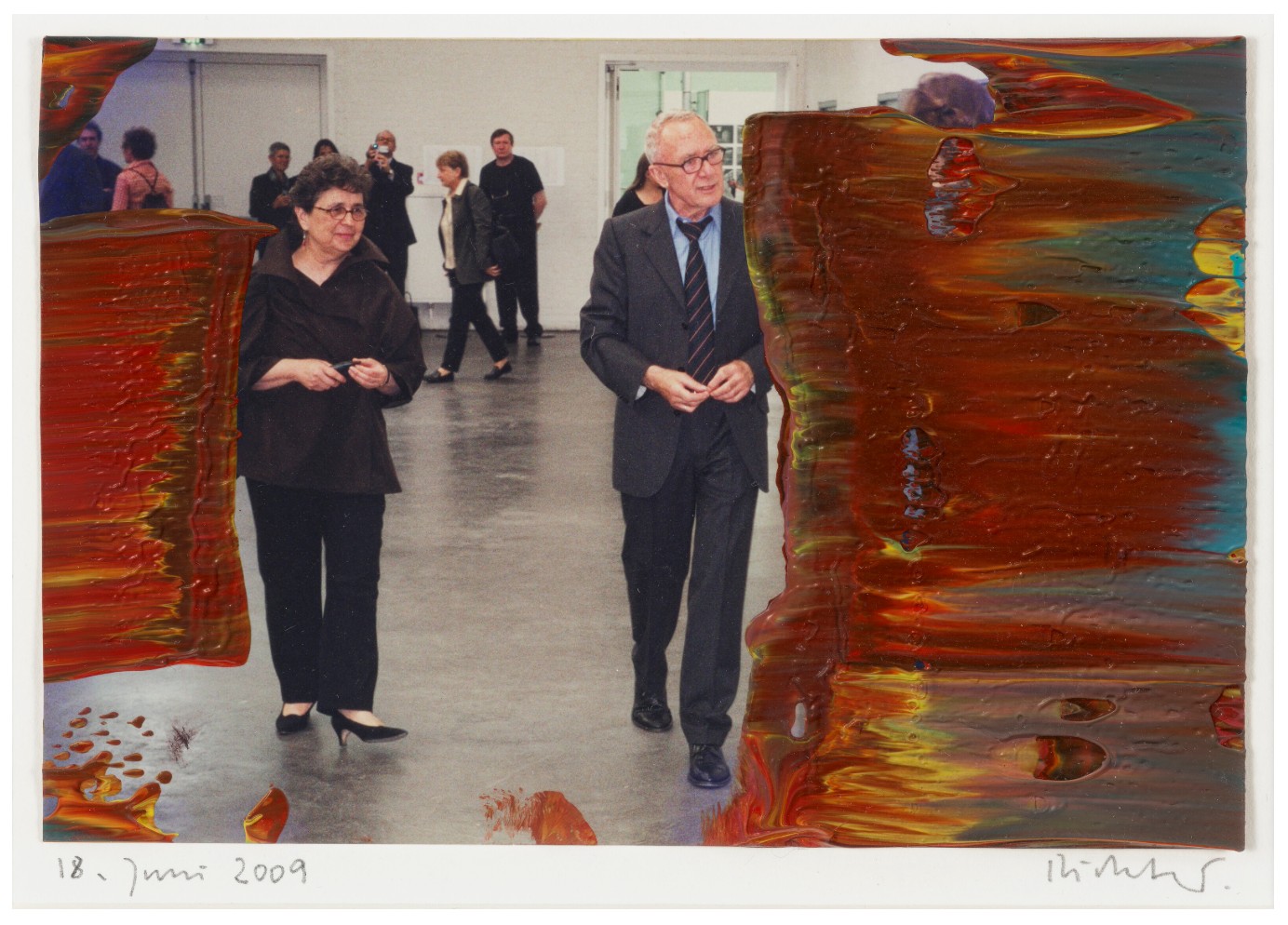
GERHARD RICHTER (B. 1932)
18. Juni 2009, 2009
Oil on photograph
10.2 x 14.9 cm (4 x 5-7/8 inches)
Signed, titled and dated ’18. Juni 2009 Richter’ (on the mount)
#31. 5. Jan. 98, 1998
Breaking Ground: The Private Collection of Marian Goodman
Christie’s New-York: 21 May 2026
Estimated: USD 40,000 – 60,000
USD 76,200
GERHARD RICHTER (B. 1932), 5. Jan. 98 | Christie’s
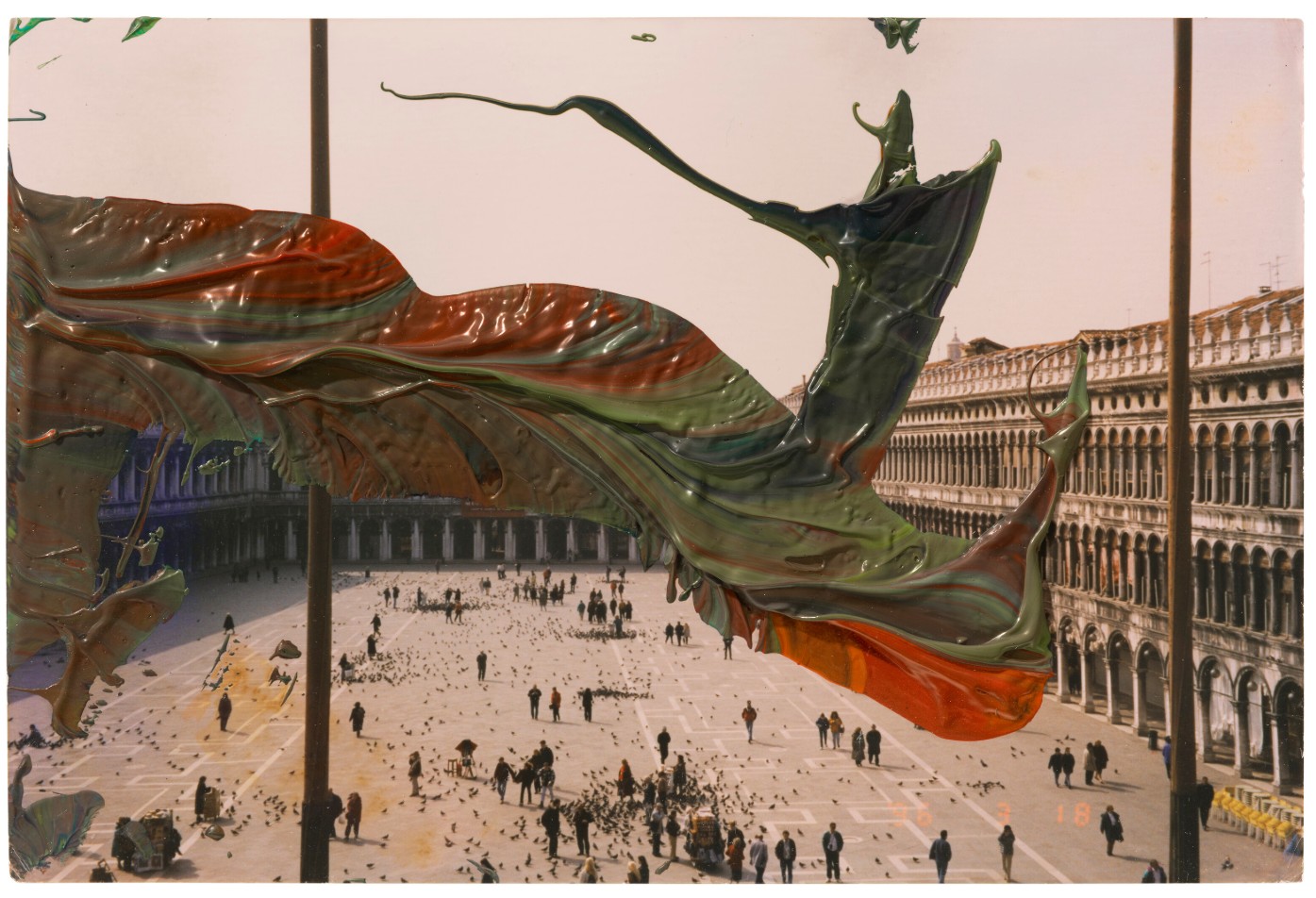
GERHARD RICHTER (B. 1932)
5. Jan. 98, 1998
Oil on gelatin silver print
10.2 x 14.9 cm (4 x 5-7/8 inches)
Signed and dated ‘Richter 5. Jan. 98’ (on the reverse)
#32. 3. Juli 2015, 2015
Breaking Ground: The Private Collection of Marian Goodman
Christie’s New-York: 21 May 2026
Estimated: USD 60,000 – 80,000
USD 69,850
WORK ON PAPER
GERHARD RICHTER (B. 1932), 3. Juli 2015 | Christie’s
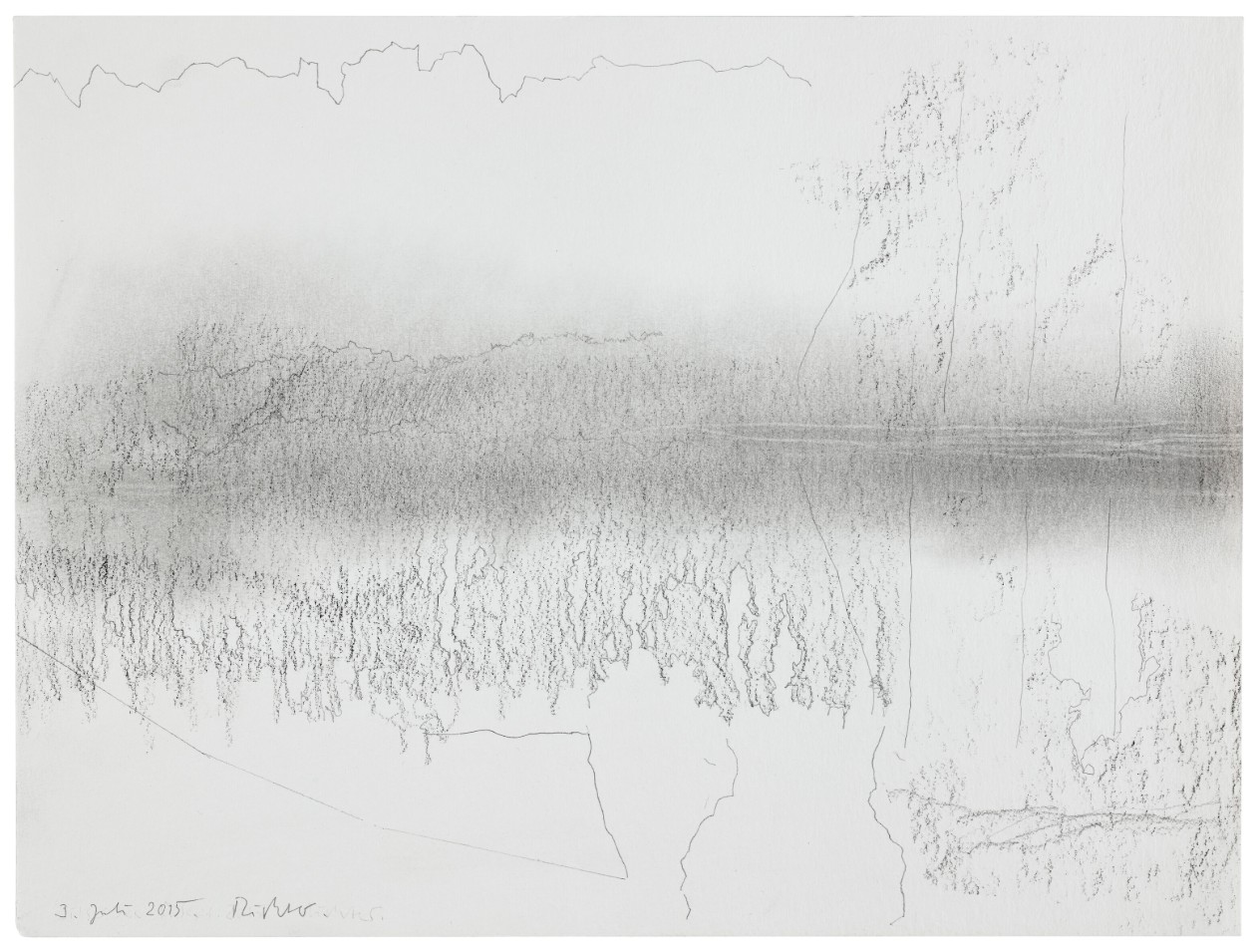
GERHARD RICHTER (B. 1932)
3. Juli 2015, 2015
Graphite on paper
28.7 x 39.4 cm (11-3/4 x 15-5/8 inches)
Signed, titled and dated ‘3. juli 2015 Richter’ (lower left)
Lots Passed
Grau (Grey), 1973
Sotheby’s New-York: 26 February 2026
Estimated: USD 120,000 – 180,000
PASSED
Gerhard Richter | Grau (Grey) | Contemporary Curated | 2026 |
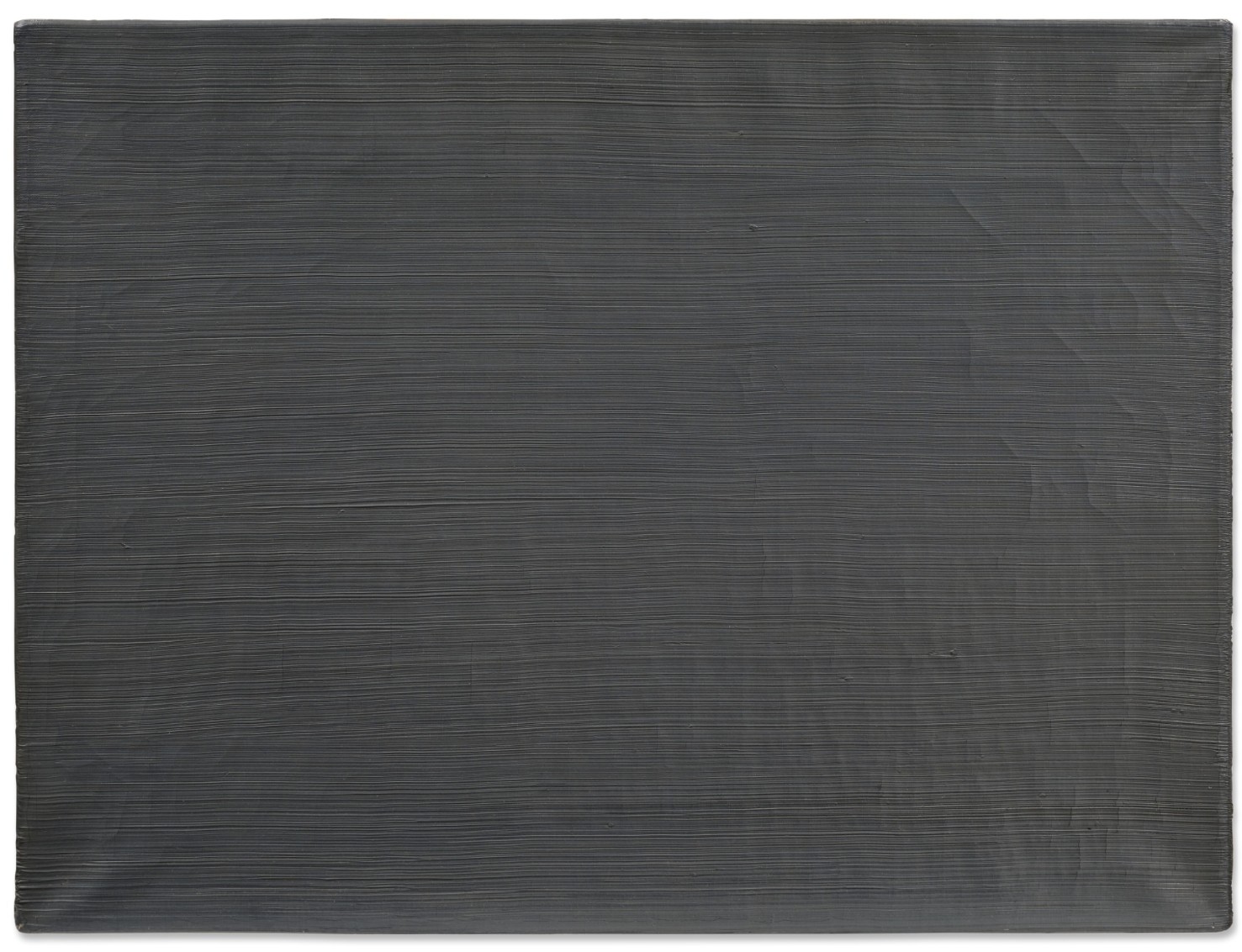
GERHARD RICHTER (b. 1932)
Grau (Grey), 1973
Oil on canvas
45 x 60.3 cm (17-3/4 x 23-3/4 inches)
Signed, dated 73 and numbered 340 (on the reverse)
Fuji (839-13), 1996
Phillips London: 5 March 2026
Estimated: GBP 350,000 – 550,000
PASSED
Gerhard Richter Modern & Contemporary Art Evening Sale
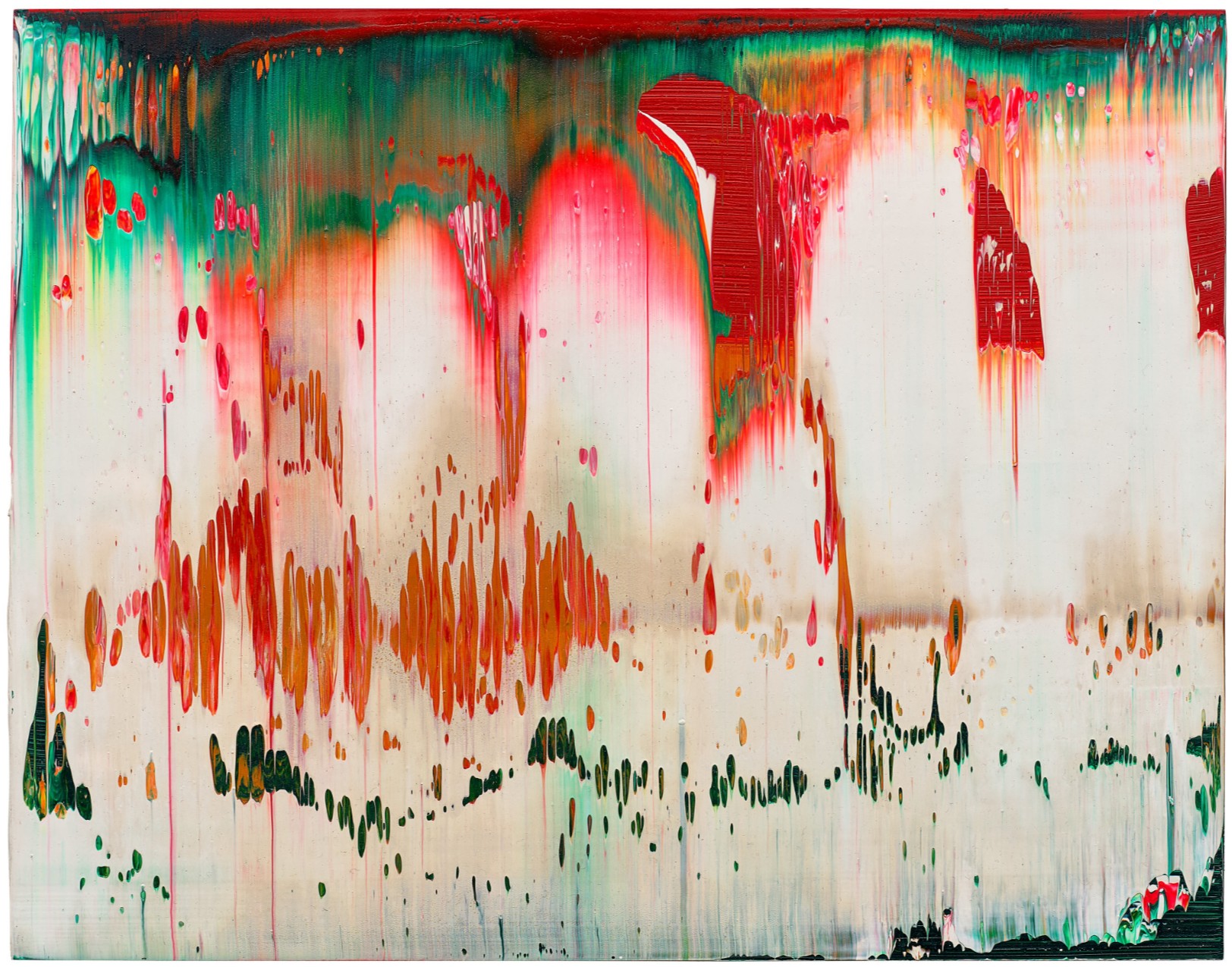
Oil on Alucobond
29.1 x 37.2 cm (11-1/2 x 14-5/8 inches)
Signed ‘Richter’ on the reverse
Numbered ’13’ on an artist label affixed to the reverse
2025 Auction Results
36 lots sold at auction in 2025 for a total turnover of USD 62,847,395. With 4 lots failing to sell, the sell-through rate is 90%. The highest price was achieved by Korsica (Schiff), a photo-painting dated 1968, that sold at Christie’s in New-York, on 12 May 2025, for USD 15,245,000. It is the only lost that sold for more than USD 10 million in 2025.
2025 Top 3 Lots
14 lots sold for more than USD 1 million, generating a cumulative turnover of USD 57,396,251, representing 91.3% of the total turnover for 2025.
#1. Korsika (Schiff), 1968
Christie’s New-York: 12 May 2025
Estimated: USD 8,000,000 – 12,000,000
USD 15,245,000
READ MORE IN FOCUS SECTION
GERHARD RICHTER (B. 1932), Korsika (Schiff) | Christie’s
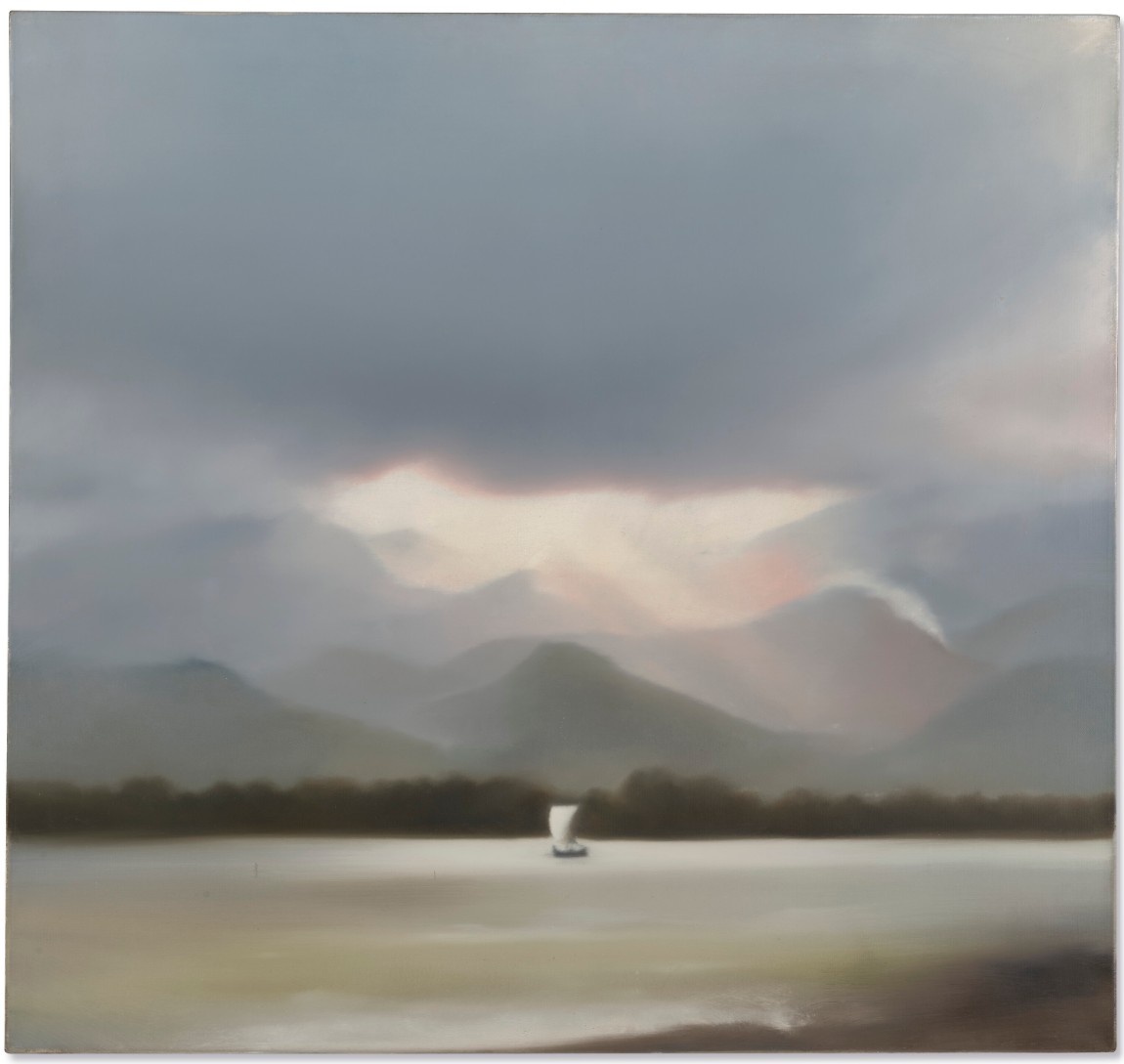
GERHARD RICHTER (B. 1932)
Korsika (Schiff), 1968
Oil on canvas
86 x 91.1 cm (33 7/8 x 35 7/8 inches)
Signed, inscribed, titled and dated ‘KORSIKA (III) Richter 68’ (on the reverse)
USD 10 million
#2. Abstraktes Bild, 2009
Leonard & Louise Riggio: Collected Works
Christie’s New-York: 12 May 2025
Estimated: USD 7,000,000 – 10,000,000
USD 8,460,000
GERHARD RICHTER (B. 1932), Abstraktes Bild | Christie’s
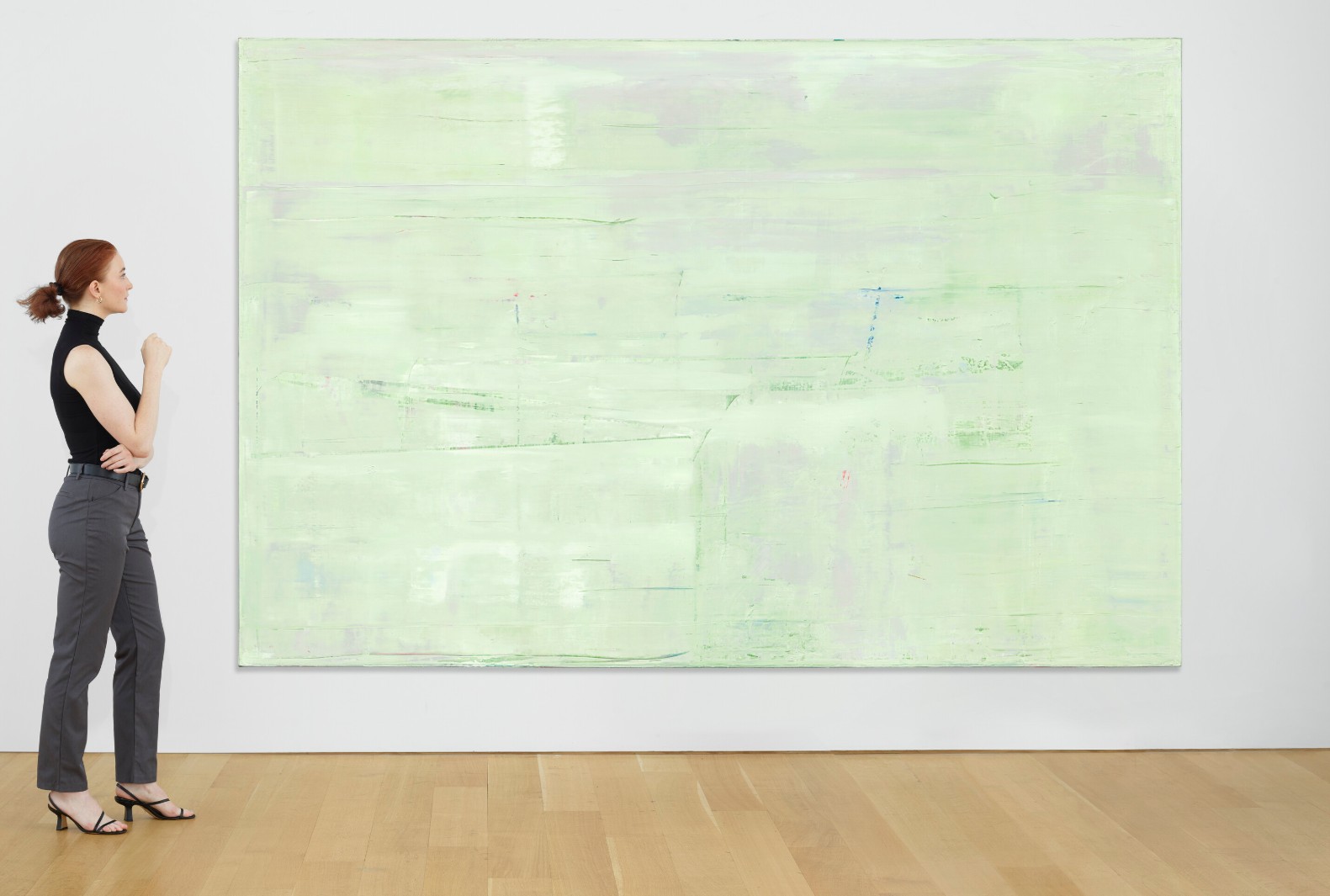
GERHARD RICHTER (B. 1932)
Abstraktes Bild, 2009
Oil on canvas
200×300 cm (78 3/4 x 118 1/8 inches)
Signed, inscribed and dated ‘911-3 Richter 2009’ (on the reverse)
#3. Tulpen (Tulips), 1995
Christie’s London: 15 October 2025
Estimated: GBP 3,000,000 – 5,000,000
GBP 6,150,000 / USD 8,241,000
READ MORE IN FOCUS SECTION
GERHARD RICHTER (B. 1932), Tulpen (Tulips) | Christie’s
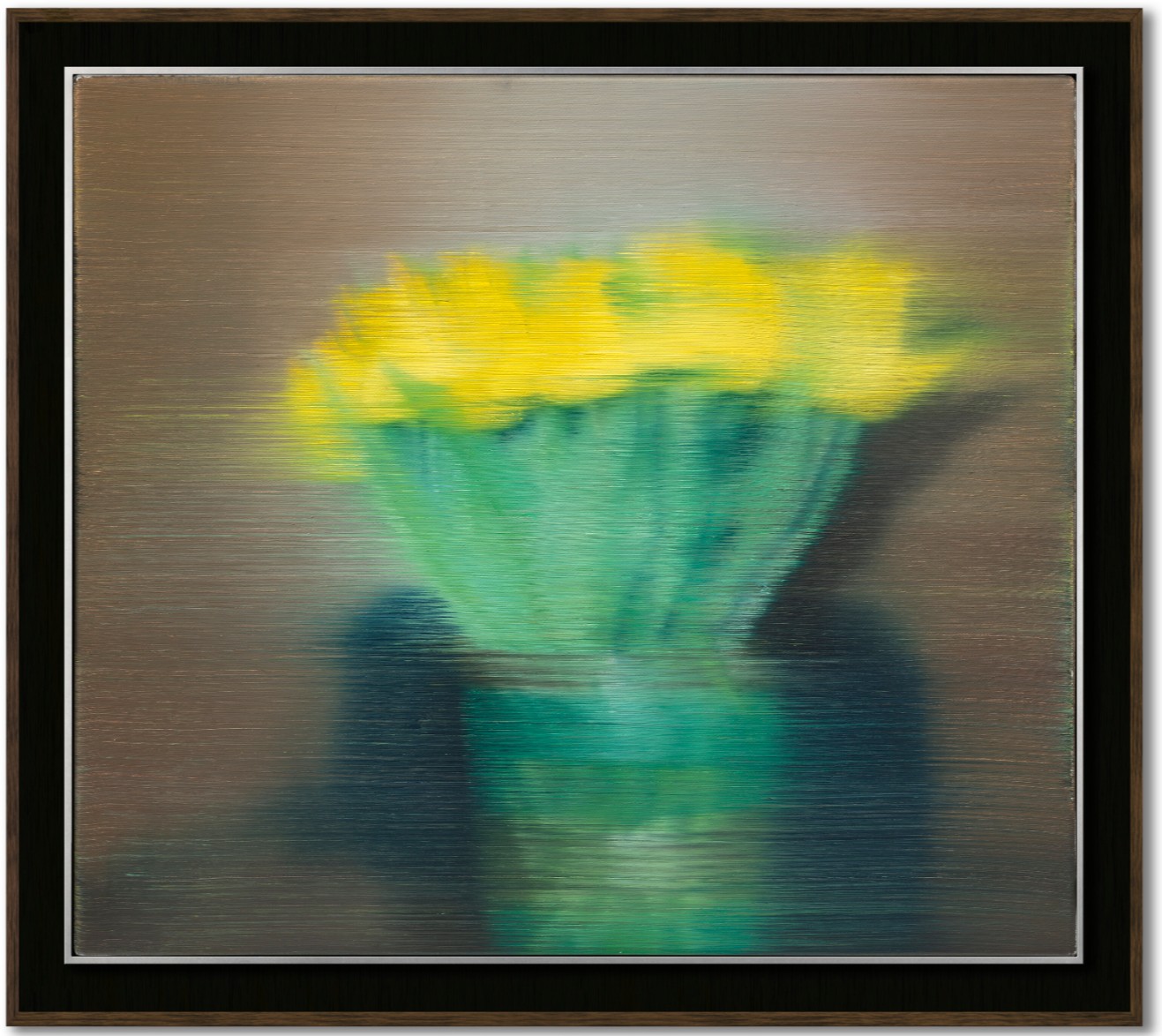
GERHARD RICHTER (B. 1932)
Tulpen (Tulips), 1995
Oil on canvas
36×41 cm (14 1/8 x 16 1/8 inches)
Signed, numbered and dated ‘825-1 Richter 1995’ (on the reverse)
#4. Abstraktes Bild, 1990
Sotheby’s New-York: 15 May 2025
Estimated: USD 5,000,000 – 7,000,000
USD 6,943,000
Abstraktes Bild | The Now and Contemporary Evening Auction | 2025 | Sotheby’s
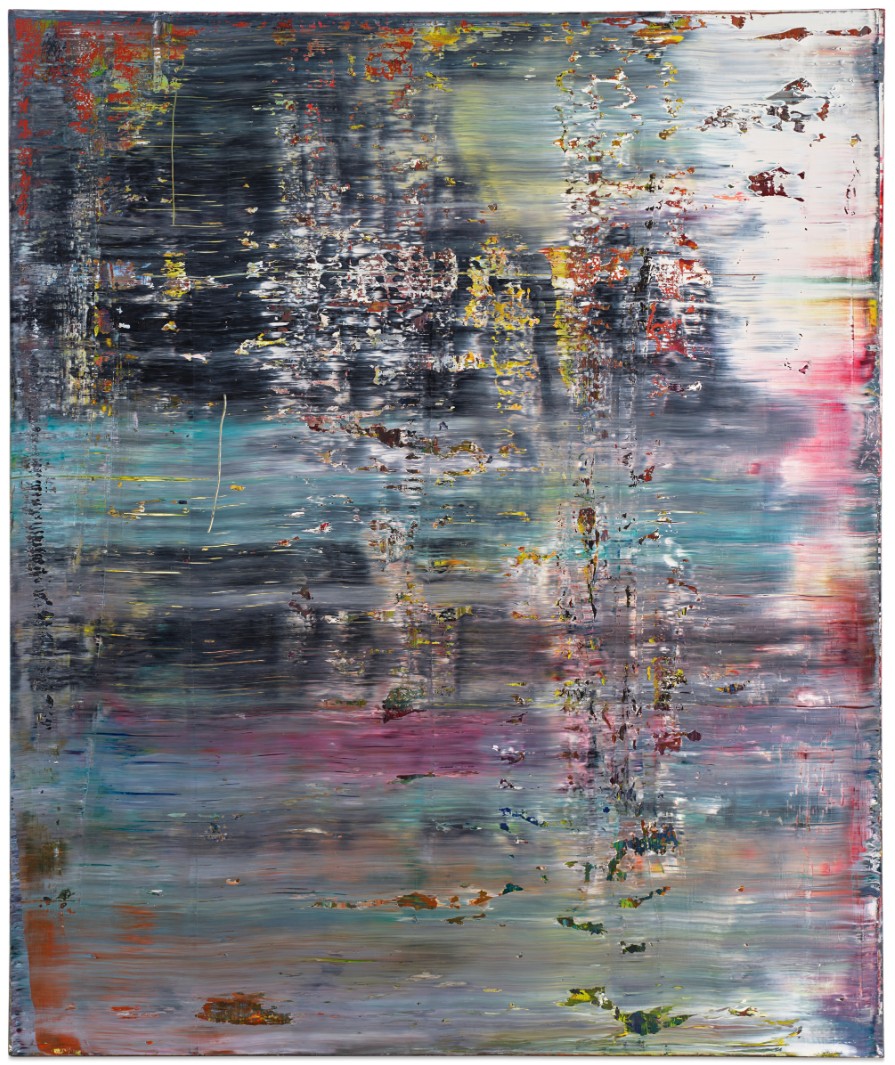
GERHARD RICHTER (b. 1932)
Abstraktes Bild, 1990
Oil on canvas
122×102 cm (48 x 40 1/8 inches)
Signed, dated 1990 and numbered 720-4 (on the reverse)
USD 5 million
#5. Mann mit zwei Kindern, 1966
Phillips New-York: 13 May 2025
Estimated: USD 4,000,000 – 6,000,000
USD 4,174,000
READ MORE IN FOCUS SECTION
Gerhard Richter Modern & Contemporary Art Evening Sale
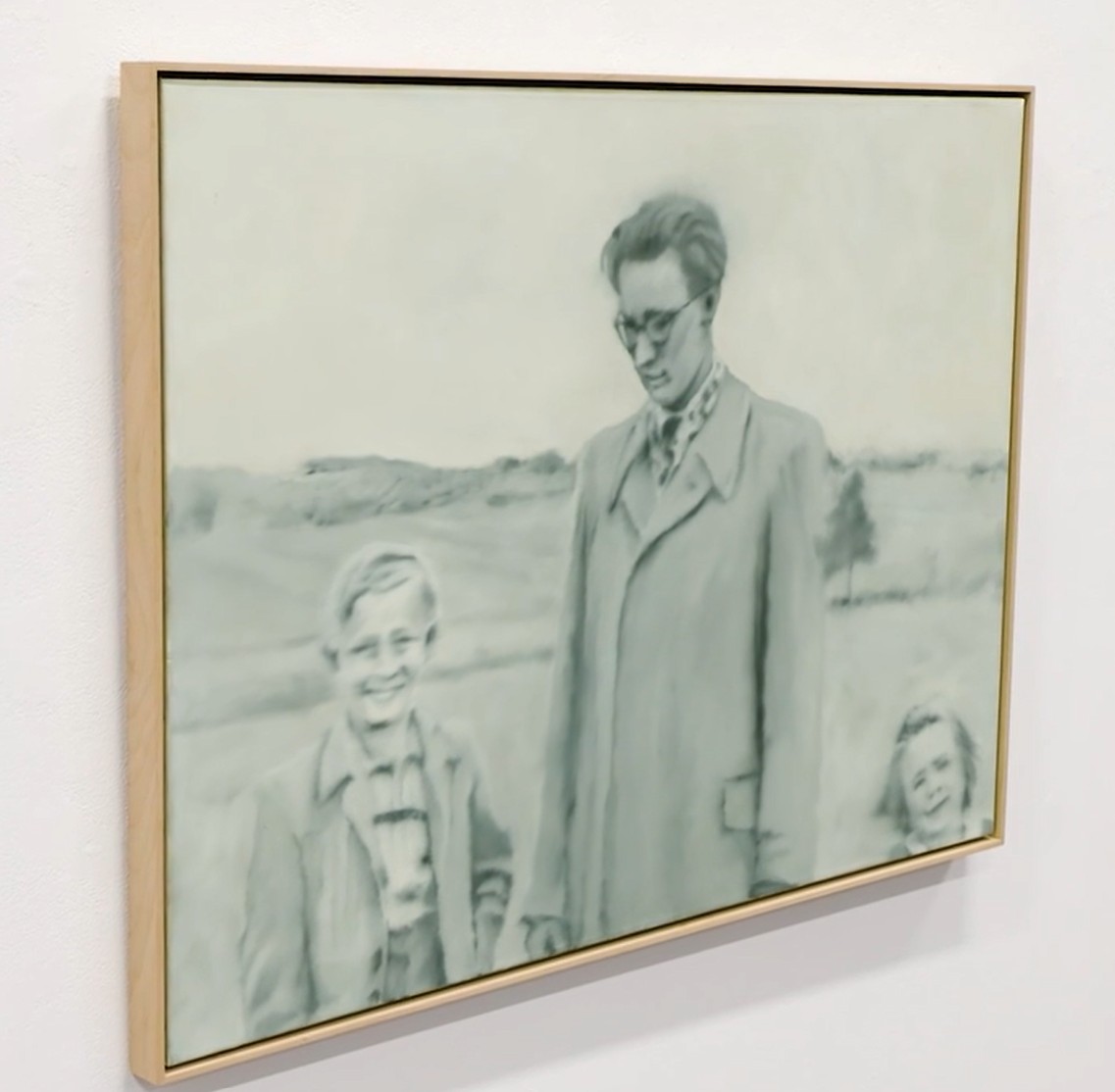
#6. Abstraktes Bild, 2009
Christie’s New-York: 20 November 2025
Estimated: USD 1,800,000 – 2,500,000
USD 2,759,000
READ MORE IN FOCUS SECTION
GERHARD RICHTER (B. 1932), Abstraktes Bild | Christie’s
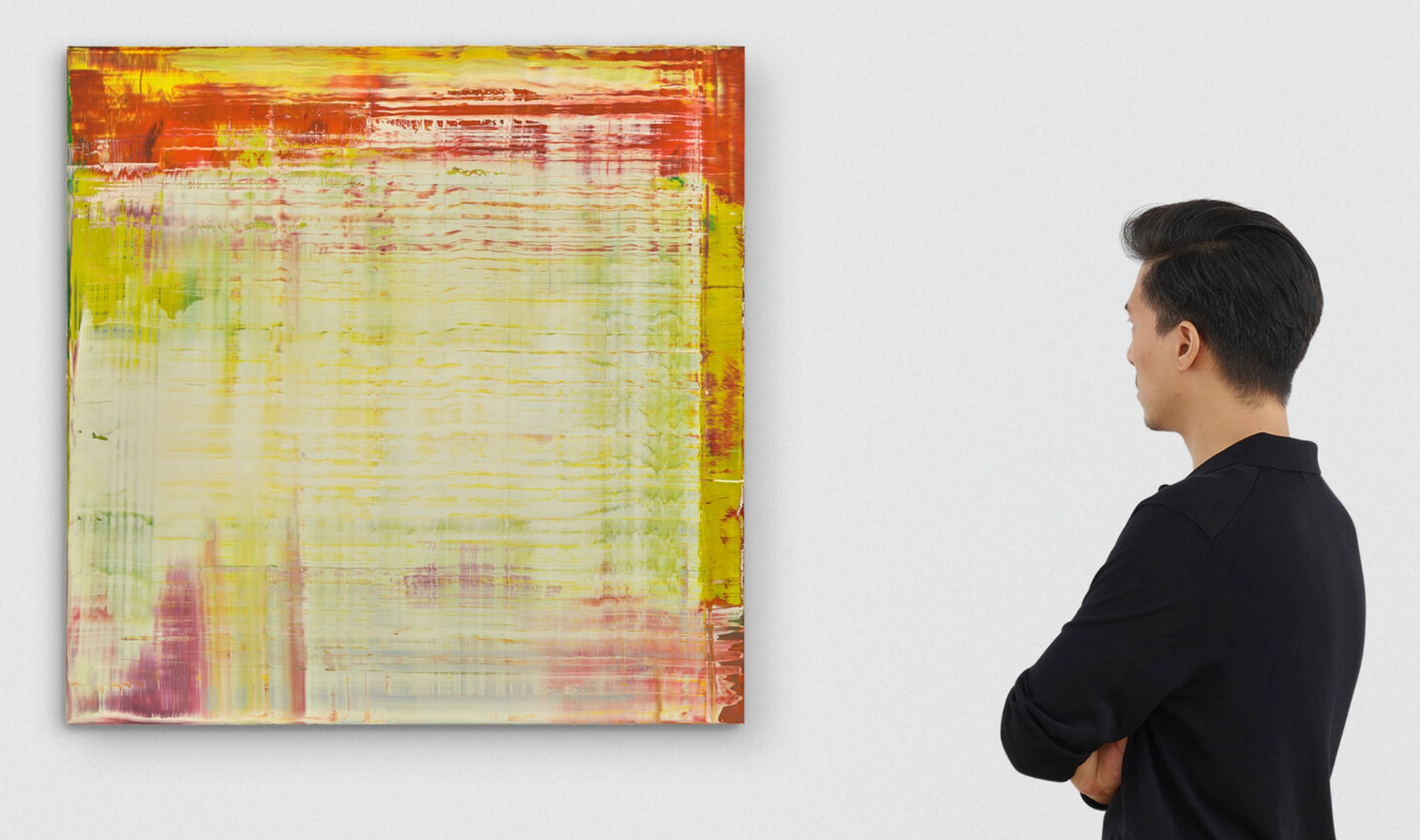
GERHARD RICHTER (B. 1932)
Abstraktes Bild, 2009
Oil on Alu-Dibond
83.8 x 83.8 cm (33×33 inches)
Signed, inscribed and dated ‘910-4 Richter 2009’ (on the reverse)
#7. Abstraktes Bild, 1989
Estimated: EUR 1,500,000
EUR 1,802,500 / USD 2,126,950
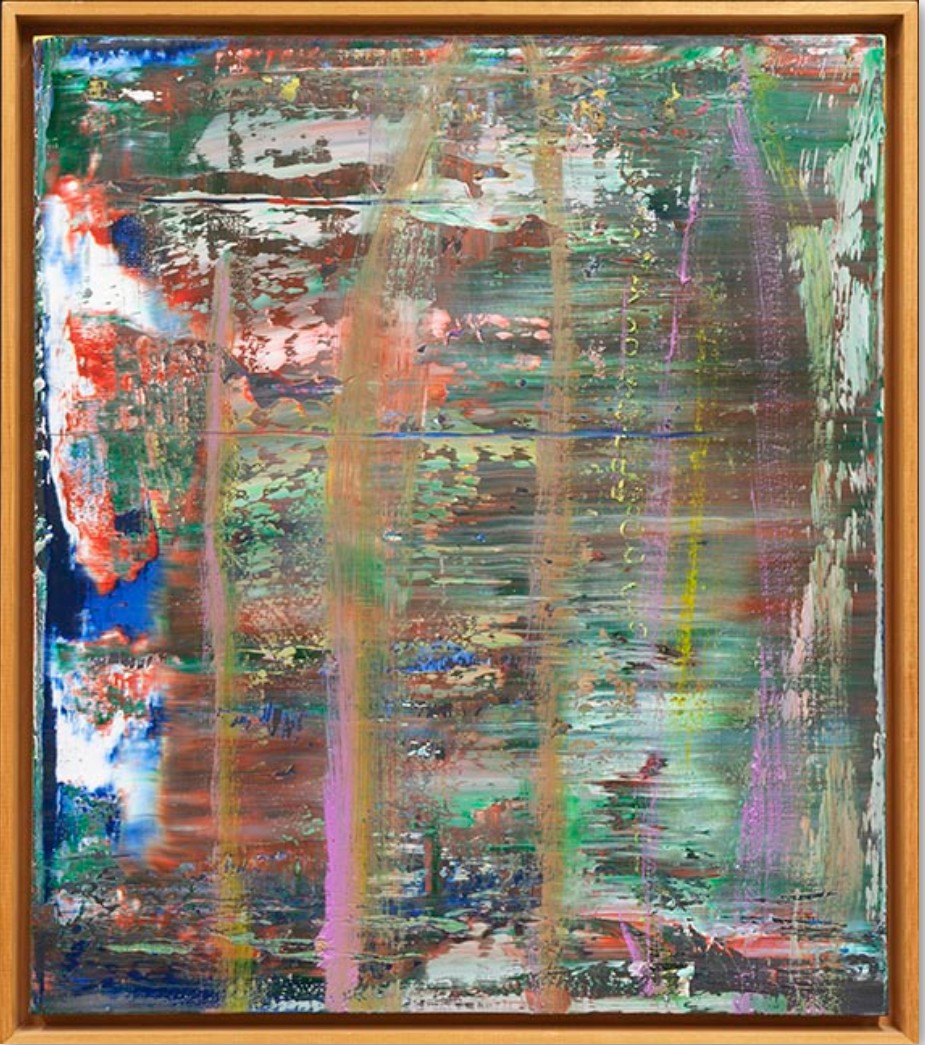
Abstraktes Bild, 1989
Oil on canvas
72×62 cm (28 3/8 x 24 3/8 inches)
Signed, dated and inscribed with the work number “704-3” on the reverse
#8. Gilbert & George, 1975
Christie’s London: 5 March 2025
Estimated: GBP 1,500,000 – 2,000,000
GBP 1,250,000 / USD 1,600,000
READ MORE IN FOCUS SECTION
GERHARD RICHTER (B. 1932), Gilbert & George | Christie’s
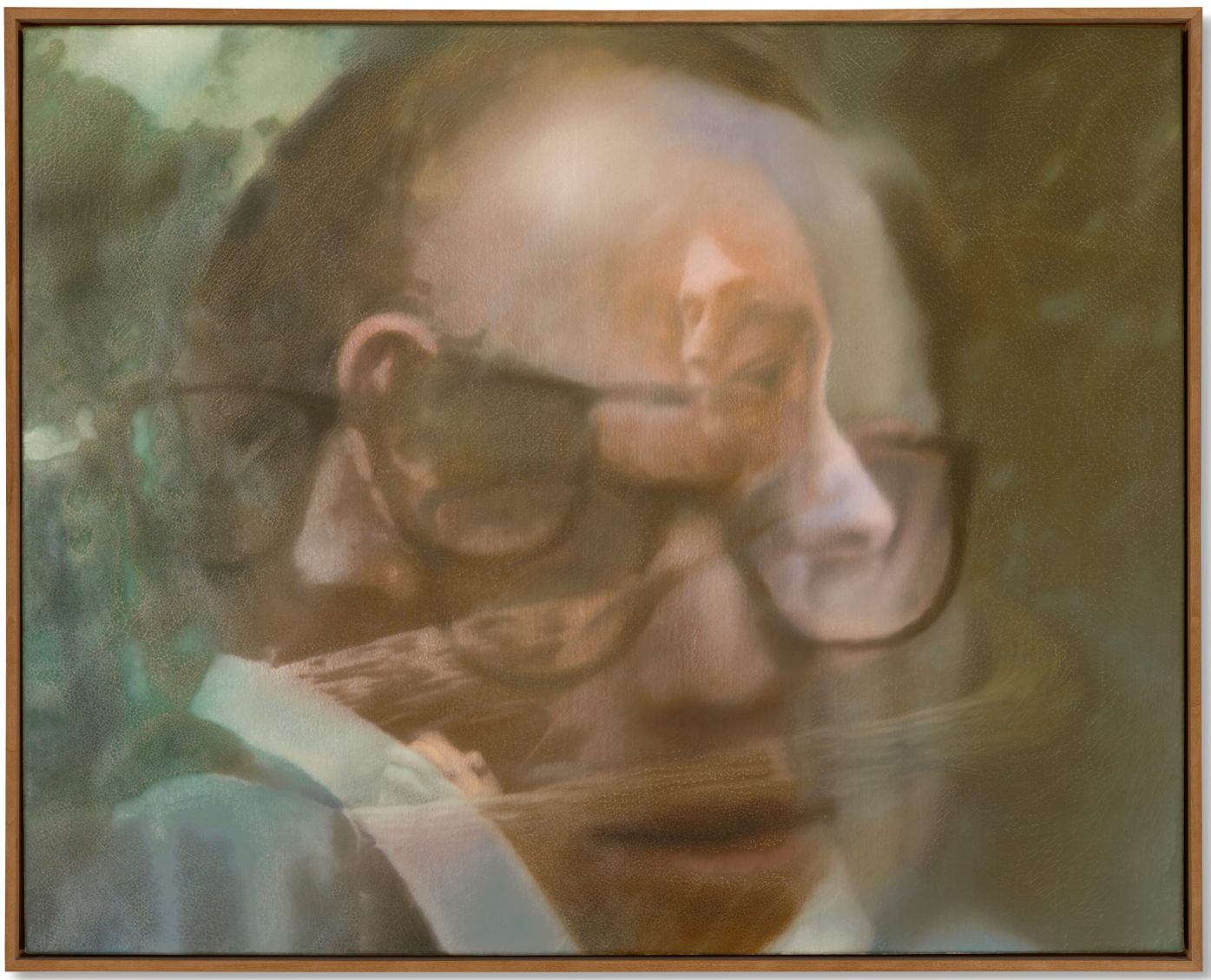
GERHARD RICHTER (B. 1932)
Gilbert & George, 1975
Oil on canvas
80×100 cm (31 1/2 x 39 3/8 inches)
Signed, numbered and dated ‘379 Richter, 1975’ (on the reverse)
#9. Abstraktes Bild, 1992
Sotheby’s New-York: 16 May 2025
Estimated: USD 1,200,000 – 1,800,000
USD 1,514,000
READ MORE IN FOCUS SECTION
Abstraktes Bild | Contemporary Day Auction | 2025 | Sotheby’s
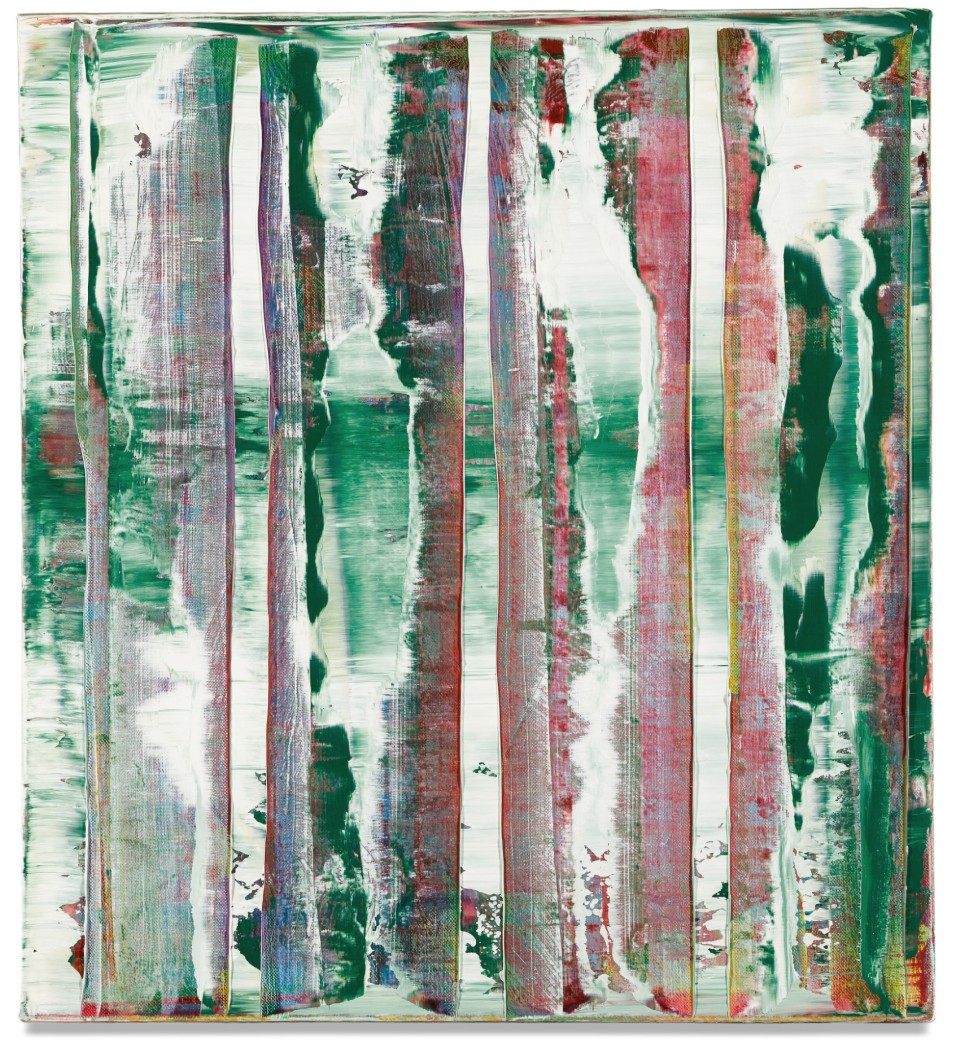
GERHARD RICHTER (b. 1932)
Abstraktes Bild, 1992
Oil on canvas
51 x 46.2 cm (20 x 18 1/8 inches)
Signed, dated 1992 and numbered 775-3 (on the reverse)
#10. Abstraktes Bild, 1995
Sotheby’s New-York: 19 November 2025
Estimated: USD 1,200,000 – 1,800,000
USD 1,514,000
READ MORE IN FOCUS SECTION
Abstraktes Bild | Contemporary Day Auction | 2025 | Sotheby’s
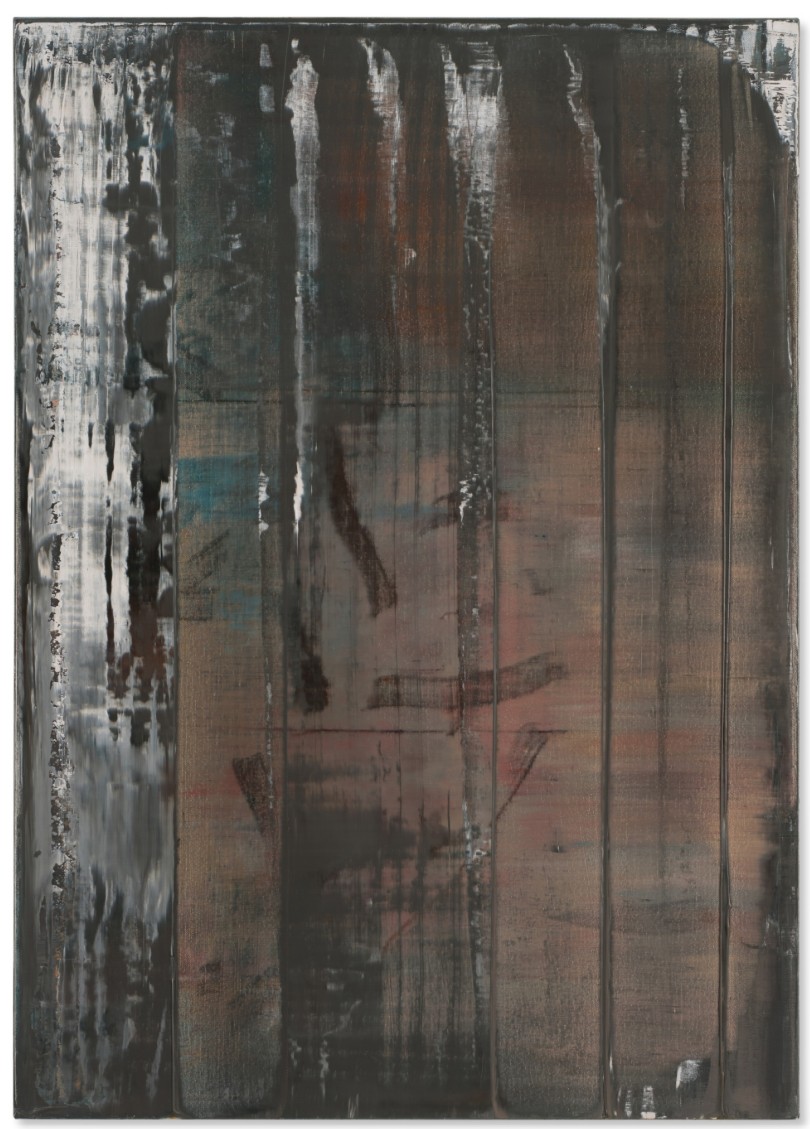
GERHARD RICHTER (b. 1932)
Abstraktes Bild, 1995
Oil on canvas
94 x 66.7 cm (37 x 26 1/4 inches)
Signed twice, dated 1995 and numbered 829-11 (on the reverse)
#11. Abdu, 2009
Christie’s London: 5 March 2025
Estimated: GBP 700,000 – 1,000,000
GBP 1,032,200 / USD 1,321,216
READ MORE IN FOCUS SECTION
GERHARD RICHTER (B. 1932), Abdu | Christie’s
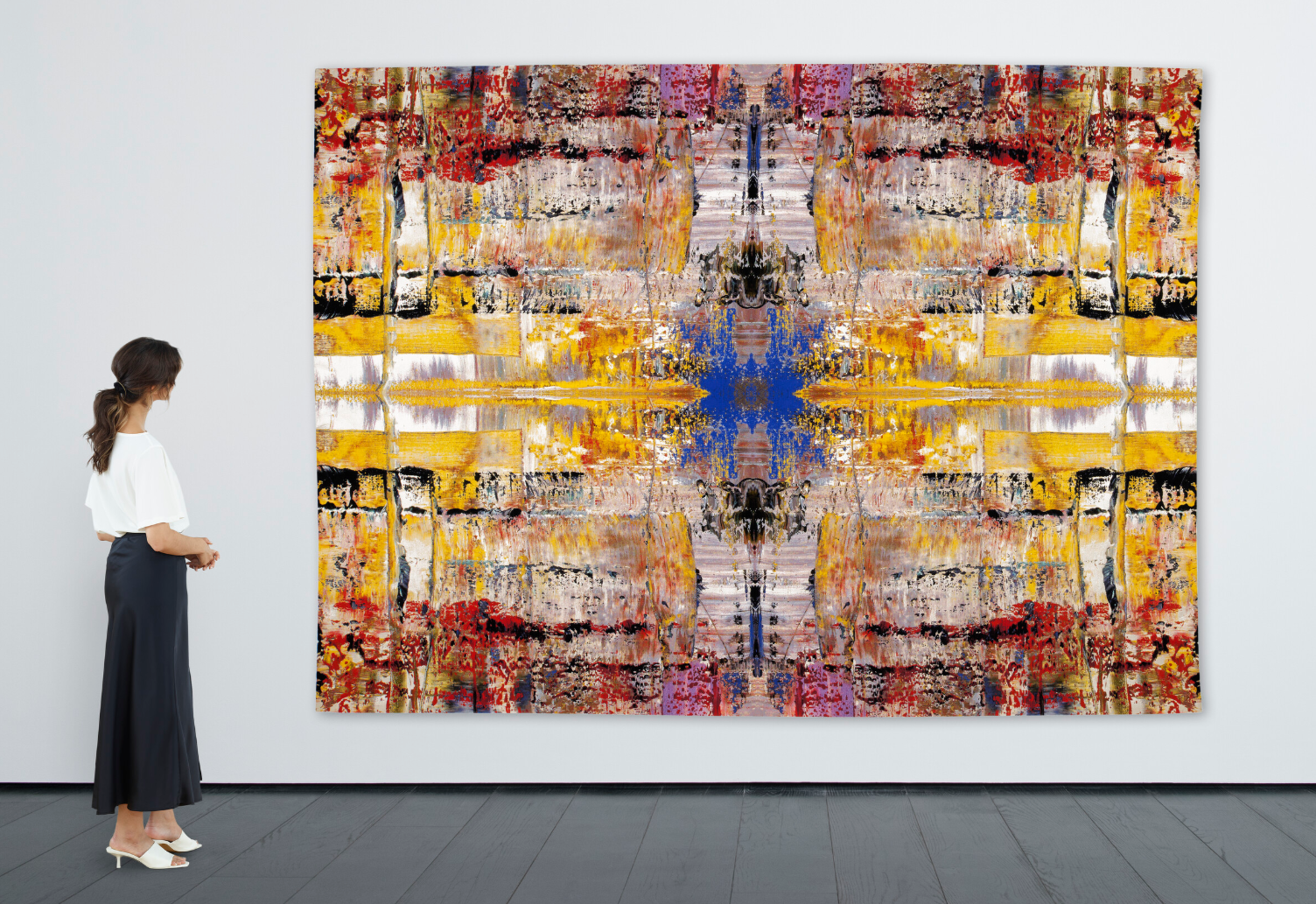
GERHARD RICHTER (B. 1932)
Abdu, 2009
Trevira CS, cotton, wool, silk and acrylic Jacquard-woven tapestry
276×378 cm (108 5/8 x 148 7/8 inches)
Signed and numbered ‘5⁄8 Richter’ (on a label affixed to the reverse)
This work is number five from an edition of eight plus two artist’s proofs
#12. Iblan, 2009
Christie’s New-York: 20 November 2025
Estimated: USD 800,000 – 1,200,000
USD 1,270,000
TAPESTRY – EDITION OF 8
GERHARD RICHTER (B. 1932), Iblan | Christie’s
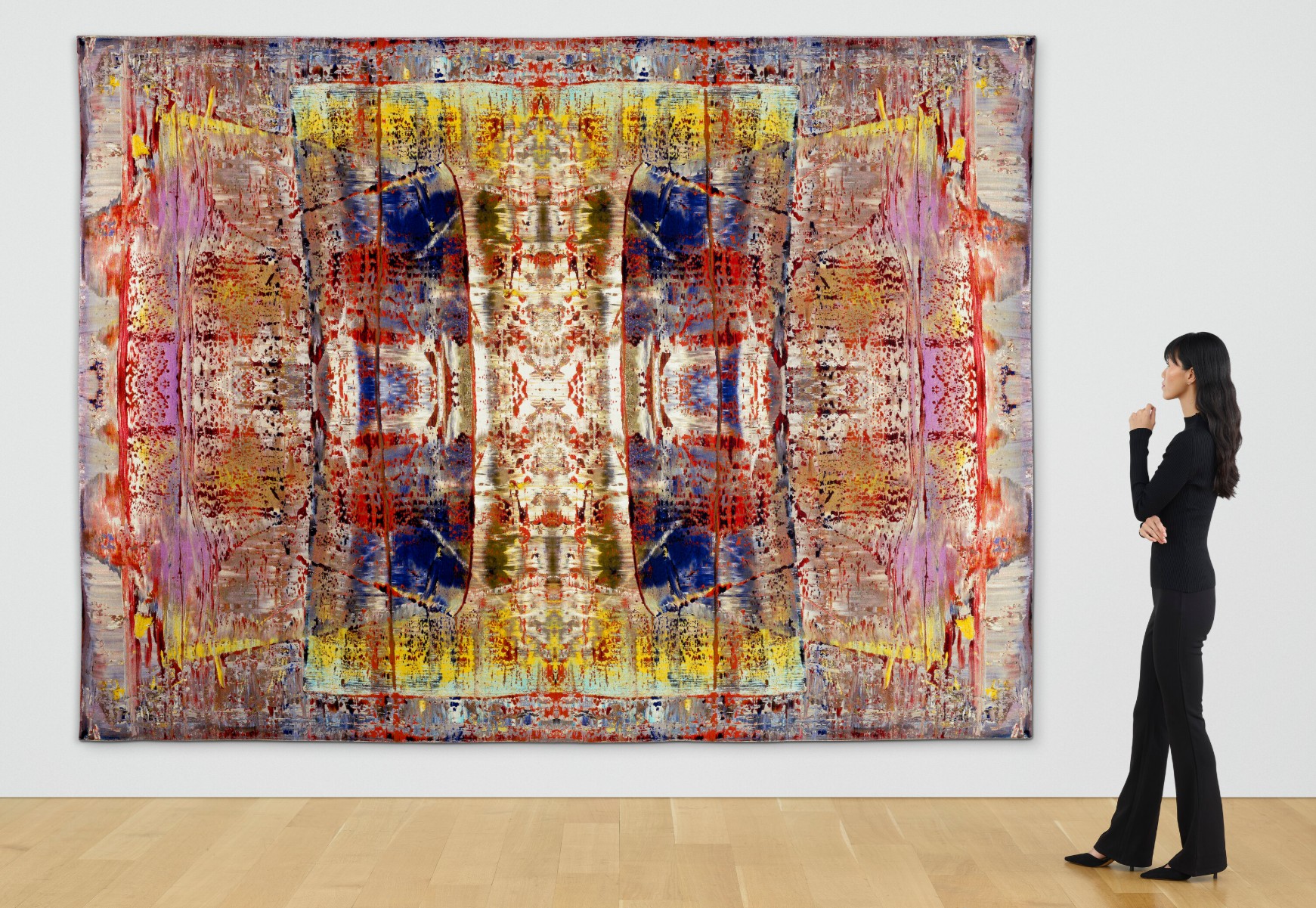
GERHARD RICHTER (B. 1932)
Iblan, 2009
Trevira CS, cotton, wool, silk and acrylic Jacquard-woven tapestry
271.8 x 368.3 cm (107×145 inches)
Signed and numbered ‘4⁄8 Richter’ (on a fabric label affixed to the reverse)
This work is number four from an edition of eight plus two artist’s proofs
#13. Abstraktes Bild, 1997
Ketterer Kunst Munich: 5 December 2025
Estimated: EUR 700,000
EUR 1,044,900 / USD 1,212,085
READ MORE IN FOCUS SECTION
Ketterer Kunst, Art auctions, Book auctions Munich, Hamburg & Berlin
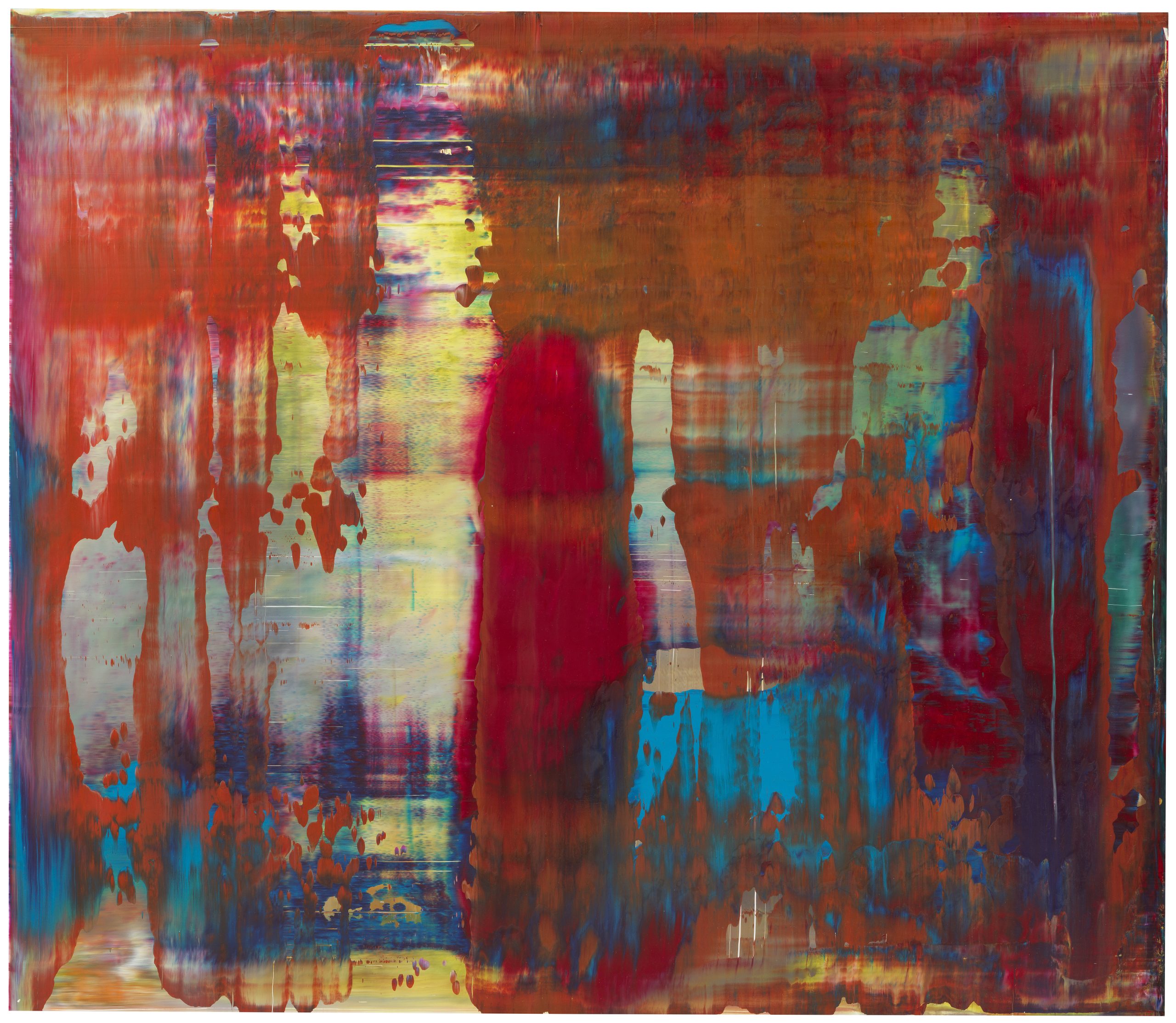
GERHARD RICHTER (b. 1932)
Abstraktes Bild, 1997
Oil auf Alucobond
48×55 cm (18.8 x 21.6 inches)
Signed, dated, and inscribed with the work number “842-4” on the reverse
#14. Abstraktes Bild, 1988
Sotheby’s New-York: 16 May 2025
Estimated: USD 800,000 – 1,200,000
USD 1,016,000
Abstraktes Bild | Contemporary Day Auction | 2025 | Sotheby’s
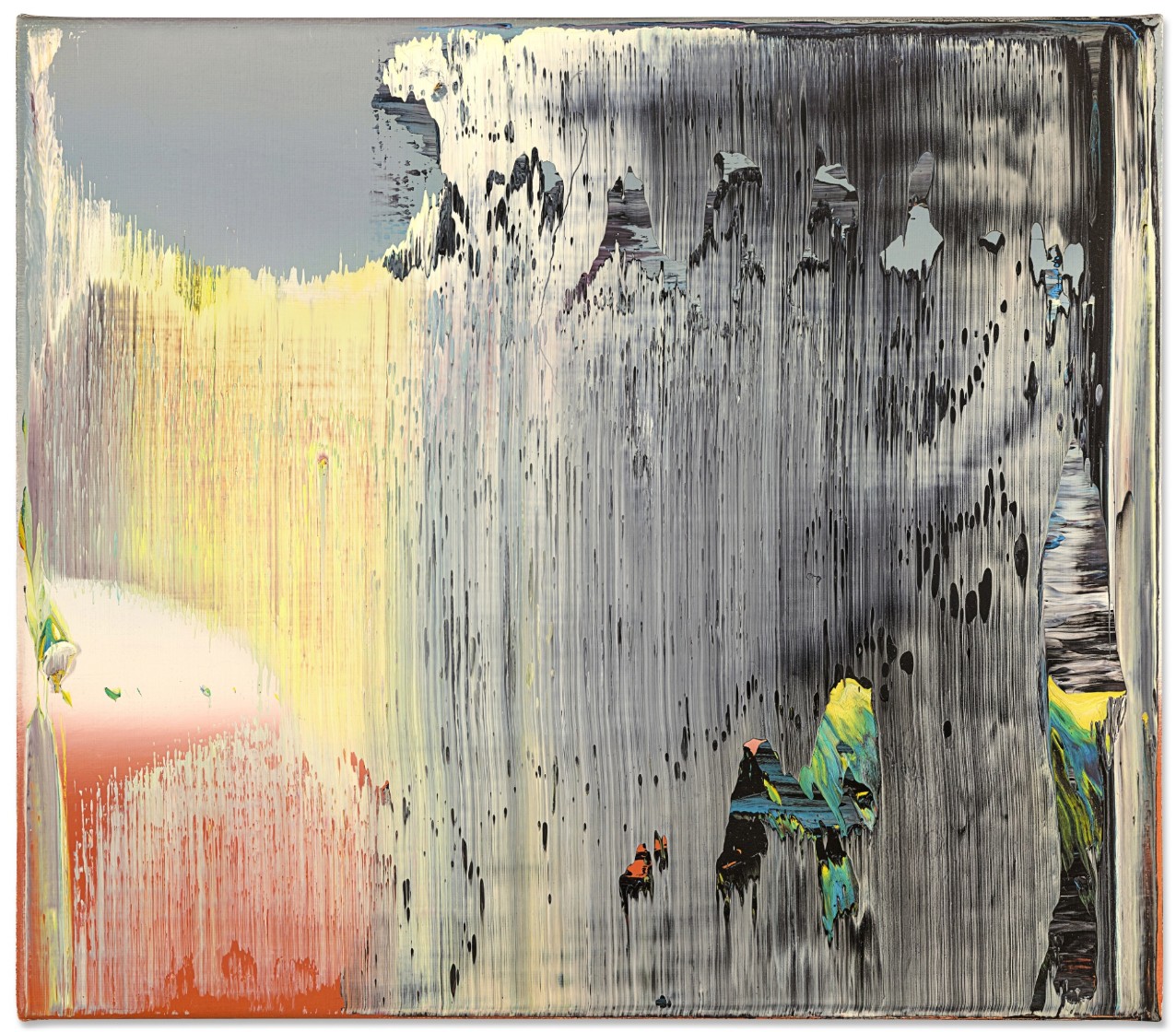
GERHARD RICHTER (b. 1932)
Abstraktes Bild, 1988
Acrylic on canvas
35×40 cm (13 3/4 x 15 3/4 inches)
Signed, dated 88 and numbered 675-2 (on the reverse)
USD 1 million
#15. Fuji, 1996
Christie’s London: 16 October 2025
Estimated: GBP 300,000 – 500,000
GBP 584,200 / USD 782,830
READ MORE IN FOCUS SECTION
GERHARD RICHTER (B. 1932), Fuji | Christie’s
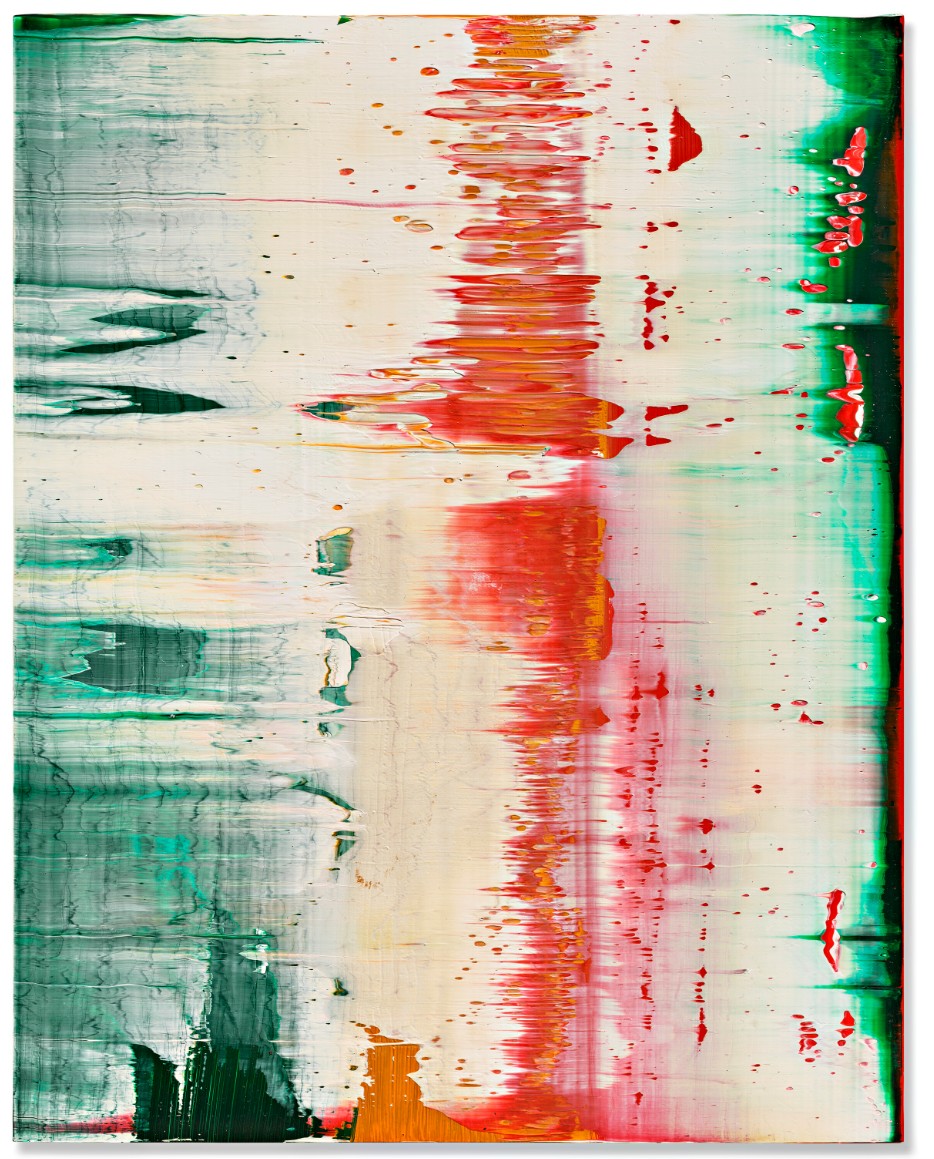
GERHARD RICHTER (B. 1932)
Fuji, 1996
Oil on Alucobond
37×29 cm (14 5/8 x 11 3/8 inches)
Signed ‘Richter’ (on the reverse)
Numbered ‘839-85’ (on a label affixed to the reverse)
#16. Abstraktes Bild, 1992
Sotheby’s London: 17 October 2025
Estimated: GBP 200,000 – 300,000
GBP 406,400 / USD 544,575
READ MORE IN FOCUS SECTION
Abstraktes Bild | Contemporary Day Auction | 2025 | Sotheby’s
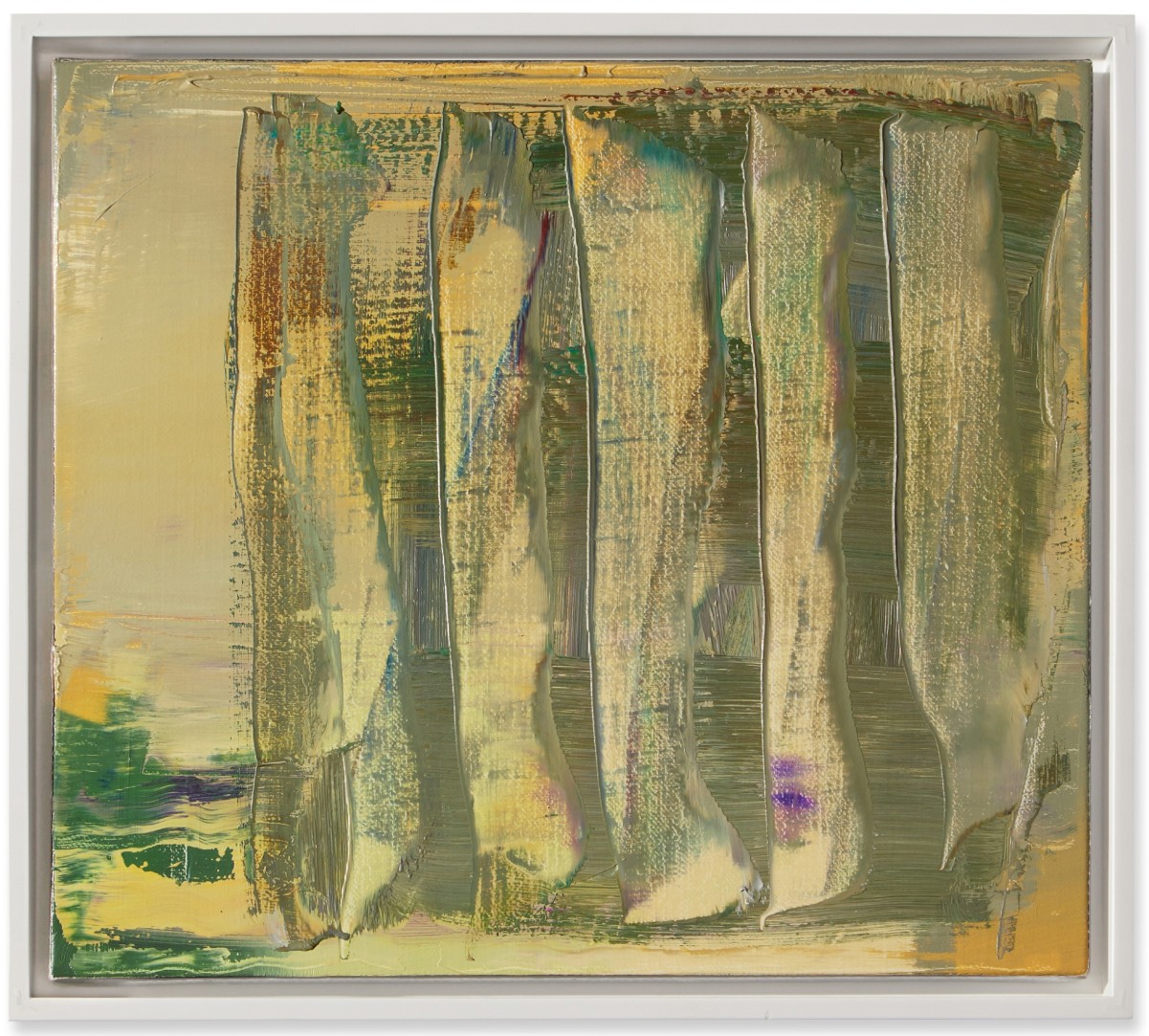
GERHARD RICHTER (b. 1932)
Abstraktes Bild, 1992
Oil on canvas
36 x 40.8 cm (14 1/8 x 16 inches)
Signed, dated 92 and numbered 763-2 (on the reverse)
#17. Fuji, 1996
Grisebach Berlin: 27 November 2025
Estimated: EUR 350,000 – 450,000
EUR 350,000 (Hammer)
EUR 444,500 / USD 515,565
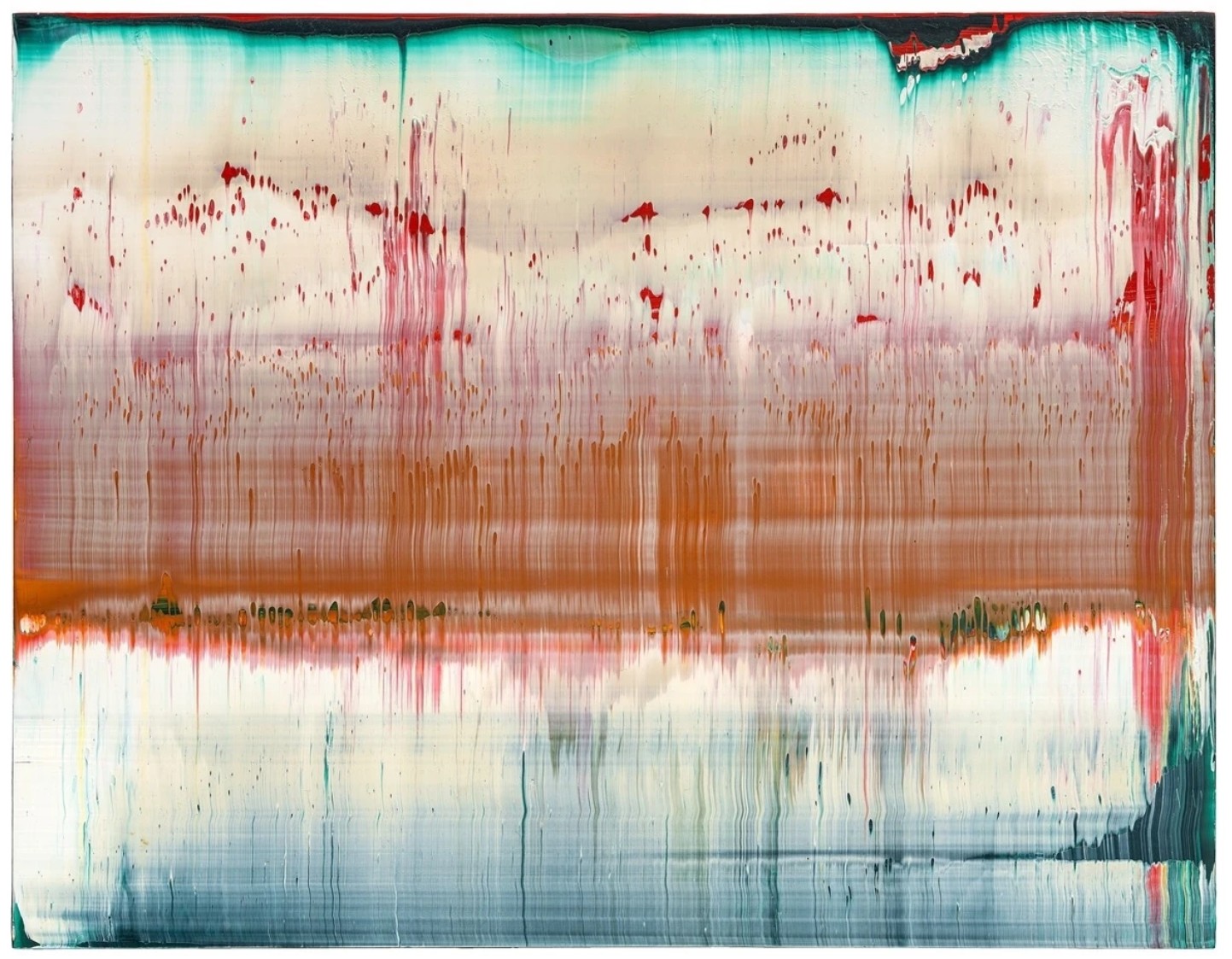
GERHARD RICHTER (Dresden 1932 – lives in Cologne)
Fuji, 1996
Oil on Alucobond
29×37 cm (11 3/8 x 14 5/8 inches)
On the reverse signed in black felt-tip pen: Richter.
One of 110 numbered unique works
Munich, Städtische Galerie im Lenbachhaus
USD 500,000
#18. Vorhang (Curtain), 1965
Sotheby’s Paris: 24 October 2025
Estimated: EUR 250,000 – 350,000
EUR 406,400 / USD 472,120
Vorhang (Curtain) | Surrealism and Its Legacy | 2025 | Sotheby’s
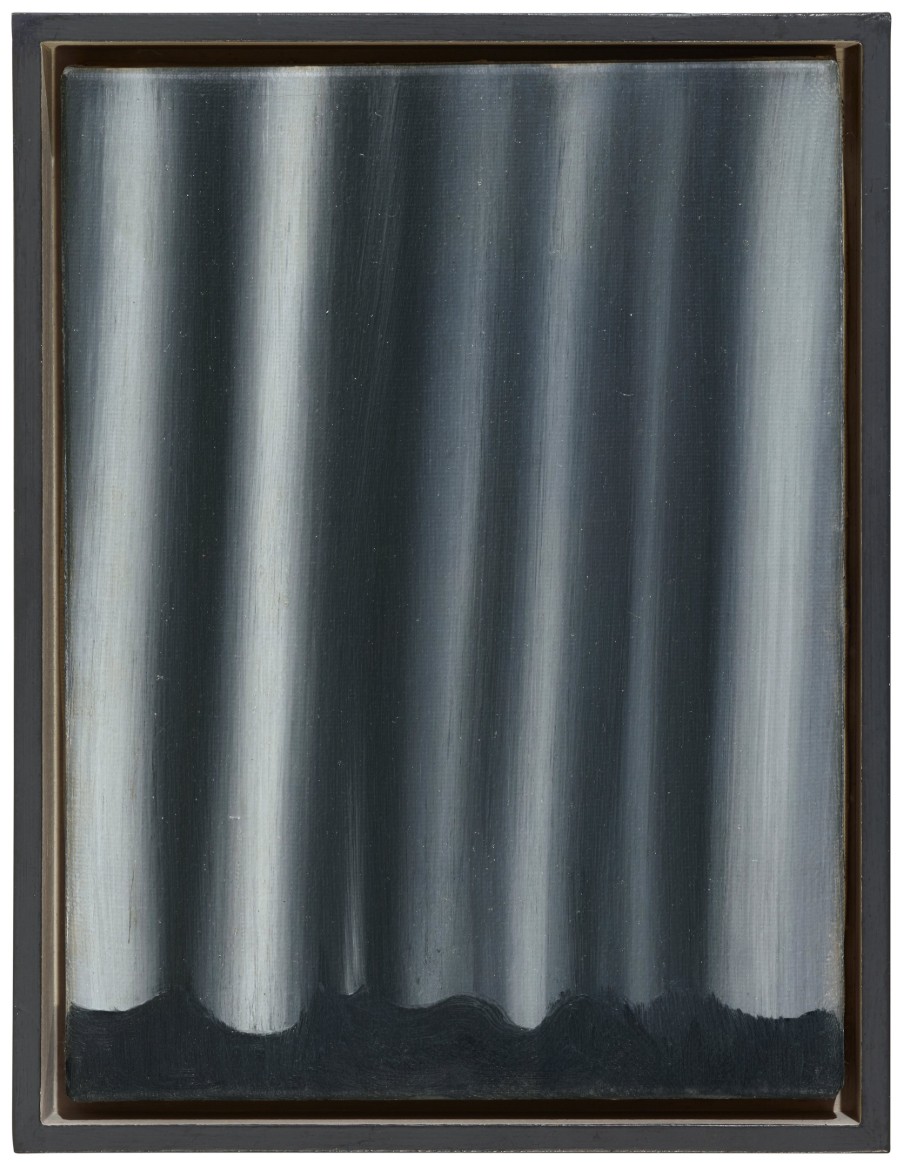
GERHARD RICHTER (b. 1932)
Vorhang (Curtain), 1965
Oil on canvas
24.3 x 18.4 cm (9 5/8 x 7 1/4 inches)
Signed Richter and dated 65 (on the reverse)
#19. Antelio Glas, 2002
Sotheby’s London: 24 June 2025
Estimated: GBP 300,000 – 400,000
GBP 292,100 / USD 400,175
READ MORE IN FOCUS SECTION
Antelio Glas | Modern & Contemporary Evening Auction | 2025 | Sotheby’s
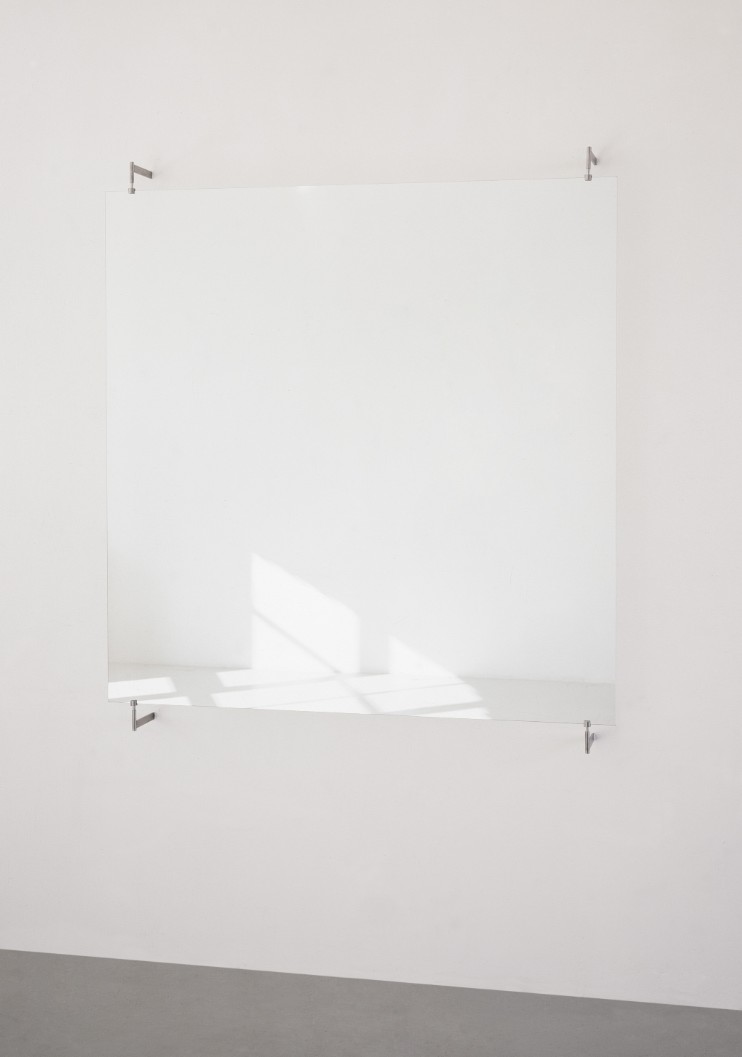
GERHARD RICHTER (b. 1932)
Antelio Glas, 2002
Glass and steel construction
149.5 x 149.5 x 12 cm (58 7/8 x 58 7/8 x 4 3/4 inches)
#20. Ifrit, 2010
Sotheby’s New-York: 16 May 2025
Estimated: USD 150,000 – 200,000
USD 355,600
Ifrit | Contemporary Day Auction | 2025 | Sotheby’s
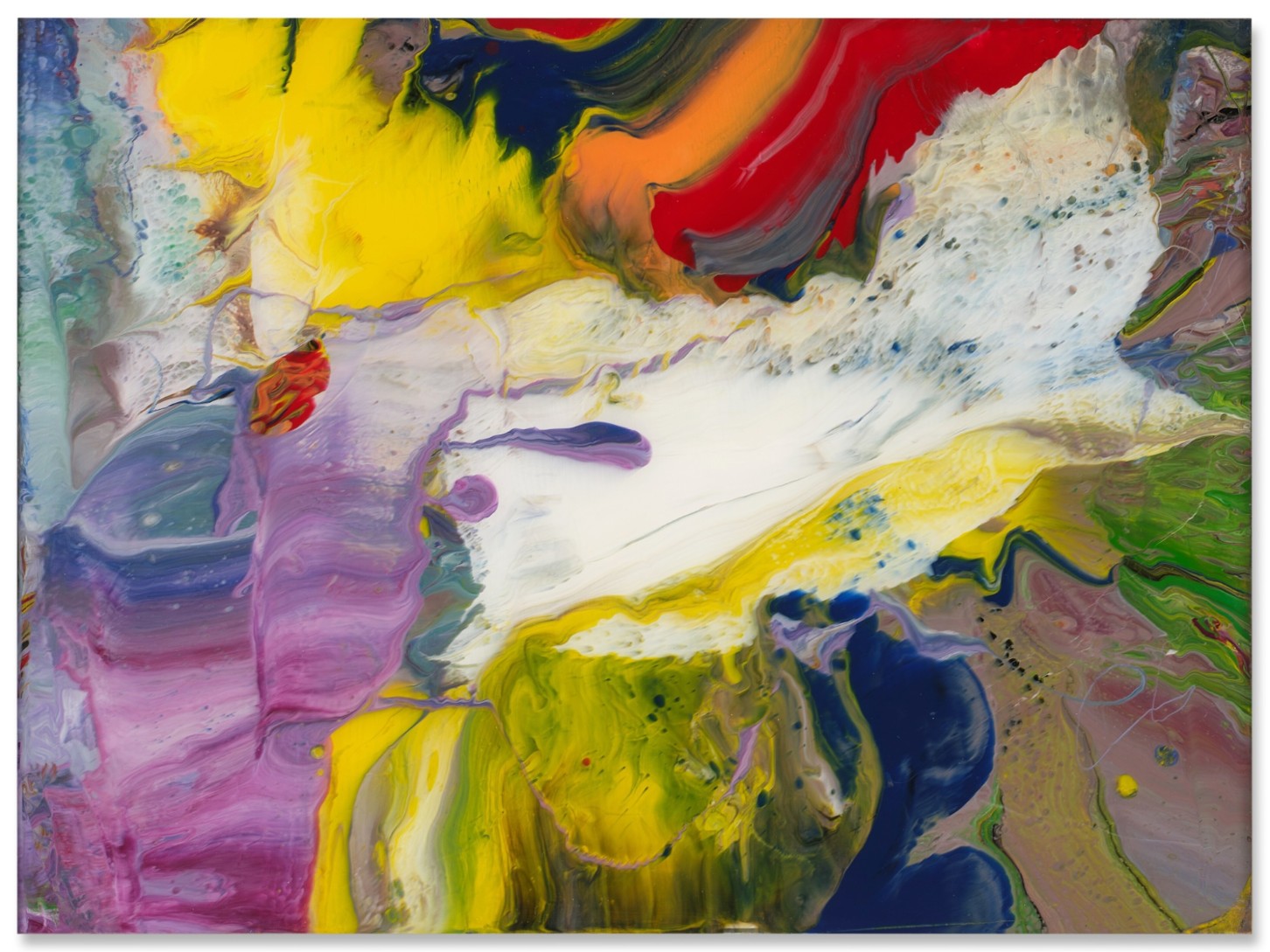
GERHARD RICHTER (b. 1932)
Ifrit, 2010
Lacquer on glass
37.1 x 50.2 cm (14 5/8 x 19 3/4 inches)
Aigned, dated 2010 and numbered 915-1 (on the reverse)
#21. Abstraktes Bild, 1992
Christie’s Hong-Kong: 29 March 2025
Estimated: HKD 2,000,000 – 3,000,000
HKD 2,520,000 / USD 323,805
GERHARD RICHTER (B. 1932), Abstraktes Bild | Christie’s
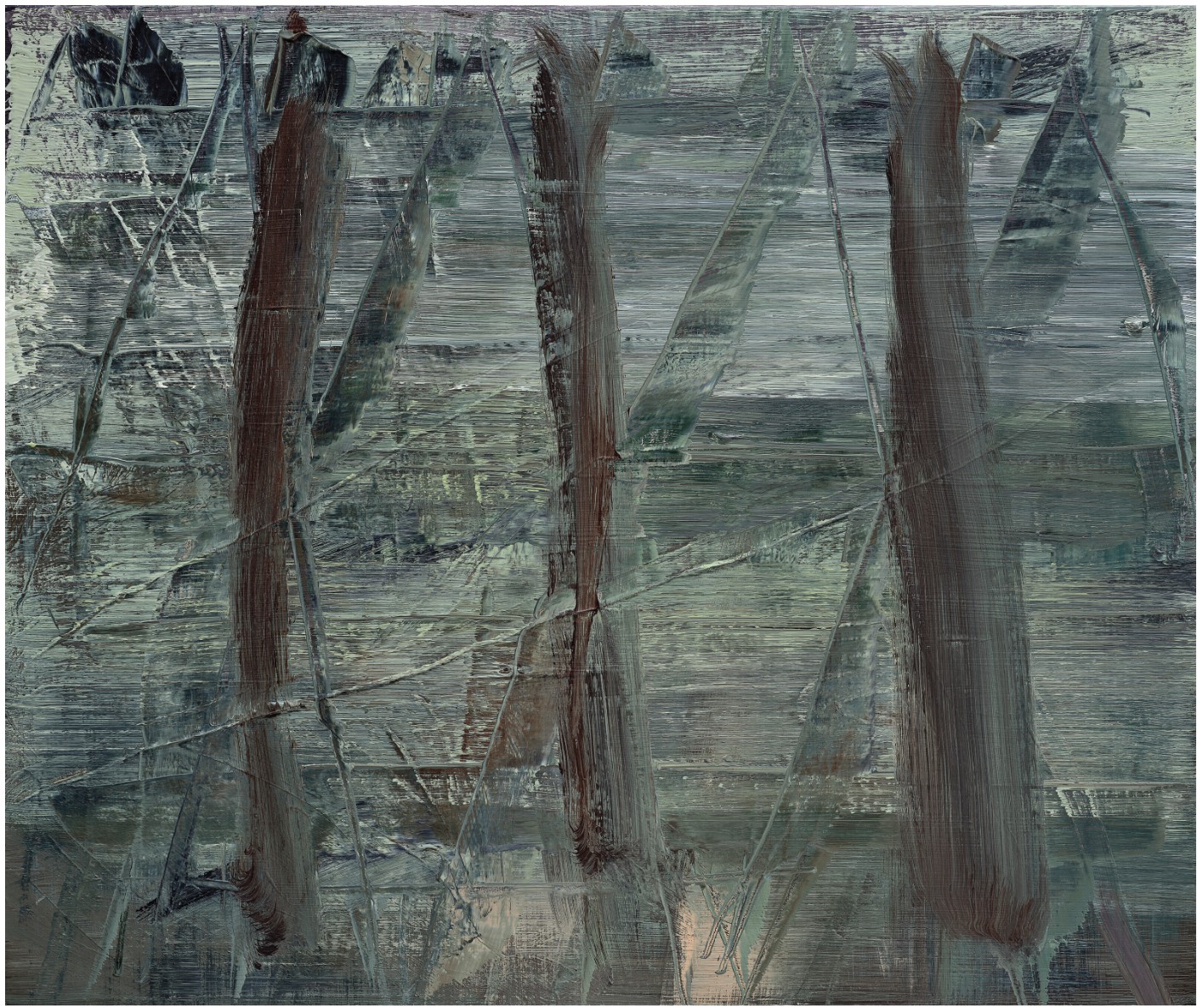
GERHARD RICHTER (B. 1932)
Abstraktes Bild, 1992
Oil on canvas
52×62 cm (20 1/2 x 24 3/8 inches)
Signed, numbered and dated ‘754-2 Richter 1992’ (on the reverse)
#22. Aladin, 2010
Christie’s London: 6 March 2025
Estimated: GBP 70,000 – 100,000
GBP 239,400 / USD 306,432
GERHARD RICHTER (B. 1932), Aladin | Christie’s
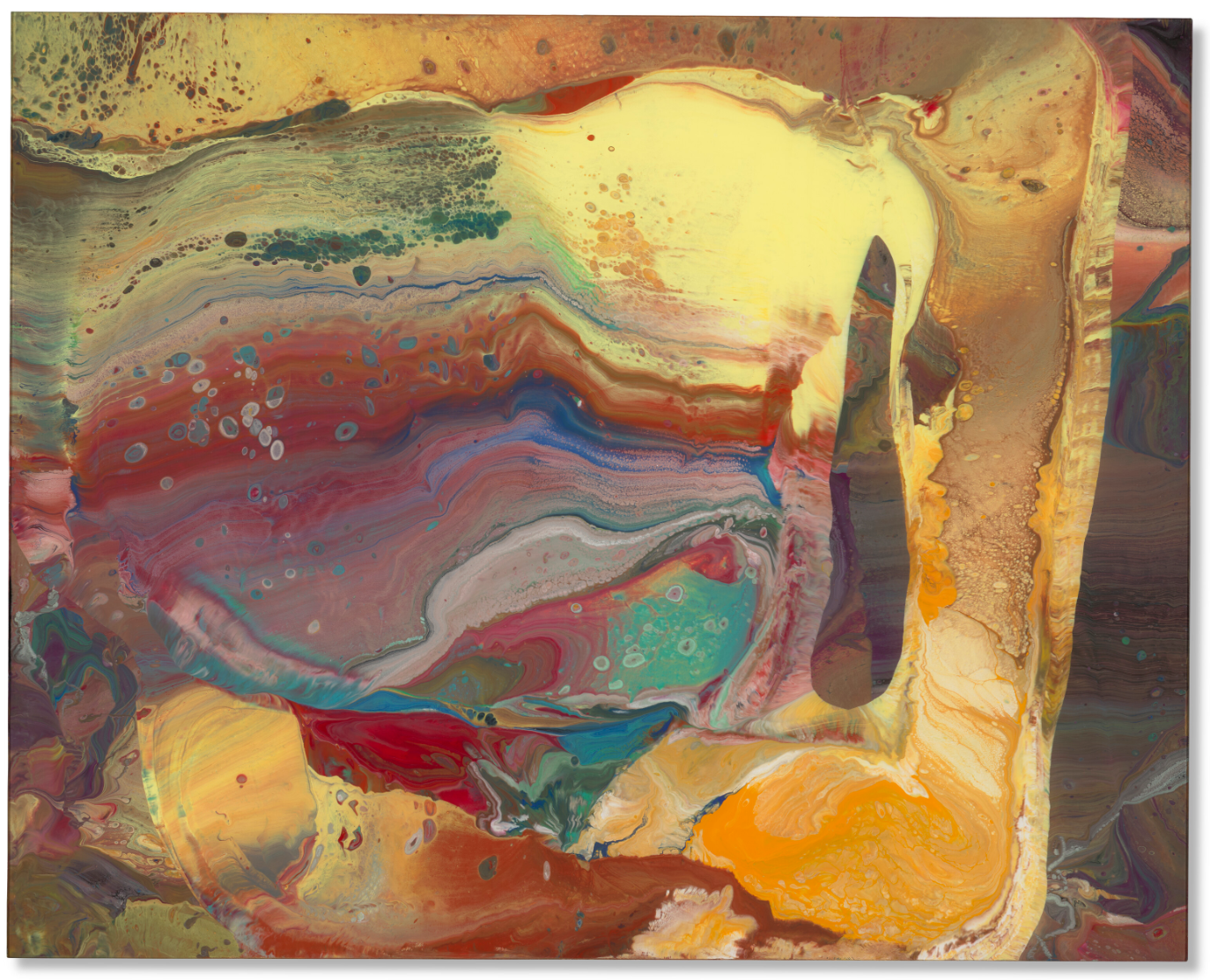
GERHARD RICHTER (B. 1932)
Aladin, 2010
Lacquer on glass
40 x 50.2 cm (15 3/4 x 19 3/4 inches)
Signed, inscribed and dated ‘913-29 Richter, 2010’ (on the reverse)
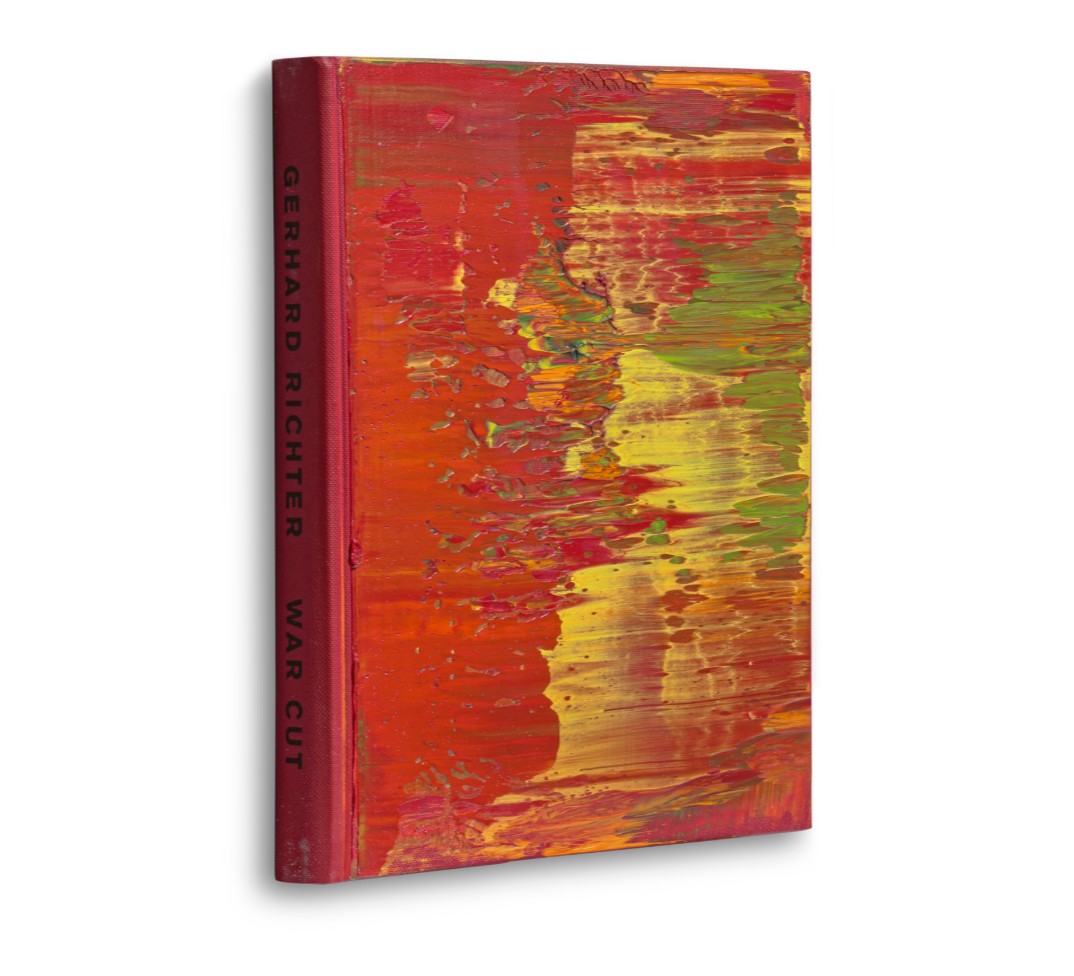
#23. War Cut II, 2005
Christie’s New-York: 20 November 2025
Estimated: USD 100,000 – 150,000
USD 266,700
EDITION OF 30 UNIQUE VARIANTS
GERHARD RICHTER (B. 1932), War Cut II | Christie’s
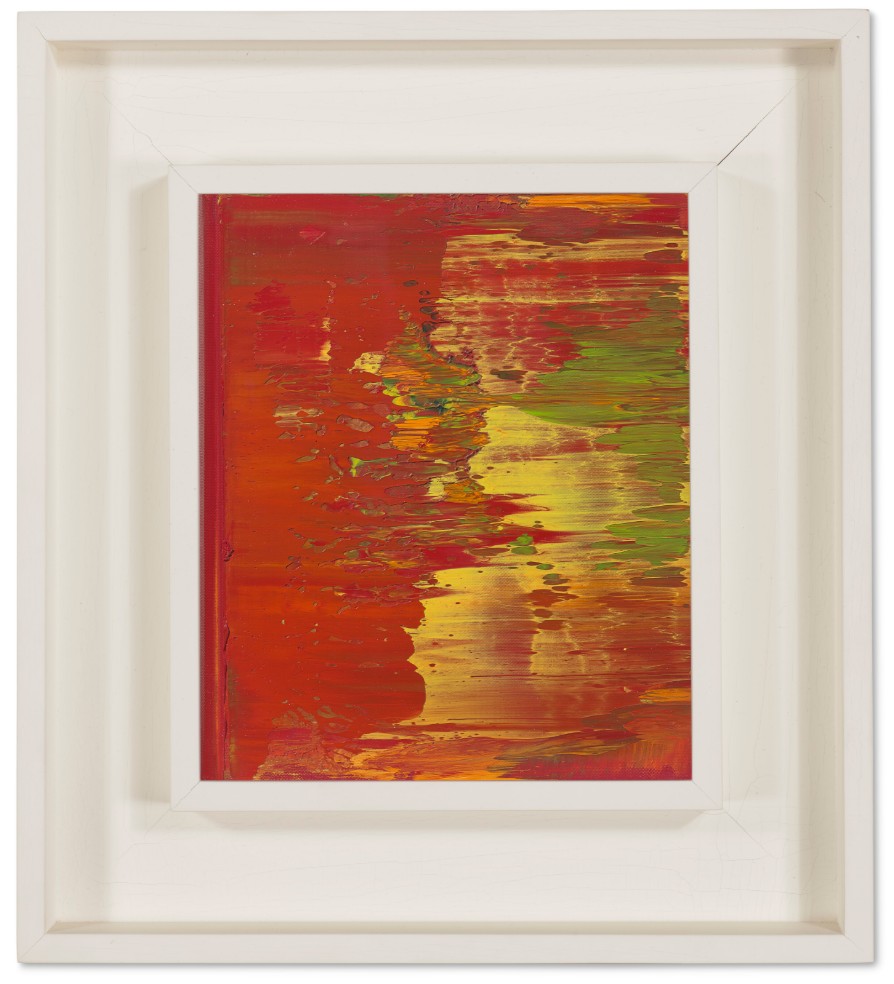
GERHARD RICHTER (B. 1932)
War Cut II, 2005
Oil on artist’s book
25.5 x 21.6 x 2.5 cm (10 x 8 1/2 x 1 inches)
Signed, inscribed, numbered and dated ‘8⁄30 F Richter 2005’ (on the inside front cover)
Signed again, numbered again and dated again ‘8 Richter 2005’ (on the reverse of the colophon page)
This work is number eight from an edition of 30 unique hand-painted variants
#24. Abstraktes Bild, 1979
Ketterer Kunst: 6 June 2025
Estimated: EUR 120,000
EUR 209,550 / USD 247,270
READ MORE IN FOCUS SECTION
Ketterer Kunst, Art auctions, Book auctions Munich, Hamburg & Berlin
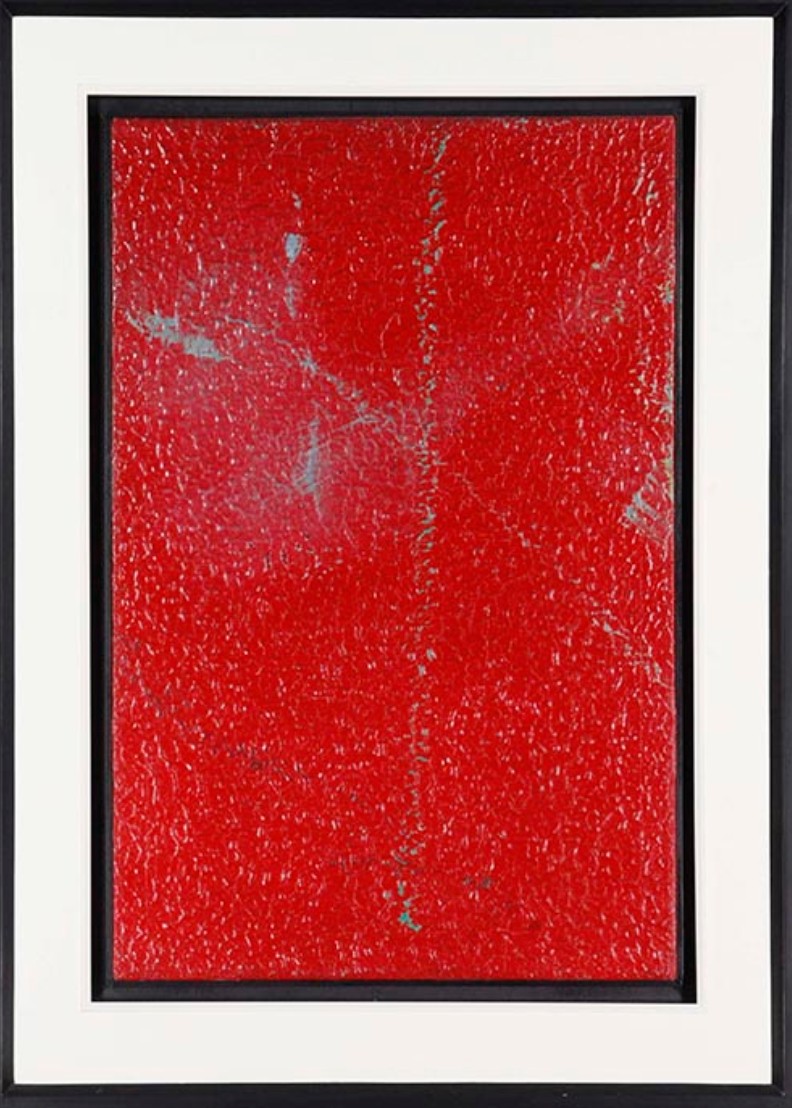
GERHARD RICHTER
Abstraktes Bild, 1979
Oil on canvas
78×52 cm (30 5/8 x 20 3/8 inches)
Signed, dated, and inscribed with the work number “448-3” on the reverse
#25. 30.9.98, 1998
Grisebach Berlin: 28 November 2025
Estimated: EUR 70,000 – 90,000
EUR 125,000 (Hammer)
EUR 158,750 / USD 184,130
WORK ON PAPER
Gerhard Richter. ”30.9.98”. 1998
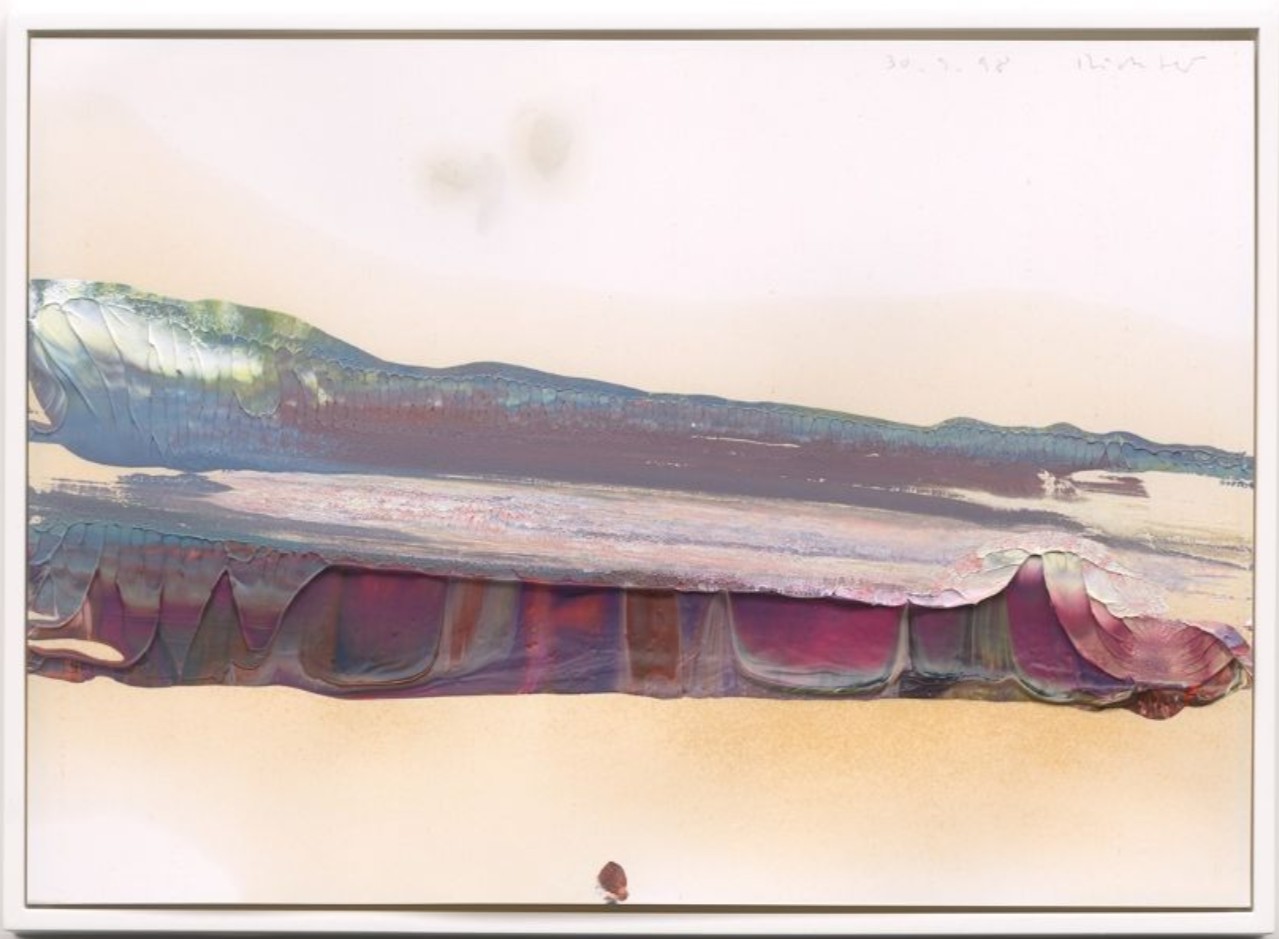
GERHARD RICHTER (Dresden 1932 – lives in Cologne)
30.9.98, 1998
Oil on paper
21.1 x 29.7 cm (8 1/4 x 11 3/4 inches)
Titled, dated and signed in pencil upper right: 30.9.98 Richter
#26. Ohne titel, 1994
Sotheby’s London: 5 March 2025
Estimated: GBP 120,000 – 180,000
GBP139,700 / USD 178,816
WORK ON PAPER
Ohne titel | Contemporary Day Auction | 2025 | Sotheby’s
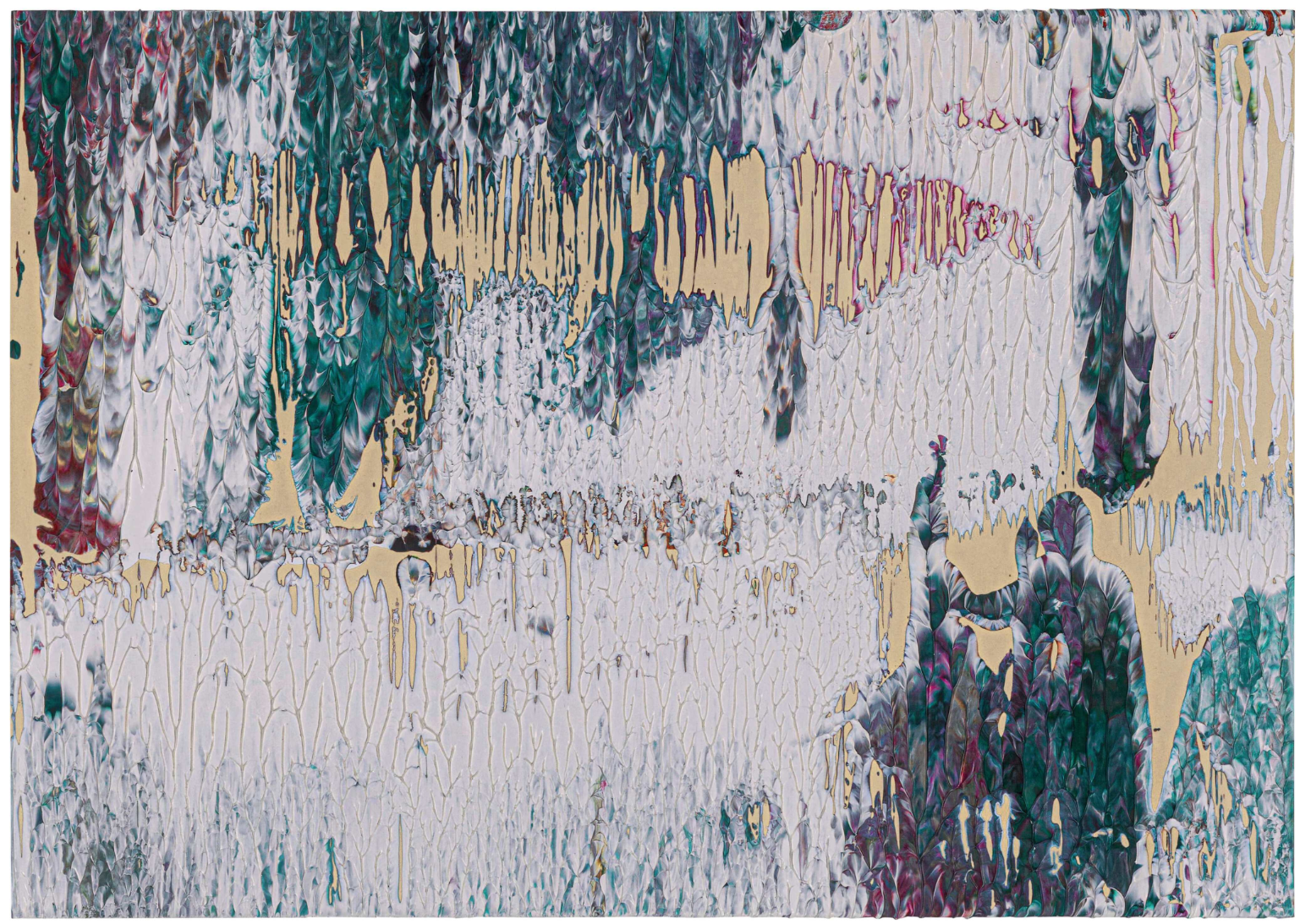
GERHARD RICHTER (b. 1932)
Ohne titel, 1994
Oil on paper
21.2 x 30 cm (8 3/8 x 11 3/4 inches)
Signed and dated 24.2.94 (on the backing board, lower right)
#27. MV.177, 2011
Christie’s London: 6 March 2025
Estimated: GBP 25,000 – 35,000
GBP 88,200 / USD 112,896
GERHARD RICHTER (B. 1932), MV.177 | Christie’s
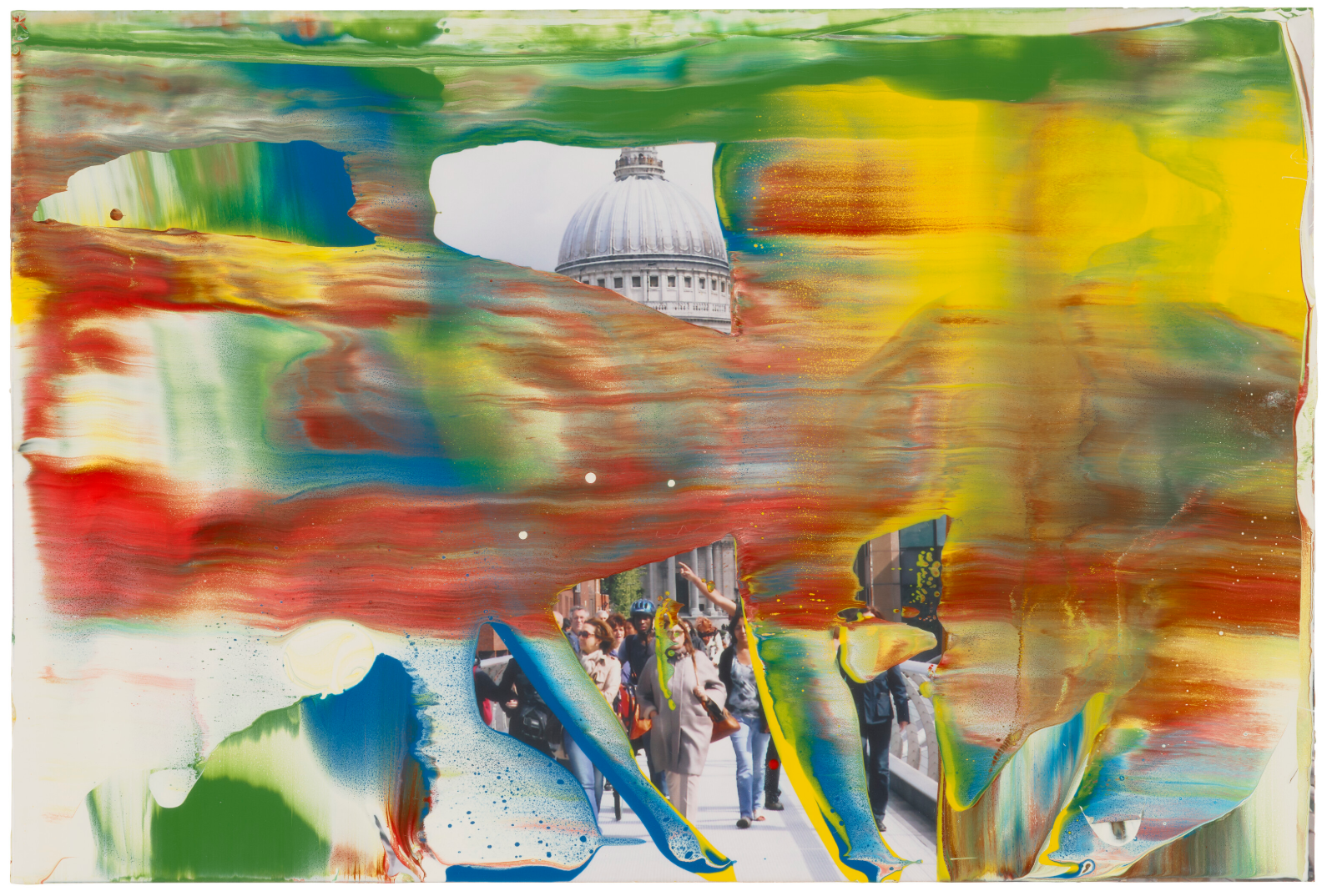
GERHARD RICHTER (B. 1932)
MV.177, 2011
Oil on color photograph
10.5 x 15 cm (4 1/8 x 5 7/8 inches)
Signed, titled and dated ‘MV. 177 Richter 2011’ (on the mount)
Signed with the artist’s initial and numbered ‘177. R.’ (on the backing board)
USD 100,000
#28. Strip, 2011
Christie’s London: 6 March 2025
Estimated: GBP 40,000 – 60,000
GBP 69,300 / USD 88,704
GERHARD RICHTER (B. 1932), Strip | Christie’s
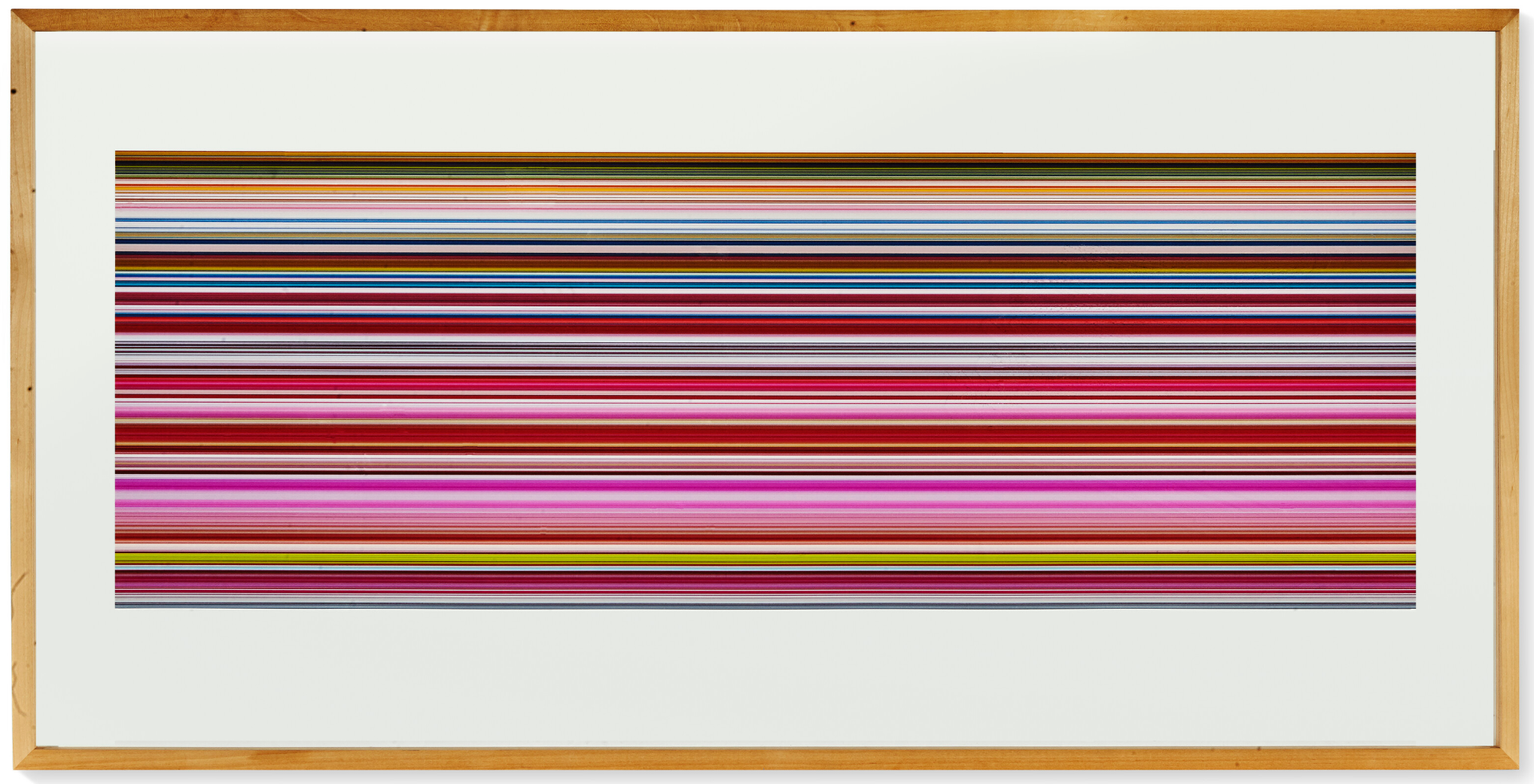
GERHARD RICHTER (B. 1932)
Strip, 2011
Digital inkjet print on board mounted on Alu-Dibond, in artist’s frame
Image: 32×92 cm (12 5/8 x 36 1/4 inches)
Overall: 53.2 x 105.2 cm (21 x 41 3/8 inches)
Signed, inscribed and dated ‘Probedruck für 512⁄4096 Richter, 2011’ (on the backing board)
This is a unique printer’s proof aside from the edition of seventy-two unique variants
#29. Strip (3817), 2011
Van Ham Cologne: 3 December 2025
Estimated: EUR 50,000 – 70,000
EUR 66,000 / USD 76,950
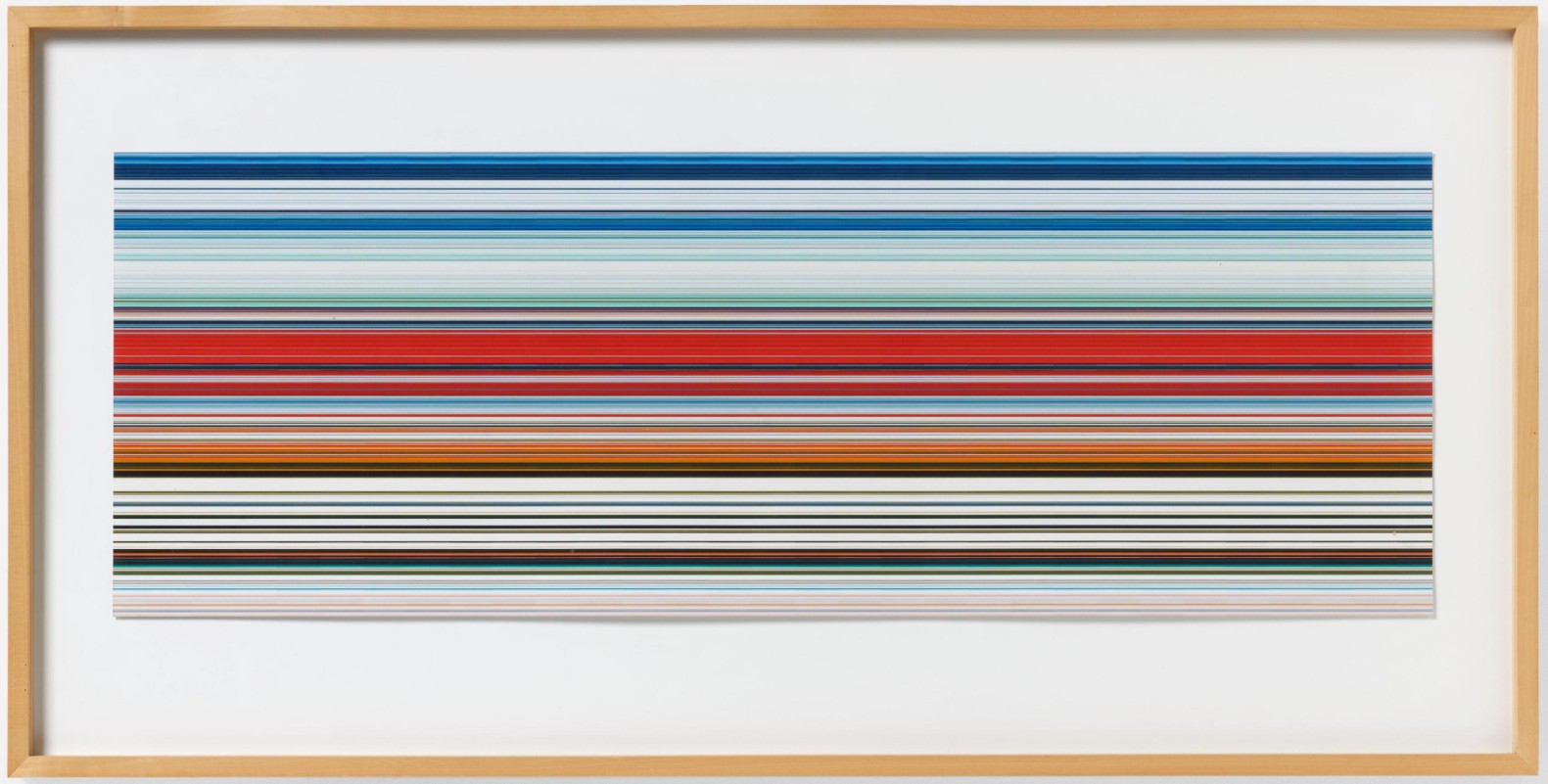
GERHARD RICHTER (1932 Dresden)
Strip (3817), 2011
Digital carbon print on card
Mounted on aluminium Dibond under glass
32×91 cm (12 5/8 x 36 inches)
Signed, dated and inscribed on the back of the frame
Printer’s proof 5/5
This work is a printer’s proof outside of the edition of 72 copies
A unique edition in which each copy has its own color palette
#30. Goldberg-Variationen, 1984
Van Ham Cologne: 3 December 2025
Estimated: EUR 40,000 – 60,000
EUR 66,000 / USD 76,950
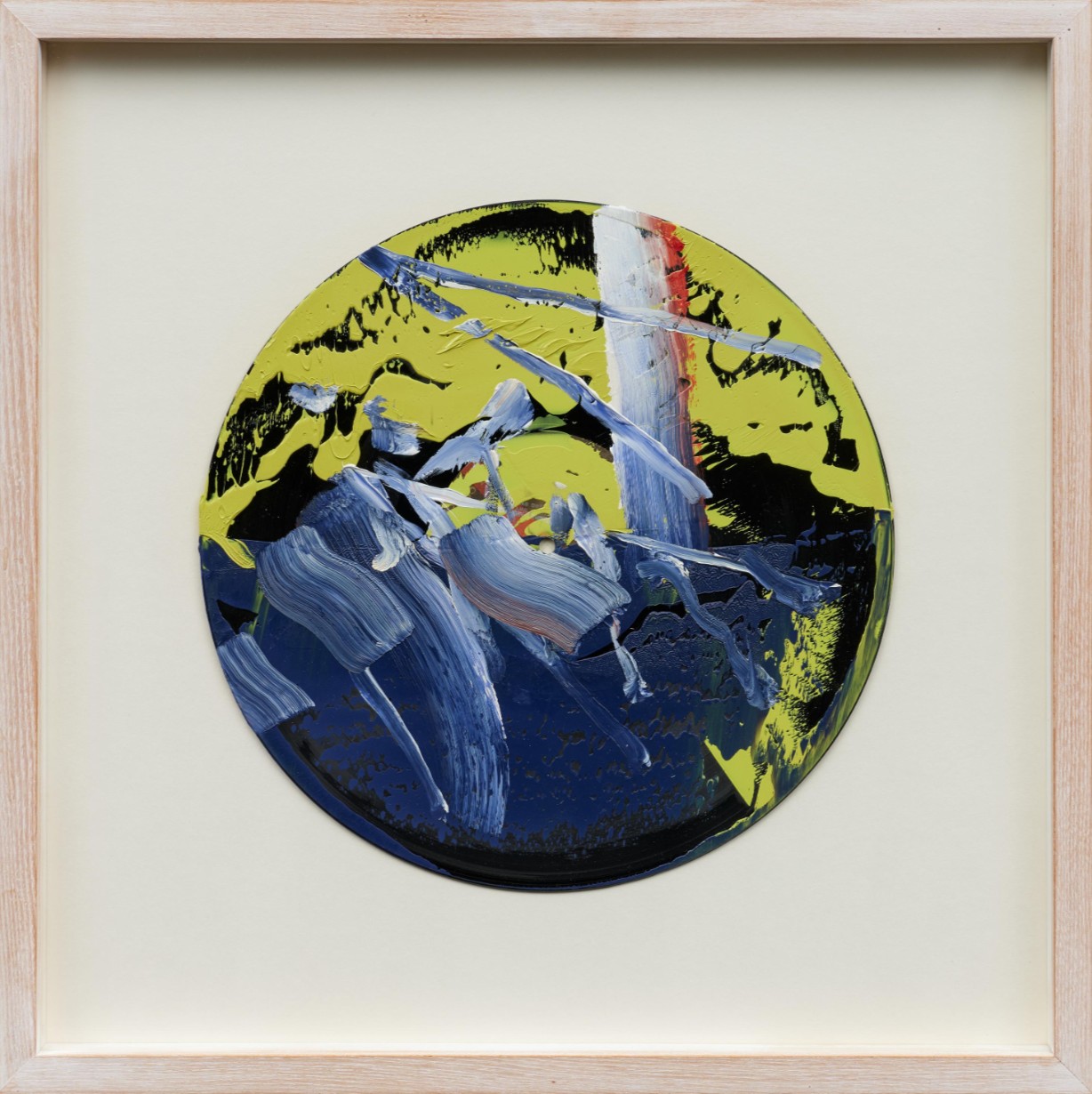
GERHARD RICHTER (1932 Dresden)
Goldberg-Variationen, 1984
Record painted over on one side with oil paint
Featuring Bach’s Goldberg Variations (recorded by Glenn Gould 1982)
Diameter: 30.1 cm (11 7/8 inches)
Numbered, signed and dated on the Label verso: 1/100 Richter 84
Each work is unique
#31. 26.11.18, 2018
Christie’s New-York: 30 September 2025
Estimated: USD 15,000 – 20,000
USD 63,500
WORK ON PAPER
GERHARD RICHTER (B. 1932), 26.11.18 | Christie’s
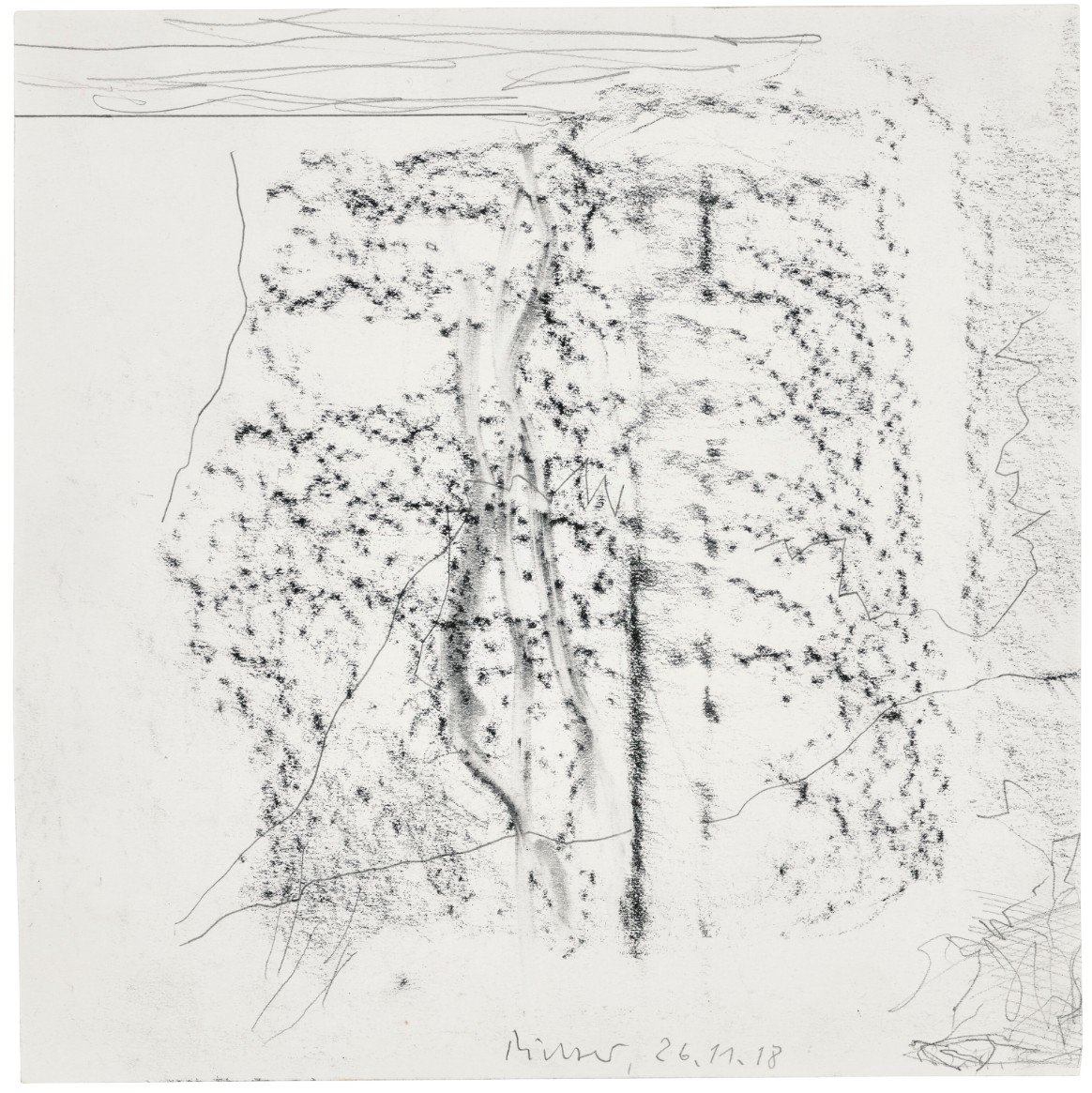
GERHARD RICHTER (B. 1932)
26.11.18, 2018
Graphite on paper
23 x 22.9 cm (9 1/8 x 9 inches)
Signed and dated ‘Richter, 26.11.18’ (lower center)
Signed again and dated again ‘Richter 2018’ (on the backing board)
#32. Goldberg-Variationen, 1984
Phillips London: 24 January 2025
Estimated: GBP 40,000 – 60,000
GBP 50,800 / USD 62,755
EDITION OF 100 UNIQUE VARIANTS
Gerhard Richter – Evening & Day Edit… Lot 13 January 2025 | Phillips
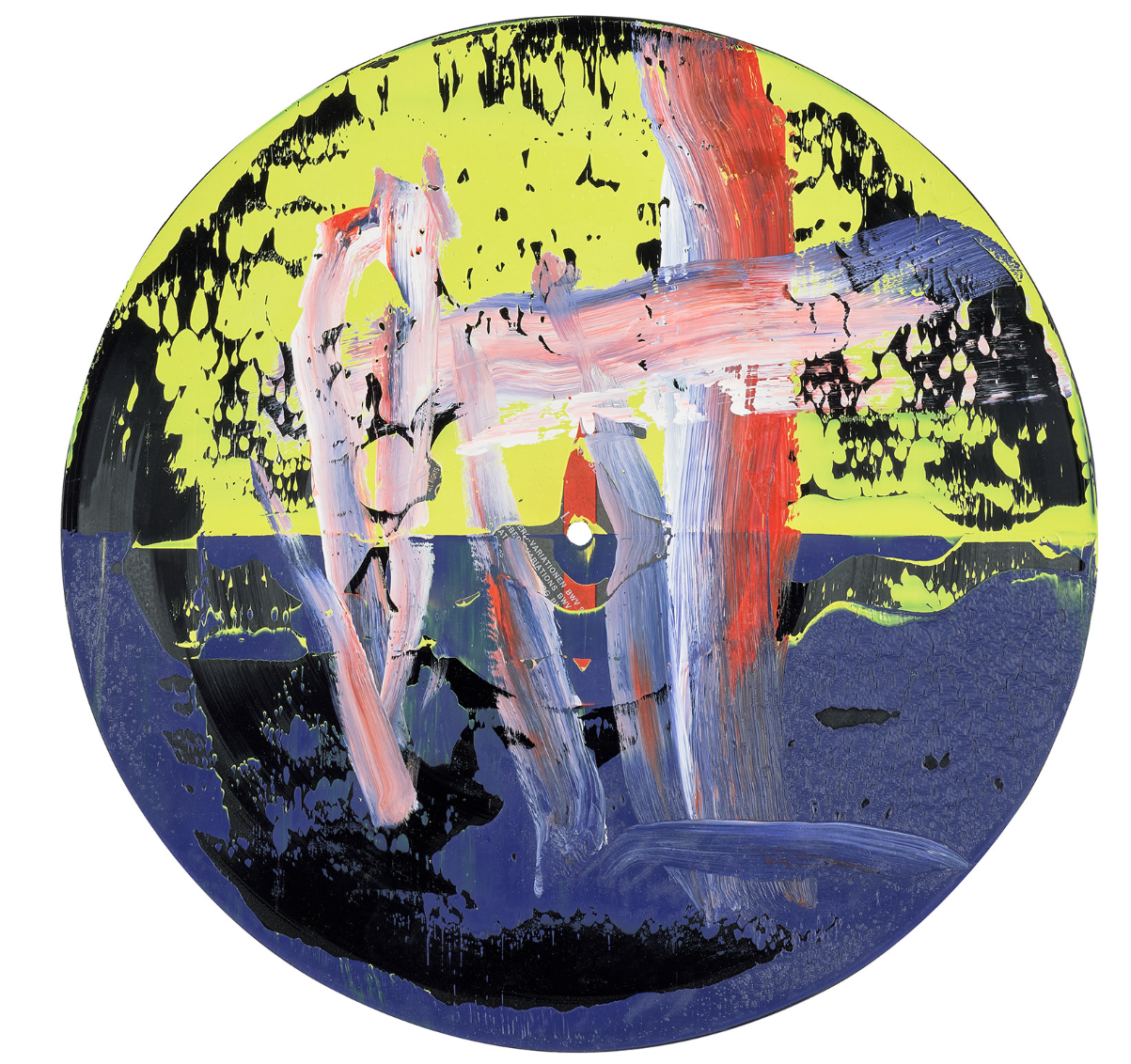
GERHARD RICHTER
Goldberg-Variationen (Goldberg Variations), from Hommage à Cladders (B. 60), 1984
Unique oil painting on a phonograph long play record (Bach: The Goldberg Variations: Glenn Gould, CBS, 1982)
Diameter: 30.1 cm (11 7/8 inches)
Signed, dated and numbered 12/100 in black ink on the reverse
From the edition of 100 unique variants (there were also 20 artist’s proofs in Roman numerals)
#33. Untitled (Paris), 1991
Sotheby’s New-York: 19 November 2025
Estimated: USD 35,000 – 45,000
USD 57,150
Untitled (Paris) | Contemporary Day Auction | 2025 | Sotheby’s
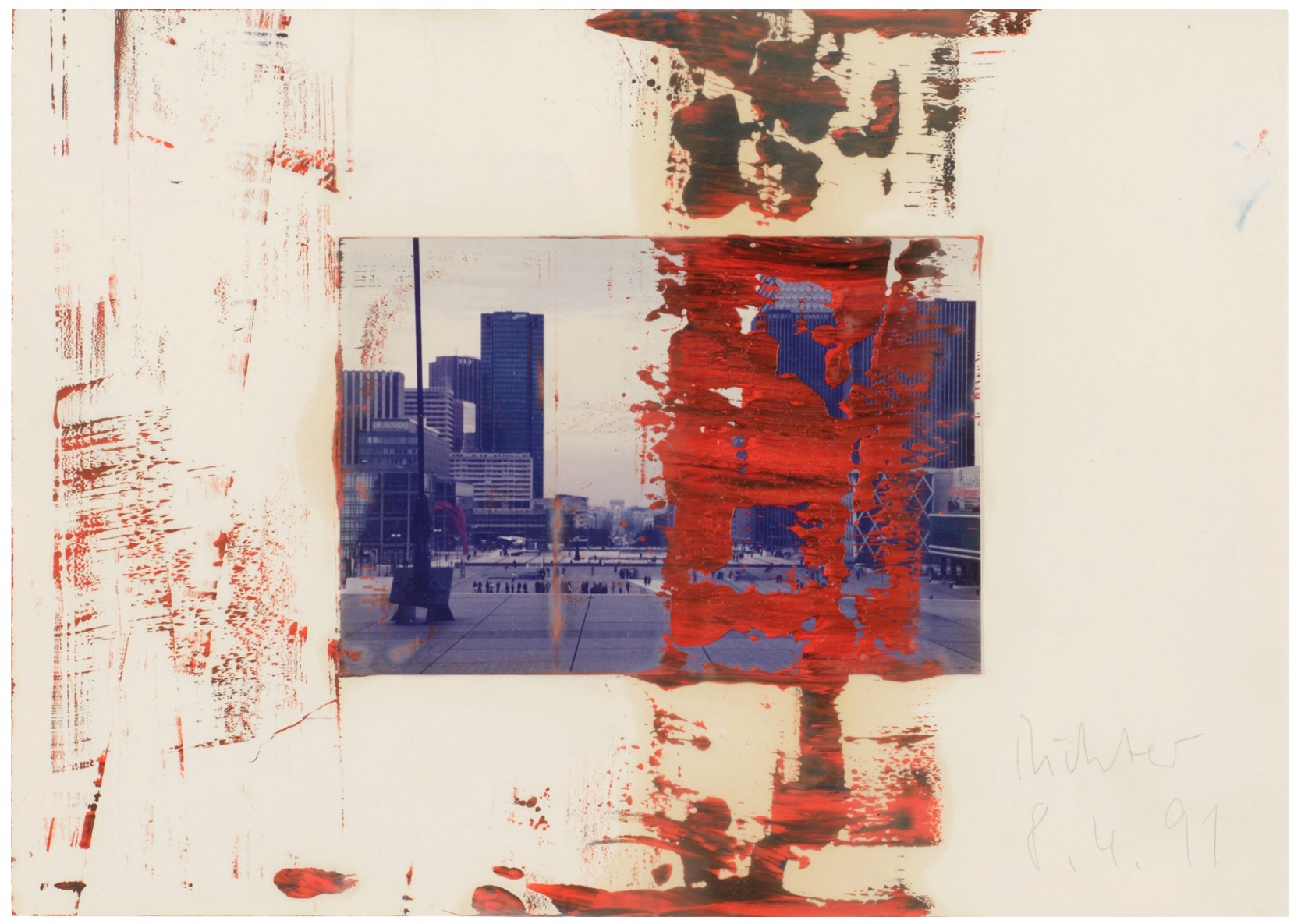
GERHARD RICHTER (b. 1932)
Untitled (Paris), 1991
Oil on chromogenic print
20.6 x 29.5 cm (8 1/8 x 11 5/8 inches)
Signed and dated 8.4.91 in pencil (lower right)
Dated 8.4.91 in pencil (on the reverse)
Executed in 1991, this work is unique
#34. 22.5.86 (2), 1986
Sotheby’s London: 17 October 2025
Estimated: GBP 15,000 – 20,000
GBP 31,750 / USD 42,545
WORK ON PAPER
22.5.86 (2) | Contemporary Day Auction | 2025 | Sotheby’s
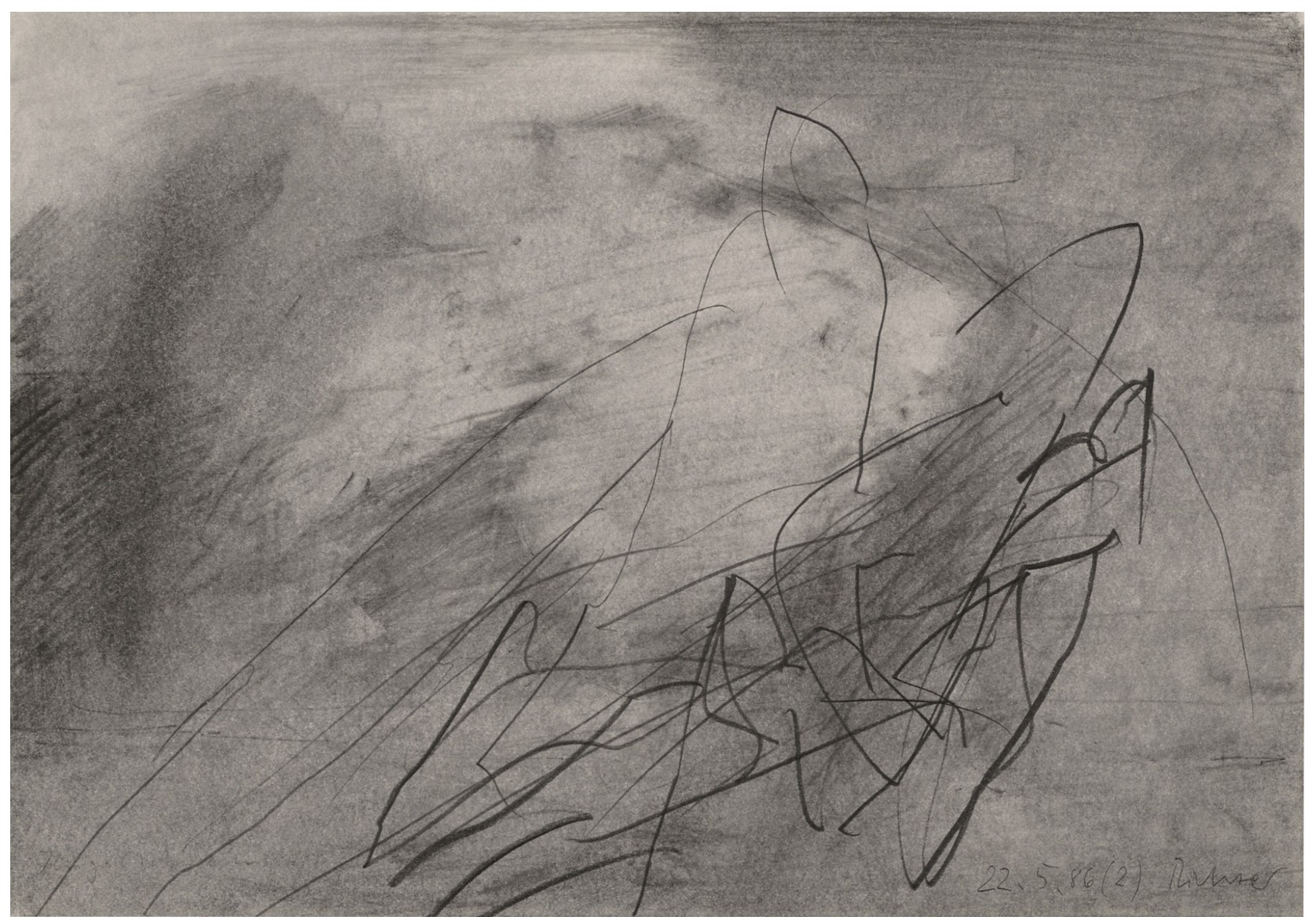
GERHARD RICHTER (b. 1932)
22.5.86 (2), 1986
Graphite on paper
21 x 29.5 cm (8 1/4 x 11 5/8 inches)
Signed and titled (lower right)
Variously inscribed (lower left)
#35. Vermalung (grau) (Inpainting (Grey)), 1971
Christie’s London: 6 March 2025
Estimated: GBP 25,000 – 35,000
GBP 32,760 / USD 41,933
GERHARD RICHTER (B. 1932), Vermalung (grau) (Inpainting (Grey)) | Christie’s
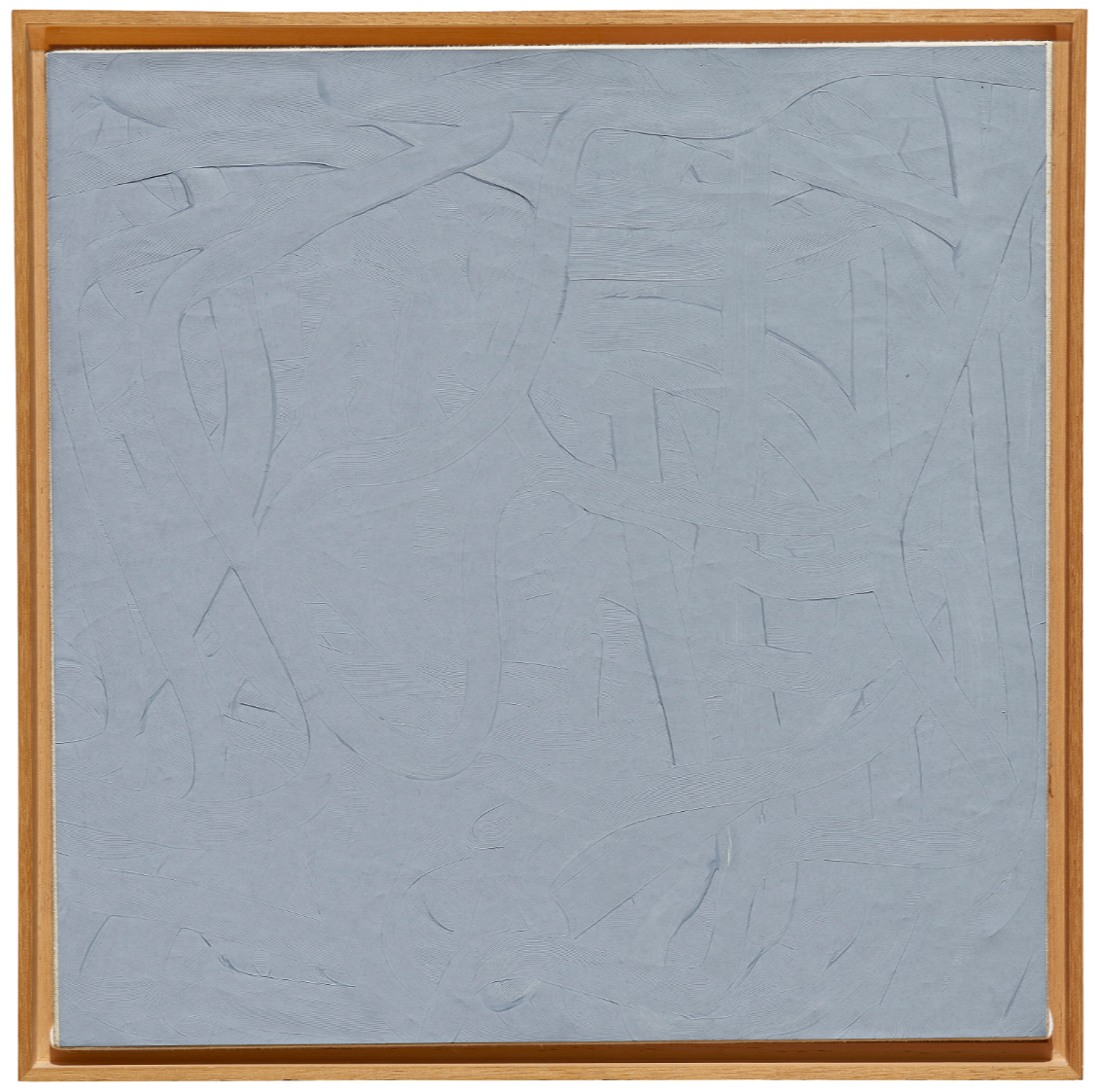
GERHARD RICHTER (B. 1932)
Vermalung (grau) (Inpainting (Grey)), 1971
Acrylic on paper laid down on canvas
40×40 cm (15 3/4 x 15 3/4 inches)
This work from a series of one hundred and fifty unique variants
Lots Passed
Abstraktes Bild, 1999
Christie’s New-York: 20 November 2025
Estimated: USD 700,000 – 1,000,000
PASSED
GERHARD RICHTER (B. 1932), Abstraktes Bild | Christie’s
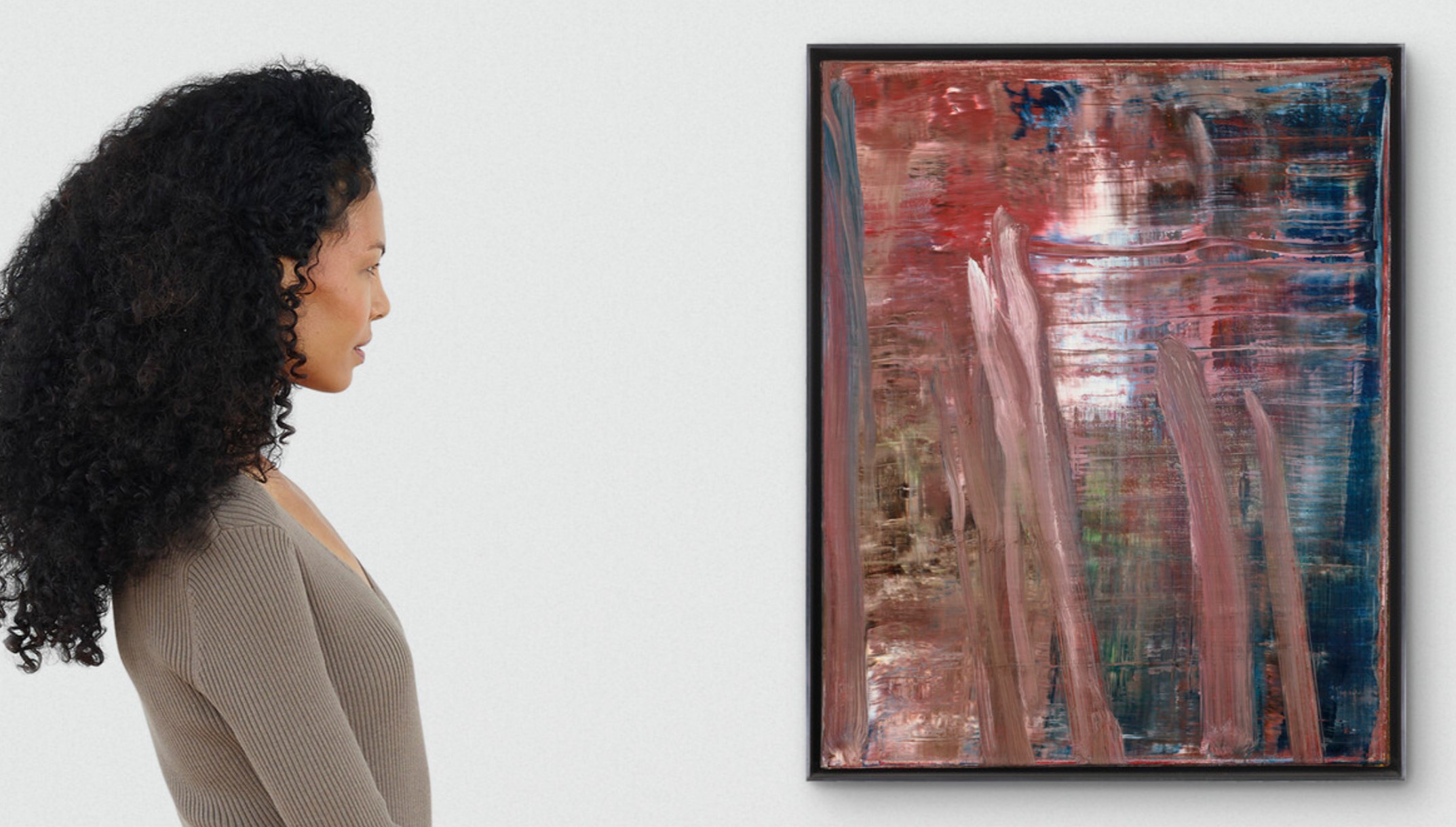
GERHARD RICHTER (B. 1932)
Abstraktes Bild, 1999
Oil on canvas
51×41 cm (20×16 inches)
Signed, inscribed and dated ‘862-1 Richter 1999’ (on the reverse)
Grau (Grey), 1974
Christie’s London: 15 October 2025
Estimated: GBP 600,000 – 800,000
PASSED
GERHARD RICHTER (B. 1932), Grau (Grey) | Christie’s
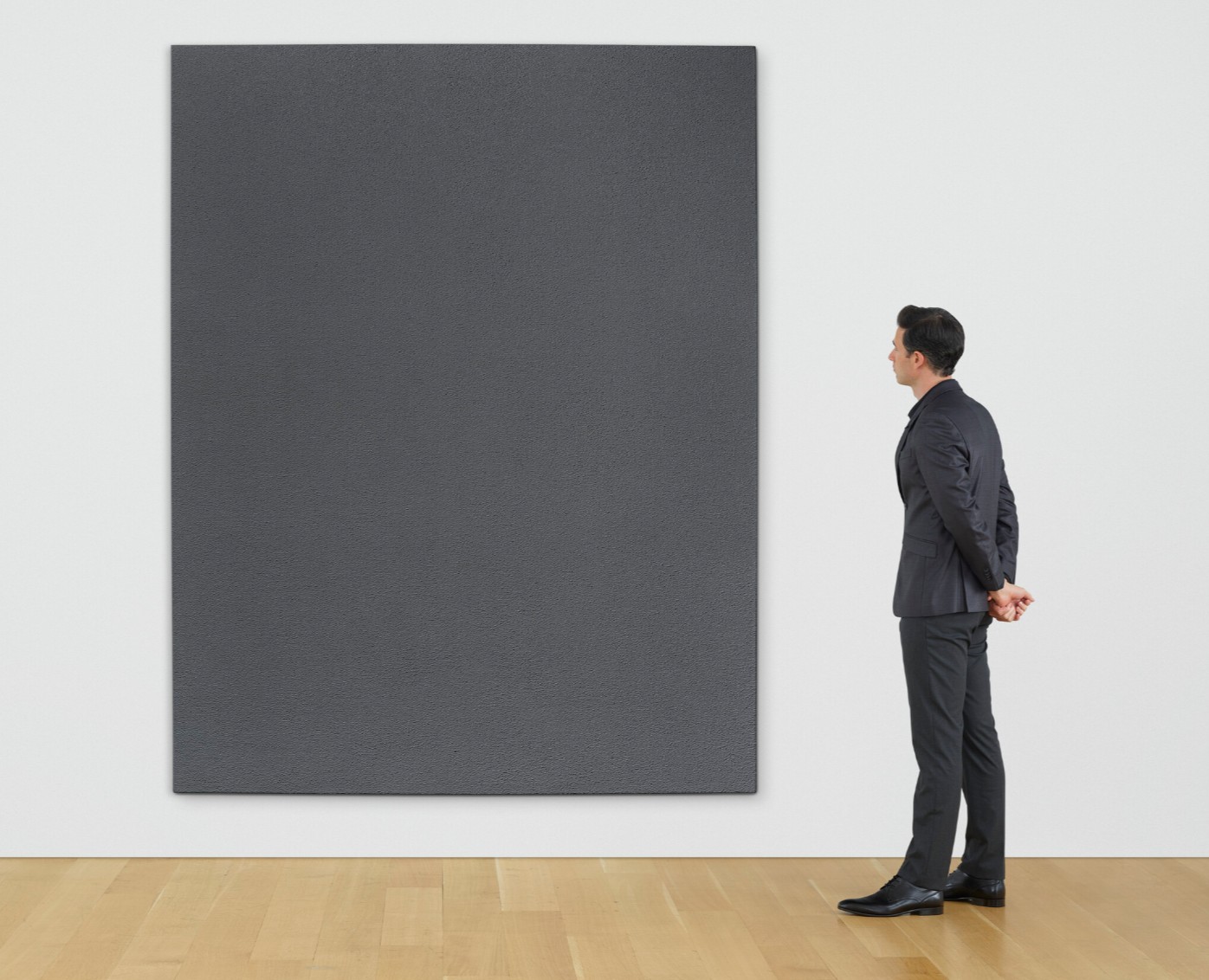
GERHARD RICHTER (B. 1932)
Grau (Grey), 1974
Oil on canvas
250 x 195.5 cm (98 3/8 x 77 inches)
Signed, numbered and dated ‘Richter 1974 363⁄4’ (on the reverse)
Grau (Grey), 1974
Christie’s London: 15 October 2025
Estimated: GBP 120,000 – 180,000
PASSED
GERHARD RICHTER (B. 1932), Grau (Grey) | Christie’s
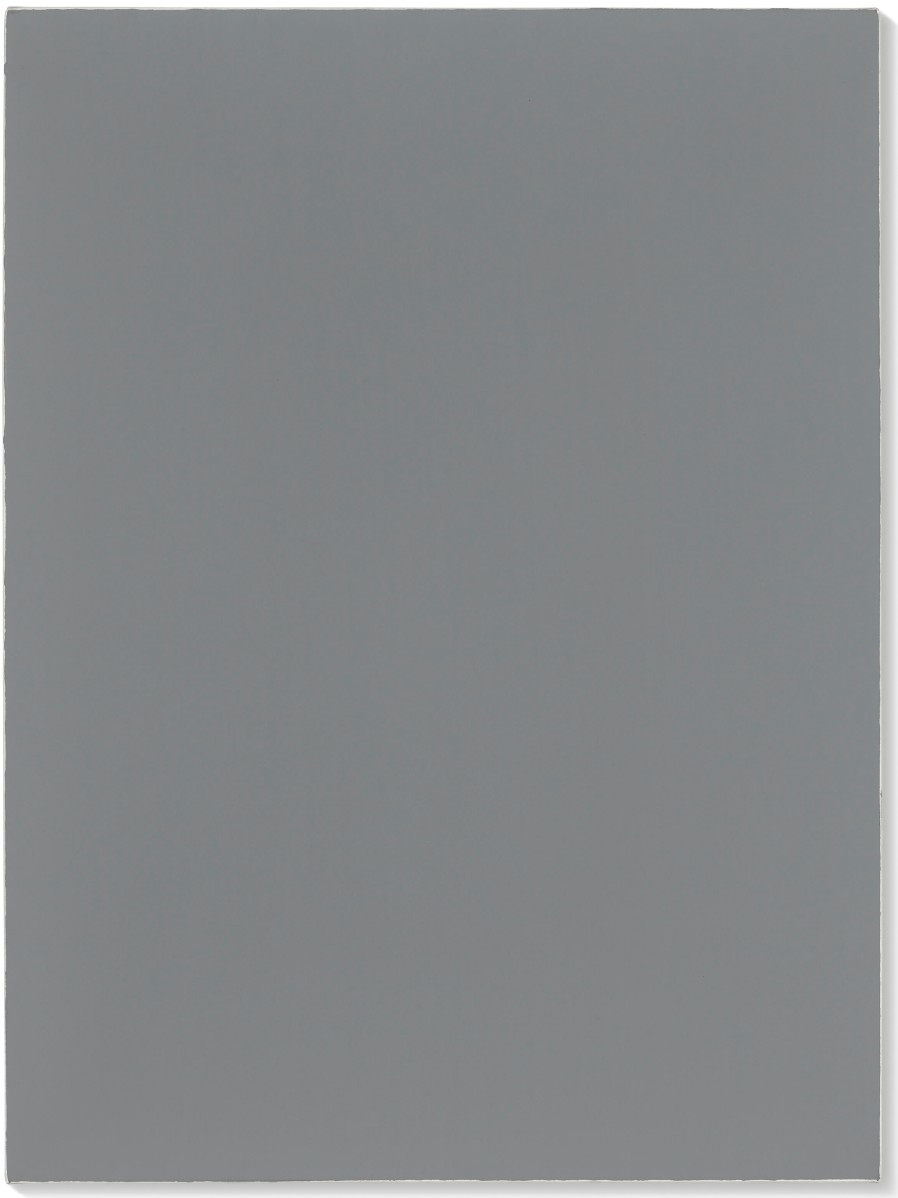
GERHARD RICHTER (B. 1932)
Grau (Grey), 1974
Oil on canvas
80.5 x 60 cm (31 3/4 x 23 5/8 inches)
Signed, numbered and dated ‘ 364 / 2 Richter, 1974’ (on the reverse)
Lots Withdrawn
Heu, 1995
Sotheby’s London: 4 March 2025
Estimated: GBP 5,000,000 – 7,000,000
WITHDRAWN
Heu | Modern & Contemporary Evening Auction | 2025 | Sotheby’s
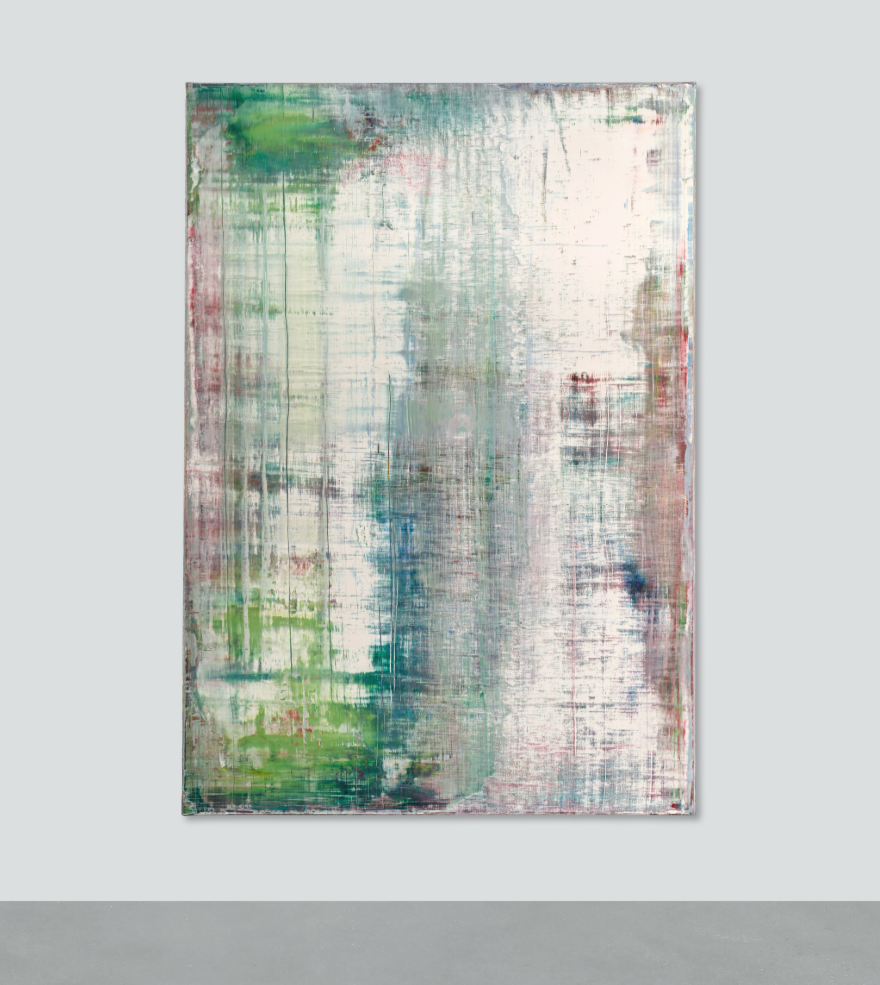
GERHARD RICHTER (b. 1932)
Heu, 1995
Oil on canvas
200.3 x 140 cm (78 7/8 x 55 1/8 inches)
Signed, dated 1995 and numbered 831-1 (on the reverse)
2024 Auction Results
41 lots sold at auction in 2024 for a total turnover of USD 38,381,194. With 3 lots failing to sell, the sell-through rate is 93%. The highest price has been achieved at Christie’s in New-York on 16 May 2024, for Abstraktes Bild, dated 1988, that sold for USD 11,335,000, the only lot that sold for over USD 10 million. 10 lots sold for more than USD 1 million, generating a turnover of USD 32,087,691, representing 83.6% of the total turnover for 2024.
2024 Top 3 Lots
#1. Abstraktes Bild, 1988
Christie’s New-York: 16 May 2024
Estimated: USD 10,000,000 – 15,000,000
USD 11,335,000
GERHARD RICHTER (B. 1932), Abstraktes Bild | Christie’s (christies.com)

GERHARD RICHTER (B. 1932)
Abstraktes Bild, 1988
Oil on canvas
200×180 cm (78 3/4 x 70 7/8 inches)
Signed, inscribed and dated ‘680-2 Richter 1988’ (on the reverse)
USD 10 million
#2. Abstraktes Bild, 1990
Sotheby’s New-York: 14 May 2024
Estimated: USD 4,000,000 – 6,000,000
USD 4,658,000
Abstraktes Bild | Contemporary Evening Auction | 2024 | Sotheby’s (sothebys.com)

GERHARD RICHTER (b. 1932)
Abstraktes Bild, 1990
Oil on wood
120×120 cm (47 1/4 x 47 1/4 inches)
Signed, dated 1990 and numbered 730-1 (on the reverse)
#3. Abstrakte Bilder 581-(1-5) [Five works], 1985
Sotheby’s London: 6 March 2024
Estimated: GBP 2,500,000 – 3,500,000
GBP 2,952,000 / USD 3,743,136
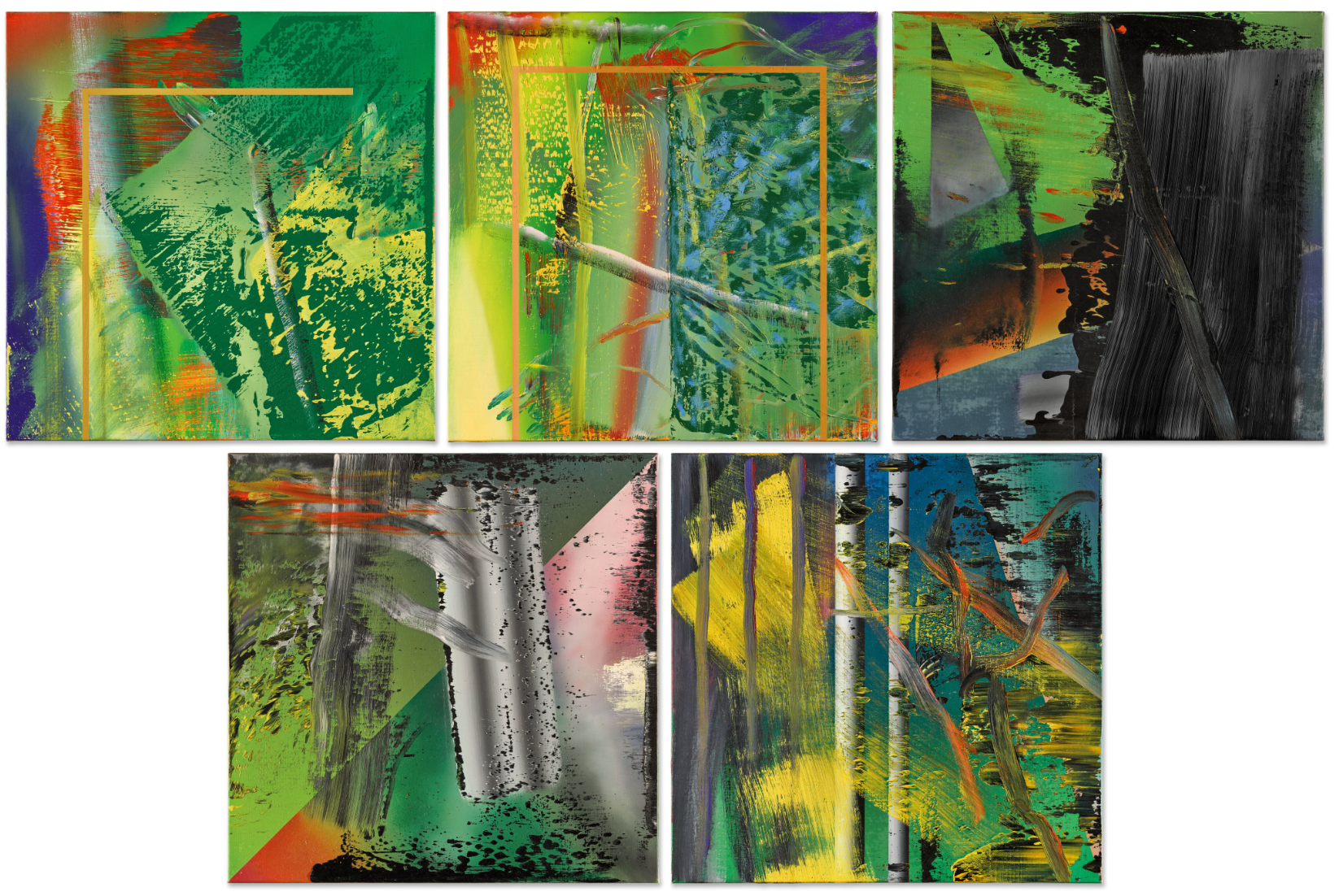
GERHARD RICHTER (b. 1932)
Abstrakte Bilder 581-(1-5) [Five works], 1985
Oil on canvas
Each: 60×60 cm (23 5/8 x 23 3/4 inches)
Each: signed, dated 1985 and numbered 581-(1-5) (on the reverse)
#4. Abstraktes Bild, 1994
Christie’s London: 9 October 2024
Estimated: GBP 1,800,000 – 2,500,000
GBP 1,855,000 / USD 2,430,050
GERHARD RICHTER (B. 1932), Abstraktes Bild | Christie’s
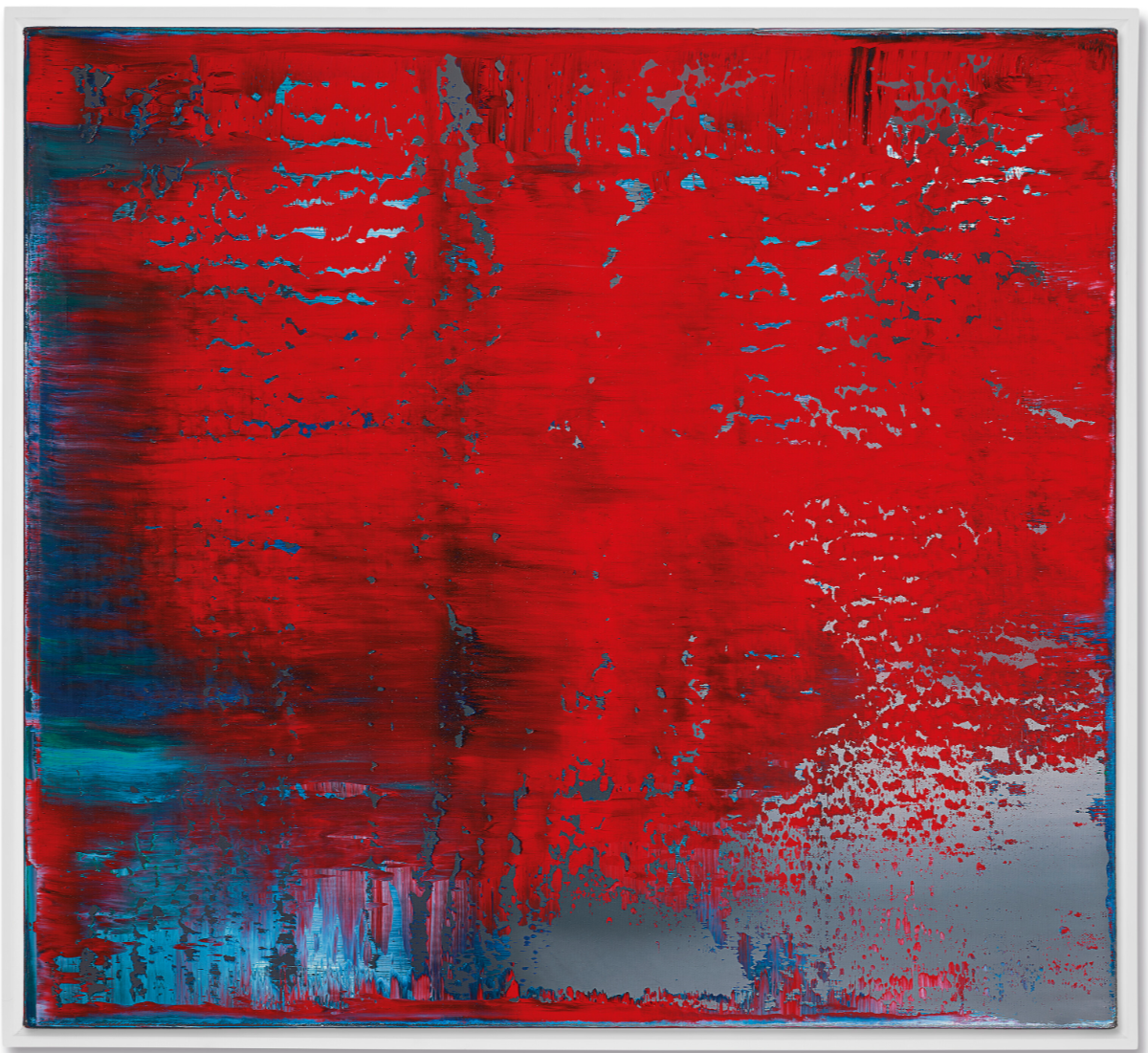
GERHARD RICHTER (B. 1932)
Abstraktes Bild, 1994
Oil on canvas
56×61 cm (22×24 inches)
Signed, inscribed and dated ‘805-4 Richter 1994’ (on the reverse)
#5. Abstraktes Bild, 1983
Sotheby’s New-York: 14 May 2024
Estimated: USD 1,800,000 – 2,500,000
USD 2,056,500
Abstraktes Bild | Contemporary Day Auction | 2024 | Sotheby’s (sothebys.com)

GERHARD RICHTER (b. 1932)
Abstraktes Bild, 1983
Oil on canvas
100×70 cm (39 3/8 x 27 1/2 inches)
Signed, dated 1983 and numbered 522-3 (on the reverse)
#6. Abstraktes Bild, 1990
Christie’s New-York: 1 October 2024
Estimated: USD 2,000,000 – 3,000,000
USD 2,046,500
GERHARD RICHTER (B. 1932), Abstraktes Bild | Christie’s (christies.com)
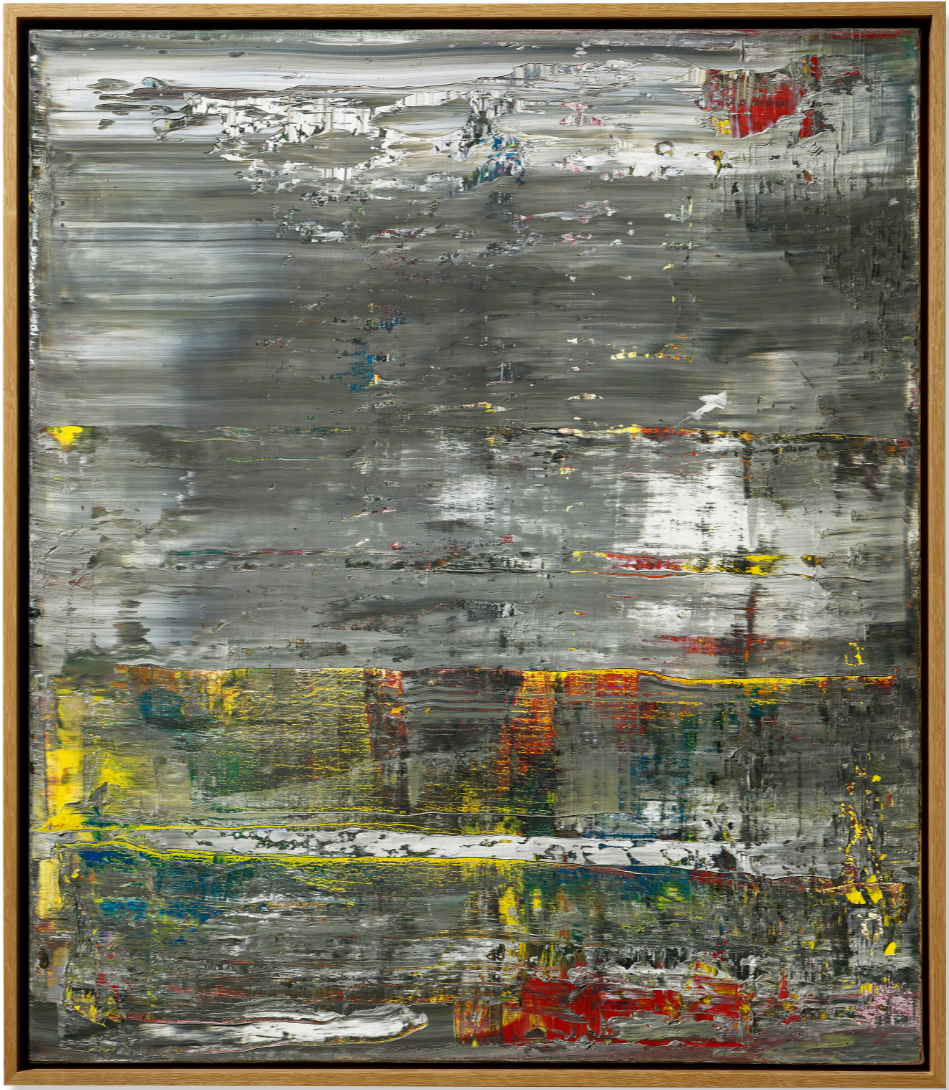
GERHARD RICHTER (B. 1932)
Abstraktes Bild, 1990
Oil on canvas
72.1 x 62.2 cm (28 3/8 x 24 1/2 inches)
Signed, inscribed and dated ‘715-2 Richter 1990’ (on the reverse)
#7. Abstraktes Bild, 1993
Sotheby’s New-York: 14 May 2024
Estimated: USD 1,500,000 – 2,000,000
USD 1,754,000
Abstraktes Bild | Contemporary Day Auction | 2024 | Sotheby’s (sothebys.com)

GERHARD RICHTER (b. 1932)
Abstraktes Bild, 1993
Oil on canvas
61 x 71.1 cm (24×28 inches)
Signed, dated 1993 and numbered 800-5 (on the reverse)
#8. Abstraktes Bild, 1995
Bonhams New-York: 20 November 2024
Estimated: USD 1,200,000 – 1,800,000
USD 1,512,500
Bonhams : GERHARD RICHTER (B. 1932) Abstraktes Bild 24 x 24 in (61 x 61 cm) (Painted in 1995)
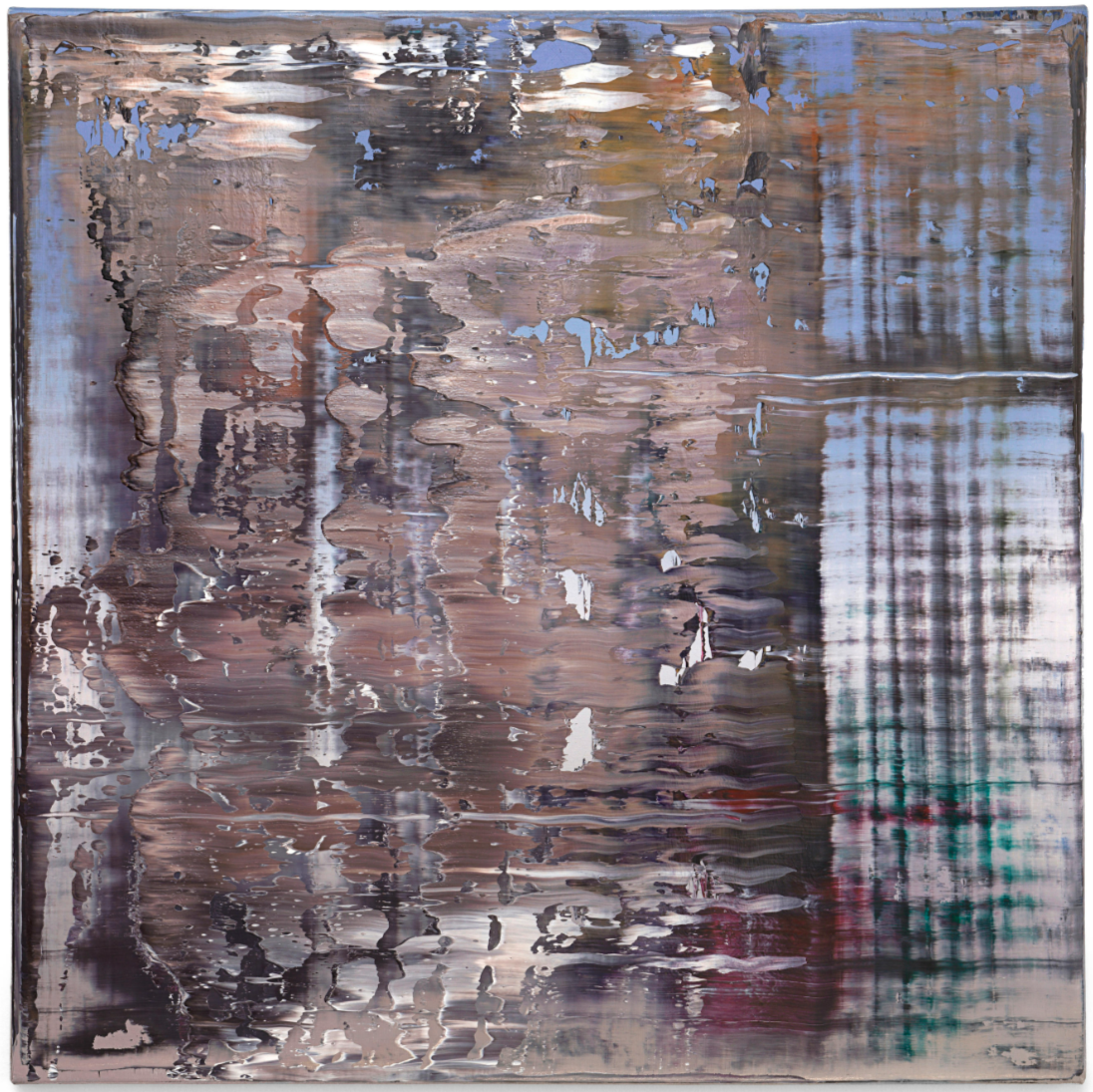
Oil on canvas
61×61 cm (24×24 inches)
Signed, inscribed and dated ‘Richter 1995 835-4’ (on the reverse) and further inscribed ‘835-4’ (on the stretcher)
#9. Abstraktes Bild, 1998
Sotheby’s London: 25 June 2024
Estimated: GBP 900,000 – 1,200,000
GBP 1,140,000 / USD 1,445,520
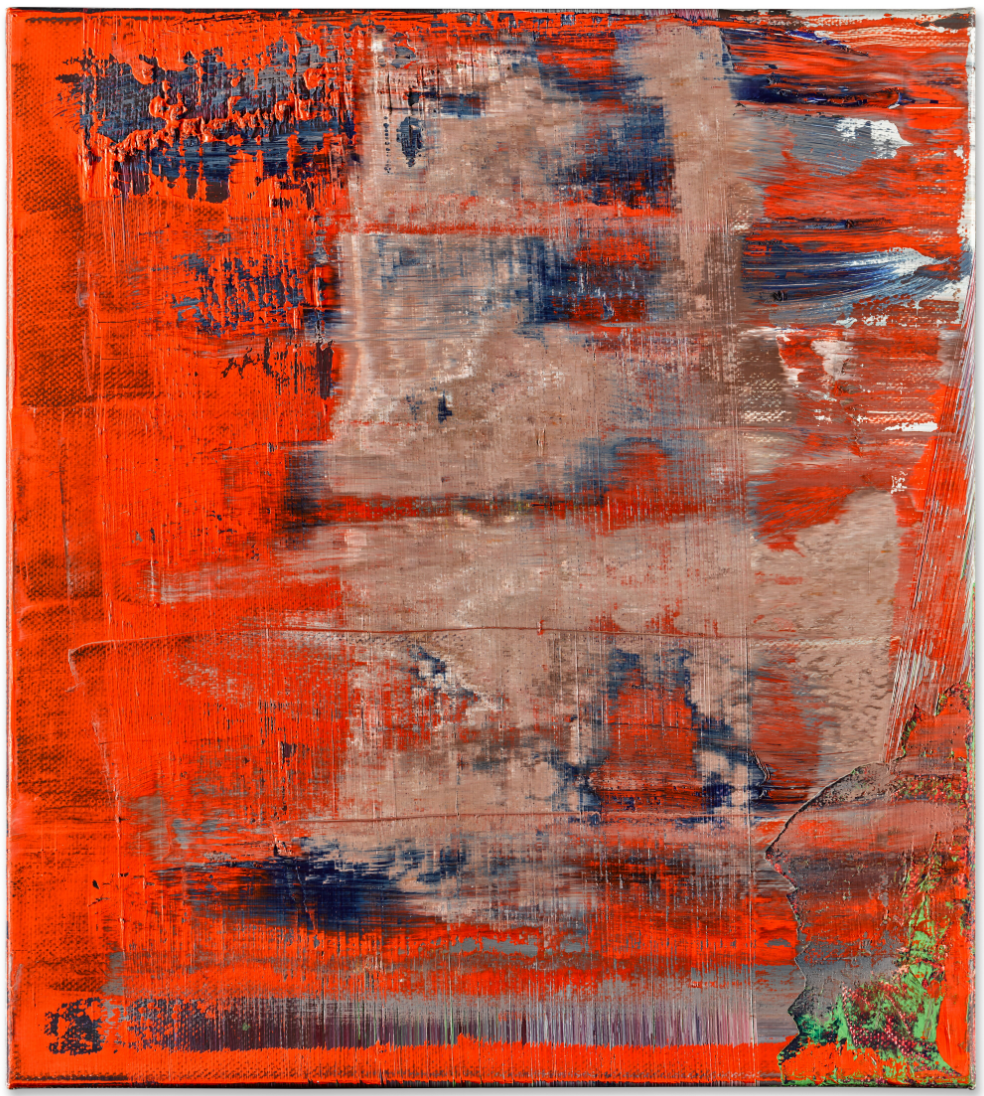
GERHARD RICHTER (b. 1932)
Abstraktes Bild, 1998
Oil on canvas
50×45 cm (20 1/8 x 17 3/4 inches)
Signed, dated 1998 and numbered 850-5 (on the reverse)
#10. Herr Uecker, 1964
Ketterer Kunst: 7 June 2024
Estimated: EUR 450,000
EUR 1,016,000 / USD 1,106,485
Ketterer Kunst, Art auctions, Book auctions Munich, Hamburg & Berlin
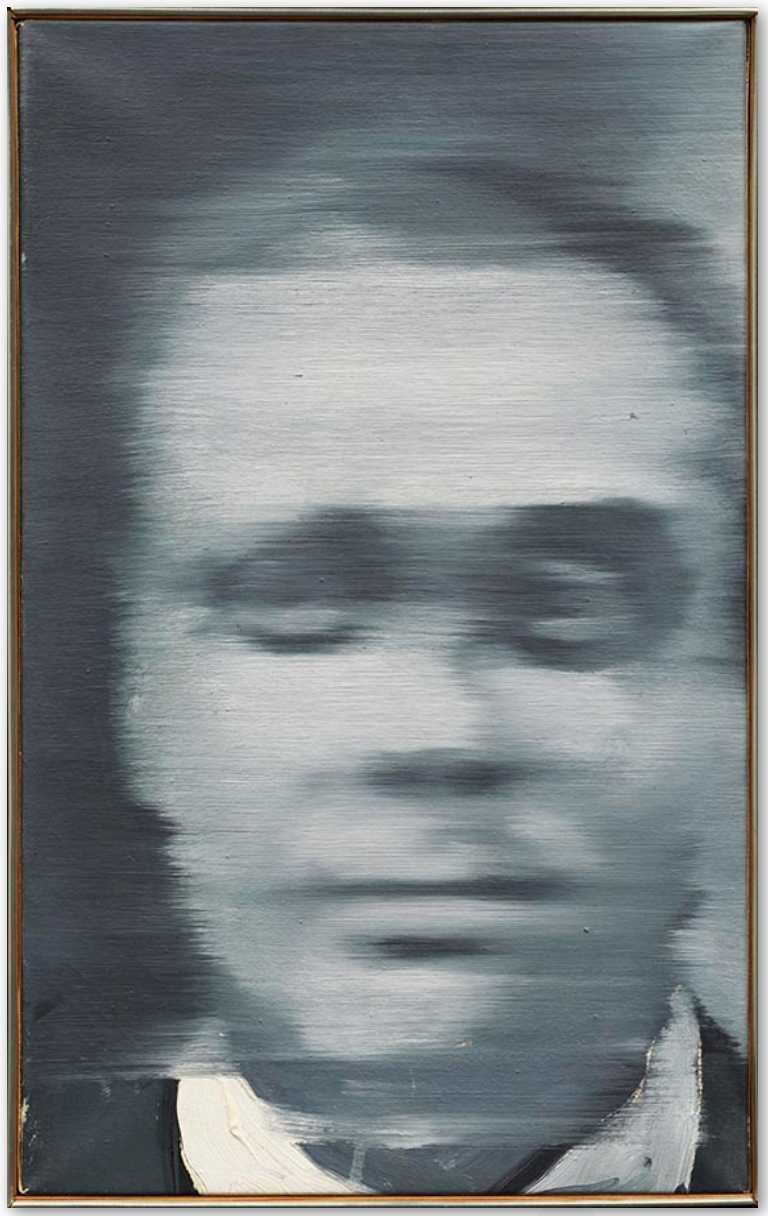
GERHARD RICHTER
Herr Uecker, 1964
Oil on canvas
47×29 cm (18 1/2 x 11 3/8 inches)
Signed, titled “Herr Uecker” and inscribed with the dimensions on the reverse
Stretcher titled “Herr Uecker”
USD 1 million
#11. Abstraktes Bild, 1977
Christie’s New-York: 17 May 2024
Estimated: USD 500,000 – 700,000
USD 604,800
GERHARD RICHTER (B. 1932), Abstraktes Bild | Christie’s (christies.com)
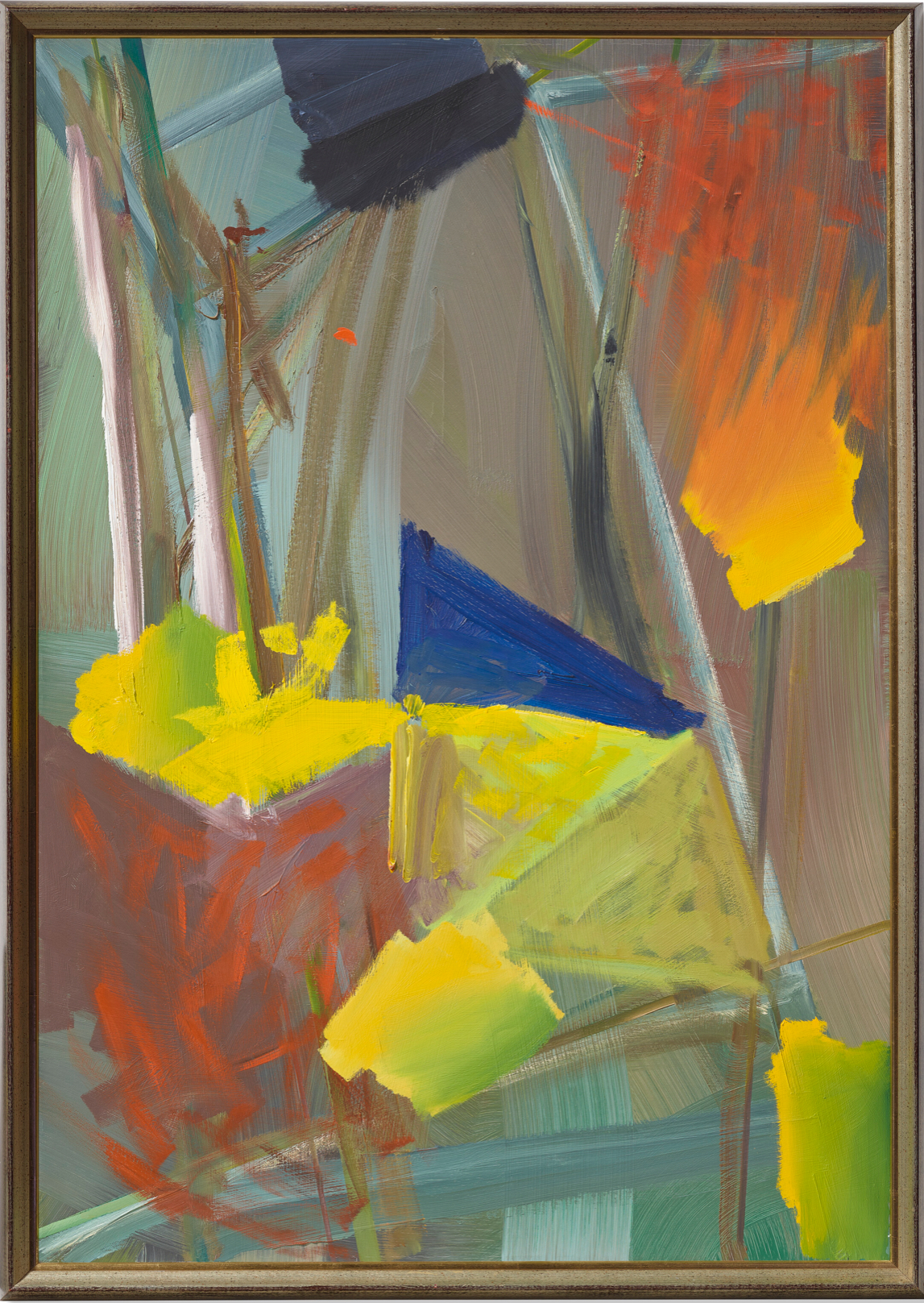
GERHARD RICHTER (B. 1932)
Abstraktes Bild, 1977
Oil on canvas
100×70 cm (39 3/8 x 27 1/2 inches)
Signed, inscribed and dated ‘431/9 Richter 77’ (on the reverse)
#12. Stadtbild, 1968
Ketterer: 6 December 2024
Estimated: EUR 350,000
EUR 508,000 / USD 558,800
Ketterer Kunst, Art auctions, Book auctions Munich, Hamburg & Berlin
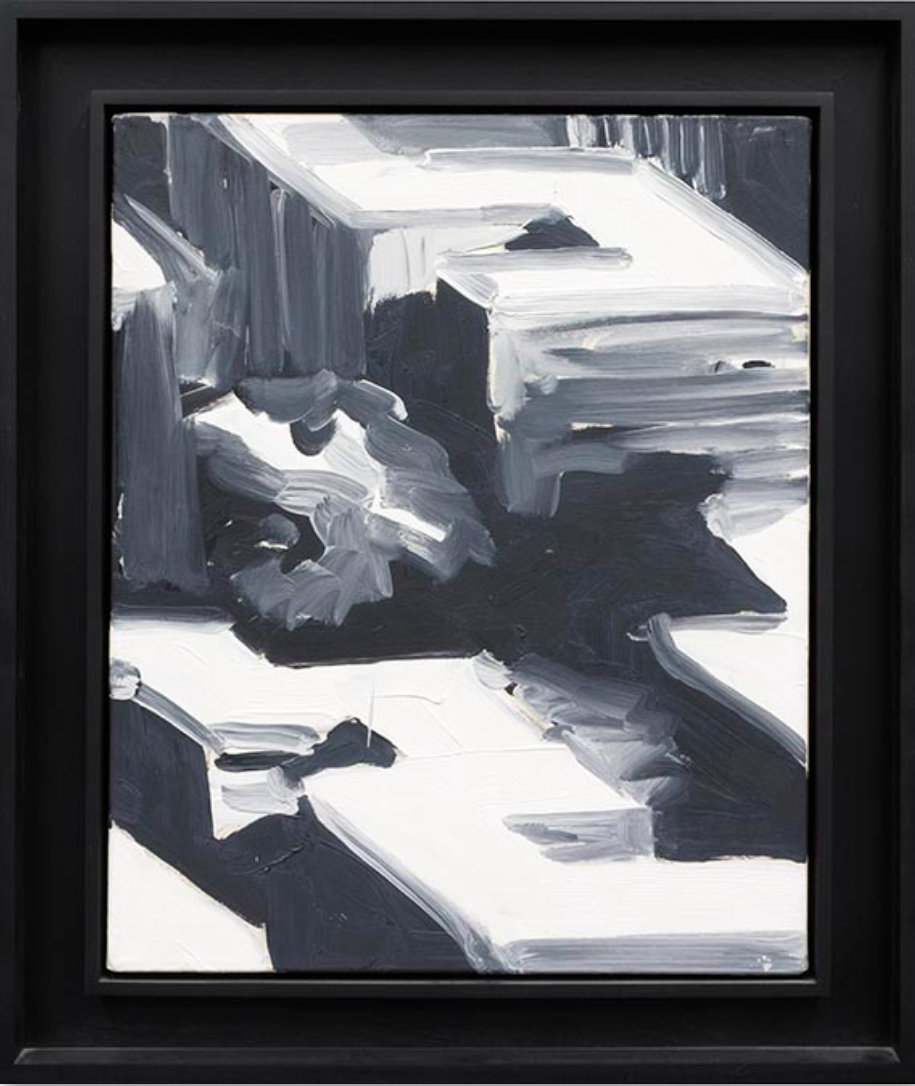
GERHARD RICHTER
Stadtbild, 1968
Oil on canvas
53×43 cm (20.8 x 16.9 inches)
Signed, dated, titled “Stadt”, as well as inscribed and with a direction arrow on the reverse
#13. Grau (hinter Glas), 2002
Christie’s New-York: 17 May 2024
Estimated: USD 400,000 – 600,000
USD 504,000
GERHARD RICHTER (B. 1932), Grau (hinter Glas) | Christie’s (christies.com)
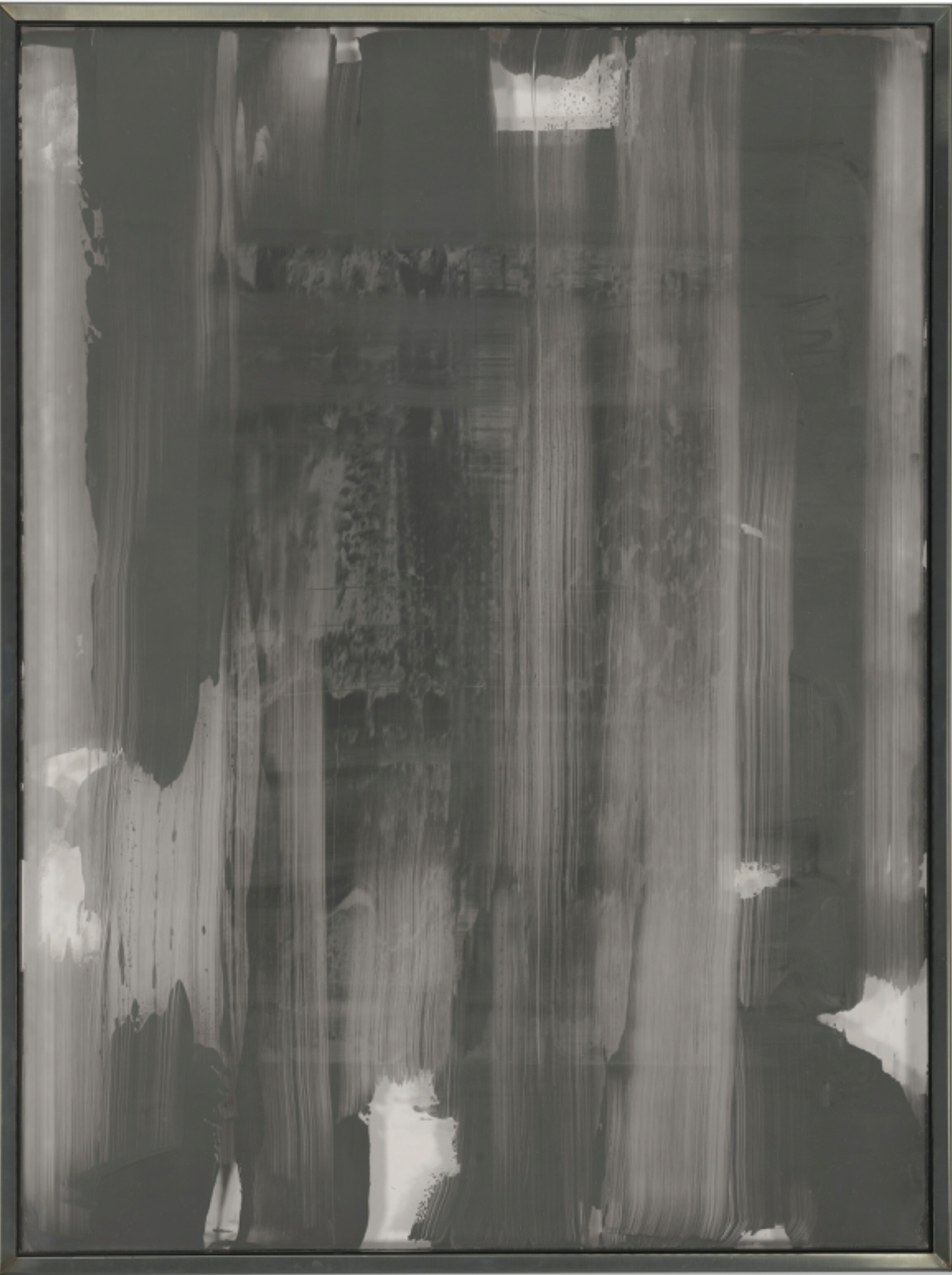
GERHARD RICHTER (B. 1932)
Grau (hinter Glas), 2002
Oil behind glass, in artist’s frame
120×90 cm (47 3/4 x 36 inches)
Signed, inscribed and dated ‘876-6 Richter 2002’ (on the reverse)
Signed again and dated again ‘Richter 2002’ (on a plastic label affixed to the upper side edge)
USD 500,000
#14. Rot-Blau-Gelb, 1973
Ketterer Kunst: 7 June 2024
Estimated: EUR 350,000
EUR 444,500 / USD 484,090
Ketterer Kunst, Art auctions, Book auctions Munich, Hamburg & Berlin
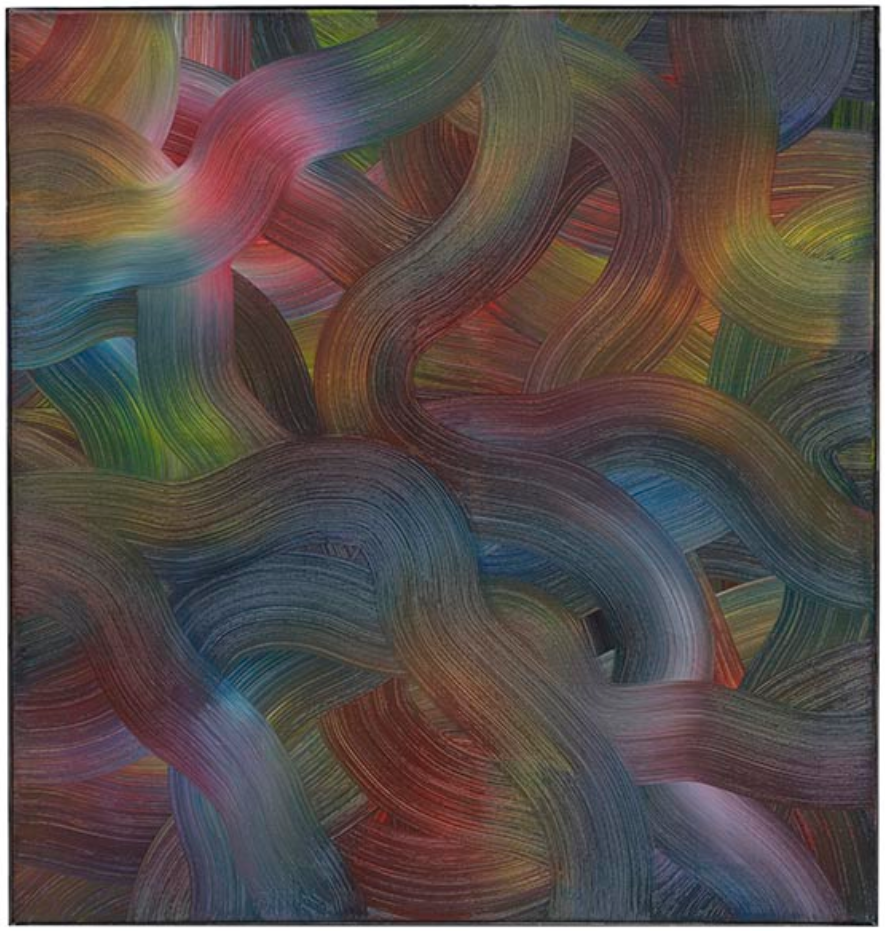
GERHARD RICHTER
Rot-Blau-Gelb, 1973
Oil on canvas
98×92 cm (38 1/2 x 36 1/8 inches)
Signed and dated on the reverse, also inscribed with a direction arrow and the work nuimber “339/6”
#15. Vorhang, 1965
Lempertz Cologne: 29 November 2024
Estimated: EUR 200,000 – 300,000
EUR 403,200 / USD 425,790
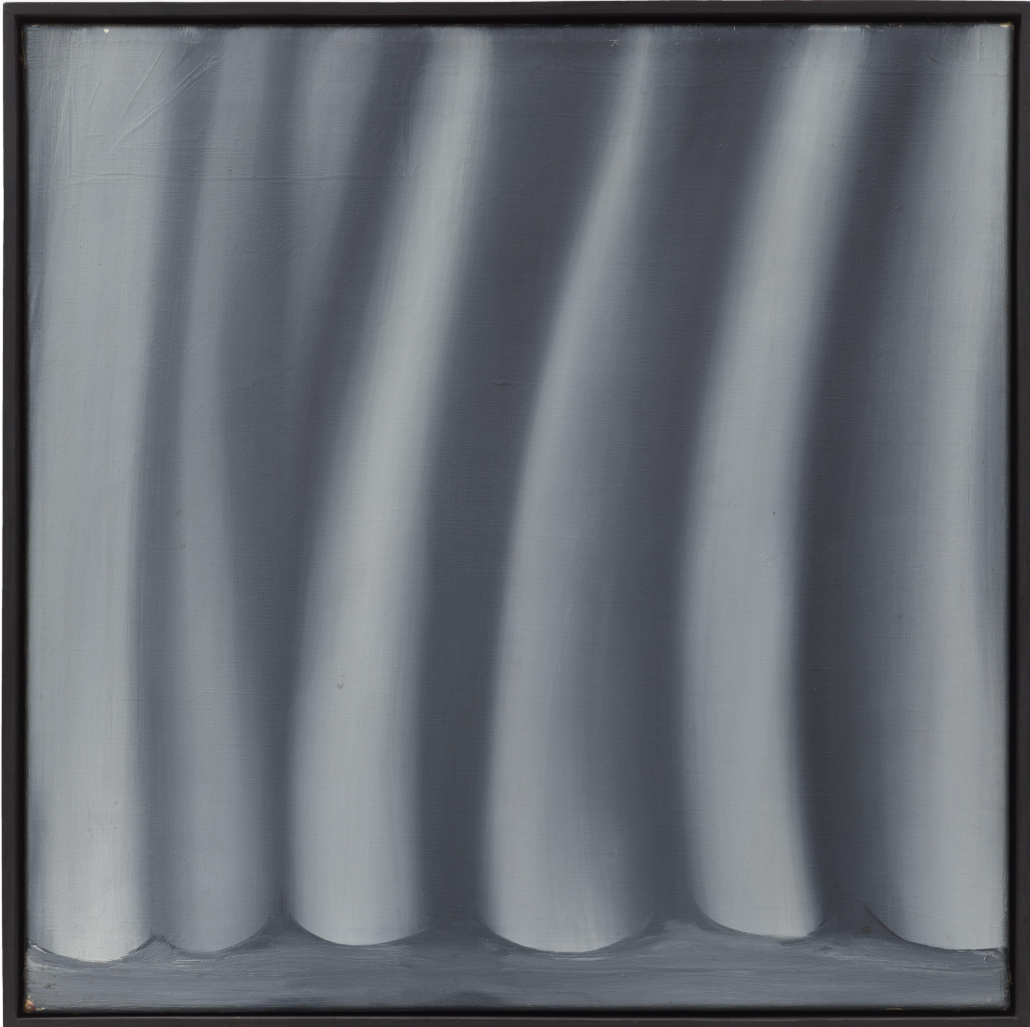
GERHARD RICHTER
Vorhang, 1965
Oil on canvas
38×38 cm
Signed ‘Richter’ verso on canvas
#16. Abstraktes Bild, 1990
Grisebach Berlin: 28 November 2024
Estimated: EUR 300,000 – 400,000
EUR 381,000 / USD 402,345
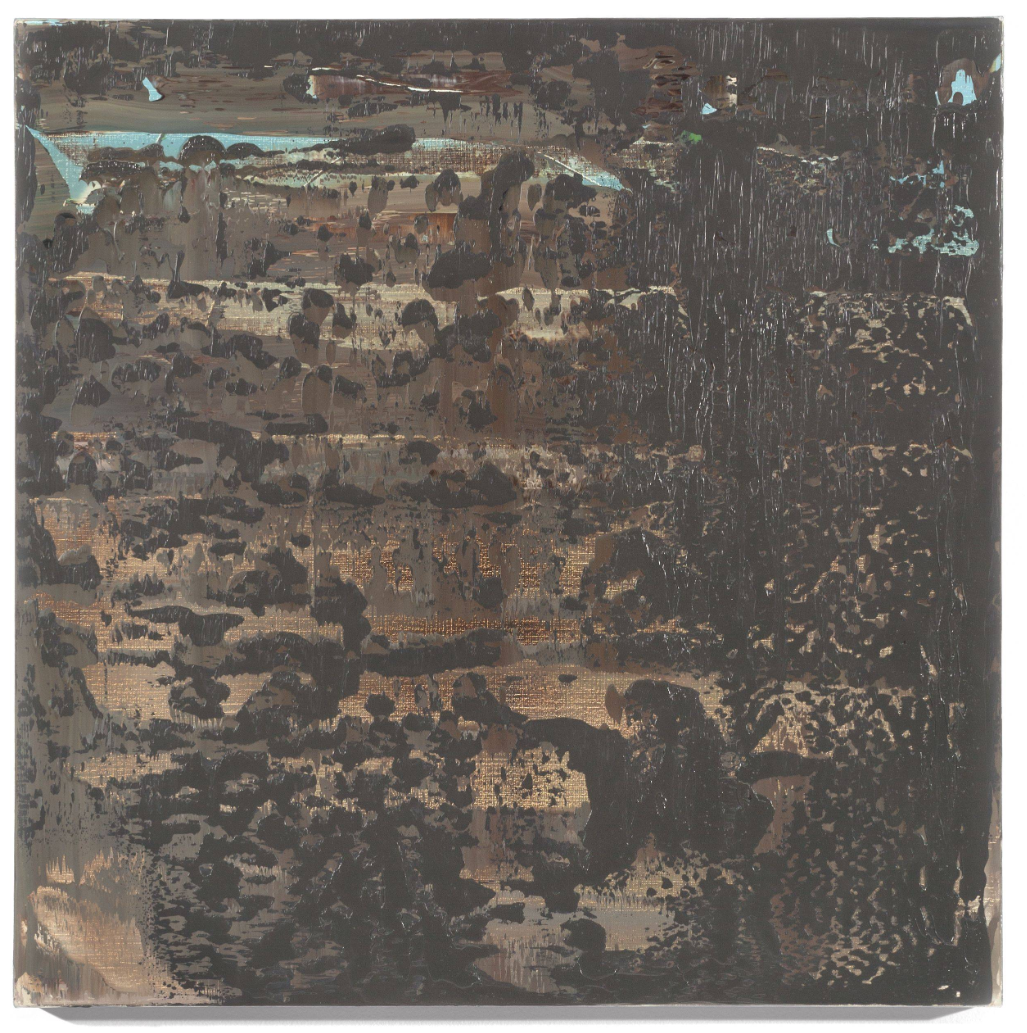
GERHARD RICHTER (Dresden 1932 – lives in Cologne)
Abstraktes Bild, 1990
Oil on canvas
62×62 cm (24 3/8 x 24 3/8 inches)
Inscribed with the work number, signed and dated on the reverse in black felt-tip pen: 713-2 Richter 1990
#17. Abstraktes Bild, 1992
Christie’s New-York: 1 October 2024
Estimated: USD 350,000 – 550,000
USD 378,000
GERHARD RICHTER (B. 1932), Abstraktes Bild | Christie’s
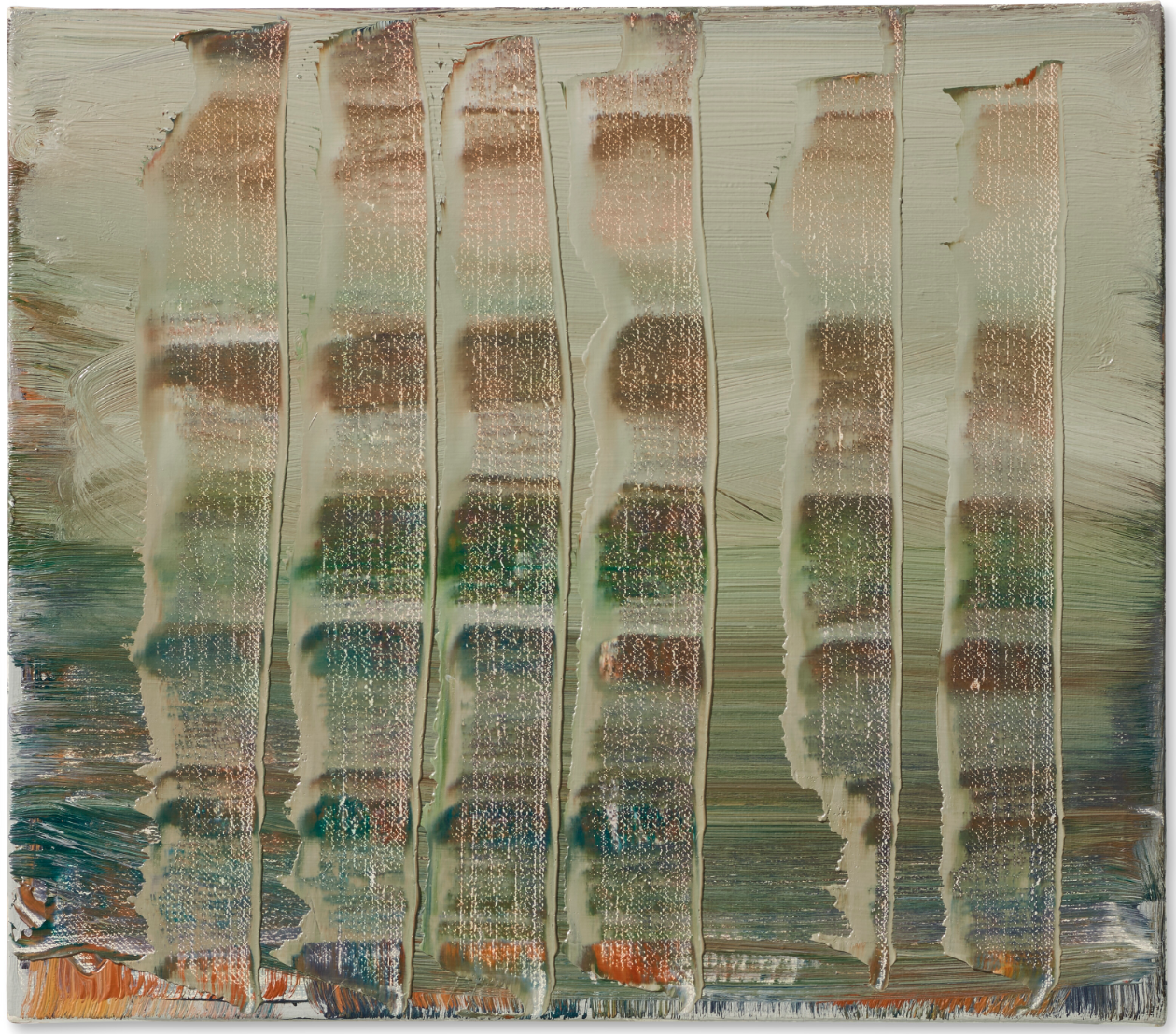
GERHARD RICHTER (B. 1932)
Abstraktes Bild, 1992
Oil on canvas
35.9 x 41 cm (14 1/8 x 16 1/8 inches)
Signed, inscribed and dated ‘763-3 Richter, 92’ (on the reverse)
#18. Portrait Günther Uecker, 1968
Dorotheum Vienna: 23 May 2024
Estimated: EUR 200,000 – 300,000
EUR 260,000 / USD 281,520
Gerhard Richter * – Contemporary Art I 2024/05/23 – Realized price: EUR 260,000 – Dorotheum
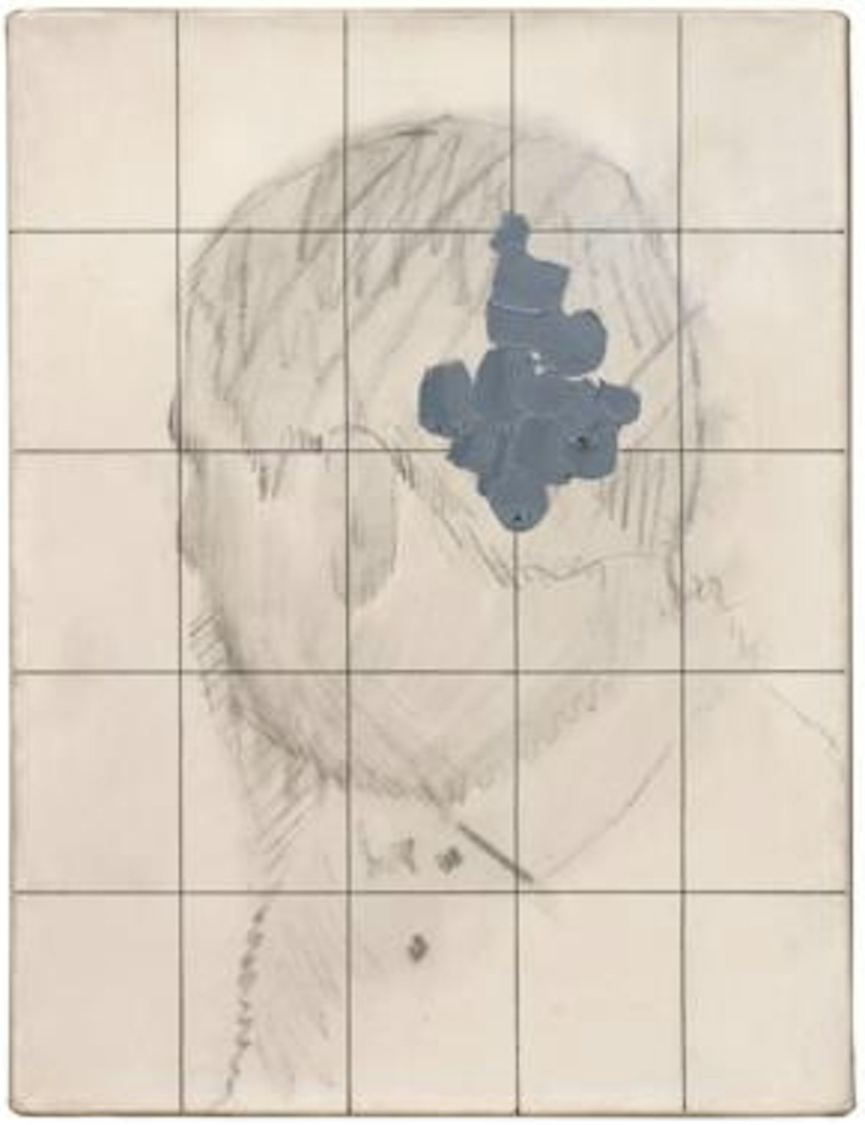
GERHARD RICHTER (born in Dresden in 1932)
Portrait Günther Uecker, 1968
Graphite and oil on primed canvas
50×38 cm (19 7/8 x 15 inches)
Signed and dated Richter 68 on the reverse
#19. Abstraktes Bild, 1980
Sotheby’s New-York: 21 November 2024
Estimated: USD 300,000 – 400,000
USD 264,000
Abstraktes Bild | Contemporary Day Auction | 2024 | Sotheby’s
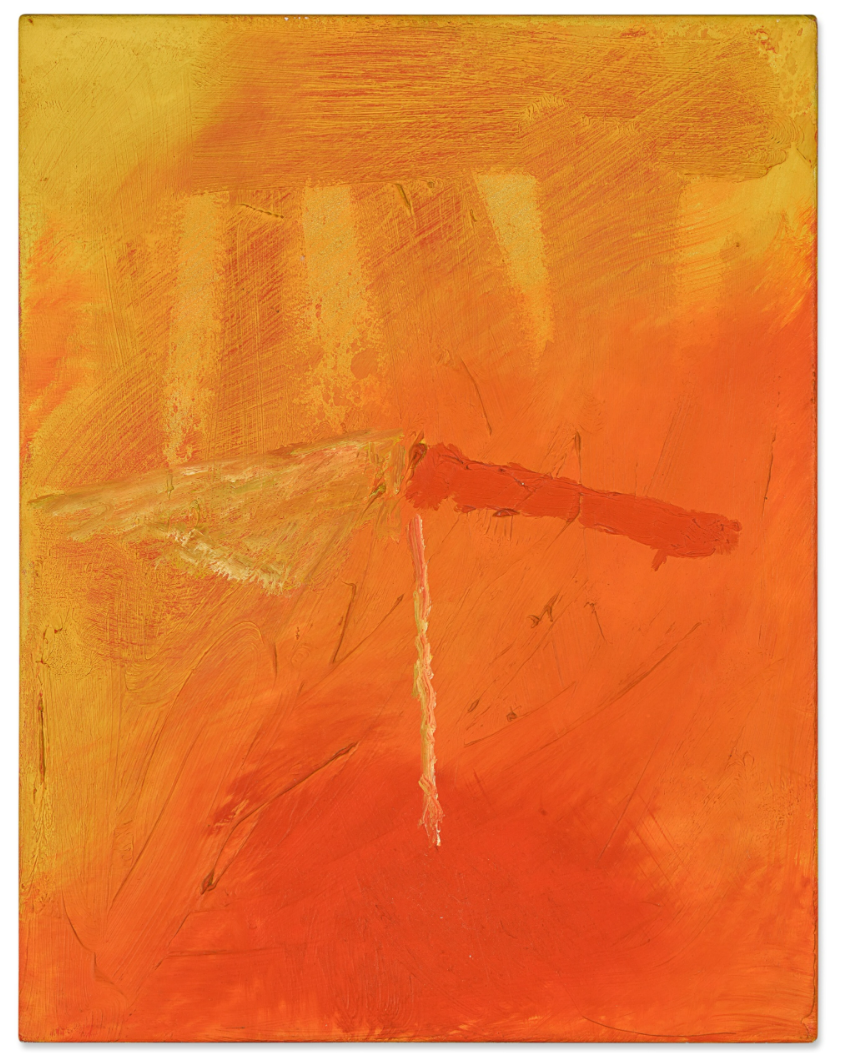
GERHARD RICHTER (b. 1932)
Abstraktes Bild, 1980
Oil on canvas
45.1 x 35.5 cm (17 3/4 x 14 inches)
Signed, dated 80 and numbered 454/4 (on the reverse)
Grau, 1970
Lempertz Cologne: 4 December 2025
Estimated: EUR 180,000 – 200,000
EUR 214,200 / USD 249,745
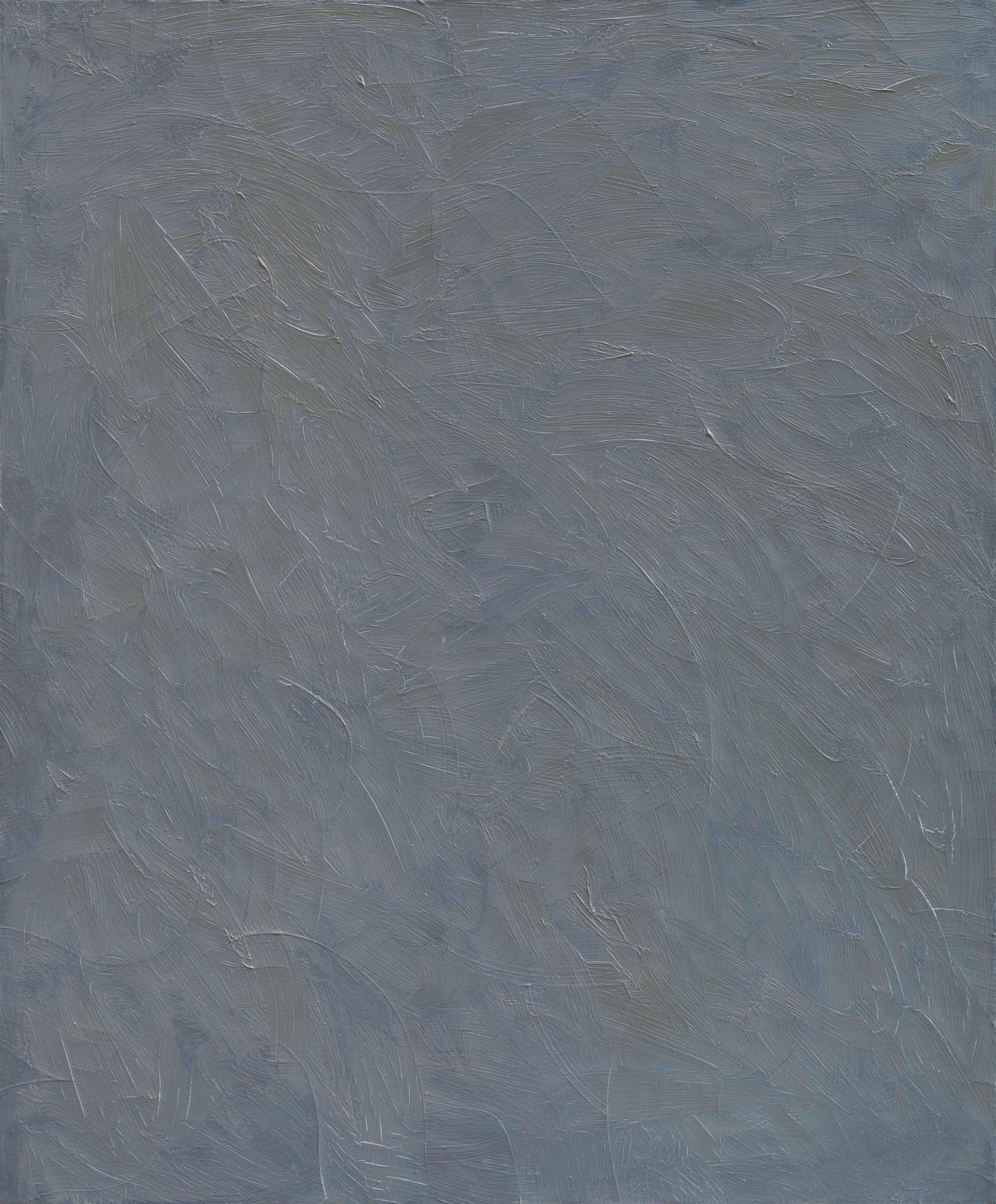
GERHARD RICHTER
Grau, 1970
Oil on canvas
115×95 cm (45 1/4 x 37 3/8 inches)
Signed and dated ‘Richter 1970’ on canvas verso and with work number
#20. Acht Lernschwesteren (Eight Student Nurses), 1971-87
Sotheby’s New-York: 27 September 2024
Estimated: USD 200,000 – 300,000
USD 240,000
Acht Lernschwesteren (Eight Student Nurses) | Contemporary Curated | 2024 | Sotheby’s
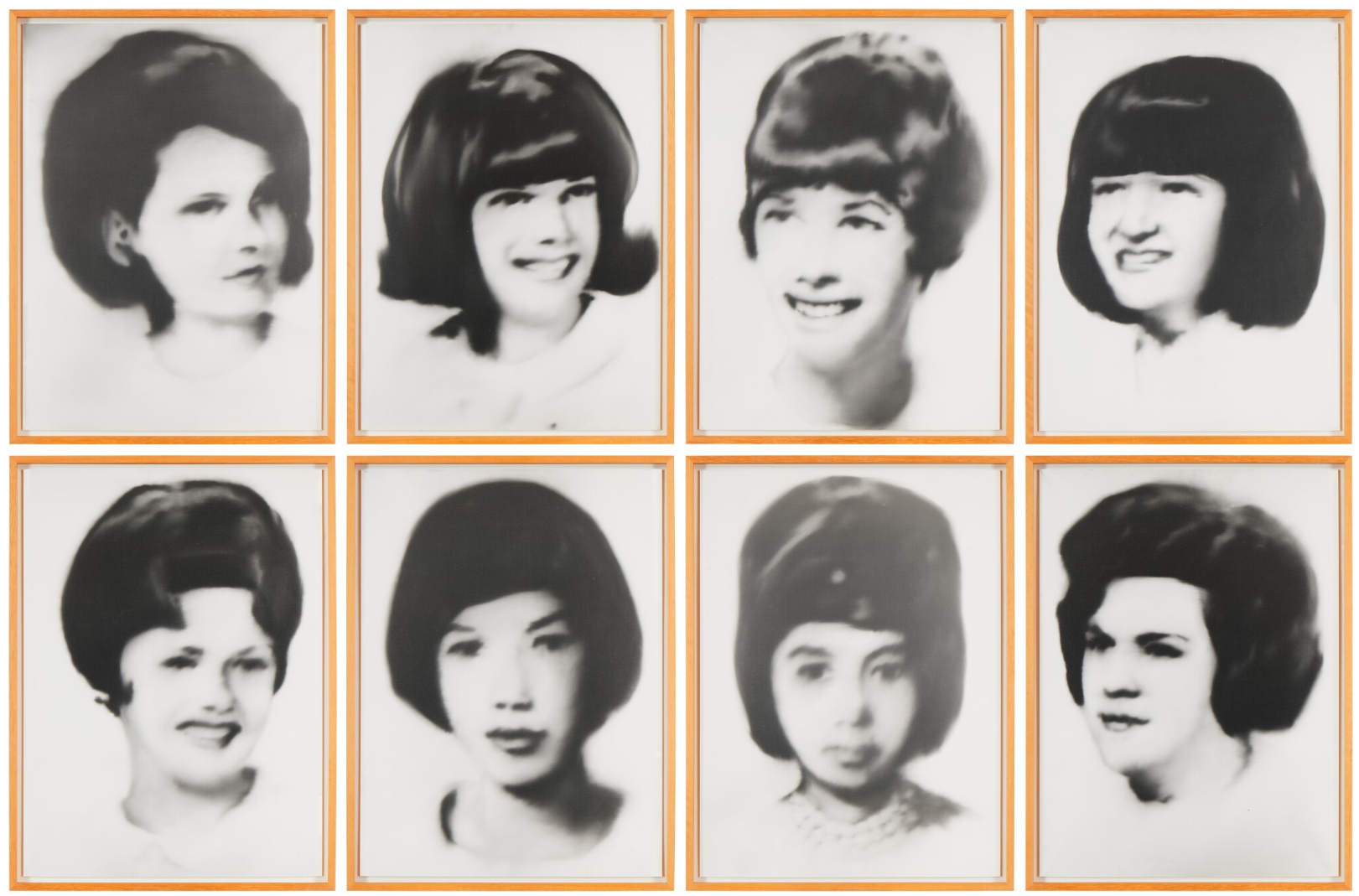
GERHARD RICHTER (b. 1932)
Acht Lernschwesteren (Eight Student Nurses), 1971-87
8 gelatin silver prints, in artist’s chosen frames
Each image: 47.3 x 34.9 cm (18 5/8 x 13 3/4 inches)
Signed and dated 1971 (on the reverse of each frame)
Executed in 1971-87, this work is unique
#21. Portrait Karl-Heinz Hering, 1968
Phillips London: 11 October 2024
Estimated: GBP 150,000 – 250,000
GBP 177,800 / USD 232,918
Gerhard Richter – Modern & Contempo… Lot 127 October 2024 | Phillips
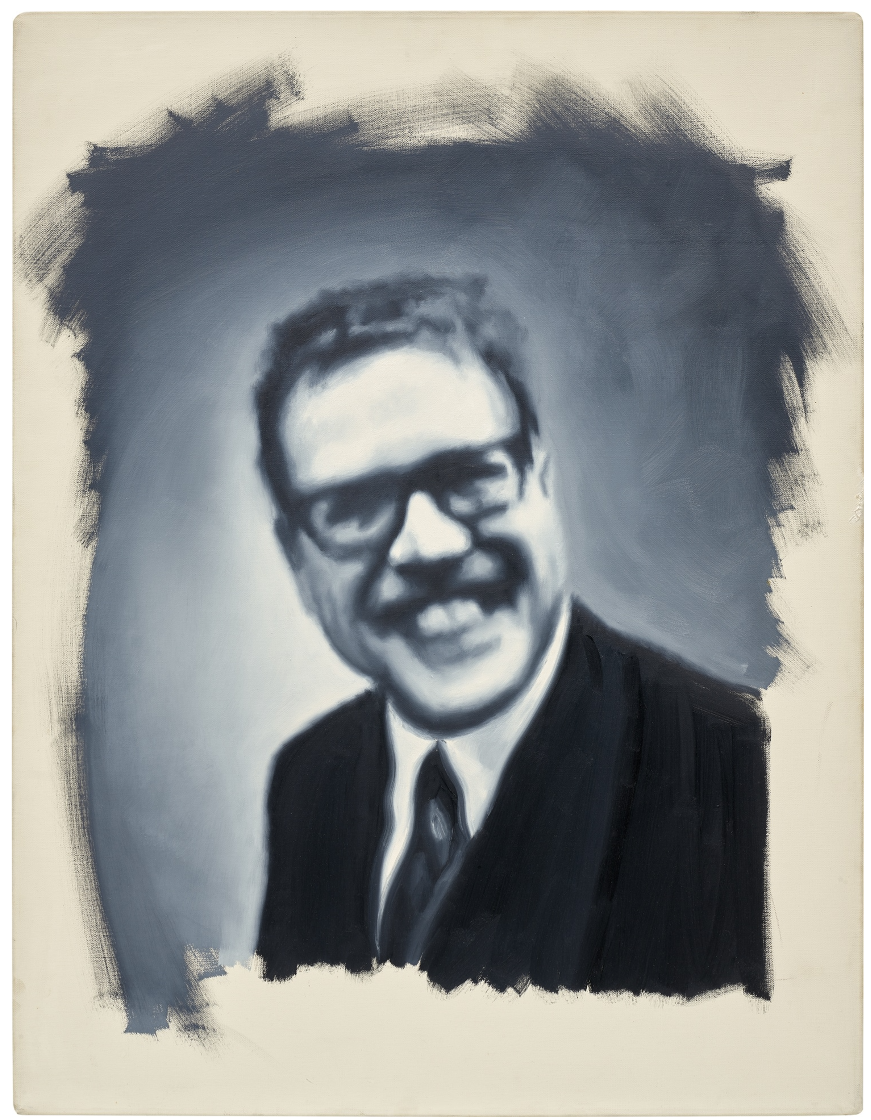
GERHARD RICHTER
Portrait Karl-Heinz Hering, 1968
Oil on canvas
87.4 x 67.2 cm (34 3/8 x 26 1/2 inches)
Titled ‘Dr. Hering’ on the stretcher; signed and dated ‘Richter 1968’ on the reverse
#22. Grau hinter Glas (883-1), 2003
Sotheby’s New-York: 21 November 2024
Estimated: USD 250,000 – 350,000
USD 216,000
Grau hinter Glas (883-1) | Contemporary Day Auction | 2024 | Sotheby’s
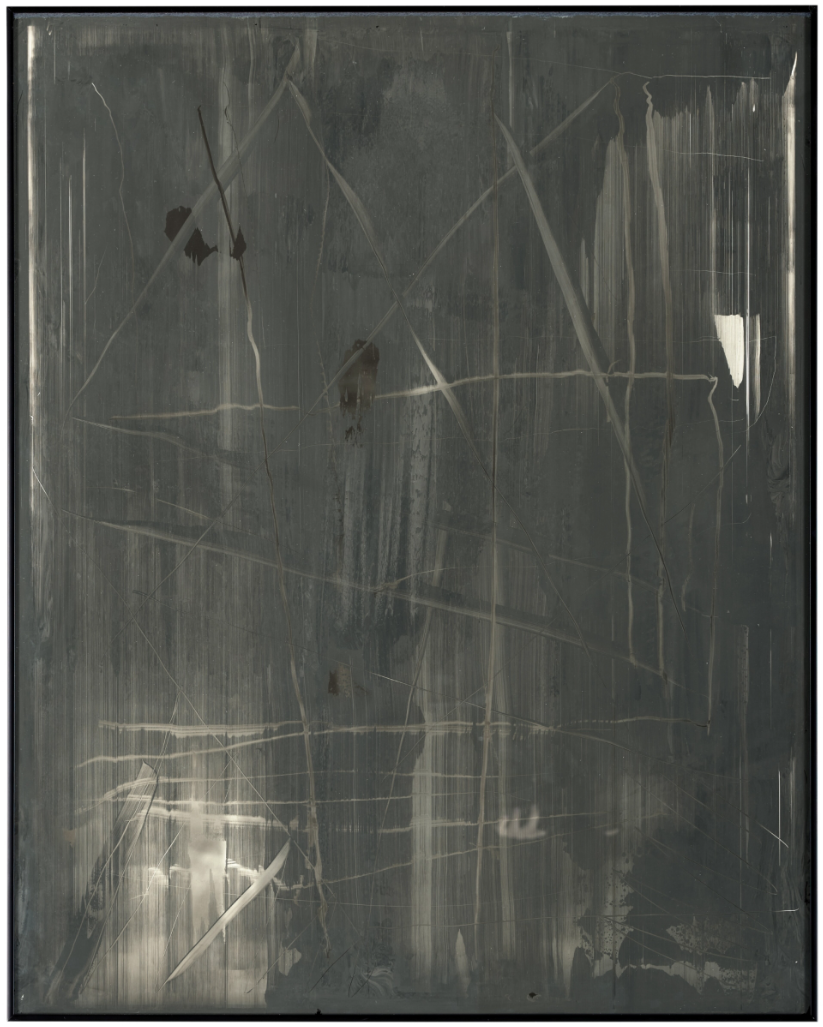
GERHARD RICHTER (b. 1932)
Grau hinter Glas (883-1), 2003
Oil behind glass
100×80 cm (39 3/8 x 31 1/2 inches)
USD 200,000
#23. Untitled 26.2.89, 1989
Phillips New-York: 15 May 2024
Estimated: USD 100,000 – 150,000
USD 190,500
Gerhard Richter – Modern & Contemporary… Lot 162 May 2024 | Phillips
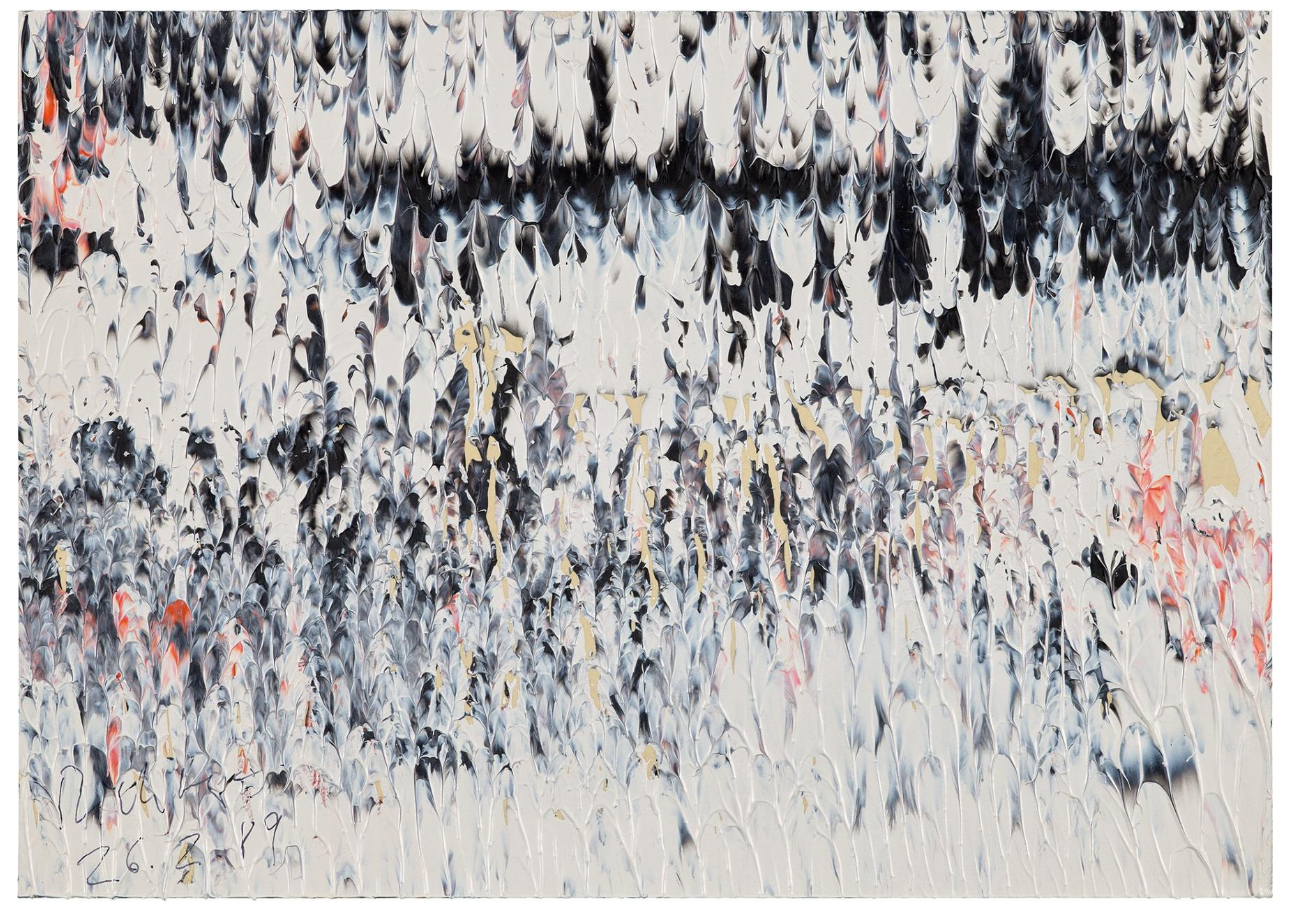
GERHARD RICHTER
Untitled 26.2.89, 1989
Oil on heavy paper
21 x 29.8 cm (8 1/4 x 11 3/4 inches)
Signed and dated “Richter 26.2.89” lower left
Signed and dated “26.2.89 Richter” on the reverse
#24. Abstraktes Bild (753-1), 1991
Christie’s London: 10 October 2024
Estimated: GBP 200,000 – 300,000
GBP 126,000 / USD 164,635
GERHARD RICHTER (B. 1932), Abstraktes Bild (753-1) | Christie’s
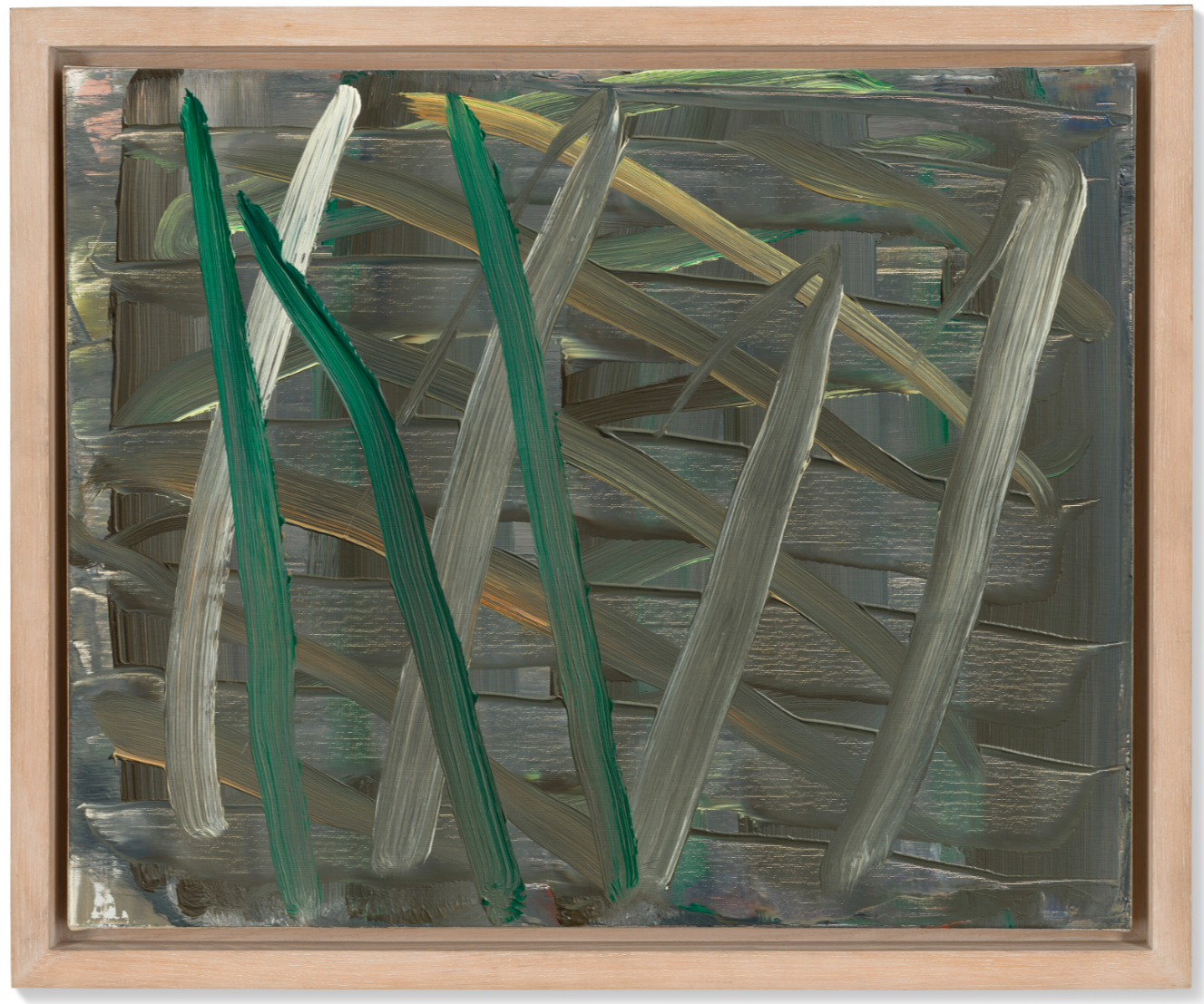
GERHARD RICHTER (B. 1932)
Abstraktes Bild (753-1), 1991
Oil on canvas
16 1/8 x 20 1/8 inches (41×51 cm)
Signed, numbered and dated ‘753-1 Richter 1991’ (on the reverse)
#25. Nude study, 1959
Grisebach Berlin: 31 May 2024
Estimated: EUR 100,000 – 150,000
EUR 139,700 / USD 151,315
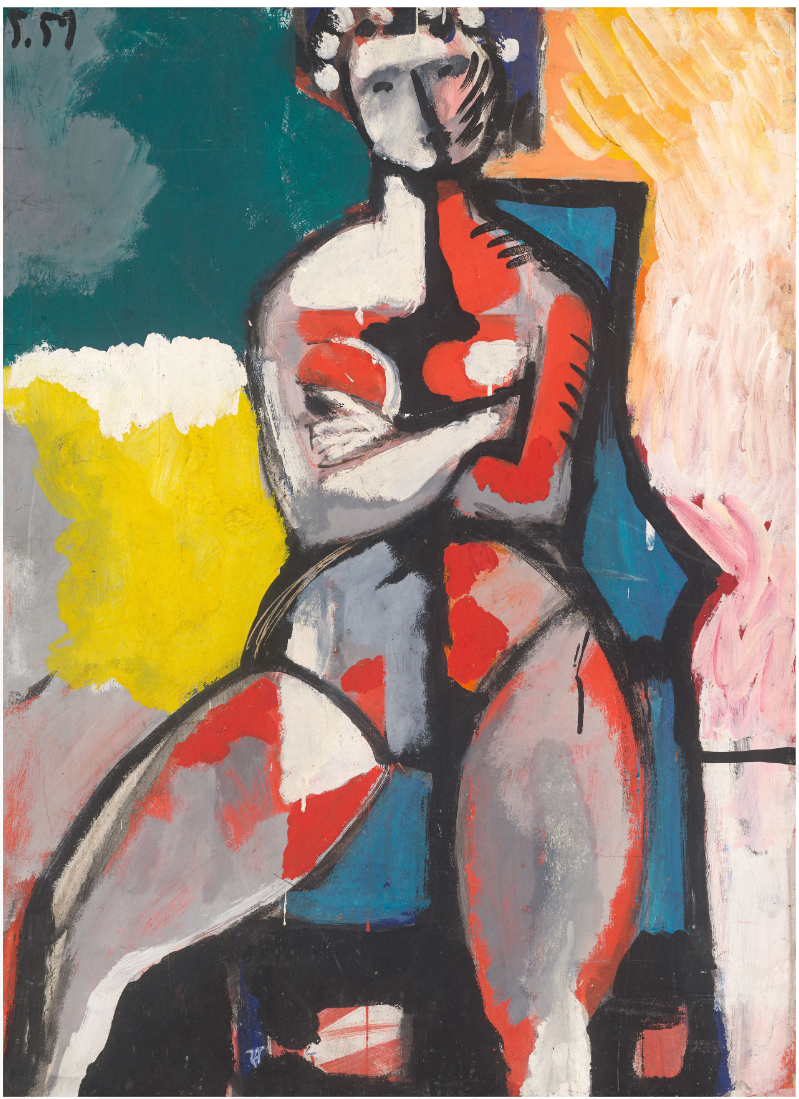
GERHARD RICHTER (Dresden 1932 – lives in Cologne)
Nude study, 1959
Oil on masonite
84 x 61.5 cm (33 1/8 x 24 1/4 inches)
Dated in the upper left: 5.59
Signed, dated and dedicated in black felt-tip pen on the reverse: Richter 1959 für Klaus Werner
#26. War Cut II, 2004
Grisebach Berlin: 28 November 2024
Estimated: EUR 90,000 – 120,000
EUR 133,350 / USD 140,820
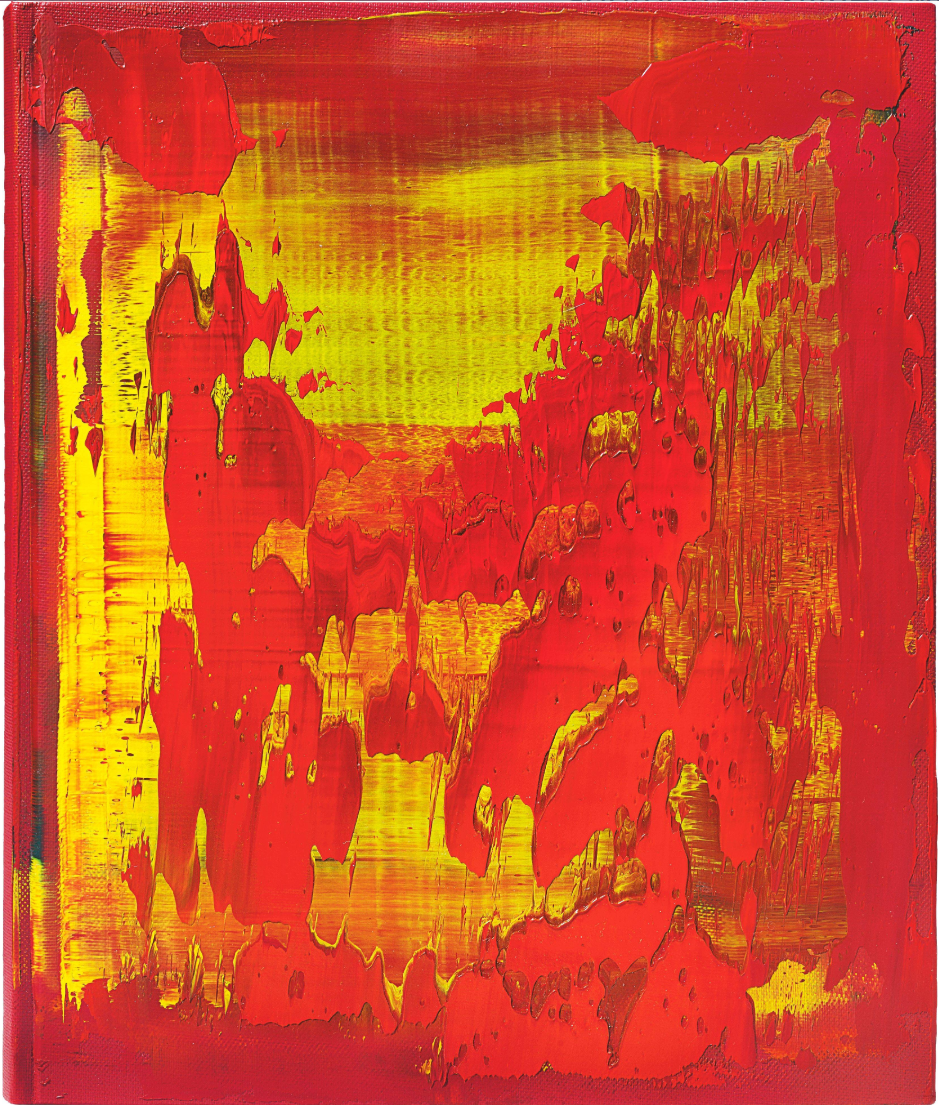
GERHARD RICHTER (Dresden 1932 – lives in Cologne)
War Cut II, 2004
Oil on front cover of the special edition of the artist book “War Cut I“
25.6 × 22 cm (10 1/8 x 8 5/8 inches)
Signed and dated in pencil on the endpaper: Richter, 2004
On the last page additionally signed with ballpoint pen in blue
One of 20 unique works (H.C.) from a total edition of 70 Roman numbered on the endpaper and on the last page
#27. Abstraktes Bild, 1976
Sotheby’s London: 10 October 2024
Estimated: GBP 70,000 – 100,000
GBP 90,000 / USD 117,595
Abstraktes Bild | Contemporary Day Auction | 2024 | Sotheby’s
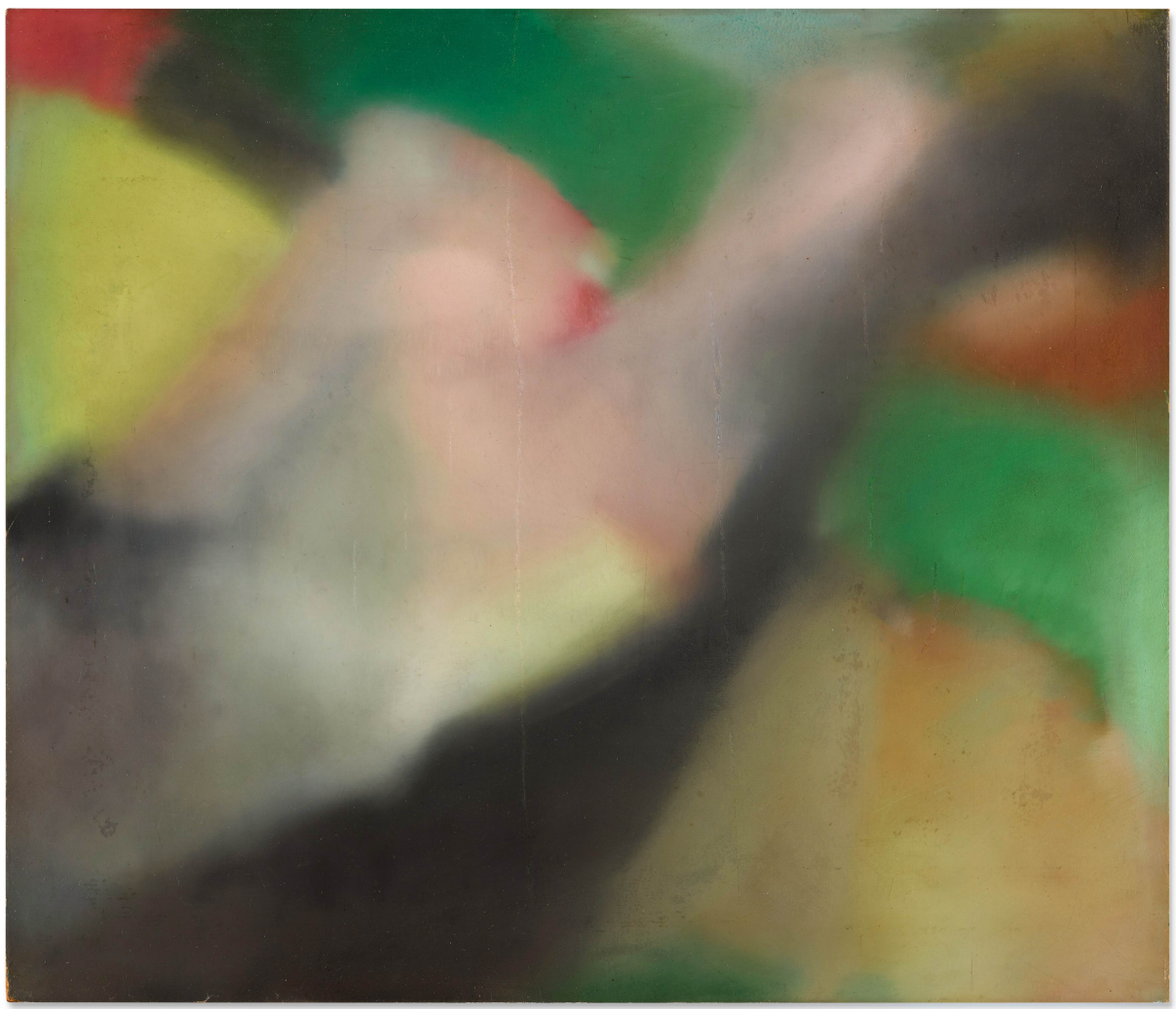
GERHARD RICHTER (b. 1932)
Abstraktes Bild, 1976
Oil on panel
44 x 51.4 cm (17 1/2 x 20 1/4 inches)
Signed and dated 1976 (on the reverse)
#28. 11. März 2000 (Firenze), 2000
Sotheby’s New-York: 14 May 2024
Estimated: USD 40,000 – 50,000
USD 107,950
11. März 2000 (Firenze) | Contemporary Day Auction | 2024 | Sotheby’s (sothebys.com)
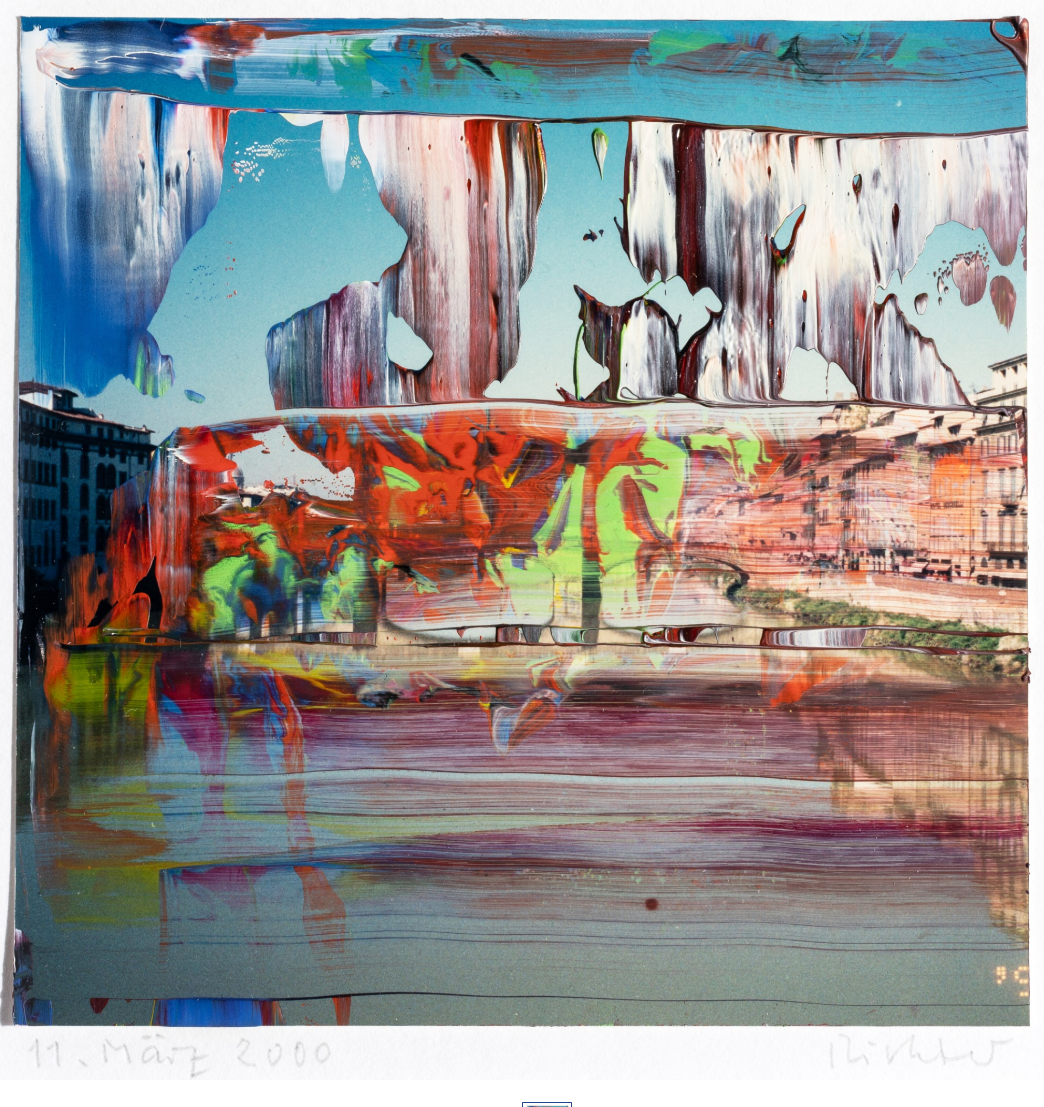
GERHARD RICHTER (b. 1932)
11. März 2000 (Firenze), 2000
Oil on color photograph
12.1 x 12.1 cm (4 3/4 x 4 3/4 inches)
Signed and dated 11. März 2000 (on the mat)
Signed and dated 11. März 2000 (on the backing board)
#29. Rot, 8.2.84 (Red, 8.2.84), 1984
Christie’s London: 10 October 2024
Estimated: GBP 60,000 – 80,000
GBP 81,900 / USD 107,015
GERHARD RICHTER (B. 1932), Rot, 8.2.84 (Red, 8.2.84) | Christie’s
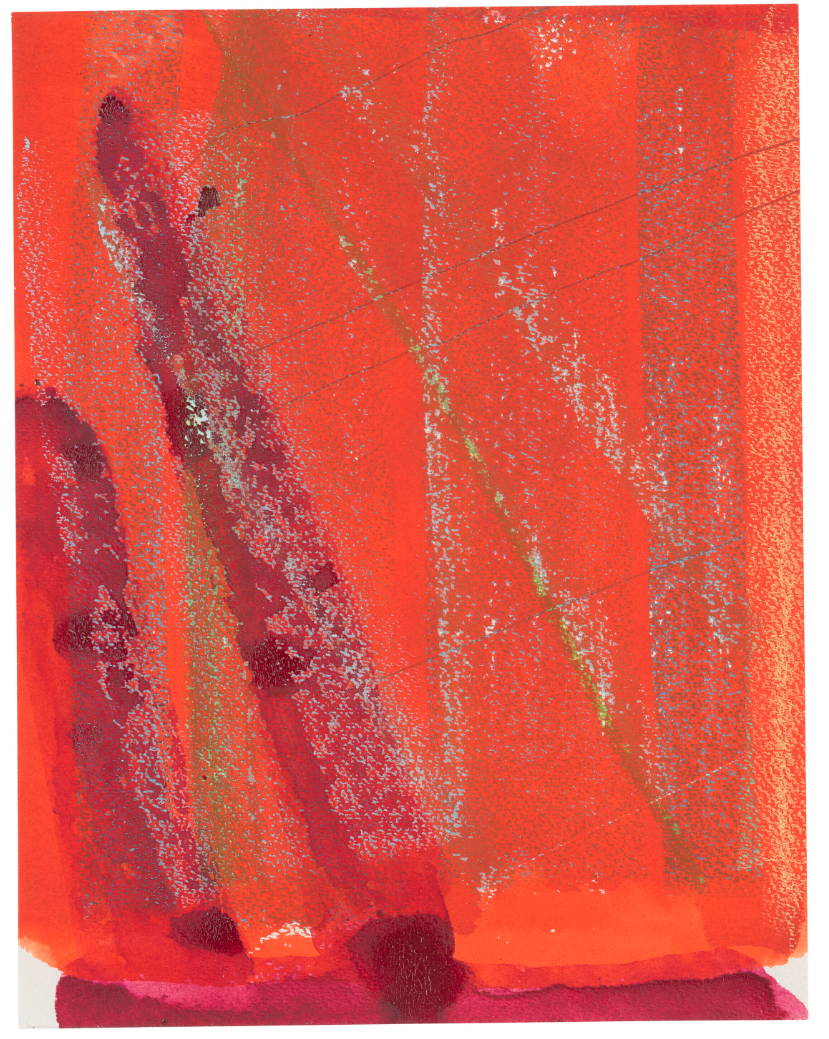
GERHARD RICHTER (B. 1932)
Rot, 8.2.84 (Red, 8.2.84), 1984
Watercolor, pastel and graphite on paper
28 x 21.5 cm (11 x 8 1/2 inches)
Signed and dated ‘Richter, 8.2.84’ (upper right)
Signed and dated ‘Richter, 8.2.84’ (on the reverse)
USD 100,000
#30. War Cut II, 2004
Christie’s London: 27 June 2024
Estimated: GBP 50,000 – 70,000
GBP 73,080 / USD 92,235
GERHARD RICHTER (B. 1932), War Cut II | Christie’s (christies.com)
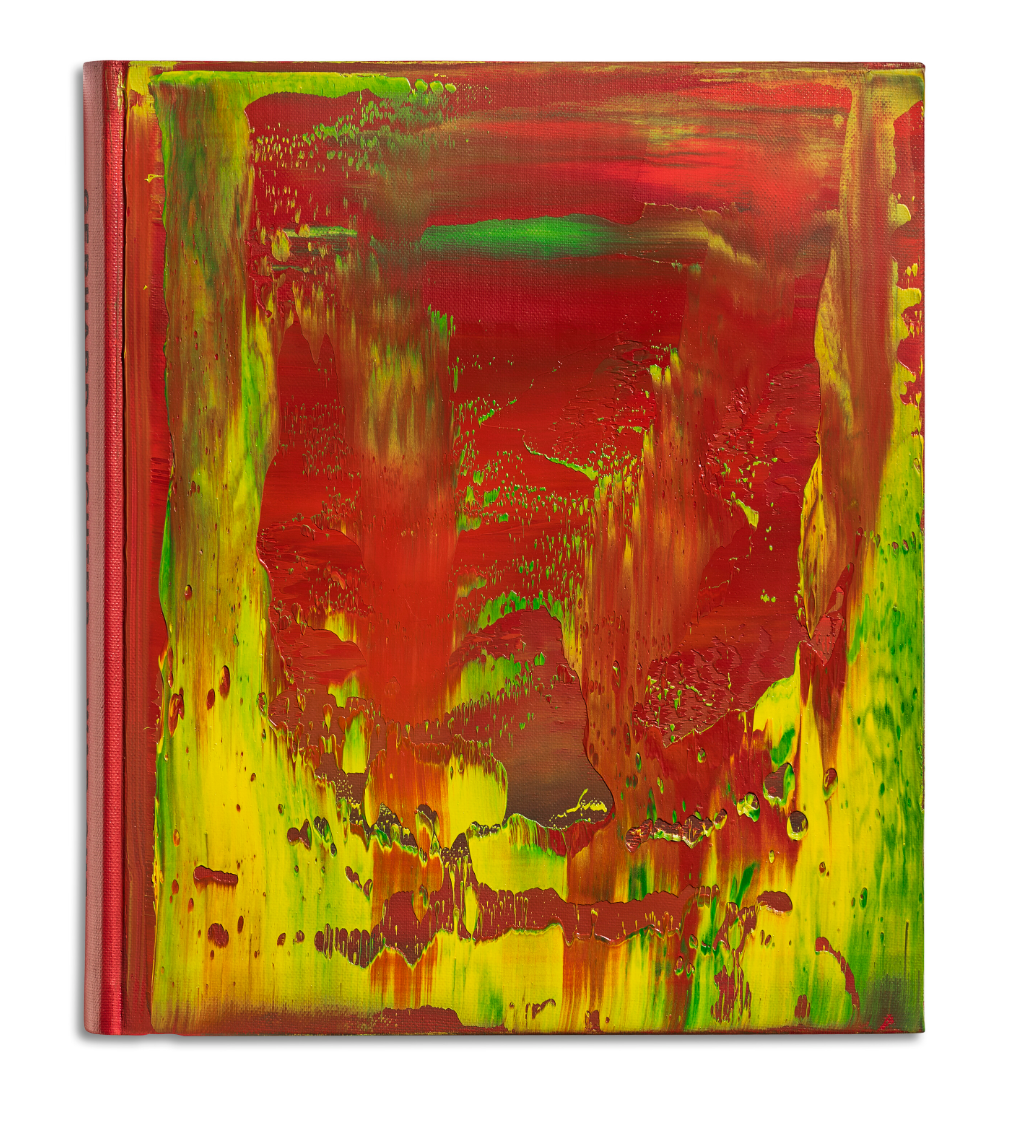
GERHARD RICHTER (B. 1932)
War Cut II, 2004
Oil on artist’s book
25.5 x 21.8 cm (10 x 8 5/8 inches)
Signed, numbered and dated ’24/50 Richter, 2004′ (on the endpaper)
Numbered ’24’ (on the penultimate page)
This work is number twenty-four from an edition of fifty unique variants plus twenty Hors Commerce copies and thirty copies of the French edition.
#31. Quattro Colori (Four Colors), 2008
Christie’s London: 10 October 2024
Estimated: GBP 30,000 – 50,000
GBP 60,480 / USD 79,025
GERHARD RICHTER (B. 1932), Quattro Colori (Four Colours) | Christie’s
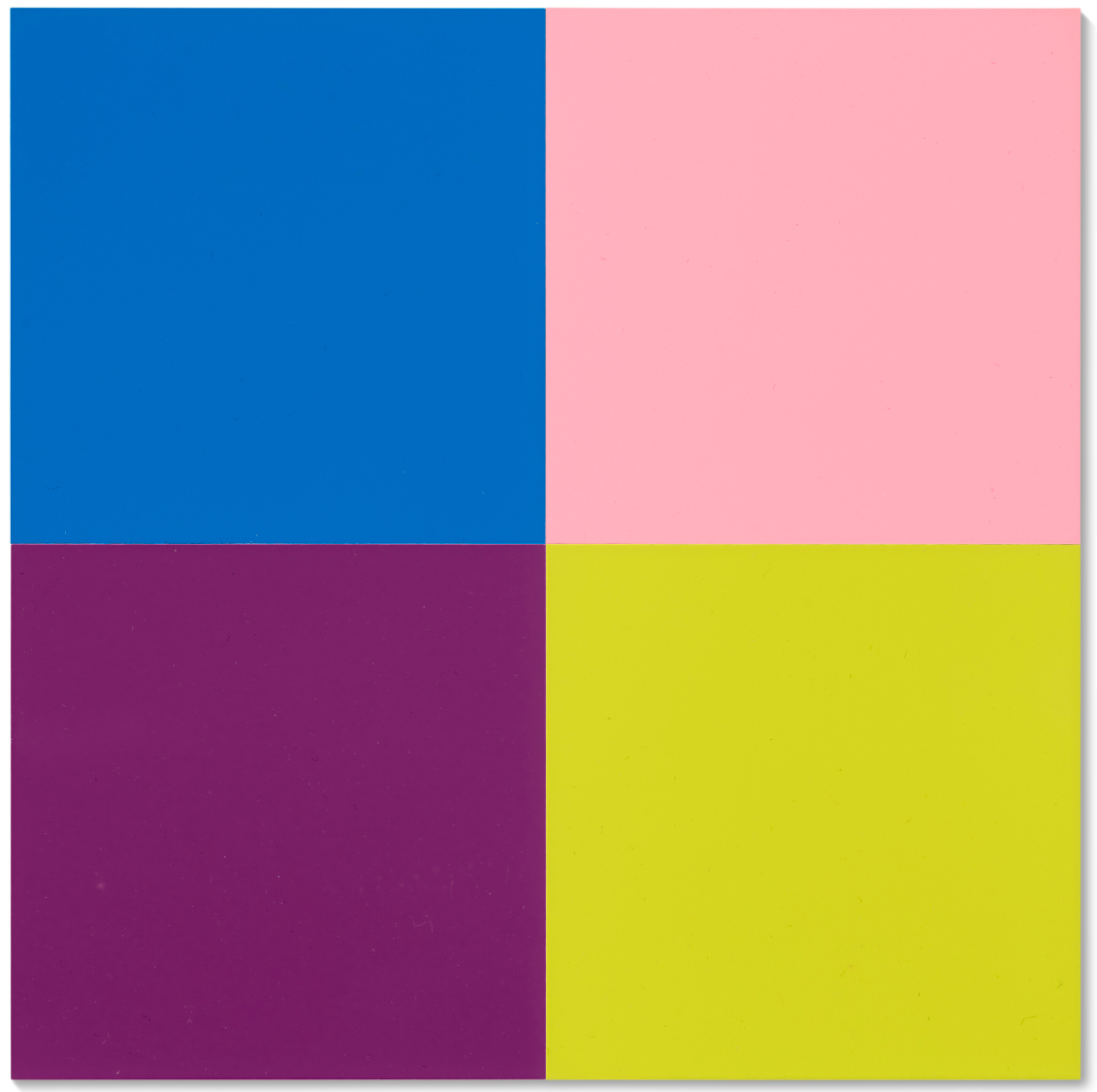
GERHARD RICHTER (B. 1932)
Quattro Colori (Four Colors), 2008
Lacquer in four unique colours on Alu-Dibond plate mounted on wood
7 5/8 x 7 5/8 inches (19.4 x 19.4 cm)
Signed and numbered ’11 Richter’ (on the reverse)
This work is number eleven from a series of eighty unique works
#32. Goldberg-Variationen (Goldberg Variations), 1984
Christie’s London: 9 March 2024
Estimated: GBP 40,000 – 60,000
GBP 52,920 / USD 68,045
GERHARD RICHTER (B. 1932), Goldberg-Variationen (Goldberg Variations) | Christie’s (christies.com)
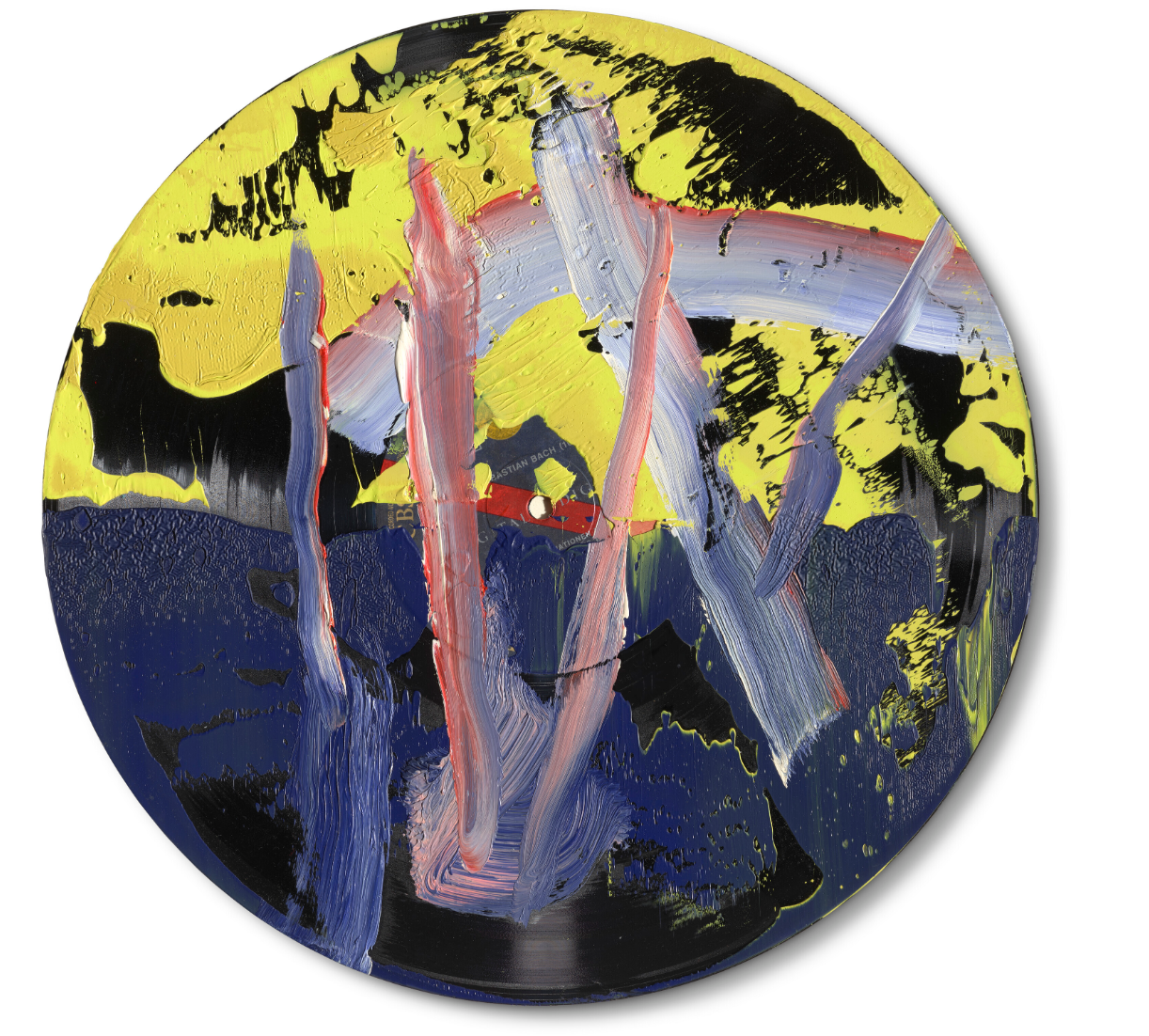
GERHARD RICHTER (B. 1932)
Goldberg-Variationen (Goldberg Variations), 1984
Oil on phonograph long play record, with original record sleeve and record cover
Diameter: 30.1 cm (11 7/8 inches)
Signed, numbered and dated ’56⁄100 Richter 1984′ (on the reverse)
Numbered ’56⁄100′ (on the record sleeve); numbered ’56⁄100′ (on the record cover)
This work is number fifty-six from an edition of one hundred unique variants plus twenty artist’s proofs
#33. Goldberg-Variationen, 1984
Grisebach Berlin: 28 November 2024
Estimated: EUR 50,000 – 70,000
EUR 63,500 / USD 67,060
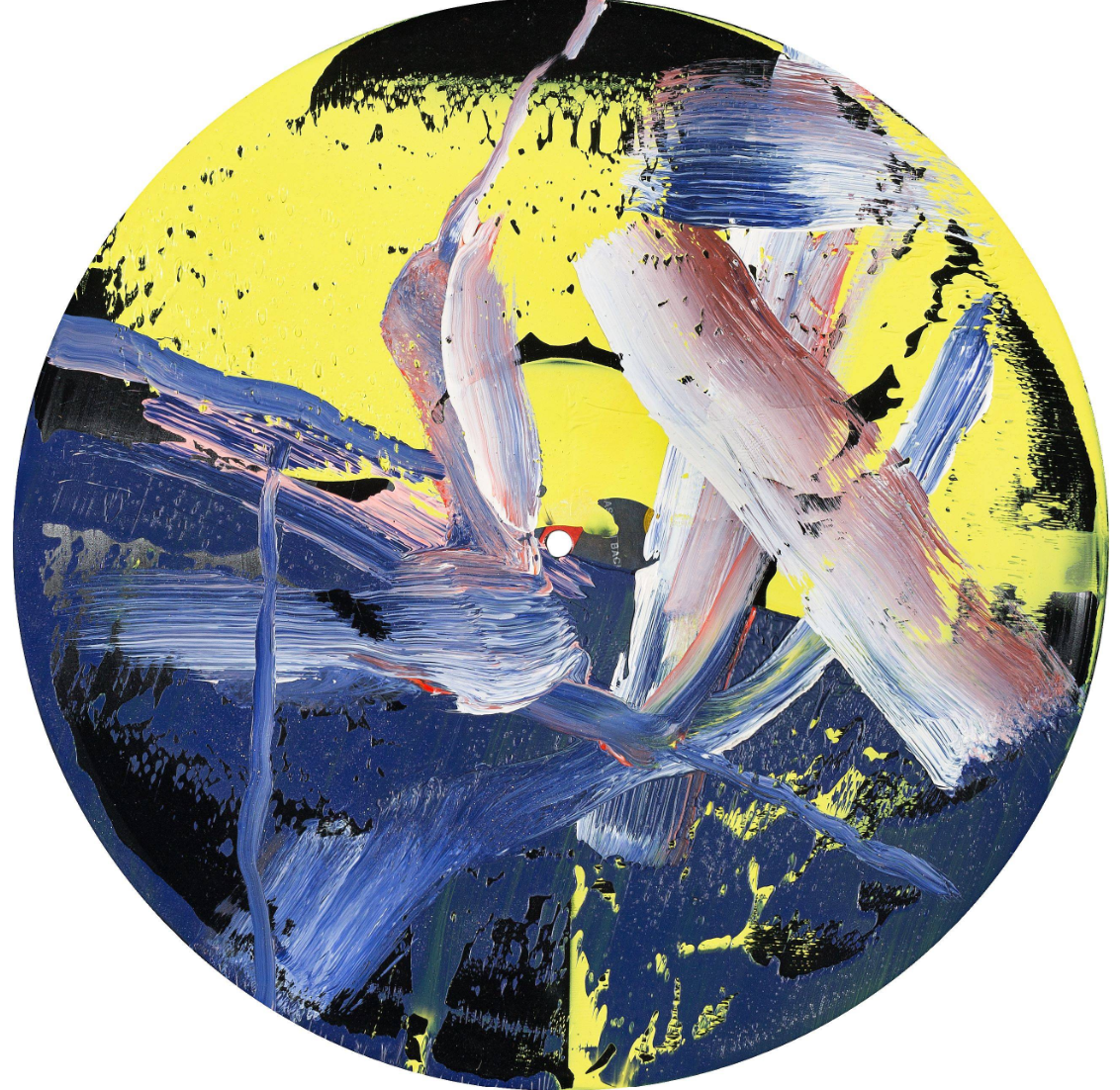
GERHARD RICHTER (Dresden 1932 – lives in Cologne)
Goldberg-Variationen, 1984
Oil on vinyl record, with the original record sleeve
Diameter: 30.1 cm (11 7/8 inches)
Signed and dated on the reverse
One of 100 copies, each numbered on the reverse as well as on the accompanying record cover
Each with the character of a unique work
#34. Souvenir, 1995
Christie’s London: 27 June 2024
Estimated: GBP 45,000 – 55,000
GBP 52,920 / USD 66,790
GERHARD RICHTER (B. 1932), Souvenir | Christie’s
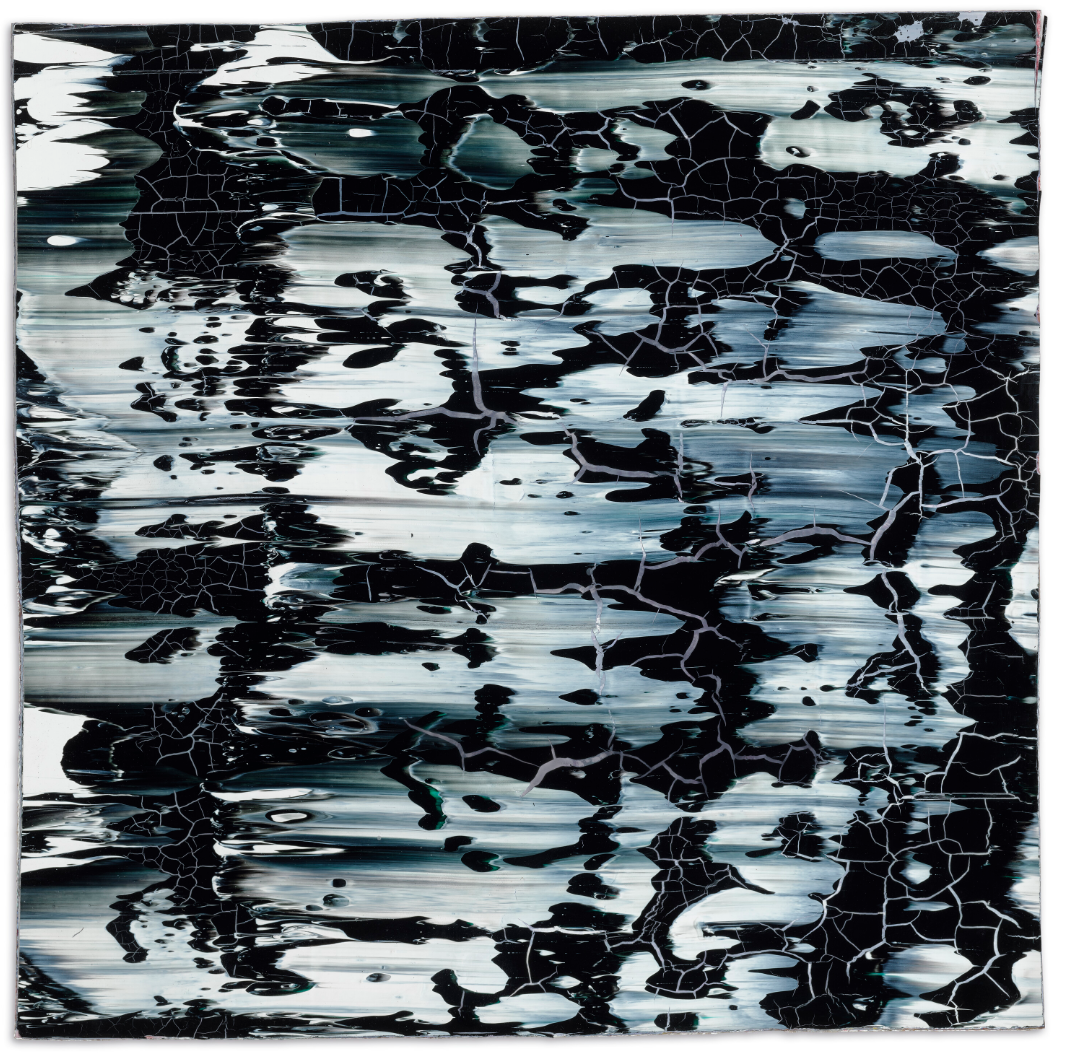
GERHARD RICHTER (B. 1932)
Souvenir, 1995
Oil on canvas
21×21 cm (8 1/4 x 8 1/4 inches)
Signed and numbered ‘Richter 48/64’ (on a label affixed to the reverse of the frame)
This work is number forty-eight of sixty-four unique variants
#35. Goldberg-Varationen, 1984
Lempertz Cologne: 4 June 2024
Estimated: EUR 50,000 – 80,000
EUR 56,953 / USD 62,120
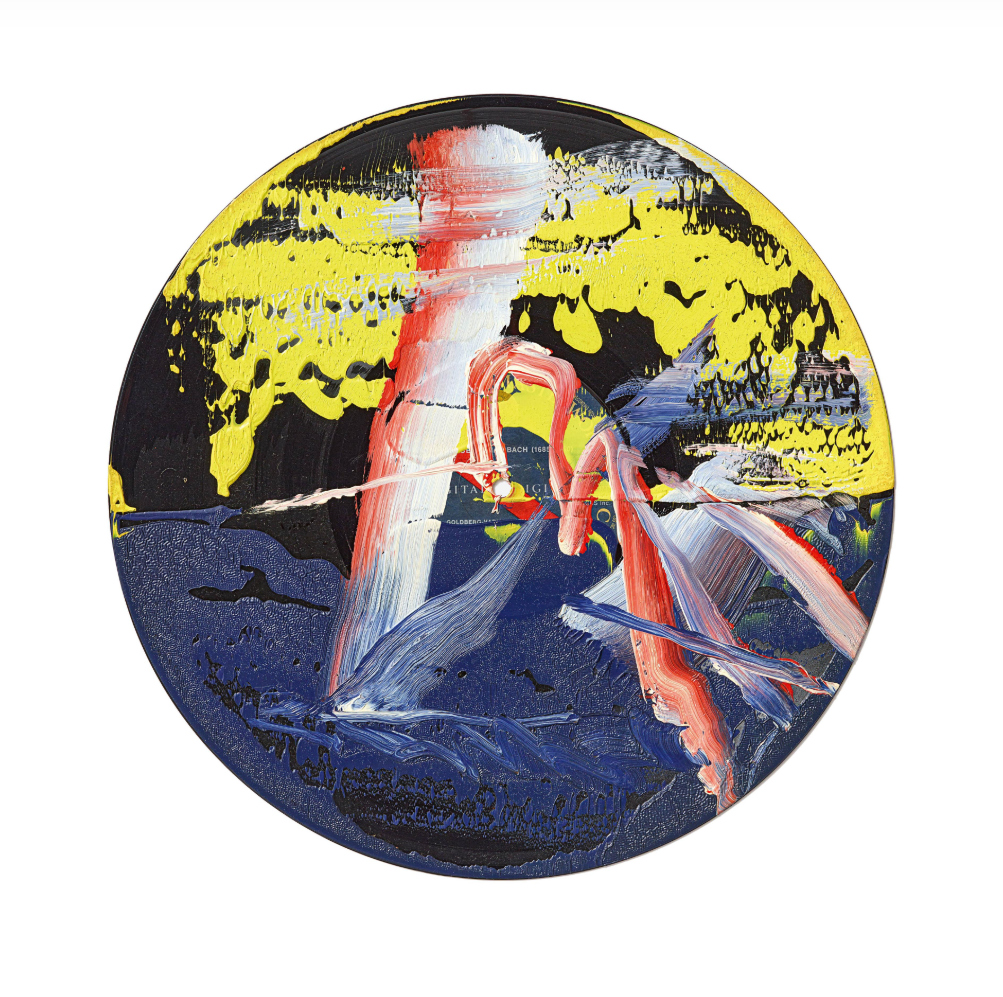
GERHARD RICHTER
Goldberg-Varationen, 1984
Oil on record
Diameter: 30.1 cm
In original record sleeve: J. S. Bach, The Goldberg Variations, Glenn Gould (minor traces of usage)
Signed, dated and numbered verso on label
Proof XVII/XX (+100 +1 +3)
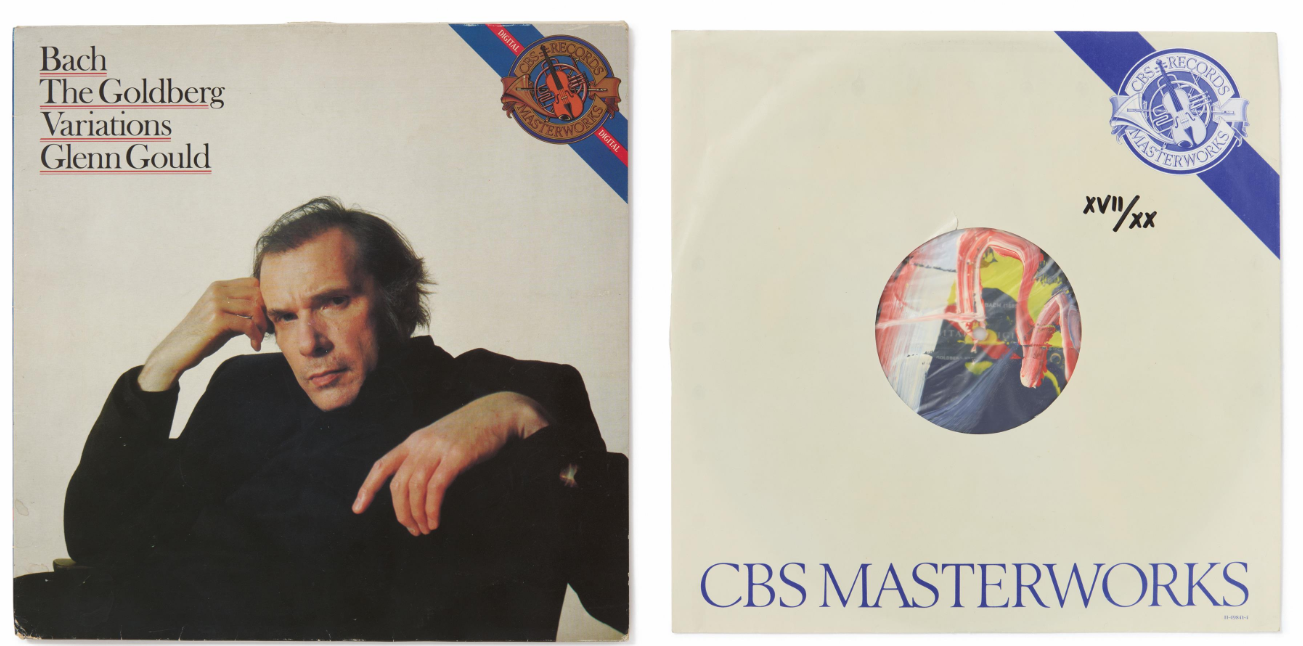
#36. Goldberg Variations, 1984
SBI Art Auction: 24 May 2024
Estimated: JPY 7,000,000 – 13,000,000
JPY 9,545,000 / USD 60,800
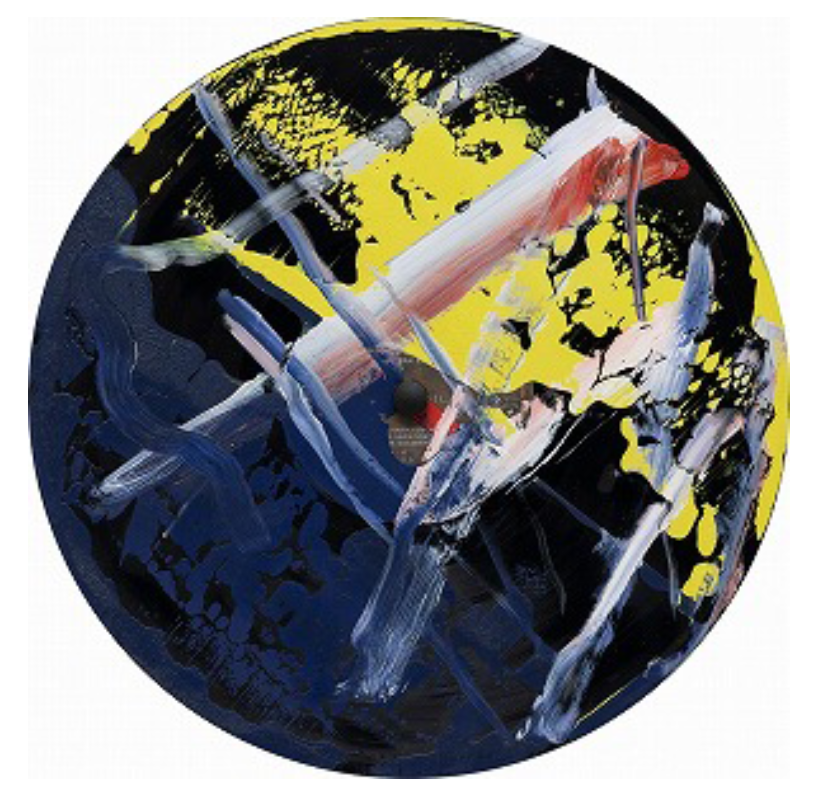
GERHARD RICHTER
Goldberg Variations, 1984
Oil on phonograph record with original record sleeve and record cover
Diameter: 30.1 cm (11 7/8 inches)
Signed, dated and numbered on label on the reverse
Numbered on the record sleeve and record cover
From the edition of 100
#37. 5. Feb. 05, 2005
Christie’s New-York: 22 November 2024
Estimated: USD 30,000 – 50,000
USD 60,480
GERHARD RICHTER (B. 1932), 5. Feb. 05 | Christie’s
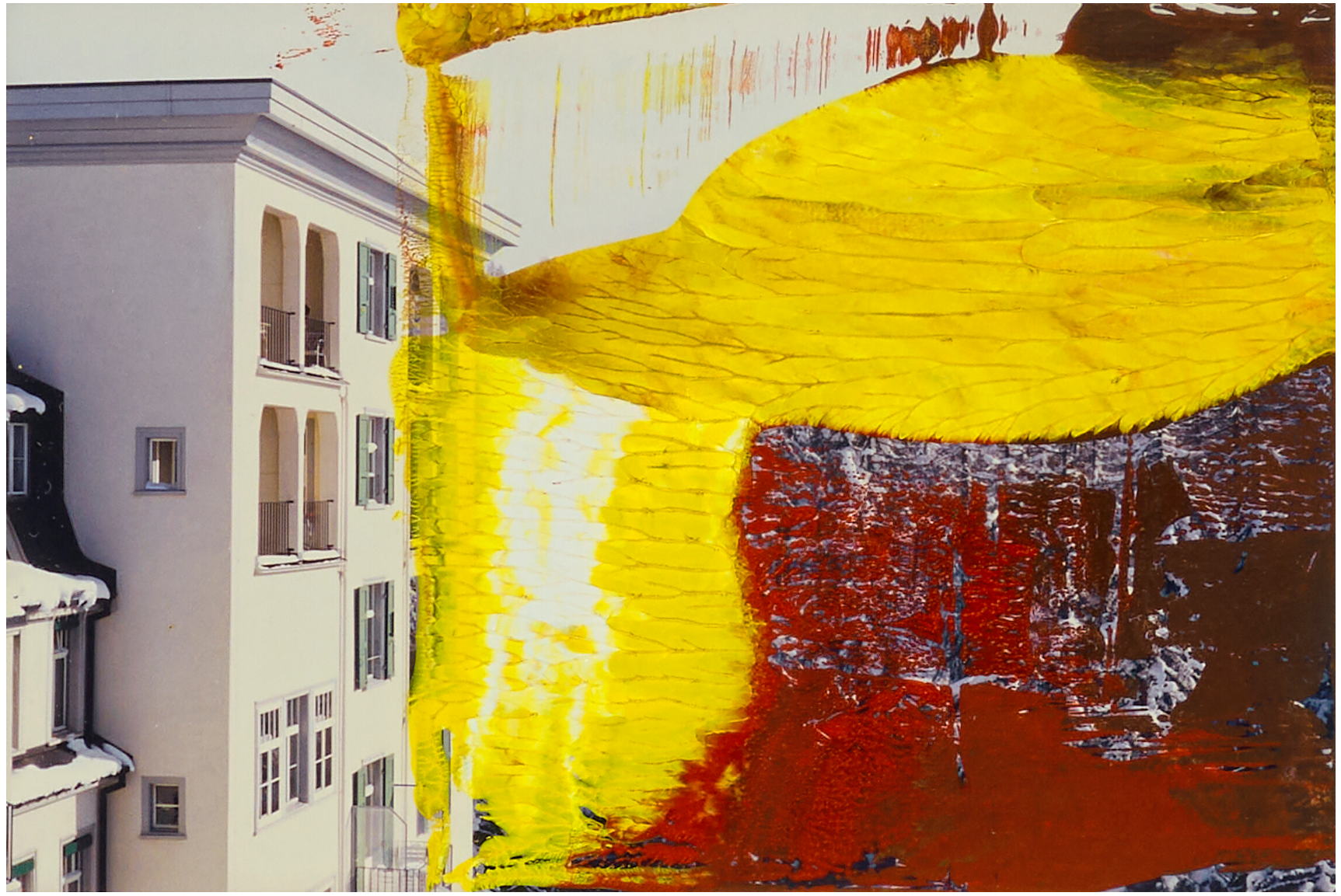
GERHARD RICHTER (B. 1932)
5. Feb. 05, 2005
Oil on photograph
Image: 10×15 cm (3 7/8 x 5 7/8 inches)
Signed and dated ‘5 FEBR ’05 Richter’ (on the mount)
Signed again and dated again ‘5 Febr ’05 Richter’ (on the backing board)
#38. Firenze, 2000
Sotheby’s New-York: 14 May 2024
Estimated: USD 30,000 – 40,000
USD 50,800
Firenze | Contemporary Day Auction | 2024 | Sotheby’s
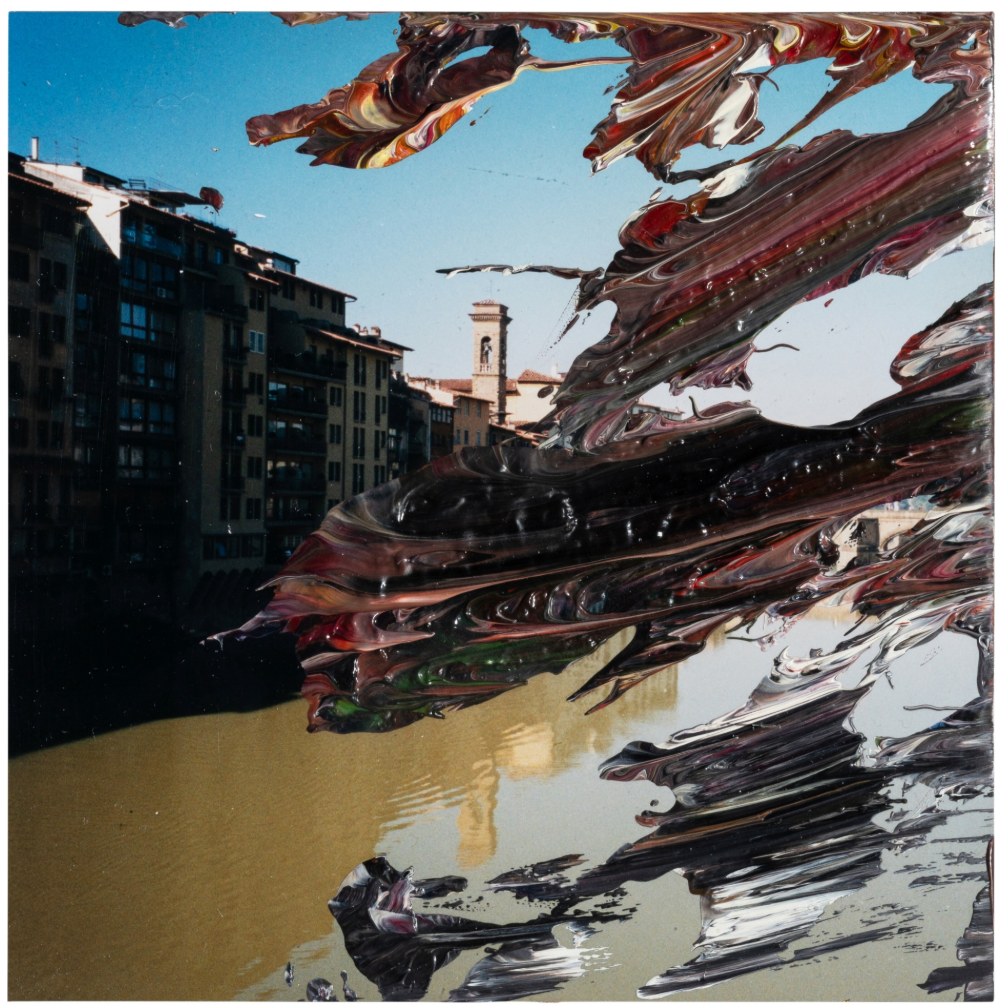
GERHARD RICHTER (b. 1932)
Firenze, 2000
Oil on color photograph mounted on Plexiglas
12.1 x 12.1 cm (4 3/4 x 4 3/4 inches)
Signed, dated 2000 and numbered 28/99 (on the verso)
This work is number 28 from an edition of 99 unique variants
#39. Firenze, 2000
Christie’s New-York: 1 October 2024
Estimated: USD 40,000 – 60,000
USD 44,100
GERHARD RICHTER (B. 1932), Firenze | Christie’s
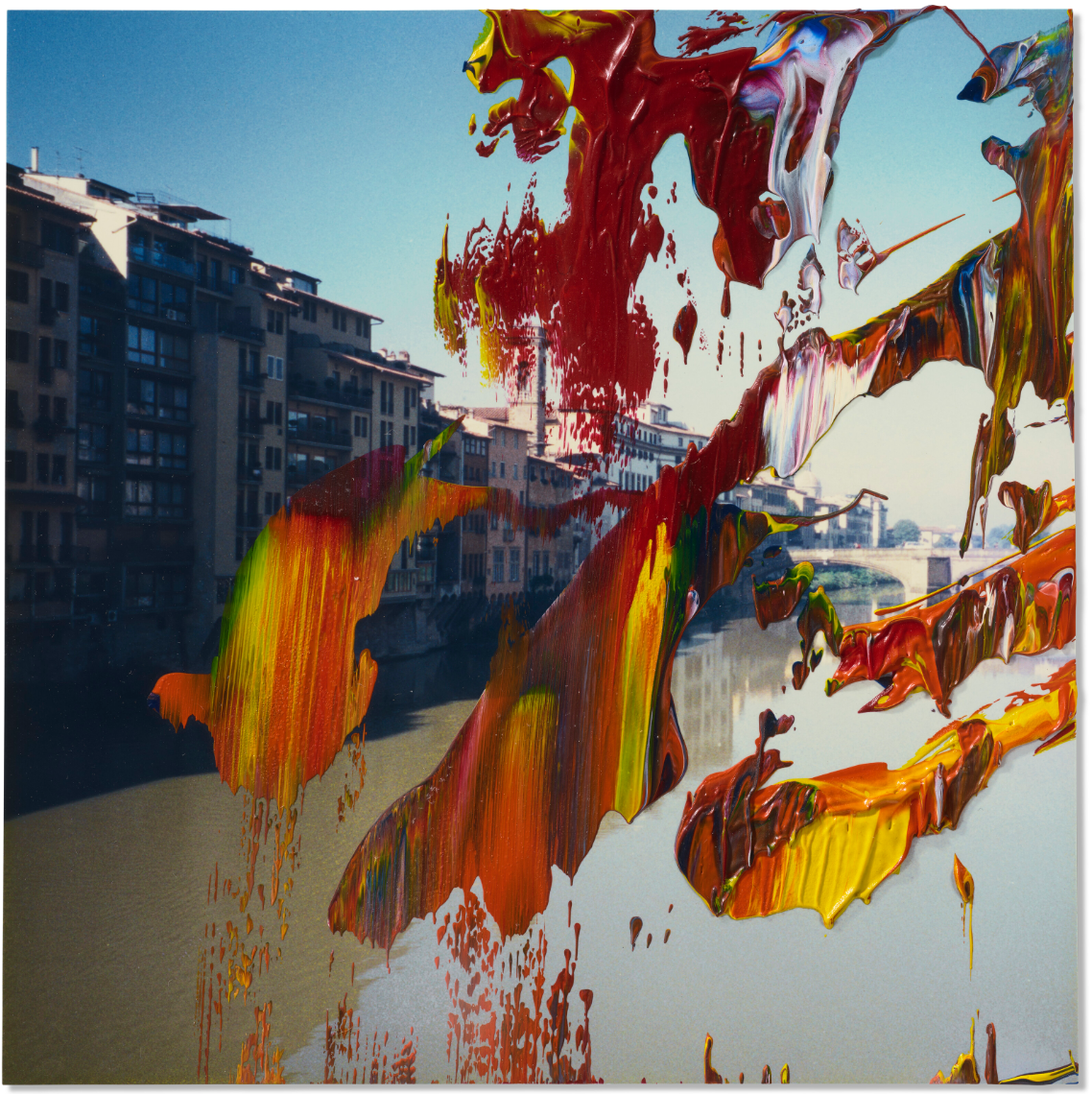
GERHARD RICHTER (B. 1932)
Firenze, 2000
Oil on color photograph
12×12 cm (4 3/4 x 4 3/4 inches)
Signed, numbered and dated ’68⁄99 Richter, 2000′ (on the reverse)
This work is number sixty-eight from an edition of ninety-nine
#40. Firenze, 2000
Christie’s New-York: 13 March 2024
Estimated: USD 40,000 – 60,000
USD 40,320
GERHARD RICHTER (B. 1932), Firenze | Christie’s
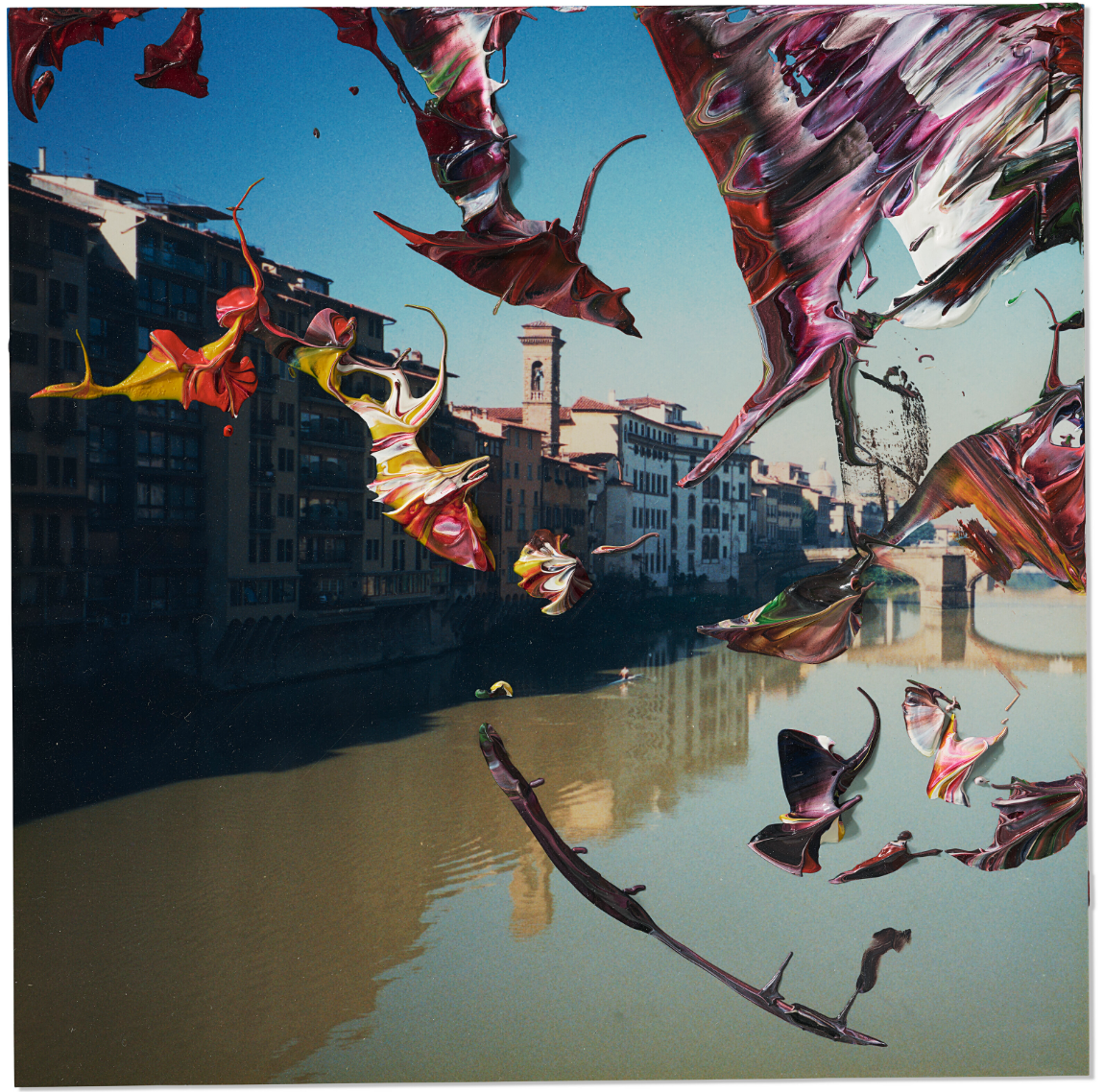
GERHARD RICHTER (B. 1932)
Firenze, 2000
Oil on color photograph
12×12 cm (4 3/4 x 4 3/4 inches)
Signed, numbered and dated ’58/99 Richter, 2000′ (on the reverse)
This work is number fifty-eight from an edition of ninety-nine
#41. 2.06.08, 2008
Christie’s London: 10 October 2024
Estimated: GBP 18,000 – 25,000
GBP 22,680 / USD 29,635
GERHARD RICHTER (B. 1932), 2.06.08 | Christie’s
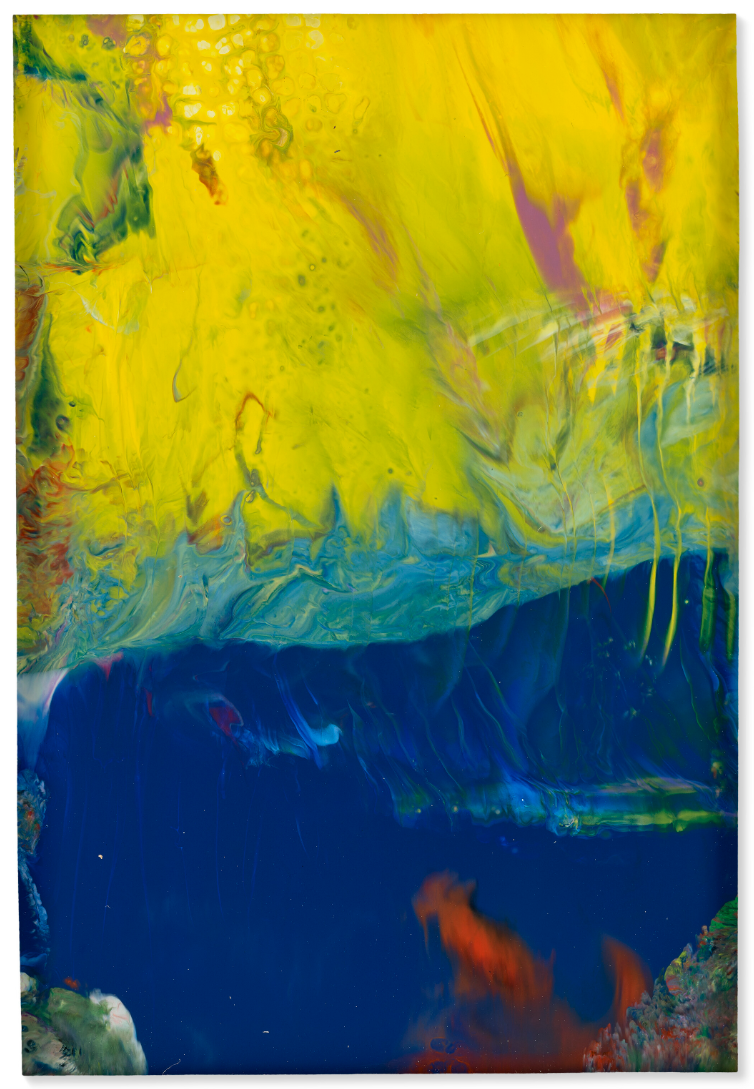
GERHARD RICHTER (B. 1932)
2.06.08, 2008
Lacquer on glass
8.3 x 5.5 cm (3 3/8 x 2 1/4 inches)
Signed and dated ‘Richter 2.6.08’ (on the reverse)
Lots Passed
Berg, 1981
Sotheby’s New-York: 20 November 2024
Estimated: USD 4,000,000 – 6,000,000
PASSED
Berg | The Now and Contemporary Evening Auction | 2024 | Sotheby’s
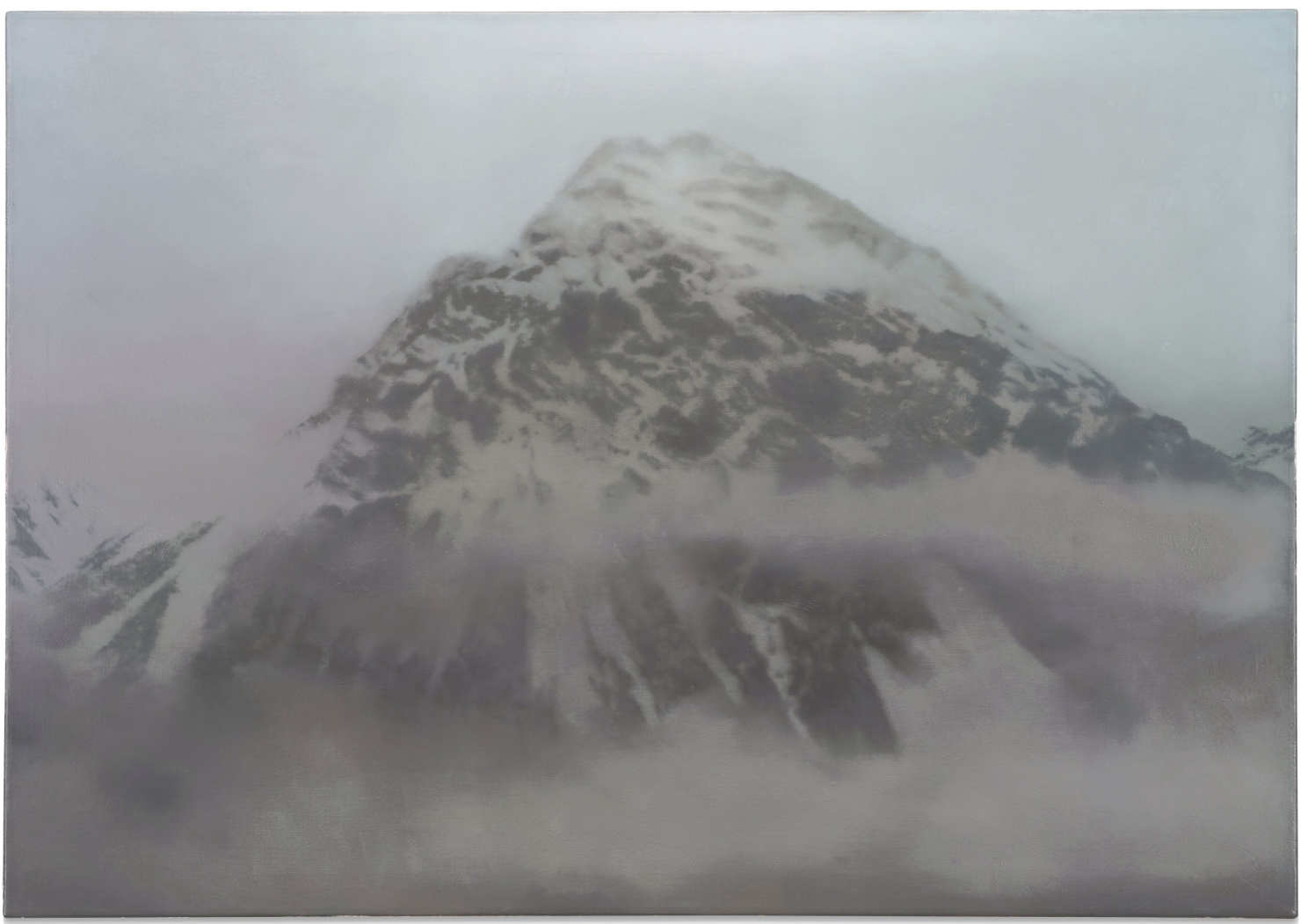
GERHARD RICHTER (b. 1932)
Berg, 1981
Oil on canvas
70×100 cm (27 1/4 x 39 1/4 inches)
Signed, dated 1981 and numbered 469-2 (on the reverse)
Titled (on the stretcher)
Abstraktes Bild, 1995
Christie’s New-York: 22 November 2024
Estimated: USD 1,000,000 – 1,500,000
PASSED
GERHARD RICHTER (B. 1932), Abstraktes Bild | Christie’s
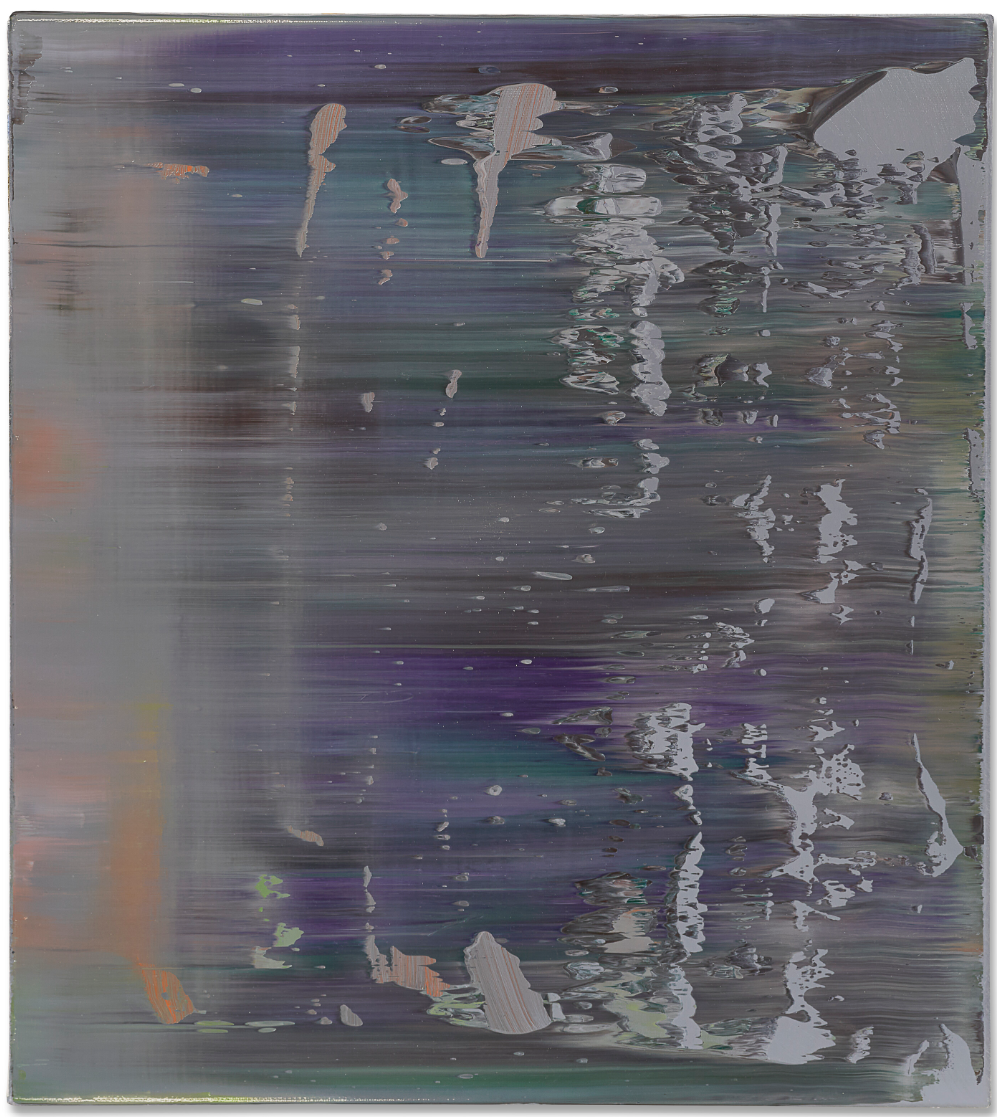
GERHARD RICHTER (B. 1932)
Abstraktes Bild, 1995
Oil on canvas
46.1 x 41.3 cm (18 1/8 x 16 1/4 inches)
signed, inscribed and dated ‘834-3 Richter X.95’ (on the reverse)
Grau hinter Glas (883-2), 2003
Sotheby’s New-York: 21 November 2024
Estimated: USD 250,000 – 350,000
PASSED
Grau hinter Glas (883-2) | Contemporary Day Auction | 2024 | Sotheby’s
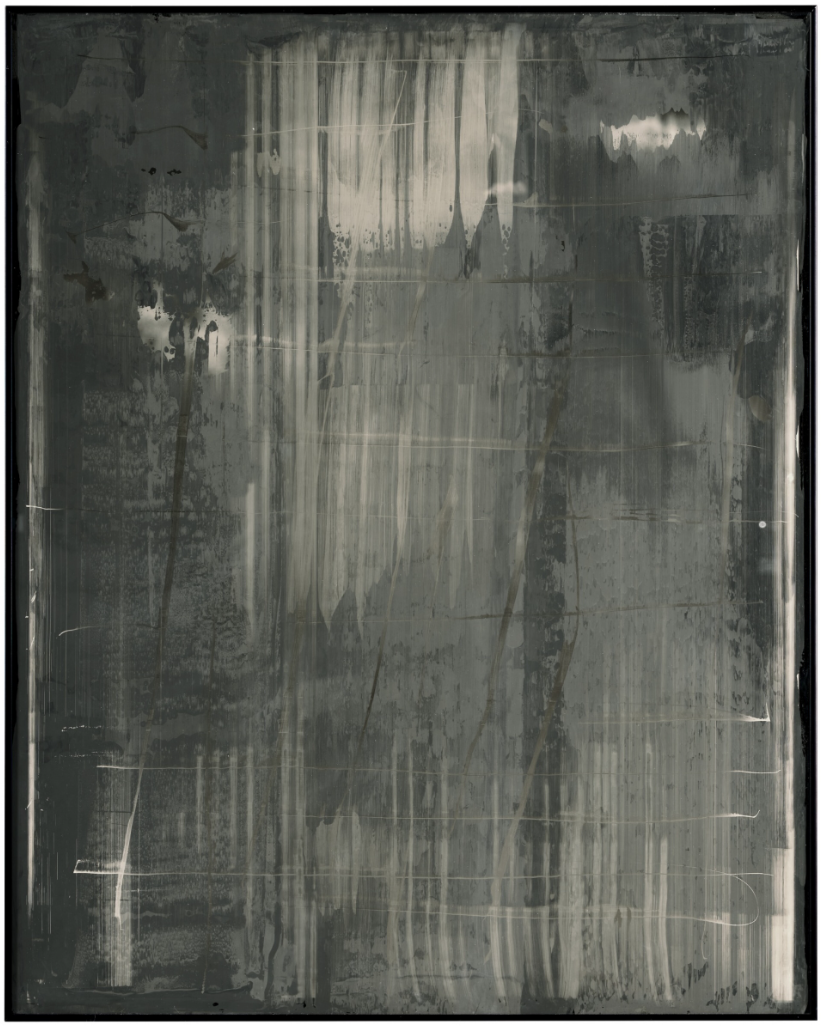
GERHARD RICHTER (b. 1932)
Grau hinter Glas (883-2), 2003
Oil behind glass
100×80 cm (39 3/8 x 31 1/2 inches)
2023 Auction Results
44 lots sold at auction in 2023 for a total turnover of USD 206,651,690. The top price was achieved at Phillips in New-York on 15 November 2023 when Abstraktes Bild (636) sold for USD 34,800,000. 6 lots sold for over USD 10 million, generating a cumulative turnover of USD 139,792,124, contributing 67.6% to the total turnover for 2023.
2023 Top 3 Lots
22 lots sold for over USD 1 million, generating a cumulative turnover of USD 199,301,015, contributing 96.4% to the total turnover for 2023.
#1. Abstraktes Bild (636), 1987
Phillips New-York: 14 November 2023
Estimate on Request
USD 34,800,000
Gerhard Richter – 20th Century & Co… Lot 34 November 2023 | Phillips
GERHARD RICHTER
Abstraktes Bild (636), 1987
Oil on canvas, in 2 parts
Each: 260.4 x 200.3 cm (102 1/2 x 78 7/8 inches)
Overall: 260.4 x 400.7 cm (102 1/2 x 157 3/4 inches)
Signed, inscribed and dated “636 Richter 1987” on the reverse of the left panel
Inscribed “636” on the reverse of the right panel
#2. Abstraktes Bild, 1997
Sotheby’s New-York: 15 November 2023
Estimated: USD 25,000,000 – 35,000,000
USD 31,932,000
Abstraktes Bild | Contemporary Evening Auction | 2023 | Sotheby’s (sothebys.com)
GERHARD RICHTER (b. 1932)
Abstraktes Bild, 1997
Oil on canvas
275×275 cm (108 1/4 x 108 1/4 inches)
Signed, dated 1997 and numbered 849-1 (on the reverse)
#3. Abstraktes Bild, 1986
Sotheby’s London: 1 March 2023
Estimate on Request
GBP 24,179,000 / USD 29,099,772
Abstraktes Bild | Modern & Contemporary Evening Auction | | Sotheby’s (sothebys.com)
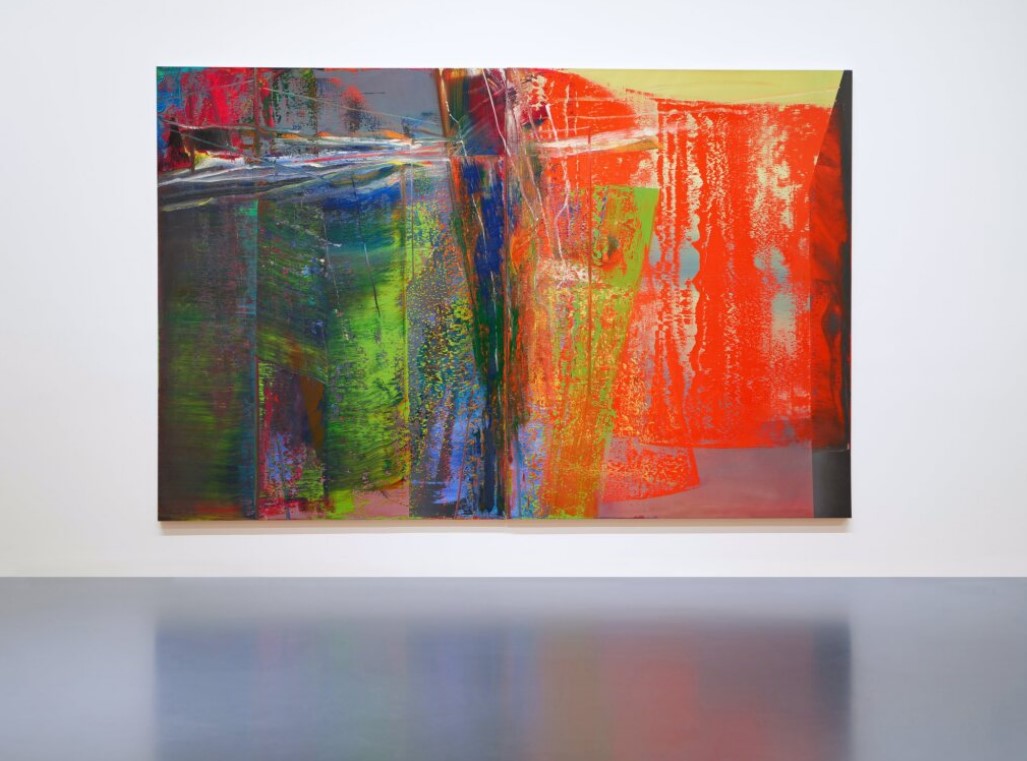
GERHARD RICHTER (B. 1932)
Abstraktes Bild, 1986
Oil on canvas, in two parts
Overall: 260×400 cm (102 3/8 x 157 1/2 inches)
Signed Richter, dated 1986, numbered 596 and inscribed Teil A (on the reverse of left panel)
Numbered 596 and inscribed Teil B (on the reverse of right panel)
#4. 4096 Farben, 1974
Sotheby’s New-York: 18 May 2023
Estimated: USD 18,000,000 – 25,000,000
USD 21,839,000
4096 Farben | Contemporary Evening Auction | 2023 | Sotheby’s (sothebys.com)
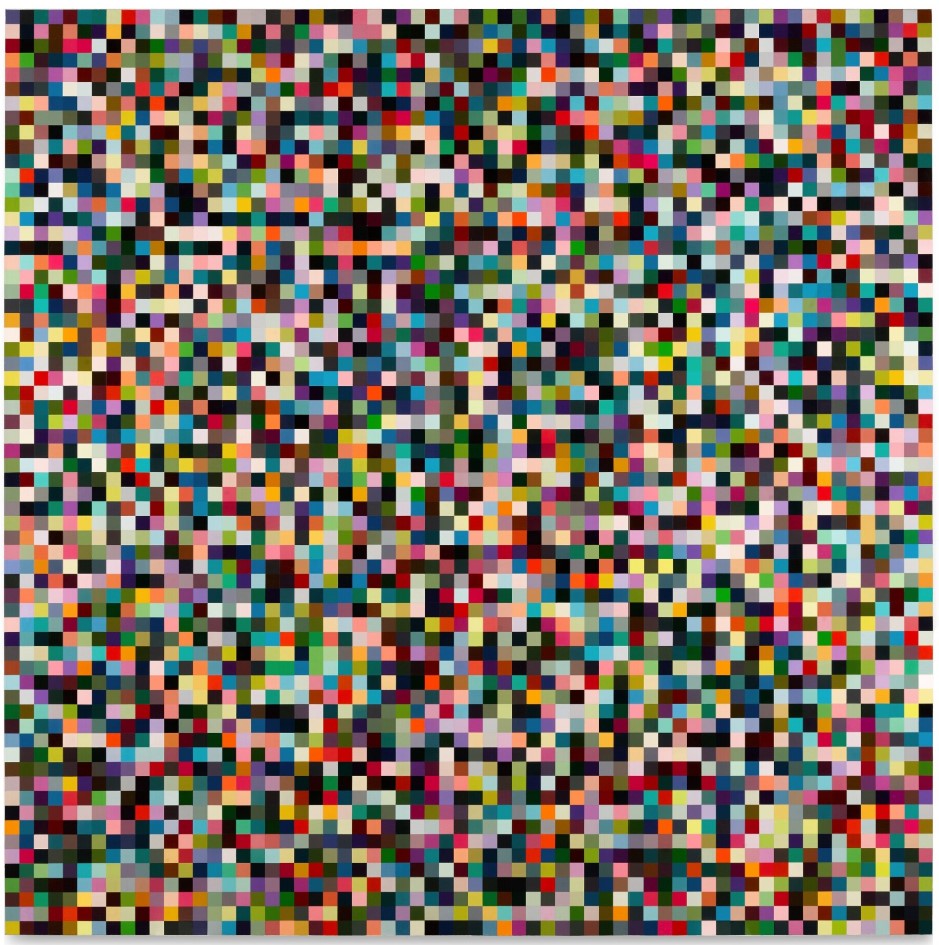
GERHARD RICHTER (b. 1932)
4096 Farben, 1974
Lacquer on canvas
100×100 inches (254×254 cm)
Signed, titled, dated 1974 and numbered 359 (on the reverse)
#5. Spoleto, 1984
Christie’s New-York: 11 May 2023
Estimated: USD 8,000,000 – 12,000,000
USD 11,335,000
GERHARD RICHTER (B. 1932) (christies.com)
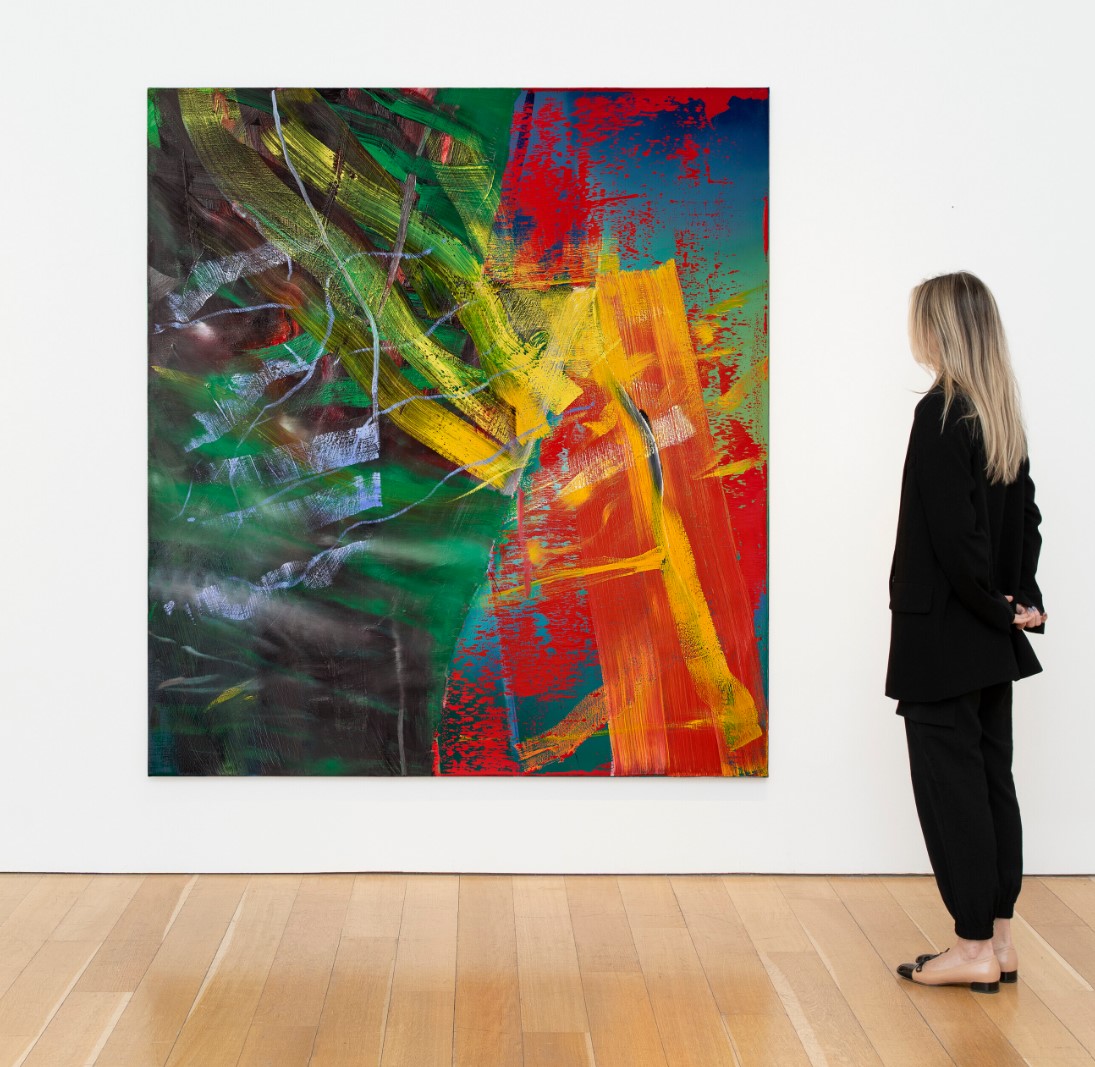
GERHARD RICHTER (B. 1932)
Spoleto, 1984
Oil on canvas
200 x 180.7 cm (78 3/4 x 71 1/8 inches)
Signed, inscribed and dated ‘Richter 1984 565-2’ (on the reverse)
#6. Abstraktes Bild, 1994
Sotheby’s Hong-Kong: 5 October 2023
Estimated: HKD 70,000,000 – 100,000,000
HKD 84,469,000 / USD 10,786,858
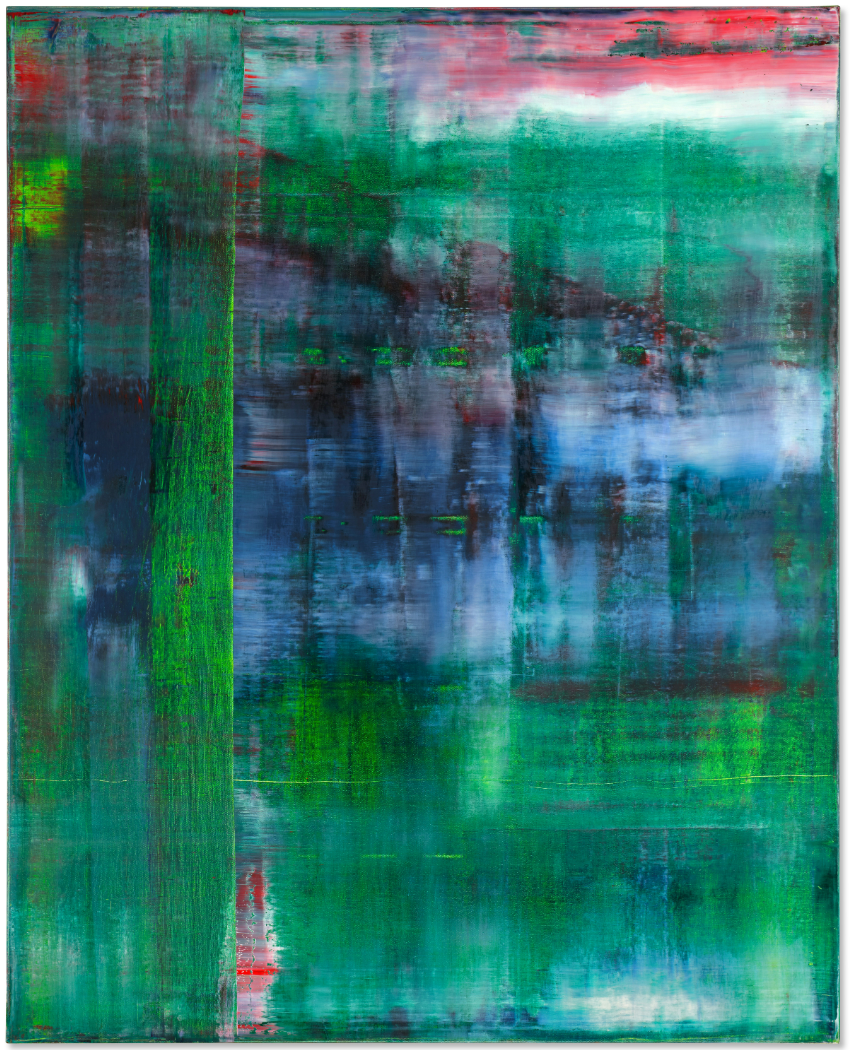
GERHARD RICHTER (b. 1932)
Abstraktes Bild, 1994
Oil on canvas
250×200 cm (98 3/8 x 78 3/4 inches)
Signed, dated 1994 and numbered 811-1 on the reverse
USD 10 million
#7. Badende, 1967
Christie’s New-York: 17 May 2023
Estimated: USD 15,000,000 – 20,000,000
USD 9,610,000
GERHARD RICHTER (b. 1932) (christies.com)
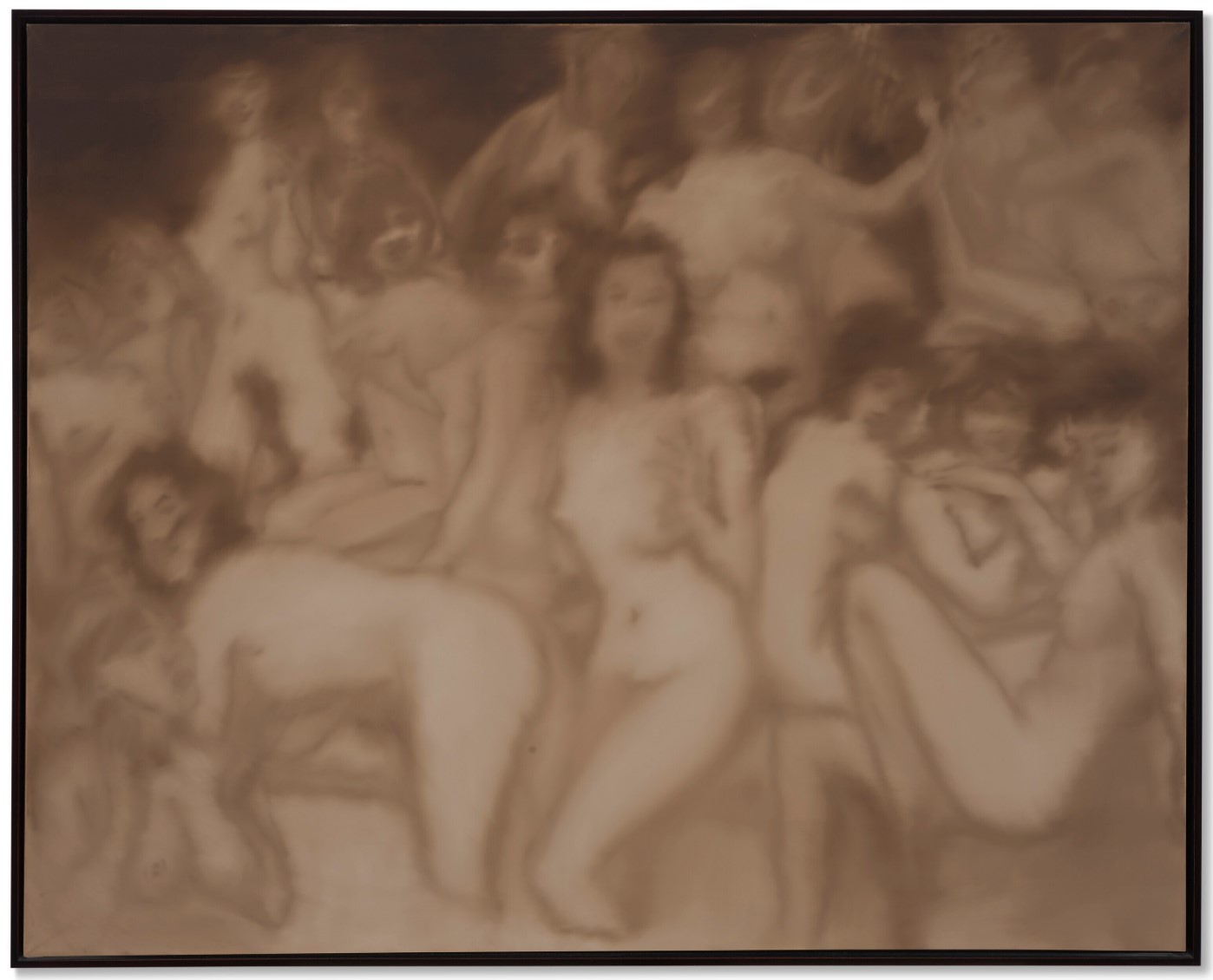
GERHARD RICHTER (b. 1932)
Badende, 1967
Oil on canvas
160×200 cm (63 x 78 1/2 inches)
Signed and dated ‘Richter 67’ (on the reverse)
#8. Vesuv [Vesuvius], 1976
Sotheby’s New-York: 18 May 2023
Estimated: USD 3,000,000 – 5,000,000
USD 5,849,700
Vesuv [Vesuvius] | Contemporary Evening Auction | 2023 | Sotheby’s (sothebys.com)
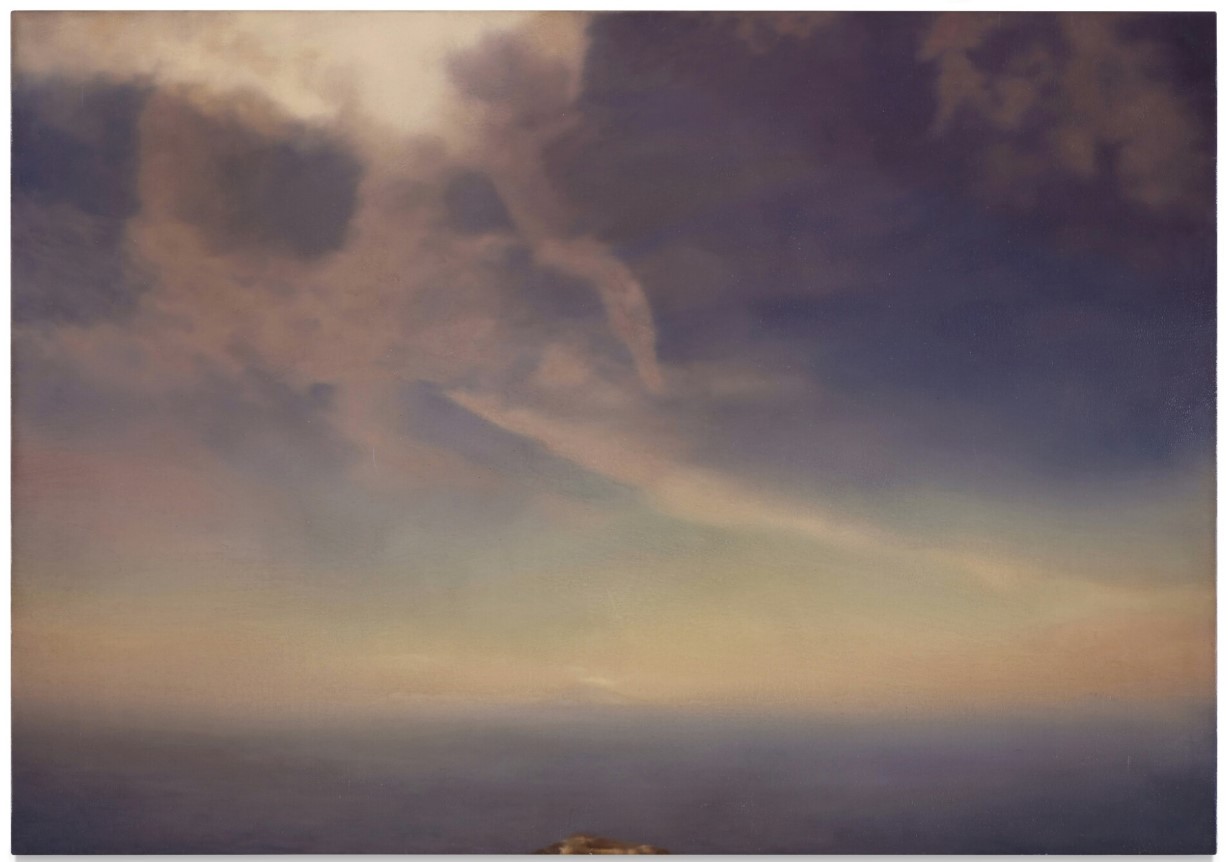
GERHARD RICHTER (b. 1932)
Vesuv [Vesuvius], 1976
Oil on panel
70×100 cm (27 1/2 x 39 3/8 inches)
Signed, dated 1976 and numbered 404 (on the reverse)
#9. Abstraktes Bild, 1990
Sotheby’s New-York: 18 May 2023
Estimated: USD 2,000,000 – 3,000,000
USD 5,505,000
Abstraktes Bild | Contemporary Evening Auction | 2023 | Sotheby’s (sothebys.com)
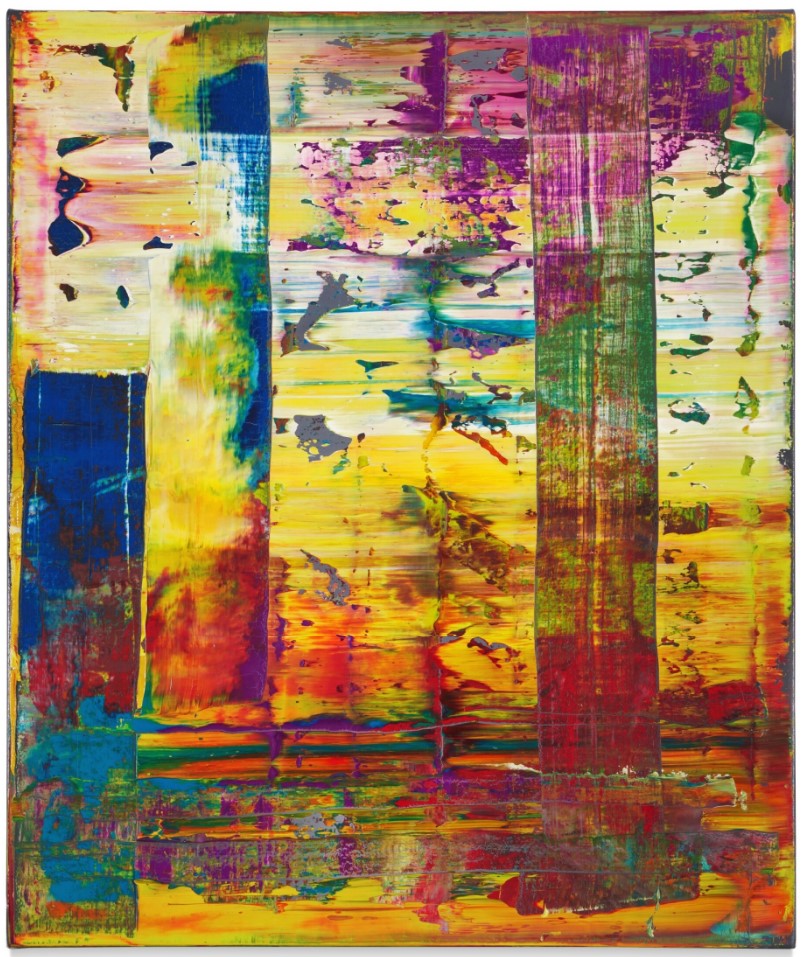
GERHARD RICHTER (b. 1932)
Abstraktes Bild, 1990
Oil on canvas
62×52 cm (24 3/8 x 20 1/2 inches)
Signed, dated 1990 and numbered 721-4 (on the reverse)
USD 5 million
#10. Abstrakte Bilder, 1992
Sotheby’s Hong-Kong: 5 April 2023
Estimated: HKD 32,000,000 – 45,000,000
HKD 36,750,000 / USD 4,681,469
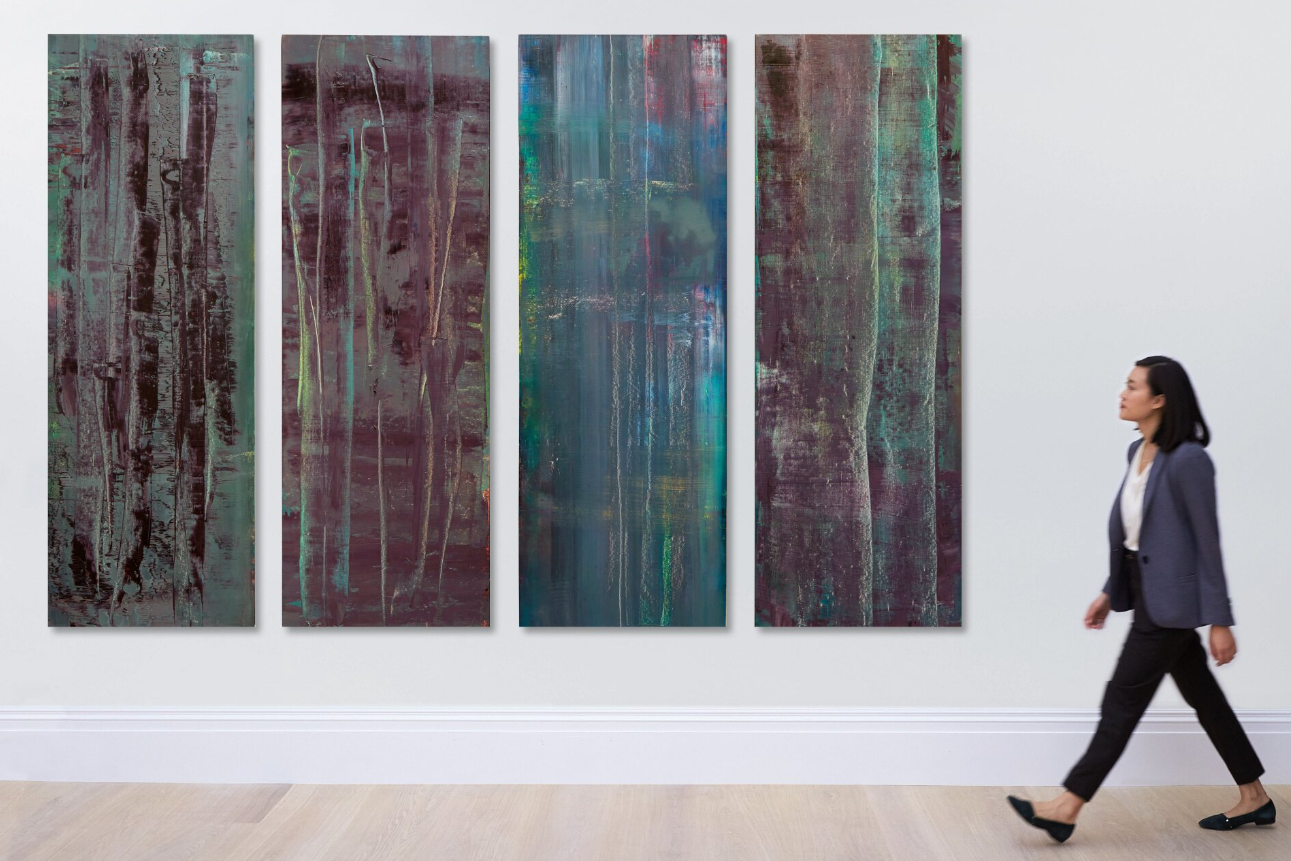
GERHARD RICHTER (b. 1932)
Abstrakte Bilder, 1992
Oil on canvas, in 4 parts
Each: 200×70 cm (78 3/4 x 27 1/2 inches)
Overall: 200×280 cm (78 3/4 x 110 1/4 inches)
Each: signed, dated 1992 and numbered 760-1, 760-2, 760-3 and 760-4 on the reverse, respectively
#11. Abstraktes Bild (704-2), 1989
Christie’s London: 28 February 2023
Estimated: GBP 2,500,000 – 3,500,000
GBP 3,762,000 / USD 4,550,072
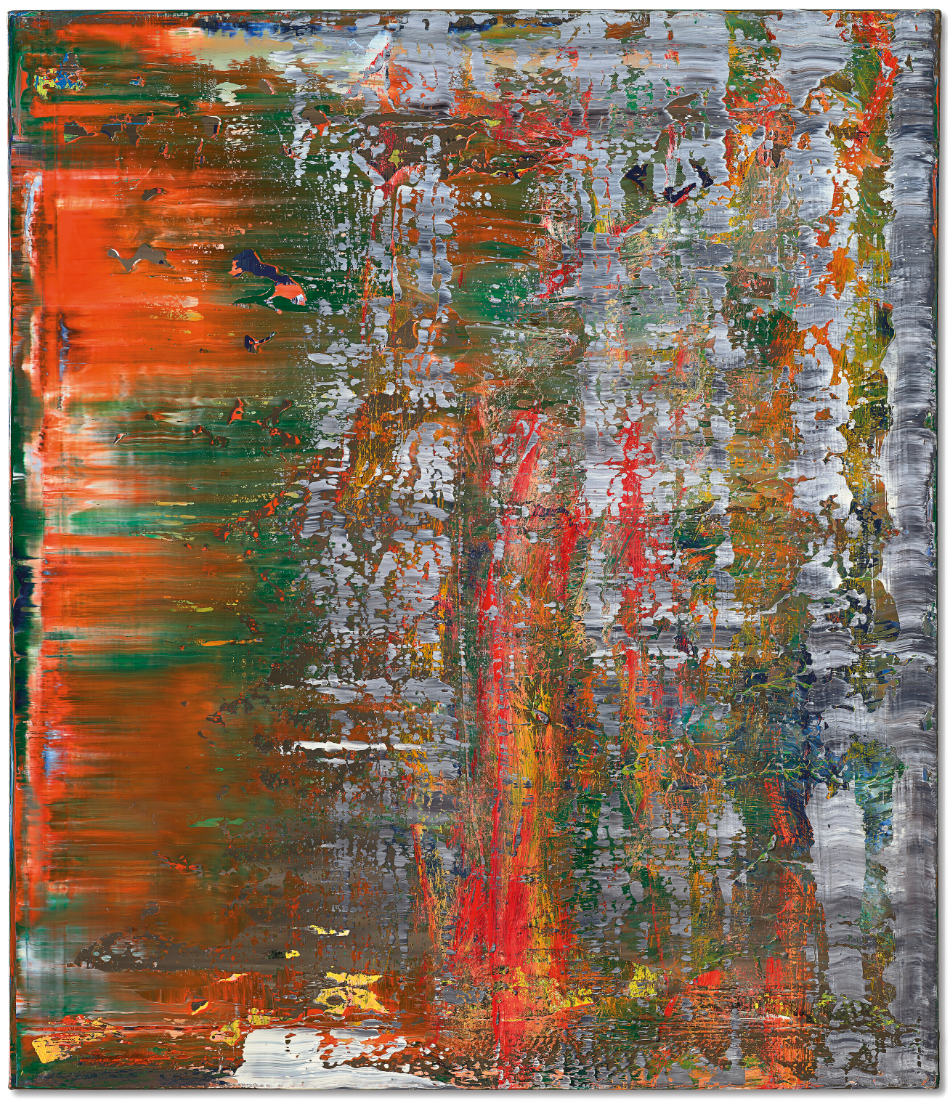
GERHARD RICHTER (B. 1932)
Abstraktes Bild (704-2), 1989
Oil on canvas
72 x 62.2 cm (28 3/8 x 24 1/2 inches)
Signed, numbered and dated ‘704-2 Richter 1989’ (on the reverse)
#12. Abstraktes Bild, 1994
Sotheby’s London: 27 June 2023
Estimated: GBP 2,000,000 – 3,000,000
GPB 3,194,000 / USD 4,072,940

GERHARD RICHTER (b. 1932)
Abstraktes Bild, 1994
Oil on canvas
71×61 cm (28×24 inches)
Signed, titled, dated 1994 and numbered 801-4 (on the reverse)
#13. Abstraktes Bild (607-2), 1986
Poly Auction Hong-Kong: 6 April 2023
Estimated: HKD 18,000,000 – 28,000,000
HKD 30,000,000 / USD 3,821,607
Abstraktes Bild (607-2)|Poly Auction Hong Kong
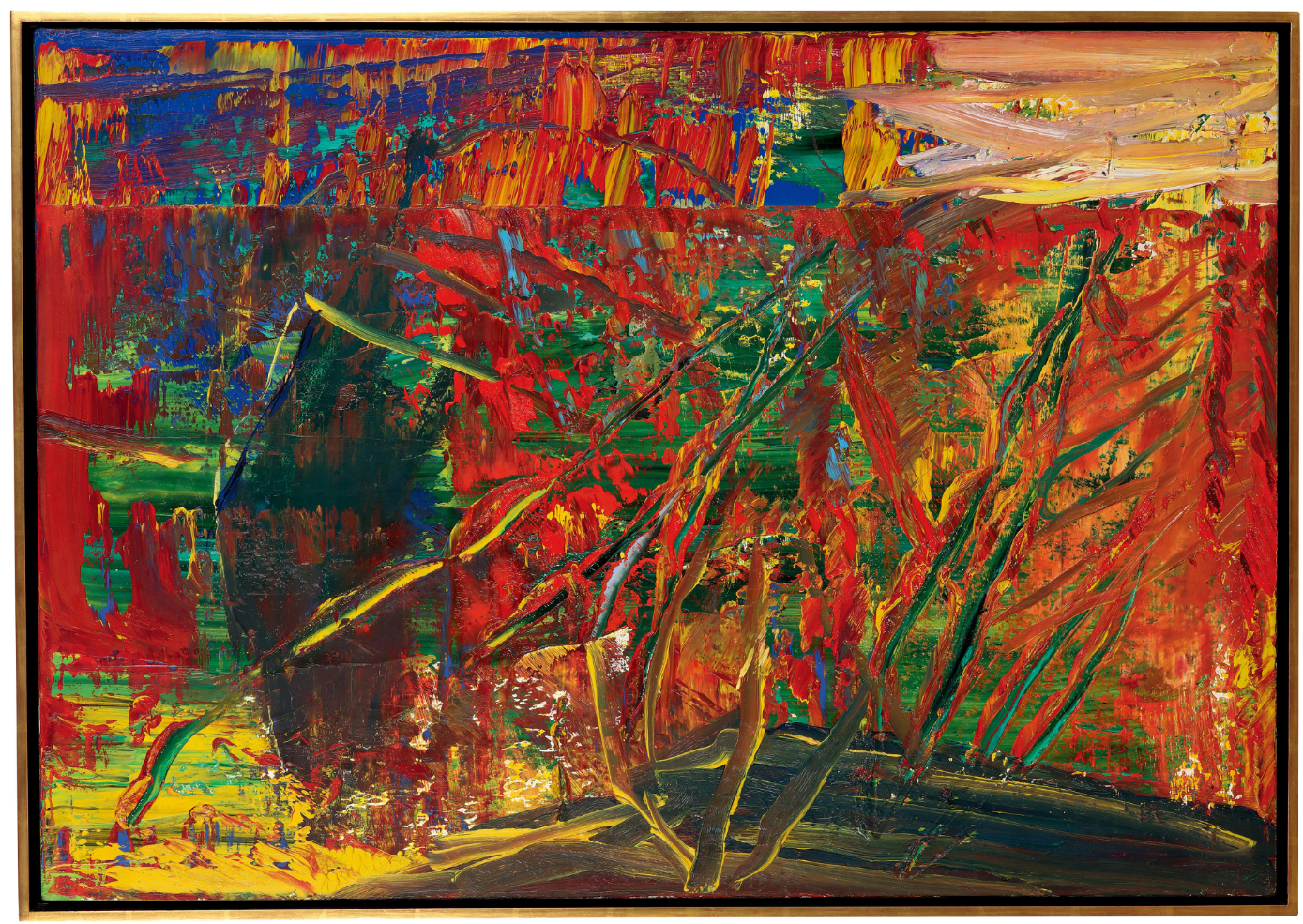
GERHARD RICHTER
Abstraktes Bild (607-2), 1986
Oil on canvas
70.3 x 100.2 cm (27 1/2 x 39 1/2 inches)
Titled, signed and dated ‘607-2 Richter 1986’ (on the reverse)
#14. Abstraktes Bild, 1986
Christie’s New-York: 17 May 2023
Estimated: USD 3,000,000 – 5,000,000
USD 3,680,000
GERHARD RICHTER (b. 1932), Abstraktes Bild | Christie’s (christies.com)
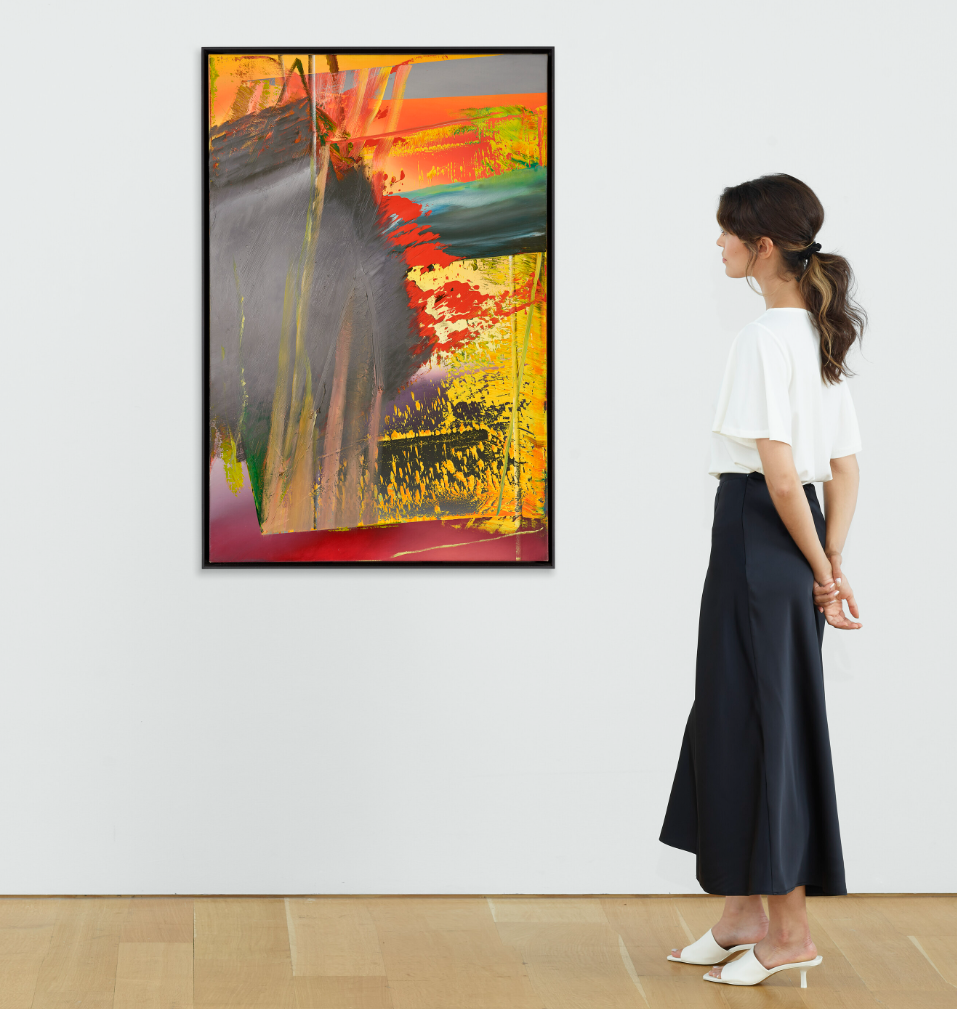
GERHARD RICHTER (b. 1932)
Abstraktes Bild, 1986
Oil on canvas
120×80 cm (47 1/2 x 31 1/2 inches)
Signed, inscribed and dated ‘593-5 Richter 1986’ (on the reverse)
#15. Waldstück (Okinawa), 1969
Christie’s Paris: 19 October 2023
Estimated On Request
EUR 3,186,000 / USD 3,367,508
Gerhard Richter (né en 1932) (christies.com)
GERHARD RICHTER (Born 1932)
Waldstück (Okinawa), 1969
Oil on canvas
173 x 123.5 cm (68 1/8 x 48 5/8 inches)
Signed, titled and dated ”’Waldstück (Okinawa)” Richter 69′ (on the reverse)
#16. Abstraktes Bild (890-2), 2004
Christie’s New-York: 7 November 2023
Estimated: USD 2,000,000 – 3,000,000
USD 2,591,000
GERHARD RICHTER (B. 1932) (christies.com)
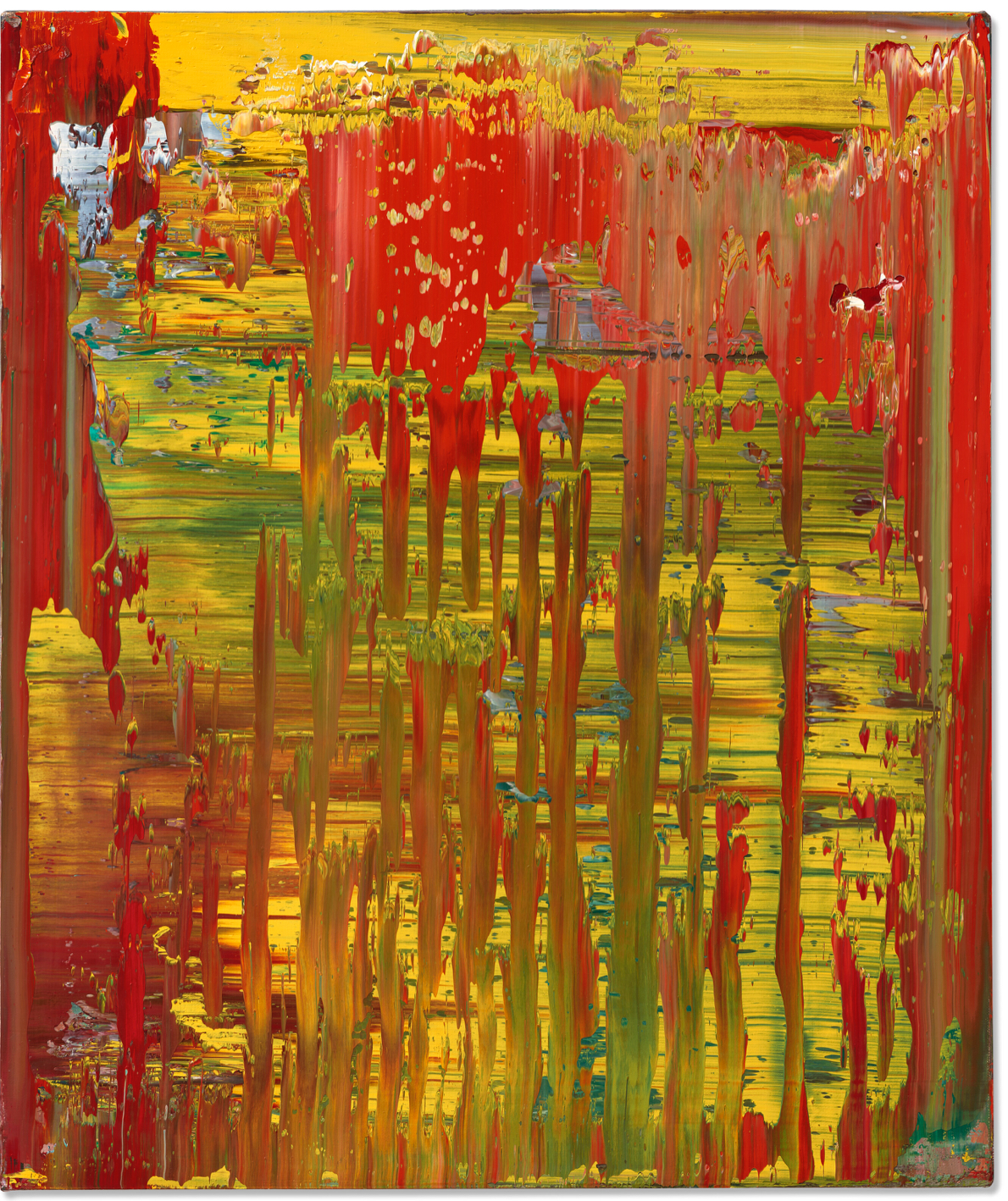
GERHARD RICHTER (B. 1932)
Abstraktes Bild (890-2), 2004
Oil on canvas
63 x 52.5 cm (24 3/4 x 20 1/4 inches)
Signed, inscribed and dated twice ‘890-2 R. 2004 Richter 2004’ (on the reverse)
#17. Abstraktes Bild, 1994
Christie’s London: 13 October 2023
Estimated: GBP 1,800,000 – 2,500,000
GBP 2,097,000 / USD 2,544,902
Gerhard Richter (christies.com)
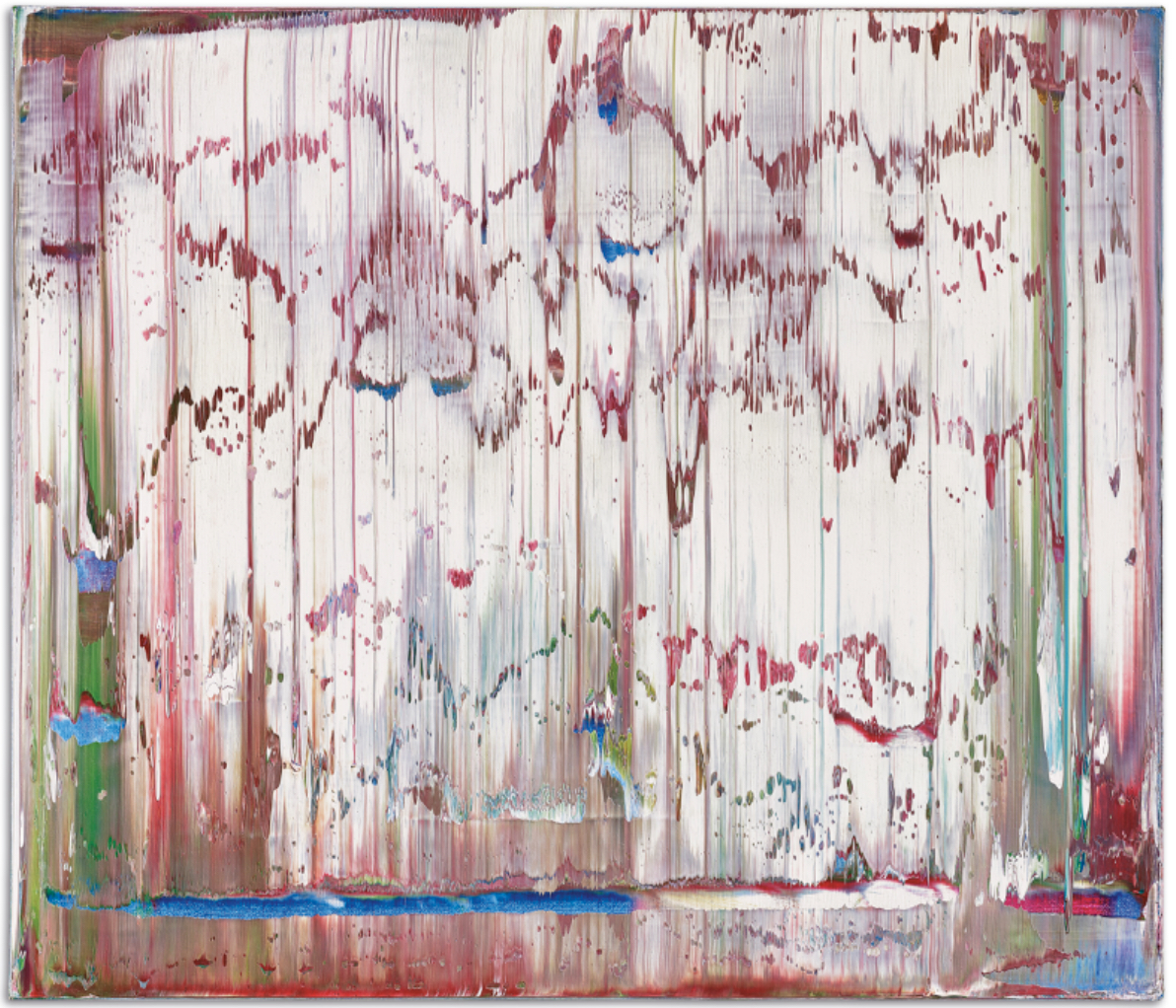
GERHARD RICHTER (B. 1932)
Abstraktes Bild, 1994
Oil on canvas
61×71 cm (24×28 inches)
Signed, numbered and dated ‘819-2 Richter 1994’ (on the reverse)
#18. Alster (Hamburg), 1963
Ketterer Kunst: 8 December 2023
Estimated: EUR 1,000,000
EUR 2,105,000 / USD 2,315,500
Ketterer Kunst, Art auctions, Book auctions Munich, Hamburg & Berlin
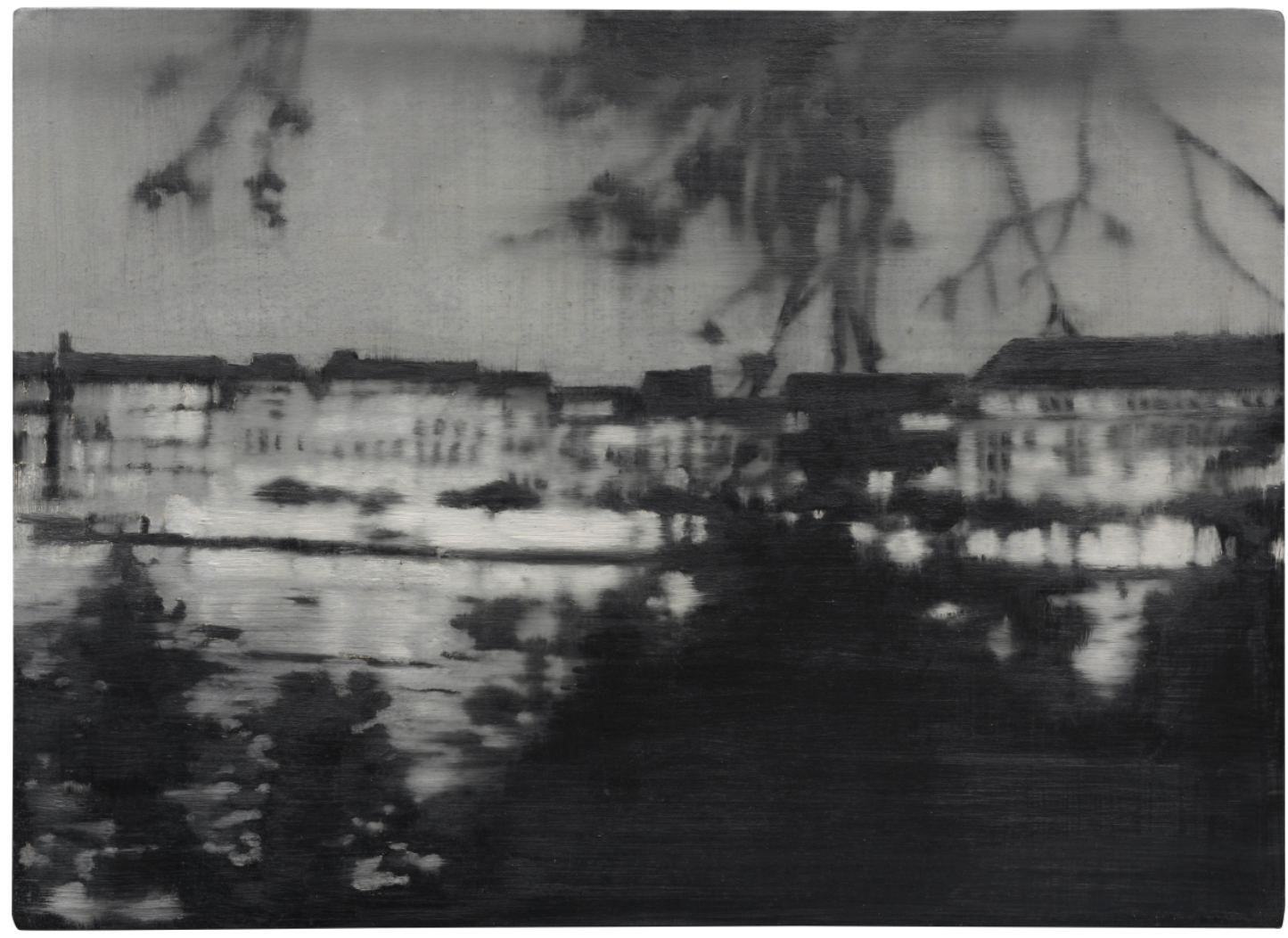
GERHARD RICHTER
Alster (Hamburg), 1963
Oil on canvas
62×84 cm (24.4 x 33 inches)
Signed and dated on the reverse
#19. Abstraktes Bild (557-3), 1984
Phillips New-York: 14 November 2023
Estimated: USD 2,000,000 – 3,000,000
USD 2,298,500
Gerhard Richter – 20th Century & Co… Lot 38 November 2023 | Phillips
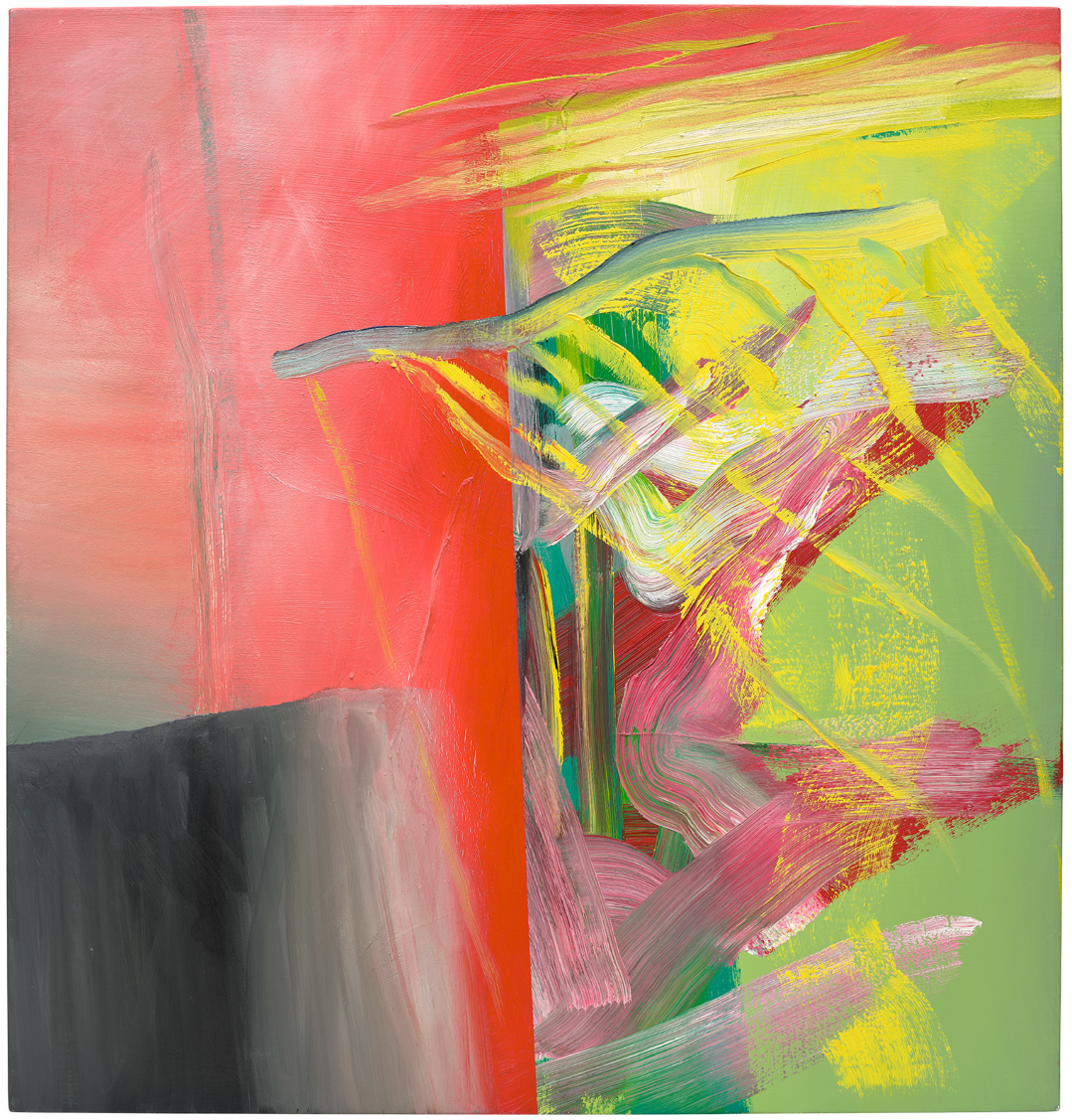
GERHARD RICHTER
Abstraktes Bild (557-3), 1984
Oil on canvas
105.1 x 100 cm (41 3/8 x 39 3/8 inches)
Signed, inscribed and dated “557-3 Richter 1984” on the reverse
#20. Abstraktes Bild 850-7, 1998
Christie’s Hong-Kong: 29 May 2023
Estimated: HKD 12,000,000 – 20,000,000
HKD 14,895,000 / USD 1,902,712
GERHARD RICHTER (B. 1932), Abstraktes Bild 850-7 | Christie’s (christies.com)
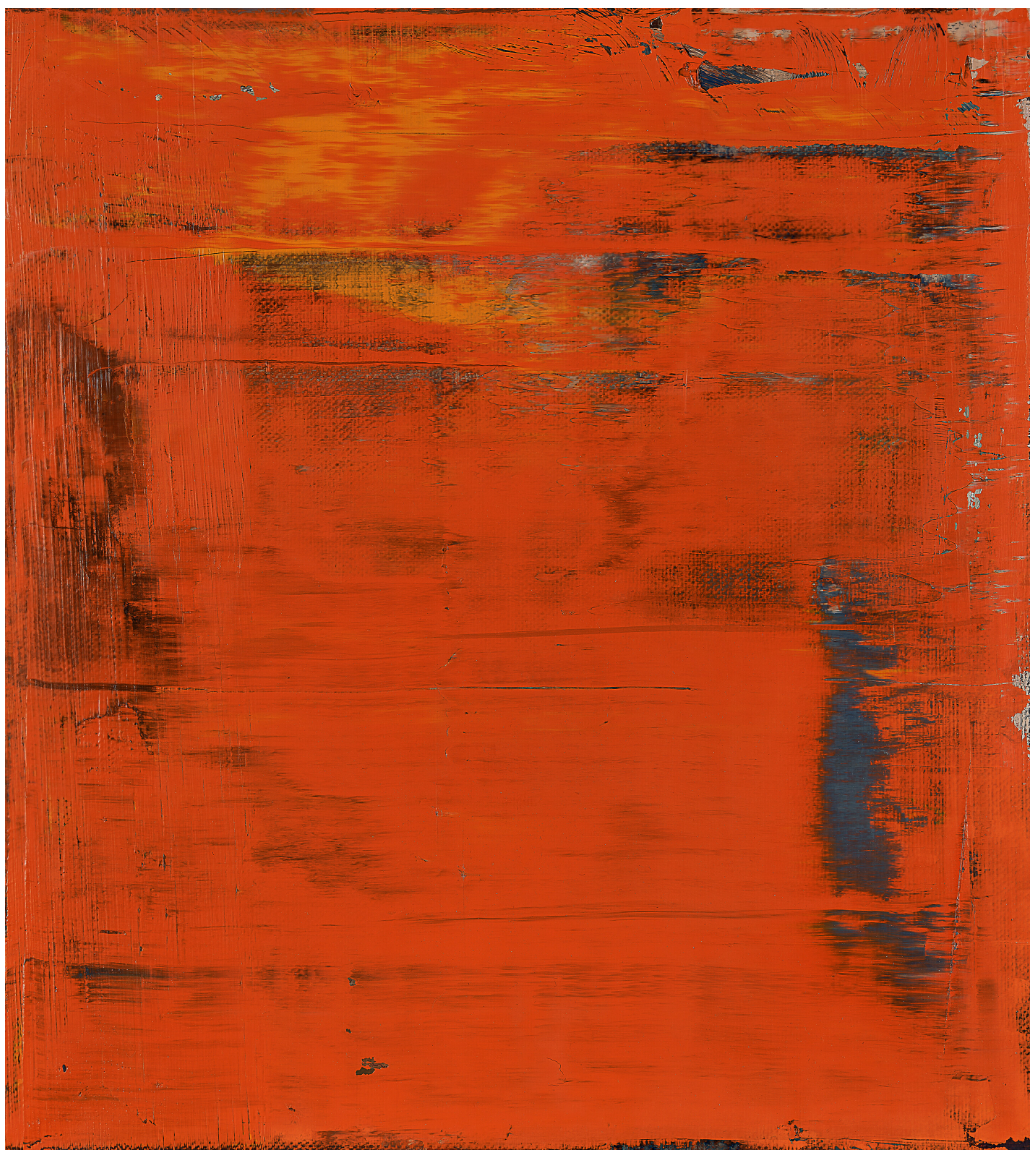
GERHARD RICHTER (B. 1932)
Abstraktes Bild 850-7, 1998
Oil on canvas
50×45 cm (19 5/8 x 17 3/4 inches)
Signed, inscribed and dated ‘Richter 1998 850-7’ (on the reverse)
#21. Abstraktes Bild (456-2), 1980
Phillips Hong-Kong: 6 October 2023
Estimated: HKD 7,500,000 – 12,000,000
HKD 11,340,000 / USD 1,447,980
Gerhard Richter – 20th Century & Con… Lot 11 October 2023 | Phillips
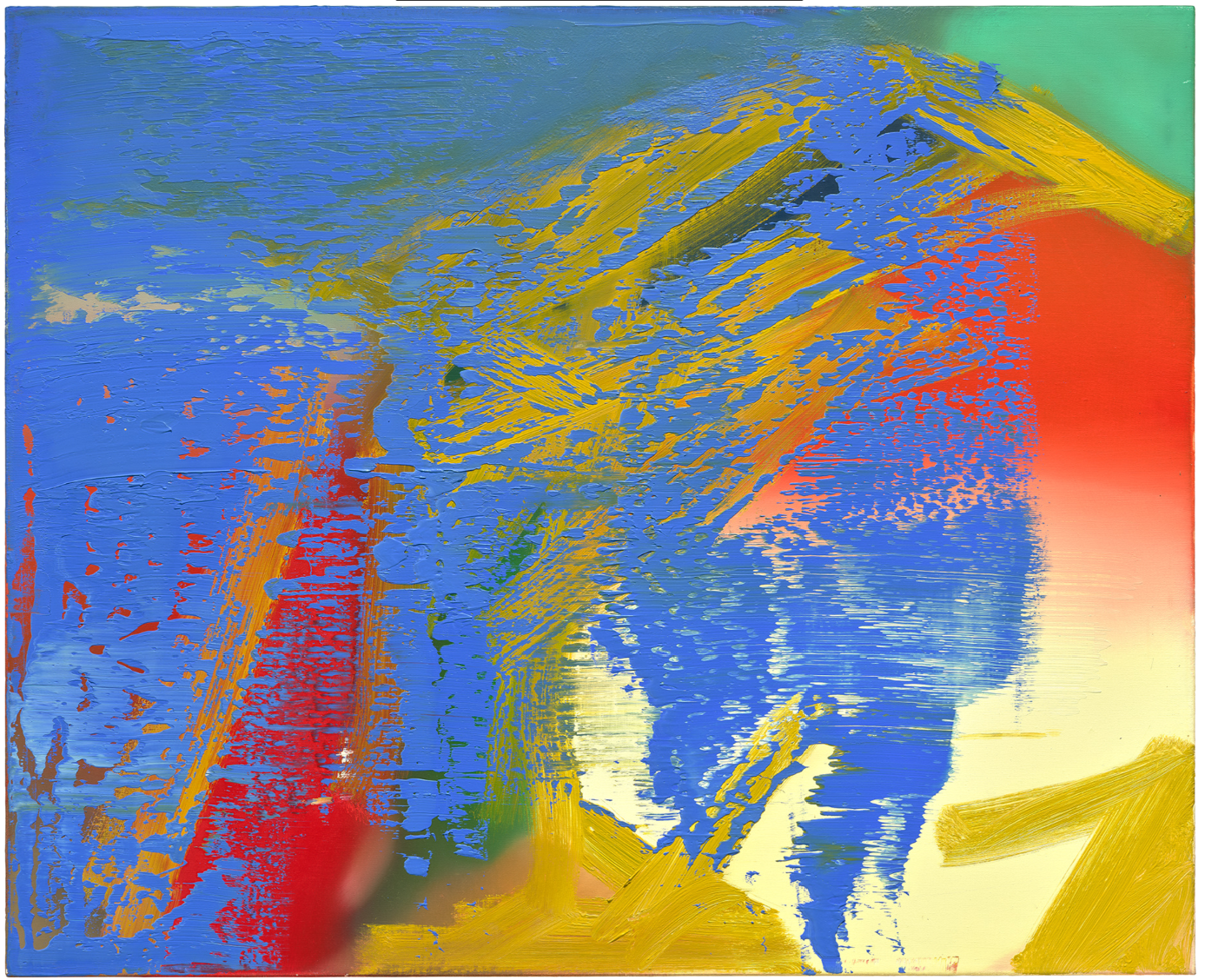
GERHARD RICHTER
Abstraktes Bild (456-2), 1980
Oil on canvas
65.3 x 80.3 cm (25 3/4 x 31 5/8 inches)
Signed, numbered and dated ‘456/2 Richter 1980’ on the reverse
#22. Strip, 2015
Sotheby’s New-York: 15 November 2023
Estimated: USD 2,000,000 – 3,000,000
USD 1,270,000
Strip | Contemporary Evening Auction | 2023 | Sotheby’s (sothebys.com)

GERHARD RICHTER (b. 1932)
Strip, 2015
Digital print on paper mounted between Alu Dibond and Perspex (Diasec), in four parts
Each: 200×275 cm (78 7/8 x 108 1/4 inches)
Overall: 200 x 1,101 cm (78 7/8 x 433 1/2 inches)
Signed and dated 2015 (on the reverse) (part I)
Initialed (on the reverse) (parts II, III and IV)
USD 1 million
#23. Portrait Laszlo, 1966
Sotheby’s London: 27 June 2023
Estimated: GBP 600,000 – 800,000
GBP 762,000 / USD 971,690
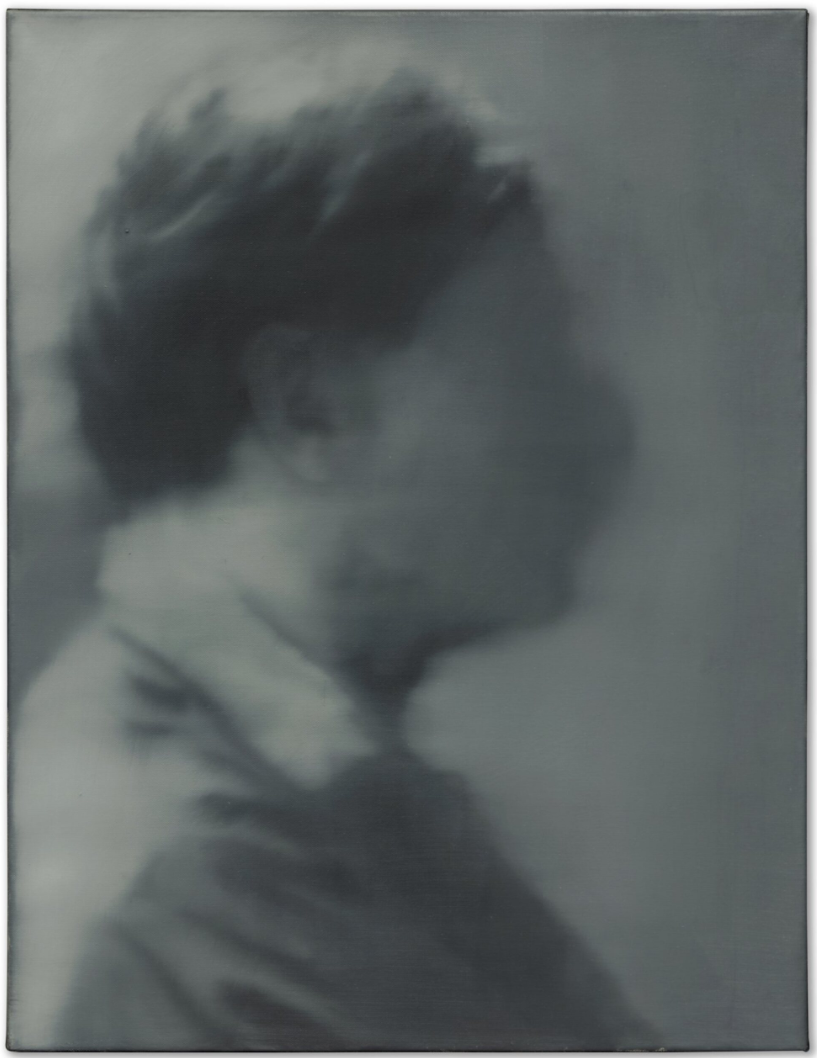
GERHARD RICHTER (b. 1932)
Portrait Laszlo, 1966
Oil on canvas
65.1 x 50.2 cm (25 5/8 x 19 3/4 inches)
Signed and dated V.66 (on the reverse)
#24. Abstraktes Bild, 1996
Christie’s New-York: 10 November 2023
Estimated: USD 500,000 – 700,000
USD 630,000
GERHARD RICHTER (B. 1932) (christies.com)
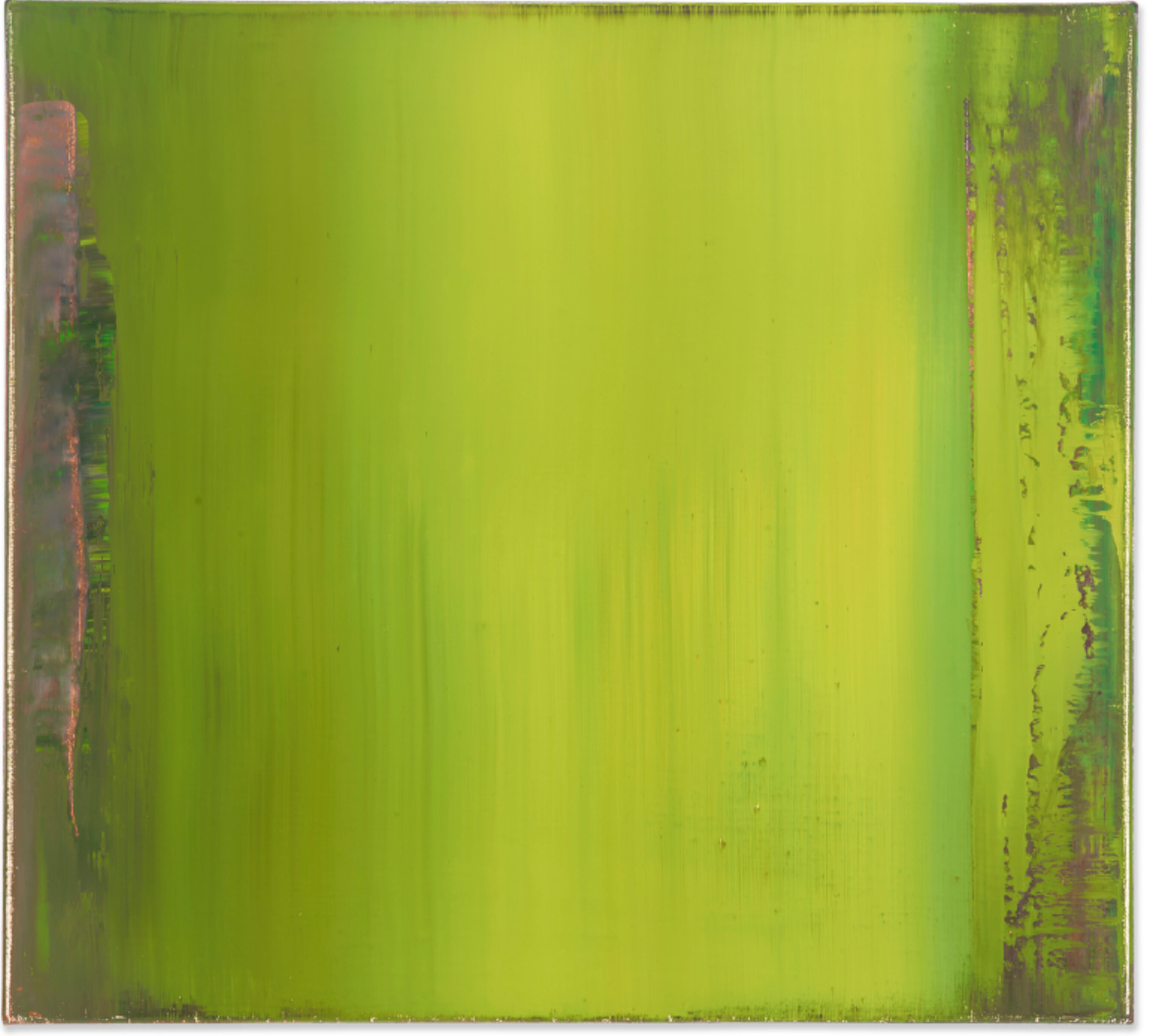
GERHARD RICHTER (B. 1932)
Abstraktes Bild, 1996
Oil on canvas
46.4 x 51.1 cm (18 1/4 x 20 1/8 inches)
Signed, inscribed and dated ‘836-3 Richter 1996’ (on the reverse)
#25. Spiegel, grau (Mirror, grey), 1991
Sotheby’s London: 27 June 2023
Estimated: GBP 400,000 – 600,000
GBP 457,200 / USD 583,014
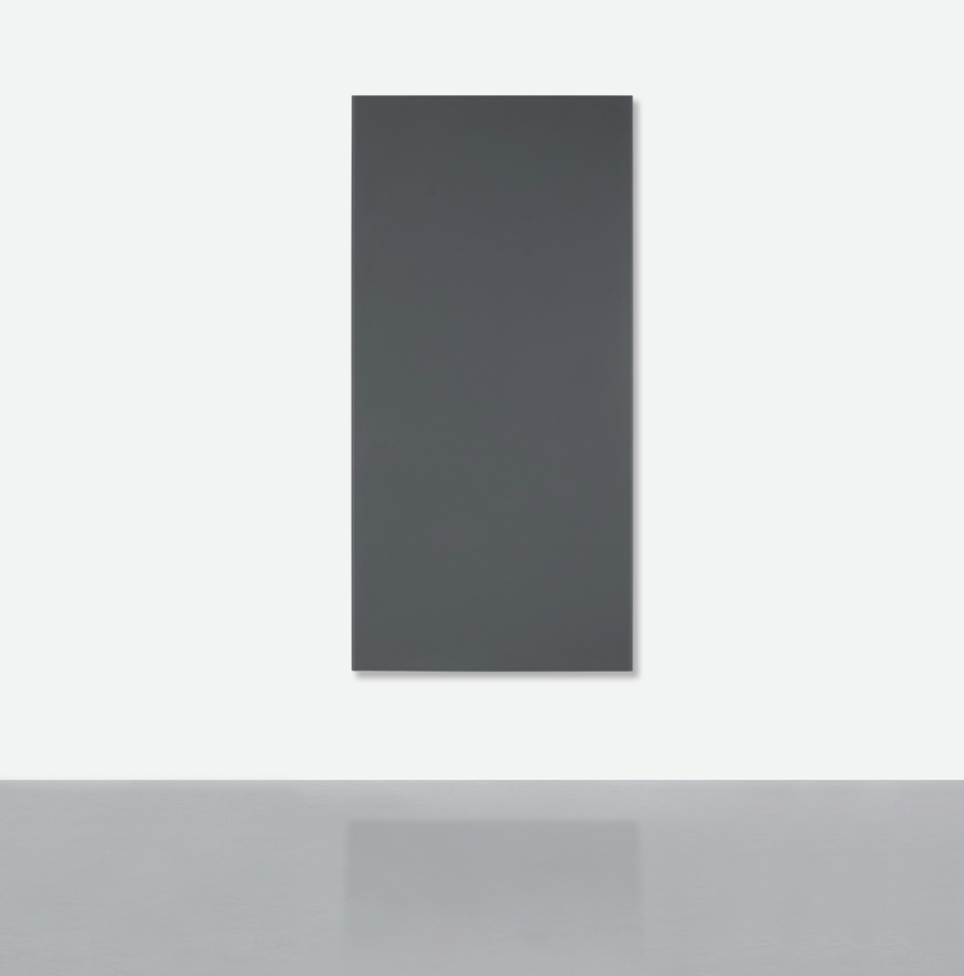
GERHARD RICHTER (b. 1932)
Spiegel, grau (Mirror, grey), 1991
Pigment on glass
194.3 x 95 cm (76 1/2 x 37 3/8 inches)
Signed, dated 1991 and numbered 738-2 (on the reverse)
#26. Grün-Blau-Rot 789-33 (Green-Blue-Red 789-33), 1993
Sotheby’s Cologne: 29 March 2023
Estimated: EUR 350,000 – 450,000
EUR 533,400 / USD 577,640
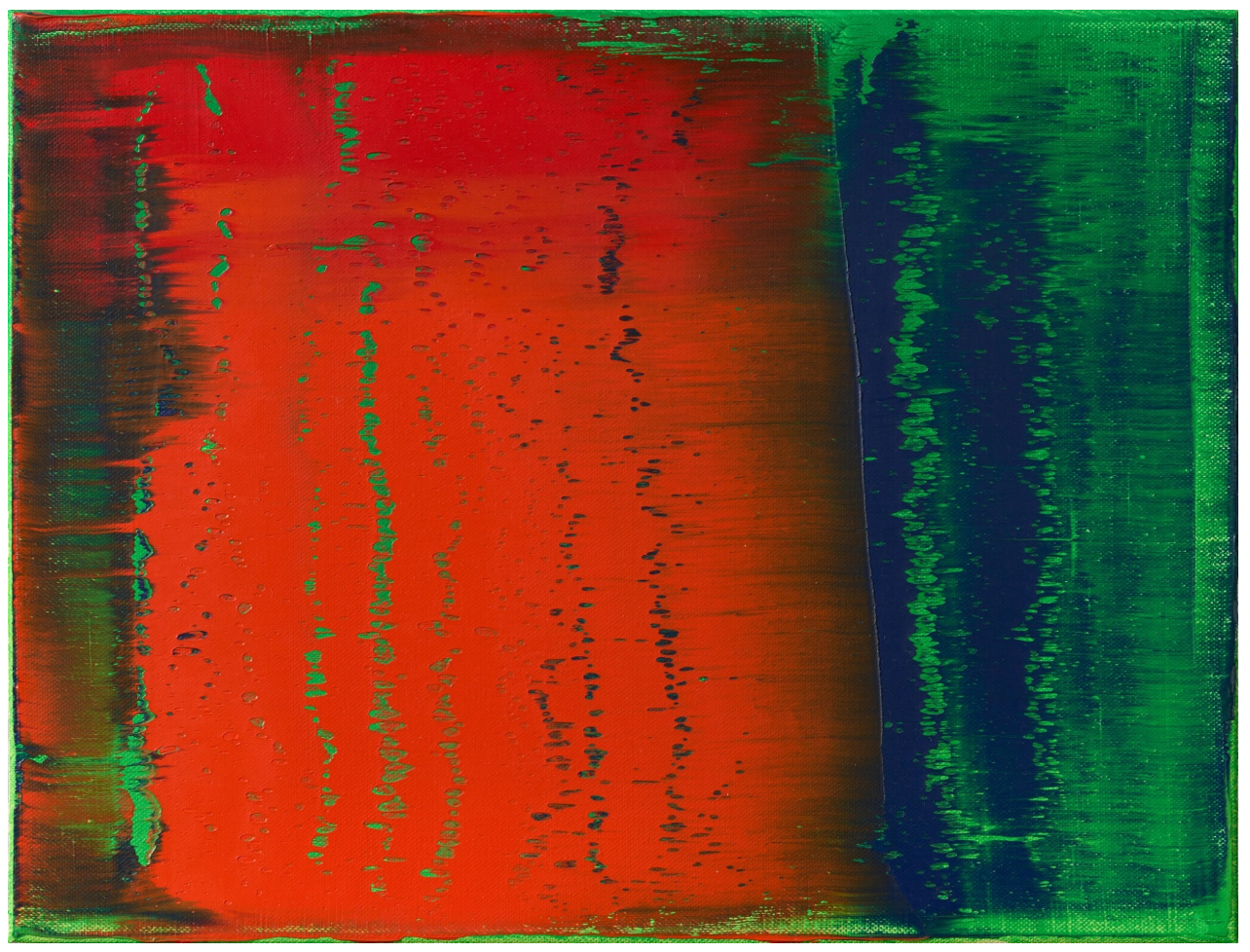
GERHARD RICHTER (b. 1932)
Grün-Blau-Rot 789-33 (Green-Blue-Red 789-33), 1993
Oil on canvas
30×40 cm (11 3/4 x 15 3/4 inches)
Signed Richter, dated ’93 and numbered 789-33 (on the reverse)
#27. Grün-Blau-Rot 789-18, 1993
Sotheby’s New-York: 16 November 2023
Estimated: USD 350,000 – 450,000
USD 571,500
Grün-Blau-Rot 789-18 | Contemporary Day Auction | 2023 | Sotheby’s (sothebys.com)
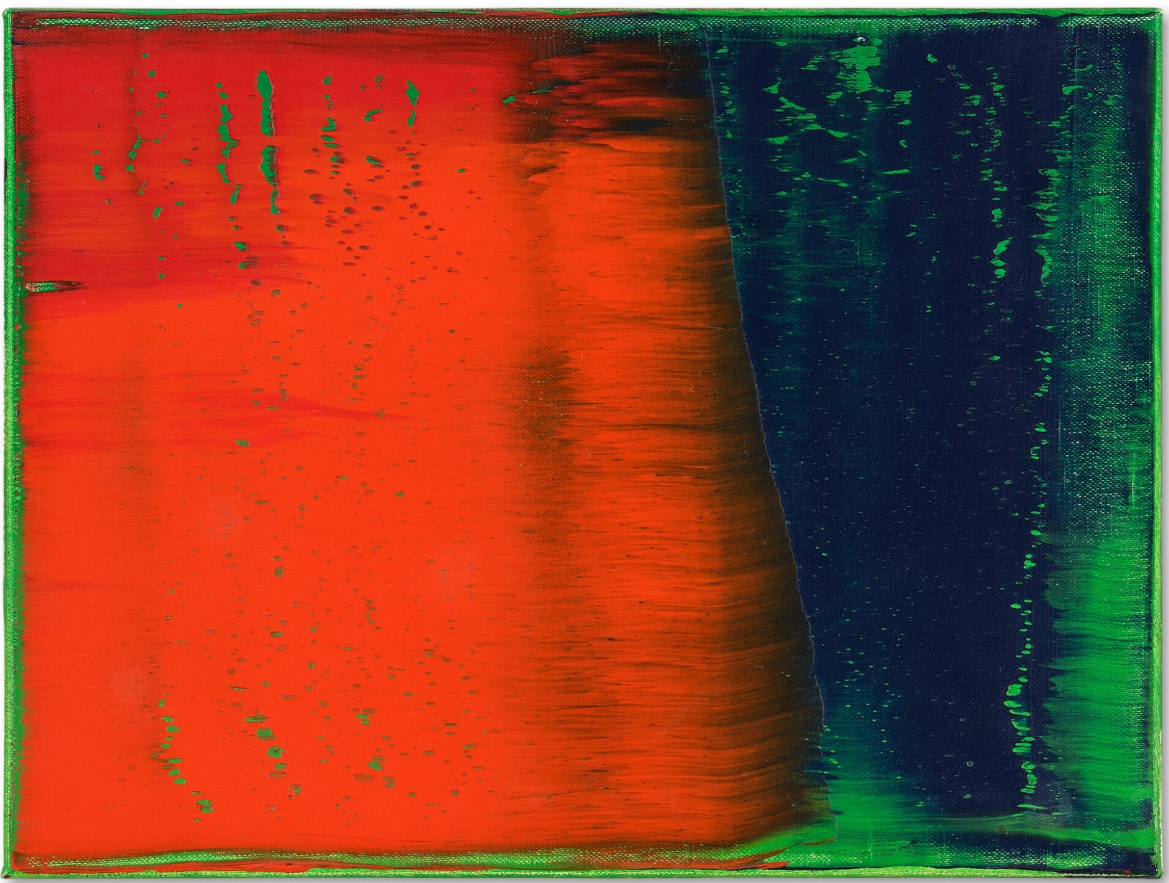
GERHARD RICHTER (b. 1932)
Grün-Blau-Rot 789-18, 1993
Oil on canvas
30.2 x 40 cm (11 7/8 x 15 3/4 inches)
Signed, dated ’93 and numbered 789-18 (on the reverse)
#29. Grün-Blau-Rot, 1993
Ketterer Kunst: 8 December 2023
Estimated: EUR 200,000
EUR 431,800 / USD 474,980
Ketterer Kunst, Art auctions, Book auctions Munich, Hamburg & Berlin
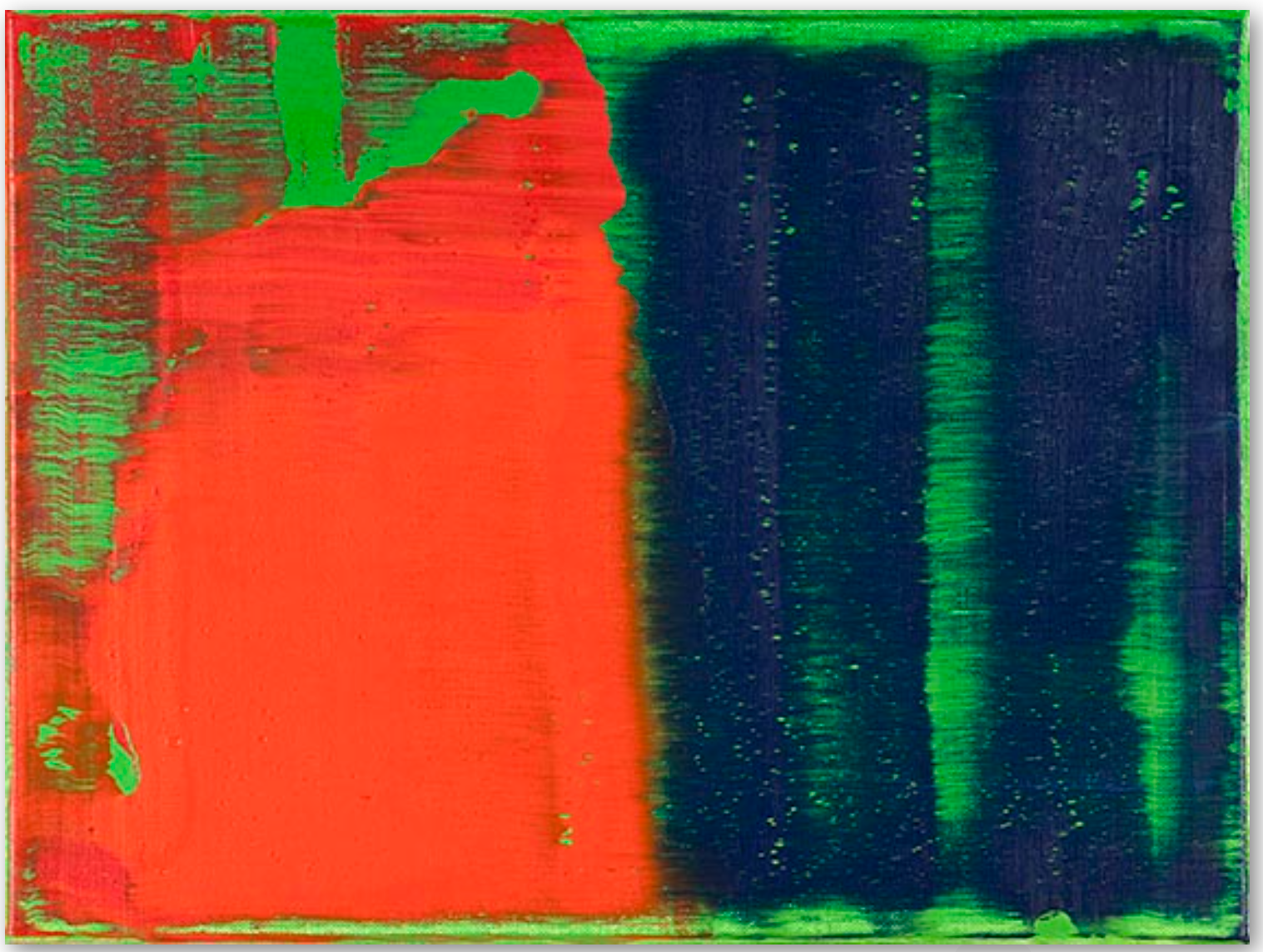
GERHARD RICHTER
Grün-Blau-Rot, 1993
Oil on canvas
30×40 cm (11.8 x 15.7 inches)
Signed, dated and inscribed “789-61” on the reverse, as well with the stamped inscription “Edition for Parkett No. 35”
#30. Grün-Blau-Rot, 1993
Phillips Hong-Kong: 31 March 2023
Estimated: HKD 2,500,000 – 3,500,000
HKD 3,456,000 / USD 452,993
Gerhard Richter – 20th Century & Cont… Lot 125 March 2023 | Phillips
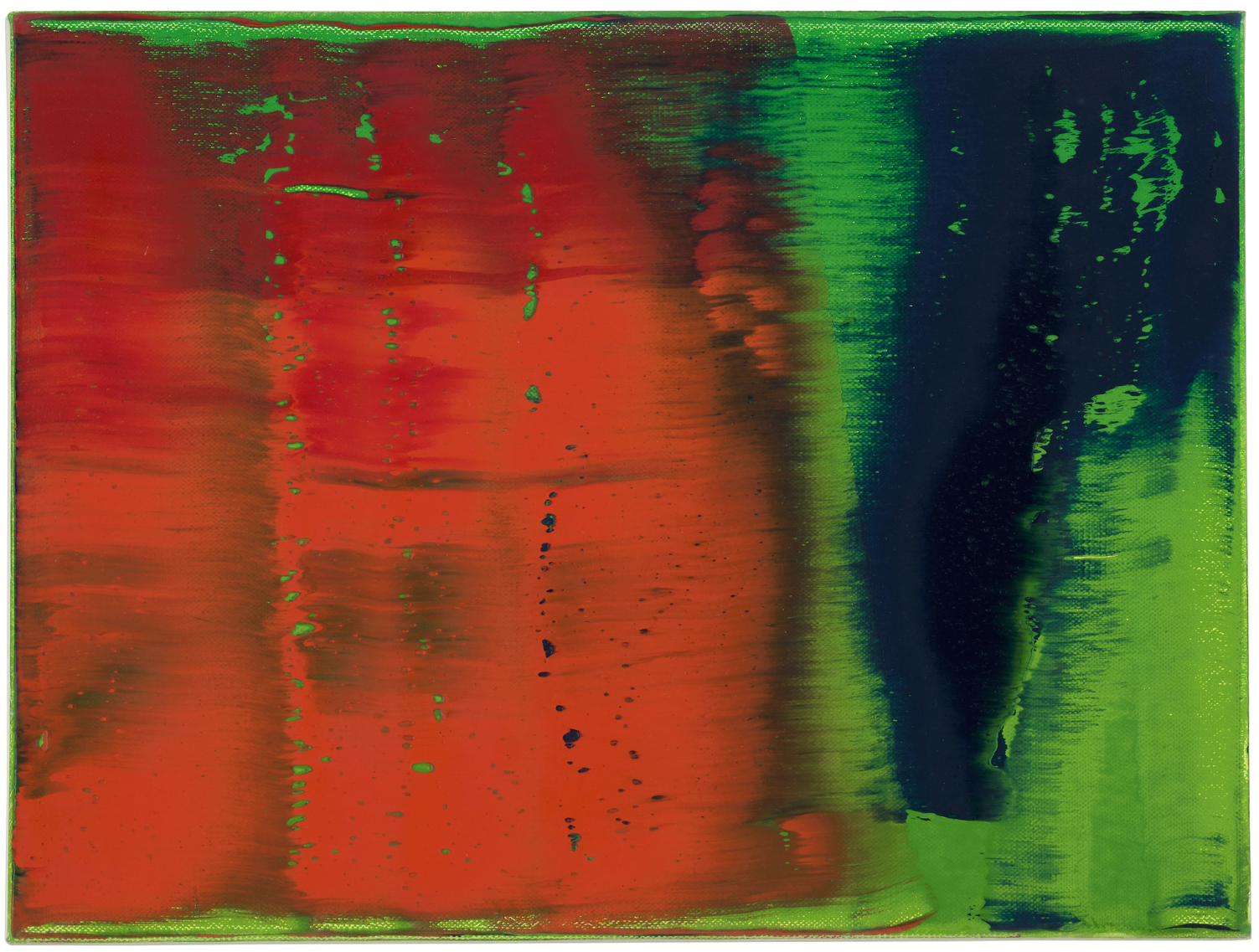
GERHARD RICHTER
Grün-Blau-Rot, 1993
Oil on canvas
29.6 x 39.4 cm (11 5/8 x 15 1/2 inches)
Signed, numbered and dated ‘789-93 Richter, 93’ on the reverse
#31. 25 Farben, 2007
Sotheby’s London: 13 October 2023
Estimated: GBP 200,000 – 300,000
GBP 330,200 / USD 400,728
25 Farben | Contemporary Day Auction | 2023 | Sotheby’s (sothebys.com)
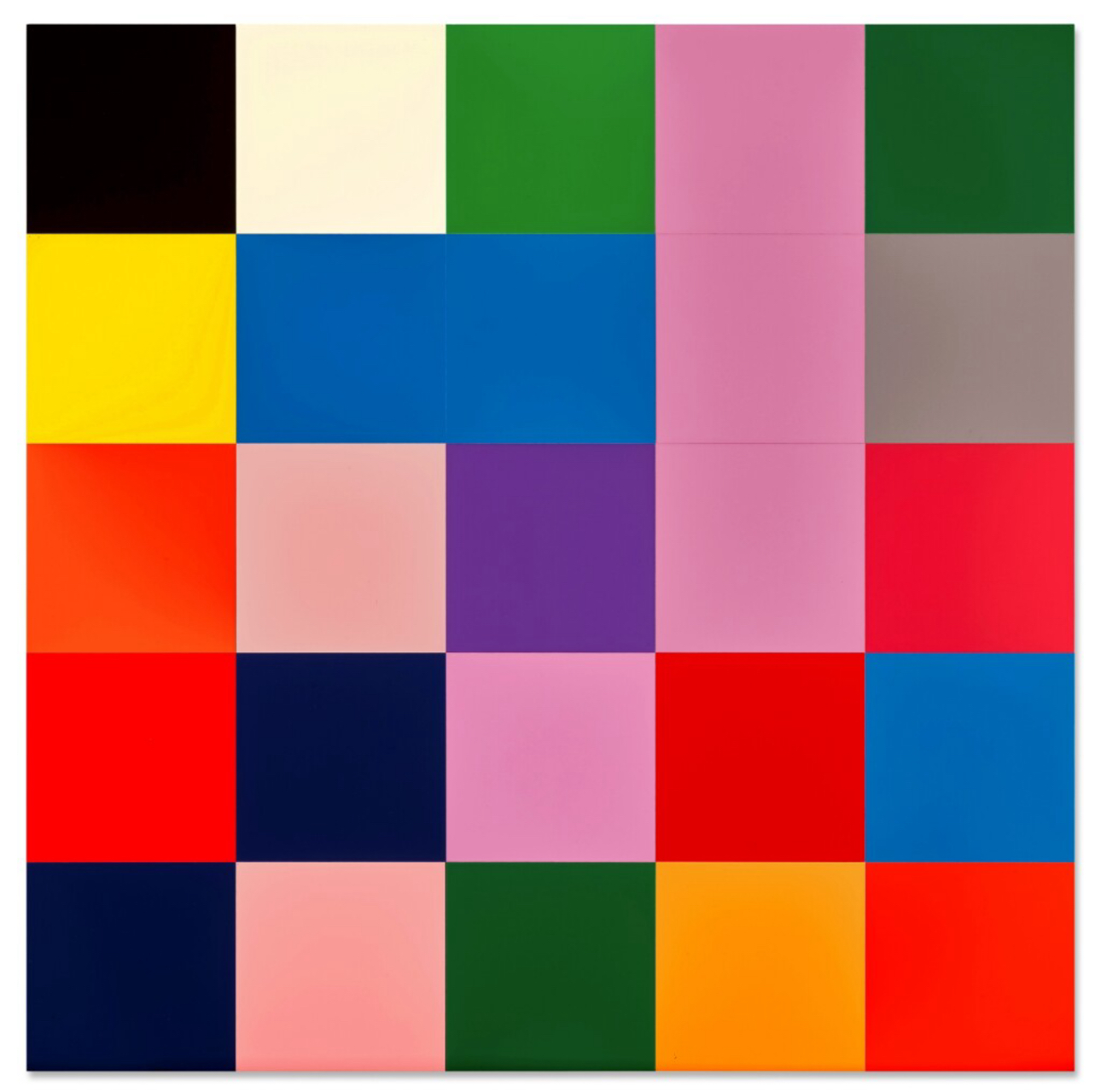
GERHARD RICHTER (b. 1932)
25 Farben, 2007
Lacquer on Alu Dibond
48.5 x 48.5 cm (19 1/8 x 19 1/8 inches)
Signed, dated 2007, and numbered 902-7 (on the reverse)
#32. Grau (Grey), 1970
Christie’s London: 14 October 2023
Estimated: GBP 150,000 – 200,000
GBP 315,000 / USD 381,957
GERHARD RICHTER (B. 1932), Grau (Grey) | Christie’s (christies.com)
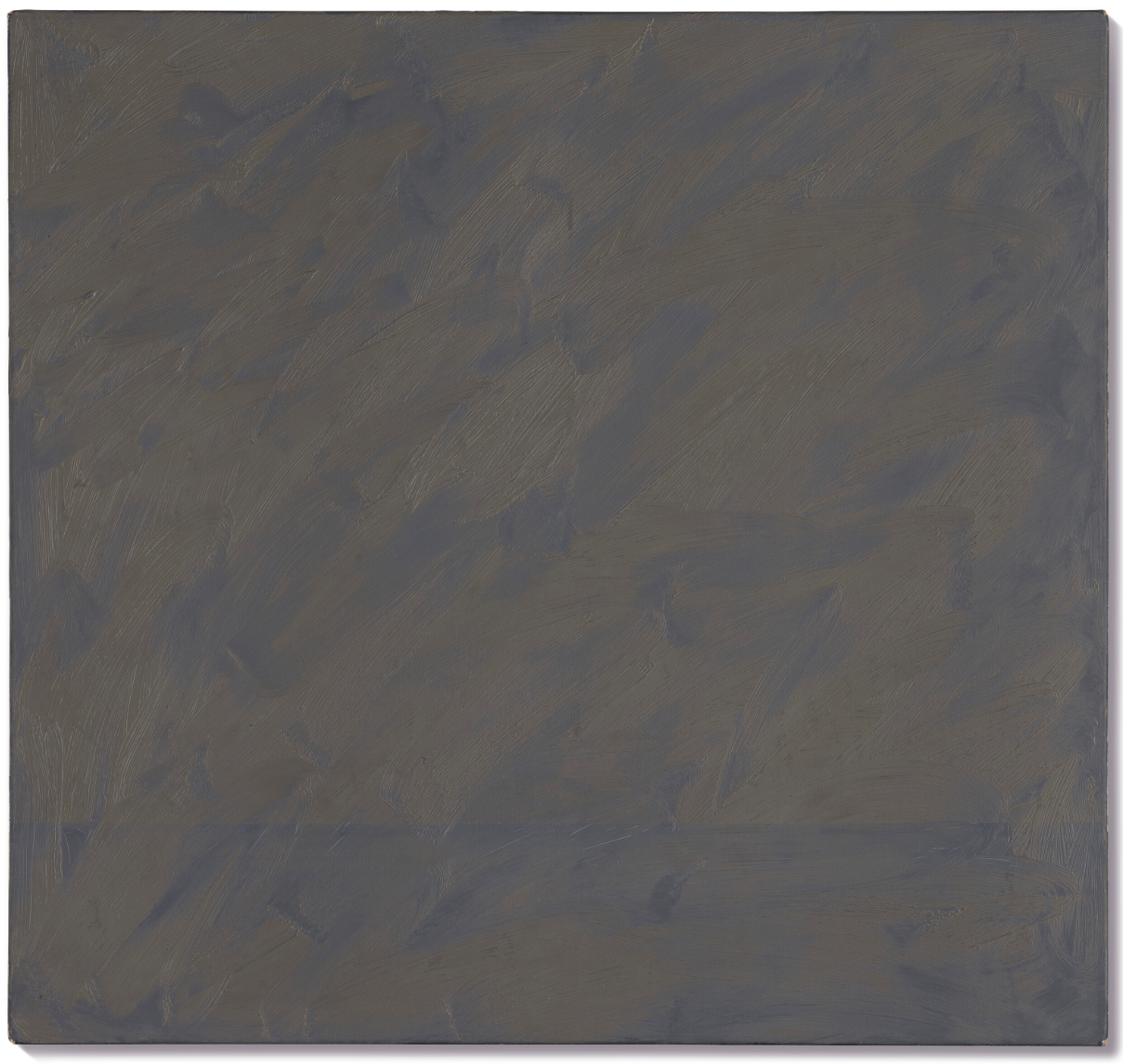
GERHARD RICHTER (B. 1932)
Grau (Grey), 1970
Oil on canvas
86.1 x 91 cm (33 7/8 x 35 3/4 inches)
Signed, inscribed and dated ‘247⁄9 Richter, 1970’ (on the reverse)
#33. Grün-Blau-Rot, 1993
Lempertz Cologne: 1 December 2023
Estimated: EUR 250,000 – 350,000
EUR 327,600 / USD 356,814
Grün-Blau-Rot – Lot 50 (lempertz.com)
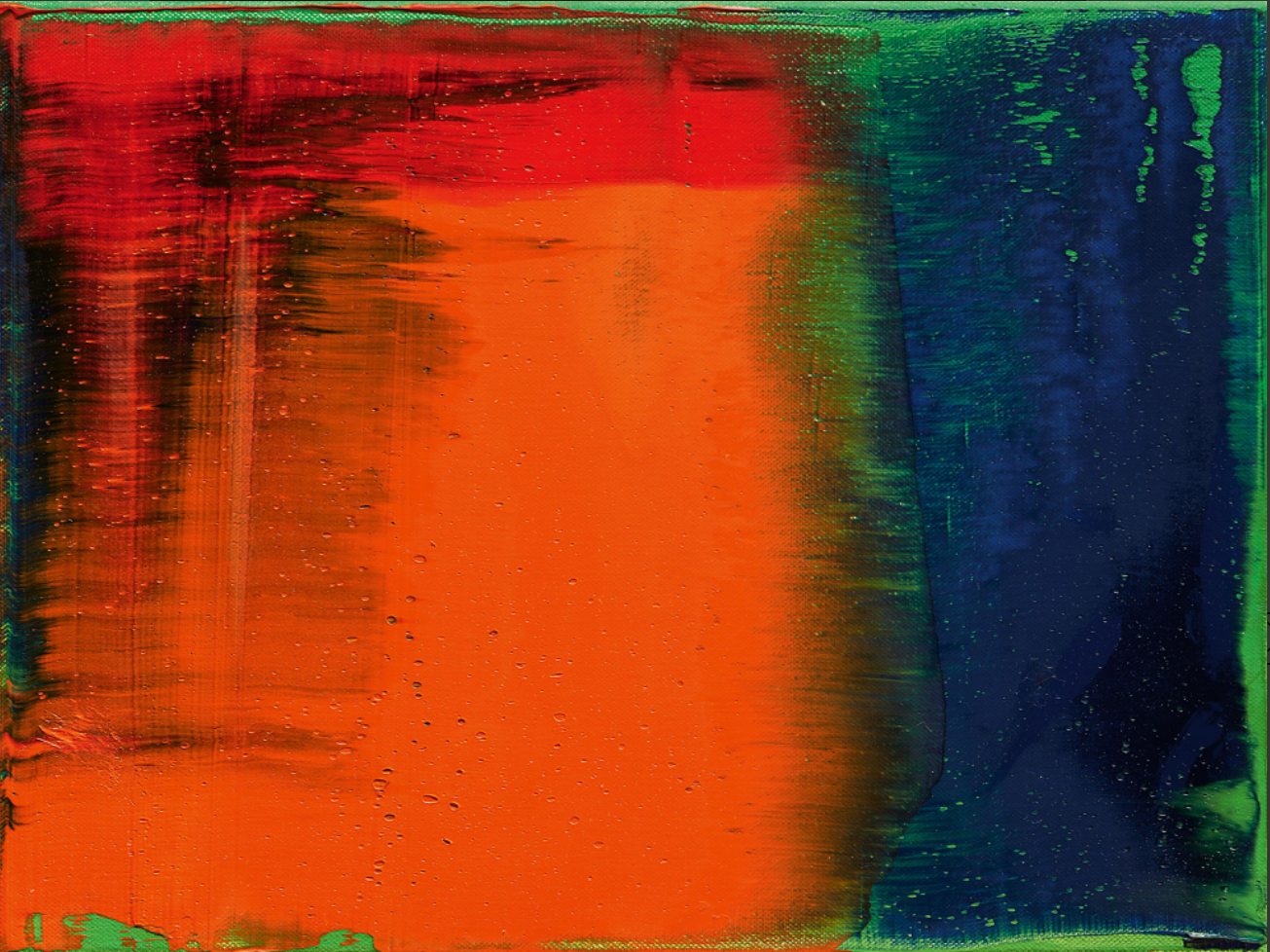
GERHARD RICHTER
Grün-Blau-Rot, 1993
Oil on canvas
30×40 cm
Signed and dated ‘Richter, 93’ verso on canvas and with work number ‘789-13’
One of 115 numbered unique pieces. Edition Parkett, Zurich (edition stamp on stretcher)
Edition of issue no.35, March 1993. With original card box. – Minimal traces of age.
#34. Studie für ein abstraktes Bild, 1978
Phillips New-York: 15 November 2023
Estimated: USD 200,000 – 300,000
USD 304,800
Gerhard Richter – 20th Century & C… Lot 107 November 2023 | Phillips
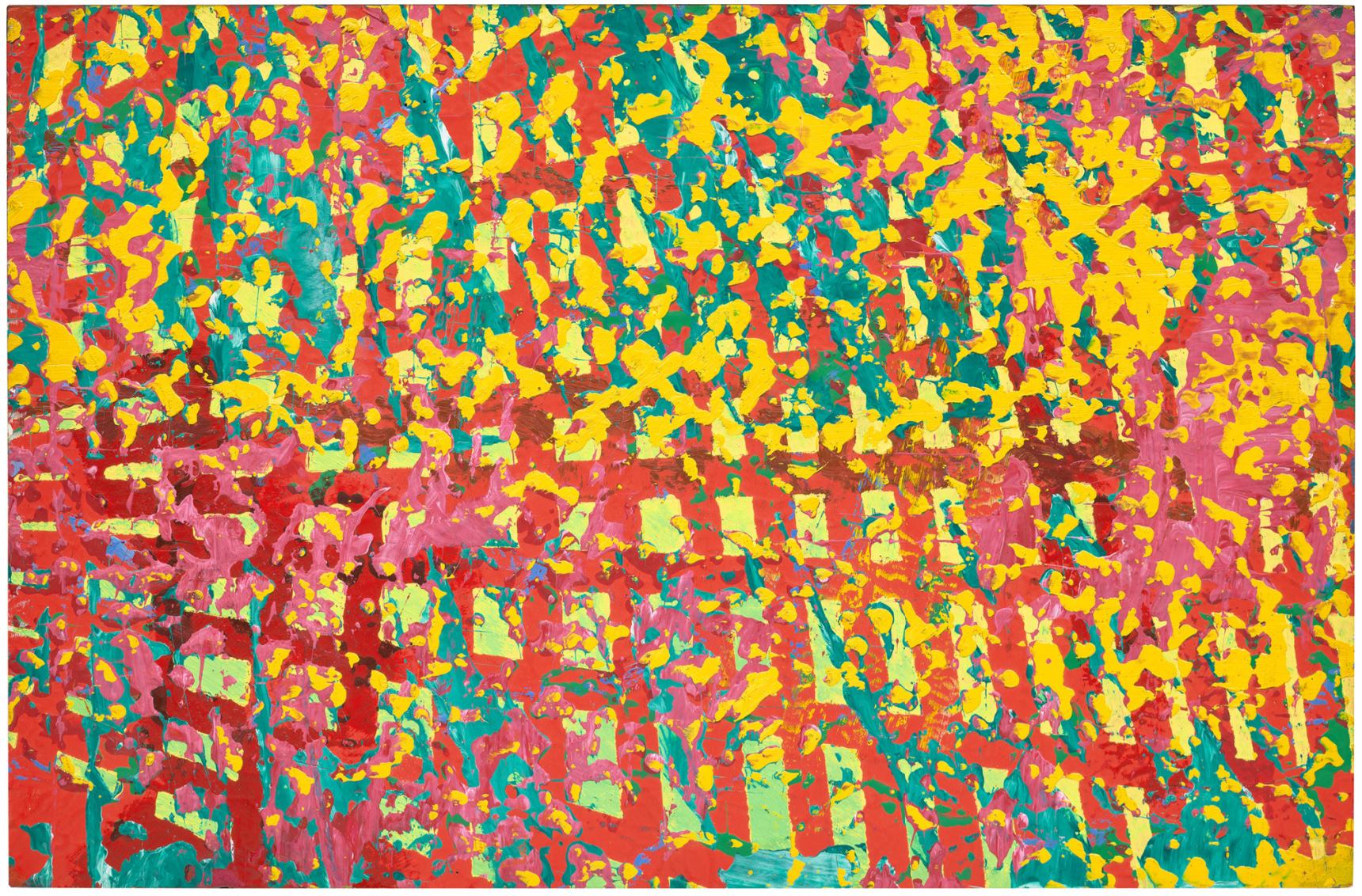
GERHARD RICHTER
Studie für ein abstraktes Bild, 1978
Oil on panel
31.1 x 47.3 cm (12 1/4 x 18 5/8 inches)
Signed, inscribed and dated “Richter IV 1978” on the reverse
#35. Rot–Blau–Gelb, 1973
Christie’s London: 14 October 2023
Estimated: GBP 180,000 – 250,000
GBP 226,800 / USD 275,009
GERHARD RICHTER (B. 1932), Rot–Blau–Gelb | Christie’s (christies.com)

GERHARD RICHTER (B. 1932)
Rot–Blau–Gelb, 1973
Each: oil on canvas
Each: 26.4 x 53.6 cm (10 3/8 x 21 1/8 inches)
Overall: 26.4 x 161.9 cm (10 3/8 x 63 3/4 inches)
Each part signed and dated ‘Richter, 73′ and consecutively numbered ’52, 53, 54’ (on the reverse)
#36. Schwarz, Rot, Gold, 1999
Sotheby’s London: 13 October 2023
Estimated: GBP 180,000 – 250,000
GBP 190,500 / USD 231,189
Schwarz, Rot, Gold | Contemporary Day Auction | 2023 | Sotheby’s (sothebys.com)
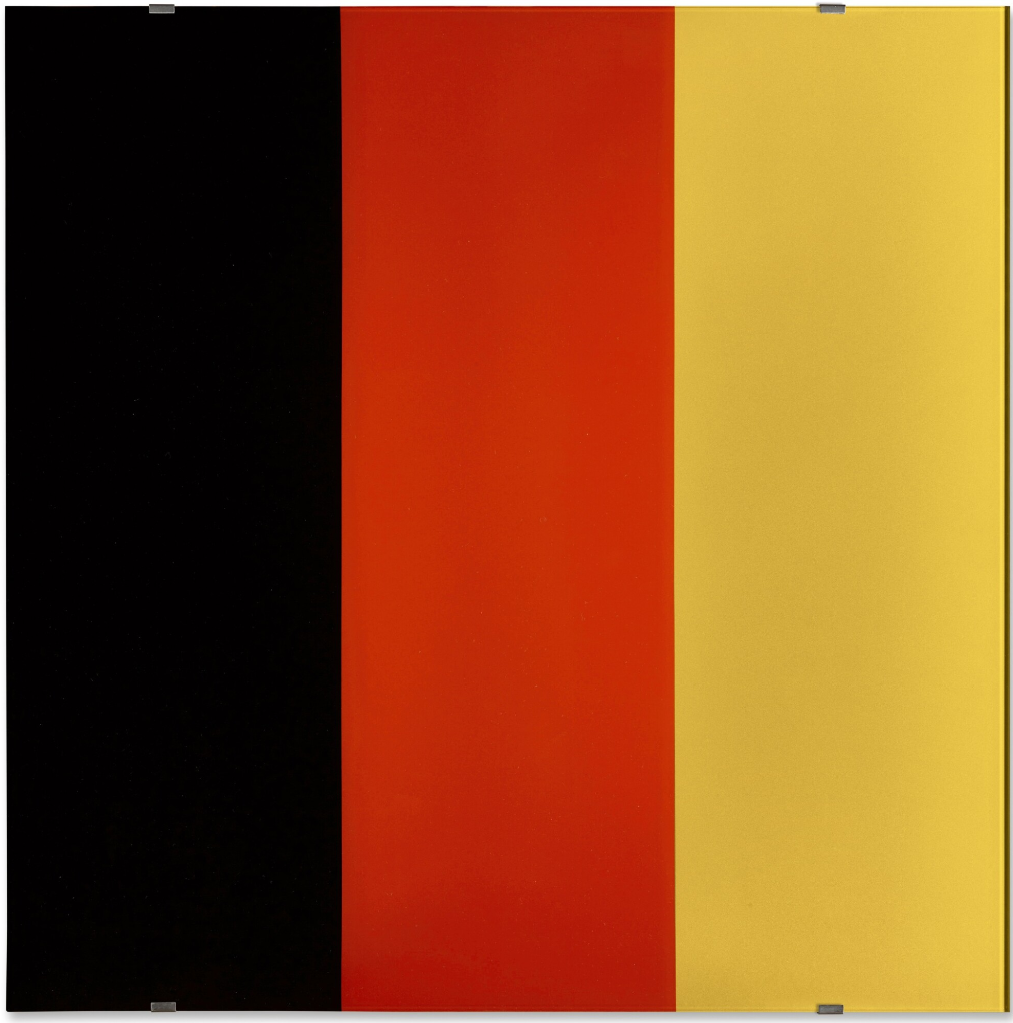
GERHARD RICHTER (b. 1932)
Schwarz, Rot, Gold, 1999
Synthetic resin paint on glass
99×99 cm (39×39 inches)
Signed, dated 1999 and numbered 856-6 (on the reverse)
#37. Souvenir, 1995
Sotheby’s New-York: 19 May 2023
Estimated: USD 40,000 – 60,000
USD 120,650
Souvenir | Contemporary Day Auction | 2023 | Sotheby’s (sothebys.com)
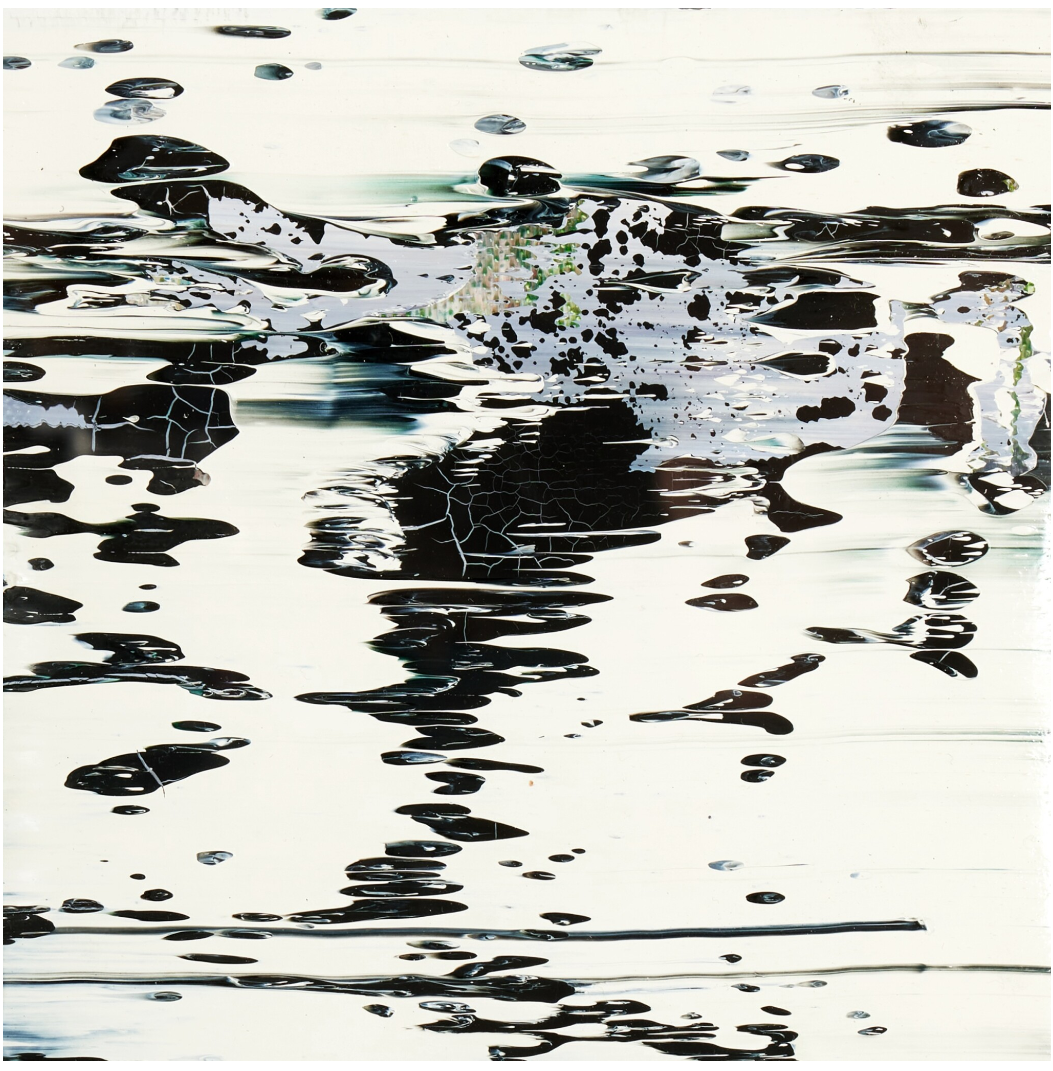
GERHARD RICHTER (b. 1932)
Souvenir, 1995
Oil on canvas
20.9 x 21.3 cm (8 3/8 x 8 1/4 inches)
Signed and numbered 37/64 (on a label affixed to the reverse)
This work is number 37 of 64 unique parts from the painting CR 84, which was cut into individual canvases by the artist
#40. Vermalung (Braun), 1972
Sotheby’s Cologne: 29 March 2023
Estimated: EUR 30,000 – 50,000
EUR 63,500 / USD 68,745
Vermalung (Braun) | Modern & Contemporary Auction, Part I | 2023 | Sotheby’s (sothebys.com)
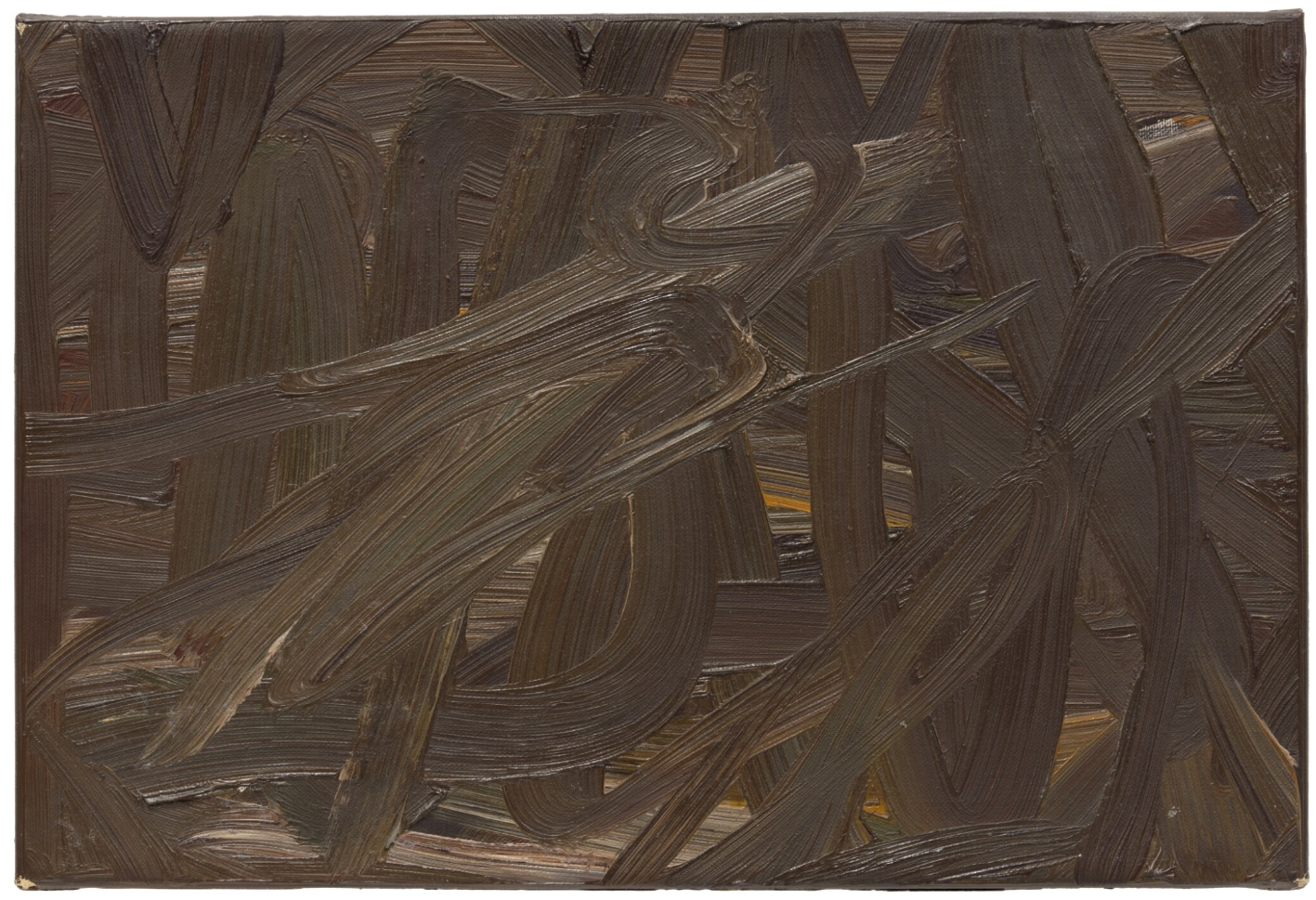
GERHARD RICHTER (b. 1932)
Vermalung (Braun), 1972
Oil on canvas
27×40 cm (10 5/8 x 15 3/4 inches)
Signed G. Richter, dated 72 and numbered 42 (on the reverse)
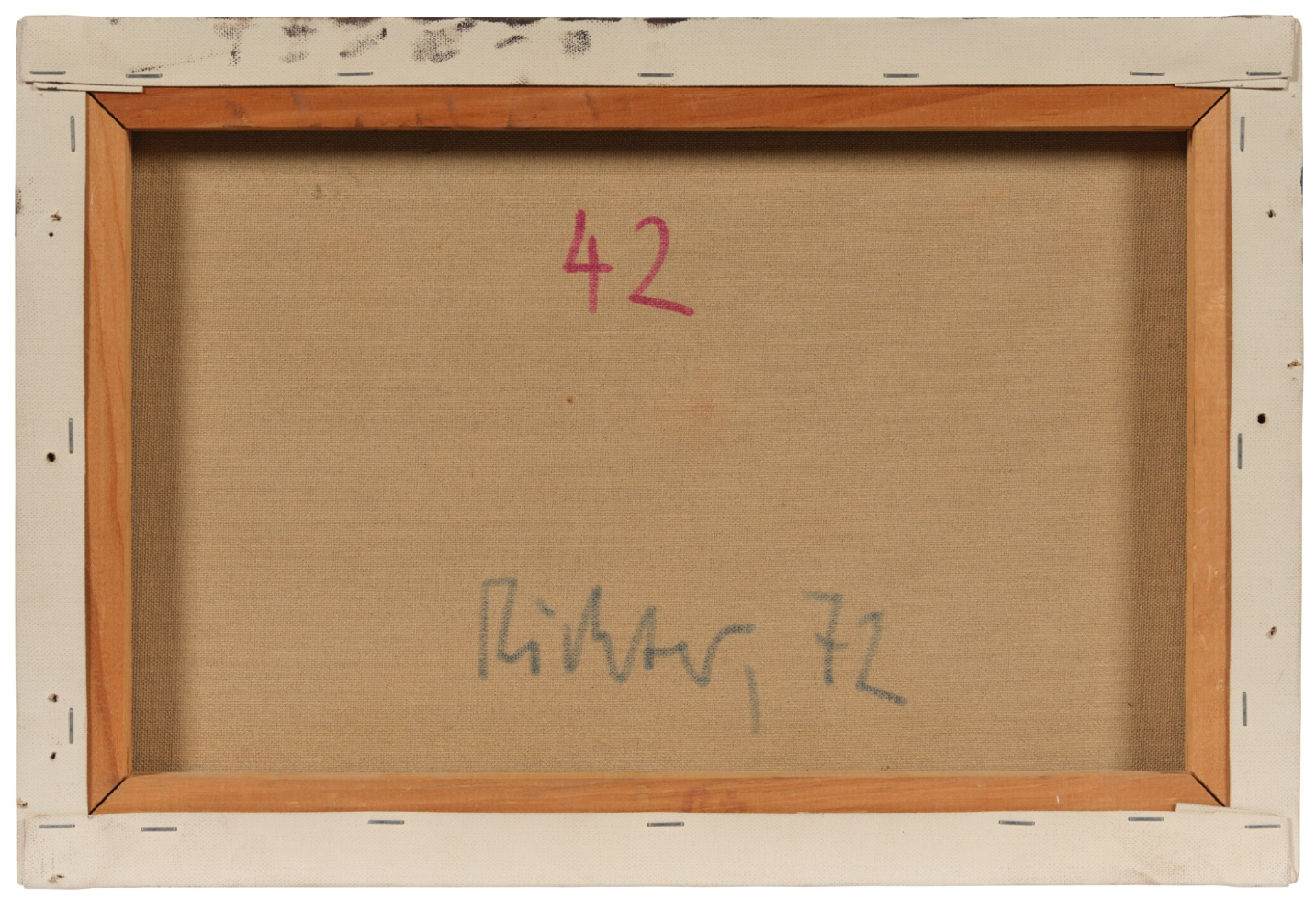
#41. Vermalung (Braun), 1972
Sotheby’s London: 28 June 2023
Estimated: GBP 30,000 – 40,000
GBP 53,340 / USD 67,391
Vermalung (Braun) | Modern & Contemporary Day Auction | 2023 | Sotheby’s (sothebys.com)
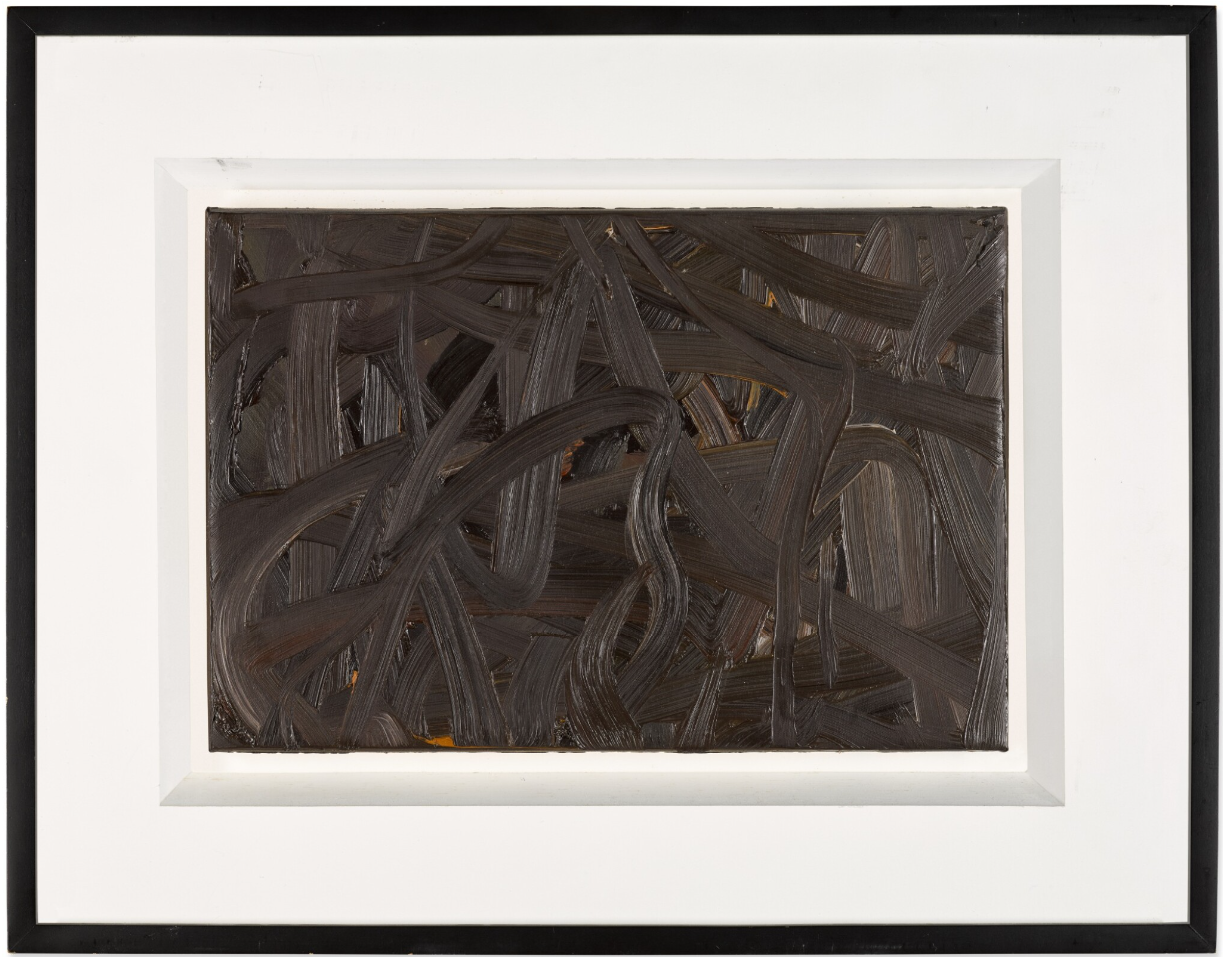
GERHARD RICHTER (b. 1932)
Vermalung (Braun), 1972
Oil on canvas
27×40 cm (10 5/8 x 15 3/4 inches)
Signed, dated 72 and numbered 61 on the reverse
#41. Untitled No. 48, 1973
Sotheby’s Hong-Kong: 6 April 2023
Estimated: HKD 700,000 – 1,000,000
HKD 635,000 / USD 80,890
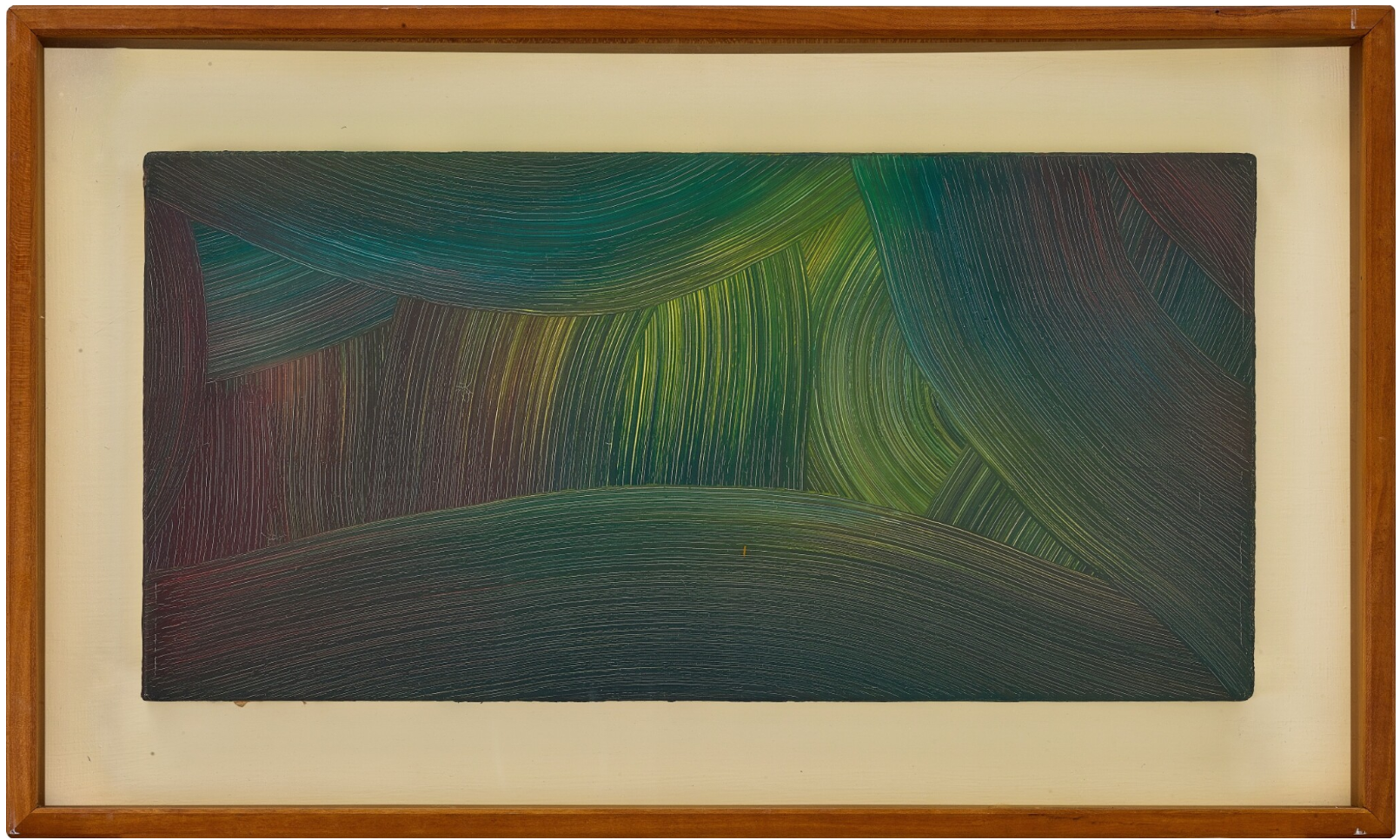
GERHARD RICHTER (b. 1932)
Untitled No. 48, 1973
oil on canvas
26.5 x 53.5 cm (10 3/8 x 21 inches)
Signed, dated 73 and numbered 48 on the reverse
#42. 15. Nov. 1996, 1996
Ketterer Kunst: 8 December 2023
Estimated: EUR 60,000
EUR 57,150 / USD 61,665
Ketterer Kunst, Art auctions, Book auctions Munich, Hamburg & Berlin
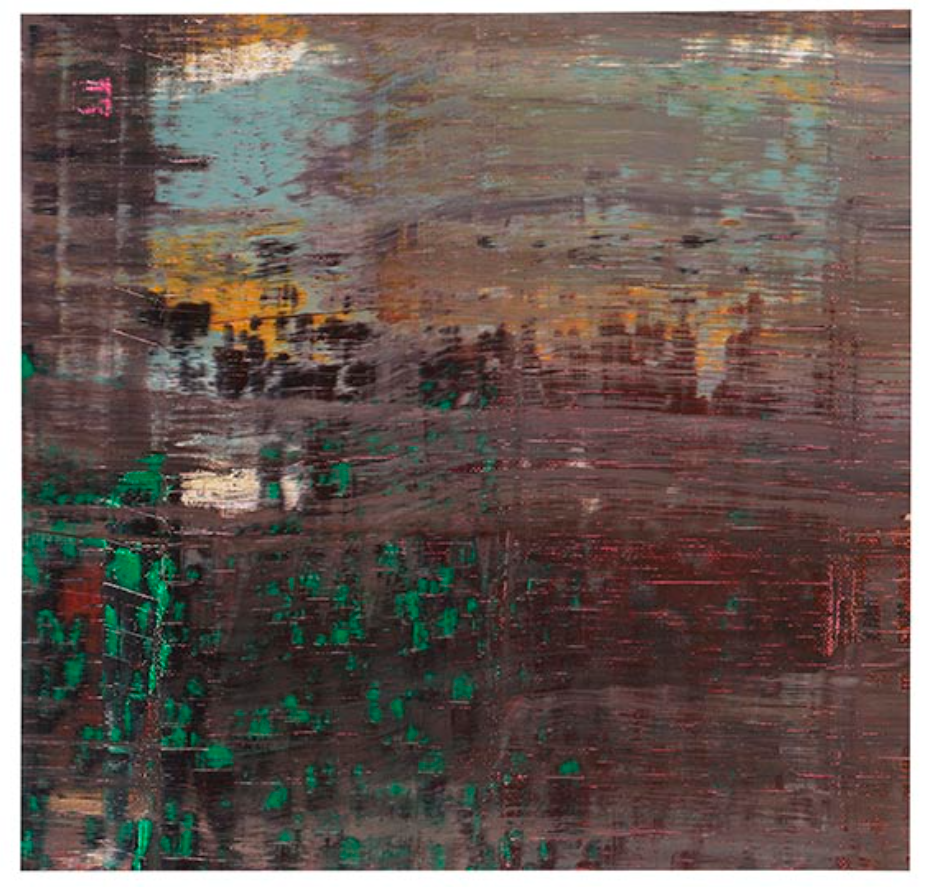
GERHARD RICHTER
15. Nov. 1996 (Teil des verworfenen Abstrakten Bildes 802-4), 1996
Oil on canvas, firmly laid on a backing cardboard
23.4 x 24 cm (9.2 x 9.4 inches)
Signed and dated in lower left of backing
Lower right monogrammed. Inscribed “8” on the reverse
Fragment of the destroyed painting “Abstraktes Bild” from 1994
#43. 11. Nov. 1996, 1996
Ketterer Kunst: 8 December 2023
Estimated: EUR 40,000
EUR 50,800 / USD 54,813
Ketterer Kunst, Art auctions, Book auctions Munich, Hamburg & Berlin
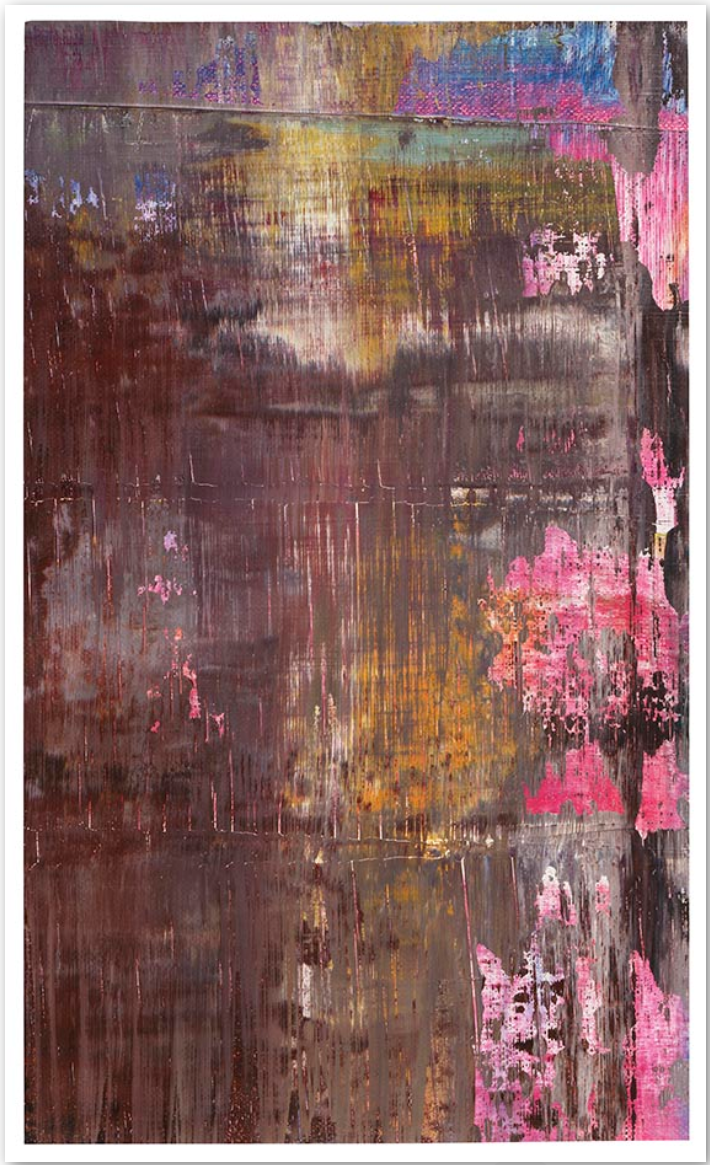
GERHARD RICHTER
11 Nov. 1996 (Teil des verworfenen Abstrakten Bildes 802-4), 1996
Oil on canvas, firmly laid on a backing
28.7 x 17 cm (11.2 x 6.6 inches)
Signed and dated on the backing in lower left. Lower right monogrammed. Inscribed “7” on the reverse
Fragment of the destroyed painting “Abstraktes Bild” from 1994
#44. 12. August 2000, 2000
Christie’s London: 1 March 2023
Estimated: GBP 25,000 – 30,000
GBP 40,320 / USD 48,525
GERHARD RICHTER (B. 1932), 12. August 2000 | Christie’s (christies.com)
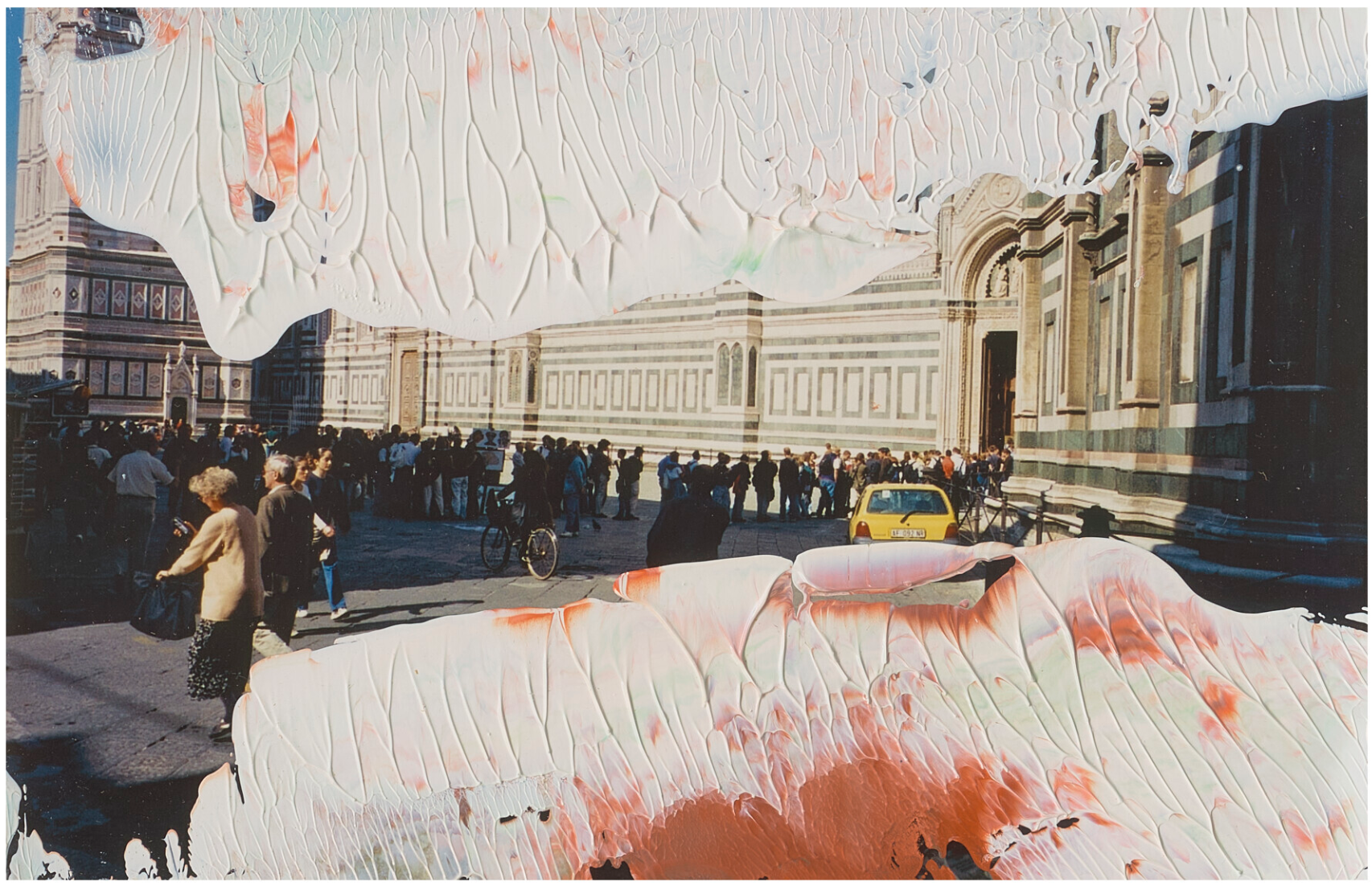
GERHARD RICHTER (B. 1932)
12. August 2000, 2000
Oil on color photograph
9.7 x 15.2 cm (3 7/8 x 6 inches)
Signed and dated ’12. August 2000 Richter’ (on the mount)
Signed and dated ’12. Aug. 2000 Richter’ (on the backing board)
2022 Auction Results
30 lots sold at auction in 2022 for a total turnover of USD 211,882,413.
The top price of USD 36,500,000 was achieved at Christie’s in New-York on 10 May 2022 for Abstraktes Bild dated 1994. 8 lots sold for over USD 10 million, generating a cumulative turnover of USD 160,631,260, contributing 75.8% to the total turnover for 2022.
2022 Top 3 Lots
20 lots sold for over USD 1 million, generating a cumulative turnover of USD 208,453,684, contributing 98.4% to the total turnover for 2022.
2022 Lots sold over USD 1 million
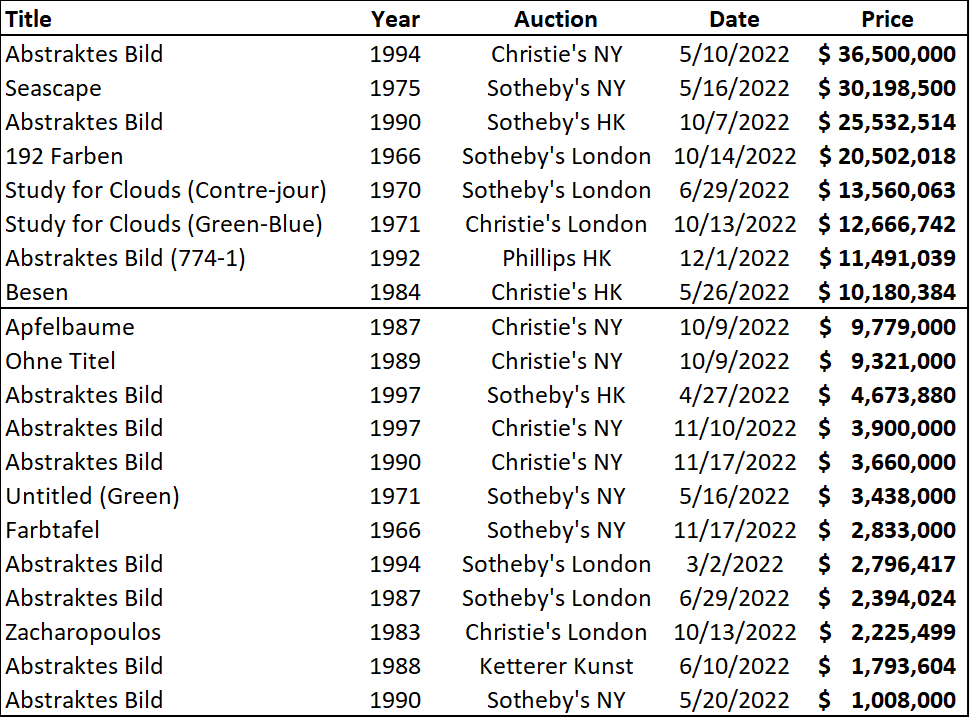
#1. Abstraktes Bild, 1994
Christie’s New-York: 10 May 2022
Estimate on Request
USD 36,500,000
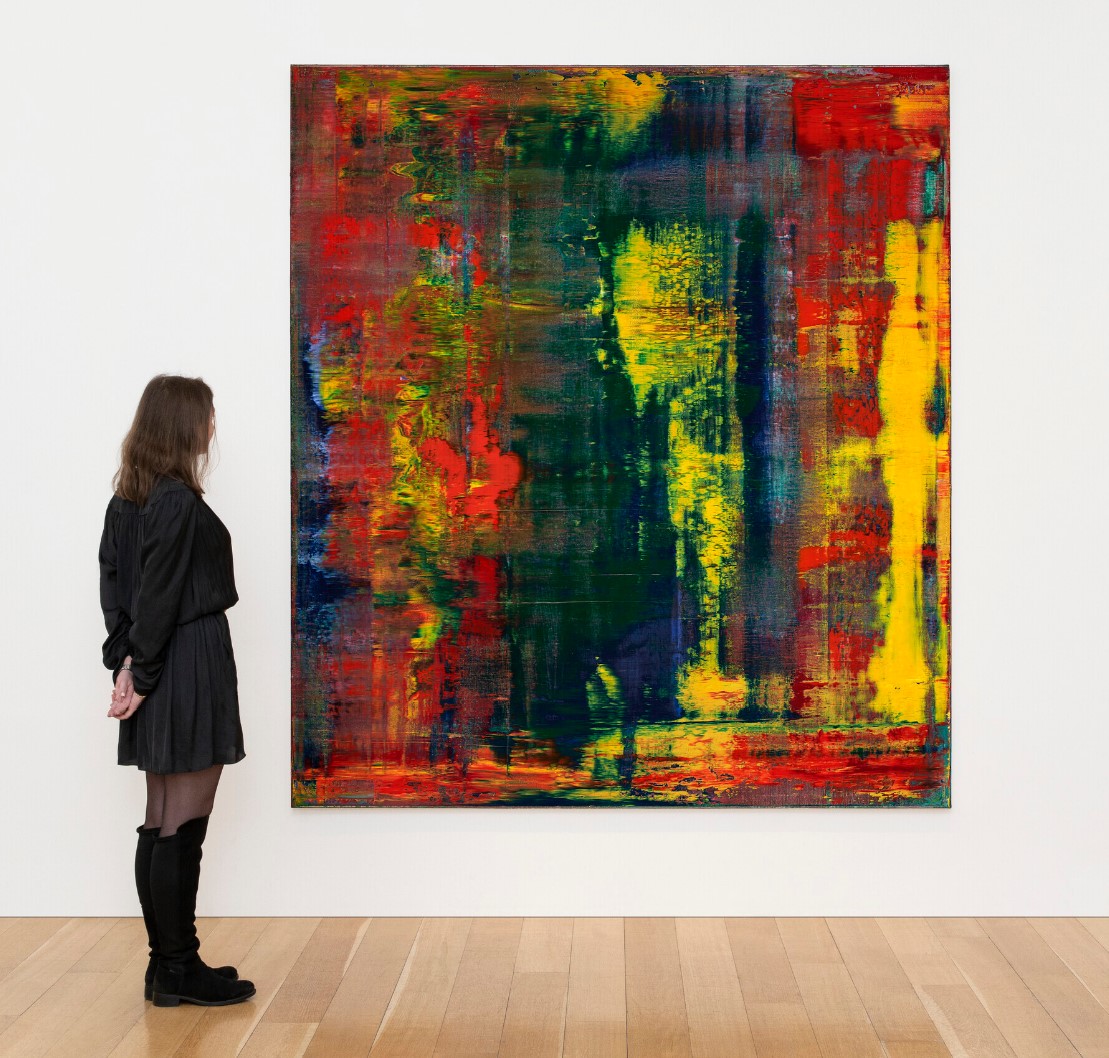
GERHARD RICHTER (B. 1932)
Abstraktes Bild, 1994
Oil on canvas
225×200 cm (88 5⁄8 x 78 3⁄4 inches)
Signed, inscribed and dated ‘809-4 Richter 1994’ (on the reverse)
#2. Seestück [Seascape], 1975
Sotheby’s New-York: 16 May 2022
Estimated: USD 25,000,000 – 35,000,000
USD 30,198,500
GERHARD RICHTER (b.1932)
Seestück [Seascape], 1975
Oil on canvas
199.4 x 300.4 cm (78 ½ x 118 ¼ inches)
Signed, dated 1975, and numbered 378 on the reverse
#3. Abstraktes Bild, 1990
Sotheby’s Hong-Kong: 7 October 2022
Estimated: HKD 175,000,000 – 235,000,000
HKD 200,443,008 / USD 25,532,514
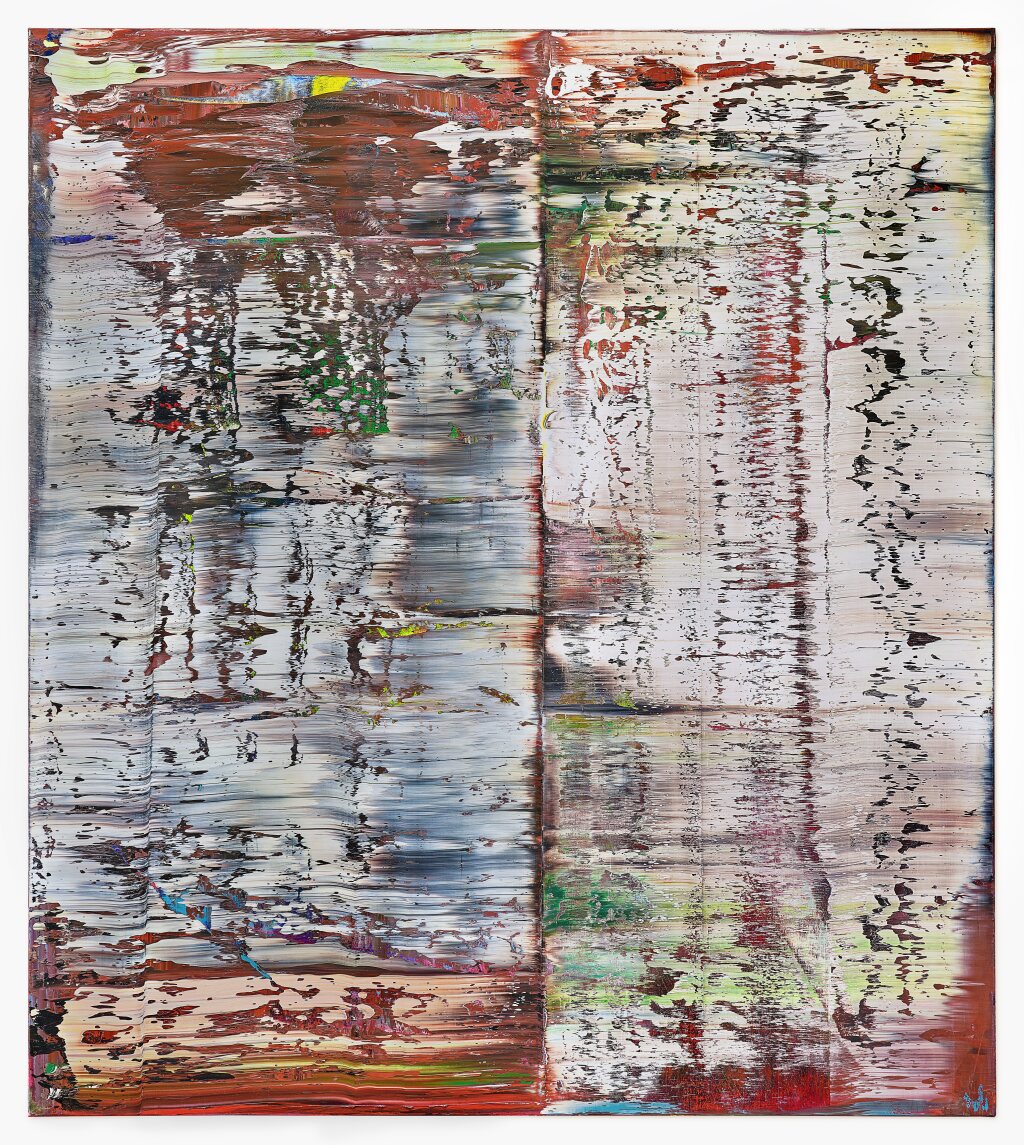
GERHARD RICHTER (b. 1932)
Abstraktes Bild, 1990
Oil on canvas
225×200 cm (88 ⅝ x 78 ¾ inches)
Signed, dated 1990 and numbered 725-1 on the reverse
#4. 192 Farben, 1966
Sotheby’s London: 14 October 2022
Estimated: GBP 13,000,000 – 18,000,000
GBP 18,297,800 / USD 20,502,018
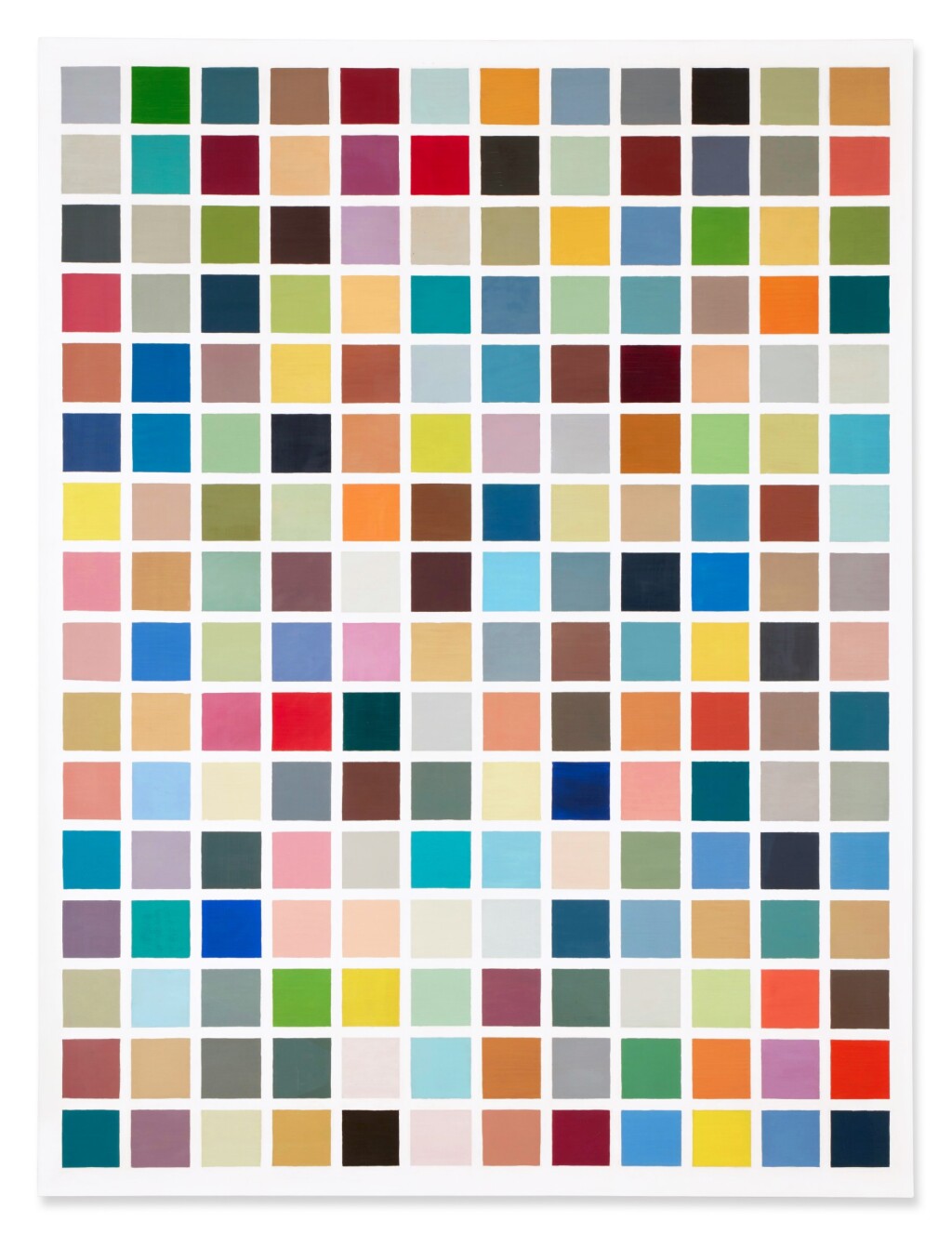
GERHARD RICHTER (b. 1932)
192 Farben, 1966
Oil on canvas
200×150 cm (78 ½ x 59 inches)
Signed Richter, dated I. 66 and variously inscribed (on the reverse)
#5. Study for Clouds (Contre-jour), 1970
Sotheby’s London: 29 June 2022
Estimated: GBP 6,000,000 – 8,000,000
GBP 11,164,000 / USD 13,560,063
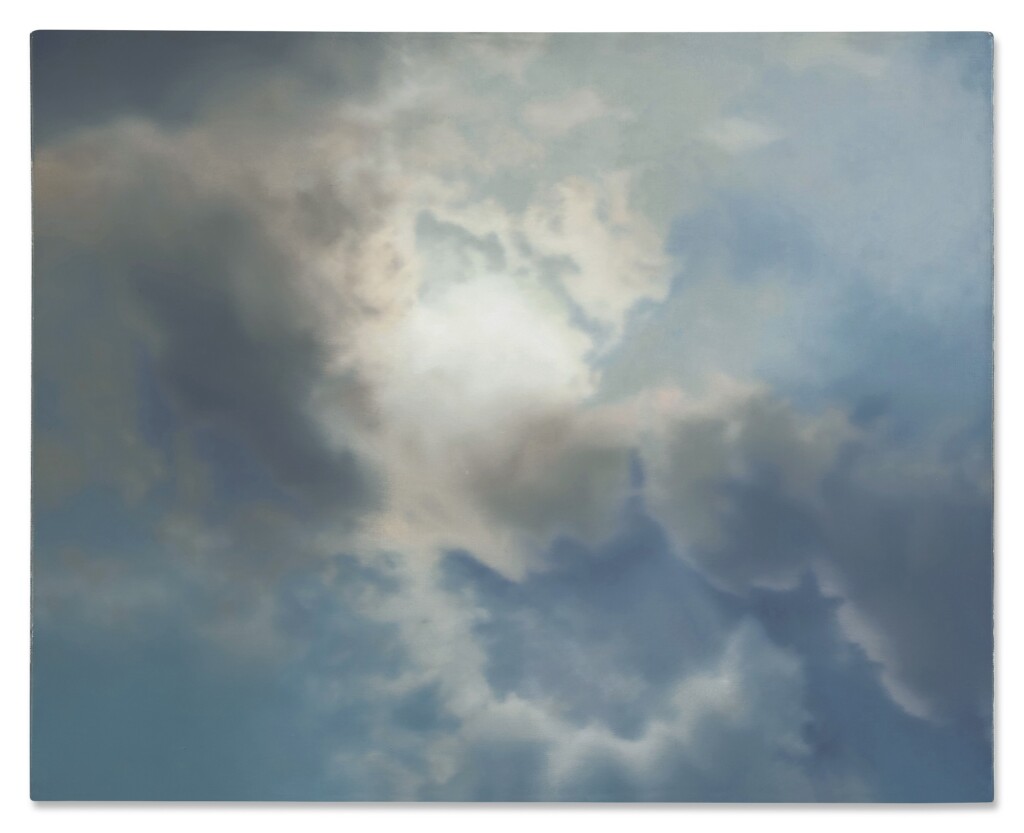
GERHARD RICHTER (b. 1932)
Study for Clouds (Contre-jour), 1970
Oil on canvas
80×100 cm (31 ½ x 39 ⅜ inches)
Signed Richter, dated XI.70 and numbered 276 (on the reverse)
#6. Study for Clouds (Green-blue), 1971
Christie’s London: 13 October 2022
Estimated: GBP 6,000,000 – 8,000,000
GBP 11,167,000 / USD 12,666,742
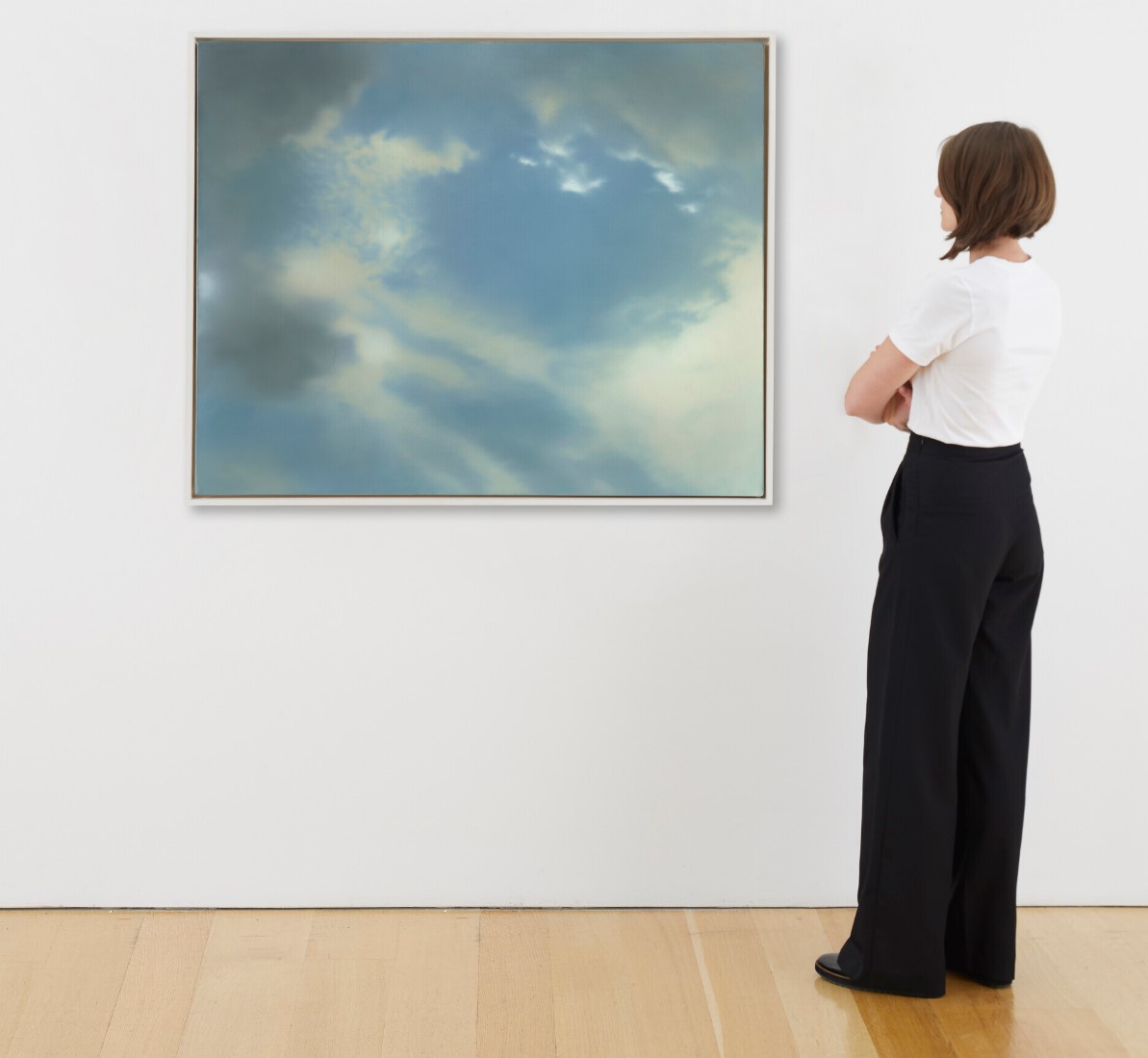
GERHARD RICHTER (B. 1932)
Wolkenstudie (grün-blau) (Study for Clouds (Green-blue)), 1971
Oil on canvas
80×100 cm (31 1/2 x 39 3/8 inches)
Signed and dated ‘Richter 1971’ (on the reverse)
#7. Abstraktes Bild (774-1), 1992
Phillips Hong-Kong: 1 December 2022
Estimated: HKD 80,000,000 – 120,000,000
HKD 89,375,000 / USD 11,491,039
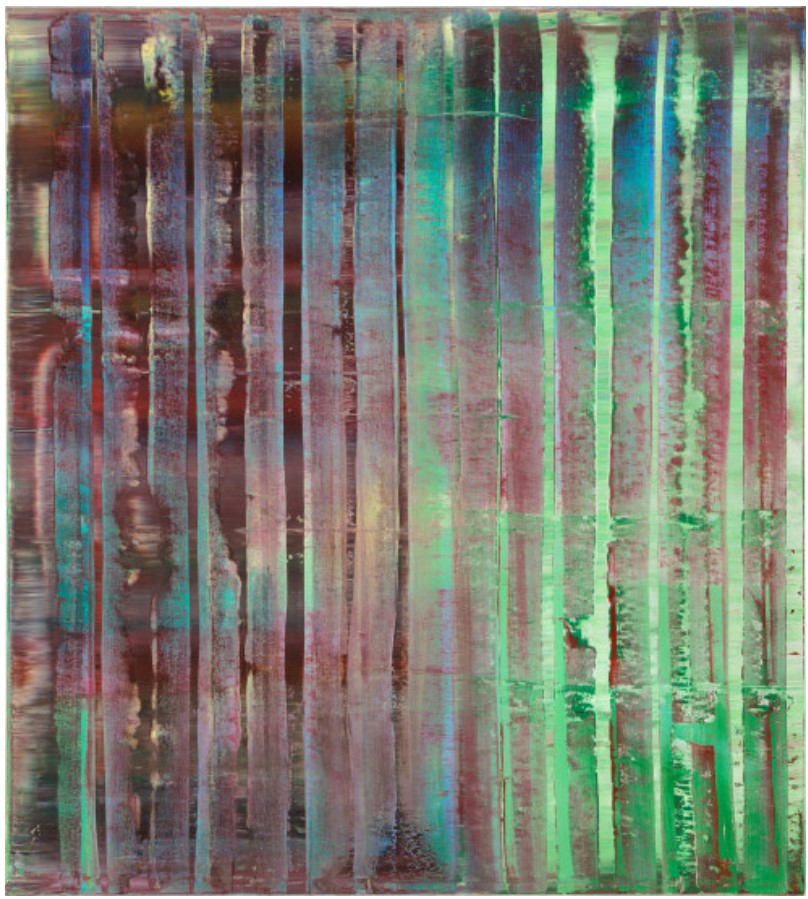
GERHARD RICHTER
Abstraktes Bild (774-1), 1992
Oil on canvas
200 x 180.3 cm (78 3/4 x 70 7/8 inches)
Signed, numbered and dated ‘774-1 RICHTER 1992’ on the reverse
#8. Besen, 1984
Christie’s Hong-Kong: 26 May 2022
Estimated: 55,000,000 – 75,000,000
HKD 79,915,000 / USD 10,180,384
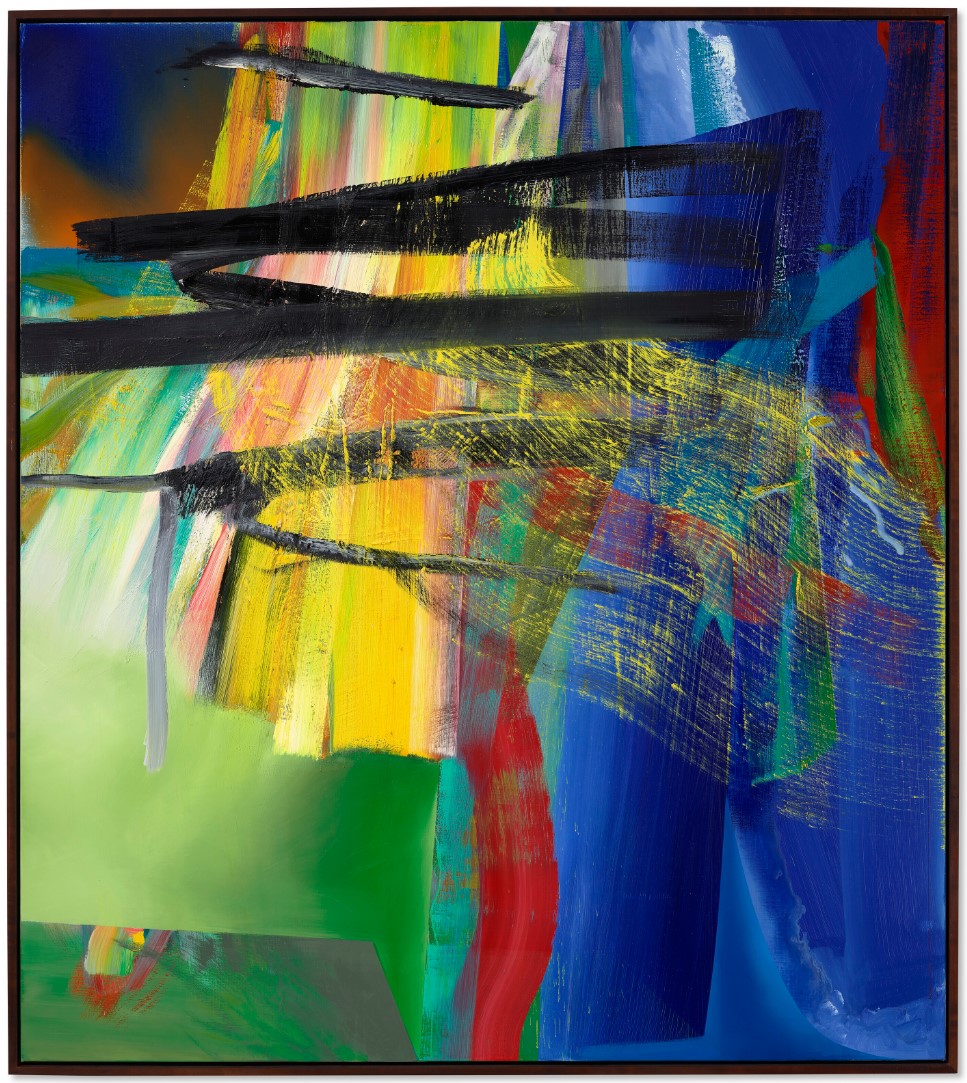
GERHARD RICHTER (B. 1932)
Besen, 1984
Oil on canvas
224.7 x 200 cm (88 1⁄2 x 78 3⁄4 inches)
Signed, dated and inscribed ‘Richter 1984 553-2’ (on the reverse)
USD 10 million
#9. Apfelbäume, 1987
Christie’s New-York: 9 November 2022
Visionary: The Paul G. Allen Collection
Estimated: USD 5,000,000 – 7,000,000
USD 9,779,000
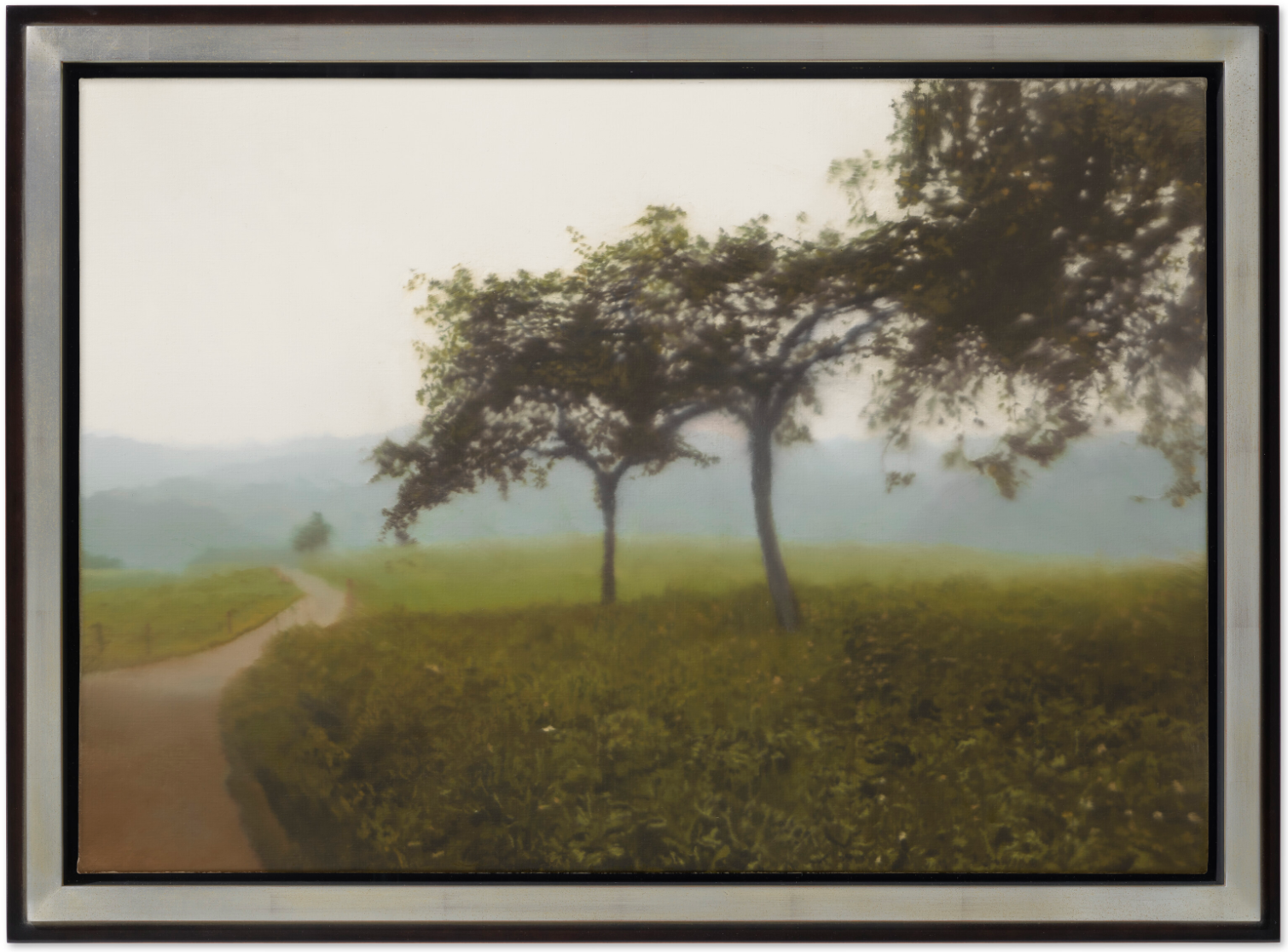
GERHARD RICHTER (B. 1932)
Apfelbäume, 1987
Oil on canvas
28 3/8 x 40 1/4 inches (72 x 102.2 cm)
Signed, dated and inscribed ‘650-2 Richter 1987’ (on the reverse)
#10. Ohne Titel, 1989
Christie’s New-York: 9 November 2022
Visionary: the Paul G. Allen Collection
Estimated: USD 6,000,000 – 8,000,000
USD 9,321,000
GERHARD RICHTER (B. 1932) (christies.com)
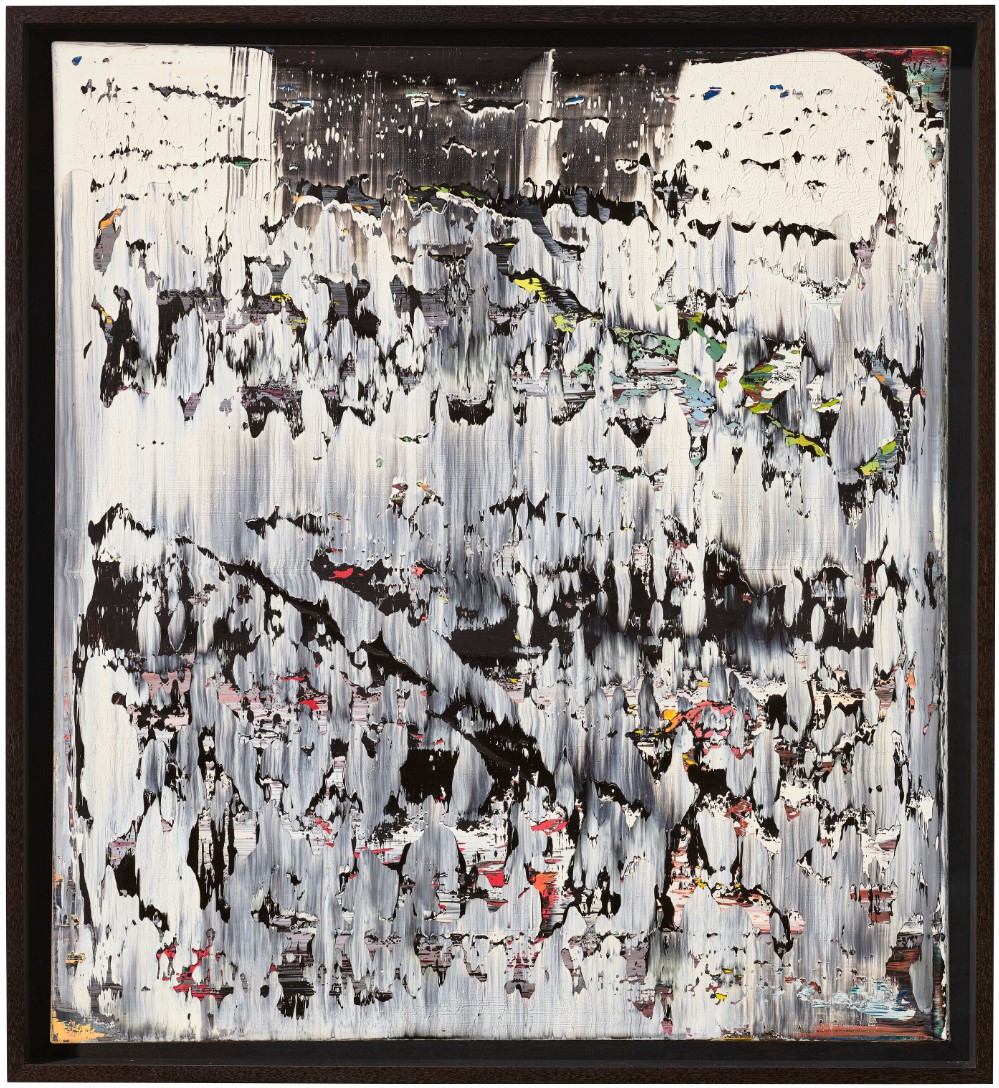
GERHARD RICHTER (B. 1932)
Ohne Titel, 1989
Oil on canvas
112.1 x 102.2 cm (44 1/8 x 40 1/4 inches)
Signed, dated and inscribed ‘687-4 Richter 1989’ (on the reverse)
#11. Abstraktes Bild, 1997
Sotheby’s Hong-Kong: 27 April 2022
Estimated: HKD 35,000,000 – 45,000,000
HKD 36,675,000 / USD 4,673,880
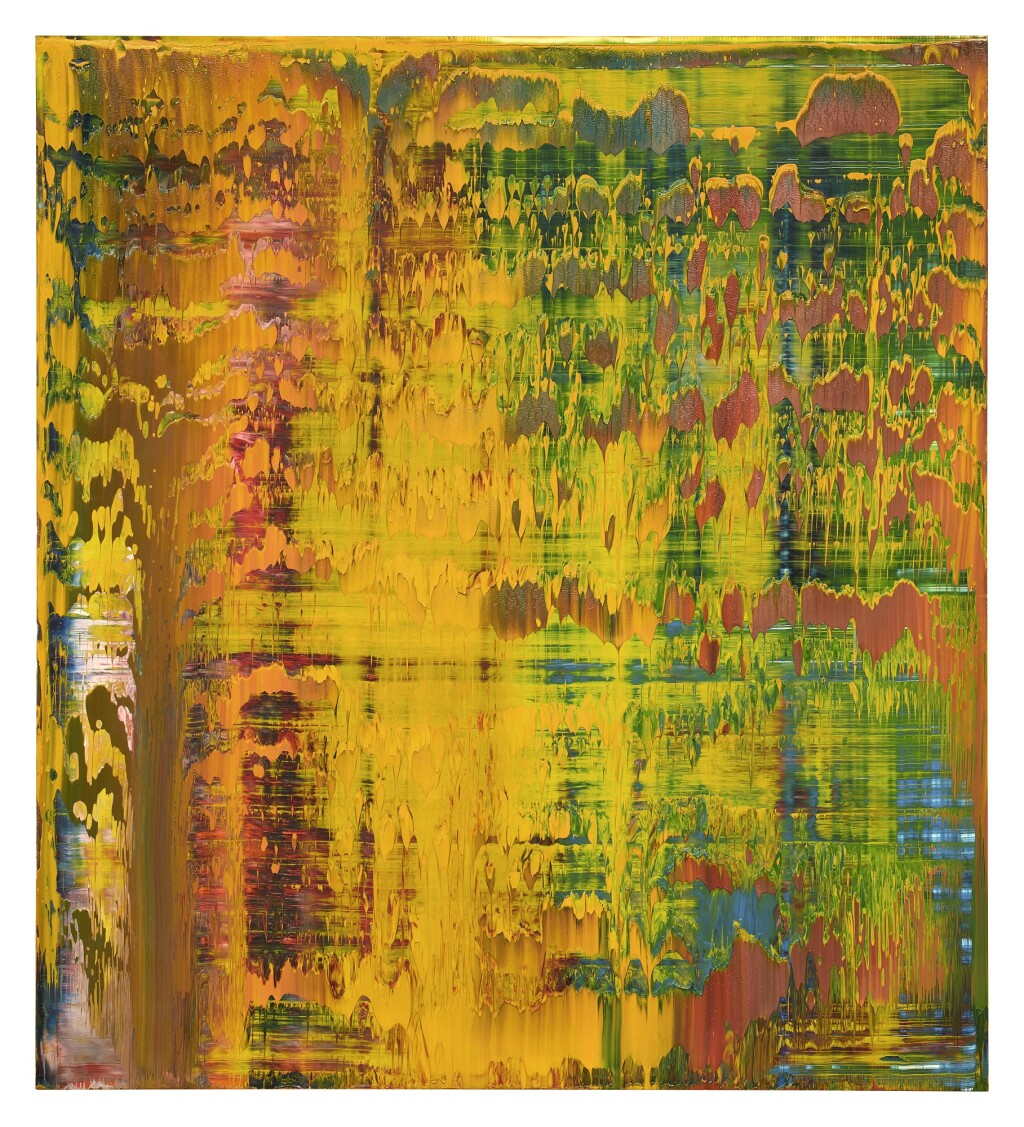
GERHARD RICHTER (b. 1932)
Abstraktes Bild, 1997
Oil on Alu Dibond
100×90 cm (39 ⅜ x 35 ⅜ inches)
Signed, dated 1997 and numbered 845-1 on the reverse
#12. Abstraktes Bild, 1997
Christie’s New-York: 10 November 2022
Estimated: USD 3,000,000 – 5,000,000
USD 3,900,000
GERHARD RICHTER (B. 1932), Abstraktes Bild | Christie’s (christies.com)
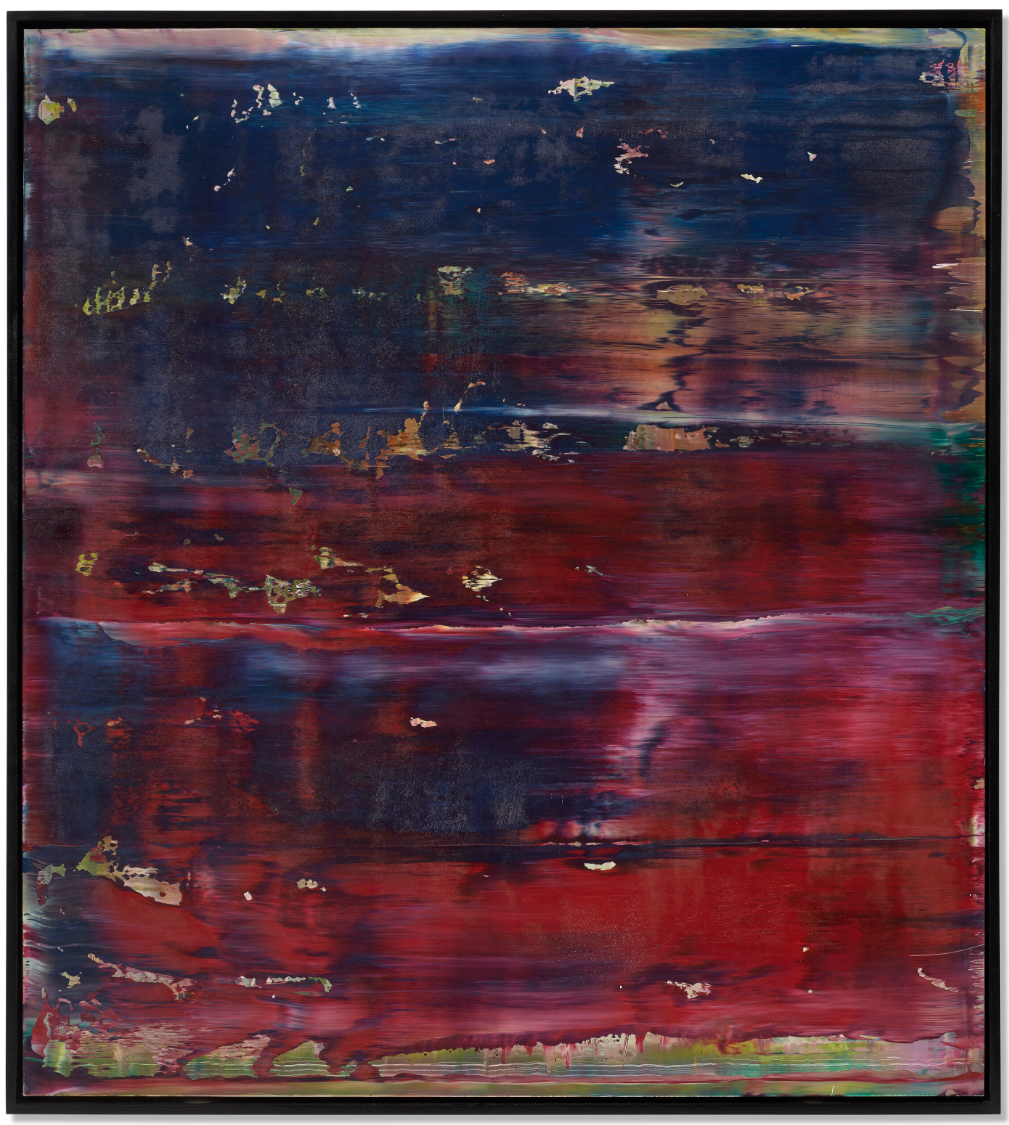
GERHARD RICHTER (B. 1932)
Abstraktes Bild, 1997
Oil on Alucobond
100 x 90.2 cm (39 3/8 x 35 1/2 inches)
Signed, inscribed and dated ‘842-2 Richter 1997’ (on the reverse)
#13. Abstraktes Bild, 1990
Christie’s New-York: 17 November 2022
Estimated: USD 4,000,000 – 6,000,000
USD 3,660,000
GERHARD RICHTER (B. 1932) (christies.com)
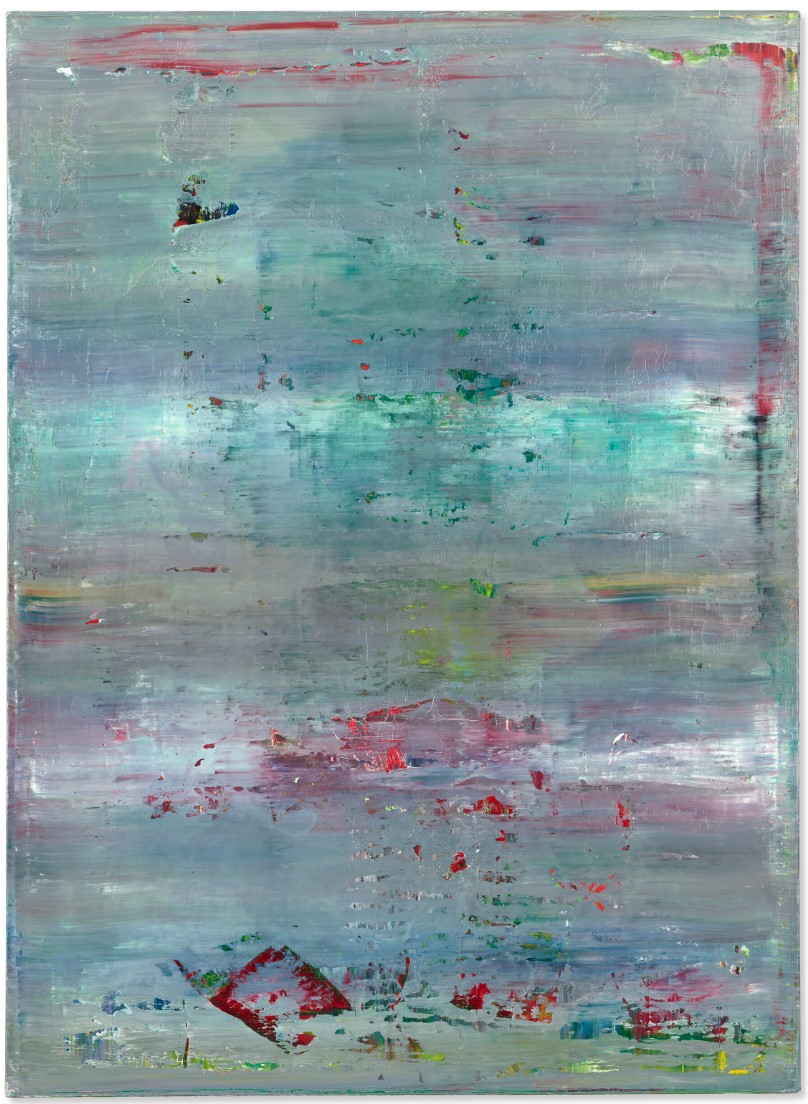
GERHARD RICHTER (B. 1932)
Abstraktes Bild, 1990
Oil on canvas
112×82 cm (44 1/8 x 32 1/4 inches)
Signed, inscribed and dated ‘721-2 Richter 1990’ (on the reverse)
#16. Abstraktes Bild, 1994
Sotheby’s London: 2 March 2022
Estimated: GBP 1,000,000 – 1,500,000
GBP 2,092,000 / USD 2,796,417
Abstraktes Bild | Modern & Contemporary Evening Auction | 2022 | Sotheby’s (sothebys.com)
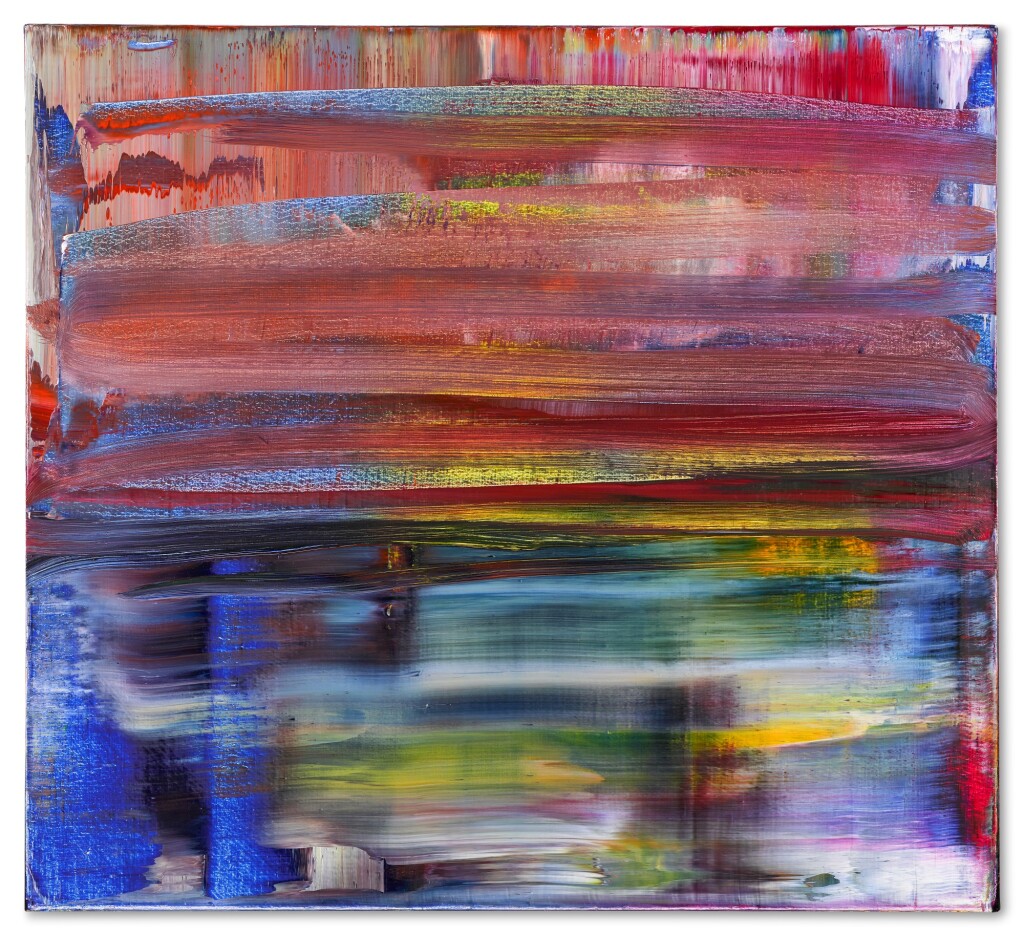
GERHARD RICHTER (b. 1932)
Abstraktes Bild, 1994
Oil on canvas
51 x 56.1 cm (20×22 inches)
Signed Richter, numbered 817-1 and dated 1994 (on the verso)
#17. Abstraktes Bild, 1987
Sotheby’s London: 29 June 2022
Estimated: GBP 1,200,000 – 1,800,000
GBP 1,971,000 / USD 2,394,024
Abstraktes Bild | Modern & Contemporary Evening Auction | 2022 | Sotheby’s (sothebys.com)
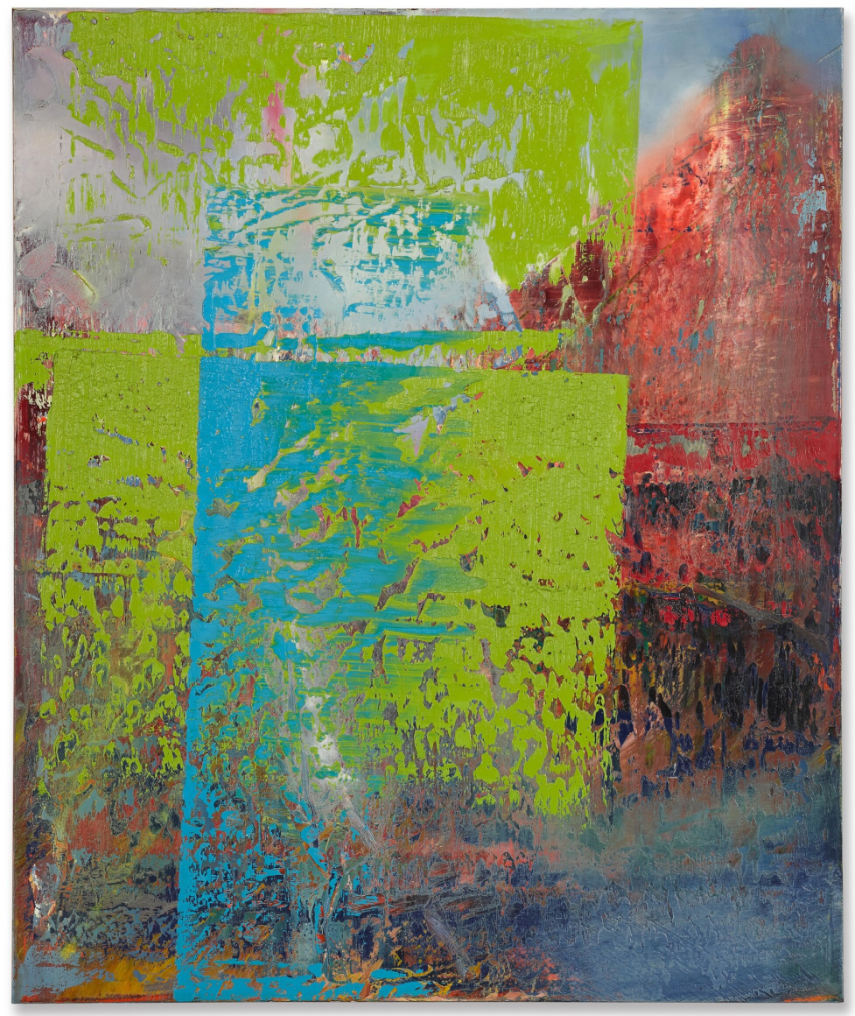
GERHARD RICHTER (b. 1932)
Abstraktes Bild, 1987
Oil on canvas
120×100 cm (47 1/4 x 39 3/8 inches)
Signed Richter, numbered 630-4 and dated 1987 (on the reverse)
#18. Zacharopoulos, 1983
Christie’s London: 13 October 2022
Estimated: GBP 1,200,000 – 1,800,000
GBP 1,962,000 / USD 2,225,499
GERHARD RICHTER (B. 1932), Zacharopoulos | Christie’s (christies.com)
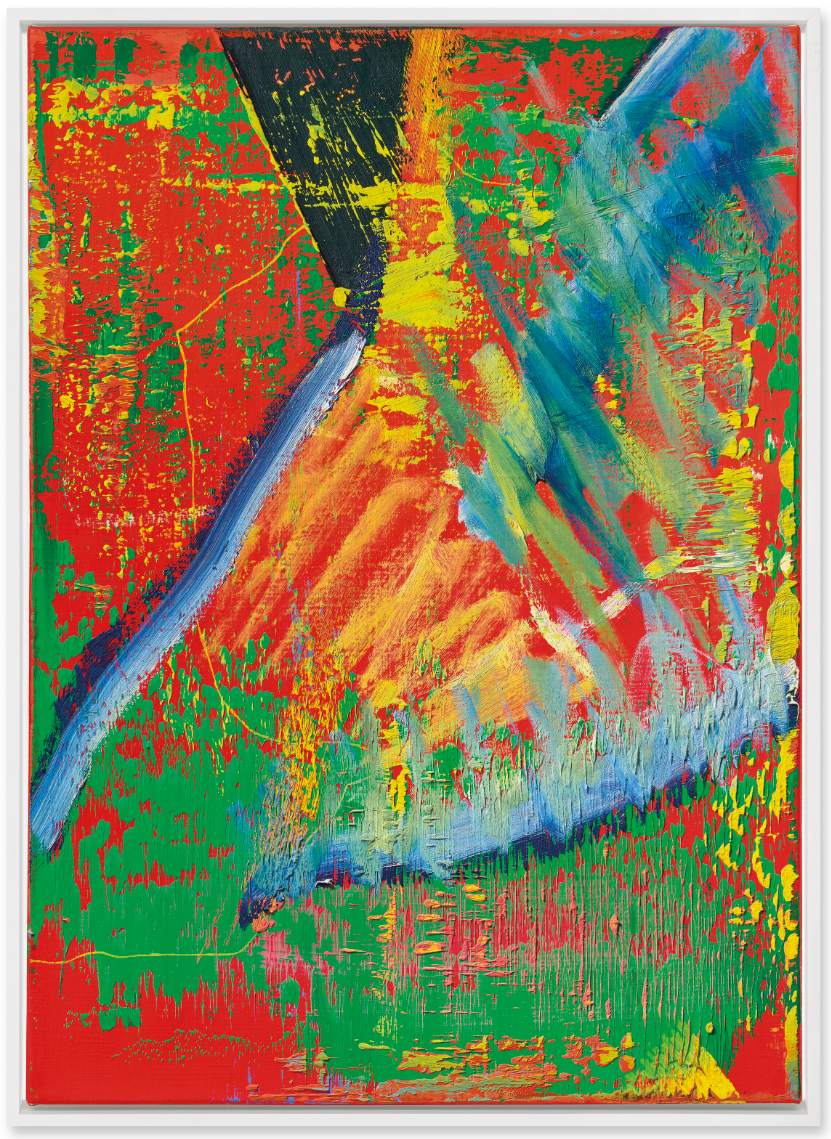
GERHARD RICHTER (B. 1932)
Zacharopoulos, 1983
Oil on canvas
70.4 x 50.3 cm (27 3/4 x 19 3/4 inches)
Signed, numbered and dated ‘520-3 Richter 1983’ (on the reverse)
#19. Abstraktes Bild, 1988
Ketterer Kunst: 10 June 2022
Estimated: EUR 600,000
EUR 1,705,000 / USD 1,875,500
Ketterer Kunst, Art auctions, Book auctions Munich, Hamburg & Berlin
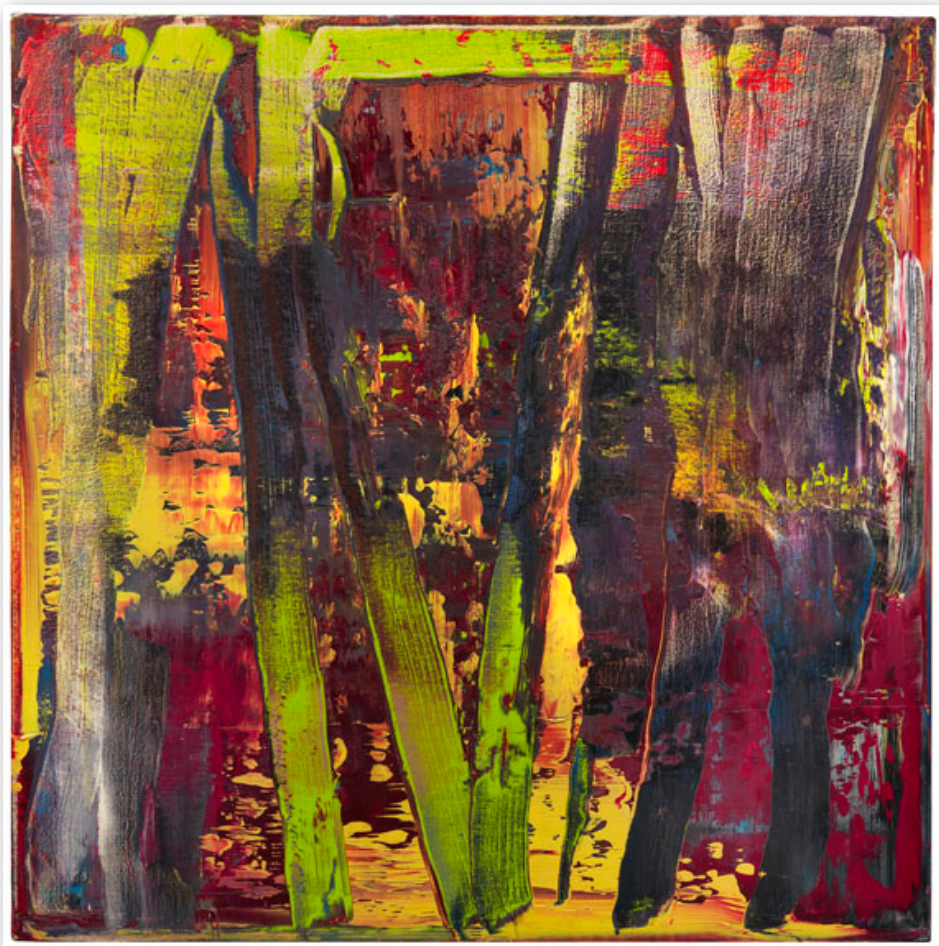
GERHARD RICHTER
Abstraktes Bild, 1988
Oil on canvas
62×62 cm (24.4 x 24.4 inches)
Signed, dated and titled on the reverse
#20. Abstraktes Bild, 1990
Sotheby’s New-York: 20 May 2022
Estimated: USD 600,000 – 800,000
USD 1,008,000
Abstraktes Bild | Contemporary Day Auction | 2022 | Sotheby’s (sothebys.com)
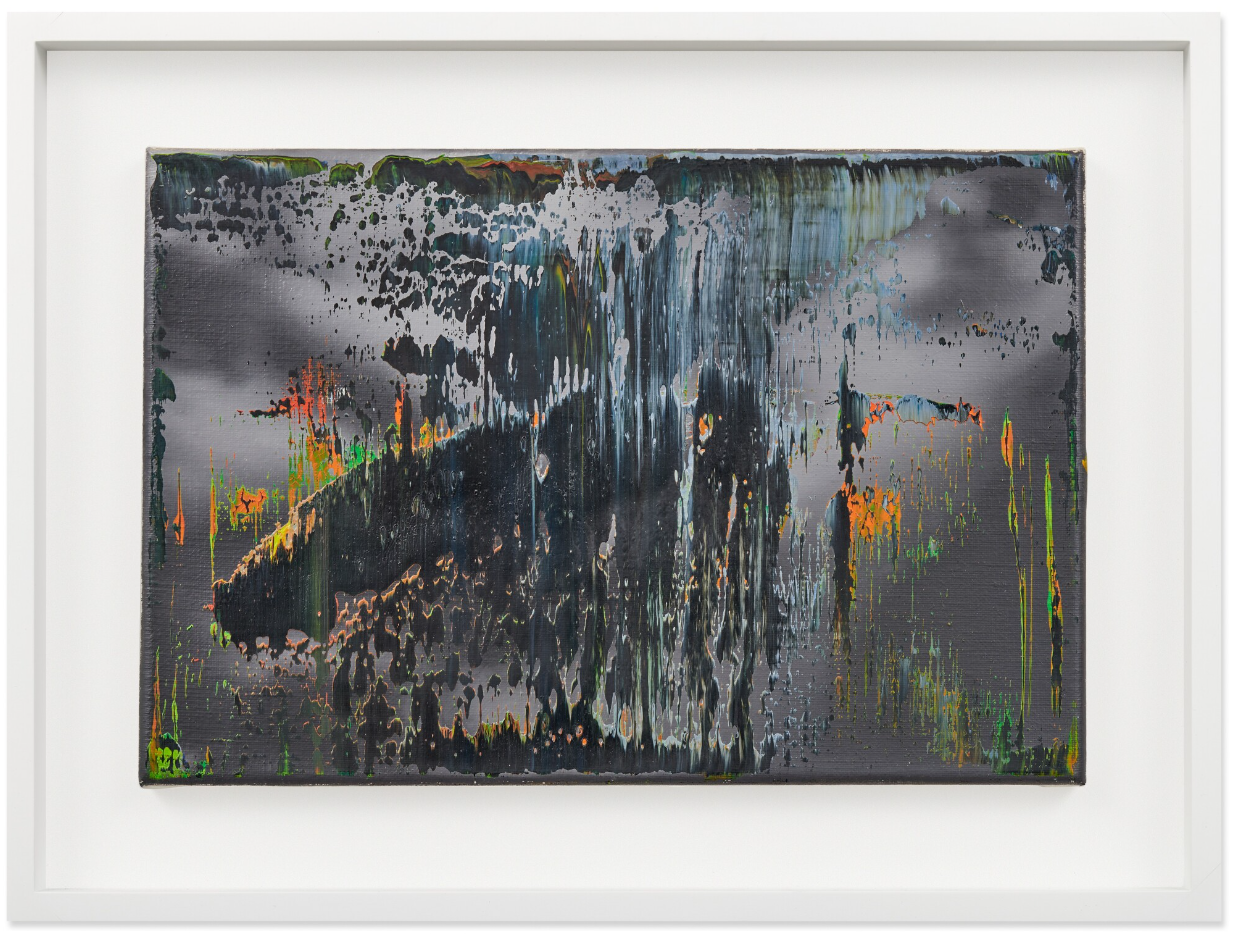
GERHARD RICHTER (b. 1932)
Abstraktes Bild, 1990
Oil on canvas
25.5 x 37.5 cm (10 x 14 3/4 inches)
Signed Richter, dated IV. 90 and numbered 716-8 (on the reverse)
#22. Abstraktes Bild, 1992
Christie’s Paris: 30 November 2022
Estimated: EUR 450,000 – 650,000
EUR 567,000 / USD 585,139
Gerhard Richter (né en 1932), Abstraktes Bild | Christie’s (christies.com)
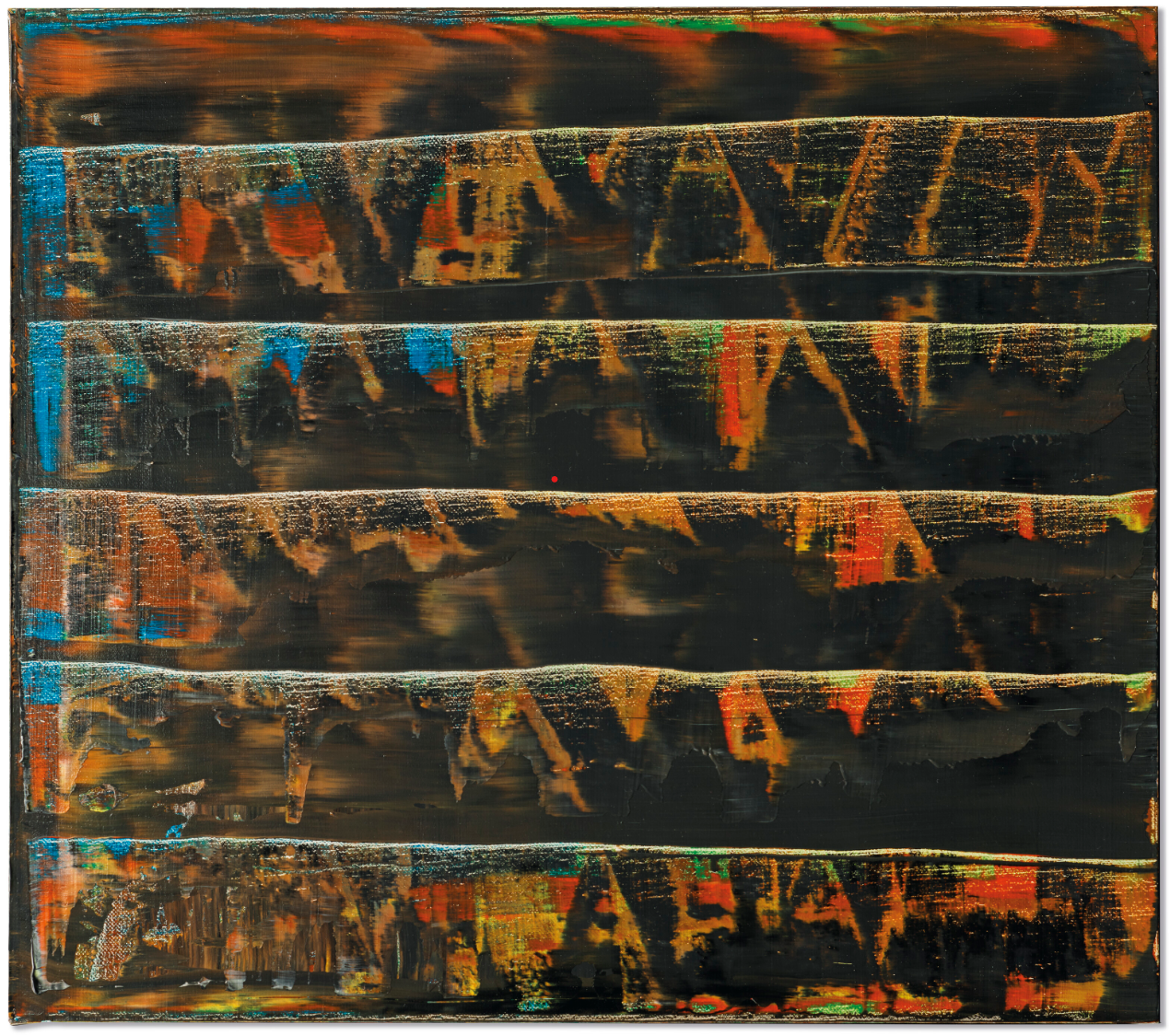
GERHARD RICHTER (Born 1932)
Abstraktes Bild, 1992
Oil on canvas
52×62 cm (20 1/2 x 24 3/8 inches)
Signed, dated and inscribed ‘Richter 92 763-7’ (on the reverse)
#25. Abstrakte Skizze (Abstract Sketch), 1991
Sotheby’s Cologne: 7 April 2022
Estimated: EUR 80,000 – 120,000
EUR 277,200 / USD 302,092
Abstrakte Skizze (Abstract Sketch) | Modern & Contemporary Auction | 2022 | Sotheby’s (sothebys.com)
GERHARD RICHTER (b. 1932)
Abstrakte Skizze (Abstract Sketch), 1991
Oil on canvas
30×35 cm (11 3/4 x 13 3/4 inches)
Signed, dated VII. 91 and numbered 749-7 on the reverse
#27. Abstrakte Skizze (Abstract Sketch), 1991
Sotheby’s Cologne: 7 April 2022
Estimated: EUR 100,000 – 150,000
EUR 214,200 / USD 233,435
Abstrakte Skizze (Abstract Sketch) | Modern & Contemporary Auction | 2022 | Sotheby’s (sothebys.com)
GERHARD RICHTER (b. 1932)
Abstrakte Skizze (Abstract Sketch), 1991
Oil on canvas
30×35 cm (11 3/4 x 13 3/4 inches)
Signed, dated VII. 91 and numbered 749-8 on the reverse
#28. Abstrakte Skizze (Abstract Sketch), 1991
Sotheby’s Cologne: 7 April 2022
Estimated: EUR 100,000 – 150,000
EUR 201,600 / USD 219,703
Abstrakte Skizze (Abstract Sketch) | Modern & Contemporary Auction | 2022 | Sotheby’s (sothebys.com)
GERHARD RICHTER (b. 1932)
Abstrakte Skizze (Abstract Sketch), 1991
Oil on canvas
30×35 cm (11 3/4 x 13 3/4 inches)
Signed, dated VII. 91 and numbered 749-10 on the reverse
2021 Auction Results
32 lots sold at auction in 2021 for a total turnover of USD 220,111,470. The top price of USD 33,010,500 was achieved at Sotheby’s in New-York on 15 November 2021 for Abstraktes Bild dated 1993. 10 lots sold for over USD 10 million, generating a cumulative turnover of USD 165,973,481, contributing 75.4% to the total turnover for 2021.
2021 Top 3 Lots
21 lots sold for over USD 1 million, generating a cumulative turnover of USD 214,222,326, contributing 97.3% to the total turnover for 2021.
#1. Abstraktes Bild, 1993
Sotheby’s New-York: 15 November 2021
Estimated: USD 20,000,000 – 30,000,000
USD 33,010,500
GERHARD RICHTER (b.1932)
Abstraktes Bild, 1993
Oil on canvas
240×240 cm (94 1/2 x 94 1/2 inches)
Signed, dated 1993 and numbered 797-2 on the reverse
#2. Abstraktes Bild, 1988
Christie’s New-York: 11 November 2021
Estimated: USD 25,000,000 – 25,000,000
USD 27,185,000
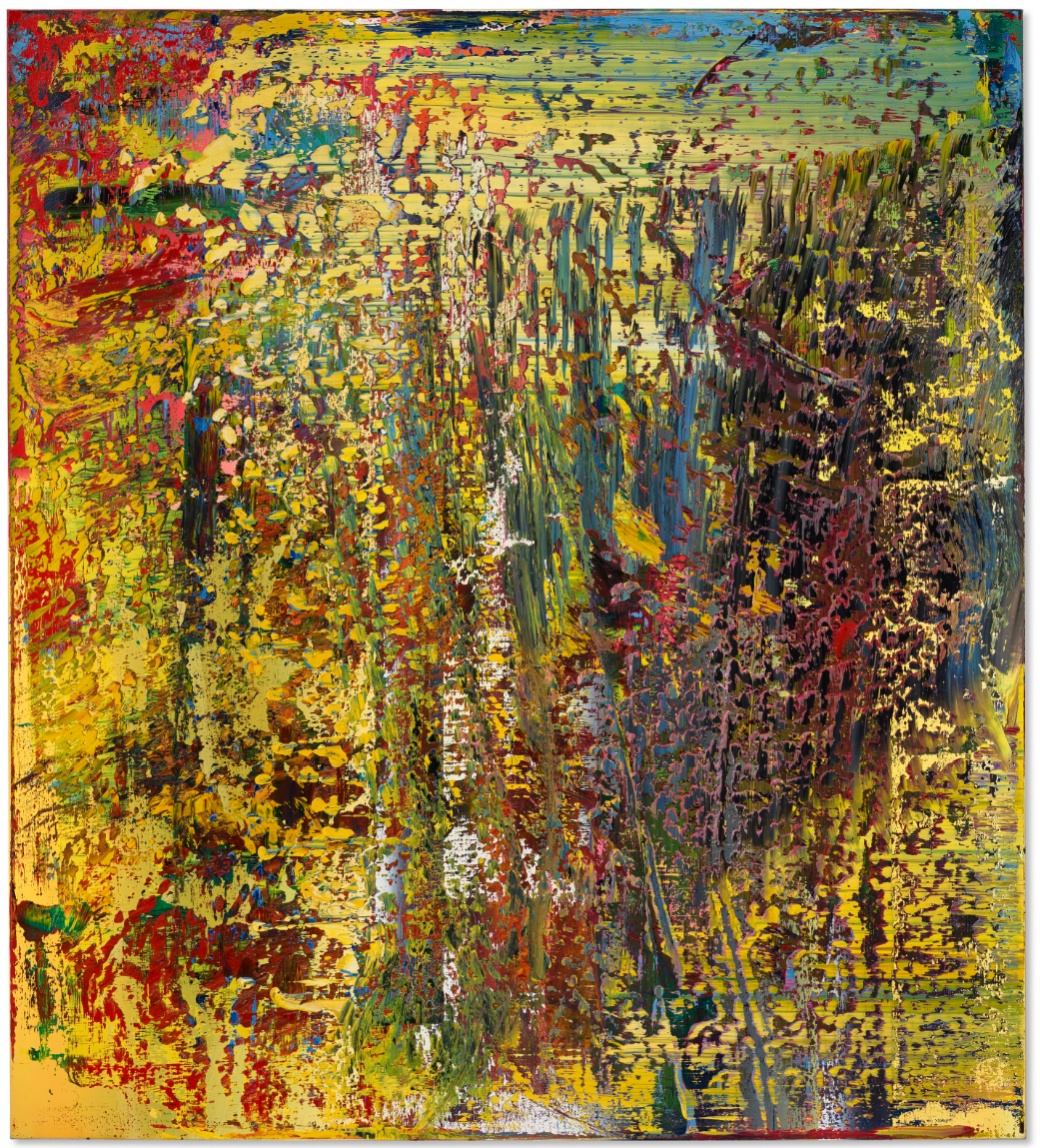
GERHARD RICHTER (B. 1932)
Abstraktes Bild, 1988
Oil on canvas
78 3/4 x 71 1/8 inches (200 x 180.7 cm)
Signed, inscribed and dated ‘680-1 Richter 1988’ (on the reverse)
#3. Abstraktes Bild, 1992
Sotheby’s New-York: 12 May 2021
Estimated: USD 14,000,000 – 18,000,000
USD 23,244,000
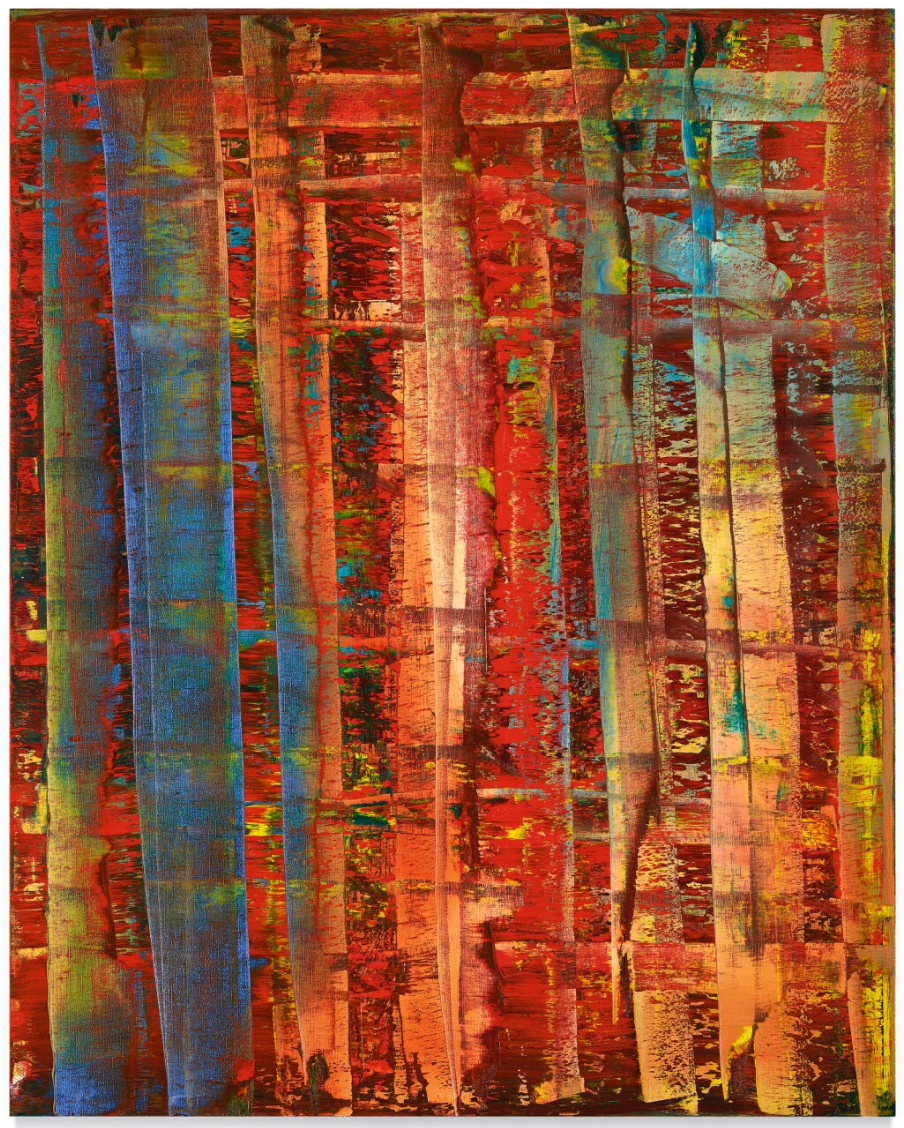
GERHARD RICHTER (b. 1932)
Abstraktes Bild, 1992
Oil on canvas
200×160 cm (78 3/4 x 63 inches)
Signed, dated 1992 and numbered 768-2 on the reverse
#4. Abstraktes Bild 747-1, 1991
Christie’s Hong-Kong: 1 December 2021
Estimated: HKD 128,000,000 – 166,000,000
HKD 140,400,000 / USD 18,019,868
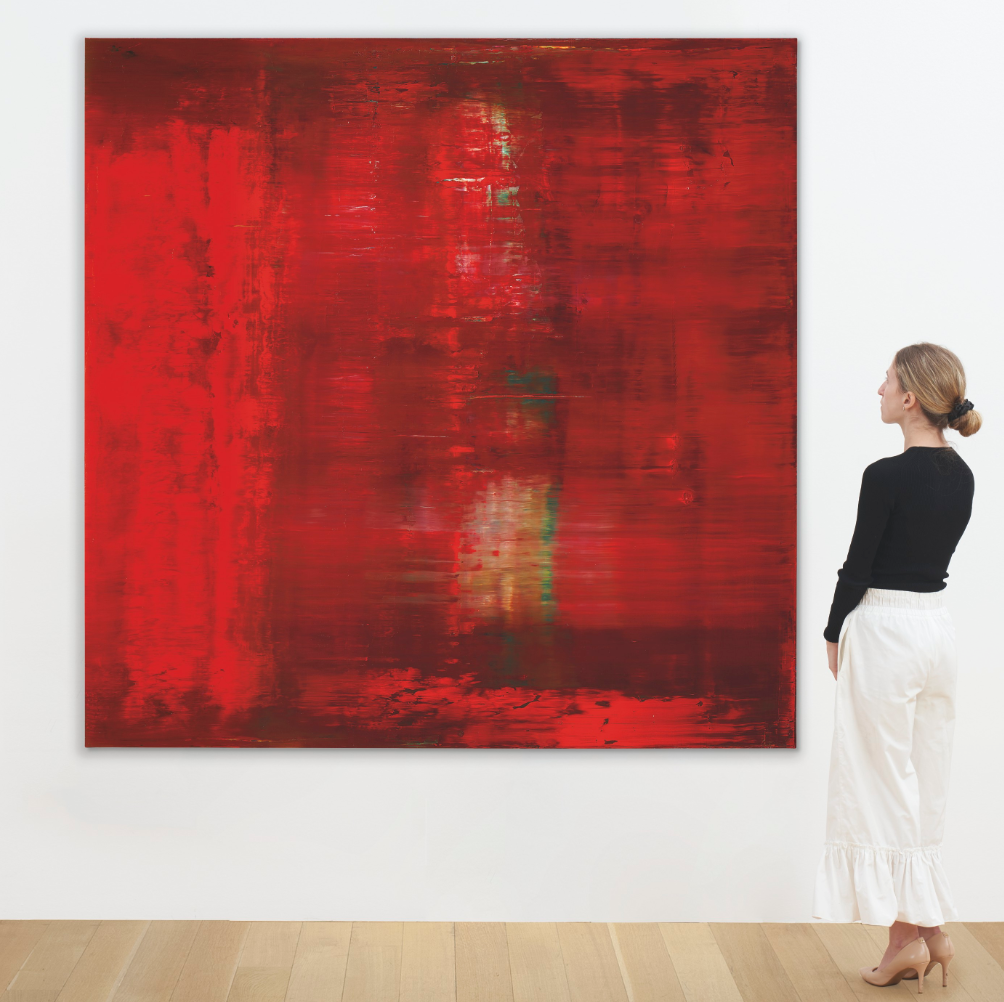
GERHARD RICHTER (B. 1932)
Abstraktes Bild 747-1, 1991
Oil on canvas
200×200 cm (78 3/4 x 78 3/4 inches)
Signed, numbered and dated ‘747-1 Richter 1991’ (on the reverse)
#5. Schwefel (Sulphur)
Sotheby’s Hong-Kong: 19 April 2021
Estimated: HKD 80,000,000 – 100,000,000
HKD 118,115,000 / USD 15,208,854
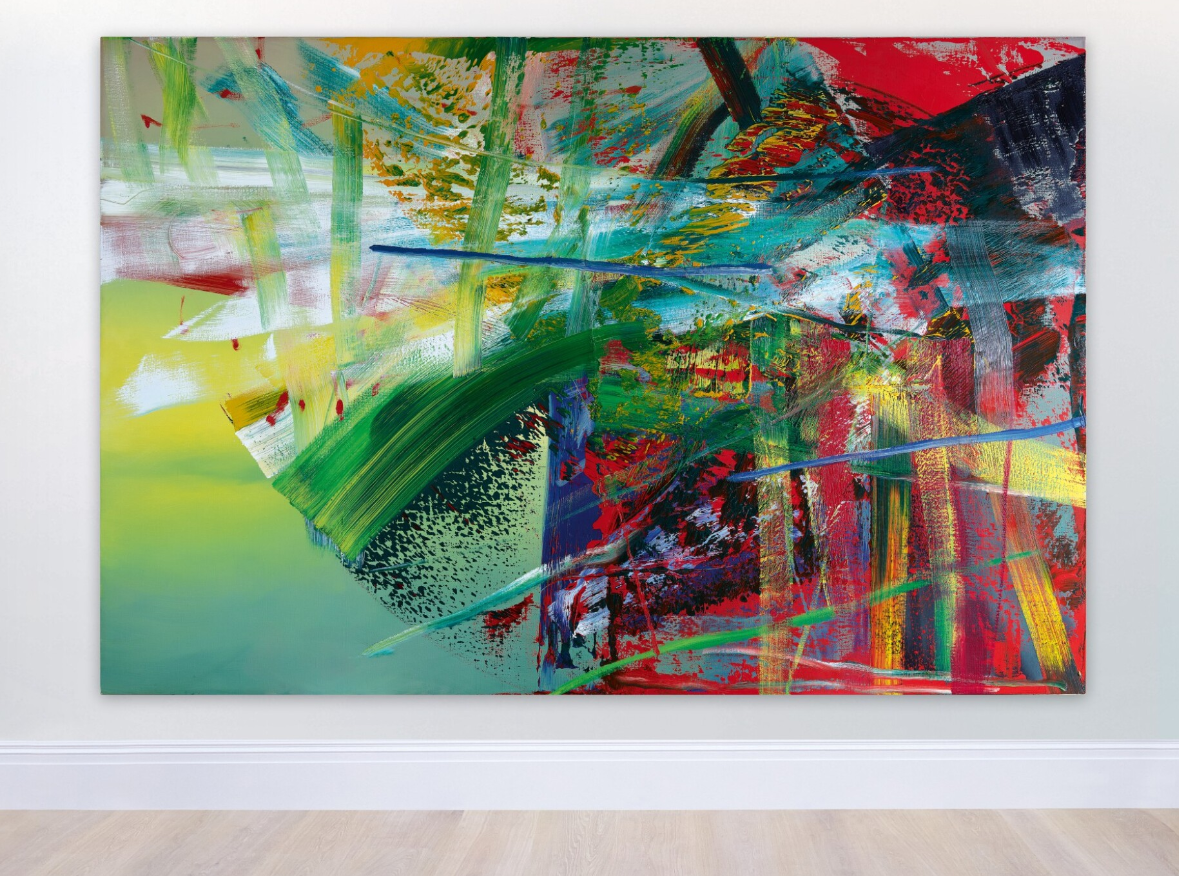
GERHARD RICHTER (b. 1932)
Schwefel (Sulphur)
Oil on canvas
200.3 x 300.5 cm (78 7/8 s 118 3/8 inches)
Signed, dated 1985 and numbered 573-1 on the reverse
#6. S.D., 1985
Sotheby’ London: 14 October 2021
Estimated: GBP 7,000,000 – 9,000,000
GBP 9,619,800 / USD 13,165,184
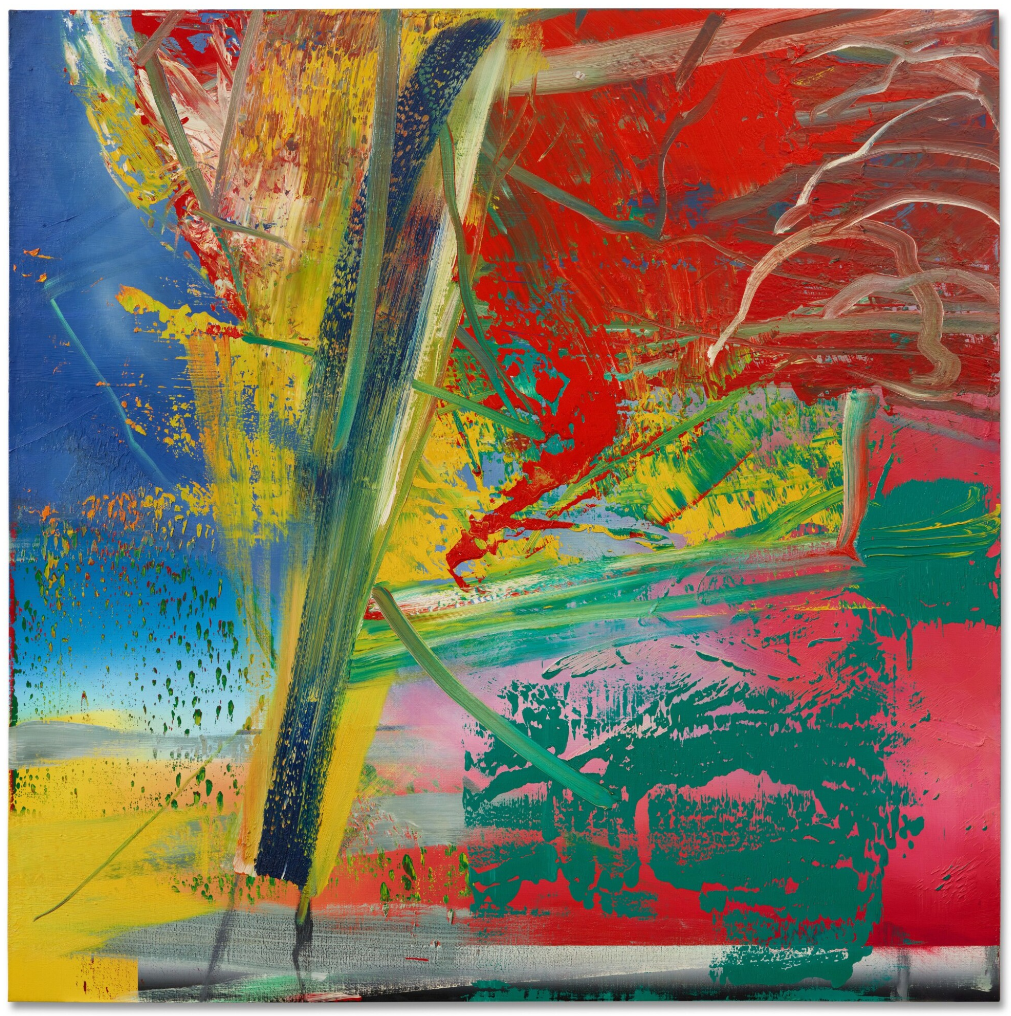
GERHARD RICHTER (b. 1932)
S.D., 1985
Oil on canvas
200×200 cm (78 3/4 x 78 3/4 inches)
Signed, dated 1985 and numbered 575-2 on the reverse
#7. Kerzenschein (Candle-light), 1984
Phillips Hong-Kong: 30 November 2021
Estimated: HKD 55,000,000 – 75,000,000
HKD 101,970,000 / USD 13,078,275
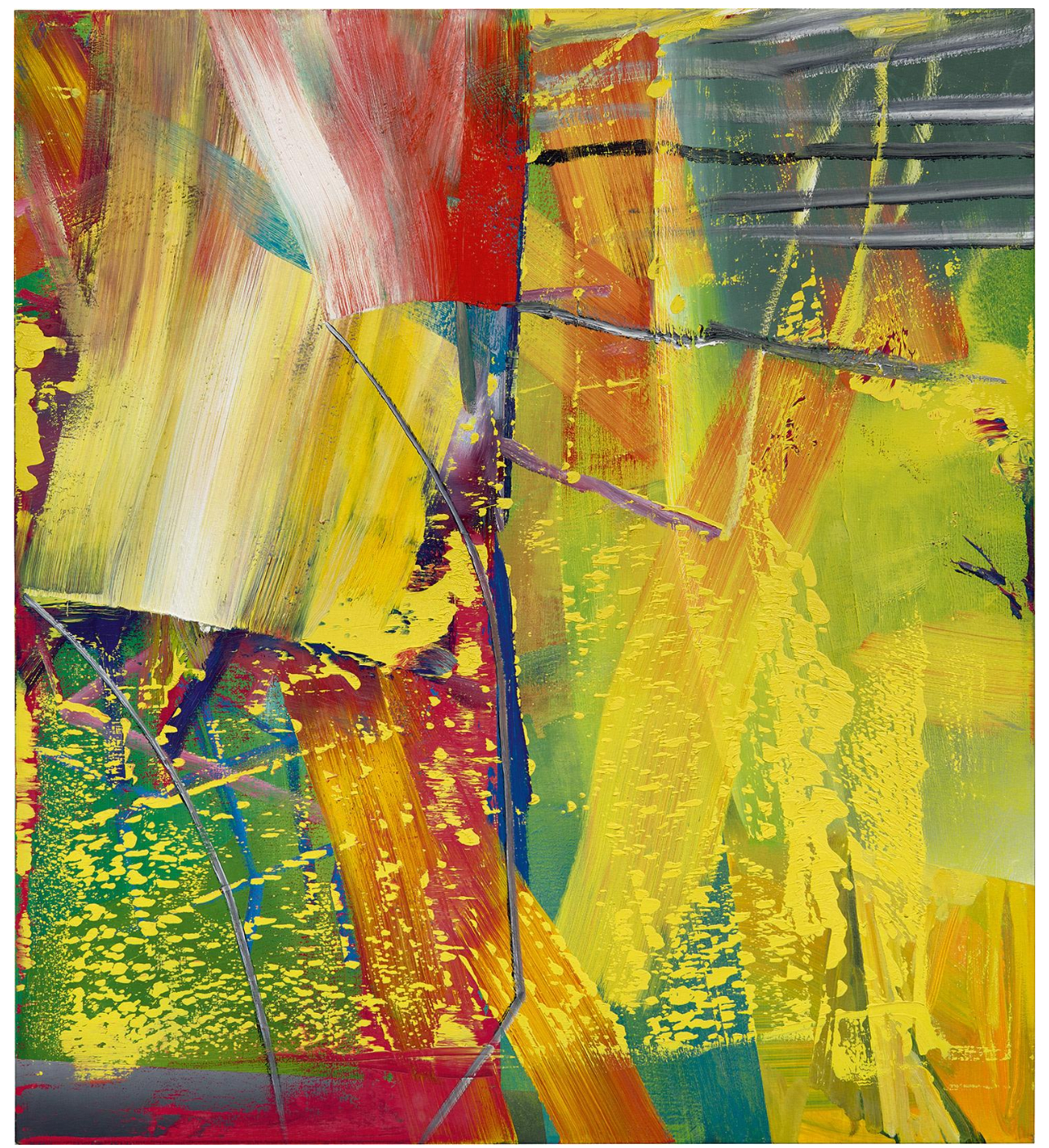
GERHARD RICHTER
Kerzenschein (Candle-light), 1984
Oil on canvas
200.3 x 179.7 cm (78 7/8 x 70 3/4 inches)
Signed, numbered and dated ‘554-3 Richter 1984’ on the reverse
#8. Abstraktes Bild (940-7), 2015
Phillips Hong-Kong: 8 June 2021
Estimated: HKD 75,000,000 – 95,000,000
HKD 95,100,000 / USD 12,255,313
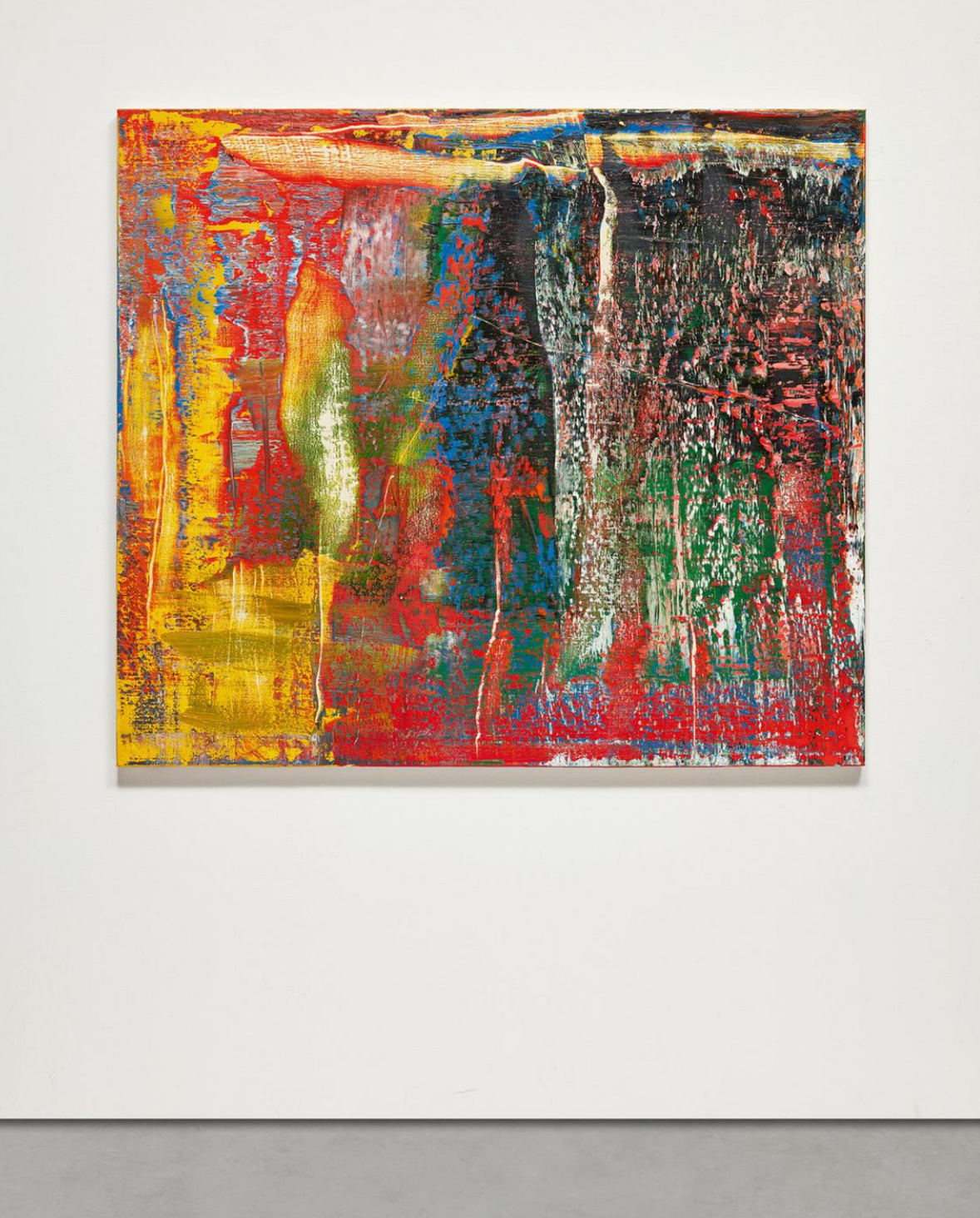
GERHARD RICHTER
Abstraktes Bild (940-7), 2015
Oil on canvas
140×160 cm (55 1/8 x 62 7/8 inches)
Signed, numbered and dated ‘940-7 Richter 2015’ on the reverse
#9. Abstraktes Bild, 1985
Sotheby’ London: 14 October 2021
Estimated: GBP 5,000,000 – 7,000,000
GBP 7,896,300 / USD 10,806,487
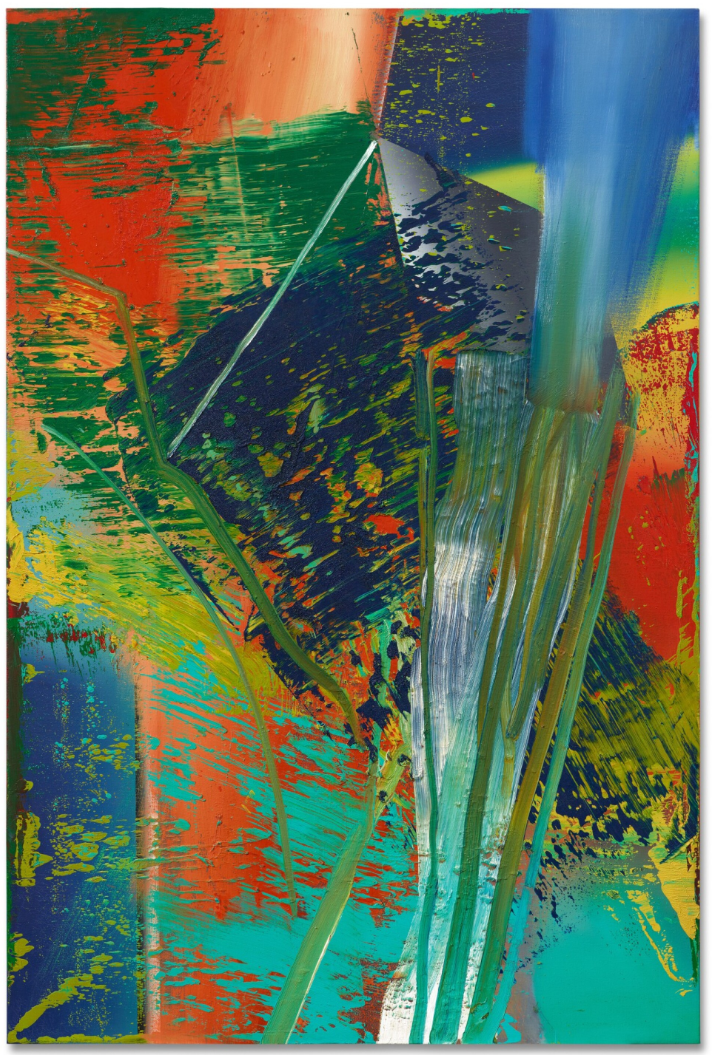
GERHARD RICHTER (b. 1932)
Abstraktes Bild, 1985
Oil on canvas
180×120 cm (71 x 47 1/8 inches)
Signed, dated 1985, and numbered 576-1 on the reverse
USD 10 million
#10. Abstraktes Bild, 1985
Sotheby’ London: 14 October 2021
Estimated: GBP 5,000,000 – 7,000,000
GBP 5,943,000 / USD 8,133,297
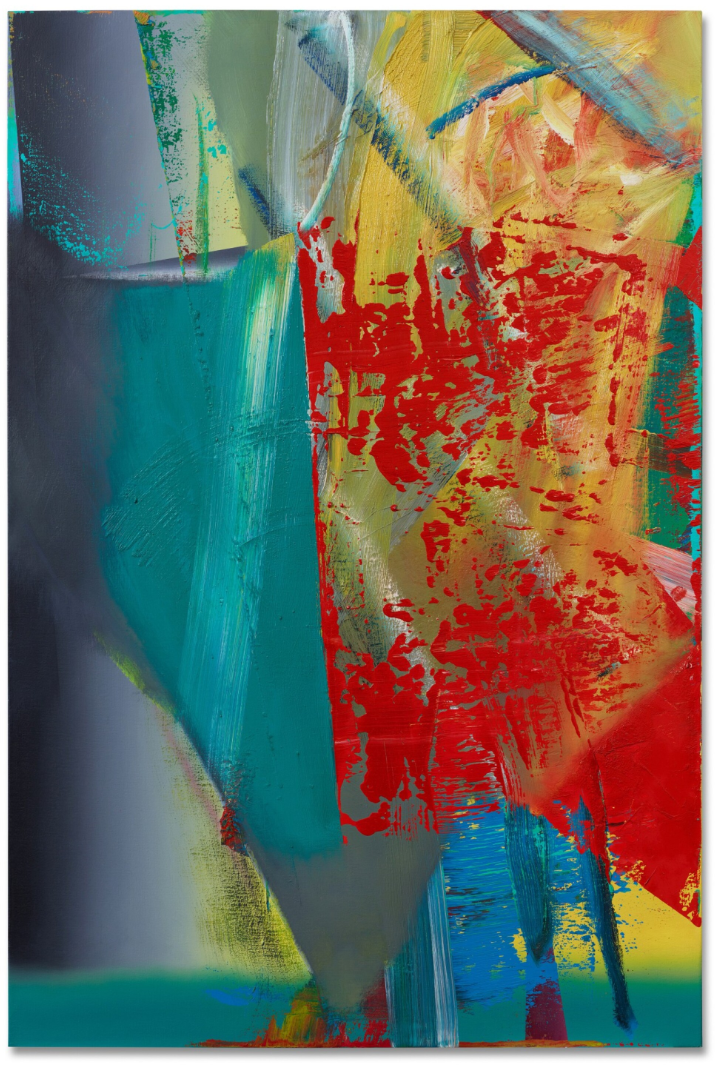
GERHARD RICHTER (b. 1932)
Abstraktes Bild, 1985
Oil on canvas
180×120 cm (71 x 47 1/8 inches)
Signed, dated 1985 and numbered 576-2 on the reverse
#11. Abstraktes Bild, 1992
Christie’s New-York: 11 May 2021
Estimated: USD 9,000,000 – 12,000,000
USD 6,990,000
GERHARD RICHTER (B. 1932), Abstraktes Bild | Christie’s (christies.com)
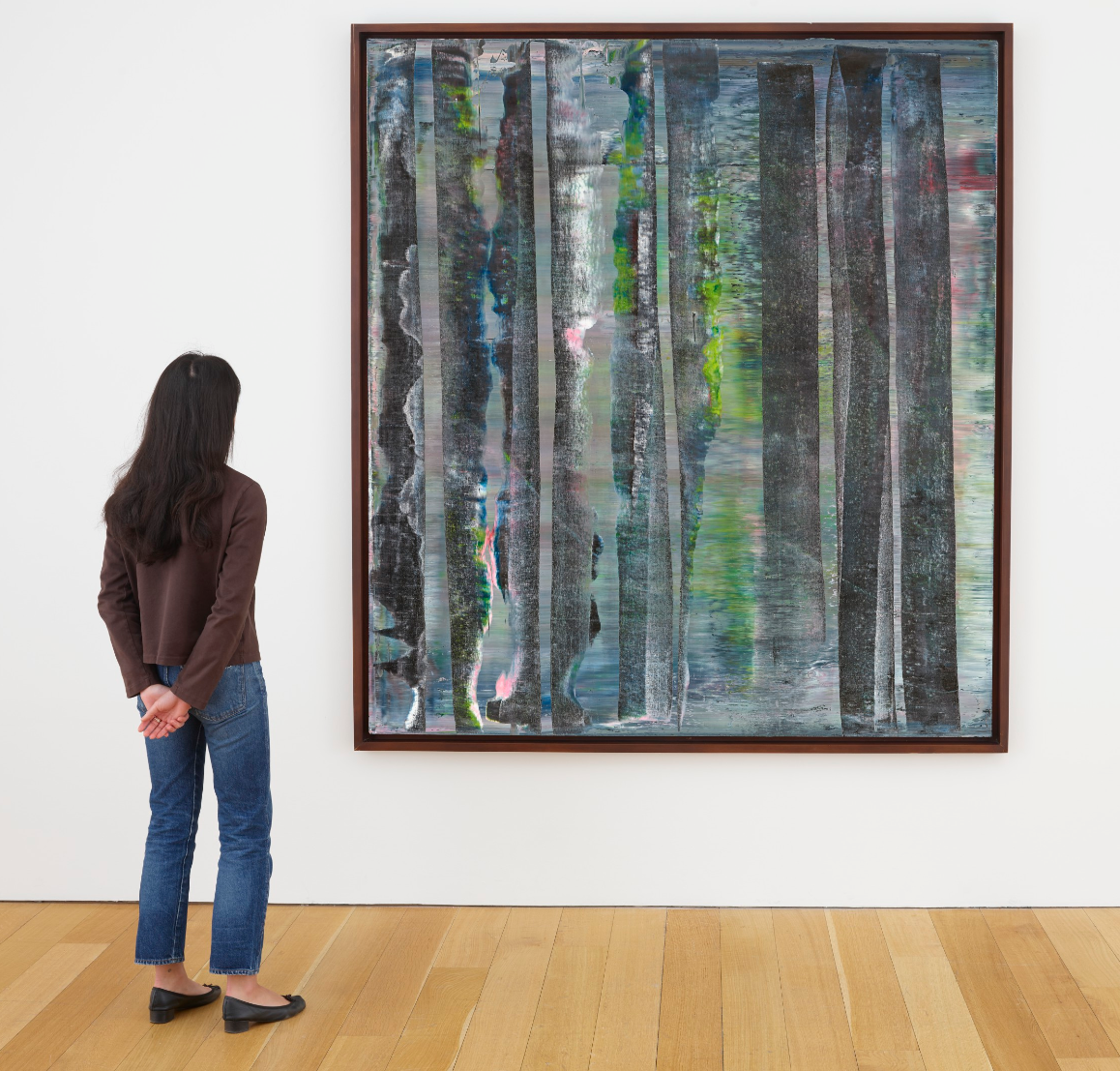
GERHARD RICHTER (B. 1932)
Abstraktes Bild, 1992
Oil on canvas
200×179 cm (78 3/4 x 70 1/2 inches)
Signed, numbered and dated ‘769-4 Richter 1992’ (on the reverse)
#12. Weiß (White), 1988
Phillips New-York: 19 November 2021
Estimated: USD 4,000,000 – 6,000,000
USD 5,717,000
Gerhard Richter – 20th Century & Co… Lot 29 November 2021 | Phillips
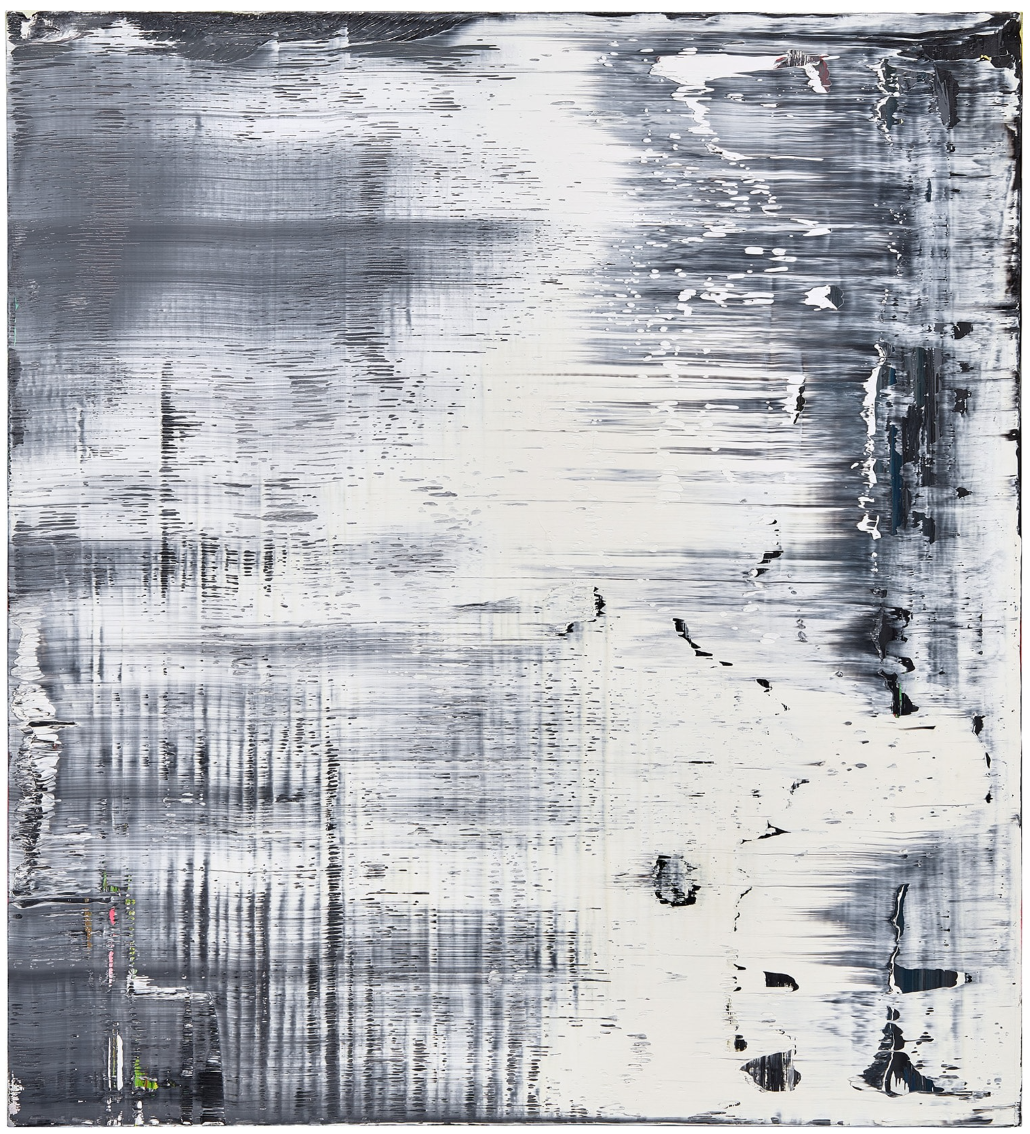
GERHARD RICHTER
Weiß (White), 1988
Oil on canvas
112.1 x 101.9 cm (44 1/8 x 40 1/8 inches)
Signed, inscribed and dated “685-1 Richter 1988” on the reverse
#13. Abstraktes Bild (940-2), 2015
Phillips New-York: 23 June 2021
Estimated: USD 4,500,000 – 5,500,000
USD 5,112,000
Gerhard Richter – 20th Century & Contem… Lot 26 June 2021 | Phillips
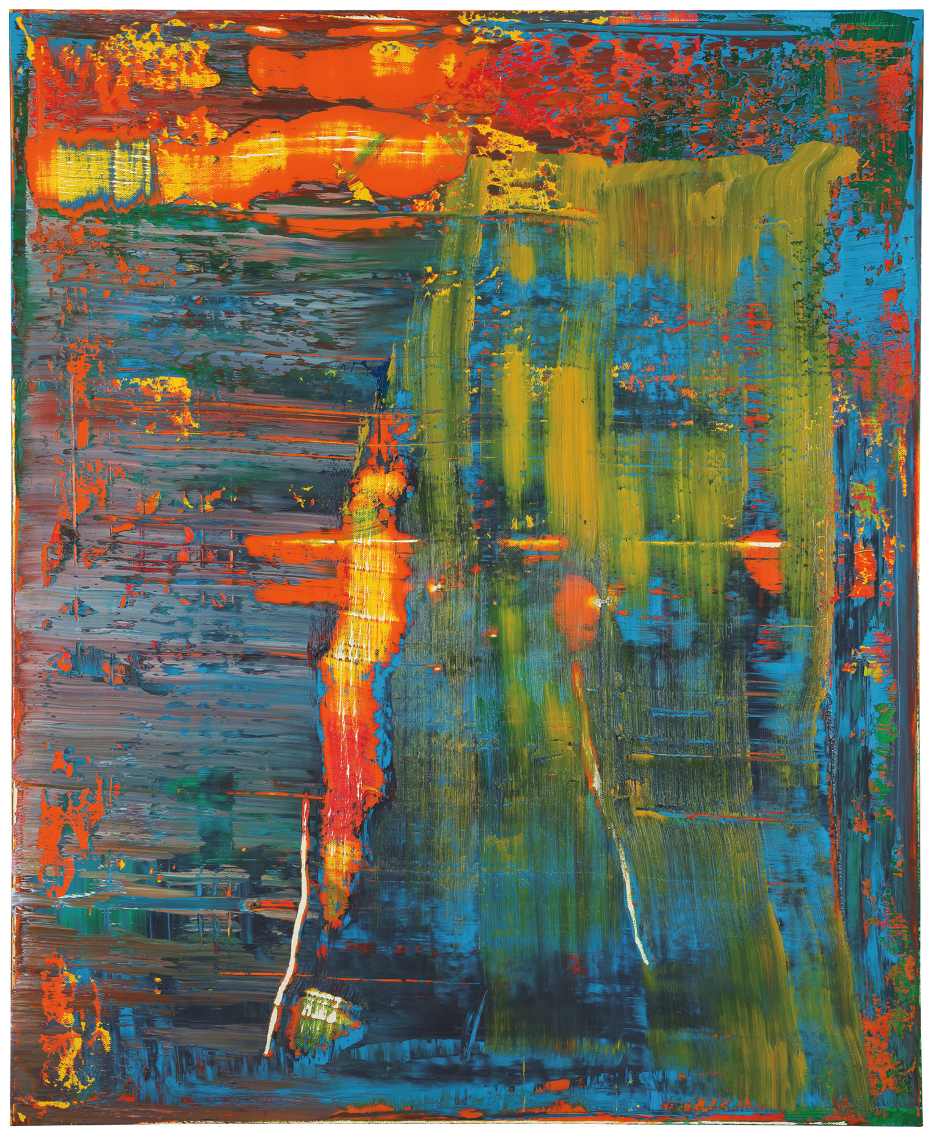
GERHARD RICHTER
Abstraktes Bild (940-2), 2015
Oil on canvas
117 x 96.2 cm (46 1/8 x 37 7/8 inches)
Signed, inscribed and dated “940-2 Richter 2015” on the reverse
USD 5 million
#14. Abstraktes Bild, 1988
Christie’s New-York: 11 November 2021
Estimated: USD 2,500,000 – 3,500,000
USD 4,350,000
GERHARD RICHTER (B. 1932), Abstraktes Bild | Christie’s (christies.com)
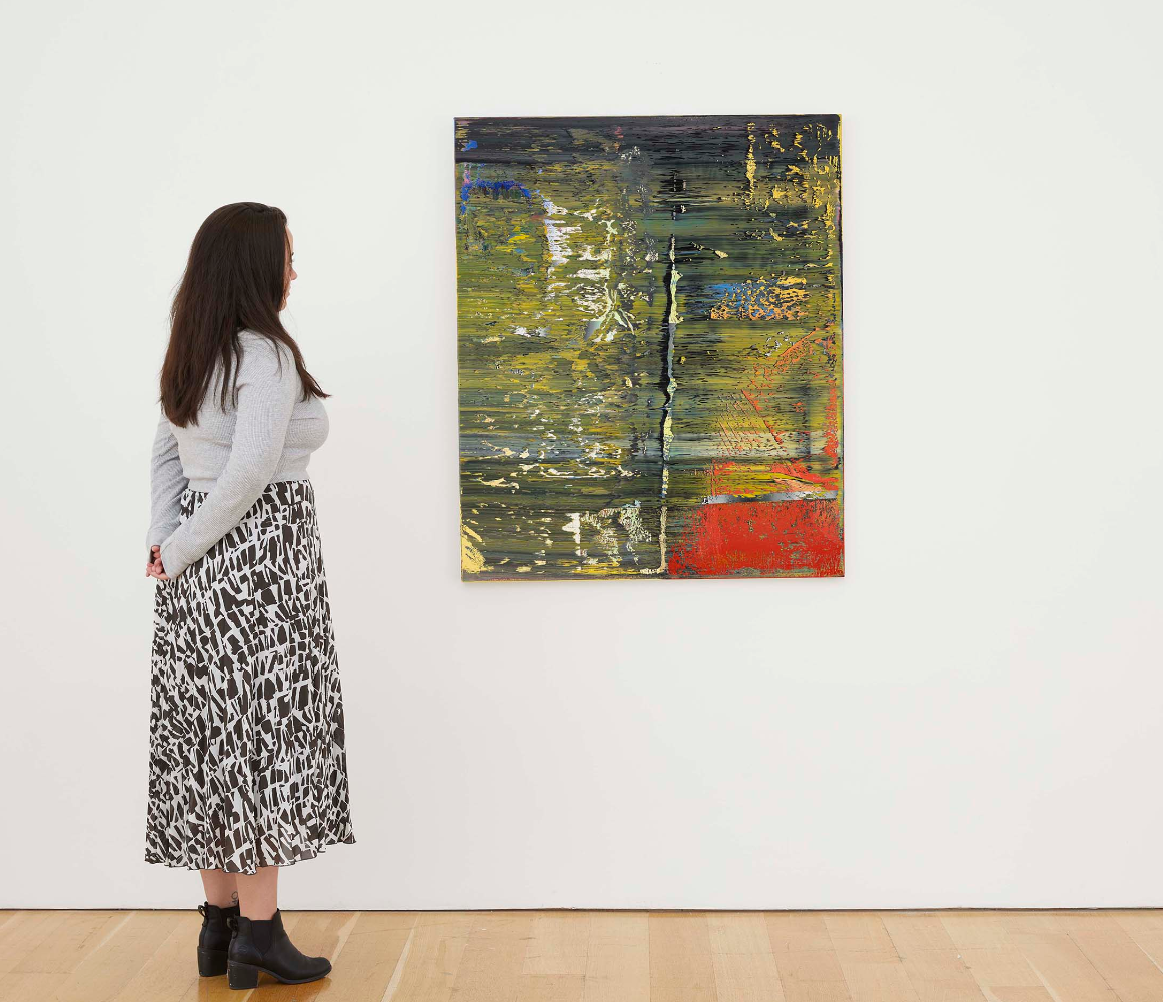
GERHARD RICHTER (B. 1932)
Abstraktes Bild, 1988
Oil on canvas
120 x 99.7 cm (47 1/4 x 39 1/4 inches)
Signed, inscribed and dated ‘679-3 Richter 1988’ (on the reverse)
#16. Abstraktes Bild, 2009
Christie’s New-York: 14 May 2021
Estimated: USD 1,800,000 – 2,500,000
USD 3,630,000
GERHARD RICHTER (B. 1932), Abstraktes Bild | Christie’s (christies.com)
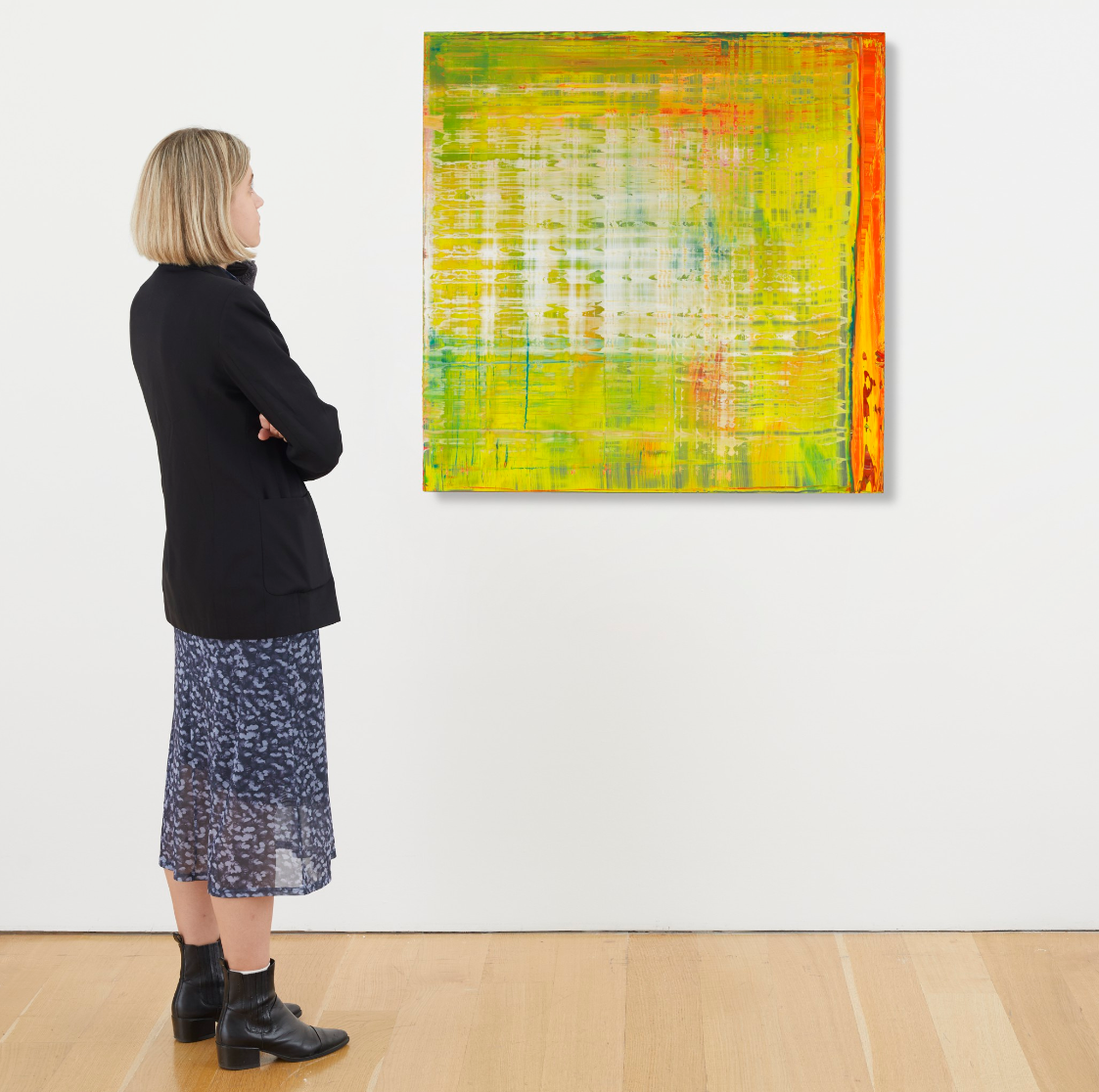
GERHARD RICHTER (B. 1932)
Abstraktes Bild, 2009
Oil on Alu-Dibond
84.1 x 84.1 cm (33 1/8 x 33 1/8 inches)
Signed, inscribed and dated ‘910-3 Richter 2009’ (on the reverse)
#17. Sammler mit Hund, 1966
Sotheby’s New-York: 15 November 2021
Estimated: USD 1,500,000 – 2,000,000
USD 3,166,000
Sammler mit Hund | The Macklowe Collection | 2021 | Sotheby’s (sothebys.com)
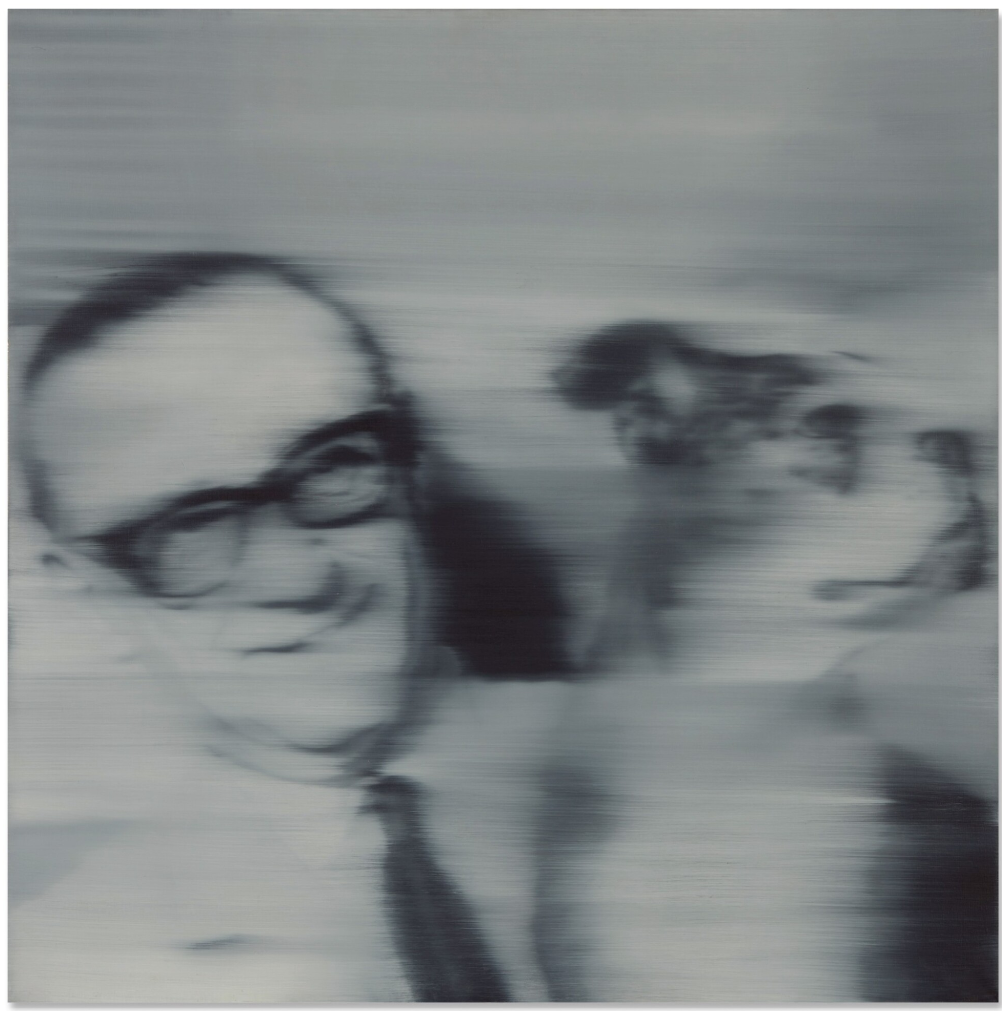
GERHARD RICHTER (b.1932)
Sammler mit Hund, 1966
Oil on canvas
90×90 cm (35 1/2 x 35 1/2 inches)
Signed, titled and dated 1966 on the reverse
USD 1 million
#29. Fuji (839-41), 1996
Sotheby’s New-York: 13 May 2021
Estimated: USD 350,000 – 450,000
USD 437,500
Fuji (839-41) | Contemporary Art Day Auction | 2021 | Sotheby’s (sothebys.com)
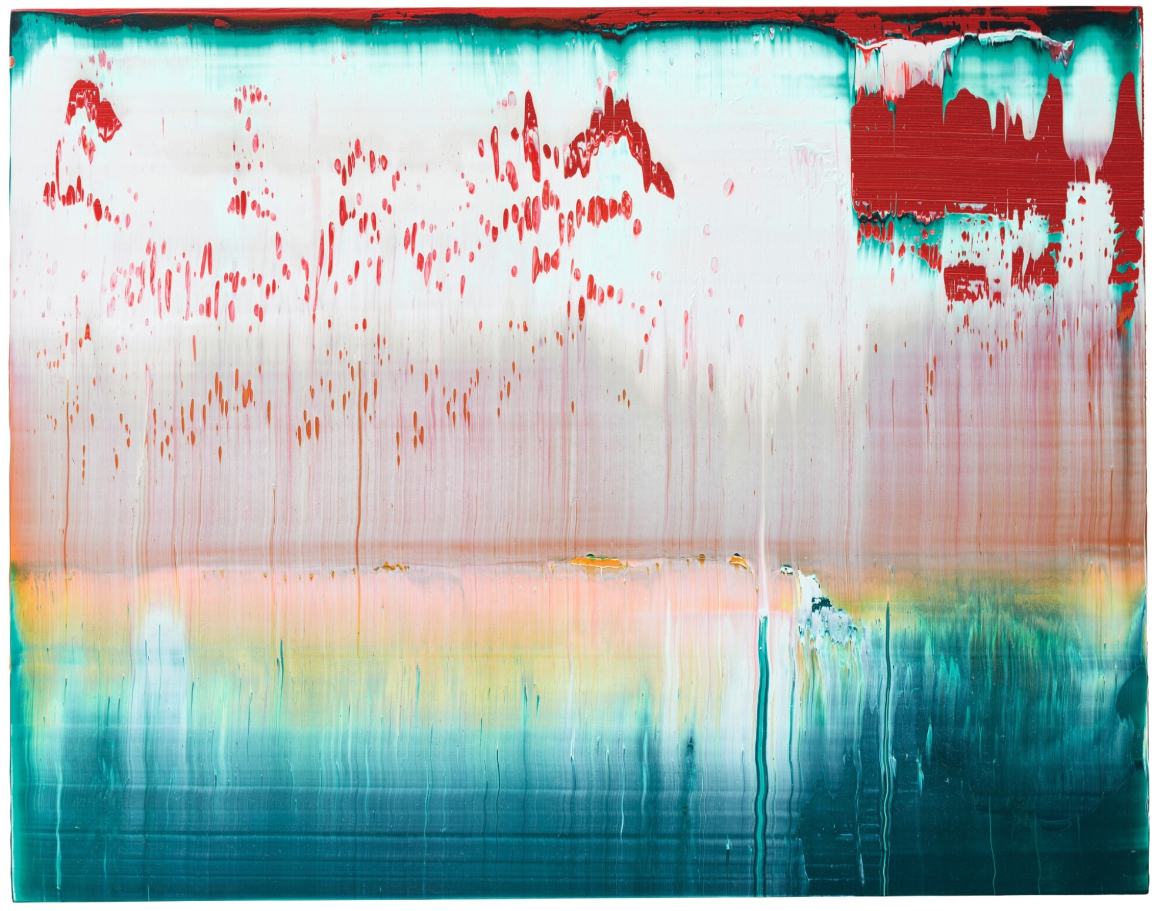
GERHARD RICHTER (b. 1932)
Fuji (839-41), 1996
Oil on steel panel
28.9 x 36.8 cm (11 3/8 x 14 1/2 inches)
Signed on the reverse
PART III: FOCUS
Abstraktes Bild
The Abstraktes Bild series celebrates Richter’s mastery of the squeegee technique, a creative method that is crucial in bringing Richter’s abstract paintings to life. Using a large, broad squeegee to scrape away layers of impasto, Richter blurs and mixes pigment in the process, partially concealing and partially revealing what was originally laid beneath. Colors, textures, and layers intermingle, coalescing into organic and beautiful ‘accidents’ that emerge from the canvas.
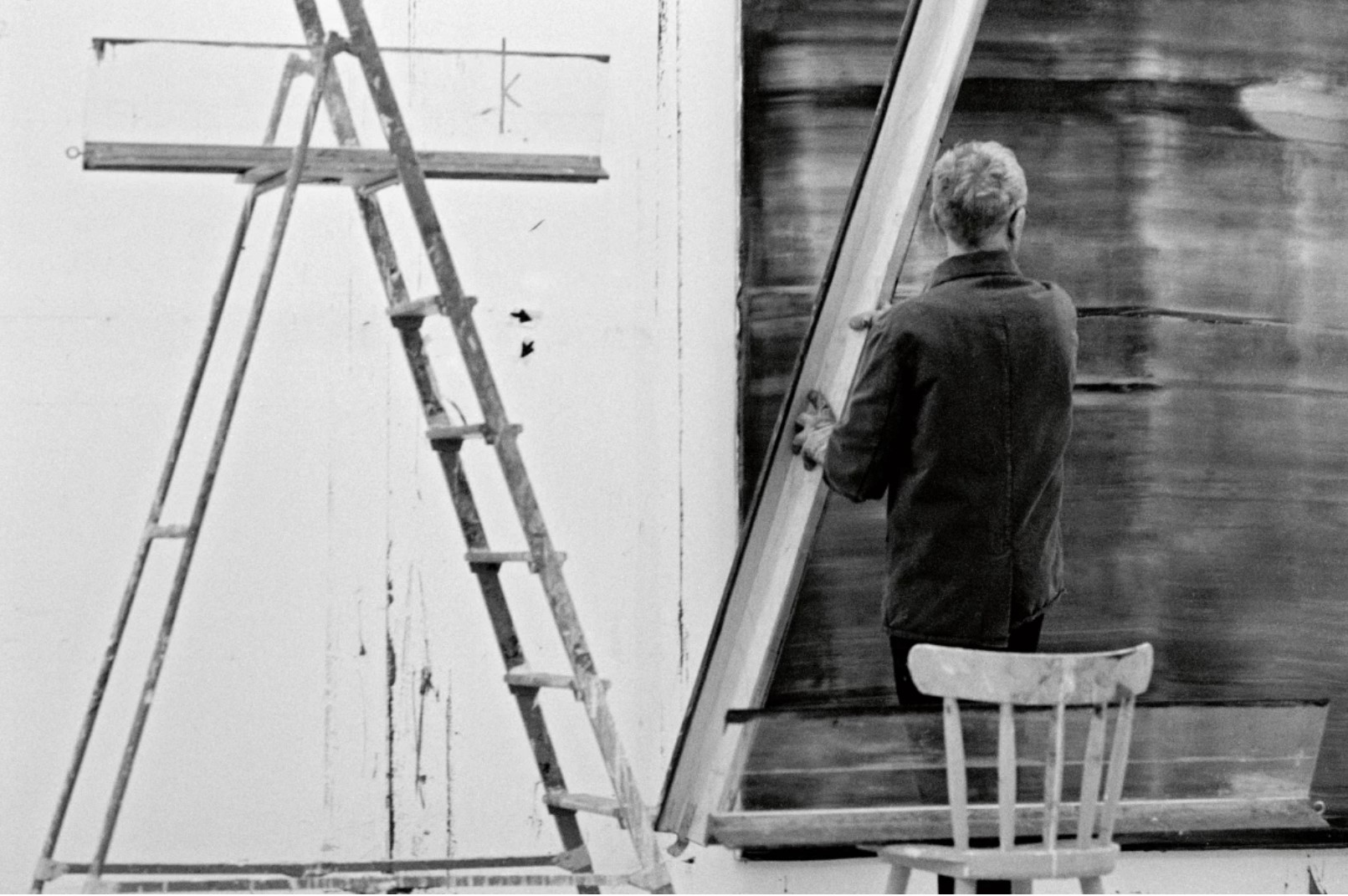
THE ARTIST IN HIS STUDIO, 1994 / IMAGE: © BENJAMIN KATZ © DACS 2022
ARTWORK: © GERHARD RICHTER 2022, COURTESY GERHARD RICHTER ARCHIVE DRESDEN
Given a squeegee, oil paint, and two wooden panels, the result of each Abstrakte Bilder is different, due the role of chance in the painting process. While Richter has control of what colors he uses, where he applies them, and how he moves the squeegee (in what direction, with what force), it is chance that creates the gradations of color across the surface; chance that stipples the lime green in its idiosyncratic, irreplicable pattern over the black center; chance that scratches through the teal and midnight blue. Abstraction is a way to give form to chance; “the moment of chance is very important,” Richter explains, and “it is guided and used” in Abstraktes Bild. Crucially, chance takes place over time in Abstraktes Bild. The work is not the result of one swipe of the squeegee, or a spontaneous splat of dripped paint. As does nature, Richter’s work takes time. While not etymologically related, build as a homophone for Bild is a useful interpretive framework here. Richter builds up the painted surface of Abstraktes Bild; the work builds upon itself, layer upon layer, like rings make a tree, sediment makes a rock, bees build a hive. Abstraktes Bild records Richter’s movement with the squeegee; the process of nature, of work, over time. Richter takes up the generative process of nature as his subject in Abstraktes Bild, rather than directly representing a landscape or a tree, and it is this evocation of process that gives Abstraktes Bild its rich associative power. Abstraktes Bild is a close-up of the bark of a tree. It is a comet-strewn night sky. It is the iridescent wings of a beetle. It is these and a thousand more things, and that, Richter says, is where the Abstrakte Bilder “get their effect from, the fact that they incessantly remind you of nature, and so they’re almost naturalistic anyhow.”
PLEASE CLICK BELOW FOR A DETAILED REVIEW OF ABSTRAKTES BILD
Grau (Grey)
“For me, grey is the welcome and only possible analogy of indifference, of the refusal to testify, lack of opinion, formlessness. But because grey, just like formlessness and so on, can only be an idea, I can only create a color that purports to be grey, but isn’t. The image is thus a mixture of grey as fiction and grey as a visibly proportionate color area.”
Grau, 1970
Lempertz Cologne: 4 December 2025
Estimated: EUR 180,000 – 200,000
EUR 214,200 / USD 249,745
GERHARD RICHTER
Grau, 1970
Oil on canvas
115×95 cm (45 1/4 x 37 3/8 inches)
Signed and dated ‘Richter 1970’ on canvas verso and with work number
The present painting Grau (1970) by Gerhard Richter belongs to his core series of Graue Bilder (1968-1976) which mark a pivotal point in his artistic development. His photographic pictures of the 1960s were already characterized by a tonal restraint founded in their source material of black and white photographs. The abstract, monochrome works grew from a phase in which Richter was searching for new forms of expression. The start of the work series resulted from the attempt to overpaint works the artist considered unsuccessful in a destructively re-creative process. In doing so, Richter experimented with mixing black, white, brown and blue to produce differentiated nuances of grey which he applied with brush, palette knife or roller.
The Graue Bilder differ from one another through the surface qualities determined by their brushwork, as well as their shades of grey. The present work exhibits a moving surface character which finds its correlation in the changing nuances of the grey. The painting was presented in the visionary first exhibition of his work which took place in 1974-75 in the museum in Mönchengladbach and was exclusively dedicated to the presentation of the Graue Bilder.
For Richter, grey incorporates a particular ambivalence: It is neither visible nor invisible but enables – similarly to photography – the ‘nothing’ to be made visible: Richter’s grey is the distancing from the pathos of modern monochromy, its search for (idealistic or materialistic) essence.
Grau (Grey), 1974
Christie’s London: 15 October 2025
Estimated: GBP 600,000 – 800,000
PASSED
GERHARD RICHTER (B. 1932), Grau (Grey) | Christie’s
GERHARD RICHTER (B. 1932)
Grau (Grey), 1974
Oil on canvas
250 x 195.5 cm (98 3/8 x 77 inches)
Signed, numbered and dated ‘Richter 1974 363⁄4’ (on the reverse)
Painted in 1974, Grau (Grey) is a monumental work from Gerhard Richter’s important series of Grey Paintings. Towering two and a half meters in height, its monochrome surface shifts and shimmers before the viewer, modulated by subtle variations of texture. Begun during the late 1960s, and pursued until 1976, Richter’s Grey Paintings occupied pivotal territory in the transition from his greyscale photorealist paintings to his first gestural abstracts. Together with his Color Charts and Red-Blue-Yellow series, they represent the artist’s attempt to distil visual representation to its most essential components. Richter believed that all painting, whether figurative or abstract, was a lie posing as the truth. By stripping the picture plane of content, he sought to expose this fact: the present work’s grey expanse refers to nothing but itself, yet its surface—like a smoke screen—seems to suggest subtle illusory depths. The work was part of the landmark group of thirty-one Grey Paintings shown at the Städtisches Museum, Mönchengladbach in 1974, and was acquired by the Crex Collection four years later. It has since been widely exhibited, and was on long term loan to the Kunstmuseum Winterthur between 1998 and 2003.
Yves Klein, Untitled blue monochrome (IKB 82), 1959. Solomon R. Guggenheim Museum, New York. Artwork: © Succession Yves Klein c/o ADAGP, Paris and DACS, London 2025. Digital image: © 2025 The Solomon R. Guggenheim Foundation/Art Resource, NY/ Scala, Florence.
For Richter, the indeterminate qualities of grey played directly into his fascination with the instability of all picture-making.
“The color evokes neither feelings nor associations. It is really neither visible nor invisible. Its inconspicuousness gives it the capacity to mediate, to make visible, in a positively illusionistic way, like a photograph. It has the capacity that no other color has, to make “nothing” visible’.”
By choosing a hue seemingly divorced from all external phenomena, Richter sought to demonstrate how even the most basic artistic act harbors the potential for deception. In certain lights, the work’s surface appears to ripple like water or clouds, only to deflect our gaze when we attempt to dig deeper. Like the blurred surfaces of his photo-paintings, or indeed the complex depths of his later abstracts, all sense of meaning and order remains tantalizingly beyond reach.
“Grey is a color—and sometimes, to me, the most important of all.”
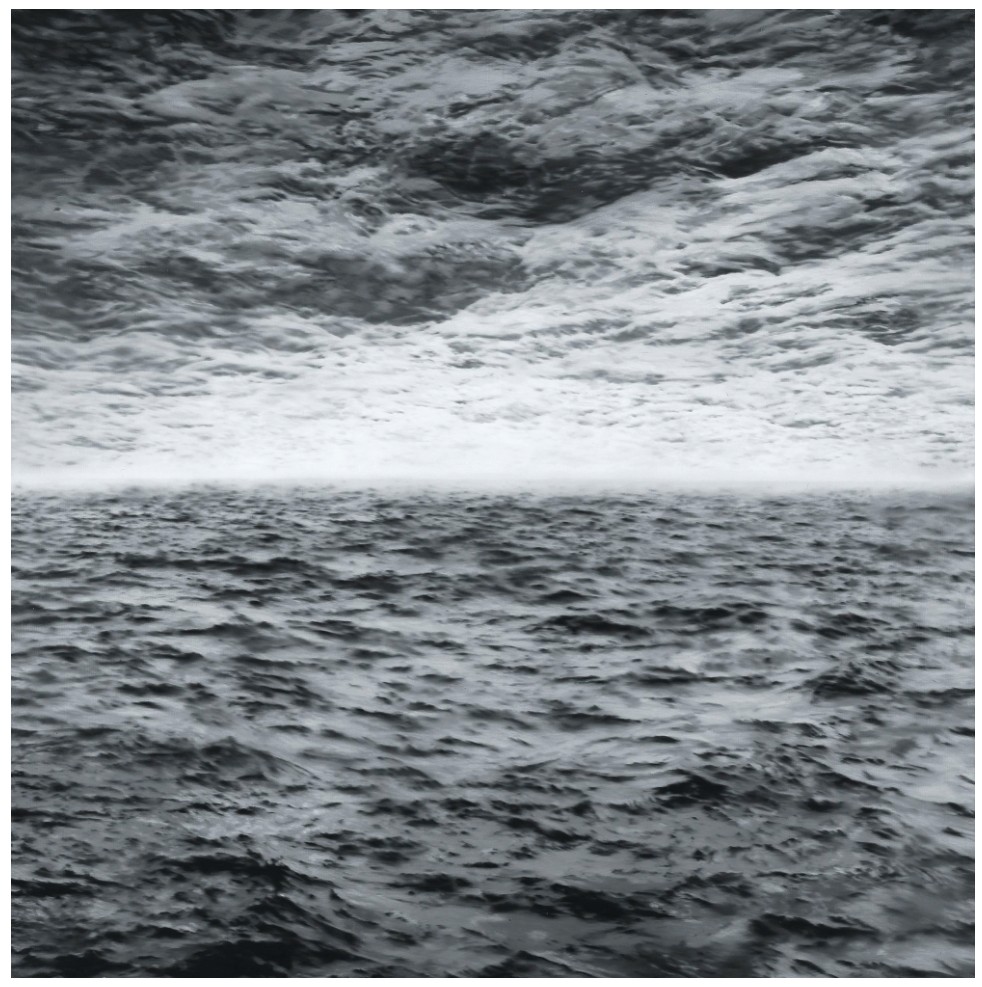
Gerhard Richter, Seestück, 1970. Nationalgalerie, Staatliche Museen zu Berlin. © Gerhard Richter 2025 [0110].
The Grey Paintings followed a renewed interest in monochrome painting within the wider art world—from Yves Klein’s distinctive blue canvases, to the elemental creations of Minimalism and the ‘black paintings’ of Robert Rauschenberg. While many of these artists used it as a vehicle for highlighting art’s objective nature, Richter used his monochromes to make important observations about human subjectivity. By deconstructing the painterly surface, he revealed it anew as a site of flawed beauty—a space where fantasies materialized as quickly as they faded away. For Richter, a photograph could never be any more ‘truthful’ than a mass of abstract brushstrokes; each was a collusion of visual elements onto which we, as viewers, were invited to project meaning. In the Grey Paintings, Richter offered an elegant illustration of this fact: only when the picture plane contains nothing do we realize our propensity to fill it with ‘something’. ‘Picturing things, taking a view, is what makes us human’, said Richter; ‘art is making sense and giving shape to that sense’ (G. Richter, ‘Notes 1962’, reproduced in Gerhard Richter: Texts, Writings, Interviews and Letters 1961-2007, London 2009, p. 14). It was a vital revelation in a world that had lost faith in painting, and would come to guide the evolution of Richter’s practice over the ensuing decades.
Grau (Grey), 1974
Christie’s London: 15 October 2025
Estimated: GBP 120,000 – 180,000
PASSED
GERHARD RICHTER (B. 1932), Grau (Grey) | Christie’s
GERHARD RICHTER (B. 1932)
Grau (Grey), 1974
Oil on canvas
80.5 x 60 cm (31 3/4 x 23 5/8 inches)
Signed, numbered and dated ‘ 364 / 2 Richter, 1974’ (on the reverse)
An inscrutable, opaque plane of its eponymous color, Grau (Grey) (1974) belongs to a pivotal series in Gerhard Richter’s career. The Graue Bilder or ‘Grey Paintings’, a sequence of entirely grey abstract paintings made between 1968 and 1976, demonstrate an artist seeking a new mode of expression. Executed in a dark grey oil paint applied to the canvas as a seamless color field, the present work was created for a major 1974 exhibition of the Graue Bilder at the Städtisches Museum in Mönchengladbach, which later travelled to the Kunstverein Braunschweig. Celebrated at the time as a ‘manifesto in Grey’, the exhibition was accompanied by a limited edition boxed artist’s book.
Jean Auguste Dominique Ingres, Odalisque in Grisaille, circa 1824-34.
Metropolitan Museum of Art, New York. Digital image: Bridgeman Images.
Richter commenced work on the Graue Bilder after achieving success with his photo-paintings. The color grey was already a feature of his practice. His photorealistic works of the 1960s often featured a grisaille palette inherent to their origins in newsprint imagery or black-and-white photographs. Towards the end of that decade Richter began a gradual turn to abstraction—partly inspired by contemporaries such as the American Minimalist Robert Ryman and his friend Blinky Palermo—in which the Graue Bilder played an important role, culminating in his vibrant canvases of the 1980s. His first grey paintings emerged as an attempt to salvage unsuccessful works by covering them over: a process melding destruction and rebirth. This prompted him to explore the potential of all-grey work. Richter would mix black and white paint with brown and blue pigments to create a spectrum of grey hues, which he would then apply to a canvas with a brush, putty knife or roller. The result is an unparalleled exploration into the variety of expression and nuance that can be achieved with variations upon a single color.
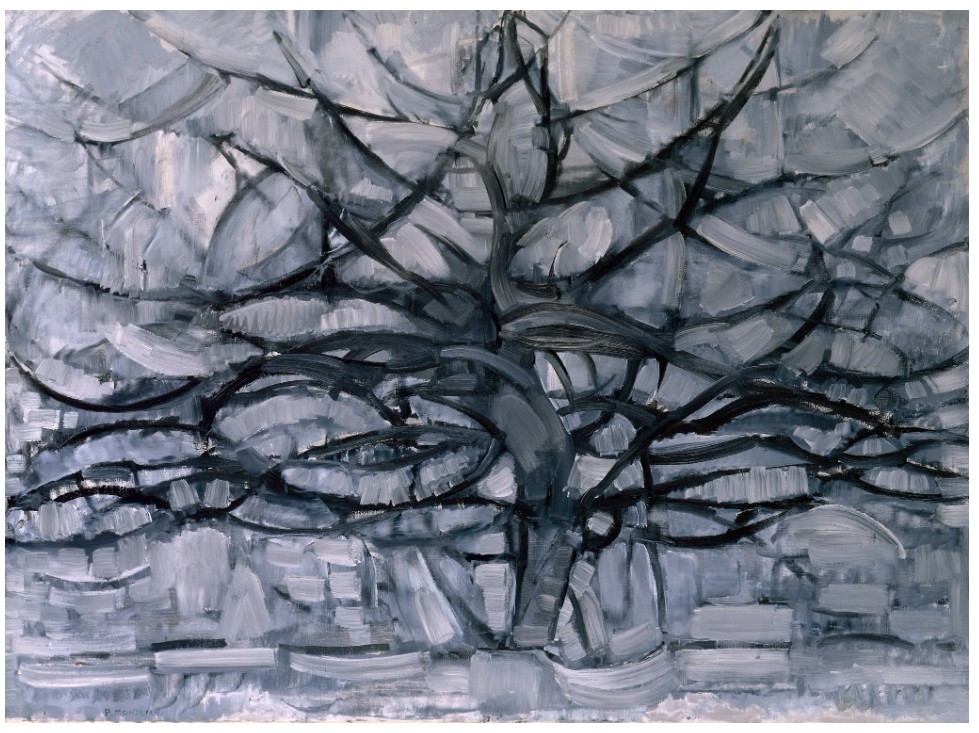
Piet Mondrian, Gray Tree, 1911. Kunstmuseum Den Haag, The Hague. Via Wikimedia Commons.
“Grey is really neither visible nor invisible. Its inconspicuousness gives it the capacity to mediate, to make visible, in a positively illusionistic way, like a photograph. It has the capacity that no other color has, to make “nothing” visible …”
The series also extends Richter’s career-long investigation of painting’s ability to capture truth. The present painting is a profound expression of Richter’s ever-questioning practice.
Grau (Grey), 1970
Christie’s London: 14 October 2023
Estimated: GBP 150,000 – 200,000
GBP 315,000 / USD 381,957
GERHARD RICHTER (B. 1932), Grau (Grey) | Christie’s (christies.com)
GERHARD RICHTER (B. 1932)
Grau (Grey), 1970
Oil on canvas
86.1 x 91 cm (33 7/8 x 35 3/4 inches)
Signed, inscribed and dated ‘247⁄9 Richter, 1970’ (on the reverse)
With its intricately textured, monochrome surface, the present work, painted in 1970, belongs to the pivotal series of Grau (Grey) paintings that marked a new chapter in Gerhard Richter’s practice. Begun in 1967 and pursued until the late 1970s, these works mark significant territory in the artist’s shift from photorealist paintings to his first gestural abstracts. Reduced to a single plane of color, the work reflects Richter’s career-defining desires to sublimate art to its most essential components, as also demonstrated in his Color Charts and Red-Blue-Yellow series. Though devoid of figurative subject matter, Grau (Grey) testifies to the bewitching possibilities of nothingness. The canvas is animated by ethereal swirls of brushwork that ripple like clouds or waves. Beneath the obscure, grey fog one can glimpse the faint line of a horizon, and blue-toned painted underlayers suggest a sea or landscape. Believing that representing ‘nothing’ still constitutes a viable and decisive representation of something, Richter’s layering of one expansive abyss over another marks a unique and powerful example of his conceptual aims. The present work was included in the artist’s major retrospective of 1988, which opened at the Art Gallery of Ontario and travelled across the States.
“My grey monochromes have the same illusionistic implications as my landscapes. I want them to be seen as narratives – even if they are narratives of nothingness. Nothing is something. You might say they are like photographs of nothing.”
The present painting’s facture attests to Richter’s enduring fascination with the unstable nature of picture-making. Overpainting his photorealist representation of the physical world with a color that ‘evokes neither feelings nor associations’, the artist reveals the nihilistic origins of his Grau series as a radical deconstruction of the pictorial surface. Proposing that even the most basic, abstract artistic gesture invokes the potential for illusion and deception, Richter draws parallels between all processes of image-making. Whether a photograph, painted seascape, or abstract plane of color, each renders known phenomena—light, shadow, form and movement—upon an artificial surface. In the Grau paintings, Richter offers an insightful illustration of this fact. Disbanding pictorial traditions, his depiction of nothing is an absolute gesture of freedom.
Spiegel, grau (Mirror, grey), 1991
Sotheby’s London: 27 June 2023
Estimated: GBP 400,000 – 600,000
GBP 457,200 / USD 583,014
GERHARD RICHTER (b. 1932)
Spiegel, grau (Mirror, grey), 1991
Pigment on glass
194.3 x 95 cm (76 1/2 x 37 3/8 inches)
Signed, dated 1991 and numbered 738-2 (on the reverse)
Leaving behind traditional painterly preoccupations with subject and composition, Gerhard Richter’s Spiegel, grau (Mirror, grey) hails from a small series of works completed by the artist in the early 1990s; a complex, highly conceptual body of work that poses a remarkable philosophical enquiry into the constructed reality of pictorial space. A phenomenological visual experience engages the spectator in the complex dialectic at the interstice of figuration and abstraction, enabling the artist to emphasize the discrepancy between the mere image of reality and reality itself, while embracing notions of enigma, uncertainty and transience. Building on the critical conceptual tendencies first explored by the artist in the formative 1960s, with seminal works such as Vier Glasscheiben, the Color Charts and his monochromatic abstract compositions, Spiegel, grau entirely captures the intellectual essence of Richter’s work in painting.
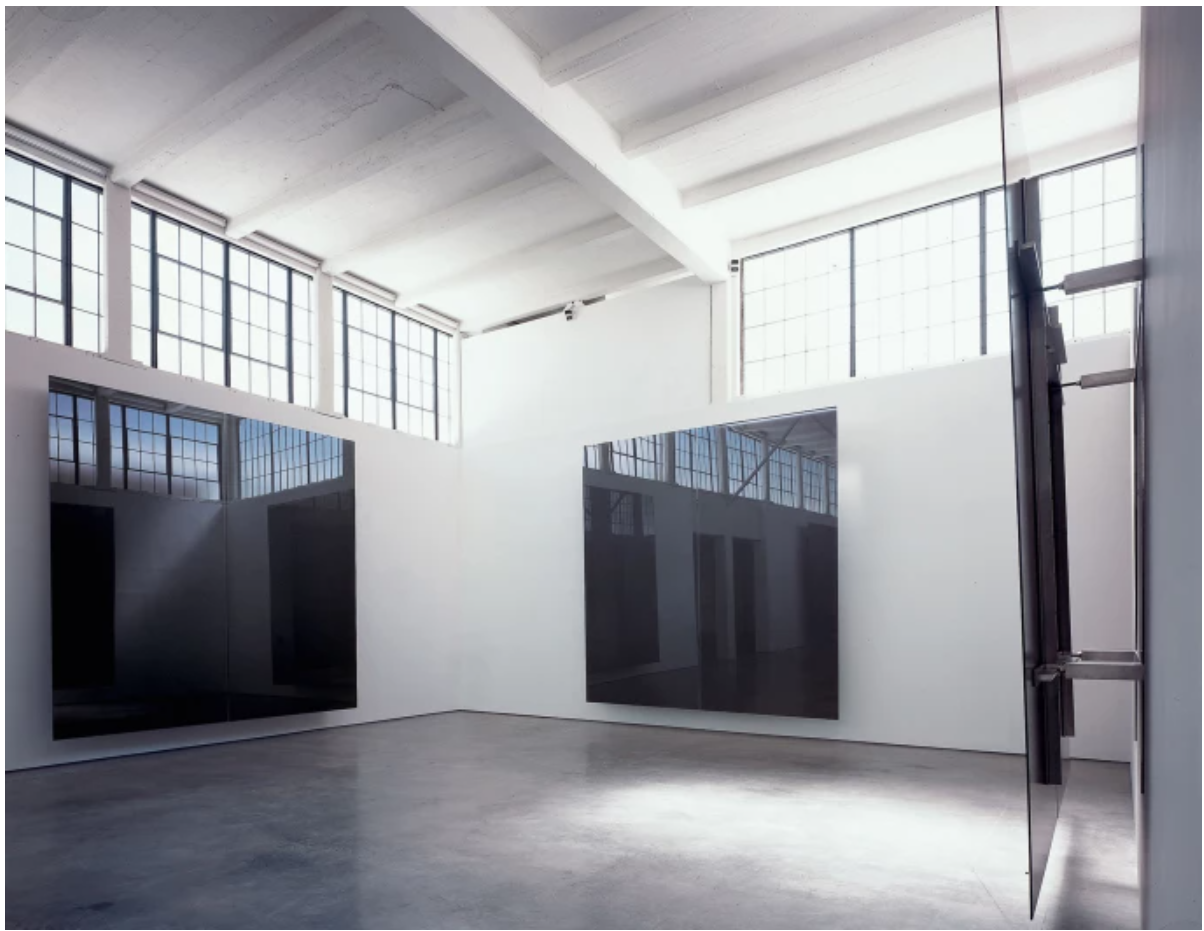
Pushing the logical paradigm of the monochrome ad extremum, painting and glass support merge into one with the reflective mirror, removing all attributes of the painterly medium from the flat surface. Color and support are indistinguishable. Simultaneously representing a static monochromatic expanse of grey as well as the shifting, but diffuse reflection of the viewer, the individual act of seeing takes precedence over arrangement and structure, pointing towards an inherent absence of certitude. Instead of making an image, Richter’s vertical panel reflects everything yet interprets nothing. Veering between depth and flatness, the likenesses in Richter’s grey mirrors are shrouded in an uncanny, dull haze, drained of detail and intensity. On an impressive scale the medium itself then becomes a means to veil, negate and neutralize the image material, highlighting the ordinariness of the composition that takes shape in concert with the beholder. Richter collapses realism and abstraction into a continuum, crossing the borderline back and forth, while blurring its conceptual delineations in his idiosyncratic attempt to purge the painterly act of any mark-making processes. A visual trap, the viewer’s movement alone is chronicled as a dark reflection and fleeting mark on the surface; the viewer is thus the work’s sole source of representation, and by this very nature is endlessly pliable and ceaselessly mutating.
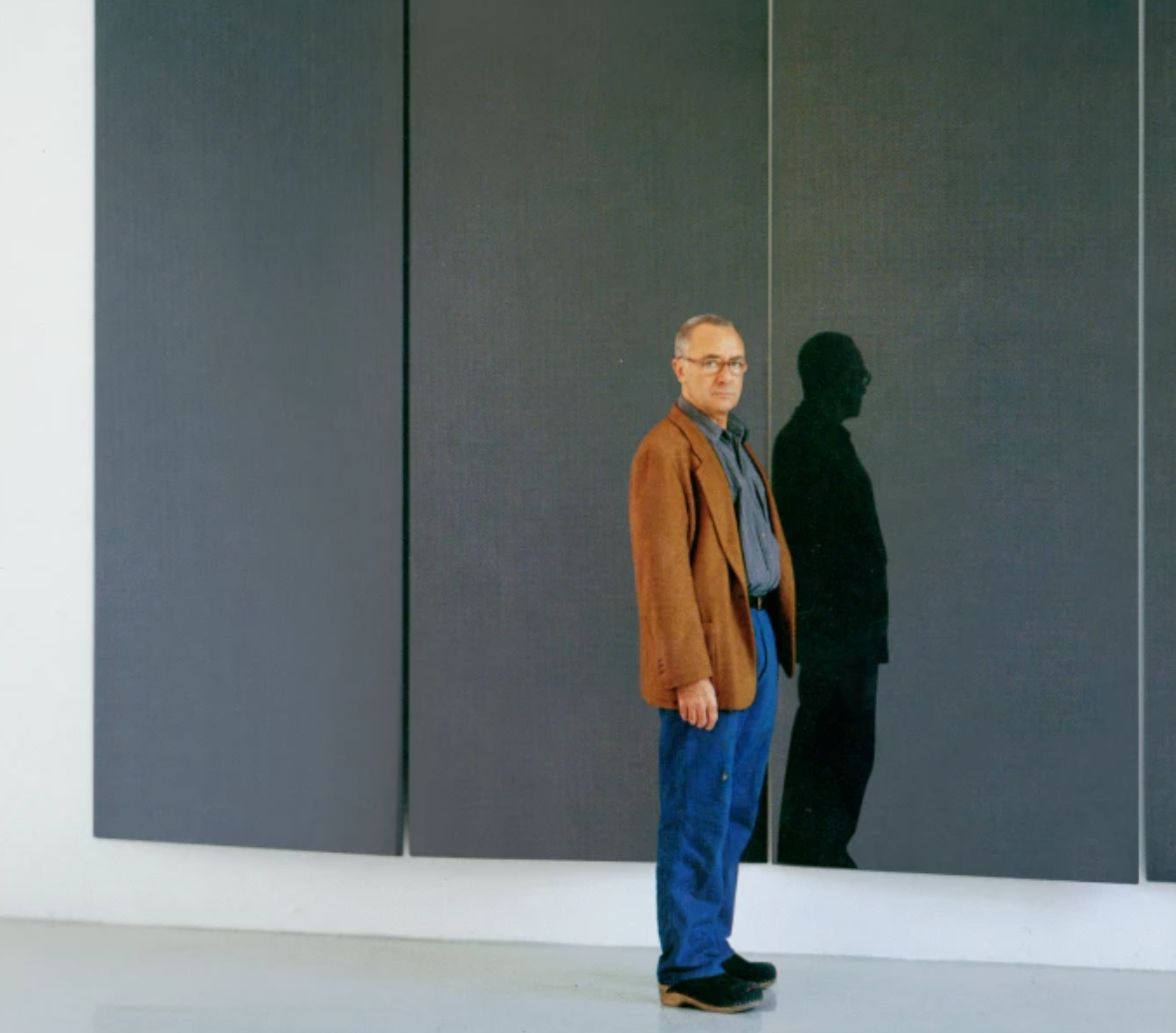
GERHARD RICHTER WITH GRAUER SPIEGEL / IMAGE/ARTWORK: © GERHARD RICHTER 2023
Richter’s creative practice plays with perception, calling into question the very nature of objective depiction. The artist’s entire oeuvre is indeed built on a deep-felt sense of doubt and an intense preoccupation with probing the limits of representation. Richter’s astonishing investigation of reality and representation spans his entire career, and saw the artist return to working with grey mirrors for his monumental installation Acht Grau, at the Deutsche Guggenheim, Berlin in 2002, and the Sechs graue Spiegel, the Dia Art Foundation in Beacon, New York in 2003. Spiegel, grau then marks a moment of great professional triumph for Richter, reaffirming the possibilities of modern art through conceptual subversion and substance, a matter-of-fact presence that anchors the complex exploration of the limits of painting to one of Richter’s purest articulations of the mercurial quality of his practice.
Cloudscapes
Begun in 1968, and pursued at various intervals until 1979, Richter’s cloudscapes represent some of his most important and sophisticated painterly enquiries. It was during this period that the artist began to broaden his creative horizons, moving away from his early greyscale works and beginning the long and complex journey towards the Abstraktes Bilder (Abstract Paintings) that would define his oeuvre over the following decades. In his photo-paintings, his choice of subjects became increasingly ambiguous, eschewing the portraits and quotidian scenes of his earlier output in favor of more ephemeral motifs—clouds, seascapes and aerial cityscapes. In tandem with these works, Richter embarked upon a rigorous deconstruction of painting’s essential properties, sequencing colour, form and texture in his Farbtafeln (Colour Charts), Rot-Blau-Gelb (Red-Blue-Yellow) and Grau (Grey) series. Collectively, these investigations would help to establish the guiding principle of his oeuvre: namely, that abstraction and figural representation were two sides of the same coin, each as fictitious and volatile as the other. For Richter, clouds were a direct embodiment of this duality—by their very nature, they expressed the dance between concrete reality and optical illusion that would drive his practice over the ensuing years.
Vesuv [Vesuvius], 1976
Sotheby’s New-York: 18 May 2023
Estimated: USD 3,000,000 – 5,000,000
USD 5,849,700
Vesuv [Vesuvius] | Contemporary Evening Auction | 2023 | Sotheby’s (sothebys.com)
GERHARD RICHTER (b. 1932)
Vesuv [Vesuvius], 1976
Oil on panel
70×100 cm (27 1/2 x 39 3/8 inches)
Signed, dated 1976 and numbered 404 (on the reverse)
Revealing a meditative yet enigmatic vista, Vesuv is a sublime example of Gerhard Richter’s extraordinary ability to reimagine traditional modes of painting, bringing the time-honored tradition of landscape painting into the modern day. The present work is one of seven limited Vesuv paintings the artist executed in 1976, which together represent a significant shift in Richter’s oeuvre from his Photo Paintings to the celebrated and ongoing Abstrakte Bilder; testifying to the fascination this majestic vista held for the artist, the Vesuv paintings are the only landscapes Richter produced in the decade between 1972 and 1983, other examples of which have been included in distinguished exhibitions for the artist at the Centre Georges Pompidou, Paris, and Metropolitan Museum of Art, New York. By opening a luminescent view of delicate sfumato clouds and the subtlest hint of terra firma, the present work honors the beauty of nature while highlighting the expressive qualities of oil paint as a medium and a communicative tool of abstract image making.
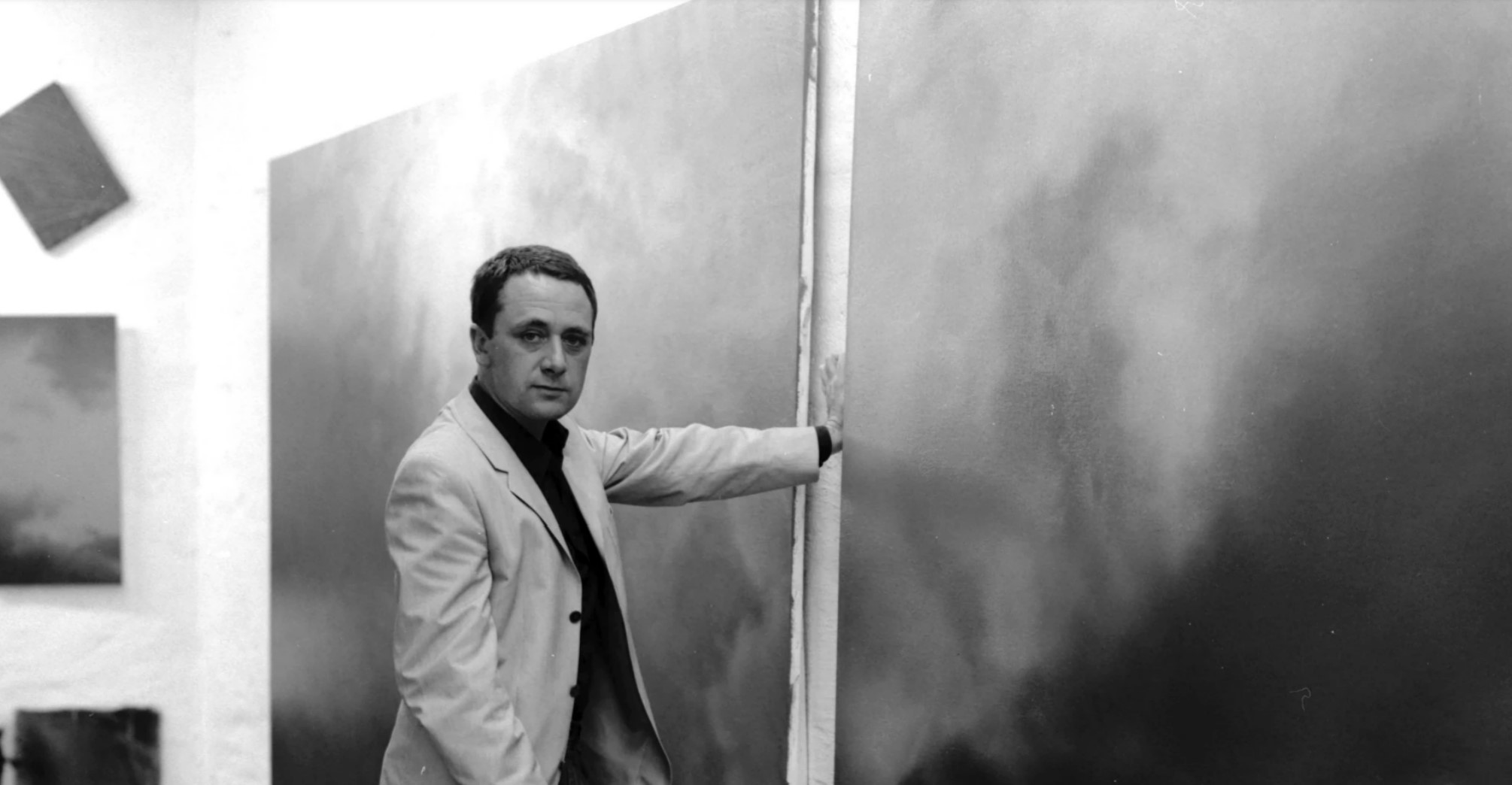
GERHARD RICHTER PHOTOGRAPHED BY BENJAMIN KATZ IN HIS STUDIO, 1970. IMAGE / ART © GERHARD RICHTER 2023
Pioneering an exhilarating dialogue between Richter’s two most prolific aesthetic modes, Vesuv stands as a fundamental constituent of the artist’s longstanding thesis on the synthesis of the painted and photographic image within Contemporary Art. Based on a personal photograph from Atlas, the artist’s encyclopedic project comprised of images, clippings, and drawings initiated in the mid-1960s, Richter’s Vesuv reimagines an otherworldly perspective of the infamously erratic Mount Vesuvius from the island of Capri. In Vesuv, as in his larger practice, Richter used photographs for his initial figurative paintings and future landscapes to insert an enriched authenticity generally associated with the medium of photography.
Study for Clouds (Green-blue), 1971
Christie’s London: 13 October 2022
Estimated: GBP 6,000,000 – 8,000,000
GBP 11,167,000 / USD 12,666,742
GERHARD RICHTER (B. 1932) (christies.com)
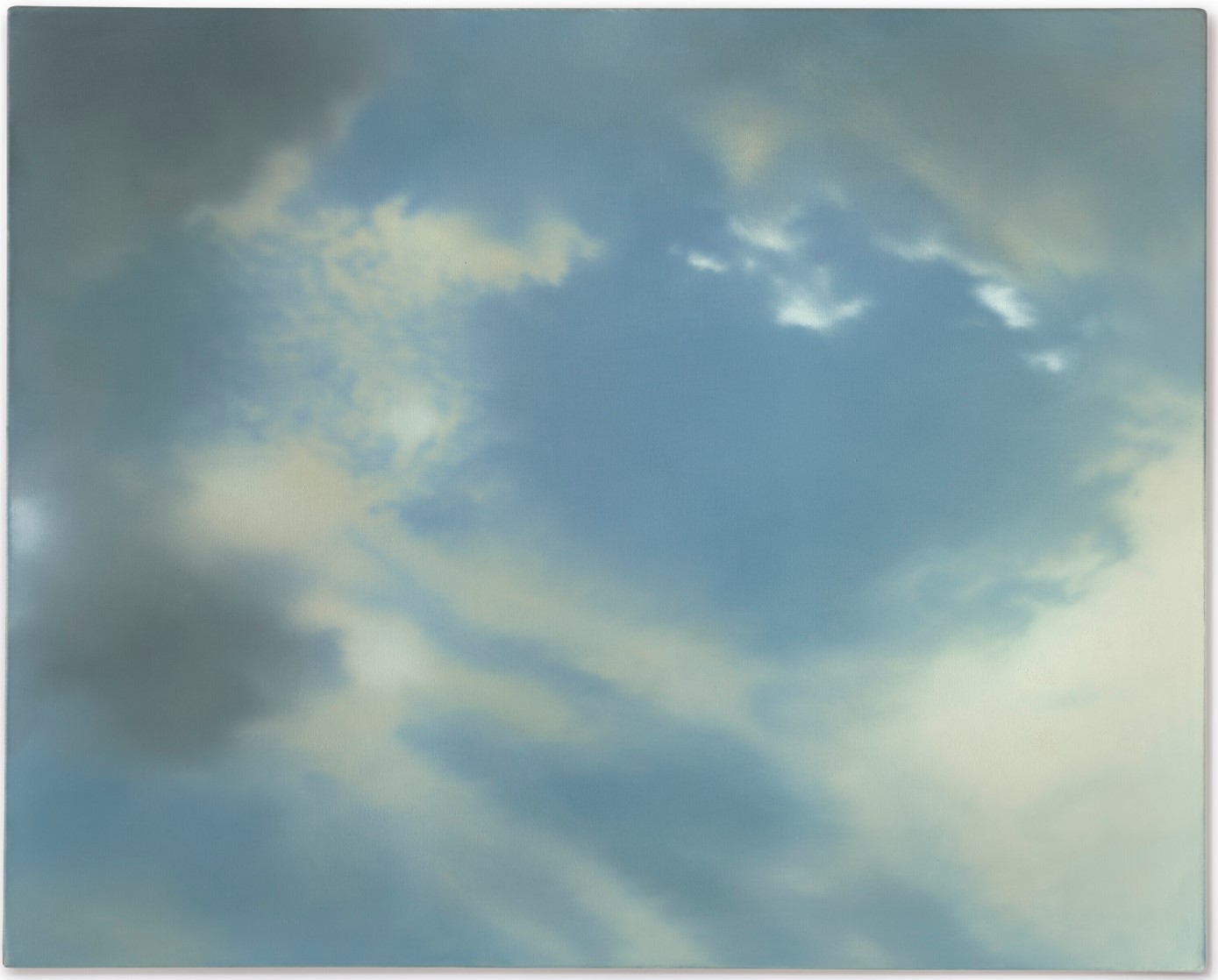
GERHARD RICHTER (B. 1932)
Wolkenstudie (grün-blau) (Study for Clouds (Green-blue)), 1971
Oil on canvas
80×100 cm (31 1/2 x 39 3/8 inches)
Signed and dated ‘Richter 1971’ (on the reverse)
Held in the same private collection for four decades, and never before seen in public, Wolkenstudie (grün-blau) (Study for Clouds (Green-blue) (1971) is a rare masterwork from Gerhard Richter’s celebrated series of cloudscapes. An extraordinary feat of technical and conceptual virtuosity, it poses as a sublime window onto the outside world: an exquisite, photorealist vision of deep green and blue sky tinged with radiant golden beams.
With meticulous brushstrokes, the artist captures the diaphanous play of light and shadow across his celestial vista, creating a profound illusion of infinite depth. Simultaneously evoking and subverting the language of Romanticism, Richter’s cloudscapes played a pivotal role in his journey from photo-painting to abstraction, asking vital questions about painting’s purpose at a time when its future seemed uncertain. The present work stands among the most accomplished paintings in the series, taking its place alongside examples held in the Museum Folkwang, Essen, the National Gallery of Canada, Ottawa and the Kunst- und Ausstellungshalle der Bundesrepublik Deutschland, Bonn.
Study for Clouds (Contre-jour), 1970
Sotheby’s London: 29 June 2022
Estimated: GBP 6,000,000 – 8,000,000
GBP 11,164,000 / USD 13,560,063
GERHARD RICHTER (b. 1932)
Study for Clouds (Contre-jour), 1970
Oil on canvas
80×100 cm (31 ½ x 39 ⅜ inches)
Signed Richter, dated XI.70 and numbered 276 (on the reverse)
At once dramatic and atmospheric, Study for Clouds (Contre-jour) is an exquisite canvas from Gerhard Richter’s celebrated Wolken series, a corpus of work that powerfully navigates the boundary between painting and photography, abstraction and representation, nature and the sublime. Transcendental in its treatment of light and exacting in its handing of pigment, the present work illuminates Richter’s masterful technique and his profound, career-spanning dialogue with photography, source imagery, and the genre of landscape painting. On the surface of the present work Richter creates a heightened sense of drama as sunlight breaks through heavenly white clouds. Set against a bright blue sky, the sun-drenched clouds are magnificent in their precise rendering. Satisfying his viewer’s longing for a spiritual encounter with the awesome force of nature, Richter draws upon the cloud’s value throughout the art historical canon as a powerful symbol of heavenly proxies. Attesting to its significance within the concise cycle of Wolken paintings, Study for Clouds (Contre-jour) has been illustrated in over sixteen publications and has travelled extensively as part of eight major exhibitions – five across Europe, two in America and two in Asia. The present work was most recently on view as part of the critically-acclaimed retrospective Gerhard Richter: Painting After All at The Metropolitan Museum of Art, New York between March and July 2020. One of the very best iterations of the Cloud paintings, Study for Clouds (Contre-jour) is testament to Richter’s painterly prowess and status as one of the most significant artists of the Twentieth and Twenty-First centuries.
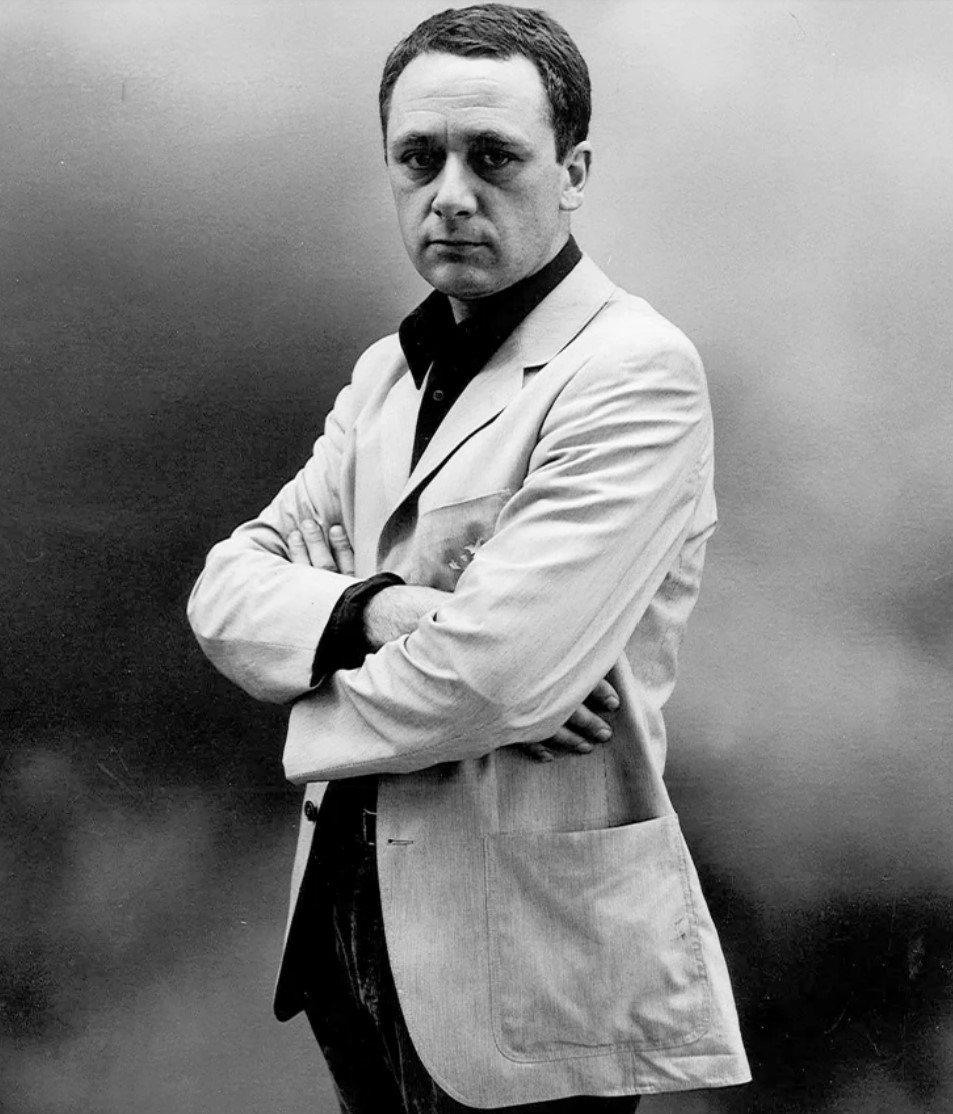
GERHARD RICHTER IN HIS STUDIO, 1970 / IMAGE/ ARTWORK: © GERHARD RICHTER 2022
Executed in 1970 and numbered 276 in the artist’s catalogue raisonné, the present work is one of only twenty-two photo-realist Cloud paintings in oil on canvas, six of which are held in prestigious museum collections, including Museum Folkwang, Essen; Fondation Camignac, Paris; National Gallery of Canada, Ottawa; and Kunst-und Ausstellungshalle der Bundesrepublik Deutschland, Bonn. Executed between 1968 and 1979, the series is among Richter’s most celebrated, and marks a significant pre-curser to his photo-realist Kerzen (Candles) and Schädel (Skulls) of the 1980s. Altering the effects of light and weather conditions on cloud formations, Richter renders swirling celestial bodies that are at once divine, transient and untouchable, a source of curiosity across centuries and a subject of profound intrigue to artists throughout the canon of art history.
Indeed, whilst remaining resolutely contemporary in its associations with photography and abstraction, Study for Clouds (Contre-jour) is indebted to the art historical tradition of landscape painting and the beloved genre of the cloudscape from the Renaissance and the Baroque periods through to the Nineteenth Century. From Michelangelo’s ethereal clouds on the ceiling of the Sistine Chapel in The Last Judgement (c. 1540), to John Constable’s celebrated cloud studies and Caspar David Friedrich’s romantic vistas in works such as Wanderer Above a Sea of Fog (circa 1817) and Monk by the Sea (1808-1810), the present painting evokes the sublime visual language founded in such pantheistic masterworks. Yet Richter’s photographic, near-scientific approach to the very same subject matter systematically de-romanticizes the great genre of landscape painting. In great contrast to the works of the German Romanticists, Richter’s landscapes are devoid of the human figure, and thus devoid of human emotion or empathy.
The Wolken paintings are deeply rooted in photography, and the title of the present work is unique in its reference to a photographic technique called contre-jour, in which the camera is positioned directly toward a source of light. The contre-jour thus creates a backlighting of its subject. While Richter’s title references this photographic-imaging technique, it also evokes the equivalent technique in painting, which was employed by artists long before the invention of photography. The technique in painting exhibits the use of dramatic shadows cast to the left and right of a subject in silhouette, with a stark contrast between light and dark. Indeed, many landscape paintings throughout the art historical canon employ the contre-jour technique, with such compositions emanating around the subject of the sun or the moon as a light source.
Seestück [Seascape], 1975
Sotheby’s New-York: 16 May 2022
Estimated: USD 25,000,000 – 35,000,000
USD 30,198,500
Seestück [Seascape] | The Macklowe Collection | 2022 | Sotheby’s (sothebys.com)
GERHARD RICHTER (b.1932)
Seestück [Seascape], 1975
Oil on canvas
199.4 x 300.4 cm (78 ½ x 118 ¼ inches)
Signed, dated 1975, and numbered 378 on the reverse
Emanating celestial light on a spectacular scale, the divine and immersive beauty of Gerhard Richter’s Seestück [Seascape] is entirely illustrative of the aesthetic and conceptual mastery that have come to define the artist’s revolutionary body of work. Radiating luminescent sunlit hues filtered through a harmonic miasma of soft ephemeral forms, this painting is undeniably indebted to a long and familiar legacy of art historical heritage. Readily evocative of the Romantic and sublime landscapes of Caspar David Friedrich, John Constable’s famous cloud studies, the atmospheric light effects of Turner, as well as drawing on the cloud’s symbolic value as heavenly proxies in Renaissance and Baroque painting, the present work instantly conjures an encompassing transhistorical field of references, whilst remaining resolutely contemporary.
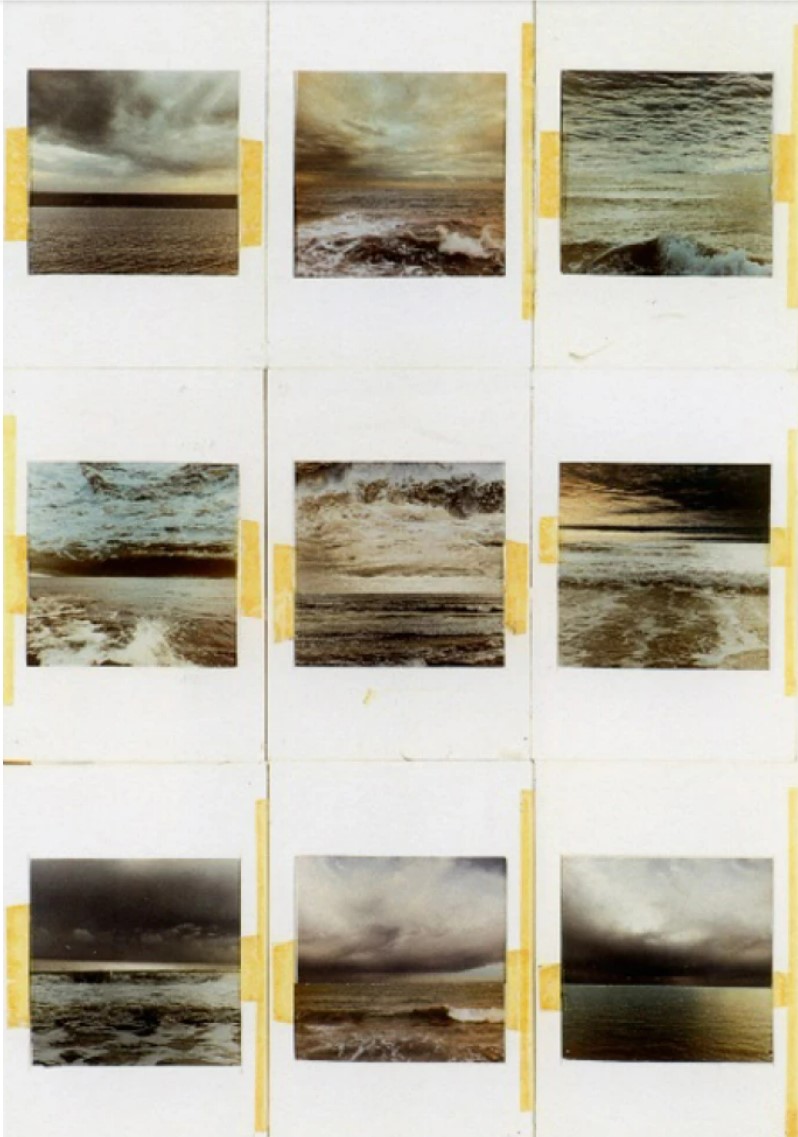
GERHARD RICHTER, SEESTÜCKE (FOTO-COLLAGEN) [SEASCAPES (PHOTO COLLAGE)], 1969. ART © 2022 GERHARD RICHTER, COURTESY GERHARD RICHTER ARCHIVES DRESDEN
Though drawing on a nineteenth century Romantic lineage and inescapably evoking a religiously loaded semiotic legacy, the artist’s fascination with clouds and seascapes extends into an exploration of chance in painting—the ultimate expression of which was later refined from the 1980s onwards via the Abstrakte Bilder. Drawing on his concurrent photography practice, Richter bases his Seascapes on source images from his own archive, but through his remarkable painterly prowess pushes the horizon further into transcendent abstraction. One of only four 2- by 3-meter canvases depicting this subject, all of which were executed in 1975 and are housed in prominent private collections worldwide, including the Froehlich Collection in Stuttgart, this concise group of works straddles the readily drawn schism separating Richter’s abstract works from the hyperreal Photo Paintings. Foregrounding religion, history and artistic inheritance within the complex debate for painting’s legitimacy in the later twentieth century, the Seestück represent one of Richter’s most pluralistic of thematic inquiries, and most astounding of aesthetic investigations.
Landscapes
Schober (Haybarn), 1984
PROPERTY FROM AN IMPORTANT PRIVATE COLLECTION
Christie’s London: 5 March 2026
Estimated: GBP 6,000,000 – 9,000,000
GBP 8,405,000 / USD 11,228,240
GERHARD RICHTER (B. 1932), Schober (Haybarn) | Christie’s
REPEAT SALE
VISIONARIES: WORKS FROM THE EMILY AND JERRY SPIEGEL COLLECTION
Christie’s New-York: 17 May 2017
Estimated: USD 5,500,000 – 7,500,000
USD 6,967,500
Gerhard Richter (B. 1932), Schober | Christie’s
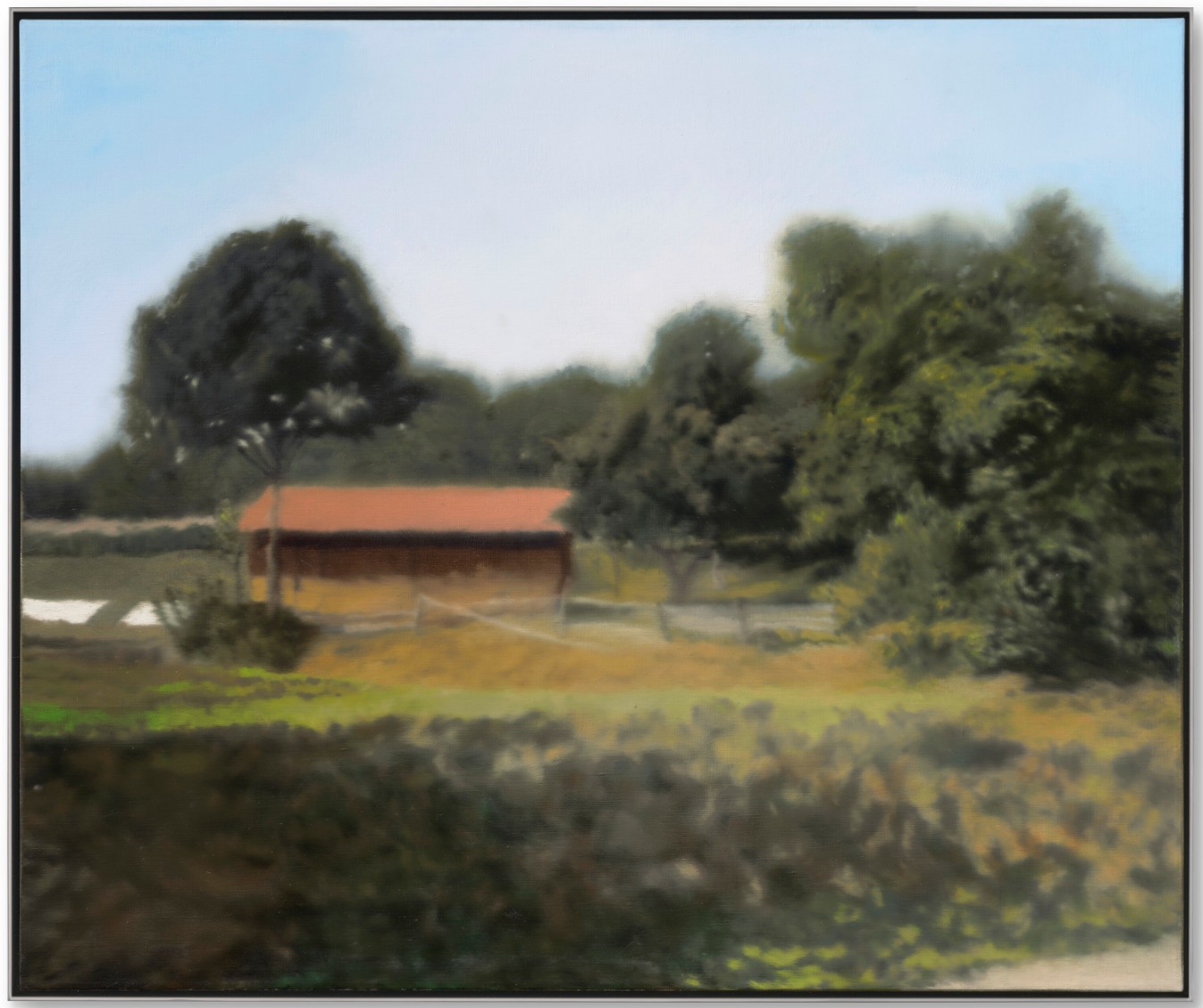
GERHARD RICHTER (B. 1932)
Schober (Haybarn), 1984
Oil on canvas
100.3 x 120 cm (39-1/2 x 47-1/4 inches)
Signed, numbered and dated ‘550-2 Richter 1984’ (on the reverse)
It is high summer in the German countryside. Heat rises from the ground, and trees shimmer against a clear blue sky. Standing on a path, we gaze over a hedgerow towards a low building in the field beyond. Golden haybales are stacked under its roof. A fence and tarpaulins laid nearby are further signs of human presence. Formerly in the collection of Emily and Jerry Spiegel, Schober (Haybarn) (1984) is among the largest and most beautiful of Gerhard Richter’s 1980s landscapes. Begun in the wake of his iconic Kerzen (Candles) and Schädel (Skulls) of 1982-1983, these exquisite, softly blurred pictures stem from a time of romantic bliss and creative ambition for the artist, who had recently married his second wife, Isa Genzken, and moved from Düsseldorf to a large new studio in Cologne. The decade saw major developments in both Richter’s abstract production and his photo-paintings. Beginning with his own camera rather than found black-and-white imagery, and using an array of new painterly techniques, he explored the cultural and physical landscape of his homeland. Schober belongs to the first group of these works to be derived from photographs Richter had taken with Fujifilm, which introduced a fresh palette of pastoral greens, blues and terracotta reds to his work.
After a painful period of conflict and familial breakdown, Richter’s divorce from his first wife, Ema Eufinger, was finalised in 1981. His marriage to Genzken the following year represented a new beginning. ‘The relationship was like nothing he had ever experienced before’, writes Dietmar Elger. ‘It was intense; he was living with another ambitious artist, and he valued Isa’s frank criticism’ (D. Elger, Gerhard Richter: A Life in Painting, Chicago 2009, pp. 242-243). Towards the end of 1983, the couple left Düsseldorf for Cologne. Richter’s studio there, which occupied the entire fifth floor of a former cardboard factory, allowed him greater space and freedom than ever before. Inspired, motivated and in love, he was able to push his practice to sophisticated new heights.
“… I see countless landscapes, photograph barely one in 100,000, and paint barely 1 in 100 of those that I photograph. I am therefore seeking something quite specific.”
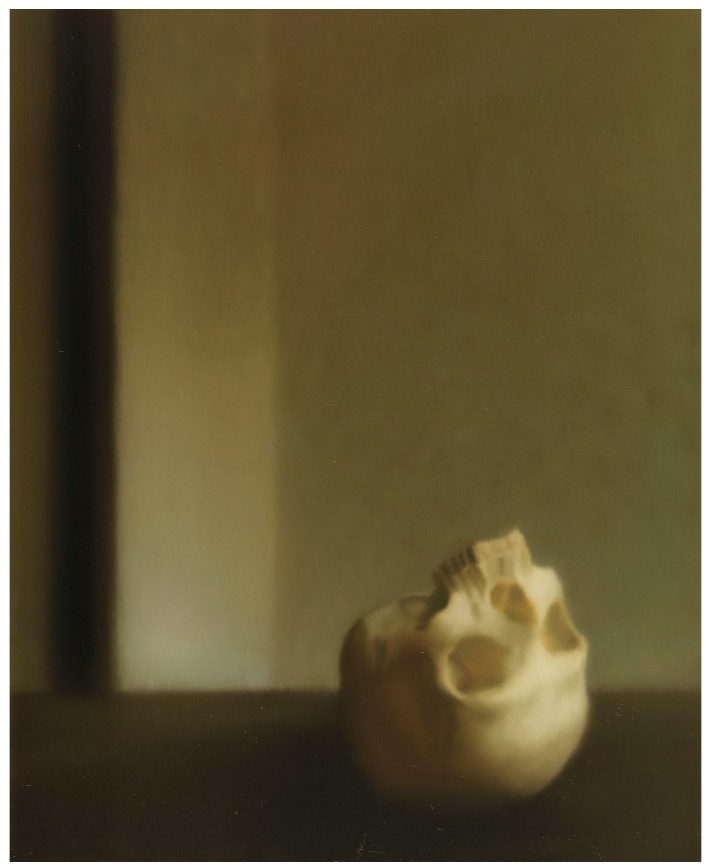
Gerhard Richter, Schädel (Skull), 1983. Musée départemental d’art contemporain, Rochechouart.
Artwork and photo: © Gerhard Richter 2026 (0021).
Richter now began work towards his presentation in the landmark group show Von hier aus: Zwei Monate neue deutsche Kunst in Düsseldorf (From Here Out: Two Months of New German Art in Düsseldorf), which would open in September 1984. This two-month extravaganza came at a time of competition between Cologne and Düsseldorf as artistic centres, and, for Richter, of personal rivalry with another participant: Sigmar Polke. Having worked closely together in the 1960s, the two were now opposing figureheads of the German avant-garde. Richter was determined to prove himself. In a striking installation, he exhibited Schober and one other landscape painting, Scheune (Barn) (1984), opposite nine examples of his new large-format ‘wild abstracts.’ The show was received to huge acclaim, and was a breakthrough moment in Richter’s arrival to the global stage.
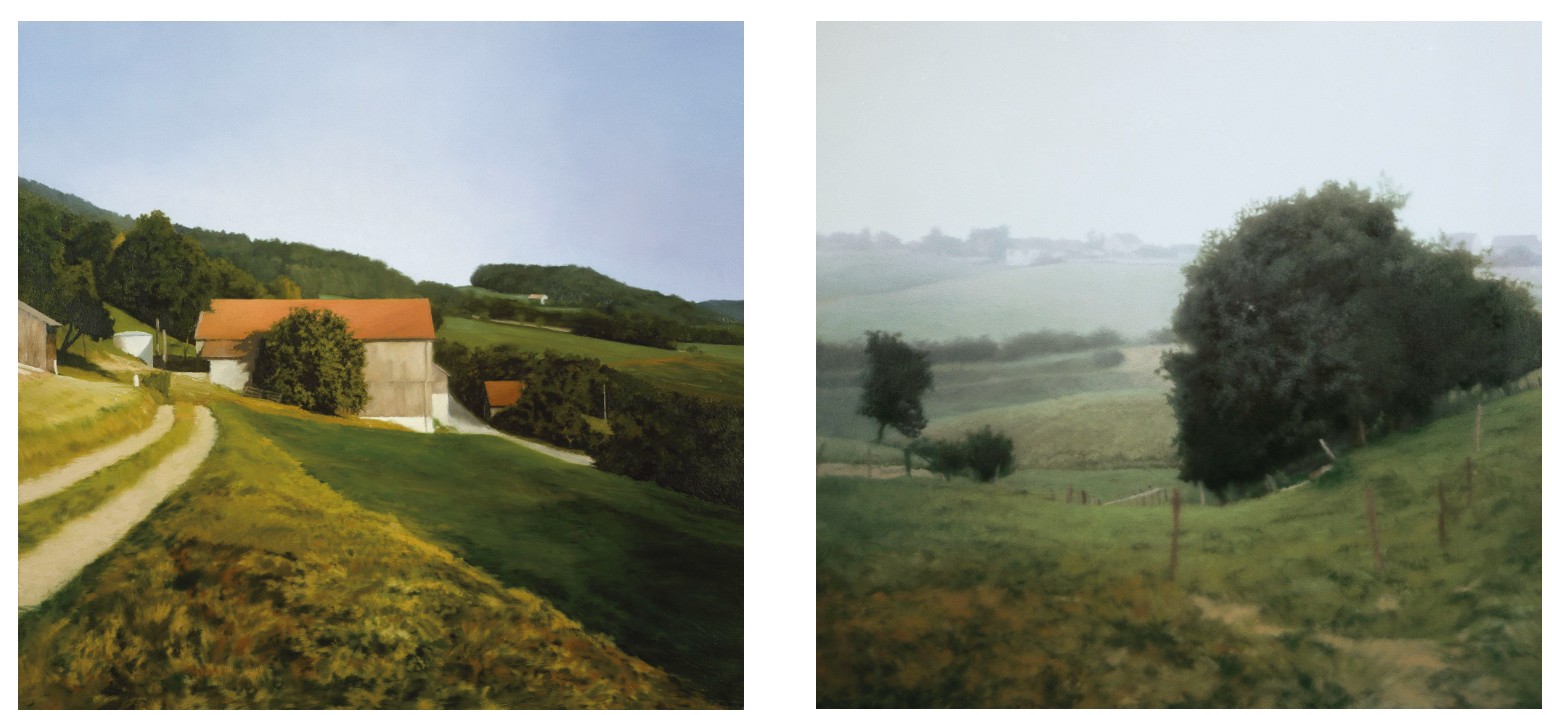
Left: Gerhard Richter, Scheune (Barn), 1984. Private collection. Artwork and photo: © Gerhard Richter 2026 (0021).
Right: Gerhard Richter, Wiesental (Meadowland), 1985. The Museum of Modern Art, New York. Artwork and photo: © Gerhard Richter 2026 (0021).
Following the success of Von hier aus, in 1985 Schober was among several landscapes to travel to galleries in New York. Alongside the abstract works, they caused a rush of critical attention that would culminate in Richter’s first North American retrospective in 1988. Another Scheune (Barn) (1983) was purchased by the Art Gallery of Ontario, Toronto, and Wiesental (Meadowland) (1985) by The Museum of Modern Art, New York. It was at this time that Schober was acquired from Marian Goodman Gallery by the visionary collectors Emily and Jerry Spiegel. The couple were themselves important patrons of MoMA, where Mrs Spiegel served as a trustee and member of the Painting and Sculpture Committee. They would later lend Schober for Richter’s touring European survey of 1993-1994. In their collection for more than three decades, it kept company with such masterpieces as Jean-Michel Basquiat’s Untitled (1982), which broke the world record for the highest price paid for a work by an American artist when it was auctioned in 2017.
“Every beauty that we see in landscape—every enchanting color effect, or tranquil scene, or powerful atmosphere, every gentle linearity or magnificent spatial depth or whatever—is our projection; and we can switch it off at a moment’s notice.”
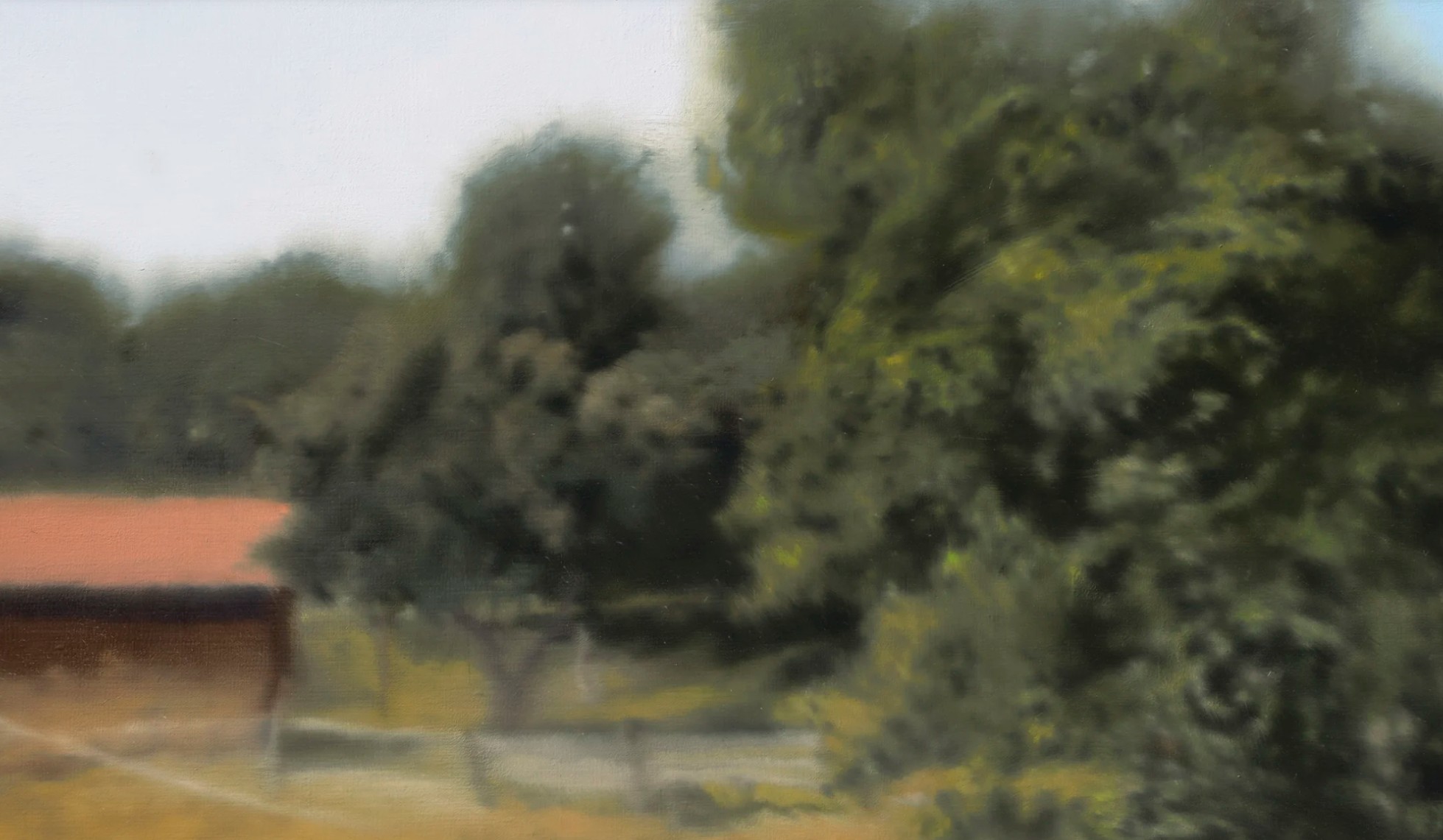
Schober exemplifies the formal complexity of this new phase in Richter’s photo-paintings. He uses a range of techniques across the canvas to blur and enliven the image in different ways, inviting the viewer in only to deflect their gaze. Diagonal strokes feather the foliage in myriad directions, as if capturing the movement of branches in the breeze. A heated haze ripples the fencing and the haybarn’s roof. Look closer, however, and Richter’s mesmerizing brushwork dissolves the image into a field of abstract marks. There are touches of impasto in the sky, reminding us that what we are seeing is paint on a flat surface. The absence of human figures renders the picture silent. The pathway glimpsed at the lower right offers no way in: the idyll is textured with ambiguity and occlusion, disclosing nothing.
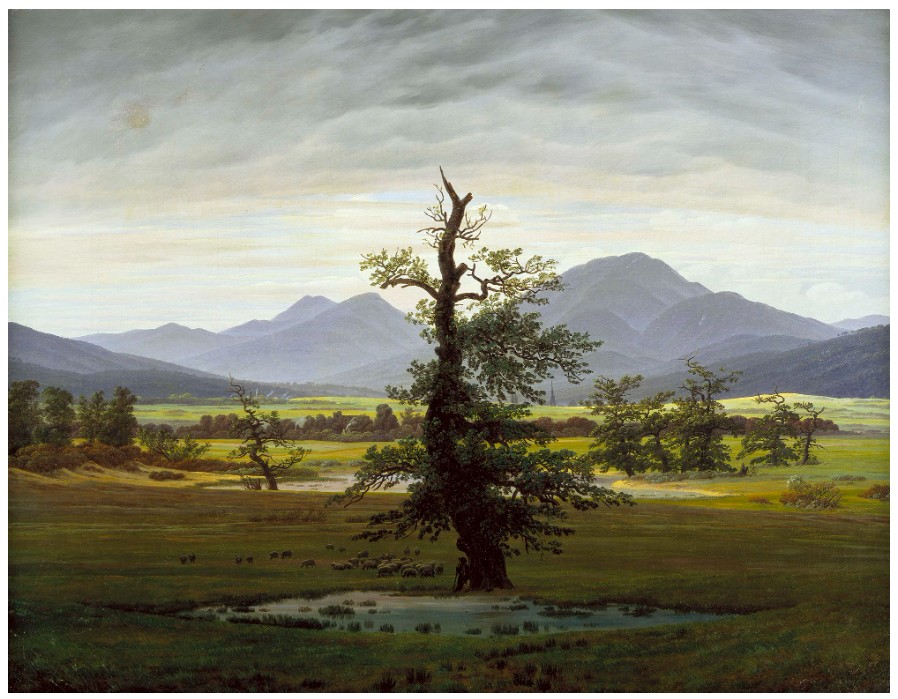
Caspar David Friedrich, The Lonely Tree (Village landscape in morning light), 1822. Nationalgalerie – Staatliche Museen zu Berlin. Digital image: © Photo Scala, Florence/bpk, Bildagentur fuer Kunst, Kultur und Geschichte, Berlin.
Landscapes had been present in Richter’s work since the early 1960s, when he began to create photo-paintings based on newsprint and historical sources. These hazy, largely monochrome pictures set out the terms of a career-long inquiry into the relationship between image and reality, exposing painting and photography as equally ridden with illusion. Early landscapes such as Schloß Neuschwanstein (1963, Museum Frieder Burda, Baden-Baden), derived from a postcard of a Bavarian castle, presented Germany’s self-image as a fabric of clichés. A significant shift came in 1968, when Richter visited Corsica with his young family. He took dozens of photographs which became the basis for a new series of landscape paintings in colour. Initially intending to keep these works private, he soon realised their conceptual potential. With low horizons and wide, dramatic skies, works such as Korsika (Schiff) (Corsica (Ship)) (1968) offered parallels with the Romantic vistas of Caspar David Friedrich. Their haunting grandeur belied their origin as holiday snapshots. From this point onwards Richter would photograph locations across Germany and elsewhere specifically for the purposes of painting.
Gerhard Richter, Bayerischer Wald (The Bavarian Forest), 1982 (source image for the present lot).
Artwork and photo: © Gerhard Richter 2026 (0021).
Richter continued to explore echoes of Romanticism through his landscapes, cloudscapes and seascapes of the 1970s, examining a societal and physical environment that had lost its innocence. A chasm separated the nineteenth-century culture and beliefs that had produced Friedrich’s work—which expressed awe at the majesty of Creation, and man’s place within it—from the post-war conditions of his own time. With the 1980s landscapes, however, Richter shifted focus. He moved closer to his motifs, creating images with visual interruptions and strong contrasts between foreground and background. Processed with Fujifilm, the photographs’ hues became richer. The presence of buildings, traffic-signs, cultivated fields and bridges in many of the pictures, notes Dietmar Elger, highlights the fact that they are ‘so-called “cultured landscapes”’ rather than idealised views (D. Elger, ‘Landscape as a Model’, in Gerhard Richter Landscapes, exh. cat. Sprengel Museum, Hanover 1998, p. 11). Now, like artists from Poussin to Monet before him, Richter explored the landscape as a site of human action, with nature and culture interacting in living colour.
Nicolas Poussin, Les Bergers d’Arcadie, circa 1638. Musée du Louvre, Paris.
The agricultural buildings seen in Schober and its companions—characteristic of rural Bavaria, where the photographs were taken—have an emblematic quality that recalls the ‘red house’ depicted by Edvard Munch, who painted a farmhouse on his property repeatedly throughout the 1920s and 1930s. Unlike Munch’s expressive, emotively-charged motif, however, they keep us at a distance. Schober’s haybarn is a blind strip of color underlined in shadow. For all their allure, Richter understands these images—like any representation of the world—as illusory. ‘Every beauty that we see in landscape—every enchanting color effect, or tranquil scene, or powerful atmosphere, every gentle linearity or magnificent spatial depth or whatever—is our projection; and we can switch it off at a moment’s notice’, he has said (G. Richter, ‘Notes, 1986’, in D. Elger and H. U. Obrist (eds.), Gerhard Richter: Text: Writings, Interviews and Letters 1961-2007, London 2009, p. 158).
Edvard Munch, The Red House, 1926. Private collection. Digital image: © 2026 Photo Scala, Florence.
Richter’s forays into portraiture, still-life and landscape throughout his career form a critical dialogue with these tropes and the ideas they stand for. They can also be seen to reflect shifts in his outlook and circumstances. His pictures of icebergs—painted in 1982 from photographs taken in Greenland a decade earlier—were not only homages to Friedrich’s Das Eismeer (Sea of Ice) (1823-1824), but related to the collapse of his marriage to Eufinger. The candles and skulls of 1982-1983 were also elegies, reflecting on loss through the lens of the vanitas theme. Schober was born of a more vibrant and joyful period. As Richter began a new life with Genzken, his travels through Germany and beyond—documented in Atlas, his thousands-strong compendium of source images—were expansive, purposeful and exploratory in spirit. ‘… I see countless landscapes, photograph barely one in 100,000, and paint barely 1 in 100 of those that I photograph’, he wrote. ‘I am therefore seeking something quite specific; from this I conclude that I know what I want’ (G. Richter, ibid.). Soon afterwards, he would paint pictures of apples that riffed on the still-lifes of Paul Cezanne.
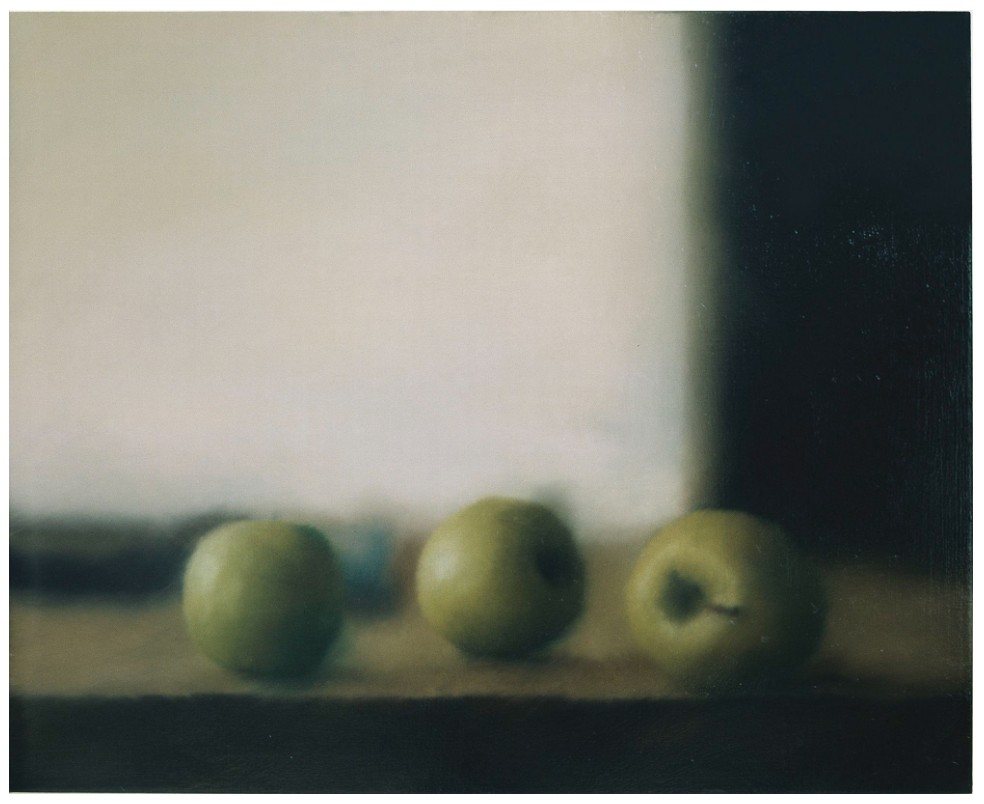
Gerhard Richter, Äpfel (Apples), 1984. Private collection. Artwork and photo: © Gerhard Richter 2026 (0021).
The landscapes evolved in tandem with Richter’s abstract pictures, which developed dramatically with his adoption of the squeegee in the early 1980s. He viewed these Abstrakte Bilder, whose final form was determined by the unpredictable interaction of paint layers dragged across the canvas, as fictive models of reality. Through the open-ended, chance-based struggle of their creation, he confronted the ungraspable complexity of nature itself. The landscapes, in contrast, were wistful models of an irretrievable wholeness. The two bodies of work were different ends of a spectrum: together, they created a balance. ‘If I were to express it somewhat informally, I would say that the landscapes are a type of yearning, a yearning for a whole and simple life’, Richter said. ‘A little nostalgic. The abstract works are my presence, my reality, my problems, my difficulties and contradictions’ (G. Richter in conversation with D. Dietrich, 1985, in ibid., p. 146).
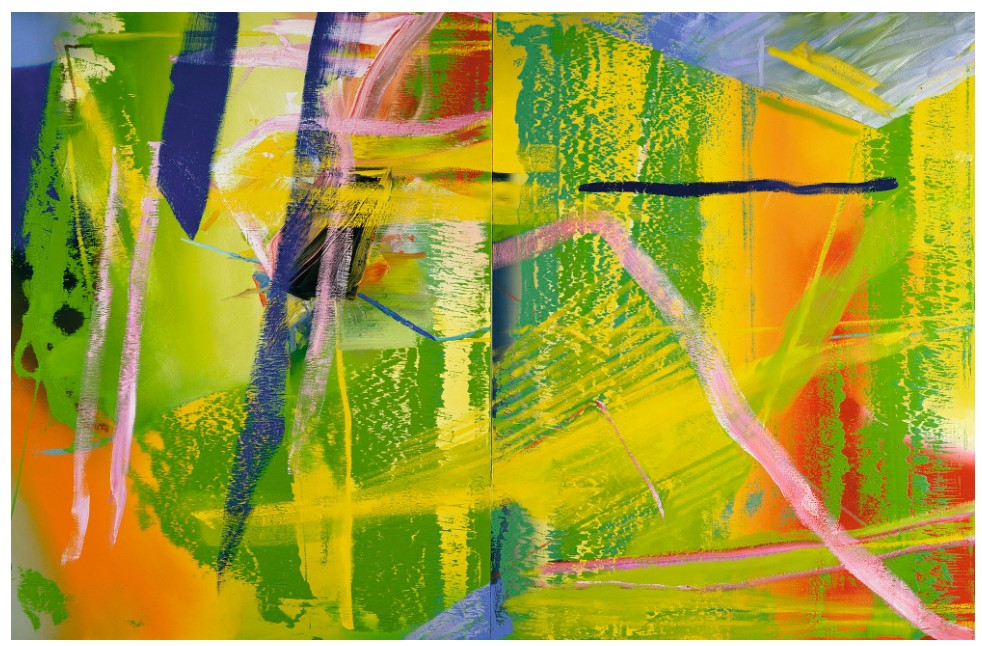
Gerhard Richter, Lilak (Lilac), 1982. Fondation Louis Vuitton, Paris. Artwork and photo: © Gerhard Richter 2026 (0021).
Richter’s photo-paintings were a key focus of his 2025-2026 retrospective at the Fondation Louis Vuitton, Paris. Seen across the decades, they reveal him not merely as a dispassionate observer of second-hand images but as a history painter deeply involved in the visual life of his era. Schober exemplifies the doubt and desire entangled in his position. It lays bare the layered fictions inherent in any image we create for ourselves, whether painting, photograph, national identity or artistic genre. At the same time, the painting takes on its own presence as an object, entirely distinct from the photographic source. It is a marker of a place Richter himself has occupied in time, a product of a happy moment in his life, and—despite everything—a statement of faith in his medium. ‘My works are not just rhetorical, except in the sense that all art is rhetorical,’ he says. ‘I believe in beauty’ (G. Richter quoted in M. Kimmelman, ‘An Artist Beyond Isms’, The New York Times, 27 January 2002, p. 24).
Korsika (Schiff), 1968
Christie’s New-York: 12 May 2025
Estimated: USD 8,000,000 – 12,000,000
USD 15,245,000
GERHARD RICHTER (B. 1932), Korsika (Schiff) | Christie’s
GERHARD RICHTER (B. 1932)
Korsika (Schiff), 1968
Oil on canvas
86 x 91.1 cm (33 7/8 x 35 7/8 inches)
Signed, inscribed, titled and dated ‘KORSIKA (III) Richter 68’ (on the reverse)
Gerhard Richter’s Korsika (Schiff) belongs to an important group of paintings that established the artist’s landscapes as a pivotal part of his oeuvre. In 1968, Richter painted just three canvases featuring various views of Corsica following a family holiday to the island, with two further canvases painted the following year. Originally intended only as a private project to memorialize a special place for the artist and his family, these landscapes would actually open up new fields of artistic exploration, and encourage the artist’s journey to abstraction. This series is also the first of Richter’s landscapes to be painted in color, with one example from the series—Korsika (House)—in the permanent collection of the Seattle Art Museum.
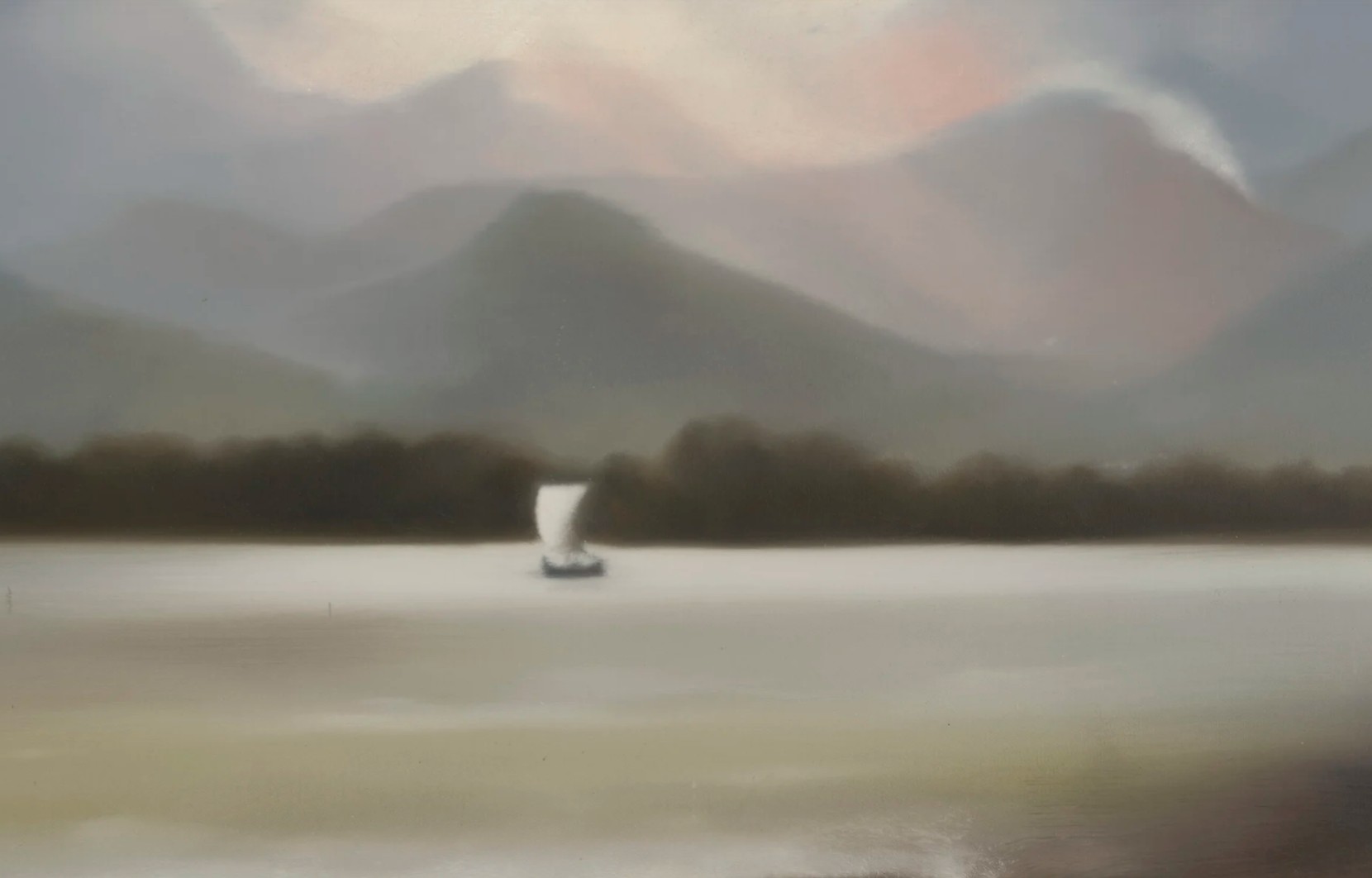
Set amidst a dramatic landscape of majestic mountains and foreboding skies, a small sailing ship traverses a calm sea. As is typical of this discrete series, the horizon line is placed low in the composition leading to a predominance of sky. Here, dark clouds loom but there is a break in the moody gray large enough to let a shaft of light through to illuminate the sails of the ship (or “Schiff” in Richter’s native German) on the surface of the water. Unlike his earlier black-and-white or monochromatic landscapes, this new series is painted using color pigments—indeed these paintings of Corsica are the first landscapes in which Richter introduced color. In similar innovative fashion, and again in contrast to his earlier landscapes, the hard-edged lines that mark out the different areas of paint have been replaced by differentiating edges of paint that display extreme subtlety and softness, leaving an atmosphere of sublime beauty. Richter’s biographer and director of the Gerhard Richter Archive notes, “Details of the ostensible scene elude the viewer, who, in trying to break through the photographic illusion, encounters a perception impasse: the subject surrenders its illusionism as a scene to be transformed again into a painting” (quoted in Gerhard Richter: A Life in Painting, Chicago, 2002, p. 173).
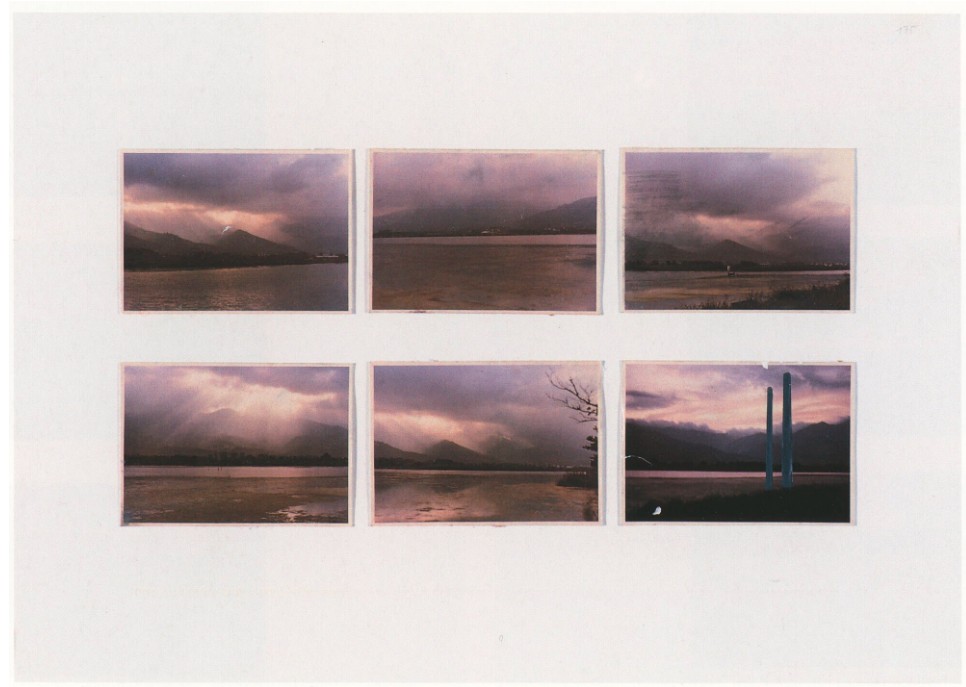
Landschaften, 1969, Atlas Sheet 181 (source image for the present lot). © Gerhard Richter 2025 (0050).
By 1968, Richter was financially secure enough to be able to take his family away on a proper vacation. Together with his wife, Ema, and daughter, Betty, the artist spent two weeks on the Mediterranean island of Corsica. During the trip, Richter took dozens and dozens of photographs of the island’s mountains and coastline. Back in Germany, he selected six photographs which he used as the basis for these paintings. Initially, Richter had intended these to be for his personal enjoyment only, but as he painted he began to realize the physicality of the landscape and decided to investigate further their painterly potential. This line of inquiry would ultimately lead to his iconic Abstraktes Bilder, the series of sweeping abstracts in which the painterly gesture reigns supreme. As the artist’s biographer Dietmar Elger has observed, “In several senses—conceptual, aesthetic, and technical—[Richter’s landscapes] would serve as a bridge from the photo-paintings to the abstract paintings soon to come” (Ibid.).
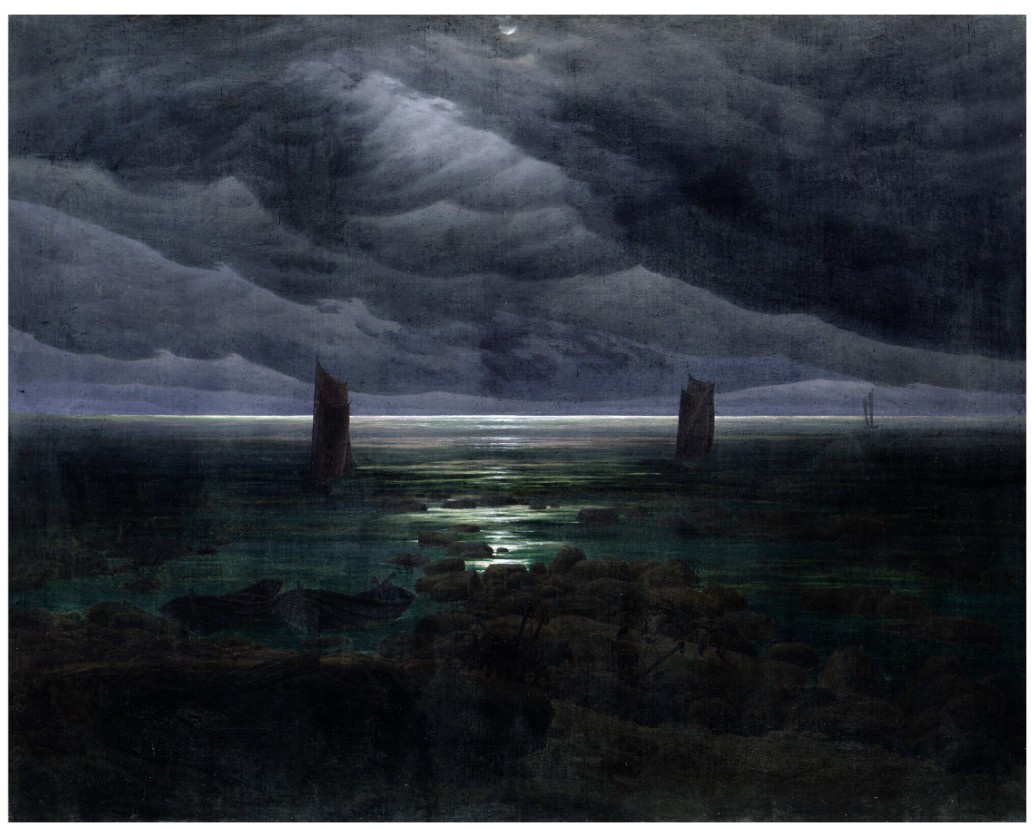
Caspar David Friedrich, Sea Shore in Moonlight, circa 1835-1836. Hamburger Kunsthalle.
The Korsika paintings were also executed at a time of political and social unrest around the world. 1968 was the year that witnessed the widespread protests, strikes, and civil unrest, from the Prague Spring beginning in January in the Czechoslovak Socialist Republic, to the student and labor-led demonstrations in May in France. Across the Atlantic, there was also widespread dissension at the Democratic National Convention in Chicago in August, following a politically turbulent year in the aftermath of the assassination of Martin Luther King Jr. Richter’s abstracts emerged almost immediately as a discrete motif for the artist, a quiet moment of contemplation in the midst of such chaos and unrest. In making them, Richter was retreating into a rural idyll, away from the urban unrest of the era: “I felt like painting something beautiful,” he said in 1970 (Ibid).
With paintings such as the present work, Richter is following in a grand tradition of German landscape painters. There are strong visual parallels between his work and that of the Romantic painter Casper David Friedrich, currently the subject of a major American retrospective at the Metropolitan Museum of Art in New York. Both artists’ landscapes are characterized by deep-set horizons, a high sky, and a sparse foreground often only populated with an isolated building or object for scale. Despite living more than one hundred years apart, the two share similarities in their personal experiences of the power of nature, as Richter himself says, “A painting by Casper David Friedrich is not a painting of the past. What is past is only the set of circumstances that allowed it to be painted: specific ideologies, for example. Beyond that, if it ‘good,’ it concerns us—transcending ideology—as art that we ostentatiously defend (perceive, show, make). Therefore, ‘today,’ we can paint as Casper David Friedrich did” (Ibid.).
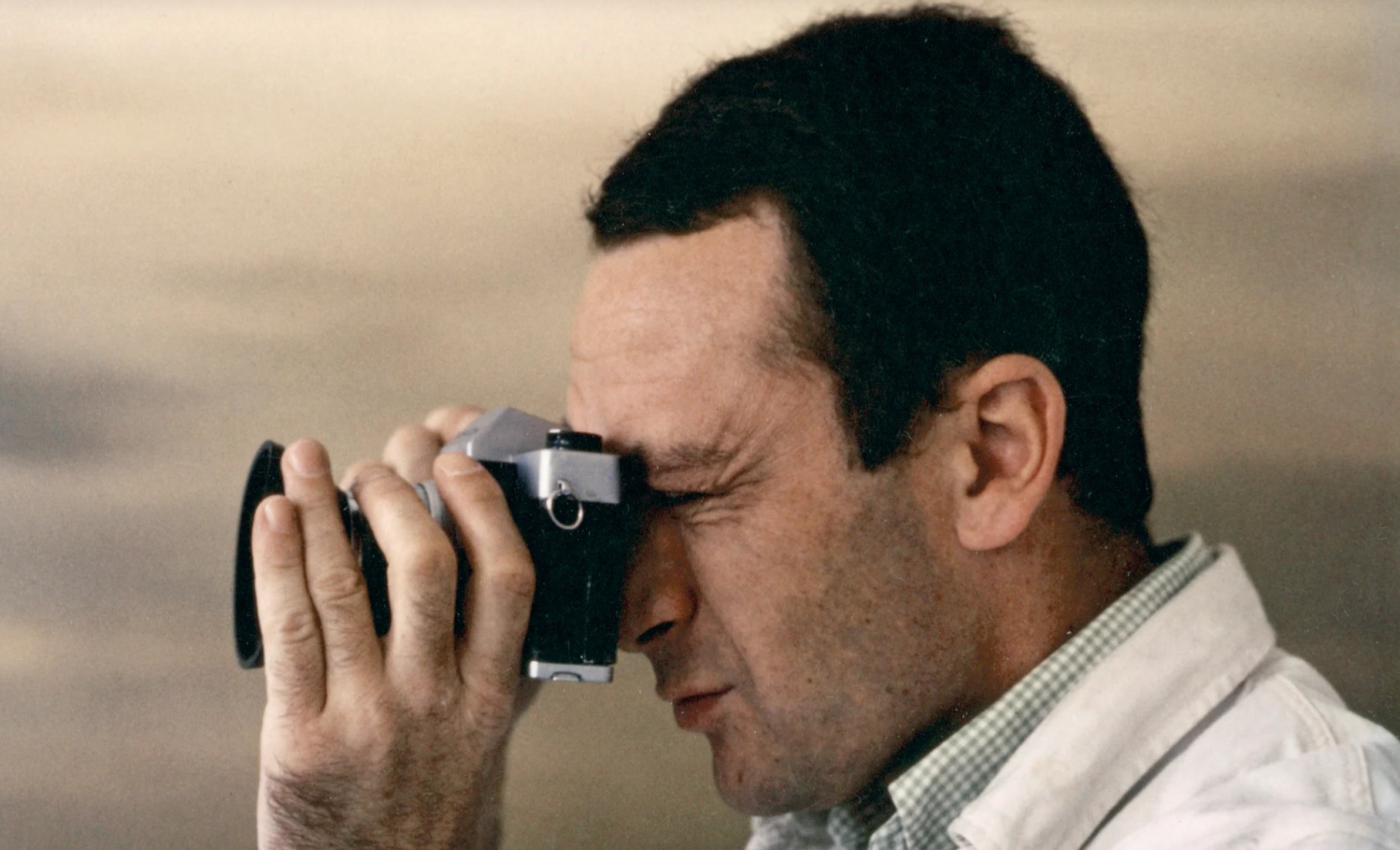
Gerhard Richter, Düsseldorf, 1971. Photo: Angelika Platen / Art Resource, New York.
Korsika (Schiff) belongs to a series that established Richter’s Landscapes as a seminal body of work. He has been painting landscapes for more than half a century and no other motif has absorbed him in quite the same way, yet the actual number of paintings is relatively few. Thus, their importance lies not in their number, but in the prominent position they occupy in his body of work acting as the bridge between the early photorealist paintings with which he made his name and the abstract canvas which have come to dominate the latter part of his career.
Photographic Paintings
Tulpen (Tulips), 1995
Christie’s London: 15 October 2025
Estimated: GBP 3,000,000 – 5,000,000
GBP 6,150,000 / USD 8,241,000
GERHARD RICHTER (B. 1932), Tulpen (Tulips) | Christie’s
GERHARD RICHTER (B. 1932)
Tulpen (Tulips), 1995
Oil on canvas
36×41 cm (14 1/8 x 16 1/8 inches)
Signed, numbered and dated ‘825-1 Richter 1995’ (on the reverse)
Acquired directly from the artist the year it was painted, Tulpen (Tulips) (1995) is a rare and beautiful floral still life by Gerhard Richter. It belongs to a series of photo-paintings of flowers Richter made during the 1990s, four of which are held in major museum collections, and was itself recently on long-term loan to the Belvedere in Vienna. The work depicts a vase of yellow tulips, based on a photograph taken by Richter and softly blurred in his characteristic style. It is both luminous and poignant, calling up the ghosts of art history in a meditation on our relationship with painting, photographs and the passage of time.
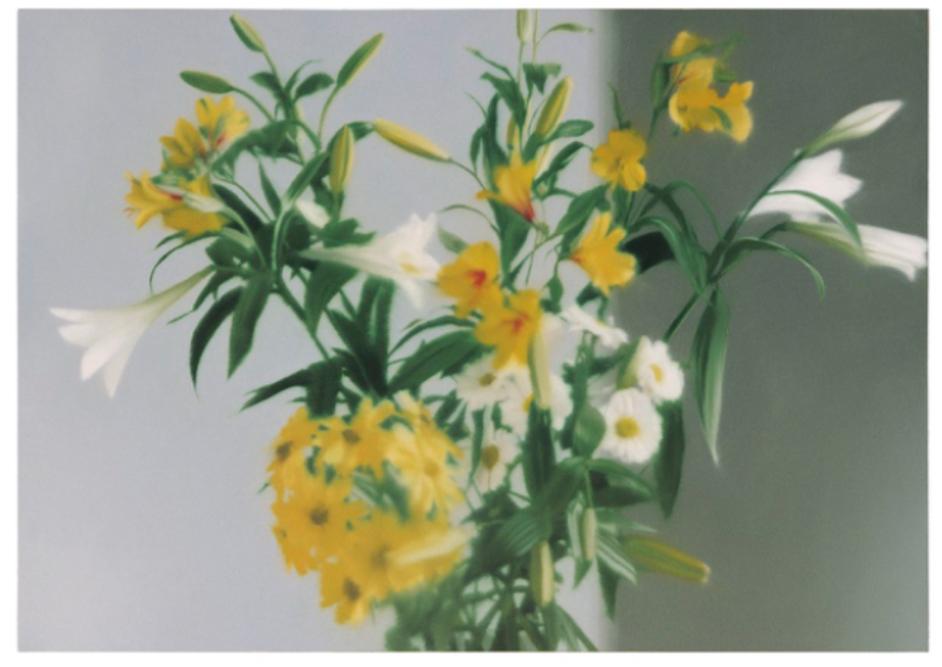
Gerhard Richter, Blumen (Flowers), 1993. The Art Institute of Chicago. © Gerhard Richter 2025 (0103).
Tulpen has been exhibited widely since its creation, appearing in Gerhard Richter. 100 Pictures at the Carré d’Art, musée d’art contemporain de Nîmes (1996); Richter’s major German retrospective that travelled from Düsseldorf to Munich (2005); a survey of contemporary German painting at the Museu de Arte Moderno de São Paulo (2010-2011); two exhibitions at the Hamburger Kunsthalle (2011, 2012-2013); and the Belvedere’s celebration of flower painting Say it with Flowers! Viennese Flower Painting from Waldmüller to Klimt (2018).
“If the Abstract Pictures show my reality,
then the landscapes and still-lifes show my yearning.”
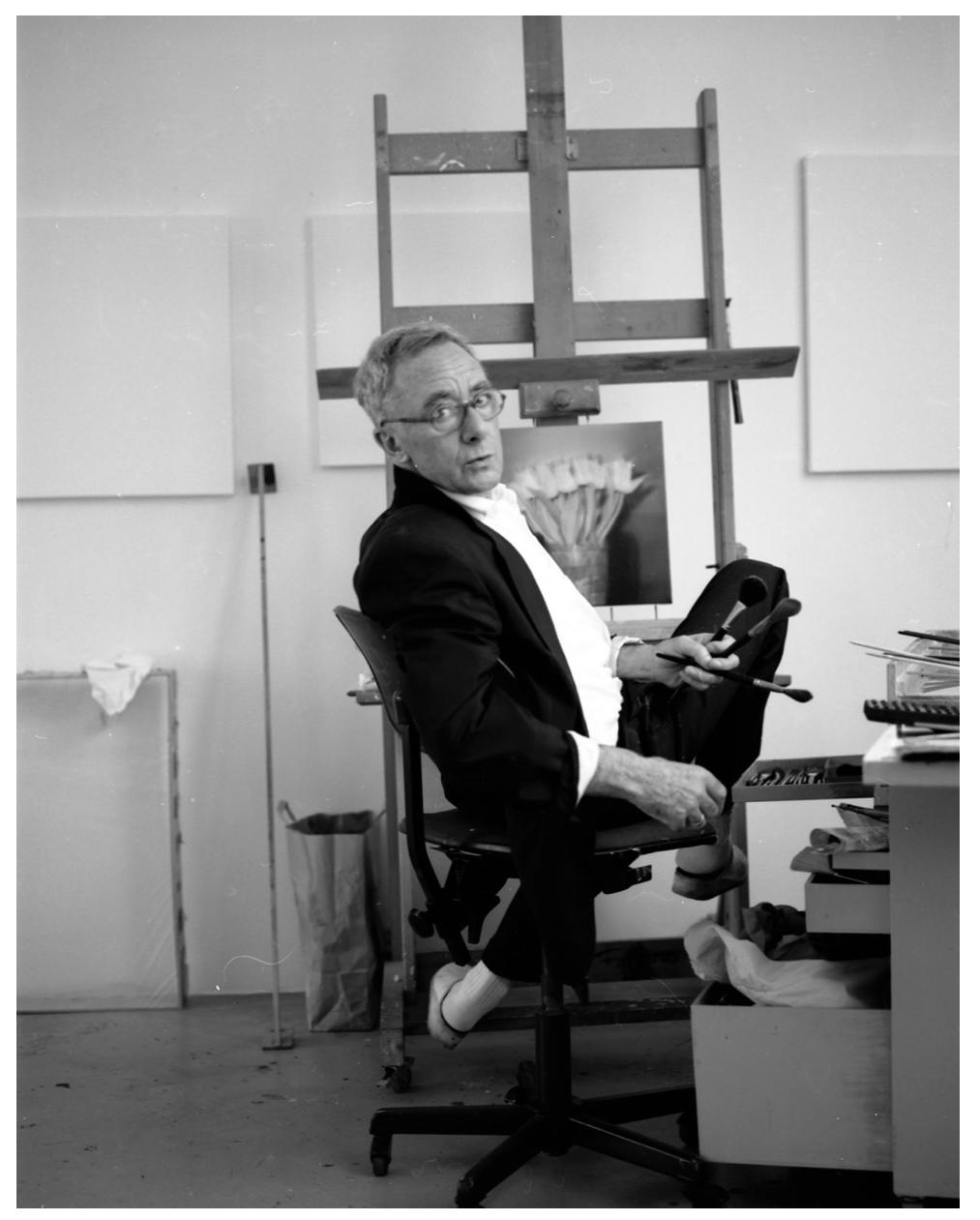
Gerhard Richter with Tulips, 1995 (CR 825-2). © Gerhard Richter 2025 (07092025), courtesy Gerhard Richter Archiv Dresden.
Richter has been investigating the truth-claims of painting and photography since the 1960s. For him they are equally unreliable as ways of comprehending reality: both no more than arrangements of color which, examined closely, dissolve into abstraction. He has probed these ideas in varied and complex ways across the decades. His first photo-paintings drew upon newsprint and historical sources, examining post-war Germany’s image of itself. His earliest ‘abstract’ works of the 1970s were in fact photo-paintings of close-up brushstrokes: they appear abstract but are representations of things. His squeegeed Abstrakte Bilder, begun the following decade, engaged with chance, attempting to liberate the painting from any predetermined form. Throughout his career he has continued to pursue photo-paintings in parallel to his abstract works. Their blurred uncertainty brings the figurative image into question, highlighting its inherently illusory nature.
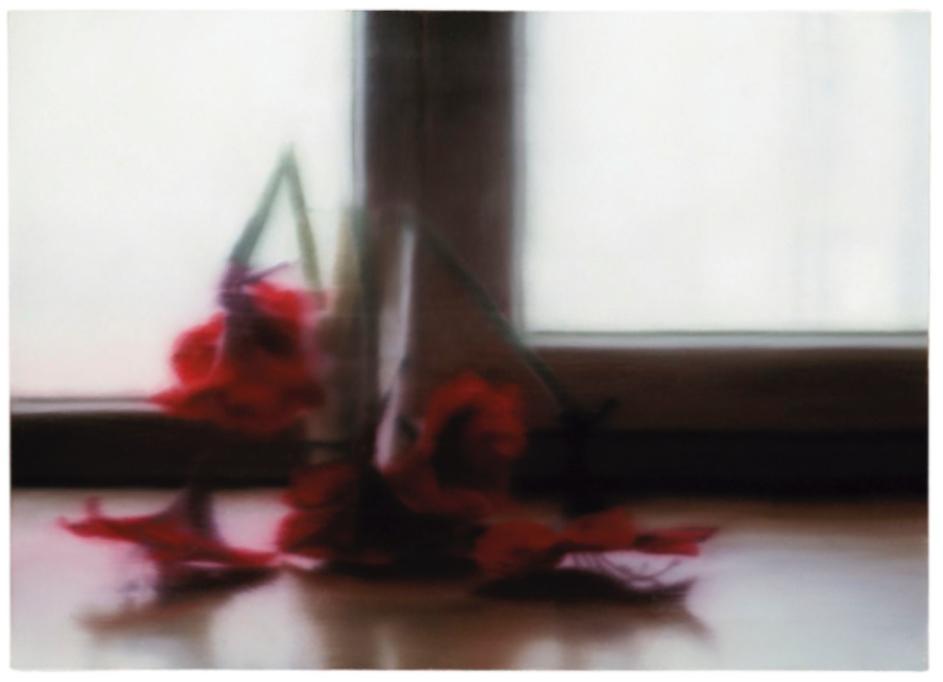
Gerhard Richter, Blumen (Flowers), 1994. Neues Museum, Staatliches Museum für Kunst und Design, Nuremberg.
On permanent loan from the Böckmann Collection. © Gerhard Richter 2025 (0103).
Richter’s photo-paintings encompass an almost endless diversity of source imagery, from press clippings to family snapshots and drive-by photographs of landscapes. Tulpen belongs to a subset that consciously echo art-historical motifs. These include his beloved Lesende (Reader) (1994)—a depiction of his wife, Sabine, which recalls the reading women painted by Johannes Vermeer—and his Schädel (Skulls) and Kerzen (Candles) of the 1980s, which conjure the vanitas still-lifes of the Dutch Golden Age.
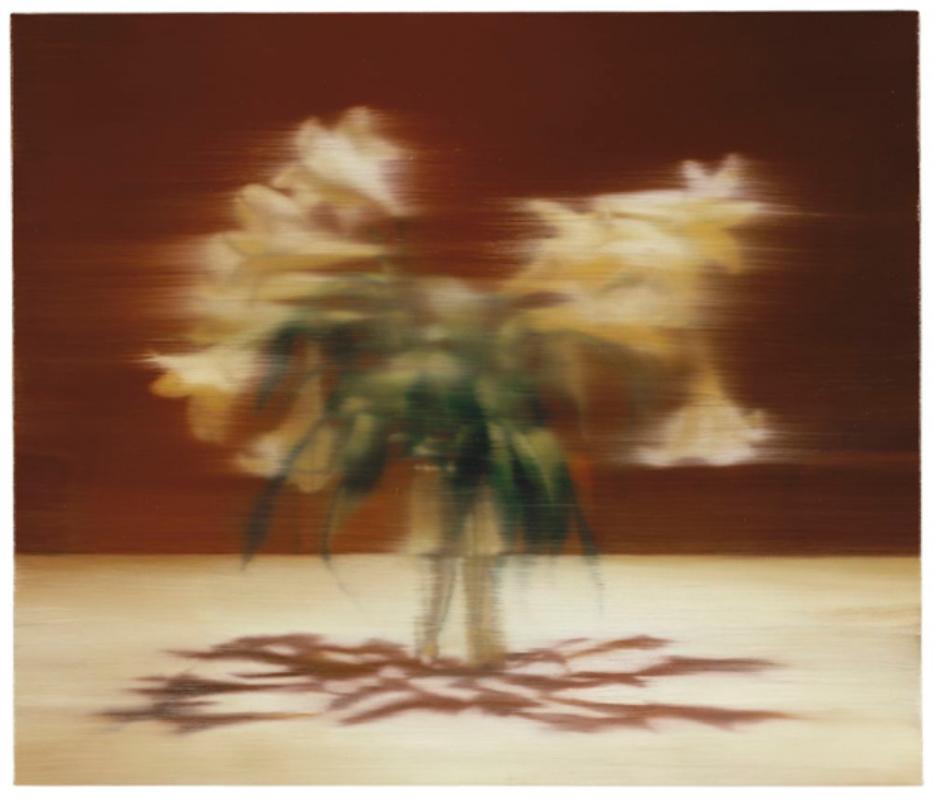
Gerhard Richter, Lilien (Lilies), 1995. National Gallery of Canada, Ottawa. © Gerhard Richter 2025 (0103).
His floral paintings evoke the same genre, wherein flowers—beautiful, but inevitably fading—are used as symbols for the transience of life itself. Richter’s blurring technique heightens this elegiac quality. Tulpen’s photographic sheen dissolves in a sweep of streaked brushstrokes, and the picture slips out of our grasp. No longer simply a metaphor for earthly vanity, these flowers seem to represent the death of painting’s innocence.
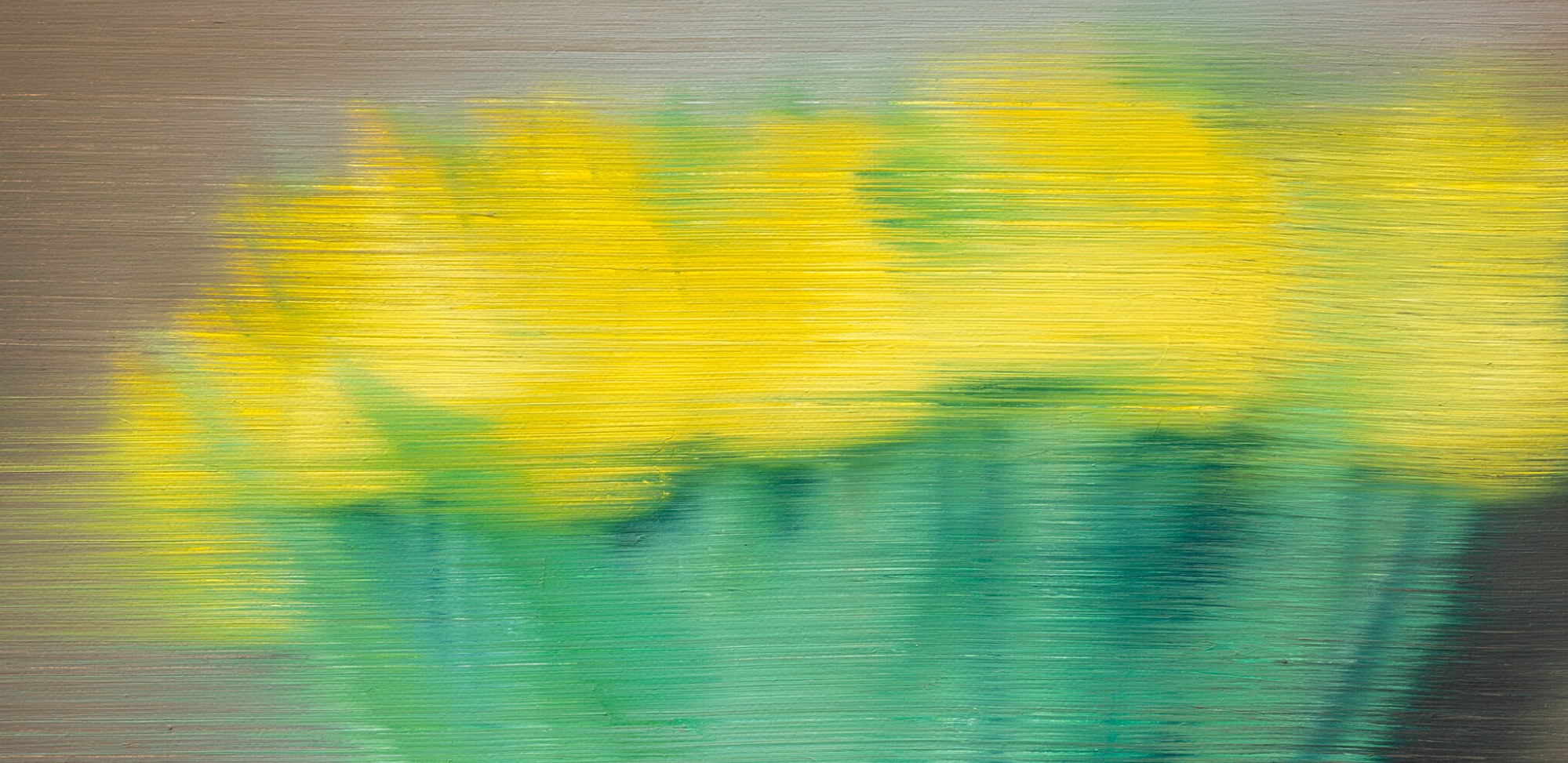
Tulips are a historically loaded subject. Cultivated in Persia for over a thousand years, they were introduced to the Netherlands from the Ottoman Empire in the late sixteenth century. They were greatly admired for their beauty, and their trade mounted to a frenzy known as ‘tulip mania’ or tulpenmanie during the 1630s, peaking before an abrupt market crash in 1637. Wealthy buyers fought for the rarest varieties, sometimes paying gargantuan sums for a single bulb—all in pursuit of a flower that bloomed for around a week during springtime. The tulip’s symbolic presence in the vanitas still life has become all the more potent in retrospect. Richter places these echoes at the service of a conceptual commentary on painting itself. Spotlit by the flash of the camera, the yellow petals shine briefly against the background’s darkness.
Andy Warhol, Flowers, 1964. The Broad, Los Angeles.
Artwork: © 2025 The Andy Warhol Foundation for the Visual Arts, Inc. / Licensed by DACS, London.
Tulpen also speaks to more personal preoccupations. The mid-1990s saw rising international acclaim for Richter: a major European retrospective toured Europe across 1993 and 1994, and his fifteen-canvas cycle October 18, 1977 (1988) was acquired by the Museum of Modern Art, New York in 1995. His abstract output was prolific, becoming increasingly exuberant in color and complexity. During the same year Richter married Sabine Moritz, whom he had met in 1994. He painted S. mit Kind (S. with Child) (1995), a group of eight pictures now held in the Hamburger Kunsthalle, Hamburg, which show her holding their newborn son. Drawn from his own photographs of the family’s innermost private life, these are among the most intimate images of Richter’s oeuvre. Tulpen complements their reflection on the preciousness of life and love.
Odilon Redon, Bouquet of Flowers, circa 1900-1905.
The Metropolitan Museum of Art, New York. Digital Image: Image Courtesy The Metropolitan Museum of Art, New York.
Richter painted two versions of Tulpen in 1995, both derived from the same photograph: the present work features a more pronounced blur than its counterpart. This practice of doubling was especially common in Richter’s mid-1990s photo-paintings. He also painted two versions of Lesende, another pair of flower still-lifes in 1994, and two self-portraits in 1996. Such pendant pictures add another twist in the hall-of-mirrors journey from reality to photograph to painting. In this sense the present work recalls the screenprinted Pop flowers of Andy Warhol, whose source photograph was cropped, manipulated, flattened and multiplied into a masterful thesis on the life of the image in the mechanical age. Tulpen addresses these same issues, but also carries the glow of personal feeling. While he is an artist disillusioned by appearances—an unreliable connecting structure between ourselves and the world—Richter continues to find meaning, solace and even romance in his art.
Mann mit zwei Kindern, 1966
Phillips New-York: 13 May 2025
Estimated: USD 4,000,000 – 6,000,000
USD 4,174,000
Gerhard Richter Modern & Contemporary Art Evening Sale
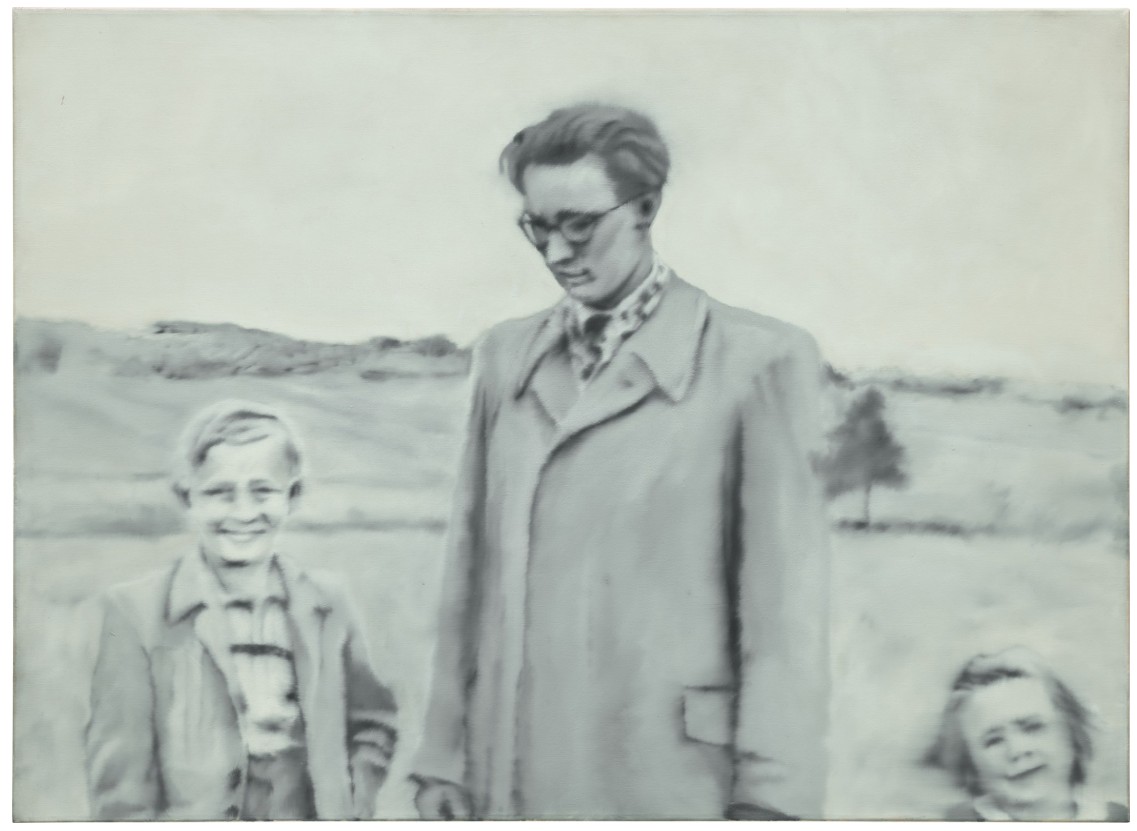
“Contact with like-minded painters – a group means a great deal to me: nothing comes in isolation. We have worked out our ideas largely by talking them through. […] One depends on one’s surroundings. And so the exchange with other artists – and especially the collaboration with Lueg and Polke – matters a lot me: it is part of the input I need.”
Coming to auction for the first time, having previously been held in the personal collection of Dusseldorf-based artist Blinky Palermo, Gerhard Richter’s softly sfumato portrait of his artistic collaborator and close friend Sigmar Polke as a young child alongside members of his family, Mann mit zwei Kindern is a rare and tender ode to friendship, its exceptional provenance only matched by the pedigree of its subject. Undoubtably one of the most art historically significant examples of German postwar master Gerhard Richter’s groundbreaking series of Photo Paintings, Mann mit zwei Kindern offers a unique insight into both the conceptual foundations of Richter’s artistic project, and the spirit of radical experiment and artistic comradery that defined this period of the artist’s prodigious career. Exquisitely executed in a palette of softened grisaille contrasts the work is a triumph of technical precision, Richter’s characteristically blurred brushwork foregrounding the fraught relationship between photography, painting, and objectivity that would prove to be so central to his artistic vision. Wavering between clarity and obscurity, in blurring the image Richter discovered ‘an opportunity to express the fleetingness of our ability to perceive’, a powerful position to be taking in relation to visual culture in the wake of the Second World War, and a profoundly poignant reflection on the ephemerality of memory itself.i Making its debut in the legendary 1966 Polke/Richter exhibition at Galerie h in Hanover, Mann mit zwei Kindern is a towering testament to Richter’s commitment to painting as a medium in the photographic age, deconstructing its core principles and radically expanding its possibilities at this critical juncture in his early career.
As one of the most influential and innovative artists of the late twentieth century, and a defining figure of abstraction, Richter has redefined the limits of painterly representation over the course of his staggering sixty-year career. Born in Dresden in 1932, the artist came of age in the long shadow of the Second World War, his childhood inflected with the burdensome history and ideological zealotry of both Nazism and the Soviet Union. Originally enrolling in the Dresden Academy of Fine Arts in 1951, Richter’s early training was as a mural painter, limited by the stylistic and thematic parameters of Soviet Realism. Like Polke, Richter fled Soviet-occupied East Germany early, relocating to Düsseldorf in 1961 where he encountered a staggeringly different way of life characterized by a proliferation of consumer goods, embrace of diverse and international art movements, and more open-minded critique of socio-cultural issues.
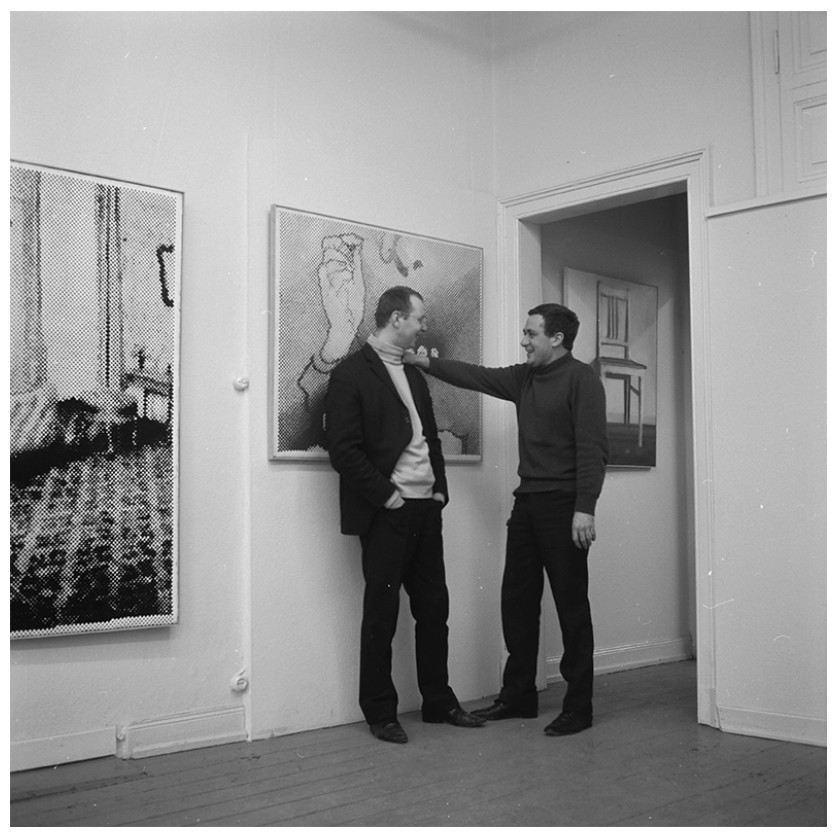
Sigmar Polke and Gerhard Richter in der Galerie h, Hanover, 1966. Image: Gerhard Richter Archiv, Artwork: © Gerhard Richter 2025 (19022025) / © 2025 Estate of Sigmar Polke / Artists Rights Society (ARS), New York / VG Bild-Kunst, Bonn, Germany.
With its muted tones and blurred pictorial treatment, Mann mit zwei Kindern is supremely representative of this richly inventive and productive period of the artist’s career, evolving out of the ‘Capitalist Realism’ movement he developed with the likes of Polke, Konrad Lueg, and Manfred Kuettner during their time as students at the Kunstakademie Düsseldorf in the early 1960s. A deliberately ironic response to state-sponsored idealisation of the people and their leaders that fed into Social Realism on the one hand, and the encroaching hegemony of American abstraction which did not seem to deal in any meaningful way with people or history on the other, Capitalist Realism provided these young artists with a means of responding to Pop’s preoccupation with a media-driven and commodity-saturated visual culture with an irony and critical distance specific to the German postwar experience.
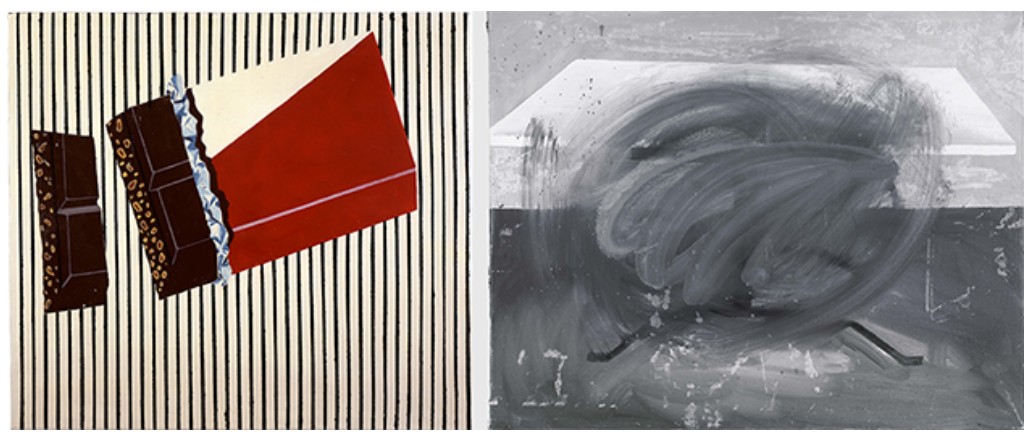
[Left] Sigmar Polke, Schokoadenbild, 1964, Glenstone, Potomac, Maryland. Artwork: © 2025 Estate of Sigmar Polke / Artists Rights Society (ARS), New York / VG Bild-Kunst, Bonn, Germany.
[Right] Gerhard Richter, Tisch, 1962. Private Collection. Image/Artwork: © Gerhard Richter 2025 (0022).
While Polke turned to everyday objects such as bars of soap, chocolate bars, and socks in his early compositions as a means of articulating the specific conditions of Germany’s postwar economic recovery and identity, Richter’s appropriation of photographs speaks to a shared commitment to finding a newly direct and objective way of representing the world, intersecting with and critiquing both American Pop Art and German postwar consciousness. Where Polke’s early painting and Stoffbilder works interact more robustly with the familiar vernacular of American Pop as established by the likes of Andy Warhol and Roy Lichenstein, Richter turned away from the languages and motifs of advertising and consumerism in favour of the photographic image and its assumed relationship to notions of objective truth. Despite the divergent directions that they would take their respective practices in the coming years, in these early years the two were deeply connected, Richter reflecting on their joint 1966 Galerie h exhibition and associated collaborative artist’s book project years later and musing that at that moment “I was as close to Polke as with nobody before.”
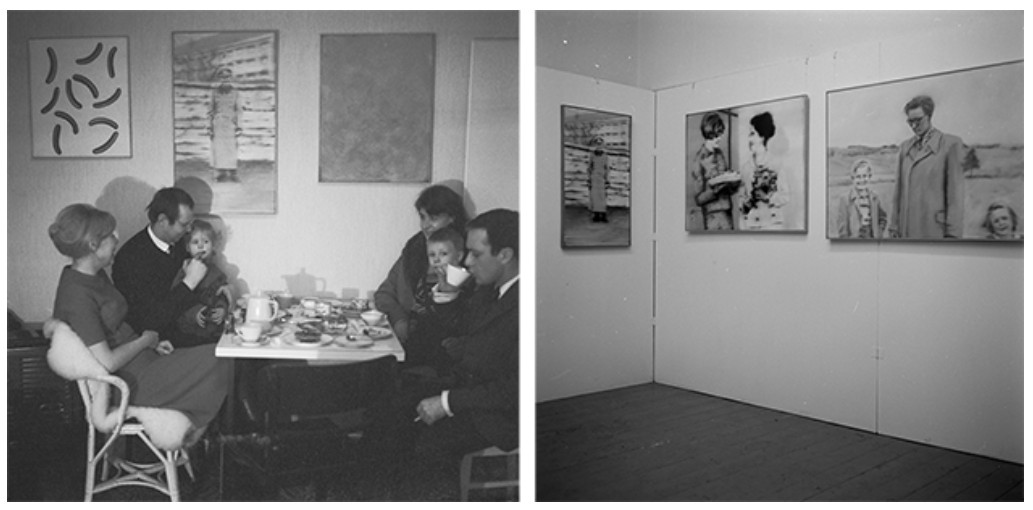
[Left] Gerhard Richter and Sigmar Polke drinking coffee with their families, 1966. Image: Gerhard Richter Archiv, Artwork: © Gerhard Richter 2025 (19022025) / © 2025 Estate of Sigmar Polke / Artists Rights Society (ARS), New York / VG Bild-Kunst, Bonn, Germany.
[Right] Installation shot of Polke/Richter at Galerie h, Hanover in 1996 featuring the present work. Image: Gerhard Richter Archiv, Artwork: © Gerhard Richter 2025 (19022025) / © 2025 Estate of Sigmar Polke / Artists Rights Society (ARS), New York / VG Bild-Kunst, Bonn, Germany.
“[…] everyone has produced his own ‘devotional pictures’: these are the likenesses of family and friends, preserved in remembrance of them.”
Taking press images and family photo albums as his source material and going on to compile an encyclopedic store book of this material in his Atlas, Richter created his first Photo Painting in 1962, finding in his enlarged reproductions of photographs in oil a perfect device for exposing the illusory nature of both photography and painting’s claims to verisimilitude. In a manner which would go on to define Richter’s approach to the twined questions of perception and truth this first photorealist work, Tisch, combines multiple painterly approaches, our reading of the sharply defined and immediately legible form of the table complicated and confounded by the fluid overpainting, a technique sophisticatedly developed in the present work. Retaining something of the unique quality of the photograph, in his painterly translations of these images Richter establishes a kind of visual equivalence, his idiosyncratic blurring of the image allowing the artist “to make everything equally important and equally unimportant.” Oscillating between figuration and abstraction, Richter’s treatment in this early painting undoes the more descriptive or depictive qualities with which Realism has conventionally been associated, emphasizing instead the ultimately inscrutable and unknowable nature of reality itself.
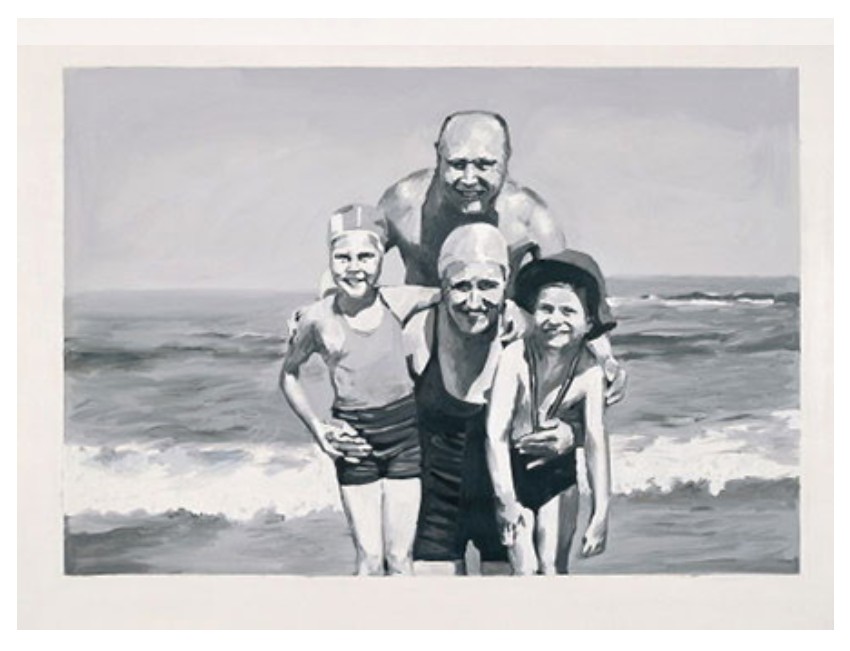
Gerhard Richter, Familie am Meer, 1964. Sylvia and Ulrich Stroher Collection, Museum Kuppersmuhle fur Moderne Kunst, Duisburg. Image/Artwork: © Gerhard Richter 2025 (0023).
Although Richter’s use of photographic source material is varied and expansive, his paintings related to group family portraits are strikingly rare, representing only fifteen of the Photo Paintings produced between 1962 and 1971, most of which are now held in prestigious institutional collections worldwide. Its source image taken from the Polke family album from the 1950s, here we see the artist as a young boy, smiling and standing proudly beside his older brother Joannes (Hans) and younger sister Dorothea (Dorle). Referring to these family snapshots Richter has described the ubiquitous family photo album as its own mode of devotional imagery, captured, collected, and carefully preserved for future generations. Familiar and utterly ordinary, these amateur photographs confirm to certain visual codes in their arrangement and presentation, Richter embracing the universality of these snapshots and amplifying the sense of their inherent artificiality through his painterly treatment of the subject.
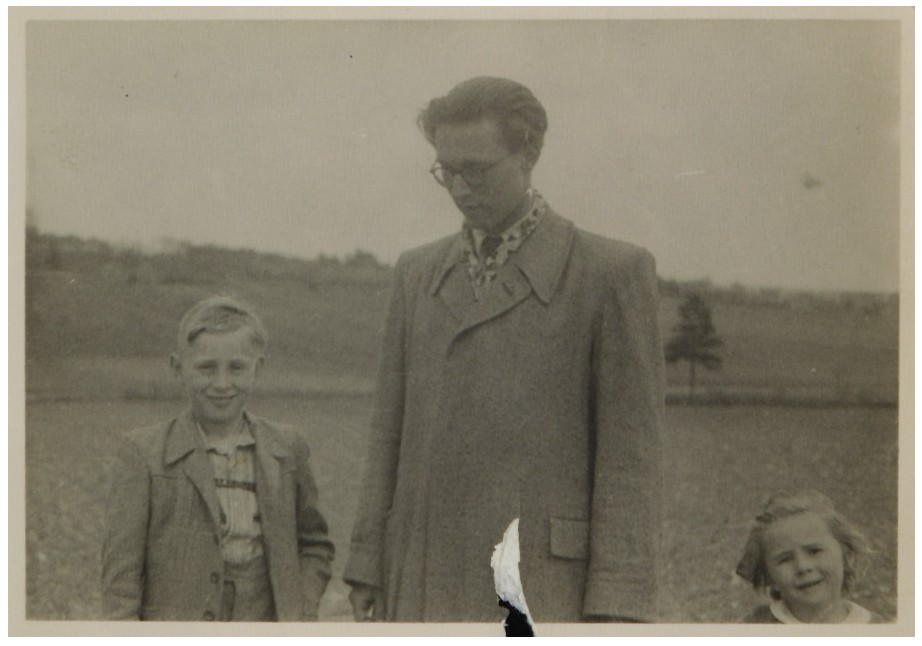
Hans Polke (middle) with his siblings Sigmar (left) and Dorle (right), early 1950s.
Image: © Archive of Anna Polke-Stiftung, Cologne.
Frequently referenced in discussions of this smaller suite of Family paintings, the 1964 painting Familie am Meer, exhibited alongside the present work in the major 2019 group show, Baselitz – Richter – Polke – Kiefer: Die jungen Jahre der Alten Meister exemplifies Richter’s fascination with these images, and their profound relevance to his broader artistic project. Ostensibly an everyday image of a family enjoying a day out on the seaside borrowed from the familial photo albums of his first wife, Marianne Eufinger, a darker history lay just beneath the surface of those smiling faces. As Richter was to discover, after joining the SS in 1935, Marianne’s father, the smiling Professor Heinrich Eufinger performed some nine hundred forced sterilizations on women incarcerated in asylums, including at the clinic where Richter’s own aunt had suffered a similar fate. As Richter has eloquently described, what attracted him to this particular image was precisely its universality, and its exposure of the inscrutability and fallibility of appearances. As the artist explains: “I was particularly struck by the two arms [of Heinrich Eufinger] that contain, as it were, a family. The protective, beaming father […] was the typical representative of a generation of fathers that had experienced an authoritarian upbringing themselves and built their careers in the ‘Third Reich.’” It’s secret history an altogether more unique and personal one, Mann mit zwei Kindern is an exceptionally rare and poignant record of this intense period of artistic collaboration and creative experimentation for these two masters of postwar German painting. Interrogating the inherently untrustworthy nature of images that purport to speak plain truths, in dragging his dry brush across the still-wet surfaces of these works Richter introduces an inscrutable distance between us and the image, making manifest the instabilities and inconsistencies of our notions of memory, truth, and representation itself.
Gilbert & George, 1975
Christie’s London: 5 March 2025
Estimated: GBP 1,500,000 – 2,000,000
GBP 1,250,000 / USD 1,600,000
GERHARD RICHTER (B. 1932), Gilbert & George | Christie’s
GERHARD RICHTER (B. 1932)
Gilbert & George, 1975
Oil on canvas
80×100 cm (31 1/2 x 39 3/8 inches)
Signed, numbered and dated ‘379 Richter, 1975’ (on the reverse)
Held in the same private collection for more than two decades, Gerhard Richter’s Gilbert & George (1975) represents an extraordinary meeting of minds. The eponymous British duo, famed for their radical collaborative practice, are captured in one of the most visually intriguing photo-paintings in Richter’s oeuvre. Based on a photograph of five exposures, it shows George twice—close-up, his doubled spectacles intersecting at different angles—coalescing with three images of Gilbert, who appears in profile, seated in a wicker chair, and as a small silhouette behind George’s ear. Richter’s soft, translucent brushwork creates a virtuoso mirage of overlaid features, and a superb portrait of two artists whose merged identities are central to their life’s work.
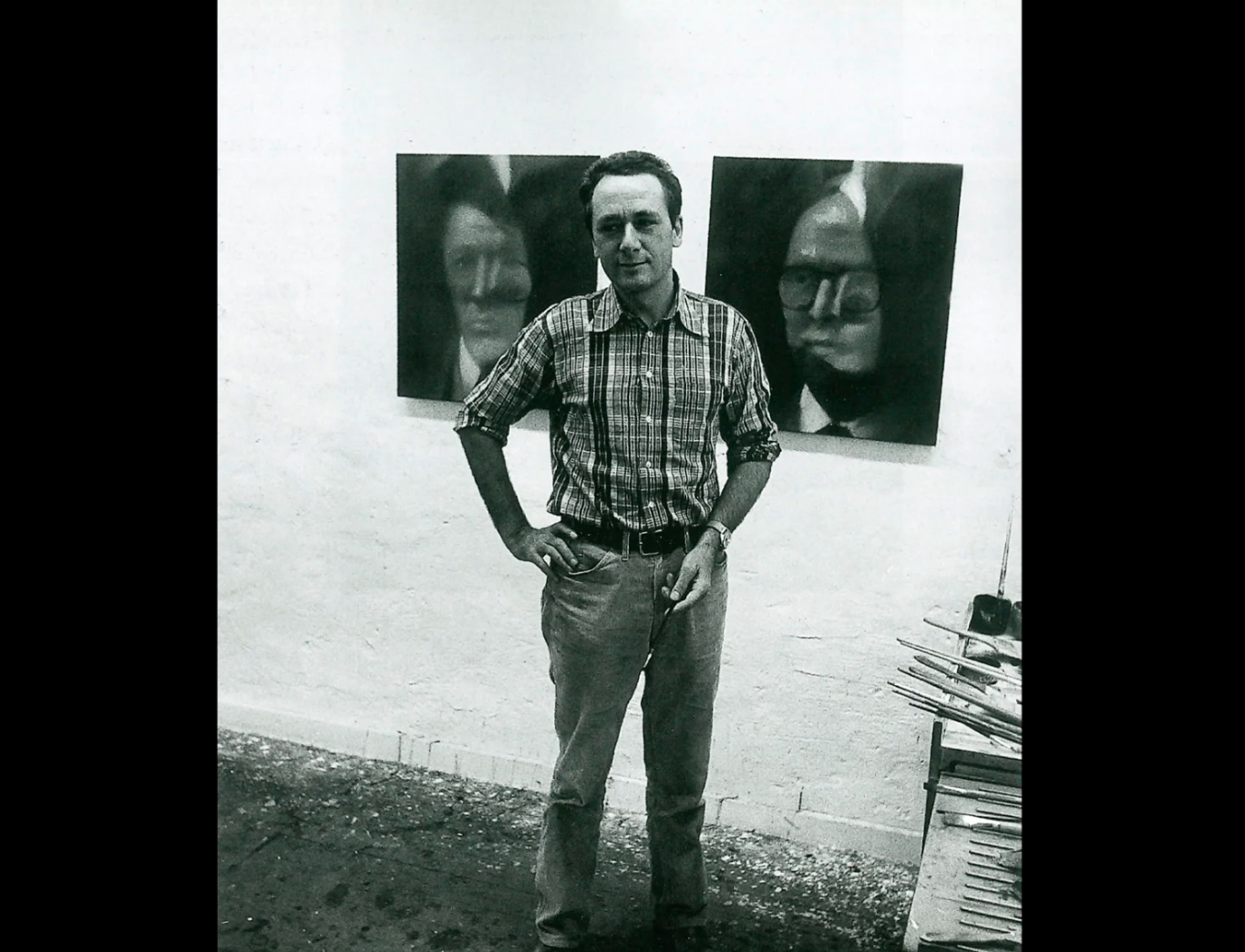
Gerhard Richter with Gilbert and George in his studio, 1975.
Photo: Axel Hinrich Murken, Aachen. Artwork: © Gerhard Richter 2025 (21022025).
Richter had met Gilbert & George in 1970, at their first exhibition in the Düsseldorf gallery of Konrad Fischer. When they returned for another show four years later, they asked him to paint their portraits. The project resulted in eight paintings, which Fischer exhibited at his gallery in 1975. Among these, two were acquired by Gilbert & George themselves; two are now part of the Artist Rooms Collection at Tate and the National Galleries of Scotland; and another is in the National Gallery of Australia, Canberra.
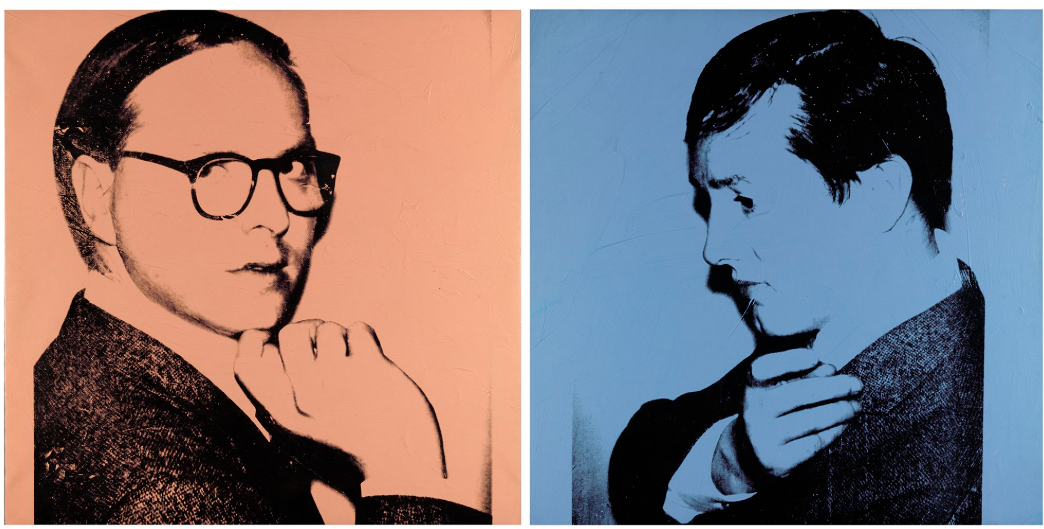
Andy Warhol, Gilbert & George, 1975. National Galleries Scotland, Edinburgh.
Artwork: © 2025 The Andy Warhol Foundation for the Visual Arts, Inc. / Licensed by DACS, London.
Digital Image: © National Galleries Scotland.
Richter has been investigating the truth-claims of painting and photography since the 1960s. For him they are equally unreliable as ways of comprehending reality: both no more than arrangements of color which, examined closely, dissolve into abstraction. The characteristic blurring of his photo-paintings—which operate in tandem with his abstract pictures—serves as a reminder of the illusory nature of appearance, making his portraits particularly enigmatic. In his landmark greyscale series 48 Portraits (1971-1972, Museum Ludwig, Cologne), made for the 1972 Venice Biennale, he showcased the anonymising effect of his technique on a line-up of great personalities from history. He included no artists, because, he said, they would have been too close to himself. Across his career he made a few rare exceptions. Artists he has painted include the Warhol superstar Brigid Polk, his friend Günther Uecker, his second wife, Isa Genzken, and Gilbert & George.
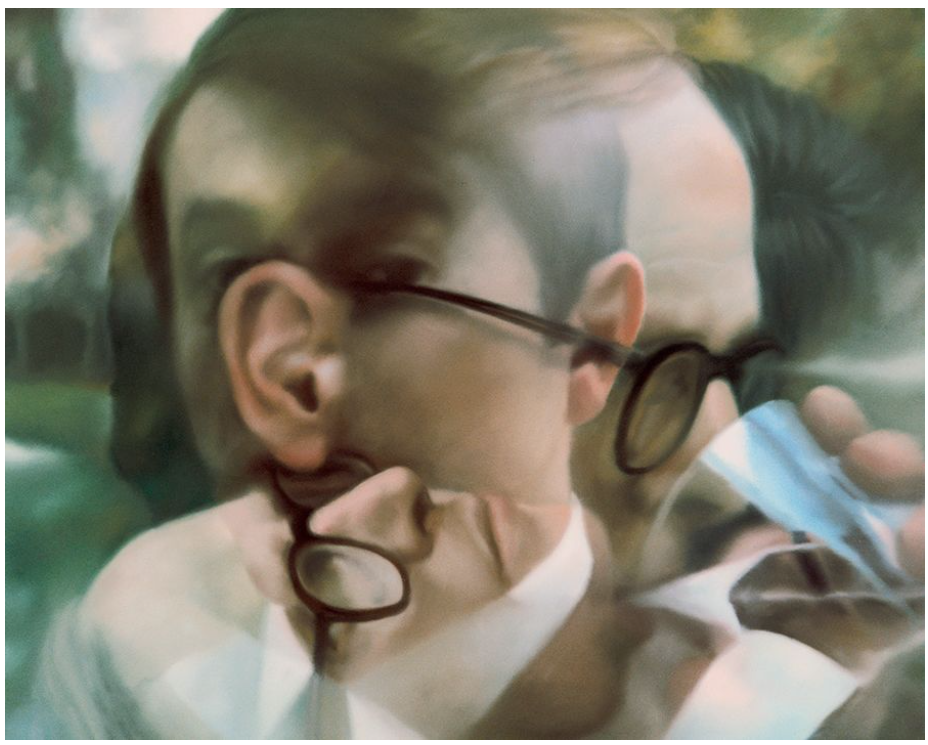
Gerhard Richter, Gilbert & George, 1975. National Gallery of Australia, Canberra. Artwork: © Gerhard Richter 2025 (0018).
In London in 1969, just a few years after Richter made his first photo-painting, Gilbert & George declared themselves to be ‘living sculptures.’ Wearing a uniform of near-identical suits, they have rarely been seen apart since. They are the primary subject of their own performances, drawings and photographic constructions—all of which they regard, too, as sculptures. Centred around their stylised partnership, they have created a Gesamtkunstwerk that collapses the distinctions between art and life, and blurs the two men into a single artist-figure. By the time Richter painted them in 1975, Gilbert & George were taking place on the world stage. Andy Warhol would make three silkscreened double portraits of the pair—based on his own Polaroid photographs—the following year.
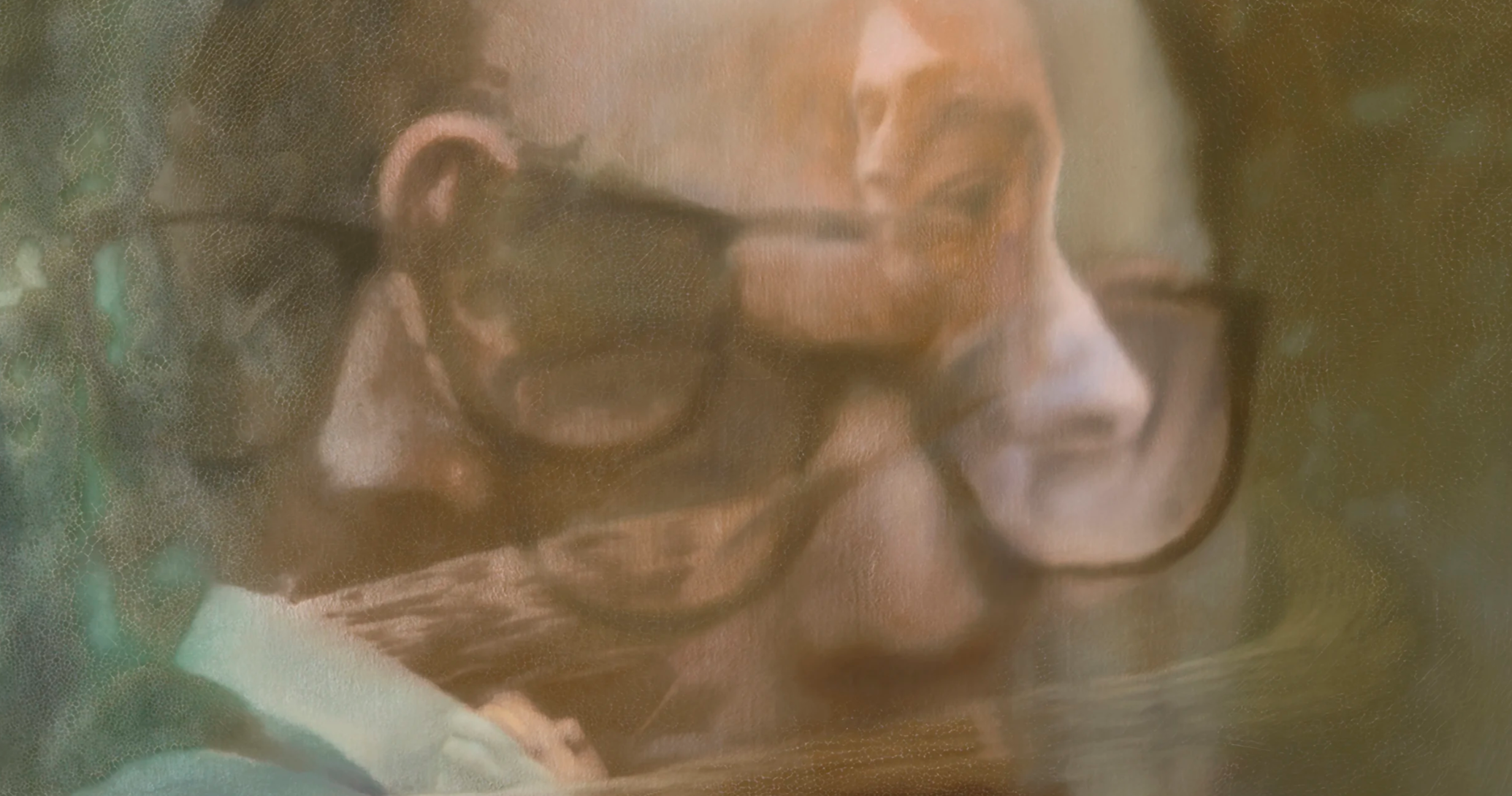
Gilbert & George visited Richter at home in Düsseldorf, where they held a photography session in the garden. Approaching his subjects from different angles and at varied distances, he repeatedly exposed the same section of film—rather than advancing the film in the camera after each shot—to create double or multiple exposures that would form the basis for his paintings. This technique had been used in early photographic works by avant-garde artists including El Lissitzky, Man Ray and Laszlo Moholy-Nagy, and—more recently, and to richly psychedelic effect—by Richter’s colleague Sigmar Polke. In 1970 Richter had made his own double photo-portraits with Polke that superimposed the two artists’ faces, in a statement of fused identity that foreshadowed the Gilbert & George paintings.
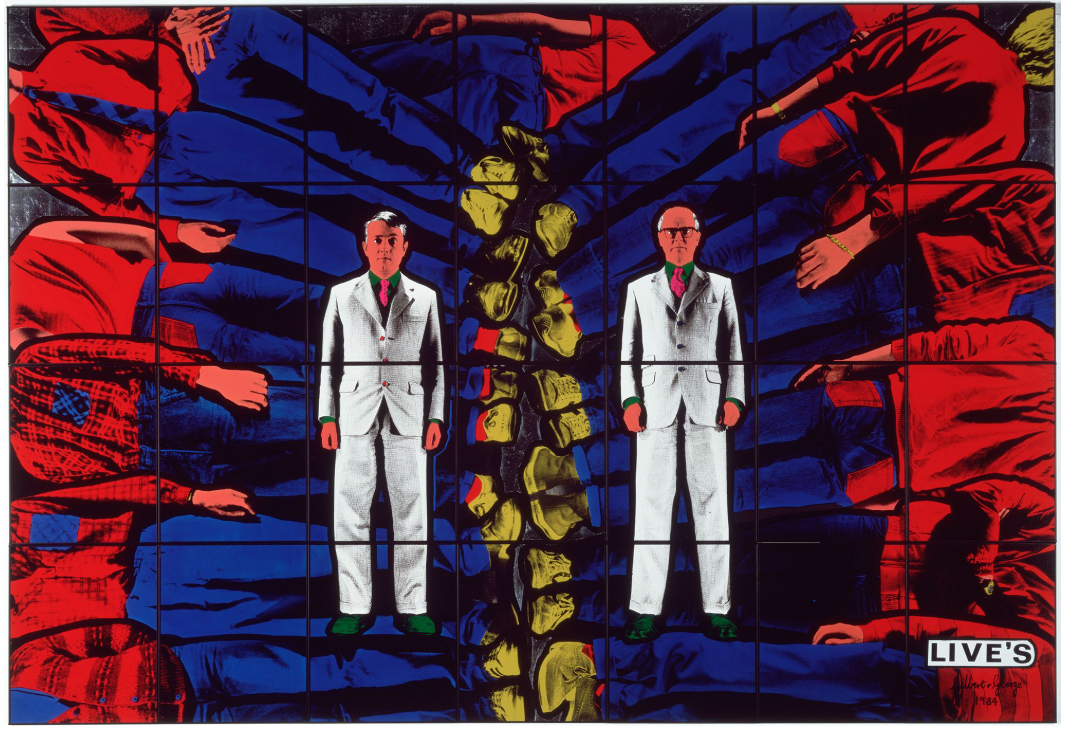
Gilbert & George, Live’s, 1984. Museum of Modern Art, New York. Artwork: © Gilbert & George.
Digital image: © 2025 The Museum of Modern Art, New York/Scala, Florence.
“I liked them as outsiders, above all… With Gilbert & George, too, I liked the very nostalgic side. They were the first people who liked my landscapes.”
The couple, like Richter, were working against the tide in a period dominated by Minimal and Conceptual art. Self-declared traditionalists, they had depicted themselves wandering through bucolic scenery in works such as The Nature of Our Looking (1970, Tate, London). Richter’s own landscape and seascape paintings of this time, based on his photographs, played provocatively with echoes of nineteenth-century German Romanticism. The Gilbert & George portraits allowed him to take up another Romantic motif: friendship, as celebrated by artists such as Caspar David Friedrich, who depicted paired figures sharing aesthetic experiences in nature.
Left: Francis Bacon, Portrait of Lucian Freud, 1965. Private Collection. Artwork: © The Estate of Francis Bacon. All rights reserved, DACS/Artimage. Photo: Prudence Cuming Associates Ltd.
Right: Paul Gauguin, Vincent van Gogh Painting Sunflowers, 1888. Van Gogh Museum, Amsterdam. Digital image: Bridgeman Images.
With its synthesis of melding, interlocking and overlaid visages, Richter’s photo-painting perfectly pictures Gilbert & George’s compound identity. Their union, of course, is part of their own artistic scheme: a formalized construction, complete with matching suits, that creates an artificial image around which their wider project revolves. In that sense, like all appearances, it is an illusion. Gilbert & George thus introduces further complexity to the dialogue between the camera’s vision, the painted mark and our sensory apprehension of the world that lies at the heart of Richter’s own practice. An elegant emblem of a unique artistic relationship, it is also a remarkably multi-layered example of his work.
Portrait Karl-Heinz Hering, 1968
Phillips London: 11 October 2024
Estimated: GBP 150,000 – 250,000
GBP 177,800 / USD 232,918
Gerhard Richter – Modern & Contempo… Lot 127 October 2024 | Phillips
GERHARD RICHTER
Portrait Karl-Heinz Hering, 1968
Oil on canvas
87.4 x 67.2 cm (34 3/8 x 26 1/2 inches)
Titled ‘Dr. Hering’ on the stretcher; signed and dated ‘Richter 1968’ on the reverse
This portrait of renowned art historian Karl-Heinz Hering, like many of Gerhard Richter’s early works, speaks to the artist’s deep engagement with themes of memory, identity and historical significance. Executed in 1968, Richter painted from a photograph, with the blurred lines between realism and abstraction in this piece reflecting his ongoing exploration of the ways in which images — and the people they depict — are shaped by the passage of time and the subjective nature of memory. The present work is a supreme example of the artist’s highly conceptual yet aesthetically elegant and resonant practice.
At the core of Richter’s practice lies a deep, career-long engagement with the concept of time, its cyclical nature and its representation through distinct artistic mediums. Time, for Richter, is a loop of past and present and, through his artistic praxis, he aims to capture singular moments and emotions, freezing them for eternity. The themes of memory and transformation are central to Richter’s 1960s photorealistic portraits, in which he deliberately sought to depict figures of cultural and intellectual significance, often drawing from personal acquaintances. In these portraits, Richter rejected the political ideologies of his youth, turning instead to individuals who represented intellectual freedom and creativity, such as Study 324 (Pail Hindemith) (1971) and Study 324 (Sigmund Freud) (1971). To create these works, he would project a photographic image onto a canvas and then trace its exact outlines. The artist would then recreate the original image’s appearance using a carefully selected colour palette of various shades of white, black and grey. The final touch involved blurring the painting with a soft brush or squeegee, a technique that became a hallmark of his style in his Abstrakte Bilder of the 1980s and 1990s. This method remained consistent throughout his career, even as the subjects of his photo paintings evolved from portraits and landscapes to seascapes, candles and skulls.
The subject of the present lot, Karl-Heinz Hering, was a figure of profound significance not only in the artist’s life but in Düsseldorf’s burgeoning art scene. Hering played a pivotal role in securing the city’s reputation as a major cultural centre and had a profound impact on Richter’s career, organising the artist’s first solo exhibition in West Germany in 1971. Through various initiatives, Hering also championed the careers of significant international artists, such as Jackson Pollock, Victor Vasarely and Rodney Doyle. This portrait distinguishes itself from the other works of this period due to its distinct approach. Unlike the signature blurriness that typically affects the entire image, here it is concentrated around the boundaries, leaving the sitter’s face relatively clear. The addition of expressive brushstrokes along the edges of the portrait mimics a frame, placing the sitter within it as if captured in a late 1960s printed photograph. This technique imparts a warm, nostalgic quality, reminiscent of a cherished photo of a close friend and mentor in a photo album. It evokes a sense of comfort and warmth, creating a lasting, emotionally resonant memory in a tangible form.
Richter’s fascination with the interplay between photography and painting became a cornerstone of his practice during his studies in Düsseldorf where he settled in 1961. Inspired by the flourishing Pop Art movement, he saw in photography a mechanical, objective way to depict reality, devoid of personal artistic intervention, echoing Warhol’s approach. Richter was intrigued by photography’s role as a step removed from reality, a reproduction rather than a direct representation. He began cutting images from magazines and dissolving them with chemical solutions, a process that blurred their clarity and captured his interest in how images, much like memories, evolve over time. The blurriness that came to define these now-iconic works erased the boundaries between photography and painting, artist and camera.
Although his photorealistic style paralleled that of leading figures in American Pop Art, Richter’s intention was not to celebrate the superficial themes of mass production and consumer culture. Instead, his work delved into deeper, more contemplative subjects. Like his German contemporaries Sigmar Polke and Anselm Kiefer, Richter also challenged the dominance of abstraction, responding to an era marked by significant struggles and disruptions. In a Europe still recovering from recent tragedies, there was a yearning for art with a deeper purpose — art that was more intimately connected to the realities of life.
Herr Uecker, 1964
Ketterer Kunst: 7 June 2024
Estimated: EUR 450,000
EUR 1,016,000 / USD 1,106,485
Ketterer Kunst, Art auctions, Book auctions Munich, Hamburg & Berlin
GERHARD RICHTER
Herr Uecker, 1964
Oil on canvas
47×29 cm (18 1/2 x 11 3/8 inches)
Signed, titled “Herr Uecker” and inscribed with the dimensions on the reverse
Stretcher titled “Herr Uecker”
Our perception of Gerhard Richter’s painterly oeuvre was formed by both his sought-after early black-and-white works from the 1960s, as well as by the “Abstract Paintings” that he began in 1976. Family photos, advertising pictures and pieces from other print media provide the basis for Richter’s portraits and cityscapes of these years. Richter subsequently “inpainted” the motifs in an enlarged canvas format, dissolving their contours into soft black-and-white modulations. Works from the early 1960s are characterized by the famous blurring that would become Richter’s artistic trademark.
Richter’s portrait of fellow artist and friend Günther Uecker, the famous ZERO protagonist, was made in 1964 in the context of a small series of portraits initiated by the legendary Düsseldorf gallerist owner Alfred Schmela for Richter’s first solo exhibition in September 1964. “Herr Uecker” is one of the last early Richter portraits that is still privately owned today. Richter created this fascinating painting on the basis of a vernissage photo showing Günther Uecker and Schmela, which also served as inspiration for two versions of “Potrait Schmela” from the same year. The series of eight portraits from 1964 began with three portraits of Alfred Schmela himself, of which one is based on passport photos while the other two follow the abovementioned exhibition shots. They were supposed to serve as a kind of sample for the gallery’s potential customers. The first version of “Portrait Schmela” (Elger 37-1) was sold by Sotheby’s London for a little more than 4.6 million euros in 2015. Another version (Elger 37-3) became part of the collection ‘Kunstsammlungen Nordrhein-Westfalen’ in the summer of 2014 as a widely covered million-euro endowment from the art historian Viktoria von Flemming. In addition to two versions of “Portrait Dr. Knobloch”, the Krefeld gynecologist and collector Dr. Gisela Knobloch, one of which was purchased by the Staatliche Kunstsammlungen Dresden in 2009, and the other is believed to have been destroyed (cf. the catalogue raisonné), Richter also created a total of three versions of “Portrait Schniewind”, showing the Düsseldorf collector Willy Schniewind. Our house successfully sold one of these three works to an Asian private collection in 2018, while Sotheby’s London had already sold another version in 2010 with a similar result. Günther Uecker, Richter’s artist friend, and ZERO founder, originally owned the third version of “Potrait Schniewind”, which is now part of the renowned Fisher Collection, one of the largest private collections of American and German art after 1960, housed at the Museum of Modern Art in San Francisco.
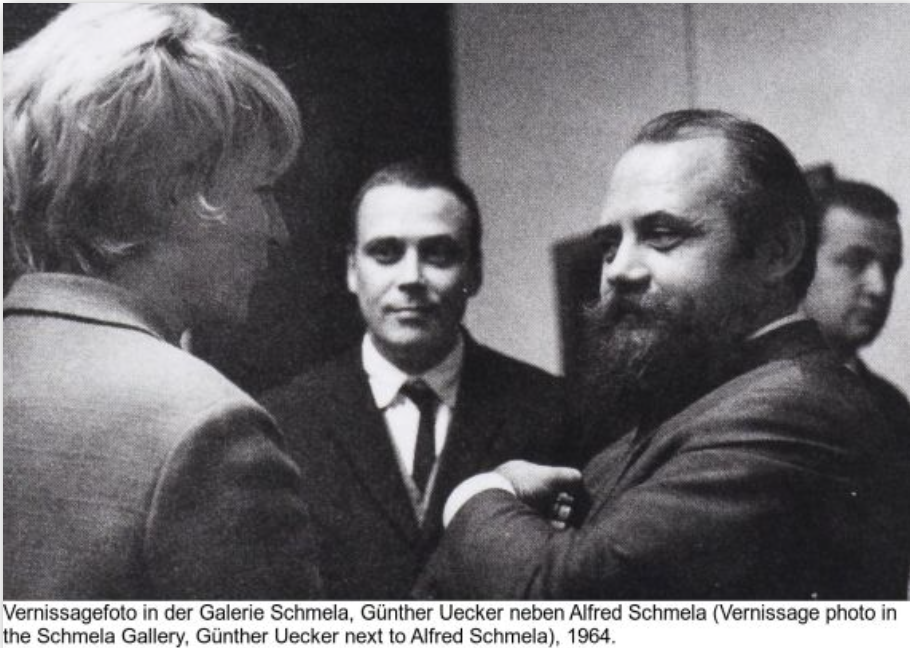
Richter’s and Uecker’s artistic breakthrough is closely associated with the legendary Düsseldorf gallery owner Alfred Schmela, who not only organized Gerhard Richter’s first solo exhibition in 1964 but was also responsible for Günther Uecker’s first solo exhibition in Germany in 1961. On top of that, he made a name for himself with early exhibitions of Lucio Fontana. By 1964, Uecker had already staged nine “ZERO” exhibitions, including the incredible show at Howard Wise in New York, which heralded the 34-year-old artist’s international breakthrough. After various art and exhibition projects with, among others, Sigmar Polke and Blinky Palermo, which also included the legendary show “Leben im Museum” at the Kunsthalle Baden-Baden in 1968, Gerhard Richter represented Germany at the 1972 Biennale with his famous series of “48 Portraits”, showing 48 European intellectuals. The portrait “Herr Uecker” was also first published in the Biennale catalog. Richter’s first documenta participation followed in 1972, eventually leading to his first solo exhibition in New York in 1973. Richter’s portrait “Herr Uecker” is not only one of these particularly early Richter portraits from 1964, but also a fascinating and unique testimony to the joint artistic breakthrough of these two important German artists. In 1979, the British artist Richard Hamilton also immortalized this fascinating Richter portrait in his work “Berlin Interior” (Tate Collection, London). Most recently, “Herr Uecker” featured in the major 2011 exhibition “Gerhard Richter. Bilder einer Epoche” alongside other key works from Richter’s oeuvre.
Alster (Hamburg), 1963
Ketterer Kunst: 8 December 2023
Estimated: EUR 1,000,000
EUR 2,105,000 / USD 2,315,500
Ketterer Kunst, Art auctions, Book auctions Munich, Hamburg & Berlin
GERHARD RICHTER
Alster (Hamburg), 1963
Oil on canvas
62×84 cm (24.4 x 33 inches)
Signed and dated on the reverse
Standing in front of Richter’s first townscape “Alster (Hamburg)”, the wide Hamburg panorama from 1963 in evening light, one quickly senses the outstanding quality of Richter’s painting: It is the fascinating combination of closeness and distance that Richter’s unique painting technique evokes. Richter right away conceals what he initially brought onto the canvas in finest details behind a delicate painterly veil of an even, gentle painting with soft brushes. However, it’s not just the technical mastery that impresses in “Alster (Hamburg)”, but also Richter’s keen eye in screening and selecting the photographic material from print media and private photo albums, and which ultimately helps him to identify the perfect image section of the printed template. This process becomes particularly well comprehensible in the rich contrast city silhouette of “Alster (Hamburg)”, since the photograph published in “Stern” on October 27, 1963 has an even stronger panorama format. Richter only selected the right half of the picture as basis for his painting, where the tree branches only partially reveal the view of the city skyline on the other bank of the Alster. In the present work he entirely focuses on the fascinating contrast between fore- and background, between light and shadow and an objectivity that is partially covered by the abstract structures of the branches and thus additionally veiled. “Alster (Hamburg)” shows a wonderful combination of the representational elements of a townscape with the abstract, superimposed structures of the foreground, thus anticipating elements that can be found in landscape paintings from the late 1990s, such as “Sommertag” (1999) (Albertina, Vienna), and which, in return, are ultimately decisive for Richter’s late abstract works. Richter realized not only the finest transitions by using a wide variety of brushes, but even attained a completely homogeneous pictorial surface: “I blur to make everything the same, everything equally important and equally unimportant. I smudge so it doesn’t look artsy and crafty, but technical, smooth and perfect. I blur so that all the parts move together a little. I might also wipe out what I regard as too much unimportant information.” (Gerhard Richter, Notizen 1964/65, quoted from: Gerhard Richter, Text, Cologne 2008, p. 33).
Portrait Laszlo, 1966
Sotheby’s London: 27 June 2023
Estimated: GBP 600,000 – 800,000
GBP 762,000 / USD 971,690
GERHARD RICHTER (b. 1932)
Portrait Laszlo, 1966
Oil on canvas
65.1 x 50.2 cm (25 5/8 x 19 3/4 inches)
Signed and dated V.66 (on the reverse)
With its characteristically blurred surface and elegant subtlety of monochrome grey hues, Portrait Laszlo from 1966 is a stunning paradigm of Gerhard Richter’s Photo Paintings. Defiling the traditional process of portraiture by painting from a photograph instead of real life, Richter sought to imbue his canvases with the objectivity and legitimacy generally associated with the photographic medium. Indeed, the present work’s tonal topography and technical distinction epitomize the artist’s overarching ambition to present the viewer with a new perspective of reality, highlighting his ongoing investigation into human perception and the validity of the painted image. A precursor to Richter’s 48 Portraits, a series of forty-eight oil paintings completed for the German Pavilion at the 1972 Venice Biennale, the present work depicts the bust of the Hungarian-Swiss art collector, psychoanalyst and author Carl Laszlo. Laszlo was a respected art dealer whose own collection ranged from sixteenth-century European Art to East Asian Antiquity, and Contemporary Art. Among his circle of friends were the Pop luminaries Andy Warhol and Roy Lichtenstein, whose works also formed a part of his collection. Dressed in formal attire replete with a collar, Laszlo’s silhouette is drawn into the realm of abstraction yet perfectly recognizable as the acclaimed dealer and writer. In a similar vein, sitters included in the Richter’s career defining 48 Portraits were at the height of society; those prominent in the fields of literature, science, philosophy and music such as Albert Einstein, Ilich Tchaikovsky, Oscar Wilde, and Franz Kafka, amongst others.
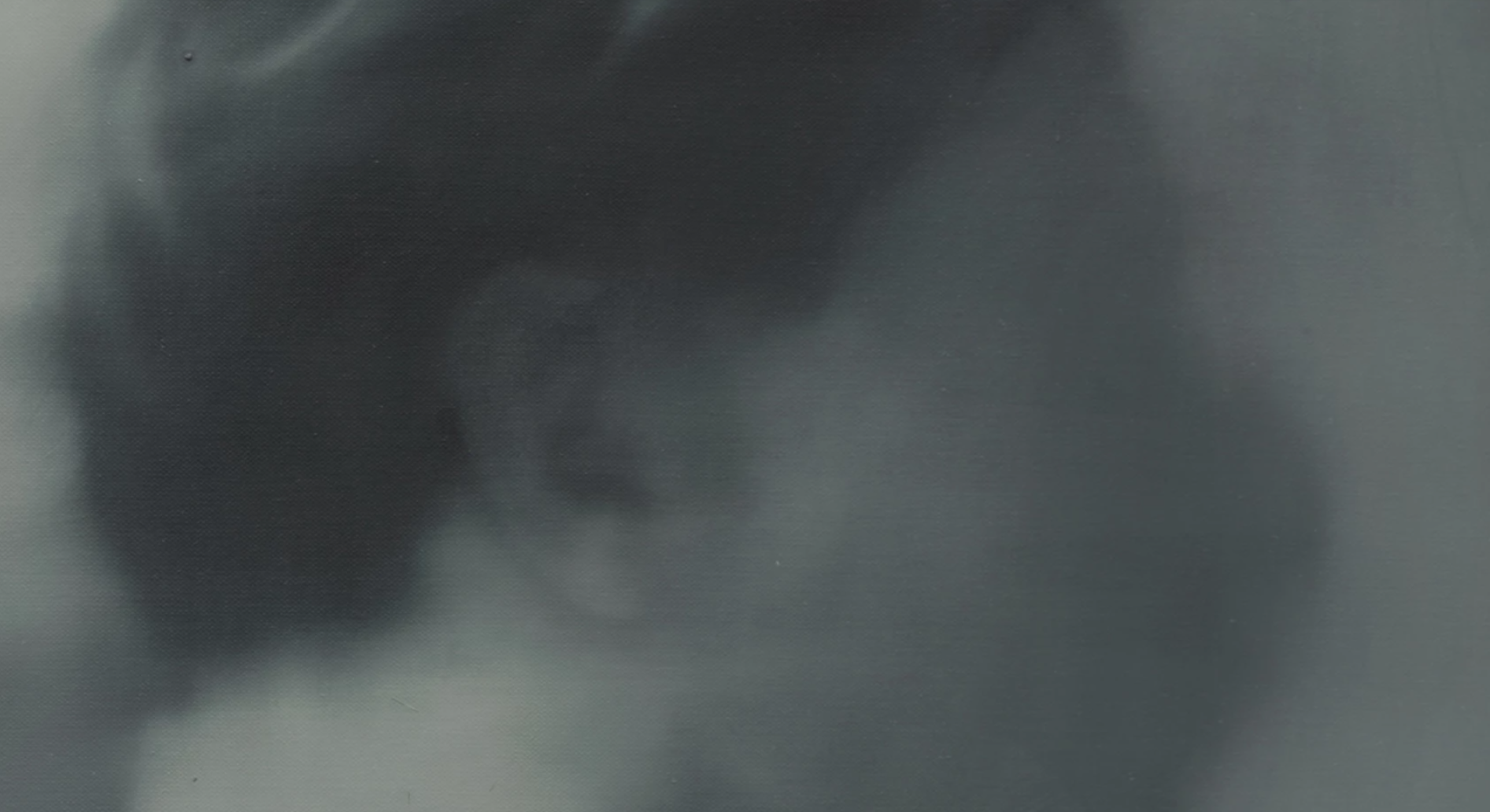
Between 1962 and 1968 Richter pursued a portrait practice based exclusively on media-derived and family photographs, seeking to explore the ambiguity that exists between the alleged objectivity of a photograph and the inherent artifice of painting. To this end, Richter imbued his paintings with the impartial and factual documentation inherent to photography, in order to convey an image free from predisposed interpretation or meaning and a painting free from individual artistic expression. With a paradigmatic blurring of contours and drained of any color, the portraits exemplify Richter’s deliberate choice of a monochrome palette, which he attributed to the objective subtlety of the color grey.
“Grey is the welcome and only possible equivalent for indifference, non-commitment, absence of opinion, absence of shape.”
Through its tonal contrasts and lustrous streaks of silvery pigment, the technical framework of Portrait Laszlo invests the medium of photography with a breath-taking sense of animation, leaving its subject blurred and slightly out of focus. As such, the surface of Richter’s image is uniquely soft, bearing almost no evidence as to the mark-making of the painter and thus removing the artist from the final output.
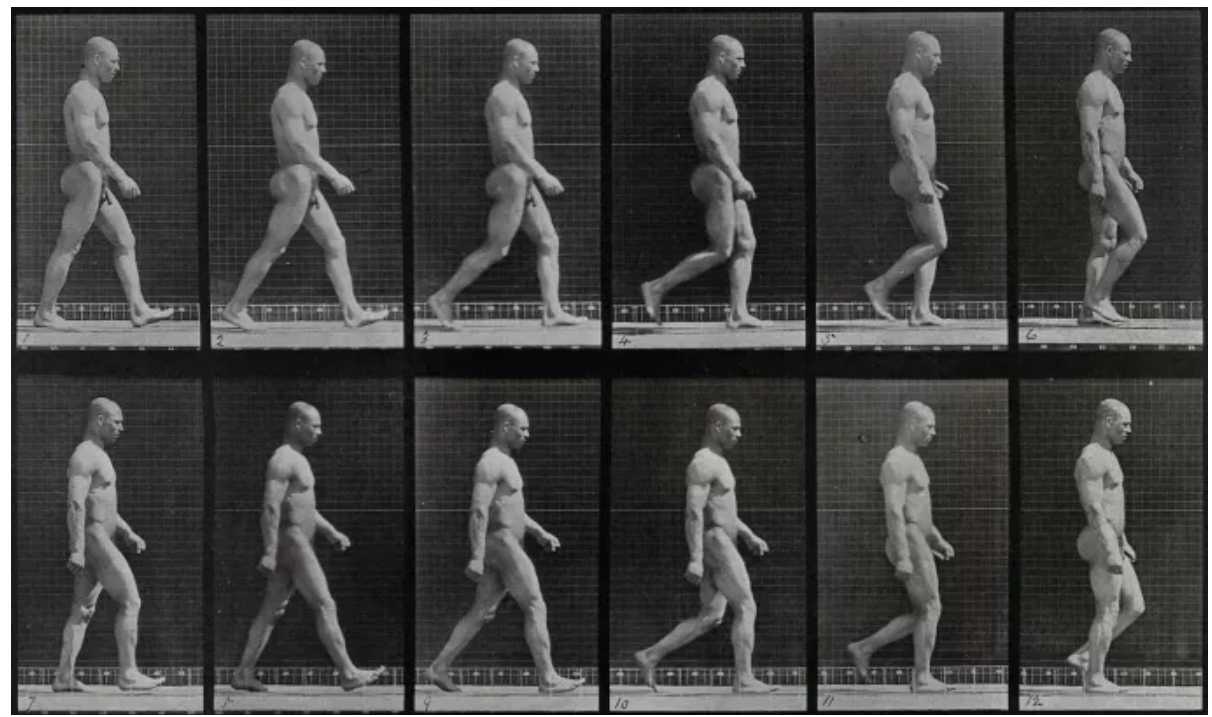
EADWEARD MUYBRIDGE, MAN WALKING, PLATE 6 FROM ANIMAL LOCOMOTION/ UNIVERSITY OF PENNSYLVANIA, PHILADELPHIA
Re-purposing photographs as visual aids in the late 1950s, Richter’s tendency to turn towards the medium of photography is deeply rooted in his younger years. However, it was only during the 1960s that photographic imagery became a literal, direct source for his paintings. Trained under the heavy ideology and aesthetic dogma of Socialist Realism, Richter radically changed the nature of his practice after his emigration to West Germany in 1961, a stylistic metamorphosis that would have a profound effect upon the history of contemporary painting. Along with notable figures such as Sigmar Polke, Richter became a proponent of Kapitalistischer Realismus (Capitalist Realism), which used popular imagery as a sardonic critique of how ideology could be visually presented as reality on both sides of the Iron Curtain. As such, in the seemingly fleeting, passing moment rendered on the surface of Portrait Laszlo, we see Richter freeing himself from the figurative constraints of Socialist Realism, finding his stride in the threshold between the illusory and the concrete. Both spatially ambiguous and deeply evanescent Portrait Laszlo thus touches upon the most profound cornerstone of Richter’s oeuvre, which has consistently and magnificently scrutinised the potential of the painted image in the photographic age.
Apfelbäume, 1987
Christie’s New-York: 9 November 2022
Visionary: The Paul G. Allen Collection
Estimated: USD 5,000,000 – 7,000,000
USD 9,779,000
GERHARD RICHTER (B. 1932) (christies.com)
GERHARD RICHTER (B. 1932)
Apfelbäume, 1987
Oil on canvas
28 3/8 x 40 1/4 inches (72 x 102.2 cm)
Signed, dated and inscribed ‘650-2 Richter 1987’ (on the reverse)
Demonstrating the astonishing pull of nature, Gerhard Richter’s Apfelbäume is a celebrated example of the artist’s contemporary contribution to the grand tradition of European landscape painting. Picturing the haunting form of three trees veiling over a pasture of rolling hills and pale gray fog, the present work is one of only three paintings the artist completed of this subject matter, one of several quasi-Romantic subjects that he explored in the 1980s. Building on his earlier astronomical studies and seascapes, the present work represents the culmination of Richter’s conceptual engagement with the idea of landscape. Based on a photograph included in Atlas, the artist’s compendium of source images, Apfelbäume is swathed in soft muted hues of mossy green and cool silver, a choice that enhances the perception of focus embedded within the original snapshot. Here, Richter ultimately surrenders to the abstract, and in the process produces one of his most atmospheric and evocative canvases. The result becomes an investigation of painting that questions the very nature of it, both through the illusions of space it creates, and the material existence of it.
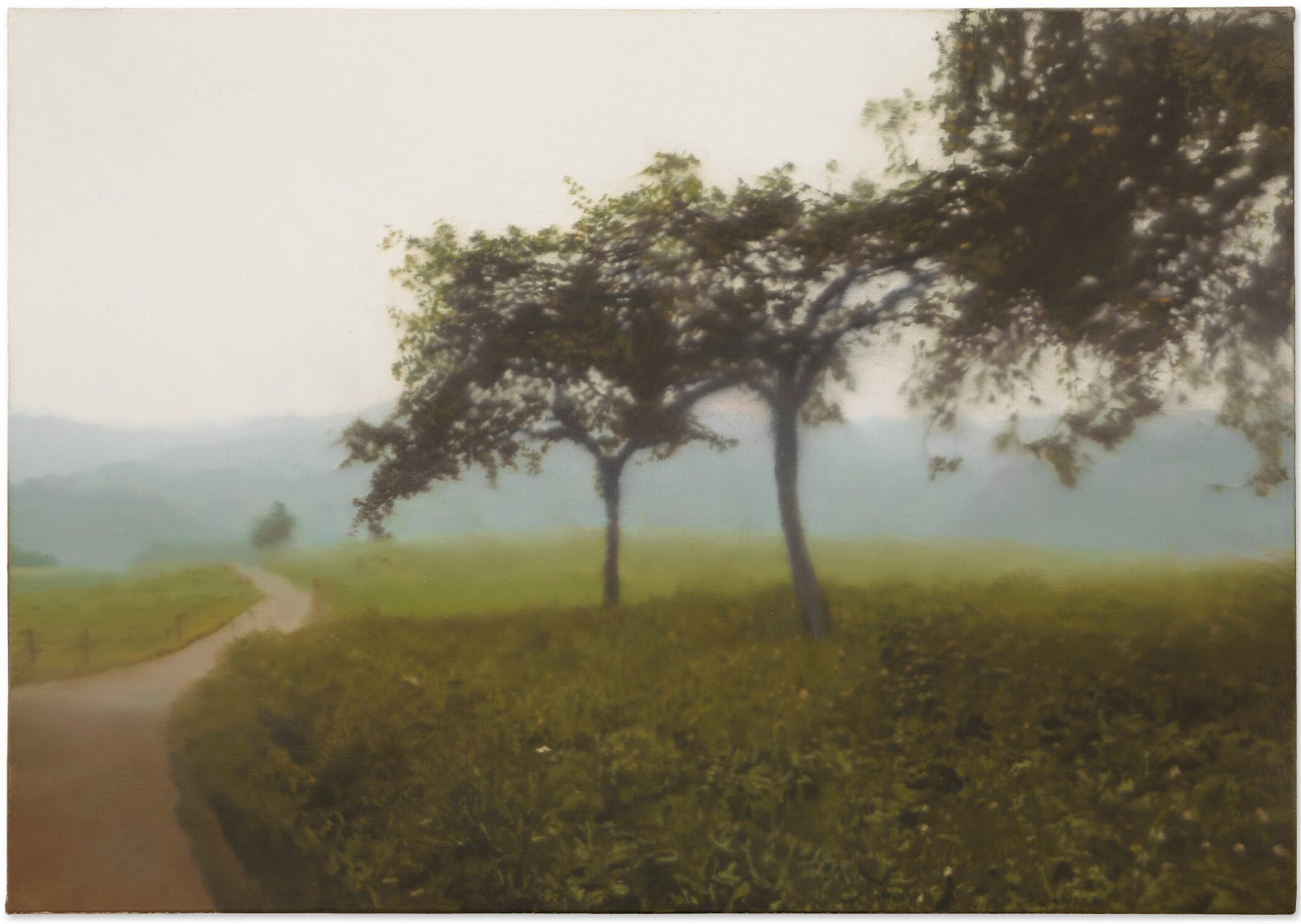
In this lifelong pursuit of painting, Richter has explored the dichotomy between reality and illusion. It was through his early body of photo-paintings, which deliberately mimicked the blurred effects of the camera, that he first came to explore abstraction: figuration, he believed, was no less deceptive than non-representational idioms. His return to photorealism in the 1980s, at a time when his abstract works were becoming increasingly complex, demonstrates his lack of distinction between the two modes. Neither free elaboration nor precise reproduction, he believed, could bridge the cavernous abyss between man and nature.
“My landscapes are not only beautiful or nostalgic, with a Romantic or classical suggestion of lost Paradises, but above all ‘untruthful’ … and by ‘untruthful’ I mean the glorifying way we look at Nature—Nature, which in all its forms is always against us, because it knows no meaning, no pity, no sympathy, because it knows nothing and is absolutely mindless: the total antithesis of ourselves, absolutely inhuman.”
Though bathed in the glow of familiarity, the present work ultimately casts its subject matter as a distant mirage: vacant, unattainable and unheimlich, as disarming and alien as any of his abstract panoramas. Though painted in acknowledgement of the masters such as Nicolas Poussin or Caspar David Friedrich, artists who wove grandiose hymns to the majesty of nature, Richter’s landscapes ultimately disrupt such traditions. Working in the aftermath of the Second World War, which had seen the heroic narratives of German Romanticism exploited by propaganda, Richter sought to emphasize the artificial nature of all imagery. As we approach the work, its delicate pastoral exterior dissolves before our eyes, leaving us to stare at an impermeable assembly of attentive brushstrokes. Beautiful, serene and yet ultimately unyielding, Apfelbäume draws upon the early nineteenth-century aesthetics celebrating love of the soil, of the forests and of the mountains related to the sense of homeland which had been so abused by propagandists during the war years of Richter’s own youth and which have informed so many of Anselm Kiefer’s and Georg Baselitz’s works concerning German national identity. While Richter’s mountain scenes, seascapes and cloud pictures are informed by an echo of the epic that recalls a haunted past, there is also an enduring sense of nostalgic wistfulness, of contemplation, of the rolling and fertile countryside in Richter’s apple trees.
Sammler mit Hund, 1966
Sotheby’s New-York: 15 November 2021
Estimated: USD 1,500,000 – 2,000,000
USD 3,166,000
Sammler mit Hund | The Macklowe Collection | 2021 | Sotheby’s (sothebys.com)
GERHARD RICHTER (b.1932)
Sammler mit Hund, 1966
Oil on canvas
90×90 cm (35 1/2 x 35 1/2 inches)
Signed, titled and dated 1966 on the reverse
With its characteristically blurred surface and elegant subtlety of monochrome grey hues Sammler mit Hund is a stunning paradigm of Gerhard Richter’s Photo Paintings. Both its tonal topography and technical distinction epitomize the artist’s overarching ambition to present the viewer with a new perspective of reality, highlighting his ongoing investigation into human perception and the validity of the painted image. Challenging the traditional process of portraiture by painting from a photograph instead of real life, Richter sought to imbue his paintings with the objectivity and legitimacy generally associated with the photographic medium.
“A portrait must not express anything of the sitter’s ‘soul,’ essence or character. For this reason, among others, it is far better to paint a portrait from a photograph, because no one can ever paint a specific person.”
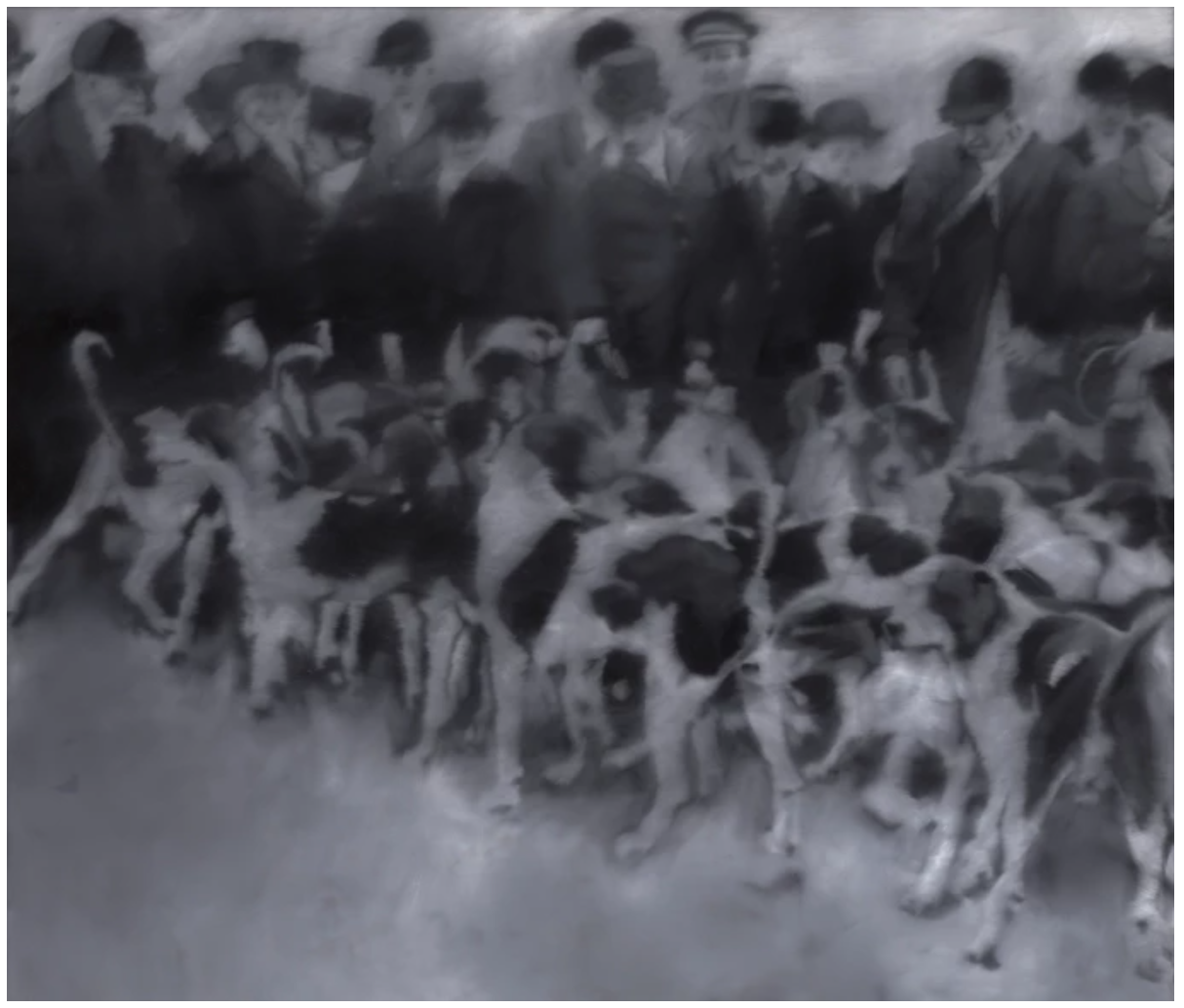
GERHARD RICHTER, HUNTING PARTY (JAGDGESELLSCHAFT), 1966. IMAGE © THE ART INSTITUTE OF CHICAGO / ART RESOURCE, NY. ART © 2021 GERHARD RICHTER
Between 1962 and 1968 Richter pursued a portrait practice based exclusively on media-derived and personal photographs. Seeking to explore the ambiguity that exists between the alleged objectivity of a photograph and the inherent artifice of painting, he chose to use photographic source material rather than paint from life. Physicalizing this tension, Richter blurred the surface of his paintings, an effect that was achieved by dragging a dry brush across the surface of the canvas while the paint was still wet. Paradigmatic of the artist’s ongoing investigation into the validity of the painted image, this blurring effect raises greater questions of human perception. Prefacing Richter’s subsequent investigations into the infinite possibilities of painting as a presenter of truths, the striations of black, grey and white in the background fluctuate between figuration and abstraction and were later used as the source image for Richter’s ensuing series of Vorhang (curtain) Paintings. This central desire to elicit a true semblance of perception was a critical preface to the artist’s ongoing investigation into the limits of representation, the nature of perception and the operations of visual cognition.
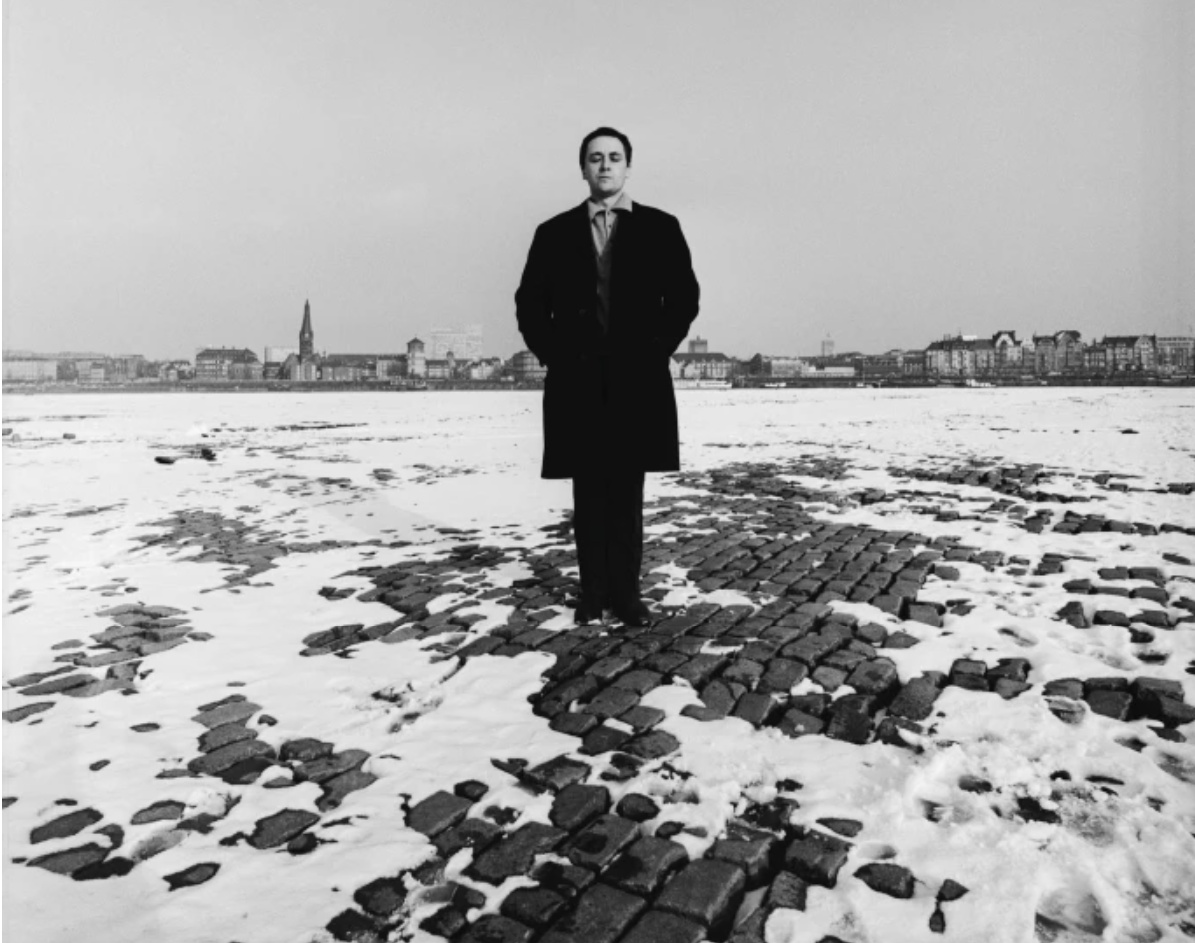
THE ARTIST PHOTOGRAPHED IN 1969. PHOTO © WOLLEH LOTHAR / SÜDDEUTSCHE ZEITUNG PHOTO / ALAMY STOCK PHOTO
Richter was trained under the heavy ideology and aesthetic dogma of Socialist Realism, and it was only after the artist’s emigration to West Germany in 1961 that he radically changed the nature of his practice; a stylistic metamorphosis that would have a profound effect upon the history of contemporary painting. Along with notable figures such as Sigmar Polke, Richter became a proponent of Kapitalistischer Realismus (Capitalist Realism), which used popular imagery as a sardonic critique of how ideology could be visually presented as reality on both sides of the Iron Curtain. As such, in the seemingly fleeting, passing moment rendered on the surface of Sammler mit Hund, we see Richter freeing himself from the figurative constraints of Socialist Realism, finding his stride in the threshold between the illusory and the concrete. Both spatially ambiguous and deeply evanescent, Sammler mit Hund thus touches upon the most profound cornerstone of Richter’s oeuvre, which has consistently and magnificently scrutinized the potential of the painted image in the photographic age.
Domplatz, Mailand [Cathedral Square, Milan], 1968
Sotheby’s New-York: 14 May 2013
Estimated: USD 30,000,000 – 40,000,000
USD 37,125,000
(#20) Gerhard Richter (sothebys.com)
GERHARD RICHTER
Domplatz, Mailand [Cathedral Square, Milan], 1968
Oil on canvas
275×290 cm (108×114 inches)
A simply breathtaking triumph of Gerhard Richter’s 1960s photo-painting, Domplatz, Mailand was at the time of its execution the largest figurative painting he had created and stands today as the epitome of this period of his career. Executed in his thirty-sixth year, the astounding scale (at more than 9 by 9 feet) and exquisite technical accomplishment mark this work as historic. It exemplifies a pioneering approach to source material, by which he interrogated themes of mass media from a unique perspective on the contemporary culture of Europe in the 1960s. Yet as with other examples of truly timeless art, this painting remains vital and an encounter with it today provides a strikingly resonant experience. For while generically this painting is the perfect archetype of Richter’s photo-painting, specifically it is a portrait of the two overriding socio-economic forces that have determined the history of humankind: commerce and religion, as embodied by two monuments that forever face each other across the Piazza in Milan.
Color Charts
In 1966, with his Color Chart works, Gerhard Richter succeeded in radically expanding his early oeuvre. It will not be for the last time that, through new motifs, Richter questioned his painterly concept and tests out a new stylistic idiom. Richter recognized in the color sample cards a pictorial quality, like the quality that he had seen four years earlier in newspapers, magazines and private family albums. For Richter, these motifs were ready-made pictures that served as perfect templates for his painting. Now, the sample cards from the paint shop presented a dramatic first step into the direction of abstraction.
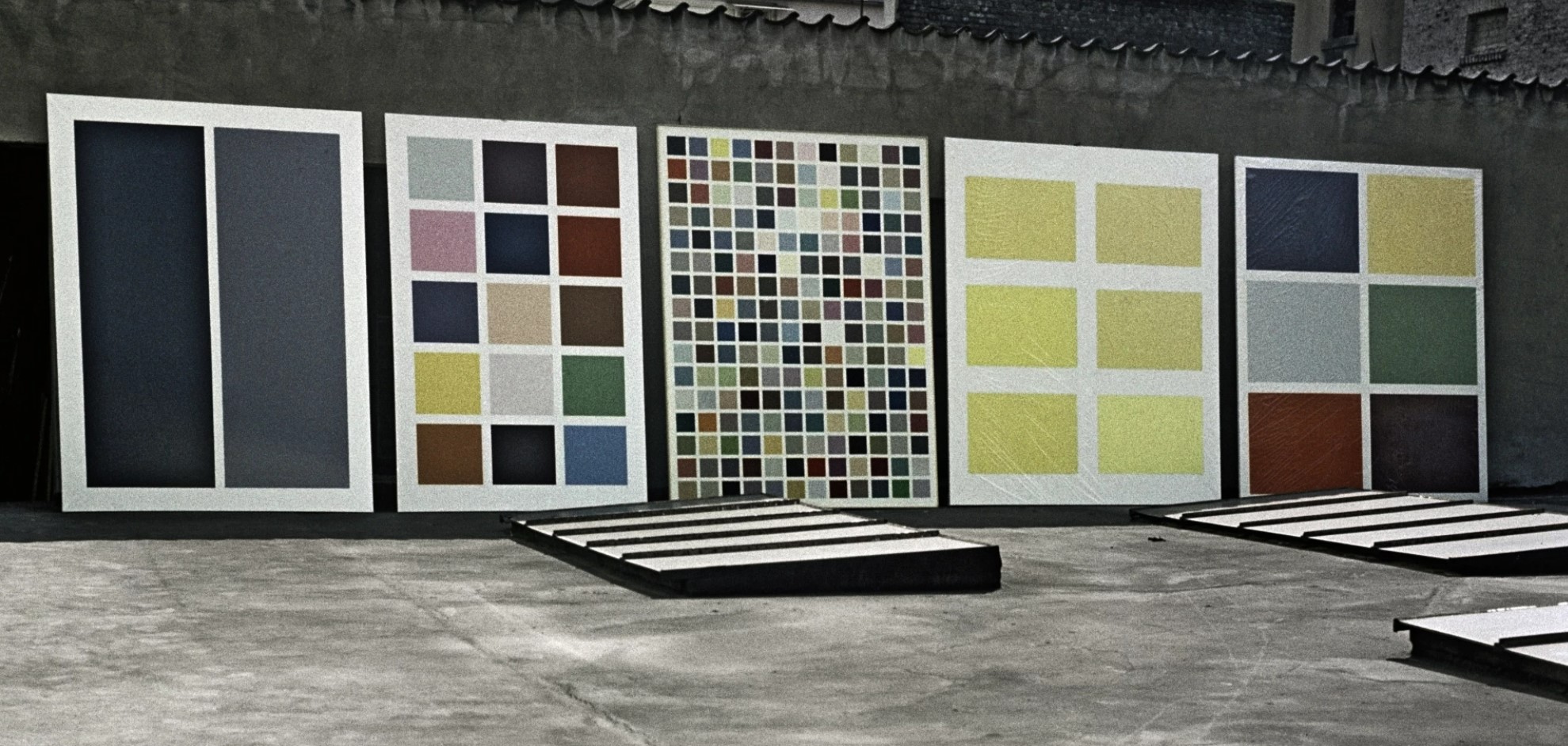
COLOUR CHART PAINTINGS ON THE ROOF OF RICHTER’S DÜSSELDORF STUDIO, 1966
IMAGE/ARTWORK: © GERHARD RICHTER 2022, COURTESY GERHARD RICHTER ARCHIVE DRESDEN
Gerhard Richter painted in 1966, 19 Color Charts in total, and attributed to these the numbers 135-1 to 144/1-10 in his catalogue raisonne. Amongst these belong three large format paintings with differing grey tones (143-1 to 143-3). Since 1970 he revisited the theme of the color charts several more times, expanding this to include up to 1024 different color tones within one composition. In contrast to this, he used merely four different colors in his 2008 series, Quattro Colori. In October 1966 Gerhard Richter opened an exhibition at Friedrich & Dahlem in Munich where he presented only examples of works from his new series of Colour Charts. Not even two years earlier, he had held here his first ever solo exhibition with paintings based on photographic source images. That exhibition had included several, now well known, paintings such as Fußgänger (6), Tote (9), Bomber (13), Stukas (18-1) or Ferrari (22), which today are all in international museum collections. For those visitors of the exhibition who had also been present at the first exhibition at Friedrich & Dahlem, this second exhibition only one and a half years later, must have come as quite a shock. When asked in 1981 about the contemporary reaction, Gerhard Richter vividly and distinctly remembered “the few insiders found it great, Konrad Fischer or gallerist Heiner Friedrich and a few collectors, they also understood. And others simply didn’t, they said ‘what is this nonsense. He is able to paint such lovely photographic paintings.’ But those had also not been that well regarded at the time. To some extent one could have expected this from me, to do something so absurd, as the photorealistic paintings were also so inartistic. For most people these were also not particularly interesting.” Whereas Richter’s gallerist in Munich was so fascinated and enthusiastic about these paintings that he was adamant to open his new gallery in New York with these Color Chart paintings.
25 Farben, 2007
Sotheby’s London: 13 October 2023
Estimated: GBP 200,000 – 300,000
GBP 330,200 / USD 400,728
25 Farben | Contemporary Day Auction | 2023 | Sotheby’s (sothebys.com)
GERHARD RICHTER (b. 1932)
25 Farben, 2007
Lacquer on Alu Dibond
48.5 x 48.5 cm (19 1/8 x 19 1/8 inches)
Signed, dated 2007, and numbered 902-7 (on the reverse)
Gerhard Richter began his color chart paintings in 1966, challenging his own painterly concept and testing a new stylistic idiom. 25 Farben, completed in 2007, demonstrates Richter’s ongoing ability to stimulate new discussion on topics concerning notions of perception and creation, including chance, the ready-made and the purported “death” of painting. Achieved by eradicating any hierarchy of subject or representational intent and focusing solely on color to create an egalitarian language of art, Richter’s seminal Farben series exemplifies why the artist remains at the heart of painting today.
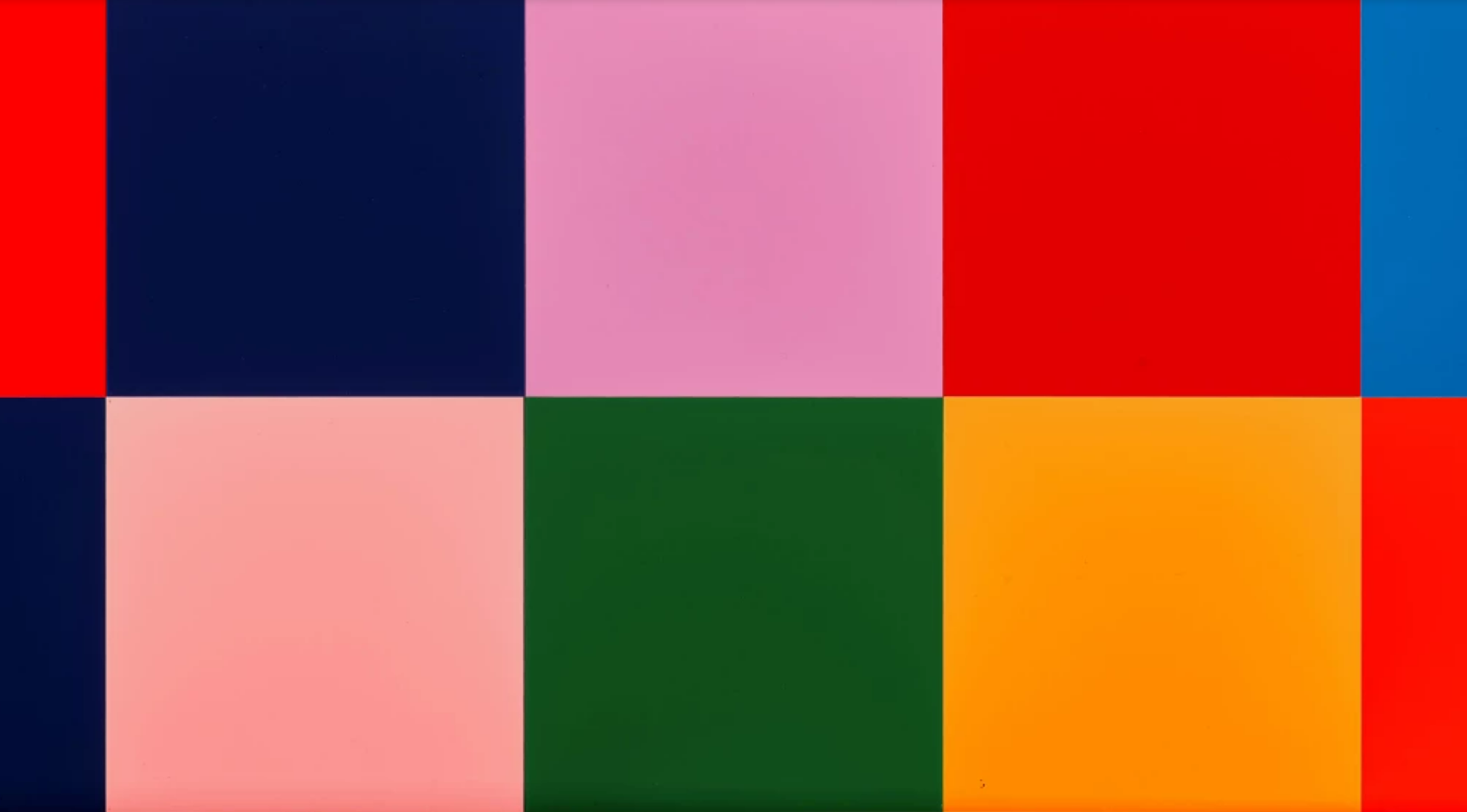
Outlining his methodology, Richter comments “Based on a mixtures of the three primary colors, along with black and white, I come up with a certain number of possible colors and, by multiplying these by two or four, I obtain a definite number of color fields that I multiply yet again by two, etc.,” (Gerhard Richter quoted in: Gerhard Richter, Dietmar Elger, Hans Ulrich Obrist, Eds., Text. Writings, Interviews and Letters, 1961-2007, London 2009). Indeed, Richter’s decision to render 25 Farben in lacquer stands in his continued reference to the longstanding tradition of paint as ready-made, a paradigmatic idea of twentieth century art, representing a radical way of making color, independent and autonomous. Originally inspired by the color sample cards easily obtained at paint shops, Richter’s earliest Color Charts were modelled from sample cards. Gradually, Richter favored color placement by random designation through the use of an algorithm that removed the restrictive confines of painterly expressiveness or artistic subjectivity.
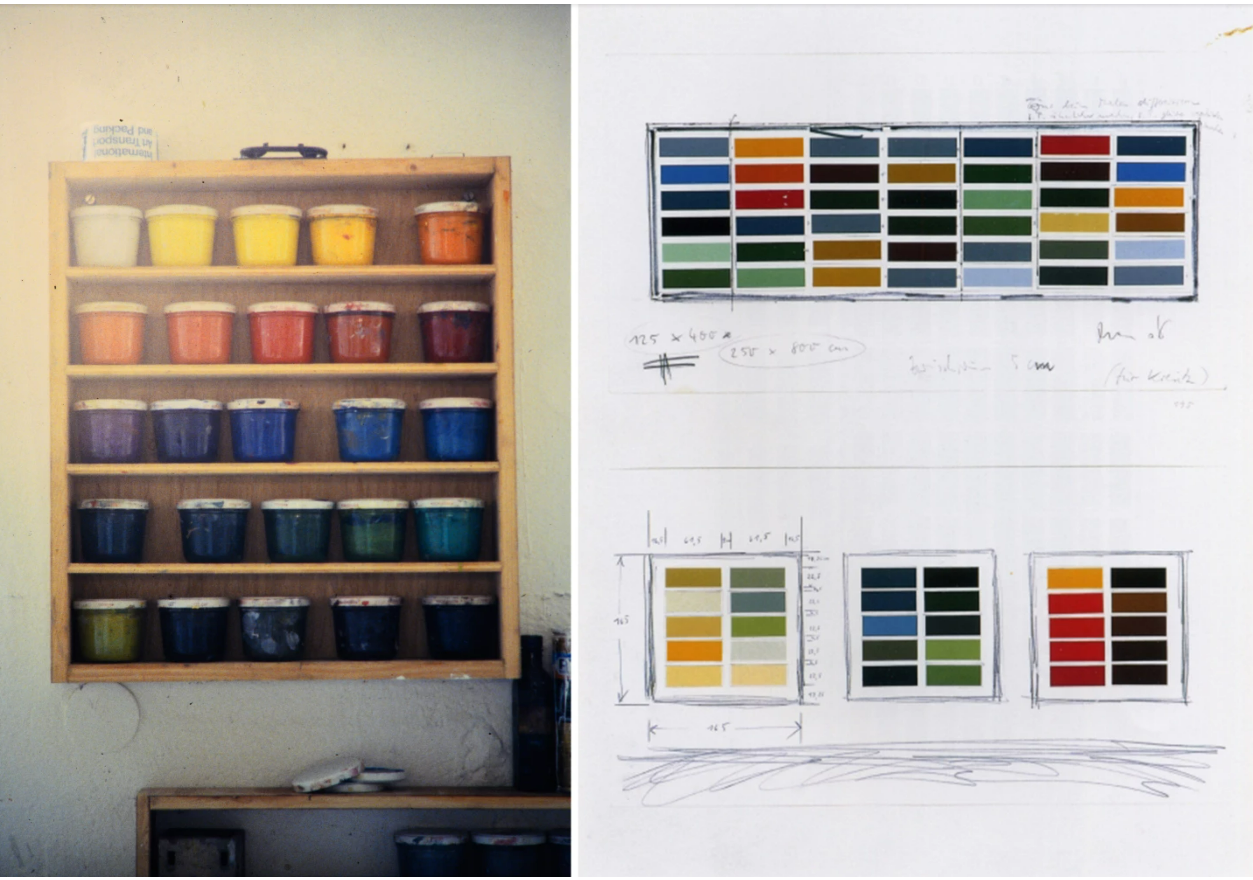
LEFT: GERHARD RICHTER’S STUDIO, DÜSSELDORF, 1981. PHOTO © AKG-IMAGES / BRIGITTE HELLGOTH.
RIGHT: GERHARD RICHTER, SKIZZEN (FARBTAFELN), 1966. STÄDTISCHE GALERIE IM LENBACHHAUS UND KUNSTBAU MÜNCHEN, MUNICH. ART © GERHARD RICHTER 2023 (28092023)
While Richter’s earliest Color Charts depict grids separated by thick white borders, these borders get progressively thinner until 1973, when Richter removes them entirely. A decision that has been adhered to in 25 Farben, Richter implemented this choice upon recognizing that “every colour matches wonderfully to each random other”. Indeed 25 Farben, the representative function of the image is limited and the focus, instead, turns to the fundamental elements of a picture – colour and structure – freed from any narrative function. Sitting outside earlier iterations of the series, 25 Farben was painted in the midst of Richter’s dramatic Abstraktes Bilder works. Employing a squeegee, Richter often describes how the Abstraktes Bilder are largely painted by chance, unable to dictate the result of the squeegee. In returning to the Colour Chart series with 25 Farben, Richter’s more directly broaches the discussion of chance in his oeuvre. With Richter’s 25 Farben the artist, once again, demonstrates his extraordinary ability to challenge the notions of painting and the Readymade. A work of enduring importance, 25 Farben undoubtedly solidifies the importance of arguably the most significant abstractionist of our time. Testament to the importance of this series within the artist’s ouevre, 196 kaleidoscopic panels from Richter’s 2007 confrontation of the power color are housed in the Fondation Louis Vuitton in Paris.
4096 Farben, 1974
Sotheby’s New-York: 18 May 2023
Estimated: USD 18,000,000 – 25,000,000
USD 21,839,000
4096 Farben | Contemporary Evening Auction | 2023 | Sotheby’s (sothebys.com)
GERHARD RICHTER (b. 1932)
4096 Farben, 1974
Lacquer on canvas
100×100 inches (254×254 cm)
Signed, titled, dated 1974 and numbered 359 (on the reverse)
Turquoise, pink, chartreuse, alabaster, periwinkle, moss, and four thousand ninety more: one after the other, each pigment glimmers from the monumental lacquer surface of 4096 Farben as Gerhard Richter deftly refines painting to its simplest and yet most evocative form: color. Executed in 1974, 4096 Farben emerges as the singular milestone and ultimate destination of Richter’s pivotal Color Chart paintings, which stand among the most significant conceptual breakthroughs in not only the artist’s legendary career, but also the tradition of painting within the last century. In this final painting of the series, Richter multiplies each color within his palette fourfold, resulting in the most amount of quadrants he ever arranged in a Color Chart painting at this point and arriving at the moment of visual entropy situated at the threshold between image and abstraction. 4096 Farben also sees Richter valiantly collapse the white margins that had separated the squares of individual color in earlier 1024 Farben paintings, resulting in a triumphant masterpiece in which “each color adapts marvelously to whichever other color is used.” (The artist cited in: “Interview with Irmeline Lebeer, 1973,” p. 83) 4096 Farben is one of only fourteen monumental Color Chart paintings that Richter executed in his ultimate suite from 1973-1974, the vast majority of which now belong to prestigious institutional collections such as the Centre Georges Pompidou, Paris and Louisiana Museum of Modern Art, Humlebæk.
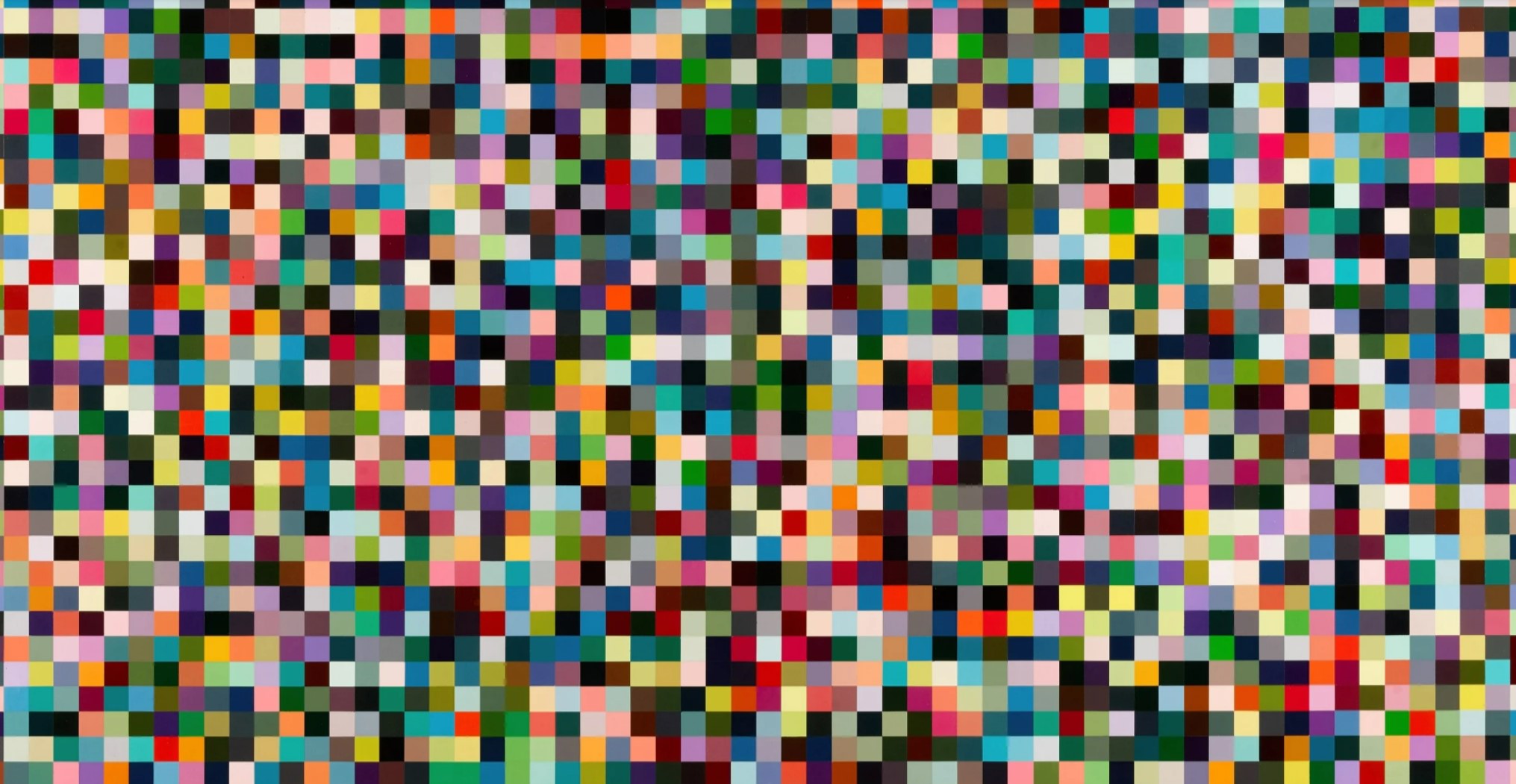
Further testifying to the landmark significance of 4096 Farben, Richter would later return to and expand upon it over three decades later in 2007 with 4900 Farben, now housed in the Fondation Louis Vuitton, Paris, and his celebrated stained-glass Cologne Cathedral Window commission in 2007, which he designed by directly referencing its chromaticity and which stands today as amongst Richter’s most ambitious and significant commissions and projects. Representing the ultimate epitome of Gerhard Richter’s lifelong abstractionist interrogation, 4096 Farben is illustrated on the cover of the Catalogue Raisonné for the artist, and has been exhibited as a centerpiece in many of his most significant museum exhibitions – including Gerhard Richter: Paintings at Art Gallery of Ontario, Museum of Contemporary Art Chicago, and San Francisco Museum of Modern Art from 1988-1989; and Gerhard Richter: Panorama at Tate Modern, London, Neue Nationalgalerie, Berlin, and Centre Georges Pompidou, Paris from 2011-2012. Previously held in the esteemed collection of Jerry and Emily Spiegel, New York, 4096 Farben has resided in the same private collection for nearly twenty years since.
4096 Farben punctuates the finality of nearly a decade of radical experimentation between 1966 and 1974, during which Gerhard Richter executed three discrete series of Color Chart paintings that each progressed in complexity with the evolution of his conceptual enterprise. Richter’s inaugural Color Chart series – begun with 192 Farben – reflected the ready-made quality of industrial paint charts while maintaining an irreverent Pop Art rejection against the lofty ideals of his Color Theorist contemporaries; as the artist admitted, he intended to extend a defiant “assault on the falsity and religiosity of the way people glorified abstraction, with such phony reverence. Devotional art – all those Church handicrafts” (Gerhard Richter cited in: Hans-Ulrich Obrist, Ed., Gerhard Richter: The Daily Practice of Painting, London 1995, p. 41).
“In order to be able to represent all extant color shades in one painting, I worked out a system which – starting with the three primaries plus gray – made possible a continual subdivision (differentiation) through equal gradations. 4 x 4 = 16 x 4 = 64 x 4 = 256 x 4 = 1024. The multiplier 4 was necessary because I wanted to keep the image size, the [size of each field], and the number of [fields] in a constant proportion to each other.”
By 1971, Richter abandoned the structure of a traditional paint chart in his second series of Color Charts, instead exploring a mechanically progressive series of grids to contain each cell of color. In this new painterly algorithm, Richter calculated a mathematical system for mixing primary colors in graduating amounts, resulting in a palette of manifold distinct hues that he would then order at random into the gridded framework of the composition.
192 Farben, 1966
Sotheby’s London: 14 October 2022
Estimated: GBP 13,000,000 – 18,000,000
GBP 18,297,800 / USD 20,502,018
192 Farben | Contemporary Evening Auction | 2022 | Sotheby’s (sothebys.com)
GERHARD RICHTER (b. 1932)
192 Farben, 1966
Oil on canvas
200×150 cm (78 ½ x 59 inches)
Signed Richter, dated I. 66 and variously inscribed (on the reverse)
Gerhard Richter attributed the catalogue number 136 to 192 Farben from 1966. Therefore the Color Chart follows both the smaller and less intensive pictures Zehn Farben and Zwölf Farben numbered 135-1 and 135-2 respectively. This order however does not at all correspond to the evolution of the works. In fact, 192 Farben is the first Color Chart painted by Richter and therefore this work is the first work with which he introduces this new pictorial concept into his painterly practice. With this knowledge of the chronology, 192 Farben manifests itself as an exceptionally rare and challenging painting by the artist.
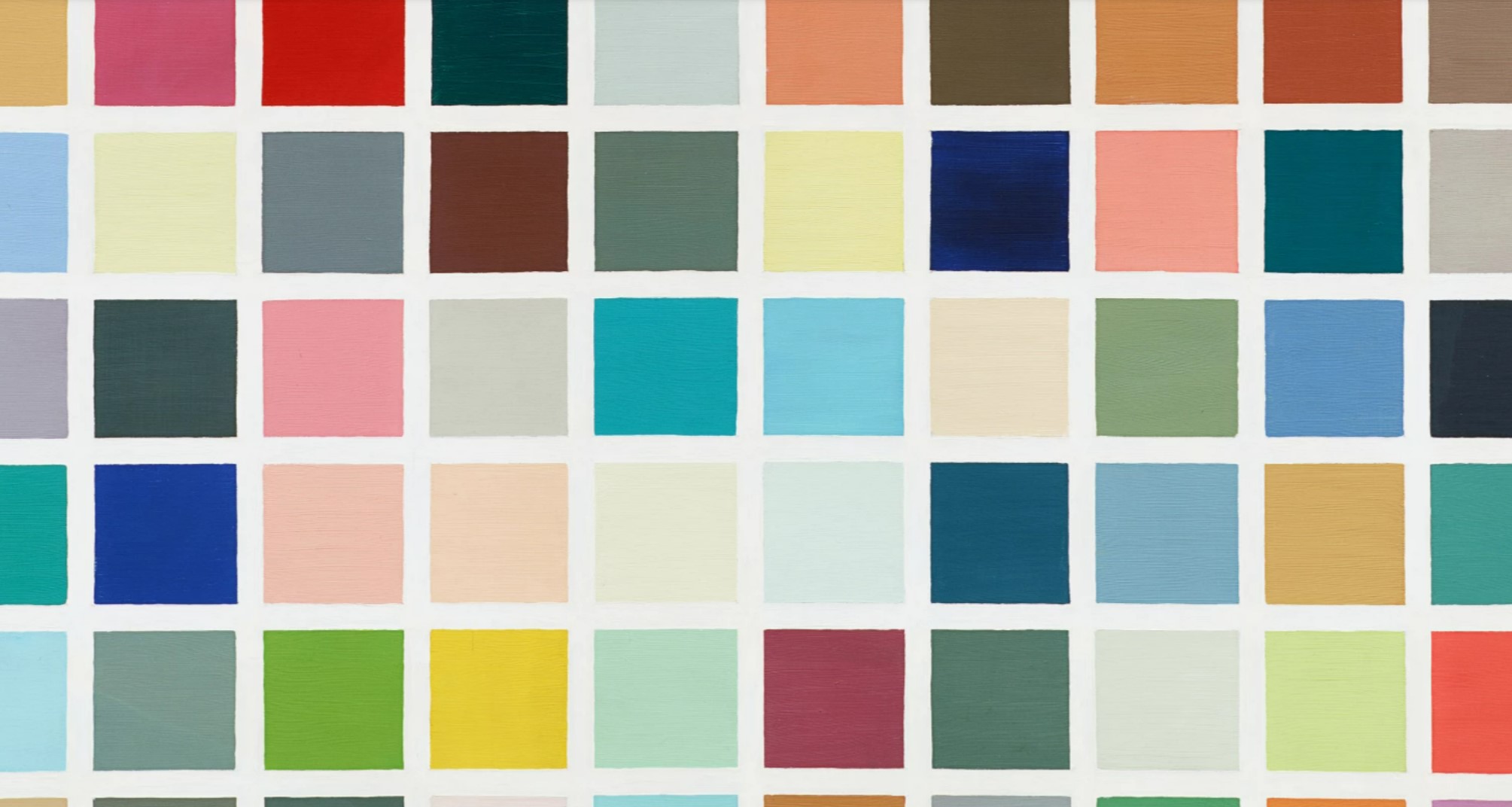
Richter did in no way carefully approach his new group of works. Instead of using small canvases to test out the new concept he immediately started in a large format on a surface measuring 200 x 150 cm and applied 192 different and subjectively selected colour tones, separated on a quadratic grid by white bands. It was with this same confidence that later in 1976 Richter began his most comprehensive group of works, the Abstract Paintings with the monumental Konstruktion (389) which measures 250 x 300 cm.
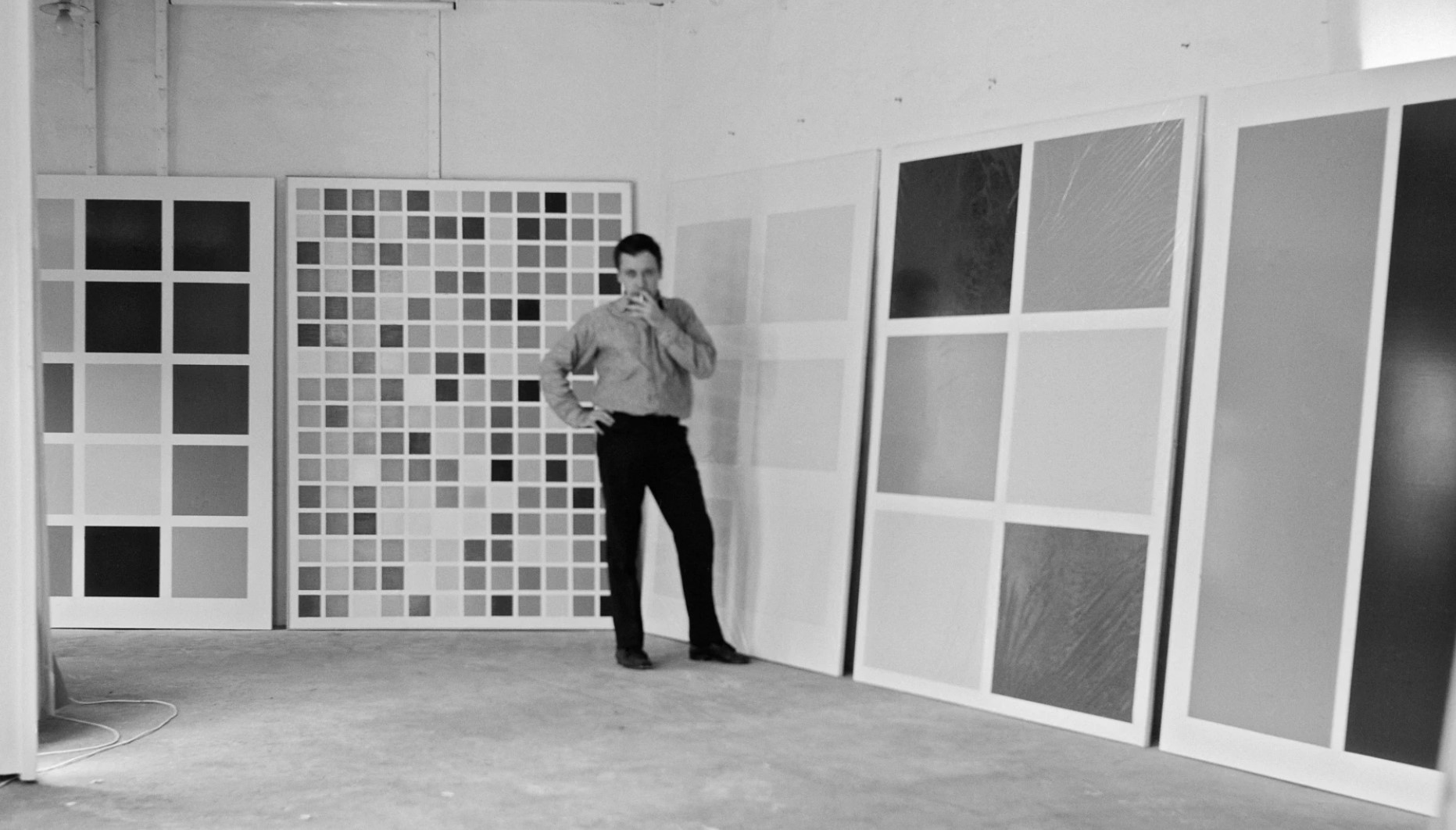
GERHARD RICHTER IN HIS STUDIO, 1966.
IMAGE/ARTWORK: © GERHARD RICHTER 2022, COURTESY GERHARD RICHTER ARCHIVE, DRESDEN
No other Color Chart from 1966 is composed of as many different color tones as the first painting 192 Farben. This painting therefore manifests itself as an exceptionally confident and uncompromising artistic gesture. Richter is unquestioningly positive about the quality and significance of 192 Farben. In no other Color Chart from 1966 is the concept of this group of works as convincingly apparent. Why did Gerhard Richter then not leave this work in the chronological order of its creation in its rightful first place and therewith also prioritizing its significance within this group of works? De facto it was Richter’s specific intention to remove any indication of the evolution within the 1966 Color Chart, which could have led from the first charts executed in oil, to those later works finished in lacquer. 192 Farben formed the basis from which Gerhard Richter tried to free his work from the narrative of photographic motifs, and these in turn serve as the model for his later abstract work. With this painting he rejects the traditional idea of composition in favor’s of a non-hierarchical surface structure. The squares are separated equally across the canvas and the colors follow a random arrangement. In 1966, 192 Farben presented the artist with a decisive way in which pictures can be possible without being restricted by the confines of painterly expressiveness or artistic subjectivity. Later, Richter radicalized this painterly concept, by further withdrawing his artistic identity from the process of painting. He replaced his oil color seen in 192 Farben and in which gestural strokes can still be recognized, with industrial lacquers. In the 1970s he eventually began to increase the number of the applied colors to up to 1024 differing shades, systematically mixing and randomly selecting their order on the pictorial plain. After Richter finally recognized in 1973 that “every color matches wonderfully to each random other” he even stopped applying the white bands between the color fields the following year.
Farbtafel, 1966
Sotheby’s New-York: 17 November 2022
Estimated: USD 1,800,000 – 2,500,000
USD 2,833,000
Farbtafel | Contemporary Day Auction | 2022 | Sotheby’s (sothebys.com)
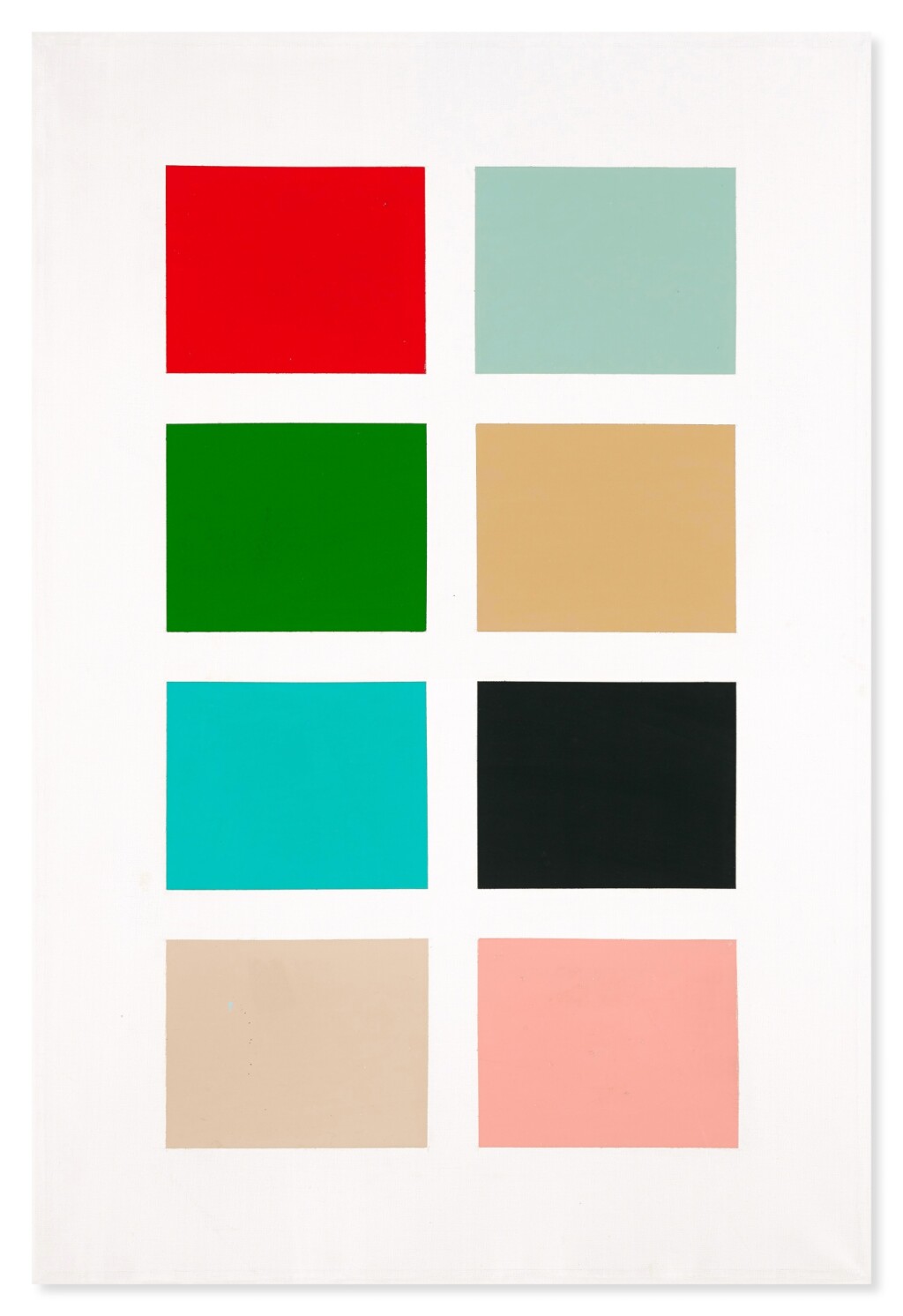
GERHARD RICHTER (b. 1932)
Farbtafel, 1966
Lacquer on canvas
74.3 x 50.8 cm (29 ½ x 20 inches)
Signed, dated 66 and numbered 139-6 (on the reverse)
Executed in 1966, Farbtafel is part of Gerhard Richter’s Color Chart series, which he began experimenting with that same year. With only 19 works from this series made in 1966, the present work represents the artist’s first departure from the black and white photograph-based paintings for which he had become known, and laid the foundations for his relentless enthusiasm for reinvention and experimentation that would eventually define his career and cement his greatness. Inspired by commercial paint sample cards he found in a Düsseldorf hardware store, Richter was drawn to the manufacturer’s empirical way of presenting color that seemed devoid of aesthetic considerations. In his studio he tried to copy the color cards as accurately as possible, painting uniformly sized square or rectangular color blocks on a white background. Rendered in enamel paint, this choice of medium reflects Richter’s efforts to make the works appear less tactile and more industrial. Ultimately, Farbtafel represent one of the most important moments in the artist’s career occupying a space across several leading 20th Century Art movements, including Pop Art, Minimalism, and Conceptual Art.
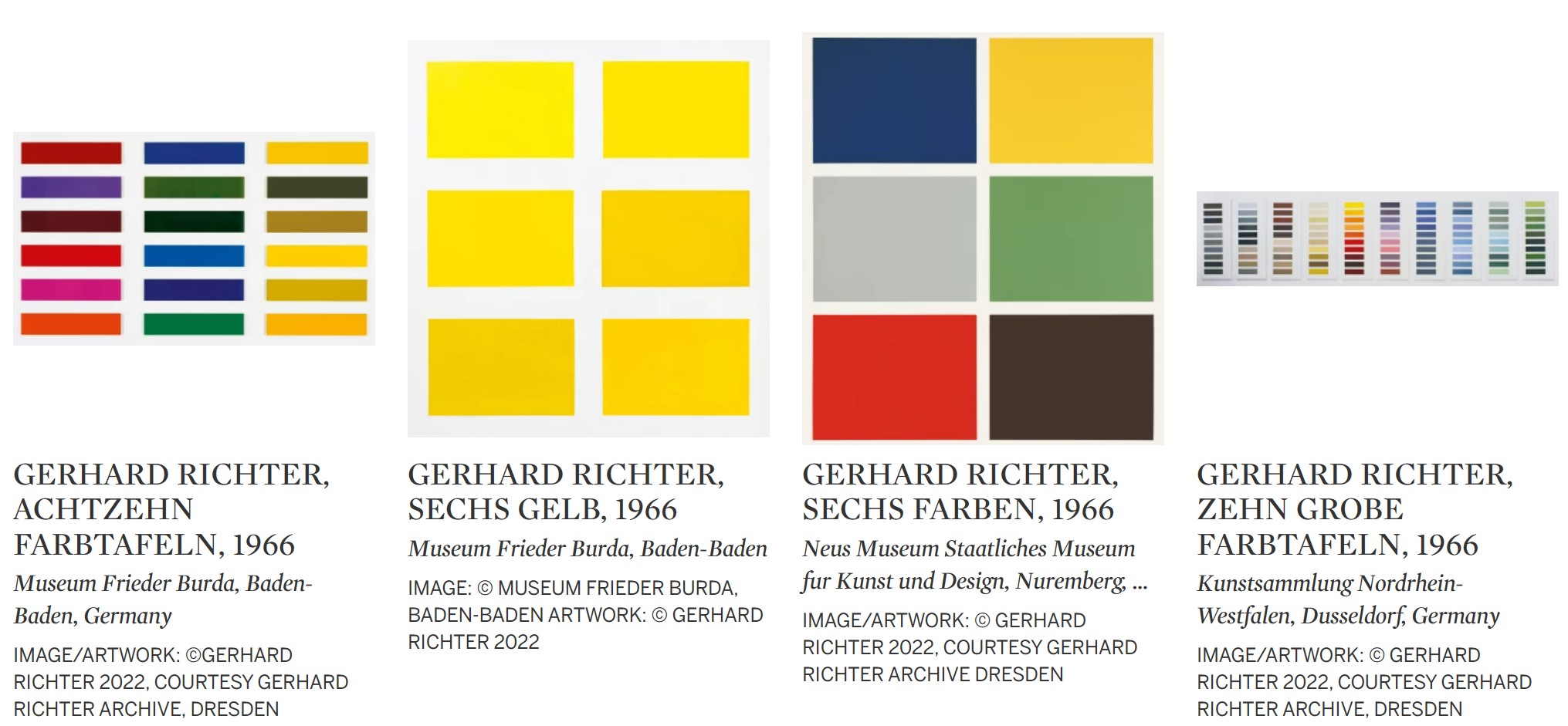
Painted in 1966, the same year that Richter started his seminal and boundary breaking Color Charts series and thus among the very first examples he made, the present work features eight blocks of color ranging from fiery red and several variants of green, to fleshy pink hues. The canvasses from this body of work range from few feet tall to about human height. Richter’s preparatory sketches for the works often include a human figure alongside the preliminary mockup, demonstrating a profound awareness of scale. At a more modest scale and rendered in Richter’s favored enamel-based lacquer paint, this particular painting bears a close resemblance to the original color charts that inspired the artist.
Strip Paintings/Editions
1. Originals
Strip, 2015
Sotheby’s New-York: 15 November 2023
Estimated: USD 2,000,000 – 3,000,000
USD 1,270,000
Strip | Contemporary Evening Auction | 2023 | Sotheby’s (sothebys.com)
GERHARD RICHTER (b. 1932)
Strip, 2015
Digital print on paper mounted between Alu Dibond and Perspex (Diasec), in four parts
Each: 200×275 cm (78 7/8 x 108 1/4 inches)
Overall: 200 x 1,101 cm (78 7/8 x 433 1/2 inches)
Signed and dated 2015 (on the reverse) (part I)
Initialed (on the reverse) (parts II, III and IV)
Dizzying polychromatic striations of lilac, chartreuse, emerald and scarlet excite and exhaust the eye in Gerhard Richter’s monumental Strip from 2015. In this late and staggeringly large gesture of artistic invention, Strip synthesizes the most important breakthroughs of Richter’s previous output: the blurring device of his Photo paintings, the regimented arrangement of color of his Farbens and the totalizing sensory immersion of his Abstrakte Bilder. Richter has continuously pushed abstraction into uncharted territory over the course of his prodigious career, and here, he embraces technology as an aid to this aesthetic and conceptual enterprise. To create his Strip paintings, inaugurated in 2010, Richter employed a computer editing software to distort an image of his Abstraktes Bild (724-4) of 1990 beyond recognition, of which the present work is the last known and largest example. This radical technological experimentation makes its debut in Strip as boundlessly variegated color and panoramic scale prevail, declaring itself the apotheosis of his sustained creative vitality. Tribute to Strip’s significance in the artist’s oeuvre, other examples from the series reside in such prestigious institutional collections as the Tate London; the Louisiana Museum of Modern Art, Humlebæk; the Albertina Museum, Vienna; and the National Museum of Art, Osaka. Spanning over eleven meters, Strip represents the summation of not only the series but his practice at large, as Richter stretches abstraction to new, unprecedented lengths.
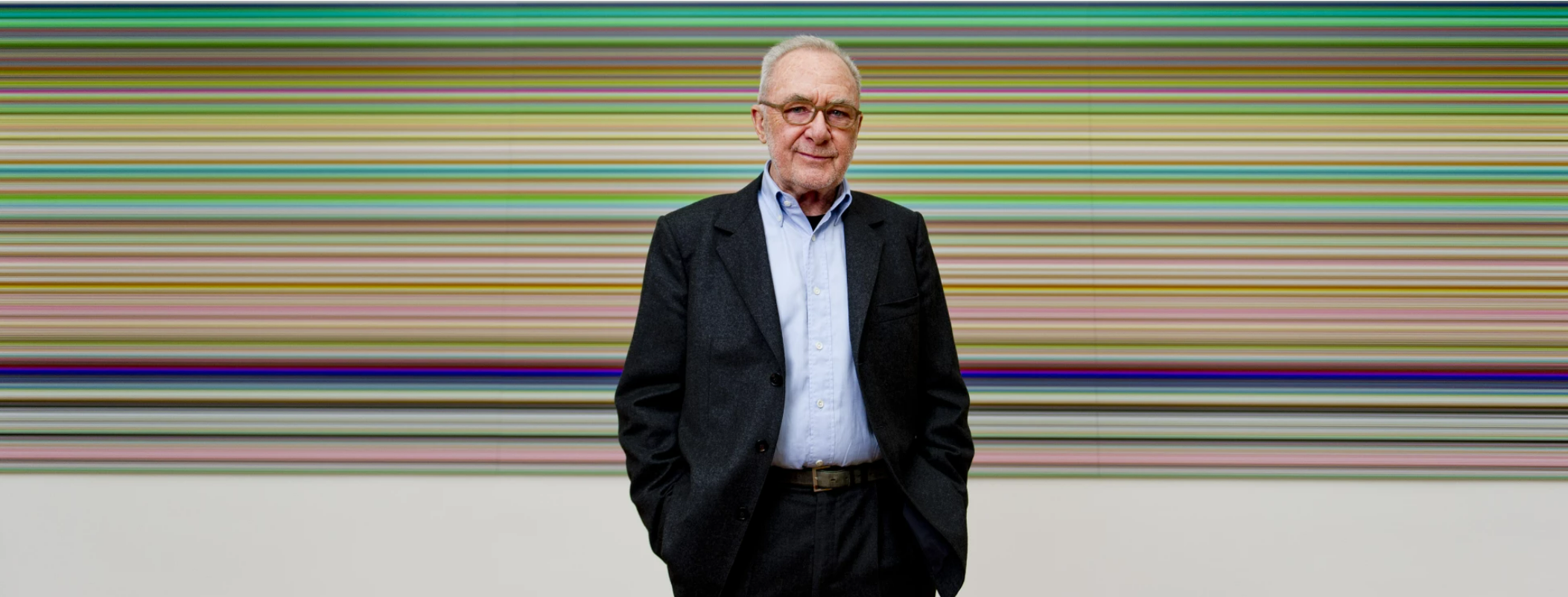
GERHARD RICHTER AT HIS EXHIBITION GERHARD RICHTER. STRIPS & GLASS, STAATLICHE KUNSTSAMMLUNGEN DRESDEN, 2013. PHOTO © ROBERT MICHAEL/ULLSTEIN BILD VIA GETTY IMAGES ULLSTEIN BILD/ULLSTEIN BILD VIA GETTY IMAGES
Governed equally by chance and calculation, the Strip paintings were conceived when Richter split a digital reproduction of his Abstraktes Bild (724-4) and mirrored it along its vertical axis. He repeated this again and again and again, splicing and reflecting the image until the fractalized kaleidoscope collapsed into pure, parallel stripes. His process can be traced in his 2011 book Patterns, which illustrates the many early and interim permutations of these mirror images before arriving at his pristine and final stripes. In one final step Richter cut this image into horizontal swatches, and thus the stripes, blown up and set between metal and Perspex, became Strips. His methodology, though meticulously choreographed, is borne of radical creative courage: the act of relinquishing control over the final product. Conceived at a time when Richter had grown increasingly disillusioned by his painting practice, the Strip paintings see Richter commit himself to a process that makes random the order of color within the spectrum and the thickness of the bands. Thus, the Strip series stands as a monument to spontaneity and, by extension, a rejection of the valorization of painting, narrative, and image-making. 83 years old at the time of the present work’s execution, Richter, as ever, remained willing to side with risk.
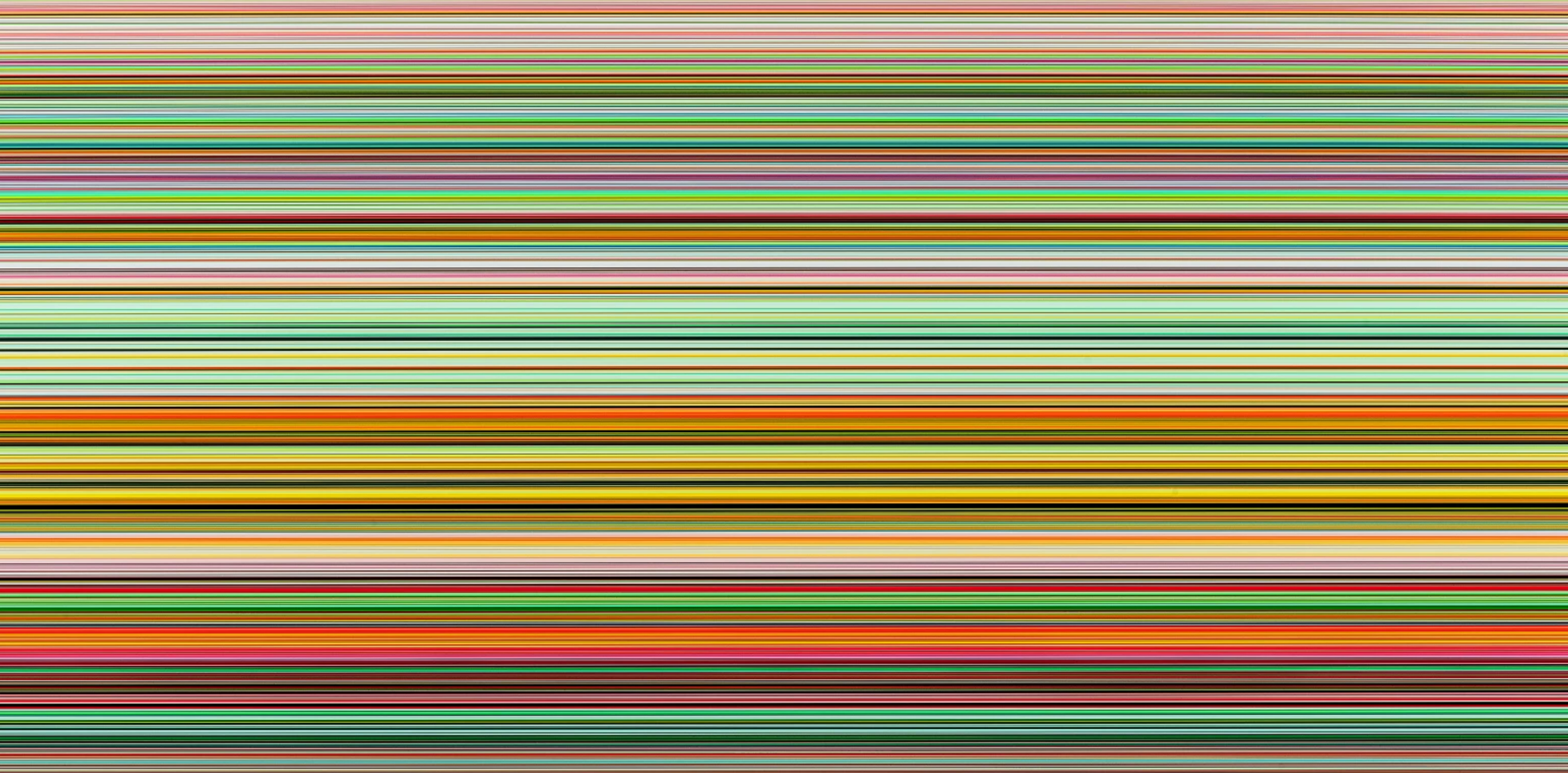
We come to understand that as these multiplied symmetries repeat into infinity, so, too, does our understanding of abstraction’s limits: they are nonexistent. So successful is Richter’s aesthetic and conceptual coup that his technical sleight of hand is almost lost upon its viewer. In his Color Chart paintings, he drew inspiration from commercial color swatches, but here, his own work serves as his source image. In a career characterized by the mastery of figuration, ascent toward abstraction, near-scientific isolation of color, and oscillation between every other intermediary stage, Richter, whose corpus of abstract words are lauded as postmodern abstraction’s apotheosis, proves there is more to be done. From brush to squeegee to software, Richter’s ingenuity has known no bounds, to which the superlative Strip aptly testifies. The present work heralds a new age of digitized art and, in its prismatic, gargantuan glory, probes our standards and definitions of what painting and art can and should be. Richter, time and time again, continues to reinvent what it means to paint and depict, leaving only the question of where to next.
Strip, 2012
Christie’s London: 15 October 2021
Estimated: GBP 650,000 – 850,000
GBP 922,500
GERHARD RICHTER (B. 1932) (christies.com)
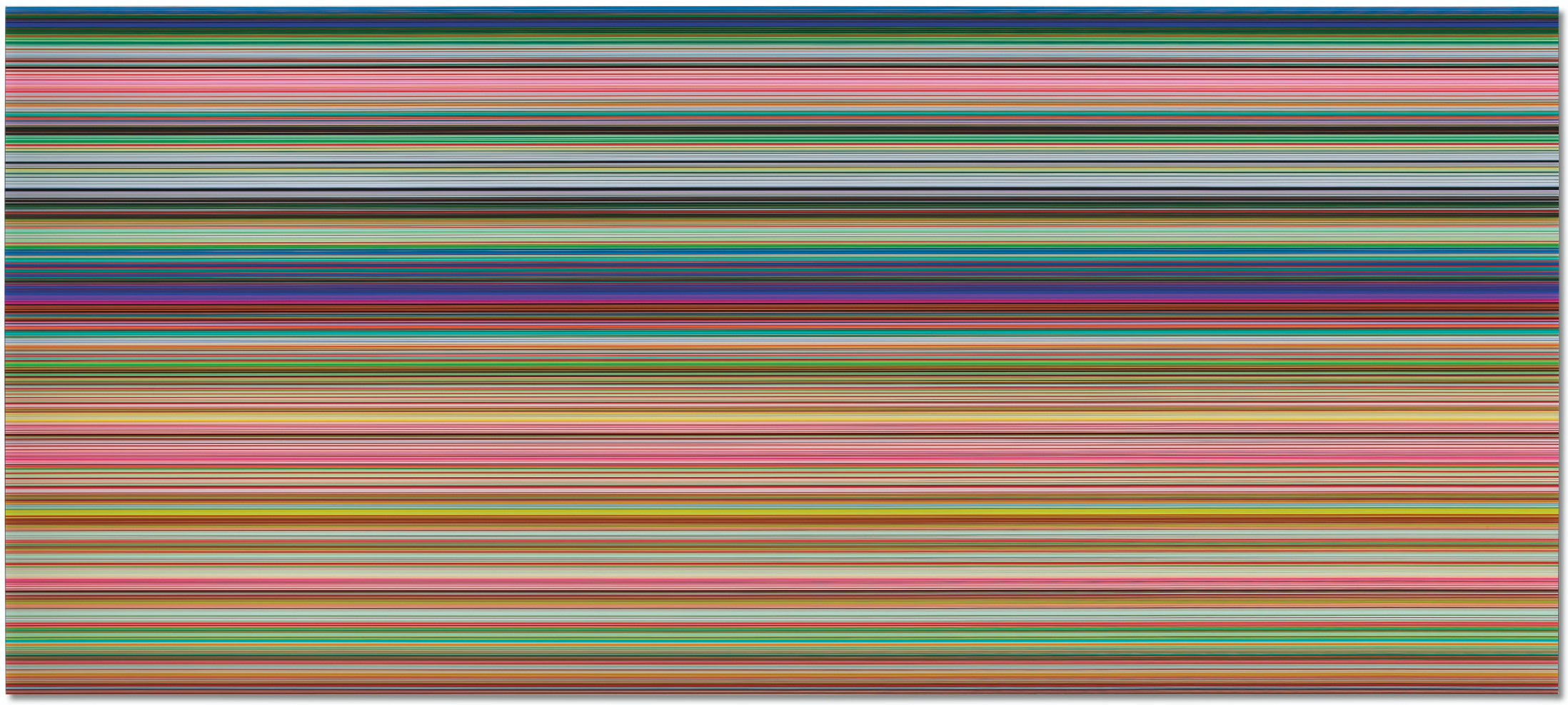
GERHARD RICHTER (B. 1932)
Strip, 2012
Digital print on paper between Alu Dibond and Perspex
110×250 cm (43 3/8 x 98 1/2 inches)
Signed, numbered and dated ‘926-4 Richter 2012’ (on the reverse)
A staggering interface between painting and technology, the present work stems from Gerhard Richter’s pioneering series of Strip Paintings. Executed in 2012, the year after the series began, it is the result of a near-forensic enquiry into the chromatic structure of one of the artist’s favourite paintings: Abstraktes Bild (724-4) from 1990. The original canvas was created at the height of Richter’s engagement with the squeegee: a tool that created marbled, unpredictable patterns and colour formations when dragged across layers of wet paint. For his Strip Paintings, the artist made a digital replica of the painting which he then divided into vertical strips and stretched horizontally. Stratified like a geological cross-section, the results transform the chaos of the original painting into a vision of order and clarity: here, the work’s seemingly impenetrable mass of colour and texture is distilled into a clean spectrum of pink and red tones, interspersed with jewel-like hues of yellow, purple, green and blue. Despite its digital process, Richter conceives the work as a painting, marking a thrilling new chapter in his six-decade-long exploration of the medium. Other examples from the series are held in institutions including Tate, London, the Albertina, Vienna, the Louisiana Museum of Modern Art, Humlebaek and the National Museum of Art, Osaka.
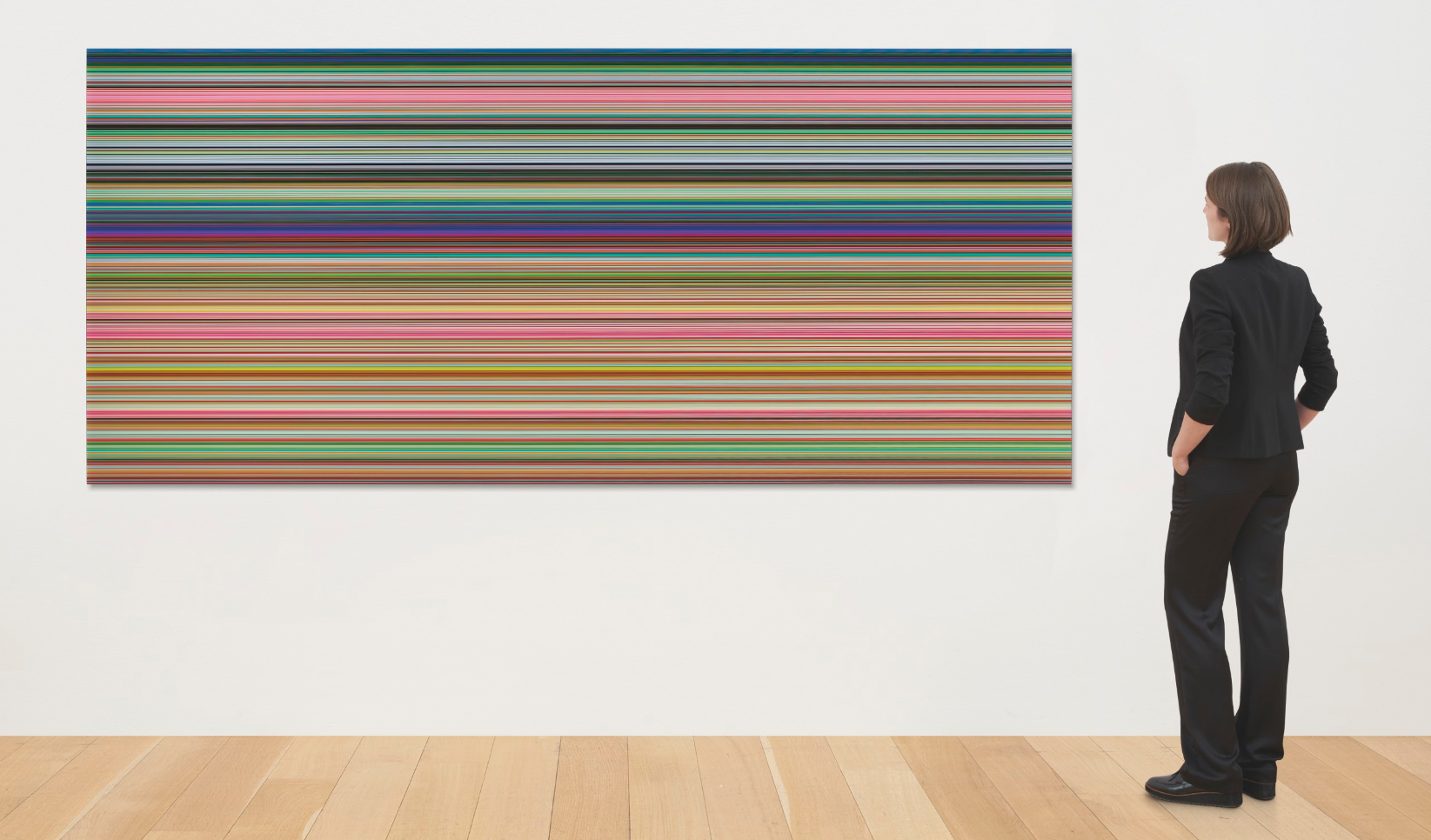
The Strip Paintings form part of a wider set of enquiries that Richter undertook over a five-year period, each using the same original painting as its muse. The first was simply an out-of-focus color photograph of the work created in 2008, entitled Sieben Zwei Vier after the work’s catalogue number. Having distanced himself from its painterly qualities, the following year Richter translated the work into a set of four tapestries, each based on a single quadrant of the work which the artist rotated four times to create a new pattern. In 2011, he began research for the Strip Paintings, rigorously documenting the various permutations that could be created by dividing the work into vertical sections of different sizes: the results—numbering 8190 possible combinations—were documented in his artist’s book Patterns. To create the present work, Richter selected a particular cross section which he then stretched horizontally to a width of two-and-a-half metres. In this way, the artist reintroduces something of the original painting’s dynamics, offering a digital equivalent to the lateral sweep of the squeegee. Just like the latter, which transformed base materials into mercurial, otherworldly visions, the present work takes leave of its status as a calculated sample, becoming a resonant plane of light, rhythm and harmony.
Strip, 2011
Christie’s London: 30 June 2021
Estimated: GBP 800,000 – 1,200,000
GBP 1,102,500
GERHARD RICHTER (B. 1932), Strip | Christie’s (christies.com)
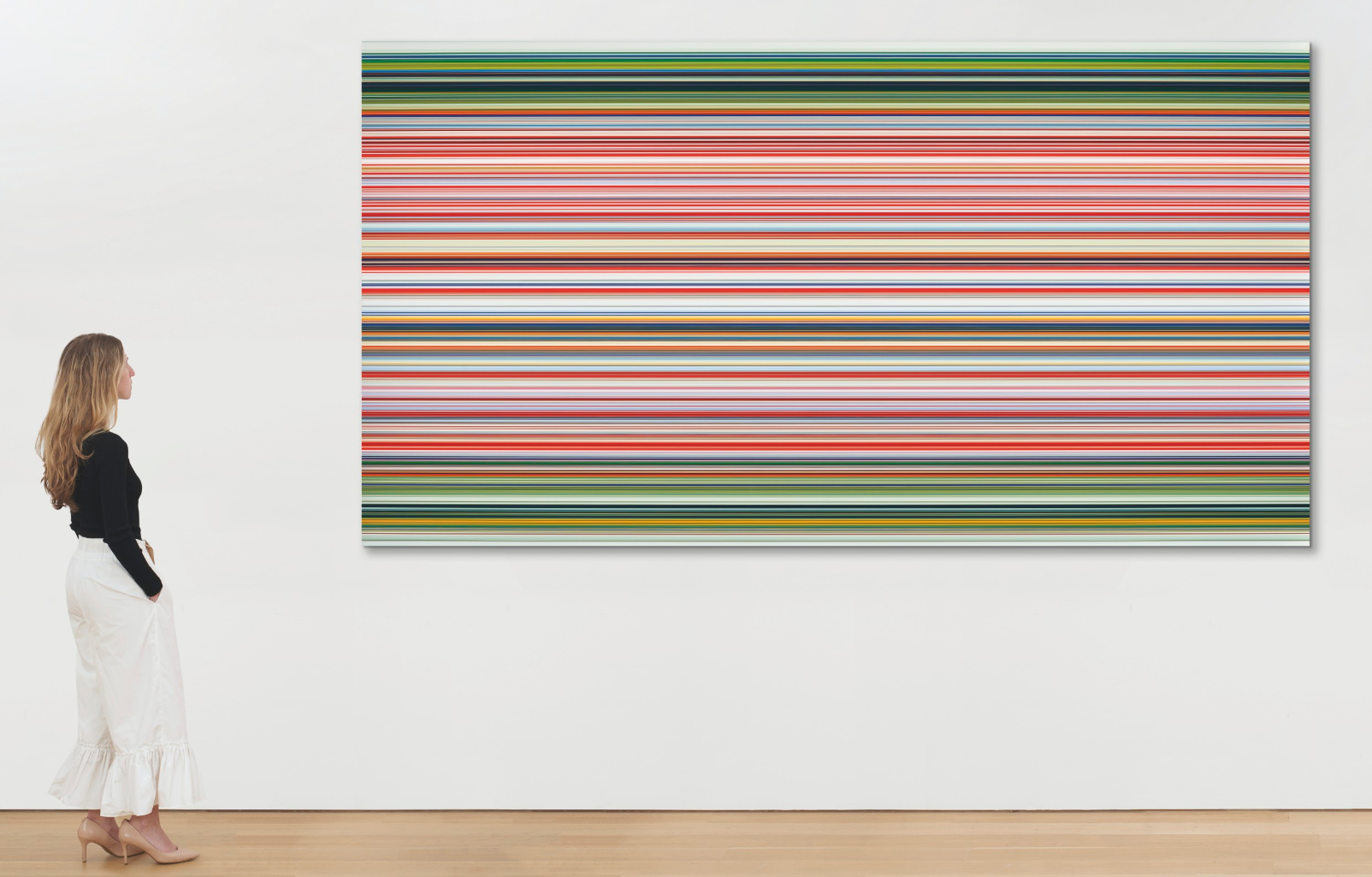
GERHARD RICHTER (B. 1932)
Strip, 2011
Digital print on paper between Alu Dibond and Perspex
160×300 cm (63 x 118 1/8 inches)
Signed, numbered and dated ‘920-4 Richter, 2011’ (on the reverse)
A monumental abstract panorama spanning three meters in width, the present work is among the earliest examples of the Strip Paintings that marked a decisive new chapter in Gerhard Richter’s oeuvre. Executed in 2011, it consists of multiple horizontal bands of color, structured like a geological cross section in myriad tones of deep green, pink, red, yellow and white. The series saw Richter broach daring new territory in his six-decade-long enquiry into the nature of abstraction. Taking one of his favorite paintings—Abstraktes Bild (724-4) from 1990—the artist created a digital replica which he divided vertically and stretched horizontally using computer software. Magnified and distorted beyond recognition, the results nonetheless distil a curious sense of order and logic from the chaos of the original canvas, revealing the microscopic structures latent in its DNA. Though each work exists as an inkjet print, Richter conceived them as paintings: indeed, the horizontal layering of the stripes recalls the lateral sweep of the ‘squeegee’ that defined the artist’s investigations during the 1980s and 1990s. Other examples from the series are held in institutions including Tate, London, the Albertina, Vienna, the Louisiana Museum of Modern Art, Humlebaek and the National Museum of Art, Osaka.
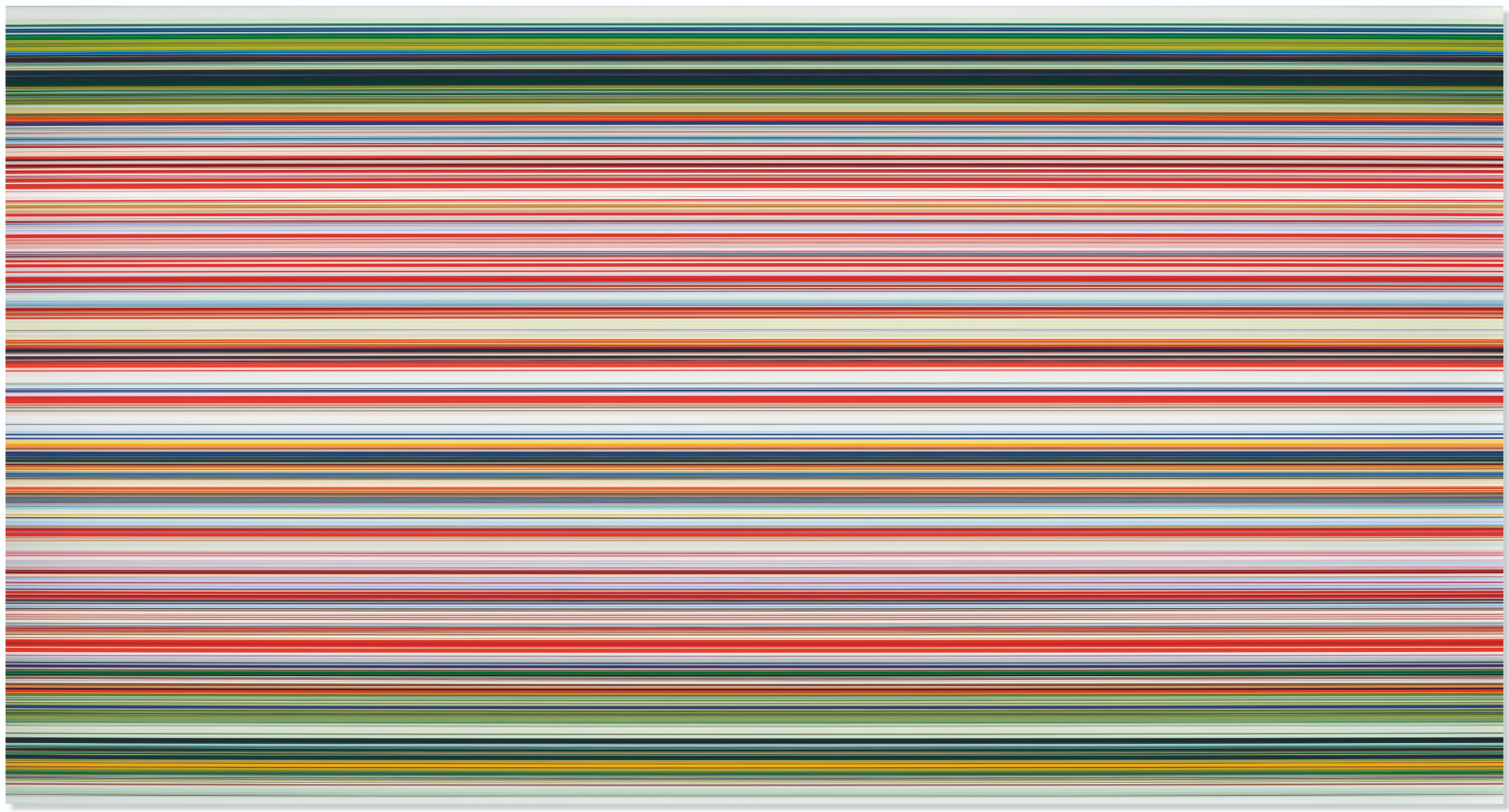
Visually, Richter’s Strip Paintings seem to align themselves with historical attempts to pick apart the chromatic spectrum: from the achievements of Pointillism and color theory, to the works of artists such as Bridget Riley, Josef Albers and Ellsworth Kelly, to Richter’s own Color Charts of the early 1970s. On a conceptual level, however, they mark the culmination of a practice dedicated to exploring the relationship between painting and photography. From his earliest Photo Paintings of the 1960s, in which he blurred painted copies of photographs to the point of abstraction, Richter had sought to highlight the fluid dialogue between the two media, insisting that neither could lay claim to a ‘truthful’ view of the world. In his 1978 work 128 Photographs of a Painting, he turned the lens on his own practice, photographing one of his abstract paintings from 128 different angles until it resembled a landscape. The Strip Paintings continue this line of enquiry, taking the thick, textured surfaces of his earlier practice and translating them back into something smooth and photographic—in many cases evoking ocean horizons, stratified rock or other natural phenomena. As the artist entered the digital age, the central premise of his practice remained as relevant as it had over half a century prior: that image-making is a fluid, mercurial process, and one that will always transcend binary categories.
2. Strip Editions
This edition is based on a detail from the 1990 work Abstraktes Bild, which has been divided into 4,096 segments. The number on the back of the edition label identifies the respective section. This edition was produced in 2011 as multicolored inkjet prints on cardboard. The abstract image structure consists of color stripes of varying widths arranged horizontally across the entire surface. The variety of colored intervals and the resulting complex rhythm of the stripes lend the image surface a shimmering dynamism that, at least when viewed up close, does not allow the eye to rest.
Gerhard Richter did not compose these serial graphics; they therefore do not show a coloristically planned order, but rather the structure of a digitally specified color scheme. Instead, he had the motif of his 1990 oil painting “Abstract Picture” broken down on the computer into 4096 vertical color stripes, each only 0.08 millimeters wide. After selecting a single stripe, it was mirrored horizontally countless times until a geometric pattern of long, horizontal stripes emerged. The number on the back of each individual print indicates which segment of the painting was randomly selected by the artist. Each copy in the edition has a different color scheme, as it is based on a different segment and is therefore unique.
Strip (3817), 2011
Van Ham Cologne: 3 December 2025
Estimated: EUR 50,000 – 70,000
EUR 66,000 / USD 76,950
GERHARD RICHTER (1932 Dresden)
Strip (3817), 2011
Digital carbon print on card
Mounted on aluminium Dibond under glass
32×91 cm (12 5/8 x 36 inches)
Signed, dated and inscribed on the back of the frame
Printer’s proof 5/5
This work is a printer’s proof outside of the edition of 72 copies
A unique edition in which each copy has its own color palette
Strip, 2011
Christie’s London: 6 March 2025
Estimated: GBP 40,000 – 60,000
GBP 69,300 / USD 88,704
GERHARD RICHTER (B. 1932), Strip | Christie’s
GERHARD RICHTER (B. 1932)
Strip, 2011
Digital inkjet print on board mounted on Alu-Dibond, in artist’s frame
Image: 32×92 cm (12 5/8 x 36 1/4 inches)
Overall: 53.2 x 105.2 cm (21 x 41 3/8 inches)
Signed, inscribed and dated ‘Probedruck für 512⁄4096 Richter, 2011’ (on the backing board)
This is a unique printer’s proof aside from the edition of seventy-two unique variants
Other Series
Cage Grid, 2011
Property from a Distinguished British Collector
Sotheby’s London: 5 March 2026
Estimated: GBP 400,000 – 600,000
GBP 512,000 / USD 683,980
Cage Grid | Contemporary Day Auction | 2026 | Sotheby’s
GERHARD RICHTER (b. 1932)
Cage Grid, 2011
Giclée print on paper mounted on aluminum, in sixteen parts
Each: 75×75 cm (29-1/2 x 29- 1/2 inches)
Overall: 300×300 cm (118-1/8 x 118-1/8 inches)
Each: signed with the artist’s initials and numbered 15/16 (on the reverse)
This work is number 15 from an edition of 16, plus 4 artist’s proofs
Gerhard Richter’s Cage Grid represents a bold reinterpretation of his celebrated 2006 painting Cage, part of a group of six works inspired by the pioneering composer John Cage. Responding to Cage’s radical investigations into sound, silence, and indeterminacy, Richter’s Cage series channels chance through abstraction, vivid colour, and the physicality of paint. Produced in 2011 as a limited edition of finely executed giclée prints, Cage Grid reconfigures the original composition by dividing it into sixteen uniformly sized panels. This structural intervention introduces an added layer of geometric order, counterbalancing the fluid, swirling movements of paint that characterize the source image. Each segment operates as a self-contained fragment of the whole, and when viewed together, the panels resemble a series of windows—an association that recalls Richter’s monumental stained-glass installation for Cologne Cathedral.
“That’s roughly how Cage put it: “I have nothing to say and I am saying it.” I have always thought that was a wonderful quote. It’s the best chance we have to be able to keep on going.”
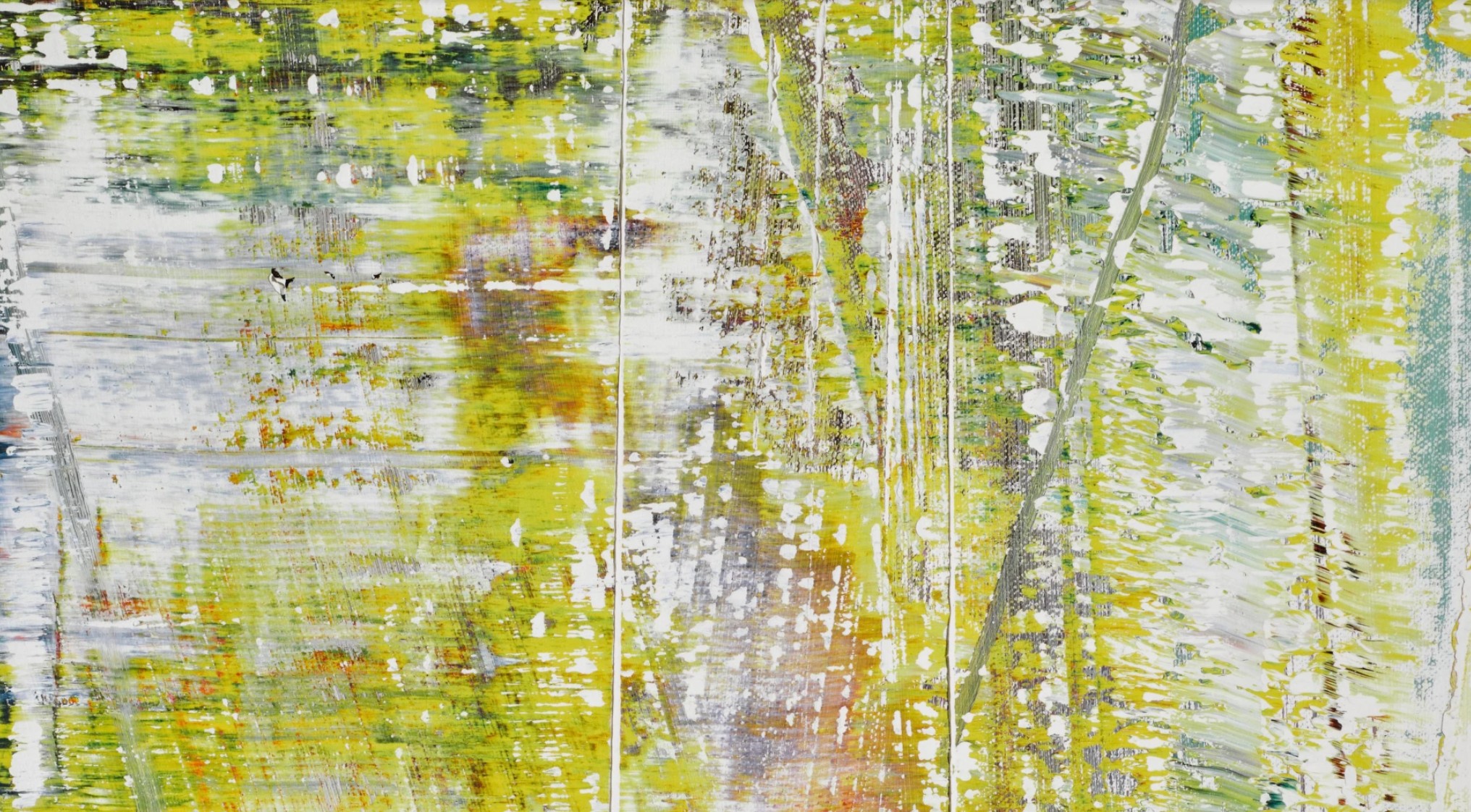
Widely regarded as among the most important achievements in Richter’s abstract practice, the Cage paintings debuted at the German Pavilion of the Venice Biennale in 2007. They later featured prominently in the artist’s major retrospective Panorama at Tate Modern in 2011, before traveling to institutions including the Staatliche Museen in Berlin and the Musée national d’art moderne in Paris. During their presentation at Museum Ludwig in Cologne, the Cage works were installed opposite Richter’s Bach series, another body of work rooted in musical inspiration. This deliberate pairing foregrounded both the shared conceptual foundations and the divergent emotional registers of the two series. The expansive scale, dense surface, layered application, and erasures within Cage 6—achieved through Richter’s iconic squeegee technique—generate a visual analogue to Cage’s irregular, percussive rhythms. By contrast, the Bach paintings suggest the ordered resonance of a classical string ensemble. As Robert Storr observes in his study of the series, the Cage paintings constitute “Richter’s beautiful way of saying nothing,” a gesture that reaffirms the artist’s steadfast commitment to innovation (Robert Storr, Cage: Six Paintings by Gerhard Richter, London 2009, p. 86).
“Abstract paintings are fictive models because they show a reality that we can neither see nor describe, but whose existence we can surmise. This reality we characterize in negative terms: the unknown, the incomprehensible, the infinite, and for thousands of years we have described it with ersatz pictures, with heaven, hell, gods, devils. With abstract painting we created a better possibility to approach that which cannot be grasped or understood, because in the most concrete form it shows ‘nothing.’”
August Renoir, Picking Flowers, 1875 / National Gallery of Art, Washington
While the squeegee process, now inseparable from Richter’s reputation, offers insight into the making of the original Cage 6, Cage Grid compels the viewer to encounter the image anew, as a constellation of fragments that together form a unified whole. Across Richter’s wider body of work, abstraction repeatedly appears animated by chance effects, tactile surfaces, and intense chromatic fields, all stemming from his profound command of paint and willingness to embrace unconventional methods. Here, deep greens, flashes of teal, subdued whites, and accents of bright yellow traverse the surface like reverberating sound waves. The canary yellows and layered greens, in particular, evoke the luminous atmospheres of Impressionist landscape painting, recalling the chromatic vitality with which artists such as Monet or Pissarro translated shifting light into pigment. In Richter’s hands, however, these colours are wrenched from descriptive naturalism and reconstituted as pure sensation: fields of hue that shimmer and dissolve, suggesting remembered light rather than observed terrain. At the same time, the segmentation into sixteen discrete parts functions as a metaphor for musical modulation and digital fragmentation, while also alluding to the “16-bar blues,” often cited as a foundational structure in the evolution of modern music.
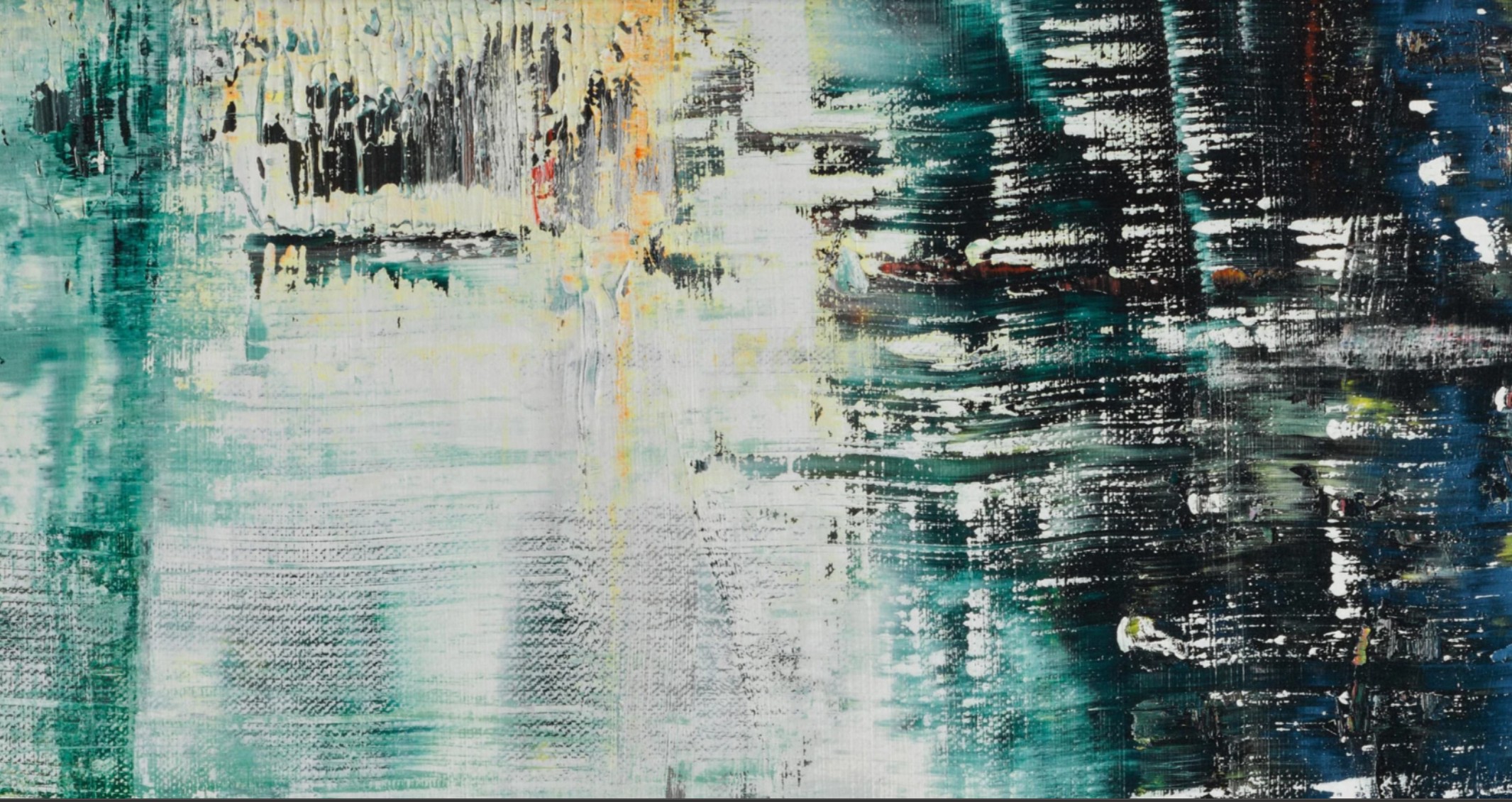
Richter’s achievement lies in his ability to take the raw intensity of a work such as Cage 6 and reimagine it as something unexpectedly cohesive by radically altering its mode of presentation. Contained within a grid that invites countless visual permutations, the sixteen giclée panels encourage prolonged and repeated looking, rewarding attention to subtle variations and intricate detail. The viscous streaks and blurred passages of the original painting are translated into a flat, two-dimensional field, separated by intervals of negative space that prompt reflection on the very conditions of painting and representation. These works stand not only as a landmark in contemporary abstraction, but also as deeply personal statements for the artist.
Flow, 2013
Sotheby’s London: 5 March 2026
Estimated: GBP 300,000 – 500,000
GBP 281,600 / USD 376,190
Flow | Contemporary Day Auction | 2026 | Sotheby’s
GERHARD RICHTER (b. 1932)
Flow, 2013
Lacquer behind glass mounted on Alu-Dibond
120×170 cm (47-1/4 x 66-7/8 inches)
Signed, dated 2013 and numbered 933-1 (on the reverse)
Flow (933–1) exemplifies Gerhard Richter’s sustained investigation into the tensions between control and chance, form and formlessness, surface and depth. Composed of a multitude of marbled hues, the painting unfolds through organic swirls, bubbles, and meandering currents of lacquer that evoke both geological strata and aerial topographies. Its chromatic intensity and fluid structures situate the work at the threshold between the spontaneous and the deliberate, the natural and the synthetic.
“I don’t work at random but in a more planned way, in the sense that I let a thing happen by chance, then correct it, and so on. The actual work consists in taking what appears, looking at it then deciding whether it’s acceptable or not.”
The Flow series of reverse glass paintings represents a significant development within Richter’s oeuvre, extending his painterly language into an unexpected material and conceptual register. Richter first experimented with reverse glass techniques in small-format diptychs as early as 200 with his Sindbad, Bagdad, Ifrit, and Perizade series and which culminated in the hundred-part work Abdallah in 2010. The titles of these early works, drawn from an Orientalist fairytale vocabulary, underscore the role of unpredictability and illusion that characterizes the process. After a period of withdrawal from what he has described as “controlled coincidence,” Richter returned to the medium in 2013 with the Flow series, now executed in dramatic large-scale diptychs.
Richer’s making process begins with the pouring of liquid lacquers onto a Plexiglas support, where the pigments are permitted to intermingle freely. Richter then intervenes selectively – tilting the surface or subtly disturbing the paint with brushes or palette knives – guiding the flow without fully determining its outcome. In the Flow series, these compositions are mounted on Alu Dibond, a composite material commonly associated with photographic presentation, consisting of a polyethylene core sandwiched between aluminum layers. This choice reinforces Richter’s ongoing engagement with industrial materials and his persistent challenge to the conventional boundaries of painting. While gravity and chance play a dominant role in shaping the final image, Richter’s authorship is located precisely in the restraint of his intervention. Rather than yielding entirely to randomness or asserting absolute control, he orchestrates a delicate collaboration with chance. In the resulting balance between contingency and intention, Flow (933–1) affirms Richter’s singular capacity to reveal abstraction as both a material process and a philosophical inquiry within contemporary painting.
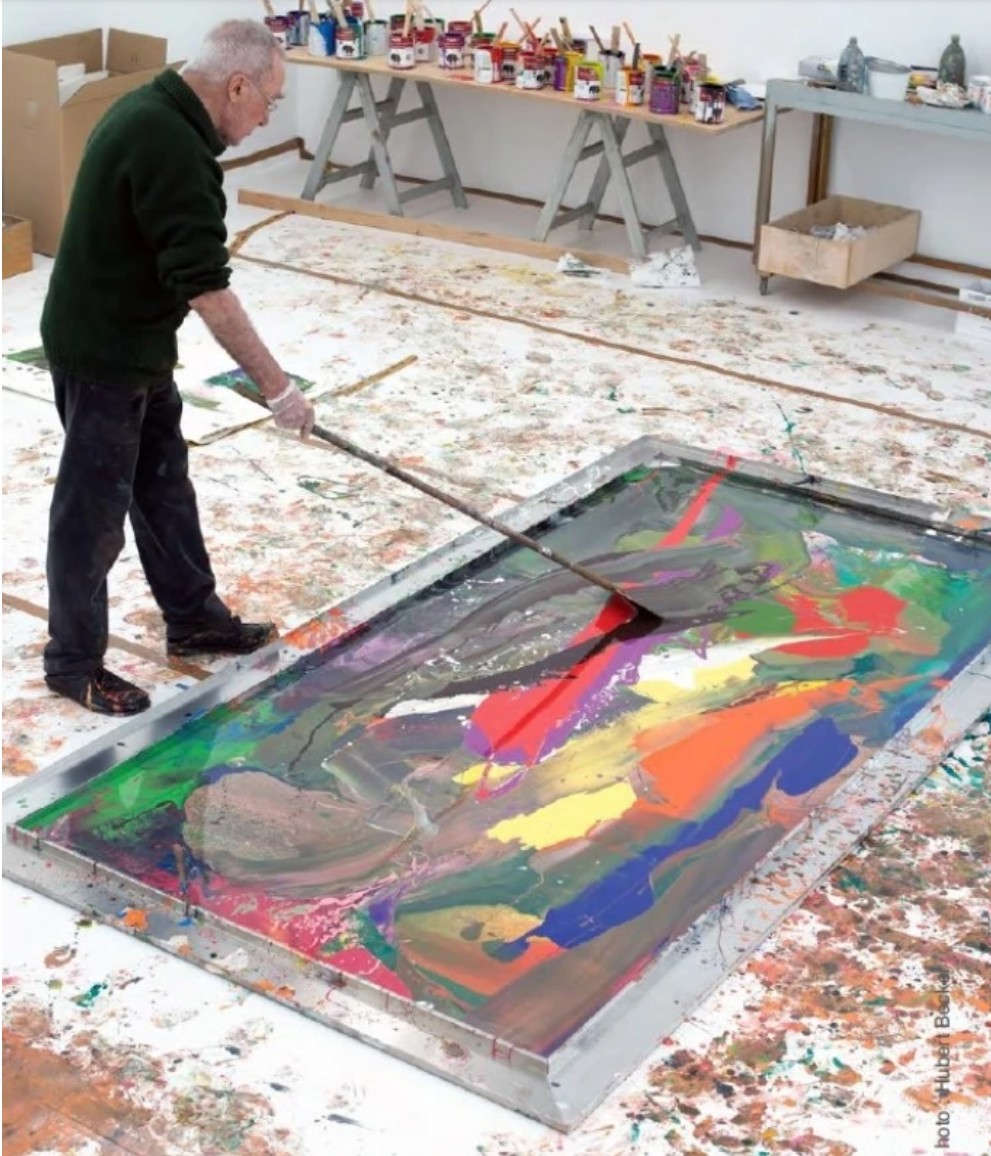
Gerhard Richter at work in his studio. Image © Hubert Becker
In Flow (933–1), the viewer’s eye moves through passages of deep forest green, royal purples and earthen reds, yet the temporal sequence of the painting’s formation remains opaque. This resistance to legibility is intentional. Through layered pours and blended pigments, Richter suspends the work in a state of temporal ambiguity, affirming both the immediacy of a singular event and its dissolution into an unknowable continuum. The painting belongs to a group of twenty Flow works produced by pouring vividly colored enamel into a tray and pressing a glass panel onto the wet surface, effectively arresting the motion of the paint and preserving its fluidity as a fixed image. Unlike Richter’s abstract canvases or photo-based works, the reverse glass paintings are not built through direct application to the picture plane. Instead, color exists as a radiant, sealed surface, with depth arising solely through optical and painterly means. Richter deliberately avoids privileging particular hues, allowing the full chromatic spectrum to operate without hierarchy.
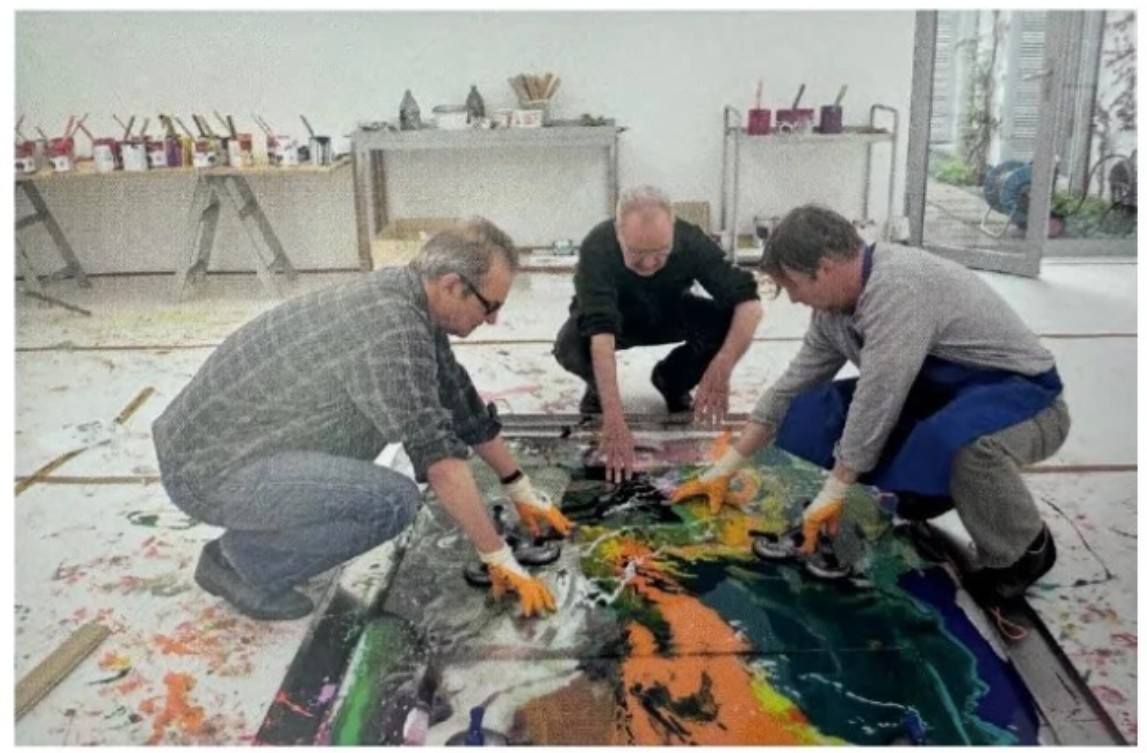
Gerhard Richter at work in his studio
Flow (933–1) stands as a testament to Richter’s enduring exploration of the interplay between materiality, chance, and artistic intention. It exemplifies how abstraction can simultaneously captivate the eye and provoke reflection, offering a visual experience that is both sensorial and conceptual. By harnessing the unpredictable behaviors of lacquer and glass while subtly guiding their interactions, Richter transforms the ephemeral into the permanent, the fleeting into the monumental. In this synthesis of control and coincidence, Flow (933–1) not only expands the formal possibilities of painting but also reaffirms Richter’s position as one of the most inventive and intellectually rigorous figures in contemporary art.
Antelio Glas, 2002
Sotheby’s London: 24 June 2025
Estimated: GBP 300,000 – 400,000
GBP 292,100 / USD 400,175
Antelio Glas | Modern & Contemporary Evening Auction | 2025 | Sotheby’s
GERHARD RICHTER (b. 1932)
Antelio Glas, 2002
Glass and steel construction
149.5 x 149.5 x 12 cm (58 7/8 x 58 7/8 x 4 3/4 inches)
Collapsing realism and abstraction into a continuum, Gerhard Richter’s Antelio Glas blurs conceptual delineations in an idiosyncratic attempt to purge the painterly act of any mark-making process. Executed in 2002, the present work hails from the artist’s Glass and Mirrors series from 1993 to 2004. Constituting a small, yet complex and highly conceptual body of work, Antelio Glas sits late in the series, posing Richter’s remarkable philosophical enquiry into the constructed reality of pictorial space. A phenomenological visual experience engages the spectator in the complex dialectic at the interstice of figuration and abstraction, enabling the artist to emphasize the discrepancy between image and reality, while simultaneously embracing notions of enigma, uncertainty, and transience. Building on the critical conceptual tendencies first explored by the artist in his formative 1960s, with seminal works such as Vier Glasscheiben, the Color Charts, and his monochromatic abstract compositions, Antelio Glas entirely captures the intellectual essence of Richter’s oeuvre. Befitting the work’s importance, Antelio Glas was exhibited at the Berlin National Neuegalerie as part of Gerhard Richter’s major travelling retrospective Panorama in 2012.
Pushing the logical paradigm of traditional painting ad extremum, Richter’s Antelio Glas is completely devoid of his typical painterly medium. Employing different means to create paintings, the materiality of Richter’s glass panel allows the work an inherent ability to both capture and reflect its surroundings. First employing glass as medium in 1967 with 4 Panes of Glass, Richter’s continued ability to challenge the conceptual boundaries of painting with the material is wholly encapsulated in the present work. While artists previously employed the material – such as Marcel Duchamp’s The Bride Stripped Bare by Her Bachelors, Even (The Large Glass) that presented two smashed panes of glass variously painted and filled with foil and wire, or Robert Ryman’s Surface Veil works painted on fiberglass – Richter boldly presents an untarnished piece of glass displayed away from the wall. Antelio Glas simultaneously mirrors the still, monochromatic wall and the shifting, diffuse reflection of the viewer. The act of seeing takes precedence over structure, suggesting an inherent absence of certitude.
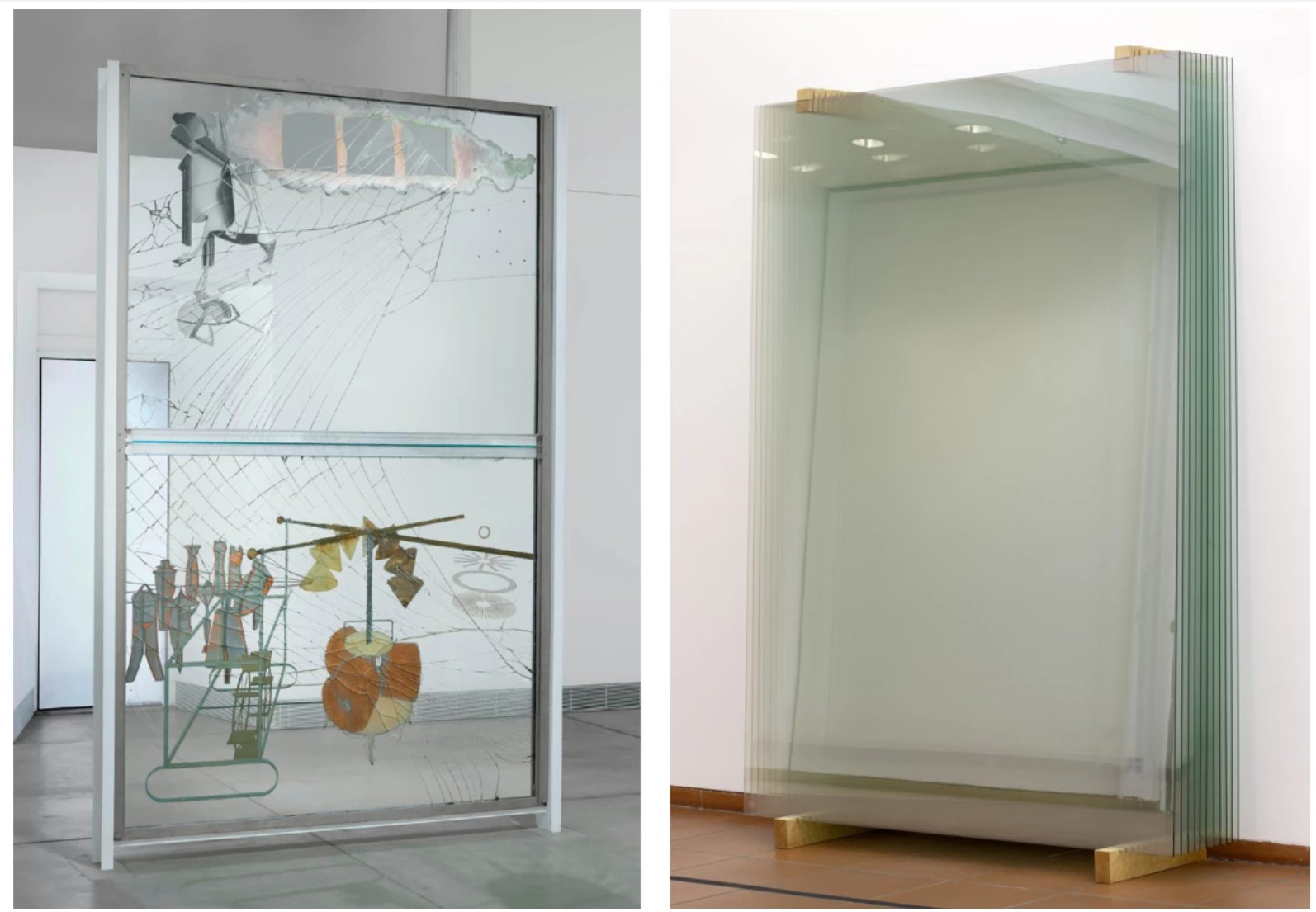
Left: Marcel Duchamp, The Bride Stripped Bare by Her Bachelors, Even (The Large Glass), 1915-23. Image © Philadelphia Museum of Art / Bridgeman Images. © Association Marcel Duchamp / ADAGP, Paris and DACS, London 2025
Right: Gerhard Richter, 11 Scheiben, 2003. Museum Ludwig, Cologne. Image/Artwork: © Gerhard Richter 2025
Instead of making an image, Richter’s cantilevered glass panel reflects everything yet interprets nothing. Veering between depth and flatness, Antelio Glas engages with paradigms that shaped Western painting since the Renaissance. At once a window into the world and a mirror reflecting that which stands before it, Richter converges these enduring tropes in Antelio Glas, allowing it to behave as an agent of transparency and reflection. On an impressive scale the medium itself then becomes a means to veil, negate and neutralize the image material, highlighting the ordinariness of the composition that takes shape in concert with the beholder. Providing an entirely different relationship to space from his Mirror sculptures, Antelio Glas facilitates a stable relationship to its surroundings while being endlessly pliable and ceaselessly mutating. Richter’s astonishing investigation of reality and representation spans his entire career, and his glass sculptures have received widespread institutional acclaim. Other works from the series are held in the collection of the Museum Ludwig, Cologne; the Centre Pompidou, Paris; and the Tate Collection, London. Antelio Glas marks a moment of great professional triumph for Richter, reaffirming the possibilities of modern art through conceptual subversion and substance, a matter-of-fact presence that anchors the complex exploration of the limits of painting to one of Richter’s purest articulations of the mercurial quality of his practice.
Abdu, 2009
Christie’s London: 5 March 2025
Estimated: GBP 700,000 – 1,000,000
GBP 1,032,200 / USD 1,321,216
GERHARD RICHTER (B. 1932), Abdu | Christie’s
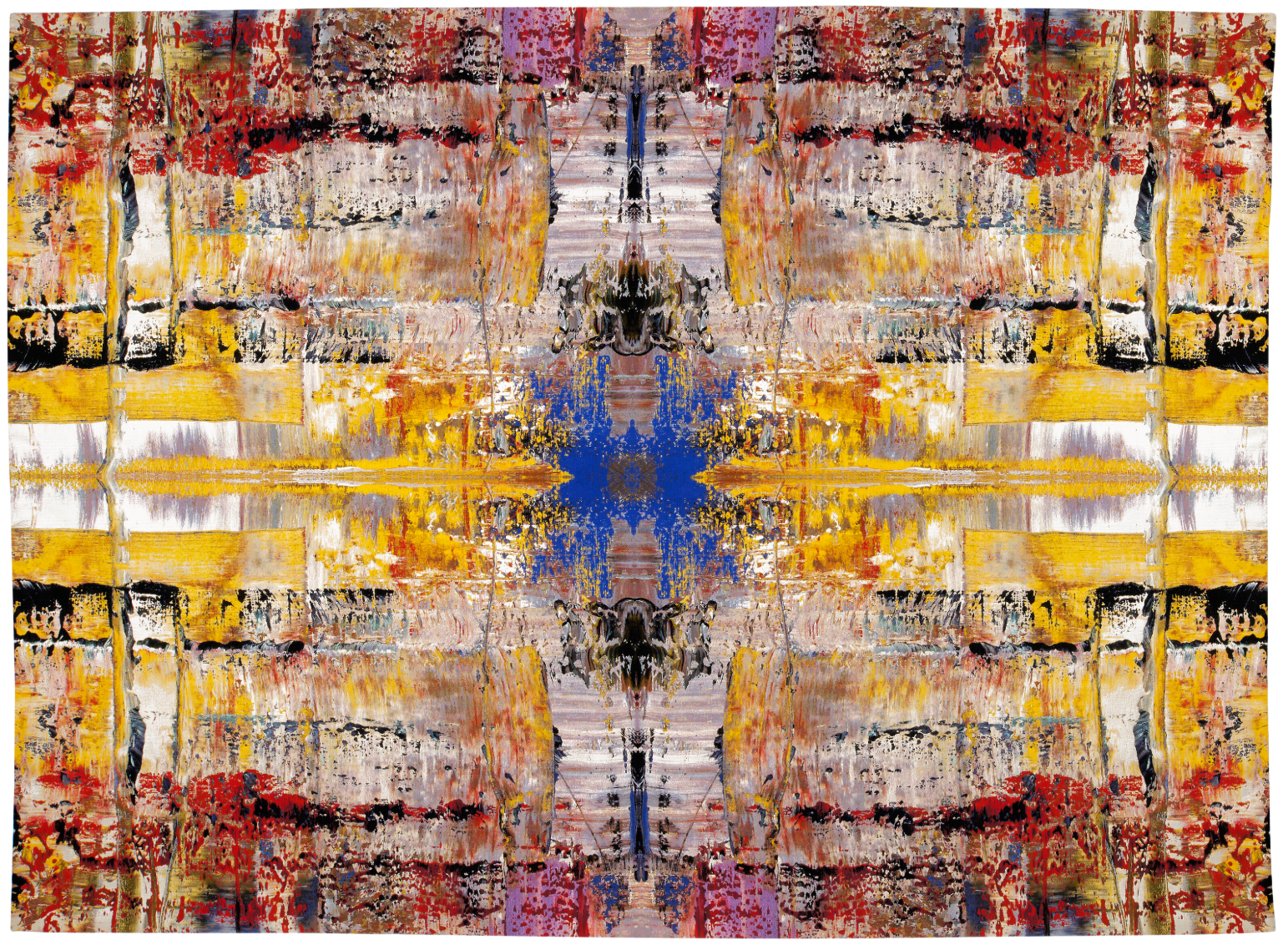
GERHARD RICHTER (B. 1932)
Abdu, 2009
Trevira CS, cotton, wool, silk and acrylic Jacquard-woven tapestry
276×378 cm (108 5/8 x 148 7/8 inches)
Signed and numbered ‘5⁄8 Richter’ (on a label affixed to the reverse)
This work is number five from an edition of eight plus two artist’s proofs
A vast, kaleidoscopic vision stretching nearly four meters in width, Abdu belongs to Gerhard Richter’s groundbreaking series of tapestries. Created in 2009, these four works represent an extraordinary chapter in the artist’s six-decade practice, demonstrating a bold embrace of new media in his long-running inquiry into abstraction. Woven on a jacquard loom, the tapestries are based on his 1990 painting Abstraktes Bild 724-4, which became the wellspring for a number of innovative projects during the 2000s. In each of the four works, a section of the painting is reproduced in one of the lower corners and mirrored in rotation across the remaining three quadrants of the tapestry. The result is a scintillating new pattern, structured like a mandala or Rorschach test. In Abdu, a core of blue bursts from the center into gleaming, hallucinogenic reflections of red and gold. Spun from acrylic, wool and silk, its shimmering textures evoke the traditional handiwork of weaving even as Richter takes his work to new technical frontiers.
Abdu takes the upper left quadrant of Abstraktes Bild 724-4 as its base image: the painting’s azure corner becomes the starburst at the tapestry’s heart. The weaving captures painterly texture and colour with extraordinary precision, translating these qualities into a unique and tactile new object. For Richter, the tapestries marked a new phase in his investigation into the relationship between chance and control, previously explored through his signature squeegeed canvases. Drawing upon the artist’s much-discussed affinity with music, Francesco Bonami likens their elegant repeated structures to a Schoenberg quartet. Indeed, three examples featured as part of a joint installation project with composer Arvo Pärt at The Shed, New York, in 2019. Merging a centuries-old decorative craft with boundary-pushing abstraction, Abdu is a masterful enigma that—like so much of Richter’s art—hovers elusively between languages.
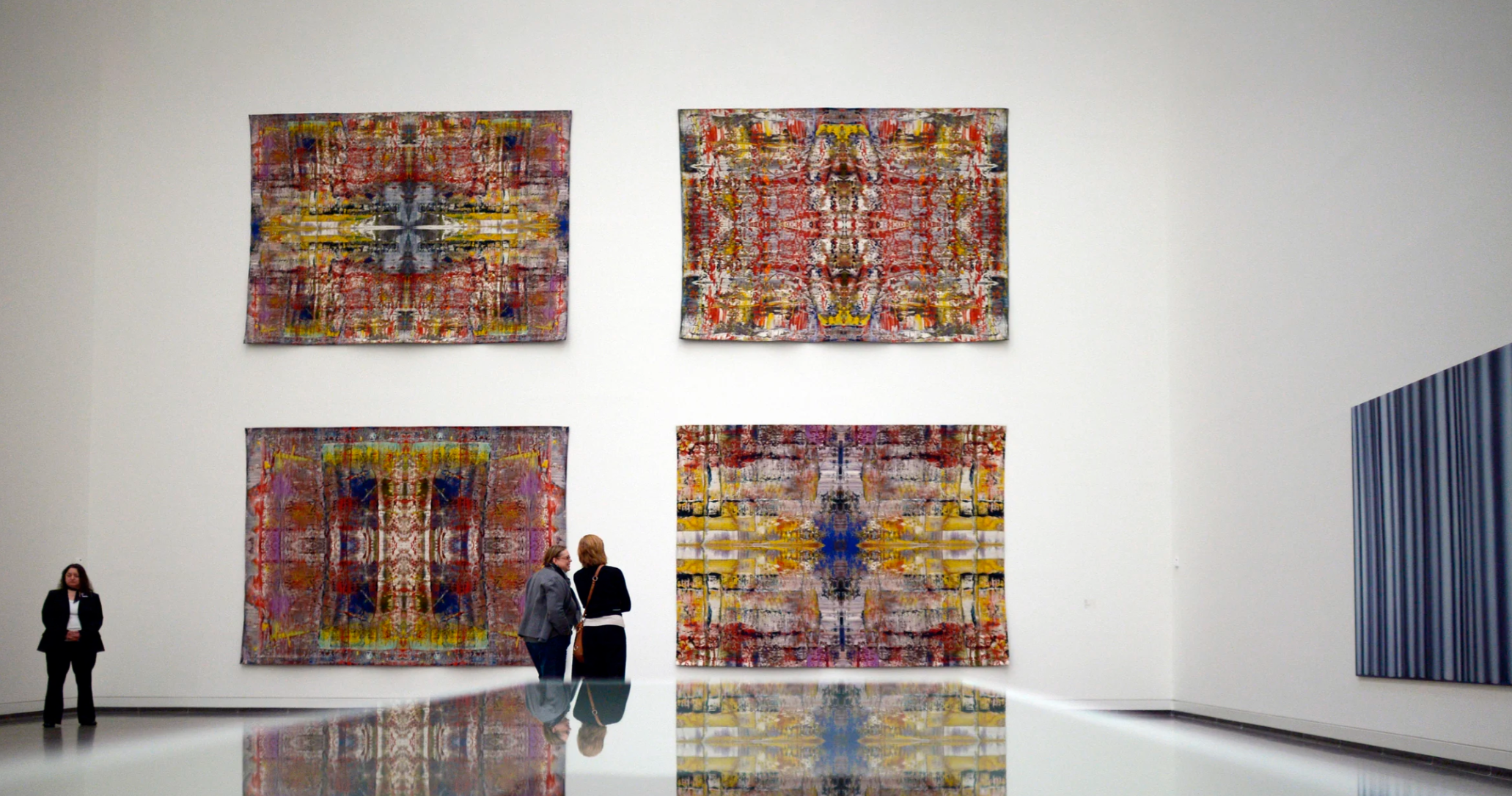
Gerhard Richter: Art in the Plural, exhibition view at K20 Kunstsammlung NRW, 2014. Another edition of the present lot illustrated. Photo: dpa picture alliance / Alamy Stock Photo. Artwork: © Gerhard Richter 2025 (21022025).
Between 2008 and 2013, as he approached his eightieth birthday, Richter undertook some of his most complex technical experiments. Taking Abstraktes Bild 724-4 as his muse, he made a number of diverse editioned works that sought to analyze various aspects of the painting’s DNA. In Sieben Zwei Vier (2008), he reproduced an out-of-focus color photograph of the work; in Patterns (2011), he made an artist’s book documenting the various permutations that could be created by dividing the painting into different-sized vertical sections. In his four Strip works, created between 2011 and 2013, he made digital inkjet prints based on details of the painting that were fragmented and mirrored multiple times. Through these endeavors, the artist sought to extract meaning from the endless complexity of the painting’s original surface, transforming it into a series of rhythmic calculations.
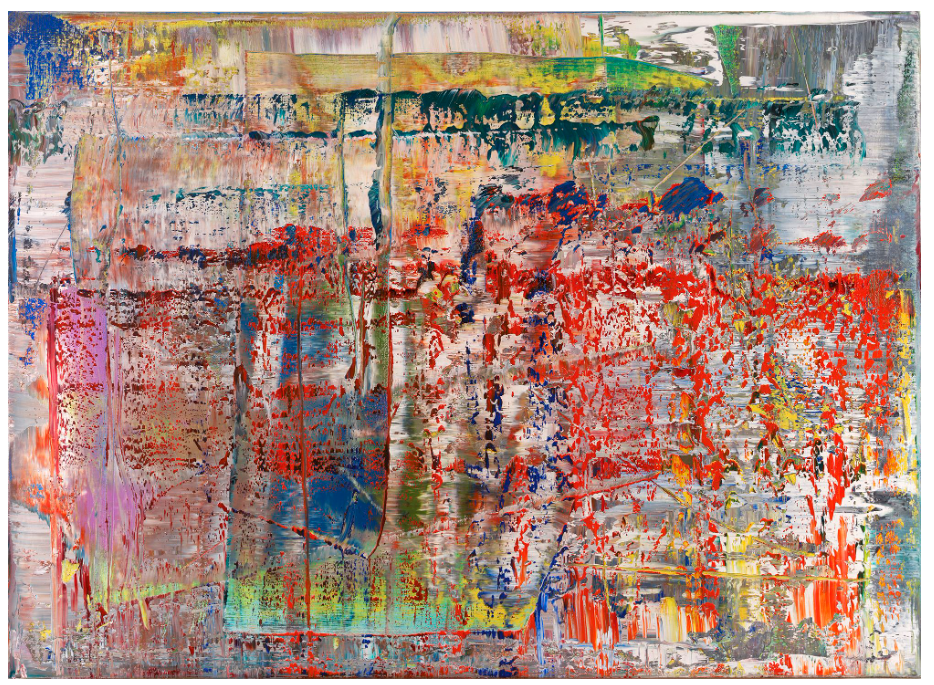
Gerhard Richter, Abstraktes Bild, 1990. © Gerhard Richter 2025 (0016).
The tapestries, in particular, invite comparison with the work of Alighiero Boetti, whose own textile works played with the relationship between order and chaos. With their mandala-like structure, they might also be seen to echo Boetti’s interest in mysticism. ‘The hand of the artist has disappeared to make room for the mechanics of a mystical experience’, writes Bonami. ‘In the future these tapestries may be seen not as art but as spiritual vessels with symbolic meaning, like that carried by Native American weavings.
Alighiero Boetti, The New Autonomies, 1988. Philadelphia Museum of Art. Artwork: © Alighiero Boetti, DACS 2025. Digital image: Philadelphia Museum of Art / Gift (by exchange) of Mr. and Mrs. Arthur A. Goldberg, 1998 / Bridgeman Images.
Their titles add another layer of complexity. Musa, Yusuf, Iblan, and Abdu seem to refer to Sufism and the culture of Persia and the Middle East’ (F. Bonami, ‘The Accidental Healer’, in Gerhard Richter: Tapestries, exh. cat. Gagosian Gallery, London 2013, p. 11). The dialogue between process and visual effect had been at the core of Richter’s practice since the 1960s: here, the artist weaves mystery and magic from the loom.
Stadtbild, 1968
Ketterer: 6 December 2024
Estimated: EUR 350,000
EUR 508,000 / USD 558,800
Ketterer Kunst, Art auctions, Book auctions Munich, Hamburg & Berlin
GERHARD RICHTER
Stadtbild, 1968
Oil on canvas
53×43 cm (20.8 x 16.9 inches)
Signed, dated, titled “Stadt”, as well as inscribed and with a direction arrow on the reverse
A special feature of Richter’s painting that can be noted across his entire oeuvre “is working in repetitions, work groups, and sequences, in other words, an interest in the reproduction of the image”, as the Swiss curator and author Dieter Schwarz remarked on the occasion of Gerhard Richter’s 2014 retrospective at the Fondation Beyeler in Riehen near Basel. (quoted from Hubertus Butin, Unikate in Serie, Cologne 2017, p. 12) This is also true of the present townscape, the first in a series of eight completely different works (178-1 to 178-8), which nonetheless have one thing in common: they come in black and white and are based on details cut out from Richter’s Atlas sheet 124 from 1968. Richter painted this “Stadtbild” in 1968 as part of a series of townscapes he was occupied with in the late 1960s. They are among the early photo paintings that dominated his artistic output from the 1970s until Richter increasingly turned to abstract themes. Alongside the color charts, the gray paintings, the seascapes, and the cloud paintings, the townscapes play an important role at this stage.
Gerhard Richter, Städte, Atlas, sheet 124, Städtische Galerie im Lenbachhaus und Kunstbau, Munich.
© Gerhard Richter 2024 (0141)
Seen from a distance, the painting offers an austere, monochrome close-up of a landscape of buildings from a bird’s eye view. As we approach, however, Richter’s seemingly rigid geometries dissolve into a blurred juxtaposition of rich impasto surfaces. With their grid-like structures and oblique angles, they question the legibility of their figurative subjects and transform them into an illusionistic vision of reality. Richter replaces the hitherto meticulous attention to detail in his photographic paintings with bold gestures that reinforce the indistinct blurriness of his earlier works through subsequent smudging. With thick brushstrokes and the formal dissolution of the original artwork, we see first hints of the liberated abstract expression that would define his style in the following decades. Richter attained another special effect in his painting of the 1960s by using an extensive palette of gray tones that enabled him to dispense with extreme contrasts.
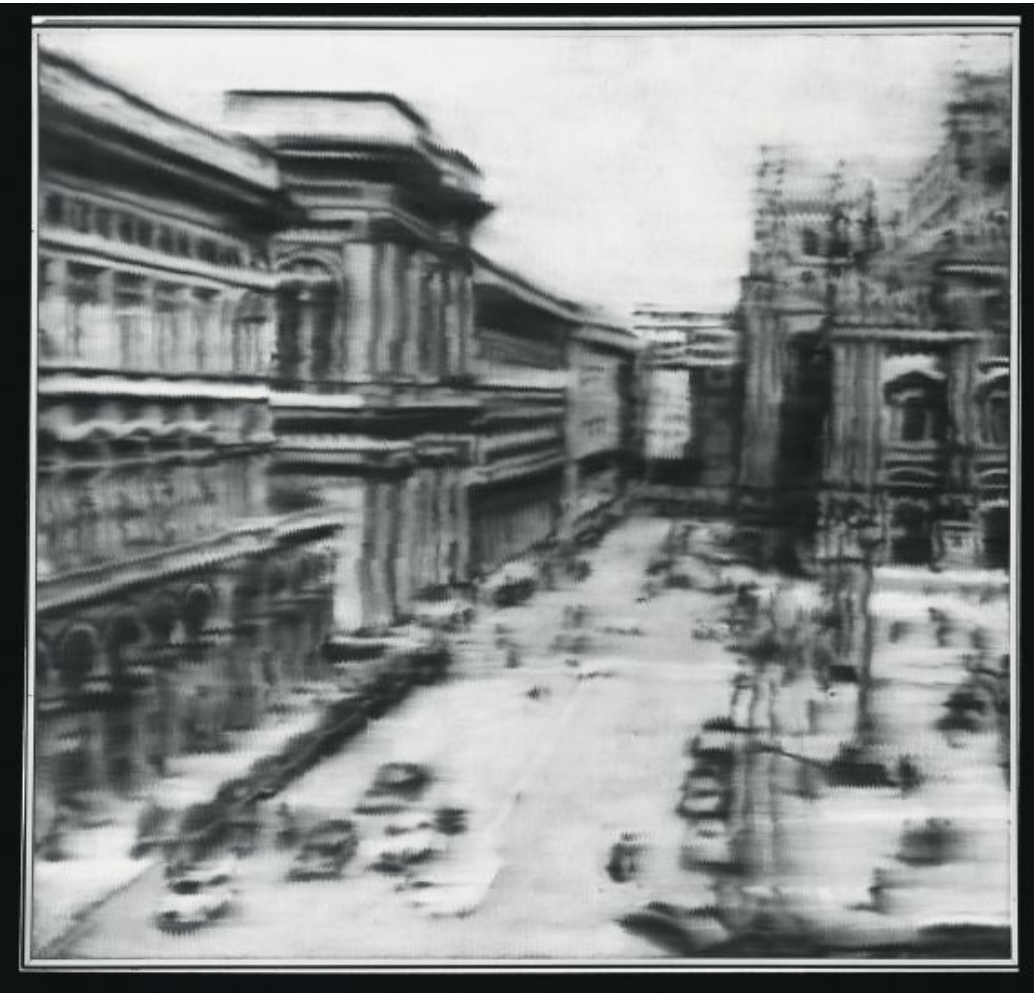
Gerhard Richter, Domplatz Mailand, 1968, oil on canvas, auctioned in 2013 at Sotheby‘s,
New York. © Gerhard Richter 2024 (0141).
Richter’s first townscape was a view of Piazza del Duomo in Milan, a commission work for the company Siemens Elettra. According to an interview with Hans Ulrich Obrist in 1993, this commission marked the beginning of Richter’s subsequent focus on townscapes: “Yes, sometimes I liked doing commissions as a way of discovering something that I wouldn’t have come up with on my own. In that sense, by commissioning a townscape, Siemens initiated all subsequent townscapes.” (Dietmar Elger and Hans Ulrich Obrist (eds.), Gerhard Richter. Text 1961 bis 2007. Schriften, Interviews, Briefe, Verlag der Buchhandlung Walther König, Cologne, 2008, p. 308).
It is striking that Richter refrains from placing the cathedral, Milan’s most famous landmark, at the center of the picture. Instead, he focuses on the immediate surroundings of the cathedral, on the square and its surrounding architecture. And it is also striking that the artist uses a kind of advertising photography in this work and only uses an aerial photograph for the first time in another city view of Milan, a decision that leads to this haunting work complex of the “Stadtbilder”.
Robert Delaunay, La Tour Eiffel rouge, 1911/23, oil on canvas, Art Institute, Chicago.
The “Stadtbilder” are largely based on photographs from architectural magazines that illustrate urban structures without these being identifiable by their titles. As is intrinsic to Richter’s work, the artist archives these photographs and documents them in his compendium “Atlas”. Richter describes them as “reflections on the new face of Europe and the other surviving remnants of old Europe”. (Cf. Robert Storr, “Gerhard Richter: Forty Years of Painting, ex. Cat. Museum of Modern Art, New York, 2002, p. 42). As a child, Gerhard Richter witnessed the bombing of Dresden, and it is a logical consequence that many of the towncapes, especially those showing sections of the sprawling urban infrastructure, are reminiscent of aerial photographs of cities bombed during World War II. In other towncapes, including the present work, Richter also devotes himself to the expressionless concrete buildings built during the period of reconstruction. In Richter’s work, the post-war edifices resemble utopian urban landscapes: the architecture of the future, towering high in the sky as symbols of economic recovery! By the late 1960s, however, this vision of renewal had already begun to fade. The gray, uniform, and faceless former beacons of hope conveyed a deep sense of loss: haunting memories of a story that could never be restored. Richter’s deliberate abstraction of these buildings captures precisely this momentum and puts their idealism in a mesmerizing light. As the structure dissolves into an indeterminate mass of color, any sense of function or purpose disappears. The building becomes an illusion that eludes our grasp.
Vorhang, 1965
Lempertz Cologne: 29 November 2024
Estimated: EUR 200,000 – 300,000
EUR 403,200 / USD 425,790
GERHARD RICHTER
Vorhang, 1965
Oil on canvas
38×38 cm
Signed ‘Richter’ verso on canvas
‘Vorhang’ [curtain] pertains to the famous group of works with curtain motifs that were created between 1964 and 1967. In 1964, Gerhard Richter painted a six-part portrait of the well-known gallerist Alfred Schmela (‘Portrait Schmela’, WVZ 37/1). It is the first of numerous portraits based on photographic templates. The visible curtain with its abstract quality in the background of the Schmela portrait encouraged the artist to concentrate on this element. His fascination with these structures, characterized by curves and strong contrasts of light and dark and taken from everyday life, continued after the first curtain pictures and carried on in other series of works in which he worked with corrugated sheet metal, bundles of tubes, and folded-over sheets of paper. Richter precisely studied the curves modelled by the light, in which all gradations of brightness, from intense light reflections to the deepest shadows, merge softly into one another. The framing in this work is tight, focusing on the gentle movement of the folds in an intimate, square format. The forms, developed purely from shades of grey, hint at the heaviness of the material despite the strong reduction of the motif; illusionism and abstraction go hand in hand, directly related to his photographic images of this period.
Acht Lernschwesteren (Eight Student Nurses), 1971-87
Sotheby’s New-York: 27 September 2024
Estimated: USD 200,000 – 300,000
USD 240,000
Acht Lernschwesteren (Eight Student Nurses) | Contemporary Curated | 2024 | Sotheby’s
GERHARD RICHTER (b. 1932)
Acht Lernschwesteren (Eight Student Nurses), 1971-87
8 gelatin silver prints, in artist’s chosen frames
Each image: 47.3 x 34.9 cm (18 5/8 x 13 3/4 inches)
Signed and dated 1971 (on the reverse of each frame)
Executed in 1971-87, this work is unique
Pictured clockwise from upper left, Gloria Davy, Patricia Matusek, Suzanne Farris, Nina Schmale, Mary Ann Jordan, Merlita Gargullo, Valentia Pasion, Pamela Wilkening are memorialized by Gerhard Richter in the present series of eight gelatin silver prints that blur artifice and reality. In 1966, this group of young student nurses were brutally murdered in their dormitory housing in Chicago by Richard Speck. The public sensation surrounding the momentous tragedy and the subsequent widely documented criminal proceedings marked a distinct shift in the popular psyche–permanently altering societal feelings toward safety, innocence, representation, and media. As Pop Art reached its peak in the 1960s, Richter pushed the appropriation of images from popular culture to comment on the manipulation of people’s thinking.
“I was surprised by photography, which we all use so massively every day. Suddenly, I saw it in a new way, as a picture that offered me a new view, free of all the conventional criteria I had always associated with art. It had no style, no composition, no judgment. It freed me from personal experience. For the first time, there was nothing to it: it was pure picture. That’s why I wanted to have it, to show it – not use it as a means to painting but use painting as a means to photography.”

Images of the eight nurses were popularized throughout print media, which published black and white images of the victims’ yearbook photographs. Richter used these images of the victims for his 1966 painting Acht Lernschwestern, from his acclaimed early series Photo Paintings which rely on sourced images from popular culture. This set of eight photographs revisits and expands upon the painting by further distorting the publicized images, thereby creating a multi-layered representation of the victim’s collective identity as popularized in the media. By physically blurring the boundary between photography and painting, Richter illustrates the notion of representation rather than the specific individuals pictured. As such, he leads the viewer to consider the way these women were amalgamated by the media and the influence this representation had on society’s processing of their tragic fate.
Waldstück (Okinawa), 1969
Christie’s Paris: 19 October 2023
Estimated On Request
EUR 3,186,000 / USD 3,367,508
Gerhard Richter (né en 1932) (christies.com)
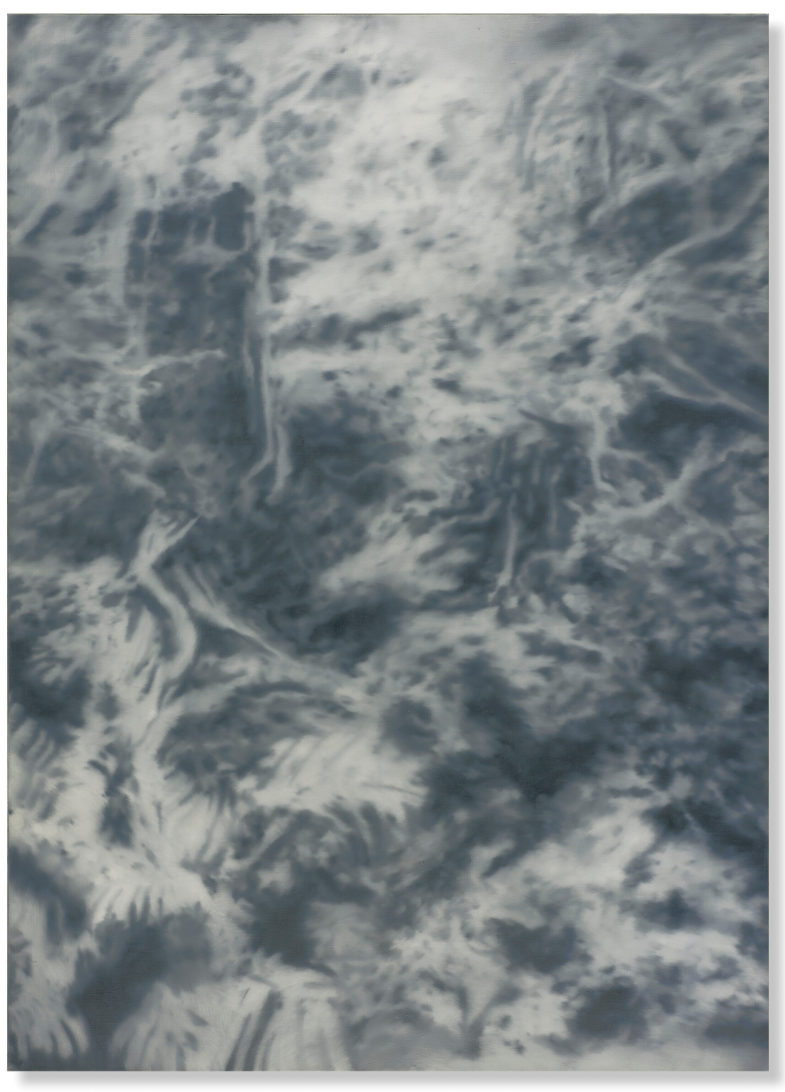
GERHARD RICHTER (Born 1932)
Waldstück (Okinawa), 1969
Oil on canvas
173 x 123.5 cm (68 1/8 x 48 5/8 inches)
Signed, titled and dated ”’Waldstück (Okinawa)” Richter 69′ (on the reverse)
Waldstück (Okinawa) (Forest Piece (Okinawa) (1969) is a rare and important work dating from a pivotal moment in Gerhard Richter’s early practice. In hazy greyscale tones, it depicts a jungle on a remote island in Japan. Painted in 1969, and prominently exhibited since, the work belongs to a series of four paintings based on forests. With another example held in the Louisiana Museum of Modern Art, Denmark, these canvases marked a significant new chapter for Richter. Together, they sparked the shift from photorealism to abstraction that would come to define his art. Richter started making paintings based on photographs in 1962, after escaping from East to West Germany. Having grown up during the Second World War, he was keenly aware of the power of the printed image. Like his comrade Sigmar Polke, as well as international Pop artists such as Andy Warhol and Richard Hamilton, he became fascinated by photography’s claim to truth. Society, he believed, was willing to see a photograph as an accurate record of reality. In practice, however, it was full of illusion—just like painting.
“A photograph usually gets believed, even where it is technically faulty and the content is barely legible. Photography altered ways of thinking and seeing. Photographs were regarded as true, paintings as artificial.”
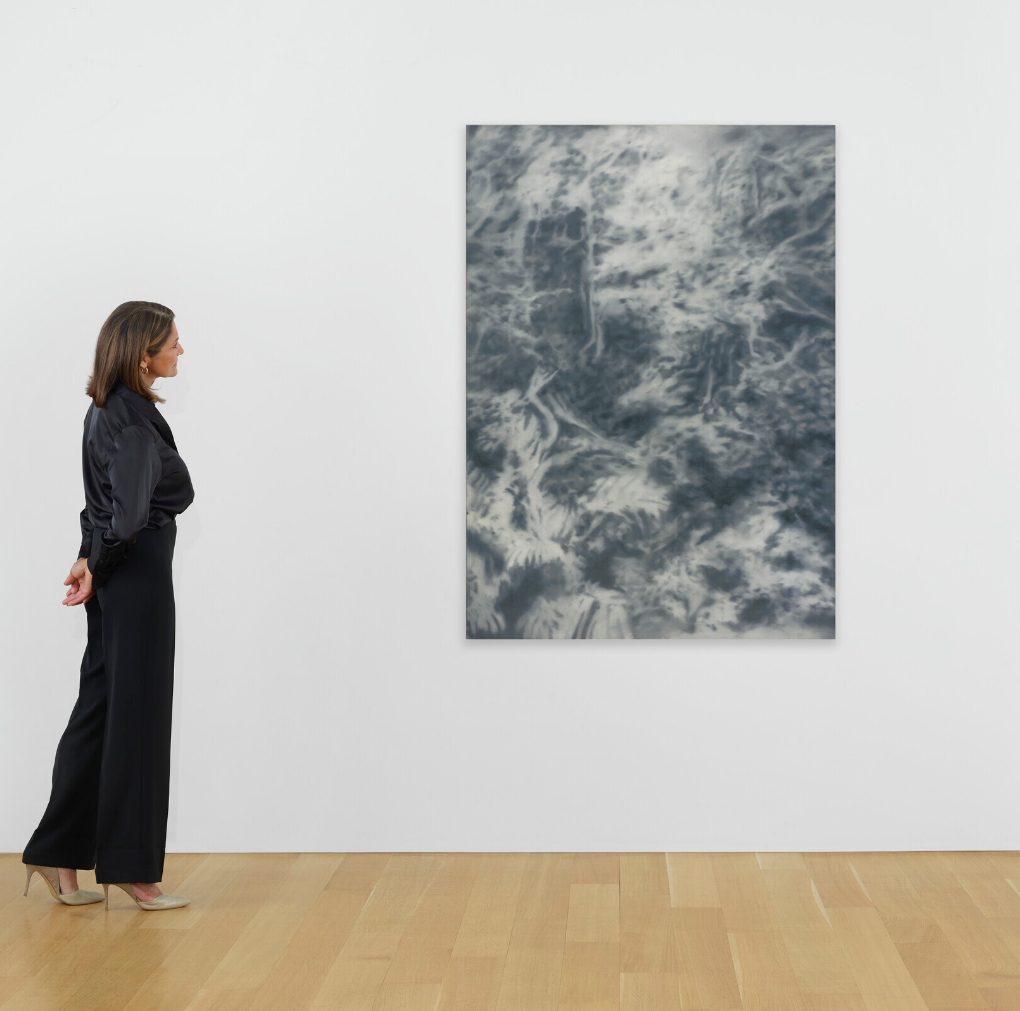
To make his point, Richter began to reproduce printed black-and-white images in pigment. With immaculate precision, he replicated their blurs and imperfections. From a distance these works resembled photographs. Up close they revealed themselves as paintings, forged from a mass of brushstrokes. No image, they proclaimed, was exactly what it seemed. Many of Richter’s early photo-paintings were based on family snapshots. Elsewhere he scoured the media for inspiration, collecting photographs of everyday life that he would later assemble in his compendium Atlas. Richter’s works highlighted the layers of fiction in these seemingly harmless images.
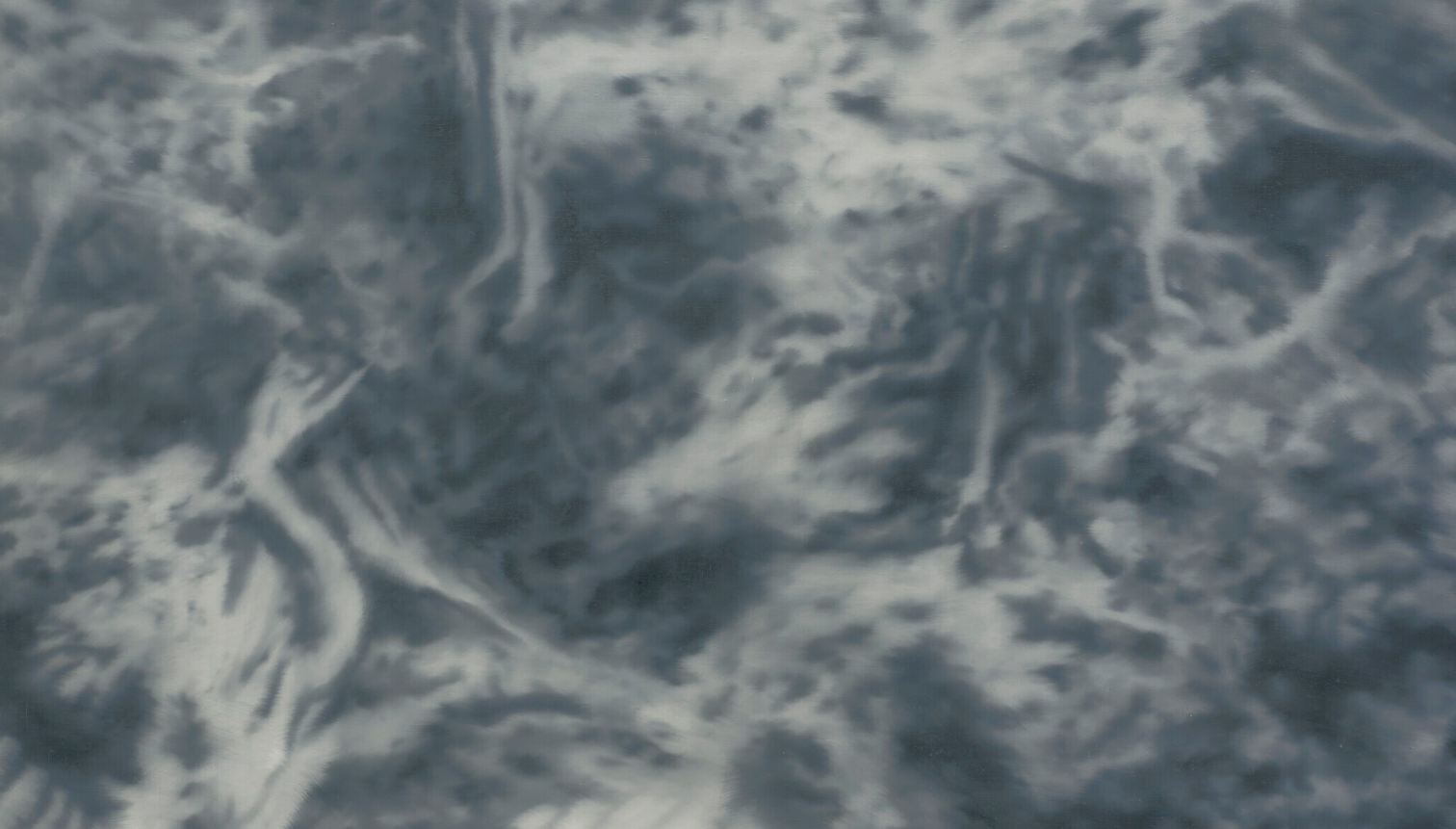
The Waldstücke marked the start of Richter’s engagement with the genre of landscape painting. Occasional examples had punctuated his earlier practice, including a Waldstück of 1965 now held in the Neues Museum, Nuremberg. Following his 1968 paintings of Corsica, however—along with his Alpine mountain views—Richter began to explore the theme in earnest. The present painting and its companions were early examples of his new focus. Among the landscapes they are rare for their use of pre-existing sources, as well as their greyscale palette: Richter would increasingly use his own color photographs as inspiration. Richter’s landscapes rank among his most important photo-paintings. The dramatic, mysterious vistas he chose had once inspired another generation of artists: the German Romantics. Figures such as Caspar David Friedrich had proposed that painting could offer a window onto the world. Depictions of towering trees, celestial skies and waves crashing upon rocks allowed the viewer to experience the sublime majesty of nature. For Richter, working in the post-war period, such promises seemed a distant memory. The innocent ideals of his forefathers were lost dreams. Now, instead, humankind looked to photography to reveal truths about the world. By selecting subjects reminiscent of a bygone Romantic age, Richter suggested that we had simply placed our faith in a new medium. His landscapes yearn for a time when painting was the lie we believed.
Rot–Blau–Gelb, 1973
Christie’s London: 14 October 2023
Estimated: GBP 180,000 – 250,000
GBP 226,800 / USD 275,009
GERHARD RICHTER (B. 1932), Rot–Blau–Gelb | Christie’s (christies.com)
GERHARD RICHTER (B. 1932)
Rot–Blau–Gelb, 1973
Each: oil on canvas
Each: 26.4 x 53.6 cm (10 3/8 x 21 1/8 inches)
Overall: 26.4 x 161.9 cm (10 3/8 x 63 3/4 inches)
Each part signed and dated ‘Richter, 73′ and consecutively numbered ’52, 53, 54’ (on the reverse)
Painted in 1973, Rot-Blau-Gelb (Red-Blue-Yellow) is positioned at the very inception of Gerhard Richter’s abstract practice, foreshadowing the powerful Abstrakte Bilder of the following decade. Confronting the boundary between reality and representation, painting and illusion, Richter distils his picture surface to three chromatic components. In iridescent, lush swathes of brushwork, the artist renders a mesmeric spectrum of colour that is constantly shifting. The triptych constitutes numbers 52, 53, and 54 of a series of one hundred uniquely painted canvases created for the original installation at the Galerie Seriaal, Amsterdam in 1973. Hung in a block formation that encompassed the entire gallery wall, the dynamic display spanned a staggering 2.6 metres in height and 5.3 metres in width. Enveloping the viewer within a field of illusionistic swirls and sfumato hues, the ambitious work testifies to the artist’s increasing fascination with optical effect and the nature of image-making during this pivotal time.
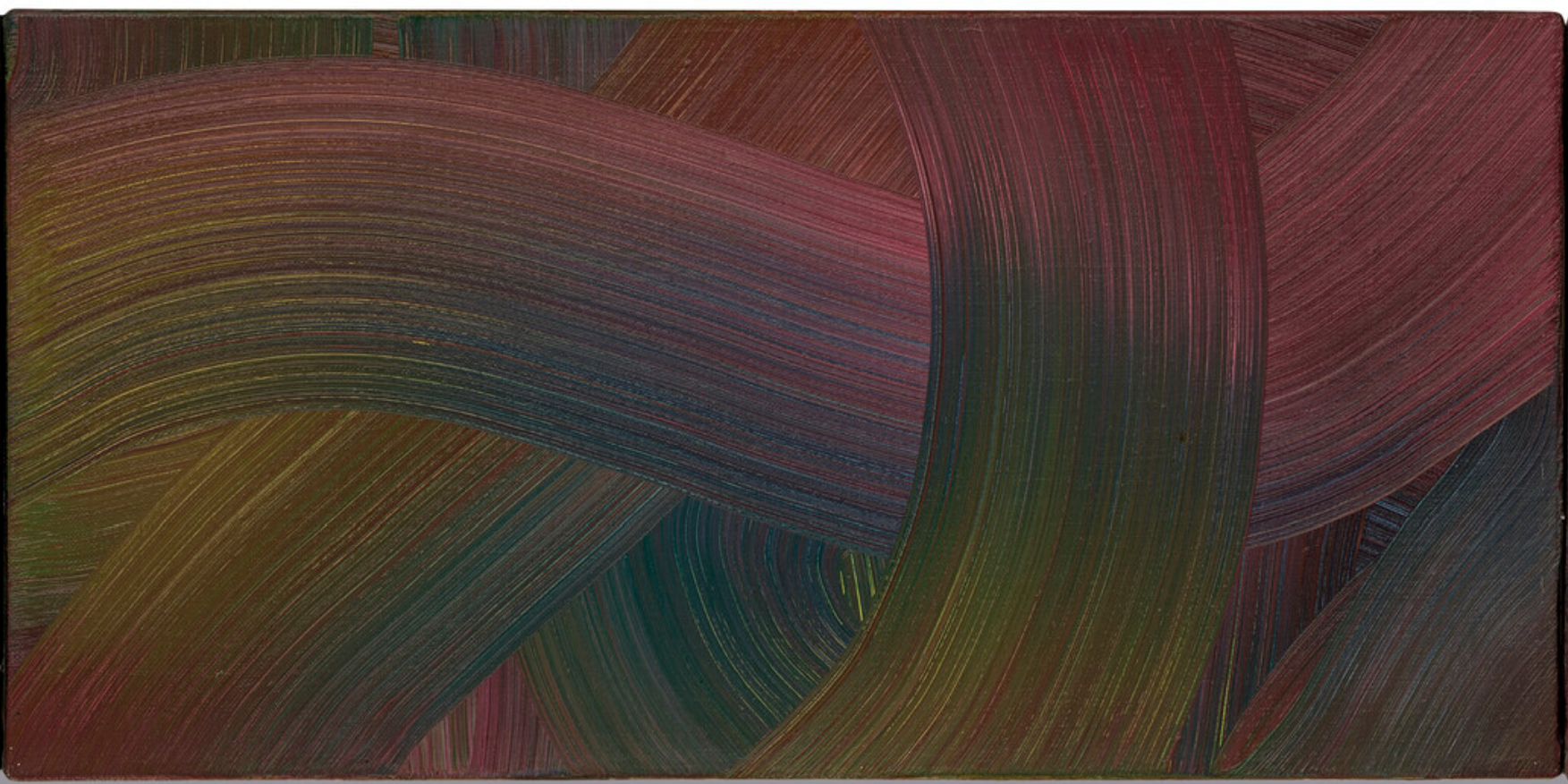
A gestural extension of the artist’s Colour Charts and monochromatic Grau (Grey) paintings of 1972-1976, the Rot-Blau-Gelb series of Vermalung or ‘inpaintings’ bridge the artist’s photorealist and abstract canvases, two poles which have come to define Richter’s career. Marking a significant juncture in the artist’s pictorial development, Rot-Blau-Gelb is devoid of figurative content. Though the earliest of his inpaintings were rendered with an exclusively grey palette, by the time of the present work his chromatic scheme had expanded to three primary colours. Blended to a seemingly infinite array of hue, the three canvases are invigorated with vivid energy; the undulating strokes morph and dance before our eyes like the aurora borealis. Dissecting the pictorial surface into its fundamental elements—shape, colour, and light—Richter reveals the surprising and bewitching possibilities of abstraction. The canvas ripples with dynamic motions of the paintbrush. Richter musters a sculptural quality amidst his smoothly layered web of oil paint, and one can detect the sensuous pleasure derived from the plasticity of his medium. Initially applying his paint in tessellated patches on each canvas, Richter went on to fuse each colour in great, sweeping strokes. Meandering over his picture surface, he blurs and elides his image, obfuscating form altogether.
Badende, 1967
Christie’s New-York: 17 May 2023
Estimated: USD 15,000,000 – 20,000,000
USD 9,610,000
GERHARD RICHTER (b. 1932) (christies.com)
GERHARD RICHTER (b. 1932)
Badende, 1967
Oil on canvas
160×200 cm (63 x 78 1/2 inches)
Signed and dated ‘Richter 67’ (on the reverse)
An historic icon within Gerhard Richter’s practice, Badende (Bathers) is a rare work from the artist’s landmark early series of female nudes. Combining extraordinary technical bravura with a powerful commentary on the nature of image consumption, it occupies pivotal territory in his seminal body of photo-paintings. Conjuring the ‘bathers’ of Ingres, Cézanne and others, Badende is the most ambitious and virtuosic in a sequence of paintings made in 1967. The series, created in the wake of major 1966 nudes such as Ema (Akt auf einer Treppe) (Museum Ludwig, Cologne) and Zwei Liebespaare (Daros Collection, Zurich), combined references to art history and mass-produced erotic imagery, chiming with the contemporary currents of Pop Art. Where Richter had previously worked from single sources, here he weaves a dazzling composite vision from multiple photographic images, pushing his figures to the brink of abstraction. In a unique instance of self-quotation, he would later depict the painting in his 1971 portraits of the American artist Brigid Polk (Pinakothek der Moderne, Munich and Tate, London). Widely exhibited as Richter rose onto the international stage, Badende became a defining canvas of the period, taking its place as a centerpiece of the Gerald Fineberg Collection in 1987.
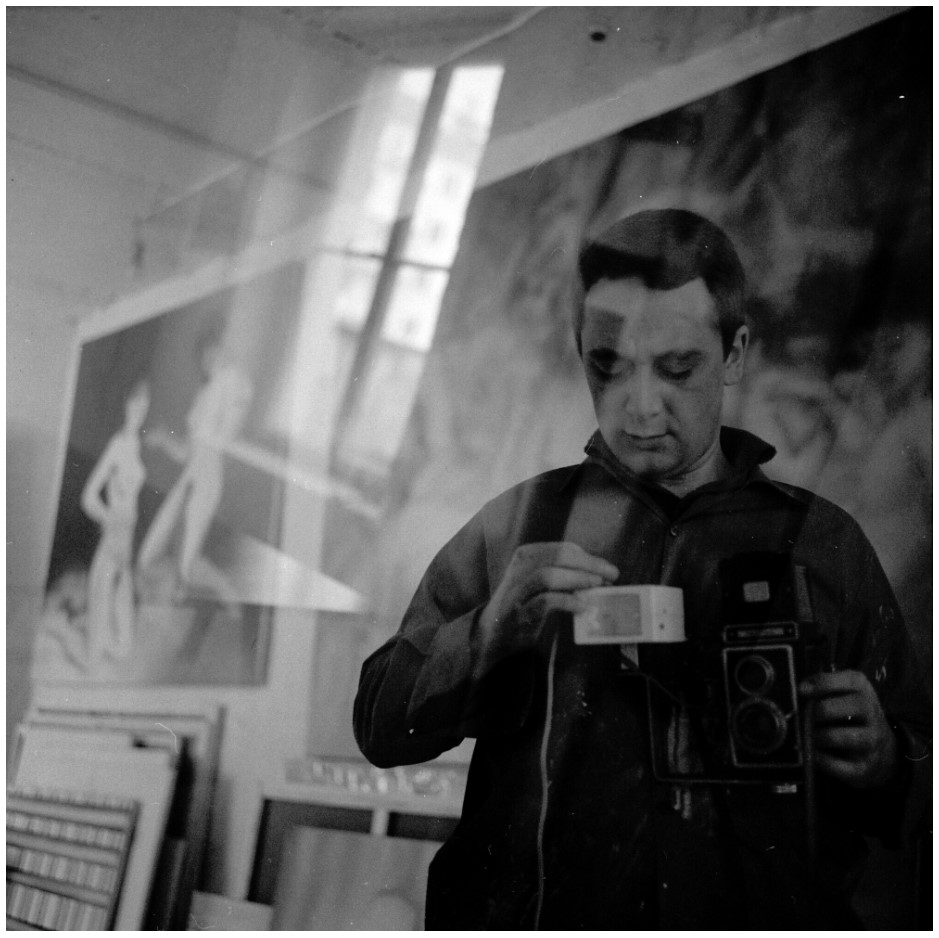
Gerhard Richter in his studio, Düsseldorf 1967. © Gerhard Richter 2023 (31032023), courtesy Gerhard Richter Archive Dresden.
Richter’s 1967 series of nude and semi-nude women formed a vital strand of his early practice: examples have graced institutions including the Kunstmuseum Bonn, the Neues Museum, Nuremberg, the San Francisco Museum of Modern Art, the Olbricht Collection and the Yageo Foundation, Taipei. Comparable in scale to just two other works in the cycle, Badende is distinguished by its subtle tinted palette, indicating Richter’s gradual move away from black and white in his photo-paintings. The rich complexity of its composition, moreover, stands alone within the series. The artist had been fascinated by the historic motif of the bathers since his student days at the Dresden Academy, and particularly admired Ingres’ The Turkish Bath (1862). Shrouded in ambiguity, Richter’s nudes shift in and out of focus, their limbs dissolving into abstract patterns. Their features, blurred to the point of anonymity, place them eternally beyond the viewer’s grasp. In the indeterminate depths of the painting, where reality gives way to illusion, Richter enacts the dynamics of desire, deferral, seduction and misdirection that define our interactions with all imagery.
Abstrakte Skizze (Abstract Sketch), 1991
Sotheby’s Cologne: 7 April 2022
Estimated: EUR 100,000 – 150,000
EUR 201,600 / USD 219,703
Abstrakte Skizze (Abstract Sketch) | Modern & Contemporary Auction | 2022 | Sotheby’s (sothebys.com)
GERHARD RICHTER (b. 1932)
Abstrakte Skizze (Abstract Sketch), 1991
Oil on canvas
30×35 cm (11 3/4 x 13 3/4 inches)
Signed, dated VII. 91 and numbered 749-10 on the reverse
Evoking an image of a half-dreamt almost otherworldly landscape of shimmering grey and intense blue skies, underlined with shades of purple and delicate greens creating dark horizons, this series of Abstrakte Skizzen (Abstract Sketches), are a masterful exploration of the interactions between the raw materials of painting and the illusionistic space. In the late 1970s, Richter began to create abstract paintings, which he describes as “fictive models, because they make visible a reality that we can neither see nor describe, but whose existence we can postulate”. In Richter’s work the painting sets the parameters of its own reality. Richter says he doesn’t know reality, he just knows what impressions he has of reality. Impressions are always changing as the appearance of reality is always changing. His reality is paint and the different ways he can manipulate it. As the artist puts it, “later you realise that you can’t represent reality at all – that what you make represents nothing but itself, and therefore is itself reality” (Gerhard Richter in conversation with Rolf Schön, in: Ibid., p. 59).

FIG. 1-4: GERHARD RICHTER, BÜHLER HÖHE (749-1), BÜHLER HÖHE (SKIZZE) (749-2), BÜHLER HÖHE (SKIZZE) (749-3), BÜHLER HÖHE (SKIZZE) (749-4), COLLECTION FRIEDER BURDA © GERHARD RICHTER 2022 (0062)
Hailing from the artist’s 749 series, the present works are from a series of originally 12 abstract sketches executed in 1991. The first four iterations of this series (see fig. 1-4) are in the collection of the Museum Frieder Burda. Bühler Höhe (fig. 1), begins by depicting a more realistic landscape that shows a blurred, dreamlike view of a hillside behind trees looking towards a village. Then gradually in the continuous works of this series, Richter concentrates more and more on the actual brushstrokes and the impasto nature of the paint, his attention moves to the reality of the paint rather than what you think you can recognize in the image. The path from the representational depiction of a tree to the abstract color sketch can be traced, the more Richter blurs the trees, the more the brush and the paint come to the foreground and the initial landscape disappears. The present works represent the remaining pure impressions of the initial reality and illustrate the fascinating observation of Richter’s working process.
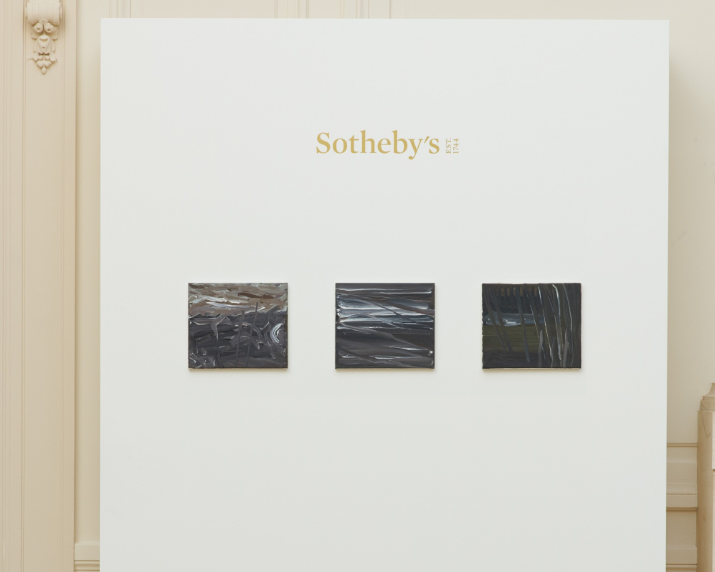
Throughout his oeuvre, Richter’s extraordinary articulation of nature is reminiscent to late eighteenth and early nineteenth-century German Romantic landscapes, and in particular, Caspar David Fredrich’s allegorical panoramas featuring the colossal scale and metaphysical dimension of nature. This present series exemplifies that Gerhard Richter’s abstract paintings stand as the pinnacle of his career, during which he has undoubtedly searched for the limits of representation, nature of perception and the operations of visual cognition.
Abstrakte Skizze (Abstract Sketch), 1991
Sotheby’s Cologne: 7 April 2022
Estimated: EUR 80,000 – 120,000
EUR 277,200 / USD 302,092
Abstrakte Skizze (Abstract Sketch) | Modern & Contemporary Auction | 2022 | Sotheby’s (sothebys.com)
GERHARD RICHTER (b. 1932)
Abstrakte Skizze (Abstract Sketch), 1991
Oil on canvas
30×35 cm (11 3/4 x 13 3/4 inches)
Signed, dated VII. 91 and numbered 749-7 on the reverse
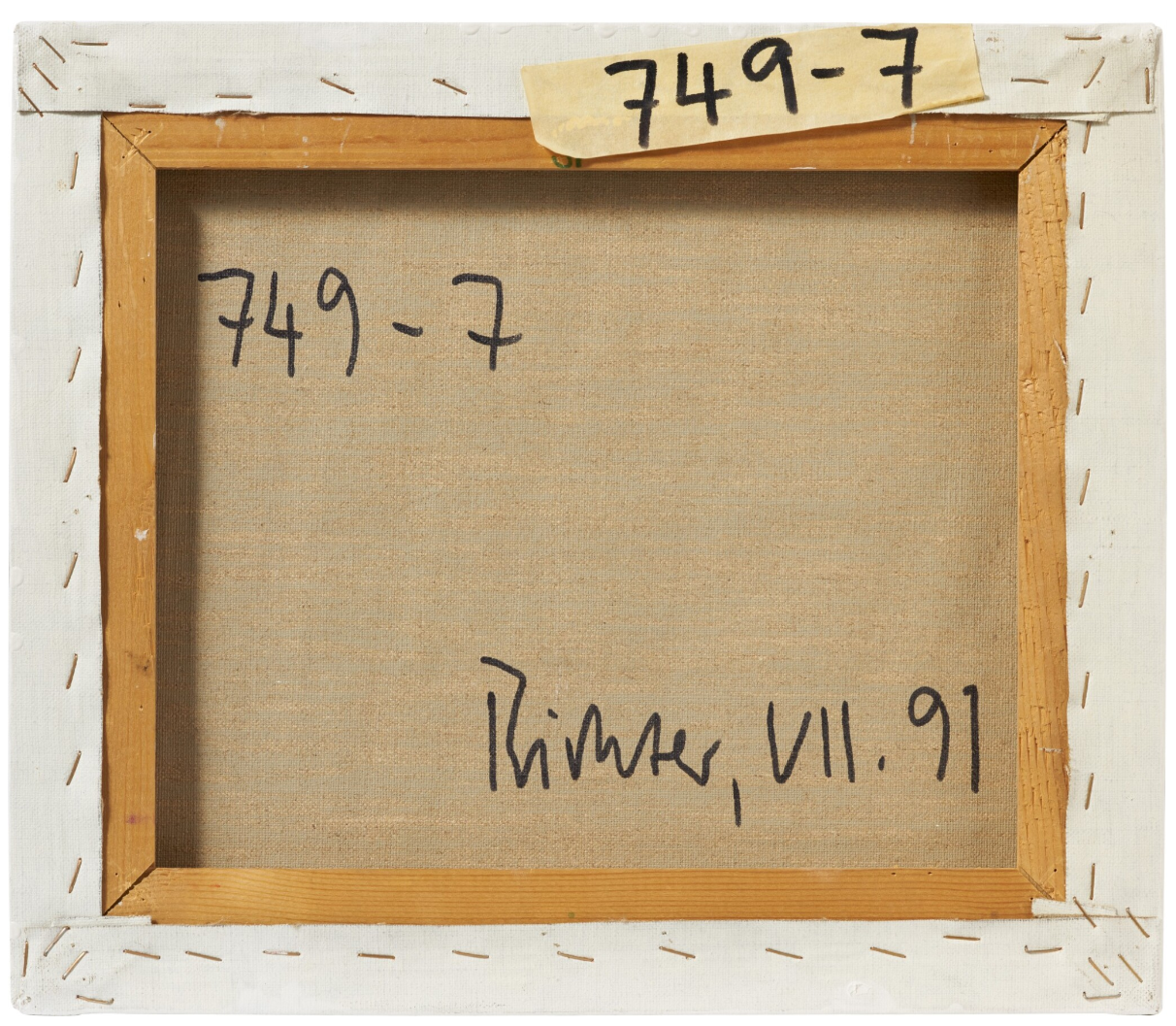
Abstrakte Skizze (Abstract Sketch), 1991
Sotheby’s Cologne: 7 April 2022
Estimated: EUR 100,000 – 150,000
EUR 214,200 / USD 233,435
Abstrakte Skizze (Abstract Sketch) | Modern & Contemporary Auction | 2022 | Sotheby’s (sothebys.com)
GERHARD RICHTER (b. 1932)
Abstrakte Skizze (Abstract Sketch), 1991
Oil on canvas
30×35 cm (11 3/4 x 13 3/4 inches)
Signed, dated VII. 91 and numbered 749-8 on the reverse
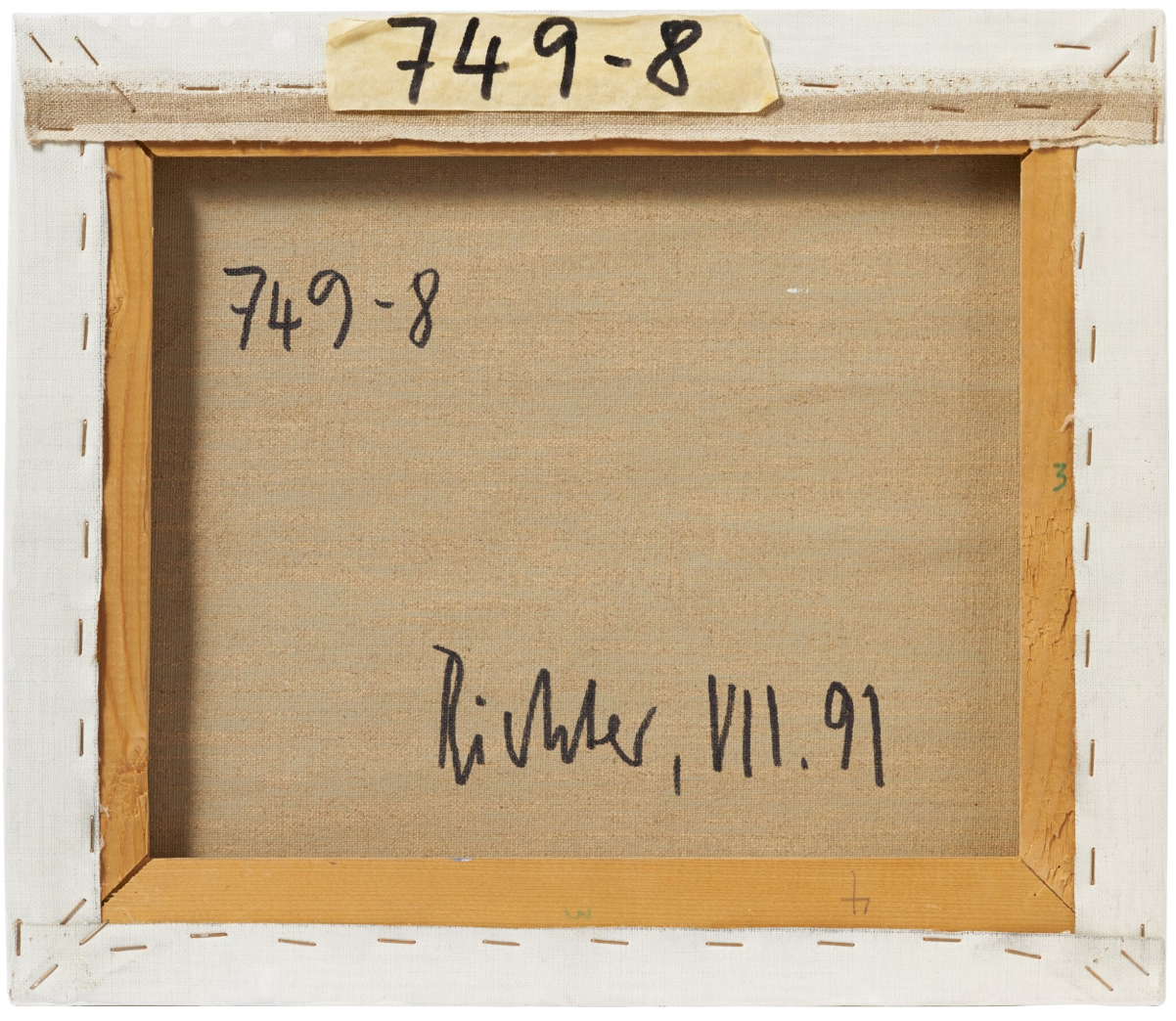
Works on Paper
4.4.88, 1988
Estimated: USD 100,000 – 150,000
USD 167,700
WORK ON PAPER
4.4.88, 1988
Watercolor and graphite on paper
17.1 x 23.5 cm (6-3/4 x 9-1/4 inches)
Titled and dated “4.4.88” upper right
Signed, titled and dated “4.4.88 Gerhard Richter” lower right
Signed, titled and dated “4.4.88 Gerhard Richter” on the reverse
Executed on April 4, 1988, in Germany
Rejecting the ideological certainty that had come to define both modernist abstraction and postwar figuration, Gerhard Richter approached painting as a site of inquiry. The present work, titled 4.4.88, unfolds across the paper as a layered field of translucent color, with veils of saturated green and blue interlocked with flashes of yellow and various tonal scores. The pigment pools, bleeds, and settles unevenly, producing a sense of depth that lies somewhere between material accumulation and spatial order. Instead of asserting composition, the work allows forms to emerge provisionally through the behavior of the medium itself, creating an equilibrium between control and contingency.
Richter dismantled the perceived opposition between abstraction and representation, insisting that both were equally constructed and equally incapable of conveying absolute truth. His abstract works, developed alongside figurative paintings rather than as a linear progression, challenged expressive certainties by introducing procedures of erasure, layering, and mechanical or quasi-mechanical intervention. In this context, watercolor becomes a particularly incisive testing ground. As the medium occupies a position between composition and material process, its imagery is shaped by both intentional design and its function as the first realized concept for works in other forms.
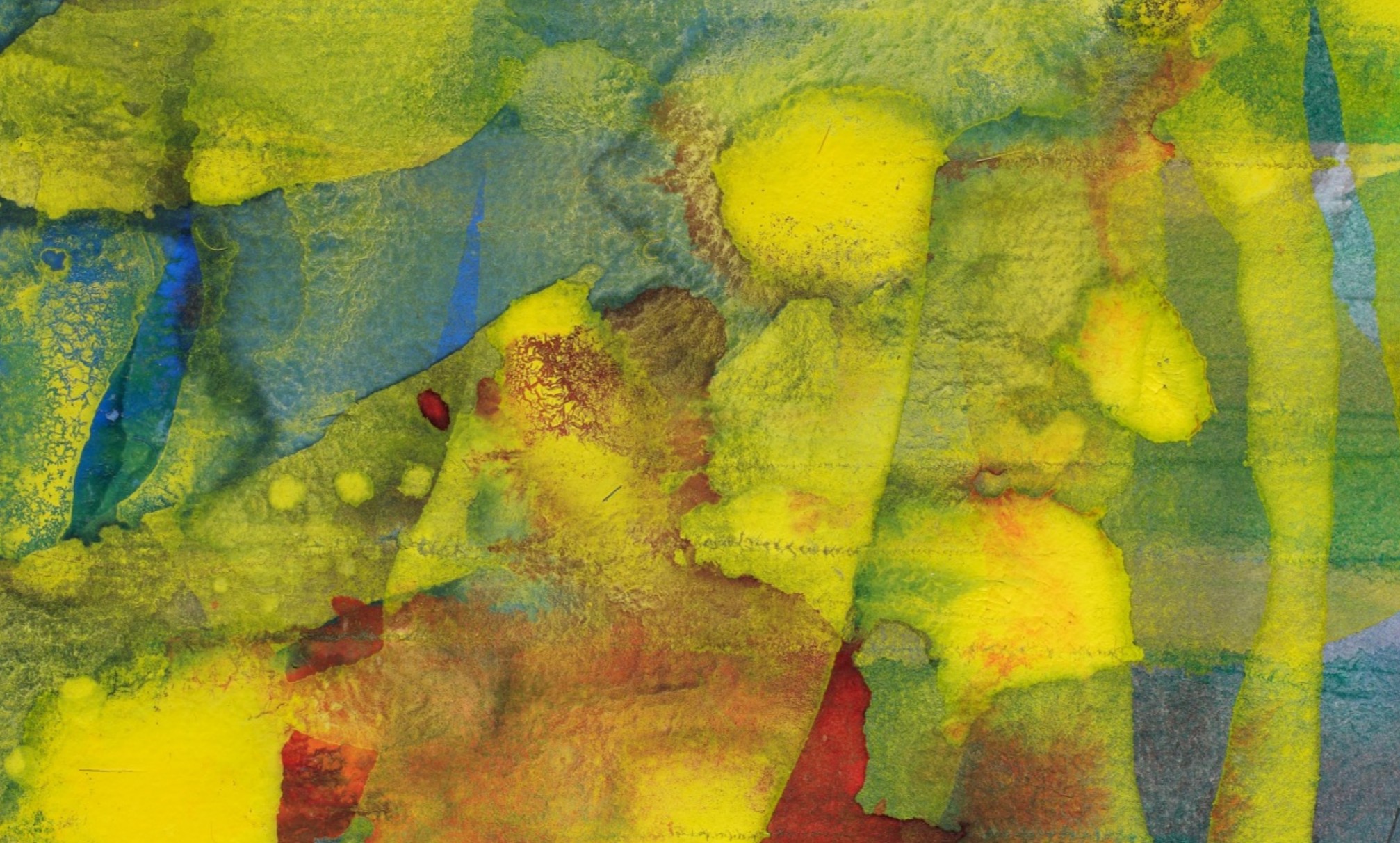
Richter’s return to the production of watercolors in the mid-1980s marked a renewed and deliberate engagement with a medium whose specific conditions had newly asserted themselves within his practice. After an initial group of watercolors concluded in 1978, Richter resumed the medium in 1984. He later described this return as a rediscovery that revealed possibilities distinct from those available to oil painting. From 1988 onward, this engagement developed into a more expansive series, to which 4.4.88 belongs. The watercolor, as Richter articulated, possesses an inherent casualness—manifest in the pouring, dribbling, and spreading of pigment—allowing forms and spatial suggestions to emerge provisionally, often diverging from any initial preconceptions. In contrast to the slower, more elaborated procedures of oil painting, watercolor enables a spontaneous unfolding of process that Richter even said were subject to his own mood, producing visual ideas that are technically unattainable at the scale of canvas. The artist likened this distinction to that between a poem and a novel written by the same author: parallel modes of expression that are fundamentally different in their temporal, material, and perceptual demands.
Ohne titel, 1994
Sotheby’s London: 5 March 2025
Estimated: GBP 120,000 – 180,000
GBP139,700 / USD 178,816
WORK ON PAPER
Ohne titel | Contemporary Day Auction | 2025 | Sotheby’s
GERHARD RICHTER (b. 1932)
Ohne titel, 1994
Oil on paper
21.2 x 30 cm (8 3/8 x 11 3/4 inches)
Signed and dated 24.2.94 (on the backing board, lower right)
Gerhard Richter’s Ohne Titel is a striking example of the artist’s abstract body of work, executed on an intimate scale. The present work encapsulates Richter’s mastery of abstraction, where the interplay of color, texture, and gesture coalesces into a composition of profound visual and emotional resonance. Spanning a career of extraordinary breadth, Richter’s work is characterized by an unwavering commitment to the materiality of paint, an interrogation of visual perception, and a relentless oscillation between abstraction and figuration.
“Abstract pictures are fictitious models because they illustrate a reality that we can neither see nor describe, but whose existence we can infer… With abstract painting we created for ourselves a better possibility of approaching what is non-visual and incomprehensible, because it portrays ‘nothing’ directly visually, with all the means available to art.”
In Ohne Titel, Richter employed a process of applying the paint directly onto the paper and manipulates it using palette knife, sponges and other surfaces to create soft peaks of luscious oils that coalesces into a surface of tactile, sculptural quality. In a process that both constructs and deconstructs, a dynamic surface emerges, oscillating between chaos and control. The present composition, dominated by a bright white and punctuated with a rich palette of teal, crimson, and cobalt, merges into a symphonic arrangement, each hue bleeding into the next with an almost alchemical fluidity. The intimate scale of the present work lends a sense of immediacy, inviting closer inspection and drawing the viewer into its intricate web of textures and hues. The paper’s surface, with its subtle imperfections and absorbency, interacts with the paint in a way that is distinct from canvas, creating a unique dialogue between material, medium, and application.
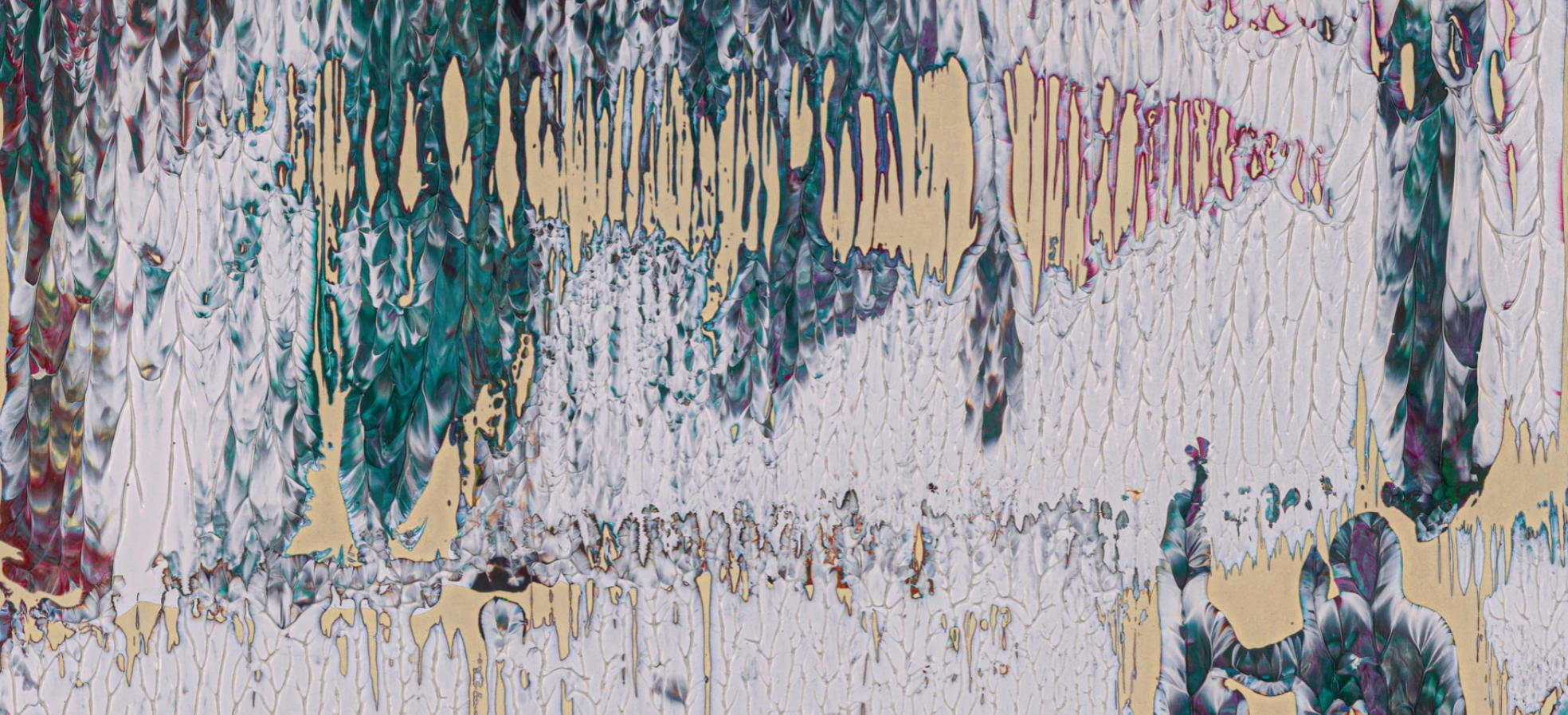
Richter’s abstract works, which began in the late 1970s, are often seen as a radical departure from his earlier photorealist paintings. Yet, they are deeply connected to his overarching exploration of perception, representation, and the nature of painting itself. By the mid-1990s, Richter had fully embraced abstraction as a means of exploring the possibilities of paint beyond traditional representation. While his early career was shaped by an engagement with photographic realism, the artist increasingly turned to abstraction as a vehicle for probing the very nature of artistic creation. Ohne Titel belongs to a corpus of works in which chance, control, and intuition exist in a delicate equilibrium. Paper is an important vehicle within Richter’s working process. While his large-scale canvases remain the most recognizable aspect of his abstract output, his works on paper offer a more intimate, immediate insight into his process. The present work, presents an intensified microcosm of the gestural dynamism that defines his grander compositions. The paper’s absorbency lends a softness to the oil paint’s diffusion, creating a nuanced tension between density and transparency, chaos and control.
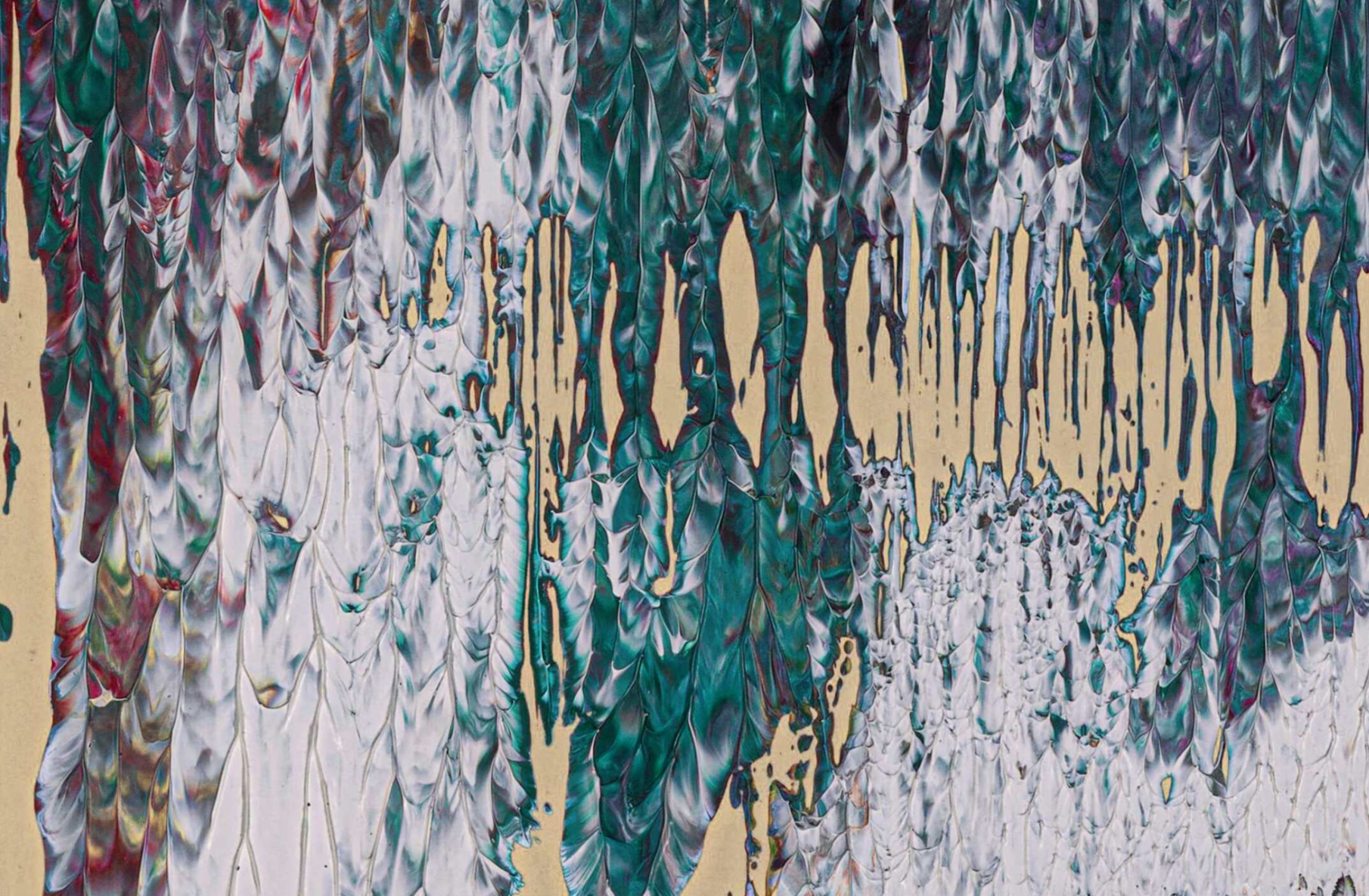
The date inscribed on the work, 24th February 1994, attests to Richter’s meticulous documentation of his creative process, a practice he has upheld throughout his career. This period saw Richter reflecting on the role of painting in an age dominated by photography and digital media. In Ohne Titel, one can sense this tension between the handmade and the mechanical, the organic and the artificial. Unlike his figurative works, which often reference external photographic sources, Richter’s abstract paintings bear no explicit narrative, yet their temporal specificity lends them an undeniable sense of immediacy. Each mark and smear is frozen in time, a testament to the moment of its making, yet it simultaneously exists beyond it, suspended in an infinite dialogue of color and form. Richter’s abstraction is often described as a form of “anti-painting,” a deliberate rejection of traditional compositional rules and aesthetic conventions. Yet, within this apparent chaos, there is a profound sense of order and balance. A testament to Richter’s enduring relevance and his ability to push the boundaries of painting, Ohne Titel captures and resists easy interpretation, embodying the tension between creation and erasure, control and spontaneity, that defines his abstract oeuvre.