Introduction
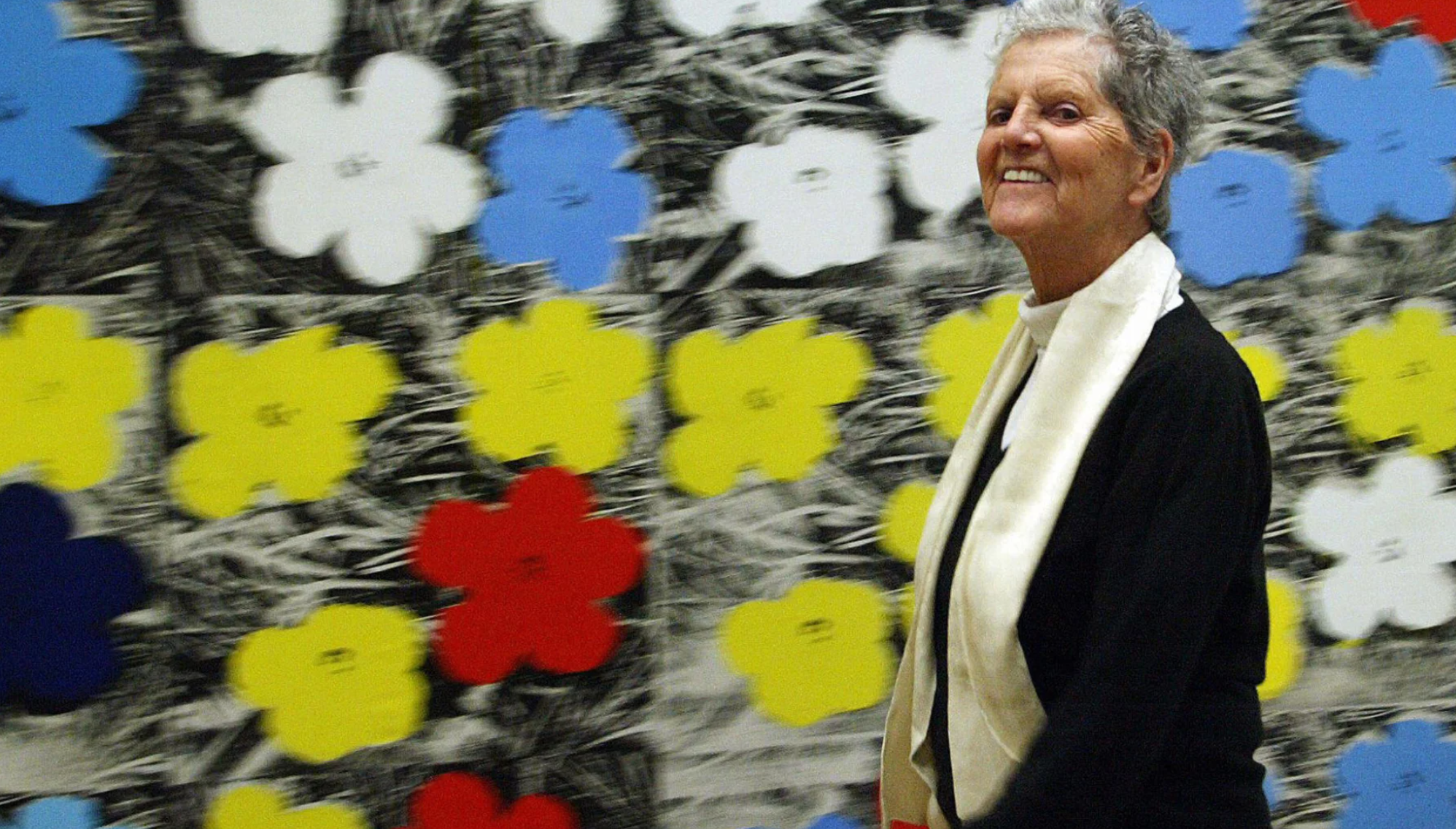
Her influence only grew in the twenty-first century. In 2011, Sturtevant won the Golden Lion for Lifetime Achievement at the 54th Venice Biennale, and in 2014, the year of her death, her retrospective at the Museum of Modern Art, New York, opened to critical acclaim. In 2019, T: The New York Times Style Magazine cited her Warhol Flowers series as one of the “25 Works of Art That Define the Contemporary Age.”
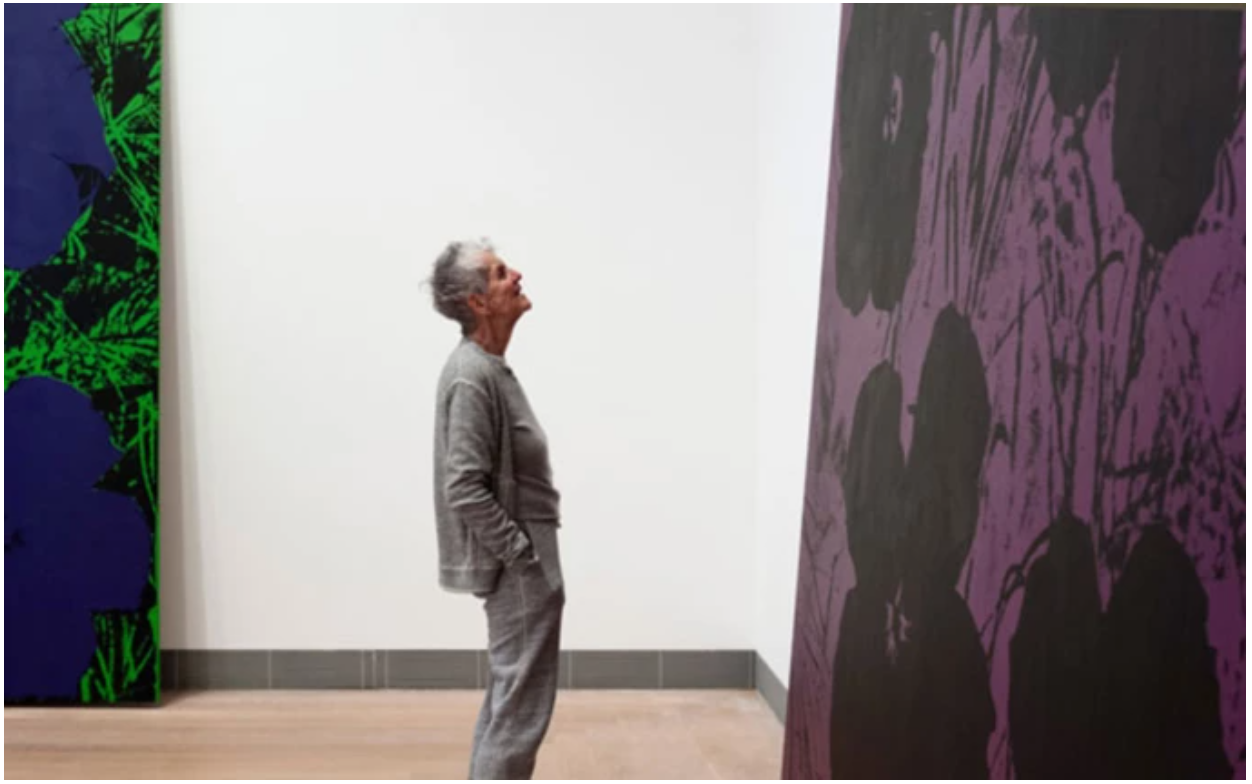
Sturtevant contemplates her Warhol Flowers, from 1990.
Installation view of “Sturtevant: Image over Image,” Moderna Museet, Stockholm, 2012
The work of Sturtevant is some of the most elusive in contemporary art. An outlier among her peers, Sturtevant claimed allegiance with no one group, and she defied strict categorization throughout her career. She exclusively produced art that referenced works made by other artists, and her oeuvre includes recreations of now-iconic pieces by Andy Warhol, Marcel Duchamp, Jasper Johns, Claes Oldenburg, Joseph Beuys, Robert Gober, Felix Gonzalez-Torres, Keith Haring, Roy Lichtenstein and more. Her cutting-edge interrogations into the “understructure” of art and her groundbreaking use of appropriation both set her apart from other artists, and situated her as the crucial link between Pop Art and the Pictures Generation of Richard Prince, Sherrie Levine and Cindy Sherman. While Warhol was concerned with the seductive image, surface appeal and art as a commodity, Sturtevant explored the underlying theoretical mechanics of art, and she daringly usurped Warhol’s forms and techniques and drove them further than had been allowed in Warhol’s Pop expressions. Introducing a caliber of conceptual rigor in her work that was absent from Warhol’s, Sturtevant effectively put the ‘Art’ back in Pop Art, making Warhol Diptych a leading masterpiece of the twentieth century.
PART I: SUMMARY
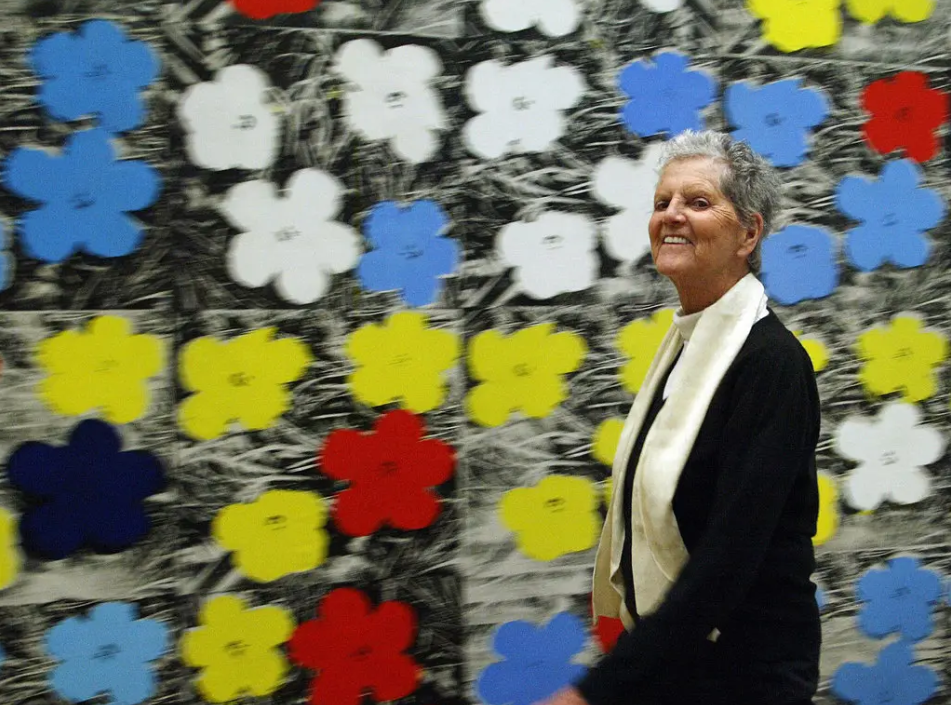
Market Overview
2024 Auction Highlights
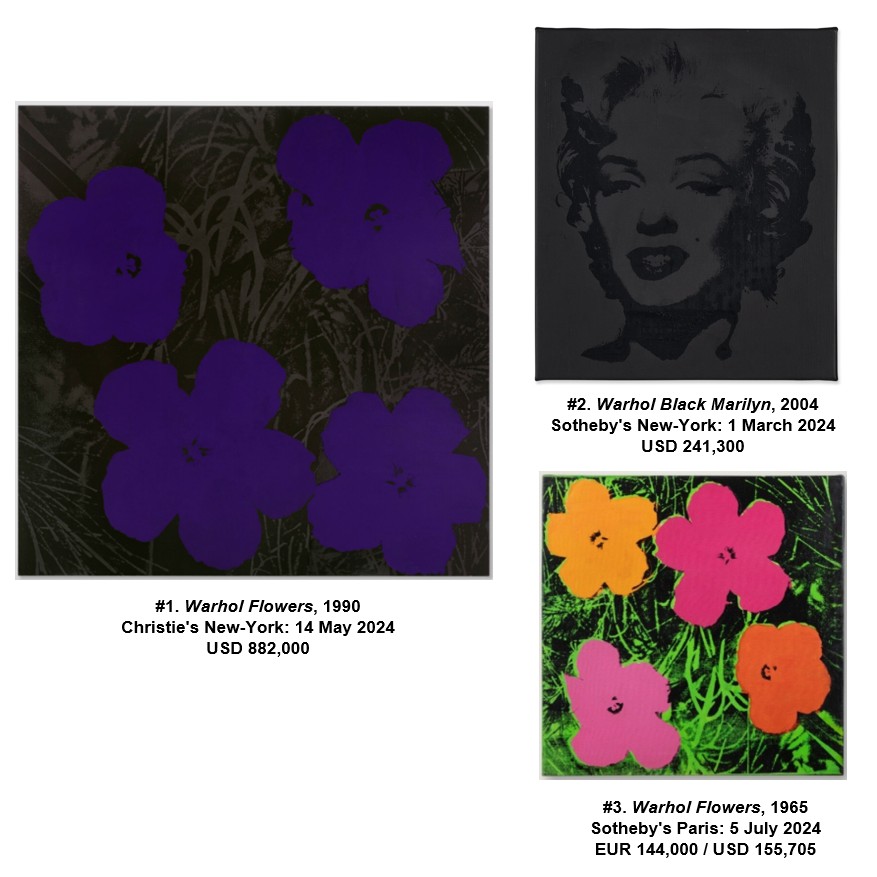
4 lots sold at auction in 2024 for a total turnover of USD 1,361,112. With no lot failing to sell, the sell-through rate is 100%. The highest price was achieved at Christie’s in New-York, on 14 May 2024 for Warhol Flowers, a painting dated 1990, that sold for USD 882,000
2024 Top 3 Lots
2023 Auction Highlights
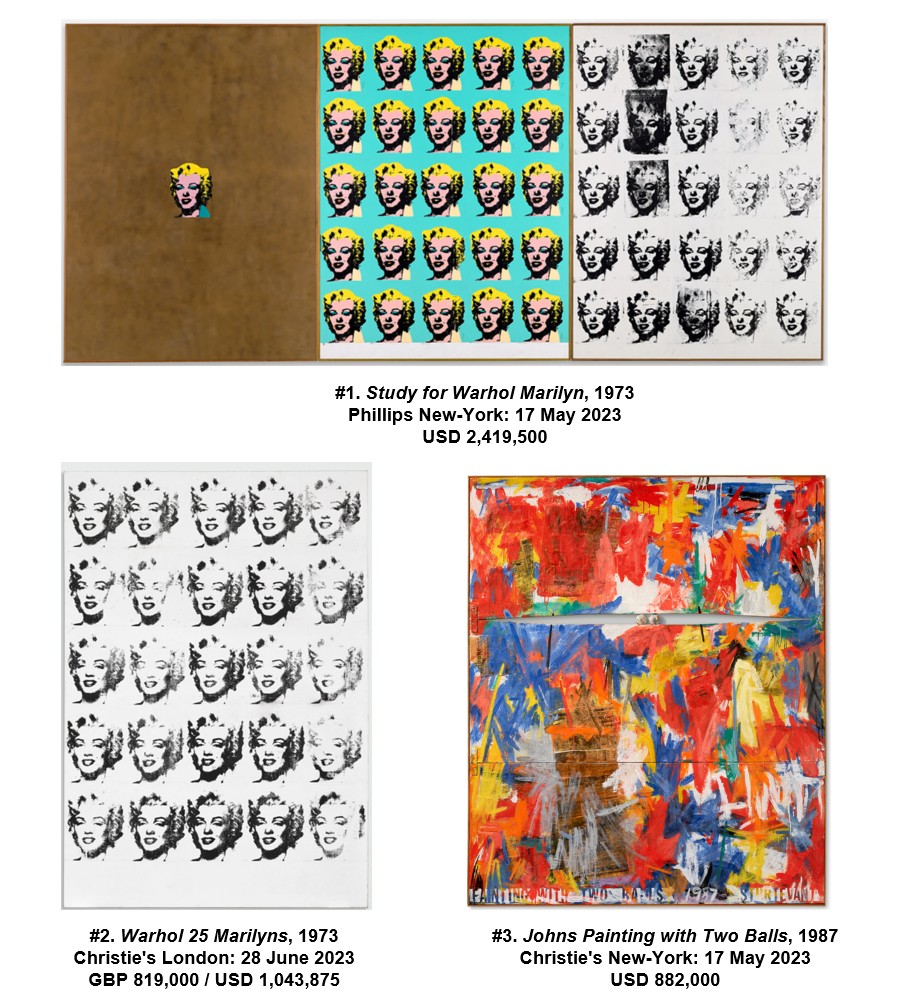
14 lots sold at auction in 2023 for a total turnover of USD 6,014,645. With no lot failing to sell, the sell-through rate is 100%. The highest price was achieved at Phillips in New-York, on 17 May 2023 for Study for Warhol Marilyn, a painting dated 1973, that sold for USD 2,419,500. 9 lots sold for more than USD 100,000, generating a cumulative turnover of USD 5,955,145, representing 99% of the total turnover for 2023.
2023 Top 3 Lots
2022 Auction Highlights
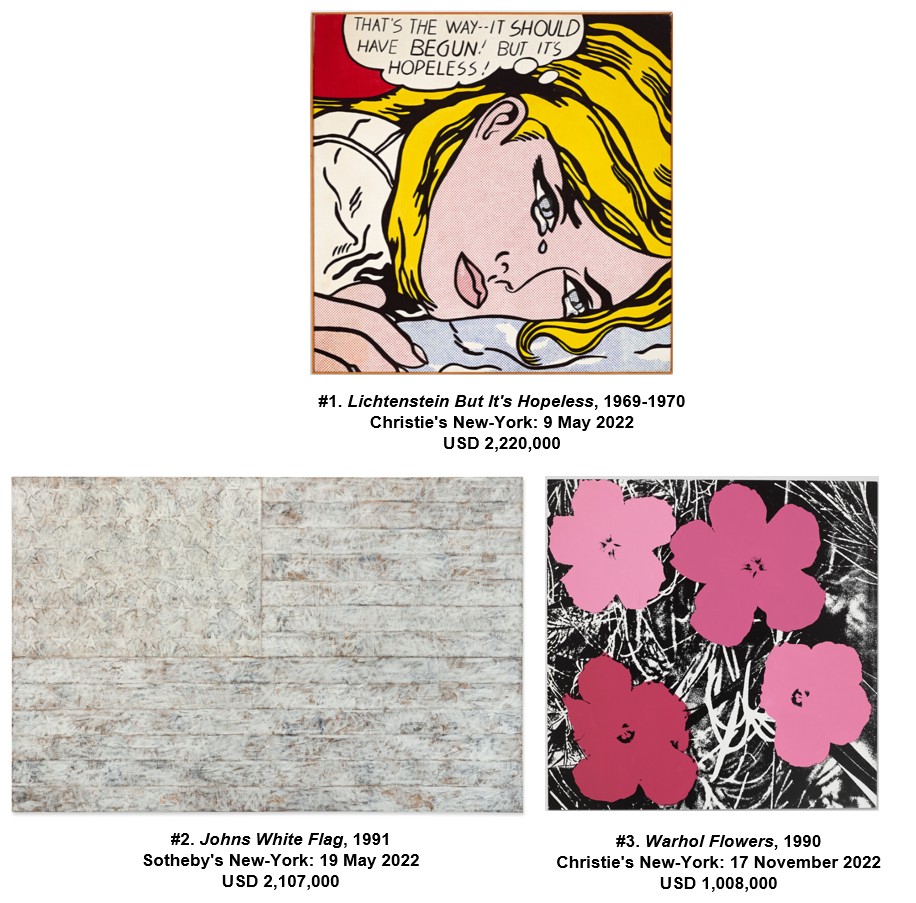
9 lots sold at auction in 2022 for a total turnover of USD 7,032,960. With no lot failing to sell, the sell-through rate is 100%. The highest price was achieved at Christie’s in New-York, on 9 May 2022 for Lichtenstein But It’s Hopeless, a painting dated 1969-70, that sold for USD 2,220,000. 7 lots sold for more than USD 100,000, generating a cumulative turnover of USD 6,937,200, representing 98.6% of the total turnover for 2022.
2022 Top 3 Lots
Top Lots
#1. Warhol Diptych, 1973
Christie’s New-York: 13 May 2015
Estimated: USD 3,000,000 – 5,000,000
USD 5,093,000
Sturtevant (1926-2014), Warhol Diptych | Christie’s
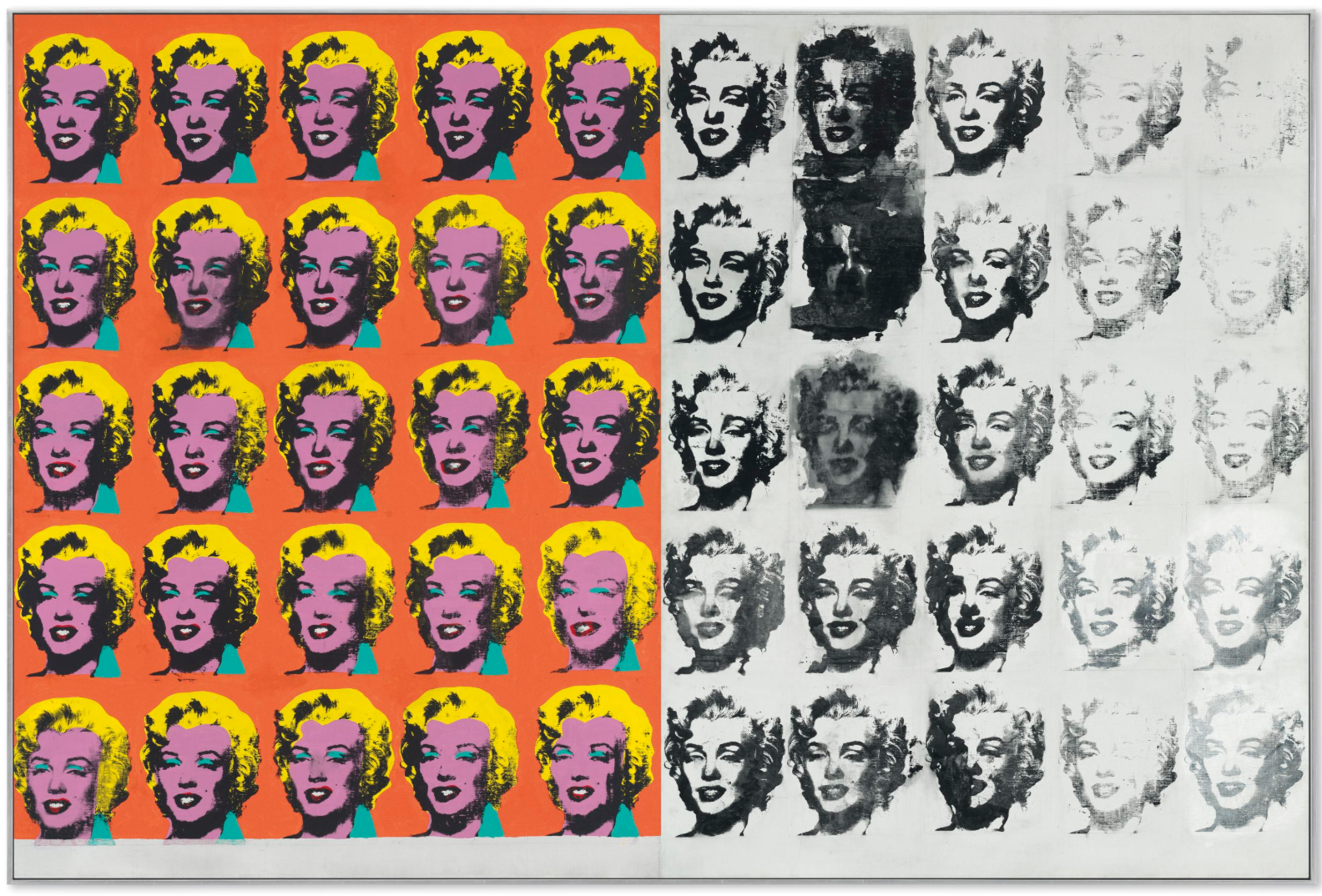
STURTEVANT (1926-2014)
Warhol Diptych, 1973
Diptych: silkscreen inks, synthetic polymer and acrylic on canvas
Overall: 84 1/4 x 126 inches (213.9 x 320 cm)
Signed, titled and dated ‘”Warhol’s Diptych” e. Sturtevant ’73’ (on the reverse of left panel)
Signed, titled and dated ‘Warhol’s Diptych e. Sturtevant ’73’ (on the reverse of right panel)
#2. Lichtenstein, Frighten Girl, 1966
Christie’s New-York: 12 November 2014
Estimated: USD 600,000 – 800,000
USD 3,413,000
Sturtevant (1926-2014), Lichtenstein, Frighten Girl | Christie’s
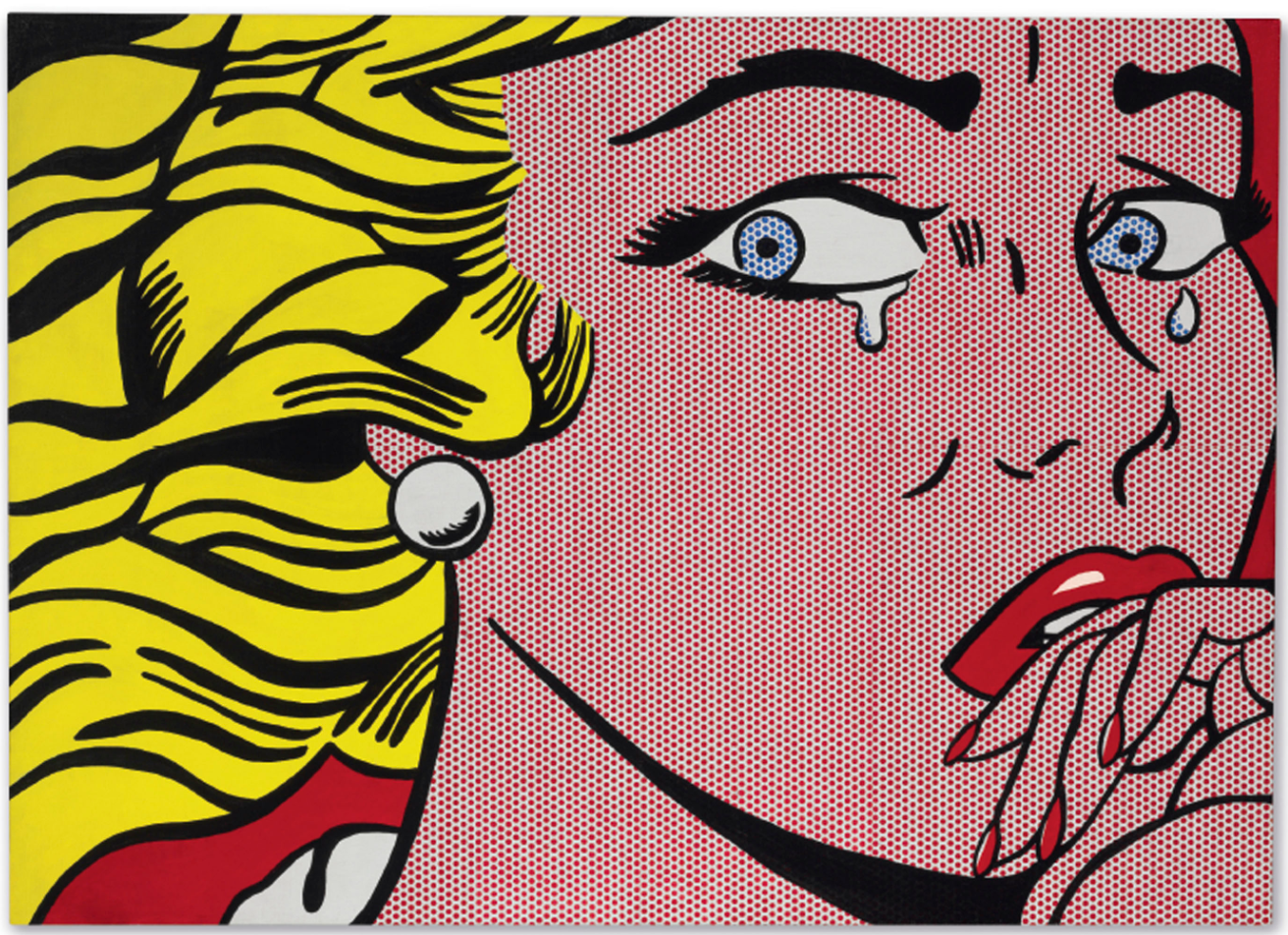
STURTEVANT (1926-2014)
Lichtenstein, Frighten Girl, 1966
Oil and graphite on canvas
45 1/2 x 63 3/4 inches (115.6 x 161.9 cm)
Signed, inscribed, titled and dated “‘Lichtenstein, Frighten Girl,’ E. Sturtevant, Antibes/Paris, 1966” (on the reverse)
#3. Study for Warhol Marilyn, 1973
Phillips New-York: 17 May 2023
Estimated: USD 1,000,000 – 1,5000,000
USD 2,419,500
READ IN FOCUS SECTION
Sturtevant – 20th Century & Contemporary… Lot 41 May 2023 | Phillips
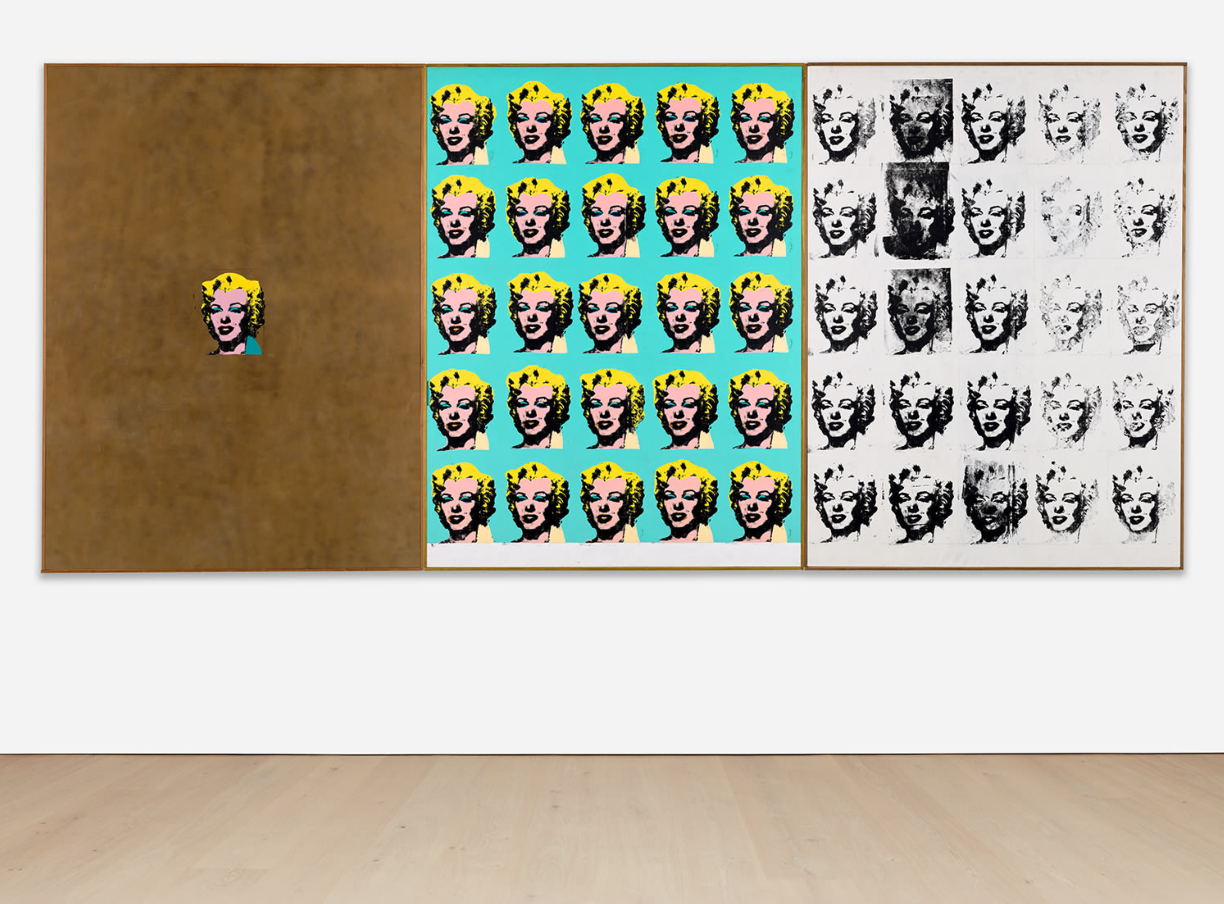
STURTEVANT
Study for Warhol Marilyn, 1973
Synthetic polymer silkscreen and acrylic on canvas, triptych
Each: 84 1/4 x 62 7/8 inches (214×160 cm)
Overall: 84 1/4 x 188 5/8 inches (214 x 479.1 cm)
Each signed, titled, respectively inscribed and dated “[I-III] “Study for Warhol Marilyn” E. Sturtevant 1973” on the reverse
#4. Lichtenstein But It’s Hopeless, 1969-1970
Christie’s New-York: 9 May 2022
Estimated: USD 600,000 – 800,000
USD 2,220,000
STURTEVANT (1924-2014), Lichtenstein But It’s Hopeless | Christie’s
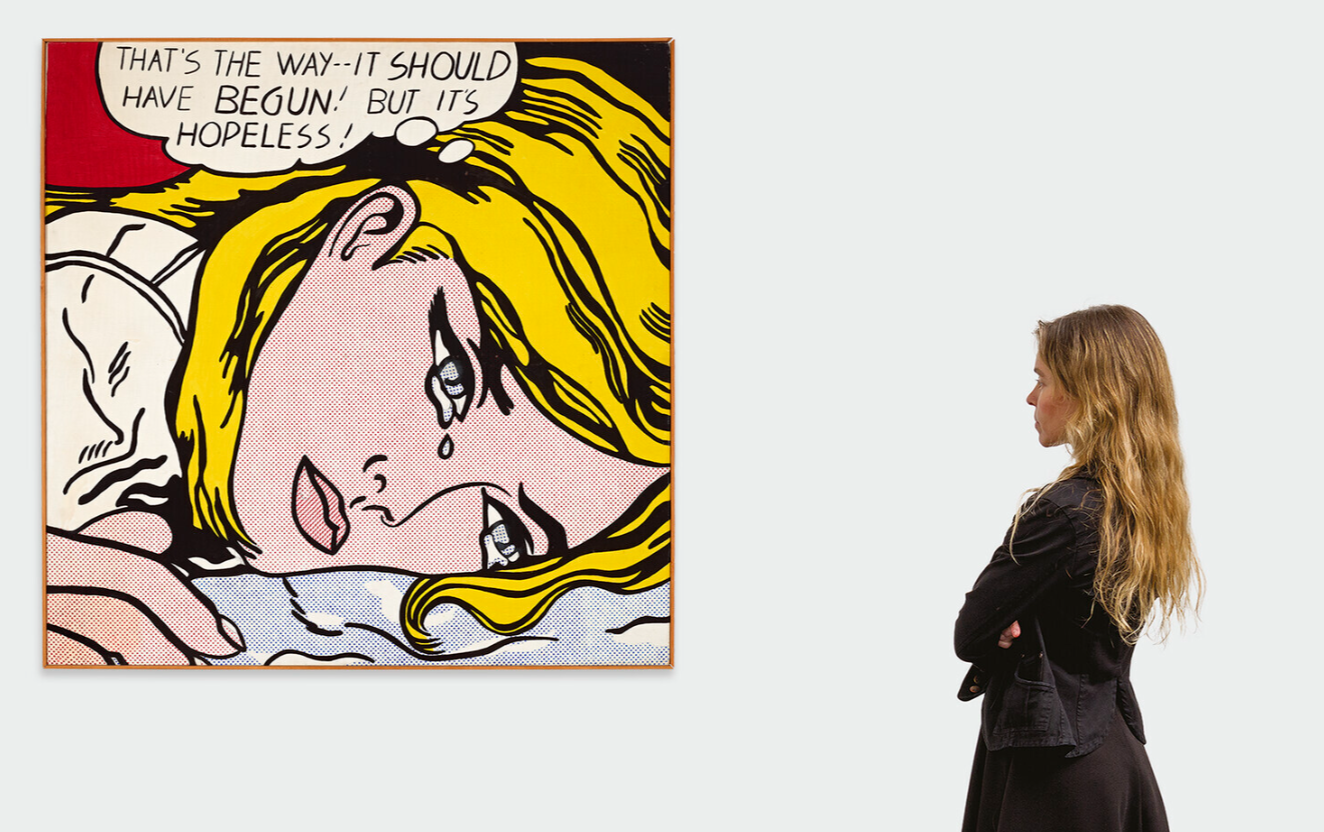
STURTEVANT (1924-2014)
Lichtenstein But It’s Hopeless, 1969-1970
Oil, acrylic and graphite on canvas
44 1/8 x 44 3/8 inches (112 x 112.7 cm)
Signed, inscribed and dated ‘Study for Lichtenstein’s That’s The way it should have begun – but Sturtevant ’69-70’
(on the reverse)
#5. Johns White Flag, 1991
Sotheby’s New-York: 19 May 2022
Estimated: USD 600,000 – 800,000
USD 2,107,000
Johns White Flag | Contemporary Evening Auction | 2022 | Sotheby’s
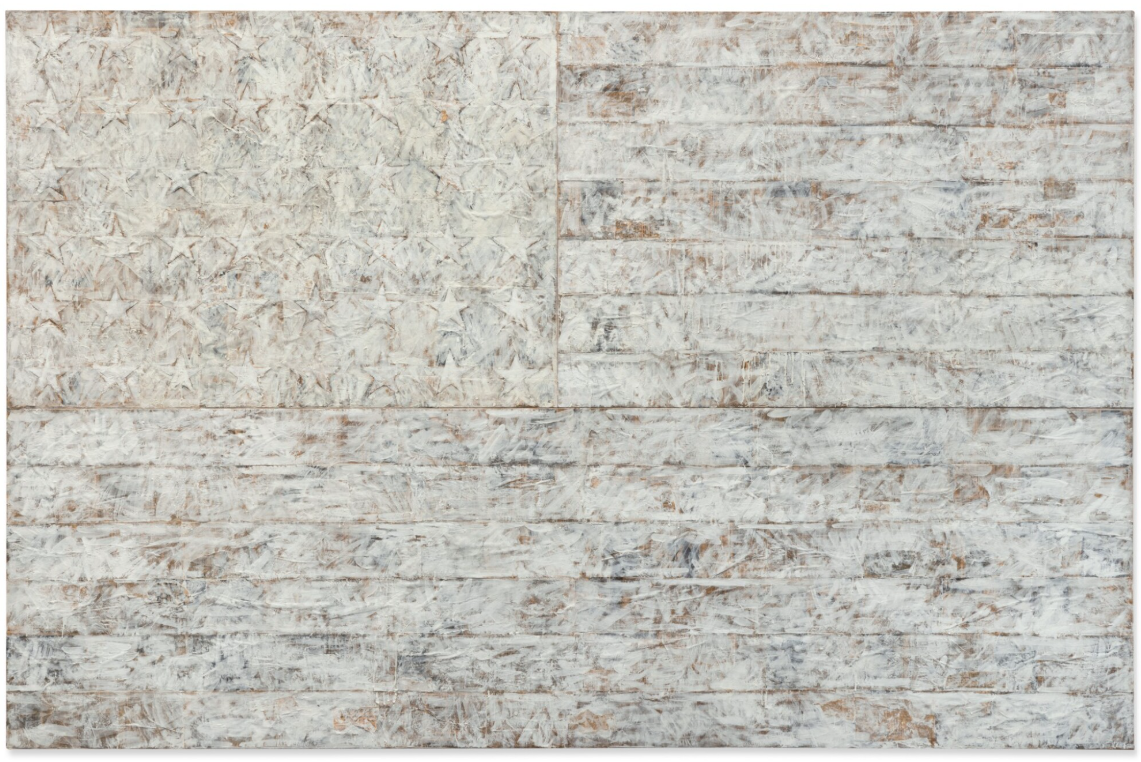
STURTEVANT (1924 – 2014)
Johns White Flag, 1991
Encaustic and collage on canvas, in three parts
78 1/8 x 120 1/8 inches (198.5 x 305 cm)
Signed Sturtevant, titled Johns White Flag and dated 1991 (on the reverse)
#6. Warhol 25 Marilyns, 1973
Christie’s London: 28 June 2023
Estimated: GBP 500,000 – 700,000
GBP 819,000 / USD 1,043,875
STURTEVANT (1924-2014), Warhol 25 Marilyns | Christie’s
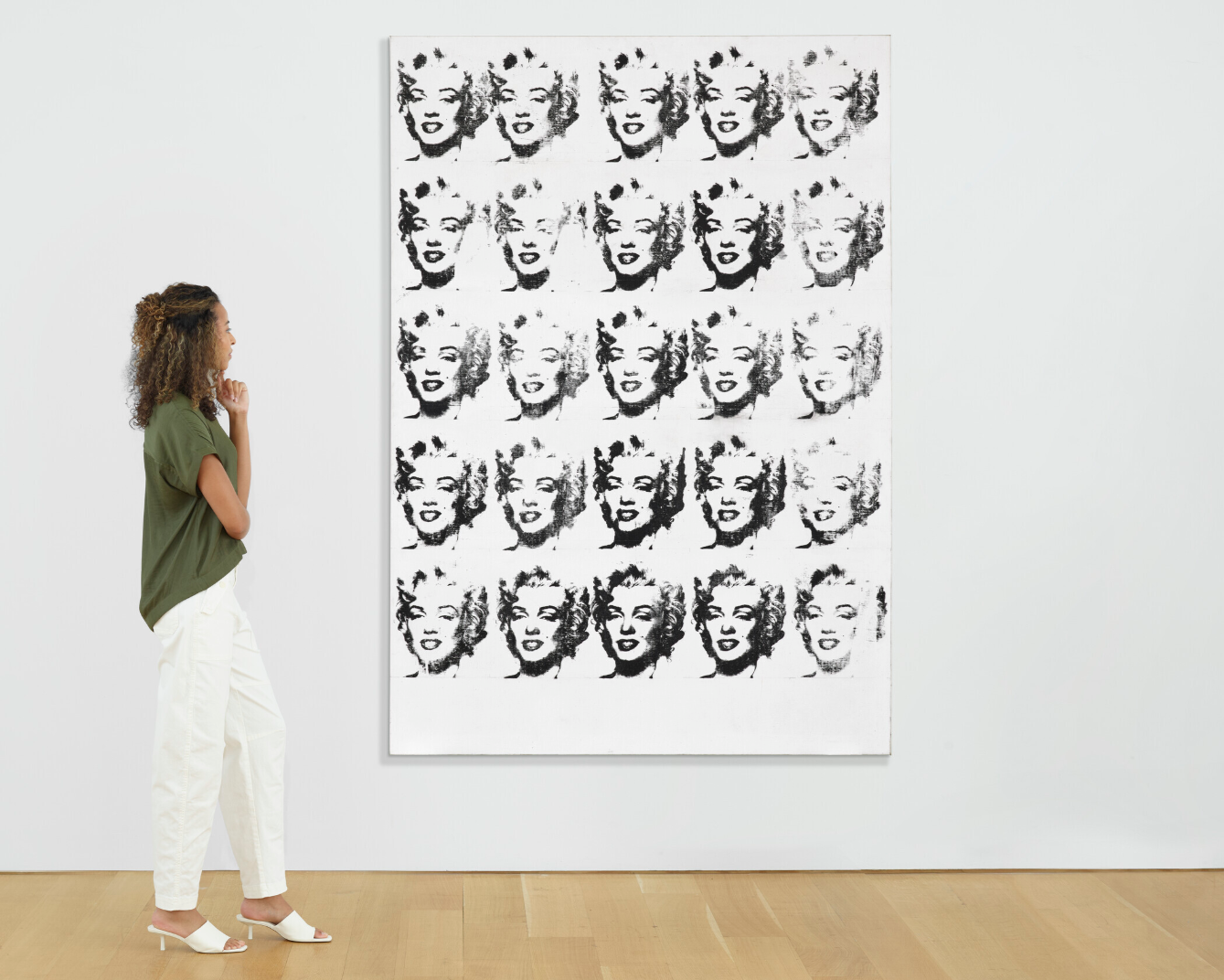
STURTEVANT (1924-2014)
Warhol 25 Marilyns, 1973
Silkscreen ink and acrylic on canvas
89 1/8 x 62 inches (226.5 x 157.5 cm)
Signed twice, titled and inscribed ‘”The 25 Marilyns” e. sturtevant ”Warhols The 25 M” e. sturtevant’ (on the reverse)
#7. Warhol Flowers, 1990
Christie’s New-York: 17 November 2022
Estimated: USD 800,000 – 1,200,000
USD 1,008,000
STURTEVANT (1924-2014), Warhol Flowers | Christie’s
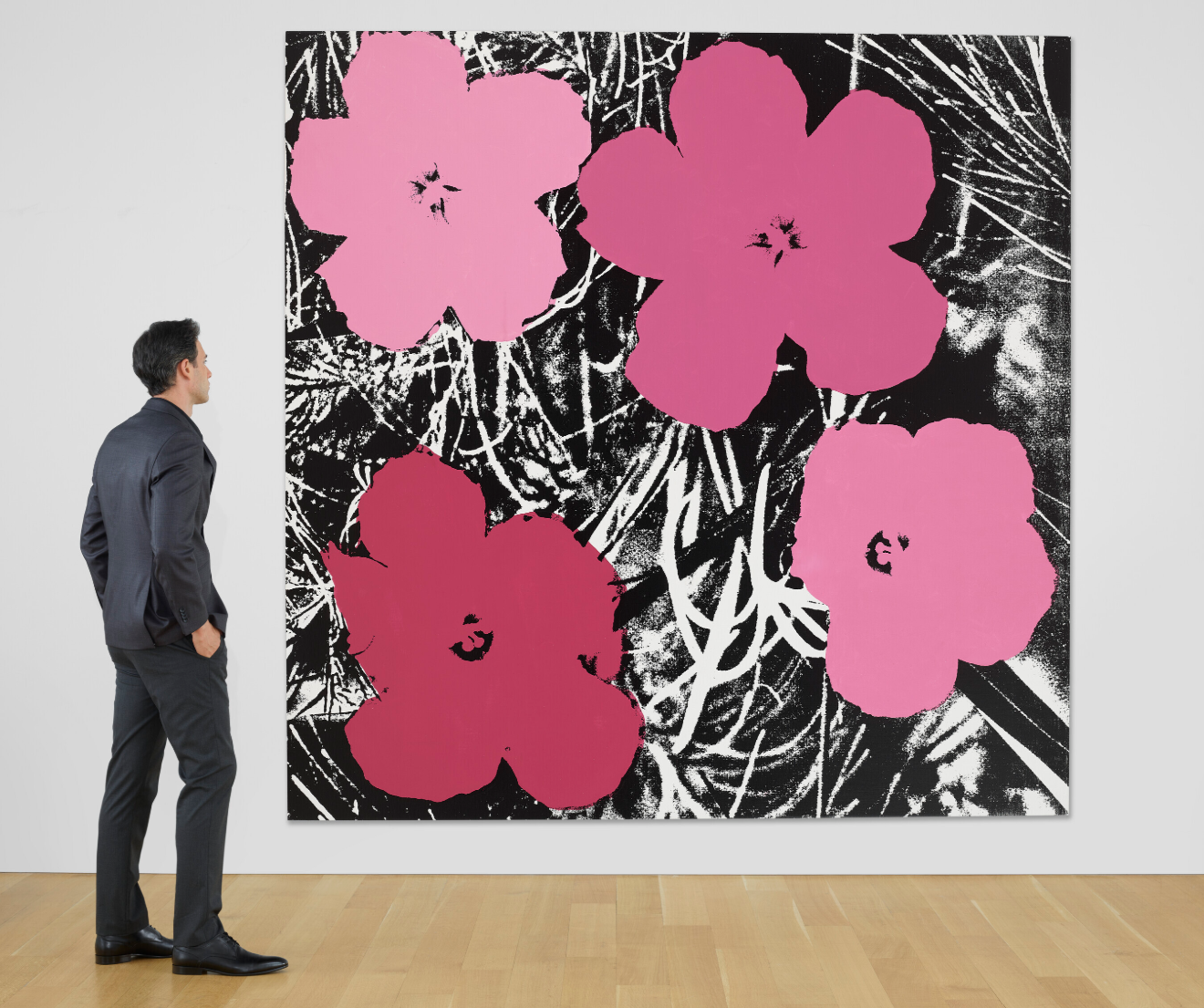
STURTEVANT (1924-2014)
Warhol Flowers, 1990
Synthetic polymer paint and silkscreen ink on canvas
115 1/2 x 115 inches (293.2 x 291.1 cm)
Signed, titled, and dated ‘Warhol Flowers Sturtevant 1990’ (on the reverse)
USD 1 million
#8. Johns Painting with Two Balls, 1987
Christie’s New-York: 17 May 2023
Estimated: USD 500,000 – 700,000
USD 882,000
STURTEVANT (1924-2014), Johns Painting with Two Balls | Christie’s
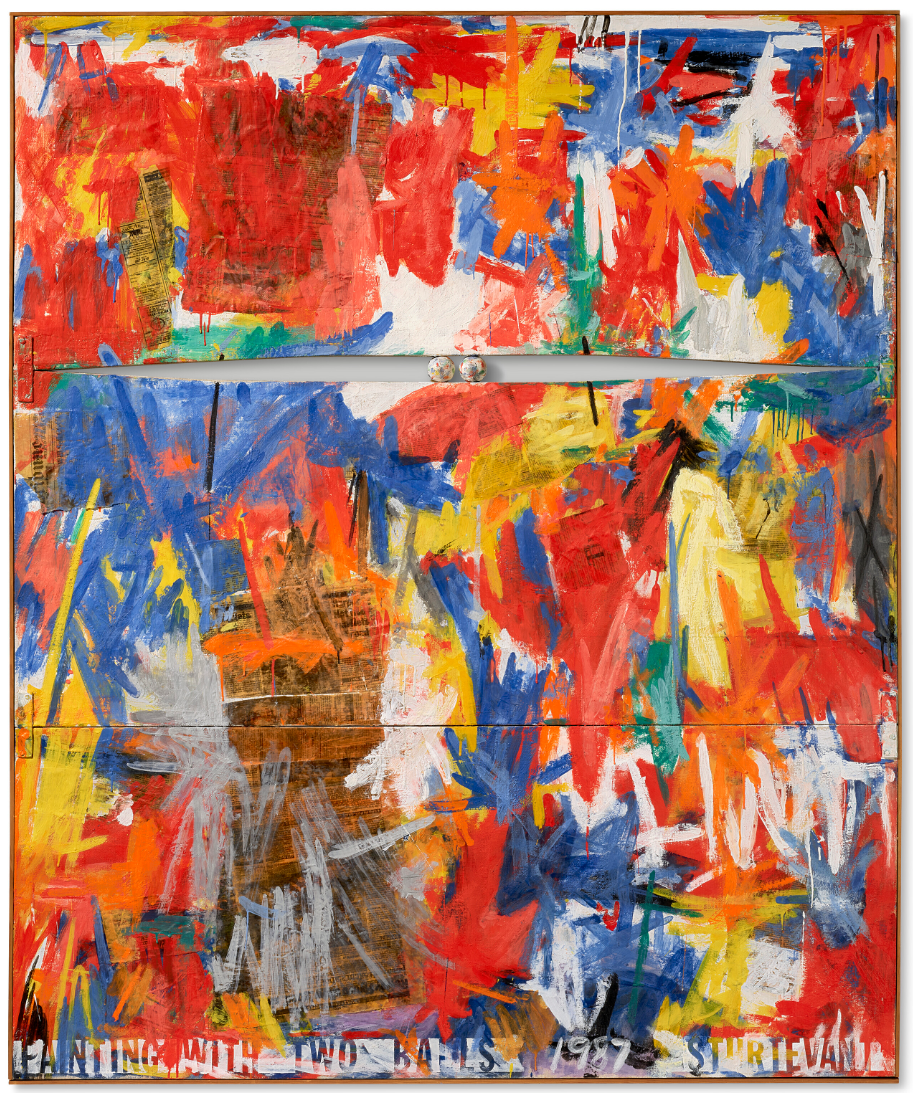
STURTEVANT (1924-2014)
Johns Painting with Two Balls, 1987
Encaustic and paper collage on three joined canvases with metal brackets and two balls
65 x 54 1/8 inches (165.1 x 137.5 cm)
Stenciled with the artist’s name, titled and dated ‘PAINTING WITH TWO BALLS 1987 STURTEVANT’ (lower edge)
Signed again, titled again and dated again ‘”Johns Painting with Two Balls” e. sturtevant ’87’ (on the reverse)
PART II: AUCTION RESULTS
2026 Auction Results
PRELIMINARY AUCTION RESULTS
As of 15 June 2026
#1. Study for Warhol’s Marilyn, 1965
Christie’s New-York: 21 May 2026
Estimated: USD 150,000 – 200,000
USD 723,900
STURTEVANT (1924-2014), Study for Warhol’s Marilyn | Christie’s
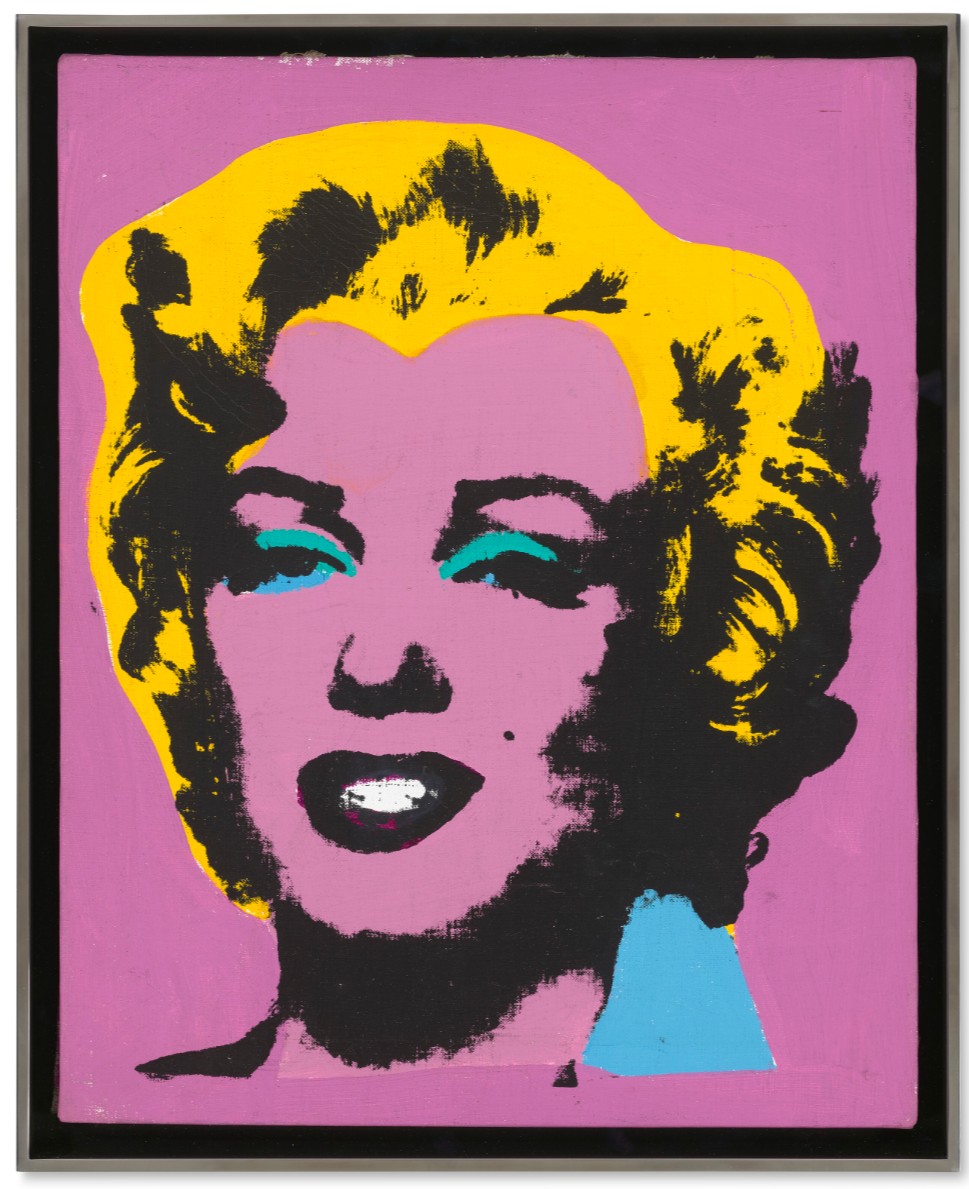
STURTEVANT (1924-2014)
Study for Warhol’s Marilyn, 1965
Acrylic and silkscreen ink on canvas
20×16 inches (50.8 x 40.6 cm)
Signed, titled and dated ‘”Study for Warhol’s Marilyn” E. Sturtevant 1965’ (on the reverse)
USD 500,000
#2. Peinture à Haute Tension, 1970
Christie’s Paris: 16 April 2026
Estimated: EUR 90,000 – 120,000
EUR 304,800 / USD 359,095
Elaine Sturtevant (1924-2014), Peinture à Haute Tension | Christie’s
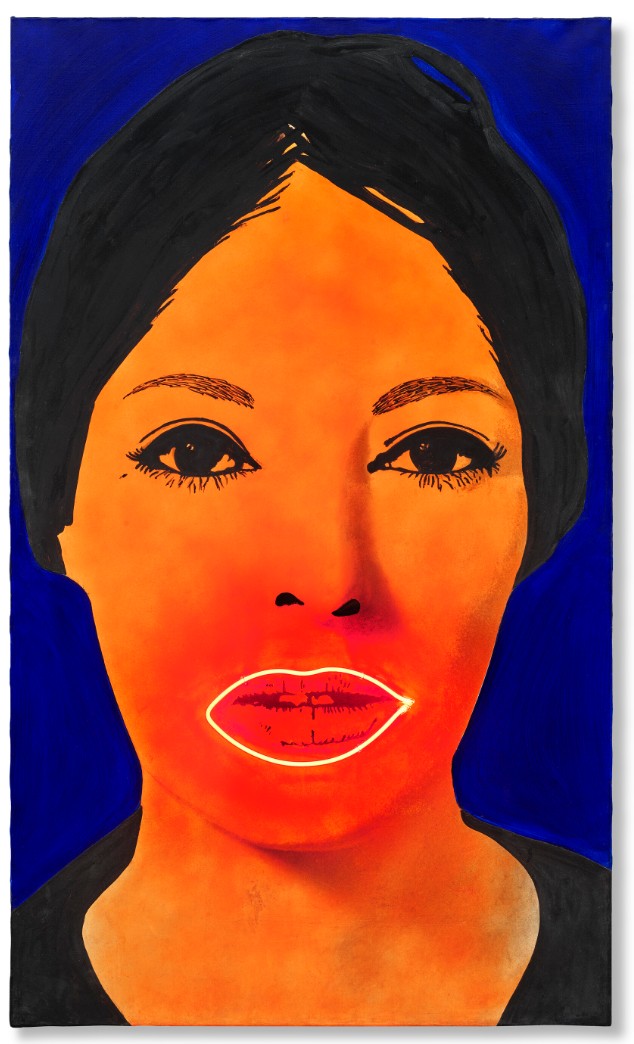
ELAINE STURTEVANT (1924-2014)
Peinture à Haute Tension, 1970
Acrylic, flocking, cardboard collage laid on canvas and neon
63-3/4 x 38 x 5-1/2 inches (162 x 96.5 x 14 cm)
Signed, titled and dated ‘”Peinture à Haute Tension” Sturtevant 1970’ (on the reverse)
This work is from the second series of eight unique variants
#3. High Voltage Painting, 1969
Giquello Paris: 11 June 2026
Estimated: EUR 60,000 – 80,000
EUR 158,250 / USD 182,225
Elaine STURTEVANT (1924-2014) – Lot 19
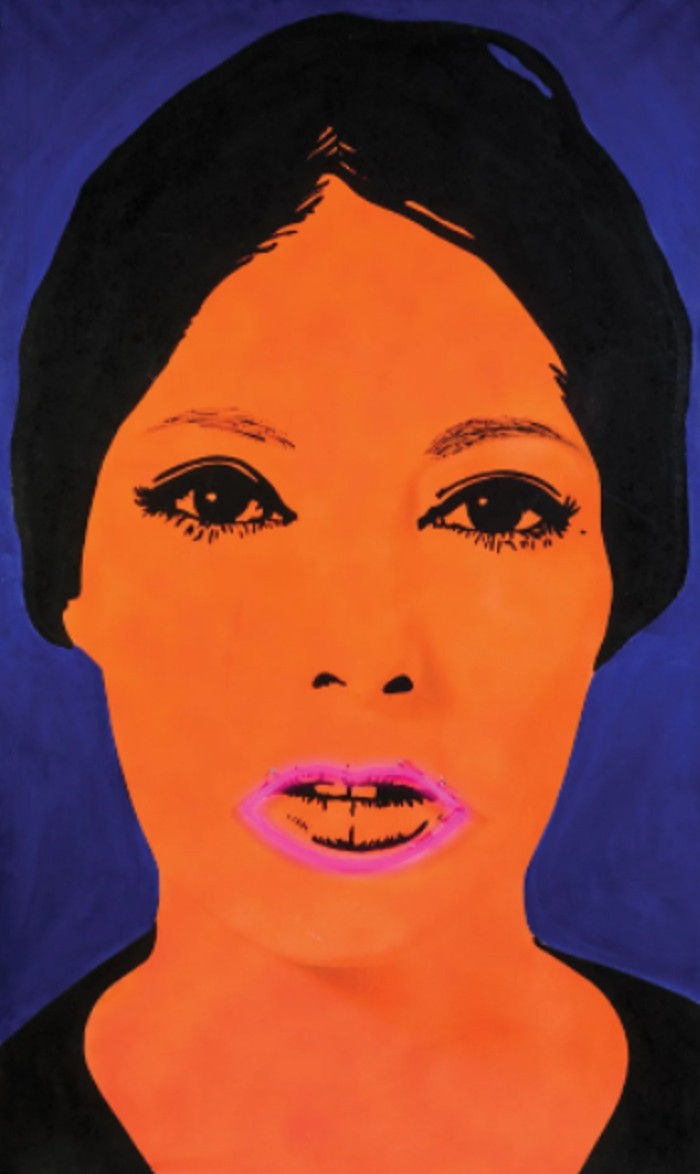
Elaine STURTEVANT (1924-2014)
High Voltage Painting, 1969
Acrylic and flock mounted on canvas and neon
162 x 96.5 x 10 cm
Signed, titled and dated on back
This work is part of the first edition of eight
#4. Warhol Gold Marilyn, 1973
Phillips New-York: 21 May 2026
Estimated: USD 100,000 – 150,000
USD 129,000
Sturtevant Modern & Contemporary Art: Morning Session
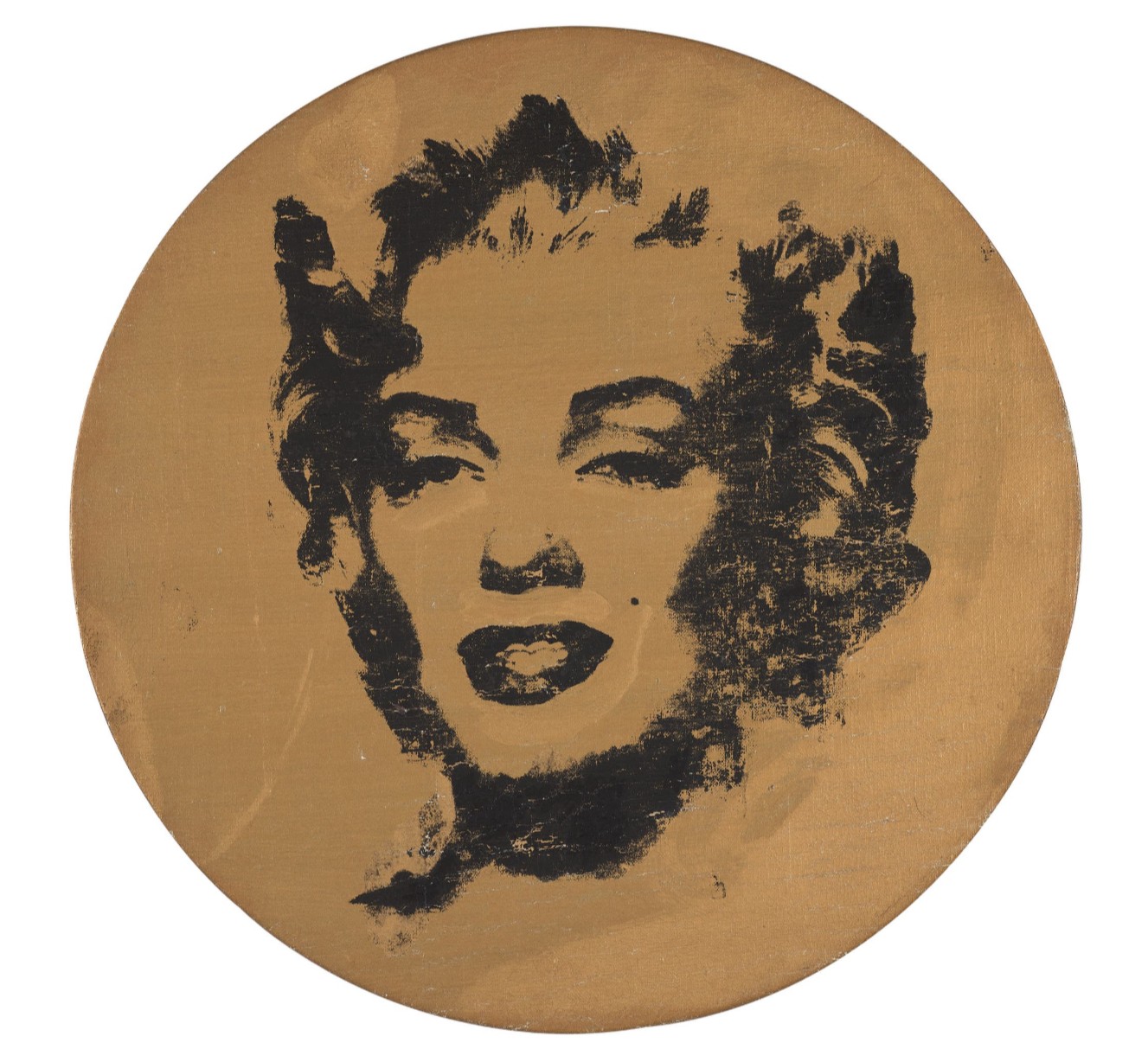
STURTEVANT
Warhol Gold Marilyn, 1973
Acrylic and silkscreen ink on canvas
Diameter: 17 7/8 inches (45.4 cm)
Signed, titled and dated
“”Warhol Gold Marilyn” Sturtevant ’73”
on the reverse
#5. Duchamp Eau & Gaz, 1970
Van Ham Cologne: 10 June 2026
Estimated: EUR 18,000 – 24,000
EUR 25,080 / USD 28,965
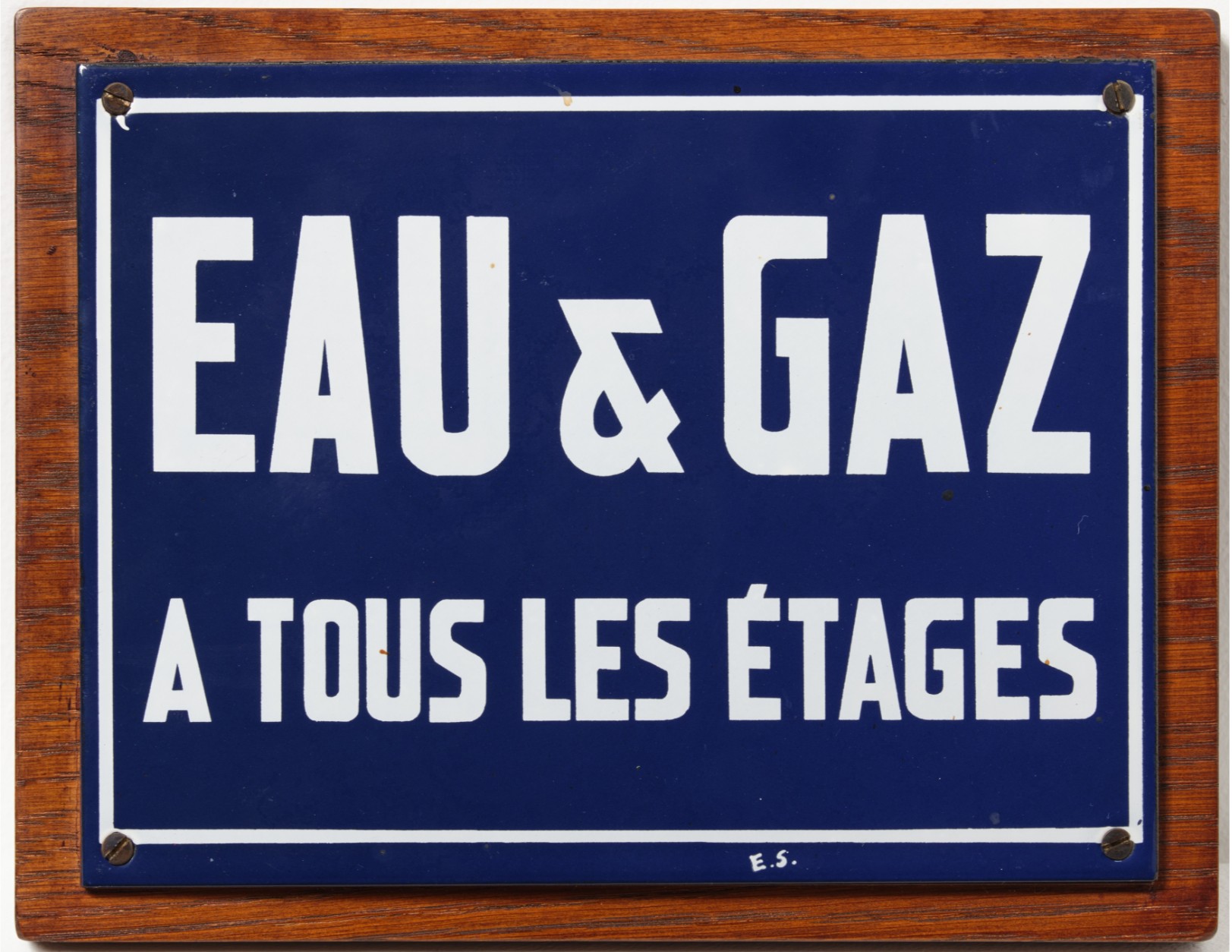
STURTEVANT (1930 Lakewood, OH/USA–2014 Paris)
Duchamp Eau & Gaz, 1970
Enamel sign on wooden plate
19x25x3 cm
During firing monogrammed lower centre: E.S..
2025 Auction Results
#1. Raysse Peinture à haute tension, 1968-1969
Bonhams Cornette Brussels: 28 April 2025
Estimated: EUR 100,000 – 150,000
EUR 178,200 / USD 202,900
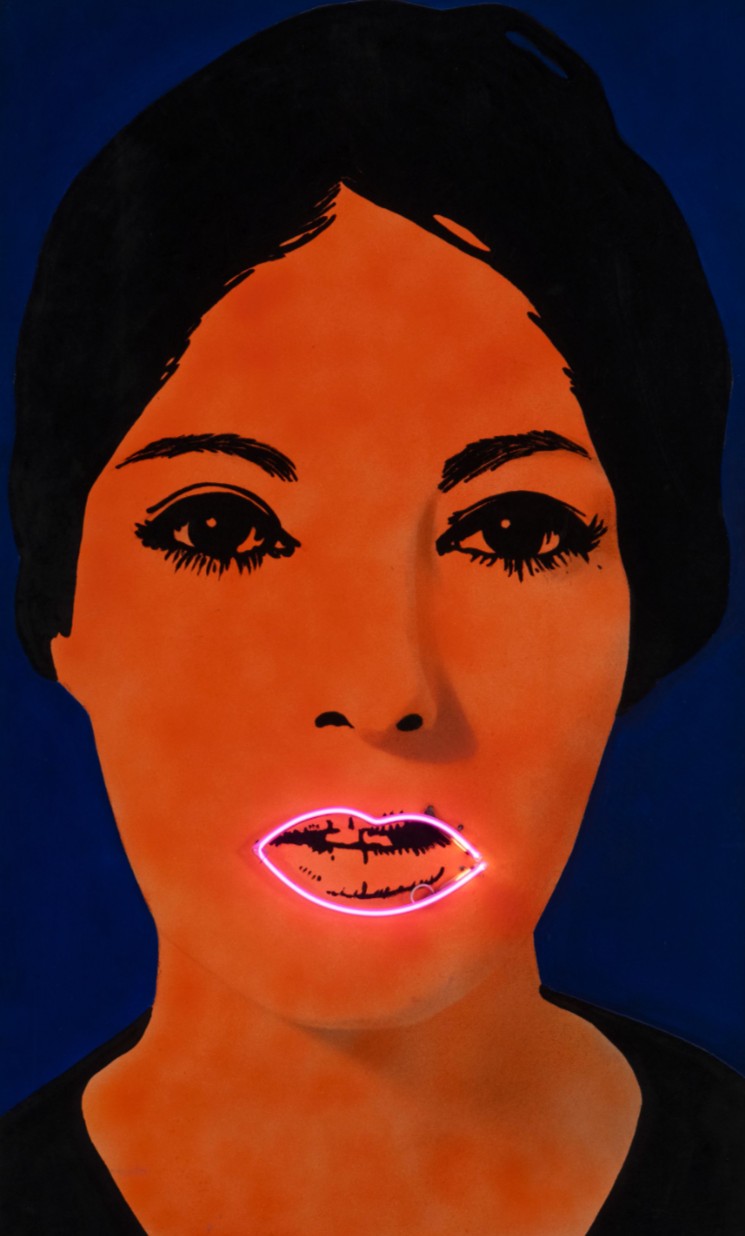
ELAINE STURTEVANT (1924-2014)
Raysse Peinture à haute tension, 1968-1969
Acrylic, collage, flock mounted on canvas and neon
162 x 96.5 x 15 cm
Signed, titled and dated 68-69 on the back
#2. Haring Untitled January 1982, 1986
Phillips New-York: 28 February 2025
Estimated: USD 90,000 – 120,000
USD 95,250
REPEAT SALE
Dorotheum: 24 May 2023
Estimated: EUR 80,000 – 120,000
EUR 122,200 / USD 131,605
Elaine Sturtevant – Contemporary Art I 2023/05/24 – Realized price: EUR 122,200 – Dorotheum
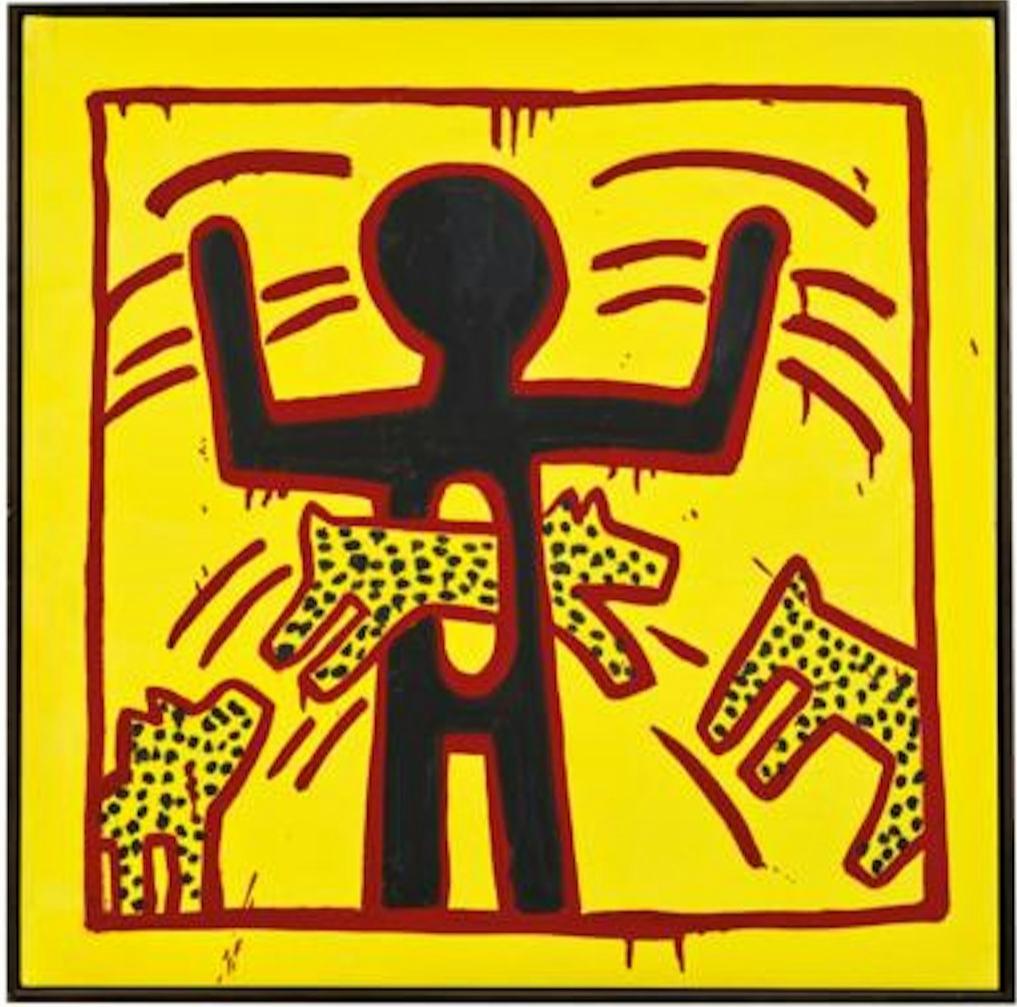
STURTEVANT (Ohio 1930–2014 Paris)
Haring Untitled January 1982, 1986
Acrylic on canvas
24×24 inches (60.5 x 60.5 cm)
Signed and titled on the reverse
2024 Auction Results
4 lots sold at auction in 2024 for a total turnover of USD 1,361,112. With no lot failing to sell, the sell-through rate is 100%. The highest price was achieved at Christie’s in New-York, on 14 May 2024 for Warhol Flowers, a painting dated 1990, that sold for USD 882,000
2024 Top 3 Lots
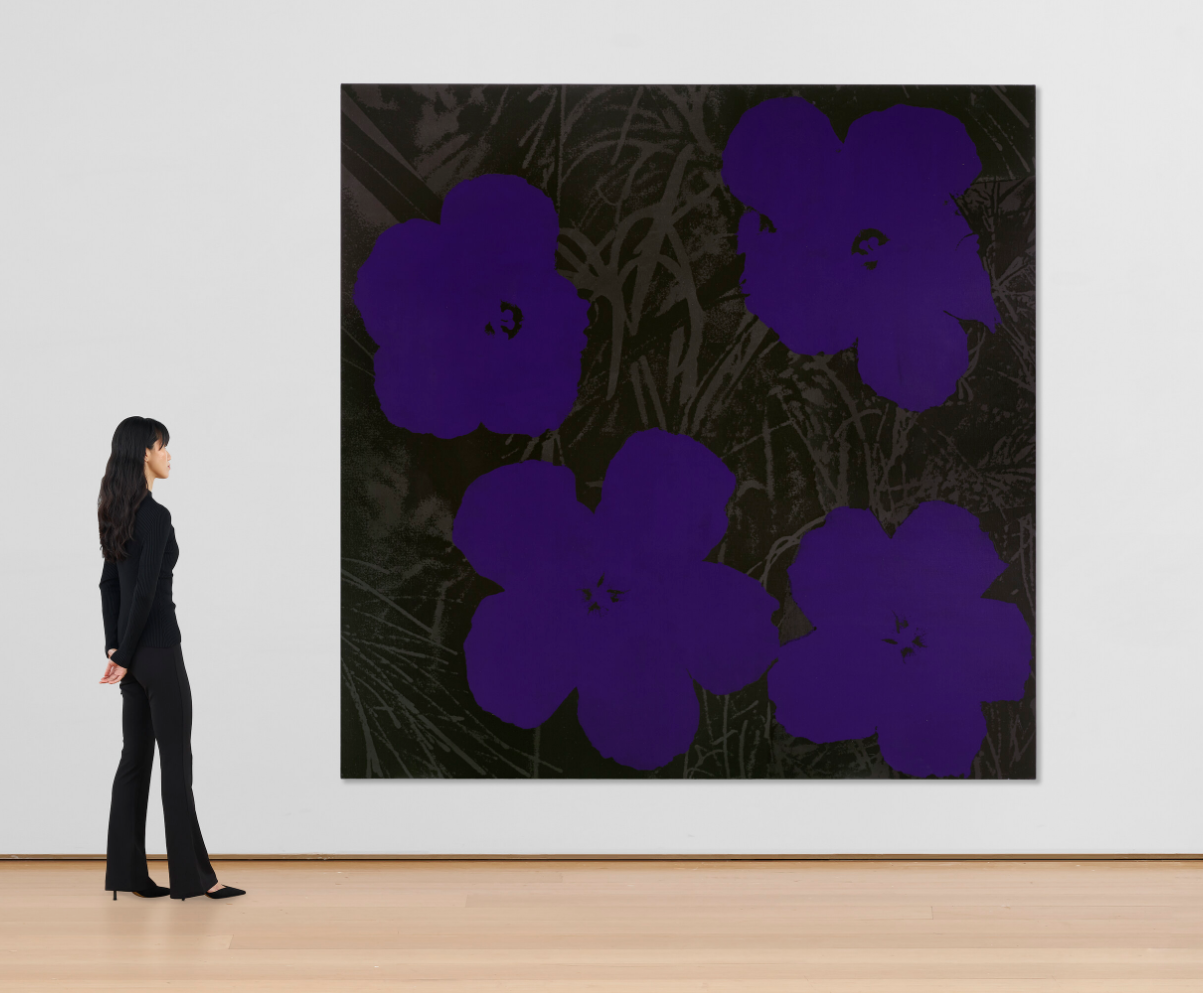
#1. Warhol Flowers, 1990
Christie’s New-York: 14 May 2024
Estimated: USD 800,000 – 1,200,000
USD 882,000
STURTEVANT (1924-2014), Warhol Flowers | Christie’s
STURTEVANT (1924-2014)
Warhol Flowers, 1990
Acrylic and silkscreen ink on canvas
115 1/2 x 115 1/2 inches (293.4 x 293.4 cm)
Signed, titled and dated ‘”Warhol Flowers” Sturtevant ’90’ (on the reverse)
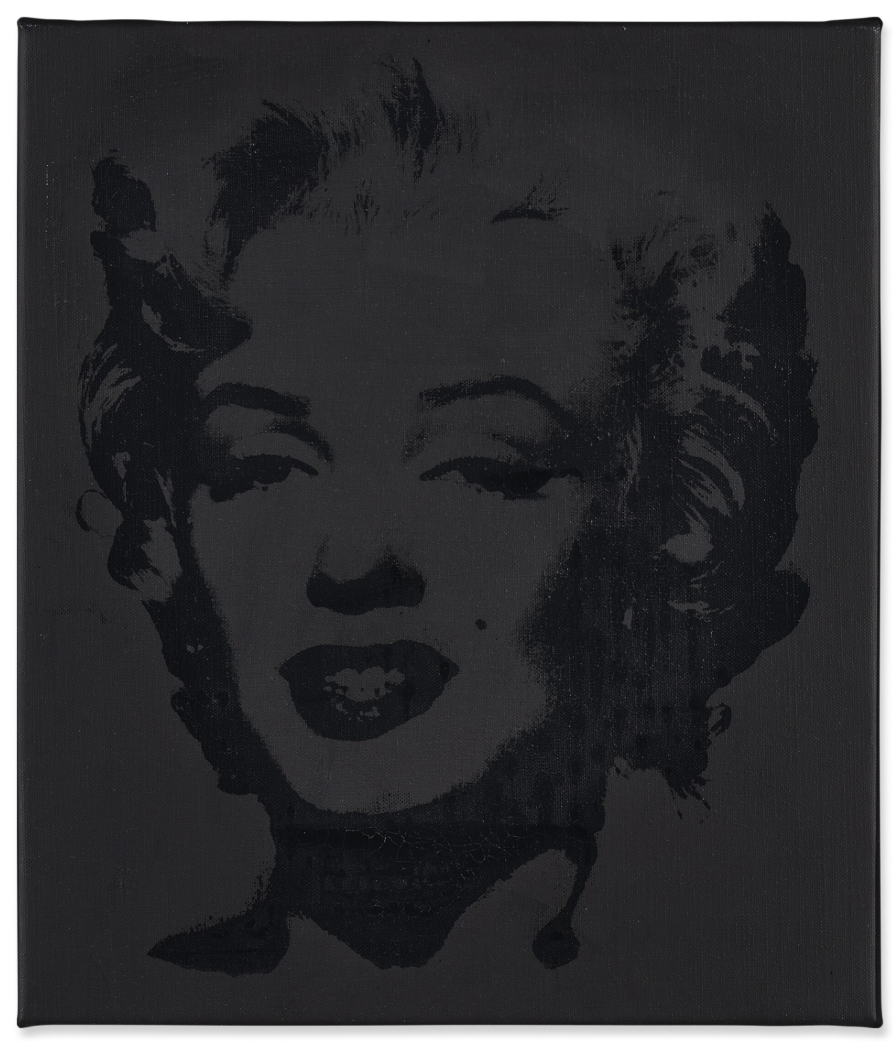
#2. Warhol Black Marilyn, 2004
Sotheby’s New-York: 1 March 2024
Estimated: USD 120,000 – 180,000
USD 241,300
Warhol Black Marilyn | Contemporary Curated | 2024 | Sotheby’s
STURTEVANT (1924 – 2014)
Warhol Black Marilyn, 2004
Synthetic polymer silkscreen and acrylic on canvas
16 1/8 x 13 3/4 inches (41×35 cm)
Signed and titled (on the reverse)
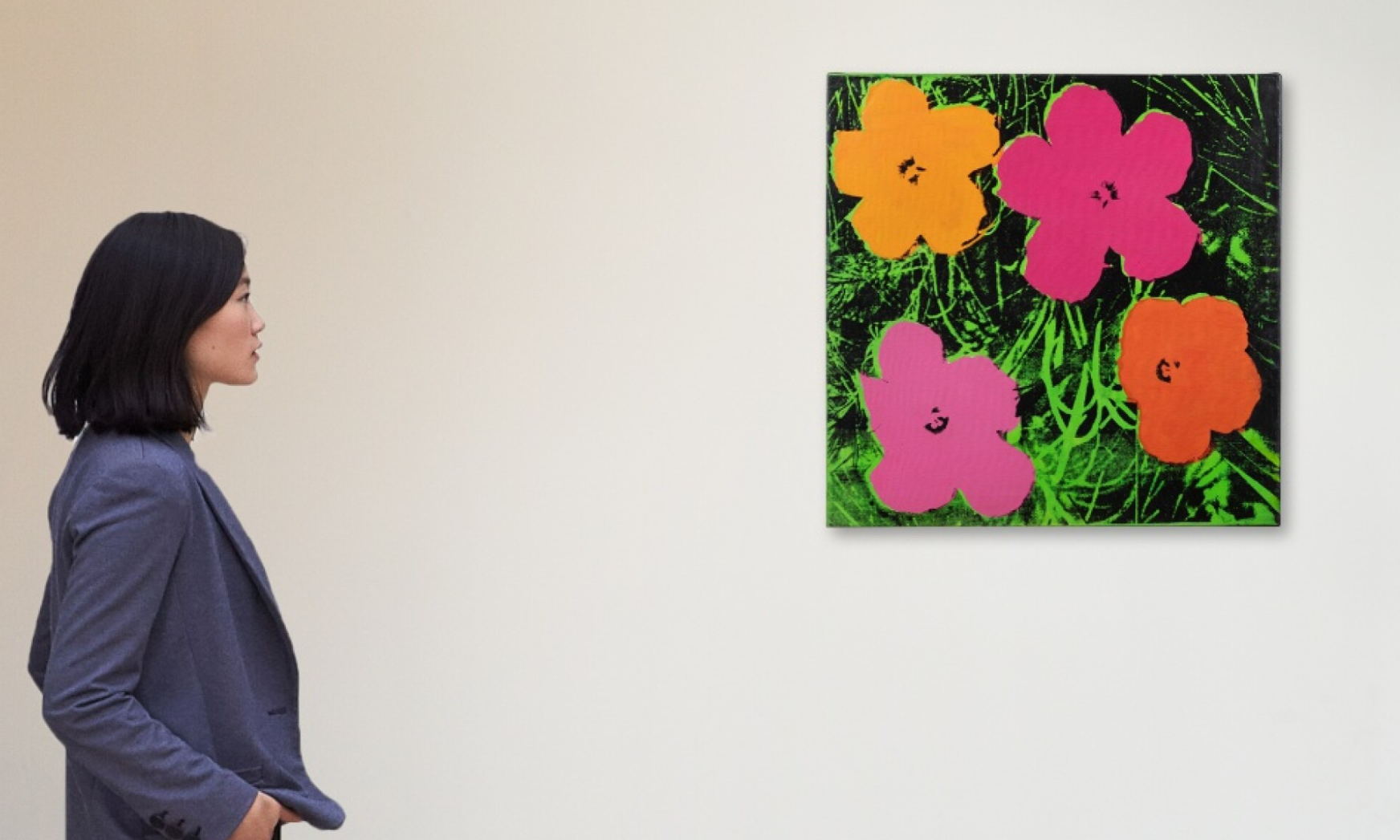
#3. Warhol Flowers, 1965
Sotheby’s Paris: 5 July 2024
Estimated: EUR 120,000 – 180,000
EUR 144,000 / USD 155,705
Warhol Flowers | Modern & Contemporary Discoveries | 2024 | Sotheby’s
STURTEVANT (1924 – 2014)
Warhol Flowers, 1965
Acrylic and silkscreen on canvas
22×22 inches (56×56 cm)
Signed, titled, inscribed and dated 65 (on the reverse)
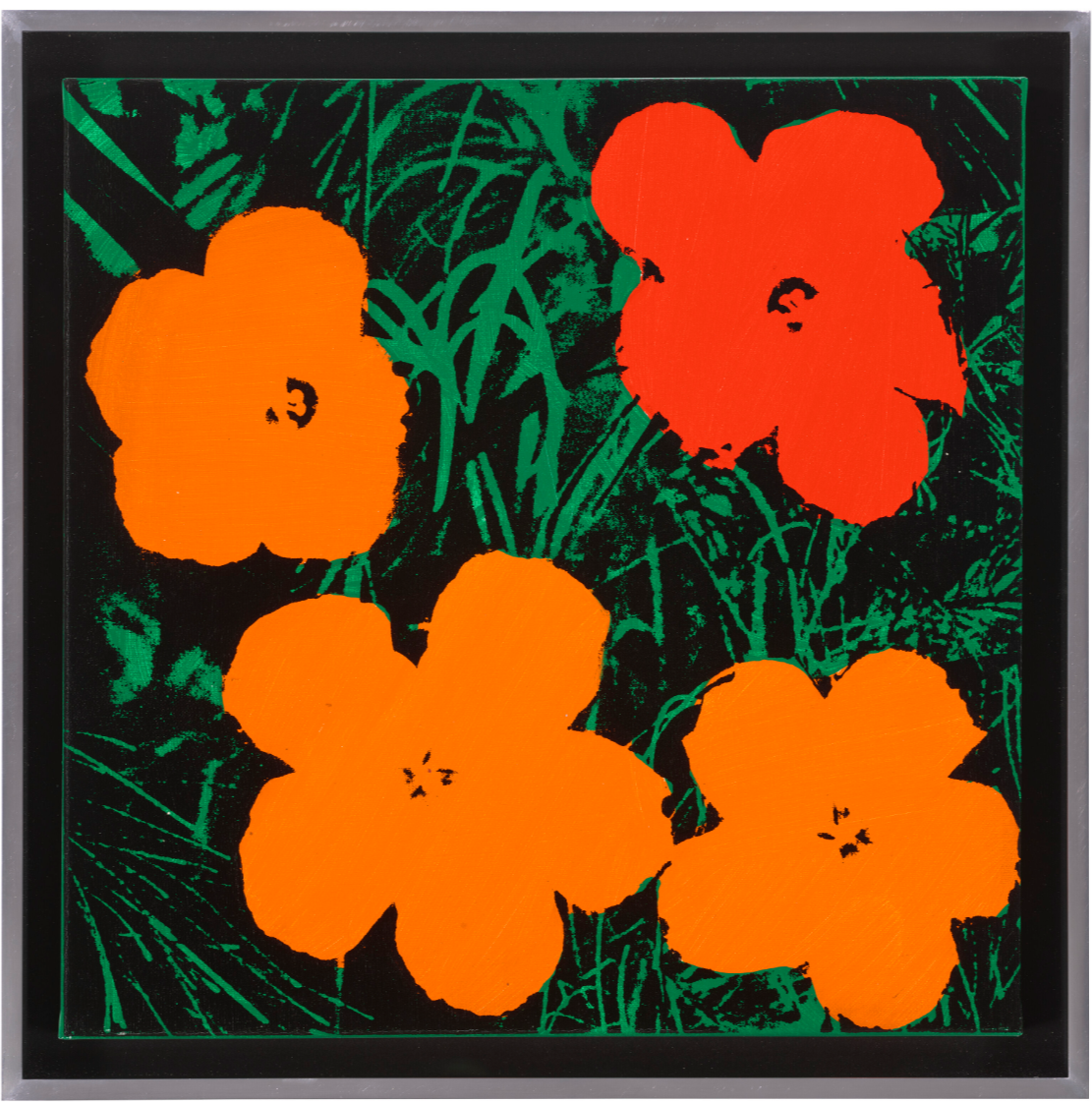
#4. Warhol Flowers, 1970
Christie’s New-York: 1 October 2024
Estimated: USD 40,000 – 60,000
USD 81,900
STURTEVANT (1924-2014), Warhol Flowers | Christie’s
STURTEVANT (1924-2014)
Warhol Flowers, 1970
Acrylic and silkscreen ink on canvas
11 1/8 x 11 1/8 inches (28.3 x 28.3 cm)
2023 Auction Results
14 lots sold at auction in 2023 for a total turnover of USD 6,014,645.
With no lot failing to sell, the sell-through rate is 100%. The highest price was achieved at Phillips in New-York, on 17 May 2023 for Study for Warhol Marilyn, a painting dated 1973, that sold for USD 2,419,500. 9 lots sold for more than USD 100,000, generating a cumulative turnover of USD 5,955,145, representing 99% of the total turnover for 2023.
2023 Top 3 Lots
#1. Study for Warhol Marilyn, 1973
Phillips New-York: 17 May 2023
Estimated: USD 1,000,000 – 1,5000,000
USD 2,419,500
Sturtevant – 20th Century & Contemporary… Lot 41 May 2023 | Phillips
STURTEVANT
Study for Warhol Marilyn, 1973
Synthetic polymer silkscreen and acrylic on canvas, triptych
Each: 84 1/4 x 62 7/8 inches (214×160 cm)
Overall: 84 1/4 x 188 5/8 inches (214 x 479.1 cm)
Each signed, titled, respectively inscribed and dated “[I-III] “Study for Warhol Marilyn” E. Sturtevant 1973” on the reverse
#2. Warhol 25 Marilyns, 1973
Christie’s London: 28 June 2023
Estimated: GBP 500,000 – 700,000
GBP 819,000 / USD 1,043,875
STURTEVANT (1924-2014), Warhol 25 Marilyns | Christie’s
STURTEVANT (1924-2014)
Warhol 25 Marilyns, 1973
Silkscreen ink and acrylic on canvas
89 1/8 x 62 inches (226.5 x 157.5 cm)
Signed twice, titled and inscribed ‘”The 25 Marilyns” e. sturtevant ”Warhols The 25 M” e. sturtevant’ (on the reverse)
USD 1 million
#3. Johns Painting with Two Balls, 1987
Christie’s New-York: 17 May 2023
Estimated: USD 500,000 – 700,000
USD 882,000
STURTEVANT (1924-2014), Johns Painting with Two Balls | Christie’s
STURTEVANT (1924-2014)
Johns Painting with Two Balls, 1987
Encaustic and paper collage on three joined canvases with metal brackets and two balls
65 x 54 1/8 inches (165.1 x 137.5 cm)
Stenciled with the artist’s name, titled and dated ‘PAINTING WITH TWO BALLS 1987 STURTEVANT’ (lower edge)
Signed again, titled again and dated again ‘”Johns Painting with Two Balls” e. sturtevant ’87’ (on the reverse)
#4. Warhol Four Marilyns, 1973
Christie’s London: 13 October 2023
Estimated: GBP 300,000 – 500,000
GBP 315,000 / USD 383,770
STURTEVANT (1924-2014), Warhol Four Marilyns | Christie’s
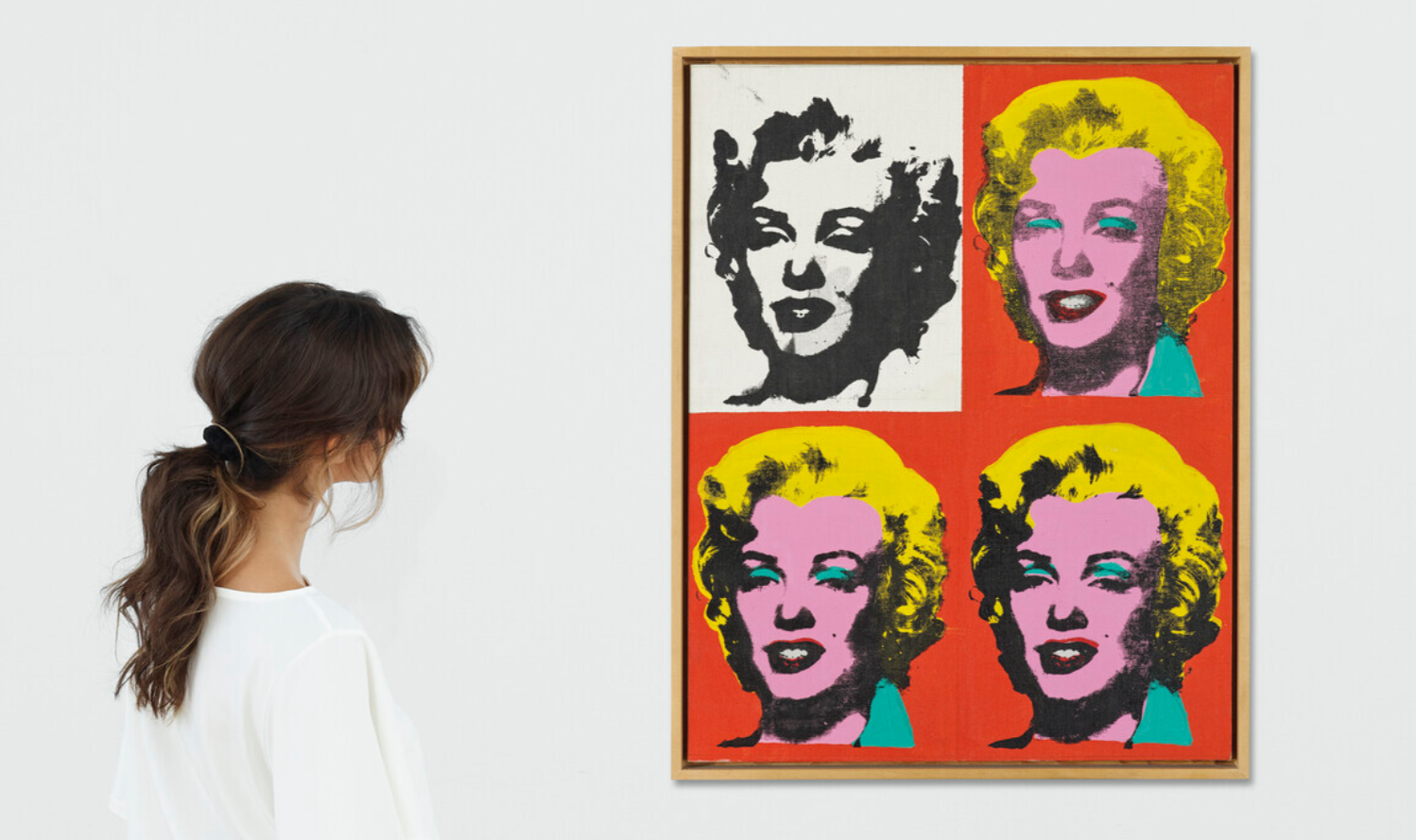
STURTEVANT (1924-2014)
Warhol Four Marilyns, 1973
Silkscreen ink and acrylic on canvas
32 x 25 1/8 inches (81.3 x 63.9 cm)
Signed, titled, inscribed and dated ‘”4 Marilyns” B/W Orange E Sturtevant ’73’ (on the reverse)
#5. Oldenburg Store Object, Pie Case, 1967
Sotheby’s New-York: 19 May 2023
Estimated: USD 50,000 – 70,000
USD 355,600
Oldenburg Store Object, Pie Case | Contemporary Day Auction | 2023 | Sotheby’s
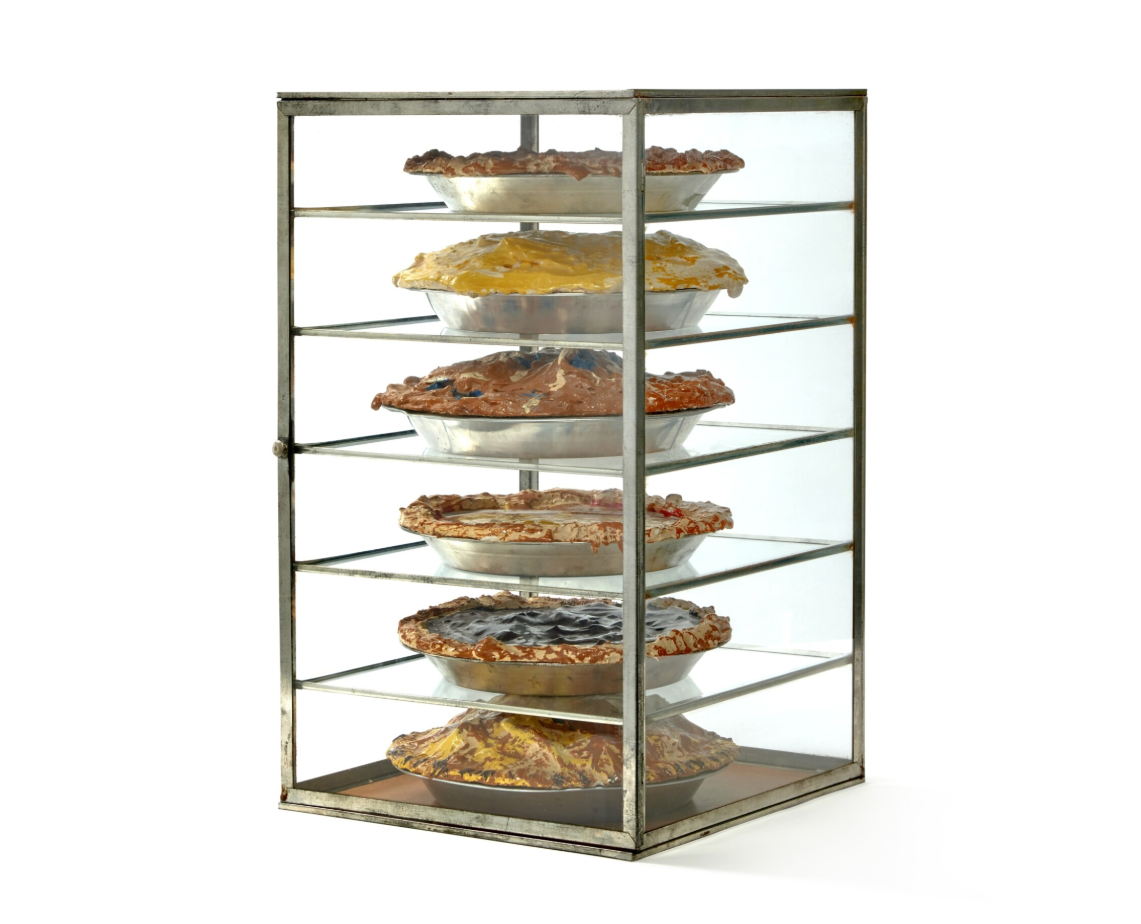
STURTEVANT (1924 – 2014)
Oldenburg Store Object, Pie Case, 1967
Olaster, enamel and aluminum in 6 parts, in glass and aluminum pie case
Overall: 20 1/4 x 12 1/2 x 12 inches (51.4 x 31.8 x 30.5 cm)
#6. Warhol Gold Marilyn, 1973
Phillips New-York: 16 May 2023
Estimated: USD 200,000 – 300,000
USD 190,500
Sturtevant – 20th Century & Contemporar… Lot 127 May 2023 | Phillips
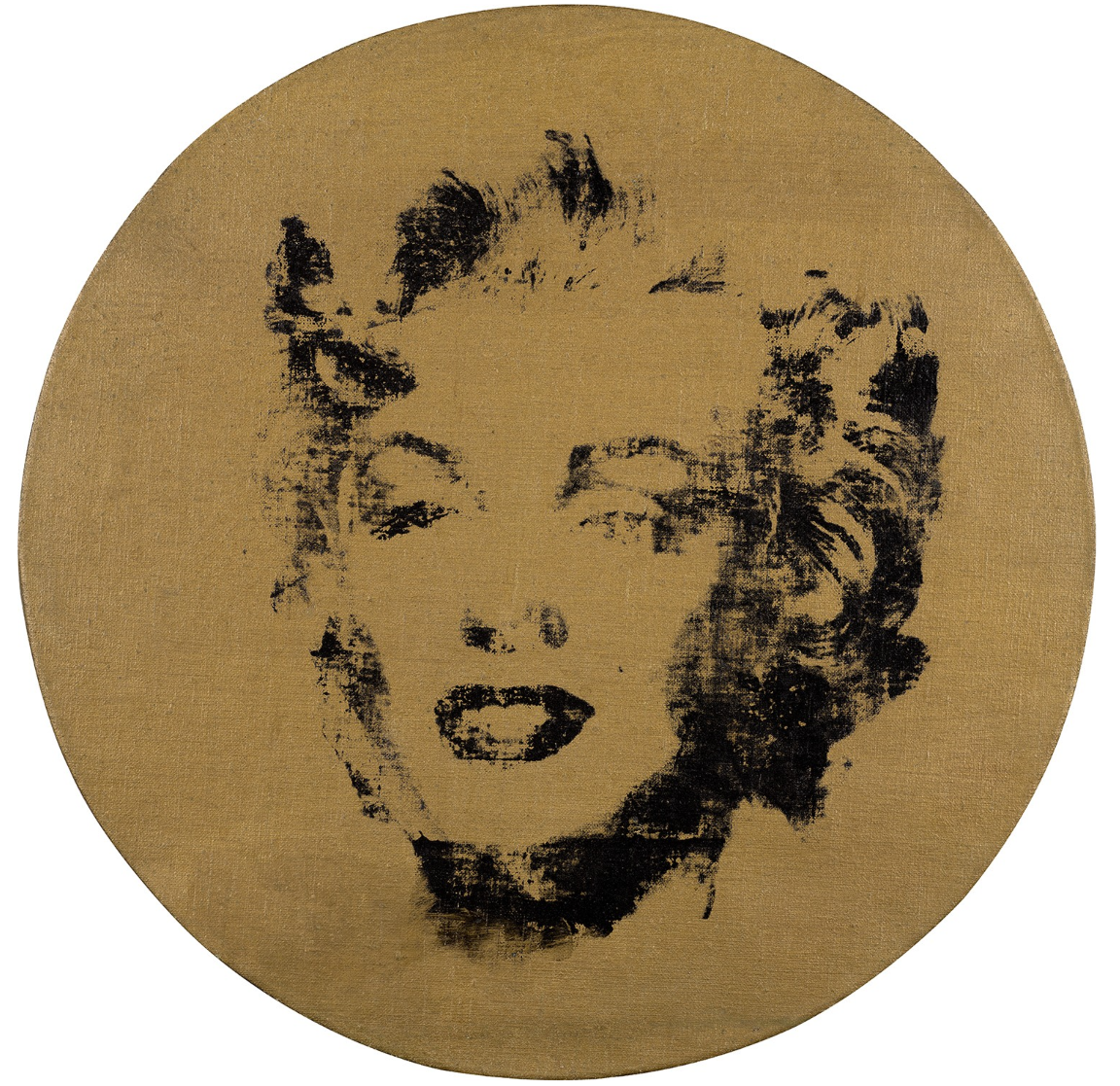
STURTEVANT
Warhol Gold Marilyn, 1973
Silkscreen and gold paint on canvas
Diameter: 18 inches (45.7 cm)
Signed, titled, inscribed and dated “”Warhol’s round gold Marilyn” e. sturtevant 1973″ on the reverse
#7. Raysse Peinture à Haute Tension, 1970
Sotheby’s Paris: 6 December 2023
Estimated: EUR 80,000 – 120,000
EUR 152,400 / USD 164,525
Raysse Peinture à Haute Tension | Art Moderne et Contemporain Evening Auction | 2023 | Sotheby’s
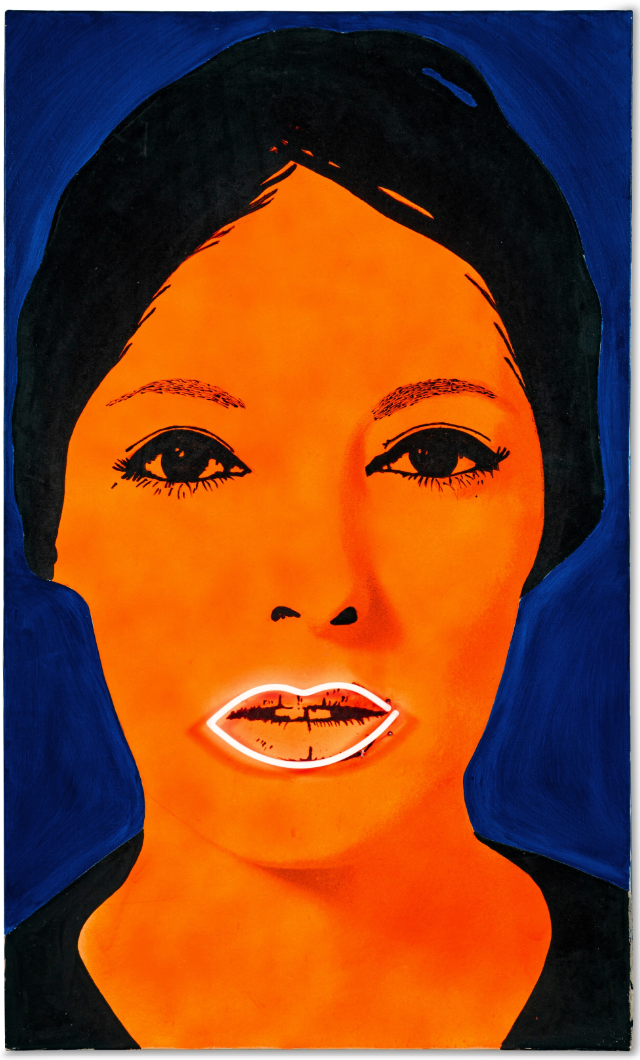
STURTEVANT (1924 – 2014)
Raysse Peinture à Haute Tension, 1970
Acrylic and flocking laid down on canvas and neon tube
63 3/4 x 38 x 5 7/8 inches (162 x 96.5 x 15 cm)
Signed, titled and dated 1970 on the reverse
This work is from an edition of 8
#8. Haring Untitled January 1982, 1986
Dorotheum: 24 May 2023
Estimated: EUR 80,000 – 120,000
EUR 122,200 / USD 131,605
Elaine Sturtevant – Contemporary Art I 2023/05/24 – Realized price: EUR 122,200 – Dorotheum
STURTEVANT (Ohio 1930–2014 Paris)
Haring Untitled January 1982, 1986
Acrylic on canvas
24×24 inches (60.5 x 60.5 cm)
Signed and titled on the reverse
#9. Warhol Flowers, 1969/70
Sotheby’s London: 16 March 2023
Estimated: GBP 30,000 – 40,000
GBP 69,850 / USD 84,290
Warhol Flowers | (Women) Artists | 2023 | Sotheby’s
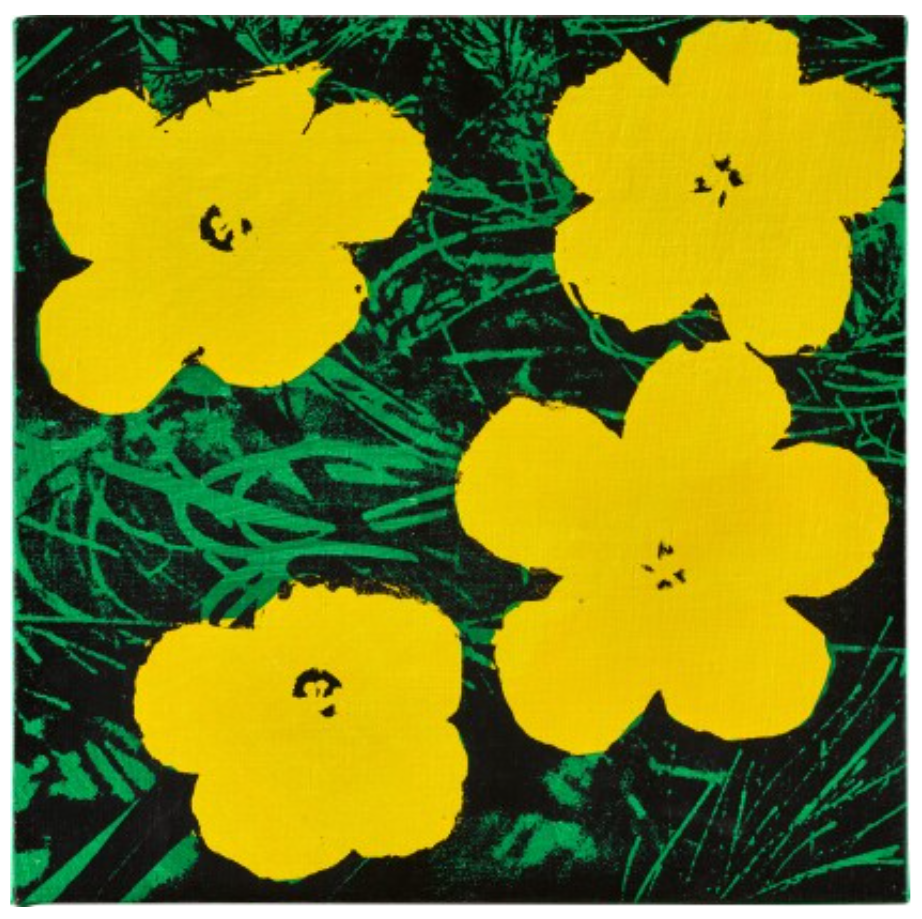
STURTEVANT (b. 1924)
Warhol Flowers, 1969/70
Silkscreen and acrylic on canvas
11×11 inches (28×28 cm)
Signed and dated Paris 1969/70 on the reverse
#10. Oldenburg Store Objects, Bacon and Pat of Butter , 1967
Swann Galleries: 8 June 2023
Estimated: USD 4,000 – 6,000
USD 16,250
ELAINE STURTEVANT Oldenburg Store Objects Bacon and Pat of B
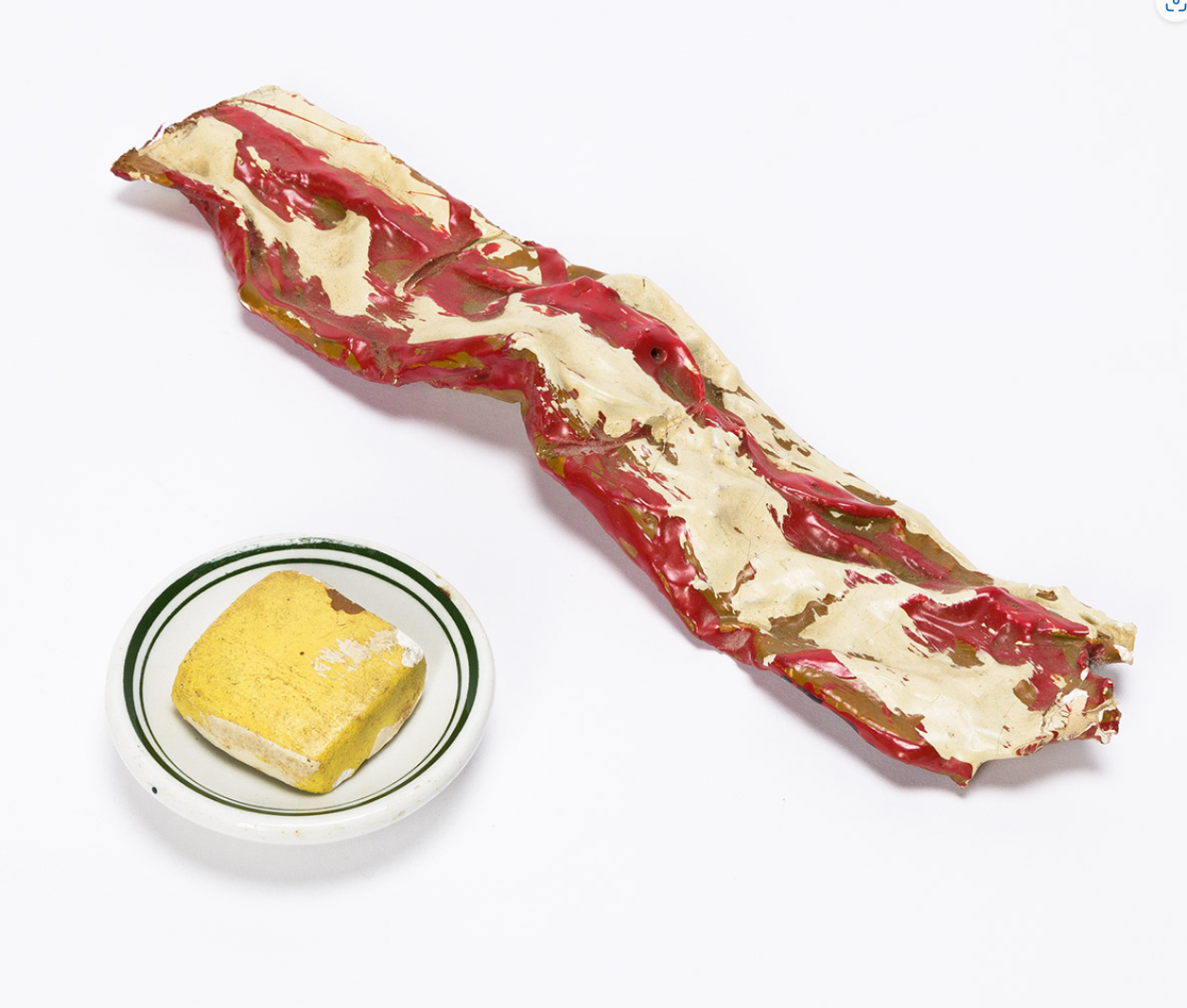
ELAINE STURTEVANT
Oldenburg Store Objects, Bacon and Pat of Butter , 1967
Bacon
Cloth and enamel
9×2 inches (23×50 cm)
Initialed and dated in enamel on the edge
Pat of Butter
Painted plaster with porcelain dish
Diameter: 2 1/2 inches (65 cm)
Initialed and dated in enamel on the underside of the dish
#11. Duchamp’s in Advance of the Broken Arm, 1967
Bonhams Brussels: 10 December 2023
Estimated: EUR 4,000 – 6,000
EUR 10,240 / USD 11,030
Bonhams Cornette de Saint Cyr : ELAINE STURTEVANT (1930-2014) Duchamp’s in Advance of the Broken Arm
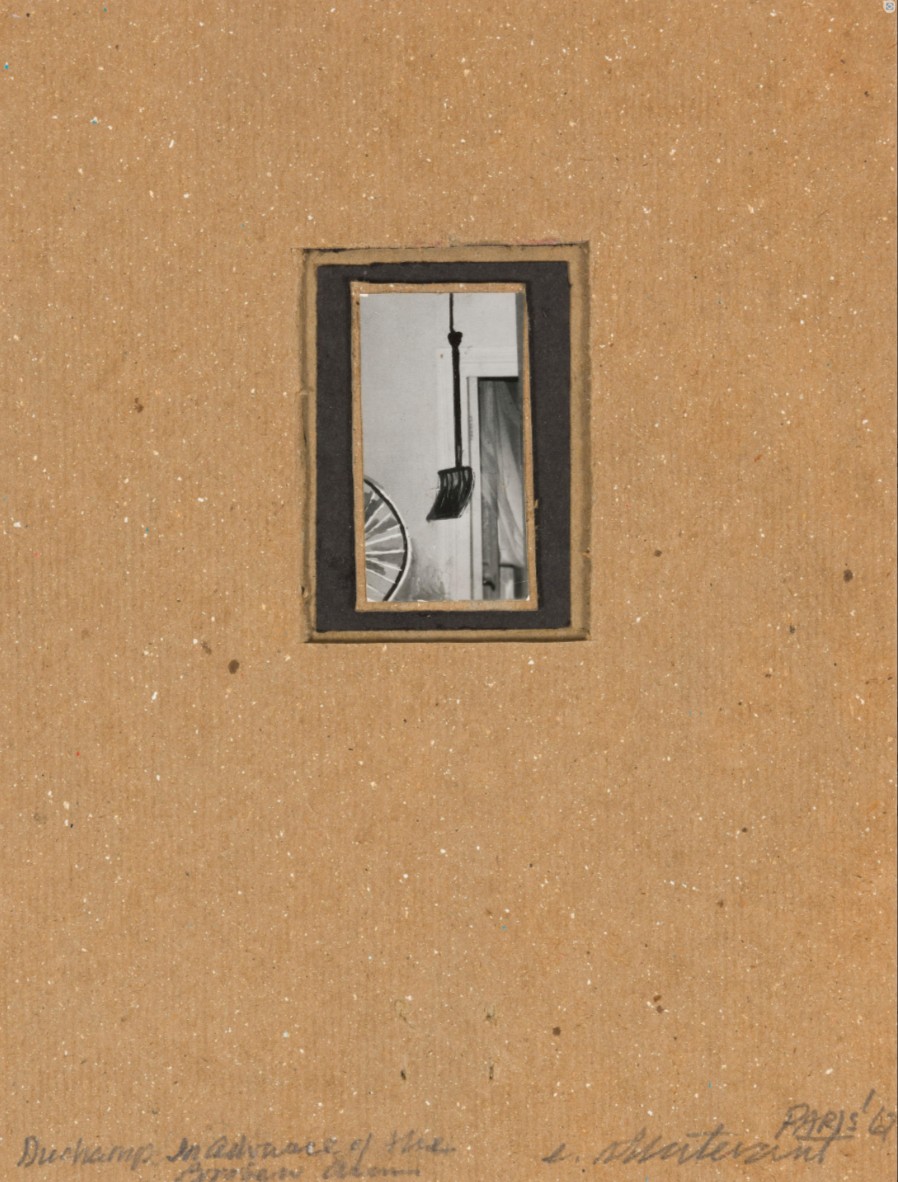
Gouache on black and white photograph
5 1/2 x 3 inches (20.5 x 15.2 cm)
Signed, titled, dated and located ’17 rue de Sevigné, Paris 67′ on the bottom
#12. Duchamp’s in Advance of the Broken Arm, 1967
Estimated: EUR 4,000 – 6,000
EUR 10,240 / USD 11,030
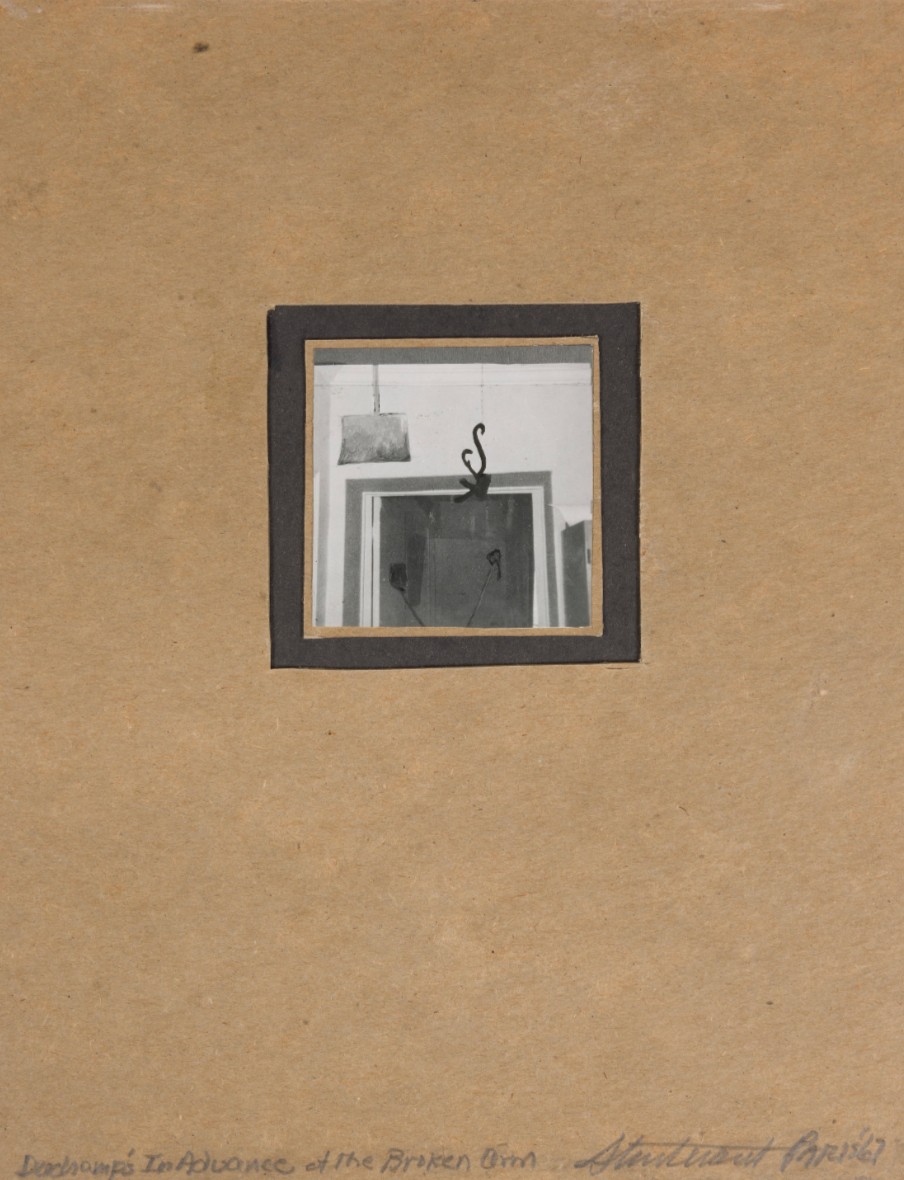
Gouache on black and white photograph
9×7 inches (22.8 x 17.7 cm)
Signed, titled, dated and located ’17 rue de Sevigné, Paris 67′ on the bottom
#13. Sculpture de Voyage (after Duchamp), 1968-69
Estimated: EUR 4,000 – 6,000
EUR 10,240 / USD 11,030
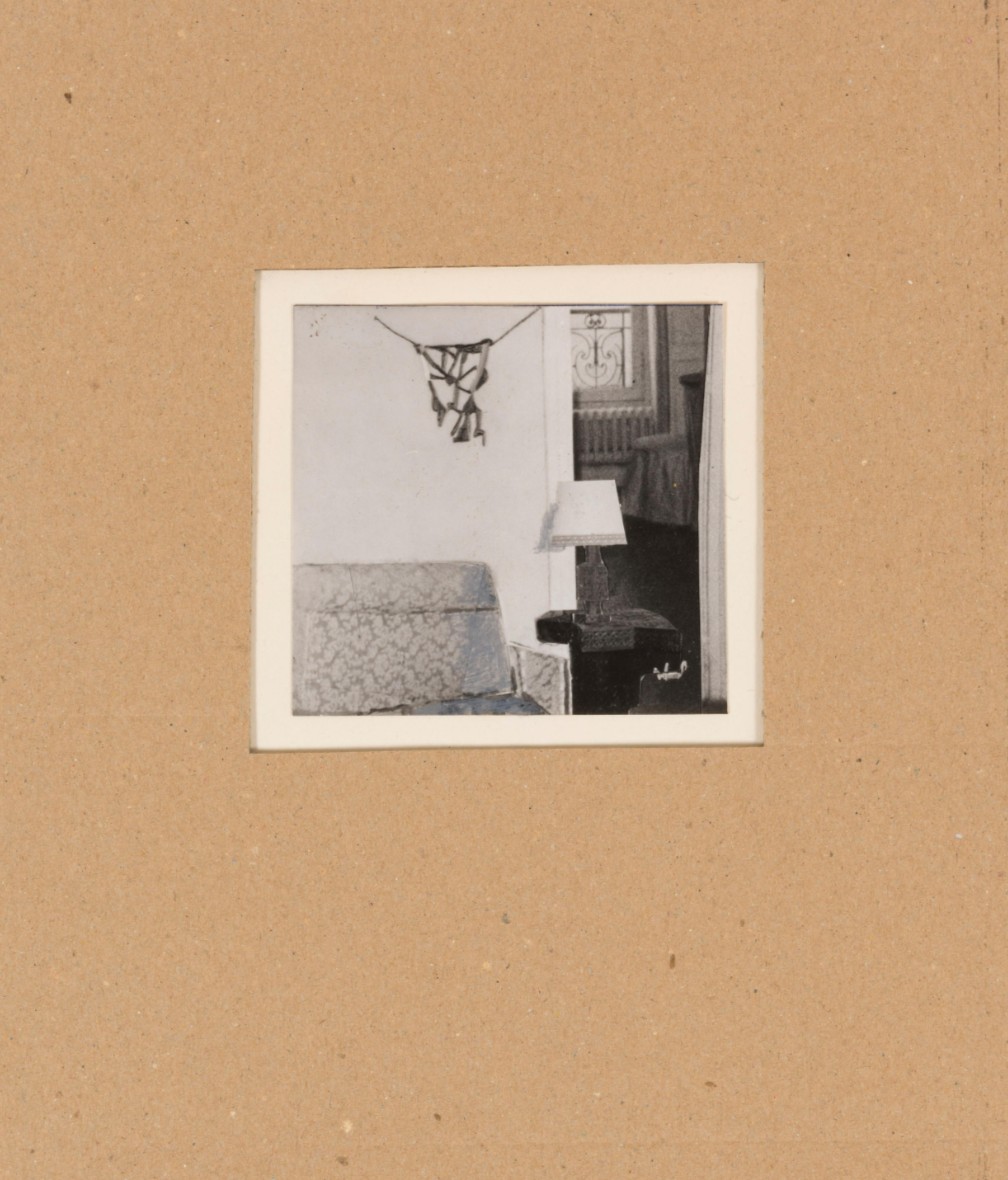
Gouache and photomontage on a black and white photograph
Signed, titled, dated and located 17 rue de Sevigné, Paris, 68-69 on the back
#14. Oldenberg Store Object, French Bread, 1967
Sotheby’s New-York: 19 July 2023
Estimated: USD 10,000 – 15,000
USD 10,160
Oldenberg Store Object, French Bread | Contemporary Discoveries | 2023 | Sotheby’s
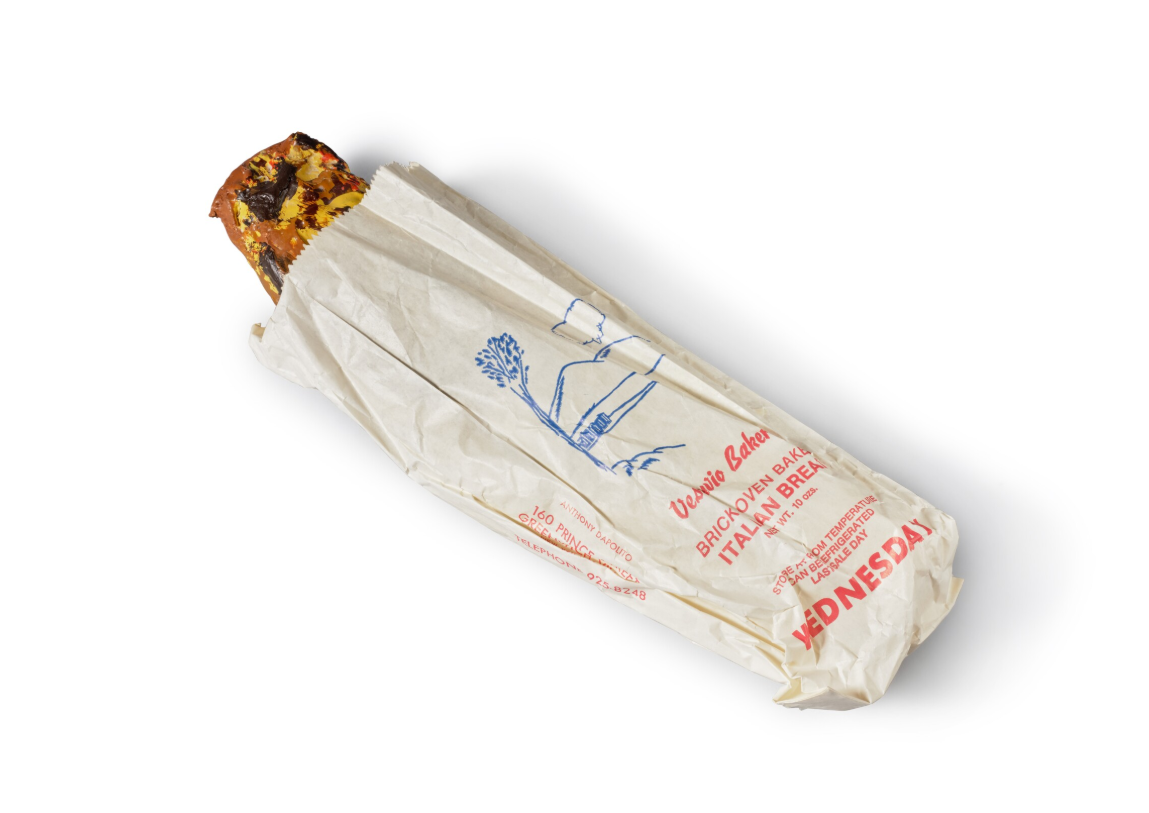
STURTEVANT (1924 – 2014)
Oldenberg Store Object, French Bread, 1967
Chickenwire, cloth, plaster, enamel and paper bag
3 3/4 x 14 x 5 3/8 inches (9.5 x 35.6 x 14.3 cm)
Signed, dated 67 and inscribed The Store (on the underside)
2022 Auction Results
9 lots sold at auction in 2023 for a total turnover of USD 7,032,960.
With no lot failing to sell, the sell-through rate is 100%. The highest price was achieved at Christie’s in New-York, on 9 May 2022 for Lichtenstein But It’s Hopeless, a painting dated 1969-70, that sold for USD 2,220,000. 7 lots sold for more than USD 100,000, generating a cumulative turnover of USD 6,937,200, representing 98.6% of the total turnover for 2023.
2022 Top 3 Lots
#1. Lichtenstein But It’s Hopeless, 1969-1970
Christie’s New-York: 9 May 2022
Estimated: USD 600,000 – 800,000
USD 2,220,000
STURTEVANT (1924-2014), Lichtenstein But It’s Hopeless | Christie’s
STURTEVANT (1924-2014)
Lichtenstein But It’s Hopeless, 1969-1970
Oil, acrylic and graphite on canvas
44 1/8 x 44 3/8 inches (112 x 112.7 cm)
Signed, inscribed and dated
‘Study for Lichtenstein’s That’s The way it should have begun – but Sturtevant ’69-70’
(on the reverse)
#2. Johns White Flag, 1991
Sotheby’s New-York: 19 May 2022
Estimated: USD 600,000 – 800,000
USD 2,107,000
Johns White Flag | Contemporary Evening Auction | 2022 | Sotheby’s
STURTEVANT (1924 – 2014)
Johns White Flag, 1991
Encaustic and collage on canvas, in three parts
78 1/8 x 120 1/8 inches (198.5 x 305 cm)
Signed Sturtevant, titled Johns White Flag and dated 1991 (on the reverse)
#3. Warhol Flowers, 1990
Christie’s New-York: 17 November 2022
Estimated: USD 800,000 – 1,200,000
USD 1,008,000
STURTEVANT (1924-2014), Warhol Flowers | Christie’s
STURTEVANT (1924-2014)
Warhol Flowers, 1990
Synthetic polymer paint and silkscreen ink on canvas
115 1/2 x 115 inches (293.2 x 291.1 cm)
Signed, titled, and dated ‘Warhol Flowers Sturtevant 1990’ (on the reverse)
USD 1 million
#4. Warhol Marilyns, 1971
Sotheby’s New-York: 20 May 2022
Estimated: USD 400,000 – 600,000
USD 655,200
Warhol Marilyns | Contemporary Day Auction | 2022 | Sotheby’s
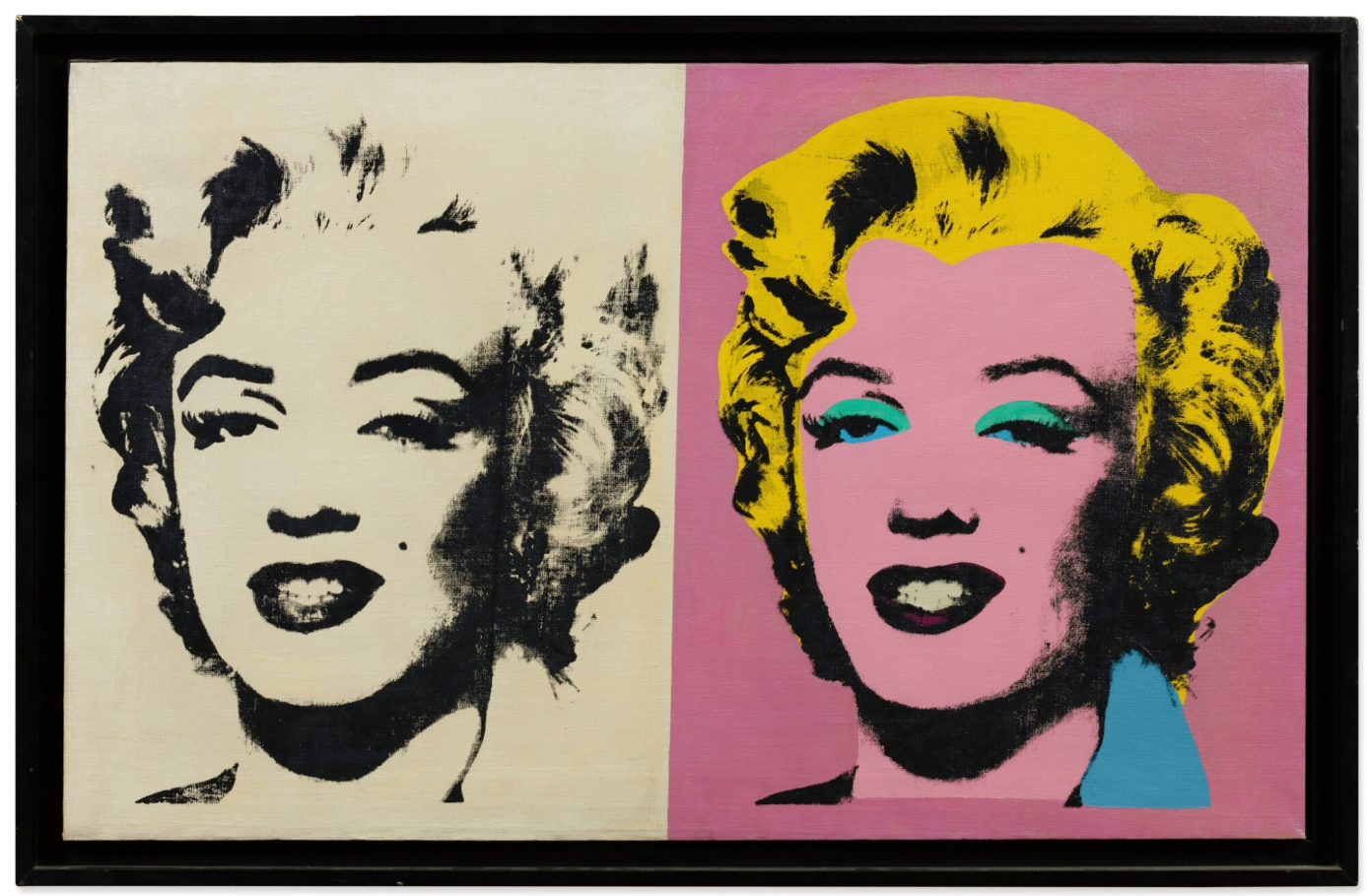
STURTEVANT (1924 – 2014)
Warhol Marilyns, 1971
Acrylic and silkscreen ink on canvas
19 3/4 x 31 1/2 inches (50.2 x 80 cm)
Signed Sturtevant and dated 1971 (on the reverse)
#5. Johns Big Figure Five (Study), 1987
Christie’s New-York: 18 November 2022
Estimated: USD 300,000 – 500,000
USD 592,200
ELAINE STURTEVANT (1924-2014), Johns Big Figure Five (Study) | Christie’s
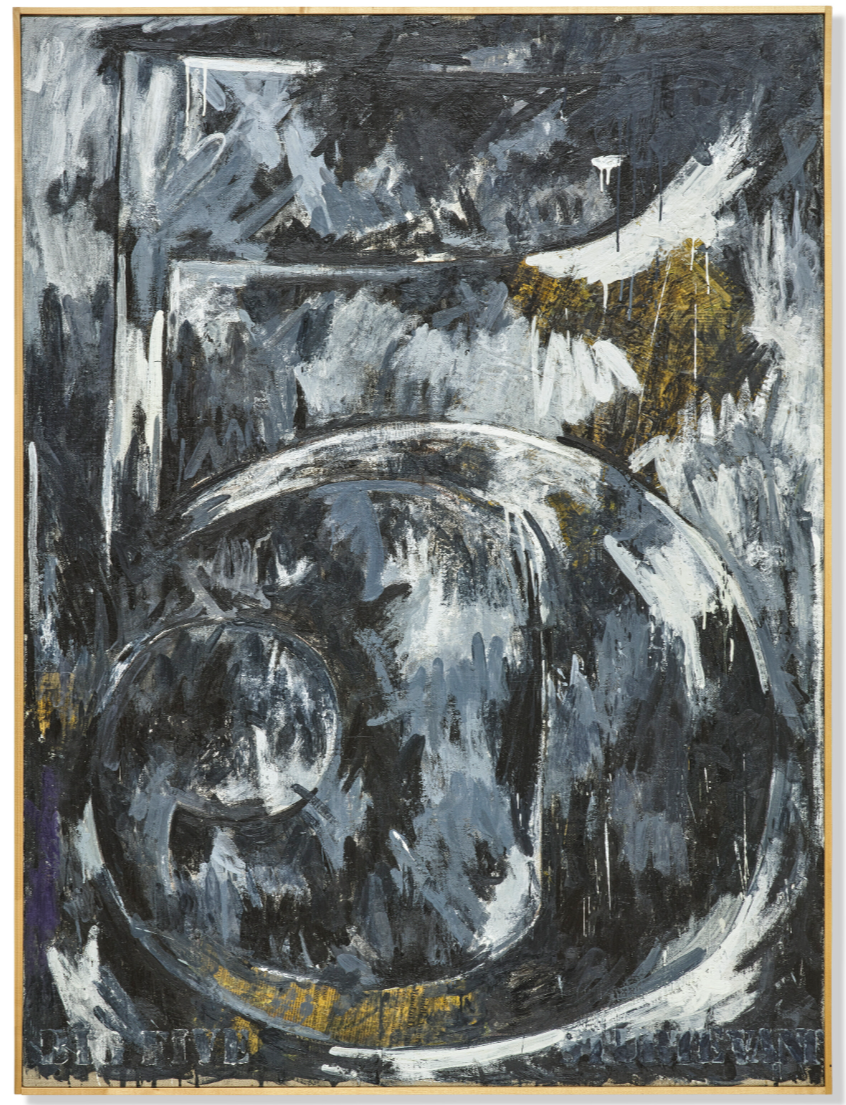
ELAINE STURTEVANT (1924-2014)
Johns Big Figure Five (Study), 1987
Encaustic and printed paper collage on canvas
48×36 inches (121.9 x 91.4 cm)
Signed, titled and dated ‘”Johns Big Figure Five” (Study) Sturtevant ’87’ (on the reverse)
#6. Raysse Peinture à Haute Tension, 1968-69
Christie’s Paris: 1 December 2022
Estimated: EUR 80,000 – 120,000
EUR 195,300 / USD 203,600
Elaine Sturtevant (1924-2014), Raysse Peinture à Haute Tension | Christie’s
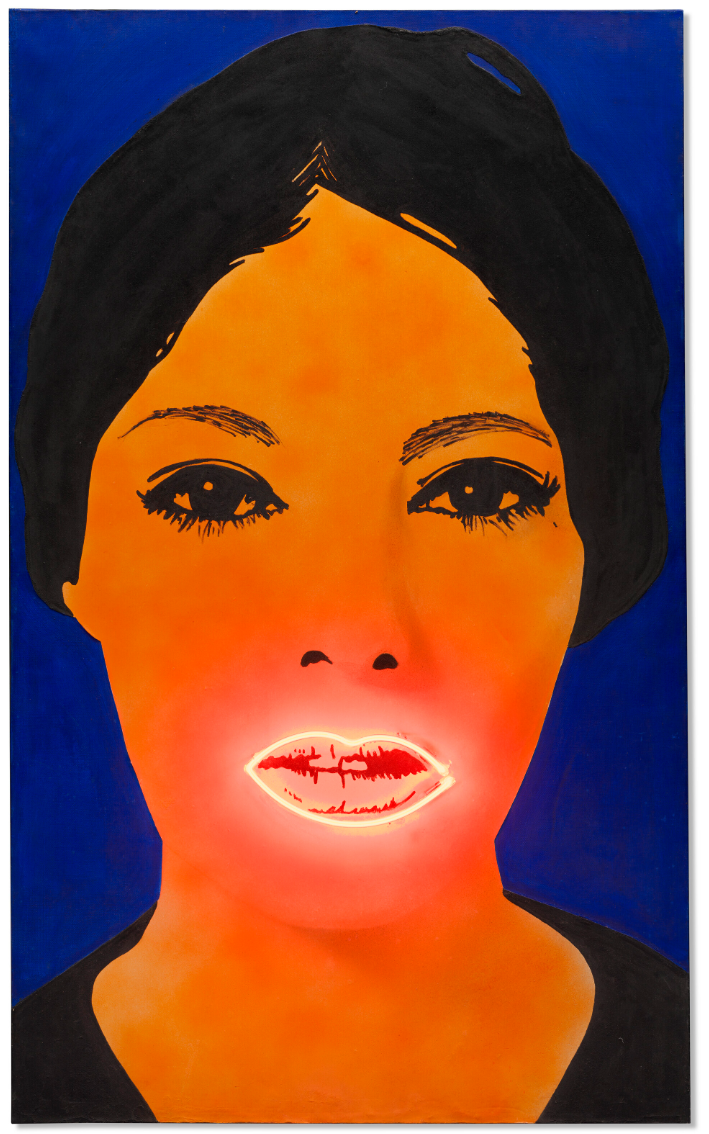
STURTEVANT (1924-2014)
Raysse Peinture à Haute Tension, 1968-69
Acrylic and flocking laid down on canvas and neon tube
63 3/4 x 38 x 5 7/8 inches (162 x 96.5 x 15 cm)
Signed, titled and dated ‘Sturtevant ’68-69 “Peinture à Haute Tension”’ (on the reverse)
This work is part of the first edition of eight
#7. Warhol Gold Marilyn, 1973
Christie’s New-York: 13 May 2022
Estimated: USD 150,000 – 250,000
USD 151,200
STURTEVANT (1924-2014), Warhol Gold Marilyn | Christie’s
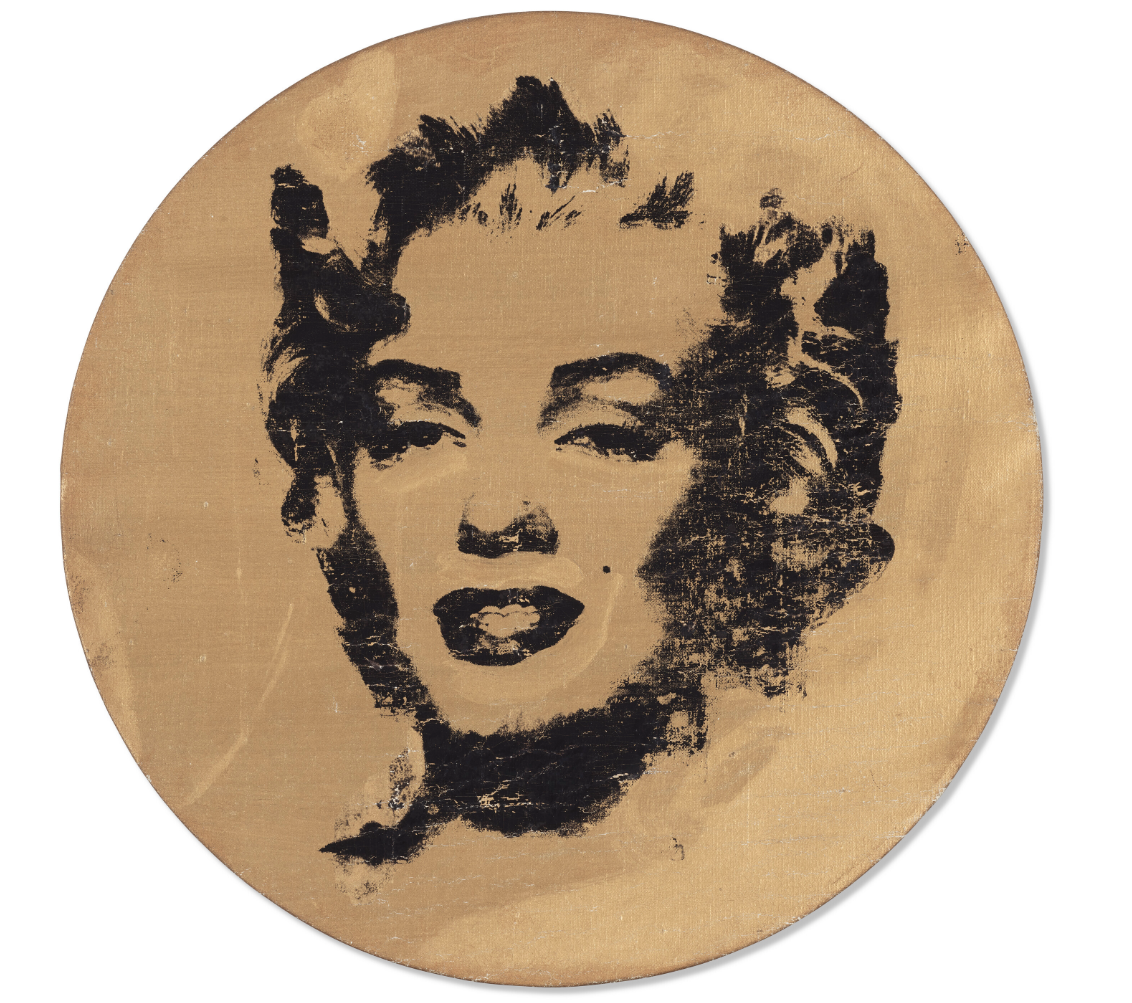
STURTEVANT (1924-2014)
Warhol Gold Marilyn, 1973
Acrylic and silkscreen ink on canvas
Diameter: 17 3/4 inches (45.1 cm)
Signed, titled and dated ‘”Warhol Gold Marilyn” Sturtevant ’73’ (on the reverse)
#8. Working Drawing for Johns 0 Through 9, Fahlstrom Elements, Rosenquist Spaghetti, 1965
Sotheby’s New-York: 20 May 2022
Estimated: USD 30,000 – 40,000
USD 47,880
STURTEVANT (1924 – 2014)
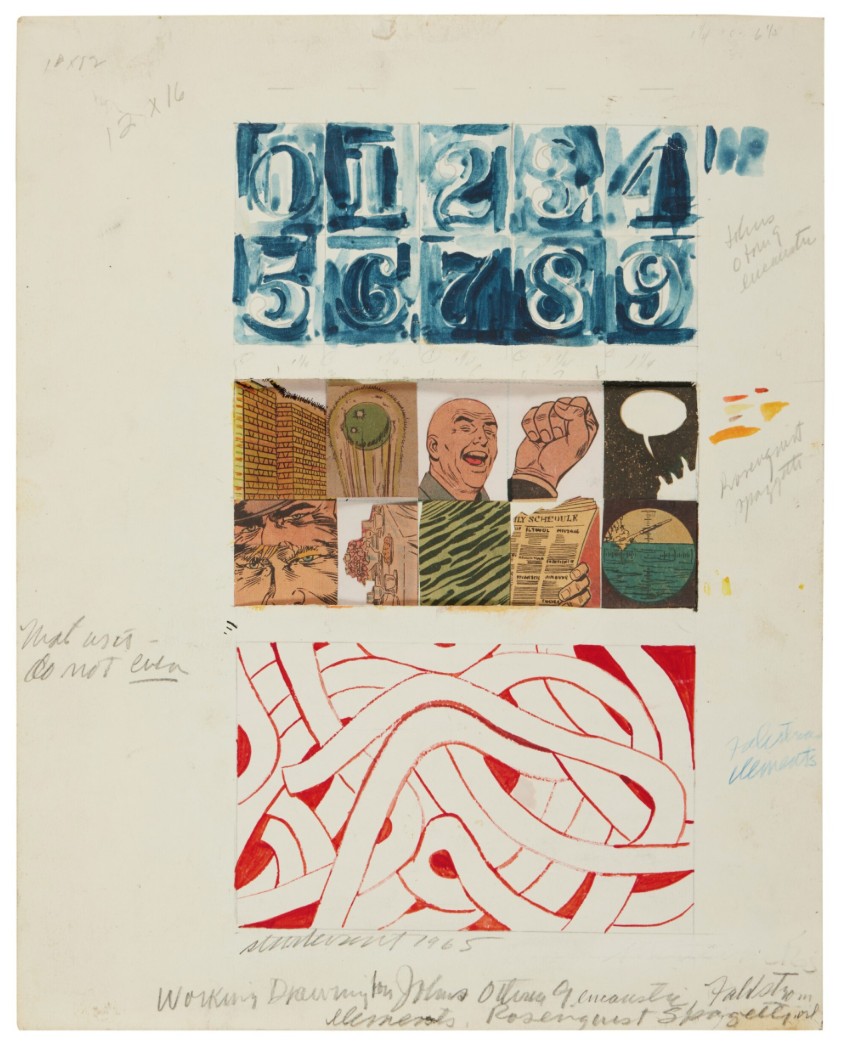
Working Drawing for Johns 0 Through 9, Fahlstrom Elements, Rosenquist Spaghetti, 1965
Watercolor, felt-tip pen and paper collage on paper
Image: 10 7/8 x 6 1/4 inches (27.6 x 15.9 cm)
Sheet: 13 7/8 x 11 inches (35.2 x 27.9 cm)
Signed Sturtevant, titled and dated 1965 (lower center)
#9. Lichtenstein Study for Stepping Out, 1988
Sotheby’s New-York: 20 May 2022
Estimated: USD 10,000 – 15,000
USD 47,880
Lichtenstein Study for Stepping Out | Contemporary Day Auction | 2022 | Sotheby’s
STURTEVANT (1924 – 2014)
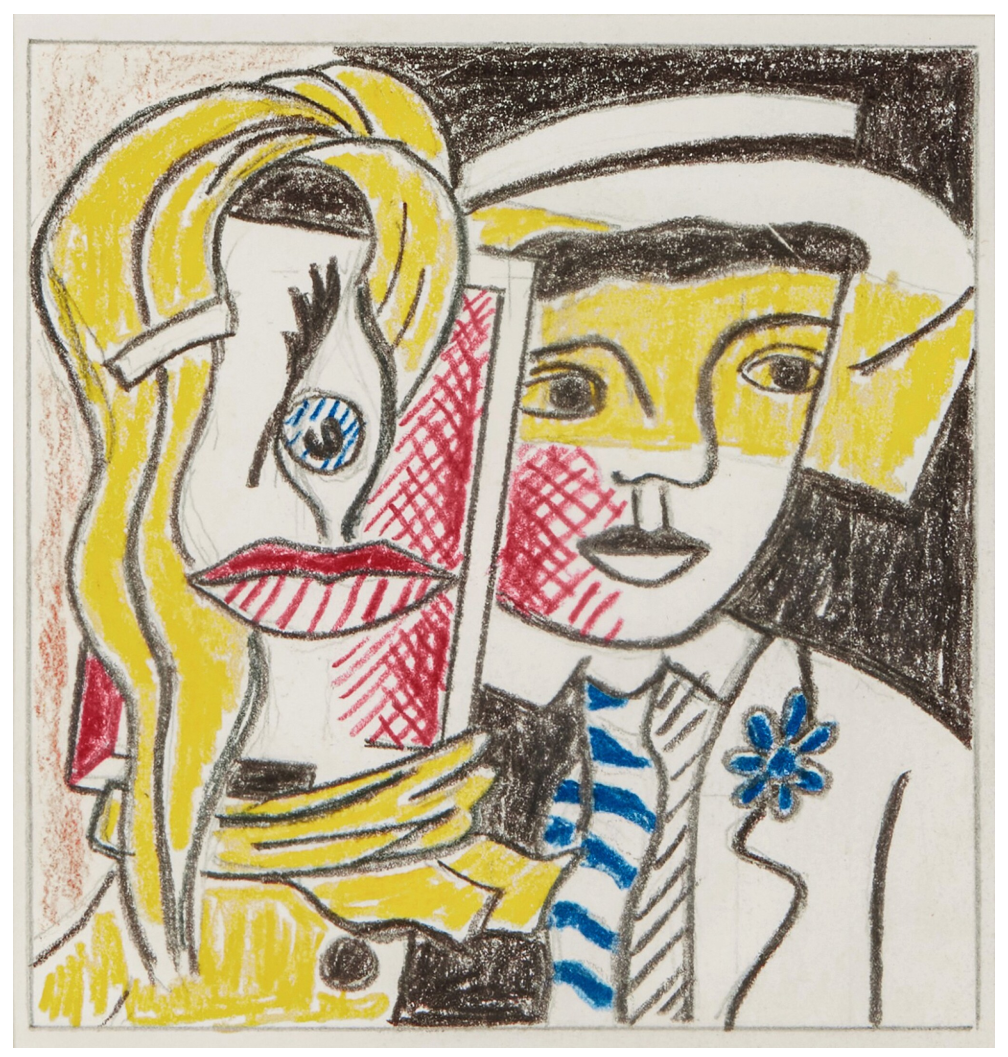
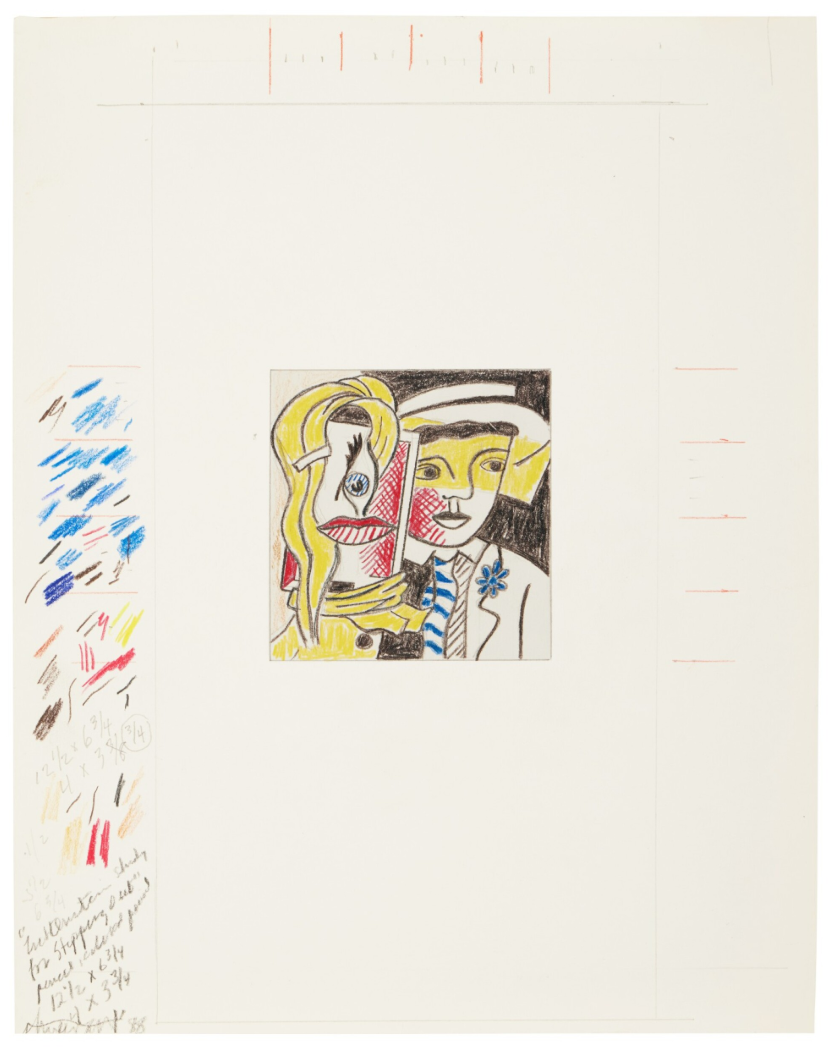
Lichtenstein Study for Stepping Out, 1988
Graphite and colored pencil on paper
Image: 4 x 3 3/4 inches (10.2 x 9.5 cm)
Sheet: 14 x 10 7/8 inches (35.6 x 27.6 cm)
Signed Sturtevant, titled and dated 88 (lower left)
PART III: FOCUS
Andy Warhol’s Marilyn
From the time of Monroe’s death in August 1962 to the end of that year, Warhol created twenty silkscreen paintings based on a publicity photograph of Monroe from the 1953 film Niagara, an image indelibly etched in the minds of millions worldwide. Just three years later, Sturtevant – a member of Robert Rauschenberg’s entourage – approached Warhol and requested to borrow his silkscreen stencil from his famed Marilyns. Sturtevant later claimed that Warhol agreed begrudgingly and was told by the studio assistant that she could take whichever screen she wished. However, when Sturtevant was unable to find the original silkscreen stencil in Warhol’s loft, the young artist recalled, ‘I decided to find the original [Marilyn] Hollywood still, one chance in a million and I found it. I took it to Andy’s silkscreen man and it was perfect. A Warhol screen from my photo which was his photo.’ (Patricia Lee, Sturtevant: Warhol Marilyn, London, 2016, pp. 19-20). In doing so, Sturtevant’s Warhol Marilyns challenge postmodern discourse and perpetuates the obsession of these two figures of unprecedentedly outsized fame, Marilyn Monroe and Andy Warhol, by powerfully encapsulating and reconceptualizing the extraordinary impact that their visual prowess had played on the history of art.
Study for Warhol Marilyn, 1973
Phillips New-York: 17 May 2023
Estimated: USD 1,000,000 – 1,5000,000
USD 2,419,500
Sturtevant – 20th Century & Contemporary… Lot 41 May 2023 | Phillips
STURTEVANT
Study for Warhol Marilyn, 1973
Synthetic polymer silkscreen and acrylic on canvas, triptych
Each: 84 1/4 x 62 7/8 inches (214×160 cm)
Overall: 84 1/4 x 188 5/8 inches (214 x 479.1 cm)
Each signed, titled, respectively inscribed and dated “[I-III] “Study for Warhol Marilyn” E. Sturtevant 1973” on the reverse
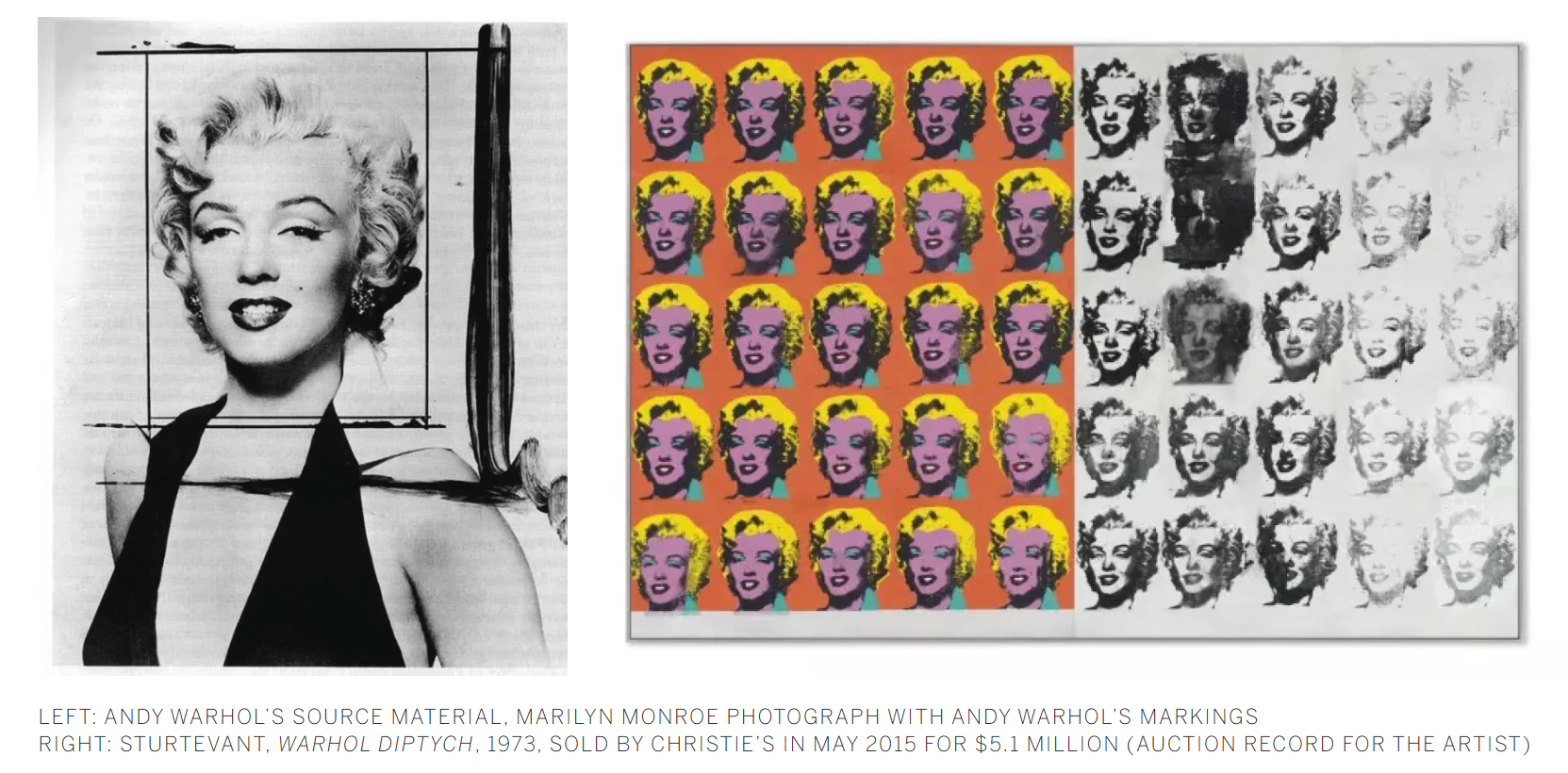
Study for Warhol Marilyn, 1973, presents three large panels with Andy Warhol’s iconic screenprinted representation of Marilyn Monroe gridded across the surfaces. The work repeats these multiples in a variety of arrangements: at the right, Marilyn is repeated twenty-five times in black and white; at center, she’s in yellow and pink against a teal ground, again twenty-five times; and at left, there is just one Marilyn, floating in metallic gold like a Byzantine icon. At first glance, Study for Warhol Marilyn appears like any other Warhol. But is it?
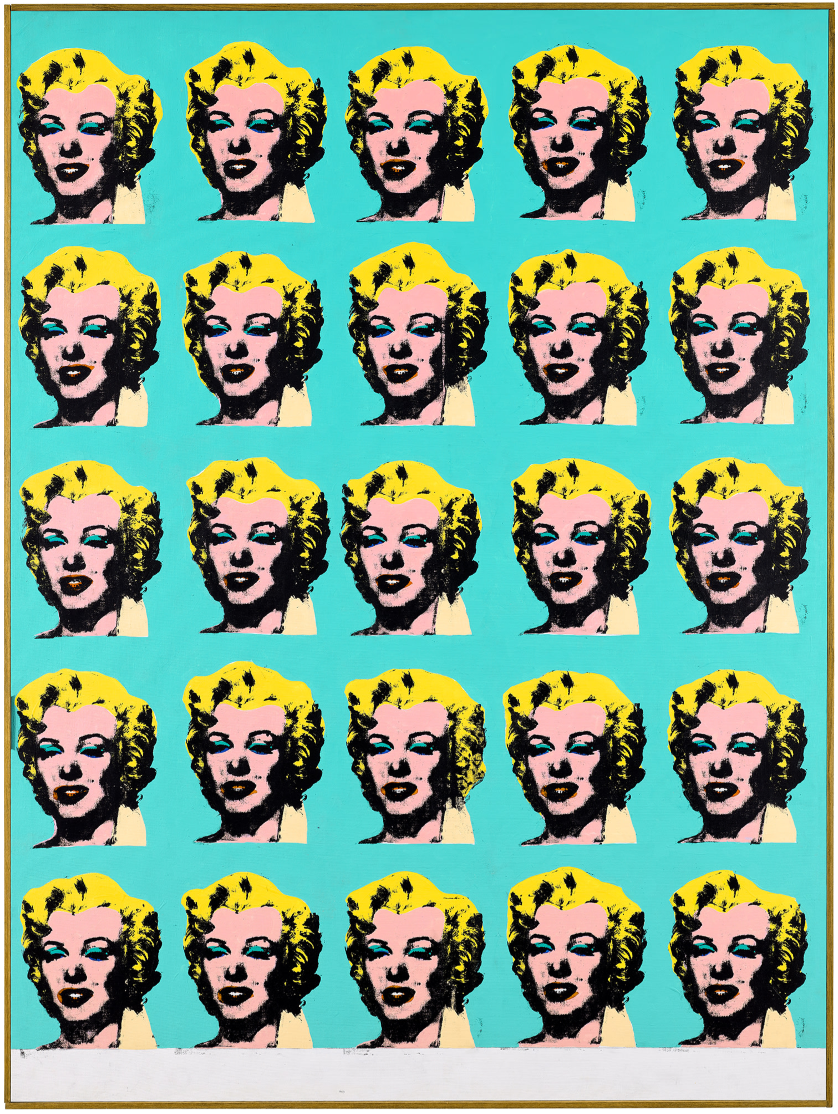
Sturtevant created Study for Warhol Marilyn concurrent to her 1973 exhibition, Sturtevant: Studies for Warhol’s Marilyns, Beuys’ Actions and Objects, Duchamp’s etc. Including Film, at the Everson Museum of Art in Syracuse, New York. Sturtevant, who preferred to be known by her (ex-husband’s) surname, was a controversial figure in New York art world of the 1960s and 1970s, as her practice—creating works that are near-copies of other artists’ work—bruised egos and raised wider questions of the importance of originality and creative genius in art, ideas inherited from the Italian Renaissance that still held merit in mid-20th century art discourse. Sturtevant’s practice centers on her ability to embody the mannerisms and techniques of other artists; she is interested in performing the identity of the artist-as-celebrity, and works such as Study for Warhol Marilyn are the products of these performances. Her choice to include the “original” artist’s name in her titles—Warhol Marilyn, Warhol Flowers, etc.—clue the viewer into the fact that performing the “original” artist’s persona is part of the work at hand; Sturtevant is not a cheap copyist, trying to pass off the work of another artist as her own.
Warhol, whose celebrity persona as king of The Factory was part and parcel with the rest of his art practice, was one of Sturtevant’s first subjects. In 1965, Sturtevant approached Warhol asking if she could have one of the silkscreens used in his 1962 Marilyn series, but his assistant couldn’t find it anywhere. Sturtevant recounts her next steps in a tone that mimics Warhol’s own wandering speech pattern:
“I decided to find the original Hollywood still, one chance in a million and I found it. I took it to Andy’s silkscreen man and it was perfect. A Warhol screen from my photo which was his photo.”
Sturtevant’s delineation of events here is telling. Not only does she speak the story as if she were Warhol, but she explains how she followed Warhol’s process: just like Warhol in 1962, Sturtevant in 1965 went through the “one chance in a million” artistic process of finding the original still, and bringing it to a particular silkscreen manufacturer. After this process, Sturtevant’s photo “was his photo;” the verb signifying that the two images are one and the same. If the sourcing of the silkscreen for Study for Warhol Marilyn thus follows the exact same process as that for Warhol’s own Marilyn works, then the only difference, really, is that one work is made by Sturtevant’s hand, and the other, Warhol’s, a few years apart. Sturtevant’s work asks, is the identity of that artist’s hand in that moment in time really so significant? Indeed, Study for Warhol Marilyn is compositionally unique from any of Warhol’s known silkscreens of Marilyn Monroe. According to the artist’s catalogue raisonné, he never created a triptych of Marilyns; only diptychs, and single canvas works. Study for Warhol Marilyn, then, seems to pull from multiple Warhol sources, creating a visual product that appears as if it is a Warhol “original,” but in reality, is original to Sturtevant herself.
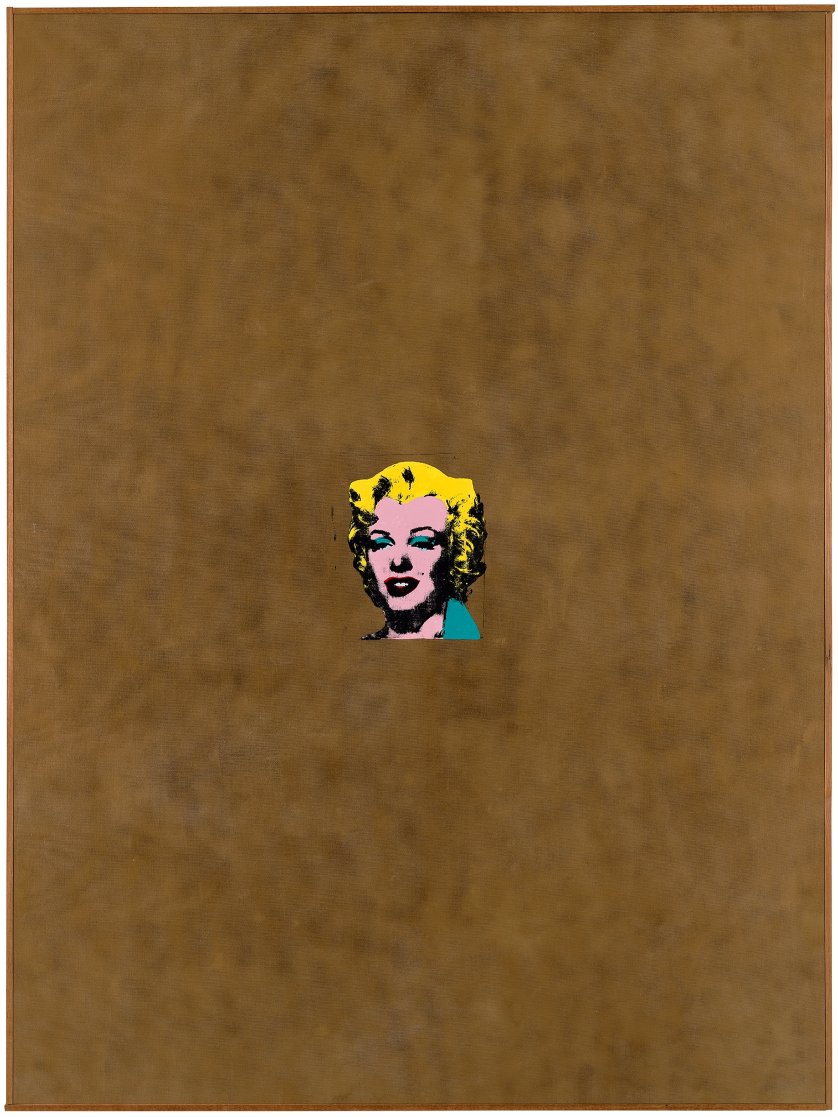
Study for Warhol Marilyn combines three of Warhol’s Marilyn compositions. The left, gold panel recreates the composition of Warhol’s Gold Marilyn Monroe, 1962, Museum of Modern Art, New York.vii The center and right repetitions of 5×5 grids of Marilyns recall Marilyn Diptych, 1962, Tate Modern, though Sturtevant exchanges Warhol’s orange at center for a teal reminiscent of works such as Four Marilyns, 1962, Sonnabend Collection. Further, the particularity of silkscreen as a medium allows for further variation, revealing to the viewer that Study for Warhol Marilyn is its own unique production. The difference is perhaps most evident when one compares the black and white panel of Study with that of Marilyn Diptych. While Sturtevant has applied more ink in the second column of Marilyns, resulting in the iconic, darker impression seen in Marilyn Diptych, the “one in a million chance” of how that ink pools and pulls through the screen leaves a level of variation—originality, perhaps—that neither Sturtevant nor Warhol can perfectly control.
“See, in the 60s, there was the big bang of pop art. But pop only dealt with surface. I started asking questions about what lay beneath the surface. What is the understructure of art? What is the power of art?”
Two years before Study for Warhol Marilyn, Sturtevant wrote a letter with a list of what her art was not doing to dealer Reinhard Onnasch: “I’m not in the process of celebrating process / I am not making copies / I am not making imitations… / I am not interested in being a ‘Great Artist’ / That’s real medieval thinking.” The idea of the “Great Artist,” rather than being “medieval” thinking, actually dates to the Italian Renaissance, with Giorgio Vasari’s influential Lives of the Most Excellent Artists, Sculptors, and Architects, 1550, a series of biographies of great Italian artists. Vasari’s work created a canon of great men of art history, and this art historical model of the cult of artistic genius carried on into the 20th century, with the personas of men like Warhol, Jackson Pollock, and Willem de Kooning dominating the artistic conversation. Ironically, Sturtevant’s approach to art is medieval, as, like medieval artists, her work emphasizes the importance of widespread beliefs and icons on a culture’s visual expression, rather than over-glorifying the impact of an individual artist’s hand.
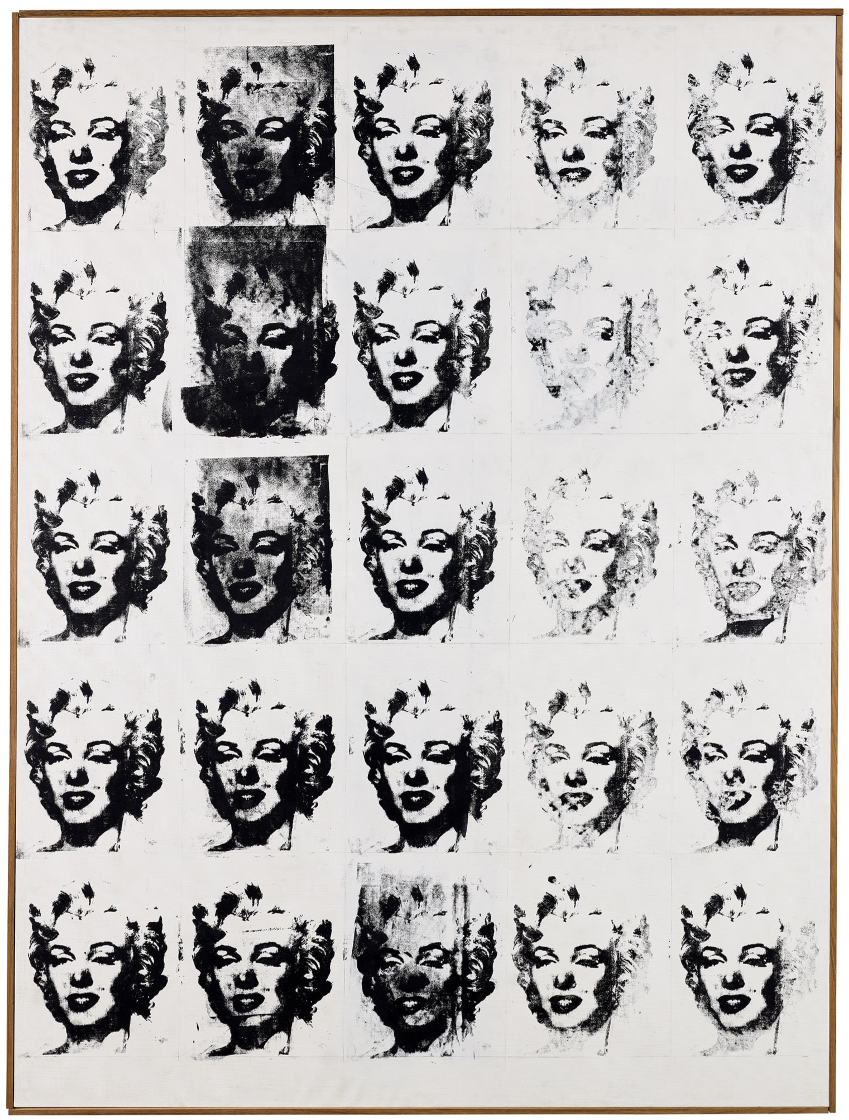
Study for Warhol Marilyn dates to the year before Sturtevant took a ten-year hiatus from the art world, returning in the mid-1980s to newfound appreciation as the long-lost forebearer of the Pictures Generation Appropriationists, including Sherrie Levine, Richard Prince, and Cindy Sherman. However, Sturtevant herself never accepted this ancestral designation. To her, the artistic problem was about a concept larger than the loss of originality. In her words, “I was about the power of thought;” meaning, how our thoughts about what makes an artwork original, and how that work should be made, shape our perceptions of authentic work. As a result, the viewer’s thought process is central to the success of her work: Study for Warhol Marilyn works because the viewer thinks it is a Warhol, until realizing that, actually, it’s a Sturtevant. This cognitive shift is Sturtevant’s conceptual key. What happens in the middle of this double-looking? What happens between the first glance, full of cultural assumptions and artistic ideals, and the second, sobered stare? As Patricia Lee writes, “[with Sturtevant] you think you know what you are seeing, and have seen it all before, but what does one miss by relying on assumed knowledge?” The missing link is “the power of thought” Sturtevant is all about.
Warhol 25 Marilyns, 1973
Christie’s London: 28 June 2023
Estimated: GBP 500,000 – 700,000
GBP 819,000 / USD 1,043,875
STURTEVANT (1924-2014), Warhol 25 Marilyns | Christie’s
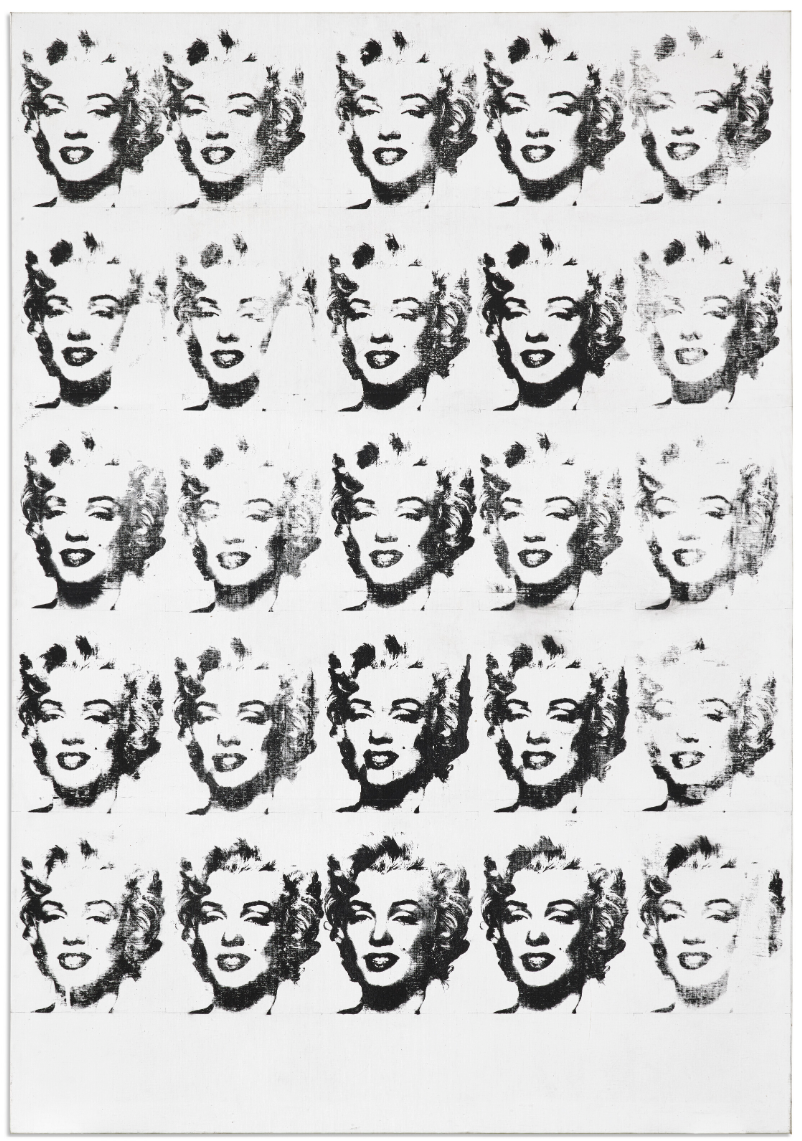
STURTEVANT (1924-2014)
Warhol 25 Marilyns, 1973
Silkscreen ink and acrylic on canvas
89 1/8 x 62 inches (226.5 x 157.5 cm)
Signed twice, titled and inscribed ‘”The 25 Marilyns” e. sturtevant ”Warhols The 25 M” e. sturtevant’ (on the reverse)
Made for Sturtevant’s first institutional solo exhibition at the Everson Museum, Syracuse, in 1973, Warhol 25 Marilyns is situated at the dawn of her ground-breaking appropriation practice. Rendered in silkscreen using Warhol’s own method, it is an imitation of his 1962 work Marilyn Monroe in Black and White (Twenty-Five Marilyns), now held in the Moderna Museet, Stockholm. Beginning in the mid-1960s, Sturtevant’s reproductions of works by other artists were years ahead of their time. Their interrogation of authorship and originality laid the groundwork for the emergence of the ‘Pictures Generation’, and with it the birth of postmodernism. Warhol, an artist deeply engaged with these concepts himself, was among Sturtevant’s most significant muses. Where his silkscreens reproduced images found in newspaper and adverts, however, Sturtevant went one stage further, performing the same act upon objects claiming themselves to be ‘art’. The present work was acquired by Thomas Ammann in 1987, and later included in the artist’s retrospective at the Museum für Moderne Kunst, Frankfurt in 2004.
Born Elaine Horan, but known professionally by her married surname only, Sturtevant first began to contemplate the idea of repeating other artists’ work after moving to New York in the 1950s. There, many figures—including Jasper Johns, Roy Lichtenstein and Warhol himself—were already asking important questions about what constituted an ‘original’ artistic gesture. As Abstract Expressionism’s emphasis on authentic emotion faded, and mass-produced consumer culture came to the fore, these issues seemed more pertinent than ever. Sturtevant was quick to outsmart her male contemporaries. By 1965, just a few short years after Warhol’s initial burst of artistic production, she had convinced him to grant her access to his Factory and his silkscreens. Her first works, showed at the Bianchini Gallery that year, were reproductions of his iconic Flowers. She quickly moved onto the Marilyns. Unable to find the original stencil, she managed to locate the exact film still that Warhol himself had used. ‘… It was perfect’, she recalled. ‘A Warhol screen from my photo which was his photo’ (E. Sturtevant, quoted in P. Lee, Sturtevant: Warhol Marilyn, London 2016, pp. 19-20).
Sturtevant approached art through the lens of philosophy. She was greatly influenced by Gilles Deleuze’s Différence et répétition (1968), reading it in its original French before the English translation was available. Repeating something, she believed, brought about minor variations. Those differences forced the viewer to look beyond the original’s appearance, and to interrogate its underlying structure and purpose. To this end, Sturtevant appropriated Warhol’s works from memory and without mechanical aids. So deep ran her understanding of his process that, when quizzed about his technique, he famously replied ‘Ask Elaine’. Marcel Duchamp—another of Sturtevant’s subjects—had been among the first to ask at what point an object becomes ‘art’. In her own work, Sturtevant demonstrated that repetition could help us to see this transformation in action: a belief carried forwards by Sherrie Levine, Cindy Sherman and Richard Prince. ‘Warhol was not making copies, and definitely not repetitions, but rather he was repeating—a crucial difference’, explained Sturtevant; ‘… for me, that’s where his brilliance lies’ (E. Sturtevant, quoted in conversation with B. Hainley, Artforum, March 2003).
Warhol Four Marilyns, 1973
Christie’s London: 13 October 2023
Estimated: GBP 300,000 – 500,000
GBP 315,000 / USD 383,770
STURTEVANT (1924-2014), Warhol Four Marilyns | Christie’s
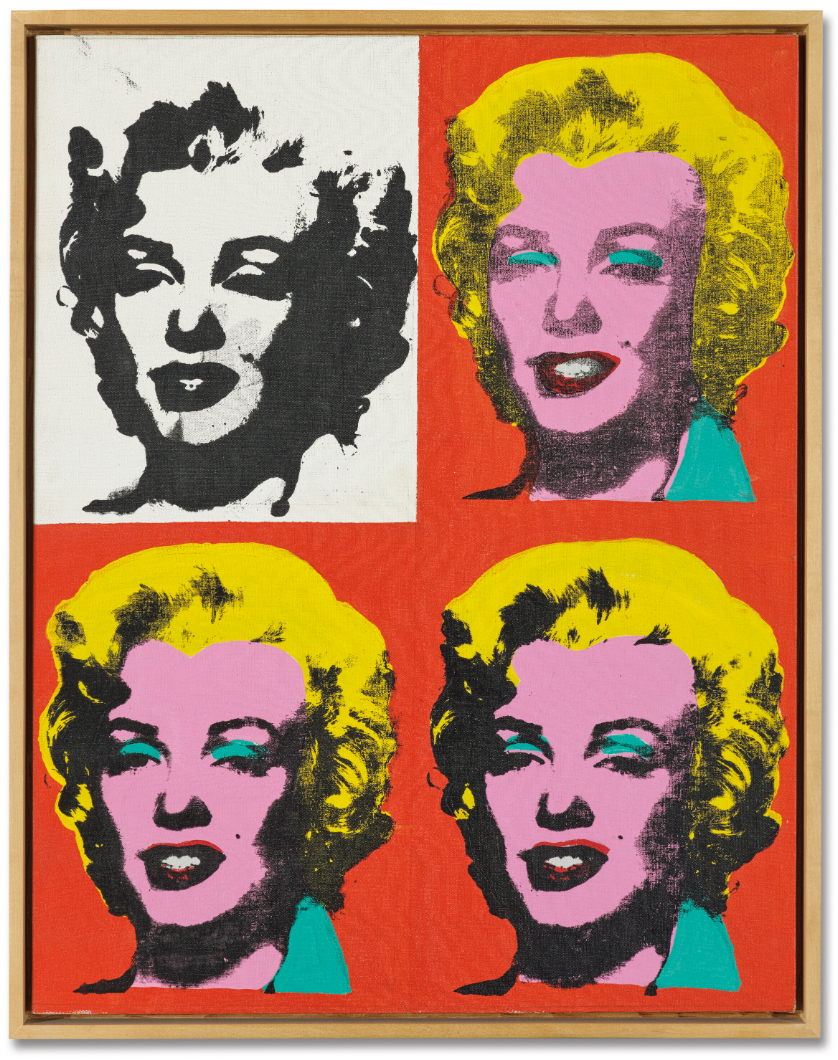
STURTEVANT (1924-2014)
Warhol Four Marilyns, 1973
Silkscreen ink and acrylic on canvas
32 x 25 1/8 inches (81.3 x 63.9 cm)
Signed, titled, inscribed and dated ‘”4 Marilyns” B/W Orange E Sturtevant ’73’ (on the reverse)
Part of the esteemed collection of Thomas and Doris Ammann, Warhol Four Marilyns is a dazzling example of Sturtevant’s ground-breaking appropriation practice. Made in 1973, and included in her first institutional solo exhibition at the Everson Museum, Syracuse that year, it belongs to her celebrated series based on Warhol’s iconic portraits of Marilyn Monroe. Repeating the artist’s silkscreens according to his own method, Sturtevant called into question the singularity of art. It was an issue wrestled with by Warhol himself: his serial images of everyday icons, based on mass-circulated photographs, asked what it meant to make a painting in the age of mechanical reproduction. Operating at the height of Warhol’s celebrity, Sturtevant turned his own mirror back upon him. Where many of her Marilyns reproduced Warhol’s works in almost exact detail, here the artist inverts the colour combination of his 1962 silkscreen. The results lay bare questions of authorship, authenticity and originality, paving the way for the emergence of postmodern art and discourse.
As part of the Ammanns’ collection, the present work sat alongside major Warholian masterpieces, including his legendary Shot Sage Blue Marilyn (1964). The relationship between the work of the two artists remains uncanny. By 1965, just three years after his first series of Marilyns, Sturtevant had convinced Warhol to grant her access to his Factory, where she was able to study his silkscreen process in detail. Her first works, shown at the Bianchini Gallery that year, took his celebrated Flowers as their muse. His Marilyns, however—iconic, tragic and seductive—captured her imagination. Produced shortly after Monroe’s death, their luminous colours stood in sharp contrast to the actress’s dark fate, offering a piercing commentary on a society addicted to image consumption. Unable to find the original stencil, Sturtevant managed to locate the exact image that Warhol himself had used: a publicity still of Monroe’s 1953 film Niagara. ‘… It was perfect’, she recalled. ‘A Warhol screen from my photo which was his photo’ (E. Sturtevant, quoted in P. Lee, Sturtevant: Warhol Marilyn, London 2016, pp. 19-20).
Sturtevant appealed to Warhol’s love of smoke and mirrors. On one famous occasion, when quizzed about his silkscreen process, he suggested that the interviewer ask her instead. While Sturtevant knew his methods inside out, however, she ultimately produced her works from memory, giving rise to small discrepancies with their original counterparts. Her inversion of Warhol’s colour in the present work was strangely prophetic: his own series of Reversals in the 1980s would perform a similar switch, reversing the tonal values of his early Marilyns. Sturtevant, indeed, was ahead of her time in more ways than one. She read Gilles Deleuze’s Différence et répétition (1968) prior to its English translation, absorbing his thesis that repeating something revealed its true nature. Her relentless application of this principle to artworks—from paintings by Jasper Johns, to the sculptures of Joseph Beuys—foreshadowed the work of Richard Prince, Sherrie Levine and other members of the 1970s Pictures Generation. The present work, however, gives nothing of this prescience away, its enigmatic allure still poker-faced half a century on.
Warhol Gold Marilyn, 1973
Phillips New-York: 16 May 2023
Estimated: USD 200,000 – 300,000
USD 190,500
Sturtevant – 20th Century & Contemporar… Lot 127 May 2023 | Phillips
STURTEVANT
Warhol Gold Marilyn, 1973
Silkscreen and gold paint on canvas
Diameter: 18 inches (45.7 cm)
Signed, titled, inscribed and dated “”Warhol’s round gold Marilyn” e. sturtevant 1973″ on the reverse
Sturtevant’s 1972 Warhol Gold Marilyn prompts many conversations surrounding fame, pop culture, authorship, and re-appropriation. A decade before the present work’s creation in 1962, Andy Warhol used an image of Monroe, the famed actress who had died earlier that year, to make a silkscreen—an image that would be reproduced hundreds of times across his canvases throughout his career. A few years later, Sturtevant—a young artist just embarking upon the New York art scene—asked to borrow Warhol’s stencil. Unable to find it, Sturtevant “decided to find the original [Marilyn] Hollywood still, one chance in a million and I found it. I took it to Andy’s silkscreen man and it was perfect. A Warhol screen from my photo which was his photo.”i Such began the female artist’s own Marilyns, re-appropriations of Warhol’s appropriations, like Warhol Gold Marilyn.
Like Warhol, Sturtevant presented each of her Marilyns in various shapes, sizes and formats. Mimicking the same golden tondo support as Warhol’s Round Marilyn, 1962, Museum Brandhorst, Munich, Sturtevant’s Warhol Gold Marilyn similarly elevates Monroe as a saintly, celestial figure. In Sturtevant’s interpretation, however, the stencil is blurrier. The subject’s left eye gets lost in the black ink depicting shadows along her hairline, while her jawline disappears where it meets her neck. The result is an imperfect, grainy portrait—one which captures the fragility in the actress’s all-too-short life. Sturtevant’s ability to depict what is slightly broken here in Monroe’s image suggests a deeper connection between the two women. Both Monroe and Sturtevant were female artists in a male-dominated universe, doing their best to assert themselves and their art in a time when image and fame trumped all else.
Warhol Marilyns, 1971
Sotheby’s New-York: 20 May 2022
Estimated: USD 400,000 – 600,000
USD 655,200
Warhol Marilyns | Contemporary Day Auction | 2022 | Sotheby’s
STURTEVANT (1924 – 2014)
Warhol Marilyns, 1971
Acrylic and silkscreen ink on canvas
19 3/4 x 31 1/2 inches (50.2 x 80 cm)
Signed Sturtevant and dated 1971 (on the reverse)
Exploring and redefining the tenets of originality, representation and authorship, Sturtevant’s Warhol Marilyns from 1973 magnifies not only one of the most important and immediately recognizable subjects of Andy Warhol’s celebrated career, but also perpetuates the very moment during the early 1960s when Warhol revolutionized the terms of popular visual culture. Conceptually stunning, Sturtevant’s repetition in Warhol Marilyns, from 1973, forces the viewer to confront questions of representation and ownership. In selecting the exquisite and radically seductive Marilyns and reinterpreting it only a decade later, Sturtevant negotiates the space between production, critical reception and canonization, leading the viewer to examine the nature of authenticity within contemporary art historical discourse. Both instantly recognizable and demanding of attention, Marilyn Monroe’s direct and sultry eye contact draws the viewer into dialogue with the very essence of Sturtevant’s practice.
Celebrated as the inheritor and perpetuator of the legacy of appropriation art, Sturtevant’s Warhol Marilyn carries on the legacy first begun by Duchamp and his ready-mades, which also influenced Andy Warhol to further redefine the very principles of what we consider to be art. In the present example, Sturtevant recreates a powerfully pared down juxtaposition of Warhol’s legendary diptych of Marilyn Monroe, one of the most recognizable works of art that encapsulates the ultimate symbol of celebrity, sexuality and glamor. Sturtevant’s much larger Warhol Diptych was created the very same year and currently holds the artist’s auction record of $5.1 million, which makes the present fresh-to-market example all the more iconic as a top example from the artist’s boundary-defying body of work. Warhol Marilyns masterfully illuminates how it is possible to not only create in a heavily visual contemporary culture but to also give pre-existing images, or even works of art, a new spirit by reimagining them in a different temporal and spatial context.
“In August 62 I started doing silkscreens. I wanted something stronger that gave more of an assembly line effect. With silkscreening you pick a photograph, blow it up, transfer it in glue onto silk, and then roll ink across it so the ink goes through the silk but not through the glue. That way you get the same image, slightly different each time. It was all so simple quick and chancy. I was thrilled with it. When Marilyn Monroe happened to die that month, I got the idea to make screens of her beautiful face the first Marilyns.”
- ANDY WARHOL
The work of Sturtevant is some of the most elusive in contemporary art. Best known for exclusively producing works of art that reference and reproduce works made by other artists – her oeuvre includes recreations of now-iconic pieces by Andy Warhol, Marcel Duchamp, Jasper Johns, Claes Oldenburg, Joseph Beuys, Robert Gober, Felix Gonzalez-Torres, Keith Haring and Roy Lichtenstein among others. In doing so, Sturetevant pushed these works even further beyond the traditional confines of what the world considered to be art, which oftentimes had first been confronted, and battled, by the original creator who also took great leaps to push beyond these traditional boundaries. Sturtevant’s cutting-edge interrogations into the “understructure” of art through her groundbreaking use of appropriation both set her apart from other artists, and situated her as the crucial link between Pop Art and the Pictures Generation of Richard Prince, Sherrie Levine and Cindy Sherman to follow. While Warhol was primarily concerned with the seductive image, surface appeal and art as a commodity, Sturtevant explored the underlying theoretical mechanics of art by daringly usurp Warhol’s forms and techniques in order to push them one step further. In doing so, Sturtevant introduced a caliber of conceptual rigor in her work that was perhaps absent or just at the precipice in Warhol’s.
Andy Warhol Flowers
Warhol Flowers, 1965
Sotheby’s Paris: 5 July 2024
Estimated: EUR 120,000 – 180,000
EUR 144,000
Warhol Flowers | Modern & Contemporary Discoveries | 2024 | Sotheby’s
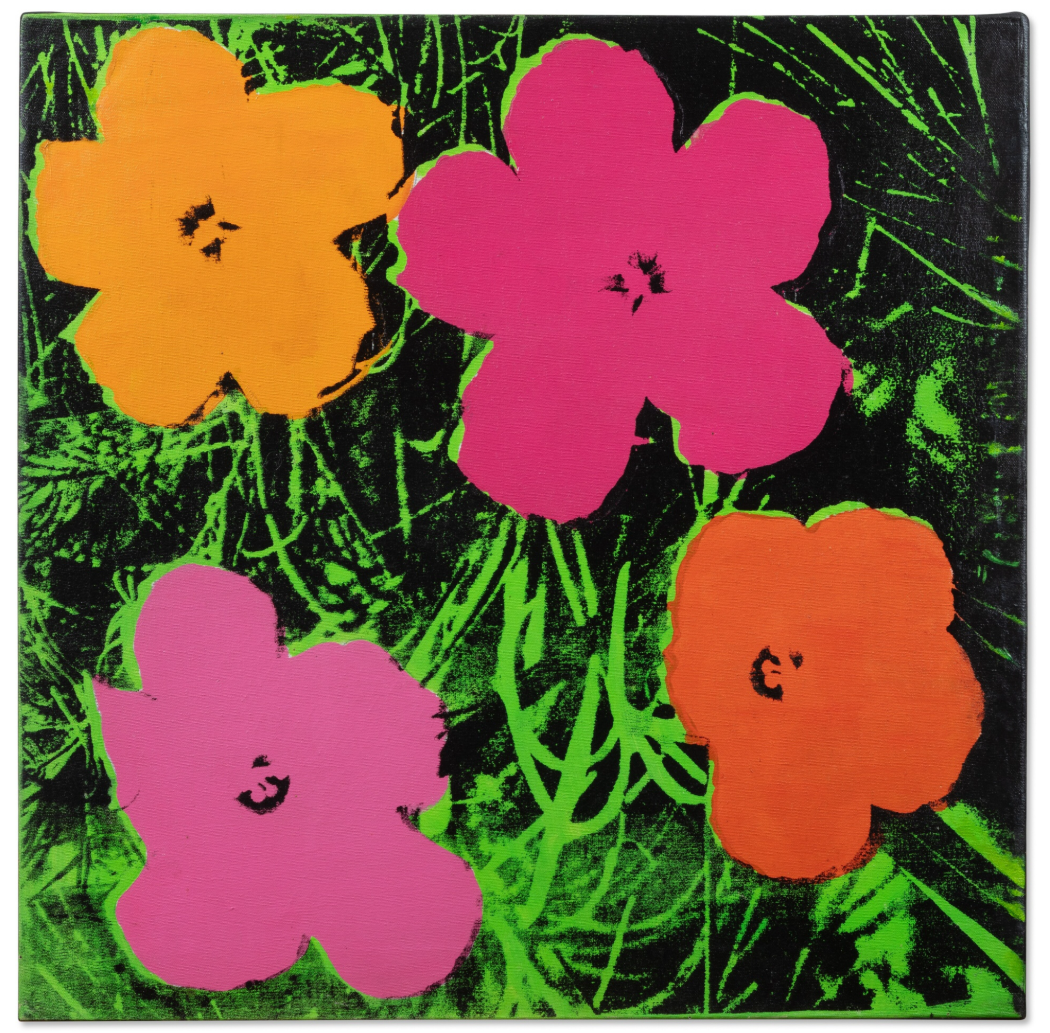
STURTEVANT (1924 – 2014)
Warhol Flowers, 1965
Acrylic and silkscreen on canvas
22×22 inches (56×56 cm)
Signed, titled, inscribed and dated 65 (on the reverse)
Warhol Flowers, executed in 1965 a year after the landmark exhibition of Warhol’s flower paintings at New York’s Leo Castelli Gallery, is part of one of the most significant and distinctive series in Elaine Sturtevant’s career. Precisely recreating Andy Warhol’s iconic flowers in vivid color and elegant style, Sturtevant explores the boundaries between authenticity and copying, challenging traditional notions of authorship and artistic merit.
Warhol Flowers is part of a series of reflections initiated by Sturtevant as early as 1964, in which she engaged in a bold exploration of artistic appropriation. By hand-reproducing major works by her contemporaries, including Roy Lichtenstein, Claes Oldenburg and Jasper Johns, she highlights the dynamics of power and recognition in the art world, often dominated by a male canon. Beyond its aesthetic dimension, Warhol Flowers embodies a profound conceptual approach: Sturtevant does not only passively reproduce Andy Warhol’s work, but actively questions the processes of creation, authentication, circulation and consumption of art, questions that Warhol had long pondered. When Warhol started working in his “Factory” and using techniques such as screen printing, he was no longer physically involved in the process of creating his own works of art, entrusting this task to his assistants: the artist’s role then became purely intellectual. By using the same techniques as Warhol and appropriating his image, Elaine Sturtevant raises fundamental questions about the nature of art and the criteria that determine its legitimacy and value, in an age increasingly dominated by reproduction.
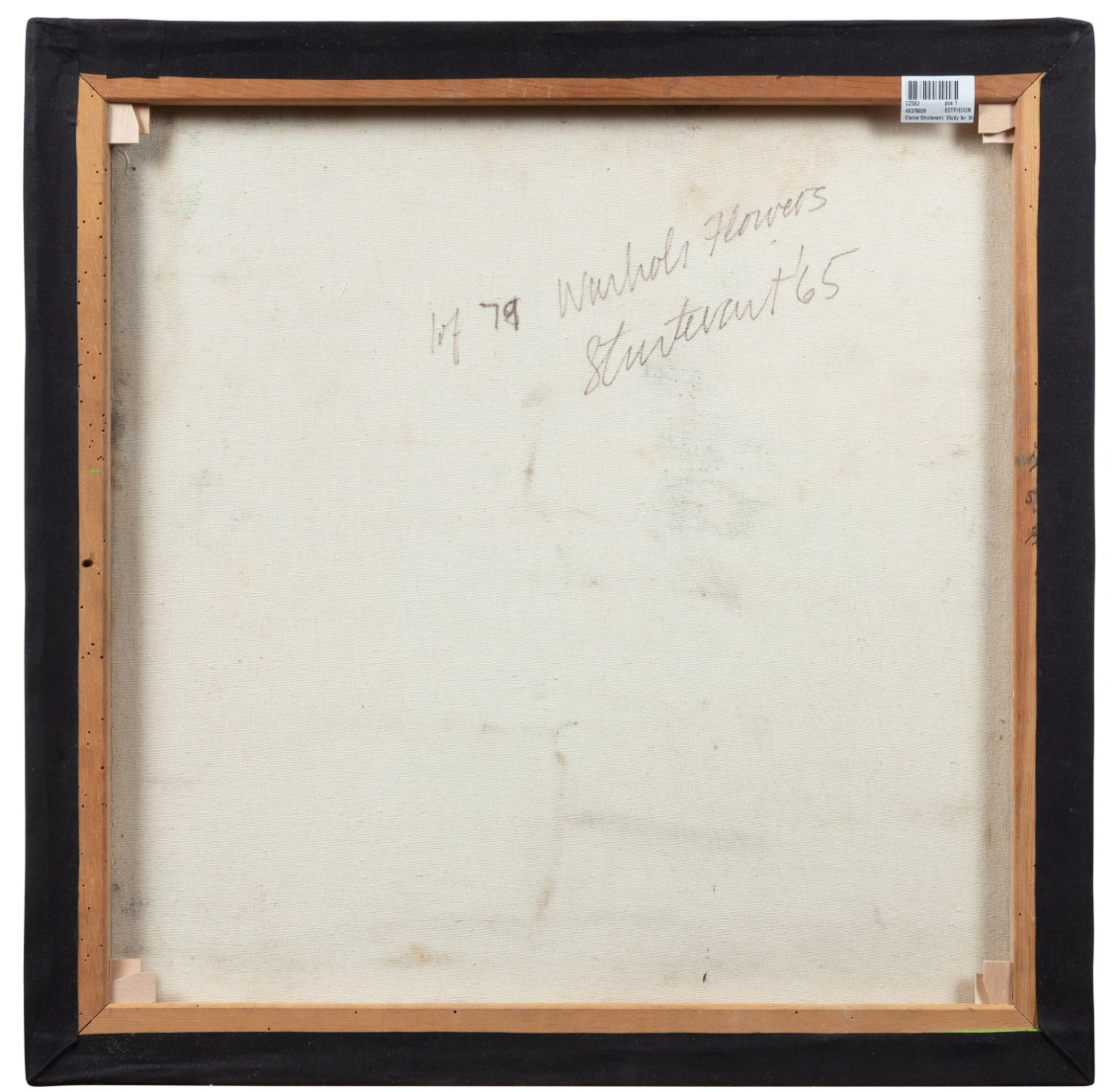
In Warhol Flowers, Sturtevant uses a silkscreen that Warhol had given her to create her own version after memorizing the process. Asked about his own technique, Warhol is said to have replied: “I don’t know. Ask Elaine” (Andy Warhol quoted in “Elaine Sturtevant, Who Borrowed Others” Workfully, Is Dead at 89″, New York Times, May 2014, online). This is an endorsement from one of the most influential artists of all time, and it also suggests that Sturtevant’s approach goes far beyond mere reproduction: it prefigures the concerns of Pictures Generation artists such as Richard Prince and Sherrie Levine.
Warhol Flowers is not only a remarkable visual piece, but also a testament to Sturtevant’s innovative artistic commitment.
Warhol Flowers, 1990
Christie’s New-York: 14 May 2024
Estimated: USD 800,000 – 1,200,000
USD 882,000
STURTEVANT (1924-2014), Warhol Flowers | Christie’s
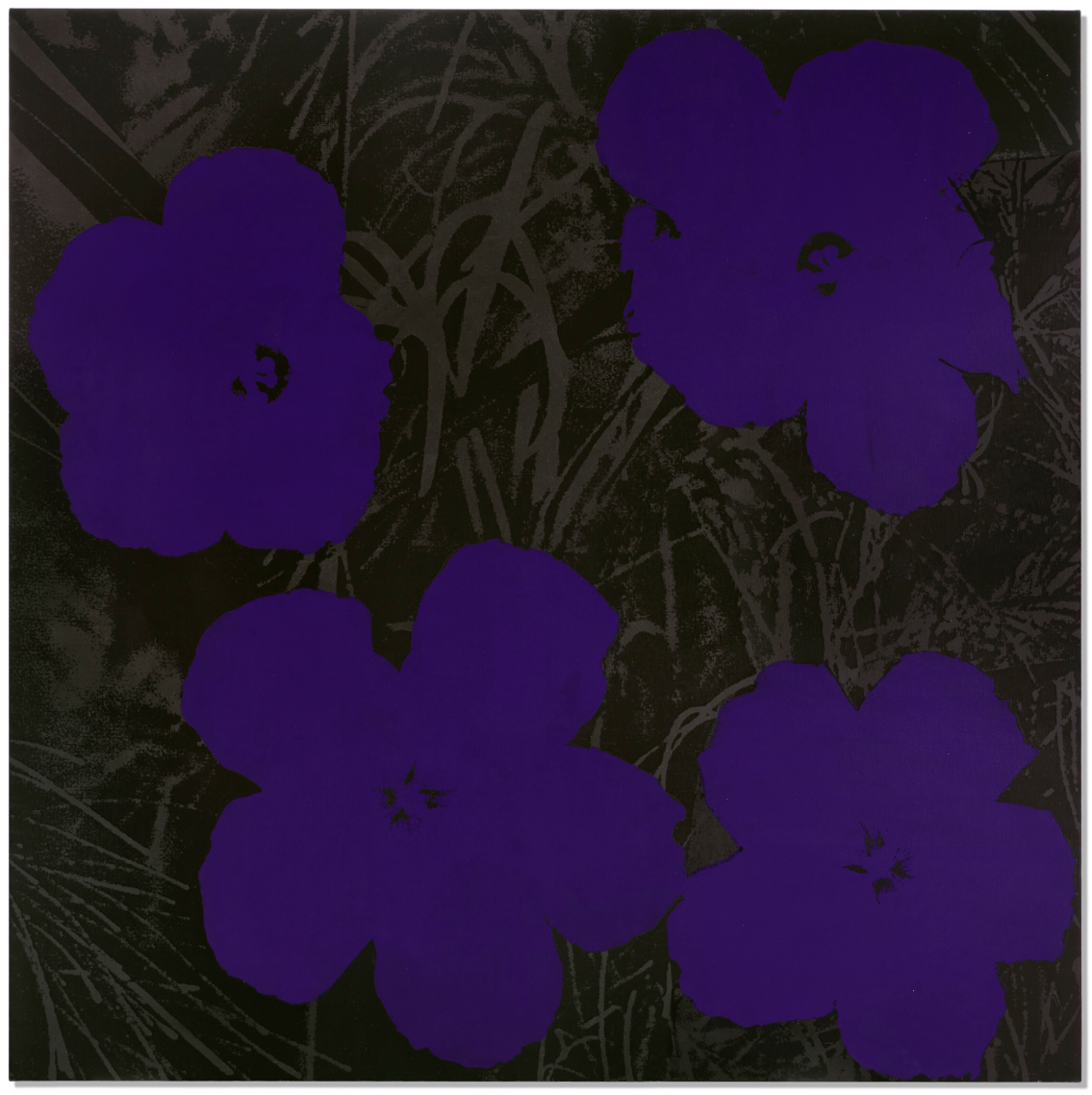
STURTEVANT (1924-2014)
Warhol Flowers, 1990
Acrylic and silkscreen ink on canvas
115 1/2 x 115 1/2 inches (293.4 x 293.4 cm)
Signed, titled and dated ‘”Warhol Flowers” Sturtevant ’90’ (on the reverse)
“The brutal truth of the work is that it is not a copy. The push and shove of the work is the leap from image to concept. The dynamics of the work is that it throws out representation.”
When Andy Warhol was once questioned about the artistic method behind his Flowers, it has been said that he responded, ‘I don’t know. Ask Elaine’ (Sturtevant, in Bill Arning, ‘Sturtevant’, Journal of Contemporary Art, no. 2, Fall/Winter 1989, p. 44). Indeed, shortly after Warhol took the art world by storm with his dazzling silkscreen paintings of hibiscus flowers, (Elaine) Sturtevant conceived her own radical response to the Pop master’s new body of work: using a 22 x 22 inch silkscreen that Warhol had lent her, Sturtevant created her seminal body of work Warhol Flowers, of which other examples reside in such institutions as The Art Institute of Chicago.
Sturtevant’s Warhol Flowers are the result of a masterful loop of repetition, one in which the artist pushed Warhol’s very own artistic investigations into new conceptual pastures. Warhol had, indeed, taken as his source for a photograph by Patricia Caulfied that was published in the June 1964 Modern Photography, cropping the rectangular image of seven flowers to a square containing only four blossoms. As Peter Eleey noted, ‘In Sturtevant’s hands, Warhol’s image draws greater attention to the limits, edges, and qualities of his authorship, already stressed by the appropriated and delegated aspects of his screenprint paintings’ manufacture…while pointing back further to the woman whose image had passed from her own camera, through Kodak’s advertising agency, to a magazine, and then to a high-contrast crop at Warhol’s Factory, before moving to his screen maker, and finally on to Sturtevant’ (Peter Eleey,Sturtevant, Double Trouble, exh. cat., Museum of Modern Art, 2014, p. 49).
While engaging in strategies of appropriation, Sturtevant notably goes beyond merely questioning the discourse of original and copy. It is telling that rather than revisiting the masterpieces of the distant past, Sturtevant turned to the ‘masterpieces’ in the making around her. Her first ever solo exhibition, at the Bianchini Gallery in New York in 1965, presented a tongue-in-cheek installation that effectively put the art world’s latest fashions on display. Merely a year after the debut of Warhol’s Flowers at Leo Castelli Gallery, Sturtevant lined the gallery walls with her own Warhol look-a-likes – here juxtaposed with a white sculpture resembling a work by George Segal shown pulling a garment rack laden with paintings evocative of works by the likes of Jasper Johns, Arman, Claes Oldenburg and Frank Stella. In doing so, Sturtevant effectively exposed the political, economic and cultural circumstances that underpins art’s creation, circulation, consumption and canonization. For Sturtevant, the 1960s represented ‘the big bang of pop art. But pop only dealt with the surface, I started asking questions about what lay beneath the surface. What is the understructure of art? What is the silent power of art?’ (Sturtevant, quoted in conversation with Peter Halley, Index Magazine, 2005, online).
While works such as the present ones at first glance appear as ‘perfect copies’, they are best understood as studies that expose broader systems of value within the art world. ‘By faking faking,’ Peter Eley has argued, ‘she showed that she was not a copyist, plagiarist, parodist, forger, or imitator, but was rather a kind of actionist, who adopted style as her medium in order to investigate aspects of art’s making, circulation, consumption, and canonization’ (Peter Eleey, Sturtevant: Double Trouble, exh. cat., The Museum of Modern Art, New York, 2014, p. 50).
Since her passing in 2014, Sturtevant has received the critical attention she was denied for much of the late 20th century. After receiving the Golden Lion Lifetime Achievement award at the 2011 Venice Biennale, her work was celebrated in her first comprehensive survey in the United States since 1973 beginning at The Museum of Modern Art, New York in 2014.
Warhol Flowers, 1969/70
Sotheby’s London: 16 March 2023
Estimated: GBP 30,000 – 40,000
GBP 69,850 / USD 84,290
Warhol Flowers | (Women) Artists | 2023 | Sotheby’s
STURTEVANT (b. 1924)
Warhol Flowers, 1969/70
Silkscreen and acrylic on canvas
11×11 inches (28×28 cm)
Signed and dated Paris 1969/70 on the reverse
Executed in 1969-70, Warhol Flowers belongs to one of Elaine Sturtevant’s most significant and highly celebrated bodies of works. With its vibrant and elegant burst of quintessentially springtime yellow flowers taken directly from Andy Warhol’s iconic composition, Sturtevant thought provokingly builds on the legacy of her male counterparts. Her explorations of appropriation began in 1964, when she started to manually reproduce works of art by memory – focusing at first on those created by her contemporaries including Roy Lichtenstein, Claes Oldenburg, Jasper Johns and indeed Andy Warhol. Selecting easily recognisable motifs from their long established oeuvres and deliberately mimicking their aesthetics, she posed a critical challenge to notions of authenticity and authorship in an era increasingly dominated by reproduction. Furthermore, the importance of Warhol’s ‘brand’ in solidifying Sturtevant’s early career was not only evident through her decision to explore several of his images in her works (ranging from the Flowers to the Marilyns) but also in her choice to present an entire show consisting of her repetition of Warhol’s Flowers in 1991, some twenty six years after Warhol’s historic exhibition of his original flower paintings at New York’s Leo Castelli Gallery.
While engaging in strategies of appropriation, Sturtevant notably goes beyond merely questioning the discourse of original and copy. Merely a year after the debut of Warhol’s Flowers at Castelli Gallery, Sturtevant lined the walls of Bianchini Gallery with her own tongue-in-cheek Warhol reproductions – here juxtaposed with a white sculpture resembling a work by George Segal shown pulling a garment rack laden with paintings evocative of works by the likes of Jasper Johns, Arman, Claes Oldenburg and Frank Stella. In doing so, Sturtevant effectively exposed the political, economic and cultural circumstances that underpins art’s creation, circulation and consumption under a male dominated canon.
As in the present work, Sturtevant used a silkscreen that Warhol had given her to create her own version of Warhol’s composition. Famously, when asked about his own technique, Warhol was reported to have said, “I don’t know. Ask Elaine” (Andy Warhol quoted in ‘Elaine Sturtevant, Who Borrowed Others’ Work Artfully, Is Dead at 89,’ New York Times, May 2014, Online). With this in mind, paintings such as Warhol Flowers at first glance appear as perfect copies, however Sturtevant’s creative output is best understood as studies that expose broader systems of value within the art world. Indeed art historian Peter Eley has argued, ‘By faking, [Sturtevant] showed that she was not a copyist, plagiarist, parodist, forger, or imitator, but was rather a kind of actionist, who adopted style as her medium in order to investigate aspects of art’s making, circulation, consumption, and canonization’ (Peter Eley, quoted in Exh. Cat., New York, The Museum of Modern Art, Sturtevant: Double Trouble, November 2014 – February 2015, p. 50). Since her passing in 2014, Sturtevant has received the critical attention she was denied for much of the late 20th century. After receiving the Golden Lion Lifetime Achievement award at the 2011 Venice Biennale, her work was celebrated in her first comprehensive survey in the United States since 1973 beginning at The Museum of Modern Art, New York in 2014.
Warhol Flowers, 1990
Christie’s New-York: 17 November 2022
Estimated: USD 800,000 – 1,200,000
USD 1,008,000
STURTEVANT (1924-2014), Warhol Flowers | Christie’s
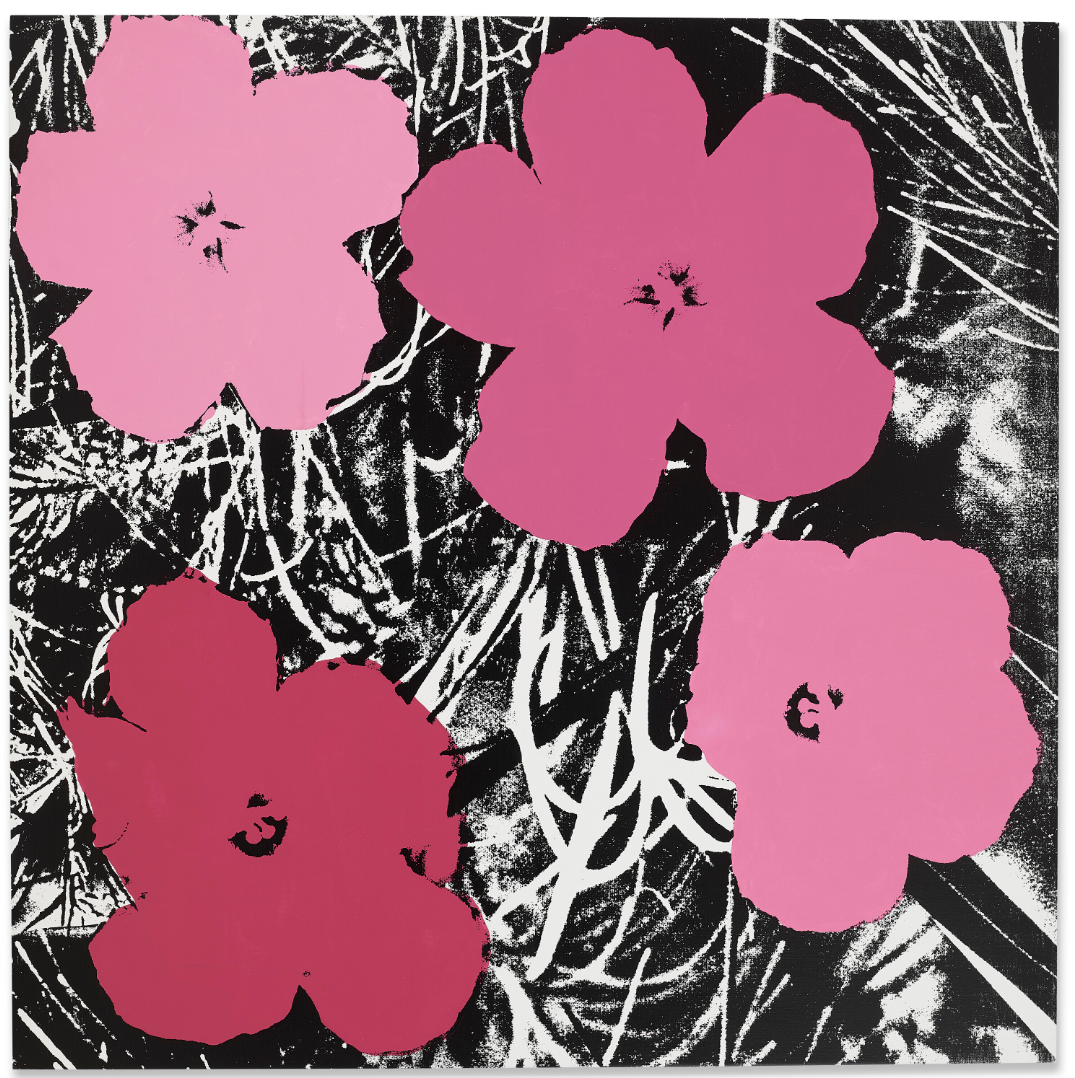
STURTEVANT (1924-2014)
Warhol Flowers, 1990
Synthetic polymer paint and silkscreen ink on canvas
115 1/2 x 115 inches (293.2 x 291.1 cm)
Signed, titled, and dated ‘Warhol Flowers Sturtevant 1990’ (on the reverse)
Sturtevant challenged the accepted canon of twentieth-century art with her rigorous appropriations which drew both respect and controversy in equal measure. One of her most celebrated works is the monumental Warhol Flowers, which takes as its subject the signature imagery of the Pop icon. A standout in her appropriations of Warhol, which began in the 1960s, Warhol Flowers is purposefully grand at nearly ten feet square. This work has a privileged position within Sturtevant’s oeuvre, having been exhibited in the traveling exhibition Sturtevant: The Brutal Truth in 2005. Warhol Flowers is as original as Warhol’s 1960s silkscreen flowers themselves. When asked about his techniques in an interview, Warhol famously replied in a winking and deadpan manner, “I don’t know. Ask Elaine [Sturtevant]” (A. Warhol, quoted by U. Kittelmann, ed., Sturtevant: The Brutal Truth, Switzerland, 2004, p. 17). He even gave Sturtevant one of his Flower paintings so that she could memorize his process. This is an endorsement by one of the most influential artists of all time to be sure, but it also suggests that Sturtevant’s investigation of authorship is more than reproduction. It is an avant-garde in and of itself that prefigured the concerns of Pictures Generation artists like Richard Prince and Sherrie Levine.
Warhol Flowers combines pink, red, and black to stunning effect, and it instigates a play of hues and patterns that fills a room with graphic exuberance. The silkscreened flowers float over the scene, surreal and emotive like the still lifes of Frida Kahlo. Sturtevant’s canvases were not direct copies, but reproduced from memory, thereby leaving room for subjectivity and imagination. These vibrant flowers seem to grow out of the austerity of black and white, like nature’s inevitable return after a storm or fire. Yet Sturtevant’s colors are beyond nature, and instead gesture toward Warhol’s fabulously unexpected silvers, pinks, and golds, or perhaps even the otherworldly pigment of Claude Monet’s late landscapes. So important was Sturtevant’s relationship to Warhol that she would mount a show in 1991 entirely of her Warhol Flowers, of which the present example is one of the most visually intriguing.
Warhol Flowers, 1970
Sotheby’s New-York: 13 May 2021
Estimated: USD 70,000 – 100,000
USD 94,500
Warhol Flowers | Contemporary Art Day Auction | 2021 | Sotheby’s
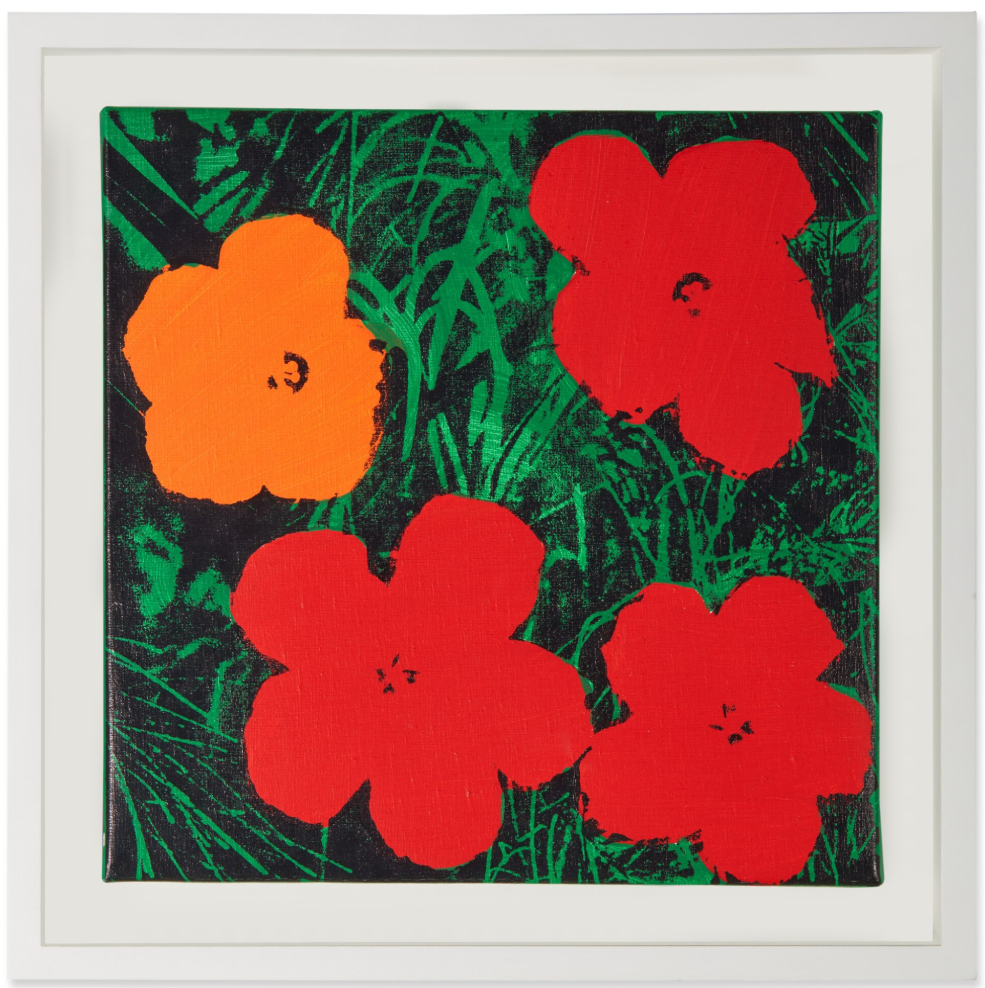
STURTEVANT (1924 – 2014)
Warhol Flowers, 1970
Acrylic and silkscreen ink on canvas
11×11 inches (27.9 x 27.9 cm)
Flowers, 1970
Sotheby’s New-York: 12 March 2021
Estimated: USD 70,000 – 100,000
USD 107,100
Flowers | Contemporary Curated | 2021 | Sotheby’s
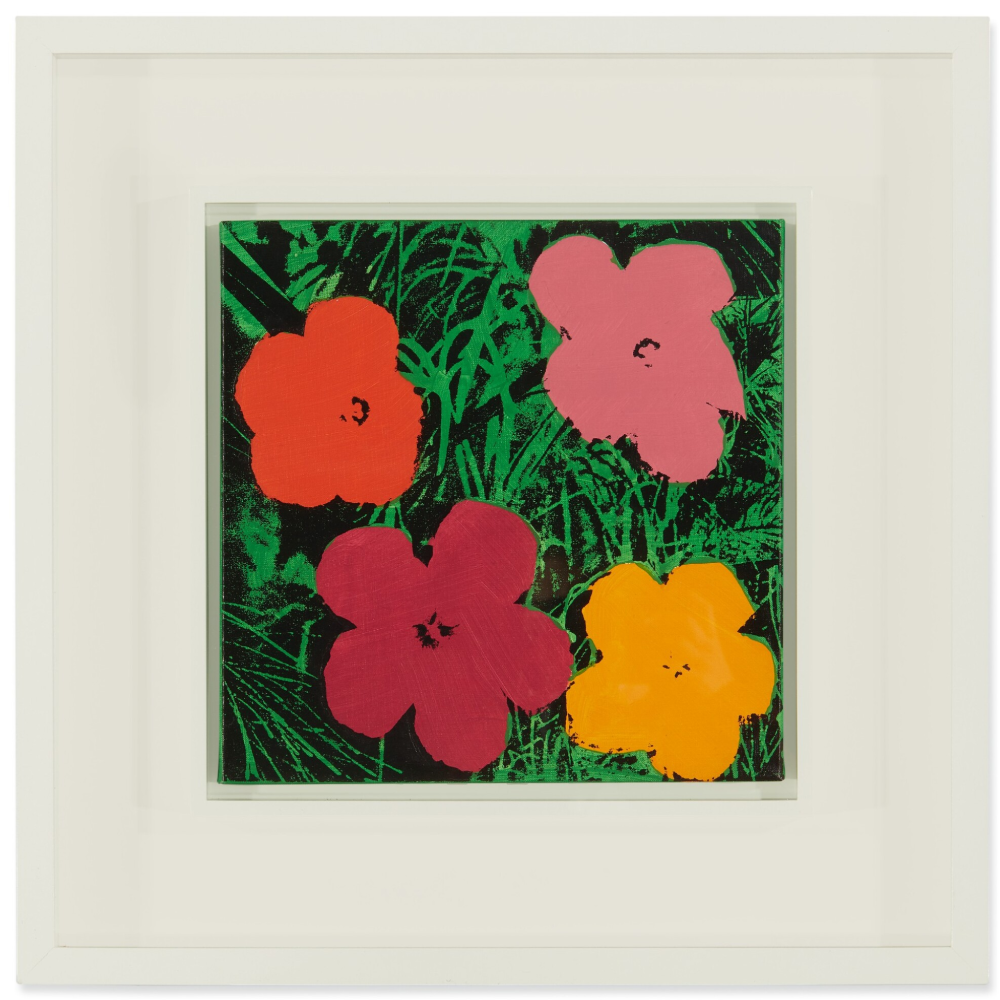
STURTEVANT (1924 – 2014)
Flowers, 1970
Acrylic and silkscreen ink on canvas
11×11 inches (27.9 x 27.9 cm)
Warhol Flowers, 1969-70
Christie’s New-York: 7 October 2020
Estimated: USD 100,000 – 150,000
USD 187,500
Sturtevant (1926-2014), Warhol Flowers | Christie’s
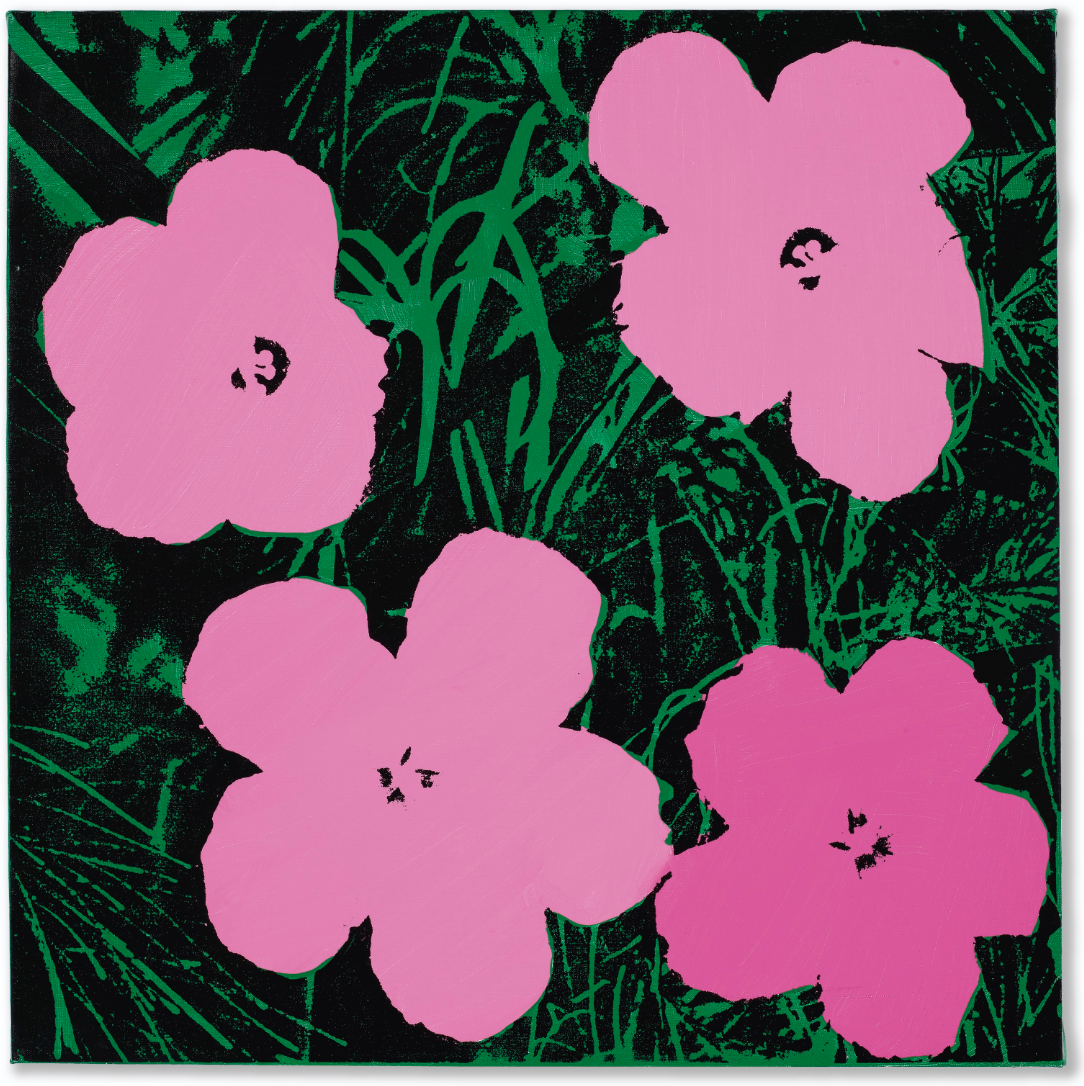
STURTEVANT (1926-2014)
Warhol Flowers, 1969-70
Acrylic and silkscreen ink on canvas
22×22 inches (55.9 x 55.9 cm)
Signed, titled, inscribed and dated ‘”Warhol Flowers” e. sturtevant PARIS 1969/70’ (on the reverse)
Study for Warhol Flowers, 1971
Christie’s New-York: 7 October 2020
Estimated: USD 100,000 – 150,000
USD 150,000
Sturtevant (1926-2014), Study for Warhol Flowers | Christie’s
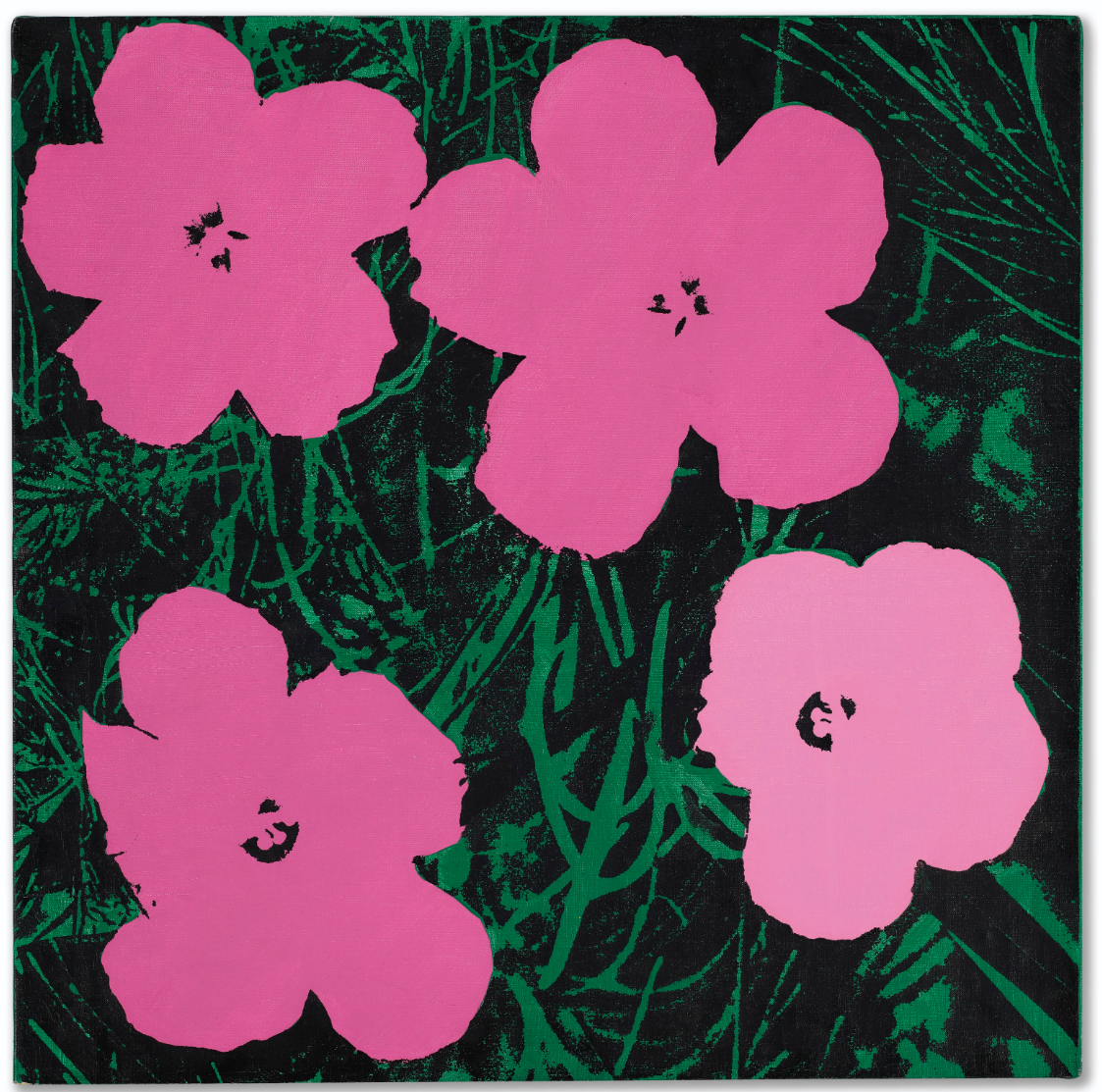
STURTEVANT (1926-2014)
Study for Warhol Flowers, 1971
Acrylic and silkscreen ink on canvas
22×22 inches (55.9 x 55.9 cm)
Signed and titled ‘Study for Warhol flowers Sturtevant’ (on the reverse)
Warhol Flowers, 1965
Christie’s New-York: 16 May 2019
Estimated: USD 200,000 – 300,000
USD 287,500
Sturtevant (1924-2014), Warhol Flowers | Christie’s
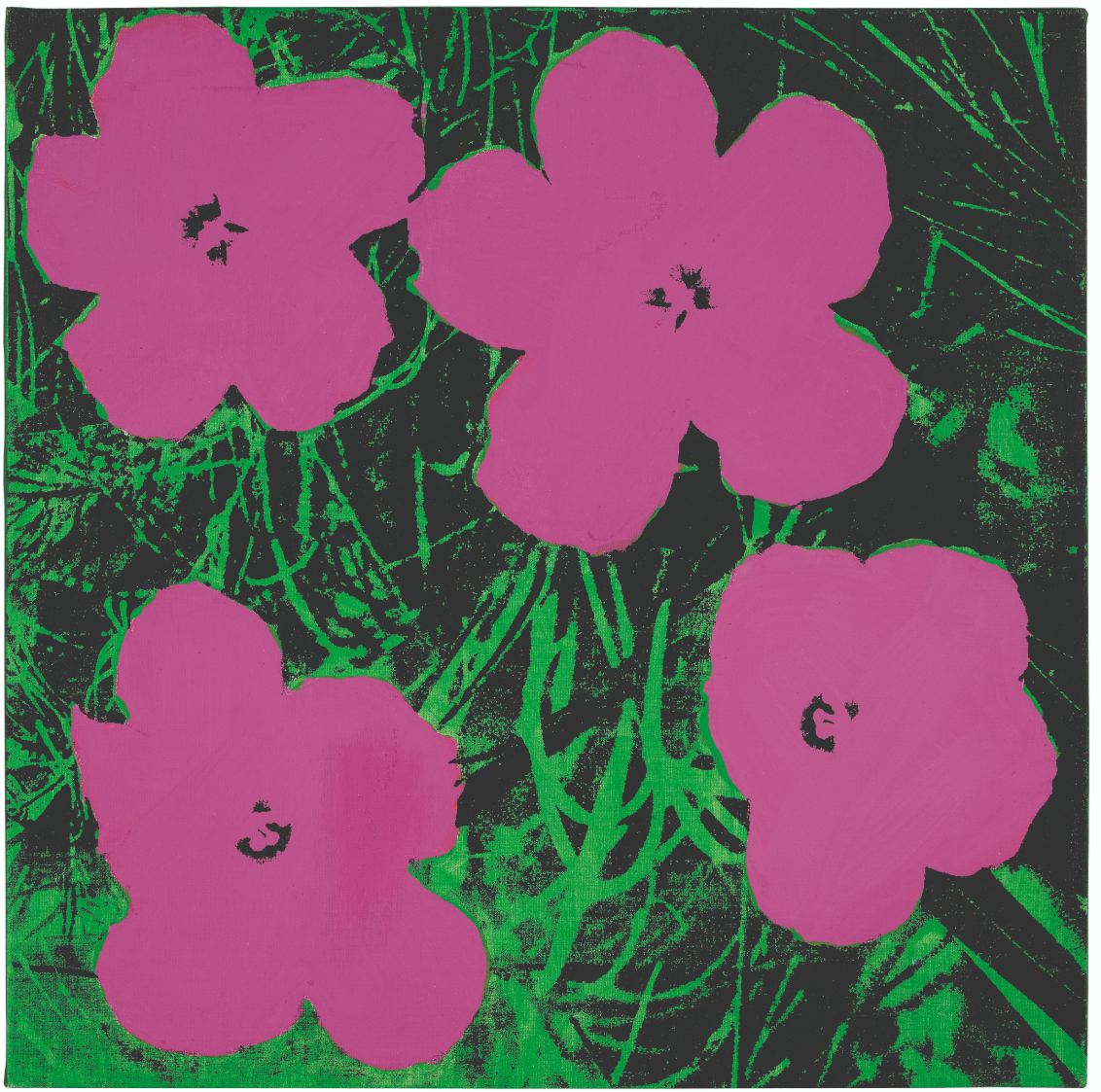
STURTEVANT (1924-2014)
Warhol Flowers, 1965
Acrylic and silkscreen ink on canvas
22×22 inches (56×56 cm)
Signed, inscribed, titled and dated ‘”WARHOL FLOWERS” e. Sturtevant collection of the artist 1965’ (on the reverse)
Study for Warhol Flowers, 1969
Christie’s New-York: 16 November 2018
Estimated: USD 120,000 – 180,000
USD 187,500
Sturtevant (1926-2014), Study for Warhol Flowers | Christie’s
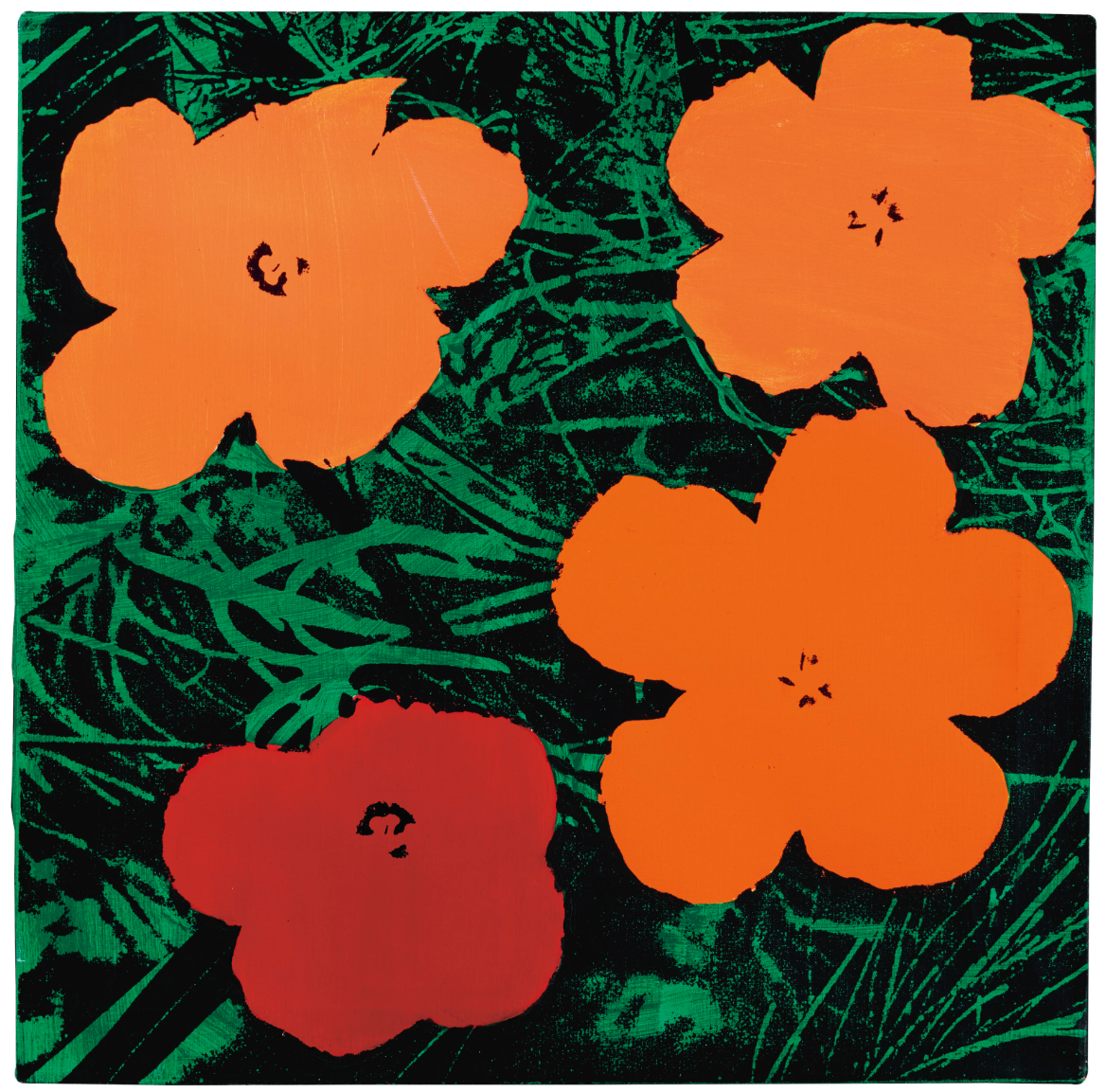
STURTEVANT (1926-2014)
Study for Warhol Flowers, 1969
Synthetic polymer and silkscreen ink on canvas
22 x 22 1/8 inches (55.9 x 56.2 cm)
Signed and titled ‘study for warhol flowers sturtevant’ (on the reverse)
Study for Warhol Flowers, 1965
Christie’s New-York: 16 November 2018
Estimated: USD 120,000 – 180,000
USD 175,000
Sturtevant (1926-2014), Study for Warhol Flowers | Christie’s
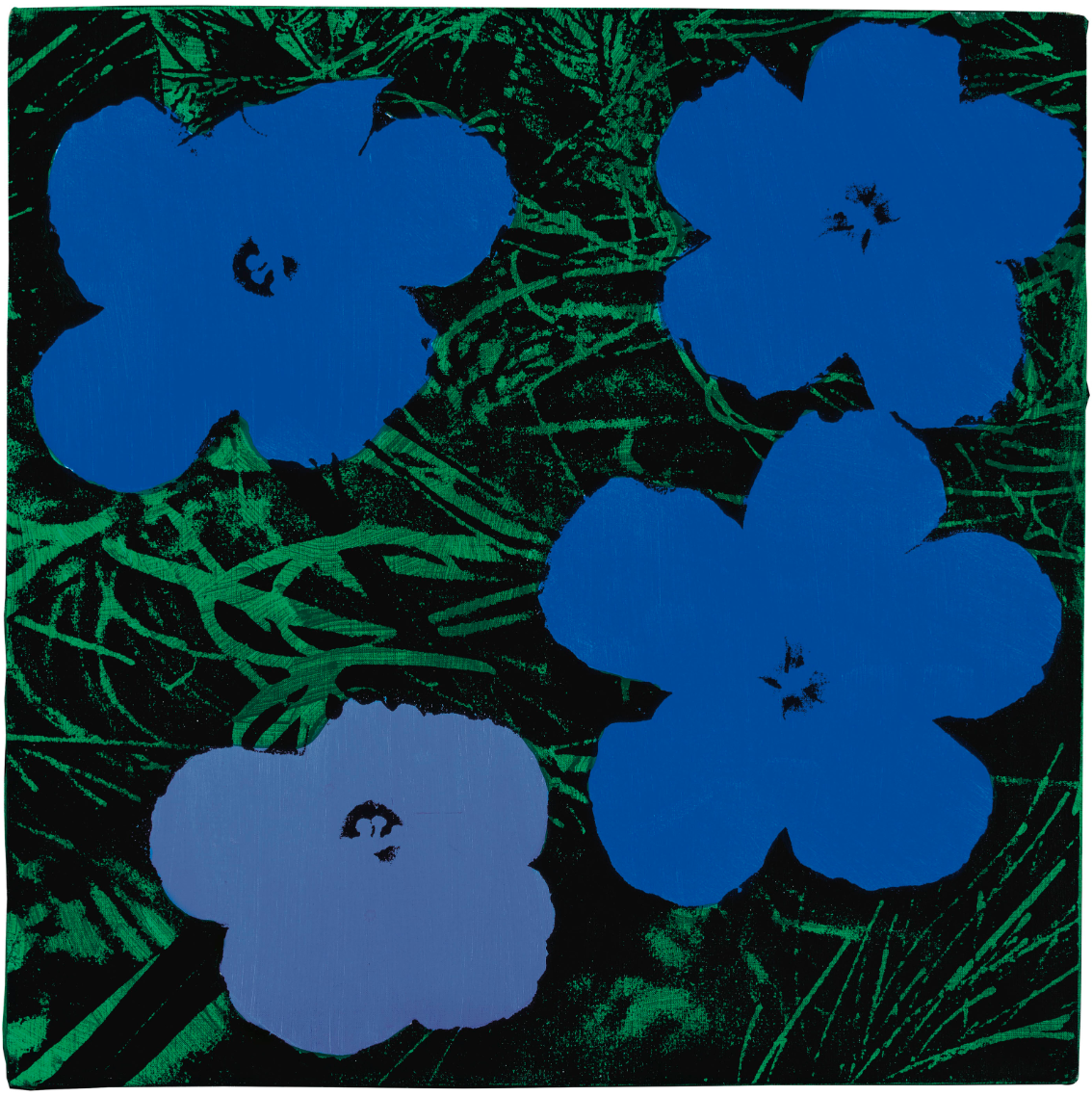
STURTEVANT (1926-2014)
Study for Warhol Flowers, 1965
Synthetic polymer and silkscreen ink on canvas
22 1/8 x 22 1/8 inches (56.2 x 56.2 cm)
Signed and titled ‘study for warhol flowers sturtevant’ (on the reverse)
Warhol Flowers, 1965
Christie’s New-York: 18 May 2018
Estimated: USD 140,000 – 180,000
USD 384,500
STURTEVANT (1924-2014), Warhol Flowers | Christie’s
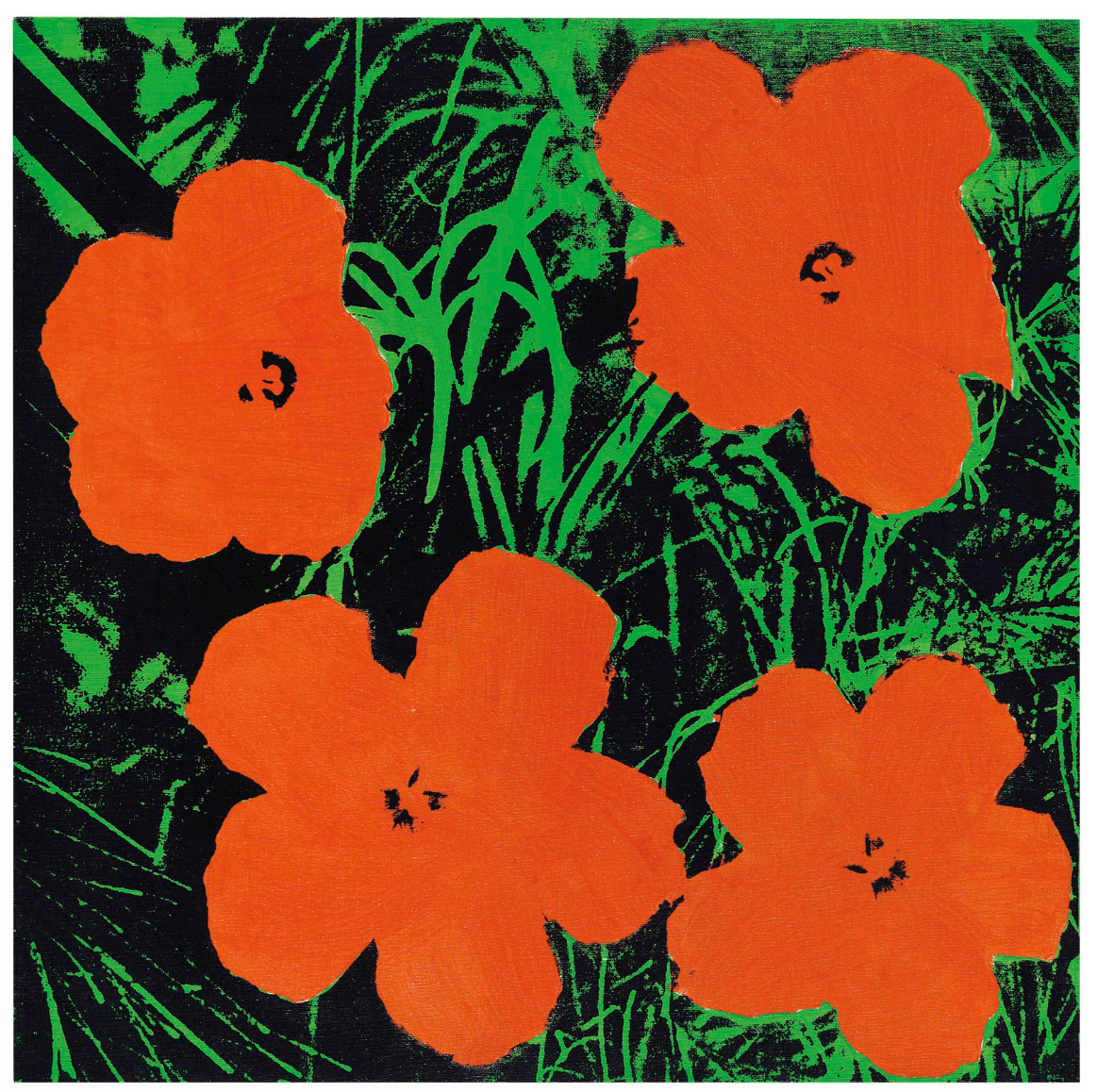
STURTEVANT (1924-2014)
Warhol Flowers, 1965
Synthetic polymer and silkscreen ink on canvas
22 1/8 x 22 inches (56.2 x 56 cm)
Signed and dated ‘e sturtevant ’65’ (on the reverse)
Sturtevant’s Warhol Flowers is just one of five canvases of this large size that the artist painted featuring a quartet of bold red flowers. Painted in 1965, the series is one of the artist’s most significant bodies of works and was completed just a few weeks after Andy Warhol’s historic show of his original flower paintings at New York’s Leo Castelli Gallery. Rather than reimagining the subject, the Sturtevant used a silkscreen that Warhol had given her to create further versions of the composition. With its burst of bright red flowers taken directly from Warhol’s iconic composition, Sturtevant builds on the legacy of artist’s such as Marcel Duchamp. Her explorations of appropriation began in 1964, when she started to manually reproduce works of art by memory – focusing at first on those created by her contemporaries such as Roy Lichtenstein, Claes Oldenburg, Jasper Johns and Warhol. Selecting easily recognizable motifs from their oeuvres and deliberately mimicking their aesthetics, she posed a critical challenge to notions of authenticity and authorship in an era increasingly dominated by reproduction. The importance of Warhol’s ‘brand’ in solidifying Sturtevant’s early career was not only evident through her decision to explore several of his images in her works (ranging from the Flowers to the Marilyns) but also in her choice to present an entire show consisting of her repetition of Warhol’s Flowers in 1991.
Four Warhol Flowers, 1969-1970
Christie’s London: 6 March 2018
Estimated: GBP 120,000 – 180,000
GBP 236,750
Sturtevant (1926-2014), Four Warhol Flowers | Christie’s
STURTEVANT (1926-2014)
Four Warhol Flowers, 1969-1970
Acrylic and silkscreen ink on four attached canvases
Each: 11×11 inches (27.9 x 27.9 cm)
Overall: 22×22 inches (56×56 cm)
i) signed, titled, inscribed, numbered and dated ‘“Warhol Flowers” sturtevant Paris #1 of 4 69/70′ (on the reverse)
ii) signed, titled, inscribed, numbered and dated ‘“Warhol Flowers” sturtevant Paris #2 of 4 69/70′ (on the reverse)
iii) signed, titled, inscribed, numbered and dated ‘“Warhol Flowers” sturtevant #3 of 4 Paris /69/70.’ (on the reverse)
iv) signed, titled, inscribed, numbered and dated ‘“Warhol Flowers” sturtevant Paris 69-70 #4 of 4′ (on the reverse)
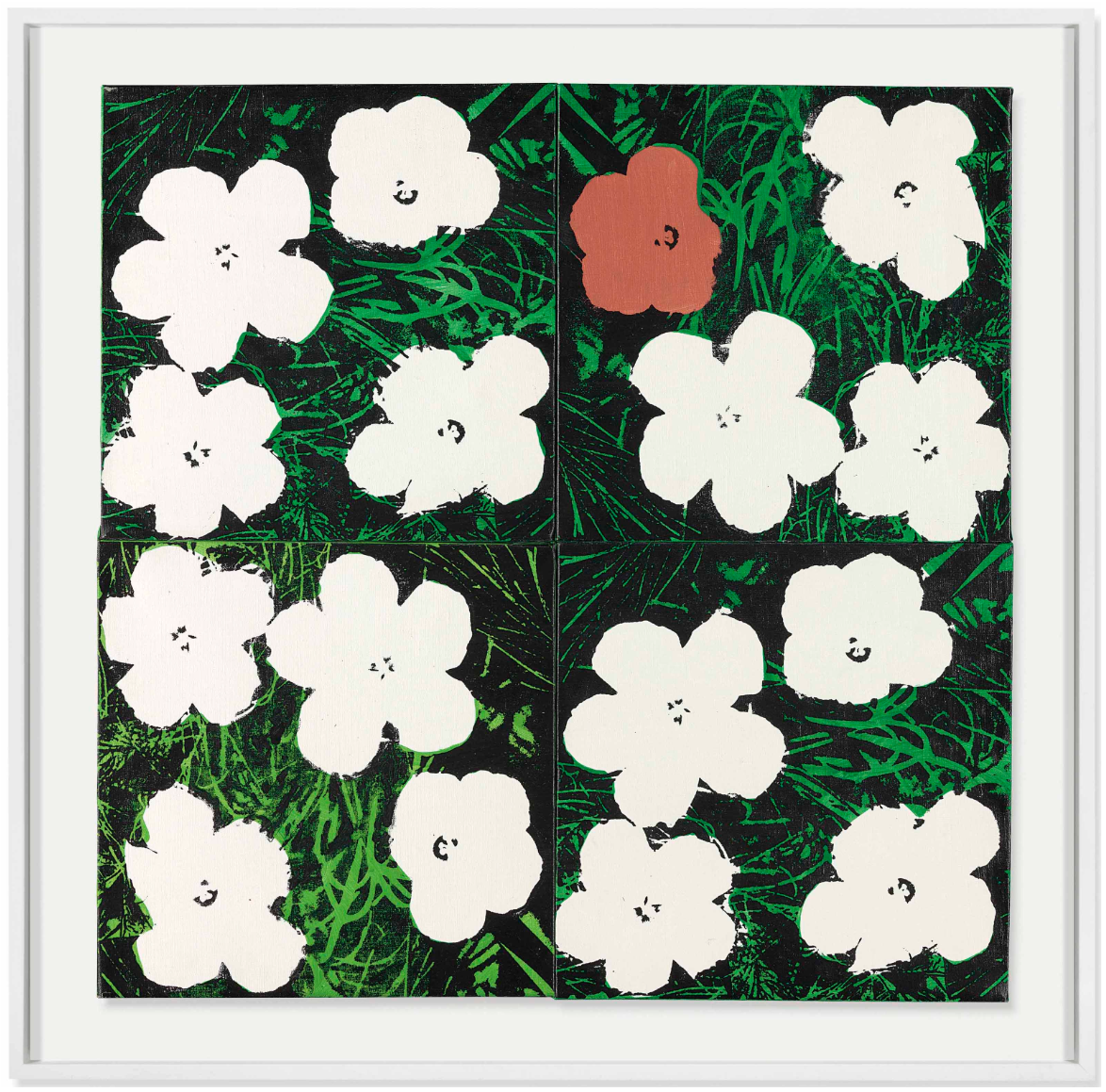
Four Warhol Flowers is an important example of one of Sturtevant’s most significant bodies of works. This rare and historic series of silk-screen paintings, first shown in her debut exhibition at Bianchini Gallery, New York in 1965, quoted Andy Warhol’s iconic Flowers exhibited just a couple of weeks before. In fact, Sturtevant, rather than reimagining the subject, used a silkscreen that Warhol had given her to create further versions of the composition; famously, when asked about his own technique, Warhol commented ‘I don’t know. Ask Elaine.’ The present work shows Sturtevant’s return to this specific floral pattern a few years later (1969-70) when she repeated it across four attached canvases that she then joined together. With its single red flower, the upper right canvas is based on Warhol’s Flowers (cat. no. 1344) from 1964, whilst the other three draw upon the same configuration of blooms in white. Extending the legacy of Marcel Duchamp, Sturtevant’s explorations of appropriation began in 1964, when she started to manually reproduce works of art by memory – focusing at first on those created by her contemporaries such as Roy Lichtenstein, Claes Oldenburg, Jasper Johns and Warhol. Selecting easily recognizable motifs from their oeuvres and deliberately mimicking their aesthetics, Sturtevant posed a critical challenge to notions of authenticity and authorship in an era increasingly dominated by reproduction. The importance of Warhol’s ‘brand’ in solidifying Sturtevant’s early career was not only evident through her decision to explore several of his images in her works (ranging from the Flowers to the Marilyns) but also in her choice to present an entire show consisting of her repetition of Warhol’s Flowers in 1991.
Warhol Flowers, 1965
Sotheby’s London: 29 June 2016
Estimated: GBP 80,000 – 120,000
GBP 191,000
STURTEVANT
Warhol Flowers, 1965
Acrylic and silkscreen ink on canvas
22×22 inches (56×56 cm)
Signed, titled and dated 1965 on the reverse
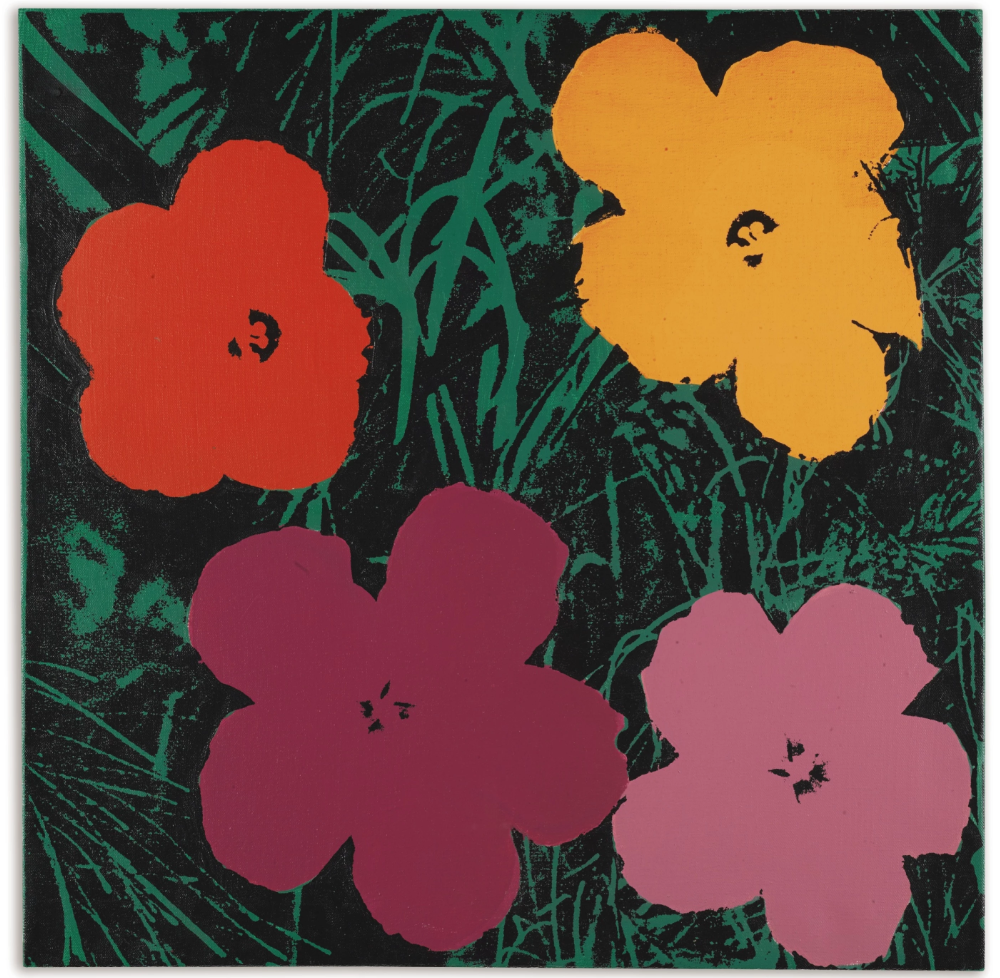
Representing Sturtevant’s core conceptual ideals, Warhol Flowers is a seminal piece created at the outset of Sturtevant’s critically-acclaimed career. With an oeuvre that encompasses painting, sculpture, drawing, photography, film and video as equally ranking media, Sturtevant’s work is one of the most interesting and radical contributions to contemporary art. A figure of outstanding significance, her pieces disconcert and provoke the viewer into a rigorous and insistent re-evaluation of their mental attitude towards art.
Beginning in 1964 with Andy Warhol’s Flowers, Sturtevant’s practice involved the re-invention of some of the most iconic pieces of recent art history. Her unique ability to source works so promptly after their completion displayed an uncommon capacity to recognise the significance of artistic phenomena at a very early stage. The current lot, for example, was completed in the very same year in which Warhol created and exhibited his Flower silkscreens at Leo Castelli’s gallery. In fact Warhol, who was already exploring similar interrogations surrounding ideas of authorship and the concept of the ‘original artwork’, gave Sturtevant the original silkscreen he had used in order for her to produce her series. As a result, Warhol Flowers, which features four brightly coloured, crisp Warholian flowers on a black background with pointed, fresh, green blades of grass, perfectly imitates the original on which it is based.
This new and controversial take on contemporary art initially incited reactions of indignation and a general lack of understanding regarding Sturtevant’s work. However, in retrospect and upon deeper consideration art historians have come to realise the significance of her practice and the contribution it makes towards a redefinition of the basic principles defining art itself. Instead of commenting upon the artistic achievements of her contemporaries, Sturtevant’s work places existing objects into new contexts and encourages us to reconsider accepted definitions of art. Using a conceptual framework the technique and medium become secondary to the overarching aim of creating an emotional and intellectual jolt. This is achieved through “encountering a known object that is then denied its content [which results], if not in immediate rejection, in a shifting and disturbing mode of thought. There is a loss of balance that demands going beyond” (Sturtevant quoted in: Exh. Cat., Düsseldorf, Musée des Beaux-Arts de Montréal, Rene Magritte, 1996, p. 125)
One of the most significant thoughts provoked by Sturtevant’s practice, and especifically by Warhol Flowers, revolves around the use of Warhol as an artist and his own particular modes of production. When Warhol established his ‘Factory’ he was no longer physically involved in the process of creating his own art works, instead handing this task over to his assistants. As such, his role became solely intellectual. Thus, in creating her work with the same means in which Warhol executed his iconic Flower paintings, Sturtevant astutely questions the originality of the latter’s work and pushes the boundaries of authorship. The question of original and copy begins to blend into insignificance and both become original works of art. Sturtevant’s paradox is that precisely by making the ‘copy’ as such the basis of her work, she creates something that is absolutely ‘original’ and unique. As Giulio Paolini remarked, quite wryly, it “looks like she’s the only artist who can’t be copied” (Giulio Paolini quoted in Sturtevant: Catalogue Raisonné, Ostfildern, 2004, p. 36).
Study for Warhol Flowers, 1971
Sotheby’s New-York: 3 March 2016
Estimated: USD 50,000 – 70,000
USD 56,250
STURTEVANT
Study for Warhol Flowers, 1971
Acrylic and silkscreen ink on canvas
11×11 inches (27.9 x 27.9 cm)
Signed and titled on the reverse
Jasper Johns
Johns Painting with Two Balls, 1987
Christie’s New-York: 17 May 2023
Estimated: USD 500,000 – 700,000
USD 882,000
STURTEVANT (1924-2014), Johns Painting with Two Balls | Christie’s
STURTEVANT (1924-2014)
Johns Painting with Two Balls, 1987
Encaustic and paper collage on three joined canvases with metal brackets and two balls
65 x 54 1/8 inches (165.1 x 137.5 cm)
Stenciled with the artist’s name, titled and dated ‘PAINTING WITH TWO BALLS 1987 STURTEVANT’ (lower edge)
Signed again, titled again and dated again ‘”Johns Painting with Two Balls” e. sturtevant ’87’ (on the reverse)
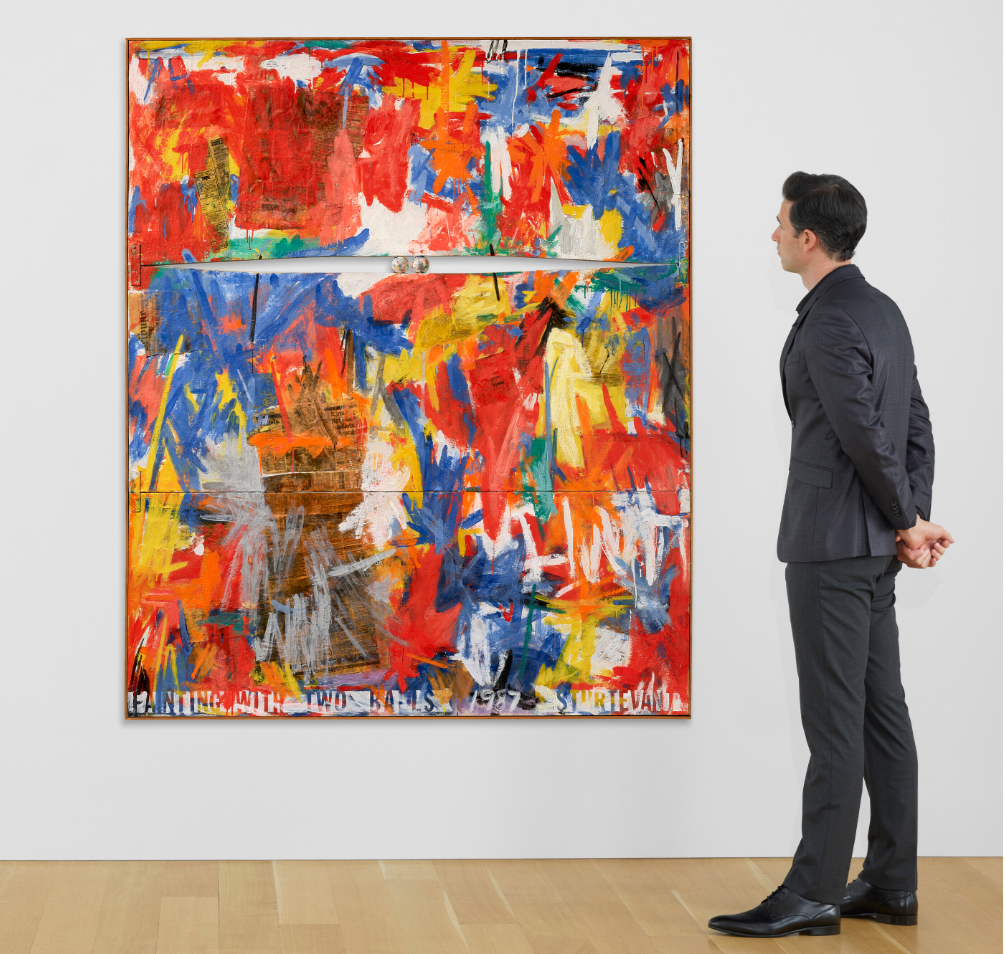
Sturtevant’s Johns Painting with Two Balls is an exemplary work from her return to artmaking after a decade-long hiatus in the 1970s. At nearly five-and-a-half feet by four-and-a-half-feet, this imposing painting immerses us in the artist’s endlessly creative oeuvre. Her personal and memory-based appropriations (she preferred the term “repetitious”) expand on the work of generations of avant-garde artists like Marcel Duchamp, Andy Warhol and Sherrie Levine, but all with Sturtevant’s inimitable style. Reproduced in the legendary volume Art: A Sex Book by John Waters and Bruce Hainley, Johns Painting with Two Balls is an integral part of the postwar artistic cannon. As Peter Eleey, curator of Sturtevant’s 2014 retrospective at the Museum of Modern Art, New York, wrote, “In some ways, style is her medium… She was the first postmodern artist — before the fact — and also the last (P. Eleey, quoted in M. Fox, “Elaine Sturtevant, Who Borrowed Others’ Work Artfully, Is Dead at 89,” New York Times, May 16, 2014, https://www.nytimes.com/2014/05/17/arts/design/elaine-sturtevant-appropriation-artist-is-dead-at-89.html).
In appropriating Jasper Johns Painting with Two Balls, which currently resides in the artist’s personal collection, Sturtevant charts a new course in Pop art and postwar painting generally. Comprised of three canvases, she weaves multiple art histories together, and with its horizon line of sorts, Johns Painting with Two Balls may suggest a history of landscape in addition to Arte Povera, Dada, Pop, and Conceptualism. Regarding the former, Sturtevant incorporates Lucio Fontana’s slash technique into the present work to tongue-in-cheek ends. The canvas opens itself up to our gaze, which is supplemented by its bold primary colors. Even the eponymous spheres are unabashedly multicolored like a Pointillist scene. Since Sturtevant worked based on memory, Johns Painting with Two Balls, as with Andy Warhol’s slight differentiation among screenprints, is not an exact copy of Johns’s painting. This allowed Sturtevant to center her own subjectivity, rather than purely intellectual or ironic aims, and it is undoubtedly an act of immense artistic skill. It is also relevant that, like Johns, she used encaustic wax in the present work, which is a very difficult medium to use because of its fast drying. Yet, as seen in Johns Painting with Two Balls, that difficulty results in gestural marks that show the embodied movement of the artist’s hand. Sturtevant likewise makes her presence known in the boldly stenciled title and signature at the bottom edge of the canvas.
Johns, himself a friend of Sturtevant, played an important role in her work. For example, Robert Rauschenberg commissioned Sturtevant to paint a reproduction of a stolen Johns flag painting (both Rauschenberg and Johns were collectors of her work). She also recreated Johns’s iconic Target with Four Faces (1955) with her own Johns Target with Four Faces (1987-1990). In addition to her artistic practice, Sturtevant was a friend and collaborator with many, as evinced by the outpouring of memories and tributes upon her death. Critic Margalit Fox eulogized her thusly, “She was sometimes called the mother of appropriation art…As a replicator, Ms. Sturtevant was an original” (M. Fox, “Elaine Sturtevant, Who Borrowed Others’ Work Artfully, Is Dead at 89,” New York Times, May 16, 2014, https://www.nytimes.com/2014/05/17/arts/design/elaine-sturtevant-appropriation-artist-is-dead-at-89.html).
Perhaps her deft navigation of history came from her degree in psychology at the University of Iowa and her Masters from Teacher’s College at Columbia University. She managed to create work that was both about the art world and widely accessible. This generosity allowed her career to remain relevant to generations of artists and thinkers. In 2011, Sturtevant won the Golden Lion for Lifetime Achievement at the 54th Venice Biennale, and in 2014, her posthumous retrospective at the Museum of Modern Art, New York, opened to widespread acclaim. Holland Cotter, New York Times co-chief art critic, in his review of the MoMA exhibition, wrote “More often her work was a variation on a theme: a meditation, not an imitation. Illusion wasn’t the point; action was, the gesture of shaping something new but different and related from something else” (H. Cotter, “Taking Copycatting to a Higher Level,” New York Times, November 13, 2014).
Sturtevant melded past and present, the historical and the personal, like no other contemporary artist. In the tradition of the European avant-gardes, she used humor to make serious claims about the nature of art and its role in society. She also considered the role of the artist. In Sturtevant’s case, she saw herself as an interlocutor, a driver of community and mutual respect among artists. In the tradition of Dada and Surrealism, collaboration was essential for her. Sturtevant, above all, loved art and artists.
Johns White Flag, 1991
Sotheby’s New-York: 19 May 2022
Estimated: USD 600,000 – 800,000
USD 2,107,000
Johns White Flag | Contemporary Evening Auction | 2022 | Sotheby’s
STURTEVANT (1924 – 2014)
Johns White Flag, 1991
Encaustic and collage on canvas, in three parts
78 1/8 x 120 1/8 inches (198.5 x 305 cm)
Signed Sturtevant, titled Johns White Flag and dated 1991 (on the reverse)
“The brutal truth of the work is that it is not a copy. The push and shove of the work is the leap from image to concept. The dynamics of the work is that it throws out representation.”
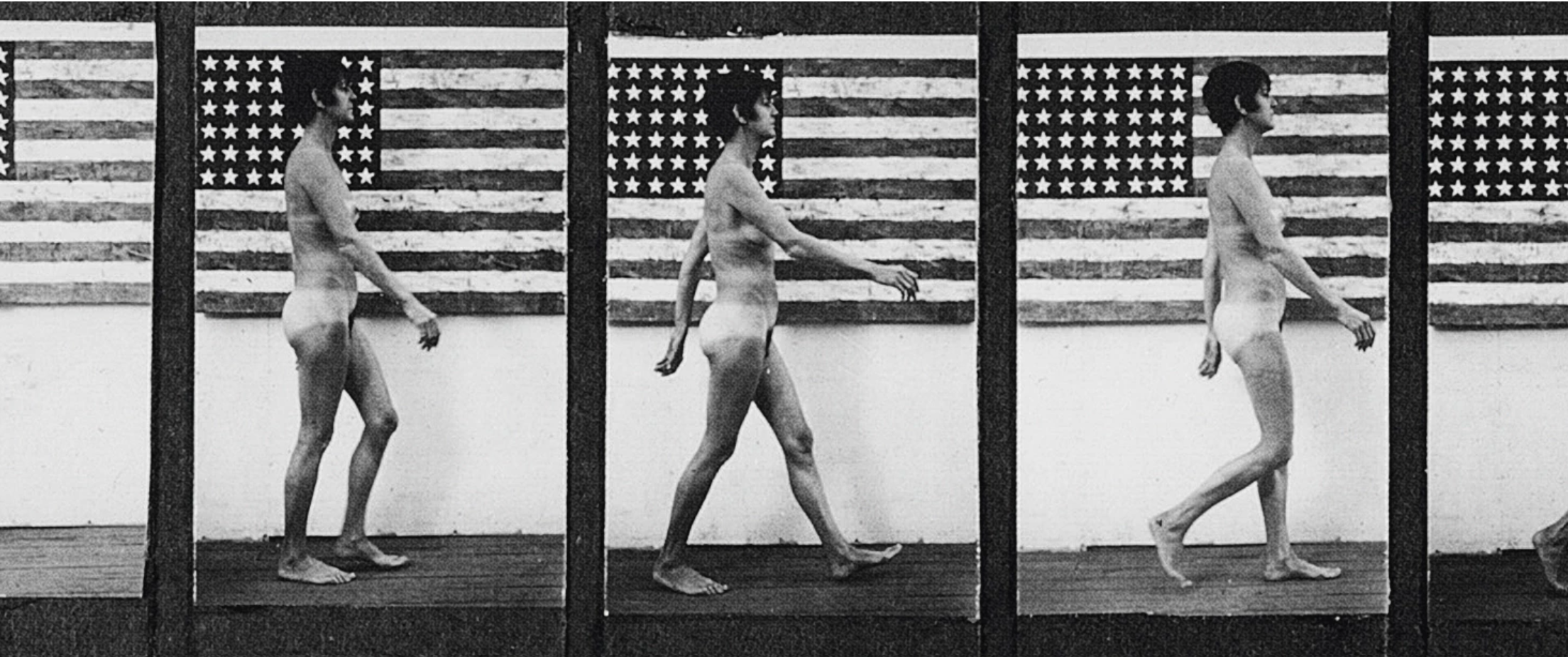
Sturtevant, Study for Muybridge Plate #97: Woman Walking, 1966. Image © Courtesy of Glenstone Museum. Art © Estate Sturtevant, Paris
With its sharp staccato strokes, controlled layering, and solemn phantomlike mystique, Elaine Sturtevant’s Johns White Flag from 1991 is both an ambitious imitation of Jasper Johns’s original White Flag and a monumental testament to the artist’s groundbreaking practice. Measuring roughly 80 by 120 inches across three panels, Johns White Flag is the largest Flag painting that Sturtevant ever produced, and its ambitious scale demonstrates her impressive mastery over Johns’s signature encaustic technique by this point in her artistic career. Beginning in 1965 and continuing over nearly three decades until 1991, Sturtevant produced a limited suite of 11 Flag paintings. Sturtevant’s Flag paintings together form a crucial chapter within her diverse oeuvre; as evidence to their importance, they have appeared in all major exhibitions of her work since her first solo show at New York’s Bianchini Gallery in 1965 and were most notably featured at her critically acclaimed retrospective at the Museum of Modern Art in 2004. Sturtevant’s work trailblazed within the conceptual lineage that Jasper Johns established when his own Flag paintings broke down the boundaries between an object and its artistic representation, extending his philosophical project into new conceptual terrain as her replicas blurred the taut lines between an original and its duplication. Johns White Flag was painted at a critical juncture for the artist both personally and professionally: one year earlier, Sturtevant had made the decision to move to Paris, where she withdrew from the American art world in response to the criticism she received for her radical work. This abrupt relocation coincided with a shift in medium for the artist as, shortly after the present work’s execution in 1991, Sturtevant would turn away from painting entirely, focusing instead on appropriating installation art and internet-based images for the remainder of her artistic career.
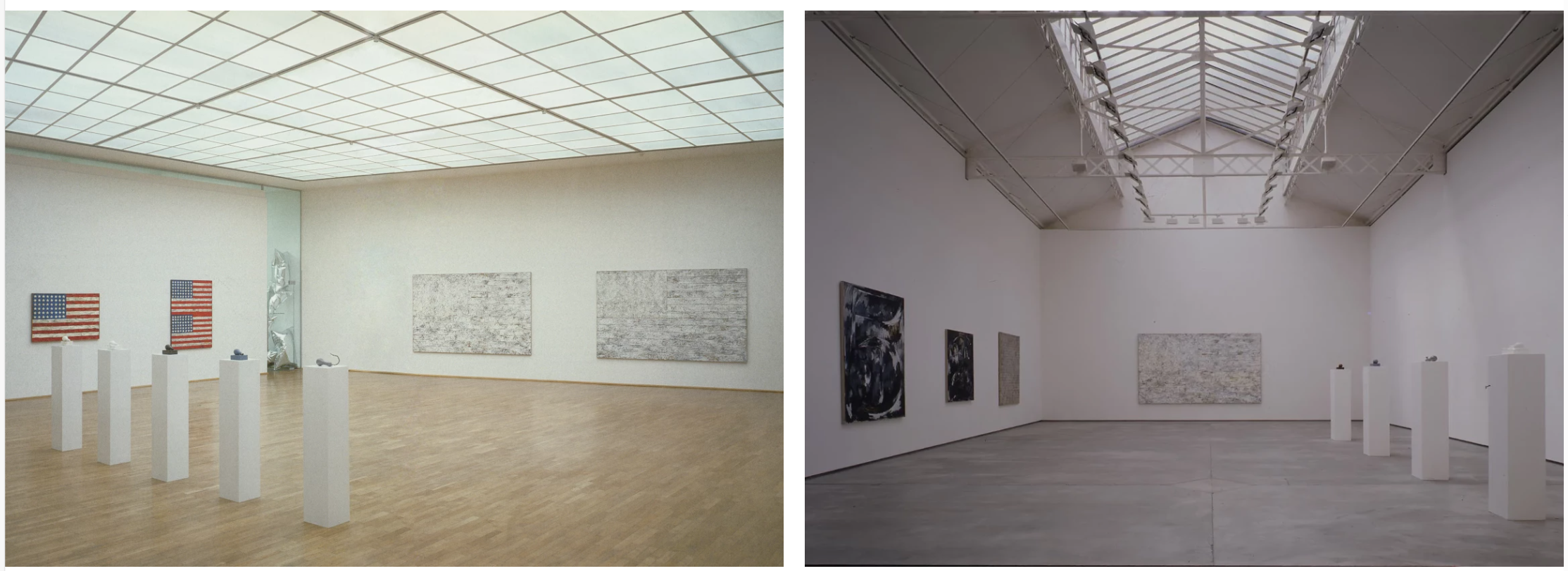
LEFT: Johns White Flag INSTALLED IN THE BRUTAL TRUTH AT THE MUSEUM FÜR MODERNE KUNST IN 2004 – 2005. Art © Estate Sturtevant, Paris.
RIGHT: Johns White Flag INSTALLED IN STURTEVANT STURTEVANT AT THE GALERIE THADDAEUS ROPAC IN 1994. Art © Estate Sturtevant, Paris
In his 1955 White Flag, Jasper Johns drained the national flag of its patriotic colors and divided its structure into three separate but conjoined parts, successfully abstracting the American symbol of its familiar features and achieving a ghostly representation that is dissonant but still identifiable. Expanding upon Johns’ conceptual pursuit, Sturtevant’s Johns White Flag accomplishes the same feat but with a pre-existing artwork rather than a cultural symbol. Sturtevant deliberately created duplicates that resembled the original and yet remained carefully inexact, explaining “Technique is crucial. It has to look like a Johns flag so that when you see it you say, ‘Oh that’s a Johns flag,’ even though there’s no force there to make it look exactly like a Johns. Quite the opposite—the characteristic force is lacking. So when you realize it’s not a Johns, you’re either jolted into immediately rejecting it, or the work stays with you like a bad buzz in your head. You start thinking, ‘What is going on here?’” (Sturtevant cited in an interview with Peter Halley, Index Magazine, 2005) Johns White Flag is especially effective within this conceptual framework because Johns’s original White Flag of 1955, now held in the collection of the Metropolitan Museum of Art, reached a breakthrough moment in his exploration of semiotics and perception for also prompting viewers to confront this same question.
In the present work, lush arrays of dripped wax accumulate over nimbly scattered brushstrokes, creating a ghostly layer that varies in opacity before a classic background of tightly ordered stars and stripes. In the brief unpainted moments within the thickly encrusted impasto, tantalizing glimpses of the newspaper underlayer appear from beneath, revealing the raw materiality of the densely collaged background. If Jasper Johns’s 1955 White Flag first challenged our recognition of the familiar American flag by making it strange, nearly four decades later, Sturtevant’s 1991 replica now complicated our recognition of the iconic monochrome original by mirroring its technique and aesthetic with comparable magnificence. In doing so, Sturtevant activates by sight the uncertain moments of slippage between one’s memory of the familiar and one’s acceptance of the new, launching the phenomenological dialogue that Johns began into broader ideas of artistic consumption, authorship, and circulation.
Johns White Flag reflects the conceptual rigor that unite the overarching oeuvre of paintings, sculptures, and installations that Sturtevant has produced since the 1960s as she replicated now-iconic pieces by many of her better-known male contemporaries, including Andy Warhol and Roy Lichtenstein. Sturtevant’s bold iconoclasm probed theoretical underpinnings of artistic authorship and reception, and, at its time, was as conceptually revolutionary as it was provocative, stepping on the toes of many artists as she mastered a sweeping repertoire of techniques and media to copy their styles with daring panache. Fundamentally, Sturtevant’s avant-garde also mimics in its very conceptual basis of Jasper Johns’ ultimate practice: to depict, in Johns’ famous words, “things the mind already knows.” In Johns’s paintings of familiar objects, he blurred traditional distinctions between a thing and the representation of that thing, stating “I am concerned with a thing’s not being what it was, with its becoming something other than what it is, with any moment in which one identifies a thing precisely and with the slipping away of that moment.” (Johns cited in an interview with G. R. Swenson, Theories and Documents of Contemporary Art). But whereas Johns mined the world of its recognizable cultural symbols such as Flags, Targets, and Numbers, Sturtevant turned her eye towards the quintessential images of the art world of her time. By replicating original work or, if you will, “art the mind already knows”, Sturtevant cleverly continued the legacy of appropriation art inaugurated by Duchamp when his ready-mades assertively repurposed objects as art, allowing her to solidify a vital link between Pop Art and the Pictures Generation of Richard Prince, Sherrie Levine, and Cindy Sherman.
Roy Lichtenstein
Lichtenstein But It’s Hopeless, 1969-1970
Christie’s New-York: 9 May 2022
Estimated: USD 600,000 – 800,000
USD 2,220,000
STURTEVANT (1924-2014), Lichtenstein But It’s Hopeless | Christie’s
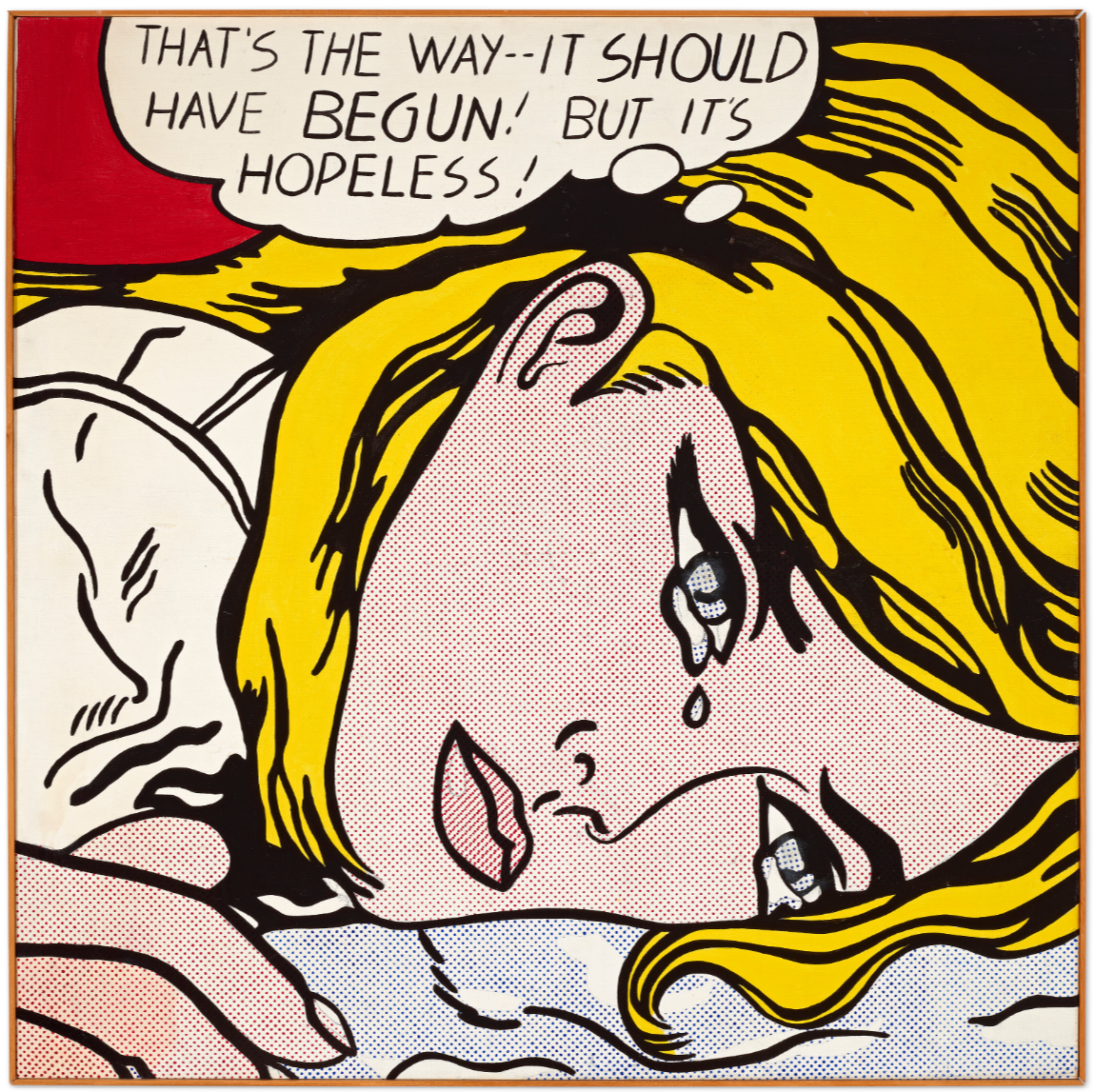
STURTEVANT (1924-2014)
Lichtenstein But It’s Hopeless, 1969-1970
Oil, acrylic and graphite on canvas
44 1/8 x 44 3/8 inches (112 x 112.7 cm)
Signed, inscribed and dated ‘Study for Lichtenstein’s That’s The way it should have begun – but Sturtevant ’69-70’
(on the reverse)
With an authoritative oeuvre that challenges categorization, Sturtevant’s pointed examination of the late twentieth-century art world has proved both prescient and inspired as the years progress. Known for her appropriation of major works and styles by her male peers, the artist was one of the first to problematize issues of originality and authorship in the wake of Modern art’s insistence on the artwork’s singular aura. Lichtenstein But It’s Hopeless is an immaculate example of Sturtevant’s attention to detail and commitment to learning and executing varying artistic processes as a means of working through traditional notions of artistic creation. Based on Roy Lichtenstein’s Hopeless (1963), which was in turn sourced from a panel from Tony Abruzzo’s ‘Run For Love’ in the 1962 Secret Hearts comic, Sturtevant’s canvas urges a reconsideration of the original(s) and creates a dialogue around the act of appropriation in a world inundated with copies of copies. Besides Lichtenstein and his Pop compatriot Andy Warhol, Sturtevant pulled from other artists like Robert Gober, Anselm Kiefer, Felix Gonzalez-Torres, and Frank Stella at a time when each was just establishing their own career. Her selection of such pivotal artists before their meteoric rises shows how well-entrenched Sturtevant was in the cultural zeitgeist and how well she understood the systems and trajectory of art history.
Rendered in the exact proportions of Lichtenstein’s composition seven years after that work’s realization, the present example is startlingly precise but is not a one-for-one reproduction. Rather than using mechanical means, Sturtevant embraced her peer’s careful hand-painting process to work through the image on her own terms. The majority of the picture plane is taken up by a woman’s head, her blue eyes overflowing with tears that have just begun to drip down her face. A shock of blonde hair is depicted with flat yellow interspersed with stylized waves in black. She wears a white garment that contrasts with an area of red in the upper left corner near a thought balloon that reads: “That’s the way – it should have begun! But it’s hopeless!” The woman’s skin and the surface upon which she rests are both made up of a mass of small color points that successfully mimic Lichtenstein’s manual Ben Day dot application.
At first glance, it is difficult to distinguish between the two canvases, but small differences like the hand-drawn text, the number of marks on the woman’s blouse, and even a slightly closer crop point to the fact that Sturtevant has actually recreated, not copied, Lichtenstein’s painting. Curator Bernard Blistène posits, “It is not a question of having, on one side, the model and, on the other, the duplicate. Not a question of some sort of crutches or other: lines, grids, square, tracing, projection…or other such devices. But of summoning with sufficient intensity the memory of images viewed in order to be able to recreate and invent them. Not stubbornly worrying about the resemblance alone but working towards an absent original in a convincing manner. Taking the same tools and the same colors. Understanding why and how it is done. Attempting to convoke the observed details” (B. Blistène, “Label Elaine,” in Sturtevant – The Brutal Truth, exh. cat., Frankfurt, Museum für Moderne Kunst, 2004, p. 37). Sturtevant’s finished works are not replications of the surface alone. Rather, they are evidence of an in-depth study of each artist’s impulse and skill.
Key among the issues raised by works like Lichtenstein But It’s Hopeless are those of authorship and originality that were first brought to the fore in 1935 by Walter Benjamin’s seminal Art in the Age of Mechanical Reproduction. Beyond just printed reproductions, we now contend with a bevy of digital copies and imitations in the present era. Sturtevant brought to task the traditional ideas of the individual genius artist and the inimitable brushstroke as a means of producing a specific aura that separates an original from a copy. She “correctly and repeatedly points out that a ‘copy’ is something bereft of energy, something that is anaemic [sic] and has nothing in common with what she does” (G. de Vries and L. Maculan, “Interview,” in Sturtevant: Catalogue Raisonné 1964–2004, Painting Sculpture Film and Video, Frankfurt, 2004, p. 35).
Because her own works are created as a means of questioning these ideological constructions, they are necessarily unique works of art that borrow visual details from other artists in order to more fully realize their potential. Immersing herself in the methods and mindsets of her colleagues, Sturtevant conceptualized a means to question the individual and the solitary art object. How do replication and reflection change the first work? Being confronted with two versions of the same image by different artists necessitates a reevaluation of our views on authenticity and the place of the author in the history of art.
Raysse Peinture à Haute Tension
Peinture à haute tension is a painting created by French artist Martial Raysse in 1965. A close-up portrait of a dark-haired woman standing out against a dark-blue background, it is executed on canvas using a photograph, fluorescent paint, flocking powder and a lit neon sign whose shape follows the outline of the subject’s half-open lips.
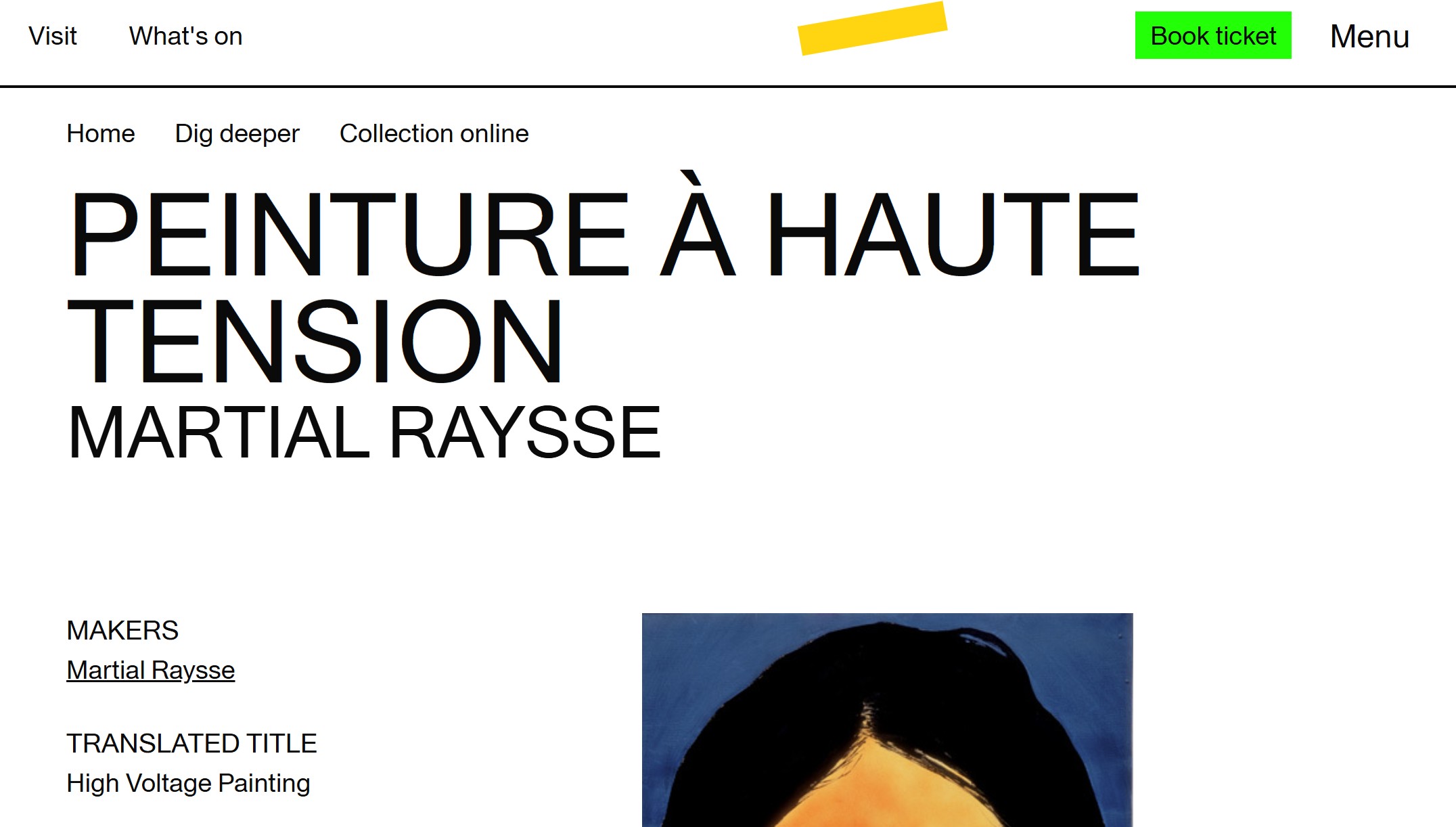
In the late 1960s, it was copied by American artist Elaine Sturtevant as part of her appropriationist approach. Elaine Sturtevant produced Raysse Peinture à haute tension just four years after the original by Martial Raysse, who began to incorporate neon lighting into his creations. Long before questions of “copy and paste” or artificial intelligence haunted the art world, Elaine Sturtevant posed a radical question: where does the essence of a work reside? As early as 1964, she began reproducing the works of her contemporaries (Warhol, Stella, Oldenburg…, then Raysse), from memory and with uncanny technical precision. Sturtevant’s aim is not plagiarism, but repetition. Her aim is not to create a double, but to trigger an intellectual earthquake. By reproducing the image, she cancels it out as a unique object, revealing only the concept. She forces the viewer to look beyond the “style” to understand the very structure of the art.
“I don’t make copies. I take the work out of its context to reveal its power.”
By appropriating Martial Raysse’s codes – the mix of acrylic paint, flocking and the irruption of neon – Sturtevant takes on the icon of European Pop Art. This is a strategic choice: Raysse was already working on the idea of “hygiene of vision” and standardized beauty. By “re-enacting” Raysse in 1969, Sturtevant underlines the advertising and consumable aspect of the art of his time. Long shunned by institutions that saw her as a forger, she was finally awarded the Golden Lion at the 2011 Venice Biennale, consecrating her role as a pioneer of Appropriationism. Unlike a forger, she never hid her identity. The interest lies in the discrepancy: it’s a Sturtevant, representing a Raysse. This is the technique of simulacra. His Raysse covers are historic pieces, marking the dialogue between the American and French scenes of the 60s. When people asked Andy Warhol how he produced his silkscreens, he would often reply mischievously: “I don’t know, ask Elaine (Sturtevant)”. The ultimate endorsement for a woman who understood Warhol’s process better than anyone else.
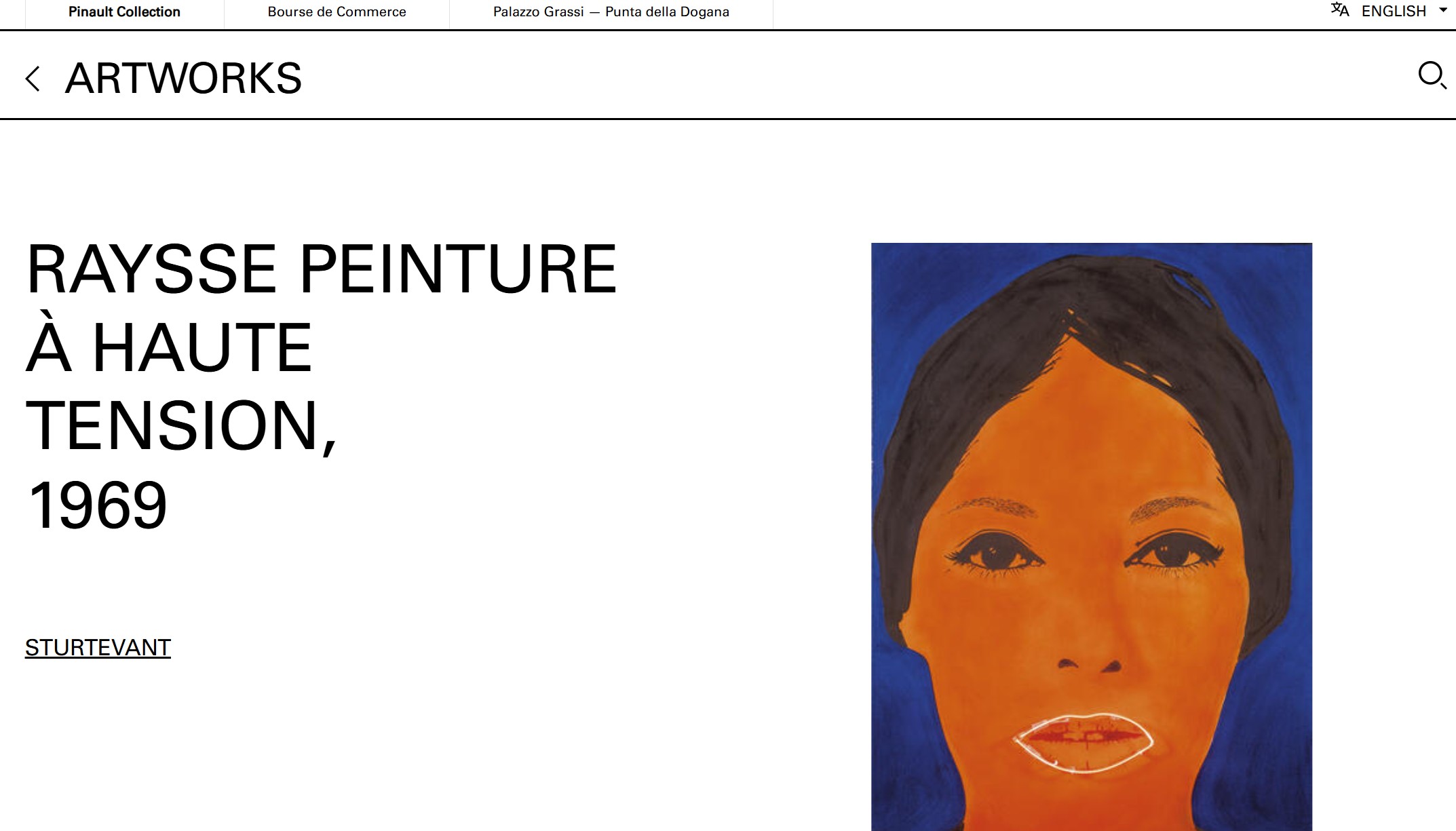
There are a total of 36 copies listed, distributed as follows: 4 series of 8 copies (i.e. 32 paintings) and 1 series of 4 copies. The series were staggered over time, which explains the variations in dates found on the market (1968, 1969 or 1970).
The first edition (1969): 8 examples were presented at its landmark exhibition at the Galerie Claude Givaudan in Paris in 1969, entitled “Sturtevant. Eight Paintings and a Prototype”.
The second edition (1970): given the success (or scandal) of the first, a second series of 8 was produced and exhibited at the same gallery the following year.
Unlike Raysse’s “original” work (a single piece from 1965), here Sturtevant uses multiplication as a conceptual weapon. She applies Andy Warhol’s industrial logic to Raysse. By producing several series of 8, she desacralizes the art object and emphasizes that what counts is the structure of the image, not its physical rarity.
Peinture à Haute Tension, 1970
Christie’s Paris: 16 April 2026
Estimated: EUR 90,000 – 120,000
EUR 304,800 / USD 359,095
Elaine Sturtevant (1924-2014), Peinture à Haute Tension | Christie’s
ELAINE STURTEVANT (1924-2014)
Peinture à Haute Tension, 1970
Acrylic, flocking, cardboard collage laid on canvas and neon
63-3/4 x 38 x 5-1/2 inches (162 x 96.5 x 14 cm)
Signed, titled and dated ‘”Peinture à Haute Tension” Sturtevant 1970’ (on the reverse)
This work is from the second series of eight unique variants
High Voltage Painting, 1969
Giquello Paris: 11 June 2026
Estimated: EUR 60,000 – 80,000
EUR 158,250 / USD 182,225
Elaine STURTEVANT (1924-2014) – Lot 19
Elaine STURTEVANT (1924-2014)
High Voltage Painting, 1969
Acrylic and flock mounted on canvas and neon
162 x 96.5 x 10 cm
Signed, titled and dated on back
This work is part of the first edition of eight
Raysse Peinture à haute tension, 1968-1969
Bonhams Cornette Brussels: 28 April 2025
Estimated: EUR 100,000 – 150,000
EUR 178,200 / USD 202,900
ELAINE STURTEVANT (1924-2014)
Raysse Peinture à haute tension, 1968-1969
Acrylic, collage, flock mounted on canvas and neon
162 x 96.5 x 15 cm
Signed, titled and dated 68-69 on the back
Raysse Peinture à Haute Tension, 1970
Sotheby’s Paris: 6 December 2023
Estimated: EUR 80,000 – 120,000
EUR 152,400 / USD 164,525
Raysse Peinture à Haute Tension | Art Moderne et Contemporain Evening Auction | 2023 | Sotheby’s
STURTEVANT (1924 – 2014)
Raysse Peinture à Haute Tension, 1970
Acrylic and flocking laid down on canvas and neon tube
63 3/4 x 38 x 5 7/8 inches (162 x 96.5 x 15 cm)
Signed, titled and dated 1970 on the reverse
This work is from an edition of 8
Oldenburg Store Objects
Elaine Sturtevant (1924-2014) was an American postmodern artist known for her appropriation of the work of her contemporaries such as Frank Stella, Andy Warhol, and Marcel Duchamp. She copied by memory, using the same techniques and materials, and purposely made small alterations on her work (like a stray mark) to keep it unique. Through her work she sought to explore questions of authenticity, originality, and the creative process. The Store of Claes Oldenburg, Sturtevant’s 1967 copy of Oldenburg’s 1961 The Store was located in New York’s East Village. She memorized Oldenburg’s plaster and paint representations of household objects (like cigarette butts, cakes, spoons, eggs, pie cases, etc.) and reproduced them for her installation. Both artists operated their stores as actual stores, allowing customers to come in and purchase what they “needed”. Oldenburg attended the installation but cut off contact with Sturtevant afterwards. The public’s opinion on Sturtevant’s copy installation was mixed, which contributed to both her allure and our modern knowledge on the appropriation of art.
Oldenburg Store Object, Pie Case, 1967
Sotheby’s New-York: 19 May 2023
Estimated: USD 50,000 – 70,000
USD 355,600
Oldenburg Store Object, Pie Case | Contemporary Day Auction | 2023 | Sotheby’s
STURTEVANT (1924 – 2014)
Oldenburg Store Object, Pie Case, 1967
Olaster, enamel and aluminum in 6 parts, in glass and aluminum pie case
Overall: 20 1/4 x 12 1/2 x 12 inches (51.4 x 31.8 x 30.5 cm)
Oldenburg Store Objects, Bacon and Pat of Butter , 1967
Swann Galleries: 8 June 2023
Estimated: USD 4,000 – 6,000
USD 16,250
ELAINE STURTEVANT Oldenburg Store Objects Bacon and Pat of B
ELAINE STURTEVANT
Oldenburg Store Objects, Bacon and Pat of Butter , 1967
Bacon
Cloth and enamel
9×2 inches (23×50 cm)
Initialed and dated in enamel on the edge
Pat of Butter
Painted plaster with porcelain dish
Diameter: 2 1/2 inches (65 cm)
Initialed and dated in enamel on the underside of the dish
Other Series
Duchamp Eau & Gaz, 1970
Van Ham Cologne: 10 June 2026
Estimated: EUR 18,000 – 24,000
EUR 25,080 / USD 28,965
STURTEVANT (1930 Lakewood, OH/USA–2014 Paris)
Duchamp Eau & Gaz, 1970
Enamel sign on wooden plate
19x25x3 cm
During firing monogrammed lower centre: E.S..
Duchamp Eau & Gaz (1970), stands as an exemplary instance of Sturtevant’s engagement with the art of Marcel Duchamp, whose works she had been revisiting since 1967. The enamel sign mounted on a wooden panel resembles Duchamp’s Eau et Gaz à tous les étages (“Water and Gas on All Floors”), originally created in 1959 for the special edition of his catalogue raisonné edited by Robert Lebel. The sign, featuring white lettering on a dark blue background, was a common sight in Parisian apartment buildings at the beginning of the twentieth century and, in the spirit of Duchamp’s readymades, transfers an everyday element of urban culture into the context of art. Yet subtle modifications distinguish the present work from its source: while Duchamp’s original is mounted on a box, Sturtevant places hers on a wooden panel. The monogram remains in the same position, at the lower right, but changes from “M.D.” to “E.S.,” leaving no doubt as to authorship.
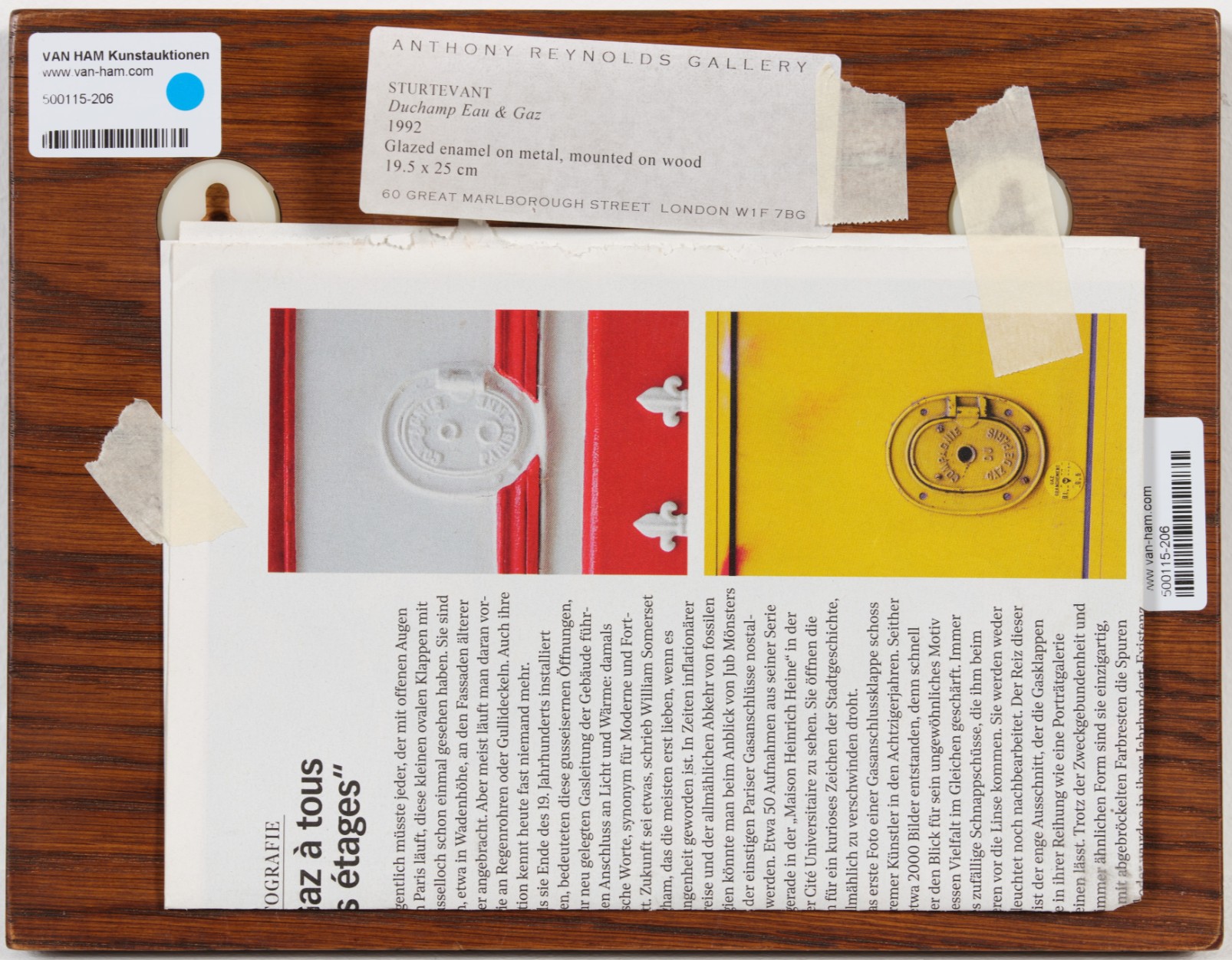
By reintroducing this motif eleven years later, Sturtevant opens the discourse to a new interpretation. The work becomes not merely a recollection of Duchamp’s gesture, but also a reflection on the reception of art itself. Conceptually, Sturtevant stands within Duchamp’s tradition. He is considered one of the first artists to radically question what art can be and what defines it. Through his readymades, he detached the artistic act from manual craftsmanship. What unites the two is their questioning of established conventions and their dismantling of fixed categories of originality and authorship. Duchamp Eau & Gaz thus becomes more than a mere repetition of an art-historical object. It is a dialogue between two artistic positions that fundamentally unsettled the conventions of the art world. In recent years, moreover, Sturtevant’s engagement with the concept of originality has gained renewed urgency and relevance through the growing societal importance of social media and artificial intelligence. Few artists compel us as forcefully to question entrenched ways of thinking, thereby opening up a new perspective on both the history and the present of art.