
Introduction
Andy Warhol, born Andrew Warhola on August 6, 1928, in Pittsburgh, Pennsylvania, emerged as a transformative figure in 20th-century art. The son of working-class Slovak immigrants, Warhol’s early years were marked by frailty due to health issues, including Sydenham chorea, which kept him bedridden for long stretches. During this time, he developed a passion for drawing and popular culture, foreshadowing the themes that would dominate his career. After graduating from Carnegie Institute of Technology (now Carnegie Mellon University) in 1949 with a degree in commercial art, Warhol moved to New York City, where he quickly established himself as a successful commercial illustrator.
In the 1960s, Warhol transitioned from commercial art to fine art, becoming a leading figure in the Pop Art movement. His groundbreaking series of Campbell’s Soup Cans (1962) challenged traditional notions of art by elevating mundane consumer goods into icons of high culture. These works, along with his depictions of Coca-Cola bottles and dollar bills, reflected Warhol’s fascination with mass production and consumerism, themes that were both celebrated and critiqued in his art.
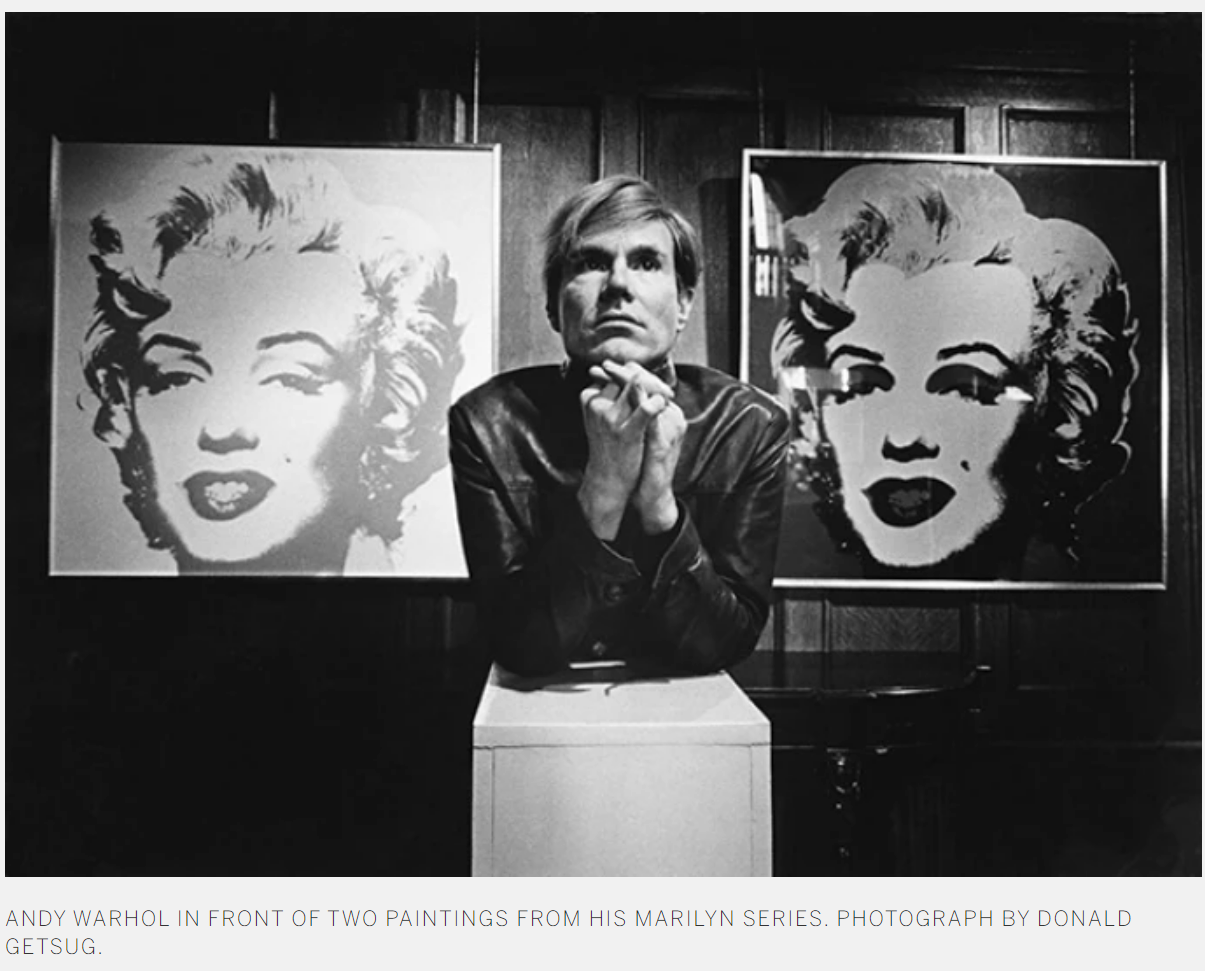
Warhol’s exploration of celebrity culture further cemented his status as a cultural commentator. His iconic Marilyn Monroe series (1962) utilized the silkscreen printing technique to reproduce the actress’s image in vivid, repetitive compositions. These works underscored the commodification of fame and the fleeting nature of public adoration, blending glamour with an undertone of melancholy. Other celebrity portraits, including those of Elvis Presley, Jackie Kennedy, and Elizabeth Taylor, solidified Warhol’s reputation as the artist of the stars. In 1964, Warhol opened The Factory, his legendary studio in Manhattan, which became a hub of creativity and countercultural activity. Here, Warhol expanded his artistic practice into experimental filmmaking, photography, and multimedia installations. Films like Sleep (1963) and Chelsea Girls (1966) challenged traditional cinematic narratives, while The Factory itself became synonymous with the avant-garde scene, attracting artists, musicians, and writers, including Lou Reed and the Velvet Underground, who collaborated with Warhol.
Tragedy struck in 1968 when Warhol was shot by Valerie Solanas, a radical feminist and fringe Factory figure. Though he survived, the event profoundly affected his outlook and work, leading to a period of introspection. In the 1970s, Warhol focused on commissioned portraits, expanding his commercial success but also sparking criticism for perceived artistic complacency. Despite this, he remained prolific, exploring new subjects and mediums, including his vibrant Shadows series (1978-79), which marked a return to abstraction.
Warhol’s late career saw a renewed interest in religious themes, as evidenced by his Last Supper series (1986), which juxtaposed Renaissance imagery with contemporary iconography. These works reflected both his Catholic upbringing and a deepening engagement with existential questions. Tragically, Warhol died on February 22, 1987, from complications following gallbladder surgery, leaving behind a body of work that continues to resonate. Warhol’s enduring legacy lies in his ability to blur the boundaries between high art and popular culture. He democratized art by making it accessible and relatable, transforming everyday objects and celebrity icons into profound cultural artifacts. His innovative use of silkscreen printing and repetition challenged traditional notions of originality and authenticity in art, redefining what it means to be an artist.
“The best thing about a picture is that it never changes,
even when the people in it do”
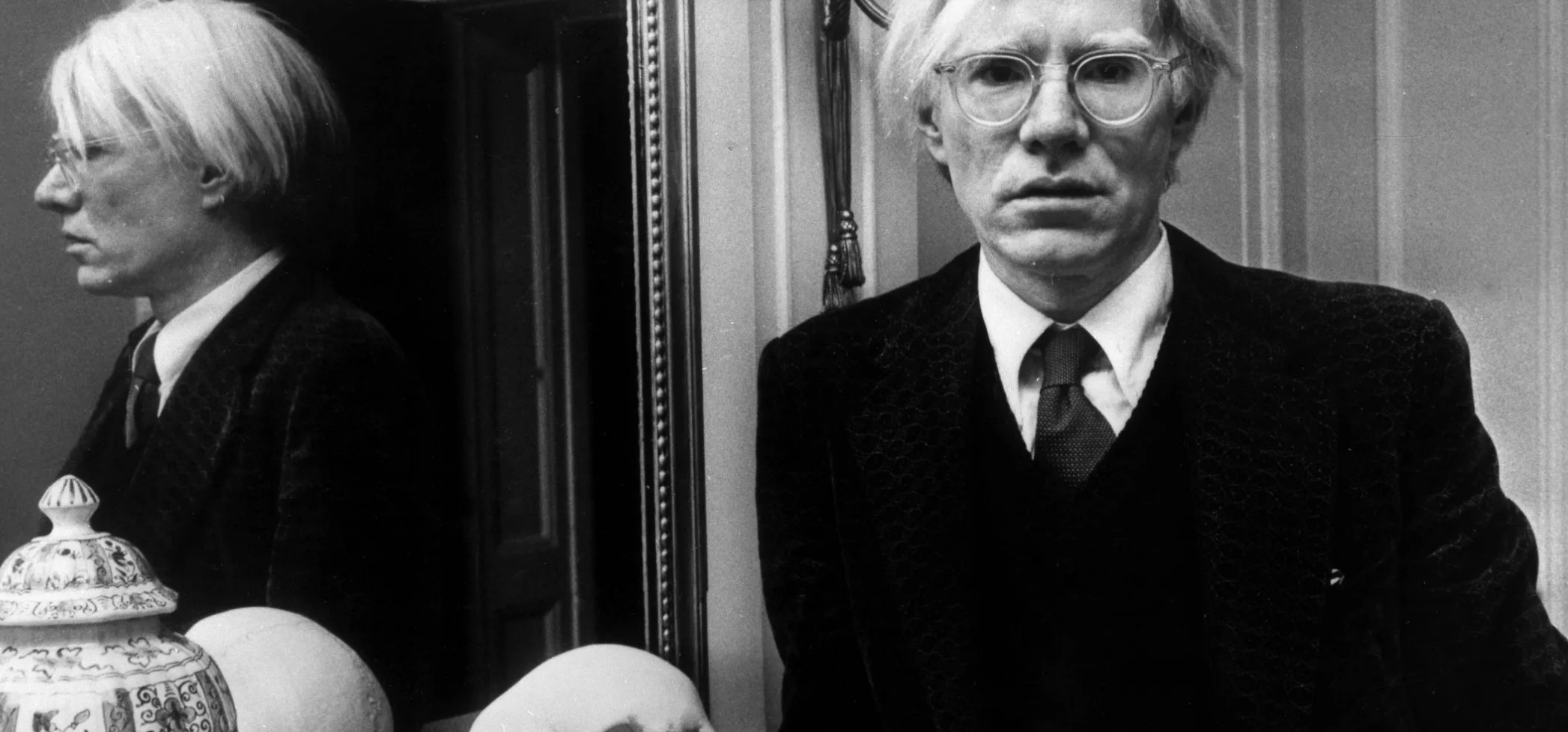
Beyond his artistic contributions, Warhol’s influence extends to contemporary culture, where his ideas about fame, consumerism, and media continue to shape our understanding of the modern world. Institutions like the Andy Warhol Museum in Pittsburgh and retrospectives in major galleries worldwide attest to his lasting impact. Today, Warhol remains a symbol of innovation and reinvention, a testament to the power of art to reflect and critique society. His legacy, much like the Campbell’s soup cans or Marilyn portraits he immortalized, stands as an indelible marker of the intersection between art and life.
The Andy Warhol Museum
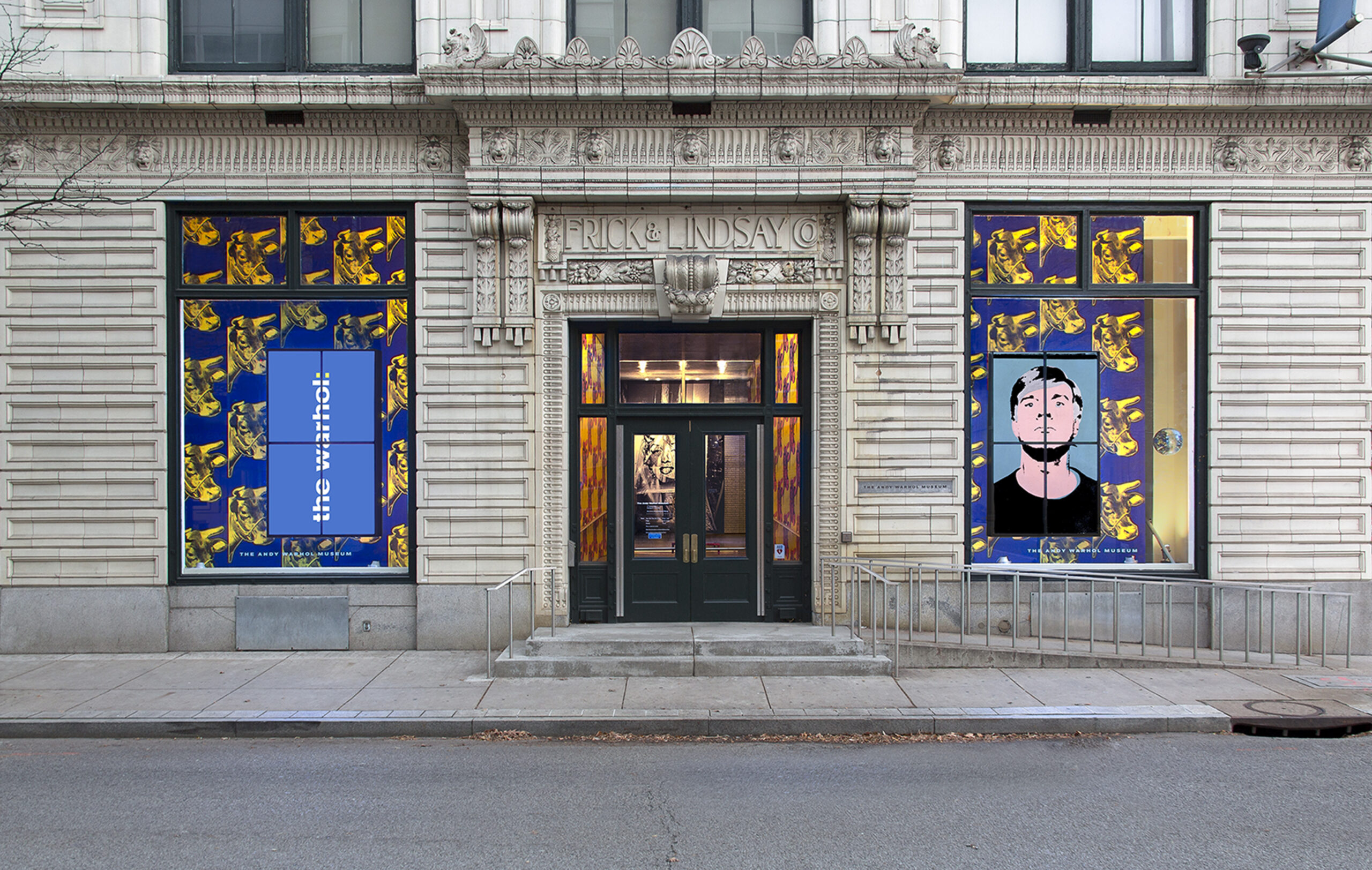
Andy Warhol works are held in the collections of the Art Institute of Chicago, Museum of Modern Art in New York, and the Tate Gallery in London, among others. A major retrospective of Warhol’s work took place at the Whiney Museum of Art in New York in 2019. Andy Warhol, together with Pablo Picasso is one of the most sold artists in the art market. Indeed, his artistic output is phenomenal, ranging from paintings, to prints, drawings, and even polaroids.
PART I: SUMMARY
Auction Market Overview
Across the period from 2019 to 2025, the auction market for Andy Warhol paintings reveals a structure that is both resilient and highly concentrated. Volumes remain remarkably stable—generally between 90 and 110 lots per year—while sell-through rates consistently hover in the high-80s to low-90s range. This stability confirms that liquidity has not been the primary driver of market variation. Instead, fluctuations in total turnover are overwhelmingly explained by price effects, not participation.
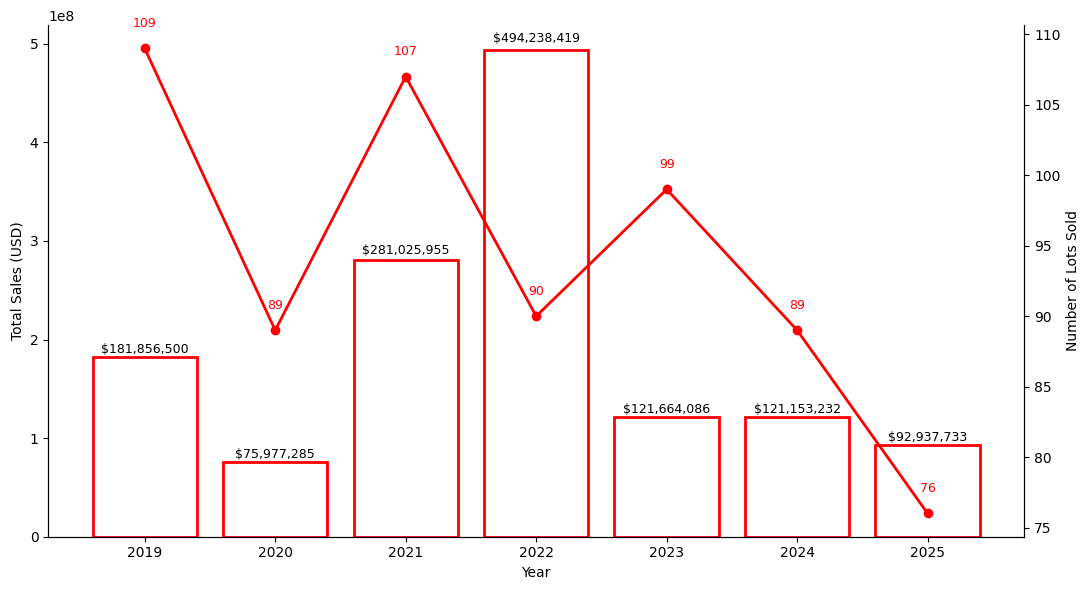
The distortion of 2022 is therefore unmistakable. With a comparable number of lots and a sell-through rate in line with surrounding years, total sales nonetheless reached an exceptional level, driven by a small number of trophy works that absorbed a disproportionate share of capital. The subsequent years mark a clear normalization rather than a contraction: prices recalibrated, but demand remained intact. Read together, these figures illustrate a mature market—selective, disciplined, and acutely sensitive to the availability of historically significant paintings rather than to shifts in overall buyer appetite.
Auction Summary
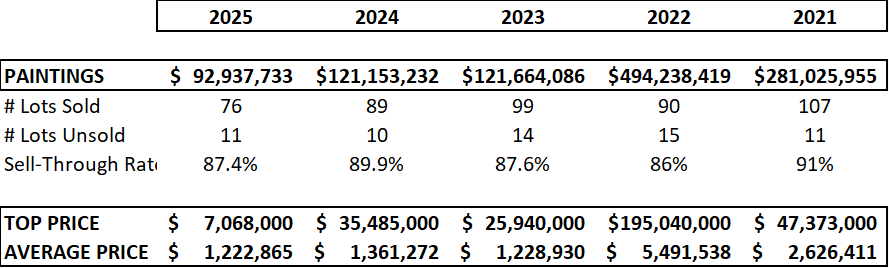
2025 Auction Summary
In 2025, 79 paintings were sold at auction, generating a total turnover of USD 92,937,733. With 11 unsold lots, the sell-through rate settled at 87.4%, a solid but selective market.
The year was marked by the absence of major 1960s works, a factor that materially capped prices: no painting exceeded the USD 10 million threshold, unlike most preceding years. The Top 3 lots were all late paintings from the 1980s, confirming the continued liquidity of Warhol’s final decade when earlier icons are unavailable.
2025 Top 3 Lots
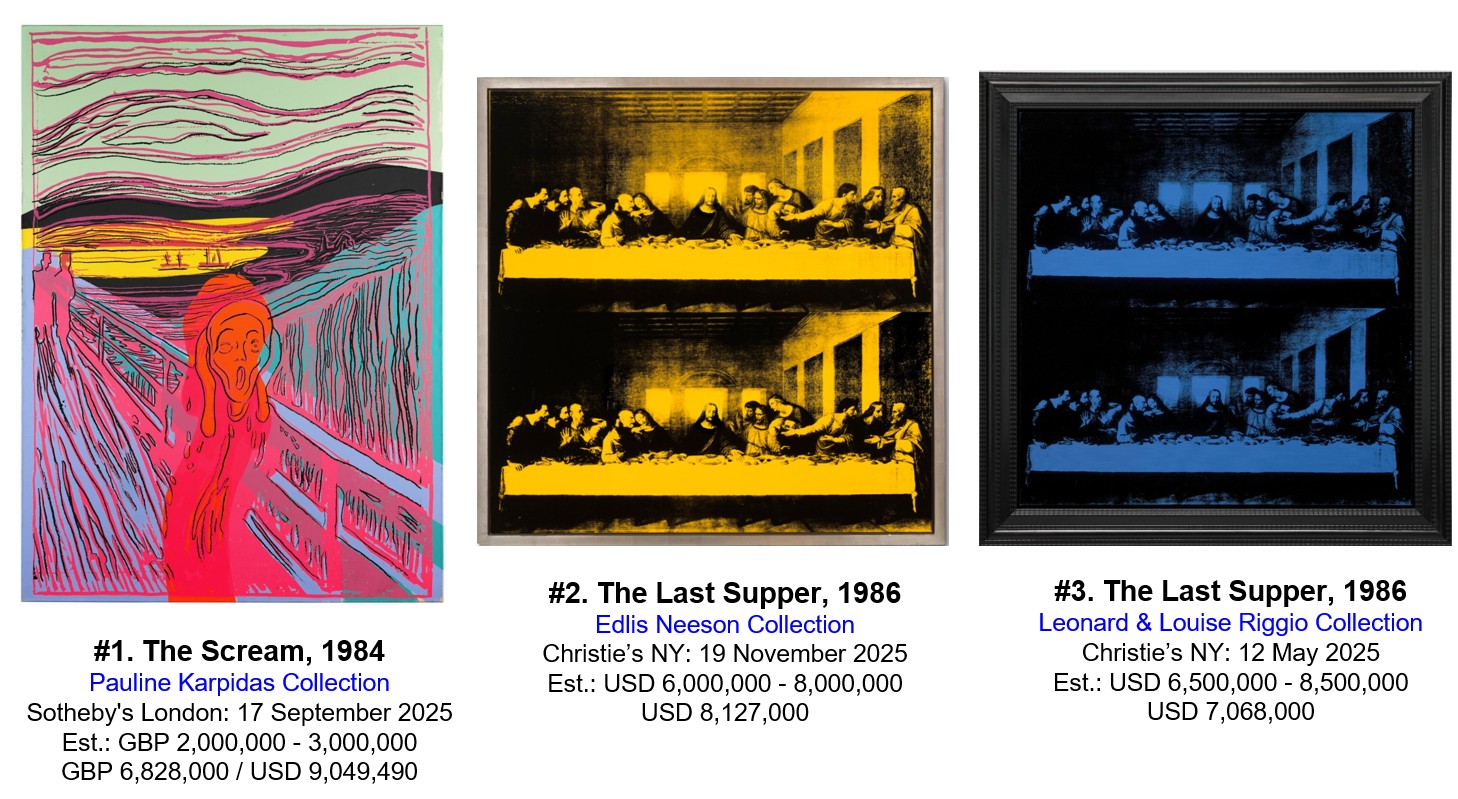
Notably, 20 paintings sold above USD 1 million, producing USD 73,570,496 in turnover, or 79.2% of the year’s total. Concentration at the top remains pronounced.
In terms of series contribution,
-
The Last Supper: 2 paintings, USD 15,195,000 (16.3%)
-
After Munch (Collection of Pauline Karpidas): 2 paintings, USD 12,935,256 (13.9%)
-
Flowers: 5 paintings, USD 9,753,470 (10.5%)
-
Mao: 3 paintings, USD 6,839,085 (7.4%)
-
Toy Paintings: 14 paintings, USD 3,212,492 (3.5%)
The data confirms a diversified but hierarchical market, where late series perform strongly, though none individually dominate.
2024 Auction Summary
The 2024 season recorded 89 paintings sold, for a total turnover of USD 121,153,232, with 10 unsold lots, yielding a sell-through rate of 89.9%.
The year was decisively shaped by a single early Pop masterpiece: Flowers (1964), sold at Christie’s New York on 14 May 2024 for USD 35,485,000, the top result of the year.
2024 Top 3 Lots
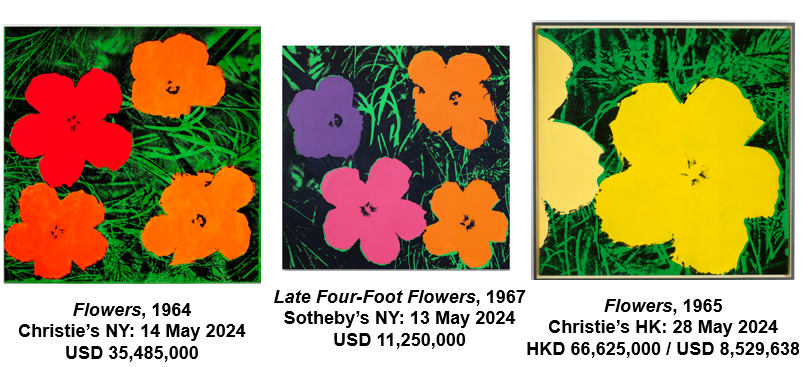
As in 2025, 20 paintings sold above USD 1 million, generating USD 100,038,928, or 82.6% of the annual turnover, an even stronger concentration than the following year.
Four Flowers paintings alone contributed USD 47,896,936, representing 39.5% of total turnover. By contrast, the Toy Paintings series dominated in volume rather than value: 26 lots, totaling USD 6,354,096, at an average price of USD 244,388.
2023 Auction Summary
In 2023, 98 paintings changed hands at auction, producing a total turnover of USD 121,468,315. With 14 unsold lots, the sell-through rate stood at 88%.
The year’s highest price was achieved by Sixteen Jackies, sold at Sotheby’s New York on 15 November 2023 for USD 25,940,000, reaffirming the enduring strength of politically charged early 1960s imagery.
2023 Top 3 Lots
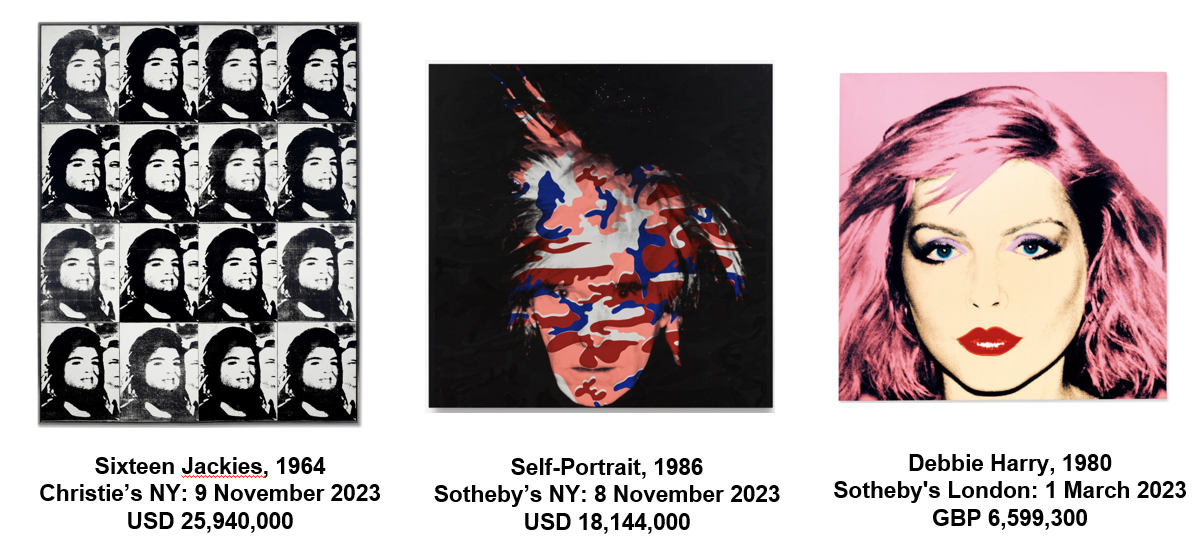
The Top 3 lots generated USD 52,026,351, accounting for 42.8% of total turnover. Once again, 20 paintings sold above USD 1 million, producing USD 94,866,380, or 78.1% of the year’s total, slightly less concentrated than 2024, but structurally consistent.
2022 Auction Summary
The year 2022 stands apart. 90 paintings sold for a staggering USD 494,998,824, marking one of the most exceptional years in Warhol’s auction history. Indeed, on 9 May 2022, Shot Sage Blue Marilyn set a new record at Christie’s New York, selling for USD 95 million. The Top 2 lots alone generated over USD 280 million, accounting for 56.6% of total annual turnover.
2022 Top 3 Lots
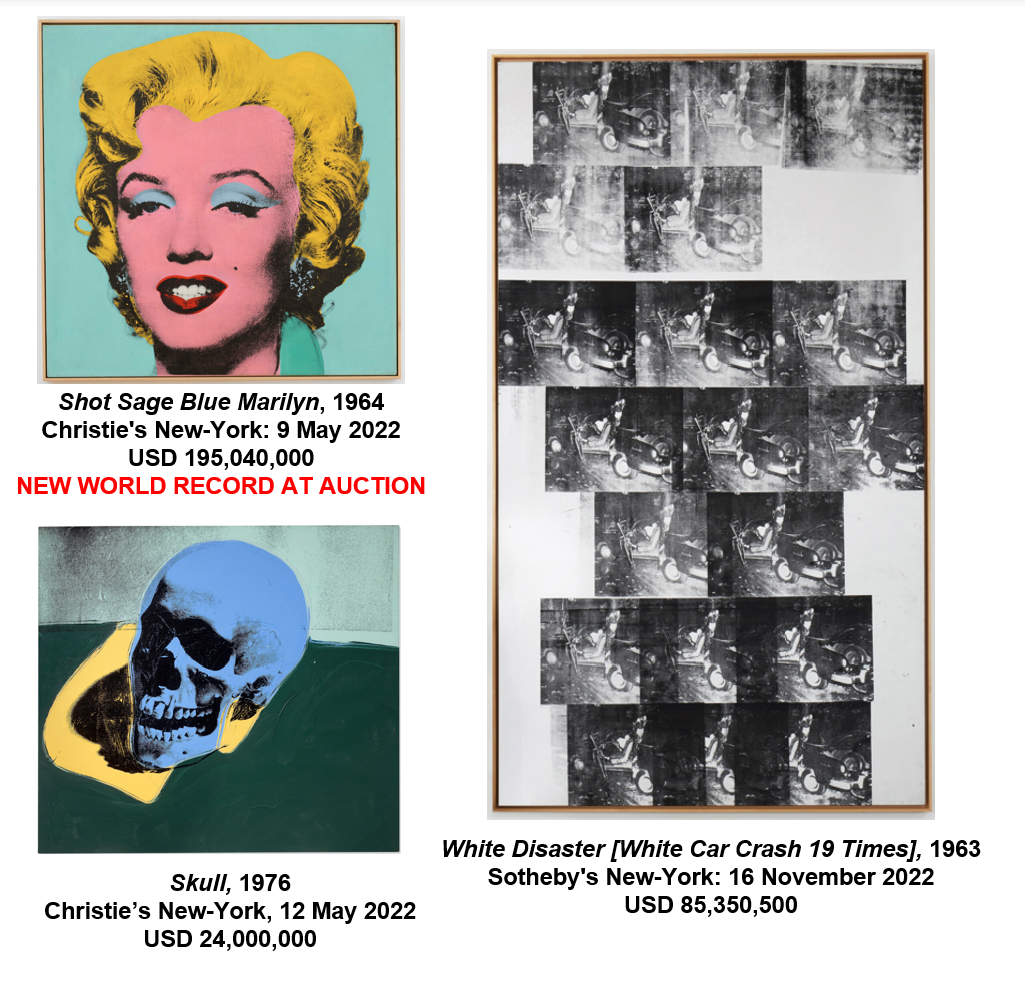
In total, 30 paintings sold above USD 1 million, producing USD 476,691,595, or 96.3% of the year’s turnover, an extreme concentration driven by trophy-level masterpieces.
2021 Auction Summary
In 2021, the market absorbed 107 paintings, generating USD 282,119,901 in turnover. With 11 unsold lots, the sell-through rate reached 91%, the highest level across the period under review.
2021 Top 3 Lots
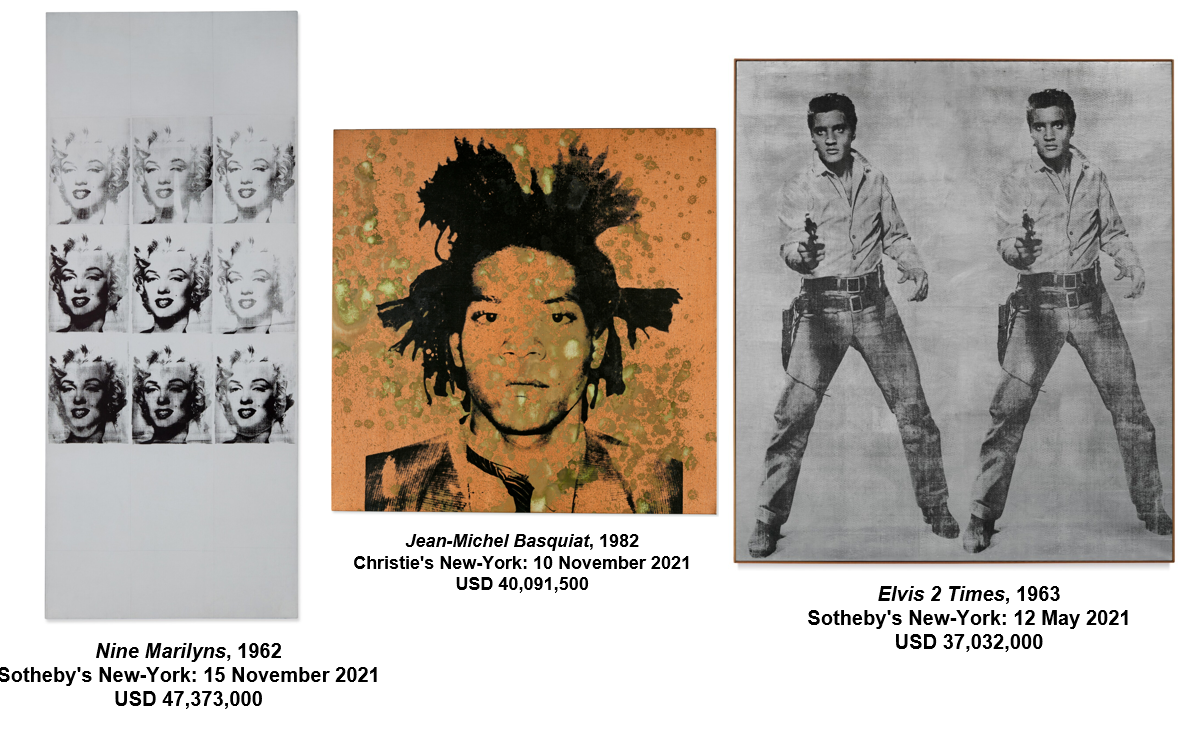
The year was notable for its depth: 7 paintings sold above USD 10 million, while 22 paintings exceeded USD 1 million, together generating USD 251,678,278, or 89.2% of total turnover. 2021 appears, in hindsight, as a structurally balanced year, strong at the top, yet supported by broad participation across price segments.
Top Lots
PLEASE CLICK ON ANY PICTURE BELOW TO ACCESS THE CATALOGUE ENTRY
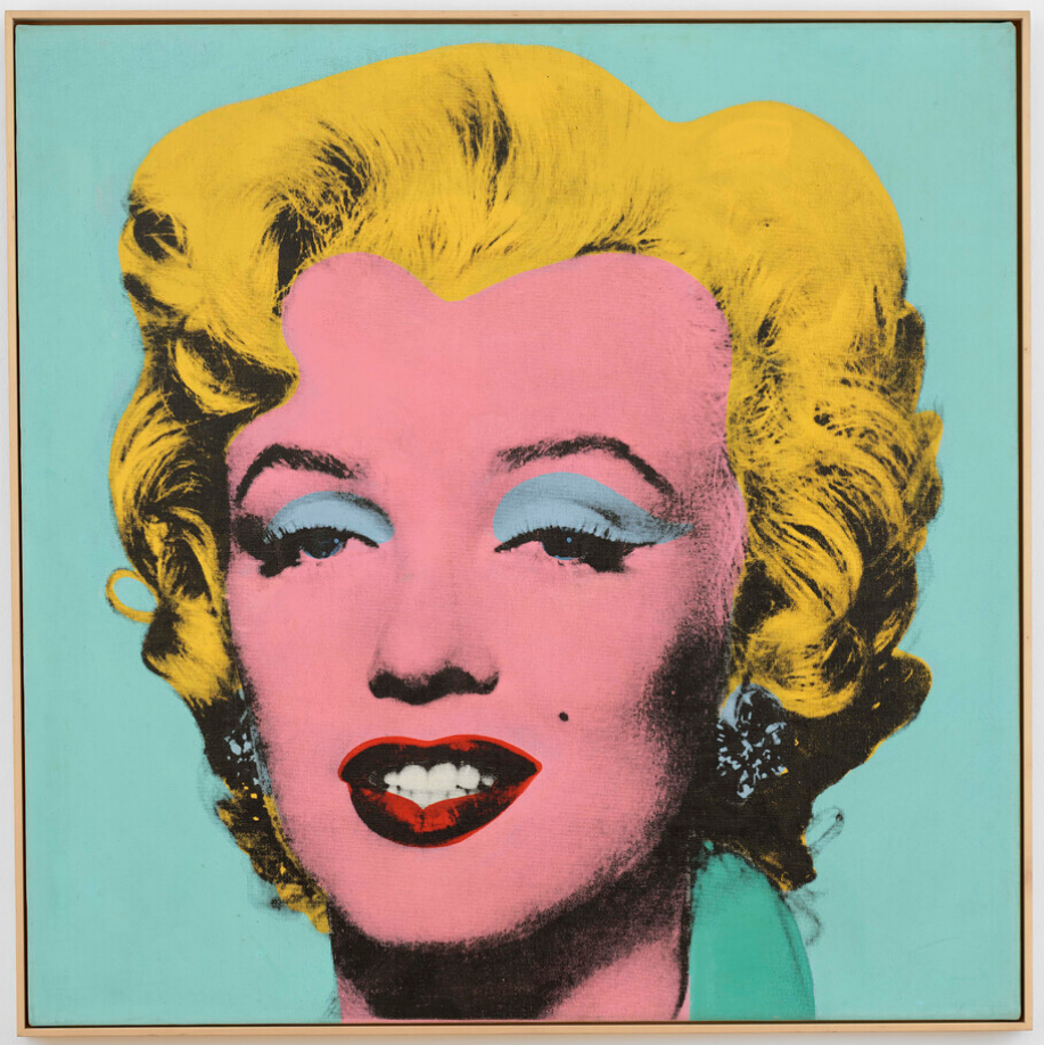
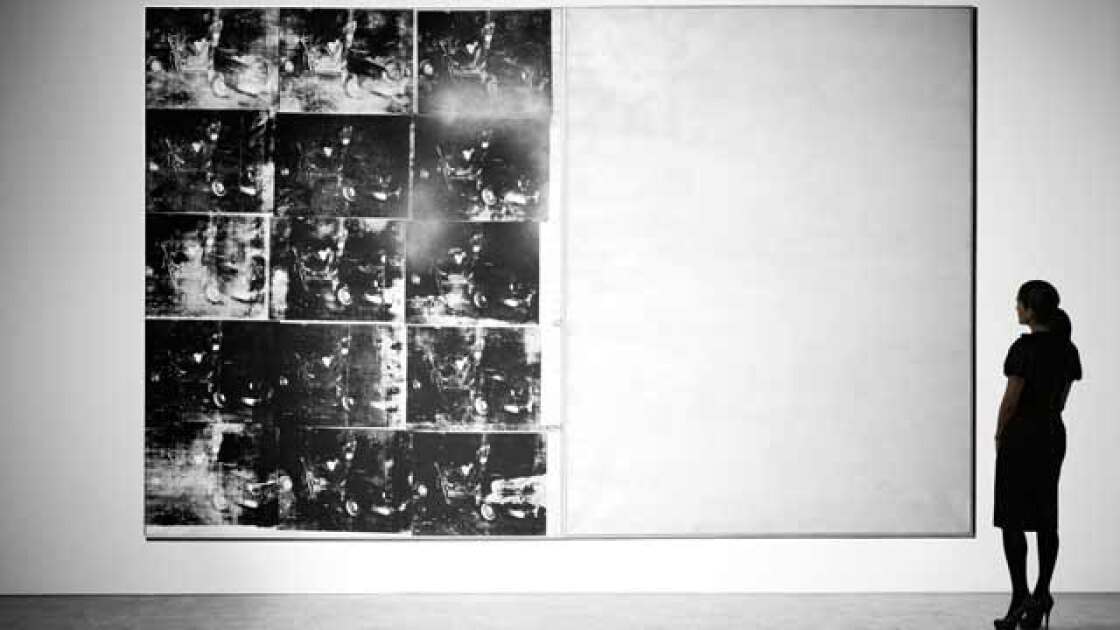
The highest price ever paid for a painting created by Andy Warhol at auction was achieved by Shot Sage Blue Marilyn, an iconic painting dated 1964 that sold at Christie’s in New-York on 9 May 2022 for USD 195,040,000. It pulverized the previous record of USD 105,445,000, held by Silver Car Crash (Double Disaster), a painting dated 1963, since it sold at Sotheby’s in New-York on 13 November 2013.
The Top 10 Lots generated a cumulative turnover of USD 863,492,996. With no surprise, all the record breakers are paintings dated from the 1960’s except the gigantic Sixty Last Supper, that is dated 1986. Only two paintings sold recently in 2022. All paintings sold in New-York.
#1. Shot Sage Blue Marilyn, 1964
Christie’s New-York: 9 May 2022
Estimate on Request
USD 195,040,000
NEW WORLD RECORD AT AUCTION
ANDY WARHOL (1928-1987) (christies.com)
ANDY WARHOL
Shot Sage Blue Marilyn, 1964
Acrylic and silkscreen ink on linen
40×40 inches (101.6×101.6 cm)
#2. Silver Car Crash (Double Disaster), 1963
Sotheby’s New-York: 13 November 2013
Estimate on Request
USD 105,445,000
ANDY WARHOL
Silver Car Crash (Double Disaster), 1963
105.3 x 164.2 inches (267.4 x 417.1 cm)
Silkscreen ink and spray paint on canvas
#3. White Disaster [White Car Crash 19 Times], 1963
Sotheby’s New-York: 16 November 2022
Estimate on Request
USD 85,350,500
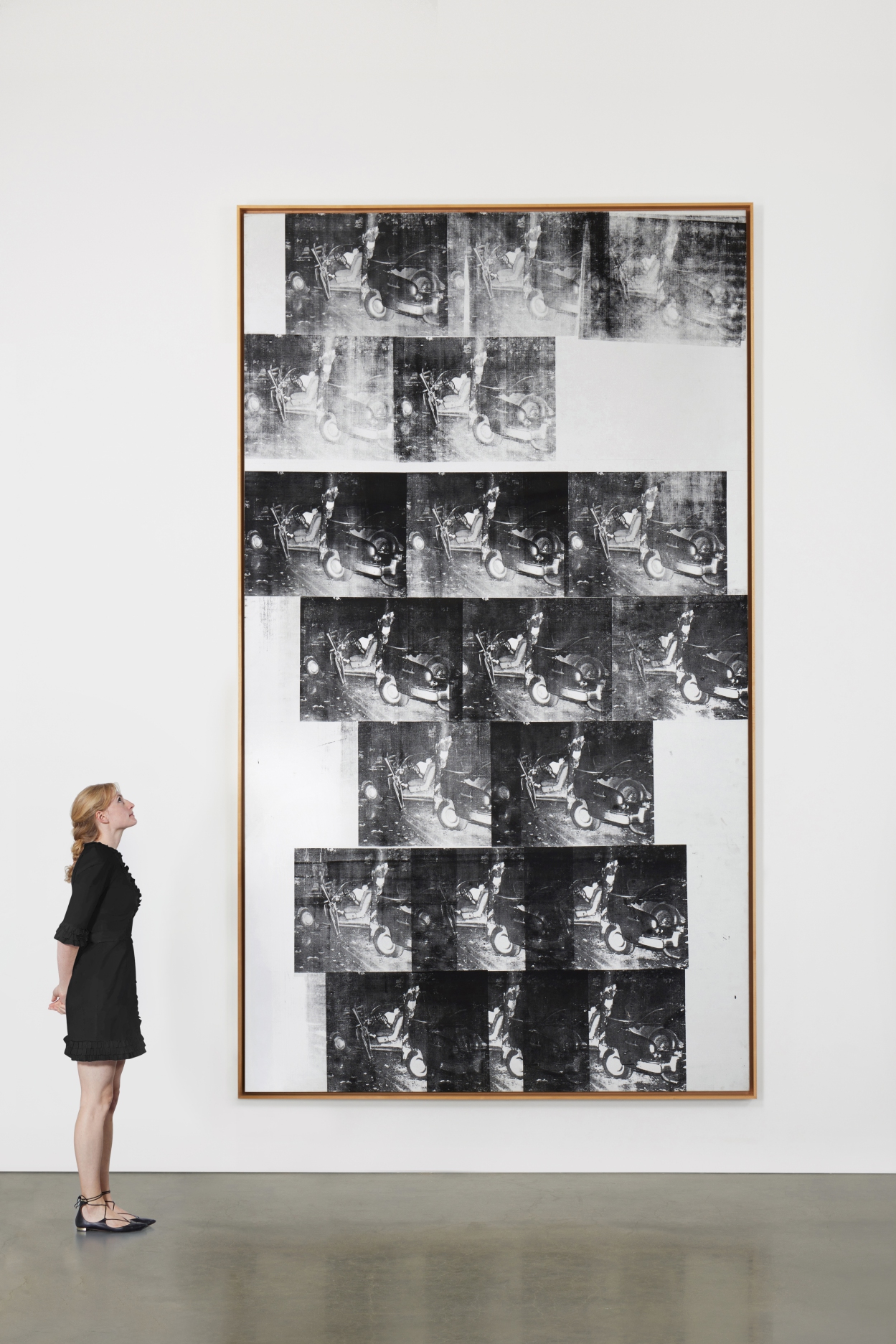
ANDY WARHOL (1928-1987)
White Disaster [White Car Crash 19 Times], 1963
Silkscreen ink and graphite on primed canvas
144 ¾ x 82 ⅞ inches (367.7 x 210.5 cm)
#4. Triple Elvis (Ferus Type), 1963
Christie’s New-York: 11 November 2014
USD 81,925,000
Andy Warhol (1928-1987) (christies.com)
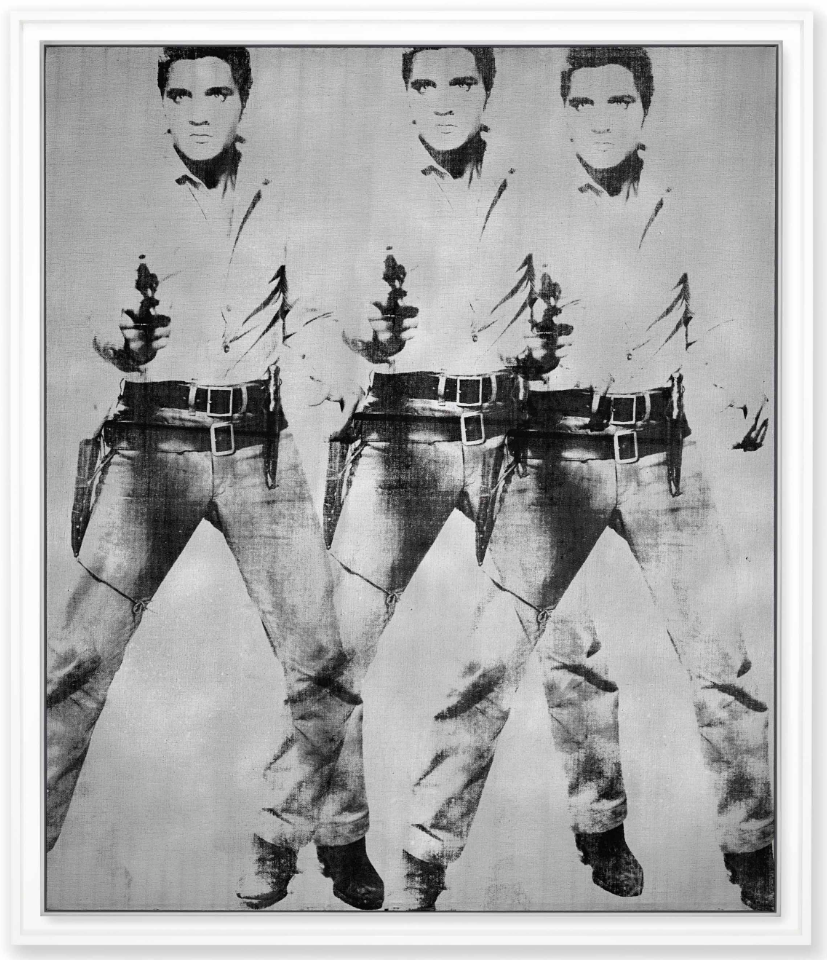
Triple Elvis (Ferus Type), 1963
Silkscreen ink and silver paint on linen
82×69 inches (208.3 x 175.3 cm)
Signed, titled and dated ‘elvis Andy Warhol 63’ (on the reverse)
#5. Green Car Crash (Green Burning Car I), 1963
Christie’s New-York: 15 May 2007
Estimated: USD 25,000,000 – 35,000,000
USD 71,720,000
Andy Warhol (1928-1987) (christies.com)
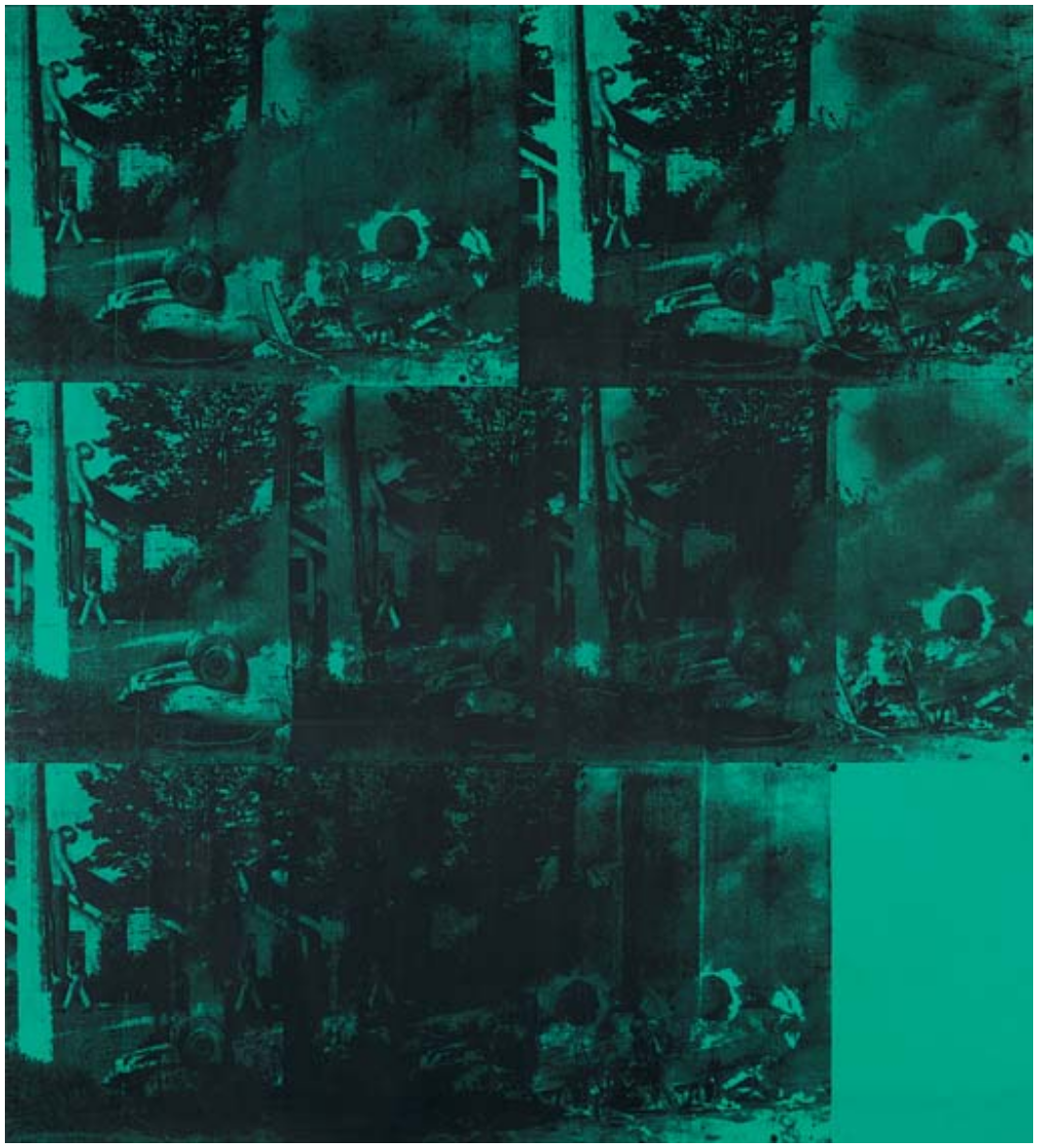
ANDY WARHOL
Green Car Crash (Green Burning Car I), 1963
Synthetic polymer, silkscreen ink and acrylic on linen
90 x 80 inches (228.6 x 203.2 cm)
#6. Four Marlons, 1966
Christie’s New-York: 11 November 2014
Estimate on Request
USD 69,605,000
Andy Warhol (1928-1987) (christies.com)
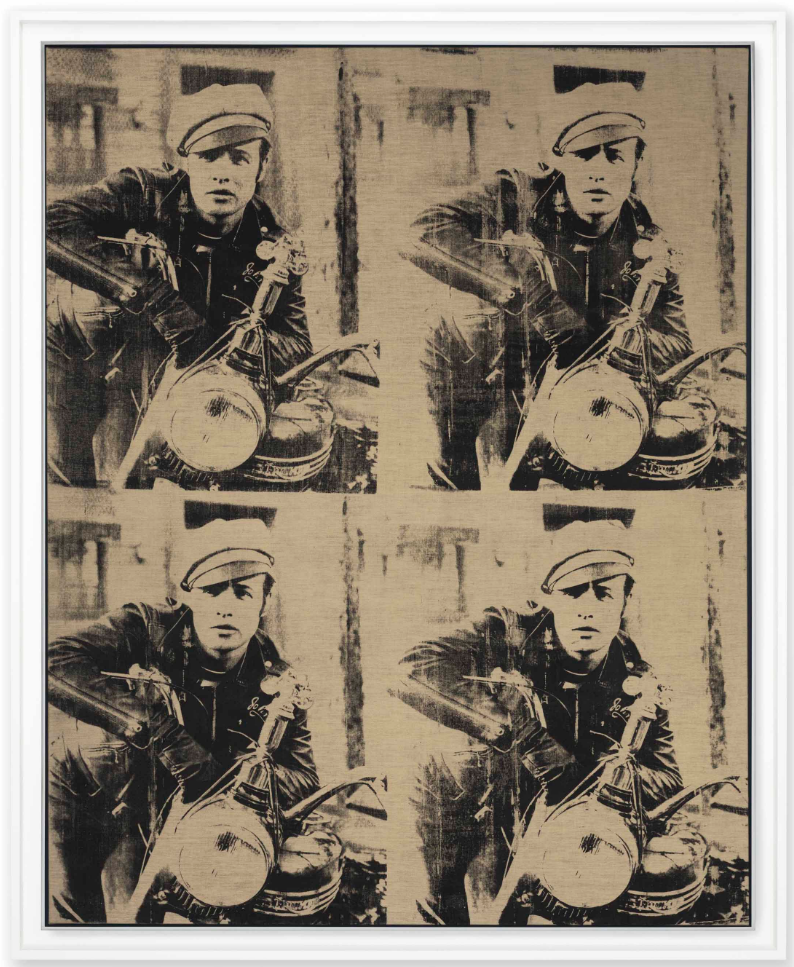
ANDY WARHOL
Four Marlons, 1966
Silkscreen ink on unprimed linen
81×65 inches (205.7 x 165.1 cm)
Signed and dated ‘Andy Warhol 66’ (on the overlap)
#7. Men in Her Life, 1962
Phillips New-York: 8 November 2010
Estimated: USD 40,000,000 – 50,000,000
USD 63,362,500
Andy Warhol – Carte Blanche New York Lot 15 November 2010 | Phillips
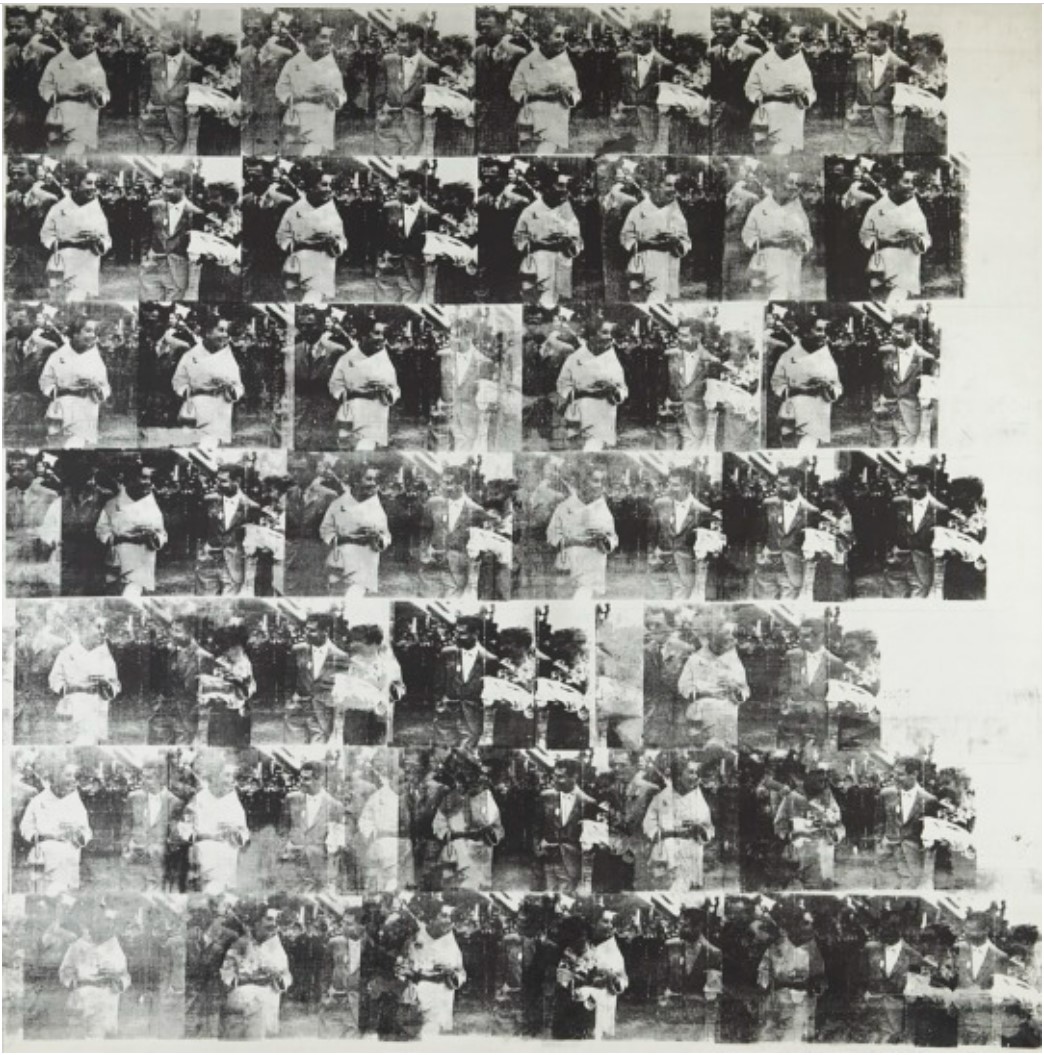
ANDY WARHOL
Men in Her Life, 1962
Silkscreen and pencil on primed canvas
84.5 x 83.2 inches (214.6 x 211.5 cm)
#8. Race Riot, 1964
Christie’s New-York: 12 May 2014
USD 62,885,000
Andy Warhol (1928-1987) (christies.com)
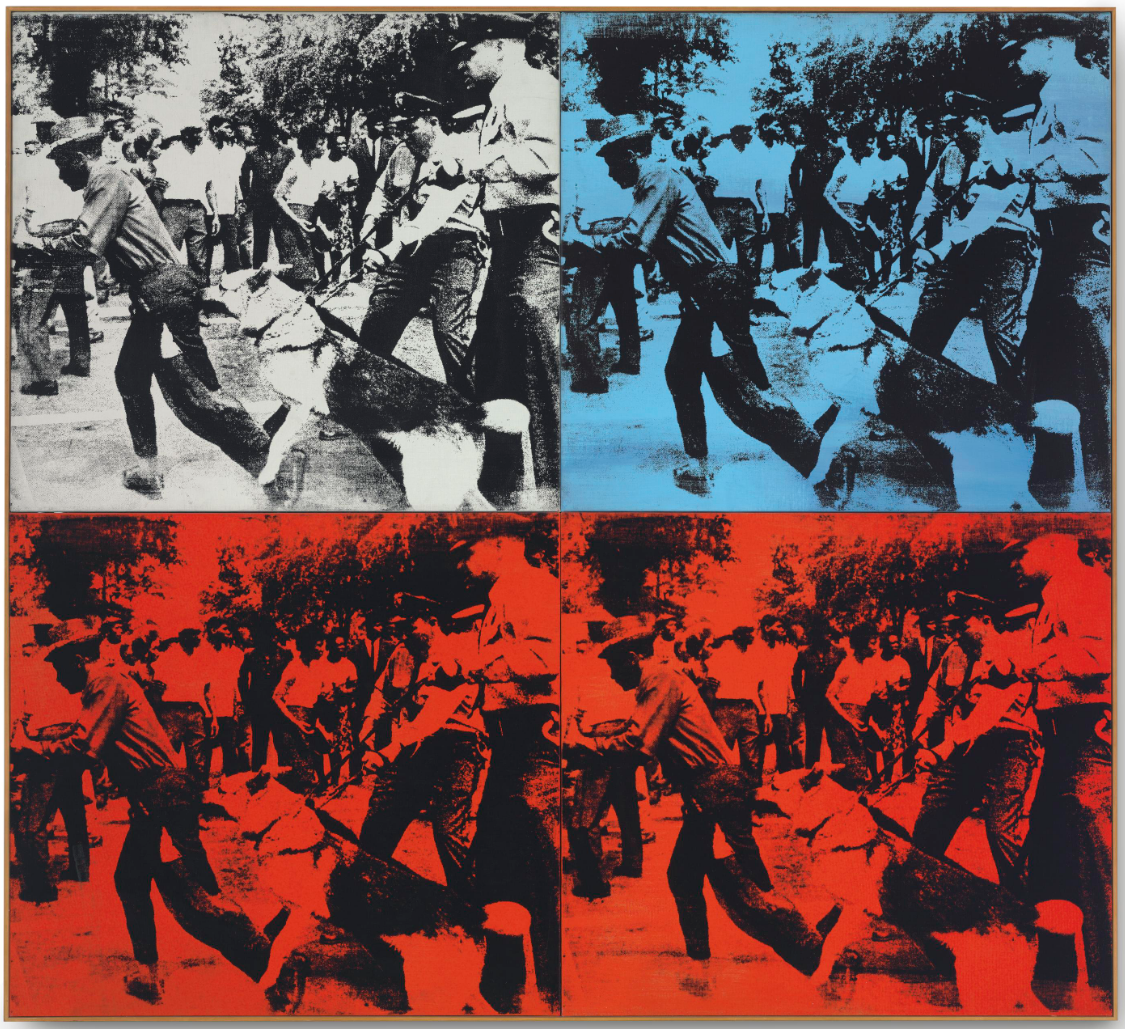
ANDY WARHOL
Race Riot, 1964
Acrylic and silkscreen ink on linen, in four parts
Overall: 60 x 66 inches (152.4 x 167.6 cm)
Signed and dated ‘Andy Warhol 64’ (on the overlap of the upper left panel)
#9. Sixty Last Suppers, 1986
Christie’s New-York: 14 November 2017
Estimate on Request
USD 60,875,000
Andy Warhol (1928-1987) (christies.com)
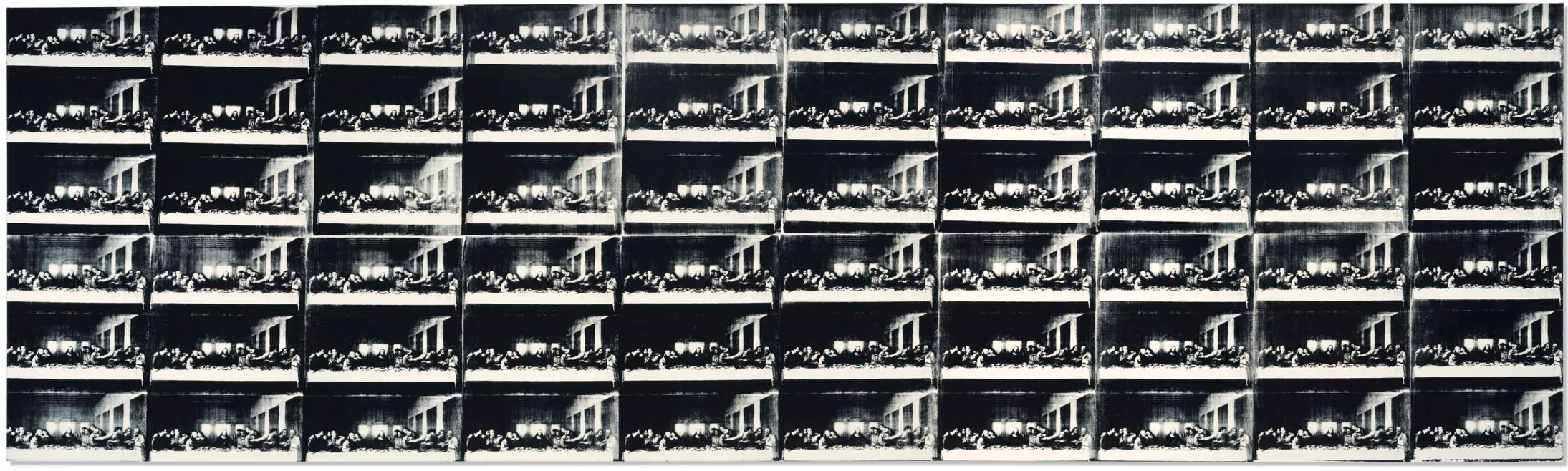
ANDY WARHOL
Sixty Last Suppers, 1986
Acrylic and silkscreen ink on canvas
116 x 393 inches (294.6 x 998.2 cm)
Numbered twice ‘PA82.020’ (on the overlap)
Numbered again ‘PA82.020’ (on the stretcher)
#10. Coca-Cola (3), 1962
Christie’s New-York: 11 November 2013
Estimated: USD 40,000,000 – 60,000,000
USD 57,285,000
Andy Warhol (1928-1987) (christies.com)
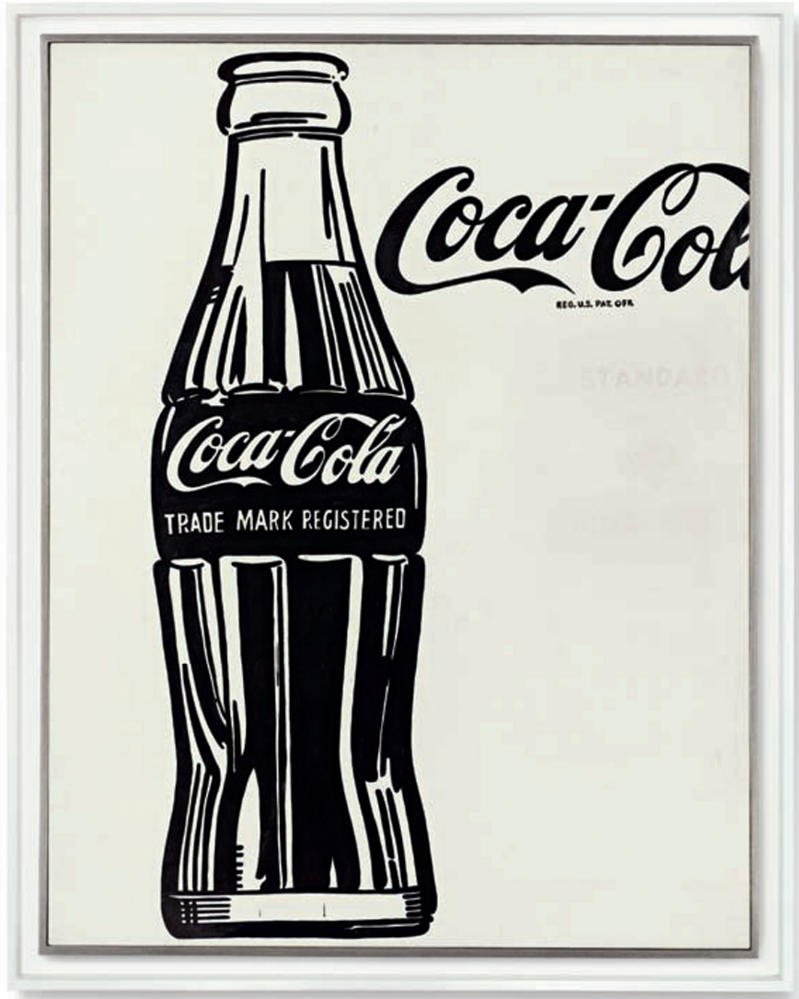
ANDY WARHOL
Coca-Cola (3), 1962
Casein on cotton
69 3/8 x 54 inches (176.2 x 137.2 cm)
Signed ‘Andy Warhol’ (on the turning edge)
FIND MORE AUCTION RESULTS
Repeat Sales
PLEASE CLICK BELOW TO SEE REPEAT SALES FOR ANDY WARHOL PAINTINGS

PART II: AUCTION RESULTS
2026 Auction Results
PLEASE CLICK BELOW TO SEE 2026 AUCTION RESULTS

2025 Auction Results
79 lots sold at auction in 2025 for a total turnover of USD 92,937,733. With 11 lots failing to sell, the sell-through rate is 87.4%.
In the absence of major lots from the 1960’s, no lot sold for more than USD 10 million, as it was the case in most prior years. The Top 3 Lots are late paintings from the 1980’s.
2025 Top 3 Lots
20 lots sold for more than USD 1 million, generating a cumulative turnover of USD 73,570,496, representing 79.2% of the total turnover for 2025.
In terms of contribution from Andy Warhol major series:
- 2 paintings from The Last Supper series sold for a combined USD 15,195,000 (16.3% of total).
- 2 paintings After Munch, from the Collection of Pauline Karpidas sold for a combined USD 12,935,256 (13.9% of total).
- 5 paintings from the Flowers series sold for a combined USD 9,753,470 (10.5% of total)
- 3 paintings from the Mao series sold for a combined USD 6,839,085 (7.4% of total)
- 14 paintings from the Toy Paintings series sold for a combined USD 3,212,492 (3.5% of total)
PLEASE CLICK BELOW TO SEE 2025 AUCTION RESULTS

2024 Auction Results
89 Paintings sold at auction in 2024 for a total turnover of USD 121,153,232. With 10 lots failing to sell, the sell-through rate is 89.9%. The top lot for 2024 is Flowers, dated 1964, that sold at Christie’s in New-York on 14 May 2024 for USD 35,485,000. 20 lots sold for more than USD 1 million, generating a turnover of USD 100,038,928, contributing 82.6% to the total for 2024.
2024 Top 3 Lots
4 Flowers paintings contributed USD 47,896,936 to the total turnover for 2024, representing 39.5%. However, the largest contributor in terms of number of lots, is the Toy Paintings series, with no less than 26 lots, generating USD 6,354,096 in sales, at an average price of USD 244,388.
PLEASE CLICK BELOW TO SEE 2024 AUCTION RESULTS
2023 Auction Results
98 lots sold at auction in 2023 for a total turnover of USD 121,468,315. With 14 lots unsold, the sell-through rate is 88%. The highest price for 2023 was achieved by Sixteen Jackies sold at Sotheby’s in New-York on 15 November 2023 for USD 25,940,000.
2023 Top 3 Lots
The Top 3 lots generated a cumulative turnover of USD 52,026,351, contributing 42.8% to the total turnover for 2023.
PLEASE CLICK BELOW TO SEE 2023 AUCTION RESULTS

2022 Auction Results
2022 was a record year for Andy Warhol at auction. 90 paintings sold for USD 494,998,824. A new auction record was set in May 2022 when Shot Sage Blue Marilyn sold at Christie’s in New-York for USD 95 million. The Top 2 lots of 2022 contributed over USD 280 million or 56.6% of the year total turnover at auction.
2022 Top 3 Lots
30 lots sold for over USD 1 million, generating a cumulative turnover of USD 476,691,595, contributing 96.3% of the total turnover in 2022.
PLEASE CLICK BELOW TO SEE 2022 AUCTION RESULTS
2021 Auction Results
In 2021, the market absorbed 107 paintings, generating USD 282,119,901 in turnover. With 11 unsold lots, the sell-through rate reached 91%, the highest level across the period under review.
2021 Top 3 Lots
The year was notable for its depth: 7 paintings sold above USD 10 million, while 22 paintings exceeded USD 1 million, together generating USD 251,678,278, or 89.2% of total turnover. 2021 appears, in hindsight, as a structurally balanced year, strong at the top, yet supported by broad participation across price segments.
PLEASE CLICK BELOW TO SEE 2021 AUCTION RESULTS
PART III: FOCUS
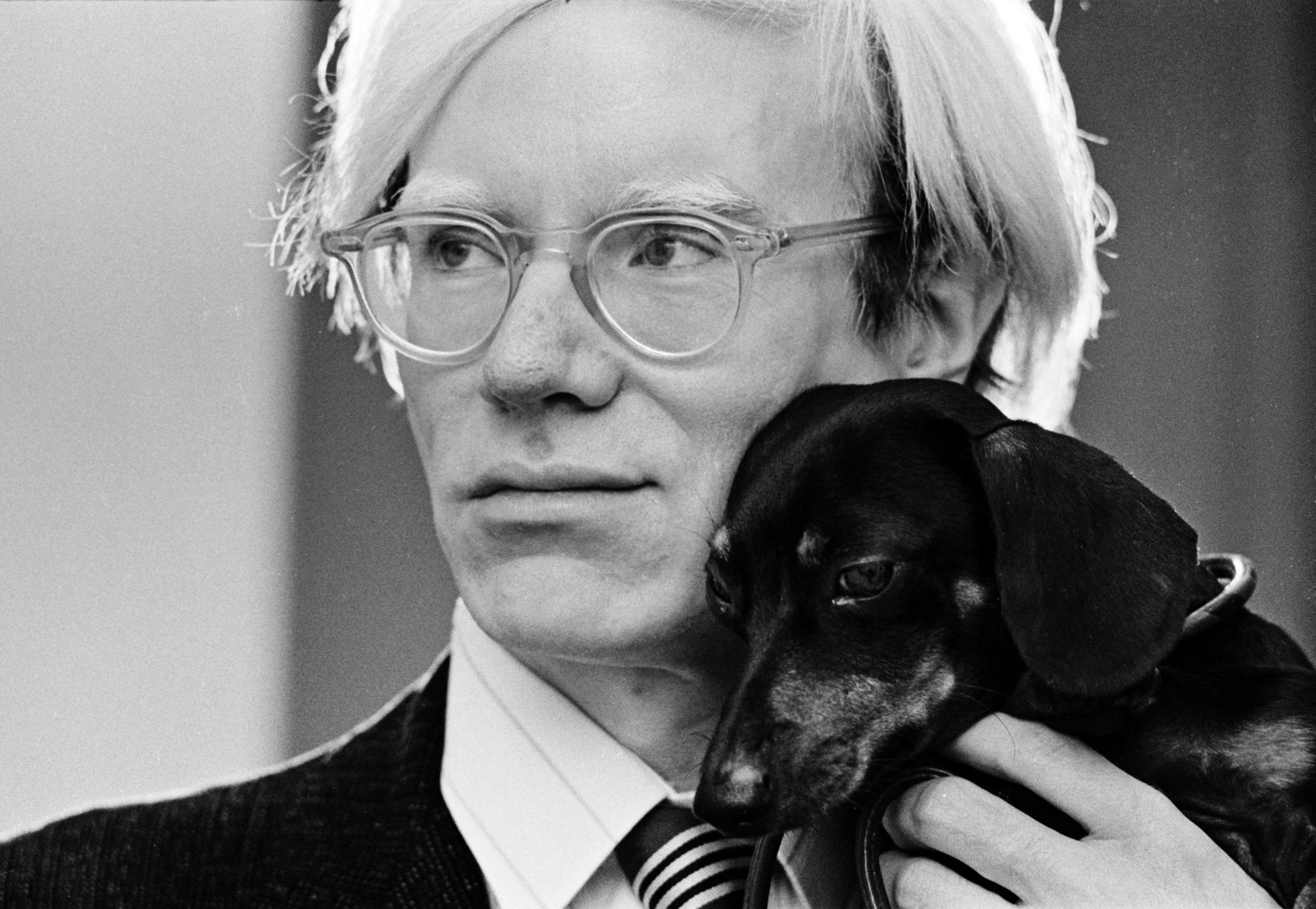
The FOCUS section highlights some of the major works sold at auction since 2021. For more information and more auction results, please check the Andy Warhol Paintings Catalogue.
Andy Warhol – Paintings – IntelArt
#2. Jean-Michel Basquiat, 1982
Christie’s New-York: 10 November 2021
Estimate on Request
USD 40,091,500
ANDY WARHOL (1928-1987), Jean-Michel Basquiat | Christie’s
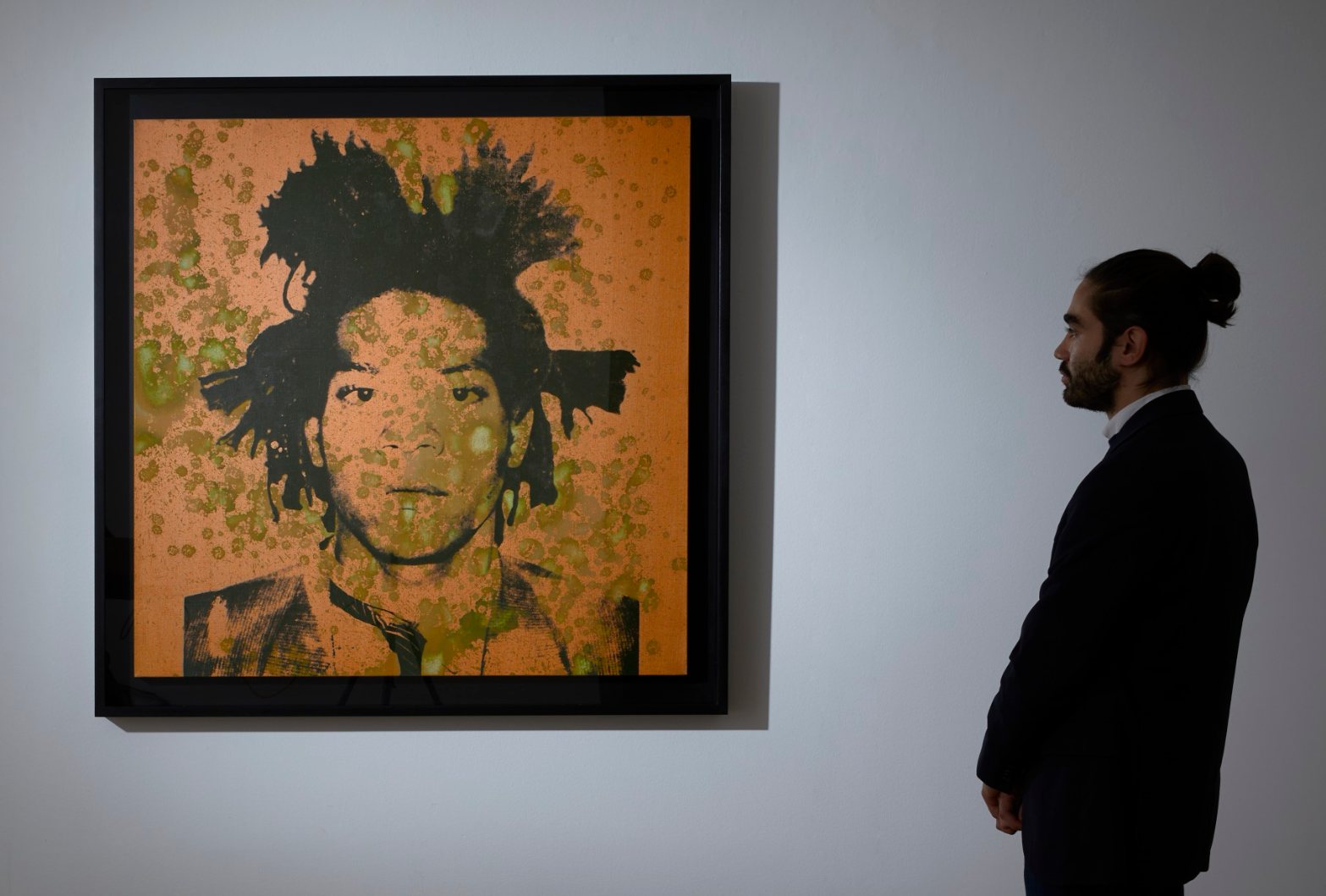
ANDY WARHOL
Jean-Michel Basquiat, 1982
Metallic pigment, acrylic, silkscreen ink and urine on canvas
40×40 inches (101.6 x 101.6 cm)
Dollar Sign, 1981
Contours of Modernity | A Private European Collection
Sotheby’s London: 4 March 2026
Estimated: GBP 300,000 – 400,000
GBP 576,000 / USD 769,480
Dollar Sign | Modern & Contemporary Evening Auction | 2026 | Sotheby’s
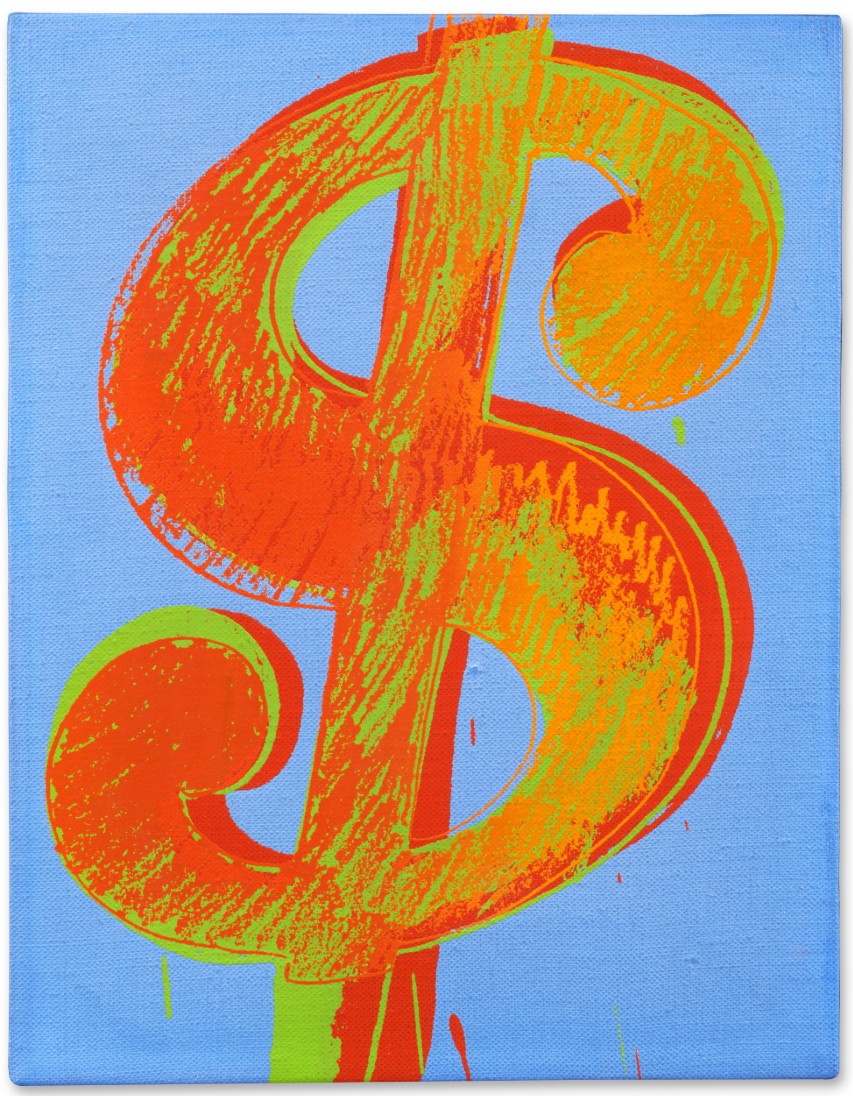
ANDY WARHOL (1928 – 1987)
Dollar Sign, 1981
Acrylic and silkscreen ink on canvas
10×8 inches (25.8 x 20 cm)
Signed, dated 81 and dedicated To Enrico (on the overlap)
Early Marilyns, 1962-64
There are few images in history that have the ability to transcend the time and place of their creation, surpassing even the reputation of their creator or the magnificence of their subject. From the classical beauty of the Venus de Milo and the enigmatic smile of the Mona Lisa, to the sultry Sirens of Picasso’s Les Demoiselles D’Avignon, the beauty of the human figure has inspired artists to extended their creativity to new heights. In the latter half of the twentieth-century, one woman captivated the world with her legendary looks, the Hollywood star Marilyn Monroe. This small-town girl rose to become the most famous woman in the world, and today, the myth of Marilyn Monroe is still as potent as ever. This is due to one man: Andy Warhol, his unique ability to capture the humble beauty of a global superstar has seared her likeness onto our collective consciousness.
READ ABOUT MARILYN
FIND ALL HISTORICAL AUCTION RESULTS
PLEAE CLICK ON ANY PICTURE BELOW TO ACCESS THE CATALOGUE ENTRY
Shot Sage Blue Marilyn, 1964
Christie’s New-York: 9 May 2022
Estimate on Request
USD 195,040,000
NEW WORLD RECORD AT AUCTION FOR ANDY WARHOL
ANDY WARHOL (1928-1987) (christies.com)
ANDY WARHOL
Shot Sage Blue Marilyn, 1964
Acrylic and silkscreen ink on linen
40×40 inches (101.6×101.6 cm)
Nine Marilyns, 1962
Sotheby’s New-York: 15 November 2021
Estimated: USD 40,000,000 – 60,000,000
USD 47,373,000
Nine Marilyns | The Macklowe Collection | 2021 | Sotheby’s
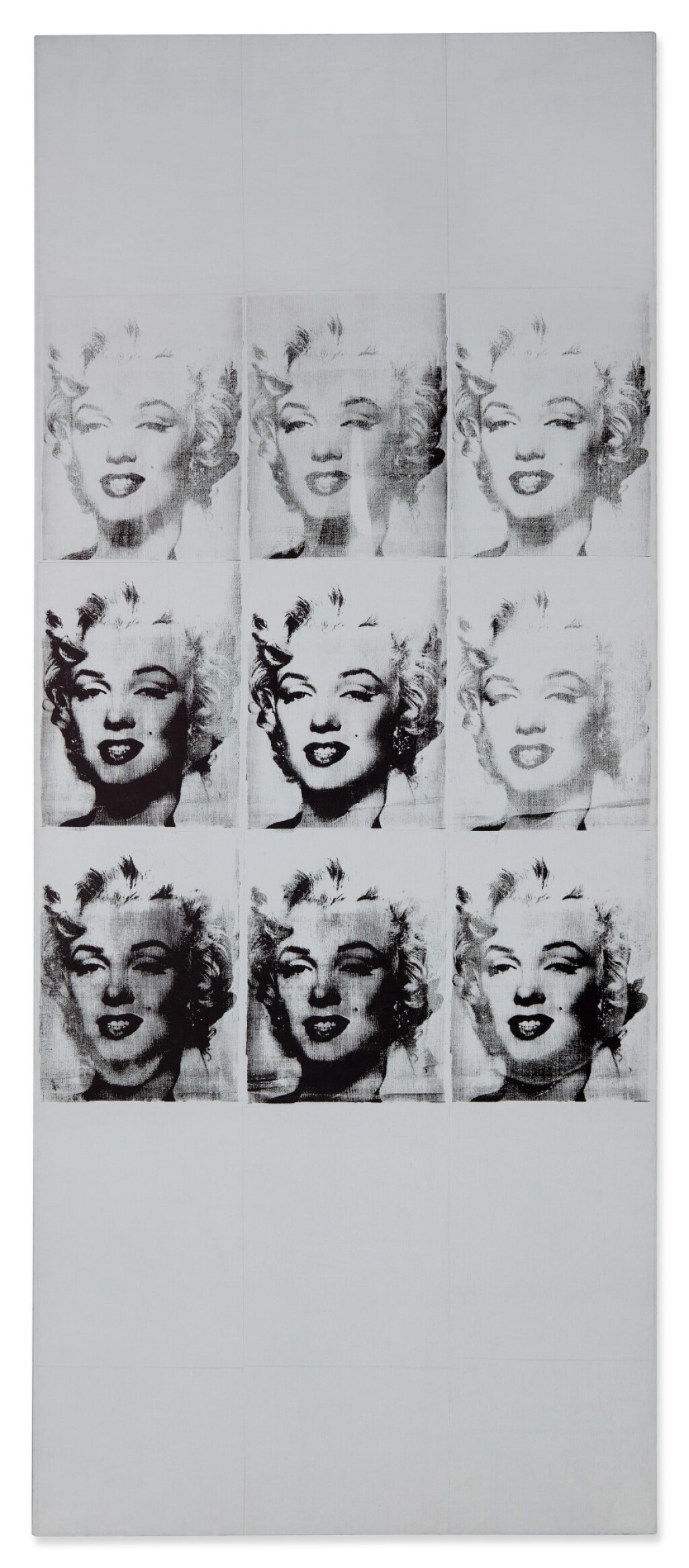
ANDY WARHOL
Nine Marilyns, 1962
Acrylic, silkscreen ink and graphite on canvas
81.5 x 33.7 inches (207 x 85.7 cm)
Two Marilyns (Double Marilyn), 1962
Christie’s New-York: 12 May 2021
Estimated: USD 14,000,000 – 18,000,000
USD 15,817,500
Andy Warhol (1928-1987), Two Marilyns (Double Marilyn) | Christie’s
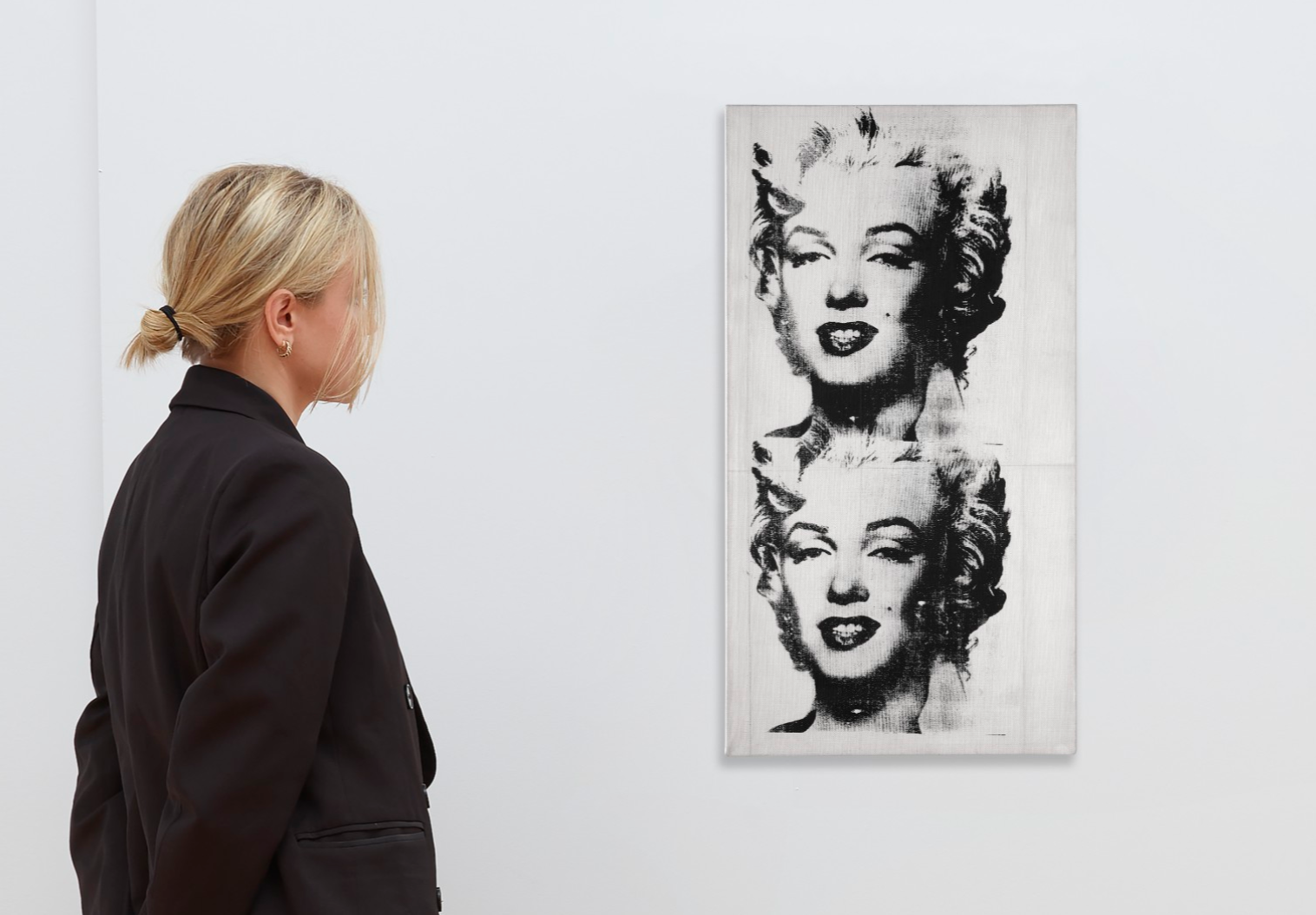
ANDY WARHOL
Two Marilyns (Double Marilyn), 1962
Silkscreen ink and graphite on canvas
26×14 inches (66 x 35.6 cm)
Death and Disaster, 1963
In 1962, as the potency of mass media reached new heights in America, Warhol began to silkscreen the photographs of destruction he discovered in the newspapers, marking the beginnings of his Death and Disaster series. Drawing upon the photographs of atomic bombs, airplane crashes, car accidents and other tragedies presented as highly quotidian in the media, Warhol fearlessly probed a dark side of American society to produce a body of work that would serve as a modern allegory of the mass media age, when images of violence had dissolved into repetitive banality that most preferred not to acknowledge. With his revolutionary mastery over the medium of silkscreen, then a primarily commercial and industrial technique, Warhol conjured the nightmare of the accidents in graphic brutality while simultaneously neutralizing their impact by way of replication. At the same time, his very technique invoked the same power of the mass media on which he was commenting, affording him a certain distance from his subject.
READ ABOUT DEATH AND DISASTER SERIES
FIND ALL HISTORICAL AUCTION RESULTS
Death and Disaster (Car Crashes, Ambulance & Tunafish Disaster), 1963
PLEASE CLICK ON ANY PICTURE BELOW TO ACCESS THE CATALOGUE ENTRY
Ambulance Disaster, circa 1963
Christie’s New-York: 22 November 2024
Estimated: USD 400,000 – 600,000
USD 441,000
ANDY WARHOL (1928-1987), Ambulance Disaster | Christie’s
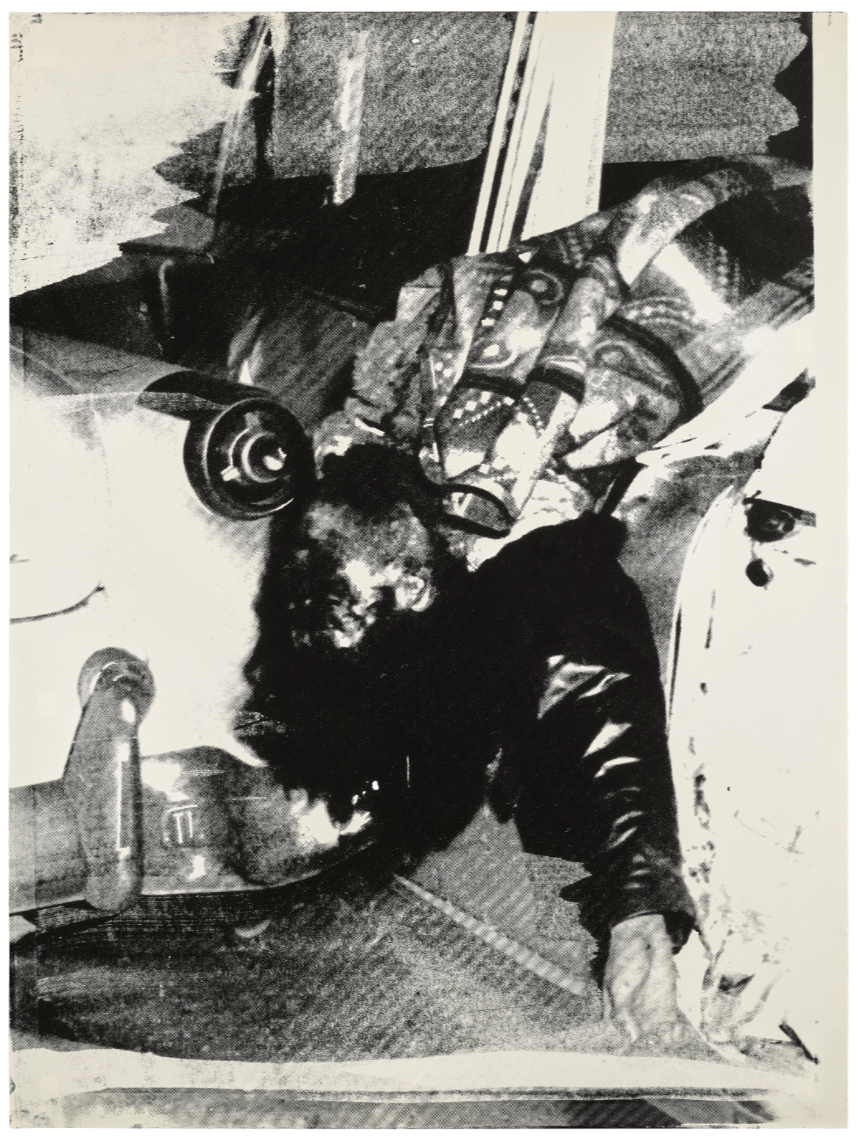
ANDY WARHOL (1928-1987)
Ambulance Disaster, circa 1963
Silkscreen ink on paper
40 x 30 1/8 inches (101.7 x 76.4 cm)
Stamped with the Estate of Andy Warhol and the Andy Warhol Foundation for the Visual Arts, Inc. stamps and numbered ‘UP 67.05’ (on the reverse)
Tunafish Disaster, 1963
Sotheby’s New-York: 17 May 2024
Estimated: USD 600,000 – 800,000
USD 482,600
Tunafish Disaster | Contemporary Day Auction | 2024 | Sotheby’s (sothebys.com)

ANDY WARHOL (1928 – 1987)
Tunafish Disaster, 1963
Silkscreen ink and silver paint on canvas
41×22 inches (104.1 x 55.9 cm)
Stamped twice by the Estate of Andy Warhol and by the Andy Warhol Foundation for the Visual Arts, Inc.
Numbered PA57.016 on the overlap
White Disaster [White Car Crash 19 Times], 1963
Sotheby’s New-York: 16 November 2022
Estimate on Request
USD 85,350,500
ANDY WARHOL (1928-1987)
White Disaster [White Car Crash 19 Times], 1963
Silkscreen ink and graphite on primed canvas
144 ¾ x 82 ⅞ inches (367.7 x 210.5 cm)
Elvis, 1963
Standing with his trademark proud stance, Andy Warhol’s portraits of Elvis Presley dominate their shimmering canvasses just as the singer dominated the cultural landscape of the 1950s and 1960s. First shown at the artist’s important 1963 exhibition at Irving Blum’s Ferus Gallery in Los Angeles, Warhol’s Elvis paintings join the pantheon of the Pop master’s Hollywood superstars. It was only natural that, having portrayed Marilyn Monroe, Elizabeth Taylor and Marlon Brando, he should also turn to Elvis as his subject matter. While the others were famous movie stars, none of them achieved the immense and unprecedented star power that Elvis attracted during the crest of his early career in the mid-1950s.For Warhol, who was fascinated by popular culture, fame and celebrity, Elvis was the ultimate subject. At nearly seven feet tall, the image of Elvis Presley displays a confident posture, staring directly out of the canvas with his famous “baby blue” eyes.
READ ABOUT ELVIS
FIND ALL HISTORICAL AUCTION RESULTS
PLEASE CLICK ON ANY PICTURE BELOW TO ACCESS THE CATALOGUE ENTRY
Elvis, 1963
Sotheby’s New-York, 19 May 2022
Estimated: USD 15,000,000 – 25,000,000
USD 21,581,000
Elvis | Contemporary Evening Auction | 2022 | Sotheby’s (sothebys.com)
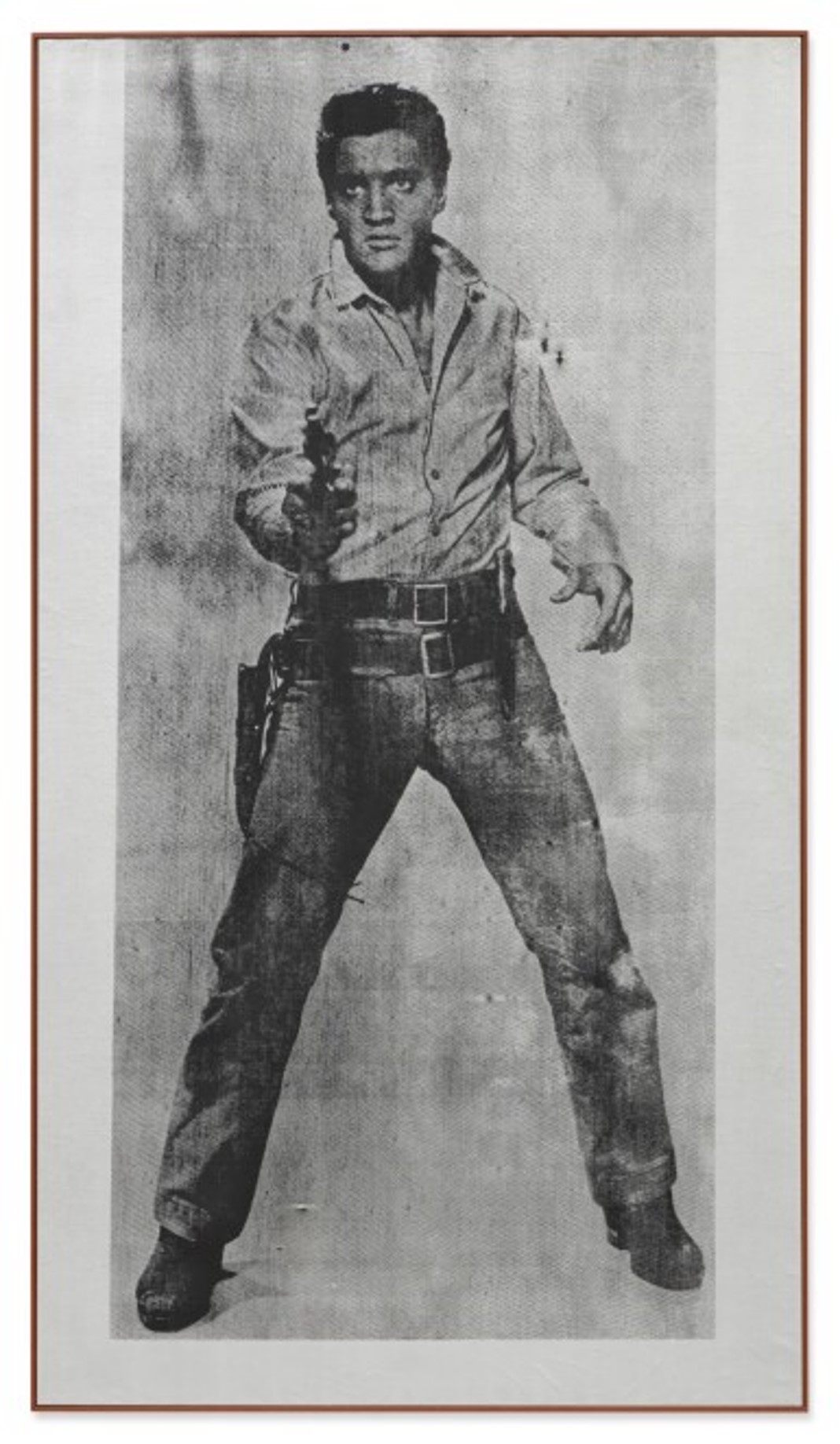
ANDY WARHOL
Elvis, 1963
Silkscreen ink and silver paint on canvas
82 3/4 x 46 1/4 inches (210.2 x 117.5 cm)
Elvis 2 Times, 1963
Sotheby’s New-York: 12 May 2021
Estimated: USD 20,000,000 – 30,000,000
USD 37,032,000
Elvis 2 Times | American Visionary: The Collection of Mrs. John L. Marion | 2021 | Sotheby’s
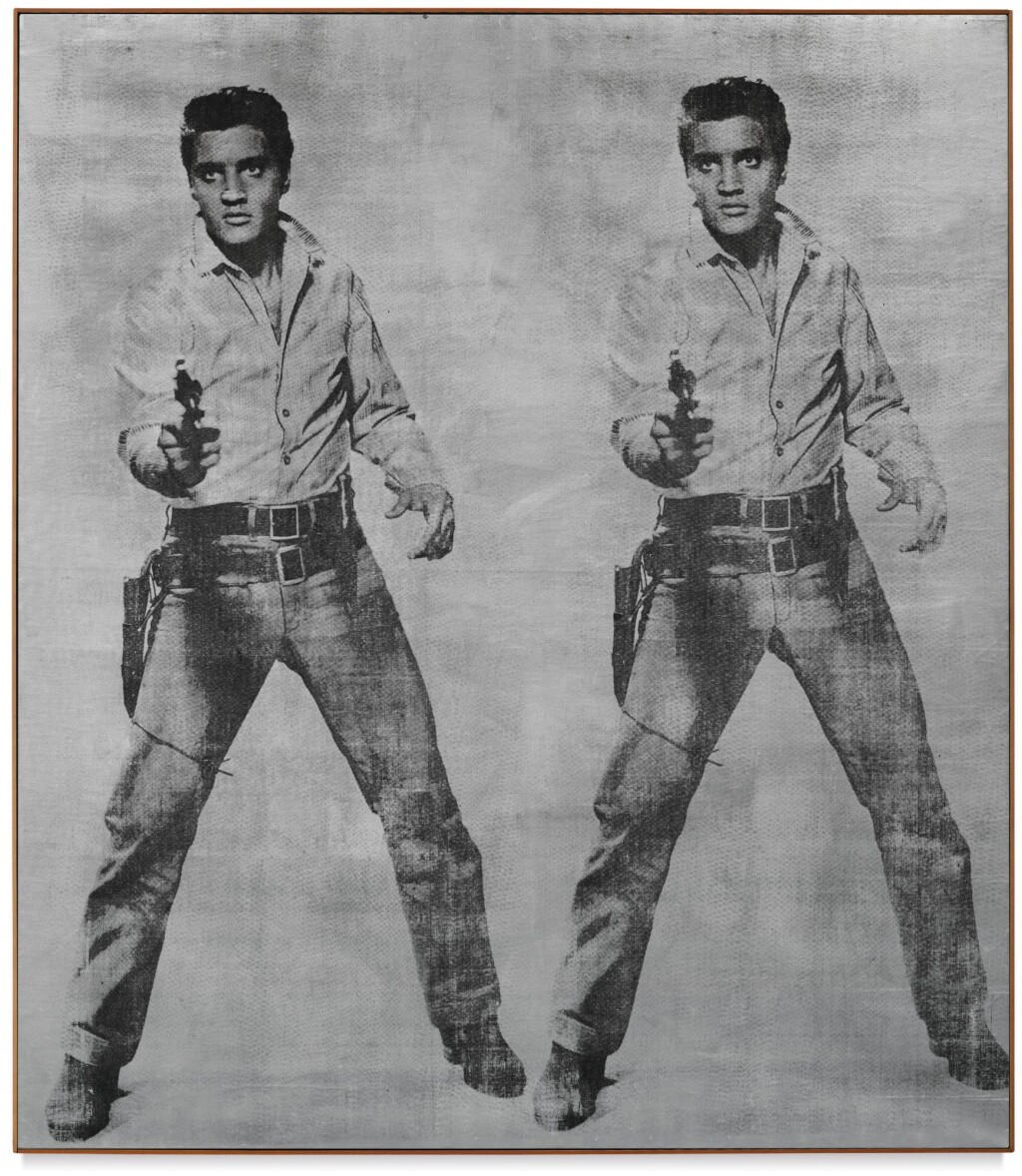 ANDY WARHOL
Elvis 2 Times, 1963
Silkscreen ink and silver paint on canvas
81.5 x 71.7 inches (207 x 181.3 cm)
Jackie, 1964
The assassination of President John F. Kennedy on 22 November 1963 marked the death of an American icon and the end of a political era. The youth, vitality and optimism that had defined JFK’s administration had been cut short. In the words of the widowed Jacqueline Kennedy, the days of Camelot were over. From the moment of the gunshots in Dallas to the funeral procession in Washington DC four days later, the major television networks in the United States suspended commercials and aired wall-to-wall coverage of the proceedings. Throughout the world, the media was flooded with images of the fateful day and its aftermath.
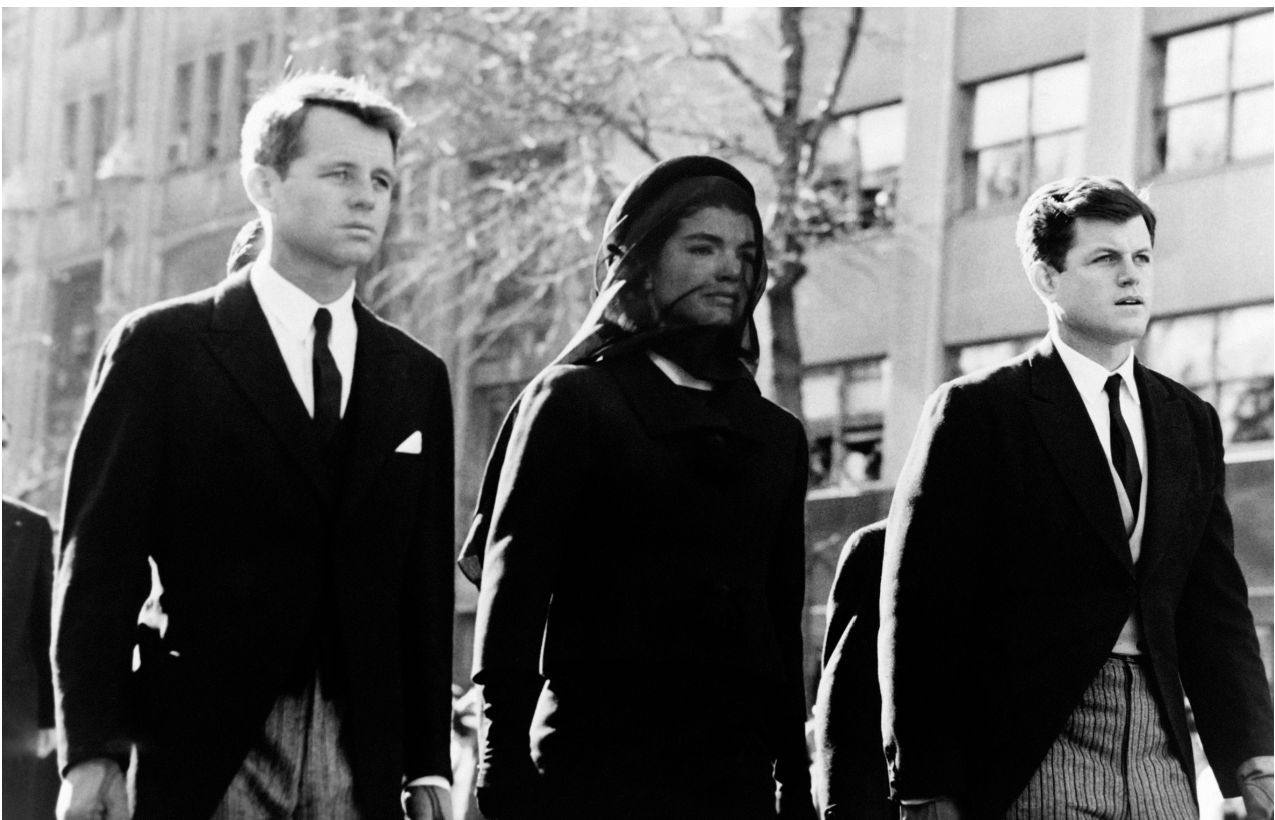
All eyes were on Jackie, who became an icon of a nation in mourning. Amongst those watching was Andy Warhol who had made his reputation as an artist responding to mass media spectacle. According to Warhol’s friend and studio assistant Gerard Melanga, as soon as the tragic news reached them, Warhol’s only response was ‘Let’s go to work!’ In the weeks following the assassination, Warhol began sifting through and collecting images of Jackie that had been published in newspapers and tabloids. The resulting series of paintings, which meditated on these widely disseminated images of the former First Lady, became an essential chapter in the artist’s Death and Disaster body of work. Warhol’s enduring fascination with the fragility of life extends beyond known celebrity subjects, as illustrated by his 1963 Death and Disasters. In his depictions of Jackie, however, Warhol was fully engrossed in both the public broadcasting of the assassination as well as the former First Lady’s existence beyond her husband’s death. The President’s funeral was one of the first national events to be extensively covered by the American media; TV networks went live with wall-to-wall coverage and news editors documented every moment of the tragedy with excruciating detail. Onassis’s life became a commodity as her face lined newspaper covers, magazines articles, and television screens.
READ ABOUT JACKIE
FIND ALL HISTORICAL AUCTION RESULTS
PLEASE CLICK ON ANY PICTURE BELOW TO ACCESS THE CATALOGUE ENTRY
Jackie, 1964
Sotheby’s New-York: 16 November 2023
Estimated: USD 800,000 – 1,200,000
USD 666,750
Jackie | Contemporary Day Auction | 2023 | Sotheby’s (sothebys.com)
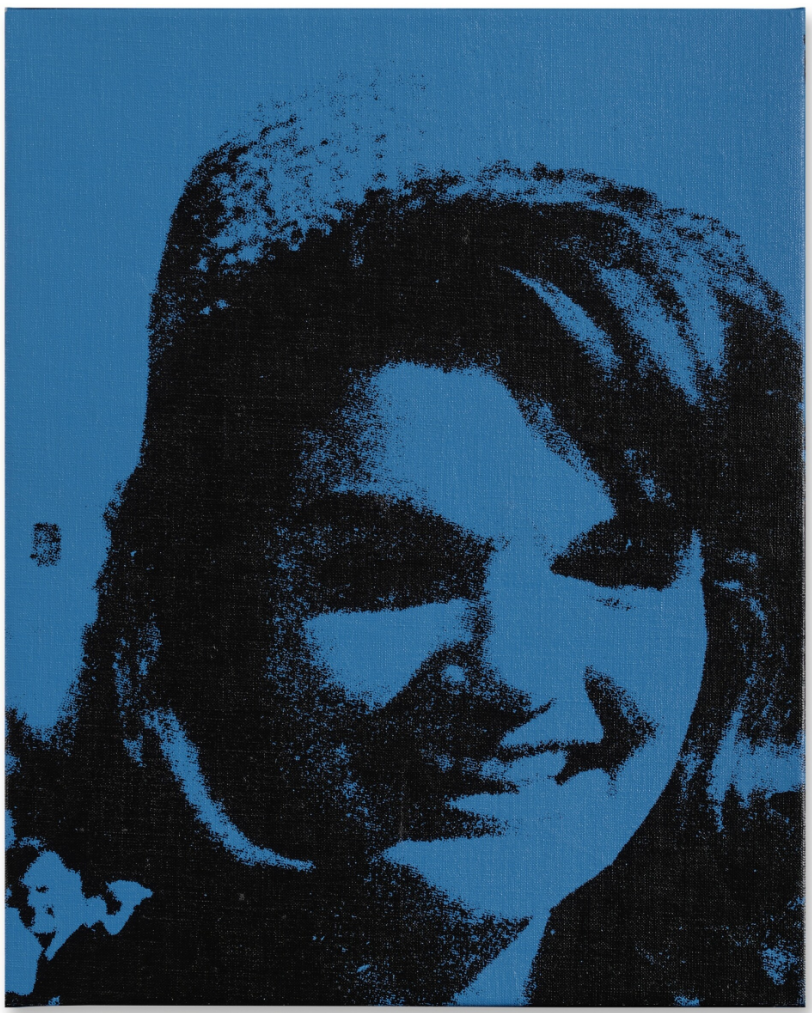
ANDY WARHOL (1928 – 1987)
Jackie, 1964
Acrylic and silkscreen ink on canvas
20×16 inches (50.8 x 40.6 cm)
Sixteen Jackies, 1964
Christie’s New-York: 9 November 2023
Estimated: USD 25,000,000 – 35,000,000
USD 25,940,000
ANDY WARHOL (1928-1987) (christies.com)
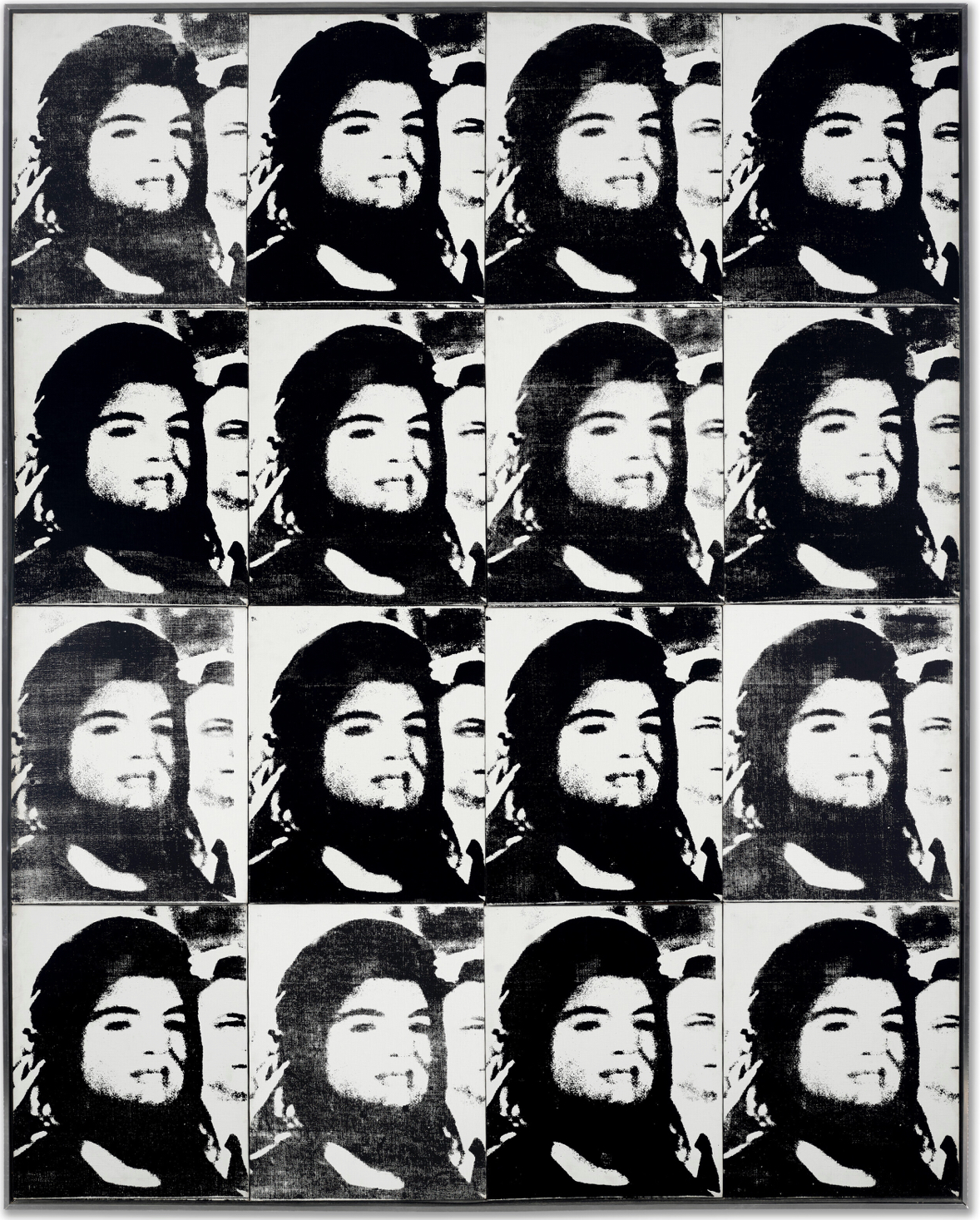
ANDY WARHOL (1928-1987)
Sixteen Jackies, 1964
Silkscreen ink on linen, in sixteen parts
Overall: 80×64 inches (203.2 x 162.6 cm)
Signed ‘Andy Warhol’ (on the overlap of four canvases)
Sixteen Jackies, 1964
Sotheby’s New-York: 15 November 2021
Estimated: USD 15,000,000 – 20,000,000
USD 33,872,250
Sixteen Jackies | The Macklowe Collection | 2021 | Sotheby’s
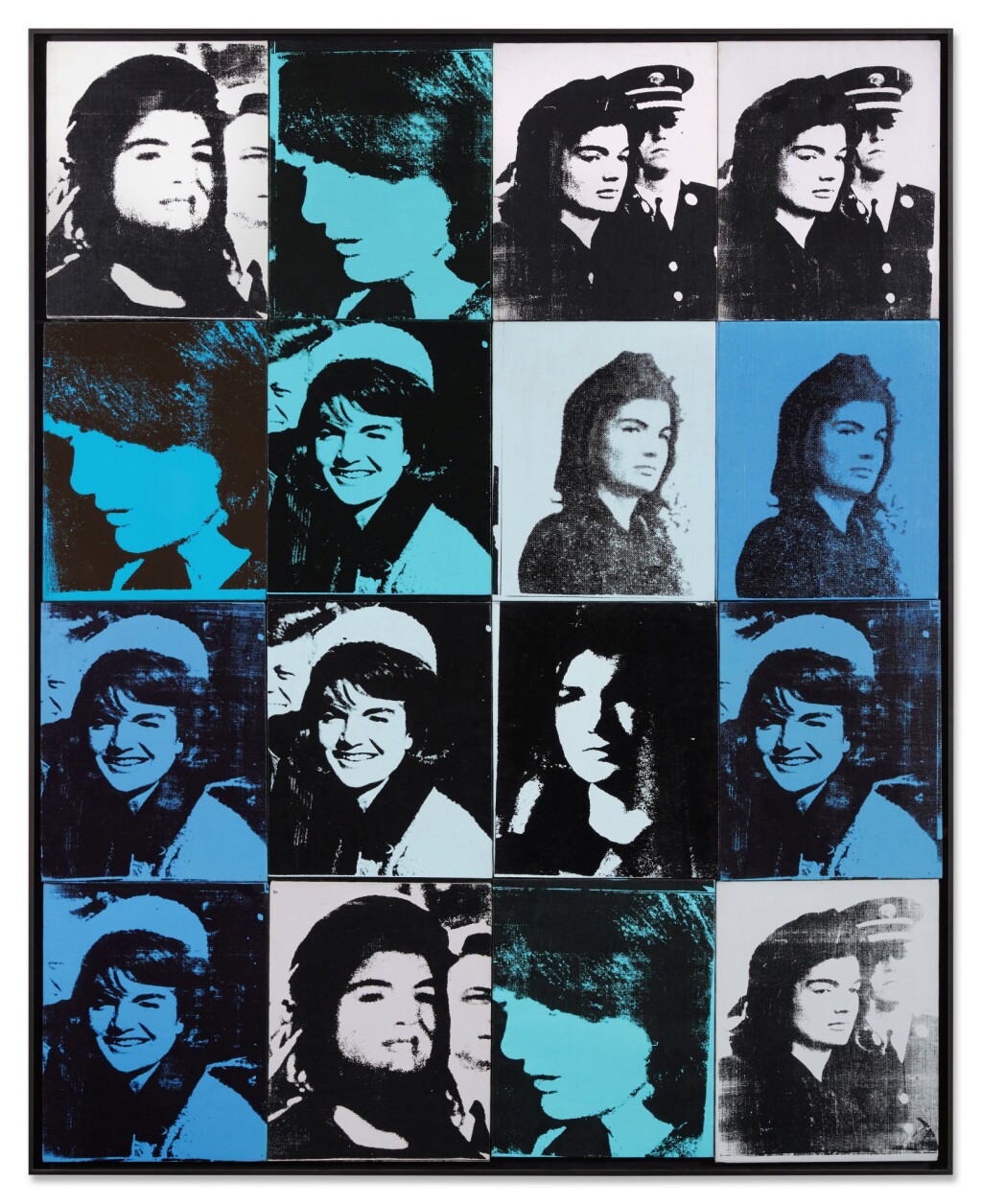
ANDY WARHOL
Sixteen Jackies, 1964
Acrylic and silkscreen ink on canvas, in sixteen parts
Each: 20×16 inches (50.8 x 40.6 cm)
Overall: 81×65 inches (205.7 x 165.1 cm)
Mona Lisa, 1963-1980
Warhol revisited the Mona Lisa motif repeatedly over the course of his career, beginning in 1963, the year da Vinci’s Mona Lisa was exhibited at the Metropolitan Museum of Art, New York. This historic loan was facilitated by another famous Warholian subject, First Lady Jackie Kennedy, who personally convinced the French Cultural Minister to send the work across the ocean. The present work dates to the midpoint of Warhol’s sustained artistic investigation into the Renaissance subject matter, which lasted into the late 1970s.
READ ABOUT MONA LISA
FIND ALL AUCTION RESULTS
Four Mona Lisas, 1978
Christie’s London: 5 March 2026
Estimated: GBP 3,500,000 – 5,500,000
GBP 4,320,000 / USD 5,771,090
ANDY WARHOL (1928-1987), Four Mona Lisas | Christie’s
REPEAT SALE
Christie’s New-York: 12 November 2014
Estimated: USD 2,500,000 – 3,500,000
USD 5,989,000
Andy Warhol (1928-1987), Mona Lisa | Christie’s
REPEAT SALE
Christie’s New-York: 10 November 2010
Estimated: USD 1,800,000 – 2,200,000
USD 3,610,500
Andy Warhol (1928-1987) , Mona Lisa | Christie’s
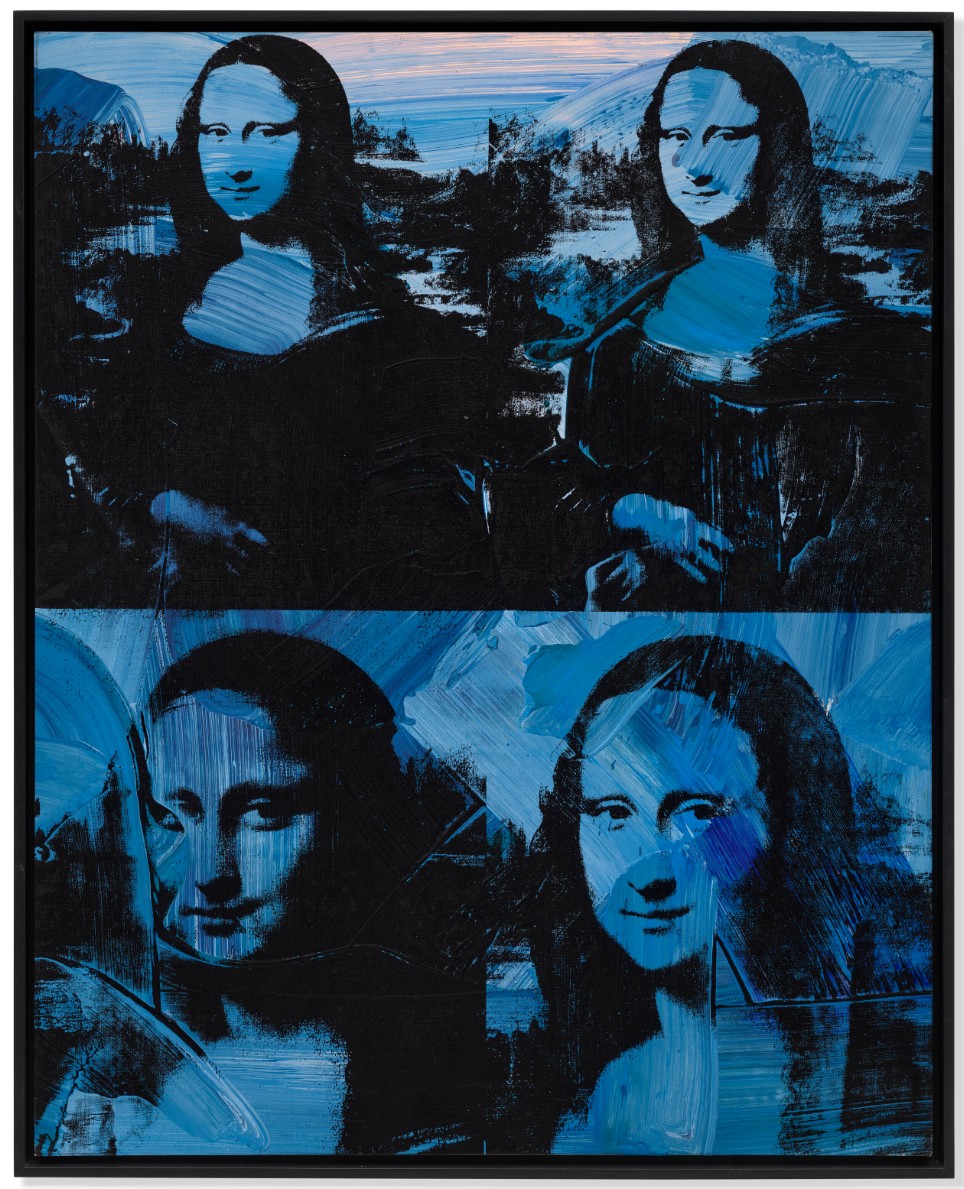
ANDY WARHOL (1928-1987)
Four Mona Lisas, 1978
Acrylic and silkscreen ink on canvas
49-7/8 x 39-7/8 inches (126.7 x 101.3 cm)
Signed and dated ‘Andy Warhol 78’ (on the overlap)
Double Mona Lisa, 1963
Christie’s New-York: 16 May 2024
Estimated: USD 4,000,000 – 6,000,000
USD 5,616,000
ANDY WARHOL (1928-1987), Double Mona Lisa | Christie’s (christies.com)

ANDY WARHOL (1928-1987)
Double Mona Lisa, 1963
Silkscreen ink on canvas
30 x 33 7/8 inches (76.2 x 86 cm)
Signed and dated ‘Andy Warhol 1963’ (on the overlap)
Andy Warhol’s Double Mona Lisa is an early work which brings together two of art history’s greatest icons. Painted in 1963, shortly after Warhol had shocked the art world with his painting of one hundred Campbell’s Soup cans, it was partly inspired by the phenomenal American tour of Leonardo da Vinci’s Mona Lisa organized by the First Lady, Jacqueline Kennedy. After witnessing the crowds who flocked to see the famous painting (including Warhol himself), the artist painted a series of seven canvases featuring the Mona Lisa. One of only two black-and-white double Mona Lisa’s from the 1960s (the other example is in the Menil Collection, Houston), another example (Four Mona Lisa’s) is in the permanent collection of the Metropolitan Museum of Art in New York. Painted shortly after his Gold Marilyn Monroe (1962, Museum of Modern Art, New York), and only within a few months of his Silver Liz canvases of 1963, Double Mona Lisa joins the pantheon of cultural icons that came to define the artist’s career.

As the name suggests, Double Mona Lisa presents two screens of da Vinci’s masterpiece side by side in striking black-and-white monochrome. The left-hand screen displays a slightly cropped version of the original, showing Mona Lisa’s visage against a backdrop of Renaissance Italy. The clarity of this particular screen renders the lush vegetation and meandering rivers of da Vinci’s original in remarkable clarity, even the narrow stone bridge is visible over Mona Lisa’s right shoulder. This clarity continues with the right screen, which presents a close-up of the Mona Lisa’s face, together with her enigmatic smile. This close-up view offers a delicate framing of the face, complete with the diaphanous veil (believed to be a guarnello, worn by Renaissance women while pregnant), and the gold embroidery around the neck of her dark silk dress.
Mona Lisa Four Times, 1973
Phillips New-York: 17 May 2023
Estimated: USD 2,000,000 – 3,000,000
USD 2,359,000
Andy Warhol – 20th Century & Contemporar… Lot 28 May 2023 | Phillips
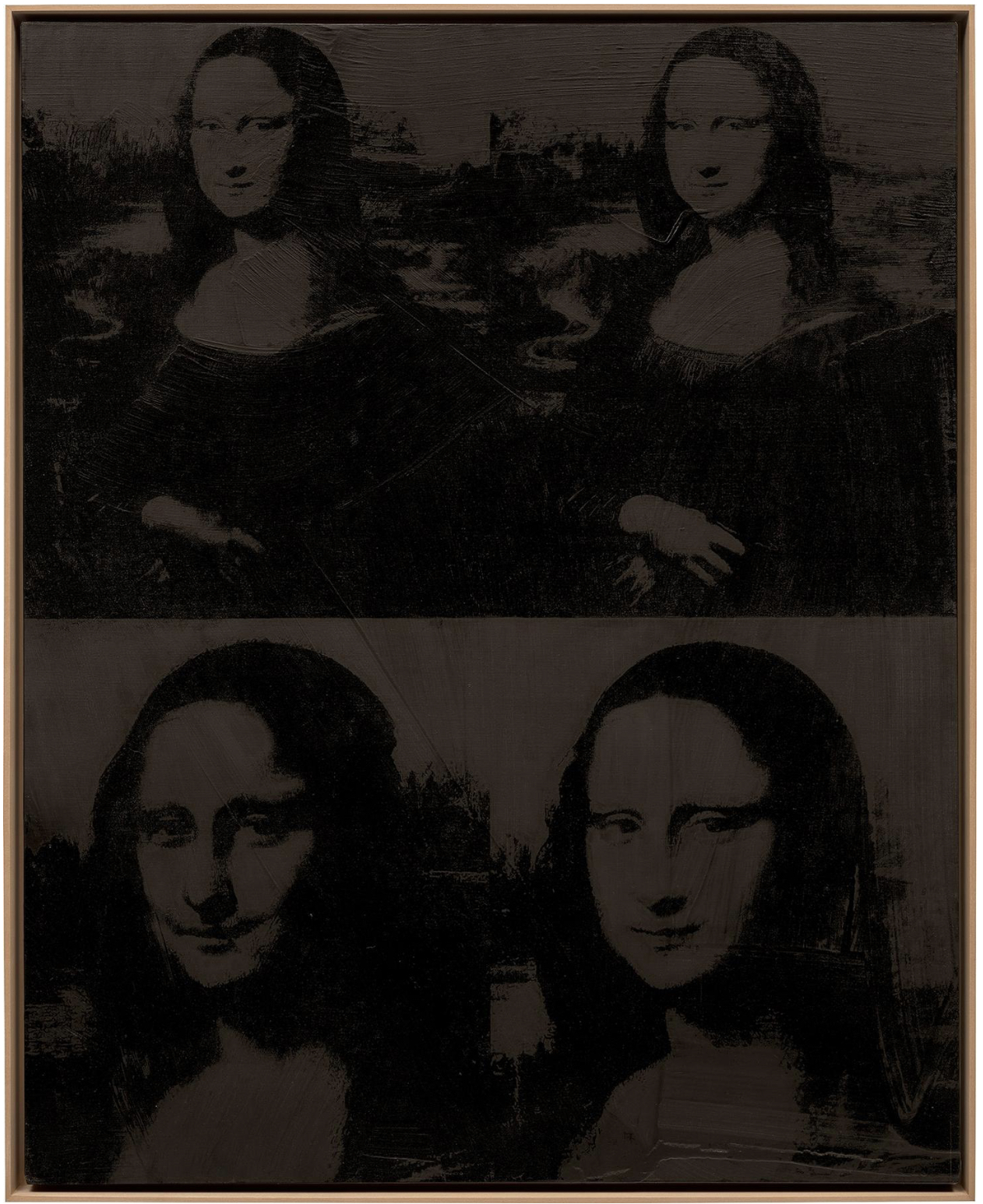
ANDY WARHOL
Mona Lisa Four Times, 1973
Silkscreen ink and acrylic on canvas
50 1/4 x 40 inches (127.6 x 101.6 cm)
Signed and dated “A Warhol 1973 A Warhol 73” and stamped by the Andy Warhol Art Authentication Board, Inc. and numbered “A104.066” on the overlap
At first glance, the four Mona Lisas of Andy Warhol’s Mona Lisa Four Times, 1973, seem identical. The two bust-length portraits and two close-ups of Mona Lisa are silkscreened on a ground of thick, near-black paint, which gives the work a mysterious aura akin to that of the original. And like Leonardo da Vinci’s 1503 portrait of Lisa del Giocondo, Mona Lisa Four Times rewards close looking. Diligent inspection reveals how the amount of ink used for each print shifts the shadows of Mona Lisa’s face, creating the illusion of an enigmatic expression: that infamous Mona Lisa smile. Mona Lisa Four Times engages Warhol’s key artistic pursuits of celebrity, pop culture, and seriality at a grand art historical scale, while at the same time grounding the iconic image in the visual language of his early 1970s art practice.
Flowers, 1964-67
Andy Warhol’s ability to transform ubiquitous images into American icons is legendary. His investigation of consumer culture and advertisement practices launched the Pop art movement in the United States, and his work has become synonymous with the movement. Flowers is a pivotal example of his work with photographic sources filtered through the machinations of commercial imagery. By transforming a photograph of something in the real world to a symbol, he teased out the separation between everyday life and the constructed reality of capitalism in the late twentieth century. Flowers was a radical departure for the artist at the time; eschewing the shocking drama of his Death and Disaster paintings, Warhol turned to something seemingly more traditional, yet infusing the subject matter with his own radical Pop sensibility. Using a photograph from a popular photography magazine, in his signature style Warhol subtly manipulated the image to produce one of his most celebrated and recognizable works.

ANDY WARHOL, PHILIP FAGAN AND GERARD MALANGA, NEW YORK, 1964. PHOTO UGO MULAS © UGO MULAS HEIRS. ALL RIGHTS RESERVED. ART © 2024 ANDY WARHOL FOUNDATION FOR THE VISUAL ARTS / ARTISTS RIGHTS SOCIETY (ARS), NEW YORK
The series was first exhibited at the Leo Castelli Gallery in 1964 in an exhibition that took the New York art world by storm as it connected with a public ready for something less shocking than the electric chairs and car crashes of the previous years. With his Flowers, Warhol also engages with the established canon of still-life painting, aligning himself with the romantic renderings of flowers by painters like the Dutch Golden Age painter Rachel Ruysch, Claude Monet or Vincent van Gogh. However, Warhol transformed the age-old genre with his color-blocked blossoms, utterly removed from nature. With an aerial viewpoint, he collapses space into one flat plane—making no distinction between horizon or ground. His style is adamantly the artist’s hand and treats his traditional subject matter with the same detachment as his commercial imagery—in this way, he distills his reputation as a creative wunderkind on the level of the master painters before him.
READ ABOUT FLOWERS
FIND ALL HISTORICAL AUCTION RESULTS
Flowers, 1964
Contours of Modernity | A Private European Collection
Sotheby’s London: 4 March 2026
Estimated: GBP 800,000 – 1,200,000
GBP 1,792,000 / USD 2,393,935
Flowers | Modern & Contemporary Evening Auction | 2026 | Sotheby’s
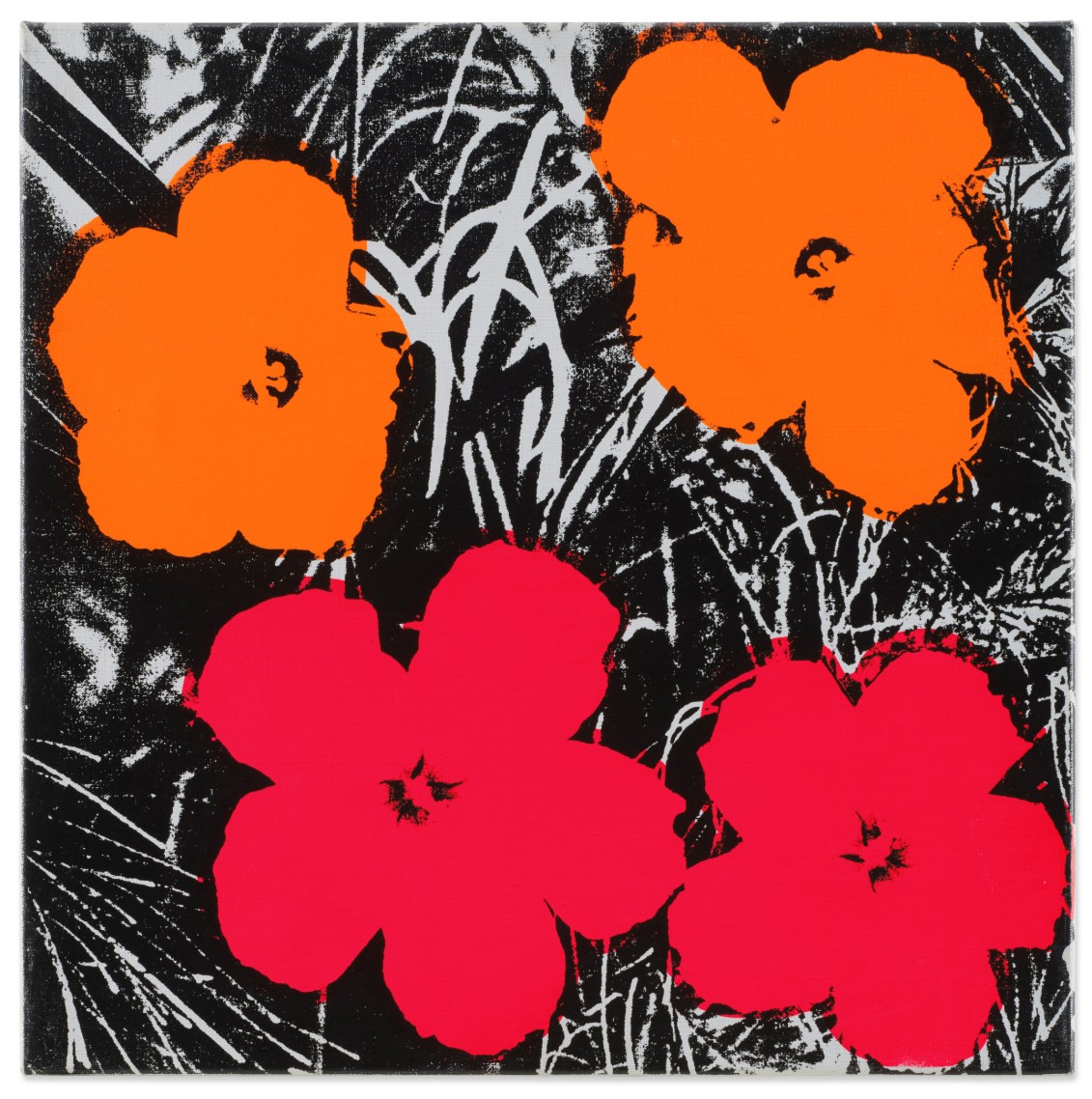
ANDY WARHOL (1928 – 1987)
Flowers, 1964
Acrylic and silkscreen ink on canvas
22×22 inches (56×56 cm)
Signed and dated 64 (on the overlap)
2025 Auction Highlights
5 Flowers Paintings sold at auction in 2025 for a total turnover of USD 9,753,470. With no lot failing to sell, the sell-through rate is 100%.
The highest price was achieved by a 24-inch Flowers that sold at Sotheby’s in New-York, on 15 May 2025 for USD 4,076,000. Another 14-inch Flowers, from The Collection of Barbara Gladstone, sold at Sotheby’s, in New-York, on 15 May 2025 for USD 3,832,000.
Flowers Paintings Sold in 2025
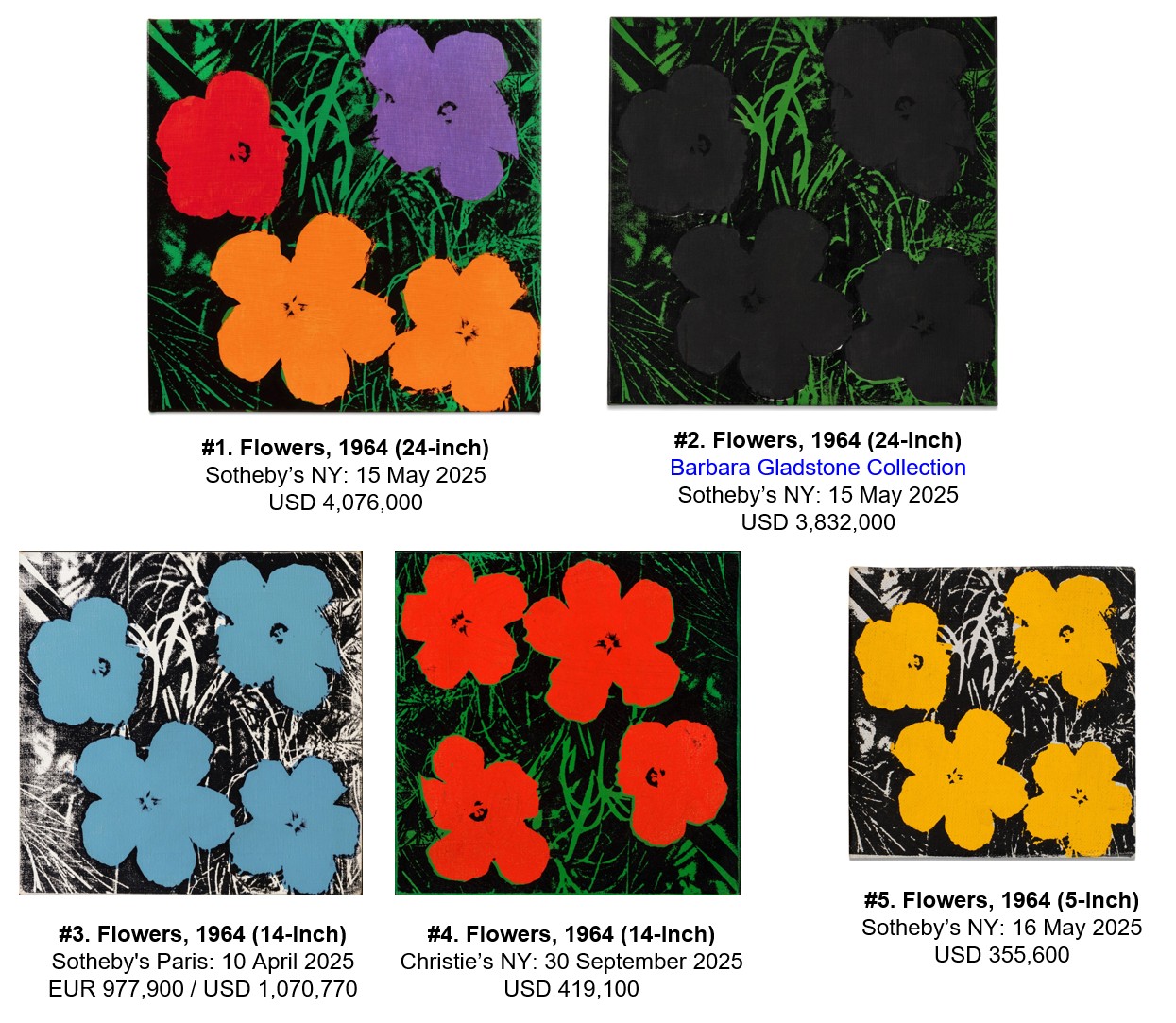
2 14-inch Flowers sold at auction in 2025, the highest price of EUR 977,900 (USD 1,070,770) was achieved at Sotheby’s, in Paris, on 10 April 2025.
Finally, one 5-inch Flowers sold at Sotheby’s in New-York on 16 May 2025 for USD 355,600.
2024 Auction Highlights
7 Flowers Paintings sold at auction in 2024 for a total turnover of USD 59,755,081. With 2 lots failing to sell, the sell-through rate is 77.8%.
The highest price was achieved at Christie’s in New-York on 14 May 2024, when Flowers, an 82-inch painting dated 1964 sold for USD 35,485,000. Another 82-inch Flowers sold at Christie’s in Hong-Kong, on 28 May 2024 for HKD 66,625,000 (USD 8,529,638).
A Late Four-Foot Flowers, dated 1967, sold at Sotheby’s in New-York, on 13 May 2024 for USD 11,250,000.
Flowers Paintings Sold in 2024
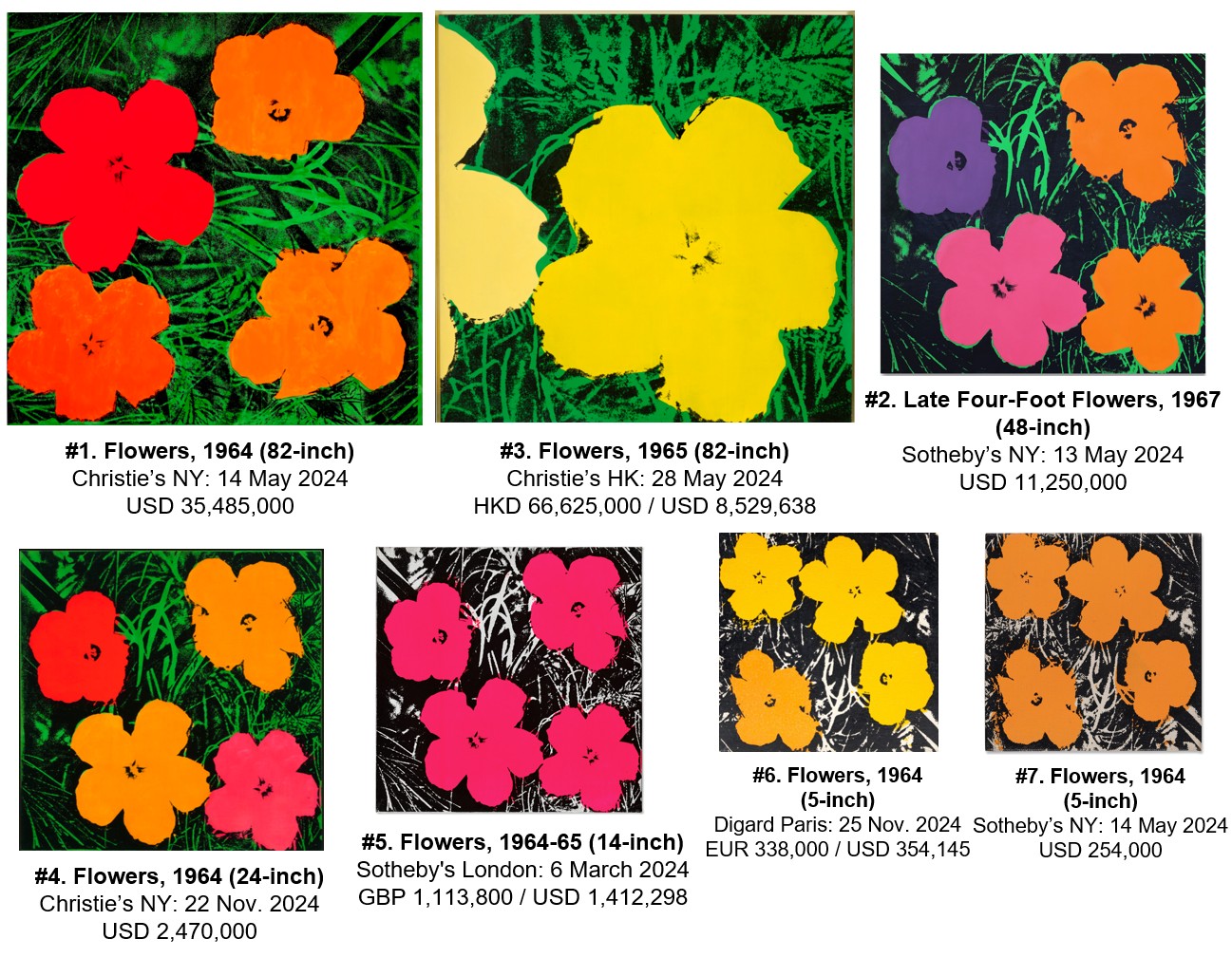
One 24-inch and one 14-inch Flowers also sold at auction in 2024, respectively at Christie’s, in New-York, on 22 November 2024, for USD 2,470,000, and at Sotheby’s, in London, on 6 March 2024, for GBP 1,113,800 (USD 1,412,298). Finally, 2 5-inch Flowers sold at an average price of USD 304,072.
2023 Auction Highlights
10 Flowers Paintings sold at auction in 2023 for a total turnover of USD 9,002,195. With no lot failing to sell, the sell-through rate is 100%.
The highest price was achieved at Christie’s in New-York on 9 November 2023 for a 24-inch Flowers painting sold for USD 3,438,000. Another 24-inch Flowers sold at Christie’s, in Hong-Kong, on 28 November 2023, for HKD 14,985,000 (USD 1,912,277).
Flowers Paintings Sold in 2023
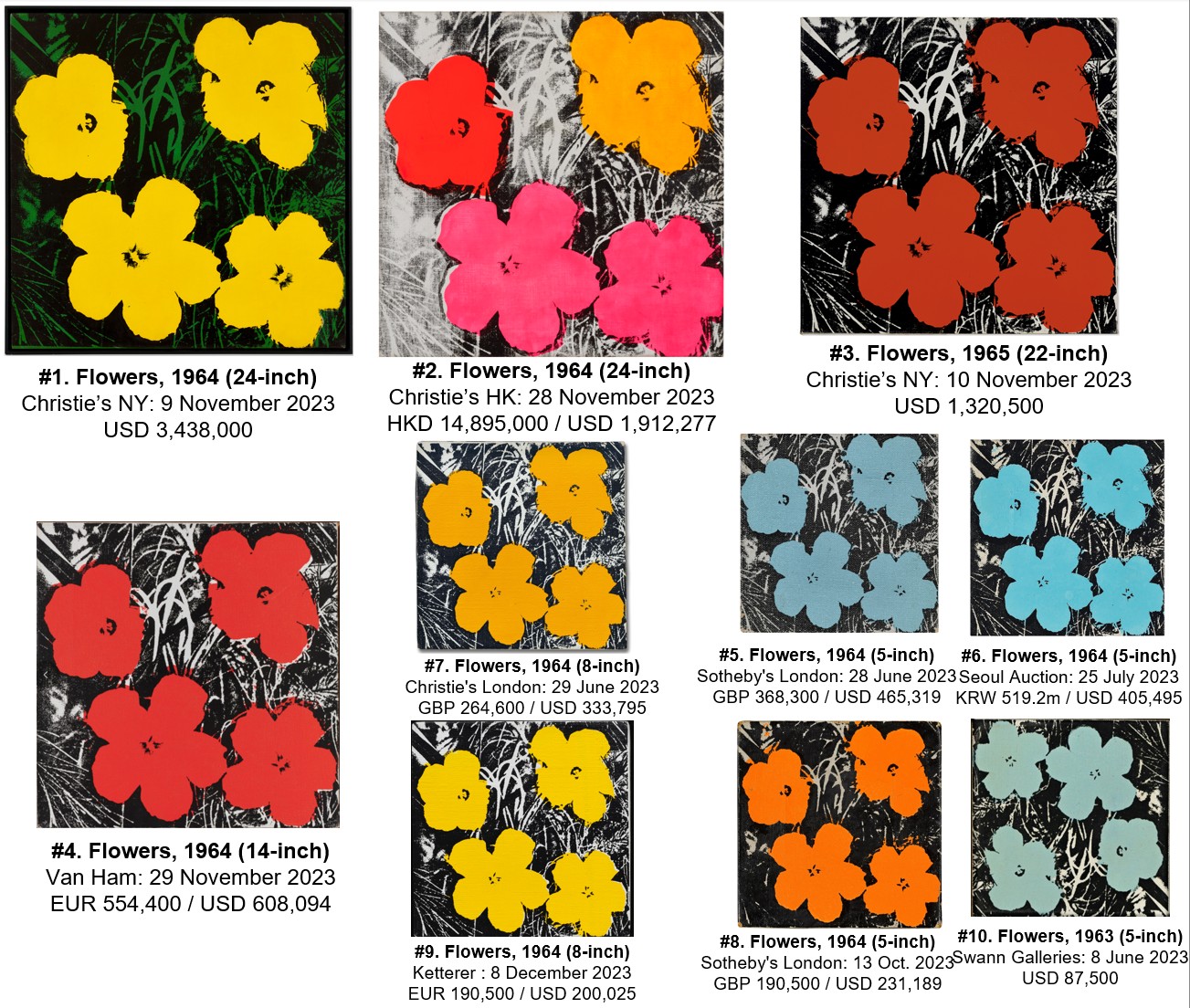
3 lots sold for more than USD 1 million, including a 22-inch Flowers sold at Christie’s in New-York, on 10 November 2023, for USD 1,320,500. 4 5-inch Flowers sold at auction in 2023, and 2 8-inch Flowers.
Early Self-Portraits, 1967
Self-Portrait, 1967
Christie’s New-York: 9 November 2023
Estimated: USD 5,000,000 – 7,000,000
USD 5,495,000
ANDY WARHOL (1928-1987) (christies.com)
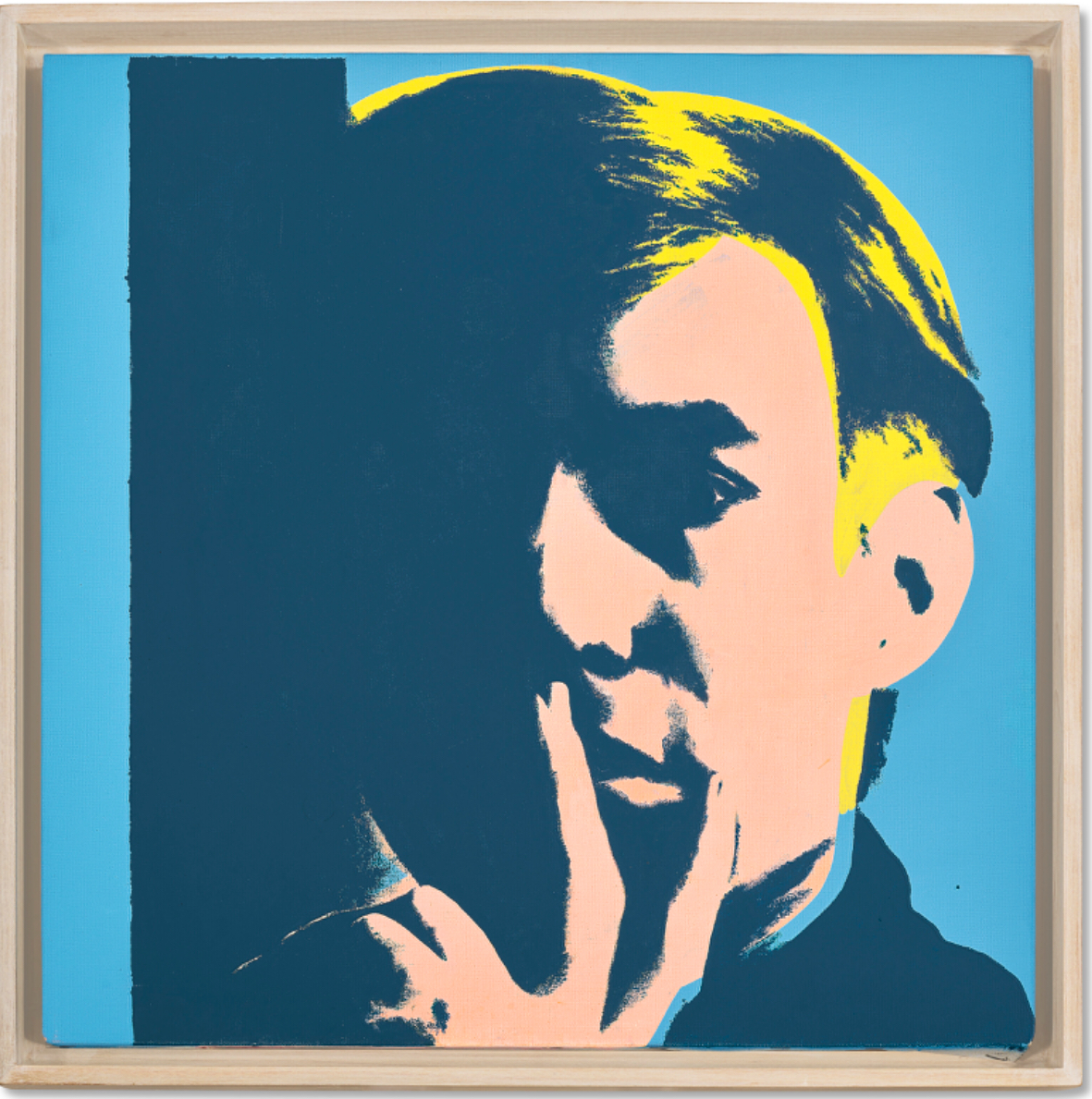
ANDY WARHOL (1928-1987)
Self-Portrait, 1967
Acrylic and silkscreen ink on canvas
22×22 inches (55.9 x 55.9 cm)
Signed and dated ‘Andy Warhol 67’ (on the overlap)
Bold, opulent, and surreal, Andy Warhol’s Self-Portrait is arguably one of the most enigmatic paintings of his prolific career. While he often used appropriated images of celebrities like Marilyn Monroe, Elvis, and Jackie Kennedy, this Self-Portrait is exemplary of his coextensive autobiographical process. Intimately scaled at about twenty-one inches square, the canvas is a portal into the artist’s mind. He brings us into his interior world, making us a part of his famed circle of glamorous confidants.
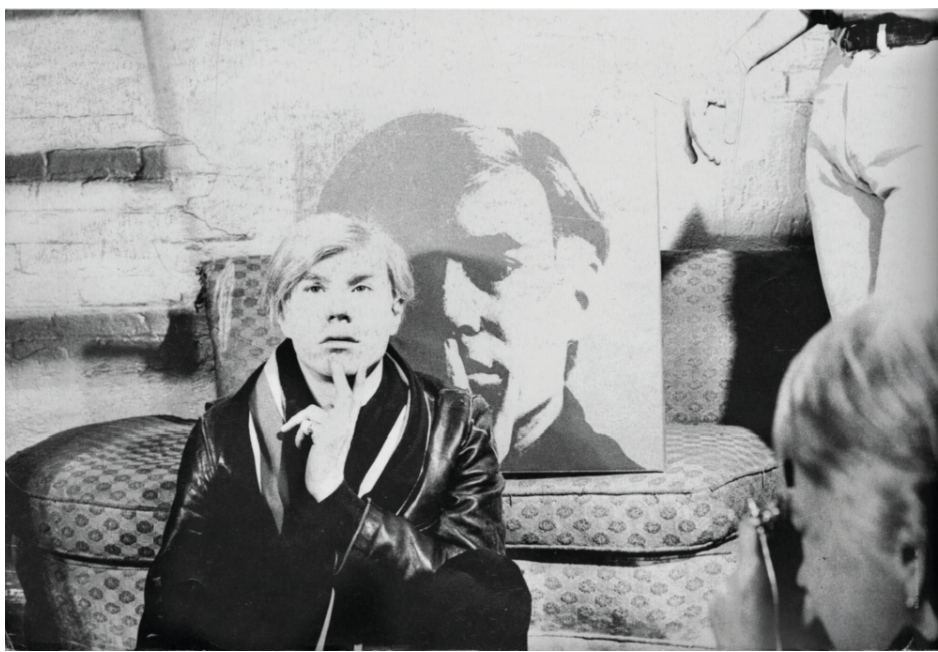
Andy Warhol, 1967 (present lot illustrated). Photo: © Billy Name Estate. Artwork: © 2023 The Andy Warhol Foundation for the Visual Arts, Inc. / Licensed by Artists Rights Society (ARS).
Emerging from the shadows and bathed in shades of blue, Warhol gazes upon us in a characteristically inscrutable fashion. He is self-confident and introspective. His hair is highlighted with yellow, and blue acrylic flows boldly onto his graceful fingers as they frame his lips. This bleeding is not an error, but rather a trademark effect of Warhol’s use of silkscreen, a medium that aims to reproduce, but evolves with each impression. The surreal vibrance of the canvas’s colors contrasts with the realism ushered in by Warhol’s use of a flesh tone for his face. He is both of our world and a vision of a dreamlike elsewhere. Like Titian’s 16th century portrait of Archbishop Filippo Archinto, who is partially obscured by a magnificent semi-transparent veil to symbolize his political biography, Warhol’s ‘Self-Portrait’ also reveals a character whose image is prolific yet unknowable.
Self-Portrait, 1964
Christie’s New-York: 17 November 2022
Estimated: USD 3,000,000 – 5,000,000
USD 3,300,000
ANDY WARHOL (1928-1987) (christies.com)
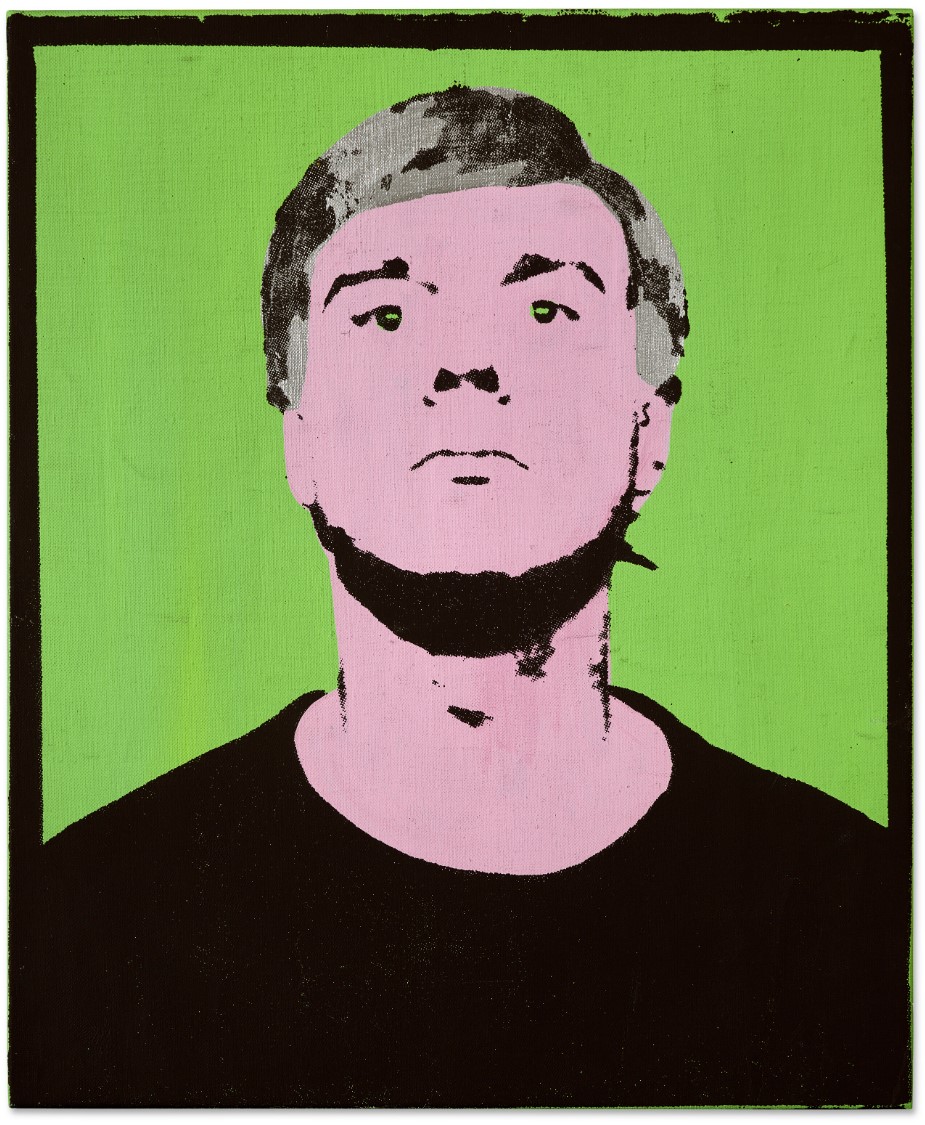
ANDY WARHOL (1928-1987)
Self-Portrait, 1964
Acrylic, silver paint and silkscreen ink on linen
20 x 16 1/2 inches (50.8 x 41.9 cm)
An extraordinary painting from a seminal moment in Andy Warhol’s early career, Self-Portrait offers a groundbreaking look into the artist’s ceaseless quest for self-invention. Created in 1964, the present work to the second series of “photo-booth” self-portraits that Warhol made between March and April of 1964. Warhol painted just eleven such self-portraits, of with only three feature the same vivid “phthalo green” background as Self-Portrait. At least five of these are now located in major museum collections, including the Art Institute of Chicago, The Andy Warhol Museum, Pittsburgh, and the Sammlung Froehlich, Stuttgart. The photo-booth was Warhol’s preferred method of self-portraiture in the early ‘60s, and in the present work, he mugs for the camera, jutting out his chin and projecting a defiant air of self-confidence.
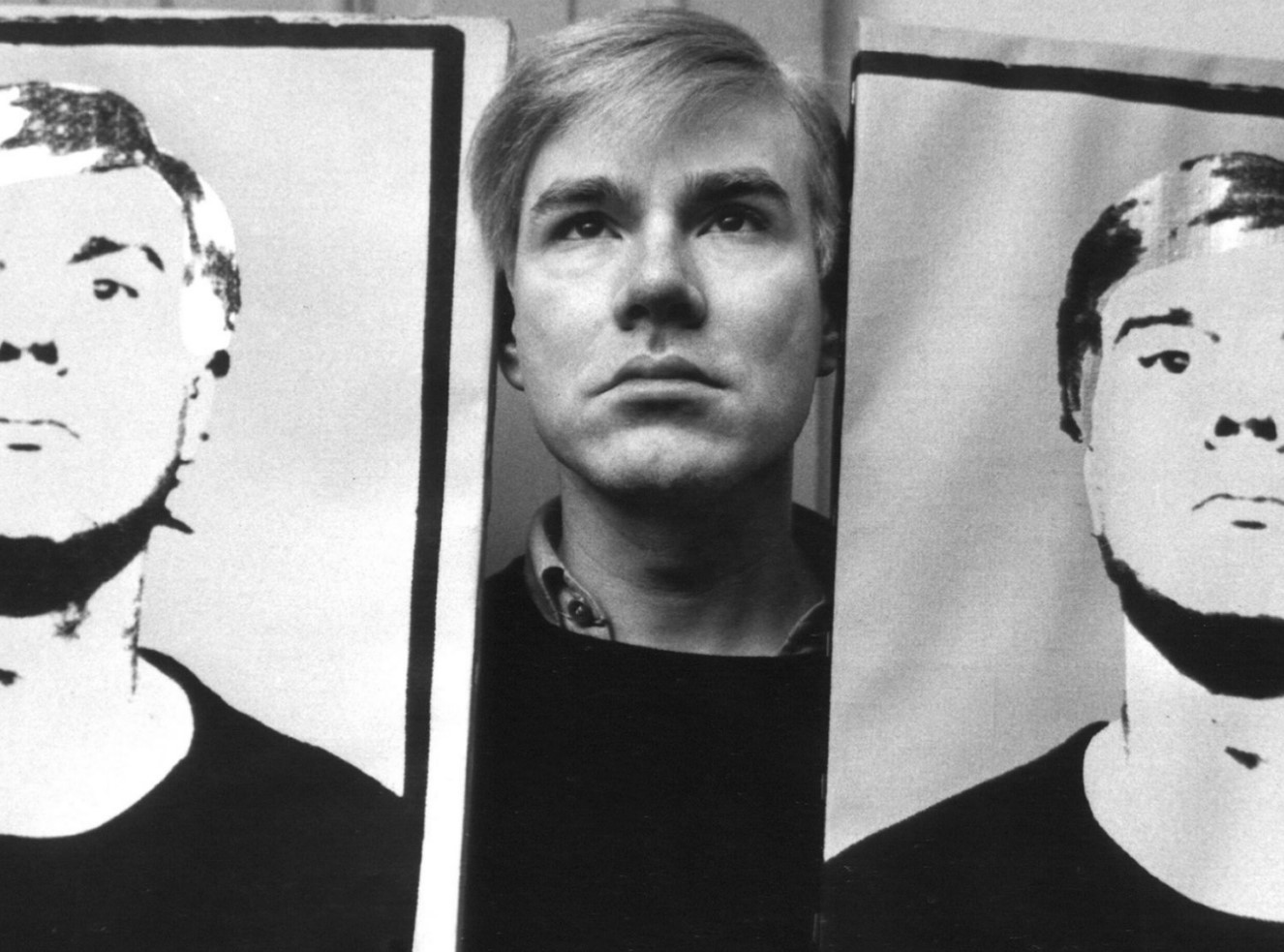
Having established his flair for color with his portraits of Marilyn Monroe in 1962 – known as the Marilyn “flavors” – and continuing with his paintings of Liz Taylor and the 36-part portrait of Ethel Scull, Warhol now applied the same colorful approach to his own self-image in the “photo-booth” self-portraits of 1964. Each of these featured a different brightly-colored background, which Warhol painted by hand, using flat, high-keyed colors including cadmium red, yellow, gray, and in the present work, “phthalo green.” Warhol’s use of phthalo green is significant, as he also used that same color to stirring effect in the Death and Disaster series, including Green Car Crash and the Electric Chair paintings. In the present work, Warhol has also used the same metallic silver paint from the Elvis series for his own hair, bringing the silvery walls of the Factory into his own self-image for the first time. The eyes – long considered a “window to the soul” – are actually “empty,” as the green we see is in fact the background layer showing through. This interesting technique Warhol employed in only three of these self-portraits, including the only diptych in the group.
Late Self-Portraits, 1981-86
Andy Warhol’s final series of self-portraits, created in the months before his untimely death in 1986, are the culmination of the artist’s lifelong fascinations with fame and death in the cult of celebrity. Self-Portrait (Fright Wig), 1986, is named for the spiky, peroxide blonde wig Warhol wears in the original Polaroid image. Warhol’s final self-portraits encapsulate the enigmatic celebrity persona Warhol cultivated throughout his career, reminding us that Warhol’s own performance of celebrity is an artistic feat on par with his accomplishments in silkscreen, portraiture, and film.
READ ABOUT LATE SELF-PORTRAITS
FIND ALL HISTORICAL AUCTION RESULTS
PLEASE CLICK ON ANY PICTURE BELOW TO ACCESS THE CATALOGUE ENTRY
Self-Portrait, 1986
Sotheby’s New-York: 8 November 2023
Estimated: USD 15,000,000 – 20,000,000
USD 18,144,000
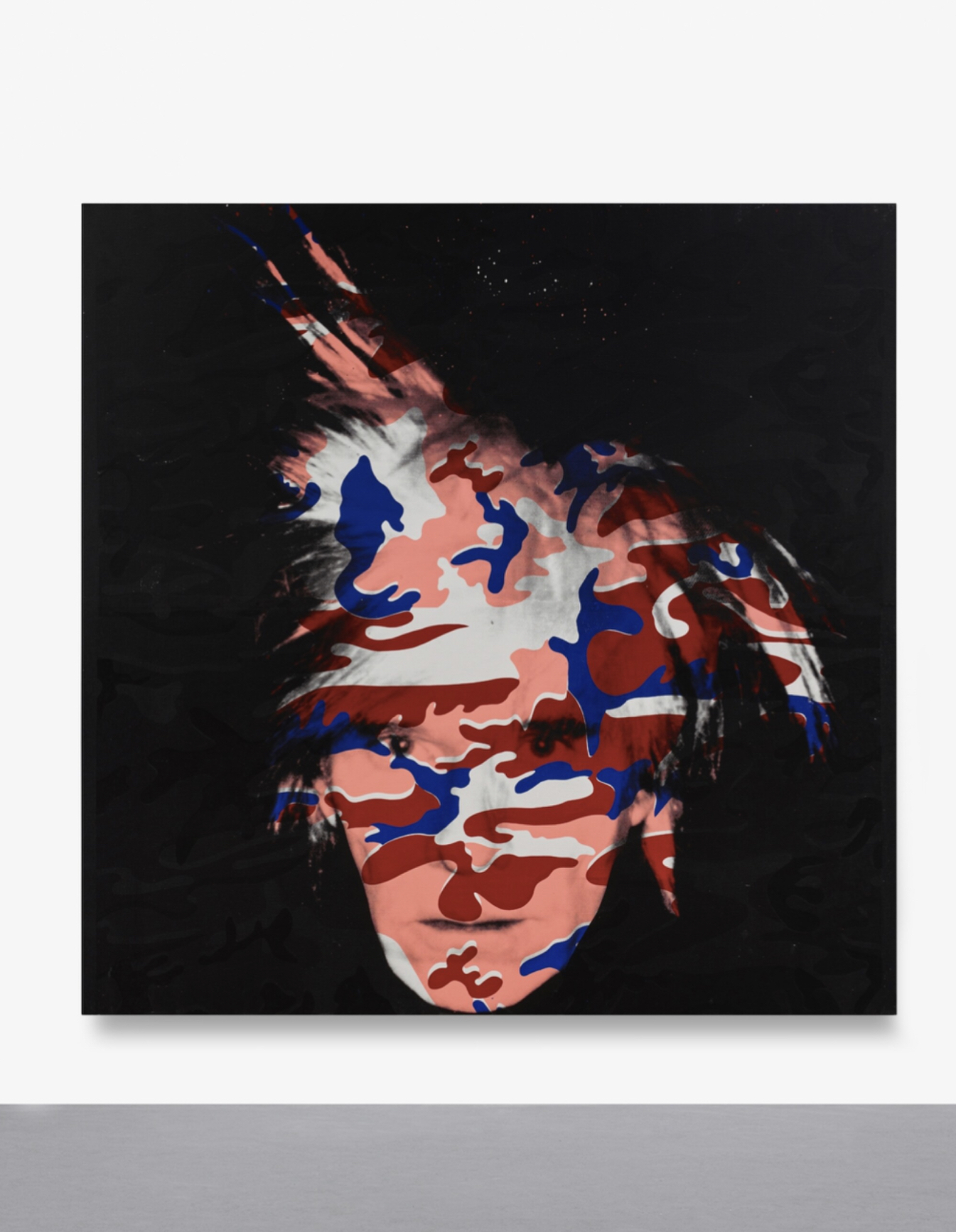
ANDY WARHOL (1928 – 1987)
Self-Portrait, 1986
Acrylic and silkscreen ink on canvas
80×80 inches (203.2 x 203.2 cm)
Signed and dated 86 (on the overlap)
Self-Portrait, 1986
The Macklowe Collection
Sotheby’s New-York, 16 May 2022
Estimated: USD 15,000,000 – 20,000,000
USD 18,708,500
Self Portrait | The Macklowe Collection | 2022 | Sotheby’s (sothebys.com)
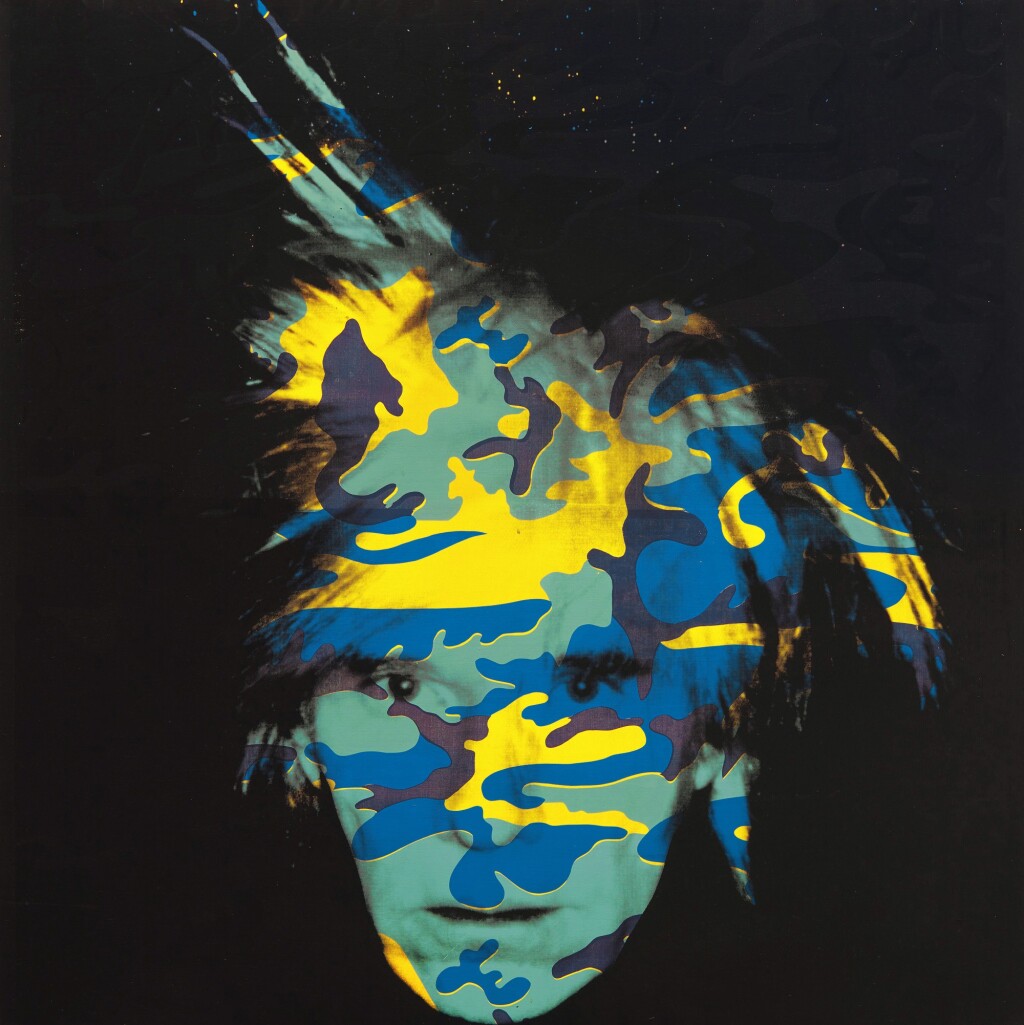
ANDY WARHOL
Self-Portrait, 1986
Acrylic and silkscreen ink on canvas
80×80 inches (203.2 x 203.5 cm)
Mao, 1973
The Mao series marks a stylistic shift in Warhol’s career, as he returns to his trademark silkscreen technique for the first prolific series since his Flowers of 1964, but with a more expressive, painterly flair. The effect of Warhol’s latest innovation was immediately apparent upon the exhibition of Mao paintings at the Musée Galiera, Paris, in 1974.
Inspired by the ubiquity of Chairman Mao’s portrait in China during the Cultural Revolution of 1966-1976, and the ultimate fame and power it represented, Mao remakes the Chairman in Warhol’s own style.
READ ABOUT MAO
FIND ALL HISTORICAL AUCTION RESULTS
PLEASE CLICK ON ANY PICTURE BELOW TO ACCESS THE CATALOGUE ENTRY
Mao, 1973
Phillips London: 5 March 2026
Estimated: GBP 1,400,000 – 1,800,000
GBP 1,642,000 / USD 2,193,550
Andy Warhol Modern & Contemporary Art Evening Sale

ANDY WARHOL
Mao, 1973
Acrylic and silkscreen ink on canvas
24-1/8 x 20 inches (61.3 x 50.8 cm)
Stamped by the Andy Warhol Art Estate and the Andy Warhol Foundation
Numbered ‘PA 80.013’ on the overlap
Mao, 1973
Heritage Auctions: 10 December 2024
Estimated: USD 3,000,000 – 4,000,000
USD 3,650,000
Andy Warhol (1928-1987). Mao, 1973. Acrylic and silkscreen ink on | Lot #77092 | Heritage Auctions

ANDY WARHOL (1928-1987)
Mao, 1973
Acrylic and silkscreen ink on linen
26 1/4 x 22 inches (66.7 x 55.9 cm)
Signed and dated on the reverse: Andy Warhol 73
Signed and dated twice on the overlap: Andy Warhol 73
Inscribed on the reverse and overlap (both crossed out): to Gordon and George
Inscribed on stretcher: W / 025
Mao, 1973
Christie’s London: 28 February 2022
Estimated: GBP 600,000 – 800,000
GBP 942,000 / USD 1,254,494
ANDY WARHOL (1928-1987) (christies.com)
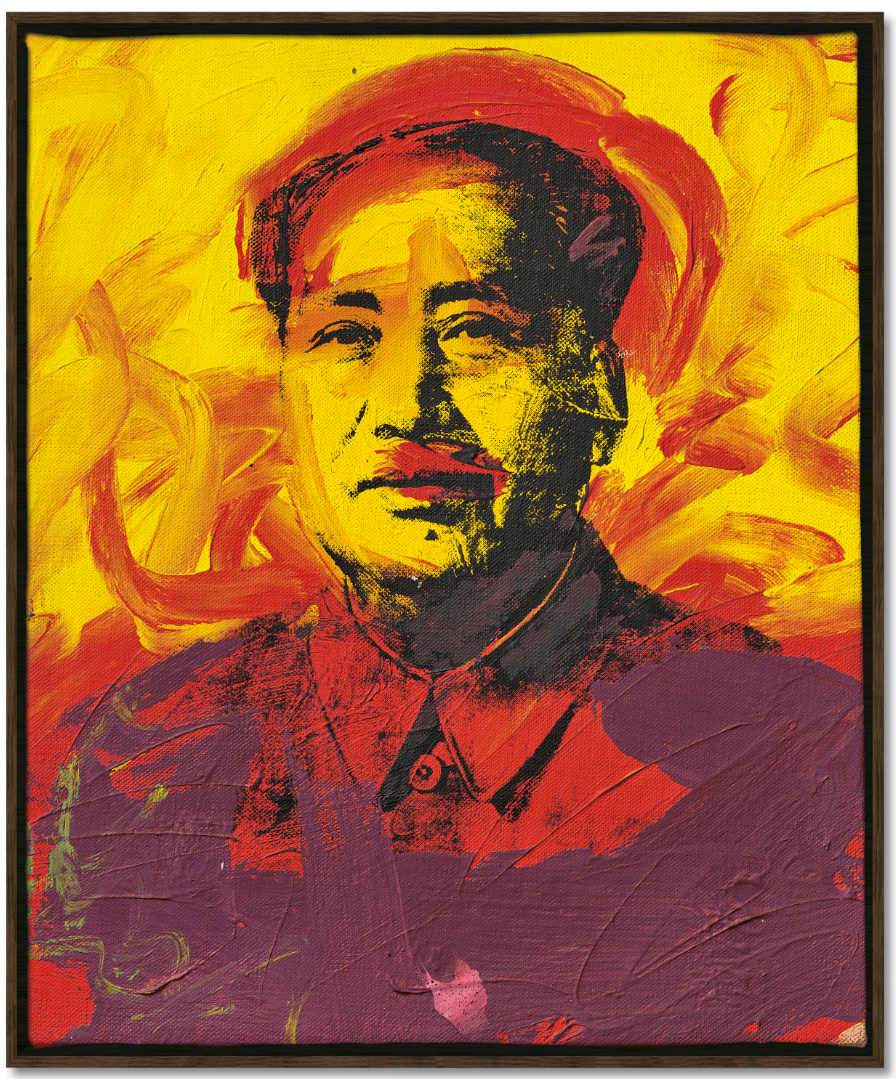
ANDY WARHOL
Mao, 1973
Acrylic and silkscreen ink on linen
12.1 x 10 inches (30.7 x 25.5 cm)
Hammer and Sickle, 1976
Painted in 1976, Andy Warhol’s Hammer and Sickle is one of the artist’s most important creative statements of the 1970s. Mining popular culture, politics, and his uncanny ability to capture the social zeitgeist, the series built on his now iconic portraits of the Chinese Communist leader Mao Zedong that he had produced four years earlier.
READ ABOUT HAMMER AND SICKLE
FIND ALL HISTORICAL AUCTION RESULTS
PLEASE CLICK ON ANY PICTURE BELOW TO ACCESS THE CATALOGUE ENTRY
Hammer and Sickle, 1976
Sotheby’s London: 4 March 2026
Estimated: GBP 3,000,000 – 5,000,000
GBP 3,506,000 / USD 4,683,665
Hammer and Sickle | Modern & Contemporary Evening Auction | 2026 | Sotheby’s
REPEAT SALE
The Macklowe Collection
Sotheby’s New-York: 16 May 2022
Estimated: USD 4,000,000 – 6,000,000
USD 6,414,200
Hammer and Sickle | The Macklowe Collection | 2022 | Sotheby’s
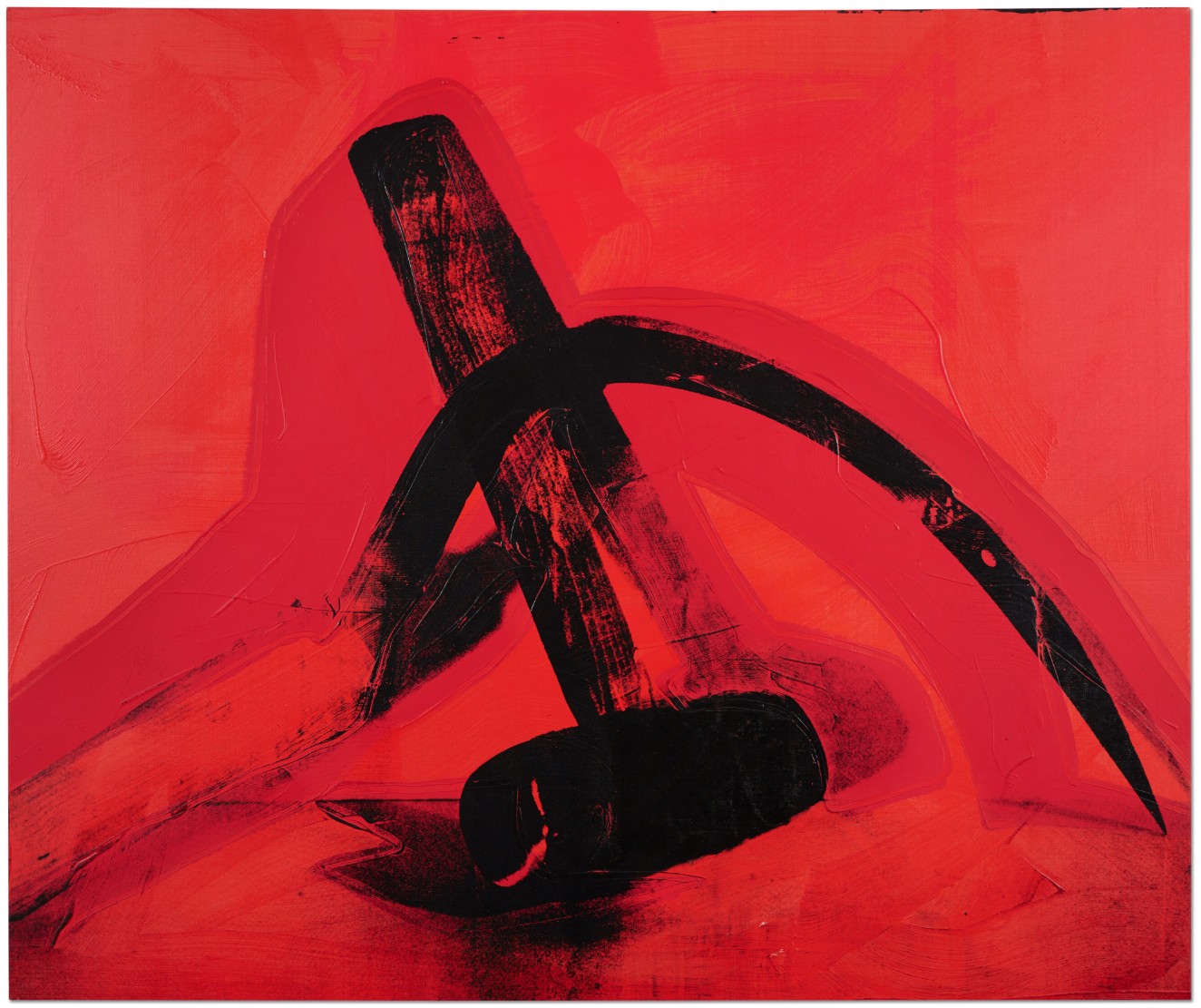
ANDY WARHOL (1928 – 1987)
Hammer and Sickle, 1976
Acrylic and silkscreen ink on canvas
72-1/4 x 86 inches (183.5 x 218.4 cm)
Signed and dedicated to Carlo Bilotti (on the overlap)
Hammer and Sickle, 1976
Christie’s New-York: 17 November 2022
Estimated: USD 4,000,000 – 6,000,000
USD 4,380,000
ANDY WARHOL (1928-1987) (christies.com)
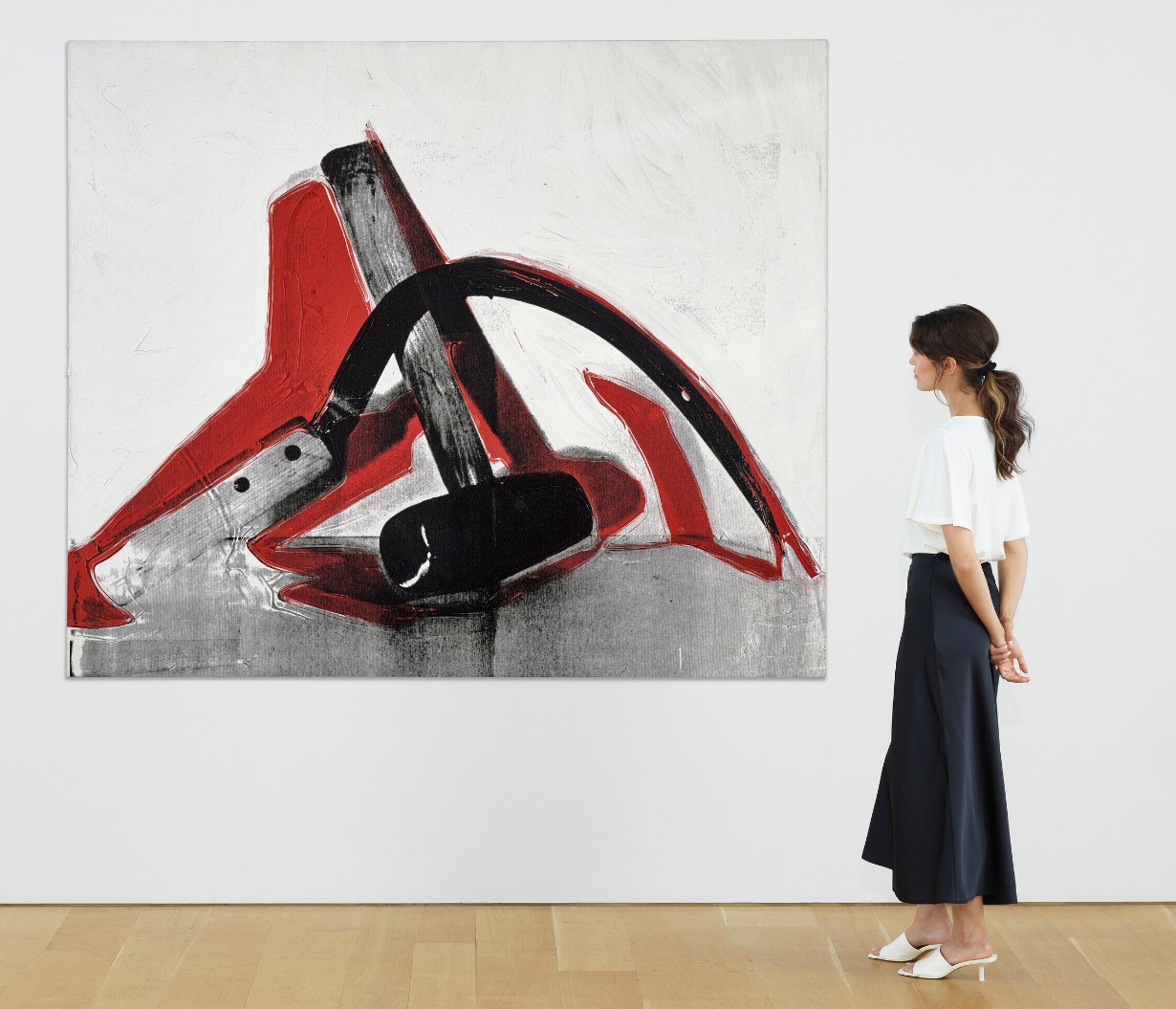
ANDY WARHOL (1928-1987)
Hammer and Sickle, 1976
Acrylic and silkscreen ink on linen
72×86 inches (182.9 x 218.4 cm)
Ladies and Gentlemen, 1975/76
Andy Warhol’s Ladies and Gentlemen series is one of the most celebrated in Warhol’s entire body of work. The series was first commissioned in 1975 by Warhol’s Turin-based dealer, Luciano Anselmino, and this body of work has become legendary and instantly recognizable. To create this series of works, Warhol’s friend and the future editor of Interview magazine, Bob Colacello, made repeated trips to The Gilded Grape at 8th Avenue and West 45th Street in Hell’s Kitchen, recruiting primarily black and Hispanic drag queens to pose for Polaroids back at the studio. Dolled up and carefully modeled before Warhol’s watchful lens for a scant fee of fifty dollars, the anonymous transvestites fashioned themselves after iconic chanteuses ranging from Diana Ross to Lena Horne.
READ ABOUT LADIES AND GENTLEMEN
FIND ALL HISTORICAL AUCTION RESULTS
Ladies & Gentlemen (Wilhelmina Ross), 1975
Phillips London: 8 March 2024
Estimated: GBP 120,000 – 180,000
GBP 139,700 / USD 177,140
Andy Warhol – 20th Century & Contempo… Lot 130 March 2024 | Phillips
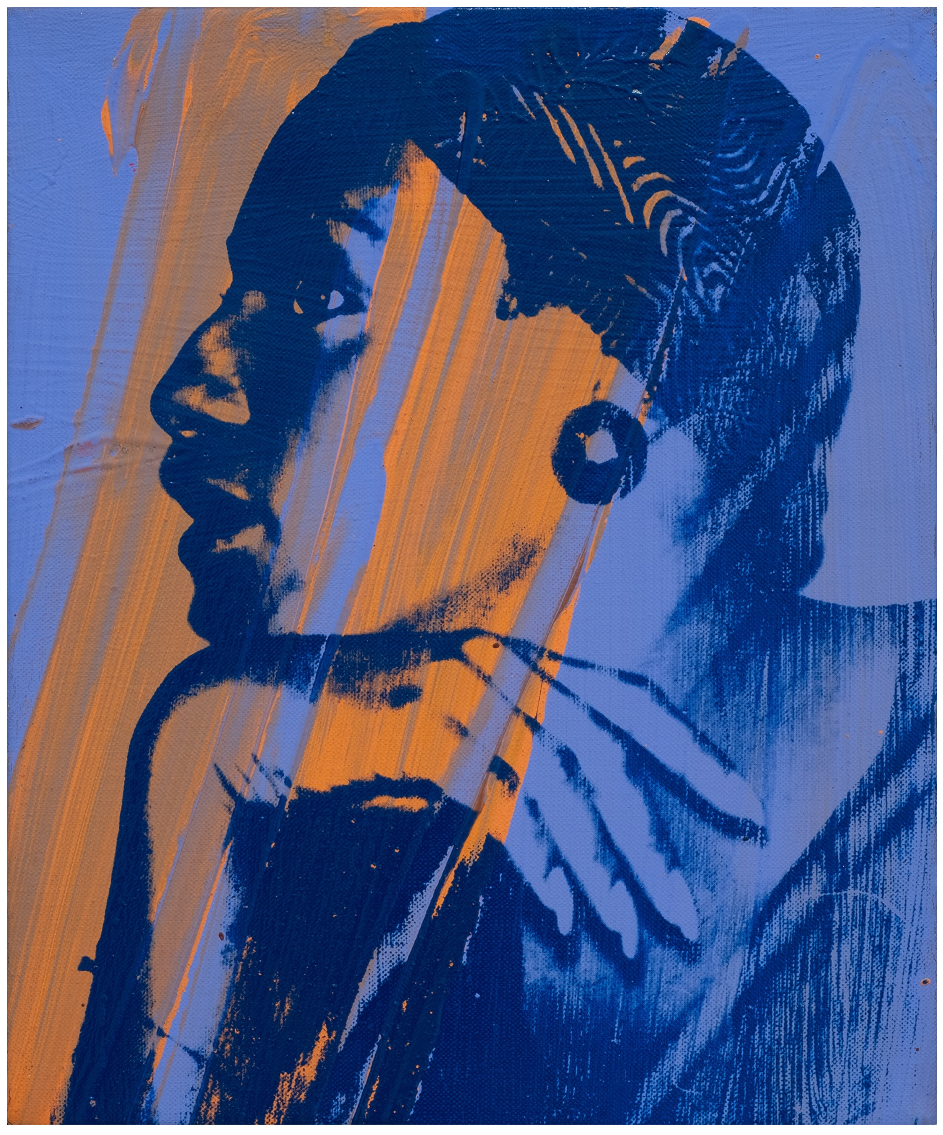
ANDY WARHOL
Ladies & Gentlemen (Wilhelmina Ross), 1975
Acrylic and silkscreen on linen
12×10 inches (30.5 x 25.4 cm)
Stamped by the Estate of Andy Warhol and the Andy Warhol Foundation for the Visual Arts, Inc. on the overlap
Stamped by the Andy Warhol Foundation for the Visual Arts, Inc. on the reverse
Numbered ‘PA.35.087’ on the stretcher
The American Indian, 1977
With its remarkable pictorial quality, Russell Means illustrates Andy Warhol’s devotion to political imagery and popular culture in shimmering hues. The result of a collaboration between the artist and Douglas Chrismas, founder of the Ace Gallery in Los Angeles and Vancouver, the ‘American Indian Series’ was initiated at the end of 1976 and completed early the following year.
READ ABOUT THE AMERICAN INDIAN
FIND ALL HISTORICAL AUCTION RESULTS
The American Indian (Russell Means), 1977
Sotheby’s Paris: 25 October 2022
Estimated: EUR 1,200,000 – 1,800,000
EUR 2,697,000 / USD 2,686,522
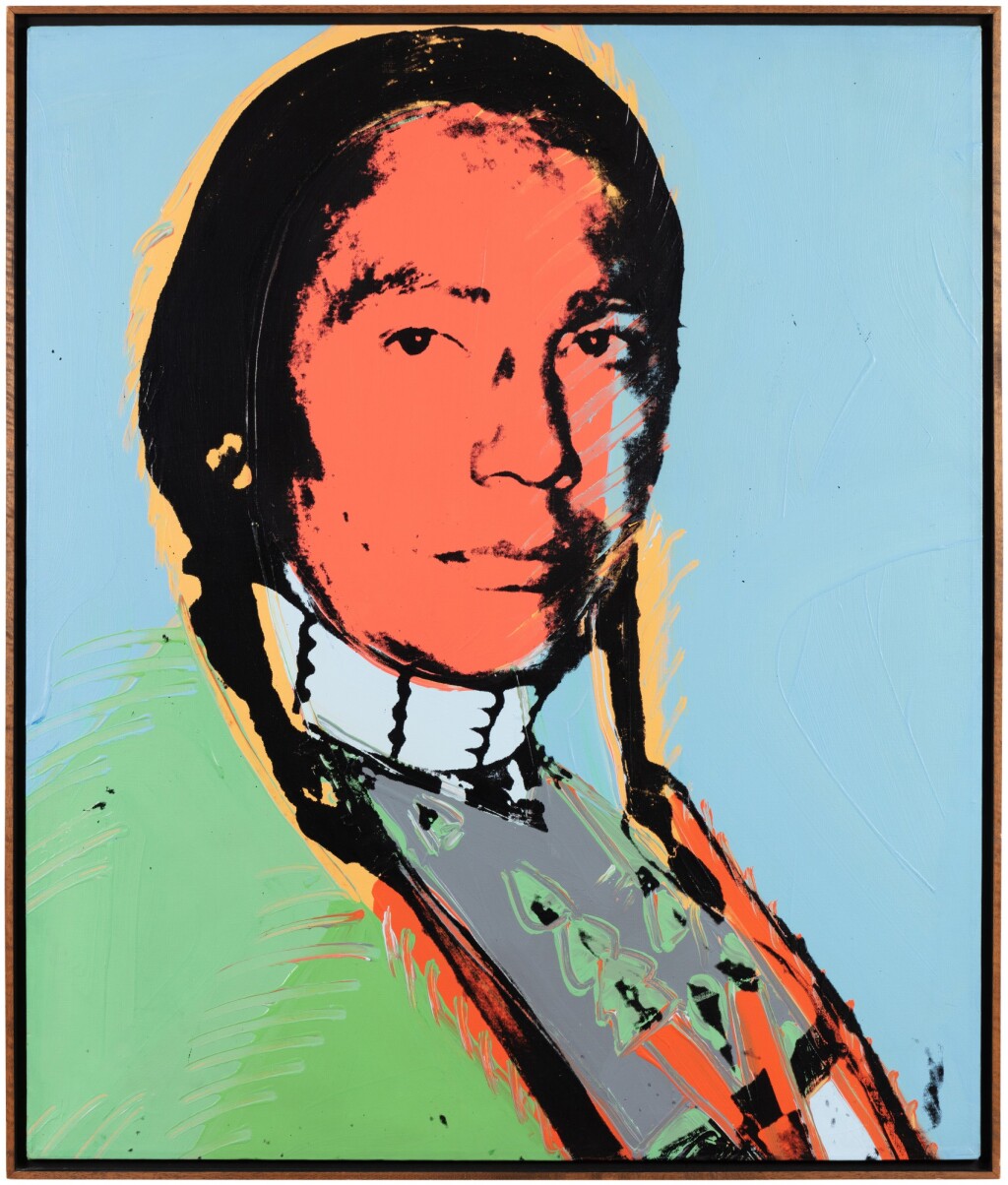
ANDY WARHOL (1928 – 1987)
The American Indian (Russell Means), 1977
Acrylic and silkscreen on canvas
50 ⅜ x 42 ⅛ inches (128×107 cm)
Signed and dated 1977 on the overlap
The Athlete Series, 1977
The Athletes Series is a significant series which continues Andy Warhol’s lifelong fascination with celebrity. Commissioned by the collector Richard Weisman in 1977, the work consists of ten 40×40 inch, multi-colored portraits of the most celebrated sport stars of the day. A departure from his usual panoply of movie stars and music celebrities, this series embraces the changing nature of fame in the twentieth century as athletes and sports stars moved up to take center stage in American popular culture. With his usual insightful prophecy, Warhol recognized the growing commercialization of sport and the corresponding increasing influence of the sports stars themselves and committed these new idols to canvas. Warhol himself recognized the status that, in the age of televised sports coverage, these heroes of pitch, field and ring had attained.
READ ABOUT THE ATHLETE SERIES
FIND ALL HISTORICAL AUCTION RESULTS
Muhammad Ali, 1977
Christie’s New-York: 10 November 2021
Estimated: USD 4,500,000 – 6,500,000
USD 18,107,500
ANDY WARHOL (1928-1987) (christies.com)
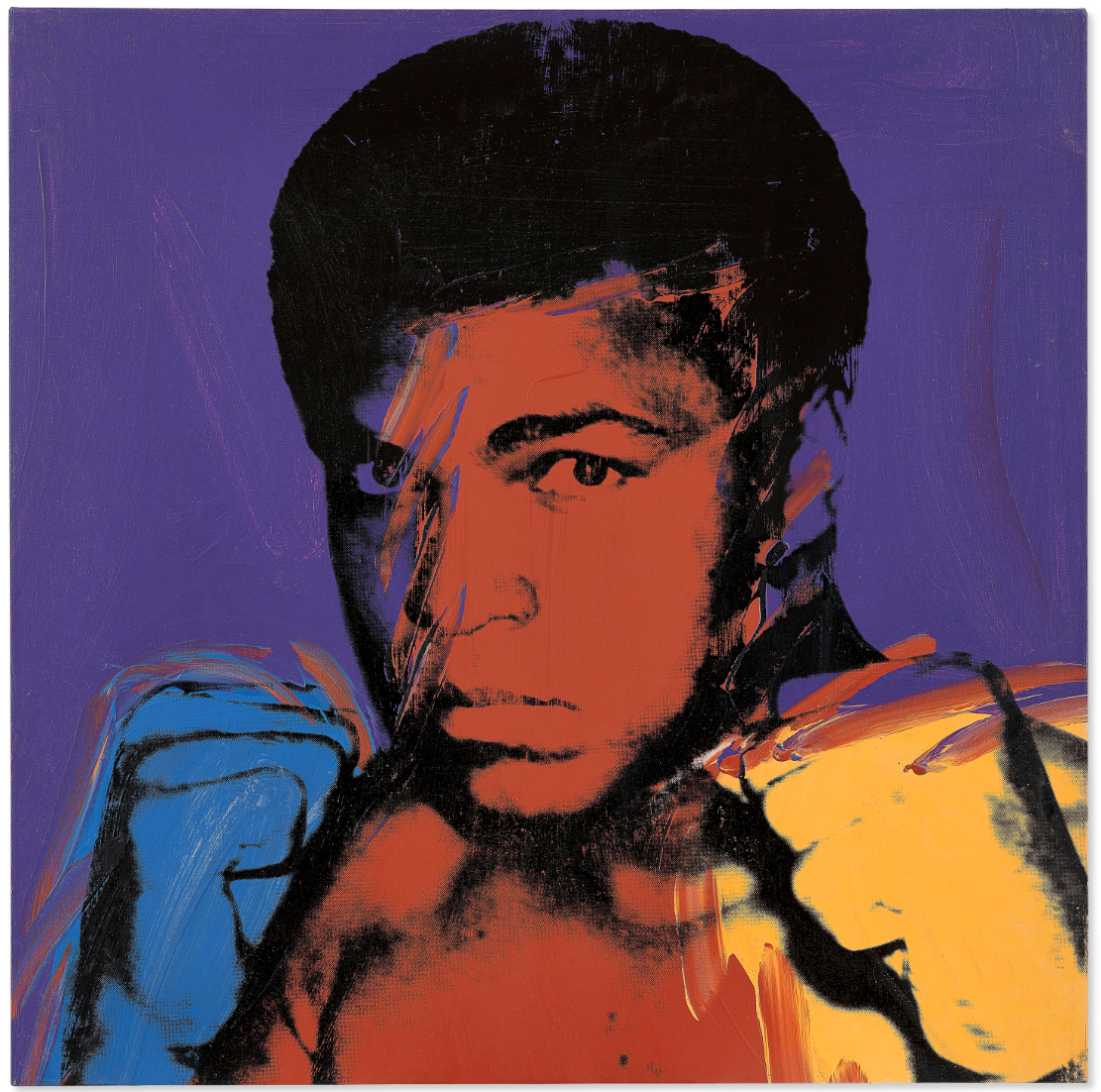
ANDY WARHOL
Muhammad Ali, 1977
Acrylic and silkscreen ink on canvas
40×40 inches (101.6 x 101.6 cm)
Shadow, 1978
The Shadow paintings mark a pivotal moment in Warhol’s career, signaling the culmination of his venture into nonfigurative abstraction, which began in the late 1970s with his Oxidation, Rorschach, and Camouflage series.
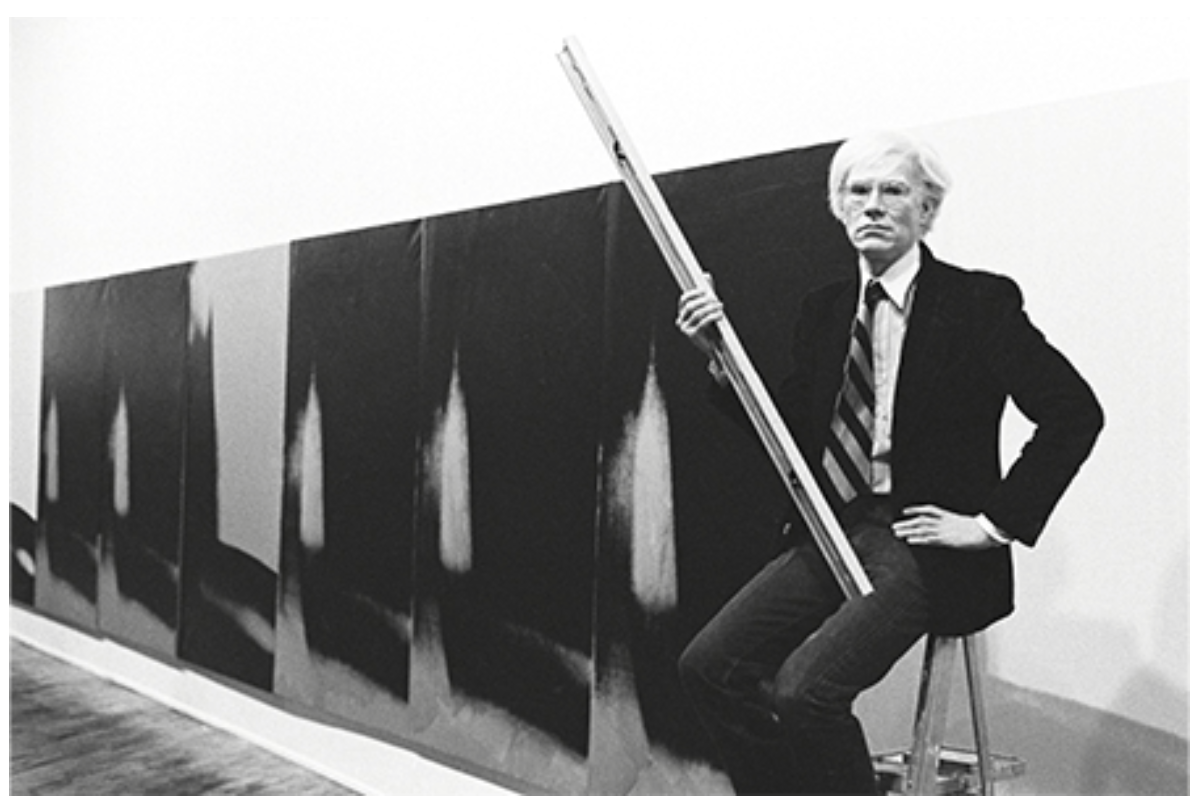
This shift from figuration, which had focused on celebrity and commodity culture, reflects Warhol’s deepening interest in abstraction and a more conceptual engagement with the idea of shadows.
READ ABOUT SHADOWS
FIND ALL HISTORICAL AUCTION RESULTS
Shadow, 1978
Phillips New-York: 19 November 2024
Estimated: USD 1,500,000 – 2,000,000
USD 2,238,000
Andy Warhol – Modern & Contemporary… Lot 29 November 2024 | Phillips
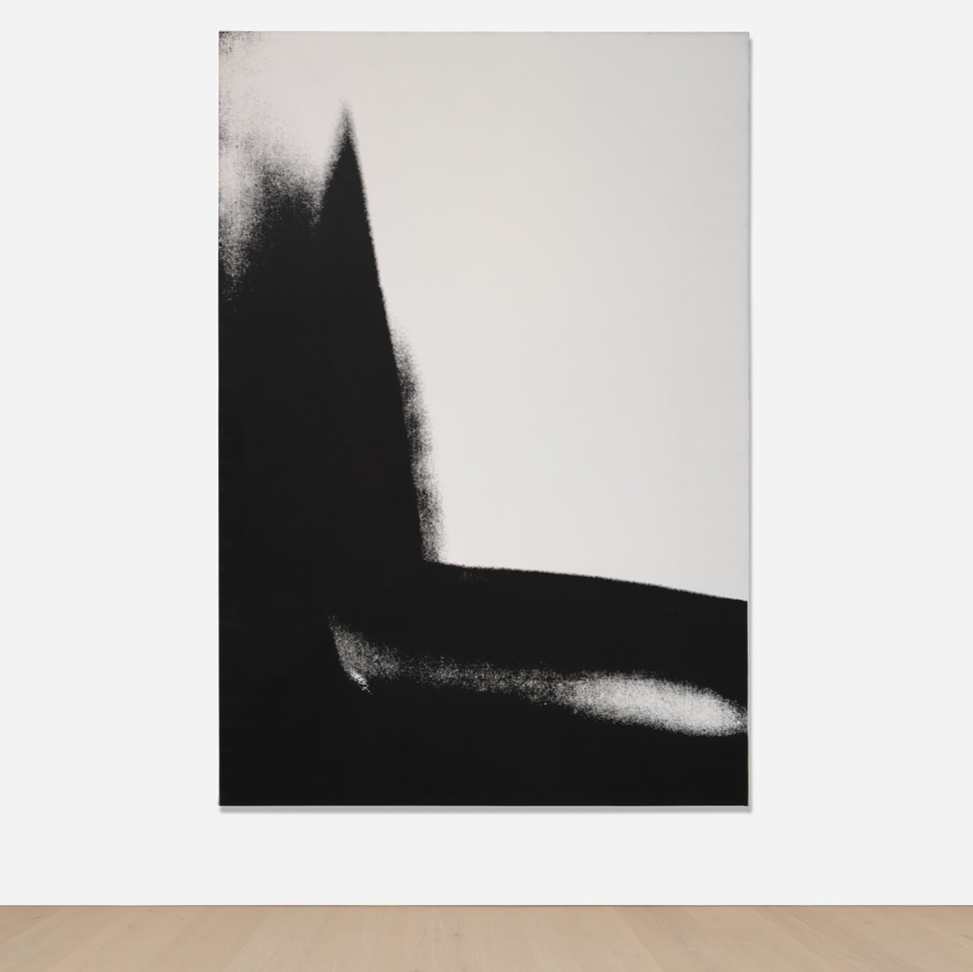
ANDY WARHOL
Shadow, 1978
Silkscreen ink on linen
76×52 inches (193 x 132.1 cm)
Signed and dated “Andy Warhol 1978 Andy Warhol 1978” on the overlap
Guns, 1981-82
Warhol’s paintings of Guns in the early 1980s present an extension of his fascination with death, yet while Warhol’s previous investigations focus on the moments surrounding death – frozen on the faces and postures of his subjects – Warhol here shifts away from such specificity and instead hones in on the object itself. This unflinching obsession with the weapon endows it with an uncompromising universality, and betrays the intense awareness of his own mortality that overtook Warhol during the final decade of his life.
READ ABOUT GUNS
FIND ALL AUCTION RESULTS
Guns, 1981
Phillips London: 10 October 2024
Estimated: GBP 450,000 – 650,000
GBP 571,500 / USD 748,665
Andy Warhol – Modern & Contemporary … Lot 28 October 2024 | Phillips
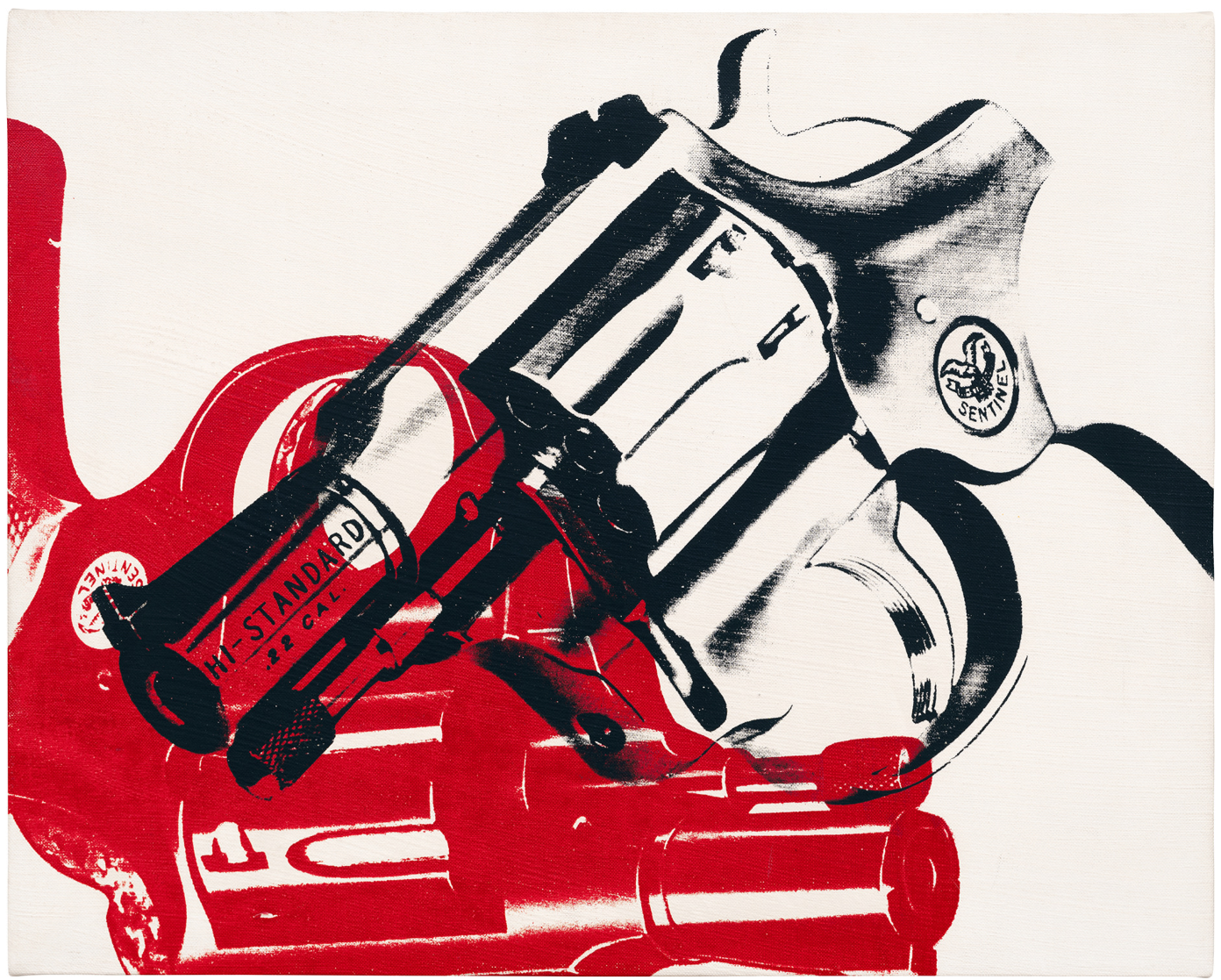
ANDY WARHOL
Guns, 1981
Synthetic polymer paint and silkscreen ink on canvas
16×20 inches (40.6 x 50.5 cm)
Signed and dated ‘Andy Warhol 81’
Stamped with the Andy Warhol Foundation for Visual Arts, Inc. stamp
Numbered ‘A101.984’ on the overlap
A powerful and blunt symbol of the violence that continues to characterize so much of our modern world, Andy Warhol’s Guns combines the artist’s astute understanding of the iconographic power of everyday, consumer items with his own, more complex relationship to questions of mortality and death. With a forensic detachment, Warhol magnifies and closely crops the titular objects here, the source image reproduced and rotated so that the two pistols appear interlocked with one another, emphasized through simple but stark contrasts of red, black, and white. Created in 1981, the present work belongs to Warhol’s late series of Guns paintings, examples of which now reside in the permanent collections of major institutions including the Tate Collection in London and the San Francisco Museum of Modern Art. Closely related to the contemporaneous Knife paintings and the more conceptual Oxidation and Shadow paintings, this late series highlights Warhol’s profound sensitivity to images, and his singular ability to transform them into powerful, provocative symbols of an American post-war landscape shaped by commodity consumption, the cult of celebrity, and the strangely intertwined existence of glamour, tragedy, and everyday violence. Even in Warhol’s iconic images of Marilyn Monroe or Jackie Kennedy, tragedy and violence operate in direct dialogue with beauty and fame, connections made all the more explicit when the artist first embarked on his Death and Disaster series in 1962, just months before completing his first silkscreened portraits of Monroe. Taken from a sensational front-page tabloid headline, 129 Die in Crash marked the beginning of this important series, and inaugurated the critical role played by thematic treatments of death and violence in Warhol’s practice as serially repeated images of car crashes, race riots, and electric chairs took their place alongside the smiling faces of celebrities and Campbell’s Soup cans.
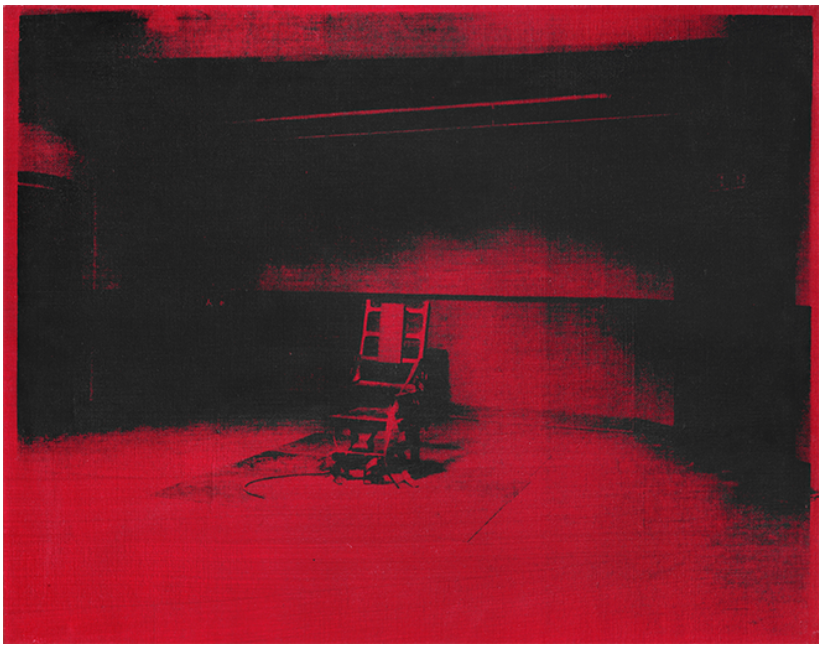
Andy Warhol, Electric Chair (Red), 1964, The Philadelphia Museum of Art. Image: Philadelphia Museum of Art, Gift of Mr. and Mrs. David N. Pincus, 1979, Artwork: © The Andy Warhol Foundation for the Visual Arts, Inc. / Licensed by DACS, London
Although Warhol’s childhood had been marked by sickness and physical frailty, in 1968 the artist suffered a shocking confrontation with gun violence and his own mortality when he was shot at close range by Valerie Solanas, the radical feminist and Factory-goer whose SCUM Manifesto called for ‘civic-minded, responsible, thrill-seeking females’ to ‘overthrow the government, eliminate the money system, institute complete automation and eliminate the male sex.’ Near-fatal, this assassination attempt would haunt Warhol for the rest of his life, leaving him deeply scarred in both physical and psychological terms, twinned conditions sensitively captured in Alice Neel’s moving 1970 portrait, and in his own series of Skulls from 1976.
Knives, 1981-82
No series demonstrates this fascination with the drama and proximity of death so clearly as Andy Warhol’s Guns and Knives paintings from 1981-82, the body of work which also heralded the artist’s triumphant return to painting in his studio full-time. Warhol’s choice of weapons as subjects with which to reignite his late career was particularly poignant and was charged with the artist’s acute awareness of these objects’ potential for destruction following the attempt on his life by Valerie Solanas in 1968.
READ ABOUT KNIVES
FIND ALL AUCTION RESULTS
Knives, 1982
Christie’s London: 28 June 2023
Estimated: GBP 1,500,000 – 2,000,000
GBP 2,097,000
ANDY WARHOL (1928-1987) (christies.com)

ANDY WARHOL (1928-1987)
Knives, 1982
Acrylic and silkscreen ink on canvas
70 1/8 x 52 1/8 inches (178 x 132.4 cm)
Signed, stamped twice with the Andy Warhol Art Authentication Board, Inc. stamp
Numbered and dated ‘Andy Warhol 82 A114.995’ (on the overlap)
Held in the same private collection for almost twenty-five years, Knives (1982) is a monumental work from one of Andy Warhol’s most important late series. Over a backdrop of brightly painted blocks of color, an image of three knives is silkscreened twice in stark black ink. Their silhouettes are dynamically arranged. One doubled knife aligns with the chromatic grid, handle and blade split between quadrants of green and orange. Another overlaps diagonally, slicing across the picture at forty-five degrees. The work might almost be mistaken for a bold abstract composition. It takes on a sharp edge of menace, however, as the knives’ forms become clear. Photographed by Warhol, they are both charged symbols and real objects: the screenprint captures the woodgrain of their handles, fingerprints on their blades, and the manufacturer’s ‘high carbon no stain’ assurance stamped into the metal. The present work debuted in Andy Warhol: Guns, Knives, Crosses, Warhol’s first solo show in post-Franco Spain, at Madrid’s Galería Fernando Vijande in 1982.

With the Knives, as with the Skull and Hammer and Sickle series of the 1970s, Warhol used his own Polaroid photographs as the basis for his silkscreens. This process allowed him to stage the objects in careful still-life displays in his studio, fine-tuning their formal and emblematic impact. Initially he had wanted to photograph unusual, handmade or exotic daggers. His friend Chris Stein—the guitarist of the band Blondie—lent some samples from his collection. Unsatisfied with the resulting pictures, Warhol sent his assistant to a Bowery restaurant supply store to instead buy some ordinary eight-inch kitchen knives. The choice of these more mundane utensils heightens the Pop jolt of the final work. Far from exotic, they are as every day and universal as Warhol’s Coca-Cola bottles or Campbell’s Soup cans. Their implied violence is domestic. At the same time, Warhol makes them grand and imposing, even—in an echo that would have been heightened by the Cross works in the 1982 exhibition—evoking objects of worship. The Technicolor beauty of Warhol’s work, however, had been laced with the macabre long before his own brush with mortality. He made his 1962 portraits of Marilyn Monroe in the weeks immediately following her death, and silkscreened Jackie Kennedy’s image after her husband was assassinated one year later. He paid keen attention to the ghoulish obsessions of the print media, where starlets and plane accidents alike made front-page news. His 1960s Death and Disaster series, which depicted electric chairs and fatal car crashes, were unflinchingly morbid. For Warhol, the danger and glamour of the American dream always went hand in hand. The present work captures this duality, its vivid rainbow hues cut through with a razor-sharp thrill of darkness.
Marilyn (Reversal), 1979-86
In the late 1970s, Warhol embarked on a retrospective phase in his career, revisiting the creative potential of the early images that had made him so famous. Borrowing from the catalogue of his subjects, Warhol reinvented the most iconic works, refreshing them for a new generation by providing a post-modern reinterpretation of his own art, effectively re-contextualizing an appropriation of an appropriation. The series also allowed Warhol to keep moving forward, to continue renewing and refreshing his art practice, bringing it forward into a new context and a new era. Through pastiche, re-appropriation and reinvention, the work brought him in sync with a younger postmodern generation of artists with an equally healthy disregard for art historical traditions and the canon, helping to break down stale divisions between what was considered high and low art. With this series, Warhol’s work took a step closer to the Conceptual art practices that had been developing contemporaneously with his own practice throughout the 1960s and into the 1970s.
READ ABOUT MARILYN (REVERSAL SERIES)
FIND ALL HISTORICAL AUCTION RESULTS
PLEASE CLICK ON ANY VISUAL BELOW TO ACCESS THE CATALOGUE ENTRY
Four Marilyns (Reversal Series), 1986
Sotheby’s London: 4 March 2026
Estimated: GBP 1,800,000 – 2,500,000
GBP 3,262,000 / USD 4,357,705
Four Marilyns (Reversal Series) | Modern & Contemporary Evening Auction | 2026 | Sotheby’s
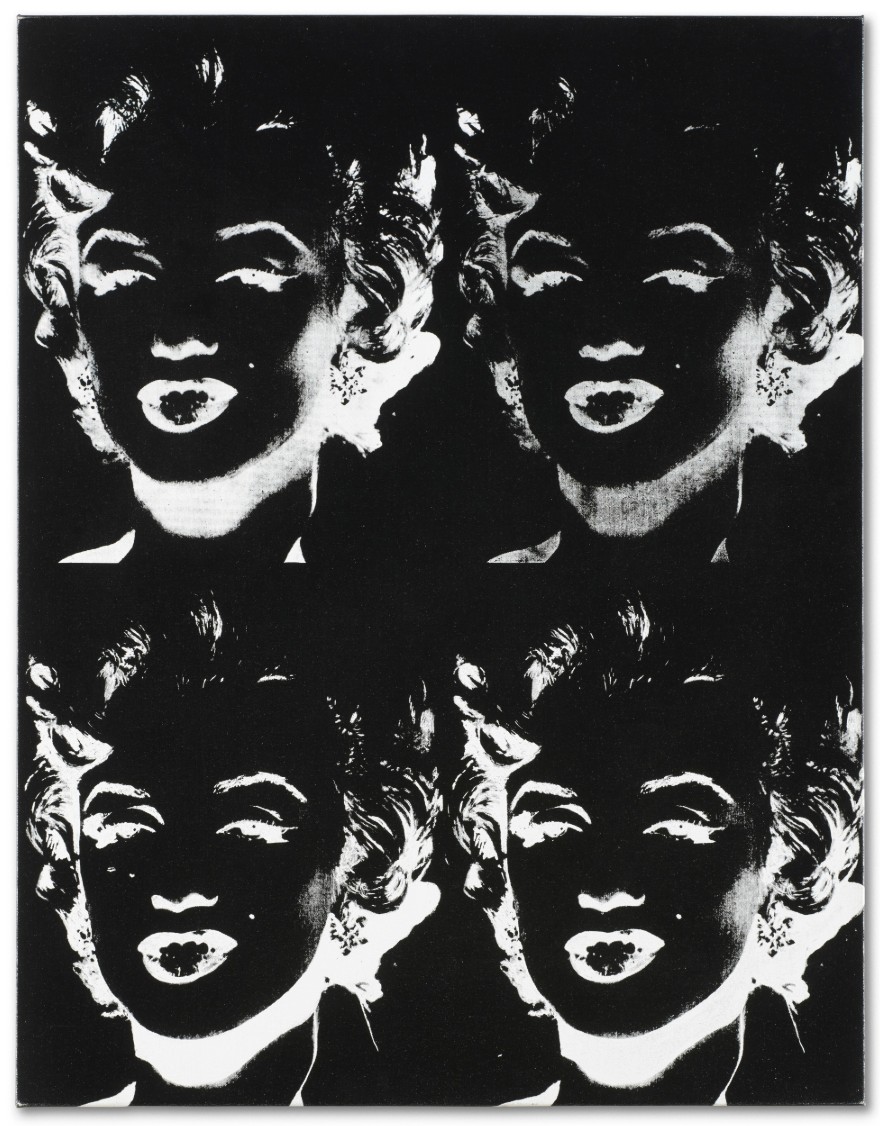
ANDY WARHOL (1928 – 1987)
Four Marilyns (Reversal Series), 1986
Acrylic and silkscreen ink on canvas
36×28 inches (91.5 x 71 cm)
Stamp signed (on the overlap)
Stamped by the Andy Warhol Art Authentication Board, Inc.
Numbered A120.042
Inscribed I certify that this is an original painting by Andy Warhol completed by Andy in 1986 Frederick Hughes
(on the overlap)
Marilyn (Reversal Series), 1986
Property from an Esteemed Private Collection
Sotheby’s London: 4 March 2026
Estimated: GBP 800,000 – 1,200,000
GBP 998,400 / USD 1,333,765
Marilyn (Reversal Series) | Modern & Contemporary Evening Auction | 2026 | Sotheby’s
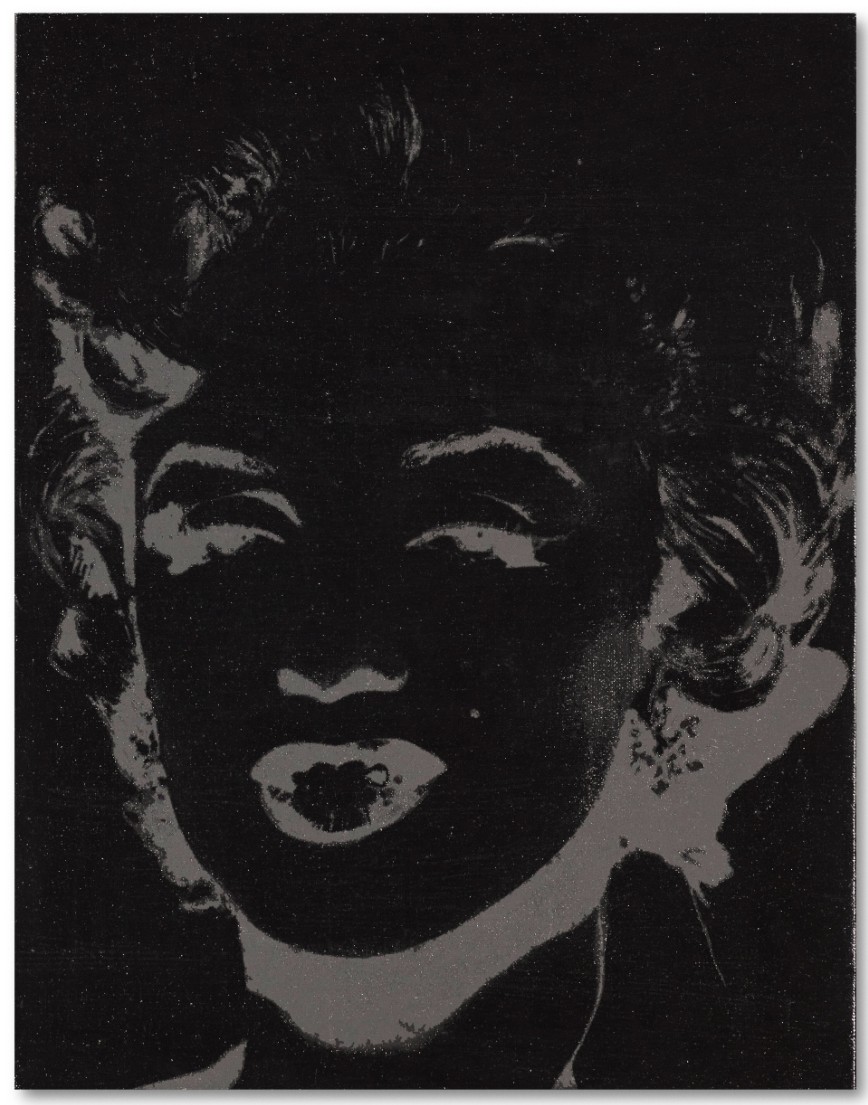
ANDY WARHOL (1928 – 1987)
Marilyn (Reversal Series), 1986
Acrylic and silkscreen ink on canvas
18×14 inches (45.7 x 35.6 cm)
Stamp signed (on the reverse)
Stamped by the Andy Warhol Art Authentication Board, Inc.
Numbered A107.066
Inscribed ‘I verify that this is an original painting by Andy Warhol completed by him in 1986 Frederick Hughes’
on the reverse
Four Pink Marilyns (Reversal Series), 1986
Sotheby’s London: 16 October 2025
Estimated: GBP 3,000,000 – 5,000,000
GBP 4,326,000 / USD 5,796,840
Four Pink Marilyns (Reversal Series) | Contemporary Evening Auction | 2025 | Sotheby’s
REPEAT SALE
Sotheby’s New-York: 11 November 2015
Estimated: USD 3,000,000 – 4,000,000
USD 4,506,000
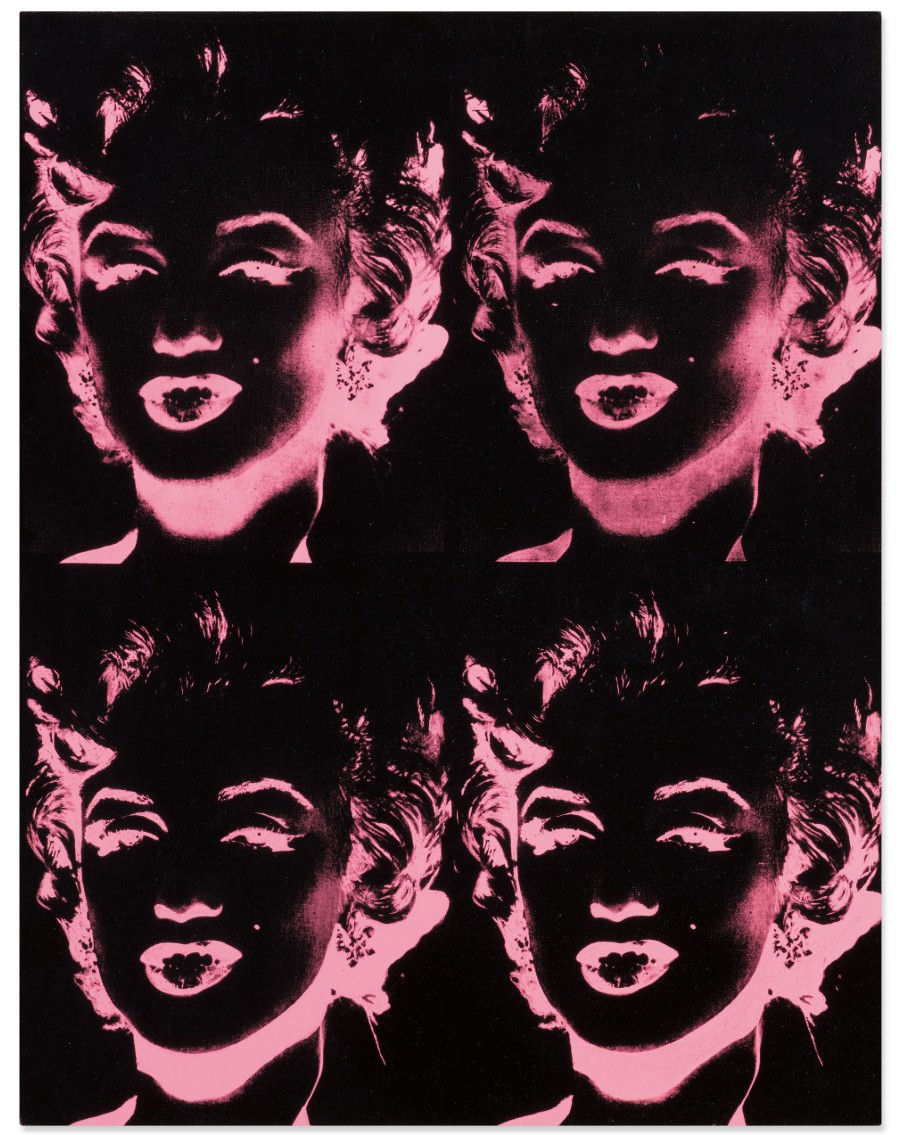
ANDY WARHOL (1928 – 1987)
Four Pink Marilyns (Reversal Series), 1986
Acrylic and silkscreen ink on canvas
36 1/8 x 28 inches (91.7 x 71 cm)
Signed and dated 86 (on the overlap)
Stamped by the Andy Warhol Art Authentication Board, Inc., and numbered A107.999 on the overlap
One Multicolored Marilyn (Reversal Series), 1979-1986
Christie’s London: 7 March 2024
Estimated: GBP 800,000 – 1,200,000
GBP 1,068,500 / USD 1,354,858
ANDY WARHOL (1928-1987), One Multicoloured Marilyn (Reversal Series) | Christie’s (christies.com)
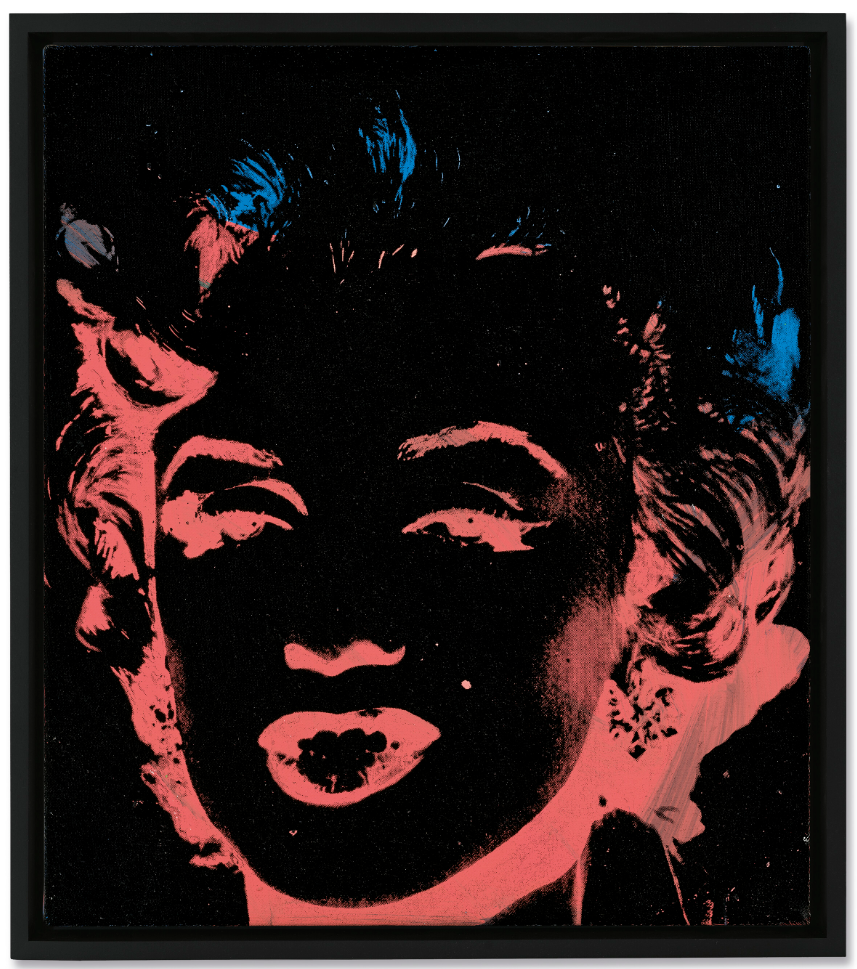
ANDY WARHOL (1928-1987)
One Multicolored Marilyn (Reversal Series), 1979-1986
Acrylic and silkscreen ink on canvas
16×14 inches (40.6 x 35.5 cm)
Stamped with the artist’s signature ‘Andy Warhol’ (on the overlap)
Marilyn, 1979-1986
Christie’s Hong-Kong: 28 May 2023
Estimated: HKD 7,800,000 – 11,800,000
HKD 10,055,000 / USD 1,283,638
ANDY WARHOL (1928-1987), Marilyn | Christie’s
REPEAT SALE
Christie’s New-York: 9 March 2021
Estimated: USD 800,000 – 1,200,000
USD 1,290,000
Andy Warhol (1928-1987), Marilyn | Christie’s
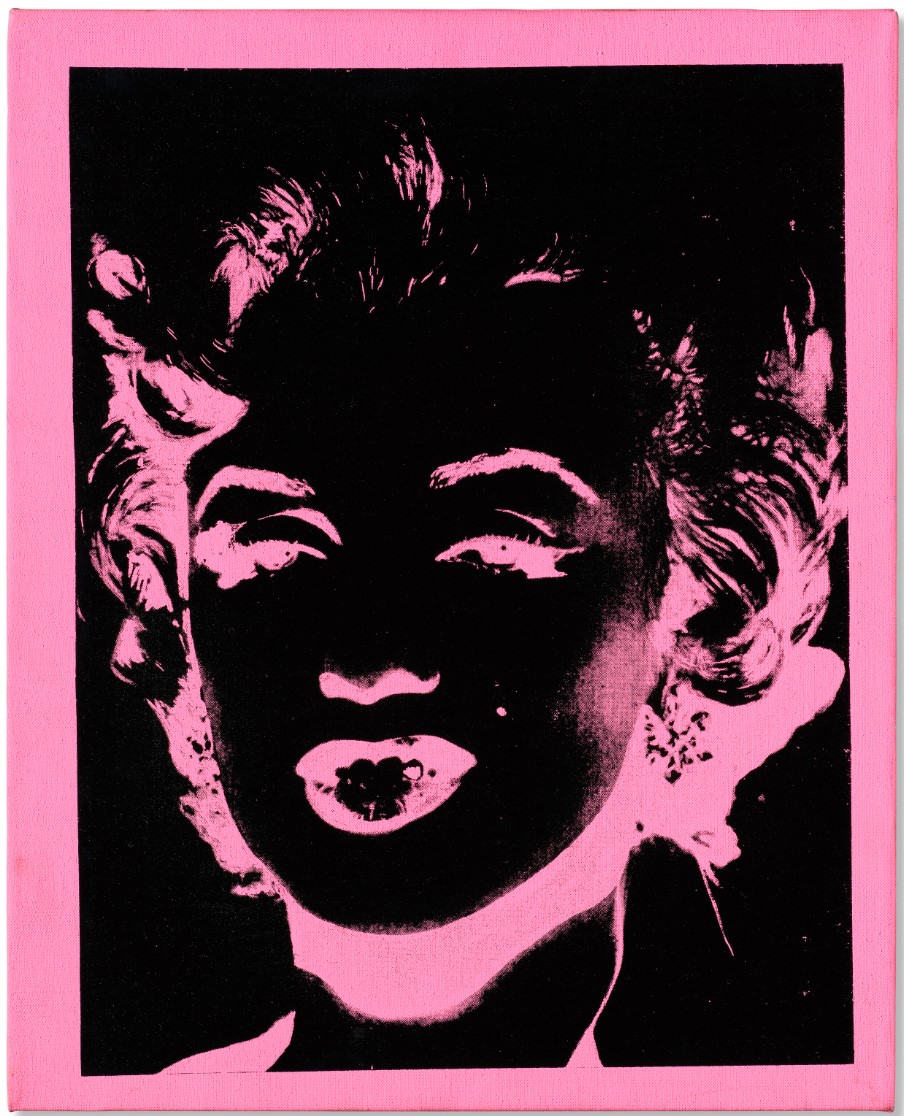
ANDY WARHOL (1928-1987)
Marilyn, 1979-1986
Acrylic and silkscreen ink on canvas
20×16 inches (50.8 x 40.6 cm)
Stamped with the artist’s signature ‘Andy Warhol’ (on the overlap)
Nine Multicolored Marilyns (Reversal Series), 1979-86
Sotheby’s London: 14 October 2022
Estimated: GBP 6,000,000 – 8,000,000
GBP 5,189,200 / USD 5,817,489
Nine Multicoloured Marilyns (Reversal Series) | Contemporary Evening Auction | 2022 | Sotheby’s
REPEAT SALE
Sotheby’s London: 30 June 2014
Estimated: GBP 4,000,000 – 6,000,000
GBP 4,562,500 / USD 7,802,770
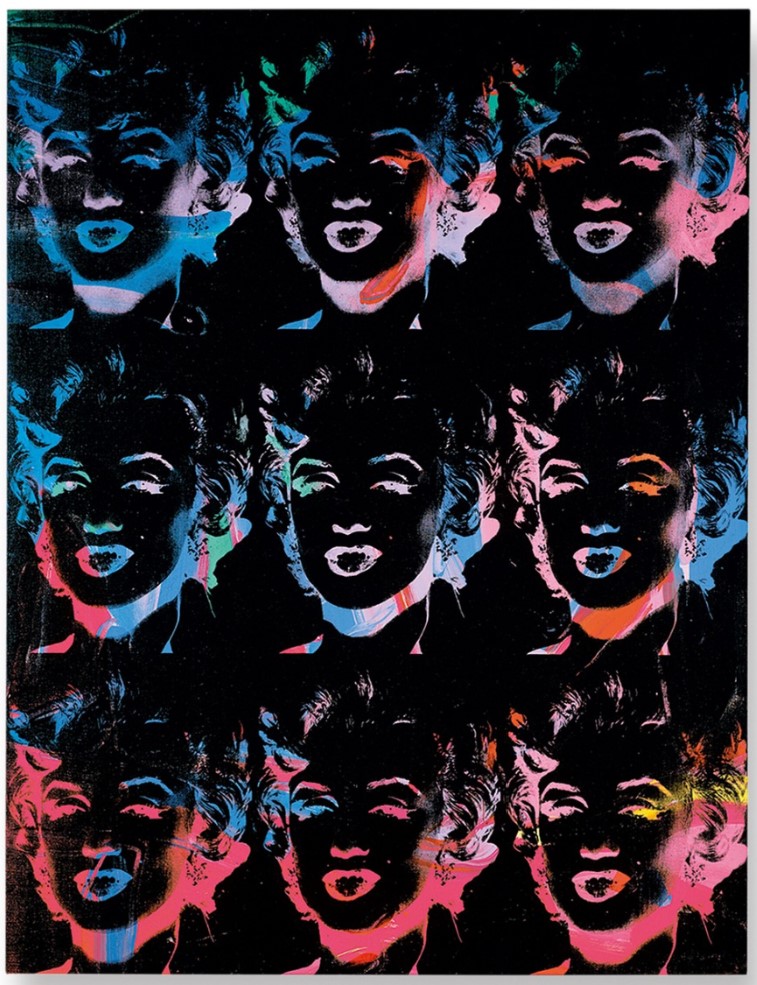
ANDY WARHOL (1928 – 1987)
Nine Multicolored Marilyns (Reversal Series), 1979-86
Acrylic and silkscreen ink on canvas
54 ⅜ x 41 ¾ inches (138 x 106.1 cm)
Signed Andy Warhol and dated 79/86 (on the overlap)
Marilyn (Reversal), 1979-1986
Sotheby’s New-York: 30 September 2022
Estimated: USD 1,200,000 – 1,800,000
USD 1,441,500
Marilyn (Reversal) | Contemporary Curated | 2022 | Sotheby’s (sothebys.com)
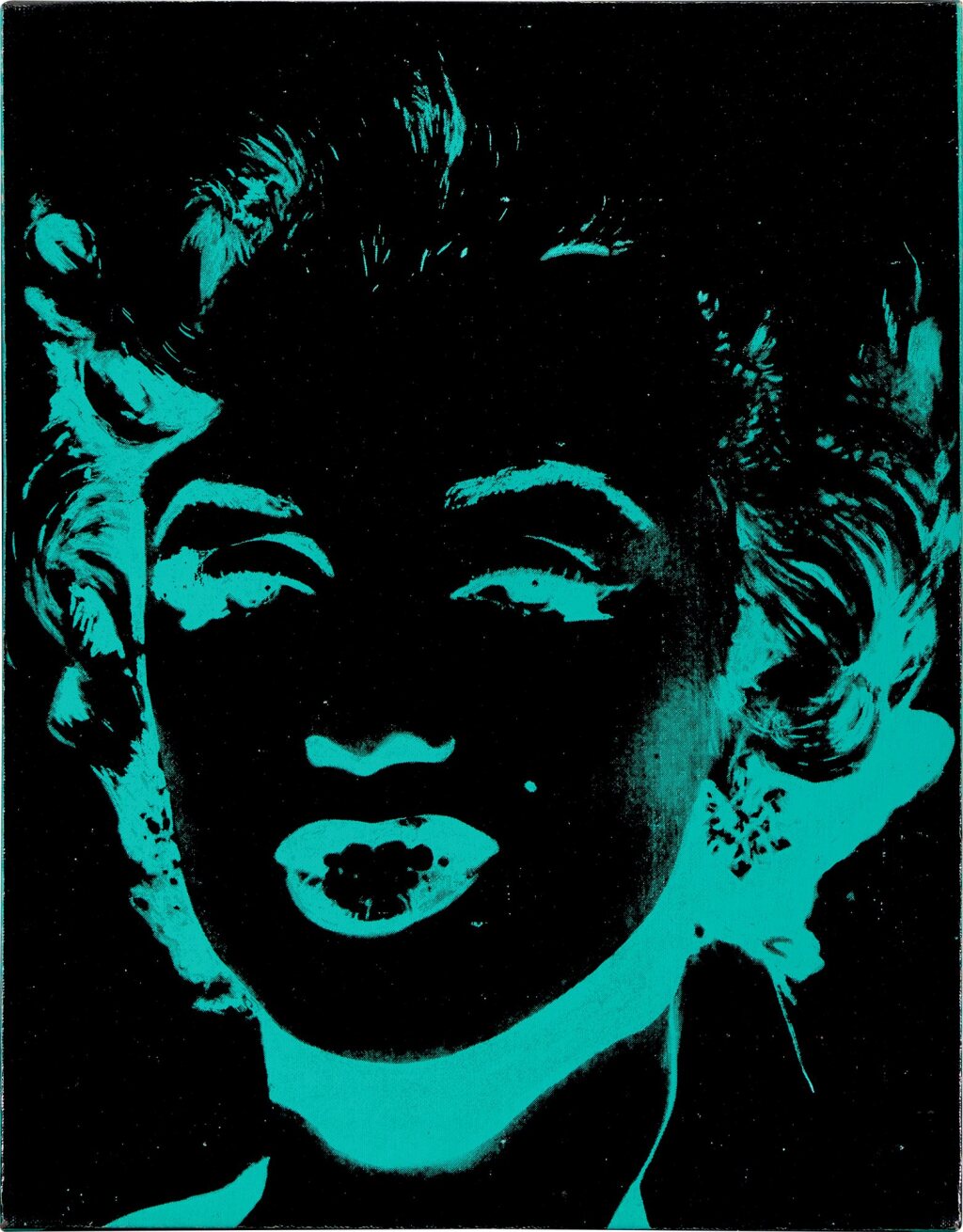
Marilyn (Reversal), 1979-1986
18×14 inches (45.7 x 35.6 cm)
Stamped with the artist’s signature, dated 1986
Authenticated by Frederick Hughes and numbered A111.0510 (on the overlap)
9 Gold Marilyns (Reversal Series), 1980
Sotheby’s London: 29 June 2021
Estimated: GBP 5,500,000 – 8,000,000
GBP 6,517,500 / USD 9,023,259
REPEAT SALE
Phillips New-York: 11 November 2013
Estimated: USD 8,000,000 – 12,000,000
USD 9,125,000
Andy Warhol Contemporary Art Evening Sale
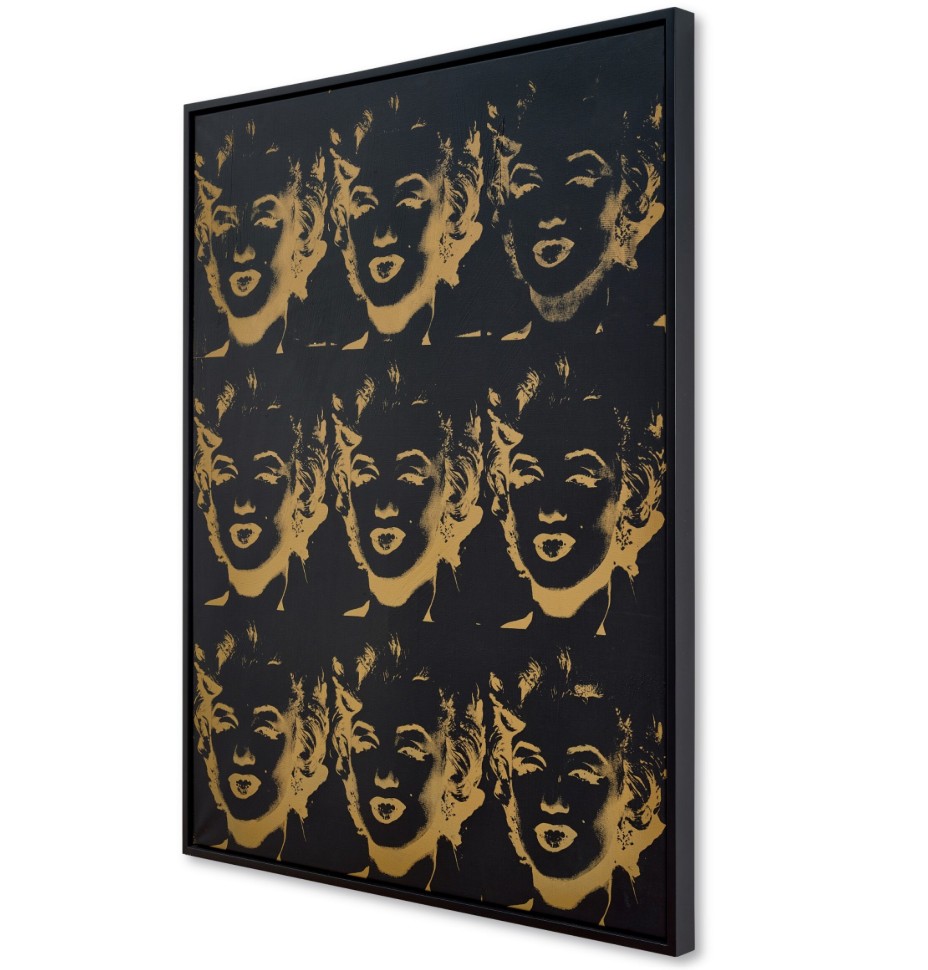
ANDY WARHOL
9 Gold Marilyns (Reversal Series), 1980
Gold acrylic and silkscreen ink on canvas
54 x 41.5 inches (137 x 105.5 cm)
Nine Multicolored Marilyns (Reversal Series), 1979-1986
Christie’s New-York: 12 May 2021
Estimated: USD 6,500,000 – 8,500,000
USD 10,207,000
Andy Warhol (1928-1987) (christies.com)
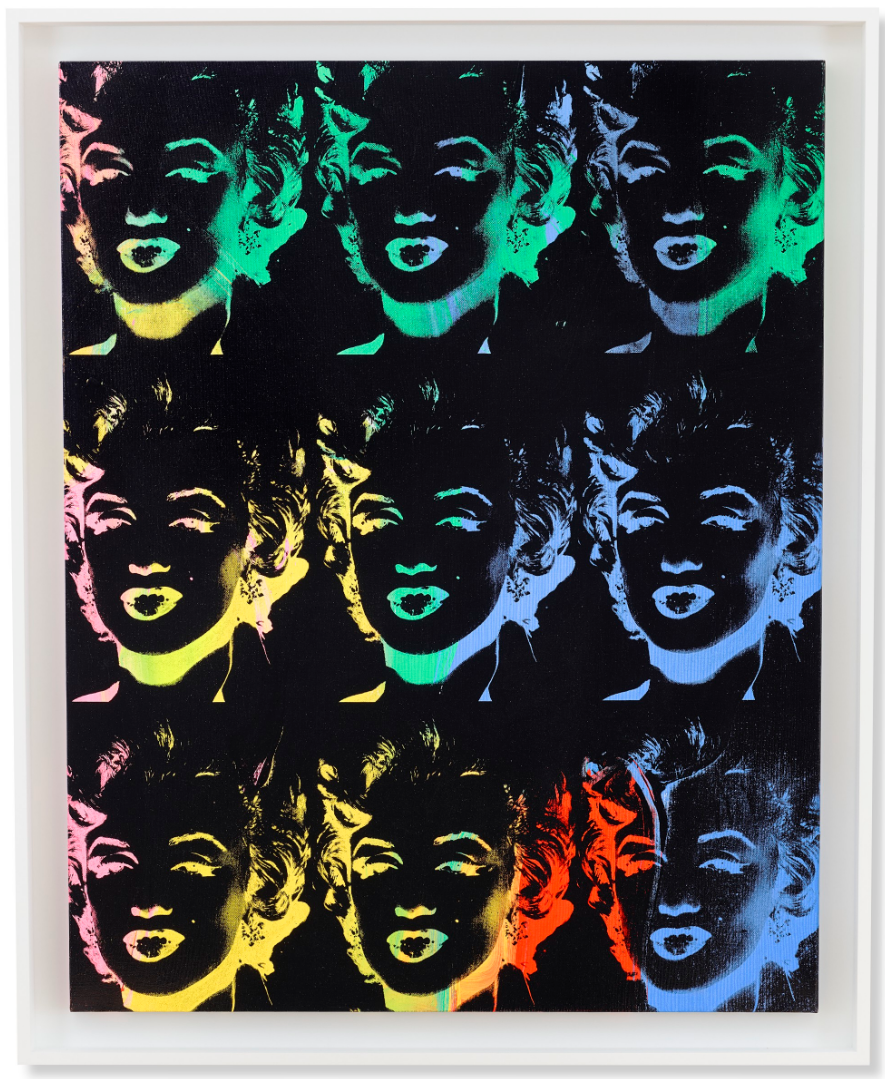
ANDY WARHOL
Nine Multicolored Marilyns (Reversal Series), 1979-1986
Acrylic and silkscreen ink on canvas
50×40 inches (127 x 101.6 cm)
Stamped with the artist’s signature ‘Andy Warhol ©’ (on the overlap)
Signed and inscribed by Frederick Hughes ‘I certify that this is an original painting by Andy Warhol completed by him in 1986 Frederick Hughes’ (on the overlap)
One Grey / Black Marilyn (Reversal Series), 1979-1986
Phillips London: 15 April 2021
Estimated: GBP 700,000 – 900,000
GBP 733,950 / USD 1,011,094
Andy Warhol – 20th Century & Contempor… Lot 17 April 2021 | Phillips
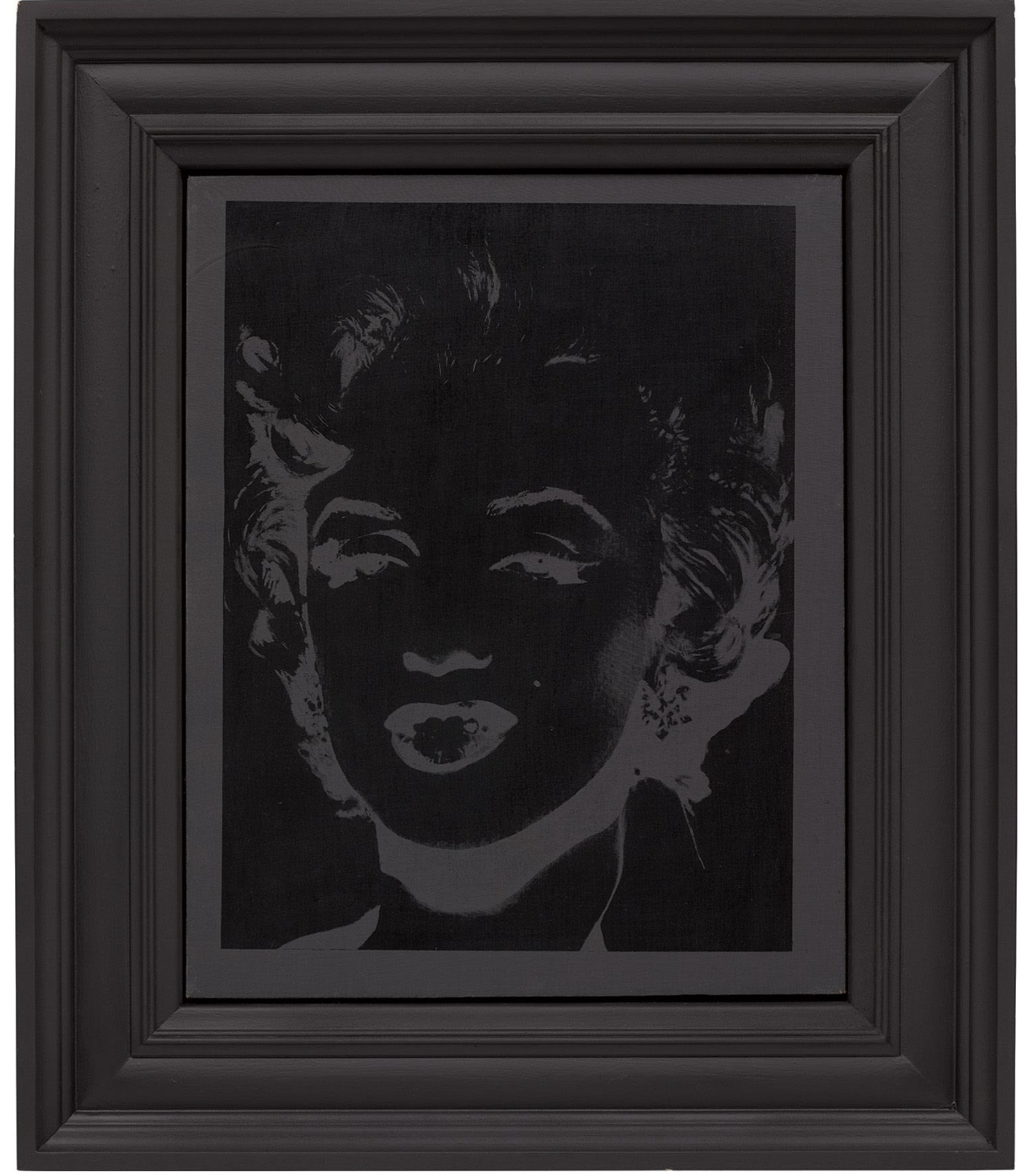
ANDY WARHOL
One Grey / Black Marilyn (Reversal Series) II-50-160, 1979-1986
Acrylic and silkscreen ink on canvas
20 x 15 7/8 inches (50.8 x 40.6 cm)
Signed ‘Andy Warhol’ on the reverse
Joseph Beuys, 1980-83
Warhol and Beuys, the two giants of American and German post-war art, met for the very first time at a Warhol exhibition in May 1979 at Galerie Hans Mayer. This momentous and historic moment led to one of Warhol’s most fascinating series of portraits, in which the now iconic face of Beuys was forever immortalized in the quintessentially Warholian body of silkscreen portrait paintings.
READ ABOUT JOSEPH BEUYS
FIND ALL HISTORICAL AUCTION RESULTS
Joseph Beuys, 1980
Sotheby’s London: 26 June 2024
Estimated: GBP 400,000 – 600,000
GBP 456,000 / USD 578,208
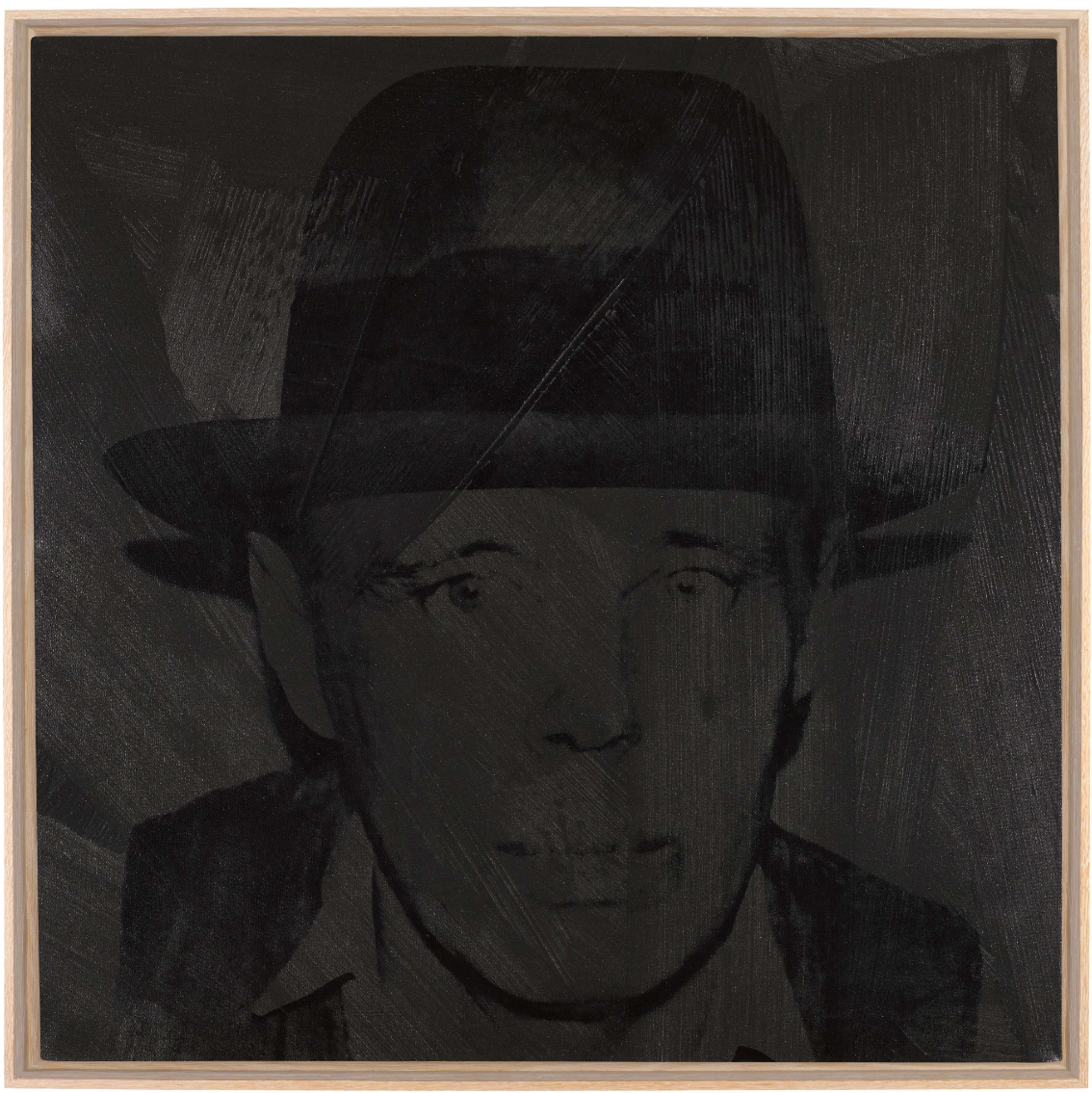
ANDY WARHOL (1928 – 1987)
Joseph Beuys, 1980
Acrylic and silkscreen ink on canvas
40×40 inches (101.6 x 101.6 cm)
Signed and dated 1980 (on the reverse)
Portraits, 1972-1986
Warhol created his first portrait in 1963, featuring arts patron Ethel Scull. At the time, portraiture had fallen out of fashion in favor of abstraction. Warhol went on to create numerous commissioned portraits throughout his career, even jokingly referring to himself as “just a travelling society painter.” Subjects of his portraits did indeed create a larger portrait of society: in addition to commissioned portraits, he also created likenesses of famous figures, including Marilyn Monroe, Mao Zedong, Joan Collins, Muhammad Ali, and Prince. Warhol upended the traditional practice of society portraiture, marrying it with his love of the popular using a unique process that incorporated both mass-production and traditional painting techniques. Throughout the 1970s and 80s, Warhol continued to create portraits. Commissioned portraits were a key component of his business, but Warhol also created images of celebrities and political figures.
READ ABOUT CELEBRITY & SOCIETY PORTRAITS
FIND ALL HISTORICAL AUCTION RESULTS
PLEASE CLICK ON ANY PICTURE TO ACCESS THE CATALOGUE ENTRY
Man Ray, 1974
Sotheby’s London: 17 September 2025
Estimated: GBP 400,000 – 600,000
GBP 584,200 / USD 797,630
Man Ray | Pauline Karpidas: The London Collection Evening Auction | 2025 | Sotheby’s
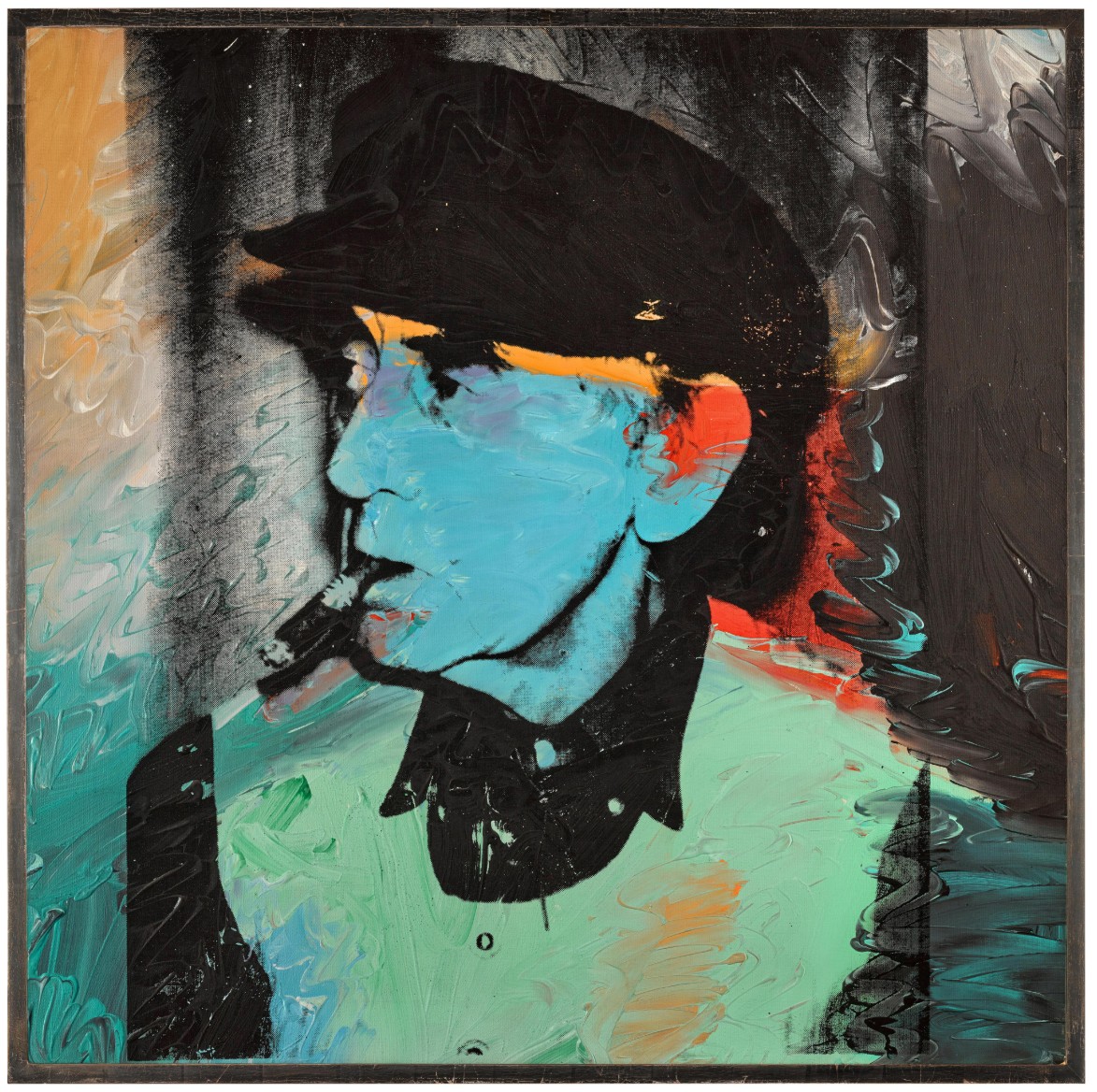
ANDY WARHOL (1928 – 1987)
Man Ray, 1974
Acrylic and silkscreen ink on canvas
39 3/4 x 39 3/4 inches (101×101 cm)
Signed, titled, numbered 6/6 and dated 74 (on the overlap)
Portrait of Princess Diana, 1982
Phillips London: 7 March 2024
Estimated: GBP 1,200,000 – 1,800,000
GBP 2,407,500 / USD 3,052,710
Andy Warhol – 20th Century & Contempor… Lot 12 March 2024 | Phillips
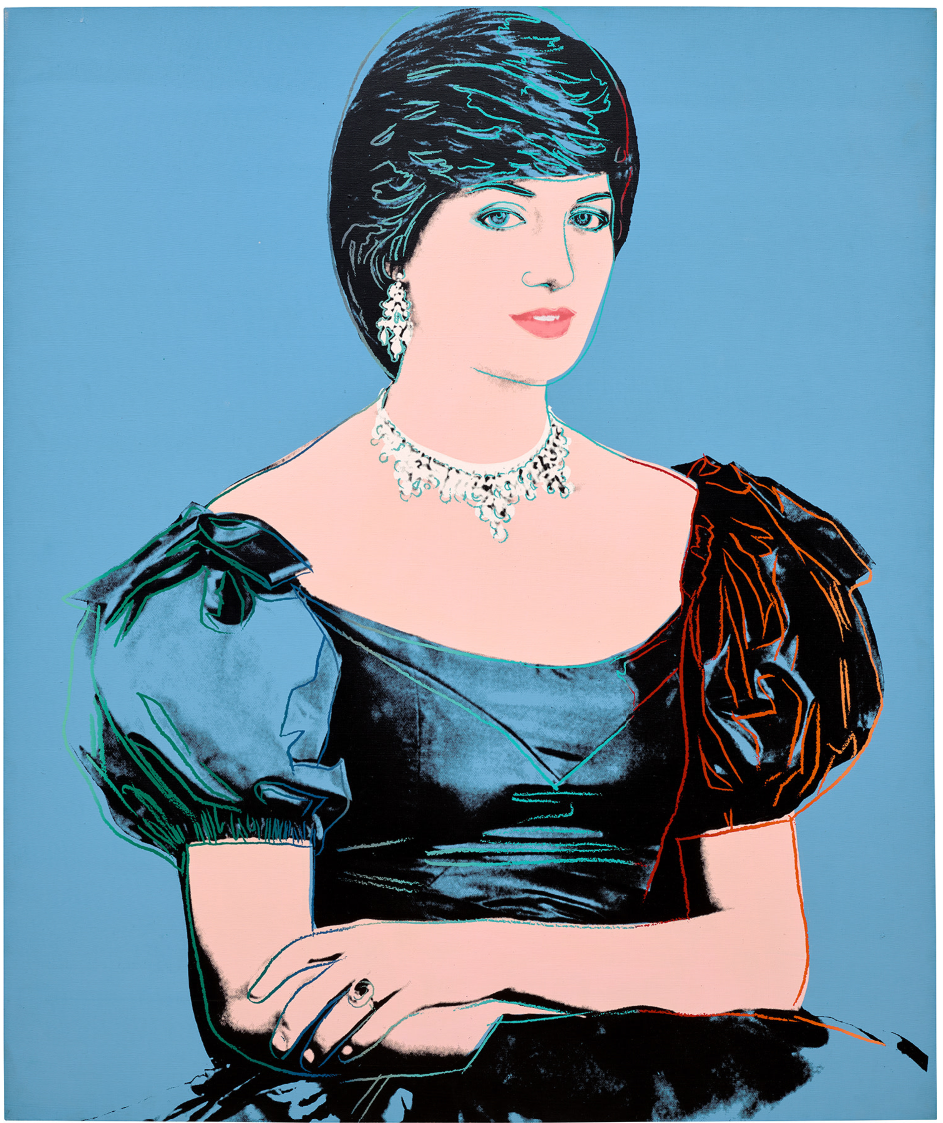
ANDY WARHOL
Portrait of Princess Diana, 1982
Synthetic polymer and silkscreen ink on canvas
50 x 42 3/8 inches (127 x 107.5 cm)
Signed and dated ‘Andy Warhol 82’ on the overlap
Debbie Harry, 1980
Sotheby’s London: 1 March 2023
Estimated: GBP 4,000,000 – 6,000,000
GBP 6,599,300
Debbie Harry | Modern & Contemporary Evening Auction | | Sotheby’s (sothebys.com)
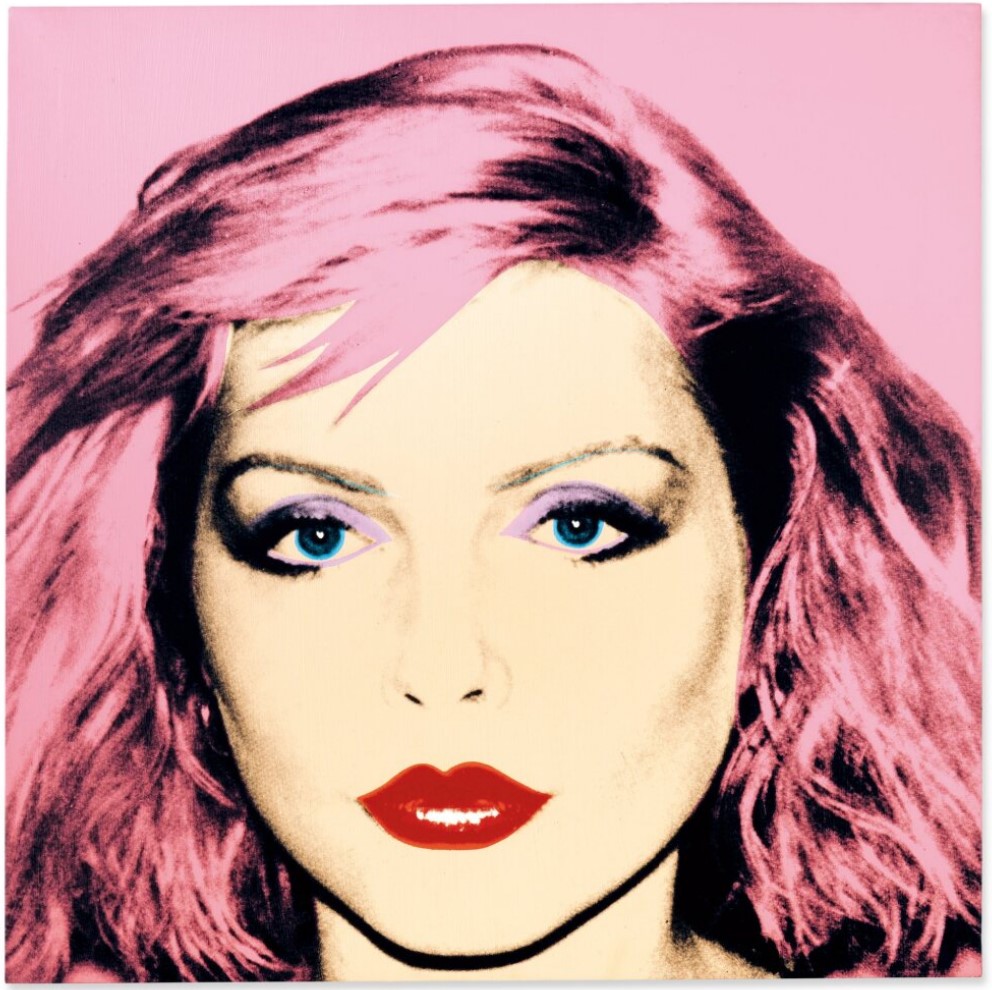
ANDY WARHOL (1928 – 1987)
Debbie Harry, 1980
Acrylic and silkscreen ink on canvas
42×42 inches (106.7 x 106.7 cm)
Stamped by the Estate of Andy Warhol and the Andy Warhol Foundation for the Visual Arts
Numbered PO50-172 (on the overlap)
Art History, 1982-85
In the mid-1980s, after two decades of re-establishing the definition of high art, and armed with the assurance of his own success as a major player of 20th century art, Warhol began to look at the encyclopedic inventory of old masters such as Giorgio de Chirico, Georges Matisse, Sandro Boticelli and of course Pablo Picasso, placing himself amongst their ranks. A profound exhibition at the Whitney Museum of American Art in New York in 1978 entitled, Art about Art, brought to the fore the abundance of art historical references in works by artist’s of Warhol’s own generation such as Robert Rauschenberg and Roy Lichtenstein. Furthermore, by this time, the art of appropriation was flourishing in the hands of younger artists, particularly homages to Picasso, ranging from Robert Colescott’s re-contextualizing of race in Demoiselles d’Avignon (1985) or Mike Bidlo’s scrupulous imitation of Guernica (1984) and his Picasso Women show at Leo Castelli in 1988.
READ ABOUT ART HISTORY PAINTINGS
FIND ALL HISTORICAL AUCTION RESULTS
PLEASE CLICK ON ANY PICTURE BELOW TO ACCESS THE CATALOGUE ENTRY
Disquieting Muses (After de Chirico), 1982
Property from an Important Collection
Sotheby’s Ryiadh: 31 January 2026
Estimated: USD 800,000 – 1,200,000
USD 1,016,000
The Disquieting Muses (after de Chirico) | Origins II | 2026 | Sotheby’s
REPEAT SALE
Sotheby’s Paris: 5 June 2013
Estimated: EUR 600,000 – 800,000
EUR 625,500 / USD 818,675
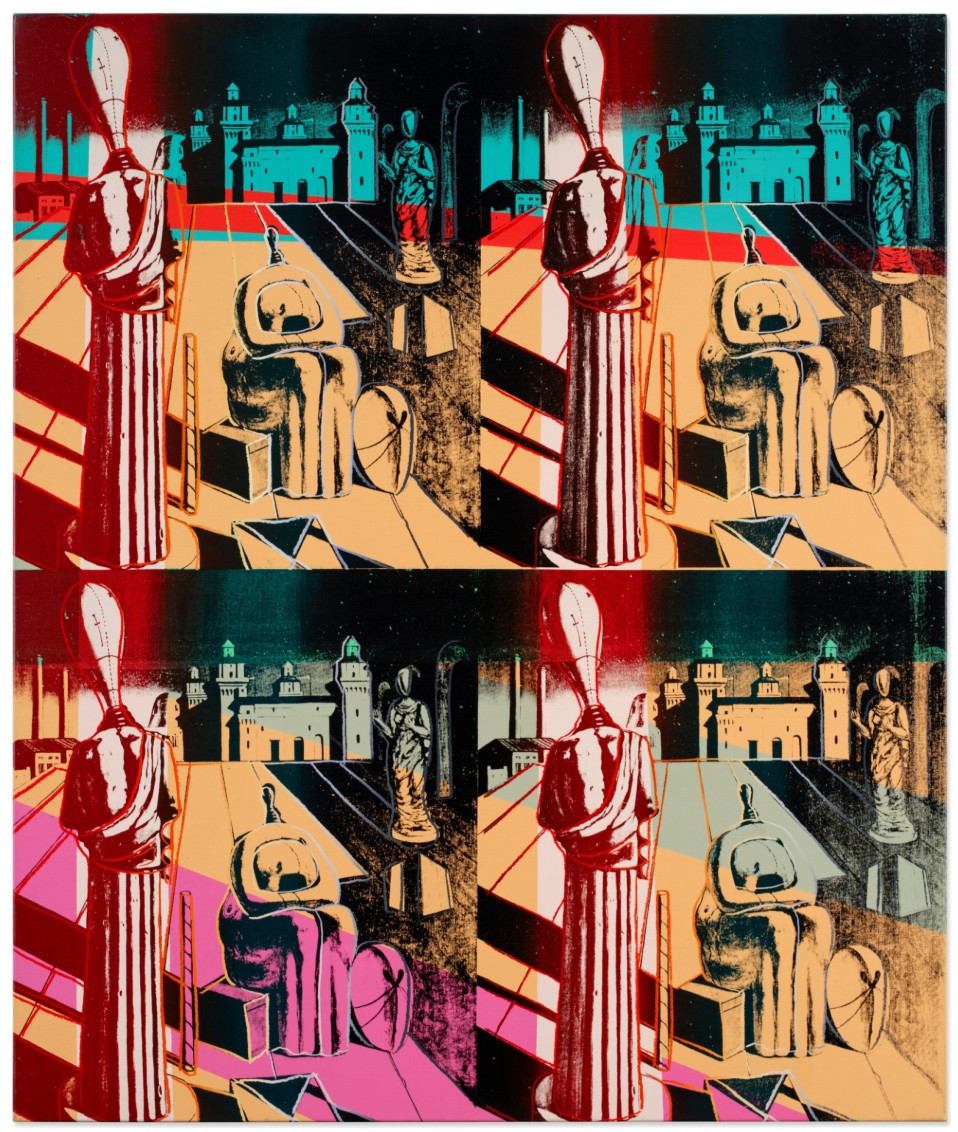
ANDY WARHOL (1928 – 1987)
Disquieting Muses (After de Chirico), 1982
Acrylic and silkscreen ink on canvas
50×42 inches (127 x 106.7 cm)
Signed Andy Warhol and dated 82 (on the overlap)
The Scream (After Munch), 1984
Sotheby’s London: 17 September 2025
Estimated: GBP 2,000,000 – 3,000,000
GBP 6,828,000 / USD 9,049,490
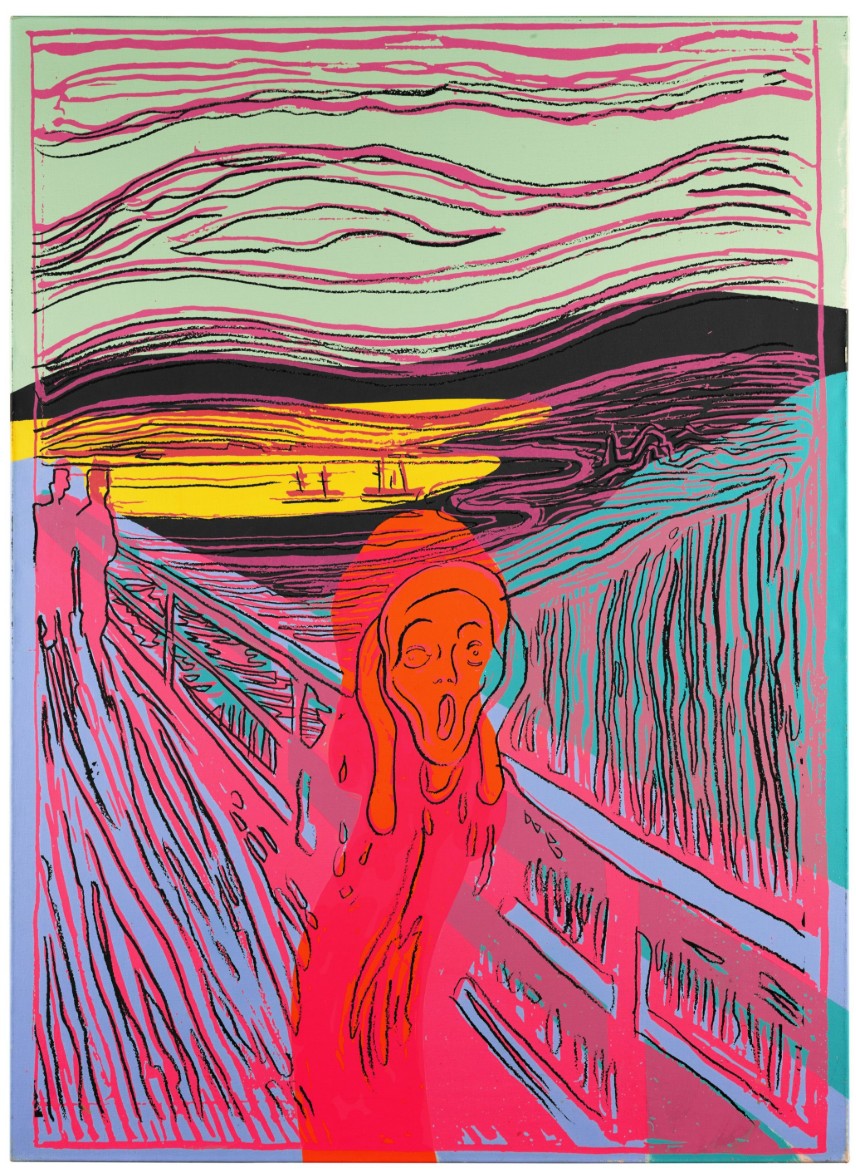
ANDY WARHOL (1928 – 1987)
The Scream (After Munch), 1984
Acrylic and silkscreen ink on canvas
52 x 38 1/4 inches (132.4 x 97 cm)
Signed and dated 84 (on the overlap)
Madonna and Self-Portrait with Skeleton’s Arm (After Munch), 1984
Sotheby’s London: 17 September 2025
Estimated: GBP 1,500,000 – 2,000,000
GBP 2,846,000 / USD 3,885,765
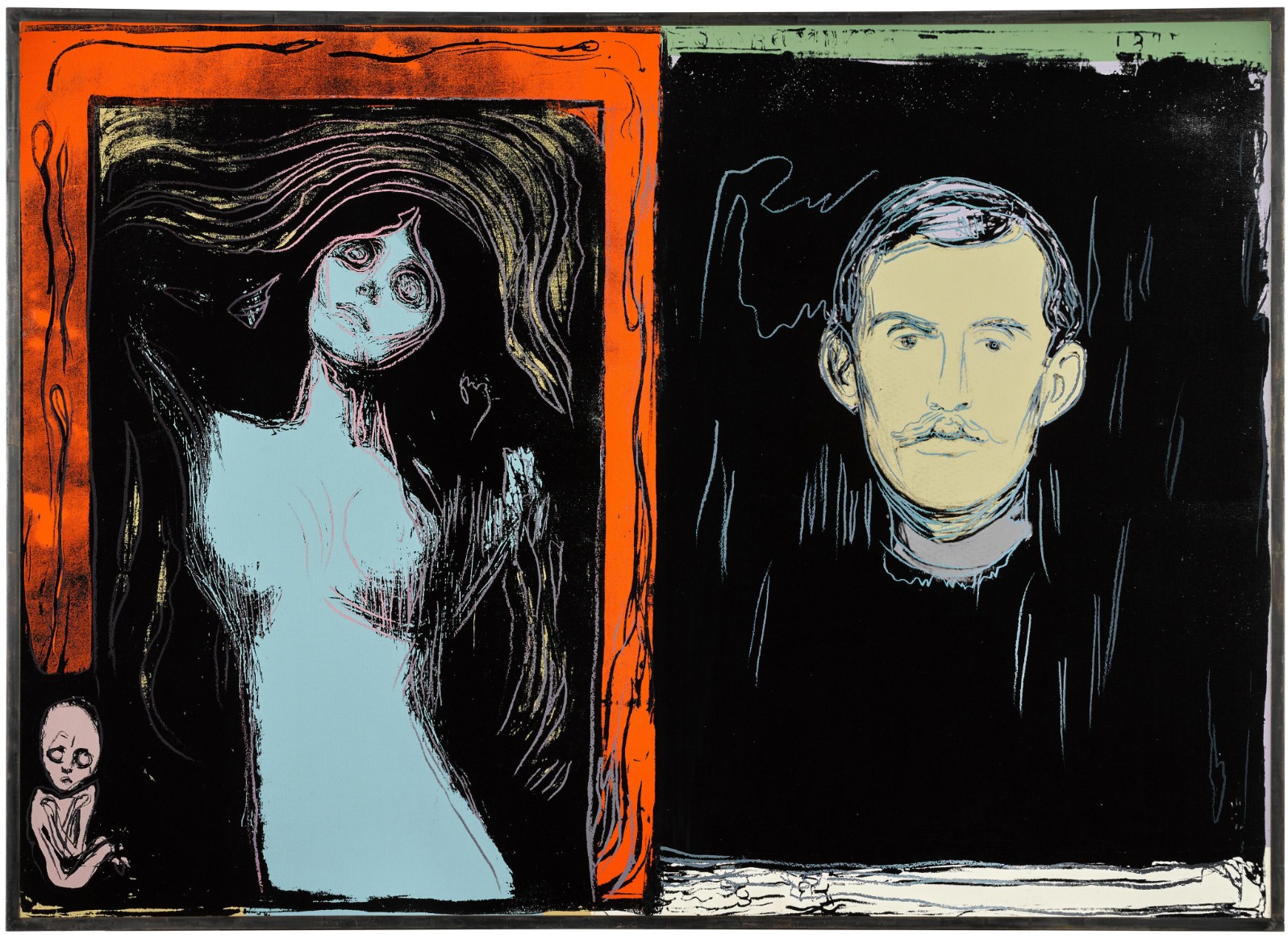
ANDY WARHOL (1928 – 1987)
Madonna and Self-Portrait with Skeleton’s Arm (After Munch), 1984
Acrylic and silkscreen ink on canvas
51 1/8 x 71 inches (129.7 by 180.4 cm)
Signed and dated 84 (on the overlap)
The Poet and His Muse (After de Chirico), 1982
Sotheby’s London: 17 September 2025
Estimated: GBP 600,000 – 800,000
GBP 571,500 / USD 780,295
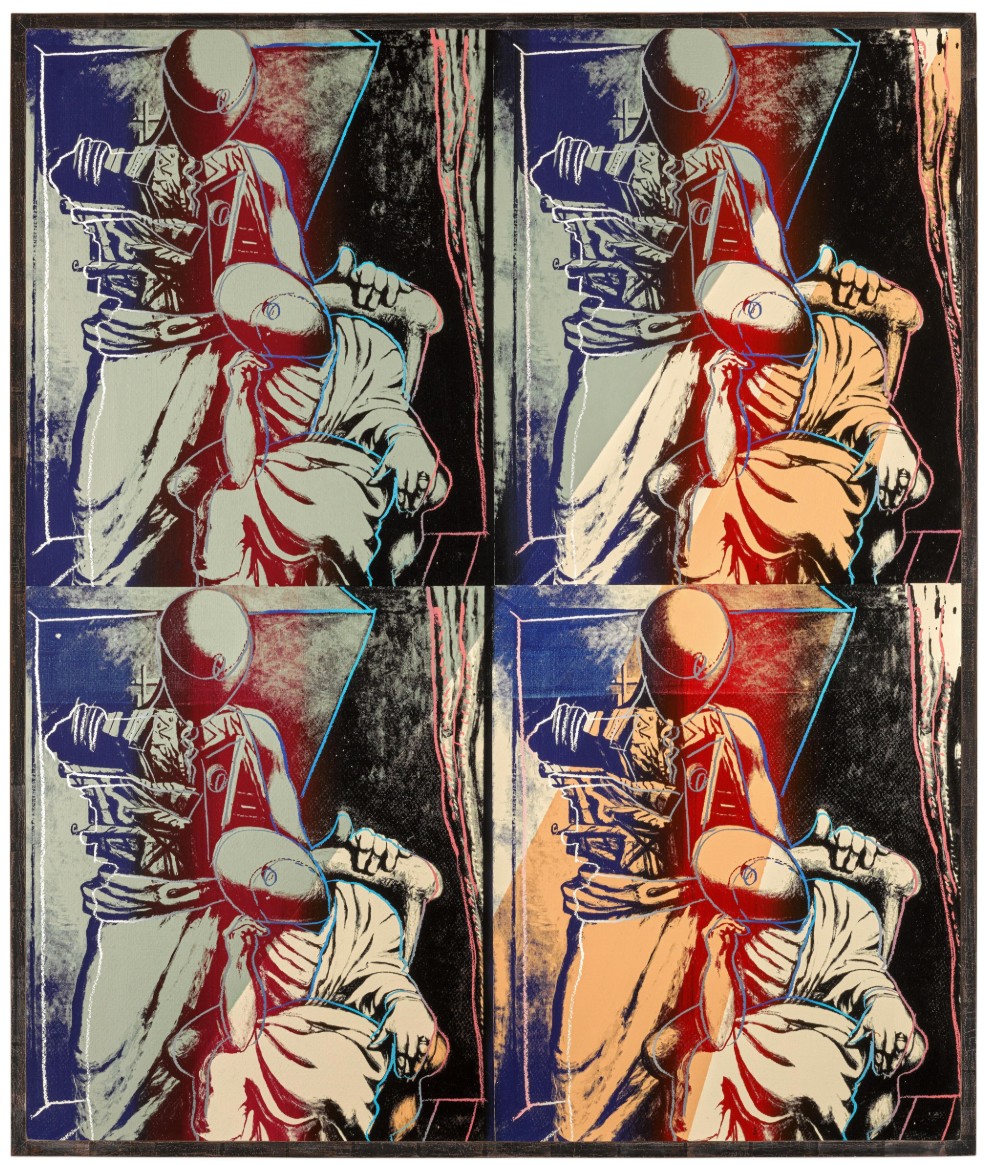
ANDY WARHOL (1928 – 1987)
The Poet and His Muse (After de Chirico), 1982
Acrylic and silkscreen ink on canvas
50×42 inches (127 x 106.5 cm)
Stamped by the Estate of Andy Warhol and the Andy Warhol Foundation for the Visual Arts, Inc.
Numbered PA 38.006 on the overlap
The Two Sisters (after de Chirico), 1982
Sotheby’s Hong-Kong: 5 April 2024
Estimated: HKD 7,000,000 – 10,000,000
HKD 9,144,000 / USD 1,169,010

ANDY WARHOL (1928 – 1987)
The Two Sisters (after de Chirico), 1982
Acrylic and silkscreen ink on canvas
50 1/4 x 41 3/4 inches (127.5 x 106 cm)
Signed and dated 82 on the overlap
Myths, 1981
In 1981, Warhol created a series he called the Myths or New Myths, in which he selected ten American mythical figures from the realm of popular culture, television, comic books and film. Warhols selection process was incredibly rigorous, but eventually he narrowed his scope to ten essential characters, the most resonating of which evoke a post-war America in its youth and the consumerism that drove its growth.
READ ABOUT MYTHS
FIND ALL HISTORICAL AUCTION RESULTS
PLEASE CLICK ON ANY PICTURE TO ACCESS THE CATALOGUE ENTRY
The Shadow, 1981
Sotheby’s New-York: 8 November 2023
Estimated: USD 2,000,000 – 3,000,000
USD 3,085,000
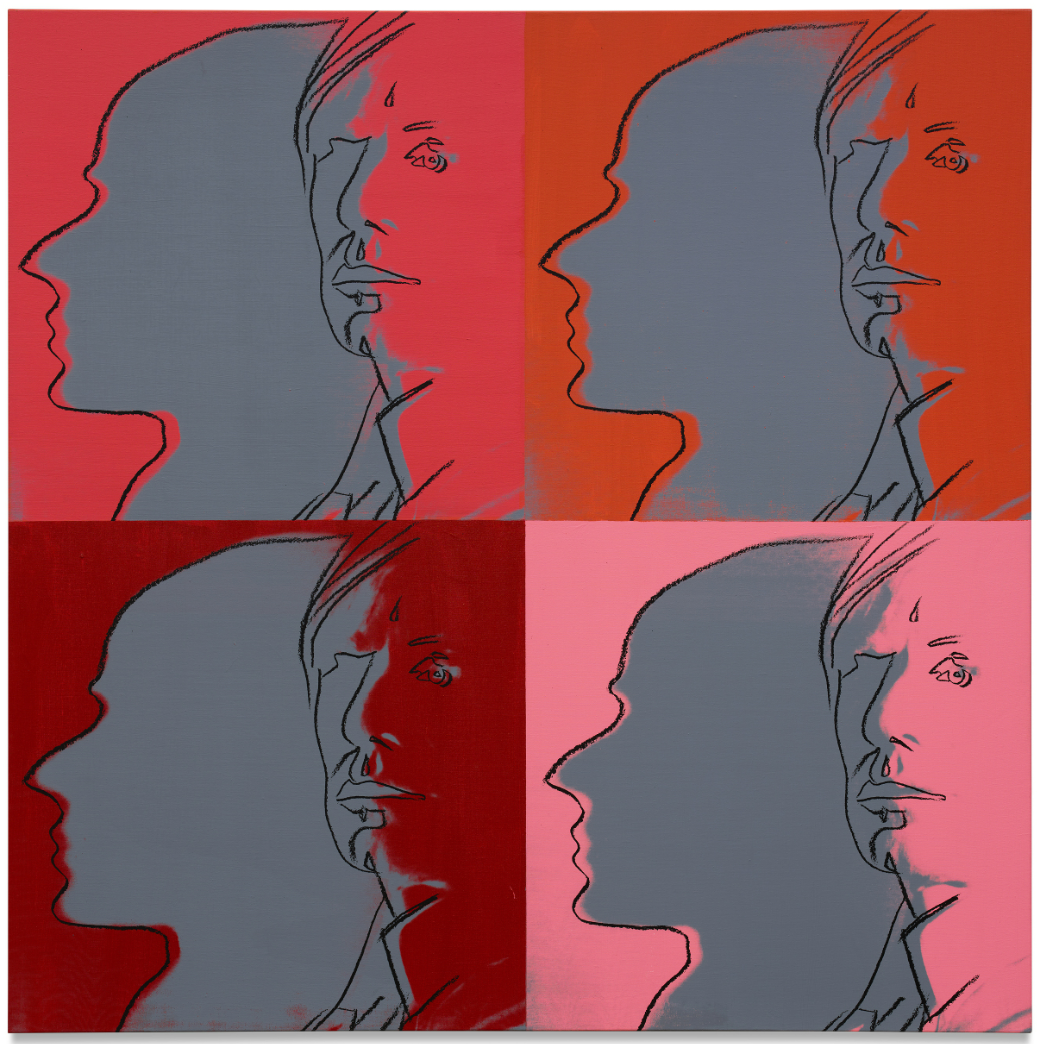
ANDY WARHOL (1928 – 1987)
The Shadow, 1981
Acrylic and silkscreen ink on canvas
60×60 inches (152.4 x 152.4 cm)
Signed and dated 1981, stamped by The Estate of Andy Warhol
Stamped by The Andy Warhol Foundation for the Visual Arts
Numbered PA51.002 (on the overlap and on the stretcher)
The Star (Greta Garbo as Mata Hari), 1981
Phillips New-York: 16 May 2022
Estimated: USD 7,000,000 – 10,000,000
USD 9,580,000
Andy Warhol – 20th Century & Contemporar… Lot 26 May 2022 | Phillips
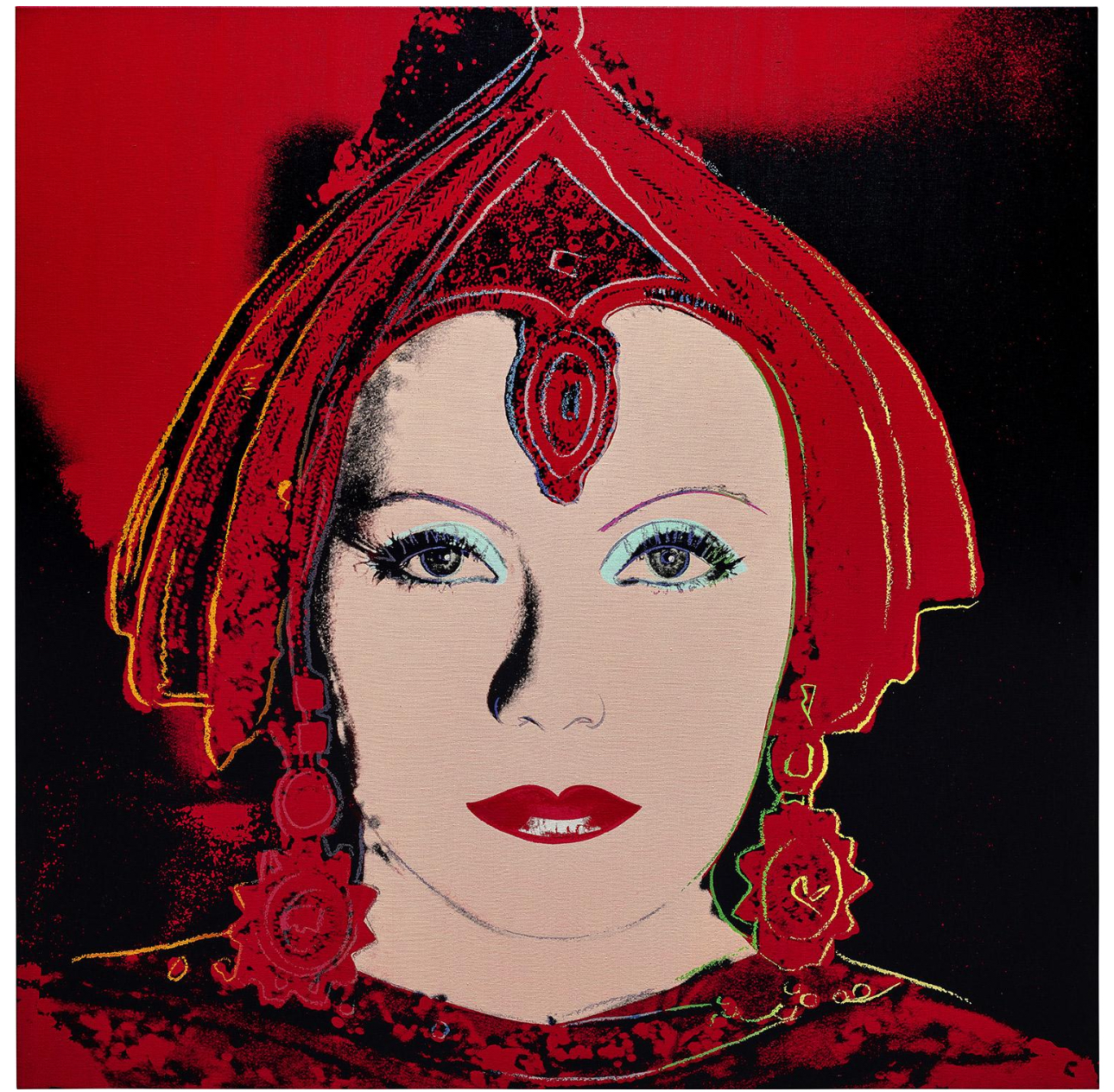
ANDY WARHOL
The Star (Greta Garbo as Mata Hari), 1981
Acrylic and silkscreen ink on canvas
60×60 inches (152.4 x 152.4 cm)
Myths (Multiple), 1981
Sotheby’s London: 25 March 2021
Estimated: GBP 2,000,000 – 3,000,000
GBP 2,314,000
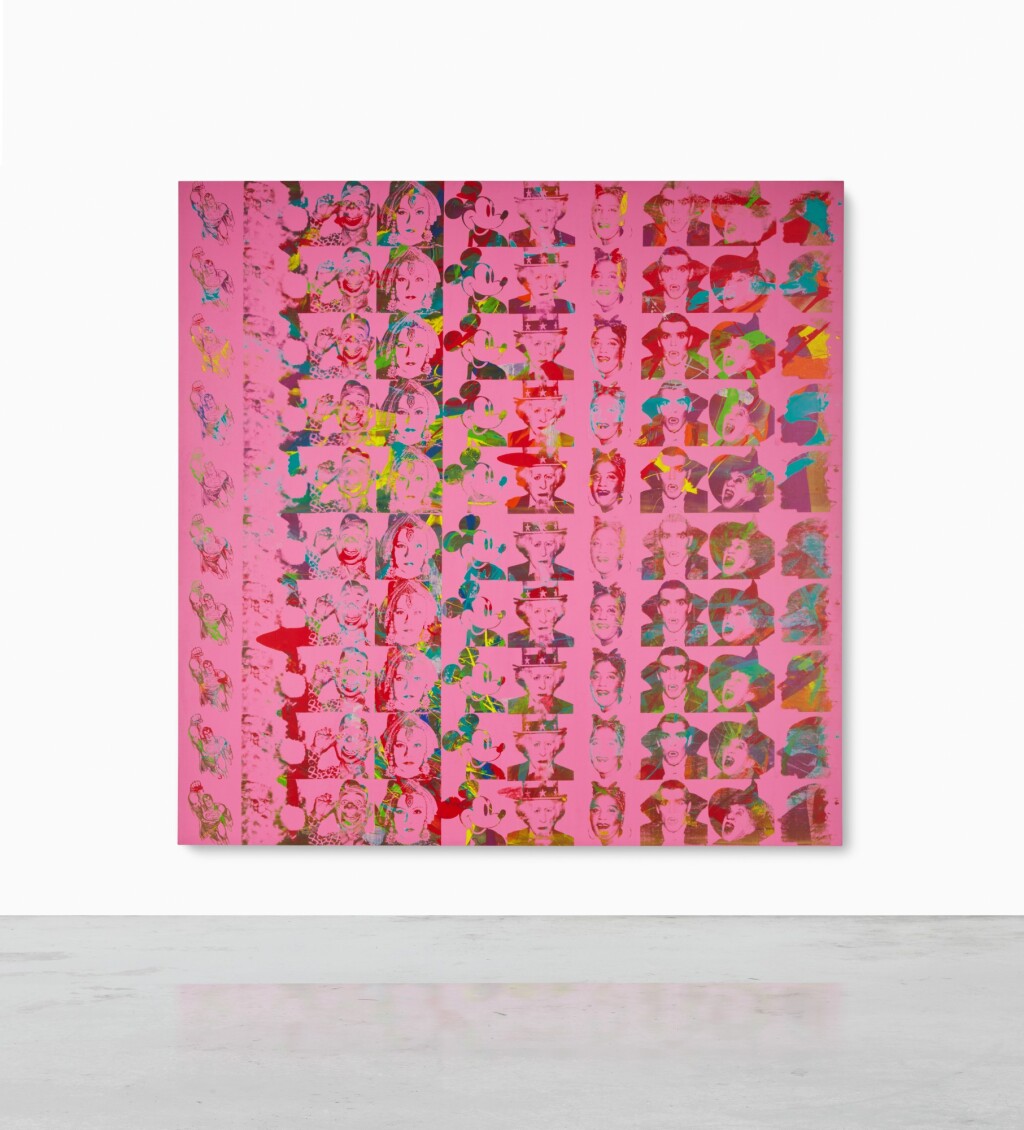
ANDY WARHOL
Myths (Multiple), 1981
Acrylic and silkscreen ink on canvas
100×100 inches (254×254 cm)
Signed and dated 1981 on the overlap
Stamped by The Andy Warhol Art Authentication Board
Numbered PA51.015 on the overlap
Endangered Species, 1983
Andy Warhol created his Endangered Species complete set of screenprints in 1983, ten years after the passage of the United States Endangered Species Act. In the early 1980s Warhol had a discussion with art dealer and long-time political and environmental activists, Ronald and Frayda Feldman about beach erosion and several other ecological issues. Inspired by their conversation, the Feldmans, whose gallery Ronald Feldman Fine Art, New York was known for supporting innovative art projects and installations, commissioned Warhol to create a portfolio of ten silkscreen prints titled Endangered Species. Warhol, who had a deep fondness and interest in animals, embraced the idea.
READ ABOUT ENDANGERED SPECIES
FIND ALL AUCTION RESULTS
Endangered Species, 1983
Sotheby’s New-York: 21 November 2024
Estimated: USD 2,000,000 – 4,000,000
USD 4,320,000
Endangered Species | Contemporary Day Auction | 2024 | Sotheby’s
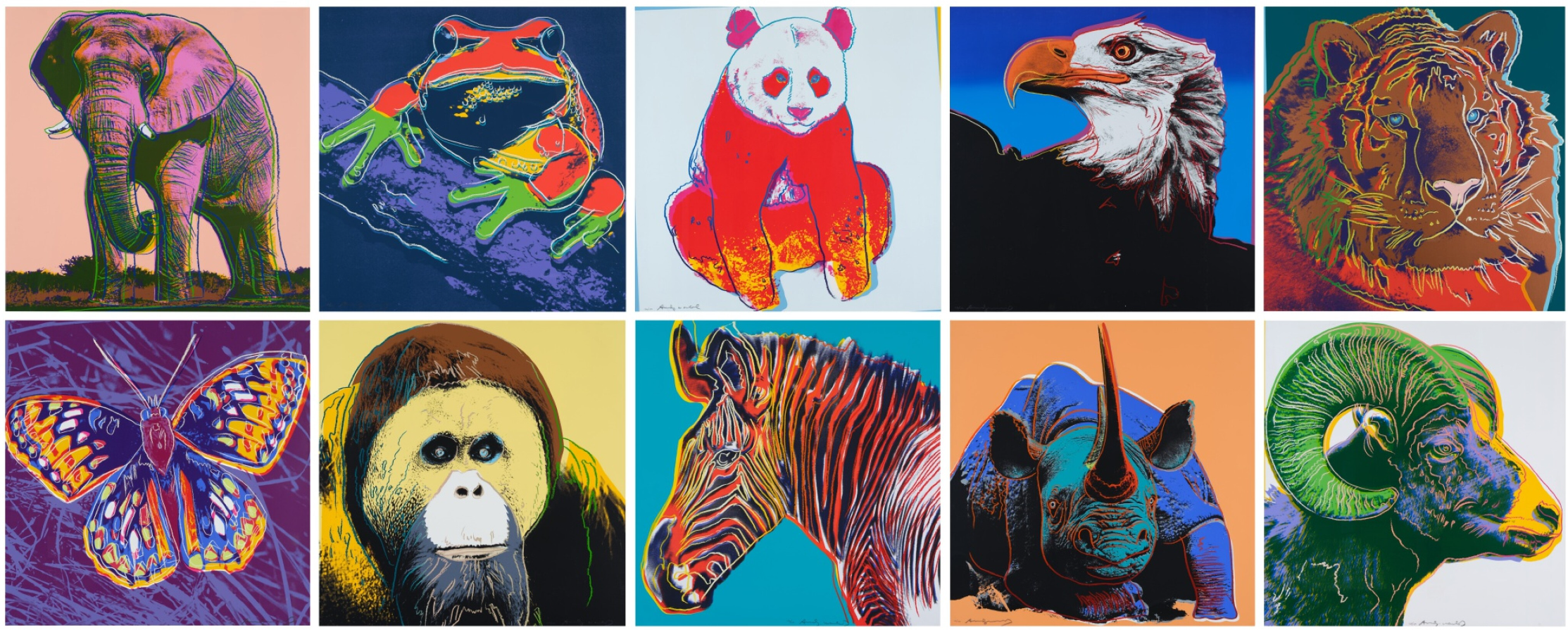
ANDY WARHOL (1928 – 1987)
Endangered Species, 1983
The complete set of 10 screenprints in colors on Lenox Museum Board
All sheets: 38×38 inches (96.5 x 96.5 cm)
Each signed and numbered 126/150 (lower left or right)
This set is number 126 from the edition of 150 plus 30 artist’s proofs
By the time Andy Warhol executed the Endangered Species portfolio in 1983, he was already a massively successful and beloved artist whose prints were widely collected. This was only his third set of prints featuring ten entirely different subjects, as opposed to varying color schemes or compositions of the same subject, and the chosen animals are presented as revered creatures, in vibrant colors and at close range. Initially exhibited at New York’s American Museum of Natural History, the set is a striking example of Warhol attributing the same significance to animals that he had hitherto reserved for the celebrity portraits that had made him a star. The rarefied status of these animals has grown over the years, as complete, intact, Warhol portfolios become endangered themselves. Commissioned by art dealers Ronald and Frayda Feldman, Warhol’s Endangered Species features ten portraits of animals at risk, executed ten years after the Endangered Species Act was signed into law. This landmark legislation represented a growing awareness of urgent environmental issues in the United States, and Warhol’s portfolio tapped directly into this cultural moment. By presenting these endangered animals through the lens of pop art, the artist was able to both celebrate their innate beauty and highlight the very real dangers they faced from habitat loss, poaching, and other human-driven threats.
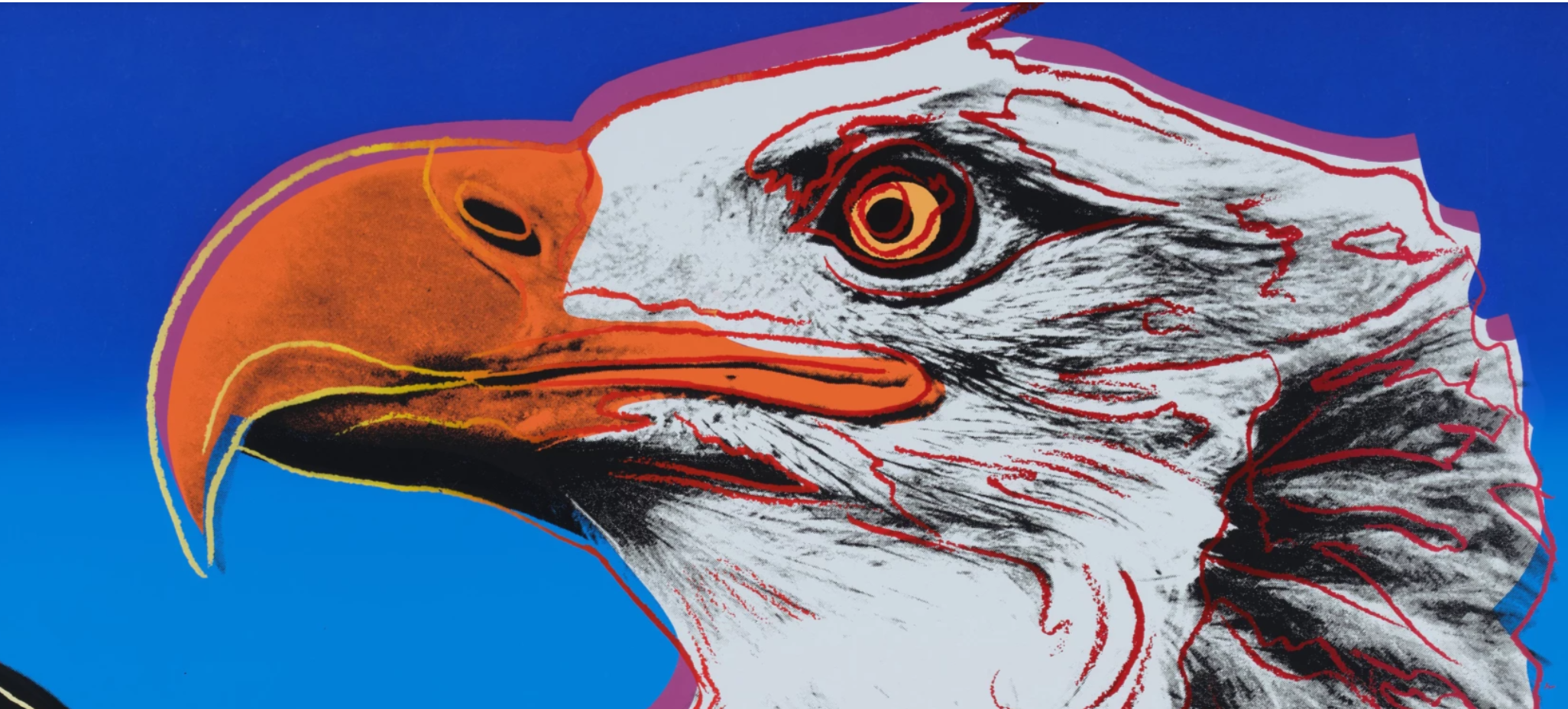
Here, Warhol’s signature screenprinting technique recalls ideas of mass production and commercialism, central to his pop art aesthetic. The bold, unnatural hues he employed – including vibrant pinks, greens, blues, and purples – further emphasized the fabricated quality of the images, creating a striking contrast with the natural splendor of the animals themselves. Beyond its art historical significance, the Endangered Species also stands as a testament to Warhol’s enduring influence as a cultural provocateur. By bringing these threatened animals into the pop art vernacular, Warhol transformed them into bold symbols of conservation that continue to resonate with viewers decades later. His ability to make the plight of the natural world accessible through the lens of mass media and consumer culture underscores Warhol’s lasting relevance as an artist who could seamlessly blend high and low, the sublime and the mundane.
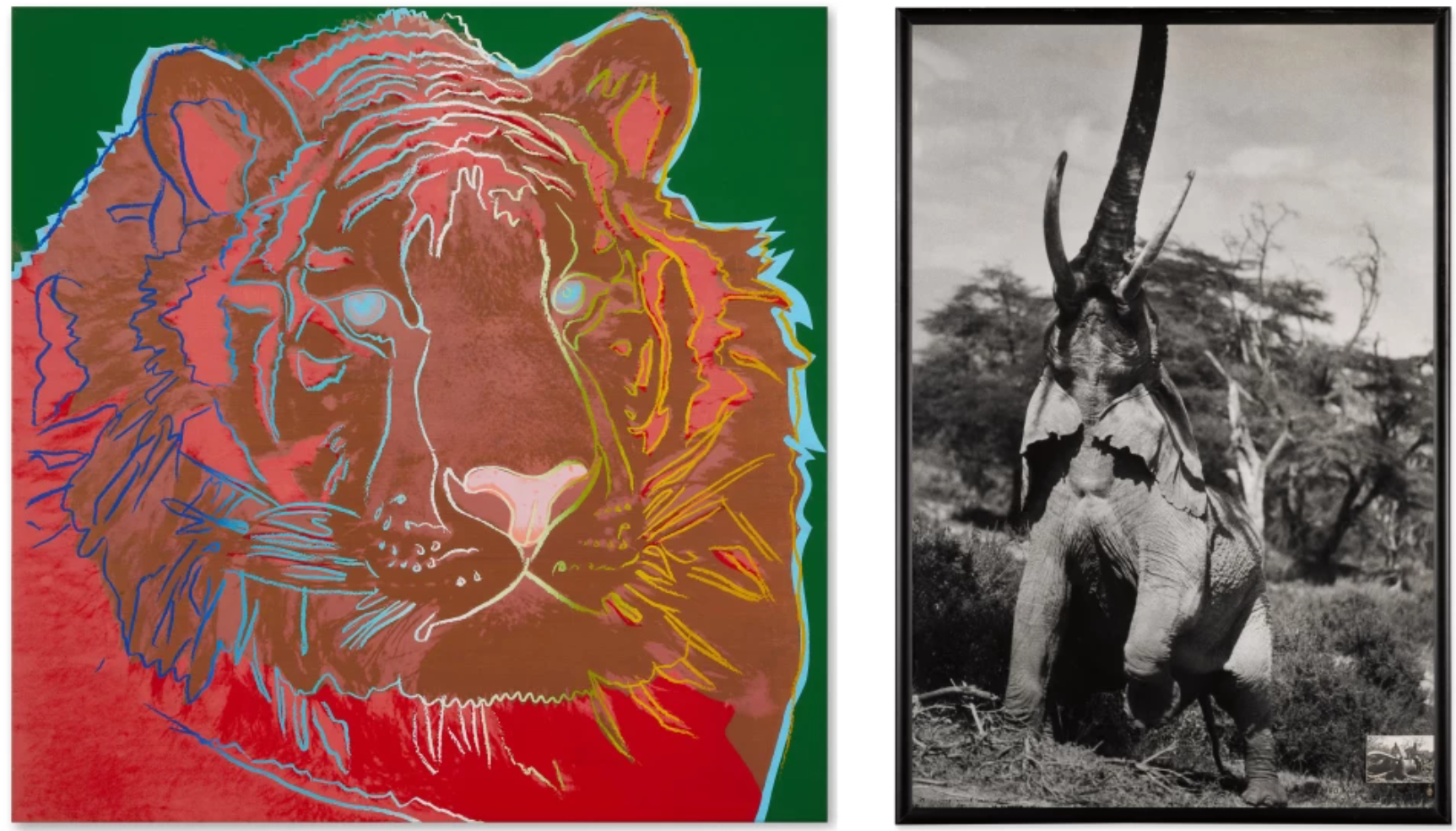
Left: Andy Warhol, Siberian Tiger, 1983. Sold at Sotheby’s New York in November 2022 for $2.59 million. Private Collection. Art © 2024 Andy Warhol Foundation / ARS, NY / TM Licensed by Campbell’s Soup Co. All rights reserved. Right: Peter Beard, Elephant Reaching for the Last Branch on a Tree, 1960. Sold at Sotheby’s New York in October 2022 for $40,320. Private Collection. Art © 2024 Peter Beard
Many of the animals featured in the Endangered Species, such as Grevy’s zebra and the Bighorn sheep, remain endangered or threatened to this day. As such, the portfolio serves as a poignant and prescient reminder of the ongoing need for robust conservation efforts to protect the world’s most vulnerable species, while also reflecting the artist’s longstanding fascination with icons, mass media, and popular culture. By transforming these endangered creatures into his own distinctive icons in vivid colors, Warhol drew attention to their struggle in a way that was both visually striking and politically resonant. Today, these prints continue to captivate and educate audiences around the world, serving as both aesthetic objects and powerful statements about humanity’s complex and often tenuous relationship with the natural world.
Endangered Species, 1983
Christie’s New-York: 10 November 2023
Estimated: USD 2,000,000 – 3,000,000
USD 3,438,000
ANDY WARHOL (1928-1987) (christies.com)
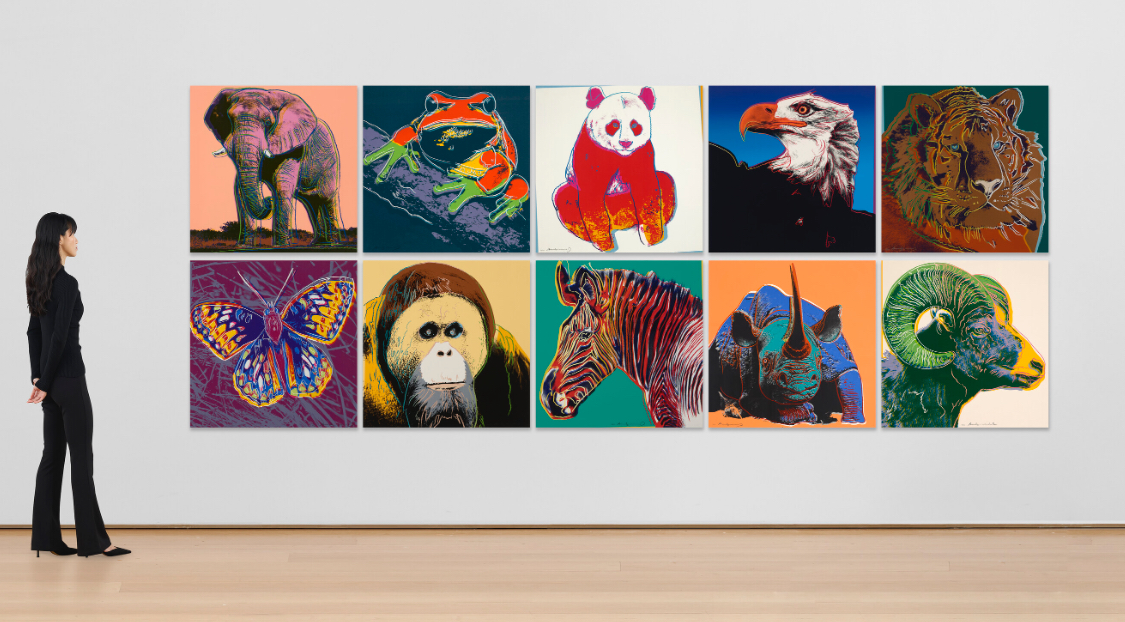
ANDY WARHOL (1928-1987)
Endangered Species, 1983
Screenprint in colors in ten parts on Lenox Museum Board
Each signed and stamp-numbered ‘Andy Warhol 83⁄150’
The subsequent screenprints highlight ten endangered animals in a colorful, upbeat manner, which Warhol described as” animals in make-up “. His focus on the animals in isolation, with his pop-art palette, puts them on a level of superstardom along with the famous screenprints of his past: Marilyn Monroe, Liz Taylor and Muhammad Ali.
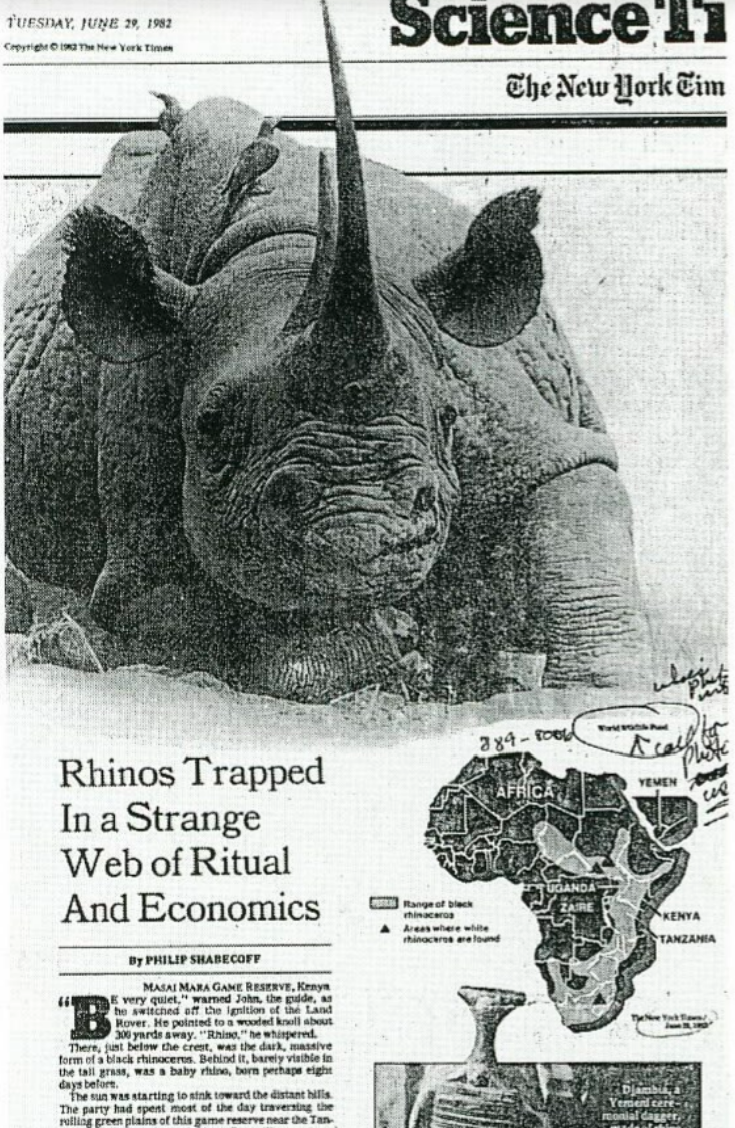
Source for Black Rhinoceros screenprint in the New York Times. Photo: World Wildlife Fund.
Endangered Species was exhibited at the Museum of Natural History in New York following publication in addition to other natural history museums throughout the United States. Warhol personally selected the museum’s Reptile Room to exhibit the portfolio. Ronald Feldman recounts Warhol staying for hours in the museum. The staff however was surprised by the artist’s selection of the space and were concerned that the venue would dissuade partygoers from seeing the set, but Warhol loved the bright colors of the room’s inhabitants. Ultimately, Feldman recounts that the room was mobbed on the night of the event. Endangered Species has been viewed as one of Warhol’s most important works in the medium ever since. Andy Warhol’s commitment to the environment continued following his death, endowing his beachfront property in Long Island to The Nature Conservancy from The Andy Warhol Foundation for the Visual Arts in order to preserve a section of the ecologically significant Montauk Moorlands. In the present moment, nearly all of the animals depicted remain in danger of extinction.
Siberian Tiger, 1983
Sotheby’s New-York: 17 November 2022
Estimated: 2,000,000 – 3,000,000
USD 2,591,000
Siberian Tiger | Contemporary Day Auction | 2022 | Sotheby’s (sothebys.com)
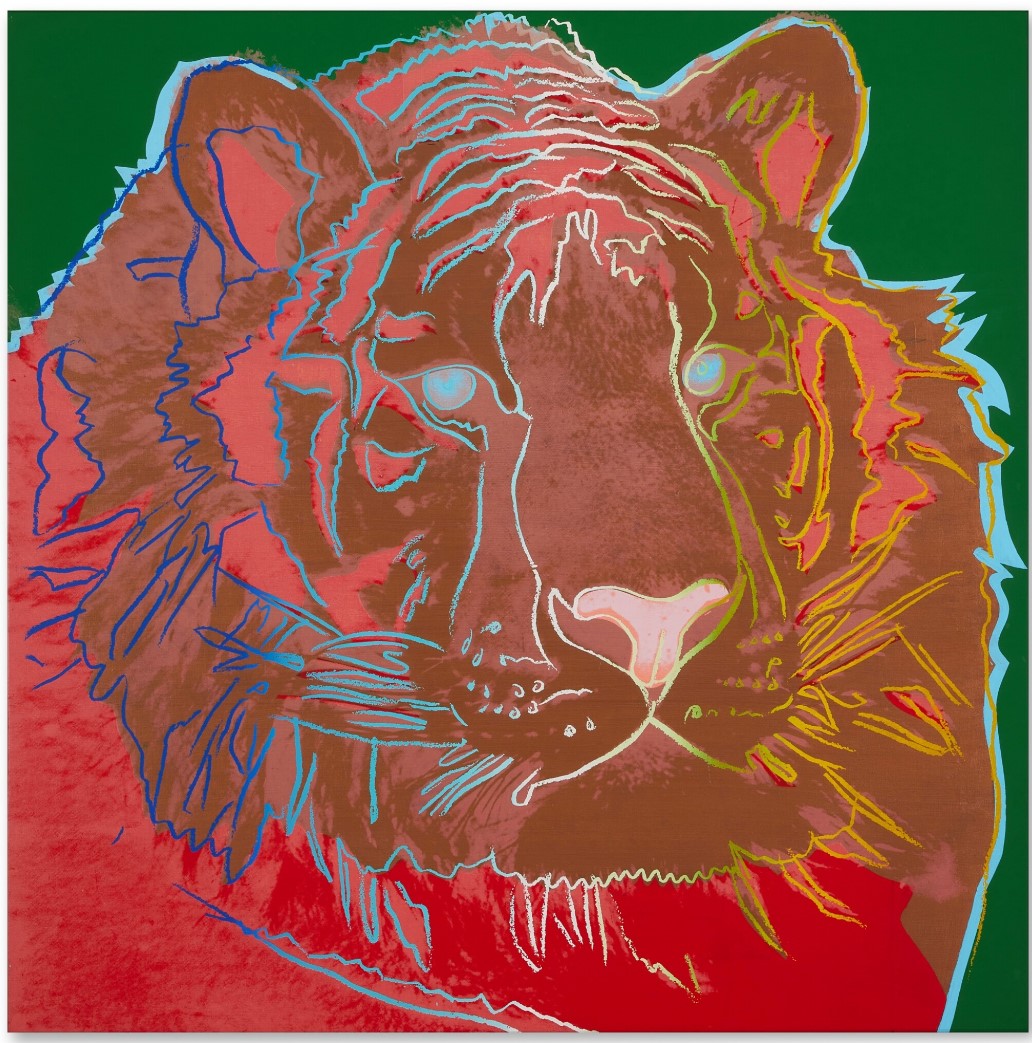
ANDY WARHOL (1928 – 1987)
Siberian Tiger, 1983
Acrylic and silkscreen ink on canvas
60×60 inches (152.4 x 152.4 cm)
signed Andy Warhol and dated 83 (on the overlap)
Optically mesmerizing and meticulously composed, Andy Warhol’s 1983 Siberian Tiger is a resplendent example from one of the artist’s most beloved series: Endangered Species. Executed just four years before his untimely death in 1987 during a period of renewed and intense commitment to painting, the series exemplifies the artist’s iconic Pop sensibility, yet stands out within the artist’s oeuvre with its meaningful and personal subject-matter. With its piercing gaze, Warhol’s Siberian Tiger commands the viewer’s full attention with a bravura that rivals that of his supreme Pop images of Elizabeth Taylor and Campbell’s Soup Cans.
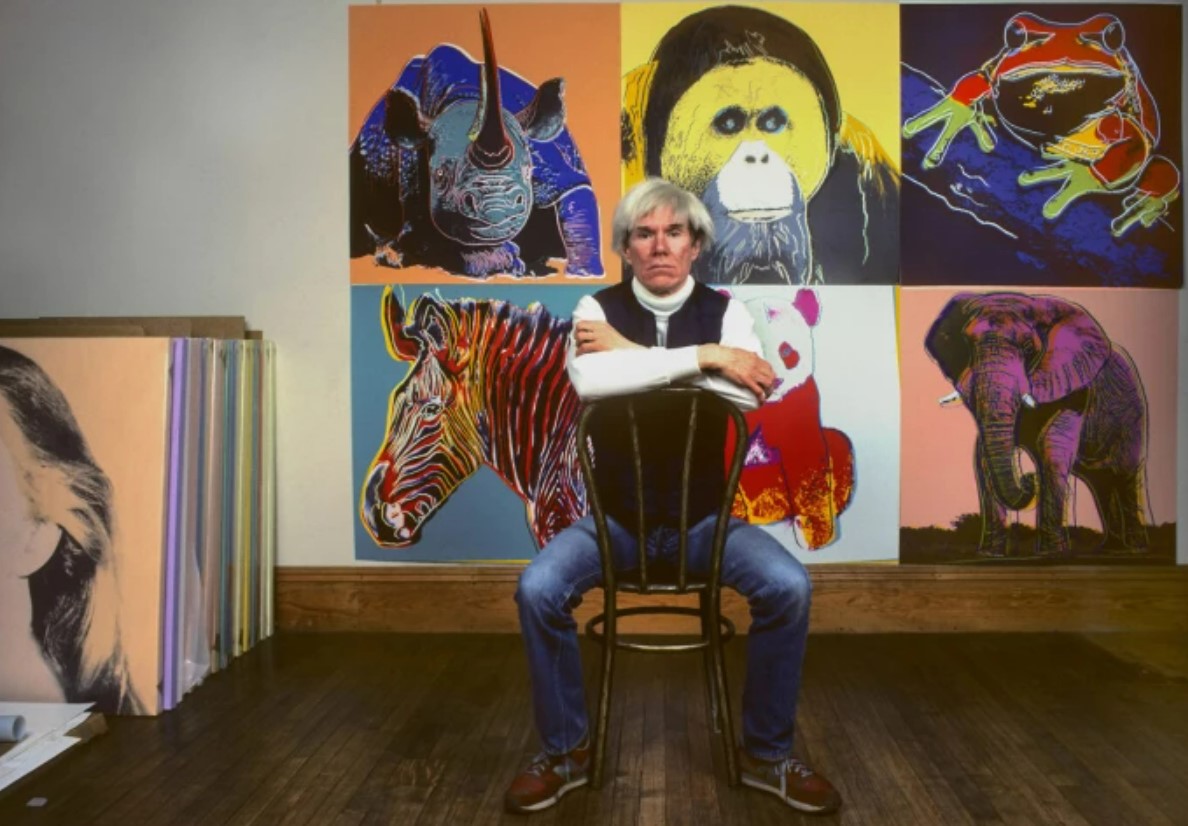
Perhaps the most adventurous of the series in terms of color, Siberian Tiger pulsates with its chromatic brilliance and psychedelic outlines. Set against a lurid green background on a monumental canvas, the tiger is composed of a washed-out orange base and layered with vibrant streaks of yellow, blue, green, and red. Its iridescent blue eyes, carved from the thickly applied silkscreen, breathes life into the stoic animal, mesmerizing onlookers. Created using Warhol’s signature silkscreen process coupled with fluid strokes of synthetic paint, the work may seemingly convey the deadpan detachment of his earlier Pop creations: Campbell’s soup cans, advertisements, or money signs. On the contrary, sustained looking affords viewers with a sense of intimacy with the creature that feels simultaneously alluring and unsettling. Despite the eccentric and boldly contrasting colors, the tiger’s expression evinces an aura of somberness, which reinforces the species’ fate. Beneath the garish makeup, a dark undercurrent revealed through the tiger’s gaze confronts viewers with the realities of the animal’s plight, should the culture of overindulgence and materialism continue at the same unrelenting pace as the excess of the 80s.
Ads, 1985
In his 1985 Ad series, Andy Warhol appropriates advertisements to create a bold homage to consumerism and the powerful influence of ads on American society. Each work in the series uniquely and colorfully captures a cultural moment. Warhol references the dominant corporate leaders of his time by representing a product accompanied by its brand logo in each of these works.
READ ABOUT ADS
FIND ALL HISTORICAL AUCTION RESULTS
Life Savers, 1985
Phillips Hong-Kong: 30 March 2023
Estimated: HKD 4,500,000 – 6,500,000
HKD 5,334,000 / USD 679,499
Andy Warhol – 20th Century & Contempor… Lot 26 March 2023 | Phillips
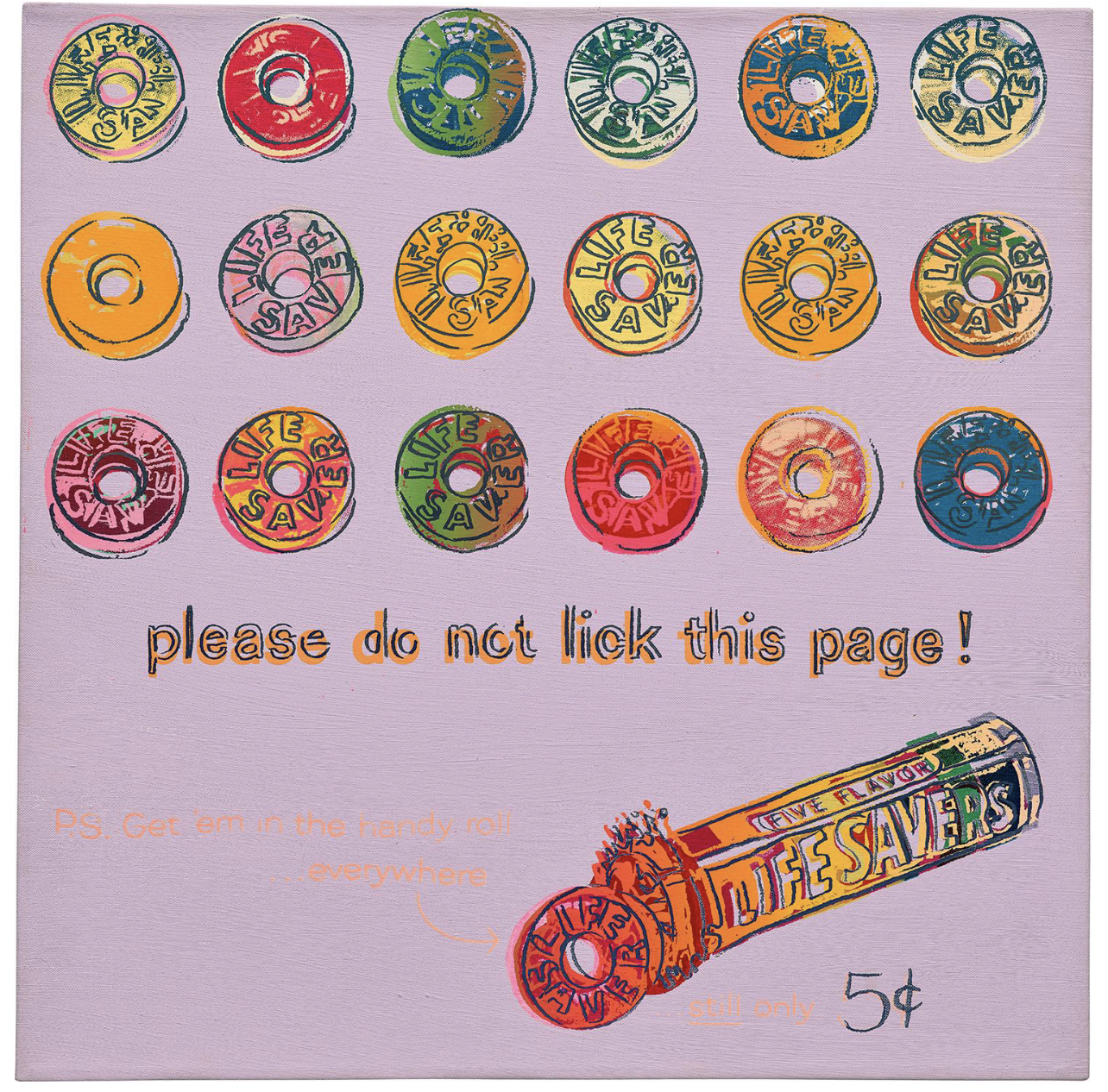
ANDY WARHOL
Life Savers from the series Ads, 1985
Acrylic and silkscreen enamel on canvas
22×22 inches (55.9 x 55.9 cm)
Signed and dated ‘Andy Warhol 85’ on the overlap
Mobilgas, 1985
Phillips Hong-Kong: 30 March 2023
Estimated: HKD 3,000,000 – 5,000,000
HKD 3,810,000 / USD 485,357
Andy Warhol – 20th Century & Contempor… Lot 27 March 2023 | Phillips
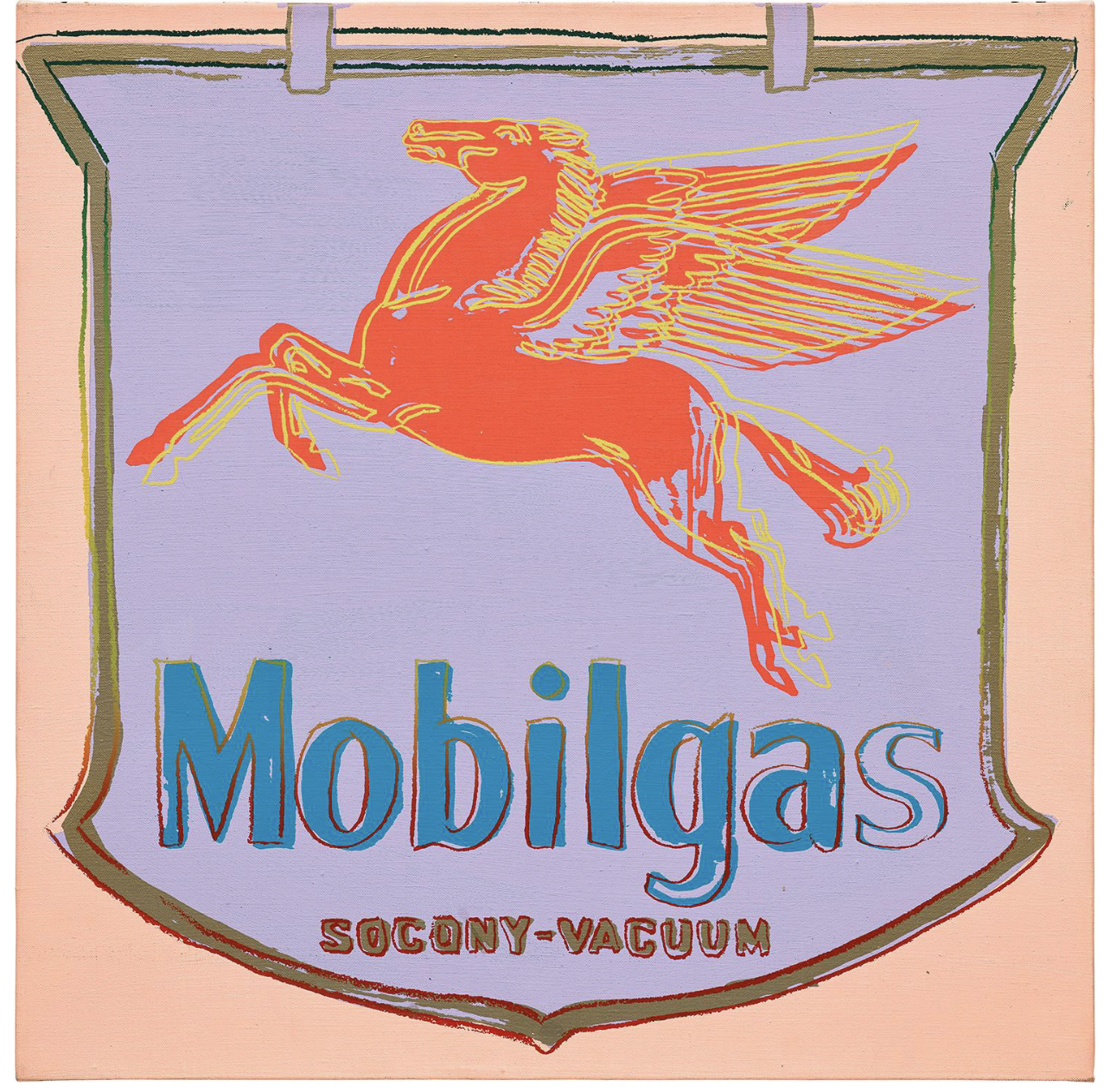
ANDY WARHOL
Mobilgas from the series Ads, 1985
Synthetic polymer and silkscreen inks on canvas
22×22 inches (55.9 x 55.9 cm)
Signed and dated ‘Andy Warhol 85’ on the overlap
The New Spirit (Donald Duck), 1985
Christie’s New-York: 17 November 2022
Estimated: USD 250,000 – 350,000
USD 611,100
ANDY WARHOL (1928-1987) (christies.com)
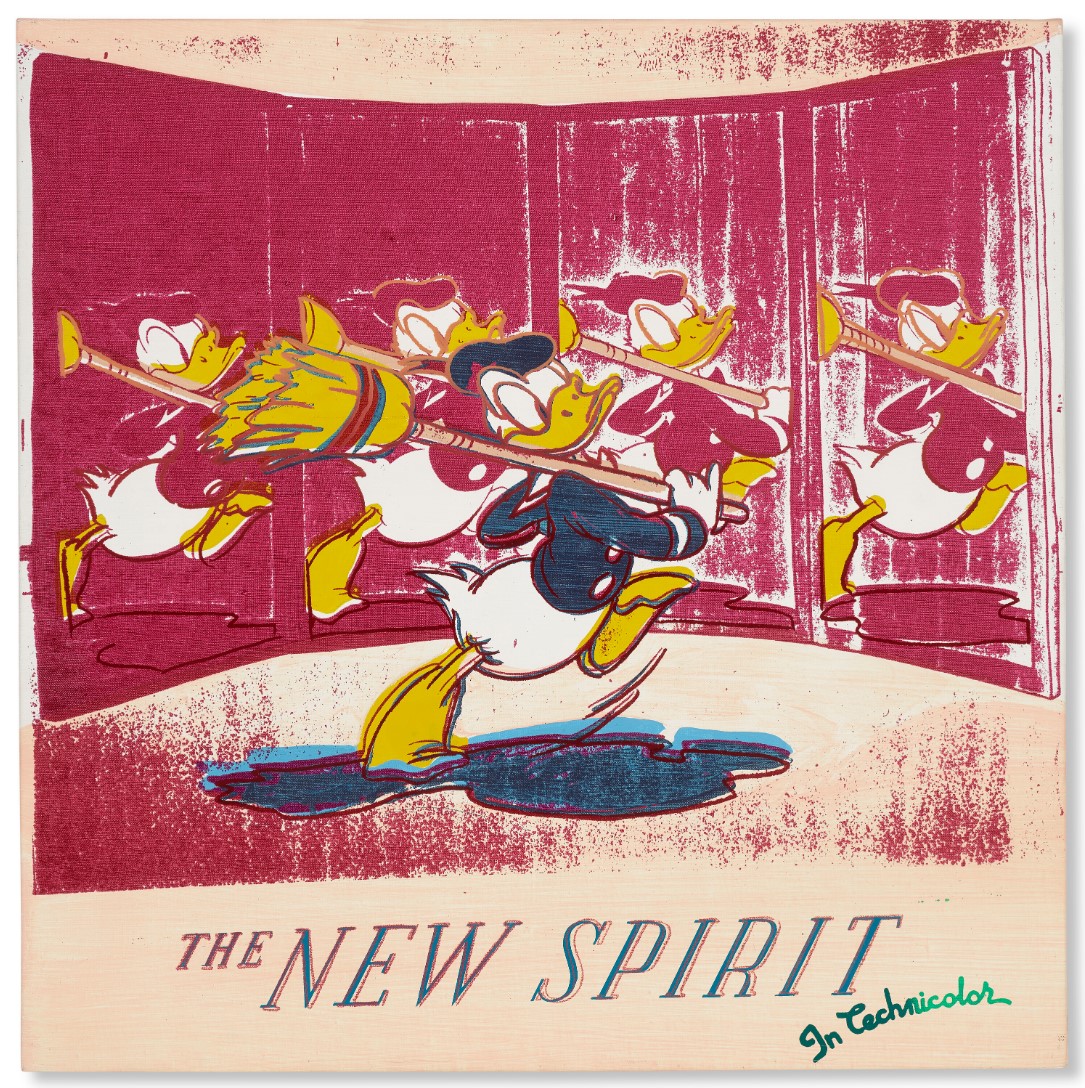
ANDY WARHOL (1928-1987)
The New Spirit (Donald Duck), 1985
Acrylic and silkscreen ink on canvas
22×22 inches (55.8 x 55.8 cm)
Signed and dated ‘Andy Warhol 85’ (on the overlap)
Lifesavers, 1985
Phillips Hong-Kong: 8 June 2021
Estimated: HKD 3,000,000 – 4,000,000
HKD 6,174,000 / USD 795,628
Andy Warhol – 20th Century & Contempora… Lot 35 June 2021 | Phillips
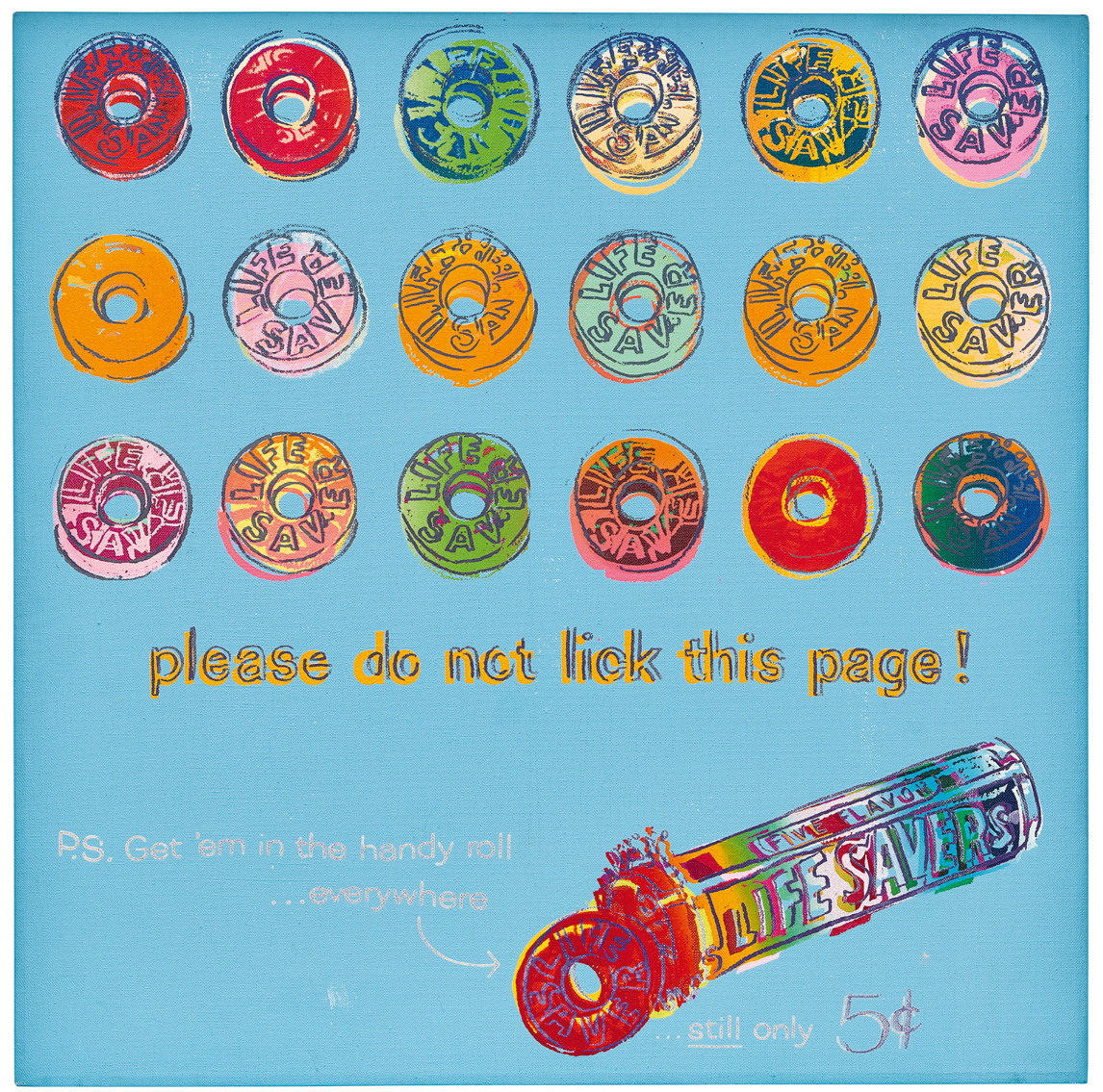
ANDY WARHOL
Lifesavers, 1985
Acrylic and silkscreen ink on canvas
21 7/8 x 21 7/8 inches (55.7 x 55.7 cm)
Signed and dated ‘Andy Warhol 85’ on the overlap
The Ads of 1985, of which the present work forms part of, exemplify Warhol’s obsession with popular culture, celebrity, consumerism, and commercialization – all recurrent themes that define his oeuvre. Appropriating corporate logos of the 1950s, an era which witnessed a post-World War II surge in mass production after significant developments in technological innovation, Warhol’s portfolio highlights famous brands such as Chanel, Paramount and Apple. Chief among them, however, is that of his Lifesavers composition that both nods to his signature grid works including 200 One Dollar Bills and Marilyn Diptych (both 1962), and plays to the idea of consumable art in its direct link to his renowned images of Coca-Cola bottles and Campbell’s Soup Cans (first printed in 1962).
An American favourite dating back to 1921, Life Savers are universally familiar to Warhol’s viewer through their colourful ring-shape and distinctive packaging in paper-wrapped aluminium foil rolls. Indeed, Life Savers were so popular with the American public that many other candy manufacturers donated their sugar rations to keep Life Savers in production to be sent to the American troops during World War II to remind them of home. Here, Warhol merges his own distinct graphic style with the established format of vintage Life Saver advertisements from the 1950s. Like these advertisements, individual Life Savers are presented out of the packet in a playful, colourful display, below which Warhol depicts the open roll of Life Savers at the bottom of the image and the inclusion of the 5 cent price. Warhol further replicates the hand-written style font and tone of the advertisement slogans, writing in a faint prose that is just discernible against the radiant sky blue of the background; ‘get ‘em in the handy roll…everywhere…still only 5¢’. Furthermore, at the center of the composition is the tongue-in-cheek phrase ‘please do not lick this page!’ which both serves to engage the viewer and activate the senses, but also juxtaposes the inviting, sweet candy content by bringing to mind the idea of fine art being forbidden to touch.
Dollar Sign, 1982
The Dollar Signs were born as a direct reference to the artist’s works from the early 1960s, in which he experimented with silkscreen to transfer dollar bills onto canvases. Returning to this iconography as a mature artist in the 1980s, the Dollar Sign series not only scrutinizes the dichotomy between low and high art that remains a hallmark of Warhol’s practice, but also confronts the prominent symbol as a potent visual instrument charged with significance. Money became an obsession for Warhol: “I like money on the wall. Say you were going to buy a… painting. I think you should take that money, tie it up, and hang it on the wall. Then when someone visited you the first thing they would see is money on the wall” (Andy Warhol, The Philosophy of Andy Warhol, New York and London 1975, p. 180). Warhol not only understood money’s importance to the consumerist culture of postwar America, but he perfectly encapsulated the marriage of art and commerce that had begun to take effect at the dawn of the decade.

Much like his iconic portraits of Marilyn Monroe and Jackie Kennedy, or images of mass-market consumables, such as the Campbell’s soup cans or Coca-Cola bottles, Warhol’s Dollar Signs explore the universal recognizability and semiotic power of cultural icons that comprise everyday life, becoming totemic emblems from the dawn of a new era.
READ ABOUT DOLLAR SIGNS
FIND ALL AUCTION RESULTS
4 Dollar Sign paintings sold at auction in 2024 for a total turnover of USD 2,025,979. Dollar Sign, dated 1982, with an atypical size of 14×11 inches, sold at Sotheby’s in London on 10 October 2024, for GBP 690,000 (USD 903,900), the highest price paid for a Dollar Sign painting in 2024. 7 Dollar Sign paintings sold at auction in 2023 for a total turnover of USD 3,051,544. Dollar Sign, dated 1982, sold at Seoul Auction on 19 December 2023, for KRW 778,800,000 (USD 598,120), the highest price paid for a Dollar Sign painting in 2023.
3. Early Dollar Bills
Two Dollar Bill (Front), 1962
Christie’s London: 9 March 2024
Estimated: GBP 160,000 – 220,000
GBP 201,600 / USD 255,629
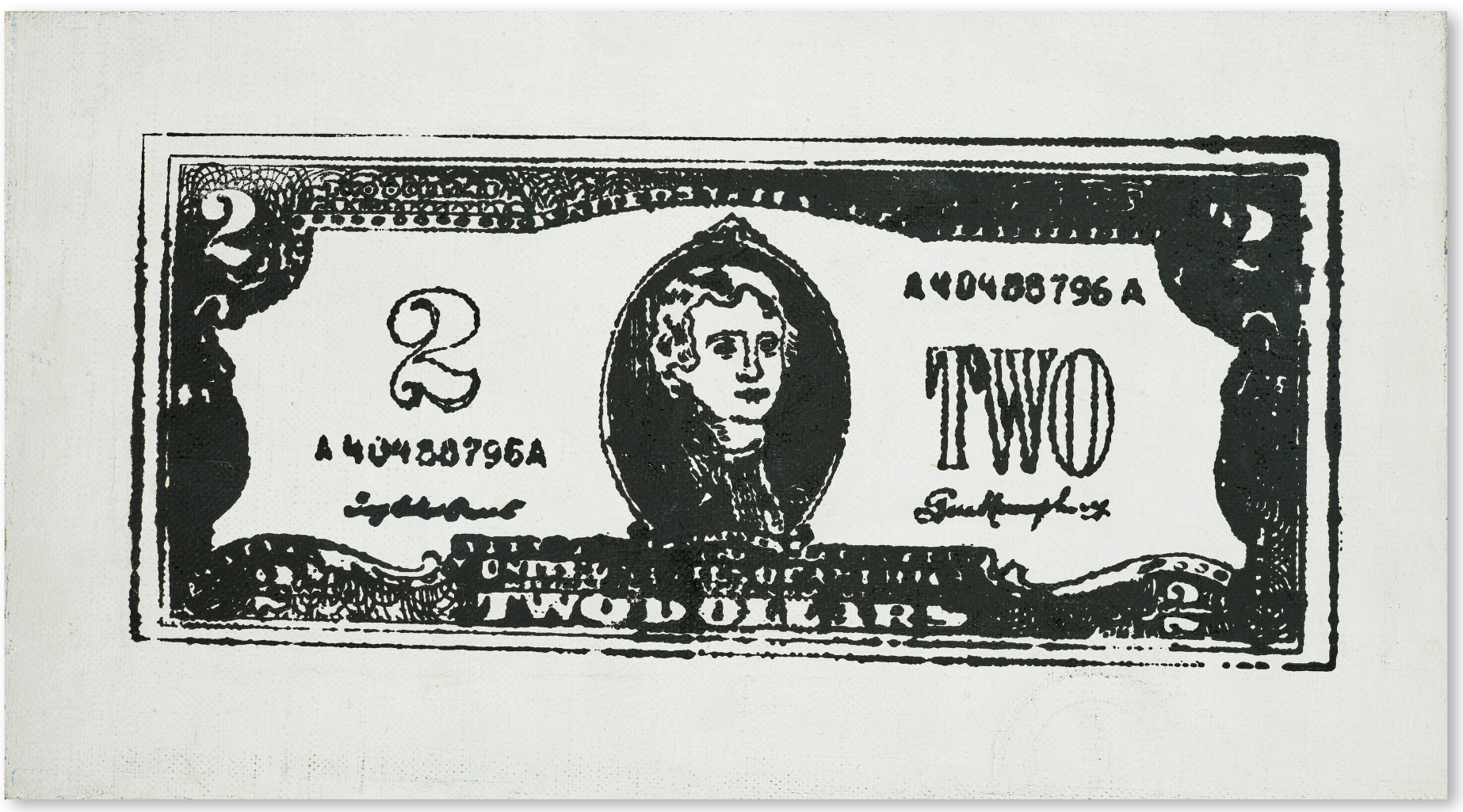
ANDY WARHOL (1928-1987)
Two Dollar Bill (Front), 1962
Silkscreen ink on canvas
6 1/4 x 11 1/2 inches (15.9 x 29.2 cm)
Signed, inscribed and dated ‘Andy Warhol 1962 Frederick Hughes’ (on the turnover edge)
Executed in 1962, Two Dollar Bill (Front) marks perhaps the most important year in Andy Warhol’s emerging career, during which he first turned to silkscreens and produced his now-iconic pictures of Campbell’s Soup. This was the moment when Warhol entirely reconceived his idiom—and with it, the whole of art history. Prior to this year, the bulk of Warhol’s output had been commercial illustrations for companies such as Tiffany & Co., Bonwit Teller and Columbia Records as well as Vogue and Glamour magazines. At the beginning of the 1960s, however, he turned his attention to the nascent Pop art movement, trying his hand at large paintings of comic strips and advertisements. Disappointed by the lack of success and seeking new modes of production, Warhol began to experiment with rubber and wooden stamps. But it was the introduction of the silkscreen that set his career in motion and radically upended visual culture.
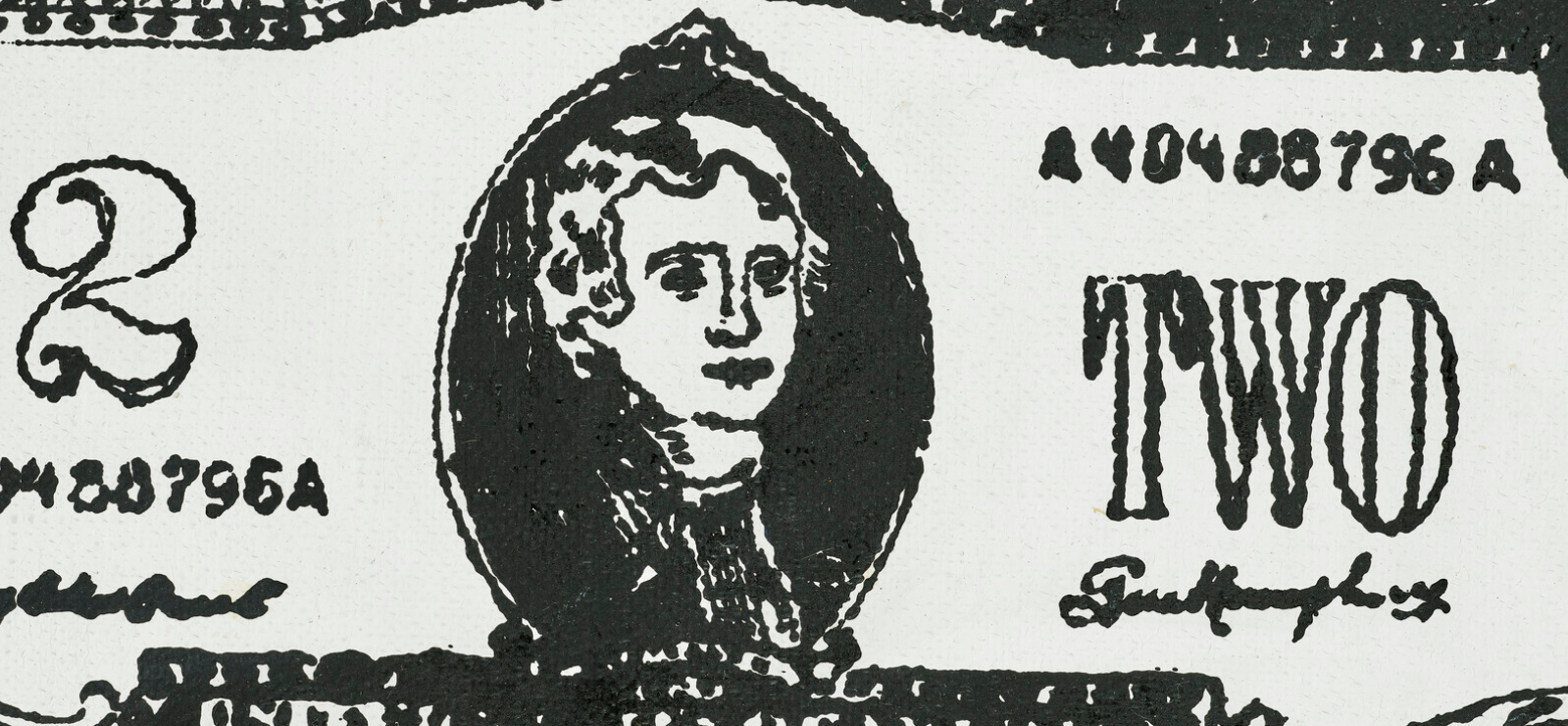
As its title suggests, Two Dollar Bill (Front) depicts one side of the United States’ least popular denomination, complete with serial number and signature. Inked with extraordinary detail, the image is slightly larger than its real-world counterpart. Perhaps Warhol hoped to fend off any accusation of counterfeiting. He drew the initial image himself, distinguishing the work from later silkscreens that would be derived from photographs. He was a great admirer of American money, saying later that he found it to be ‘very well-designed.’ As to why he chose this as his first silkscreened image remains a mystery, but there are several competing stories. The gallerist Eleanor Ward claimed that she had offered Warhol a solo show at Sable Gallery if he would paint her a lucky two-dollar bill, but the antiques dealer Muriel Latow maintains that she came up with the idea herself—and then charged Warhol fifty dollars for it. Whatever the reason, he began to silkscreen the fronts and backs of one- and two-dollar bills in 1962, inaugurating what was to be his most extensive series to date. Beyond Warhol’s own outlook, the Dollar Signs captured the changing economic realities within the United States, auguring the hedonistic, splash-out ethos that would define the 1980s. Created long before ‘Reaganomics’, in the earliest days of the Hippie movement, Two Dollar Bill (Front) occupies a less world-weary position. In its gestural lines and scrawled signature reside all Warhol’s hopes for his career. As David Bourdain wryly observed, Warhol had an almost perverse wish to ‘achieve a sort of artistic alchemy, transforming ordinary paint into actual cash’ (D. Bourdon, Warhol, New York 1989, p. 108). For Warhol, whose art so aptly captures the relationship between commodity, desire, and value, Two Dollar Bill (Front) announced his own ambitions from which money—whether real or otherwise—could never be fully disentangled.
Front and Back Dollar Bills, 1962-63
Sotheby’s London: 29 June 2021
Estimated: GBP 6,000,000 – 8,000,000
GBP 6,804,750 / USD 9,420,947
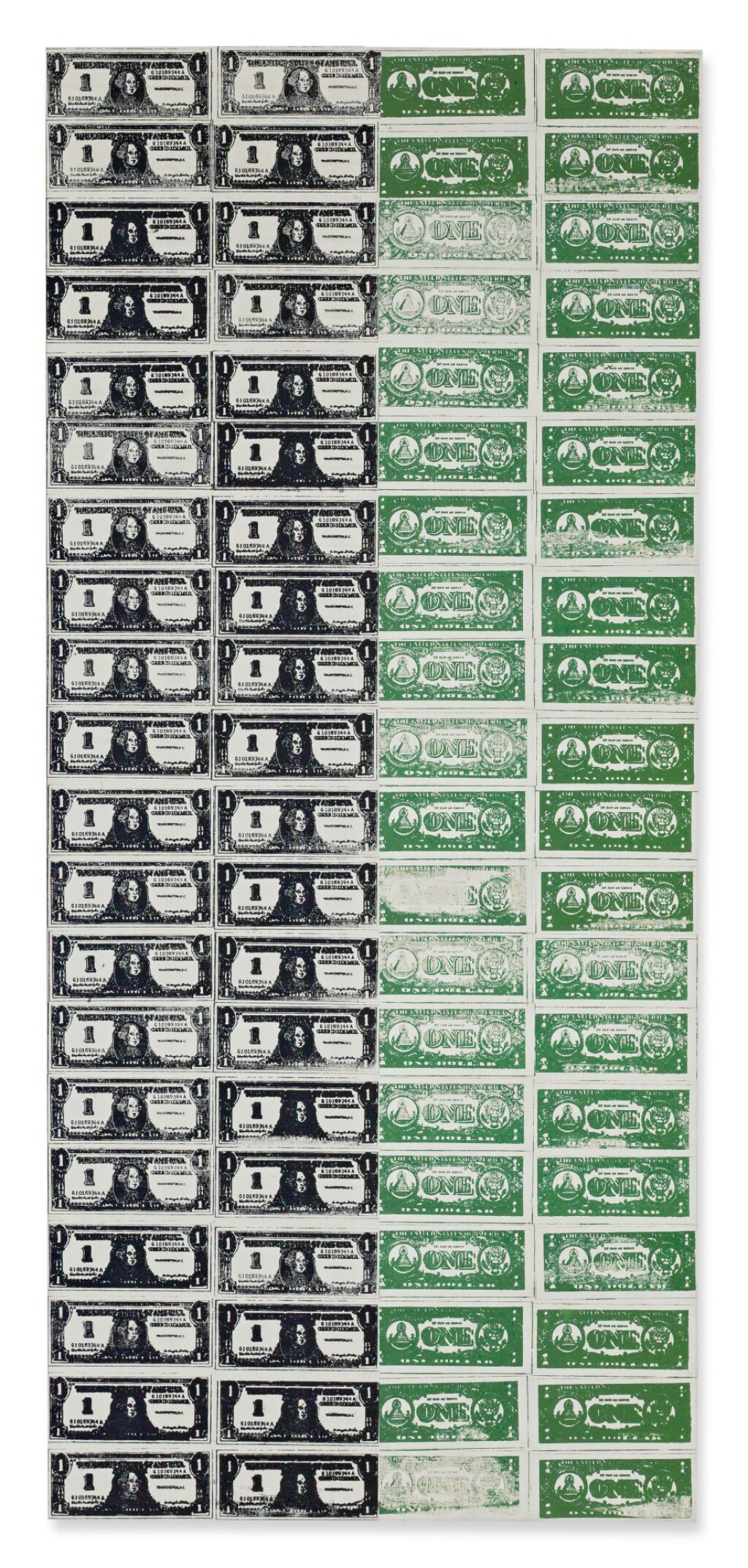
ANDY WARHOL
Front and Back Dollar Bills, 1962-63
Silkscreen ink and pencil on linen, in two parts
Each: 82.7 x 19 inches (210.2 x 48 cm)
Overall: 82.2 x 37.7 inches (210.2 x 96 cm)
Signed and dated 1962 on the overlap
Signed and dated 1963 on the overlap
Front and Back Dollar Bills is the only diptych Warhol created in this body of work. Separating the dollar bill into its black and green constituent parts – whereby the left panel depicts the front of the bill in a sumptuous jet black and the right panel illustrates the back of the dollar in a rich, hookers green – Warhol created a slick veneer that would come to typify his iconic Pop aesthetic. The reasoning behind the separation of green and black elements is potentially historic. The first government issued dollar bills were printed in 1861 under Abraham Lincoln during the American Civil War and were commonly known as ‘greenbacks’. Printed in green on the back and black on the front, the ‘greenback’ finds literal expression in the present work which certainly reflects Warhol’s fascination with the dollar bill’s visual evolution. To create the repeating hypnotic surfaces of Front and Back Dollar Bills, Warhol schematically arranged the individual prints in two rows of twenty across each panel to create two elegant, elongated portrait pieces that together create a visually arresting masterpiece. Owing to the traced template of Warhol’s dollar bill silkscreen and the need to print each bill individually, this body of work exhibits a mechanical yet handmade aesthetic. To minimize evidence of this, Warhol mapped out a grid of pencil lines to guide the placement of individual screens – a mapping that is still visible today. Nonetheless, eager to distinguish his dollar bills from real money, and to avoid being accused of counterfeiting, Warhol drew his dollar outline unmistakably larger. The ensuing difference in size, Warhol’s use of drawing, and the irregular slips and impressions of the silkscreen surface distinguish these paintings both visually and technically from that which they represent. The Dollar Bills thus retain their concession to the tradition of fine art as emanating from the hand of the artist, whilst simultaneously signaling Warhol’s ideological aim to embrace the mechanical and mass-produced.
Diamond Dust Shoes, 1980
Andy Warhol’s ability to encapsulate the highs and lows of American consumerism ran alongside his insightful commentary on his own personal connections to the world of celebrity and popular culture. Diamond Dust Shoes is an alluring example of his ability to imbue mass media techniques with a poignant depth. His early career as a fashion illustrator set the stage for later endeavors that expanded outward and blurred the lines between consumer culture and art historical tradition. His first professional commission as an artist was drawing shoes for Glamour magazine in the 1940s, and he spent time in the following decade working for shoe brands to much acclaim. It was there that Warhol developed a lifelong obsession and appreciation for women’s shoes.
READ ABOUT DIAMOND DUST SHOES
FIND ALL AUCTION RESULTS
This present work is an early example of a series of canvases that he began in 1980. Honing in on this particular object and symbolism shows how important the imagery from his early career, as well as his personal biography, remained throughout the decades. This striking canvas makes use of Warhol’s signature screenprinting techniques which marry photographic reproduction with saturated areas of color and deep black. Like a Xerox copy with the contrast turned up, expansive swathes of baby blue, crimson, slate, primrose, sea green and pastel yellow boldly represent each shoe, jumping out at the view with a graphic immediacy.
Diamond Dust Shoes, 1980
Christie’s New-York: 7 November 2023
Estimated: USD 1,500,000 – 2,000,000
USD 1,683,500
ANDY WARHOL (1928-1987) (christies.com)
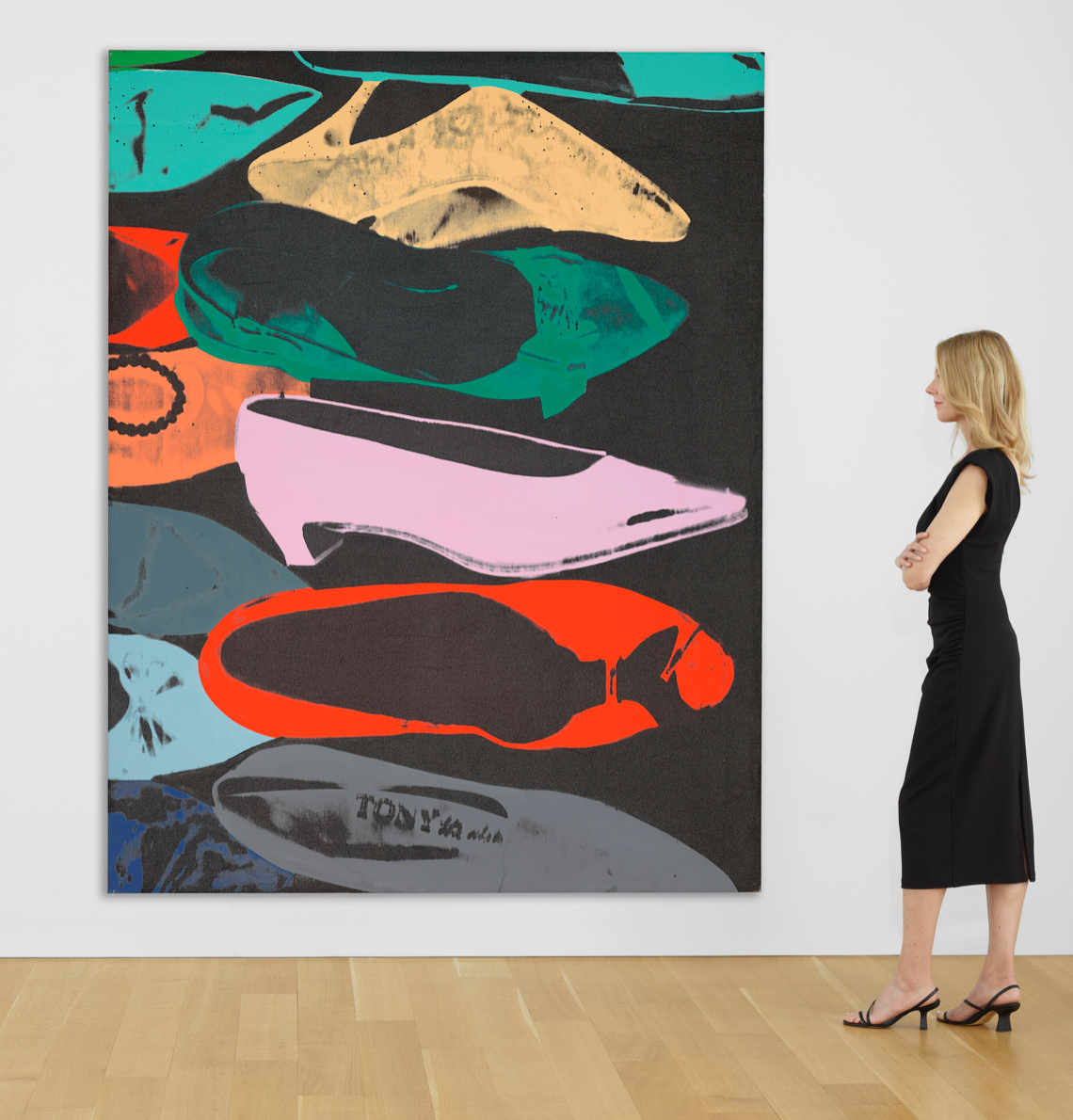
ANDY WARHOL (1928-1987)
Diamond Dust Shoes, 1980
Acrylic, silkscreen inks and diamond dust on canvas
90 1/8 x 70 1/8 inches (228.9 x 178.1 cm)
Here Warhol eschews traditional compositional techniques in favor of a more candid image that could have very well been cut from a magazine advertisement. The edges of the canvas frame a line of five central shoes with varying heel heights while other footwear spills off the border. Festooned with diamond dust, the work sparkles with a visual richness that points toward the luxurious goods pictured as well as the lifestyles that could afford such accouterments. As with many of his paintings, the repetition on view here was common throughout his career and plays directly with the notion of mass production and seriality. In the cultural consciousness, diamonds are often seen as a representation of ever-lasting love and eternity, their natural durability standing in as a symbol of strong adoration and commitment. With the Diamond Dust Shoes, Warhol subverts this feeling as the sparkly coating becomes a representation of superficial beauty and fleetingly glamorous lifestyles of the celebrity elite.
Toy Paintings, 1983
In 1983, Zürich-based art dealer Bruno Bischofberger commissioned Andy Warhol to create a series of paintings for children that later became his instantly recognizable Toy Painting series. Inspired by 1960s wound-up and battery-free toys, which at the time were still sold in Germany, Japan, China and Russia, this series of silkscreened canvases depict some of the artist’s most beloved collection of baubles.

ANDY WARHOL’S TOY PAINTINGS EXHIBITION AT GALERIE BRUNO BISCHOFBERGER, ZURICH, 1983. ©2024 THE ANDY WARHOL FOUNDATION FOR THE VISUAL ARTS, INC. / LICENSED BY ARTISTS RIGHTS SOCIETY (ARS), NEW YORK
When unveiled at Bischofberger’s gallery in 1983, the paintings transformed the space into a playful realm. The works hung at a height conducive to a toddler’s view, inviting young eyes to explore, while accompanying adults were required to stoop or sit to fully appreciate the artworks.
READ ABOUT TOY PAINTINGS
FIND ALL HISTORICAL AUCTION RESULTS
2025 Auction Highlights
14 lots sold at auction in 2025 for a total turnover of USD 3,212,492, at an average price of USD 229,464. With no lot failing to sell, the sell-through rate is 100%.
The highest price for 2005 was achieved twice at Sotheby’s, in Paris, on 10 April 2025 for Space Ship, and Choo-Choo Train that both sold for EUR 254,000 (USD 278,120).
2025 Top 6 Lots
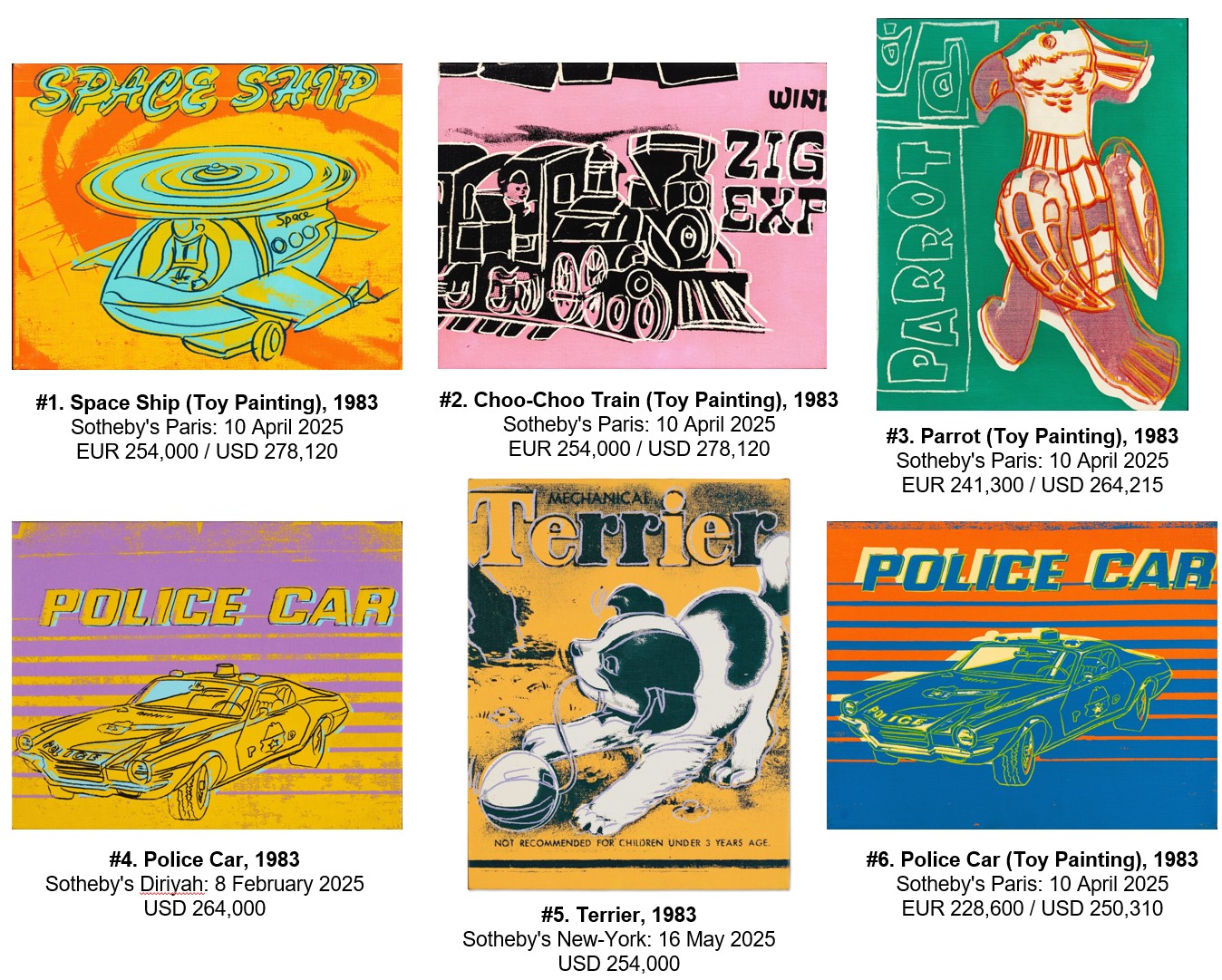
10 lots sold for more than USD 200,000, generating a cumulative turnover of USD 2,492,385, representing 77.6% of the total for 2025.
2024 Auction Highlights
26 lots sold at auction in 2024 for a total turnover of USD 6,354,096, at an average price of USD 244,388.
The highest price was achieved at Christie’s in New-York on 22 November 2024 for Moon Explorer that sold for USD 403,200, the world auction record for any toy painting.
2024 Top 6 Lots
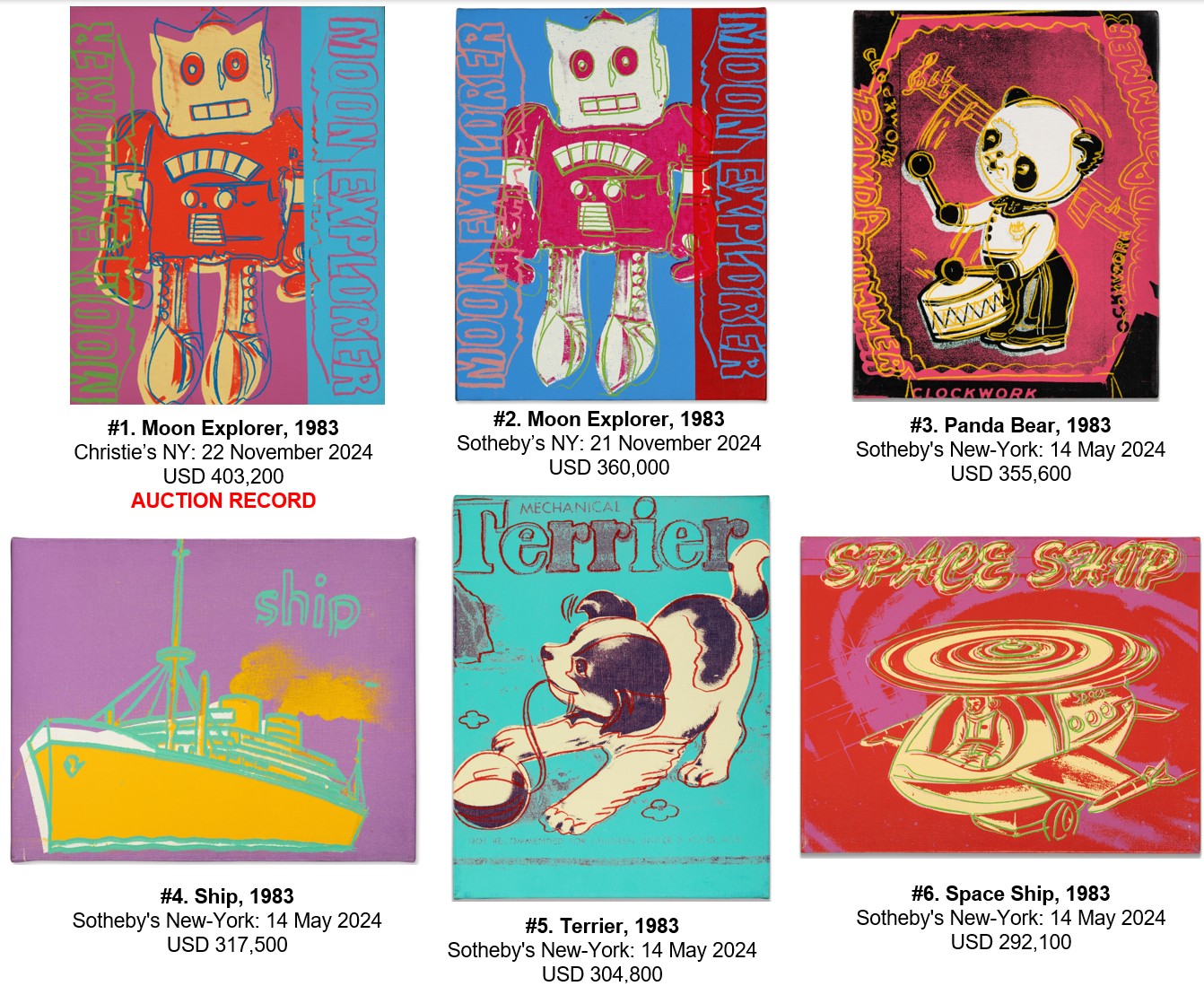
20 lots sold for more than USD 200,000, generating a cumulative turnover of USD 5,311,702, representing 83.6% of the total for 2024.
2023 Auction Highlights
10 lots sold at auction in 2023 for a total turnover of USD 2,250,072, at an average price of USD 225,007. The highest price was achieved for Clockwork Panda Drummer that sold at Christie’s, in New-York, on 10 November 2023 for USD 277,200.
2023 Top 6 Lots
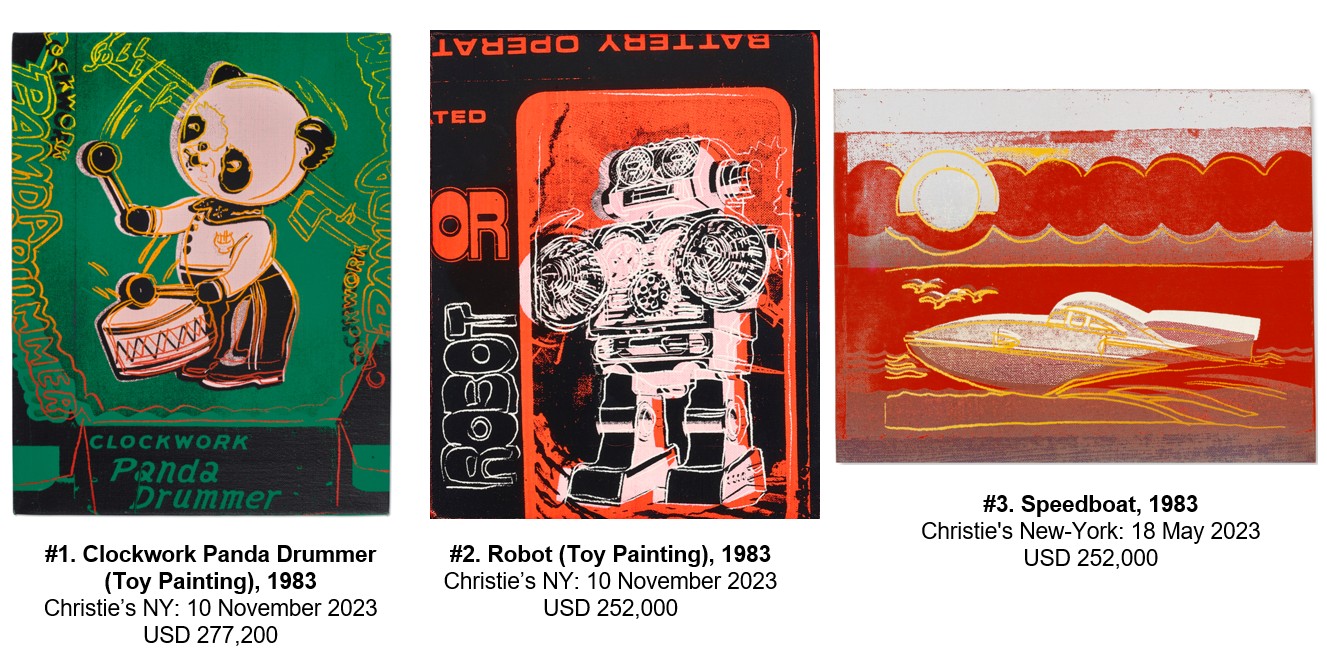
Rorschach
Executed in a fertile late burst of creativity in 1984, Warhol’s iconic series of Rorschach Paintings act as an effervescent gateway between the viewer’s and artist’s realms, between form and fantasy: with the basis for this series rooted in inkblot tests of psychological study, the present work develops a strong connection with the conscious mind, freely giving way to a spectrum of conceptual translation and emotional understanding as it conjures a deep variety of response and conversation
READ ABOUT RORSCHACH
FIND ALL HISTORICAL AUCTION RESULTS
Rorschach, 1984
Works from the Collection of Byron R. Meyer
with Partial Proceeds to Benefit the San Francisco Museum of Modern Art
Sotheby’s New-York: 19 November 2025
Estimated: USD 80,000 – 120,000
USD 203,200
Rorschach | Contemporary Day Auction | 2025 | Sotheby’s
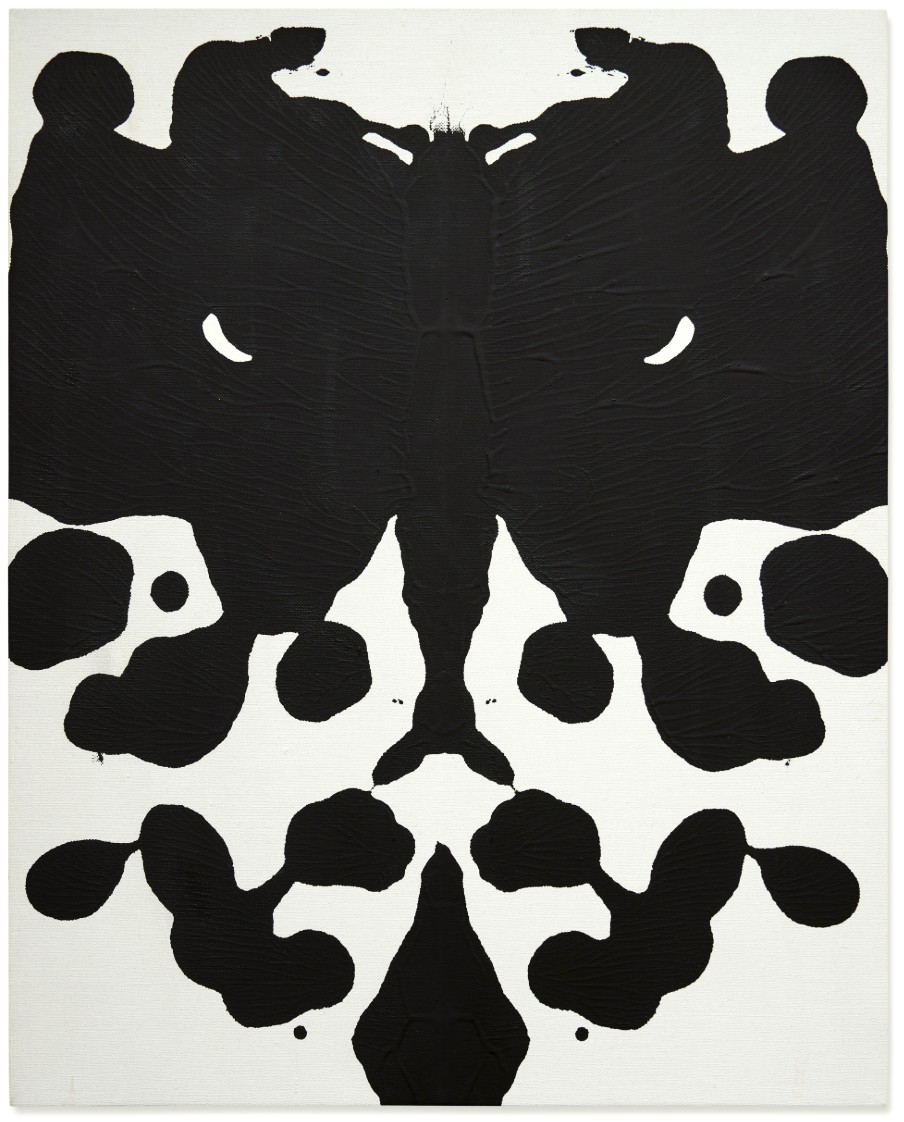
ANDY WARHOL (1928 – 1987)
Rorschach, 1984
Acrylic on canvas
20×16 inches (50.8 x 40.6 cm)
Stamped by the Estate of Andy Warhol and the Andy Warhol Foundation for the Visual Arts
Numbered PA 75.033 on the overlap
Rorschach, 1982
Sotheby’s New-York: 16 November 2023
Estimated: USD 150,000 – 200,000
USD 406,400
Rorschach | Contemporary Day Auction | 2023 | Sotheby’s (sothebys.com)
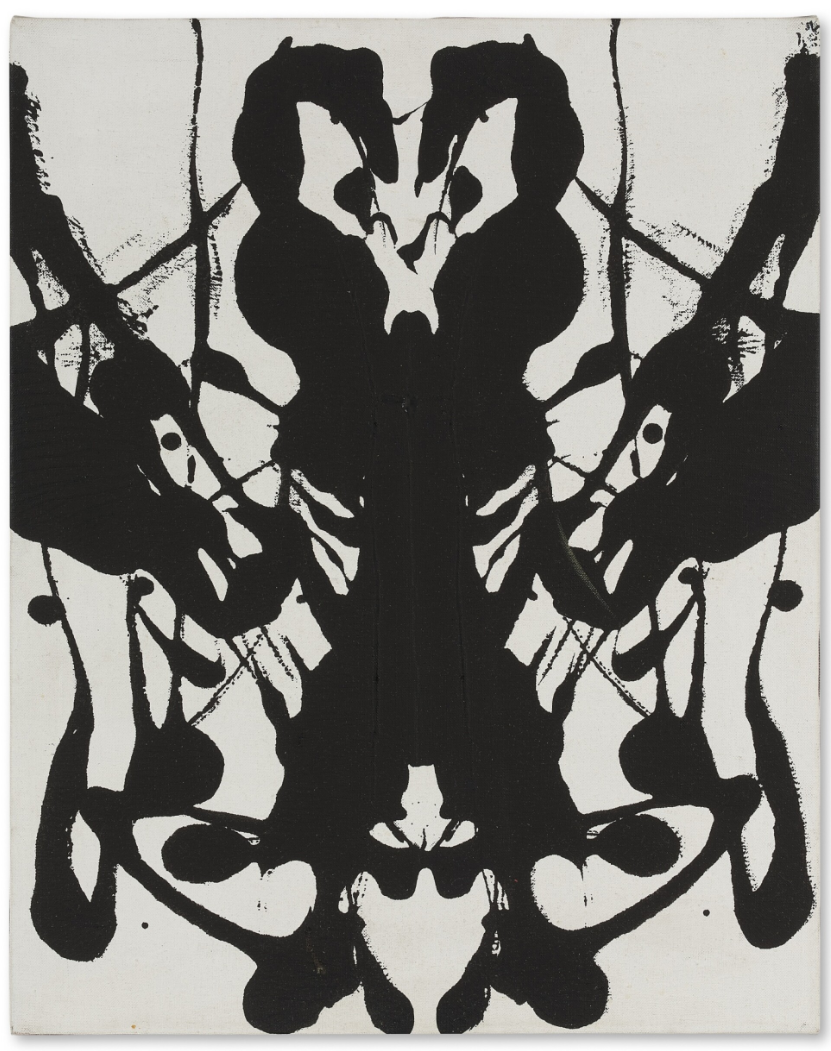
ANDY WARHOL (1928 – 1987)
Rorschach, 1982
Acrylic on canvas
20×16 inches (50.8 x 40.6 cm)
Signed, dated ’82 and inscribed Jon (on the reverse)
Rorschach, 1984
Sotheby’s New-York: 15 November 2023
Estimated: USD 2,500,000 – 3,500,000
USD 2,601,000
Rorschach | Contemporary Evening Auction | 2023 | Sotheby’s (sothebys.com)
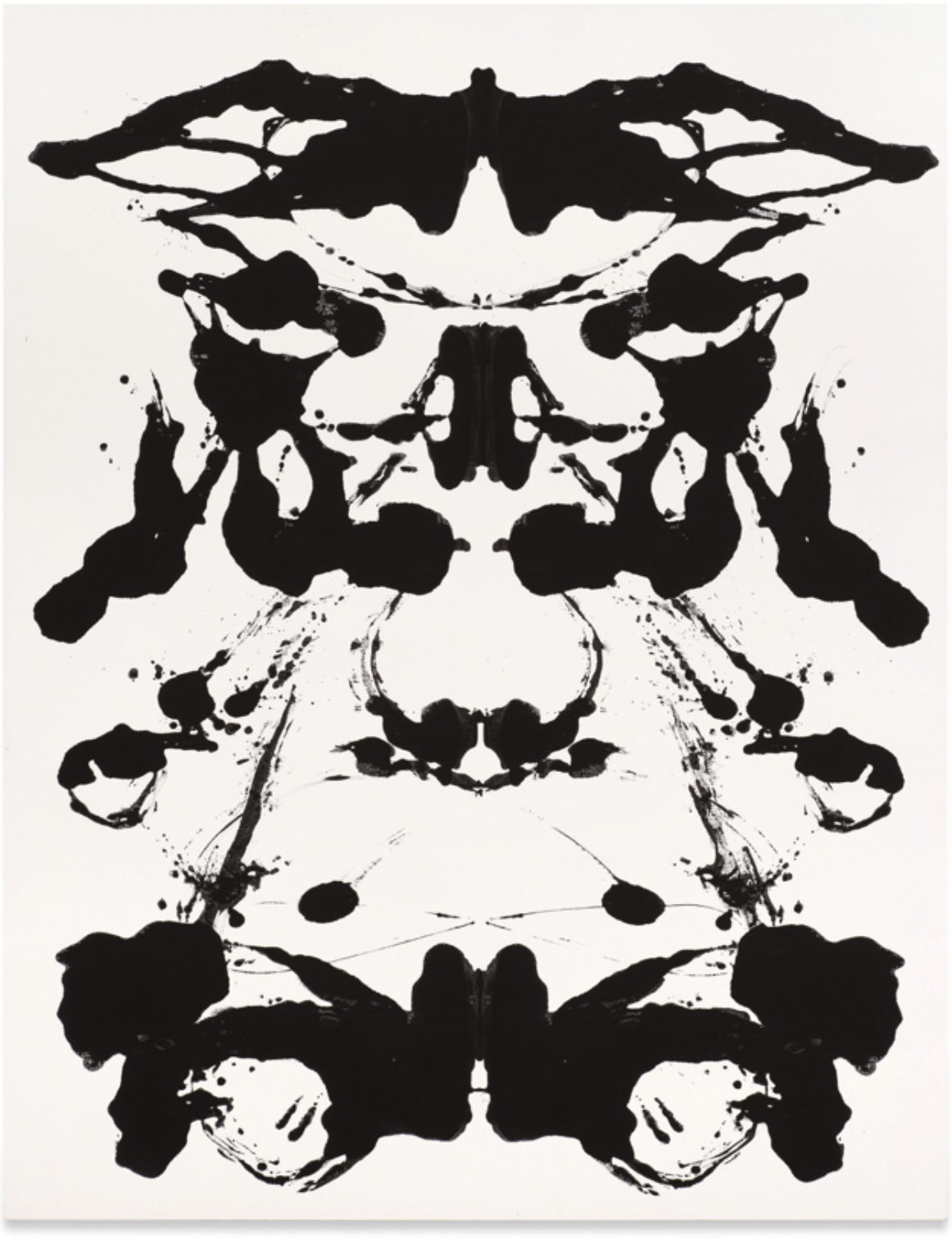
ANDY WARHOL (1928 – 1987)
Rorschach, 1984
Acrylic on canvas
90×70 inches (228.6 x 177.8 cm)
Numbered by The Andy Warhol Foundation for the Visual Arts PA 75.083 (on the overlap)
Rorschach, 1984
Christie’s New-York: 11 November 2021
Estimated: USD 70,000 – 100,000
USD 150,000
ANDY WARHOL (1928-1987), Rorschach | Christie’s
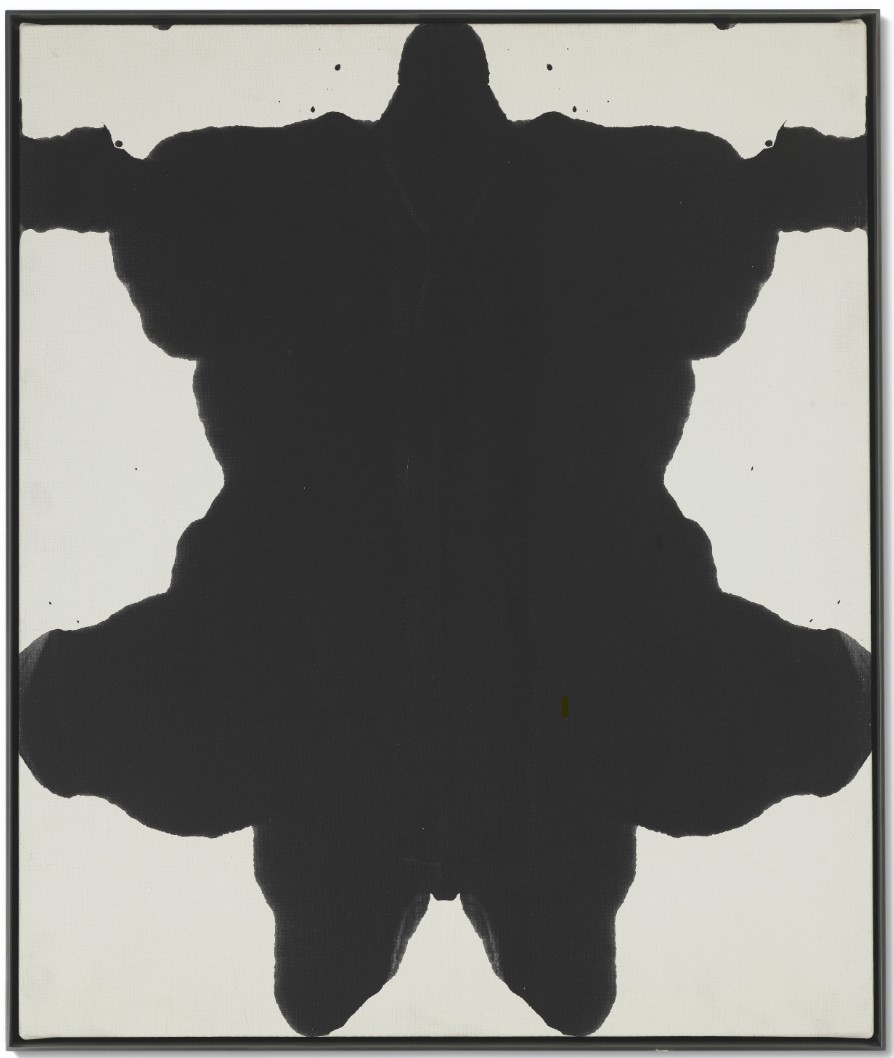
ANDY WARHOL (1928-1987)
Rorschach, 1984
Acrylic on canvas
25 1⁄8 x 21 1⁄8 inches (63.8 x 53.7 cm)
Stamped with the Andy Warhol Foundation for the Visual Arts, Inc. and the Andy Warhol Estate
Numbered VF PA75.064′ (on the overlap)
Numbered again ‘PA75.064’ (on the stretcher)
The Last Supper, 1986
In 1984, Alexander Iolas commissioned Warhol to produce a series of works featuring The Last Supper for his inaugural exhibition in Milan. The exhibition featured twenty-two of The Last Supper works which were strategically staged across from Santa Maria delle Grazie, where Leonardo’s masterpiece is housed. As the last body of work that Warhol produced before his untimely death in February of 1987, The Last Supper paintings, executed between 1984 and 1986, are the Pop pioneer’s final significant artistic gesture.
READ ABOUT THE LAST SUPPER
FIND ALL HISTORICAL AUCTION RESULTS
The Last Supper, 1986
Estimated: USD 5,000,000 – 7,000,000
USD 6,079,500

ANDY WARHOL (1928 – 1987)
The Last Supper, 1986
Acrylic and silkscreen ink on canvas
40 1/8 x 40 1/8 inches (101.9 x 101.9 cm)
Stamped with the artist’s signature (on the overlap)
Inscribed on the overlap:
I certify that this is an original painting by Andy Warhol completed by him in 1986 Frederick Hughes
Campbell’s Soup Box, 1985-86
As an artist that relied heavily on repetition and seriality, Warhol revisited to the subject of Campbell’s soup cans again and again throughout his career. He painted several variants of the can, some featuring repeated depictions of the same can, cans with peeling labels, and more. Building on Warhol’s preoccupation with materialism, the broken-down box takes the artist’s critique and analysis of consumer culture to the next level. By focusing on the packaging of everyday household goods, Warhol emphasized the display and promotion of products and the role marketing and branding plays in attracting buyers. He also puts forward the Duchampian theory that commercial product designs can be elevated to fine art and classified as artworks in their own right. The work also peels back some of the darker consequences of consumerism by highlighting the prevalence of leftover single use waste and other byproducts of the manufacturing and retail sectors.
READ ABOUT CAMPBELL’S SOUP BOX
FIND ALL HISTORICAL AUCTION RESULTS
https://intelart.io/2022/08/05/campbells-soup-boxes-1985/
“I used to have the same lunch every day [of Campbell’s soup], for twenty years, I guess, the same thing over and over again. Someone said my life has dominated me; I liked that idea. I used to want to live at the Waldorf Towers and have soup and a sandwich, like that scene in the restaurant in Naked Lunch….”
PLEASE CLICK ON ANY PICTURE BELOW TO ACCESS THE CATALOGUE ENTRY
Campbell’s Soup, 1986
Phillips London: 27 June 2024
Estimated: GBP 450,000 – 650,000
GBP 850,900 / USD 1,078,941
https://www.phillips.com/detail/andy-warhol/UK010424/17
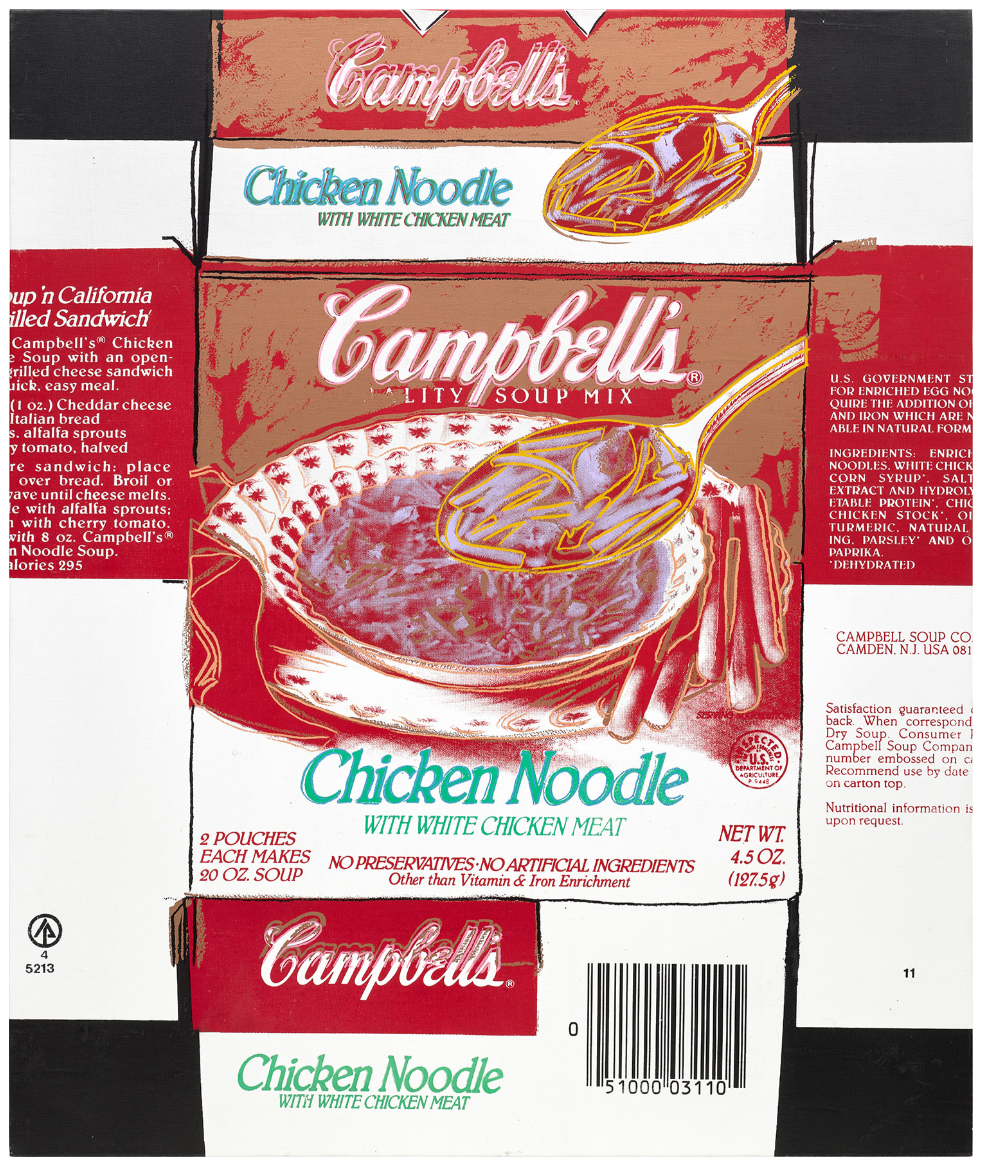
ANDY WARHOL
Campbell’s Soup, 1986
Acrylic and silkscreen ink on canvas
72×60 inches (182.9 x 152.4 cm)
Signed and dated ‘Andy Warhol 86’ on the overlap
Campbell’s Soup Box: Chicken Noodle, 1986
Sotheby’s New-York: 3 October 2023
Estimated: USD 100,000 – 150,000
USD 127,000
Campbell’s Soup Box: Chicken Noodle | Contemporary Discoveries | 2023 | Sotheby’s (sothebys.com)
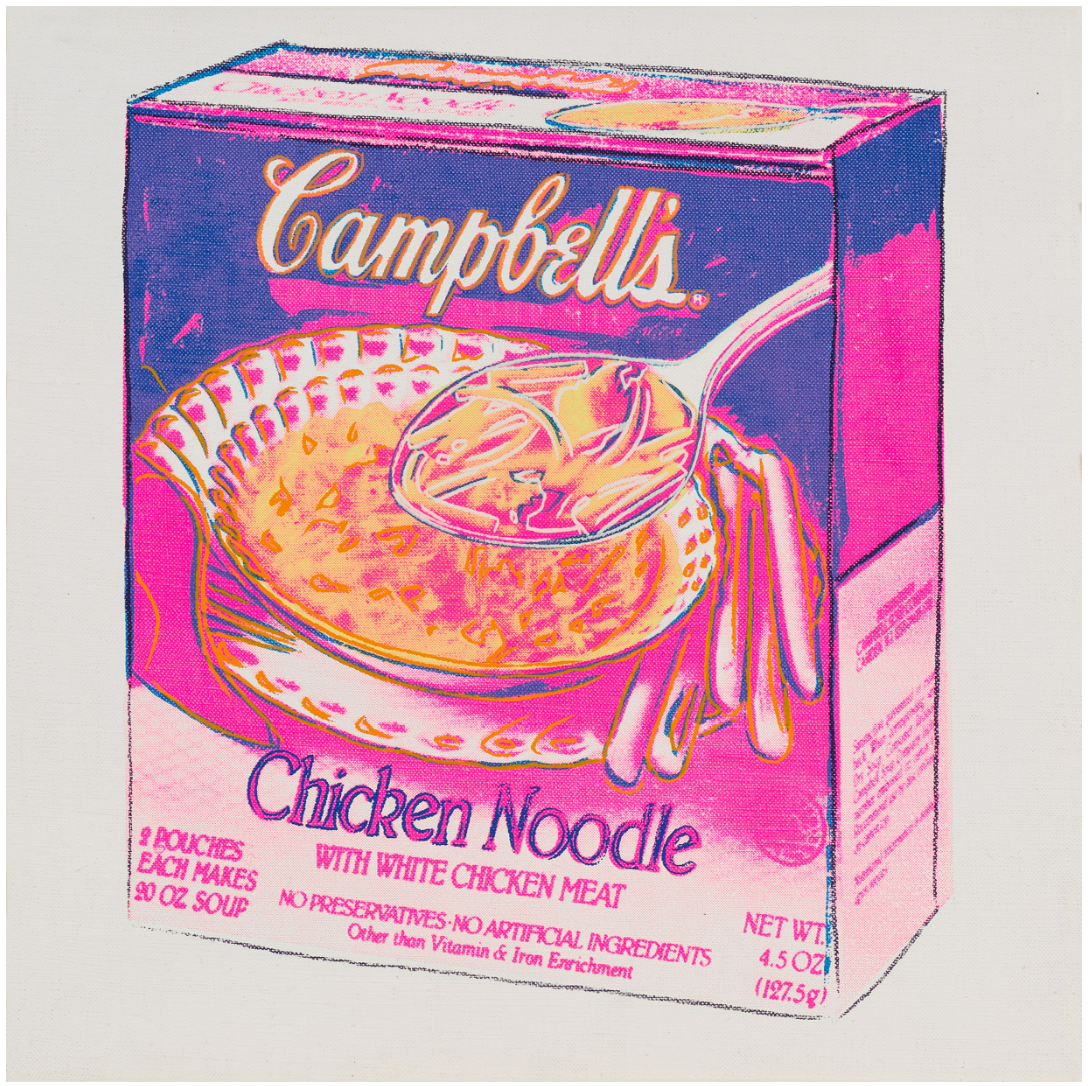
ANDY WARHOL (1928 – 1987)
Campbell’s Soup Box: Chicken Noodle, 1986
Acrylic and silkscreen on canvas
14×14 inches (35.6 x 35.6 cm)
Variously signed and dated 86 (on the turning edge and overlap)
Campbell’s Chicken Noodle Soup Box, 1986
Sotheby’s New-York: 9 March 2023
Estimated: USD 150,000 – 200,000
USD 165,100
Campbell’s Chicken Noodle Soup Box | Contemporary Curated | 2023 | Sotheby’s (sothebys.com)
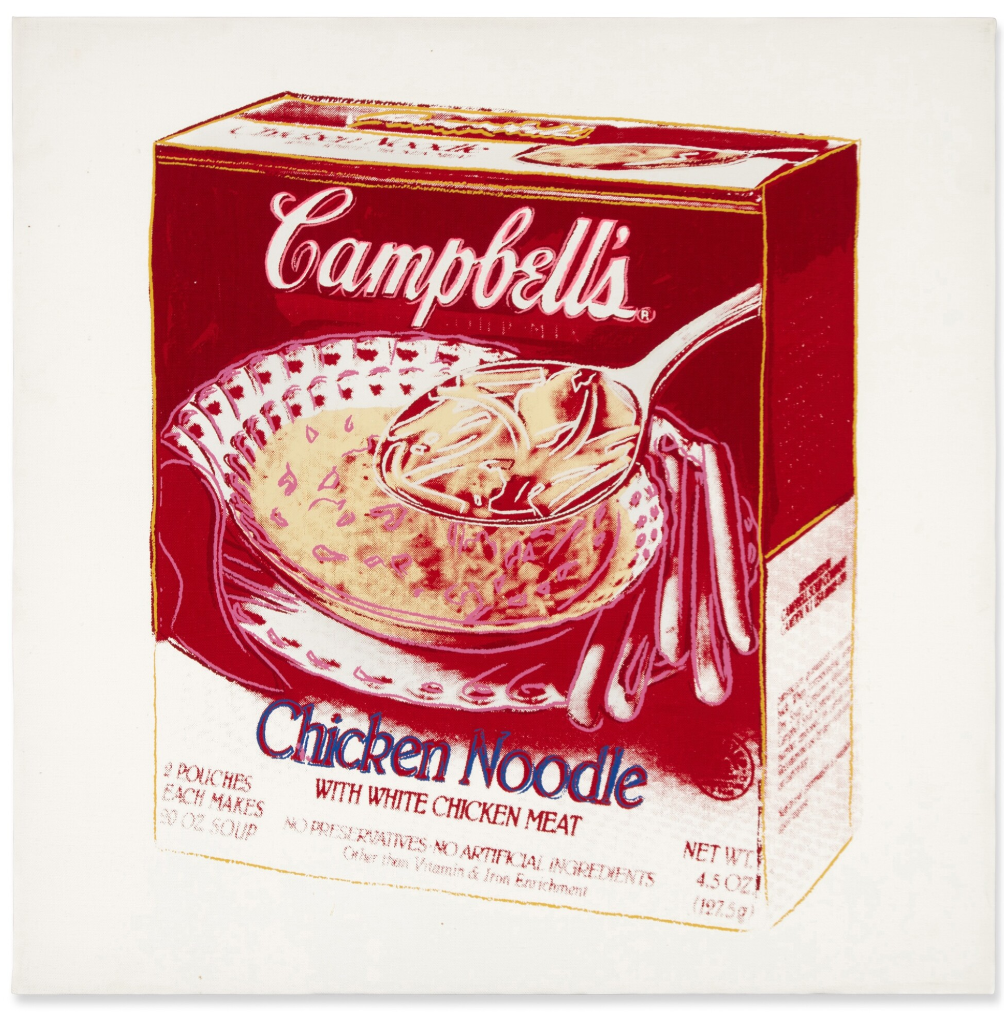
ANDY WARHOL (1928 – 1987)
Campbell’s Chicken Noodle Soup Box, 1986
Synthetic polymer paint and silkscreen ink on canvas
20×20 inches (50.8 x 50.8 cm)
Signed Andy Warhol and dated ’86 (on the overlap)
Stamped by The Andy Warhol Authentication Board and numbered A104.056 on the overlap
Campbell’s Chicken Noodle Soup Box, 1985
Christie’s New-York: 17 November 2022
Estimated: USD 500,000 – 700,000
USD 1,683,500
Campbell’s Chicken Noodle Soup Box | Contemporary Day Auction | 2022 | Sotheby’s (sothebys.com)
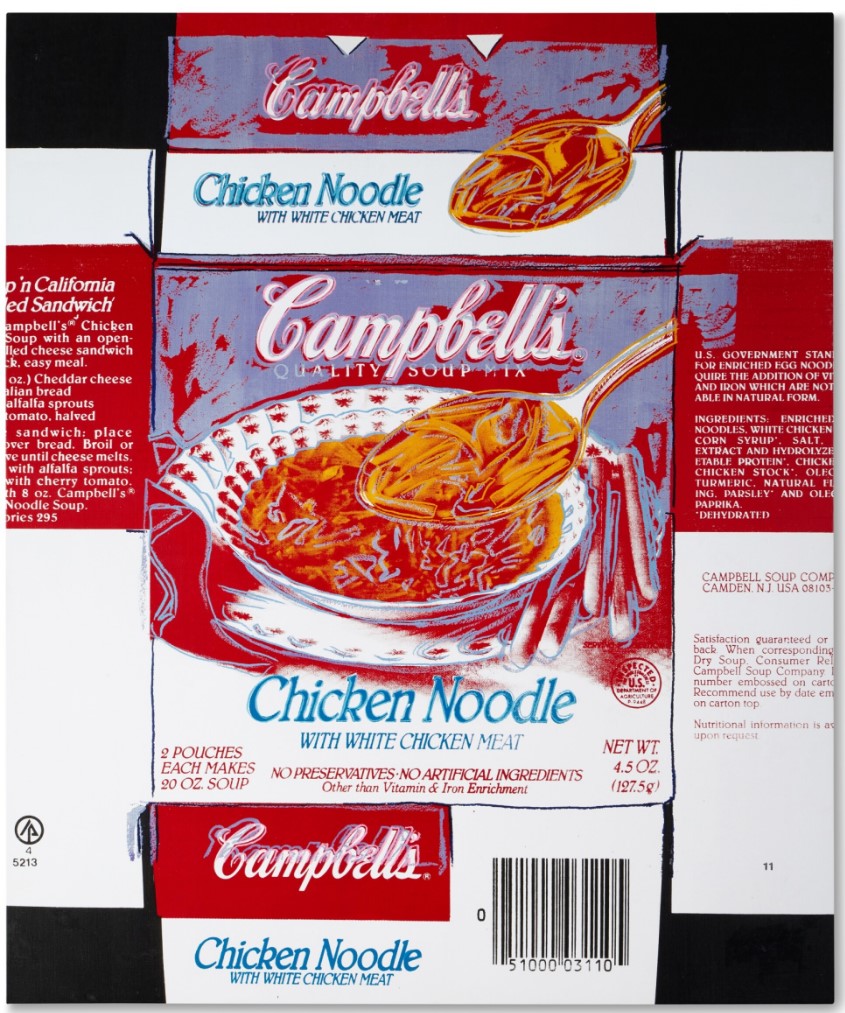
ANDY WARHOL (1928 – 1987)
Campbell’s Chicken Noodle Soup Box, 1985
acrylic and silkscreen ink on canvas
72X60 inches (182.9 x 152.4 cm)
Black and White Paintings (Ads), 1985-86
The Black & White paintings were created by Andy Warhol in the mid 1980s. The series is based on scraps of advertisement matter like classified ads and illustrations from flyers, of which Warhol had amassed a collection. Appealing to him because of its banality, Warhol successfully elevates a quotidian advertisement into a space of high art. In Warhol’s late works, themes of consumer culture are powerfully represented, signifying a return to the subject matter that established his reputation.
READ ABOUT BLACK AND WHITE PAINTINGS
FIND ALL HISTORICAL AUCTION RESULTS
https://intelart.io/2022/08/06/black-white-paintings-1985-1986/
PLEASE CLICK ON ANY PICTURE BELOW TO ACCESS THE CATALOGUE ENTRY
U.S. Weather Map/GE, 1985-86
Christie’s New-York: 20 November 2025
Estimated: USD 70,000 – 100,000
USD 215,900
ANDY WARHOL (1928-1987), U.S. Weather Map/GE | Christie’s
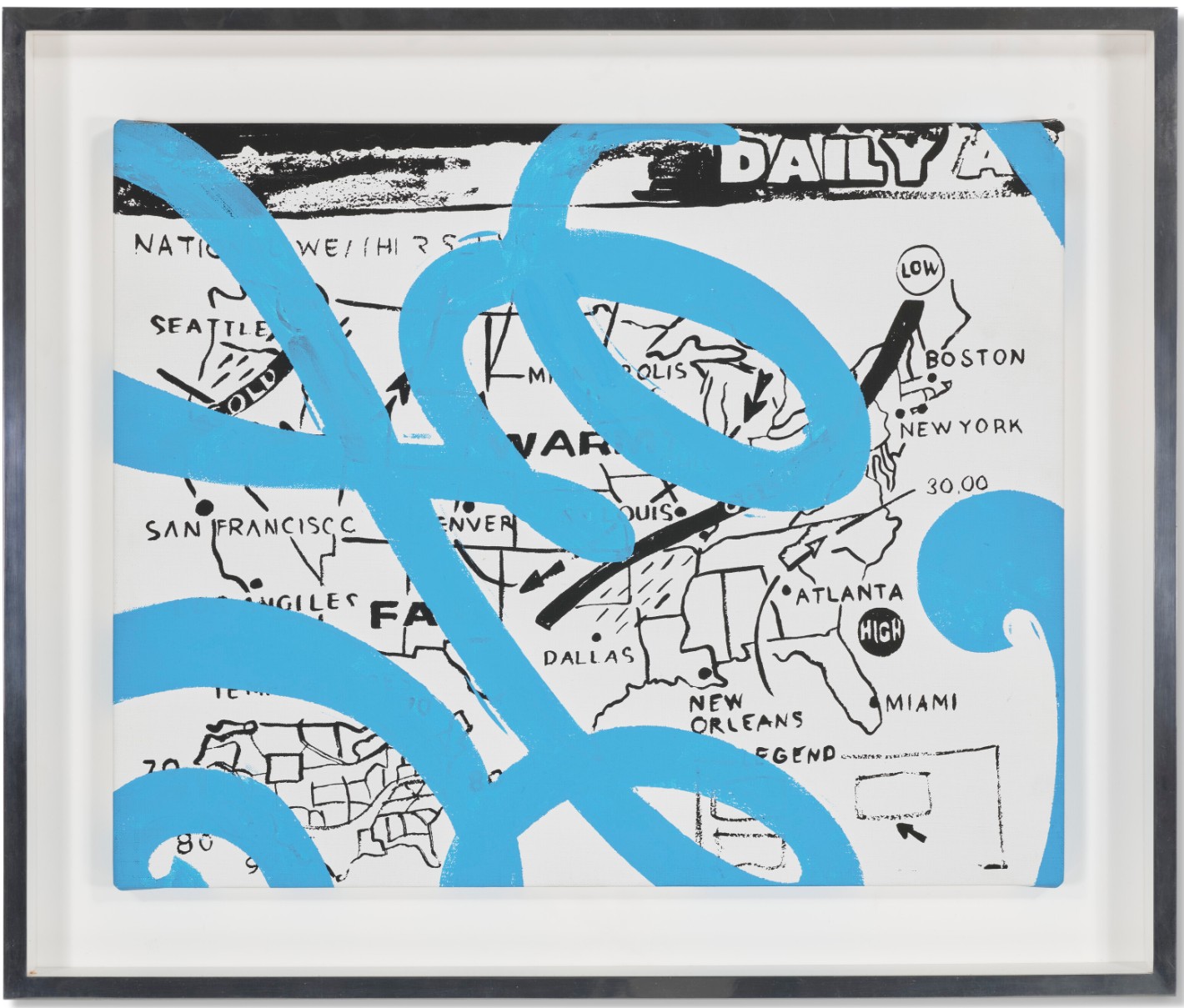
ANDY WARHOL (1928-1987)
U.S. Weather Map/GE, 1985-86
Acrylic and silkscreen ink on canvas
16×20 inches (40.6 x 50.8 cm)
Stamped with the Estate of Andy Warhol and the Andy Warhol Foundation for the Visual Arts, Inc. stamps
Numbered ‘PA10.302 VF’ (on the overlap)
Numbered again ‘PA10.302 (on the stretcher)
Mineola Motorcycle, circa 1985-1986
Christie’s New-York: 15 May 2025
Estimated: USD 80,000 – 120,000
USD 138,600
ANDY WARHOL (1928-1987), Mineola Motorcycle | Christie’s
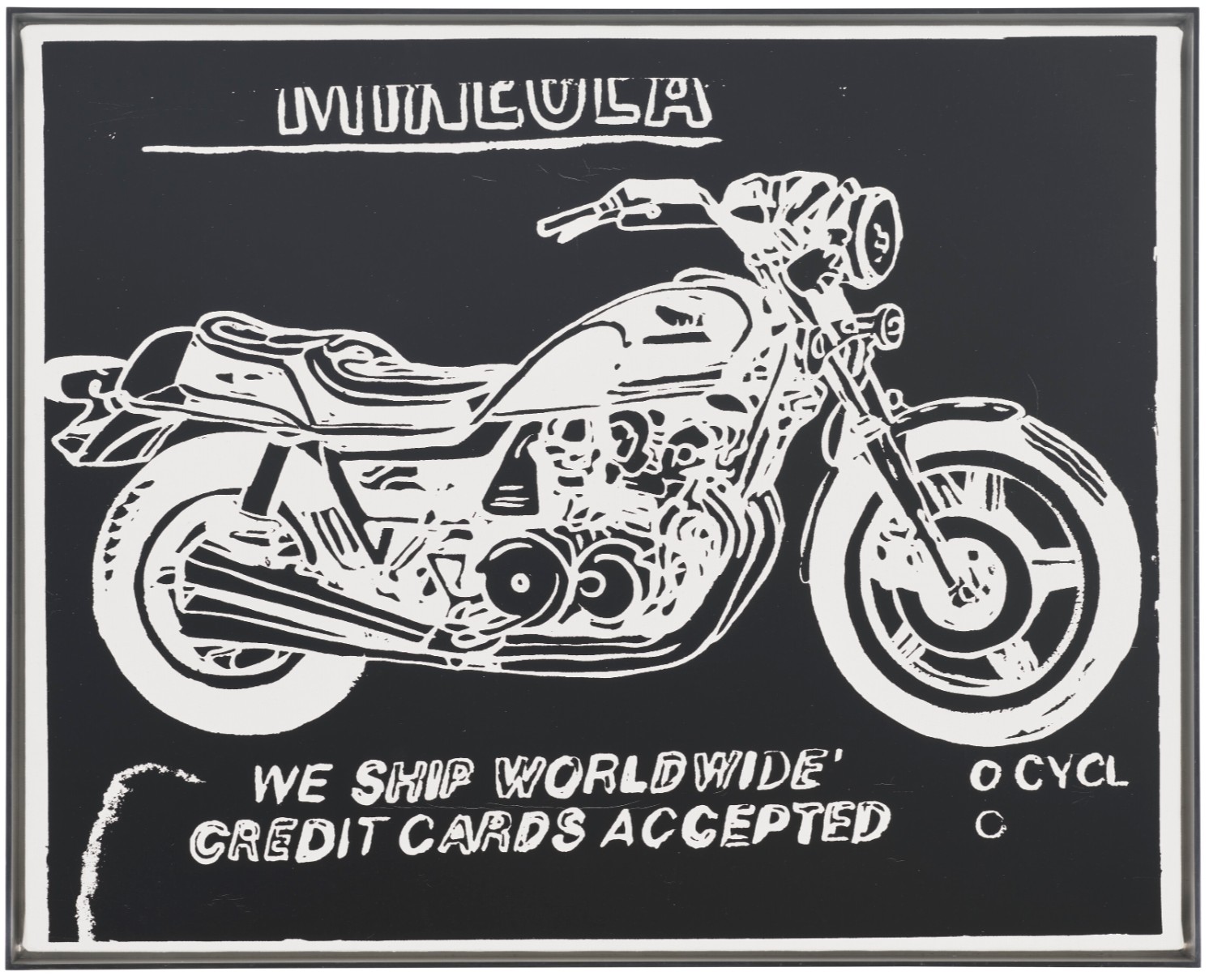
ANDY WARHOL (1928-1987)
Mineola Motorcycle, circa 1985-1986
Acrylic and silkscreen ink on canvas
16×20 inches (40.6 x 50.8 cm)
Stamped with the Estate of Andy Warhol and the Andy Warhol Foundation for the Visual Arts, Inc. stamps
Numbered ‘VF PA10.328 (on the overlap)
Numbered again ‘PA10.328’ (on the stretcher)
Paratrooper Boots (Positive), circa 1985-1986
Heritage Auctions: 10 December 2024
USD 50,000
Andy Warhol (1928-1987). Paratrooper Boots (Positive), circa | Lot #77091 | Heritage Auctions
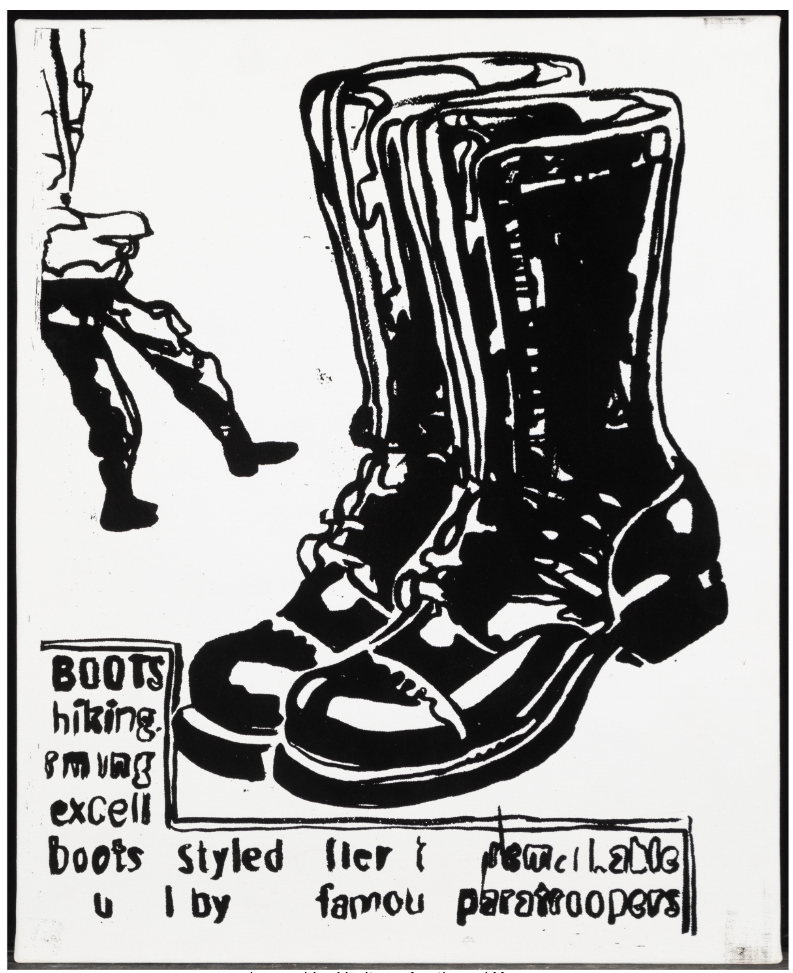
ANDY WARHOL (1928-1987)
Paratrooper Boots (Positive), circa 1985-1986
Synthetic polymer and silkscreen ink on canvas
20×16 inches (50.8 x 40.6 cm)
Inscribed and with the Estate of Andy Warhol and the Andy Warhol Foundation for the Visual Arts Inc. stamps on the overlap: PA10.447
Paratrooper Boots, 1985-86
Sotheby’s New-York: 16 November 2023
Estimated: USD 400,000 – 600,000
USD 495,500
Paratrooper Boots | Contemporary Day Auction | 2023 | Sotheby’s
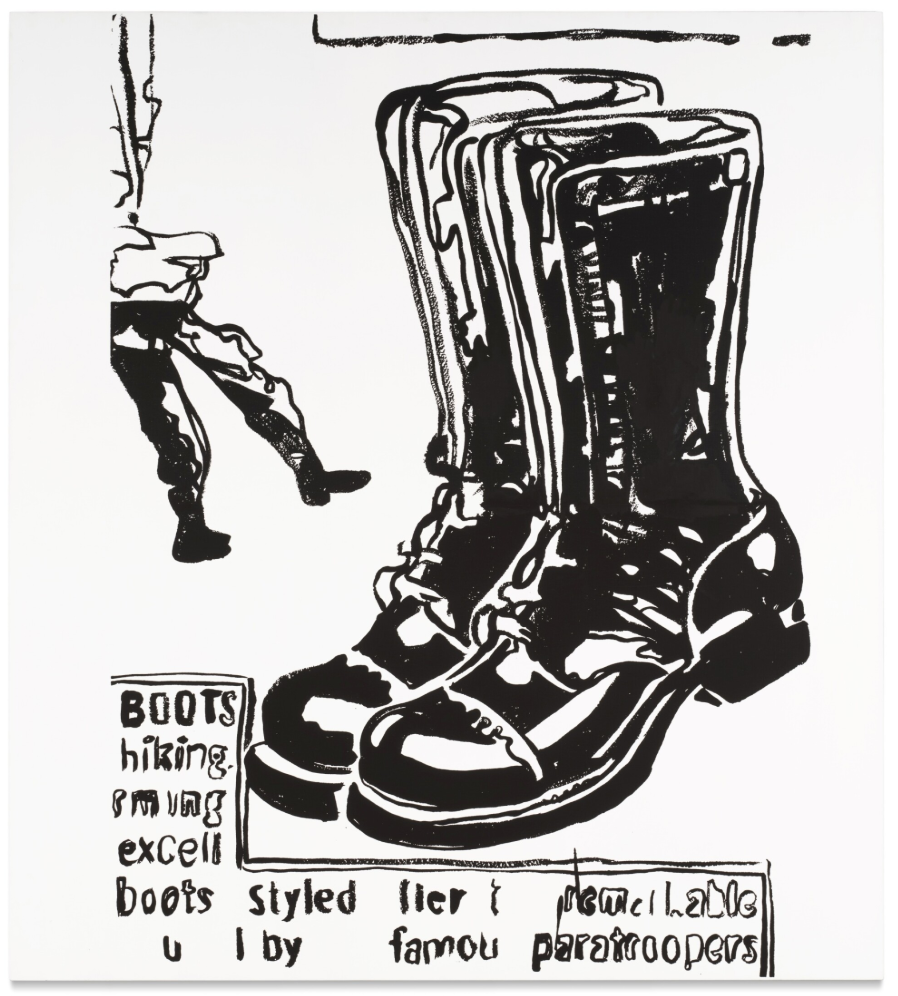
ANDY WARHOL (1928 – 1987)
Paratrooper Boots, 1985-86
Acrylic and silkscreen ink on canvas
80×72 inches (203 x 183 cm)
Stamped twice by the Estate of Andy Warhol
Stamped twice by the Andy Warhol Foundation for the Visual Arts, Inc.
Numbered PA10.586 VF on the overlap
Work Boots (Positive), 1985
Christie’s New-York: 10 November 2023
Estimated: USD 300,000 – 500,000
USD 365,400
ANDY WARHOL (1928-1987), Work Boots (Positive) | Christie’s
REPEAT SALE
Christie’s New-York: 27 May 2020
Estimated: USD 250,000 – 350,000
USD 435,000
Andy Warhol (1928-1987), Work Boots (Positive) | Christie’s
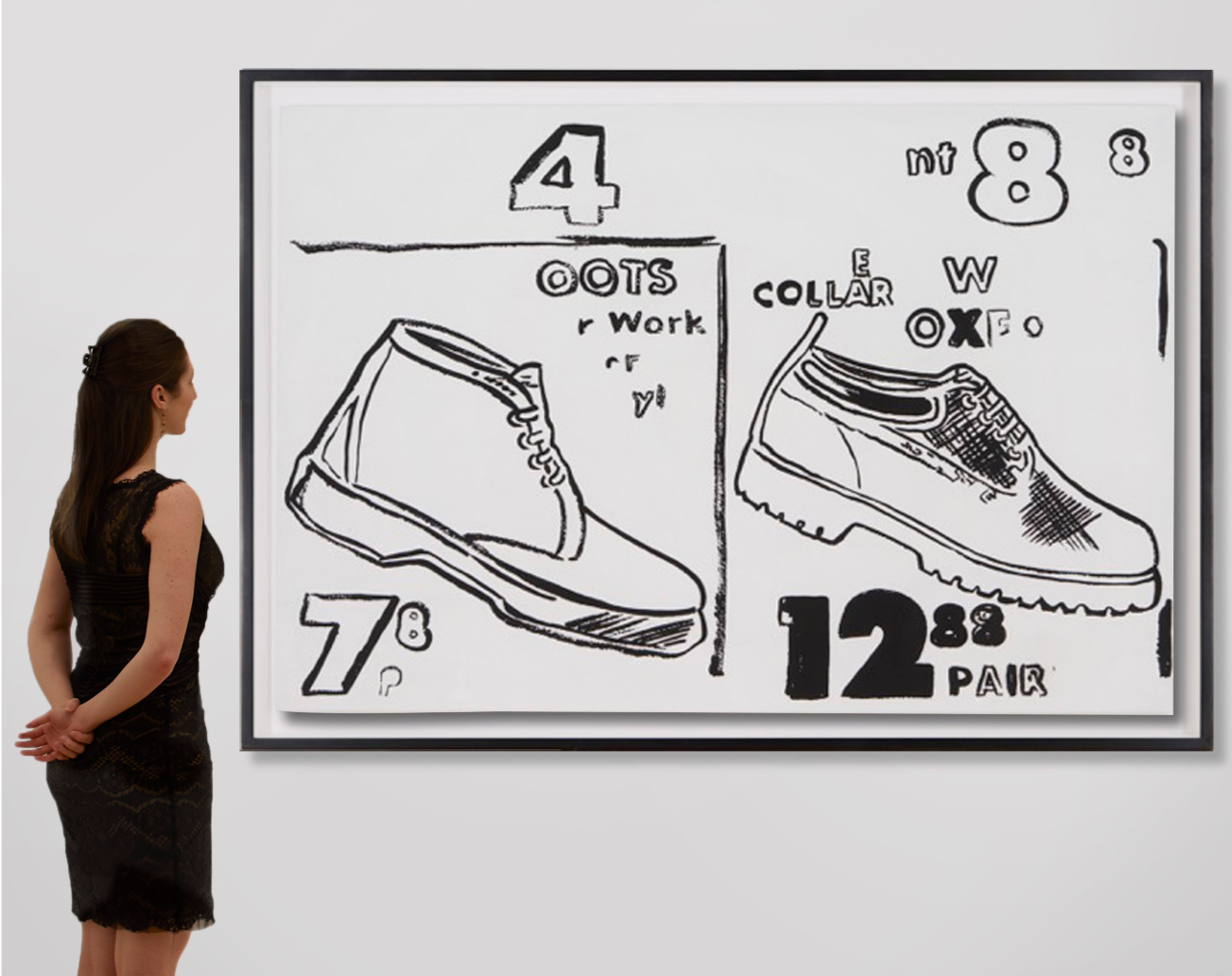
ANDY WARHOL (1928-1987)
Work Boots (Positive), 1985
Acrylic and silkscreen ink on canvas
54 1/4 x 80 inches (137.8 x 203.2 cm)
Stamped twice with the Estate of Andy Warhol and the Andy Warhol Foundation for the Visual Arts, Inc. stamps
Numbered twice ‘VF PA10.581’ (on the overlap)
Numbered again ‘PA10.581’ (on the stretcher)
Be a Somebody With a Body, 1985
Sotheby’s New-York: 19 May 2023
Estimated: USD 50,000 – 70,000
USD 82,550
Be a Somebody With a Body | Contemporary Day Auction | 2023 | Sotheby’s
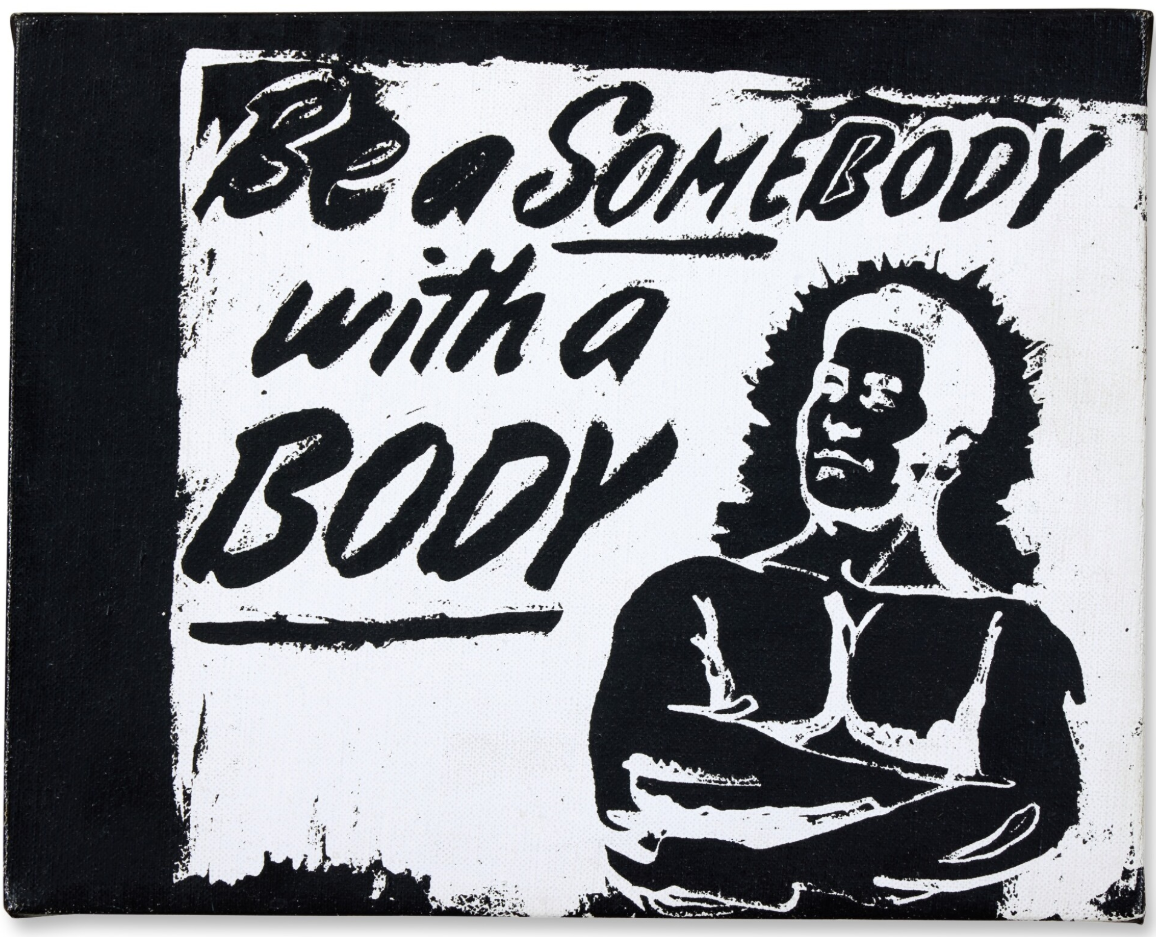
ANDY WARHOL (1928 – 1987)
Be a Somebody With a Body, 1985
Acrylic and silkscreen ink on canvas
8×10 inches (20.3 x 25.4 cm)
Signed, dated 85 and dedicated Tommy (on the overlap)
Stamped by the Andy Warhol Art Authentication Board, Inc. and numbered A108.113 on the overlap
Repent and Sin No More! (Negative), 1985-86
Christie’s New-York: 7 March 2023
Estimated: USD 70,000 – 100,000
USD 214,200
ANDY WARHOL (1928-1987), Repent and Sin No More! (Negative) | Christie’s
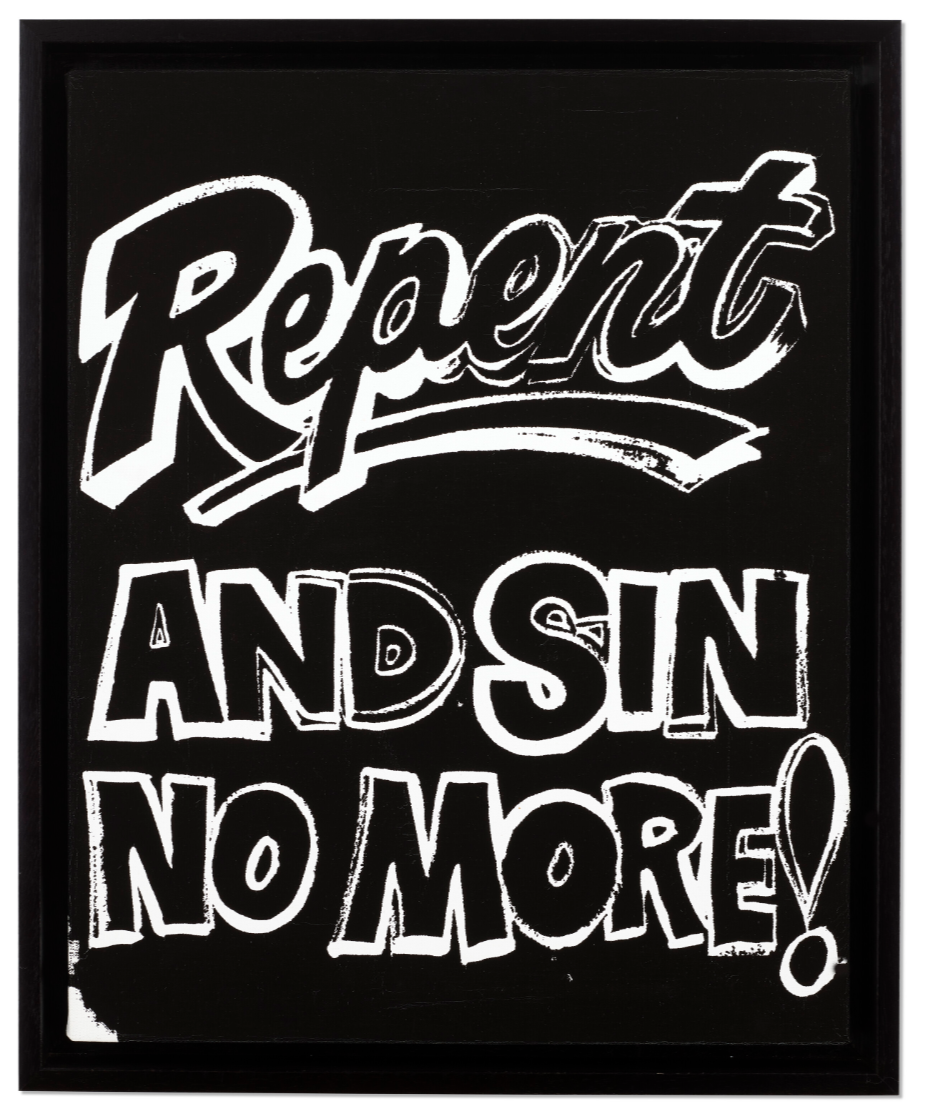
ANDY WARHOL (1928-1987)
Repent and Sin No More! (Negative), 1985-86
Acrylic and silkscreen ink on canvas
20 x 16 1/8 inches (50.8 x 41 cm)
Stamped with the Estate of Andy Warhol and the Andy Warhol Foundation for the Visual Arts, Inc. stamps
Numbered ‘PA10.514’ (on the reverse)
Numbered again ‘PA10.514’ (on the stretcher)
BE A SOMEBODY WITH A BODY, 1985
Phillips London: 3 March 2023
Estimated: GBP 70,000 – 90,000
GBP 86,360
Andy Warhol – 20th Century & Contempo… Lot 152 March 2023 | Phillips
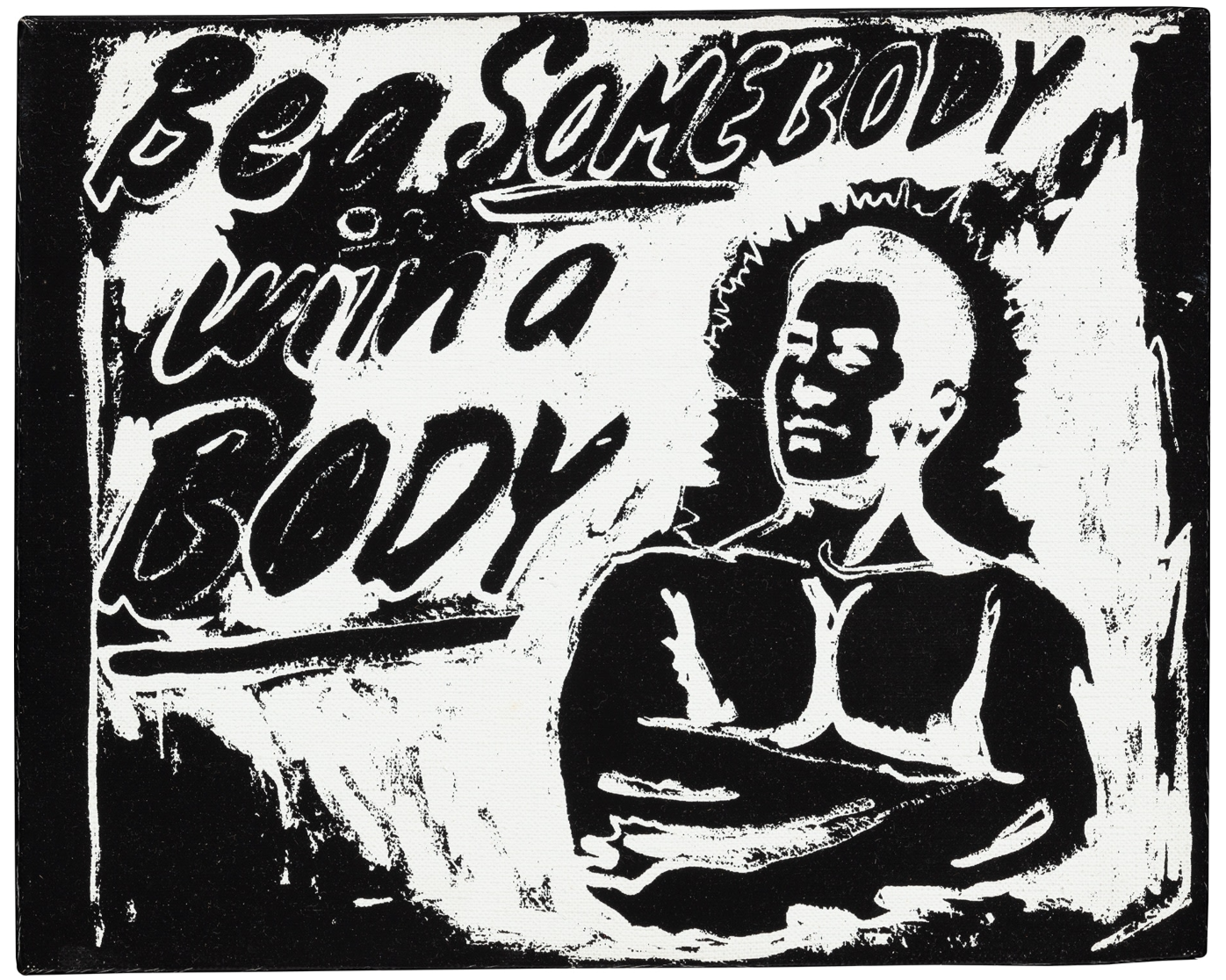
ANDY WARHOL
BE A SOMEBODY WITH A BODY, 1985
Synthetic polymer and silkscreen ink on canvas
7 7/8 x 9 7/8 inches (20.3 x 25.1 cm)
Signed, stamped with the Andy Warhol Foundation for the Visual Arts, Inc. and the Estate of Andy Warhol stamps
Numbered and dated ‘PA 10.614 Andy Warhol 85 A157.0310’ on the reverse
Numbered ‘PA 10.614’ on the stretcher
Be a Somebody with a Body, 1985
Christie’s London: 1 March 2023
Estimated: GBP 100,000 – 150,000
GBP 163,800
ANDY WARHOL (1928-1987), Be a Somebody with a Body | Christie’s
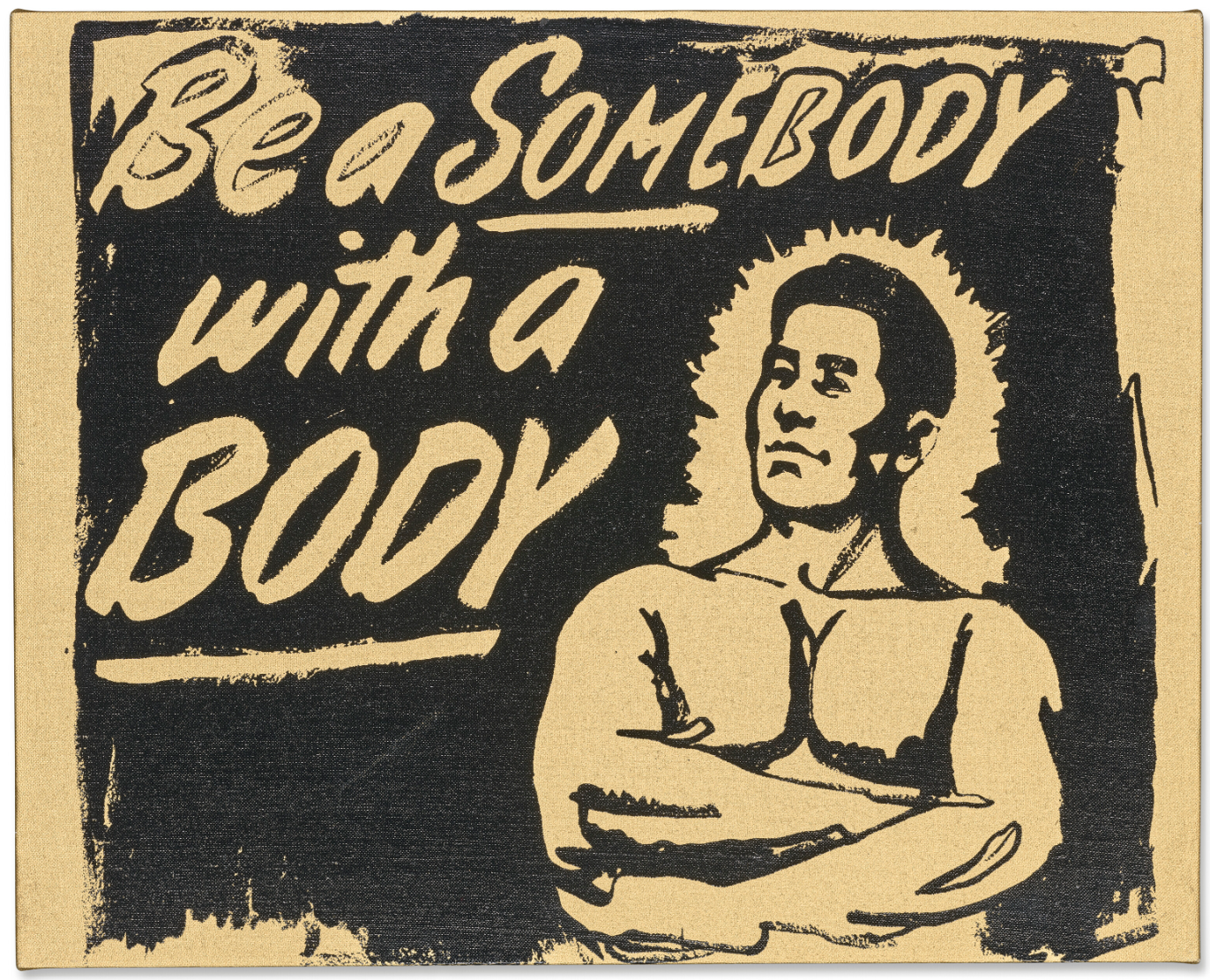
ANDY WARHOL (1928-1987)
Be a Somebody with a Body, 1985
Acrylic and silkscreen ink on canvas
16 1/8 x 19 7/8 inches (40.8 x 50.5 cm)
Signed, stamped with the Andy Warhol Foundation for the Visual Arts, Inc. and the Estate of Andy Warhol stamps
Numbered and dated ‘PA 10.615 Andy Warhol 85 A158.0310’ (on the overlap)
Stamped with the Estate of Andy Warhol stamp (on the reverse)
Numbered ‘PA 10.615’ (on the stretcher)
Be a Somebody with a Body, 1985-86
Sotheby’s New-York: 20 May 2022
Estimated: USD 100,000 – 150,000
USD 201,600
Be a Somebody with a Body | Contemporary Day Auction | 2022 | Sotheby’s
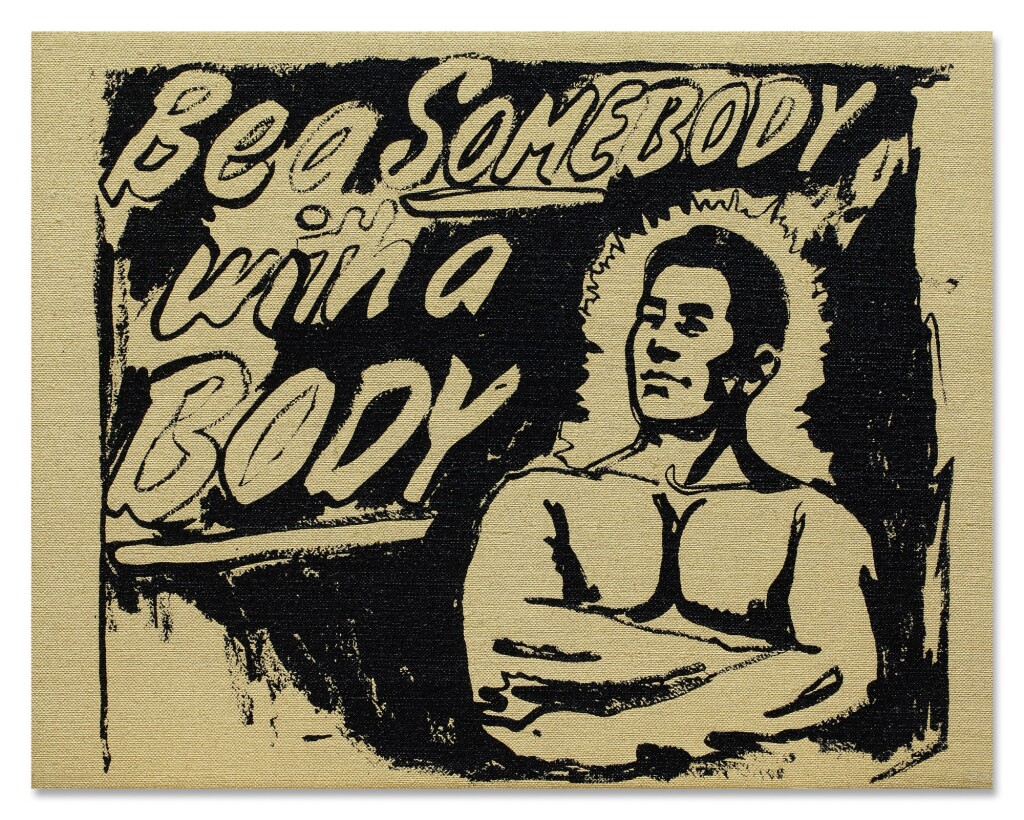
ANDY WARHOL
Be a Somebody with a Body, 1985-86
Acrylic and silkscreen ink on canvas
11×14 inches (27.9 x 35.6 cm)
Reagan Budget (Positive), 1985-86
Christie’s New-York: 13 May 2022
Estimated: USD 50,000 – 70,000
USD 75,600
ANDY WARHOL (1928-1987), Reagan Budget (Positive) | Christie’s
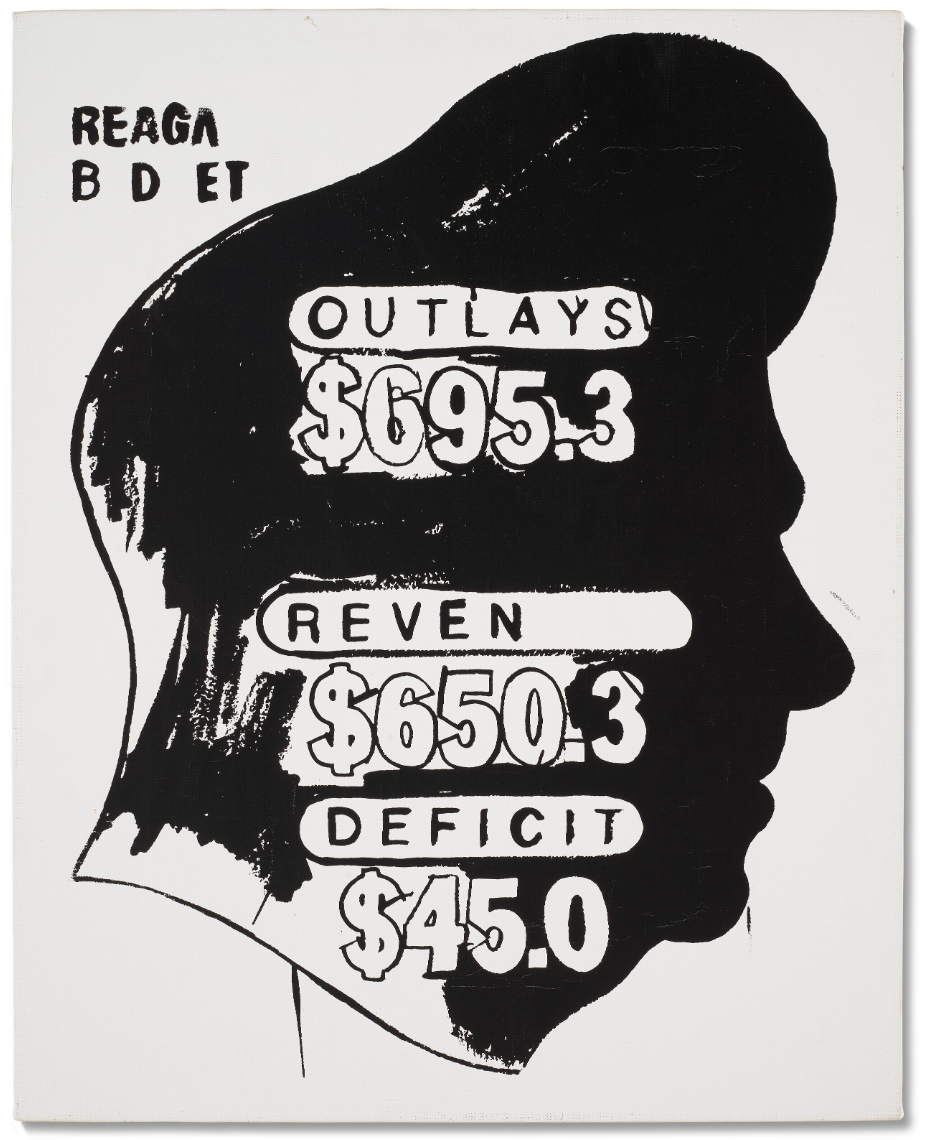
ANDY WARHOL (1928-1987)
Reagan Budget (Positive), 1985-86
Acrylic and silkscreen ink on canvas
20×16 inches (50.8 x 40.6 cm)
Stamped with the Andy Warhol Foundation for the Visual Arts, Inc., the Estate of Andy Warhol and the Andy Warhol Art Authentication Board Inc. stamps
Numbered ‘VF PA.10.400’ and ‘A111.103’ (on the overlap)
Be a Somebody with a Body, 1986
Sotheby’s New-York: 19 November 2021
Estimated: USD 50,000 – 70,000
USD 226,800
Be a Somebody with a Body | Contemporary Day Auction | 2021 | Sotheby’s
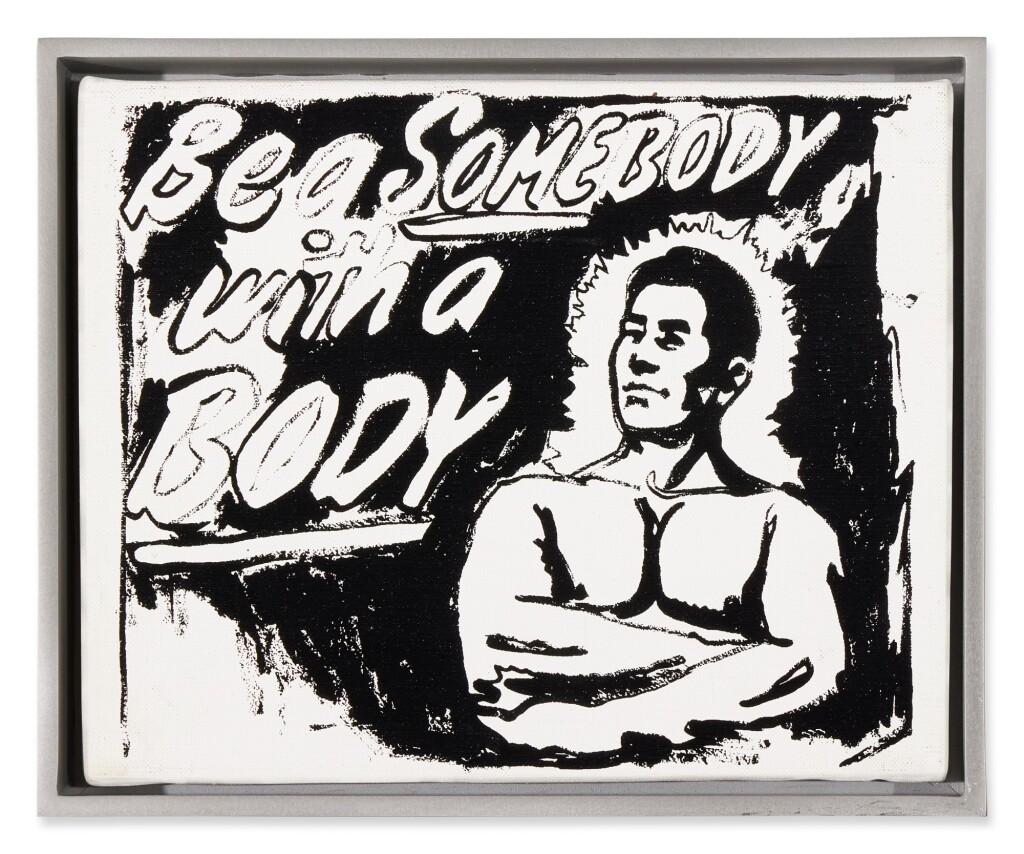
ANDY WARHOL
Be a Somebody with a Body, 1986
Acrylic and silkscreen ink on canvas
8×10 inches (20.3 x 25.4 cm)
Signed Andy Warhol and dated 86 (on the reverse)
The Last Supper/Be a Somebody with a Body, 1986
Phillips New-York: 17 November 2021
Estimated: USD 6,000,000 – 8,000,000
USD 6,806,000
Andy Warhol – 20th Century & Contem… Lot 33 November 2021 | Phillips
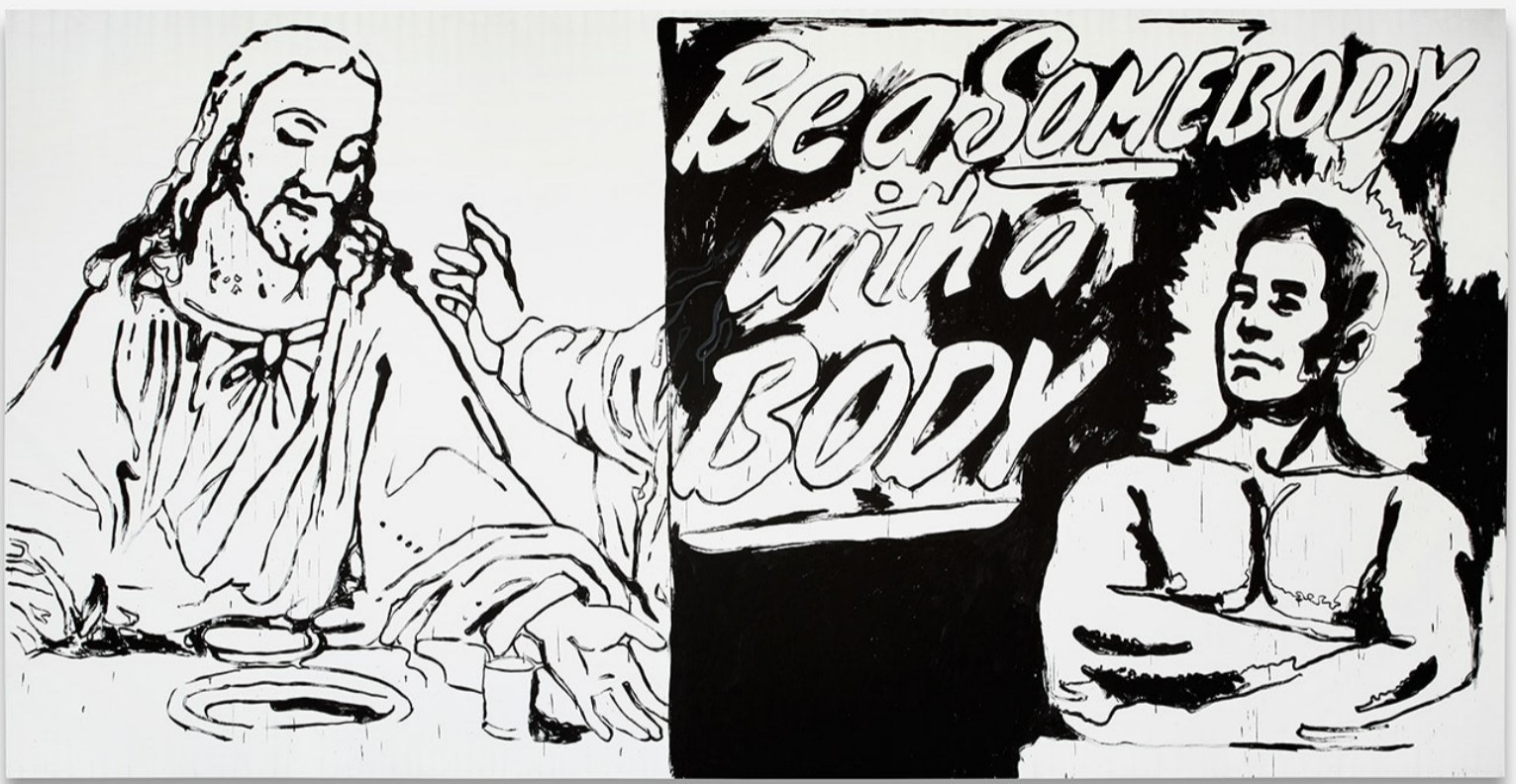 ANDY WARHOL
The Last Supper/Be a Somebody with a Body, 1986
Acrylic and silkscreen ink on canvas
118.1 x 231.1 inches (300 x 587.1 cm)
Camouflage, 1986
Deeply intrigued by the near-religious veneration afforded to painters such as Jackson Pollock and Mark Rothko, Warhol’s Camouflage series can be conceptually linked to his earlier Rorschach paintings and Oxidation series. Together, these bodies of work challenge the mystique of a self-proclaimed “non-referential” Abstract Expressionism; a movement that Warhol famously lampooned in the 1960s. In a masterful instance of visual wordplay, he repurposes the utilitarian army print to mount a sardonic critique of Abstract Expressionism, embracing an elemental pattern laden with associations of its original militaristic function and its subsequent adoption in fashion – Pop’s greatest ally. Much like Jasper Johns’ iconic Flag paintings, Camouflage functions within a paradoxical framework, simultaneously abstract and overtly referential. This duality reinforces Warhol’s persistent engagement with and exploration of a shared, mass-produced, and commercially driven visual language, highlighting his continued investment in the interplay between high art and popular culture.
READ ABOUT CAMOUFLAGE
FIND ALL HISTORICAL AUCTION RESULTS
Camouflage, 1986-87
Sotheby’s London: 4 March 2025
Estimated: GBP 1,800,000 – 2,500,000
GBP 2,480,000 / USD 3,174,400
Camouflage | Modern & Contemporary Evening Auction | 2025 | Sotheby’s
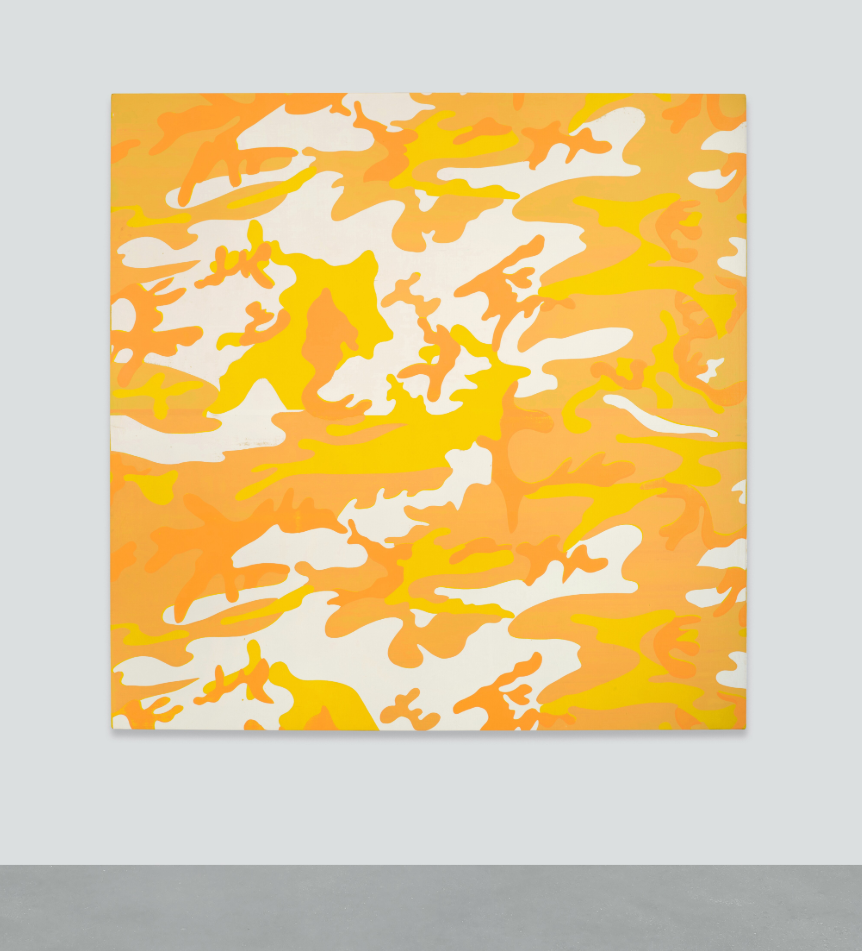
ANDY WARHOL (1928 – 1987)
Camouflage, 1986-87
Acrylic and silkscreen ink on canvas
76 1/4 x 76 1/4 inches (193.7 x 193.7 cm)
Stamped by The Estate of Andy Warhol and by The Andy Warhol Foundation for the Visual Arts
Numbered PA85.040 three times on the overlap
Other Late Series
PLEASE CLICK ON ANY PICTURE BELOW TO ACCESS THE CATALOGUE ENTRY
Vesuvius, 1985
Christie’s London: 10 October 2024
Estimated: GBP 300,000 – 500,000
GBP 604,800 / USD 792,288
ANDY WARHOL (1928-1987), Vesuvius | Christie’s (christies.com)
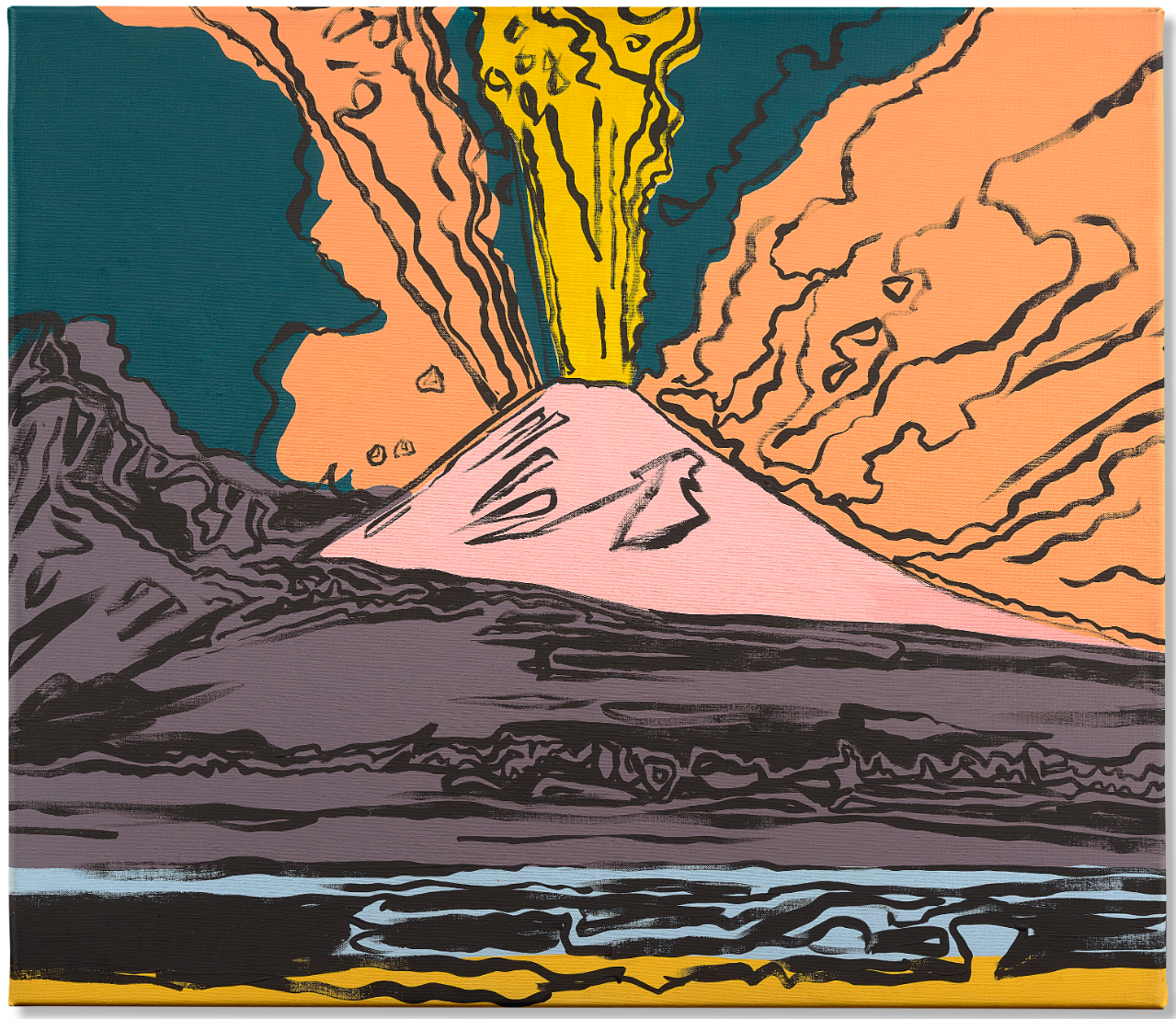
ANDY WARHOL (1928-1987)
Vesuvius, 1985
Acrylic on canvas
28 x 32 1/8 inches (71 x 81.5 cm)
Signed and dated ‘Andy Warhol 85’ (on the overlap)
Statue of Liberty, 1986
Phillips New-York: 14 May 2024
Estimated: USD 800,000 – 1,200,000
USD 1,143,000
Andy Warhol – Modern & Contemporary Art … Lot 16 May 2024 | Phillips

ANDY WARHOL
Statue of Liberty, 1986
Synthetic polymer paint and silkscreen ink on canvas
50 x 54 1/2 inches (127 x 138.4 cm)
Stamped twice by the Andy Warhol Art Authentication Board, Inc. and the Estate of Andy Warhol and numbered
Inscribed twice “PA 64.015 VF” on the overlap
Diamond Candy Box, 1981
Christie’s New-York: 18 November 2022
Estimated: USD 50,000 – 70,000
USD 119,700
ANDY WARHOL (1928-1987), Diamond Candy Box | Christie’s (christies.com)
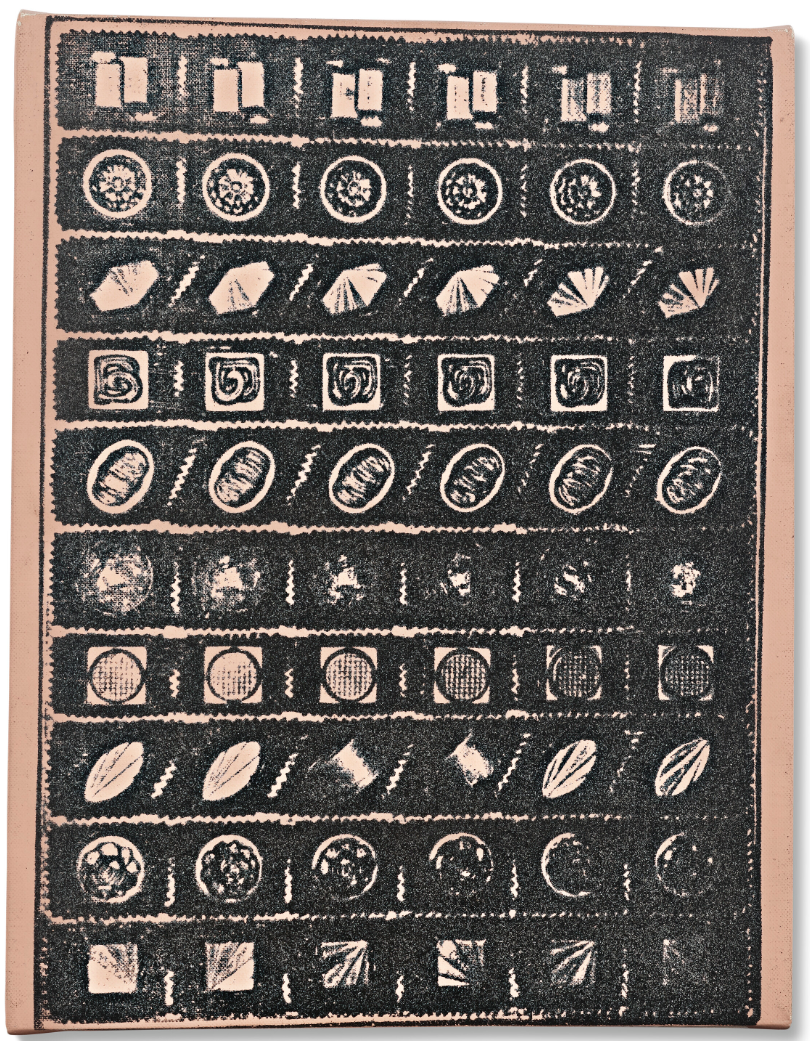
ANDY WARHOL (1928-1987)
Diamond Candy Box, 1981
Acrylic, silkscreen ink and diamond dust on canvas
14 1/8 x 10 inches (35.6 x 25.4 cm)
Signed and dedicated ‘to Jon love Andy’ (on the overlap)
Twenty-five years the artist’s junior, Jon Gould would be Andy Warhol’s longest and last romantic relationship. He was handsome, young and a vice president at Paramount Pictures when the two met in late 1980. Andy was infatuated immediately, spending a good deal of time and effort winning over Jon’s affection. He was so smitten that at one point, Warhol had his Factory assistants silkscreen hearts as a Valentine’s Day present for Jon. Photographed by the artist, Gould is seen wearing another of Warhol’s gifts, a double-stranded pearl necklace, during a weekend trip to the beach with Keith Haring, early on in their relationship.
“We went to Falmouth Harbor where we chartered that 70’ boat I liked. …And Jon was wearing the set of pearls I gave him that go down to the ground and it looked sort of beautiful on him.”
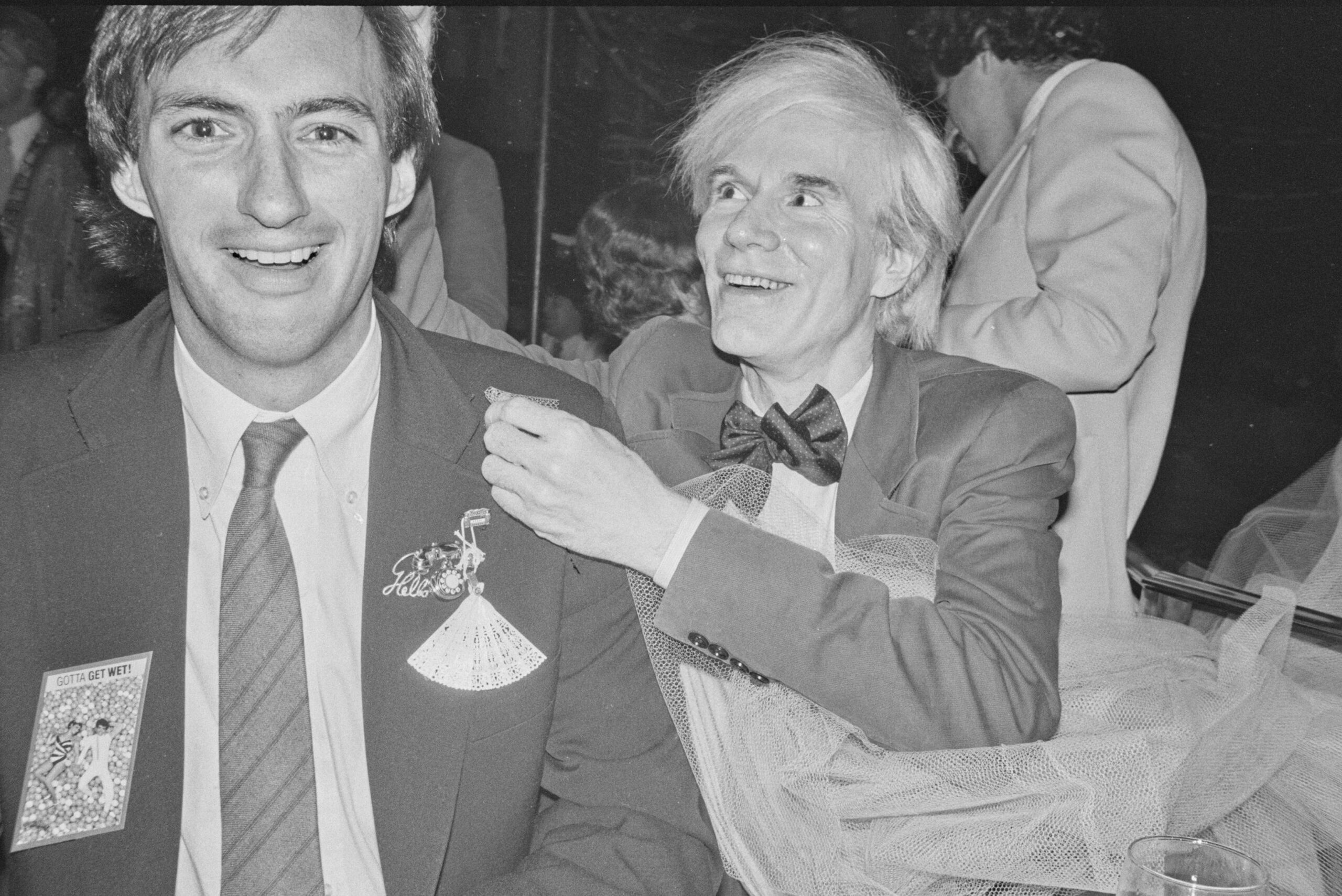
“I decide that I should try to fall in love, and that’s what I’m doing now with Jon Gould.”
Jon and Andy were together between the years of 1981 and 1985. The Hollywood denizen stayed with Warhol in the artist’s Manhattan townhouse anytime he visited the city. The artist even suggested that he would help Jon build a collection of his own, and Gould did in fact make a point of actively acquiring contemporary art. While not blind to the possible business connections the charming executive could introduce, in Jon’s presence, Andy was vulnerable in a way that deviated from his typical distant, mechanical persona. As a sign of their meaningful relationship, Warhol gifted Gould not only pieces of his work, but also pieces of his heart.
Lenin, 1986
Incontrovertibly arresting in its stunning immediacy and indelibly charged imagery, Andy Warhol’s Lenin series commands our full attention with the sheer weight of its historic import and art historical potency. As conceptual successor to the artist’s earlier Hammer and Sickle and Mao series of the 1970s, the present work persists as an icon of one of the more fascinating pivots in Warhol’s prodigious career. By first appropriating and then subsuming symbols of Communist ideology, both physical as in his interpretations of the hammer and sickle icons, or metaphorical as in his renderings of Chinese communist leader Mao Zedong and Russian communist revolutionary Vladimir Lenin, into his legendary Pop Art pantheon of mass-consumer commodities and silver screen celebrities, Warhol effectively refocused his groundbreaking aesthetic energies on the political realities of his time.
READ ABOUT LENIN
FIND ALL HISTORICAL AUCTION RESULTS
PLEASE CLICK ON ANY PICTURE BELOW TO ACCESS THE CATALOGUE ENTRY
Lenin, 1986
Christie’s London: 1 March 2022
Estimated: GBP 350,000 – 550,000
GBP 403,200 / USD 538,965
ANDY WARHOL (1928-1987) (christies.com)
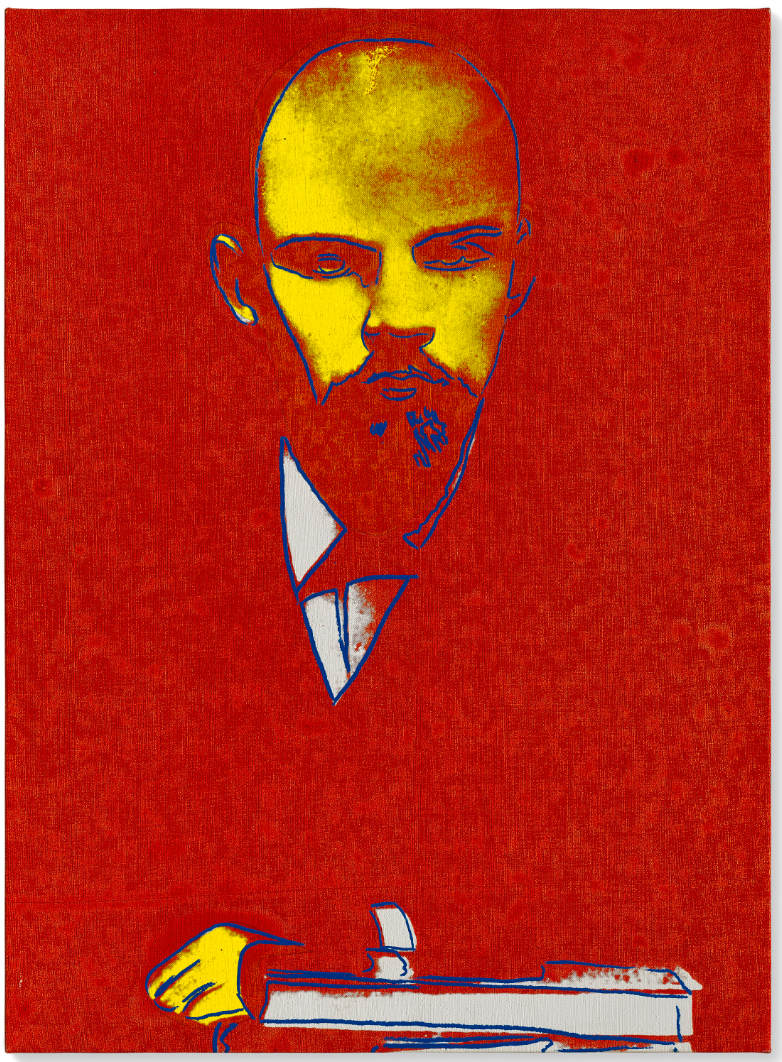
ANDY WARHOL
Lenin, 1986
Acrylic and silkscreen ink on canvas
22×16 inches (55.8 x 40.5cm)
Lenin, circa 1986
Phillips London: 15 October 2021
Estimated: GBP 400,000 – 600,000
GBP 428,400 / USD 589,352
Andy Warhol – 20th Century & Contemp… Lot 41 October 2021 | Phillips
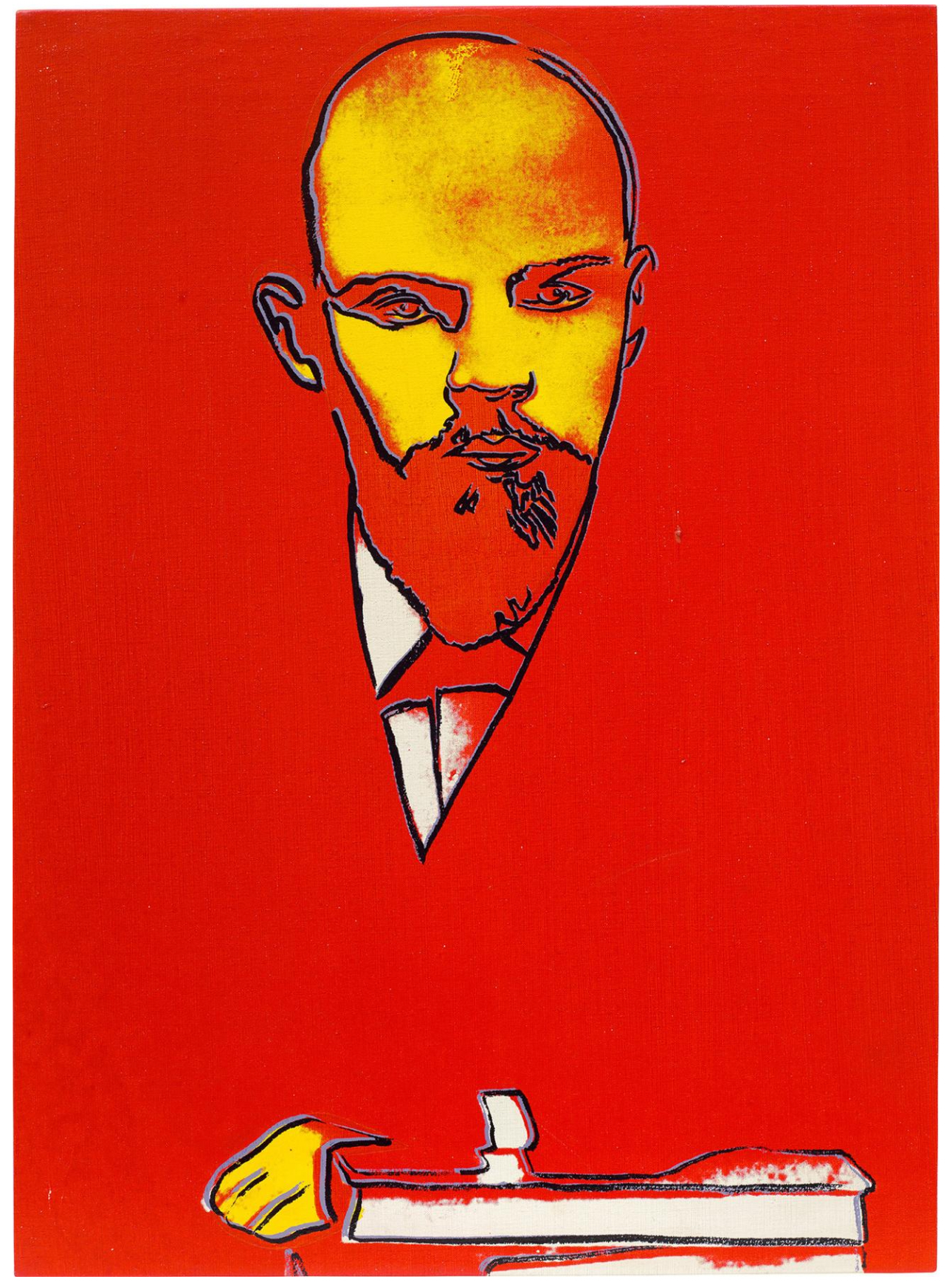
ANDY WARHOL
Lenin, circa 1986
Acrylic and silkscreen ink on canvas
21 7/8 x 15 7/8 inches (55.6 x 40.5 cm)
Stamped twice by the Estate of Andy Warhol and the Andy Warhol Foundation for the Visual Arts, Inc., New York
Numbered ‘PA81.016’ on the overlap
Stamped by the Andy Warhol Foundation for the Visual Arts, Inc., New York on the reverse
Early Paintings
Fragile, 1962
Sotheby’s London: 26 June 2024
Estimated: GBP 100,000 – 150,000
GBP 156,000 / USD 197,808
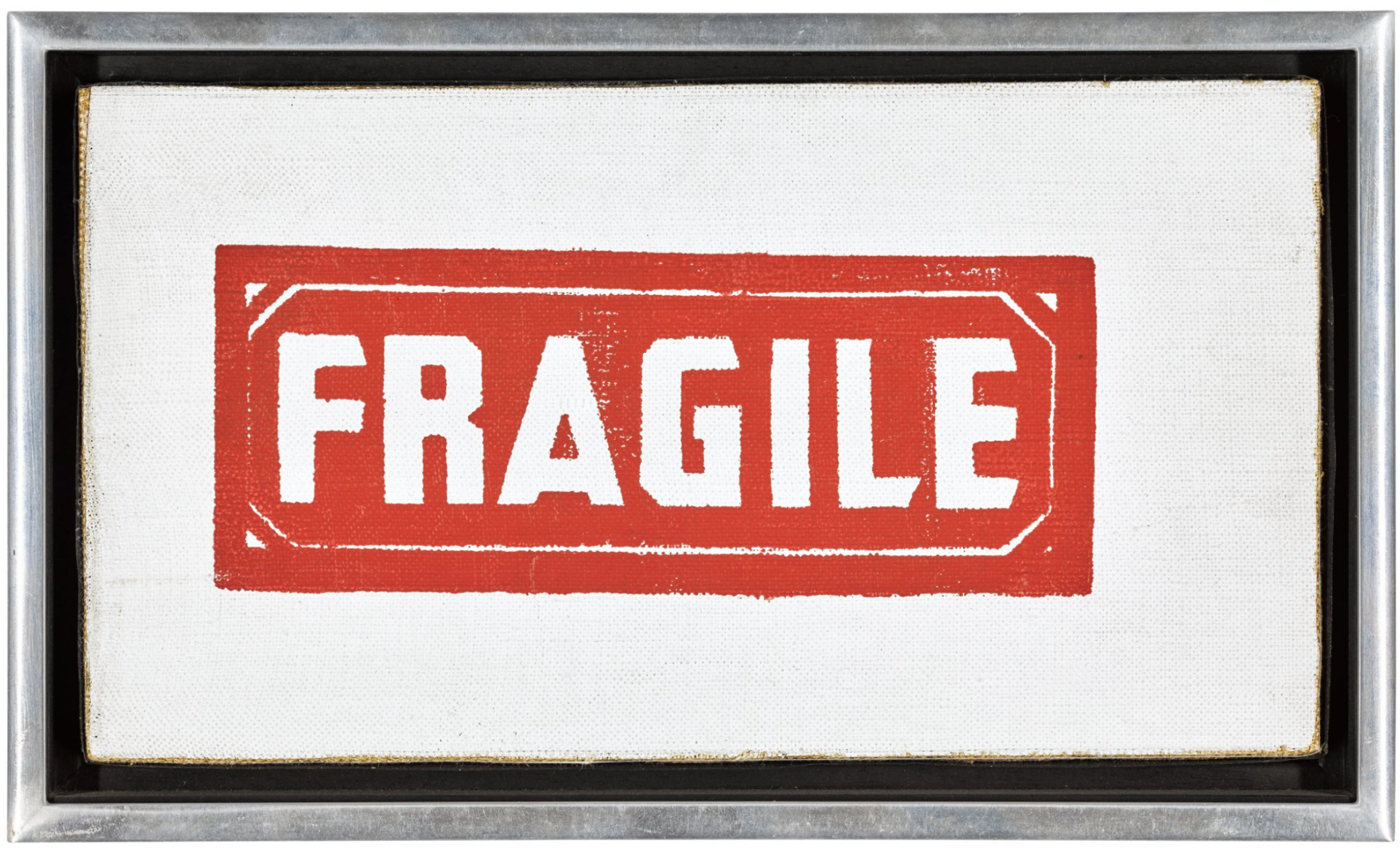
ANDY WARHOL (1928 – 1987)
Fragile, 1962
Silkscreen ink and graphite on linen laid down on canvas
5 1/4 x 9 1/2 inches (13.5 x 24 cm)
Executed in 1962, the present work marks a pivotal moment in Andy Warhol’s artistic evolution, where he left behind the gestural touch of the artist in favor of the controlled, mechanical impact of the silkscreen. Fragile belongs to one of Warhol’s first bodies of works, the Shipping Label series. The series comprises only 16 works where the artist presents shipping and handling labels across a monochrome canvas, either in single or repeated formats. Acquired in 1985, the present composition has been held in the Ralph I. Goldenberg Collection for over 38 years. Departing from traditional hand-painting or stamping techniques, Warhol opted for small silkscreens to achieve the repetitive effect seen in his Shipping Label series. In the present work, Warhol started with a pencil sketch to meticulously draft a template. Subsequently, he applied the silkscreen onto the canvas, precisely replicating the size of a real shipping stamp and embedding the reproduced label. The adoption of silkscreening marked the culmination of Warhol’s pursuit, meeting both his desired aesthetic and establishing a direct connection with the original source.
“In August ’62 I started doing silkscreens. The rubber-stamp method I’d been using to repeat images suddenly seemed too homemade; I wanted something stronger that gave more of an assembly-line effect. With silkscreening, you pick a photograph, blow it up, transfer it in glue onto silk, and then roll ink across it so the ink goes through the silk but not through the glue. That way you get the same image, slightly different each time. It was all so simple-quick and chancy. I was thrilled with it.”
1962, the year the present work was executed, was undoubtedly one of the most decisive years of Warhol’s career, propelling him onto the global stage through two groundbreaking exhibitions. His first-ever solo show took place at Ferus Gallery, Los Angeles, and his debut in New York happened at Stable Gallery. Unlike fellow Pop artists such as Roy Lichtenstein, who appropriated the Ben-day dots of comic books, Warhol meticulously hand-painted commonplace objects like dollar bills, advertisements, newspaper clippings, and his iconic Campbell Soup Cans, which made their debut at the acclaimed Ferus exhibition. Yet, unsatisfied by this manual approach, in 1962 he introduced rubber-stamps to affect a mechanical replication reminiscent of machine production, exemplified in his S + H Green Stamps and Airmail series.
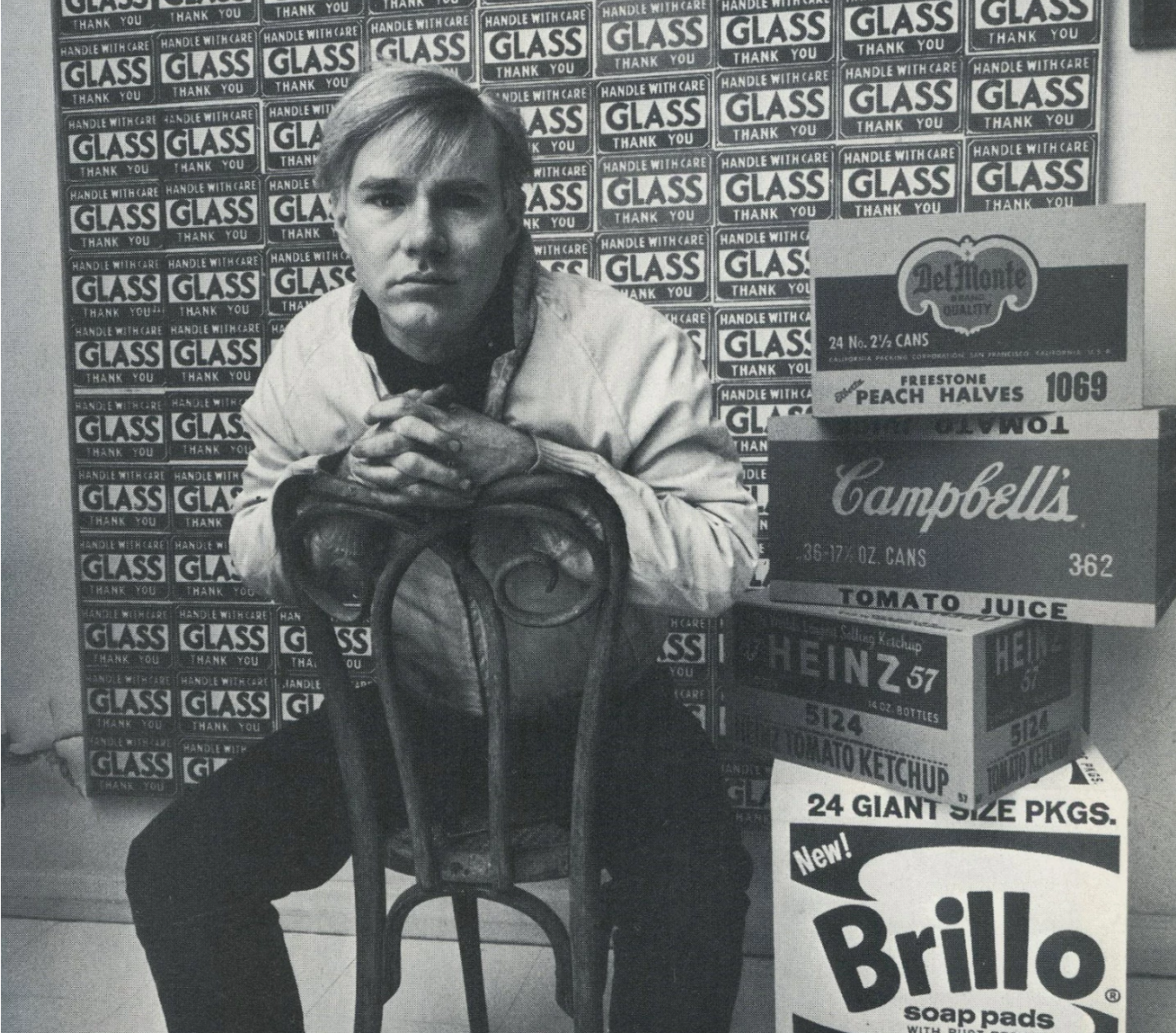
ANDY WARHOL AT THE STABLE GALLERY, NEW YORK, 1964
IMAGE: © KEN HEYMAN/BLACK STAR
ARTWORK: © 2024 ANDY WARHOL FOUNDATION FOR THE VISUAL ARTS/ DACS, LONDON
Despite the differences in subject matter, Warhol’s use of repetition and multiples across his body of work wielded a profound effect, simultaneously amplifying and commercializing the significance of his subjects. While the serial imagery of consumer goods like Coca-Cola bottles or Campbell’s Soup cans hinted at consumerism and mass production, Warhol elevated these everyday items to the realm of high art. In contrast to the bold, expressive brushstrokes of his Abstract Expressionist peers, Warhol displayed some delicacy, care and mechanical precision in his materials, preserving the individuality of each “fragile” stamp while adhering to a factory-like efficiency.
“Everybody looks alike and acts alike, and we’re getting more and more that way. I think everybody should be a machine…the reason I’m painting this way is that I want to be a machine.”
A signifier of something precious and valuable, Fragile serves as a prime example of Warhol’s playful appropriation of quotidian imagery. With his relentlessly repetitive compositions, the artist simultaneously intensified and played down the intended impact and meaning of his images whether celebrity portraits, dollar bills, or shipping labels. For example, in other works from the Fragile series, he recurrently displayed the label across the canvas. His intention was to limit his artistic intervention by abbreviating the creative act to a simple choice of source image and color. In Fragile we see Warhol pioneering and perfecting his craft; an important and transitional work that paved the way for the artist’s full immersion into an almost entirely mechanized mode of painterly production.
Red Airmail Stamp, 1962
Christie’s New-York: 10 November 2023
Estimated: USD 150,000 -200,000
USD 151,200
ANDY WARHOL (1928-1987) (christies.com)
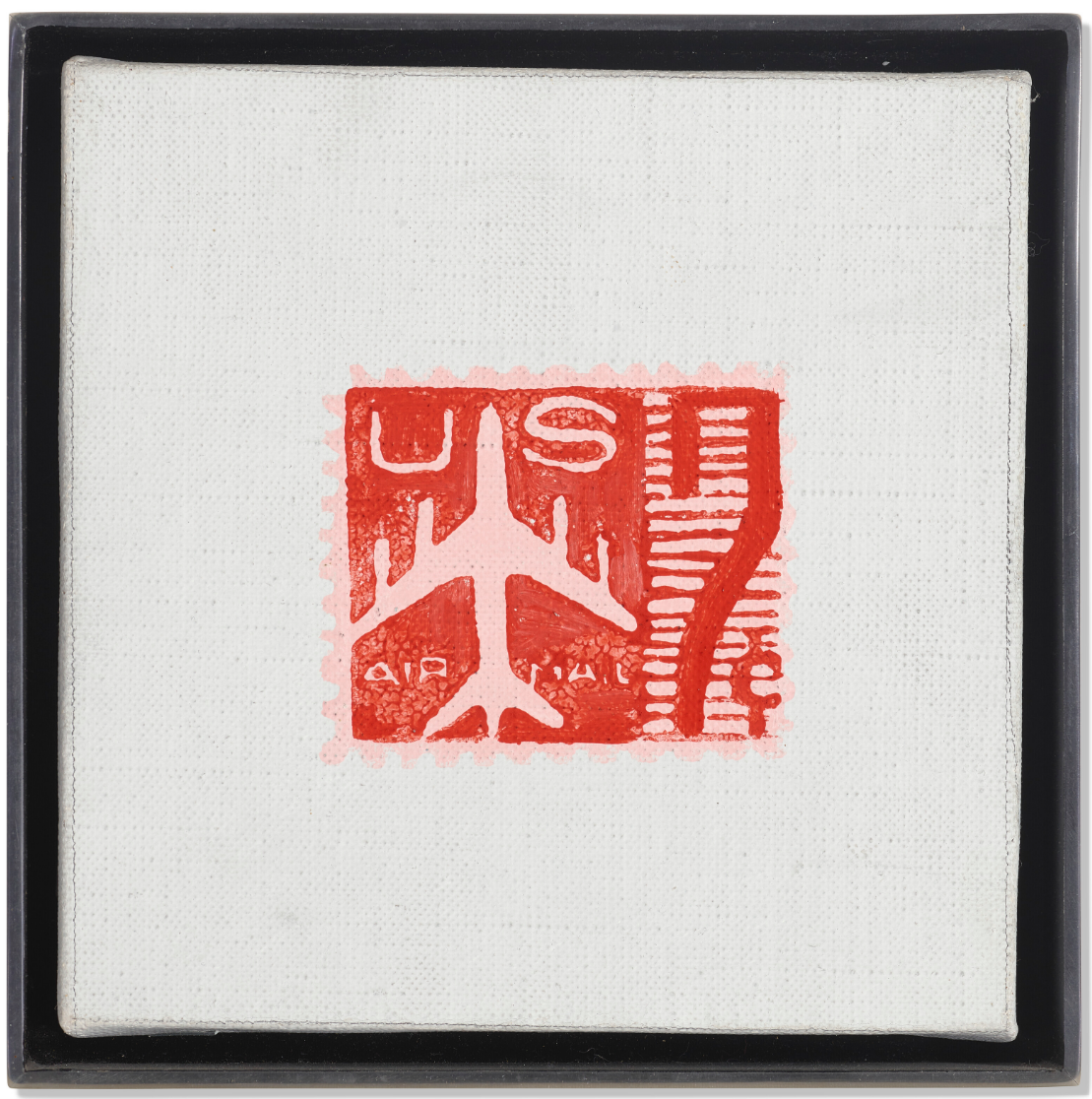
ANDY WARHOL (1928-1987)
Red Airmail Stamp, 1962
Acrylic and graphite on canvas
6×6 inches (15.2 x 15.2 cm)
Stamped twice with Estate of Andy Warhol and the Andy Warhol Foundation for the Visual Arts, Inc. stamps
Numbered three times ‘PA59.008’ (on the overlap)
Numbered again ‘PA.59.008’ (on the stretcher)
Martinson Coffee, 1962
Christie’s New-York: 11 May 2023
Estimated: USD 1,500,000 – 2,500,000
USD 1,986,000
ANDY WARHOL (1928-1987) (christies.com)
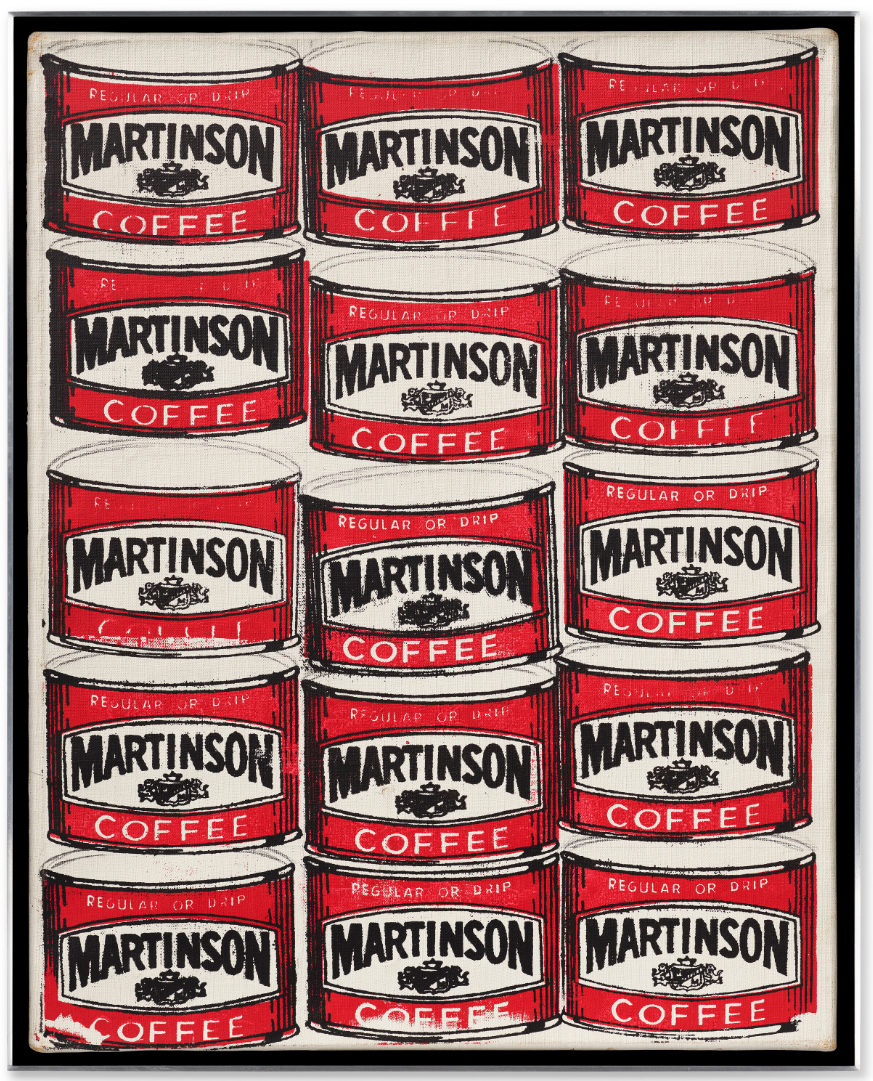
ANDY WARHOL (1928-1987)
Martinson Coffee, 1962
Silkscreen ink and graphite on canvas
20 1/8 x 16 1/8 inches (51.1 x 41 cm)
Signed and dated ‘Andy Warhol 1962’ (lower turning edge)
Signed again and dated again ‘Andy Warhol 1962’ (on the reverse)
An early example of the artist’s signature silkscreen technique, Andy Warhol’s Martinson Coffee (1962) stands out from his plentiful paintings of Coca-Cola bottles and Campbell’s Soup cans as being one of only four fully realized depictions of its subject matter. Stacking fifteen tins of Martinson grounds (“regular or drip”) at nearly life-scale, the present work presents a supermarket shelf of sorts, featuring that other American staple, coffee. Striking vermilion labels stand out against a pale canvas ground, overlaid with velvety black contours of the tins’ silhouette. Warhol used only two silkscreens—one for the red labels, and the other for the dark contours on top—and restrained the series to four fully executed examples, with two smaller versions depicting only the scarlet underlayer in duet. Elevated from an everyday beverage, Martinson cans bear a faux-royal insignia that simultaneously honors the company’s founder, Joe Martinson, and bestows upon the contents an overwrought social significance. In typical complex fashion, however, Warhol’s screening process begins to dissect his motif, running roughshod over his initial graphite grid and slipping out of serial alignment. By doing so, Warhol reminds that we are not, in fact, witnessing an overflowing rack of available products, but rather a two-dimensional representation of recognizable, if anachronistic, shapes and images. Each element floats above the one below, hovering in undefined, magical space, in what would be a striking feat for fifteen individual one-pound tins! Rather than defining its heft by physical measure, Martinson Coffee assumes its gravity in repetition—the canvas weighted down by the inescapable multiplication of morning brew. Tellingly, Warhol’s experiments in seriality reached an apex in the year of the present work, when he also created the monumental 100 Cans, 200 One Dollar Bills, and 210 Coca Cola Bottles.
Blue Airmail Stamps, 1962
Sotheby’s New-York: 16 May 2022
Estimated: USD 700,000 – 900,000
USD 1,320,500
Blue Airmail Stamps | The Macklowe Collection | 2022 | Sotheby’s (sothebys.com)
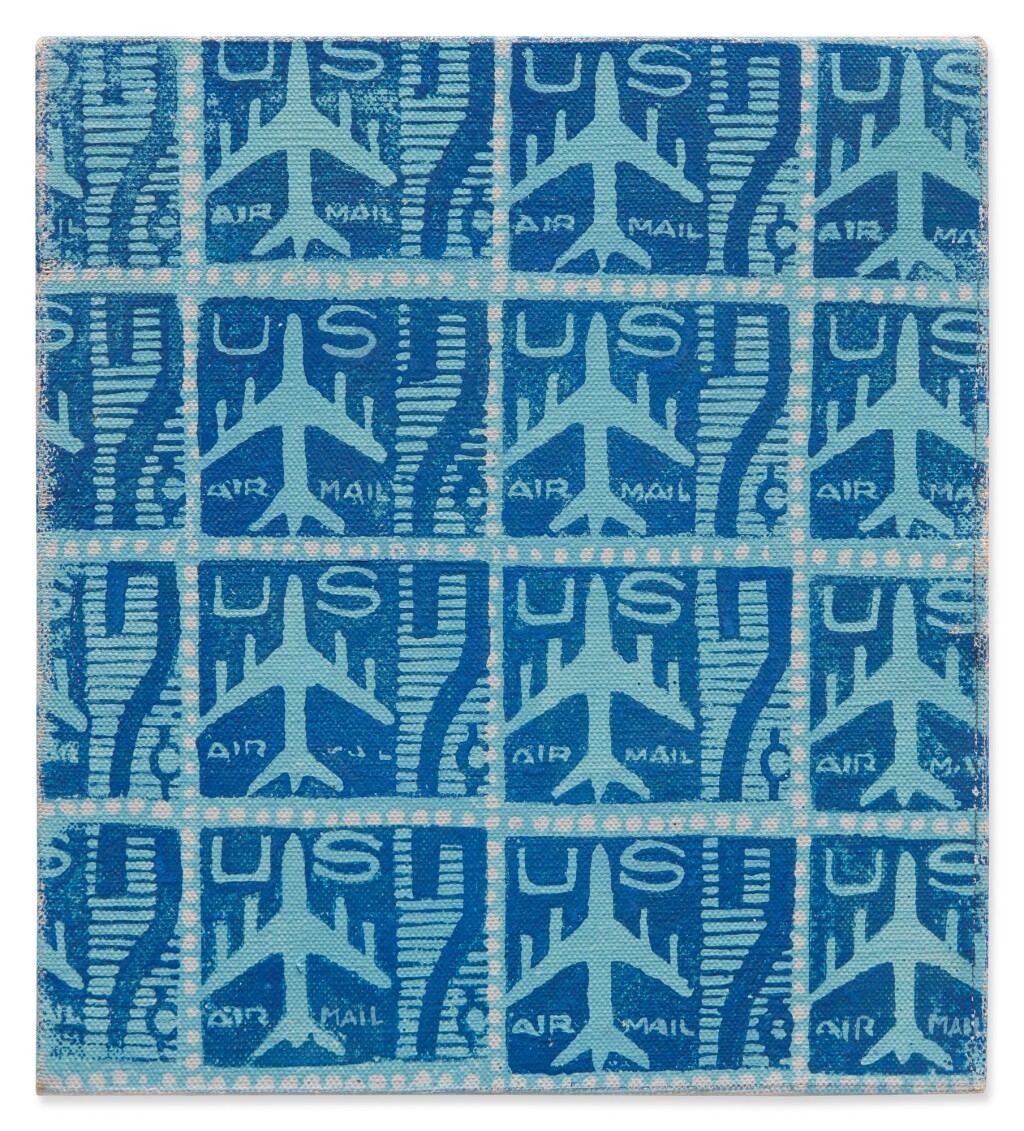
ANDY WARHOL
Blue Airmail Stamps, 1962
Acrylic on canvas
10.2 x 9 inches (26 x 22.9 cm)
Blue Airmail Stamps by Andy Warhol is one of a rare group of six early paintings from 1962, depicting sheets of US Mail stamps, that mark the very beginnings of the artistic enterprise that gave rise to the Pop art movement in the United States. Continuing the tradition of Marcel Duchamp, Warhol appropriated everyday imagery as the subject matter for his paintings. In a seismic break from the reigning school of Abstract Expressionism, Warhol restored representation and objective imagery to painting in the startling guise of common objects such as Campbell’s Soup Cans, comics, magazine advertisements and newspaper headlines. Blue Airmail Stamps is also an early declaration of another long-lasting cornerstone of Warhol’s aesthetic practice: seriality. Seeking a form of pure reproduction that was capable of multiple repetitions with great efficiency, Warhol experimented with various techniques to de-personalize the production of his artworks while endlessly repeating a single image. The perforated sheets of S&H Green Stamps and United States postal air mail stamps would prove to be ideal subjects for this endeavor.
Works on Paper
PLEASE CLICK BELOW FOR ANDY WARHOL WORKS ON PAPER
Collaboration with Jean-Michel Basquiat
At the time of their first official introduction in the fall of 1982, Basquiat was a young artist only just gaining establishment recognition, while Warhol had already been an international sensation for nearly twenty years. The duo were first formally acquainted through Bruno Bischofberger, who brought Basquiat to the Factory to have his portrait taken by Warhol. Following the photoshoot, all three had lunch, but Basquiat abruptly left, returning an hour or so later with a still wet painterly iteration of their double Polaroid portrait. Warhol was stunned by Basquiat’s speed, and Dos Cabezas, Basquiat’s portrait, spurred the collaboration that would subsequently blossom.
READ ABOUT JEAN-MICHEL BASQUIAT / ANDY WARHOL COLLABORATION
FIND HISTORICAL AUCTION RESULTS
Collaboration, 1983-1985
Christie’s London: 13 October 2023
Estimated: GBP 1,000,000 – 1,500,000
GBP 1,613,000
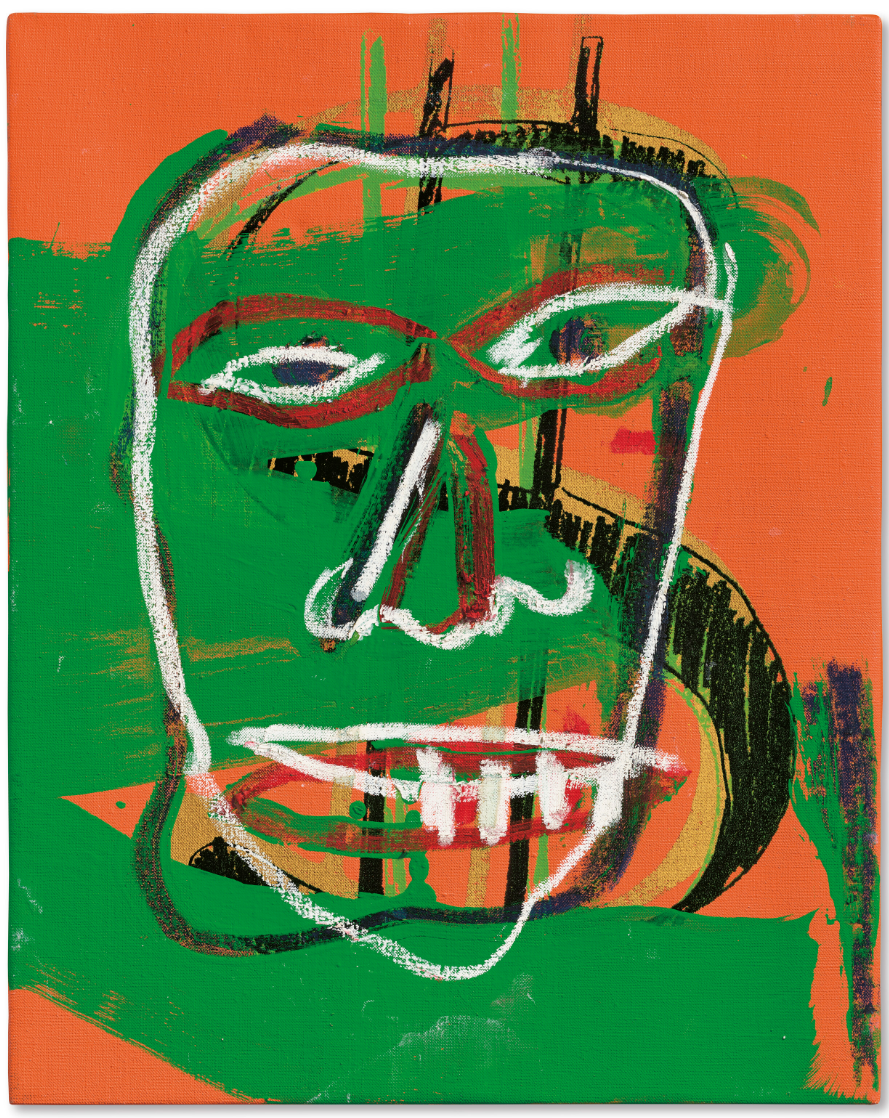
ANDY WARHOL & JEAN-MICHEL BASQUIAT (1928-1987 & 1960-1988)
Collaboration, 1983-1985
Acrylic, oilstick and silkscreen ink on canvas
20×16 inches (51.2 x 40.6 cm)
Eggs, 1986
Christie’s New-York: 18 May 2023
Estimated: USD 150,000 – 200,000
USD 302,400
ANDY WARHOL (1928-1987) AND JEAN-MICHEL BASQUIAT (1960-1988), Eggs | Christie’s (christies.com)
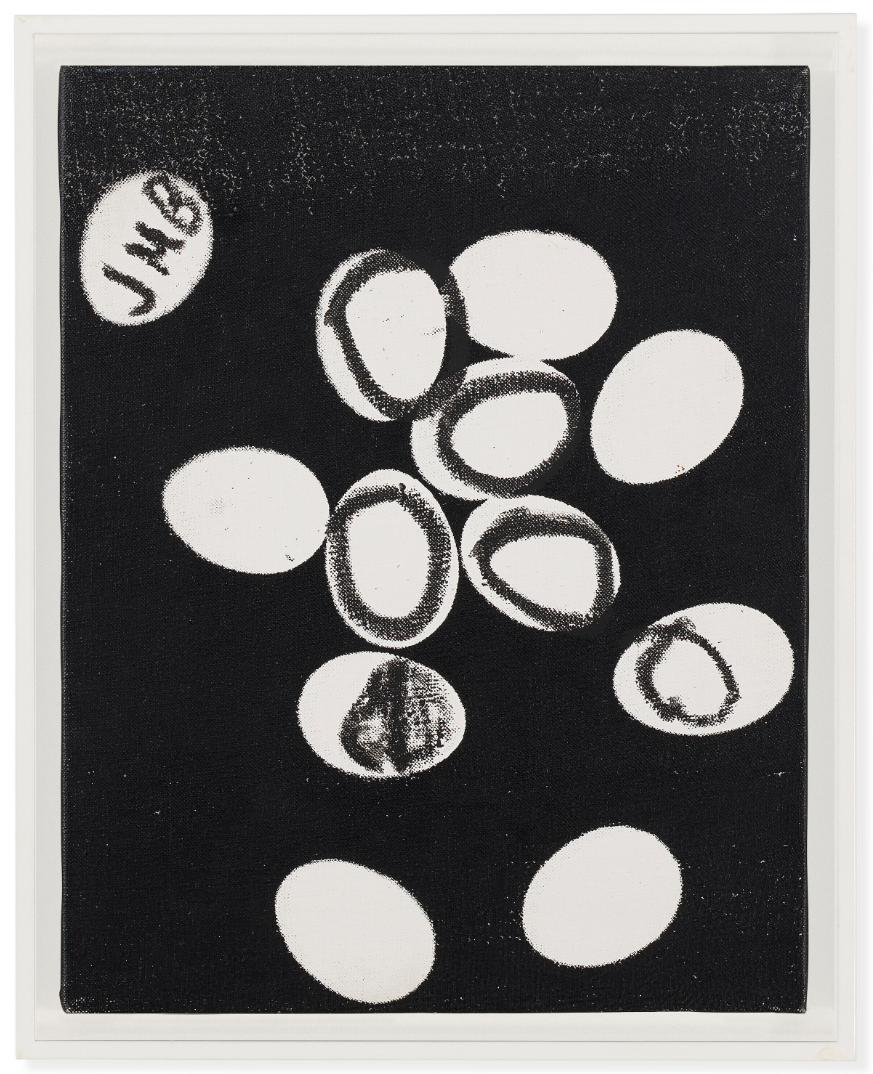
ANDY WARHOL (1928-1987) AND JEAN-MICHEL BASQUIAT (1960-1988)
Eggs, 1986
Acrylic, silkscreen ink and oilstick on canvas
14×11 inches (35.5 x 27.9 cm)
Signed with Jean-Michel Basquiat’s initials ‘JMB’ (upper left)
Stamped with the Estate of Andy Warhol and numbered ‘D100.996’ (on the reverse)
1/2 Keep Frozen, 1984-1985
Christie’s New-York: 17 November 2022
Estimated: USD 2,000,000 – 3,000,000
USD 3,060,000
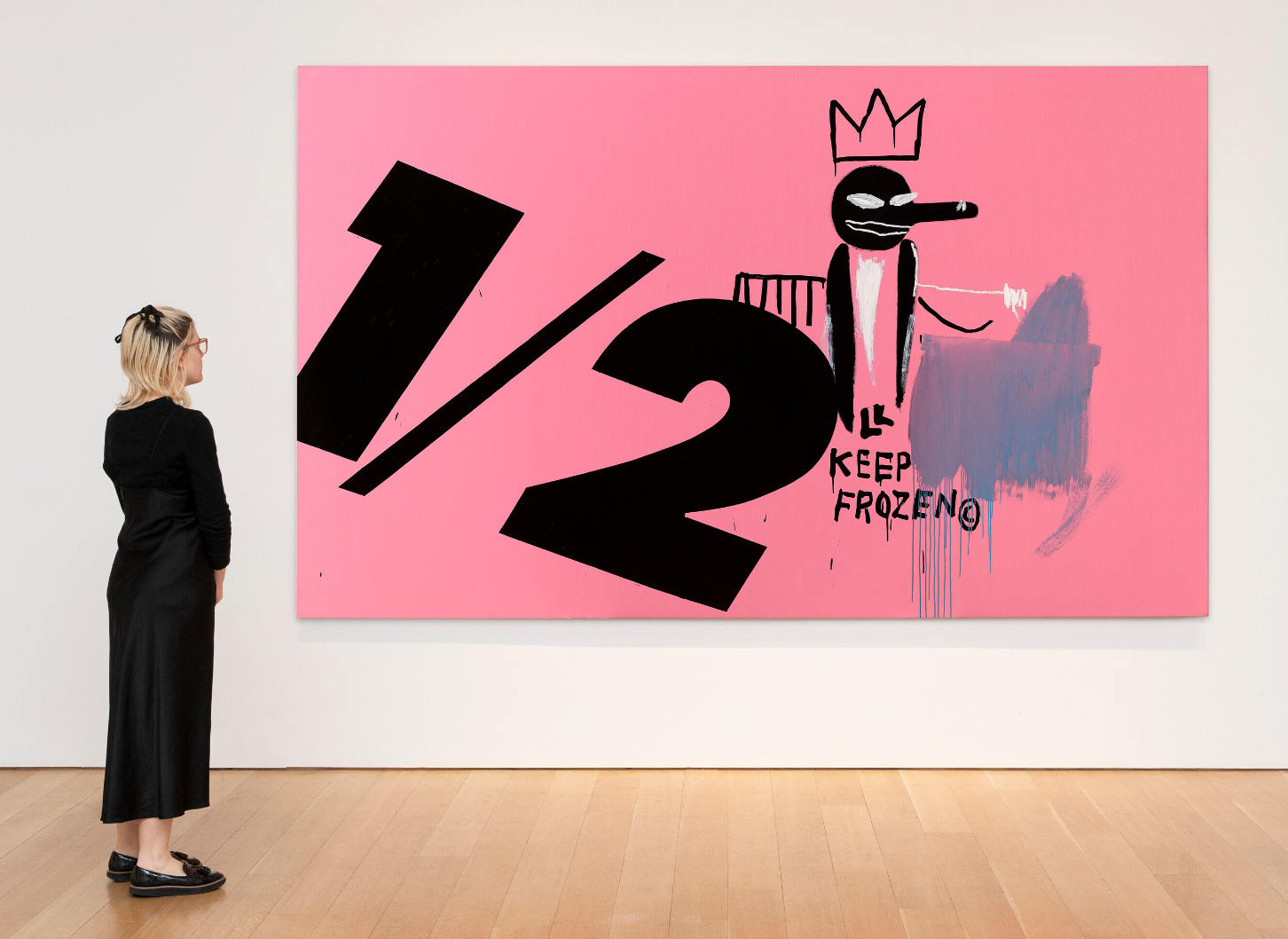
ANDY WARHOL (1928-1987) AND JEAN-MICHEL BASQUIAT (1960-1988)
1/2 Keep Frozen, 1984-1985
Acrylic and oilstick on canvas
76 1/8 x 125 3/4 inches (193 x 319.5 cm)
Signed, stamped with the Estate of Andy Warhol and the Andy Warhol Foundation for the Visual Arts, Inc. stamp
Numbered ‘Andy Warhol Jean-Michel Basquiat PA99.027’ (on the overlap)
Bananas, 1984-1985
Phillips New-York: 23 June 2021
Estimated: USD 4,000,000 – 6,000,000
USD 4,300,000
Jean-Michel Basquiat and Andy Warhol – … Lot 12 June 2021 | Phillips
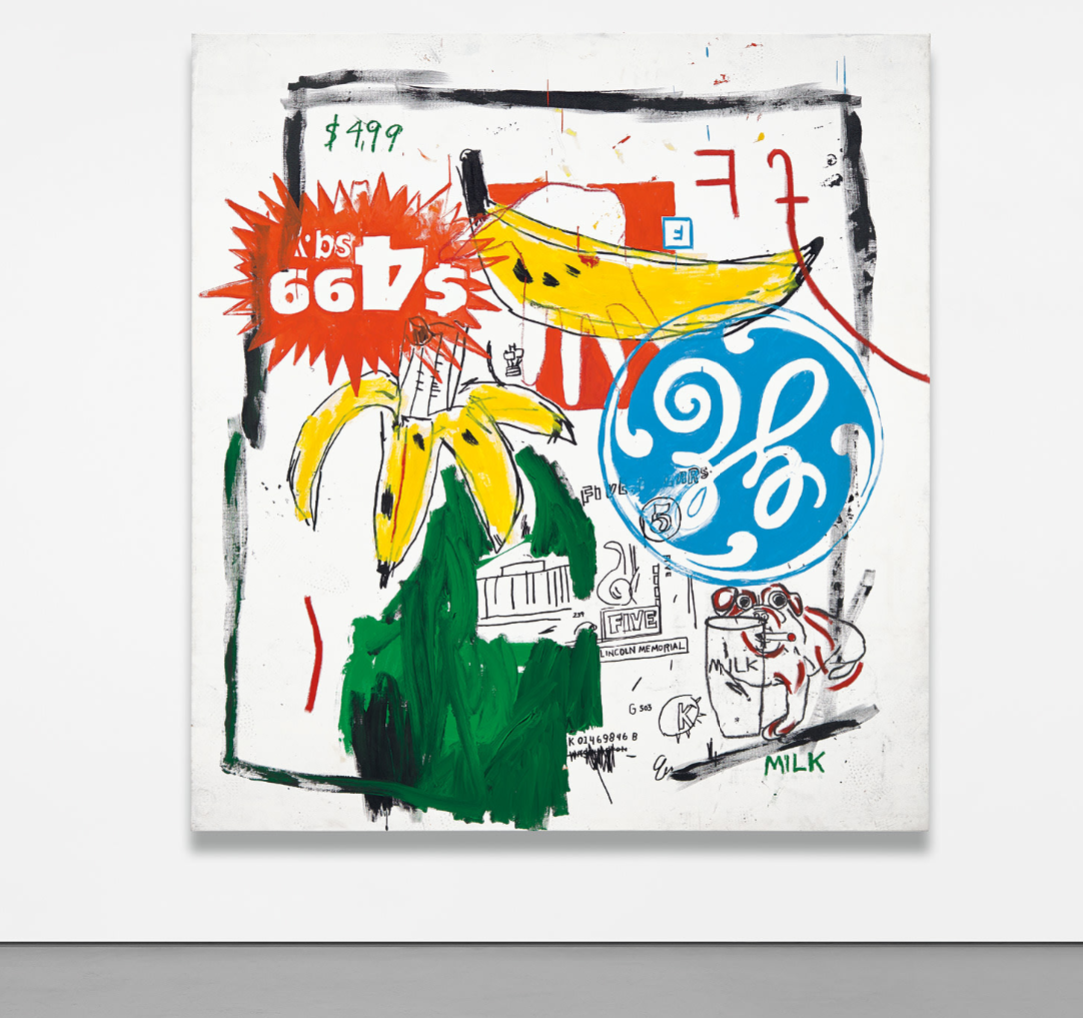
JEAN-MICHEL BASQUIAT and ANDY WARHOL
Bananas, 1984-1985
Acrylic, silkscreen ink and oilstick on canvas
87 3/4 x 81 3/8 inches (222.9 x 206.7 cm)
Andy Warhol Prints
PLEASE CLICK BELOW FOR ANDY WARHOL PRINTS MARKET OVERVIEW