
Few artists have managed to distill the visual language of modern life with the clarity and elegance achieved by Alex Katz. Over a career spanning more than seven decades, Katz has developed a distinctive pictorial style characterized by large-scale portraits, flattened forms, bold color fields, and a refined economy of means. His work sits at a fascinating intersection between representation and abstraction, bridging mid-century modernism, Pop art, and contemporary figurative painting. Katz is widely celebrated for his portraits of friends, family, poets, dancers, and cultural figures, as well as his striking landscapes and flower paintings, all executed with a deceptively simple aesthetic that captures fleeting moments of modern life. His imagery reflects an atmosphere of cool detachment and immediacy, often compared to the visual rhythms of cinema and advertising.
Today Katz is regarded as one of the most influential figurative painters of the postwar era, with works held in major museum collections worldwide and a market that has grown steadily as collectors increasingly recognize the importance of his radical visual language.
Introduction
Alex Katz was born in 1927 in Brooklyn, New York, to Russian Jewish immigrants who were deeply engaged in cultural life. His parents encouraged artistic and intellectual pursuits, exposing him early to poetry, theater, and visual arts. In 1946 Katz enrolled at the Cooper Union, where he studied painting and developed a strong technical foundation. After graduating in 1949 he attended the Skowhegan School of Painting and Sculpture, an experience that profoundly shaped his artistic direction.
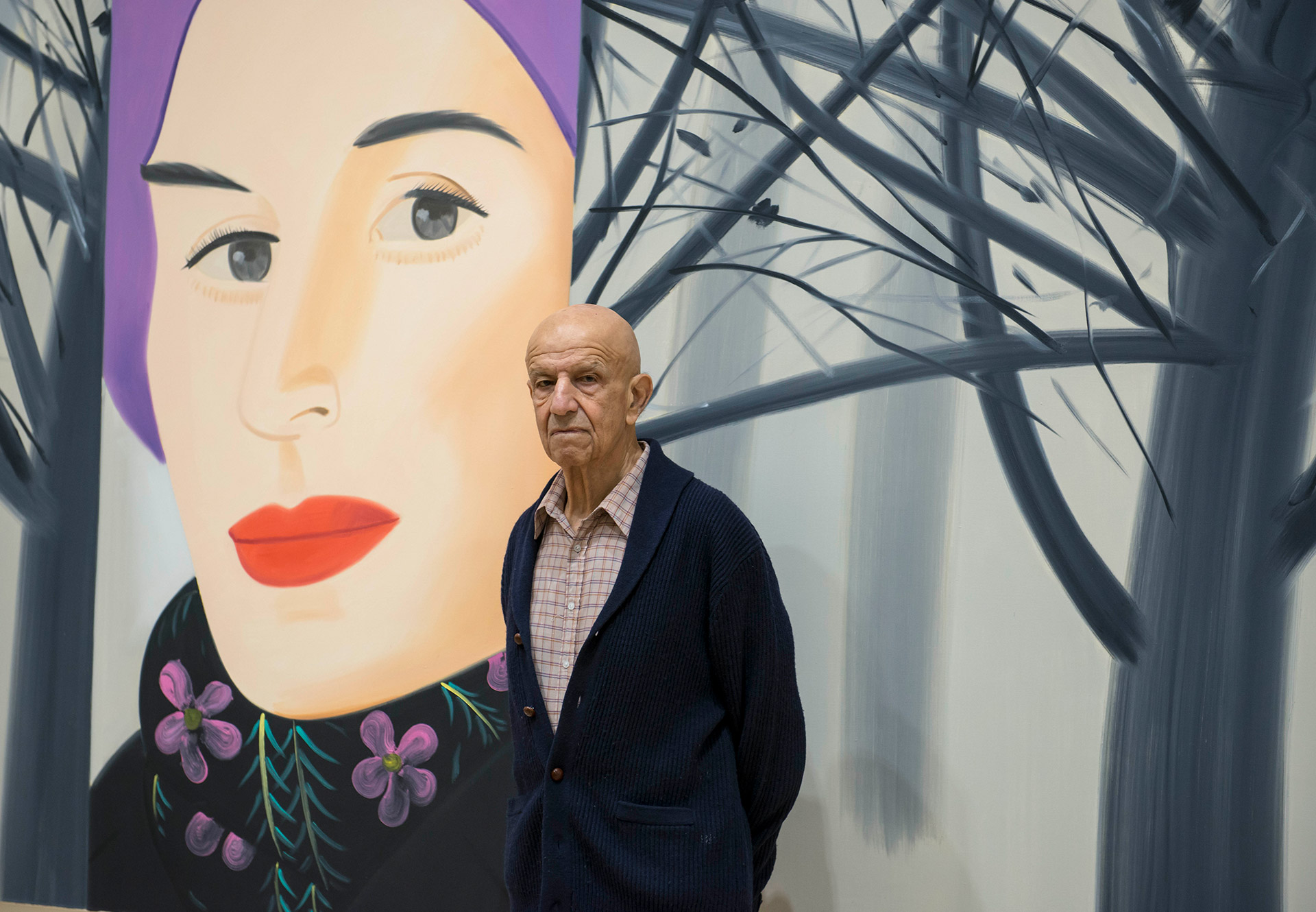
At Skowhegan, Katz was introduced to plein-air painting and direct observation, encouraging a spontaneous and immediate approach to imagery. This method would later inform both his landscapes and the immediacy of his portraiture.
Development of a Distinctive Style
By the mid-1950s Katz had begun developing the visual language that would define his career. At a time when Abstract Expressionism dominated the New York art scene, Katz pursued figurative painting, though he absorbed the movement’s large scale and gestural freedom. His innovation lay in reducing imagery to flat color planes and crisp outlines, eliminating unnecessary detail to produce images that feel both immediate and monumental.
This aesthetic would later resonate with the emergence of Pop Art, though Katz had begun exploring these ideas independently before Pop art fully emerged.
Artistic Language and Technique
Katz’s paintings are instantly recognizable for their flattened surfaces and graphic clarity. Rather than modeling figures through traditional shading, he constructs compositions using large uniform color fields, creating a visual effect that feels both modern and timeless. Key characteristics include: crisp silhouettes, minimal brushwork, large uninterrupted areas of color, dramatic cropping and cinematic framing. This reduction allows Katz to focus on the sensation of a moment rather than narrative storytelling.
Beginning in the late 1950s, Katz started producing large-format paintings, some spanning several meters. These works were radical at the time: figurative painting was rarely executed on such a monumental scale. The impact is immediate. Faces and figures become almost architectural presences, confronting the viewer with a quiet intensity. Those large-scale canvases are painted with blunt, austere figures set against a monochrome background, omitting most, if not all, context. The occupants of his paintings are left seeming emotionless, and their severe, even graphic representation rejects any attempt at sentimental engagement. This approach would later influence generations of painters, particularly in contemporary figurative painting.
Katz is known for painting quickly, often completing works in a single session or limited number of sittings. This method preserves the freshness of perception, allowing his paintings to capture the immediacy of visual experience, much like a photographic snapshot or film still. The approach reflects Katz’s desire to capture what he calls “quick things passing.”
Portraiture: The Core of Katz’s Work
His portraits also depict prominent figures in the cultural scene of New York, including poets, choreographers, and artists associated with the New York School. Notable examples include portraits of Frank O’Hara or John Ashbery. Through these portraits, Katz created a visual chronicle of the intellectual and artistic life of postwar New York.
Landscapes and Flowers
These works often feature: tree canopies, reflections on water, expanses of sky, seasonal foliage. The compositions are radically simplified, transforming natural scenery into near-abstract color compositions. Similarly, Katz’s flower paintings magnify botanical subjects to monumental scale. By cropping the imagery and enlarging the forms, Katz transforms familiar motifs into immersive visual experiences.
Cut-Outs: Painting in Space
In the late 1950s Katz began experimenting with cut-out paintings, a unique sculptural extension of his work. Instead of traditional canvases, figures are painted on shaped panels and then cut out and installed directly in space.
These works blur the boundary between painting and sculpture, anticipating later developments in installation art and expanding the viewer’s physical relationship to the image.
Prints and Works on Paper
Works on paper have played a significant role throughout Katz’s career. His printmaking practice includes: lithographs, screenprints, woodcuts and aquatints. These prints often revisit themes from his paintings, particularly portraits and flowers, but explore new graphic possibilities through color layering and texture.
Because Katz’s style relies on bold shapes and flat colors, it translates exceptionally well to printmaking, making these works particularly popular among collectors.
Institutional Recognition
Today, Katz’s work is recognized worldwide, but his popularity is most apparent within the United States, and is held in many of the country’s largest and well known collections including the Museum of Modern Art, New York; the Metropolitan Museum of Art, New York; the National Gallery, Washington, DC; and the Art Institute of Chicago.
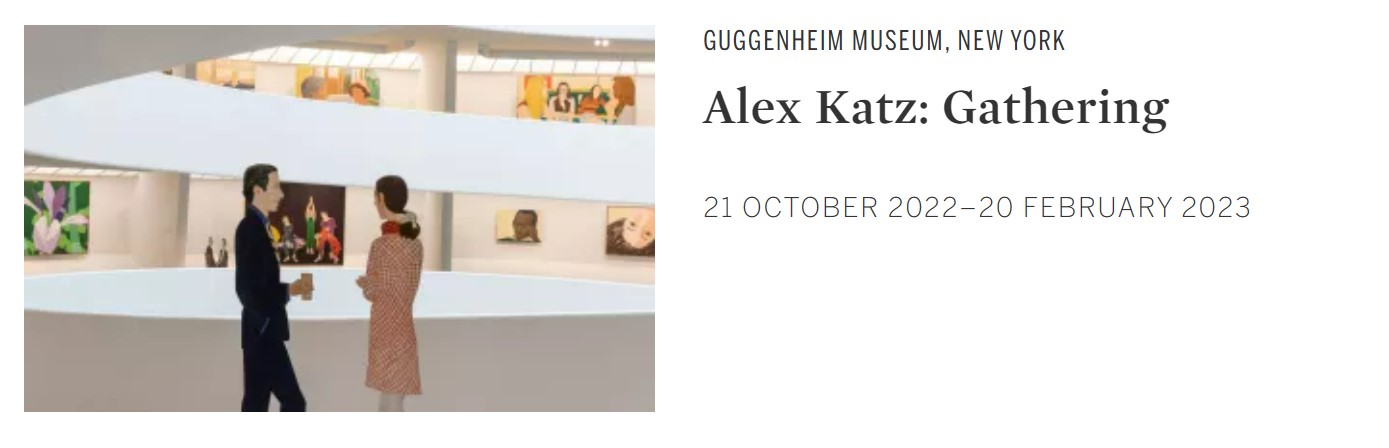
Having been featured in nearly 500 group shows internationally and in over 200 solo exhibitions since 1951, Alex Katz has been honored with numerous retrospectives around the globe. His work has been shown in some of the most prestigious museums in the world, such as the Whitney Museum of American Art, New York, the Tate, London, the Albertina Museum in Vienna and The Guggenheim in Bilbao. His recent career-spanning retrospective at the Solomon R. Guggenheim Museum in New York has been highly praised by critics and enhanced an already strong demand from collectors and institutions internationally.
Gallery Representation
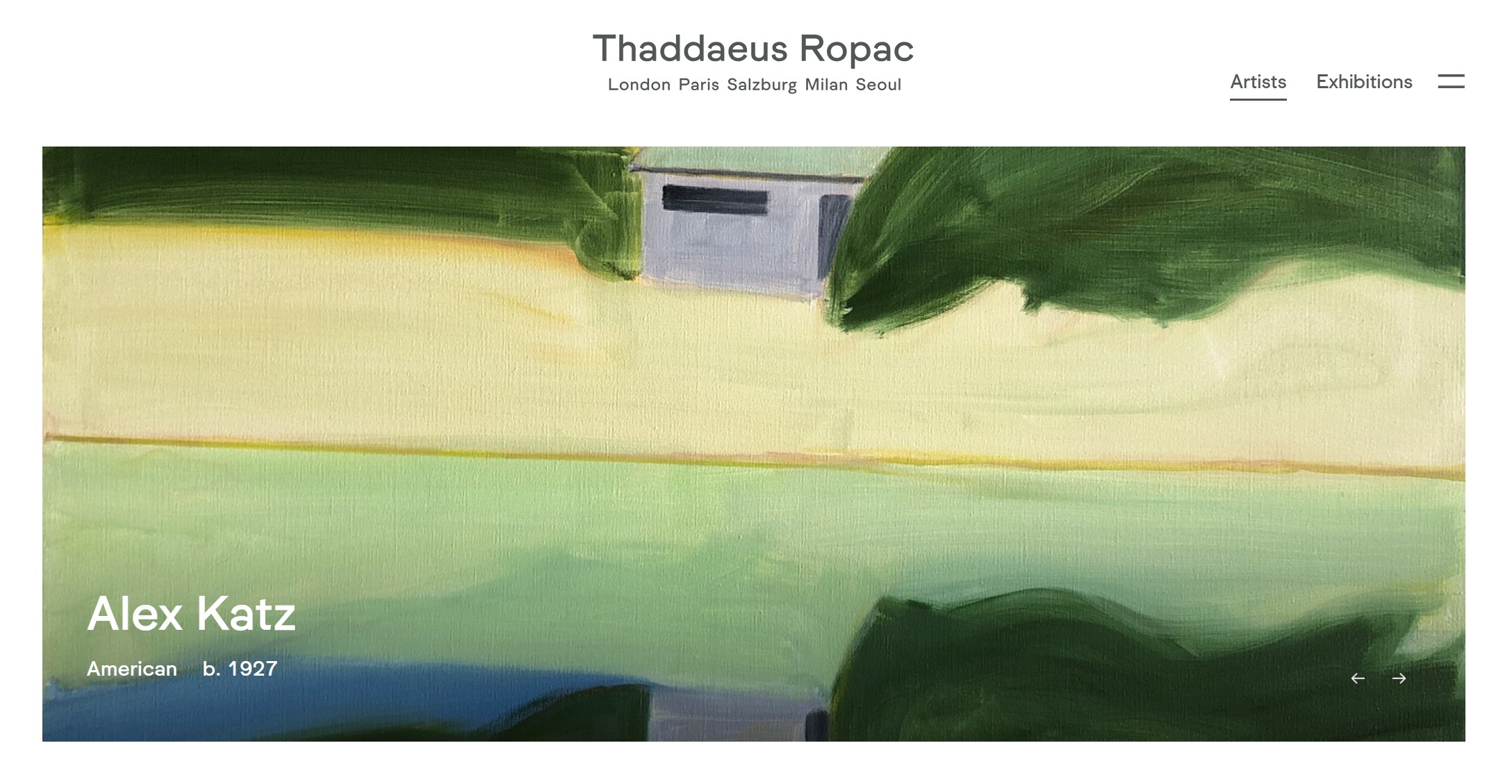
Alex Katz is represented by several major international galleries, reflecting his strong market presence. Key galleries include: Gavin Brown’s Enterprise, Gladstone Gallery, Thaddaeus Ropac, or Timothy Taylor Gallery. Through these galleries Katz continues to exhibit widely across Europe, Asia, and the United States.
Artist Website
Alex Katz’s influence on contemporary art is profound. Many younger artists working today draw inspiration from his approach to simplified figuration, bold color fields, cinematic cropping, and large-scale portraiture His work anticipated key developments in contemporary figurative painting, influencing artists across Europe and the United States. At nearly a century old, Katz remains remarkably active, continuing to produce paintings that maintain the clarity, elegance, and immediacy that have defined his career.
PART I: SUMMARY
Auction Market Overview
2025 AUCTION STATISTICS
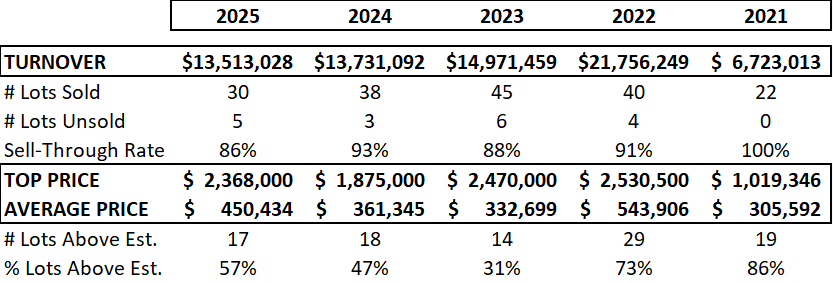
Turnover: USD 13,513,028
-1.6% vs. 2024
# Lots sold: 30
Sell-Through Rate: 86%
MARKET SEGMENTATION
New-York (58.5%) / London (28.5%) / Hong-Kong (12.4%)
(By value)
Highest Price Achieved at Auction:
Blue Umbrella, 1972
Phillips London: 2 October 2019
GBP 3,375,000 / USD 4,161,284
In recent years Alex Katz’s market has seen strong growth, particularly for large-scale portraits and iconic compositions. Collectors are drawn to the timeless elegance of his imagery, his historical importance bridging modernism and contemporary figurative painting, and the accessibility and visual impact of his style. Major paintings have reached multi-million-dollar prices at auction, while prints and works on paper remain a vibrant segment of the market.
Auction Summary
2025 Auction Highlights
30 lots sold at auction in 2025 for a total turnover of USD 13,513,028. With 5 lots failing to sell, the sell-through rate is 86%. The highest price in 2025 was achieved by Good Afternoon 2, a painting dated 1974, that sold at Sotheby’s in New-York on 16 May 2025 for USD 2,368,000.
2025 Top 3 Lots
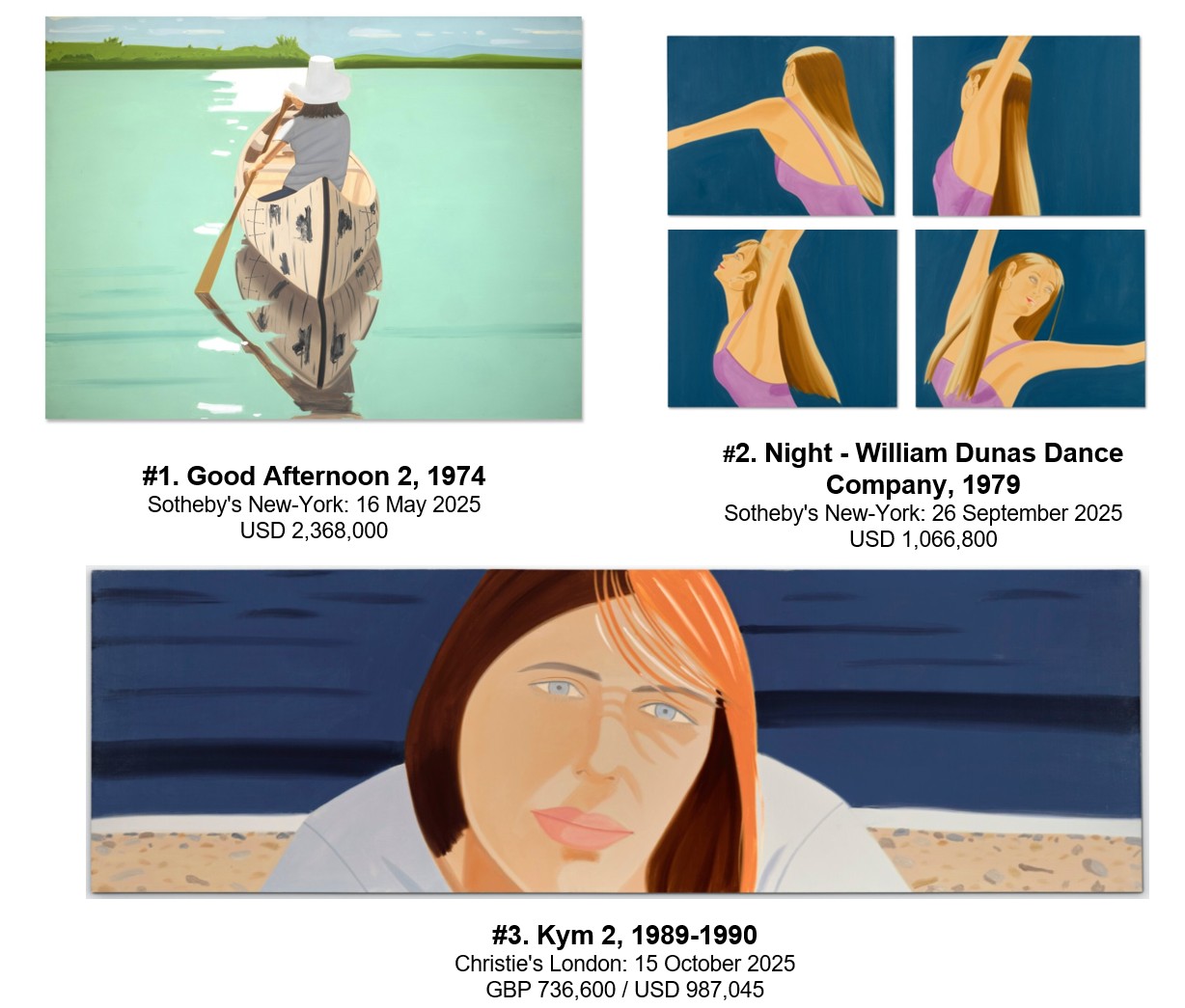
2 lots sold for more than USD 1 million, generating a cumulative turnover of USD 3,434,800, representing 25.4% of the total turnover of 2025. 11 lots sold for more than USD 500,000, generating a cumulative turnover of USD 10,646,998, representing 78.8% of the total turnover for 2025.
2024 Auction Highlights
38 Lots sold at auction in 2024 for a total turnover of USD 13,731,092. With 3 lots failing to sell, the sell-through rate is 93%. The highest price was achieved at Sotheby’s in New-York on 14 May 2024, when May, a painting dated 1996, sold for USD 1,875,000, well ahead of its pre-sale estimates range of USD 500-700k.
2024 Top 3 Lots
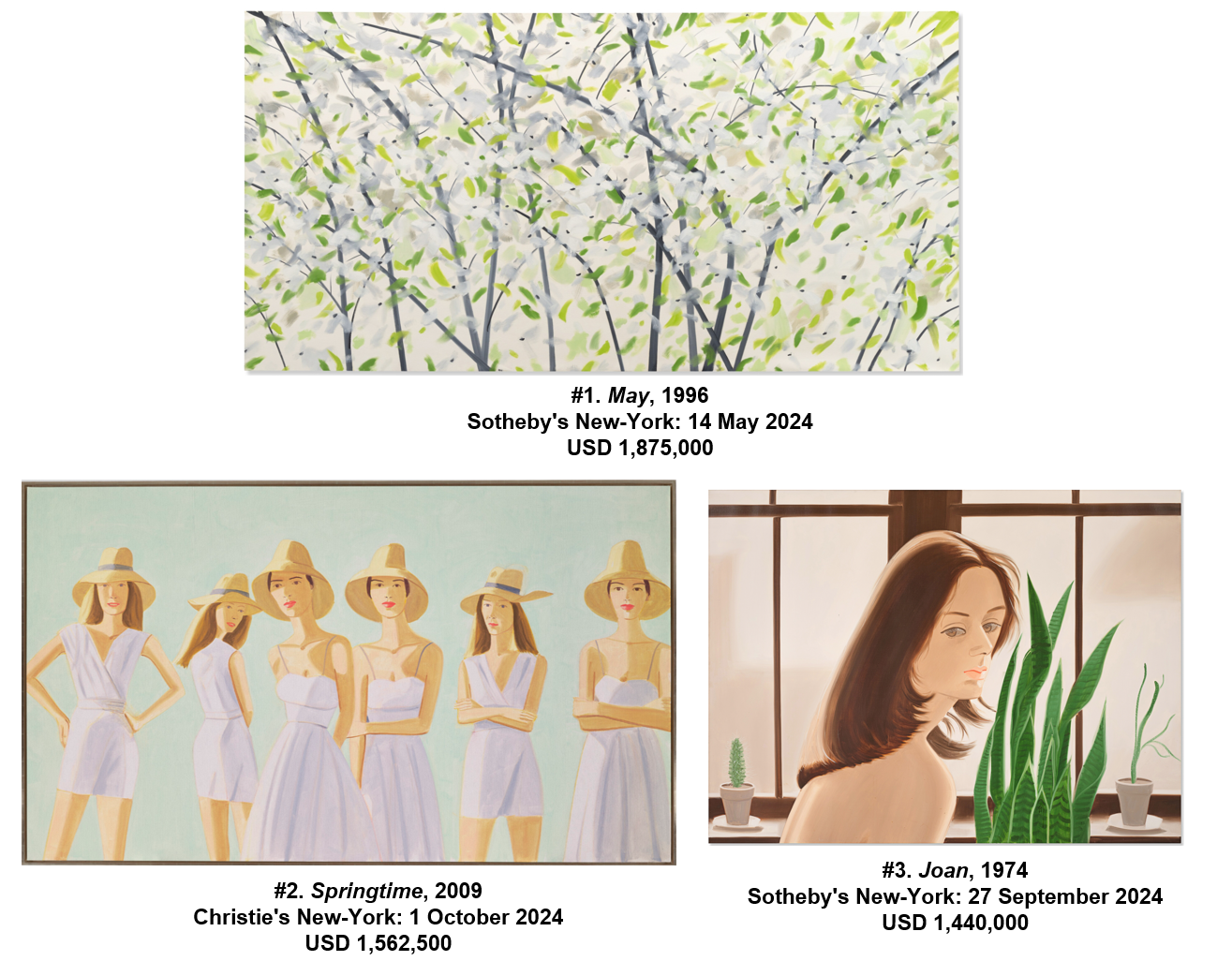
3 lots sold for more than USD 1 million, generating a cumulative turnover of USD 4,877,500, representing 35.5% of the total for 2024. 10 lots sold for more than USD 500,000, generating a cumulative turnover of USD 9,670,731, representing 70.4% of the total turnover for 2024.
2023 Auction Highlights
44 lots sold at auction in 2023 for a total turnover of USD 14,984,261. With 6 lots unsold, the sell-through rate is a strong 8%. The highest price for 2023 was achieved at Christie’s in New-York on 11 May 2023, when Red Band (1978) sold for USD 2,470,000.
2023 Top 3 Lots
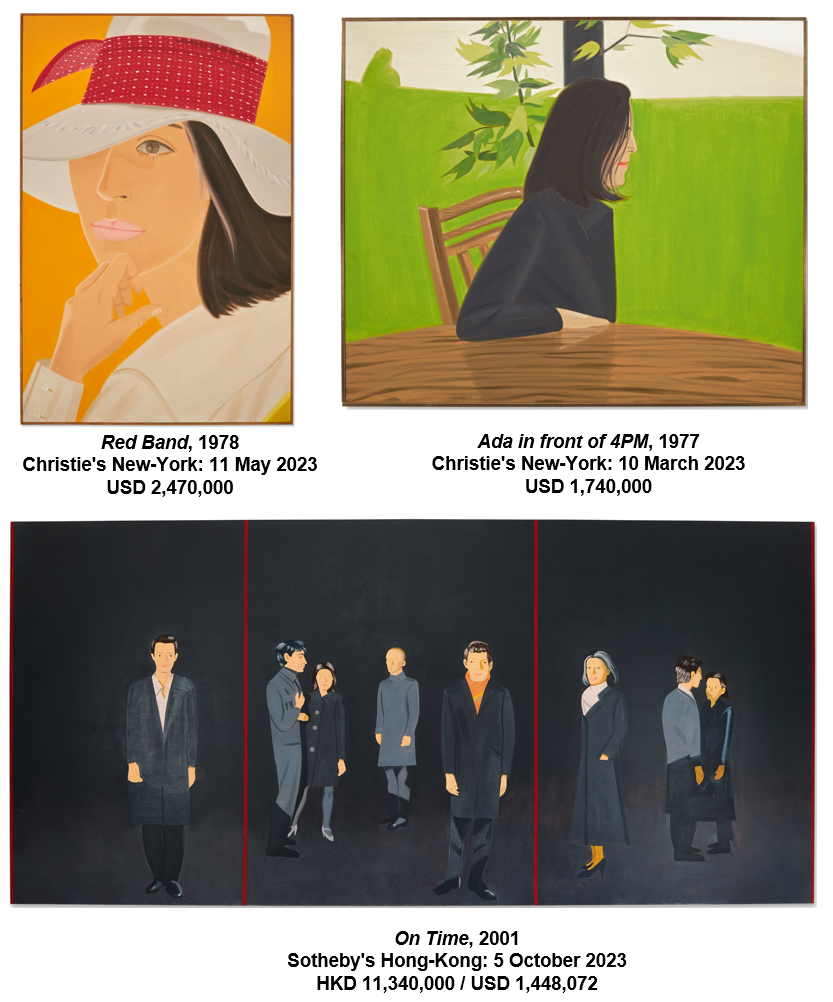
4 lots sold above USD 1 million for a cumulative turnover of USD 7,039,072, representing 47% of the total turnover for 2023.
2022 Auction Highlights
40 lots sold at auction in 2022 for a total turnover of USD 21,756,249. With only 4 lots failing to sell, the sell-through rate is a solid 91%. The highest price of 2022 was achieved by East Interior, a painting dated 1979, that sold for USD 2,530,500 at Sotheby’s in New-York on 19 May 2022.
2022 Top 3 Lots
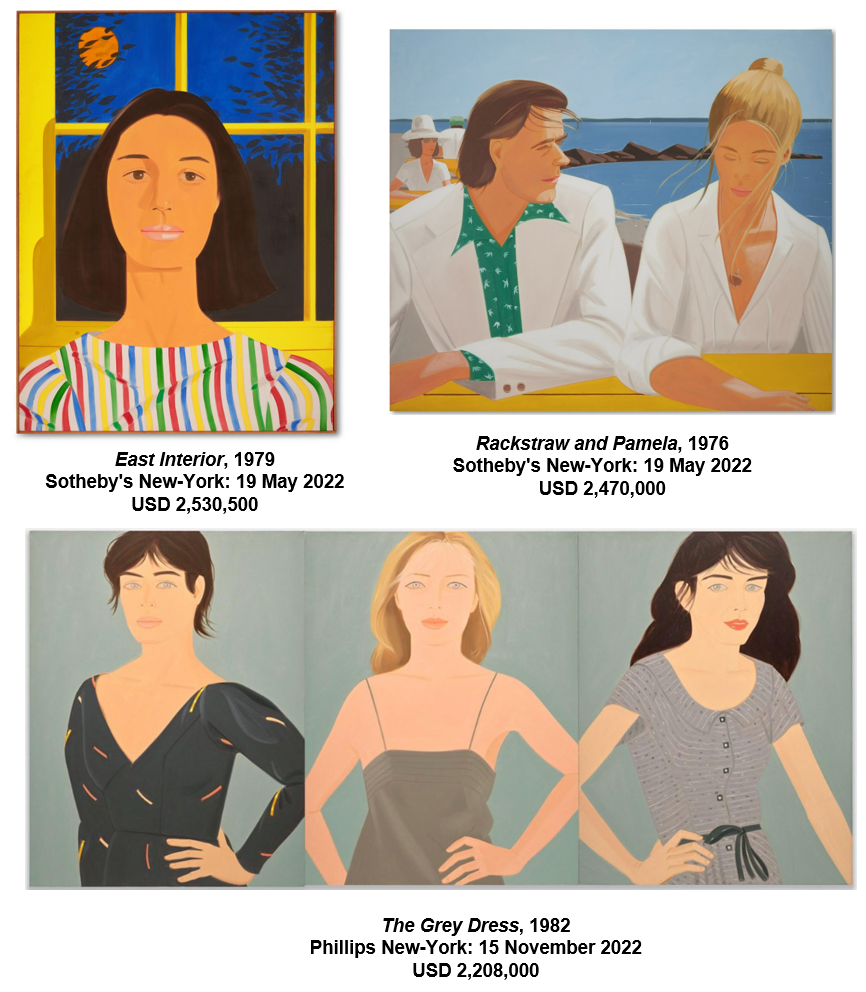
7 lots sold over USD 1 million for a cumulative turnover of USD 12,847,801, representing 59.1% of the total turnover for 2022.
2021 Auction Highlights
22 lots sold in 2021 for a total turnover of USD 6,723,013. With no lot failing to sell, the sell-through rate is 100%. The highest price was achieved at Ketterer in Cologne, Germany where Tara, a painting dated 2003 sold for EUR 901,000 (USD 1,019,346) on 10 December 2021.
2021 Top 3 Lots
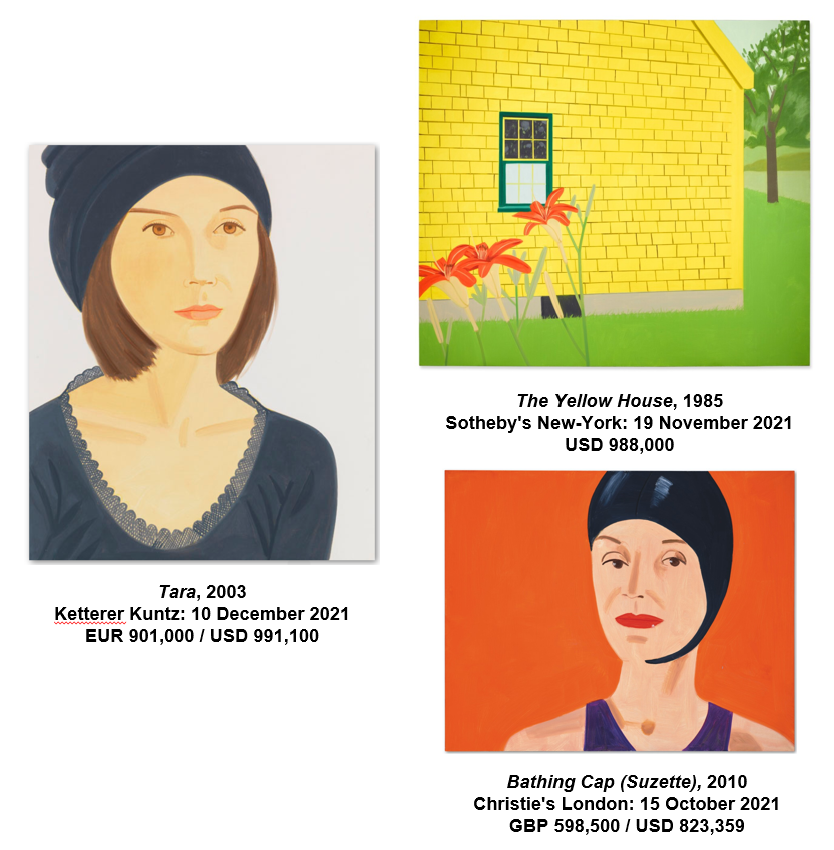
This is the only lot that sold above USD 1 million. 13 lots sold above USD 1 million for a cumulative turnover of USD 6,078,286, representing 90.4% of the total turnover for 2021.
Top Lots
#1. Blue Umbrella, 1972
Phillips London: 2 October 2019
Estimated: GBP 800,000 – 1,200,000
GBP 3,375,000 / USD 4,161,284
Alex Katz – 20th Century & Contempor… Lot 14 October 2019 | Phillips
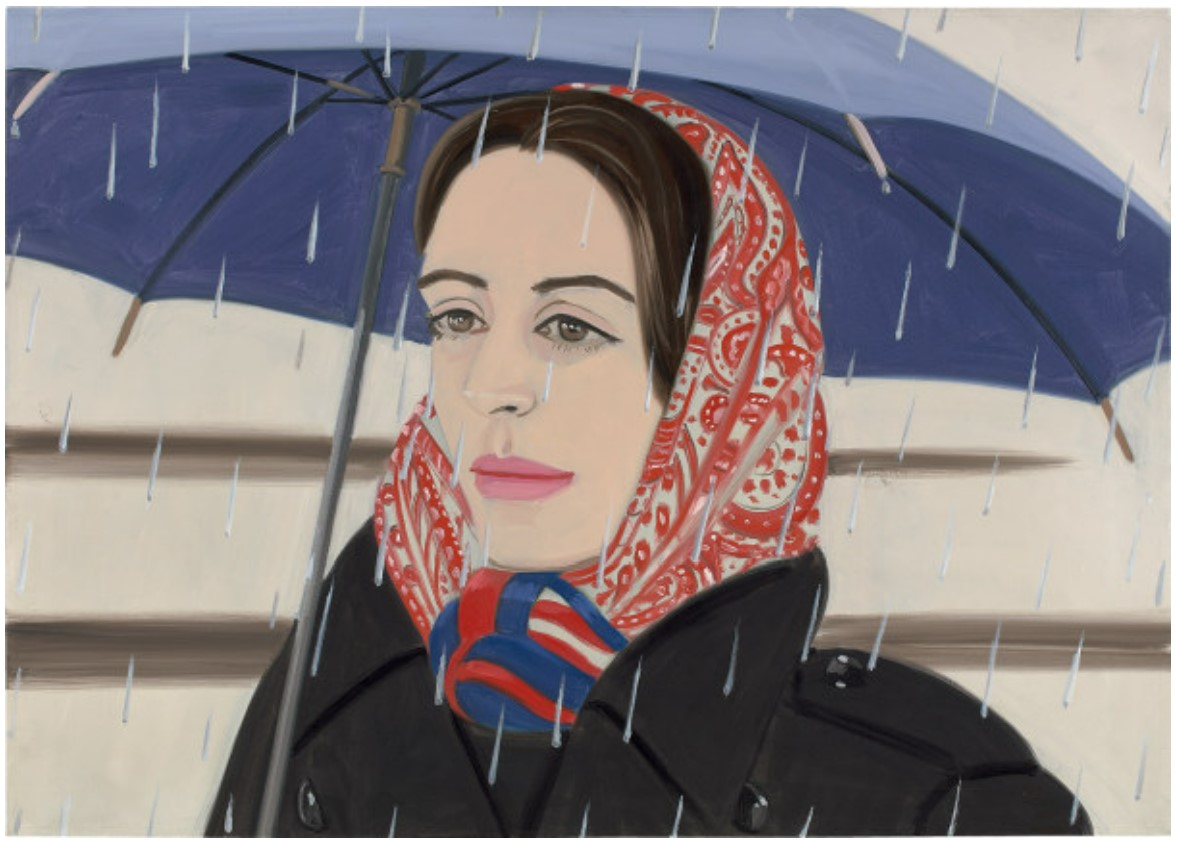
ALEX KATZ
Blue Umbrella I, 1972
Oil on canvas
34 1/8 x 48 inches (86.7 x 121.9 cm)
Signed and dated ‘Alex Katz 1972’ on the overlap
#2. The Red Band, 1978
Sotheby’s New-York: 28 October 2020
Estimated: USD 1,800,000 – 2,500,000
USD 3,166,000
ALEX KATZ | THE RED BAND | Contemporary Art Evening Auction | 2020 | Sotheby’s (sothebys.com)
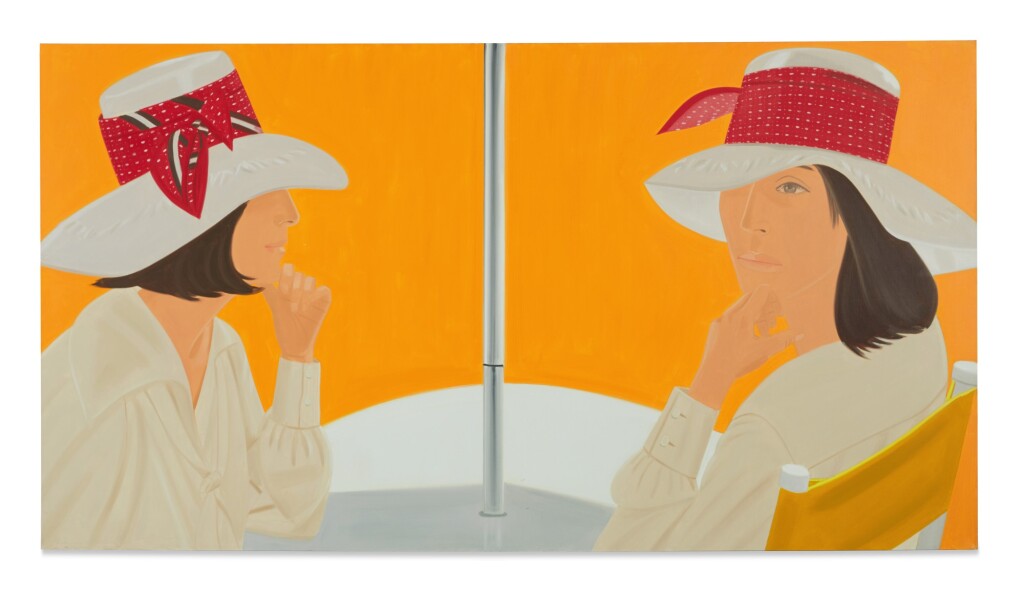
ALEX KATZ (b. 1927)
THE RED BAND, 1978
Oil on linen
78×144 inches (198.1 x 365.8 cm)
#3. East Interior, 1979
Sotheby’s New-York: 19 May 2022
Estimated: USD 1,500,000 – 2,000,000
USD 2,530,500
East Interior | Contemporary Evening Auction | 2022 | Sotheby’s (sothebys.com)
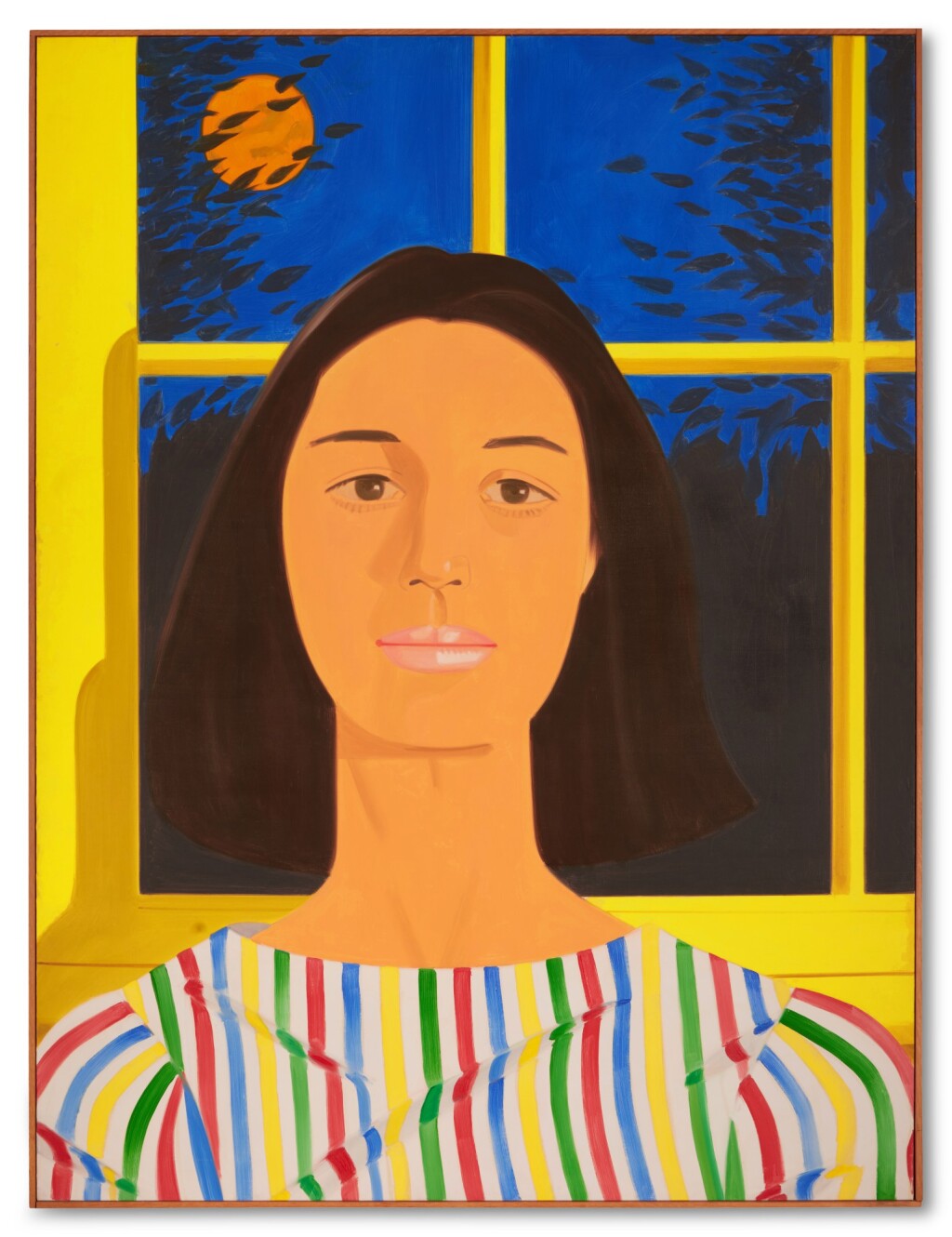
ALEX KATZ (b. 1927)
East Interior, 1979
Oil on linen
96×72 inches (243.8 by 182.9 cm)
#4. Rackstraw and Pamela, 1976
Sotheby’s New-York: 19 May 2022
Estimated: USD 2,000,000 – 3,000,000
USD 2,470,000
Rackstraw and Pamela | Contemporary Evening Auction | 2022 | Sotheby’s (sothebys.com)
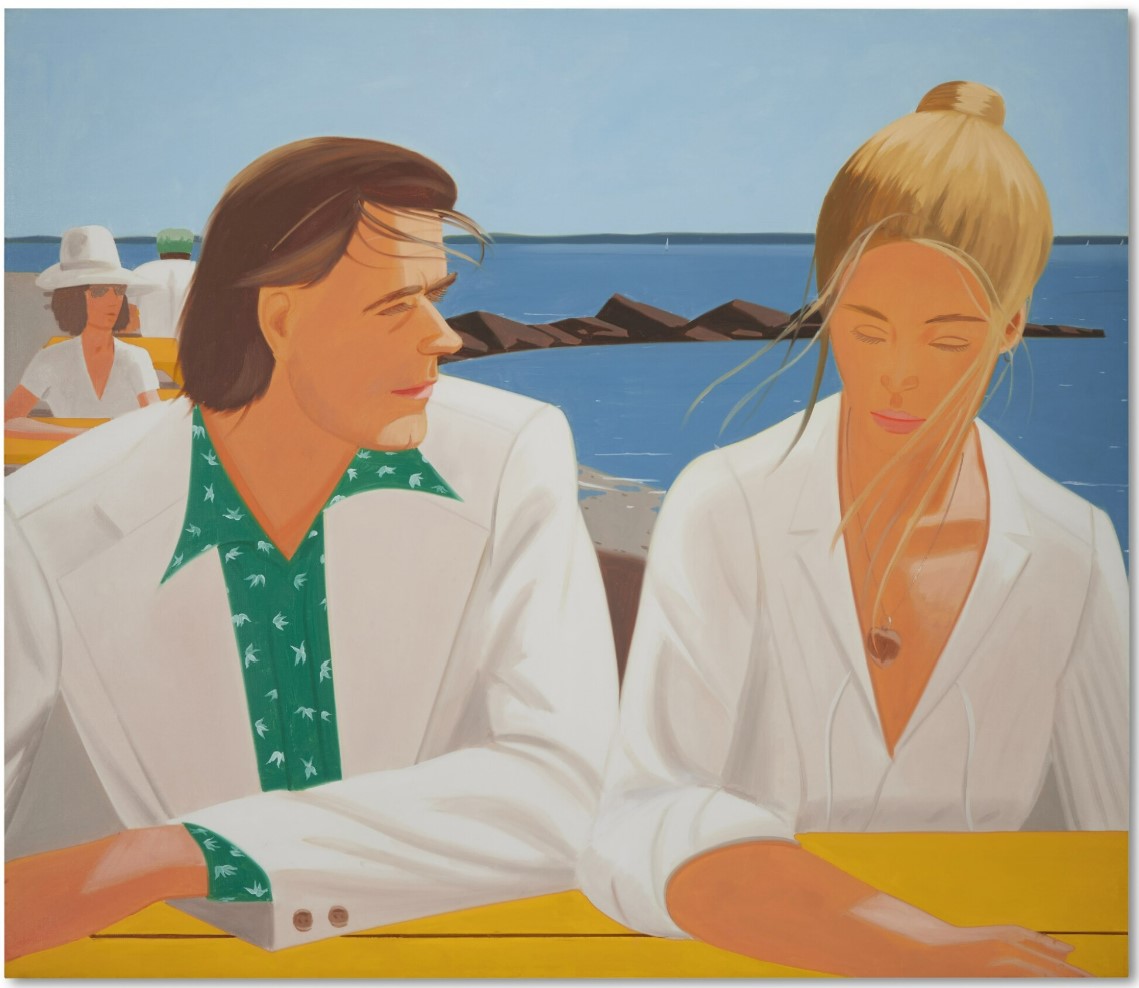
ALEX KATZ (b. 1927)
Rackstraw and Pamela, 1976
Oil on canvas
77 3/4 x 90 1/2 inches (197.5 x 229.9 cm)
#5. Red Band, 1978
Christie’s New-York: 11 May 2023
Estimated: USD 2,000,000 – 3,000,000
USD 2,470,000
ALEX KATZ (B. 1927) (christies.com)
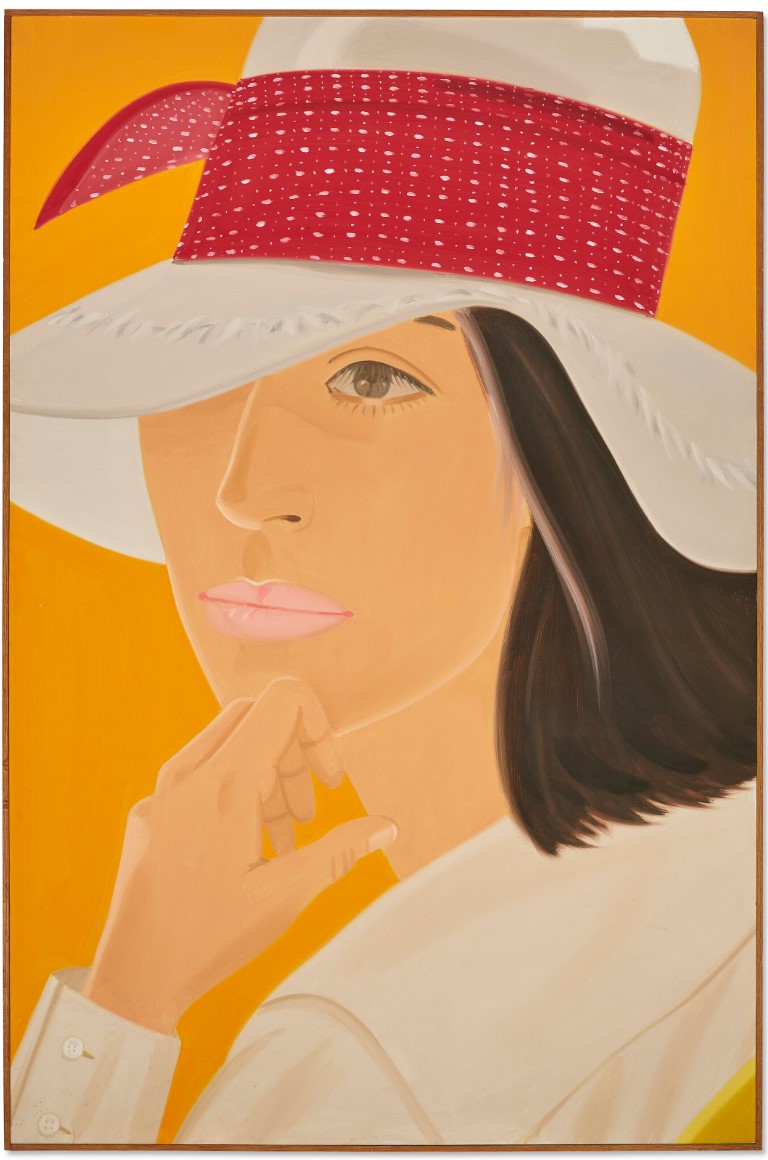
ALEX KATZ (B. 1927)
Red Band, 1978
Oil on linen
72 x 47 3/4 inches (182.9 x 121.2 cm)
#6. The Grey Dress, 1982
Phillips New-York: 15 November 2022
Estimated: USD 1,200,000 – 1,800,000
USD 2,208,000
Alex Katz – 20th Century & Contempo… Lot 20 November 2022 | Phillips
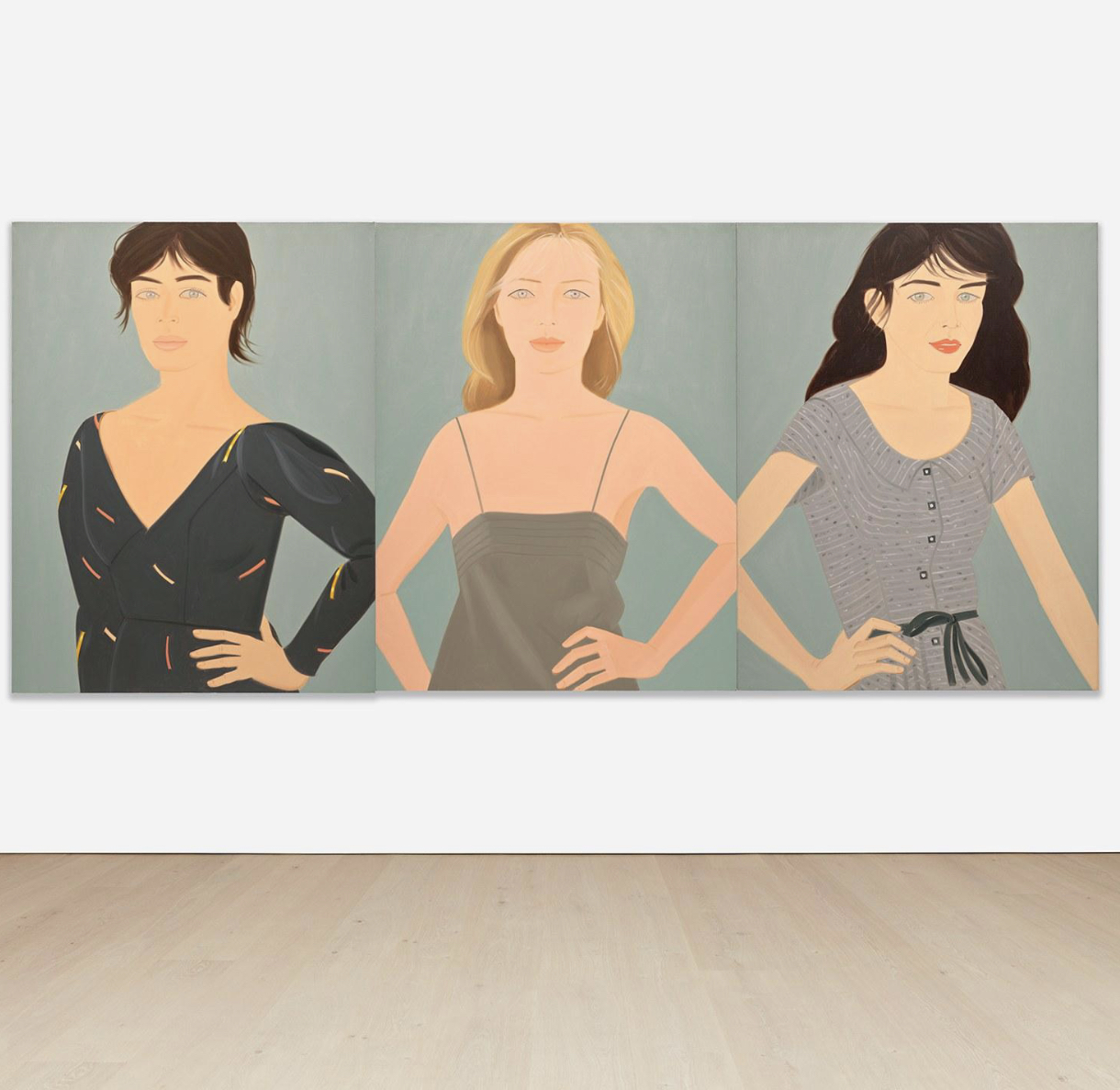
ALEX KATZ
The Grey Dress, 1982
Oil on canvas, triptych
Each: 78 x 60 1/8 inches (198.1 x 152.4 cm)
Overall: 78 x 180 3/8 inches (198.1 x 458.2 cm)
#7. Parrot Jungle, 1985
Sotheby’s New-York: 16 November 2022
Estimated: USD 1,800,000 – 2,500,000
USD 1,986,000
Parrot Jungle | Contemporary Evening Auction | 2022 | Sotheby’s (sothebys.com)
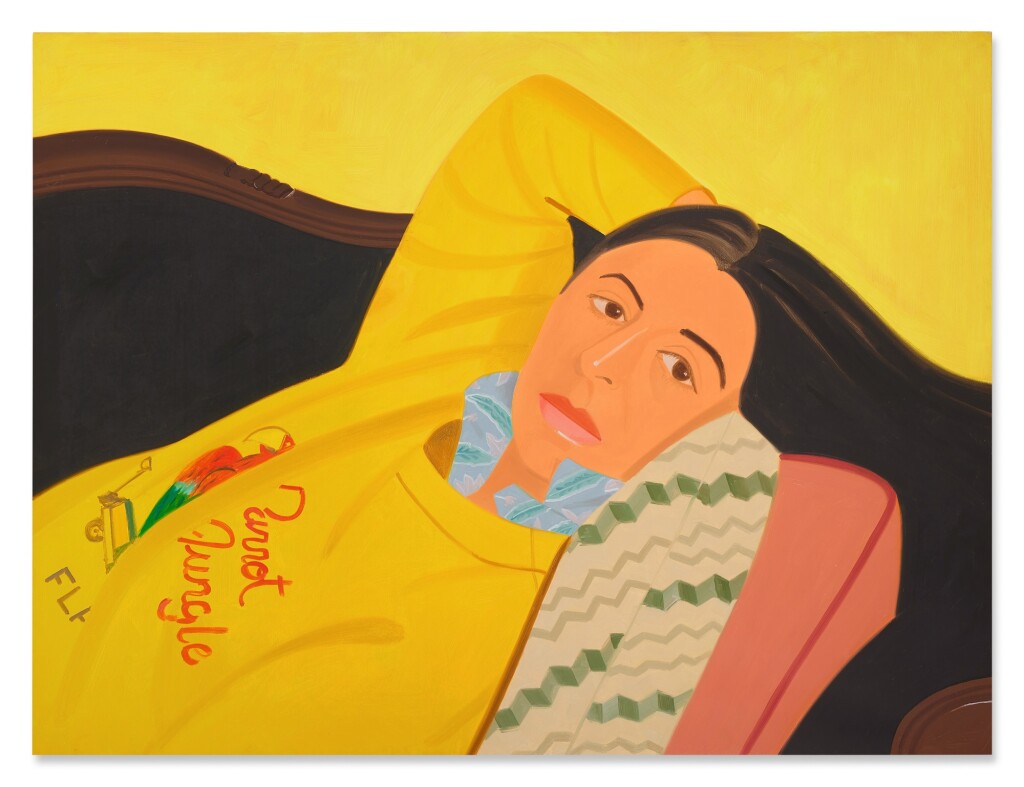
ALEX KATZ (b. 1927)
Parrot Jungle, 1985
oil on linen
72×96 inches (182.9 x 243.8 cm)
#8. May, 1996
Sotheby’s New-York: 14 May 2024
Estimated: USD 500,000 – 700,000
USD 1,875,000
May | Contemporary Day Auction | 2024 | Sotheby’s (sothebys.com)

ALEX KATZ (b. 1927)
May, 1996
Oil on linen
120×240 inches (304.8 x 609.6 cm)
#9. Ada in front of 4PM, 1977
Christie’s New-York: 10 March 2023
Estimated: USD 1,200,000 – 1,800,000
USD 1,740,000
ALEX KATZ (B. 1927) (christies.com)
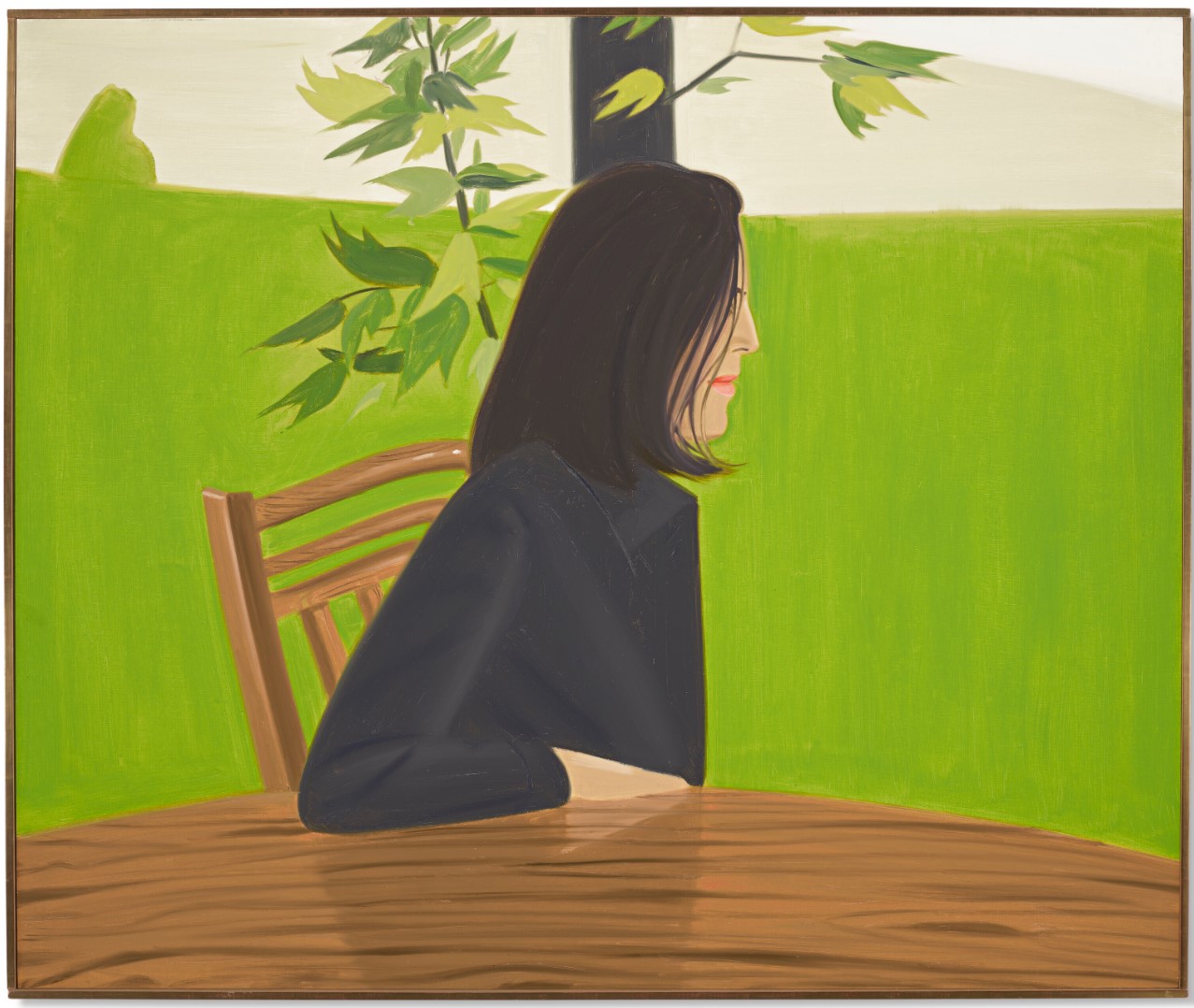
ALEX KATZ (B. 1927)
Ada in front of 4PM, 1977
Oil on linen
60×72 inches (152.4 x 182.9 cm)
PART II: AUCTION RESULTS
2026 Upcoming Lots
MORE LOTS COMING SOON
2026 Auction Results
PRELIMINARY AUCTION RESULTS
As of 15 June 2026
#1. Boquerón, 1979
Property from the Collection of Annabelle and Bernard Fishman
Sotheby’s New-York: 15 May 2026
Estimated: USD 800,000 – 1,200,000
USD 1,216,000
Alex Katz | Boquerón | Contemporary Day Auction | 2026 | Sotheby’s
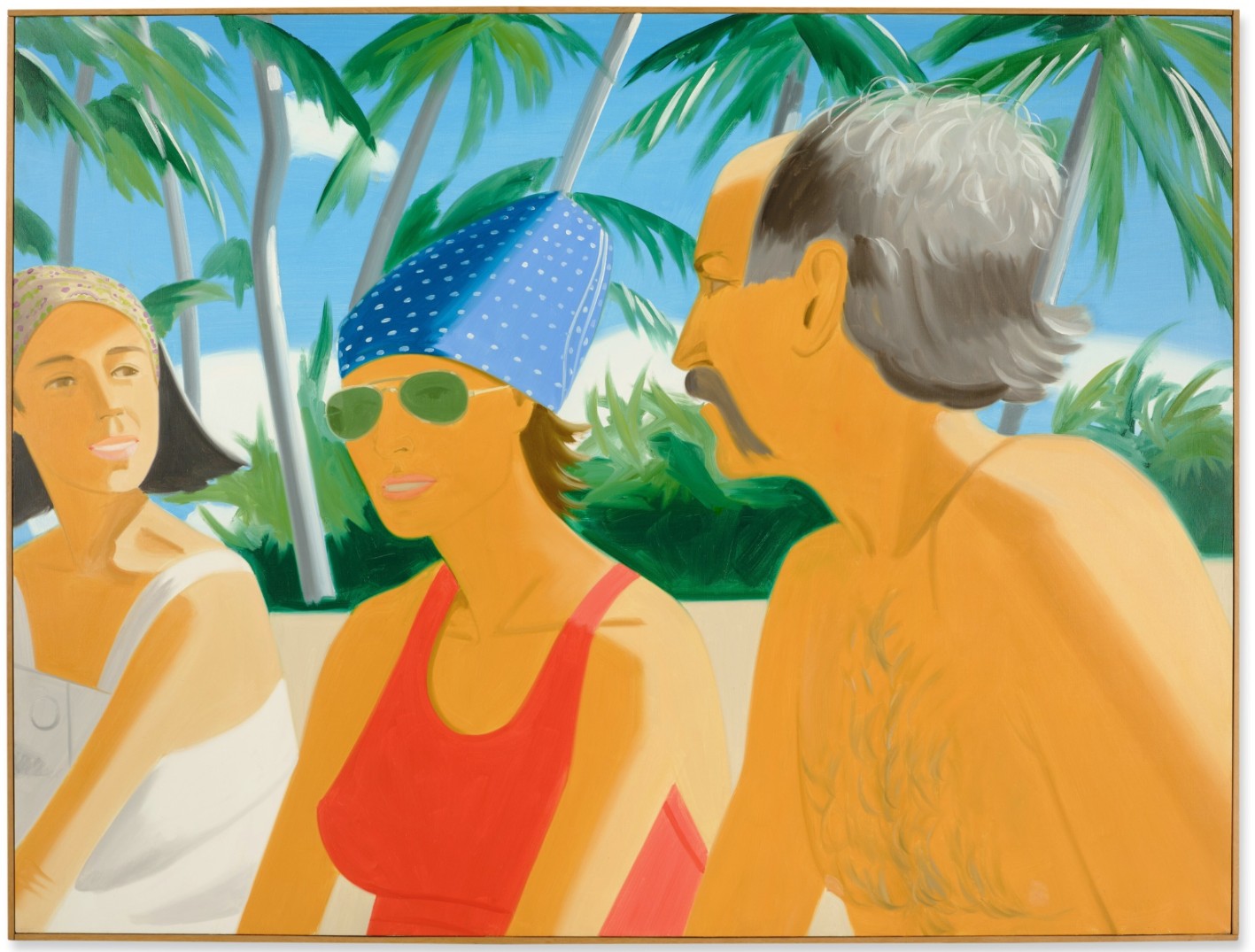
ALEX KATZ (b. 1927)
Boquerón, 1979
Oil on linen
72×96 inches (182.9 x 243.8 cm)
USD 1 million
#2. Emma, 2015
Property from an Ambassadorial Collection
Sotheby’s New-York: 15 May 2026
Estimated: USD 600,000 – 800,000
USD 960,000
Alex Katz | Emma | Contemporary Day Auction | 2026 | Sotheby’s
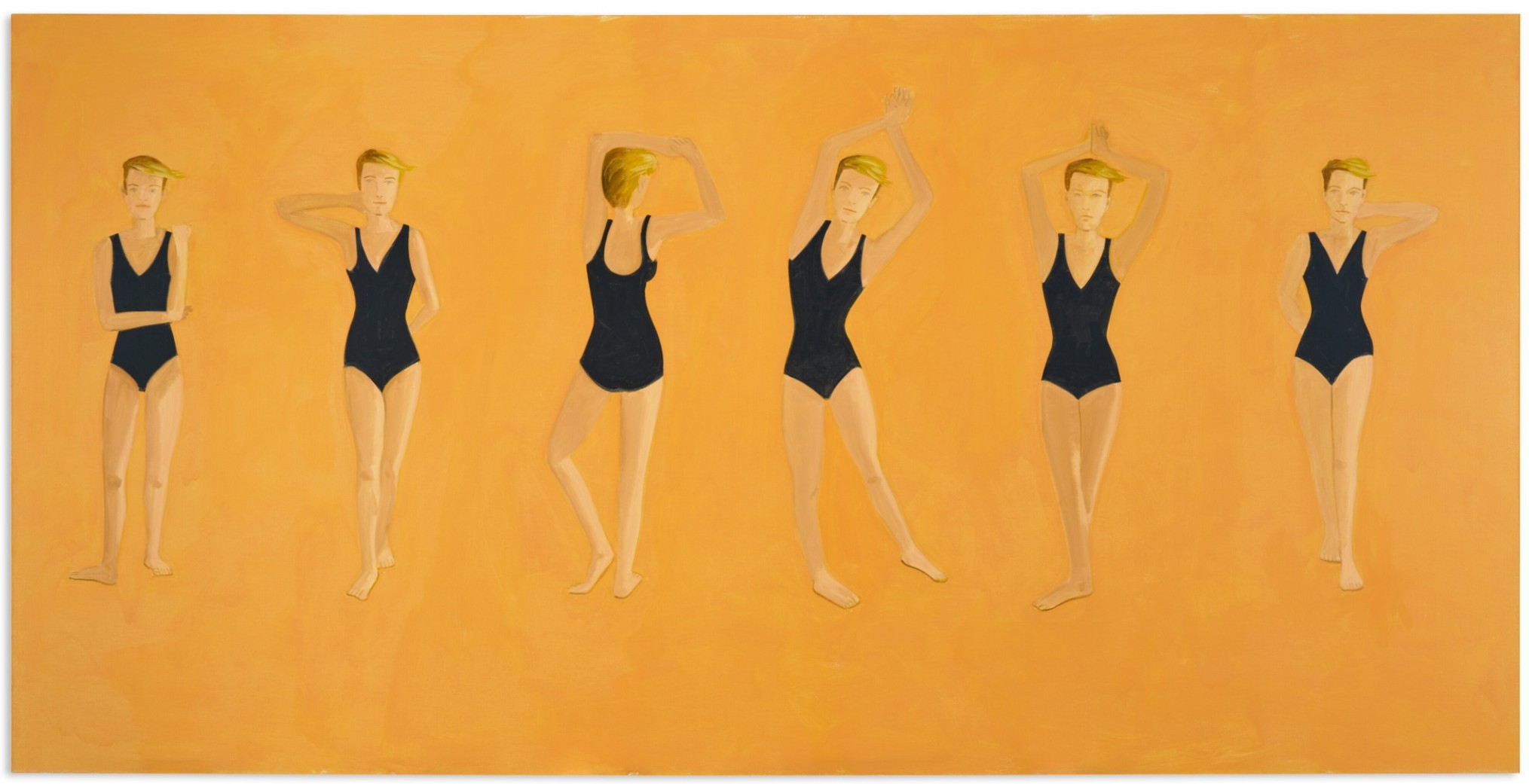
ALEX KATZ (b. 1927)
Emma, 2015
Oil on linen
84×148 inches (213.4 x 375.9 cm)
Signed and dated 15 (on the overlap)
#3. Cymbidium Yellow on Red, 2020
Seoul Auction: 30 March 2026
Estimated: KRW 830,000,000 – 1,100,000,000
KRW 830,000,000 (Hammer)
KRW 979,400,000 / USD 642,895
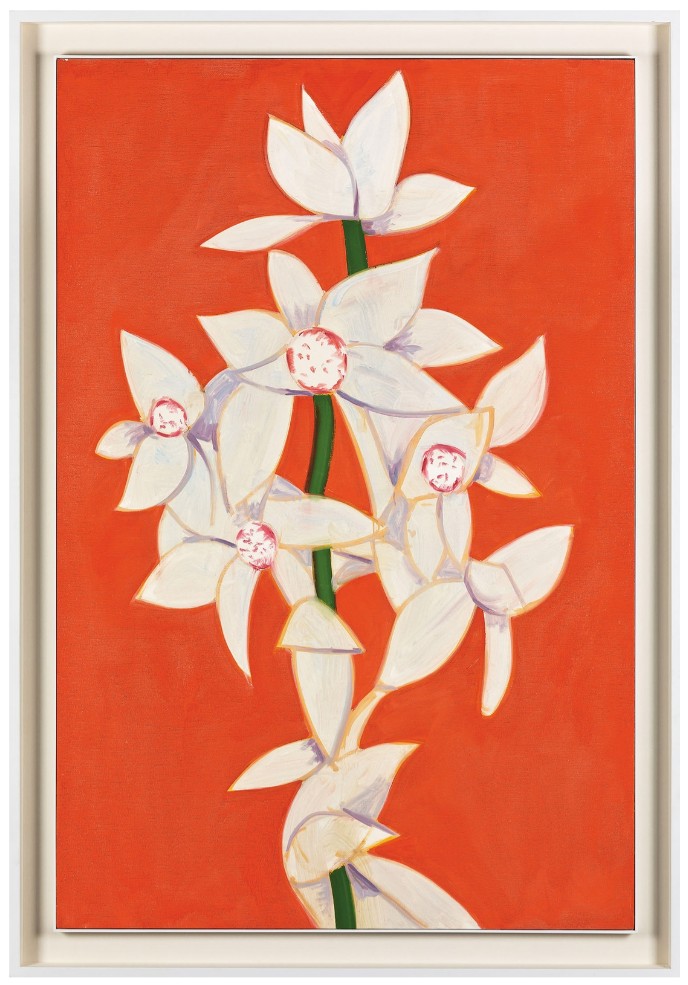
ALEX KATZ (b.1927, American)
Cymbidium Yellow on Red, 2020
Oil on linen
72×48 inches (183.5 x 122.3 cm)
Signed and dated on the overlap
Gallery label affixed to the canvas stretcher bars
#4. Ada Smiling, 1993
Sotheby’s New-York: 25 February 2026
Estimated: USD 200,000 – 300,000
USD 448,000
Ada Smiling | Contemporary Curated | 2026 | Sotheby’s
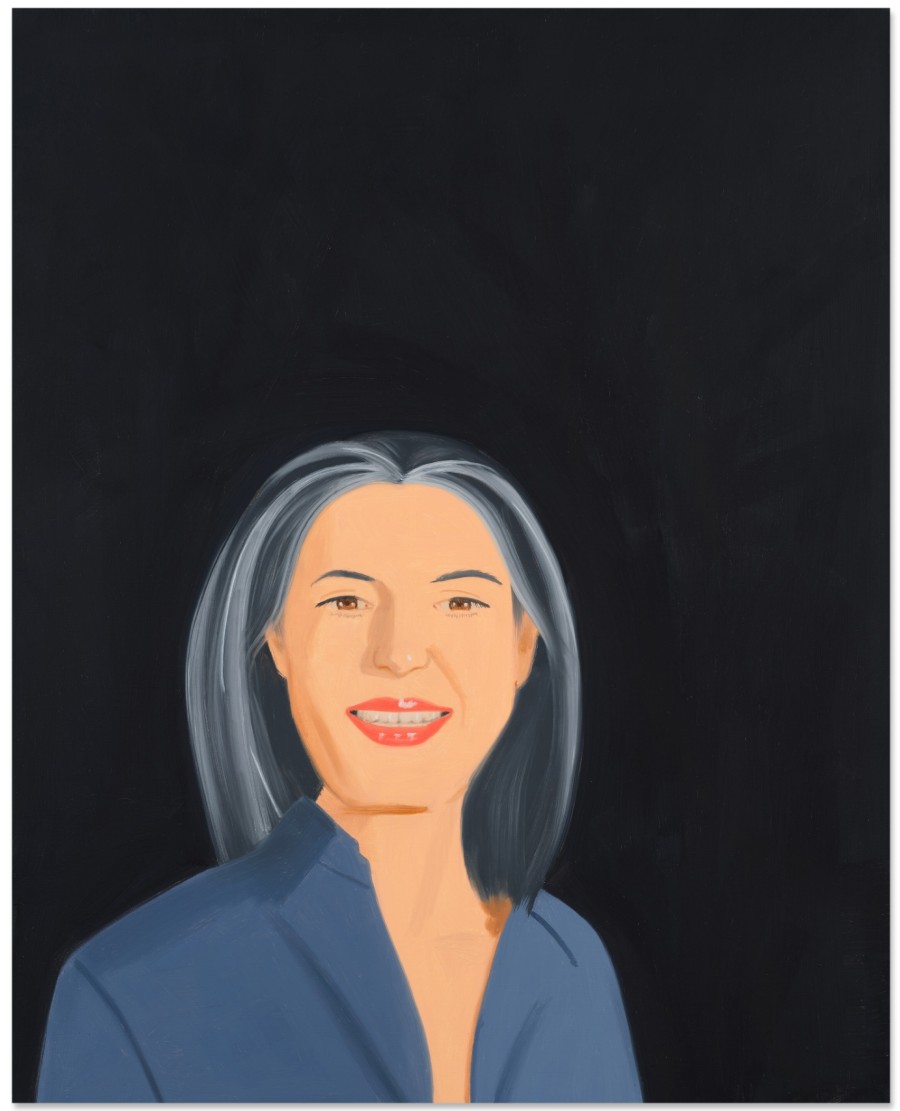
ALEX KATZ (b. 1927)
Ada Smiling, 1993
Oil on canvas
60×48 inches (152.4 x 121.9 cm)
USD 500,000
#5. Green Hat 2, 1964
PROPERTY FROM THE COLLECTION OF CHARLES L. REINHART, NEW YORK
Bonhams New-York: 21 May 2026
Estimated: USD 80,000 – 120,000
USD 229,100
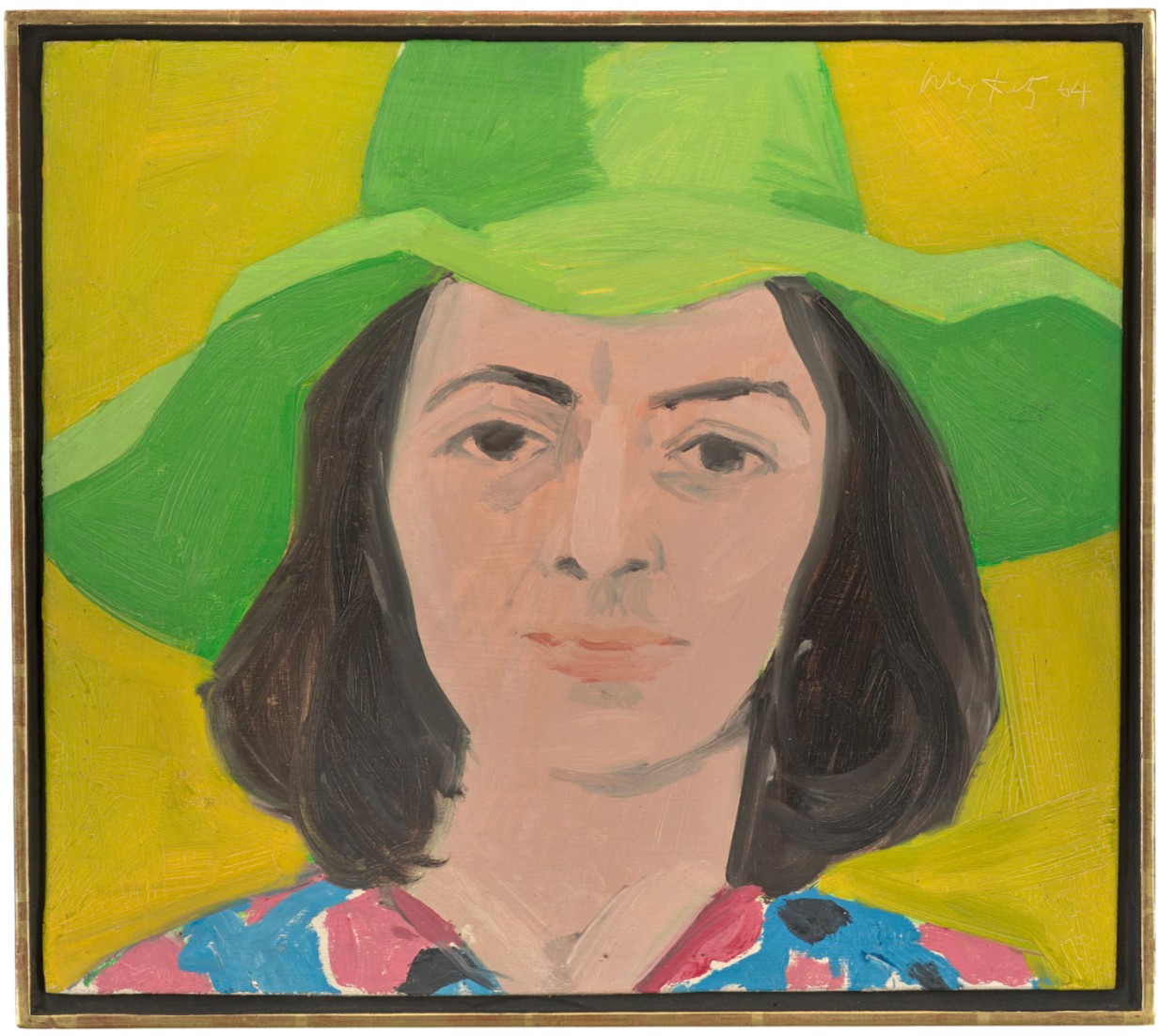
ALEX KATZ (B. 1927)
Green Hat 2, 1964
Oil on board
13-1/8 x 14-7/8 inches (33.4 x 37.8 cm)
Signed and dated ‘Alex Katz 64’ (upper right)
#6. Good Afternoon, 2007
Palm Beach Modern Auctions: 16 May 2026
Estimated: USD 100,000 – 150,000
USD 217,600
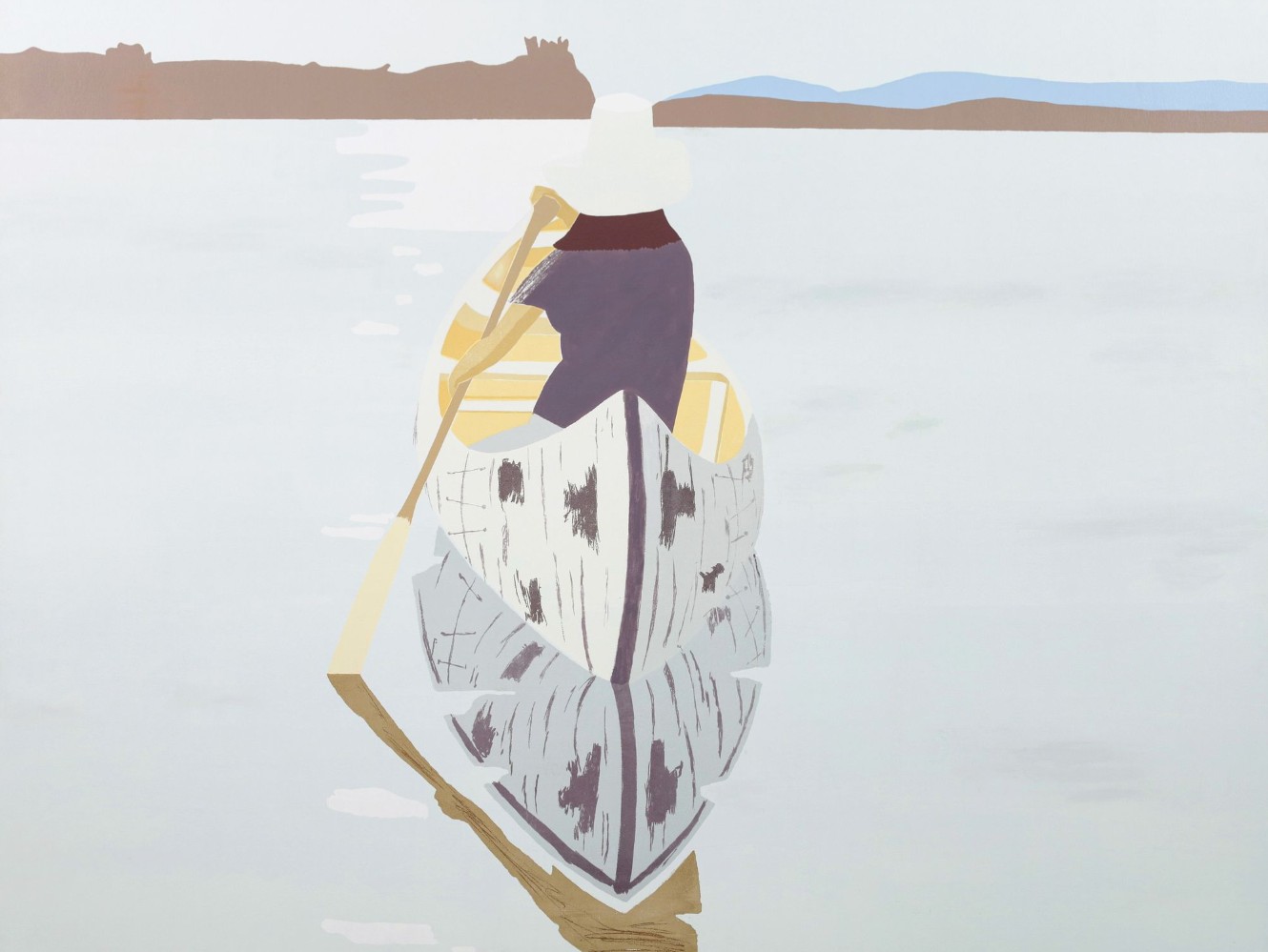
ALEX KATZ (American, b. 1927)
Good Afternoon, 2007
14-color silkscreen with three hard stencils and silkscreen oil on canvas
79-1/2 x 106-1/4 inches
Signed
From the edition of 9 unique works, and 3 APs
Printed and published by American Image Art, Katonah, New York
#7. Mac, 1980
Christie’s New-York: 21 May 2021
Estimated: USD 50,000 – 70,000
USD 190,500
ALEX KATZ (B. 1927), Mac | Christie’s
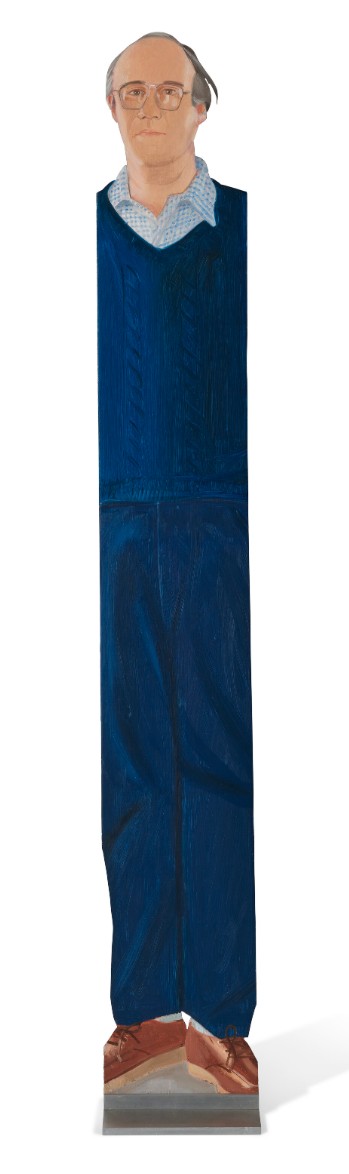
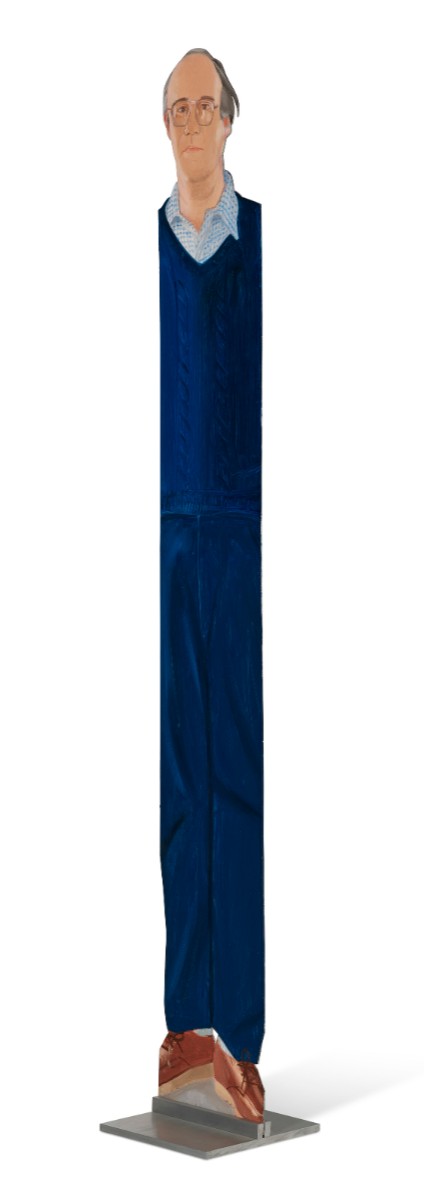
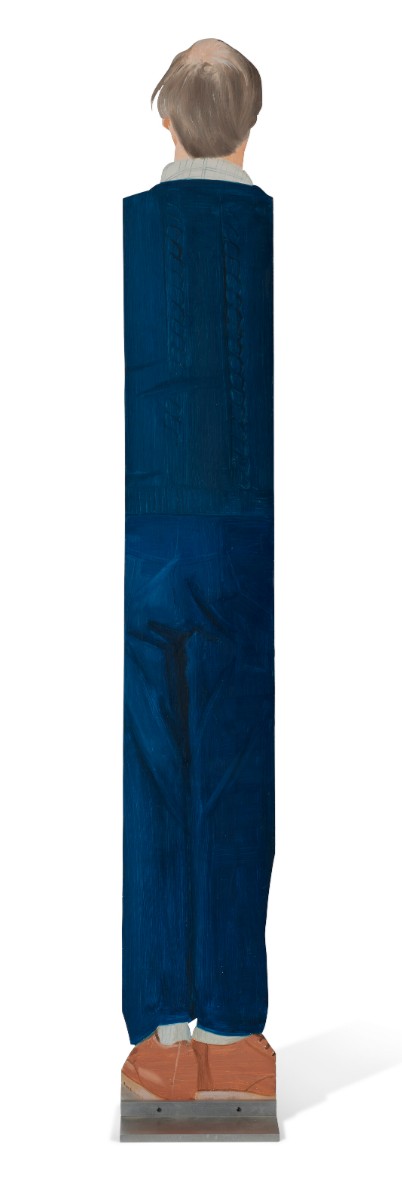
ALEX KATZ (B. 1927)
Mac, 1980
Oil on shaped aluminum, double-sided
70-5/8 x 10-1/4 x 10-1/4 inches (179.1 x 25.6 x 25.6 cm)
#8. Study for Ada in Spain, 1981
Phillips New-York: 21 May 2026
Estimated: USD 80,000 – 120,000
USD 167,700
Alex Katz Modern & Contemporary Art: Morning Session

ALEX KATZ
Study for Ada in Spain, 1981
Oil on Masonite
16×12 inches (40.6 x 30.5 cm)
Incised with the artist’s signature and date “Alex Katz 81” lower left
#9. Ada, 1986
Property from the Estate of Benjamin and Deborah Mangel
Phillips New-York: 28 February 2026
Estimated: USD 70,000 – 100,000
USD 129,000
Alex Katz Modern & Contemporary Art
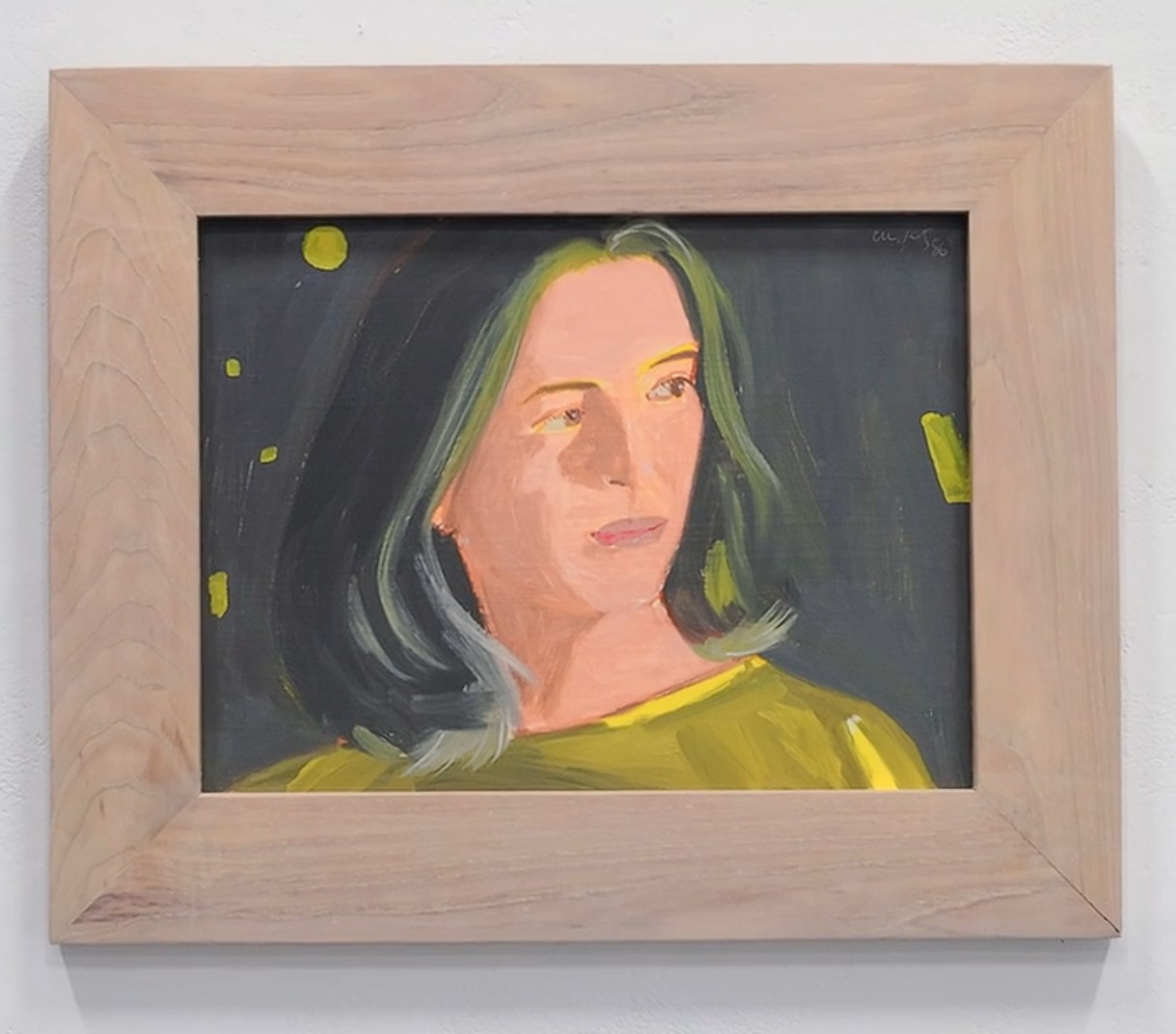
ALEX KATZ
Ada, 1986
Oil on Masonite
11-7/8 x 15-7/8 inches (30.2 x 40.3 cm)
Signed and dated “Alex Katz 86” upper right
#10. One Blue Flag, 1967
Property from an Ambassadorial Collection
Sotheby’s New-York: 15 May 2026
Estimated: USD 30,000 – 40,000
USD 115,200
Alex Katz | One Blue Flag | Contemporary Day Auction | 2026 |
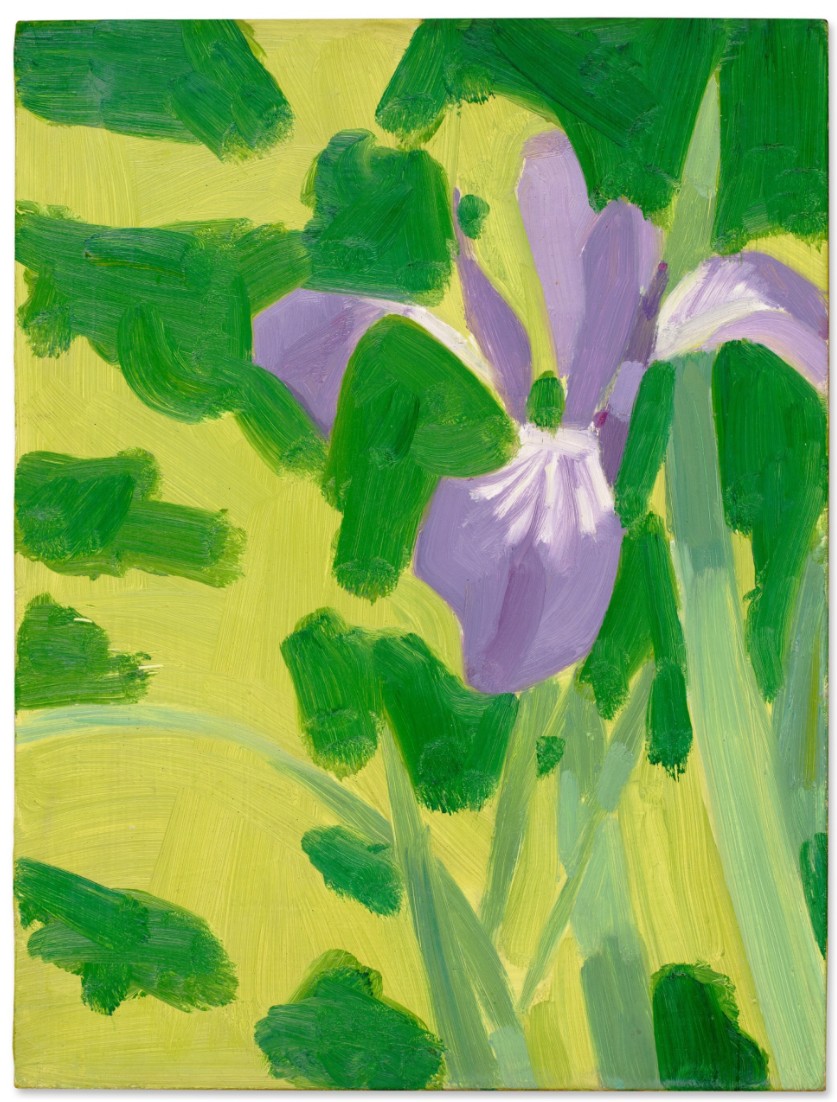
ALEX KATZ (b. 1927)
One Blue Flag, 1967
Oil on board
12×9 inches (30.5 x 22.9 cm)
Titled and dated 1967 (on the reverse)
#11. Study for Fox, 1973
Property from the Estate of Benjamin and Deborah Mangel
Phillips New-York: 28 February 2026
Estimated: USD 60,000 – 80,000
USD 109,650
Alex Katz Modern & Contemporary Art
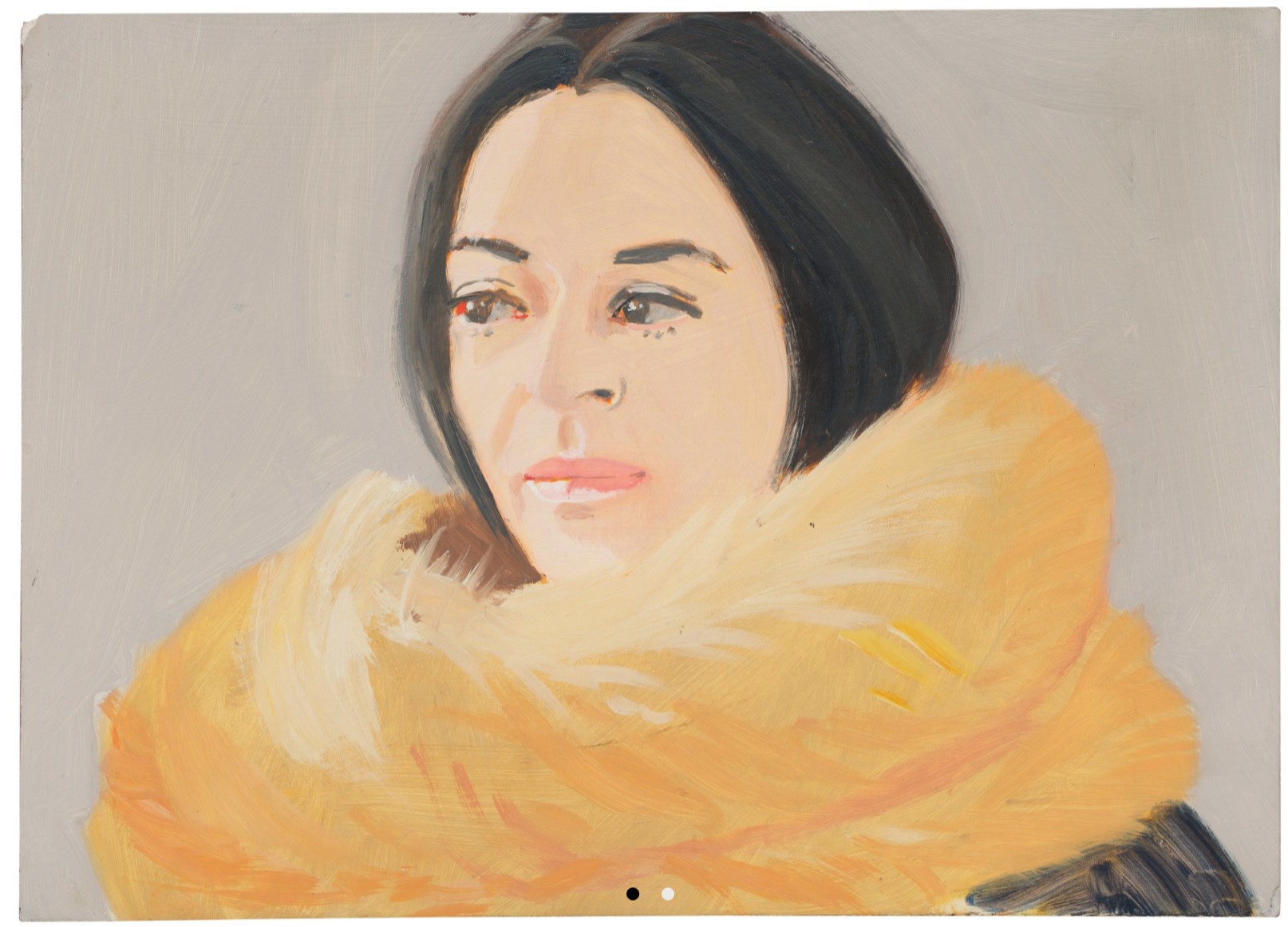
ALEX KATZ
Study for Fox, 1973
Oil on Masonite
12 x 16-5/8 inches (30.5 x 42.2 cm)
Signed and dated “Alex Katz ’73” upper right
#12. Study for Six Soldiers, 1981
Phillips New-York: 21 May 2026
Estimated: USD 70,000 – 100,000
USD 109,650
Alex Katz Modern & Contemporary Art: Morning Session
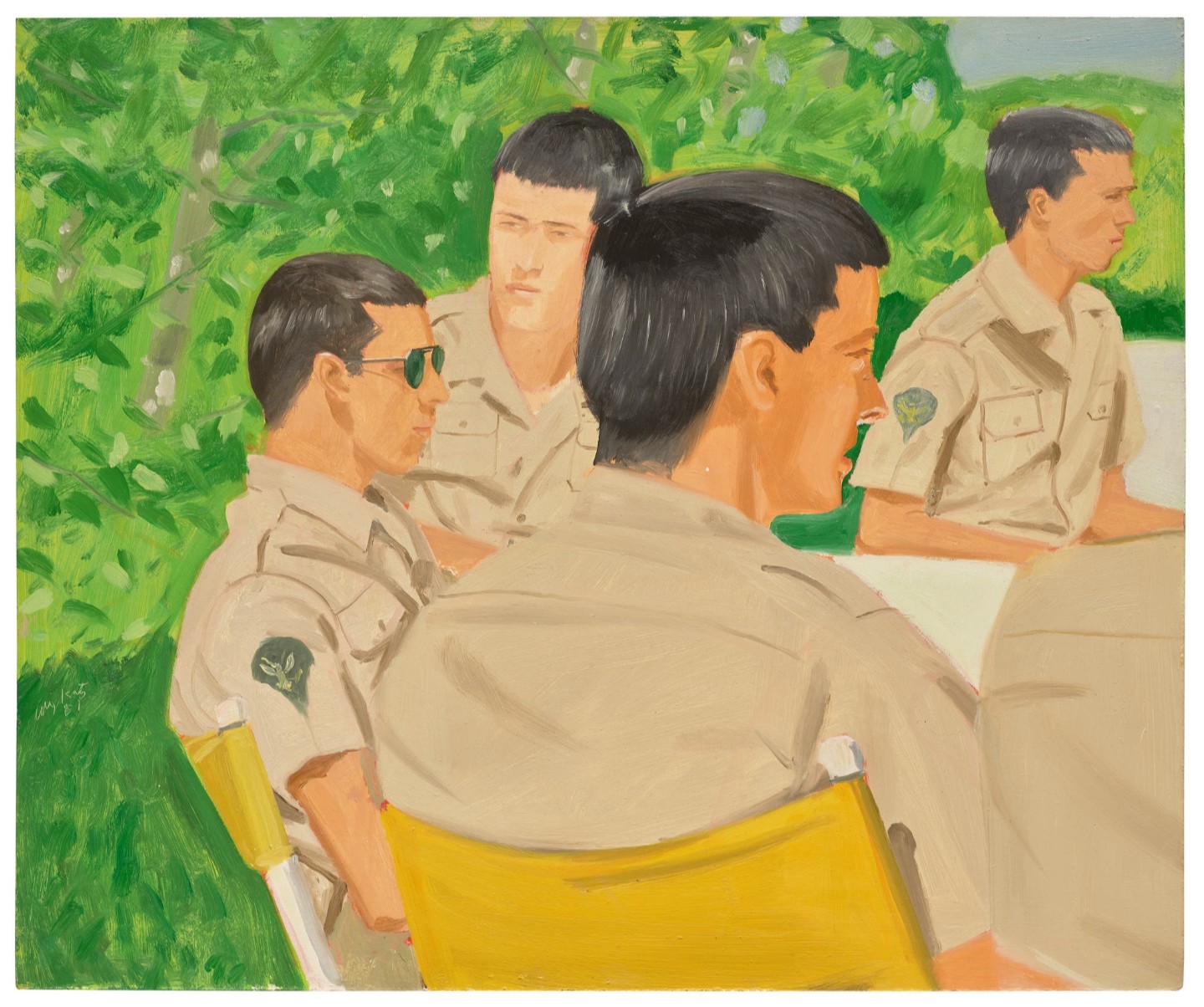
ALEX KATZ
Study for Six Soldiers, 1981
Oil on Masonite
18-3/4 x 22-3/8 inches (47.6 x 56.8 cm)
Incised with the signature and date “Alex Katz 81” center left
USD 100,000
#13. Black and White 2, 2004
Works from the Collection of Jannine and Robert MacDonnell
Sotheby’s New-York: 15 May 2026
Estimated: USD 20,000 – 30,000
USD 96,000
Alex Katz | Black and White 2 | Contemporary Day Auction | 2026 |
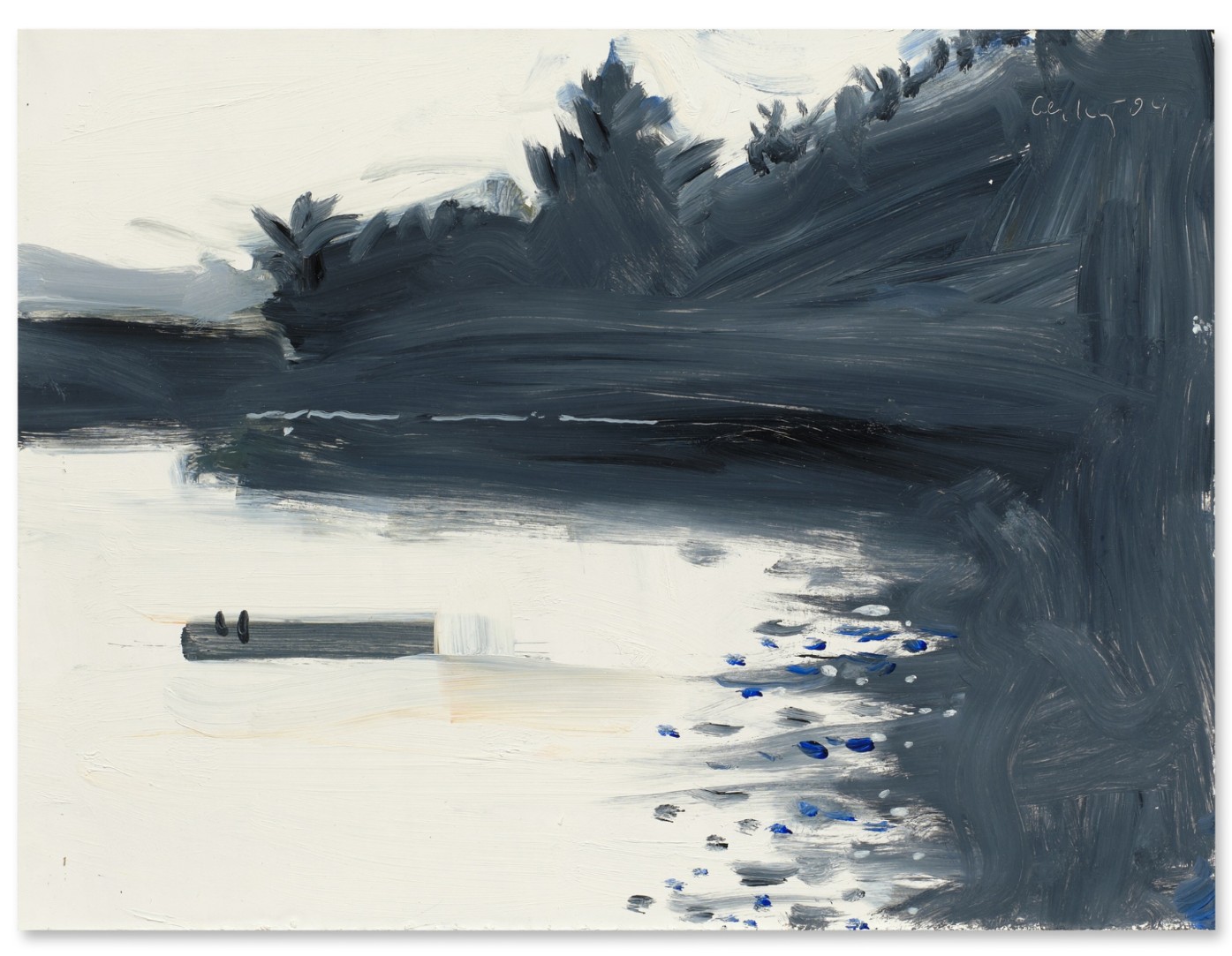
ALEX KATZ (b. 1927)
Black and White 2, 2004
Oil on board
9×12 inches (22.9 x 30.5 cm)
Signed and dated 04 (upper right)
#14. Four Figures, circa 1980
Property from the Estate of Benjamin and Deborah Mangel
Phillips New-York: 28 February 2026
Estimated: USD 60,000 – 80,000
USD 90,300
Alex Katz Modern & Contemporary Art
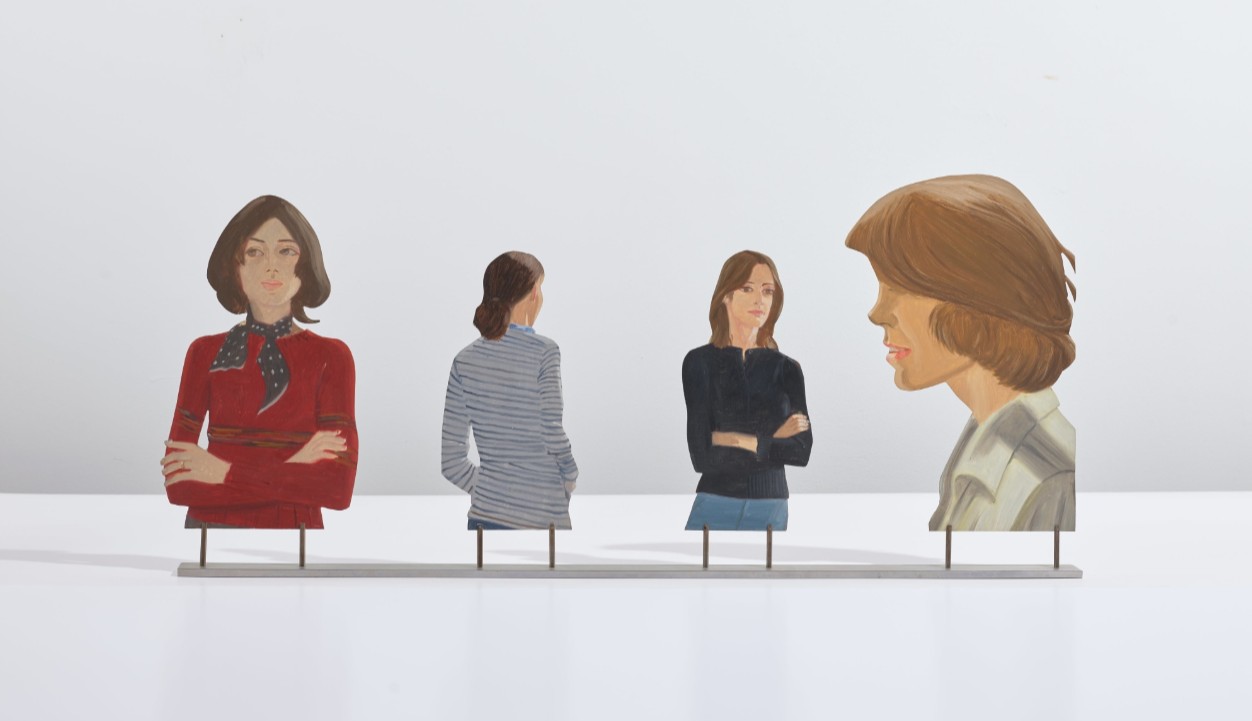
ALEX KATZ
Four Figures, circa 1980
Oil on shaped aluminum, double-sided
19-3/8 x 43-7/8 x 2 inches (49.2 x 111.4 x 5.1 cm)
#15. The Path (Central Park), 2006
Property from an Important Italian Private Collection
Phillips London: 16 April 2026
Estimated: GBP 30,000 – 50,000
GBP 58,050 / USD 78,585
Alex Katz Modern & Contemporary Art
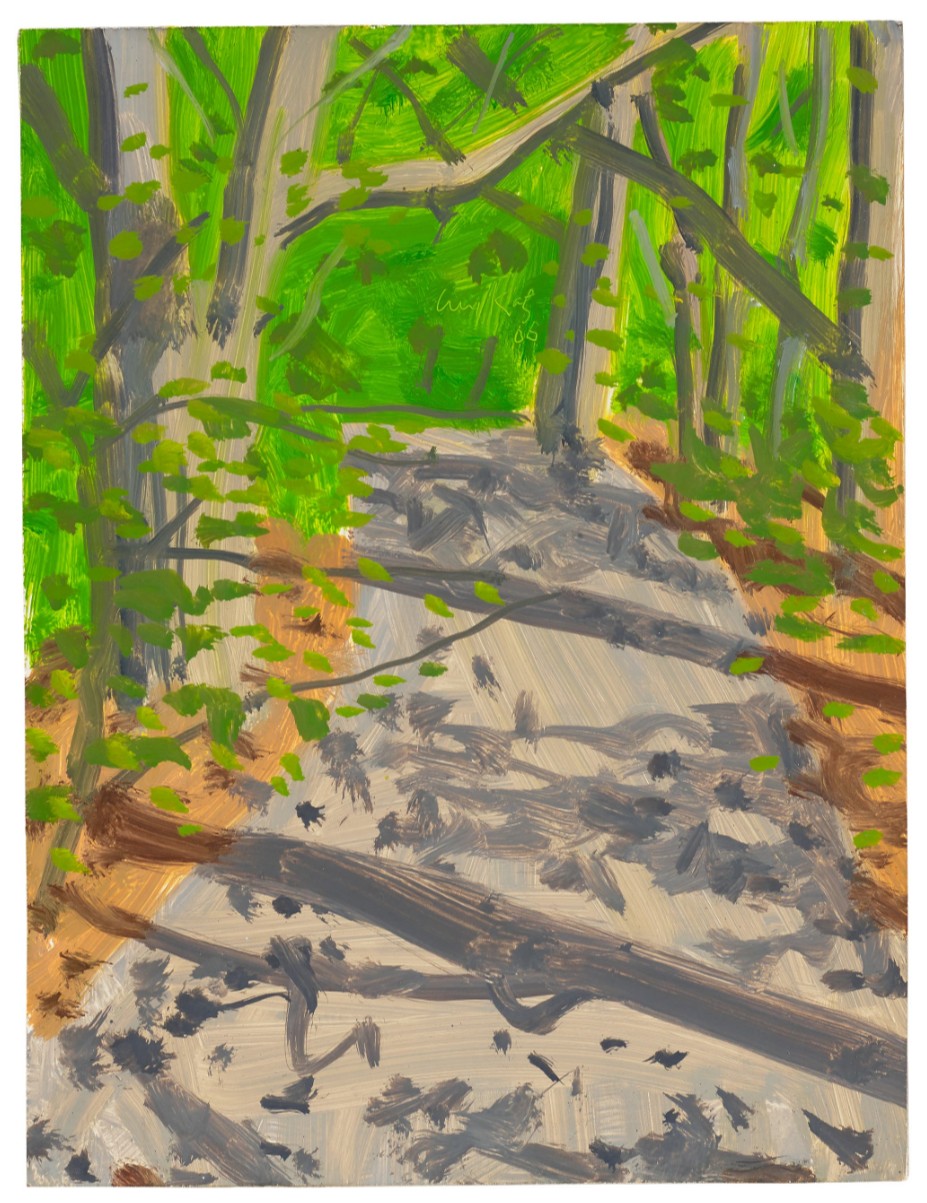
ALEX KATZ
The Path (Central Park), 2006
Oil on board
12 x 9-1/8 inches (30.6 x 23.2 cm)
Signed and dated ‘alex katz 06’ upper centre
#16. Red Phlox, 1965
Property from the Estate of Myron Kaplan
Sotheby’s New-York: 27 February 2026
Estimated: USD 20,000 – 30,000
USD 70,400
Red Phlox | Contemporary Discoveries | 2026 | Sotheby’s
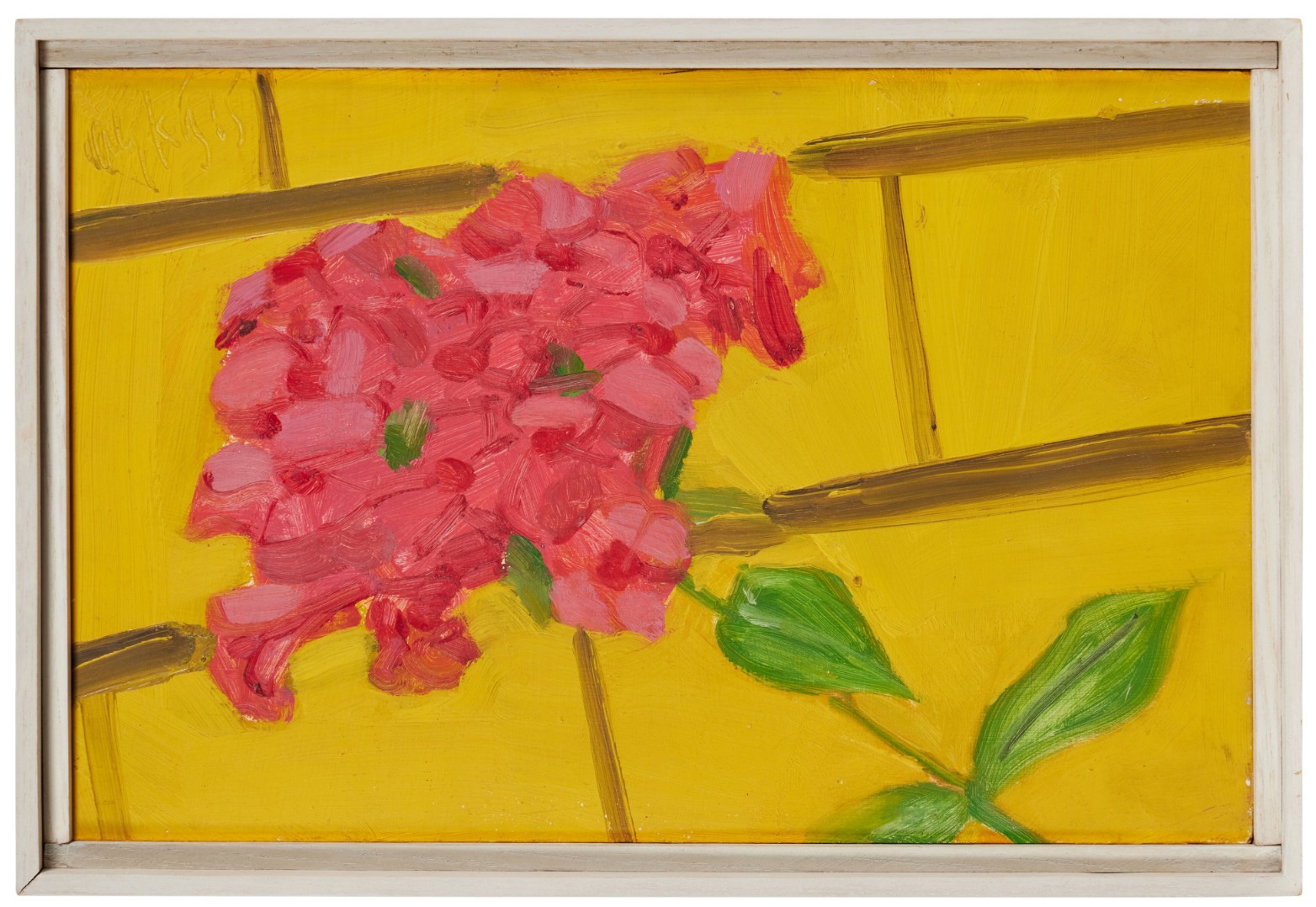
ALEX KATZ (b. 1927)
Red Phlox, 1965
Oil on panel
8 x 12-1/8 inches (20.3 x 30.8 cm)
Signed (upper left)
#17. Iris Study 7, 2019
Seoul Auction: 27 January 2026
Estimated: KRW 80,000,000 – 120,000,000
KRW 80,000,000 (Hammer)
KRW 94,400,000 / USD 65,420
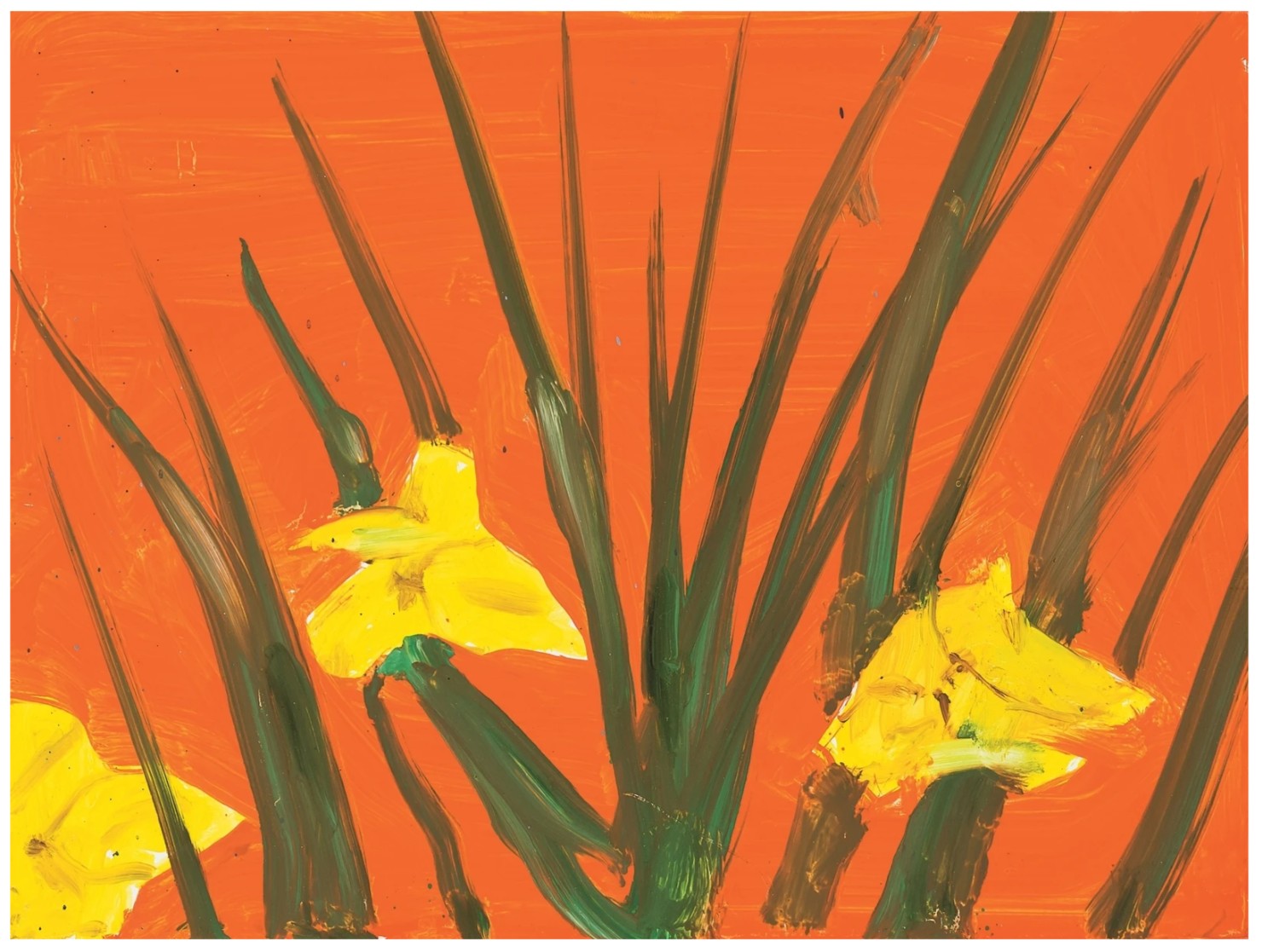
ALEX KATZ
Iris Study 7, 2019
Oil on board
12×9 inches (23 x 30.5 cm)
#18. Iris Study 5, 2019
Seoul Auction: 30 March 2026
Estimated: KRW 80,000,000 – 120,000,000
KRW 80,000,000 (Hammer)
KRW 94,400,000 / USD 61,965
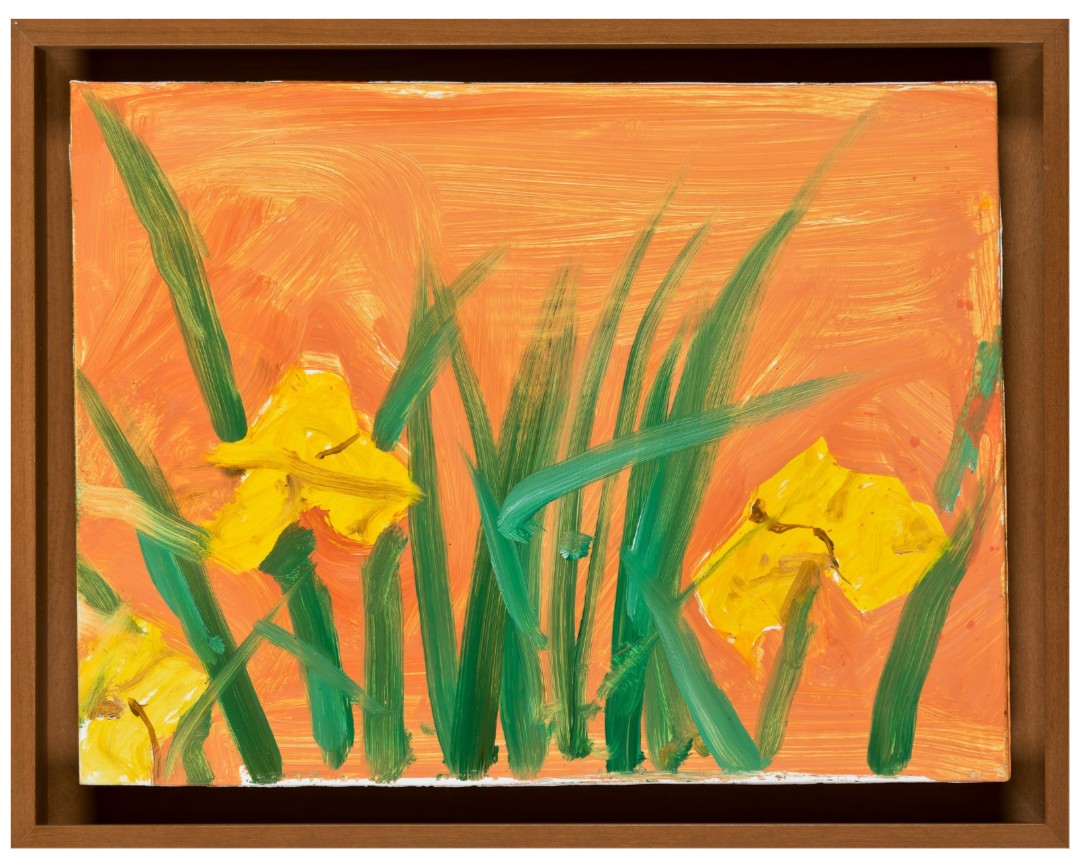
ALEX KATZ (b.1927, American)
Iris Study 5, 2019
Oil on board
9×12 inches (23 x 30.5 cm)
Gallery label affixed to the reverse of frame
#19. Daylilies, 1991
Phillips New-York: 28 February 2026
Estimated: USD 30,000 – 50,000
USD 61,920
Alex Katz Modern & Contemporary Art
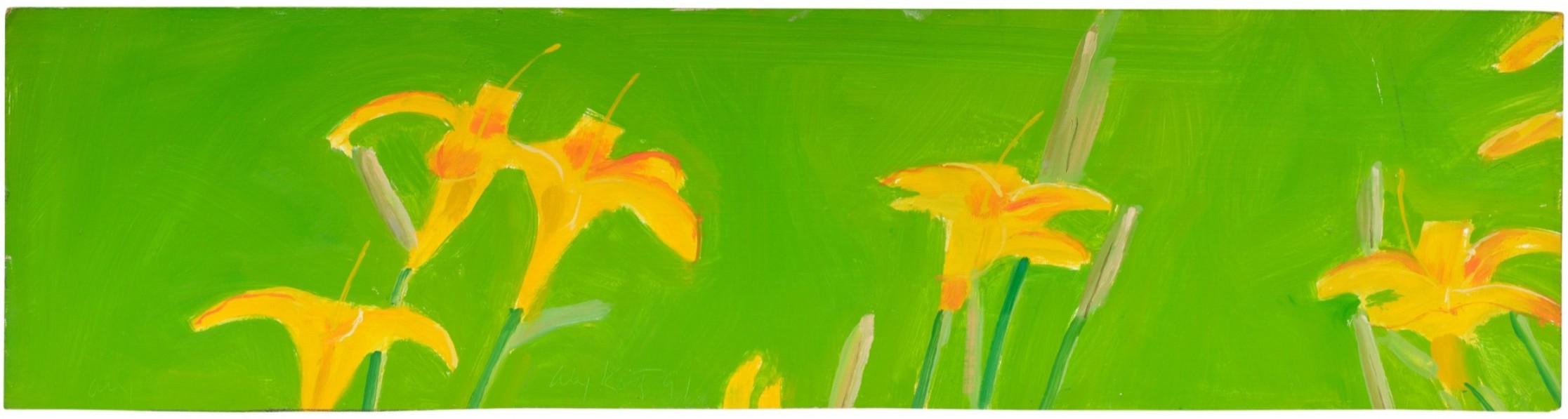
Oil on board
6-1/8 x 24 inches (15.6 x 61 cm)
Signed and dated “Alex Alex Katz 91” lower center
Signed “Alex Katz” on the reverse
#20. Study for Vincent, 2004
Works from the Collection of Jannine and Robert MacDonnell
Sotheby’s New-York: 15 May 2026
Estimated: USD 40,000 – 60,000
USD 61,440
Alex Katz | Study for Vincent | Contemporary Day Auction | 2026 |
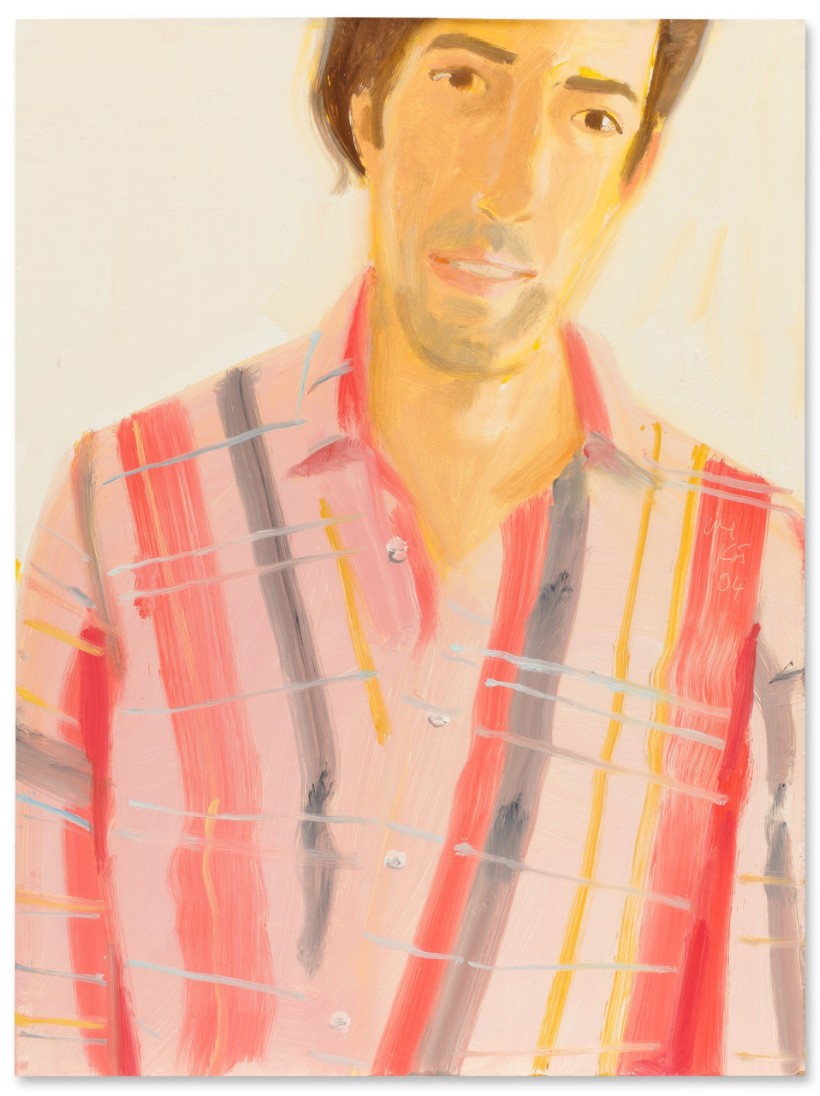
ALEX KATZ (b. 1927)
Study for Vincent, 2004
Oil on board
16×12 inches (40.6 x 30.5 cm)
Signed and dated 04 (center right)
#21. Study for Clarissa, 1989
Property from an Important Italian Private Collection
Phillips London: 16 April 2026
Estimated: GBP 30,000 – 50,000
GBP 38,700 / USD 52,390
Alex Katz Modern & Contemporary Art
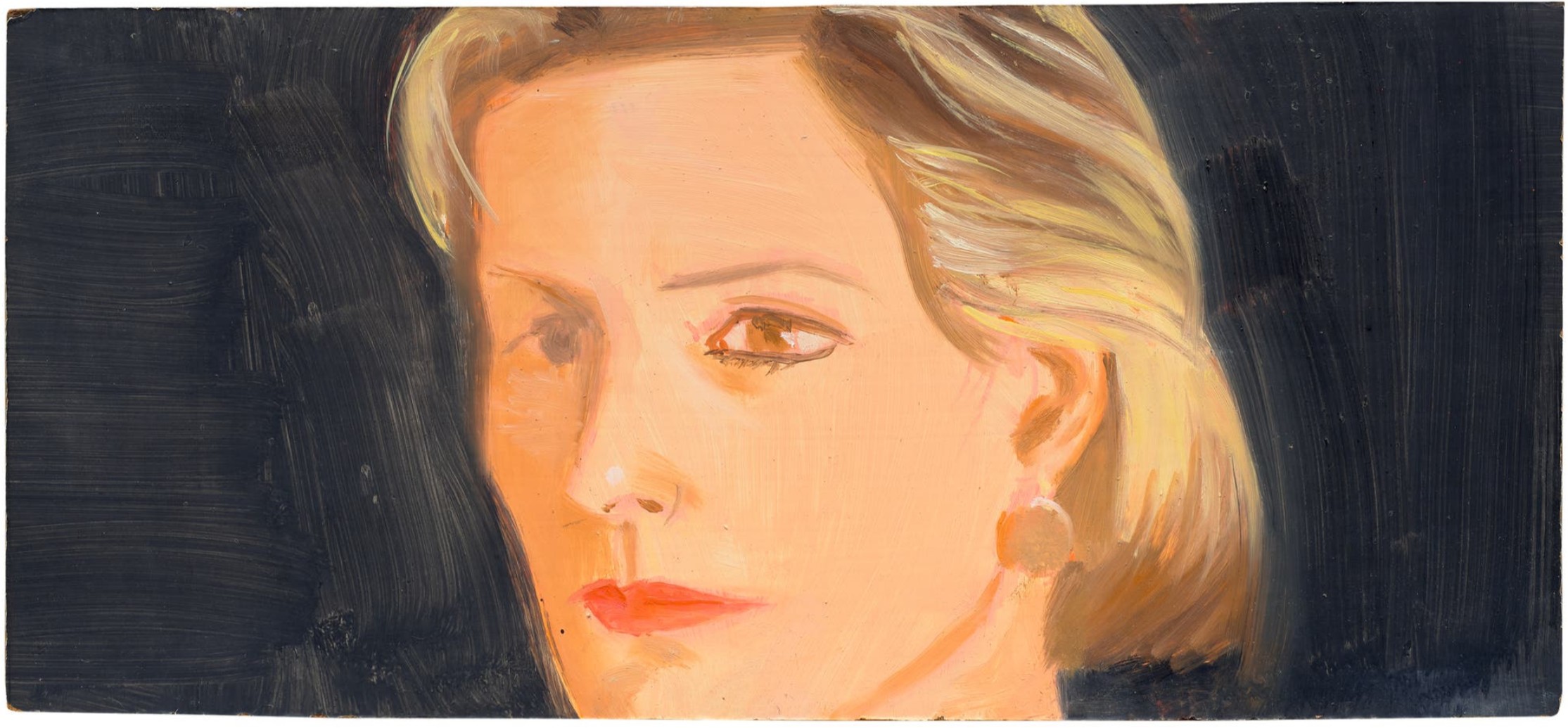
ALEX KATZ
Study for Clarissa, 1989
Oil on board
6-7/8 x 15-3/8 inches (17.7 x 39 cm)
Signed ‘alex Katz’ on the reverse
2025 Auction Results
30 lots sold at auction in 2025 for a total turnover of USD 13,513,028. With 5 lots failing to sell, the sell-through rate is 86%. The highest price in 2025 was achieved by Good Afternoon 2, a painting dated 1974, that sold at Sotheby’s in New-York on 16 May 2025 for USD 2,368,000.
2025 Top 3 Lots
2 lots sold for more than USD 1 million, generating a cumulative turnover of USD 3,434,800, representing 25.4% of the total turnover of 2025. 11 lots sold for more than USD 500,000, generating a cumulative turnover of USD 10,646,998, representing 78.8% of the total turnover for 2025.
XXXXXXXXXX
#1. Good Afternoon 2, 1974
Sotheby’s New-York: 16 May 2025
Estimated: USD 800,000 – 1,200,000
USD 2,368,000
READ MORE IN FOCUS SECTION
Good Afternoon 2 | Contemporary Day Auction | 2025 | Sotheby’s

ALEX KATZ (b. 1927)
Good Afternoon 2, 1974
Oil on linen
72×96 inches (182.9 x 243.8 cm)
#2. Night – William Dunas Dance Company, 1979
Sotheby’s New-York: 26 September 2025
Estimated: USD 600,000 – 800,000
USD 1,066,800
READ MORE IN FOCUS SECTION
Night – William Dunas Dance Company | Contemporary Curated | 2025 | Sotheby’s
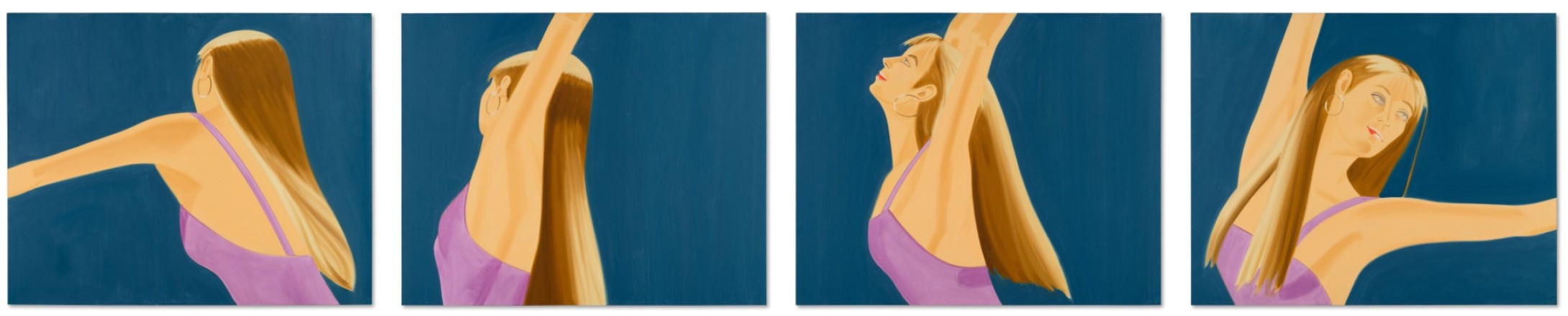
ALEX KATZ (b. 1927)
Night – William Dunas Dance Company, 1979
Oil on linen, in four parts
Each: 48×60 inches (121.9 x 152.4 cm.)
Overall installed: 48×264 inches (121.9 x 670.6 cm)
USD 1 million
#3. Kym 2, 1989-1990
Christie’s London: 15 October 2025
Estimated: GBP 600,000 – 800,000
GBP 736,600 / USD 987,045
READ MORE IN FOCUS SECTION
ALEX KATZ (B. 1927), Kym 2 | Christie’s
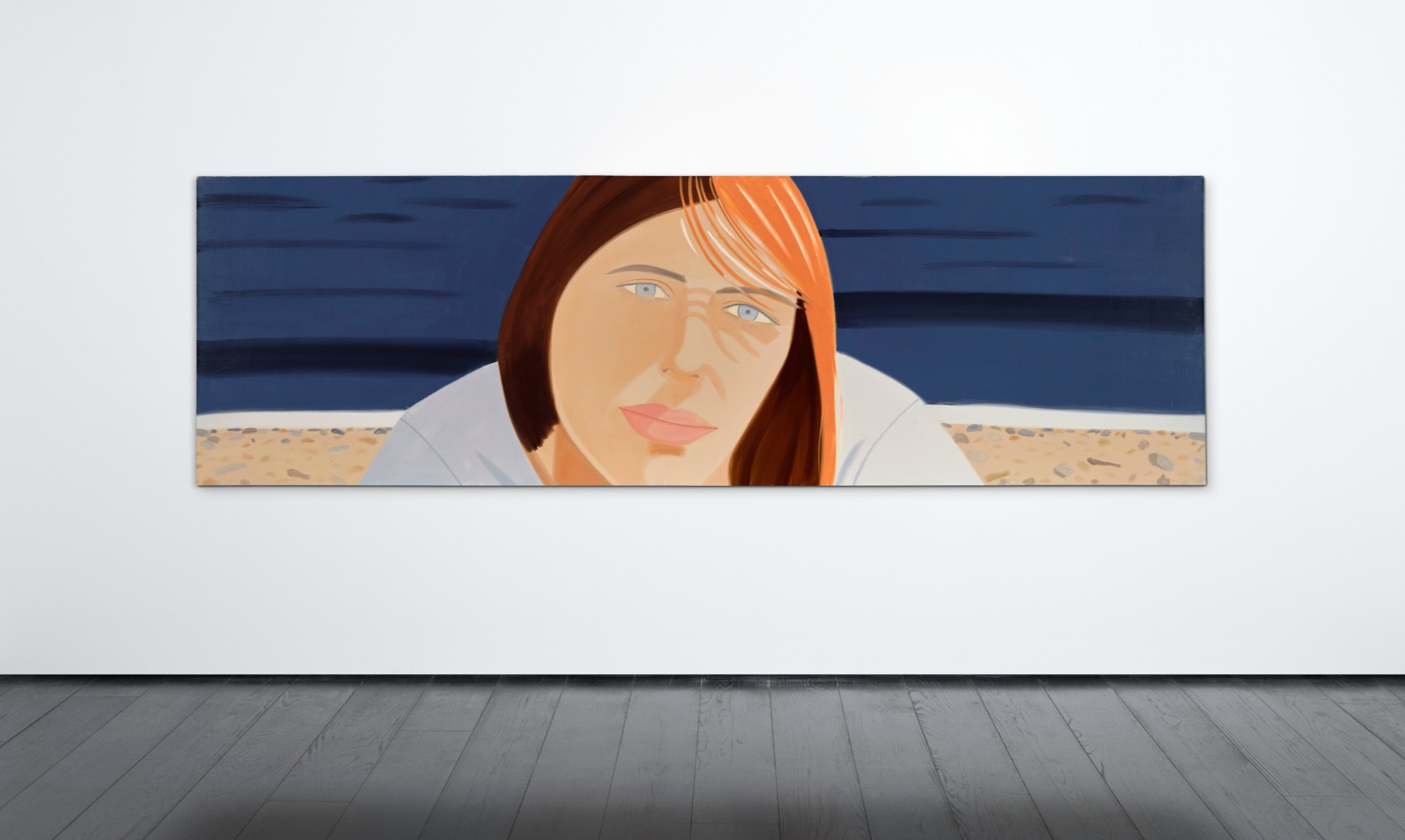
ALEX KATZ (B. 1927)
Kym 2, 1989-1990
Oil on linen
40 x 129 7/8 inches (101.5 x 330 cm)
Signed and dated ‘Alex Katz 90’ (on the overlap)
#4. Lavender Shirt, 1994
Sotheby’s London: 24 June 2025
Estimated: GBP 550,000 – 750,000
GBP 711,200 / USD 974,345
READ MORE IN FOCUS SECTION
Lavender Shirt | Modern & Contemporary Evening Auction | 2025 | Sotheby’s
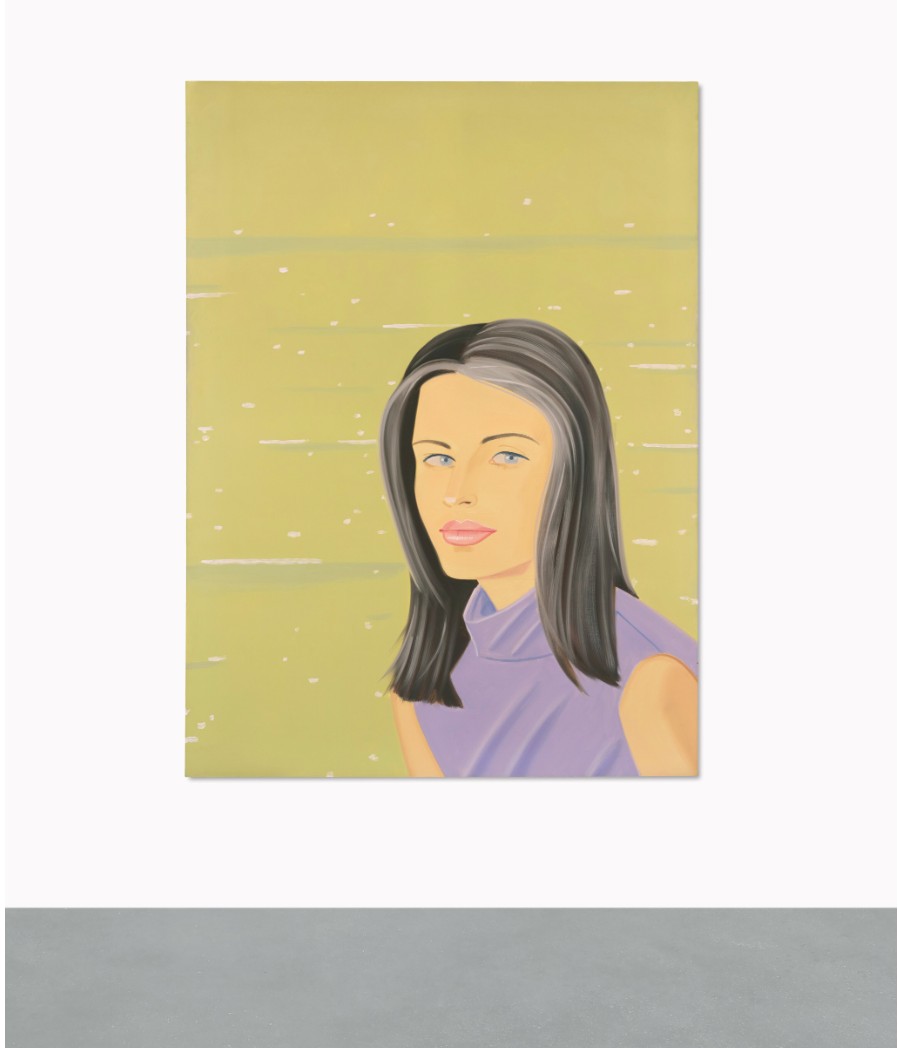
ALEX KATZ (b. 1927)
Lavender Shirt, 1994
Oil on canvas
89 3/4 x 66 1/8 inches (228×168 cm)
#5. Darisa, 2015
Christie’s Hong-Kong: 29 March 2025
Estimated: HKD 4,500,000 – 6,500,000
HKD 7,560,000 / USD 971,722
ALEX KATZ (B. 1927), Darisa | Christie’s
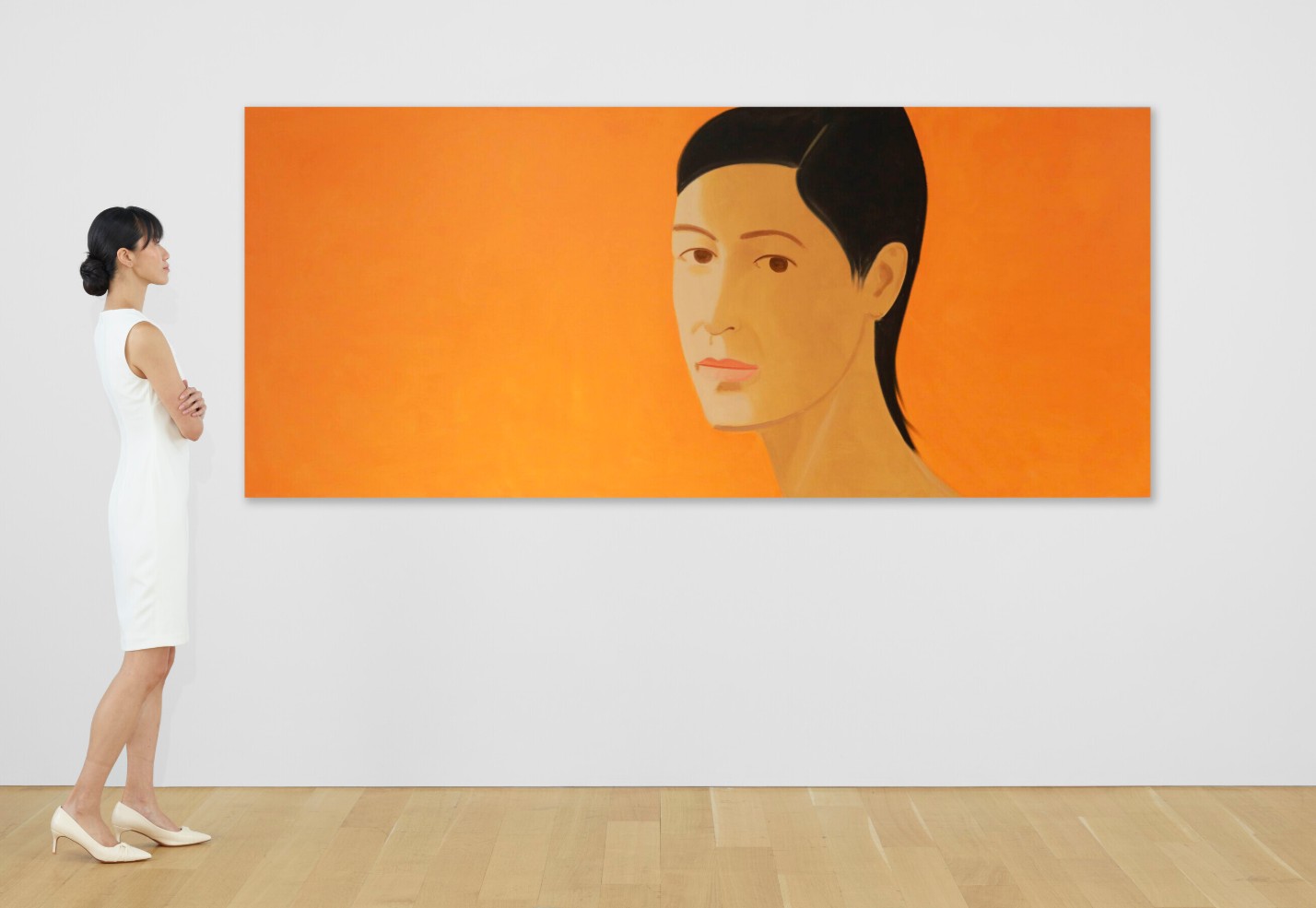
ALEX KATZ (B. 1927)
Darisa, 2015
Oil on linen
48×112 inches (121.9 x 284.5 cm)
Signed and dated ‘alex katz 14’ (on the overlap)
#6. Thai Restaurant, 1980
Christie’s New-York: 20 November 2025
Estimated: USD 600,000 – 800,000
USD 850,900
ALEX KATZ (B. 1927), Thai Restaurant | Christie’s
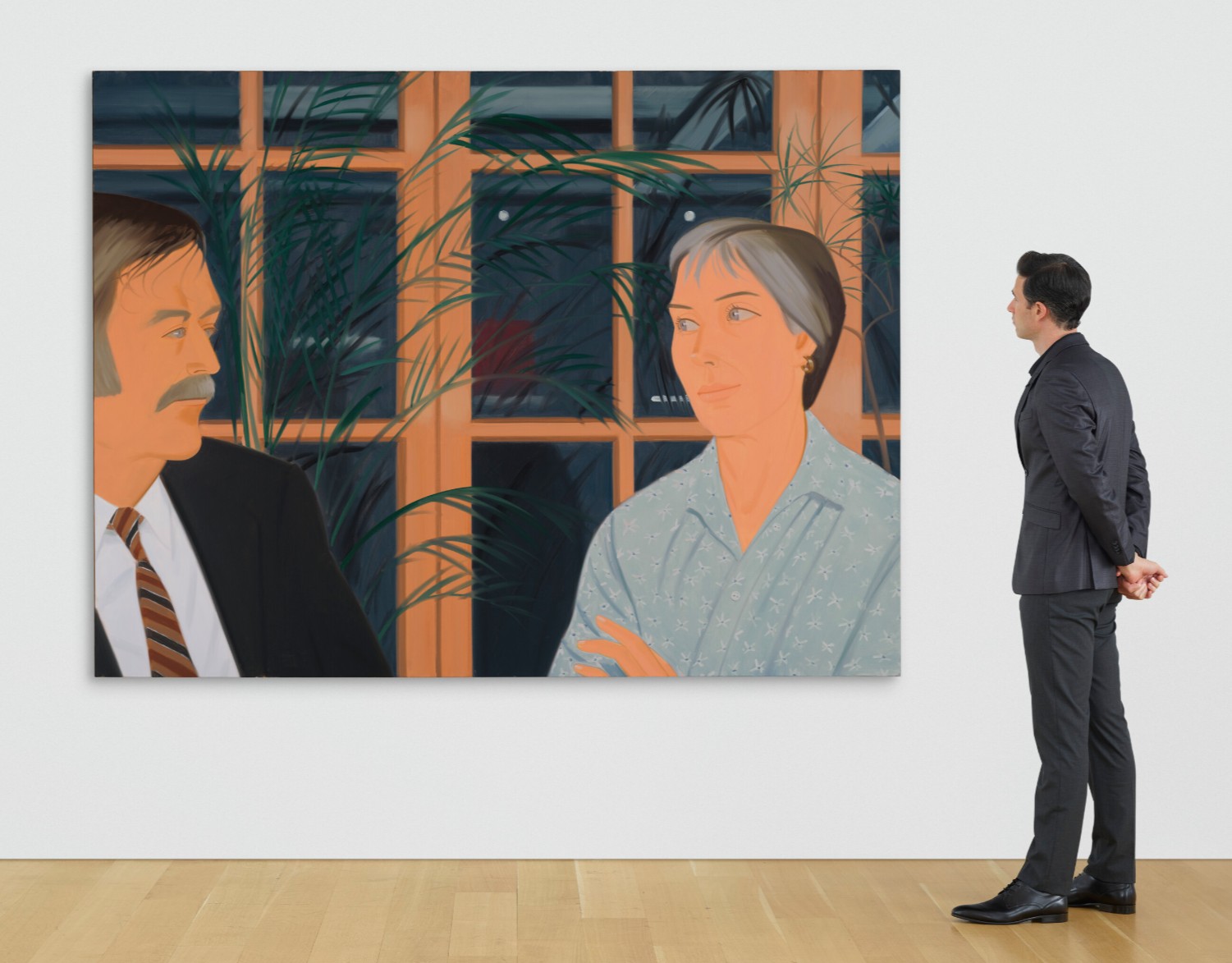
ALEX KATZ (B. 1927)
Thai Restaurant, 1980
Oil on linen
72×96 inches (182.9 x 243.8 cm)
#7. Christie, 1988
Christie’s New-York: 30 September 2025
Estimated: USD 700,000 – 1,000,000
USD 825,500
READ MORE IN FOCUS SECTION
ALEX KATZ (B. 1927), Christie | Christie’s

ALEX KATZ (B. 1927)
Christie, 1988
Oil on linen
90×66 inches (228.6 x 167.6 cm)
#8. Sarah, 2005
Property from an Important European Collection
Phillips New-York: 19 November 2025
Estimated: USD 400,000 – 600,000
USD 709,500
READ MORE IN FOCUS SECTION
Alex Katz Modern & Contemporary Art Evening Sale featuring Cera the Triceratops
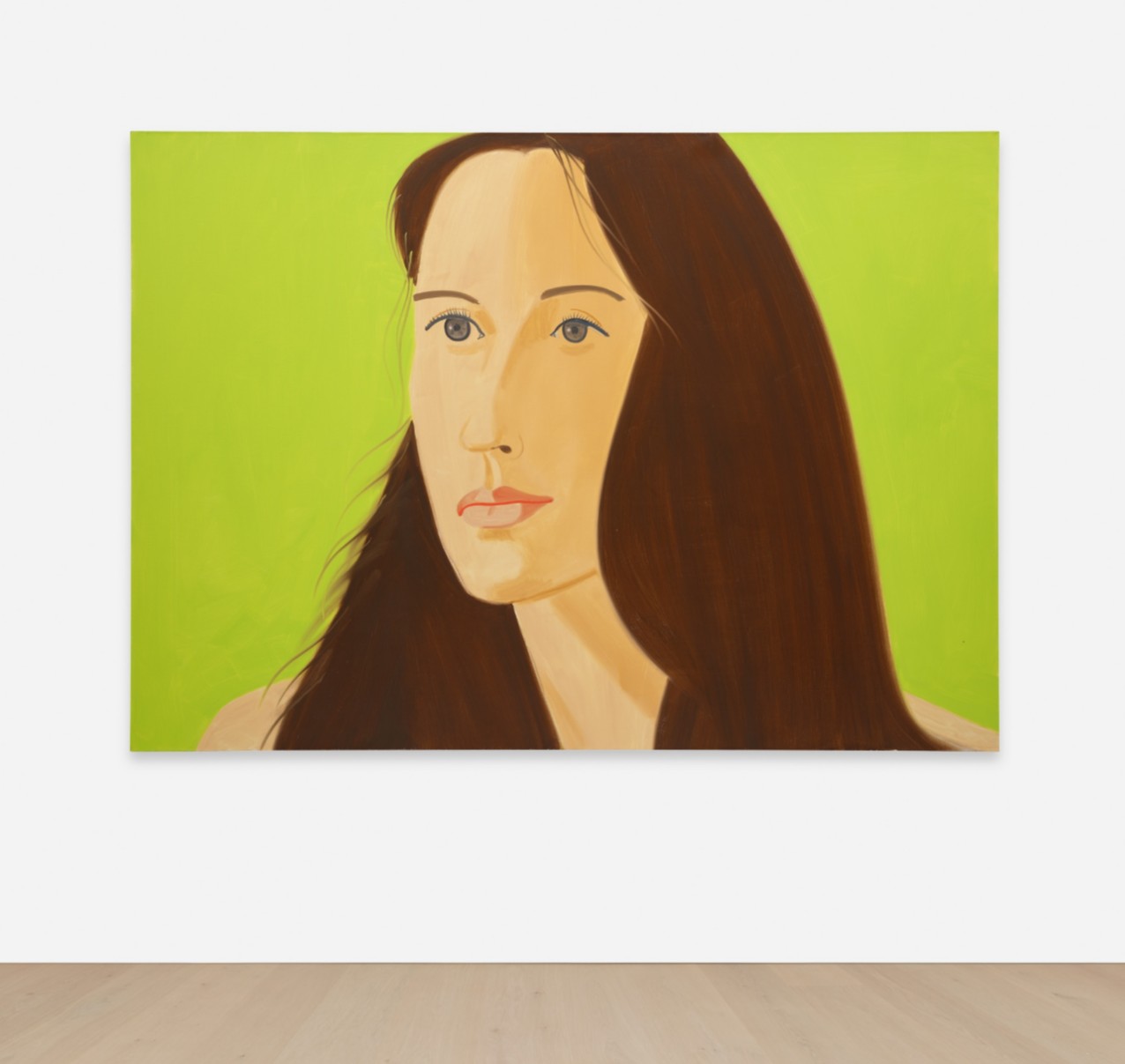
ALEX KATZ
Sarah, 2005
Oil on linen
60 1/8 x 84 1/8 inches (152.7 x 213.7 cm)
Signed and dated “Alex Katz 05” on the overlap
#9. Nikki II, 2006
Christie’s Hong-Kong: 27 September 2025
Estimated: HKD 4,500,000 – 6,500,000
HKD 5,461,000 / USD 701,930
ALEX KATZ (B. 1927), Nikki II | Christie’s
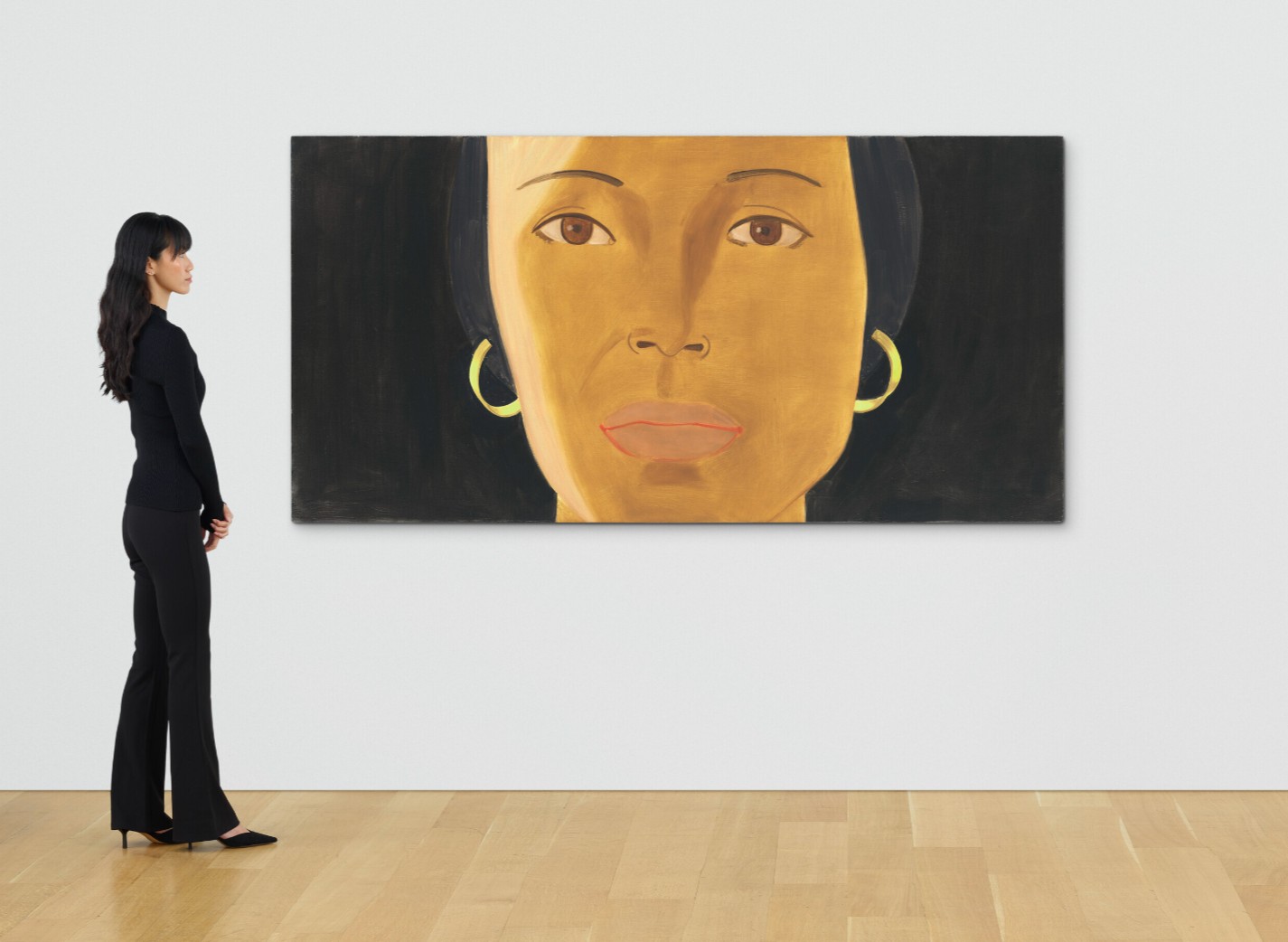
ALEX KATZ (B. 1927)
Nikki II, 2006
Oil on canvas
48 1/8 x 96 1/4 inches (122.3 x 244.5 cm)
Signed and dated ‘Alex Katz 06’ (on the overlap)
#10. Yvonne in Green, 1995
Sotheby’s London: 17 October 2025
Estimated: GBP 300,000 – 400,000
GBP 444,500 / USD 595,630
READ MORE IN FOCUS SECTION
Yvonne in Green | Contemporary Day Auction | 2025 | Sotheby’s
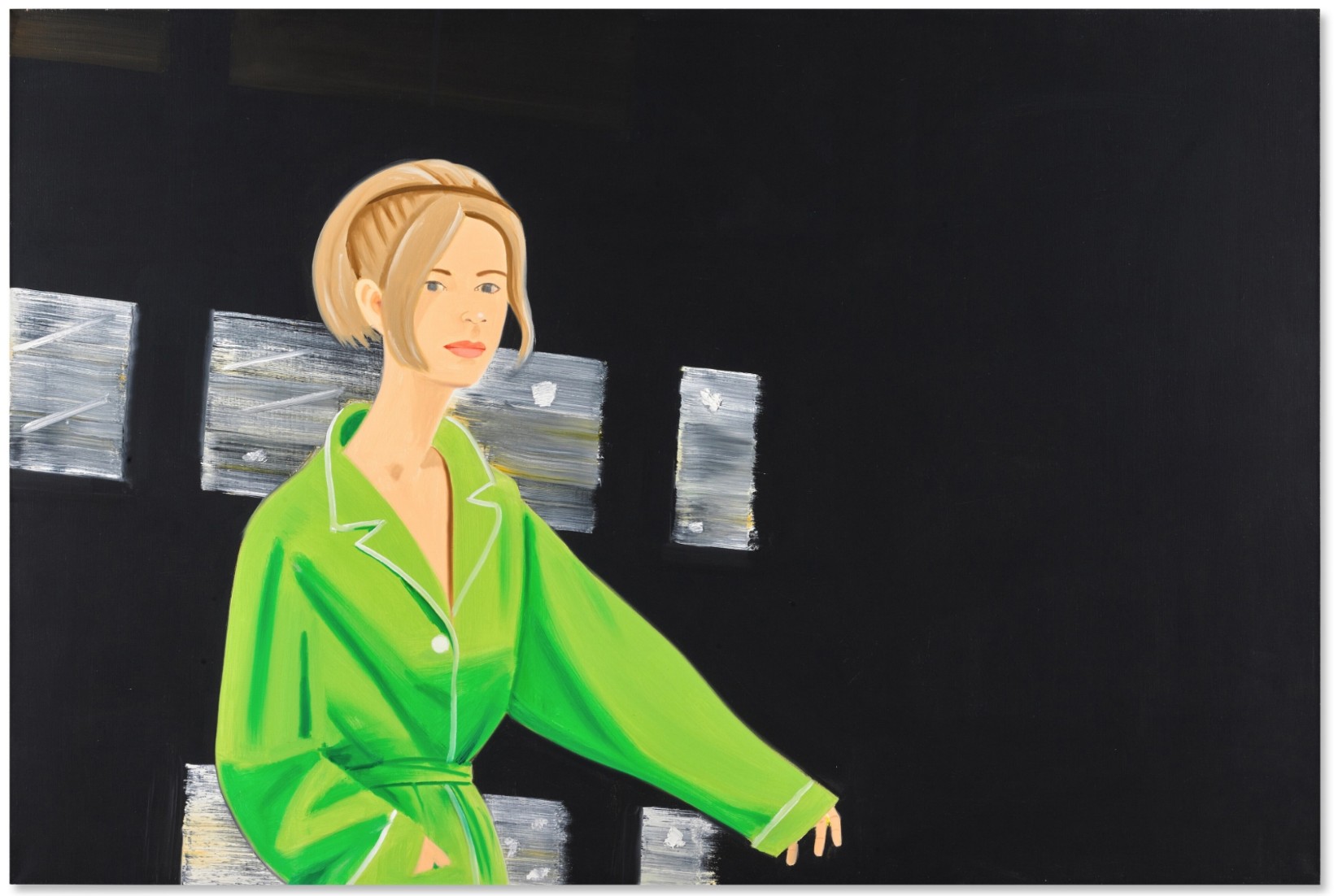
ALEX KATZ (b. 1927)
Yvonne in Green, 1995
Oil on canvas
48 1/8 x 71 7/8 inches (122.3 x 182.5 cm)
#11. Sissel, 2000
Christie’s London: 16 October 2025
Estimated: GBP 350,000 – 550,000
GBP 444,500 / USD 595,630
READ MORE IN FOCUS SECTION
ALEX KATZ (B. 1927), Sissel | Christie’s
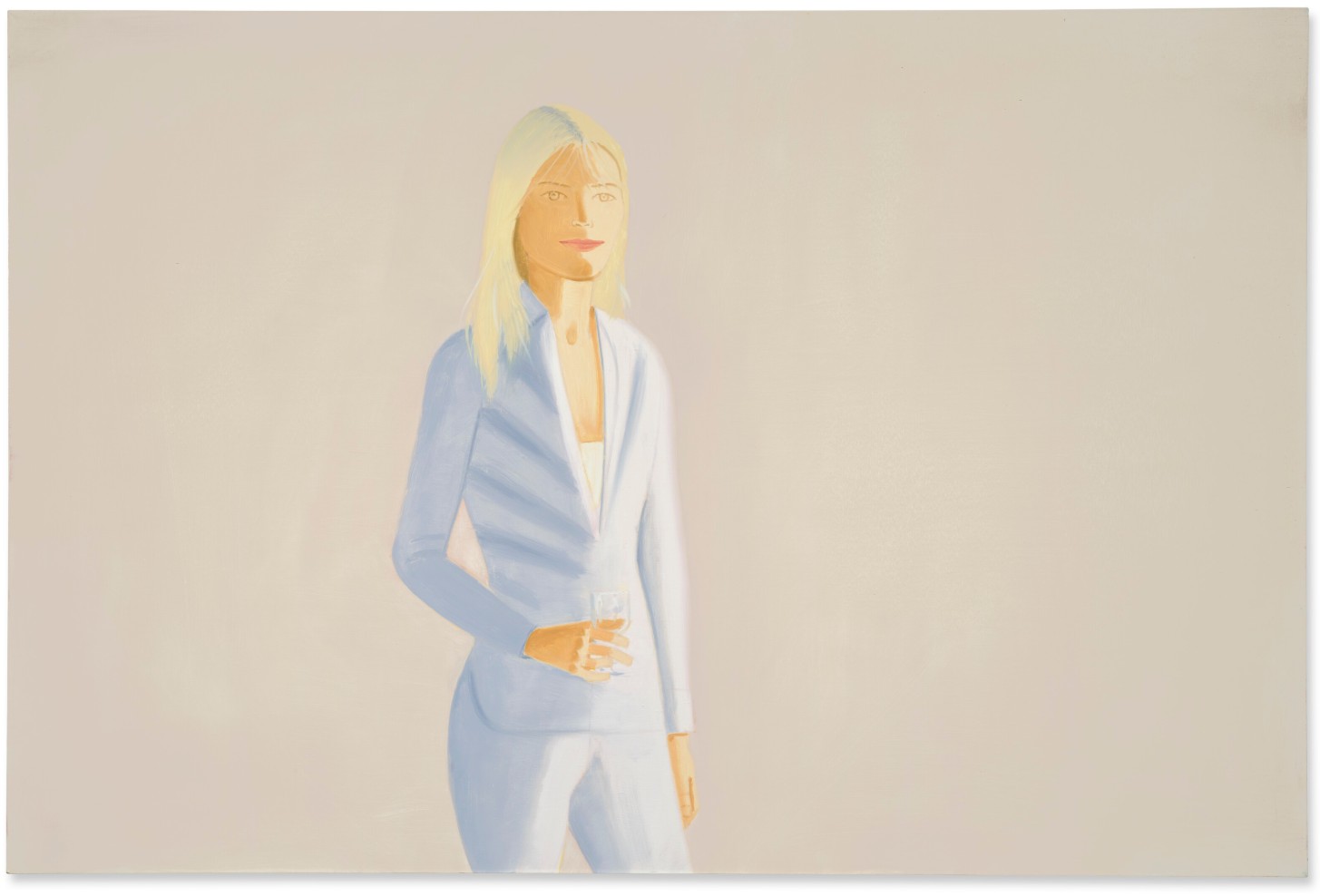
ALEX KATZ (B. 1927)
Sissel, 2000
Oil on linen
48×72 inches (122×183 cm)
Signed and dated ‘Alex Katz 00’ (on the overlap)
USD 500,000
#12. Margit, 1993
Sotheby’s New-York: 26 September 2025
Estimated: USD 350,000 – 450,000
USD 482,600
Margit | Contemporary Curated | 2025 | Sotheby’s
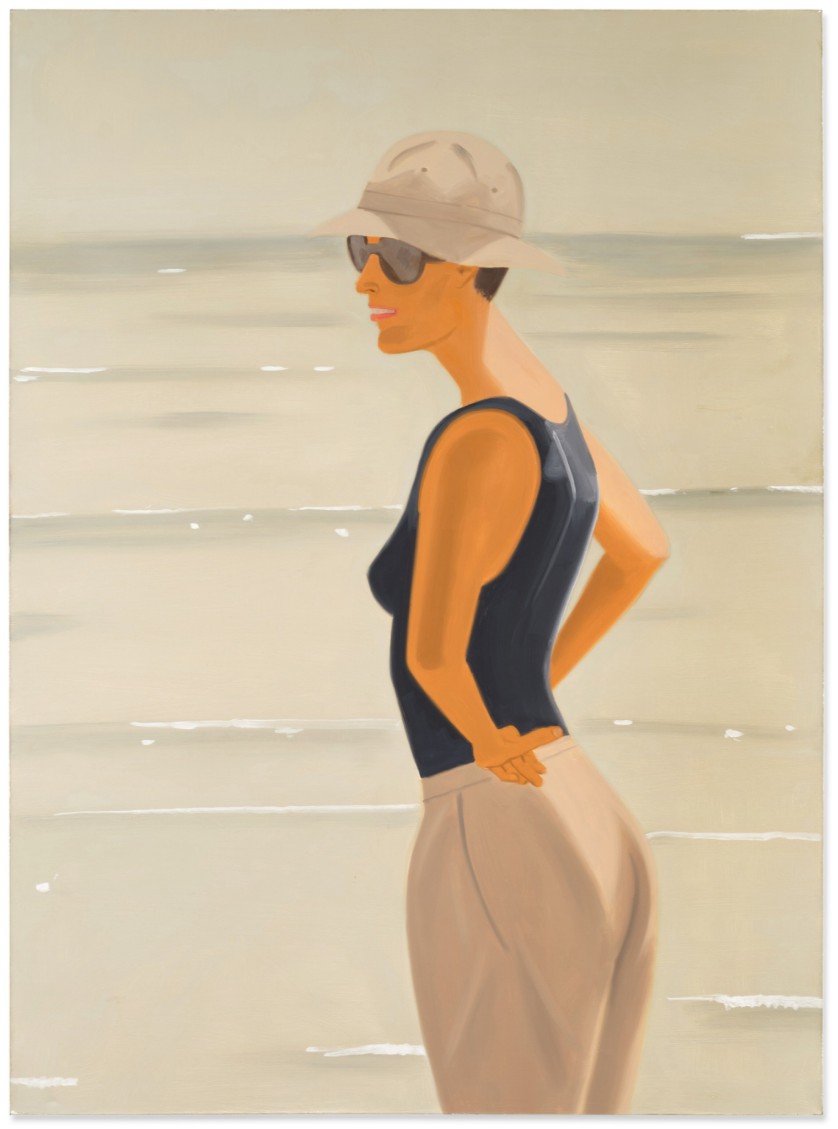
ALEX KATZ (b. 1927)
Margit, 1993
Oil on linen
90×66 inches (228.6 x 167.6 cm)
#13. Study for Chance, 1990
Christie’s London: 16 October 2025
Estimated: GBP 130,000 – 180,000
GBP 292,100 / USD 391,415
READ MORE IN FOCUS SECTION
ALEX KATZ (B. 1927), Study for Chance | Christie’s
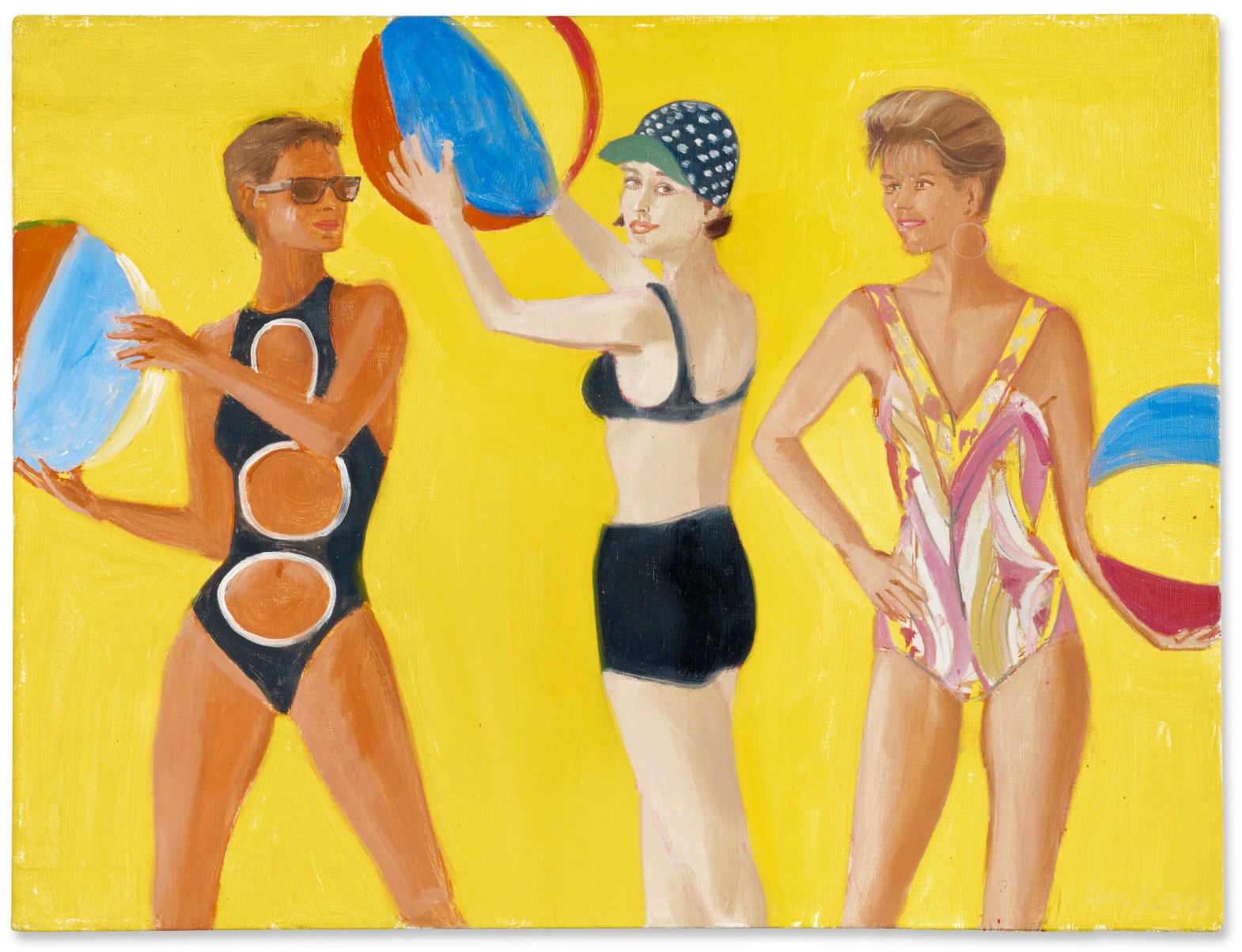
ALEX KATZ (B. 1927)
Study for Chance, 1990
Oil on linen
19 1/8 x 21 1/4 inches (48.5 x 64 cm)
Signed and dated ‘Alex Katz 90’ (lower right)
#14. Eli at Ducktrap, 1958
Phillips New-York: 14 May 2025
Estimated: USD 300,000 – 400,000
USD 381,000
READ MORE IN FOCUS SECTION
Alex Katz Modern & Contemporary Art Day Sale, Morning Session
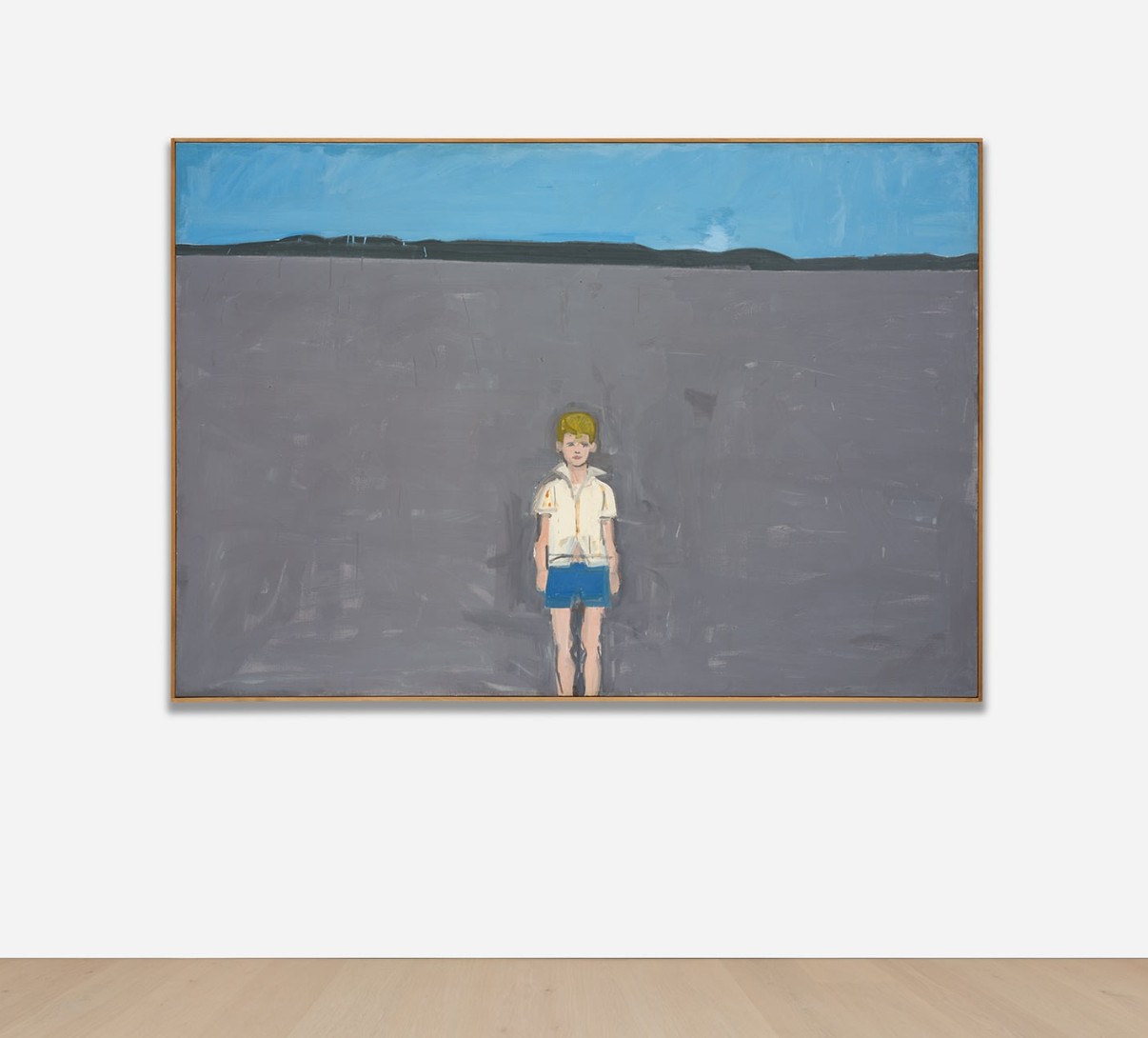
Oil on linen
#15. Danny and Laura, 1984
Property from a Private Florida Collection
Sotheby’s New-York: 19 November 2025
Estimated: USD 100,000 – 150,000
USD 355,600
Danny and Laura | Contemporary Day Auction | 2025 | Sotheby’s

ALEX KATZ (b. 1927)
Danny and Laura, 1984
Oil on shaped aluminum
71×48 inches (180.3 x 121.9 cm)
#16. Kym and Peter, 1992
Estimated: USD 60,000 – 80,000
USD 201,600
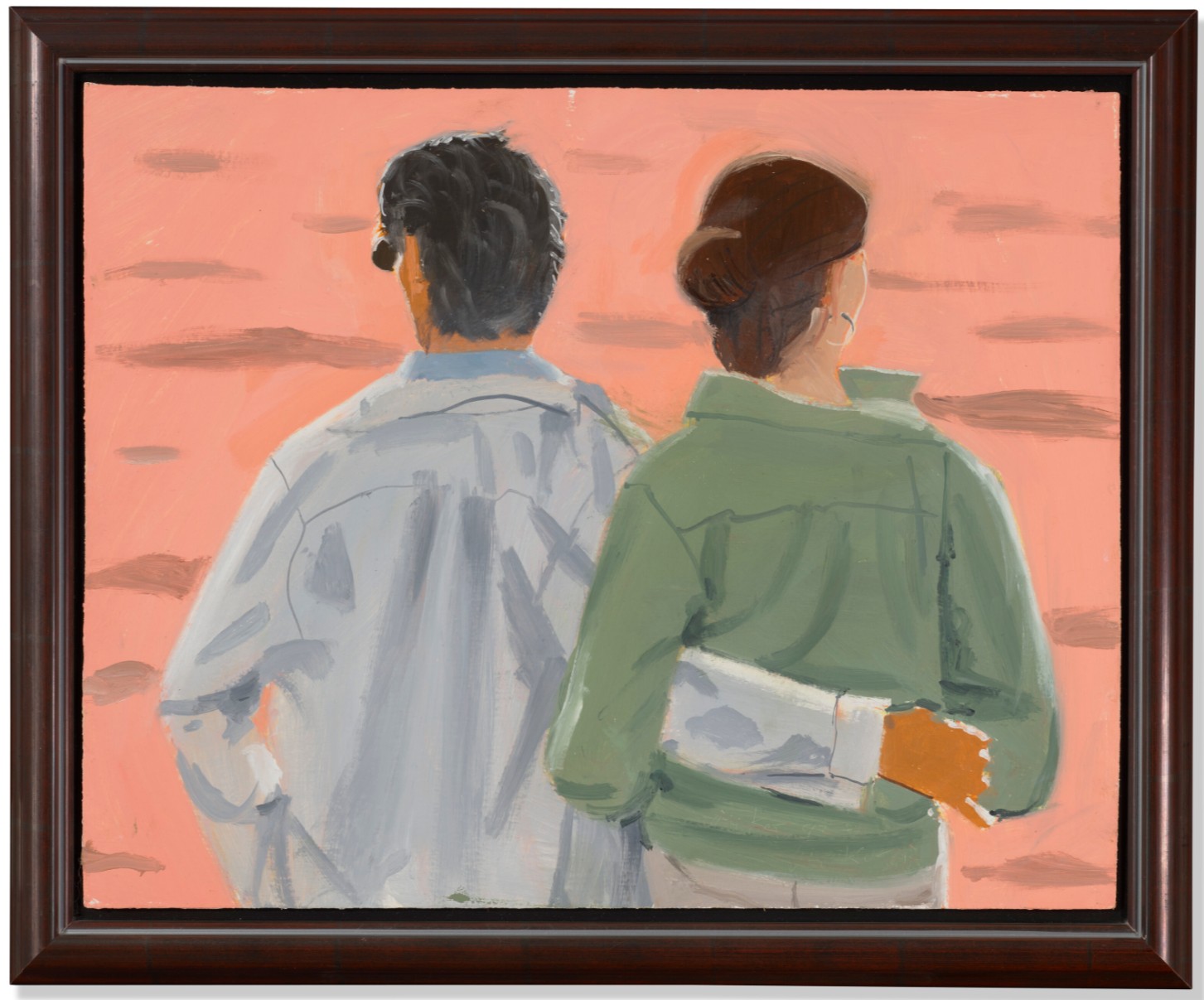
Kym and Peter, 1992
Oil on board
16 1/8 x 20 inches (41 x 50.8 cm)
Signed and dated twice ‘Alex Katz 92 Alex Katz 92’ (lower right)
USD 200,000
#17. Portrait of Al Held, 1963
Estimated: USD 150,000 – 250,000
USD 152,900
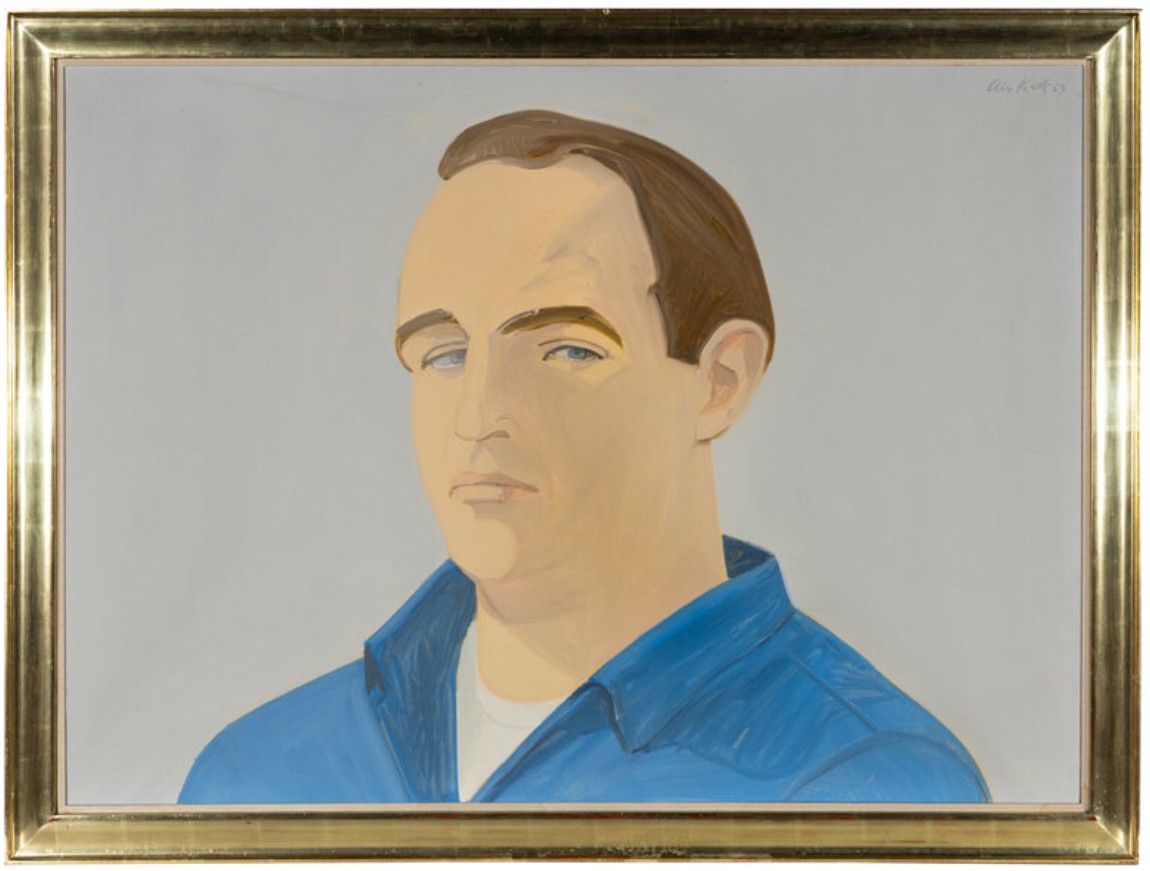
Portrait of Al Held, 1963
Oil on linen
35 1/8 x 48 inches
Signed Alex Katz and dated (upper right)
#18. Study for Ada in the Park, 1965
Christie’s London: 6 March 2025
Estimated: GBP 70,000 – 100,000
GBP 107,100 / USD 137,088
ALEX KATZ (B. 1927), Study for Ada in the Park | Christie’s
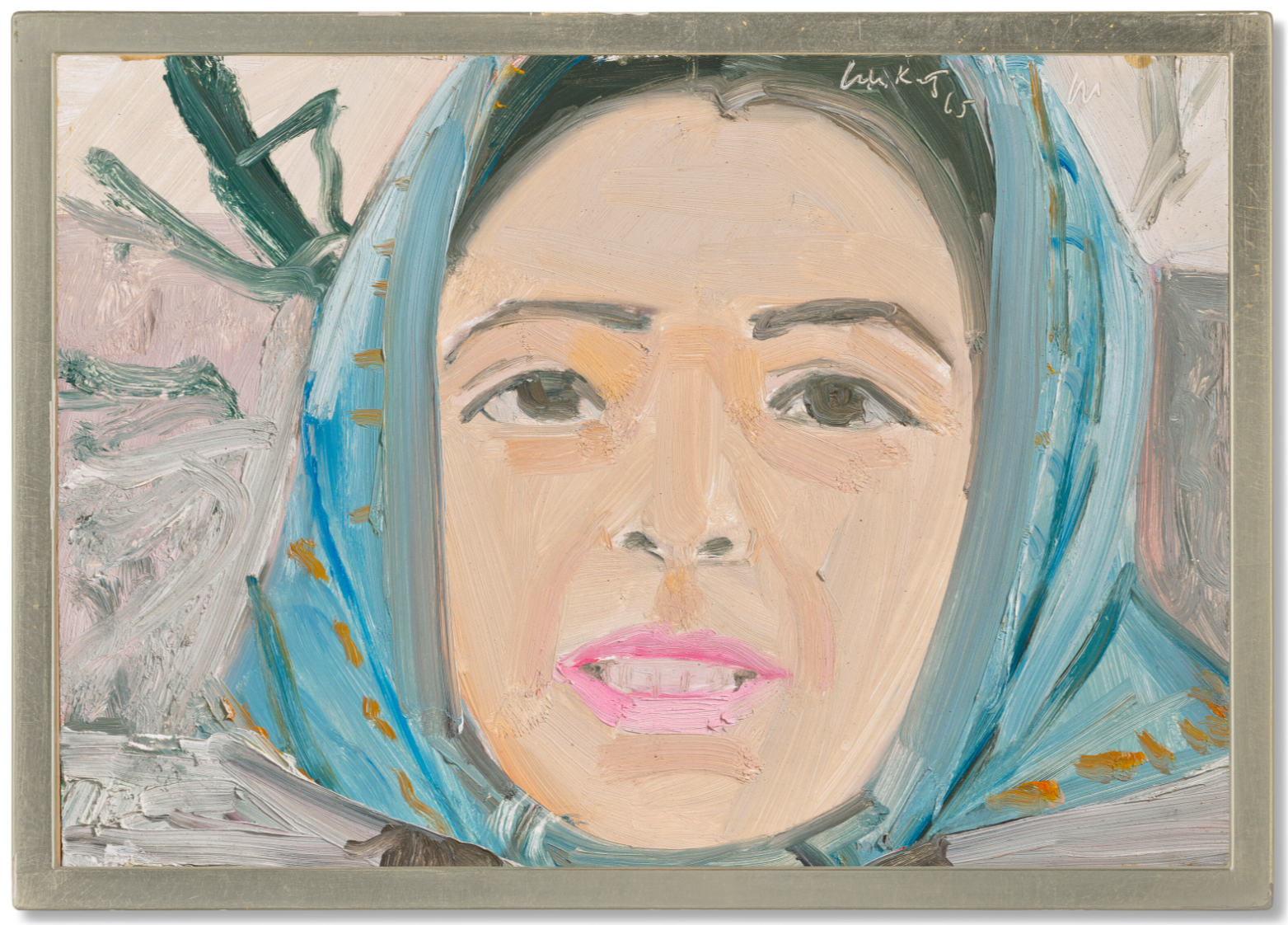
ALEX KATZ (B. 1927)
Study for Ada in the Park, 1965
Oil on board
9 7/8 x 14 inches (25 x 35.7 cm)
Signed and dated ‘Alex Katz 65’ (upper right)
#19. Edwin, 1961-1962
Christie’s New-York: 14 May 2025
Estimated: USD 70,000 – 90,000
USD 119,700
ALEX KATZ (B. 1927), Edwin | Christie’s
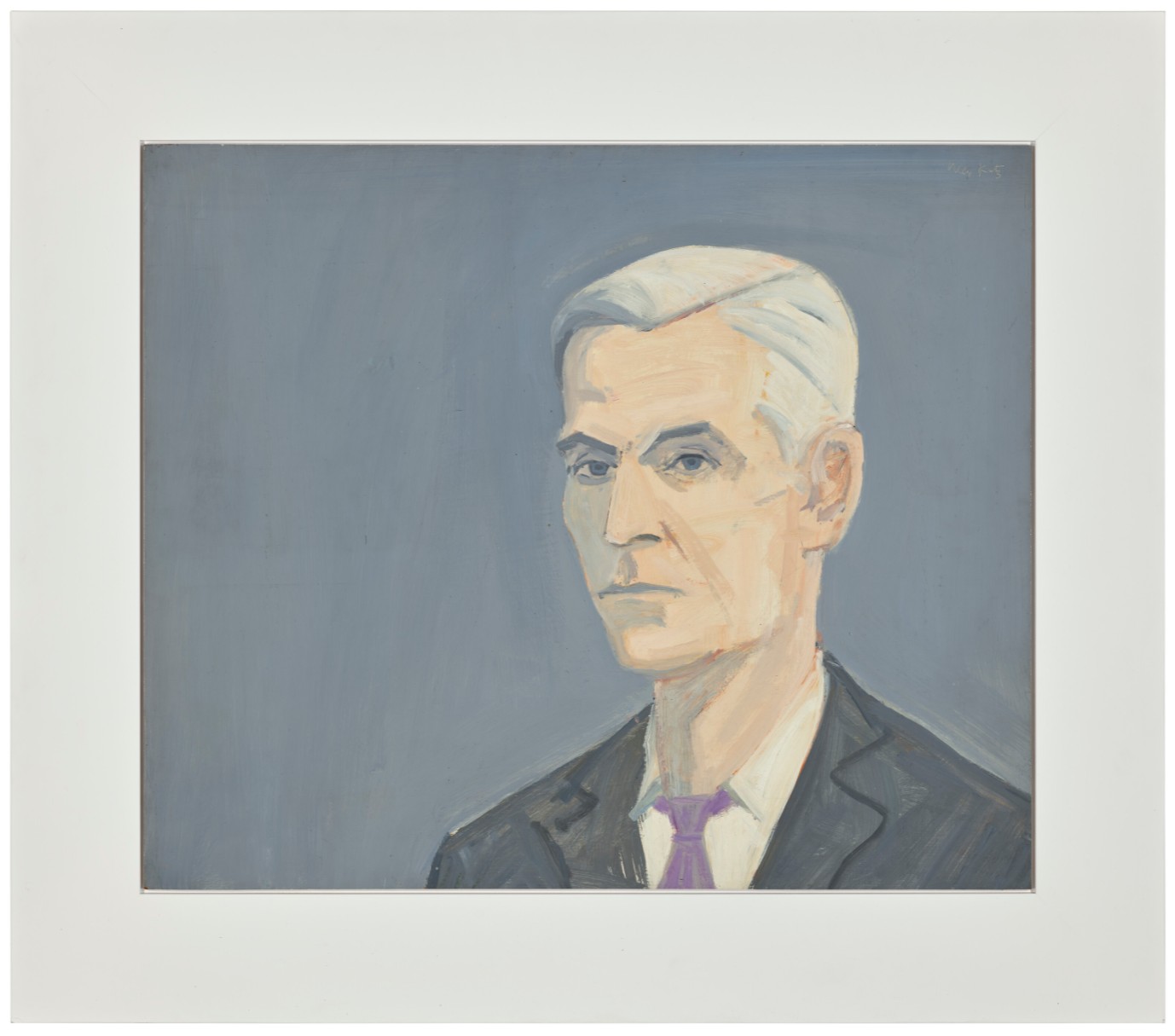
ALEX KATZ (B. 1927)
Edwin, 1961-1962
Oil on board
23 1/4 x 27 5/8 inches (59 x 70.1 cm)
Incised with the artist’s signature ‘Alex Katz’ (upper right)
#20. Orange Hat I, 1973
Christie’s London: 6 March 2025
Estimated: GBP 70,000 – 100,000
GBP 88,200 / USD 112,896
ALEX KATZ (B. 1927), Orange Hat I | Christie’s
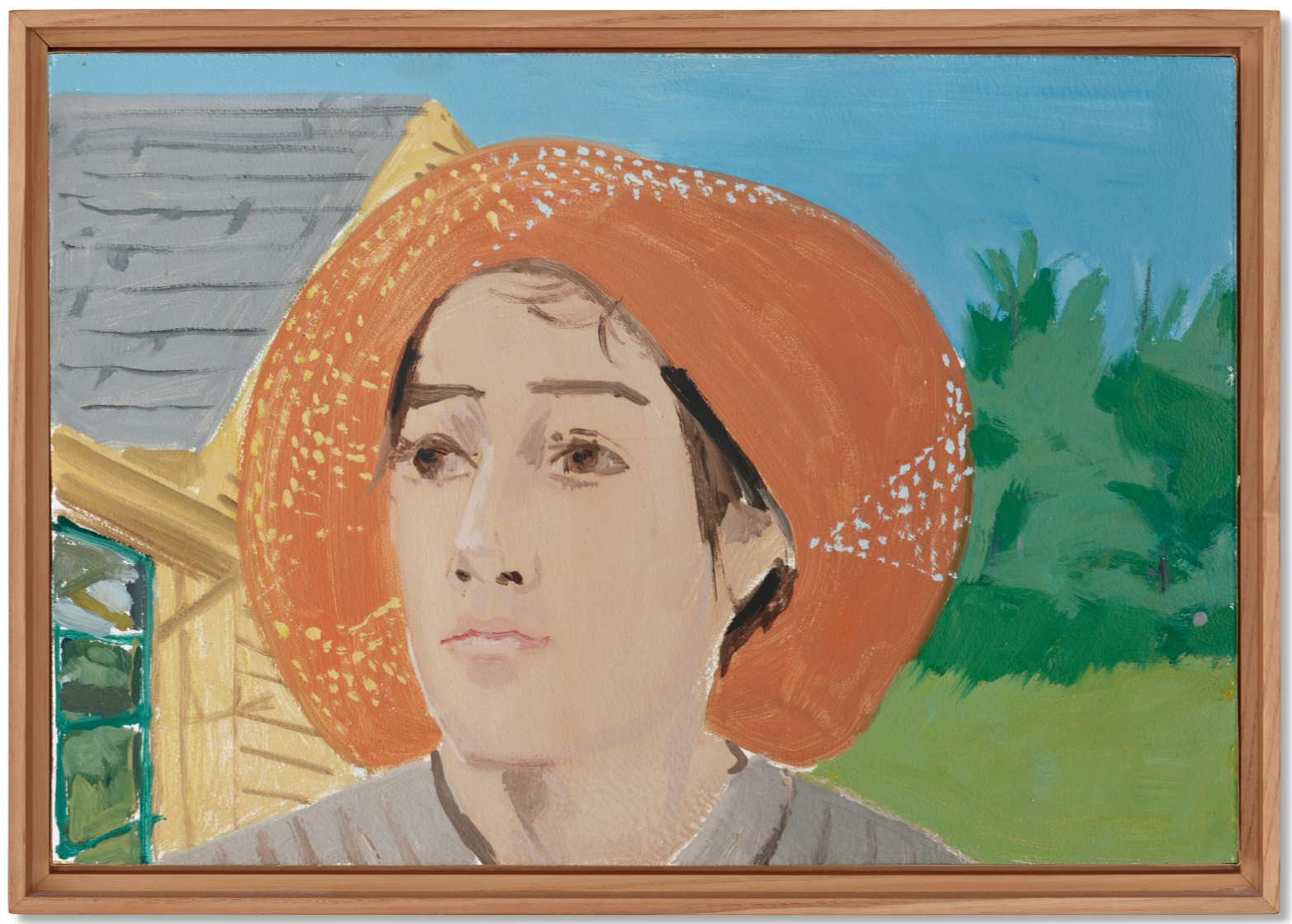
ALEX KATZ (B. 1927)
Orange Hat I, 1973
Oil on board
11×16 inches (27.8 x 40.7 cm)
Signed ‘Alex Katz’ (on the reverse)
USD 100,000
#21. Kenneth Koch Study, 1967
Christie’s New-York: 27 February 2025
Estimated: USD 50,000 – 70,000
USD 88,200
ALEX KATZ (B. 1927), Kenneth Koch Study | Christie’s
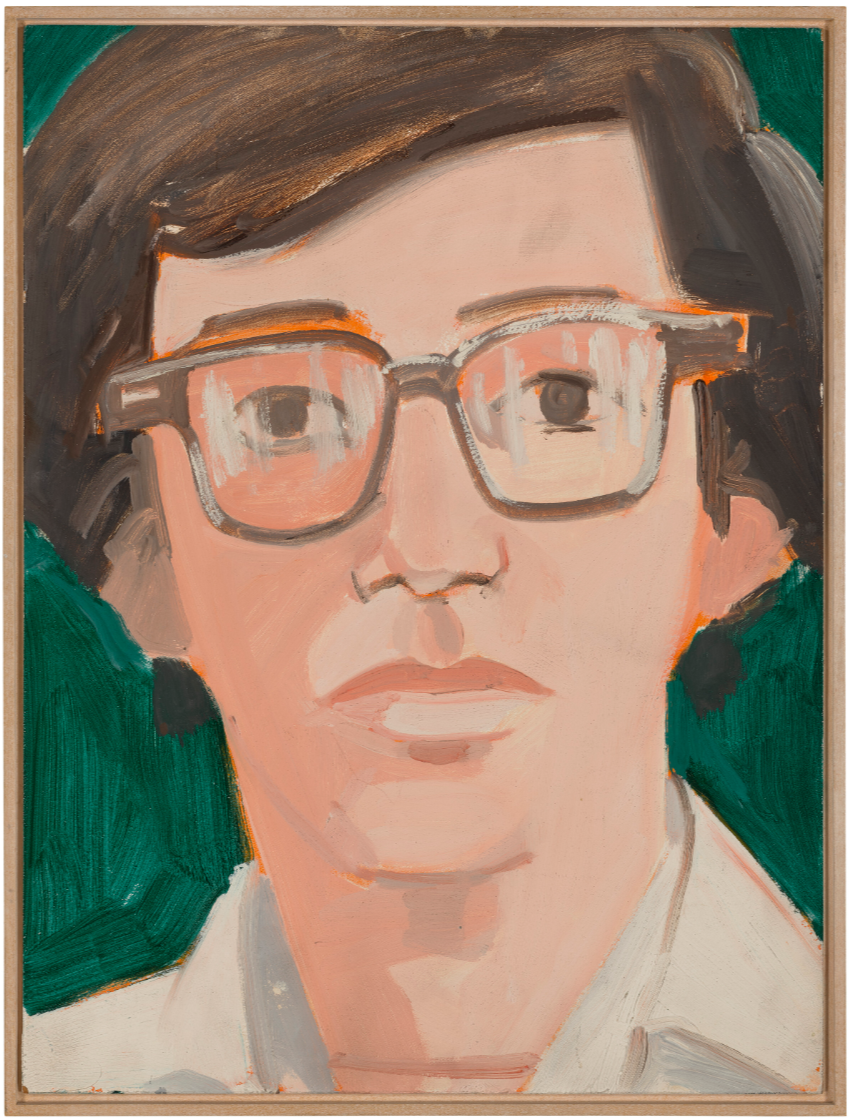
ALEX KATZ (B. 1927)
Kenneth Koch Study, 1967
Oil on board
16×12 inches (40.6 x 30.5 cm)
#22. Nevis (Study for Round Hill), 1977
Christie’s New-York: 27 February 2025
Estimated: USD 40,000 – 60,000
USD 81,900
ALEX KATZ (B. 1927), Nevis (Study for Round Hill) | Christie’s
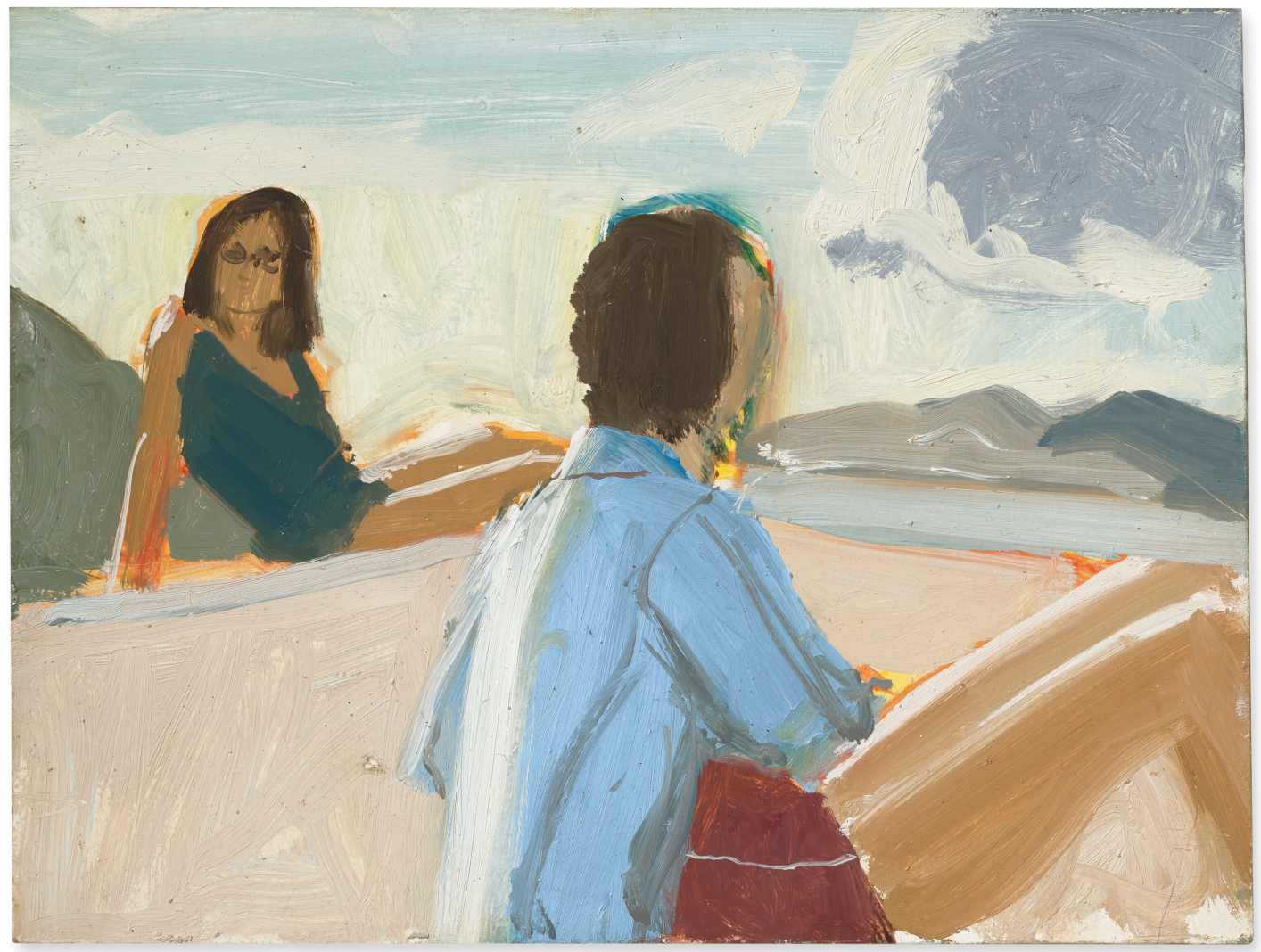
ALEX KATZ (B. 1927)
Nevis (Study for Round Hill), 1977
Oil on board
9 x 11 1/8 inches (22.9 x 30.2 cm)
#23. John Button and Scott Burton, 1966
Christie’s London: 6 March 2025
Estimated: GBP 35,000 – 55,000
GBP 47,880 / USD 61,286
ALEX KATZ (B. 1927), John Button and Scott Burton | Christie’s
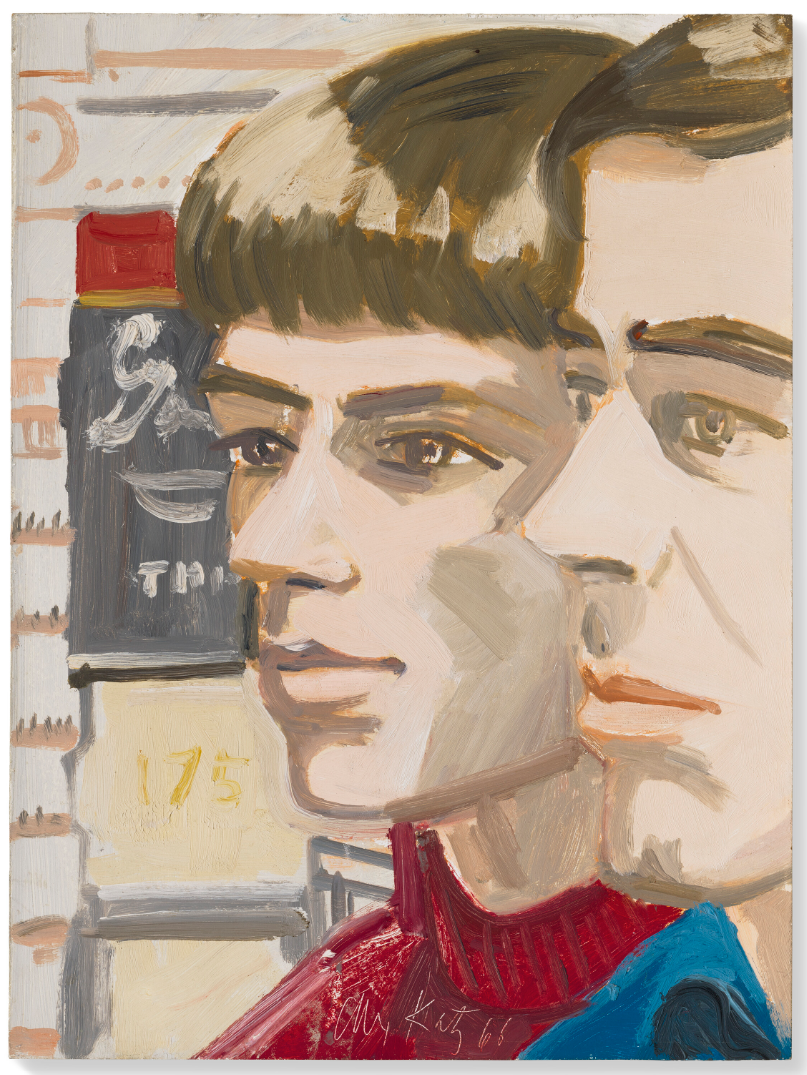
ALEX KATZ (B. 1927)
John Button and Scott Burton, 1966
Oil on board
16 x 11 7/8 inches (40.6 x 30.3 cm)
Signed and dated ‘Alex Katz 66’ (lower centre)
#24. David 4, 2005
Sotheby’s New-York: 19 November 2025
Estimated: USD 50,000 – 70,000
USD 60,960
David 4 | Contemporary Day Auction | 2025 | Sotheby’s
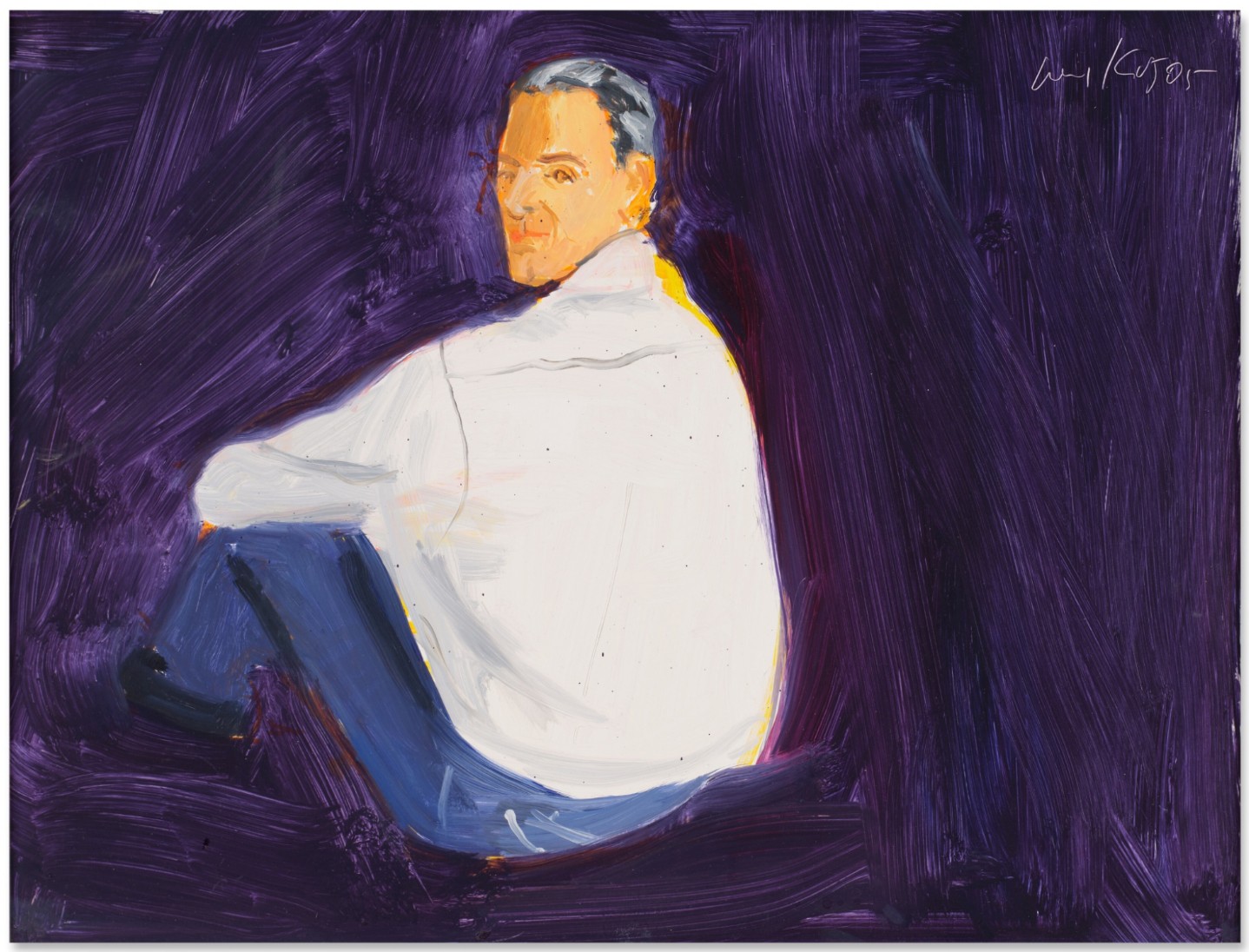
ALEX KATZ (b. 1927)
David 4, 2005
Oil on board
12×16 inches (30.5 x 40.6 cm)
Incised with the artist’s signature and date 05 (upper right)
#25. Still Life, circa 1959
Doyle New-York: 20 November 2025
Estimated: USD 20,000 – 40,000
USD 57,600
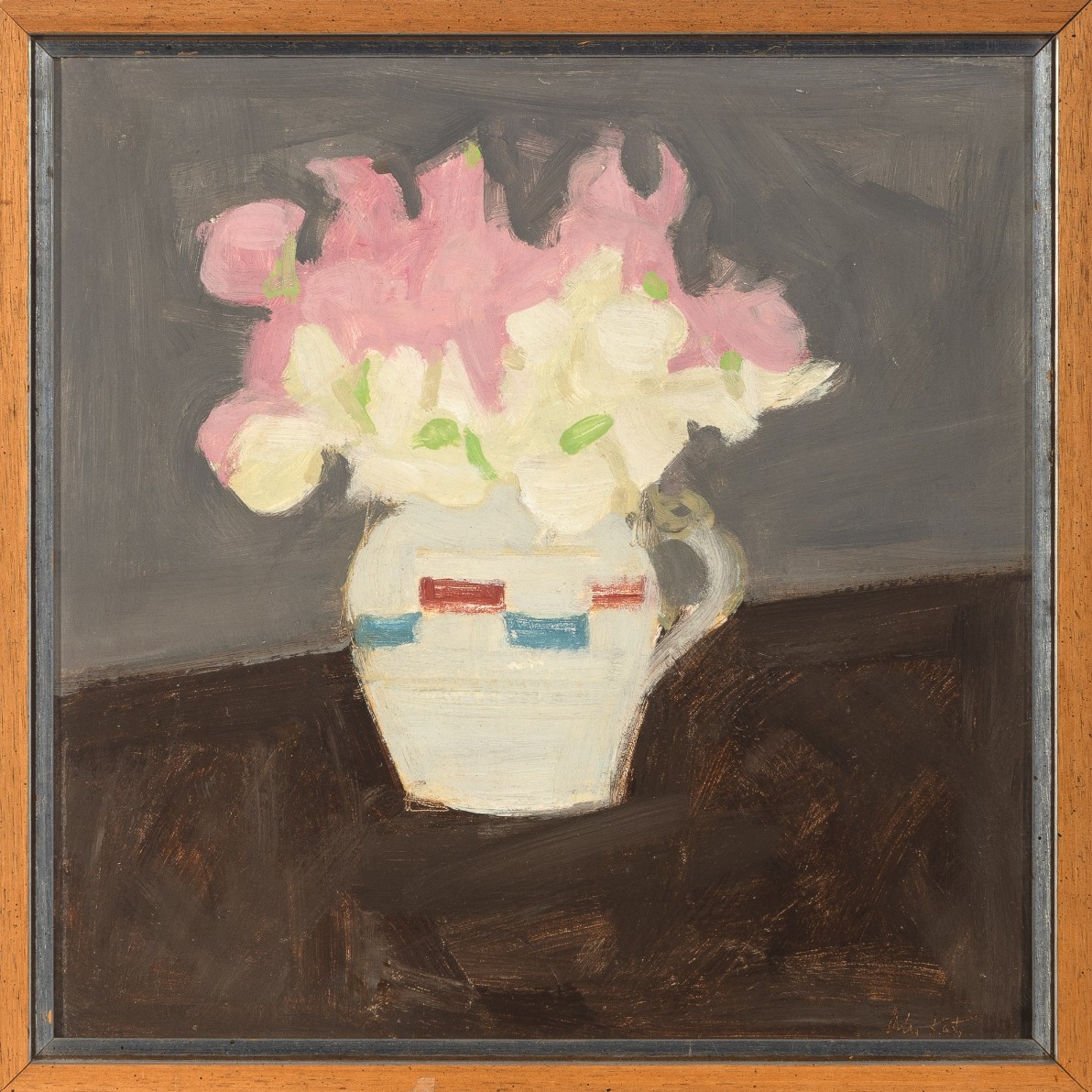
ALEX KATZ (American, b. 1927)
Still Life, circa 1959
Oil on panel
12×12 inches (30.5 x 30.5cm)
Signed Alex Katz lower right
USD 50,000
#26. Study for Man in White Shirt (Peter), 1995
Phillips New-York: 16 July 2025
Estimated: USD 40,000 – 60,000
USD 48,260
Alex Katz Modern & Contemporary Art
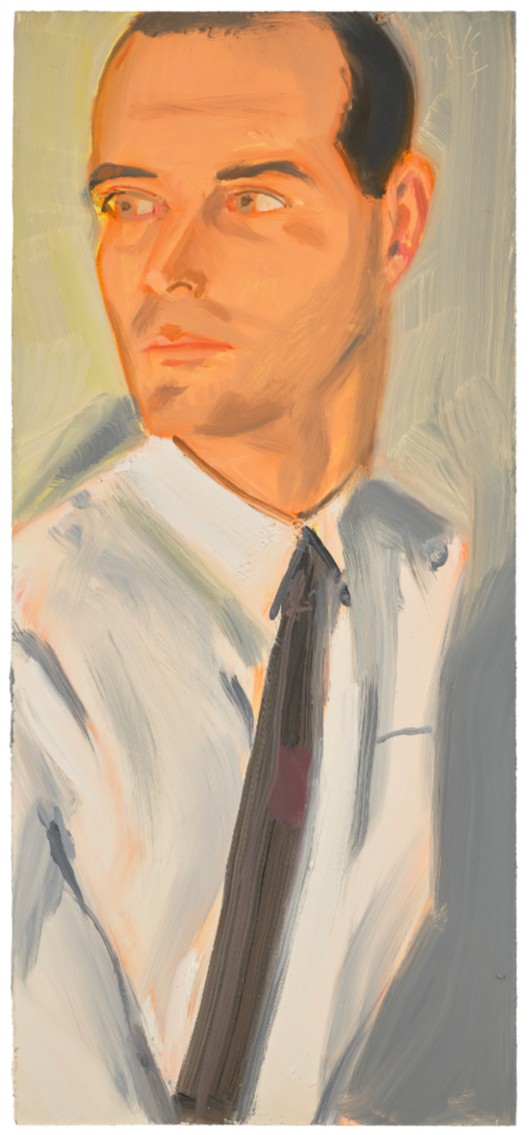
Oil on Masonite
#27. Black Eyed Susans, 2003
Christie’s online: 4 December 2025
Estimated: EUR 20,000 – 30,000
EUR 40,640 / USD 46,815
Alex Katz (né en 1927), Black Eyed Susans | Christie’s
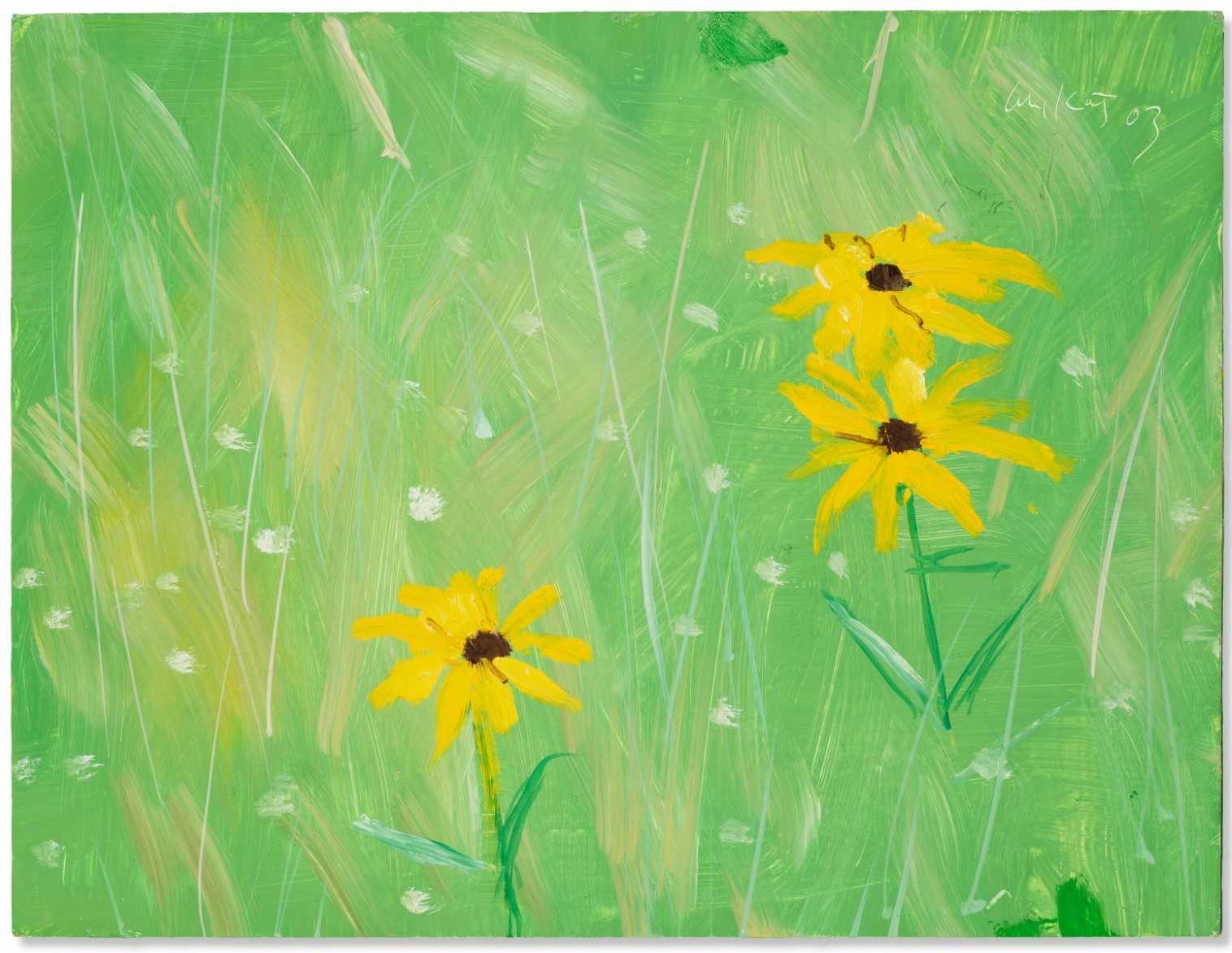
ALEX KATZ (born 1927)
Black Eyed Susans, 2003
Oil on board
9 x 11 7/8 inches (22.9 x 30.2 cm)
Signed and dated ‘Alex Katz 03’ (upper right)
#28. Twilight Fog, 2000
Karl & Faber Munich: 4 December 2025
Estimated: EUR 20,000 – 30,000
EUR 31,750 / USD 37,020
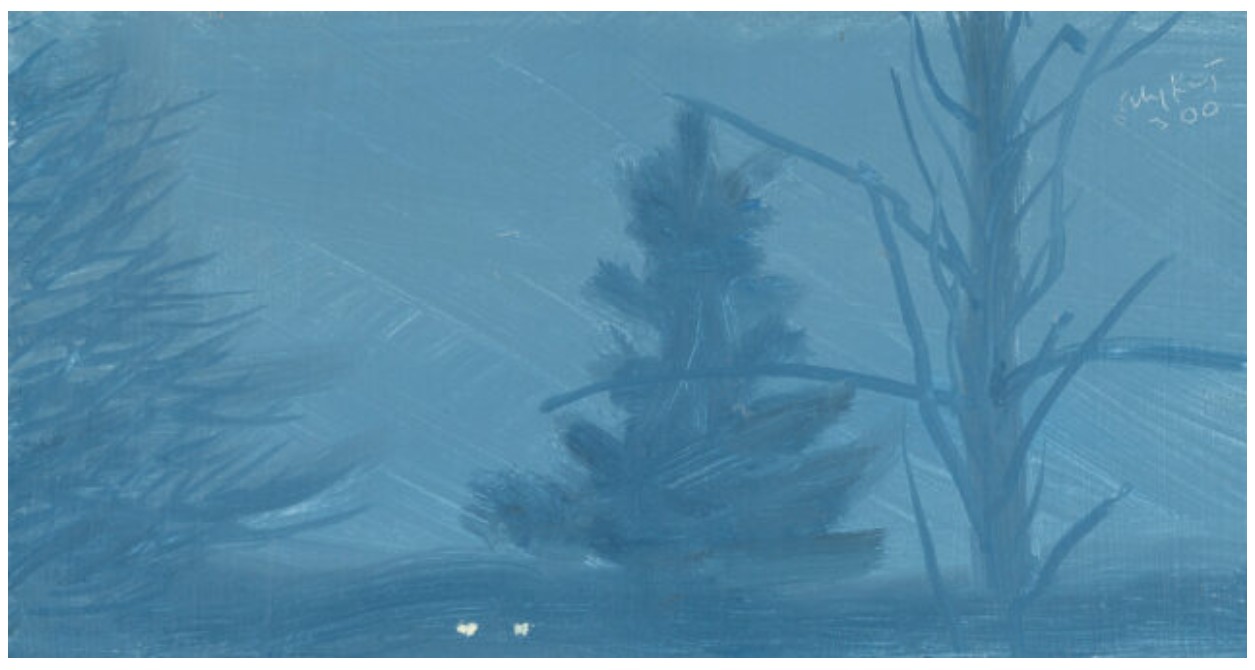
ALEX KATZ
Twilight Fog, 2000
Oil on fiberboard
5 7/8 x 11 1/8 inches (15 x 28.5 cm)
Signed and dated upper right
#29. Study for Black Brook 2, 1988
Christie’s London: 6 March 2025
Estimated: GBP 20,000 – 30,000
GBP 21,420 / USD 27,430
ALEX KATZ (B. 1927), Study for Black Brook 2 | Christie’s
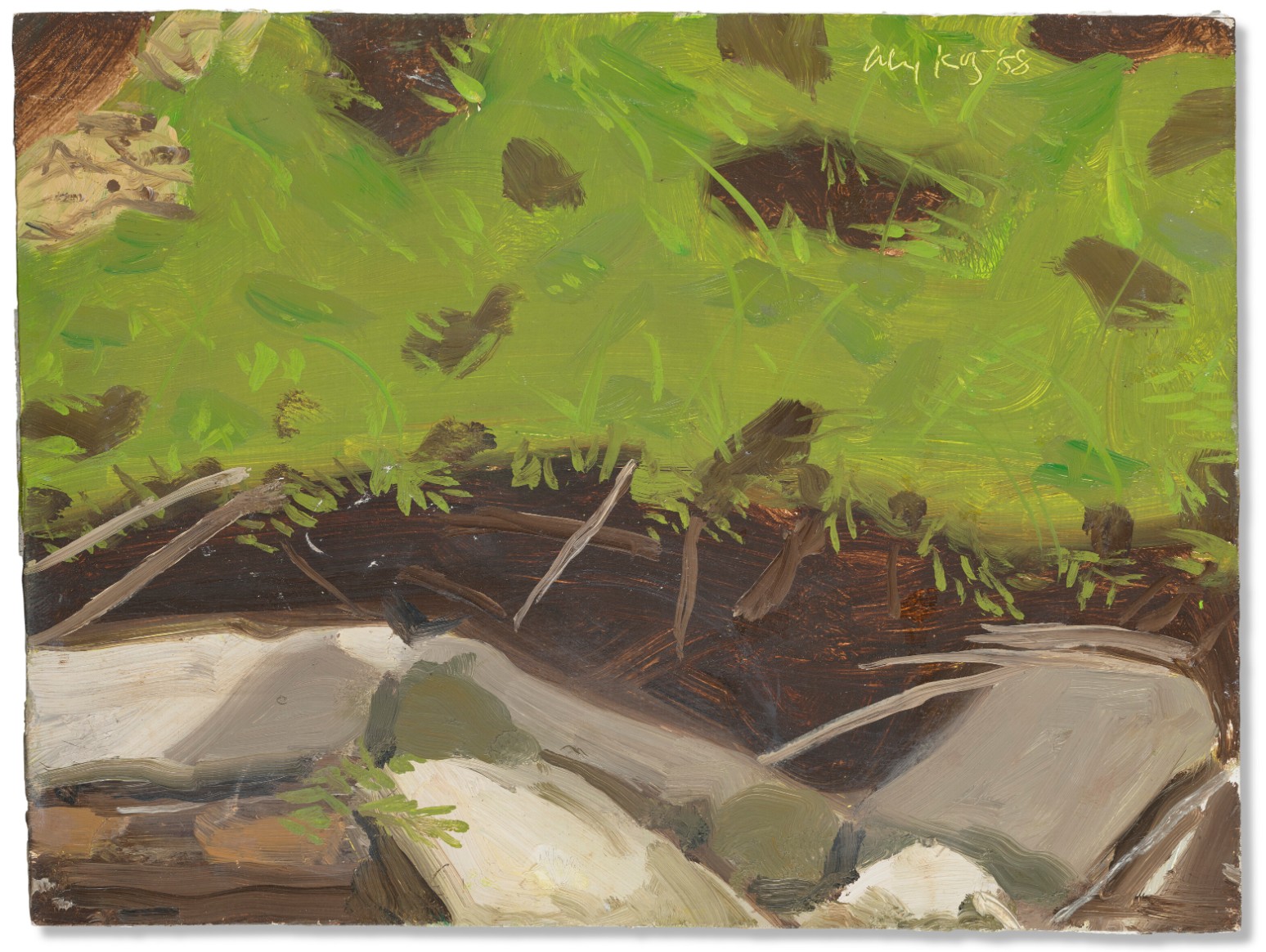
ALEX KATZ (B. 1927)
Study for Black Brook 2, 1988
Oil on board
9×12 inches (23 x 30.5 cm)
Signed and dated ‘Alex Katz 88’ (upper right)
#30. Untitled, circa 1991
Bonhams New-York: 20 November 2025
Estimated: USD 20,000 – 30,000
USD 21,760
Bonhams : ALEX KATZ (B. 1927) Untitled 54 x 40 in (137.2 x 101.6 cm) (Executed circa 1991)
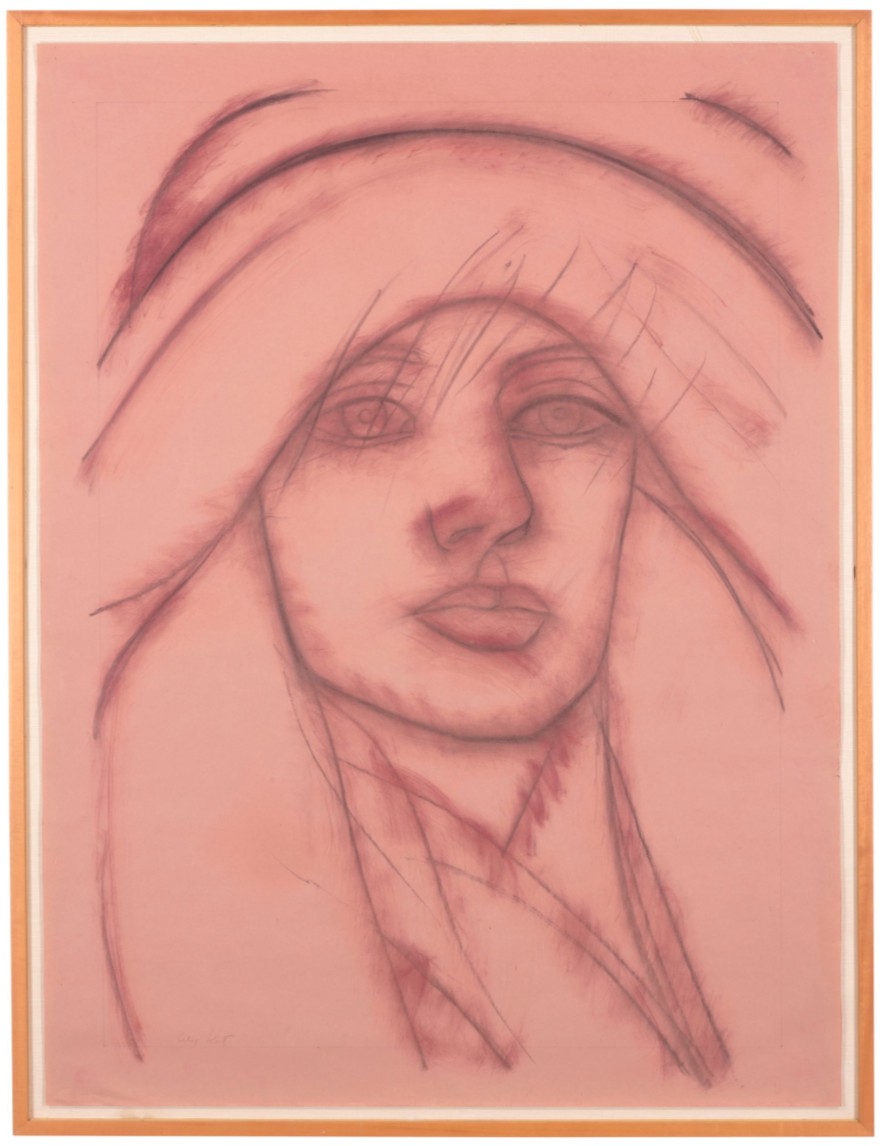
ALEX KATZ (B. 1927)
Untitled, circa 1991
Charcoal, chalk and graphite on paper
54×40 inches (137.2 x 101.6 cm)
Signed ‘Alex Katz’ (lower left)
Lots Passed
Study for Pas de Deux, 1983
Property from a Private Florida Collection
Sotheby’s New-York: 19 November 2025
Estimated: USD 500,000 – 700,000
PASSED
Study for Pas de Deux | Contemporary Day Auction | 2025 | Sotheby’s
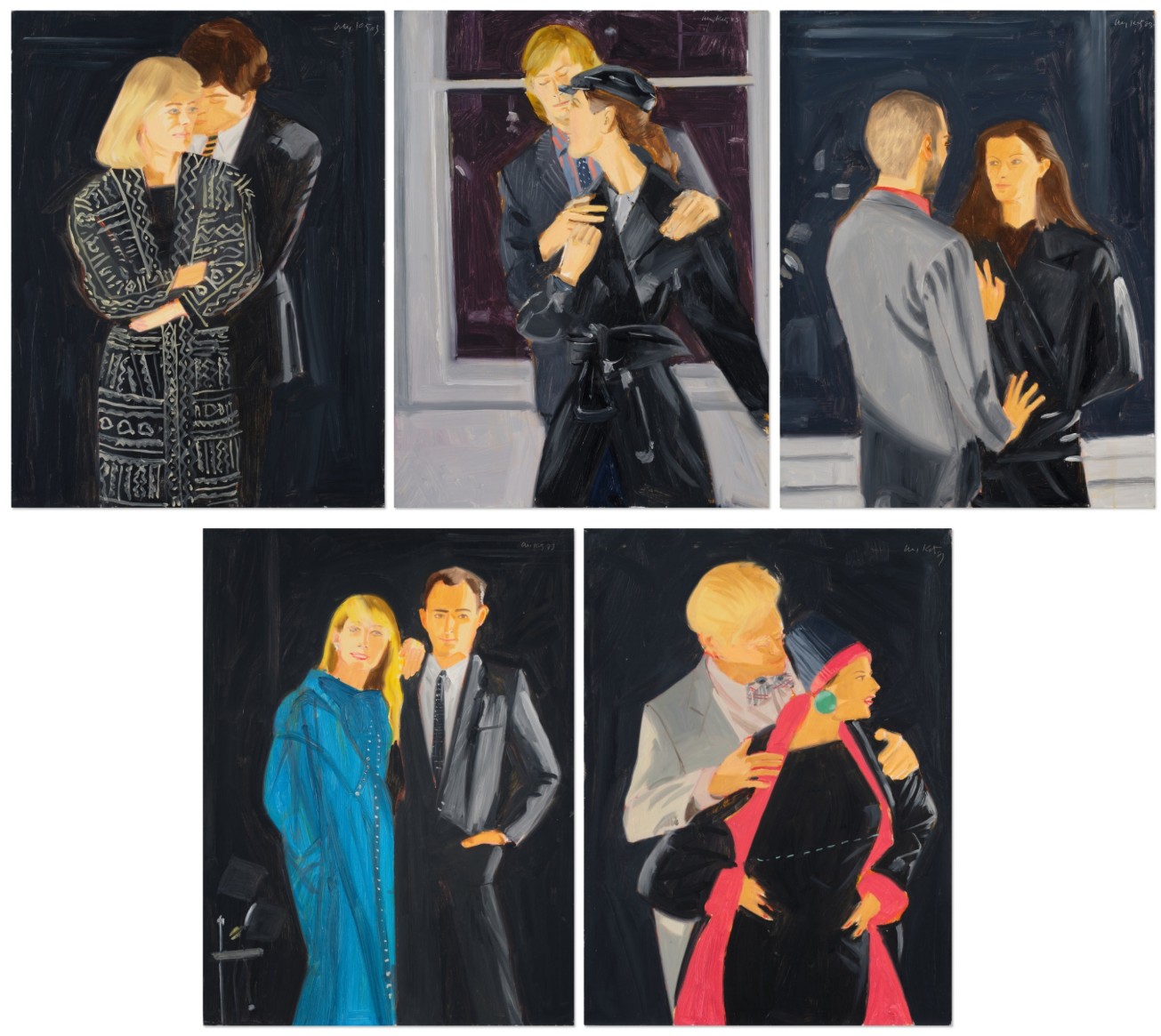
ALEX KATZ (b. 1927)
Study for Pas de Deux, 1983
Oil on board, in 5 parts
Each: 24×18 inches (61 x 45.7 cm)
Incised with the artist’s signature and date 83 (upper right of each)
Inscribed #1-5 respectively (on the reverse of each)
Crolie, 1985
Sotheby’s New-York: 1 October 2025
Estimated: USD 150,000 – 200,000
PASSED
Crolie | Contemporary Discoveries | 2025 | Sotheby’s
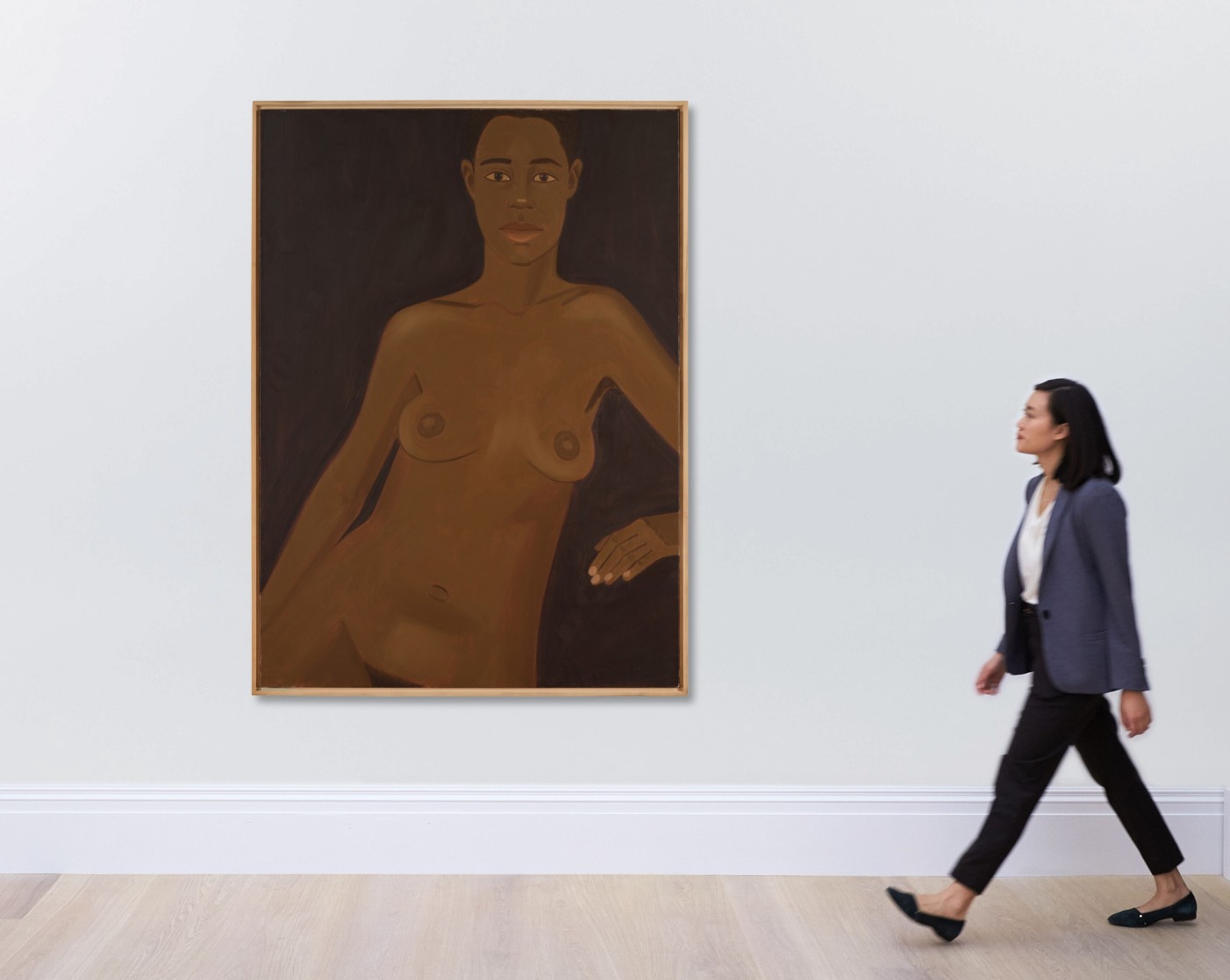
ALEX KATZ (b. 1927)
Crolie, 1985
Oil on linen
66×48 inches (167.6 x 121.9 cm)
Signed and titled (on the stretcher)
Ada in Bathing Hat, 1984
Sotheby’s New-York: 1 October 2025
Estimated: USD 60,000 – 80,000
PASSED
Ada in Bathing Hat | Contemporary Discoveries | 2025 | Sotheby’s
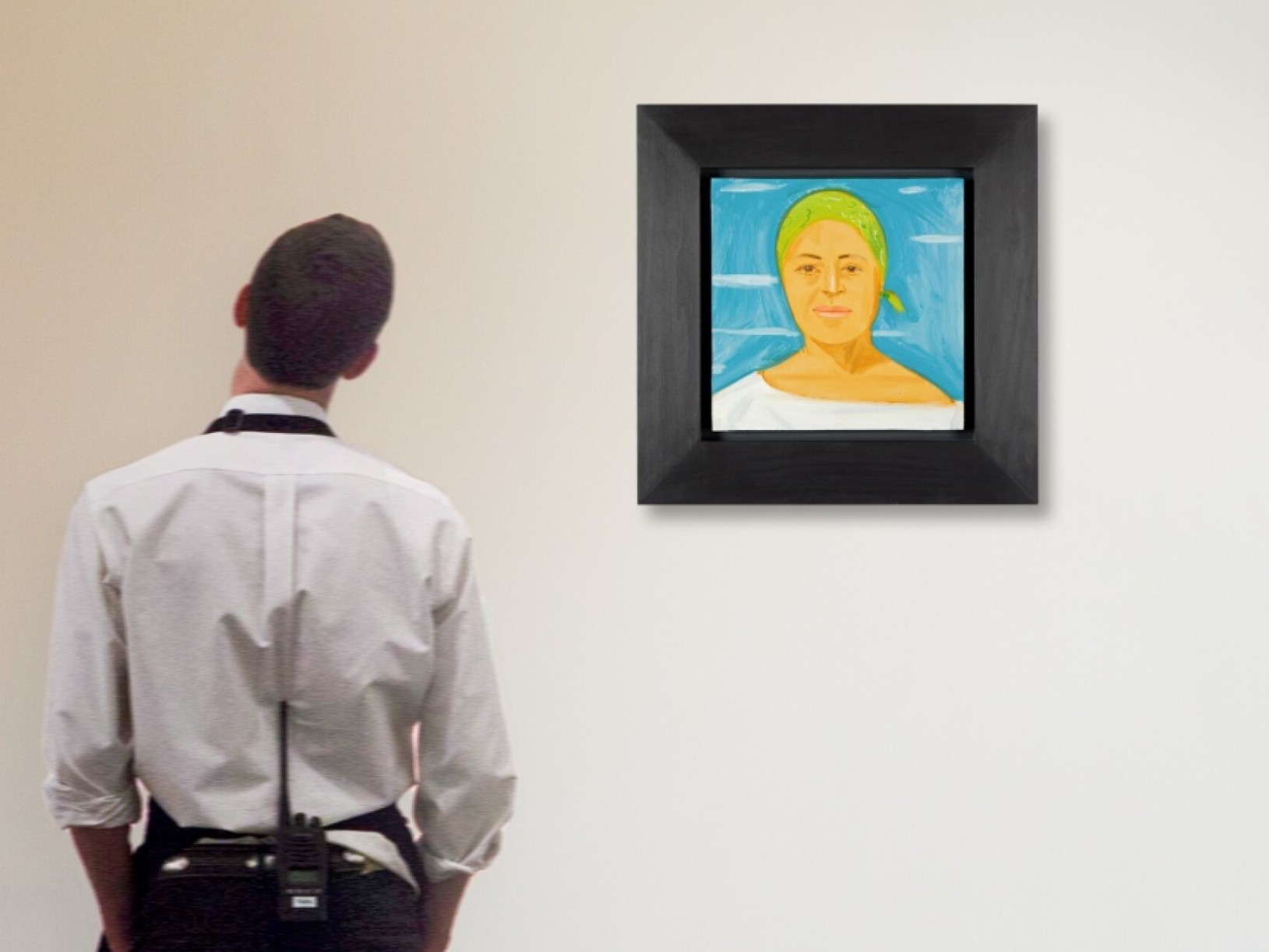
ALEX KATZ (b. 1927)
Ada in Bathing Hat, 1984
Oil on board
12×12 inches (30.5 x 30.5 cm)
Signed and dated 84 (upper right)
Sotheby’s New-York: 1 October 2025
Estimated: USD 500,000 – 700,000
PASSED
Ann | Contemporary Day Auction | 2025 | Sotheby’s
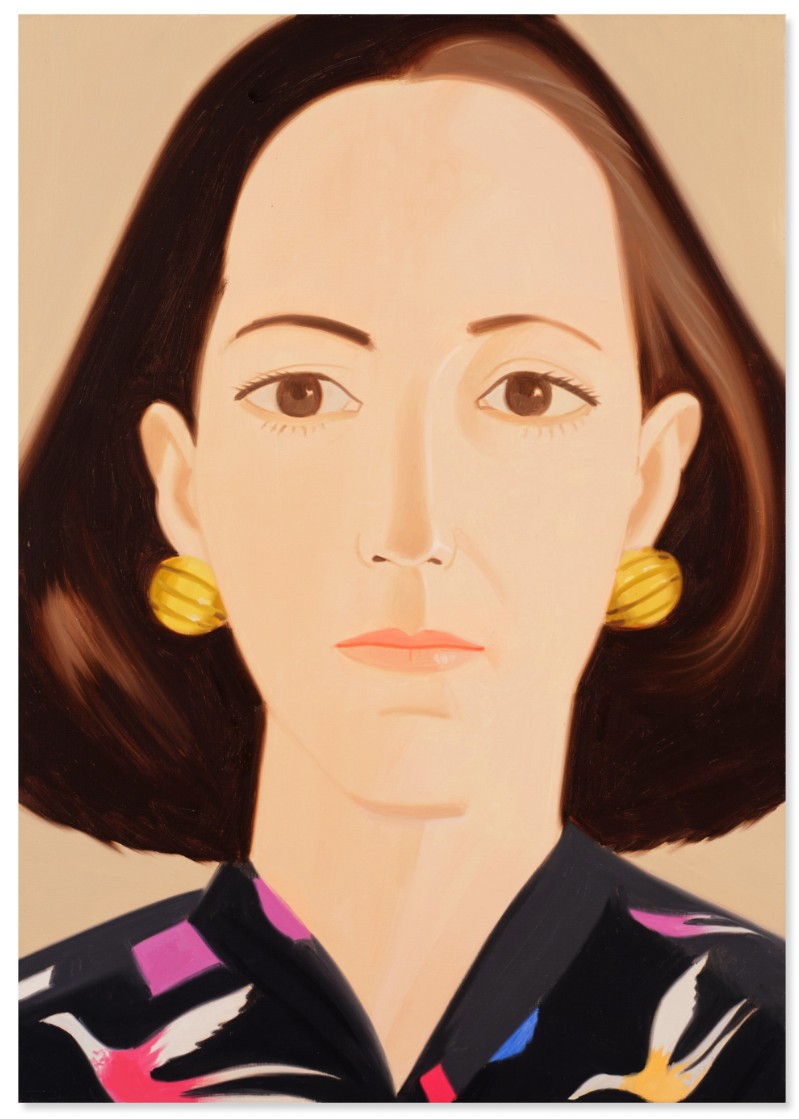
ALEX KATZ (b. 1927)
Ann, 1982
Oil on linen
48 1/8 x 34 inches (122.2 x 86.4 cm)
Signed and dated 2-2-82 (on the overlap)
Ada in Baseball Cap, 2006
Christie’s New-York: 15 May 2025
Estimated: USD 700,000 – 900,000
PASSED
ALEX KATZ (B. 1927), Ada in Baseball Cap | Christie’s
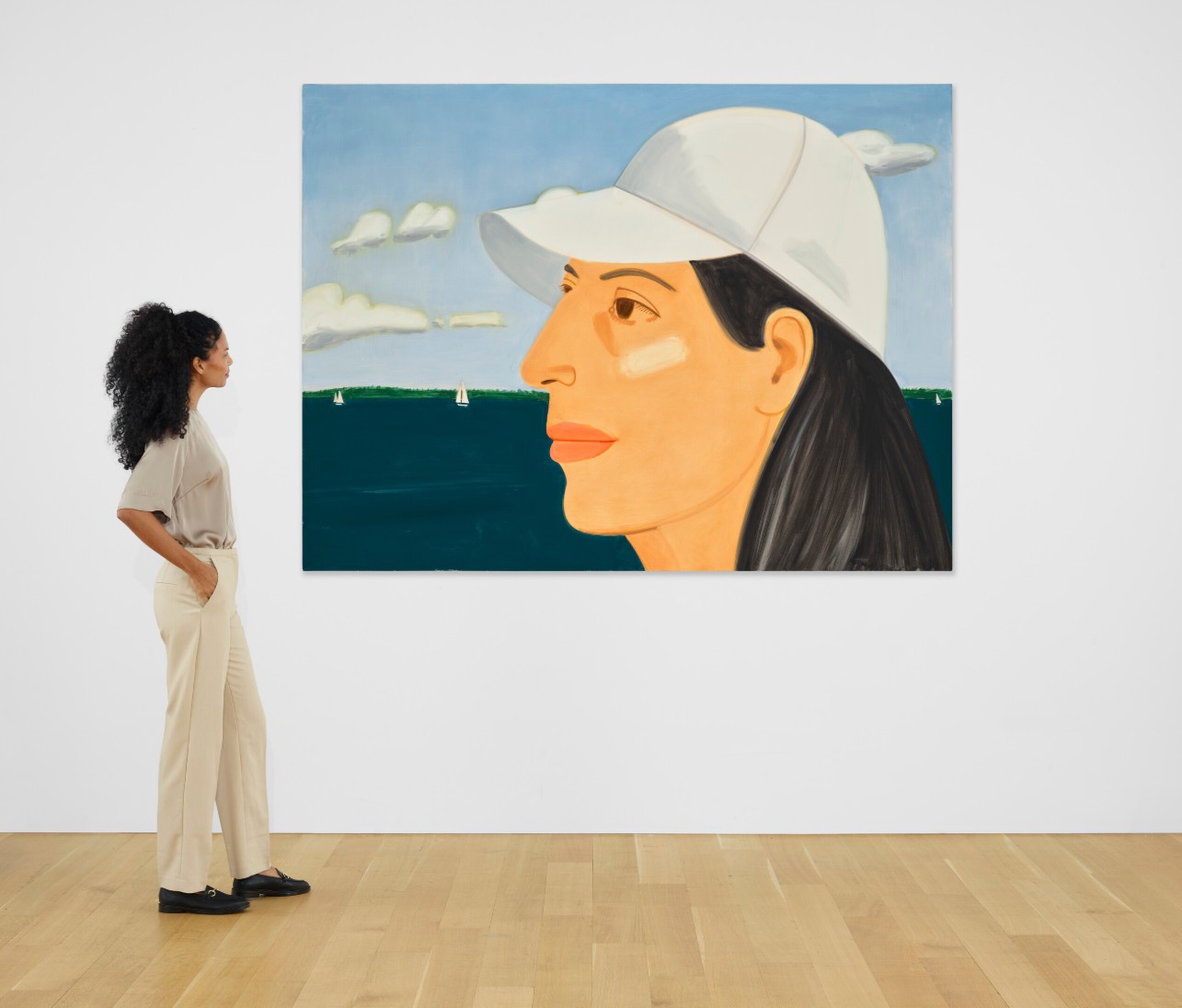
ALEX KATZ (B. 1927)
Ada in Baseball Cap, 2006
Oil on linen
72×96 inches (182.9 x 243.8 cm)
Signed and dated ‘Alex Katz 06’ (on the overlap)
Ann, 1982
Sotheby’s New-York: 16 May 2025
Estimated: USD 500,000 – 700,000
PASSED
Ann | Contemporary Day Auction | 2025 | Sotheby’s
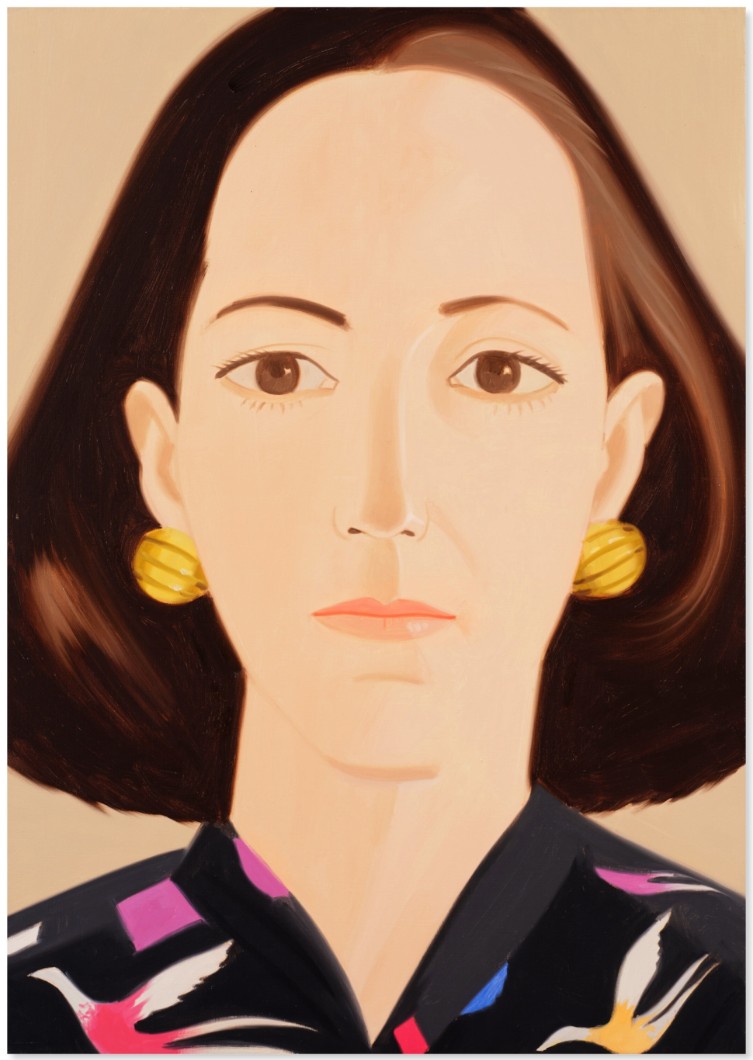
ALEX KATZ (b. 1927)
Ann, 1982
Oil on linen
48 1/8 x 34 inches (122.2 x 86.4 cm)
Signed and dated 2-2-82 (on the overlap)
2024 Auction Results
38 Lots sold at auction in 2024 for a total turnover of USD 13,731,092. With 3 lots failing to sell, the sell-through rate is 93%. The highest price was achieved at Sotheby’s in New-York on 14 May 2024, when May, a painting dated 1996, sold for USD 1,875,000, well ahead of its pre-sale estimates range of USD 500-700k.
2024 Top 3 Lots
3 lots sold for more than USD 1 million, generating a cumulative turnover of USD 4,877,500, representing 35.5% of the total for 2024. 10 lots sold for more than USD 500,000, generating a cumulative turnover of USD 9,670,731, representing 70.4% of the total turnover for 2024.
#1. May, 1996
Sotheby’s New-York: 14 May 2024
Estimated: USD 500,000 – 700,000
USD 1,875,000
May | Contemporary Day Auction | 2024 | Sotheby’s (sothebys.com)
ALEX KATZ (b. 1927)
May, 1996
Oil on linen
120×240 inches (304.8 x 609.6 cm)
#2. Springtime, 2009
Christie’s New-York: 1 October 2024
Estimated: USD 1,000,000 – 1,500,000
USD 1,562,500
ALEX KATZ (B. 1927), Springtime | Christie’s (christies.com)
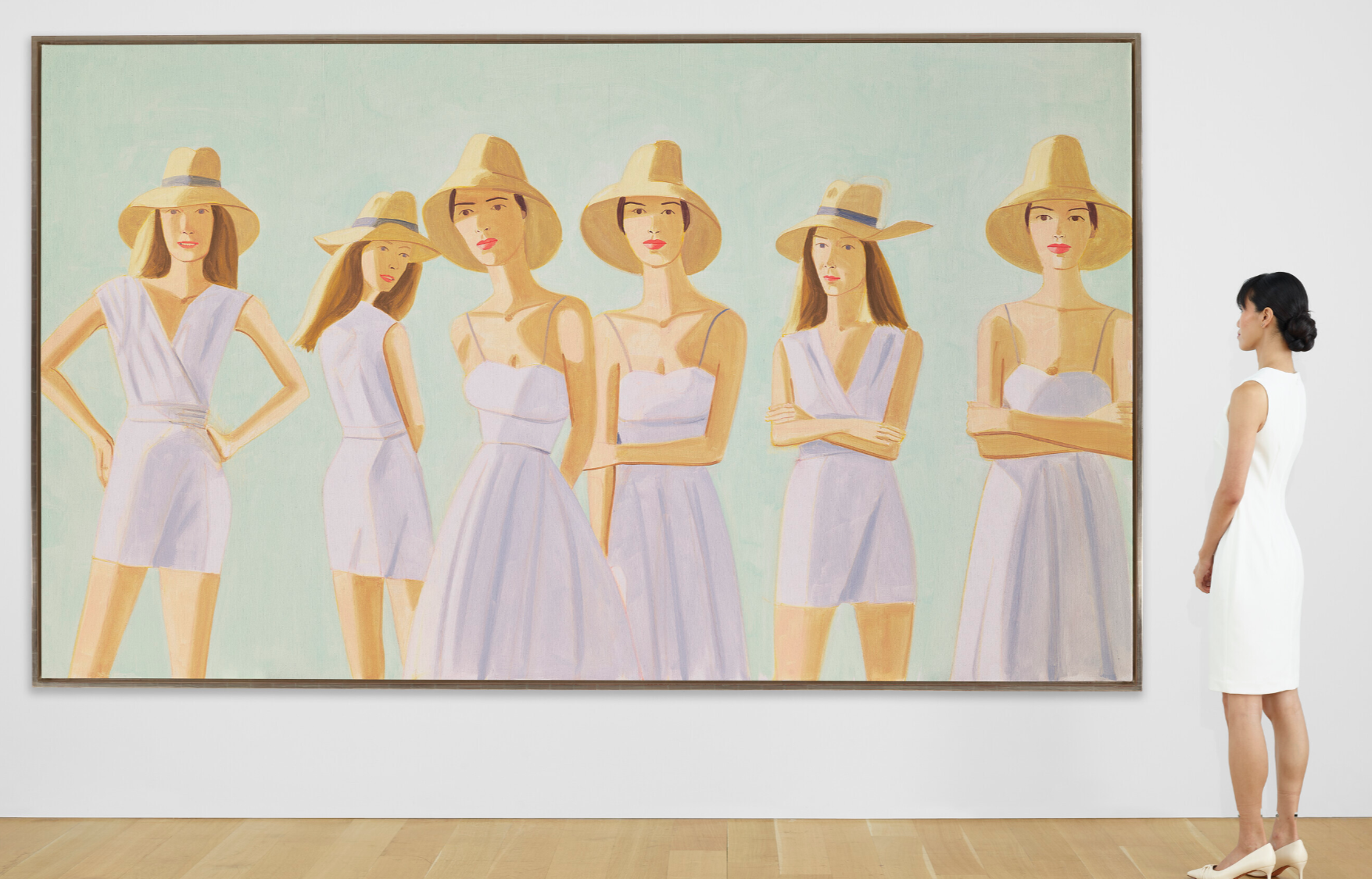
ALEX KATZ (B. 1927)
Springtime, 2009
Oil on linen
84×144 inches (213.4 x 365.8 cm)
#3. Joan, 1974
Sotheby’s New-York: 27 September 2024
Estimated: USD 1,500,000 – 2,000,000
USD 1,440,000
Joan | Art Without Boundaries: The Abrams Family Collection | Live Sale | 2024 | Sotheby’s

ALEX KATZ (b. 1927)
Joan, 1974
Oil on linen
72×96 inches (182.9 x 243.8 cm)
USD 1 million
#4. Isca, 2001
Christie’s London: 7 March 2024
Estimated: GBP 400,000 – 600,000
GBP 655,200 / USD 830,794
ALEX KATZ (B. 1927), Isca | Christie’s (christies.com)
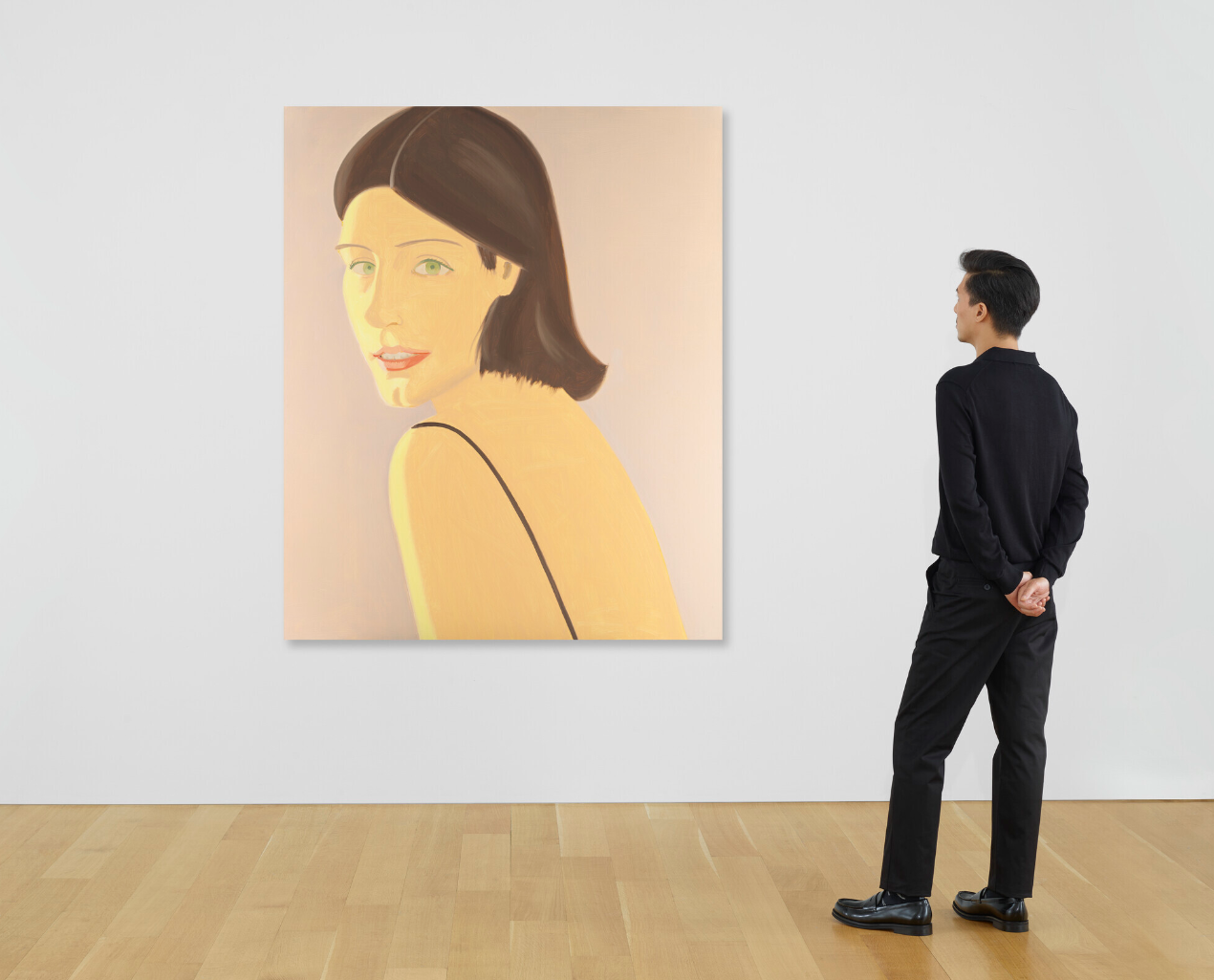
ALEX KATZ (B. 1927)
Isca, 2001
Oil on linen
72×60 inches (183 x 152.4 cm)
#5. Ada with Mirror, 1969
Christie’s New-York: 17 May 2024
Estimated: USD 450,000 – 650,000
USD 819,000
ALEX KATZ (B. 1927), Ada with Mirror | Christie’s (christies.com)
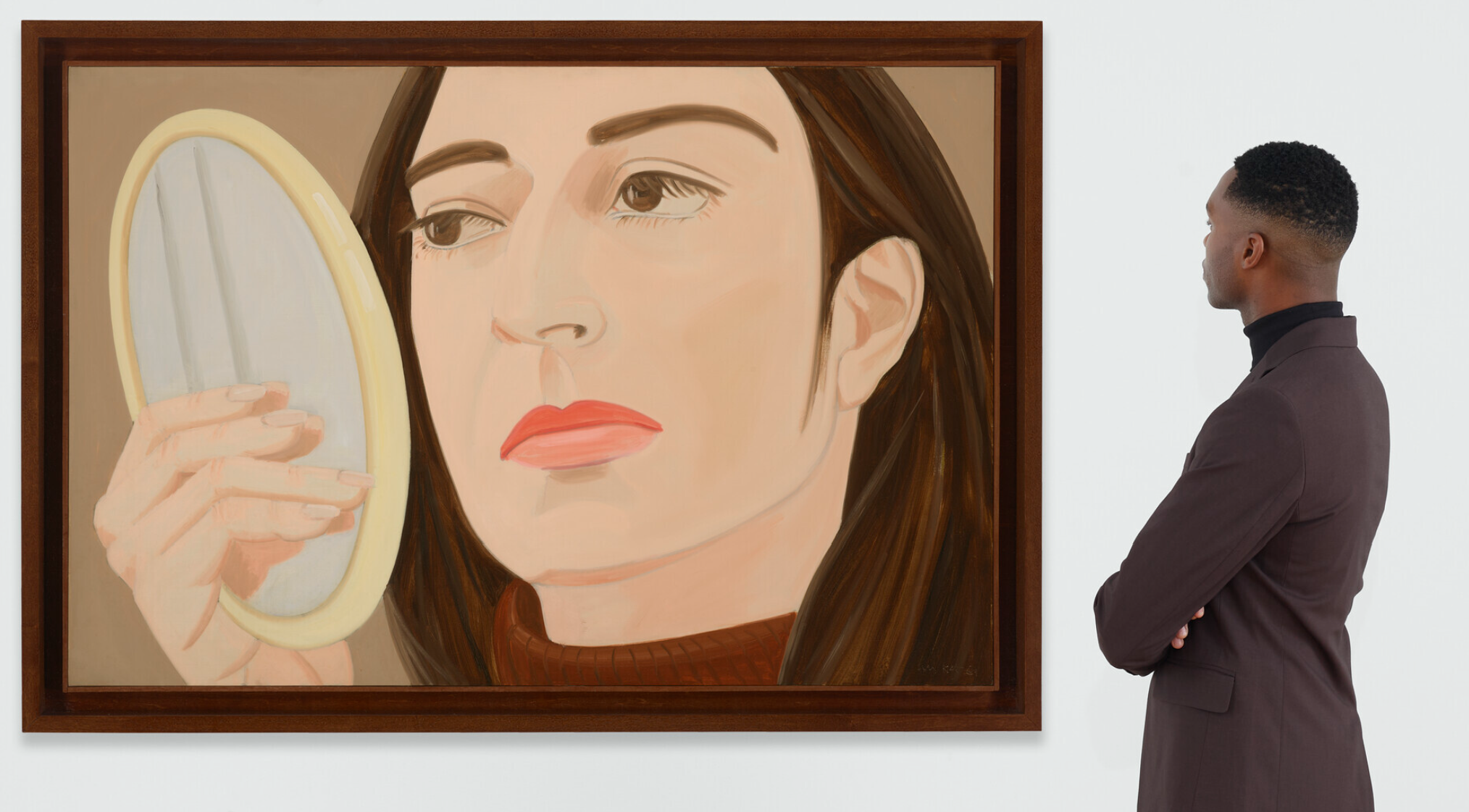
ALEX KATZ (B. 1927)
Ada with Mirror, 1969
Oil on linen
32×48 inches (81.3 x 121.9 cm)
Signed and dated ‘Alex Katz 69’ (lower right)
#6. Sophie, 2003
Christie’s London: 9 March 2024
Estimated: GBP 400,000 – 600,000
GBP 604,800 / USD 766,886
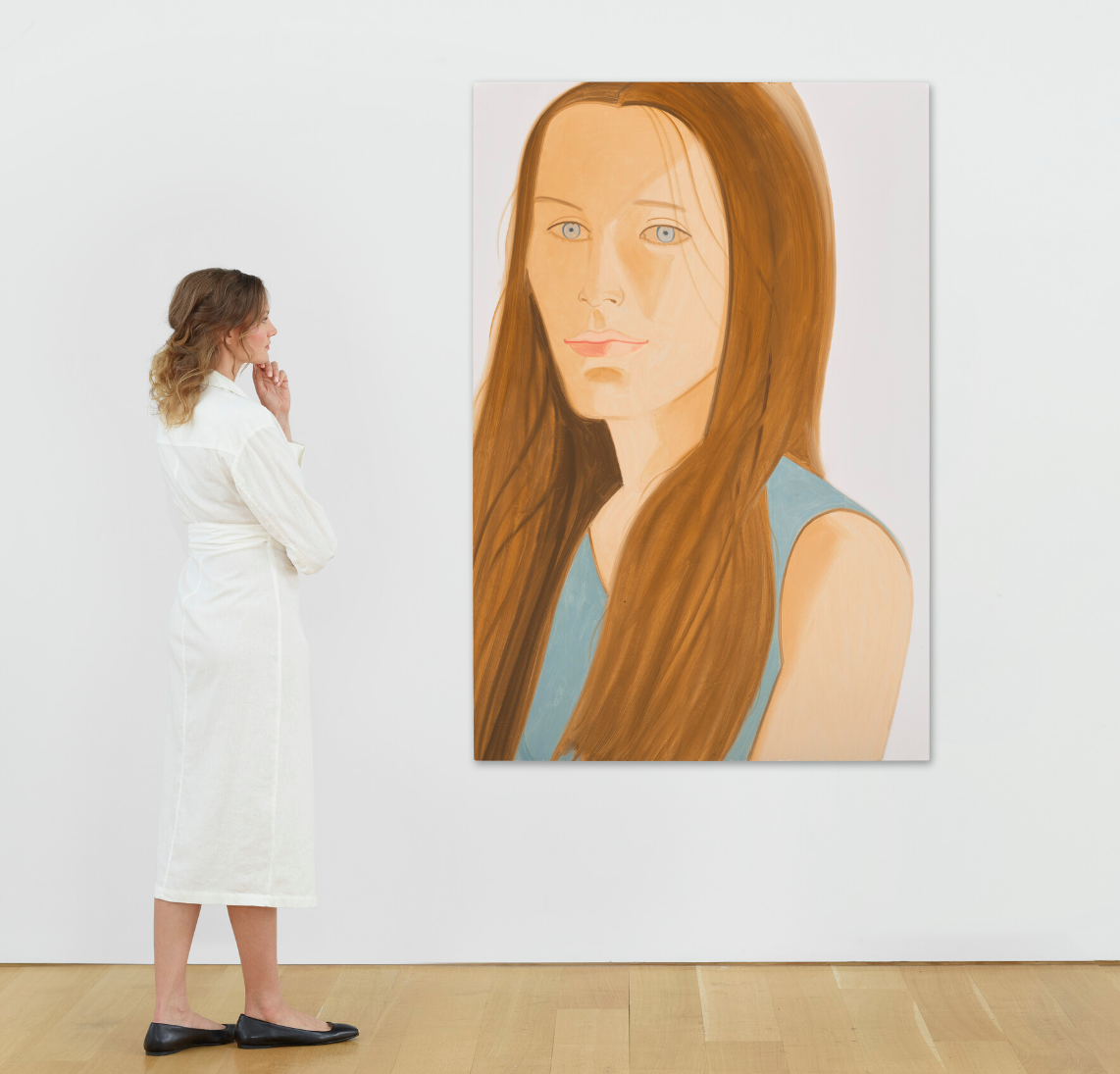
ALEX KATZ (B. 1927)
Sophie, 2003
Oil on canvas
72 x 48 1/4 inches (183 x 122.5 cm)
Signed and dated twice ‘Alex Katz 03 Alex Katz 03’ (on the overlap)
#7. Red Dogwood I, 2020
Christie’s Hong-Kong: 29 May 2024
Estimated: HKD 4,000,000 – 7,000,000
HKD 5,040,000 / USD 645,244
ALEX KATZ (B. 1927), Red Dogwood I | Christie’s (christies.com)

ALEX KATZ (B. 1927)
Red Dogwood I, 2020
Oil on linen
72 1/4 x 96 1/8 inches (183.4 x 244.2 cm)
#8. Cymbidium Yellow on Red, 2020
Seoul Auction: 10 September 2024
Estimated: KRW 700,000,000 – 1,000,000,000
KRW 826,000,000 / USD 615,370
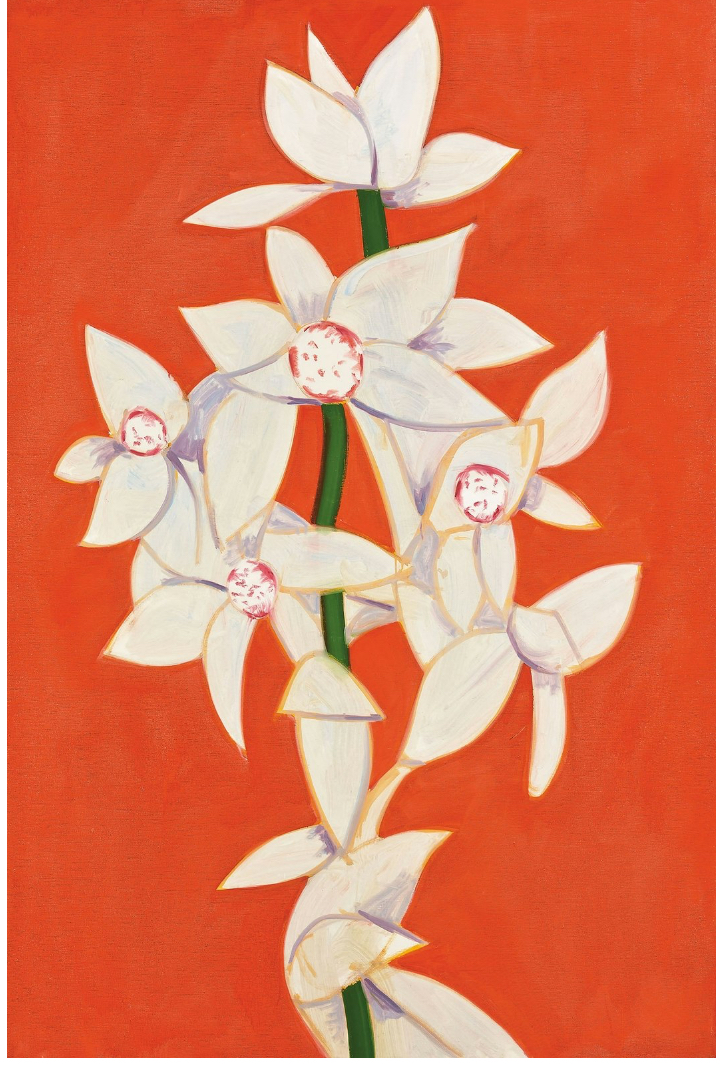
ALEX KATZ
Cymbidium Yellow on Red, 2020
Oil on linen
48×72 inches (122.4 x 182.9 cm)
Signed and dated on the overlap
#9. Black Hat No. 3, 2010
Sotheby’s London: 6 March 2024
Estimated: GBP 300,000 – 400,000
GBP 482,600 / USD 611,937
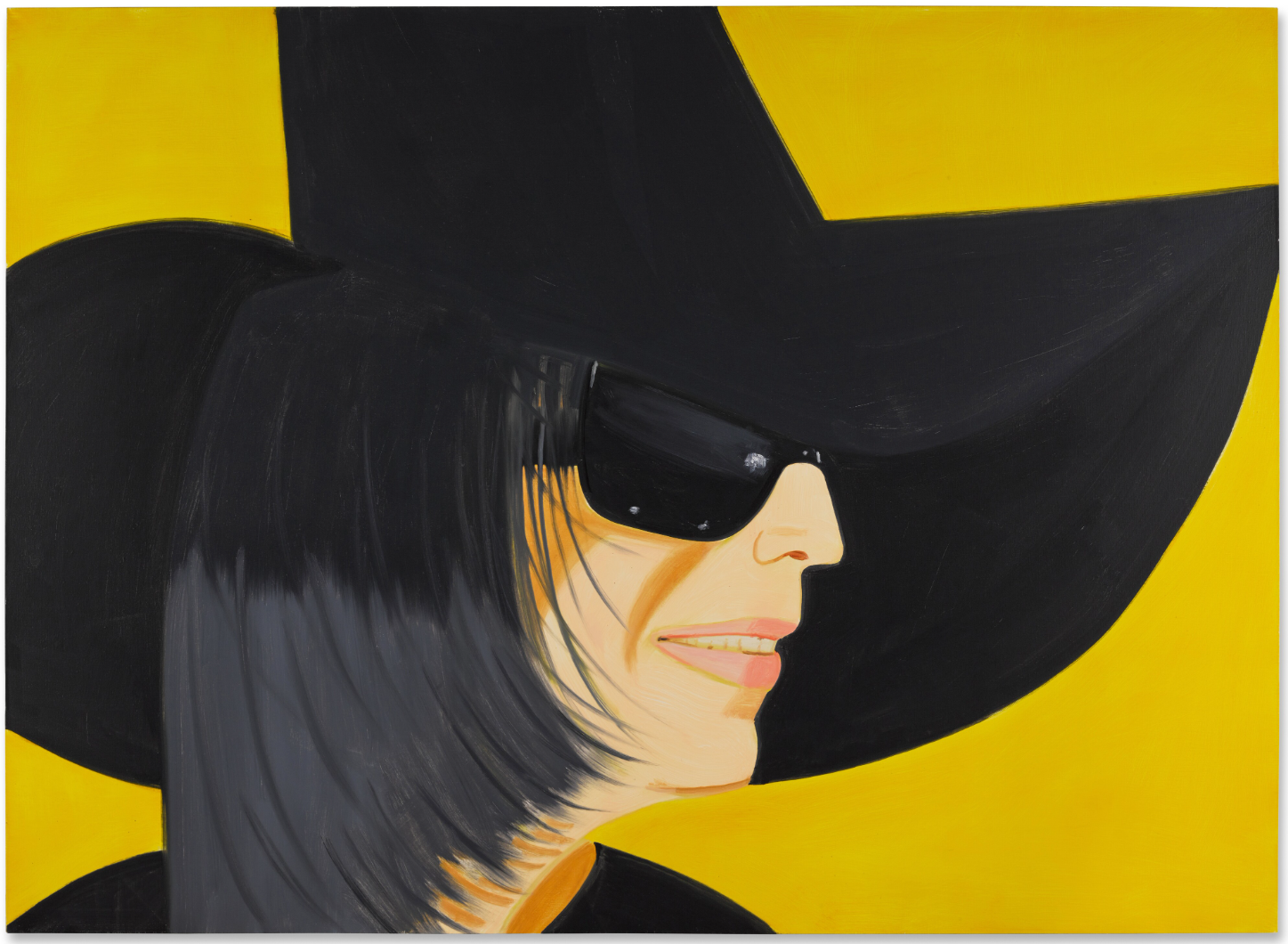
ALEX KATZ (b. 1927)
Black Hat No. 3, 2010
Oil on canvas
48 x 66 1/8 inches (122 x 168.1 cm)
Signed and dated 10 (on the overlap)
#10. Late September, 1965
Christie’s New-York: 22 November 2024
Estimated: USD 350,000 – 550,000
USD 504,000
ALEX KATZ (B. 1927), Late September | Christie’s

ALEX KATZ (B. 1927)
Late September, 1965
Oil on linen
48×60 inches (121.9 x 152.4 cm)
Incised with the artist’s signature and date ‘Alex Katz 65’ (upper right)
USD 500,000
#11. Maria, 1997
Sotheby’s New-York: 14 May 2024
Estimated: USD 400,000 – 600,000
USD 444,500
Maria | Contemporary Day Auction | 2024 | Sotheby’s (sothebys.com)

ALEX KATZ (b. 1927)
Maria, 1997
Oil on linen
72×42 inches (182.9 x 106.7 cm)
Signed and dated 97 (on the overlap); signed (on the stretcher)
#12. Hope, 2012
Christie’s New-York: 17 May 2024
Estimated: USD 300,000 – 500,000
USD 390,600
ALEX KATZ (B. 1927), Hope | Christie’s (christies.com)
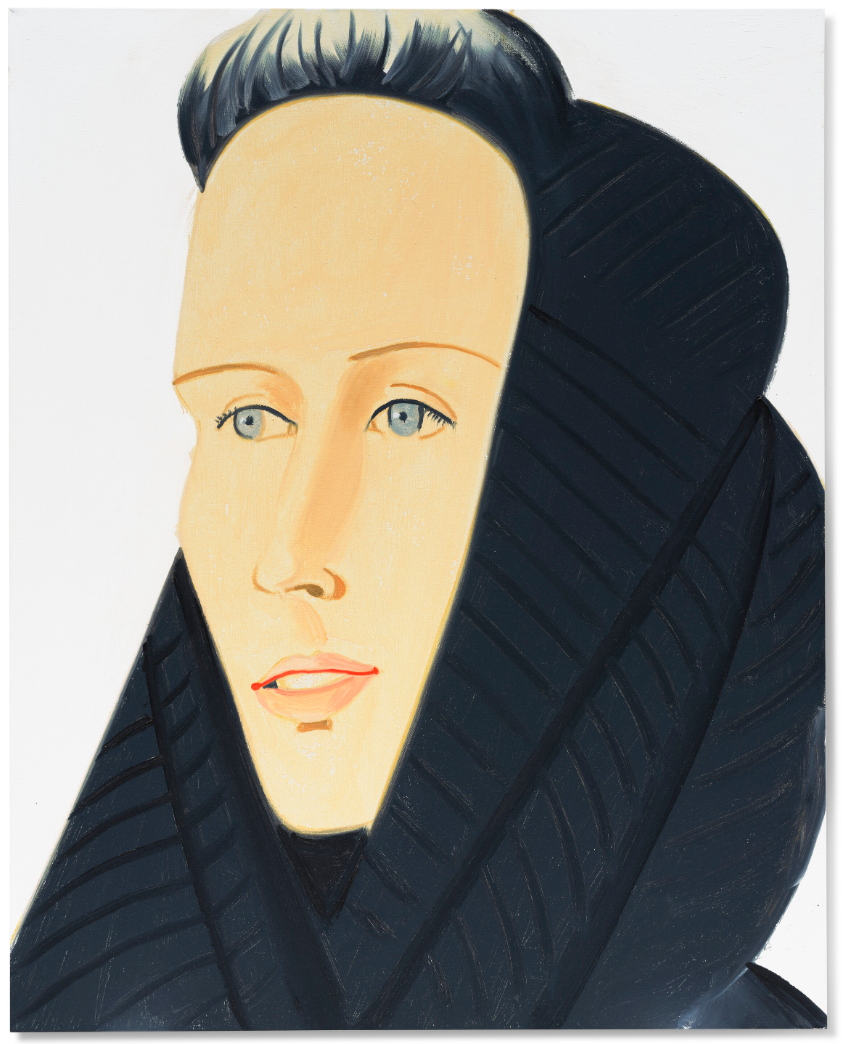
ALEX KATZ (B. 1927)
Hope, 2012
Oil on linen
50×40 inches (127 x 101.6 cm)
Signed ‘Alex Katz’ (on the overlap)
#13. Martha, 1981
Phillips New-York: 14 May 2024
Estimated: USD 350,000 – 500,000
USD 381,000
Alex Katz – Modern & Contemporary Art Ev… Lot 22 May 2024 | Phillips

ALEX KATZ
Martha, 1981
Oil on linen
60×48 inches (152.4 x 121.9 cm)
#14. Pink Roses 3, 2012
Christie’s New-York: 17 May 2024
Estimated: USD 300,000 – 500,000
USD 378,000
ALEX KATZ (B. 1927), Pink Roses 3 | Christie’s (christies.com)
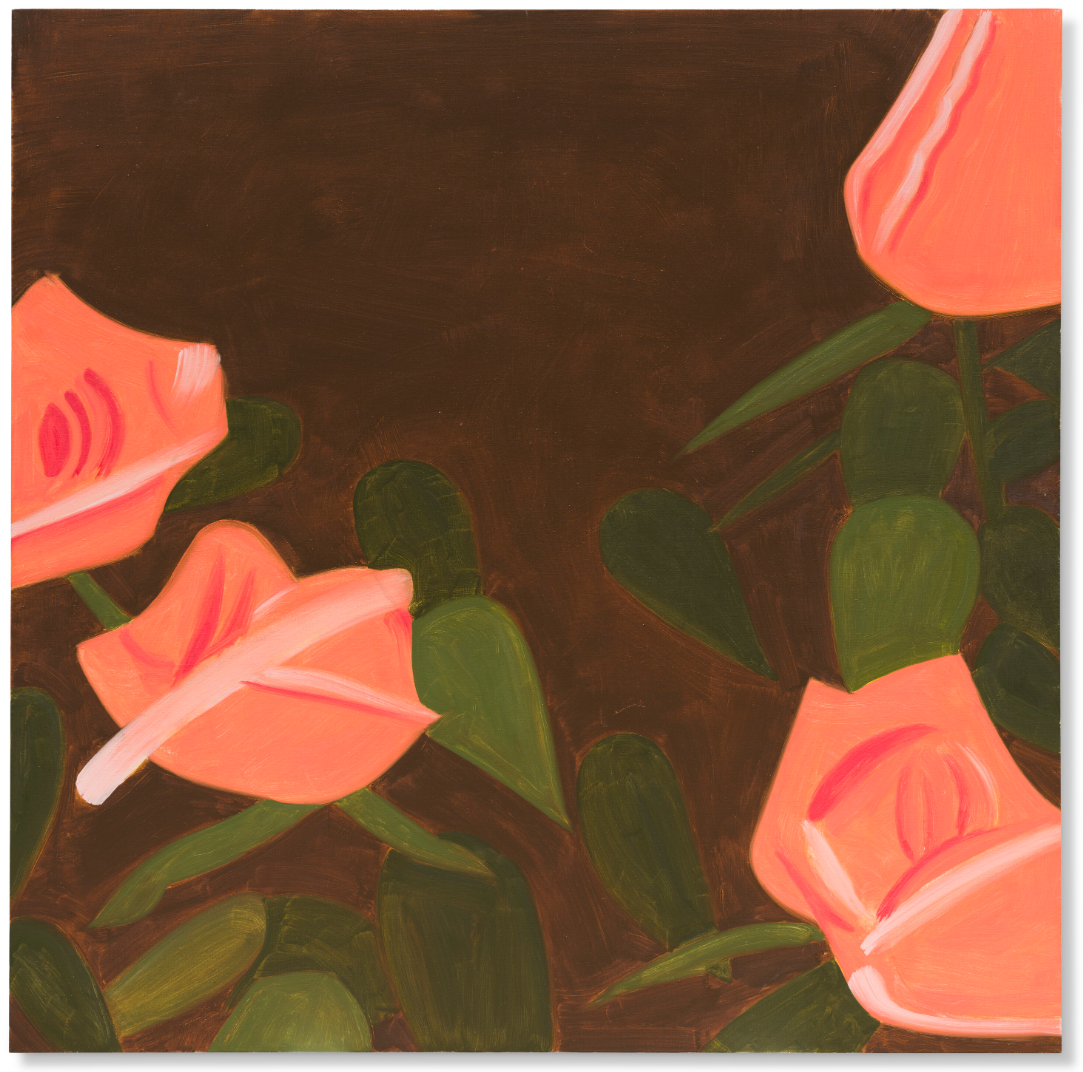
ALEX KATZ (B. 1927)
Pink Roses 3, 2012
Oil on linen
60×60 inches (152.4 x 152.4 cm)
#15. Ariel, 2016-17
Hindman Chicago: 24 April 2024
Estimated: USD 300,000 – 500,000
USD 317,500
Ariel, 2016-17 (hindmanauctions.com)
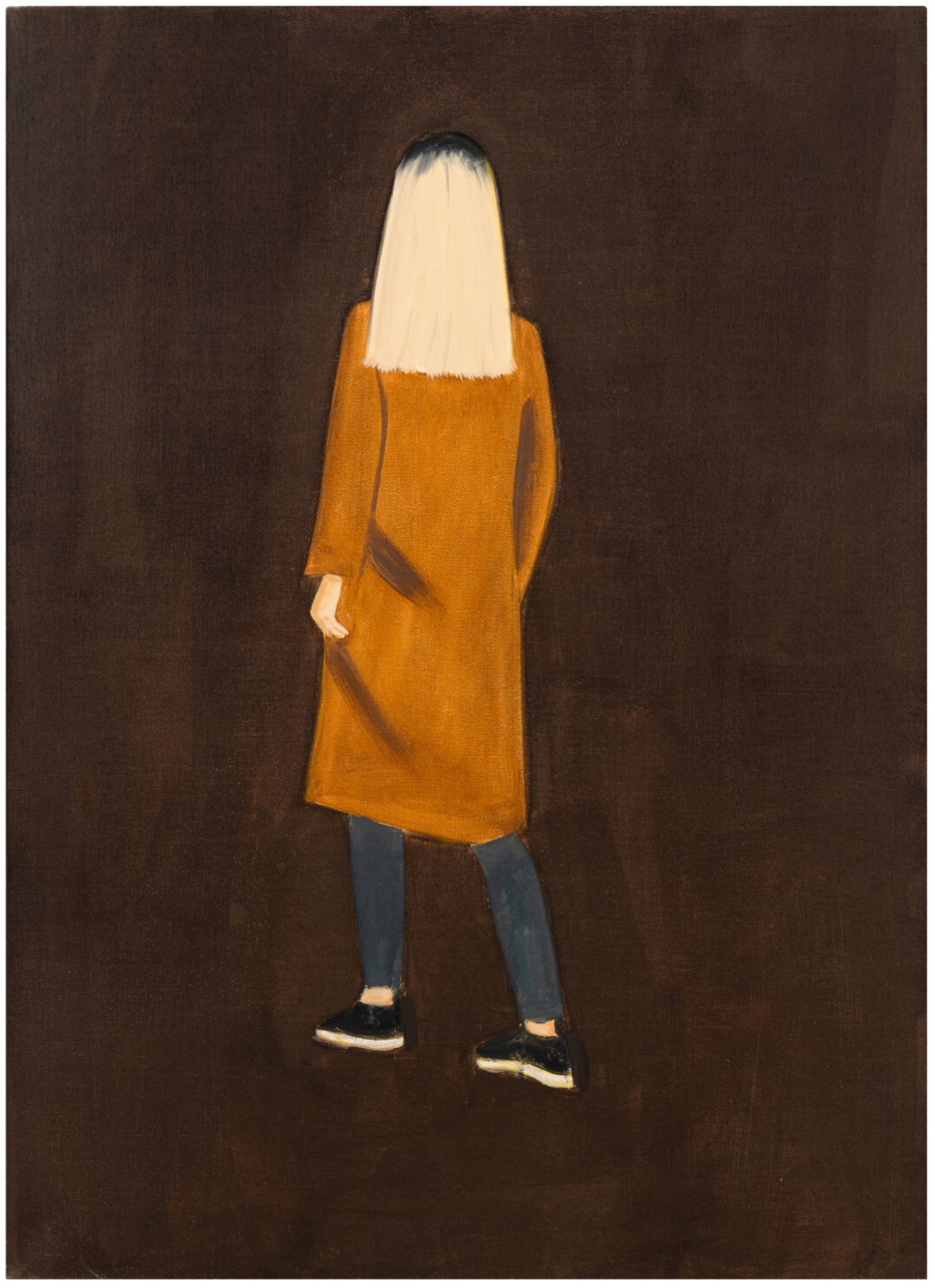
ALEX KATZ (American, b. 1927)
Ariel, 2016-17
Oil on linen
66×48 inches (167.6 x 121.9 cm)
Signed Alex Katz and dated (verso)
#16. Golden Field #1, 2001
Hindman Chicago: 24 April 2024
Estimated: USD 150,000 – 250,000
USD 228,600
Golden Field #1, 2001 (hindmanauctions.com)
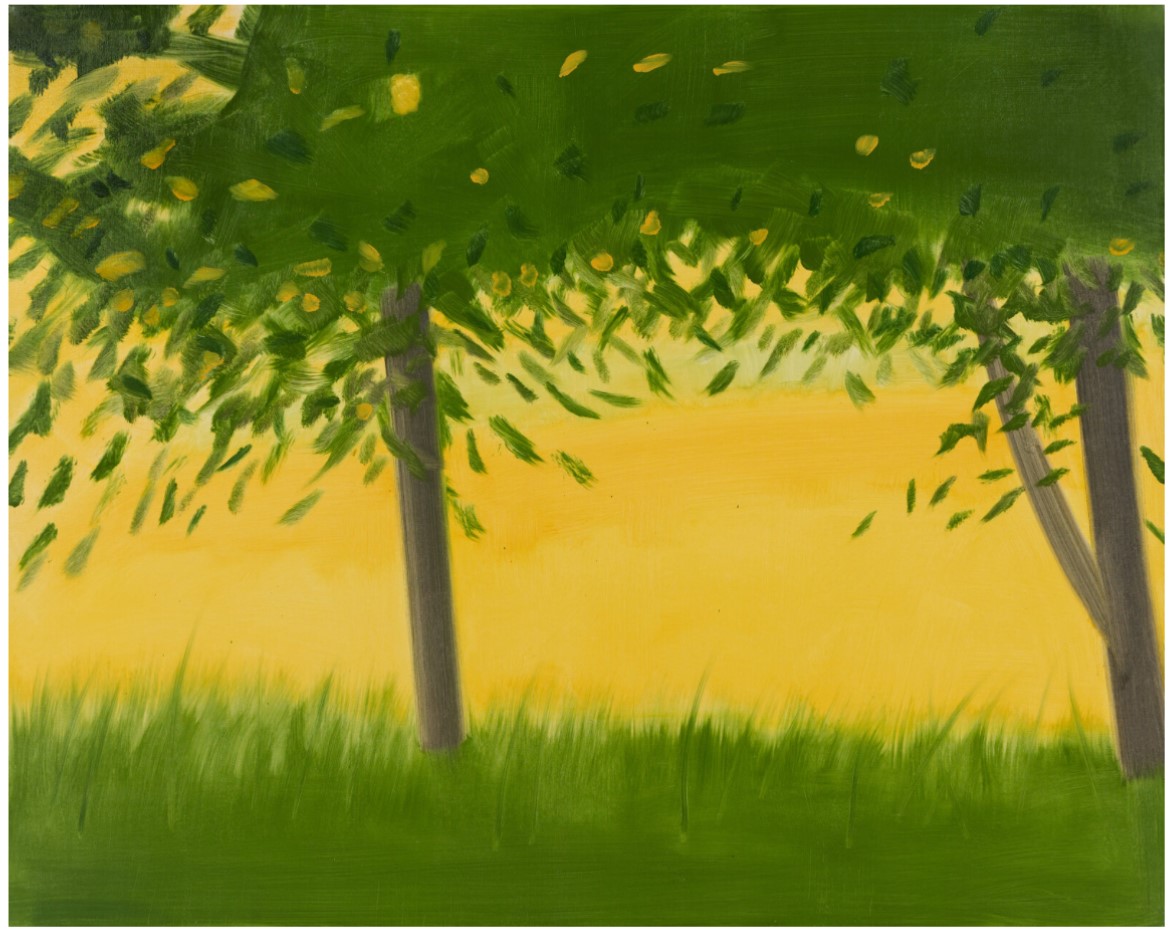
ALEX KATZ (American, b. 1927)
Golden Field #1, 2001
Oil on canvas
48×60 inches (121.9 x 152.4 cm)
Signed Alex Katz and dated (verso)
#17. Ada (Black and White Dress), 1980
Christie’s New-York: 22 November 2024
Estimated: USD 50,000 – 70,000
USD 163,800
ALEX KATZ (B. 1927), Ada (Black and White Dress) | Christie’s
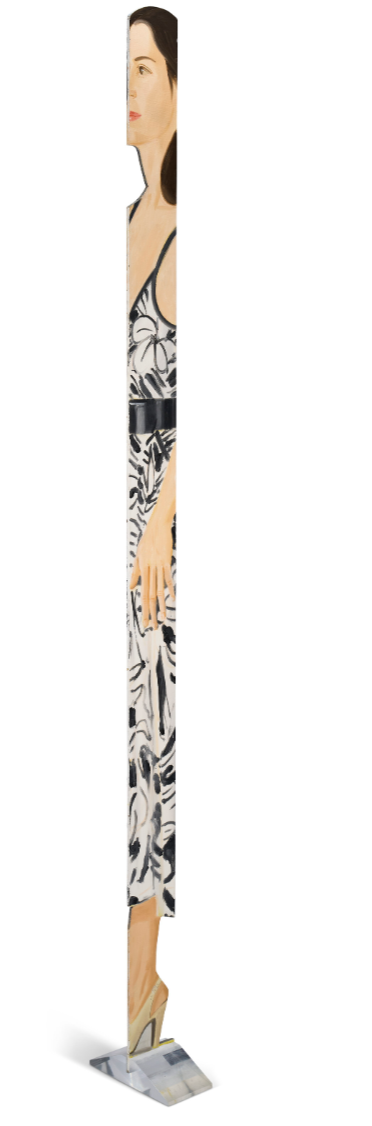
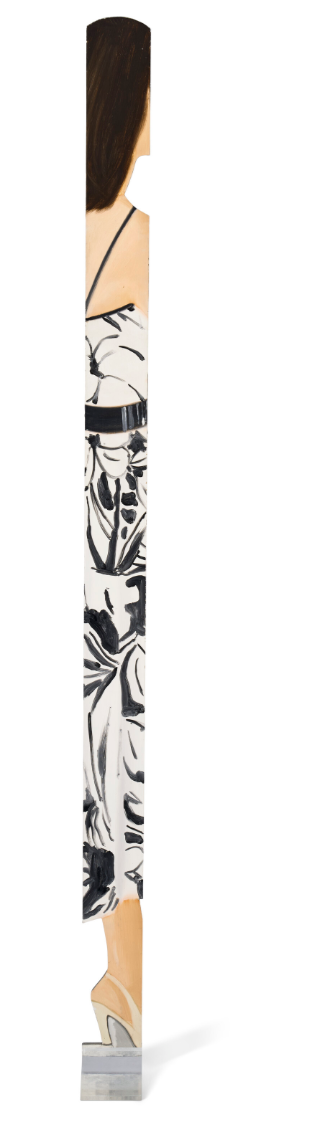
ALEX KATZ (B. 1927)
Ada (Black and White Dress), 1980
Oil on shaped aluminum, double-sided
68 3/4 x 4 inches (173.5 x 10.2 cm)
#18. Open Door, 1991
Sotheby’s New-York: 21 November 2024
Estimated: USD 200,000 – 300,000
USD 162,000
Open Door | Contemporary Day Auction | 2024 | Sotheby’s
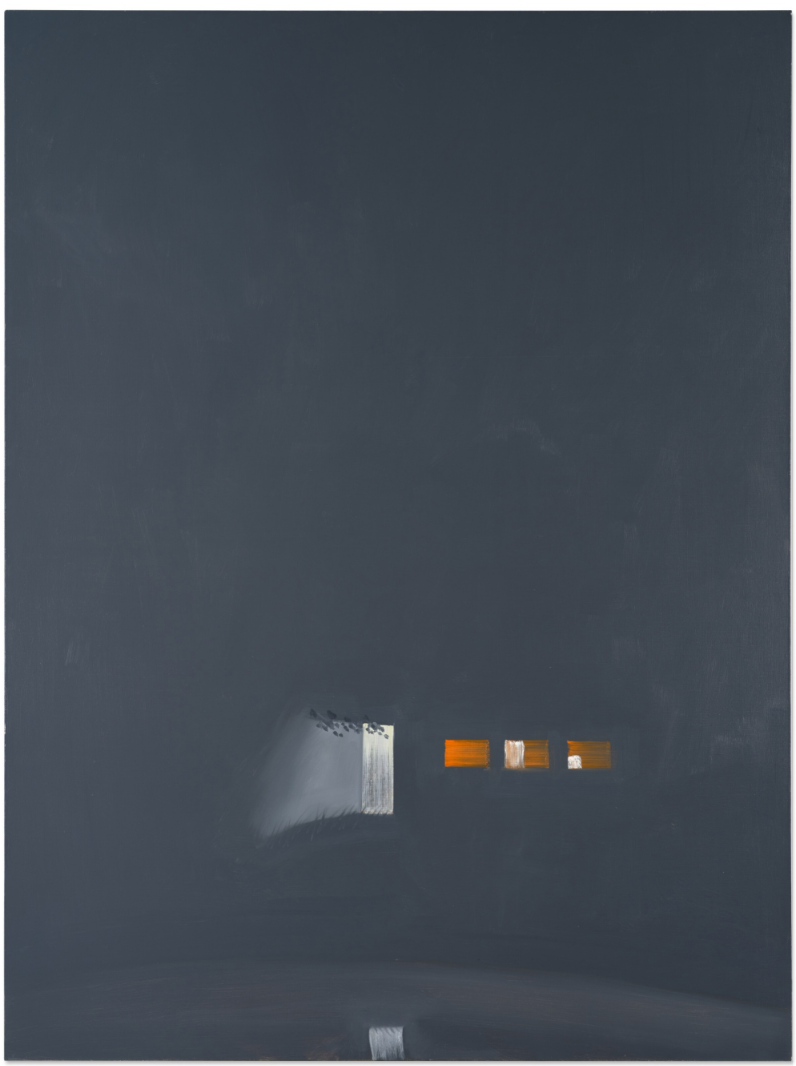
ALEX KATZ (b. 1927)
Open Door, 1991
Oil on canvas
96×72 inches (244×183 cm)
#19. Ada in a White Hat and Sunglasses, 2007
Christie’s New-York: 13 March 2024
Estimated: USD 60,000 – 80,000
USD 151,200
ALEX KATZ (B. 1927), Ada in a White Hat and Sunglasses | Christie’s (christies.com)
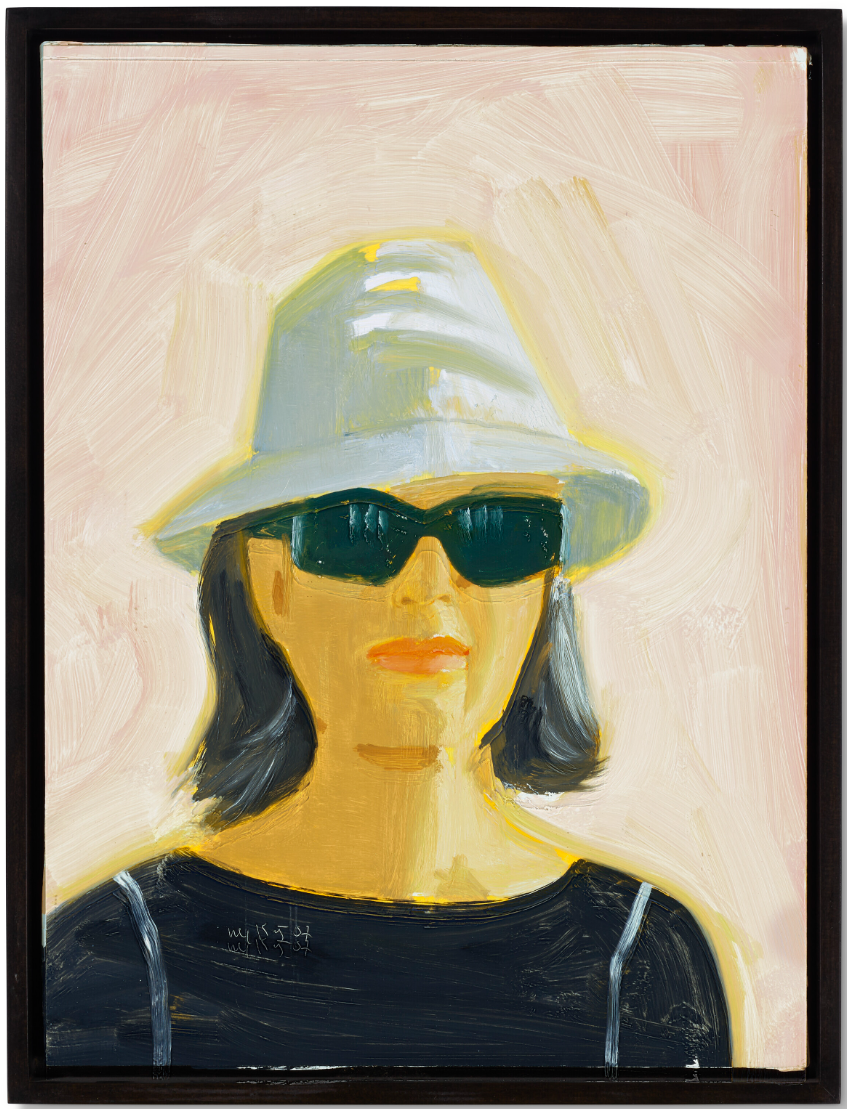
ALEX KATZ (B. 1927)
Ada in a White Hat and Sunglasses, 2007
Oil on board
16×12 inches (40.6 x 30.5 cm)
Incised with the artist’s signature and date ‘Alex Katz 07’ (lower left)
#20. Joe 1, 1966
Sotheby’s New-York: 30 September 2024
Estimated: USD 30,000 – 40,000
USD 132,000
Joe 1 | Art Without Boundaries: The Abrams Family Collection | Online Sale | 2024 | Sotheby’s
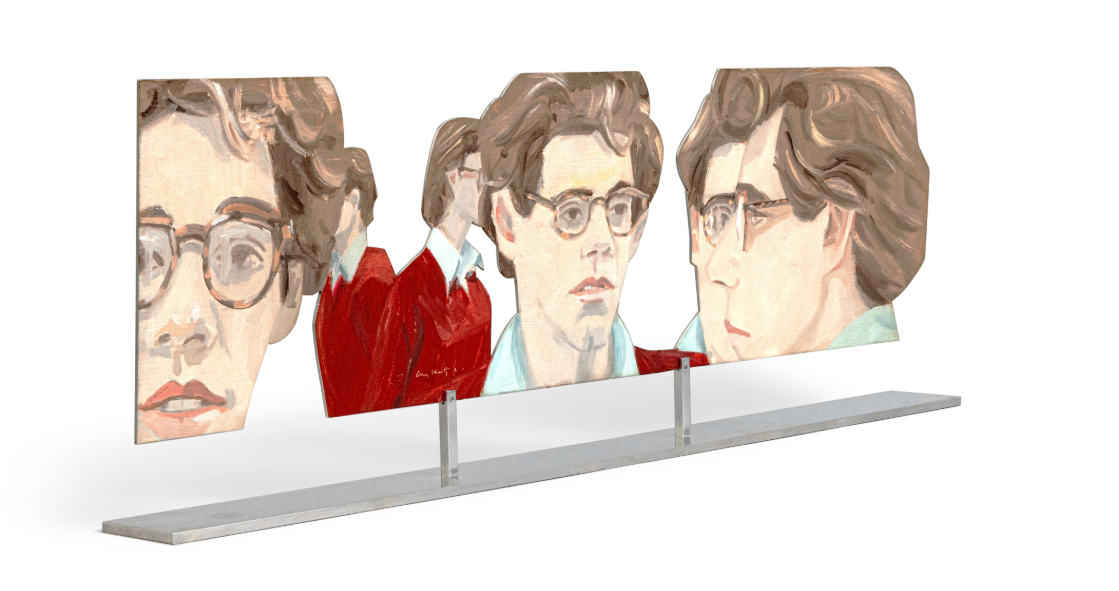
ALEX KATZ (b. 1927)
Joe 1, 1966
Oil on shaped aluminum
Overall: 10 x 29 1/2 x 2 1/2 inches (25.4 x 74.9 x 6.4 cm)
Signed and dated 66 (lower left)
Signed and dated 66 (on the reverse)
#21. Ada in a Red Coat, 1982
Bonhams New-York: 16 May 2024
Estimated: USD 60,000 – 90,000
USD 127,500
Bonhams : ALEX KATZ (B. 1927) Ada in a Red Coat 1982
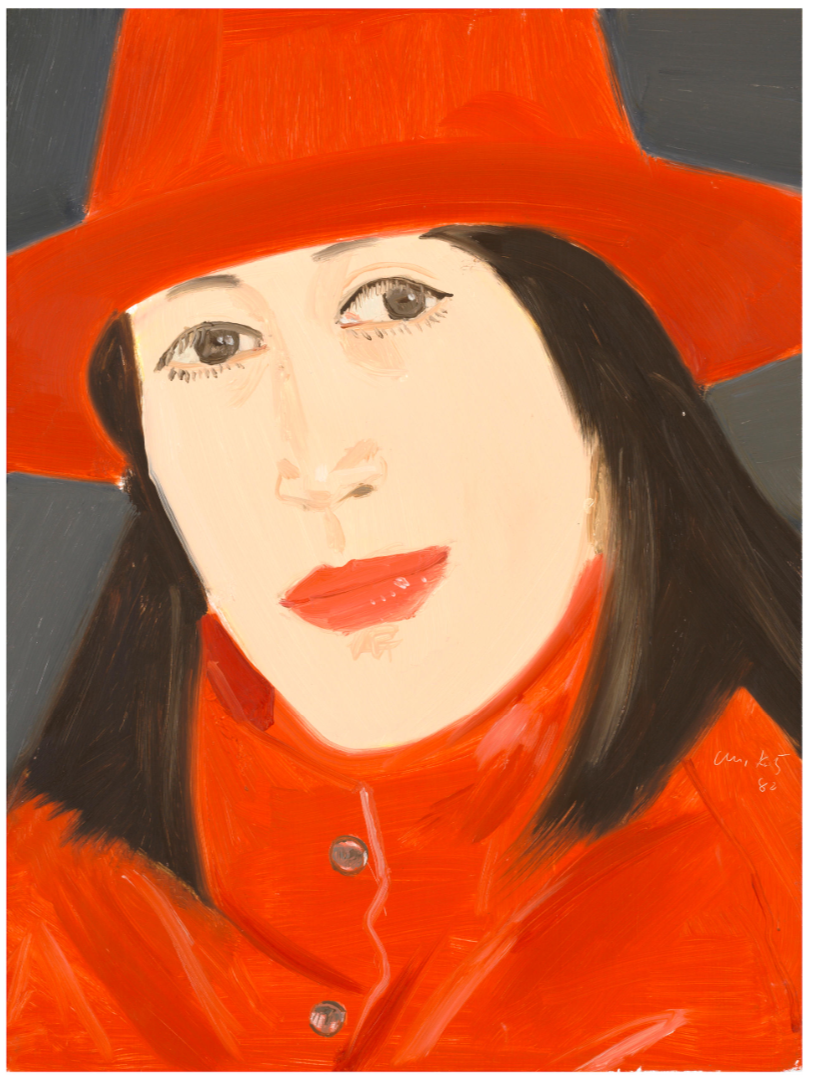
Oil on panel
15 7/8 x 12 inches (40.4 x 30.3 cm)
Signed and dated 82
#22. Chance, 2016
Sotheby’s New-York: 14 May 2024
Estimated: USD 40,000 – 60,000
USD 127,000
Chance | Contemporary Day Auction | 2024 | Sotheby’s
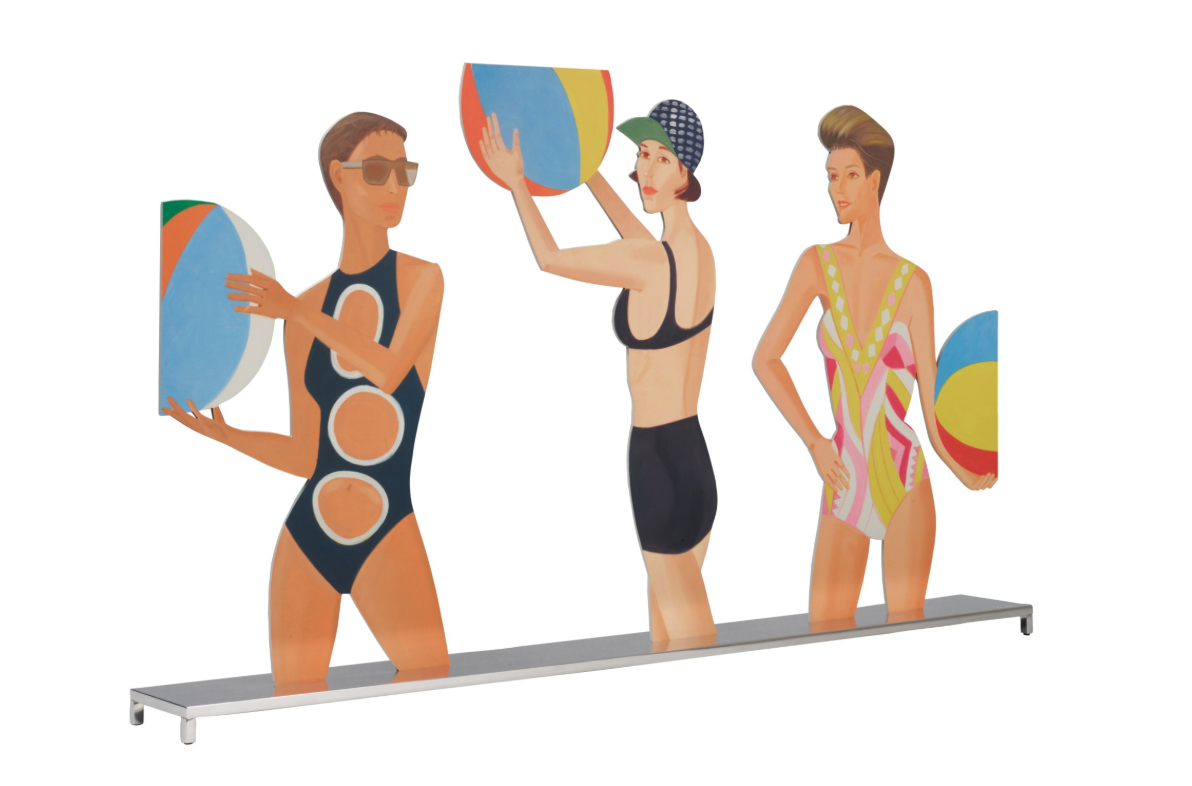
ALEX KATZ (b. 1927)
Chance, 2016
Cutout in three panels from shaped powder-coated aluminum
Printed in colors on both sides, contained in the original foam lined cardboard box
Overall: 21 5/8 x 37 by 4 inches (55 x 94 x 10.2 cm)
Incised with the artist’s signature (on the base)
Stamp-numbered 12/50 (on the underside)
This work is number 12 from the edition of 50 plus 18 artist’s proofs
With the artist’s copyright and publisher stamps on the underside
Published by Lococo Fine Art
#23. Nine Women 6, 2009
Phillips New-York: 17 July 2024
Estimated: USD 60,000 – 80,000
USD 114,300
Alex Katz – Modern & Contemporary Art Lot 35 July 2024 | Phillips
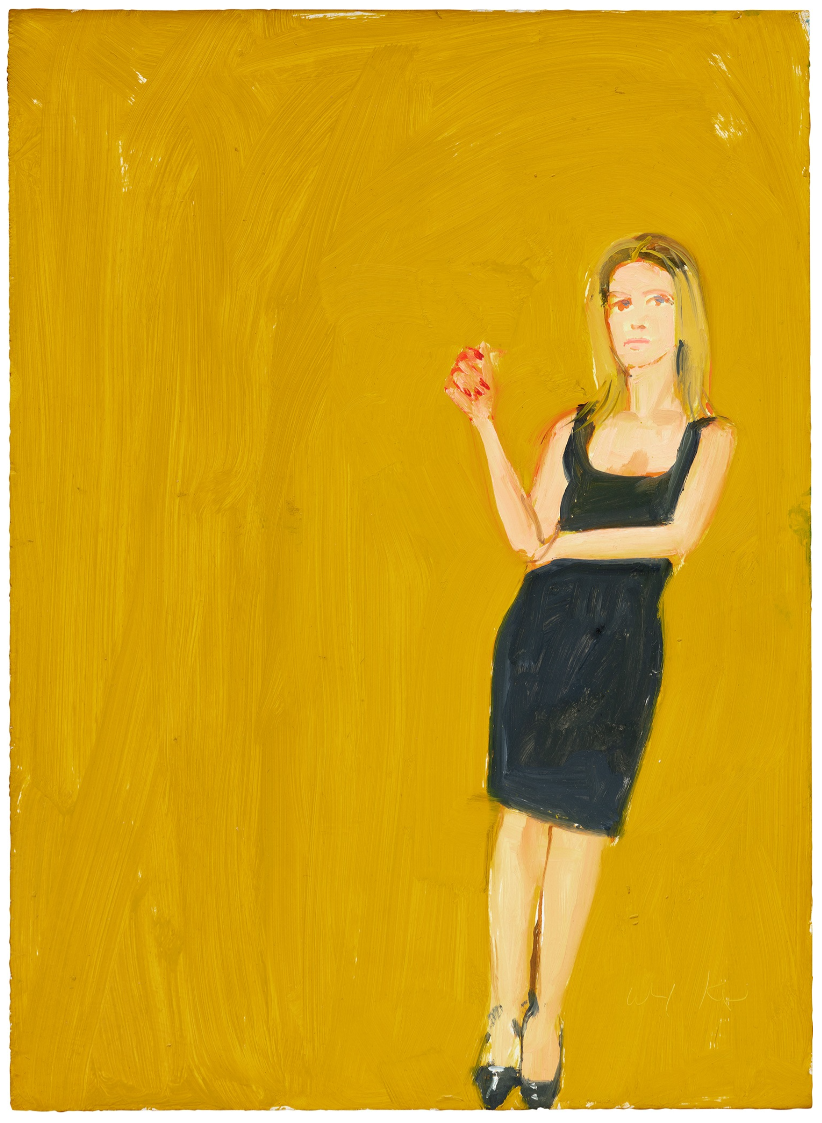
ALEX KATZ
Nine Women 6, 2009
Oil on board
15 7/8 x 11 5/8 inches (40.3 x 29.5 cm)
Signed “Alex Katz” lower right
#24. Orange Sunset #3, 2004
Christie’s London: 9 March 2024
Estimated: GBP 25,000 – 35,000
GBP 81,900 / USD 103,849
ALEX KATZ (B. 1927), Orange Sunset #3 | Christie’s (christies.com)
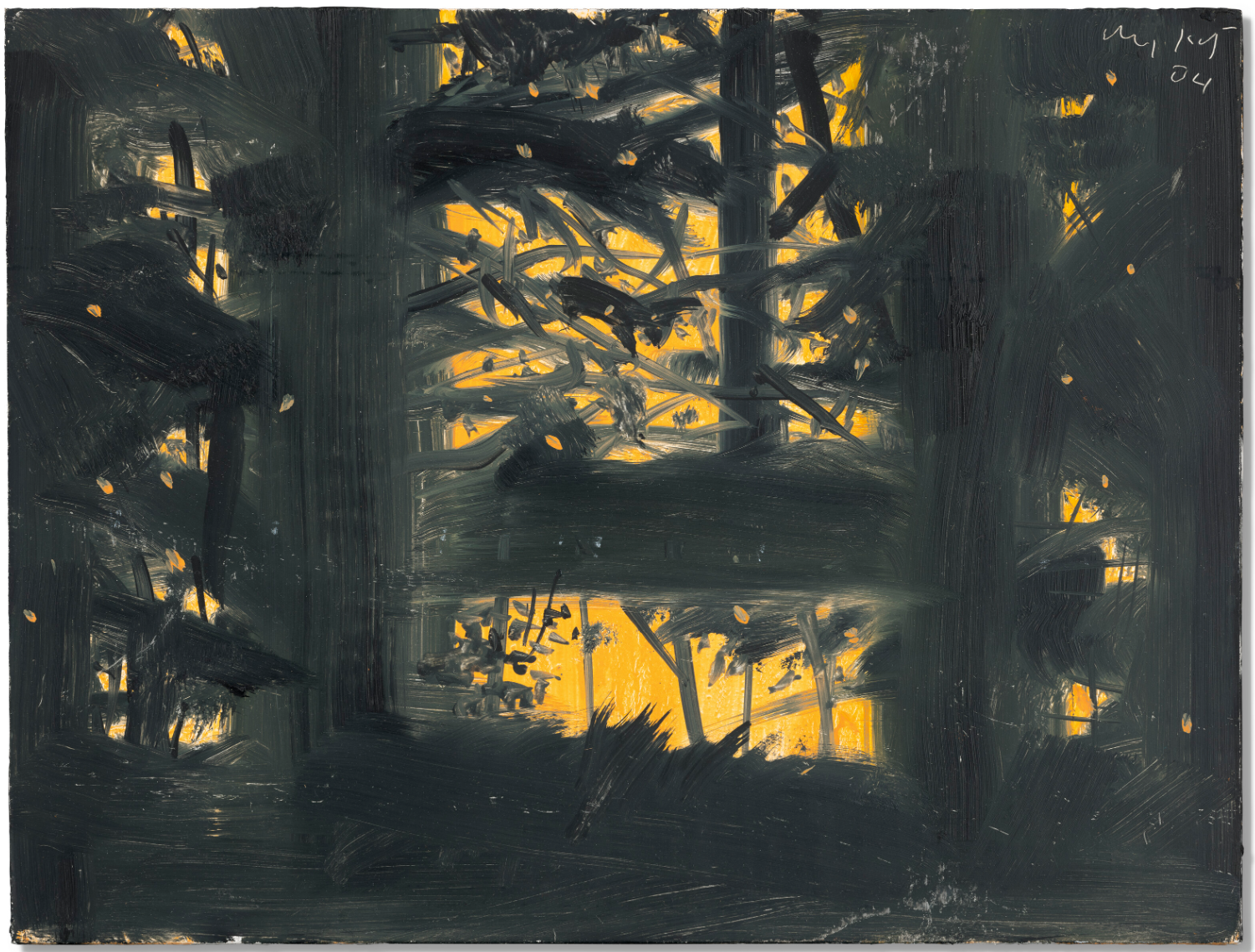
ALEX KATZ (B. 1927)
Orange Sunset #3, 2004
Oil on masonite
9 x 11 7/8 inches (23 x 30.1 cm)
Signed and dated ‘Alex Katz 04’ (upper right)
#25. Nine Women 1, 2009
Phillips New-York: 17 July 2024
Estimated: USD 60,000 – 80,000
USD 101,600
Alex Katz – Modern & Contemporary Art Lot 36 July 2024 | Phillips
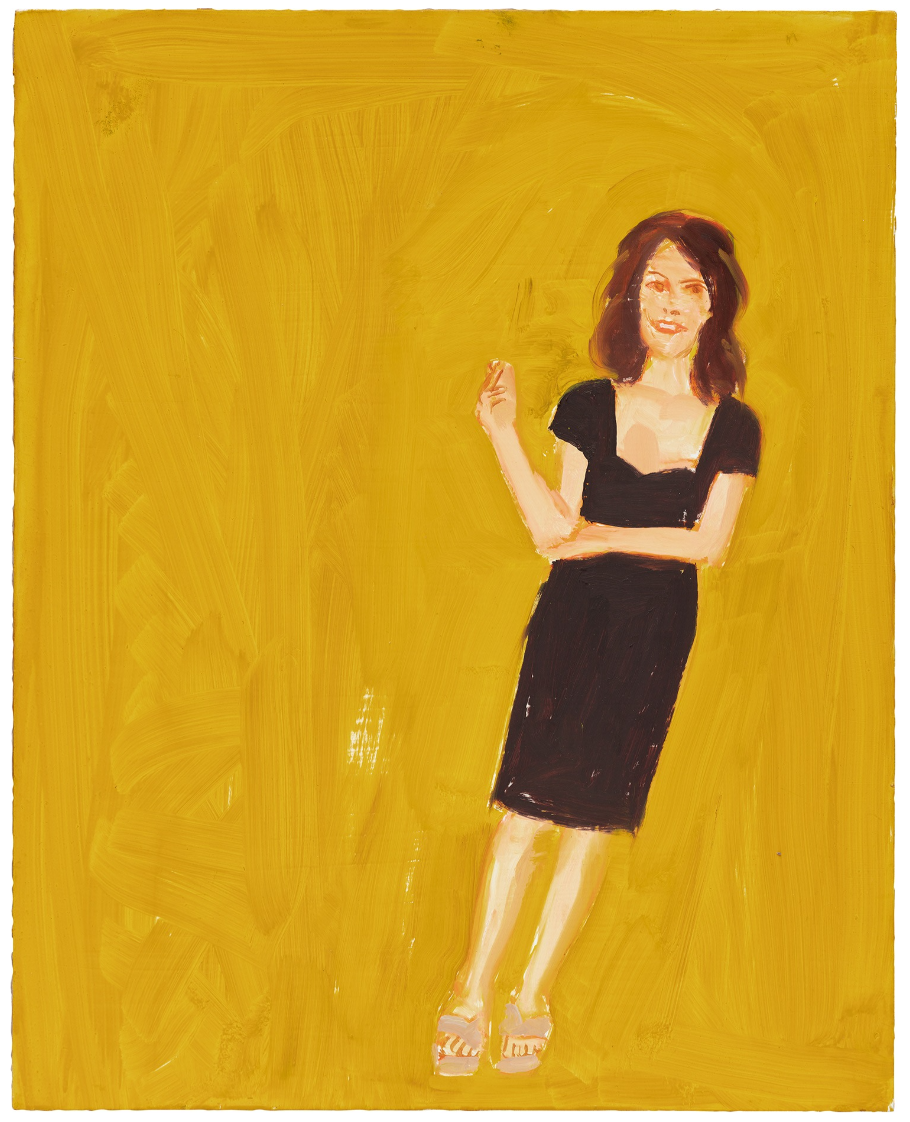
ALEX KATZ
Nine Women 1, 2009
Oil on board
20×16 inches (50.8 x 40.6 cm)
#26. Jessica (Study for New Pink), 2004
Phillips New-York: 15 May 2024
Estimated: USD 40,000 – 60,000
USD 101,600
Alex Katz – Modern & Contemporary Art D… Lot 202 May 2024 | Phillips
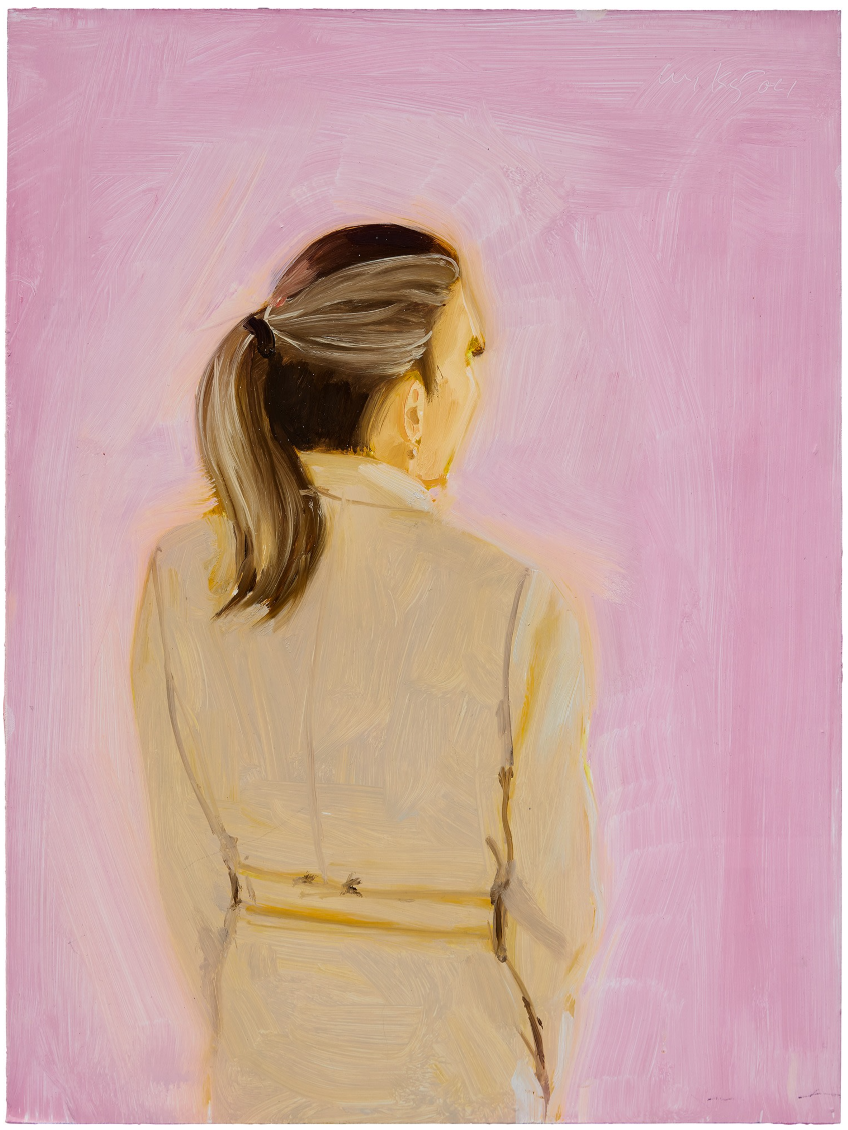
ALEX KATZ
Jessica (Study for New Pink), 2004
Oil on board
16 x 11 7/8 inches (40.6 x 30.2 cm)
Signed and dated “Alex Katz 2004” upper right
USD 100,000
#27. Julian & Jacqueline, 1987
Phillips London: 11 October 2024
Estimated: GBP 60,000 – 80,000
GBP 69,850 / USD 91,235
Alex Katz – Modern & Contemporary A… Lot 179 October 2024 | Phillips
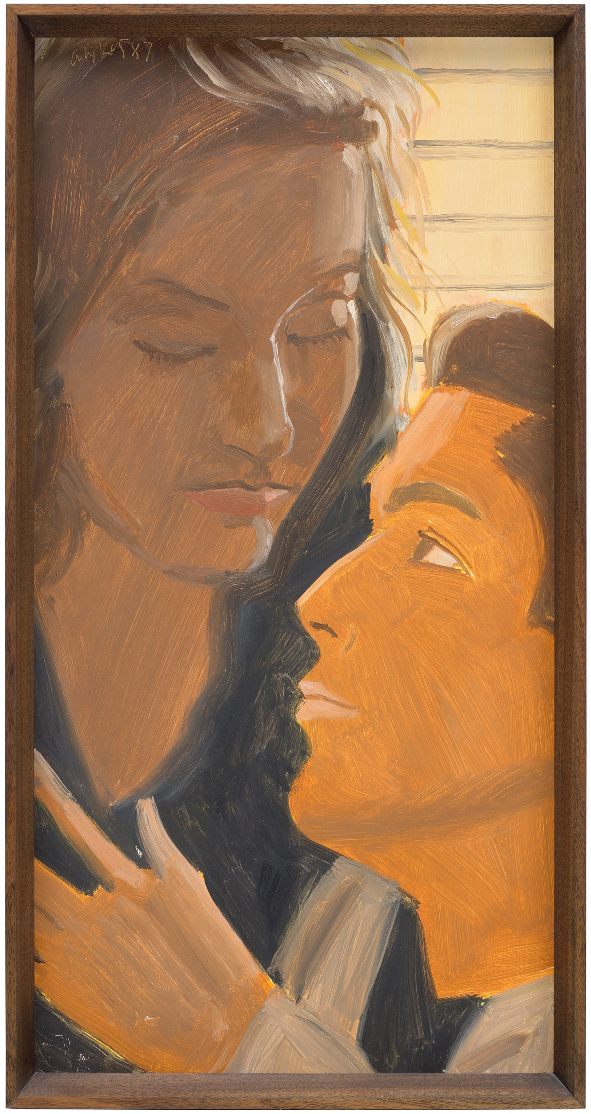
ALEX KATZ
Julian & Jacqueline, 1987
Oil on board
23 3/8 x 11 3/4 inches (59.5 x 29.7 cm)
Signed and dated ‘Alex Katz 87’ upper left
#28. Study for COWS, 1984
Phillips New-York: 17 July 2024
Estimated: USD 40,000 – 60,000
USD 73,660
Alex Katz – Modern & Contemporary Art Lot 37 July 2024 | Phillips
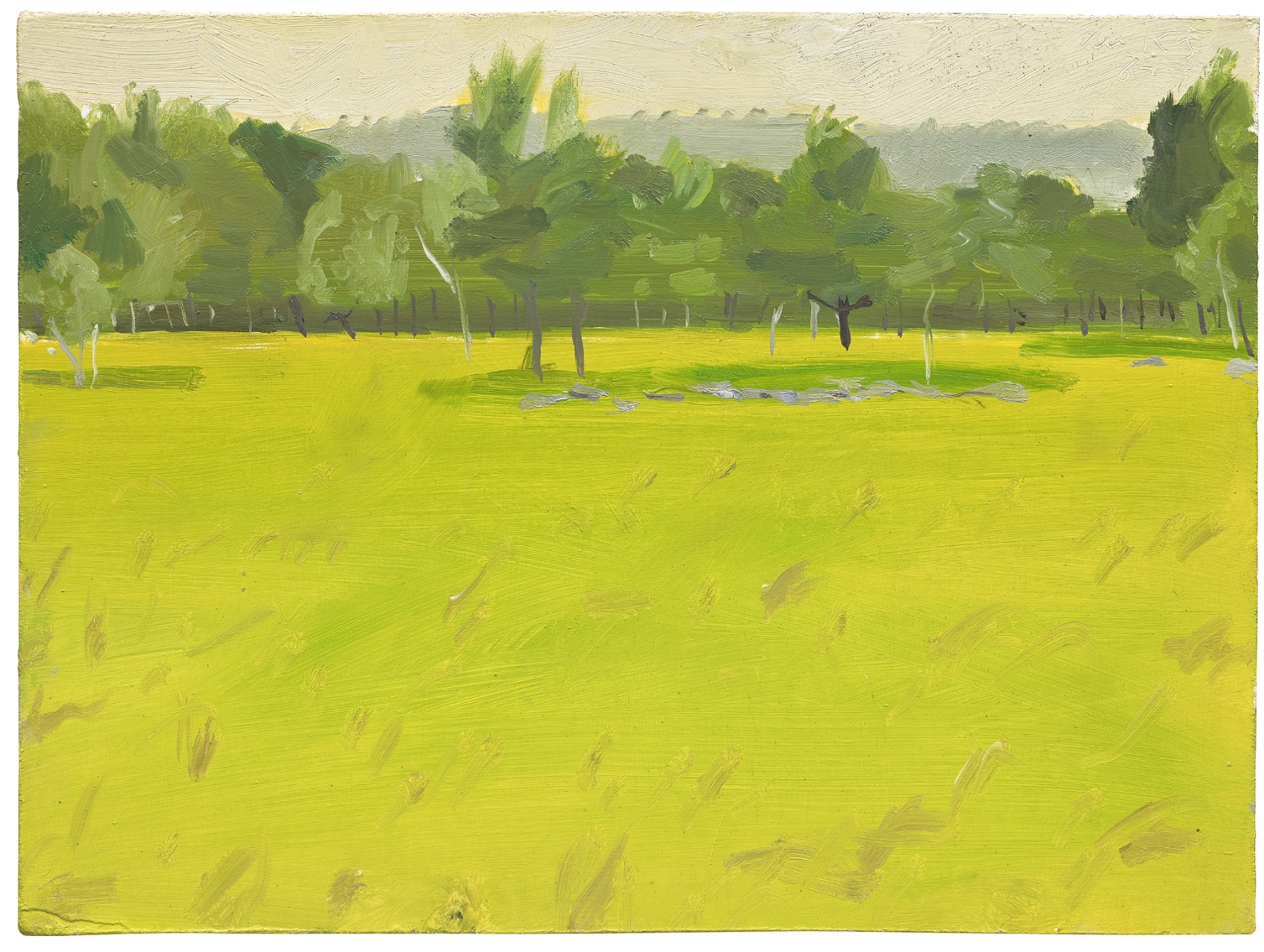
ALEX KATZ
Study for COWS, 1984
Oil on board
12×16 inches (30.5 x 40.6 cm)
Signed and dated “Alex Katz 84” upper right
#29. Study for Rowing, 1964
Christie’s New-York: 1 October 2024
Estimated: USD 60,000 – 80,000
USD 69,300
ALEX KATZ (B. 1927), Study for Rowing | Christie’s
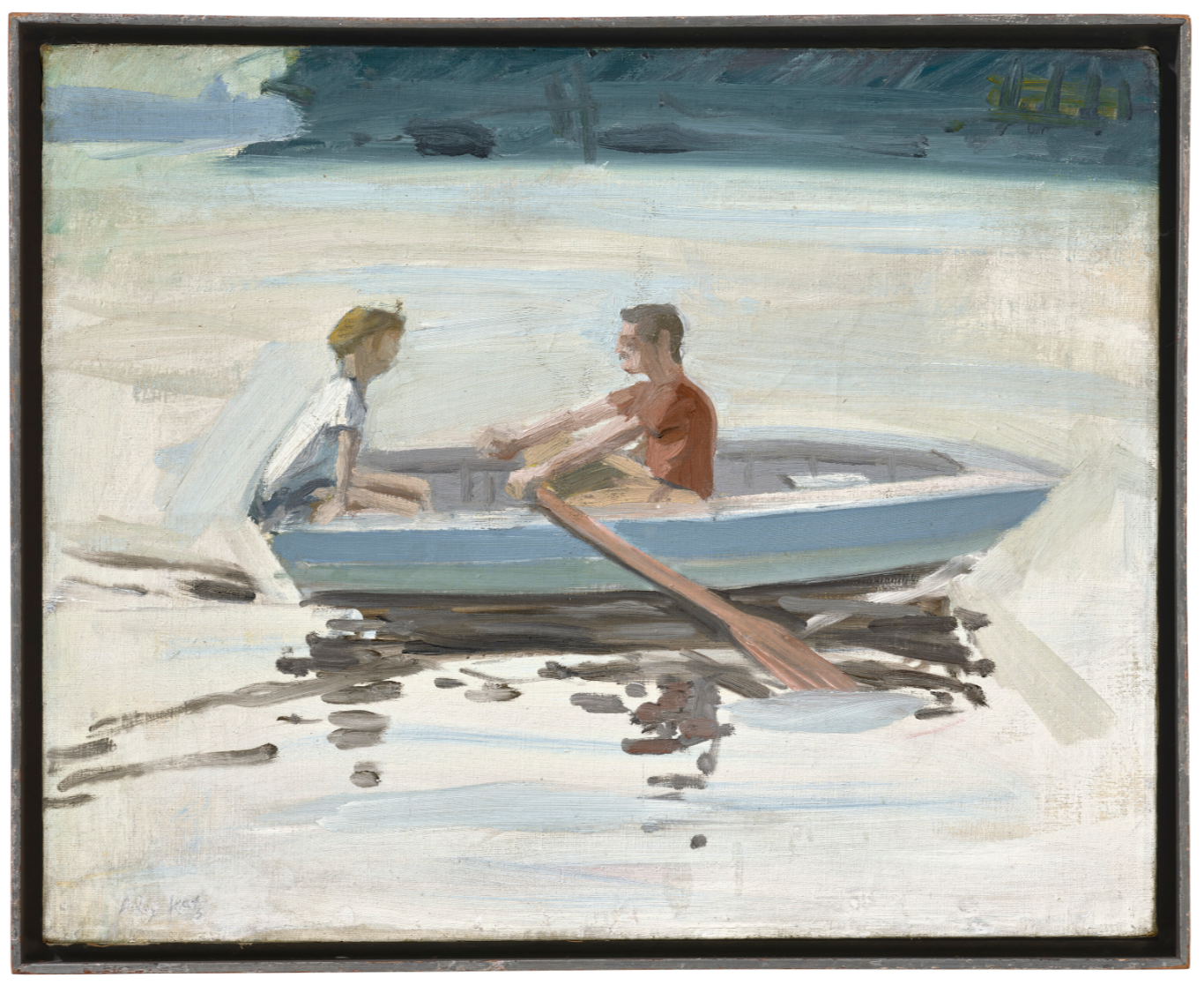
ALEX KATZ (B. 1927)
Study for Rowing, 1964
Oil on linen
16×20 inches (40.6 x 50.8 cm)
Signed ‘Alex Katz’ (lower left)
#30. 10 A.M., 1994
Christie’s New-York: 17 May 2024
Estimated: USD 25,000 -35,000
USD 68,040
ALEX KATZ (B. 1927), 10 A.M. | Christie’s (christies.com)
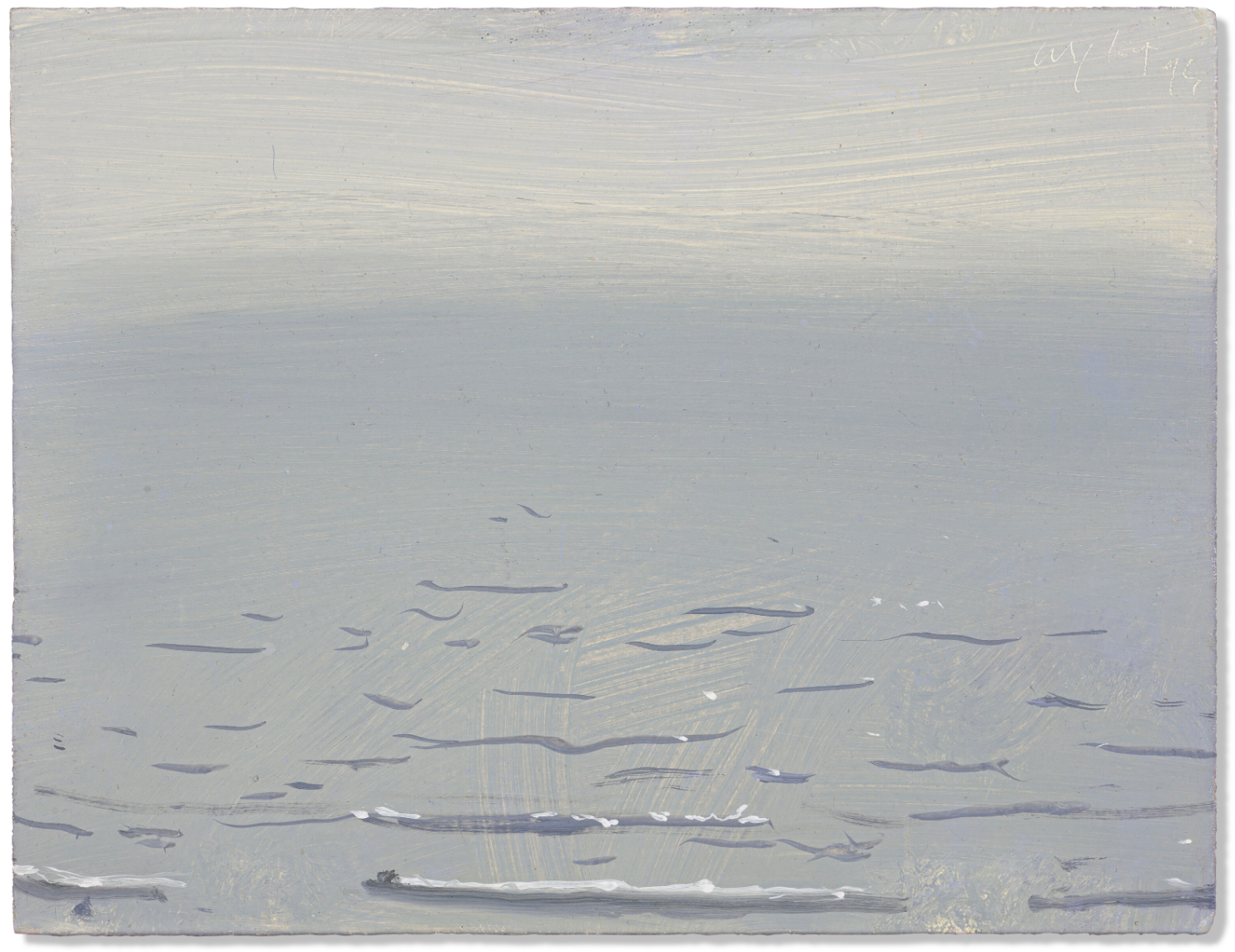
ALEX KATZ (B. 1927)
10 A.M., 1994
Oil on board
9 x 11 5/8 inches (22.9 x 29.5 cm)
Incised with the artist’s signature and date ‘Alex Katz 94’ (upper right)
#31. Red Roses on Beige, 1967
Rago: 22 May 2024
Estimated: USD 50,000 – 70,000
USD 56,700
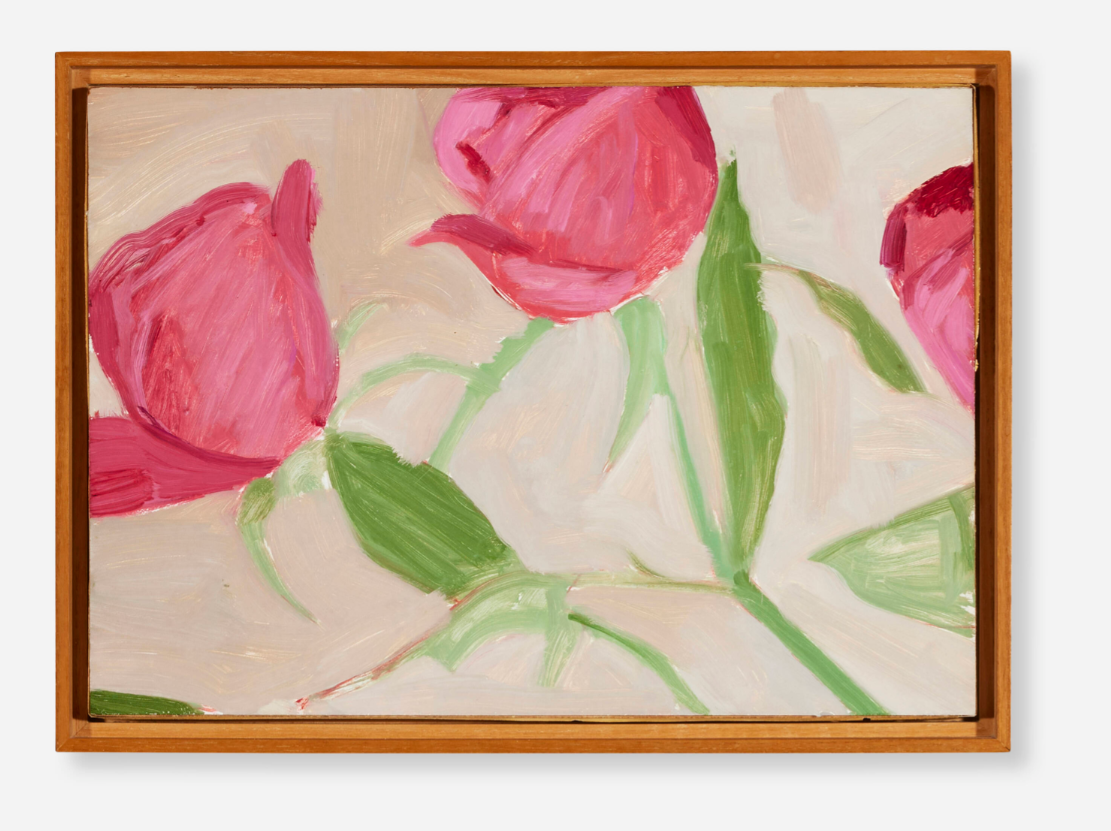
ALEX KATZ (b.1927)
Red Roses on Beige, 1967
Oil on board
10×14 inches (25×36 cm)
Signed and dated to verso ‘Alex Katz ’67’
#32. Aladar on Aluminum, 1972
Rago: 22 May 2024
Estimated: USD 50,000 – 70,000
USD 50,400
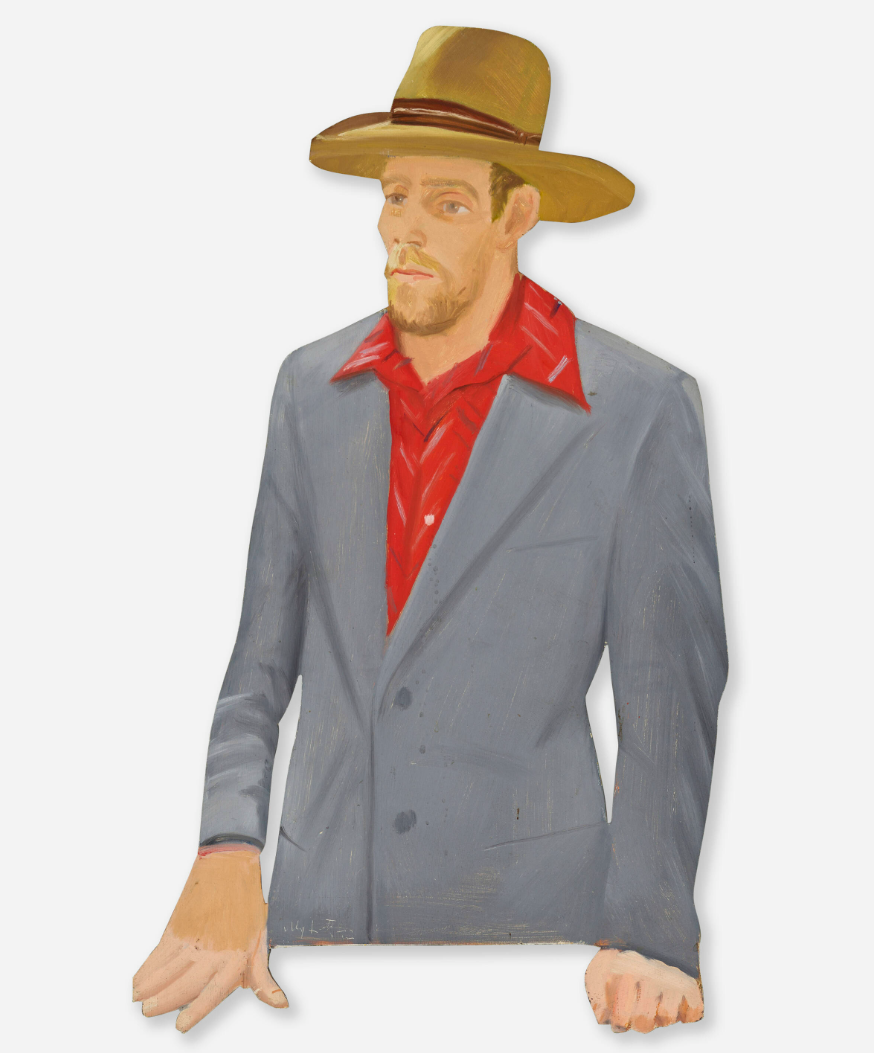
ALEX KATZ (b.1927)
Aladar on Aluminum, 1972
Oil on aluminum
20 5/8 x 11 5/8 inches (52×30 cm)
Signed and dated to lower left edge ‘Alex Katz 72’. Signed and dated to verso ‘Alex Katz 1972’
#33. Louisa, circa 1978
Sotheby’s New-York: 2 October 2024
Estimated: USD 50,000 – 70,000
USD 50,400
Louisa | Contemporary Discoveries | 2024 | Sotheby’s
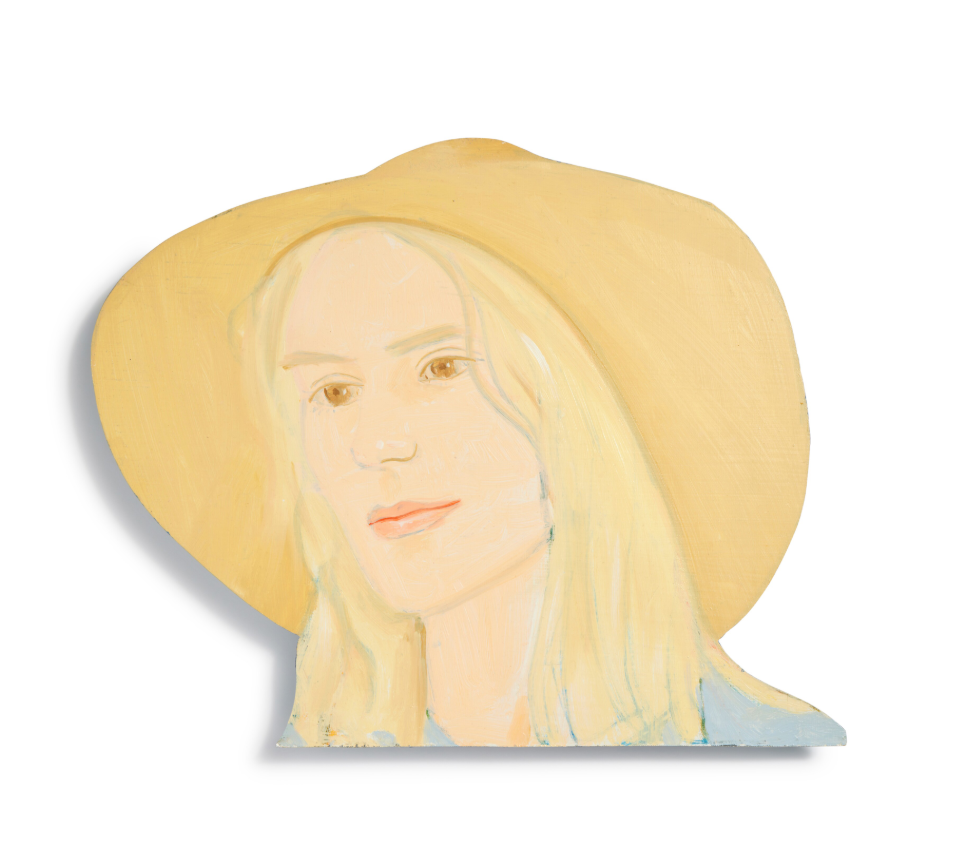
ALEX KATZ (b. 1927)
Louisa, circa 1978
Oil on shaped aluminum
11 3/4 x 14 1/2 x 7/8 inches (29.8 x 36.8 x 2.2 cm)
#34. Nick, 2010
Sotheby’s London: 7 March 2024
Estimated: GBP 35,000 – 45,000
GBP 35,560 / USD 45,090
Nick | Modern & Contemporary Day Auction | 2024 | Sotheby’s (sothebys.com)
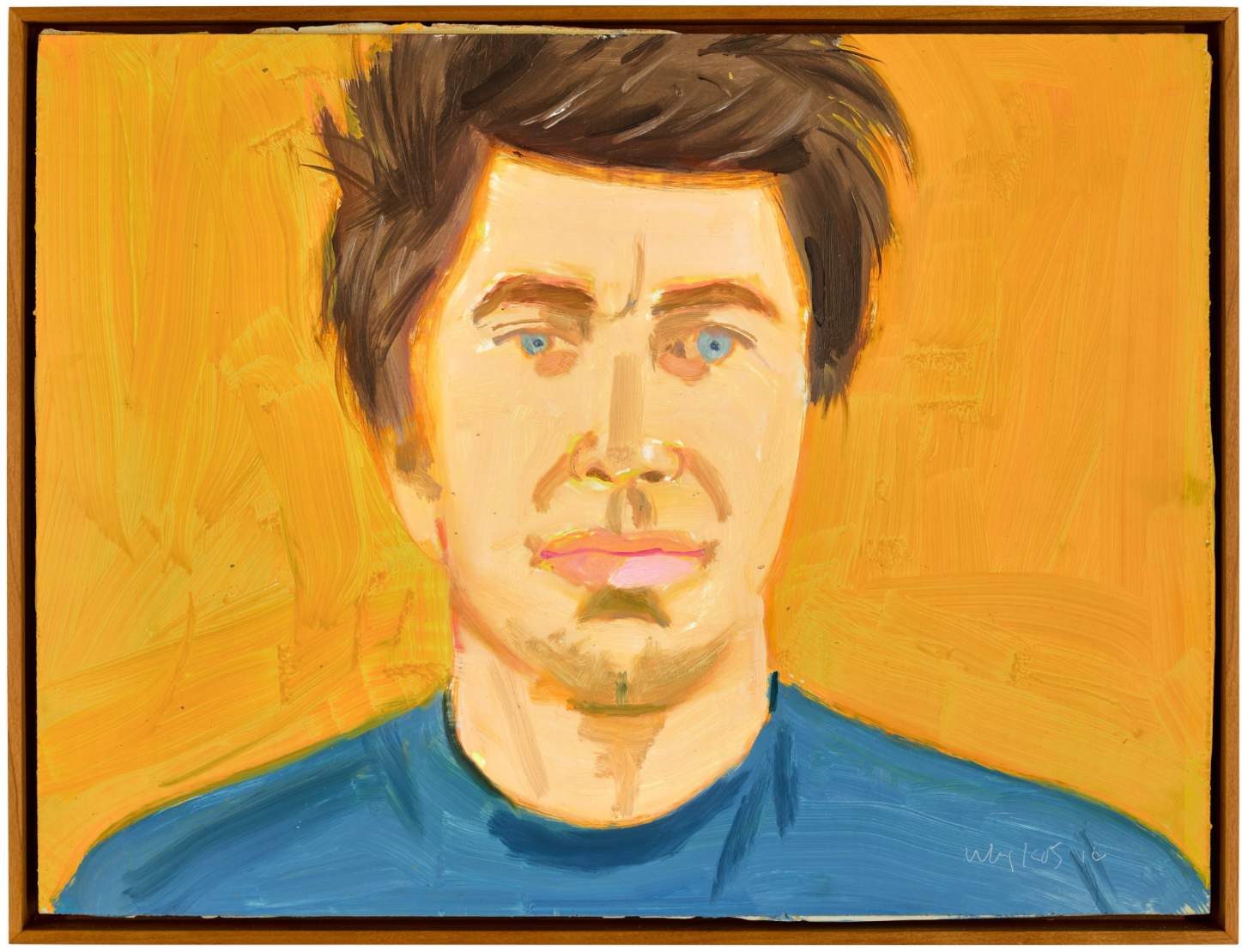
ALEX KATZ (b. 1927)
Nick, 2010
Oil on board
12×16 inches (30.4 x 40.4 cm)
Incised with the artist’s signature and dated 10 (lower right)
#35. Chuck Close, 2014
Christie’s New-York: 13 March 2024
Estimated: USD 30,000 – 50,000
USD 40,320
ALEX KATZ (B. 1927), Chuck Close | Christie’s (christies.com)
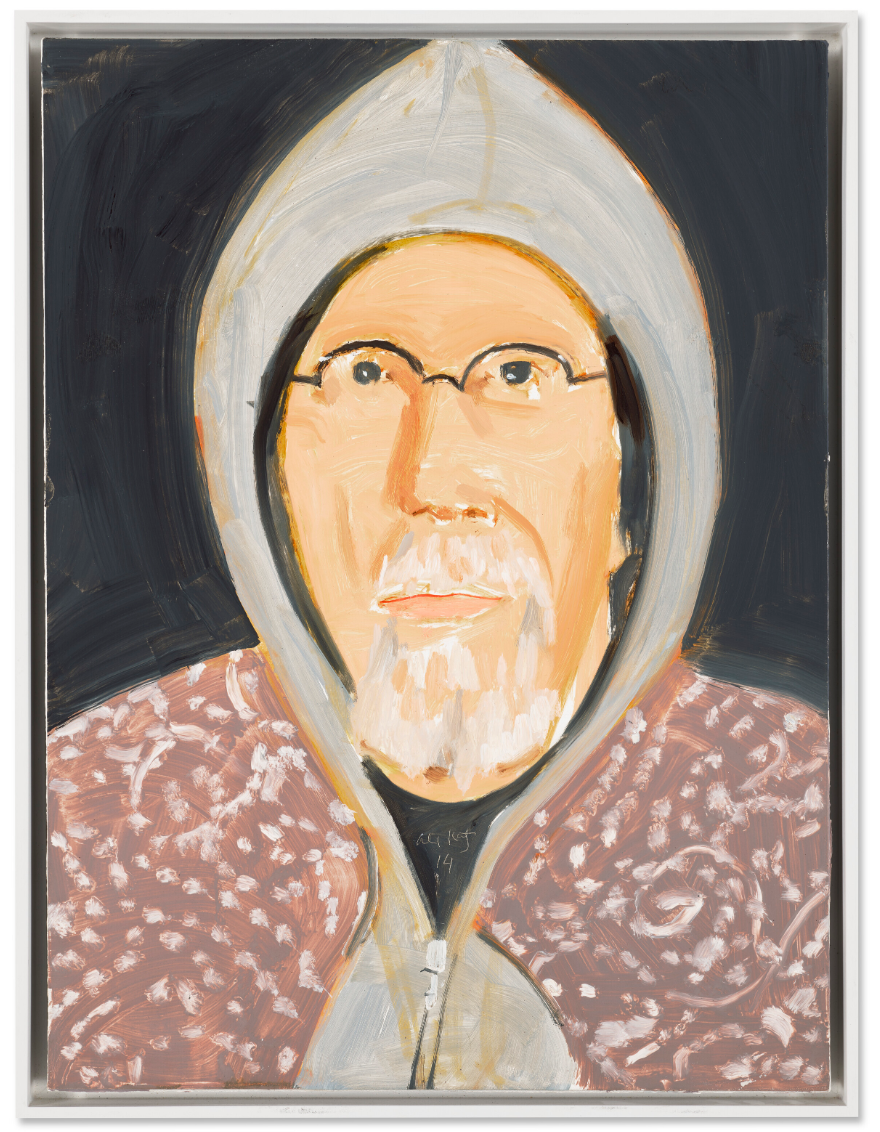
ALEX KATZ (B. 1927)
Chuck Close, 2014
Oil on board
15 7/8 x 11 7/8 inches (40.3 x 30.2 cm)
Incised with the artist’s signature and date ‘Alex Katz 14’ (lower center)
Signed ‘Alex Katz’ (on the reverse)
#36. White Carnation, circa early 1950s
Christie’s New-York: 13 March 2024
Estimated: USD 12,000 – 18,000
USD 32,760
ALEX KATZ (b. 1927), White Carnation | Christie’s
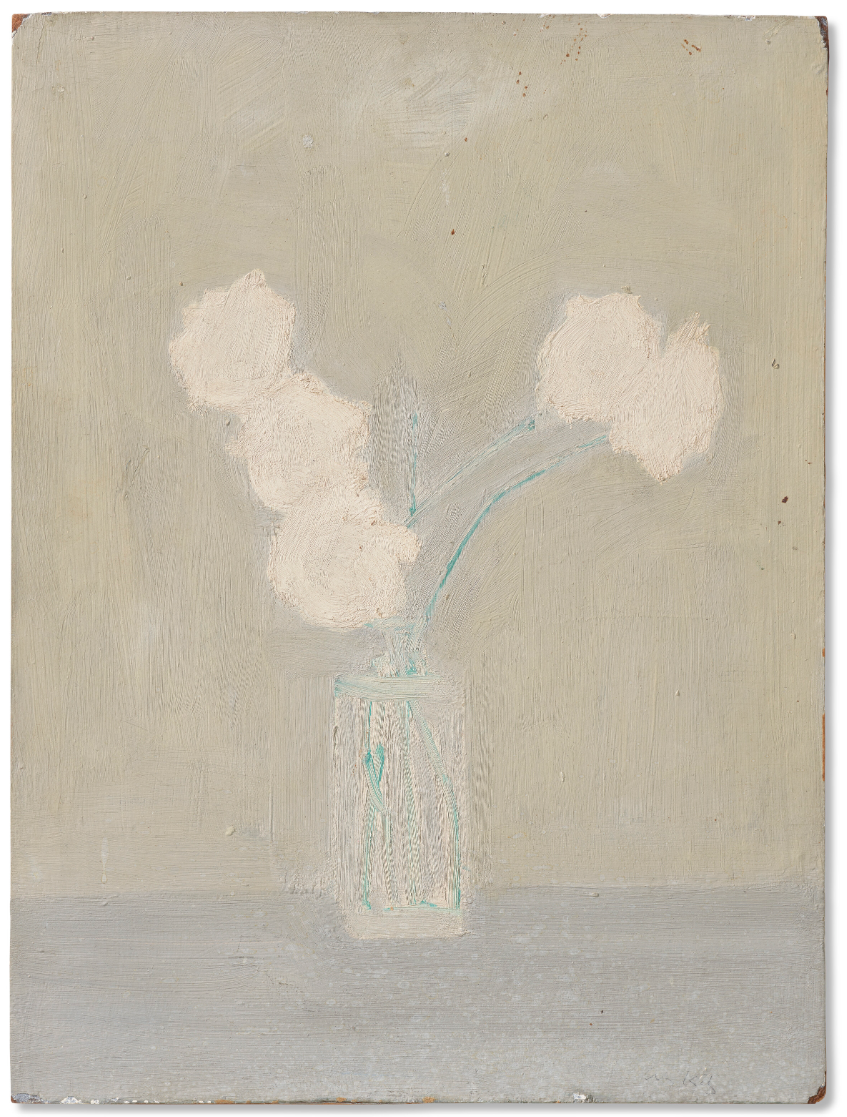
ALEX KATZ (b. 1927)
White Carnation, circa early 1950s
Oil on board
12×9 inches (30.5 x 22.8 cm)
Signed ‘Alex Katz’ (lower right)
#37. Sunset, 2000
Sotheby’s London: 7 March 2024
Estimated: GBP 20,000 – 30,000
GBP 25,400 / USD 32,207
Sunset | Modern & Contemporary Day Auction | 2024 | Sotheby’s (sothebys.com)
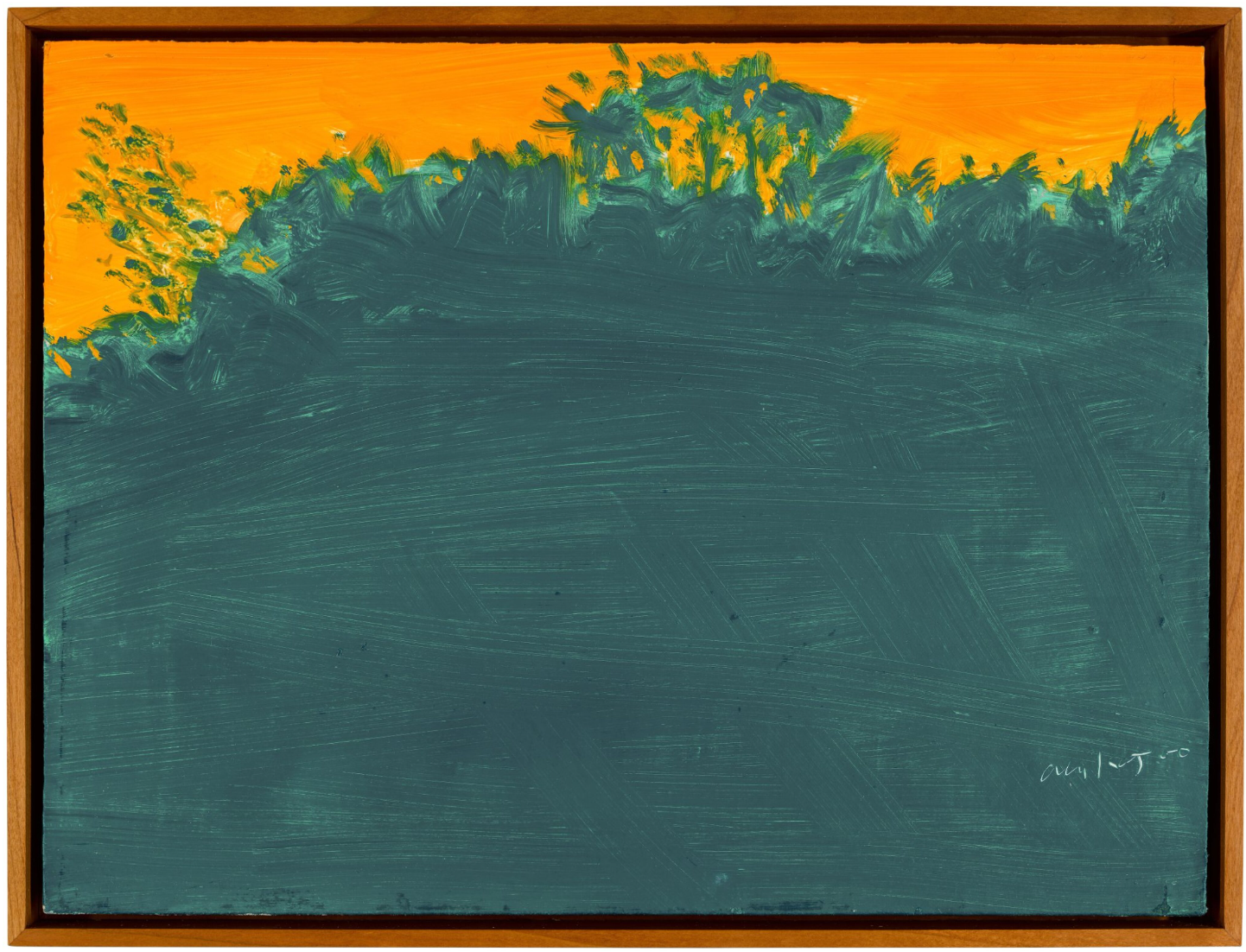
ALEX KATZ (b. 1927)
Sunset, 2000
Oil on board
9×12 inches (23 x 30.5 cm)
Incised with the artist’s signature and dated 00 (lower right)
#38. Study for Summer 1, 2004
Rago: 22 May 2024
Estimated: USD 20,000 – 30,000
USD 25,200
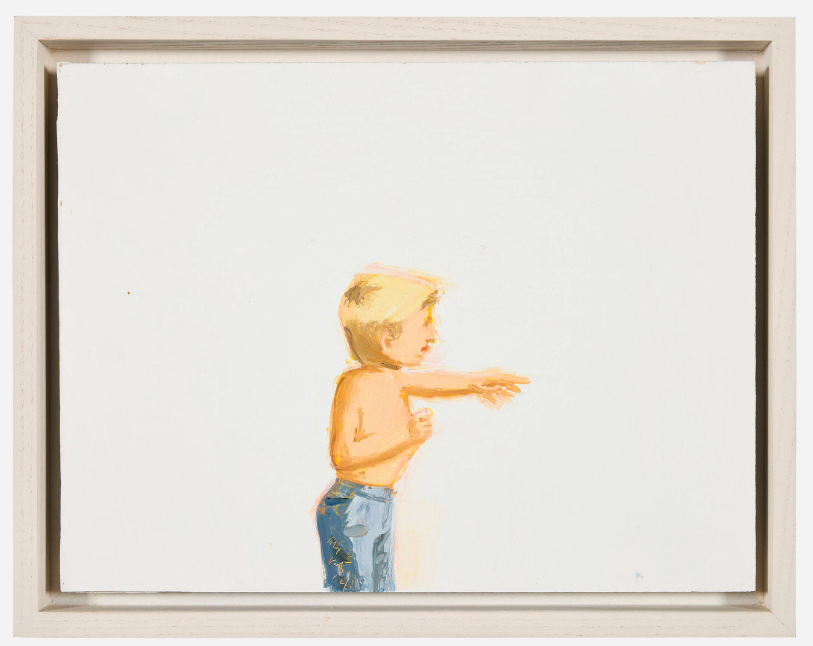
ALEX KATZ (b.1927)
Study for Summer 1, 2004
Oil on board
9 x 11 7/8 inches (23×30 cm)
Signed and dated to lower center ‘Alex Katz 04′
Passed Lots
Alba in Garden, 1990
Christie’s New-York: 18 December 2024
Estimated: USD 70,000 – 100,000
PASSED
ALEX KATZ (b. 1927), Alba in Garden | Christie’s
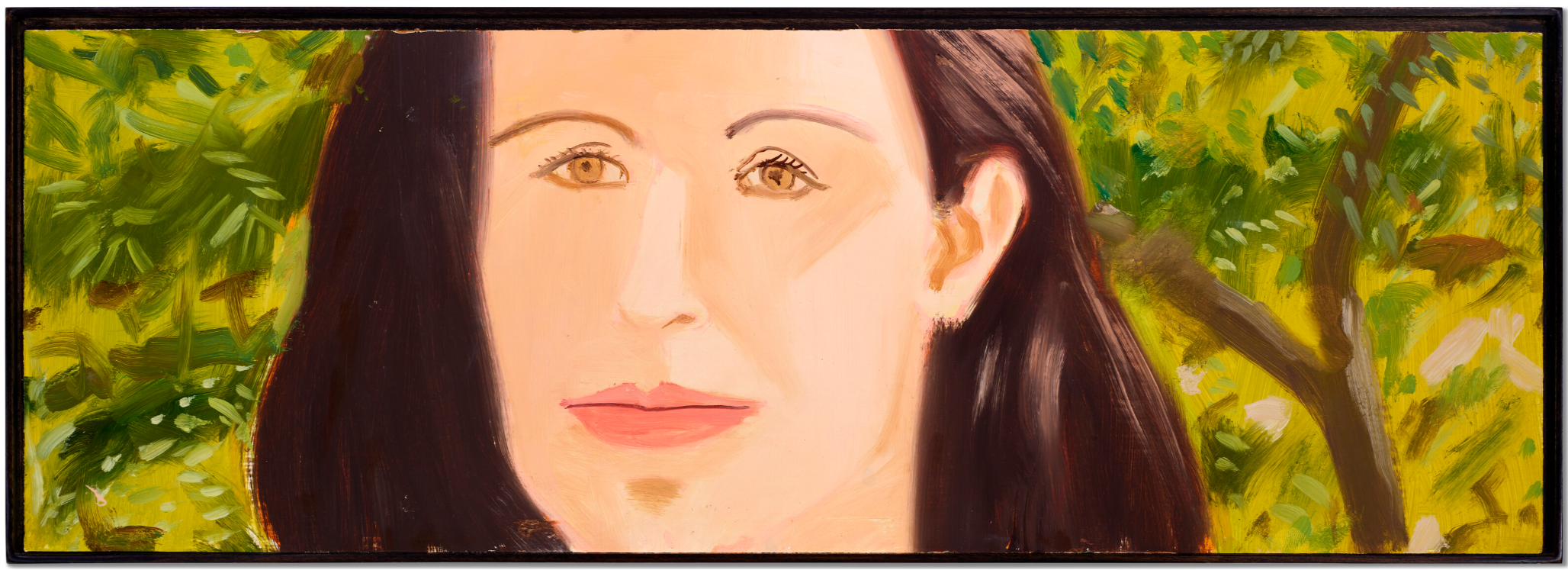
ALEX KATZ (b. 1927)
Alba in Garden, 1990
Oil on board
81/4 x 24 inches (20.9 x 61 cm)
2023 Auction Results
44 paintings sold at auction in 2023 for a total turnover of USD 14,984,261. With 6 lots unsold, the sell-through rate is a strong 8%. The highest price for 2023 was achieved at Christie’s in New-York on 11 May 2023, when Red Band (1978) sold for USD 2,470,000.
2023 Top 3 Lots
4 lots sold above USD 1 million for a cumulative turnover of USD 7,039,072, representing 47% of the total turnover for 2023. 24 lots sold at auction in 2023 for more than USD 100,000, generating a cumulative turnover of USD 13,713,618, representing 91.6% of the total turnover for 2023.
#1. Red Band, 1978
Christie’s New-York: 11 May 2023
Estimated: USD 2,000,000 – 3,000,000
USD 2,470,000
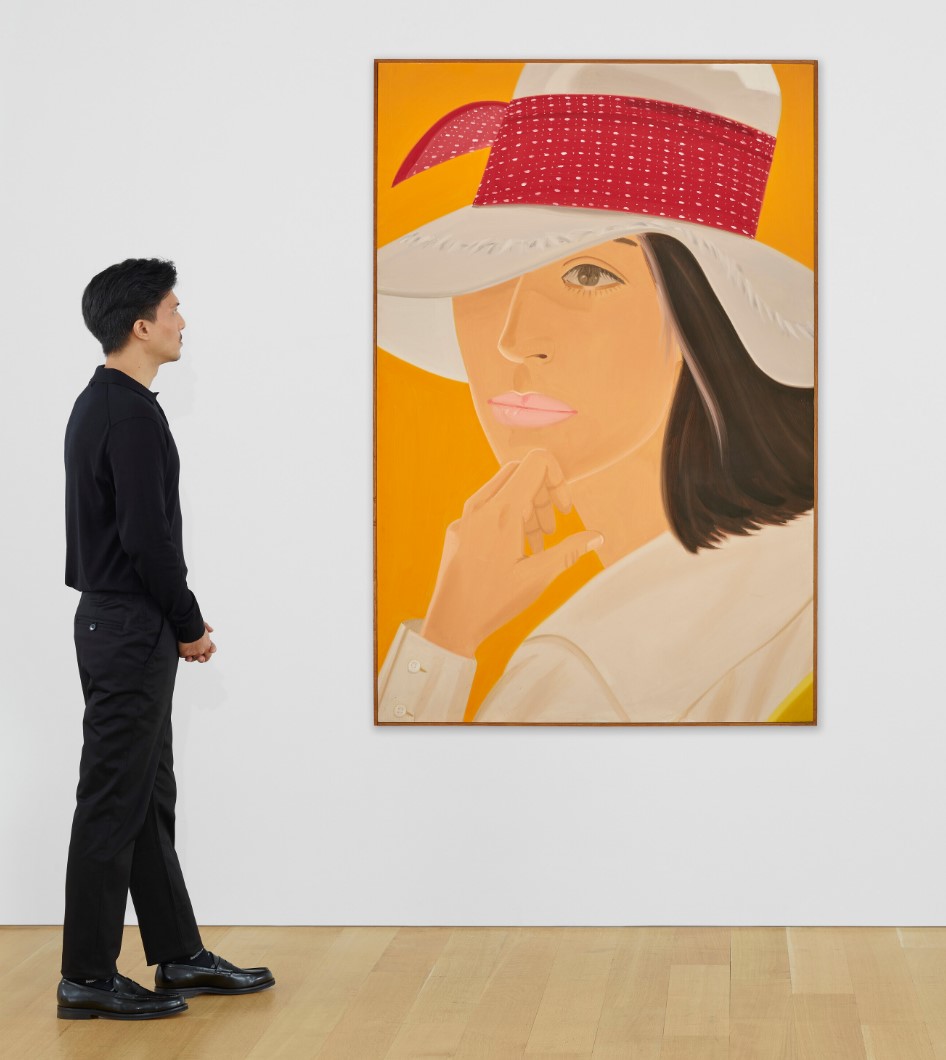
ALEX KATZ (B. 1927)
Red Band, 1978
Oil on linen
72 x 47 3/4 inches (182.9 x 121.2 cm)
#2. Ada in front of 4PM, 1977
Christie’s New-York: 10 March 2023
Estimated: USD 1,200,000 – 1,800,000
USD 1,740,000
ALEX KATZ (B. 1927) (christies.com)
ALEX KATZ (B. 1927)
Ada in front of 4PM, 1977
Oil on linen
60×72 inches (152.4 x 182.9 cm)
#3. On Time, 2001
Sotheby’s Hong-Kong: 5 October 2023
Estimated: HKD 12,000,000 – 18,000,000
HKD 11,340,000 / USD 1,448,072
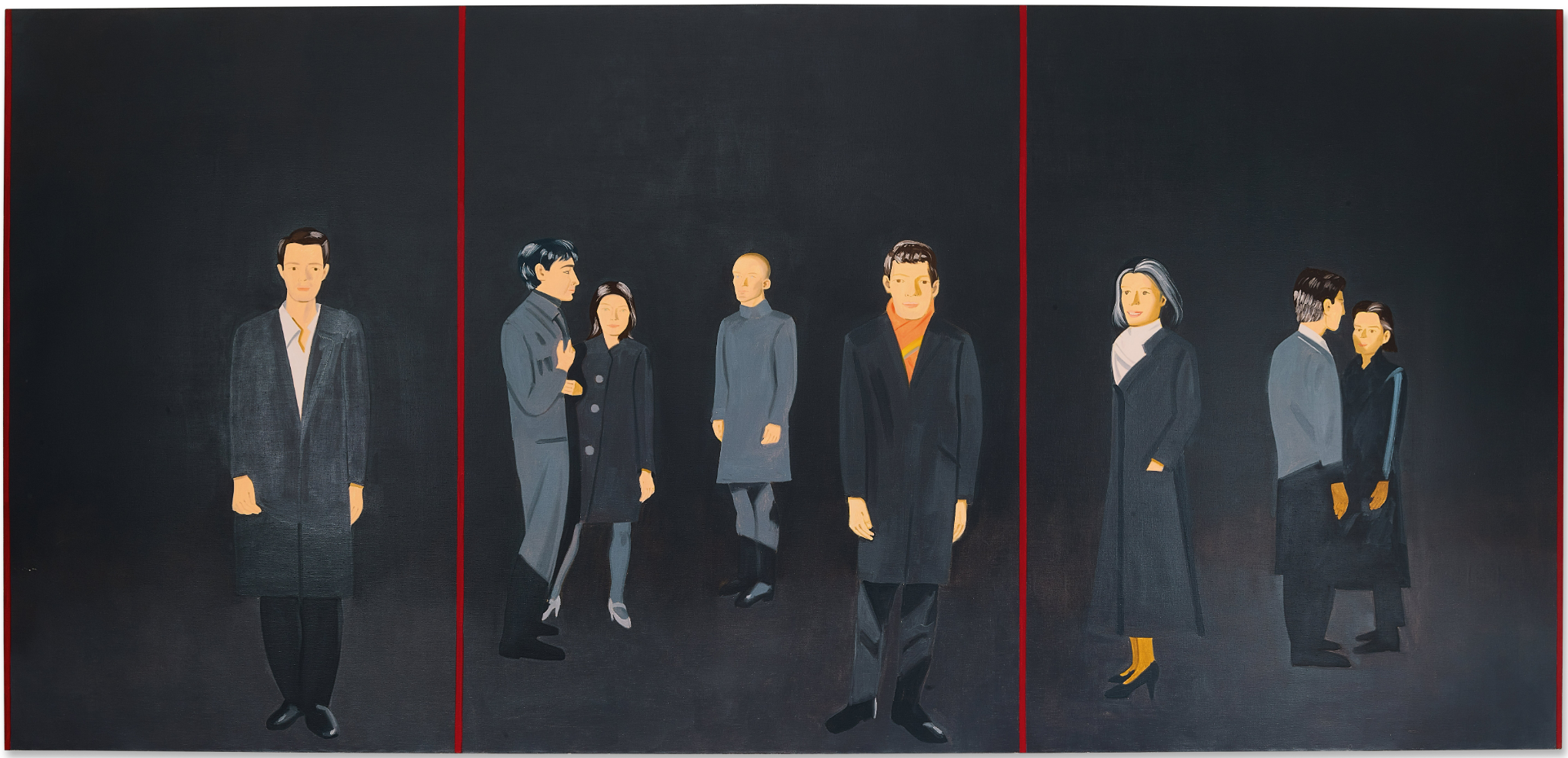
ALEX KATZ (b. 1927)
On Time, 2001
Oil on linen
102×216 inches (259.1 x 548.6 cm)
#4. Ada with Pink Hat, 1971
Christie’s New-York: 17 May 2023
Estimated: USD 1,200,000 – 1,800,000
USD 1,381,000
ALEX KATZ (b. 1927)
Ada with Pink Hat, 1971
Oil on linen
47 3/4 x 47 3/4 inches (120.1 x 120.1 cm)
Signed ‘Alex Katz’ (on the overlap)
USD 1 million
#5. Yvonne with Flowers, 2001
Bonhams London: 16 March 2023
Estimated: GBP 700,000 – 1,000,000
GBP 756,300 / USD 915,839
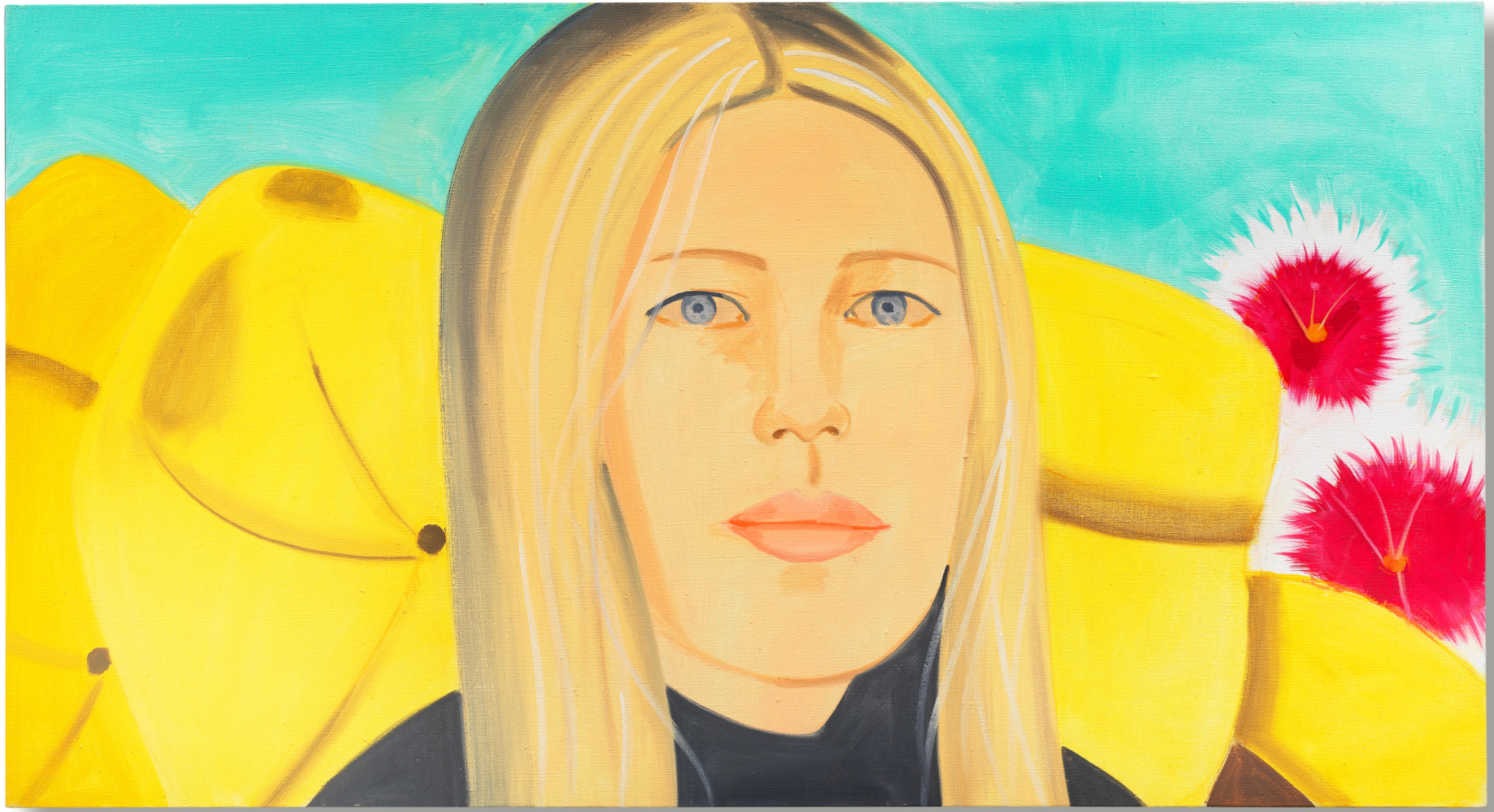
Oil on linen
36×66 inches (91.6 x 167.9 cm)
Signed and dated 01 on the overlap
#6. Ariel, 2016
Phillips London: 13 October 2023
Estimated: GBP 650,000 – 850,000
GBP 698,500 / USD 847,694
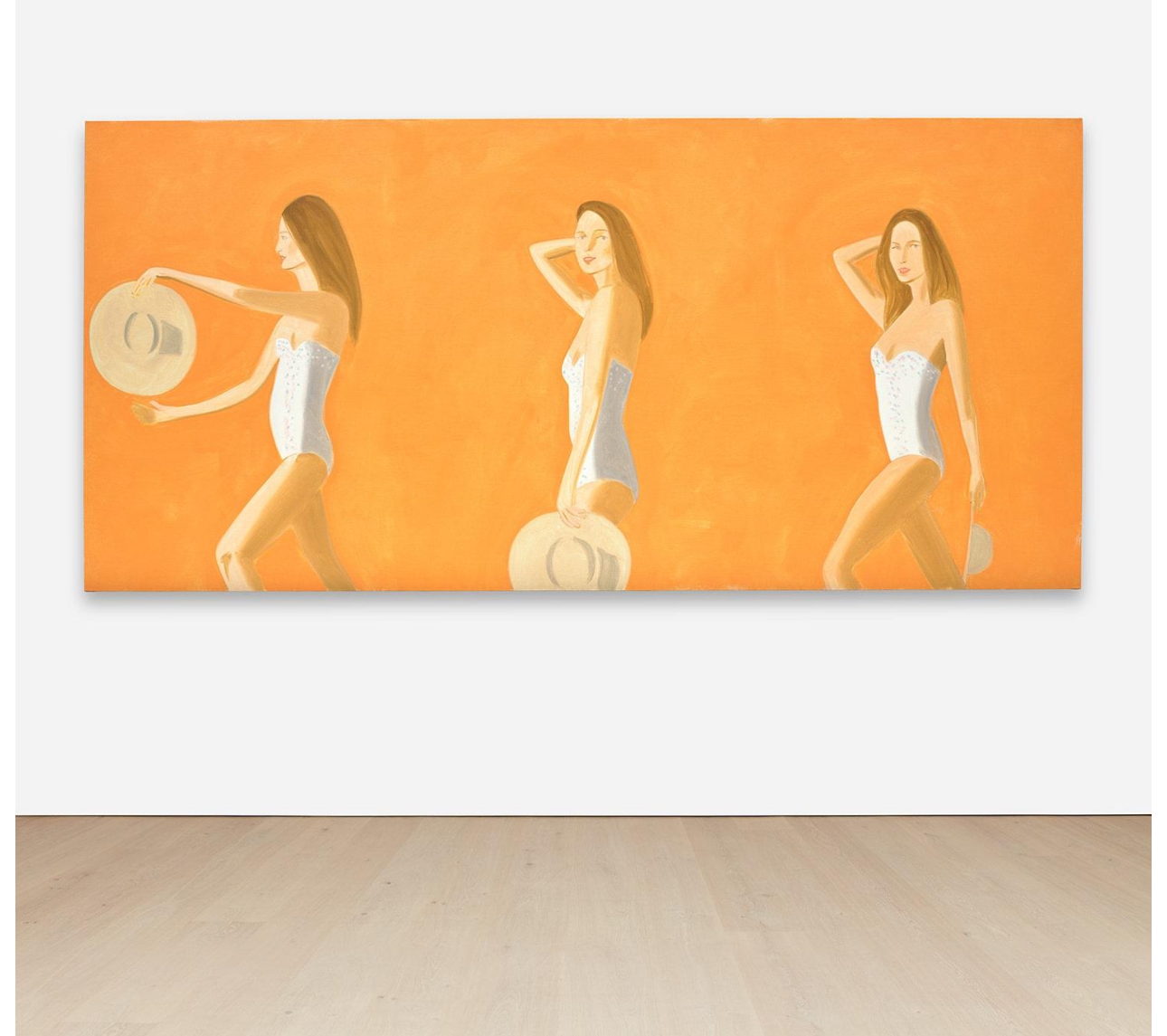
ALEX KATZ
Ariel, 2016
Oil on linen
165 x 351 cm (64 7/8 x 138 1/4 inches)
Signed and dated ‘Alex Katz 16 Alex Katz 16’ on the overlap
#7. Anne, 1978
Christie’s New-York: 29 September 2023
Estimated: USD 600,000 – 800,000
USD 693,000
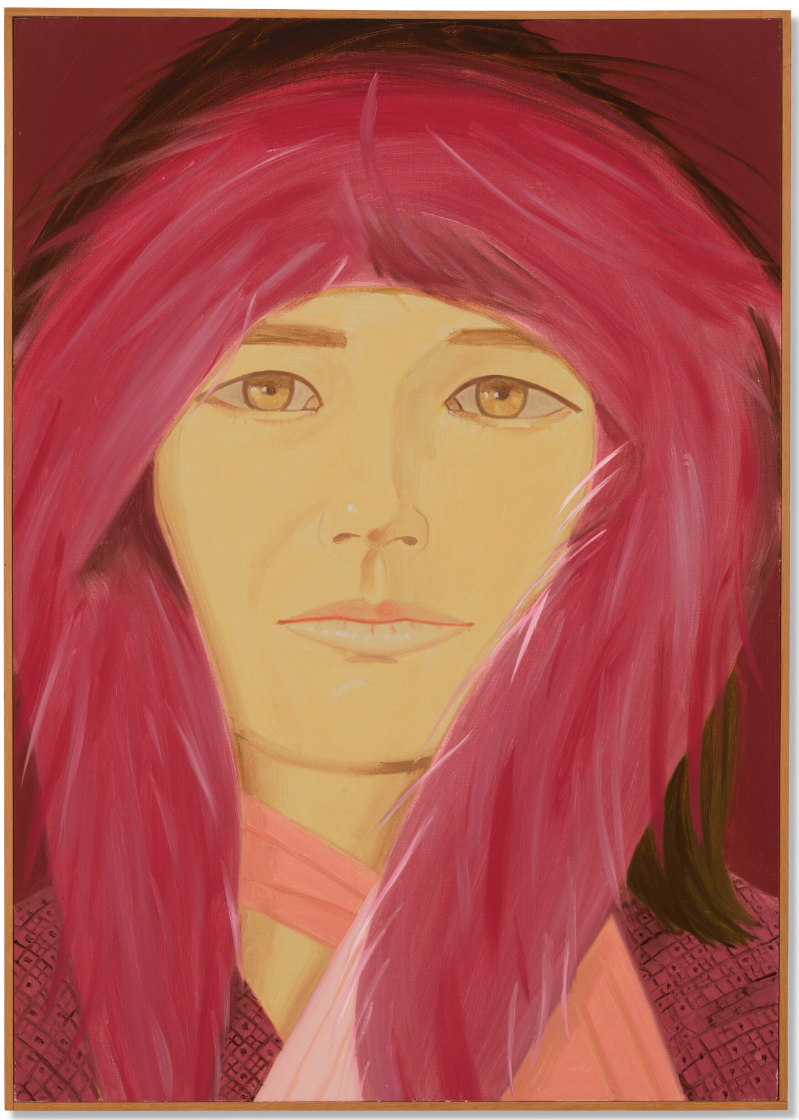
ALEX KATZ (B. 1927)
Anne, 1978
Oil on linen
48×34 inches (121.9 x 83.4 cm)
#8. Sunny 4, 1971
Sotheby’s New-York: 19 May 2023
Estimated: USD 200,000 – 300,000
USD 685,800
Sunny 4 | Contemporary Day Auction | 2023 | Sotheby’s (sothebys.com)
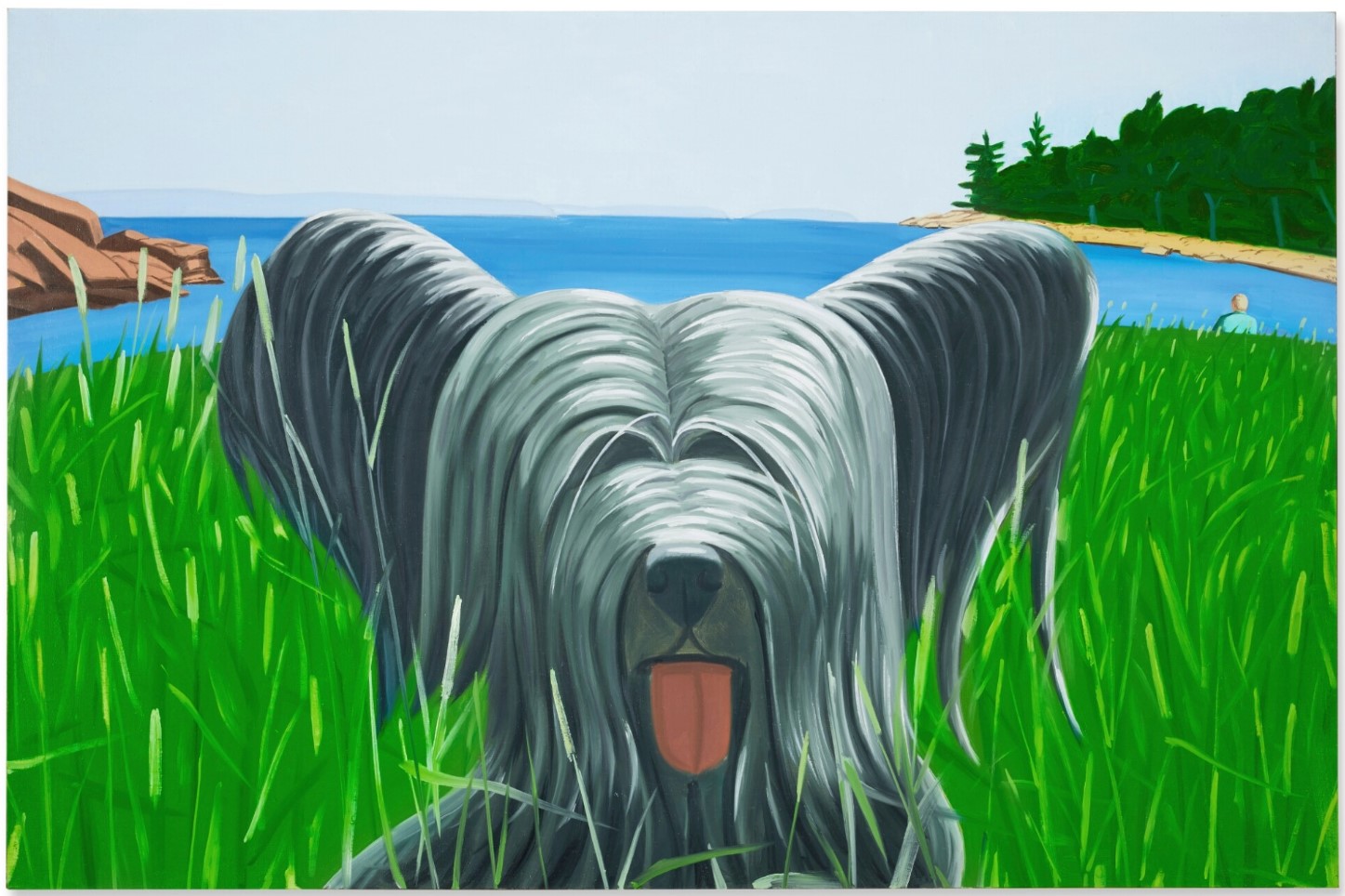
ALEX KATZ (b. 1927)
Sunny 4, 1971
Oil on linen
47 3/4 x 72 inches (121.2 x 182.9 cm)
USD 500,000
#9. White Band (Katherine), 2013
Phillips New-York: 16 May 2023
Estimated: USD 400,000 – 600,000
USD 444,500
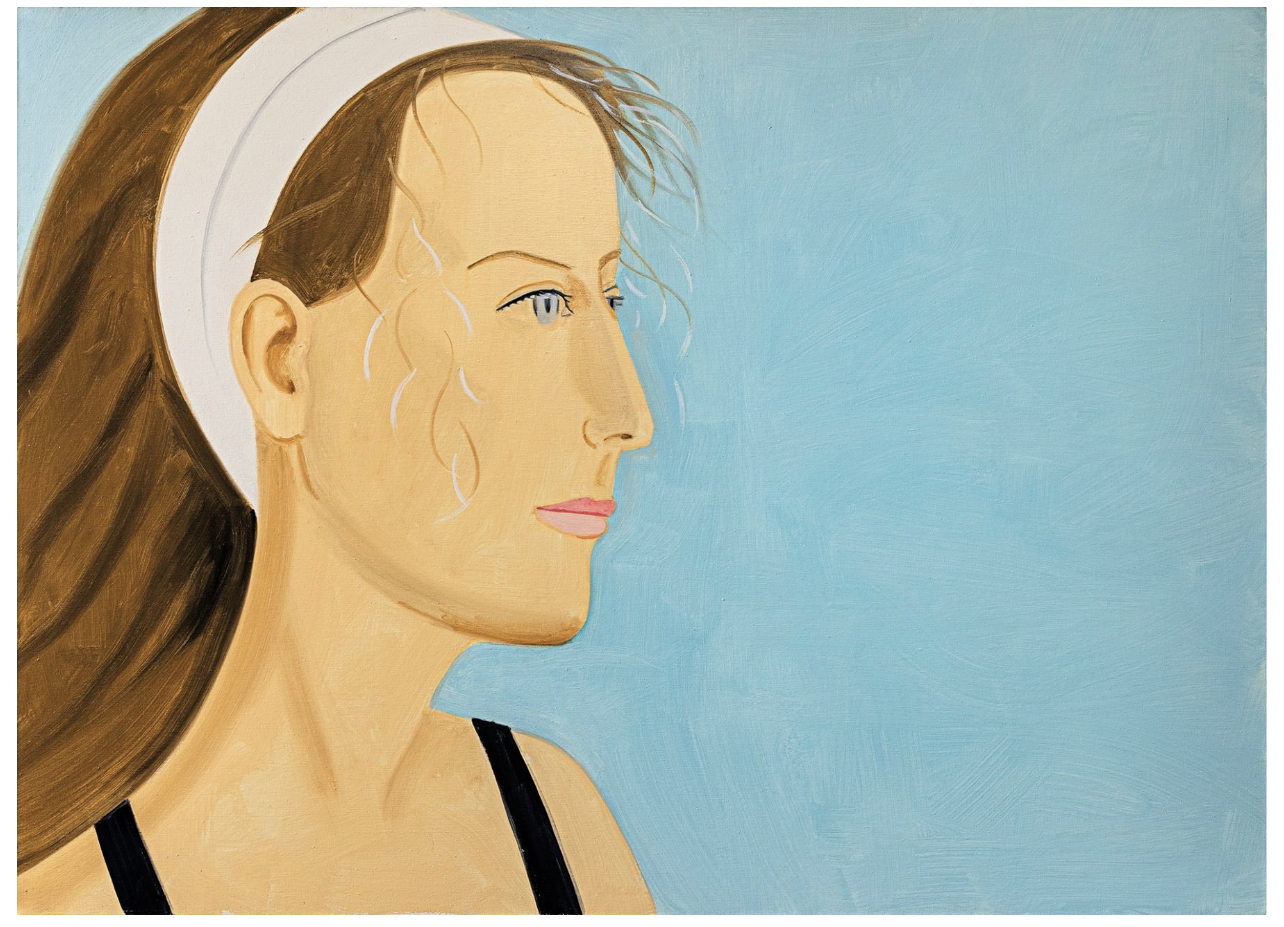
ALEX KATZ
White Band (Katherine), 2013
Oil on linen
48×66 inches (121.9 x 167.6 cm)
Signed and dated “Alex Katz 13” on the overlap
#10. Red Roses with Blue, 2001
Christie’s Hong-Kong: 29 May 2023
Estimated: HKD 2,000,000 – 3,000,000
HKD 3,276,000 / USD 418,481
ALEX KATZ (B. 1927) (christies.com)
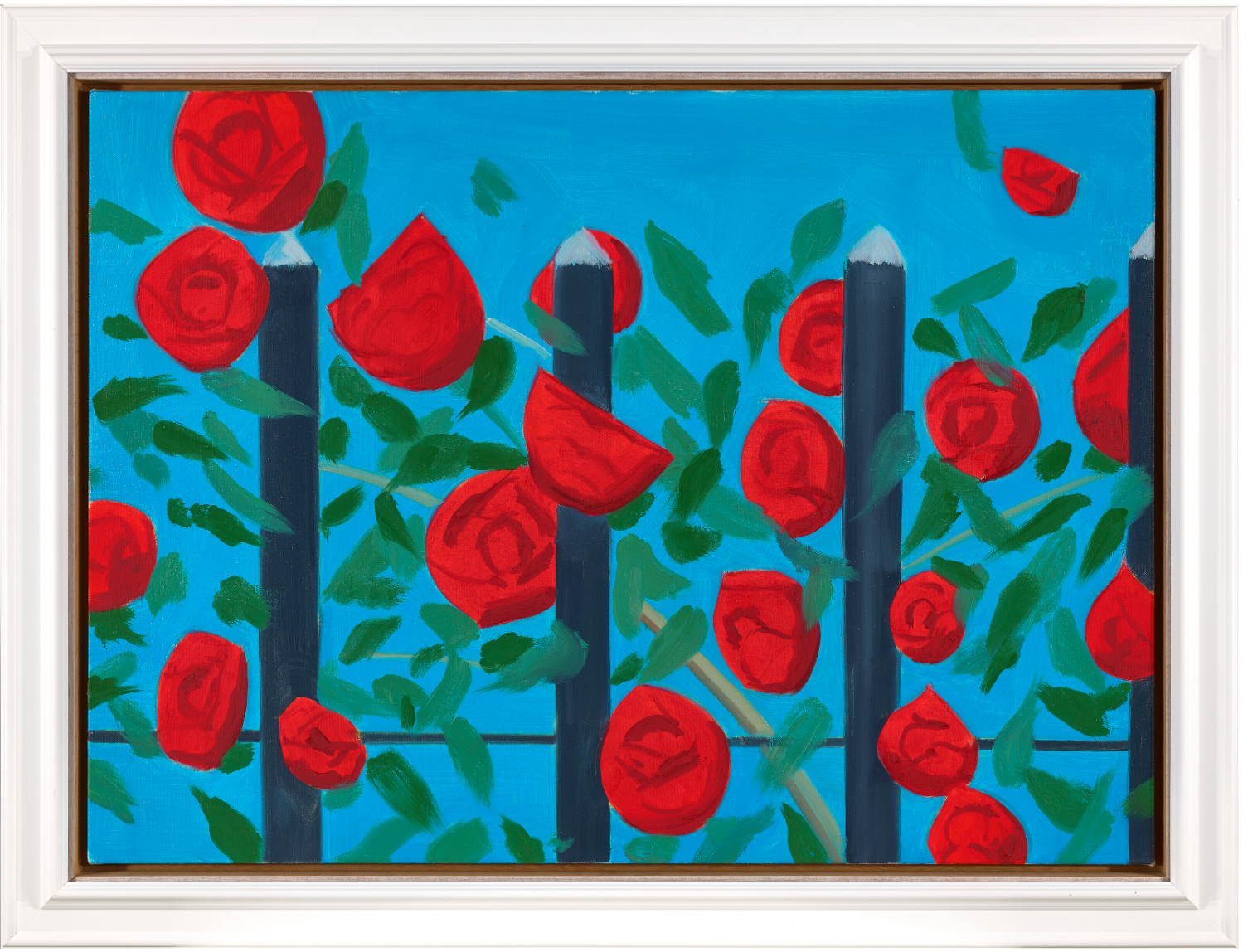
ALEX KATZ (B. 1927)
Red Roses with Blue, 2001
Oil on linen
29×40 inches (73.7 x 101.6 cm)
Signed and dated ‘alex katz 01’ (on the overlap)
#11. Weeping Cherry 2, 2005
Phillips New-York: 8 March 2023
Estimated: USD 250,000 – 350,000
USD 381,000
Alex Katz – New Now New York Lot 24 March 2023 | Phillips
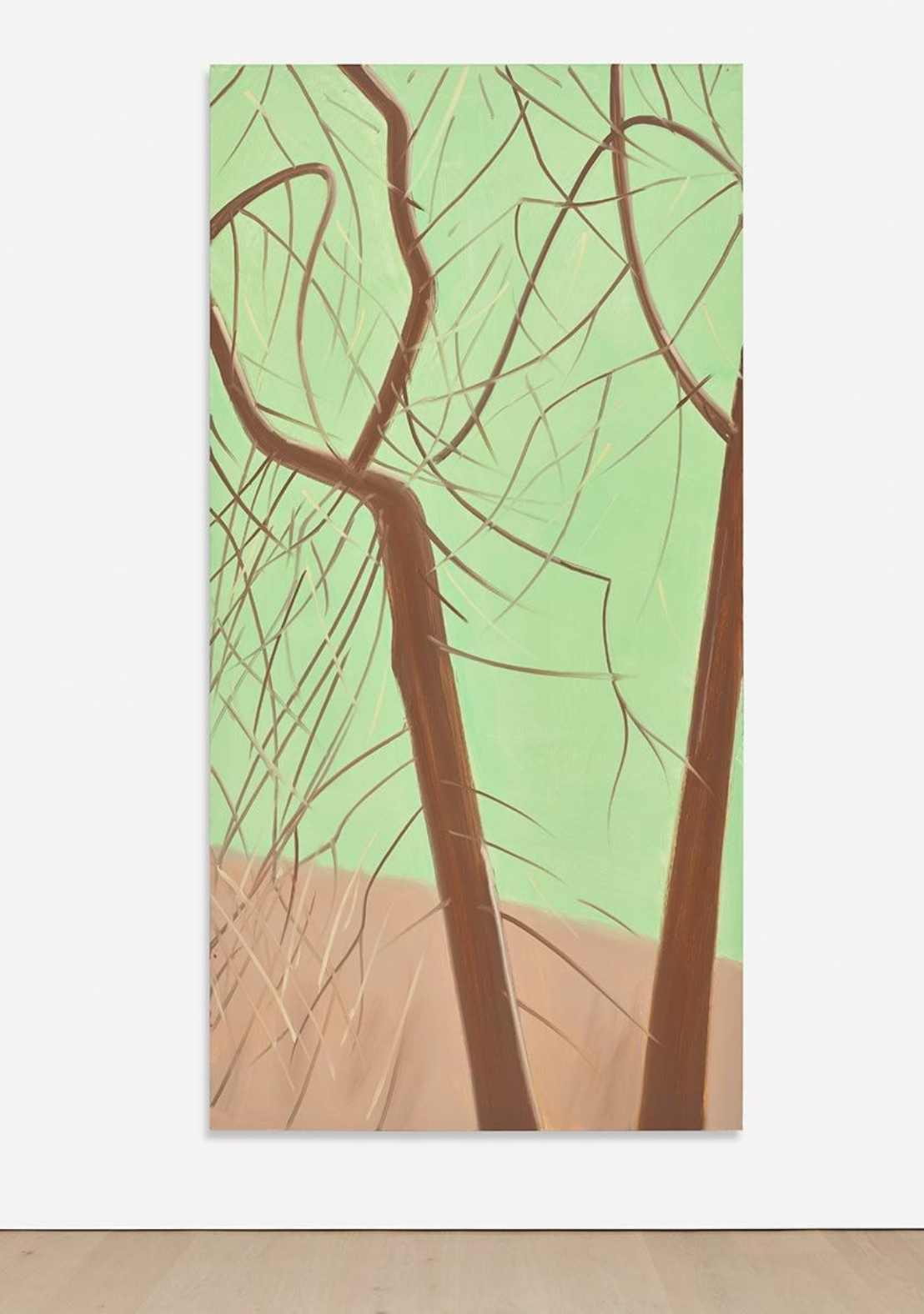
ALEX KATZ
Weeping Cherry 2, 2005
Oil on linen
96 1/4 x 48 inches (244.5 x 121.9 cm)
Signed and dated “Alex Katz 05” on the overlap
#12. Danielle 3, 2020
Phillips New-York: 16 May 2023
Estimated: USD 300,000 – 500,000
USD 304,800
Alex Katz – 20th Century & Contemporary… Lot 113 May 2023 | Phillips
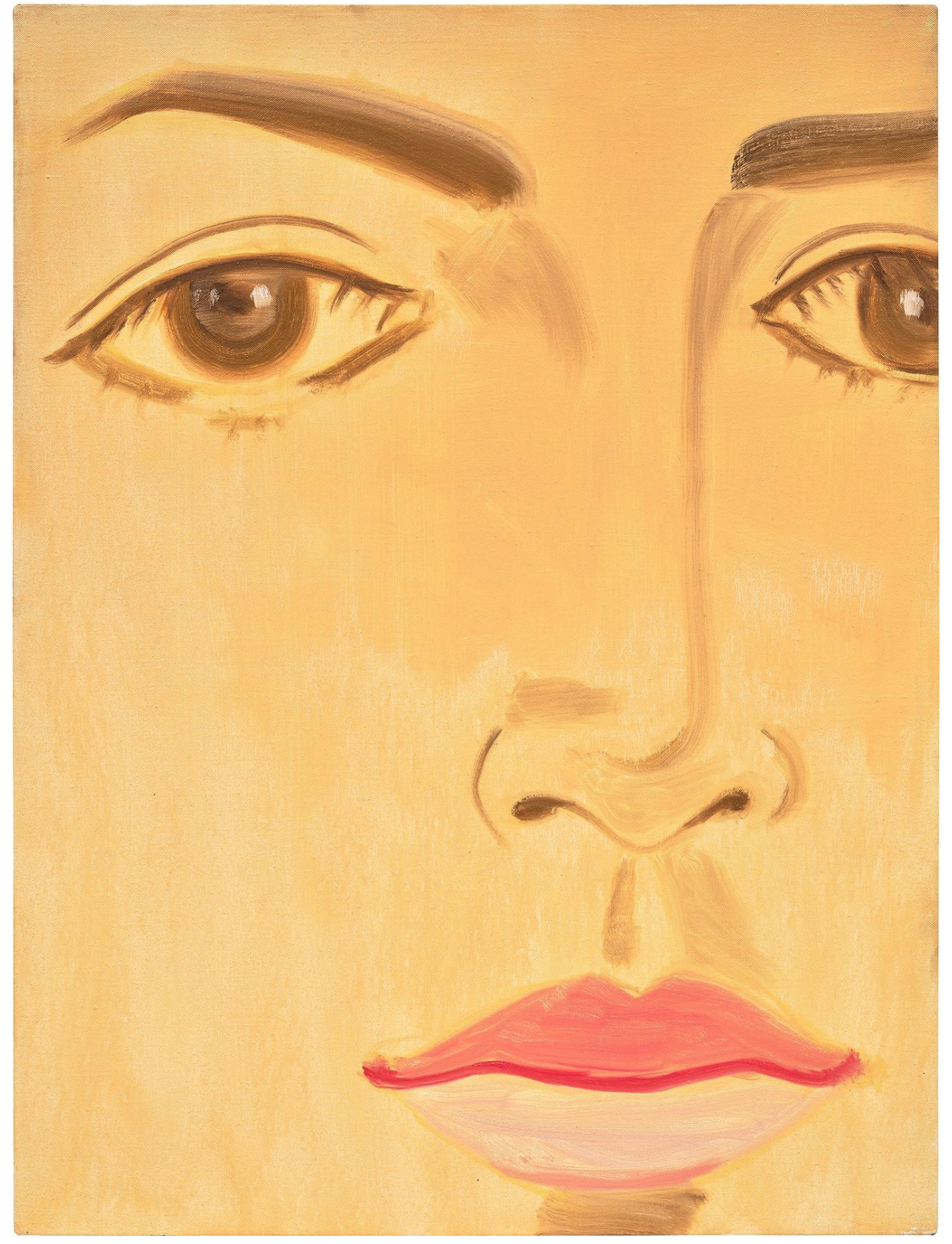
ALEX KATZ
Danielle 3, 2020
Oil on linen
48×36 inches (121.9 x 91.4 cm)
#13. Purple Ada, 1995
Sotheby’s London: 2 March 2023
Estimated: GBP 60,000 – 80,000
GBP 254,000 / USD 303,247
Purple Ada | Modern & Contemporary Day Auction | 2023 | Sotheby’s (sothebys.com)

ALEX KATZ (b. 1927)
Purple Ada, 1995
Oil on board
12×12 inches (30.5 x 30.5 cm)
Incised with the artist’s signature and dated 95
#14. Night Tree, 1993
Sotheby’s London: 28 June 2023
Estimated: GBP 200,000 – 300,000
GBP 203,200 / USD 256,727
Night Tree | Modern & Contemporary Day Auction | 2023 | Sotheby’s (sothebys.com)
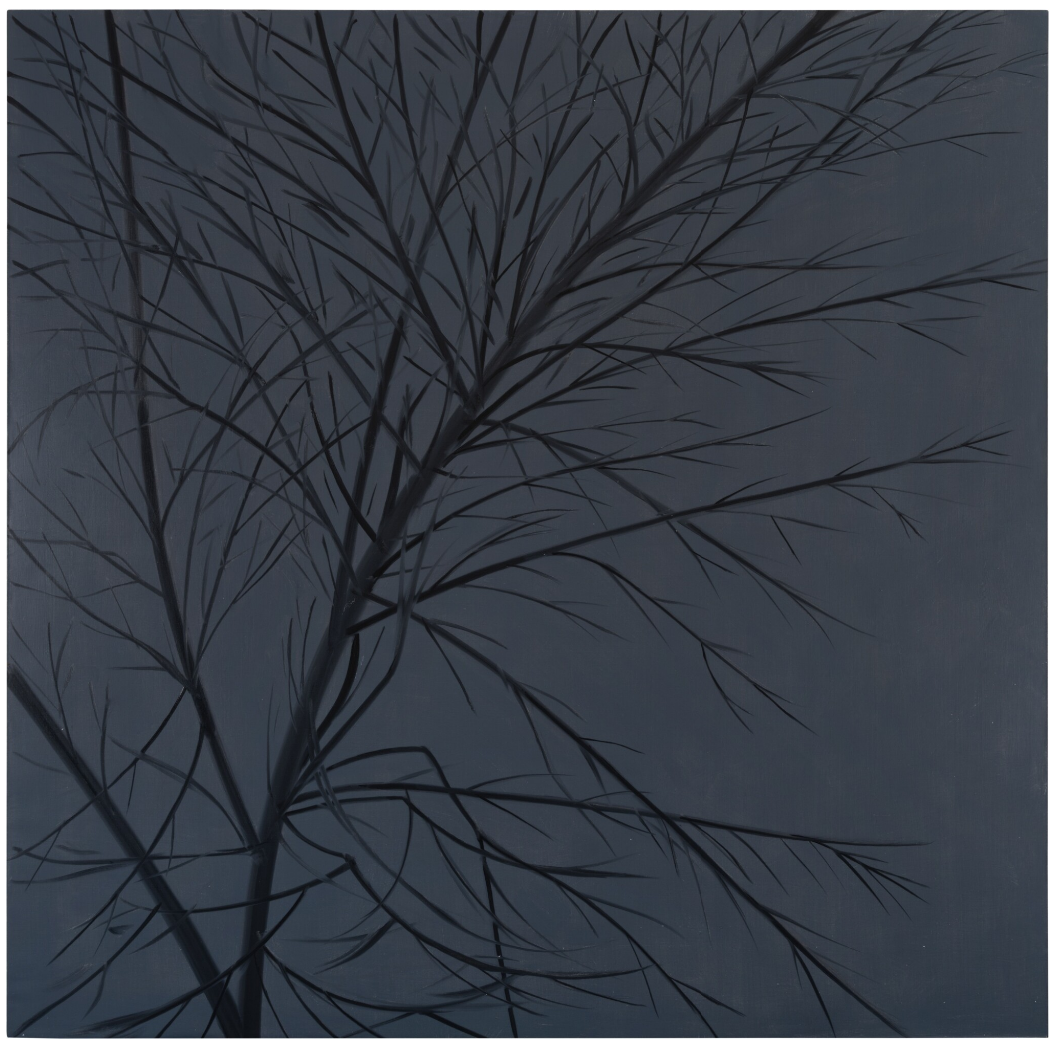
ALEX KATZ (b. 1927)
Night Tree, 1993
Oil on linen
76 1/8 x 77 3/8 inches (193.4 x 196.4 cm)
#15. Twelve Hours 2, 1985
Christie’s New-York: 10 March 2023
Estimated: USD 70,000 – 100,000
USD 239,400
ALEX KATZ (B. 1927), Twelve Hours 2 | Christie’s (christies.com)
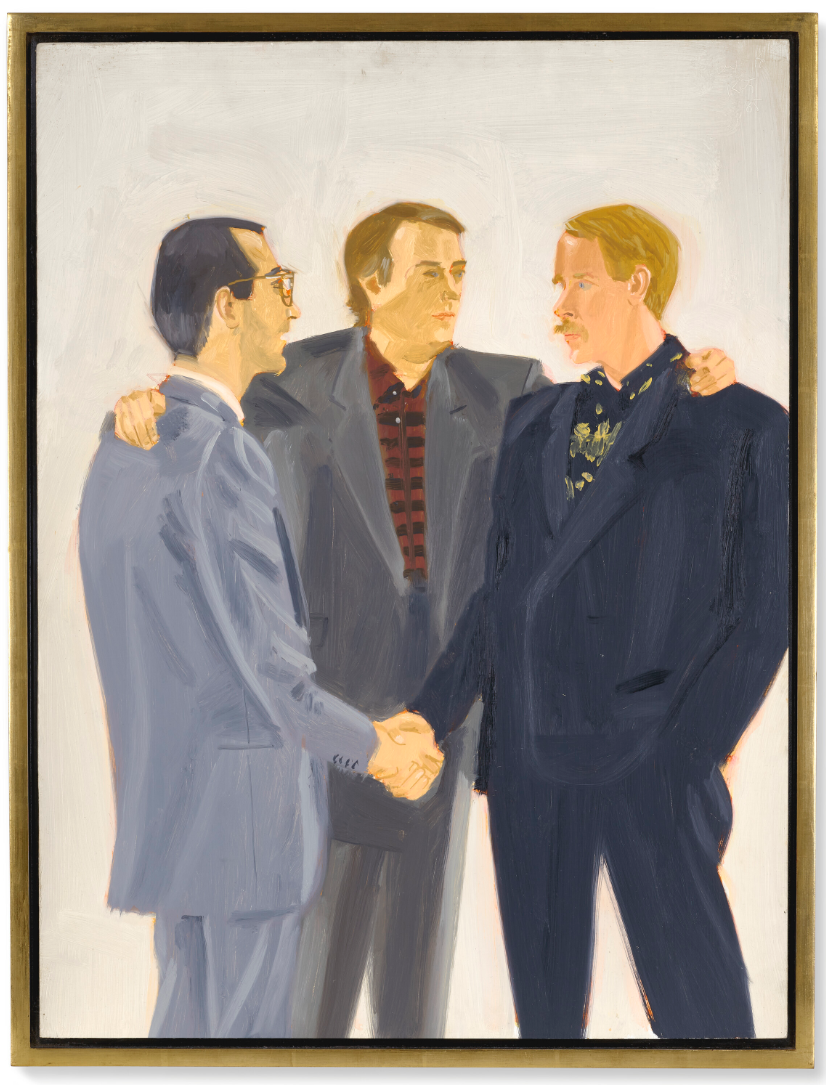
ALEX KATZ (B. 1927)
Twelve Hours 2, 1985
Oil on board
24×18 inches (61 x 45.7 cm)
Incised with the artist’s signature and date ‘Alex Katz 85’ (upper right)
#16. Orange Chair, 1950
Christie’s New-York: 10 March 2023
Estimated: USD 90,000 – 120,000
USD 163,800
ALEX KATZ (B. 1927), Orange Chair | Christie’s (christies.com)
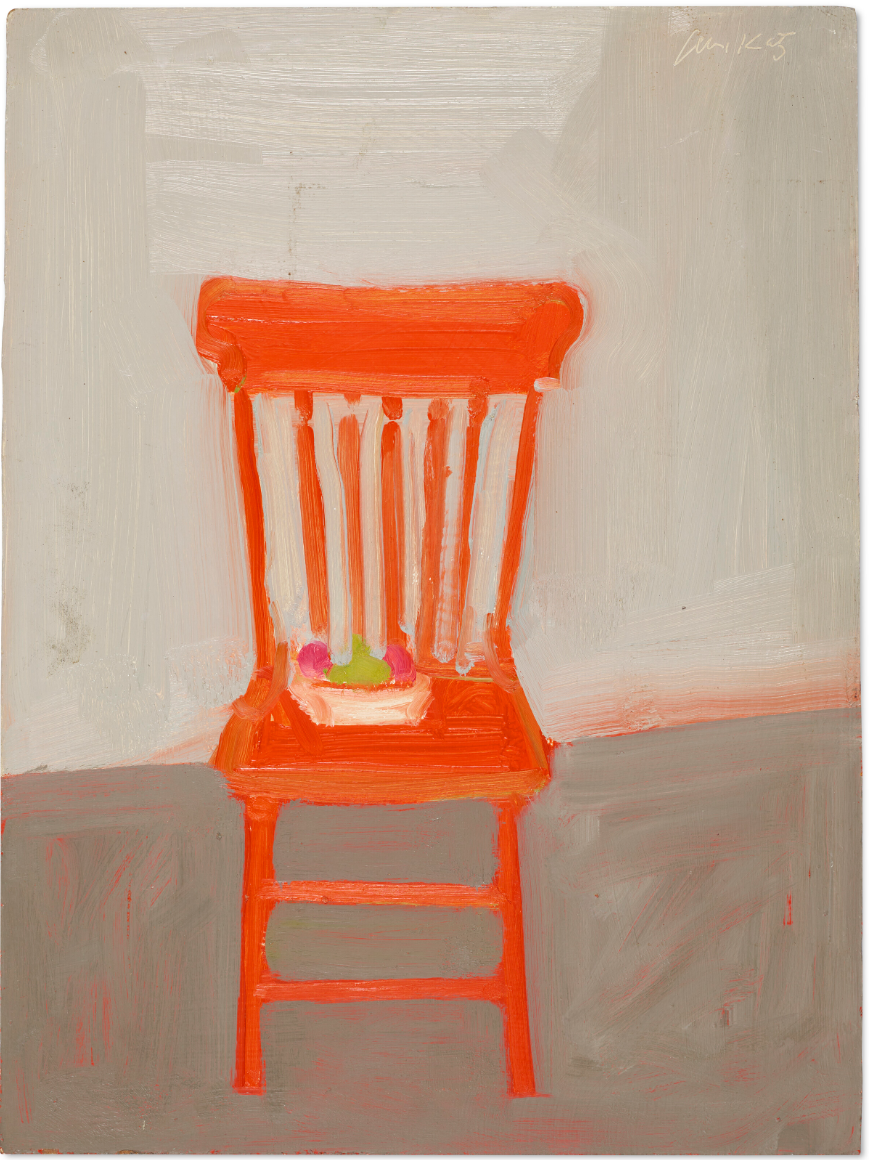
ALEX KATZ (B. 1927)
Orange Chair, 1950
Oil on board
16×12 inches (40.6 x 30.5 cm)
Inscribed with the artist’s signature ‘Alex Katz’ (upper right)
#17. East Madison #3, 1960
Sotheby’s New-York: 15 March 2023
Estimated: USD 50,000 – 70,000
USD 152,400
East Madison #3 | Contemporary Discoveries | 2023 | Sotheby’s (sothebys.com)
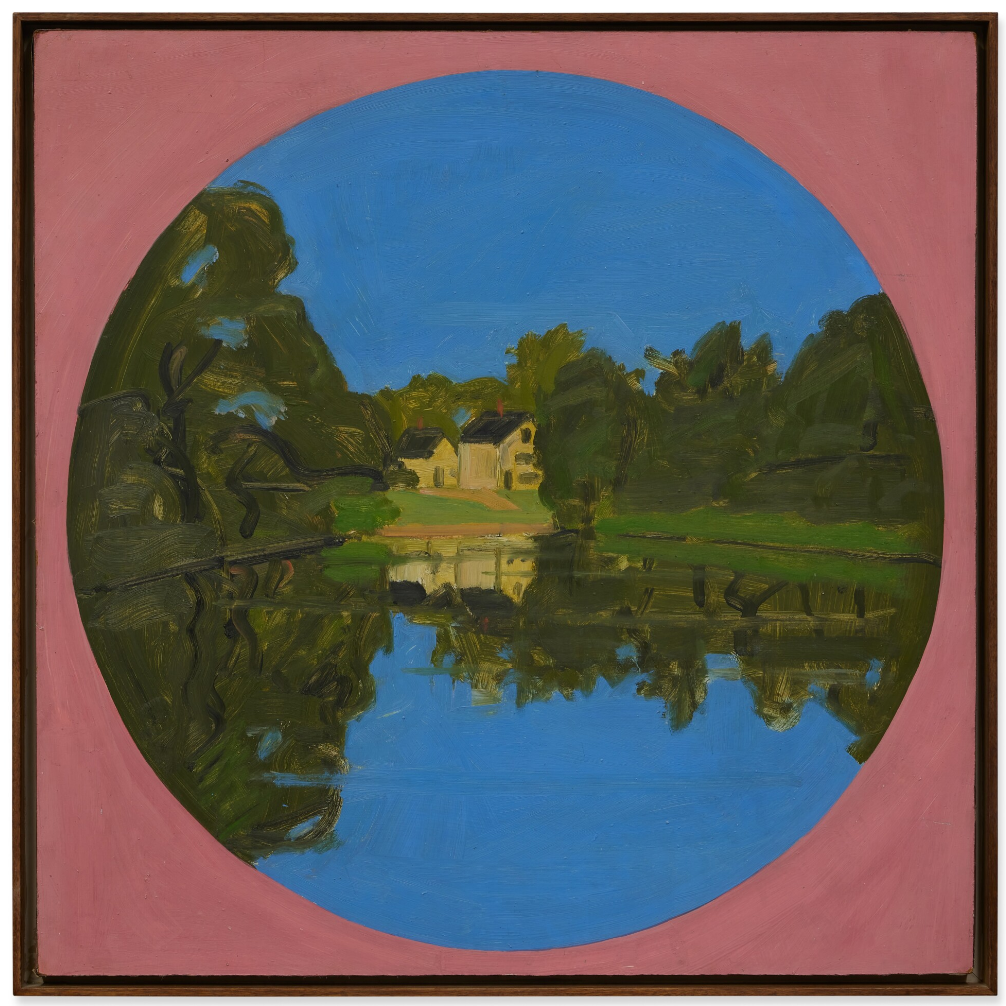
ALEX KATZ (b. 1927)
East Madison #3, 1960
Oil on board
32×32 inches (81.3 x 81.3 cm)
#18. Reflection, 2007
Christie’s New-York: 10 November 2023
Estimated: USD 30,000 – 50,000
USD 151,200
ALEX KATZ (B. 1927) (christies.com)
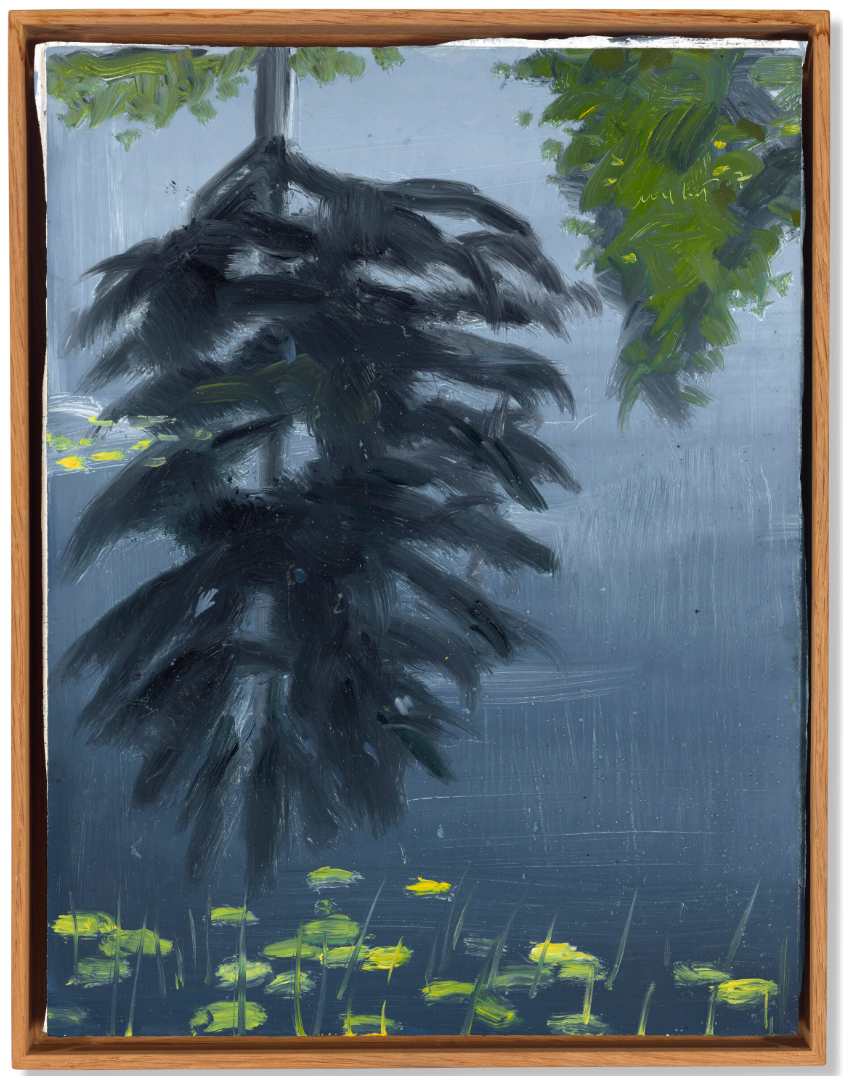
ALEX KATZ (B. 1927)
Reflection, 2007
Oil on board
12×9 inches (30.5 x 22.9 cm)
Incised with the artist’s signature and date ‘Alex Katz 07’ (upper right)
#19. Ostend, 2002
Christie’s New-York: 10 March 2023
Estimated: USD 120,000 – 180,000
USD 151,200
ALEX KATZ (B. 1927), Ostend | Christie’s (christies.com)
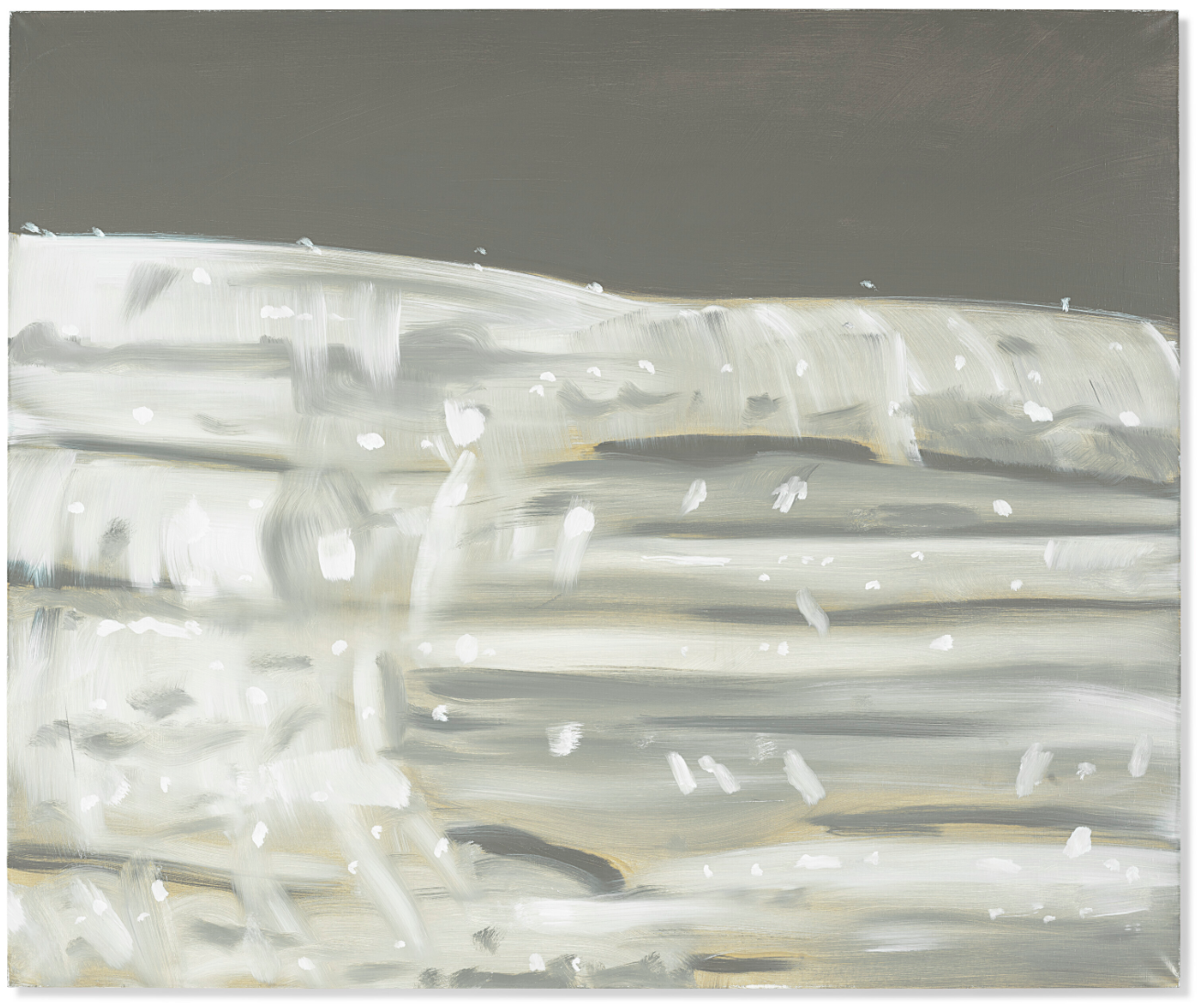
ALEX KATZ (B. 1927)
Ostend, 2002
Oil on linen
60×72 inches (152.4 x 182.9 cm)
#20. Vincent 1, 1972
Sotheby’s New-York: 16 November 2023
Estimated: USD 120,000 – 180,000
USD 139,700
Vincent 1 | Contemporary Day Auction | 2023 | Sotheby’s (sothebys.com)
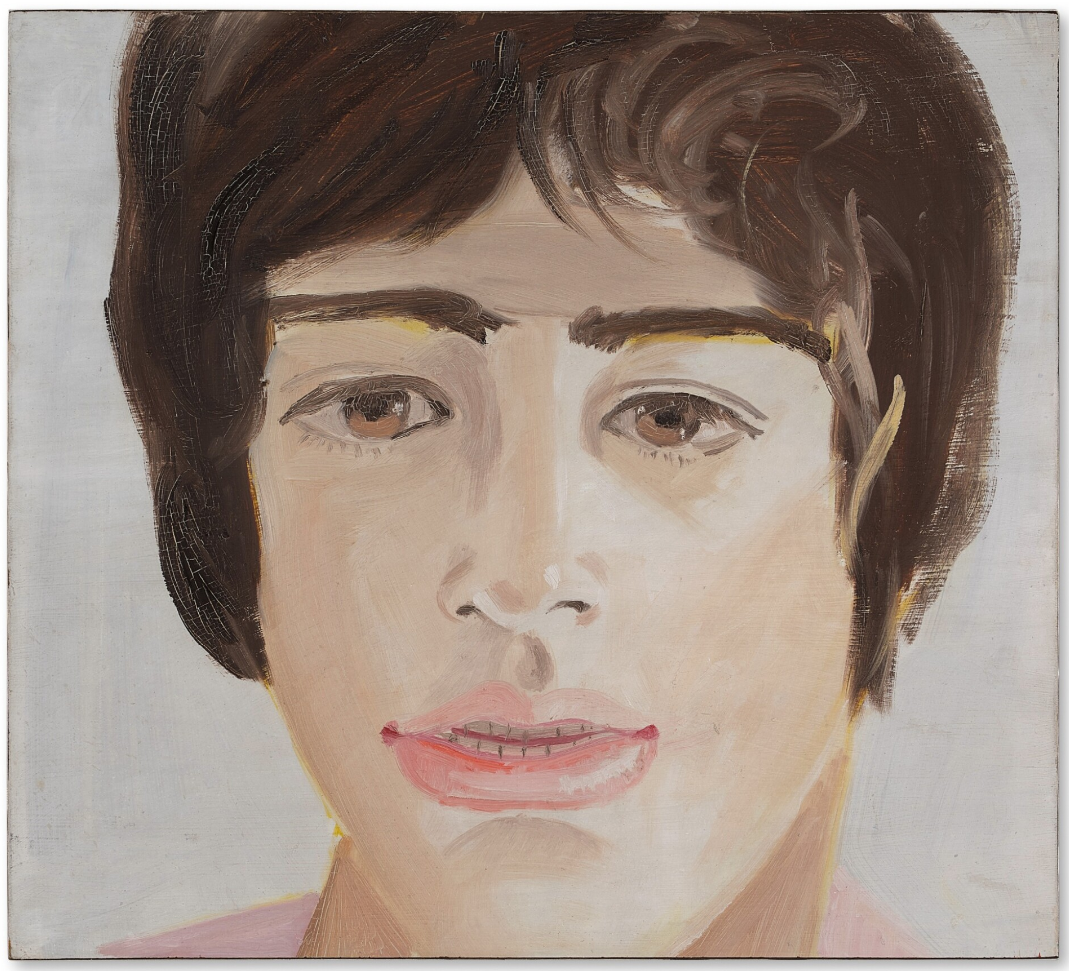
ALEX KATZ (b. 1927)
Vincent 1, 1972
Oil on board
13 1/2 x 15 inches (34.3 x 38.1 cm)
Signed and dated ’72 (on the reverse)
#21. Ada, circa 1967
Christie’s New-York: 29 September 2023
Estimated: USD 60,000 – 80,000
USD 119,700
ALEX KATZ (B. 1927), Ada | Christie’s (christies.com)
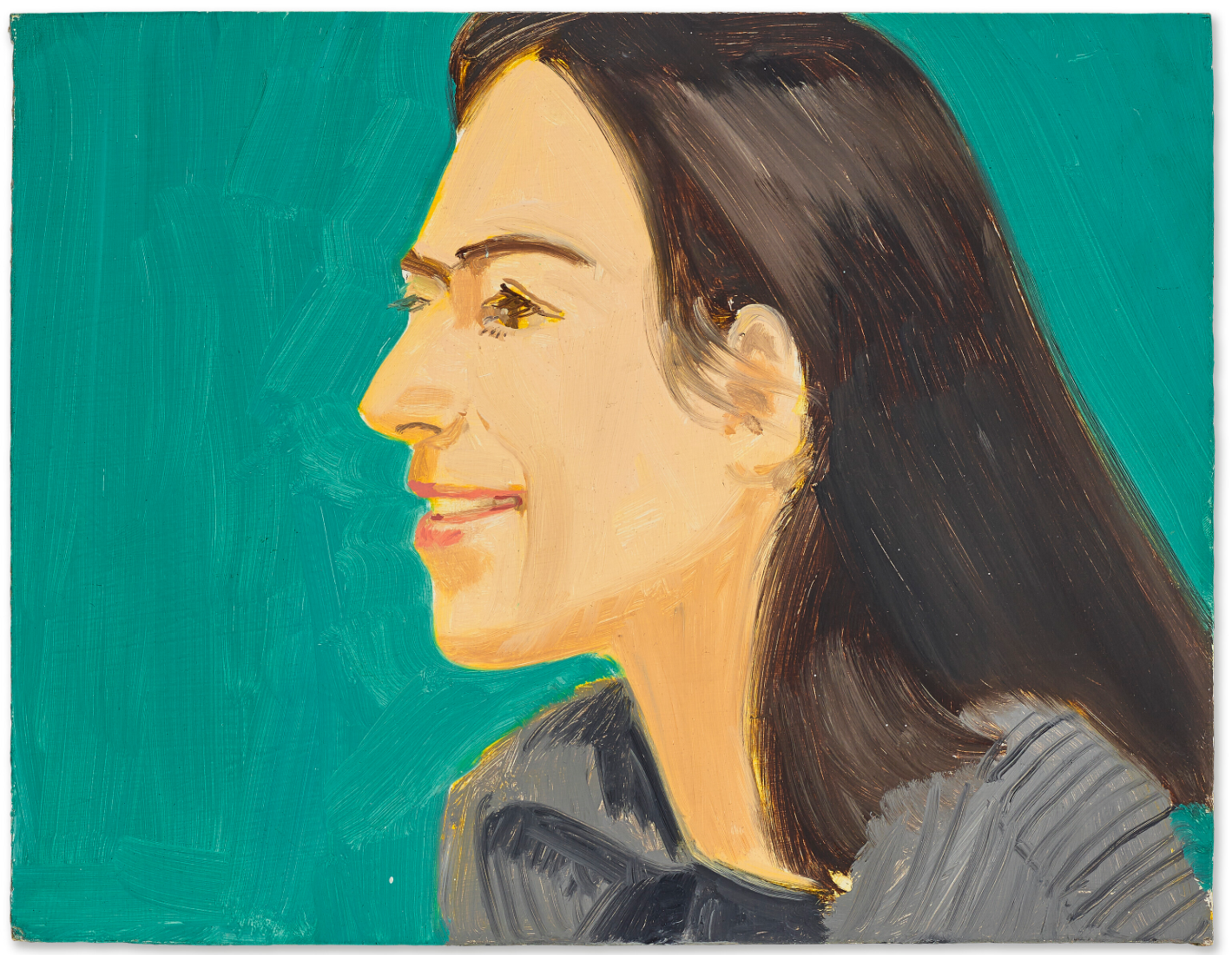
ALEX KATZ (B. 1927)
Ada, circa 1967
Oil on board laid down on strainer
9 1/4 x 11 5/8 inches (23.5 x 29.5 cm)
#22. Beach Scene #2, 2001
Sotheby’s Paris: 14 December 2023
Estimated: EUR 30,000 – 50,000
EUR 95,250 / USD 103,658
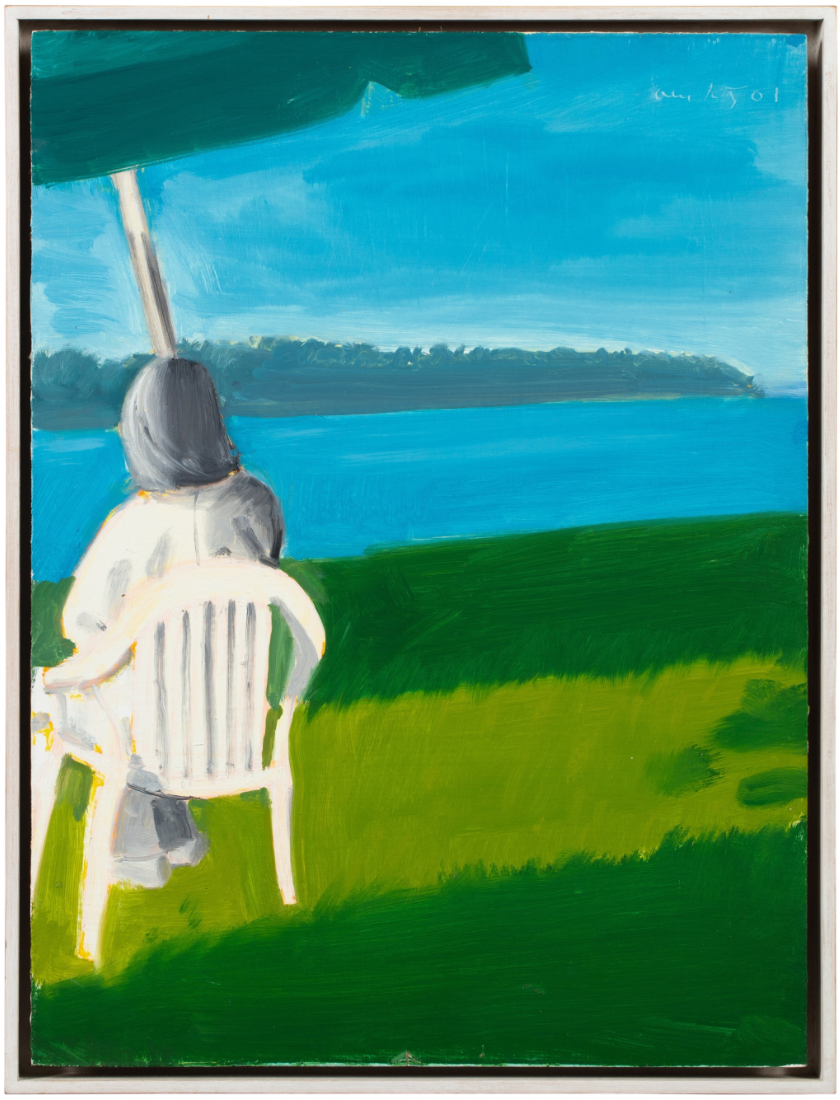
ALEX KATZ (b. 1927)
Beach Scene #2, 2001
Oil on board
15 7/8 x 12 inches (40.5 x 30.5 cm)
Signed and dated 01
#23. Ada (Orange), 2007
Phillips New-York: 16 May 2023
Estimated: USD 60,000 – 80,000
USD 101,600
Alex Katz – 20th Century & Contemporary… Lot 247 May 2023 | Phillips
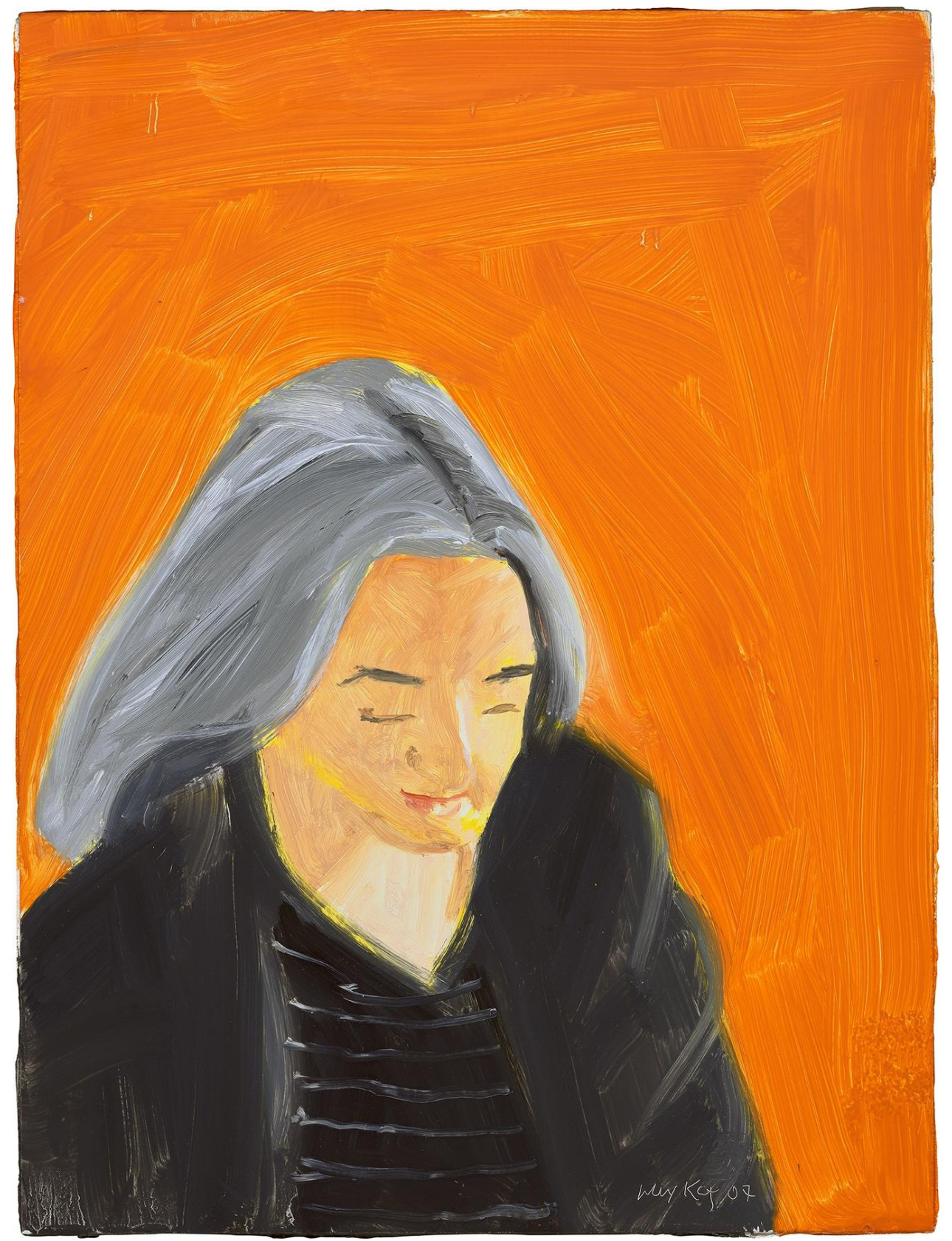
ALEX KATZ
Ada (Orange), 2007
Oil on board
16×12 inches (40.6 x 30.5 cm)
Signed and dated “Alex Katz 07” lower right
#24. Cow, 1984
Christie’s New-York: 10 November 2023
Estimated: USD 30,000 – 50,000
USD 100,800
ALEX KATZ (B. 1927) (christies.com)
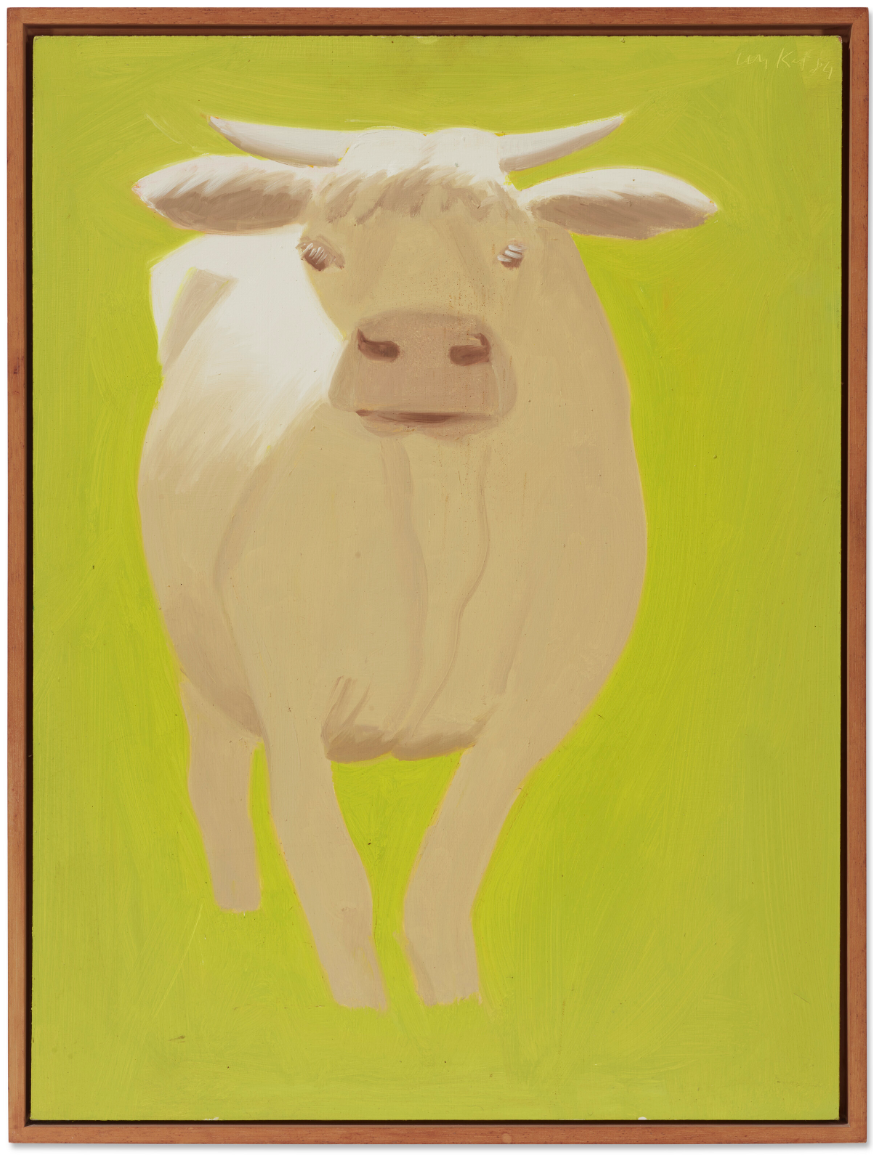
ALEX KATZ (B. 1927)
Cow, 1984
Oil on Masonite
24 x 17 3/4 inches (61 x 45.1 cm)
Incised with the artist’s signature and date ‘Alex Katz 84’ (upper right)
#25. Dancer, 1990
Christie’s London: 1 March 2023
Estimated: GBP 30,000 – 50,000
GBP 73,080 / USD 87,952
ALEX KATZ (B. 1927), Dancer | Christie’s (christies.com)
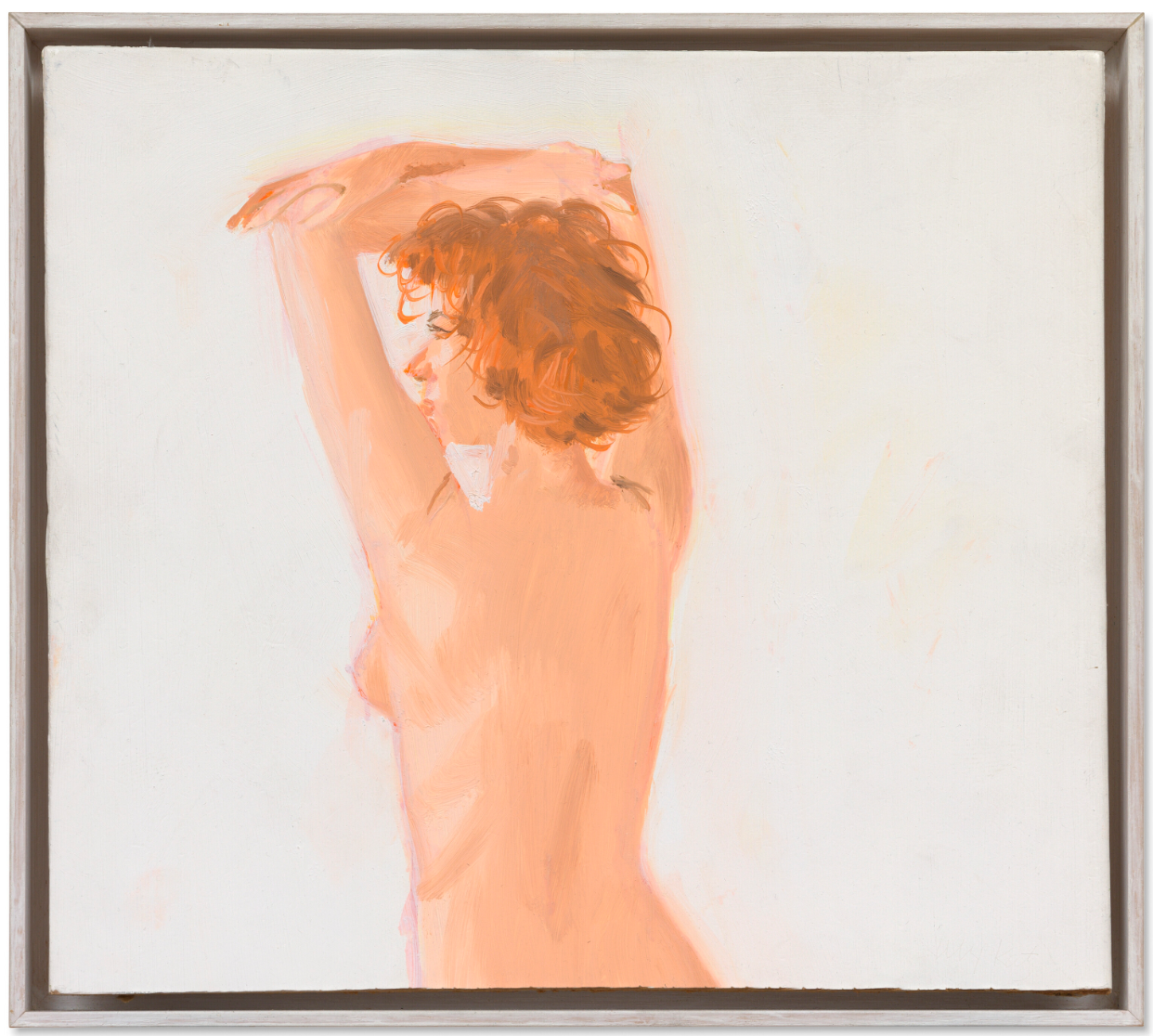
ALEX KATZ (B. 1927)
Dancer, 1990
Oil on board
10 3/4 x 12 1/8 inches (27.2 x 30.7 cm)
signed ‘alex Katz’ (lower right); signed and dated ’90 alex Katz’ (on the reverse)
#26. Tree 7, 2020
Seoul Auction: 25 July 2023
Estimated: KRW 80,000,000 – 150,000,000
KRW 101,480,000 / USD 79,256
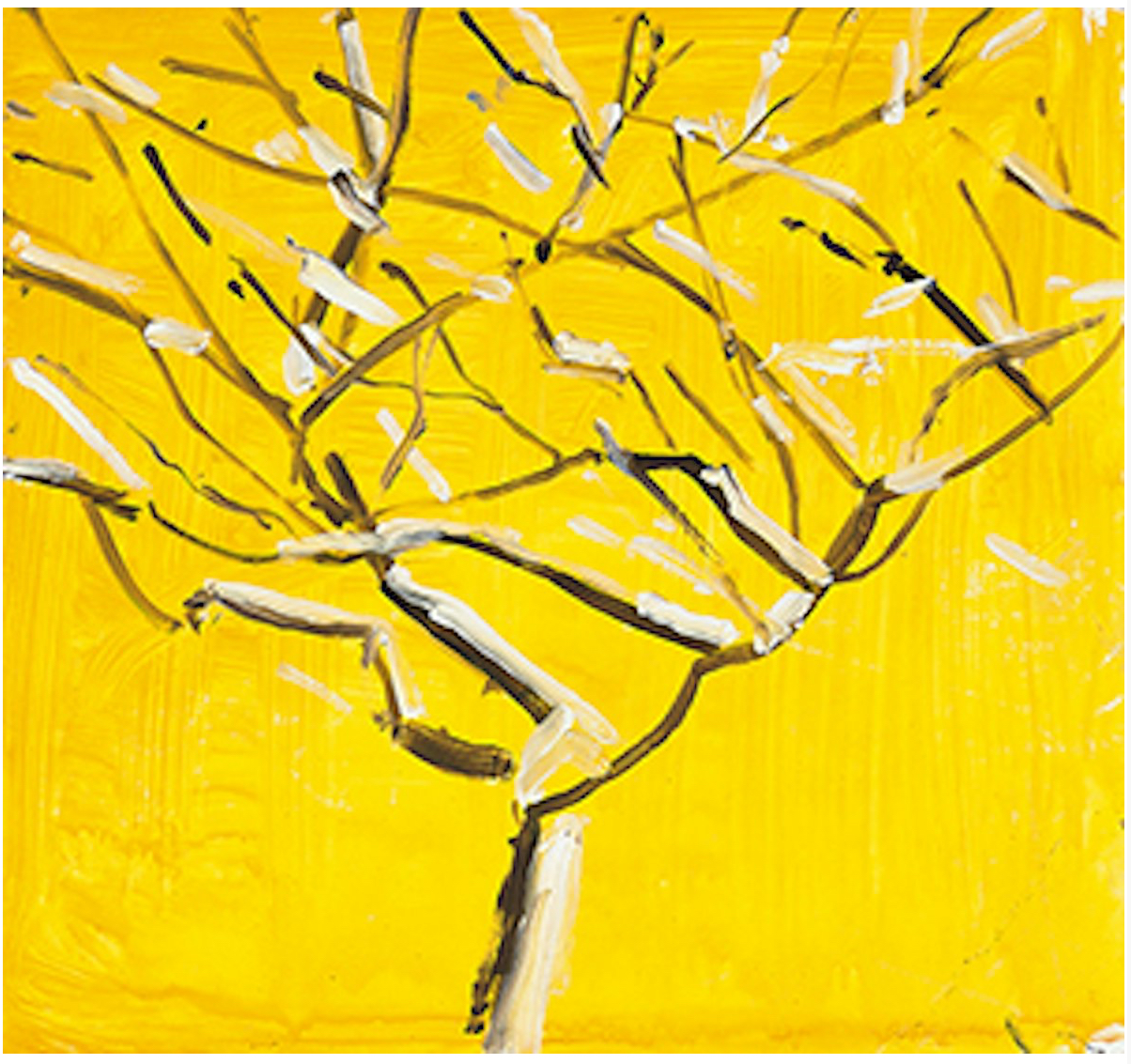
ALEX KATZ (b. 1927)
Tree 7, 2020
Oil on board
8 1/2 x 9 1/8 inches (21.6 x 23 cm)
USD 100,000
#27. Jessica, 1996
Bonhams New-York: 18 May 2023
Estimated: USD 60,000 – 80,000
USD 75,975
Bonhams : ALEX KATZ (B. 1927) Jessica 1996
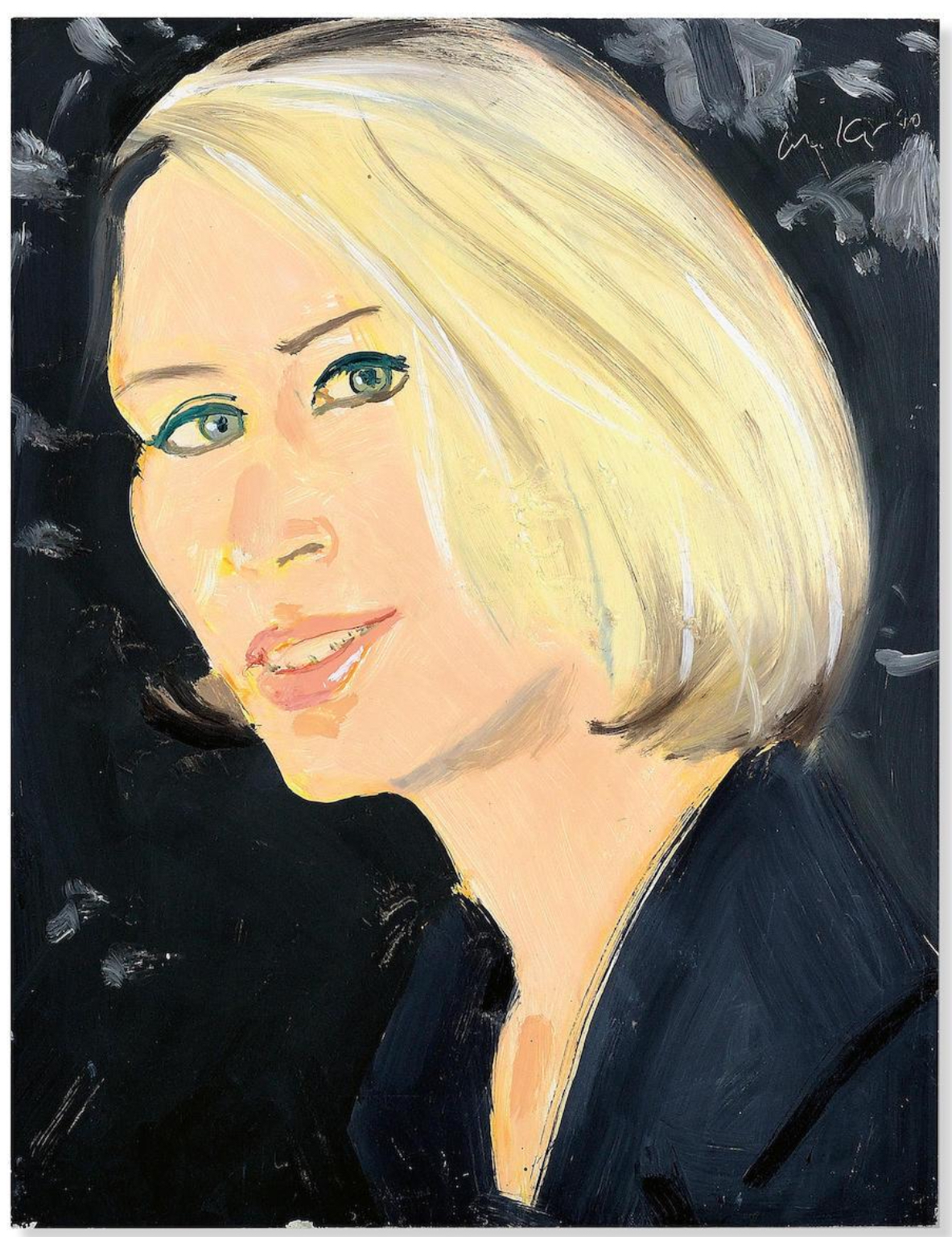
Oil on board
11 7/8 x 9 inches (30.2 x 22.9 cm)
Signed and dated 96
#30. Tree, 2019
Seoul Auction: 30 May 2023
Estimated: KRW 80,000,000 – 150,000,000
KRW 94,400,000 / USD 71,272
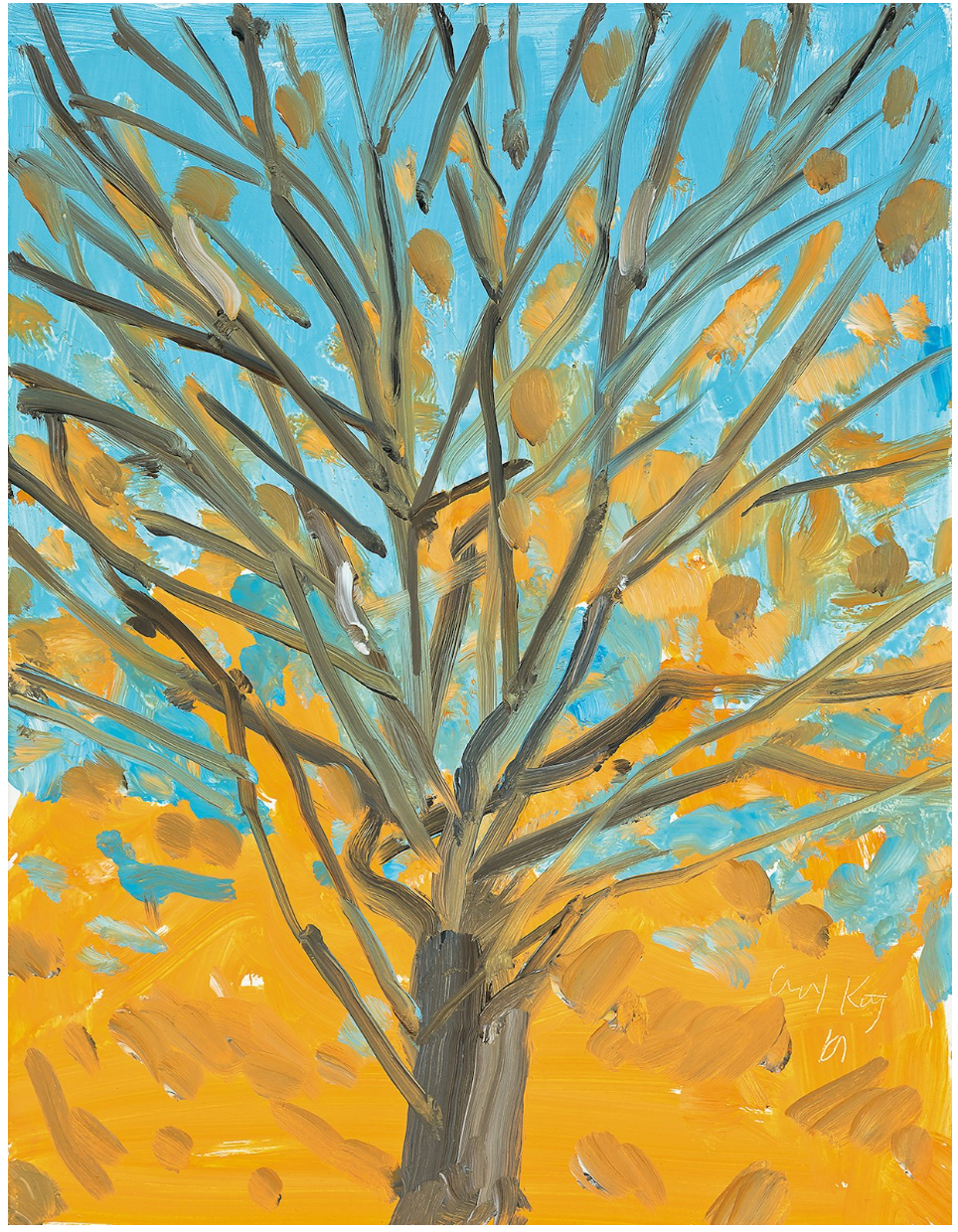
ALEX KATZ (b. 1927)
Tree, 2019
Oil on board
12 x 9 1/8 inches (30.5 x 22.9 cm)
#31. Untitled (Linda), circa 1965
Christie’s New-York: 29 September 2023
Estimated: USD 60,000 – 80,000
USD 65,520
ALEX KATZ (B. 1927), Untitled (Linda) | Christie’s (christies.com)
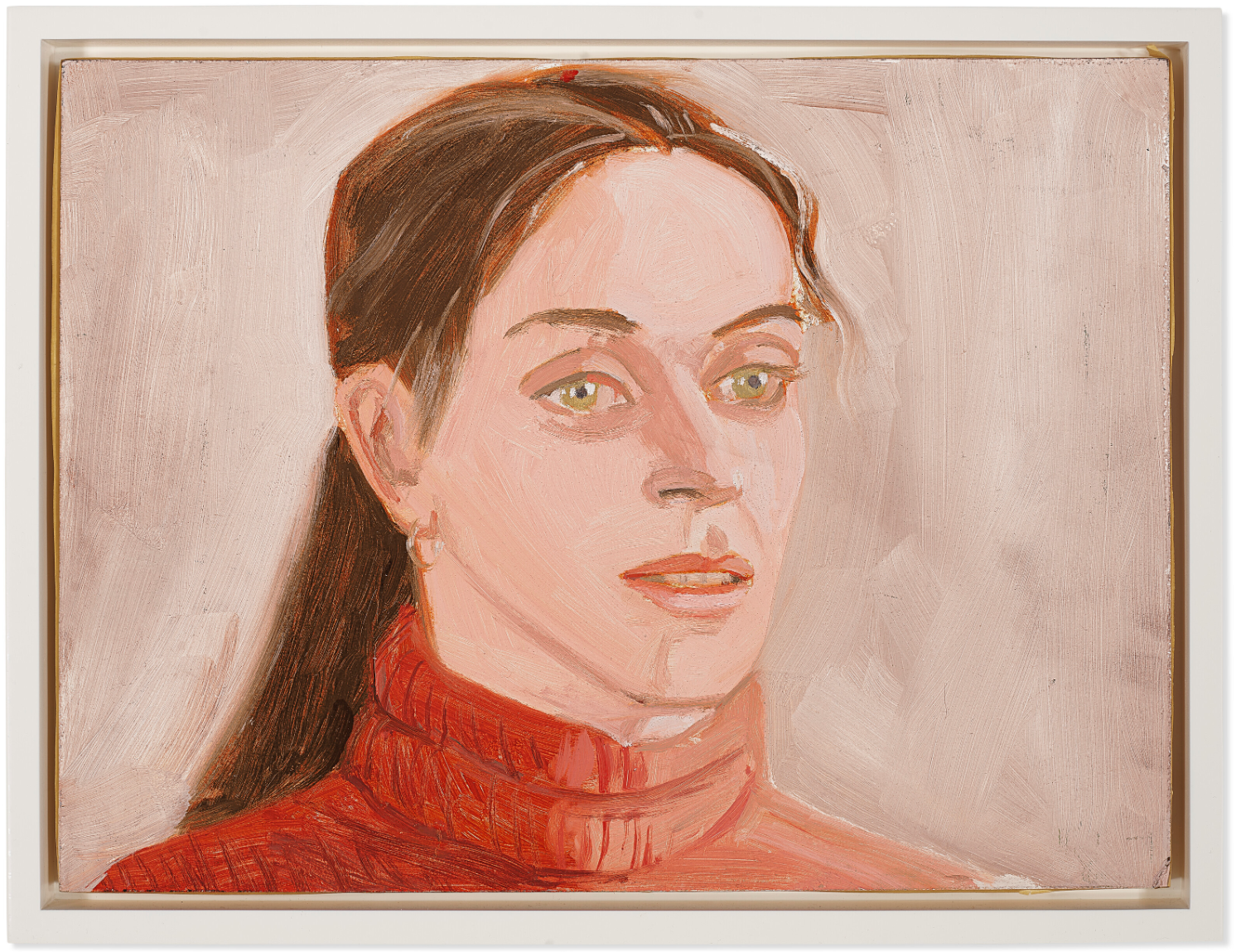
ALEX KATZ (B. 1927)
Untitled (Linda), circa 1965
Oil on board mounted to strainer
12×16 inches (30.5 x 40.6 cm)
Signed ‘Alex Katz’ (on the reverse)
#32. Four Trees, 2015
Christie’s New-York: 10 November 2023
Estimated: USD 30,000 – 50,000
USD 63,000
ALEX KATZ (B. 1927) (christies.com)
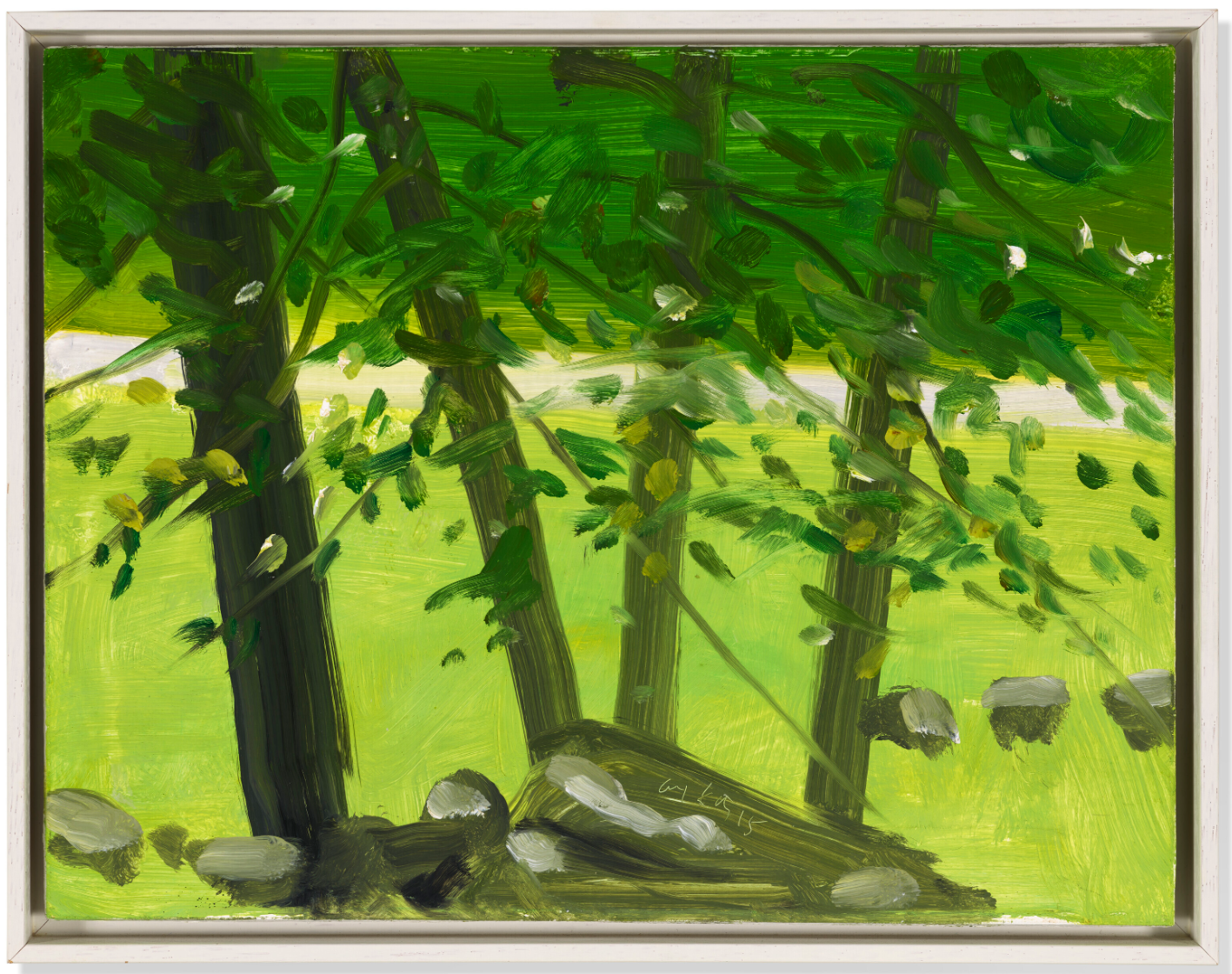
ALEX KATZ (B. 1927)
Four Trees, 2015
Oil on board
9 x 11 3/4 inches (22.9 x 29.8 cm)
Incised with the artist’s signature and date ‘Alex Katz 15’ (lower center)
#37. Nude, circa 1990s–2000s
Phillips New-York: 15 November 2023
Estimated: USD 40,000 – 60,000
USD 53,440
Alex Katz – 20th Century & Contemp… Lot 177 November 2023 | Phillips
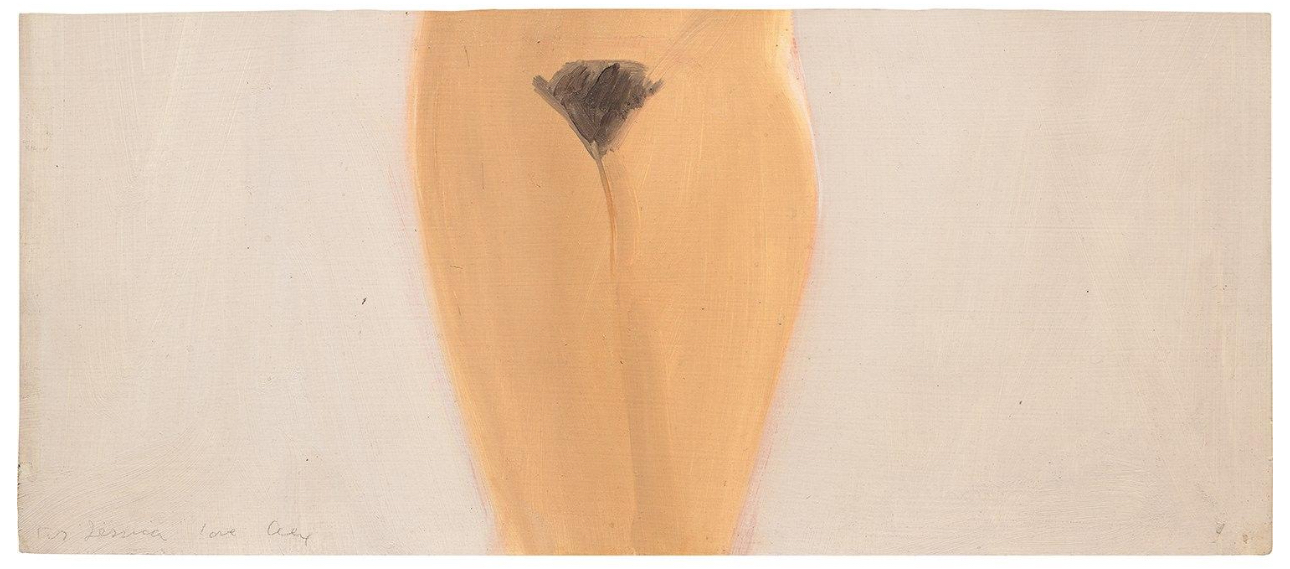
ALEX KATZ
Nude, circa 1990s–2000s
Oil on board
7 7/8 x 18 1/8 inches (20×46 cm)
Signed and dedicated “For Jessica Love Alex” lower left
#38. Snow Scene 1, 2002
Christie’s London: 1 March 2023
Estimated: GBP 15,000 – 20,000
GBP 44,100 / USD 53,074
ALEX KATZ (B. 1927), Snow Scene 1 | Christie’s (christies.com)
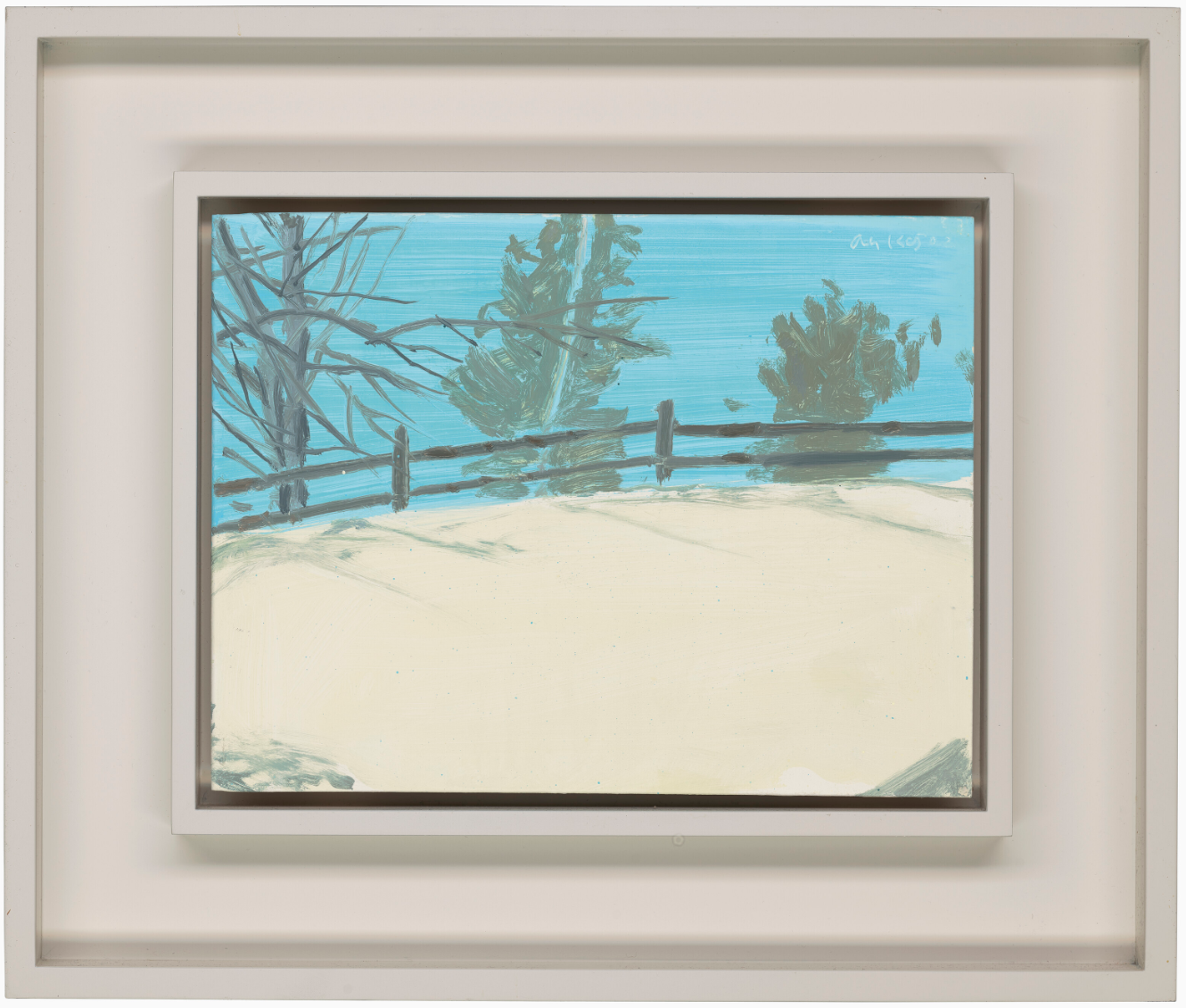
ALEX KATZ (B. 1927)
Snow Scene 1, 2002
Oil on board
9 x 11 7/8 inches (23 x 30.2 cm)
Signed and dated ‘Alex Katz 02’ (upper right)
#42. Homage to Monet, 2010
Sotheby’s London: 13 October 2023
Estimated: GBP 20,000 – 30,000
GBP 38,100 / USD 46,237
Homage to Monet | Contemporary Day Auction | 2023 | Sotheby’s (sothebys.com)
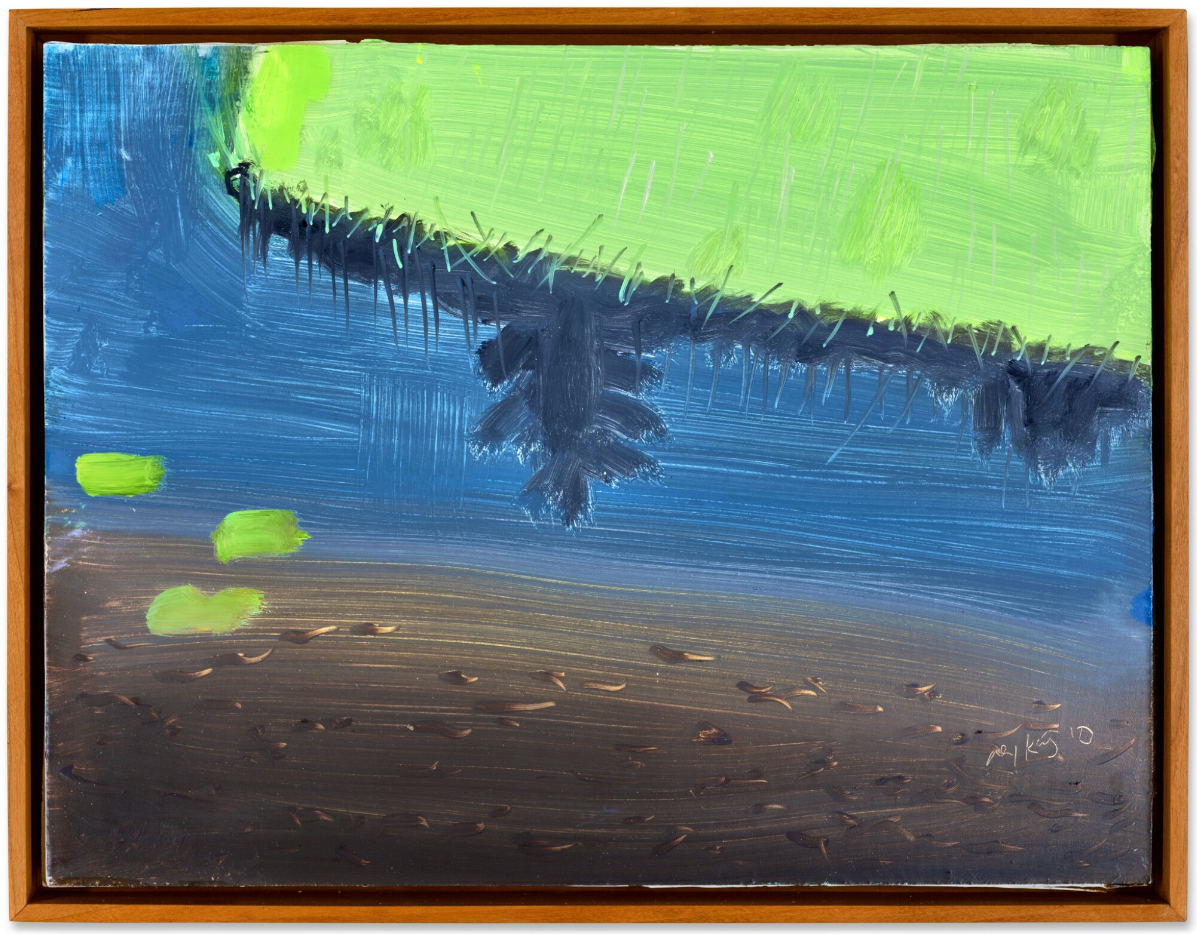
ALEX KATZ (b. 1927)
Homage to Monet, 2010
Oil on board
9 x 11 7/8 inches (22.9 x 30.2 cm)
Incised with the artist’s signature and dated 10 (lower right)
#45. Kym in White, 2004
Phillips New-York: 18 July 2023
Estimated: USD 40,000 – 60,000
USD 35,560
Alex Katz – 20th Century & Contemporary… Lot 30 July 2023 | Phillips
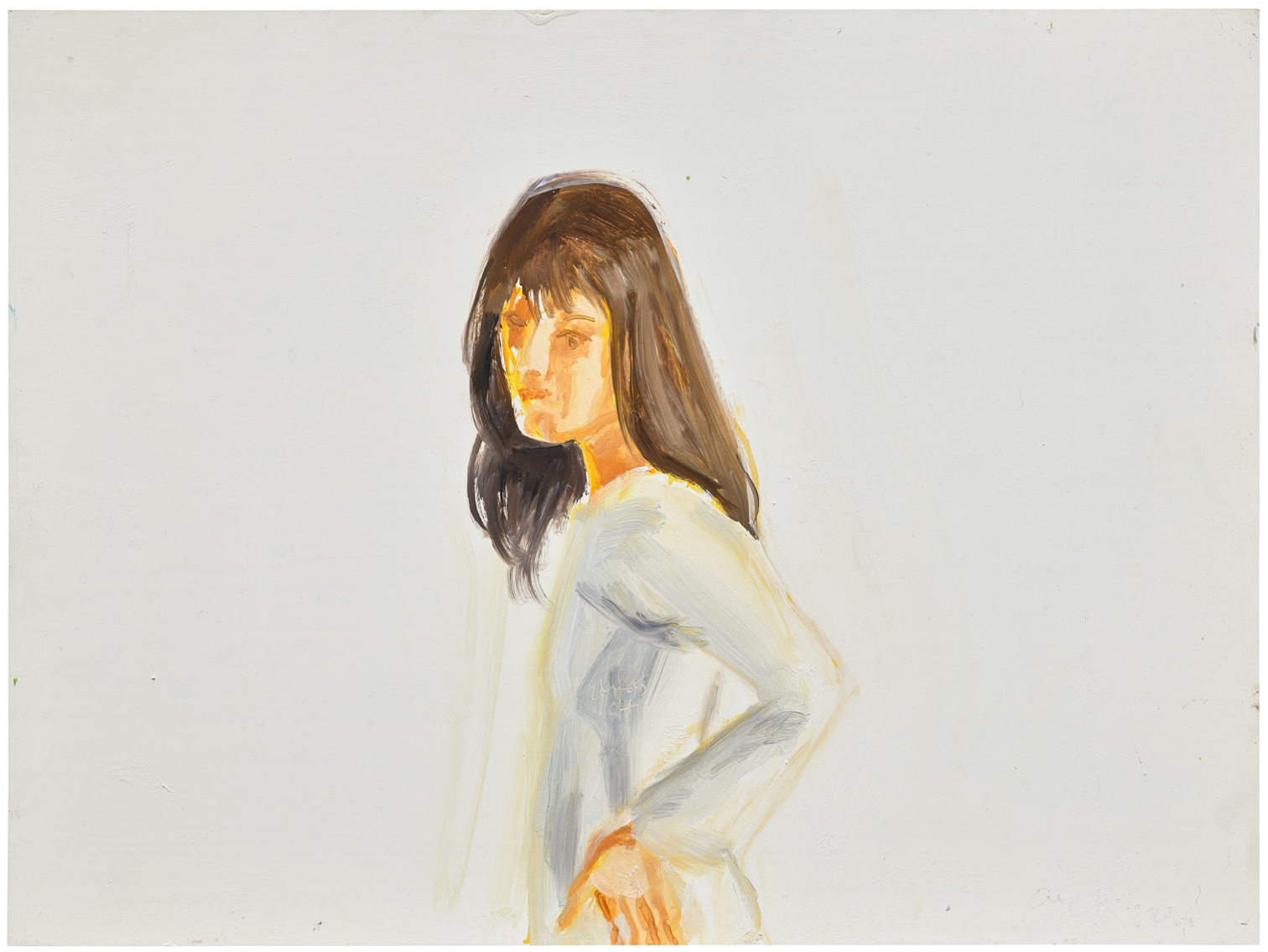
ALEX KATZ
Kym in White, 2004
Oil on board
12×16 inches (30.5 x 40.6 cm)
Incised with the artist’s signature and date “Alex Katz 04” lower right and at center
2022 Auction Results
40 lots sold at auction in 2022 for a total turnover of USD 21,756,249. With only 4 lots failing to sell, the sell-through rate is a solid 91%. The highest price of 2022 was achieved by East Interior, a painting dated 1979, that sold for USD 2,530,500 at Sotheby’s in New-York on 19 May 2022.
2022 Top 3 Lots
7 lots sold over USD 1 million for a cumulative turnover of USD 12,847,801, representing 59.1% of the total turnover for 2022.
#1. East Interior, 1979
Sotheby’s New-York: 19 May 2022
Estimated: USD 1,500,000 – 2,000,000
USD 2,530,500
East Interior | Contemporary Evening Auction | 2022 | Sotheby’s (sothebys.com)
ALEX KATZ (b. 1927)
East Interior, 1979
Oil on linen
96×72 inches (243.8 by 182.9 cm)
#2. Rackstraw and Pamela, 1976
Sotheby’s New-York: 19 May 2022
Estimated: USD 2,000,000 – 3,000,000
USD 2,470,000
Rackstraw and Pamela | Contemporary Evening Auction | 2022 | Sotheby’s
ALEX KATZ (b. 1927)
Rackstraw and Pamela, 1976
Oil on canvas
77 3/4 x 90 1/2 inches (197.5 x 229.9 cm)
#3. The Grey Dress, 1982
Phillips New-York: 15 November 2022
Estimated: USD 1,200,000 – 1,800,000
USD 2,208,000
Alex Katz 20th Century & Contemporary Art Evening Sale
#4. Parrot Jungle, 1985
Sotheby’s New-York: 16 November 2022
Estimated: USD 1,800,000 – 2,500,000
USD 1,986,000
Parrot Jungle | Contemporary Evening Auction | 2022 | Sotheby’s
ALEX KATZ (b. 1927)
Parrot Jungle, 1985
oil on linen
72×96 inches (182.9 x 243.8 cm)
#5. Eric and Anni, 1983
Christie’s New-York: 18 November 2022
Estimated: USD 1,200,000 – 1,800,000
USD 1,500,000
ALEX KATZ (B. 1927) (christies.com)

ALEX KATZ (B. 1927)
Eric and Anni, 1983
Oil on linen
60×72 inches (152.4 x 182.9 cm)
#6. White Visor, 2003
Sotheby’s London: 2 March 2022
Estimated: GBP 650,000 – 850,000
GBP 856,000 / USD 1,145,301
White Visor | Modern & Contemporary Evening Auction | 2022 | Sotheby’s
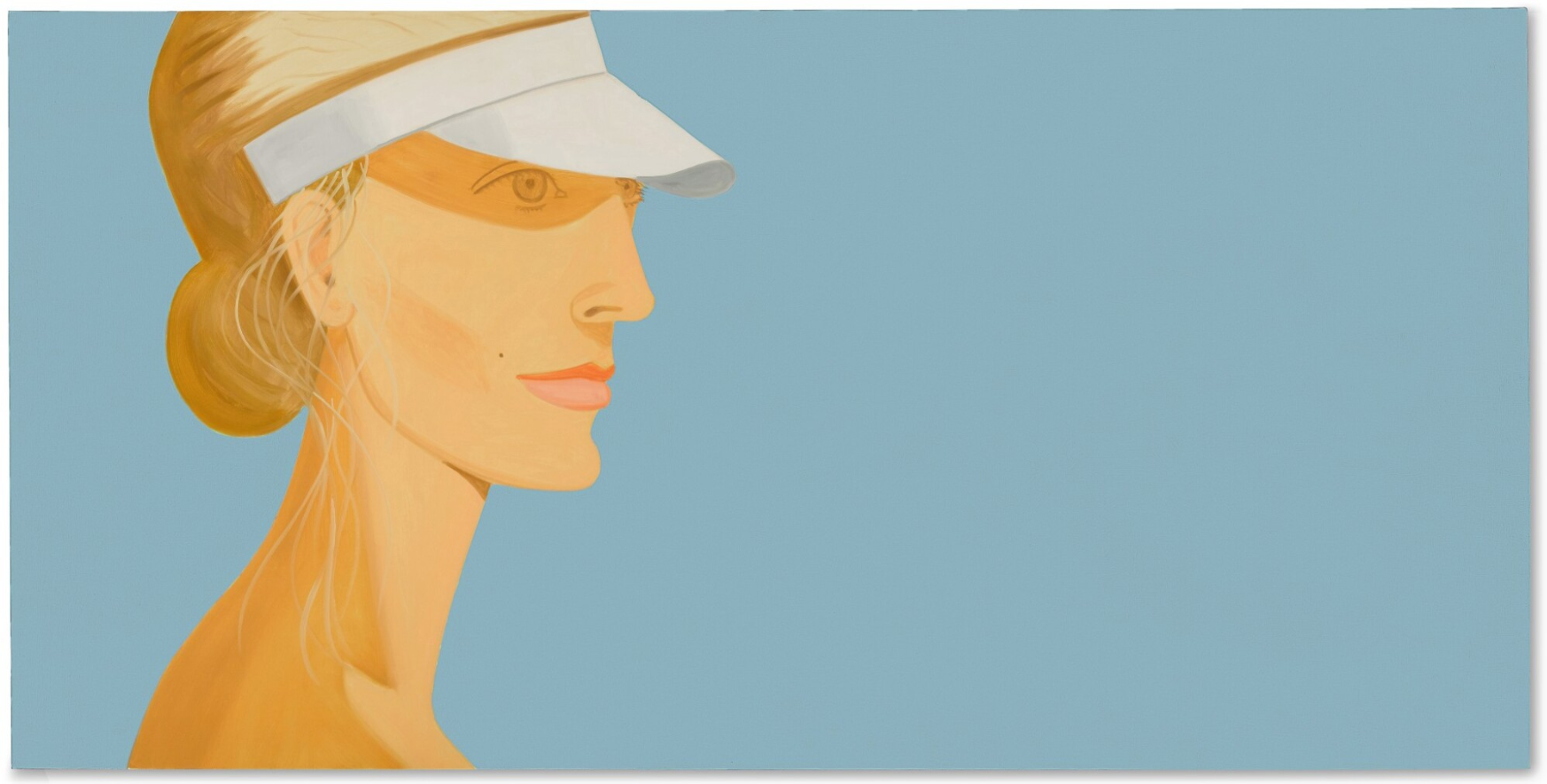
ALEX KATZ (b. 1927)
White Visor, 2003
Oil on linen
72×144 inches (183×366 cm)
Signed Alex Katz and dated 03 (on the overlap)
#7. Alicia, 2004
Sotheby’s New-York: 17 November 2022
Estimated: USD 400,000 – 800,000
USD 1,008,000
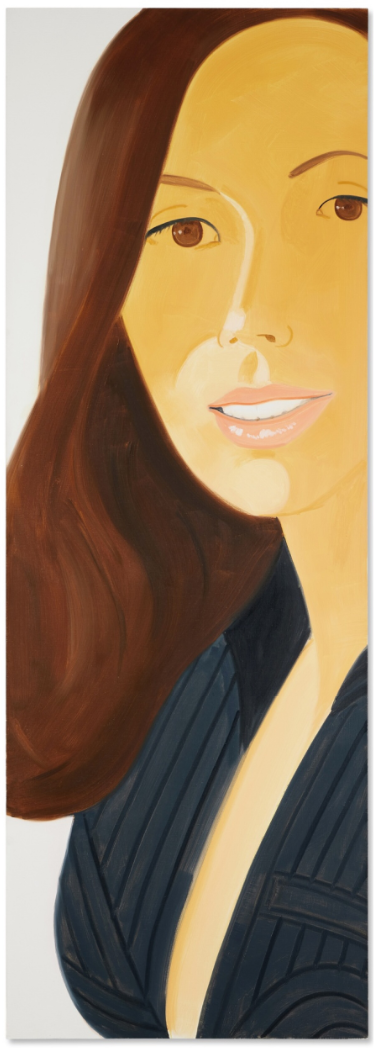
ALEX KATZ (b. 1927)
Alicia, 2004
Oil on linen
96 x 33½ inches (243.8 x 85.1 cm)
Signed Alex Katz and dated 04 (on the reverse)
#8. Untitled (Rose), 1966
Christie’s New-York: 18 November 2022
Estimated: USD 250,000 – 350,000
USD 907,200
ALEX KATZ (B. 1927) (christies.com)
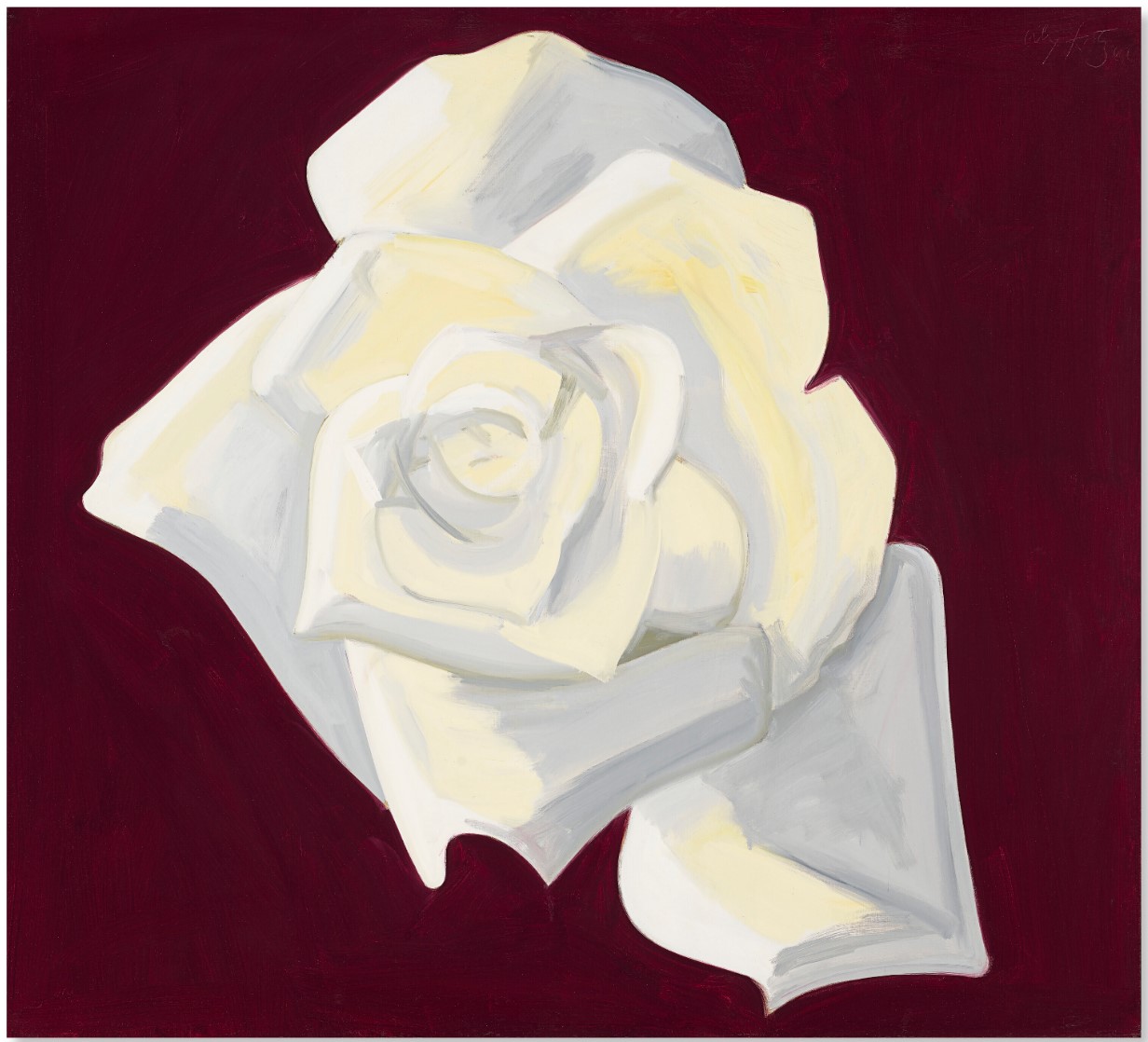
ALEX KATZ (B. 1927)
Untitled (Rose), 1966
Oil on linen
44 3/8 x 48 1/4 inches (112.4 x 124.2 cm)
Incised with the artist’s signature and date ‘Alex Katz 66’ (upper right)
#9. Red Dogwood I, 2020
Sotheby’s Hong-Kong: 27 April 2022
Estimated: HKD 4,300,000 – 5,800,000
HKD 6,552,000 / USD 834,990

ALEX KATZ (b. 1927)
Red Dogwood I, 2020
Oil on linen
72 1/4 x 96 1/4 inches (183.5 x 244.5 cm)
“Flowers are actually some of the most difficult forms to paint, because you have to capture the spatial aspect, their physicality, the surface of the flowers and the colours. You hope the whole painting will give the sensation of seeing a flower – the brilliance of that experience.”
#10. Rose, 1966
Sotheby’s New-York: 20 May 2022
Estimated: USD 400,000 – 600,000
USD 819,000
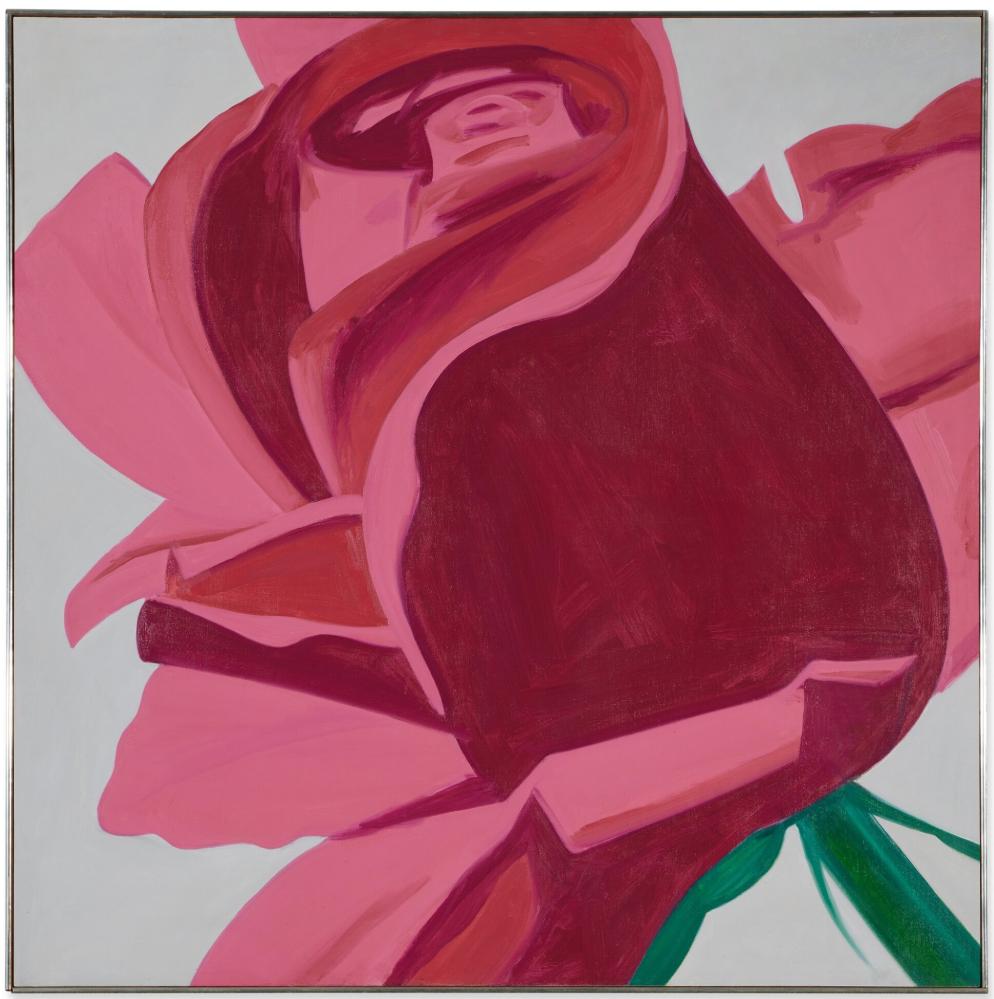
ALEX KATZ (b. 1927)
Rose, 1966
oil on linen
49×49 inches (124.1 x 124.1 cm)
Signed Alex Katz and dated 66 (upper right)
#11. Man with Brown Hat, 1979
Christie’s New-York: 13 May 2022
Estimated: USD 700,000 – 1,000,000
USD 756,000
ALEX KATZ (B. 1927) (christies.com)
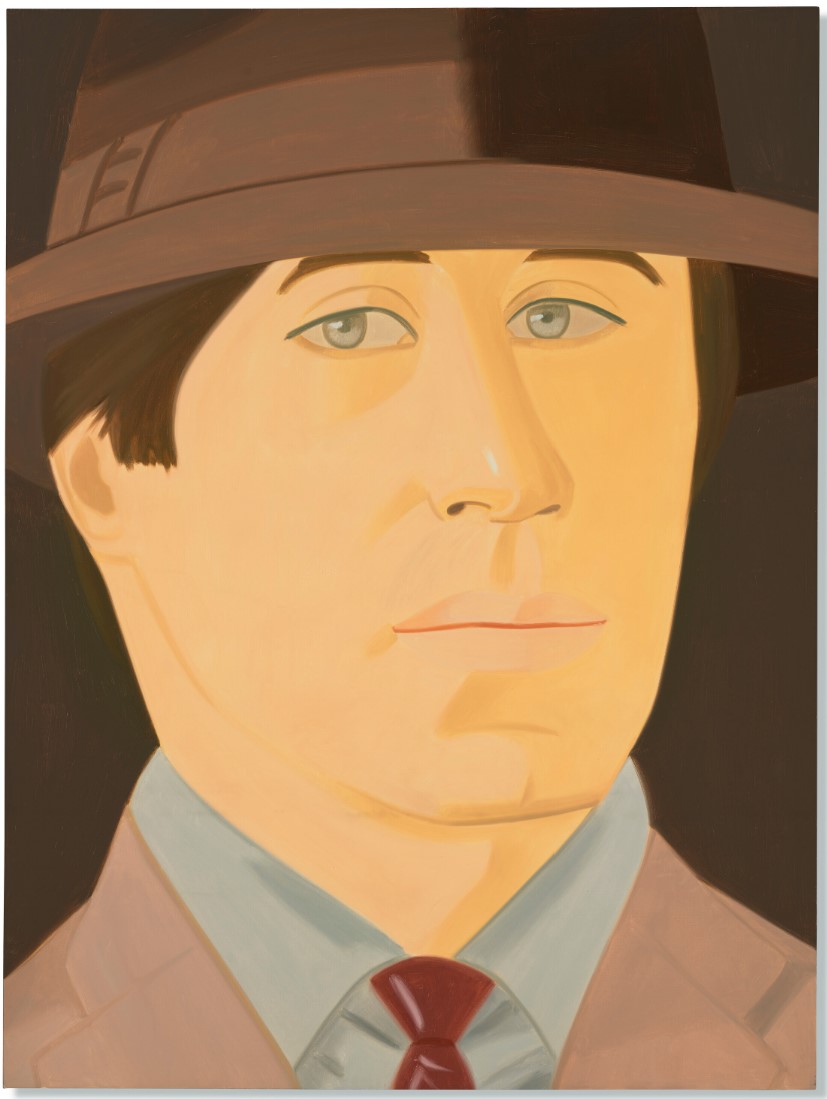
ALEX KATZ (B. 1927)
Man with Brown Hat, 1979
Oil on canvas
96×72 inches (243.8 x 182.9 cm)
Signed and dated ‘alex katz 2⁄79’ (on the overlap)
#12. Kristen, 2005
Christie’s New-York: 13 May 2022
Estimated: USD 300,000 – 500,000
USD 693,000
ALEX KATZ (B. 1927) (christies.com)
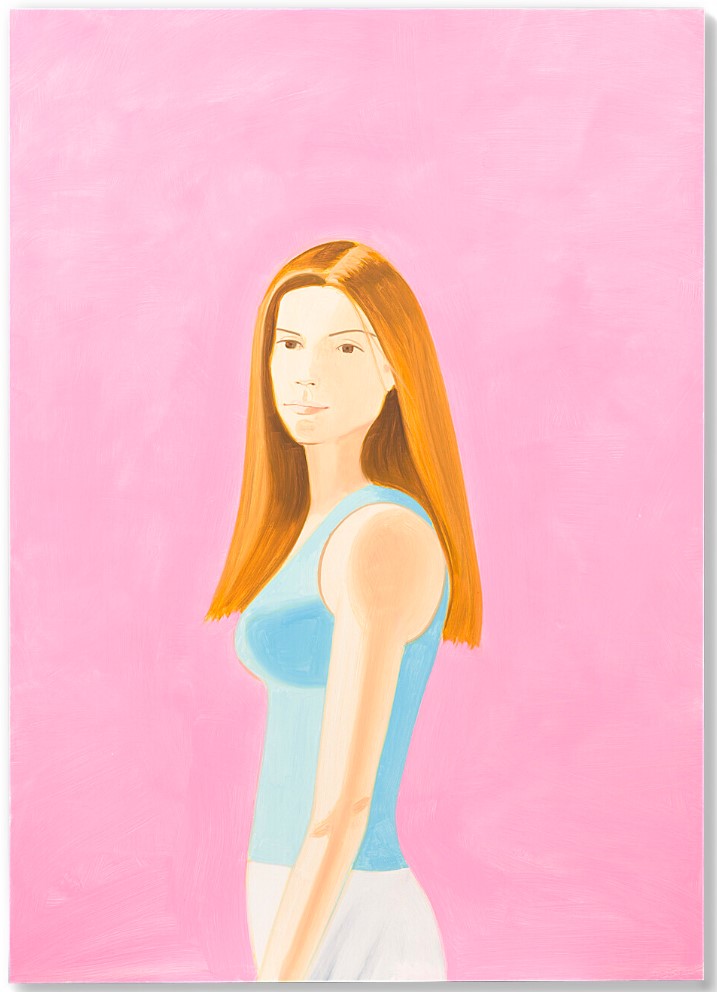
ALEX KATZ (B. 1927)
Kristen, 2005
Oil on linen
84×60 inches (213.4 x 152.4 cm)
Signed and dated ‘Alex Katz 05’ (on the overlap)
#13. Anna, 2006
Sotheby’s London: 14 October 2022
Estimated: GBP 500,000 – 700,000
USD 604,800 / USD 678,026
Anna | Contemporary Evening Auction | 2022 | Sotheby’s (sothebys.com)
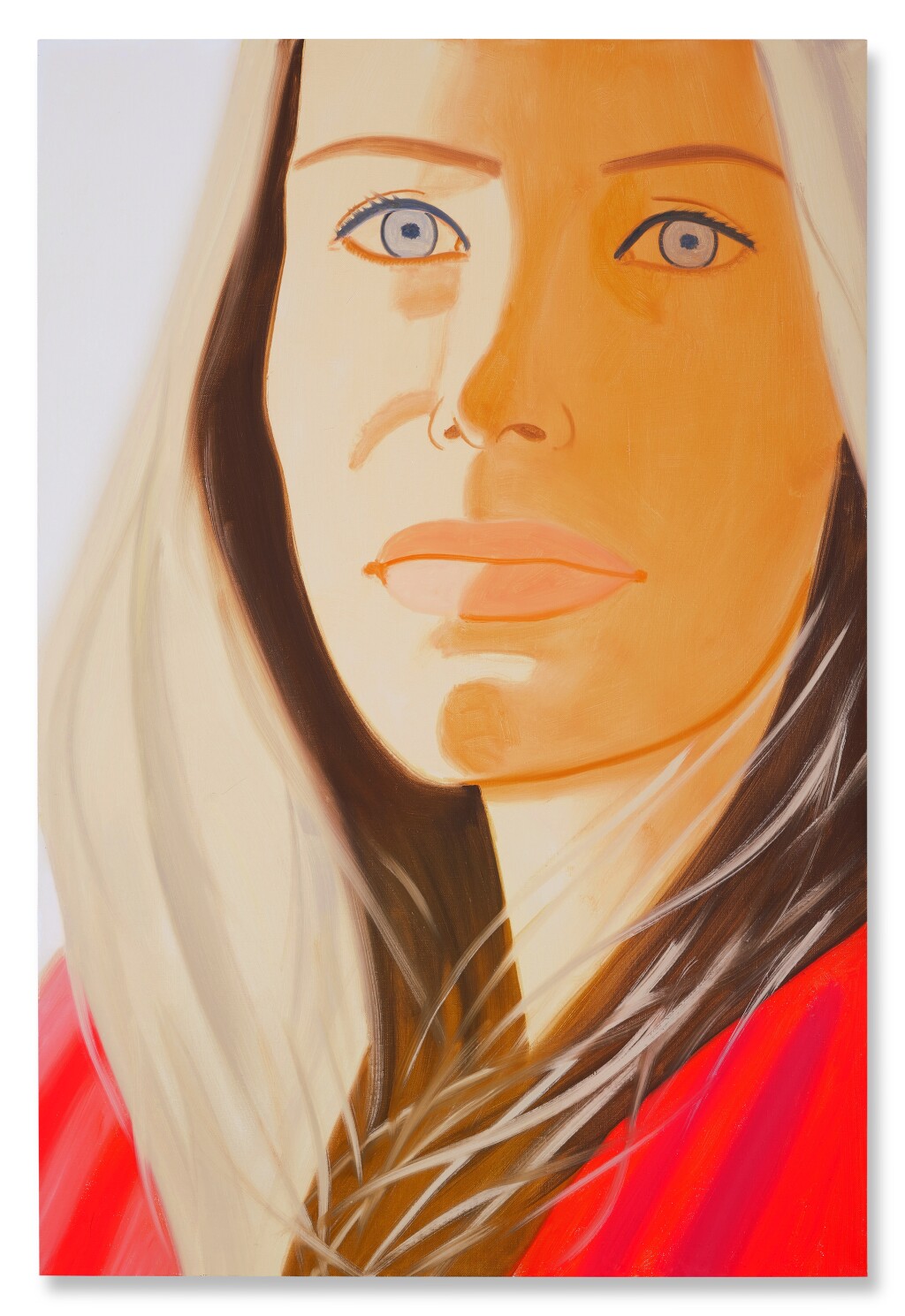
ALEX KATZ (b. 1927)
Anna, 2006
Oil on linen
72×48 inches (182.9 x 122 cm)
Signed Alex Katz and dated ’06 (on the overlap)
Signed Alex Katz and dated ’06 (on the stretcher)
USD 500,000
#14. Snow, 2004
Bonhams London: 13 October 2022
Estimated: GBP 180,000 – 250,000
GBP 403,500 / USD 457,690
Bonhams : ALEX KATZ (B. 1927) Snow 2004
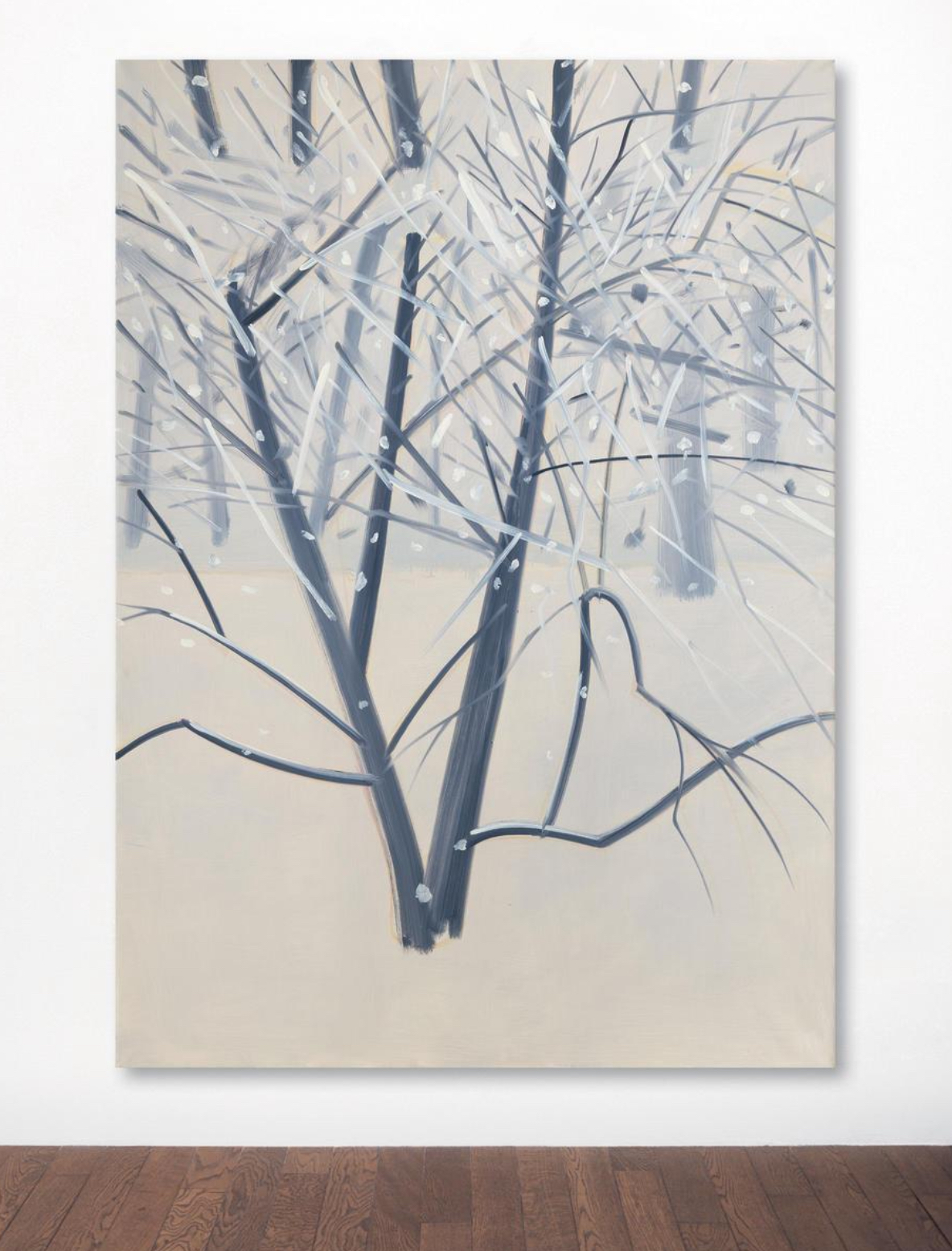
Oil on linen
84 1/4 x 60 1/16 inches (214 x 152.5 cm)
Signed and dated ’04 on the overlap
#15. Untitled, circa 1959
Phillips New-York: 19 May 2022
Estimated: USD 150,000 – 200,000
USD 403,200
Alex Katz – 20th Century & Contemporary… Lot 130 May 2022 | Phillips
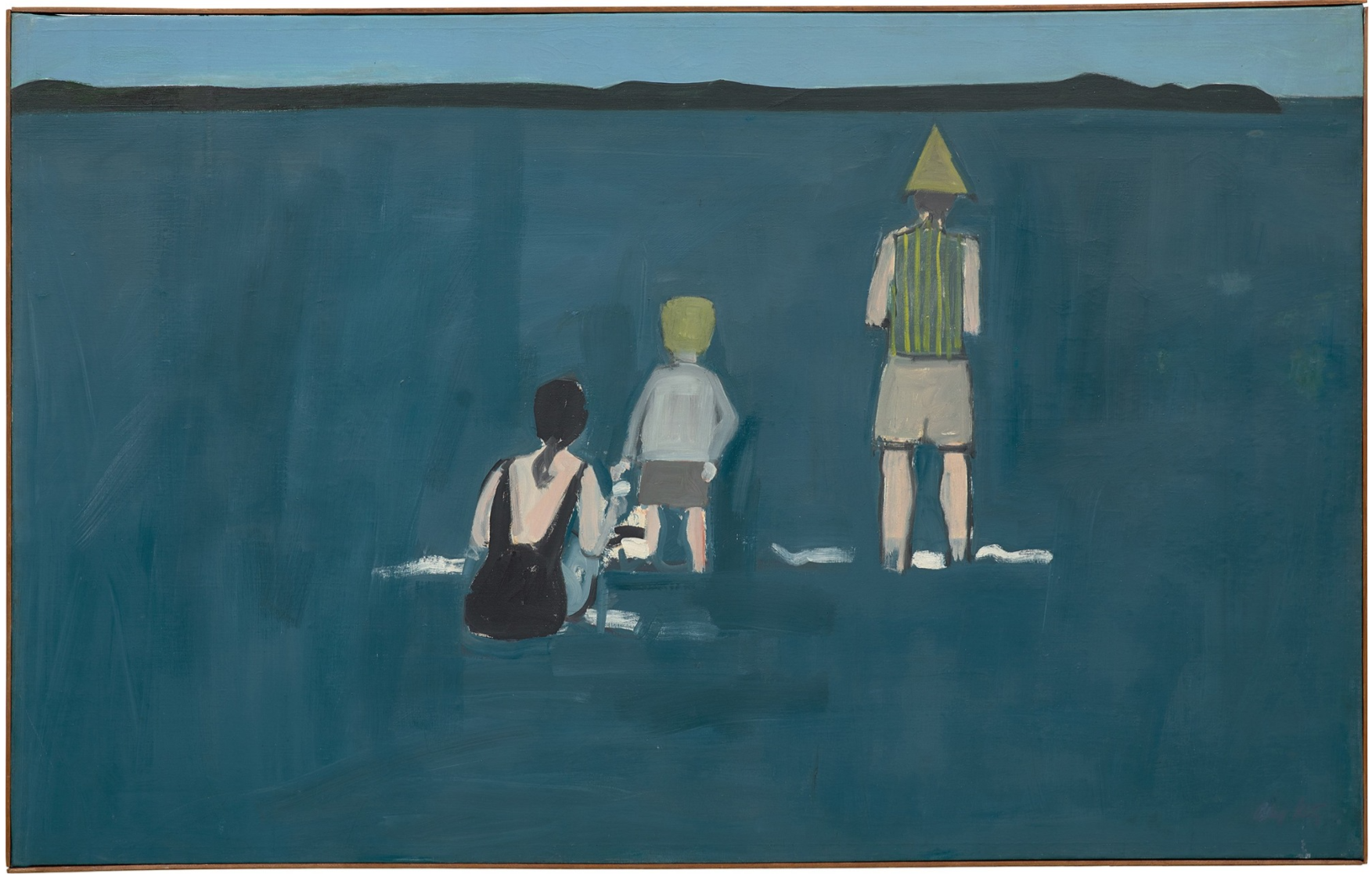
ALEX KATZ
Untitled, circa 1959
Oil on linen
35 1/4 x 56 inches (89.5 x 142.2 cm)
Signed “Alex Katz” lower right
#16. Hiroshi, 1979
Christie’s New-York: 18 November 2022
Estimated: USD 400,000 – 600,000
USD 378,000
ALEX KATZ (B. 1927), Hiroshi | Christie’s (christies.com)
ALEX KATZ (B. 1927)
Hiroshi, 1979
Oil on linen
48×36 inches (121.9 x 91.4 cm)
#17. Ukulele Player, 1981
Bonhams New-York: 16 November 2022
Estimated: USD 150,000 – 200,000
USD 353,175
Bonhams : ALEX KATZ (B. 1927) Ukulele Player1981
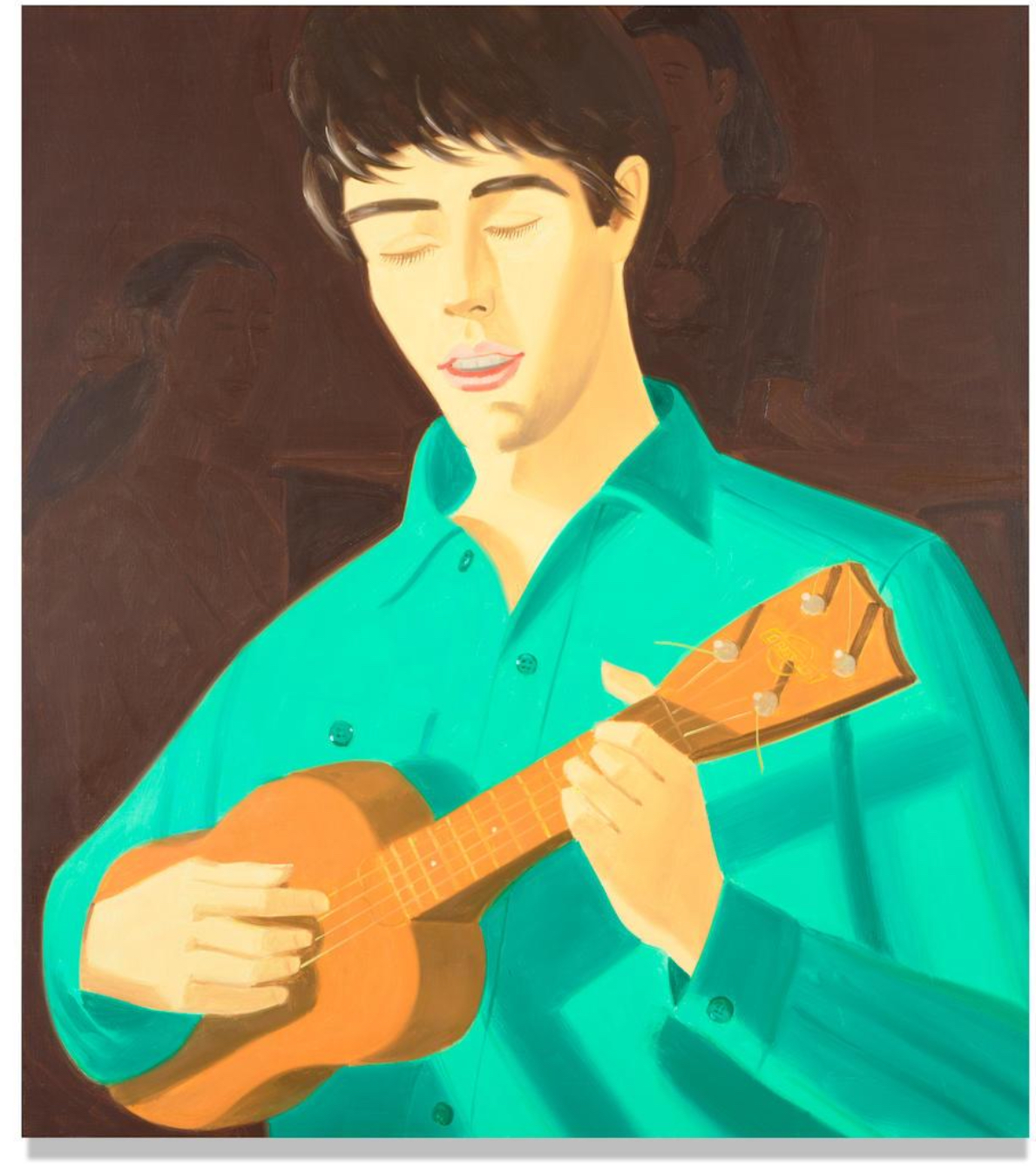
Oil on canvas
54×48 inches (137.2 x 121.9 cm)
#18. Night 2, 1987
Christie’s New-York: 13 May 2022
Estimated: USD 200,000 – 300,000
USD 352,800
ALEX KATZ (B. 1927), Night 2 | Christie’s (christies.com)
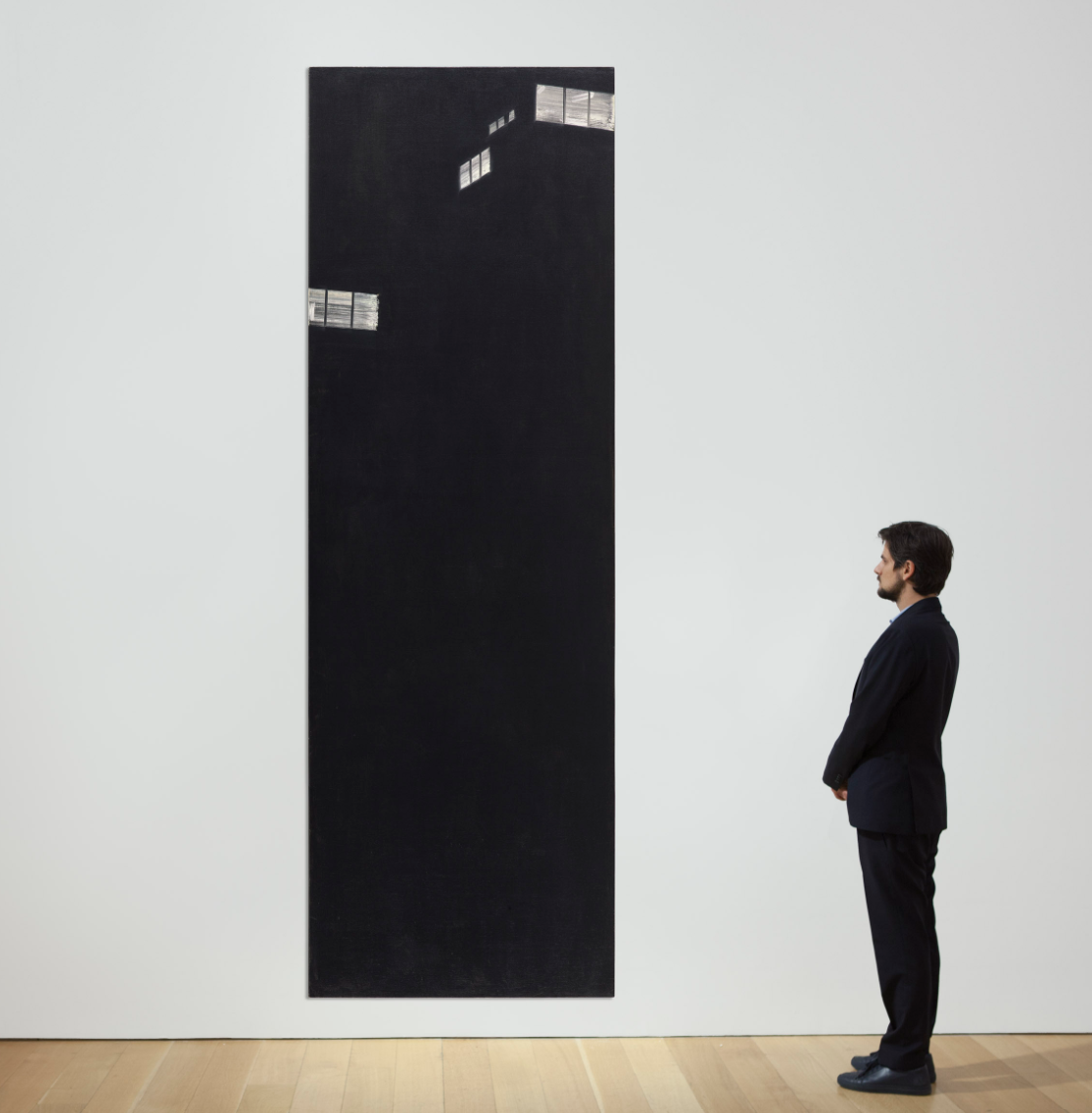
ALEX KATZ (B. 1927)
Night 2, 1987
Oil on linen
138 x 48 1/4 inches (350.5 x 122.6 cm)
signed ‘Alex Katz’ (on the overlap)
#19. Sunset 2, 2008
Christie’s London: 14 October 2022
Estimated: GBP 180,000 – 250,000
GBP 277,200 / USD 310,762
ALEX KATZ (1927), Sunset 2 | Christie’s (christies.com)

ALEX KATZ (1927)
Sunset 2, 2008
Oil on linen
48×66 inches (122 x 167.7 cm)
Signed and dated ‘Alex Katz 08’ (on the overlap)
#20. Bill, 2000
Christie’s London: 14 October 2022
Estimated: GBP 180,000 – 250,000
GBP 226,800 / USD 254,260
ALEX KATZ (B. 1927), Bill | Christie’s (christies.com)
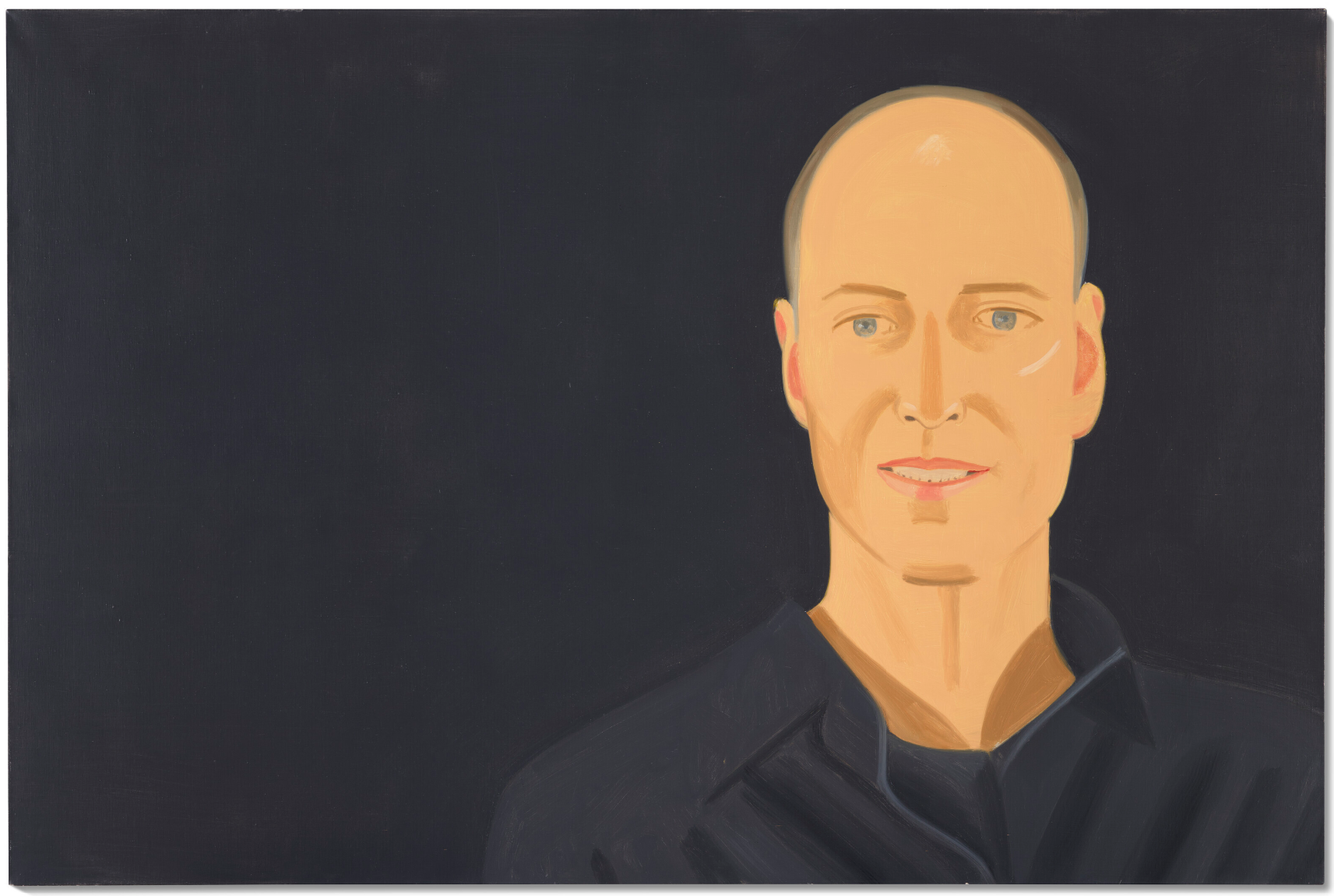
ALEX KATZ (B. 1927)
Bill, 2000
Oil on linen
48 1/8 x 72 inches (122.3 x 183 cm)
Signed and dated ‘Alex Katz 00’ (on the overlap)
#21. Windows, 1994
Christie’s New-York: 18 November 2022
Estimated: USD 180,000 – 250,000
USD 189,000
ALEX KATZ (B. 1927), Windows | Christie’s (christies.com)
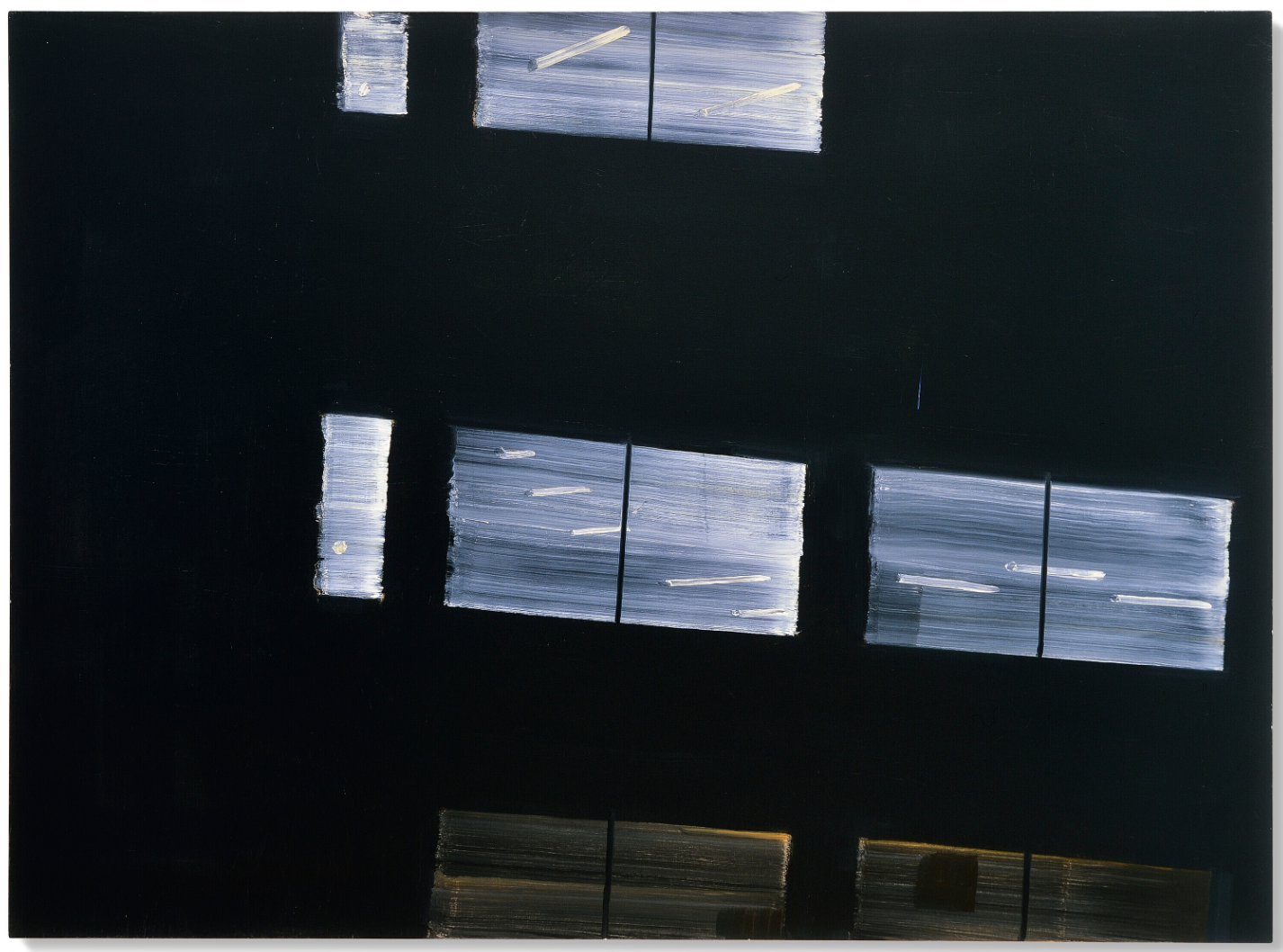
ALEX KATZ (B. 1927)
Windows, 1994
Oil on linen
66×90 inches (167.6 x 228.6 cm)
#26. Margit, 1991
Sotheby’s New-York: 17 November 2022
Estimated: USD 30,000 – 50,000
USD 100,800
Margit | Contemporary Day Auction | 2022 | Sotheby’s (sothebys.com)
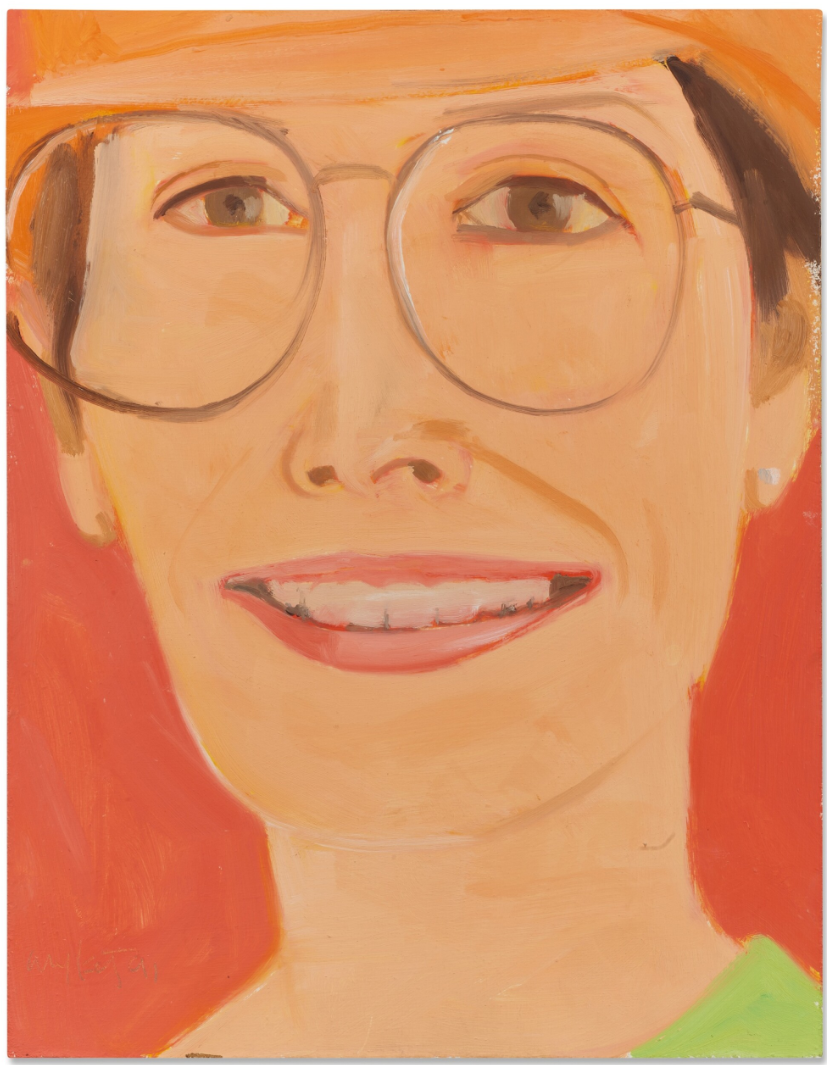
ALEX KATZ (b. 1927)
Margit, 1991
Acrylic on board
16×12 inches (40.6 x 30.5 cm)
Signed and dated 91 (lower left); titled (on the reverse)
#32. Woman in a Hat, 2003
Christie’s New-York: 13 May 2022
Estimated: USD 30,000 – 50,000
USD 75,600
ALEX KATZ (B. 1927), Woman in a Hat | Christie’s (christies.com)
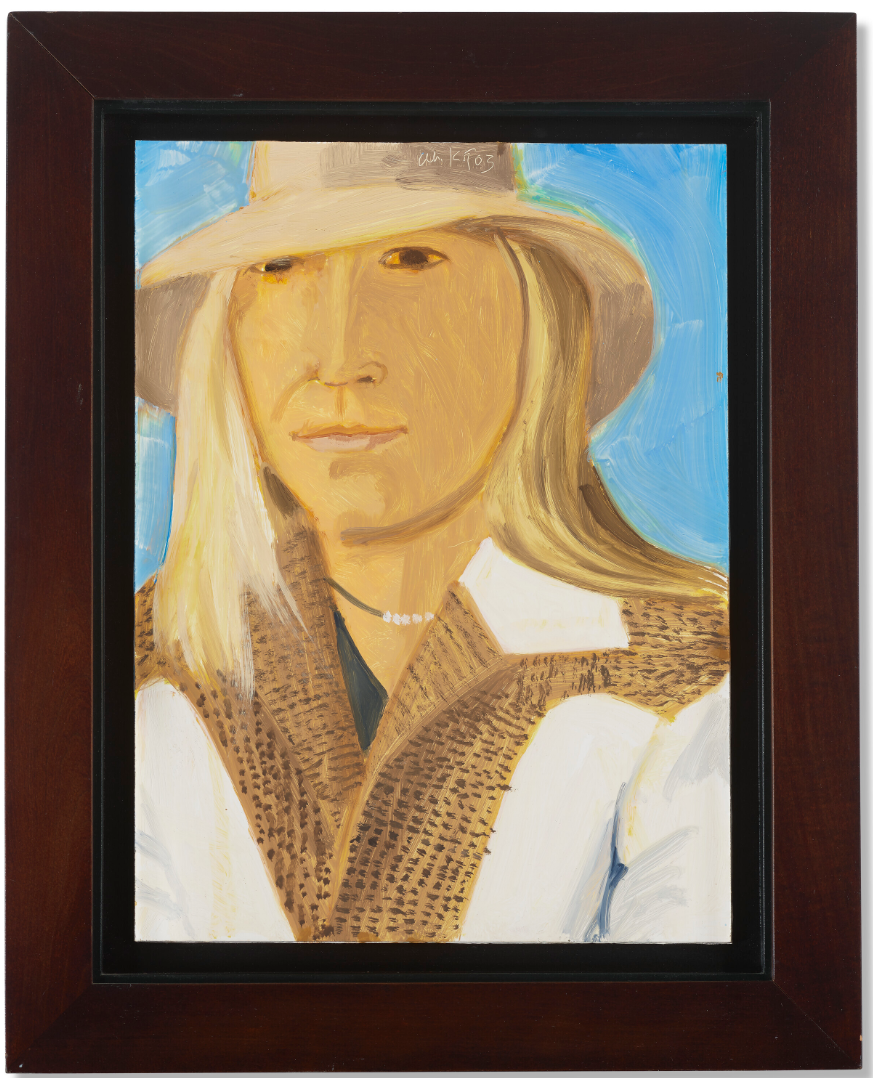
ALEX KATZ (B. 1927)
Woman in a Hat, 2003
Oil on Masonite
16 x 11 7/8 inches (40.6 x 30.2 cm)
Incised with the artist’s signature and date ‘Alex Katz 03’ (upper center)
2021 Auction Results
22 lots sold in 2021 for a total turnover of USD 6,723,013. With no lot failing to sell, the sell-through rate is 100%. The highest price was achieved at Ketterer in Cologne, Germany where Tara, a painting dated 2003 sold for EUR 901,000 (USD 1,019,346) on 10 December 2021.
2021 Top 3 Lots
This is the only lot that sold above USD 1 million. 13 lots sold above USD 1 million for a cumulative turnover of USD 6,078,286, representing 90.4% of the total turnover for 2021.
#1. Tara, 2003
Ketterer Kuntz: 10 December 2021
Estimated: EUR 350,000
EUR 901,000 / USD 991,100
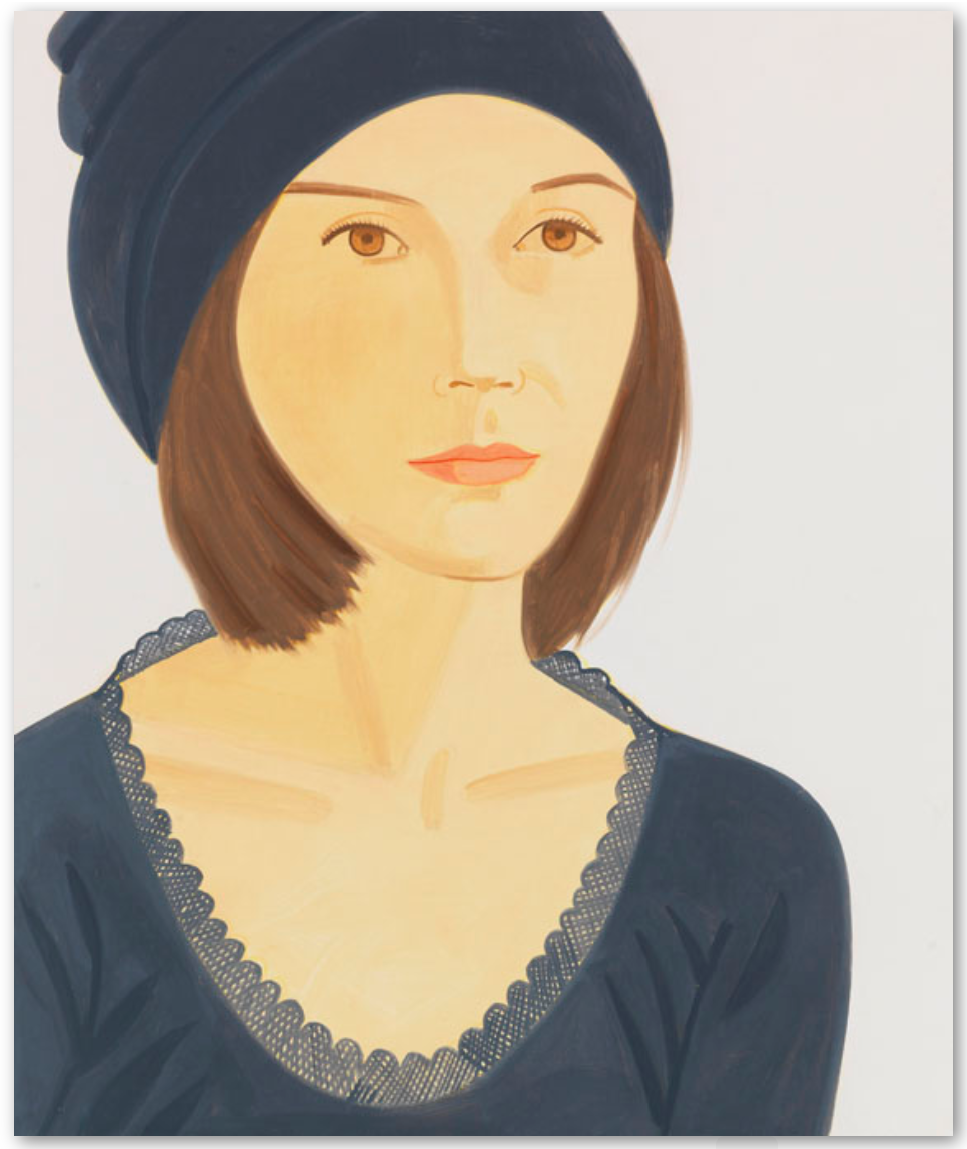
ALEX KATZ
Tara, 2003
Oil on canvas
72×60 inches (183 x 152.5 cm)
Signed and dated on the folded canvas
#2. The Yellow House, 1985
Sotheby’s New-York: 19 November 2021
Estimated: USD 800,000 – 1,200,000
USD 988,000
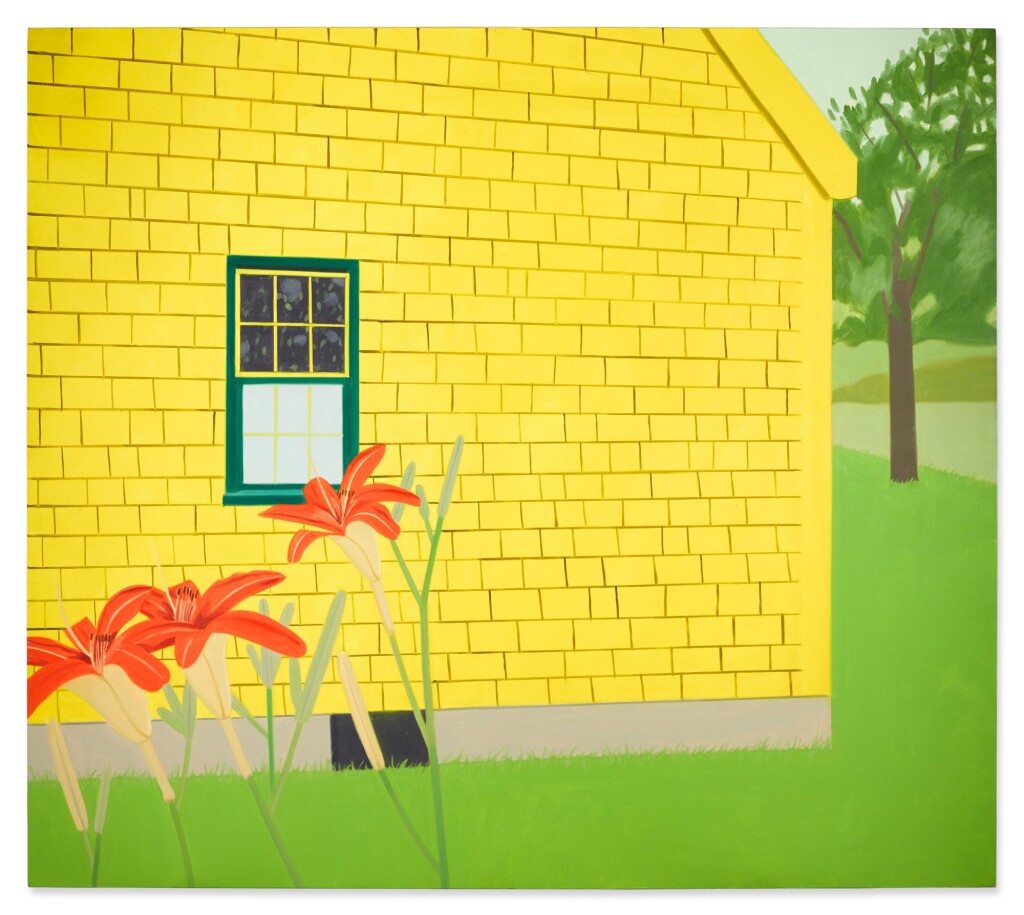
ALEX KATZ (b. 1927)
The Yellow House, 1985
Oil on linen
96 ¼ x 108 ¼ inches (243.5 x 276 cm)
Titled (on the stretcher)
#3. Bathing Cap (Suzette), 2010
Christie’s London: 15 October 2021
Estimated: GBP 400,000 – 600,000
GBP 598,500 / USD 823,359
ALEX KATZ (B. 1927) (christies.com)
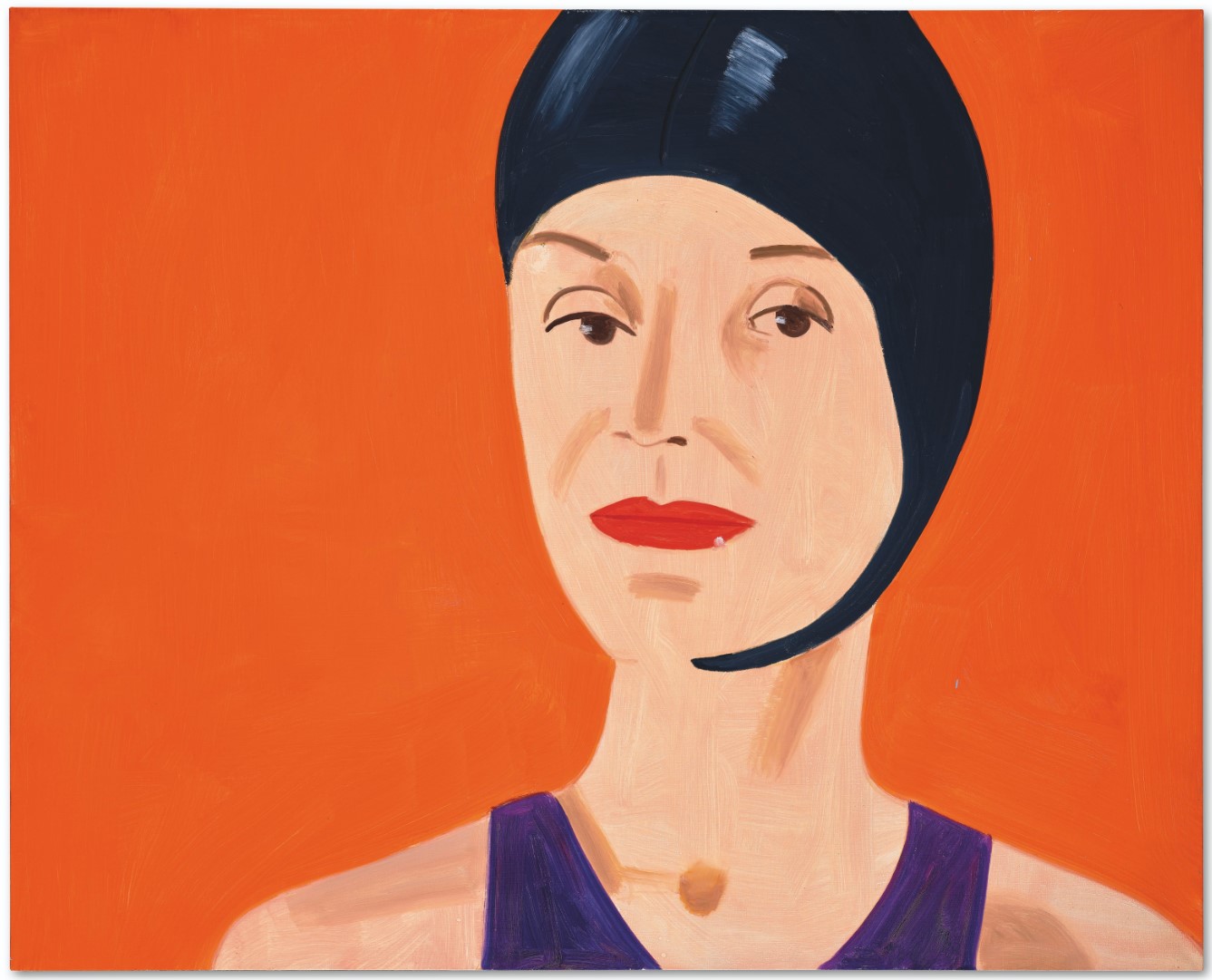
ALEX KATZ (B. 1927)
Bathing Cap (Suzette), 2010
oil on linen
40×50 inches (101.5 x 127 cm)
#4. Ariel, 2018
Sotheby’s New-York: 30 September 2021
Estimated: USD 400,000 – 600,000
USD 685,500
Ariel | Contemporary Curated | 2021 | Sotheby’s (sothebys.com)
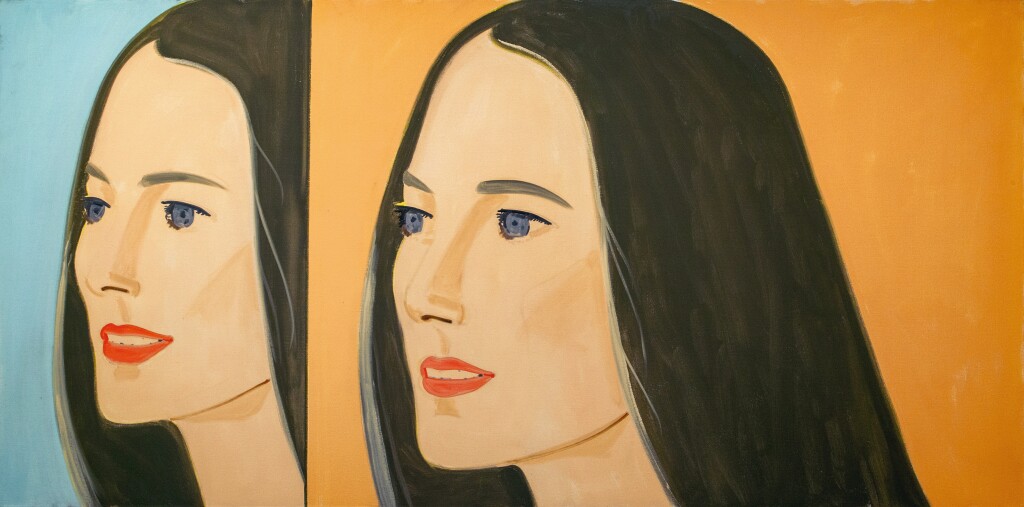
ALEX KATZ (b. 1927)
Ariel, 2018
Oil on linen
60×120 inches (152.4 x 304.8 cm)
Signed and dated 18 on the overlap
USD 500,000
#5. Black Bathing Suit, 1997
Grisebach: 2 December 2021
Estimated: EUR 280,000 – 350,000
EUR 500,000 / USD 465,482
Archive Collection (grisebach.com)
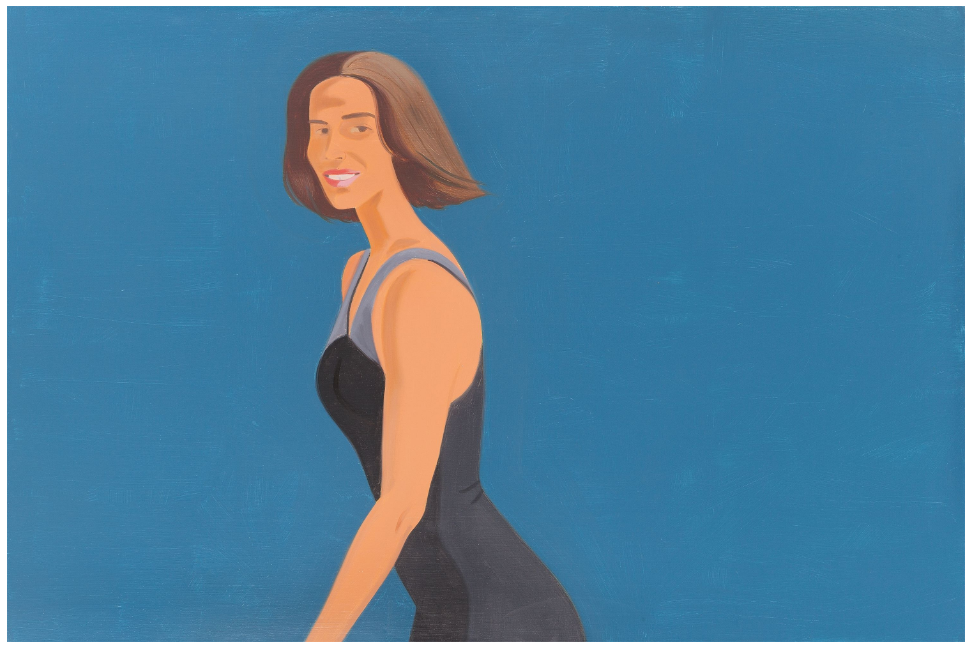
ALEX KATZ
Black Bathing Suit, 1997
Oil on canvas
48 x 71 5/8 inches (122×182 cm)
#7. Ada in Front of Black Brook, 1988
Phillips New-York: 18 November 2021
Estimated: USD 180,000 – 250,000
USD 378,000
Alex Katz – 20th Century & Contemp… Lot 121 November 2021 | Phillips
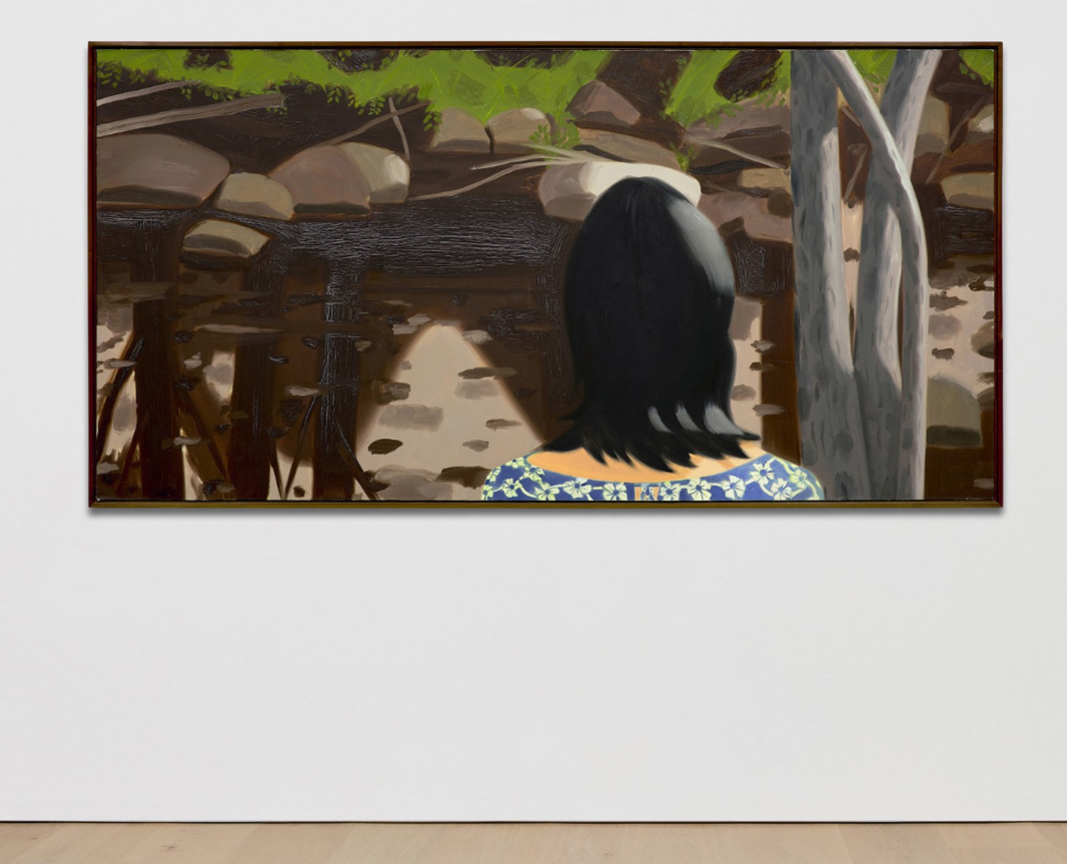
ALEX KATZ
Ada in Front of Black Brook, 1988
Oil on linen
48 1/8 x 96 inches (122.2 x 243.8 cm)
#8. Black Ada and Island, 1996
Phillips New-York: 18 November 2021
Estimated: USD 150,000 – 200,000
USD 365,400
Alex Katz – 20th Century & Contemp… Lot 113 November 2021 | Phillips
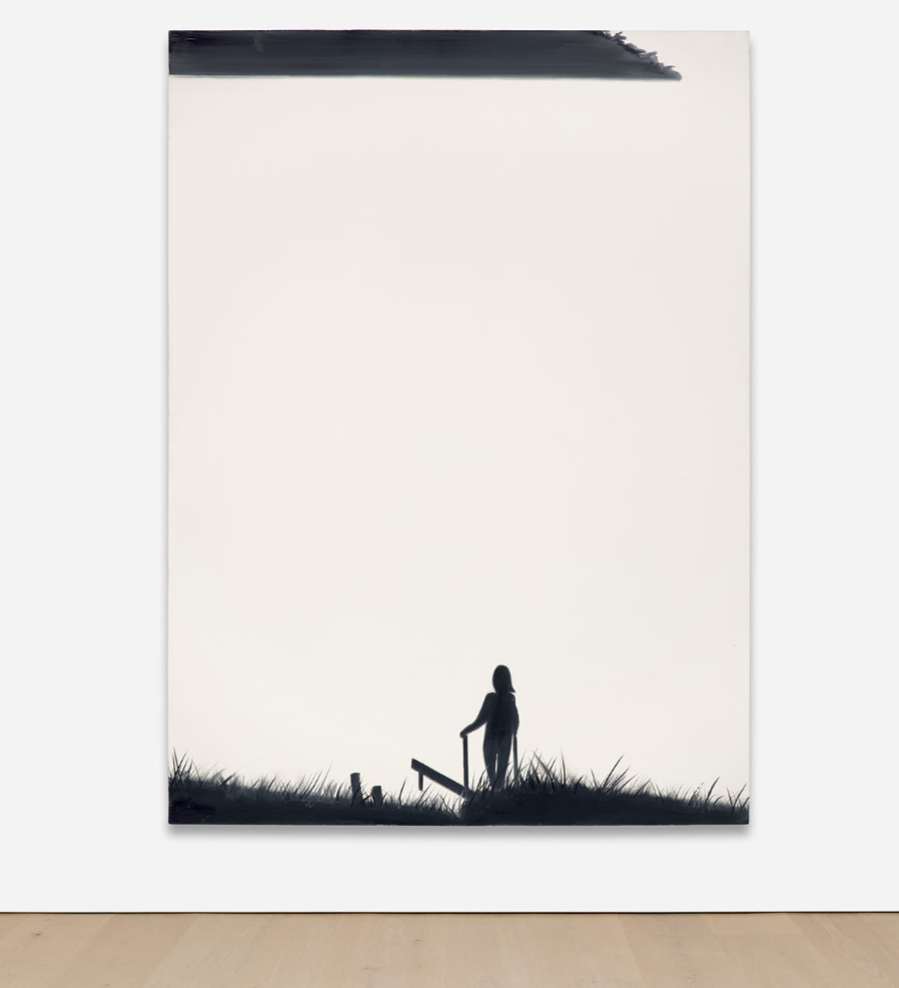
ALEX KATZ
Black Ada and Island, 1996
Oil on linen
89 3/4 x 66 inches (228 x 167.6 cm)
Signed and dated “Alex Katz 96” on the overlap
#9. Edmund, 1972
Phillips London: 13 July 2021
Estimated: GBP 100,000 – 150,000
GBP 189,000 / USD 261,700
Alex Katz – New Now London Lot 34 July 2021 | Phillips
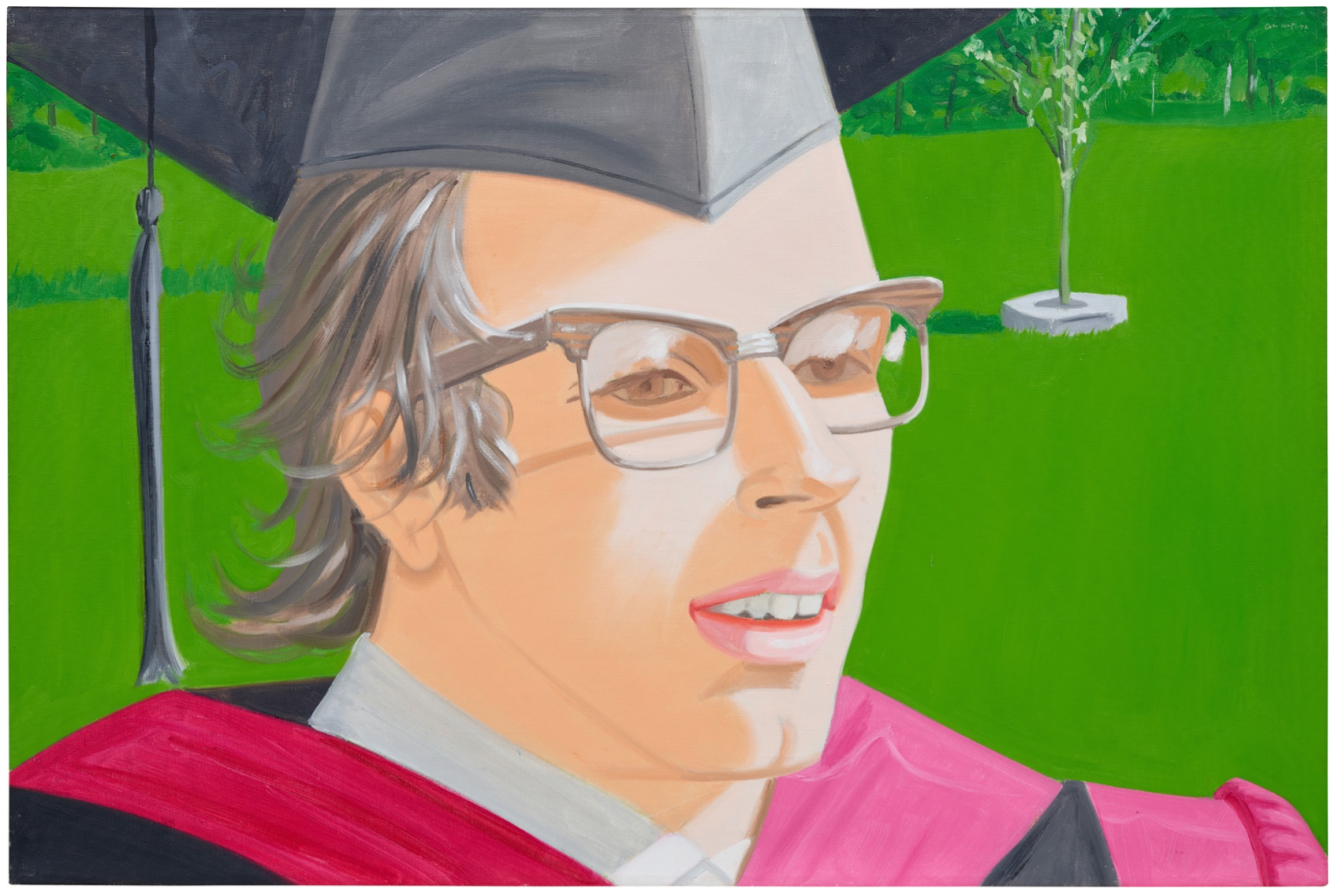
ALEX KATZ
Edmund, 1972
Oil on linen
32 1/4 x 48 1/8 inches (81.8 x 122.2 cm)
Signed and dated ‘Alex Katz 72’ upper right; signed and dated ‘8-72 Alex Katz’ on the overlap
#10. Ada in a Straw Hat, 1978
Christie’s online: 21 July 2021
Estimated: USD 30,000 – 50,000
USD 175,000
Alex Katz (b. 1927), Ada in a Straw Hat | Christie’s (christies.com)
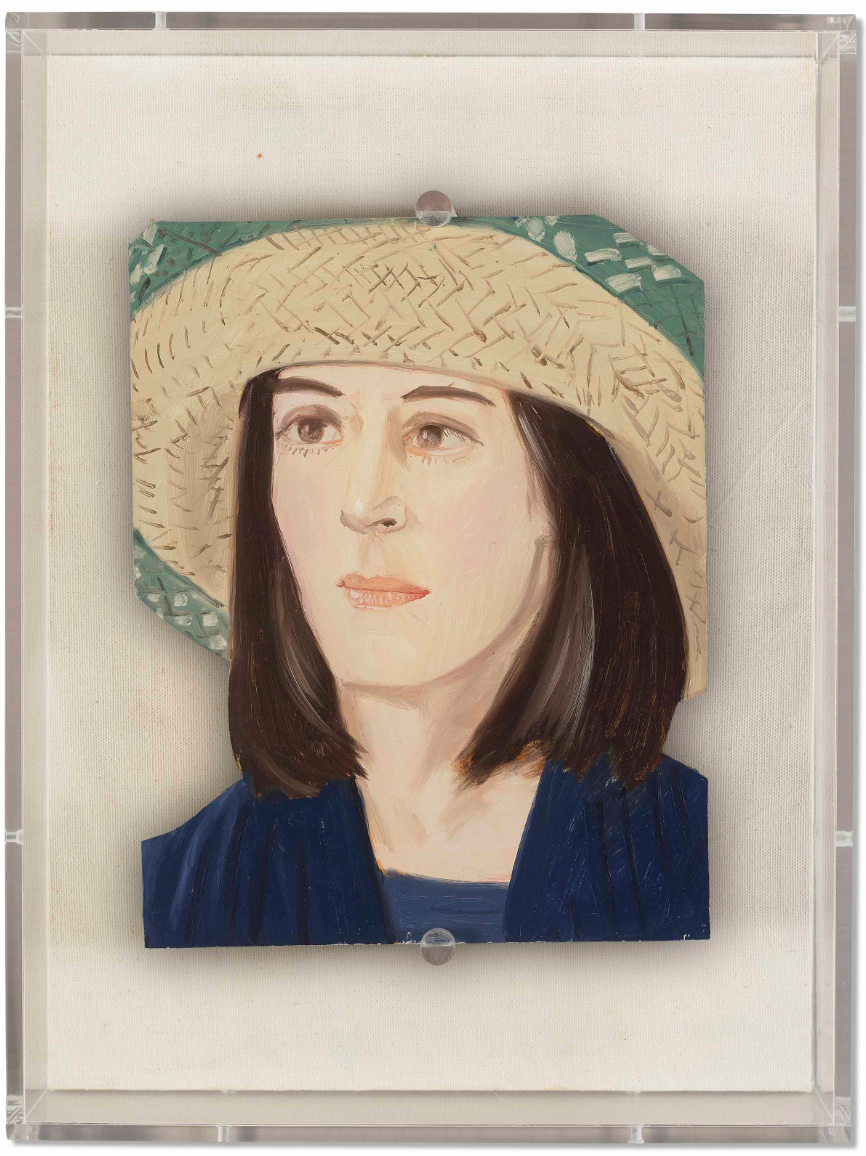
Alex Katz (b. 1927)
Ada in a Straw Hat, 1978
oil on aluminum cutout
105/8 x 83/8 inches (26.9 x 21.2 cm)
#12. Self-Portrait, circa 1977
Christie’s London: 2 July 2021
Estimated: GBP 70,000 – 90,000
GBP 87,500 / USD 120,706
ALEX KATZ (B. 1927), Self-Portrait | Christie’s (christies.com)
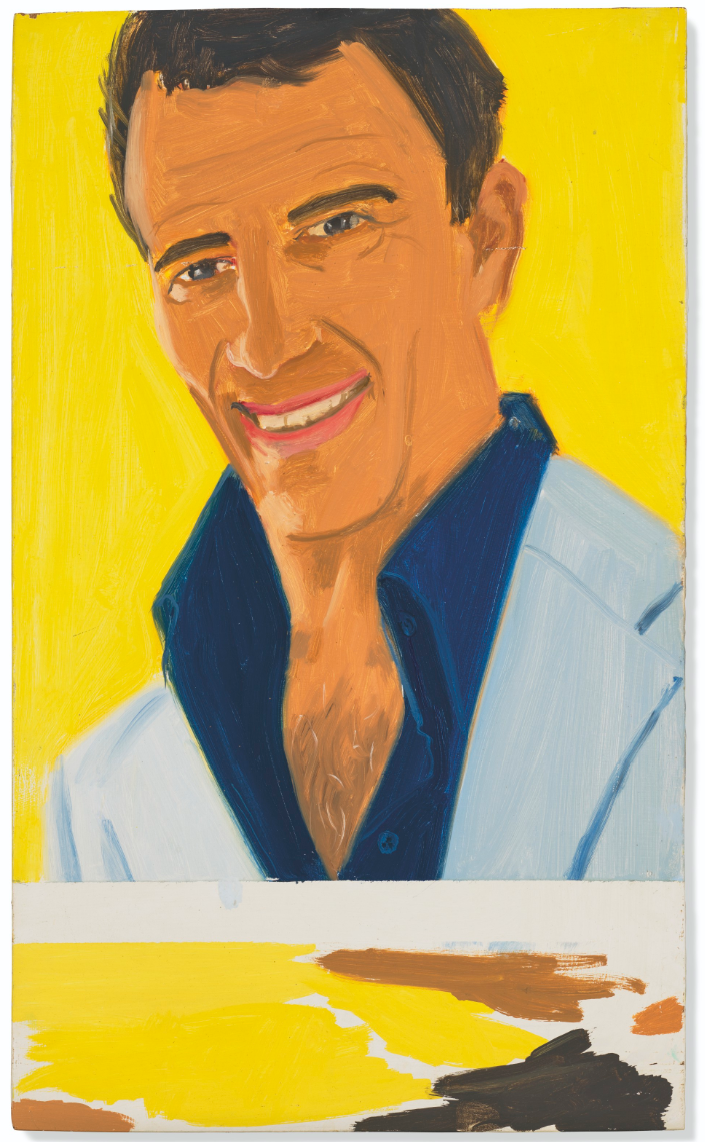
ALEX KATZ (B. 1927)
Self-Portrait, circa 1977
Oil on masonite
18 7/8 x 11 1/4 inches (48 x 28.5 cm)
#15. Ada with Sunglasses (Study no. 1), 1969
Christie’s Amsterdam: 25 November 2021
Estimated: EUR 30,000 – 50,000
EUR 81,250 / USD 91,107
Alex Katz (b.1927), Ada with Sunglasses (Study no. 1) | Christie’s (christies.com)
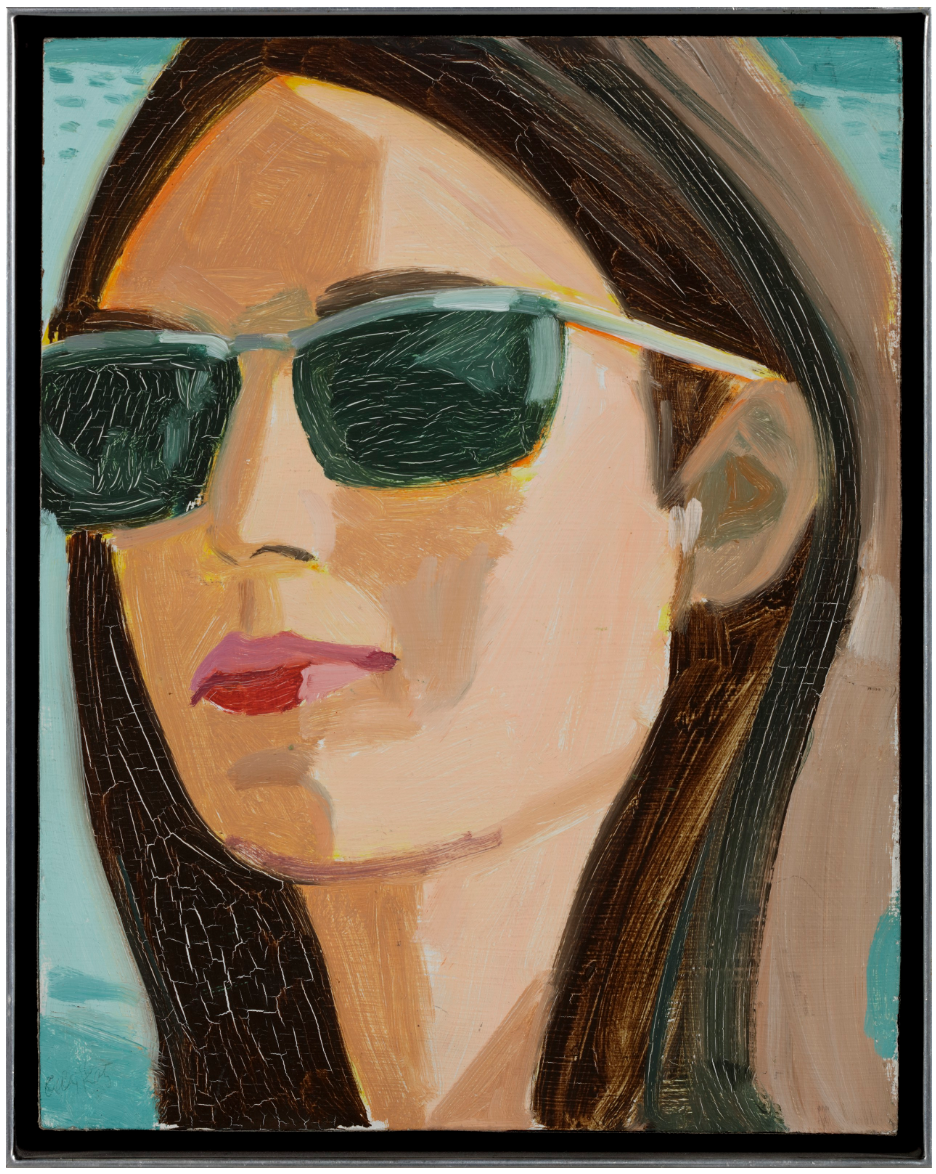
Alex Katz (b.1927)
Ada with Sunglasses (Study no. 1), 1969
Oil on masonite
30 x 24cm.
signed ‘Alex Katz’ (lower left)
#17. Eileen, 1990
Bonhams London: 15 October 2021
Estimated: GBP 30,000 – 50,000
GBP 60,250 / USD 82,886
Bonhams : Alex Katz (B. 1927) Eileen 1990
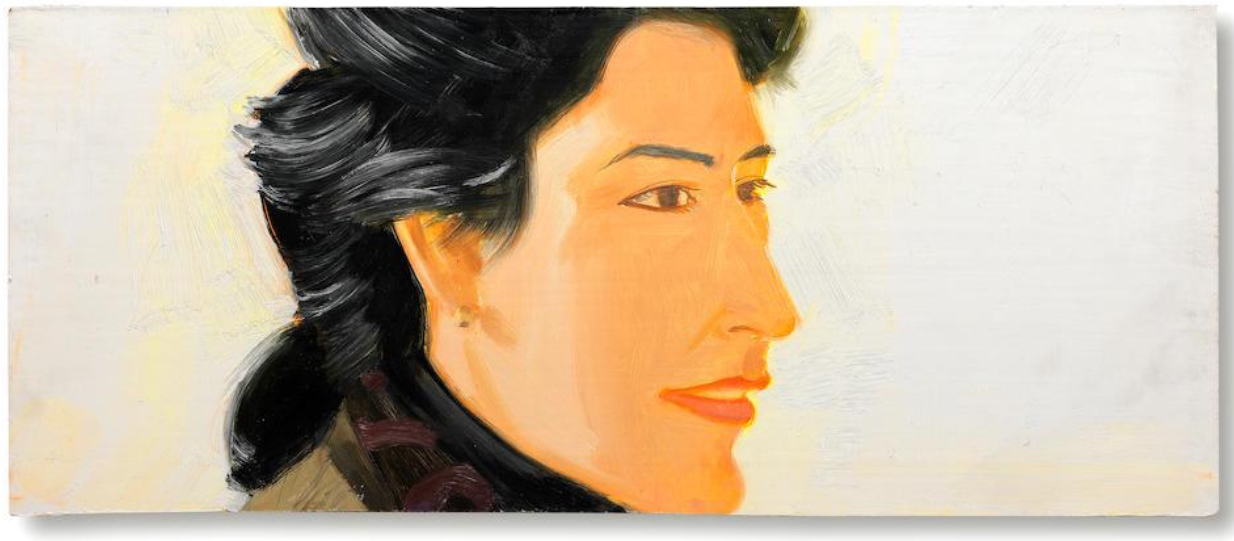
Oil on masonite
10 1/8 x 24 inches (25.7 x 61 cm)
#18. Erik, 1997
Christie’s Amsterdam: 25 November 2021
Estimated: EUR 20,000 – 30,000
EUR 60,000 / USD 67,279
Alex Katz (b. 1927), Erik | Christie’s (christies.com)
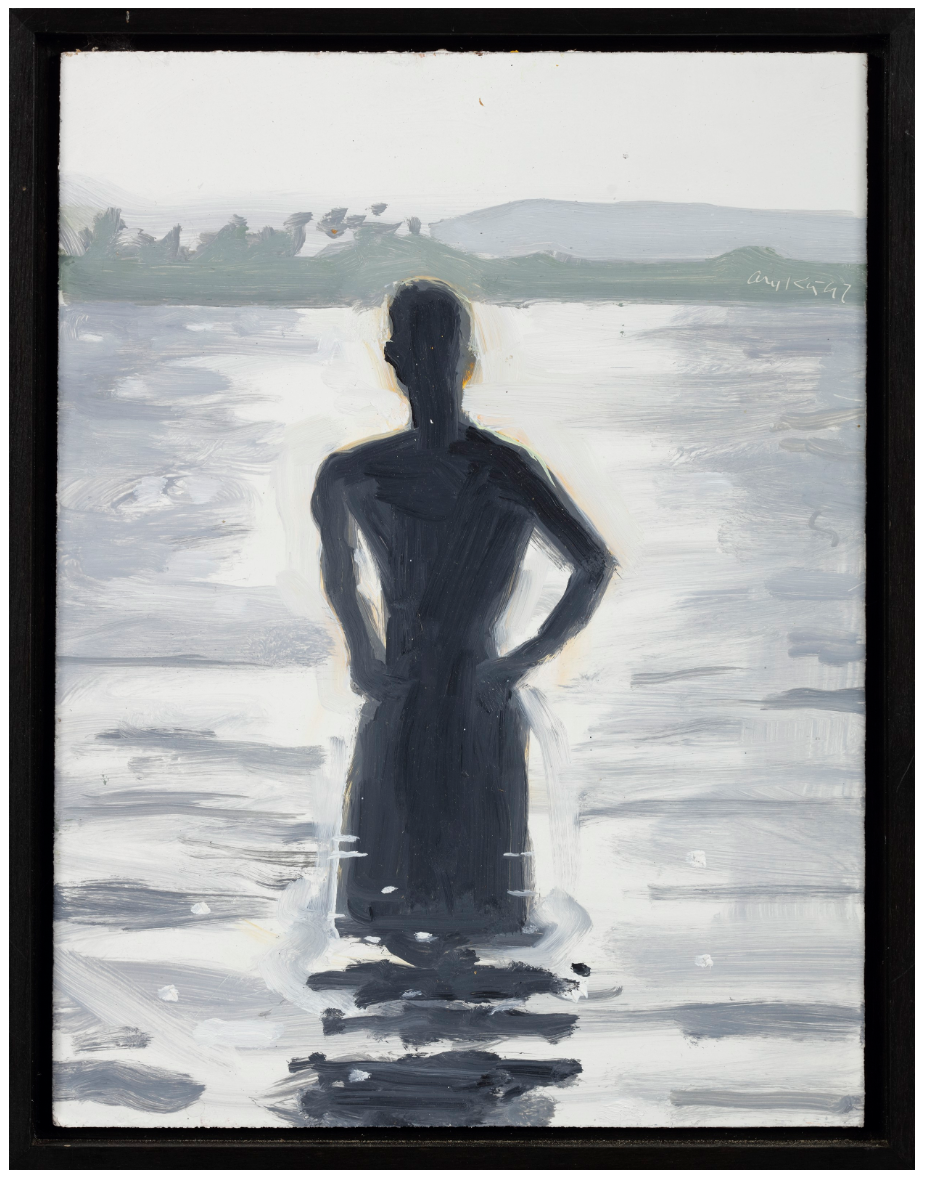
Alex Katz (b. 1927)
Erik, 1997
Oil on board
30.5 x 23 cm
Incised with the artist’s signature and date ‘Alex Katz ’97’ (upper right)
#21. Boy, 2001
Sotheby’s online: 21 July 2021
Estimated: USD 30,000 – 50,000
USD 52,920
Boy | Contemporary Art Online | New York | 2021 | Sotheby’s (sothebys.com)
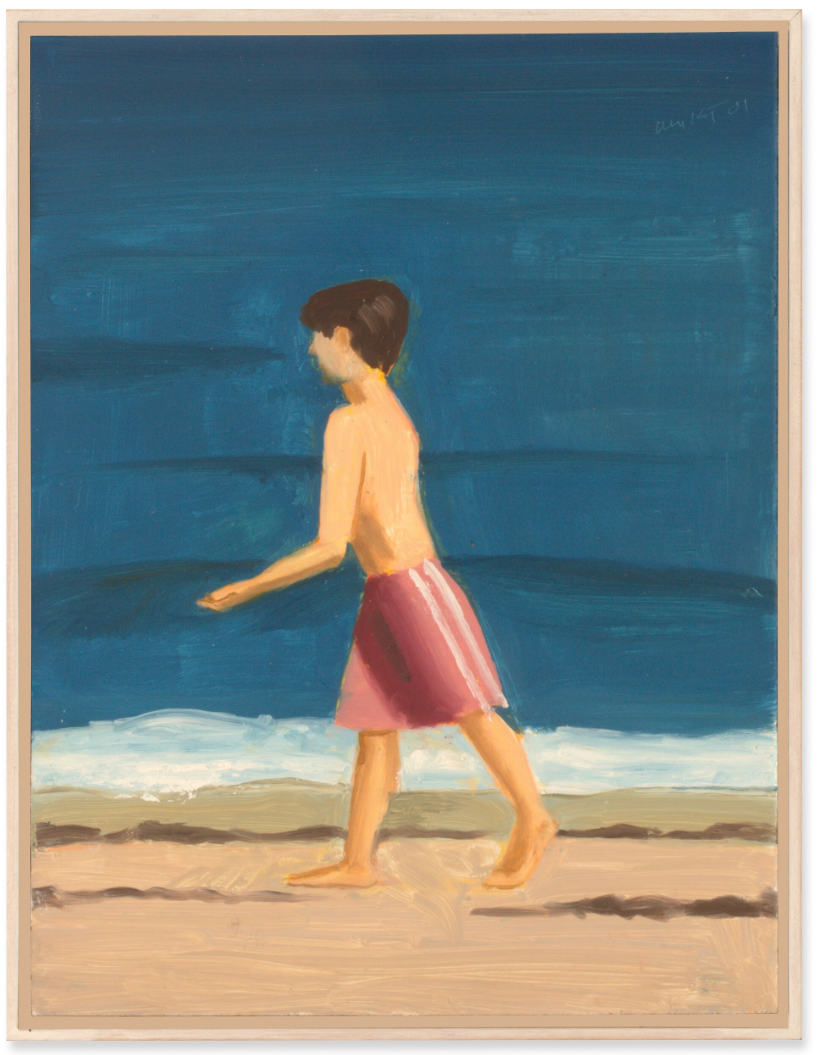
ALEX KATZ (b. 1927)
Boy, 2001
Oil on board
15 7/8 x 11 3/4 inches (40.3 x 29.8 cm)
Signed and dated 01
PART III: FOCUS
Monumental Works
Emma, 2015
Property from an Ambassadorial Collection
Sotheby’s New-York: 15 May 2026
Estimated: USD 600,000 – 800,000
USD 960,000
Alex Katz | Emma | Contemporary Day Auction | 2026 | Sotheby’s
ALEX KATZ (b. 1927)
Emma, 2015
Oil on linen
84×148 inches (213.4 x 375.9 cm)
Signed and dated 15 (on the overlap)
Executed in 2015, Emma belongs to a vital late chapter in Alex Katz’s long engagement with dancers, a subject that has animated his practice since the late 1950s and one that has repeatedly allowed him to merge portraiture with rhythm, repetition, and staged presence. Against an electrifying ground of saturated orange pigment, the same figure appears in successive poses, recording elegant motion through repetition and spacing. In Emma, his allegiance to live art is felt with particular clarity: the painting is not simply a portrait, but an arrangement of movement gracefully unfolding across space.
“I’ve been involved with dancing since the late 50s, with Paul Taylor. When you see a dancer on the stage they’re about one inch high, and what you experience in my paintings is life-size. I did a series of dancers with the torsos about four or five years ago, so this time I thought I’d do the faces and try to apply to them the emotion and experience you have when you see the dancers on stage.”
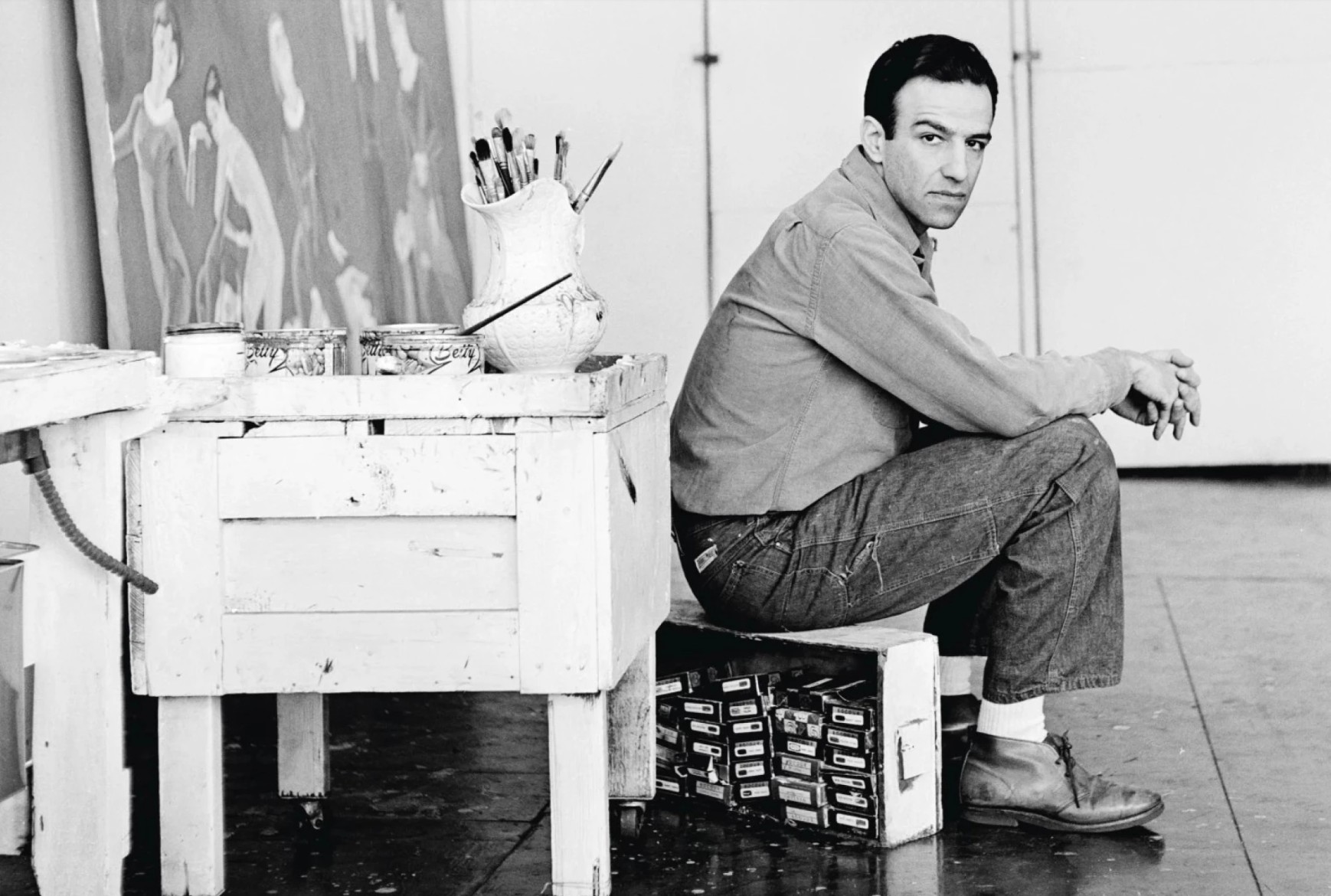
Katz’s interest in dance was never incidental. Over six decades, he painted dancers and designed sets and costumes for theater and dance productions, most notably in sustained collaboration with the Paul Taylor Dance Company. What drew Katz to dancers was their command of instantaneous gesture. Throughout his career he sought to capture the immediacy of visual experience, compressing swift movements into a condensed image of heightened awareness. Dancers offered a perfect analogue for that ambition: they are figures whose identities are inseparable from motion, balance, timing, and poise. In Emma, Katz renders those qualities with characteristic economy through his portrayal of a dancer in her preparatory ballet poses. The composition is built from broad planes of color and crisp contours rather than descriptive nuance, yet the effect is anything but static. Each figure appears suspended at a threshold between stillness and movement, so that the painting holds in tension the instantaneous and the continuous, the single pose and the larger choreography it implies.
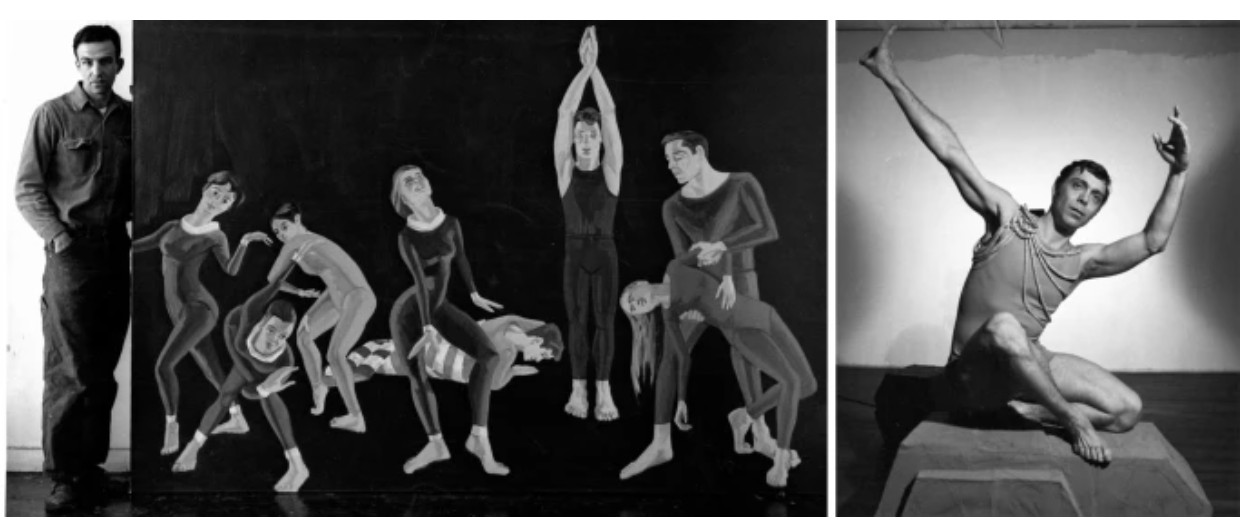
LEFT: Alex Katz with his painting of the Paul Taylor dance company in 1966. Photograph by Jack Mitchell/Getty Images.
RIGHT: Paul Taylor performing Foreign Exchange in a setting by Alex Katz in 1970. Photograph by Jack Mitchell/Getty Images.
Reflecting back on Katz’s artistic engagement with Peter Paul Dance Company, Michael Novak said: “There’s something very, very unique about dancing in an Alex work: the environment feels so specific and immersive for the performer. It wasn’t just Alex’s sense of color and scale, and the vibrancy of how he used tone within his work, that, I think, caught Paul’s eye. There was also an element of the “obstacle.” Through the 15 dances that the two of them created together, Paul would often turn to Alex to create an environment that was a challenge.” (Paul Taylor Dance Company, 1963–64, The Guggenheim, October 2022 (online)).
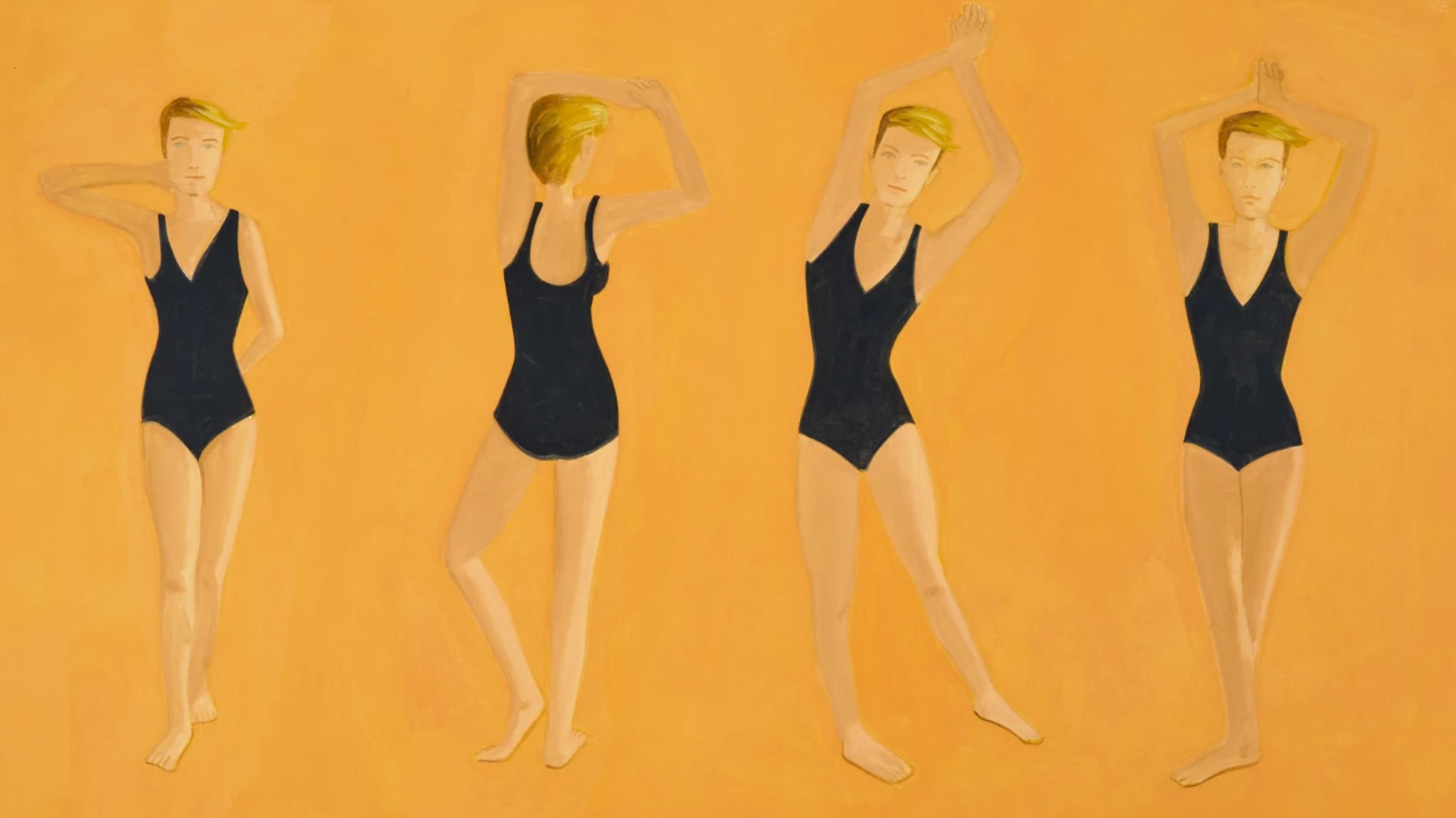
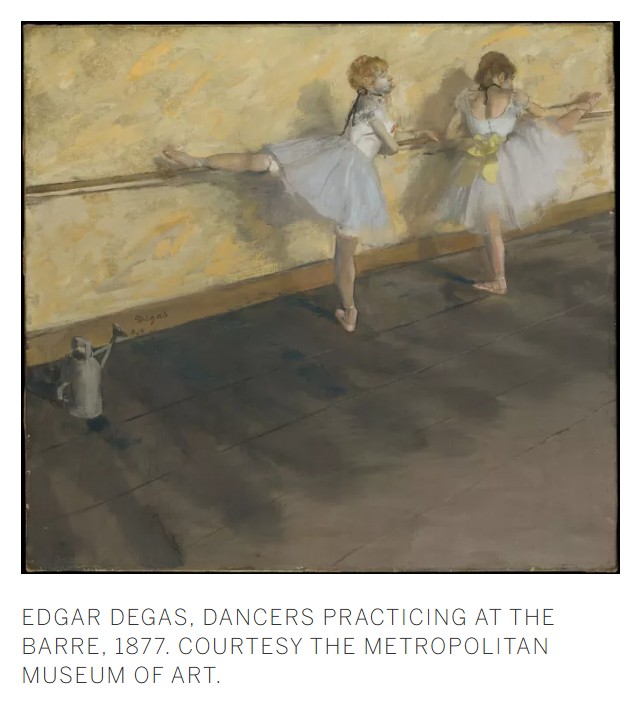
In Emma, the intrigue of this monumental arrangement lies in the figure’s absence of a defined choreography or recognizable dance sequence. Spread across an expansive field of warm, luminous orange, six renderings of the same female figure, Emma, appear in subtly varied poses. Katz does not present her as a fixed likeness so much as a sequence of intervals: an arm lifted, a torso turned, a stance of pensiveness, a gaze redirected. More than a dance sequence, Katz captures Emma at a warm-up stage, a limbo between a full-fledged performance and a static position. The work recalls Degas’s dancers, often shown not in climactic motion but in rehearsal, stretching, adjusting, or waiting in the wings. As with Degas, Katz is less interested in spectacle than in the suspended, private moments that precede performance, when the body is most revealing in its concentration, informality, and quiet self-possession.
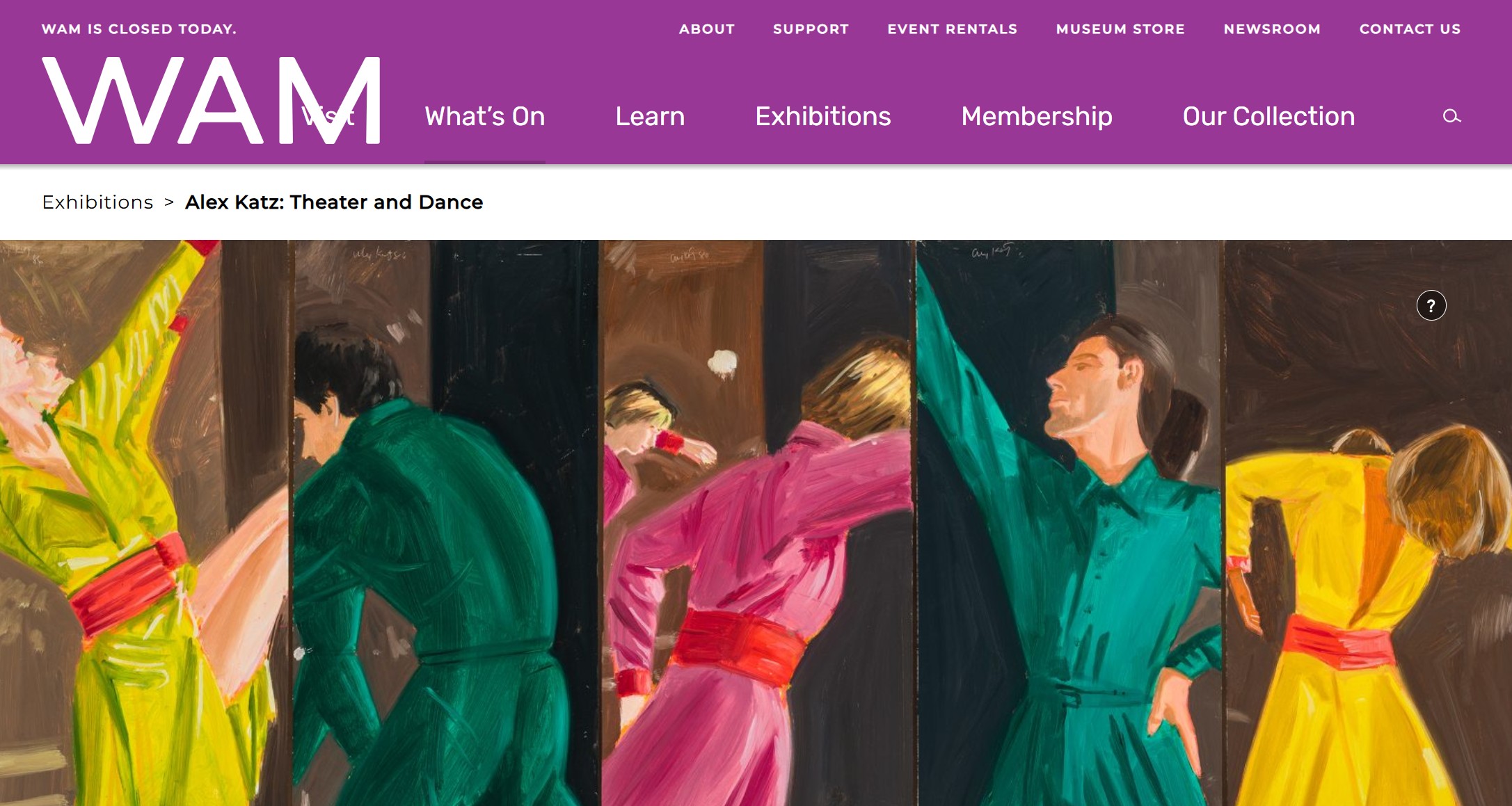
The recent exhibition Alex Katz: Theater and Dance, organized by the Colby College Museum of Art, was the first comprehensive museum presentation devoted to this dimension of his work, underscoring just how deeply choreography has shaped Katz’s visual imagination. Emma stands as a superb example of Katz’s mature ability to fuse the immediacy of portraiture with the temporal logic of dance. Monumental yet airy, sensual yet rigorously composed, the present work reveals how profoundly live arts, and its most personal, intimate moments, informed much of Katz’s oeuvre.
Springtime, 2009
Christie’s New-York: 1 October 2024
Estimated: USD 1,000,000 – 1,500,000
USD 1,562,500
ALEX KATZ (B. 1927), Springtime | Christie’s (christies.com)
ALEX KATZ (B. 1927)
Springtime, 2009
Oil on linen
84×144 inches (213.4 x 365.8 cm)
The great American artist Alex Katz choreographs a procession of six female figures across his monumental canvas painting Springtime. Against a bright palette evocative of the titular season, these figures, each adorned in a white summer dress and straw hat, strike contrasting poses, directing their gazes straight toward the viewer. Upon closer inspection, these figures are in fact duplicated representations of only two women, their respective features portrayed from a multiplicity of angles. In this manner, Katz is able to emphasize the formal elements from his two models while contravening the essential task of portraiture, providing a record of subjective singularity. Such paradoxical portraits form what for art historian David Sylvester is the most significant category in Katz’s oeuvre, inspired by both Eastern and Western art historical traditions. The artist has cited the profound influence of Edo period woodblock master Kitagawa Utamaro while discussing his repetitive works, admiring his virtuoso compositional formatting while creating works in the Japanese visual tradition, where the same characters appear multiple times on the same sheet, representing different stages of the plot. Katz similarly draws upon a rich Western tradition of repeated figures. In a panel from Lorenzo Ghiberti’s famed bronze Gates of Paradise for the Florence Baptistry, Jacob and Esau depict the protagonists several times as the panel dictates the hagiographic narrative. However, in both Ghiberti and Utamaro’s cases, duplication serves as a narrative shorthand to indicate the progression of time, while in Katz’s case, the artist relies on the motif in order to evacuate any psychic content from his tableau. In this way, the motif functions more like how Peter Paul Rubens repeats the female form, notably in The Judgement of Paris, located in the collection of the National Gallery, London. Here, Rubens excavates the representative function of the three strikingly similar female figures—ostensibly depicting the goddesses Athena, Hera, and Aphrodite—to instead focus on depicting their forms from different perspectives.
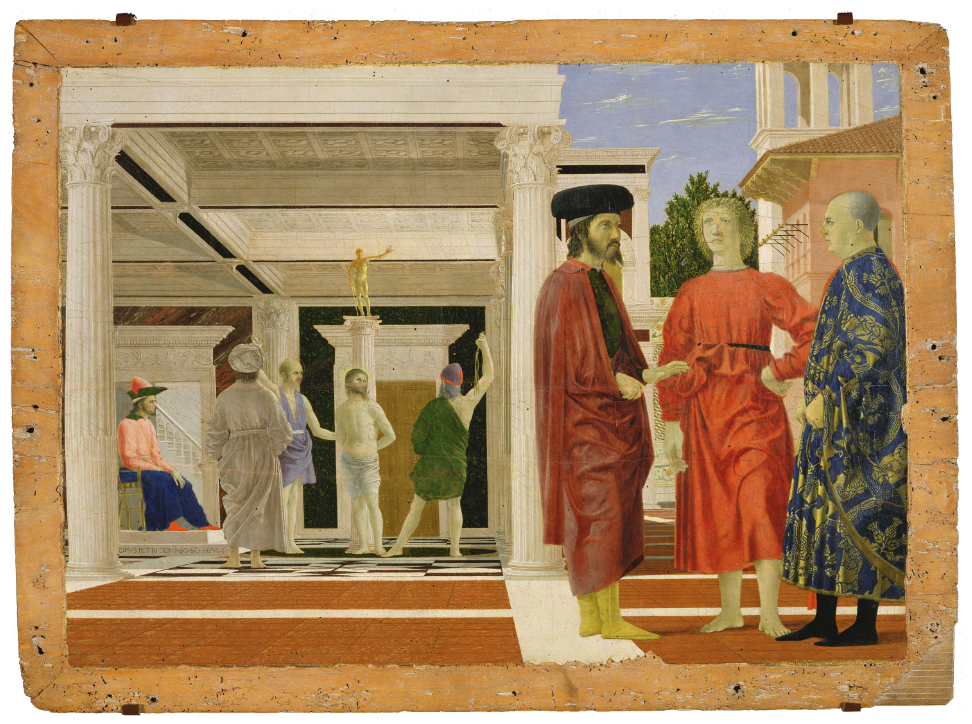
Piero della Francesca. The Flagellation of Christ, circa 1463-1464. Galleria Nazionale delle Marche, Palazzo Ducale, Urbino.
Photo: Bridgeman Images.
Katz goes further than Rubens in removing his subjects from the functions of portraiture by placing them in a vague and liminal space out of accordance with the everyday. These disconnected figures unmoored in space reveal the inspiration of yet another old master painting, the great early Renaissance painter and mathematician Piero della Francesca. Katz has cited Piero’s casting of Jesus in space in the Flagellation of Christ as “one of the greatest things in Western Art,” and with Springtime, he extends Piero’s ambiguous placement of figures in space further via the removal of any backgrounds which could tether subject to illusional space. (A. Katz, quoted by D. Sylvester, “Introduction by David Sylvester,” Alex Katz Twenty Five Years of Painting from the Saatchi Collection, exh. cat., London, Saatchi Gallery, 1997, p. 13).
Spanning twelve feet in width, the impressive scale of Springtime follows from Katz’s working practice since the 1960s, when he began to emphasize large scale with his canvases. Scale, for Katz, was a way for his figurative work to compete with the energetic compositions being made by the contemporaneous Abstract Expressionists.
“Those Klines and de Koonings had so much big energy;
I wanted to make some that knocked them off the wall.”
Large scale has since become one of the artist’s trademarks, and the current work makes full use of the scale, which emphasizes the paradoxical elements of the composition by allowing each figure to be over life size.
Ariel, 2016
Phillips London: 13 October 2023
Estimated: GBP 650,000 – 850,000
GBP 698,500 / USD 847,694
Alex Katz – 20th Century & Contempor… Lot 15 October 2023 | Phillips
ALEX KATZ
Ariel, 2016
Oil on linen
165 x 351 cm (64 7/8 x 138 1/4 inches)
Signed and dated ‘Alex Katz 16 Alex Katz 16’ on the overlap
Recalling the scale, format and graphic immediacy of towering billboards featuring the smiling faces of beautiful young women advertising everything from consumer products to Hollywood movies, Ariel is a bright and bold example of Alex Katz’s radical take on realism which has, over the course of the last eight decades, redefined the vocabulary of contemporary portraiture. Like Katz’s portraits of his wife and primary muse Ada, the subject here is at once highly individuated and universal, a technique which has enabled the artist to anchor the idealized elegance and mysterious impassivity of his unique visual style, granting an emotional depth to his fascination with surface and the fleeting moment.
Set against a sizzling ground of saturated tangerine tones, the titular Ariel appears in white bathing suit and sunhat, Katz deftly capturing the languorous summer heat and laid-back glamour of the East Coast and its photogenic inhabitants. Carefree, she passes in front of us, catching our eye as she goes. Borrowing at once from the visual language of film and the statuesque, static quality of horizontal frieze reliefs, the painting is a study in motion, the subject shown in three, sequential poses as if caught in a series of snapshots as she moves through the frame, swinging her sunhat out in front of her.
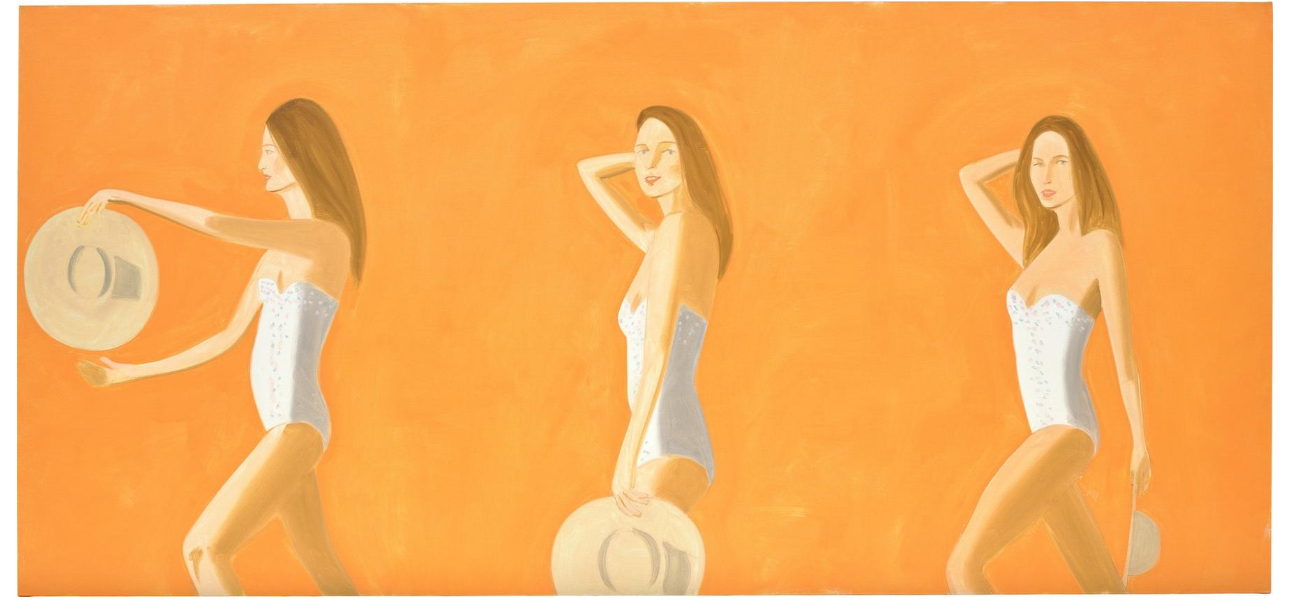
Paradoxically magnifying the sense of kinetic energy and movement by localizing it in a series of static, sequential images, Ariel visually recalls the radical photographic experiments of Eadweard Muybridge, whose 1887 Animal Locomotion introduced entirely new ways of thinking about photography, movement, and the concept of time. Amassing over 100,000 images of animals and humans moving and engaged in a variety of tasks, these pioneering studies of motion presented huge innovations in the fields of both photography and science, paving the way for cinema and more complex conceptualizations of our experience of time and perception.
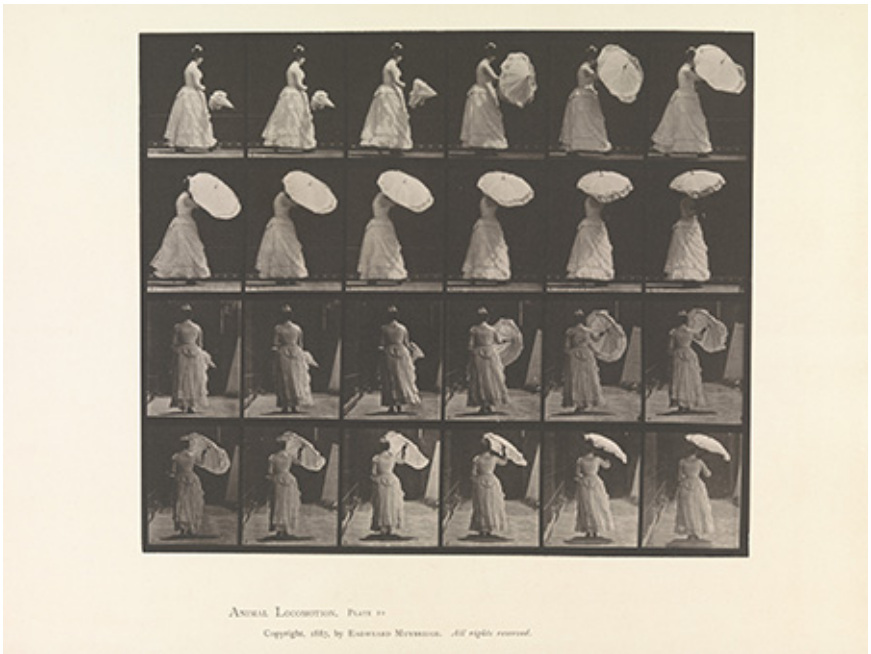
Eadweard Muybridge, Woman Opening a Parasol, 1883-86, printed 1887, Metropolitan Museum of Art, New York. Image: © Metropolitan Museum of Art, New York. Gift of the Philadelphia Commercial Museum, 1938, 38.82.1
Now in his 96th year, ideas around movement and, more specifically, dance have preoccupied Katz throughout his long career. During the 1960s, the artist started working with the choreographer Paul Taylor, a rich and rewarding collaboration which evolved over 20 years and saw Katz produce innovative sets and costumes which experimented with scale, framing mechanisms, and the same flat lighting that would come to define his painting. At the same time, Katz developed a body of work based on the dancers he was working with, their own focus on the primacy of movement and gesture encouraging the artist to work towards capturing that same immediacy in painting.
Executed in 2016, the year after The Metropolitan Museum in New York mounted an exhibition dedicated to works by the artist in their collection, Ariel sits in close relation to Katz’s slightly later Coca-Cola Girls series, adopting the same graphic sensibility, sequence of balletic gestures, and richly nostalgic atmosphere as we see in the present work. Highly characteristic of Katz’s iconic visual style in its use of bold blocks of colour and clean contours, Ariel also captures something more essential about the mechanics of looking, the desire activated in spectatorship, and the nature of portraiture itself. Slowing down this fleeting moment and separating it into its constituent parts, Katz dissects the sudden flash of self-awareness as Ariel becomes aware of herself being looked at.
On Time, 2001
Sotheby’s Hong-Kong: 5 October 2023
Estimated: HKD 12,000,000 – 18,000,000
HKD 11,340,000 / USD 1,448,072
ALEX KATZ (b. 1927)
On Time, 2001
Oil on linen
102×216 inches (259.1 x 548.6 cm)
Monumental in scale and striking for its vibrant palette and signature flatness, Alex Katz’s On Time (2001) is emblematic of the artist’s renowned idiosyncratic aesthetic that redefined contemporary portraiture in the twentieth century. Lit by a golden glow emanating from outside of the pictorial frame against an entirely dark background, On Time demonstrates the artist’s atmospheric ability to narrate through subtle shifts in hue. Set against this darkened space, Katz’s invigorating use of colour frames the faces of the ensemble of figures within the composition, their expressions rendered in the artist’s impossibly cool, reductive style. An instantly recognizable example of Katz’s iconic mode of portraiture, On Time presents a tranquil, contemplative snapshot of everyday life.
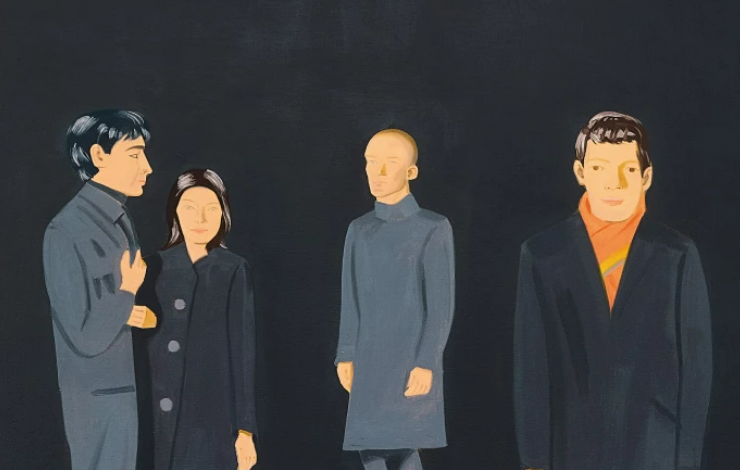
This dramatic, widescreen composition stems from the artist’s late series of ‘Black Paintings’, which spotlight their sitters against profoundly dark backdrops to create a cinematic intensity of vision. The ‘black’ that fills the pictures is in fact richly varied, with each given its own subtle shade: On Time is an inky grey. Painted well into his ninth decade, these works realize an ambition for vastness that was Katz’s preoccupation from an early stage. Studying art at Cooper Union in the era of Abstract Expressionism, the Brooklyn-born painter wanted to make figurative work that would stand up against the most powerful canvases of the New York School.
‘Those Klines and de Koonings had so much big energy; I wanted to make something that knocked them off the wall. Just like that – more muscle, more energy. They set the standard. It wasn’t the style I wanted to follow, but I wanted to paint up to their standards. So I took a figurative work and I said, “Well, I want a figurative painting on the scale of the Abstract Expressionists,” you know, on a big scale.”
Lauded for his stylized portraits of family and friends in everyday yet enigmatic moments, Katz creates artworks that imbue Pop aesthetics with an introspective charge. Painted in the year following the birth of his grandchildren, On Time belongs to a series of works which take the artist’s family as his subjects; his son, Vincent, as well as the instantly recognizable figure of the stylish and bewitching Ada Katz, the artist’s wife and longstanding muse. Rendering in delicate detail an intimate familial moment, these figures are bathed in the light of the late afternoon sun, with the works title perhaps referencing a moment of nostalgia on the part of the artist. The passing of time within the artist’s life can be traced throughout his oeuvre, a lineage that can be seen in the portraits of his son of the late 1960s. As Vincent describes, “All these works that are depictions of my family, or my mother, myself, they’re like family photos in a way. I can’t not see them that way. I also have become a critic myself, so I also see them as artworks. And I can see their art-historical position” (Vincent Katz, quoted in “Description of Vincent and Tony, 1969”, Guggenheim Museum, 20 October 2022).
The Grey Dress, 1982
Phillips New-York: 15 November 2022
Estimated: USD 1,200,000 – 1,800,000
USD 2,208,000
Alex Katz – 20th Century & Contempo… Lot 20 November 2022 | Phillips
ALEX KATZ
The Grey Dress, 1982
Oil on canvas, triptych
Each: 78 x 60 1/8 inches (198.1 x 152.4 cm)
Overall: 78 x 180 3/8 inches (198.1 x 458.2 cm)
A monumental triptych created at the height of Alex Katz’s career, The Grey Dress, 1982 is emblematic of the artist’s singular painterly practice that transforms his figural subjects into timeless visual icons. Here, the artist brings together three women, each modeling a gray dress, who fashionably pose at different angles with their hands on their hips and look directly at the viewer. Painted in 1982, the present work marks the pivotal moment in Katz’s career when he began actively exploring a multi-panel format for his large-scale canvases—prefiguring his heroically scaled Pas de Deux, 1983, Colby College Museum of Art, Waterville, Maine and Summer Triptych, 1985, Private Collection. One of the artist’s largest works to come to auction to date, The Grey Dress ambitiously captures Katz’s fascination with surface and appearance in both subject and painting, embodying the heart of Katz’s practice.
Portraits
Green Hat 2, 1964
PROPERTY FROM THE COLLECTION OF CHARLES L. REINHART, NEW YORK
Bonhams New-York: 21 May 2026
Estimated: USD 80,000 – 120,000
USD 229,100
ALEX KATZ (B. 1927)
Green Hat 2, 1964
Oil on board
13-1/8 x 14-7/8 inches (33.4 x 37.8 cm)
Signed and dated ‘Alex Katz 64’ (upper right)
The present work, Green Hat 2, was acquired directly from Alex Katz by Charles L. Reinhart, an influential figure in American modern dance whose career fostered collaboration across artistic disciplines and cultural borders. Resonating beyond its formal qualities, Green Hat 2 embodies a moment of creative cross-pollination in mid-twentieth-century New York, when painters, choreographers, and cultural leaders worked in close proximity and shared intellectual ground. It was within this orbit, where dance intersected with contemporary visual art, that Reinhart met Alex Katz, who had a long-standing creative relationship with Paul Taylor, designing sets and costumes for Taylor’s productions. Through his work with Taylor’s company, Reinhart became embedded in this same network of artists and collaborators, positioning him in direct contact with Katz at a formative moment in both of their careers.
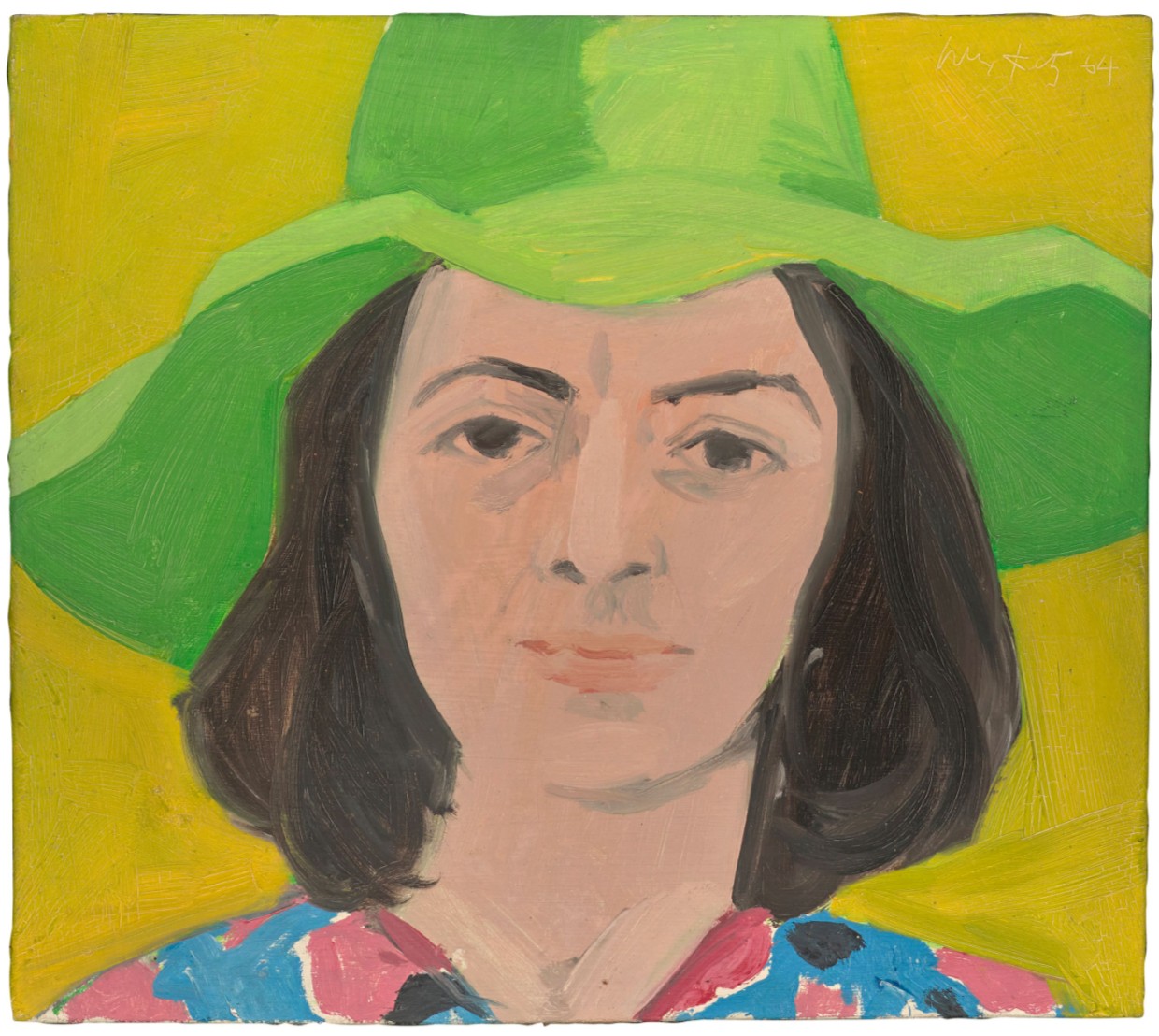
Painted in 1964, Green Hat 2 reflects Alex Katz’s commitment to a contemporary mode of portraiture grounded in immediacy, clarity, and modern visual experience. Created at a time when American painting was largely dominated by abstraction, Katz pursued figuration not as a return to tradition but as a language for the present. Katz’s cool, pared-down portrait mirrors the modern sensibility of the artistic circles Reinhart cultivated. As both artwork and historical object, Green Hat 2 stands as a testament to the intertwined worlds of visual art and performance and to the legendary figures, like Reinhart, who helped shape the cultural landscape of their time. Reinhart ultimately served as Director of the American Dance Festival for 43 years, where he was a celebrated and deeply respected authority in contemporary dance in the United States. Under his leadership, the festival became a vital platform for experimentation, new commissions, and international exchange. He subsequently held leadership roles with major cultural institutions and championed cross-cultural artistic exchange, fostering enduring artistic global connections.
Sarah, 2005
Property from an Important European Collection
Phillips New-York: 19 November 2025
Estimated: USD 400,000 – 600,000
USD 709,500
Alex Katz Modern & Contemporary Art Evening Sale featuring Cera the Triceratops
ALEX KATZ
Sarah, 2005
Oil on linen
60 1/8 x 84 1/8 inches (152.7 x 213.7 cm)
Signed and dated “Alex Katz 05” on the overlap
Alex Katz’s Sarah, painted in 2005, exemplifies the artist’s signature clarity and restraint. Against a vivid, flat green ground, the sitter’s face and hair are isolated in a simplified composition that heightens her quiet intensity. Katz defines her features with crisp contours and smooth, unmodulated color, eliminating surface texture in favor of precision and light. Shown in three-quarter profile, Sarah’s gaze drifts just beyond the viewer—vacant yet intent—inviting attention while withholding connection. The close crop and shallow depth draw her startlingly near, yet the stylized reduction of form keeps her at a remove. This paradox of intimacy and distance lies at the heart of Katz’s distilled approach to portraiture, where surface clarity becomes a means of abstraction and the figure assumes the iconic stillness of an image.
“I like to make an image that is so simple you can’t avoid it,
and so complicated you can’t figure it out.”
Amedeo Modigliani, Jeanne Hébuterne, 1919. The Metropolitan Museum of Art, New York.
Image: The Metropolitan Museum of Art, New York, Gift of Mr. and Mrs. Nate B. Spingold, 1956
Katz approaches painting as a means to capture what he describes as the “velocity” of an image—the sensation of life unfolding in real time. He describes his work as a kind of realism suited to the present, explaining,
“My contention is that my paintings are as realistic as Rembrandt’s… Realism’s a variable. The highest thing an artist can do is to make something that’s real for his time.”
In Sarah, that conviction manifests through tempo rather than detail: the measured rhythm of line and color conveys the quickness of observation stilled in paint. Rejecting the traditional aims of portraiture, Katz focuses not on psychological likeness, but on perception itself, presenting an image pared to its essential forms. As he has often maintained, his goal is not to tell a story but to create a moment, a pause in which seeing becomes its own subject. Katz’s pursuit of capturing “things quickly passing” is keenly felt in Sarah, where swiftly observed moments and particular conditions of light convey appearances as they are both felt and perceived in the immediacy of “the present tense,” the now.
[Left] Milton Avery, Seated Girl with Dog, 1944. Collection Friends of the Neuberger
Museum of Art, Purchase College, State University of New York. Gift from the Estate of Roy R. Neuberger. Artwork: © 2025 Milton Avery Trust / Artists Rights Society (ARS), New York
[Right] Gerhard Richter, Betty, 1988. Saint Louis Art Museum, Missouri. Image/Artwork: © Gerhard Richter 2025 (0124)
Katz’s distilled aesthetic is the result of a meticulously honed process that merges classical methodologies with modern sensibilities. He begins with pencil drawings and oil sketches, then enlarges his compositions using the Renaissance cartoon technique, transferring outlines to canvas to ensure accuracy without sacrificing freshness. His paint application follows an alla prima (wet-on-wet) technique, allowing broad, fluid brushstrokes that preserve the lucid precision of his vision while maintaining the structural integrity of form. The elimination of surface detail, combined with the precise orchestration of light and shadow, yields a composition of remarkable stillness and clarity—a synthesis of spontaneity and control.
Born in Brooklyn in 1927 to Russian émigré parents, Katz studied at The Cooper Union and the Skowhegan School of Painting and Sculpture, where he formulated his commitment to figuration amid the dominance of Abstract Expressionism. Rejecting the gestural intensity of his contemporaries, he sought a visual language grounded in surface, light, and appearance rather than in emotion or gesture. This countercurrent position, while radical at mid-century, became foundational to a renewed interest in realism and the figure in postwar American art.
Egon Schiele, Portrait of Wally Neuzil, 1912. Leopold Museum, Vienna. Image: Erich Lessing / Art Resource, NY
Katz’s synthesis of classical form and modern clarity bridges high modernism and the vernacular idioms of popular culture—advertising, cinema, and fashion photography. Sarah belongs to a lineage of paintings that invite sustained contemplation of the surfaces through which identity, emotion, and presence are mediated.
“The vocabulary or grammar is all out of abstract painting – that’s what makes my painting different from all the other figurative painters”
Katz’s enduring influence lies in his ability to transform fleeting moments into enduring icons.
“Pop art deals with signs, while my work deals with symbols. Pop art is cynical and ironic. My work is not.”
This distinction underscores his pursuit of a visual language both contemporary and timeless—rooted in tradition yet distinctly of the present. Today, Katz’s work is represented in major museum collections worldwide, including the Museum of Modern Art, the Whitney Museum of American Art, the Metropolitan Museum of Art, and Tate Modern. His recent retrospective, Alex Katz: Gathering, held at the Solomon R. Guggenheim Museum in New York from 2022 to 2023, reaffirmed his position as one of the most influential American painters of the postwar era. Within this trajectory, Sarah stands as a consummate example of Katz’s mature style: a portrait of luminous restraint and enigmatic immediacy, capturing the ineffable balance between the real and the ideal, the momentary and the eternal.
Yvonne in Green, 1995
Sotheby’s London: 17 October 2025
Estimated: GBP 300,000 – 400,000
GBP 444,500 / USD 595,630
Yvonne in Green | Contemporary Day Auction | 2025 | Sotheby’s
ALEX KATZ (b. 1927)
Yvonne in Green, 1995
Oil on canvas
48 1/8 x 71 7/8 inches (122.3 x 182.5 cm)
Epitomizing Alex Katz’s signature command of flattened pictorial space, simplified form and deft coloristic contrast, Yvonne in Green is an important example of the artist’s large-scale, nocturnal urban scenes. Depicting Yvonne Force Villareal, the public arts leader and one of Katz’s most ubiquitous subjects, the present work exudes an aura of confident, metropolitan elegance. Yvonne in Green reflects the tendency in the artist’s oeuvre through the 1990s towards depicting figures against increasingly abstracted surroundings, the visual vernacular that has come to define not only the artist’s portraiture but, perhaps more importantly, his contribution to the history of contemporary art.
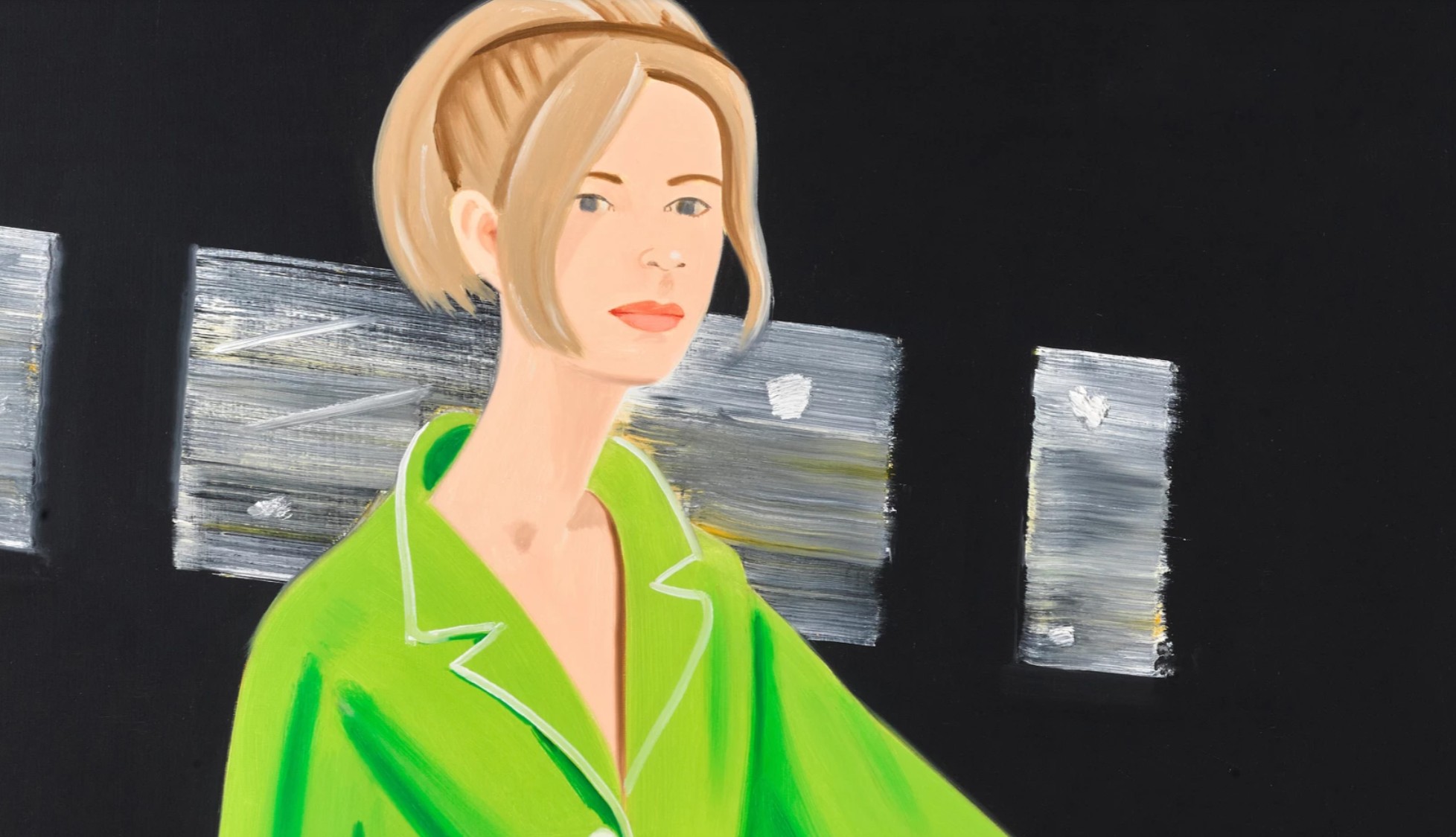
Painted in 1995, this dramatic, widescreen composition stems from the artist’s late series of Black Paintings which spotlight their sitters against intense, dark backdrops to create a cinematic intensity of vision. The work is characterized by a striking tension between vibrancy and darkness, motion and stillness, interiority and exteriority, defying any sense of narrative singularity. Yvonne’s forward stride, suggested by her outstretched arm, appears suspended by Katz’s crisp, irreverently reduced treatment of form. Her outstretched arm and commanding gaze suggest a sense of forward motion that is suspended by Katz’s crisp, irreverently reduced treatment of form. Yvonne, here, is set against an expansive, blackened vista, the ambiguity of setting here deepened by the isolated, eloquently articulated windows which pierce the night sky. A defining motif of Katz’s work from the 1990s, the windows point towards Katz’s lifelong interrogation into the complex dynamics of reflection, representation and reality.
Born in Brooklyn in 1927, Katz came of age as an artist during the heyday of Modernism and the New York School. His oeuvre is defined, however, by its individualism. The artist resisted both the agitated pictorial surfaces of Jackson Pollock, Willem de Kooning and Franz Kline and, in his realist tendencies, the mass-media iconography of Pop art. As the art historian, Donald Kuspit, has noted “Katz’s portraits are true to the way we experience others. They eloquently convey the tension between the determinate outer appearance and the indeterminate inner reality of someone known only from the outside.” (Donald Kuspit, Alex Katz Night Paintings, New York 1991, p.8)
Tamara de Lempika, Girl in Green, 1929 / Centre Pompidou, Paris
Image: © Scala, Florence
Artwork: © Tamara de Lempicka Estate, LCC / DACS Images, London / ADAGP
The present work is imbued with a deep sense of modish, lively energy. Yvonne is the co-founder of the Art Production Fund, a non-profit organization that presents public art to diverse audiences. Amplified by the scale of the work, the subject’s presence here is commanding. Her glowing complexion and bright, cinched green coat situate her as both a unique individual and a universal symbol of the modern woman much akin to Tamara de Lempicka’s stylized depictions of cosmopolitan women or Andy Warhol’s iconic society portraits of the 1960s and 70s. With sharp brushwork rinsed of superfluous detail, Katz’s unwavering interest in the animated moments of daily existence shines through the present work. An excellent example of his iconic painterly mode, this formally seductive painting epitomizes the artist’s lifelong ambition to refine, reassess and reimagine the contours of representation and reality.
Sissel, 2000
Christie’s London: 16 October 2025
Estimated: GBP 350,000 – 550,000
GBP 444,500 / USD 595,630
ALEX KATZ (B. 1927), Sissel | Christie’s
ALEX KATZ (B. 1927)
Sissel, 2000
Oil on linen
48×72 inches (122×183 cm)
Signed and dated ‘Alex Katz 00’ (on the overlap)
In Alex Katz’s Sissel (2000), an elegant figure clothed in a sky-blue suit stands out against a pale, champagne-colored background. The subject is Sissel Kardel, an artist Katz encountered in New York City around the turn of the millennium. Katz is celebrated for his portraits of friends and contemporaries, typically depicted within closely cropped compositions or—as in the present work—isolated against an enveloping painted ground. His figures become ‘types,’ paragons of the studied ease and effortless beauty which suffuses the urbane social world Katz has faithfully chronicled for some seven decades. Painted in 2000 and acquired by Alessandro Grassi the following year, Sissel was included in an exhibition of works from the Grassi collection titled Codice Colore, at the Centro Pecci, Prato in 2018, as well as an exhibition of contemporary portraiture at the Museum of Modern and Contemporary Art of Trento and Rovereto across 2013-2014.
Edward Hopper, Morning Sun, 1952. Columbus Museum of Art.
Artwork: © Edward Hopper, DACS 2025. Digital image: Artothek / Bridgeman Images.
Katz has long been interested in questions of style and fashion. Both of his parents were attentive to aesthetics, and as a child he recalls sitting with his father in the porch of their home in the St. Albans neighborhood of Queens, New York, passing judgements on the style of passersby. His understanding of color was similarly developed at this early age, kindled by the striking combinations—pink and maroon, pale yellow and pale violet—selected by his mother for the walls of their home. As an art student at Cooper Union in the late 1940s, Katz filled sketchbooks with wiry ink drawings of commuters on the New York City subway, in which he was invariably attentive to details of dress and demeanor. Throughout his oeuvre, clothing and hair recur as important markers of temporal specificity, forming a chronology of style across the later decades of the twentieth century and into the new millennium.

Painting wet-on-wet, Katz’s matte, slick brushwork reflects the surface of the society in which he lives, and the ways in which his subjects present themselves to the world. Often there is a stillness to their form which recalls nineteenth-century portraiture, for which subjects were required to hold their pose throughout long exposures. In Sissel, an unseen light source beams down from beyond the painting’s frame, starkly illuminating her icy blonde hair and pale blue clothing. Captured in a relaxed contrapposto stance and holding a thin-stemmed wine glass in her right hand, Kardel appears as though lifted from a city soirée or an art gallery’s private view, plucked from the crowd by a raking spotlight.
“They come as they are, and you want them that way. I never alter the clothes.”
John Singer Sargent, Lady Agnew of Lochnaw, 1892. Digital image: © National Galleries of Scotland / Bridgeman Images.
Katz’s distinctive monochromatic backgrounds—which would ultimately evolve into the artist’s iconic cutout paintings—serve to foreground these details of individuality, and at the same time impart a sense of endlessness reminiscent of the all-over canvases and color fields of American Abstract Expressionism. They are informed also by the eighteenth-century Japanese painter and printmaker Kitagawa Utamaro, whose work, first encountered by Katz in the 1950s, similarly hovers between stylization and representation. In Sissel, the sweeping champagne background creates a sense of openness, pushing Kardel out into the viewer’s space while simultaneously pulling them into hers. Caught in a painterly snapshot, she emerges radiant and serene, at once timeless and undeniably of our time.
Kym 2, 1989-1990
Christie’s London: 15 October 2025
Estimated: GBP 600,000 – 800,000
GBP 736,600 / USD 987,045
ALEX KATZ (B. 1927), Kym 2 | Christie’s
ALEX KATZ (B. 1927)
Kym 2, 1989-1990
Oil on linen
40 x 129 7/8 inches (101.5 x 330 cm)
Signed and dated ‘Alex Katz 90’ (on the overlap)
Alex Katz’s Kym 2 (1989-1990) is an emblematic cropped portrait by the iconic American painter. It unfolds on a monumental canvas more than three meters in width, its titular subject dominating the center of the composition. Behind her, horizonal bands of sky and sand place the woman at the seaside. She wears a crisp white t-shirt, which draws attention to her pale blue eyes, blushed lips and auburn hair. Against the gently lapping waves and raking sunlight, which illuminates her hair and casts wispy shadows across her face, she wears an expression of serenity and introspection. Depicting a long-time acquaintance of the artist, Kym 2 dates to a period of widespread critical acclaim for Katz, executed a few years following his important mid-career retrospective at the Whitney Museum of American Art, New York. It was acquired by Alessandro Grassi shortly after its completion in 1990 and has remained in his collection ever since. In 2018 it was a highlight of Codice Colore, an exhibition of works from the Grassi collection held at the Centro Pecci, Prato.
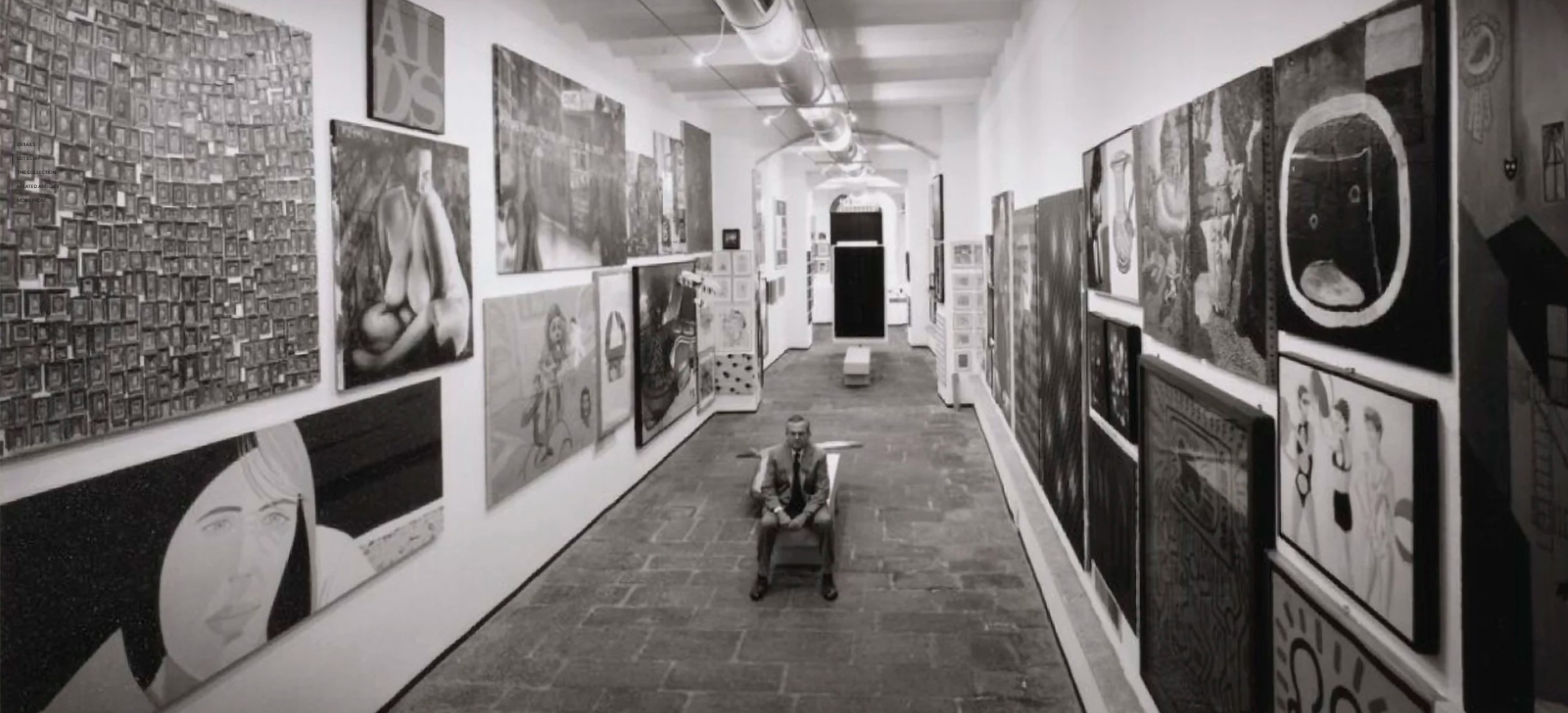
Alessandro Grassi with his art collection. Photograph courtesy of the Grassi family.
With its restrained palette of complementary blue and orange, abstracted bands of sand, foam, and sea, and cleanly delineated figure, Kym 2 exemplifies Katz’s deceptively simple style, which has remained remarkably consistent across some seven decades. His subjects are invariably family and friends—the artists, poets, fashion models, and intellectuals whose company he keeps in New York City and in coastal Maine, where he spends his summers. The works painted there are among his most distinctive. Kym’s simple white t-shirt and minimal bobbed hair, indeed, conjure the effortless cool of the late 1980s and ’90s.
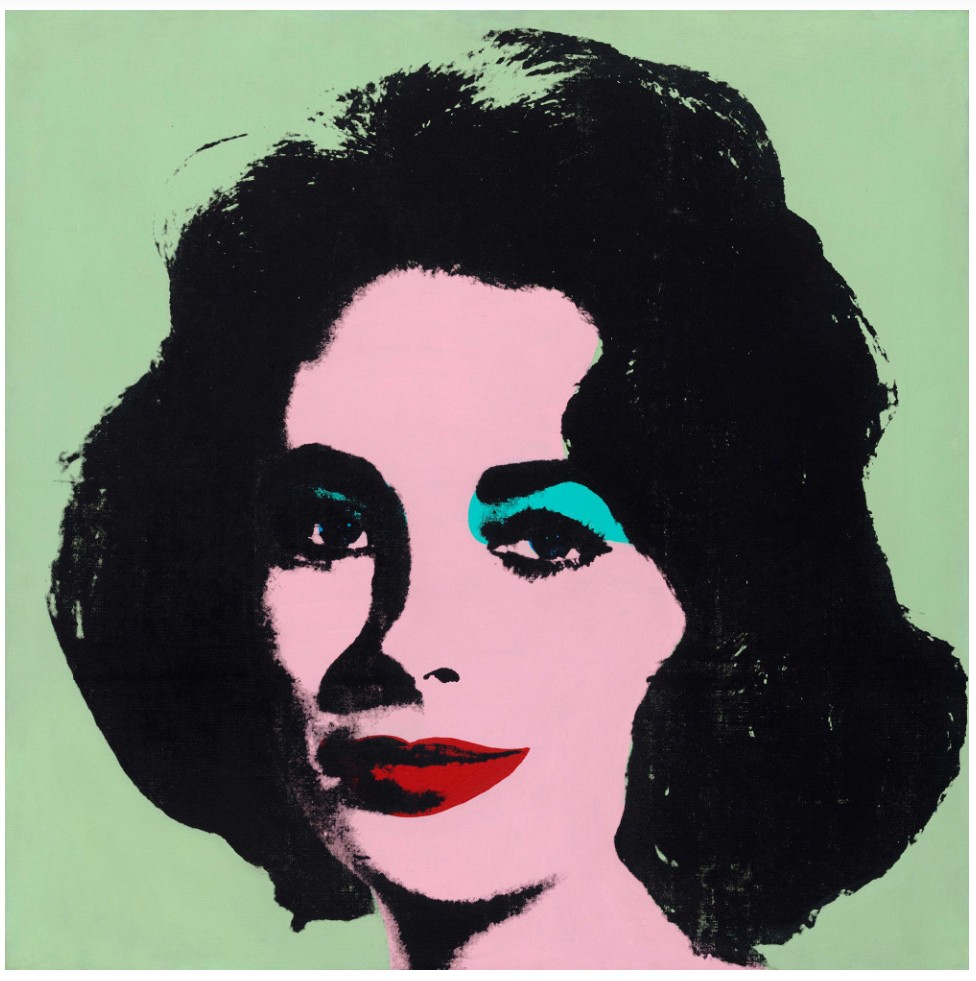
Andy Warhol, Liz #3 , 1963. The Chicago Art Institute, Chicago. Artwork: © 2025 The Andy Warhol Foundation for the Visual Arts, Inc. / Licensed by DACS, London. Digital image: © 2025 The Art Institute of Chicago / Art Resource, NY/ Scala, Florence.
Kym is larger than life yet also extraordinarily true to life. Katz paints the world he knows, so that his oeuvre becomes a kind of visual vernacular of people, propelled by this tension between grand scale and the intimacy of looking. His process seeks to capture the immediacy of sight, beginning with initial oil or ink sketches painted en plein air. In the studio he enlarges this sketch, and with charcoal distils the image into clean lines and planes to create a cartoon, in the tradition of European painting. The final work is faithful to the scale of this drawing and typically executed in a single sitting. Kym 2 fills the viewer’s field of vision, but Katz’s cropped, cinematic composition invites a sense of intimacy.
“Degas developed cropping to allow that a world existed outside the picture frame. The modern use of cropping is more like that of a TV. It pushes the forms forward into the room. In my own paintings, cropping is primarily used for drama and forward expansion.”
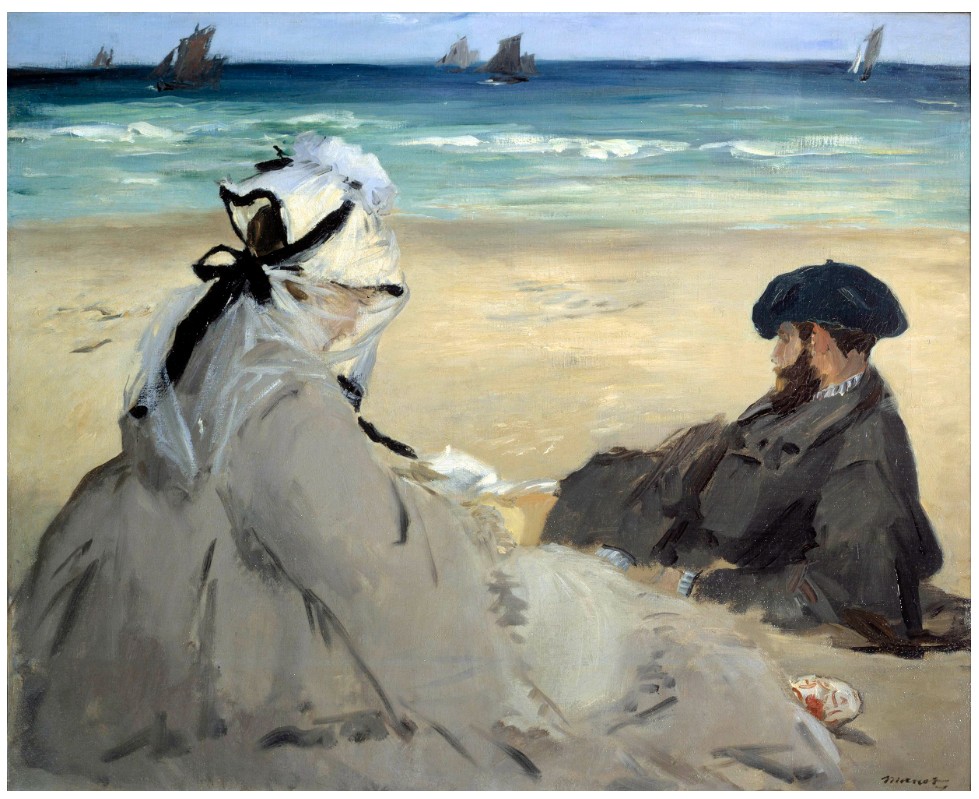
Edouard Manet, On the Beach, 1873. Musée d’Orsay, Paris. Digital image: © Photo Josse / Bridgeman Images.
As an art student at Manhattan’s progressive Cooper Union in the late 1940s, Brooklyn-born Katz came of age as an artist alongside the growth of New York as the centre of modern art. At Cooper he was trained by Morris Kantor in the theories and practices of Modernism, working largely from drawings and in a post-Cubist idiom. But around him, artists such as Mark Rothko, Barnett Newman, Willem de Kooning and Jackson Pollock were reshaping the cultural landscape. He was inspired by the power of Abstract Expressionism and began to paint on a similarly grand scale, aspiring to match the visual force of billboards. His crisp canvases of uninflected colour also draw on aspects of colour field and hard-edge painting. As Minimal and Conceptual Art took hold across the 1960s and 1970s, however, Katz held firm as a resolutely figurative painter. Fascinated by film and popular culture, his work is often seen as a precursor to Pop, but Katz extends the tradition of Baudelaire more than that of Warhol: he paints, single-mindedly, the world as he sees it. By the time the present work was executed in the late 1980s, painting was back ‘in’ and Katz’s enduring faithfulness to his medium established his name in the canon of contemporary art.
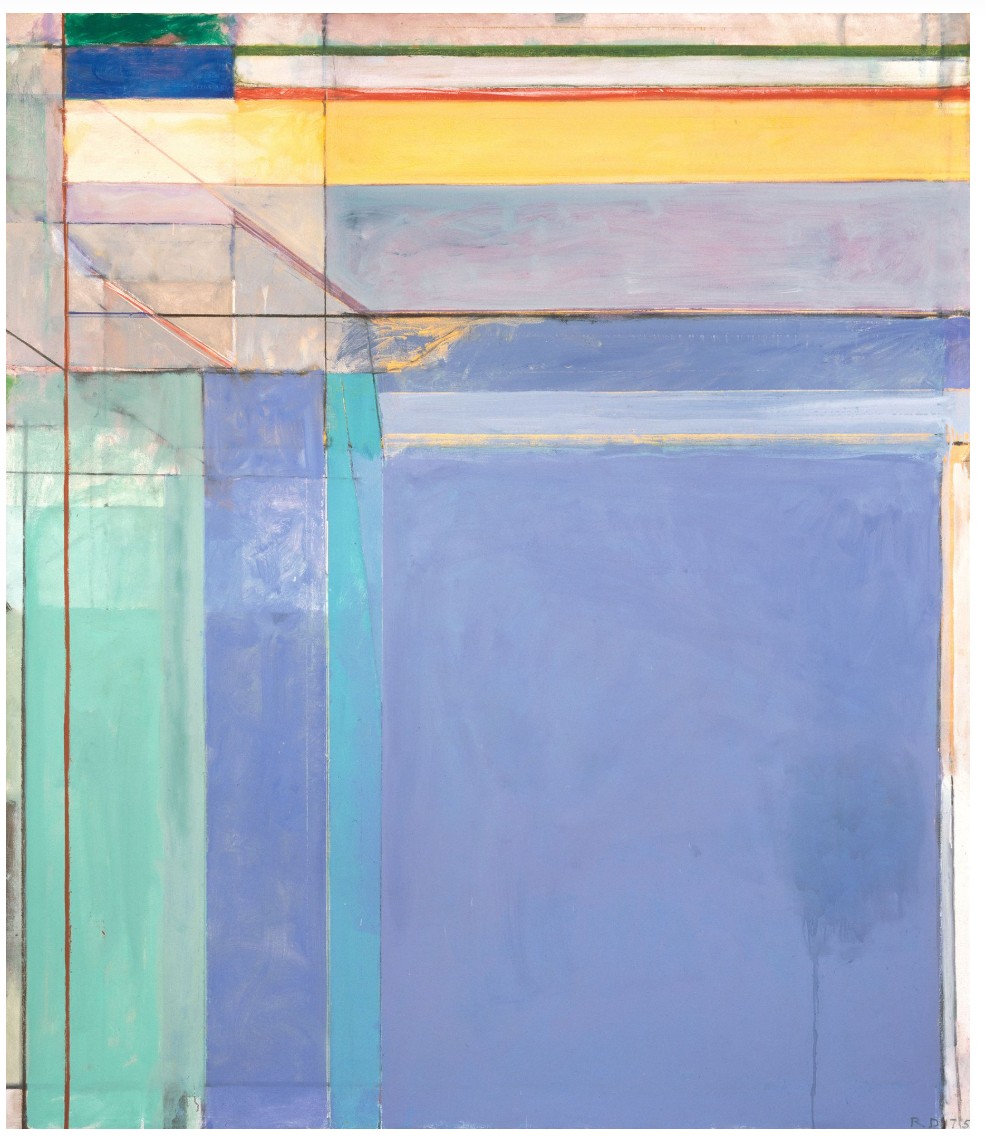
Richard Diebenkorn, Ocean Park No. 79, 1975. Philadelphia Museum of Art. Artwork: © 2025 Richard Diebenkorn Foundation / DACS. Digital image: © 2025 The Philadelphia Museum of Art/Art Resource/Scala, Florence.
Maine, whose silvery light bathes so many of Katz’s most iconic canvases, was formative in his development as a painter and has remained a driving force behind his practice. He first visited as a young artist, having received a scholarship from Cooper Union to spend the summer after graduation at the Skowhegan School of Painting and Sculpture. In the 1950s he purchased a house in nearby Lincolnville, and since that time has worked consistently between the city and the coast. It was in Maine that Katz painted outdoors for the first time, a result of Skowhegan’s longstanding plein air programme. Like the Impressionists, he was seeking to capture the specific effects of light and the sensation of direct sight.
“I found I could paint much faster, painting directly…
It was like feeling lust for the first time.”
In the studio, he preserves this sense of urgency by painting the final canvas within a single session, wet-on-wet. He has spoken about letting his energy ‘pool’ in the leadup to these sessions, so that the painting of each canvases feels akin to a performance. In Kym 2 Katz’s brush carves fluid wisps of hair across the subject’s face, lifting the deeper brown and orange tones over which it travels. The technique creates a subtle blurred effect, as though the stray strands have been unsettled by a light ocean breeze.
“I’m painting the society in which I live. So it has that social identification, but it’s also pretty optical. I’m just trying to paint what I’m looking at.”

As is typical of Katz’s works, Kym 2 is defined by a sense of ease, elegance and beauty. His monumental canvases extend a thread which reaches back to the sixteenth-century canvases of Titian and Veronese, via the ‘big’ painting of American Abstract Expressionism and widescreen movies of the 1950s. Painting on the heroic scale typically reserved for history painting, or depictions of classical or religious themes, Katz evolved a mode of portraiture true to his contemporary time.
Study for Chance, 1990
Christie’s London: 16 October 2025
Estimated: GBP 130,000 – 180,000
GBP 292,100 / USD 391,415
ALEX KATZ (B. 1927), Study for Chance | Christie’s
ALEX KATZ (B. 1927)
Study for Chance, 1990
Oil on linen
19 1/8 x 21 1/4 inches (48.5 x 64 cm)
Signed and dated ‘Alex Katz 90’ (lower right)
Painted in 1990, Study for Chance is an exuberant group portrait by Alex Katz. The painting’s three sitters are Anne Lyon, Vivien Bittencourt and Darinka Chase, each of whom was known personally to the artist; the latter two women remain part of Katz’s studio team to this day. Against a brilliant vermillion ground, the swimsuit-clad figures are depicted in a frieze-like arrangement. Drawing on a distinctly Pop aesthetic, each holds aloft a large, colorful beach ball, and their poses evoke the studied ease of fashion models. Acquired through gallerist Emilio Mazzoli the year following its execution, Study for Chance has been held in Alessandro Grassi’s collection for more than three decades.
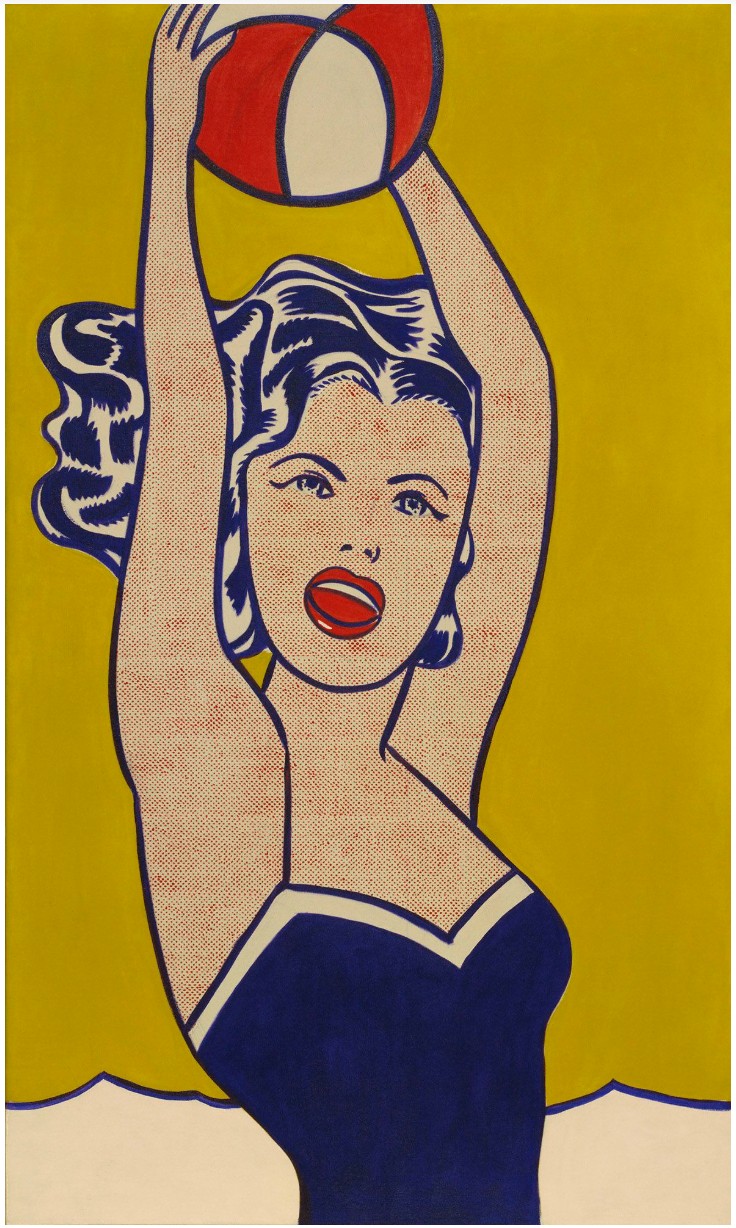
Roy Lichtenstein, Girl with Ball, 1961. Museum of Modern Art, New York.
Artwork: © Estate of Roy Lichtenstein/DACS 2025.
Digital image: © 2025 The Museum of Modern Art, New York/Scala, Florence.
From the center of the composition, Vivien Bittencourt looks out coolly into the viewer’s space. Bittencourt is Katz’s daughter-in-law, and her form recurs often within his oeuvre across individual and group portraits. She features in his striking night-time family portrait Ada’s Garden (2000, Des Moines Art Center), and her closely-cropped visage dominates Black Hat 2 (2010), which graced the cover of the catalogue for Katz’s recent retrospective at the Albertina Museum, Vienna, in 2023. Shortly after sitting for the present work, Bittencourt and her husband Vincent filmed Katz in his New York studio, creating an intimate depiction of the artist’s practice. In the present work, Bittencourt is flanked by Lyons and Chase, each of whom look out beyond the edge of the picture plane. Both women also sat for Katz several times, and Chase has worked in Katz’s studio since the 1980s.
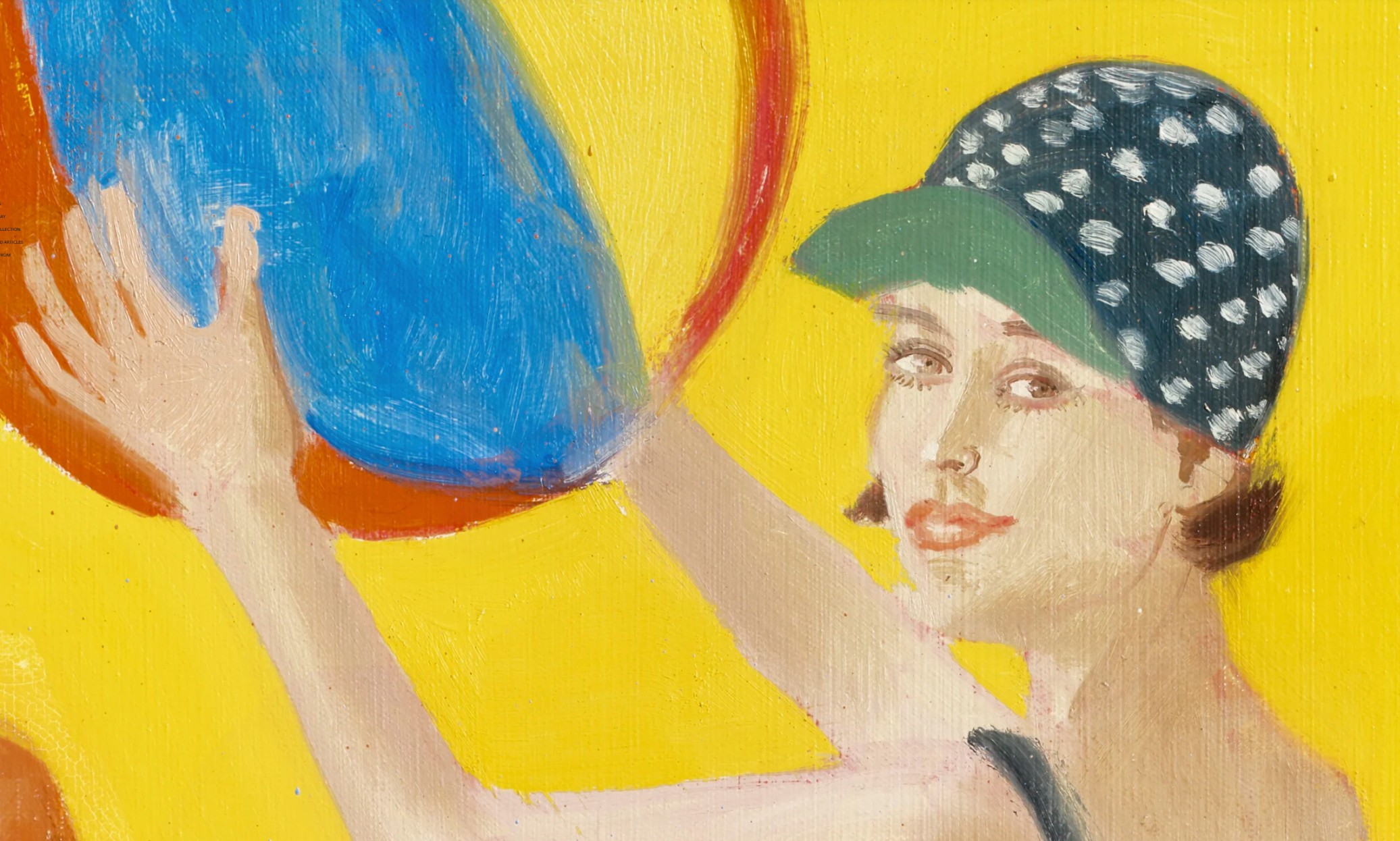
Katz would develop the present work into one of his iconic cutouts, which first emerged in his practice in the late 1950s and with which Katz has depicted family, friends and acquaintances from New York’s social milieu across many decades. The cutouts transposed the clean lines and flat planes of unmodulated color which define Katz’s painted works onto smooth, resistant surfaces of aluminum and steel. He is interested in the relations between people, how they style themselves within and against the society they inhabit, and his group portraits latch on to these details. The present work, capturing the cool cropped hairstyles and bold geometric swimsuits of 1990s tastemakers, reflects Katz’s enduring interest in fashion and style as modes of expression and markers of place and time.
Christie, 1988
Christie’s New-York: 30 September 2025
Estimated: USD 700,000 – 1,000,000
USD 825,500
ALEX KATZ (B. 1927), Christie | Christie’s
ALEX KATZ (B. 1927)
Christie, 1988
Oil on linen
90×66 inches (228.6 x 167.6 cm)
A confident figure in quiet repose, effortless yet refined, Alex Katz’s Christie is an alluring portrait which captures the most celebrated qualities of the artist’s practice. Of impressive scale, the present work engulfs the viewer in a radiant glow of golden light. Painted with a cinematic stillness, one of several striking figures for which the artist is celebrated, Christie balances Katz’s signature facility with figuration with his love of the natural world, a passion which the artist continues to pursue to date. Coupled by the figure’s elegant poise, the present work possesses attributes which qualify this work among the best of Alex Katz. Painted in 1988, a high point in Katz’s artistic career, this work represents a perfect synthesis of the artist’s signature style and his evolving fascination with nature and the emotional impact of perception over realism. The late 1980s were a particularly significant period for the artist, as it is widely regarded at the time which Katz’s understanding of figuration and his signature style surpassed that of most of his peers. It is also the time which the artist’s focus begins to shift from his bold, simplified portraits with heightened colors—a subject of interest which he had mastered by this time—to the natural world, turning his eye to landscapes and botanical compositions. Here, Katz’s two inspirations take form in perfect harmony, the dappled light and buoyant foliage gracefully encompassing the central figure, all situated against a background which emanates with the glow of the sun.
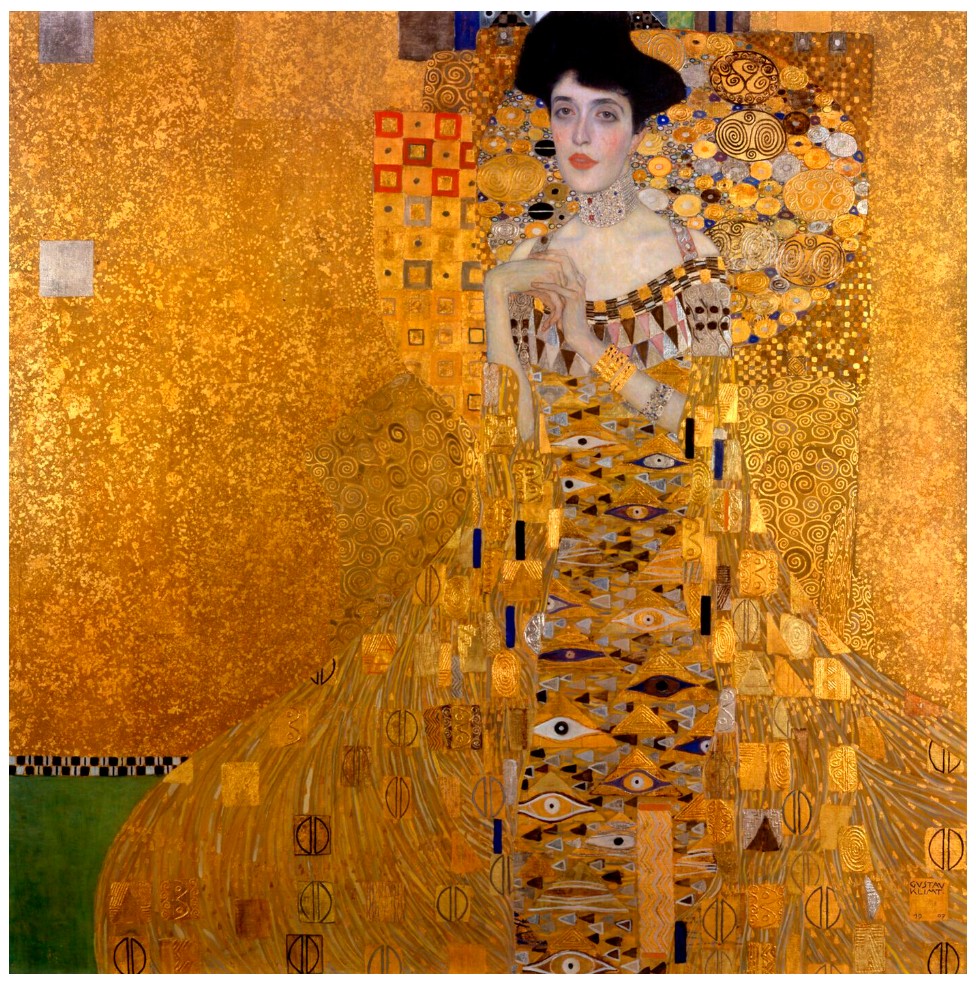
Gustav Klimt, Adele Bloch-Bauer I, 1907. Neue Galerie, New York.
Immediately arresting upon approaching the present work is the artist’s choice of a bold, saturated yellow ground—representative of the artist’s use of vivid palettes to give his works a cinematic flare. The yellow pigment which Katz has chosen evokes the heat of summer, the brightness of noon, and a kind of golden-hour nostalgia. It wraps the figure like a halo, creating a near-spiritual glow that elevates the subject beyond portraiture into iconography. Perhaps the most captivating attribute of the painting is Christie’s gaze, direct, unflinching, and utterly assured. She looks out with a calm intensity that meets the viewer head-on on near-human scale. Painted with an effortlessly relaxed posture and on a gloriously grand scale, she stands as an emblem of grace and beauty, her quiet repose akin to the dynamic society portraits by Tamara de Lempicka. Her stance is statuesque, her form animated with the subtle motion of her fingers. This sense of physical and psychological presence is what makes the painting so compelling: the figure is at once distant and immediate, monumental and human.
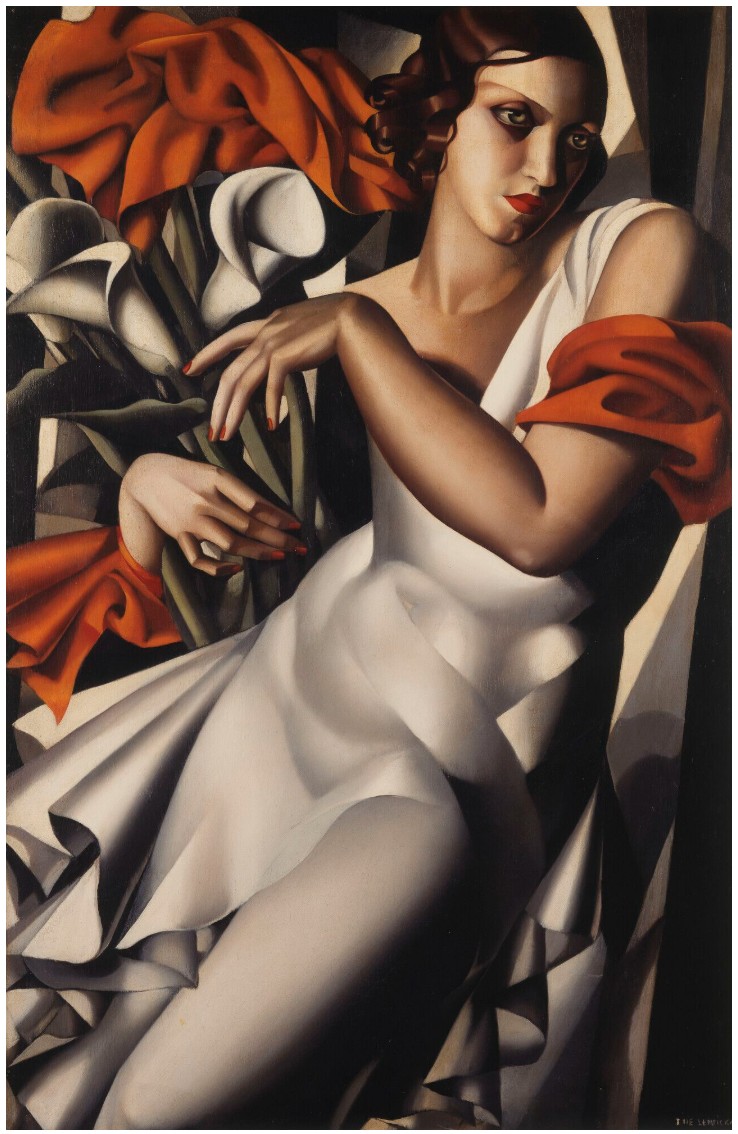
Tamara de Lempicka, Portrait of Ira P, 1930. Private Collection.
Amid the glowing expanse of yellow and the soft white of her dress, her piercing blue eyes emerge as a focal point, striking and sharp. Their clarity cuts through the sun-drenched warmth of the canvas, offering a cool counterpoint to the golden light. Framed by her warm skin tone and the simplicity of her white dress, the eyes become almost electric in their intensity. They seem to suggest a persona behind the artist’s painted figure, conjuring the muse who inspired the present work and stirring a quiet curiosity in the viewer. One is left wondering not only who she is, but what she might be pondering, or what lies just behind that serene yet deep gaze. It is in this ambiguity, this moment of perceptual pause, that Katz evokes something timeless and deeply human—the quiet peace one may achieve in a moment of pause. Captivating, too, is Katz’s inclusion of the natural world, signaling a shift in his practice. The tree trunk behind Christie anchors the composition: stoic, vertical, and strong. It contrasts with the soft features and smooth white dress of the muse. This verticality of the tree is echoed by Christie’s stance. Gentle wisps of light dapple the figure’s form and the upper trunk of the tree behind. In this subtle gesture, Katz demonstrates his keen understanding of light, even suggesting the hint of a shadow cast by Christie’s form on the tree which grounds her. Though Katz isolates the leaves to the upper register, he suggests a sea of branches which exist beyond the picture plane, represented in the playful shadows cast upon the subject. These flickering patterns, specific and deliberate, create movement. This rhythmic play of light suggests the several patterns and glimmers that might enamor Christie as she takes respite beneath this tree. Here, the viewer is offered but one glance at this intimate moment—an apex moment where figure, light and nature are in perfect symbiosis.
Christie is both a meditation on presence and perception, on how we see, remember, and emotionally respond to a visual experience. Katz himself has said that he finds his work more about perception than representation, citing the billboard aesthetic of cinematically cropped images in his own compositions. He achieved this through a radical simplification of form and a sharp focus on immediacy. Rather than striving for literal likeness or intricate detail, he captured fleeting moments: the way light hits a face, or the shape of a shadow at a specific hour. His bold, flat colors and crisp outlines distill reality into its essential visual elements, encouraging the viewer to feel rather than analyze. By removing extraneous detail, Katz created space for emotion to take the lead, prompting viewers to engage instinctively.
Sandro Botticelli, Primavera (Spring), circa 1478. Gallerie degli Uffizi, Florence.
Christie is a perfect synthesis of Katz’s iconic figurative style and the poetic subtlety of his explorations with nature and landscape painting. The inclusion of a single tree and the delicate shadows cast by its leaves create a serene interplay between his muse and the environment, evoking a quiet lyricism. Like Botticelli’s allegorical masterpiece Primavera, this work becomes a meditation on renewal, beauty, and the fleeting quality of light and life. While Botticelli fills his canvas with mythological figures and layered symbolism, Katz distills the scene to its essential forms. Yet both artists, centuries apart, gesture toward nature’s quiet promise, an evocation of spring just around the corner.
Nikki II, 2006
Christie’s Hong-Kong: 27 September 2025
Estimated: HKD 4,500,000 – 6,500,000
HKD 5,461,000 / USD 701,930
ALEX KATZ (B. 1927), Nikki II | Christie’s
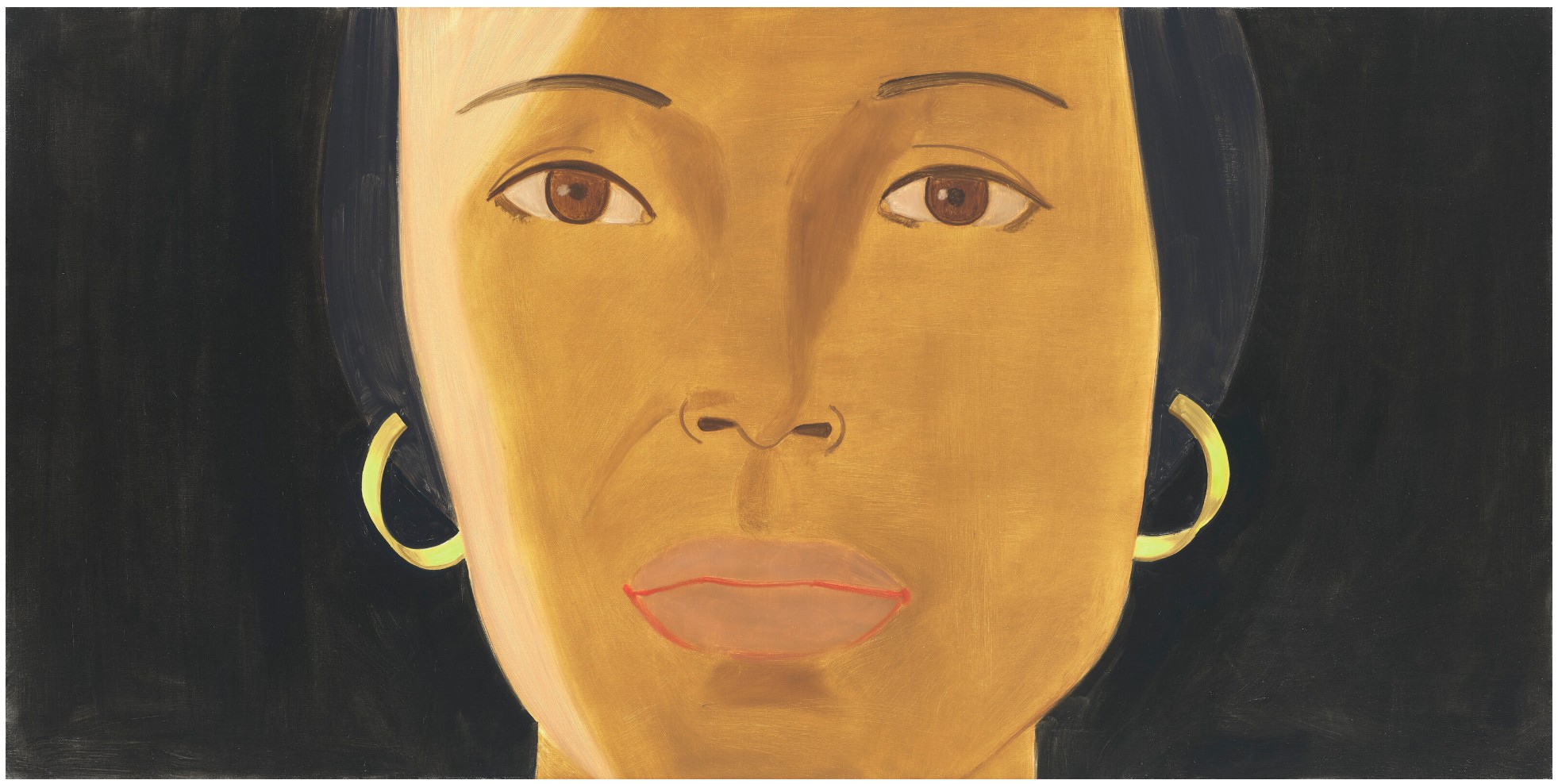
ALEX KATZ (B. 1927)
Nikki II, 2006
Oil on canvas
48 1/8 x 96 1/4 inches (122.3 x 244.5 cm)
Signed and dated ‘Alex Katz 06’ (on the overlap)
“The black seems to mean different things to different people. To me it was so much light in the front and dark in the back. Black is technically a very difficult color to handle so that was a challenge and with the older black paintings I had some perfect surfaces and with these I don’t think I got perfect surfaces but they’re all different.”
Night – William Dunas Dance Company, 1979
Sotheby’s New-York: 26 September 2025
Estimated: USD 600,000 – 800,000
USD 1,066,800
Night – William Dunas Dance Company | Contemporary Curated | 2025 | Sotheby’s
ALEX KATZ (b. 1927)
Night – William Dunas Dance Company, 1979
Oil on linen, in four parts
Each: 48×60 inches (121.9 x 152.4 cm.)
Overall installed: 48×264 inches (121.9 x 670.6 cm)
Executed in 1979, Night—William Dunas Dance Company is a standout exemplar of Alex Katz’s extraordinary contribution to the visual lexicon of Contemporary portraiture. The present work captures Pamela Berkeley, a dear friend of Katz’s and a painter herself, clad in a violet purple strap dress and large golden hoop earrings, dancing in front of a navy blue background.
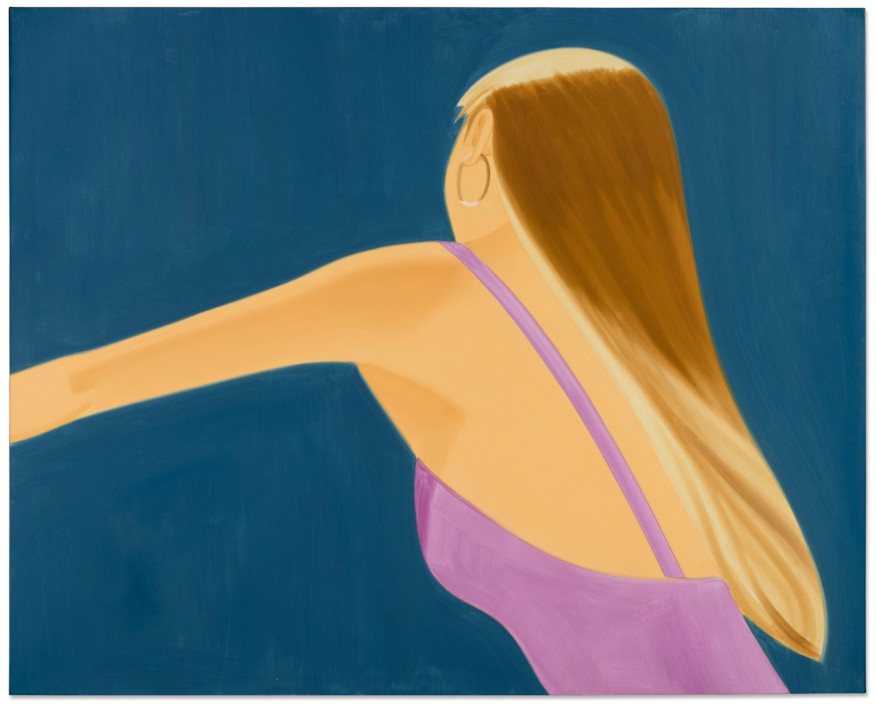
Her choreography, as the title suggests, is in the style of legendary New York dancemaker William Dunas; her graceful movements further underscores Katz’s idiosyncratic style that imbues his canvases with elegance and intimacy. Night—William Dunas Dance Company further stands out as a part of a series of Night paintings, a departure from his sunlit landscapes and portraits that unlocked a new portrayal of light and tenderness within the artist’s decorated oeuvre.
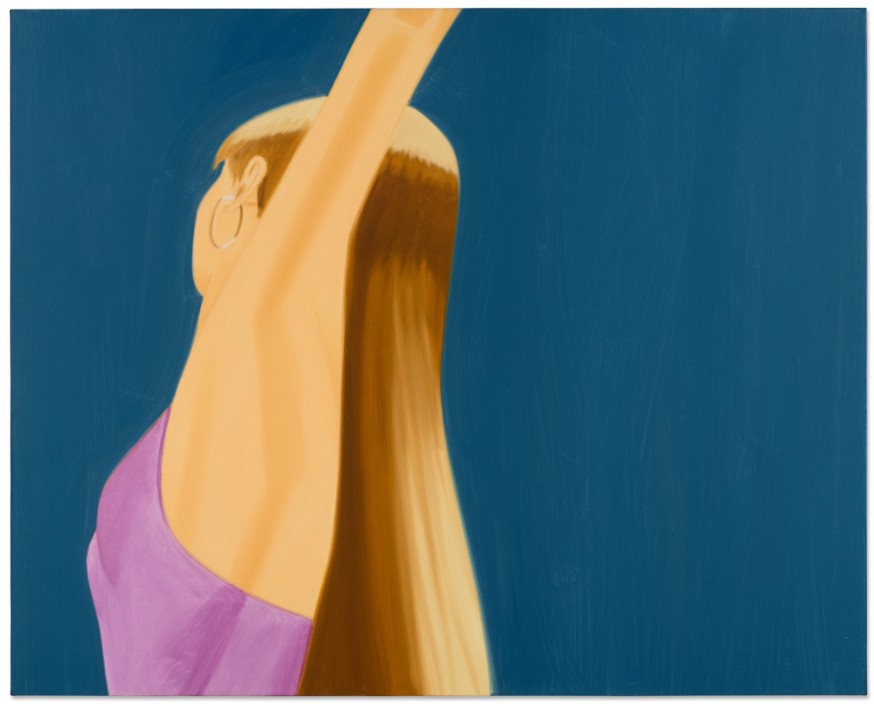
As critic and poet Donald Kuspit explains, these paintings present an alluring stillness at once deeply personal yet universally resonant: “The night paintings are Katz’s most silent paintings. Indeed, they make explicit the goal of his strategy of essentialization: to articulate silence as such, as existing in its own right. … In these works the flat plane that typically constitutes a Katz painting—making it a void no matter how many figures are in it and no matter how full with a single figure it is (the figure itself differentiates, almost fragments, into voids of flat detail)—becomes absolute silence, fraught with invisible inner meaning.” (Donald Kuspit, Alex Katz: Night Paintings, New York 1991, p. 10)
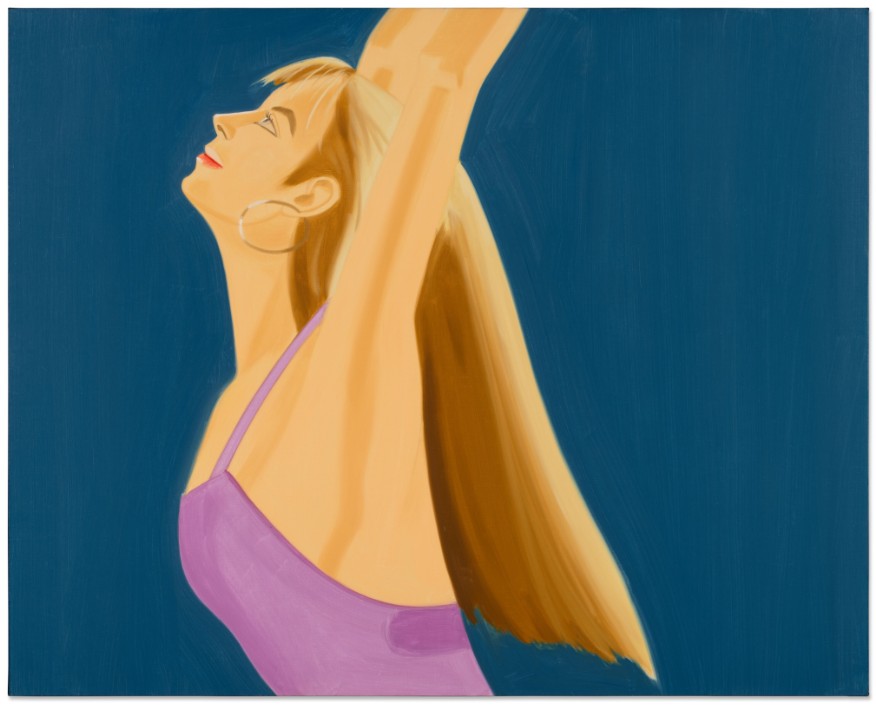
Night—William Dunas Dance Company thus speaks not only to a specific time and place but an acute artistic vision of stillness that remains profoundly modern—a portrait of solitude and serenity.
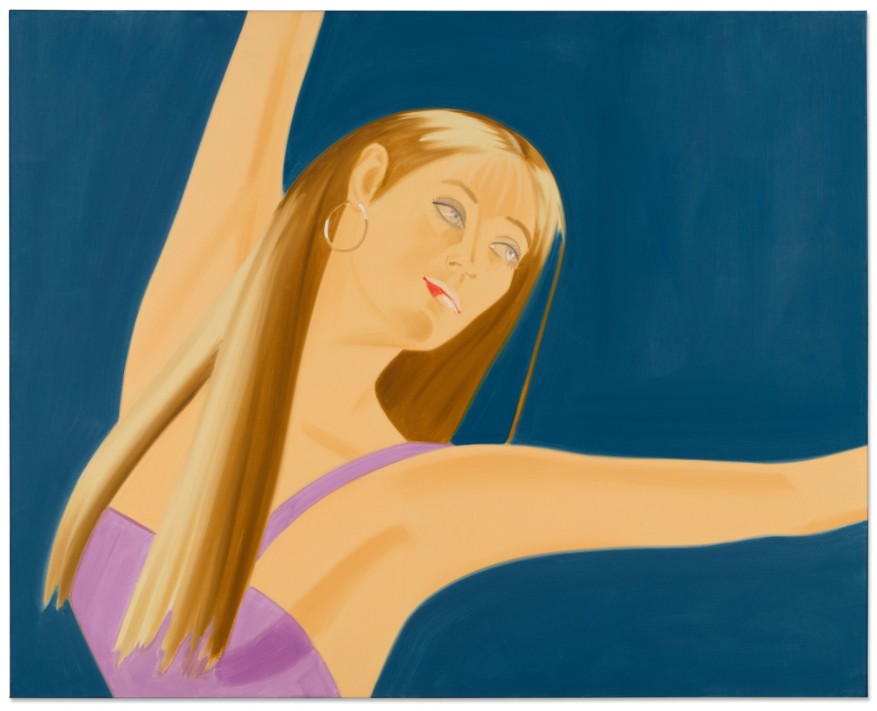
Lavender Shirt, 1994
Sotheby’s London: 24 June 2025
Estimated: GBP 550,000 – 750,000
GBP 711,200 / USD 974,345
Lavender Shirt | Modern & Contemporary Evening Auction | 2025 | Sotheby’s
ALEX KATZ (b. 1927)
Lavender Shirt, 1994
Oil on canvas
89 3/4 x 66 1/8 inches (228×168 cm)
With its radiant chromatic palette, refined contours, and graphic immediacy, Lavender Shirt epitomizes Alex Katz’s singular contribution to the development of contemporary figurative painting. Executed with an arresting clarity of form, the present work depicts a poised young woman, stylish and serene, whose presence is magnified by the composition’s closely cropped framing. At the center of the canvas, the eponymous lavender blouse blooms outward in soft tonal harmony, anchoring the image in a field of subtly orchestrated color. Against a characteristically ambient backdrop, Katz eschews superfluous detail in favor of visual economy, distilling the sitter’s form into the most essential and expressive elements of line, light, and hue. The resulting image is as immediate as it is enigmatic, capturing a moment of quiet introspection that hovers delicately between realism and stylized abstraction.

The sitter’s half-turned pose and confident gaze are emblematic of Katz’s portraiture, which often balances emotional resonance with a palpable sense of presence. Her sharply delineated hairline, luminous skin, and softened features evoke a composure that is at once intimate and reserved, aligning her with the artist’s broader exploration of contemporary beauty as a mode of timeless iconography. Unlike traditional portraiture, however, Katz does not concern himself with biography or personal narrative. In Lavender Shirt, Katz does not present an individual, but an image: a self-contained ideal that speaks to the transitory nature of perception itself.
“My contention is that my paintings are as realistic as Rembrandt’s…it was realistic painting in its time. It’s no longer a realistic painting. Realism’s a variable. For an artist, this is the highest thing an artist can do – to make something that’s real for his time, where he lives. But people don’t see it as realistic, they see it as abstract. But for me it’s realistic.”
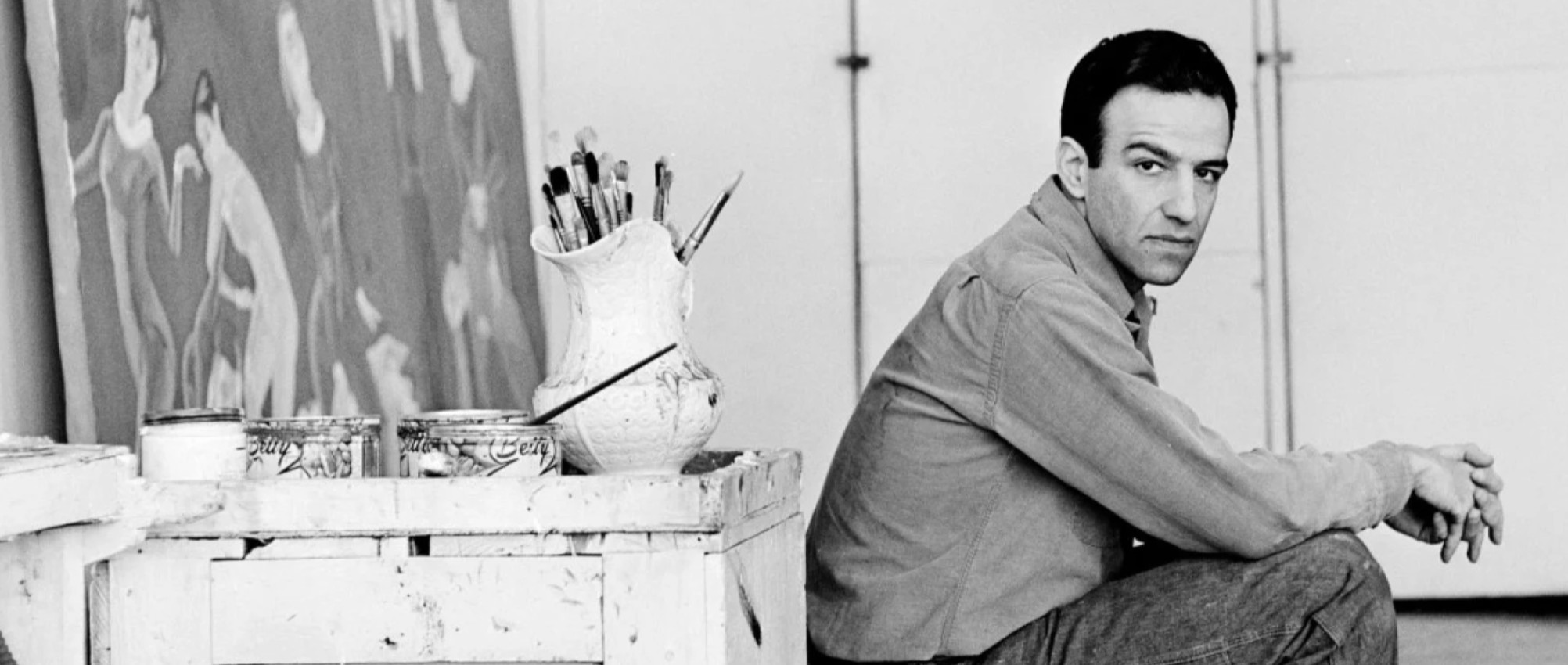
Alex Katz in his studio, 1964. Image: © Jack Mitchell / Getty Images 2025
Katz’s engagement with the fashion world, particularly through his 1994 Isaac Mizrahi Series – other examples of which portray his wife Ada wearing garments by the designer – offers a critical lens through which to view Lavender Shirt. Since the 1950s, Katz has been deeply attuned to the visual rhythms of American fashion, drawing inspiration from magazines, models, and designers whose work epitomizes the aesthetic codes of contemporary life. His portraits often reflect a fascination with style as a mode of individual expression and cultural performance. In Lavender Shirt, the titular garment becomes more than a formal device; it serves as the chromatic and compositional center of the painting, amplifying the figure’s presence while echoing Katz’s ongoing interest in the interface between art and design. This alignment of fine art with sartorial elegance exemplifies Katz’s enduring ability to capture the fleeting poise of a moment – simultaneously intimate, public, and iconic.

This distilled aesthetic is the result of Katz’s meticulously honed process, which merges classical methodologies with modern tools. The artist begins with pencil drawings and oil sketches, then enlarges his compositions using the Renaissance cartoon technique, a method in which the image is transferred onto canvas through delicate outlines, allowing for precision without sacrificing immediacy. Katz’s application of paint follows an alla prima or wet-on-wet technique, enabling broad, fluid brushstrokes that capture the freshness of his initial vision while preserving the structural integrity of the final form.
Born in Brooklyn in 1927 to Russian émigré parents, Katz studied at The Cooper Union and the Skowhegan School of Painting and Sculpture, where he began to formulate his commitment to figuration in the face of Abstract Expressionism’s prevailing dominance. Rather than embracing gestural excess, Katz pursued a visual language of distilled form and frontal clarity, rejecting the expressive interiority of his peers in favor of a surface-oriented engagement with appearance, affect and time. Over the decades, this idiosyncratic approach has matured into a distinctive style; one that bridges the gap between high modernist aesthetics and the vernacular immediacy of advertising, cinema, and popular imagery.
Johannes Vermeer, Girl with a Pearl Earring, 1665. Royal Picture Gallery Mauritshuis, The Hague.
Katz’s work is today represented in major museum collections across the globe, including the Museum of Modern Art, the Whitney Museum of American Art, the Metropolitan Museum of Art, and the Tate Modern. His most recent retrospective, Alex Katz: Gathering, presented at the Solomon R. Guggenheim Museum in New York from 2022–2023, offered a sweeping account of his unparalleled contribution to postwar American painting. Within this retrospective arc, works such as Lavender Shirt stand out as exemplars of Katz’s mature idiom; a visual language defined by restraint, clarity, and a profound attunement to the fleeting textures of modern life. By merging aesthetic refinement with an almost cinematic immediacy, Lavender Shirt reveals Katz not only as a chronicler of the present, but as one of the most enduring and perceptive visual poets of the twentieth and twenty-first centuries.
Eli at Ducktrap, 1958
Phillips New-York: 14 May 2025
Estimated: USD 300,000 – 400,000
USD 381,000
Alex Katz Modern & Contemporary Art Day Sale, Morning Session
Oil on linen
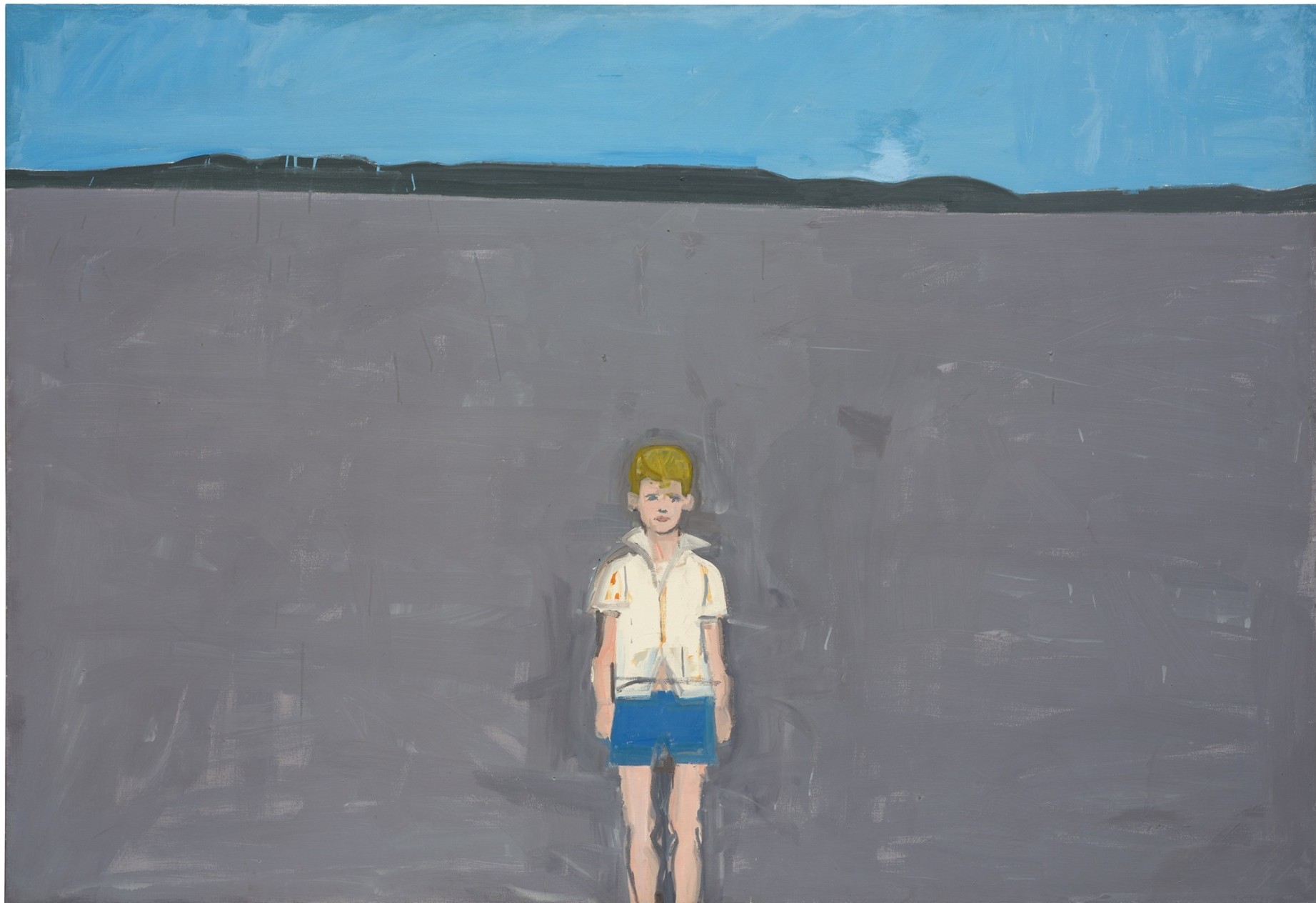
Indeed, for the celebrated American portraitist, Maine holds a special place. Katz first went to the coastal New England state in the summer of 1949 after graduating from Cooper Union to study at Skowhegan’s School of Painting & Sculpture. Inspired by his surroundings, he began to hone his quintessential style of depicting those near and dear to him, like his wife, Ada, son, Vincent, and close friends, like Eli. Here, Katz depicts the young boy standing statically at the foot of the Ducktrap River in Waldo County Maine, with a bright blue sky which matches the blue of Eli’s eyes.
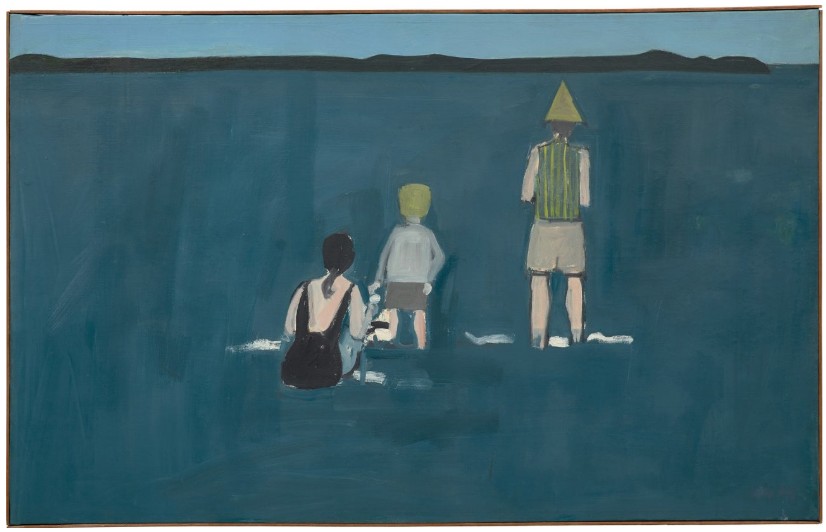
Artwork: © Alex Katz / Licensed by VAGA at Artists Rights Society (ARS), New York
Joan, 1974
Sotheby’s New-York: 27 September 2024
Estimated: USD 1,500,000 – 2,000,000
USD 1,440,000
Joan | Art Without Boundaries: The Abrams Family Collection | Live Sale | 2024 | Sotheby’s
ALEX KATZ (b. 1927)
Joan, 1974
Oil on linen
72×96 inches (182.9 x 243.8 cm)
Casting a sultry, laconic gaze toward the viewer, Joan in Alex Katz’s eponymous portrait from 1974 represents the very best of Katz’s hand. A rare example of a nude sitter, the subject of the painting — a fashion designer and friend of the Katz family — is seen gracefully looking over her shoulder. From Joan’s serpentine contours articulated in sweeping brushstrokes, to the rectilinear windowpanes behind her, this portrait is at once beguiling and compelling. The soft, back-lit sun streaming through the hazy cityscape behind her further situates the present work as a remarkably early union of the two genres for which Katz is most celebrated: portraiture and landscape, both hallmarks of his prized early output.

Acquired the year of its execution directly from Marlborough Gallery, Joan has been held in the esteemed Abrams Family Collection for fifty years, a standing testament to the Family’s prescient eye and ability to sense and invest in the greatest makers of their time. Katz, now widely extolled as one of the most influential artists in the arena of contemporary figurative painting, was recently honored with a watershed retrospective at the Solomon R. Guggenheim Museum, New York from 2022-23, and Joan showcases at triumphant scale Katz’s unparalleled ability to capture the inherent qualities of a sitter.
Born in Brooklyn in 1927, Katz studied at The Cooper Union and Skowhegan School of Painting and Sculpture. There, he began developing figuration as the primary focus of his practice, despite Abstract Expressionism’s concurrent heyday. Katz forged his own path, eschewing the contemporary preference for impassioned gesture, instead favoring flattened, polished scenes produced through considerable pictorial distillation.
“People say painting is real and abstract. Everything in paint that’s representation is false because it’s not representational, it’s paint. We speak different languages and have different syntax. The way I paint, realistic is out of abstract painting as opposed to abstract style. So I use a line, a form and a color. So my contention is that my paintings are as realistic as Rembrandt’s…it was realistic painting in its time. It’s no longer a realistic painting. Realism’s a variable. For an artist, this is the highest thing an artist can do—to make something that’s real for his time, where he lives. But people don’t see it as realistic, they see it as abstract. But for me it’s realistic.”
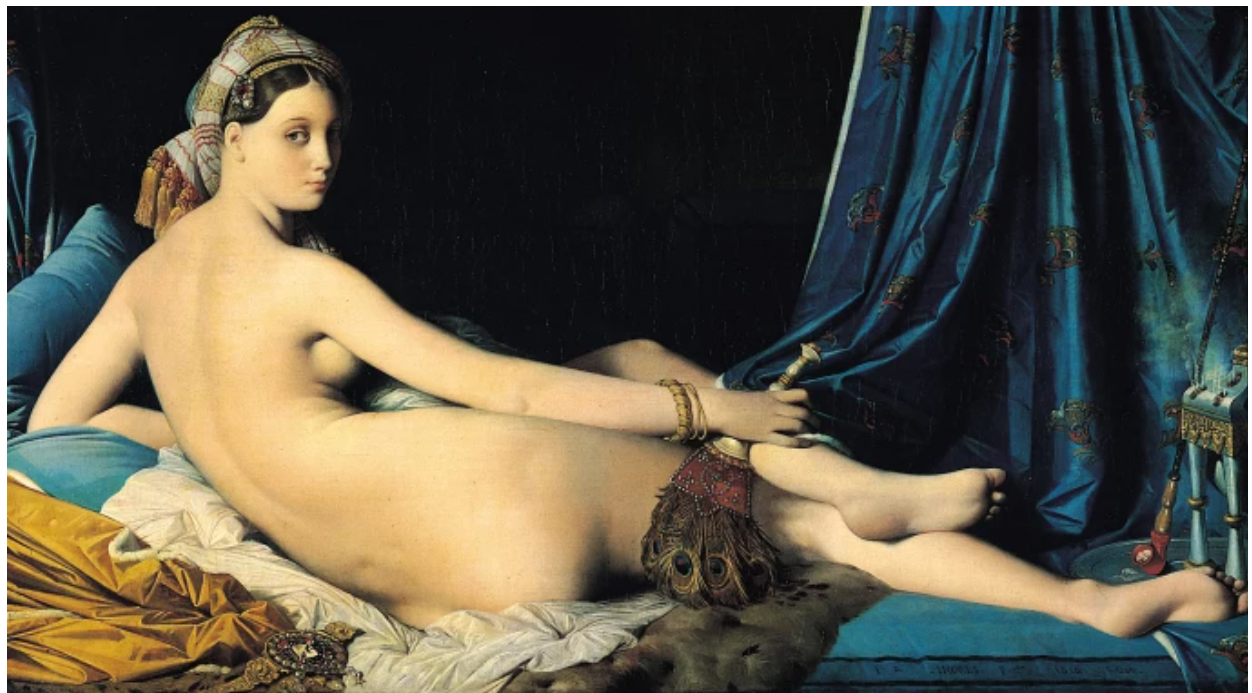
Jean-Auguste-Dominique Ingres, Grande Odalisque, 1814. Musée du Louvre, Paris. Image © 2024 Josse / Bridgeman Images.
Katz’s large-scale canvases, painted with a meticulous yet improvisational technique, bear witness to a lifetime of artistic refinement. Exemplified by Joan’s monumentality and vaguely impersonal aura, Katz’s brand of realism reflects his earlier training in commercial art. His work further culls from such diverse sources as advertisements, films and Old Master paintings. Here, in a moment of spectacular rarity, Joan is shown nude, glancing back toward her viewer as in Jean-Auguste-Dominique Ingres’ Grande Odalisque, while her pensive and enigmatic gaze echoes that of Picasso’s timeless muse, Marie-Thérèse Walter. Her solitude, framed by the panes of the window behind her, reprise the longing and loneliness of an Edward Hopper painting; and her articulation in crisp, graphic strokes recall illustrative quality of David Hockney’s early California scenes. By increasing the scale of his works, manipulating perspective, eliminating superfluous details, and sharpening contours, Katz created a decisive mode of stylization, which functions as much as a strategy as it does an aesthetic: his formal reduction allowed him to translate the realities of lived experience with stunning immediacy, from Joan’s shy gaze, the movement of her tendrils of hair, to the writhing growth of the snake plant behind her. Backdropping the entire composition are the faint impressions of a foggy New York City skyline, perhaps intimating the view from Katz’s industrial loft-studio in Manhattan’s SoHo neighborhood. This detail is a critical characteristic of Katz’s beloved output from the 1960-70s—the period preceding his adoption of the monochromatic background—imbuing the portrait with a profound sense of place.
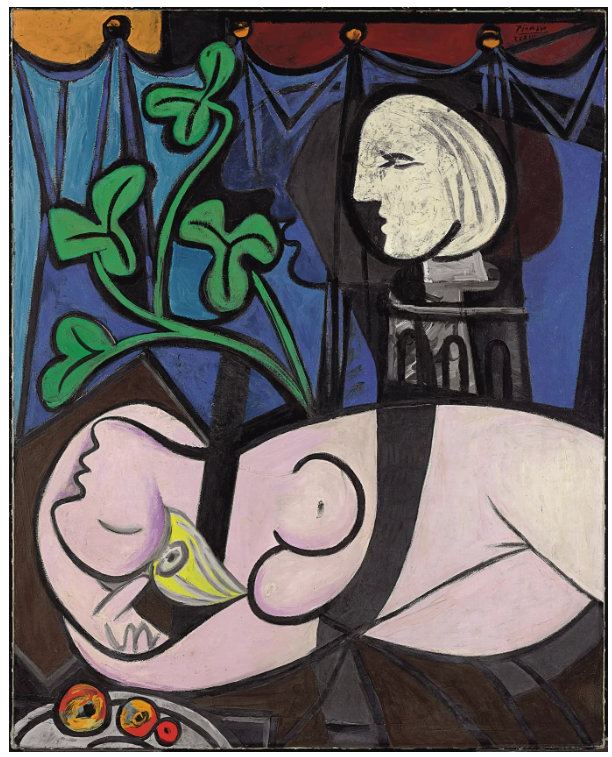
Pablo Picasso, Nu au Plateau de Sculpteur, 1932. Private Collection. Image © Succession Picasso / DACS, London 2024 / Bridgeman Images. Art © 2024 Estate of Pablo Picasso / Artists Rights Society (ARS), New York.
Lauded for his intimate portraits of family and friends, Katz has forged a style that marries the ascorbic coloration of Pop with the celerity of Impressionism to offer an aesthetic vernacular befitting of its moment. Anatomical correctness is foregone, capturing instead the subtleties and sensitives of his relationship with each respective sitter. “The look of Katz’s painting,” fellow artist David Salle commented, “his famous style, is grounded in his technique, in what he can do with a brush. That brush has had a lot of practice, but its decisive eloquence was there pretty much from the beginning” (David Salle, “Medium Cool: David Salle on Alex Katz,” Artforum, vol. 61, no. 6, February 2023).
Martha, 1981
Phillips New-York: 14 May 2024
Estimated: USD 350,000 – 500,000
USD 381,000
Alex Katz – Modern & Contemporary Art Ev… Lot 22 May 2024 | Phillips
ALEX KATZ
Martha, 1981
Oil on linen
60×48 inches (152.4 x 121.9 cm)
Painted in 1981, Alex Katz’s Martha is at once intimate and monumental, capturing the very essence of the artist’s decades long investigation into the genre of portraiture. Executed larger than life, the titular subject Martha is likely the artist’s friend and fellow painter Martha Diamond, who is also depicted in Katz’s February 5:30pm, executed nearly a decade prior in 1972. Featured as the leftmost figure in a row of six, it is as though Katz has cropped Martha from the larger scene and given her own canvas. She is shown in the same turquoise polo shirt, against what appears to be the same windowpane. The resulting single portrait otherwise eliminates all specific background references to focus on what is most essential: Martha herself. Katz routinely painted the same subject time and time again throughout his career, and Martha exquisitely demonstrates Katz’s keen and careful observation of the defining features of his sitters. Here, Martha’s features are even more refined than in his 1972 painting, as if he spent more time on each strand of hair to get it just right. The tendrils of Martha’s brown, straight hair, which frame her face, blow in an unseen breeze, adding a sense of motion to the otherwise still, serene scene. Her warm, almond-shaped eyes gaze off into the distance, placing the viewer within her peripheral vision, while the soft light peering in at right highlights the subtleties of her nose, lips and planes of her face.

Alex Katz, February 5:30 P.M., 1972. Artwork: © 2024 Alex Katz / Licensed by VAGA at Artists Rights Society (ARS), New York
Throughout the 1960s, 1970s and 1980s, Katz’s paintings became increasingly larger in size. Throughout those decades, Katz’s figures also became increasingly and often dramatically more cropped, culminating in the zoomed-in compositions of the 2010s. As compared to her scale in February 5:30 PM, here Katz paints Martha’s portrait on a canvas measuring exactly five-feet-tall. By cropping and enlarging Martha’s profile in the present composition, Katz elevates his subject to even greater importance. In removing all recognizable surroundings less the suggestion of a window, Katz strips Martha from her narrative context, and instead promotes a sense of anonymity. Here, Martha could be in any place at any given time. The resulting portrait is timeless, transcending eras, as Martha could just as easily be from 1981 as from 2024.
Maria, 1997
Sotheby’s New-York: 14 May 2024
Estimated: USD 400,000 – 600,000
USD 444,500
Maria | Contemporary Day Auction | 2024 | Sotheby’s (sothebys.com)
ALEX KATZ (b. 1927)
Maria, 1997
Oil on linen
72×42 inches (182.9 x 106.7 cm)
Signed and dated 97 (on the overlap); signed (on the stretcher)
Monumental in scale and striking for its pure figuration and signature flatness, Alex Katz’s 1996 portrait Maria is emblematic of the artist’s renowned idiosyncratic aesthetic that redefined contemporary portraiture in the twentieth century. Set against a vague backdrop of dark with visible misty strokes and rendered in Katz’s impossibly cool, reductive style, the present work is an instantly recognizable example of the artist’s iconic portraiture. The seemingly shallow spatial plane and sharp cropping device paired with the sheer size of the canvas owe much to the crisp manner of commercial art and illustration with further inspiration drawn from film, advertising and fashion.
“I like to make an image that is so simple you can’t avoid it, and so complicated you can’t figure it out.”

ALEX KATZ, PURPLE WIND, 1995, OIL ON BOARD, 29.7 BY 22.9 CM.
atz treats the subject with his notable style, eliminating the work of any context and superfluous details. While the artist strived to paint with the energy of the abstract expressionist artists, he achieved this energy through its monumental scale, while maintaining his processes. Katz works to fashion his works through its technicality, often preparing sketches and prints of his subject prior to rendering his oil paintings. Maria is also a unique portrait in that it is reflective of his night paintings series that began in the 1980s. These works, unlike many of his vibrantly colored works, are propelled into darkness with streaks of light that evoke a feeling of loneliness. Landscapes encompass the majority of this series of works; however, the present work merges his two most notable styles with his figure. The visually arresting red band of pigment at the lower edge of the canvas crops the subject and places further emphasis on his attempt at true two-dimensionality. All elements converging to allow for pure figuration and abstraction to reign supreme.
Isca, 2001
Christie’s London: 7 March 2024
Estimated: GBP 400,000 – 600,000
GBP 655,200 / USD 830,794
ALEX KATZ (B. 1927), Isca | Christie’s (christies.com)
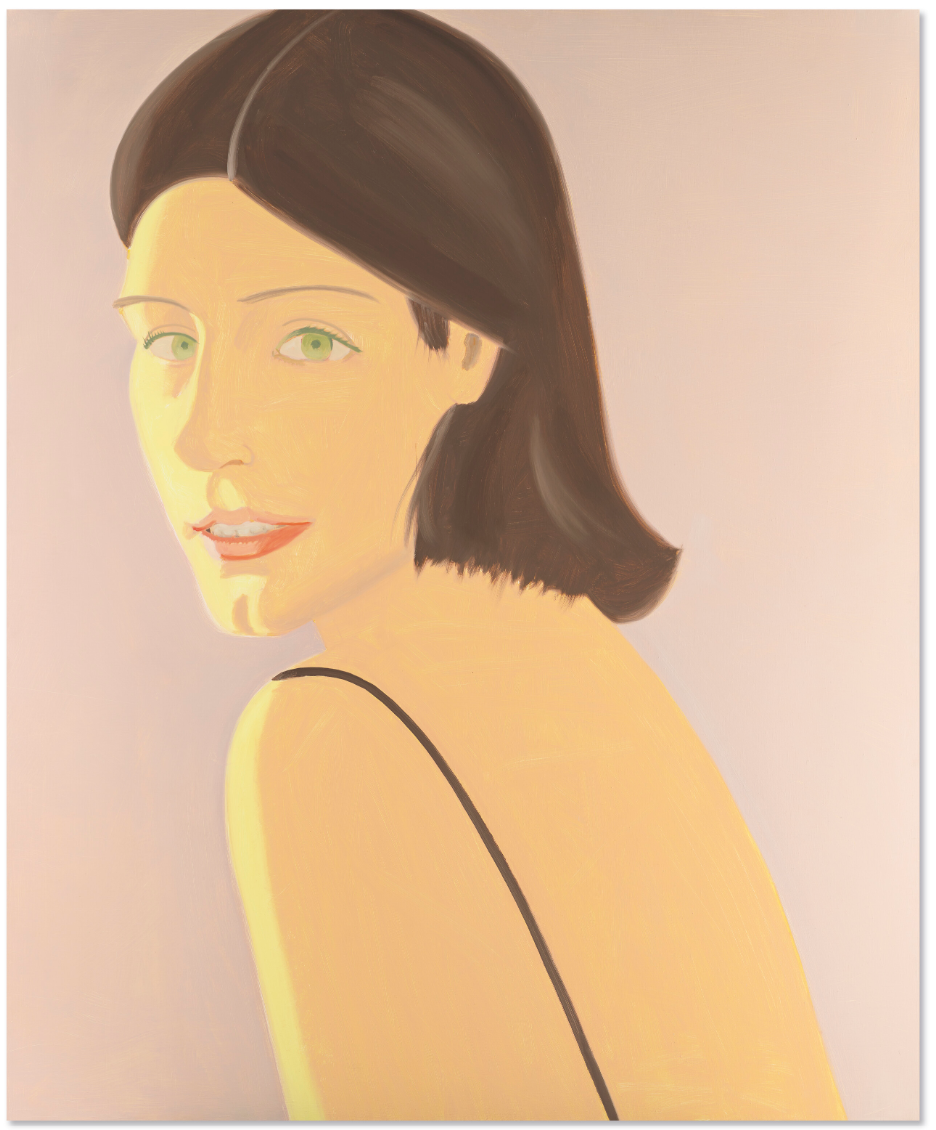
ALEX KATZ (B. 1927)
Isca, 2001
Oil on linen
72×60 inches (183 x 152.4 cm)
Held in the same private collection for the past two decades, Isca (2001) is a luminous monumental portrait by Alex Katz. A young woman is framed in close-cropped three-quarter profile against a soft lilac backdrop. Golden light illuminates her fine features and bared shoulder, as if the sun is beaming in from the picture’s left. Katz’s trademark billboard scale and smooth, wet-on-wet brushwork appear deceptively simple: the picture is alive with exquisite economies of detail, from the feathered strokes in the subject’s hair to the green and lilac used for her eyes, and the bold, graphic black line of the strap that runs down her shoulder. Katz shapes a vivid human presence with the most effortless and eloquent of means. The sitter is Isca Greenfield-Sanders, an artist whose husband was Katz’s studio assistant for a number of years, and whose father, director and photographer Timothy Greenfield-Sanders, photographed Katz in the 1980s. In 2004, the painting was shown in Katz’s major retrospective at the Albertina, Vienna.
Works like Isca realize an ambition for vastness that was Katz’s from an early stage. Studying art at Cooper Union in the era of Abstract Expressionism, the Brooklyn-born painter wanted to make figurative work that would stand up against the most powerful canvases of the New York School.
‘Those Klines and de Koonings had so much big energy; I wanted to make something that knocked them off the wall. Just like that—more muscle, more energy. They set the standard. It wasn’t the style I wanted to follow, but I wanted to paint up to their standards.”
Katz’s early paintings paid homage to Cézanne, Bonnard and Matisse. The latter’s cut-out collages were especially influential for the young painter, shaping the ways in which he positioned his figures as separate to their backdrops. He was soon depicting his friends, family and acquaintances on a cinematic scale.
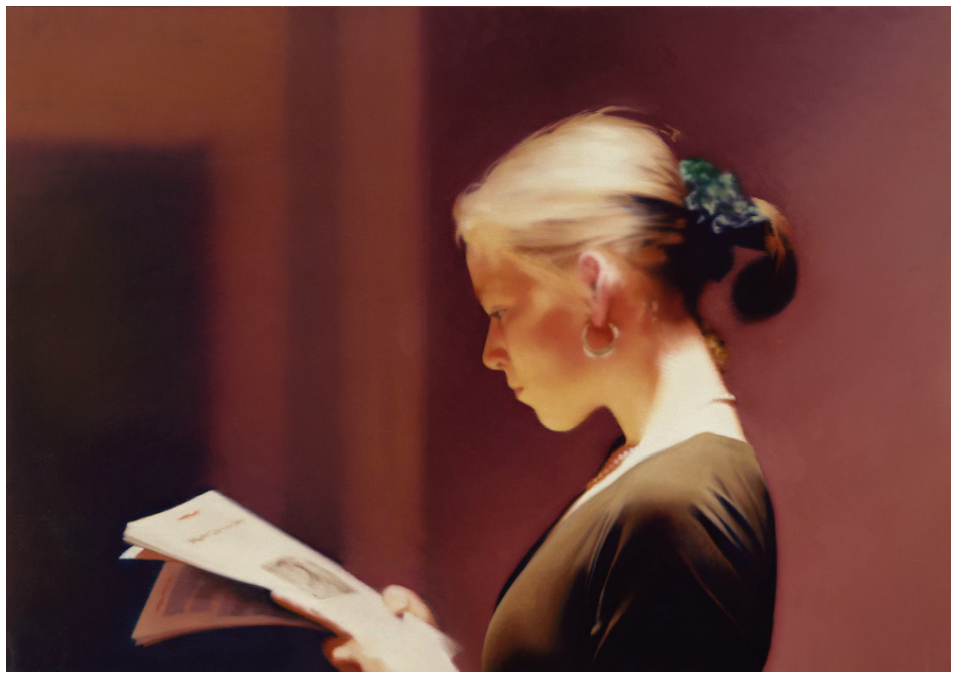
Gerhard Richter, Lesende (Reader), 1994. San Francisco Museum of Modern Art (SFMOMA), San Francisco. © Gerhard Richter 2024 [0015].
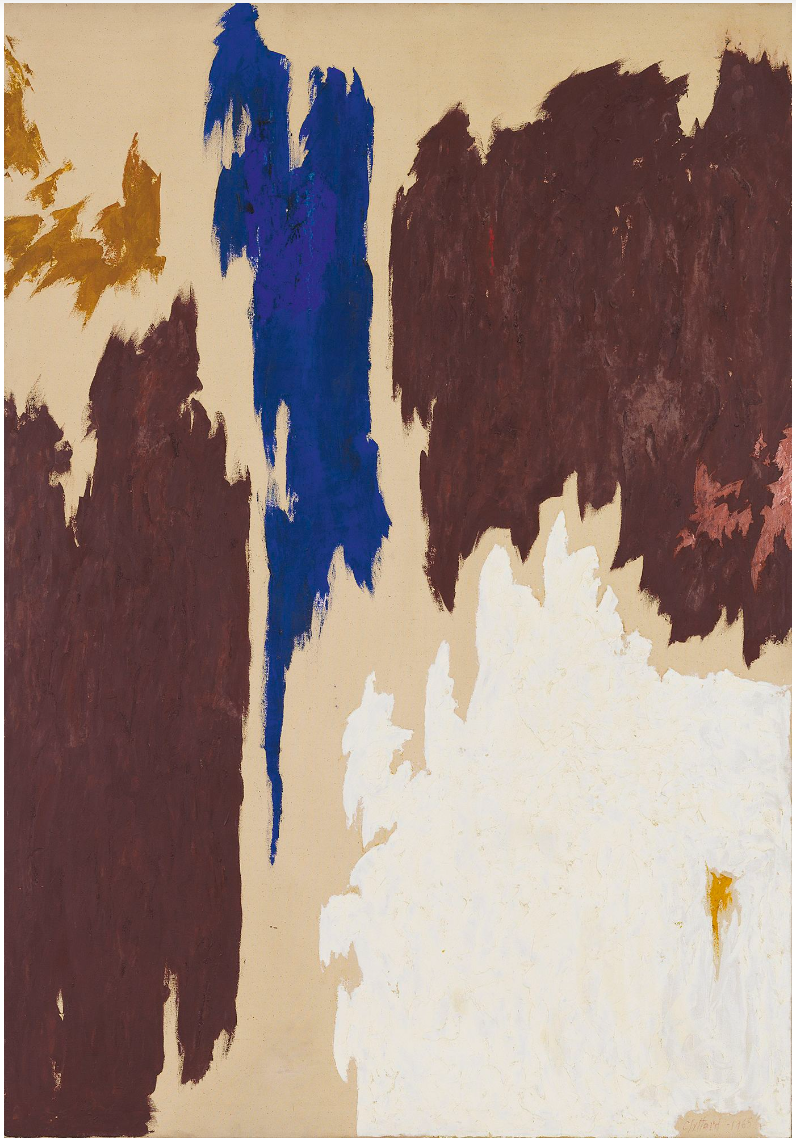
Artwork: © Clyfford Still, DACS 2024. Photo: Museo Nacional Thyssen-Bornemisza/Scala, Florence
“I would like my paintings to be brand-new …
A brand-new painting without much quality can be exciting, but there is nothing quite like a painting that is brand-new and terrific.”
What he meant by ‘brand-new and terrific’ was a form of representation that hit the viewer with a visual jolt, one that paralleled the perceptual phenomenon of seeing a person for the first time. Katz’s flattened, stylized figures are distilled so as to mimic that initial focal impact. The effect invests even his most familiar subjects—who are typically friends, family and close acquaintances—with the shock of the new. Isca arrives like the dawn, aglow in brilliant, intimate splendor.
Sophie, 2003
Christie’s London: 9 March 2024
Estimated: GBP 400,000 – 600,000
GBP 604,800 / USD 766,886
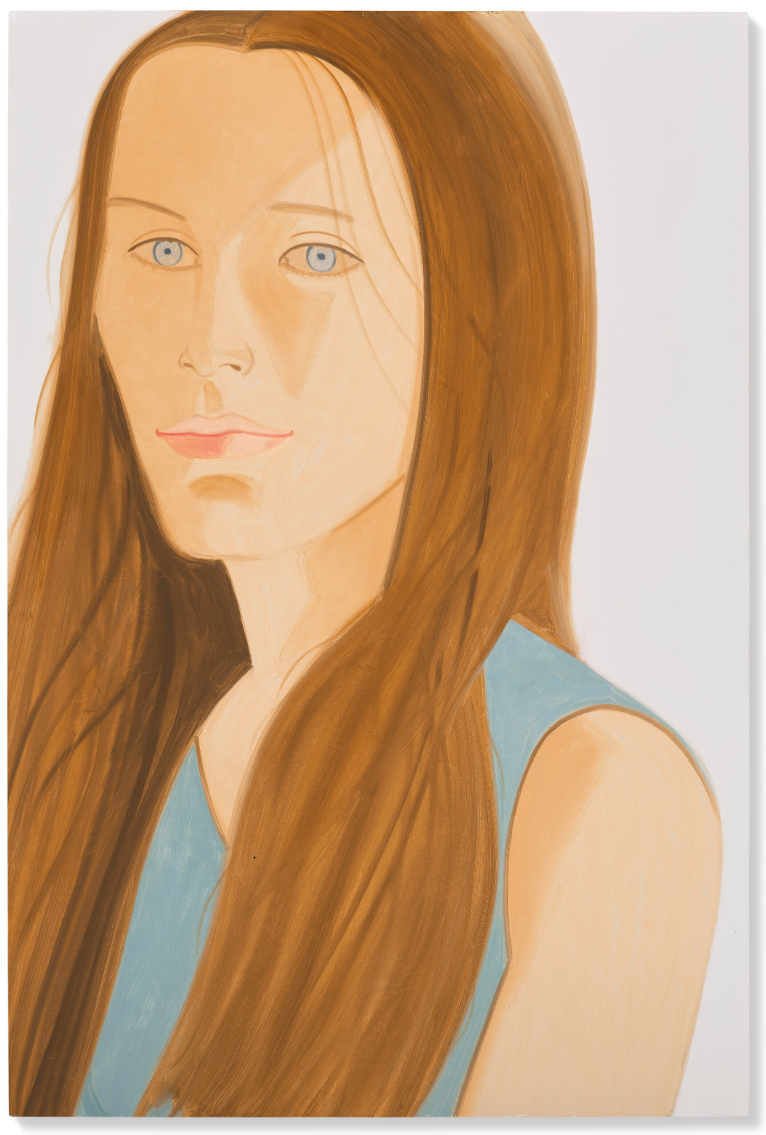
ALEX KATZ (B. 1927)
Sophie, 2003
Oil on canvas
72 x 48 1/4 inches (183 x 122.5 cm)
Signed and dated twice ‘Alex Katz 03 Alex Katz 03’ (on the overlap)
Painted in 2003, Sophie is a regal, urbane portrait by Alex Katz. Closely cropped against an enigmatic ground, Katz’s sitter possesses an undeniable poise. Long cascades of brown hair frame her elegant visage, warmly illuminated by soft lighting. Katz is a colorist par excellence, and the blue of his sitter’s eyes is crystal-clear. This, in combination with the work’s tranquil atmosphere, lends Katz’s subject an almost angelic grace: with her simple dress, bare face, and flowing hair, Sophie recalls a Renaissance divinity. Katz has always been a student of art history, having taught himself early on the Old Master technique of making cartoons before embarking on a canvas; he considers Goya, Manet, Matisse, and the ancient Egyptian sculptor Thutmose to be among his most enduring influences.
Born in Brooklyn in 1927, Katz came of age in an art world devoted to brash, abstracted gestures and Action Painting. In deference to the avant-garde movements of the era, he took seriously their tenets and scale, and developed an interest in flat space and heightened colour. Yet Katz was unable to give himself over to abstraction and never strayed from figuration. Instead, he challenged himself to faithfully represent reality even as he remained truthful to his medium and its thrilling, two-dimensional constraints. ‘I can’t think of anything more exciting than the surface of things,’ he has said (A. Katz quoted in I. Sandler, Alex Katz: A Retrospective, New York 1998, p. 24). Looking to Matisse and Rothko in particular, Katz used colour to achieve depth and volume without eschewing representational imagery. His art, as such, suggests less a photographic reality than how the artist himself sees and experiences the world around him.
Left: Sandro Botticelli,The Birth of Venus (detail), 1482-1484, Galleria degli Uffizi, Florence. Photo: © Scala, Florence – courtesy of the Ministero Beni e Att. Culturali e del Turismo.
Right: Johannes Vermeer, Girl with a Pearl Earring, circa 1665-1666. Mauritshuis, The Hague. Photo: © Bridgeman Images.
By employing close-ups and cropped viewpoints, Katz imbues his paintings with a sense of drama even as his subjects remain tantalizingly out of reach. Over his long and prolific career, Katz has honed this pictorial aloofness, citing ‘detachment’ as a preferred aesthetic quality. Sophie contains the hallmarks of his painting: refined sophistication, gorgeous tonalities and a certain sangfroid. For more than seven decades, Katz has stayed loyal to his idiom, a dedication celebrated in his recent retrospective at the Solomon R. Guggenheim Museum, New York, in 2022. While his formal strategies evince a Pop aesthetic, what unites all Katz’s oeuvre—and is so evident in Sophie—is the paramount importance of style. His paintings are true to their own moment, which, as Katz told the critic David Sylvester, is the point: ‘…this is the highest thing an artist can do—to make something that’s real for his time, where he lives’ (A. Katz interviewed by D. Sylvester, 15-16 March 1997).
Anne, 1978
Christie’s New-York: 29 September 2023
Estimated: USD 600,000 – 800,000
USD 693,000
ALEX KATZ (B. 1927) (christies.com)
ALEX KATZ (B. 1927)
Anne, 1978
Oil on linen
48×34 inches (121.9 x 83.4 cm)
Alex Katz’s Anne is a dazzling portrait of the American poet Anne Waldman, swathing her cool, impassive gaze in a shock of electric pink. The canvas pulses with vitality, yet reveals little of the subject’s psychology through her flattened features; instead, it is Katz’s distinctive analog of surfaces and textures, his surgical transformations of light and color, that forge the work’s captivating energies and openings. Katz’s two paintings of Anne – the first of which is held at the Metropolitan Museum of Art – distill his long-time exchange and engagement with creatives of all disciplines, particularly poets. In the early 1950s, as he entered the art world and a new style of American poetry emerged, the artist found natural affinities to the poets in their shared project of chronicling contemporary life through immediate, straightforward translation. In Anne, Katz has found the means to make the style of his sitter and the style of his painting converge, epitomizing each other as the canvas’s very properties, all in the spirit of the times.
White Band (Katherine), 2013
Phillips New-York: 16 May 2023
Estimated: USD 400,000 – 600,000
USD 444,500
Alex Katz – 20th Century & Contemporary… Lot 112 May 2023 | Phillips
ALEX KATZ
White Band (Katherine), 2013
Oil on linen
48×66 inches (121.9 x 167.6 cm)
Signed and dated “Alex Katz 13” on the overlap
In Alex Katz’s White Band (Katherine), 2013, the figure, with her curls catching glimpses of light, stands against an isolated, blue background. Her hair is tied back with a white headband, the subject of several Katz portraits during the 2010s, and her gaze is ahead, only showing us a profile view with little to no emotion. Careful observation is given to her features—thin eyebrows, a defined jawline and an elongated nose suggest that this is a more realistic depiction, rather than an idealized one. In this way, the present work is emblematic of Katz’s distinct painterly practice and reflects the artist’s respect and admiration for the minute details of quotidian life. Evoking a Pop style of realism, the artist’s works combine influences from a variety of movements and styles, resulting in a refreshing take on traditional landscapes, still lifes, and portraits, and solidifying him as one of the premier artists of the 20th and 21st centuries. Included in Galerie Thaddaeus Ropac’s monographic exhibition in 2014, which brought together roughly 100 works made between the 1960s and 2010s, White Band (Katherine) has been in the same esteemed private collection for almost a decade.
Danielle 3, 2020
Phillips New-York: 16 May 2023
Estimated: USD 300,000 – 500,000
USD 304,800
Alex Katz – 20th Century & Contemporary… Lot 113 May 2023 | Phillips
ALEX KATZ
Danielle 3, 2020
Oil on linen
48×36 inches (121.9 x 91.4 cm)
Uniquely able to transform his figures into timeless icons, Alex Katz presents us here with a zoomed-in portrait of the titular Danielle. Difficult to categorize, Katz’s paintings hover between abstraction and realism, and his overarching aesthetic between Pop and figuration. Creating thousands of portraits throughout his illustrious career spanning more than 50 years, Katz has been the subject of more than 200 exhibitions around the globe, most recently, his seminal retrospective at the Solomon R. Guggenheim Museum in New York which closed earlier this year.
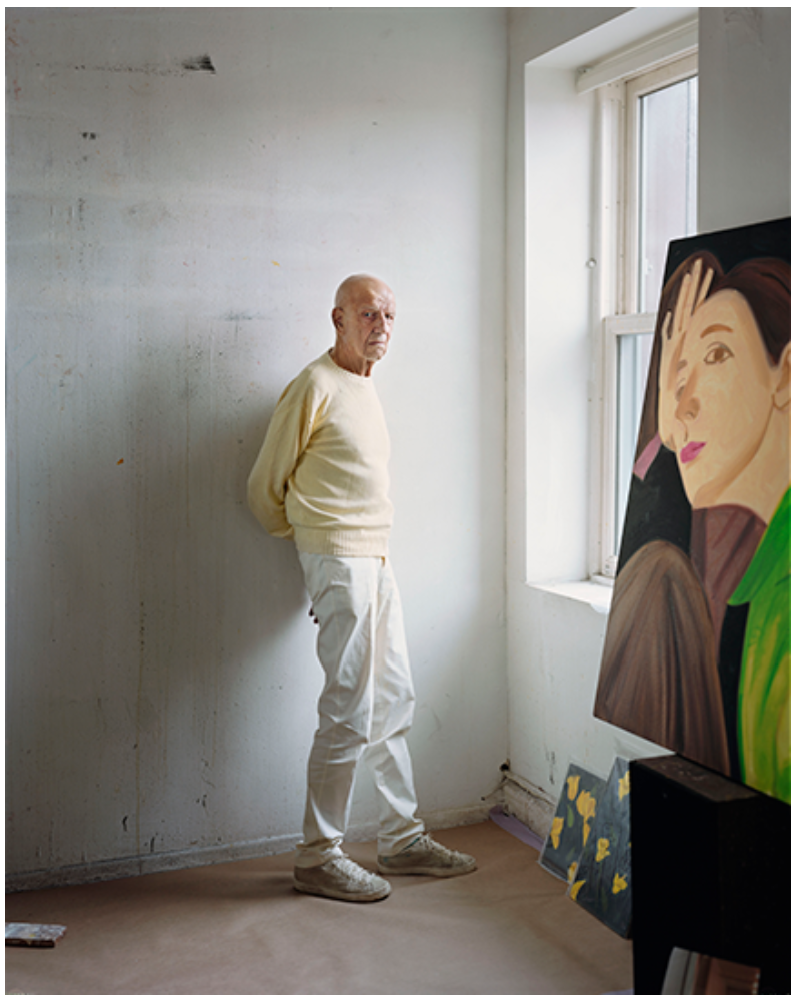
Alex Katz in his studio, 2022. Image: © Alec Soth / Magnum Photos
Katz has consistently relied on his own surroundings and the people close to him as the influences in his painterly practice. He began his career sketching people on New York City’s subways and then was inspired at Skowhegan School of Painting and Sculpture in Maine to paint landscapes from direct observation. This intimate relationship to his sitters and settings results in an astute attention to seemingly mundane elements. In the present work, Danielle 3, Katz chooses not to idealize the sitter, representing a break from the traditions of portraiture, but instead to simplify her features to light, shadow and form. Her features are almost elongated, with a seemingly unrealistic distance between the figures’ twinkly, almond-shaped, brown eyes and soft pink lips, separated by a long, straight nose. Choosing to eliminate Danielle’s hair and neck, Katz places the viewer face to face with the intimate details of the composition. Katz started utilizing zoomed-in and cropped compositions in 2010. In isolating a figure’s features, the portrait could represent anyone. Only the title of the work informs the viewer who the portrait is meant to depict. This sense of universality is seen throughout his works, and is what makes them so nostalgic and relatable.
Red Band, 1978
Christie’s New-York: 11 May 2023
Estimated: USD 2,000,000 – 3,000,000
USD 2,470,000
ALEX KATZ (B. 1927) (christies.com)
ALEX KATZ (B. 1927)
Red Band, 1978
Oil on linen
72 x 47 3/4 inches (182.9 x 121.2 cm)
Combining his most recognizable subject with a consummate understanding of art history, Red Band is a definitive example of Alex Katz’s mature work. Exhibiting masterful handling of color, light, and surface, the monumental portrait delivers an intimate tableau in the artist’s signature style. Known for his flat compositions and highly graphic approach to figuration, Katz has established himself as one of the great American portraitists. The artist’s importance in the history of figurative painting cannot be overstated. Originally influenced by billboard advertisements and their use of bold swaths of color for their immediate visual appeal, he did not align with the fledgling Pop Art movement when he began painting.
“Pop art deals with signs, while my work deals with symbols. Pop art is cynical and ironic. My work is not. Those are big differences. Pop art is modern. My work is traditional.”
Working within an evolution of more conventional portraiture, Katz has pushed figural depictions into a new age.
Rendered on a rich goldenrod ground, Katz paints a close-up portrait of a woman wearing an audacious white hat. Sporting the titular red band wrapped around its crown, the headpiece elongates its wearer’s head to towering proportions while the brim flops over her face. The sitter, her hand resting on her chin, stares out of frame with one auburn eye, the other hidden by her head covering. Her skin sports a golden tan and her light pink lips accent the highlights around the edges of the face, serving to separate the subject from the color field in the background. She wears a simple white blouse with long sleeves buttoned at the wrist in a shade that echoes that of her hat. A shock of neatly cascading brown hair with a single lock of cloudy gray is cut at shoulder length and ends in a line of feathery brushstrokes. In the lower right corner, what appears to be the back of a yellow chair is visible. This dynamic cropping of the scene is pivotal to Katz’s investigation of figures in space and often gives the impression that we are viewing renditions of close-up photographs or single frames from a film. His insistence on painting everyday subjects further emphasizes this feeling as the flat color of the background often gives the impression of cut-out images used for collage.
Yvonne with Flowers, 2001
Bonhams London: 16 March 2023
Estimated: GBP 700,000 – 1,000,000
GBP 756,300 / USD 915,839
Bonhams : ALEX KATZ (B. 1927) Yvonne with Flowers 2001
Oil on linen
36×66 inches (91.6 x 167.9 cm)
Signed and dated 01 on the overlap

In the present work, Katz defines his model’s features in his distinctive wet-on-wet brushwork that forces him to finish each work in a single session. Developed from the Renaissance fresco technique of pinning paper to the canvas, and forcing dry pigment through pinholes to create an outline, Katz shapes a vivid human presence with the most minimal of means. The picture is a warm portrayal of Force Villareal, whom Katz has known since the early 1990s and who has since been one of his most painted models after his wife Ada. She features in over 20 paintings, cut-outs and prints of the artist, each depiction revealing a different facet of the sitter. The inclusion of flowers, another one of Katz’s career long signature themes, gives the work a fresh springlike quality, similar to Flora in Sandro Botticelli’s masterwork Primavera. Offsetting the daringly close crop of the face and flowers with a large canvas, Yvonne with Flowers is evocative of the billboards and cinema screens that influenced the artist in the 1960s. Like a movie still, projected onto a flat cinema screen, the work embodies a distinct Pop aesthetic despite the fact that Katz never saw himself as a Pop artist; if anything he was a precursor to it. Whilst at first, his works with their bold colors and strong close ups seemed to be related to the emerging Pop movement of the 1960s, Katz and his craft-based approach to painting stood apart from the preeminent artistic movements.
Hiroshi, 1979
Christie’s New-York: 18 November 2022
Estimated: USD 400,000 – 600,000
USD 378,000
ALEX KATZ (B. 1927), Hiroshi | Christie’s (christies.com)
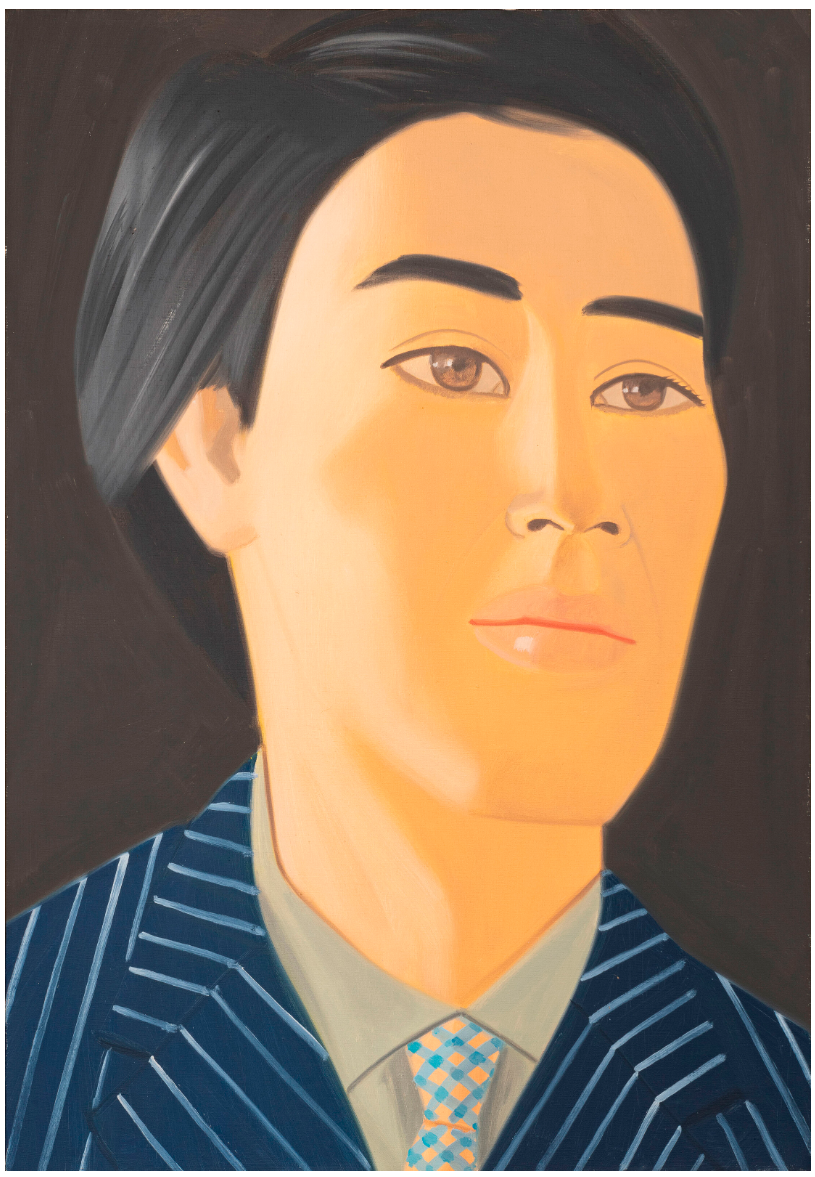
ALEX KATZ (B. 1927)
Hiroshi, 1979
Oil on linen
48×36 inches (121.9 x 91.4 cm)
What makes Alex Katz’s portraiture so captivating and beautiful is his ability to capture a fleeting moment in the lives of his friends and family. He creates works that share characteristics from both Abstract Expressionism and Pop Art, producing his own unique style. Along with his specific style, the sense of mystery within his work enthralls viewers, allowing space to create their own narrative. In order to truly capture the essence of the moment he is observing, Katz does not work from photographs, instead he draws from life as he sits in front of his subjects – sketching small variations of these moments with pen and pencil. This process is apparent in his 1979 drawing Hiroshi (cartoon), which we can assume was a process drawing for the painting which he also completed in 1979. The patience he has as an artist is not only seen through the in-depth process behind each work, but also through his skill with a paintbrush and the flatness he creates.
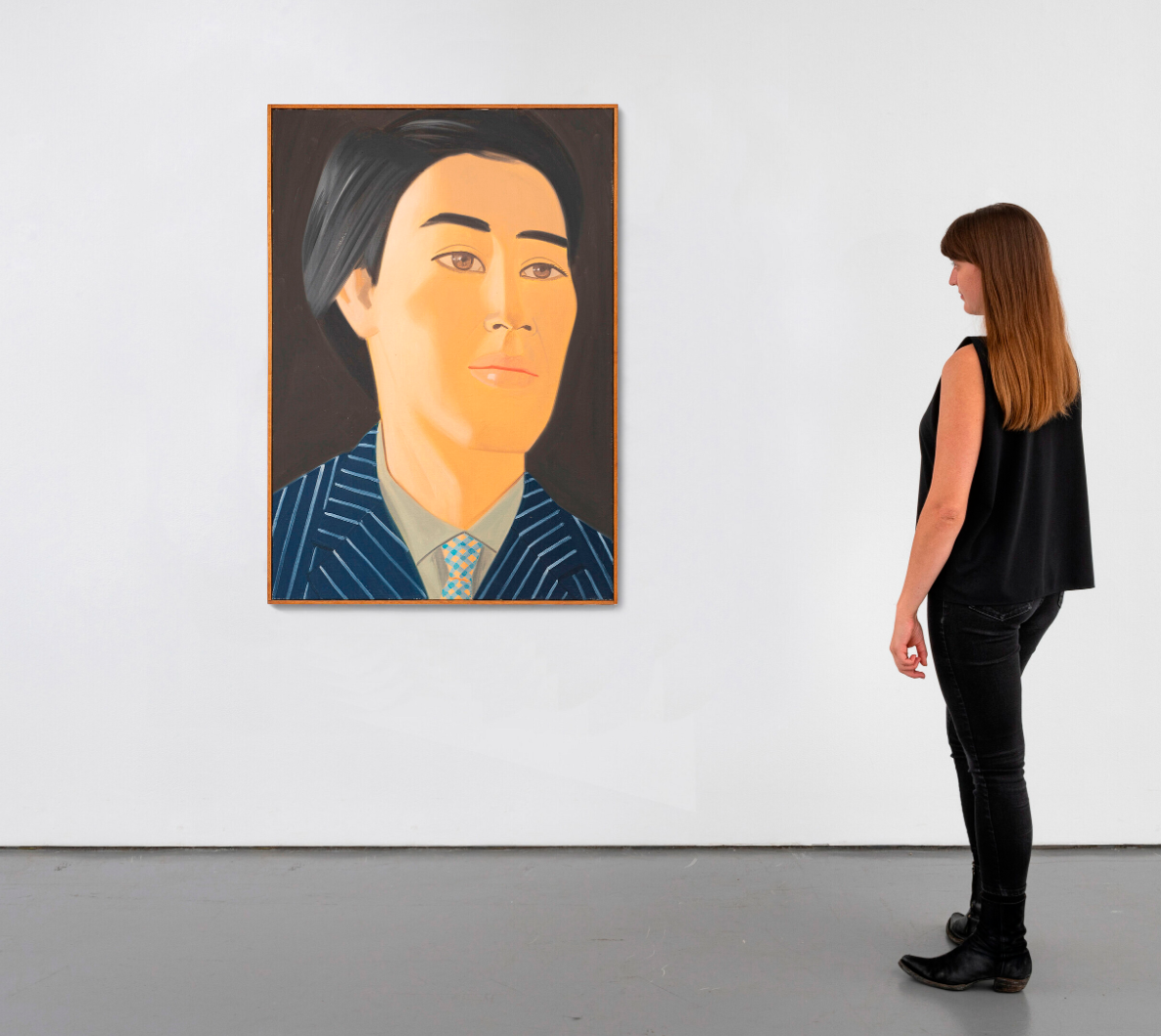
Like most of his portraits, Hiroshi (1979) presents the viewer with a refined yet compelling portrait of Hiroshi Kawanishi, a silkscreen printmaker, as well as collaborator and friend of Katz’s. We see the influences of film and advertisement within his works, as cinema has the capacity to narrate a story through imagery, much like Katz’s paintings do. This aspect helps to create a very specific composition, recognized as an Alex Katz painting. The way in which he cropped his subjects allowed them to fill up and take over the space of the canvas completely, like one is zoomed in on Hiroshi’s face through a camera lens. Katz’s use of color blocking helps to maintain simplicity within the face, while the use of different color hues creates depth. The glimmer of Hiroshi’s eyes pull the viewer in, activating a sense of emotion within the work. Although it is hard to understand exactly what it is he is feeling as his face remains stoic, staring off at the unknown. The dark background that he stands against begs the question of where he is. Is he alone? What is going on around him? This sense of mystery within the present work, along with all of his paintings, helps to keep the viewer intrigued in such a simple work.
Alicia, 2004
Sotheby’s New-York: 17 November 2022
Estimated: USD 400,000 – 800,000
USD 1,008,000
Alicia | Contemporary Day Auction | 2022 | Sotheby’s (sothebys.com)
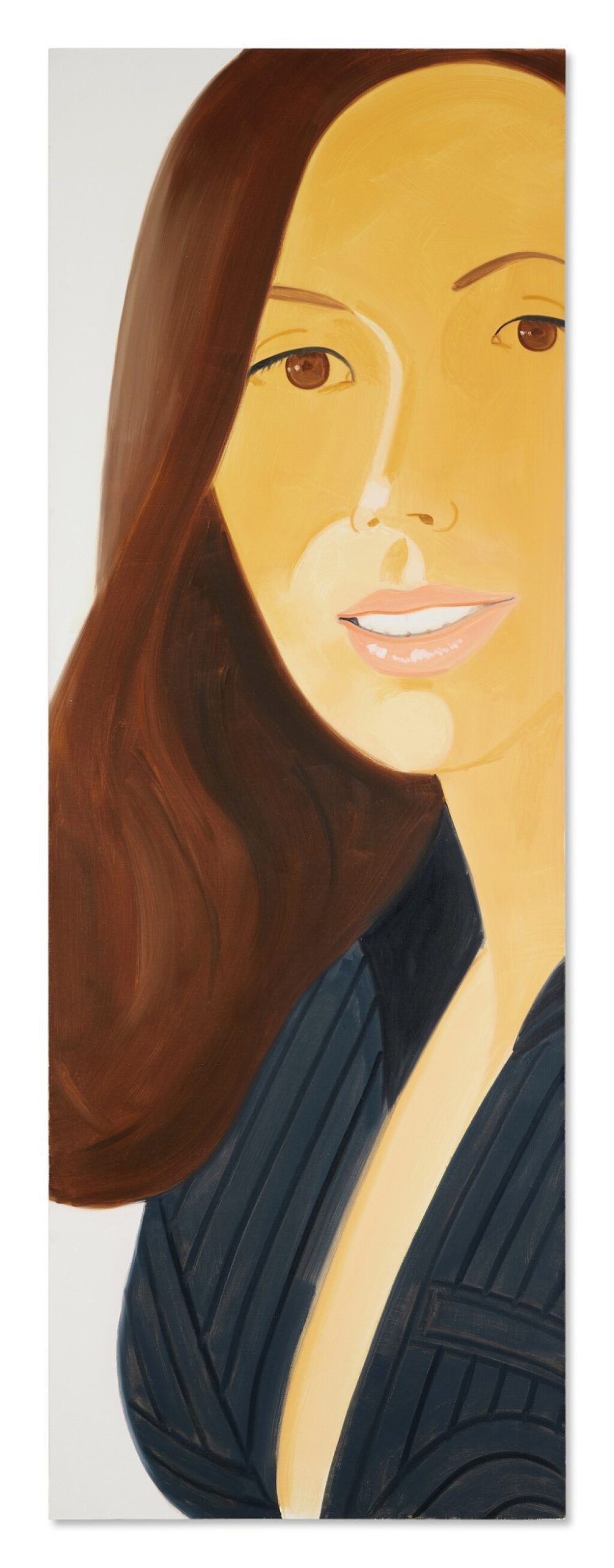
ALEX KATZ (b. 1927)
Alicia, 2004
Oil on linen
96 x 33½ inches (243.8 x 85.1 cm)
Signed Alex Katz and dated 04 (on the reverse)
Monumental in scale and striking for its vibrant palette and signature flatness, Alex Katz’s 2004 portrait Alicia is emblematic of the artist’s renowned idiosyncratic aesthetic that redefined contemporary portraiture in the twentieth century. As arresting as its subject, Alicia depicts 15-time GRAMMY Award-winning musician Alicia Keys in Katz’s impossibly cool, reductive style. The present work was exhibited at the prestigious PaceWildenstein in 2004 as part of a series of prolific female creatives, including artists Kiki Smith and Cindy Sherman and Katz’s wife and muse Ada. Alicia was also illustrated in W Magazine’s 2004 article “The Originals” Alex Katz”, which highlighted the artist’s groundbreaking career as one of the most influential painters of the 20th and 21st century. Though similarly composed, Alicia distinguishes itself from the undersaturated palettes of the other works with its richer shades of shimmering gold that radiate from its neutral background.
Typical of his oeuvre, Katz strips the work of any context and extraneous details, allowing pure figuration and abstraction to preponderate. Depicted in three-quarter-view profile, Keys is pressed up against the picture plane, tightly cropped within the towering canvas, creating a two-dimensional rendering akin to that of a billboard. Intimately close to the viewer, Keys’ severe expression is utterly enigmatic, striking a compelling balance between seduction and detachment. As in his other portraits, Katz’s depiction of Keys is idealized, defined by the absence of meticulous surface detail. The subtle play of light and shadow which reveal themselves in the amorphous shapes on her cheek, chin, and along the undulating slope of her nose further this effect to make for an elegantly sincere composition.
Anna, 2006
Sotheby’s London: 14 October 2022
Estimated: GBP 500,000 – 700,000
USD 604,800 / USD 678,026
Anna | Contemporary Evening Auction | 2022 | Sotheby’s (sothebys.com)
ALEX KATZ (b. 1927)
Anna, 2006
Oil on linen
72×48 inches (182.9 x 122 cm)
Signed Alex Katz and dated ’06 (on the overlap)
Signed Alex Katz and dated ’06 (on the stretcher)
Rackstraw and Pamela, 1976
Sotheby’s New-York: 19 May 2022
Estimated: USD 2,000,000 – 3,000,000
USD 2,470,000
Rackstraw and Pamela | Contemporary Evening Auction | 2022 | Sotheby’s (sothebys.com)
ALEX KATZ (b. 1927)
Rackstraw and Pamela, 1976
Oil on canvas
77 3/4 x 90 1/2 inches (197.5 x 229.9 cm)
Rackstraw and Pamela from 1976 exemplifies Alex Katz’s extraordinary contribution to the shared visual vocabulary of Contemporary portraiture. Through his highly individualized mode of realism, Katz here fosters a palpable intimacy between the two subjects depicted—Realist painter Rackstraw Downes and his wife at the time, Pamela Berkley. Dually, setting is critical for Katz and the serenity of coastal Maine has proven to be a site of lifelong inspiration for the artist, who has worked and lived there part time since the mid 1950’s; Rackstraw and Pamela specifically recalls the beautiful rocky environs of coastal Maine on a bright, sunny summer day. As Katz achieves in his most successful double portraits, the present painting captures with great specificity the relationship between his two sitters. The artist has noted, “I wanted to use contemporary gestures, contemporary clothes and contemporary people. It was socially all the people I was seeing at the time…I just invited them up and painted them.” Rackstraw and Pamela was formerly in the collection of Charles Saatchi.
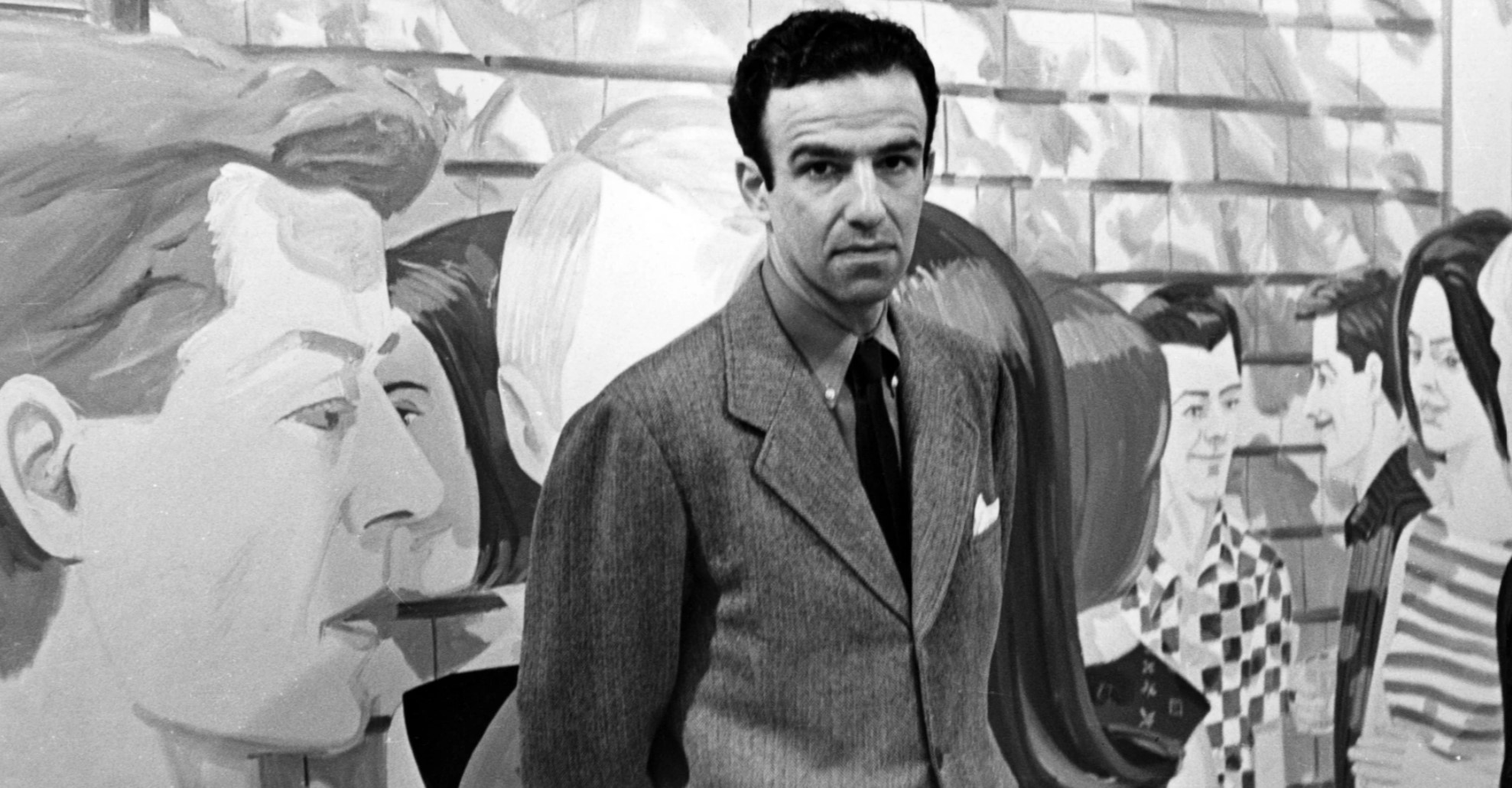
Guiding the expansive frame, the two figures in Rackstraw and Pamela—clad in the elegance of summer white New England garb—are seated against a mustard yellow table. A crisp steel sky meets a vast stretch of blue water; punctuated with rocks, the tide meets the dwindling shore. The palpable sense of atmosphere is intensified by the presence of a light summer breeze, which is palpably felt through the wisps of hair that frame their faces. Rackstraw gazes at Pamela, whose eyes are cast downward and whose elbow brushes against her companion’s.

Katz subtly interweaves elements of the natural environment into his portraits, imbuing them with breathtaking liveliness whilst simultaneously capturing idyllic single snapshots of time. He does so without superfluousness, championing flat planes of solid color and using only minimal shadow in his painting. In Rackstraw and Pamela, the presence of shadow in Rackstraw’s face, Pamela’s collarbone and their hands functions to break the realism of the portrait. Katz’ planes of color are thereby abstracting, geometric and communicative of heightened emotion.
Kristen, 2005
Christie’s New-York: 13 May 2022
Estimated: USD 300,000 – 500,000
USD 693,000
ALEX KATZ (B. 1927) (christies.com)
ALEX KATZ (B. 1927)
Kristen, 2005
Oil on linen
84×60 inches (213.4 x 152.4 cm)
Signed and dated ‘Alex Katz 05’ (on the overlap)
Rendered in bold colors and with signature flatness, Anna is a brilliant example of Alex Katz’s distinctly stylized and markedly idiosyncratic aesthetic that has defined the contemporary figurative painting. Set against a vague backdrop of smooth color and rendered in Katz’s impossibly cool, reductive style, the present work is an instantly recognizable example of the artist’s iconic portraiture.
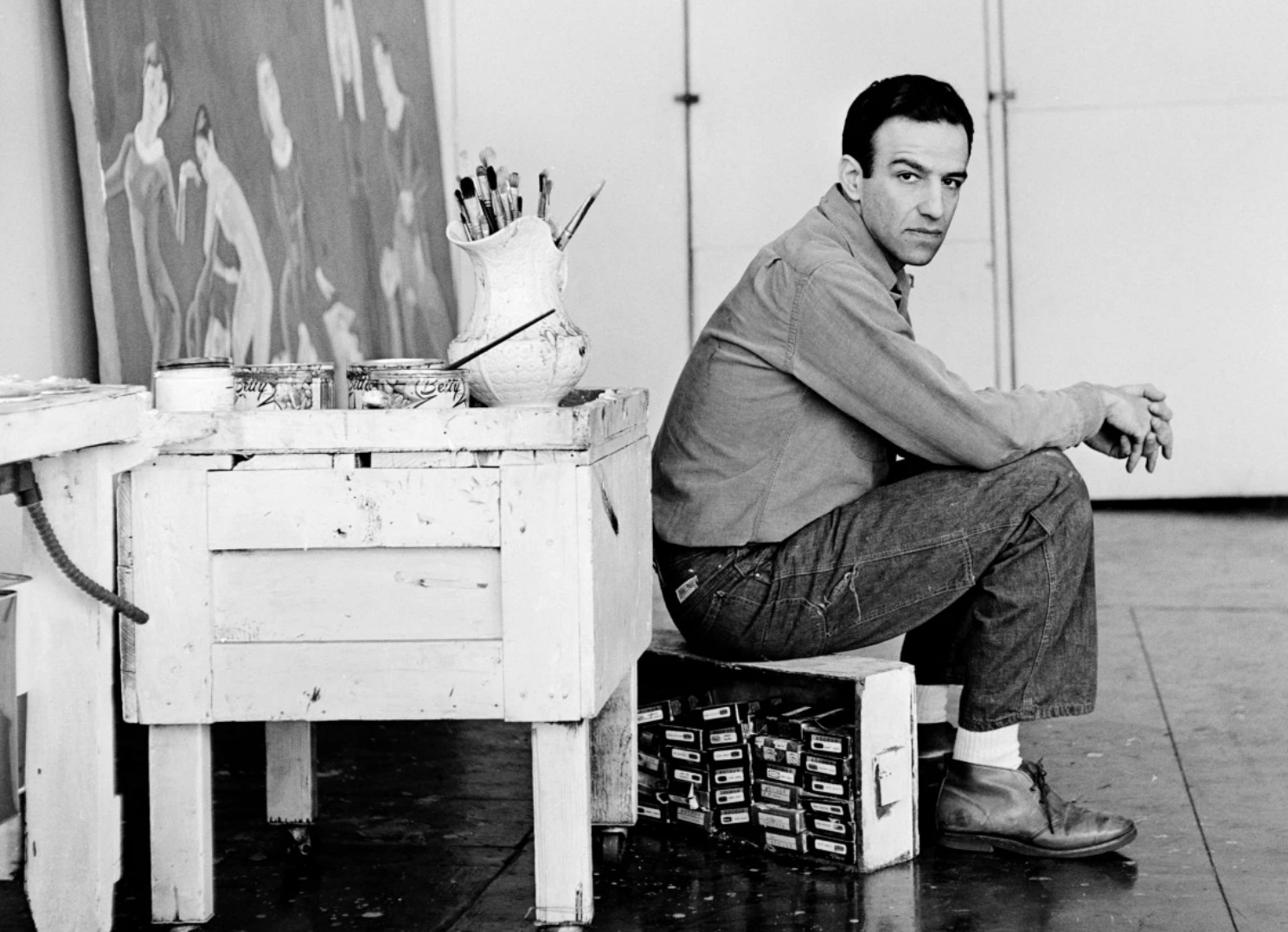
Tightly cropped within the frames of the canvas is a cool yet mysterious female silhouette. Her depiction is characterised by the elimination of high-level surface detail and the subtle play of light and shadow that make for a wonderfully compact composition. Presenting a tranquil, contemplative moment or snapshot of everyday life, Anna is shown in quarter profile, pressed up against the very front of the picture plane, occupying nearly the entirety of the visual field. Rendered in a larger-than-life scale and cropped composition, Katz brings the figure intimately close the viewer, making it seem as if we are peering through the eyehole of a long-distance lens. Her bright blue eyes wide open and alert, Anna’s expression is utterly enigmatic, striking a compelling balance between accessibility and aloof remove. With flat solemnity and nonchalant elegance, Katz’s portraits conjure a sense of nostalgia, capturing the introspective, silent moments that precede narrative action. In his stunning perception of everyday life, Katz does not look to create a narrative, but rather a sense of wonder and intrigue, allowing the inscrutable nature of his subject to shine through. Typical of the artist’s oeuvre, the shallow pictorial field matched with the apparent expressivity of the depicted figure owe much to the crisp and detached manner of commercial art and illustration with further inspiration drawn from film, advertisements and fashion photography.
Man with Brown Hat, 1979
Christie’s New-York: 13 May 2022
Estimated: USD 700,000 – 1,000,000
USD 756,000
ALEX KATZ (B. 1927) (christies.com)
ALEX KATZ (B. 1927)
Man with Brown Hat, 1979
Oil on canvas
96×72 inches (243.8 x 182.9 cm)
Signed and dated ‘alex katz 2⁄79’ (on the overlap)
Man with Brown Hat is a stylish work, emblematic of his billboard sensibility as the figure dominates the picture frame against a clean, brown background. The artist’s highly stylized portraits represent his source of notoriety in his earlier career and the pivotal shift to Katz’s highly followed and notable oeuvre in the 1980s. His stylized portraits and large-scale landscapes developed in the early 1960s and continue to hold a power of influence in today’s art market. As a result, the present work is infused with a nostalgic sensation that is familiar, yet inviting viewers to discover new, wholly unfamiliar themes. The theatrical crop in Man with Brown Hat, archetypal of Alex Katz’s finest creations, is cinematic in nature, featuring an impenetrable character that displays an uncomplicated expression. Rendered in the artist’s flattened style, Man with Brown Hat offers a critical moment in the artist’s illustrious career, bridging the iconic portraits that populate his early works with the impressive cinematographic renderings. The artist illustrates an ominous, enigmatic scene within the present lot that unfolds in various hues of brown and gray, alluding to a site of mystery in relative proximity. The character displayed is an homage to the actor Alan Ladd, expressing the nonreactive, bleak emotions frequently portrayed in the 1942 Film Noir, This Gun for Hire. There Alan Ladd’s character is out for vengeance. The story is best told with the display of Man with Brown Hat‘s cold porcelain skin and hollow gray eyes that beckon with piercing forceful accents. Noted for their sharp edges, smooth surfaces and flat shapes, these colors assert a degree of autonomy and corporeality. Katz has made colors that are not only able to describe, but also to speak and to tell. For Katz, Man with Brown Hat is familiar yet aloof and is both a depiction inspired by reality and a fictious imagining. Invariably painting with an atmosphere of admiration, Katz picks up the subtleties of Ladd’s stark expressions and mirrors them with a choice of hat that’s shadow cast, continuing the storyline of mystery. The monotonous tones of beiges and browns contrast with the vibrant reds of his tie and the blues of his collared shirt, drawing the viewer into the piece’s focal point. Man with Brown Hat possesses both the solemnity of a formal portrait and the subtle, enamoring quality of a film poster. The present work is an ideal illustration of Katz’s distinct pictorial representation of realism, championing the genre of the portrait and delving into the tradition of the art historical canon of painting with the same mastery of stark lines. Man with Brown Hat composes parts of an essential series of portrait images created in the late seventies and early eighties, which draw inspiration from the realms of film, and advertising.
White Visor, 2003
Sotheby’s London: 2 March 2022
Estimated: GBP 650,000 – 850,000
GBP 856,000 / USD 1,145,301
White Visor | Modern & Contemporary Evening Auction | 2022 | Sotheby’s (sothebys.com)
ALEX KATZ (b. 1927)
White Visor, 2003
Oil on linen
72×144 inches (183×366 cm)
Signed Alex Katz and dated 03 (on the overlap)
Rendered in bold colors with a signature flatness, White Visor is a brilliant example of Alex Katz’s distinctly stylized and markedly idiosyncratic aesthetic that has defined the world of contemporary figurative painting. Set against a backdrop of invigorating color and rendered in Katz’s impossibly cool, reductive style, the present work is an instantly recognizable example of Katz’s iconic mode of portraiture. Emanating from an electrifying ground of saturated blue pigment is a cool yet mysterious female silhouette, whose depiction is characterized by the elimination of high-level surface detail and the subtle play of light and shadow that make for a wonderfully compact composition. She is shown in profile, up close, and in front of an untarnished skyscape, to deliver a tranquil and contemplative moment or snapshot of everyday life. Katz’s monumental scale and cropped composition bring the figure intimately close to the viewer, her expression is utterly enigmatic, her eyes shrouded in shade and suspended in contemplation. She strikes a compelling balance between accessibility and aloof remove. With their flat solemnity and nonchalant elegance, Katz’s portraits conjure a sense of nostalgia, capturing the introspective, silent moments that precede narrative action. In his stunning perception of everyday life, Katz does not seek to create a narrative, but rather a sense of wonder and intrigue, allowing the inscrutable nature of his subject to shine through. Typical of the artist’s work, the shallow spatial plane paired with the apparent inexpressivity of the depicted figure owe much to the crisp manner of commercial art and illustration with further inspiration drawn from film, advertising and fashion.
As seen in the present work, Katz simplifies the frames of reference from his paintings, allowing for pure figuration and abstraction to reign supreme. White Visor then demonstrates Katz’s unparalleled ability to capture a moment, if not a second, in time. With its iconic flattened style, the present work skillfully evinces his stylized artifice in which the final portrait is a recognizable, yet beautifully distorted version of reality. Unclassifiable and never persuasively subsumed under any one style, Katz has avoided affiliation with any group or movement throughout his long and distinguished career – yet has become one of the most recognizable artists of our time. With its grand scale, bold brushwork and iconic flattened style, White Visor is an excellent example of the artist’s iconic oeuvre and aesthetic, as well as a visually powerful and seductive image in its own right.
Tara, 2003
Ketterer Kuntz: 10 December 2021
Estimated: EUR 350,000
EUR 901,000 / USD 991,100
Ketterer Kunst, Art auctions, Book auctions Munich, Hamburg & Berlin
ALEX KATZ
Tara, 2003
Oil on canvas
72×60 inches (183 x 152.5 cm)
Signed and dated on the folded canvas
The traditional genre of the portrait, like the landscape, characterizes Alex Katz’s oeuvre. His large-format portraits are strikingly staged as close-ups. The physiognomy is reduced to the essentials, but the individual characteristics of the person portrayed are captured in razor-sharp manner. Katz’s interest in his models, most of which come from his immediate surroundings, has little to do with the person himself. Appearance and demeanor may play a role, but his approach is systematic-analytical. He is committed to the precise color gradations and the texture of skin and hair, the proportions and surfaces of the face, but above all their relationship to the incident light. The portraits are the result of a precise observation of nature and remain free of any emotionality. His wife Ada always was his number one model. Due to her strong presence in a great number of works, she definitely plays a special role, however, in terms of expression her portraits do not differ at all from those of other models. She, too, stands for a certain type, a role that Katz creates from her face. To him it is not about anything emotional, even in portraits of family members, he is only interested in distilling the essence of the subject.
“The object depicted is absolutely unimportant. It’s about painting, about the power and energy of painting.”
His artist eye only cares for formal aspects, and in doing so he developed his typical visual language, which is often described as cool and clean. It is determined by radiant color contrasts, figures and landscapes with sharply cropped contours, as well as perspectives reduced to surfaces. It is a visual language characterized by deliberate omission.
“You show this and that, but leave something out, and then your mind fills this gap. If the picture contains everything, you don‘t create any effect.”
Katz’s flat painting style, synthesized from monochrome color surfaces, creates an alienation of the three-dimensional reality, and guides the eye of the beholder beyond the content of the picture and to the essence of art. By reducing and focusing, he repeatedly explores the transitions between figuration and abstraction.
Bathing Cap (Suzette), 2010
Christie’s London: 15 October 2021
Estimated: GBP 400,000 – 600,000
GBP 598,500
ALEX KATZ (B. 1927) (christies.com)
ALEX KATZ (B. 1927)
Bathing Cap (Suzette), 2010
oil on linen
40×50 inches (101.5 x 127 cm)
Painted in 2010, and held in the same private collection for the past decade, Bathing Cap (Suzette) is an elegant large-scale portrait by Alex Katz. The sitter is Suzette McAvoy: a leading figure in the Maine arts community who most recently served as the executive director and chief curator of the Center for Maine Contemporary Art, Rockland. Close-cropped against a bright orange ground, she gazes quizzically out at the viewer, her expression alive with intelligence. Fine glints of white touch her eyes and her vermillion lipstick; her face is framed by a gleaming, dark blue bathing cap. Katz defines her features in his distinctive wet-on-wet brushwork, shaping a vivid human presence with the most minimal of means. Regal, stripped-back and luminous, the picture is a warm tribute to McAvoy, whom Katz has known since she was curator of the Farnsworth Museum, Rockland, in the 1990s: the artist has had a home in Maine since 1956, and maintains close connections to its museums.
Ariel, 2018
Sotheby’s New-York: 30 September 2021
Estimated: USD 400,000 – 600,000
USD 685,500
Ariel | Contemporary Curated | 2021 | Sotheby’s (sothebys.com)
ALEX KATZ (b. 1927)
Ariel, 2018
Oil on linen
60×120 inches (152.4 x 304.8 cm)
Signed and dated 18 on the overlap
Alex Katz’s singular mode of realism has defined the shared visual vocabulary of the second half of the twentieth century. With their flat solemnity and nonchalant elegance, Katz’s portraits conjure a sense of nostalgia, capturing the introspective, silent moments that precede narrative action. Born in Brooklyn in 1927 and educated at The Cooper Union and Skowhegan School of Painting and Sculpture, Katz settled on figuration as the primary focus of his artistic output from the beginning of his career. Emerging in the New York art scene of the 1950s, which was dominated by the titans of Abstract Expressionism, Katz brazenly forged his own path, eschewing the passion and primacy of gesture inherent to abstraction, to craft flat, polished scenes, awash in fields of color that captured the sensation of lived experience.
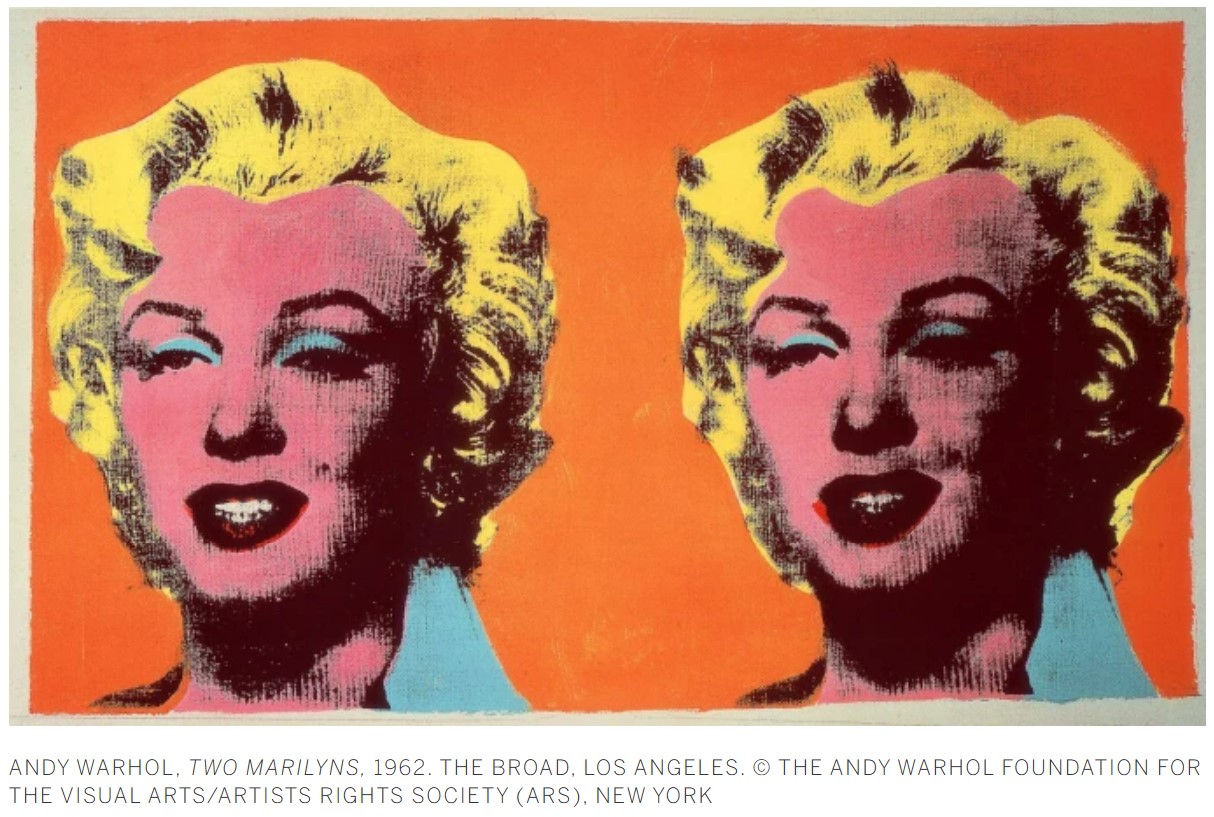
Katz presents two side by side portraits of his subject in Ariel, each against smooth, opposing background colors – blue and orange. With its large scale and energy, Ariel boldly jumps off the canvas’ surface. Ariel is a painting defined by duality, whereby opposing elements are heightened in the act of duplication; the small variances in her two portrayals are made starker by their subtlety and reflect how our perspective of another can change in alternating contexts. He does not seek to create a narrative, but rather a sense of wonder and intrigue, allowing the enigmatic nature of his subject to shine through. In signature Katz style, the composition is divided by a strong horizontal and vertical architectonic element, anchoring the work with a geometric foundation that recalls Minimalist Abstraction. By increasing the scale of his works, flattening the images, eliminating extraneous detail and sharpening contours, he has created a definitive and idiosyncratic style.
Edmund, 1972
Phillips London: 13 July 2021
Estimated: GBP 100,000 – 150,000
GBP 189,000 / USD 261,700
Alex Katz – New Now London Lot 34 July 2021 | Phillips
ALEX KATZ
Edmund, 1972
Oil on linen
32 1/4 x 48 1/8 inches (81.8 x 122.2 cm)
Signed and dated ‘Alex Katz 72’ upper right; signed and dated ‘8-72 Alex Katz’ on the overlap
Painted in 1972, Edmund shows the brown hair of the titular subject pushed back underneath a mortar board. The minimalist lines that articulate his facial features are juxtaposed against the flat green planes of the lush grass and trees that comprise the background. The rich cherry red of the robes draped over the figure’s shoulders affirm the captured occasion as a graduation. The portrait exemplifies the distinctive visual style developed by American artist Alex Katz across seven decades of artmaking, uniting the artist’s dual interests in portraiture and landscape painting. Closely cropped to the subject’s face and echoing the wide-screen angle of the cinematic gaze, the composition of Edmund reveals the influence of photography, filmmaking and advertising billboards on Katz’s approach to representing the human subject. He captures the young man as he gazes into the middle distance, encouraging the viewer to share in a moment of rich psychological introspection that belies the deceptive simplicity of the artist’s painterly style. The cropped perspective and scale of the painting imbues the work with an immediacy: the ‘now’ that Katz seeks to convey as he captures fleeting moments of human experience.
Self-Portrait, circa 1977
Christie’s London: 2 July 2021
Estimated: GBP 70,000 – 90,000
GBP 87,500 / USD 120,706
ALEX KATZ (B. 1927), Self-Portrait | Christie’s (christies.com)
ALEX KATZ (B. 1927)
Self-Portrait, circa 1977
Oil on masonite
18 7/8 x 11 1/4 inches (48 x 28.5 cm)
Painted circa 1977, the present work is a vibrant self-portrait by Alex Katz. Depicting the smiling artist in a blue shirt and jacket before a sunny yellow backdrop, it served as a study for Katz’s large-scale Self-Portrait, 1978, which is held in the collection of the Virginia Museum of Fine Arts, Richmond. Emerging in the wake of Abstract Expressionism in postwar New York, Katz instead looked to the work of artists such as Paul Klee, Pierre Bonnard, and Henri Matisse as inspiration for his new figuration. Amid his depictions of friends and family, his oeuvre includes a number of self-portraits, all of which he conceived as symbolic images rather than objective likenesses. Indeed, he often presents himself in disguise; in Self-Portrait, he has playfully fashioned himself as Ricardo Montalbán, the Latino film and television star. Katz returned to this image in different mediums, examples of which are held in the permanent collections of the National Gallery of Art, Washington D.C., and Carnegie Museum of Art, Pittsburgh, among others.
Ada
Ada, 1986
Property from the Estate of Benjamin and Deborah Mangel
Phillips New-York: 28 February 2026
Estimated: USD 70,000 – 100,000
USD 129,000
Alex Katz Modern & Contemporary Art
ALEX KATZ
Ada, 1986
Oil on Masonite
11-7/8 x 15-7/8 inches (30.2 x 40.3 cm)
Signed and dated “Alex Katz 86” upper right
Like an Egyptian queen girded with gold jewelry in life, and later ensconced by gauze in death, the artist’s wife Ada remains fully embedded in Alex Katz’s visual universe, even as her presentation takes different forms. And no matter what clothes drape over her body, or which moods flicker across her calm face, a quiet but compelling adulation underlies her form always. As immortalized by Katz, Ada straddles the line between a subject of familiarity, or intimacy, and a subject of devotion. In Katz’s Ada, 1986, a particularly beautiful tribute to its subject, colorful effervescence meets loving attention. The present work is a star highlight within the collection of Benjamin and Deborah Mangel, representing at once Katz’s connection with his wife and the relationship between the Mangels and Katzes.
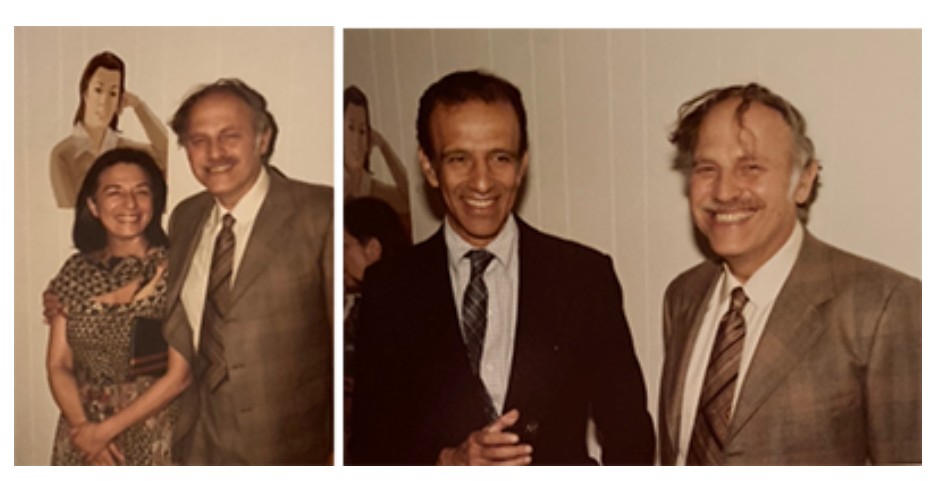
[Left] Benjamin Mangel with Ada Katz.
[Right] Benjamin Mangel with Alex Katz.
A vivid chartreuse glints throughout the canvas, contrasting delightfully against the dark background. This yellow hue boldly marks the neckline of her shirt and striates her greying hair—resembling sunlight caught in a yellow silk curtain. It also frames her brows, lashes and gently pursed mouth. This constant color play, coupled with Katz’s loose facture, breathes light into Ada’s form. Bright baubles hover around her like fireflies or stars. And like a celestial body, Ada appears immaterial in her incandescence, and with her remote gaze, yet also fixedly present. With her eyes diverted, we have the sense as viewers that she remains distant from us, placidly absorbed in her own thoughts.
Yet it is her very elusion of total capture that makes her all the more real as a subject. Irving Sandler, art writer and longtime friend of Katz, wrote that “[Ada] is woman, wife, mother, muse, model, sociable hostess, celebrity, myth, icon, and New York goddess. ”Rather than counterintuitive in portraying one’s spouse, this avatar-like mutability is concordant with life. The impressions that we have of our loved ones inevitably evolve or shift as our memories and experience cast them in new lights. And Katz’s airy brushstrokes here—he is himself a proponent of “fast seeing”—capture both the ephemerality and the poignancy of these impressions. Katz’s painting is objective, in that as he can depict a familiar subject at an aesthetic remove, choosing optics over access. However, it also conjures how amorous feeling is directed but also plays out in different keys.
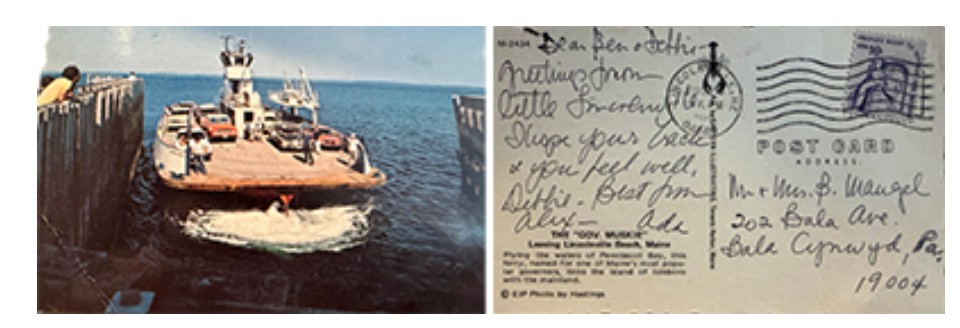
Postcard from Alex and Ada Katz to Ben and Deborah Mangel
Good Afternoon 2, 1974
Sotheby’s New-York: 16 May 2025
Estimated: USD 800,000 – 1,200,000
USD 2,368,000
Good Afternoon 2 | Contemporary Day Auction | 2025 | Sotheby’s
ALEX KATZ (b. 1927)
Good Afternoon 2, 1974
Oil on linen
72×96 inches (182.9 x 243.8 cm)
Alex Katz’s Good Afternoon 2 from 1974 captures the cool clarity and elegant restraint that define the artist’s singular approach to portraiture and landscape. Executed at a monumental scale and featuring Katz’s lifelong muse and wife, Ada Katz, the work exemplifies the artist’s commitment to simplifying form while intensifying presence. For over three decades, this painting has remained in the same private collection, and its exhibition history is as impressive as its visual impact. Featured in multiple institutional surveys—including the Whitney Museum of American Art and the Jewish Museum—Good Afternoon 2 stands as a landmark in Katz’s storied career.
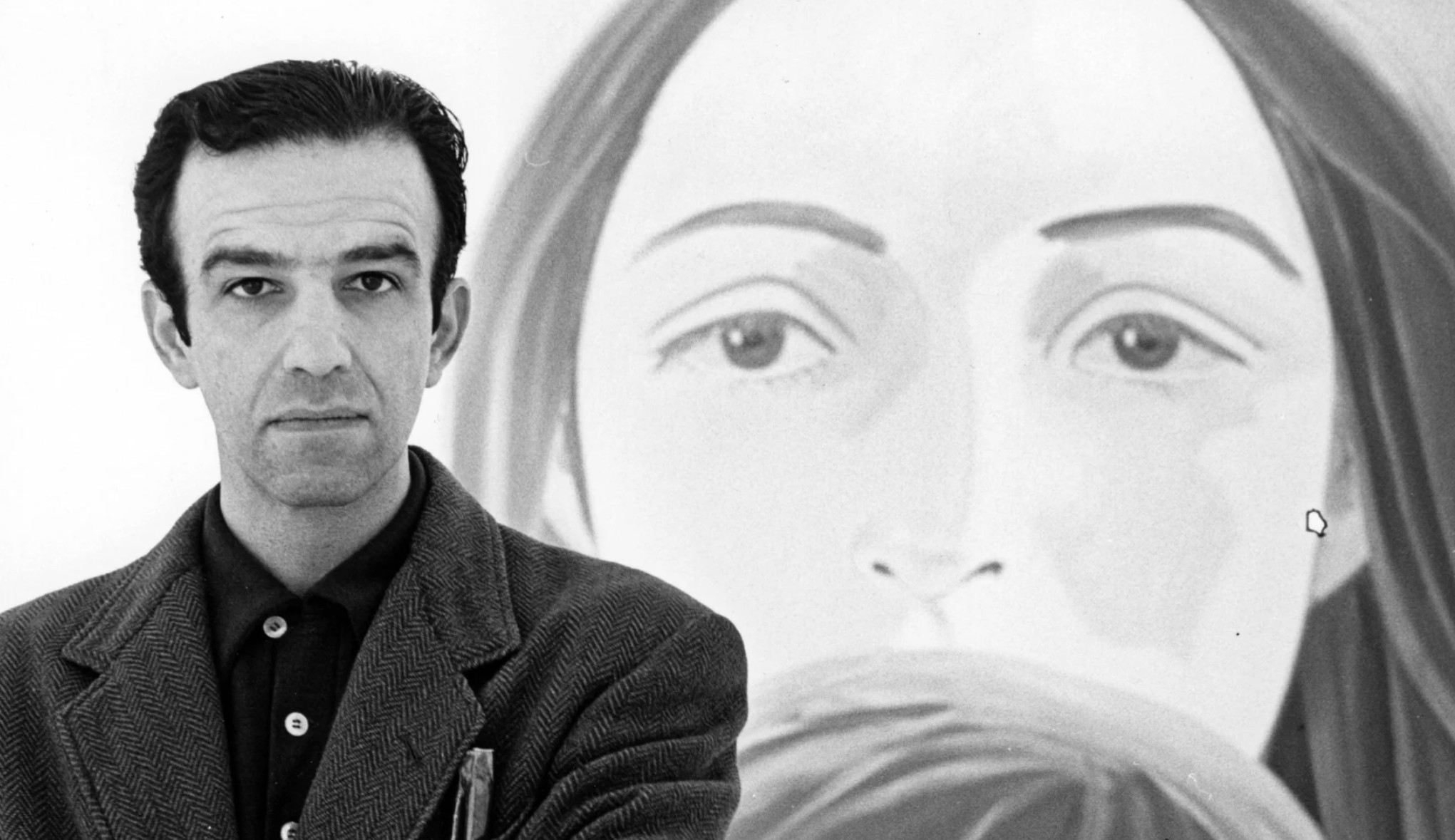
Alex Katz photographed with one of his paintings in 1965. Photo © Fred McDarrah/MUUS Collection via Getty Images.
Art © 2022 Alex Katz / Licensed by VAGA at Artists Rights Society (ARS), NY
The composition is both serene and psychologically complex. Seen from behind, Ada paddles a canoe across a vast, milky-green expanse of water, her figure and vessel mirrored below in glassy reflection. The horizon, flat and high, anchors the composition, dividing the scene with the minimalist elegance that defines much of Katz’s mature work. There is no clutter, no extraneous detail—only Ada, the boat, the water, and the stillness of the moment. Katz’s choice to depict Ada from behind adds a note of introspection, even mystery. Her posture, calm yet assertive, suggests solitude without alienation. She is not an anonymous figure in nature, but an emblem of personal intimacy and enduring artistic fascination. In the absence of facial expression, the painting becomes about gesture, shape, and silhouette—a study in presence without narration.
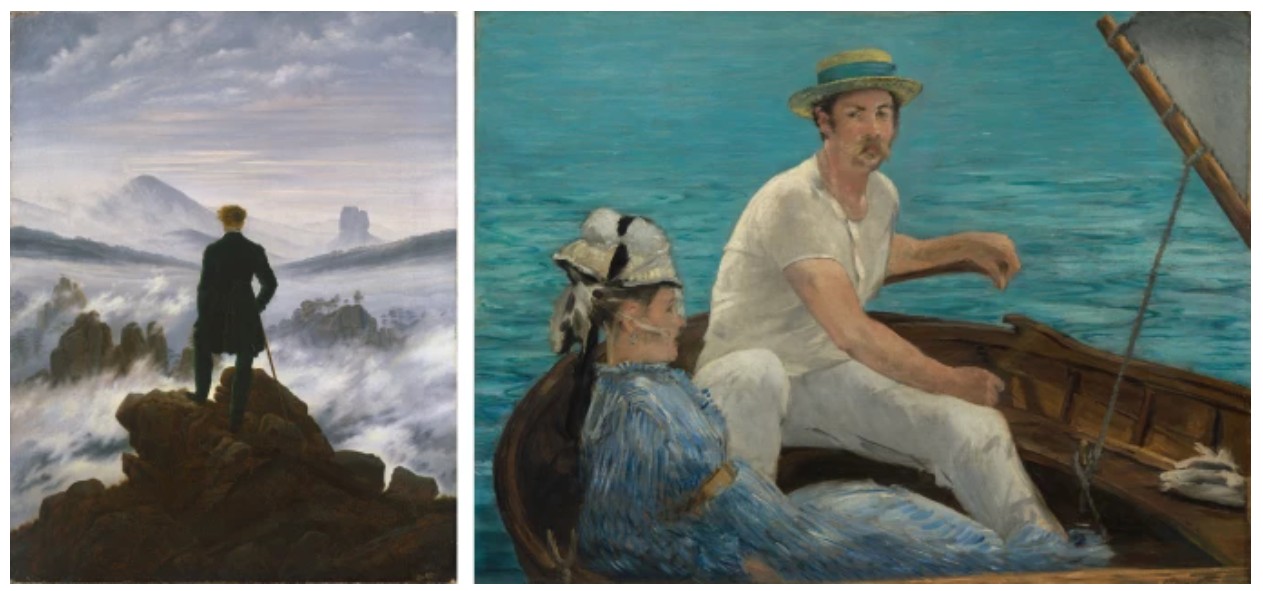
LEFT: Caspar David Friedrich, Wanderer above the Sea of Fog, c. 1818. Hamburger Kunsthalle, Hamburg.
RIGHT: Edouard Manet, BOATING, 1874. Image © The Metropolitan Museum of Art, New York / Art Resource, NY
Rendered in Katz’s signature flat planes of color and crisp contours, the painting reflects his lifelong rejection of gestural brushwork in favor of surface clarity. Influenced by billboard graphics, cinematic framing, and fashion photography, Katz distills the real into the essential. Yet despite this apparent stylization, Good Afternoon 2 radiates emotion through restraint. The sharp light reflecting off the water, the delicate shift in tones, and the graceful arc of the canoe paddle all build a poetic visual language of pause and reflection. The setting of Good Afternoon 2 draws from the landscapes of Maine, where Katz has summered for decades. The cool palette—pale greens, soft blues, warm yellows—evokes the northeast light and the calm clarity of a late summer day. The reflection in the water becomes a second painting within the painting, a motif that subtly nods to the art historical lineage of reflection as a metaphor for self-awareness and artistic doubling.

At the center of this doubled vision is Ada Katz. More than a model, she has been a constant in Katz’s practice since the late 1950s, appearing in hundreds of paintings. As a testament to his interest in the setting of Good Afternoon 2, Katz depicted the lake scene twice, with another rendition of Ada paddling towards the viewer, Good Afternoon, now held in the collection of the Nelson-Atkins Museum of Art, Kansas City. As Sam Hunter observed, Katz’s portraits of Ada “transcend[ed] individual likeness to become archetypes of feminine grace and quiet authority” (Alex Katz, New York: Rizzoli, 1992, p. 58). In Good Afternoon 2, that authority is conveyed not through direct gaze but through composure, rhythm, and structure.

Alex Katz, Good Afternoon, 1974. The Nelson-Atkins Museum of Art, Kansas City.
Art © 2025 Alex Katz / Licensed by VAGA at Artists Rights Society (ARS), NY
The enduring appeal of Good Afternoon 2 also lies in its ambiguity. Is Ada departing or returning? Is she immersed in nature or removed from it by the very act of being observed? Katz resists narrative, preferring to hold the viewer in a suspended moment—a good afternoon, infinitely extended. Having been part of an important private collection since 1991, and exhibited in some of the artist’s most critical shows, this work encapsulates Katz’s unique ability to balance intimacy with monumentality. It is a painting that speaks not only of a time and place, but of a long artistic partnership and a vision of stillness that remains profoundly modern. Good Afternoon 2 is at once deeply personal and visually universal—a portrait of solitude, serenity, and enduring presence.
Ada with Mirror, 1969
Christie’s New-York: 17 May 2024
Estimated: USD 450,000 – 650,000
USD 819,000

ALEX KATZ (B. 1927)
Ada with Mirror, 1969
Oil on linen
32×48 inches (81.3 x 121.9 cm)
Signed and dated ‘Alex Katz 69’ (lower right)
Katz’s portraits are true to the way we experience others, […] They eloquently convey the tension between the determinate outer appearance and the indeterminate inner reality of someone known only from the outside. Katz seems to make the shell of a person’s outer reality his or her complete substance, as though the person had no inner substance. Yet the quirkiness of Katz’s appearances alludes to that inner substance […] For all their everydayness, Katz’s figures have an air of transient strangeness to them, suggesting the mystery of their inner existence, perhaps even to themselves.

Installation view, Alex Katz: Gathering, October 21, 2022 – February 20, 2023, Solomon R. Guggenheim Museum, New York (present lot illustrated). Photo: Ariel Ione Williams and Midge Wattles / The Solomon R. Guggenheim Foundation / Art Resource, NY. Artwork: © 2024 Alex Katz / Licensed by VAGA at Artists Rights Society (ARS), NY.
Black Hat No. 3, 2010
Sotheby’s London: 6 March 2024
Estimated: GBP 300,000 – 400,000
GBP 482,600 / USD 611,937
ALEX KATZ (b. 1927)
Black Hat No. 3, 2010
Oil on canvas
48 x 66 1/8 inches (122 x 168.1 cm)
Signed and dated 10 (on the overlap)
Pairing bold colors with signature flatness, Black Hat No.3 is a quintessential testament to Alex Katz’s distinctly stylized and markedly idiosyncratic aesthetic. Executed in 2010, the present work exemplifies his mastery in capturing the essence of contemporary life with effortless grace and sophistication. Against the vibrant canary yellow background, the figure is cropped into view, her presence commanding attention. The present work depicts his wife Ada who has become synonymous with the artist’s iconic portraiture. Cloaked in mystery, she wears a black hat and sunglasses, which obscures her facial features.
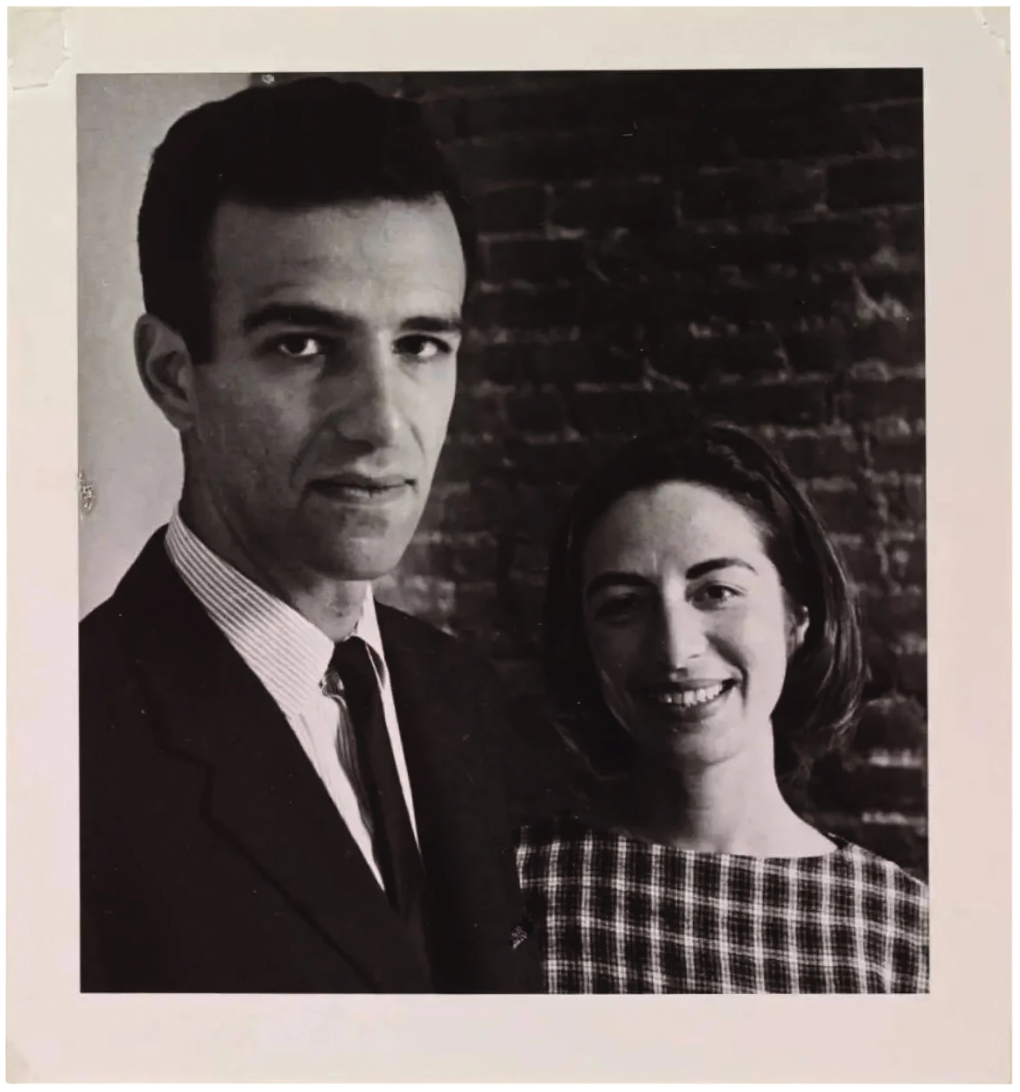
RUBY BUCKHARDT, ALEX AND ADA, 1958 / IMAGE: © COLBY COLLEGE MUSEUM OF ART / ARTWORK: © ESTATE OF RUDY BUCKHARDT
Black Hat No. 3 characterizes Katz’ interest in advertising billboards and movie screens, as evidenced by the very deliberately cropped composition that fills the wide and expansive canvas. In this way, Katz strips the work of any context and extraneous details, allowing pure figuration and abstraction to preponderate. Depicted in profile, his two-dimensional rendering of Ada is akin to that of a billboard. In 1977, Katz was commissioned to create Times Square Mural where he produced a frieze of twenty-three portraits of women surrounding the building; this work was the ultimate tribute to the American billboard.
Katz’s distinctly stylised aesthetic gained international recognition and critical acclaim in the latter half of the 1980s with his 1986 retrospective at the Whitney Museum in New York. As the subject of another retrospective at the Solomon R. Guggenheim Museum in New York last year, Katz has proven to be one of the most influential artists of our time. With its brilliant palette, grand scale, and archetypal stylistic flatness, Ada is a superlative example of the artist’s remarkable opus, as well as a larger-than-life image of Katz’s New York’s greatest muses – she might even be more frequently painted than Picasso’s greatest muse Dora Maar.
Ada with Pink Hat, 1971
Christie’s New-York: 17 May 2023
Estimated: USD 1,200,000 – 1,800,000
USD 1,381,000
ALEX KATZ (b. 1927) (christies.com)
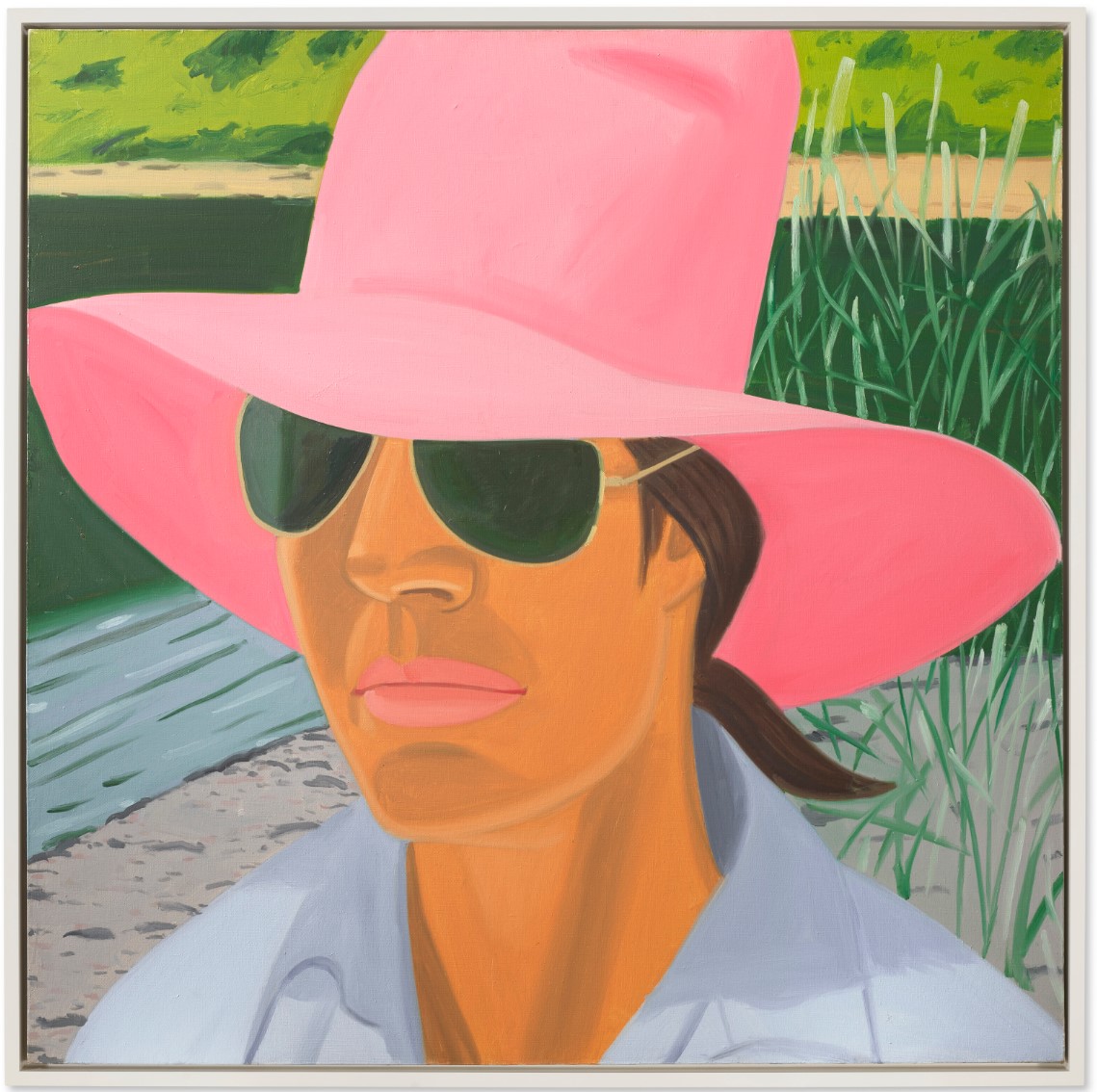
ALEX KATZ (b. 1927)
Ada with Pink Hat, 1971
Oil on linen
47 3/4 x 47 3/4 inches (120.1 x 120.1 cm)
Signed ‘Alex Katz’ (on the overlap)
Alex Katz’s Ada with Pink Hat is one of the artist’s masterful interrogations of the human figure conducted in the medium of paint. With an eye for crisp planes of color in service of his own stylized figuration, the artist made a name for himself early on as a new member of the New York School. However, rather than dive into Color Field painting or continue the evolution of gestural abstraction, Katz embraced earlier portrait traditions and married them with a modern sensibility.
“I think of myself as a modern person and I want my painting to look that way. I think of my paintings as different from some others in that they derive a lot from modern paintings as well as from older paintings…They’re traditional because all painting belongs to the paintings before them, and they’re modernistic because they’re responsive to the immediate.”
Walking the line between the commercial aspects of Pop and the massive canvases favored by his Abstract Expressionist peers, Katz has continued to inspire countless artists with his knack for depicting intimate moments on a grand scale.
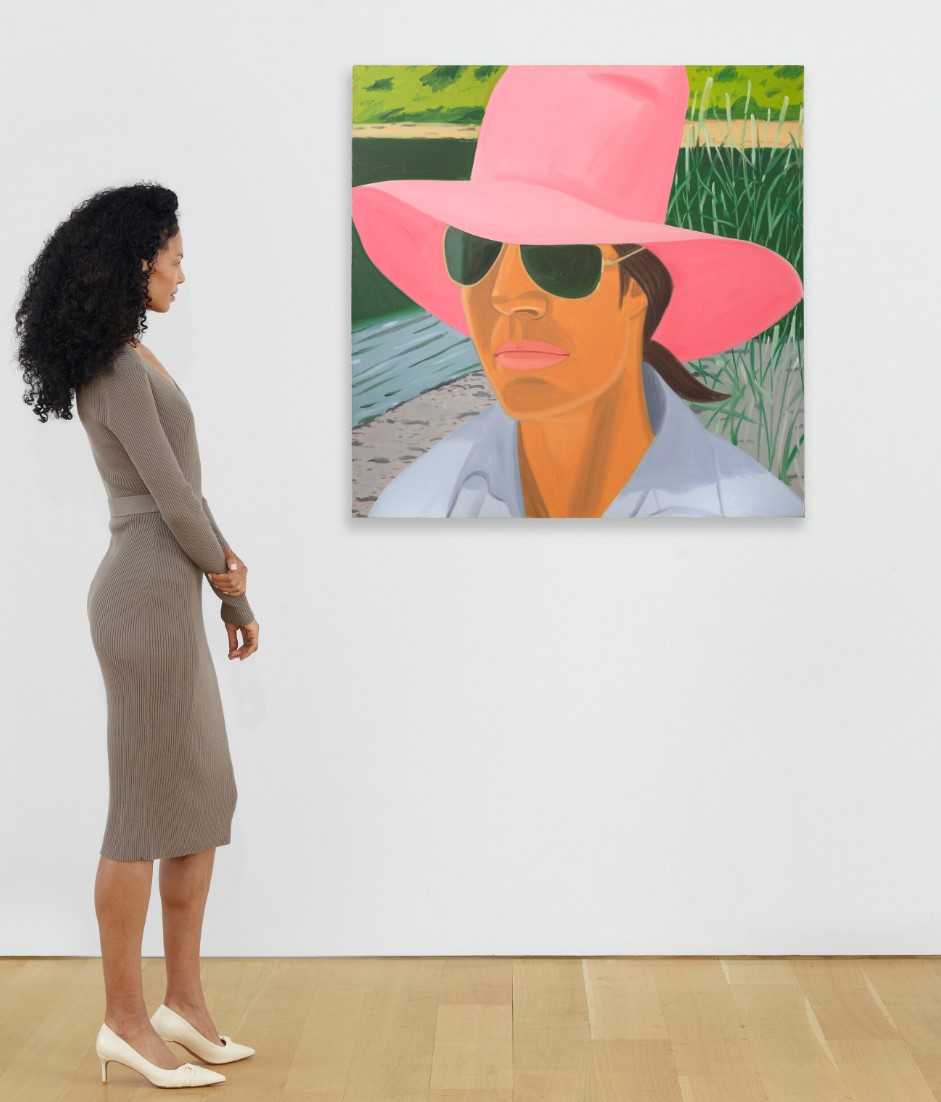
Rendered on a four-foot square canvas, Ada with Pink Hat is a particularly striking portrait of the artist’s wife. Festooned in a tall, bubblegum pink sun hat with a wide brim, the sitter is depicted looking out of the frame through large aviator sunglasses that sit askance on her nose. The hat itself ties into the artist’s larger visual vocabulary as he often worked with Ada or other sitters wearing similar attire. Her lips are painted the same shade as her headwear, and the collar and shoulders of a light blue shirt are just visible. Tan and glowing, Ada sports a shock of brunette hair tied in a ponytail. She appears to be sitting or standing on the bank of a river or lake. The ripples of water hitting the beach are visible to the left while a stand of grasses and reeds fills in the space behind the subject’s left ear. In the background, a still green expanse of water stretches out toward the distant forest shore. Influenced by the flatness of Japanese prints, Katz creates layers of color that separate the subject and ground. Cropping the scene close so that Ada is in the immediate foreground, he eschews the use of outline and instead deftly handles opposing shades to create visual detachment. By doing so, the painter harnesses a dynamism and immediate energy not typically seen in figurative painting until that time.
Ada (Orange), 2007
Phillips New-York: 16 May 2023
Estimated: USD 60,000 – 80,000
USD 101,600
Alex Katz – 20th Century & Contemporary… Lot 247 May 2023 | Phillips
ALEX KATZ
Ada (Orange), 2007
Oil on board
16×12 inches (40.6 x 30.5 cm)
Signed and dated “Alex Katz 07” lower right
Purple Ada, 1995
Sotheby’s London: 2 March 2023
Estimated: GBP 60,000 – 80,000
GBP 254,000
Purple Ada | Modern & Contemporary Day Auction | 2023 | Sotheby’s (sothebys.com)
ALEX KATZ (b. 1927)
Purple Ada, 1995
Oil on board
12×12 inches (30.5 x 30.5 cm)
Incised with the artist’s signature and dated 95
“Though she is positioned in different places, she is not defined by them. It is as though Ada precedes these things, these moments. We are shown over and over that externals are extraneous, and that her demeanor is a constant.”
Parrot Jungle, 1985
Sotheby’s New-York: 16 November 2022
Estimated: USD 1,800,000 – 2,500,000
USD 1,986,000
Parrot Jungle | Contemporary Evening Auction | 2022 | Sotheby’s (sothebys.com)
ALEX KATZ (b. 1927)
Parrot Jungle, 1985
oil on linen
72×96 inches (182.9 x 243.8 cm)
Executed in 1985, Alex Katz’s Parrot Jungle is a vibrant and captivating example of the artist’s iconic portraiture. Katz’s distinctive style is epitomized in this dynamic portrayal of his most celebrated muse: his beloved wife, Ada Katz. Since the couple’s meeting in 1957, Ada’s likeness – readily identifiable in the present portrait – has become Katz’s signature gesture. Ada’s timeless beauty has provided endless inspiration for Katz’s boldly simplified style, which is influenced by the flatness of Japanese prints and the 1950s Pop Art movement. Painted on a singularly impressive scale, the eye-popping electric yellows, greens, and blues of the present work reveal the influence of Pop artists, who sought to imitate the design of commercial billboards and advertisements. In the present portrait, Katz crafts a vibrant interior scene to immortalize Ada, forever his most recognizable and iconic muse.
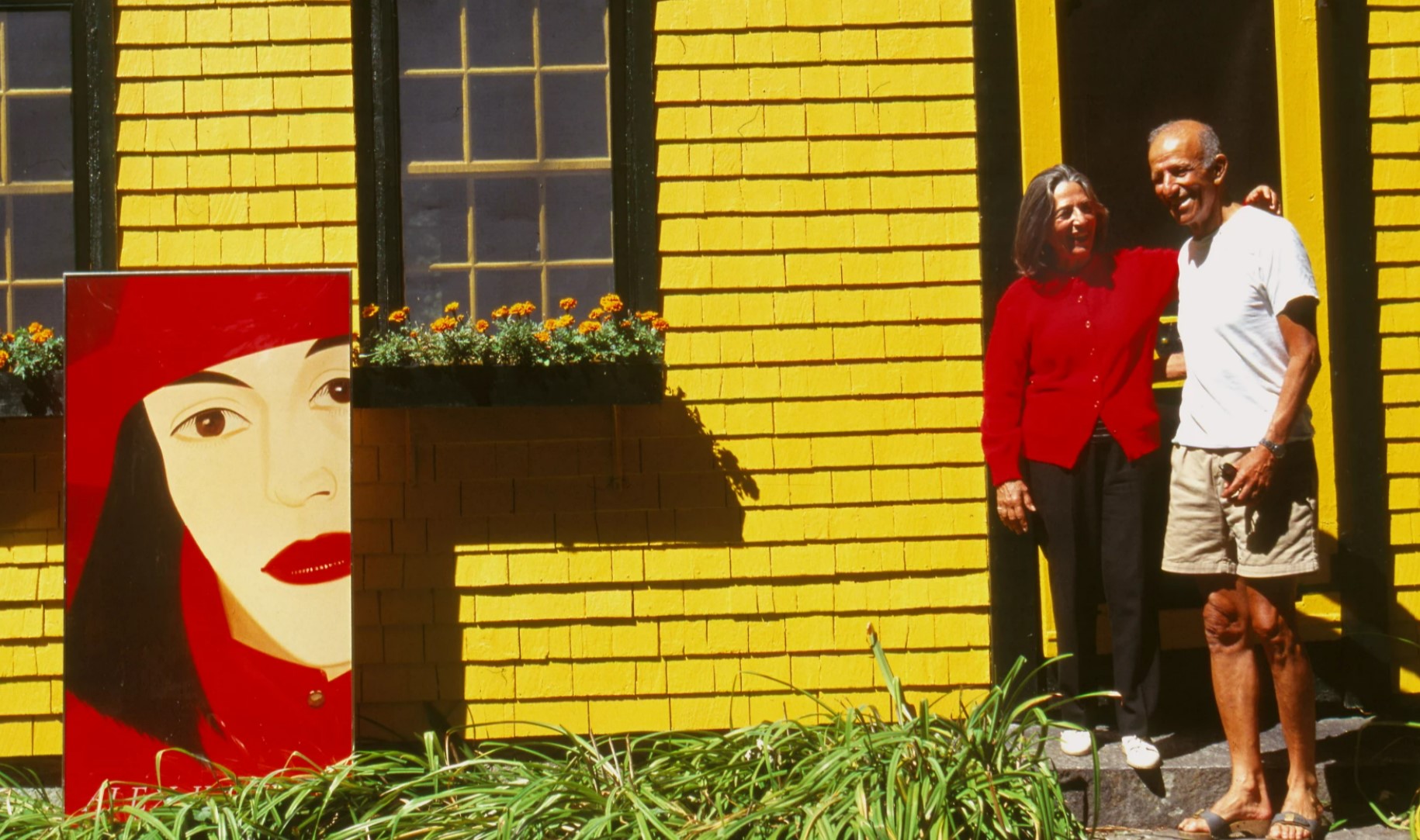
ALEX KATZ AND HIS WIFE ADA IN FRONT OF THEIR COUNTRY HOUSE, LINCOLNVILLE, MAINE, 1999. IMAGE © THOMAS HOEPKER/MAGNUM PHOTOS. ART © 2022 ALEX KATZ / LICENSED BY VAGA AT ARTISTS RIGHTS SOCIETY (ARS), NY
Casually yet elegantly garbed in bright yellow sweater and crisply collared blue shirt, Ada’s attire in Parrot Jungle immediately speaks to Katz’s interest in fashion, which he explored in portraits throughout his career. This interest is particularly apparent in Katz’s paintings from the 1980s, when the artist began painting subjects sporting designer garments. In Parrot Jungle, the playful graphic of Ada’s sweater adds an element of lightheartedness to an otherwise contemplative depiction of the artist’s wife. ‘Parrot Jungle’ is, most likely, a reference to an adventure park in Miami, Florida, previously of the same name; now called Jungle Island, this park allows visitors to wander through its enclosed wilderness home to thousands of exotic birds. As complements to Ada’s sartorial choices, Katz emphasizes elements of the interior that surround Ada: the green pillow on which she rests her head enriches the painting with its dynamic zig-zag pattern, while the salmon-pink pillow adds a pop of color to the surrounding darker, earthy tones. Through these subtle visual elements, Katz alludes to the personality of his sitter, without explicitly revealing the nature of his enigmatic muse.
East Interior, 1979
Sotheby’s New-York: 19 May 2022
Estimated: USD 1,500,000 – 2,000,000
USD 2,530,500
East Interior | Contemporary Evening Auction | 2022 | Sotheby’s (sothebys.com)
ALEX KATZ (b. 1927)
East Interior, 1979
Oil on linen
96×72 inches (243.8 by 182.9 cm)
Alex Katz’s East Interior from 1979 is a vast and vibrant synthesis of the artist’s two most illustrious muses—his wife Ada and the East coast. Dually lit by the glow of night sky and the luminescence of interior, the painting is uniquely imbued with a temporality often evaded in Katz’ portraits but which demonstrates the artist’s atmospheric ability to narrate through subtle shifts in hue. Part of several of the artist’s painterly explorations of East and West interiors in the late 1970s, East Interior specifically alludes to the artist’s haven of many years, his home in coastal Maine. Attesting to its resounding significance, East Interior was featured on the poster for the exhibition of Katz’ paintings held at the Hokin Gallery in Florida in 1980, and a sister painting entitled West Interior from the same year is held in the Philadelphia Museum of Art.
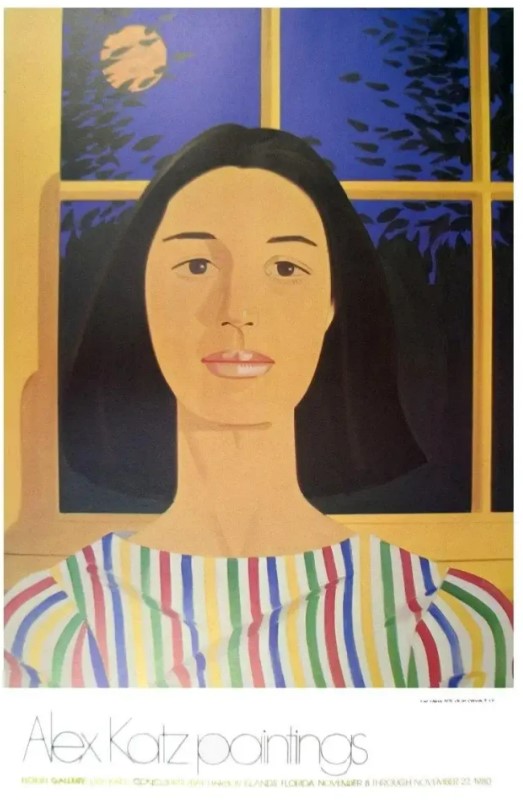
With her signature thick dark hair, full lips and warm gaze, the sitter of East Interior is instantly recognizable as the stylish and bewitching Ada Katz, featured here in an intimate proximity to the viewer. The artist has created more than two hundred portraits of Ada since their 1957 meeting, and her influence on Katz’ oeuvre and the larger frame of contemporary art cannot be overstated.
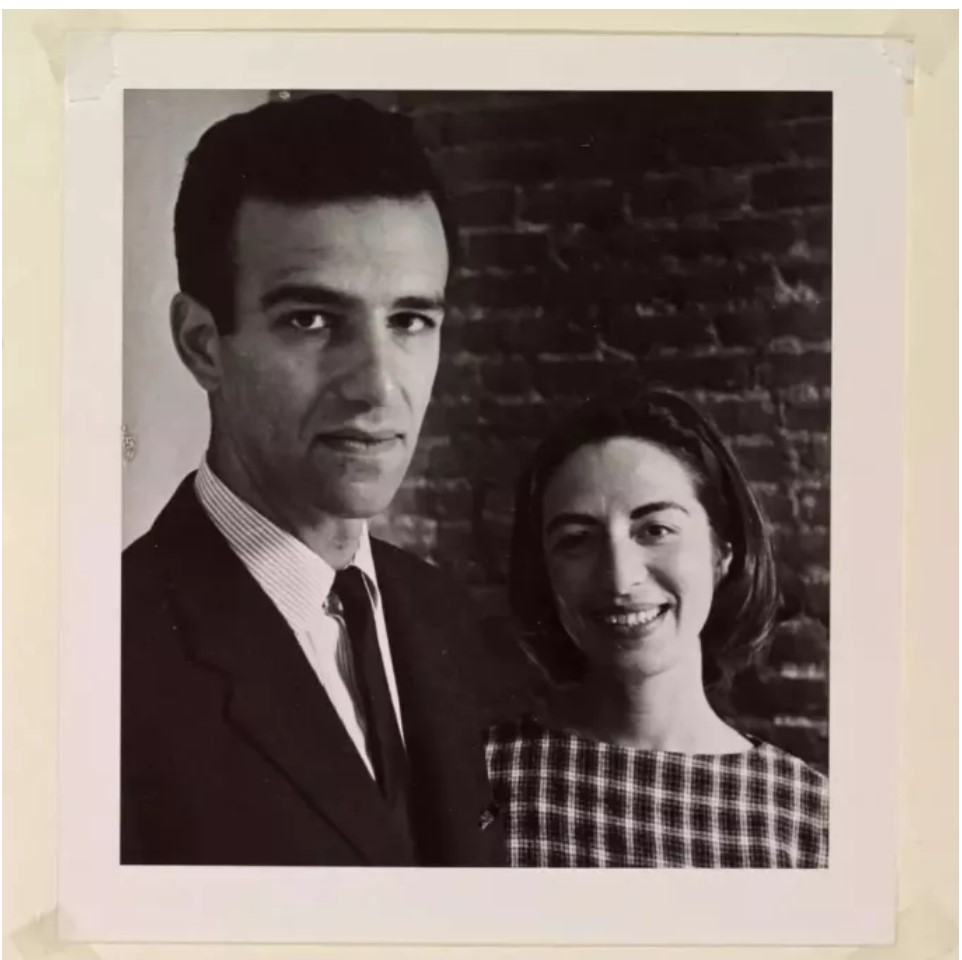
RUDY BUCKHARDT, ALEX AND ADA, 1958. PHOTO © COLBY COLLEGE MUSEUM OF ART. ART © ESTATE OF RUDY BUCKHARDT.
“So my contention is that my paintings are as realistic as Rembrandt’s…it was realistic painting in its time. It’s no longer a realistic painting. Realism’s a variable. For an artist, this is the highest thing an artist can do – to make something that’s real for his time, where he lives. But people don’t see it as realistic, they see it as abstract. But for me it’s realistic.”
Wearing a blouse striped with primary color, Ada is here set against the backdrop of a mustard yellow window, the pane of which carries her shadow. Peering through this window, one is met with a midnight blue sky, a tangerine moon and a framing silhouette of foliage. Ada’s neck in this portrait is markedly narrow and extended; as in most of Katz’ portraits, anatomical correctness is forgone for pseudo-realist figuration.
Ada with Sunglasses (Study no. 1), 1969
Christie’s Amsterdam: 25 November 2021
Estimated: EUR 30,000 – 50,000
EUR 81,250 / USD 91,107
Alex Katz (b.1927), Ada with Sunglasses (Study no. 1) | Christie’s (christies.com)
Alex Katz (b.1927)
Ada with Sunglasses (Study no. 1), 1969
Oil on masonite
30 x 24cm.
signed ‘Alex Katz’ (lower left)
Painted in 1969, Ada with Sunglasses is one of the most important paintings of Alex Katz’s career, as it features his most important and long-standing subject. Alex Katz met his wife, Ada, in the fall of 1957 at the opening of an exhibition of his work at the Tanager Gallery. Elegant, poised and classically beautiful, Ada captivated the young artist from the moment he laid eyes on her.
“Ada had a tan, and a great smile, and she was with this…fantastic-looking guy.
But he didn’t put her coat on—I did.”
Since then, Katz has painted Ada over 250 times. She might be the most frequently painted artist’s muse in history, on par with, if not surpassing, Picasso’s Dora Maar. Alex and Ada were married in February 1958, and since then, she has played countless roles in her husband’s work, with each portrayal revealing some new and undiscovered aspect of her personality. In paintings such as Ada (1957), Ada Ada (1959) and The Black Dress (1960), Ada debuted to the public as the smartly-dressed muse to her talented painter-husband. Slim and attractive, with her hair coiffed in an easy-going flip, Ada’s classical good looks make her an emblem of ‘60s style, on par with Jackie Kennedy. She evokes the age in which she was painted, but also remains timeless and enduring, in part due to the inscrutable, sphinxlike expression she often displays, made all the more pronounced by her signature red lipstick.
Ada in Front of Black Brook, 1988
Phillips New-York: 18 November 2021
Estimated: USD 180,000 – 250,000
USD 378,000
Alex Katz – 20th Century & Contemp… Lot 121 November 2021 | Phillips
ALEX KATZ
Ada in Front of Black Brook, 1988
Oil on linen
48 1/8 x 96 inches (122.2 x 243.8 cm)
Painted in 1988, Ada in Front of Black Brook portrays the artist’s wife, a frequent muse in his most celebrated works. She is positioned slightly off-center in the foreground, facing a scenic view of the titular Black Brook Pond in Maine. Here, Ada is recognizable for her dark, straight hair, despite her back being to the viewer. Earth tones collide with her bright floral shirt, and highlights in the water catch reflections of the surrounding natural light. Katz’s subject matter is ambiguous, as the work oscillates between portrait and landscape. Ada’s imposing gaze perfectly illustrates a moment in time when everything freezes for a split second.
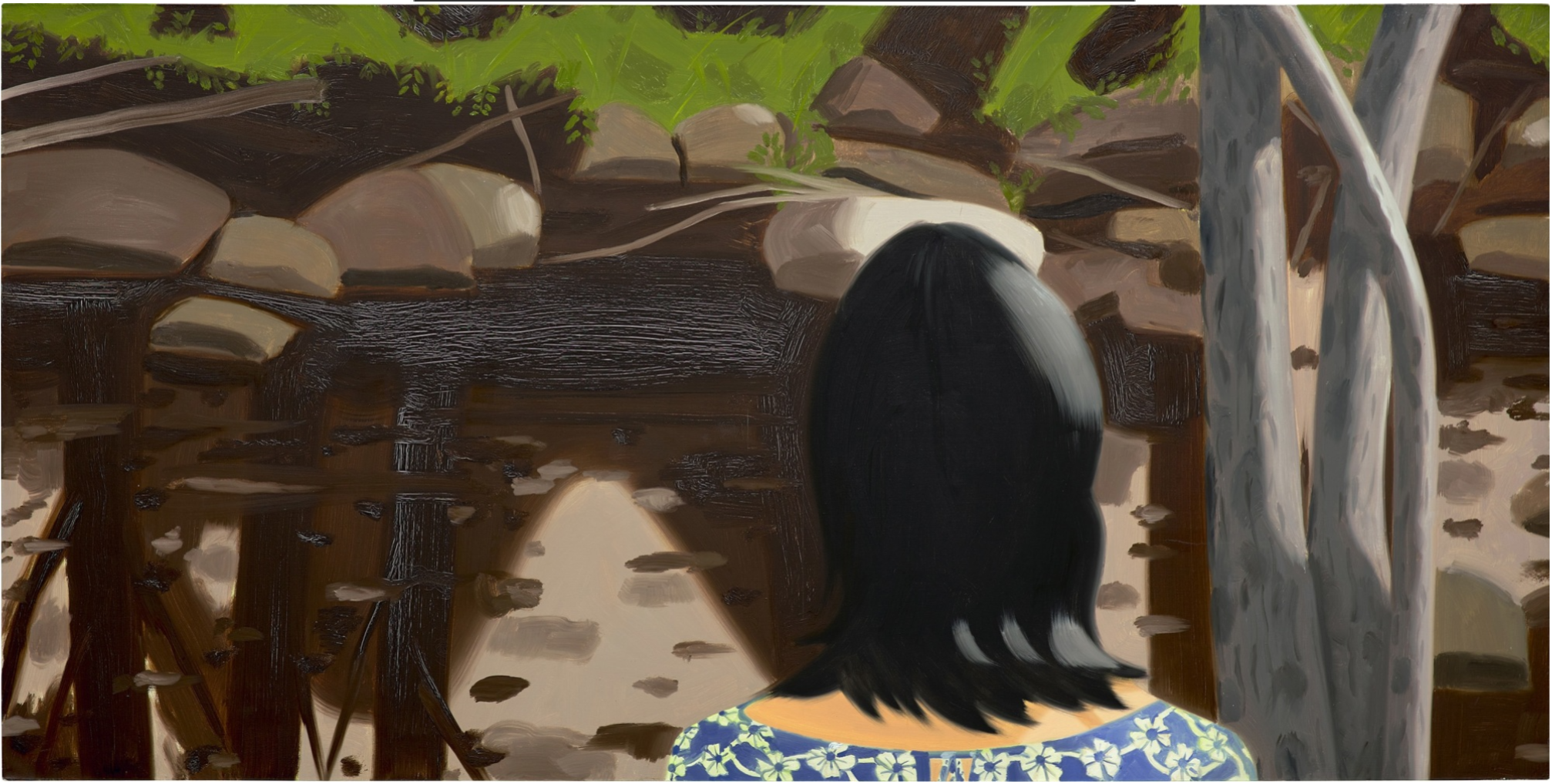
This work highlights Katz’s ability to select, edit, and crop a scene, a technique akin to cinematography. Despite beginning his career as an artist when Abstract Expressionism was the primary focus of the art world, Katz chose to focus on depicting mostly figures and landscapes in his paintings. His emphasis on portraying people in their everyday habitats, often those he knows personally, is more akin to early 20th Century American painting, such as in works by John Singer Sargent and Edward Hopper. In Katz’s figurative works, however, he uses vibrant blocks of color in large strokes, redefining traditional portraiture through pop aesthetics.
“My paintings are aesthetically different from conventional landscapes: they are environmental… You look at one, and you float inside of it.”
His Katzian style has become instantly recognizable. Over the past few decades, viewers have come to instantly identify a painting as by Katz, and further, the characters within the paintings as well. Even when Ada’s back is to us, we recognize her as the artist’s wife, and non-descript landscapes are quickly identified as the family’s homes in Maine or New York City. This quality imbues Katz’s works with a feeling of nostalgia, even for a scene we may never have stepped foot in.
Ada is also the subject of the most expensive paintings by Alex Katz to sell at auction. The top price was achieved at Phillips in London on 2 October 2019, for a painting dated 1972, entitled Blue Umbrella, that sold for GBP 3,375,000 (USD 4,161,284). The second highest price is also a painting depicting the artist’s muse and lover.
Blue Umbrella, 1972
Phillips London: 2 October 2019
Estimated: GBP 800,000 – 1,200,000
GBP 3,375,000 / USD 4,161,284
Alex Katz – 20th Century & Contempor… Lot 14 October 2019 | Phillips
ALEX KATZ
Blue Umbrella I, 1972
Oil on canvas
34 1/8 x 48 inches (86.7 x 121.9 cm)
Signed and dated ‘Alex Katz 1972’ on the overlap
Intimate, delicate, and deeply atmospheric, Blue Umbrella I, 1972, sheds light on Alex Katz’s preferred model and muse, his wife Ada. The first iteration from a series of two, this sumptuous, moody canvas is exceptional both in pictorial rendition, and in subject matter. On the one hand, it employs Katz’s characteristic approach to figuration – cool in appearance and hyper-meticulous in design; on the other, it boasts a theme that the artist has profusely alluded to throughout his career, turning Ada’s repeated appearance into something of a leitmotif. Signifying the importance of the series within the artist’s oeuvre, Blue Umbrella I’s sister painting Blue Umbrella II – a quasi-exact rendering of the present composition in larger dimensions – was used as the front cover for the catalogue of Katz’s major solo exhibition at the Whitney Museum of Art, New York, travelling to the Center for the Fine Arts, Miami, in 1986. Calm and composed amidst slanting drops of rain, Ada is here pictured close-up, her titular umbrella cropped at the margins of the canvas. She is as much the subject of the painting as her striking facial features and sartorial accessories: her pristine rose lips, her penetrating, almond-shaped eyes, and her stylish chiffon à la française are given extreme precision and detail, dominating the canvas as elements to be viewed independently. As a whole, Ada represents a familiar subject imbued with an unnamable elusive quality; she is aloof, remote, disconnected from the torrential rain surrounding her, like an urban siren or a 1960s cinema star haloed by the camera’s captivated lens. Both warm and distant, vulnerable and charismatic, Ada channels a form of painterly introversion that nonetheless commands the viewer’s gaze in its beauty, poetry and mystery.
The Red Band, 1978
Sotheby’s New-York: 28 October 2020
Estimated: USD 1,800,000 – 2,500,000
USD 3,166,000
ALEX KATZ | THE RED BAND | Contemporary Art Evening Auction | 2020 | Sotheby’s (sothebys.com)
ALEX KATZ (b. 1927)
THE RED BAND, 1978
Oil on linen
78×144 inches (198.1 x 365.8 cm)
Simultaneously hyper-specific and remarkably universal, The Red Band is a stunning portrait of Alex Katz’s most important subject: his muse and wife, Ada. Against an electrifying ground of saturated yellow pigment, Ada’s opposing profiles are a study in dualities; reflections rather than duplications of one another, the small variances between are made stark only by their crisp simplicity. Within a series of portraits of Ada that numbers in the hundreds, The Red Band stands out as a particularly powerful embodiment of the artist’s most iconic subject: while Katz’s cropped composition and monumental canvas bring Ada intimately close to the viewer, her expression is utterly enigmatic, leaving her as irresistible and aloof as a beguiling siren of the silver screen. Ultimately, the sole revelation of inner self comes, not from Ada’s expression, but in the highly personalized rendering of the objects surrounding her: it is only in the sleek cut of the ivory blouse, jaunty slant of her hat, and pert bow of the titular scarlet scarf that Katz offers the viewer a tantalizing glimpse of the nature of his sitter. A resounding testament to the import of The Red Band, the present work was illustrated on the cover of the seminal 1979 monograph on the artist by Irving Sandler.
Exteriors & Still Lifes
May, 1996
Sotheby’s New-York: 14 May 2024
Estimated: USD 500,000 – 700,000
USD 1,875,000
TOP PERFORMER
May | Contemporary Day Auction | 2024 | Sotheby’s (sothebys.com)
ALEX KATZ (b. 1927)
May, 1996
Oil on linen
120×240 inches (304.8 x 609.6 cm)
Executed in 1996, Alex Katz’s atmospheric May is a poignant example of the artist’s profound connection to nature. Towering in scale and speckled with leaves and flowers, Katz renders his rhythmic springtime vision with a lyrical application of paint, skillfully instilling a sense of movement and energy within the flatness of the picture plane. The bending and arching brushstrokes of the branches are imbued with speed and whimsy, blurring with each other as they cross. This inherent dynamism within the present work is mirrored in the bright, energetic tones of the color palette. Lively greens and white streaks dominate, and serve to highlight the exuberant atmosphere of the piece. Katz played with the edges of forms and embraced the hand of the artist; building, as he himself described, “a landscape that was different from a traditional landscape. I wanted to make an environmental landscape, where you were in it” (Alex Katz quoted in: Irving Sandler, Alex Katz: A Retrospective, New York 1998, p. 120).

CLAUDE MONET, SPRING IN GIVERNY, 1890, CLARK ART INSTITUTE, WILLIAMSTOWN
Born in Brooklyn in 1927, Katz grew up as an artist during the heyday of Modernism. Rebelling against the push toward nonrepresentational abstraction and gestural vigor, the painter forged his own path that paid tribute to artists like Matisse. He was also intrigued by the graphic work of Pop artists who toyed with the consumer and advertisement images of the new modern age, something that can be felt in the confident and authoritative gestures of May. In the late 1980s, Katz shifted his attention away from portraiture to explore the plentiful possibilities of landscape painting. While in Maine, Katz developed a passion for the light and scenery of the area as he was encouraged to compose landscape works.
“At Skowhegan I tried plein air painting and found my subject matter and a reason to devote my life to painting. The sensation of painting from the back of my head was a high that I followed until the present.”
The sensation-driven nature of painting continued to inspire Katz, an approach felt in the way that his works experiment with movement, energy, and tone.
Night Tree, 1993
Sotheby’s London: 28 June 2023
Estimated: GBP 200,000 – 300,000
GBP 203,200 / USD 256,727
Night Tree | Modern & Contemporary Day Auction | 2023 | Sotheby’s (sothebys.com)
ALEX KATZ (b. 1927)
Night Tree, 1993
Oil on linen
76 1/8 x 77 3/8 inches (193.4 x 196.4 cm)
Executed in 1993, Alex Katz’s atmospheric Night Tree is a striking example of the artist’s deep connection to nature. Towering in scale and awash with shadow, Katz renders his windy winter scene with fluid application of paint, deftly creating a sense of movement and energy within the flatness of the picture plane. The bending brushstrokes of the branches, visible across the surface of the work, are imbued with speed and duration, blurring with each other as they cross. This inherent dynamism within the present work is contrasted with the cold stillness of the subject and color palette. Deep grey-blue and black dominate, almost monochrome in tone, and areas of thinner paint act as highlights in an otherwise uniform surface, along with almost imperceptible flashes of white amidst the tangle of branches.
East Madison #3, 1960
Sotheby’s New-York: 15 March 2023
Estimated: USD 50,000 – 70,000
USD 152,400
East Madison #3 | Contemporary Discoveries | 2023 | Sotheby’s (sothebys.com)
ALEX KATZ (b. 1927)
East Madison #3, 1960
Oil on board
32×32 inches (81.3 x 81.3 cm)
While best known for his large-scale portraiture, Alex Katz has been prolific in his landscape works throughout his practice, marking some of the most important turning points in his oeuvre. Unlike his contemporaries experimenting with abstract expressionism, Katz was fascinated with the technical side of his painting and drawing practices. While attending the Skowhegan School of Painting and Sculpture in Maine, Katz developed a passion for the light and scenery of the area as he was encouraged to compose landscape works en-plein-air. The darker, imposing light of the East Coast continues to inspire Katz to the present-day, analyzing the way in which the light can drastically alter one’s perspective of the same scene. After the artist met his wife, Ada, he reached a turning point in his practice as he began to paint portraits of his wife and other friends within his social scene. Admiring the scale of the works of the abstract expressionists as well as the visually polished graphics of the pop artists, Katz created large-scale figurative paintings, utilizing a unique wet-on-wet painterly style. By layering color fields before they dry, the artist finishes his compositions in one sitting, creating paintings that have a noticeably vibrant appearance. While Katz is known for these grand portraits, his practice has always included landscape works ranging from those depicting coastal Maine to urban New York City skylines.
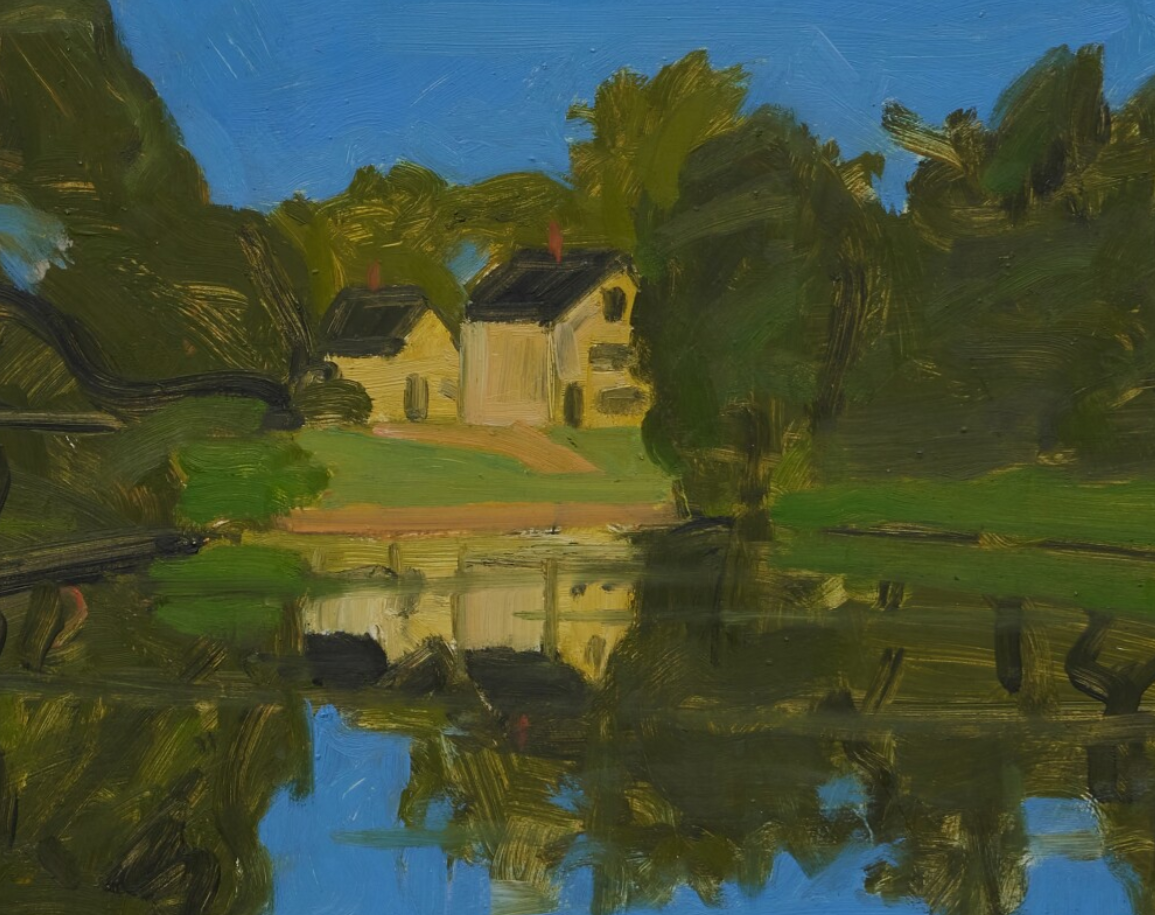
The present work, East Madison #3 (1960), combines many of the most recognizable features of Alex Katz’s artistic practice. The center of the composition is reflective of his work with landscapes. He paints a characteristically serene scene that captures the light of a certain point in the day, while the trompe d’oeil that encircles the composition is unique. The atypical pink coloring surrounding the imagery distorts the viewer’s perspective, making it seem as if one is looking through a telescope, like a glimpse into a different life. These singular color planes can be seen in both the abstract expressionists and the pop artists; the present work provides a greater understanding into how Alex Katz was influenced by these groups.
Weeping Cherry 2, 2005
Phillips New-York: 8 March 2023
Estimated: USD 250,000 – 350,000
USD 381,000
Alex Katz – New Now New York Lot 24 March 2023 | Phillips
ALEX KATZ
Weeping Cherry 2, 2005
Oil on linen
96 1/4 x 48 inches (244.5 x 121.9 cm)
Signed and dated “Alex Katz 05” on the overlap
Painted in 2005, Alex Katz’s Weeping Cherry 2 magnificently exemplifies the translation of classical genres and techniques into the artist’s signature flat style. Katz’s subdued yet energetic paintings seamlessly combine the graphic elements of Pop Art, gestural components of Abstract Expressionism and the plein air tradition to create works reflective of his intimacy with nature. To be offered at auction on the heels of Katz’s major retrospective at the Solomon R. Guggenheim Museum in New York, Weeping Cherry 2 is a larger-than-life example of the artist’s idiosyncratic paintings that cements him as one of the great artists of the 20th and 21st centuries.
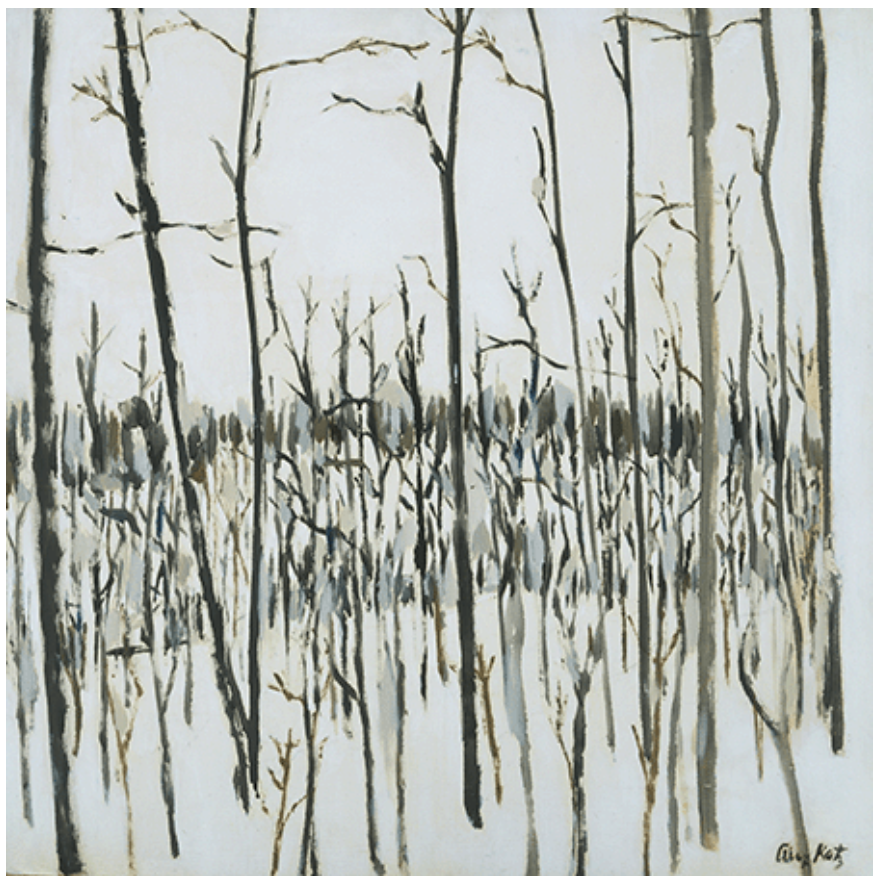
Alex Katz, Winter Scene, 1951–1952, The Museum of Modern Art, New York. Image: © The Museum of Modern Art/Licensed by SCALA / Art Resource, NY, Artwork: © 2023 Alex Katz / Licensed by VAGA at Artists Rights Society (ARS), New York
Katz was first exposed to landscape painting while attending the Skowhegan School of Painting and Sculpture in the summers of 1949 and 1950 where the students would travel each morning to paint scenes of the Maine countryside. Recalling his experience in the program, Katz noted that this process of plein air painting gave him “a reason to devote [his] life to painting.”i This experience would prove to be formative for the artist throughout his career, as he continues in 1954 to the present day. Winter Scene, painted in 1951–1952, shares many formal qualities with Weeping Cherry 2 and underscores the artist’s lifelong passion for thin linework and intimate framing. Inspired by the seasonal changes around him, Katz’s plein air painting is an exquisite, ongoing contemplation. In the present work, springtime is here, and so are its long-awaited blooms.

David Hockney, No. 147, April 5, 2020. Artwork: © David Hockney
Weeping Cherry 2 reflects Katz’s evolution from the Impressionist tendencies of his early work to the more figurative style of his mature practice. Here, he manipulates the atmospheric presence of light and a cropped perspective to create energy and depth within the otherwise flat still life. Influenced and inspired by Post-Impressionists for their ability to escape a contained plane, Katz often opted for large-scale canvases, allowing his works to stand out against the gallery wall. Standing nearly eight feet in height, Weeping Cherry 2 engulfs the viewer, drawing them into the vastness of its branches. Particularly reminiscent of David Hockney’s iPad paintings from over the past decade, the present work is a love letter to the natural world. The serenity in Weeping Cherry 2 underscores Katz’s core principles of painting; with an aim of capturing the immediacy of the present tense, Katz’s larger-than-life landscapes depict the natural world as it truly exists, while calling upon art historical traditions.
Snow, 2004
Bonhams London: 13 October 2022
Estimated: GBP 180,000 – 250,000
GBP 403,500 / USD 457,690
Bonhams : ALEX KATZ (B. 1927) Snow 2004
Oil on linen
84 1/4 x 60 1/16 inches (214 x 152.5 cm)
Signed and dated ’04 on the overlap
Rose, 1966
Sotheby’s New-York: 20 May 2022
Estimated: USD 400,000 – 600,000
USD 819,000
Rose | Contemporary Day Auction | 2022 | Sotheby’s (sothebys.com)
ALEX KATZ (b. 1927)
Rose, 1966
oil on linen
49×49 inches (124.1 x 124.1 cm)
Signed Alex Katz and dated 66 (upper right)
Alex Katz’s Rose from 1966 blossoms across the canvas with the brilliant painterly verve that is most celebrated of the artist’s work. The petals energetically swirl open as Katz confidently employs lucious swaths of oil paint to give life to his magnified examination of a single pink rose. Much like his beloved portraits, Rose reinvents the classic canon of floral paintings in a style that perfectly typifies his oeuvre, in which forms are reduced to their most impactful and punchy. Katz masterfully reduces perspective, eliminates extraneous detail and sharpens the contours by closely cropping the single rose for an effect that is both exhilaratingly contemporary while simultaneously shifting fluidly between representational and abstraction. Rose illustrates Katz’s commitment to “a new and distinctive type of realism in American art” across his diverse subjects ranging from portraits of friends and family, often visited landscapes and the vigor of freshly blooming flowers (Robert Storr quoted in Alex Katz for Richard Gray Gallery).
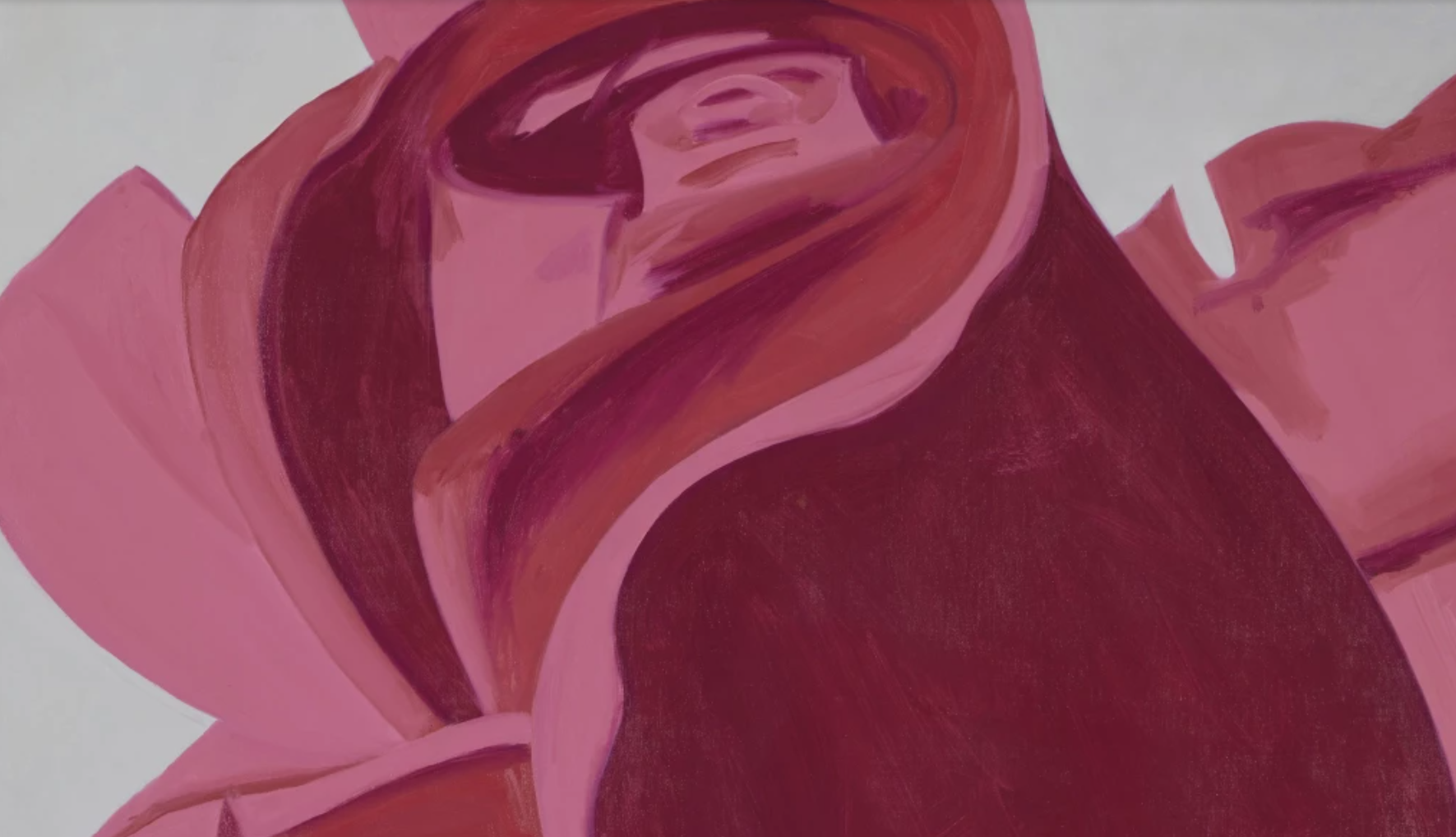
Having studied Modern theories at Cooper Union, Katz emerged in the 1950s onto the New York art scene in a moment largely dominated by his Abstract Expressionist peers. Defying the dominant style of the time, Katz eschewed his education and the artistic mode of the time to forge his own idiosyncratic method of painting, which he has remained true to for over seven decades. Eminent collector Paul J. Schupf, for whom Colby College Museum’s Paul J. Schupf Wing for the Works of Alex Katz is named, recognized Katz’s brilliance and collected the artist’s works in depth. Schupf acquired the present work from the Fischbach Gallery in New York, which further adds to the exceptional history of this fresh-to-market 1966 work.
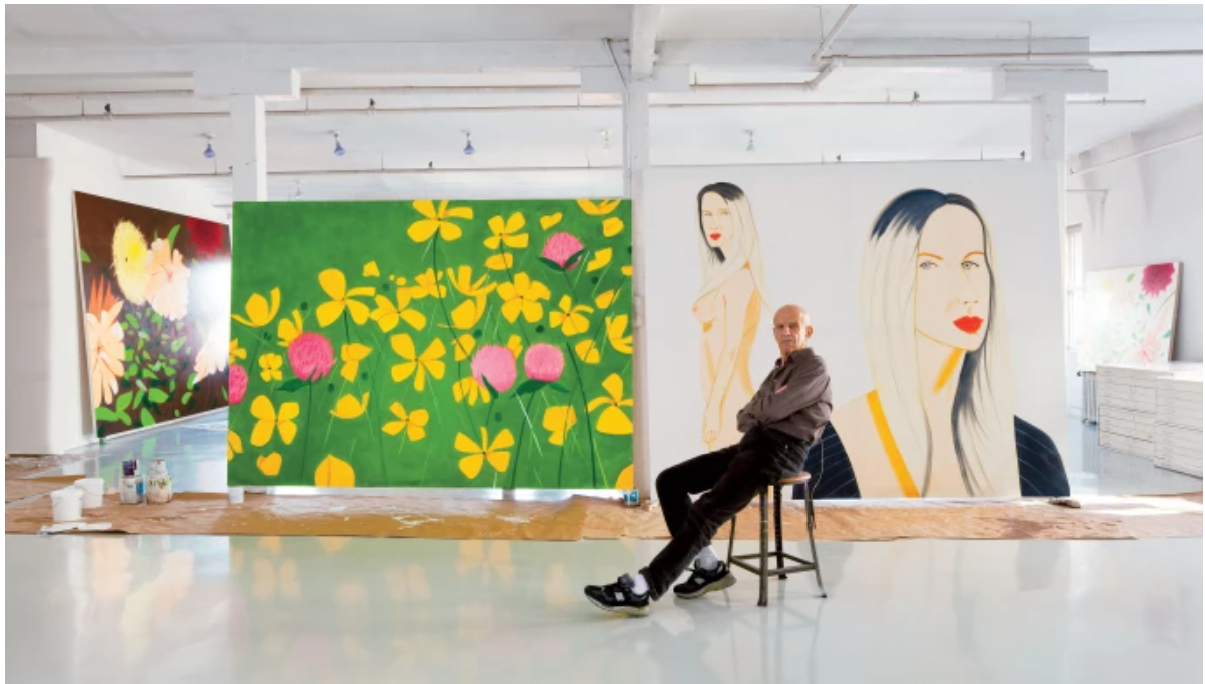
ALEX KATZ TAKES A BREAK IN HIS MANHATTAN STUDIO, 2017
Rose derives from Katz’s first foray into the flora motif in the 1960s, which he energetically returned to at the beginning of the new millennium. Rose stands as an exceptional example given the fact that a work of this subject, scale and historic date has never been offered at auction. Discussing his fascination with the motif, Katz’s shares “flowers are actually some of the most difficult forms to paint, because you have to capture the spatial aspect, their physicality, the surface of the flowers and the colors. You hope the whole painting will give the sensation of seeing a flower – the brilliance of that experience” (Alex Katz quoted in Thaddaeus Ropac, Flowers). Much like Katz masterfully captures the mood of a moment in his portraits and scenes, he conveys the feeling of awe when seeing a beautiful rose. Not a bouquet or simply a decorative painting, Rose eludes the archetypal representations of flowers and stands proudly as a celebration of Katz iconic style. By employing the same large scale, vivid colors, and wet on wet painting technique that lend his works their luxurious buttery surface, Katz gives the rose the prominence of his iconic sitters.
The Yellow House, 1985
Sotheby’s New-York: 19 November 2021
Estimated: USD 800,000 – 1,200,000
USD 988,000
The Yellow House | Contemporary Day Auction | 2021 | Sotheby’s (sothebys.com)
ALEX KATZ (b. 1927)
The Yellow House, 1985
Oil on linen
96 ¼ x 108 ¼ inches (243.5 x 276 cm)
Titled (on the stretcher)
Extending over nine feet in width, Alex Katz’s Yellow House from 1985 is an all-immersive canvas depicting one of the artist’s most beloved subjects – his summer home in Lincolnville, Maine where he has lived and worked almost every summer since 1954. The present work expertly showcases Katz’s signature painting style, rooted in his stylized representations of everyday life and specific cropping devices. In the mid-1980s, Katz began to shift his attention away from pure portraiture as he explored the many possibilities within landscape painting. Both sunny and charming, Yellow House shows Katz’s yellow-brick house flanked with red lilies and framed by fresh green grass. Meticulously cropping the scene, Katz allows for the yellow structure of the home to become the sole stimulus of the canvas, allowing for light and finessed line to take center stage. Neither romanticized nor sentimental, the stylized and flattened rendering of the yellow house becomes a type of self-portrait, an infused memory of a place so deeply infused with Katz’s life and a constant source of inspiration.
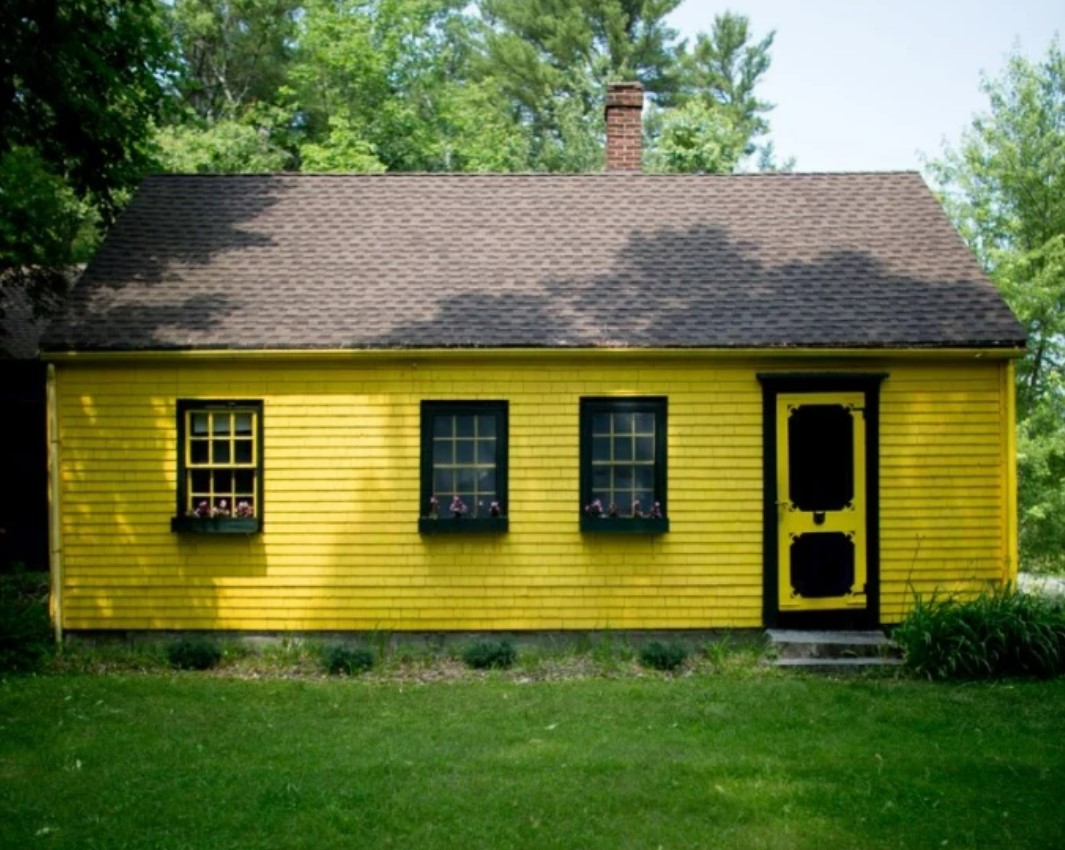
Since 1954, Katz and his wife and muse, Ada, have spent nearly every summer at the yellow house depicted in the present work. It is a 200-year-old farmhouse that Katz himself painted in a bold cadmium yellow hue. Maine was already a special place for Katz, as he had studied at the Skowhegan School of Painting and Sculpture in the summer of 1949, following his graduation from the Cooper Union in New York. Emphasizing the significance of his studies in Maine, Katz has explained that at Skowhegan “I tried plein air painting and found my subject matter and a reason to devote my life to painting. The sensation of painting from the back of my head was a high that I followed until the present.” Now aged 94, Katz has painted in Maine for over fifty years and has canvassed nearly every facet of the property as inspiration for his artistic practice – capturing the flora and fauna of the surrounding land as well as certain iconic physical structures such as the house, the pond, the dock and canoe.
Other Paintings
Boquerón, 1979
Property from the Collection of Annabelle and Bernard Fishman
Sotheby’s New-York: 15 May 2026
Estimated: USD 800,000 – 1,200,000
USD 1,216,000
Alex Katz | Boquerón | Contemporary Day Auction | 2026 | Sotheby’s
ALEX KATZ (b. 1927)
Boquerón, 1979
Oil on linen
72×96 inches (182.9 x 243.8 cm)
Sun-drenched and exquisitely composed, Boquerón from 1979 exemplifies Alex Katz’s singular ability to transform the fleeting pleasures of modern life into images of enduring elegance and quiet mystery. Painted at a moment when Katz had fully refined the crisp visual language that would make him one of the most distinctive painters of the postwar period, the present work offers a luminous tableau of leisure, intimacy, and observation. Set in Balneario de Boquerón in Cabo Rojo, Puerto Rico, against a tropical landscape of swaying palms, brilliant sky, and bands of deep green foliage, three figures occupy the foreground in a composition at once casual and highly orchestrated, their apparent ease countered by the taut stillness that gives Katz’s finest paintings their psychological charge. Acquired by Annabelle and Bernard Fishman in 1984, Boquerón has been cherished in their collection ever since, returning to the market for the first time in over four decades.
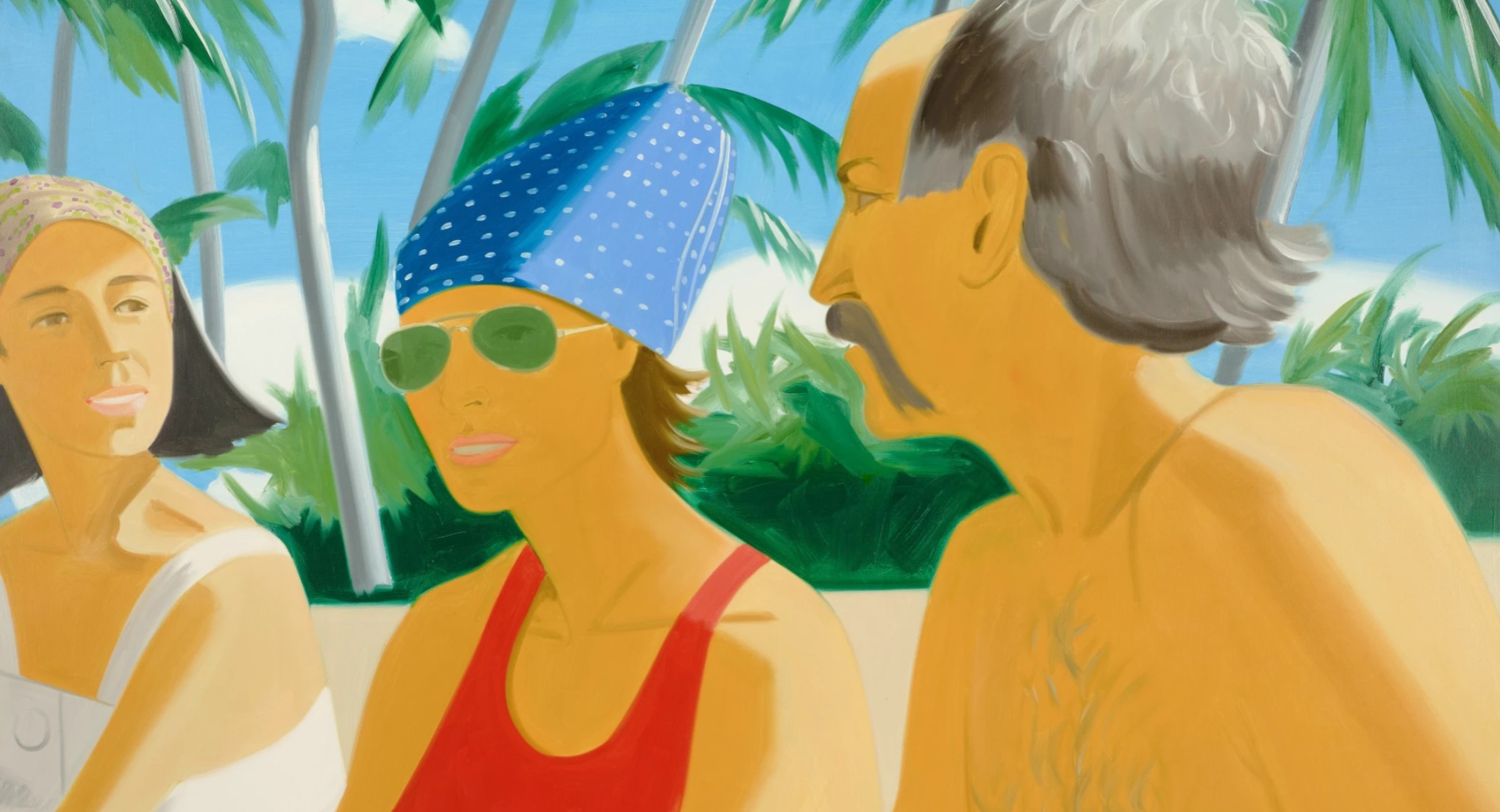
Katz’s art is so often celebrated for its immediacy that it can be easy to overlook just how carefully constructed his paintings are. In Boquerón, every element has been pared down and clarified, yet the work feels anything but simple. A woman in white turns toward the center of the canvas; beside her, a second woman in a vivid red swimsuit and blue headscarf faces outward behind mirrored sunglasses; at right, a shirtless man with silver hair leans in profile, his body filling the frame with monumental calm. Behind them, the fronds of palm trees arc rhythmically against a sky of unmodulated blue, while the white band of sand and surf provides a shallow, luminous stage on which the figures appear suspended. The scene is unmistakably one of tropical ease, yet Katz resists anecdote. There is no narrative resolution, only the charged interval between glance, presence, and atmosphere.

Alex Katz, Round Hill, 1977. Los Angeles County Museum of Art.
Art © 2026 Alex Katz / Licensed by VAGA at Artists Rights Society (ARS), NY.
Since the 1950s, Katz has forged a highly individualized mode of realism that stands apart from both the painterly drama of Abstract Expressionism and the cool detachment of Pop. His figures, often drawn from family, friends, and the social world around him, are rendered with an economy that makes them feel at once utterly specific and strangely elusive. In Boquerón, the sitters are not presented as psychological case studies so much as embodiments of a moment stylized, self-possessed, and suspended in time. Katz has often spoken of wanting to paint “contemporary gestures, contemporary clothes and contemporary people,” and it is precisely this devotion to the lived present that gives his work its freshness. Yet for all their apparent naturalness, his figures are never merely documentary. They are heightened by selection, cropping, and scale into something closer to icons of seeing itself.
The setting of Boquerón is integral to that effect. Throughout his career, Katz has returned to landscape not as backdrop alone but as an active participant in the mood and structure of the painting. Just as the light and atmosphere of coastal Maine shaped his most celebrated outdoor scenes, here the tropical environment of Puerto Rico sharpens the work’s languid glamour and chromatic brilliance. The palm trees do more than situate the composition geographically; they provide a vertical rhythm that echoes the elongated framing of the figures, while their broad green fronds offset the flattened planes of flesh, fabric, and sky. Katz’s handling of light is particularly masterful. The skin of the figures glows in warm expanses of ochre and peach, broken only by the most economical indications of shadow. This selective modeling intensifies the image’s flatness even as it heightens its sensual immediacy.
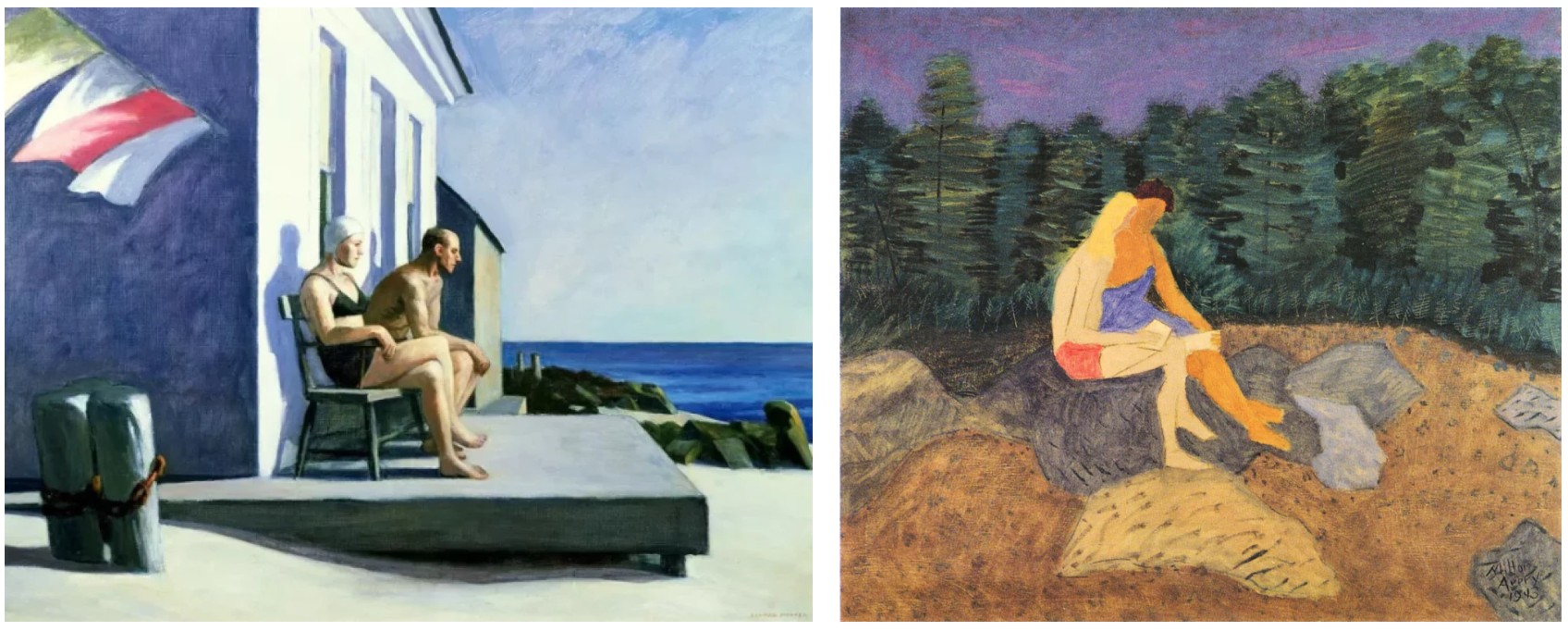
Left: Edward Hopper. Sea Watchers, 1952. Private Collection.
Right: Milton Avery, Sketchers on the Rock, 1943. Neuberger Museum of Art, Purchase College, State University of New York.
Painted in 1979, Boquerón belongs to a mature period in Katz’s career when his portraits and group scenes had achieved a new level of scale, confidence, and compositional daring. By this point, Katz had long established himself as a critical counterpoint to dominant postwar tendencies, developing a figurative language that absorbed lessons from billboard design, cinema, fashion photography, and art history alike. One senses in Boquerón the elegant leisure of Manet, the cropped immediacy of photography, and the cool, clear light of modern advertising, all reconfigured into a pictorial language entirely Katz’s own. His radical simplification of form and suppression of extraneous detail do not diminish the painting’s emotional resonance; rather, they intensify it. What remains is distilled, essential, and quietly enigmatic.
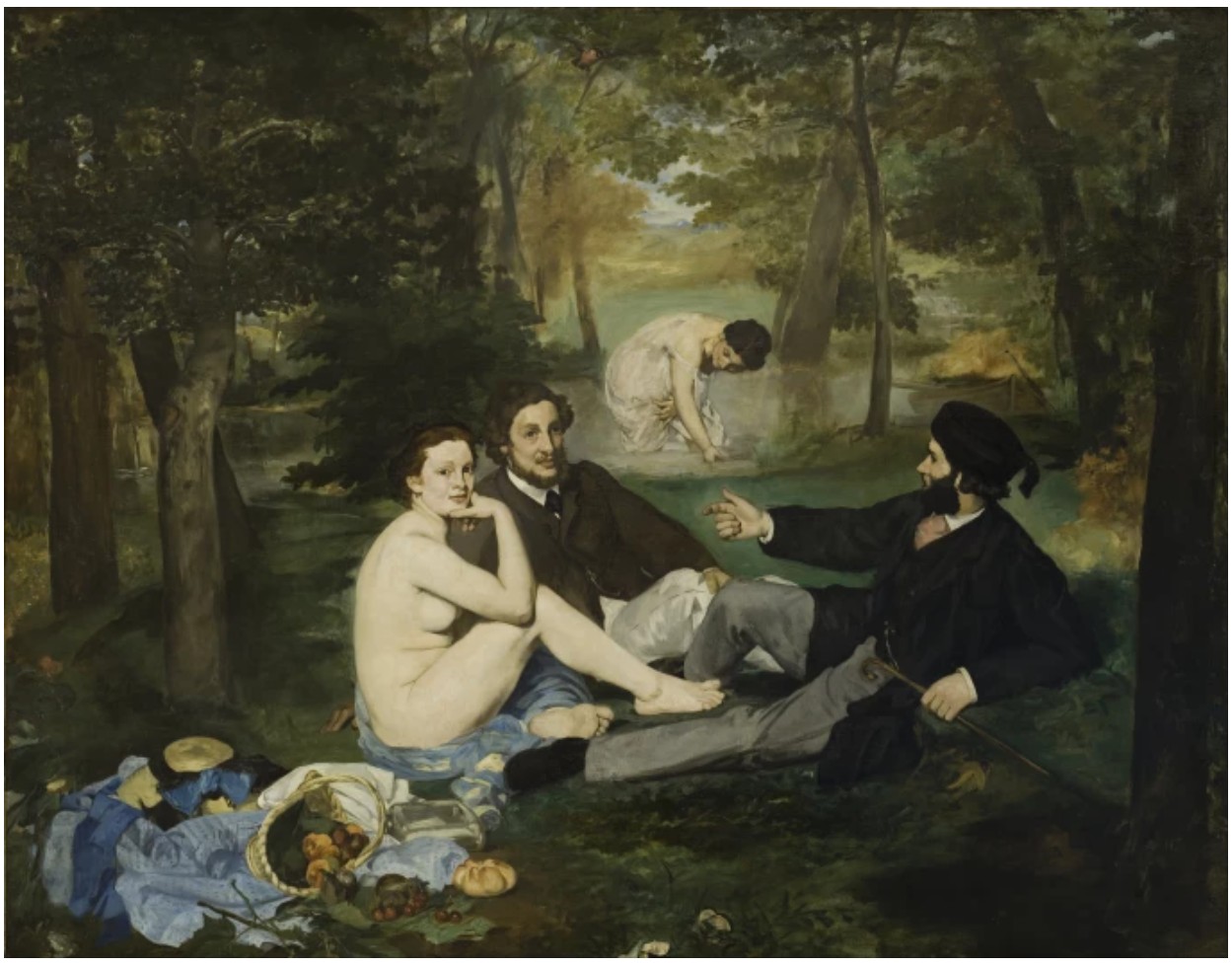
Édouard Manet, Le Déjeuner sur l’herbe, 1863. Musée d’Orsay, Paris
That enigmatic quality has long been recognized as one of Katz’s greatest strengths. His paintings depict people who are near to him, yet they retain an air of distance, as though each were caught in the act of becoming an image. In Boquerón, the central woman’s sunglasses, the man’s profile, and the partial turn of the woman at left all contribute to this sense of withheld interiority. We are close to them, yet never fully admitted. Katz thus captures a distinctly modern condition: the paradox of intimacy without disclosure, presence without full access. The painting’s mood is one of bright leisure, but it is also one of suspension, of consciousness held just below the surface. A superb example of Katz’s mature figuration, Boquerón reveals the artist’s ability to imbue scenes of contemporary life with both graphic brilliance and introspective depth. In its tropical palette, elegant compression, and subtle psychological tension, the painting transforms an image of sunlit leisure into something far more enduring: a meditation on beauty, presence, and the fleeting clarity of a moment seen whole.
Thai Restaurant, 1980
Christie’s New-York: 20 November 2025
Estimated: USD 600,000 – 800,000
USD 850,900
ALEX KATZ (B. 1927), Thai Restaurant | Christie’s
ALEX KATZ (B. 1927)
Thai Restaurant, 1980
Oil on linen
72×96 inches (182.9 x 243.8 cm)
“Katz’s portraits are true to the way we experience others. They eloquently convey the tension between the determinate outer appearance and the indeterminate inner reality of someone known only from the outside… For all their everydayness, Katz’s figures have an air of transient strangeness to them, suggesting the mystery of their inner existence, perhaps even to themselves.”
Donald Kuspit
Edward Hopper, Chop Suey, 1929. Christie’s, New York, 13 November 2018, $91,875,000, auction record for the artist. © 2025 Heirs of Josephine Hopper / Licensed by VAGA at Artists Rights Society (ARS), NY
Study for Pas de Deux, 1983
Property from a Private Florida Collection
Sotheby’s New-York: 19 November 2025
Estimated: USD 500,000 – 700,000
PASSED
Study for Pas de Deux | Contemporary Day Auction | 2025 | Sotheby’s
ALEX KATZ (b. 1927)
Study for Pas de Deux, 1983
Oil on board, in 5 parts
Each: 24×18 inches (61 x 45.7 cm)
Incised with the artist’s signature and date 83 (upper right of each)
Inscribed #1-5 respectively (on the reverse of each)
Executed in 1983, Study for Pas de Deux captures the refined poise and effortless glamour that have come to define Alex Katz’s most celebrated works. Comprising five intimately scaled panels, each depicting a pair of figures, this ensemble forms a cinematic sequence that encapsulates Katz’s fascination with gesture, fashion, and the subtle dynamics of human relationships. A preparatory study for Pas de Deux (1983), the present work offers a rare glimpse into the artist’s compositional process and enduring engagement with the visual language of contemporary culture.
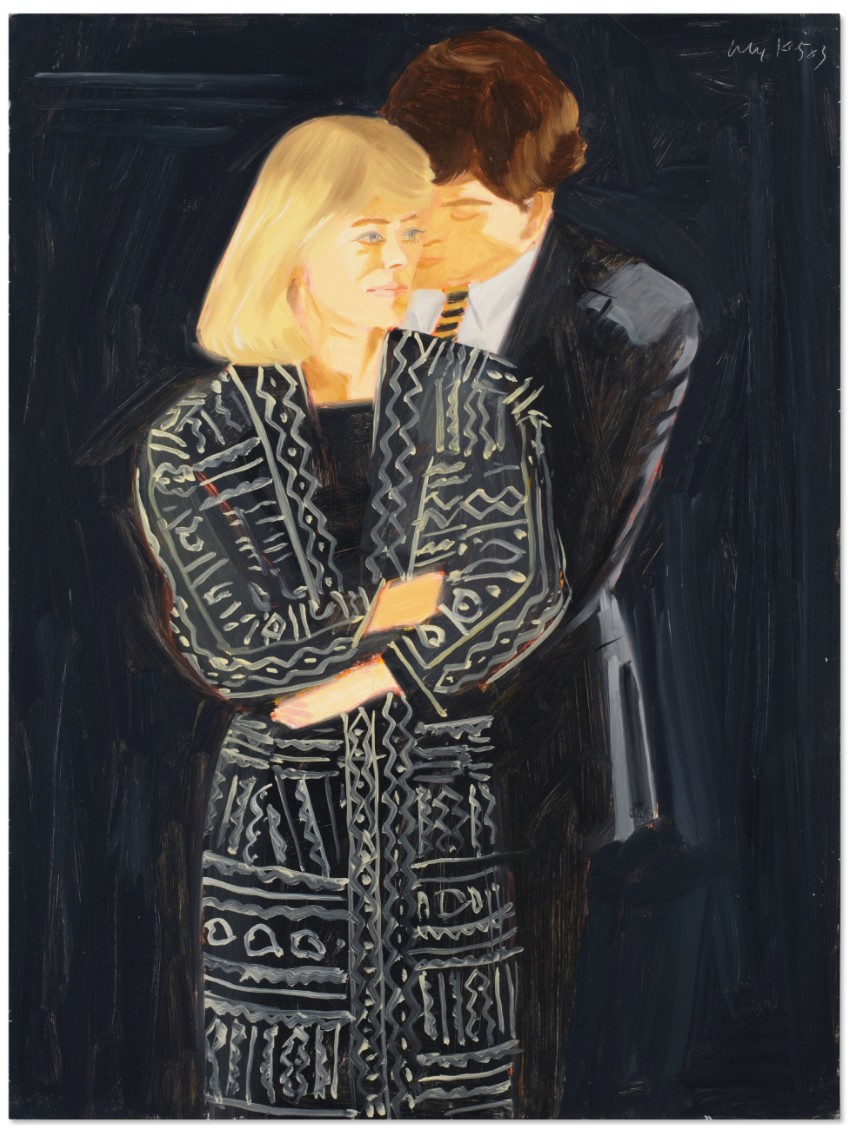
By the early 1980s, Katz had firmly established himself as one of the most distinctive voices in postwar American art. He developed a singular style defined by crisp contours, flattened planes of color, and a sense of poised immediacy. His subjects, drawn largely from his own circle of friends, artists, poets, and models, are presented with cinematic clarity. Katz’s figures exist in a timeless present: elegant, self-contained, and bathed in a cool, distilled light.
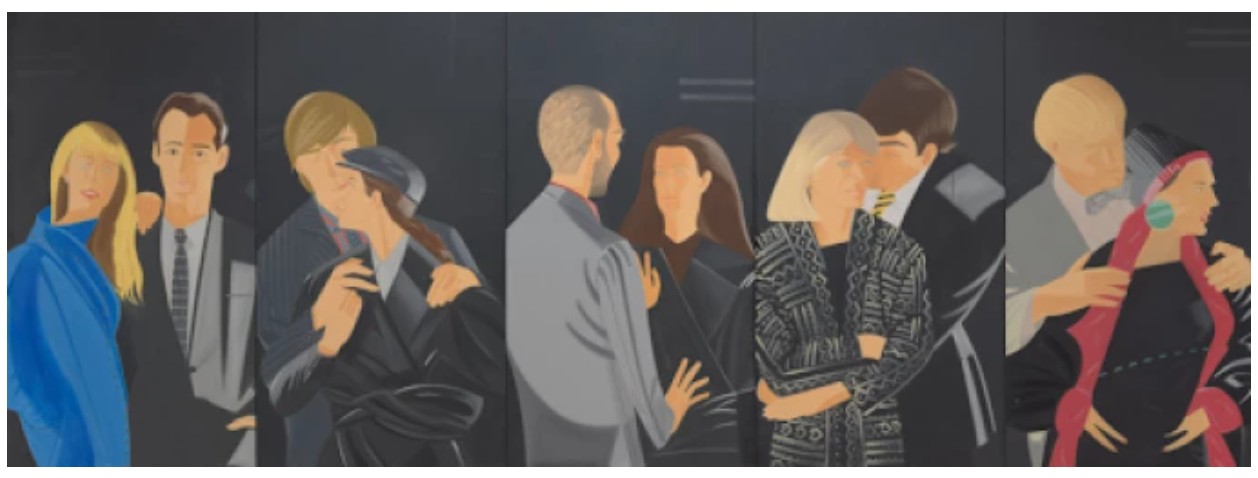
Alex Katz, Pas de Deux, 1983. Colby College Museum of Art, Waterville. Art © Alex Katz.
In Study for Pas de Deux, five couples are arranged as a rhythmic suite of portraits. Each pair occupies its own board, yet together they form a cohesive visual choreography. Indeed, a social dance unfolds across the panels. Katz’s title borrows from the lexicon of ballet, a pas de deux being a duet between two dancers, and here the metaphor of dance becomes an organizing principle.
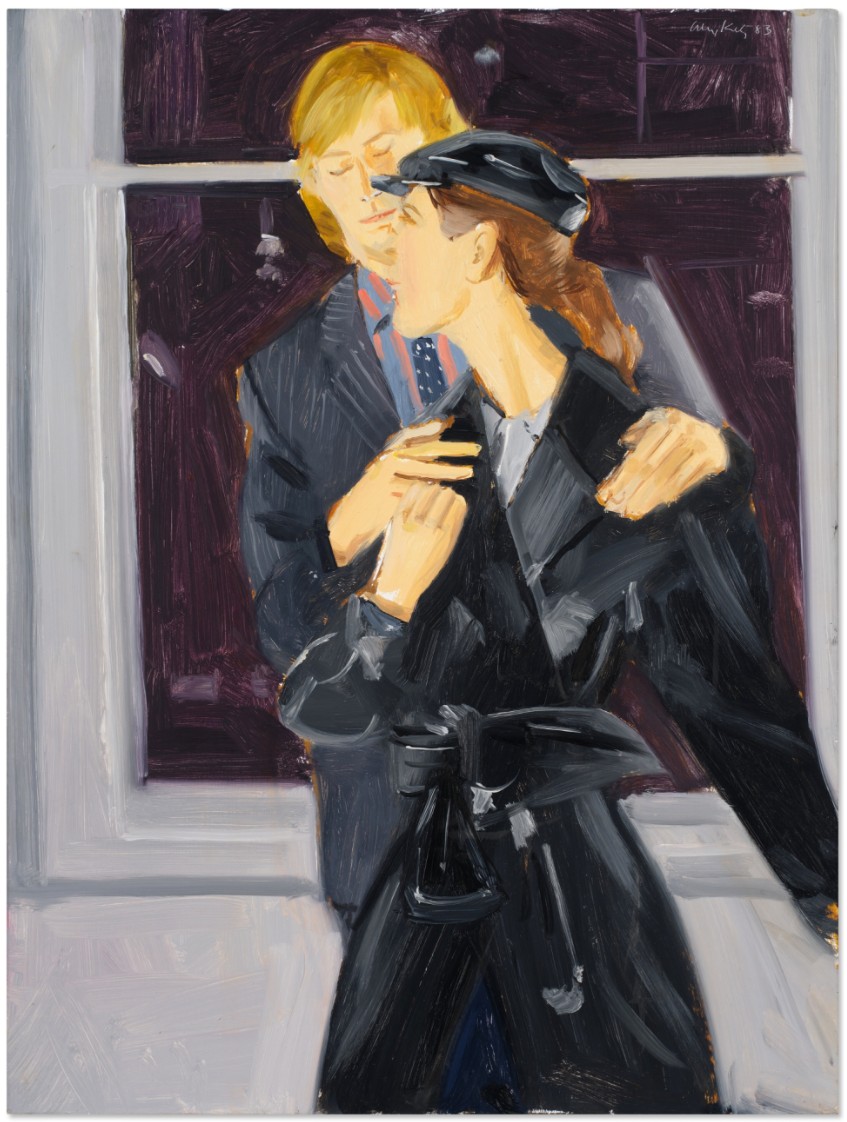
The artist choreographs a sequence of encounters: a man leans toward a woman in quiet conversation; another couple shares a moment of intimate proximity; yet another exchanges a gaze of ambiguous intensity. The result is both a study in gesture and a meditation on the nuances of human connection. Additionally, the composition’s serial structure situates Study for Pas de Deux within Katz’s broader experiments with multipart formats during the late 1970s and early 1980s. In this study, the five boards together function almost like film stills, their sequential arrangement suggesting passage and movement even as each pair remains suspended in stillness. This tension between motion and stasis, intimacy and display, has long been central to Katz’s pictorial drama.
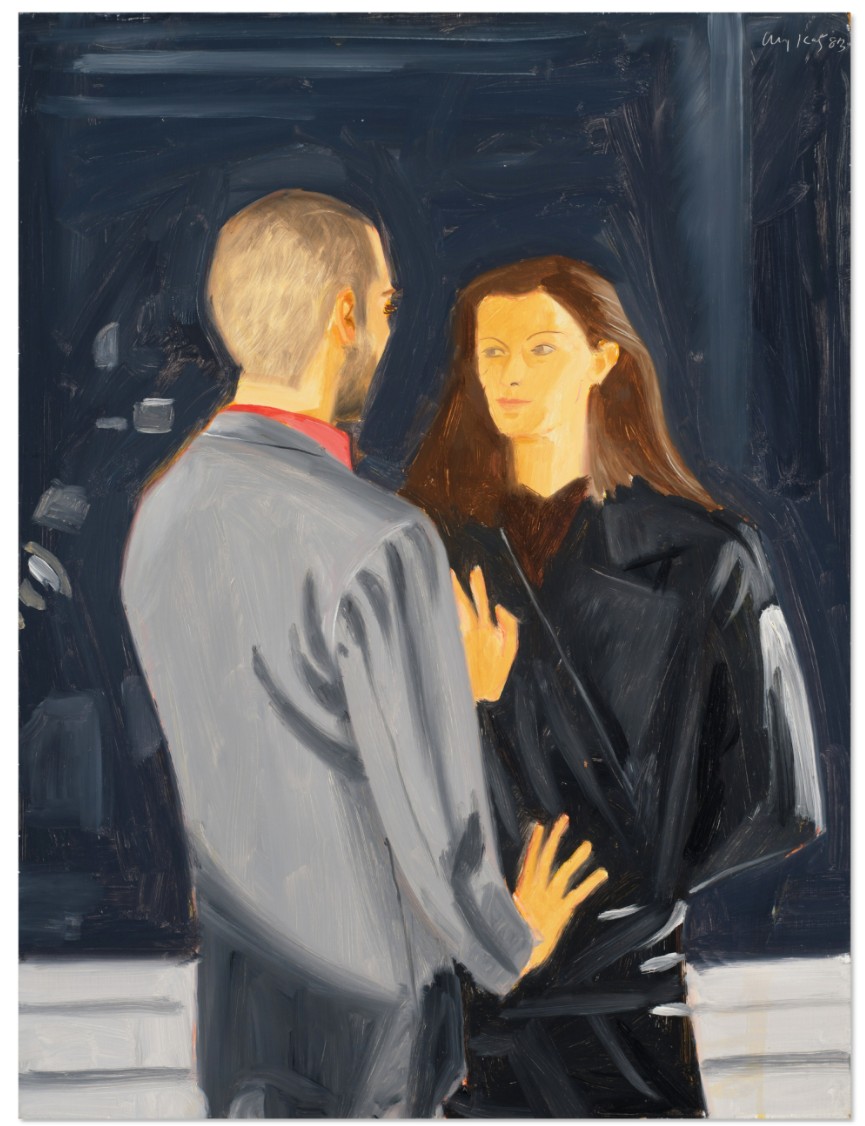
Each panel showcases Katz’s command of composition and color. Set against deep, flattened backgrounds, the figures emerge in precise silhouettes, their crisp outlines and luminous hues heightening the immediacy of the scene. Dark grounds offset pale faces, flashes of red and blue punctuate the composition, and each couple’s sophisticated attire, ranging from a patterned coat, to a sleek leather trench or a vivid scarf, adds its own rhythmic variation. Katz’s interest in fashion and form is palpable; the stylish clothing is not mere decoration, but an extension of character and gesture. As critics have noted, Katz’s work of this period draws heavily from the visual codes of fashion photography and film, translating the allure of the magazine spread into the language of high painting.
Ernie Barnes, The Sugar Shack, 1976. Private Collection. Art © Ernie Barnes Family Trust.
The couples themselves evoke the milieu that has long animated Katz’s art: the creative and social elite of New York’s downtown scene. They are icons of a cultural moment, rendered with the detached elegance that defines Katz’s vision of modern life. His approach is neither documentary nor narrative; rather, he distills gesture, light, and style into a pictorial shorthand that feels at once specific and universal.
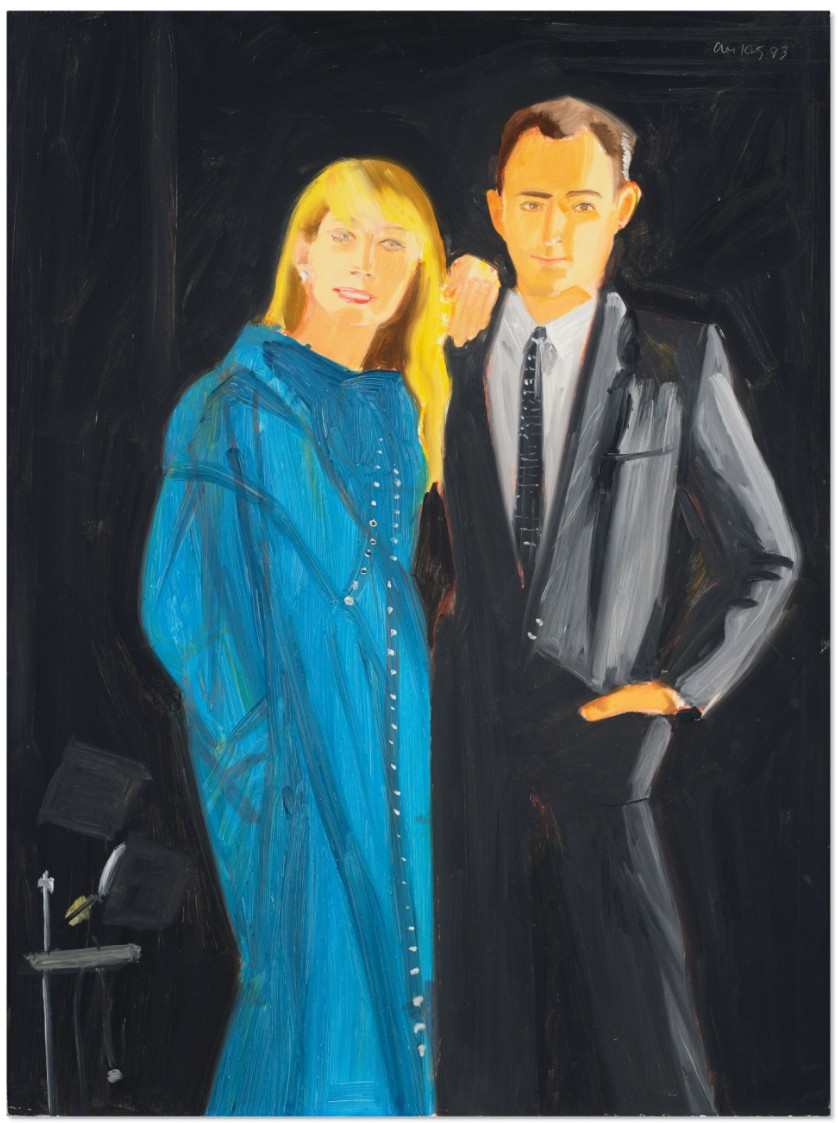
By 1983, Katz had also become increasingly involved with theater and dance, designing sets and costumes for productions by renowned choreographer Paul Taylor. The influence of performance permeates Study for Pas de Deux: each couple appears as though caught in mid-rehearsal, poised between movement and stillness, intimacy and display. The painting’s title and arrangement reinforce this sense of choreographed rhythm, underscoring Katz’s fascination with the body as a vehicle of form, expression, and design.
Edward Hopper, Nighthawks, 1942. Art Institute of Chicago
As a study, the present work reveals Katz’s meticulous process of distillation. Each board serves as both a compositional test and a self-contained portrait, allowing the artist to refine posture, proportion, and chromatic harmony before scaling up to the monumental canvas. Yet, the unity and completeness of the ensemble suggest that Katz conceived these panels not merely as preparatory sketches but as an autonomous work. It is an elegant meditation on the pair, both in life and in art.
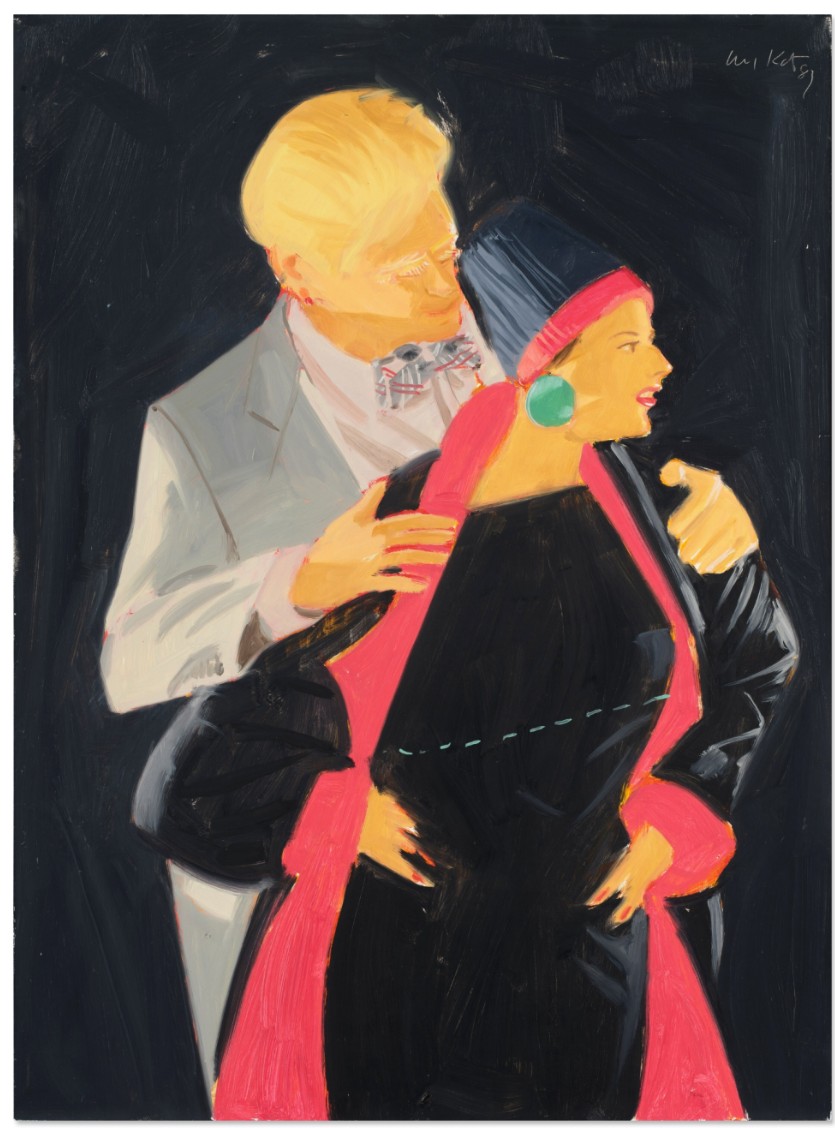
Nine Women 6, 2009
Phillips New-York: 17 July 2024
Estimated: USD 60,000 – 80,000
USD 114,300
Alex Katz – Modern & Contemporary Art Lot 35 July 2024 | Phillips
ALEX KATZ
Nine Women 6, 2009
Oil on board
15 7/8 x 11 5/8 inches (40.3 x 29.5 cm)
Signed “Alex Katz” lower right
Painted in 2009, Alex Katz’s Nine Women 6 features his friend Yvonne Force Villareal in an elegant black dress against a vivid yellow backdrop, epitomizing Katz’s signature style of exploring portraiture in bold, simplified forms and a monochromatic palette. Yvonne Force Villareal is the co-founder of Art Production Fund — a non-profit art organization dedicated to commissioning ambitious public art projects — and the wife of artist Leo Villareal. Forming an immediate bond with Katz in Madrid in the early 1990s, Yvonne quickly became one of Katz’s muses and most painted models after his wife, Ada Katz. Over the years, Katz has depicted Yvonne in more than twenty works, including prints, cutouts, and paintings, each piece uncovering a new dimension of her persona. The work is part of Katz’s Nine Women series (2009), which depicts nine of his female friends who often model for him: Cecily, Ulla, Sharon, Ruth, Yvonne, Yi, Carmen, Christy, and Oona. Set against the same yellow background, each woman poses almost identically in a relaxed yet graceful demeanor, casually leaning towards the edge of the image with her left arm resting across her waist and her right forearm bent upward in the air. Despite the uniformity in posture, each woman’s individuality shines through the unique variations of the little black dress. In her portrait, Yvonne wears a form-fitting, sleeveless black dress with a low, square neckline that delicately accentuates her sleek, classic silhouette. Paired with pointed black high heels, the outfit exudes an air of poised and confident elegance, which reflects her sophisticated persona and influential role in the art world. By using a reduced graphic language to capture the very essence of the women in the series, Katz invites viewers to explore how subtle differences in attire reveal distinct characters and personalities.
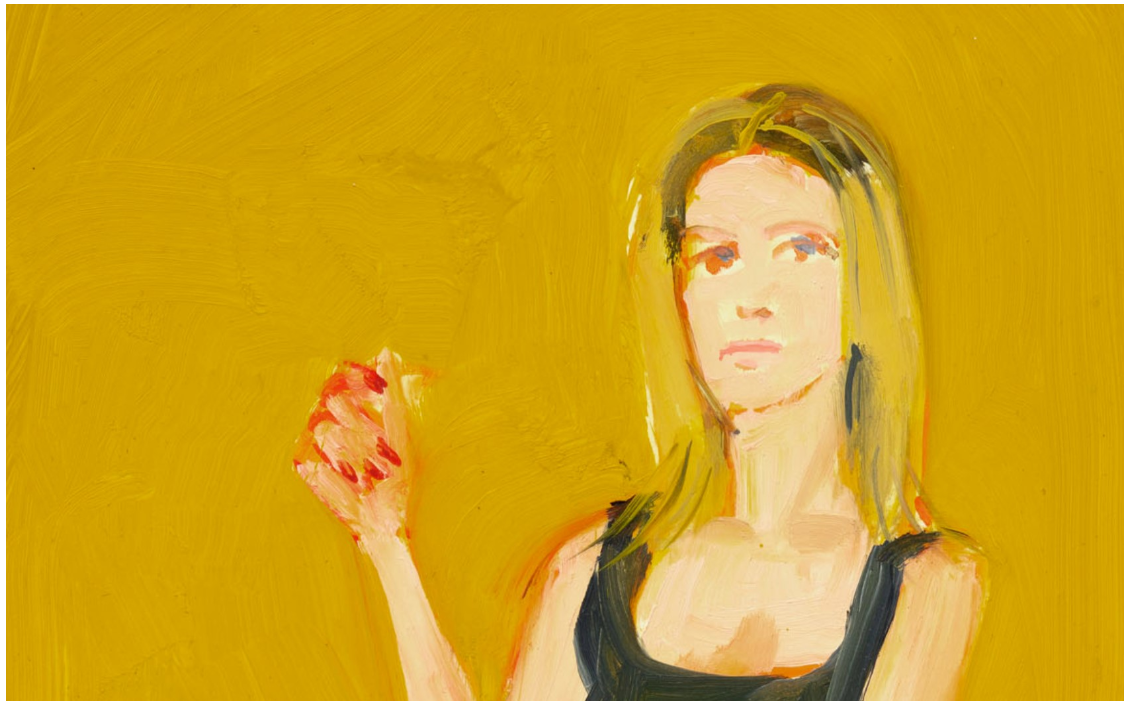
The black dress has been a recurring theme in Katz’s oeuvre. This central motif can be traced back to one of his most iconic early paintings, The Black Dress (1960), which portrays his wife Ada in six different perspectives wearing a classic black shift dress that encapsulates timeless sophistication. Now a highlight of the Museum Brandhorst’s collection in Munich, this piece set a precedent for Katz’s fascination with the black dress. As Katz revisited the theme in 2009 with his Nine Women series, he expanded upon it in 2015 and created the Black Dress series, which features nine larger-than-life-sized screenprints of female figures in the same composition but with cleaner and more defined lines. This trajectory of development not only underscores the interconnected nature of Katz’s painting and printmaking practices but also suggests that the earlier paintings might be viewed as exploratory, almost preparatory stages. These initial works set the conceptual and visual groundwork for the screenprints, thereby enhancing their significance and uniqueness as integral steps in the artist’s continuous exploration of the black dress motif. Calvin Klein, captivated by the 2015 Black Dress screenprints, praised the work in the exhibition catalogue foreword: “I love what a simple black dress says about the woman who wears it… His portraits, with their strong color fields and clean lines, while seemingly simple, are profoundly expressive and capture the essence of his subjects perfectly.” The Nine Women series (2009) also resonates with Klein’s observations, as each portrait carries a distinct sense of individuality through the stylistic variations of the black dresses.
Nine Women 1, 2009
Phillips New-York: 17 July 2024
Estimated: USD 60,000 – 80,000
USD 101,600
Alex Katz – Modern & Contemporary Art Lot 36 July 2024 | Phillips
ALEX KATZ
Nine Women 1, 2009
Oil on board
20×16 inches (50.8 x 40.6 cm)
Alex Katz’s Nine Women 1, 2009, features the British painter Cecily Brown, a close friend, colleague and recurring subject in his work. He adorns her in a black dress against a stark yellow backdrop, the conspicuous brushstrokes adding depth to the composition. The first piece in a nine-part series of paintings, each composition highlights a similarly situated figure — all meaningful women in the artist’s life — wearing a different iteration of the ensemble. The artist is known for drawing inspiration from those close to him, representing those such as Brown in an elegant yet effortless, fashionable yet simple manner. He depicts her version of the classic black dress, her individuality radiating through her distinctive silhouette. A persistent motif throughout his career, Katz returns to the black dress time and time again, solidifying them within his signature, iconic subject matter rotation.
“Fashion is ephemeral. Any symbol of that thing that is really new in fashion instantly becomes mortal.”
Katz’s exploration of the black dress motif has evolved over the years, marking his artistic growth. His earliest work with the theme, Black Dress, 1960, is now a part of the renowned Museum Brandhorst’s collection in Munich. Another acclaimed painting, The Grey Dress, 1982, is still one of his most prominent creations to appear at auction. In 2015, Katz produced a successor to the Nine Women series, also titled Black Dress. This screen-printed series closely resembles the 2009 version–aside from its medium. Once could perhaps consider the Nine Women series a predecessor or study for the 2015 adaptation; the adaptation of the work to an edition serves to further emphasize the seriality of the women he depicts, while making sure to emphasize their individuality as well. Katz’s repetition highlights his depth of creative exploration and the enduring influence of the black dress motif.
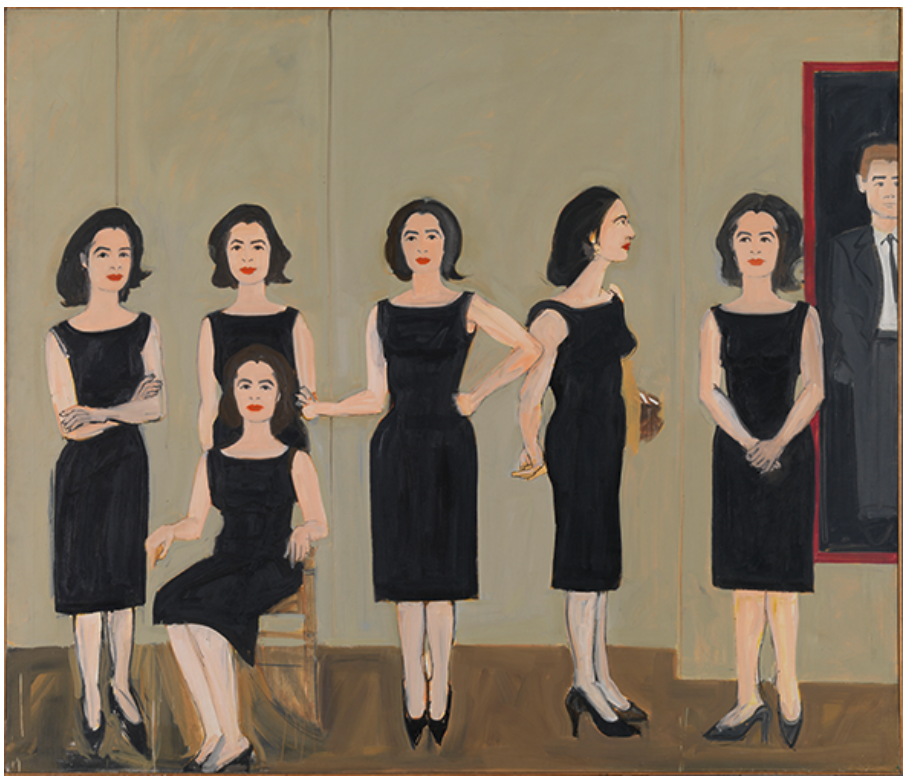
Alex Katz, The Black Dress, 1960, Museum Brandhorst, Munich. Image: bpk Bildagentur / Museum Brandhorst / Art Resource, NY, Artwork: © 2024 Alex Katz / Licensed by VAGA at Artists Rights Society (ARS), New York
As a portrait of a fellow artist, Nine Women 1 is a testament to Katz’s relationship with painter Cecily Brown: both contemporary artists although 42 years apart in age. While each is known for a drastically different style — Katz for his boldly colored figurative works, and Brown for her Neo-Expressionist abstractions — we can read Katz’s likeness of her as an homage to her craft, and an expression of admiration, portrayed through the humble portrait.
Untitled, circa 1959
Phillips New-York: 19 May 2022
Estimated: USD 150,000 – 200,000
USD 403,200
Alex Katz – 20th Century & Contemporary… Lot 130 May 2022 | Phillips
ALEX KATZ
Untitled, circa 1959
Oil on linen
35 1/4 x 56 inches (89.5 x 142.2 cm)
Signed “Alex Katz” lower right
Painted in the late 1950s, Untitled is a wonderful example of Alex Katz’s early paintings, specifically the artist’s development of his signature, simplified style through color blocking. During this time when Abstract Expressionism dominated the New York art scene, Katz introduced a refreshing approach to painting landscapes, portraits and still lifes. He found a unique way of depicting recognizable scenes, using only the most fundamental elements in his compositions. With his bold use of colors and subjects taken from his own life, his works prefigured the development of the Pop Art movement, which would soon take the art world by storm. Untitled embodies Katz’s ability to create a chorus of figurative and abstract forms. During the early 1950s, he was interested in studying amateur black-and-white photographs, specifically their visual compositions. These first inspired the artist to focus on the pictorial flatness and stillness of his original source images. He would select, edit, and crop a scene, like a filmmaker – omitting details, blocking out forms, and emphasizing these by adding color.ii Katz’s first exploration of this technique was through the collages he created between 1954 and 1960, of which the present work is reminiscent. To create these collages, the artist cut out elements from his own drawings and hand-colored paper, and then glued them over sheets of vibrantly colored stocks. Working on these collages undoubtedly contributed to his later and most celebrated paintings, distinguished by their reduction of forms, and their rhythm of color and lines.iii In Untitled, Katz depicts himself, his wife Ada, and his son Vincent in a reductive manner only through their outlines, juxtaposing them against a large blue passage that merges sea and sky. There is an abrupt transition of color which exemplifies the color blocking technique used in this work. The yellow of Vincent’s hair and Katz’s hat, and the stripes in the artist’s clothing, further define the figures from the flatness of the background, resulting in a collage-like effect.
Cutouts
Joe 1, 1966
Sotheby’s New-York: 30 September 2024
Estimated: USD 30,000 – 40,000
USD 132,000
Joe 1 | Art Without Boundaries: The Abrams Family Collection | Online Sale | 2024 | Sotheby’s
ALEX KATZ (b. 1927)
Joe 1, 1966
Oil on shaped aluminum
Overall: 10 x 29 1/2 x 2 1/2 inches (25.4 x 74.9 x 6.4 cm)
Signed and dated 66 (lower left)
Signed and dated 66 (on the reverse)
Defined by its pristine surface, dramatic cropping and economy of line, Joe 1 represents a superlative cutout sculpture executed by Alex Katz, the American artist celebrated for his contribution to the reinvigoration of Contemporary portraiture for the past seven decades. Even before Pop and Minimalism emerged as counter movements to the dominant artistic idiom of Abstract Expressionism in New York during the 1950s, Katz set out to forge his own path as a maverick. Drawing upon the lineage of Modernists such as Matisse and Manet with distilled, flattened and stylized forms coupled with the power and scale borrowed from his Abstract Expressionist contemporaries, Katz has fine tuned a singular approach by applying abstract artistic impulses to figurative realism.
“I like to make an image that’s so simple you can’t avoid it but so complicated you can’t figure it out.”
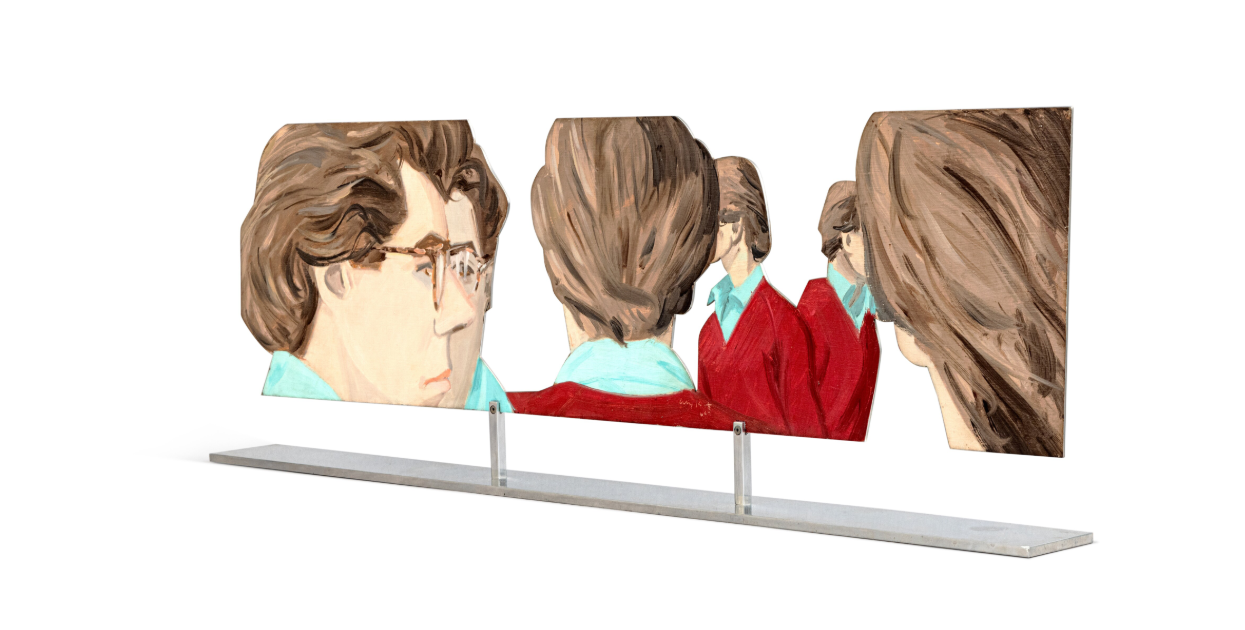
The present work conveys the multiple likenesses of the artist, writer and poet, Joe Brainard. Second to his wife and continual muse Ada, portraits of fellow artists, writers and poets rank as Katz’s most well-known subject matter. Here, Katz portrays his friend as an intellectual with his tortoiseshell glasses and stark dress shirt collar protruding from his V-neck sweater. Brainard was closely associated with the second generation of the New York School, a burgeoning downtown artistic circle of painters including Katz, Fairfield Porter and Larry Rivers and writers including Frank O’Hara and John Ashbery during the 1960s and ’70s. Both Katz and Brainard collaborated frequently with their poetic comrades of the New York School on book cover designs and illustrations to accompany their publications. In 2023, Katz honored his cherished friendship with Brainard, who had died from AIDS in 1994, by initiating a posthumous collaboration in which he illustrated Brainard’s 1970s journals with charcoal flower drawings. Joe 1 exists as one of two 1966 cutout sculptures of Joe Brainard exhibited in the recent seminal Guggenheim exhibition, Gathering, the other of which belongs to the collection of the artist, further reinforcing the dear friendship of the artist and subject in Joe 1.
Henri Matisse, Blue Nude II, 1952. Musée national d’art moderne/Centre de création industrielle, Centre Georges Pompidou, Paris.
Image © 2014 Succession H. Matisse/Artists Rights Society (ARS), New York.
In his 1992 monograph on the artist’s work, Sam Hunter described the viewing experience of Katz’s cutouts in his statement “Images began to register in the eye and mind just as real people do when fleetingly glimpsed” (Sam Hunter, Alex Katz, New York, 1992, p.79). Joe 1 encourages the viewer’s active engagement, inviting one to circumambulate the 2D object in a quest to meet the subject eye-to-eye. However, the subject appears deep in thought with eyes staring out into a void that somehow narrowly evades the viewer at every angle, creating an elusive aura of mystery.
A publicity photo of Joe Brainard for his 1970 book I Remember by Wren de Antonio. IMAGE © Penguin Books.
With optical experience Katz’s chief aim, he eschews the academic sense of portraiture as literal transcription, as well as the Expressionist focus on psychological integration, to instead extract and distill the essence of his subjects’ appearances. In doing so, he creates portraits that occupy a beguiling space between the representational and real. While Katz has consistently returned to the subjects of people and landscapes throughout his oeuvre, his painterly language evolved throughout the 1950s to crystallize in the mature style evidenced in the present work. His 1950s paintings portray full frontal, static figures against a monochromatic background. The 1960s marked a period of innovation for the artist, as he broke free from the monochromatic field that previously anchored his subjects. He also began dramatically cropping and enlarging his subjects with focusing and framing techniques borrowed from photography, film and billboards. By the latter half of the decade, he achieved a near congruence of face and field, further heightening the physical immediacy of the human presence.
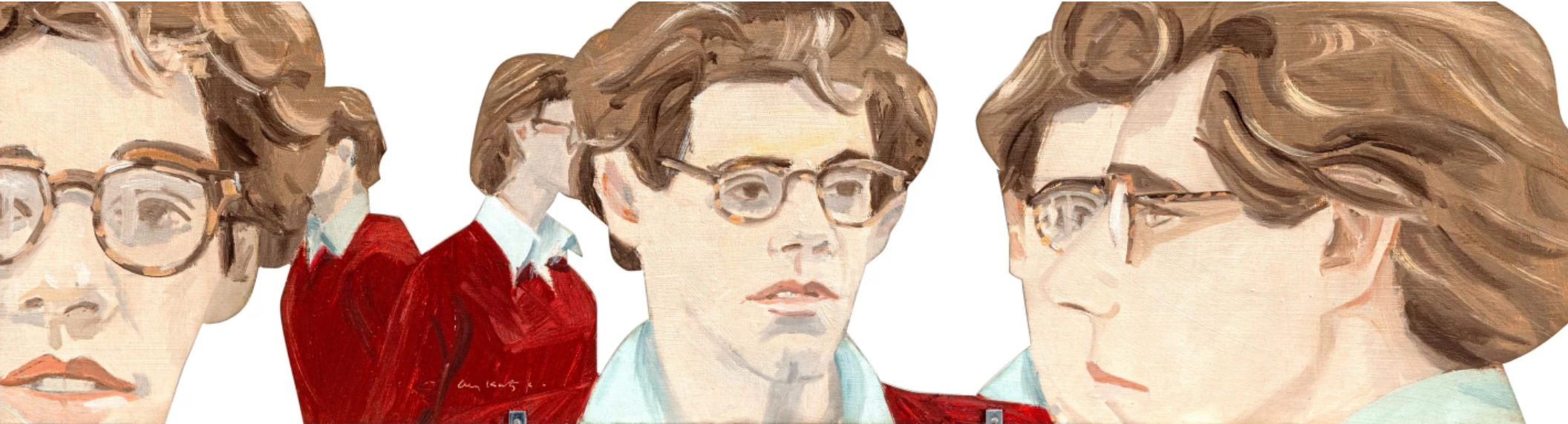
There is no better encapsulation of Katz’s congruence of face and field than his cutout sculptures. The artist created his first cutout sculptures in 1959 unintentionally while struggling with a compositional quagmire between figure and background. Reaching an exasperated peak while working on the same painting for many months to no avail, the artist impulsively cut the figures out from the canvas to test them against different backgrounds. As the artist recounted to Paul Cummings in his 1969 Archives of American Art oral history interview, it was Robert Rauschenberg who noticed the cutout figures in his studio, praised them as terrific and encouraged him to keep them as cutouts divorced from a background (“Oral history interview with Alex Katz” by Paul Cummings, Archives of American Art, Smithsonian Institution, 20 October 1969). Katz mounted the canvas figures on plywood, thus inaugurating his decades-long exploration with the freestanding sculptures that blur the line between painting and object.

Early explorations entailed painting the double-sided works on plywood, but by the mid-1960s Katz transitioned to aluminum. The artist became enamored with the way that the cutout forms confidently took on a spatial presence, while also retaining the illusory experience he was seeking. When asked in 1968 why he did not make the cutouts into three dimensional forms with depth, the artist responded “Well I’m an illusionist and the minute you put them in 3-D, you ruin the illusion” (Alex Katz quoted in Grace Glueck, “A Party That Includes You Out,” New York Times, 27 October 1968).
Chance, 2016
Sotheby’s New-York: 14 May 2024
Estimated: USD 40,000 – 60,000
USD 127,000
Chance | Contemporary Day Auction | 2024 | Sotheby’s
ALEX KATZ (b. 1927)
Chance, 2016
Cutout in three panels from shaped powder-coated aluminum
Printed in colors on both sides, contained in the original foam lined cardboard box
Overall: 21 5/8 x 37 by 4 inches (55 x 94 x 10.2 cm)
Incised with the artist’s signature (on the base)
Stamp-numbered 12/50 (on the underside)
This work is number 12 from the edition of 50 plus 18 artist’s proofs
With the artist’s copyright and publisher stamps on the underside
Published by Lococo Fine Art
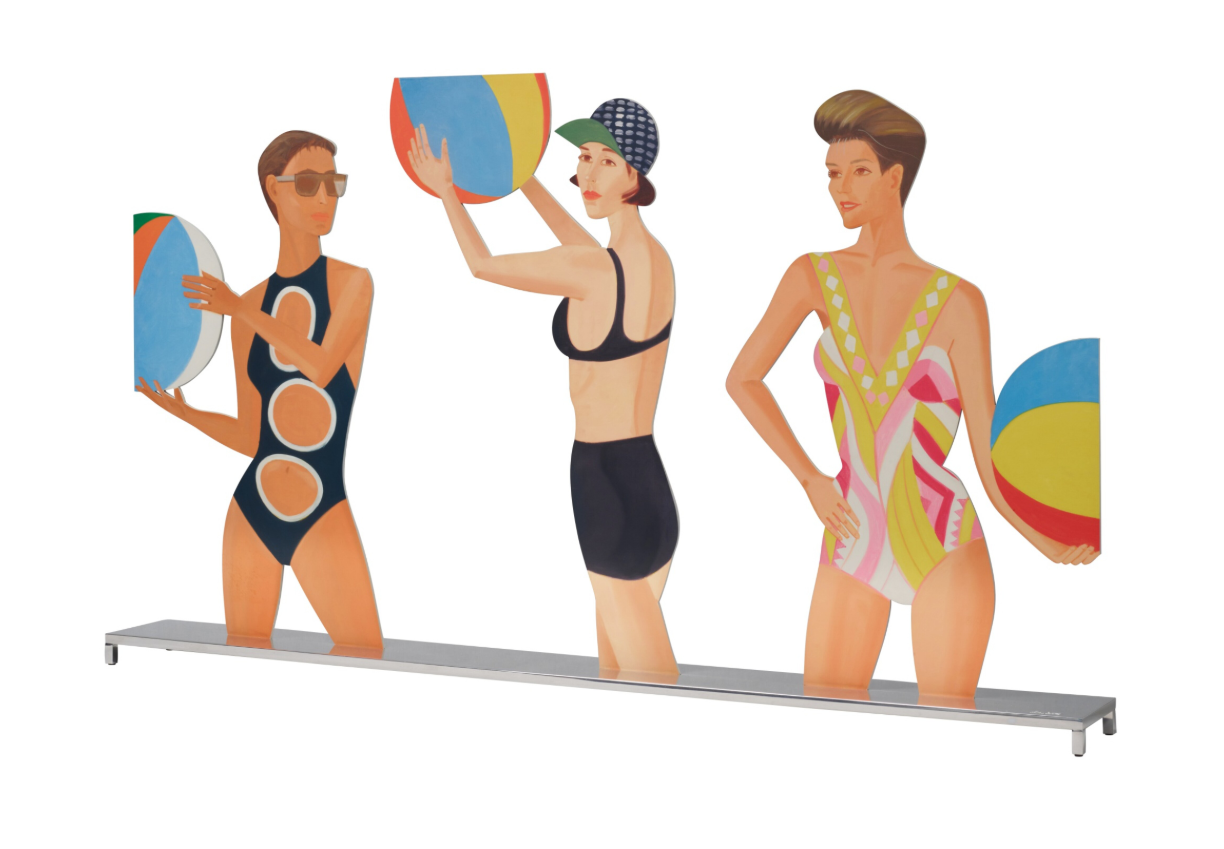
With a crisp, confident articulation of color and dynamic composition, Alex Katz’s Chance is a brilliant example of the artist’s distinctly stylized and hyper-specific aesthetic which has contributed to the shared visual vocabulary of Contemporary portraiture. Executed in 2016, Chance presents Katz’s recognizable cool, reductive style of figuration on aluminum where the flat aesthetic and hard exterior lines of the image mirrors its stern materiality. The multiple also situates one of Katz’s most notable inspirations, the beach, into the very fabric of the scene despite the presence of a supporting landscape by accessorizing the three figures with bold swimsuits and beach balls. Here, Katz imbues the work with the same specificity and great detail of his paintings, achieving an exuberant perception of everyday life.

Alex Katz, Round Hill, 1977. Image © 2024 Museum Associates / LACMA. Licensed by Art Resource, NY.
Art © 2024 Alex Katz / Licensed by VAGA at Artists Rights Society (ARS), NY
Chance demonstrates Katz’s unparalleled ability to capture a moment, if not a second, in time, where pure figuration reigns supreme, and visible reality is reduced to a symbol. Having evolved from Katz’s painted aluminum cut-outs, first produced in 1959, the present work similarly demonstrates the expansion of the artist’s masterful practice into the third dimension, creating a scene in which flat images combine to create a nuanced visual language. Printed on both sides of the aluminum panels, the figures in Chance suspend themselves in space, engaging in a delightful play of interactive gesture and polished stillness. Katz’s portraits conjure a sense of nostalgia, capturing the introspective, silent moments that precede narrative action. In this glimpse of the everyday, Katz does not seek to create a narrative, but rather a sense of wonder and intrigue, allowing the inscrutable nature of his subjects to shine through.
Roy Lichtenstein, Girl with Ball, 1961. Image © The Museum of Modern Art/Licensed by SCALA / Art Resource, NY. Art © Roy Lichtenstein
Typical of the artist’s work, the shallow spatial plane paired with the apparent nonchalance of the depicted figures owe much to the crisp manner of commercial art and illustration with further inspiration drawn from film, advertising, and fashion. With its iconic flattened style, the present work skillfully evinces his stylized artifice in which the final portraits are a recognizable, yet beautifully distorted version of reality.
Andy Warhol, Ethel Scull 36 Times, 1963. Image © Whitney Museum of American Art / Licensed by Scala / Art Resource, NY. Art © 2024 Andy Warhol Foundation for the Visual Arts / Artists Rights Society (ARS), New York
Perfectly articulating Katz’s idiosyncratic style, critic Donald Kuspit writes: “Katz’s portraits are true to the way we experience others. They eloquently convey the tension between the determinate outer appearance and the indeterminate inner reality of someone known only from the outside. Katz seems to make the shell of a person’s outer reality his or her complete substance, as though the person had no inner substance. Yet the quirkiness of Katz’s appearances alludes to that inner substance […] For all their everydayness, Katz’s figures have an air of transient strangeness to them, suggesting the mystery of their inner existence, perhaps even to themselves” (Donald Kuspit, Alex Katz Night Paintings, New York 1991, p. 8).