
Introduction
Mark Rothko, (born in 1903 in Russia – died in 1970 in New-York) was an American painter whose works introduced contemplative introspection into the melodramatic post-World War II Abstract Expressionist school; his use of color as the sole means of expression led to the development of color field painting. In 1913, Rothko’s family emigrated from Russia to the U.S., where they settled in Portland, Oregon. During his youth he was preoccupied with politics and social issues. He entered Yale University in 1921, intending to become a labor leader, but dropped out after two years and wandered about the U.S. In 1925 he settled in New York City and took up painting. Although he studied briefly under the painter Max Weber he was essentially self-taught.
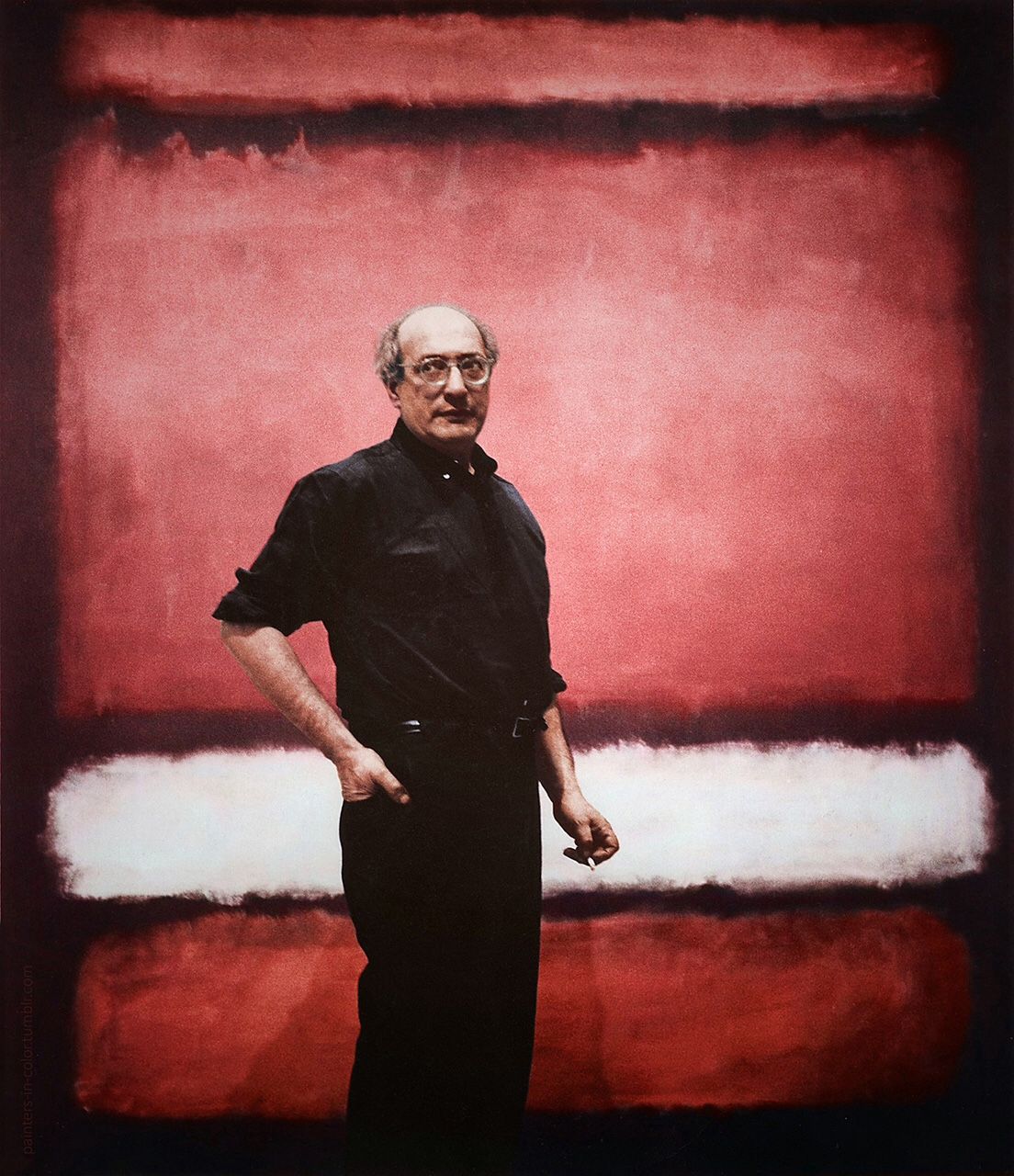
Rothko first worked in a realistic style that culminated in his Subway series of the late 1930s, showing the loneliness of persons in drab urban environments. This gave way in the early 1940s to the semi-abstract biomorphic forms of the ritualistic Baptismal Scene (1945). By 1948, however, he had arrived at a highly personal form of Abstract Expressionism. Unlike many of his fellow Abstract Expressionists, Rothko never relied on such dramatic techniques as violent brushstrokes or the dripping and splattering of paint. Instead, his virtually gestureless paintings achieved their effects by juxtaposing large areas of melting colors that seemingly float parallel to the picture plane in an indeterminate, atmospheric space.
Rothko spent the rest of his life refining this basic style through continuous simplification. He restricted his designs to two or three “soft-edged” rectangles that nearly filled the wall-sized vertical formats like monumental abstract icons. Despite their large size, however, his paintings derived a remarkable sense of intimacy from the play of nuances within local color. From 1958 to 1966 Rothko worked intermittently on a series of 14 immense canvases (the largest was about 11 × 15 feet [3 × 5 meters]) eventually placed in a nondenominational chapel in Houston, Texas, called, after his death, the Rothko Chapel. These paintings were virtual monochromes of darkly glowing browns, maroons, reds, and blacks. Their somber intensity reveals the deep mysticism of Rothko’s later years. Plagued by ill health and the conviction that he had been forgotten by those artists who had learned most from his painting, he committed suicide.
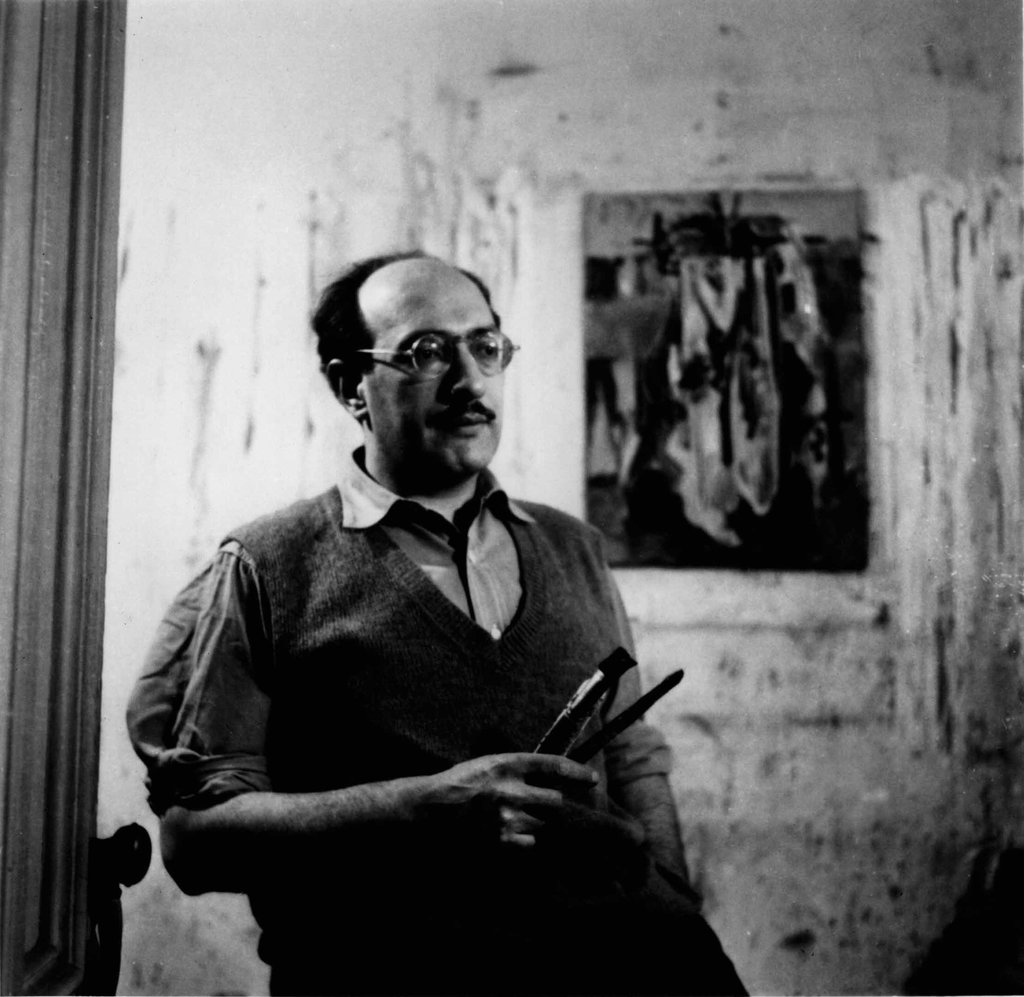
After his death, the execution of Rothko’s will provoked one of the most spectacular and complex court cases in the history of modern art, lasting for 11 years (1972–82). The misanthropic Rothko had hoarded his works, numbering 798 paintings, as well as many sketches and drawings. His daughter, Kate Rothko, accused the executors of the estate (Bernard J. Reis, Theodoros Stamos, and Morton Levine) and Frank Lloyd, owner of Marlborough Galleries in New York City, of conspiracy and conflict of interest in selling the works—in effect, of enriching themselves. The courts decided against the executors and Lloyd, who were heavily fined. Lloyd was tried separately and convicted on criminal charges of tampering with evidence. In 1979 a new board of the Mark Rothko Foundation was established, and all the works in the estate were divided between the artist’s two children and the Foundation. In 1984 the Foundation’s share of works was distributed to 19 museums in the United States, Great Britain, the Netherlands, Denmark, and Israel; the best and the largest proportion went to the National Gallery of Art, Washington, D.C.
PART I: SUMMARY
Auction Market Overview
2025 AUCTION STATISTICS
Turnover: USD 117,480,000
+ 127.6% vs. 2024
# Lots sold: 6
Sell-Through Rate: 100%
Highest Price Achieved at Auction:
USD 86,882,500
(8 May 2012)
Auction Summary
2025 Auction Highlights
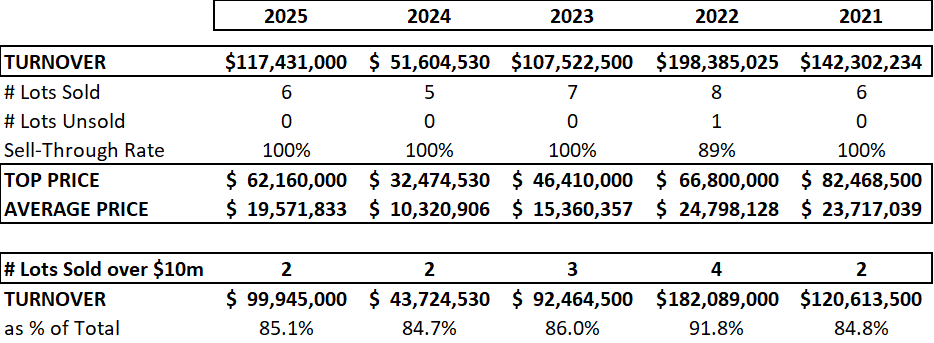
6 lots sold at auction in 2025 for a total turnover of USD 117,480,000. With no lot failing to sell, the sell-through rate is 100%. The highest price for 2025 was achieved by No. 31 (Yellow Stripe), a painting dated 1958, from The Collection of Robert F. and Patricia G. Ross Weis, that sold at Christie’s in New-York, on 17 November 2025 for USD 62,160,000 and becomes the 8th most expensive Rothko painting sold at auction.
2025 Top 3 Lots
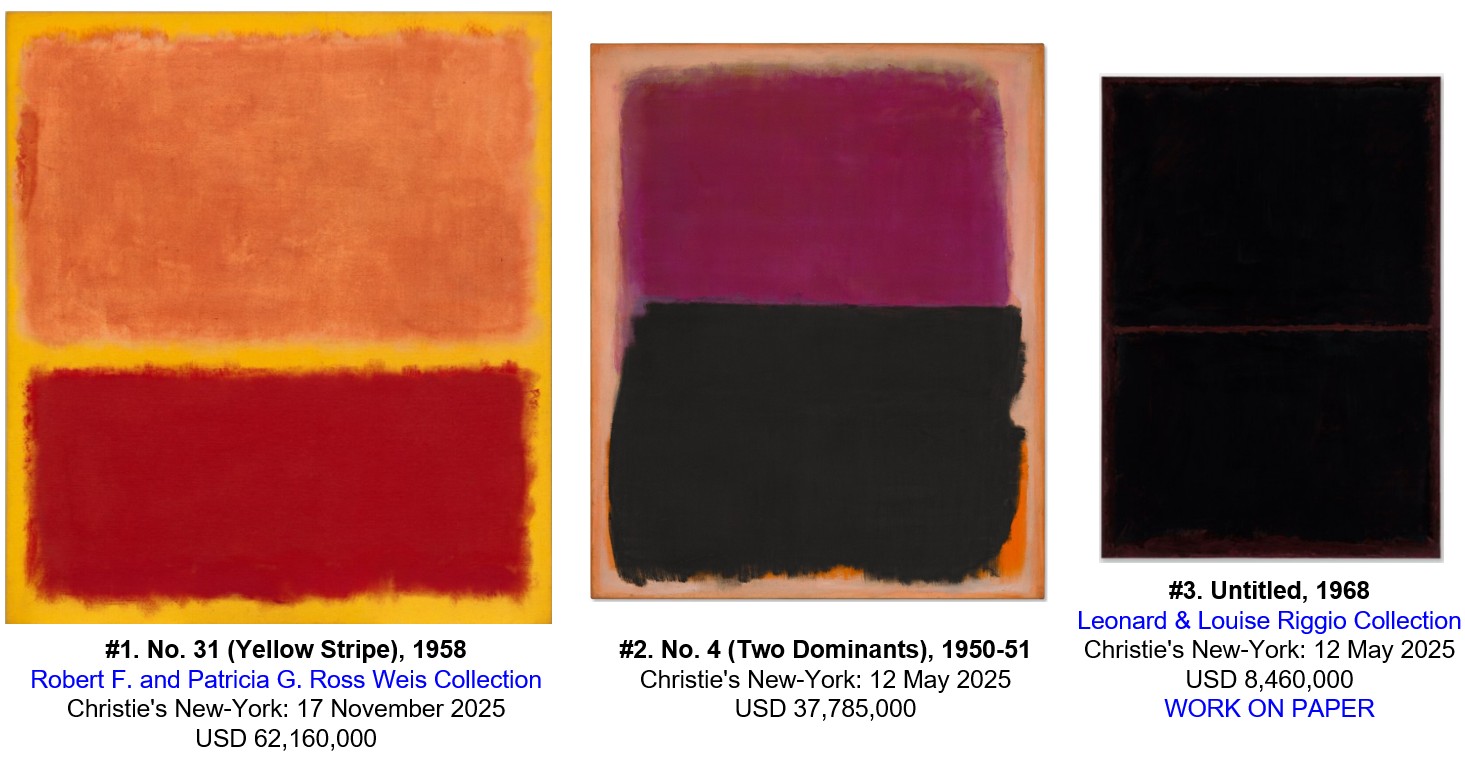
2 lots sold for more than USD 10 million, generating a cumulative turnover of USD 99,945,000, representing 85.1% of the total turnover for 2025.
2024 Auction Highlights
5 lots sold in 2024 for a total turnover of USD 51,604,530. With no lot failing to sell, the sell-through rate is 100%. The highest price was achieved at Sotheby’s in Hong-Kong on 11 November 2024, when Untitled (Yellow and Blue), a painting dated 1954, sold for HKD 252,500,000 (USD 32,474,530).
2024 Top 3 Lots
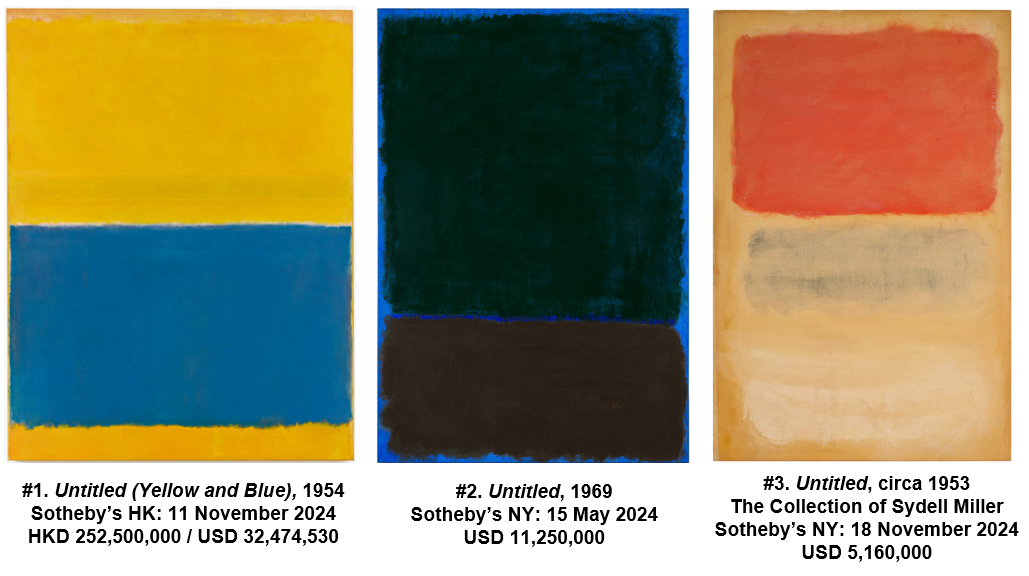
2023 Auction Highlights
7 lots sold at auction in 2023 for a total turnover of USD 107,522,500. With no lot failing to sell, the sell-through rate is 100%. The highest price of USD 46,410,000 has been achieved by Untitled (Yellow, Orange, Yellow, Light Orange), a painting dated 1955, at Christie’s in New-York on 9 November 2023.
2023 Top 3 Lots
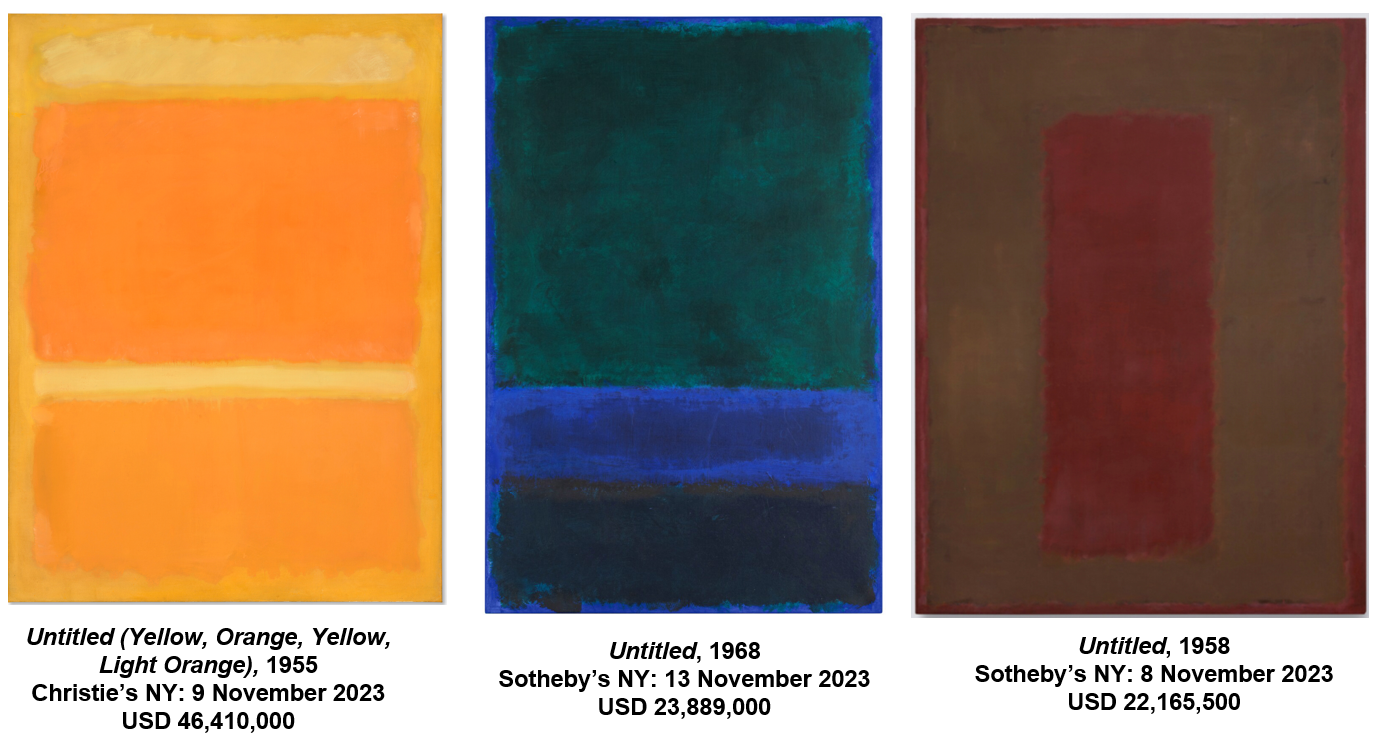
3 lots sold for more than USD 20 million, generating a cumulative turnover of USD 92,564,500, representing 86% of the total turnover of 2023.
2022 Auction Highlights
8 lots sold at auction in 2022 for a total turnover of USD 198,385,025. With 1 lot failing to sell, the sell-through is 89%. The highest price was achieved at Christie’s in New-York, for Untitled (Shades of Red), a painting dated 1961, that sold on 12 May 2022 for USD 66,800,000.
2022 Top 3 Lots
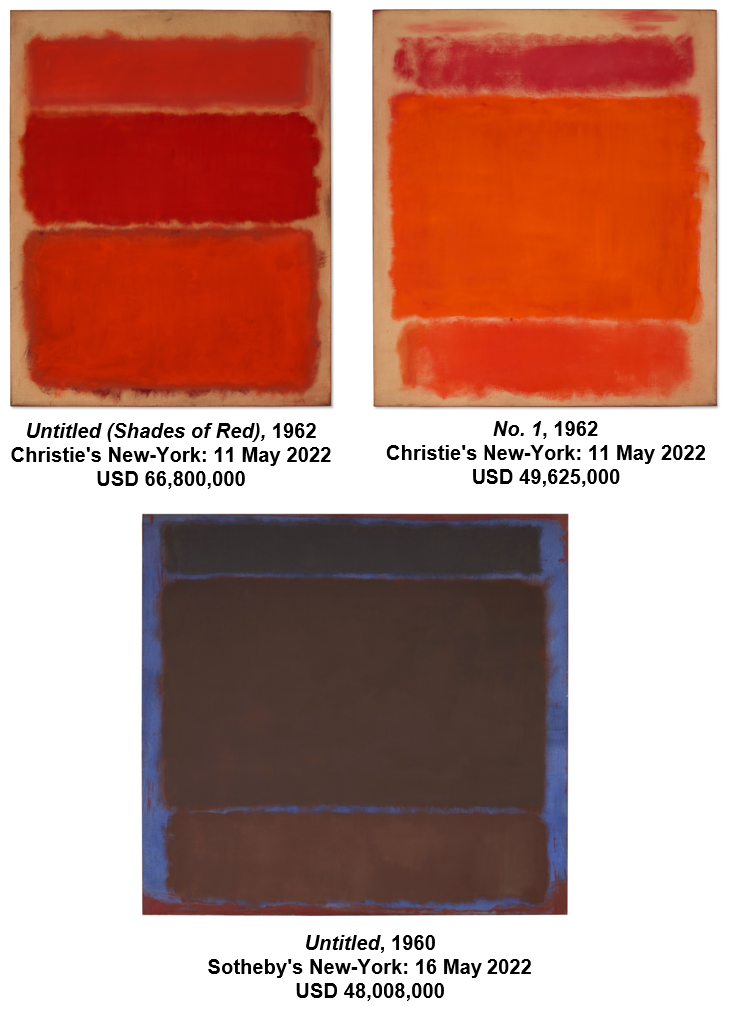
3 lots sold for more than USD 40 million, generating a cumulative turnover of USD 164,433,000, representing 83% of the total turnover for 2022.
2021 Auction Highlights
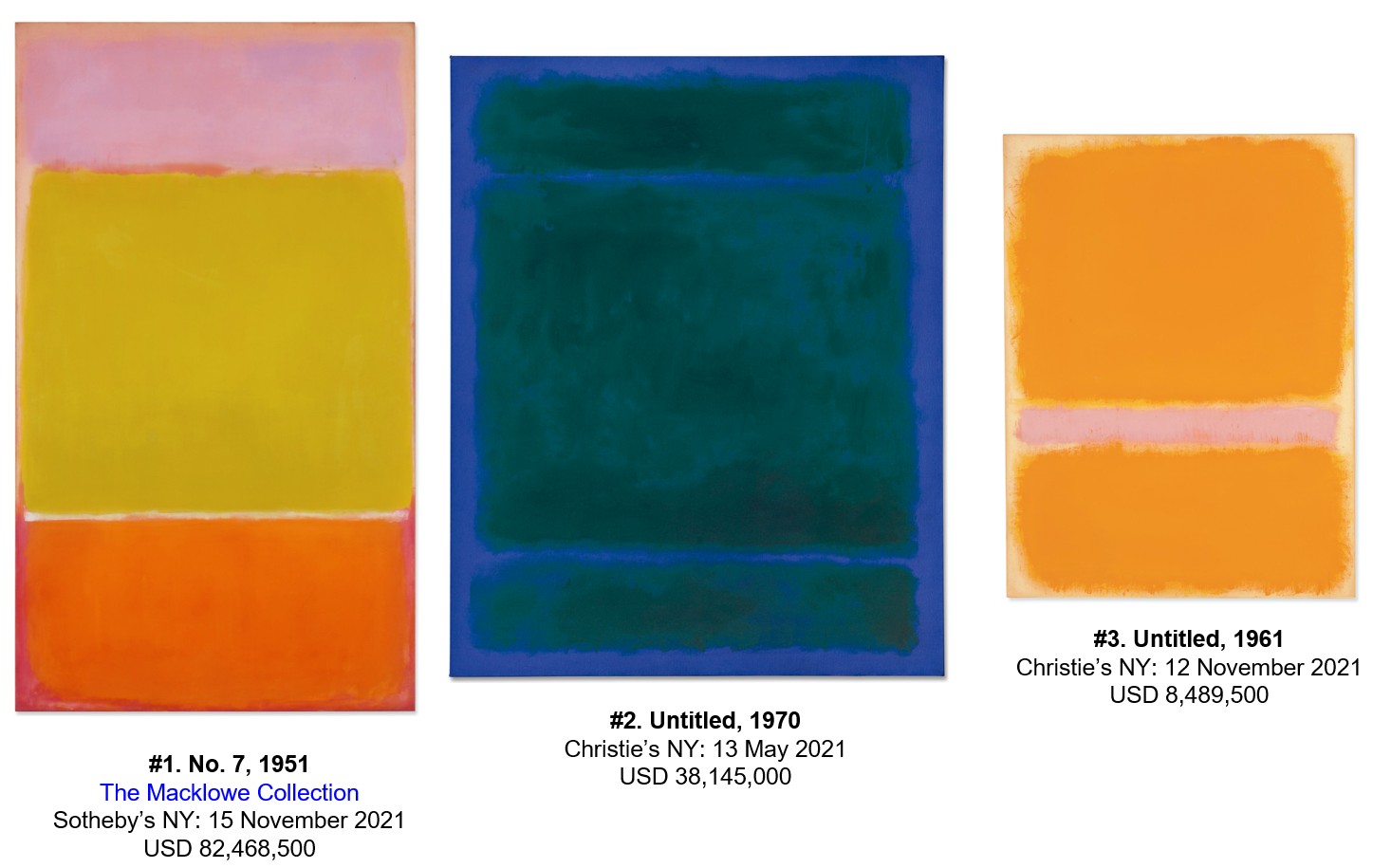
6 lots sold at auction in 2021 for a total turnover of USD 142,302,234. With no lot failing to sell, the sell-through rate is 100%. The highest price was achieved by No. 7, a painting dated 1951, from The Macklowe Collection that sold for USD 82,468,500 at Sotheby’s in New-York on 15 November 2021, coming just short of the highest price ever paid at auction for a painting by Mark Rothko of USD 86,882,500 set at Christie’s, in New-York, on 8 May 2012 for Orange, Red, Yellow, a painting dated 1961.
2021 Top 3 Lots
Top Lots
#1. No. 15 (Two Greens and Red Stripe), 1964
The Collection of Agnes Gund
Christie’s New-York: 18 May 2026
Estimate on Request
USD 98,385,000
NEW AUCTION RECORD FOR MARK ROTHKO
MARK ROTHKO (1903-1970), No. 15 (Two Greens and Red Stripe) | Christie’s
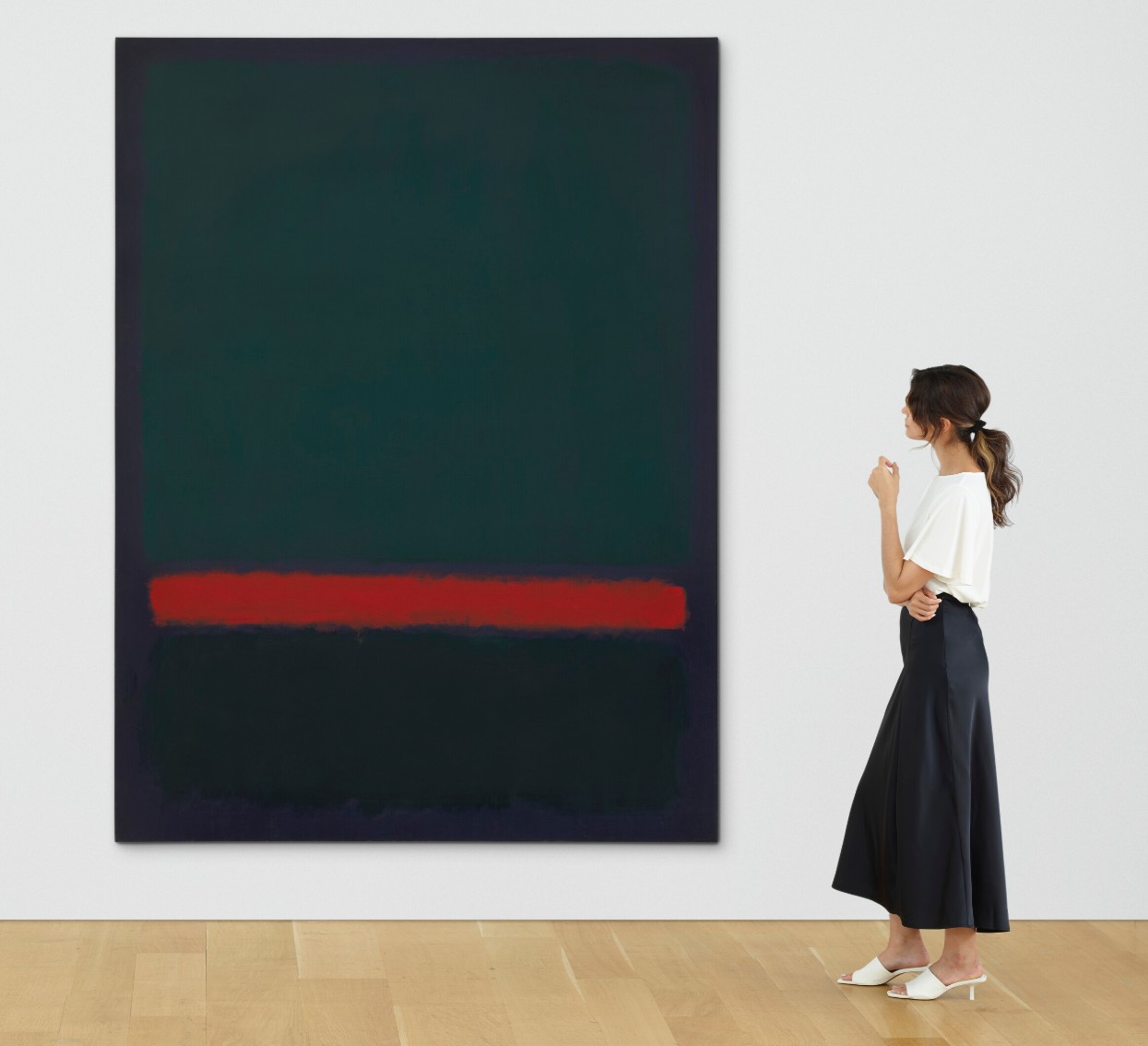
MARK ROTHKO (1903-1970)
No. 15 (Two Greens and Red Stripe), 1964
Oil on canvas
93×69 inches (236.2 x 175.3 cm)
Signed, partially titled and dated ‘MARK ROTHKO 1964 #15’ (on the reverse)
#2. Orange, Red, Yellow, 1961
Christie’s New-York: 8 May 2012
Estimated: USD 35,000,000 – 45,000,000
USD 86,882,500
Mark Rothko (1903-1970) (christies.com)
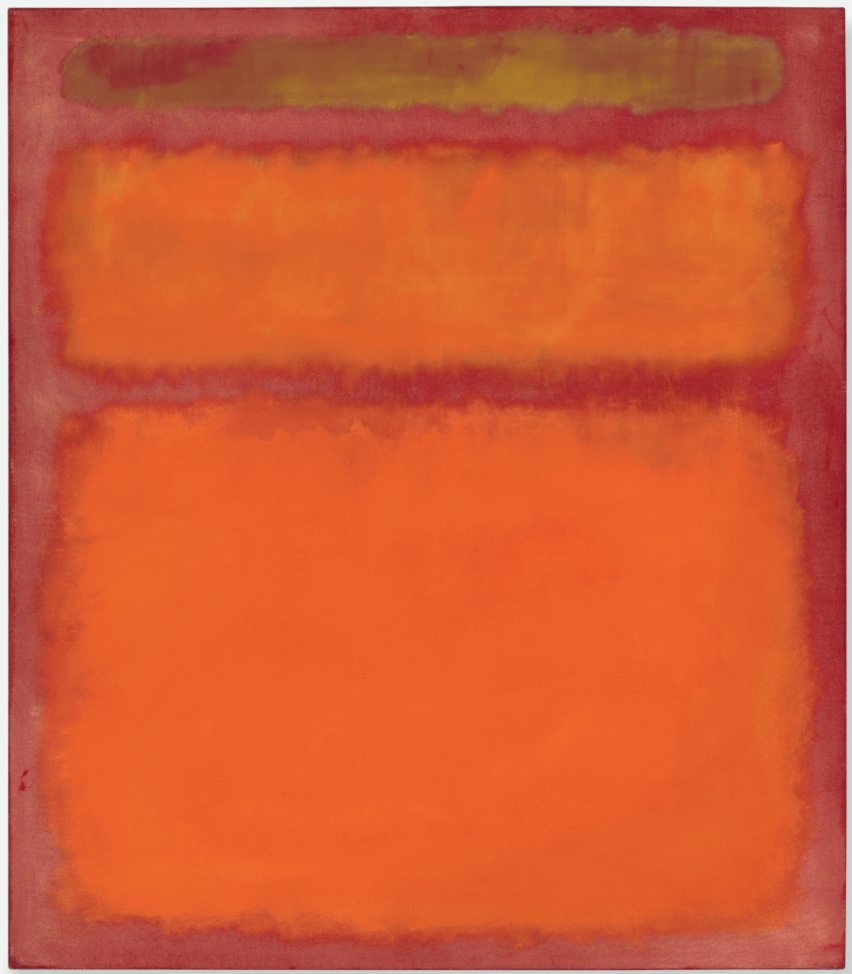
MARK ROTHKO (1903-1970)
Orange, Red, Yellow, 1961
Oil on canvas
93 x 81 1/4 inches (236.2 x 206.4 cm)
Signed and dated ‘MARK ROTHKO 1961’ (on the reverse)
Signed again and with initials ‘M. Rothko M.B.’ (on the stretcher)
#3. Brown and Blacks in Reds, 1957
Robert Mnuchin: Collector at Heart
Sotheby’s New-York: 14 May 2026
Estimated: USD 70,000,000 – 100,000,000
USD 85,780,000
Mark Rothko | Brown and Blacks in Reds | Robert Mnuchin: Collector at
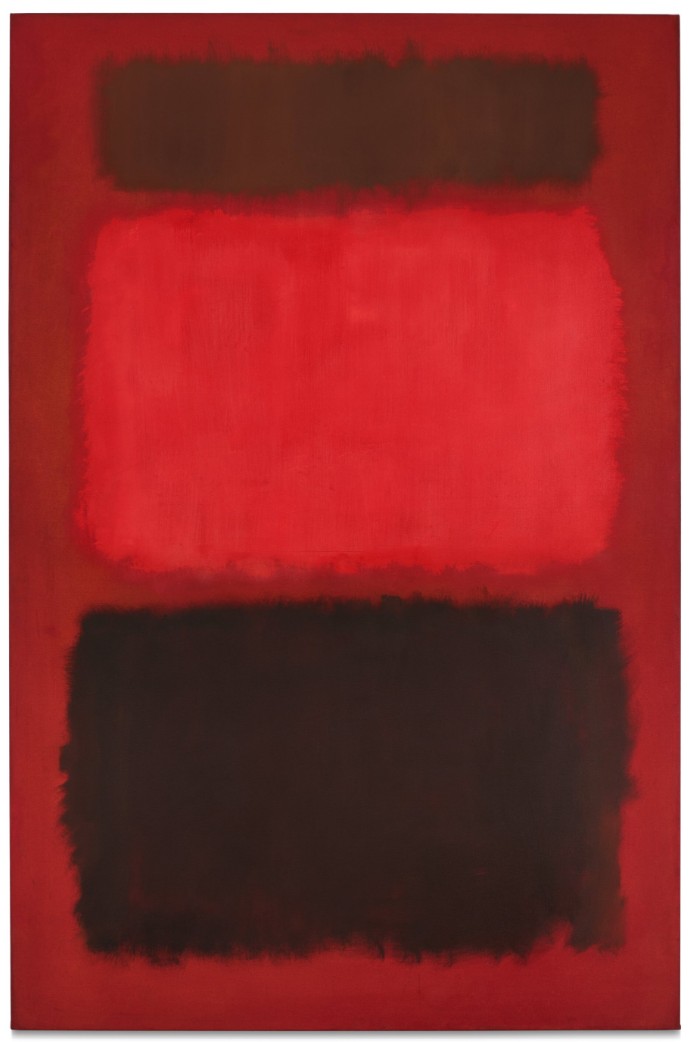
MARK ROTHKO (1903 – 1970)
Brown and Blacks in Reds, 1957
Oil on canvas
90-1/2 x 60-5/8 inches (229.9 x 154 cm)
Signed and dated 1957 (on the reverse)
#4. No. 7, 1951
The Macklowe Collection
Sotheby’s New-York: 15 November 2021
Estimated: USD 70,000,000 – 90,000,000
USD 82,468,500
No. 7 | The Macklowe Collection | 2021 | Sotheby’s (sothebys.com)
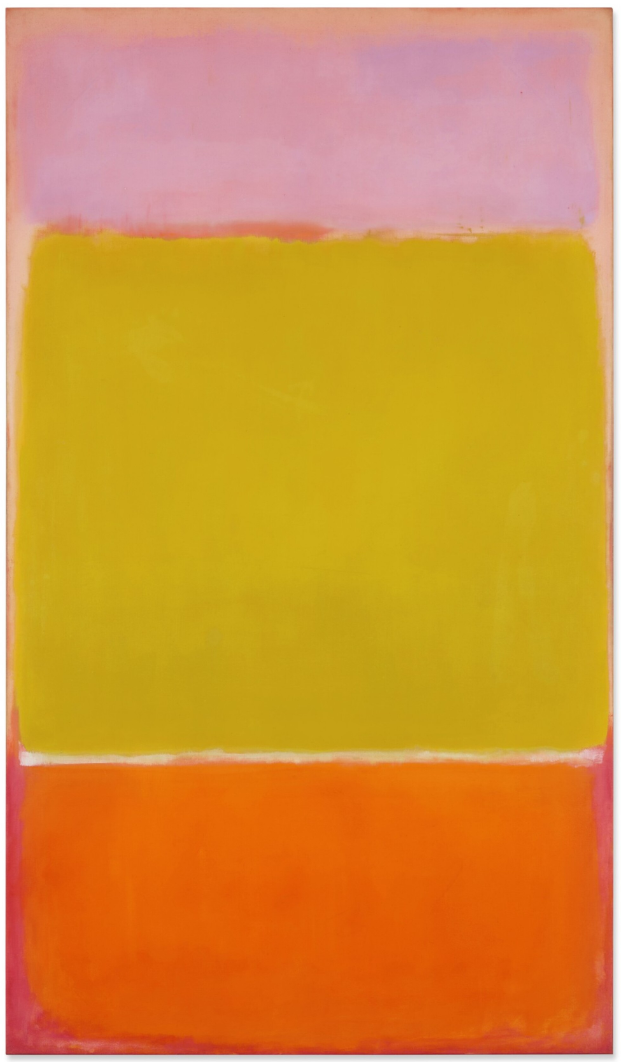
MARK ROTHKO (1903 – 1970)
No. 7, 1951
Oil on canvas
94 3/4 x 54 5/8 inches (240.7 x 138.7 cm)
Signed and dated 1951 on the reverse
#5. No. 10, 1958
Christie’s New-York: 13 May 2015
Estimate on Request
USD 81,925,000
Mark Rothko (1903-1970) (christies.com)
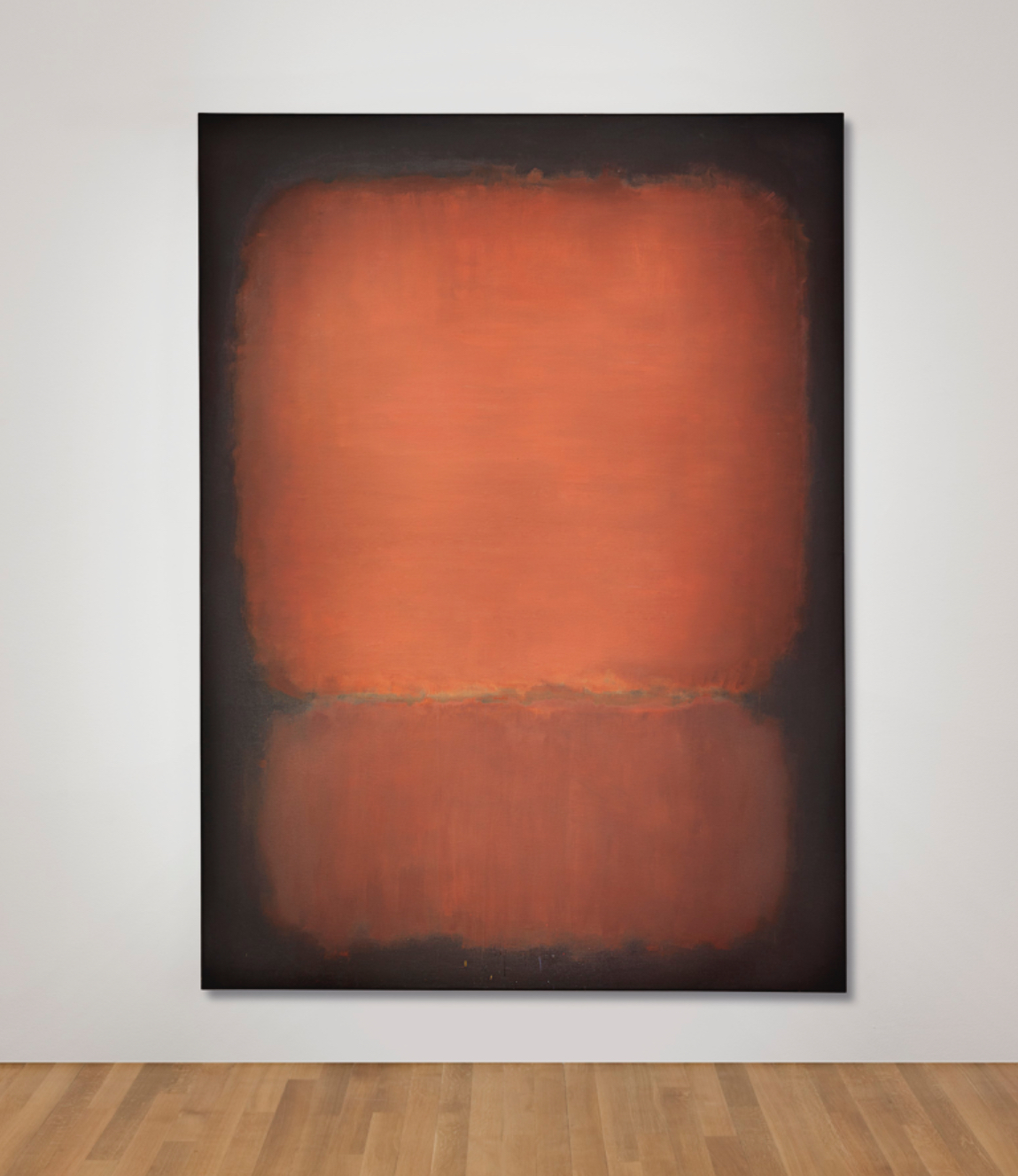
MARK ROTHKO (1903-1970)
No. 10, 1958
Oil on canvas
94 1/4 x 69 1/4 inches (239.4 x 175.9 cm)
Signed twice
Titled and dated three times ‘#10 1958 MARK ROTHKO 1958 MARK ROTHKO 1958’ (on the reverse)
#6. No. 1 (Royal Red and Blue), 1954
Sotheby’s New-York: 13 November 2012
Estimated: USD 35,000,000 – 50,000,000
USD 75,122,500
(#19) Mark Rothko (sothebys.com)
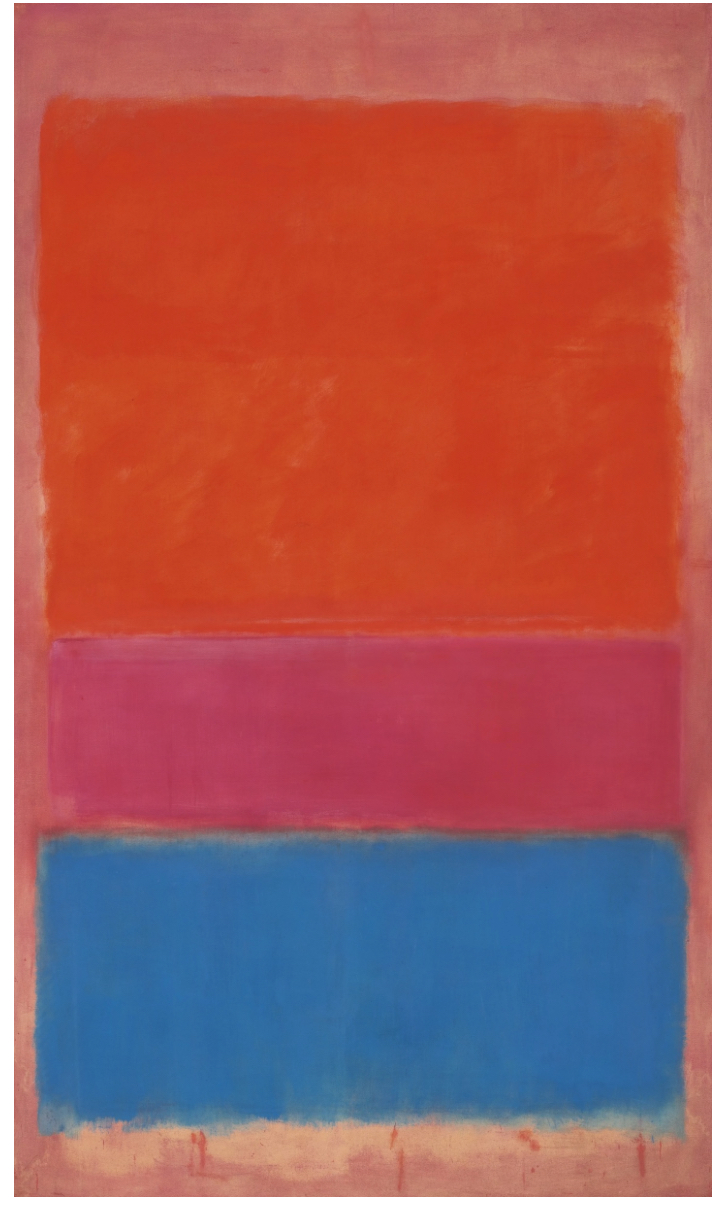 MARK ROTHKO
No. 1 (Royal Red and Blue), 1954
Oil on canvas
113 3/4 x 67 1/2 inches (288.9 x 171.5 cm)
Signed, titled #1 and dated 1954 on the reverse
#7. White Center (Yellow, Pink and Lavender on Rose), 1950
Sotheby’s New-York: 15 May 2007
Estimated on Request
USD 72,840,000
(#31) Mark Rothko (sothebys.com)
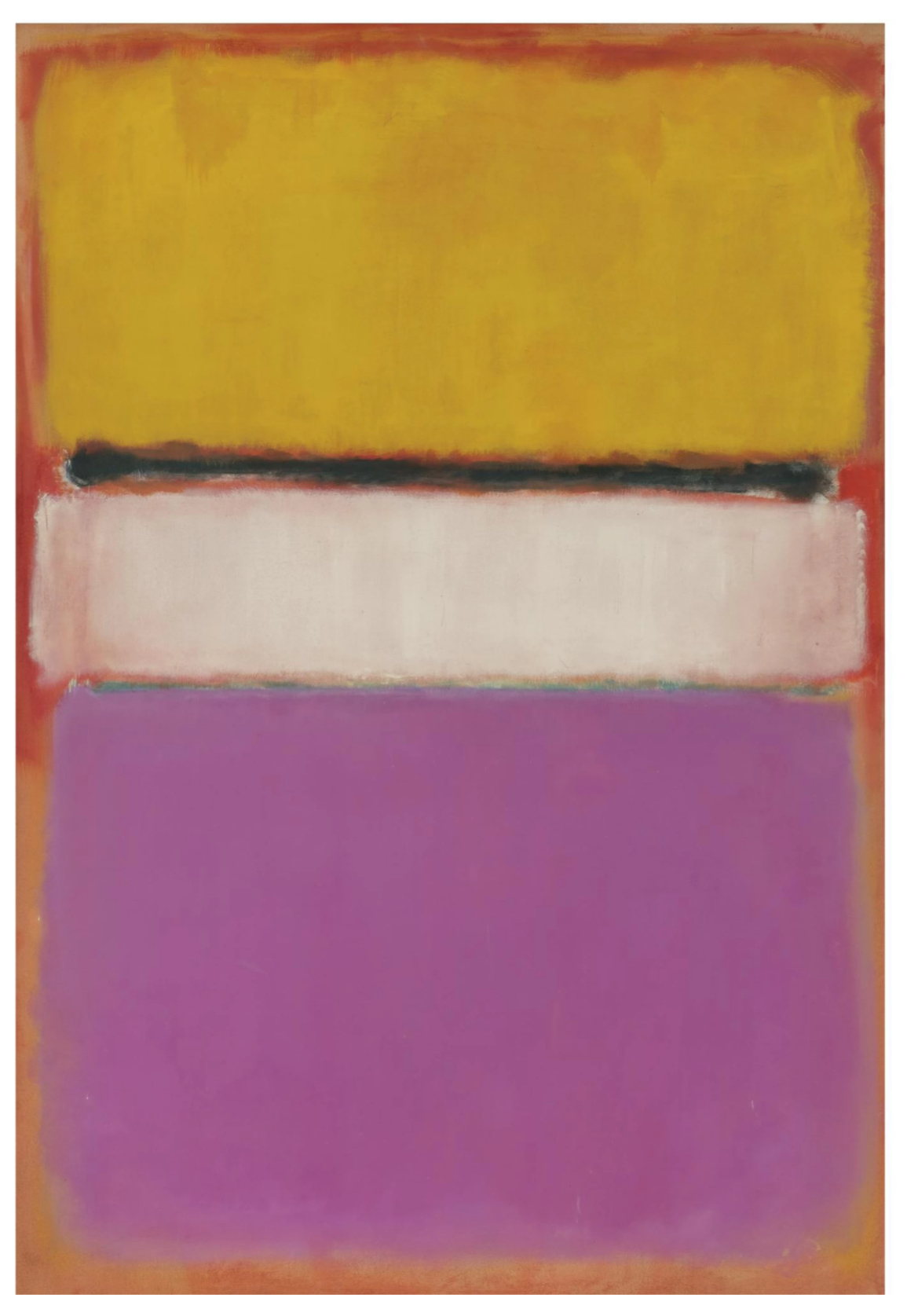 MARK ROTHKO
White Center (Yellow, Pink and Lavender on Rose), 1950
Oil on canvas
81 x 55 1/2 inches (205.8 x 141 cm)
Signed and dated 1950 on the reverse
#8. Untitled (Shades of Red), 1962
Christie’s New-York: 11 May 2022
Estimated: USD 60,000,000 – 80,000,000
USD 66,800,000
MARK ROTHKO (1903-1970) (christies.com)
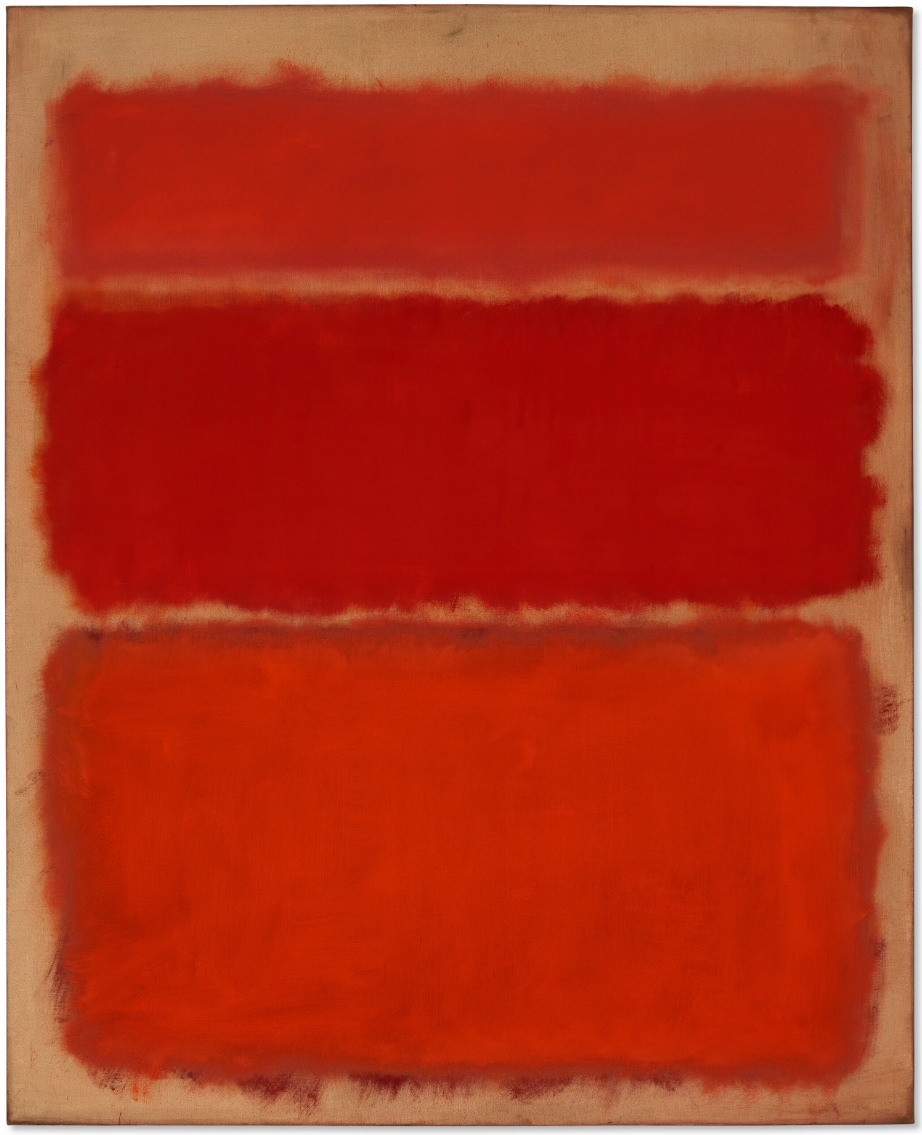
MARK ROTHKO
Untitled (Shades of Red), 1962
Oil on canvas
69×56 inches (175.3×142.2 cm)
#9. Untitled, 1952
Christie’s New-York: 13 May 2014
Estimate on Request
USD 66,245,000
Mark Rothko (1903-1970) (christies.com)
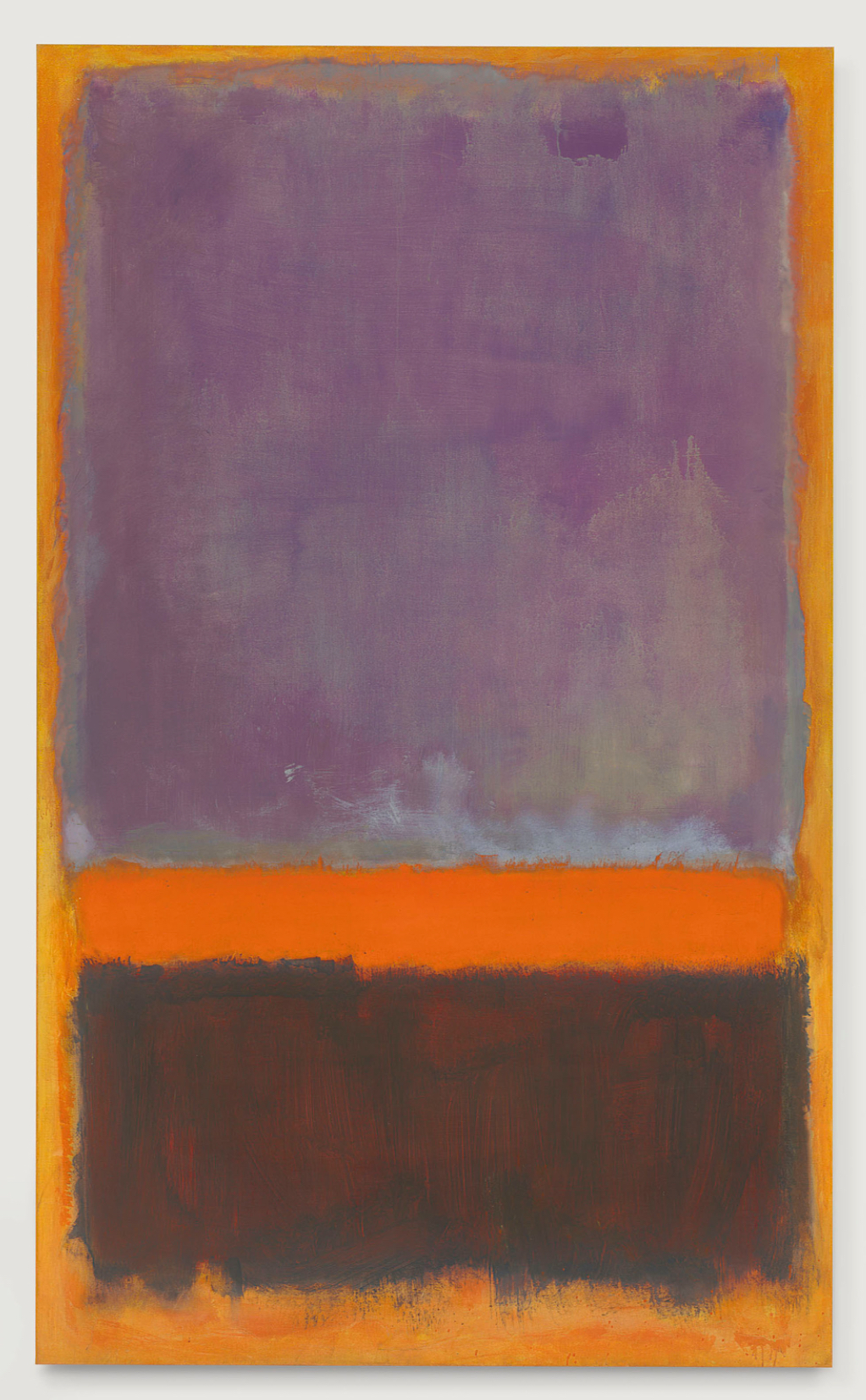
MARK ROTHKO (1903-1970)
Untitled, 1952
Oil on canvas
103 x 62 1/2 inches (261.6 x 158.7 cm)
Signed and dated ‘MARK ROTHKO 1952’ (on the reverse)
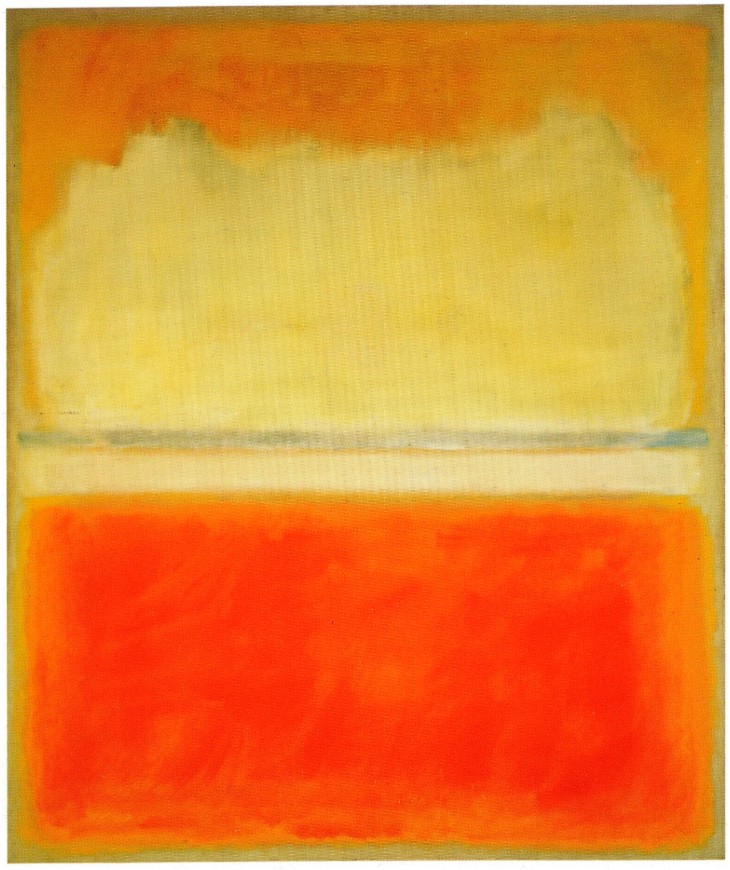
#10. No. 31 (Yellow Stripe), 1958
The Collection of Robert F. and Patricia G. Ross Weis
Christie’s New-York: 17 November 2025
Estimates on Request
USD 62,160,000
READ MORE IN FOCUS SECTION
MARK ROTHKO (1903-1970), No. 31 (Yellow Stripe) | Christie’s
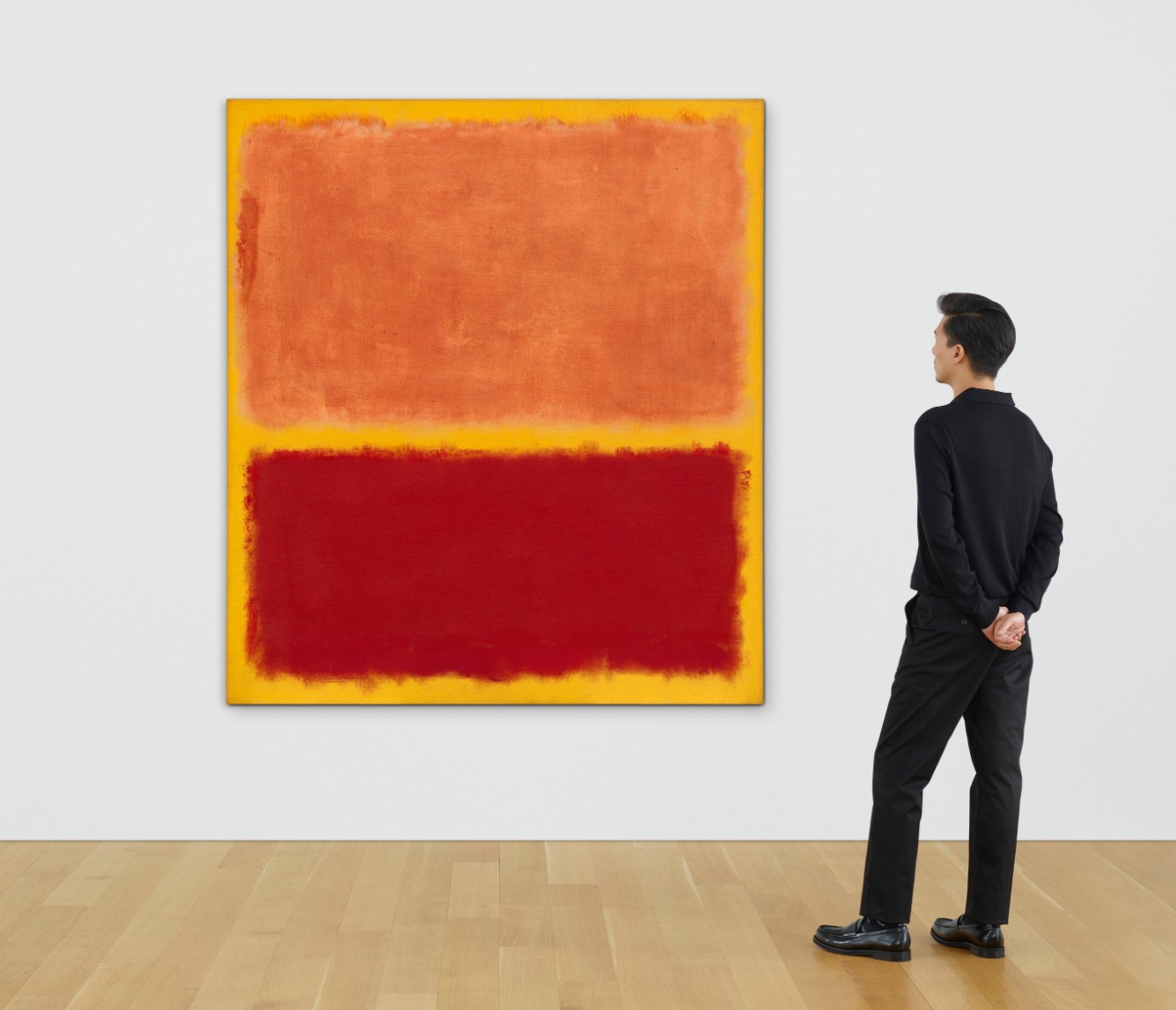
MARK ROTHKO (1903-1970)
No. 31 (Yellow Stripe), 1958
Oil on canvas
78 1/4 x 69 1/4 inches (198.8 x 175.9 cm)
Signed, partially titled and dated ‘MARK ROTHKO 1958 #31’ (on the reverse)
#11. Untitled (Red, Blue, Orange), 1955
Phillips New-York: 14 May 2014
Estimate on Request
USD 56,165,000
Mark Rothko – Contemporary Art Evening Sale Lot 18 May 2014 | Phillips
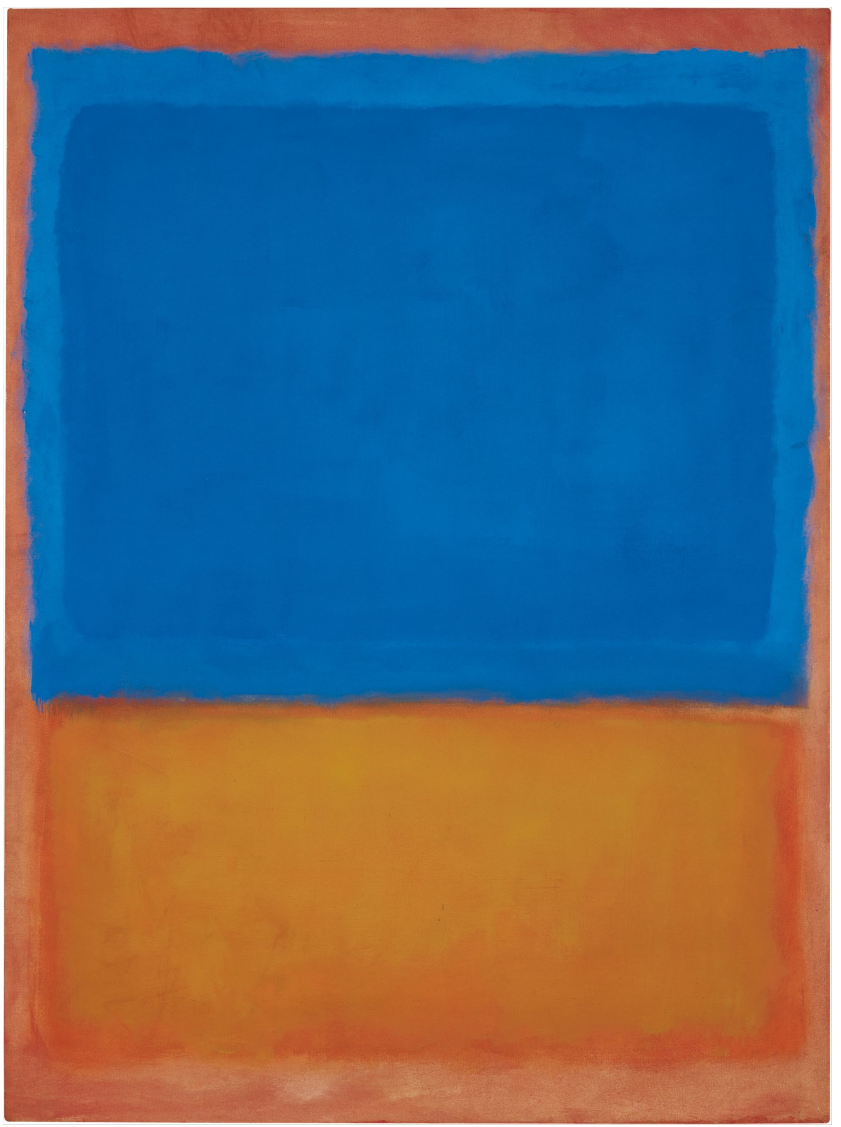
MARK ROTHKO
Untitled (Red, Blue, Orange), 1955
Oil on canvas
66 5/8 x 49 3/8 inches (169.2 x 125.4 cm)
Signed “Mark Rothko” on the reverse
#12. No. 15, 1952
Christie’s New-York: 12 May 2008
Estimate on Request
USD 50,441,000
Mark Rothko (1903-1970) , No. 15 | Christie’s (christies.com)
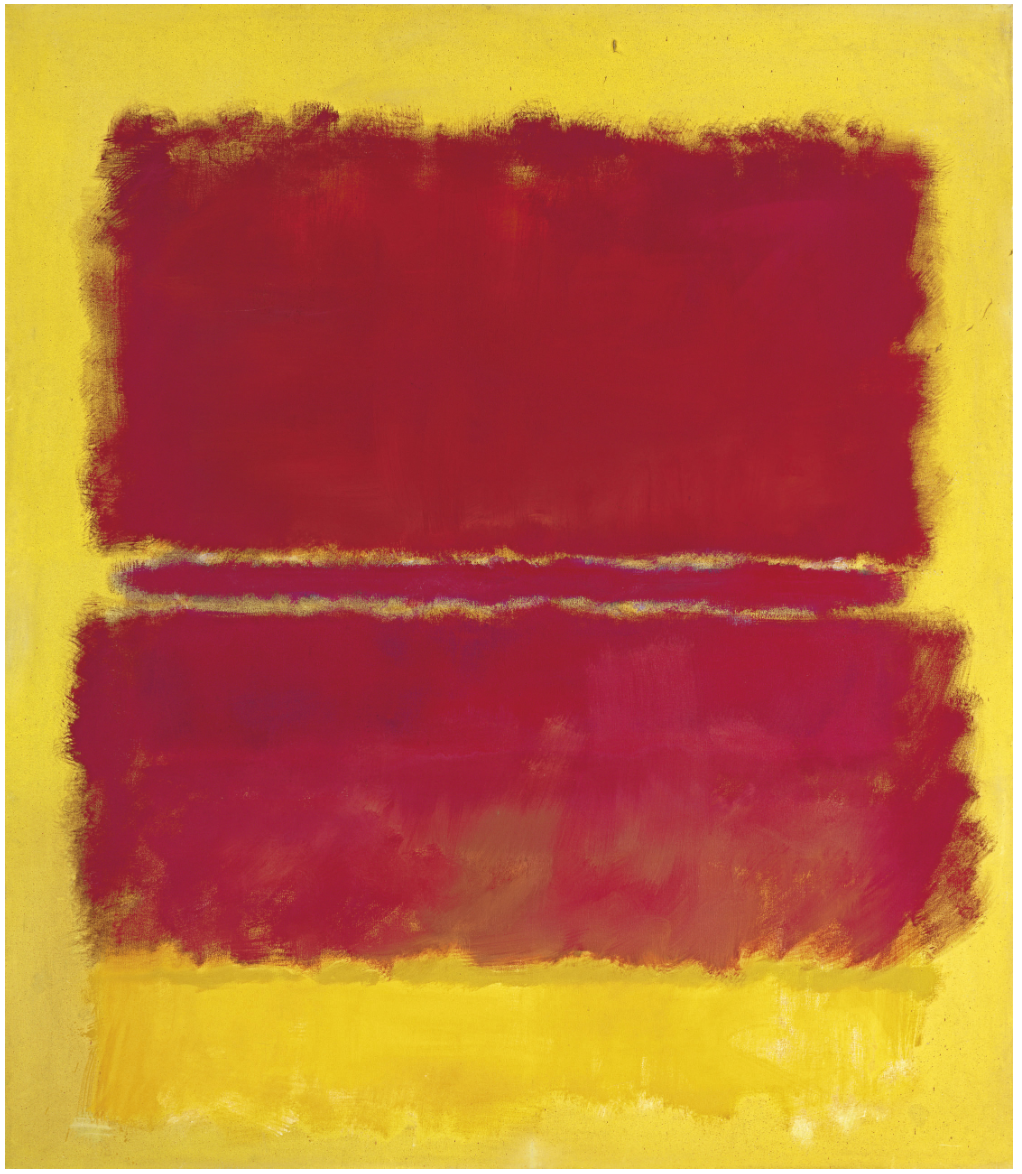
MARK ROTHKO (1903-1970)
No. 15, 1952
Oil on canvas
91 3/8 x 80 inches (233.3 x 203.2 cm)
Signed, titled and dated ‘MARK ROTHKO 1952 #15’ (on the reverse and on the stretcher)
#13. Untitled, 1960
Sotheby’s New-York: 15 May 2019
Estimated: USD 35,000,000 – 50,000,000
USD 50,095,250
(#12) MARK ROTHKO | Untitled (sothebys.com)
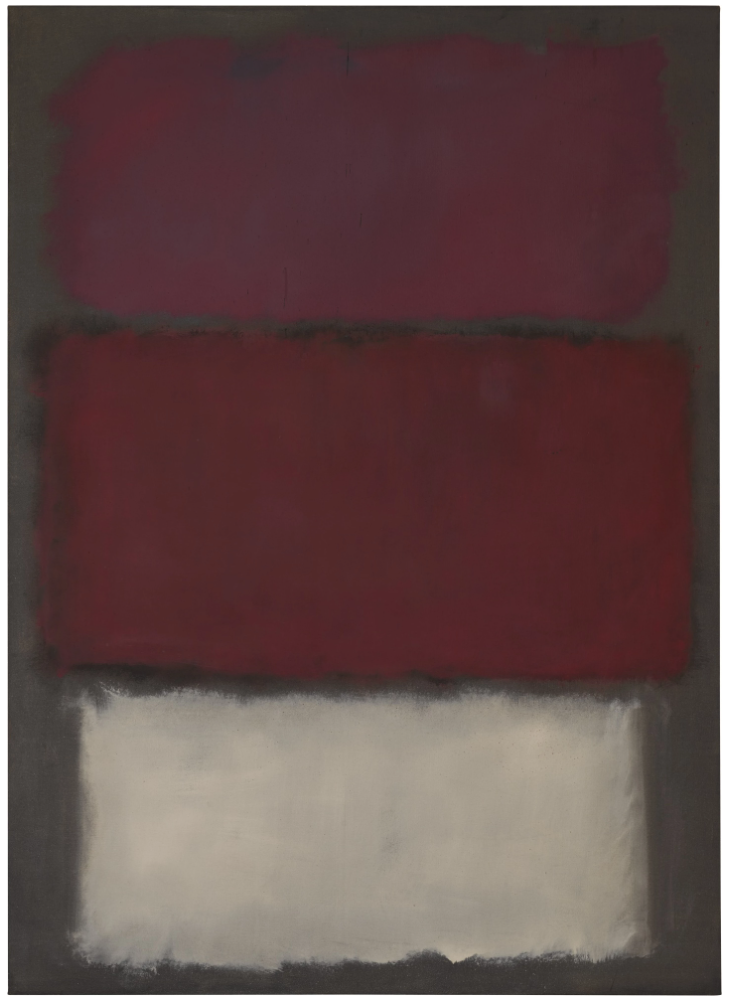 MARK ROTHKO
Untitled, 1960
Oil on canvas
69 x 50 1/8 inches (175.3 x 127.3 cm)
Signed and dated 1960 on the reverse
PART II: AUCTION RESULTS
2026 Auction Results
#1. No. 15 (Two Greens and Red Stripe), 1964
The Collection of Agnes Gund
Christie’s New-York: 18 May 2026
Estimate on Request
USD 98,385,000
NEW AUCTION RECORD FOR MARK ROTHKO
MARK ROTHKO (1903-1970), No. 15 (Two Greens and Red Stripe) | Christie’s
MARK ROTHKO (1903-1970)
No. 15 (Two Greens and Red Stripe), 1964
Oil on canvas
93×69 inches (236.2 x 175.3 cm)
Signed, partially titled and dated ‘MARK ROTHKO 1964 #15’ (on the reverse)
#2. Brown and Blacks in Reds, 1957
Robert Mnuchin: Collector at Heart
Sotheby’s New-York: 14 May 2026
Estimated: USD 70,000,000 – 100,000,000
USD 85,780,000
Mark Rothko | Brown and Blacks in Reds | Robert Mnuchin: Collector at
MARK ROTHKO (1903 – 1970)
Brown and Blacks in Reds, 1957
Oil on canvas
90-1/2 x 60-5/8 inches (229.9 x 154 cm)
Signed and dated 1957 (on the reverse)
#3. No. 1, 1949
Robert Mnuchin: Collector at Heart
Sotheby’s New-York: 14 May 2026
Estimated: USD 15,000,000 – 20,000,000
USD 20,805,000
Mark Rothko | No. 1 | Robert Mnuchin: Collector at Heart Evening
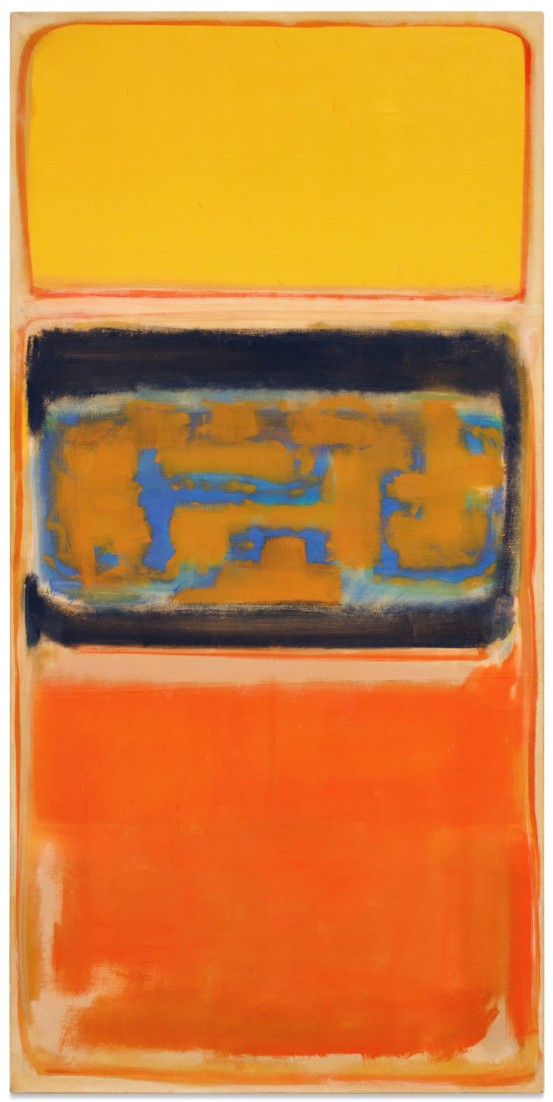
MARK ROTHKO (1903 – 1970)
No. 1, 1949
Oil on canvas
78-1/4 x 38-5/8 inches (198.8 x 98.1 cm)
Signed and dated 1949 (on the reverse)
#4. Untitled, 1969
Collection of Jean & Terry de Gunzburg
Sotheby’s New-York: 14 May 2026
Estimated: USD 10,000,000 – 15,000,000
USD 16,465,000
Mark Rothko | Untitled | The Now & Contemporary Evening Auction |
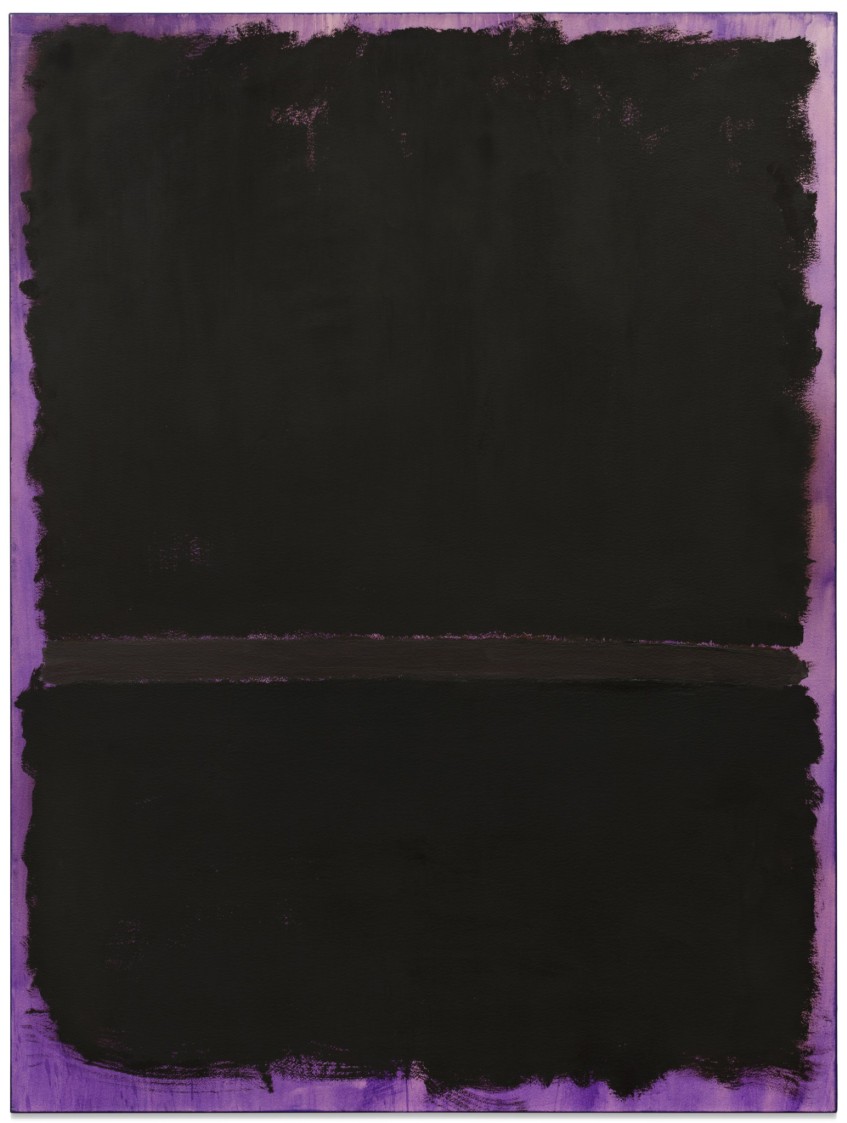
MARK ROTHKO (1903 – 1970)
Untitled, 1969
Acrylic on paper mounted on canvas
78-1/2 x 58-1/2 inches (198.8 x 148.6 cm)
Signed (on the reverse)
#5. Untitled, circa 1959
A New Vista: The David and Shoshanna Wingate Collection
Sotheby’s New-York: 19 May 2026
Estimated: USD 5,000,000 – 7,000,000
USD 9,270,000
WORK ON PAPER
Mark Rothko | Untitled | Modern Evening Auction | 2026 | Sotheby’s
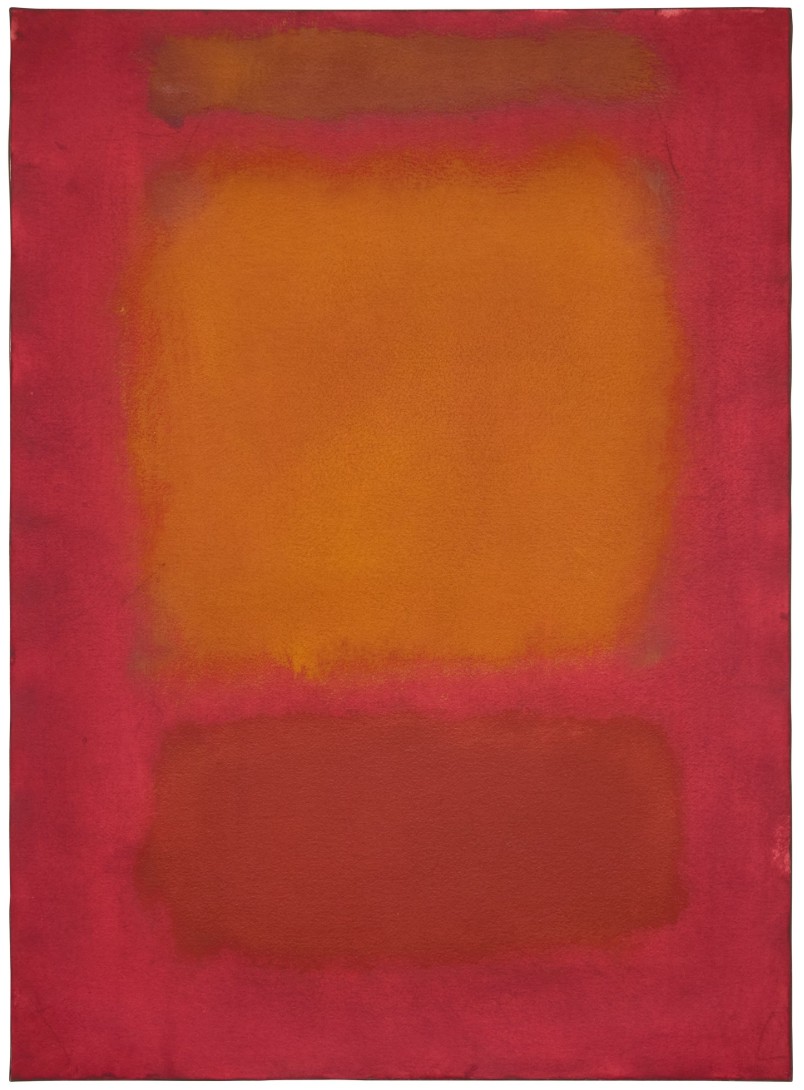
MARK ROTHKO (1903 – 1970)
Untitled, circa 1959
Oil and watercolor on paper mounted on canvas
30-3/8 x 22 inches (77.2 x 55.9 cm)
#6. No. 10, 1949
Sotheby’s Hong-Kong: 29 March 2026
Estimated: HKD 28,000,000 – 40,000,000
HKD 66,780,000 / USD 8,528,735
Mark Rothko 馬克 · 羅斯科 | No. 10 10號 | Modern & Contemporary Evening
REPEAT SALE
Sotheby’s London: 30 June 2014
Estimated: GBP 600,000 – 800,000
GBP 2,546,500 / USD 4,355,225
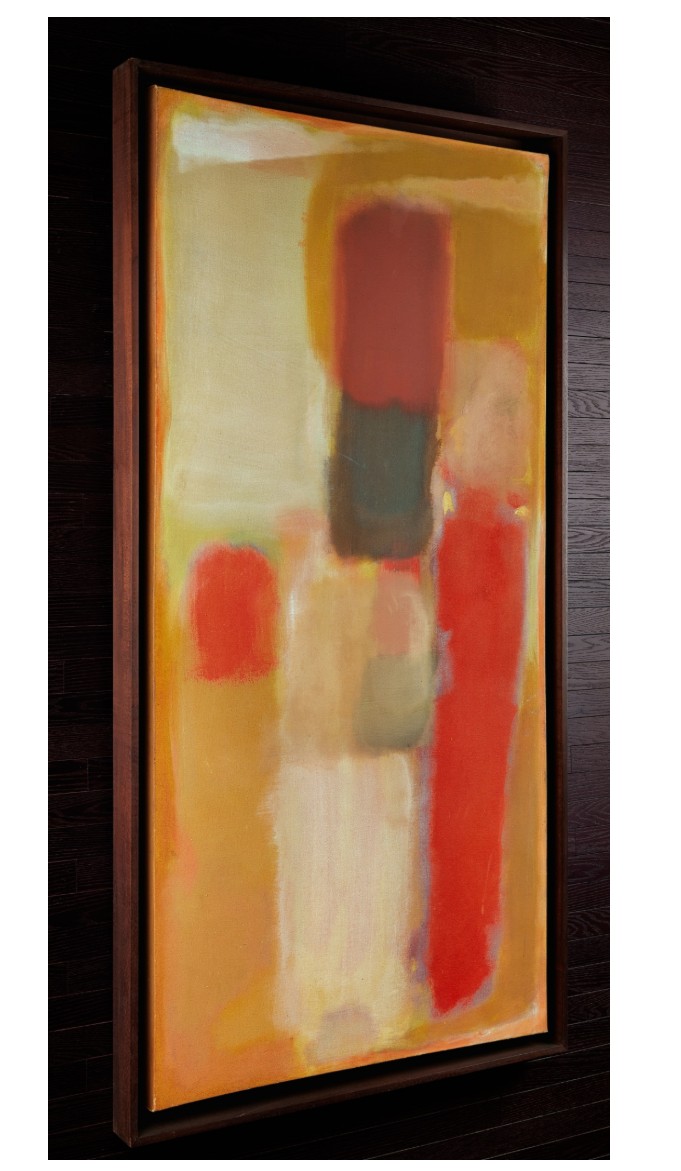
MARK ROTHKO (1903-1970)
No. 10, 1949
Oil on canvas
60-7/8 x 29-1/2 inches (154.5 x 75 cm)
Signed and dated 1949 (on the reverse)
#7. The Journey, 1946
Property Sold to Benefit Jonas Philanthropies
Sotheby’s New-York: 15 May 2026
Estimated: USD 300,000 – 400,000
USD 1,024,000
WORK ON PAPER
Mark Rothko | The Journey | Contemporary Day Auction | 2026 |
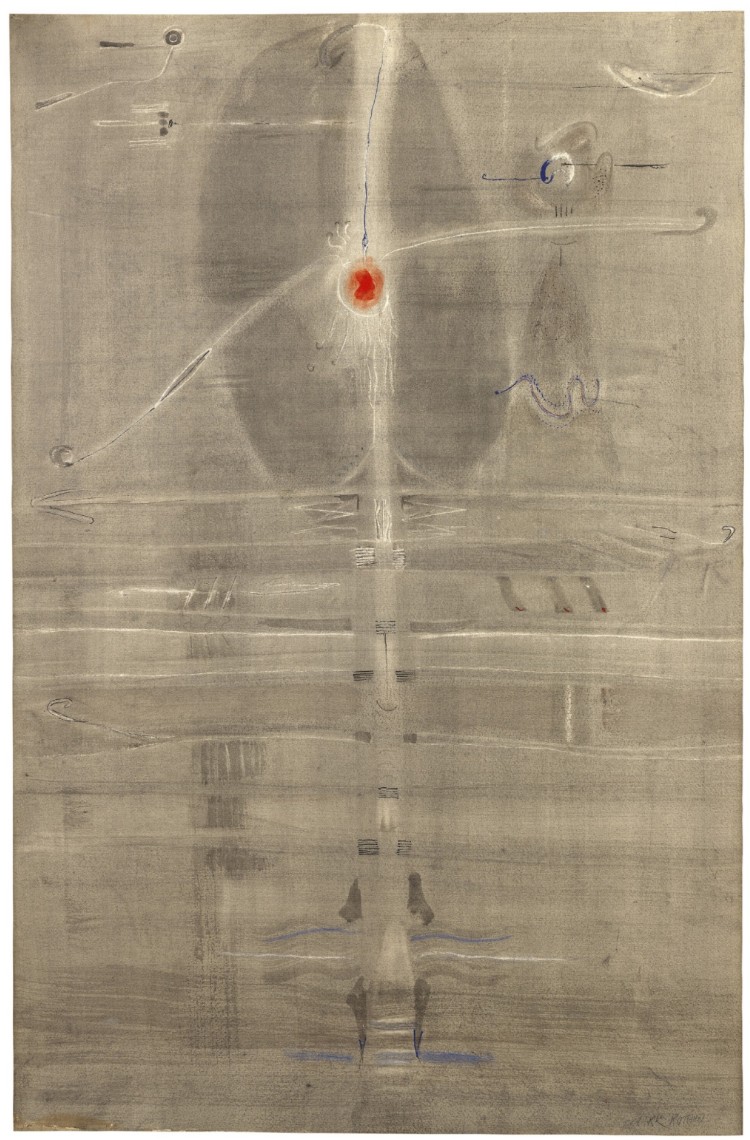
MARK ROTHKO (1903 – 1970)
The Journey, 1946
Watercolor and ink on paper mounted on canvas
39-7/8 x 26 inches (101.3 x 66 cm)
Signed (lower right)
2025 Auction Results
6 lots sold at auction in 2025 for a total turnover of USD 117,480,000. With no lot failing to sell, the sell-through rate is 100%. The highest price for 2025 was achieved by No. 31 (Yellow Stripe), a painting dated 1958, from The Collection of Robert F. and Patricia G. Ross Weis, that sold at Christie’s in New-York, on 17 November 2025 for USD 62,160,000 and becomes the 8th most expensive Rothko painting sold at auction.
2025 Top 3 Lots
2 lots sold for more than USD 10 million, generating a cumulative turnover of USD 99,945,000, representing 85.1% of the total turnover for 2025.
#1. No. 31 (Yellow Stripe), 1958
The Collection of Robert F. and Patricia G. Ross Weis
Christie’s New-York: 17 November 2025
Estimates on Request
USD 62,160,000
BECOMES THE 8TH MOST EXPENSIVE MARK ROTHKO PAINTING AT AUCTION
READ MORE IN FOCUS SECTION
MARK ROTHKO (1903-1970), No. 31 (Yellow Stripe) | Christie’s
MARK ROTHKO (1903-1970)
No. 31 (Yellow Stripe), 1958
Oil on canvas
78 1/4 x 69 1/4 inches (198.8 x 175.9 cm)
Signed, partially titled and dated ‘MARK ROTHKO 1958 #31’ (on the reverse)
USD 50 million
#2. No. 4 (Two Dominants) [Orange, Plum, Black], 1950-51
Christie’s New-York: 12 May 2025
Estimate on Request
USD 37,785,000
READ MORE IN FOCUS SECTION
MARK ROTHKO (1903-1970), No. 4 (Two Dominants) [Orange, Plum, Black] | Christie’s
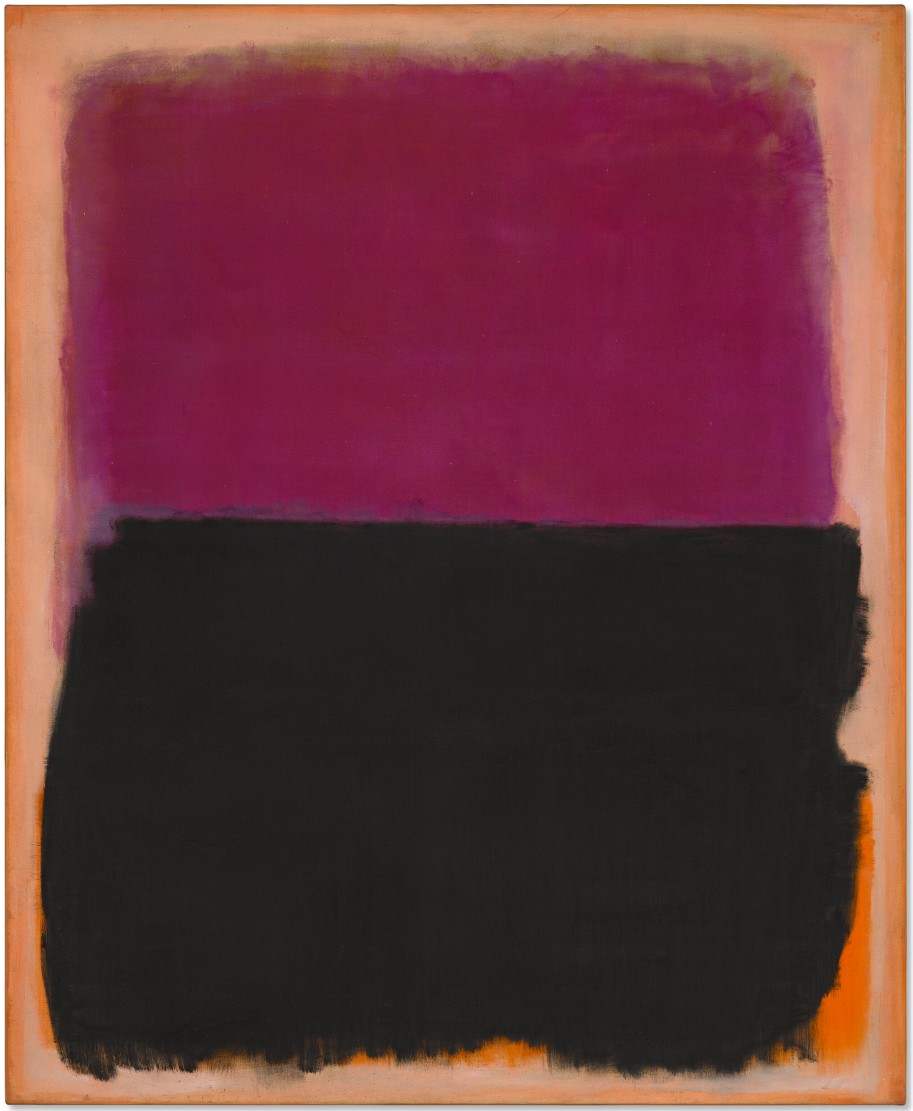
MARK ROTHKO (1903-1970)
No. 4 (Two Dominants) [Orange, Plum, Black], 1950-51
Oil on canvas
67 x 54 3/4 inches (170.2 x 139.1 cm)
Signed twice and dated ‘MARK ROTHKO MARK ROTHKO 1951’ (on the reverse)
#3. Untitled, 1968
Leonard & Louise Riggio: Collected Works
Christie’s New-York: 12 May 2025
Estimated: USD 8,000,000 – 12,000,000
USD 8,460,000
WORK ON PAPER
READ MORE IN FOCUS SECTION
MARK ROTHKO (1903-1970), Untitled | Christie’s
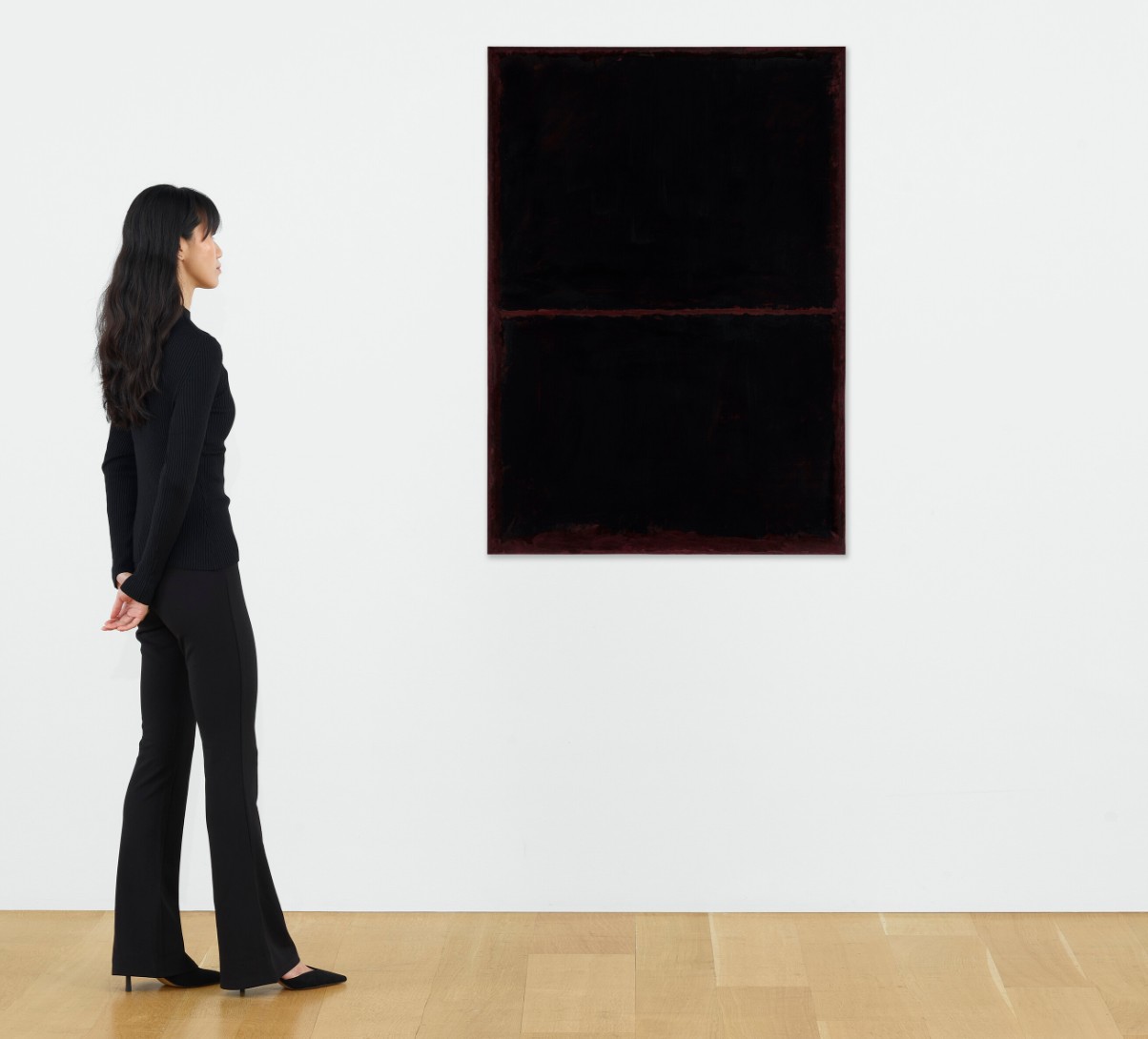
MARK ROTHKO (1903-1970)
Untitled, 1968
Acrylic on paper laid down on panel
57 7/8 x 40 3/4 inches (147 x 103.5 cm)
#4. Untitled, 1968
Sotheby’s New-York: 13 May 2025
Estimated: USD 3,500,000 – 5,000,000
USD 4,930,000
WORK ON PAPER
READ MORE IN FOCUS SECTION
Untitled | Modern Evening Auction | 2025 | Sotheby’s
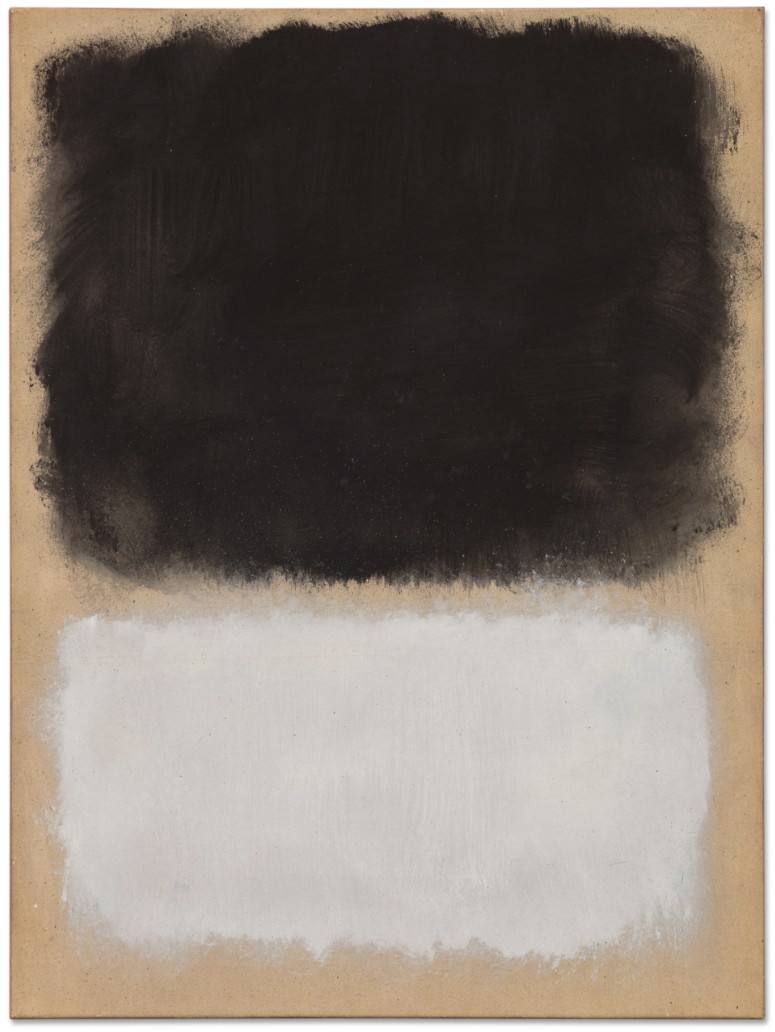
MARK ROTHKO (1903 – 1970)
Untitled, 1968
Oil on paper laid down on canvas
24 x 17 3/4 inches (60.1 x 45.1 cm)
Signed Mark Rothko and dated 1968 (on the reverse)
#5. Untitled, 1967
The Geri Brawerman Collection: A Tribute to Los Angeles and A Legacy of Giving
Sotheby’s New-York: 20 November 2025
Estimated: USD 3,000,000 – 5,000,000
USD 3,466,000
WORK ON PAPER
Untitled | Modern Evening Auction | 2025 | Sotheby’s
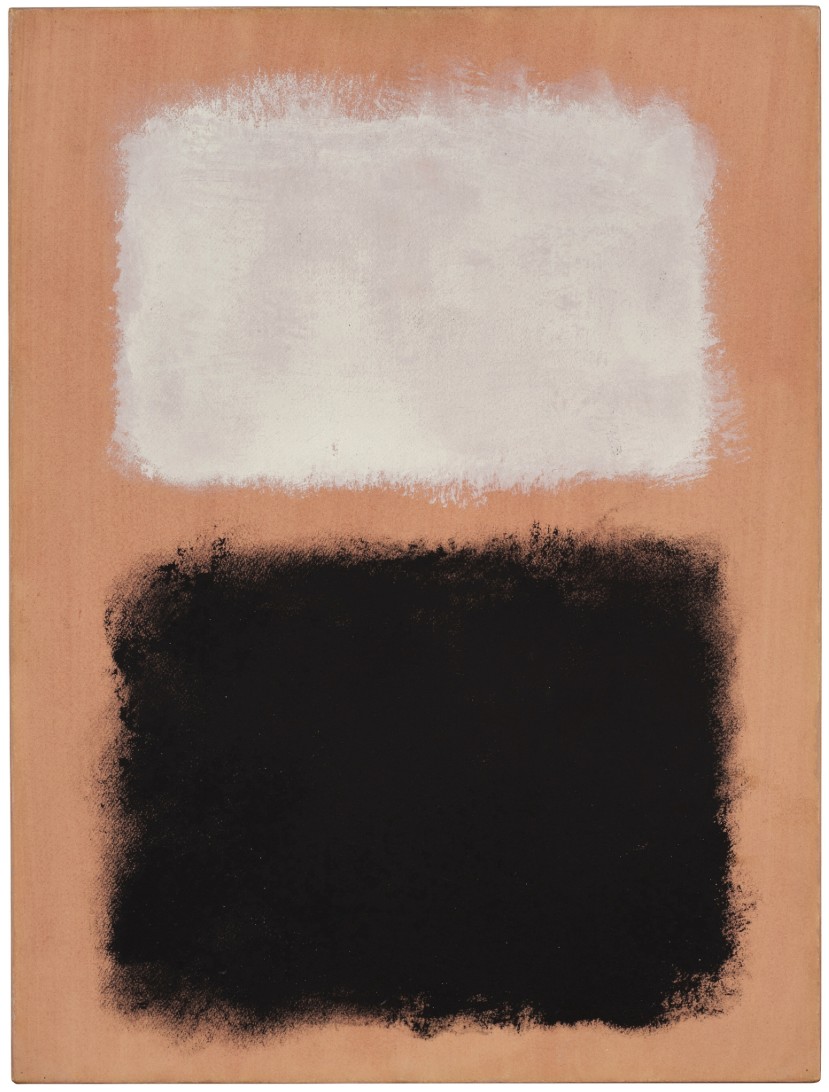
MARK ROTHKO (1903 – 1970)
Untitled, 1967
Oil on paper mounted on canvas
23 5/8 x 17 7/8 inches (60 x 45.4 cm)
Signed Mark Rothko (on the reverse)
USD 1 million
#6. Heads, 1941-1942
Christie’s New-York: 15 May 2025
Estimated: USD 600,000 – 800,000
USD 630,000
READ MORE IN FOCUS SECTION
MARK ROTHKO (1903-1970), Heads | Christie’s
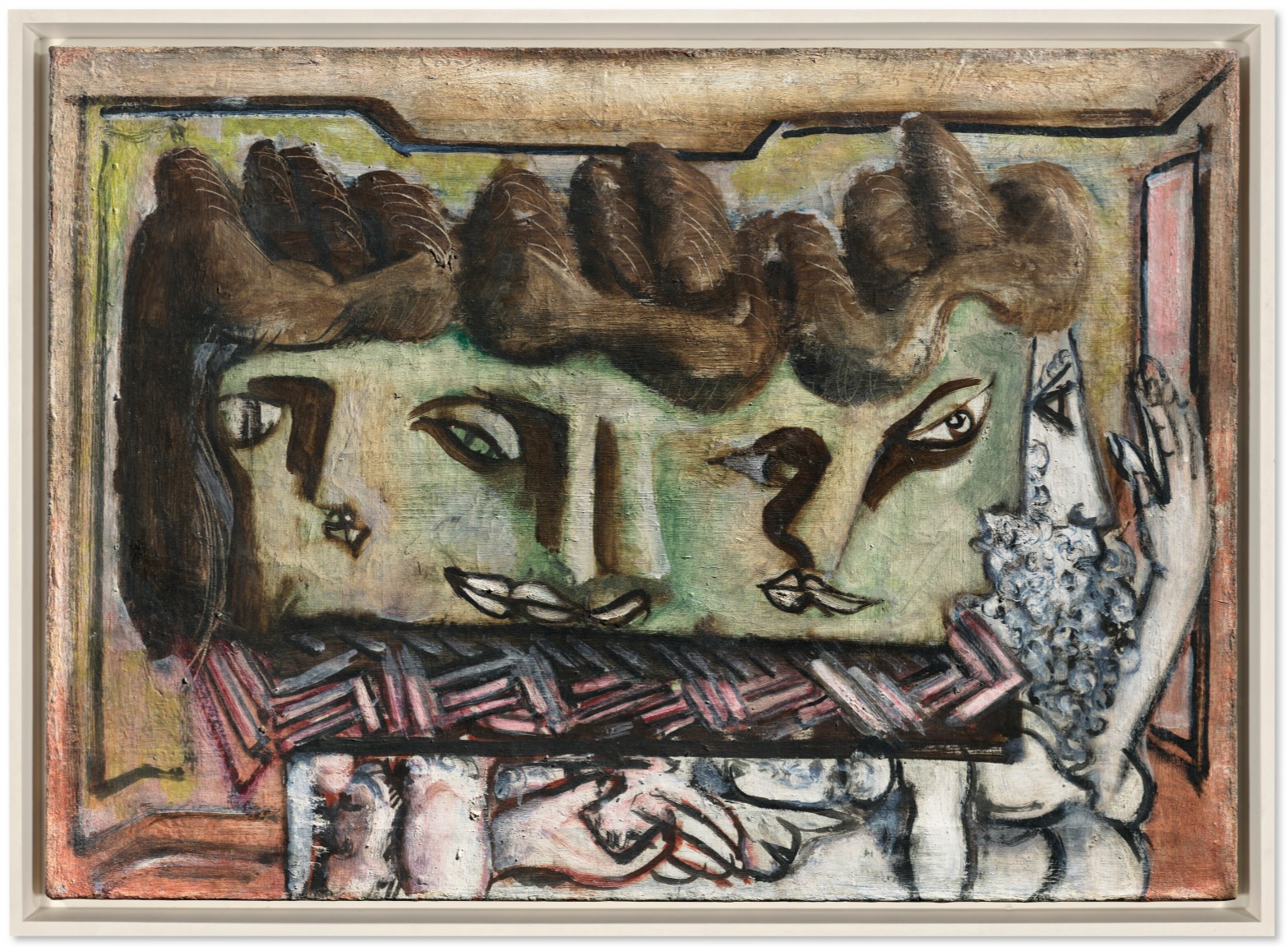
MARK ROTHKO (1903-1970)
Heads, 1941-1942
Oil on canvas
20 1/8 x 28 inches (51 x 71.1 cm)
2024 Auction Results
5 lots sold in 2024 for a total turnover of USD 51,604,530. With no lot failing to sell, the sell-through rate is 100%. The highest price was achieved at Sotheby’s in Hong-Kong on 11 November 2024, when Untitled (Yellow and Blue), a painting dated 1954, sold for HKD 252,500,000 (USD 32,474,530).
2024 Top 3 Lots
#1. Untitled (Yellow and Blue), 1954
Sotheby’s Hong-Kong: 11 November 2024
Estimated: HKD 225,000,000 – 275,000,000
HKD 252,500,000 / USD 32,474,530
READ MORE IN FOCUS SECTION
REPEAT SALE
Sotheby’s New-York: 15 May 2015
Estimated: USD 40,000,000 – 60,000,000
USD 46,450,000
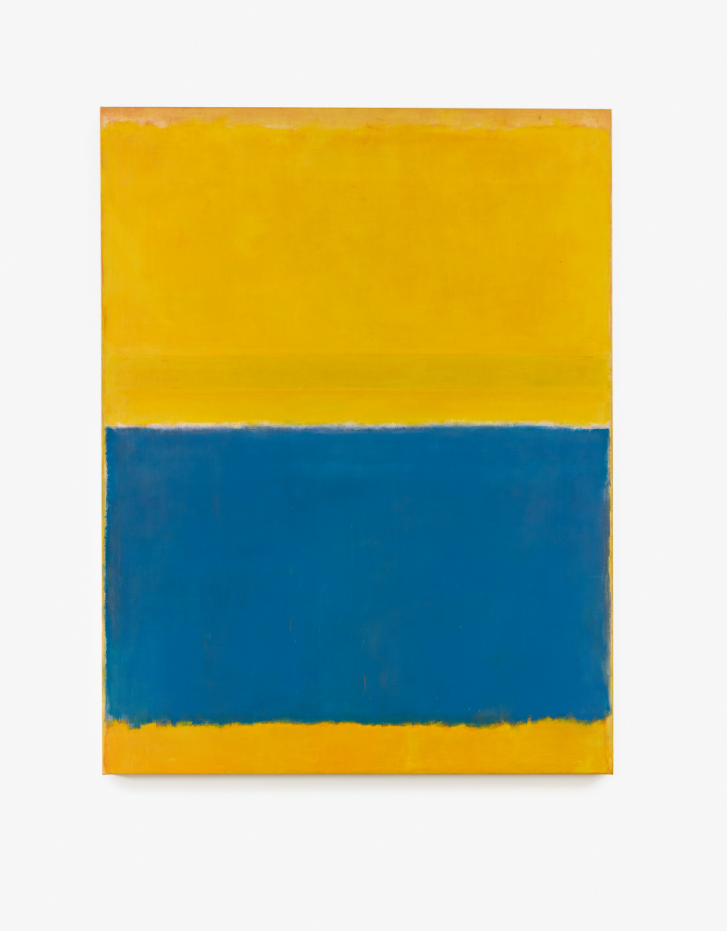
MARK ROTHKO (1903 – 1970)
Untitled (Yellow and Blue), 1954
Oil on canvas
95 5/8 x 73 1/2 inches (242.9 x 186.7 cm)
#2. Untitled, 1969
Sotheby’s New-York: 15 May 2024
Estimated: USD 10,000,000 – 15,000,000
USD 11,250,000
READ MORE IN FOCUS SECTION
Untitled | Modern Evening Auction | 2024 | Sotheby’s (sothebys.com)

MARK ROTHKO (1903 – 1970)
Untitled, 1969
Oil on paper mounted on canvas
58×40 inches (147.3 x 102.9 cm)
USD 10 million
#3. Untitled, circa 1953
The Collection of Sydell Miller
Sotheby’s New-York: 18 November 2024
Estimated: USD 2,000,000 – 3,000,000
USD 5,160,000
READ MORE IN FOCUS SECTION
Untitled | A Legacy of Beauty: The Collection of Sydell Miller Evening Auction | 2024 | Sotheby’s
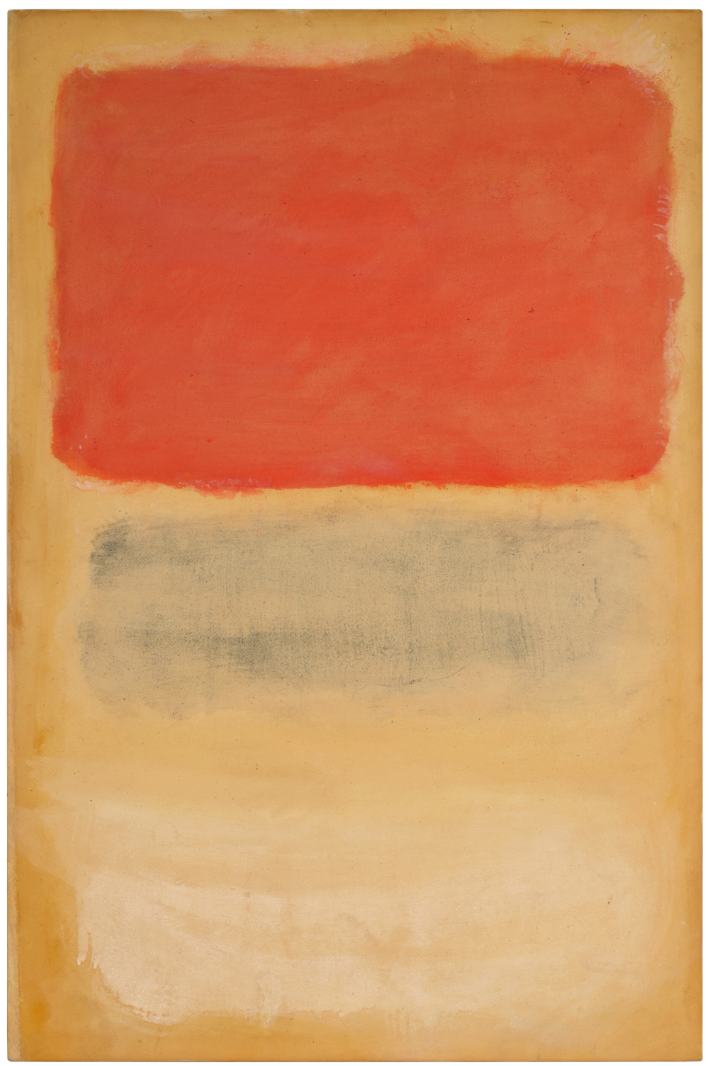
MARK ROTHKO (1903 – 1970)
Untitled, circa 1953
Oil on paper, mounted on Masonite
39 3/4 x 26 1/4 inches (99.1 x 66.7 cm)
Signed MARK ROTHKO and dated illegibly (on a piece of canvas affixed to the reverse)
USD 5 million
#4. No. 6, 1947
Sotheby’s New-York: 18 November 2024
Estimated: USD 3,000,000 – 5,000,000
USD 2,000,000
No. 6 | Modern Evening Auction | 2024 | Sotheby’s
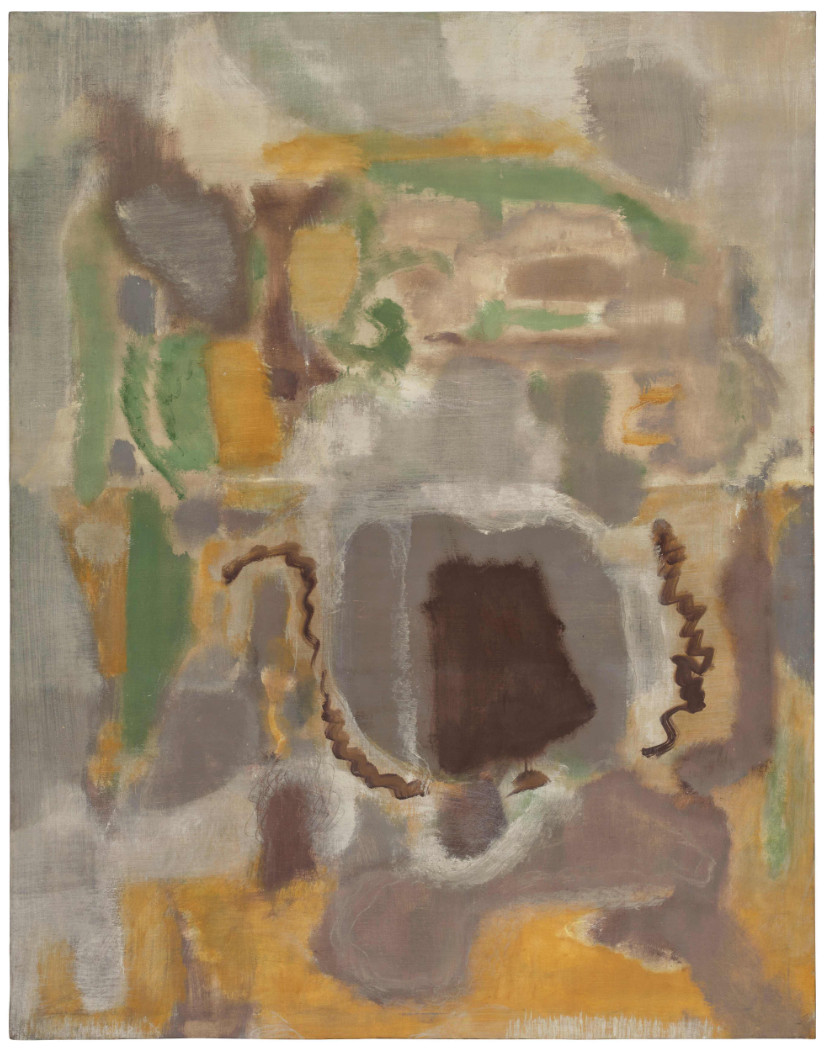
MARK ROTHKO (1903 – 1970)
No. 6, 1947
Oil on canvas
60 1/8 x 47 inches (152.7 x 119.4 cm)
Signed MARK ROTHKO (on the reverse)
USD 1 million
#5. The Entombment, 1944
Sotheby’s New-York: 18 November 2024
Estimated: USD 700,000 – 1,000,000
USD 720,000
The Entombment | Modern Evening Auction | 2024 | Sotheby’s
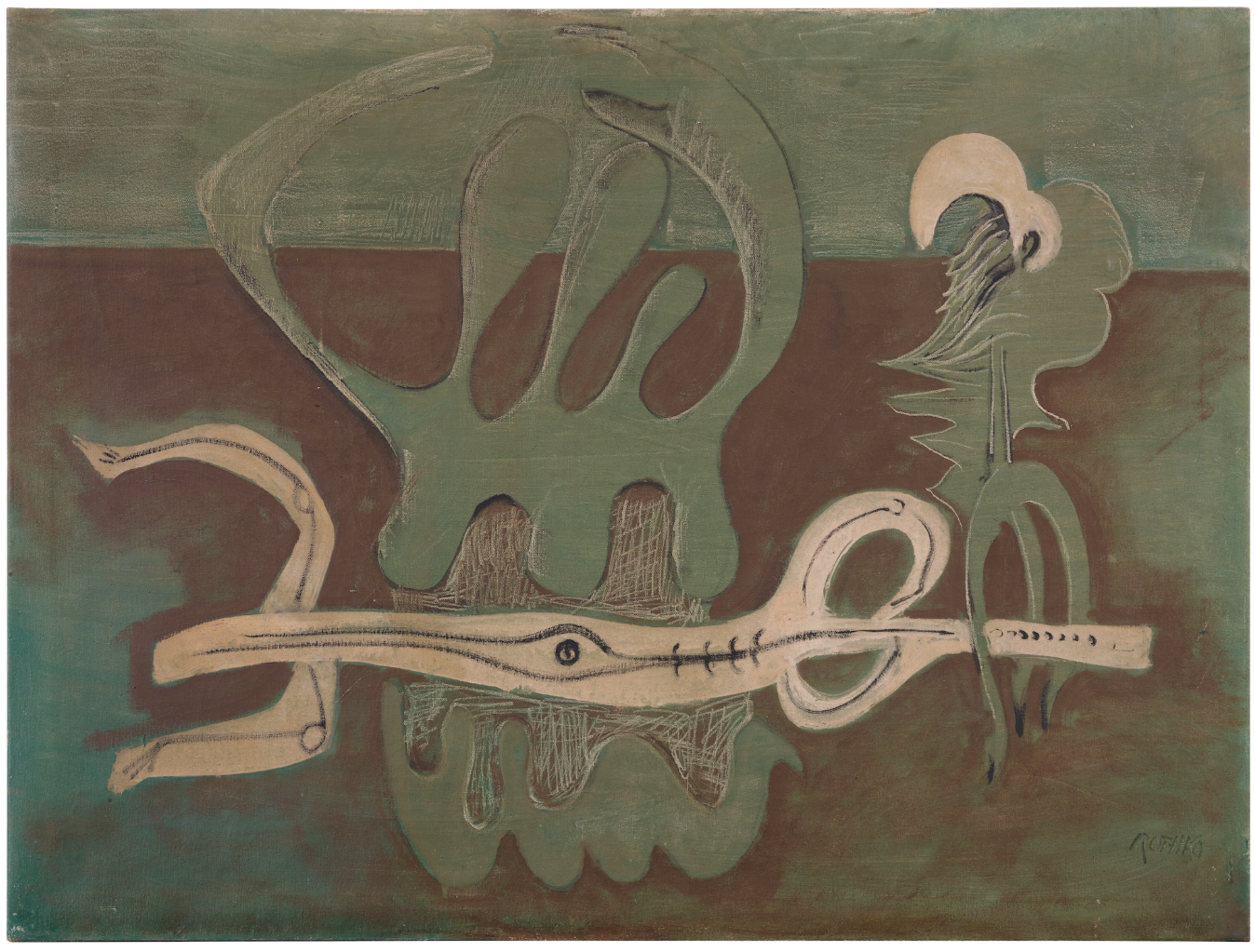
MARK ROTHKO (1903 – 1970)
The Entombment, 1944
Oil on canvas
29 5/8 x 39 1/2 inches (75.2 x 100.3 cm)
Signed ROTHKO (lower right)
Signed MARK ROTHKO and titled (on the reverse)
2023 Auction Results
7 lots sold at auction in 2023 for a total turnover of USD 107,522,500.
With no lot failing to sell, the sell-through rate is 100%. The highest price of USD 46,410,000 has been achieved by Untitled (Yellow, Orange, Yellow, Light Orange), a painting dated 1955, at Christie’s in New-York on 9 November 2023. 3 lots sold for more than USD 20 million, generating a cumulative turnover of USD 92,564,500, representing 86% of the total turnover of 2023.
2023 Top 3 Lots
#1. Untitled (Yellow, Orange, Yellow, Light Orange), 1955
Christie’s New-York: 9 November 2023
Estimate on Request
USD 46,410,000
MARK ROTHKO (1903-1970) (christies.com)
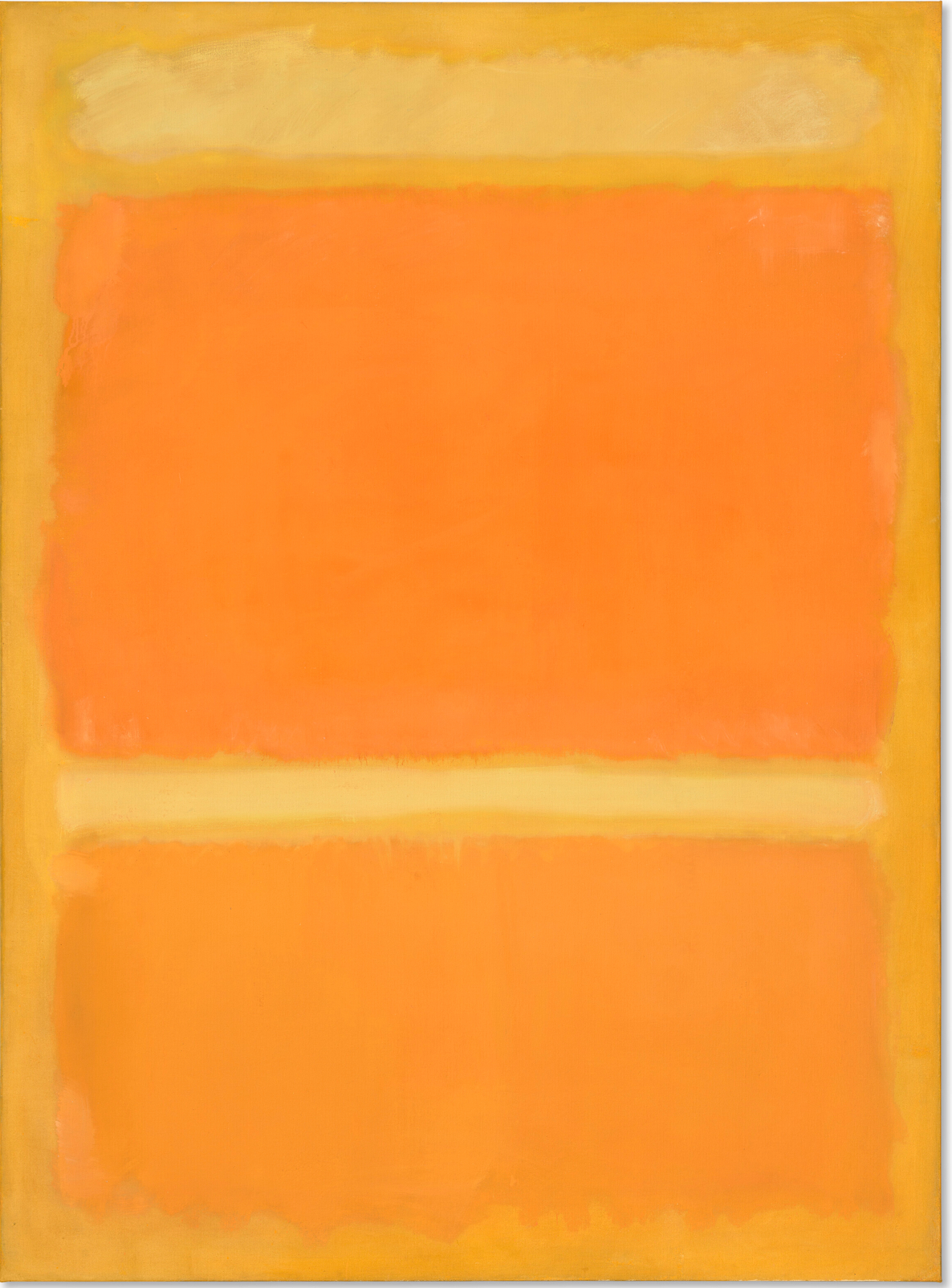
MARK ROTHKO (1903-1970)
Untitled (Yellow, Orange, Yellow, Light Orange), 1955
Oil on canvas
81 1/2 x 60 inches (207 x 152.5 cm)
Signed and dated ‘MARK ROTHKO 1955’ (on the reverse)
#2. Untitled, 1968
Sotheby’s New-York: 13 November 2023
Estimated: USD 7,000,000 – 10,000,000
USD 23,889,000
Untitled | Modern Evening Auction | 2023 | Sotheby’s (sothebys.com)
MARK ROTHKO (1903 – 1970)
Untitled, 1968
Oil on paper laid down on canvas
39 3/8 x 26 1/8 inches (100 x 66.4 cm)
Signed Mark Rothko, dated 1968 and variously inscribed (on the reverse)
#3. Untitled, 1958
Sotheby’s New-York: 8 November 2023
Estimated: USD 30,000,000 – 40,000,000
USD 22,165,500
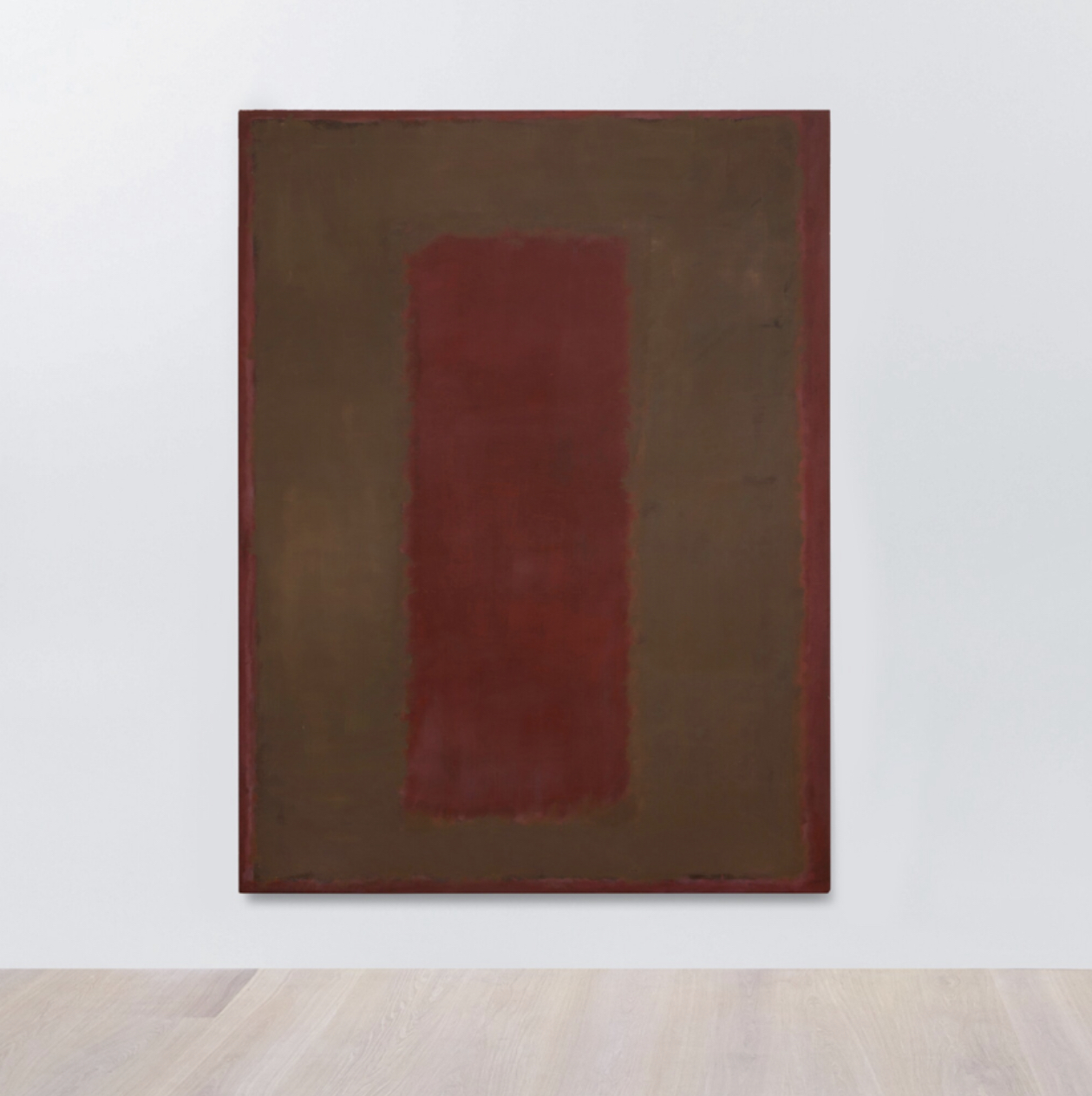
MARK ROTHKO (1903 – 1970)
Untitled, 1958
Oil on canvas
91 7/8 x 69 1/2 inches (233.4 x 176.5 cm)
Signed and dated 1958 (on the reverse)
#4. Untitled (Red, Orange on Pink), 1968
Christie’s New-York: 9 November 2023
Estimated: USD 6,500,000 – 8,500,000
USD 6,584,000
MARK ROTHKO (1903-1970) (christies.com)
MARK ROTHKO (1903-1970)
Untitled (Red, Orange on Pink), 1968
Oil on paper laid down on canvas
33 1/2 x 25 3/4 inches (85.1 x 65.4 cm)
Signed ‘MARK ROTHKO’ (on the reverse)
#5. Untitled, 1959
Sotheby’s New-York: 16 May 2023
Estimated: USD 4,000,000 – 6,000,000
USD 4,658,000
Untitled | Modern Evening Auction | 2023 | Sotheby’s (sothebys.com)
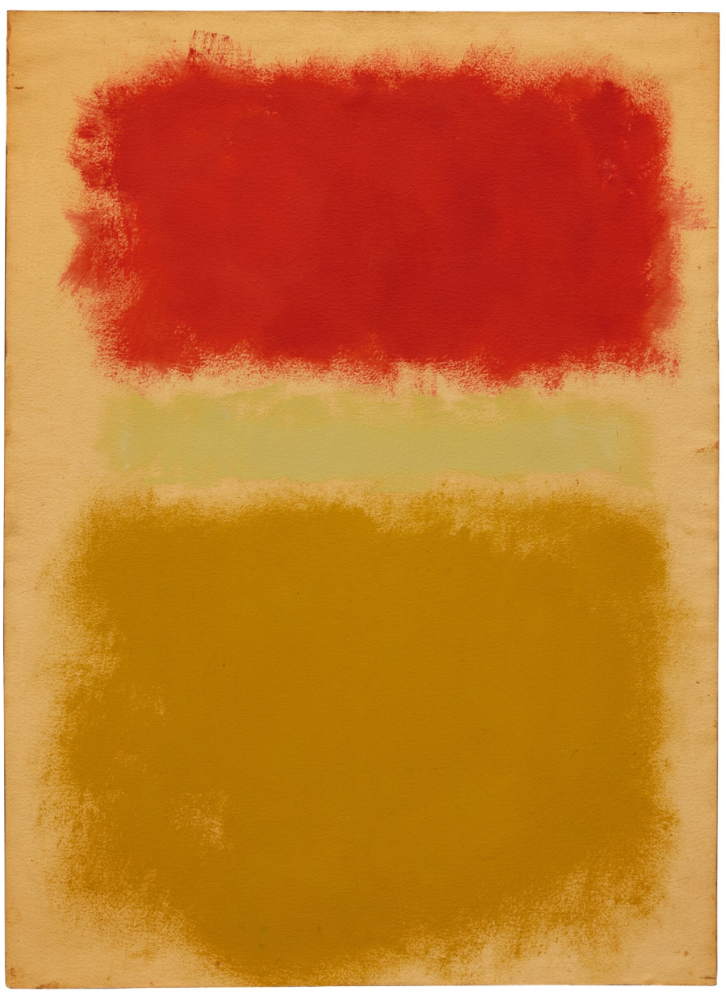
MARK ROTHKO (1903 – 1970)
Untitled, 1959
Oil on paper laid down on board
29 3/4 x 21 3/4 inches (75.6 x 55.2 cm)
Signed Mark Rothko and dated 1959 (on the reverse)
#6. Untitled, 1964
Christie’s New-York: 17 May 2023
Estimated: USD 3,000,000 – 5,000,000
USD 3,438,000
Mark Rothko (1903-1970) (christies.com)
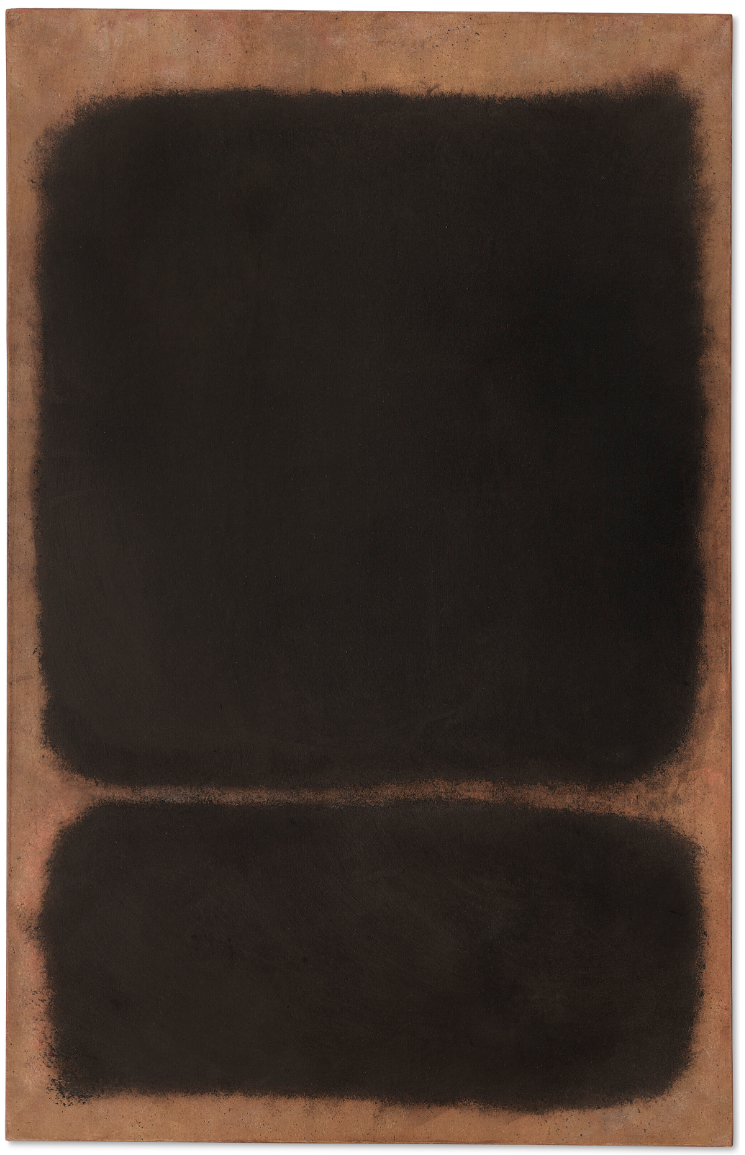
MARK ROTHKO (1903-1970)
Untitled, 1964
Oil on paper laid down on canvas
39 3/4 x 25 1/2 inches (101.3 x 64.8 cm)
Signed ‘Mark Rothko’ (on the reverse)
#7. Untitled, 1944
Christie’s New-York: 10 November 2023
Estimated: USD 300,000 – 500,000
USD 378,000
MARK ROTHKO (1903-1970), Untitled | Christie’s (christies.com)
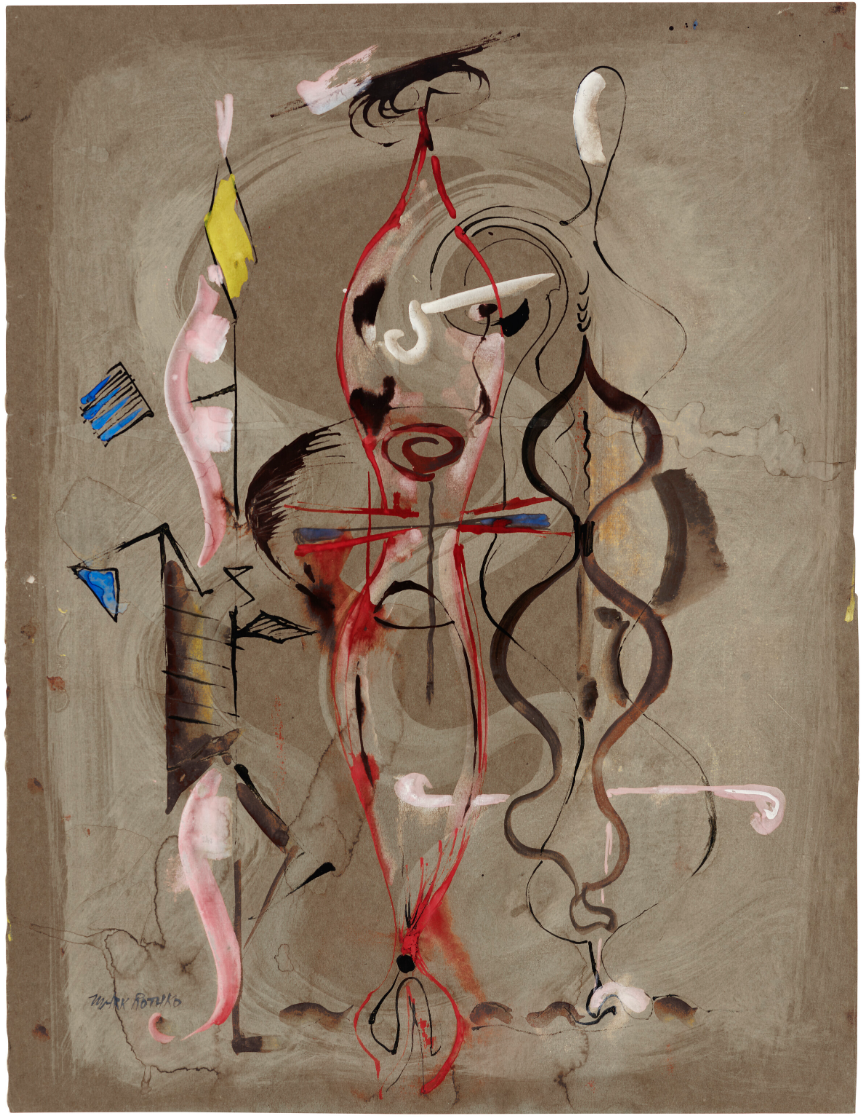
MARK ROTHKO (1903-1970)
Untitled, 1944
Watercolor, gouache and ink on paper
26 x 19 3/4 inches (66×49 cm)
Signed ‘MARK ROTHKO’ (lower left); signed again ‘MARK ROTHKO’ (on the reverse)
2022 Auction Results
8 lots sold at auction in 2022 for a total turnover of USD 198,385,025.
With 1 lot failing to sell, the sell-through is 89%. The highest price was achieved at Christie’s in New-York, for Untitled (Shades of Red), a painting dated 1961, that sold on 12 May 2022 for USD 66,800,000. 3 lots sold for more than USD 40 million, generating a cumulative turnover of USD 164,433,000, representing 83% of the total turnover for 2022.
2022 Top 3 Lots
#1. Untitled (Shades of Red), 1962
Christie’s New-York: 11 May 2022
Estimated: USD 60,000,000 – 80,000,000
USD 66,800,000
MARK ROTHKO (1903-1970) (christies.com)
MARK ROTHKO
Untitled (Shades of Red), 1962
Oil on canvas
69×56 inches (175.3×142.2 cm)
#2. No. 1, 1962
Christie’s New-York: 11 May 2022
Estimated: USD 45,000,000 – 65,000,000
USD 49,625,000
MARK ROTHKO (1903-1970) (christies.com)
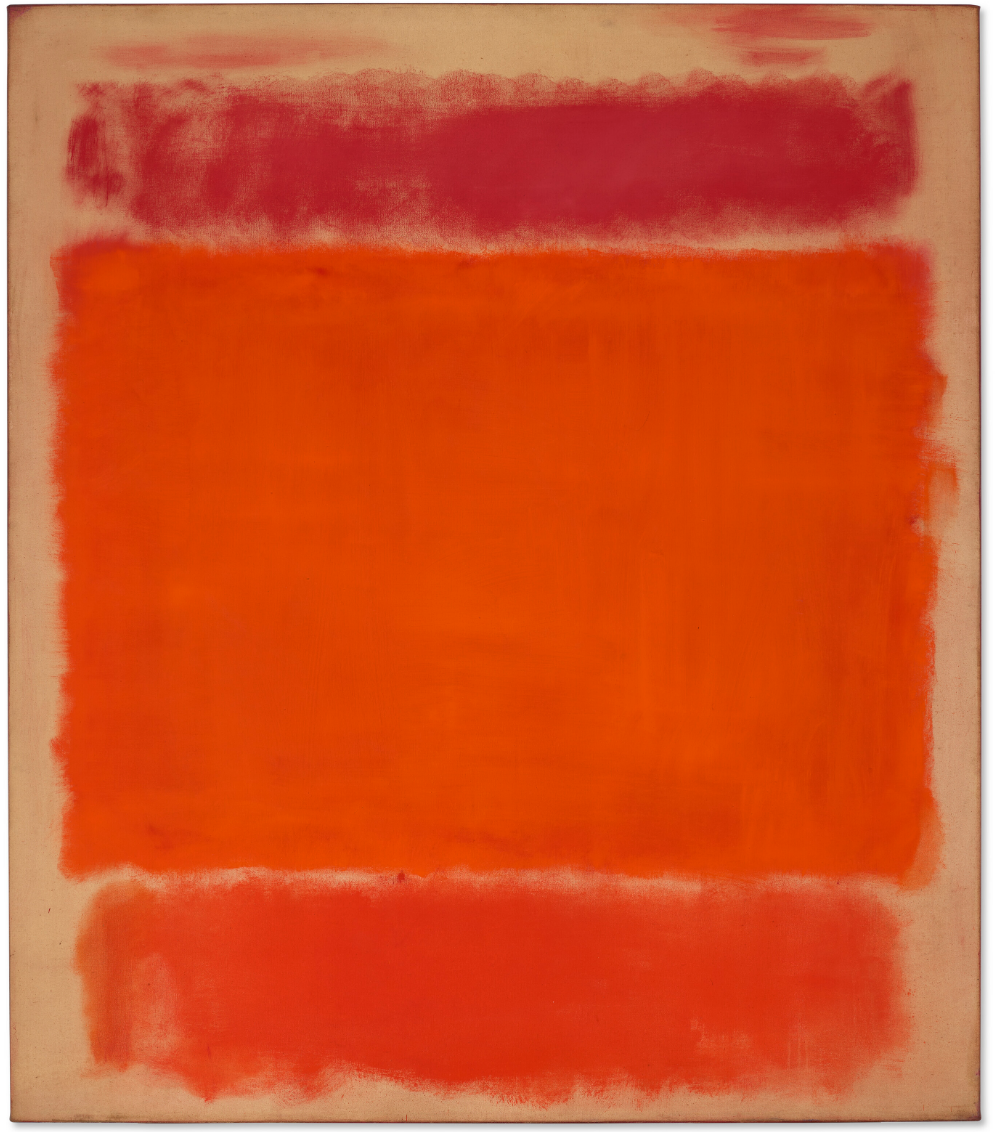
MARK ROTHKO
No. 1, 1962
Oil on canvas
69×60 inches (175.3×152.4 cm)
Signed and dated ‘MARK ROTHKO 1962’ (on the reverse)
#3. Untitled, 1960
Sotheby’s New-York: 16 May 2022
Estimated: USD 35,000,000 – 50,000,000
USD 48,008,000
Untitled | The Macklowe Collection | 2022 | Sotheby’s (sothebys.com)
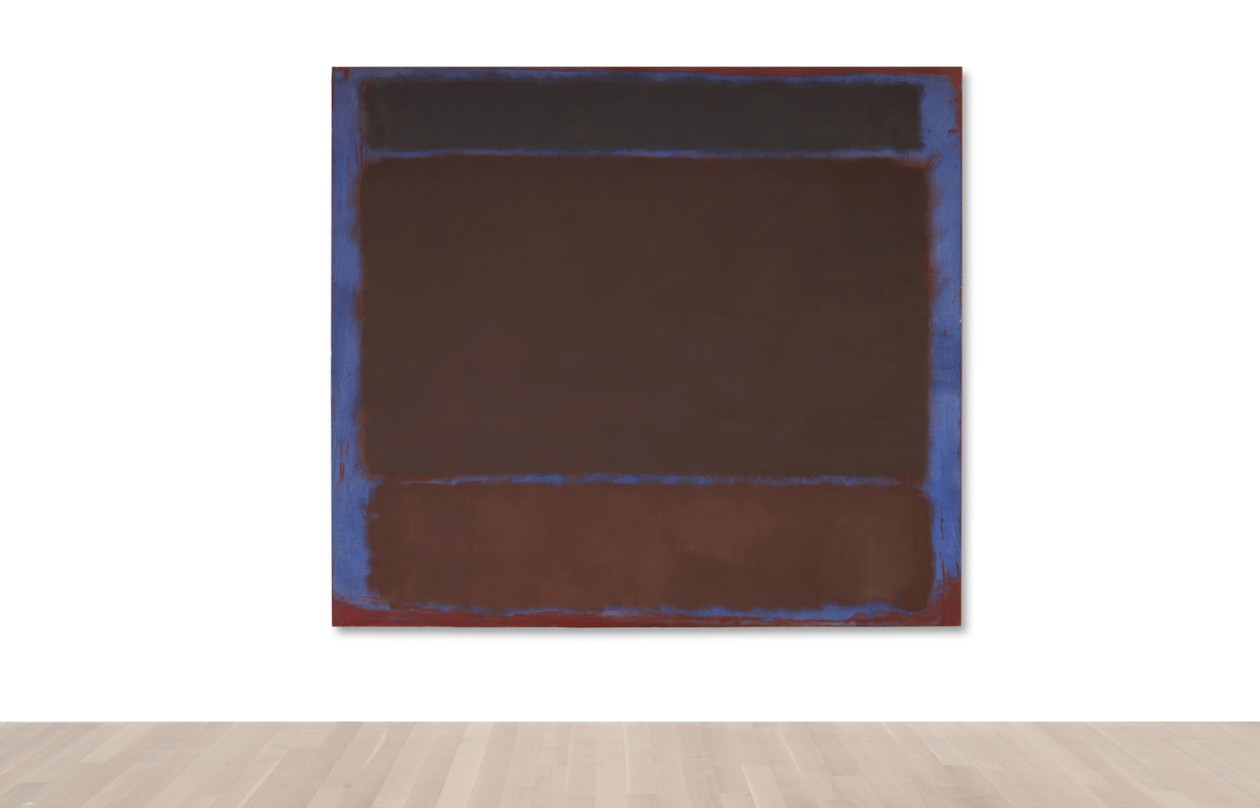
MARK ROTHKO
Untitled, 1960
Oil on canvas
70×74.5 inches (178.4×189.2 cm)
#4. Untitled, 1969
Christie’s New-York: 17 November 2022
Estimated: USD 15,000,000 – 20,000,000
USD 17,565,000
MARK ROTHKO (1903-1970) (christies.com)
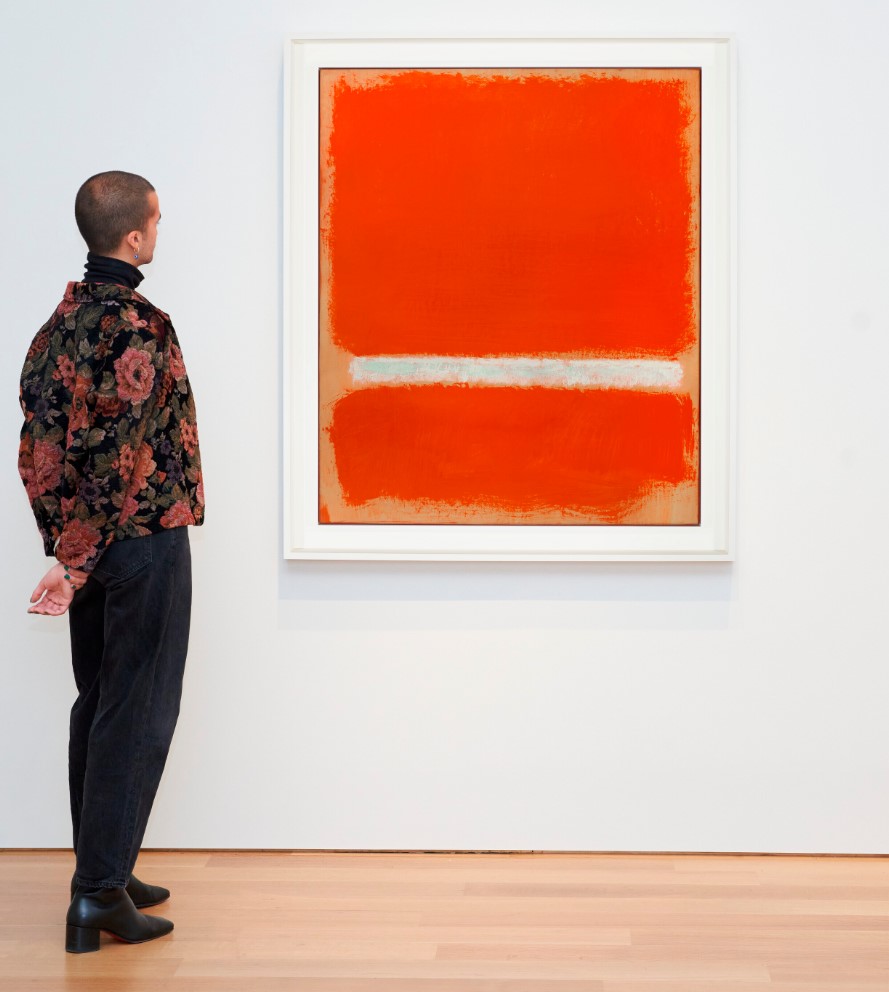
Untitled, 1969
Acrylic on paper laid down on canvas
48 1/2 x 40 1/2 inches (123.2 x 102.9 cm)
#5. Untitled, 1959
Phillips New-York: 18 May 2022
Estimated: USD 6,000,000 – 8,000,000
USD 8,435,000
Mark Rothko – 20th Century & Contemporary… Lot 6 May 2022 | Phillips
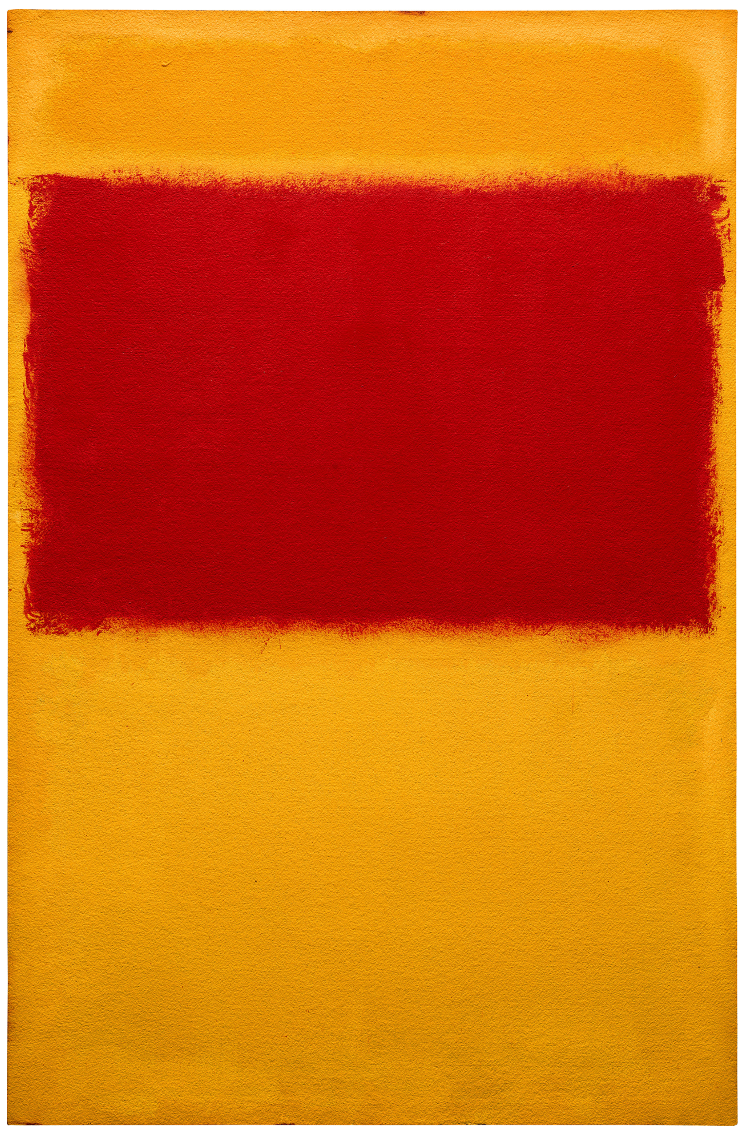
MARK ROTHKO
Untitled, 1959
Oil on paper mounted on Masonite
38 x 24 7/8 inches (96.5 x 63.2 cm)
Signed and dated “MARK ROTHKO 1959” on the reverse
#6. Untitled, 1968
Sotheby’s New-York: 14 November 2022
Estimated: USD 5,000,000 – 7,000,000
USD 6,241,850
Untitled | Modern Evening Auction | 2022 | Sotheby’s (sothebys.com)
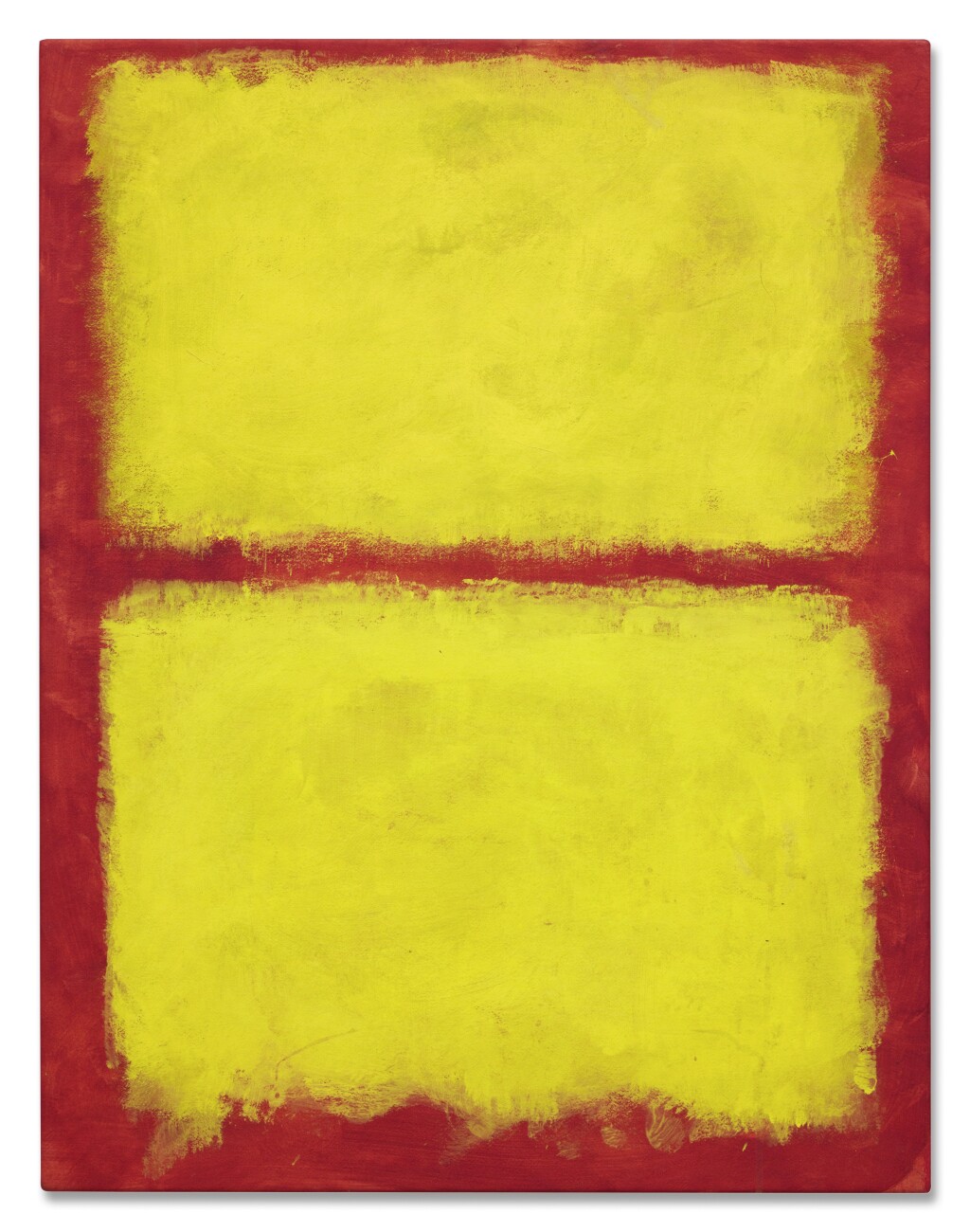
MARK ROTHKO (1903-1970)
Untitled, 1968
Acrylic on paper laid on panel
33 1/2 x 25 3/4 inches (85 x 65.5 cm)
#7. A Last Supper, 1941
Heritage Auctions: 4 November 2022
Estimated: USD 1,500,000 – 2,500,000
USD 1,455,000
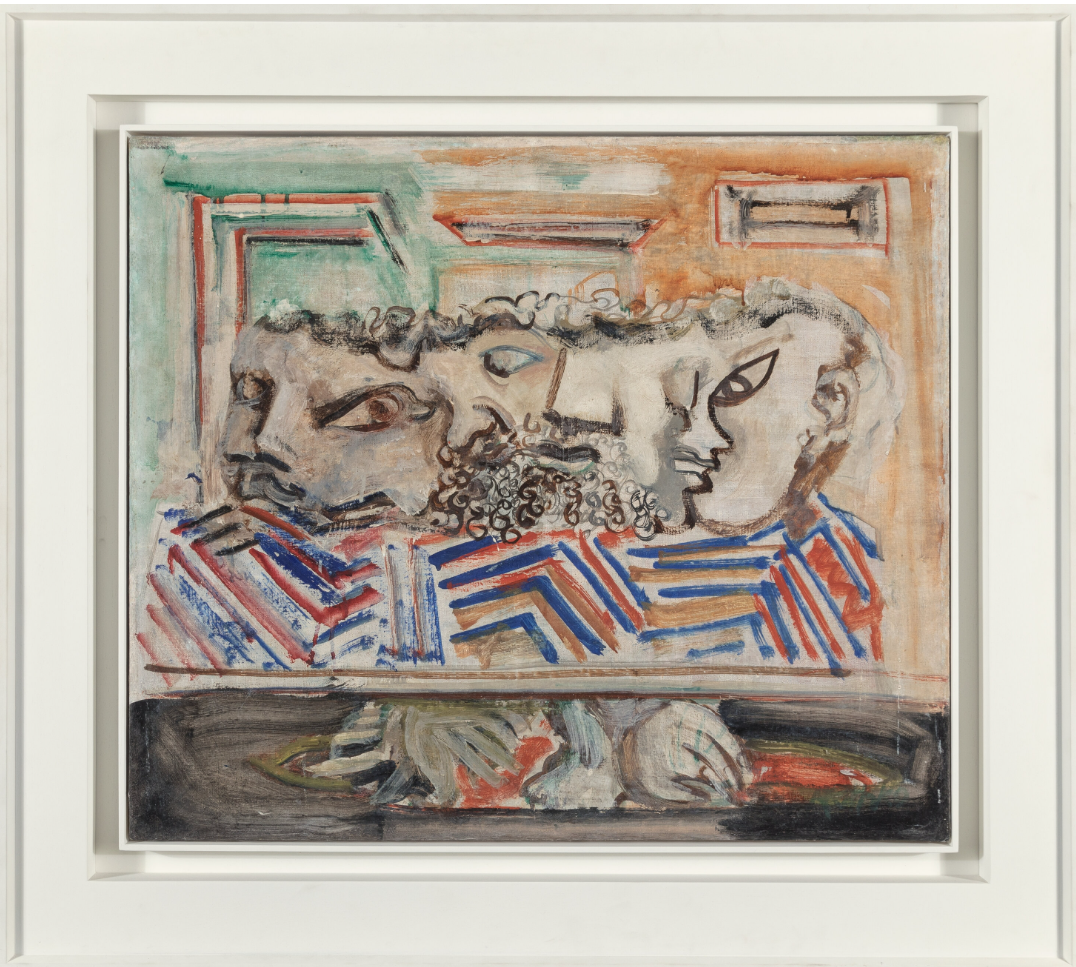
MARK ROTHKO (American, 1903-1970)
A Last Supper, 1941
Oil on canvas
22 1/8 x 26 1/4 inches (56.2 x 66.7 cm)
Signed lower right: Rothko
#8. In Limbo, 1941-1942
Bonhams New-York: 16 November 2022
Estimated: USD 120,000 – 180,000
USD 164,175
Bonhams : MARK ROTHKO (1903-1970) In Limbo 1941-1942
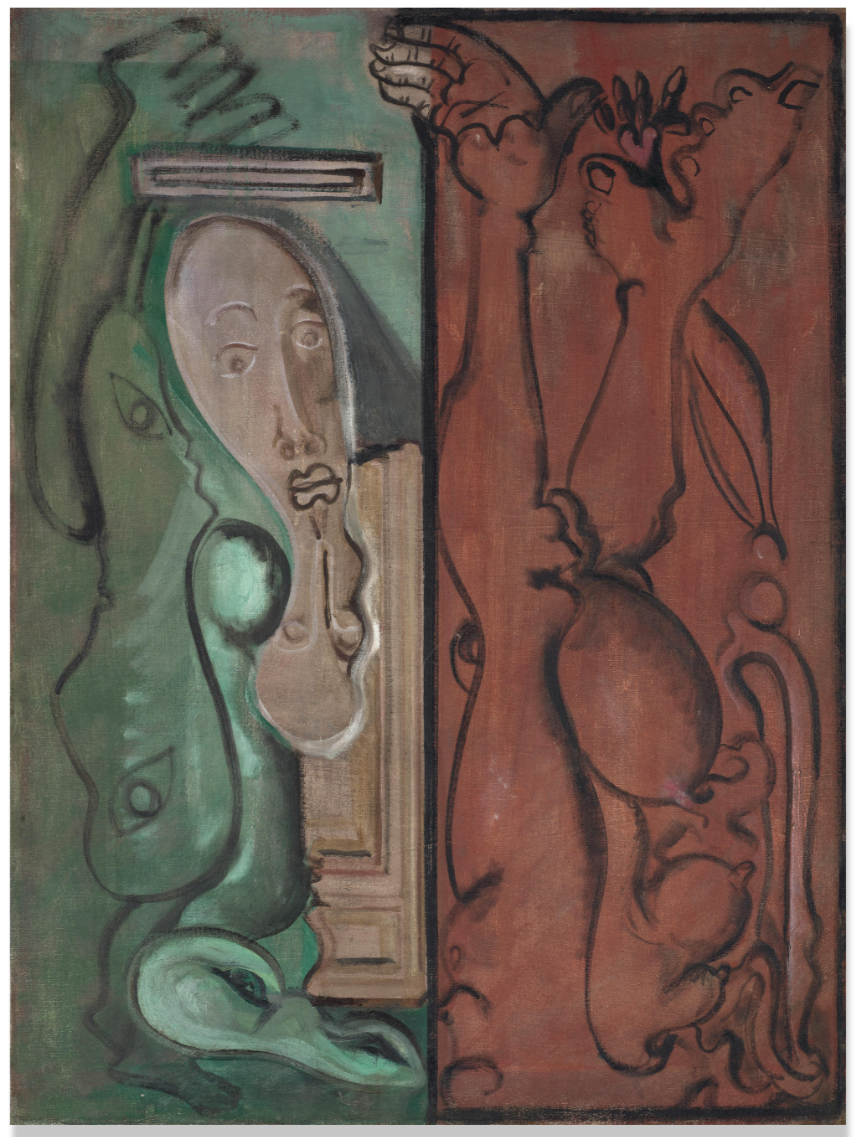
oil on canvas
32×24 inches (81.3 x 60.1 cm)
2021 Auction Results
6 lots sold at auction in 2021 for a total turnover of USD 142,302,234. With no lot failing to sell, the sell-through rate is 100%. The highest price was achieved by No. 7, a painting dated 1951, from The Macklowe Collection that sold for USD 82,468,500 at Sotheby’s in New-York on 15 November 2021, coming just short of the highest price ever paid at auction for a painting by Mark Rothko of USD 86,882,500 set at Christie’s, in New-York, on 8 May 2012 for Orange, Red, Yellow, a painting dated 1961.
2021 Top 3 Lots
#1. No. 7, 1951
The Macklowe Collection
Sotheby’s New-York: 15 November 2021
Estimated: USD 70,000,000 – 90,000,000
USD 82,468,500
No. 7 | The Macklowe Collection | 2021 | Sotheby’s (sothebys.com)
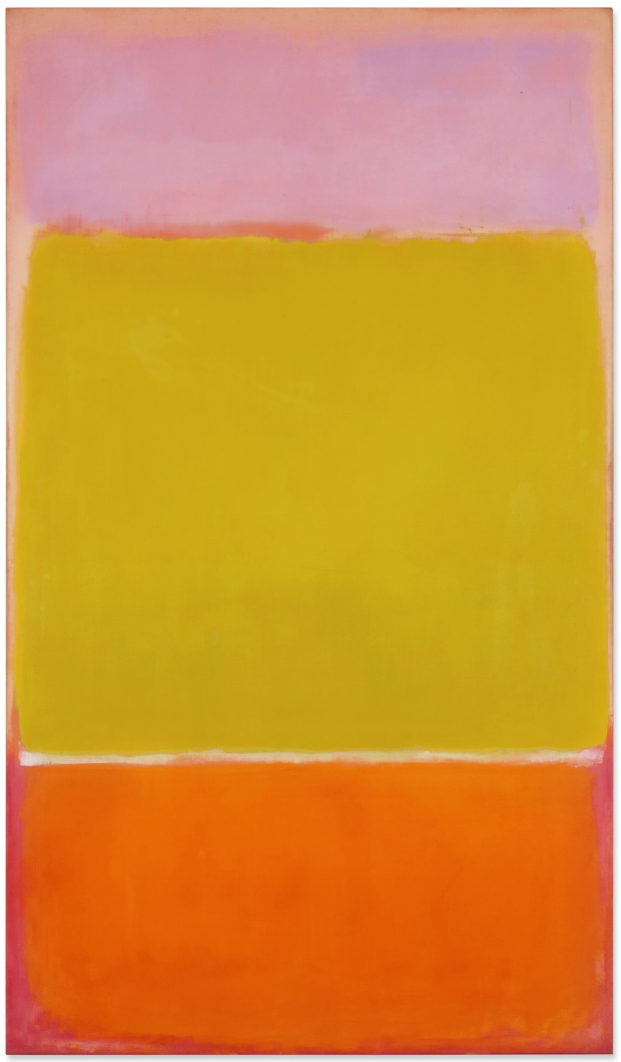
MARK ROTHKO (1903 – 1970)
No. 7, 1951
Oil on canvas
94 3/4 x 54 5/8 inches (240.7 x 138.7 cm)
Signed and dated 1951 on the reverse
#2. Untitled, 1970
Christie’s New-York: 13 May 2021
Estimate on Request
USD 38,145,000
Mark Rothko (1903-1970) (christies.com)
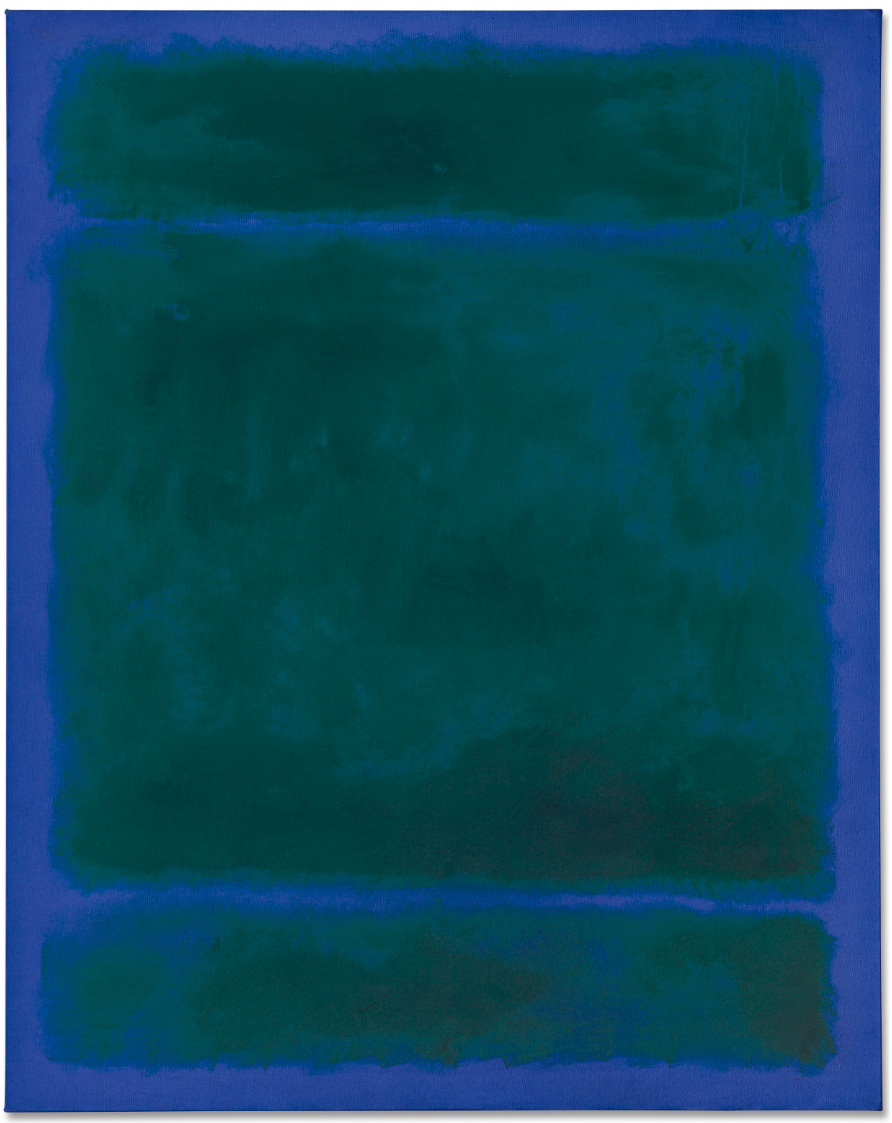
MARK ROTHKO (1903-1970)
Untitled, 1970
Oil on canvas
68×54 inches (172.7 x 137.2 cm)
#3. Untitled, 1961
Christie’s New-York: 12 November 2021
Estimated: USD 2,500,000 – 3,500,000
USD 8,489,500
MARK ROTHKO (1903-1970) (christies.com)
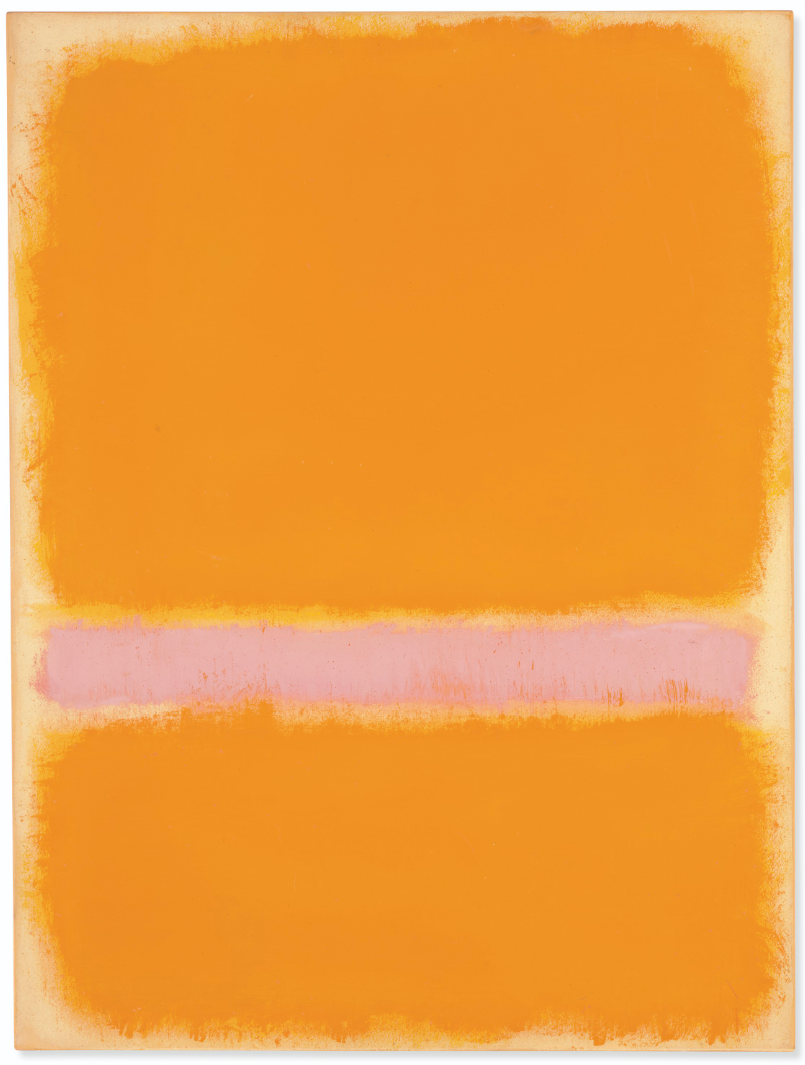
MARK ROTHKO (1903-1970)
Untitled, 1961
Oil on paper laid down on canvas
23 7/8 x 18 inches (60.6 x 45.7 cm)
Signed and dated ‘MARK ROTHKO 1961’ (on the reverse)
#4. Untitled, 1968
Sotheby’s New-York: 13 May 2021
Estimated: USD 3,000,000 – 4,000,000
USD 5,549,400
Untitled | Contemporary Art Day Auction | 2021 | Sotheby’s (sothebys.com)
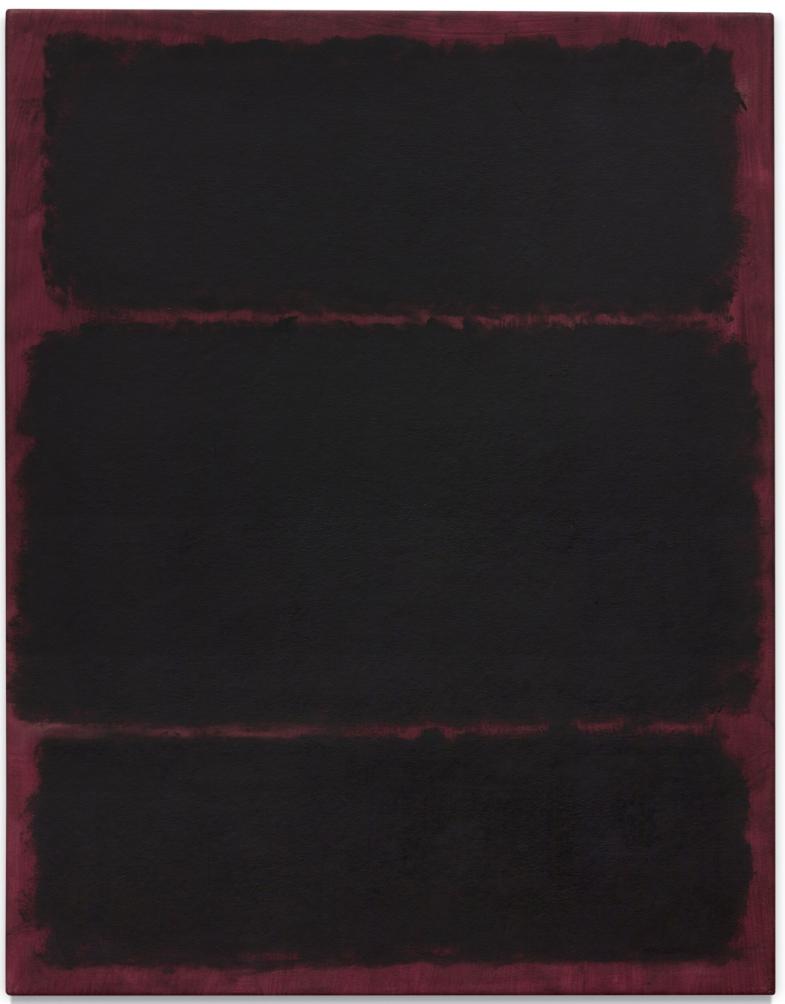
MARK ROTHKO (1903 – 1970)
Untitled, 1968
Acrylic on paper mounted on board
33 1/4 x 25 1/2 inches (84.5 x 64.8 cm)
#5. Untitled (Black Blue Painting), 1968
Phillips London: 15 April 2021
Estimated: GBP 2,500,000 – 3,500,000
GBP 2,866,000 / USD 3,949,834
Mark Rothko – 20th Century & Contempor… Lot 15 April 2021 | Phillips
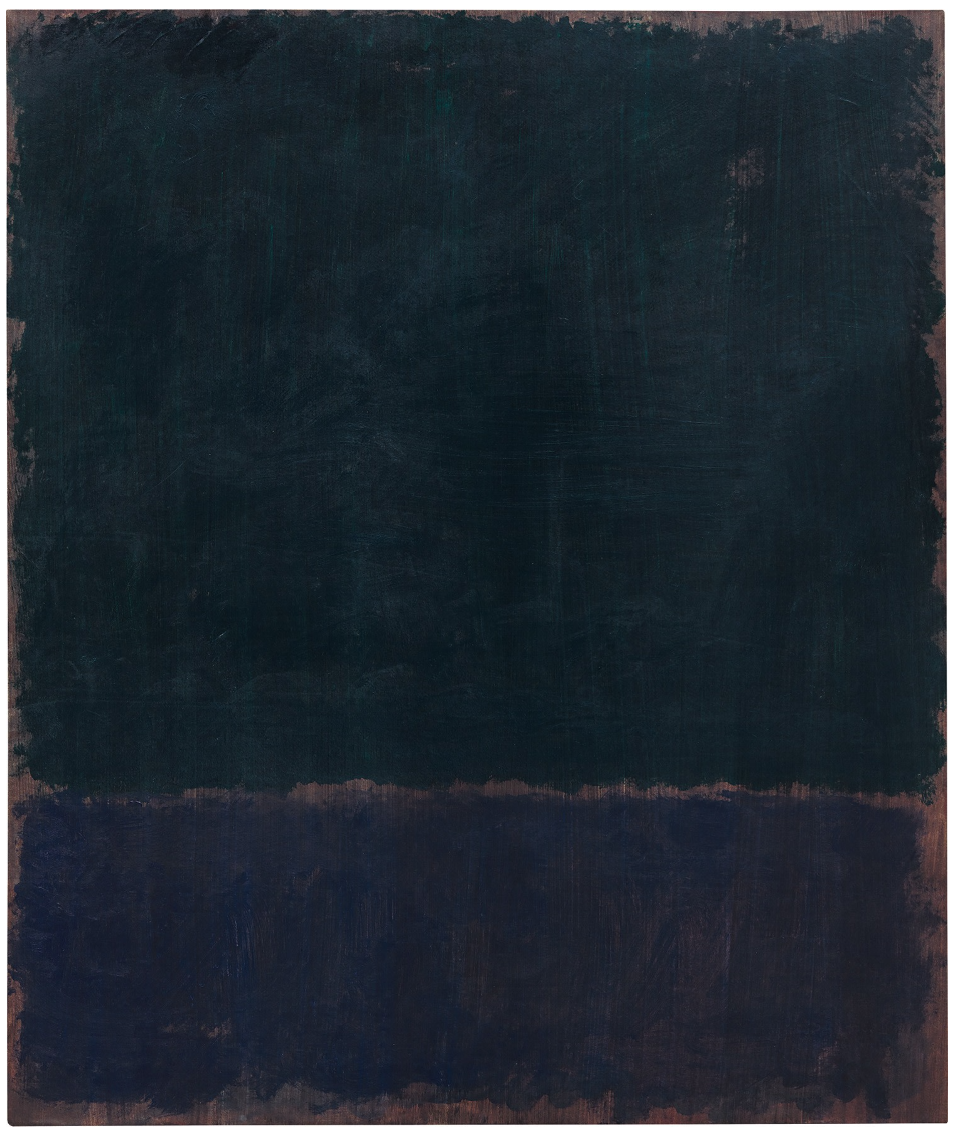
MARK ROTHKO
Untitled (Black Blue Painting), 1968
Acrylic on paper laid on linen
47 3/4 x 40 1/8 inches (121.3 x 101.9 cm)
#6. Untitled, 1969
Phillips New-York: 23 June 2021
Estimated: USD 3,500,000 – 4,500,000
USD 3,700,000
Mark Rothko – 20th Century & Contempora… Lot 22 June 2021 | Phillips
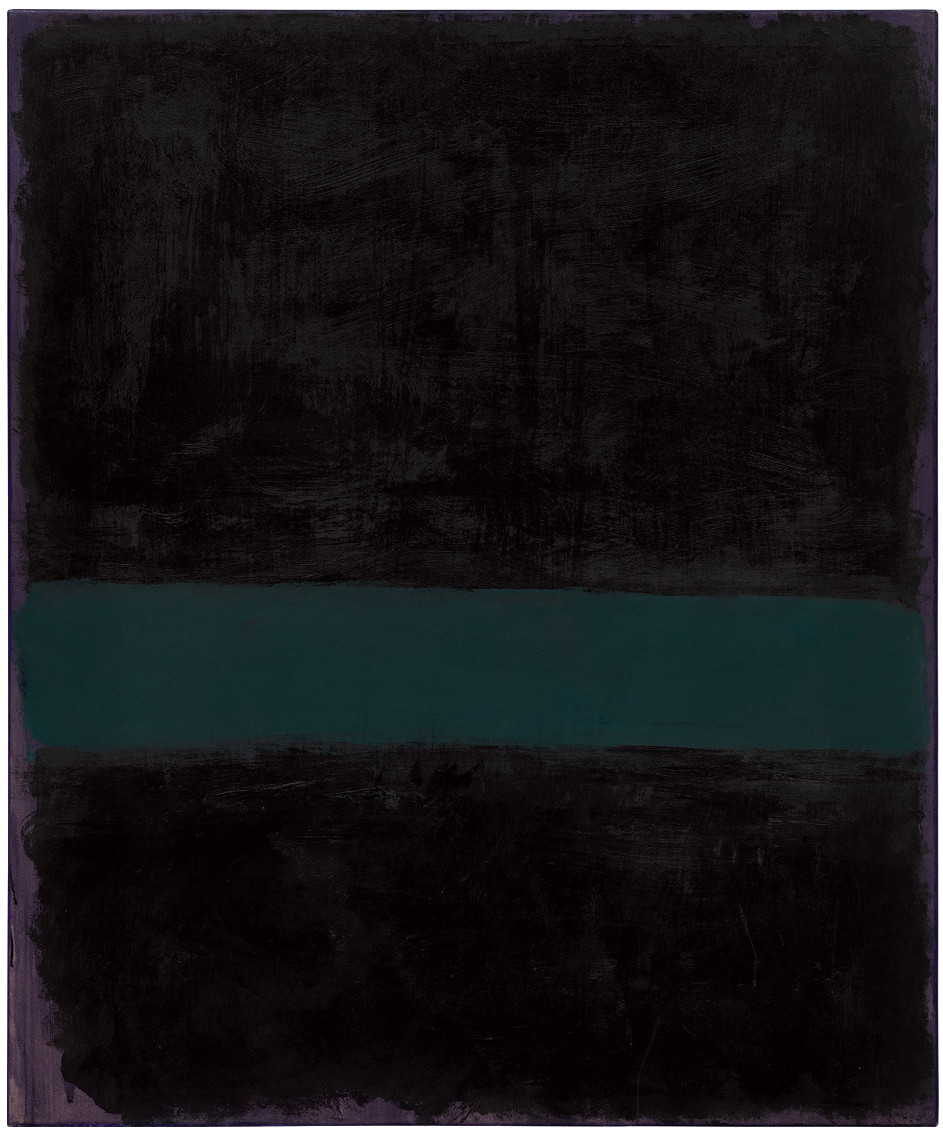
MARK ROTHKO
Untitled, 1969
Acrylic on paper mounted on panel
48 5/8 x 40 1/2 inches (123.5 x 102.9 cm)
PART III: FOCUS
Red
Untitled, circa 1959
A New Vista: The David and Shoshanna Wingate Collection
Sotheby’s New-York: 19 May 2026
Estimated: USD 5,000,000 – 7,000,000
USD 9,270,000
WORK ON PAPER
Mark Rothko | Untitled | Modern Evening Auction | 2026 | Sotheby’s
MARK ROTHKO (1903 – 1970)
Untitled, circa 1959
Oil and watercolor on paper mounted on canvas
30-3/8 x 22 inches (77.2 x 55.9 cm)
Exuding the ethereal radiance of a precious gem and the majestic drama of a sky emblazoned by the setting sun, Mark Rothko’s Untitled is a profound example of the artist’s enchanting corpus of paintings on paper from the late 1950s. Bursting with chromatic vibrancy, Untitled entrances the viewer into a mesmeric expanse of raspberry, amber and plum—an exquisite evocation of Rothko’s transcendent abstractions. Executed circa 1959, Untitled encapsulates the prismatic potency and sublime expression of Rothko’s large canvases, yet through its intimate, jewellike scale, it encourages a highly personal form of engagement and contemplation. Untitled was notably featured in the first exhibition dedicated to Rothko’s seminal paintings on paper: the historic 1984-86 traveling exhibition, Mark Rothko: Works on Paper, which originated at the National Gallery of Art and traveled around the United States. The work has been a treasured centerpiece of the esteemed collection of David and Shoshanna Wingate for fifty years.
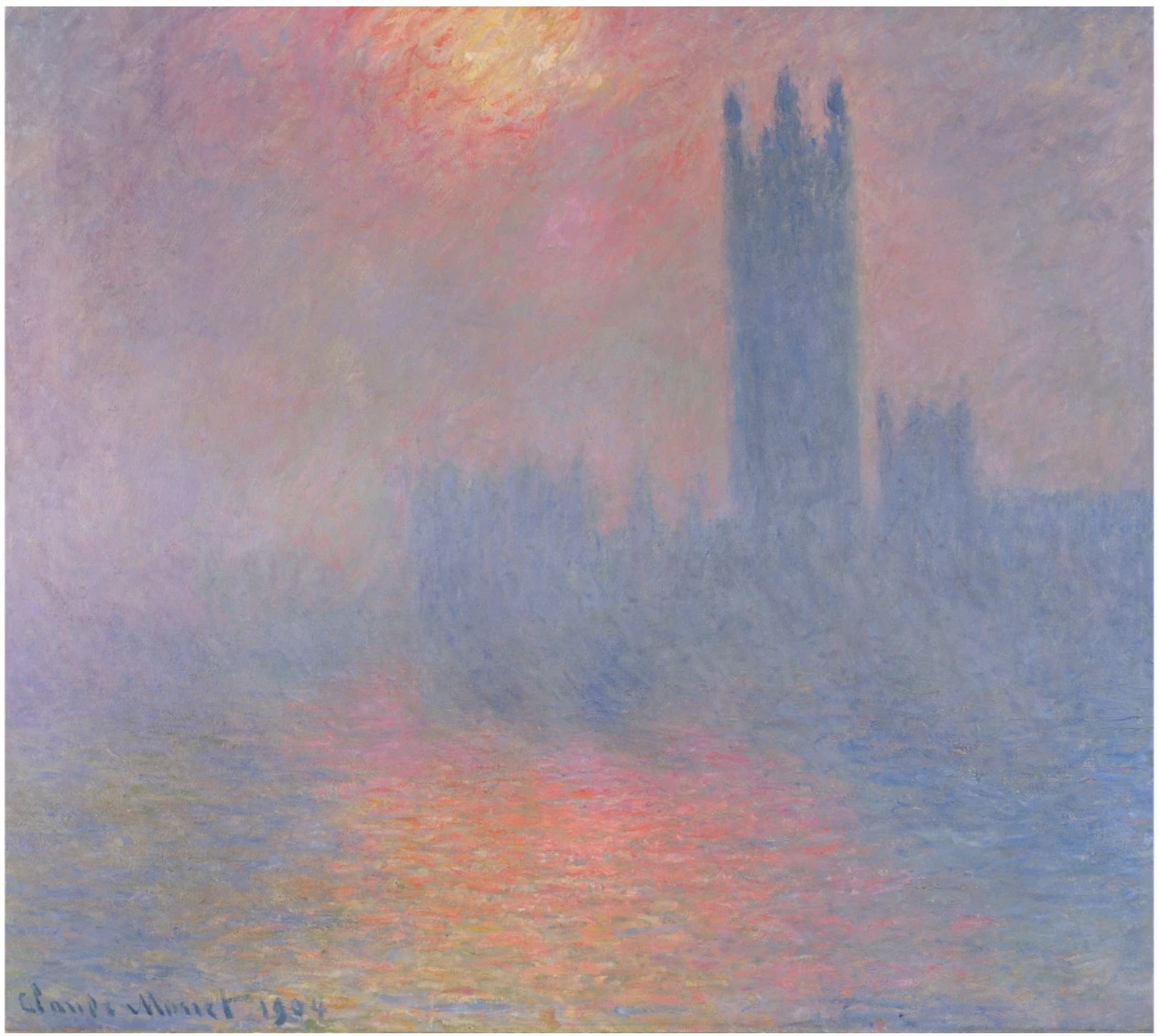
Claude Monet, Londres, le Parlement, Trouée de soleil dans le brouillard, 1904. Musée d’Orsay, Paris. Image © Bridgeman Images
Untitled was executed at the conclusion of a watershed decade for Rothko in which he cultivated his revolutionary abstract vernacular. In these years, Rothko performed the sublime: harnessing the effervescent splendor and intangible divinity of light and color through the methodical articulation of luminous fields of pigment. Applying numerous thin veils of pigment through a nuanced feathering technique, Rothko eliminated hard edges from his compositions in favor of a subtle blending of color. The resulting compositions radiate magnificent weightlessness. The edges of Rothko’s forms are suspended in halos, which afford his painted surfaces a heavenly aura. Thereby, his paintings at once evoke stillness and motion, as if the pigments on the surface have been freshly applied yet are eternally fixed. While Rothko’s Abstract Expressionist peers like Franz Kline and Willem de Kooning deconstructed the picture plane through an ostensibly unbridled gestural fortitude, Rothko tested the absolute limits of abstraction through radiant zones of pure color, hovering in metaphysical tension with each other. Indeed, Rothko’s compositions achieve a transformative sense of harmony and balance through the subtle asymmetries and idiosyncrasies of their forms. Devoid of representation, the subject of Rothko’s work becomes the pure expression of color and light.
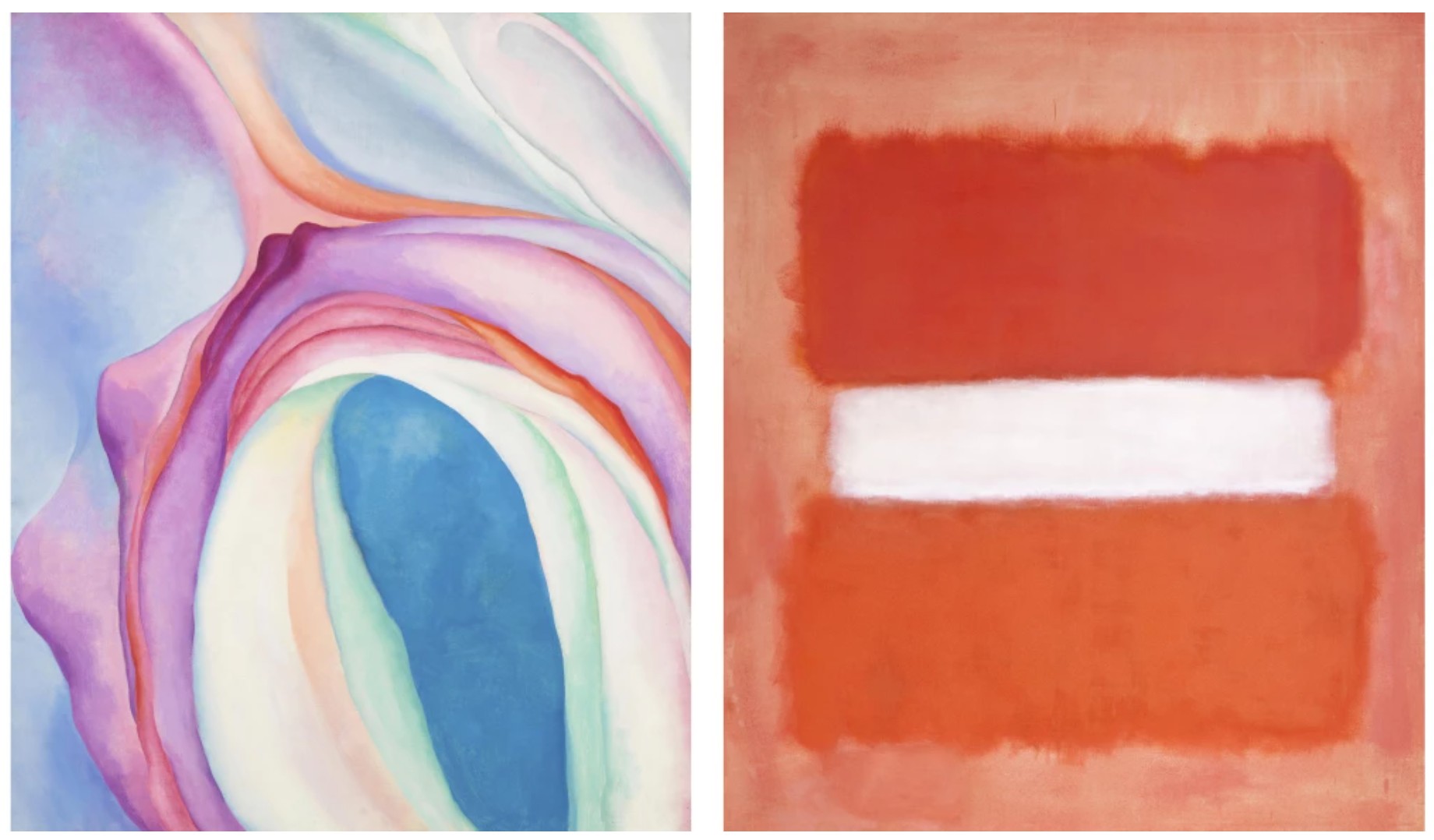
Left: Georgia O’Keeffe, Music, Pink and Blue No. 2, 1918. Whitney Museum of American Art, New York. Image © Whitney Museum of American Art / Licensed by Scala / Art Resource, NY. Art © 2025 Georgia O’Keeffe Museum / Artists Rights Society (ARS), New York.
Right: Mark Rothko, White Center, 1957. Los Angeles County Museum of Art. Image © 2026 Museum Associates / LACMA. Licensed by Art Resource, NY. Art © 1998 Kate Rothko Prizel & Christopher Rothko / Artists Rights Society (ARS), New York
Paper was a foundational medium for Rothko throughout his career, operating as an essential vessel for channeling chromatic force. As Dore Ashton observed, Rothko more than any artist I have known succumbed to the lure of light… light that envelops us and is all things that are not… It was most certainly his experience with the paradoxical nature of paper—absorbing and reflecting at the same time—that set him on his course to the great clearing away that his life’s work represents.” (Dore Ashton, “Introduction,” in: Exh. Cat., Washington, D.C., National Gallery of Art (and traveling), Mark Rothko: Works on Paper, 1984-86, p. 9) Rothko’s paintings on paper from the 1950s are unique within his corpus for the astonishing vibrancy of their palettes. In the present work, Rothko juxtaposes three registers of varying scales against a rich, berry-colored expanse, forming a composition which evokes the proportions of the human body.
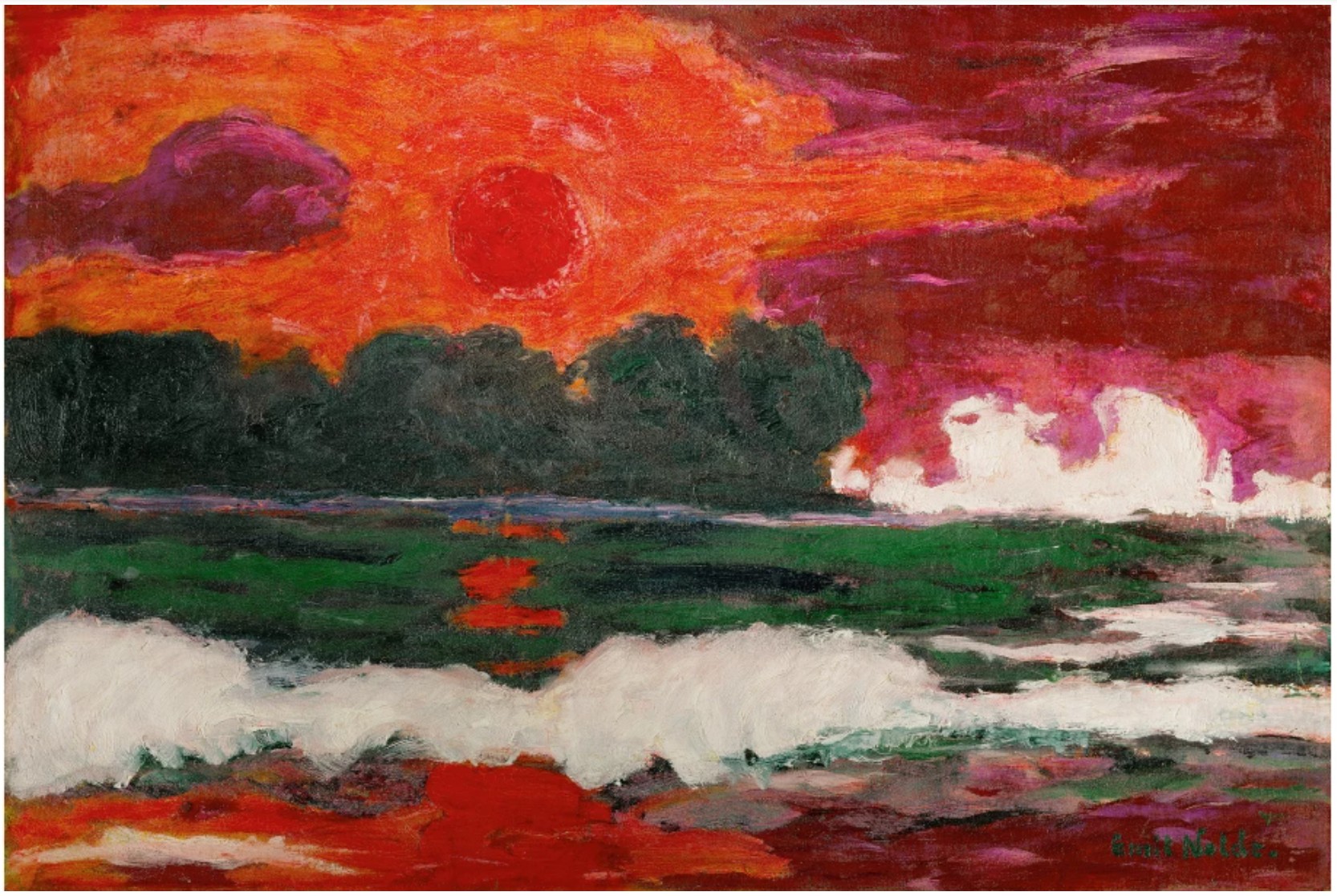
Emil Nolde, Tropensonne, 1914. Louisiana Museum of Modern Art, Humlebaek. Art © Nolde Stiftung Seebüll, Germany
In 1958, nearing the end of a radically prolific and formative decade for Rothko, he was commissioned to create a historic series of paintings for the Seagram Building in New York—today known as the Seagram Murals. Over the following two years, as he produced these paintings, his output evolved from saturated, bright hues to a deeper, more somber palette. Untitled sits at the nexus of this moment, radiating a sumptuous, jewellike glow while also anticipating the rich maroon palette of Rothko’s landmark Seagram Murals. The orange center of Untitled radiates as if illuminated from within, bestowing the composition an effervescent, extrasensory quality shared with Rothko’s most successful paintings on canvas. The present work embodies the profound visual resonance and transcendent essence of Rothko’s acclaimed large-scale canvas works encapsulated in an intimate, immersive format.
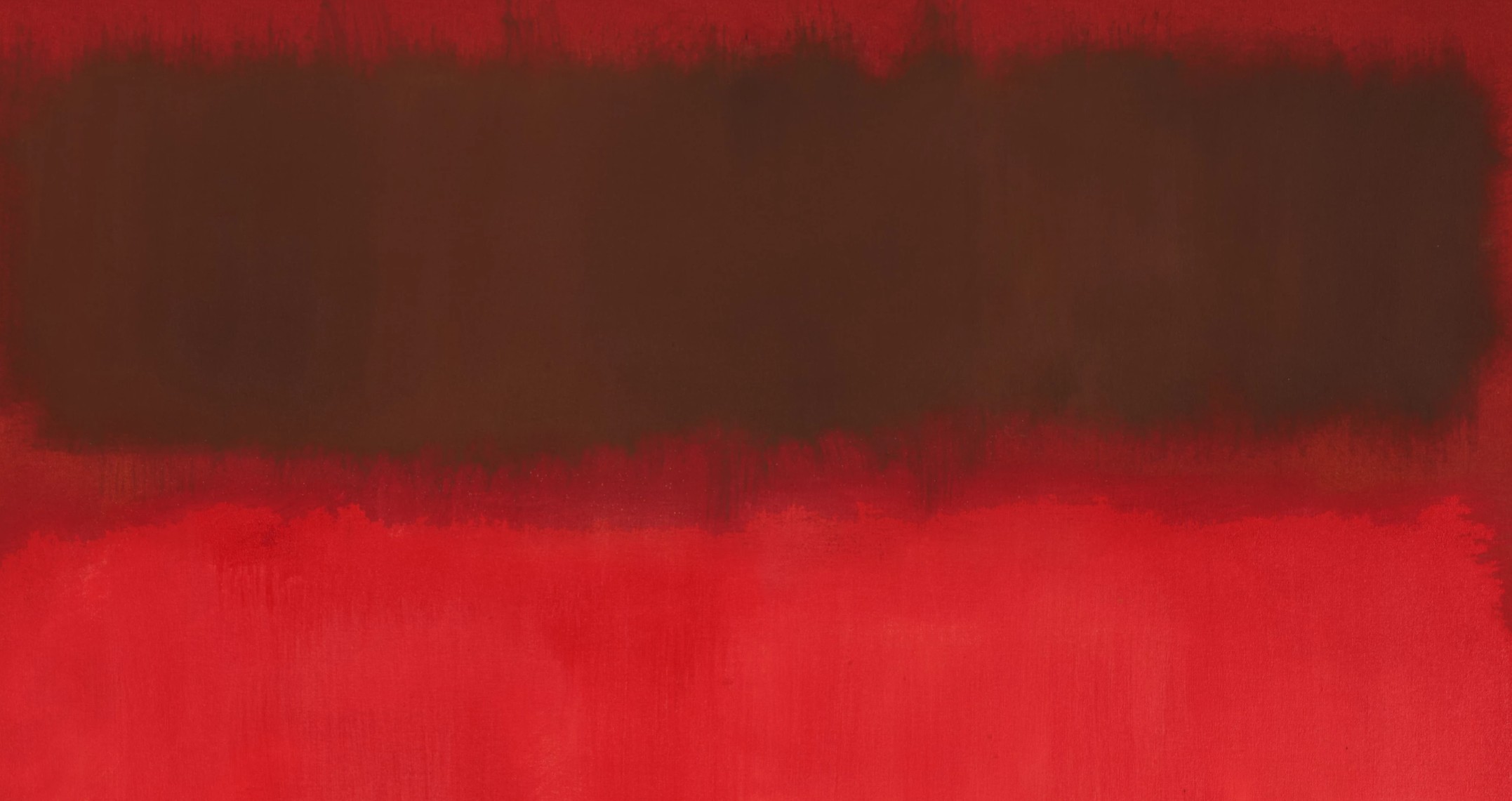
Brown and Blacks in Reds, 1957
Robert Mnuchin: Collector at Heart
Sotheby’s New-York: 14 May 2026
Estimated: USD 70,000,000 – 100,000,000
USD 85,780,000
Mark Rothko | Brown and Blacks in Reds | Robert Mnuchin: Collector at
MARK ROTHKO (1903 – 1970)
Brown and Blacks in Reds, 1957
Oil on canvas
90-1/2 x 60-5/8 inches (229.9 x 154 cm)
Signed and dated 1957 (on the reverse)
Mark Rothko sought many aims in painting: clarity, contemplation, a purity and honesty in the picture’s ability to convey human emotion. The canvases that poured forth in his “Classic Years,” what David Anfam calls the artist’s mature period beginning around 1951 and continuing until his death in 1970, were epic, beautiful, literally and figuratively monumental, but were—above all else—conduits for accessing the fullest range of feeling. Each chronicles a fundamental state of being: hope flung into ecstasy; melancholy plummeting toward despair; the vulnerable, brooding, romantic, and sublime. Yet it is a rare few paintings that Rothko created in his life that see the whole spectrum of human drama cleaved open at once. In Brown and Blacks in Reds, the singular masterpiece at the heart of Robert Mnuchin’s collection, we see his aims realized, simultaneously and operatically announcing what it is to paint, to perceive, to live, and to feel.
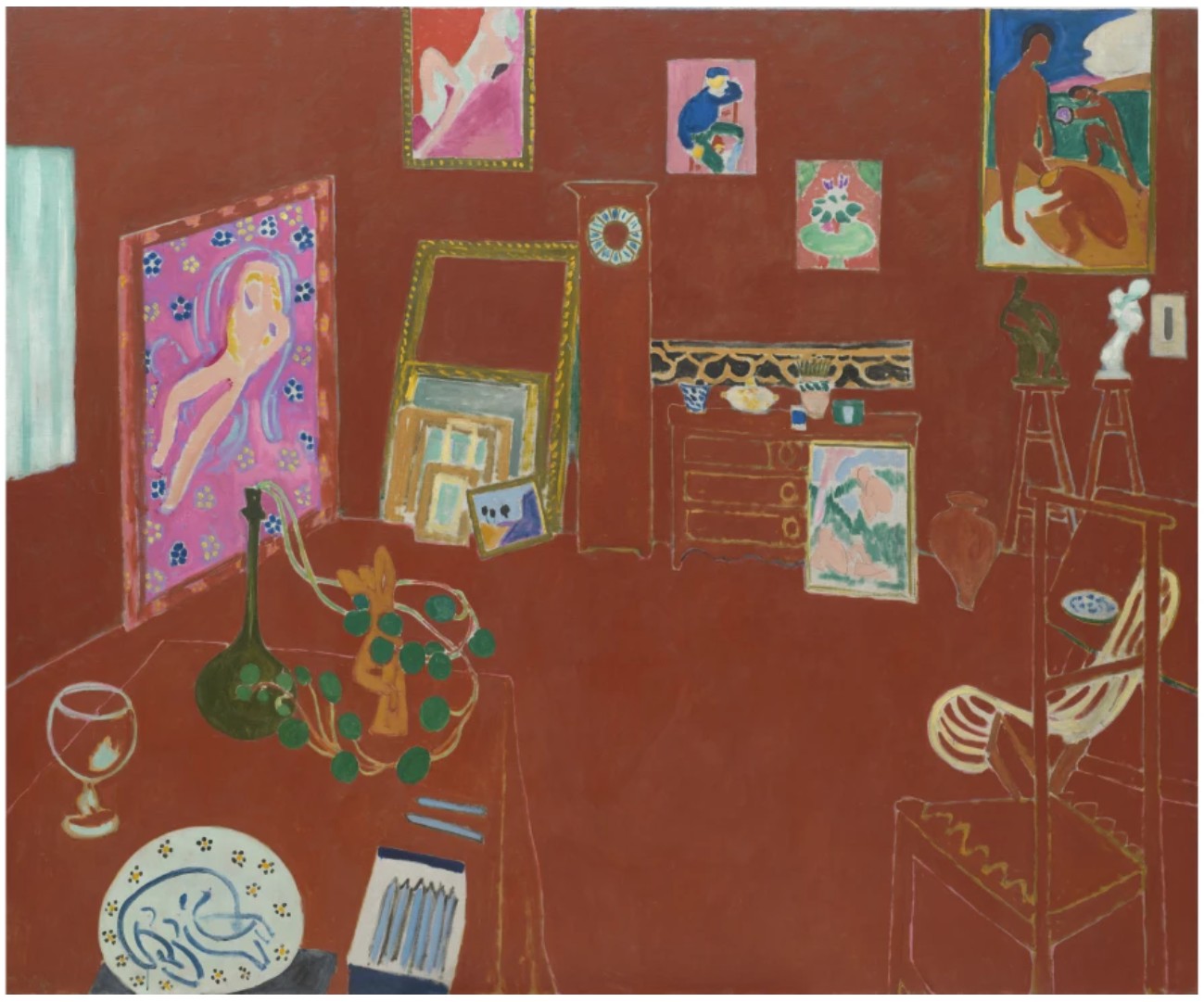
Henri Matisse, The Red Studio, 1911. The Museum of Modern Art, New York. Image © The Museum of Modern Art/Licensed by SCALA / Art Resource, NY. Art © 2026 Succession H. Matisse / Artists Rights Society (ARS), New York
By 1957, Rothko had well mastered the format that would define his life and work—feathered, atmospheric fields of color caught in exquisite, inimitably precise suspense—and for the first time could earn a living from his painting alone. The thirty-seven paintings executed that year offer a remarkable, wholly abstracted exploration of the human condition, and in only fifteen of these canvases did Rothko soar to the Herculean scale of the present work, measuring over ninety inches. Here, black and radiant red pose not the image of but an encounter with the artist at the height of his powers, giving a material identity to the extraordinary, often ineffable sense of passion felt by humanity. So successful and intense was the effect engendered by the palette and tripartite compositional structure seen here that Rothko explored this in three crimson, maroon, and black works that year: Black Over Reds {Black on Red}, Light Red Over Black, and the present work, the former two held by the Baltimore Museum of Art and the Tate in London, respectively.
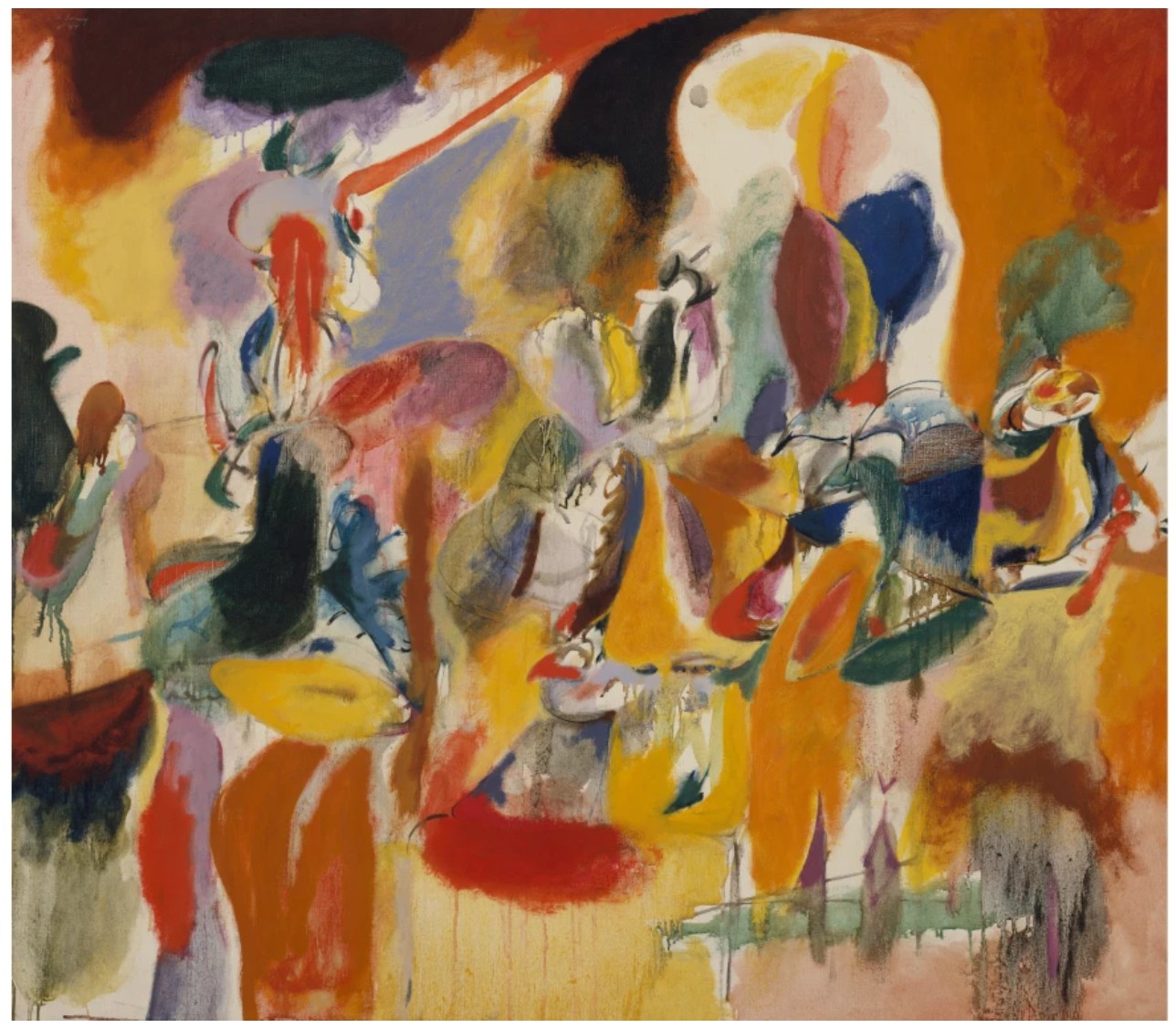
Arshile Gorky, Water of the Flowery Mill, 1944. The Metropolitan Museum of Art, New York. Image © The Metropolitan Museum of Art. Image source: Art Resource, NY. Art © 2026 The Arshile Gorky Foundation /Artists Rights Society (ARS), New York
Of all its technical and psychological accomplishments, which place it alongside the greatest masterworks by Rothko, Brown and Blacks in Reds ranks incomparable for its storied provenance and place in the artist’s career. Brown and Blacks in Reds was first owned by Joseph E. Seagram & Sons, Inc., who acquired the work from Sidney Janis Gallery in New York and proudly installed it in the lobby of the eponymous Seagram building in Manhattan—the only work by the artist to bear the honor of hanging in the Mies van der Rohe and Philip Johnson-designed space. This fortuitous accession would prompt the Seagram Corporation to commission the Seagram Murals, the staggering series of red and black paintings originally meant to line the walls of the Four Seasons restaurant in their lobby. Rothko, however, eventually grew disturbed by the potential reduction of these works as decoration, as opposed to experiences unto themselves. He ultimately withdrew, retained the works, and presented nine canvases to the Tate, whose galleries could honor their sovereignty and aural authority. Other groupings from the commission today reside in the National Gallery of Art in Washington, D.C., and the Kawamura Memorial Museum of Art in Japan.
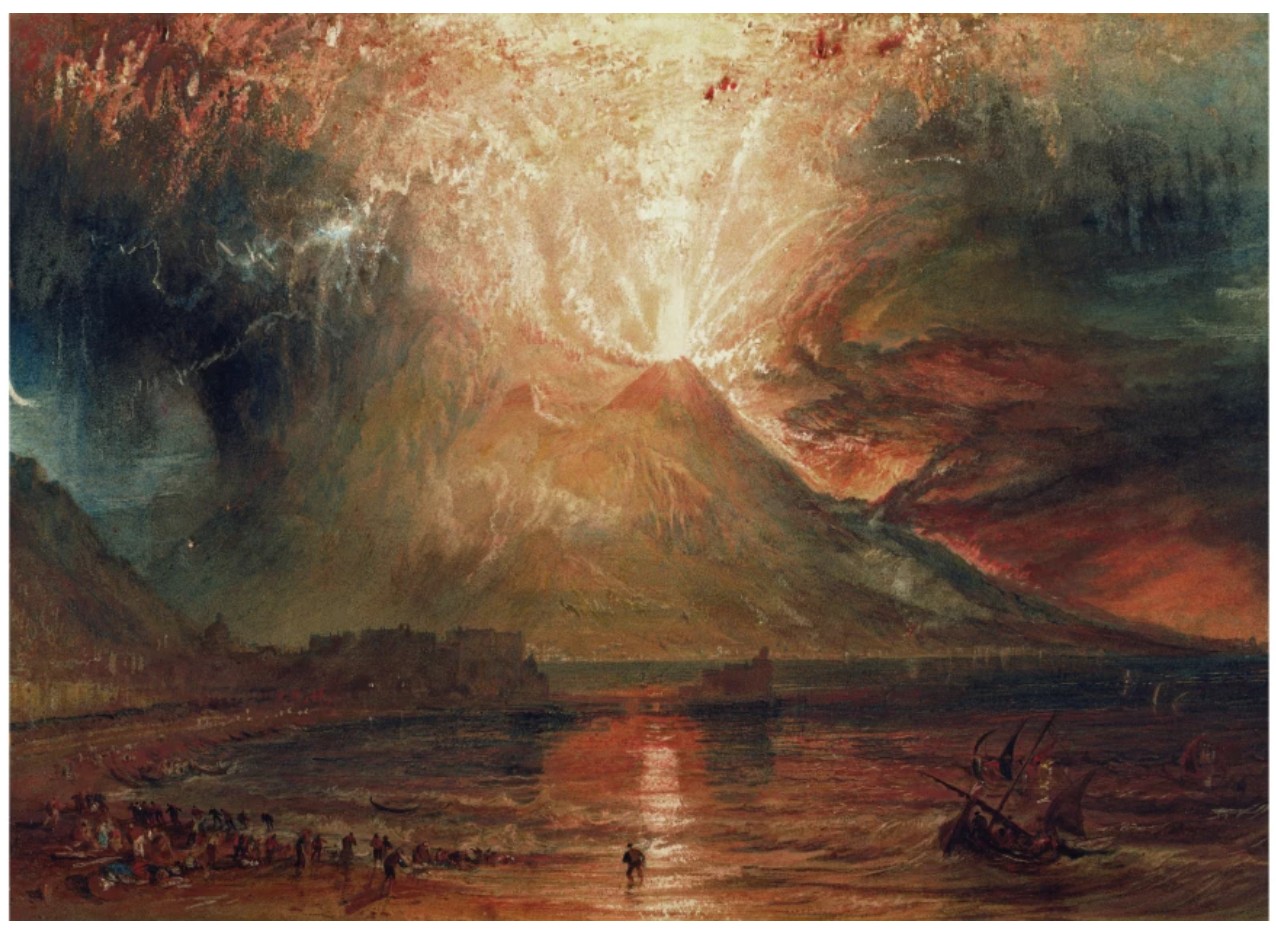
Joseph Turner, Mount Vesuvius in Eruption, 1817. Yale Center for British Art, New Haven. Image © Bridgeman Images
Though the palette anticipates that of the Seagram Murals, the effect of the present work hardly mimics the somber, sepulchral profundity of that series, here, rather, Rothko summons a heady panoply of emotion, channeling apprehension in maroon and peril in black; what triumphs, however, is the brilliance of hope, impressed upon the viewer in innumerable diaphanous veils of incandescent and incomprehensibly luminous red. “Pictures must be miraculous,” Rothko concluded, “the instant one is completed, the intimacy between the creation and the creator is ended. He is an outsider. The picture must be for him, as for anyone experiencing it later, a revelation, an unexpected and unprecedented resolution of an eternally familiar need.” (Mark Rothko, “The Romantics were Prompted…,” Possibilities, No. 1, Winter 1947-48, p. 84)
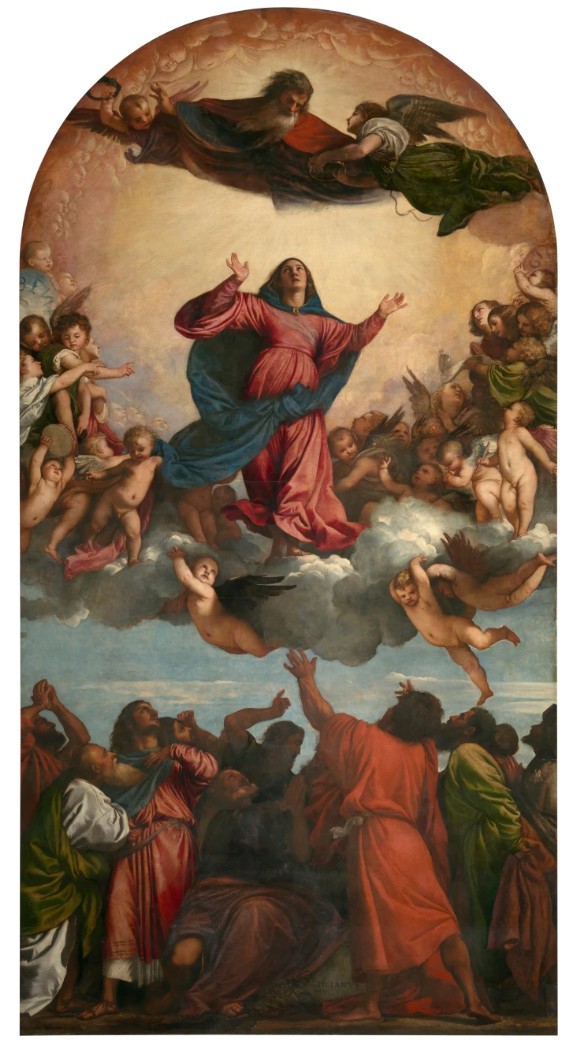
Titian, Assunta, 1516-18. Santa Maria Gloriosa Dei Frari, Venice.
Image © Mondadori Portfolio/Archivio Mauro Magliani/Mauro Magliani / Bridgeman Images
The feathered perimeters of each rectangle, organized in his characteristic tripartite structure, embody this revelation entirely, taking on a kind of autonomy unbeknownst to artists or artworks prior. The longer one looks, the longer one feels, as ruby, mahogany, smoldering crimson and exuberant raspberry hues oscillate into a field beyond the surface of the picture plane, as though hovering and receding in real time. “For me,” art historian and curator Katherine Kuh wrote, Rothko’s work possesses “a kind of ecstasy of color which induces different but always intense moods. I am not a spectator—I am a participant.” (Katherine Kuh, letter written 18 July 1954, n.p.)
The spirit, composition, and coloration of Brown and Blacks in Reds invite a wealth of art historical comparisons. The obsessive choreography of light and color echoes that of Claude Monet’s incendiary sunrises; the unshakeable belief in the divine possibilities of paint recalls the Romantics’ pursuit of the sublime. None, though, proved so impactful as Henri Matisse’s The Red Studio, which hung in The Museum of Modern Art and was often visited by Rothko himself. The absorptive, abstracted treatment of space was indelible: there, space and object were collapsed, and in Rothko’s own work, he set out to collapse that distance between the painting and the person before it. We thus cease to perceive the present work as a dialogue between medium and support. “The progression of a painter’s work, as it travels in time from point to point, will be toward clarity: toward the elimination of all obstacles between the painter and the idea and between the idea and the observer… To achieve this clarity is, inevitably, to be understood.” (Mark Rothko quoted in: Exh. Cat., New York, Museum of Modern Art, 15 Americans, 1952, p. 18)
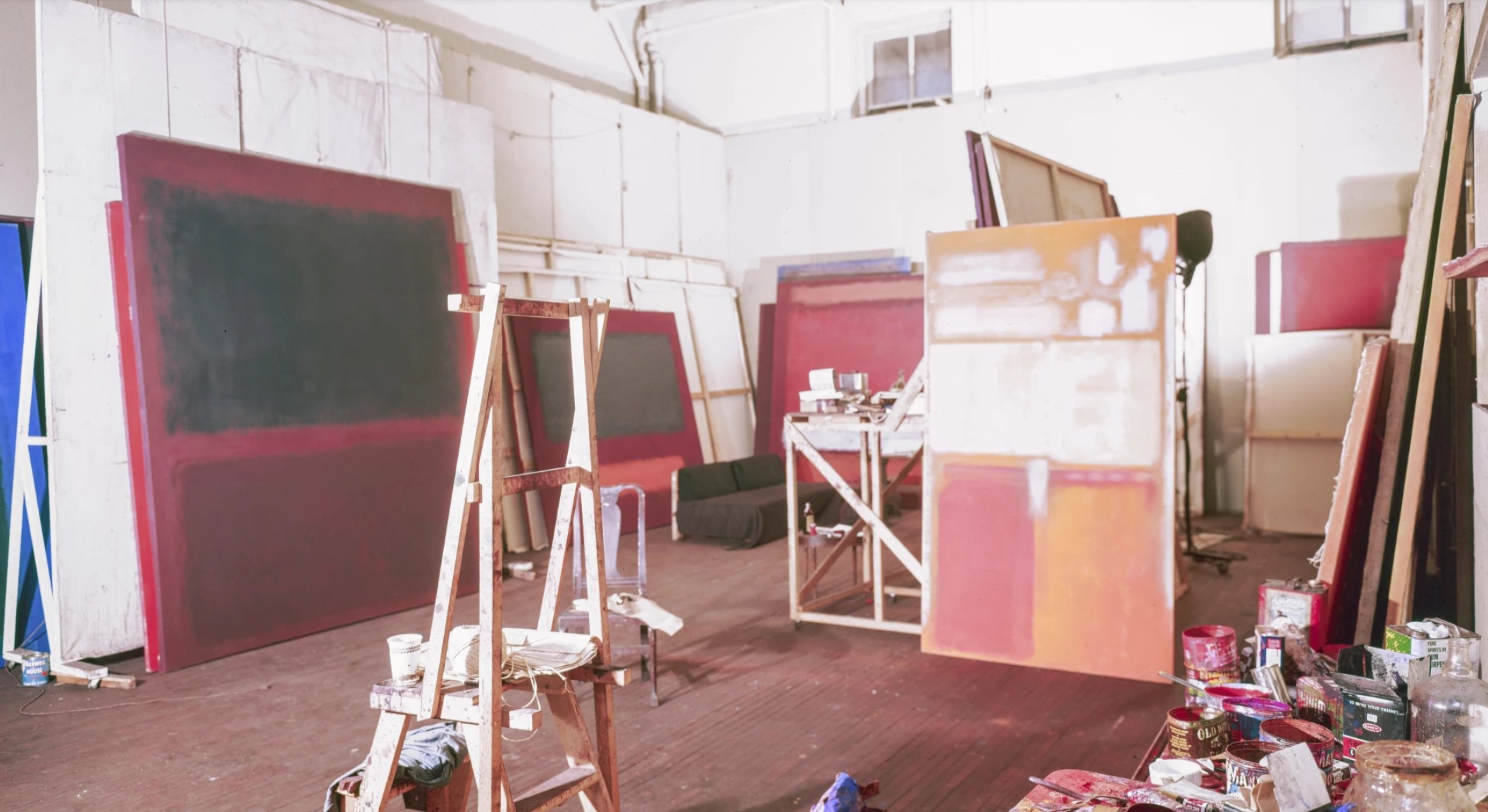
Mark Rothko’s studio at 222 Bowey. Photo by Herbert Matter. Courtesy of the Department of Special Collections, Stanford University Libraries (M1446 Herbert Matter papers, circa 1937-1984, box 153, folder 33, Dept. of Special Collections and University Archives, Stanford University Libraries, Stanford, CA). Art © 1998 Kate Rothko Prizel & Christopher Rothko / Artists Rights Society (ARS), New York
Alongside his contemporaries, Rothko, a name and lion figure inseparable from the achievements of the Abstract Expressionists, did not share the Greenbergian ethos of painting for paint’s sake. By no means a Formalist, Rothko sought not to strike representation or any tangible, lived experience from the surface of his pictures but rather labored tirelessly to intensify them. The radical aesthetic distillation he arrived at was an effort to translate man’s very “eternally familiar needs,” and while Rothko did not mimic or describe those subtleties of human sentiment, it remained a chief and principal aim of his work. “His pictures,” John Elderfield describes, “are designed to deliver transcendence… to provide access to hidden but immanent truths of the universe—not merely to struggle with that transcendence, those truths (what would be a doubter’s way), but to actually convey them. For Rothko, in an interpretation that we can scarcely fathom now, a picture could offer immediate access to the divine.” (John Elderfield, “Transformations” in: Glenn Phillips and Thomas Crow, eds., Seeing Rothko, Los Angeles, 2002, p. 101)
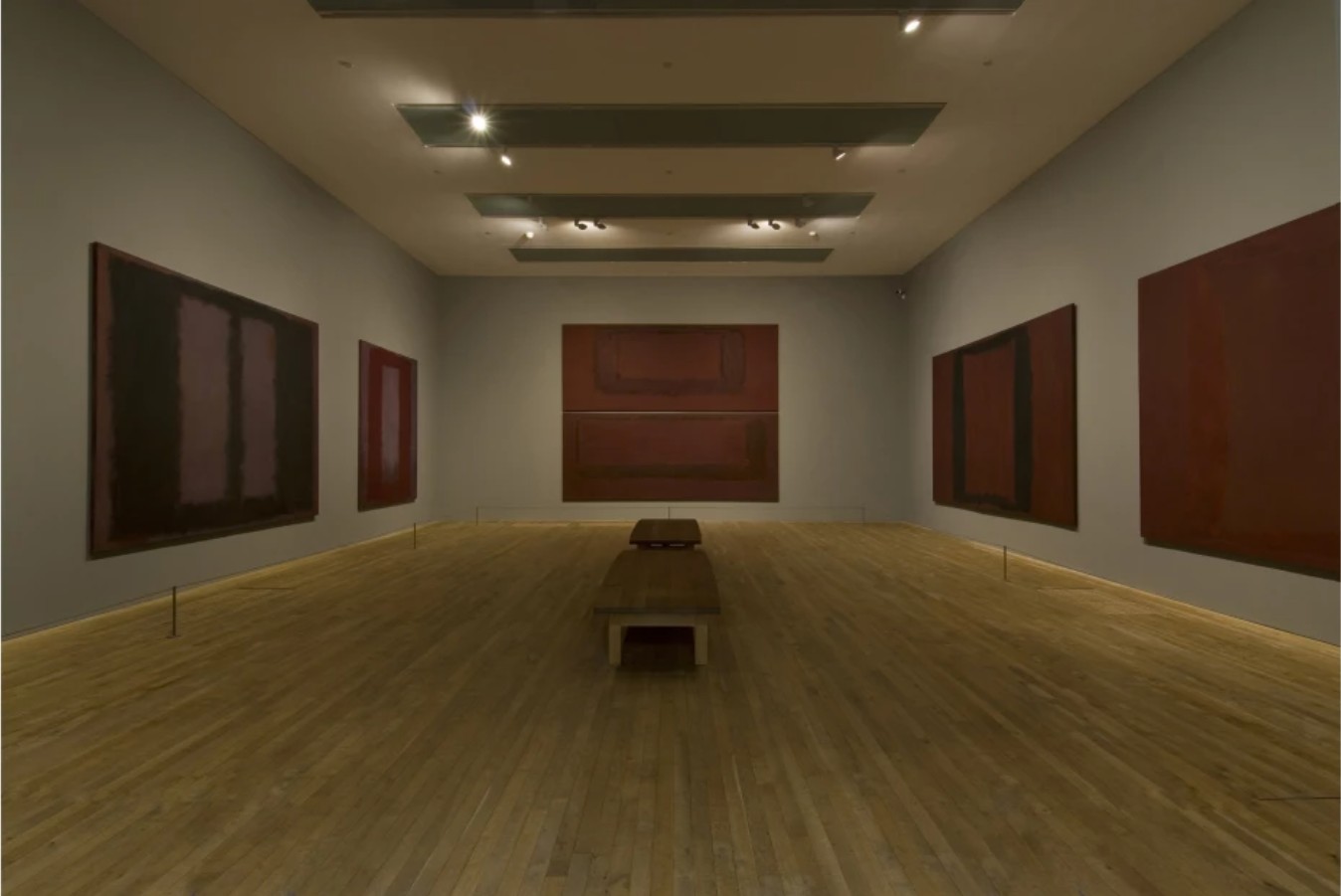
The Seagram Murals at the Tate, London. Image © Tate, London / Art Resource, NY.
Art © 1998 Kate Rothko Prizel & Christopher Rothko / Artists Rights Society (ARS), New York
In a 1959 Life magazine article, Dorothy Seiberling described Rothko’s mystifying output: “Just as the hues of a sunset prompt feelings of elation mingled with sadness or unease as the dark shapes of our night close in, so Rothko’s colors stir mixed feelings of joy, gloom, anxiety or peace. Though the forms in the painting seem simple at first glance, they are in fact subtly complex. Edges fade in and out like memories; horizontal bands of ‘cheerful’ brightness have ‘ominous’ overtones of dark colors.” (Dorothy Seiberling, “Abstract Expressionism, Part II,” Life, 16 November 1959, p. 82) For the majesty of its scale, the myth of its provenance, and the miracle that is, in Seiberling’s worlds, stirring such acute and fiercely primal feelings, Brown and Blacks in Reds is an utter and unequivocal masterwork. Toured internationally in most of the artist’s seminal presentations—from the 1978-79 traveling retrospective organized by the Solomon R. Guggenheim Museum in New York; the Rothko exhibition at the Tate in London; to the celebrated recent show at the Fondation Louis Vuitton in Paris—Brown and Blacks in Reds marks a historic accomplishment, conjuring in oil the “language of feeling” that no artist has ever dared to replicate since. (Robert Motherwell quoted in: Exh. Cat., Paris, Fondation Louis Vuitton, Mark Rothko, 2023, p. 12)
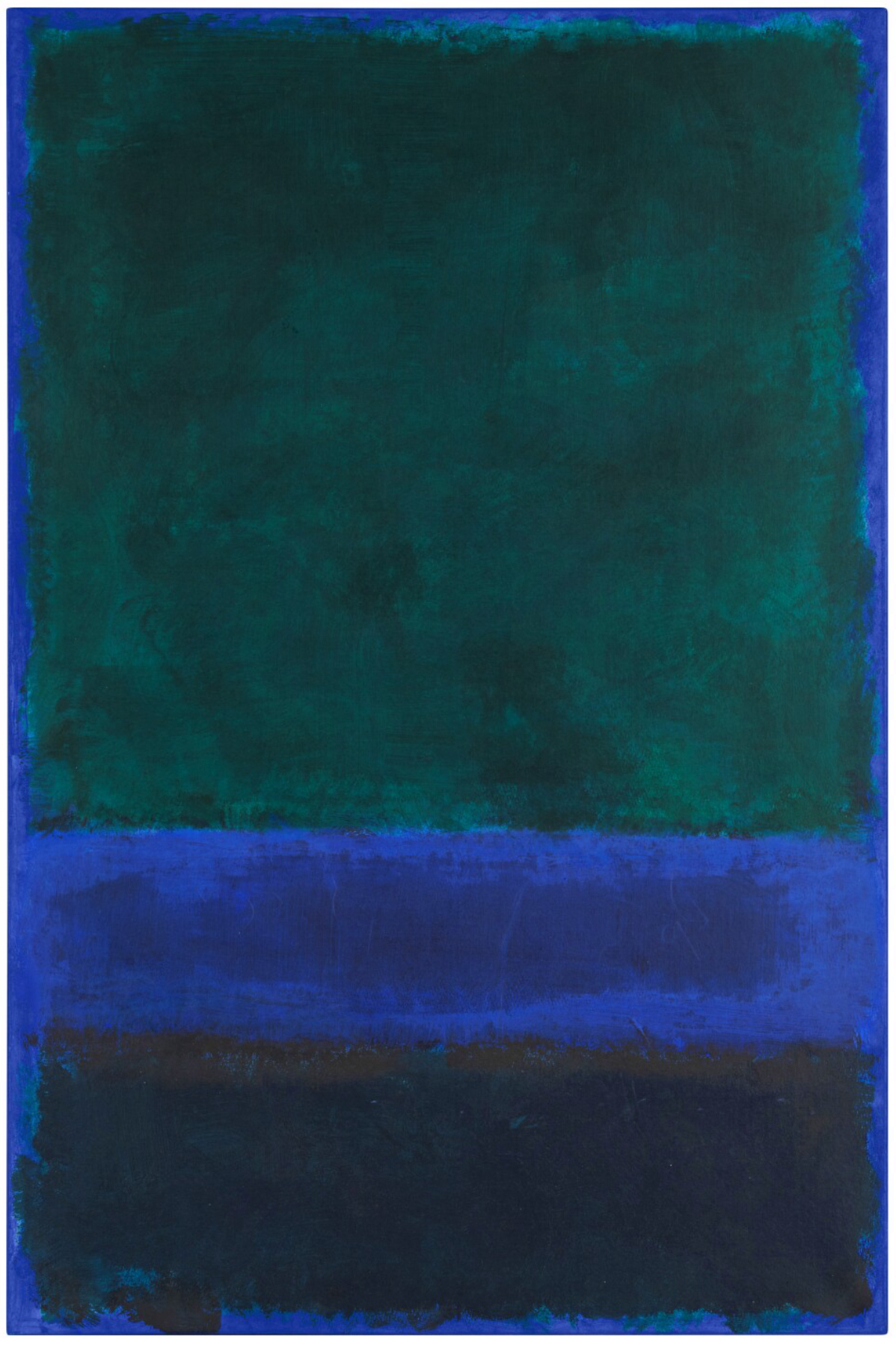
No. 15 (Two Greens and Red Stripe), 1964
The Collection of Agnes Gund
Christie’s New-York: 18 May 2026
Estimate on Request
USD 98,385,000
NEW AUCTION RECORD FOR MARK ROTHKO
MARK ROTHKO (1903-1970), No. 15 (Two Greens and Red Stripe) | Christie’s
MARK ROTHKO (1903-1970)
No. 15 (Two Greens and Red Stripe), 1964
Oil on canvas
93×69 inches (236.2 x 175.3 cm)
Signed, partially titled and dated ‘MARK ROTHKO 1964 #15’ (on the reverse)
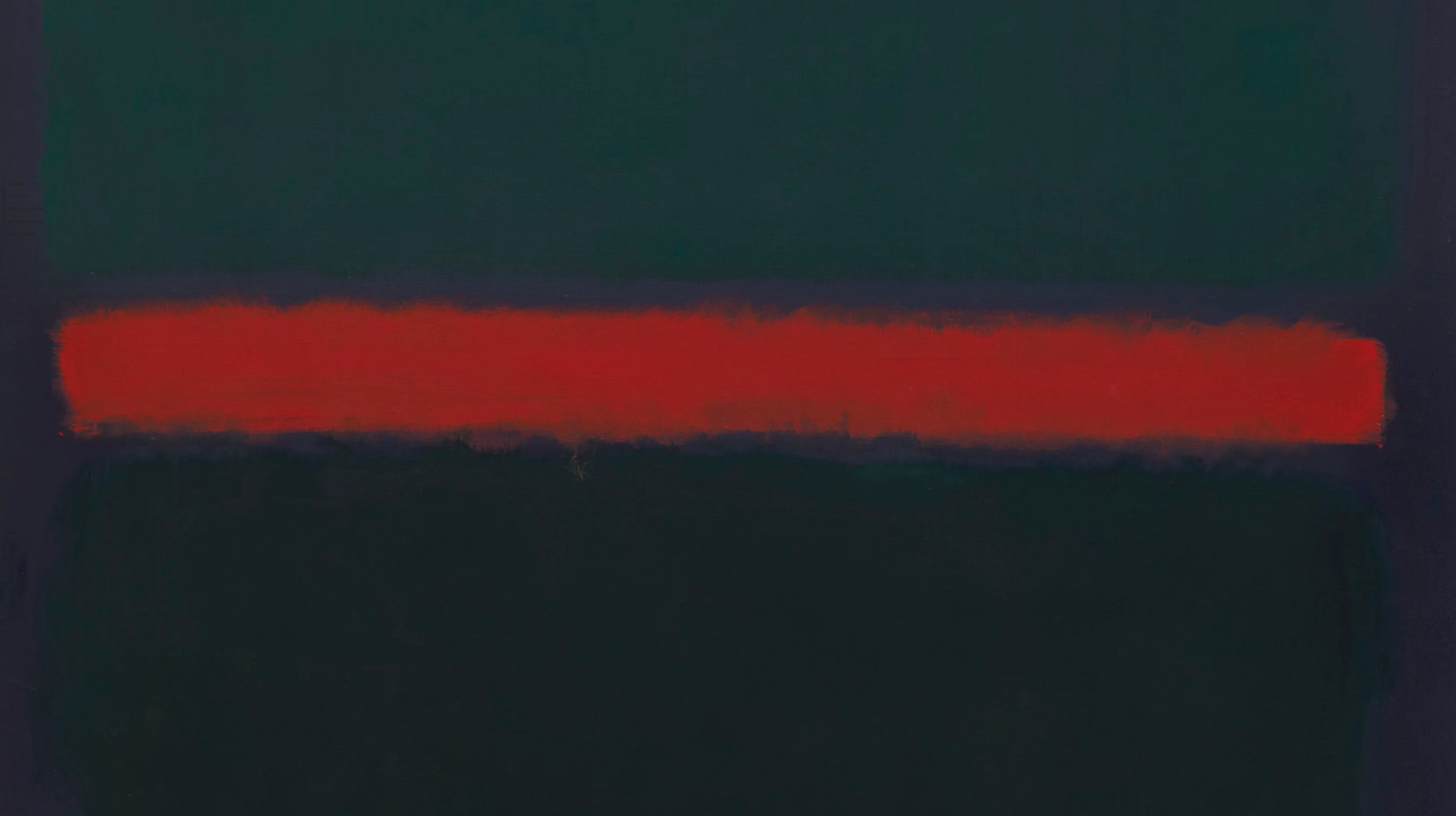
With its grand, all-encompassing scale and serene, meditative tones, Mark Rothko’s No. 15 (Two Greens and Red Stripe) stands as one of Abstract Expressionism’s greatest accomplishments. Painted at a critical juncture in the artist’s career, following his Seagram Murals and Harvard commission and just before he devoted the remainder of his career to the Rothko Chapel in Houston, No. 15 (Two Greens and Red Stripe) demonstrates the artist’s embrace of darker, more saturated colors; here, two different green rectangular forms—a central warm emerald color which dissolves into a cooler jade in the peripheries—operate in tandem to grant the work a mesmeric inner glow, providing a superb exemplar of what the critic Robert Rosenblum defines as Rothko’s “abstraction of the Sublime” (“The Abstract Sublime,” ARTnews, 59, no. 10., February 1961, p. 41). These greens are divided by a brilliant horizontal shot of red against an ethereal ground of royal violet and ultramarine blue. Rothko’s use of his most important color—red—and his favored color combination of green and violet articulates his artistic enterprise at its most intense and contemplative, adducing a contracted, meditative, and somber aura into the work which expresses itself to the viewer in terms of slow, ritualistic rhythms of pauses and lulls. Discussing Rothko’s large scale, darker works from the early 1960s, the artist’s son Christopher Rothko acclaims that “they are also some of his greatest works, their subtle shading and deeply saturated colors coming to the fore for the patient viewer who allows them to unfold their entire visual splendor” (C. Rothko, “The Experience Behind the Icon,” in K. Rothko Prizel and C. Rothko, Mark Rothko, New York, 2022, p. 27).
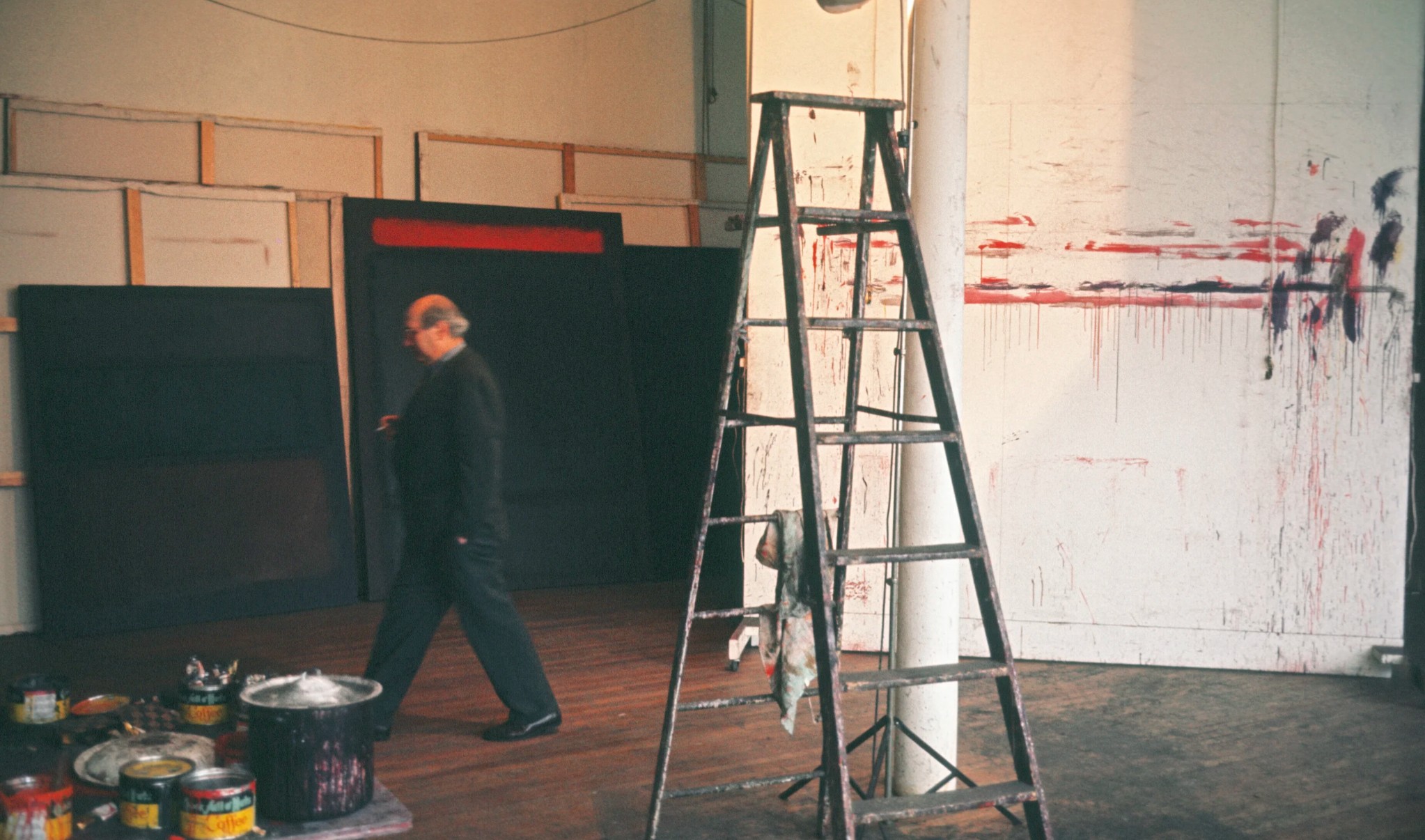
Mark Rothko in his 1485 First Avenue studio, New York, 1964. Photograph by Dan Budnik. © 2020 The Estate of Dan Budnik, All Rights Reserved. Artwork: © 2026 Kate Rothko Prizel & Christopher Rothko / Artists Rights Society (ARS), New York.
No. 15 (Two Greens and Red Stripe) was one of the first masterpieces to enter Agnes Gund’s celebrated collection. She made her first major acquisition in 1966, obtaining Henry Moore’s Three-Way Piece No. 2: Archer from Sidney Janis Gallery, then donating the work to the Cleveland Museum of Art just four years later. In 1967, Agnes joined the Museum of Modern Art’s International Council, befriending many of the most significant collectors and patrons of the twentieth century. Agnes’ relationship with Emily Tremaine was especially close. Emily, with her husband Burton, assembled perhaps the greatest collection of modern and postwar art, bringing together masterpieces by modern luminaries including Juan Gris, Pablo Picasso, Alberto Giacometti, and Piet Mondrian as well as contemporary works by Jackson Pollock, Willem de Kooning, Barnett Newman, Jasper Johns, Robert Rauschenberg, and Andy Warhol. The Tremaines were some of Rothko’s earliest supporters, acquiring his early Number 8, 1952, from Betty Parsons Gallery in 1953. Agnes spotted the work while visiting the Tremaines and immediately fell in love with the artist. “Let’s go to Rothko’s studio,” Emily immediately suggested, and Agnes soon found herself personally introduced to the legendary artist in his studio (quoted in “Tremaine Timeline,” The Tremaine Collection, online, [accessed 3/6/25]).
While Agnes initially desired an earlier work with a similarly bright palette to the Tremaine Rothko, the artist instead recommended the present work. Acquiring No. 15 (Two Greens and Red Stripe) directly from Rothko just three years after he painted the work, Agnes rapidly fell in love, only allowing the painting to leave her apartment on one occasion, for an exhibition at her beloved Cleveland Museum of Art. “I love to live with things, because I can see the works in different lights, at different times of day,” Agnes described of No. 15 (Two Greens and Red Stripe). “When I was pregnant, I fell asleep, and when I got up, the whole Rothko had changed, and I wrote Rothko, and I said how much I loved the picture, and Rothko called up, and said ‘I really like hearing that about my art’” (quoted in “Tour Agnes ‘Aggie’ Gund’s Art-Filled New York City Apartment,” Aubin Pictures, Vimeo, March 22, 2021, online).
Mark Rothko, Number 8, 1952. Private collection, formerly in the collection of Emily Hall and Burton Tremaine, Madison, Connecticut. © 1998 Kate Rothko Prizel & Christopher Rothko / Artists Rights Society (ARS), New York.
No. 15 (Two Greens and Red Stripe) is a masterful example of Rothko’s mature sectional abstractions, made just before Rothko’s transition into a more architectural style for the Rothko Chapel. In the later 1950s, the bright expanses of color of Rothko’s earlier work were gradually giving way to a more introspective palette of dark hues incorporating maroons, dark greens, blues, and violet. The present work pronounces the completion of the artist’s chromatic metamorphosis, lavishly expressing the deepened emotion which Rothko wrought from his darkened palette in pursuit of the Sublime. The three color forms expand almost the entire width of the canvas, balanced against the cool, deep ground. While the green areas dissolve into the dark ground, the narrow red band provides an electric shot through the composition, enlivening the canvas with a chromatic intensity not found in his Black Form series of dark blocks made later in 1964. Rothko’s ground here demonstrates his magisterial commitment to color—the turning edges of the canvas are painted in a pure ultramarine, recalling the deep blues of Giotto or Fra Angelico and adducing a deepened sense of spatial depth as the surface of the canvas appears to levitate out from the wall. This ultramarine intermixes with a royal violet at the margins of the picture plane in a complex interplay of pigments, with hints of rose madder, ochre, cadmium orange, and dark yellow also observable. The use of two of the most historically significant, revered, and valuable colors in the Western canon—ultramarine was reserved for depictions of the Virgin Mary, whilst violet was used solely for prelates of the Catholic Church and for the imperial family in Roman and later Byzantine art—underscores the reverence which Rothko held for the pigments he utilized. The present work articulates Rothko’s desire for color to elicit deep emotions inside his viewers and is among his most hermetic and awe-inspiring works.
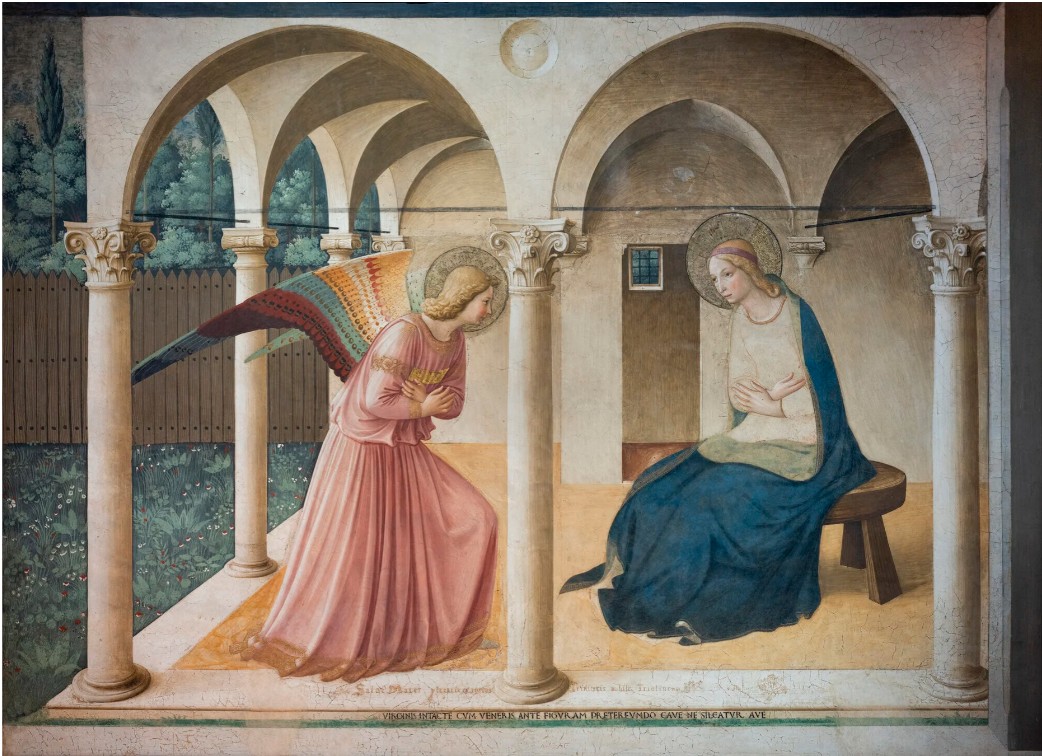
Fra Angelico, Annunciation, 1438-1450. Museum of San Marco, Florence.
No. 15 (Two Greens and Red Stripe) witnesses Rothko achieving the full potential of his materials and surface. Rather than leaving his canvas ground as a neutral space, the artist exploits the visual potential of this priming layer of pigment, emulating the technique of the old masters Titian and Velázquez. The ultramarine-violet expanse participates within the broader composition, unifying the surface of the painting by holding the three bands of color together. The noted Rothko expert and former Chief Conservator of the Menil Collection Carol Caruso Mancusi-Ungaro elaborates how in Rothko’s muted pre-chapel paintings of 1964, the artist achieves “a masterful engagement of color in which somber tones are painted on top of dark tones to create an ethereal effect” which exhibits the artist at the height of his technical talent (C. Mancusi-Ungaro, “Material and Immaterial Surface: The Paintings of Rothko,” in Mark Rothko, exh. cat., National Gallery of Art, Washington, D.C., 1998, p. 292).
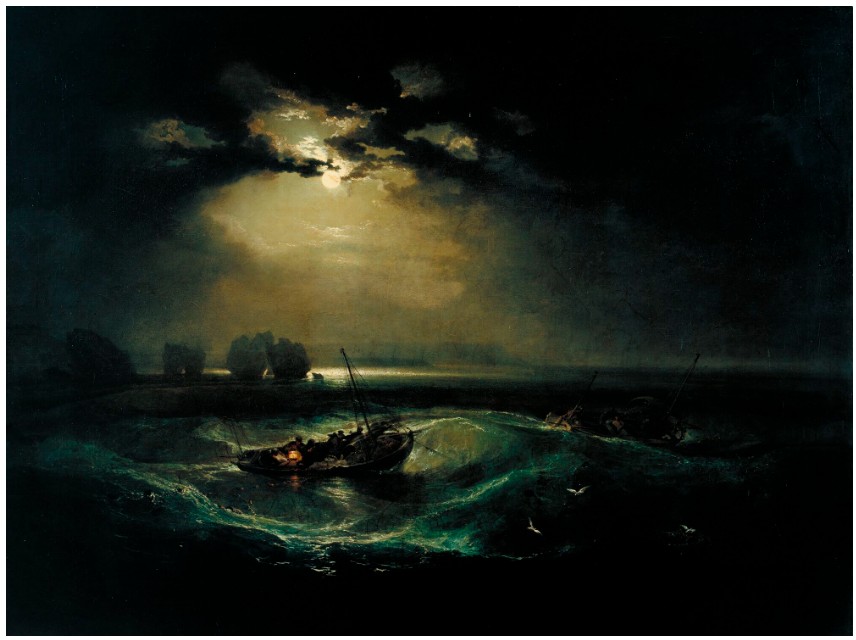
J. M. W. Turner, Fisherman at Sea, 1796. Tate, London.
The ethereal experience which Rothko garners through the sophisticated versatility of his multilayered pigments embodies the artist’s pursuit of a transcendental, almost religious experience which achieved the Sublime, “The strongest of all passions” according to the philosopher Edmund Burke (On the Sublime and Beautiful, London, 1757, p. 32). This sublimity, for Robert Rosenblum, had only previously been approached by the Northern Romantic tradition. “Rothko, like Friedrich and Turner, places us on the threshold of those shapeless infinities discussed by the estheticians of the Sublime… the floating, horizontal tiers of veiled light” seen in paintings like No. 15 (Two Greens and Red Stripe) “seem to conceal a total, remote presence that we can only intuit and never fully grasp” (R. Rosenblum, op. cit., pp. 41, 56). The artist’s sophisticated cultural immersion, closely reading Dostoevsky, Kierkegaard, and most notably Nietzsche, whose Birth of Tragedy proved deeply affective, is apparent in Rothko’s definition of his painterly practice: “the way in which I could achieve the greatest intensity of the tragic irreconcilability of the basic violence which lies at the bottom of human existence and the daily life which must deal with it” (quoted in B. Novak and Brian O’Doherty, “Rothko’s Dark Painting: Tragedy and Void,” in Mark Rothko, op. cit., p. 267). The celebrated curator Nancy Spector identifies the milieu in which the present work was made as when Rothko most closely achieved his Nietzschean ideal, expressing in paint a union of the Apollonian and Dionysian: “Other, darker paintings from the early 1960s impact through intense chromatic contrast, and could be interpreted as more readily substantiating Rothko’s often cryptic commentary on the archetypical tensions in the paintings… In these canvases, deep brown to inky black quadrilaterals yield to high-keyed flashes of brilliant orange and red forms. The ‘drama’ that Rothko describes as inherent to his art in the 1947 statement intensifies with the muting of his overall palette and the simultaneous sharpening of its complementary color distinctions. However, the paintings—conceived as allegorical theaters of human emotion or states of being—can never be reduced to specific affects, despite the feelings they may elicit in a viewer” (N. Spector, “Mark Rothko’s Classic Paintings: Theaters of the Mind,” in Mark Rothko, exh. cat., Fondation Louis Vuitton, Paris, 2023, p. 234).
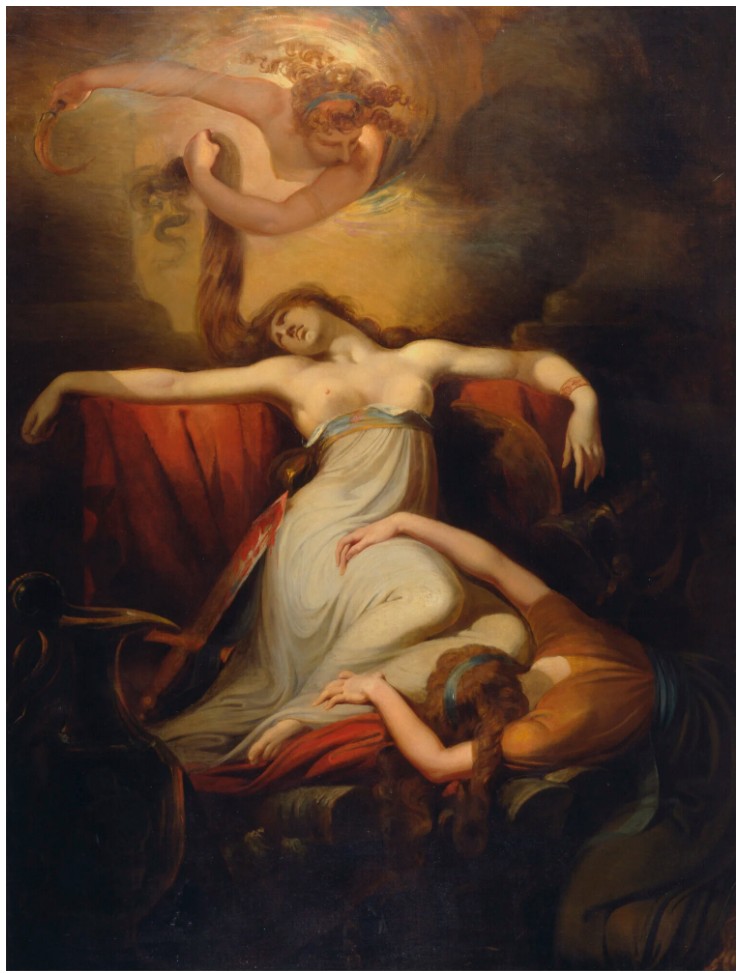
Henry Fuseli, Dido, 1781. Yale Center for British Art, New Haven.
Rothko conceived of his paintings as performed dramas enacting timeless tragedy. Like the ancient Greek and Roman playwrights and poets, Rothko sought through paint to engage his viewer with great emotional force, through which he could inspire a state of contemplative meditation. Just as a thespian stages all elements of a play, Rothko too was highly attuned to the installation and lighting of his works. In 1961, three years prior to No. 15 (Two Greens and Red Stripe), Rothko had personally overseen the hang of his retrospective at the Museum of Modern Art, the first major one-person show devoted to a New York School artist. His close supervision of the exhibition’s installation, where he insisted on placing each painting in close proximity under diffuse lighting, allowed him to contemplate his completed oeuvre, heralding his shift in styles towards the more reserved, opaque tones seen in the present work, where he attained what Nietzsche describes as “the supreme goal of tragedy and of art in general” (The Birth of Tragedy, New York, 1993 [1872], p. 104).
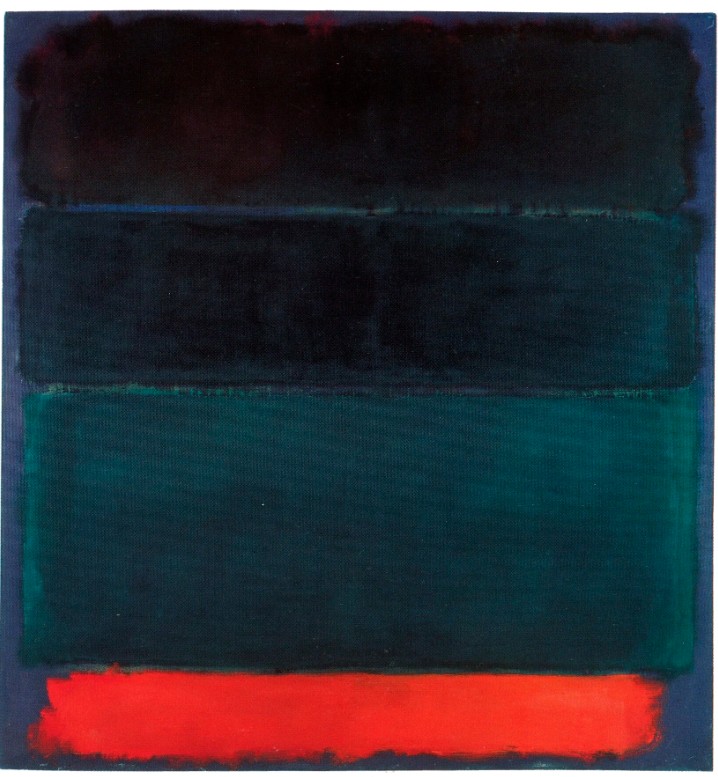
Mark Rothko, Untitled (Red-Brown, Black, Green, Red), 1962. Fondation Beyeler, Basel.
© 1998 Kate Rothko Prizel & Christopher Rothko / Artists Rights Society (ARS), New York.
The grand scale of the present work—the largest from this essential period still in private hands—is likewise an articulation of Rothko’s intent to control the atmosphere and environment in which his works were viewed and perceived. His daughter, Kate Rothko Prizel, notes how the increase in scale in the early to mid-1960s evolved from how “[her] father was interested in surrounding the viewer with his artwork and creating the opportunity for the viewer to sit and truly experience it” (K. Rothko Prizel, “Mark Rothko: A Daughter’s Sketch,” in K. Rothko Prizel and C. Rothko, Mark Rothko, op. cit., p. 46). No. 15 (Two Greens and Red Stripe), at almost eight feet tall the second-highest format in Rothko’s oeuvre, establishes a painterly expanse symbolically bridging imaginary and real space. This space allows the viewer to grasp the nuanced tragic narratives Rothko veils behind his serene surface, enveloping them in a profound sense of embodiment. At once monumental and intimate, the present work offers a revelatory experience, defeating the space in which it is placed in order to become an all-consuming experience.
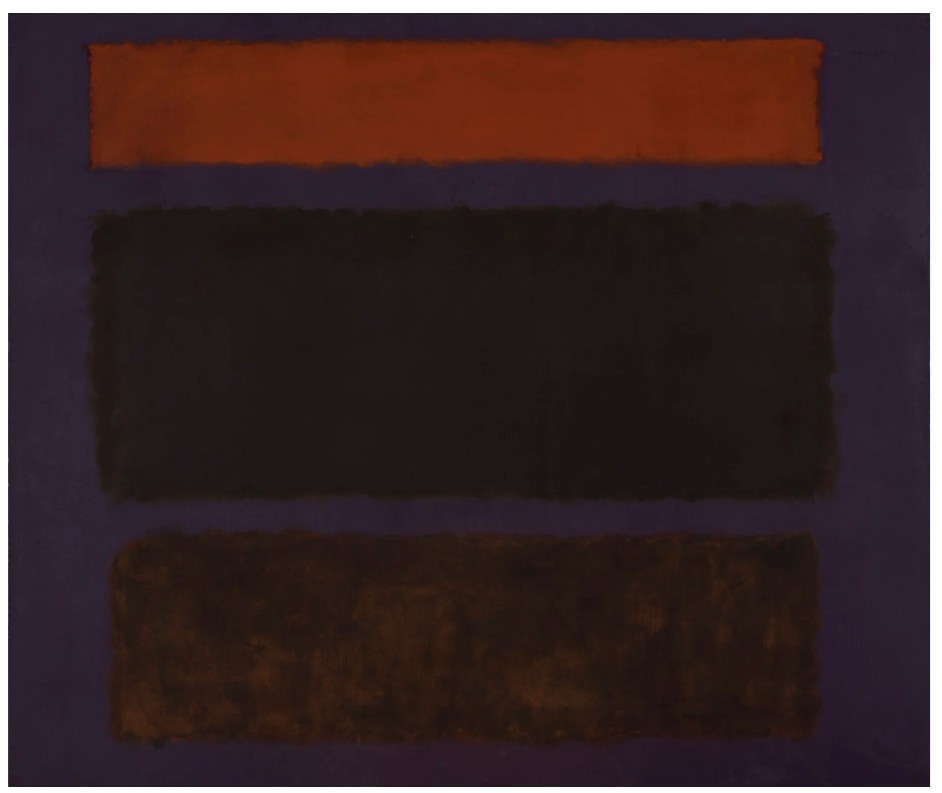
Mark Rothko, No. 16, 1960. Metropolitan Museum of Art, New York.
© 1998 Kate Rothko Prizel & Christopher Rothko / Artists Rights Society (ARS), New York.
No. 15 (Two Greens and Red Stripe) emerges as the very fulcrum of Rothko’s legendary career. In 1961, the artist had his first retrospective at the Museum of Modern Art in New York, which then toured across Europe, landing in London, Amsterdam, Brussels, Basel, Rome, and Paris. The next year, he was commissioned by Harvard University for a series of murals, which were completed in 1963 and exhibited at the Solomon R. Guggenheim Museum before their final installation. At the end of 1963, Rothko’s second child, Christopher, was born. Notwithstanding Rothko’s personal and professional triumphs, the artist admitted to friends feeling trapped and stuck at an artistic impasse by the end of 1963. No. 15 (Two Greens and Red Stripe) signals the triumphant overcoming of this stalemate, revealing the formal directions which the artist would continue to explore throughout the remainder of his career by precipitating the style of his later dark paintings. His deemphasis of bright, vibrant color and concentration on surface and immaterial affects in the present work would continue into his famed murals for the Rothko Chapel, commissioned in April 1964 by the Houston collectors John and Dominique de Menil and fully realized posthumously in 1971. Absorbing the manifold lessons gleaned through his work on the Seagram and Harvard commissions, Rothko unleashes new perceptual strategies in No. 15 (Two Greens and Red Stripe) which, drawing on conceptions of religious contemplation, draw his spectator into what Barbara Novak and Brian O’Doherty describe as the “penumbra of a powerful idea.” (B. Novak and B. O’Doherty , op. cit., p. 273). The two art historians continue, poignantly describing Rothko’s profound achievement in his works produced in 1964: “[T]here is nothing else like them, nothing that issues so resolutely from an obsession with the grand irony of existence. And of course they are, as Rothko’s work often is, very close to nothing. Poised near this void, which is their content and their abstract substance, forced to be assertive through negative cancellations, they are profound and vulnerable” (ibid., p. 281).
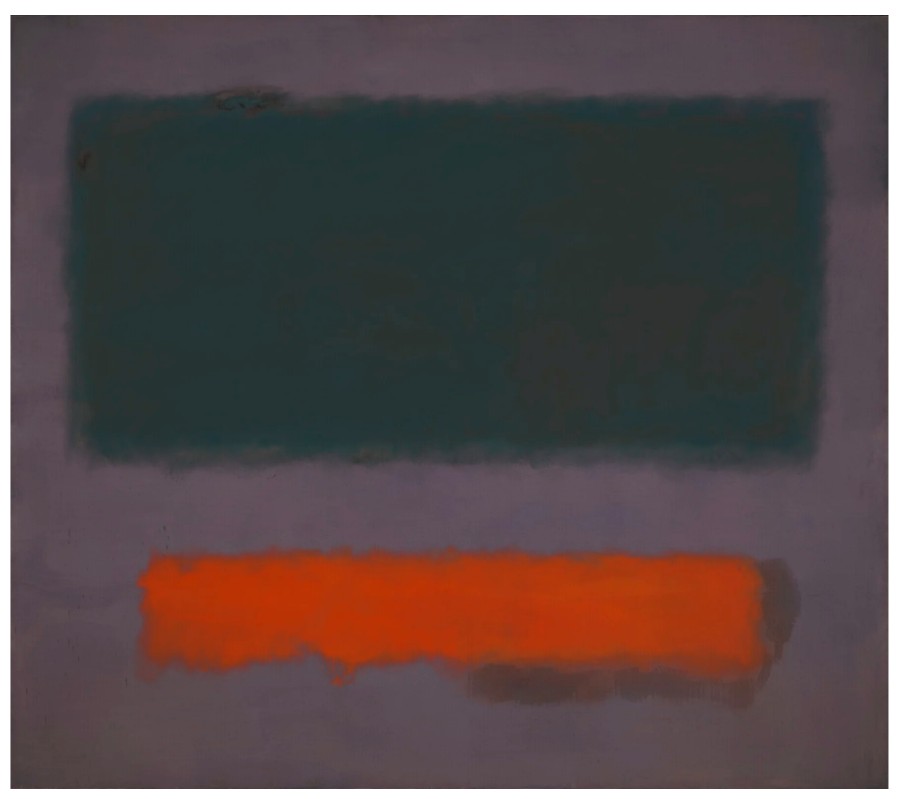
Mark Rothko, Grey, Orange on Maroon, No. 8, 1960. Museum Boijmans Van Beuningen, Rotterdam.
© 1998 Kate Rothko Prizel & Christopher Rothko / Artists Rights Society (ARS), New York.
Of seminal artistic importance to Rothko’s career, the present work is similarly exceptional in its provenance, being one of three pure color field paintings acquired directly from the artist which still remains with their original owner. Having appeared only once in public since its acquisition in 1967, No. 15 (Two Greens and Red Stripe) is an exceptionally rare example of the artist’s celebrated sectional abstractions before his transition into an almost entirely dark palette in the second half of 1964. Rothko would paint no more independent canvases the following year, devoting himself entirely to the Rothko Chapel. Incorporating his earlier style within the grand scale and contemplative, enrapturing palette of his darker works, the present work represents the zenith of Rothko’s painterly career, encapsulating both his earlier achievements from the 1960s and anticipating his ritualistic, deeply emotive production inspired by Nietzsche which would follow the remainder of the decade. The work articulates what Spector celebrates as “the ethereal beauty of his canvases, a union in his mind of the Apollonian and Dionysian,” which “gave cover for Rothko to ‘achieve the greatest intensity of the tragic, [the] irreconcilability of the basic violence which lies at the bottom of human existence and the daily life which must derail with it’” (N. Spector, op. cit., p. 235).
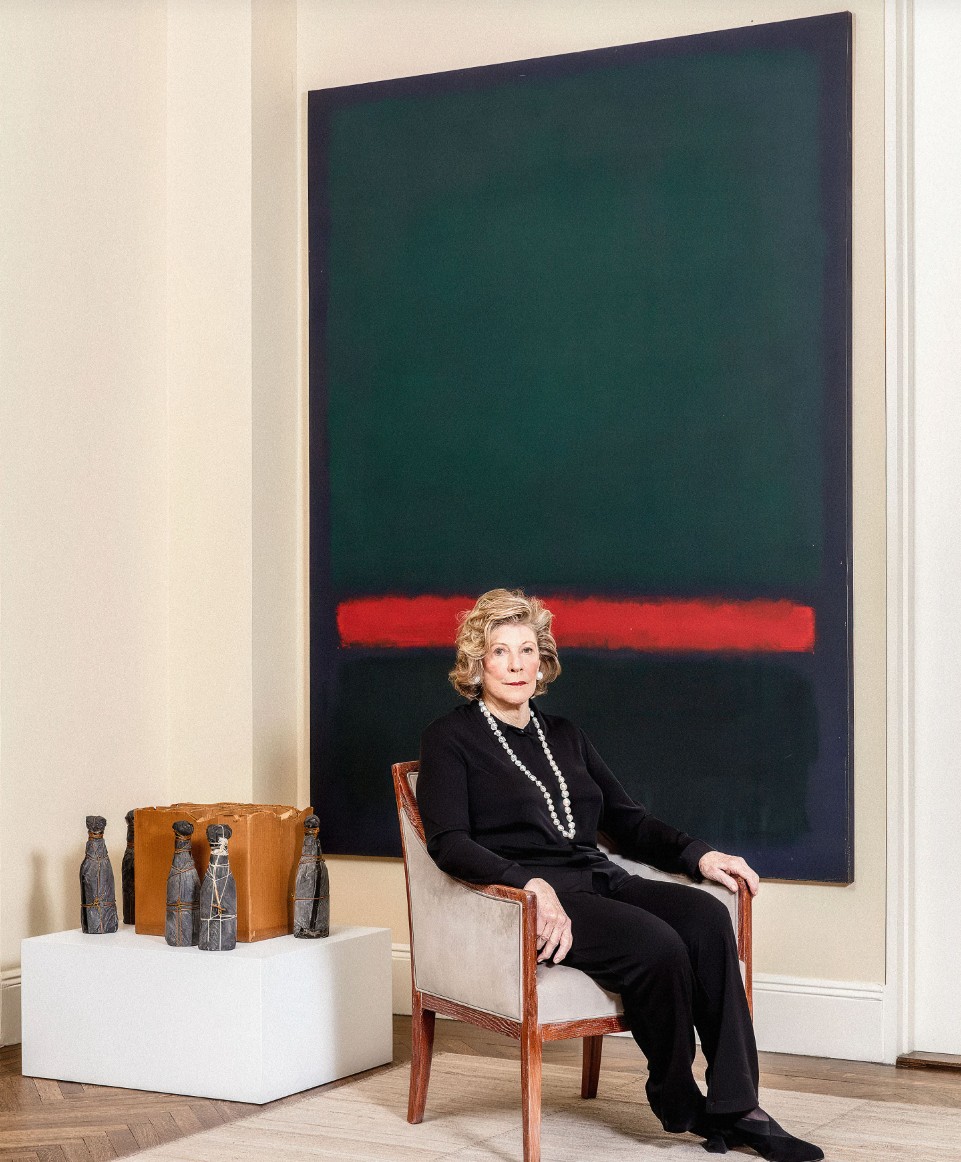
Agnes Gund in her New York apartment. Photo: Stefan Ruiz for Vogue © Condé Nast.
Artwork: © 2026 Kate Rothko Prizel & Christopher Rothko / Artists Rights Society (ARS), New York; © Christo 2000.
Agnes Gund dedicated her life to art: she loved it, she collected it, and she was generous in sharing it with others. She worked hard on its behalf and used it to galvanize support for the causes she championed, gaining a reputation as a generous philanthropist, a devoted patron, and a staunch advocate for arts education and social justice. She was that rare person who sought to do good in the world without reward or recognition. In 2020, Bryan Stevenson, founder and executive director of the Equal Justice Initiative, told Town & Country magazine: “Philanthropy for some people is not so hard. Some have more than they’ll ever use, so they give away the excess. Many give only if everyone will applaud their charity and their quality of life won’t be compromised. But there are also rare philanthropists like Agnes Gund who do difficult things: they use resources to confront injustice and oppression; they seek to disrupt the status quo and pursue change that not everyone values; they are ‘philactivists’” (“Agnes Gund Puts Her Money Where Her Mouth Is,” quoted in Town & Country, June 17, 2020, online [accessed: 3/5/2026]).
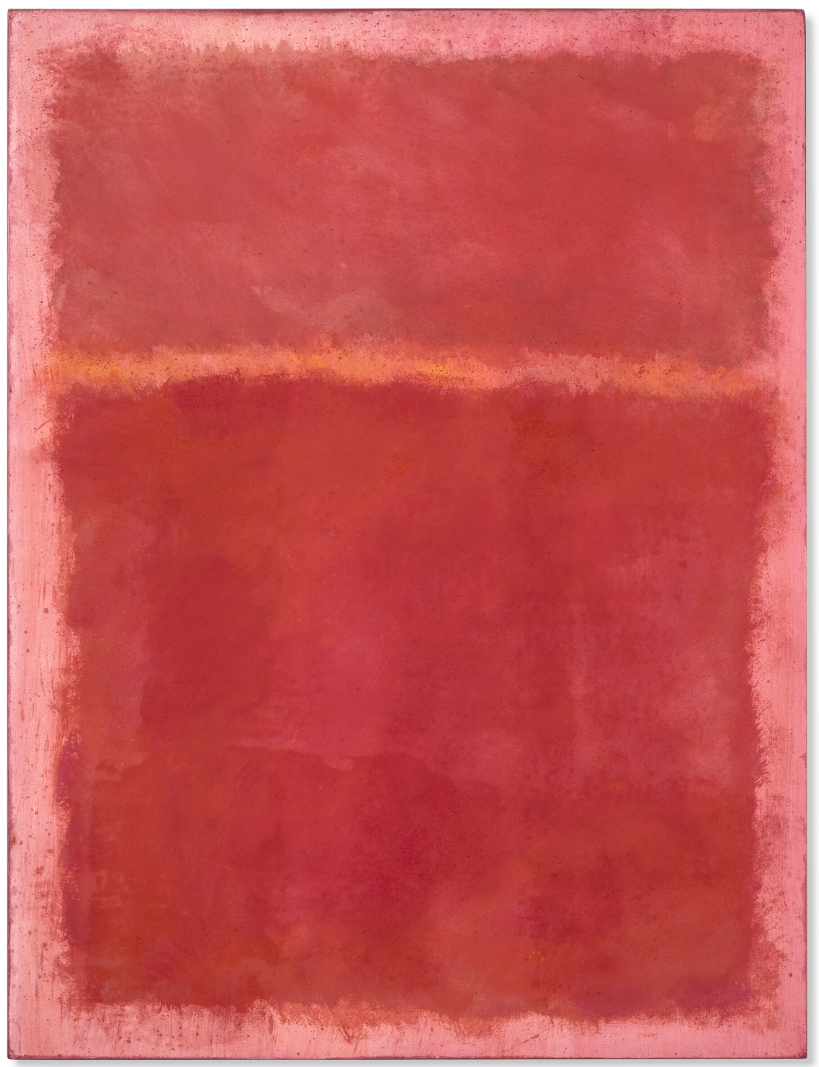
Untitled (Red, Orange on Pink), 1968
Christie’s New-York: 9 November 2023
Estimated: USD 6,500,000 – 8,500,000
USD 6,584,000
MARK ROTHKO (1903-1970) (christies.com)
MARK ROTHKO (1903-1970)
Untitled (Red, Orange on Pink), 1968
Oil on paper laid down on canvas
33 1/2 x 25 3/4 inches (85.1 x 65.4 cm)
Signed ‘MARK ROTHKO’ (on the reverse)
Mark Rothko’s sumptuous late work Untitled (Red, Orange on Pink) represents a final flourish in the life of one of twentieth-century’s greatest artists. Here, his signature color fields, composed of daring brushstrokes, are transcendent and contemplative; both weightless and earthbound, they sit somewhere between air, light, and the soil. The sense of drama and energy engendered in paintings such as this was summarized by Dore Ashton, critic, writer and Rothko’s frequent interlocutor, who offered a poetic assessment of her colleague’s final paintings, “His darkness at the end did allude to the light of the theater in which, when the lights are gradually dimmed, expectation mounts urgently” (D. Ashton, About Rothko, New York, 1983, p. 189). In the same private collection for nearly thirty years, this painting was included in the artist’s seminal 1998 retrospective at the National Gallery of Art, Washington, D.C., which later traveled to the Whitney Museum of American Art and the Musée d’Art Moderne de la Ville de Paris (1999).
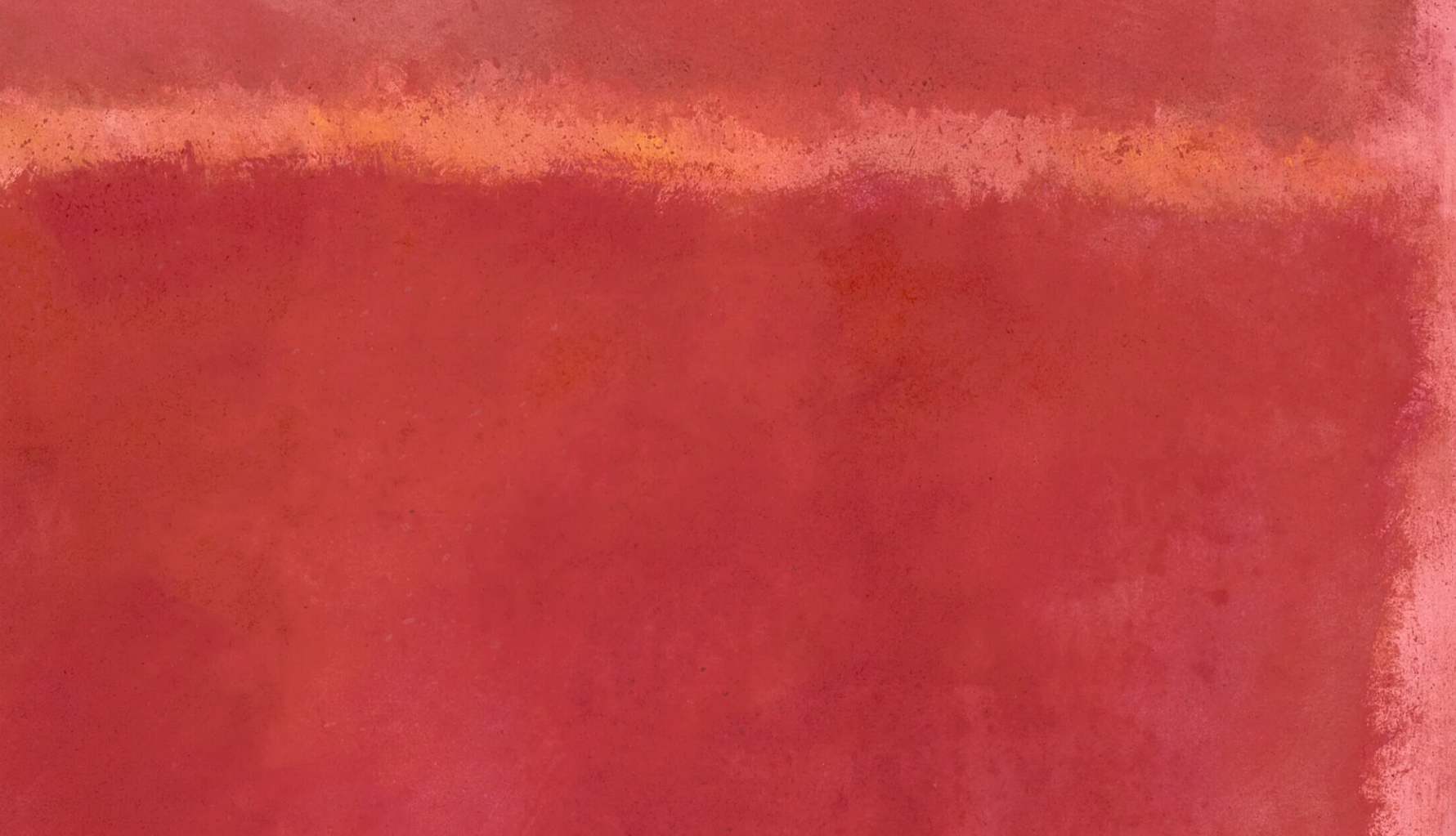
Untitled (Red, Orange on Pink) is among the artist’s most intimately scaled works, offering a chance to witness his unique process in uncommon detail. Instead of the immersion offered by his immense canvases, here we see Rothko at his most radically open. As his health began to fail, his doctors ordered him to not paint larger than a yard in height so as not to strain himself. Rather than a lively pink or a pure cadmium red, Untitled (Red, Orange on Pink) is almost fall-like. Moreover, an interplay of scale is important here, since, according to the artist, the paintings created during this period have all the emotional impact and grandeur of a mural.
Untitled, 1958
Sotheby’s New-York: 8 November 2023
Estimated: USD 30,000,000 – 40,000,000
USD 22,165,500
MARK ROTHKO (1903 – 1970)
Untitled, 1958
Oil on canvas
91 7/8 x 69 1/2 inches (233.4 x 176.5 cm)
Signed and dated 1958 (on the reverse)
Illuminated by an enigmatic and mesmeric inner radiance, Untitled profoundly demonstrates the extraordinary alchemical genius that characterizes Mark Rothko’s inimitable oeuvre. Painted in 1958, at the apex of his artistic and critical achievements, the present work was completed in preparation for his infamous Seagram Murals. Indeed, partially titled “Seagram Mural Sketch,” Untitled is directly related to Section Four of the mural series, now held in the collection of the Tate, London, in its composition and inverted color scheme. Of the thirty paintings in the complete Seagram series, only four remain in private hands—with all the others housed in the permanent collections of the National Gallery of Art in Washington D.C., the Tate in London, and the Kawamura Memorial DIC Museum of Art in Sakura, Japan. In its own right, this shimmering canvas embodies the artist’s remarkable ability to evoke the sublime and inspire powerful, universal emotions through pure, elegant abstraction. Untitled appears to glow from within, a window-like grey form focusing our eye on the dark red center, which softly burns like the embers of a nascent flame. Form and color, the two fundamental elements of Rothko’s signature philosophical approach to painting, are here mystically united to transform the canvas into a breathtaking physical expression of the human condition. Enveloping the viewer in the grand scale of its meditative aura, the present work heralds the creative crescendo of the artist’s legendary career and demonstrates the spectacular chromatic chemistry that has cemented Rothko’s place as one of the greatest masters of twentieth-century painting.
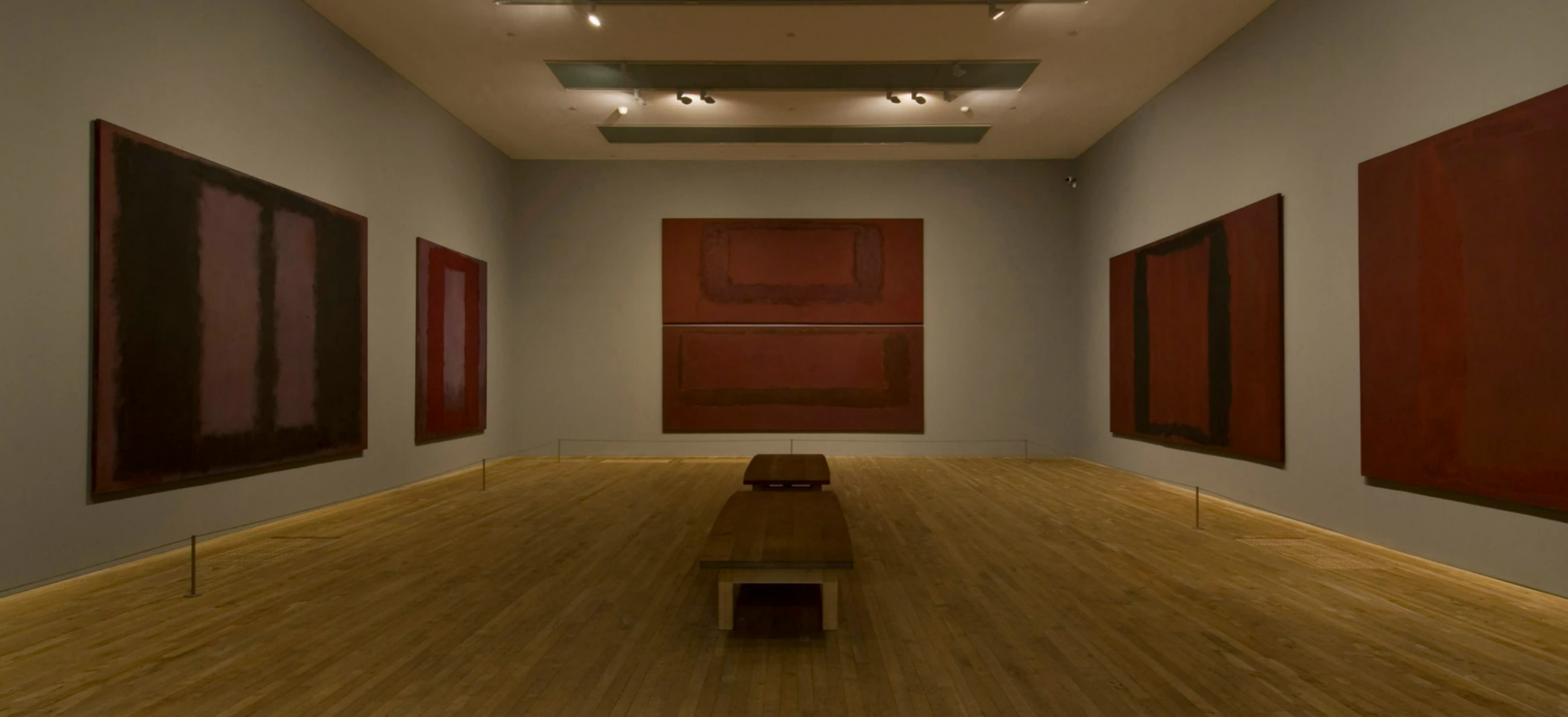
MARK ROTHKO’S SEAGRAM MURALS INSTALLED IN TATE MODERN, LONDON, 2008. PHOTO © TATE PHOTOGRAPHY / MARCUS LEITH AND MARCELLA LEITH. ART © 2023 KATE ROTHKO PRIZEL & CHRISTOPHER ROTHKO / ARTISTS RIGHTS SOCIETY (ARS), NEW YORK
The dramatic and emotive pairing of grey and maroon exemplified by the present work is emblematic of the meditative palette for which Rothko is celebrated, and indeed conjures the twilight mystery the artist sought to impart in his canvases. By the time this work was executed in 1958, Rothko had moved away from the brilliant yellows, vibrant pinks, and sumptuous oranges of his earlier paintings and instead embraced a more somber and ominous palette, marking the beginning of what is now widely regarded as the most significant period of his career. In that year, Rothko was approached by architect Philip Johnson and Phyllis Lambert, heiress to the Seagram fortune, to produce a series of works for the Four Seasons restaurant on the ground floor of the Seagram’s new headquarters on New York’s Park Avenue.
Untitled, 1969
Christie’s New-York: 17 November 2022
Estimated: USD 15,000,000 – 20,000,000
USD 17,565,000
MARK ROTHKO (1903-1970) (christies.com)
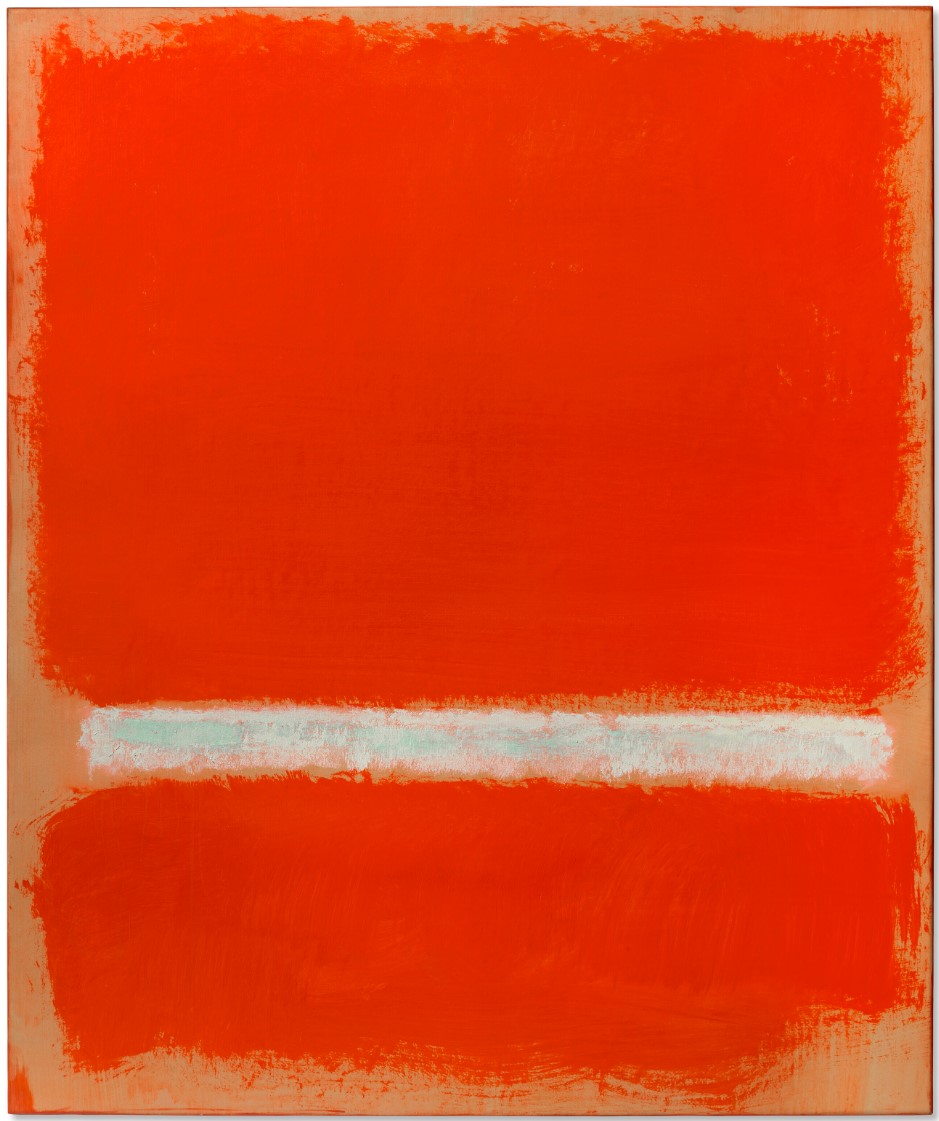
Untitled, 1969
Acrylic on paper laid down on canvas
48 1/2 x 40 1/2 inches (123.2 x 102.9 cm)
Untitled (Shades of Red), 1962
Christie’s New-York: 11 May 2022
Estimated: USD 60,000,000 – 80,000,000
USD 66,800,000
MARK ROTHKO (1903-1970) (christies.com)
MARK ROTHKO
Untitled (Shades of Red), 1962
Oil on canvas
69×56 inches (175.3×142.2 cm)
Painted in 1961, Mark Rothko’s Untitled (Shades of Red) forcefully captures the mysterious and emotional intensity that lies at the very heart of the artist’s work. Haunted by the eternal drama that he believed was an inherent part of the human psyche, Rothko spent his life trying to convey these emotions on canvas, and his floating fields of color became the central elements in many of his most accomplished paintings. One of the most important and influential artists of the twentieth-century, Rothko maintained that his canvases weren’t paintings of an experience, they were the experience, and standing before paintings such as the present example he sought to induce in the viewer a deep emotional, almost spiritual, connection.
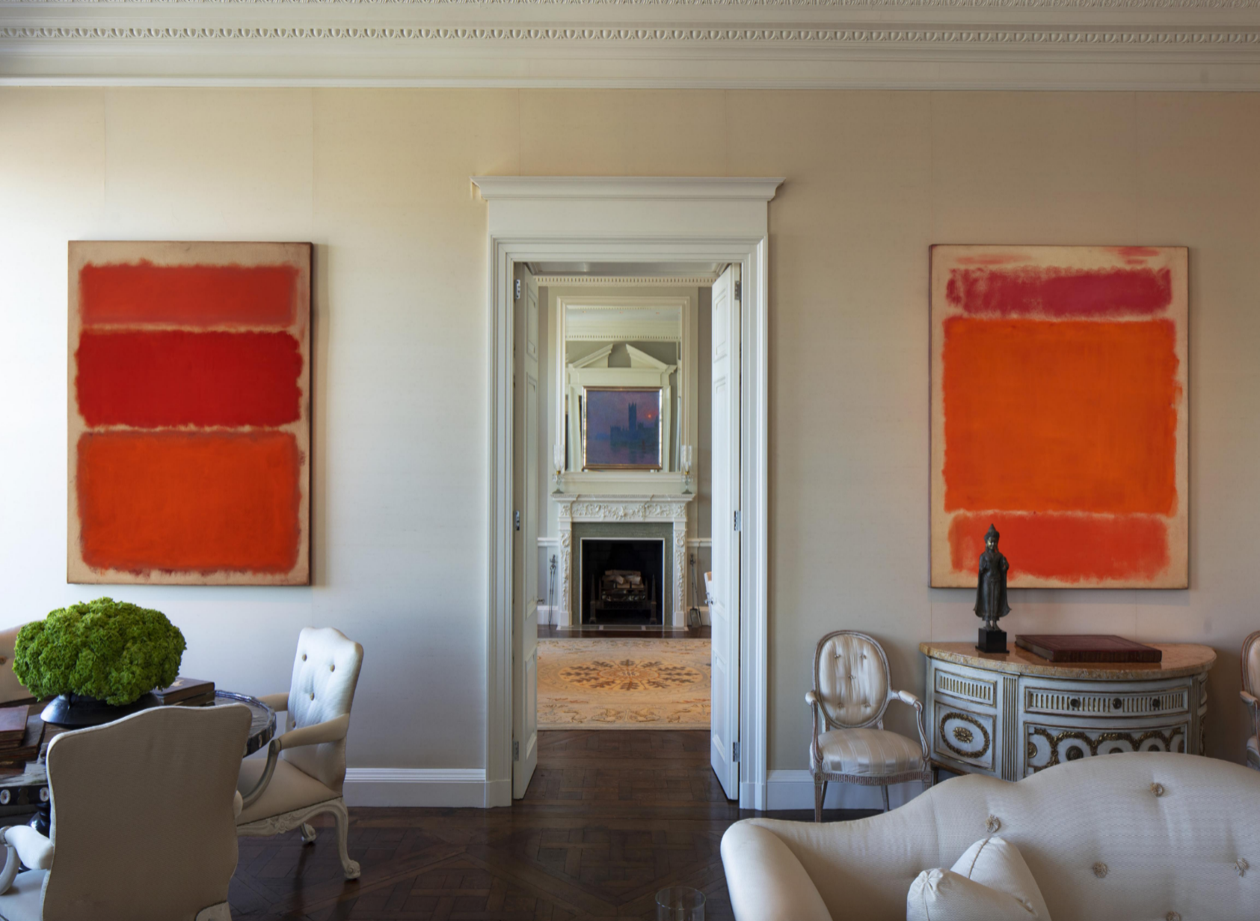
Across this expanse of canvas, Rothko lays down clouds of crimson, red, ruby, scarlet, and deep orange pigment, one on top of one another, resulting in bottomless pools of rich color that appear to reverberate with chromatic energy as the eye passes over them. These shifting planes, constantly churning and roiling, produce a sense of dynamism that continues to play out long after the artist’s brush has left the surface of the canvas. Pushing against each other, this trifecta appears to be in a constant state of expansion, pushing out over the surface like an ever expanding galaxy of celestial gases. Surrounding each of the fields of color are paler areas, sheer veils of pigment that surround the central rectangles of deep red and saturated orange, revealing what is regarded by many as one of his greatest accomplishments: his ability to contain a vast array of colors of differing hues in differing proportions all on the same plane.
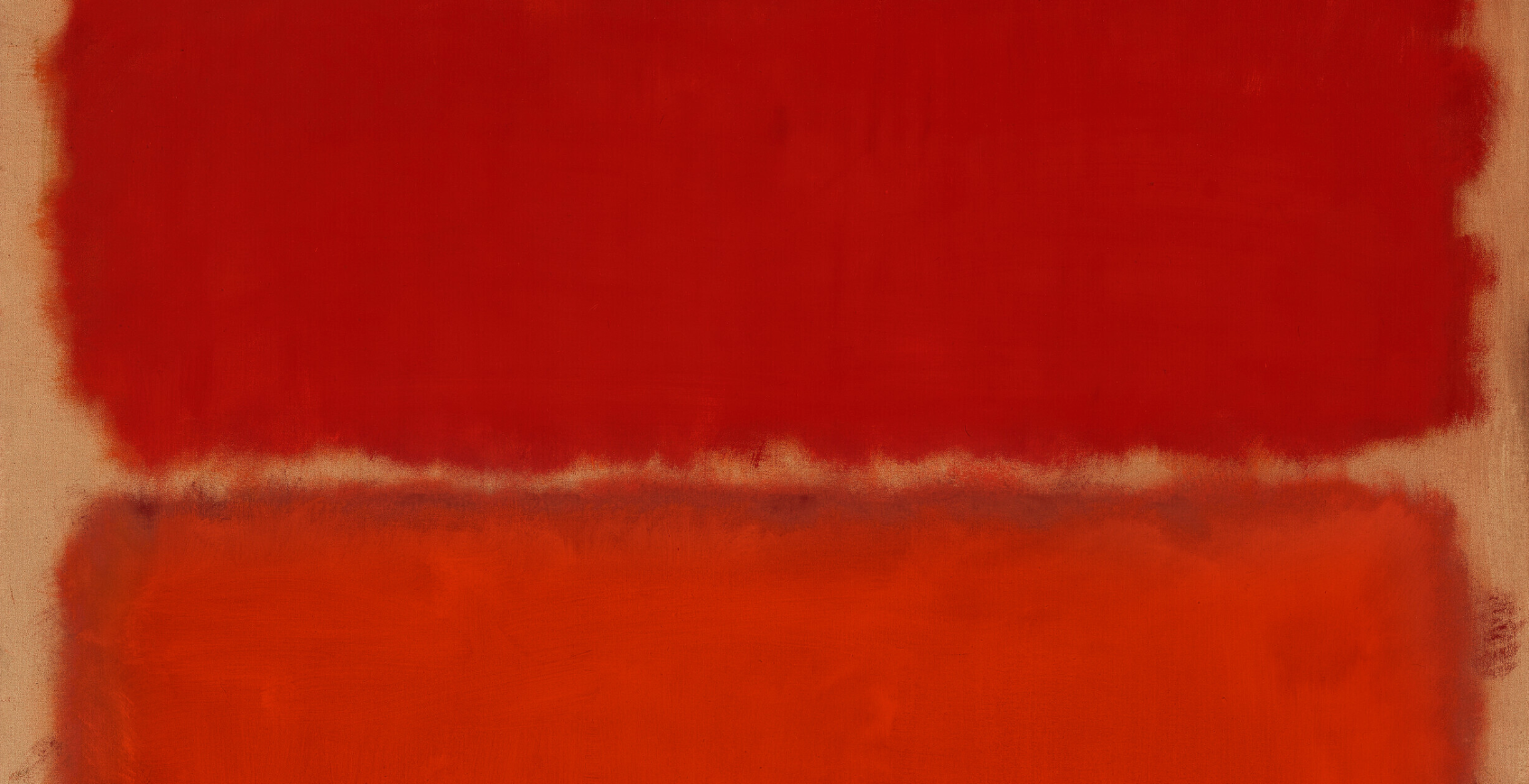
It is here, around the edges of each of these bodies of color, that Rothko’s tempestuous painterly energy is readily exposed; individual layers of paint bleed into each other revealing the rawness and vitality of the artist’s unmistakable process. Unlike the center of the blocks of color where a more harmonious co-existence results in rich fields of color, around the edges the tussle between order and chaos is played out to its ultimate conclusion. Throughout much of his career, Rothko struggled with his own inner demons, caught between the competing forces of order and chaos, and it is here, on the surface of the canvas, and in these contrary planes of color that he sought to confront and tame these forces once and for all.
No. 1, 1962
Christie’s New-York: 11 May 2022
Estimated: USD 45,000,000 – 65,000,000
USD 49,625,000
MARK ROTHKO (1903-1970) (christies.com)
MARK ROTHKO
No. 1, 1962
Oil on canvas
69×60 inches (175.3×152.4 cm)
Signed and dated ‘MARK ROTHKO 1962’ (on the reverse)
No. 1 is listed as the first canvas that Mark Rothko painted in 1962, a pivotal year in which the artist produced some of his most vital and vivacious works. Dominated by a central field of intense orange, this large-scale painting displays the full force of Rothko’s creativity, from the floating passages of penetrating color to the animated brushwork that results in its iridescent surface. The rich, warm red and orange hues that are so prevalent in No. 1 are also emblematic of the experiential nature of Rothko’s art—a physical manifestation of what one critic called the “immediate radiance” of these paintings. Across the surface of the painting Rothko lays down three large clouds of saturated color. Anchored by a large passage of baking orange hues, the composition subsumes the viewer into an intense field of vibrant color. This highly active core is complemented by two narrower bands of deeper red and orange that express the upper and lower edges of the composition. The upper field appears more ephemeral; a spectral passage of red pigment that allows the delicacy of Rothko’s brushwork to become evident, particularly around the periphery of the form. The lower band of color is a deeper, more concentrated, orange—the result of the artist laying down multiple layers of pigment, resulting in a greater density of color. Around these interior passages, Rothko has applied a delicate, almost transparent, veneer of pigment; here, the larger chromatic fields begin to dissolve as they migrate outwards towards the edges of the canvas, dissipating the visual energy into more neutral hues. Rothko always insisted that it was here, where the edges of his painterly passages met, that the true essence of his paintings could be witnessed.
Yellow/Orange
No. 31 (Yellow Stripe), 1958
The Collection of Robert F. and Patricia G. Ross Weis
Christie’s New-York: 17 November 2025
Estimates on Request
USD 62,160,000
MARK ROTHKO (1903-1970), No. 31 (Yellow Stripe) | Christie’s
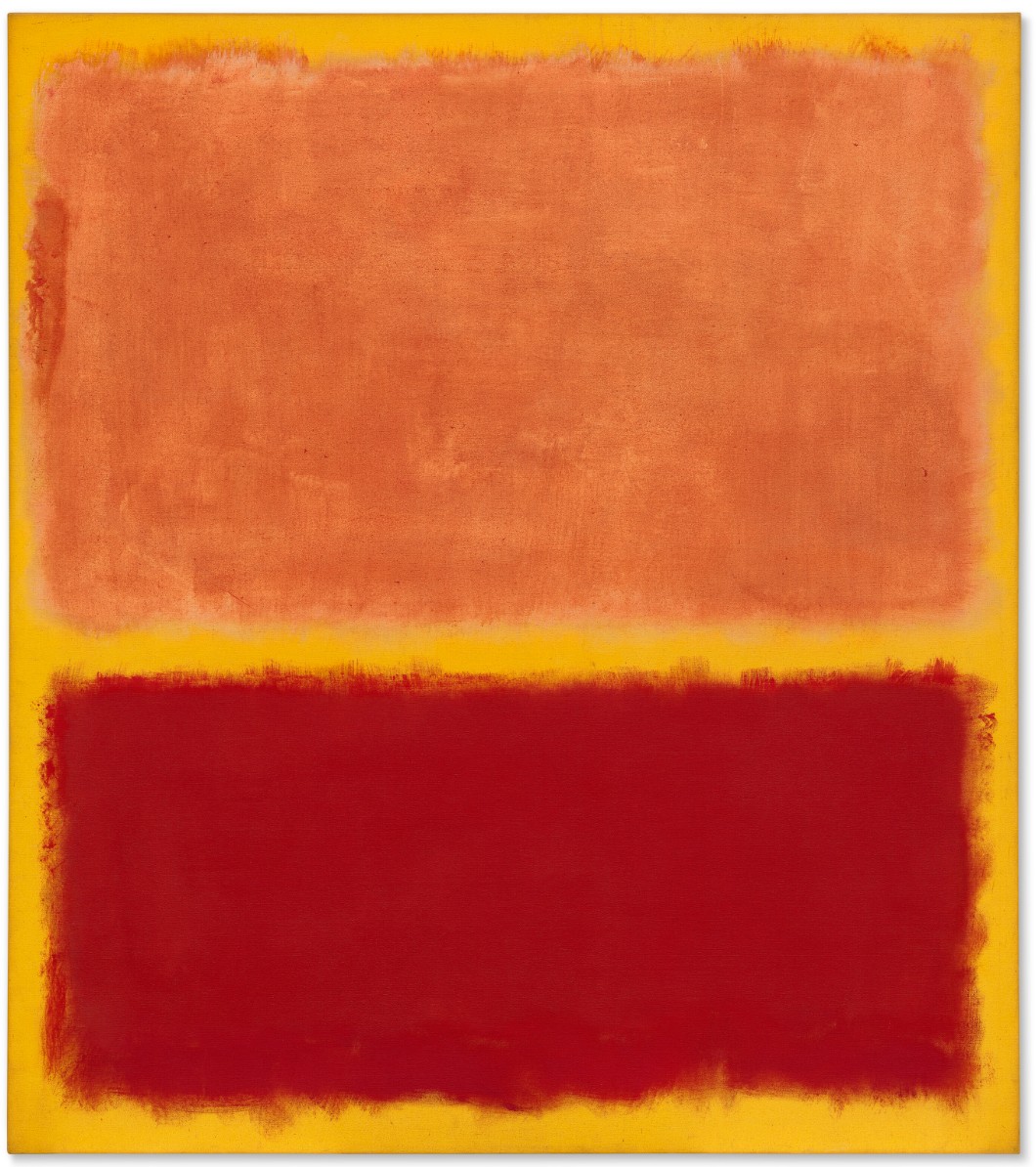
MARK ROTHKO (1903-1970)
No. 31 (Yellow Stripe), 1958
Oil on canvas
78 1/4 x 69 1/4 inches (198.8 x 175.9 cm)
Signed, partially titled and dated ‘MARK ROTHKO 1958 #31’ (on the reverse)
Painted in 1958, the same year Mark Rothko embarked on what would become the defining project of his career (a series of murals for the Four Seasons restaurant in the Seagram Building in Manhattan) No. 31 (Yellow Stripe) exemplifies Rothko’s mastery of color and emotional resonance. This period marked a crucial evolution in the Abstract Expressionist’s artistic output, characterized by his exploration of saturated hues and an ethereal sense of spirituality. In this luminous work, Rothko achieves an intensity that resonates with the human condition, invoking a sense of presence so powerful that, as he famously stated,
“when you turned your back to the painting, you would feel that presence the way you feel the sun on your back”
This effect is unmistakably present in works like No. 31 (Yellow Stripe), where radiant fields of color seem to breathe, casting an almost celestial glow that immerses the viewer in an experience beyond the visual.
During this pivotal phase of his career, Rothko employed high-keyed and luminous colors which he used for a short, but enormously creative, period before evolving toward the more somber preponderance of red, blue, and maroon that emerged from his Seagram murals and would come to mark his later career. No. 31 (Yellow Stripe) exemplifies this earlier creativity with its interplay of deep reds, soft pinks, peach hues, and intense yellows. Here, two fields of shifting color are stacked one on top of another, corralled only by an outer border whose chromatic intensity ultimately possesses the authority to restrain the strength of these two internal fields of color. This sense of internal conflict is further enhanced by the dramatic ‘feathering’ that marks the perimeters of these passages, the result of the constant tussle and painterly incursions that convey the energy of Rothko’s dramatic painterly technique.
“To those who are friendly to my pictures on the basis of their serenity,
I would like to say that they have found endurable in human life,
the extreme violence that pervades every inch of their surface.”
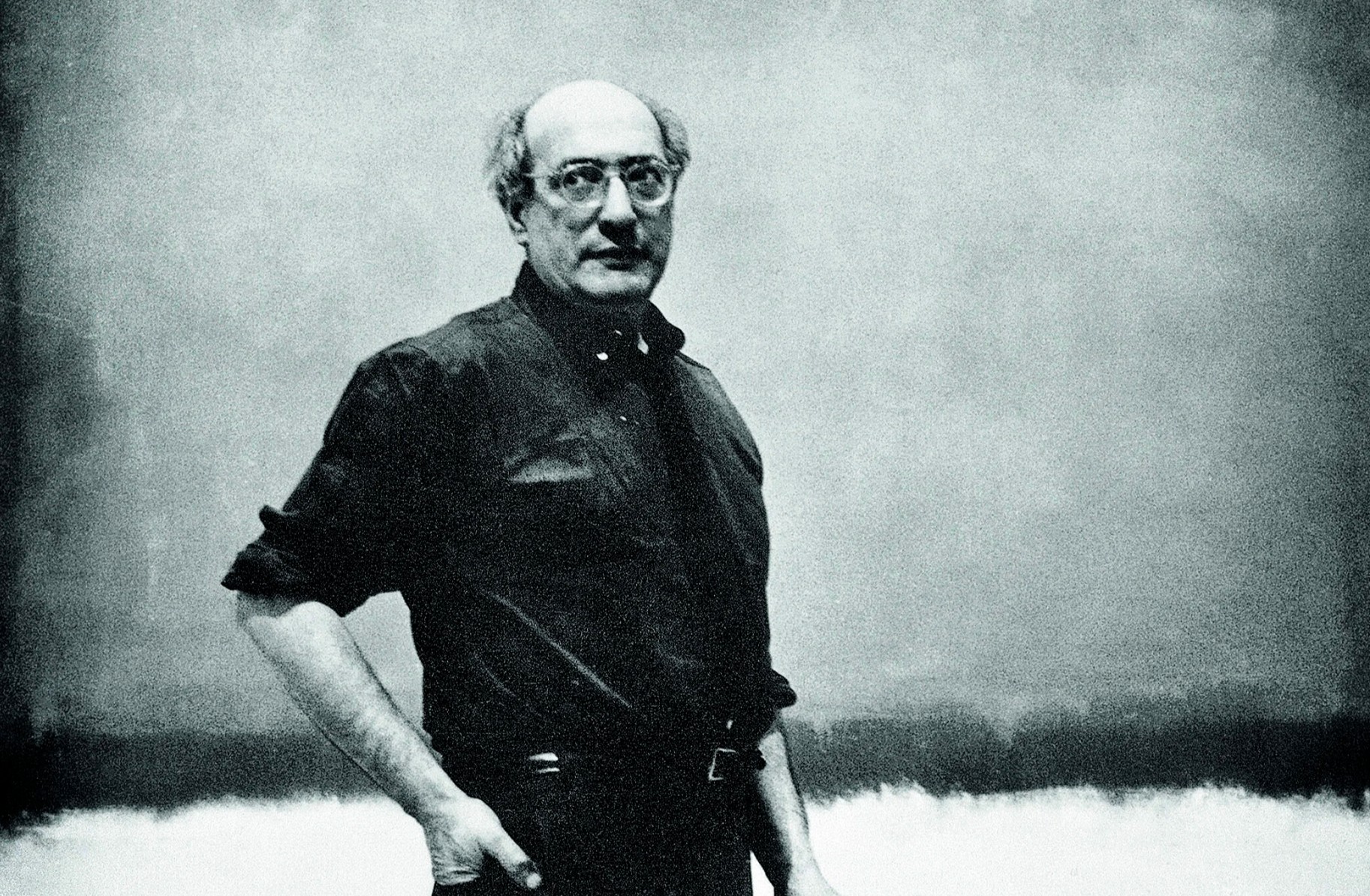
However, as Rothko’s reputation began to soar in the mid-1950s, so too did his concern over how his work was being perceived. Once a somewhat misanthropic outsider, he now found himself the subject of critical acclaim, which he met with both appreciation and skepticism. Yet, Rothko was wary of such interpretations, resisting any notion that his paintings were beautiful, harmonious arrangements of color. Rothko sought to convey deeper, more tumultuous emotions—pain, struggle, and existential unrest.
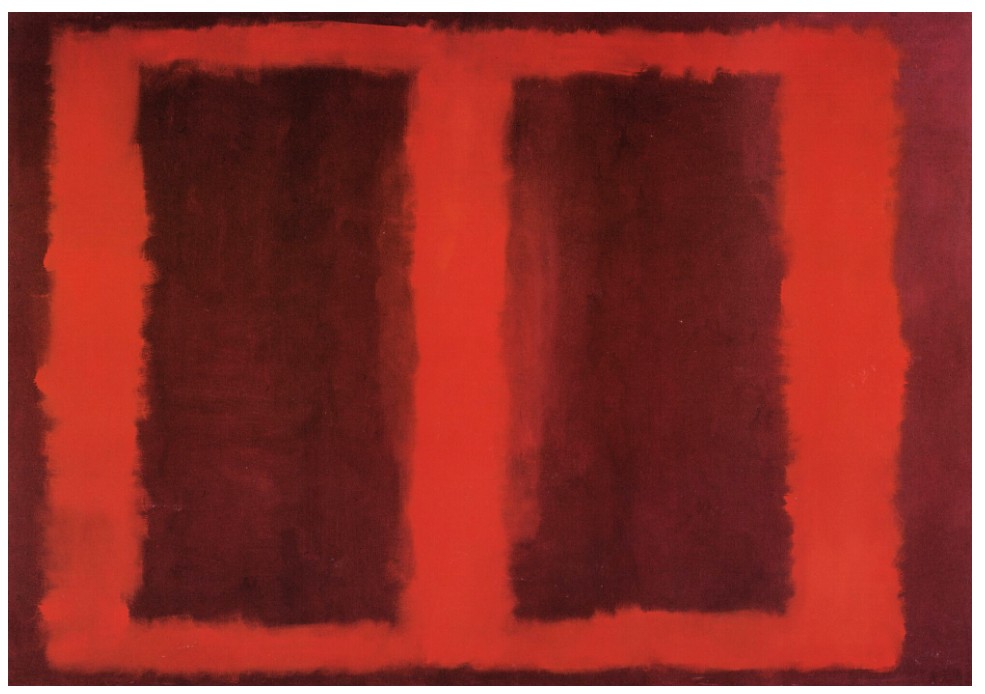
Mark Rothko, Sketch for “Mural No.4” (Orange on Maroon, Seagram Mural Sketch), 1958. Kawamura Memorial Museum of Art, Chiba-Ken. © 1998 Kate Rothko Prizel & Christopher Rothko / Artists Rights Society (ARS), New York.
It is this paradox—serenity coexisting with barely contained energy—that gives works like No. 31 (Yellow Stripe) their extraordinary power. The painting appears suspended between sublime beauty and a latent, almost volcanic intensity. Like a sunset tinged with an underlying turbulence, it radiates warmth while hinting at something deeper, something volatile. Rothko’s colors, glowing with a near-radioactive luminescence, create a tension that feels on the verge of eruption, capturing what he described as “serenity about to explode” (M. Rothko, quoted in J. E. B. Breslin, op. cit., p. 355). This unique quality of Rothko’s work had been astutely recognized by Hubert Crehan, one of the earliest critics to comment on his mature style. Writing in Arts Digest in 1954, Crehan likened the “immanent radiance” of Rothko’s paintings to the light emitted by a fission reaction—an observation that Rothko himself deemed “acute.” “We have in our time become aware of the reports of the great billows of colored light that have ripped asunder the calm skies over the atolls of the calmest ocean,” Crehan wrote. “We have heard of the terrible beauty of that light, a light softer, more pacifying than the hues of a rainbow and yet detonated as from some wrathful and diabolical depth. The tension of the color-relationships of some of the Rothko paintings I have seen has been raised to such a shrill pitch that one begins to feel in them that a fission might happen, that they might detonate” (H. Crehan, “Rothko’s Wall of Light: A Show of His New Works at Chicago” Arts Digest, no. 29, November 1, 1954, p. 19).
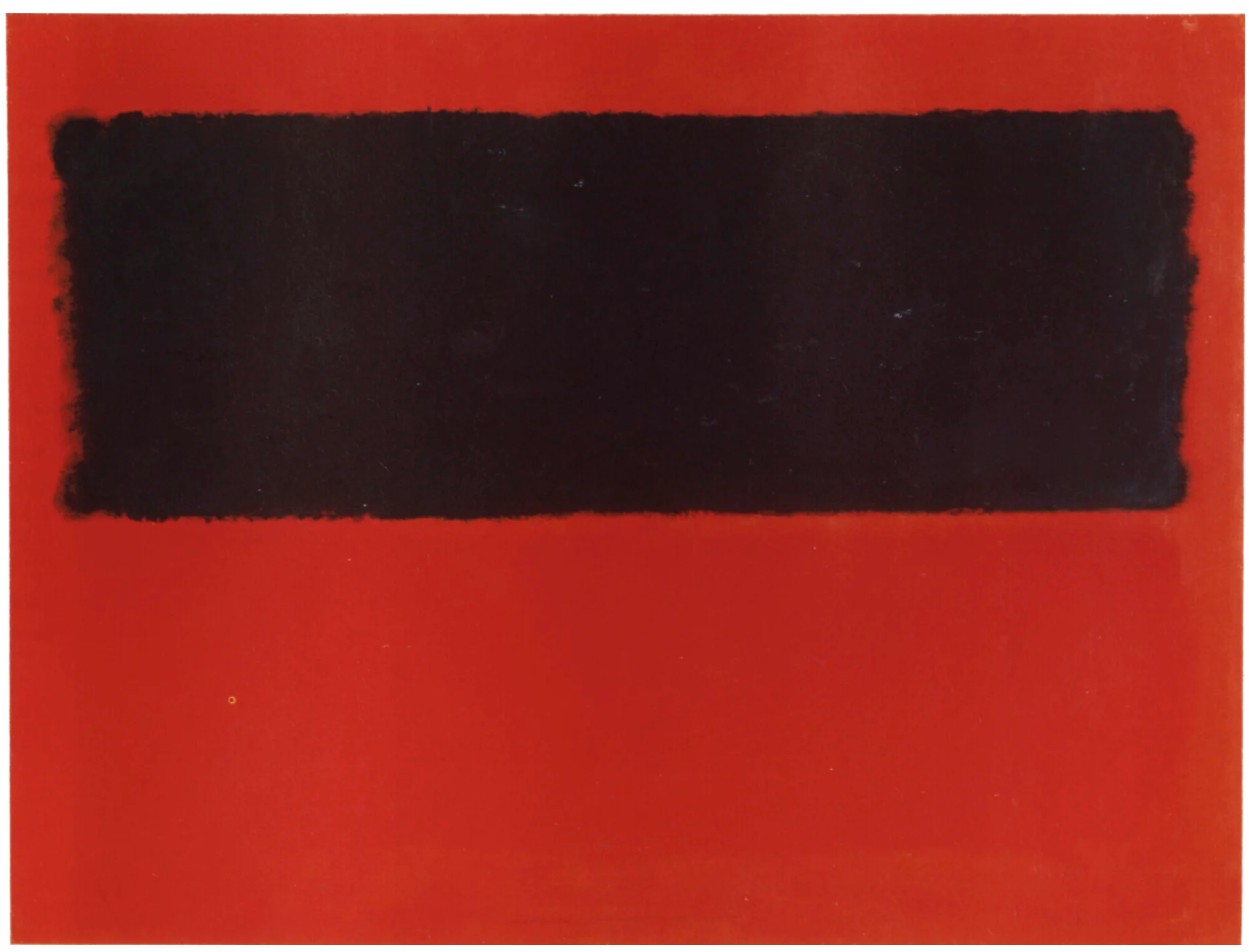
Mark Rothko, Black Area in Reds, 1958. Museum of Contemporary Art, Tokyo.
© 1998 Kate Rothko Prizel & Christopher Rothko / Artists Rights Society (ARS), New York.
Rothko’s response to Crehan’s insight was uncharacteristically favorable for the often embattled artist. Crehan embraced the notion that Rothko’s paintings were not merely tranquil fields of color but rather sites of profound emotional intensity, where elemental forces of light and darkness, joy and despair, clashed upon the surface. Crehan was—as Rothko would do time and again—pointing to what the artist saw as the primordial and tempestuous nature of his work, what Rothko had once described as “eternal symbols upon which we must fall back to express basic psychological ideas. …symbols of man’s primitive fears and motivations” (A. Gottlieb and M. Rothko, “The Portrait and the Modern Artist,” broadcast October 1943, quoted in I. Sandler, Abstract Expressionism and the American Experience, New York, 2009, p. 82).
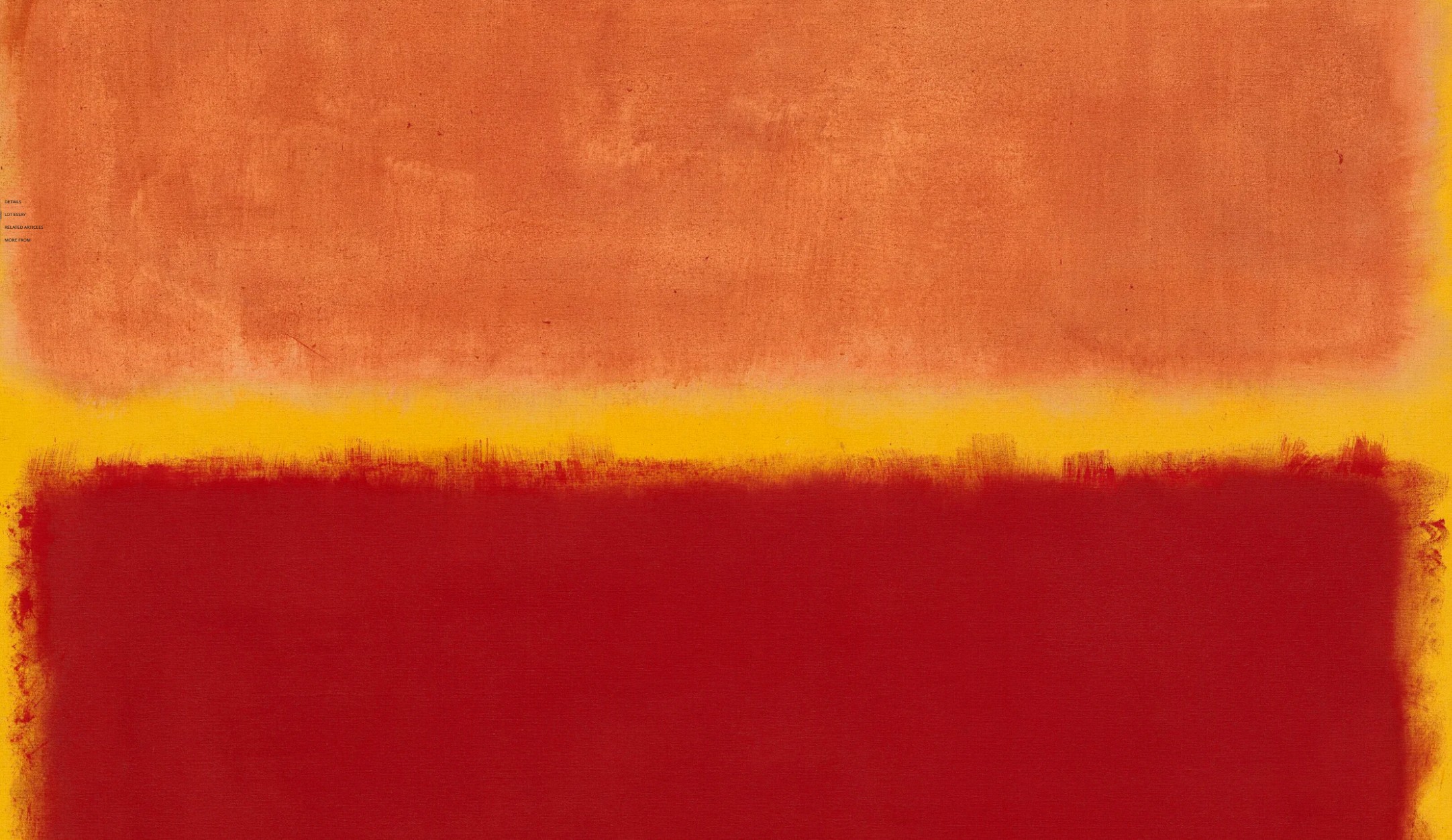
Amidst the existential unease of the post-World War II era, Rothko sought to create art that spoke to fundamental human truths. As Karl Jaspers observed, the war had forced people to turn not to Goethe but to Shakespeare, the Bible, or Aeschylus—works that directly confronted the raw realities of human existence (K. Jaspers, Unsere Zukunft und Goethe, Zurich, 1948, p. 22). Rothko, too, drew from these epic sources, aspiring to infuse his paintings with the same universal resonance. Nietzsche, Shakespeare, Mozart, and Aeschylus were among his inspirations, guiding him in his quest to forge a visual language that transcended the confines of abstraction.
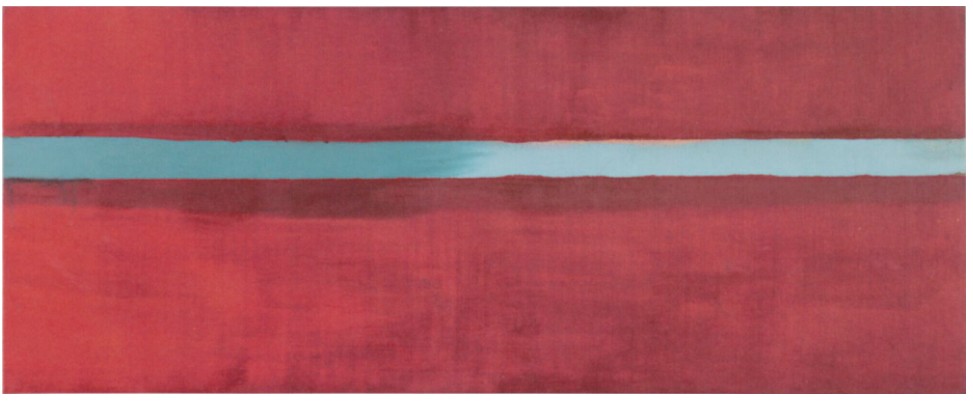
Barnett Newman, Horizon Light, 1949. Sheldon Memorial Art Gallery and Sculpture Garden, Lincoln. © 2025 Barnett Newman Foundation / Artists Rights Society (ARS), New York.
Rothko’s work was profoundly shaped by his deep engagement with the philosophy of Friedrich Nietzsche, particularly The Birth of Tragedy. In this seminal work, Nietzsche argued that the ancient Greeks had found a way to affirm a meaningful existence in an otherwise meaningless world through the invention of tragic drama. Following Nietzsche’s philosophical insights, Rothko’s abstract paintings reflect the innate dualism the German philosopher had identified as Apollonian and Dionysian forces. The Apollonian embodied order, form, and idealized beauty—exemplified in the precision of Ancient Greek sculpture. In contrast, the Dionysian represented unbridled energy, chaos, and raw emotional intensity, akin to the power of music. For Rothko, the noble and the sublime—central themes in Romantic painting—were meaningless unless they held, “to the bursting point, a core of the Wild” (M. Rothko, quoted in Mark Rothko, Retrospektive, exh. cat., Munich, 2008, p. 18). Like Mozart did in music, Rothko employed the radiant hues of his color fields as tonal vibrations, orchestrating them to evoke profound emotional responses. “I am not interested in relationships of color or form or anything else,” he famously asserted. “I am interested only in expressing the basic human emotions—tragedy, ecstasy, doom, and so on—and the fact that lots of people break down and cry when confronted by my pictures shows that I communicate with those basic human emotions. The people who weep before my pictures are having the same religious experience I had when I painted them” (M. Rothko, quoted in Selden Rodman, Conversations with Artists, New York, 1957, pp. 93-94).
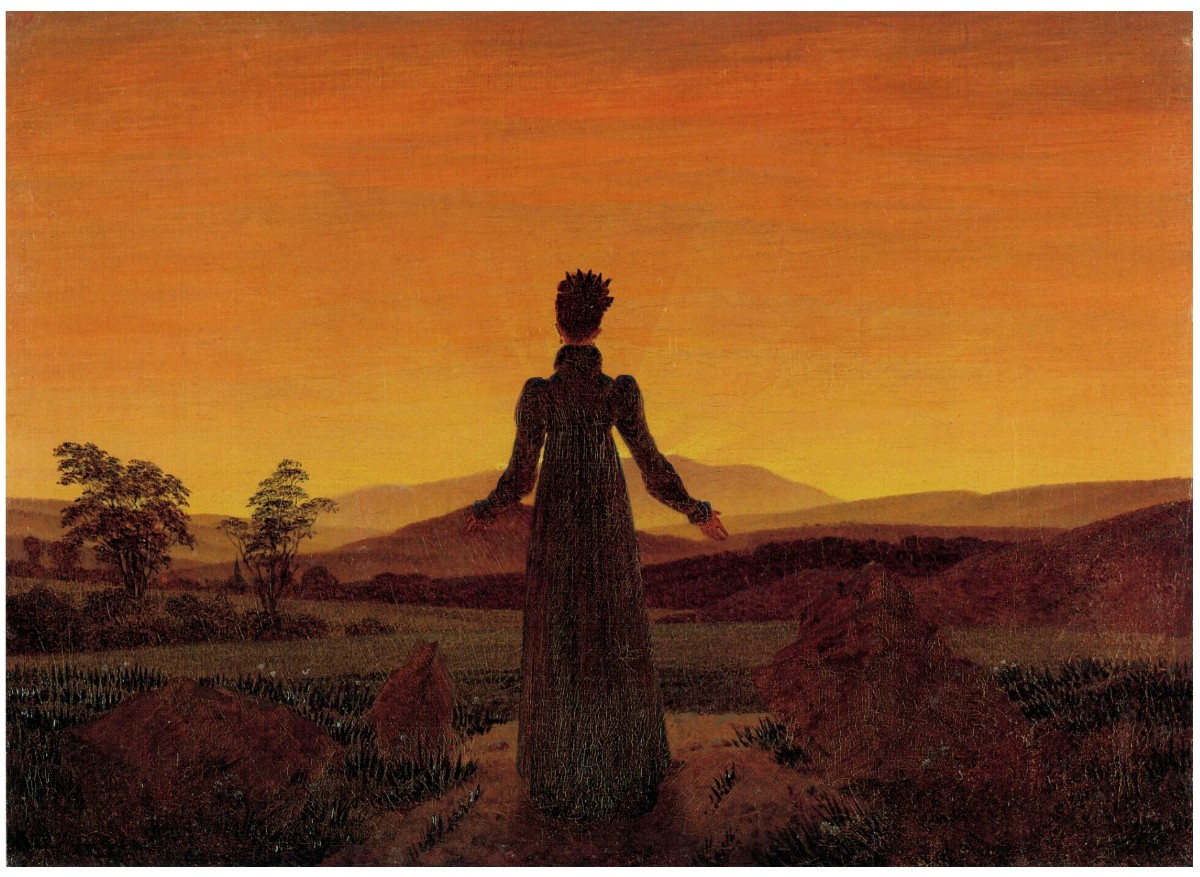
Caspar David Friedrich, Woman before the Rising Sun, 1818. Museum Folkwang, Essen.
For Rothko, a painting like No. 31 (Yellow Stripe) was not simply an image but an experience—an encounter with color so intense that it took on an almost physical presence. As he insisted, “pictures must be miraculous…a revelation, an unexpected and unprecedented resolution of an eternally familiar need” (M. Rothko, “The Romantics Were Prompted,” Possibilities, no. 1, Winter 1947/8). The vast fields of color in this work seem to breathe and shift, their radiance drawing viewers into a realm of heightened perception, where emotions take form in shimmering, weightless hues. Indeed, much like Piet Mondrian, another artist in the collection of Robert F. and Patricia G. Ross Weis, Rothko sought to use abstraction to evoke the spiritual by emptying his pictures of direct references to the world.
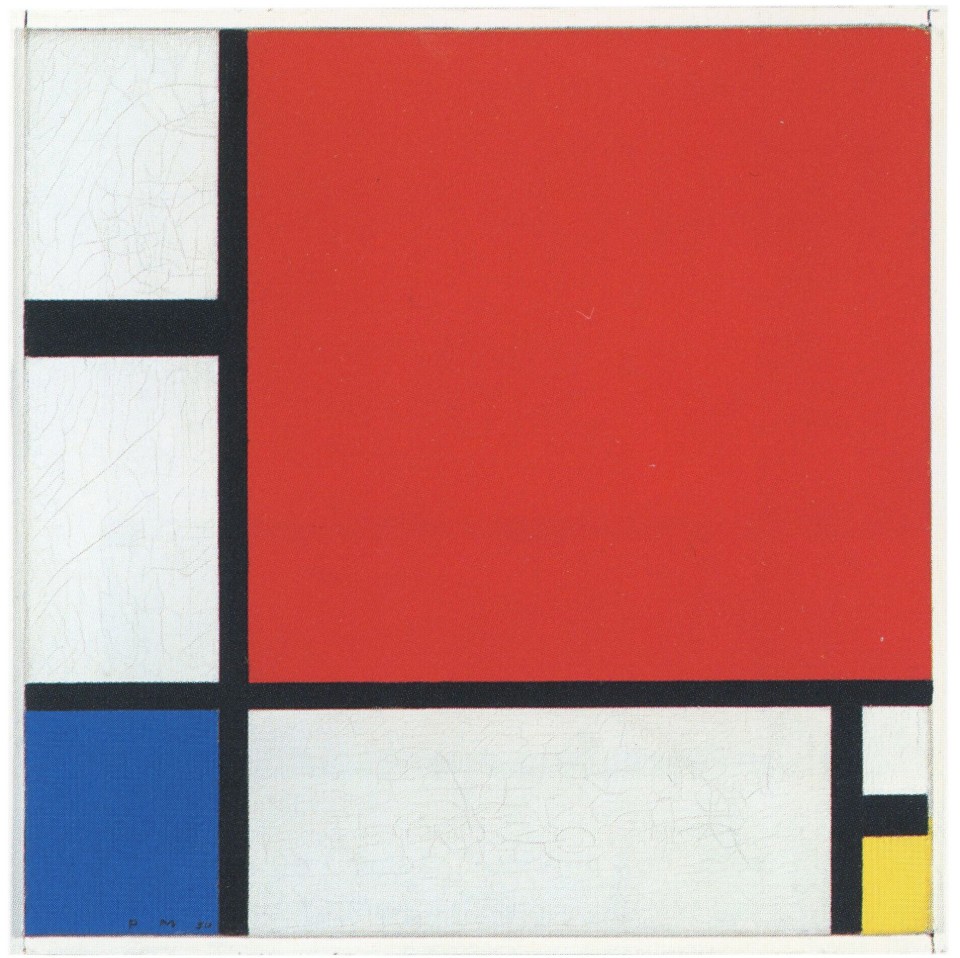
Piet Mondrian, Composition with Red, Yellow, and Blue, 1930. Kunsthaus, Zurich. © 2025 Mondrian / Holtzman Trust
Rothko’s son, Christopher, later reflected on his father’s paintings’ correlation to the human condition: “In essence, Rothko wanted his paintings to speak of and to the human, and his works are full of touches that remind us of their human creator and the work of his hand” (C. Rothko, in Mark Rothko, New York, 2022, p. 22). This humanity is present across the entire surface of No. 31 (Yellow Stripe), where the glowing surface pulses with life. Through an interplay of light and shadow, Mark Rothko’s artistic legacy continues to resonate. His paintings remain as poignant today as they were in his own time—an enduring testament to his vision, his search for depth beyond form, and his ability to translate human emotion into a transcendent visual experience. The weight and warmth of No. 31 (Yellow Stripe) serve as an invitation into Rothko’s world—one where color is language, and presence is everything.
No. 4 (Two Dominants) [Orange, Plum, Black], 1950-51
Christie’s New-York: 12 May 2025
Estimate on Request
USD 37,785,000
MARK ROTHKO (1903-1970), No. 4 (Two Dominants) [Orange, Plum, Black] | Christie’s
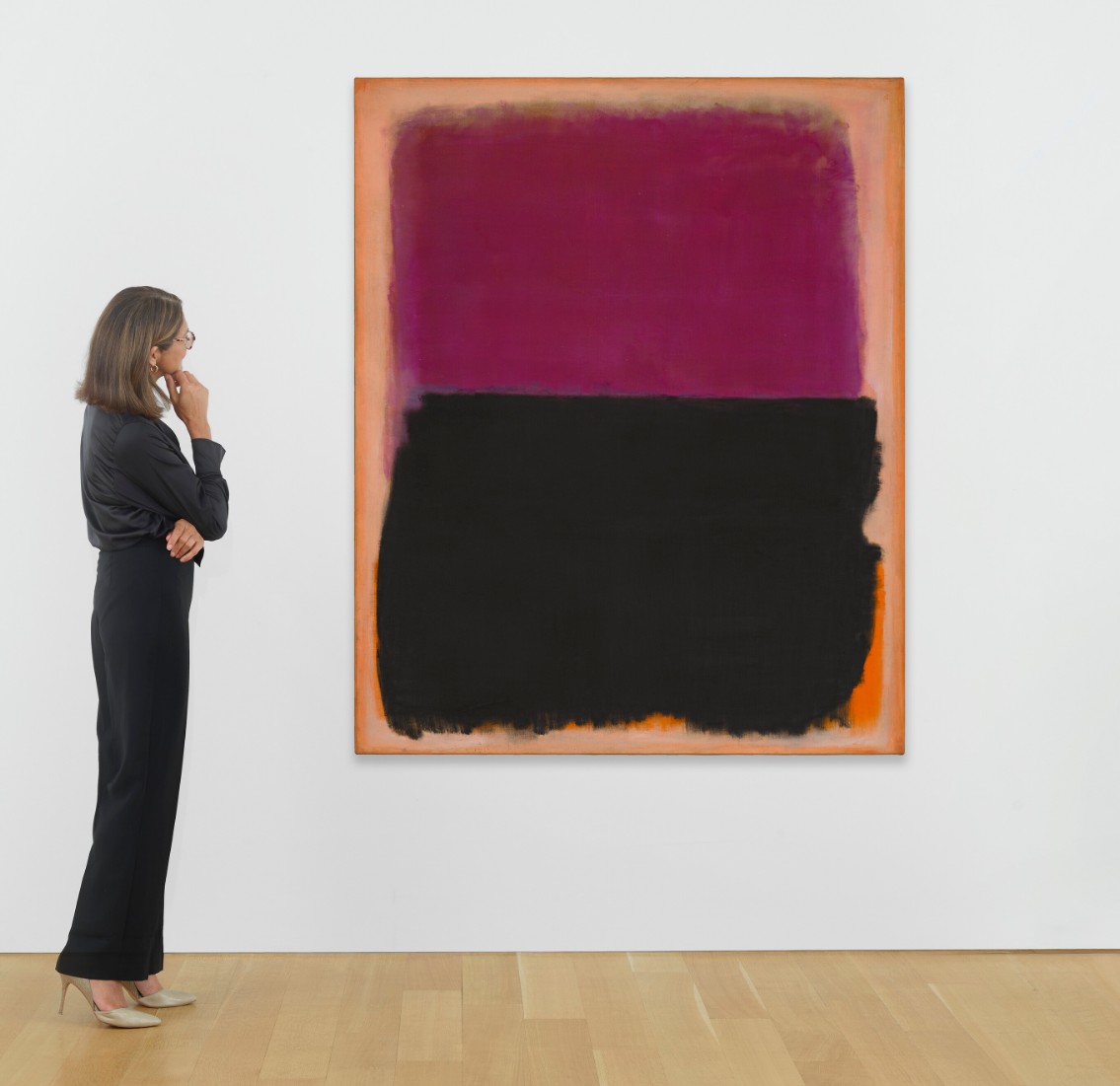
MARK ROTHKO (1903-1970)
No. 4 (Two Dominants) [Orange, Plum, Black], 1950-51
Oil on canvas
67 x 54 3/4 inches (170.2 x 139.1 cm)
Signed twice and dated ‘MARK ROTHKO MARK ROTHKO 1951’ (on the reverse)
Dating from a pivotal moment in Mark Rothko’s career, No. 4 (Two Dominants) [Orange, Plum, Black] captures the flowering of the singular artistic vision that would come to define his oeuvre. Painted between 1950 and 1951, during one of Abstract Expressionism’s most rich and fertile creative periods, it is an early example of the iconic distilled color fields that would fuel the artist’s practice until his death in 1970. Upon a shimmering orange and yellow ground, two zones of deep saturated color vie for dominance: a vast swathe of opulent purple, overlaid by a jagged band of black. The hues shift and mutate within the viewer’s field of vision, transformed by the force of their companions; the backdrop glows like an otherworldly halo of light, pushing each field into dramatic relief. Unveiled in Rothko’s final exhibition with Betty Parsons in 1951, and subsequently included in the landmark group show 15 Americans at The Museum of Modern Art, New York, in 1952, the work has since remained largely unseen in public, shown on just one other occasion in 1973. It bears witness to the birth of a language that stands today among the twentieth century’s most powerful explorations of human experience.
The year 1950 marked a significant milestone in Rothko’s output. Moving away from his early Surrealist-inspired practice, the artist began to simplify the compositional structure of his paintings in 1949, distilling the irregular patches of his first “Multiforms” to cleaner bands of color. By the time of the present work, Rothko had reduced the number of hovering rectangular fields to two or three, stacked on top of one another against a colored backdrop. This strategy, which would subsequently become synonymous with his oeuvre, brought about an important shift in his approach, allowing him to conceive his color fields as “actors” who played out the grand, sweeping polarities of human emotion. His subjects—“ tragedy, ecstasy, doom and so on”—were conveyed through the sheer drama of color and paint alone, allowing the dynamics of friction, tension and revelation to come into sharper and more visceral focus.
“The progression of a painter’s work, as it travels in time from point to point, will be toward clarity: toward the elimination of all obstacles between the painter and the idea, and between the idea and the observer…
To achieve clarity is, inevitably, to be understood.”
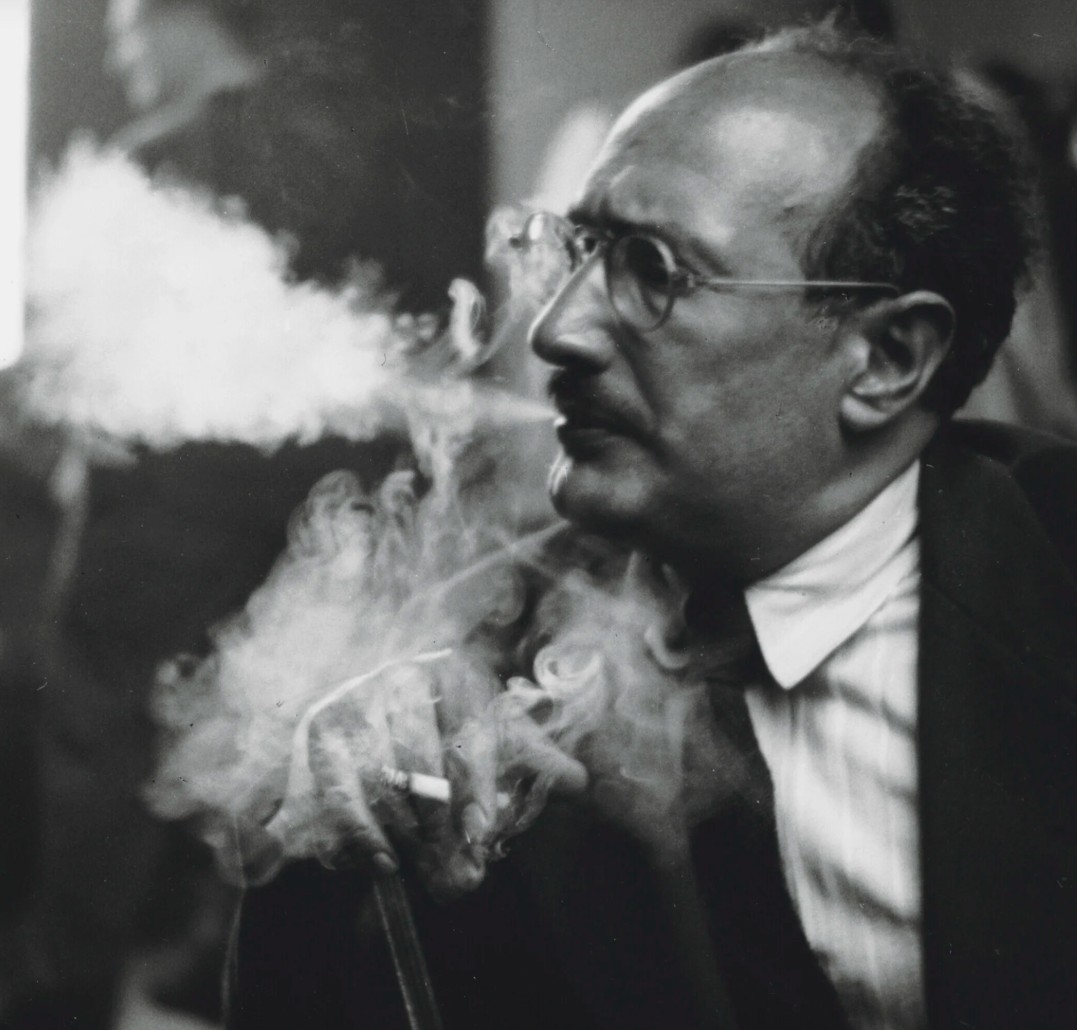
Mark Rothko, California School of Fine Arts, circa 1950. Photo: William Heick.
The present work captures the moment that this idea visibly beginning to take hold in Rothko’s output. As the title suggests, it stages a dialogue between “two dominants,” pitting intense, saturated hues in counterpoint. Rothko’s purple field shifts between red, blue and pink overtones, with dense passages of paint giving way to thin, translucent layers that blur to a delicate miasma at the edges. The black field cuts across its expanse with a sharp horizontal line, leaving—at the left hand side—a faint suggestion that the purple might continue beneath it. A bluish mauve hue quivers at the point of their interface, like a tide forged from the clash of opposing energies. The black itself appears to gravitate downwards, with strong vertical brushwork impelling it to loosen its grip upon the purple. In contrast to the layer above, its edges are deliberate and angular— fraying at the bottom like a swathe of velvet—while light dances across its charred contours in flickering formations. The source of this luminosity is revealed below, in the form of a vivid orange flame that threatens to incinerate the entire composition. As the eye scans the work’s glowing perimeter, it transforms from a portrait of darkness into one of searing light: the terror of the abyss becomes the warmth of salvation.
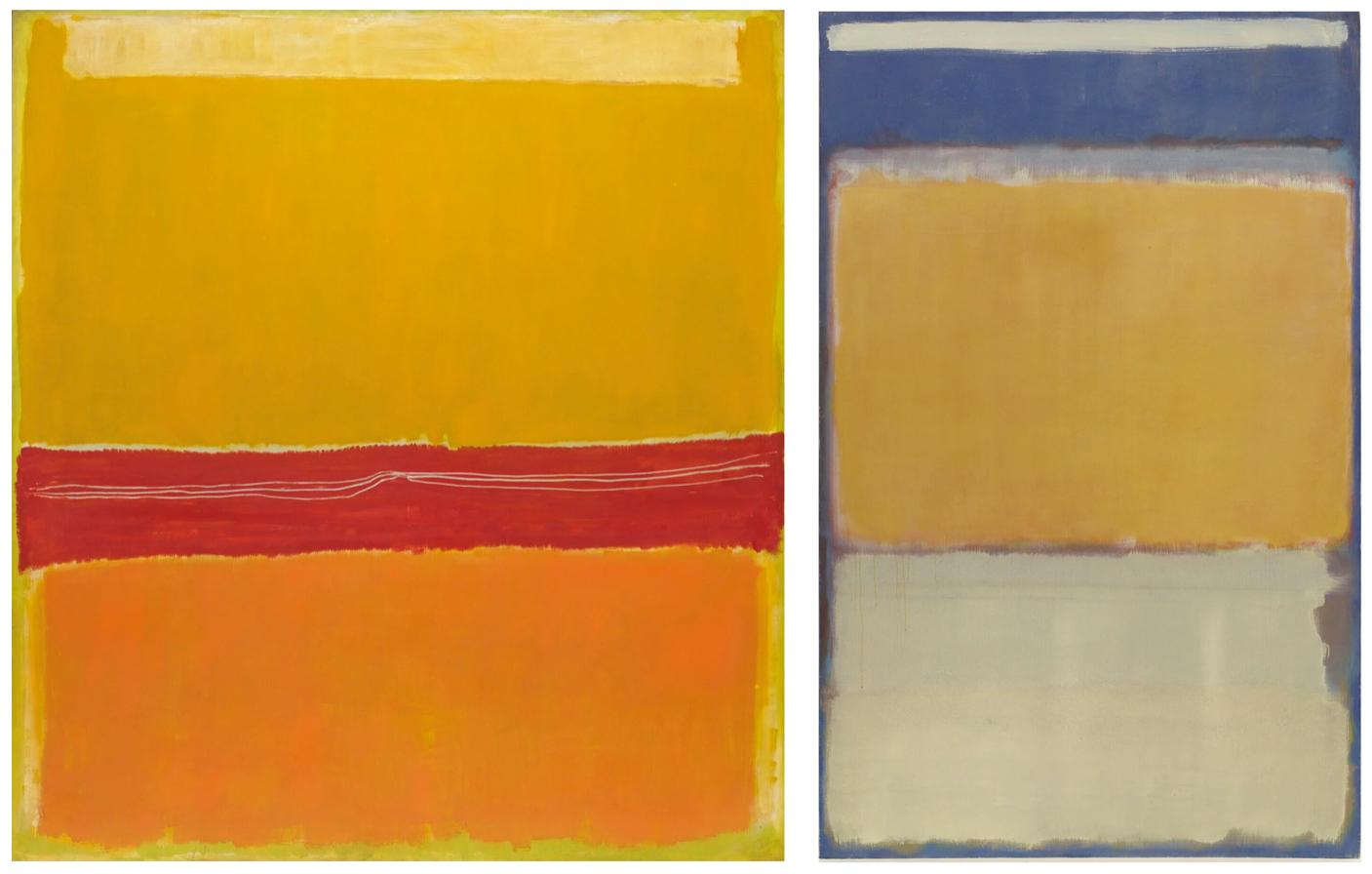
Left: Mark Rothko, No. 5/No. 22, 1950. Museum of Modern Art, New York. © 1998 Kate Rothko Prizel & Christopher Rothko / Artists Rights Society (ARS), New York. Photo: © The Museum of Modern Art / Licensed by SCALA / Art Resource, NY.
Right: Mark Rothko, No. 10, 1950. Museum of Modern Art, New York. © 1998 Kate Rothko Prizel & Christopher Rothko / Artists Rights Society (ARS), New York. Photo: © The Museum of Modern Art / Licensed by SCALA / Art Resource, NY.
Rothko’s 1951 exhibition—his fifth and last with Parsons—marked the culmination of this transformative period. Since its founding in 1946, the gallery on East 57th Street had become a hub for Abstract Expressionism, extending the legacy of Peggy Guggenheim’s Art of This Century Gallery. Parsons had showed Clyfford Still in 1947, Jackson Pollock in 1948 and Barnett Newman in 1950, as well as debuting Rothko’s “Multiforms” in 1949: she would come to refer to these artists her “four horsemen of the apocalypse”. As David Anfam has written, “There was something apt about the fact that this was [Rothko’s] last show there, because it concluded what the first had begun—the trajectory of the work from its exploratory premises in the mid 1940s to a complete flowering by the end of 1950” (Mark Rothko: The Works on Canvas, New Haven and London, 1998, p. 71). Exhibited alongside the present work were paintings now held in major institutions, including No. 10, 1950 and No. 5/No. 22, 1950 (both held in The Museum of Modern Art, New York), as well as No. 15 (Untitled), 1951 (National Gallery of Art, Washington D.C.).
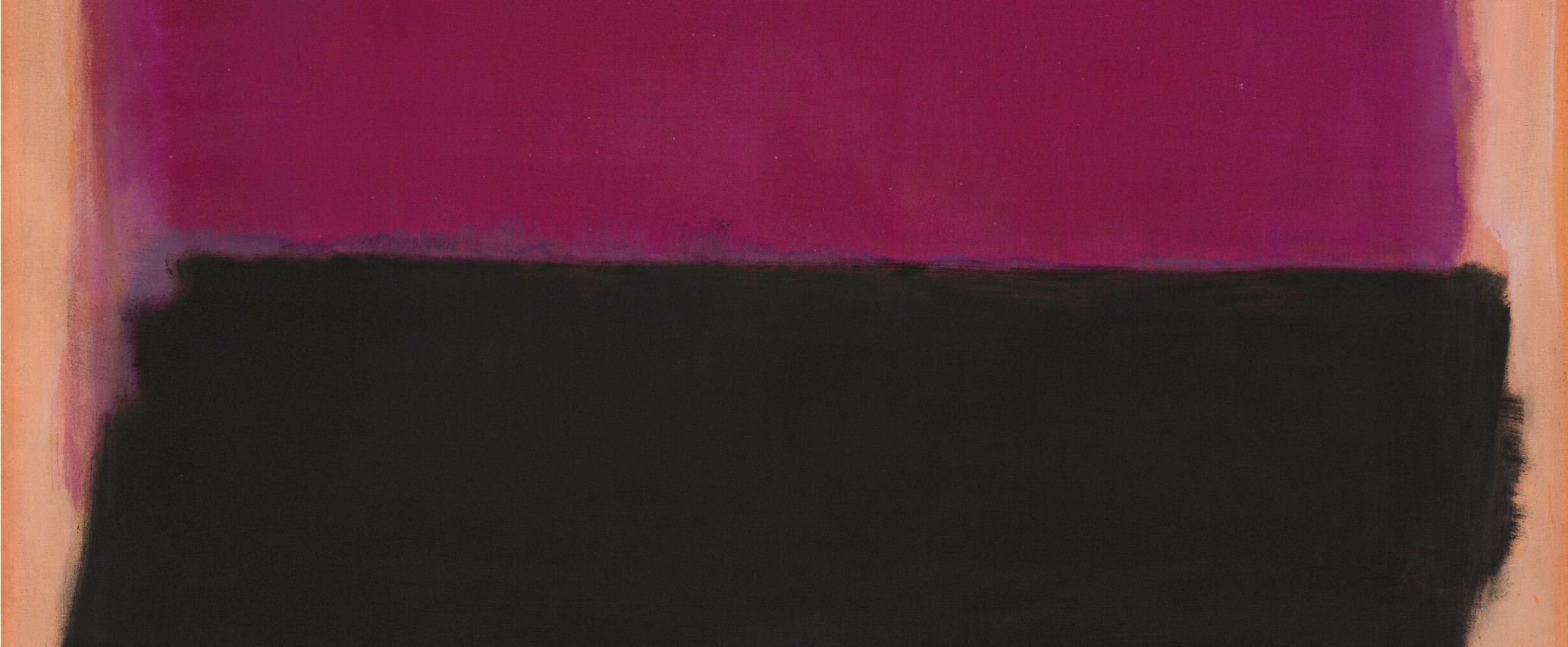
The activity around Parsons’s gallery during this period was indicative of a broader phenomenon: namely, the gradual emergence of New York as the new center of the global art world. The present work takes its place within this context, situated against a backdrop of flourishing creative euphoria that set the stage for Abstract Expressionism’s growing international acclaim during the 1950s. Still had made his New York debut in 1946—the same year that the term Abstract Expressionism was coined by the critic Robert Coates—and by 1948 had established the pillars of his mature language. Pollock immersed himself in his drip paintings between 1947 and 1950, while Newman painted his first “zip” painting, Onement, I, in 1948. In 1949, Robert Motherwell inaugurated his Elegy for the Spanish Republic series; the following year, Willem de Kooning began his landmark suite of Women. The distillation of Rothko’s signature style during this period was thus part of a wider consolidation of various major strands of Abstract Expressionism, each seeking a transcendental purpose for painting in the wake of the World War II. As Newman famously surmised, “Instead of making cathedrals out of Christ, man, or ‘life,’ we are making it out of ourselves, out of our own feelings” (“The Sublime is Now,” 1948, reproduced in H. B. Chipp (ed.), Theories of Modern Art, Los Angeles, 1984, p. 553).
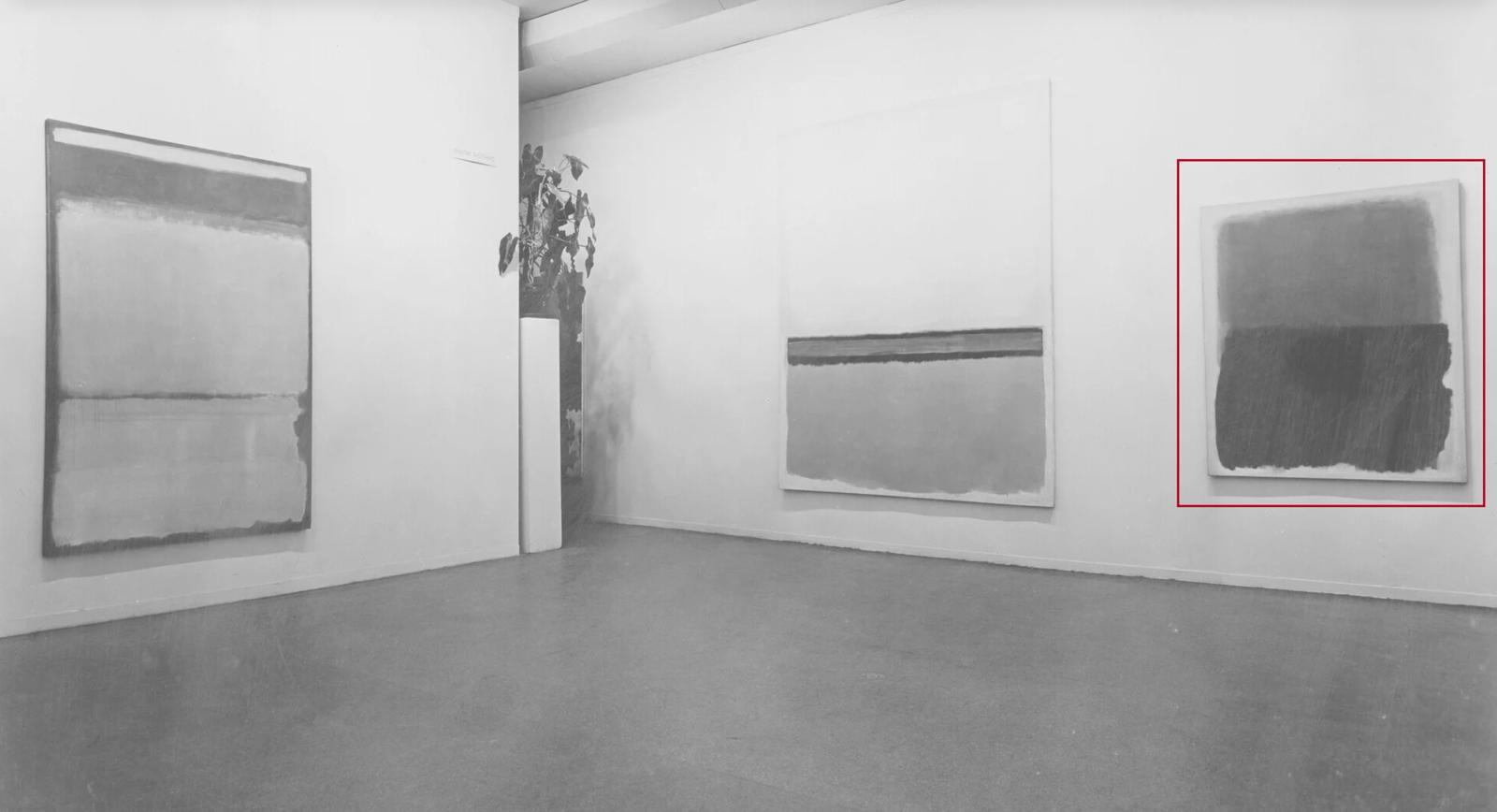
Installation view, 15 Americans, April 9 – July 27, 1952, Museum of Modern Art, New York (present lot illustrated). Photo: © The Museum of Modern Art/Licensed by SCALA / Art Resource, NY.
Artwork: © 1998 Kate Rothko Prizel & Christopher Rothko / Artists Rights Society (ARS), New York.
The 1952 exhibition at The Museum of Modern Art—part of a series in operation since 1929—bore witness to this momentum. Rothko showed eight works in a dedicated room, where the present painting took its place diagonally opposite No. 10, freshly acquired by the museum from the 1951 Betty Parsons exhibition. Major works by Clyfford Still were joined by masterpieces by Jackson Pollock, including his celebrated Autumn Rhythm (Number 30), 1950 (The Metropolitan Museum of Art, New York) and Number 7, 1950 (The Museum of Modern Art, New York). The exhibition was curated by Dorothy C. Miller, who would subsequently mastermind the museum’s seminal touring show The New American Painting in 1958. This historic group exhibition, which travelled to eight major European countries, radically transformed the perception of American art across the Atlantic, inspiring a host of young painters in its wake. The show featured many of the artists included in 15 Americans, among them Rothko himself, and was arguably indebted to the revelations of its 1952 predecessor.
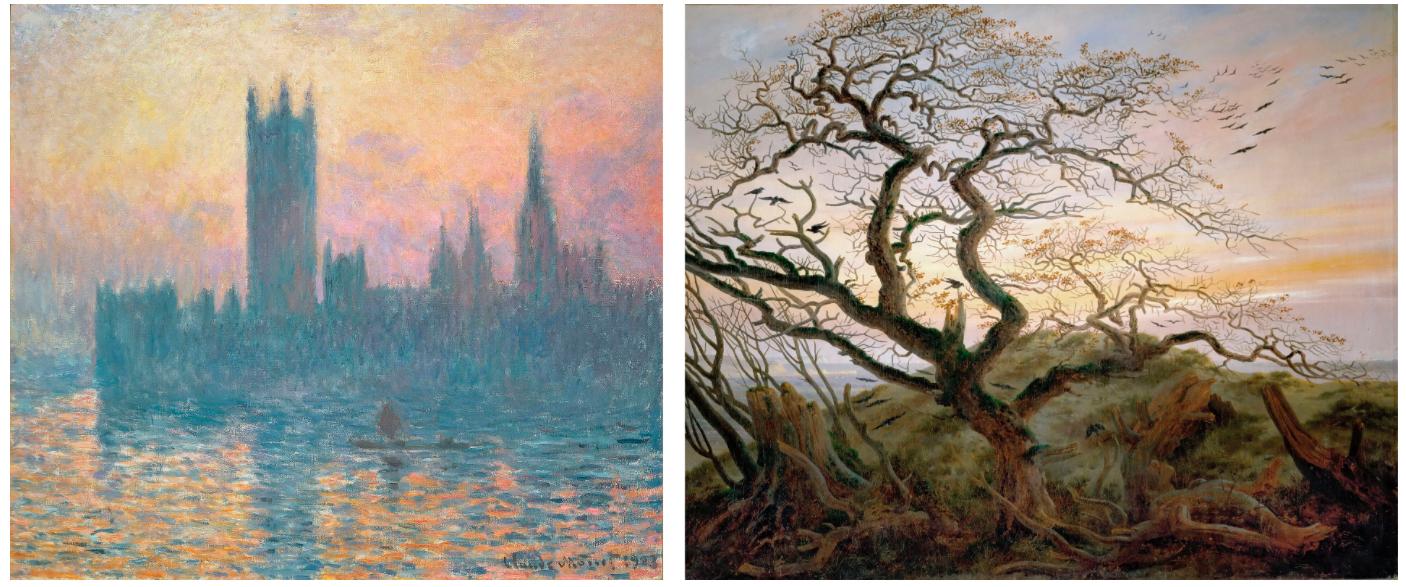
Left: Claude Monet, The Houses of Parliament, Sunset, 1903. National Gallery of Art, Washington, D.C.
Right: Caspar David Friedrich, The Tree of Crows, 1822. Musée du Louvre, Paris.
The present work hints at some of the grounds upon which critics began to historicize Abstract Expressionism during this early period. The movement’s dematerialized approach to color and light prompted comparison with the late works of Claude Monet: an artist whose dramatic flaming sunsets and seemingly infinite bodies of water are invoked in the present work’s fiery, luminous depths. Others, notably the critic Robert Rosenblum, found ancestral links in the Romantic period, specifically in relation to the concept of the “sublime”. Where artists such as Caspar David Friedrich had sought to capture the overwhelming majesty of the natural world, Rothko and his contemporaries strove to induce the same intoxicating sensations through abstract color and form alone: the artist’s friend Murray Israel reported that “Rothko said that he wanted a presence, so when you turned your back to the painting, you would feel that presence the way you feel the sun on your back” (quoted in J.E.B. Breslin, Mark Rothko: A Biography, New York, 1993, p. 275). The artist’s fascination with the dialogue between “Apollonian” order and “Dionysian” chaos—informed by his readings of the nineteenth- century philosopher Friedrich Nietzsche—is particularly palpable in the present work: the sensation of steady, illuminating warmth is held in tension with the looming, nocturnal shadow that threatens to engulf it.
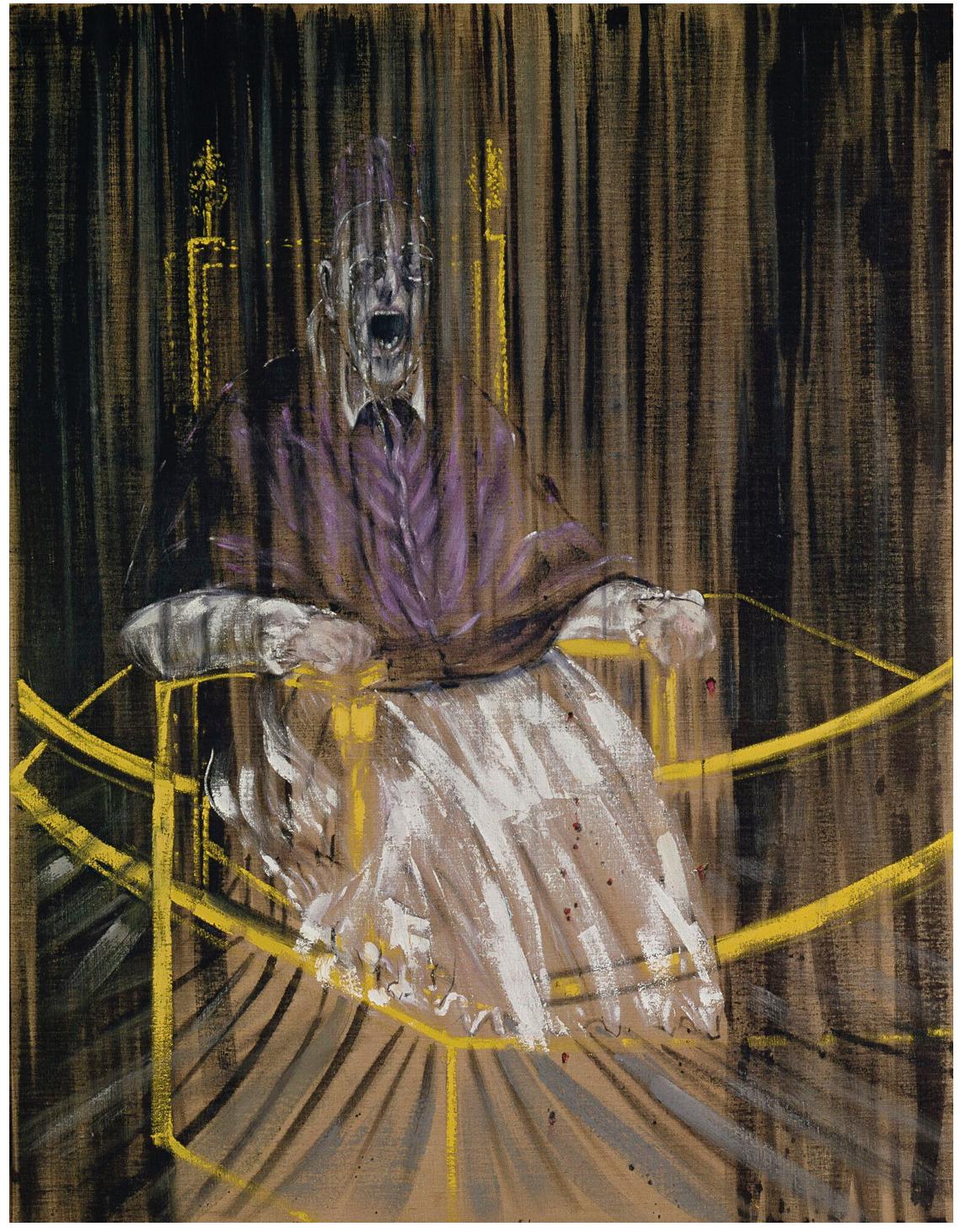
Francis Bacon, Study after Velazquez’s Portrait of Pope Innocent X, 1953. Des Moines Art Center.
© The Estate of Francis Bacon. All rights reserved / DACS, London / ARS, New York 2025.
Rothko’s use of light also owes much to his engagement with the work of the Old Masters: notably Rembrandt, whom he counted among his favorite artists. His juxtaposition of colors in the present work, and his fascination with the contrast between light and dark hues, evinces a deep awareness of chiaroscuro and the Dutch master’s modelling of three-dimensional space. The zones of color advance and recede as the viewer’s eye moves across the surface, bound together in a slow, sacred dance. Rothko was also drawn to the grand spiritual narratives contained within many Old Master works, and in 1950 had been captivated by Fra Angelico’s frescoes in the Convent of San Marco in Florence. Tellingly, a variation on the present work’s luxuriant purple tone would reappear in his own landmark suite of fresco-like paintings for the Houston Chapel in Texas, oscillating between strains of plum, maroon and black. The same mercurial spectrum dominated his Seagram Murals during the late 1950s, themselves inspired by the blind windows in Michelangelo’s Laurentian Library. Interestingly, Francis Bacon’s contemporaneous series of Papal portraits, similarly forged in the light of the Old Masters, would also anchor themselves around the polarities of purple and black, their existential angst illuminated by piercing beams of light.
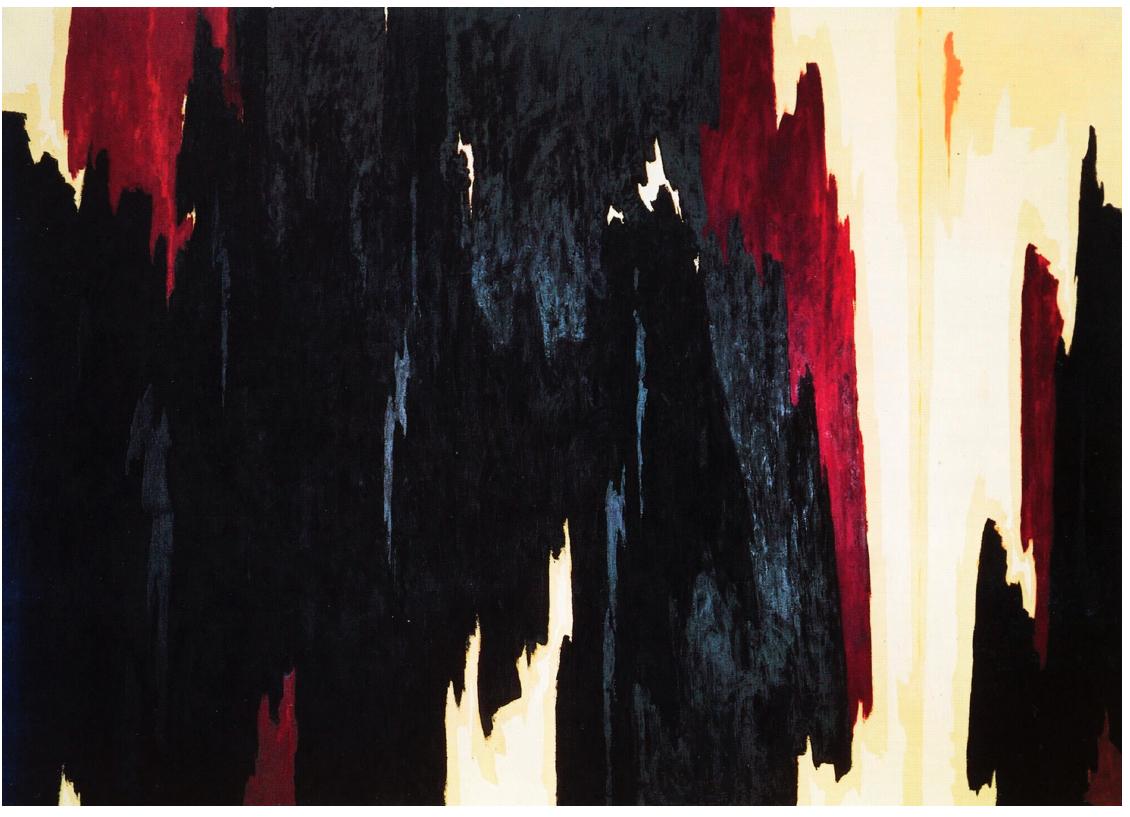
Clyfford Still, Untitled, 1958. Art Institute of Chicago. © 2025 City & County of Denver, Courtesy Clyfford Still Museum / Artists Rights Society (ARS), New York. Photo: The Art Institute of Chicago / Art Resource, NY.
Despite his conscious rejection of figuration, many of Rothko’s works quiver with architectural hints of the human form. Much like Still’s jagged color fields or Newman’s “zips”—both of which flicker with traces of lone standing figures— his vertically-stacked bands harbour a curiously anthropomorphic quality. Still’s work, in particular, had an important impact on the evolution of Rothko’s mature language during the late 1940s: the present work’s black color field bears witness of this lineage, jutting into space in the manner of Still’s craggy terrains. Though both artists wholeheartedly embraced abstraction, their arrangements of color, shape and texture were fundamentally linked to human experience, mirroring the conflicts, resolutions, ambiguities and fluctuations that define our emotional response to the world. “I think of my pictures as dramas,” Rothko once said, “the shapes in the pictures are the performers. They begin as an unknown adventure in an unknown space” (“The Romantics were Prompted,” Possibilities No. 1, Winter 1947-1948). The present work captures the inception of this mysterious voyage into the void, marking the moment at which Rothko’s forms began to take on a life of their own.
Untitled, circa 1953
The Collection of Sydell Miller
Sotheby’s New-York: 18 November 2024
Estimated: USD 2,000,000 – 3,000,000
USD 5,160,000
WORK ON PAPER
Untitled | A Legacy of Beauty: The Collection of Sydell Miller Evening Auction | 2024 | Sotheby’s
MARK ROTHKO (1903 – 1970)
Untitled, circa 1953
Oil on paper, mounted on Masonite
39 3/4 x 26 1/4 inches (99.1 x 66.7 cm)
Signed MARK ROTHKO and dated illegibly (on a piece of canvas affixed to the reverse)
A jewellike evocation of the sublime within pure abstraction, Untitled is an exemplar of the union of color and light achieved in the artist’s revered corpus of works on paper. Executed circa 1953, at the height of what David Anfam, the late editor of the artist’s catalogue raisonné, hailed as the artist’s anni mirabilis, the present work heralds the watershed moment when Rothko resolved to express an essential, universal truth through an entirely unprecedented artistic idiom.
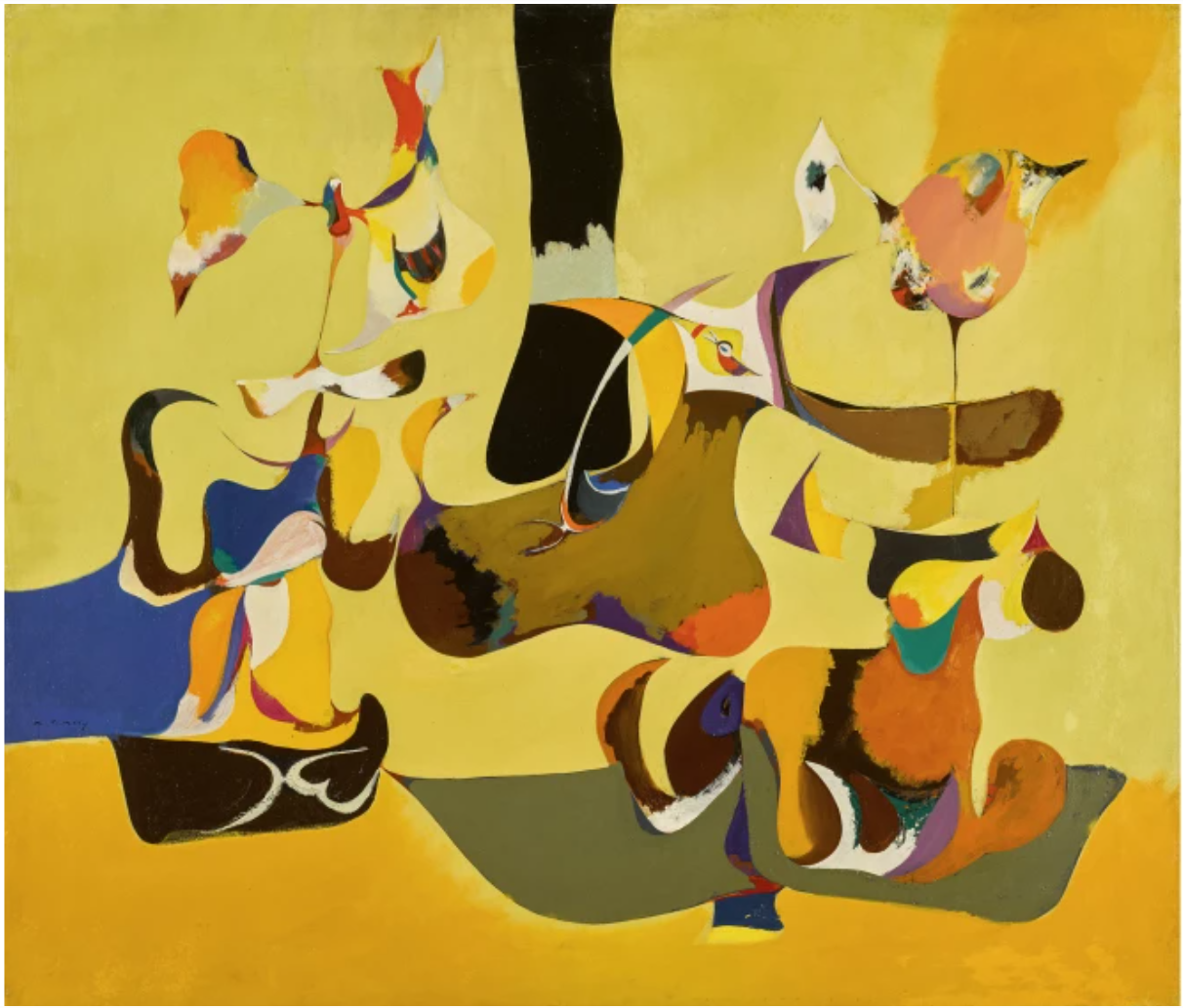
Arshile Gorky, Garden in Sochi, circa 1940-41. Private Collection. Sold Sotheby’s, London, 25 March 2021, lot 104 for $11.2 million.
Art © 2024 Arshile Gorky Foundation / Artists Rights Society (ARS), New York
By 1949, Rothko abandoned his multiform compositions—vivid patchworks of irregular, organic shapes inspired by his teacher, Arshile Gorky, and Surrealist predecessors’ biomorphic forms—to contemplate what he termed “an unknown space.” Assuming the mantle of his great Romanticist forebears such as J.M.W. Turner and Caspar David Friedrich, the artist devoted himself to the pursuit of art as a portal to an enhanced realm of physical and spiritual experience. In a calculated purge of superfluous referent to symbols or nature, his multiforms’ multitudinous passages coalesced into totalities of light and hue. Untitled stands as an evocation of Rothko’s famed treatise on abstraction for, according to the artist,
“The progression of a painter’s work, as it travels in time from point to point, will be toward clarity; toward the elimination of all obstacles between the painter and the idea, and between the idea and the observer”
David Anfam deems these pivotal years the onset of the artist’s “classical period,” spanning the remainder of Rothko’s oeuvre and containing his most consequential output.
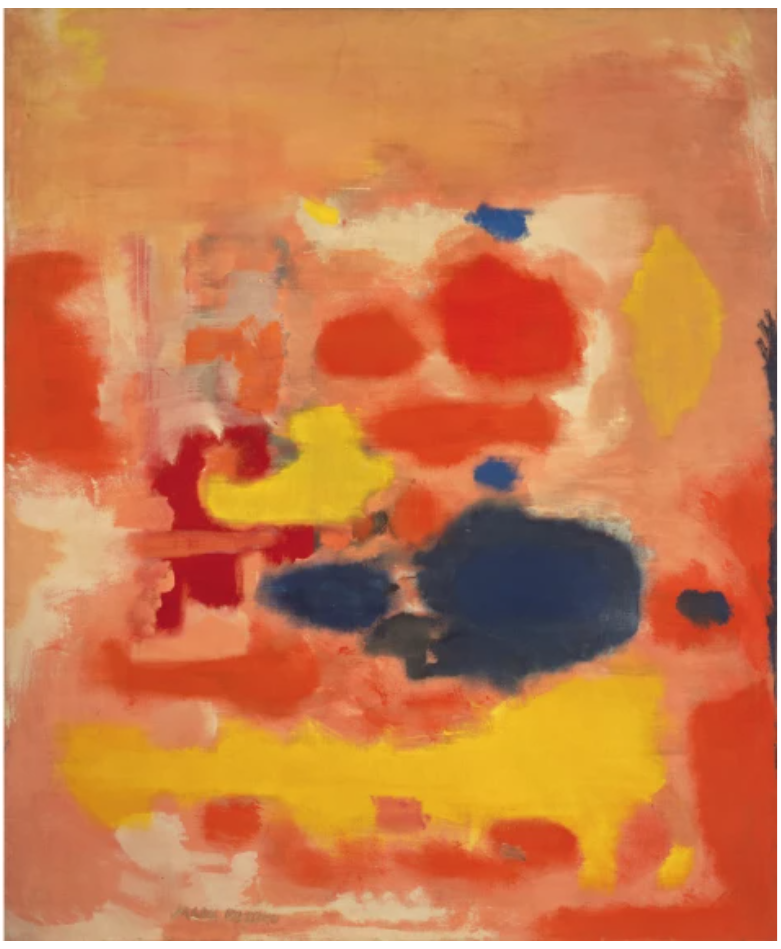
Mark Rothko, Untitled, 1948, Private Collection. Image courtesy Art Resource, NY.
ART © 1998 KATE ROTHKO PRIZEL & CHRISTOPHER ROTHKO / ARTISTS RIGHTS SOCIETY (ARS), NEW YORK
Each passage of Untitled is constructed through the meticulous aggregation of laminae of brushed pigment, carefully layered stroke by stroke—in some places wholly saturating the paper, in others skimming lightly across the surface—creating not only chromatic resonance but also an evocation of spatial depth. A concentrated zone of warm hue anchors the upper register of the composition, haloed by a diaphanous aureate field and counterpoised by veins of cooler tones below. Feathery washes of opalescent white elide with the surrounding ground in the lowest register, simultaneously dissolving and commingling gently towards the vaporous bounds of each form. The pictorial surface is energized under the powerful motion of Rothko’s brush, with all elements engaging in a choreography that ceaselessly shifts between theatrical sweeps of pigment and staccato drips, opacity and luminescence, evincing his expressive command of color and imbuing the surface with a distinct temporality. Such mesmeric dynamism envelops the viewer’s attention, its illumined passages cumulatively forming an immersive aura. A sanctum of pure color and light, Untitled invites somatic absorption, contemplation and discovery.
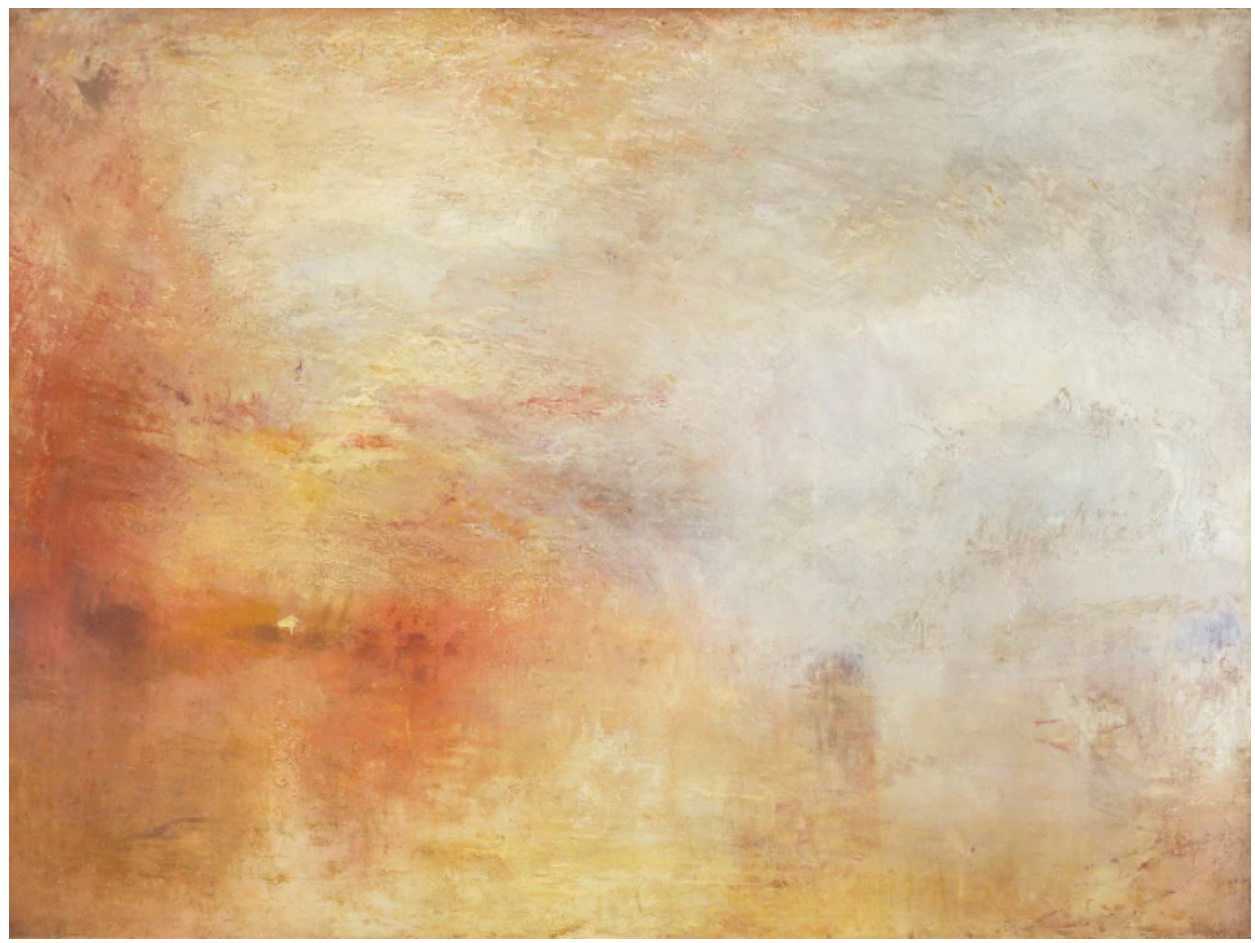
J.M.W. Turner, Sun Setting Over a Lake, circa 1840, Tate Gallery, London
Rothko’s orchestrations of pigment were doubtlessly informed by his 1952 move to a new studio on 53rd Street, just steps from The Museum of Modern Art. Where he once absorbed the rich palettes and painterly effects of light exhibited in the shimmering canvases of Pierre Bonnard’s 1948 retrospective, Rothko now had unfettered access to the opuses of Henri Matisse such as L’Atelier Rouge and Danse, whose radical redefinition of relationships between form, space and hue informed his own understanding of the expressive possibilities of color. Through Rothko’s genius wielding of paper’s singular capacity to both absorb and reflect light, Untitled appears to emit an internal luminescence. Dana Cranmer expounds, “In the 1950s…Rothko ignored the limits of physical coherence to achieve a translucency unique to his paintings. Light penetrated the attenuated paint film, striking the individual pigment particles and bouncing back to suffuse the surface and engulf the viewer in an aura of color” (Exh. Cat., London, Tate Gallery, Mark Rothko, 1903-1970, 1983, p. 192). Achieving the effect of transforming pigment into a vessel of light, Untitled conjures the sublimity of his most esteemed monumental canvases, all with a bewitching intimacy and delicacy of scale.
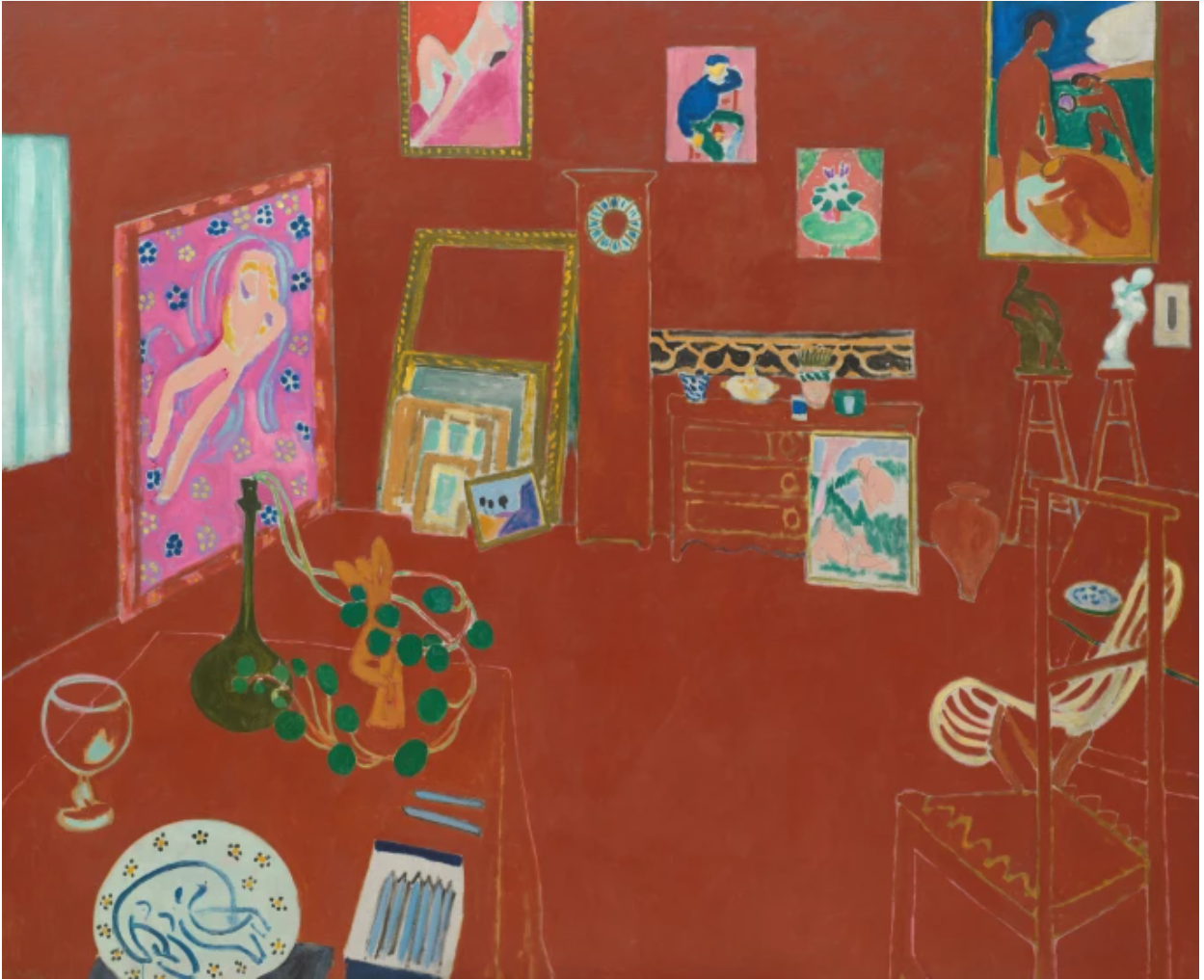
Henri Matisse, L’Atelier rouge, 1911, The Museum of Modern Art, New York. Image © 2024 The Museum of Modern Art/Licensed by SCALA / Art Resource, NY. Art © 2024 Succession H. Matisse, Paris / Artists Rights Society (ARS), New York
Last publicly exhibited as part of the artist’s European posthumous retrospective organized by the Kunsthaus Zürich in 1971-72, the present work formerly belonged to Hubert de Givenchy. Founder of the eponymous couture house, Givenchy was not only a colossus of mid-twentieth century fashion, known for his dressing of the era’s leading cultural luminaries, but also amassed a storied collection modern and contemporary art spanning masterworks by Pablo Picasso, Joan Miró and Alberto Giacometti.
Untitled (Yellow and Blue), 1954
Sotheby’s Hong-Kong: 11 November 2024
Estimated: HKD 225,000,000 – 275,000,000
HKD 252,500,000 / USD 32,474,530
MARK ROTHKO (1903 – 1970)
Untitled (Yellow and Blue), 1954
Oil on canvas
95 5/8 x 73 1/2 inches (242.9 x 186.7 cm)
Executed in 1954, Mark Rothko’s resplendent Untitled (Yellow and Blue) is the first major work to be offered by the artist in Asia and an unequivocal masterpiece of twentieth-century art history. A glowing aurora of shimmering color and light, the present work confronts us as the summation of its creator’s deeply philosophical practice, wherein he staged some of the most moving, transcendent, and simply breathtaking unions between material and support ever realized in the grand tradition of oil paint on canvas.
“It would be good if little places could be set up all over the country, like a little chapel where the traveler, or wanderer could come for an hour to meditate on a single painting hung in a small room, and by itself.”
Executed in 1954, at the chronological apex of the celebrated period of Rothko’s career referred to by David Anfam, author of the artist’s catalogue raisonné, as the anni mirabilis, Untitled (Yellow and Blue) is a triumphant archetype of this artistic ideal: its radiant surface and towering scale elicit a visual and somatic experience that is prodigious and undeniable, compelling us to surrender to a sense of pure contemplation in the face of its painterly authority. For Rothko, art was capable of provoking in the viewer an existential sense of awe and wonderment for the sublime miracle of existence, and in Untitled (Yellow and Blue), as we stand suspended in its sea of meditative calm, we behold that capacity wholly and perfectly achieved.
By the time he painted Untitled (Yellow and Blue) in 1954 Mark Rothko was fifty-one years old and had been working as a painter for thirty years. From figurative paintings in the 1920s and 1930s that reflected the realist trend dominant in American art, and perpetuated by figures such as Thomas Hart Benton, in the wake of World War I and through the Great Depression; through a series of canvases in the 1940s that looked to Europe and staged an exploration of biomorphic forms drawn from Miró, Picasso, Dalí, and Rothko’s other Surrealist predecessors; to the Multiform paintings begun in 1947 and representing the artist’s ultimate and unequivocal disavowal of the figurative, Rothko wrestled with the singular goal that had expanded in his mind to become all-consuming: to access an alternative realm, to transcend his worldly existence, to release himself and his viewers from what he perceived to be the devastatingly chaotic experience of everyday life. When he ultimately composed the first mature iteration of his legendary corpus, in 1949, Rothko succeeded in making his art the instrument of his inner life; his paintings ceased to be material expressions of artistic drive and transformed into gateways to the sublime.
These vessels of pure color and light, Rothko’s towering theses on the absolute limits of abstraction, were overwhelmingly engrossing for him in his creation of them as they are all-encompassing of our senses as we stand in awe in front of them. As Dore Ashton writes, “His greatest fund of emotion was lavished primarily on what he made – paintings. Those paintings were to be his passport to a more luminous world, not encumbered by our nouns and adjectives, our interpretations that always fall short. They were prepared by careful thought, nurtured by well-fondled ideas, but, as he said, ‘Ideas and plans that existed in the mind at the start were simply the doorway through which one left the world in which they occur.’ To leave the world in which ideas and plans – so quickly superseded by emotions – occur was essential to Rothko. …He had deep needs to fulfill, many of them incapable of being brought to the threshold of language.” (Dore Ashton, About Rothko, New York, 1983, p. 3) Rothko’s progression, pursued with dogged determination over decades of experimentation and refinement and with an unerring conceptual and philosophical consistency, was not a quest for material success but instead a visceral, undeniable, and deeply personal calling. Untitled (Yellow and Blue) is a paean to the utterly absorptive process of its execution, whereby Rothko conferred upon its luscious, vigorous surface his own desire, as elucidated by Stanley Kunitz, “to become his paintings.” (Stanley Kunitz, interview with Avis Berman, December 8, 1983, Archives of American Art)
Paintings by Mark Rothko from 1954 that are in Museum Collections
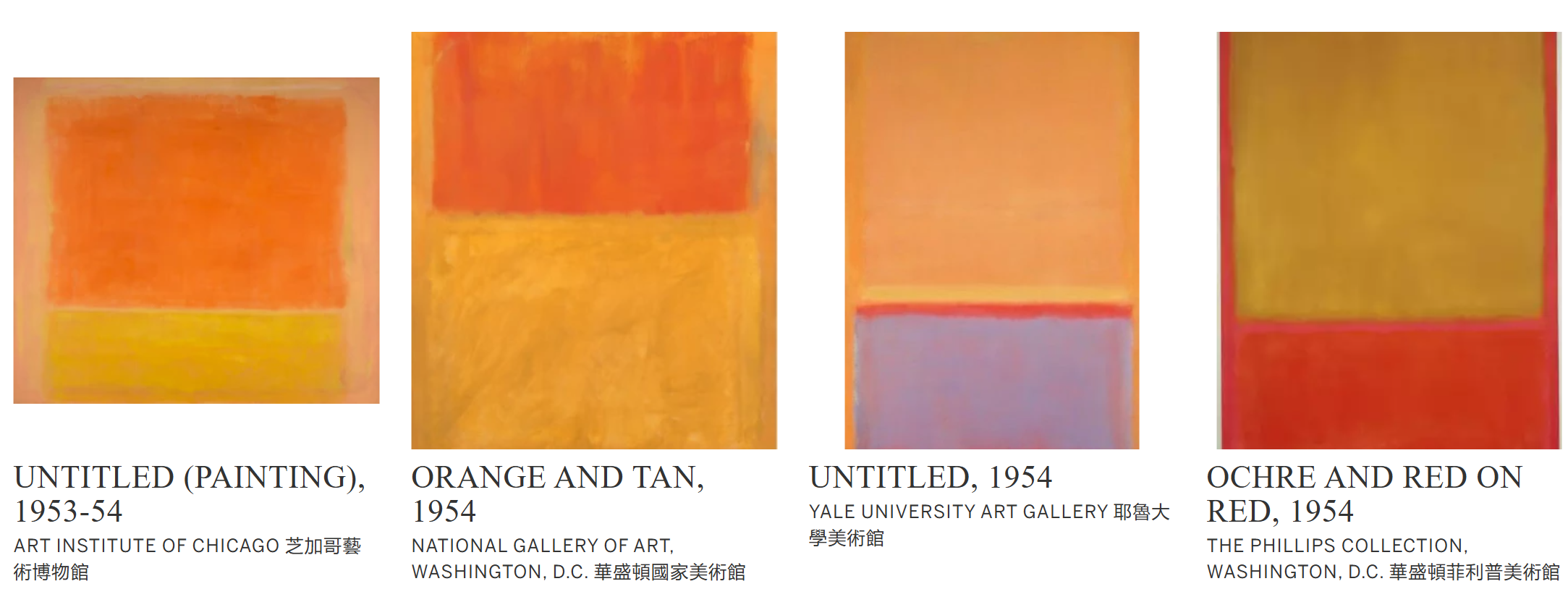
Rothko executed twenty two paintings in 1954, of which eleven are today in the permanent collections of prominent museums around the world, including the National Gallery of Art (Orange and Tan); the Yale University Art Gallery (Untitled); The Museum of Contemporary Art, Los Angeles (No. 9 (Dark over Light Earth/Violet and Yellow in Rose)); the Tehran Museum of Contemporary Art (No. 11/No. 2 (Yellow Center)); The Phillips Collection (The Ochre (Ochre, Red on Red)); The Museum of Art, Rhode Island School of Design (Untitled); the Essen Folkwang Museum (White and Brick on Light Red (White, Pink and Mustard)); The Modern Art Museum of Fort Worth (White Band No. 27); The Metropolitan Museum of Art, New York (Untitled); Art Institute of Chicago (Untitled (Painting)); and Whitney Museum of American Art (Untitled (Blue, Yellow, Green on Red).
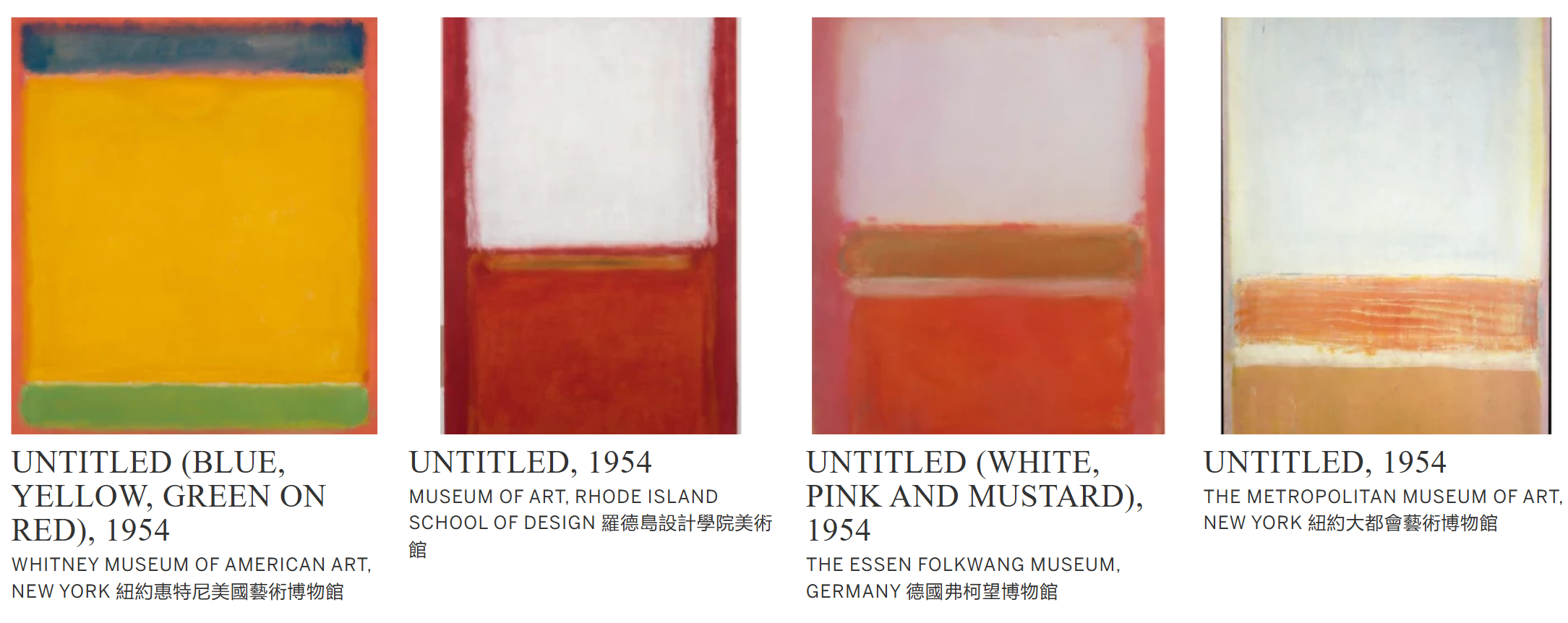
This seminal year also saw Rothko’s first one-man exhibition in a major US museum, at the Art Institute of Chicago. Organized by one of the foremost champions of the avant-garde and post-war art in America, the Institute’s visionary first curator of modern painting and sculpture Katharine Kuh, this exhibition was a definitive testament to Rothko’s preeminence amongst the giants of Abstract Expressionism that were his peers and contemporaries. In the months leading up to the exhibition, and in preparation for its installation as well as the publication of an accompanying catalogue, Rothko and Kuh corresponded at length in a series of letters. In a manner entirely consistent with his artistic philosophy and aesthetic predispositions, Rothko was highly involved and invested in all aspects of the planning, approaching each detail with the same level of conceptual rigor that informed the physical execution of each and every painting he made.
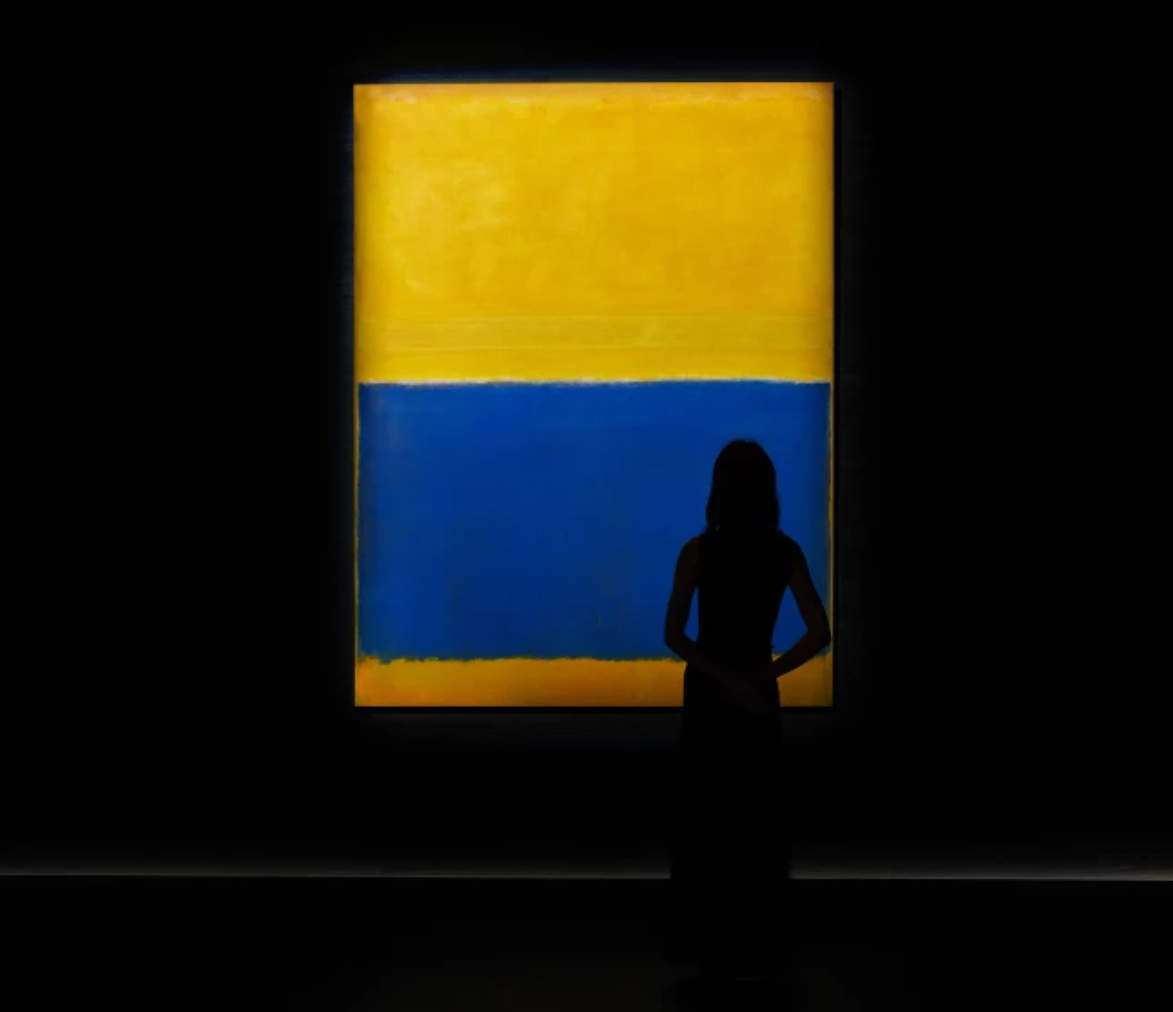
Soaring to a stunning eight feet in height, Untitled (Yellow and Blue) broadcasts its allure on a greater-than human register; engulfing the viewer’s entire experience; and situating us as actors within its epic expanse. An apparent paradox typifies the artist’s ambition and contributes to his desire to commune directly with his canvases.
“I paint very large pictures…precisely because I want to be very intimate and human. To paint a small picture is to place yourself outside your experience…However you paint the larger picture, you are in it. It isn’t something you command.”
Of course, scale is absolutely fundamental to the nature of Rothko’s work. Through the seamless flow of color and light an atmosphere of the ethereal emanates as if from within Untitled (Yellow and Blue). As we become fully subsumed within its luminous surface, our perception of physical boundaries or demarcations of material space dissolves and we are overcome by a sense of endless continuity, as if standing at a precipice reaching outwards toward an ever-receding, boundless horizon. Incandescent zones of brilliantly hued pigment, simultaneously distinct and inextricably intertwined, pulsate with a tangible energetic intensity that takes absolute hold of our vision, pulling us under in a wave of pure artistic bravura. An ocean of radiant lapis blue churns in the lower half of the composition, threatening to surge forth from its predetermined rectangular structure and pour into the shimmering fields of golden yellow that surround it. As witnesses to this inimitable masterwork, we are afforded the opportunity to travel through the subtle variants of tone and contour that comprise the intricate landscape of its surface, apprehending the subtly perceptible strokes of Rothko’s brush that imbue each area of Untitled (Yellow and Blue) with an ineffable breath and inexorable vivacity. Infused with an otherworldly glow, these iridescent tones harbor primal connotations of light, warmth, and the Sun; yet, in line with a perennial balance that characterizes the very archetypes of the artist’s corpus, there is a concurrent tension struck between the uplifting emotions conventionally evoked by warm golden hues and something implicitly more tragic. Inasmuch as the dazzling yellow, made endlessly dynamic by the sheer underlayers of red and blue pigment that give it an exquisite complexity, invokes the Sun it also implicates the inevitable cycle of dawn and dusk, of rise and set, of continual demise and rebirth.
“Often, towards nightfall, there’s a feeling in the air of mystery, threat, frustration – all of these at once. I would like my painting to have the quality of such moments.”
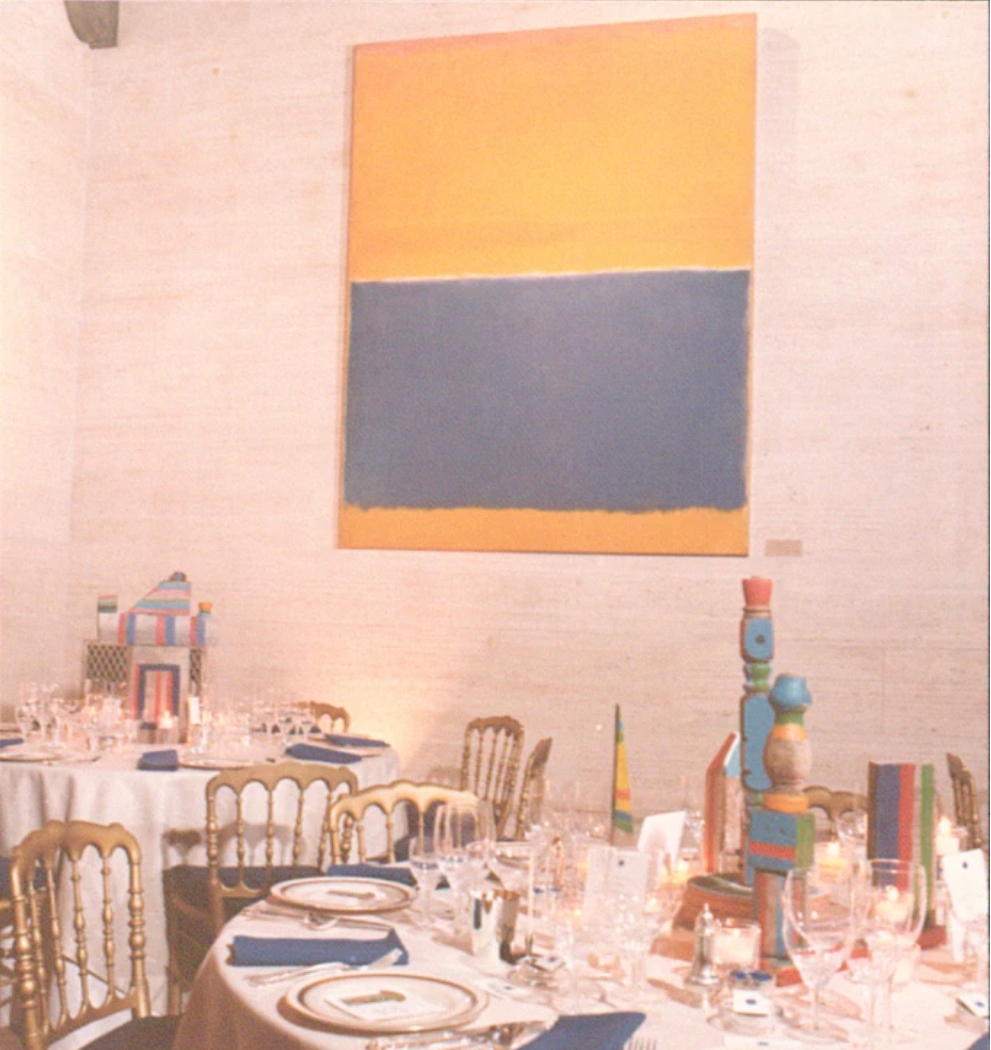
The present work at the opening dinner for the National Gallery of Art, held in 1973 in Washington, D.C.
For nearly thirty years, from the time that it was acquired directly following Rothko’s death in 1970, Untitled (Yellow and Blue) held an esteemed place within the renowned collection of Mr. and Mrs. Paul Mellon. Foremost among the leading patrons in the arts for much of the Twentieth Century, Mr. and Mrs. Mellon lived according to the noblest ideals of refinement and understatement. Paul Mellon’s father, the banker, industrialist, and philanthropist Andrew W. Mellon had effectively founded the National Gallery of Art in Washington, D.C. in 1937 with a gift of one hundred and fifteen paintings from his personal collection as well as the funds to construct the museum’s building, designed by John Russell Pope. Following his father’s death, Paul Mellon took stewardship over the project, presenting the completed building to Franklin D. Roosevelt in 1941 and thereafter serving as the National Gallery’s president, board chairman, and honorary trustee. When Mrs. Mellon married Paul in 1948 she brought her distinctive passion and discerning aesthetic predisposition to the Mellon family’s art collection, redefining its scope to include artists like Mark Rothko who were operating at the very forefront of artistic innovation at mid-century. Mrs. Mellon’s deep reverence and love for the arts combined with and extended Paul Mellon’s own overwhelming generosity; in 1966, to celebrate the twenty-fifth anniversary of the Gallery, an exhibition of the Mellon’s vast trove of Impressionist and Post-Impressionist paintings was held and the paintings subsequently donated to the museum. Five years later, the Gallery’s burgeoning collection of Modern Art required additional space and Mr. Mellon commissioned I. M. Pei to design a new East Building that, together with his sister Ailsa Mellon Bruce, he funded. Over the course of six decades until his death in 1999, Mr. Mellon donated nine hundred and thirteen works to the National Gallery.
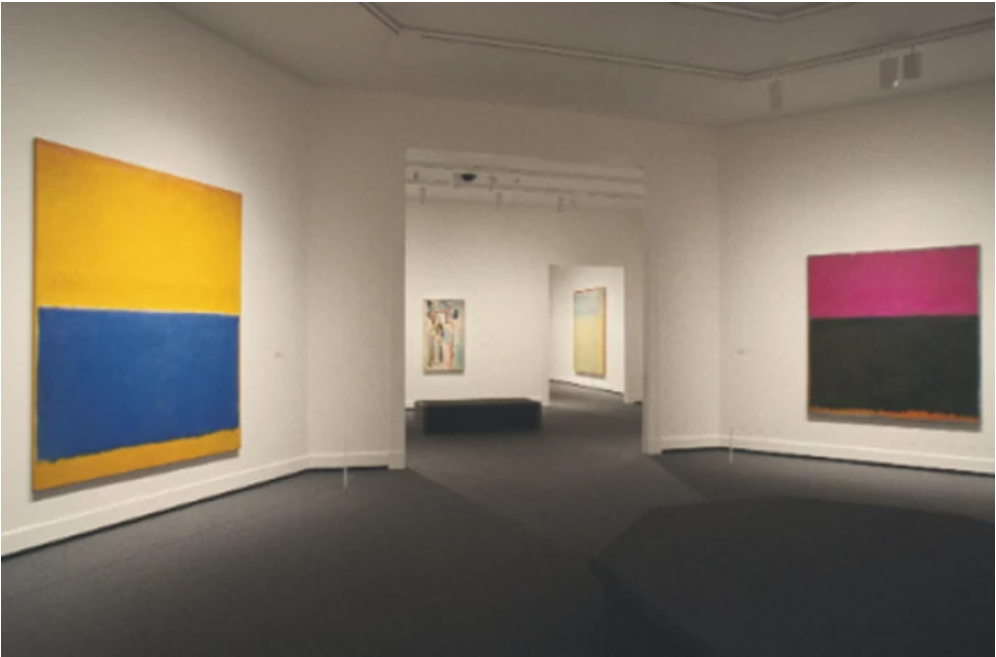
The present work installed at the National Gallery of Art, Washington, D.C.
The artist famously stated, in what is perhaps the definitive text declaring the philosophical underpinnings to his oeuvre, “I think of my pictures as dramas; the shapes in the pictures are the performers… They are organisms with volition and a passion for self-assertion.” (Mark Rothko, “The Romantics Were Prompted,” first published in Possibilities, no. 1, 1947) Indeed, our experience of Untitled (Yellow and Blue) as participants in its stunning drama brings it to life, and may give new dimension to our lives. We do not look at this painting; we are absorbed into it. Indeed, being in its presence parallels a line of Nietzsche that had inspired Rothko since he had been a young man: “There is a need for a whole world of torment in order for the individual to sit quietly in his rocking row-boat in mid-sea, absorbed in contemplation.” (Friedrich Nietzsche, The Birth of Tragedy, translation by Francis Golffing, New York, 1956, pp. 33-34)
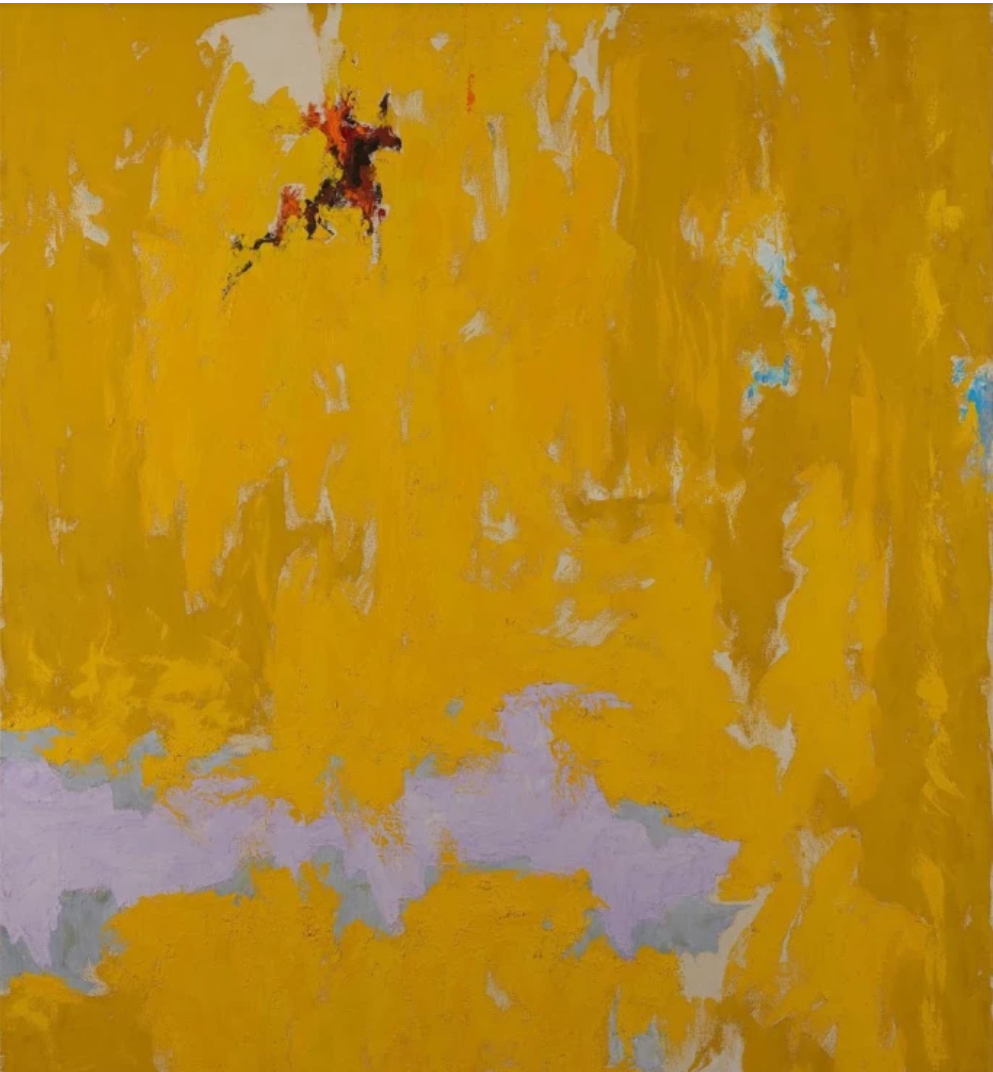
Clyfford Still, PH-129, 1949, Clyfford Still Museum, Denver
It is well documented that Rothko was fixated with the literary work of Friedrich Nietzsche, above all the German philosopher’s seminal opus The Birth of Tragedy from the Spirit of Music written in 1872. Nietzsche’s ideas of how the tension between Apollonian and Dionysian forces dictates the terms of human drama were important to the advancement of Rothko’s color fields. Indeed, Rothko’s vast tableaux have often been discussed in the lexicon of the immediate and saturating effects of music. David Sylvester’s review of the 1961 Whitechapel Gallery exhibition in London provides an apt response to the present work in these terms: “These paintings begin and end with an intense and utterly direct expression of feeling through the interaction of colored areas of a certain size. They are the complete fulfillment of Van Gogh’s notion of using color to convey man’s passions. They are the realisation of what abstract artists have dreamed for 50 years of doing – making painting as inherently expressive as music. More than this: for not even with music…does isolated emotion touch the nervous system so directly.” (in New Statesman, 20 October 1961 cited in Exh. Cat., London, The Tate Gallery, Op. Cit., p. 36)
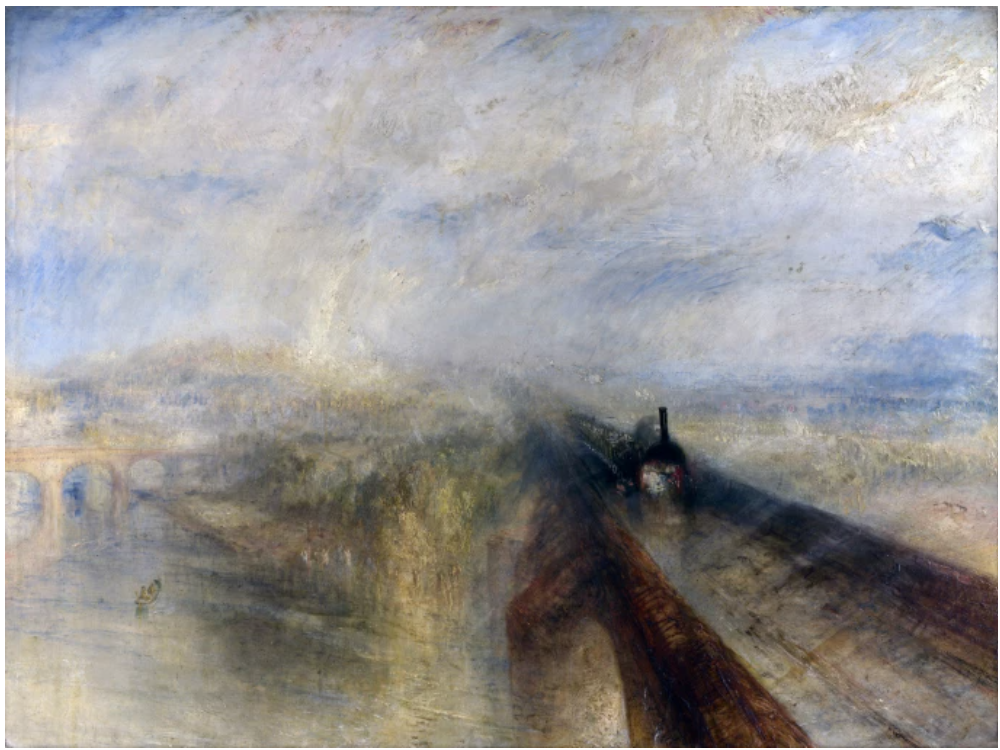
J.M.W. Turner, Rain, Steam, and Speed – The Great Western Railway, 1844, National Gallery, London
Excepting a letter to Art News in 1957, from 1949 onwards Rothko ceased publishing statements about his work, anxious that his writings might be interpreted as instructive or didactic and could thereby interfere with the pure import of the paintings themselves. However, in 1958 he gave a talk at the Pratt Institute to repudiate his critics and to deny any perceived association between his art and self-expression. He insisted instead that his corpus was not concerned with notions of self but rather with the entire human drama. While he drew a distinction between figurative and abstract art, he nevertheless outlined an underlying adherence to the portrayal of human experience. Discussing the “artist’s eternal interest in the human figure,” Rothko examined the common bond of figurative painters throughout Art History: “they have painted one character in all their work. What is indicated here is that the artist’s real model is an ideal which embraces all of human drama rather than the appearance of a particular individual. Today the artist is no longer constrained by the limitation that all of man’s experience is expressed by his outward appearance. Freed from the need of describing a particular person, the possibilities are endless. The whole of man’s experience becomes his model, and in that sense it can be said that all of art is a portrait of an idea.” (lecture given at the Pratt Institute 1958, cited in Exh. Cat., London, The Tate Gallery, Op. Cit., p. 87) Teeming with the sheer genius of its creator’s inimitable evocation of the sublime, Untitled (Yellow and Blue) is the singular summation of Mark Rothko’s fundamental artistic ambition as elucidated in his definitive Pratt Institute talk. A veritable treatise on the absolute limits of abstraction, the present work, in truth, involves both spirit and nature, and instills in us a profound sense of the spiritual whilst evincing Rothko’s abject faith in the critical role the artist plays in attaining the highest realm to which man could aspire: “For art to me is an anecdote of the spirit, and the only means of making concrete the purpose of its varied quickness and stillness.” (Mark Rothko, “Personal Statement,” in Miguel López-Remiro, ed., Op. Cit., p. 45)
Untitled, 1968
Sotheby’s New-York: 14 November 2022
Estimated: USD 5,000,000 – 7,000,000
USD 6,241,850
Untitled | Modern Evening Auction | 2022 | Sotheby’s (sothebys.com)
MARK ROTHKO (1903-1970)
Untitled, 1968
Acrylic on paper laid on panel
33 ½ x 25 ¾ inches (85 x 65.5 cm)
Vibrating with an irrepressible chromatic energy, Untitled from 1968 encapsulates the themes and aims at the very heart of Mark Rothko’s painterly project. Concentrating the remarkable potency of his best-known canvases onto an intimate scale, Rothko here demonstrates his complete mastery of media and hue. A rare, exquisitely vibrant example from a period often characterized by a decidedly somber palette, Untitled exemplifies Rothko’s work in a medium that bore an increasingly profound significance in the twilight years of his career when, tirelessly seeking to broaden the horizons of his artistic practice, he focused his energies upon exploring the absolute limits of painting on paper. Although he created works on paper throughout the entirety of his career, the present example reflects the climax of the evolution of his output on paper.
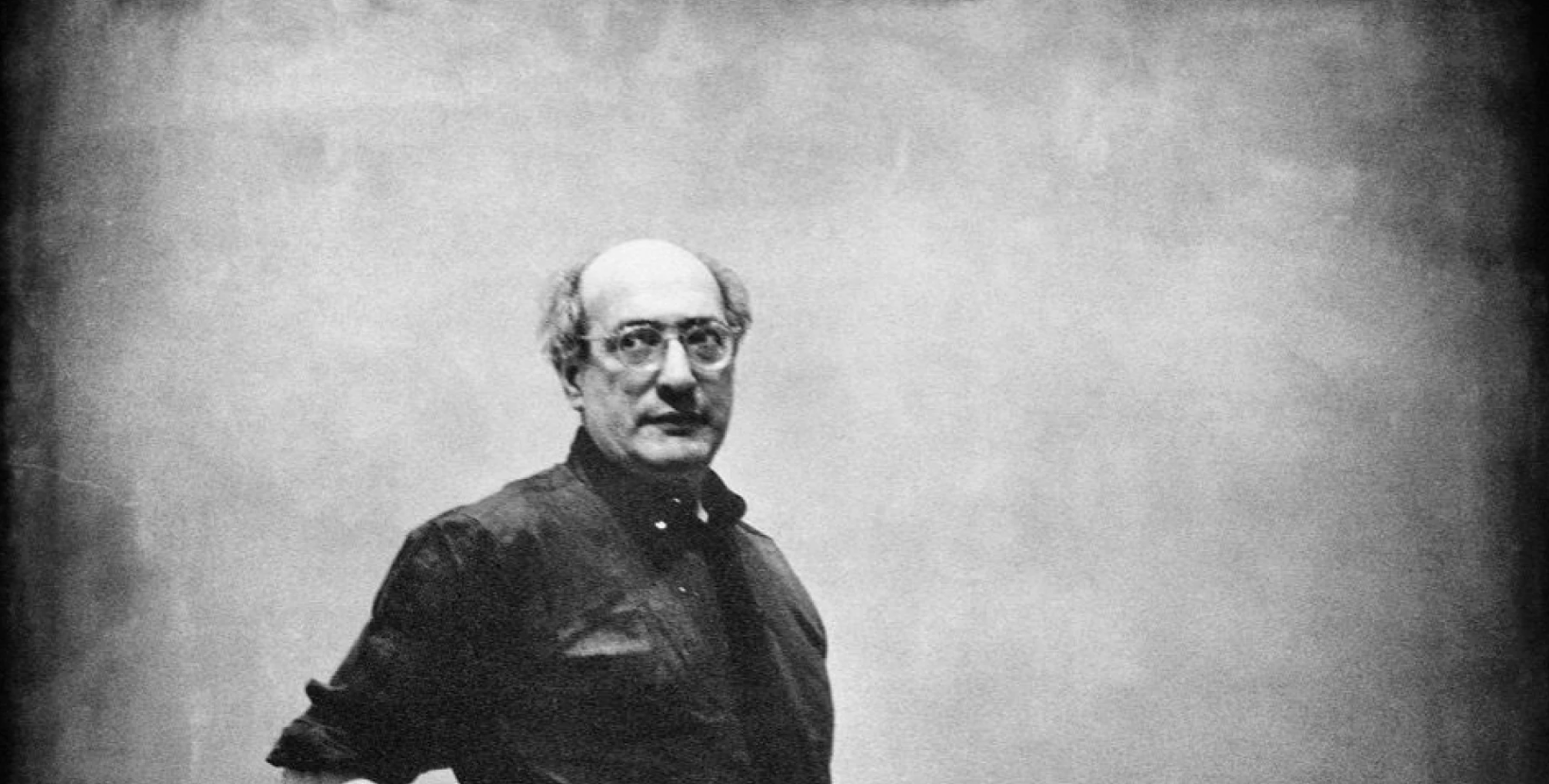
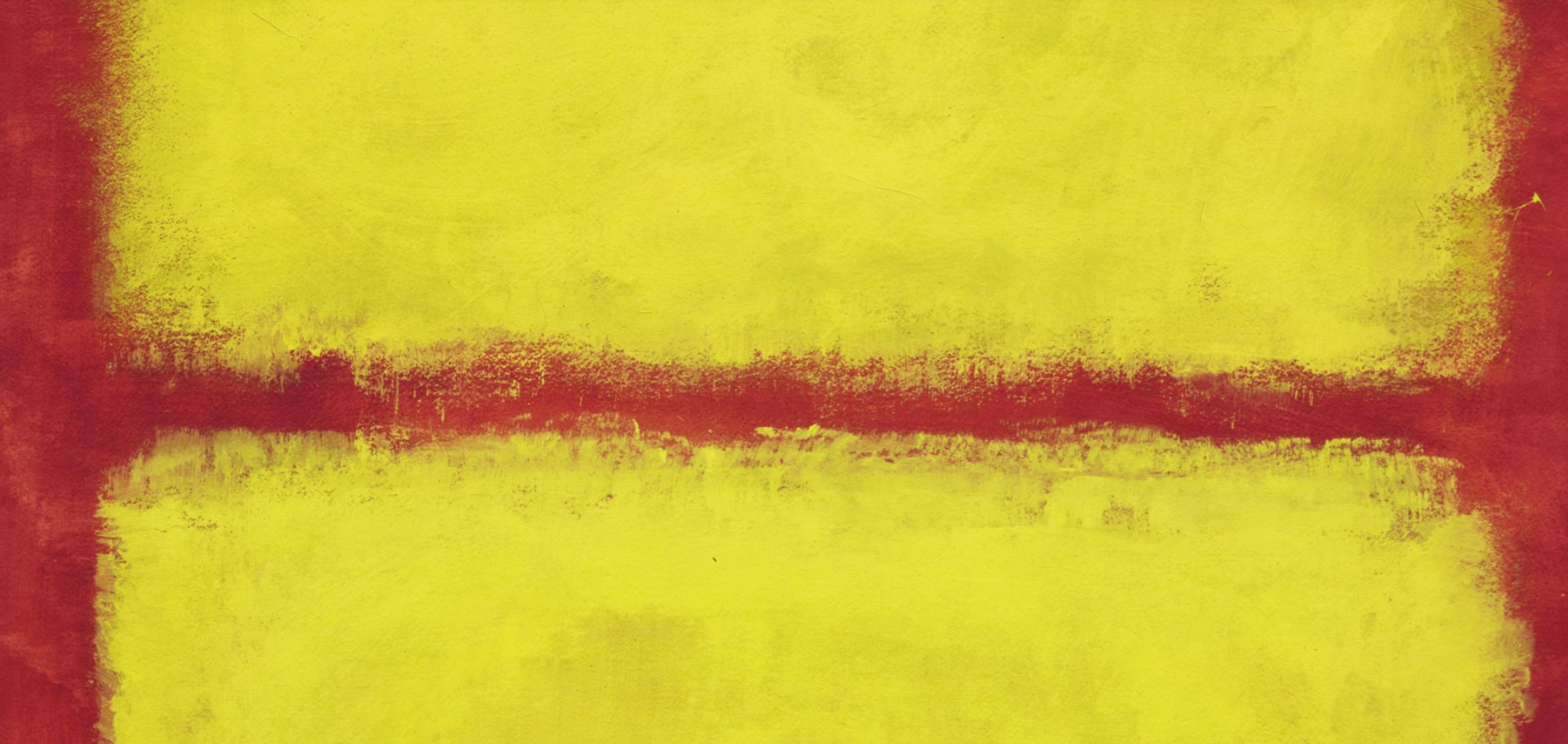
Untitled (Yellow, Orange, Yellow, Light Orange), 1955
Christie’s New-York: 9 November 2023
Estimate on Request
USD 46,410,000
MARK ROTHKO (1903-1970) (christies.com)
MARK ROTHKO (1903-1970)
Untitled (Yellow, Orange, Yellow, Light Orange), 1955
Oil on canvas
81 1/2 x 60 inches (207 x 152.5 cm)
Signed and dated ‘MARK ROTHKO 1955’ (on the reverse)
Currently the subject of a major international retrospective at the Fondation Louis Vuitton in Paris, Mark Rothko stands as one of the giants of twentieth-century art. Measuring nearly seven feet tall, the magisterial Untitled (Yellow, Orange, Yellow, Light Orange) encapsulates the aesthetic, emotional, and psychological complexity that is the hallmark of the artist’s most successful canvases. Its monumental size and intensity of color combine to envelop the viewer, pulling them into the visual and spectral drama that Rothko plays out across the surface of his paintings. Painted in 1955, this work represents a highpoint in the depiction of his dynamic fields of color, before the tumultuous years of the Seagram Murals project would cast a pall over the artist’s oeuvre. Untitled (Yellow, Orange, Yellow, Light Orange) remained in the artist’s collection until his death in 1970, before being acquired by the legendary collectors Paul and Bunny Mellon, and was in their possession for nearly 50 years. Mellon was one of the twentieth-century’s greatest art patrons, building an unrivalled collection of European and American masterworks, and endowing a number of institutions—including the East Wing of the National Gallery of Art in Washington (an institution to which the couple donated over 1,00 works of art), and the Yale Center of British Art. Untitled (Yellow, Orange, Yellow, Light Orange) was a pillar of their collection, and in both scale and scope is a highpoint of the twentieth-century canon.
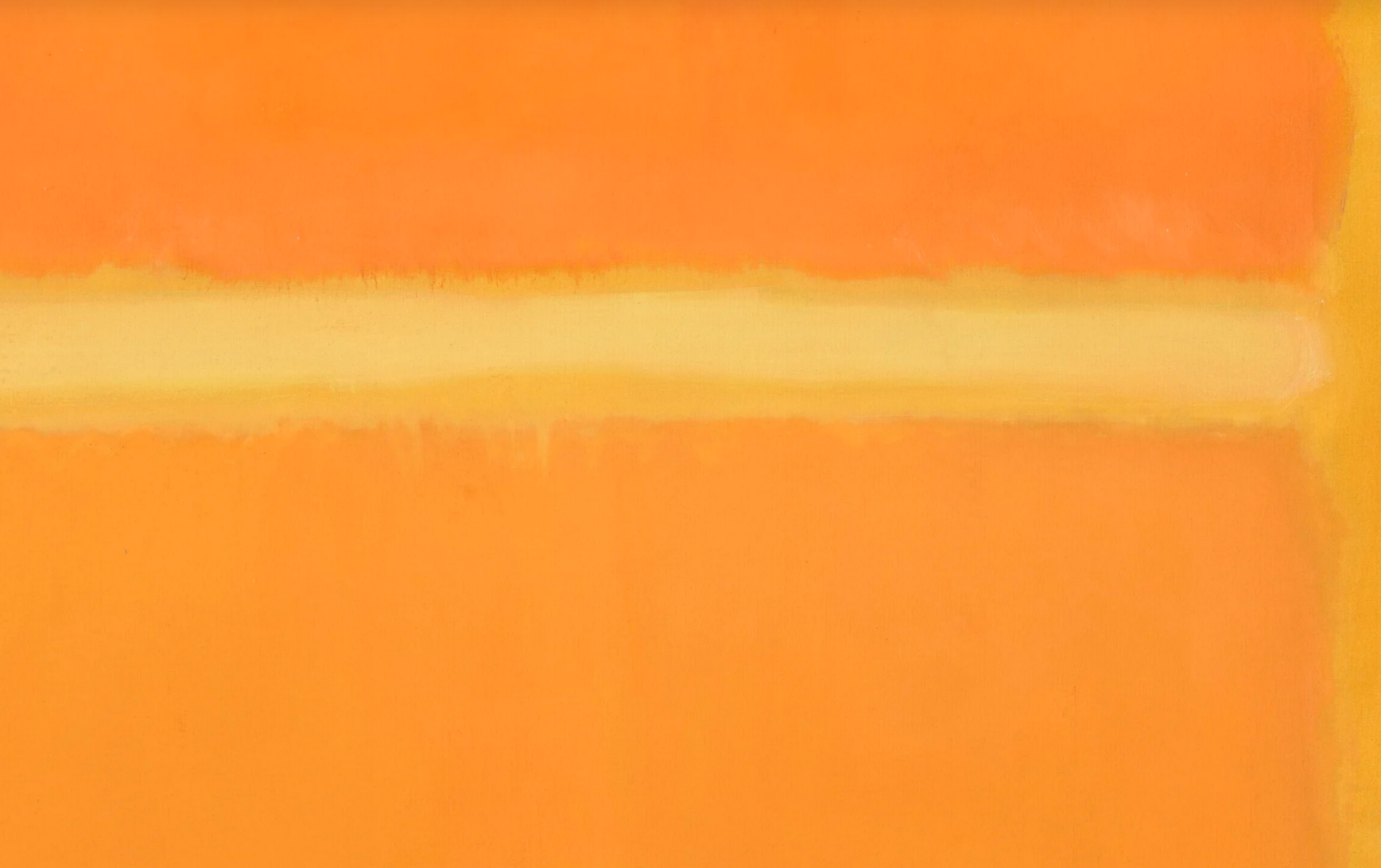
Standing in the presence of Untitled (Yellow, Orange, Yellow, Light Orange), the viewer is embraced by the almost palpable sense of heat that is emitted by the myriad of shades in golden yellows and warm oranges that Rothko expertly melds together. Asymmetrical blocks of color anchor the composition, two substantial passages of orange pigment that dominate the central portion of the canvas, divided by slender bands of paler pigment, separating these passage from each other and the edges of the picture plane. Within each of these areas, Rothko’s highly active surface is the result of applying consecutive thin washes of color that pool and dissolve into each other. The result is a surface that is alive with detail, constantly shifting chromatic effects that become visible with prolonged looking. Concentrated passages of color roil up to the surface before receding; flat surfaces sit next to areas of sublime depth; and broad strokes of substantial brushwork coalesce with delicate areas of where Rothko applies pigment with a delicate brush. The result is a painting which resonates with movement, a surface that constantly shifts as the viewer casts their eye across the surfaces or moves physically around the space it occupies.
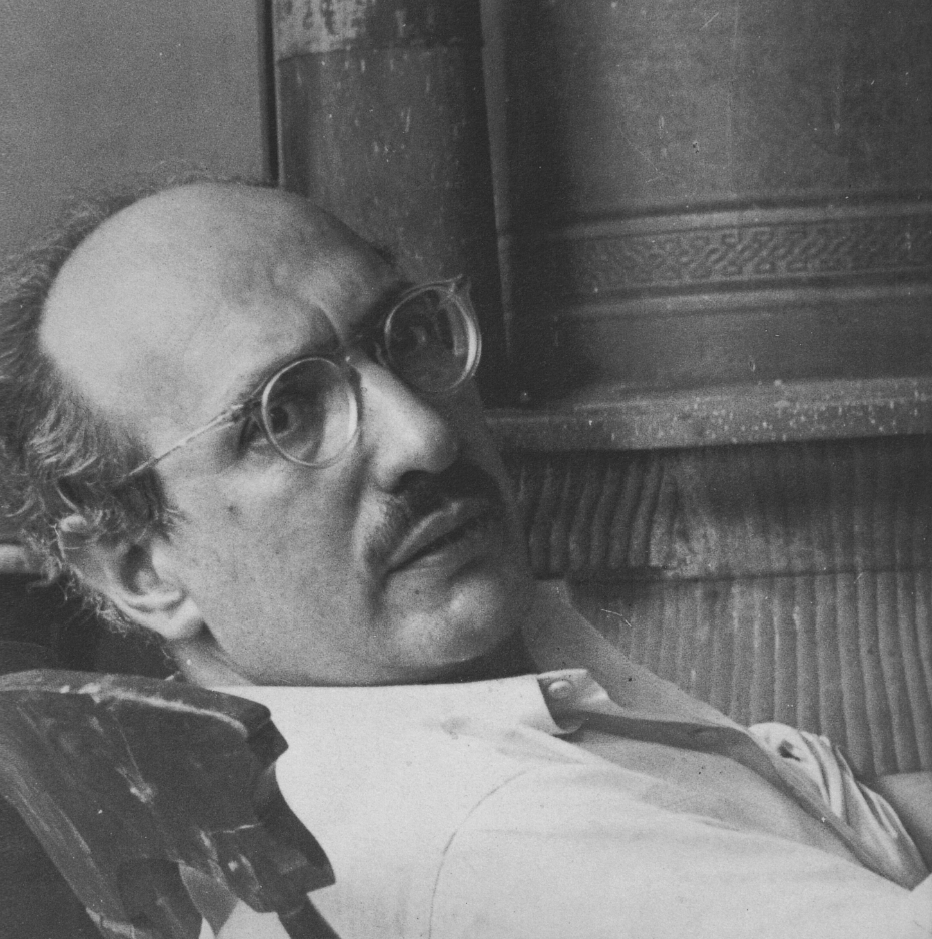
Standing close to the surface of Rothko’s painting unleashes the full force of these dramatic canvases (Rothko himself specified that 18 inches was the optimum distance from which to fully appreciate his work). In Untitled (Yellow, Orange, Yellow, Light Orange), such examination reveals a cast of artistic elements that play starring roles in the overall drama of the overall composition. The narrow band that traverses the center is embellished by a multitude of delicate drips, spectral brushwork, and a gradual shifting of light to dark pigment that is easily overlooked. Yet it precisely in these areas that the drama reveals itself in full force.
Untitled, 1959
Phillips New-York: 18 May 2022
Estimated: USD 6,000,000 – 8,000,000
USD 8,435,000
Mark Rothko – 20th Century & Contemporary… Lot 6 May 2022 | Phillips
MARK ROTHKO
Untitled, 1959
Oil on paper mounted on Masonite
38 x 24 7/8 inches (96.5 x 63.2 cm)
Signed and dated “MARK ROTHKO 1959” on the reverse
Maintaining the signature palette of Mark Rothko’s first mature paintings, the present work from 1959 sustains the lineage of the artist’s most celebrated works. Here, a scorching red field radiates between a glowing orange band and lustrous yellow passage, the quiet intensity conjuring his statement that he “wanted a presence, so when you turned your back to the painting, you would feel that presence the way you feel the sun on your back.”i Showcasing the chromatic and structural ethereality Rothko achieved in the 1950s, Untitled manifests the tighter shape of his feather-edged rectangles by the end of the decade. The present work arrives at auction at a critical moment in the artist’s scholarship, with a major retrospective of Rothko’s paintings on paper slated for November 2023 to September 2024 at the National Gallery of Art, Washington, D.C. and National Museum of Art, Architecture, and Design, Oslo.
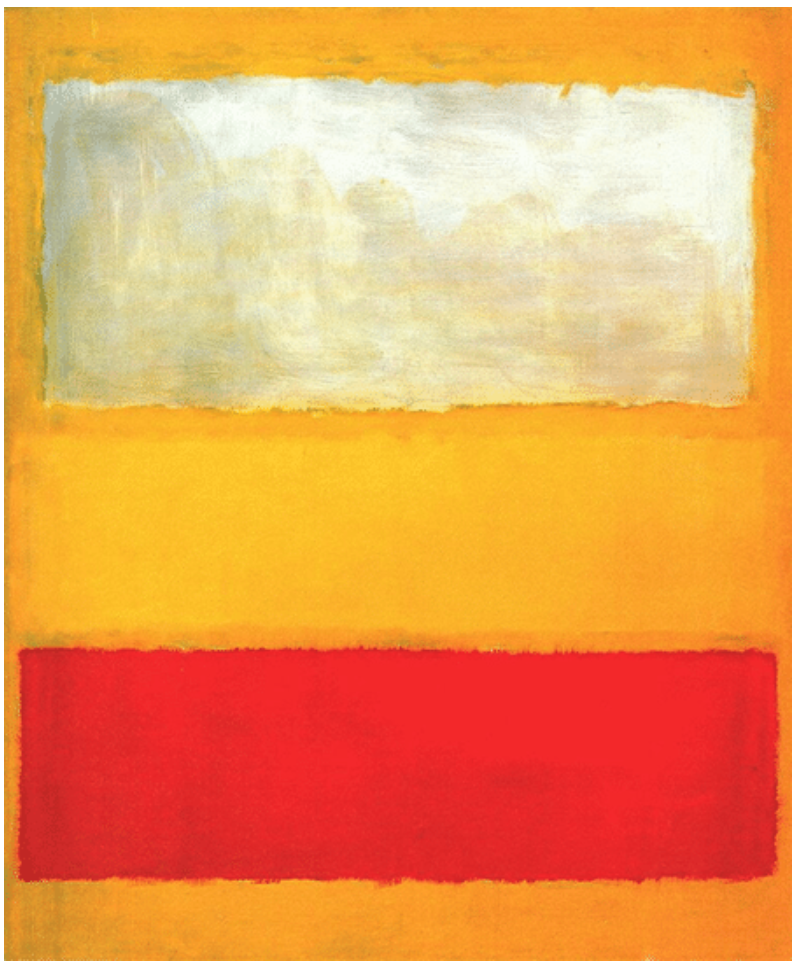
Mark Rothko, No. 13 (White, Red on Yellow), 1958. The Metropolitan Museum of Art, New York. Artwork: © 1998 Kate Rothko Prizel & Christopher Rothko / Artists Rights Society (ARS), New York
Untitled is among a discrete group of compositions that defied the artist’s shift to a dramatically darkened palette marked by the Seagram mural commission. The more subdued palette would dominate his painterly oeuvre from the late 1950s through the rest of career. Displaying the brighter chromaticism of his classic multiforms from the early to mid-1950s, the present work manifests how Rothko still pursued the iconic high-keyed pigments of his signature color fields in his paintings on paper. Christopher Rothko revealed the respite Rothko found at this time with works such as Untitled. “In 1959, paper offers my father a different sense of scale, and a renewed sense of intimacy in his approach to the viewer…[These] papers represent a huge exhalation in the context of the mass and single-mindedness of the Seagram murals. Through the modest size of these works on paper, Rothko was redressing the measure of man—his viewer but first and foremost himself. Seeking to give the observer the same experience he had when creating the painting, he returned to a scale that was personal rather than institutional. The quiet beauty and calm that emanates from these works was no doubt hard-won in the white-hot atmosphere of passion and frustration that was the Seagram project.”
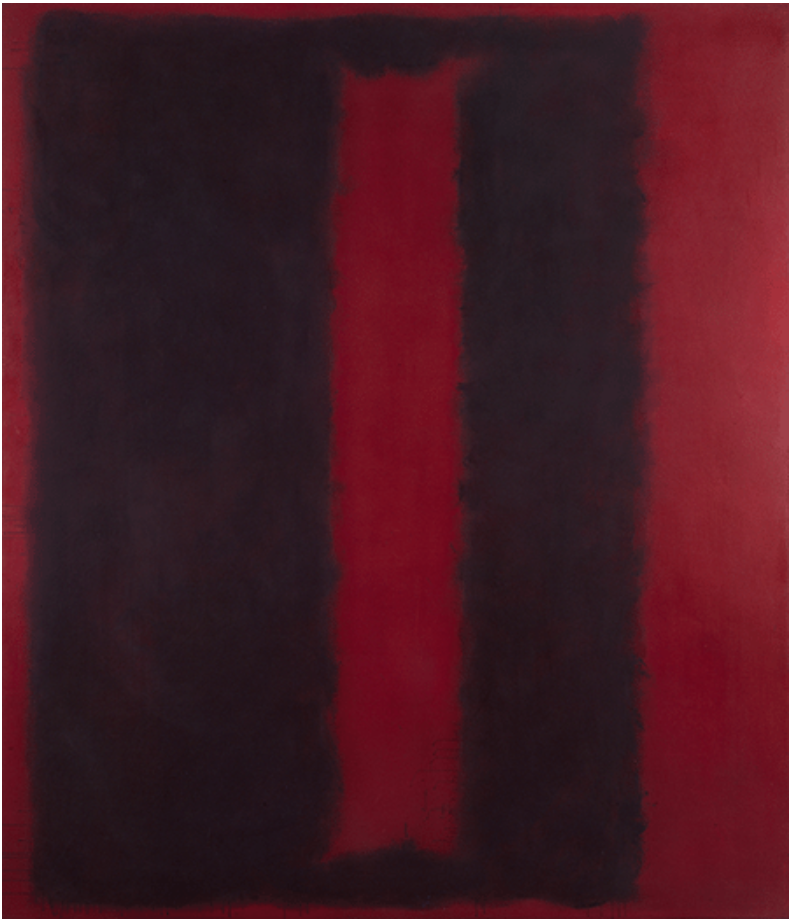
Mark Rothko, Black on Maroon (Seagram Building Series), 1959. Tate, London. Image: © Tate, London / Art Resource, NY, Artwork: © 1998 Kate Rothko Prizel & Christopher Rothko / Artists Rights Society (ARS), New York
Indeed for Rothko, the bright could be as menacing as the dark. When a collector once asked the artist for “a happy painting, a red and yellow and orange painting, not a sad painting,” Rothko countered, “Red, yellow, orange—aren’t those the colors of an inferno?” This Dionysian spirit is epitomized in Untitled through the fiery intensity engendered by the red field set against the lighter passages. Red was the paramount color of Rothko’s art, as Diane Waldman observed: “No other color appears so insistently in his oeuvre from the time of the multiforms. It dominates Rothko’s work of the fifties and sixties and, in fact, was the color of his last painting. Red is so potent optically that it overwhelms or obliterates other hues unless it is diluted or controlled by juxtaposing it, as Mondrian did, with equally strong colors, such as black and white, or the other primaries yellow and blue…altering its tonality according to the emotion he wishes to express. Perhaps Rothko was so drawn to red because of its powerful and basic associations: it is identified with the elements and ritual—with fire and with blood—and thus with life, death and the spirit.”
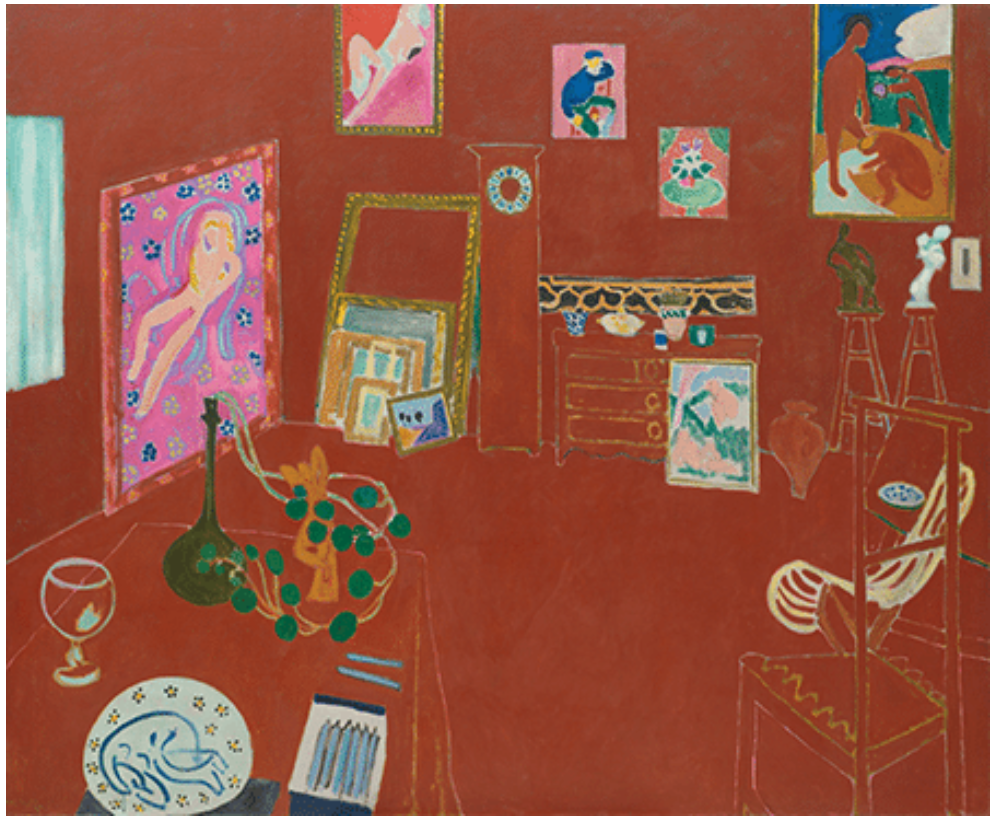
Henri Matisse, The Red Studio, 1911. The Museum of Modern Art, New York. Image: © The Museum of Modern Art/Licensed by SCALA / Art Resource, NY, Artwork: © 2022 Succession H. Matisse / Artists Rights Society (ARS), New York
Deeply influenced by Greek theater, with its themes of universal truths and emotion, Rothko championed color as the vehicle to communicate the deepest vulnerabilities of the human condition. His conviction in the sublime power of art “belongs very much in the tradition of metaphysicians of painting as Mondrian, Paul Klee and Wassily Kandinsky, for whom color was key to the realm of the spirit,” as Waldman noted. “However Rothko’s commitment to the expression of the spiritual rather than the physical was inspired not by their aesthetic theories, but by the evidence of their painting.” It is in this vein that Rothko saw profound inspiration in Matisse’s The Red Studio, 1911 and the work of J.M.W. Turner, influences that reverberate in Untitled. As the former stirred Rothko to explore the capabilities of pure color, so Rothko stirs the viewer to feel the present work’s chromatic evocations. The composition exudes an inner glow that evokes what Rothko sought to capture from Turner’s paintings, qualities that “on the one hand seem so solid and yet on the other are ungraspable,” Christopher Rothko shared. From the material to ethereal, inner to transcendent expression, in Untitled “Rothko makes the concrete sublime.”
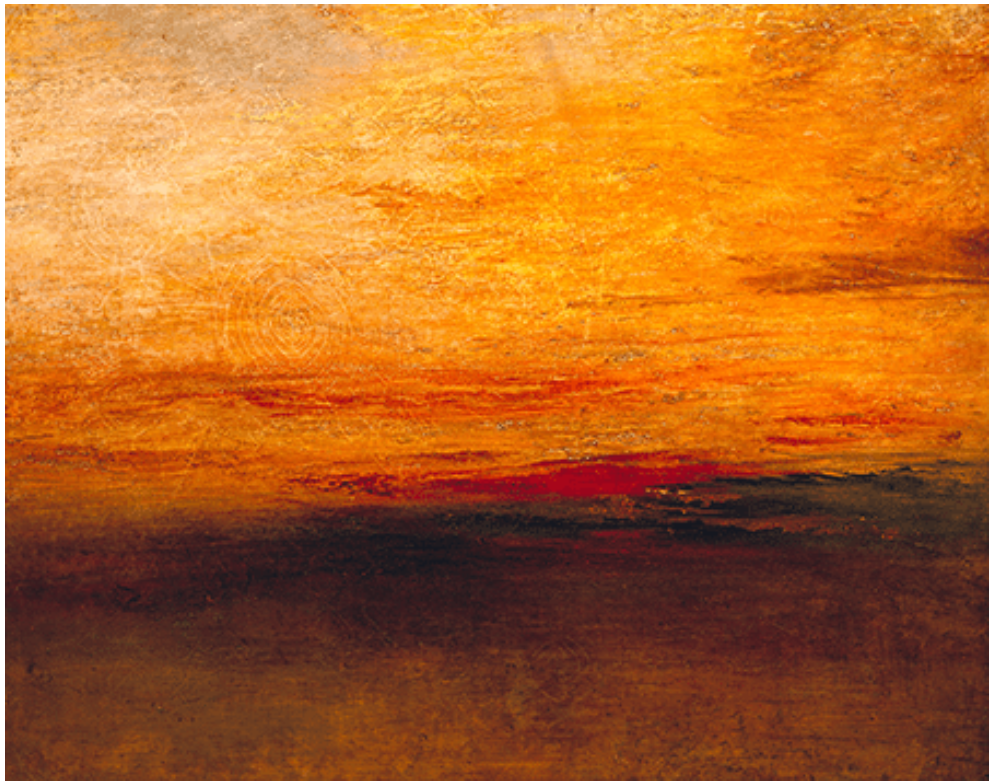
Joseph Mallord William Turner, Sunset, ca. 1830-35. Tate, London. Image: © Tate, London / Art Resource, NY
That Rothko’s paintings on paper from this period reveal a greater chromatic range than his contemporaneous canvases testify to their significance in the broader picture of his practice. Foreshadowing the artist’s decisive return to painting on paper in the 1960s, the present work reflects his devotion to the medium after his fervent explorations during his Surrealist period in the 1940s. The unique material properties of paper absorbed pigments with greater sensitivity than the canvas surface, which bolstered his investigations on capturing the essence of color and light for aesthetic transcendence. This is particularly evinced in the lower field of Untitled, in which Rothko scumbled the yellow ground with a thin, tinted layer of paint to evoke a translucent effect, capturing Bonnie Clearwater’s observation that such works appear “as if Rothko had peeled away the layers of his paintings in an attempt to unravel his own mystery and expose the core of his art.”
No. 7, 1951
Sotheby’s New-York: 15 November 2021
Estimated: USD 70,000,000 – 90,000,000
USD 82,468,500
No. 7 | The Macklowe Collection | 2021 | Sotheby’s (sothebys.com)
MARK ROTHKO (1903 – 1970)
No. 7, 1951
Oil on canvas
94 3/4 x 54 5/8 inches (240.7 x 138.7 cm)
Signed and dated 1951 on the reverse
For its vibrant coloration, transcendent aura, and pivotal date of execution, No. 7 stands amongst the finest masterworks from the incomparable painterly oeuvre of Mark Rothko. Executed in 1951—the very incipit of what David Anfam, the editor of the artist’s catalogue raisonné, refers to as the anni mirabilis of Rothko’s career—No. 7 dates to the critical moment in the early 1950s during which Rothko developed his signature style of abstraction and mature mode of artistic expression. Composed of three luminous and distinct bands of color, the vibrant coloration and atmospheric depth of No. 7 reflect the mastery of this transformative period. Rothko executed only 18 paintings in 1951; other significant works from this year reside in the collections of such esteemed institutions as the Tate, London; National Gallery of Art, Washington, D.C.; and the Tel Aviv Museum of Art. Measuring over 7 feet in height, the towering scale of No. 7 engulfs the viewer in proportions that mirror the human body, encouraging deep contemplation and the profound optical experience that Rothko intended to provoke. Exhibited for the first time at Betty Parsons Gallery in New York in the year of execution, No. 7 has since been included in several major exhibitions of Rothko’s oeuvre, including the retrospective exhibition Mark Rothko, organized by the National Gallery of Art in 1998 and traveling to the Whitney Museum of American Art, New York and the Musée d’Art Moderne, Paris. Notably, the present work was previously owned by Sarah Campbell Blaffer, an esteemed Houston collector and art patron who, in addition to assembling among the most important collections of modern art in the United States during the Twentieth Century, was also a major benefactor of the Museum of Fine Arts in Houston and the namesake of the Blaffer Art Museum at the University of Houston.
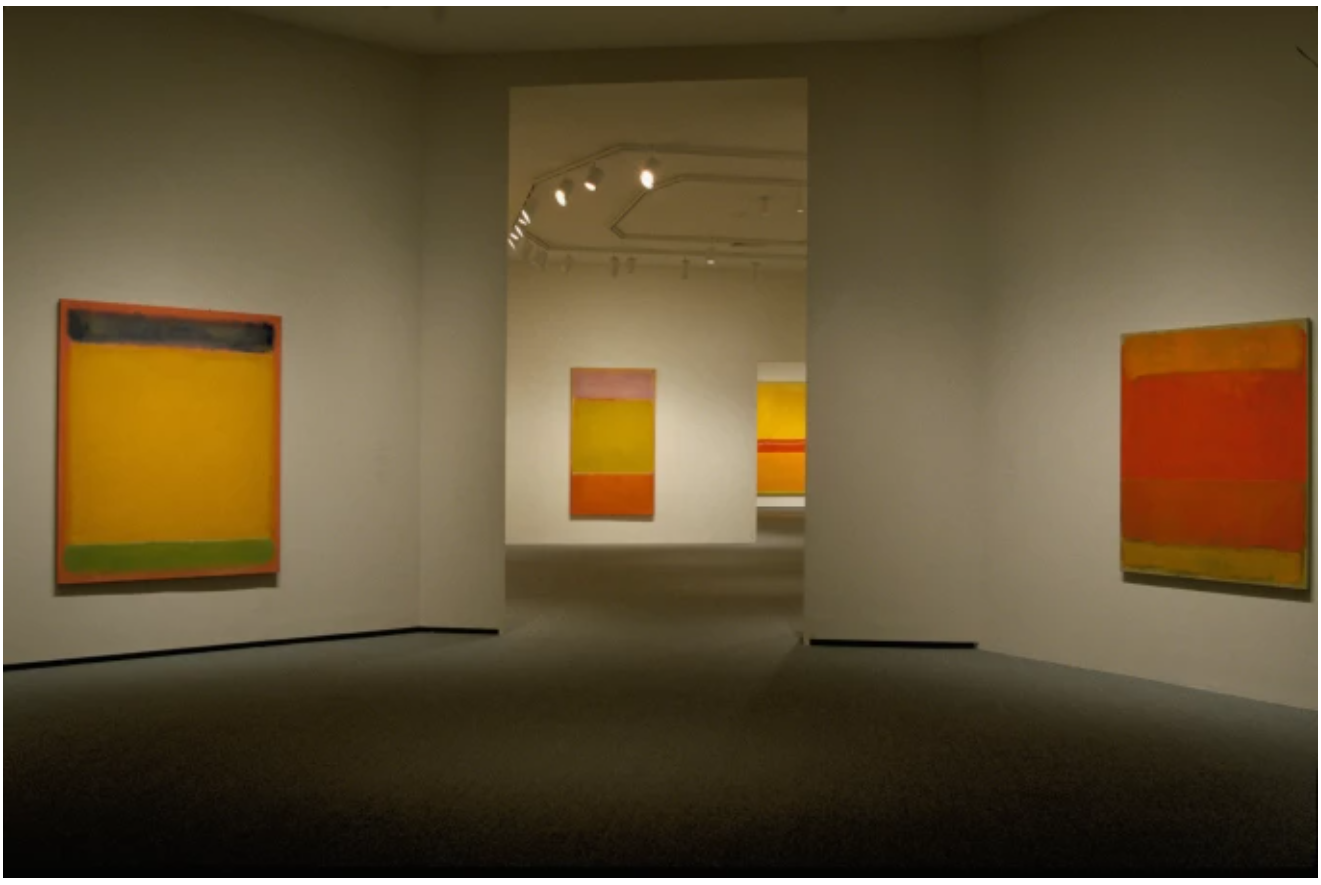
THE PRESENT WORK INSTALLED IN THE EXHIBITION MARK ROTHKO, NATIONAL GALLERY OF ART, WASHINGTON, D.C., 1998-99. IMAGE © NATIONAL GALLERY OF ART, WASHINGTON DC, GALLERY ARCHIVES. ART © 1998 KATE ROTHKO PRIZEL & CHRISTOPHER ROTHKO / ARTISTS RIGHTS SOCIETY (ARS), NEW YORK
A veritable treatise on the absolute limits of abstraction, the saturated green, crimson, and lavender hues of No. 7 transmit an electric charge that is immediately and entirely immersive. In accordance with the most authentic experience of Rothko’s vision, we cease to perceive this work as a dialogue between medium and support, and instead become wholly submerged within its utterly captivating compositional dynamism, chromatic intensity, and sheer scale. Soaring to almost 95 inches in height, No. 7 projects itself into our space on a greater than human scale, engulfing us entirely within its epic expanse. Dominated by simultaneously distinct and inextricably intertwined radiant zones of sumptuous color, the canvas pulsates with a tangible energetic intensity, pulling us ever inward. At center, a concentrated field of electrifying green surges forth, while the ethereal lavender form above floats forward subtly, its shimmering edges revealing the barely perceptible strokes of Rothko’s brush to impart a sense of inexorable ascent towards the upper limits of the canvas. Here, Rothko attains that ‘chromatic crescendo’ through the meticulous aggregation of translucent veils of brushed pigment, with especially close attention paid to the gaps between forms and the edges of the canvas itself.
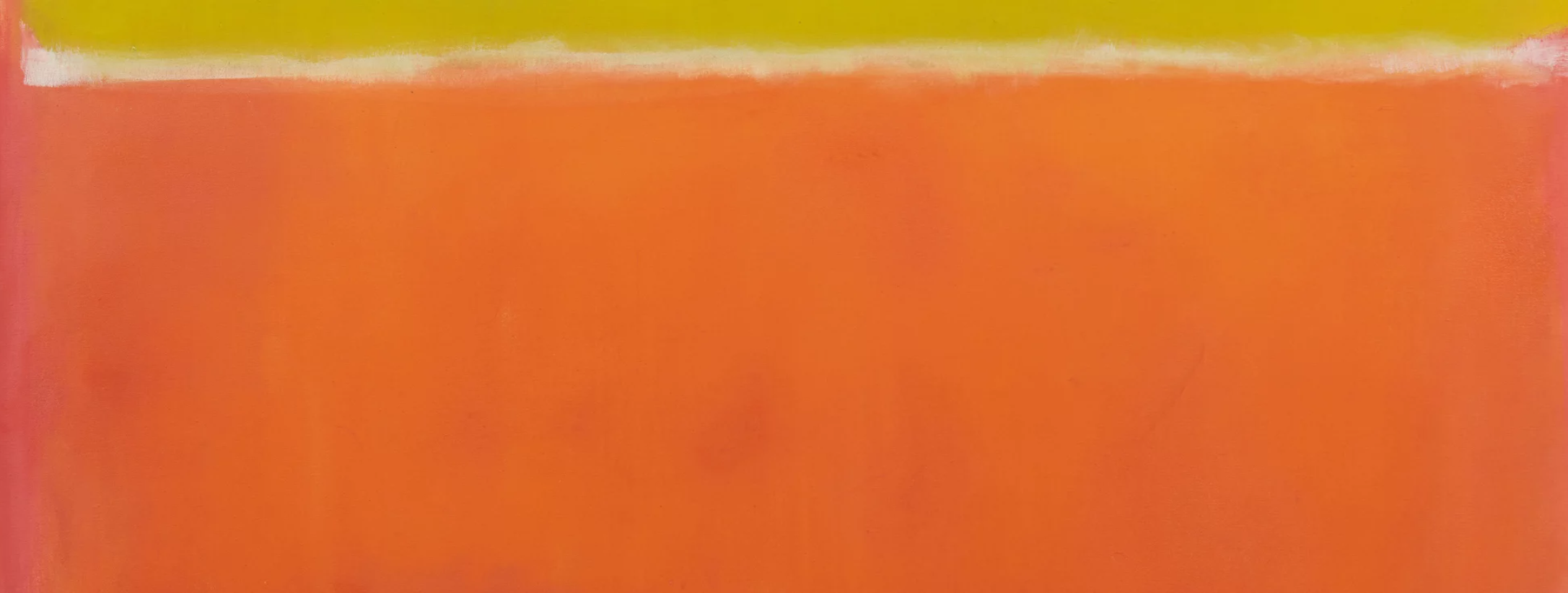
The accumulated layers of pigment concurrently hover indeterminately as three-dimensional floods of chroma in front of the picture plane, while also reinforcing the materiality of the painted object through the insistence of paint soaked into the canvas weave. In the lower register, the captivating depth of the vibrant orange hue seemingly inhales any light which falls upon the painting, its saturated depths encouraging us to travel through the subtle variants of tone and contour that comprise the intricate landscape of its surface. In a stunning feat of compositional and coloristic genius, this fiery register is exquisitely restrained by the subtlest margin of white pigment which, stretching horizontally between the lower and middle forms, acts as the most delicate of borders. As if a portal to the sublime, the limitless realm of sumptuous color in No. 7 envelops the viewer and brings life to Rothko’s assertion that his monumental canvases be experienced up close rather than from a distance. In its utter brilliance of palette, compositional dynamism, monumental scale, and indelible gravitas, this painting exists as an empyreal manifestation of the very apex of Rothko’s painterly prowess.
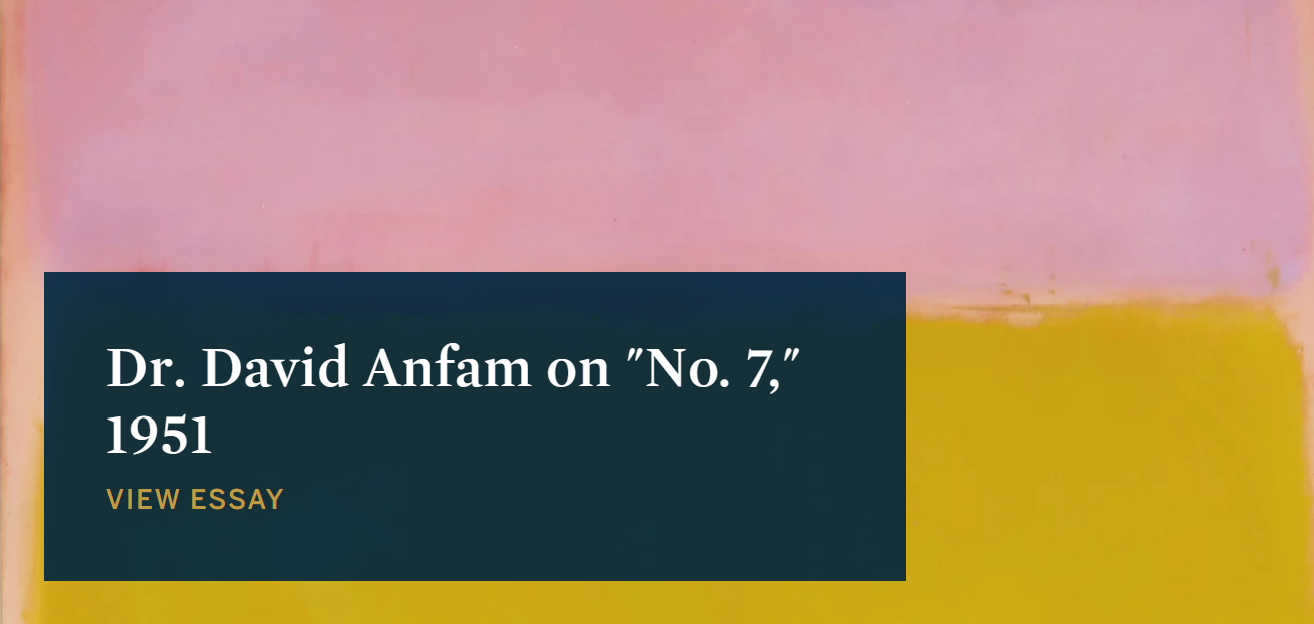
“I paint very large pictures… precisely because I want to be very intimate and human. To paint a small picture is to place yourself outside your experience… However you paint the larger picture, you are in it. It isn’t something you command.”
David Anfam draws particular attention to 1951, the year of No. 7’s execution, as being decisive: “From 1951 onward, Rothko’s artistic self-confidence was everywhere visible—from the meticulousness, authority and range of the paintings to his very attitude toward them.” (David Anfam, Mark Rothko: The Works on Canvas: Catalogue Raisonné, New Haven and London, 1998, p. 71) No. 7 is a paean to the newfound aplomb with which Rothko approached his towering theses on abstraction, reflecting across its luscious surface the artist’s desire, as elucidated by Stanley Kunitz, “to become his paintings.” (Stanley Kunitz, interview with Avis Berman, December 8, 1983, Archives of American Art).
Untitled, 1961
Christie’s New-York: 12 November 2021
Estimated: USD 2,500,000 – 3,500,000
USD 8,489,500
MARK ROTHKO (1903-1970) (christies.com)
MARK ROTHKO (1903-1970)
Untitled, 1961
Oil on paper laid down on canvas
23 7/8 x 18 inches (60.6 x 45.7 cm)
Signed and dated ‘MARK ROTHKO 1961’ (on the reverse)
Mark Rothko’s Untitled, painted in 1961 during the height of his career, epitomizes the artist’s iconic pictorial language that asserted him as one of the 20th century’s most important artists. The vibrant, striking colors reverberate throughout the picture plane, engulfing the viewer in its brilliance. Being in the presence of Untitled, one cannot help but be swept into the painting’s aura. This is the first time that Untitled has ever been offered on the market since its original purchase from the artist in 1963. The uniquely captivating work comes from a momentous year in the artist’s career, 1961, wherein the artist was simultaneously planning his major touring exhibition at the Museum of Modern Art and starting on a series of murals for Harvard University. Mark Rothko, known for his prolific output, would continue producing works on paper during this period. Rothko’s works on paper reflect a vivacious swiftness that is often missing from his larger works on canvas. The bold yellow-orange rendered in Untitled is unabashedly direct while the strokes of pink and yellow virulently sweep and stab at one another’s borders. Two rectangular blocks of bright yellow-orange ochre reside above and below a smaller slice of pale pink. This slightly translucent pink band, which seems to simultaneously float off of the canvas and sink deeper into it, affords the viewer a glimpse of the paper ground that the color field populates. These radiant clouds of color seem to reach for the rectangular frame that support it, but never quite make it across the edge of the paper. The use of paper was integral to Rothko’s artistic practice, serving as both a ground for experimentation as well as an entirely new arena of expression. Mark Rothko referred to his larger canvases as ‘dramas’ and these smaller works as ‘tales’.
Untitled, 1959
Sotheby’s New-York: 16 May 2023
Estimated: USD 4,000,000 – 6,000,000
USD 4,658,000
Untitled | Modern Evening Auction | 2023 | Sotheby’s (sothebys.com)
MARK ROTHKO (1903 – 1970)
Untitled, 1959
Oil on paper laid down on board
29 3/4 x 21 3/4 inches (75.6 x 55.2 cm)
Signed Mark Rothko and dated 1959 (on the reverse)
Revered for his immense, enveloping paintings on canvas, Mark Rothko spent a significant portion of his career focusing on works on paper, more intimate in scale, yet equally poignant and carefully constructed. An exceptionally rare example from the 1950s, Untitled from 1959 stands just shy of 30 inches high yet draws the viewer in with as much magnetism as a monumental canvas, demanding close inspection and contemplation. Rothko scholar Bonnie Clearwater lauds the artist’s works on paper: “Thus with their symmetry, tidy execution, and minimal gesture, the small works on paper often seem to be more quintessential Rothko than many of his canvases” (Bonnie Clearwater in Mark Rothko: Works on Paper, New York, 1984, p. 39). Distinguished by its three stacked bands of color, the present work features a dynamic harmony of hues, as the brilliant, saturated red is balanced by the lower washes of gold; these complementary tones echo to each other across the central band of seafoam green, all together recalling the warm and sunny palette of a seascape. Channeling its elemental power through the constantly shifting tussles of color, texture and form, this work pulsates with energy. Having remained in the esteemed collection of Frances Wells Magee for nearly six decades, Untitled demonstrates the mastery of color, form, and gesture that have defined Rothko’s illustrious oeuvre.
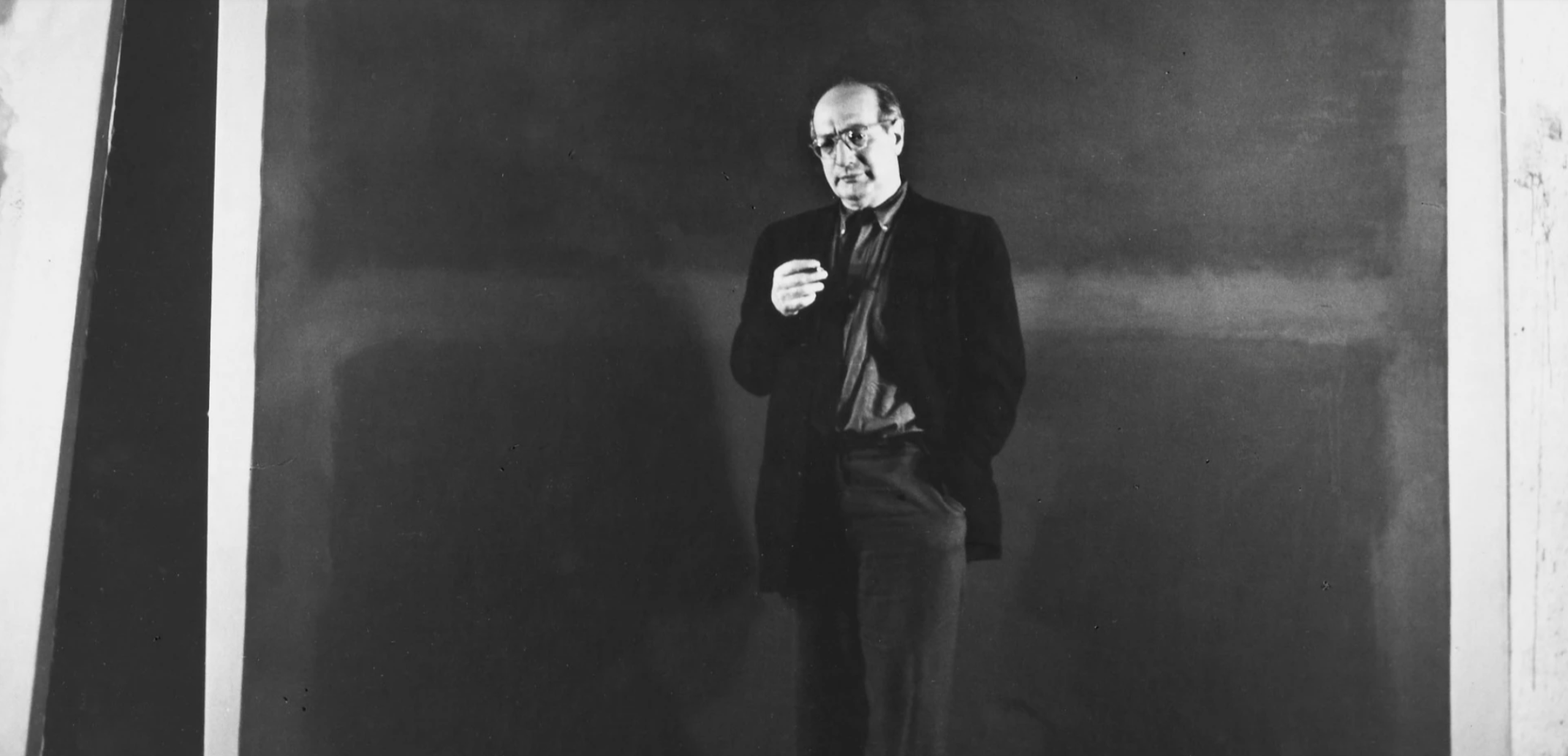
RUDY BURCKHARDT, MARK ROTHKO, NEW YORK, 1960. PHOTO © 2023 ESTATE OF RUDY BURCKHARDT / ARTISTS RIGHTS SOCIETY (ARS), NEW YORK. ART © 1998 KATE ROTHKO PRIZEL & CHRISTOPHER ROTHKO / ARTISTS RIGHTS SOCIETY (ARS), NEW YORK
Unlike his Abstract Expressionist colleagues Jackson Pollock, Willem de Kooning, and Clyfford Still, Rothko’s emphasis was not the bold machismo or expressive personality of the artist’s hand. Rather, Rothko sought to convey deep and elemental themes pervasive to the human experience, without the obfuscating mediation of recognizable images. His signature feathered brushstrokes and thin washes of paint hide each individual gesture, instead accumulating into rich and dynamically layered abstract forms. The thinness was achieved through adding large amounts of turpentine to his oil paint, which when applied to the paper or canvas would stain the surface and fuse with the support. In works on paper like the present example, the cumulative washes of pigment—in some places bleeding deeply into the paper, in others flickering lightly across the surface—create an ethereal, dream-like quality. The delineated color fields float like amorphous clouds atop the bare sheet of paper, which is glimpsed between the painterly bands as if through a fog. The unprimed page also heightens the effect of light, both absorbing and reflecting it, and creating the impression that Rothko’s colorful forms are lit from within.
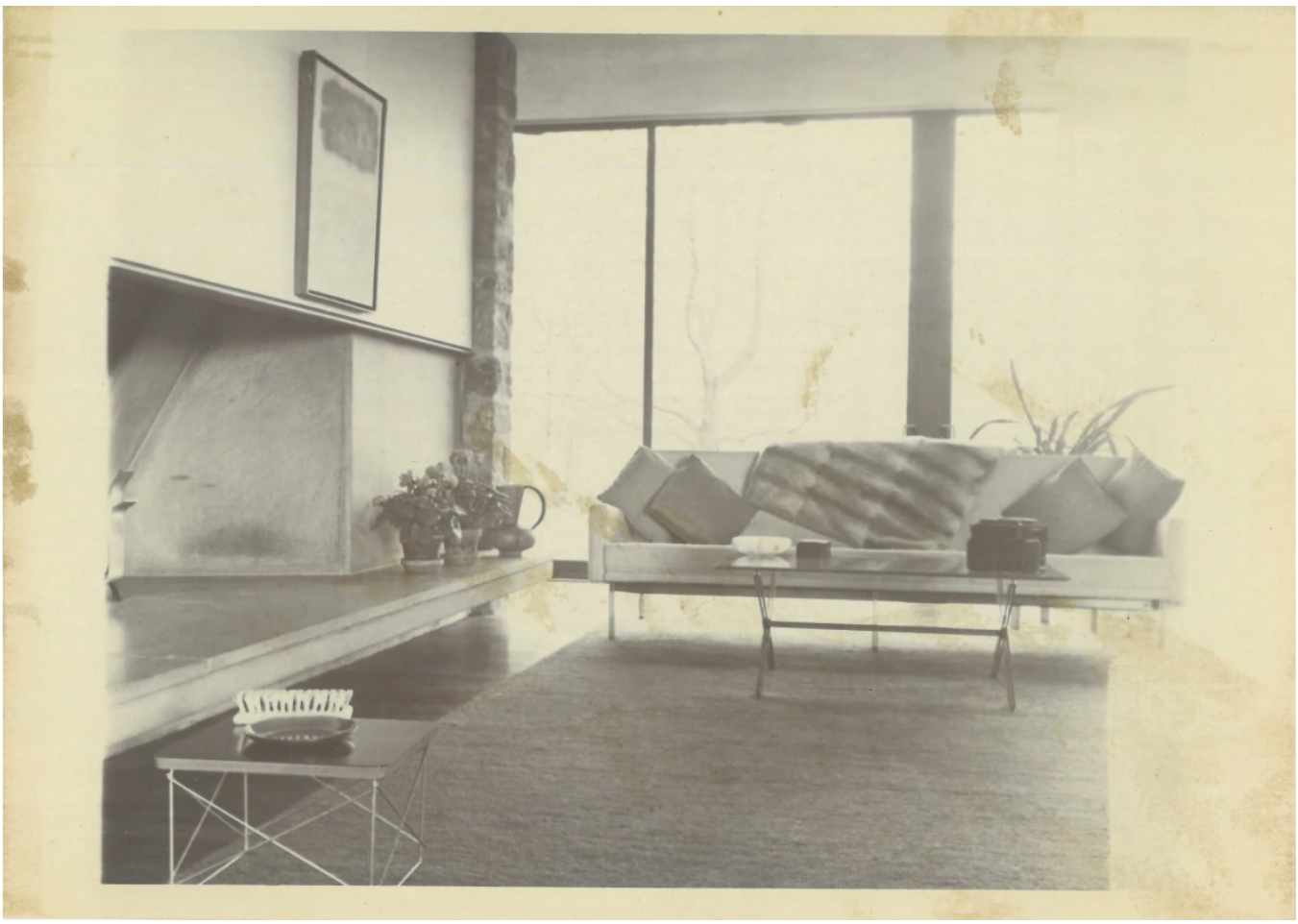
THE PRESENT WORK PICTURED IN FRANCES WELLS MAGEE’S HOME, CIRCA 1965.
An early inspiration, Piet Mondrian’s 1940 arrival in New York had a profound impact on the artistic development of Rothko and his milieu. Diane Waldman has pointed out the influence that Mondrian had on Rothko: “His attraction to order, stability, rectilinear structure and balanced asymmetry, his…need to express a Platonic ideal, a higher spiritual or metaphysical truth through abstract form, are all clearly related to Mondrian’s own goals” (Exh. Cat. New York, Solomon R. Guggenheim Museum, Mark Rothko, 1903-1970: A Retrospective, 1978, p. 53). But Rothko simplified these ideas, focusing on a single repeated format of variously hued bands, oscillating and reflecting one another to create the desired contemplative effect. Rothko sets surface action in motion through the material effect of abutting edges and color contrasts, juxtaposing vertical and horizontal, opacity and luminescence, saturation and absence of hue, and interchanges between dappled and silken textures. Such dynamism engages the viewer in a visual dialogue with Rothko’s commitment to materiality and expressive reciprocity.
Blue / Violet
Untitled, 1969
Collection of Jean & Terry de Gunzburg
Sotheby’s New-York: 14 May 2026
Estimated: USD 10,000,000 – 15,000,000
USD 16,465,000
WORK ON PAPER
Mark Rothko | Untitled | The Now & Contemporary Evening Auction |
MARK ROTHKO (1903 – 1970)
Untitled, 1969
Acrylic on paper mounted on canvas
78-1/2 x 58-1/2 inches (198.8 x 148.6 cm)
Signed (on the reverse)
Radiating an amethyst incandescence reverberating against three registers of velvety onyx pigment, Mark Rothko’s Untitled is a uniquely poignant and monumental example of the artist’s celebrated paintings on paper. Among the largest paintings on paper that Rothko created, Untitled adopts the presence of a expansive canvas painting, enveloping the viewer in a sea of feathered brushstrokes and encouraging sustained contemplation.
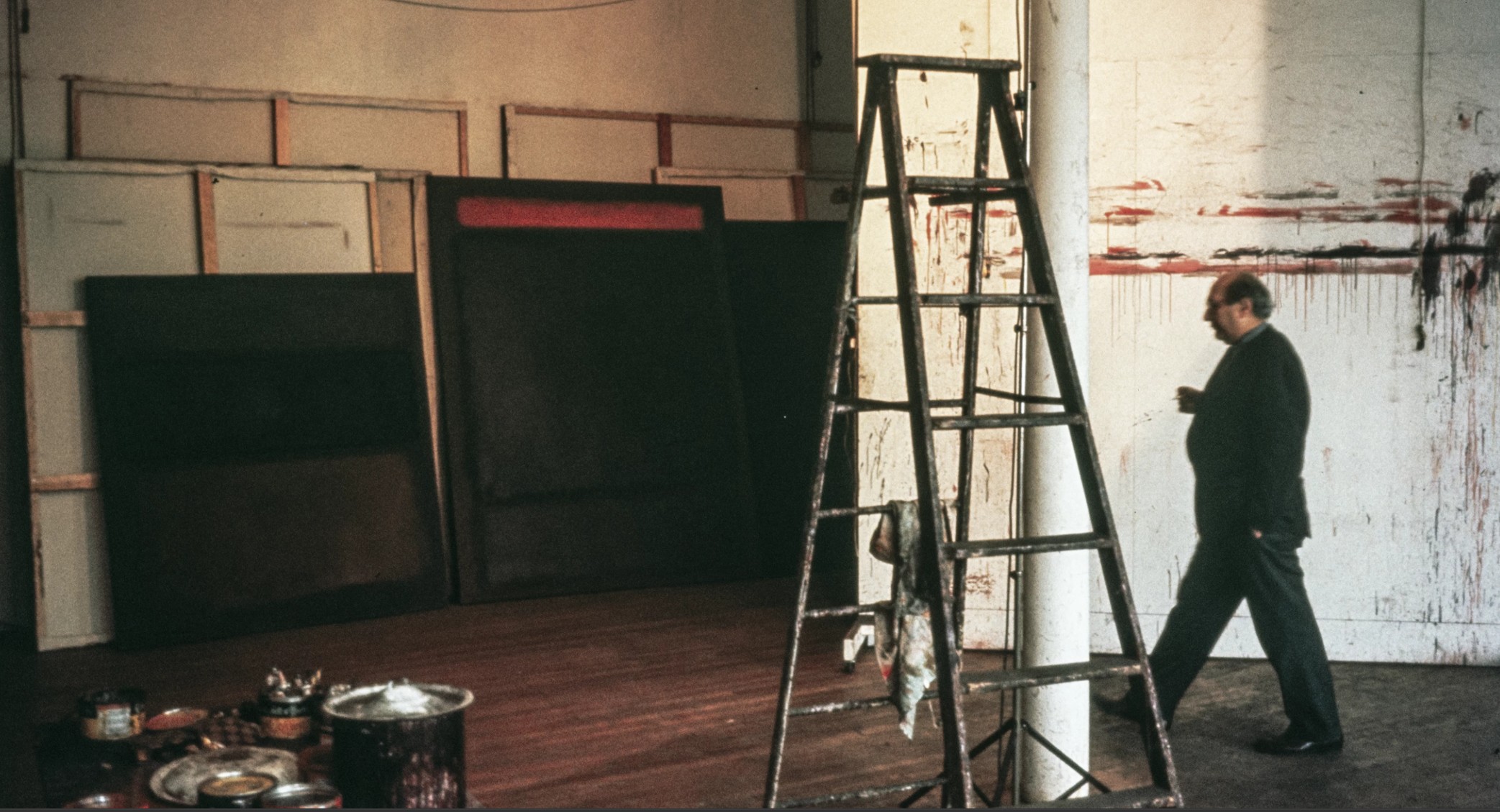
The artist in his studio, 1964. Photo by Dan Budnik
Executed in 1969, the penultimate year of Rothko’s life, Untitled emits both the ethereal metaphysicality and immersive intimacy of the artist’s most celebrated, large-scale works, reigning as one of the most accomplished examples of the artist’s paintings on paper. Although Rothko completed works on paper throughout his career, it was in the final two years that paintings on paper became a central focus of his output. Reaching nearly 80 inches, the dramatic scale of Untitled mirrors the proportions of the human body and immerses the viewer in a transcendent, majestic expanse.
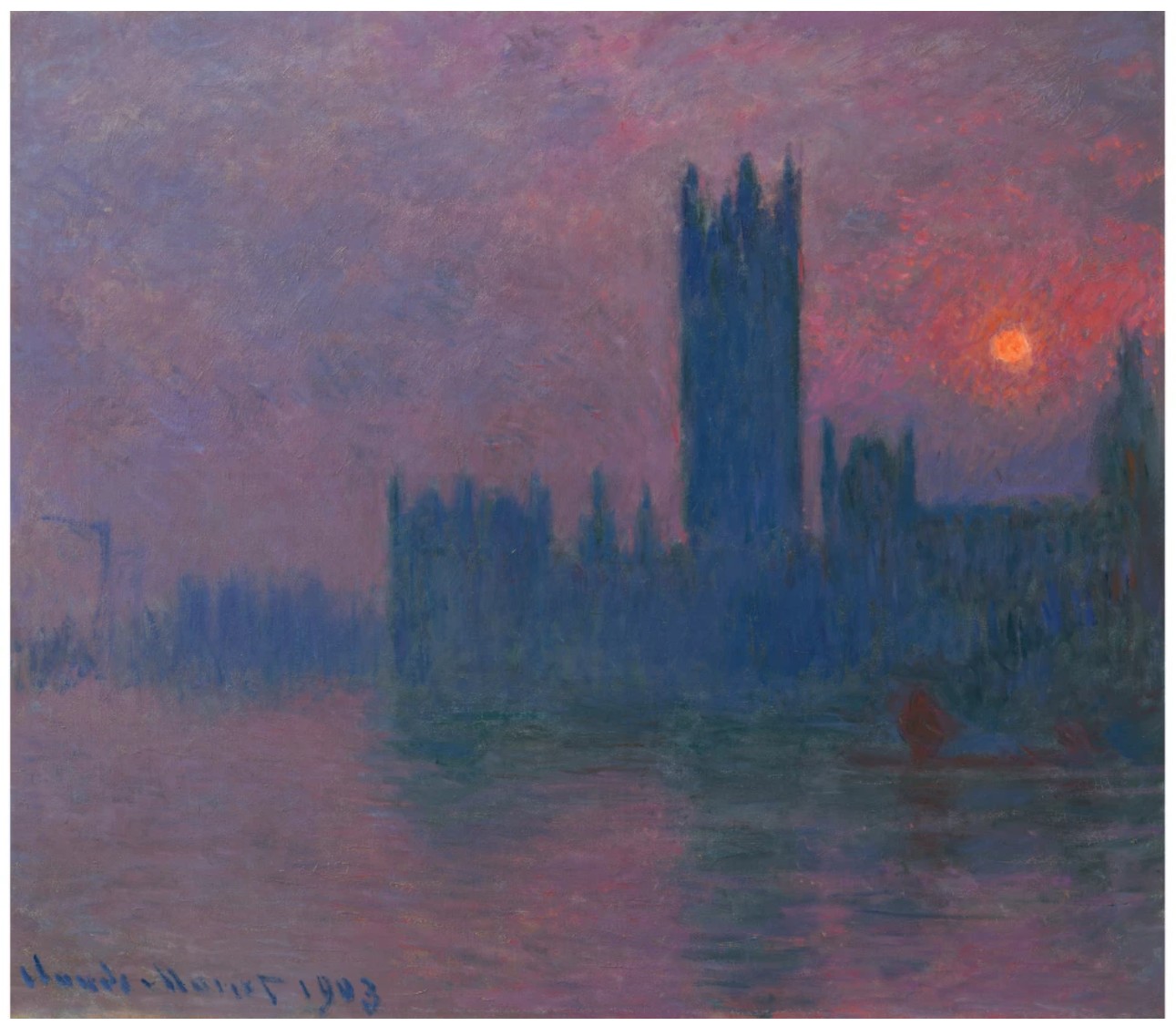
Claude Monet, Parliament, Setting Sun, 1900-03. Private Collection. Image © Christie’s Images / Bridgeman Image
Through generous swathes of inky black emerges a phosphorescent violet glow, illuminating the composition’s surface. Composed of three rich sable registers which float in tension with one another against a jewel-like, purple field, Untitled evokes the dramatic palettes and spiritual, meditative quality of Rothko’s late masterworks commissioned by Dominique and John de Menil for the Rothko Chapel in Houston, Texas. Adam Greenhalgh notes of Rothko’s 1968-69 paintings on paper, such as Untitled: “Deep, rich fields painted with bravura brushstrokes against radiant backgrounds create striking paintings that blaze from within. They display vigor and vitality, erupting with volcanic energies and compositional tension” (Adam Greenhalgh, “Into the World: Mark Rothko’s Paintings on Paper,” in: Exh. Cat., Washington D.C., National Gallery of Art (and traveling), Mark Rothko: Paintings on Paper, 2023-24, p. 39)
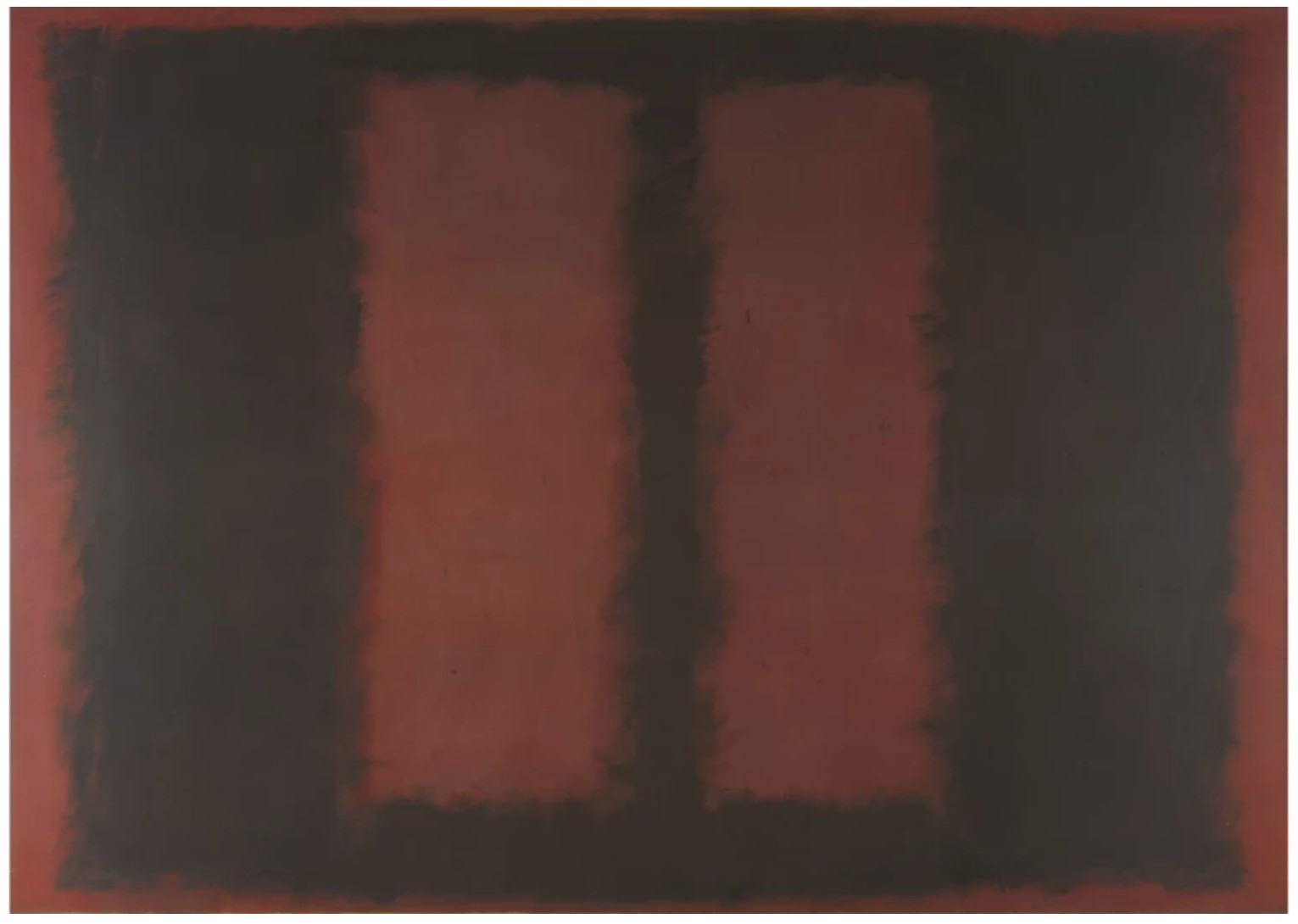
Mark Rothko, Black on Maroon, 1958. Tate Gallery, London. Image © Tate, London / Art Resource, NY. Art © 1998 Kate Rothko Prizel & Christopher Rothko / Artists Rights Society (ARS), New York
Dating to 1969, Untitled embodies a culminating moment in Rothko’s career, in which he experienced a surge of unrelenting creativity and devoted his practice primarily to paintings on paper. In the spring of 1968, Rothko fell ill and was thereafter advised by his doctors to avoid handling large, heavy canvases. At this counsel, Rothko shifted his focus to the versatile medium of paper, exploring the absolute limits of painting in the media. While many of the works from this period are intimately scaled works on paper, Untitled is a uniquely monumental example, rivaling the artist’s major paintings in its larger-than-life scale. Although Rothko indeed produced works on paper throughout his career, the paintings on paper from the late 1960s encapsulate the profundity of his technical mastery as a painter.
Adam Greenhalgh notes of the importance of the paper medium to Rothko: “The largest paintings Rothko made on paper are on par with the dimensions of any of his abstract canvases made after 1949. Paintings on paper at this scale belie the widely held perception that paintings are on canvas and drawings are on paper, that paintings are big and major and drawings are small and minor… Paper, it would seem, had supplanted canvas as his preferred support.” (Adam Greenhalgh, “Into the World: Mark Rothko’s Paintings on Paper,” in: Exh. Cat., Washington D.C., National Gallery of Art (and traveling), Mark Rothko: Paintings on Paper, 2023-24, pp. 38-39) In his final years, Rothko’s artistic ambition reached its apex, resulting in a body of works on paper as meditative, captivating and vital as any of his paintings on canvas that defined his early career.
Left: Francis Bacon, Study after Velazquez, 1953. Private Collection. Image © Bridgeman-Giraudon / Art Resource, NY. Art © 2026 Estate of Francis Bacon / Artists Rights Society (ARS), New York / DACS, London.
Right: Yves Klein, Untitled (fire-color painting), 1962. The Museum of Modern Art, New York. Image © The Museum of Modern Art/Licensed by SCALA / Art Resource, NY. Art © 2026 Artists Rights Society (ARS), New York / ADAGP, Paris
These last years devoted primarily to paintings on paper were preceded by Rothko’s magnum opus, his most significant and defining artistic legacy: the commission for the Rothko Chapel at the University of St. Thomas, Houston, Texas. In April 1964, Dominique and John de Menil commissioned Rothko to create a suite of paintings to fill the walls of an octagonal, nondenominational chapel space. Over the course of three years, Rothko executed twenty-three paintings, fourteen of which were ultimately installed in the Chapel in 1971, completed shortly after the artist’s passing in 1970. The soaring, revelatory canvases created for the Chapel invite an even more profound contemplation than his earlier works afforded.
Market Precedents
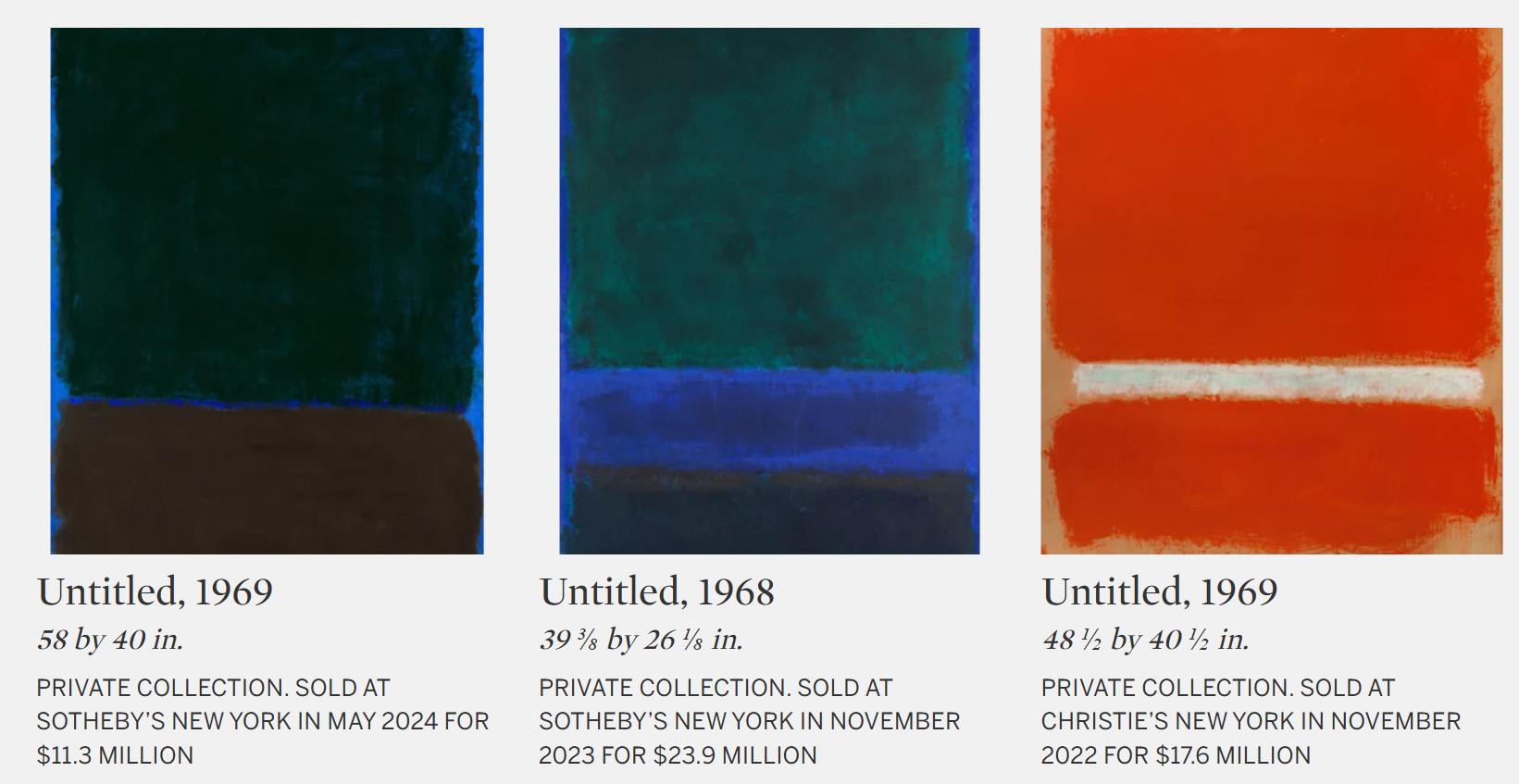
Through their deep hues and somber elegance, the Chapel paintings created a boundless, transcendent atmosphere. Rothko’s use of darker pigments continued through his subsequent series of works on paper, including Untitled, which engulfs the viewer in a mesmeric expanse of rich black punctuated by a radiant amethyst glow. Diane Waldman writes of Rothko’s seminal final works: “No longer is his art earthbound, sensual, corporeal. He had attained a harmony, an equilibrium, a wholeness, in the Jungian sense, that enabled him to express universal truths in his breakthrough works, fusing the conscious and the unconscious, the finite and the infinite, the equivocal and the unequivocal, the sensuous and the spiritual.” (Diane Waldman, in: Exh. Cat., New York, The Solomon R. Guggenheim Museum, Mark Rothko, 1903-1970: A Retrospective, 1978, p. 69)
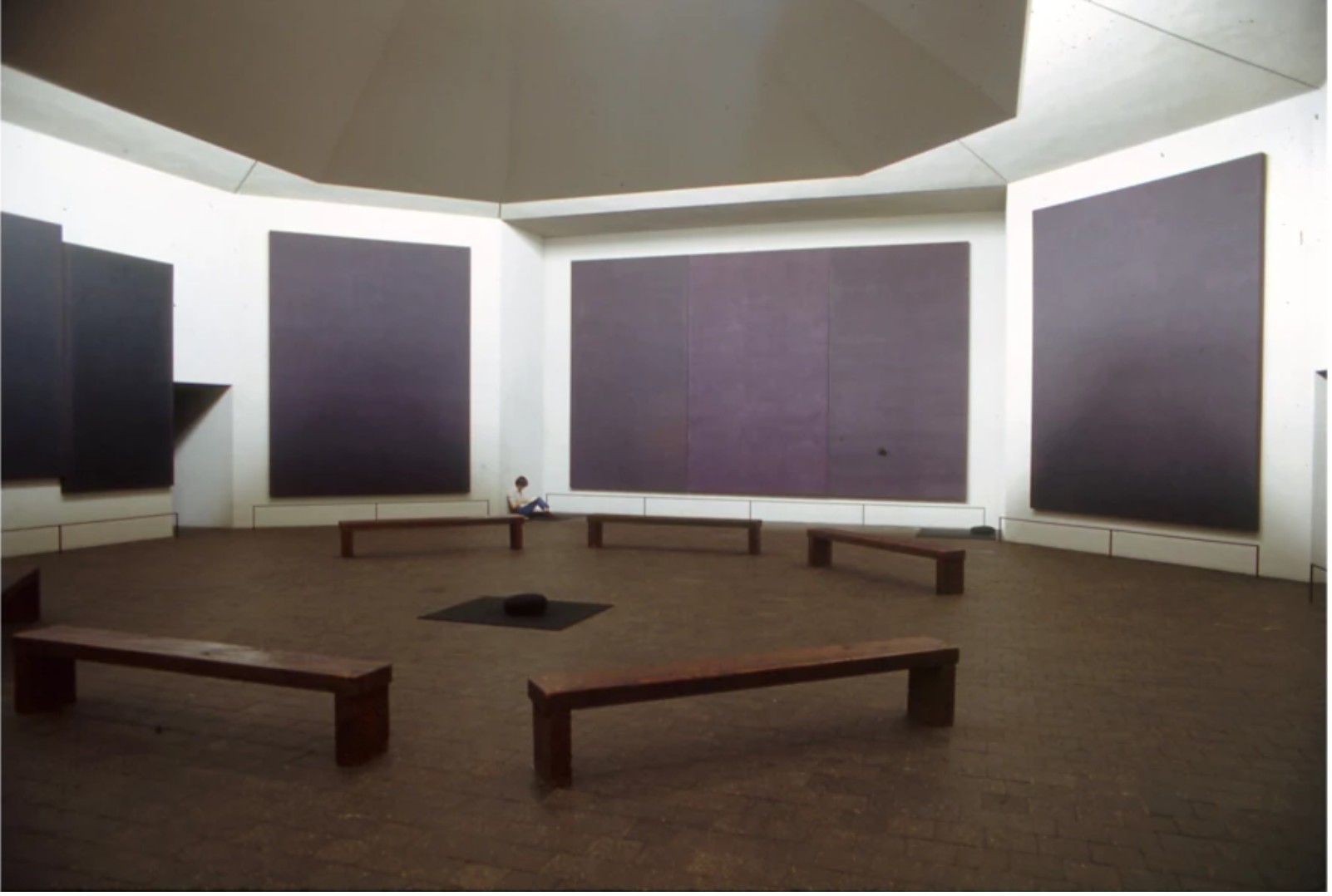
The Rothko Chapel, Houston. Image © Nicolas Sapieha / Art Resource, NY.
Art © 1998 Kate Rothko Prizel & Christopher Rothko / Artists Rights Society (ARS), New York
Although the execution of Untitled followed Rothko’s Chapel commission, there is an undeniable visual harmony between the painting and its legendary precedents. Indeed, in 1996-97, the present work was included in a seminal exhibition at The Menil Collection, Houston, which revisited the Chapel commission. Inclusion in this exhibition solidifies Untitled’s close visual ties to Rothko’s most enduring and iconic project. Untitled is anchored in the sublime potency and pure painterly fortitude emanating from the deep palettes of the Chapel paintings. Through feathered layers of amethyst purple and silky black, Untitled achieves an atemporal chromatic brilliance and enduring visual resonance.
Untitled, 1969
Sotheby’s New-York: 15 May 2024
Estimated: USD 10,000,000 – 15,000,000
USD 11,250,000
WORK ON PAPER
Untitled | Modern Evening Auction | 2024 | Sotheby’s (sothebys.com)
MARK ROTHKO (1903 – 1970)
Untitled, 1969
Oil on paper mounted on canvas
58×40 inches (147.3 x 102.9 cm)
A bewitching and brilliant reflection of Rothko’s career-long pursuit of painting as a manifestation of philosophical ideals, Untitled 1969 is a luminous capsule of the last year of Rothko’s life and the best of his paintings on paper. Following the artist’s jarring aneurysm in the spring of 1968, Rothko turned almost exclusively to paintings on paper, a medium he had revisited throughout his career, as his primary output at the insistence of his doctor to refrain from the physical labor of painting larger canvases. Throughout 1969 and until the artist’s tragic death the following year, Rothko’s practice evolved continuously and his magnified introspection only produced more raw and profound compositions in deepening hues. With the same profound radiance commuted to his most successful canvases, Rothko continued to pursue the seemingly limitless possibilities of color in his paintings on paper and in Untitled left his final incomparable translations of those possibilities as his infinite legacy beyond the finitude of his life and transcendent career.

In Untitled, two dark, hovering forms coexist in a spectral stasis against the glowing blue, at once emerging from the ground in their complex opacity, yet simultaneously intonating a galactic, perpetual expansion in their relative darkness. Within the blurred comingling of the two masses is a vivid blue horizon where the dark forms barely meeting like the last, whispering quietude of daylight before nightfall. In an expression of his fascination with the possibilities of twilight, Rothko once stated to David Sylvester, “Often towards nightfall, there’s a feeling in the air of mystery, threat, frustration—all of these at once. I would like my painting to have the quality of such moments” (the artist cited in David Anfam, Mark Rothko: The Works on Canvas: Catalogue Raisonné, New Haven and London, 1998, p. 73). Layered in inky tones imbued with deep green in the upper form and burgundy in the lower, Untitled demonstrates Rothko’s ability to conjure a dynamic optical experience resulting in a brooding, hallucinatory vision. Although markedly different in their approach to painting and treatment of surface, Rothko’s final era of paintings on canvas and paper, and particularly Untitled’s distinct layering of green, red and blue edging towards blackness, is reminiscent of Reinhardt’s singular exploration of the nuanced capacity of black through its barely perceptible comingling with color. Equally, the present work bears affinity with the enveloping sublimity of Barnett Newman’s storied “zip” works (see figs. 1 and 2).

AD REINHARDT, ABSTRACT PAINTING, 1960. SOLD SOTHEBY’S, NEW YORK, NOVEMBER 2023, LOT 124 FOR $3.6 MILLION. ART © 2024 ESTATE OF AD REINHARDT / ARTISTS RIGHTS SOCIETY (ARS), NEW YORK
BARNETT NEWMAN, ONEMENT VI, 1953. SOLD SOTHEBY’S, NEW YORK, MAY 2013, LOT 17 FOR $43.8 MILLION. © 2024 BARNETT NEWMAN / ARTISTS RIGHTS SOCIETY (ARS), NY
In a conference address Rothko delivered at Pratt Institute in November 1958, eleven years prior to the completion of Untitled, Rothko described the preoccupations which fueled his artistic practice and shunned the idea of his art as ‘self-expression.’ Rothko argued: “I have never thought that painting a picture has anything to do with self-expression. It is a communication about the world to someone else. After the world is convinced about this communication it changes. The world was never the same after Picasso or Miró. Theirs was a view of the world which transformed the vision of things” (the artist quoted in: Miguel Lopez-Remiro, Ed., Writings on Art: Mark Rothko, New Haven and London, 2006, p. 125). In the name of transmuting his vision of the world in deftly layered swaths of color, Rothko’s oceanic ground in Untitled amalgamated the history of blue itself and its significations. Channeling the prolific visual power of blue across centuries—from its divine implications in Giotto’s Scrovegni chapel to the doleful, modulated blues of Picasso’s Blue Period—Rothko captured the hue’s boundless essence in the same manner in which the Romantics harnessed the sublime in their depiction of nature. Appearing brilliantly illuminated from within, a vessel of pure hue and light, the present work achieves an incandescent dimensionality. Through its vibrating forms of layered color and consequential perception of light, Untitled captures Rothko’s unrivaled mastery of color in the last highly prolific year of his life.

GIOTTO, SCROVEGNI CHAPEL, PADUA (DETAIL), CIRCA 1305
While the artistic ethos of the 1960s rocketed into the sphere of Pop and shorn the once revered ingenuity and gesture of Abstract Expressionism, Rothko’s painterly vision embraced the evolving world from a divergent perspective. In an equal and opposite reaction to the way in which Pop Art mirrored the cultural anxiety as a response to art in the age of mechanical reproduction, Rothko’s compositions evolved in their own ontology and translated the whirling coexistence of the angst and expansion, tragedy and humanity of the moment through pure color and form. Exceptional for utterly enveloping scale as a work of this medium, Untitled elicits a sensation of deep somatic absorption and contemplation archetypal of Rothko’s most monumental canvases.
Untitled, 1968
Sotheby’s New-York: 13 November 2023
Estimated: USD 7,000,000 – 10,000,000
USD 23,889,000
WORK ON PAPER
Untitled | Modern Evening Auction | 2023 | Sotheby’s (sothebys.com)
MARK ROTHKO (1903 – 1970)
Untitled, 1968
Oil on paper laid down on canvas
39 3/8 x 26 1/8 inches (100 x 66.4 cm)
Signed Mark Rothko, dated 1968 and variously inscribed (on the reverse)
An illuminating vision of shimmering color and peerless painterly finesse, Mark Rothko’s Untitled from 1968 is a dazzling embodiment of the artist’s legendary abstractions. Emerging from a brilliant ground of cobalt blue, three fields of rich color, varying in tonality, emit a sumptuous glow. Built up of innumerable delicate strokes and thin washes, these luminescent forms emphatically attest to the artist’s mastery of light, color, and form. An exquisite example from Rothko’s later years, Untitled exemplifies the artist’s work in a medium that bore an increasingly profound significance in the twilight years of his career when, tirelessly seeking to broaden the horizons of his artistic practice, he focused his energies upon exploring the absolute limits of painting on paper. Bearing exceptional provenance, Rothko’s luminous Untitled has been held in the distinguished collection of Pitt and Barbara Hyde for nearly 20 years and is offered to benefit the Memphis Brooks Museum of Art. The Hydes have established a philanthropic legacy in their community, with deep-rooted ties to arts and education, and have acted as long-standing supporters of the Memphis Brooks Museum of Art. Proceeds from the sale of Rothko’s Untitled will support the construction of a new home for the museum, which will be renamed the Memphis Art Museum. Designed by Herzog & de Meuron, the new 122,000 square-foot landmark space on the city’s riverfront will open in 2026 as a center of cultural activity for Memphis.
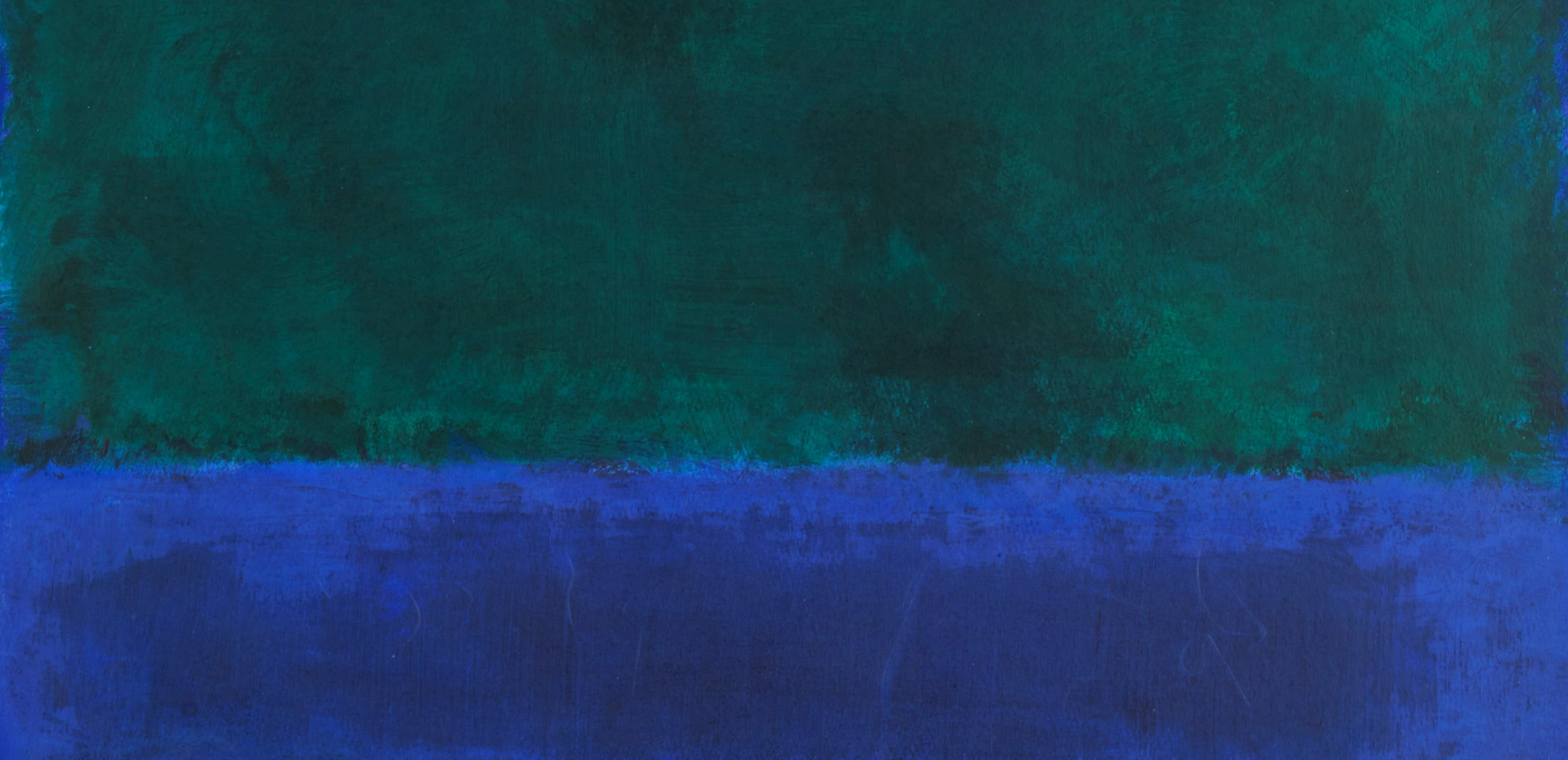
An exquisite summation of the artist’s signature practice, Untitled represents the breathtaking culmination of Rothko’s career-long pursuit of aesthetic transcendence through the conflation of pure color and light. While predominantly known and revered for his corpus of towering abstract canvases, Rothko produced a number of exceptional paintings on paper throughout his career that, in their subtly variegated hues and inherent luminosity, rank among the richest orchestrations of color within his output. Many of the greatest of these works date from the late 1960s, when, under doctor’s orders not to lift heavy canvases, Rothko turned to the lighter and more versatile medium of paper. Despite this apparent limitation, Rothko reached an apex in his artistic ambition, producing a series of works on paper as emotionally stunning as his best-known canvases. Paper, with its paradoxical ability to both absorb and reflect light, in many ways reinvigorated the artist’s quest to create nuanced luminosity within a reductive composition. Describing the significance of the medium within Rothko’s oeuvre, Clearwater notes: “These works…are essential to a fuller understanding of Rothko’s career. Together with the canvases, the works on paper chart the artist’s quest for an elemental language that would communicate basic human emotions and move all mankind” (Ibid., p. 17).
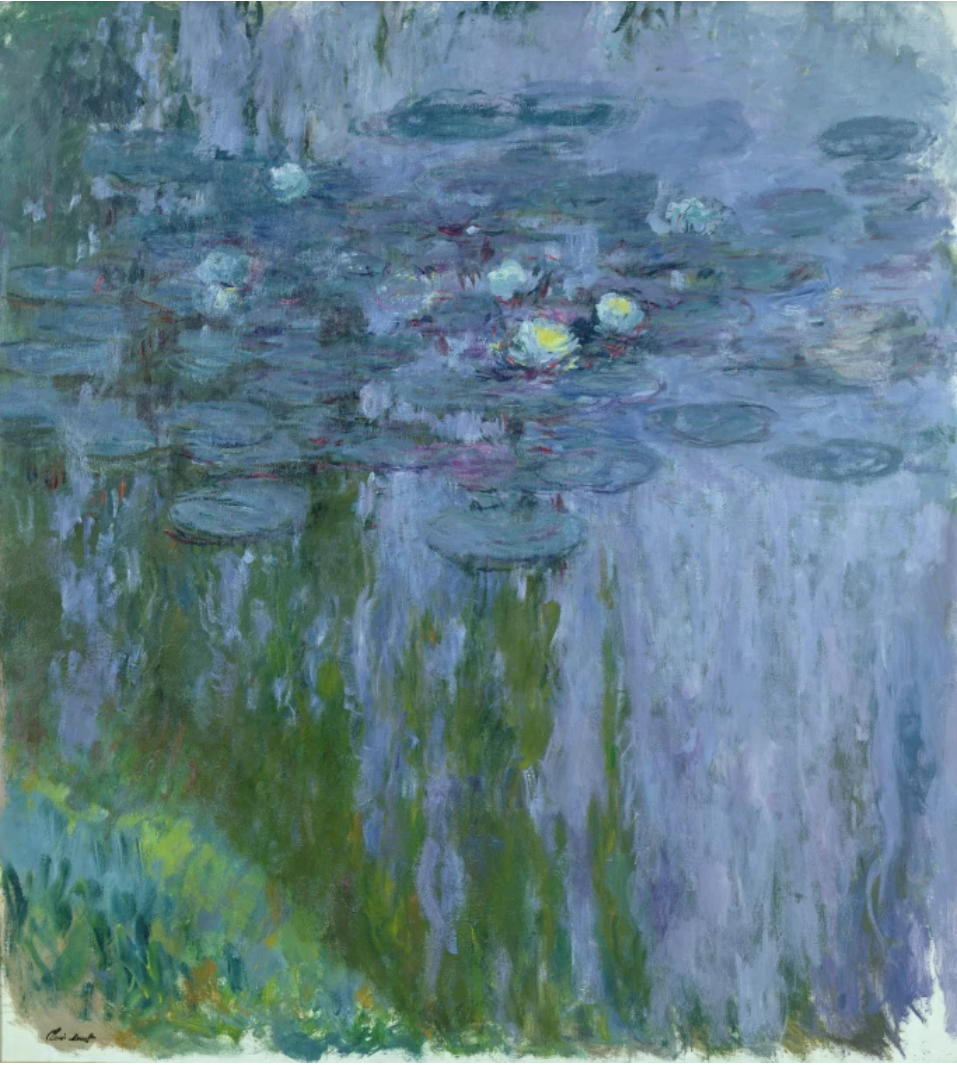
CLAUDE MONET, WATERLILIES, 1916-19. MUSEE MARMOTTAN MONET, PARIS BRIDGEMAN IMAGES
Against a luminescent ground of brilliant sapphire paint the rich, painterly forms of Untitled suggest both feverish movement and tranquil repose, emanating an enthralling tension that invites the viewer to lose him or herself completely in the diaphanous fields of unadulterated color. The present work evokes an analogous sense of pensive introspection and reflective thought, much like Henri Matisse in his contemplative Porte-Fenetre à Collioure from 1914. Dominating the upper register of the composition, the feathered edges of the largest green form push into the oceanic depths beneath and the subtle variations in intensity within the form itself create a sense of billowing cloud-like movement. In contrast, the more meditative passage of inky indigo along the bottom subtly structures the painting, grounding the green and blue forms above. The work’s resultant dynamism necessitates the viewer’s constant attention and provides an endlessly engaging experience. Here, Rothko attains chromatic resonance through the meticulous aggregation of translucent veils of brushed pigment, with especially close attention paid to the areas where the forms meet. Towards the feathered edges of the lowest band, a panoply of purples, greens and browns emerge, rewarding close examination. Similarly, despite the subtlety of tone in the central band, the concentration of more saturated blue pigment acts as a visual balance between upper and lower color fields: the light of one form is countered by the weightier density of the other as they hum quietly to each other across this blue bridge. Among the most spectacular examples of the artist’s works on paper, Untitled emanates an ethereal reverberation of color impossible to reproduce in illustration.
Untitled, 1960
Sotheby’s New-York: 16 May 2022
Estimated: USD 35,000,000 – 50,000,000
USD 48,008,000
Untitled | The Macklowe Collection | 2022 | Sotheby’s (sothebys.com)
MARK ROTHKO
Untitled, 1960
Oil on canvas
70×74.5 inches (178.4×189.2 cm)
Powerfully emotive in palette and utterly enveloping in scale, Mark Rothko’s Untitled from 1960 is a masterwork of the legendary artist’s inimitable painterly praxis. One of just 19 paintings on canvas by Rothko from 1960, nearly half of which reside in museum collections, the meditative hues and encompassing scale of the present work represent a pivotal moment within Rothko’s storied career and artistic development. While the artist had already achieved significant international acclaim by the end of the 1950s, it was over the course of the following decade that the artist would push himself to produce the most emotionally provocative, astoundingly intimate, and visually awe-inspiring works of his oeuvre. Upon the surface of Untitled, the three clearly distinct, yet inextricably intertwined, zones of black and maroon pigment imbue the canvas with a tangible magnetic charge. Cast against the rich cobalt field, a velvety expanse of inky black fills the top register of the painting; built up of innumerable washes of hue, its edges mingle gently with the lighter ground on which it floats. Below, a deep maroon rectangle floats above a slightly lighter form, the borders of each color commingling slightly in vaporous whisks of paint at an elegantly executed horizontal axis. Hovering upon the canvas, the three void-like rectangular zones of darker pigment draw one’s gaze inexorably inward, their feathered edges simultaneously seeming to expand and contract; from beneath their hazy borders, the radiant blue ground breaks through like light escaping from a vacuum.
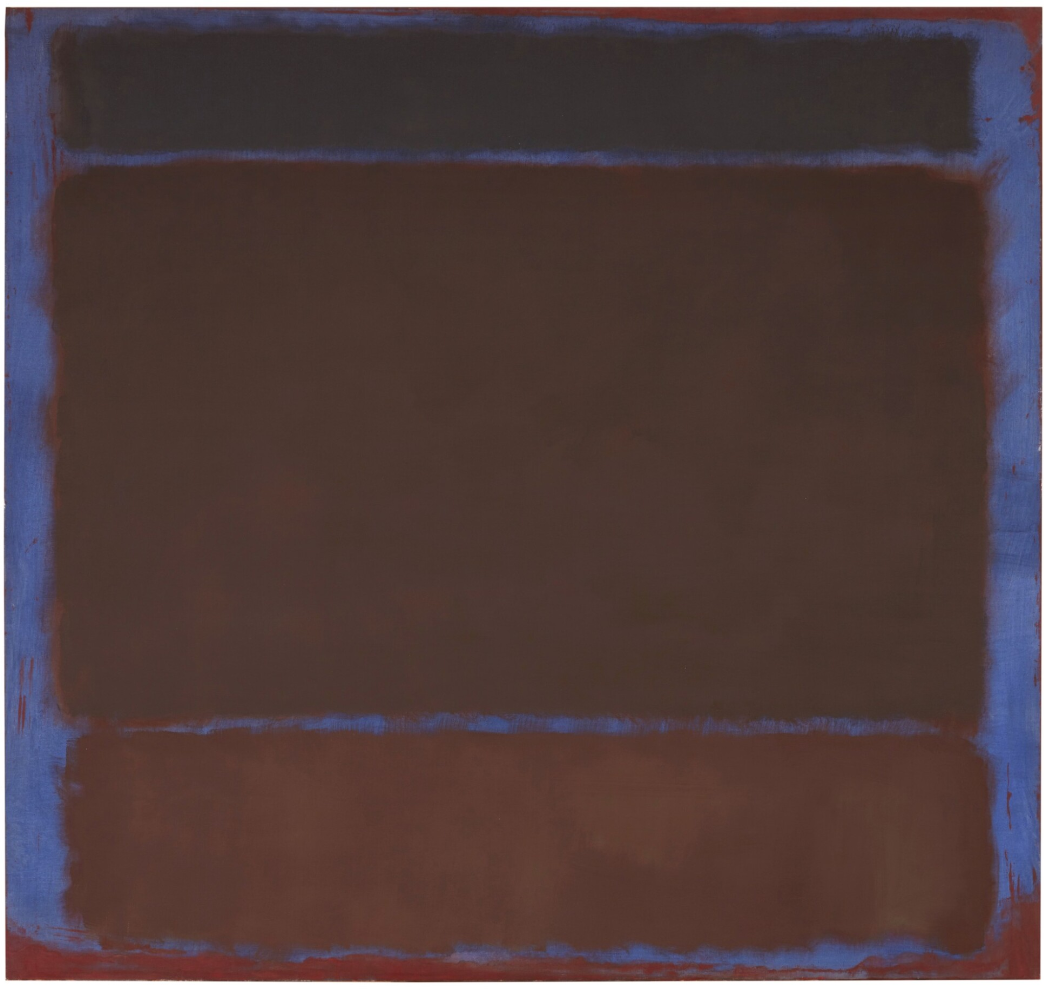
In its richly variegated palette of velvety hues, the present work powerfully invokes the soaring canvases of the Menil Chapel, the extraordinary mural cycle that marks the culmination of Rothko’s shift towards the refined, somber elegance of his later paintings; inviting the viewer to explore a deeper plane of contemplative consciousness, Untitled eloquently presages the solemn magnificence of that famed chapel, invoking the same aura of spiritual purity, transcendental mood and profound emotion associated with that reverential space. The hazy, shadowy visage, color palette and date of execution of Untitled tie it inextricably to the soaring, reverential canvases of the chapel, which would become the artist’s magnum opus; as in the Rothko Chapel, the velvety tones and veiled luminosity of Untitled invite a deeper, longer engagement with the painting than in the effervescent canvases of earlier years, allowing the viewer to fully appreciate the fluctuating depth, ethereal boundaries, and reverberating pull of pulsating color.
Untitled, 1970
Christie’s New-York: 13 May 2021
Estimate on Request
USD 38,145,000
Mark Rothko (1903-1970) (christies.com)
MARK ROTHKO (1903-1970)
Untitled, 1970
Oil on canvas
68×54 inches (172.7 x 137.2 cm)
Originally part of the prestigious Mellon Collection, where it remained for nearly half a century, Untitled is a radiant, majestic and deeply poignant finale to Mark Rothko’s oeuvre. Documented as the artist’s penultimate painting, it offers a parting vision of glowing, incandescent color; a luminous, resonant hymn that eloquently encapsulates the spirit of his life’s work. Upon a ground of rich, saturated indigo, three shimmering dark green fields hover in quivering, translucent bands, allowing light to seep through them like the sun rising over the ocean. In his 1998 catalogue raisonné, David Anfam lists just three paintings made in 1970 before Rothko’s death on February 25, including a vivid red work held in the National Gallery of Art, Washington D. C. Sidestepping the somber palette of his so-called “Black on Gray” paintings that dominated much of his final year, the artist’s glorious return to color within his last two months was a fitting culmination to a practice steeped in its revelations. New horizons glimmer in the work’s blue depths, before ultimately receding beyond the veil. Rothko is said to have regarded his late works as his most profound achievements: an attitude shared widely by scholars. During these final years, the artist went further than ever before in his bid to channel grandiloquent emotion through paint, creating dark, haunting and intense visions that were seemingly infinite in their depths. While Rothko claimed that color was not the ultimate purpose of his art—“tragedy, ecstasy, doom” were his primary subjects—the present work seems to offer a final affirmation of its power. Shedding the mournful monochromatic hues that had occupied him for much of 1969, Rothko plunges one last time into the jewelled, intoxicating spectrum that had guided his practice for over two decades. His deep blue tone shifts and mutates as it catches the light, glimmering like a portal to the beyond.
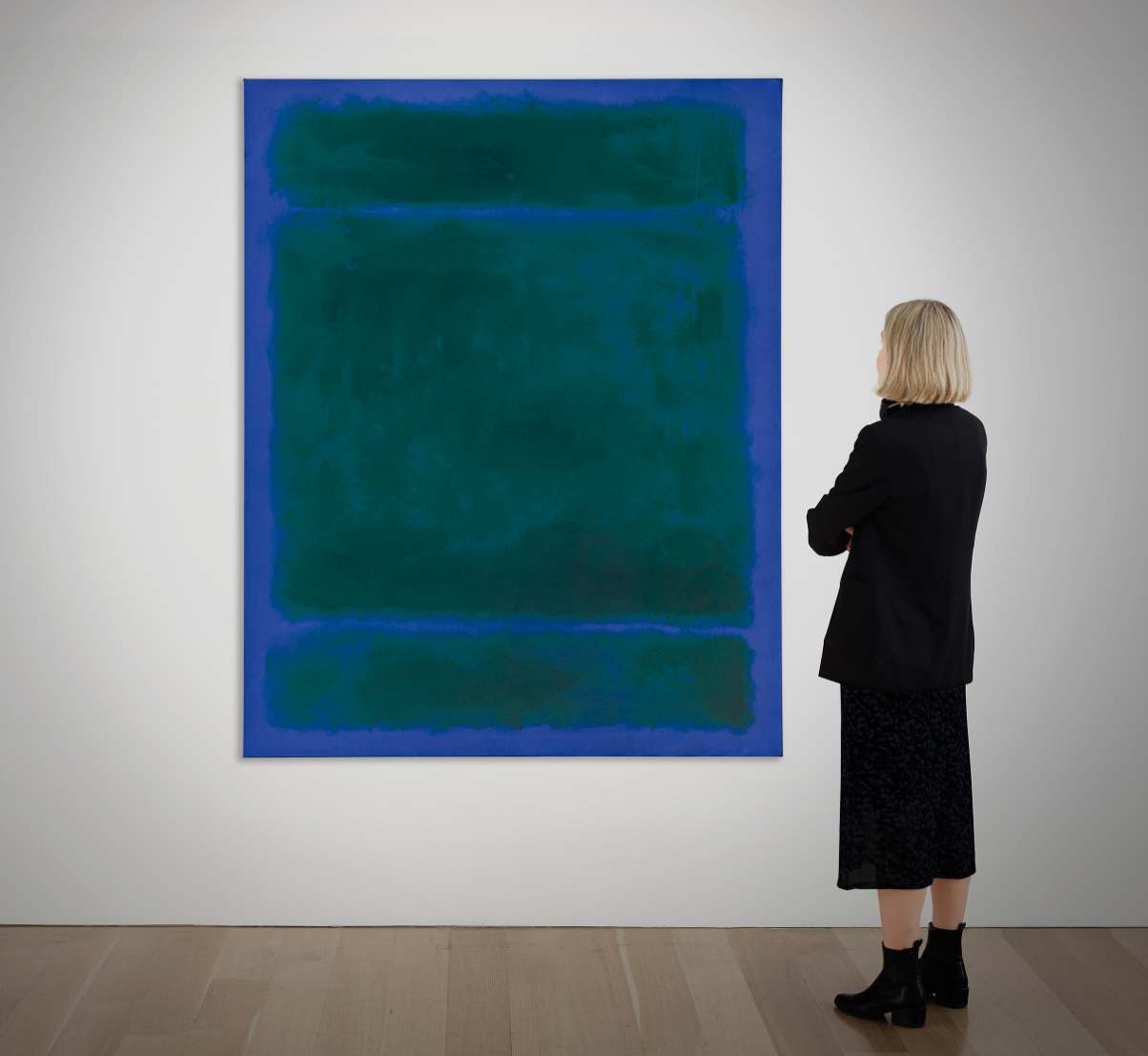
In technical terms, the work is a tour de force. Rothko’s three zones of dark green allow shards of underlying brightness to penetrate their forms, creating a cavernous, near-cinematic sense of space. Opacity and translucency merge seamlessly across the breadth of the canvas, giving rise to a luxuriant, velvet-like texture that remains in permanent flux. At the edges of each band, the paint dissolves into an almost static blur, like electric distortion caused by the incursion of the work’s vivid underlayer. Between these vast, dematerialized fields, Rothko’s brilliant, otherworldly blue gleams through like a distant horizon line, simultaneously pushing itself forward within our field of vision. Echoes of his forebears—of Monet, van Gogh and Matisse—linger in the work’s marbled, illuminated chromatic depths. Foreground and background oscillate in a mesmerizing play of polarities; night and day—moonlight and dawn—are held in a hypnotic state of tension. In the upper right-hand corner, a vertical drip stain is frozen in time, serving as a subtle reminder of the painter’s hand, and anchoring the work in the physical world.
Brown/Black
Untitled, 1967
The Geri Brawerman Collection: A Tribute to Los Angeles and A Legacy of Giving
Sotheby’s New-York: 20 November 2025
Estimated: USD 3,000,000 – 5,000,000
USD 3,466,000
WORK ON PAPER
Untitled | Modern Evening Auction | 2025 | Sotheby’s
MARK ROTHKO (1903 – 1970)
Untitled, 1967
Oil on paper mounted on canvas
23 5/8 x 17 7/8 inches (60 x 45.4 cm)
Signed Mark Rothko (on the reverse)
Provocative in its exquisite palette and radical candor, Untitled is a paragon of Mark Rothko’s acclaimed paintings on paper. Executed in 1967, just three years before the artist’s passing, the present work dates to a period of profound creative transformation, in which Rothko devoted himself almost entirely to the medium of paper. In response to health concerns that prevented him from working on large canvases, Rothko embraced the versatility and intimacy of paper, producing compositions of extraordinary depth and meditative force that rival the resonant power of his monumental paintings. Bearing distinguished provenance, Untitled has been held in the esteemed collection of Geri Brawerman, celebrated patron of the arts and philanthropist, for over three decades. A radiant and deeply evocative exemplar of his mature practice, Untitled embodies the intense potency of contrasting hues and delicate brushstrokes that distinguish Mark Rothko as among the most dynamic and influential artists of the twentieth century.
“Freed from a false sense of security and community, the artist can abandon his plastic bankbook, just as he has abandoned other forms of security. Both the sense of community and of security depend on the familiar. Free of them, transcendental experiences become possible.”
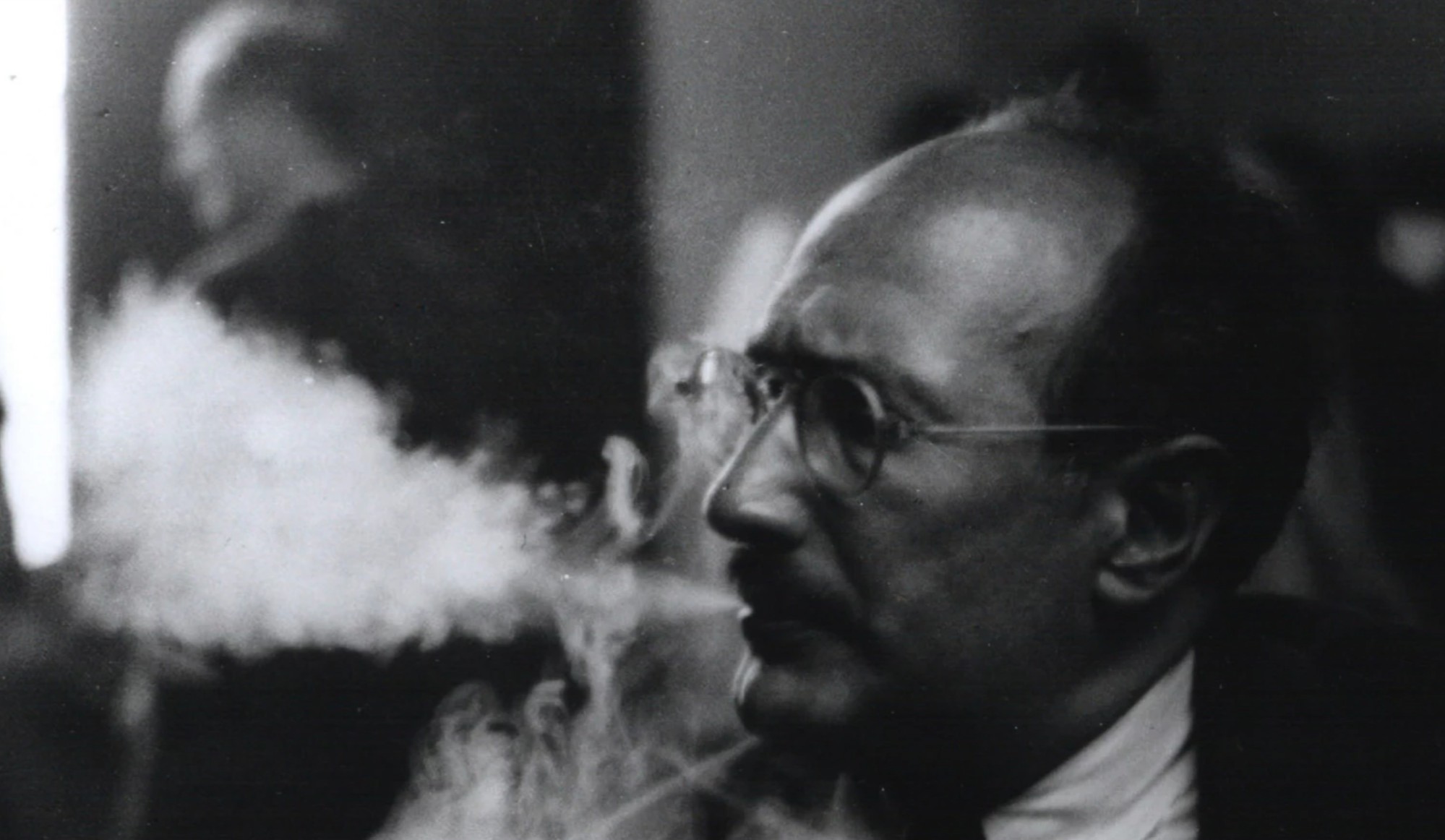
The artist, 1949. Photo by William Heick
Rendered in a timeless palette with an exquisite command of composition and paint, Untitled reinforces Rothko’s position as a master colorist. In Untitled, Rothko distills his palette into a milky, luminescent white set against deep, noir-like hues, creating a unique, combative tension between the colors. The two chromatic entities hover within a singular spatial field, their soft, feathered edges suspended in halos of light. Floating against the atmospheric beige ground, the black-and-white forms radiate a harmonious, charged synergy, their relationship generating a transcendental sense of stillness and motion. The pigment appears both freshly applied and eternally fixed, an optical paradox achieved through Rothko’s nuanced technique of layering and feathering paint, which eliminates hard edges in favor of a subtle blending of pigment.
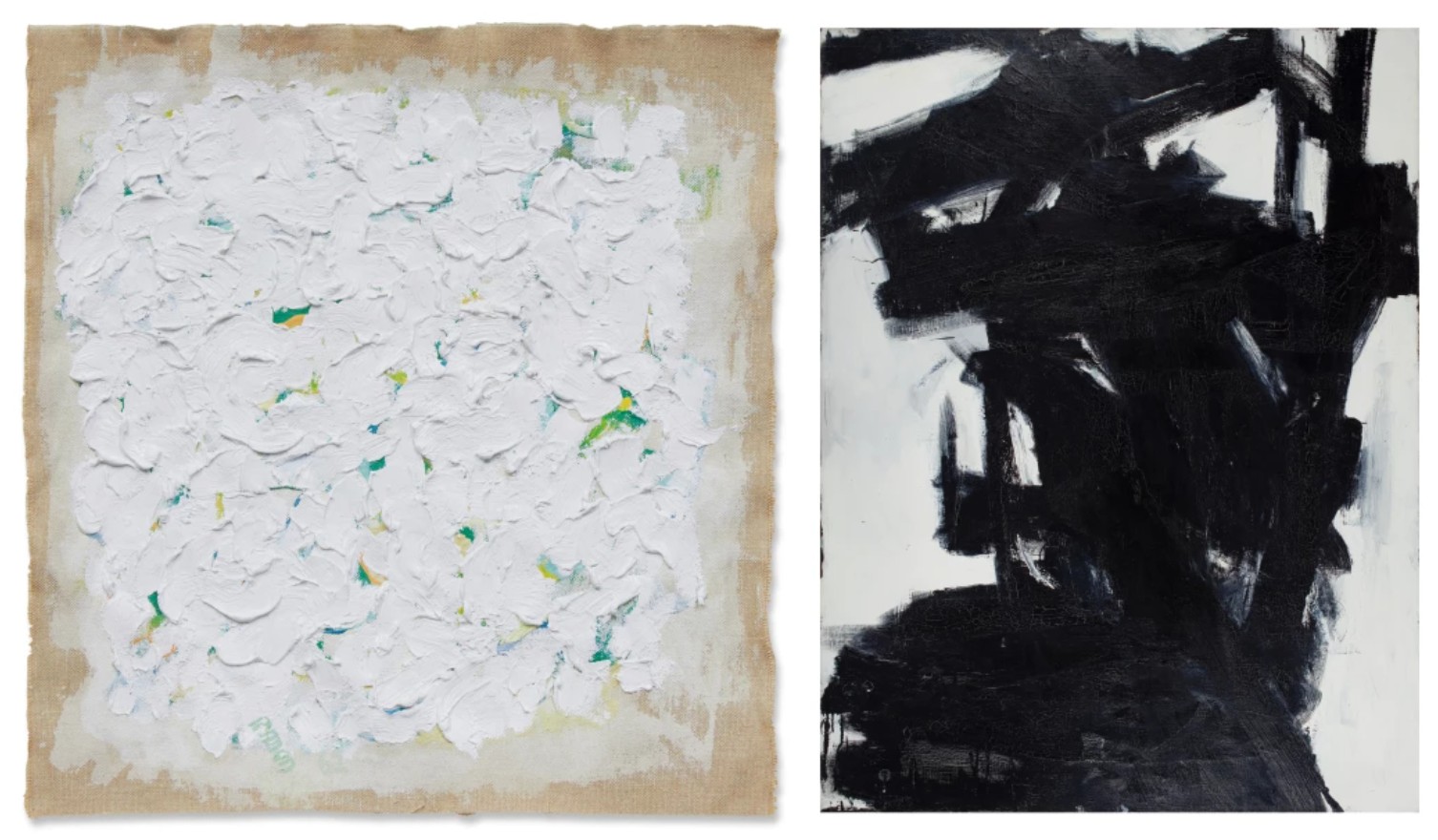
Left: Robert Ryman, Untitled, 1962. Private Collection. Sold at Sotheby’s New York in November 2021 for $4.9 million. Art © 2025 Robert Ryman. Right: Franz Kline, Ballantine, 1948-60. Los Angeles County Museum of Art, Los Angeles. Image © Bridgeman Images. Art © 2025 The Franz Kline Estate / Artists Rights Society (ARS), New York
Abandoning the classical structures of line and form, the work’s holistic surface emulates the nature of a void, the black pigment seemingly absorbing surrounding light with its matte surface. Rothko achieves this divine ethereality through a nuanced feathering technique, eliminating hard edges from his compositions in favor of a subtle blending of pigment. Rothko’s signature technique differentiated him from other Abstract Expressionist peers, who revolutionized abstract painting through their own means. The gentle accumulation of layers of oil paint in the present work mirrors the exacting process used in Rothko’s monumental paintings, in which the thoughtful accretion of pigment realizes a magnificent sense of depth and transcendence. The edges of Rothko’s forms are suspended in halos, which afford his painted surfaces a heavenly aura. Thereby, his paintings at once evoke stillness and motion, as if the pigments on the surface have been freshly applied yet are eternally fixed.
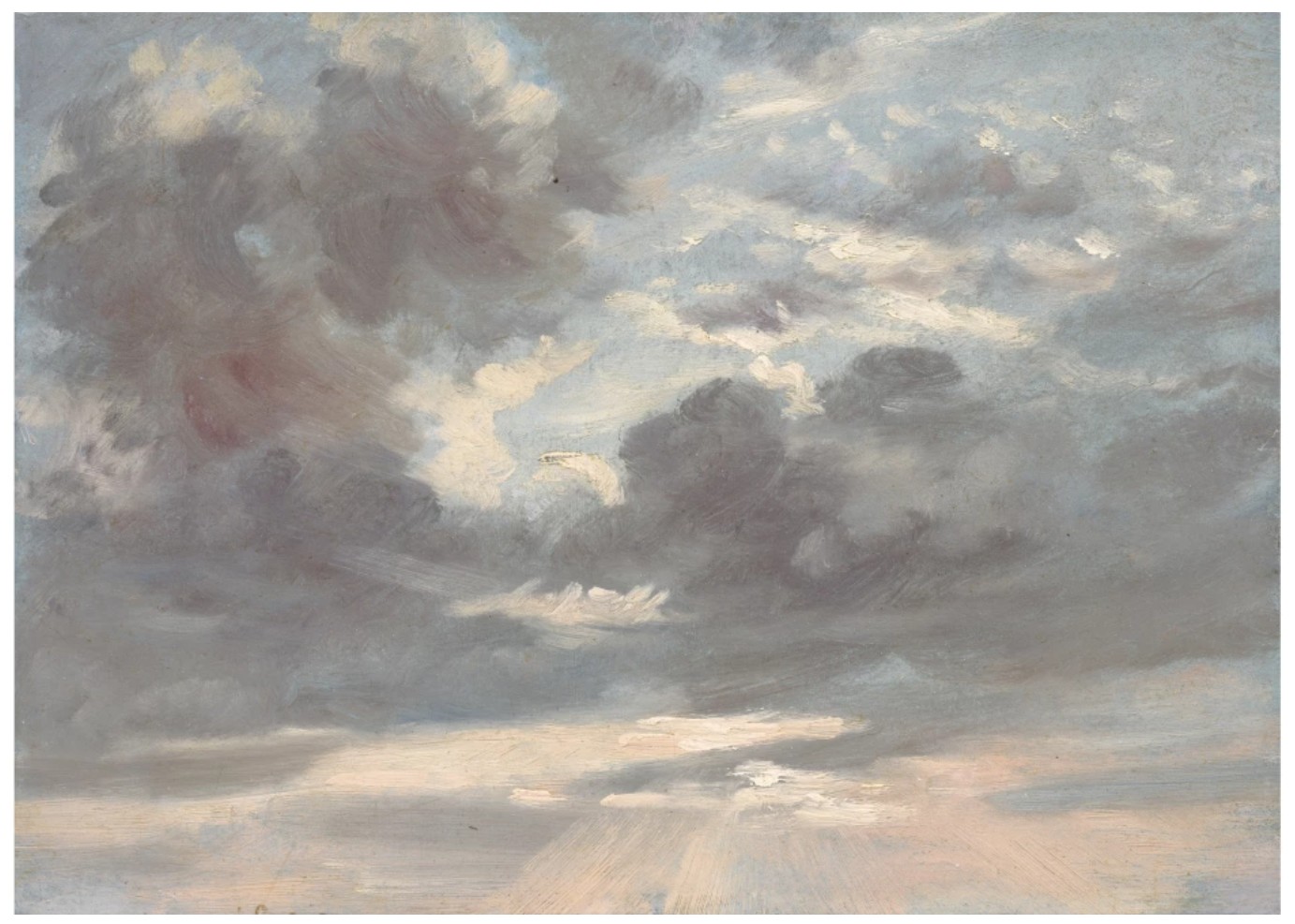
John Constable, Cloud Study: Stormy Sunset, 1821-22. National Gallery of Art, Washington D.C. Image © Bridgeman Images
The present work dates to a critical period in Rothko’s career. In 1967 and 1968, Rothko worked with an unrelenting curiosity, continually probing the relationship between the conscious and unconscious. Rothko’s later paintings reflect a complete disillusionment with the parameters of contemporary society and an elimination of dependency on the familiar.
Market Precedent: Mark Rothko Works on Paper Mounted on Laid Down on Canvas
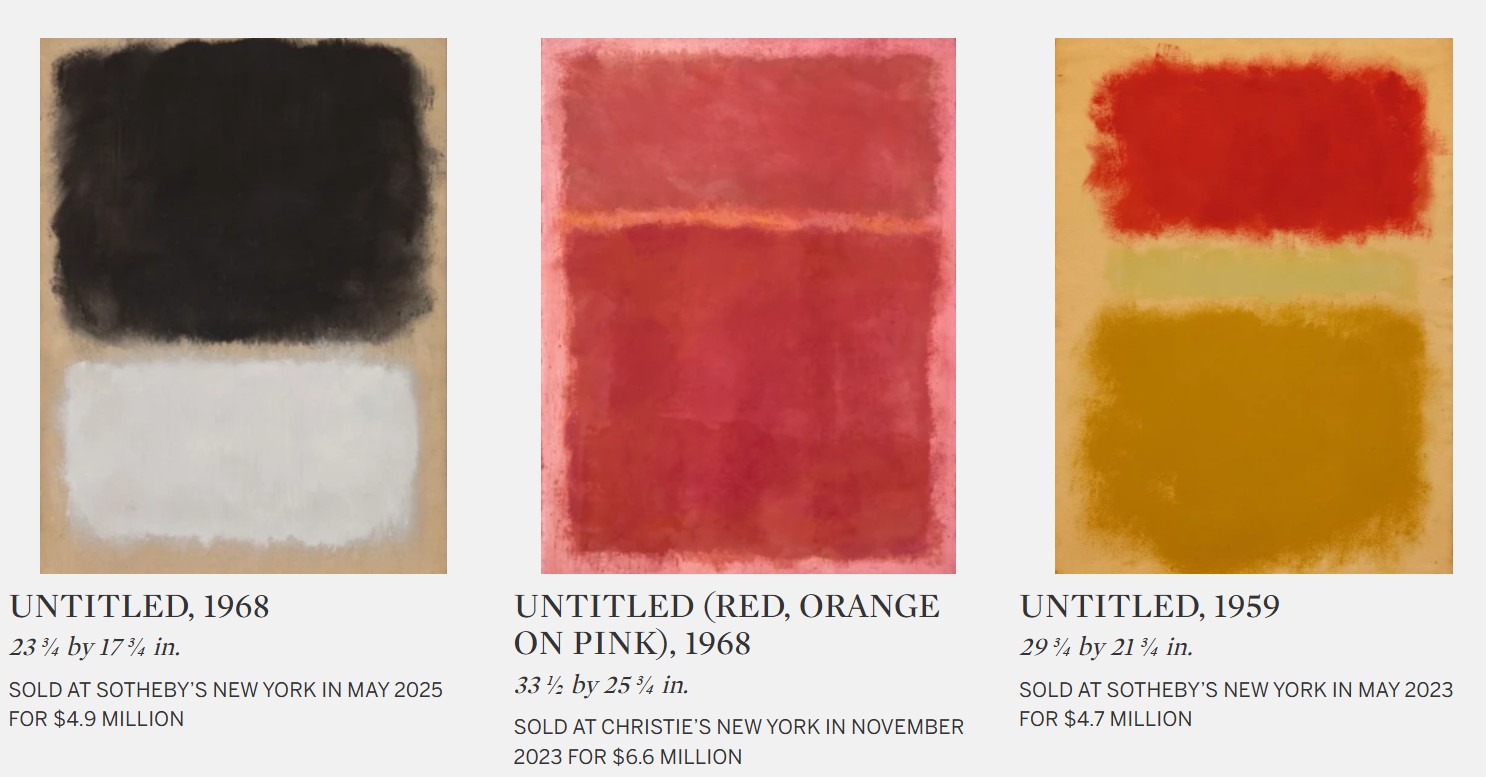
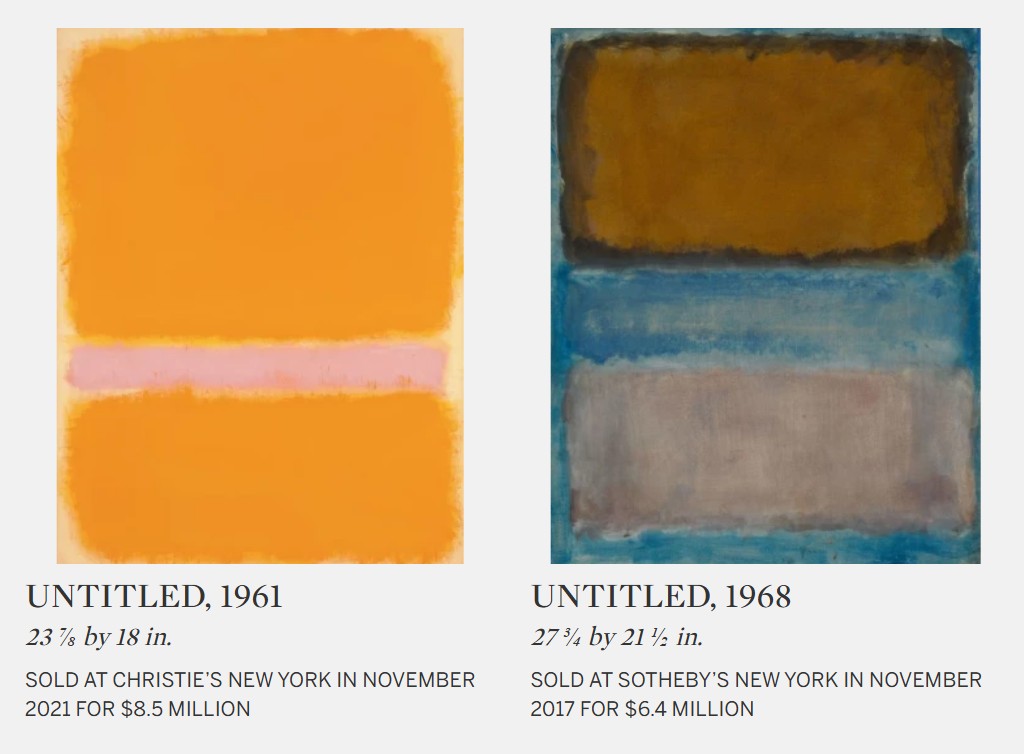
This experimentation gave rise to the present work, which is imbued with atmospheric somberness, ritualistic stillness, and contemplative power. In the spring of 1968, at his doctors’ advice, Rothko refrained from working on a large scale. In working primarily with works on paper, Rothko experienced a wave of prolific creativity, as these works became a vehicle of immense creative expression and experimentation, breaking the boundaries of what painting could be. In his final years, Rothko’s artistic ambition reached its pinnacle with a body of works on paper that is unparalleled in its virtuosity and brilliance. Untitled encapsulates Rothko’s genius pursuit of form and light, deeply engrossing the viewer on a physically more intimate scale.
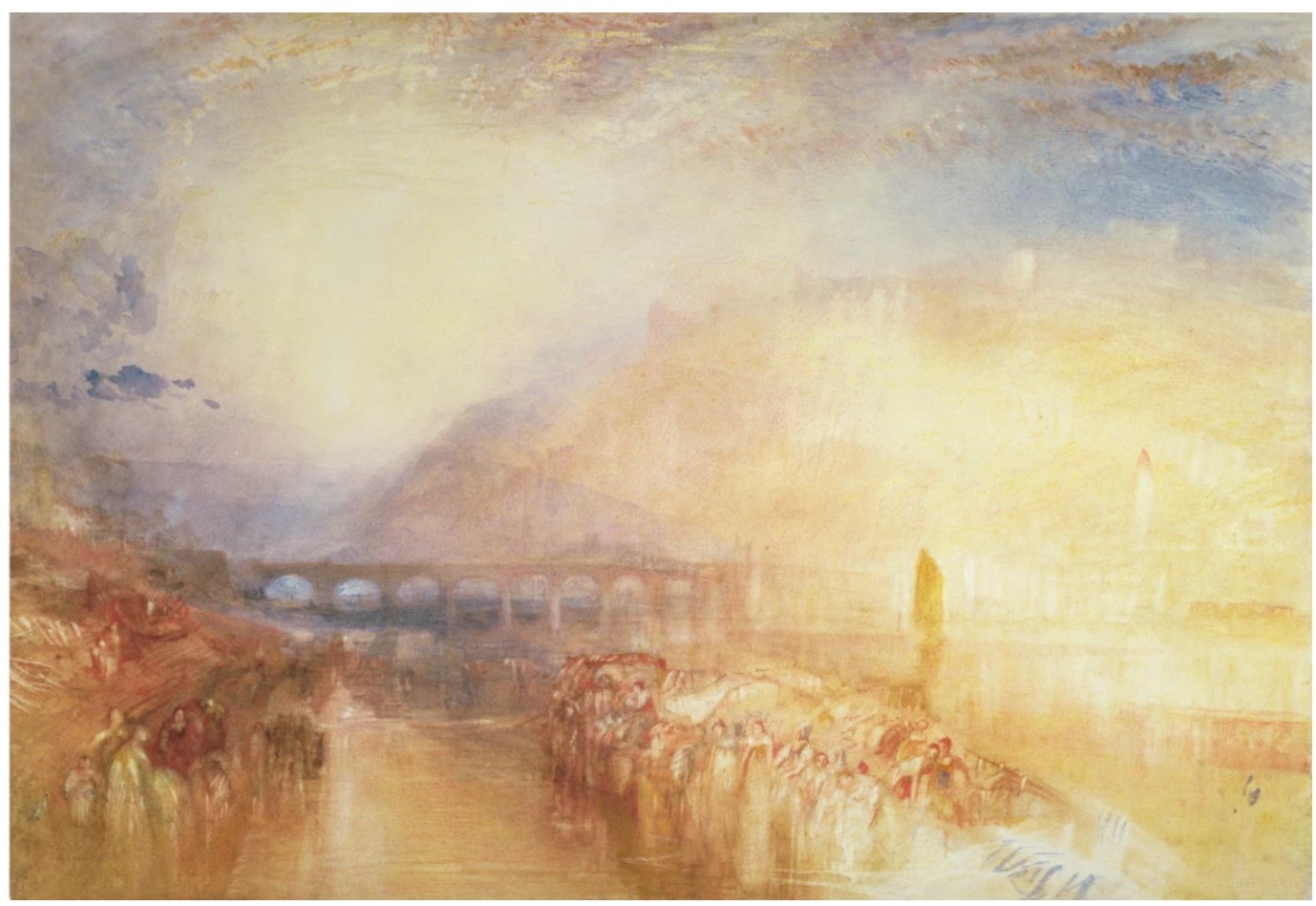
Joseph Mallard William Turner, Heidelberg, 1846. Scottish National Gallery, Edinburgh.
Image © National Galleries of Scotland / Bridgeman Images
In Untitled, Rothko achieves profound transcendence and connects the colored entities in a composition that perfectly balances the sensual and the spiritual. Cosmically enrapturing, the present work is an exquisite instance of the emotional fortitude of Rothko’s final period, rendered in a deeply reflective, personal scale.
Untitled, 1968
Sotheby’s New-York: 13 May 2025
Estimated: USD 3,500,000 – 5,000,000
USD 4,930,000
WORK ON PAPER
Untitled | Modern Evening Auction | 2025 | Sotheby’s
MARK ROTHKO (1903 – 1970)
Untitled, 1968
Oil on paper laid down on canvas
24 x 17 3/4 inches (60.1 x 45.1 cm)
Signed Mark Rothko and dated 1968 (on the reverse)
Emanating an ethereal, incandescent, and mystical quality, as if internally illuminated, Untitled is a paragon of Rothko’s mature corpus of paintings on paper. Juxtaposing a brilliant, frothy cloud of white against an atmospheric black form, Rothko generates a sense of sublime paradox charged with psychological intensity. A superb encapsulation of the best of Rothko’s mounted paintings on paper, Untitled exemplifies Rothko’s distinctive mastery of technique and form, as he maximizes the emotive impact of his composition through a restrained palette. Dating to a transformative period in Rothko’s career in which paintings on paper became the central focus of his practice, Untitled is a jewel-like paradigm of the philosophical and artistic pursuits of the artist’s final years. The dramatic tension between the upper and lower registers conjures the existential transience and spiritual force conveyed in Rothko’s most successful works. Untitled entrances the viewer in a transcendent field of white and black, evoking the majestic allure of his monumental paintings.
“Painting a picture is not a form of self-expression. It is, like any other art, a language by which you communicate something about the world.”
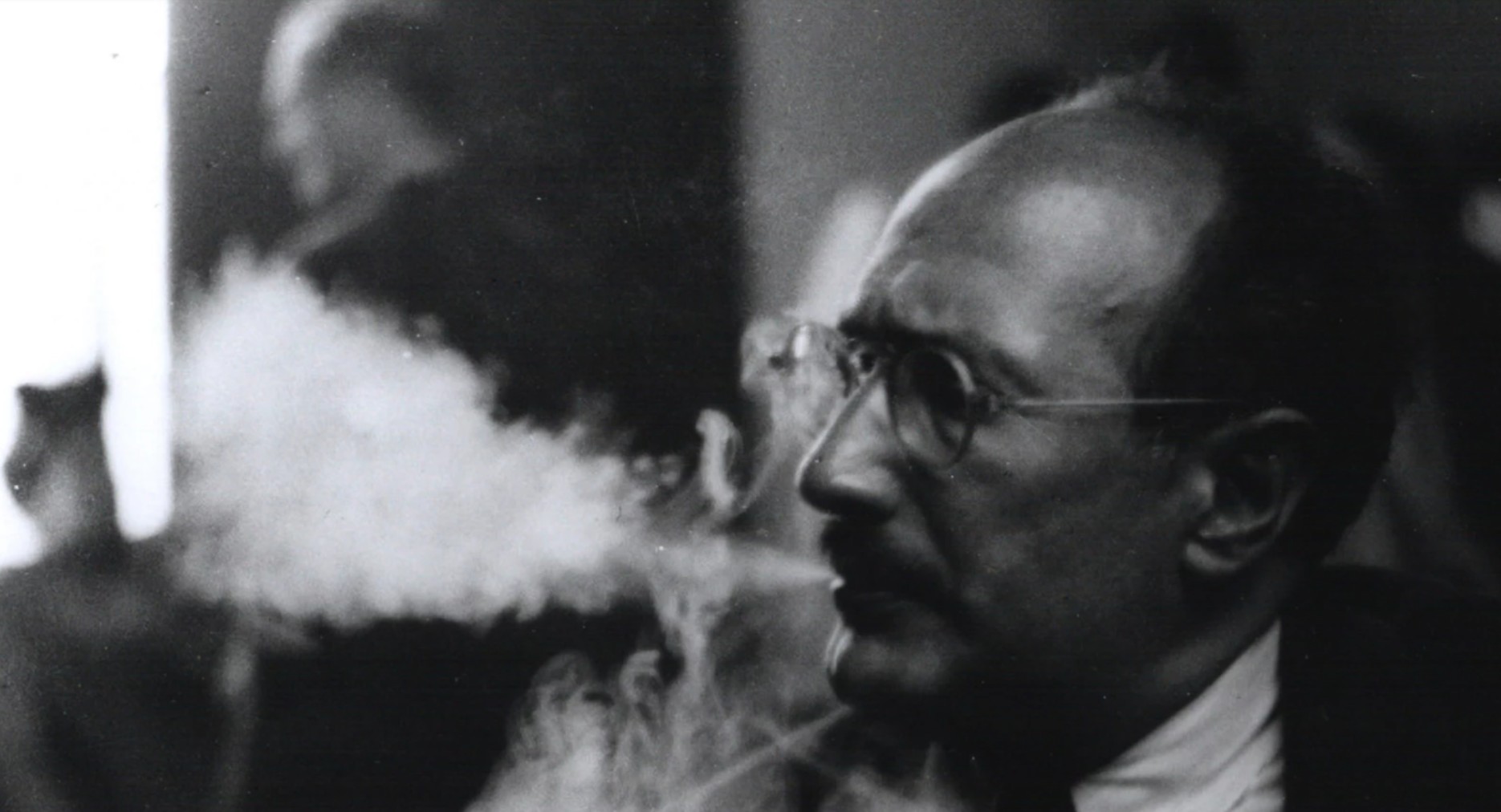
The artist, 1949. Photo by William Heick
Distinguished by the delicate balance between its upper and lower registers, Untitled is an exquisite example of Rothko’s command of composition and paint. The diaphanous upper form hovers in a graceful balance, delineated by the artist’s gauzy, elegant brushstrokes. Below, a luminescent white cloud radiates, giving the work a sense of profound weightlessness. The white haze from the lower register appears to rise into the upper form, like an atmospheric gaseous substance. Small spatters of the white paint sprinkle the lower edge of the black form like a constellation of stars. Rothko achieves this divine ethereality through a nuanced feathering technique, eliminating hard edges from his compositions in favor of a subtle blending of pigment. Rothko’s signature technique differentiated him from other Abstract Expressionist peers, who revolutionized abstract painting through their own means. The gentle accumulation of layers of oil paint in the present work mirrors the exacting process used in Rothko’s monumental paintings, in which the thoughtful accretion of pigment realizes a magnificent sense of depth and transcendence. The edges of Rothko’s forms are suspended in halos which afford his painted surfaces a heavenly aura. Thereby, his paintings at once evoke stillness and motion, as if the pigments on the surface have been freshly applied yet are eternally fixed.
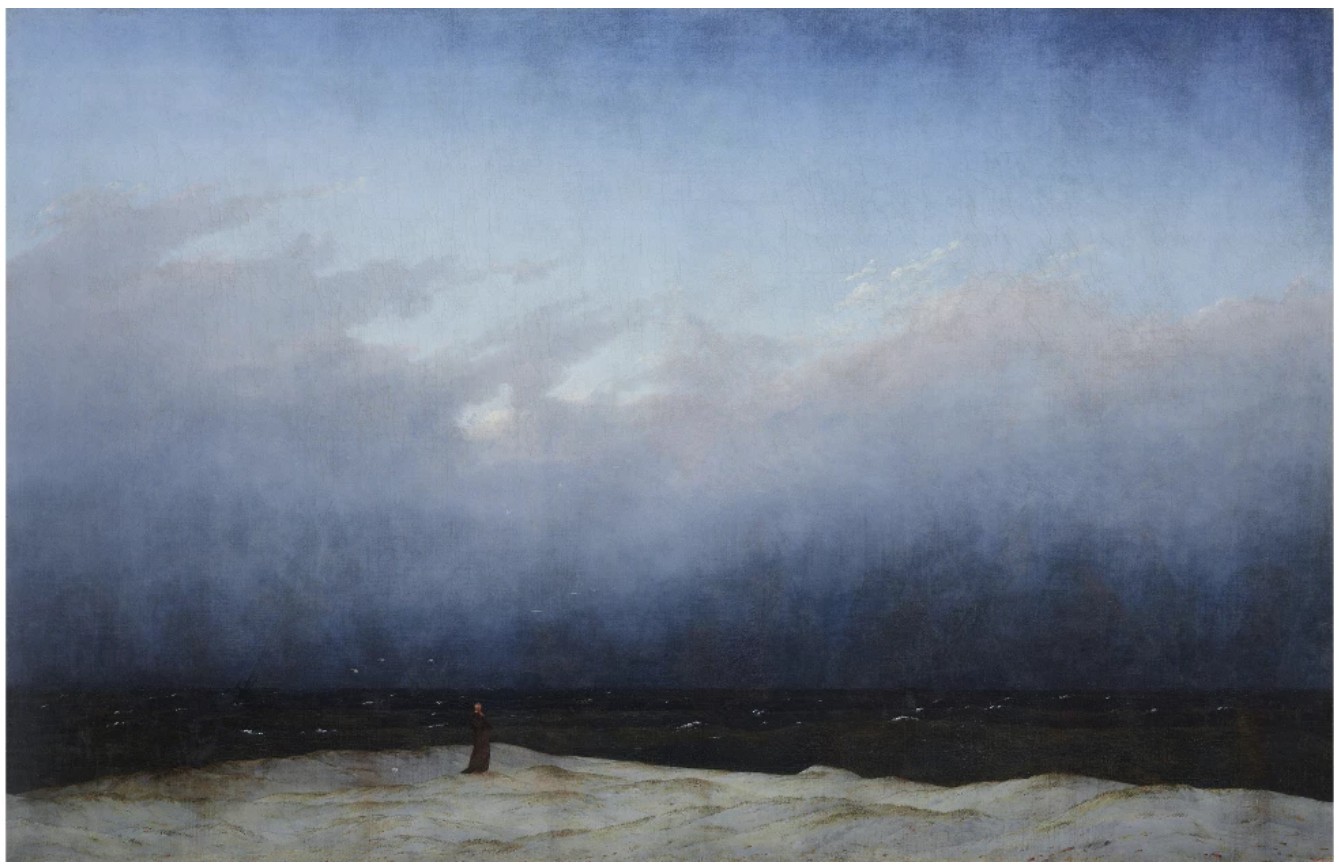
Caspar David Friedrich, Monk by the Sea, 1808-10. Staatliche Museen zu Berlin, Nationalgalerie.
Image © bpk Bildagentur / Nationalgalerie / Andres Kilger / Art Resource, NY
The present work dates to a critical period in Rothko’s career, in which he experienced a wave of unrelenting creativity and devoted his practice primarily to paintings on paper. In the spring of 1968, Rothko fell ill and was thereafter advised by his doctors to avoid handling large, heavy canvases. At this counsel, Rothko shifted his focus to the versatile medium of paper, exploring the absolute limits of painting in the media. Rothko’s artistic ambition reached its apex in his final years, resulting in a body of works on paper as evocative and pensive as any of his works that came before. Untitled conjures the contemplative serenity and immersive magnetism of Rothko’s large-scale paintings, yet its intimate scale encourages a highly personal form of inspection and intrigue. Untitled is exemplary of the best of Rothko’s signature practice, encapsulating the pursuit of form and light which characterizes his oeuvre. Rothko’s works on paper, which he worked on intermittently throughout his career and with the greatest concentration in his final two years, embody his keen awareness of pigment and technique as the consummate painter. These key works demonstrate Rothko’s availability to engross the viewer, even while working on a smaller physical scale. As Kaywin Feldman has observed: “The paintings on paper, simply put, transform our understanding of Rothko. His enduring relationship with paper yielded the same mesmerizing range of effects and moods seen in his canvases: radiant, sombre, serene, and cataclysmic.” (Kaywin Feldman, in: Exh. Cat., Washington D.C., National Gallery of Art; Norway; The National Museum of Art, Architecture, and Design, Mark Rothko: Paintings on Paper, 2023-24, p. 7) Though he produced paintings on paper throughout his career, those produced in the late 1960s epitomize his emotional fortitude and technical mastery, enrapturing the viewer through his transcendent technique.
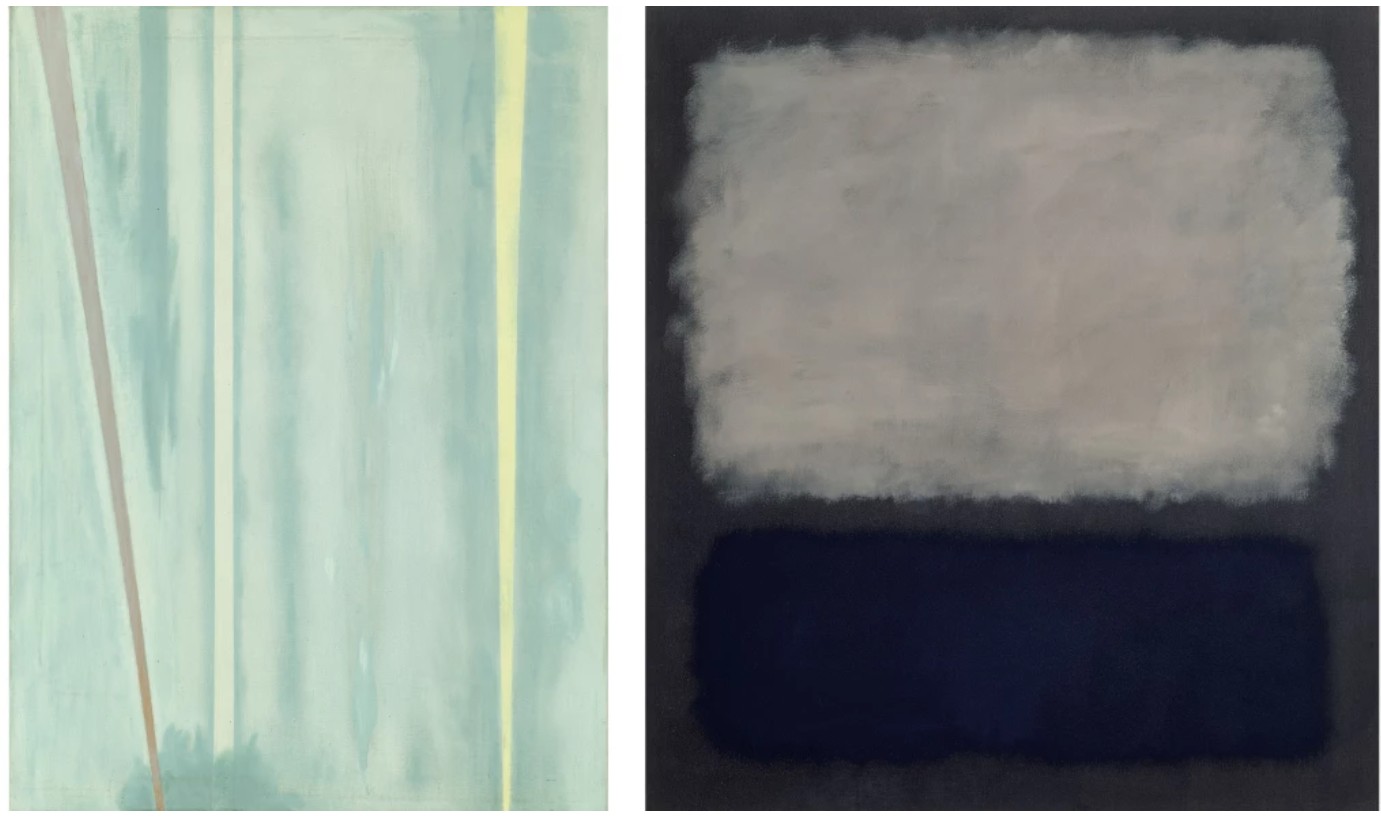
Barnett Newman, The Beginning, 1946. Art Institute of Chicago. Image © Art Institute of Chicago / Through prior gift of Mr. and Mrs. Carter H. Harrison / Bridgeman Images. Art © 2025 Barnett Newman Foundation / Artists Rights Society (ARS), New York.
Mark Rothko, Blue and Gray, 1962. Fondation Beyeler, Riehen. Art © 1998 Kate Rothko Prizel & Christopher Rothko / Artists Rights Society (ARS), New York
The final few years of Rothko’s life were preceded by one of his greatest artistic legacies, the paintings he executed for the Chapel at the University of St. Thomas, Houston, Texas, commissioned by Dominique and John de Menil. For the project, Rothko completed twenty-three paintings, fourteen of which were ultimately installed in the Chapel in 1971, completed shortly after the artist’s passing in 1970. With creative agency over the commission, Rothko embarked on a series of paintings in darker, meditative hues. This proclivity towards darker compositions carried forth in many of his final paintings on paper, including Untitled, which exudes a unique and profound emotional depth and spiritual force. Untitled exemplifies the vital concerns which would occupy Rothko throughout his career: form and light. Here, the artist pares down his palette to black and white, controlling his palette to explore the inherent tension and optical potential of his composition to its limits.
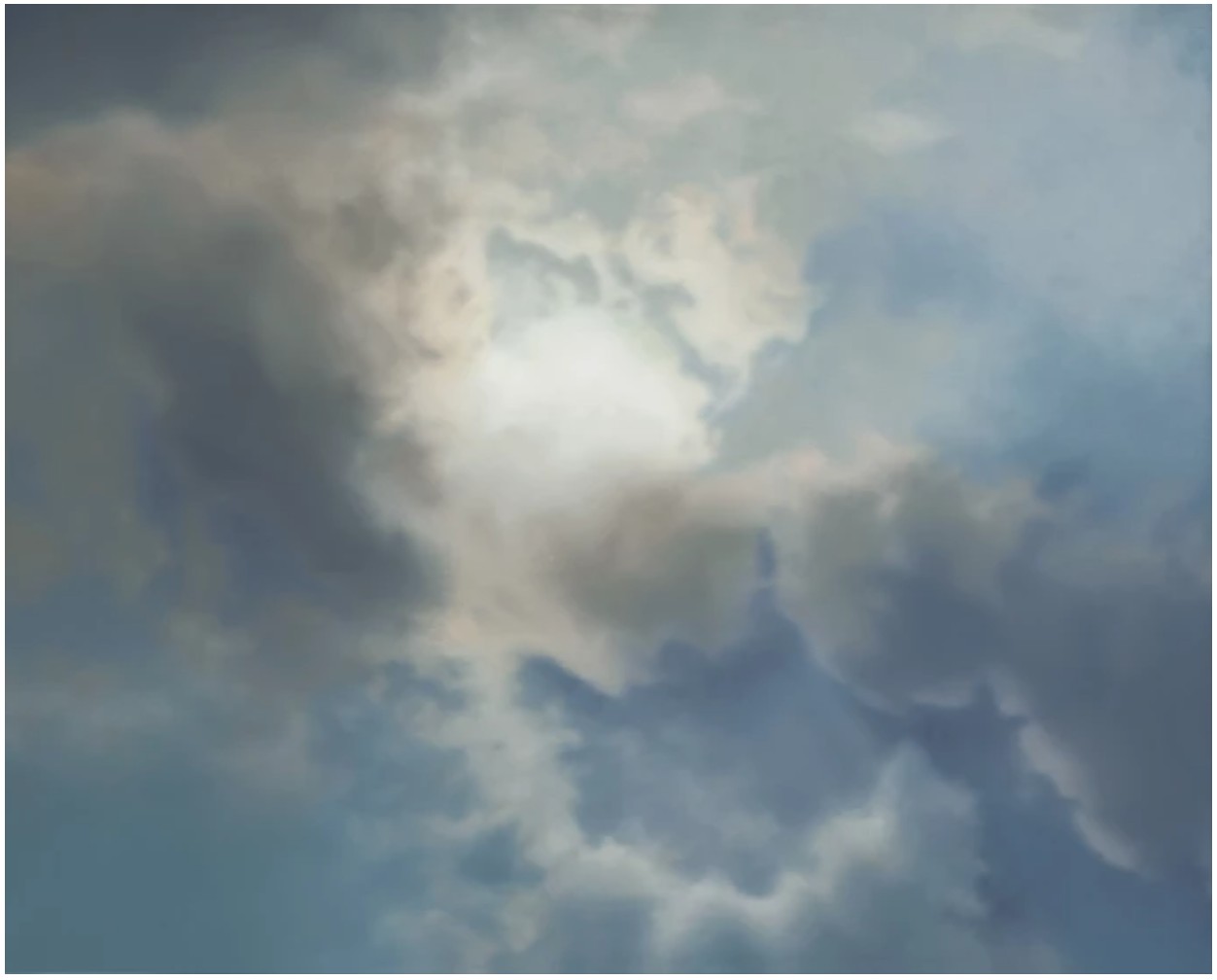
Gerhard Richter, Study for Clouds (Contre-jour), 1970. Private Collection.
Sold at Sotheby’s London in June 2022 for £11.2 million ($13.6 million). Art © 2025 Gerhard Richter
Bearing exceptional provenance, Rothko’s Untitled has been held in the same prestigious European collection for over twenty years. The work was first featured in the collection of esteemed Italian gallerist Carla Panicali, who was gifted the work by Rothko himself. In the 1960s, Panicali headed the Roman headquarters for Marlborough Gallery, representing a range of influential post-war Contemporary artists, including Lucio Fontana and Alberto Burri, as well as American Abstract Expressionist artists Robert Motherwell and Rothko. A profound example of Rothko’s seminal paintings on paper, Untitled is distinguished by its simultaneous depth of field and incandescent brilliance. The present work embodies the profound emotional fortitude of the artist’s final period, described by Waldman as a mature aesthetic zenith: “Now he had left behind all that spoke of the carnate, the concrete. He had reached the farther shore of art.” (Diane Waldman, in: Exh. Cat., New York, The Solomon R. Guggenheim Museum, Mark Rothko, 1903-1970: A Retrospective, 1978, p. 69).
Untitled, 1968
Leonard & Louise Riggio: Collected Works
Christie’s New-York: 12 May 2025
Estimated: USD 8,000,000 – 12,000,000
USD 8,460,000
WORK ON PAPER
MARK ROTHKO (1903-1970), Untitled | Christie’s
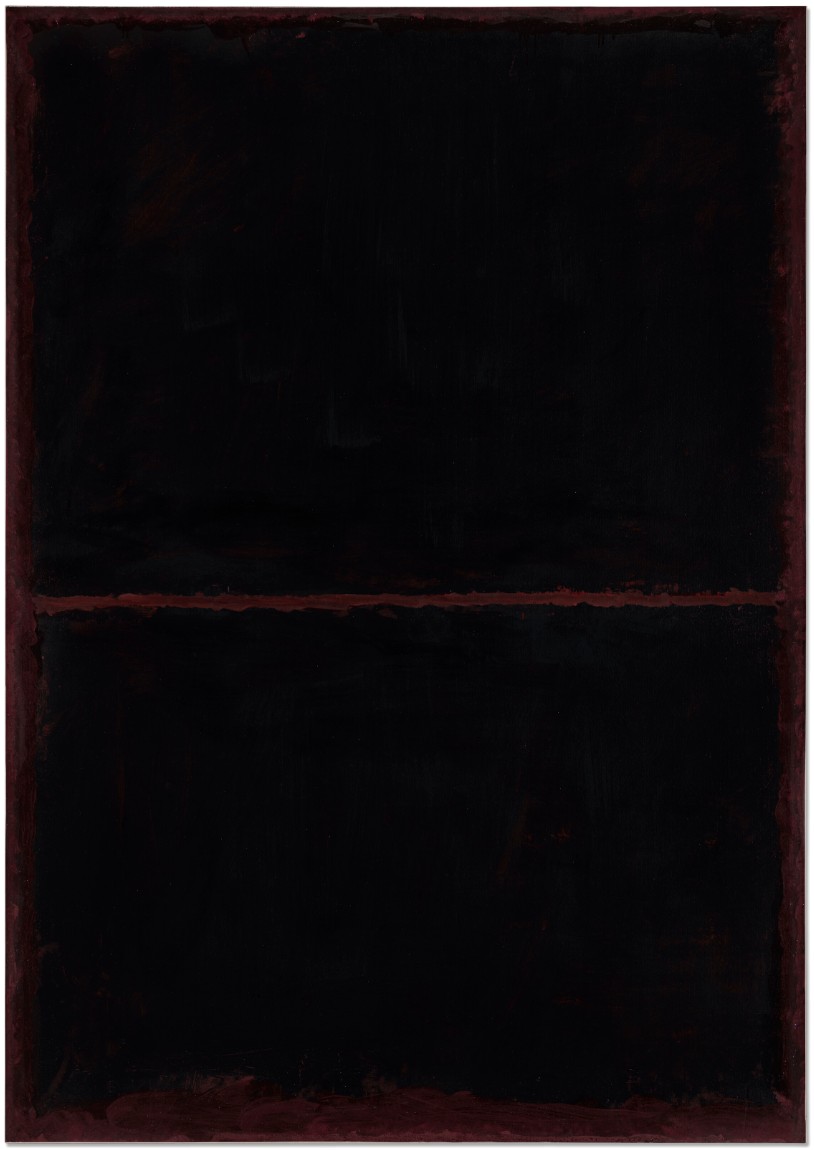
MARK ROTHKO (1903-1970)
Untitled, 1968
Acrylic on paper laid down on panel
57 7/8 x 40 3/4 inches (147 x 103.5 cm)
Mark Rothko’s Untitled is an evocative painting from an important period in the artist’s career. Executed shortly before his death in 1970, it is an exemplar from a series of works which he produced following the important Seagram Murals. Rothko radically reappraised his earlier style after completing this important commission, paring down his compositional structure and employing a dark, atmospheric palette that exudes a striking tonal proximity. As such, Untitled fully articulates Rothko’s practice during this important period, fully embodying his existentialist philosophy and reflective of the full measure of his acclaimed career to reveal the enduring possibilities of painting as a meaningful practice in light of modernity.
Evoking a sober sensuality, Untitled’s two rectangular panes of dark pigment rest like veils over a ground of hazy dark amber. Demanding a close and committed engagement, the work slowly reveals itself to the viewer, with the complexities of the surface slowly emerging whilst layers previously obscured come into being in an intricate play of painterly sprezzatura. Paradoxically, despite its dark palette, the work radiates with an internal light, animating the space of the speculator’s encounter. The velvety interaction between the black and amber fields establish a perceptual challenge enabling the artist’s articulated brushstrokes to dryly confront the viewer.
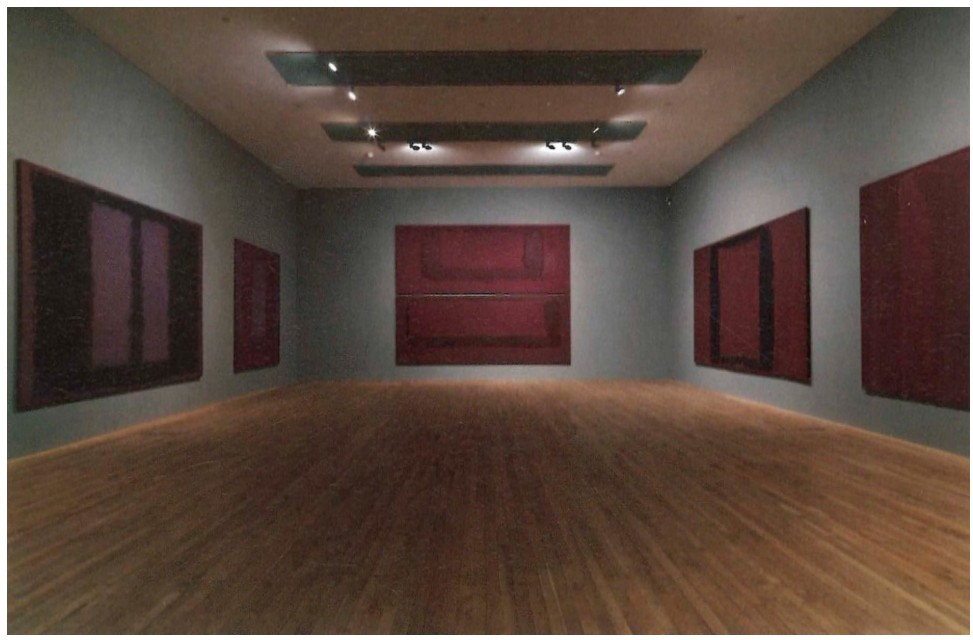
Mark Rothko, Red on Maroon (Seagram Building series), 1959. Tate, London.
Artwork: © 2025 Kate Rothko Prizel & Christopher Rothko / Artists Rights Society (ARS), New York.
Rothko shifted his working practice from the large oil canvases typical of the 1950s toward working with smaller acrylic works on paper after suffering an aneurism in April 1968, the evolution in materials allowing him a greater dexterity in making variations; the planar nature of the paper surface similarly led Rothko to dramatically reevaluate the relationship between the artwork and the support. The artist allows his paint to thin and drip in some areas, notably at the top of the work, accentuating the disparity between paint fields and between paint and paper. The signature horizontal line of thick maroon pigment bisecting the work functions as a liminal interval between the work’s two dark zones, thrusting a transient stasis upon his visual field.
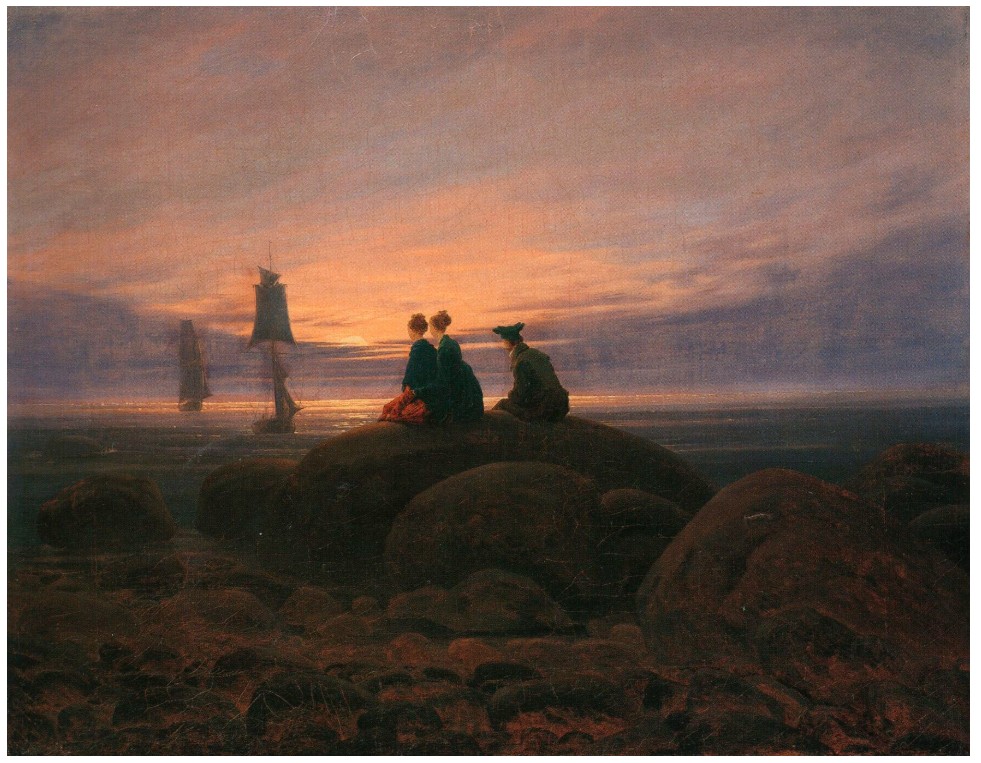
Caspar David Friedrich, Moon Rising Over the Sea, 1822. Alte Nationalgalerie, Berlin.
The dark palette typical of Rothko’s final works have sometimes been erroneously ascribed to the artist’s failing health and long bouts of depression; this analysis fails to fully consider how this extraordinary body of work marks a consciously radical point of departure for the artist in which he reevaluates his entire oeuvre, reinterpreting his earlier tableaux to challenge one last time the existentialist struggle against his own painterly praxis. Representing what he regarded as the ultimate realization of abstract painting, Rothko employs his blacks and swarthy dark pigments against the conception of legibility, resolutely rejecting the validity of symbolism in order to fully explore the opacity of vision itself. Rothko’s close confidant, the critic Dore Ashton, describes this darkening palette as an “exasperation at the general misinterpretation of his earlier work—especially the effusive yellow, orange and pinks of three years back. He seems to be saying in these new foreboding works that he was never painting luxe, calme, and volupté, if we had only known it!” (D. Ashton, “Art,” Arts and Architecture 75, no. 4, April 1958, p. 8).
Frank Stella, Marriage of Reason and Squalor, 1959. Saint Louis Art Museum. © 2025 Frank Stella / Artists Rights Society (ARS), New York.
Not merely a departure from his earlier polychrome canvases, Rothko here dismantles their logic, regenerating an aesthetic theory of abstract modernism at the same time as the foundations of this school seemed most at threat. Just as Kazmir Malevich’s Black Square utilizes the color black to proclaim the birth of modernist painting, Rothko returns to black in order to regenerate the movement, allowing his austere pigments to resonate across a full range of sensual possibilities. Untitled reverberates with the theory of the German philosopher Theodor Adorno, who writes how the ideal of blackness was necessary for art to “survive in the context of extremity and darkness, which is social reality” and that “blackness too—the antithesis of the fraudulent sensuality of culture’s facade—has a sensuous appeal” (T. Adorno, Aesthetic Theory, London, 1997, p. 59). Rothko employs his shades of black against the societal and aesthetic challenges erupting in the late 1960s, the work rejecting external participation in order to fully withdraw into itself. The work operates on a similar level as Frank Stella’s Black Paintings in their subversion of spatial illusion and rejection of referents, while Rothko’s masterful manipulation of his layers of black paint recall Ad Reinhardt’s skill in imbuing apparently monochrome canvases with barely perceptible geometric forms.
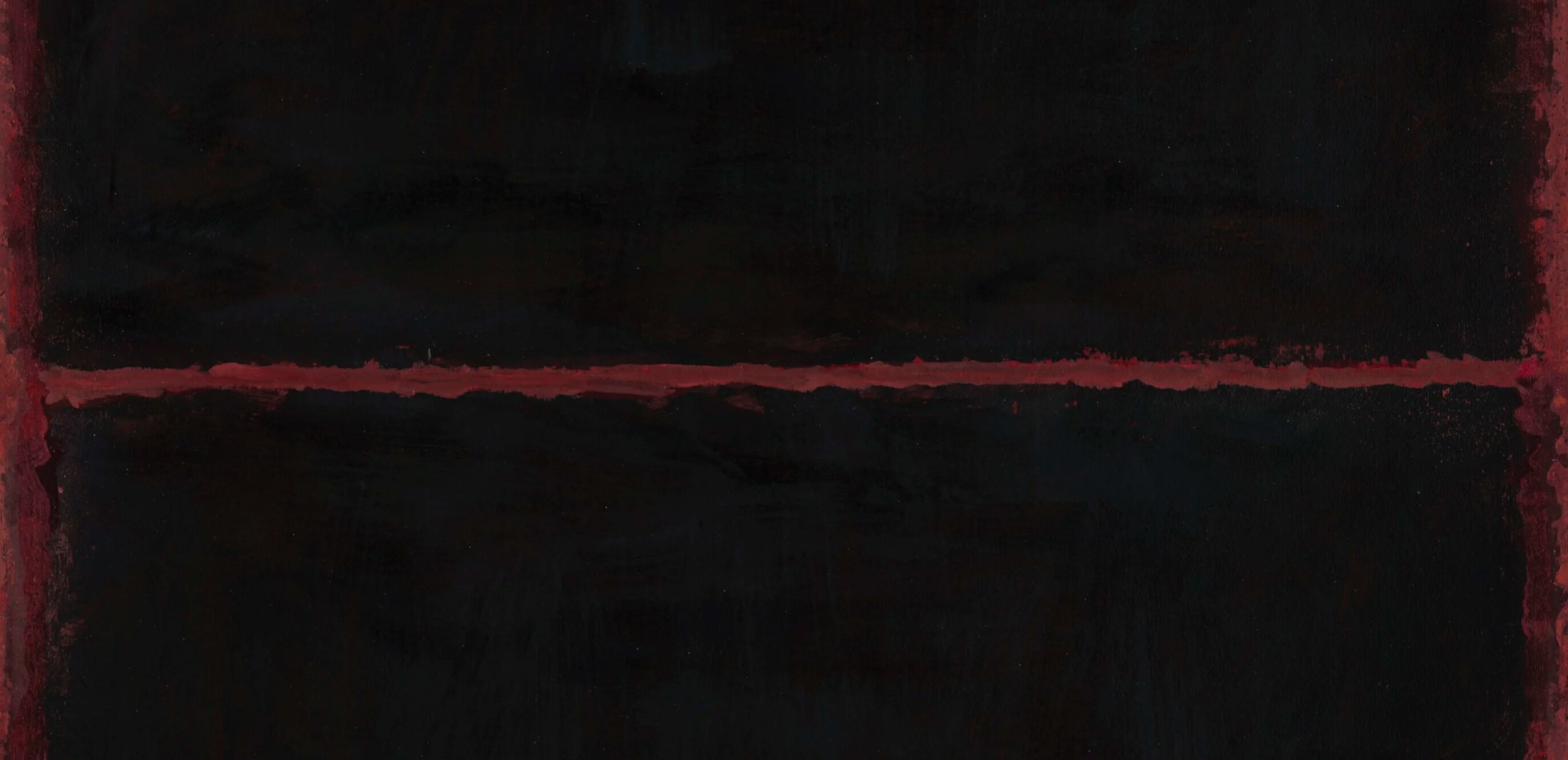
Rothko thus employs his restricted, opaque palette not as a delineation of his personal travails but as an invocation of the overwhelming grandeur which guided his idiosyncratic aesthetic theory. Untitled is in deep conversation with Rothko’s contemporaries, defending the legacy of the Abstract Expressionists through a revitalized rejuvenation of the artist’s style. The American director Stanley Kubrick employs a similar stylistic conceit in his contemporaneous film 2001: A Space Odyssey, employing Monoliths—black cuboids symbolizing the enigmatic and transcendent absolute, a negation countering human consciousness—as a significant plot driver. That Rothko and Kubrick both coincidentally employed the color black in order to raise humanistic queries in an antagonistic age demonstrates that Untitled is conversant with the milieu from which it emerged, its style and composition aligned more so with its times than with the artist’s internal turmoil. That the Rolling Stones’ rock anthem “Paint it Black” came out just two years prior intensifies the sense of Rothko’s canny parallelism with the wider avant-garde.
Kazimir Malevich, Black Square, circa 1923. The State Russian Museum, Saint Petersburg.
Untitled probes the spectator, exuding into their space and demanding their close scrutiny; only with close engagement does the work begin to reveal itself. A paean to abstract painting, Rothko here advances the conception of what paint could achieve while revitalizing and reimagining his own artistic vocabulary to stray abreast of social and artistic developments. While retaining the awesome aura associated with his practice, the present work propels Rothko’s signature distinctive painterly style into a new era in order to strike precisely at his uncompromising aesthetic theory.
Untitled, 1964
Christie’s New-York: 17 May 2023
Estimated: USD 3,000,000 – 5,000,000
USD 3,438,000
WORK ON PAPER
Mark Rothko (1903-1970) (christies.com)
MARK ROTHKO (1903-1970)
Untitled, 1964
Oil on paper laid down on canvas
39 3/4 x 25 1/2 inches (101.3 x 64.8 cm)
Signed ‘Mark Rothko’ (on the reverse)
With a dark-keyed palette and a feeling of deep emotional gravitas, Untitled is a striking example of the hovering clouds of color for which he is best known. In these, some of his greatest and most spiritual paintings, Rothko evokes the “tragedy, ecstasy and doom” that he purportedly sought in so much of his work. The present Untitled dates to 1964, the same year that Rothko was commissioned by John and Dominique de Menil to create a suite of paintings for the Rothko Chapel. In that epic project, as in the present work, Rothko explores the spiritual and emotional power of dark colors. Using intense black, Rothko presents the weighty, hovering voids in dark passages that seem to absorb light around them, beckoning the viewer to take a closer look. Paradoxically, it is often Rothko’s darkest paintings that are often infused with the greatest degree of inner light. Whereas Rothko turned to acrylic paints in most of his works on paper of the latter 1960s, in Untitled, he has used oil, which imparts luminosity and depth to the black areas of paint, creating a sense of deep recessional space and a soft, velvety finish. As part of his working method, Rothko has thinned down the oil paint with turpentine, which he has applied in a series of successive, gossamer-thin veils of paint. In these and so many of Rothko’s greatest black paintings, he creates an inner light to the darkness of its forms. In Untitled, Rothko has used a dry brush to feather the edges of the black forms, creating a soft edge to the otherwise imposing black fields. At times, the edges of the black seem to crackle and buzz with an almost electric quality. The background is highly nuanced, filled with not just one single color but a multitude of warm hues. This perimeter acts as a foil to the deep, black abyss. Onyx, obsidian, ebony and charcoal—the smoldering cinders of burnt wood and ash—are the means with which Rothko creates the painting, whilst humanizing the rich black tones with a warm exterior, in hues that evoke mahogany and walnut.
Untitled, 1969
Phillips New-York: 23 June 2021
Estimated: USD 3,500,000 – 4,500,000
USD 3,700,000
WORK ON PAPER
Mark Rothko – 20th Century & Contempora… Lot 22 June 2021 | Phillips
MARK ROTHKO
Untitled, 1969
Acrylic on paper mounted on panel
48 5/8 x 40 1/2 inches (123.5 x 102.9 cm)
Exuding a radiant glow emanating from silent darkness, Mark Rothko’s Untitled is a captivating example of the artist’s late work. Emerging from a ground recalling the large murals of the Rothko Chapel in Houston commissioned by the Menil family in 1964, two richly dark color fields meet at a striking teal horizon. Executed in 1969, the present work exemplifies Rothko’s renewed concentration towards painting on paper in the late 1960s that followed the darkening of his palette. Emanating the serene sublimity and bold iridescence of his monumental canvases, Untitled exemplifies Rothko’s chromatic and formal meditations, embodying an arresting sense of control, clarity, and introspection that characterize the artist’s late oeuvre.
Embodying a honed sense of interior reflection through visual refinement, the artist’s shift towards his darker color fields eventually worked in tandem with the increasing definition of his forms. “For what began to change subtly, several years after my father’s palette began to darken, was the means he used to express the emotional content of the work,” Christopher Rothko explained. “As he stripped away still more layers in search of clarity, the paintings became formally tighter, the rectangles more regular in shape, the layers of color reduced….The emotional material has become highly focused, and the content more specific. Color still carried the message, looking to engage with our innermost selves, but rather than bright, broad brushstrokes of feeling, we are presented with more pinpointed emotions, expressed through subtle interplay of very carefully juxtaposed colors.” In the case of the present work, Christopher Rothko’s words manifest in velvety black fields on top of a deep lavender ground cut by a contrasting teal band. For Rothko, color was the vehicle to communicate the deepest vulnerabilities of the human condition. As the artist expressed to Selden Rodman in 1957, the year he began darkening his palette, “If you, as you say, are moved only by their color relationships, then you miss the point!” It was perhaps in an effort to avoid decorative connotations in his work that he shifted towards darker pigments, as he later revealed that “his belief that the tragic expression of these dark paintings was more comprehensive.” As with many of Rothko’s works from 1968 to 1969, Untitled is distinguished by a darkness that simultaneously shimmers with a brilliant illumination. Evoking his deep admiration for Fra Angelico, Rothko aimed to suffuse a mysterious aura of light by reducing his range of colors “using only gradations of black invoking his magical sheens.”
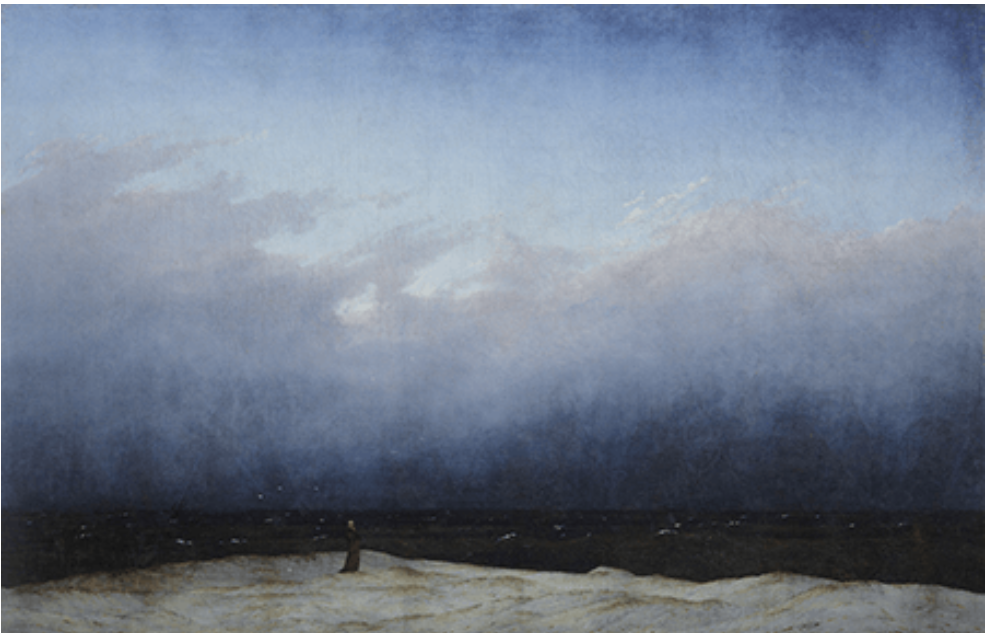
Caspar David Friedrich, Monk by the Sea, 1808-1810. Nationalgalerie, Staatliche Museen, Berlin, Image: bpk Bildagentur / Nationalgalerie, Staatliche Museen / Andres Kilger / Art Resource, NY
Although Rothko avidly explored working on paper during his Surrealist period in the 1940s, it was not until the end of his life that paper again played a major role. After suffering an aortic aneurysm in the spring of 1968, Rothko began working on a smaller scale upon his doctor’s orders and devoted himself almost exclusively to painting on paper with an unprecedented fervor. Since the artist had sufficiently recovered from his illness to return to larger-scaled canvases in 1969, his insistence with the medium reflected his artistic probing to explore the absolute limits of painting. In his notes of Franz Cizek’s teachings, who made a profound influence on Rothko in his early years, Rothko recorded, “Cizek advises those to whom a certain medium becomes too easy and who run the risk of becoming too skilled in that medium, to try another which presents more difficulties to them.” As if to take on this challenge, Rothko concentrated his efforts on the lighter and more versatile medium that bolstered the artist’s career-long quest of aesthetic transcendence through channeling the essence of color and light. As Dore Ashton observed, “It was almost certainly his experience with the paradoxical nature of paper—absorbing and reflecting at the same time—that set him on his course to the great clearing away that his life’s work represents.”
Untitled, 1968
Sotheby’s New-York: 13 May 2021
Estimated: USD 3,000,000 – 4,000,000
USD 5,549,400
WORK ON PAPER
Untitled | Contemporary Art Day Auction | 2021 | Sotheby’s (sothebys.com)
MARK ROTHKO (1903 – 1970)
Untitled, 1968
Acrylic on paper mounted on board
33 1/4 x 25 1/2 inches (84.5 x 64.8 cm)
Mystical, meditative, and intimately scaled, Untitled from 1968 is a magnificent example of Mark Rothko’s mature corpus, in which the artist’s career-long investigation into the alchemical potential of color fields reached a profound climax. One of the renowned series of works on paper he completed in the final two years of his life, the present work emits an aura of contemplative serenity that stands equal to the artist’s esteemed monumental paintings on canvas, yet its more personal proportions allow for even closer inspection and absorbing reflection. Befitting its remarkable power, Untitled was included in the major 1978 retrospective of Rothko’s work at the Guggenheim Museum in New York, alongside his most celebrated masterpieces. As with many of those greatest works, the present example is rendered in a deeply penetrative black oil paint which coalesces in three abyssal zones that float over a smoldering field of garnet. With its rich and tonal depth of color, emphasized by the masterfully feathered brushstrokes, Untitled offers a gem-like embodiment of Rothko’s remarkable ability to evoke the sublime and inspire powerful, universal emotions through pure, elegant abstraction.
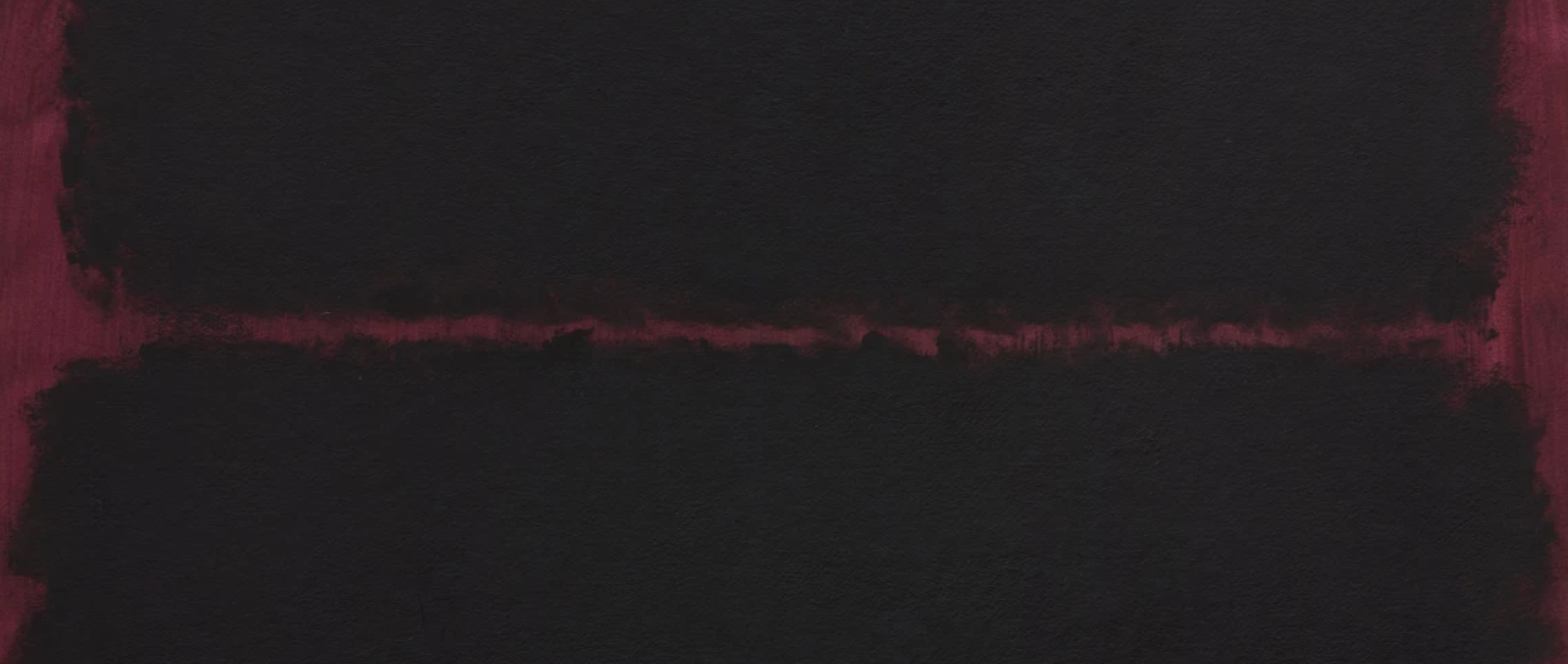
The dramatic and lugubrious pairing of black and maroon exemplified by the present work is emblematic of the meditative palette for which Rothko is celebrated, and indeed conjures the twilight mystery the artist sought to impart in his paintings. The subtlety of tone and stroke, particularly in works on a small scale like the present, invite close inspection and encourage prolonged, meditative contemplation. This in turn evokes an atmosphere of pensive spirituality, in which Rothko believed the truest forms of deep emotion reside. Often referred to as landscapes of the mind, these works are charged with a psychological intensity that speaks to a simultaneous consideration of religion, existential transience, and the unknown dimensions of the universe. With Untitled, our focus is drawn irresistibly inward, as we perceive each of the variegated diaphanous layers of paint, each a subtly different register than the last, the cumulative effect being a composition that resonates with a visceral magnetic pull. Like foggy clouds of smoke drifting across the rippling surface of a cabernet river, the veiled blackness of the multiforms seem to hover weightlessly and hypnotically before our eyes. The rich warmth of the saturated, sensuous currant tone is elegantly counterbalanced by the cool obsidian shrouds; its hushed grace evincing why many celebrate these dark paper paintings as the most moving, dramatic, and pensive works of Rothko’s career.
Untitled (Black Blue Painting), 1968
Phillips London: 15 April 2021
Estimated: GBP 2,500,000 – 3,500,000
GBP 2,866,000 / USD 3,949,835
WORK ON PAPER
Mark Rothko – 20th Century & Contempor… Lot 15 April 2021 | Phillips
MARK ROTHKO
Untitled (Black Blue Painting), 1968
Acrylic on paper laid on linen
47 3/4 x 40 1/8 inches (121.3 x 101.9 cm)
In Untitled (Black Blue Painting), variegated color fields float atop a translucent dark ground, the horizon that arises between the rectangular shapes giving the faint allusion of an ocean seen in the darkness of night. Executed in 1968, the painting captures Mark Rothko’s artistic developments in the late 1960s, just as he shifted from working on canvas to paper. The medium bore profound significance for Rothko throughout his career, yet it was in the 1960s, and particularly starting in the last three years of his life, that he pursued it with a focus that surpassed even his preoccupation with working on paper during his Surrealist period of the mid-1940s. A masterpiece of chromatic and compositional nuance, Untitled (Black Blue Painting) emanates the incredible sense of control, serenity, and delicacy that is characteristic of Rothko’s late works, namely recalling the Rothko Chapel paintings commissioned by John and Dominique de Menil, 1964-1971, which similarly enveloped the viewer into silent darkness, and evinced strong emotional, even spiritual force. With its large scale and profound chromatic gravitas, Untitled (Black Blue Painting) anticipates the radical break in the artist’s mature style just as he initiated his Black on Gray paintings — the last series he worked on before his premature death in 1970. A testament to its importance within Rothko’s oeuvre, Untitled (Black Blue Painting) was on loan at the Moco Museum, Amsterdam, throughout the year 2020.
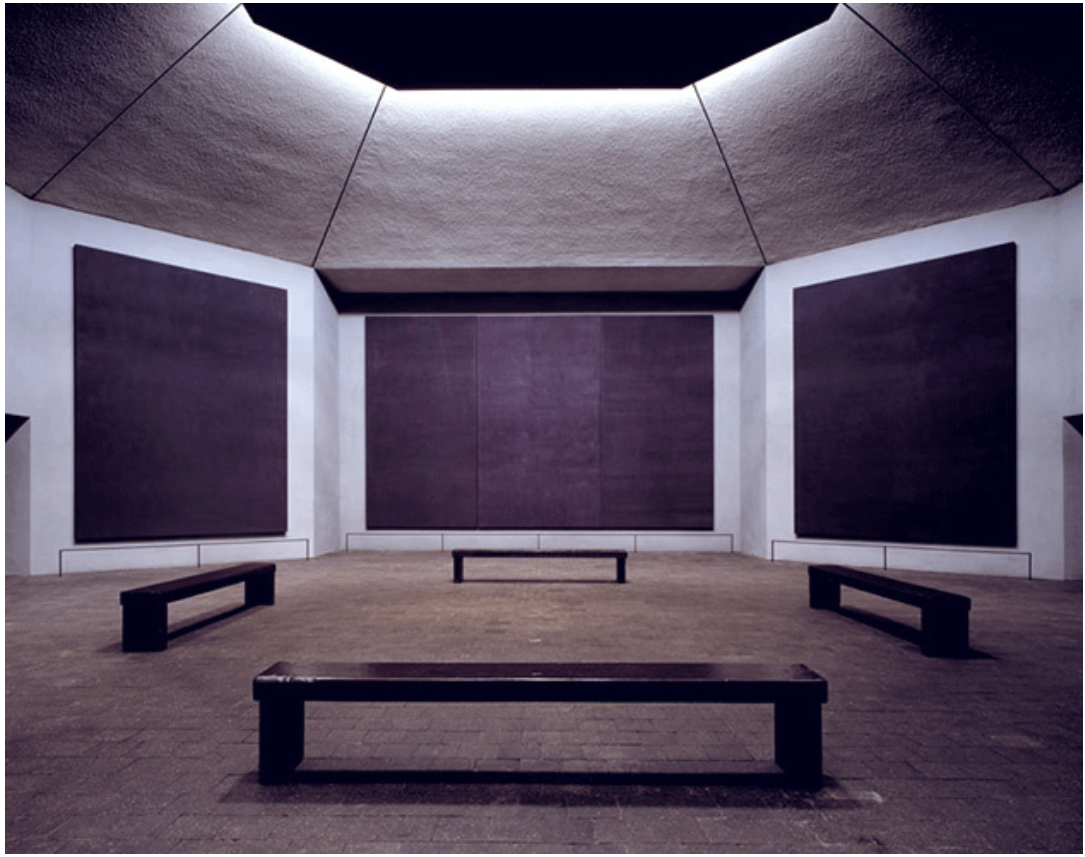
The Rothko Chapel. Photo: Hickey Robertson.
The 1960s saw Rothko reach the height of his international renown and prolific output, just as his reputation as one of America’s leading painters began to consolidate. Speaking of the style he had honed over the past two decades, the painter remarked: ‘This kind of design may look simple, but it usually takes me many hours to get the proportions and colors just right. Everything has to lock together’. In Untitled (Black Blue Painting), chromes seem to emerge and dissipate upwards and downwards, bleeding onto one another like a fine weave or, as Dorothy Seiberling described in a 1959 Life magazine article, ‘fading in and out like memories’. Departing from the enormity of many of the multi-form canvases he produced during this time, Rothko began working increasingly on paper and in a more domestic size, attesting to his sophisticated understanding of color and composition in new formats. About these late paintings, the American art critic Peter Schjeldahl remarked, ‘His pictures are emphatically objects. They are in scale with a viewer’s body, but their color and brushwork have a disembodying effect’.
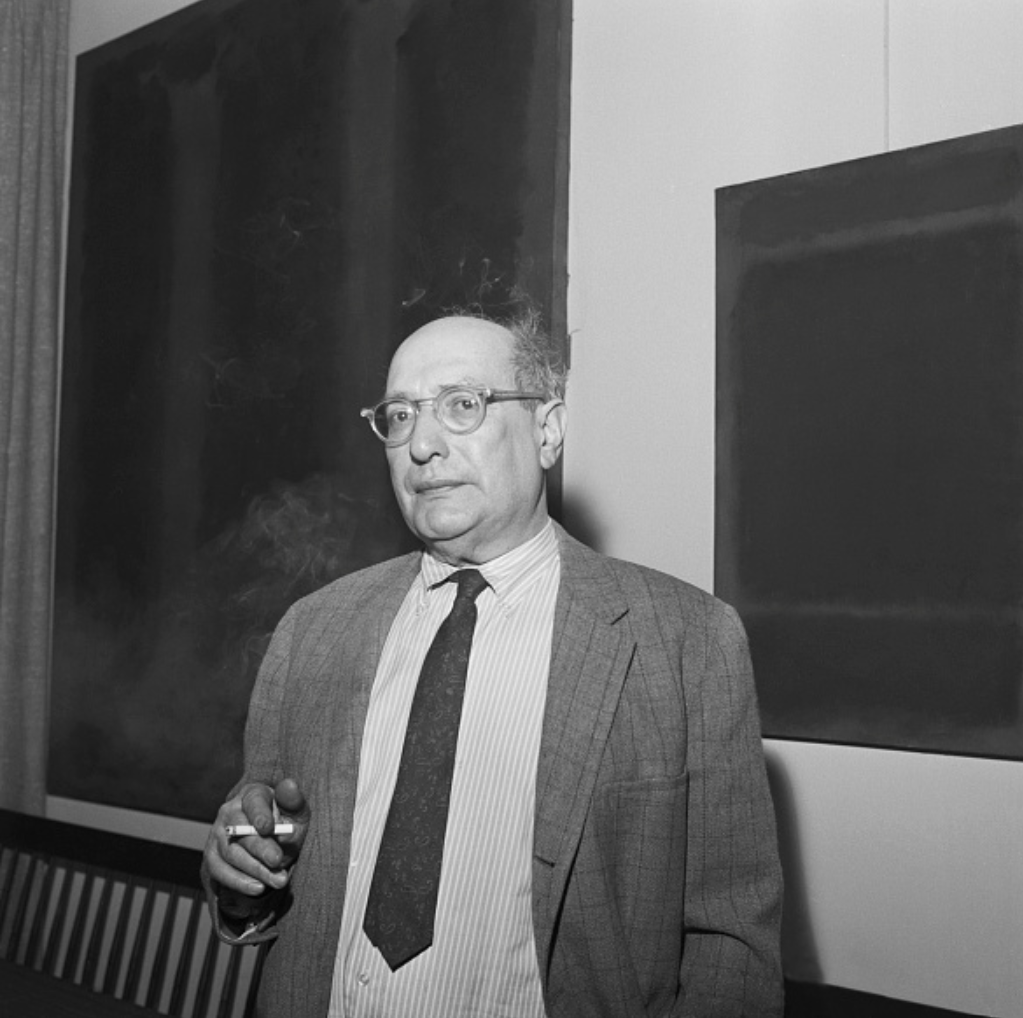
Mark Rothko in his New York apartment standing before two of his paintings, 28 January 1967, New York. © 2021 Kate Rothko Prizel & Christopher Rothko ARS, NY and DACS, London.
Notably, Untitled (Black Blue Painting) exemplifies Rothko’s preoccupation with a simplification of color in the 1960s – not merely its range and hue, but also in application and spatial interaction. The internal rectangular color fields provide only a glimpse of the underlying hues beneath, as they softly feather out towards the edges of the canvas. If in many of Rothko’s pictures from the mid-1950s bands of colour clashed energetically, in his last years they seem to radiate from one another — the turbulence giving way to sensuous serenity. With its paradoxical ability to simultaneously absorb and reflect light, the medium of paper furthermore proved essential for Rothko’s decade-long rhetoric of light and colour. For works such as the present one, he layered thin washes of paint, often allowing shades from the bottom layers to show through the top pigment. In doing so, Rothko achieved surfaces that seem to conceal a light source from hidden depths, devoid of any traces of the artist’s hand as the paper’s fibres soaked up the swathes of paint. Executed on a deeply engaging format, Untitled (Black Blue Painting) is distinguished by an ominous darkness which nonetheless seems to beam from within. It highlights one of Rothko’s most remarkable triumphs, which was, as French writer Michel Butor wrote, ‘to have made a kind of black light shine’.
Early Works
The Journey, 1946
Property Sold to Benefit Jonas Philanthropies
Sotheby’s New-York: 15 May 2026
Estimated: USD 300,000 – 400,000
USD 1,024,000
WORK ON PAPER
Mark Rothko | The Journey | Contemporary Day Auction | 2026 |
MARK ROTHKO (1903 – 1970)
The Journey, 1946
Watercolor and ink on paper mounted on canvas
39-7/8 x 26 inches (101.3 x 66 cm)
Signed (lower right)
Mark Rothko’s The Journey from 1946 stands as a rare and poignant document of one of the most consequential pivots in the history of twentieth-century art. Occupying the precise threshold between mythology and pure abstraction, this luminous watercolor and ink on paper captures Rothko at the very nascency of his signature, arresting abstraction.
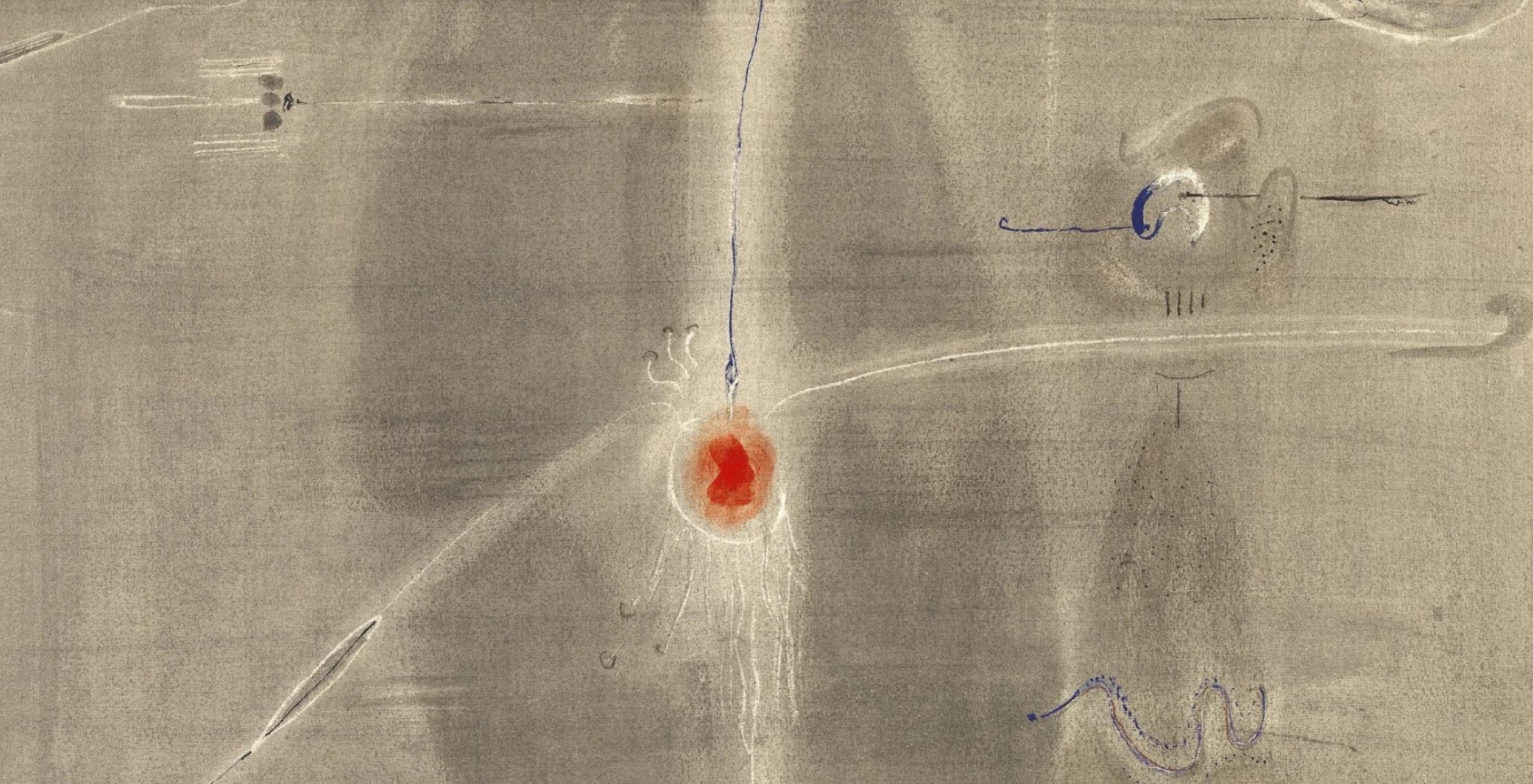
Testament to the art-historical significance of the present work, The Journey was included in the exhibition Mark Rothko: Paintings on Paper at the National Gallery of Art in Washington D.C., one of the most important focused examinations of the artist’s works on paper ever mounted by a major institution. Within the show, The Journey was presented as a key example of Rothko’s transitional vocabulary, contextualized among the full arc of his output in the medium. The Journey is also a rare opportunity to unite exceptional connoisseurship with meaningful impact; all funds raised from the sale of The Journey will go to support the work of Jonas Philanthropies Fund at Impact Assets, the foundation founded by Barbara and Donald Jonas almost 20 years ago, which has done and continues to do incredible work supporting Nursing, Children’s Vision Care, and Climate Health.
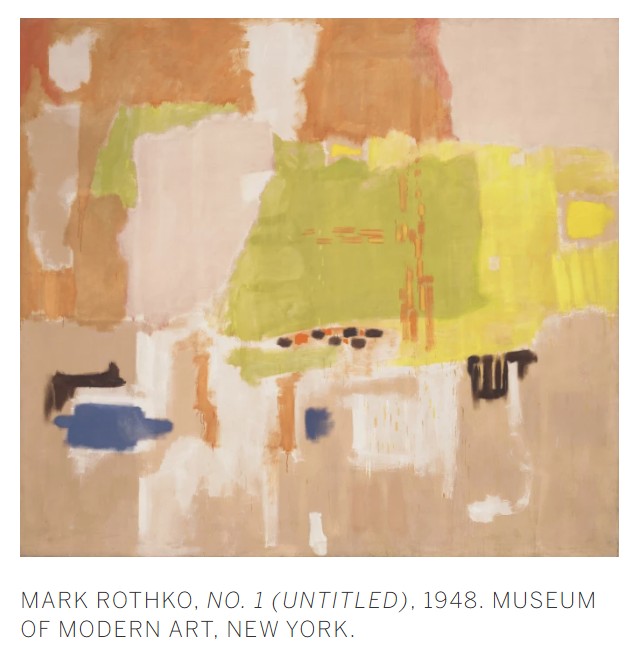
By 1946, Rothko had spent the better part of a decade drawing on the imagery of ancient myth, Jungian psychology, and Surrealist automatism to construct a distinct pictorial language. Populated by primordial aquatic environments and totemic presences, the works from this period reflect his deep engagement with the universality of human experience. The Journey carries clear traces of this mythic ambition in its title and in the lingering suggestion of forms that seem almost figurative, almost narrative, yet dissolving. The watercolor medium, with its inherent luminosity and resistance to rigid contour, was the ideal vehicle for this dissolution. Rothko had worked extensively in watercolor throughout his transitional years, finding in its translucency a natural analog to the atmospheric effects he was beginning to pursue in paint. Here, washes of color breathe and bleed into one another with an almost sovereign indifference to the boundaries they briefly suggest. Within a year of completing The Journey, Rothko would abandon mythological subject matter entirely to create his Multiforms, and, shortly after, the iconic Color Field paintings. The Journey, as its title so aptly suggests, is the passage between the artist’s early figuration and the solemn, radiant rectangles of hovering color that would distinguish Rothko’s legendary oeuvre. Color and light have begun their insurrection, trembling on the edge of pure sensation.
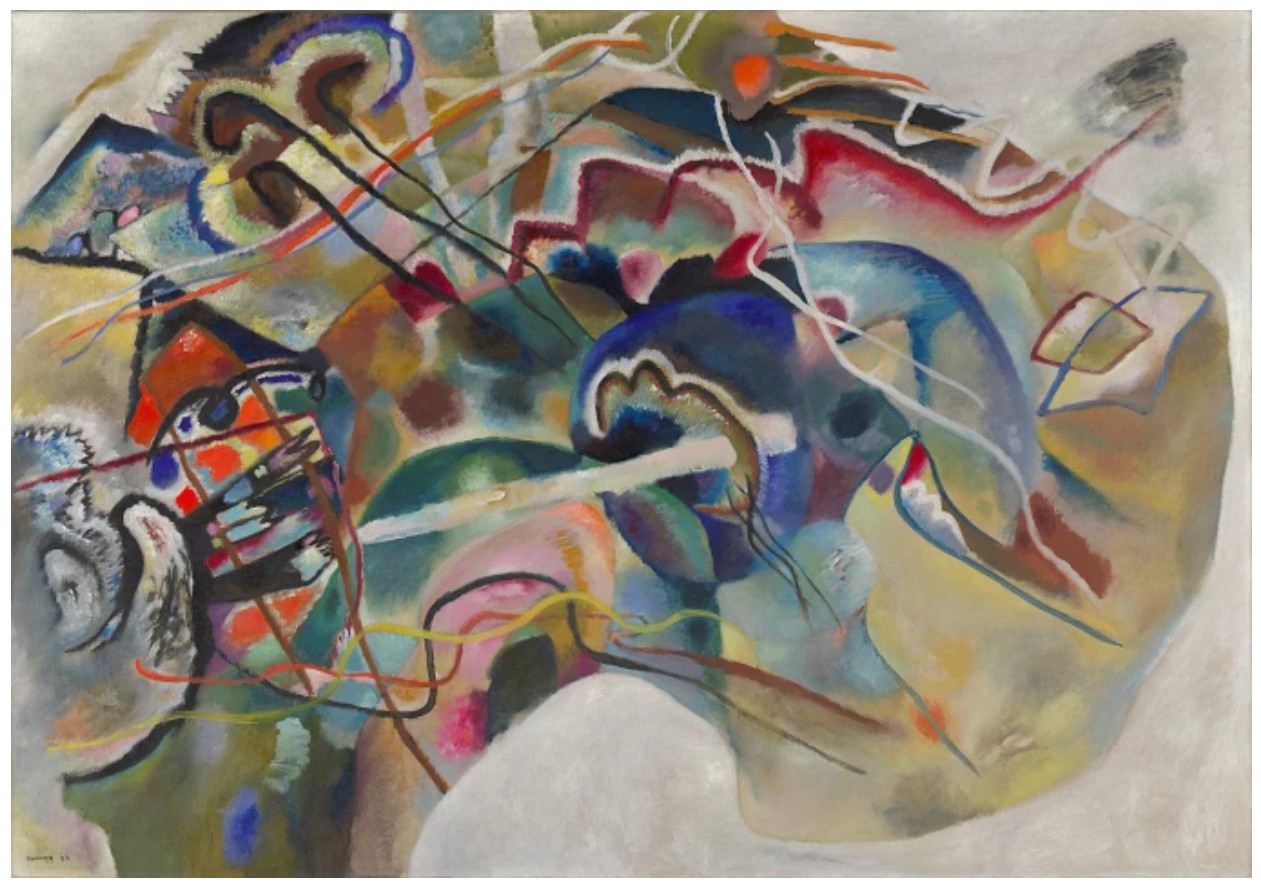
Wassily Kandinsky, Bild mit weissem Rand (Painting with White Border), 1913, Solomon R. Guggenheim Museum, New York.
Art © 2024 Wassily Kandinsky / Artists Rights Society (ARS), New York.
Vaporous washes of paint enmesh in a field of silvery, smoke-toned gray applied with the atmospheric diffusion unique to watercolor. A luminous vertical axis descends through the center of the composition, anchored near its upper third by a single blazing node of crimson and orange, a concentrated ember of color that functions as the work’s emotional center of gravity. Around this fiery point, pale biomorphic shapes and curvilinear passages suggesting fins, tendrils, or perhaps wings, hover in the gray ground like forms glimpsed beneath still water.
“I do not believe that there was ever a question of being abstract or representational. It is really a matter of ending this silence and solitude, of breaching and stretching one’s arms again.”
Horizontal registers of faint, ladder-like marks create a structural rhythm that anticipates, unmistakably, the stacked color zones of the later paintings. The overall effect is one of profound quietude, a world in the process of becoming. Not merely a beautiful object, The Journey is a turning point made visible, the moment before one of painting’s greatest voices found, at last, its defining register.
“Freed from a false sense of security and community, the artist can abandon his plastic bankbook, just as he has abandoned other forms of security. Both the sense of community and security depend on the familiar. Free of them, transcendental experiences become possible. I think of my pictures as dramas; the shapes in the pictures are the performers. They have been created from the need for a group of actors who are able to move dramatically without embarrassment and execute gestures without shame.”
The Journey is an incandescent testament to Rothko’s exploration and arrival at the inimitable and innovative union of color and form that established his place within the canon of American Abstraction of the mid-Twentieth Century.
No. 1, 1949
Robert Mnuchin: Collector at Heart
Sotheby’s New-York: 14 May 2026
Estimated: USD 15,000,000 – 20,000,000
USD 20,805,000
Mark Rothko | No. 1 | Robert Mnuchin: Collector at Heart Evening
MARK ROTHKO (1903 – 1970)
No. 1, 1949
Oil on canvas
78-1/4 x 38-5/8 inches (198.8 x 98.1 cm)
Signed and dated 1949 (on the reverse)
Exuding the metaphysical, majestic quality of his classical period, Mark Rothko’s 1949 masterwork No. 1 marks the watershed moment in which the artist ascended to his signature mode of artistic expression. The cosmic, flaming glow of the painting’s upper and lower strata juxtaposed with the central register of aqueous, azure blue, forms a sublime paradox encapsulating the supernatural beauty of Rothko’s pioneering corpus. Executed at the inflection point of Rothko’s transition from his Multiforms (1946-1949) to the development of his signature abstractions, No. 1 is the confluence of the artist’s two greatest bodies of work. First unveiled at the legendary Betty Parsons Gallery in January 1950, No. 1 was exhibited alongside eleven paintings from the same year in a revolutionary solo exhibition. Among these works, No. 1 is one of only three executed at a monumental scale, exceeding 70 inches, and engulfing the viewer in a chromatic expanse of profound optical transcendence. Of these twelve seminal works exhibited together at Betty Parsons Gallery, all but three now reside in major institutional collections, including The Museum of Modern Art, New York; The National Gallery of Art, Washington, D.C.; and the Los Angeles County Museum of Art, among others.
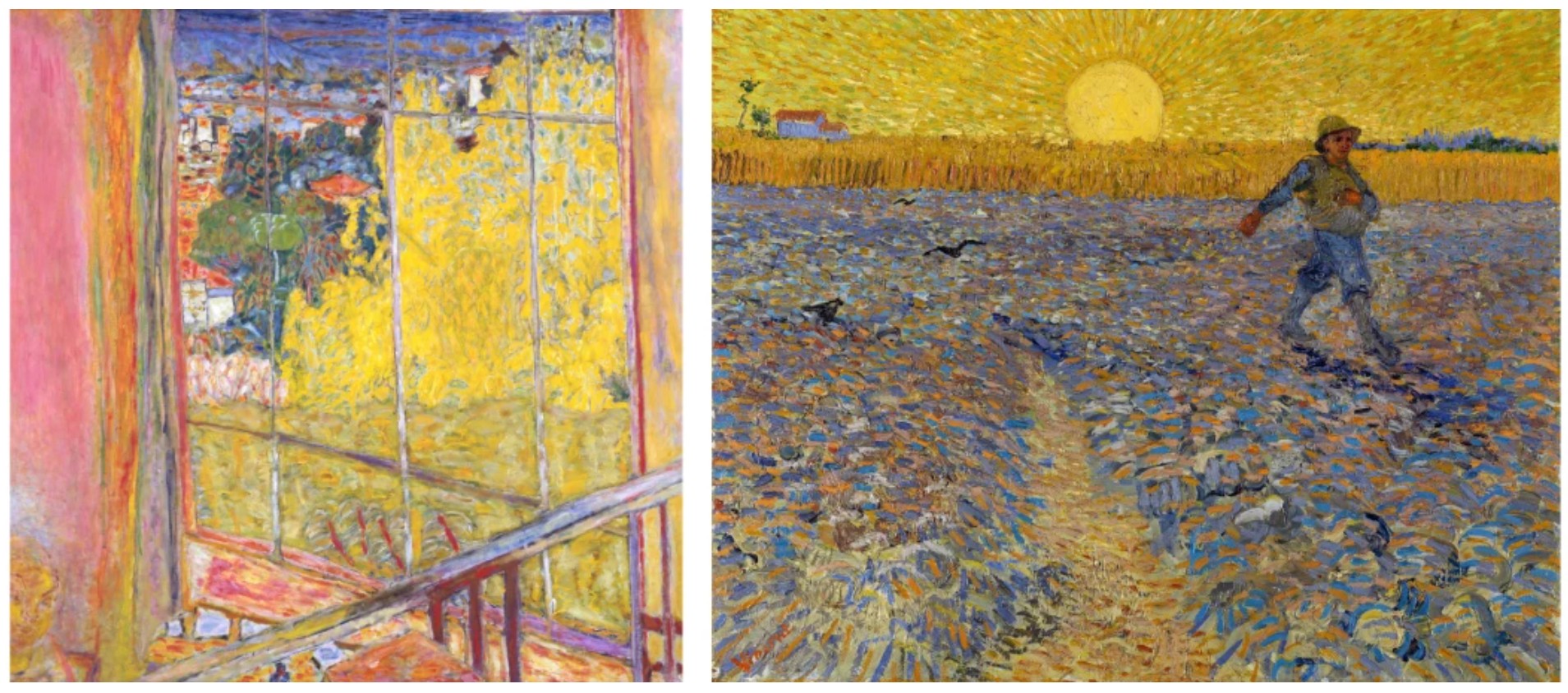
Left: Pierre Bonnard, The Studio with Mimosa, 1939-46. Musee National d’Art Moderne, Centre Pompidou, Paris. Image © Bridgeman Images. Art © 2026 Artists Rights Society (ARS), New York / ADAGP, Paris.
Right: Vincent van Gogh, The Sower, 1888. Rijksmuseum Kröller-Müller, Otterlo. Image © Bridgeman Images
Composed of emblazoned fields of resplendent color, No. 1 radiates as if ignited from within. Saturated strata of scorched, golden yellow, primordial cerulean blue, and fiery orange reverberate from the composition in three registers. Each segment of the composition is defined by lyrical strokes of orange and white, as if each register is a window. As observed by David Anfam, the composition of No. 1 vividly harkens back to late Bonnard paintings. He writes in the introduction to the Catalogue Raisonné: “…the yellow, cinnamon, gold, cerulean blue, white and black of No. 1—the quintessential palette of late Bonnard.” In the central form, interlocking, Multiform-like elements are suspended in a galactic expanse, circumscribed by a halo of rich black pigment deep as the night sky. The tripartite vertical composition of No. 1 foreshadows Rothko’s mature corpus, forming a composition which evokes the proportions of the human body. Soaring nearly 80 inches tall, the radiant chromatic surface of the composition wholly submerges the viewer into an epic and limitless vista. With its monumental scale, No. 1 heralds Rothko’s classical works and installations designed to completely immerse the viewer.
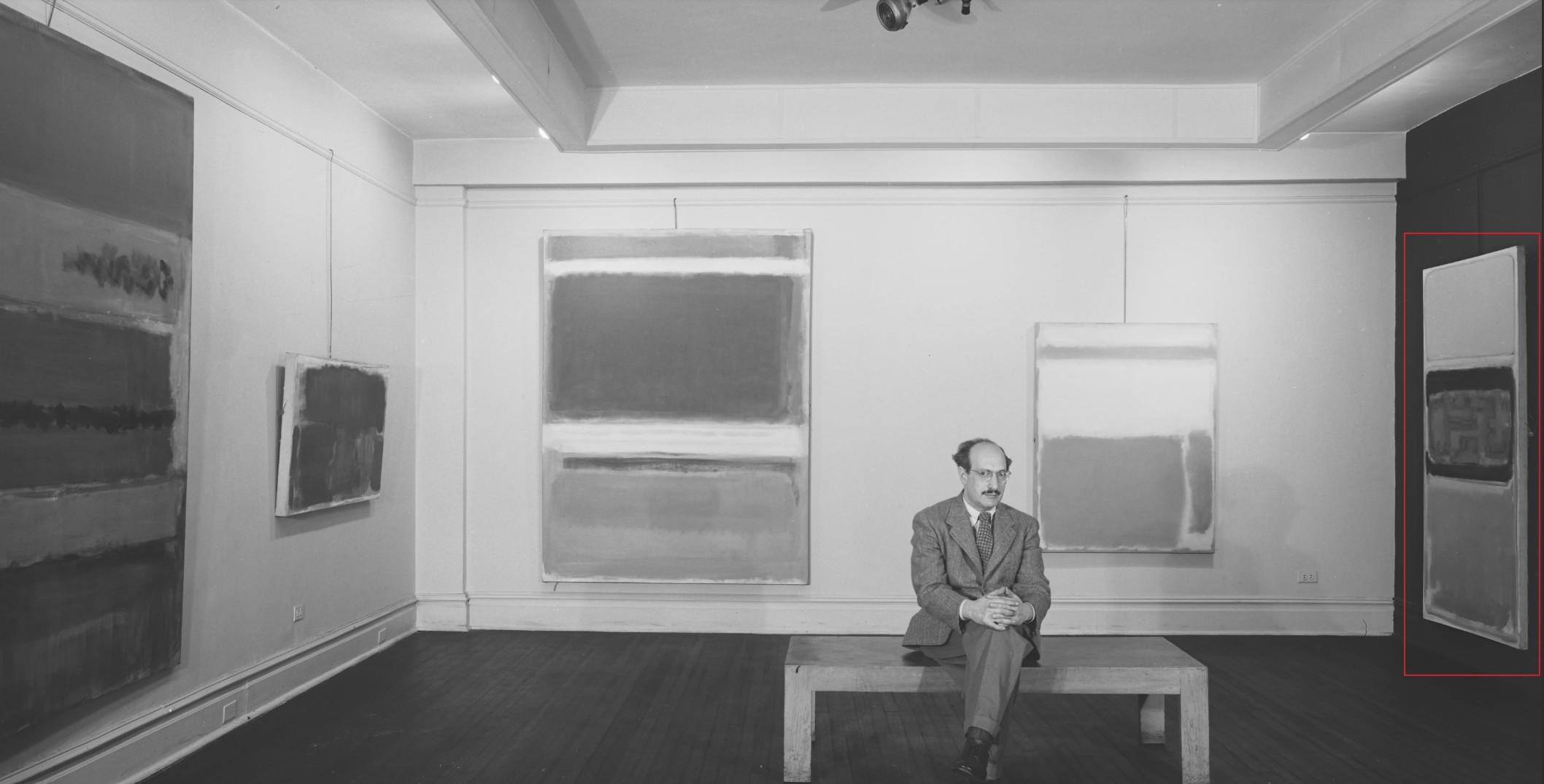
Mark Rothko with the present work installed in Mark Rothko at Betty Parsons Gallery, New York, 1950. Image by © Aaron Siskind/Virginia Museum of Fine Arts. Art © 1998 Kate Rothko Prizel & Christopher Rothko / Artists Rights Society (ARS), New York
Painted at a moment of profound transformation in Rothko’s aesthetic evolution, No. 1 is the nexus of Rothko’s Multiform paintings and his later towering abstractions. Indeed, No. 1 marks a culmination of nearly two decades of artistic development as Rothko progressed from a figurative painter to a paragon of abstraction. Up until 1940, Rothko worked primarily in figuration, focusing primarily on the human form. Then, radically at the beginning of the decade, he abandoned the human subject.
“I belong to a generation that was preoccupied with the human figure, and I studied it. It was with the most reluctance that I found that it did not meet my needs. Whoever used it mutilated it…. I refuse to mutilate it, and had to find another way of expression.”
After a brief hiatus from painting and coinciding with the United States entering World War II, Rothko turned towards a Surrealist period, embarking on a body of dreamlike, biomorphic work inspired by myth, tragedy and ancient dramas.
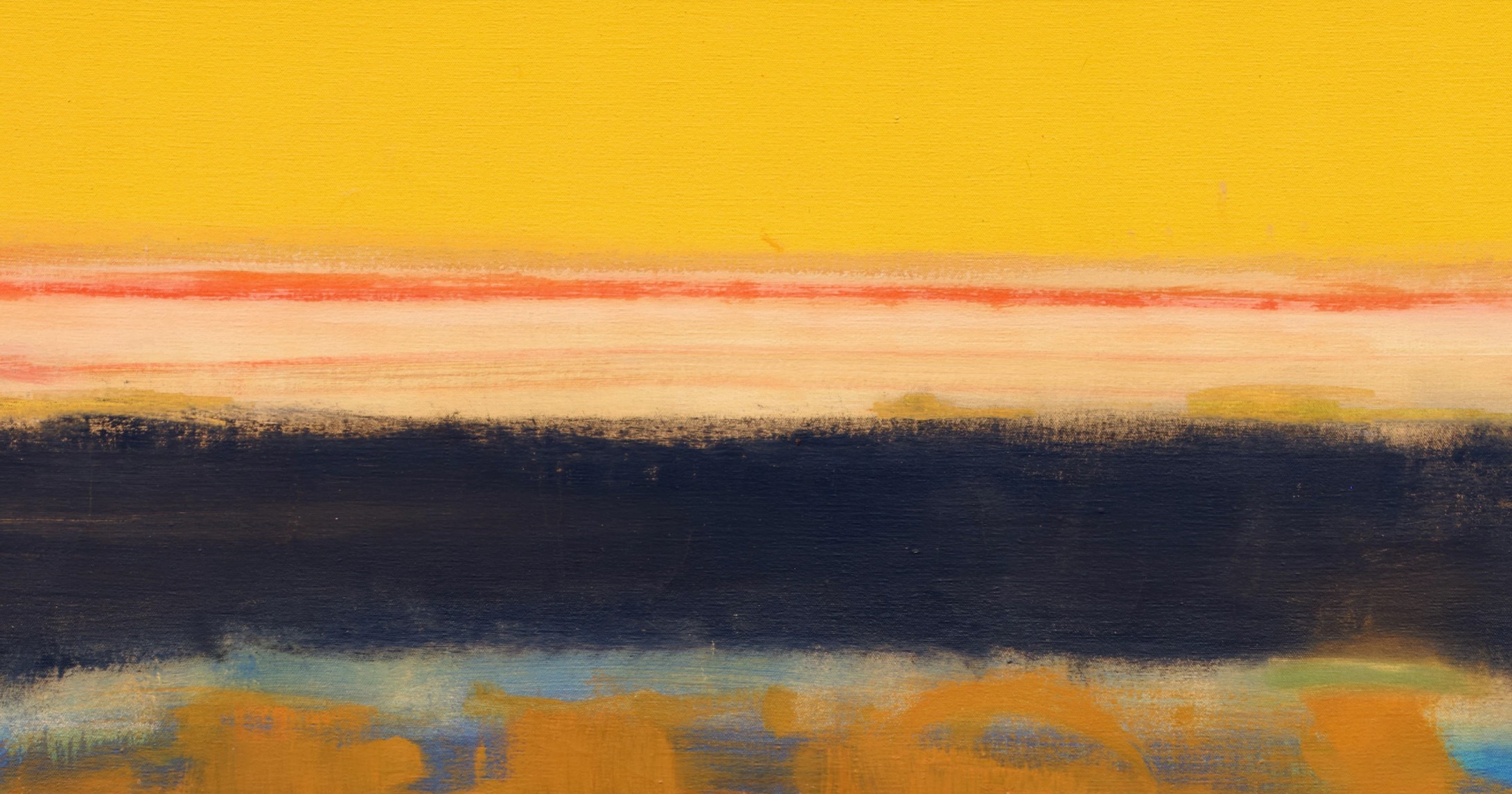
Then, beginning in 1946, Rothko evolved his practice even further towards abstraction: “These works, the multiforms… they paved the way for the much simpler, more unified compositions of rectangles that Rothko unveiled at the Betty Parsons Gallery in January 1950.” (Harry Cooper, “Rothko’s Multiforms,” in: Exh. Cat., Paris, Fondation Louis Vuitton, Mark Rothko, 2023-24, p. 227) In this period, Rothko distilled his compositions into cloud-like fields of color suspended in the canvas plane, hovering in tension with one another. Still, Rothko considered these paintings as theatrical expressions.
“I think of my pictures as dramas; the shapes in the pictures are the performers.”
In the historic January 1950 exhibition at Betty Parsons Gallery, the twelve works on display encapsulated the epic transformation of Rothko’s practice. A centerpiece of the exhibition, No. 1 embodied the culmination of his experimentation with the Multiforms, realizing what would become his iconic tripartite format.
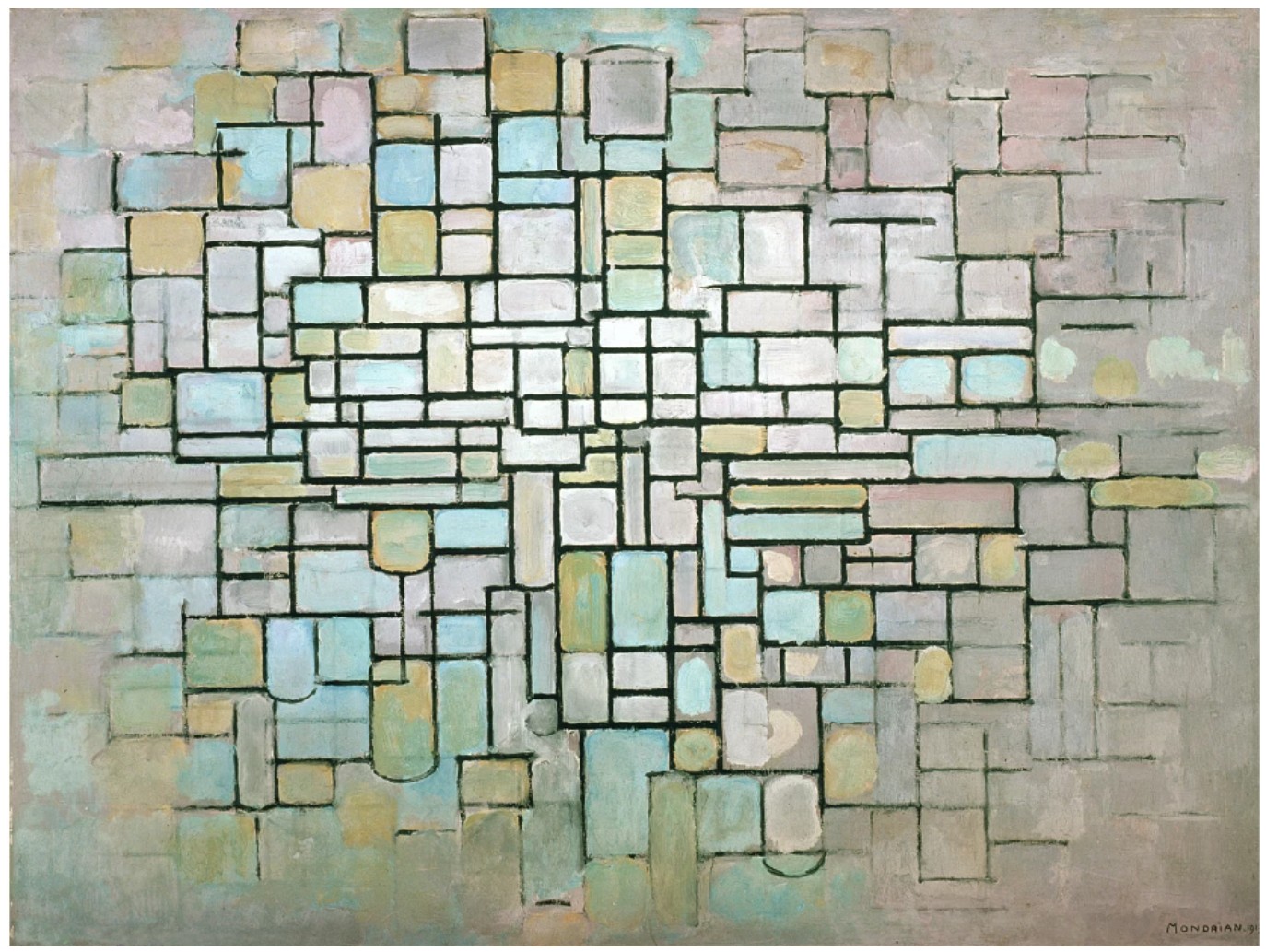
Piet Mondrian, Composition No. II, 1913. Rijksmuseum Kröller-Müller, Otterlo. Image © Mondrian/Holtzman Trust / Bridgeman Images
Indeed, the years between 1948 to 1950 marked a historic turning point not only for Rothko, but also for the course of Contemporary art. As Rothko was on the precipice of realizing his signature mode of abstraction, Barnett Newman had achieved his iconic “Zip” form with Onement, I (1948); Willem de Kooning had painted his early masterpiece Attic (1949) and would soon begin Woman I (1950-52); and Pollock, who was also exhibiting with Parsons at the time, was reaching the pinnacle expression of his Drip paintings with works like One: Number 31, 1950 (1950). This was a moment of radical invention in abstraction in the United States. The transformations of this moment would dramatically alter the course of Contemporary art.
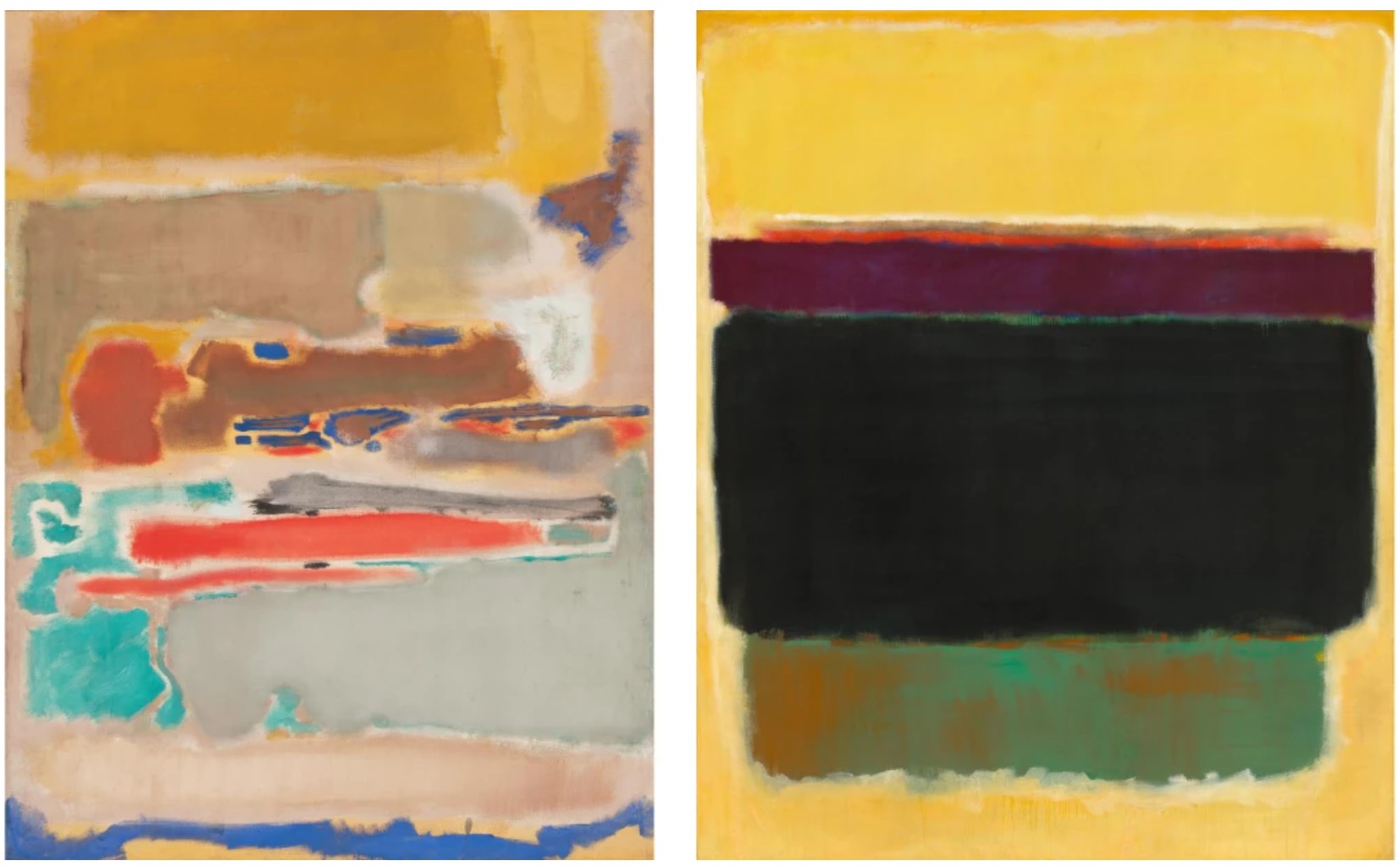
Left: Mark Rothko, Multiform, 1948. National Gallery of Australia, Canberra. Art © 1998 Kate Rothko Prizel & Christopher Rothko / Artists Rights Society (ARS), New York. Right: Mark Rothko, Untitled, 1949. National Gallery of Art, Washington, D.C. Photo courtesy National Gallery of Art, Washington, D.C. Art © 1998 Kate Rothko Prizel and Christopher Rothko
Rare, ethereal and utterly entrancing, Rothko’s No. 1 is a masterpiece which marks the onset of not only the artist’s classical period but also his revolutionization of abstraction.
“A picture lives by companionship, expanding and quickening in the eyes of the sensitive observer. It dies by the same token.”
For the artist, the participation of the viewer was intrinsic to the realization of his work. Therefore, Rothko’s paintings and the viewer are mutually dependent: his abstractions are brought to life by the eyes of the viewer and the viewer too is enlivened by his work. No. 1’s golden yellow, sun-drenched orange, and cerulefiean blue pigments emanate from the surface, engulfing the viewer in a sea of light. The chromatic brilliance of Rothko’s work resonates beyond two dimensions, transporting the viewer into an atemporal, enlightened world beyond the confines of the picture plane.
No. 10, 1949
Sotheby’s Hong-Kong: 29 March 2026
Estimated: HKD 28,000,000 – 40,000,000
HKD 66,780,000 / USD 8,528,735
Mark Rothko 馬克 · 羅斯科 | No. 10 10號 | Modern & Contemporary Evening
REPEAT SALE
Sotheby’s London: 30 June 2014
Estimated: GBP 600,000 – 800,000
GBP 2,546,500 / USD 4,355,225
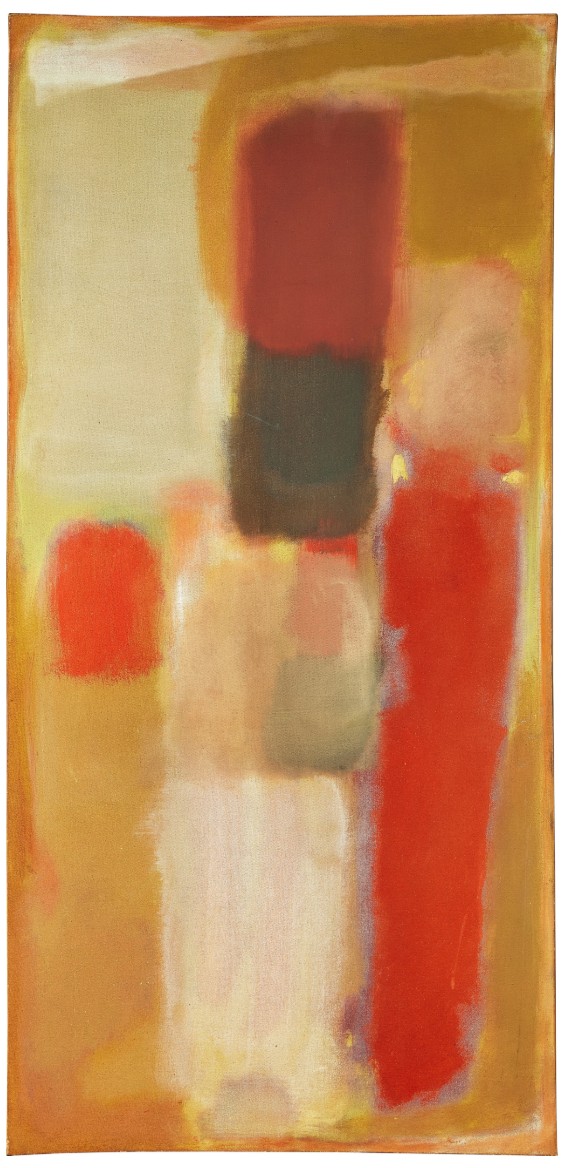
MARK ROTHKO (1903-1970)
No. 10, 1949
Oil on canvas
60-7/8 x 29-1/2 inches (154.5 x 75 cm)
Signed and dated 1949 (on the reverse)
Mark Rothko’s No. 10 of 1949 is an incandescent testament to the artist’s arrival at his inimitable and innovative union of colour and form that established his place within the canon of American Abstraction of the mid-Twentieth Century. Figuration, born of Symbolist and Surrealist influences, was a touchstone for Rothko in his early years. Still, he burned to create his own style – his personal declaration of art’s primal and inspirational role in the turbulent modernist world. Throughout the late 1940s, Rothko’s anthropomorphic images gradually dematerialize, becoming ever more ephemeral and weightless, appearing to float in a misty coalescence with the softly diffused ground. Rothko’s mother’s death in 1948 had an impact and perhaps propelled Rothko into dematerializing forms into incandescent colours of pure immersive visual experiences.
By 1949, Rothko achieved an integration of light and color within his compositions, and the soft red, yellow, orange and green of the present work announce his triumphant success in merging shape with color, in the absence of the painterly traditions of line, narrative and spatial perspective. The series of paintings to which No. 10 belongs was named Multiforms by Rothko, and this title heralds the primacy of untethered hues and soft amorphous shapes in his aesthetic genius. When No. 10 was exhibited at the artist’s January 1950 show at the Betty Parsons Gallery, Rothko had already begun painting the canvases that would be his first in the mature style we know today as his classic masterpieces. In its reductive and expansive color forms, No. 10 presages the grand canvases of the early 1950s.
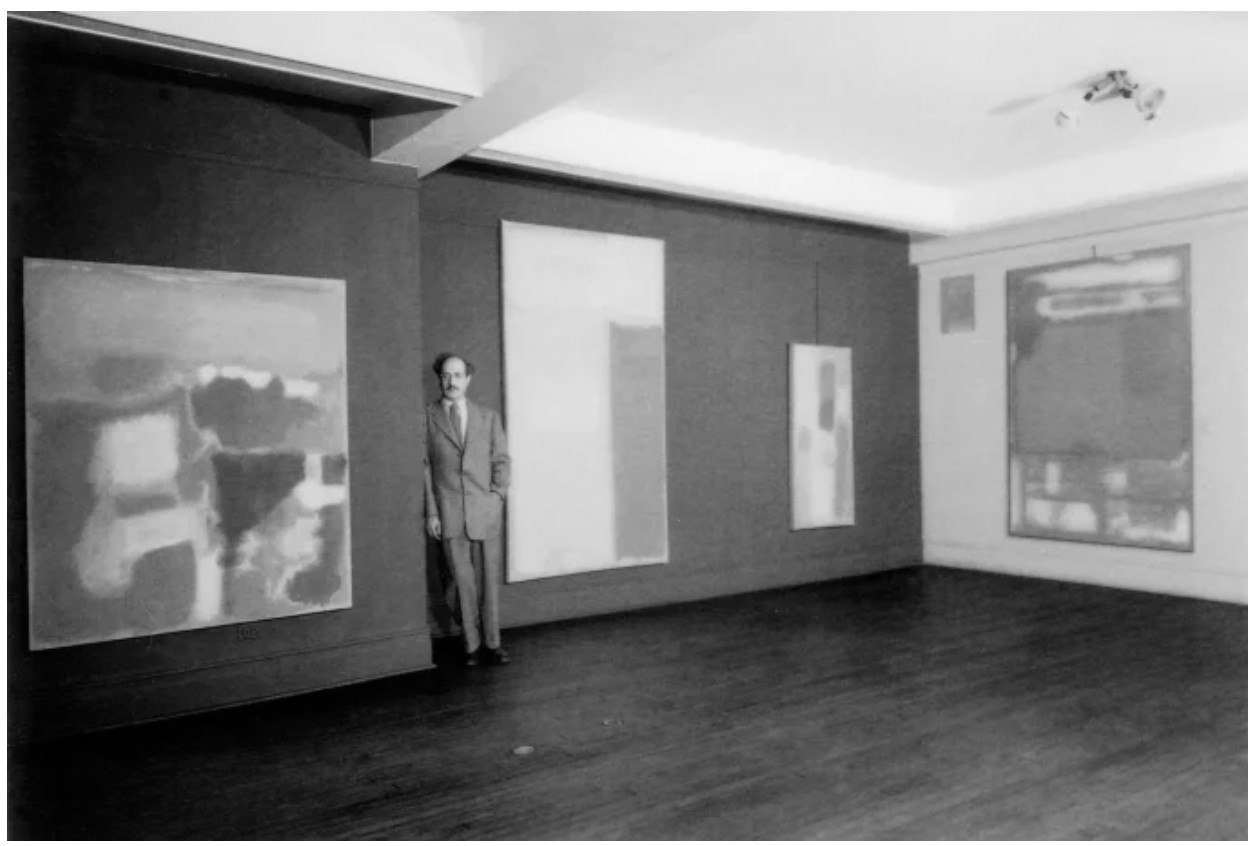
Mark Rothko standing in his exhibition at the Betty Parsons Gallery New York, 1949
Photo: Aaron Siskind © 1998 Kate Rothko Prizel & Christopher Rothko ARS, NY and DACS, London
Including No. 10, only nine works from the pivotal years of 1948-49 have been offered at auction to date. Of the 12 paintings featured in the 1950 Betty Parsons show, No. 10 is one of the three that remain in private hands. The other nine are now held in major American museums, including: The Museum of Contemporary Art, Los Angeles, The Museum of Modern Art, New York, Los Angeles County Museum of Art, Walker Art Centre, Minneapolis, National Gallery of Art, Washington, Hirshhorn Museum and Sculpture Garden, Washington, and Frances Lehman Loeb Art Centre, New York. A major Mark Rothko exhibition, Rothko in Florence, curated by Rothko’s son, Christopher Rothko, and Elena Geuna, is taking place at Palazzo Strozzi in Florence, Italy, from March 14 to August 23, 2026. Three of the twelve works from the January 1950 Betty Parsons exhibition are also included in the show.
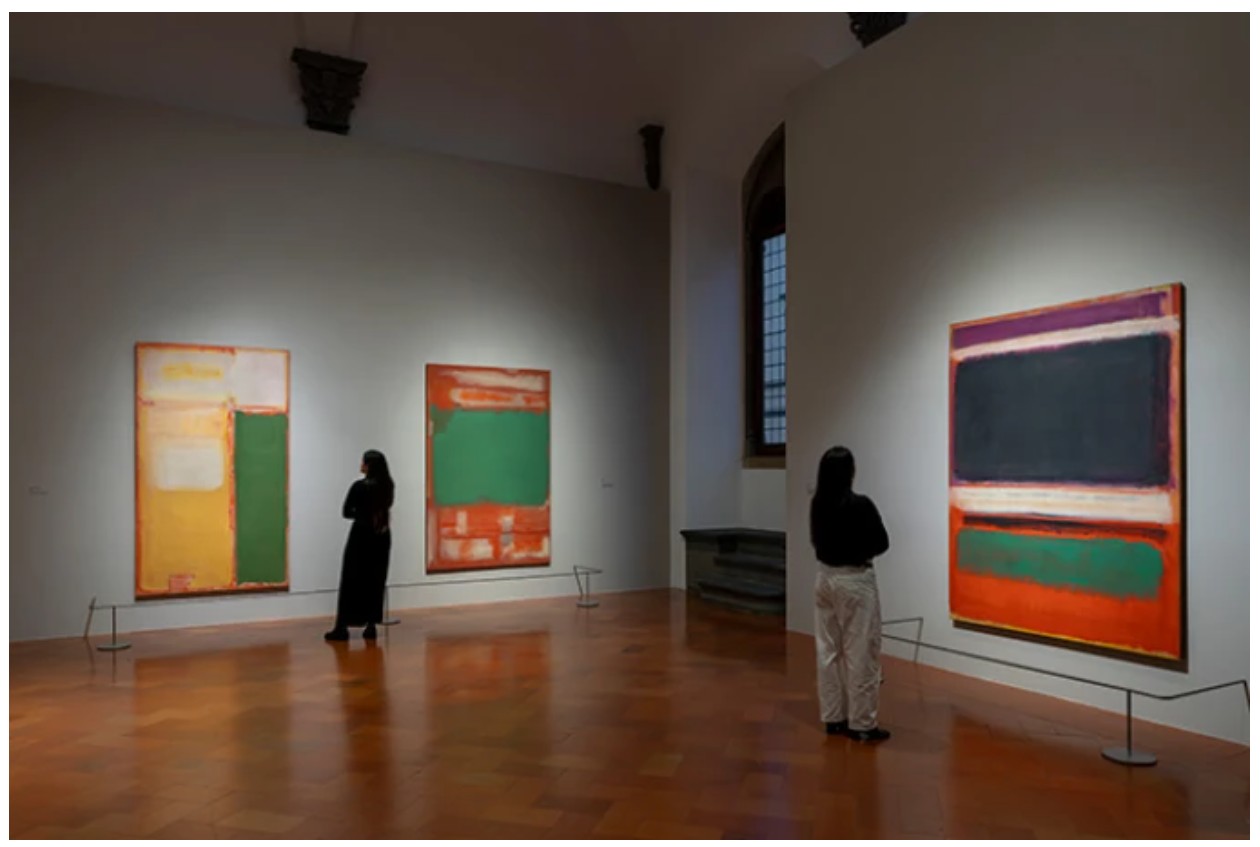
Three of the paintings from the Betty Parsons exhibition (1950) are currently on view at the much-acclaimed Rothko exhibition in Florence.
No. 10 once belonged to the collection of Mr Joseph Manfred Bransten, a well-known patron of the arts in San Francisco, who served on the Board of Directors of the Legion of Honor from 1961 to 1972, when the merger with the de Young Museum occurred that created the Fine Arts Museums of San Francisco. He continued to serve on the Board and was active on its Acquisitions Committee from 1972 until his death. The de Young Museum also possesses an early Rothko similar to No. 10, though painted a year earlier.
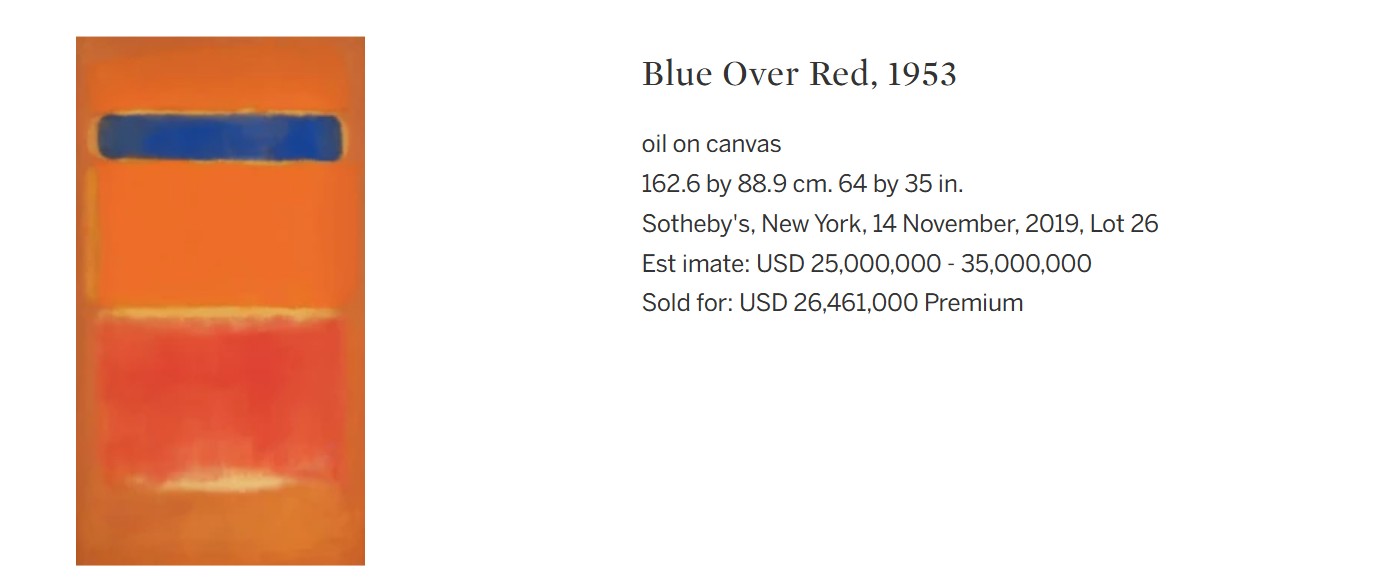
Just five years earlier, Rothko began a period of growth and creativity with his first show at Peggy Guggenheim’s Art of This Century in January 1945, followed in 1946 by his inclusion in the Whitney Museum of American Art’s Annual and a one-person show at the San Francisco Museum of Modern Art. Throughout the late 1940s, Rothko shared the friendship and aspirations of artists William Baziotes, Robert Motherwell, Barnett Newman and most importantly, Clyfford Still, from whom he adopted the practice of using numbers for titles beginning with the Multiforms such as No. 10. The Twelve works from Betty Parsons show were numbered from 1 to 12 in the sequence chosen by the artist for the hanging that ran anticlockwise round the gallery’s main room. Later, Rothko will number his works similarly, starting with No. 1 for the first painting of each year.
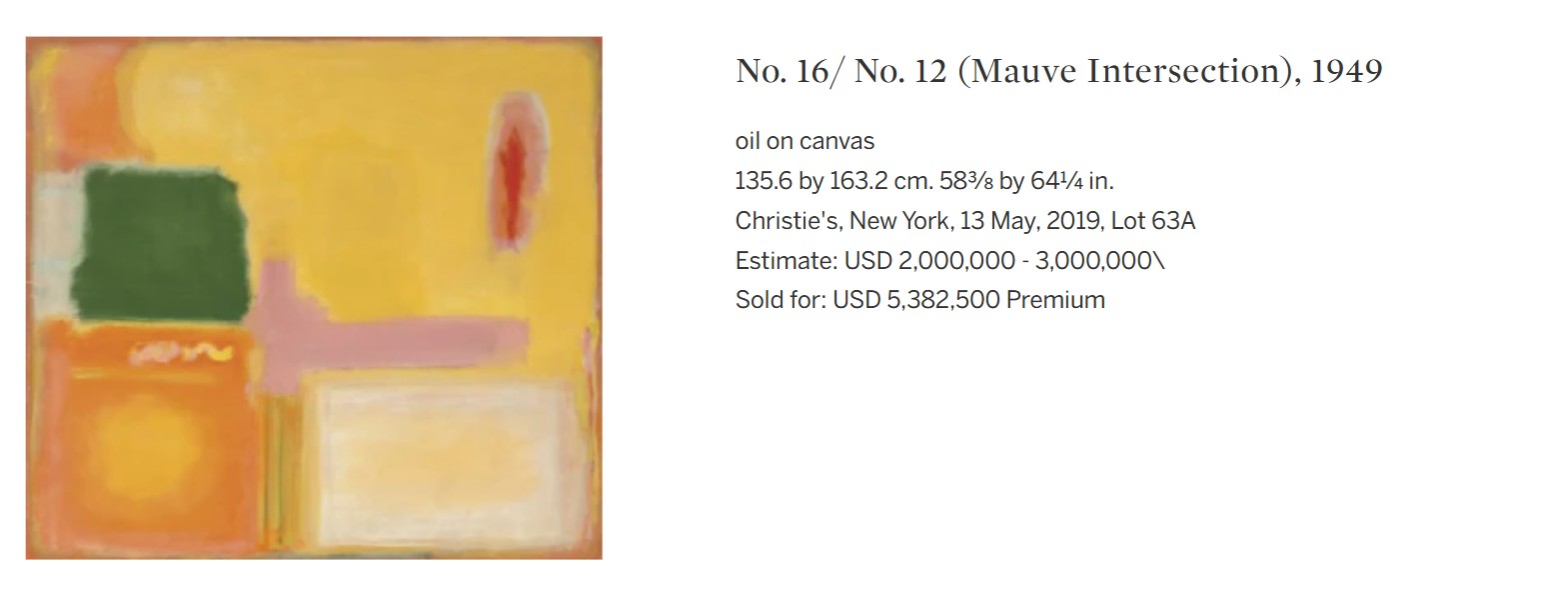
The abandonment of realist titles was just one element of the rejection of sign as the central motif in painting, a rejection Rothko, Still, and Newman shared as they sought to purify their art by reducing aesthetic elements to their most basic essence. As Rothko noted in his ‘Statement on His Attitude in Painting’ printed in 1949, “the progression of a painter’s work, as it travels in time from point to point, will be toward clarity; toward the elimination of all obstacles between the painter and the idea” (Mark Rothko, ‘Statement on His Attitude in Painting’, The Tiger’s Eye, No. 9, October 1949, p. 114).
Rothko first achieved the artistic fusion of colour and light with a series of watercolors created in the mid-1940s. In her essay for the artist’s 1978 retrospective, Diane Waldman addressed the affinity between these works on paper and the Multiforms when she noted that the “luminosity, flatness, frontality and close-value colours ascribed to this period of Rothko’s great breakthrough in 1949-50 are already characteristic of these watercolors and pastels…” (Diane Waldman in: Exhibition Catalogue, New York, Solomon R. Guggenheim Museum, Mark Rothko, 1903-1970: a Retrospective, 1978, p. 48). In No. 10, Rothko seeps the oil pigment into the canvas threads as directly as watercolor binds with paper. Several complementary colours are harmoniously balanced within the composition, revealing “one of the supreme features of his genius – his ability to hold on a single plane colours that advance and retreat… Rothko had by now enlarged and neutralized his forms, allowing color to breathe” (ibid., p. 57). The luscious, warm tones in No. 10 – particularly the red and yellow which are so potent in his later paintings – are almost contradictory to the visual dematerialization of form and the delicacy of paint application achieved in the Multiforms. Yet, the jewel tones of No. 10 beautifully convey the synthesis Rothko brilliantly achieved in his pure, reductive and transcendent paintings.
Heads, 1941-1942
Christie’s New-York: 15 May 2025
Estimated: USD 600,000 – 800,000
USD 630,000
MARK ROTHKO (1903-1970), Heads | Christie’s
MARK ROTHKO (1903-1970)
Heads, 1941-1942
Oil on canvas
20 1/8 x 28 inches (51 x 71.1 cm)
Mark Rothko’s Heads (1941-1942) stands as a rare and captivating example from a pivotal moment in the artist’s career, when he was forging a path between figuration and abstraction, myth and psychology. This work belongs to a small and historically significant series from the early 1940s in which Rothko depicted heads in a mythological or religious narrative—an essential bridge between his early figurative practice and the revolutionary abstract idiom that would later define his career. Rare to market, Heads remained in the esteemed personal collection of the artist’s first wife, Edith Sachar, until her death. The painting is one of few select works from this important body of work to remain in private hands, with almost all of other examples housed in the permanent collection of National Gallery in Washington, D.C. Rothko’s work from this time of intense experimentation and philosophical inquiry, sprung from the upheaval of World War II, would ultimately lead him to the luminous fields of color that define his mature work. Through a compelling blend of surrealist influence, mythological reference and emotional depth, Heads provides a profound insight into Rothko’s evolving aesthetic and ideological concerns.

Left: Mark Rothko, Untitled, 1941-1942. National Gallery of Art, Washington, D.C. © 1998 Kate Rothko Prizel & Christopher Rothko / Artists Rights Society (ARS), New York.
Second from Left: Mark Rothko, Untitled, 1941-1942. National Gallery of Art, Washington, D.C. © 1998 Kate Rothko Prizel & Christopher Rothko / Artists Rights Society (ARS), New York.
Center: Mark Rothko, Untitled, 1940-1941. National Gallery of Art, Washington, D.C. © 1998 Kate Rothko Prizel & Christopher Rothko / Artists Rights Society (ARS), New York.
Second from Right: Mark Rothko, Antigone, 1939-1940. National Gallery of Art, Washington, D.C. © 1998 Kate Rothko Prizel & Christopher Rothko / Artists Rights Society (ARS), New York.
Right: Mark Rothko, The Omen of the Eagle, 1942. National Gallery of Art, Washington, D.C. © 1998 Kate Rothko Prizel & Christopher Rothko / Artists Rights Society (ARS), New York.
Domineering the composition is a humanoid form comprised of an amalgam of prominent features—eyes, noses, lips—painted in the style of an ancient Greek or Roman deity. These attributes coalesce and melt into one another on one muted green face. The creature rests atop a chevron platform that recalls a ritualistic altar or a Surrealist stage. Beneath this elevated presentation lies a bundle of contorted limbs—hands, legs and feet—an echo of Philip Guston’s figurative work which suggests both a physical and symbolic dismemberment. Gazing beyond the right edge of the canvas is a bearded figure of marble, spectral, and gesturing upward, evoking the grandeur of Greco-Roman statuary and guiding the eye beyond the confines of the canvas.
The composition of the present work reveals Rothko’s burgeoning interest in spatial structure and color dynamics. While still engaged with the figure, he organizes the composition with a striking geometric logic. The picture plane is broken into discrete bands of space, foreshadowing the structural clarity of his later abstract works. Large passages of washy, atmospheric color define the background, replacing traditional linework and anchoring the surreal forms in an emotional and spatial field. Even at this early stage, Rothko demonstrates a sophisticated understanding of how color and spatial arrangement can evoke psychological and emotional depth.
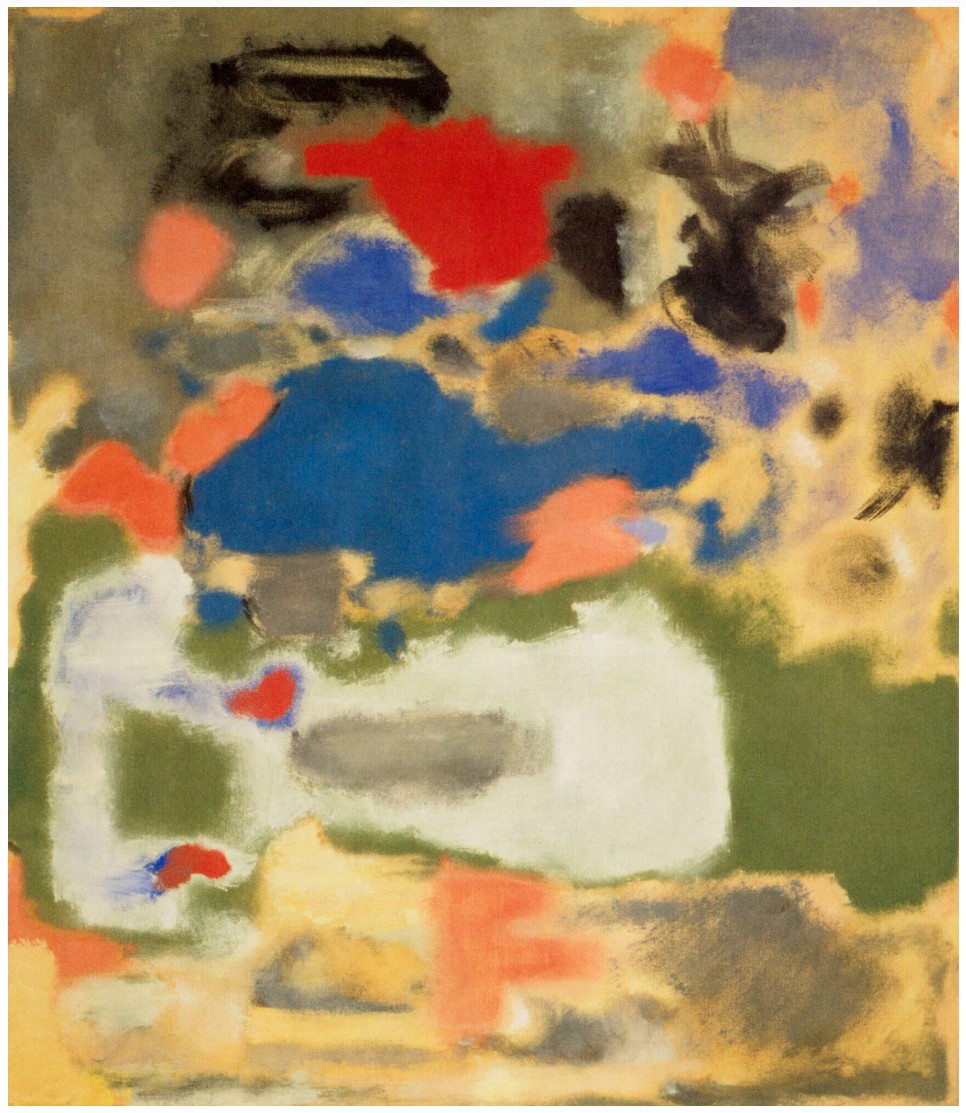
Mark Rothko, Untitled, 1947. © 1998 Kate Rothko Prizel & Christopher Rothko / Artists Rights Society (ARS), New York.
As explained by David Anfam, the iconography of the early 1940s was cultivated by Leonardo’s Last Supper, “From Leonardo come the tiered layout, the frieze of multi-directional heads, the play of body language against shadows and the box-like architectural settings of the early 1940s: again, the drama occurs in a room” (D. Anfam, Mark Rothko: The Works on Canvas: Catalogue Raisonné, New Haven and London, 1998, p. 51). By the time Rothko painted Heads, he had become increasingly persuaded of the indispensable role of myth in revitalizing a spiritually diminished society, that he found in the Old Masters. These innovations would soon crystallize into the Multiforms of the mid-1940s and eventually, his iconic Color Field paintings.
Leonardo da Vinci, The Last Supper, 1495-1497. Santa Maria della Grazie, Milan.
At once haunting and majestic, Heads exemplifies Rothko’s deepening engagement with mythology and the unconscious during this transitionary period. Drawing inspiration from Nietzsche’s The Birth of Tragedy, the writings of Carl Jung and the Greek tragedians, Rothko believed that myth had the capacity to redeem a spiritually depleted modern world. Here, Rothko turns to classical myth as a universal language capable of speaking to what he described as the “tragic and timeless” aspects of the human experience. The early 1940s, too, marked a dramatic transformation in Rothko’s personal practice. Having emigrated from Russia as a child and arriving in New York at age 20 after dropping out of Yale, he pursued artistic training at the Parsons School of Design and the Art Students League. It was under the mentorship of Max Weber that Rothko began to view painting not merely as craft, but as a legitimate vehicle for modern philosophical and spiritual expression. This shift coincided with his increasing exposure to European Surrealists such as Salvador Dalí and Max Ernst, whose exploration of dreams, the unconscious, and irrationality deeply resonated with him. Alongside close friend, collaborator and mentor Adolph Gottlieb, Rothko embraced a new visual language rooted in myth, ritual and so called ‘primitive’ symbols—eschewing traditional narrative in favor of archetypal imagery and emotionally resonant forms.
Salvador Dalí, Apparition of face and fruit-dish on a beach, 1938. Wadsworth Atheneum Museum of Art, Hartford.
© 2025 Salvador Dalí, Fundació Gala-Salvador Dalí / Artists Rights Society (ARS), New York.
Rothko’s adoption of biomorphic and totemic forms during this period placed him within a hybrid space between Surrealism, abstraction, and automatism. In the years following this important series, Rothko’s career would be landmarked by the artist’s first major solo exhibition of Surrealist-inspired paintings at Peggy Guggenheim’s ‘Art of This Century’ gallery in 1945—a transformative event that placed Rothko at the forefront of the burgeoning New York School. Heads, along with its companion pieces, is a foundational statement of Rothko’s belief in the emotional and spiritual potential of painting.
No. 6, 1947
Sotheby’s New-York: 18 November 2024
Estimated: USD 3,000,000 – 5,000,000
USD 2,000,000
No. 6 | Modern Evening Auction | 2024 | Sotheby’s
MARK ROTHKO (1903 – 1970)
No. 6, 1947
Oil on canvas
60 1/8 x 47 inches (152.7 x 119.4 cm)
Signed MARK ROTHKO (on the reverse)
A hypnotizing labyrinth of color and form, Mark Rothko’s No. 6 is a superlative example of the artist’s momentous breakthrough into pure abstraction. Following a period of intense introspection and philosophical evaluation of the pretense of biomorphic abstraction set forth by the Surrealists, Rothko broke from representational forms, completing a body of work now known as Multiforms between 1947 and 1949. Comparable to many Multiforms now held in institutional collections across the globe, No. 6 is a masterful example of Rothko’s revolutionary language of color and form and is a manifestation of perhaps the most crucial period of expansive growth in Rothko’s artistic trajectory.
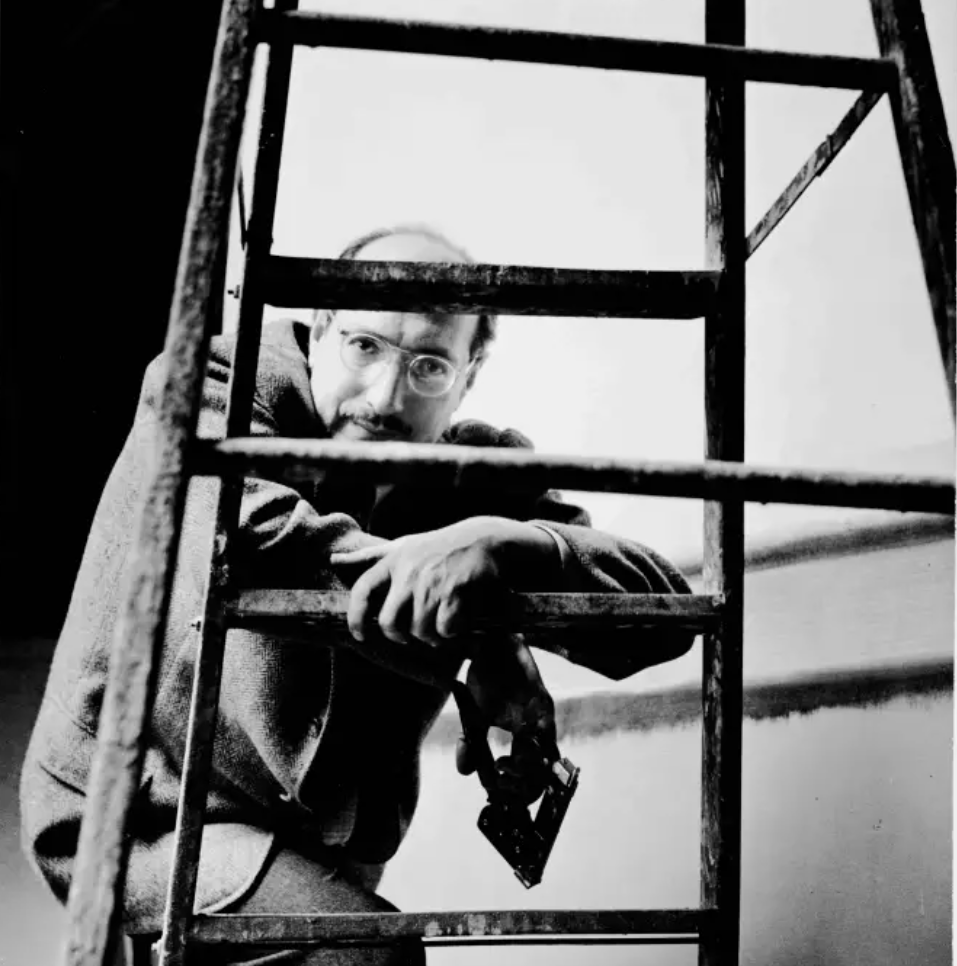
Mark Rothko in his New York studio, 1952. Photo © Kay Bell Reynal
Vaporous washes of ochre, green and white enmesh, breathe and pulse across the picture plane of No. 6. A deep, ovoid form eclipses the center of the canvas like an ancient vision of the early cosmic matter of the universe. Rhythmic scrawls stretch and meander in the diaphanous silvery interstices of the nebulous, biomorphic configurations. As revealed in the enigmatic, primordial clouds in No. 6, Rothko used thinned paint applied in multiple, light washes, soaking the canvas with fluid, blurred shapes. He would then returned to their elusive membranes with brushy flourishes and rippled etchings with the back of his paintbrush, not unlike the vivid protean abstractions of Kandinsky. Rothko’s colors, at times translucent or opaque, oscillate between delicacy and imposing emergence in a passive tension. Each brushstroke does not command meaning; rather together, they harmonize and holistically grasp at an ephemeral weightlessness. Resisting formal structure in favor of the exaltation of color and Rothko’s own philosophical intuition, No. 6 describes the artist’s internal dialogue with a higher ideal of abstraction in pursuit of a purely emotive universal pictorial vocabulary.
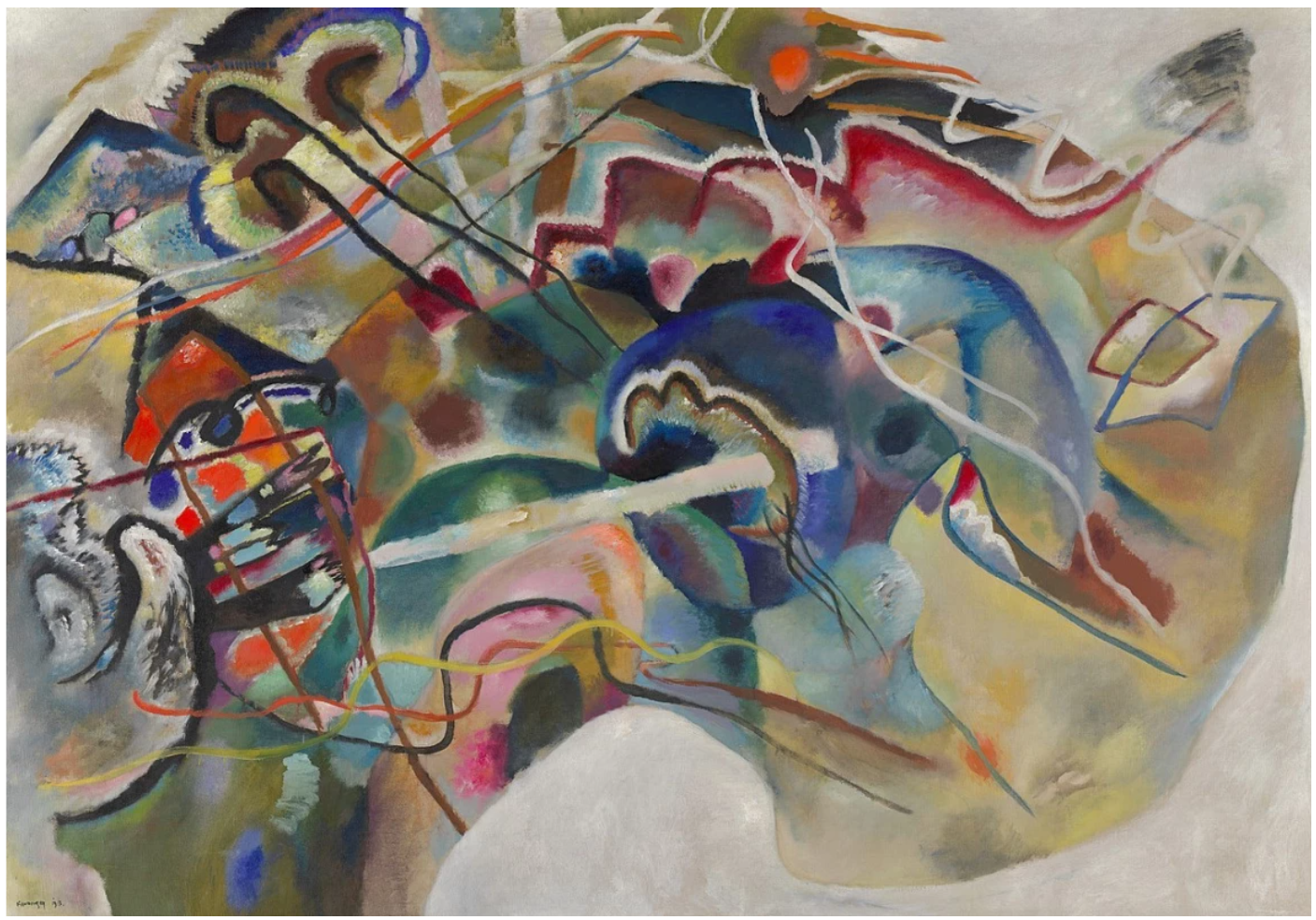
Wassily Kandinsky, Bild mit weissem Rand (Painting with White Border), 1913, Solomon R. Guggenheim Museum, New York.
Art © 2024 Wassily Kandinsky / Artists Rights Society (ARS), New York
Rothko’s Multiforms marked a critical turning point in his career and the defining moment of his commitment to complete abstraction. Throughout the 1940s, Rothko wrestled with the alien shapes and colors introduced by the Surrealists. Like Giorgio di Chirico, Adolph Gottlieb and many of the members of the New York School, Rothko looked to classical myth and literature as a wellspring of inspiration and a means to visually process the crushing existentialism of global upheaval and suffering during World War II. Through 1946, his paintings and gouaches reimagined the strange, anthropomorphic shapes in arrangements alluding to mythological personas and the archaic arcs of Greek tragedies. Like the otherworldly landscapes of Yves Tanguy, where horizon and foreground fused and subverted realistic perspective, and the wandering, organic shapes of Rothko’s early teacher and contemporary Arshile Gorky, Rothko’s mid-40s canvases featured monochromatic grounds and teemed with muted, shifting tonalities among proliferating nebulae of color. In 1947, Rothko wrote what is now considered his most infamous treatise, “The romantics were prompted,” for Possibilities, a single-issue journal conceived by and for American artists. In this essay, Rothko underscored his aspiration to capture the otherworldly through his works in stating:
“Freed from a false sense of security and community, the artist can abandon his plastic bankbook, just as he has abandoned other forms of security. Both the sense of community and security depend on the familiar. Free of them, transcendental experiences become possible. I think of my pictures as dramas; the shapes in the pictures are the performers. They have been created from the need for a group of actors who are able to move dramatically without embarrassment and execute gestures without shame.”
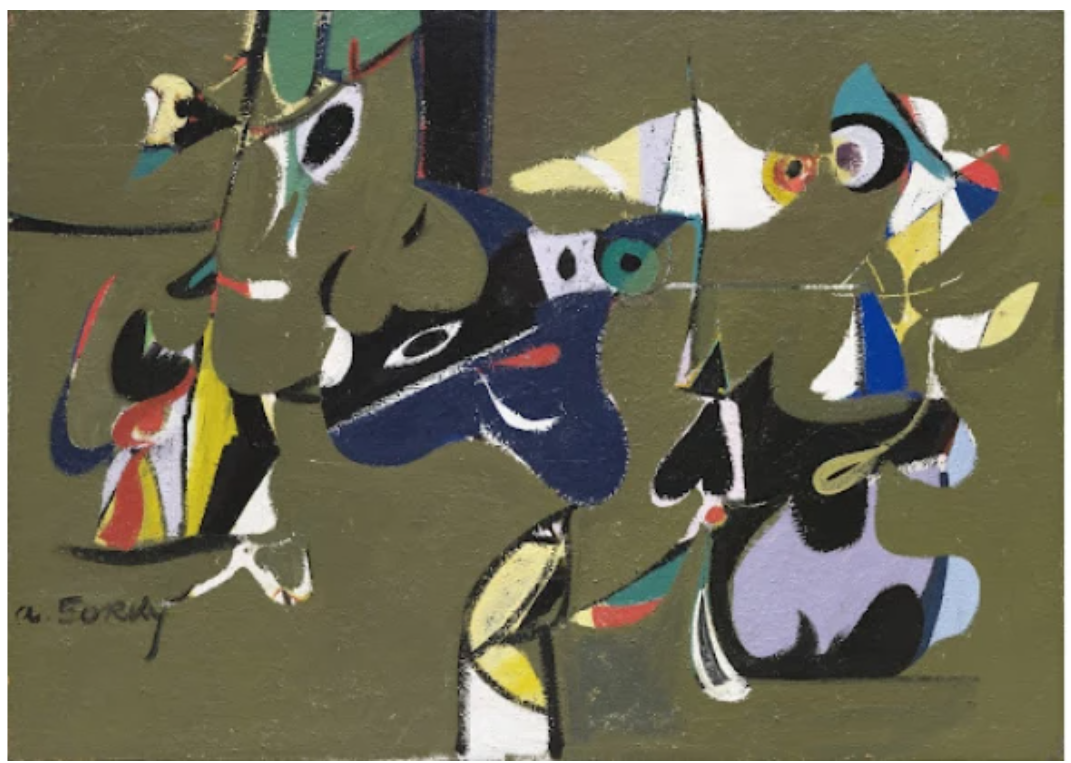
Arshile Gorky, Garden in Sochi, 1941, The Museum of Modern Art, New York.
Art © 2024 The Arshile Gorky Foundation / Artists Rights Society (ARS), New York
Within this rebellious and dramatic imagined schema, Rothko’s Surrealist forms further dematerialized, until they were pure, atmospheric formations of color. Referring to the years when Rothko produced his Multiforms, critic Mark Stevens conjectured: “During these three years, I think his essential search, in formal and spiritual terms, was for gravity—and gravitas. Much as he admired Surrealism, he seemed to have found it too light, with its emphasis on automatic writing, individual quirkiness, and go-with-the-flow imagery. He desired something more weighty and grand, an art that could express not just the unconscious of an artist but the spirit of mankind” (Mark Stevens in Exh. Cat., New York, The Pace Gallery, Mark Rothko, 1990, p. 4). Through his investigation of the dissolution of traditional naturalistic forms of Surrealism, Rothko’s desire to dismantle all remaining evidence of representation pushed him across the threshold of abstraction with his development of the Multiforms.
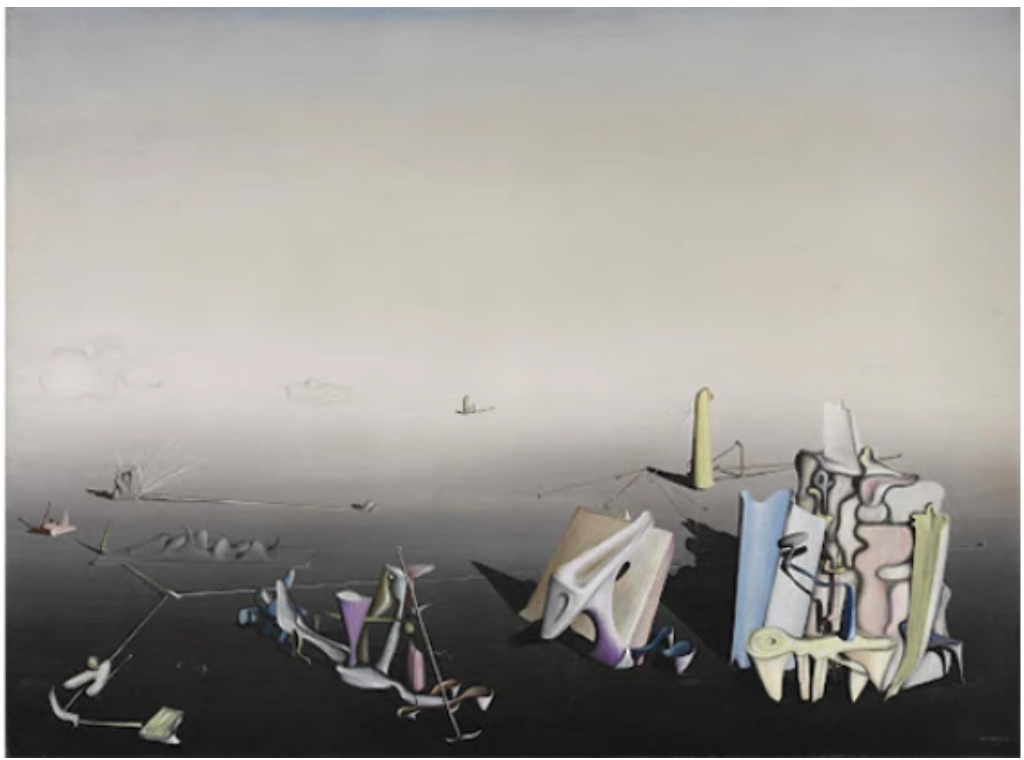
Yves Tanguy, Azure Day, 1937, Tate Gallery, London. Art © 2024 Estate of Yves Tanguy / © ADAGP, Paris and DACS, London 2024
Rothko’s transformative stylistic growth in the mid-to-late 40s was partly informed and significantly impacted by the relationships he fostered with colleagues and friends in the art milieu of the time–notably with fellow artists who showed at Peggy Guggenheim’s gallery, Art of this Century, and other artists of the New York School. Rothko’s first encounter with Clyfford Still in 1945 did not occur without tremendous reverberations in Rothko’s fervor for the possibilities of abstraction that were being cracked open by his colleagues and wrestled within his own work. As emphasized by historian and Rothko biographer Dore Ashton, Rothko felt that Still’s “melodramatic propensity for sharp light effects was evidence that, like Rothko, he thought of painting as a counterpart to theater” (Dore Ashton, About Rothko, New York, 1996, p. 95). While Still focused on the textured modulation of color in the context of scale, his tendency towards formlessness evolved contemporaneously in Rothko’s work with the Multiforms. Still’s earthy palette, his fearlessness in striking thick layers of color in jagged expanses across his canvas and his eagerness to engage in endless intellectual conversation around their idealist aims pushed Rothko’s will to transform rapidly.
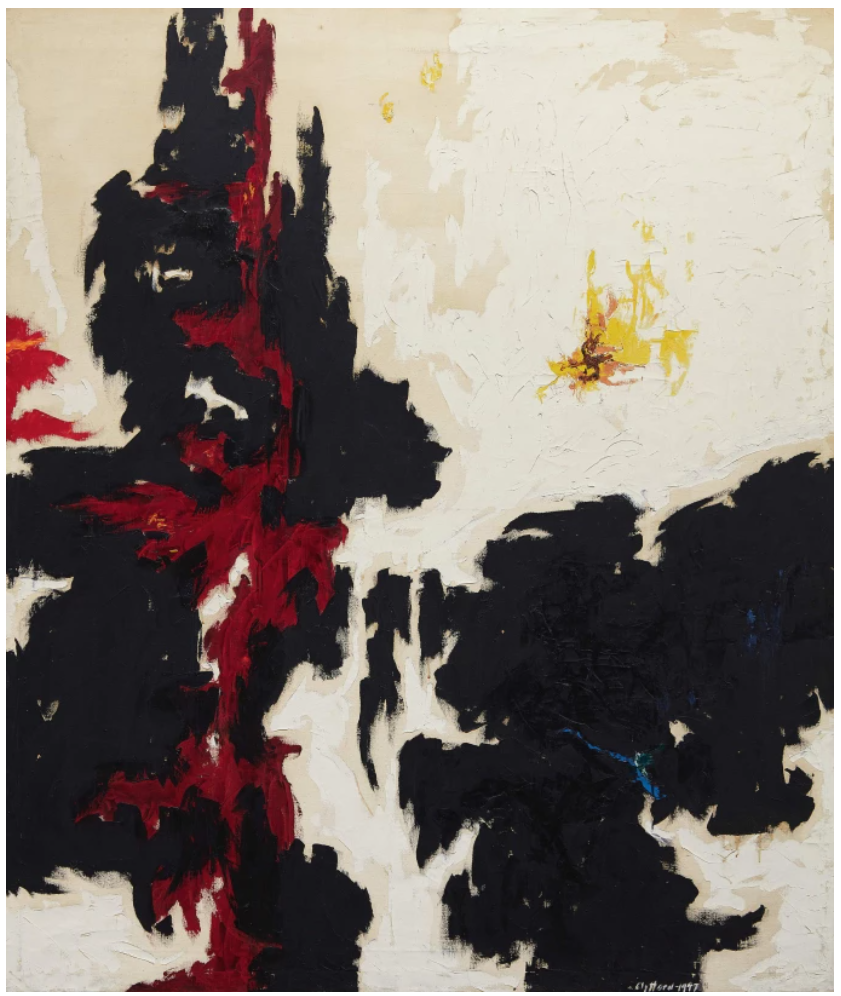
Clyfford Still, PH-144 (1947-Y-No. 1), 1947, Sold: Sotheby’s, New York, 29 June 2020, lot 8 for $28.7 Million.
Art © 2024 City and County of Denver / Artists Rights Society (ARS), NY
Productive artistic exchange was not isolated between Rothko and Still; Rothko encountered and nurtured friendships with other artists like Barnett Newmann, Adolph Gottlieb and sculptor Herbert Ferber who moved to Betty Parsons Gallery when Peggy Guggenheim closed Art of this Century to move to Venice in 1947. Ferber was an innovator in sculpture within the New York School and a dentist by trade. Over letters and at dinner parties at Ferber’s Upper West Side apartment, Ferber and Rothko commiserated over the goings-on of the art world, expounded upon philosophical views, their respective investigations of Surrealist ideals and shared a profound affinity for ancient art. Finding inspiration in foregone forms, both artists pursued the mysticism, symbolism and nascent abstraction found in art from the distant past and thus derived their own respective formats of primitive abstraction through color, space and materiality. The two artists exchanged works with the same amicability that they shared ideas; Ferber acquired No. 6 from Rothko in 1947, the year that the painting was executed and when the two artists met. No. 6 thus stands as a significant token of their friendship, which endured through to the abrupt end of Rothko’s life.
Marvelously painted with the freedom of breaking through to full abstraction, No. 6 embodies the watershed shift Mark Rothko’s Multiforms precipitated in terms of the possibilities of color—a limitless pursuit he would follow for the rest of his life and career. As a giant of mid-century American art who reinvented the tenets of contemporary painting, Rothko persistently sought an aesthetic vocabulary that would eradicate representation and give way to a cosmic, metaphysical language of color. No. 6 allows us to bear witness to Rothko’s use of form as a mediator for his lofty philosophical ideals and deeply introspective emotional landscape and is a symbol of the dynamism and crucial importance of the 40s in the greater scope of his oeuvre. A testament to the significance of the series, Rothko’s Multiforms are in the collections of prestigious international institutions such as the Museum of Modern Art, New York, National Gallery of Art, Washington D.C. and the Tate Gallery, London, and were formidably centered in the context of Rothko’s greater body of work in the recent, highly acclaimed retrospective at the Fondation Louis Vuitton, Paris. Bearing the gravitas of Rothko’s metaphysical and mythic aims in non-representation, No. 6 is emblematic of the vital importance of the Multiforms in the scheme of Rothko’s greater body of work.
The Entombment, 1944
Sotheby’s New-York: 18 November 2024
Estimated: USD 700,000 – 1,000,000
USD 720,000
The Entombment | Modern Evening Auction | 2024 | Sotheby’s
MARK ROTHKO (1903 – 1970)
The Entombment, 1944
Oil on canvas
29 5/8 x 39 1/2 inches (75.2 x 100.3 cm)
Signed ROTHKO (lower right)
Signed MARK ROTHKO and titled (on the reverse)
The Entombment is a striking emblem of Mark Rothko’s earliest forays into abstraction, through the modes of Surrealism and mythic intrigue.
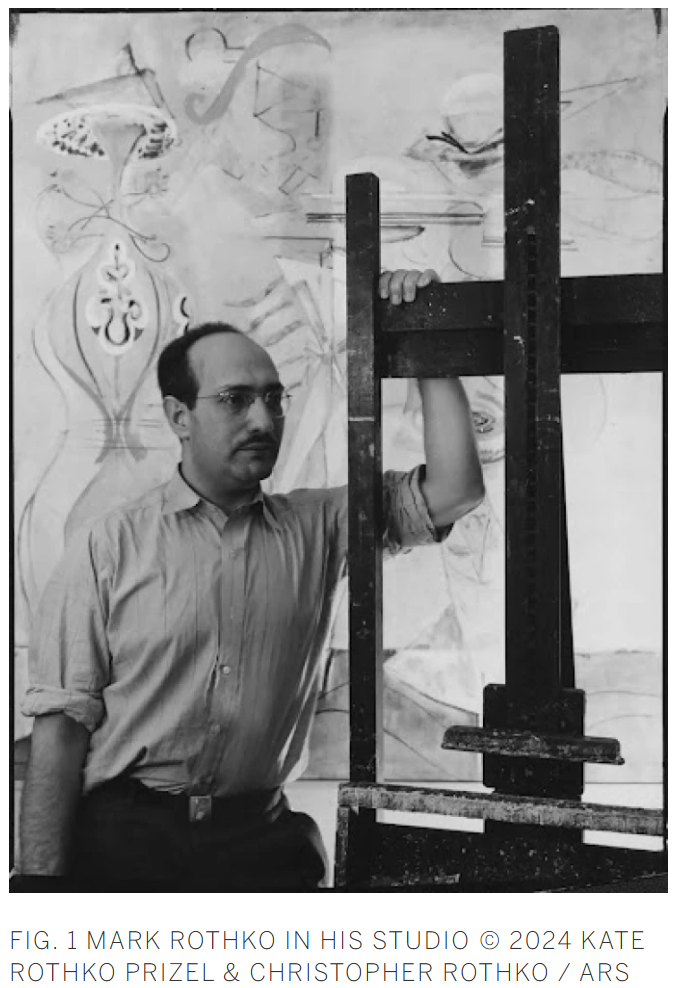
Rothko’s Multiforms of 1946 channeled the collective wartime anxiety and a corresponding contemporary connection to the symbolism of ancient myth and the resonant thematic dramas of Greek tragedy. Mining the same written and visual histories as Renaissance painters and countless others throughout the canon of art history, Rothko reimagined poetic mythic tropes and classic biblical stories as a means of wrestling with higher ideals and the disquietudes of mortality; this struggle would continue to drive Rothko away from figuration and toward the evocation of the emotional psyche through color. From a critically transformative moment in his career, The Entombment was exhibited in several exhibitions which catapulted his career and allowed him to foster formative relationships with his contemporaries. Channeling the elusive emotive spirit which endures in all of Rothko’s greatest works, The Entombment exemplifies the profound impact his Surrealist origins had on his later body of work.
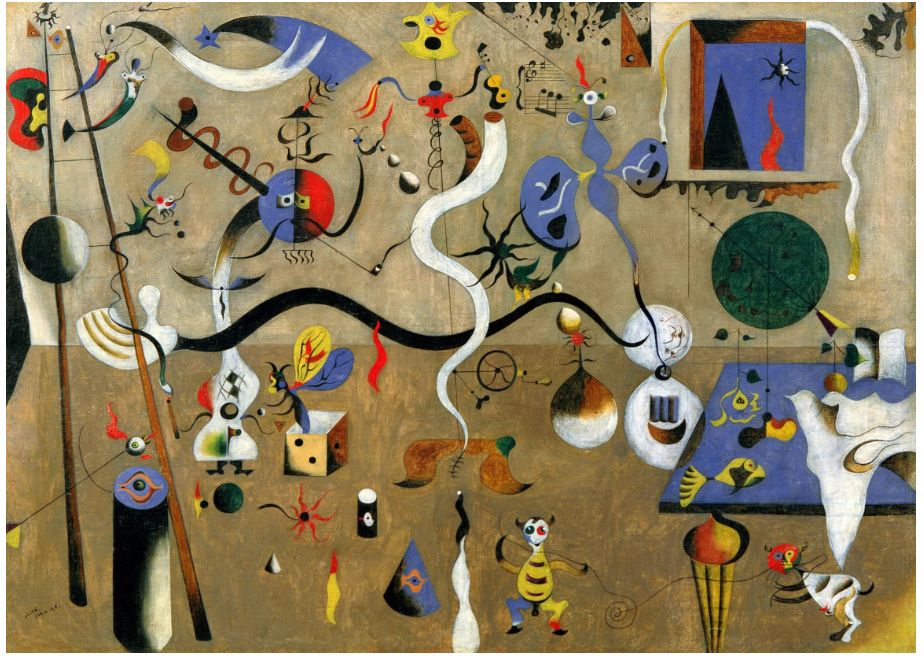
Joan Miró, Carnaval d’Arlequin, 1924-1925, Buffalo AKG Art Museum.
Art © Successió Miró S.L. / Artists Rights Society (ARS), New York / ADAGP, Paris
Mysterious and enigmatically archaic in style, The Entombment reveals Rothko’s cerebral entanglement with the symbolic rendering of life. Three forms dominate the sparse landscape: a tonal horizon line affords the singular sense of place in Rothko’s imagined realm. In the mid-1940s, Rothko utilized biomorphic forms akin to the amorphous, deconstructed and unexpected anthropomorphic forms employed by Yves Tanguy, Joan Miró and Salvador Dalí in their oneiric visions. In The Entombment, the body is signified by the indication of a navel, simplified appendages and vague contours of musculature. The horizontality of the lighter, primary form insinuates its prone state, recalling the composition of Alberto Giacometti’s sprawled, bestial Woman with her Throat Cut of 1932. Two other figures, one with claw-like appendages and the other standing totemically at the feet of the horizontal figure, infer a recognizable configuration: the wailing mother and the attendant, or the classic depiction of the entombment/deposition of Christ and the Pietà . Rothko’s simultaneous negation of representation and naturalistic form and his deft ability to charge the highly abstracted avatars with the emotional content reveals his decisive and progressive inclination to move beyond representation.
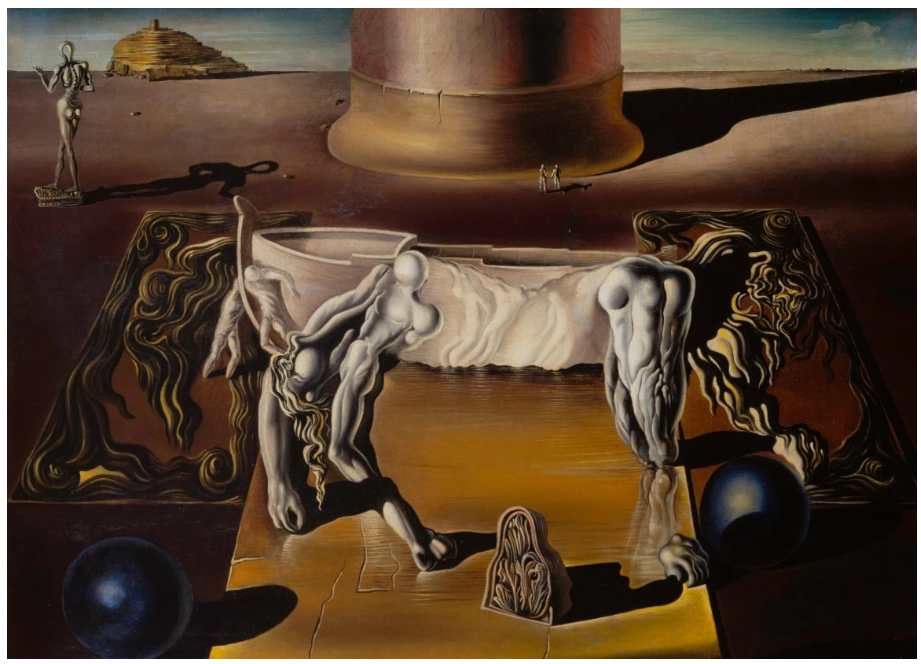
Salvador Dali, Dormeuse, cheval, lion invisibles, 1930, Musée National d’Art Moderne, Centre Georges Pompidou, Paris, Photo credit: Philippe Migeat – Centre Pompidou, MNAM-CC. Art © Salvador Dalí, Fundació Gala-Salvador Dali / Adagp, Paris
At the nexus of representation and myth, Rothko found the emotional content he strove for through his own primitive symbols and excavated what would become an odyssey of invoking the drama of humanity and mortality through color and form.
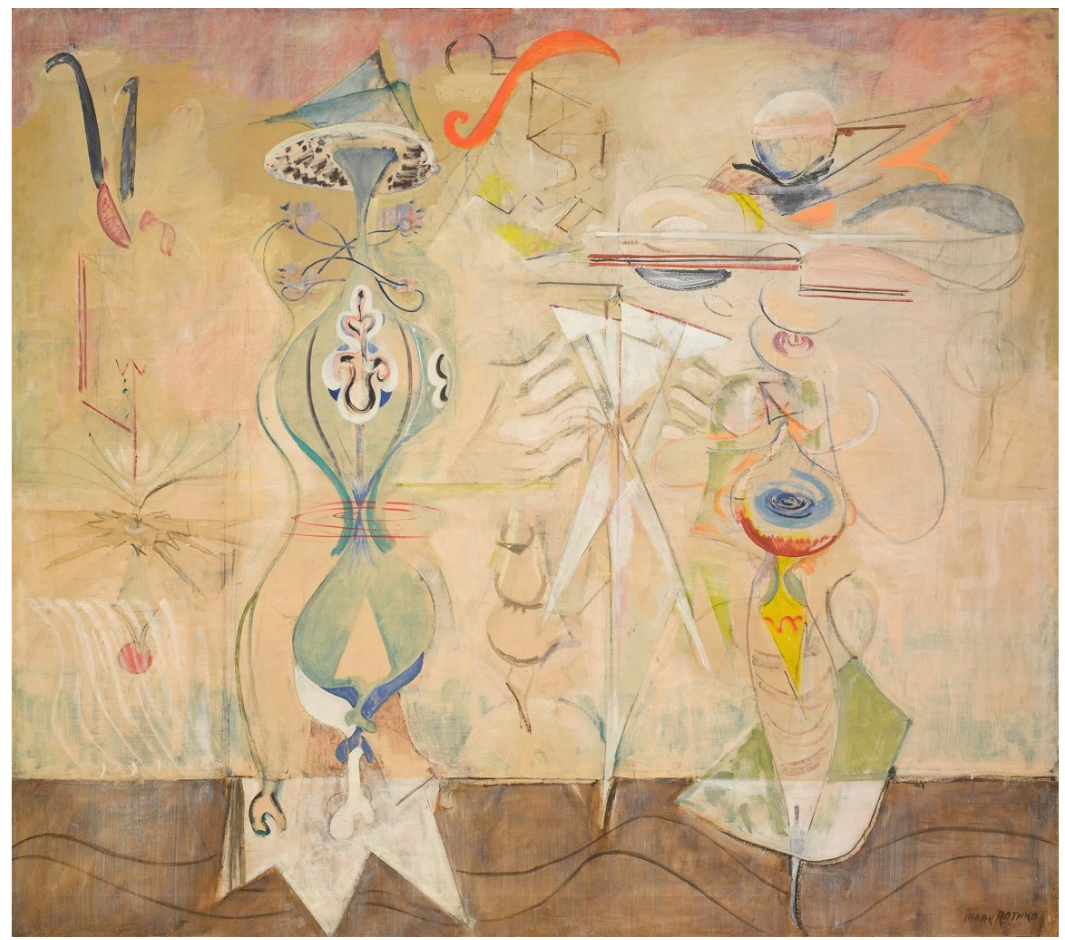
Mark Rothko, Slow Swirl At the Edge of the Sea, 1944, The Museum of Modern Art, New York. Art © 1998 Kate Rothko Prizel & Christopher Rothko / Artists Rights Society (ARS), New York
In addition to the biblical intonations of The Entombment, Rothko’s mythically influenced works, his other early Surrealist works bore titles referencing his mythic sources of reference including Sacrifice of Iphigenia (1942; Collection of Christopher Rothko), Vibrations of Aurora (1944; National Gallery of Art, Washington, D.C.) and Slow Swirl at the Edge of the Sea (1944; The Museum of Modern Art, New York), which were exhibited alongside The Entombment at Peggy Guggenheim’s gallery, Art of this Century in 1945 and then at Betty Parsons Gallery in 1947. Addressing these early works shown at Art of this Century and then at Betty Parsons Gallery, catalogue raisonné author David Anfam related Rothko’s frequent intention to foster mirrored dialogues between his works, noting: “Indeed, the manifold textures–scored, scraped, translucent, arid, washy and drily opaque–characteristic of nearly every painting reflected Rothko’s desire to give physical reality to movement, memory, violence and concealment. Something of those feelings–inasmuch as they articulate a set of intentions–also made one canvas in each show beckon to a second” (David Anfam, Mark Rothko: The Works on Canvas—Catalogue Raisonné, New Haven and London, 1998, p. 56). Anfam positioned that the foil of The Entombment is the warm, Visions of Aurora, now in the collection of the National Gallery of Art, Washington, D.C.. Rife with Rothko’s early, primordial symbols, gauzy veils of color, and imbued with evocations of profound emotion through their gesture to ancient tragedies, Rothko’s early Surrealist works presented the elements which would remain present throughout his corpus for the rest of his life. In his frequent inclusion of the horizontal form and allusions to the lamentation, one can project the centered, horizontal bands which float in the hierarchical planes of color of Rothko’s mature works. His aims towards the metaphysical and spiritual communed through color and form merely transmuted through the arc of his mastery, from biomorphic symbols to expansive non-representational washes of color.
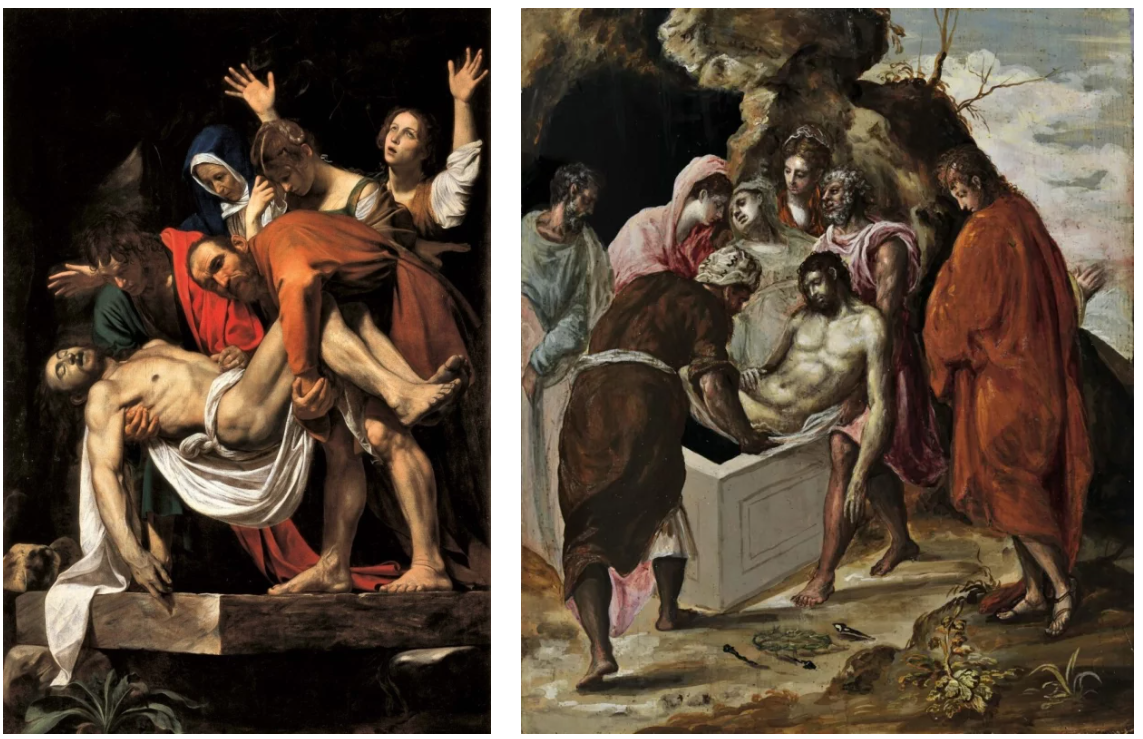
LEFT: Michelangelo Merisi da Caravaggio, Deposition, 1602-04, Picacoteca Vaticana, Vatican City
RIGHT: El Greco, The Entombment of Christ, circa 1568-70, National Gallery, Alexandros Soutos Museum, Athens
Commanding and sublime in its mystery and form, The Entombment is among the most formidable examples of Rothko’s Surrealist works from the mid-1940s. Created in a period of unequaled growth for the artist in the context of his stylistic shifts and his exposure within the artistic community of peers that so inspired his shifts in abstraction, the present work is an emblem of Rothko’s Surrealist origins and their inextricable link to his greater body of work. Rothko’s Surrealist period provoked the artist’s critical metamorphosis to the master of color and form he is known as today.
In Limbo, 1941-1942
Bonhams New-York: 16 November 2022
Estimated: USD 120,000 – 180,000
USD 164,175
Bonhams : MARK ROTHKO (1903-1970) In Limbo 1941-1942
oil on canvas
32×24 inches (81.3 x 60.1 cm)
tradition during the 1920s and 1930s, and during this brief period Rothko employed a New York-specific Social Realist style, painting everyday people on the subway, in restaurants and at the beach. He furthered his studies under painter Arshile Gorky, who powerfully influenced him and many other Abstract Expressionists. Rothko felt that capturing emotion was essential to the art-making process, and by 1935, Rothko was a founding member of the Ten, a group of artists who sought to establish a brand of expressionistic figure painting distinct from the then-dominant American Regionalist style. In the social climate of anxiety that dominated the late 1930s and the horrors of World War II, images from everyday life—however unnaturalistic—began to appear old fashioned and out of touch. If art were to express the tragedy of the human condition, new subjects and a new idiom had to be found, and Rothko turned to subject matter culled from classical literature, Greek mythology, and the Hebrew and Christian scriptures. By 1940 his imagery became increasingly symbolic, and seizing on the Surrealists’ concept of the unconscious as the source of art, he and fellow artists such as Jackson Pollock and Adolph Gottlieb introduced imagery based on totemic or mythic figures, drawing inspiration from mythological sources ranging from Navajo Indian deities to Greek mythology in search of a “collective unconscious”. In Limbo is emblematic of Rothko’s mythological period. The canvas is divided into two rectangular areas; the amorphous figure on the left side is supported by fragments of a Doric column, while the figure on the right is so tightly compressed it is barely contained. Rothko’s dry brush technique suggests the weathered and eroded stone surfaces of antiquity. The rectangular structures evoke the sea, the sky and the earth, and hint at the floating zones of color over colored grounds for which Rothko ultimately would become known.
A Last Supper, 1941
Heritage Auctions: 4 November 2022
Estimated: USD 1,500,000 – 2,500,000
USD 1,455,000
MARK ROTHKO (American, 1903-1970)
A Last Supper, 1941
Oil on canvas
22 1/8 x 26 1/4 inches (56.2 x 66.7 cm)
Signed lower right: Rothko
The artist Mark Rothko is widely known for his color-field paintings, which in turn are known for their power to inspire spiritual contemplation in their viewers. Many of Rothko’s followers are not so familiar with his earlier figurative works, sprung from the upheaval of World War II, which set Rothko’s moral and aesthetic course for the coming decades. The themes and language of his figurative paintings prove Rothko’s lifelong belief that art can and perhaps should transcend the profane and provide respite from the terror of mortal life. A key figurative work in Rothko’s evolution as one of America’s foremost Abstract Expressionists is his A Last Supper from 1941, which in a modern painting vernacular depicts five men seated at a table. He created this painting in a burst of inspiration that gripped him between 1939 and 1942, when he, like other artists of the era-especially those of European descent-grappled with the Russian Revolution and the atrocities of the two world wars via radical new forms and languages. Rothko had arrived in the U.S. as a Jewish boy from a post-revolutionary Russian empire; he landed in New York City at age 20 after dropping out of Yale. Later, enrolled at Parsons and Art Students League, he was taught by Arshile Gorky, and more impactfully, Max Weber. It was under Weber that Rothko, a non-practicing Jew, began to view art as a legitimate form of meaningful modern expression. The still-young Rothko’s paintings reflected his concerns about both the spiritual vacuum faced by humanity and the genocidal atrocities taking place in Europe.
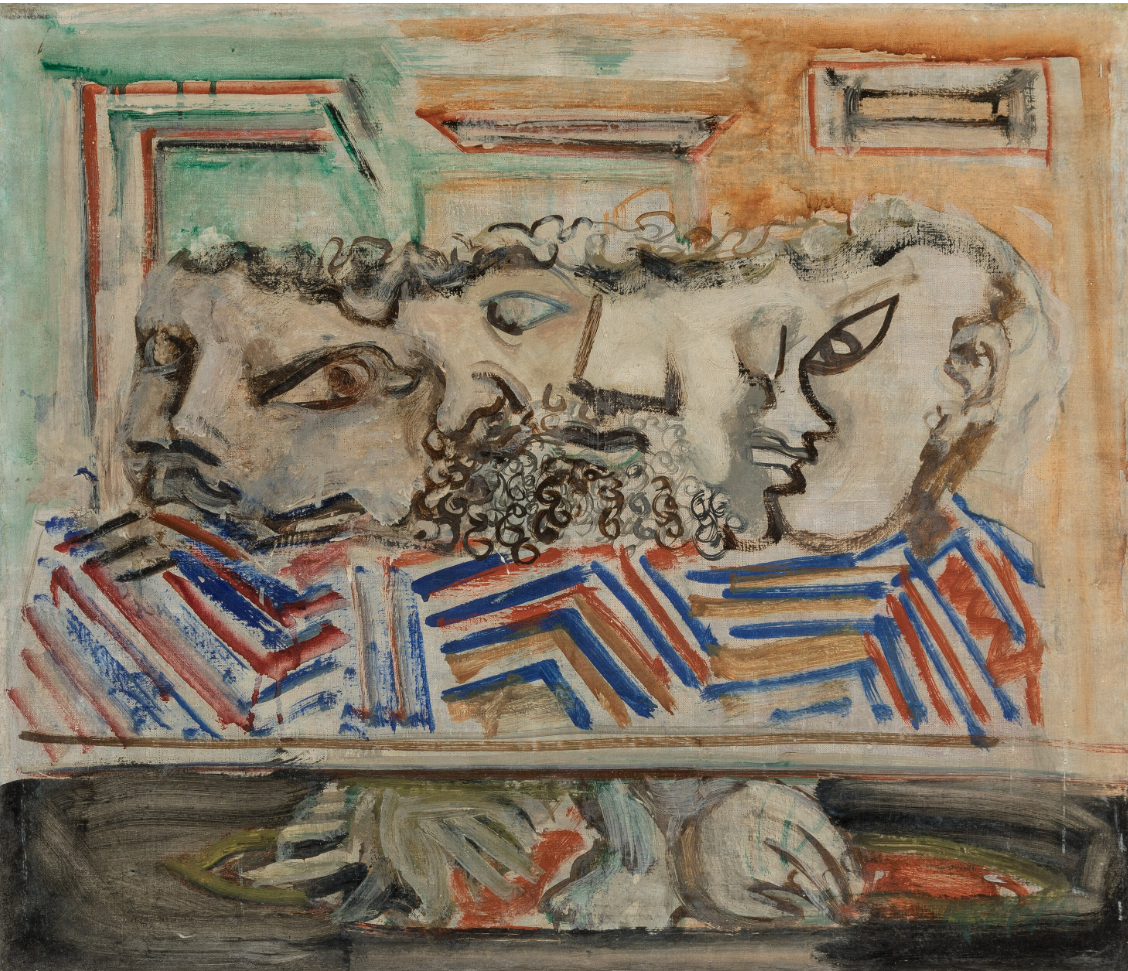
Rothko felt a need to communicate something urgent in the midst of such turmoil. A Last Supper is one of 11 paintings Rothko produced between ’39 and ’42 that depict abstracted heads in a mythological or religious narrative. When he painted A Last Supper, Rothko was increasingly certain of the necessity of myth to redeem a spiritually depleted population. Inspired by Nietzsche’s book The Birth of Tragedy as well as Greek tragedians, Rothko set about drawing on religious myth to provoke a meaningful response from modern viewers. The title of A Last Supper encompasses two heavily symbolic settings: one is the New Testament story of Jesus’s final meal before his Crucifixion; the other is the Old Testament story of the Rabbis at Bnai Brak, in which five rabbis discuss the liberation of the Jews from Egypt. In A Last Supper, you can see how Rothko leaned into the emotionally tensile Expressionism so associated with art during the years surrounding the world wars-itself informed by the Cubism and Surrealism of a rapidly changing Europe. The close gathering of sharp-eyed faces and disembodied hands in the painting recall the tableaus of Max Beckmann and Pablo Picasso; the flattened, dream-like perspective of the interior space echoes that of George Grosz and Otto Dix. Rothko’s European forebears were considered “degenerates” by the fascist right, and at this point, Rothko’s painting language had more in common with them than the sentinel tiers of intense color he would later be famous for.
Besides A Last Supper, the other key paintings from this body of Rothko’s work are Antigone (1941), which is in the collection of The National Gallery of Art in Washington, D.C., and The Crucifix (1941) which belongs to the Jewish Museum in New York City. The three paintings are often cited together by scholars as the trio that most exemplifies Rothko’s determination to reference mythology during that span of his career. A Last Supper is a clear precursor of his more surrealist, increasingly abstract work he began in the mid-1940s, which in turn led to his best-known color-field dramas by the early 1950s. Rothko’s paintings from this cycle almost never see the market; seven of the eleven known paintings are in major institutional collections. A Last Supper was one of the very few private loans in a recent major Rothko retrospective at Vienna’s Kunsthistorisches Museum, and it is a crucial work in understanding Rothko’s trajectory from figurative to abstract painter; the five figures are backgrounded by large sections of washy color. A Last Supper shows Rothko engaging in an expressionistic vocabulary that was up to the task of political upheaval and the war-torn moment, while giving us signposts to his later work. More profound abstraction was brewing in Rothko’s head-the seeds of which are here, in this room with these men, during A Last Supper.
Record Breakers
Orange, Red, Yellow, 1961
Christie’s New-York: 8 May 2012
Estimated: USD 35,000,000 – 45,000,000
USD 86,882,500
Mark Rothko (1903-1970) (christies.com)
MARK ROTHKO (1903-1970)
Orange, Red, Yellow, 1961
Oil on canvas
93 x 81 1/4 inches (236.2 x 206.4 cm)
Signed and dated ‘MARK ROTHKO 1961’ (on the reverse)
Signed again and with initials ‘M. Rothko M.B.’ (on the stretcher)
Orange, Red, Yellow is a large monolith-like canvas exuding a warm and fiery range of shimmering vermillion rectangles over a cooler and thinly painted crimson wash background that Rothko painted at the very height of his career in 1961. A bold, forceful and imposing work that radiates powerfully with an almost epic sense of vitality, it is one of several large and red-hued canvases that Rothko repeatedly painted in the late 1950s and early ’60s between the time of the creation of his Seagram murals of 1958 and the Harvard murals of 1961/2. As illustrated in these two series of murals, red was, for Rothko, the predominant color of his art. It was the essential color of life, passion, Dionysian energy, fire, ritual and drama, and it was perhaps for this reason – because these were the fundamental elements of existence and the ones that he was anxious for his unique manner of painting to convey – that it was so often in a variety of shades of red that Rothko’s painting ultimately took form. As Diane Waldman pointed out in her 1978 monograph on the artist, “Red is the color that fascinates Rothko above all others. No other color appears so insistently in his oeuvre from the time of the multiforms. It dominates Rothko’s work of the fifties and sixties and, in fact, was the color of his last painting. Red is so potent optically that it overwhelms or obliterates other hues unless it is diluted or controlled by juxtaposing it, as Mondrian did, with equally strong colors, such as black and white, or the other primaries yellow and blue. But Rothko frequently uses it alone, altering its tonality according to the emotion he wishes to express. Perhaps Rothko was so drawn to red because of its powerful and basic associations: it is identified with the elements and ritual – with fire and with blood – and thus with life, death and the spirit. Such a positioning before Orange, Red, Yellow also rewards the viewer with an appreciation of the dexterity and complexity of Rothko’s surprisingly delicate, if also vivid and vigorous brushwork. In addition to the thinned and in places transparent crimson ground of the painting-a ground that lends the background an earthy and textural quality-the multiple layers of light, vertical brushstrokes feathering the edges of the three principle rectangular clouds of color bestow the surface of the work with a dynamic sense of drama and variation reminiscent of a series of epic landscapes that appear to be emerging and dissolving into one another. The energy and variation of these forms also reflects the physical energy and time that Rothko himself put into the realization of this picture.
No. 7, 1951
Sotheby’s New-York: 15 November 2021
Estimated: USD 70,000,000 – 90,000,000
USD 82,468,500
No. 7 | The Macklowe Collection | 2021 | Sotheby’s (sothebys.com)
MARK ROTHKO (1903 – 1970)
No. 7, 1951
Oil on canvas
94 3/4 x 54 5/8 inches (240.7 x 138.7 cm)
Signed and dated 1951 on the reverse
For its vibrant coloration, transcendent aura, and pivotal date of execution, No. 7 stands amongst the finest masterworks from the incomparable painterly oeuvre of Mark Rothko. Executed in 1951—the very incipit of what David Anfam, the editor of the artist’s catalogue raisonné, refers to as the anni mirabilis of Rothko’s career—No. 7 dates to the critical moment in the early 1950s during which Rothko developed his signature style of abstraction and mature mode of artistic expression. Composed of three luminous and distinct bands of color, the vibrant coloration and atmospheric depth of No. 7 reflect the mastery of this transformative period. Rothko executed only 18 paintings in 1951; other significant works from this year reside in the collections of such esteemed institutions as the Tate, London; National Gallery of Art, Washington, D.C.; and the Tel Aviv Museum of Art. Measuring over 7 feet in height, the towering scale of No. 7 engulfs the viewer in proportions that mirror the human body, encouraging deep contemplation and the profound optical experience that Rothko intended to provoke. Exhibited for the first time at Betty Parsons Gallery in New York in the year of execution, No. 7 has since been included in several major exhibitions of Rothko’s oeuvre, including the retrospective exhibition Mark Rothko, organized by the National Gallery of Art in 1998 and traveling to the Whitney Museum of American Art, New York and the Musée d’Art Moderne, Paris. Notably, the present work was previously owned by Sarah Campbell Blaffer, an esteemed Houston collector and art patron who, in addition to assembling among the most important collections of modern art in the United States during the Twentieth Century, was also a major benefactor of the Museum of Fine Arts in Houston and the namesake of the Blaffer Art Museum at the University of Houston.
No. 10, 1958
Christie’s New-York: 13 May 2015
Estimate on Request
USD 81,925,000
Mark Rothko (1903-1970) (christies.com)
MARK ROTHKO (1903-1970)
No. 10, 1958
Oil on canvas
94 1/4 x 69 1/4 inches (239.4 x 175.9 cm)
Signed twice
Titled and dated three times ‘#10 1958 MARK ROTHKO 1958 MARK ROTHKO 1958’ (on the reverse)
Painted in 1958, when the artist was at the height of his artistic and critical achievements, Mark Rothko’s No. 10 represents the pinnacle of his alchemical prowess. Using the most basic of artistic materials—canvas, oil and pigment—Rothko is able to create a painting that appears to glow with a supranatural luminescence, the result of a surface that fizzles with painterly energy. Rothko’s paintings are extraordinarily contemplative and he wanted the people who stood before them to undergo an almost religious experience. For him, a painting was not the record of an experience—it was the experience, and within the echelons of this monumental painting, Rothko is not only able to summon up an object of extraordinary beauty, he is also able to connect us with the basic emotions that make us human. Floating on an expanse of dark pigment, the shimmering, almost iridescent core of No. 10 is made up of three amorphous forms. Carefully arranged one on top of another, these passages of burnished chroma are the result of a multitude of painterly layers, all similar in tone, but each containing a subtle difference in register from its predecessor. The cumulative effect of these diaphanous layers is to produce an area of canvas that comes alive with a distinct sensation of radiant heat; a sensation so corporeal that one can almost feel the latent energy radiating off the surface of the canvas and warming its environs. As the eye moves away from this almost molten epicenter, the sense of energy appears to cool as the sheer coats of pigment begin to reveal their constituent as they coalesce with the dark mantle that surrounds the central core.
No. 1 (Royal Red and Blue), 1954
Sotheby’s New-York: 13 November 2012
Estimated: USD 35,000,000 – 50,000,000
USD 75,122,500
(#19) Mark Rothko (sothebys.com)
MARK ROTHKO
No. 1 (Royal Red and Blue), 1954
Oil on canvas
113 3/4 x 67 1/2 inches (288.9 x 171.5 cm)
Signed, titled #1 and dated 1954 on the reverse
The majestic summation of Mark Rothko’s legendary aesthetic language, No. 1 (Royal Red and Blue) stands as an ideal achievement of the sublime in abstract painting. This unrepeatable, inimitable masterpiece affords the privileged viewer a visual and somatic experience that is beyond comparison. The stunning aura of its brilliant red and orange surfaces is superbly countered by the intensely vivid blue rectangle towards its base; creating an alluring emanation that is impossible to reproduce in illustration. Indeed, it is almost as if this extraordinary painting is brilliantly illuminated from within: a translucent vessel of pure color and light. No. 1 (Royal Red and Blue) was the ultimate crescendo of Rothko’s first one-man exhibition in a major US museum, at the Art Institute of Chicago in 1954. The show was organized by one of the foremost champions of the avant-garde in post-war America, and the Institute’s first curator of modern painting and sculpture; the visionary Katherine Kuh. Every other work from that renowned event is now housed in a major institutional collection, except No. 6 (Yellow, White, Blue over Yellow on Gray), which broke the auction record for the artist when it was sold by Sotheby’s in 2004. In preparation for the exhibition, Kuh and Rothko corresponded extensively, originally in order to provide material for a pamphlet to accompany the show. When Rothko provided the final list of paintings to be sent to Chicago on September 12, 1954, he included prices at which they should be sold to the public (given that he had ended his contract with the Betty Parsons Gallery in the previous Spring, it can be assumed that these were his own figures). The highest price was for No. 10, 1952-53, which, at almost ten by fourteen feet, was the largest canvas of the group by far, and which is now housed in the Museo Guggenheim in Bilbao. The second most valuable painting, as determined by the artist, was the present work, which provides resounding confirmation of the artist’s very high esteem for this specific painting. Through the decades since its creation, No. 1 (Royal Red and Blue) has continued to captivate audiences as a pure icon of Rothko’s genius. It has been central to major Rothko exhibitions and was even selected as the key work for the vast announcement banner at the comprehensive retrospective at the National Gallery of Art in 1998. Among the 116 major works included in that show were many of the artist’s most iconic works, and the fact that the present painting was chosen in this way, acting as figurehead for the exhibition, further affirms its remarkable reputation.
White Center (Yellow, Pink and Lavender on Rose), 1950
Sotheby’s New-York: 15 May 2007
Estimated on Request
USD 72,840,000
(#31) Mark Rothko (sothebys.com)
MARK ROTHKO
White Center (Yellow, Pink and Lavender on Rose), 1950
Oil on canvas
81 x 55 1/2 inches (205.8 x 141 cm)
Signed and dated 1950 on the reverse
White Center dates from an annus mirabilis in Mark Rothko’s long career-the crucial moment of 1950-when the artist finally established the signature style which continued, with many refinements, until his death in 1970. One of the largest canvases out of the sixteen Rothko painted during that key year, it was also among the most fully resolved (for example, the even bigger No.5 in the Museum of Modern Art, New York, still retains calligraphic markings which evoke an earlier phase). Certainly, White Center’s dazzling amplitude and finesse invite an otherwise overused label-the appellation of masterpiece. In short, its commanding scale, sumptuousness and sheer intensity bespeak a modern master in the first full flush of his mature creativity. As such, White Center is also a summation. In hindsight, Rothko’s indelibly recognizable format-one or more rectangular presences hovering upon or within a field-may suggest some foregone conclusion, the logical outcome of his studied progress towards abstraction. Yet in fact Rothko only crystallized his “classic” image at mid-century after a pictorial quest beginning as far back as 1924. Through the 1930s the artist explored various representational idioms. Consequently, from around 1940 onwards Rothko (whose output seemingly entered a new phase with the advent of each fresh decade) delved into themes from Greek mythology-allied to an increasingly imaginative biomorphic vocabulary that drew from Miró, Picasso, Dali and other surrealists-until in 1947 he reduced the figurative remnants to brightly tinted patchworks. In such so-called “multiform” canvases of the late 1940s the irregular shapes float, coalesce and disintegrate as though possessed of inner life.
Untitled (Shades of Red), 1962
Christie’s New-York: 11 May 2022
Estimated: USD 60,000,000 – 80,000,000
USD 66,800,000
MARK ROTHKO (1903-1970) (christies.com)
MARK ROTHKO
Untitled (Shades of Red), 1962
Oil on canvas
69×56 inches (175.3×142.2 cm)
Painted in 1961, Mark Rothko’s Untitled (Shades of Red) forcefully captures the mysterious and emotional intensity that lies at the very heart of the artist’s work. Haunted by the eternal drama that he believed was an inherent part of the human psyche, Rothko spent his life trying to convey these emotions on canvas, and his floating fields of color became the central elements in many of his most accomplished paintings. One of the most important and influential artists of the twentieth-century, Rothko maintained that his canvases weren’t paintings of an experience, they were the experience, and standing before paintings such as the present example he sought to induce in the viewer a deep emotional, almost spiritual, connection.
Untitled, 1952
Christie’s New-York: 13 May 2014
Estimate on Request
USD 66,245,000
Mark Rothko (1903-1970) (christies.com)
MARK ROTHKO (1903-1970)
Untitled, 1952
Oil on canvas
103 x 62 1/2 inches (261.6 x 158.7 cm)
Signed and dated ‘MARK ROTHKO 1952’ (on the reverse)
Painted in 1952, this towering, vibrant and deeply moving painting derives from the first years of Mark Rothko’s maturity–the period when, after many years of struggle and exploration, the artist had suddenly arrived at the “new vision” and “new structural language” that was to define his painterly practice for the rest of his life. A vast, extraordinarily painterly, turbulent and even, in places, tempestuous work, determined by its fascinating, busily worked surface of multiple layers of warm, radiant color, this painting is a vivid and gripping example of the full revelatory power of Rothko’s “new vision.” First developed between 1949 and 1950, this “vision” was the realization of what fellow New York School artist, Robert Motherwell, once famously called Rothko’s “genius” in creating an entirely new “language of feeling” solely from the painting of only a few, separate, and at the time, shockingly empty, rectangular fields of color. Initially unsettling in the rawness of its highly material, visceral painterly energy, Untitled, with its bold contrasting blocks of mesmerizing color, is a work that exudes an imposing physical presence on its viewer. At over eight and a half feet high and openly displaying an intricate and engrossing surface, the frenetic energy, vigor and dynamism of Rothko’s swift, sweeping brushwork is openly visible. This is especially true at the borderlines of each block of color, where the feathered edges and multiple layers of a vast but subtle range of other hues bleeding in and over one another simultaneously conjure a series of different visions of a ferocious, wild nature. Flickering flames, waves rising and crashing against the shore and warm sunlight illuminating the silhouette of a dark forest all come to mind as the eye skirts the extraordinary variety and nuance of the intersecting forms before finally settling into an appreciation of the dynamic and febrile balance of the work as a whole.